window.__IS_SSR__=true
window.__INITIAL_STATE__={
"attachmentsReducer": {
"audio_0": {
"type": "attachments",
"id": "audio_0",
"imgSizes": {
"kqedFullSize": {
"file": "https://ww2.kqed.org/news/wp-content/themes/KQED-unified/img/audio_bgs/background0.jpg"
}
}
},
"audio_1": {
"type": "attachments",
"id": "audio_1",
"imgSizes": {
"kqedFullSize": {
"file": "https://ww2.kqed.org/news/wp-content/themes/KQED-unified/img/audio_bgs/background1.jpg"
}
}
},
"audio_2": {
"type": "attachments",
"id": "audio_2",
"imgSizes": {
"kqedFullSize": {
"file": "https://ww2.kqed.org/news/wp-content/themes/KQED-unified/img/audio_bgs/background2.jpg"
}
}
},
"audio_3": {
"type": "attachments",
"id": "audio_3",
"imgSizes": {
"kqedFullSize": {
"file": "https://ww2.kqed.org/news/wp-content/themes/KQED-unified/img/audio_bgs/background3.jpg"
}
}
},
"audio_4": {
"type": "attachments",
"id": "audio_4",
"imgSizes": {
"kqedFullSize": {
"file": "https://ww2.kqed.org/news/wp-content/themes/KQED-unified/img/audio_bgs/background4.jpg"
}
}
},
"placeholder": {
"type": "attachments",
"id": "placeholder",
"imgSizes": {
"thumbnail": {
"file": "https://cdn.kqed.org/wp-content/uploads/2024/12/KQED-Default-Image-816638274-2000x1333-1-160x107.jpg",
"width": 160,
"height": 107,
"mimeType": "image/jpeg"
},
"medium": {
"file": "https://cdn.kqed.org/wp-content/uploads/2024/12/KQED-Default-Image-816638274-2000x1333-1-800x533.jpg",
"width": 800,
"height": 533,
"mimeType": "image/jpeg"
},
"medium_large": {
"file": "https://cdn.kqed.org/wp-content/uploads/2024/12/KQED-Default-Image-816638274-2000x1333-1-768x512.jpg",
"width": 768,
"height": 512,
"mimeType": "image/jpeg"
},
"large": {
"file": "https://cdn.kqed.org/wp-content/uploads/2024/12/KQED-Default-Image-816638274-2000x1333-1-1020x680.jpg",
"width": 1020,
"height": 680,
"mimeType": "image/jpeg"
},
"1536x1536": {
"file": "https://cdn.kqed.org/wp-content/uploads/2024/12/KQED-Default-Image-816638274-2000x1333-1-1536x1024.jpg",
"width": 1536,
"height": 1024,
"mimeType": "image/jpeg"
},
"fd-lrg": {
"file": "https://cdn.kqed.org/wp-content/uploads/2024/12/KQED-Default-Image-816638274-2000x1333-1-1536x1024.jpg",
"width": 1536,
"height": 1024,
"mimeType": "image/jpeg"
},
"fd-med": {
"file": "https://cdn.kqed.org/wp-content/uploads/2024/12/KQED-Default-Image-816638274-2000x1333-1-1020x680.jpg",
"width": 1020,
"height": 680,
"mimeType": "image/jpeg"
},
"fd-sm": {
"file": "https://cdn.kqed.org/wp-content/uploads/2024/12/KQED-Default-Image-816638274-2000x1333-1-800x533.jpg",
"width": 800,
"height": 533,
"mimeType": "image/jpeg"
},
"post-thumbnail": {
"file": "https://cdn.kqed.org/wp-content/uploads/2024/12/KQED-Default-Image-816638274-2000x1333-1-672x372.jpg",
"width": 672,
"height": 372,
"mimeType": "image/jpeg"
},
"twentyfourteen-full-width": {
"file": "https://cdn.kqed.org/wp-content/uploads/2024/12/KQED-Default-Image-816638274-2000x1333-1-1038x576.jpg",
"width": 1038,
"height": 576,
"mimeType": "image/jpeg"
},
"xxsmall": {
"file": "https://cdn.kqed.org/wp-content/uploads/2024/12/KQED-Default-Image-816638274-2000x1333-1-160x107.jpg",
"width": 160,
"height": 107,
"mimeType": "image/jpeg"
},
"xsmall": {
"file": "https://cdn.kqed.org/wp-content/uploads/2024/12/KQED-Default-Image-816638274-2000x1333-1-672x372.jpg",
"width": 672,
"height": 372,
"mimeType": "image/jpeg"
},
"small": {
"file": "https://cdn.kqed.org/wp-content/uploads/2024/12/KQED-Default-Image-816638274-2000x1333-1-672x372.jpg",
"width": 672,
"height": 372,
"mimeType": "image/jpeg"
},
"xlarge": {
"file": "https://cdn.kqed.org/wp-content/uploads/2024/12/KQED-Default-Image-816638274-2000x1333-1-1020x680.jpg",
"width": 1020,
"height": 680,
"mimeType": "image/jpeg"
},
"full-width": {
"file": "https://cdn.kqed.org/wp-content/uploads/2024/12/KQED-Default-Image-816638274-2000x1333-1-1920x1280.jpg",
"width": 1920,
"height": 1280,
"mimeType": "image/jpeg"
},
"guest-author-32": {
"file": "https://cdn.kqed.org/wp-content/uploads/2025/01/KQED-Default-Image-816638274-1333x1333-1-160x160.jpg",
"width": 32,
"height": 32,
"mimeType": "image/jpeg"
},
"guest-author-50": {
"file": "https://cdn.kqed.org/wp-content/uploads/2025/01/KQED-Default-Image-816638274-1333x1333-1-160x160.jpg",
"width": 50,
"height": 50,
"mimeType": "image/jpeg"
},
"guest-author-64": {
"file": "https://cdn.kqed.org/wp-content/uploads/2025/01/KQED-Default-Image-816638274-1333x1333-1-160x160.jpg",
"width": 64,
"height": 64,
"mimeType": "image/jpeg"
},
"guest-author-96": {
"file": "https://cdn.kqed.org/wp-content/uploads/2025/01/KQED-Default-Image-816638274-1333x1333-1-160x160.jpg",
"width": 96,
"height": 96,
"mimeType": "image/jpeg"
},
"guest-author-128": {
"file": "https://cdn.kqed.org/wp-content/uploads/2025/01/KQED-Default-Image-816638274-1333x1333-1-160x160.jpg",
"width": 128,
"height": 128,
"mimeType": "image/jpeg"
},
"detail": {
"file": "https://cdn.kqed.org/wp-content/uploads/2025/01/KQED-Default-Image-816638274-1333x1333-1-160x160.jpg",
"width": 160,
"height": 160,
"mimeType": "image/jpeg"
},
"kqedFullSize": {
"file": "https://cdn.kqed.org/wp-content/uploads/2024/12/KQED-Default-Image-816638274-2000x1333-1.jpg",
"width": 2000,
"height": 1333
}
}
},
"mindshift_46714": {
"type": "attachments",
"id": "mindshift_46714",
"meta": {
"index": "attachments_1716263798",
"site": "mindshift",
"id": "46714",
"found": true
},
"parent": 46712,
"imgSizes": {
"thumbnail": {
"file": "https://ww2.kqed.org/app/uploads/sites/23/2016/10/tree-of-change2-400x222.png",
"width": 400,
"mimeType": "image/png",
"height": 222
},
"post-thumbnail": {
"file": "https://ww2.kqed.org/app/uploads/sites/23/2016/10/tree-of-change2-672x372.png",
"width": 672,
"mimeType": "image/png",
"height": 372
},
"kqedFullSize": {
"file": "https://ww2.kqed.org/app/uploads/sites/23/2016/10/tree-of-change2.png",
"width": 739,
"height": 411
},
"cat_post_thumb_sizecategory-posts-2": {
"file": "https://ww2.kqed.org/app/uploads/sites/23/2016/10/tree-of-change2-50x50.png",
"width": 50,
"mimeType": "image/png",
"height": 50
},
"guest-author-50": {
"file": "https://ww2.kqed.org/app/uploads/sites/23/2016/10/tree-of-change2-50x50.png",
"width": 50,
"mimeType": "image/png",
"height": 50
},
"guest-author-96": {
"file": "https://ww2.kqed.org/app/uploads/sites/23/2016/10/tree-of-change2-96x96.png",
"width": 96,
"mimeType": "image/png",
"height": 96
},
"guest-author-64": {
"file": "https://ww2.kqed.org/app/uploads/sites/23/2016/10/tree-of-change2-64x64.png",
"width": 64,
"mimeType": "image/png",
"height": 64
},
"detail": {
"file": "https://ww2.kqed.org/app/uploads/sites/23/2016/10/tree-of-change2-150x150.png",
"width": 150,
"mimeType": "image/png",
"height": 150
},
"guest-author-32": {
"file": "https://ww2.kqed.org/app/uploads/sites/23/2016/10/tree-of-change2-32x32.png",
"width": 32,
"mimeType": "image/png",
"height": 32
},
"guest-author-128": {
"file": "https://ww2.kqed.org/app/uploads/sites/23/2016/10/tree-of-change2-128x128.png",
"width": 128,
"mimeType": "image/png",
"height": 128
}
},
"publishDate": 1476745754,
"modified": 1477328330,
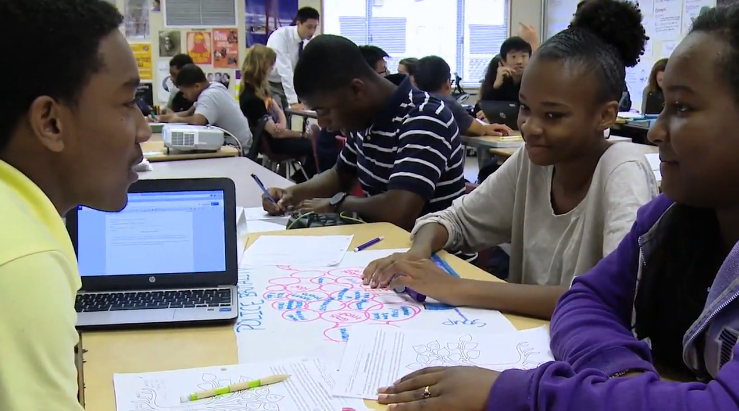
"caption": "Students at Oakland Technical High school in California work to develop theories of change on issues that are important to them.",
"description": null,
"title": "tree of change2",
"credit": "\u003ca href=\"https://www.teachingchannel.org/videos/prepare-civic-engagement-edda\">Teaching Channel\u003c/a>",
"status": "inherit",
"isLoading": false,
"fetchFailed": false
},
"mindshift_46434": {
"type": "attachments",
"id": "mindshift_46434",
"meta": {
"index": "attachments_1716263798",
"site": "mindshift",
"id": "46434",
"found": true
},
"parent": 46426,
"imgSizes": {
"twentyfourteen-full-width": {
"file": "https://ww2.kqed.org/app/uploads/sites/23/2016/09/digital-reading-1038x576.png",
"width": 1038,
"mimeType": "image/png",
"height": 576
},
"thumbnail": {
"file": "https://ww2.kqed.org/app/uploads/sites/23/2016/09/digital-reading-400x225.png",
"width": 400,
"mimeType": "image/png",
"height": 225
},
"fd-sm": {
"file": "https://ww2.kqed.org/app/uploads/sites/23/2016/09/digital-reading-960x540.png",
"width": 960,
"mimeType": "image/png",
"height": 540
},
"post-thumbnail": {
"file": "https://ww2.kqed.org/app/uploads/sites/23/2016/09/digital-reading-672x372.png",
"width": 672,
"mimeType": "image/png",
"height": 372
},
"kqedFullSize": {
"file": "https://ww2.kqed.org/app/uploads/sites/23/2016/09/digital-reading.png",
"width": 1920,
"height": 1080
},
"large": {
"file": "https://ww2.kqed.org/app/uploads/sites/23/2016/09/digital-reading-1440x810.png",
"width": 1440,
"mimeType": "image/png",
"height": 810
},
"guest-author-50": {
"file": "https://ww2.kqed.org/app/uploads/sites/23/2016/09/digital-reading-50x50.png",
"width": 50,
"mimeType": "image/png",
"height": 50
},
"guest-author-96": {
"file": "https://ww2.kqed.org/app/uploads/sites/23/2016/09/digital-reading-96x96.png",
"width": 96,
"mimeType": "image/png",
"height": 96
},
"medium": {
"file": "https://ww2.kqed.org/app/uploads/sites/23/2016/09/digital-reading-800x450.png",
"width": 800,
"mimeType": "image/png",
"height": 450
},
"guest-author-64": {
"file": "https://ww2.kqed.org/app/uploads/sites/23/2016/09/digital-reading-64x64.png",
"width": 64,
"mimeType": "image/png",
"height": 64
},
"guest-author-32": {
"file": "https://ww2.kqed.org/app/uploads/sites/23/2016/09/digital-reading-32x32.png",
"width": 32,
"mimeType": "image/png",
"height": 32
},
"cat_post_thumb_sizecategory-posts-2": {
"file": "https://ww2.kqed.org/app/uploads/sites/23/2016/09/digital-reading-50x50.png",
"width": 50,
"mimeType": "image/png",
"height": 50
},
"fd-lrg": {
"file": "https://ww2.kqed.org/app/uploads/sites/23/2016/09/digital-reading-1920x1080.png",
"width": 1920,
"mimeType": "image/png",
"height": 1080
},
"fd-med": {
"file": "https://ww2.kqed.org/app/uploads/sites/23/2016/09/digital-reading-1180x664.png",
"width": 1180,
"mimeType": "image/png",
"height": 664
},
"detail": {
"file": "https://ww2.kqed.org/app/uploads/sites/23/2016/09/digital-reading-150x150.png",
"width": 150,
"mimeType": "image/png",
"height": 150
},
"medium_large": {
"file": "https://ww2.kqed.org/app/uploads/sites/23/2016/09/digital-reading-768x432.png",
"width": 768,
"mimeType": "image/png",
"height": 432
},
"guest-author-128": {
"file": "https://ww2.kqed.org/app/uploads/sites/23/2016/09/digital-reading-128x128.png",
"width": 128,
"mimeType": "image/png",
"height": 128
}
},
"publishDate": 1474499996,
"modified": 1474500032,
"caption": null,
"description": null,
"title": "digital-reading",
"credit": "Erin Scott/MindShift",
"status": "inherit",
"isLoading": false,
"fetchFailed": false
},
"mindshift_46649": {
"type": "attachments",
"id": "mindshift_46649",
"meta": {
"index": "attachments_1716263798",
"site": "mindshift",
"id": "46649",
"found": true
},
"parent": 46648,
"imgSizes": {
"twentyfourteen-full-width": {
"file": "https://ww2.kqed.org/app/uploads/sites/23/2016/10/student-stress3_custom-f075c08b5702057aa9d960e34161142abebc6b72-1038x576.jpg",
"width": 1038,
"mimeType": "image/jpeg",
"height": 576
},
"thumbnail": {
"file": "https://ww2.kqed.org/app/uploads/sites/23/2016/10/student-stress3_custom-f075c08b5702057aa9d960e34161142abebc6b72-400x262.jpg",
"width": 400,
"mimeType": "image/jpeg",
"height": 262
},
"fd-sm": {
"file": "https://ww2.kqed.org/app/uploads/sites/23/2016/10/student-stress3_custom-f075c08b5702057aa9d960e34161142abebc6b72-960x629.jpg",
"width": 960,
"mimeType": "image/jpeg",
"height": 629
},
"post-thumbnail": {
"file": "https://ww2.kqed.org/app/uploads/sites/23/2016/10/student-stress3_custom-f075c08b5702057aa9d960e34161142abebc6b72-672x372.jpg",
"width": 672,
"mimeType": "image/jpeg",
"height": 372
},
"kqedFullSize": {
"file": "https://ww2.kqed.org/app/uploads/sites/23/2016/10/student-stress3_custom-f075c08b5702057aa9d960e34161142abebc6b72.jpg",
"width": 3200,
"height": 2098
},
"large": {
"file": "https://ww2.kqed.org/app/uploads/sites/23/2016/10/student-stress3_custom-f075c08b5702057aa9d960e34161142abebc6b72-1440x944.jpg",
"width": 1440,
"mimeType": "image/jpeg",
"height": 944
},
"guest-author-50": {
"file": "https://ww2.kqed.org/app/uploads/sites/23/2016/10/student-stress3_custom-f075c08b5702057aa9d960e34161142abebc6b72-50x50.jpg",
"width": 50,
"mimeType": "image/jpeg",
"height": 50
},
"guest-author-96": {
"file": "https://ww2.kqed.org/app/uploads/sites/23/2016/10/student-stress3_custom-f075c08b5702057aa9d960e34161142abebc6b72-96x96.jpg",
"width": 96,
"mimeType": "image/jpeg",
"height": 96
},
"medium": {
"file": "https://ww2.kqed.org/app/uploads/sites/23/2016/10/student-stress3_custom-f075c08b5702057aa9d960e34161142abebc6b72-800x525.jpg",
"width": 800,
"mimeType": "image/jpeg",
"height": 525
},
"guest-author-64": {
"file": "https://ww2.kqed.org/app/uploads/sites/23/2016/10/student-stress3_custom-f075c08b5702057aa9d960e34161142abebc6b72-64x64.jpg",
"width": 64,
"mimeType": "image/jpeg",
"height": 64
},
"guest-author-32": {
"file": "https://ww2.kqed.org/app/uploads/sites/23/2016/10/student-stress3_custom-f075c08b5702057aa9d960e34161142abebc6b72-32x32.jpg",
"width": 32,
"mimeType": "image/jpeg",
"height": 32
},
"cat_post_thumb_sizecategory-posts-2": {
"file": "https://ww2.kqed.org/app/uploads/sites/23/2016/10/student-stress3_custom-f075c08b5702057aa9d960e34161142abebc6b72-50x50.jpg",
"width": 50,
"mimeType": "image/jpeg",
"height": 50
},
"fd-lrg": {
"file": "https://ww2.kqed.org/app/uploads/sites/23/2016/10/student-stress3_custom-f075c08b5702057aa9d960e34161142abebc6b72-1920x1259.jpg",
"width": 1920,
"mimeType": "image/jpeg",
"height": 1259
},
"fd-med": {
"file": "https://ww2.kqed.org/app/uploads/sites/23/2016/10/student-stress3_custom-f075c08b5702057aa9d960e34161142abebc6b72-1180x774.jpg",
"width": 1180,
"mimeType": "image/jpeg",
"height": 774
},
"detail": {
"file": "https://ww2.kqed.org/app/uploads/sites/23/2016/10/student-stress3_custom-f075c08b5702057aa9d960e34161142abebc6b72-150x150.jpg",
"width": 150,
"mimeType": "image/jpeg",
"height": 150
},
"medium_large": {
"file": "https://ww2.kqed.org/app/uploads/sites/23/2016/10/student-stress3_custom-f075c08b5702057aa9d960e34161142abebc6b72-768x504.jpg",
"width": 768,
"mimeType": "image/jpeg",
"height": 504
},
"guest-author-128": {
"file": "https://ww2.kqed.org/app/uploads/sites/23/2016/10/student-stress3_custom-f075c08b5702057aa9d960e34161142abebc6b72-128x128.jpg",
"width": 128,
"mimeType": "image/jpeg",
"height": 128
}
},
"publishDate": 1476122478,
"modified": 1476122661,
"caption": "Middle school is a particularly stressful time for young adolescents.",
"description": "Middle school is a particularly stressful time for young adolescents.",
"title": "Middle school is a particularly stressful time for young adolescents.",
"credit": "LA Johnson/NPR",
"status": "inherit",
"isLoading": false,
"fetchFailed": false
},
"mindshift_46583": {
"type": "attachments",
"id": "mindshift_46583",
"meta": {
"index": "attachments_1716263798",
"site": "mindshift",
"id": "46583",
"found": true
},
"parent": 46138,
"imgSizes": {
"twentyfourteen-full-width": {
"file": "https://ww2.kqed.org/app/uploads/sites/23/2016/10/Lafayette2-sized-1038x576.png",
"width": 1038,
"mimeType": "image/png",
"height": 576
},
"thumbnail": {
"file": "https://ww2.kqed.org/app/uploads/sites/23/2016/10/Lafayette2-sized-400x225.png",
"width": 400,
"mimeType": "image/png",
"height": 225
},
"fd-sm": {
"file": "https://ww2.kqed.org/app/uploads/sites/23/2016/10/Lafayette2-sized-960x540.png",
"width": 960,
"mimeType": "image/png",
"height": 540
},
"post-thumbnail": {
"file": "https://ww2.kqed.org/app/uploads/sites/23/2016/10/Lafayette2-sized-672x372.png",
"width": 672,
"mimeType": "image/png",
"height": 372
},
"kqedFullSize": {
"file": "https://ww2.kqed.org/app/uploads/sites/23/2016/10/Lafayette2-sized.png",
"width": 1920,
"height": 1080
},
"large": {
"file": "https://ww2.kqed.org/app/uploads/sites/23/2016/10/Lafayette2-sized-1440x810.png",
"width": 1440,
"mimeType": "image/png",
"height": 810
},
"guest-author-50": {
"file": "https://ww2.kqed.org/app/uploads/sites/23/2016/10/Lafayette2-sized-50x50.png",
"width": 50,
"mimeType": "image/png",
"height": 50
},
"guest-author-96": {
"file": "https://ww2.kqed.org/app/uploads/sites/23/2016/10/Lafayette2-sized-96x96.png",
"width": 96,
"mimeType": "image/png",
"height": 96
},
"medium": {
"file": "https://ww2.kqed.org/app/uploads/sites/23/2016/10/Lafayette2-sized-800x450.png",
"width": 800,
"mimeType": "image/png",
"height": 450
},
"guest-author-64": {
"file": "https://ww2.kqed.org/app/uploads/sites/23/2016/10/Lafayette2-sized-64x64.png",
"width": 64,
"mimeType": "image/png",
"height": 64
},
"guest-author-32": {
"file": "https://ww2.kqed.org/app/uploads/sites/23/2016/10/Lafayette2-sized-32x32.png",
"width": 32,
"mimeType": "image/png",
"height": 32
},
"cat_post_thumb_sizecategory-posts-2": {
"file": "https://ww2.kqed.org/app/uploads/sites/23/2016/10/Lafayette2-sized-50x50.png",
"width": 50,
"mimeType": "image/png",
"height": 50
},
"fd-lrg": {
"file": "https://ww2.kqed.org/app/uploads/sites/23/2016/10/Lafayette2-sized-1920x1080.png",
"width": 1920,
"mimeType": "image/png",
"height": 1080
},
"fd-med": {
"file": "https://ww2.kqed.org/app/uploads/sites/23/2016/10/Lafayette2-sized-1180x664.png",
"width": 1180,
"mimeType": "image/png",
"height": 664
},
"detail": {
"file": "https://ww2.kqed.org/app/uploads/sites/23/2016/10/Lafayette2-sized-150x150.png",
"width": 150,
"mimeType": "image/png",
"height": 150
},
"medium_large": {
"file": "https://ww2.kqed.org/app/uploads/sites/23/2016/10/Lafayette2-sized-768x432.png",
"width": 768,
"mimeType": "image/png",
"height": 432
},
"guest-author-128": {
"file": "https://ww2.kqed.org/app/uploads/sites/23/2016/10/Lafayette2-sized-128x128.png",
"width": 128,
"mimeType": "image/png",
"height": 128
}
},
"publishDate": 1475527683,
"modified": 1475536495,
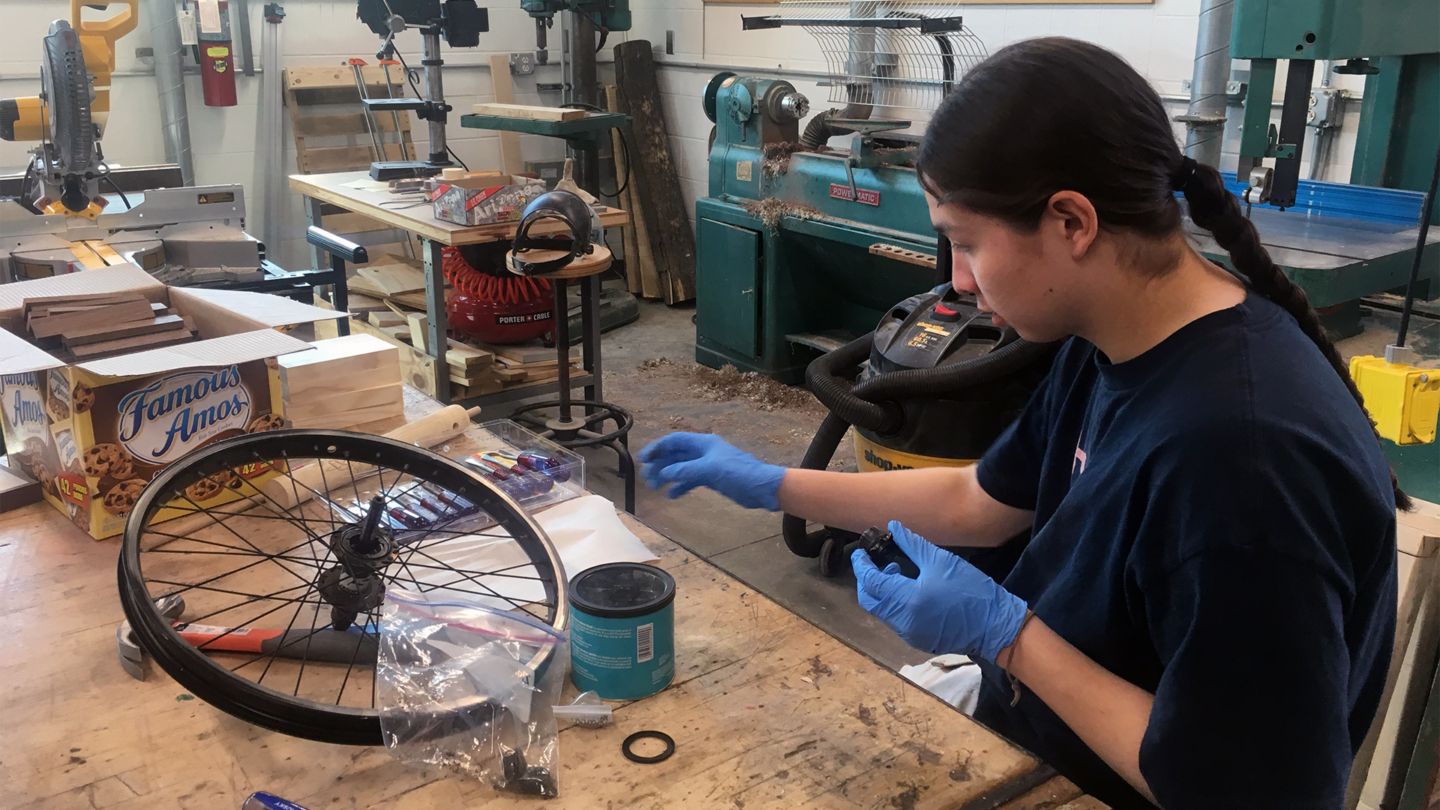
"caption": "Ty Powless, a student at LaFayette Big Picture School, is working to repair a bicycle.",
"description": null,
"title": "Lafayette2-sized",
"credit": "Courtesy LaFayette Big Picture School",
"status": "inherit",
"isLoading": false,
"fetchFailed": false
},
"mindshift_46549": {
"type": "attachments",
"id": "mindshift_46549",
"meta": {
"index": "attachments_1716263798",
"site": "mindshift",
"id": "46549",
"found": true
},
"parent": 46546,
"imgSizes": {
"thumbnail": {
"file": "https://ww2.kqed.org/app/uploads/sites/23/2016/09/oracy3-400x195.png",
"width": 400,
"mimeType": "image/png",
"height": 195
},
"post-thumbnail": {
"file": "https://ww2.kqed.org/app/uploads/sites/23/2016/09/oracy3-672x372.png",
"width": 672,
"mimeType": "image/png",
"height": 372
},
"kqedFullSize": {
"file": "https://ww2.kqed.org/app/uploads/sites/23/2016/09/oracy3.png",
"width": 852,
"height": 416
},
"cat_post_thumb_sizecategory-posts-2": {
"file": "https://ww2.kqed.org/app/uploads/sites/23/2016/09/oracy3-50x50.png",
"width": 50,
"mimeType": "image/png",
"height": 50
},
"guest-author-50": {
"file": "https://ww2.kqed.org/app/uploads/sites/23/2016/09/oracy3-50x50.png",
"width": 50,
"mimeType": "image/png",
"height": 50
},
"guest-author-96": {
"file": "https://ww2.kqed.org/app/uploads/sites/23/2016/09/oracy3-96x96.png",
"width": 96,
"mimeType": "image/png",
"height": 96
},
"medium": {
"file": "https://ww2.kqed.org/app/uploads/sites/23/2016/09/oracy3-800x391.png",
"width": 800,
"mimeType": "image/png",
"height": 391
},
"guest-author-64": {
"file": "https://ww2.kqed.org/app/uploads/sites/23/2016/09/oracy3-64x64.png",
"width": 64,
"mimeType": "image/png",
"height": 64
},
"detail": {
"file": "https://ww2.kqed.org/app/uploads/sites/23/2016/09/oracy3-150x150.png",
"width": 150,
"mimeType": "image/png",
"height": 150
},
"guest-author-32": {
"file": "https://ww2.kqed.org/app/uploads/sites/23/2016/09/oracy3-32x32.png",
"width": 32,
"mimeType": "image/png",
"height": 32
},
"medium_large": {
"file": "https://ww2.kqed.org/app/uploads/sites/23/2016/09/oracy3-768x375.png",
"width": 768,
"mimeType": "image/png",
"height": 375
},
"guest-author-128": {
"file": "https://ww2.kqed.org/app/uploads/sites/23/2016/09/oracy3-128x128.png",
"width": 128,
"mimeType": "image/png",
"height": 128
}
},
"publishDate": 1475275000,
"modified": 1475275207,
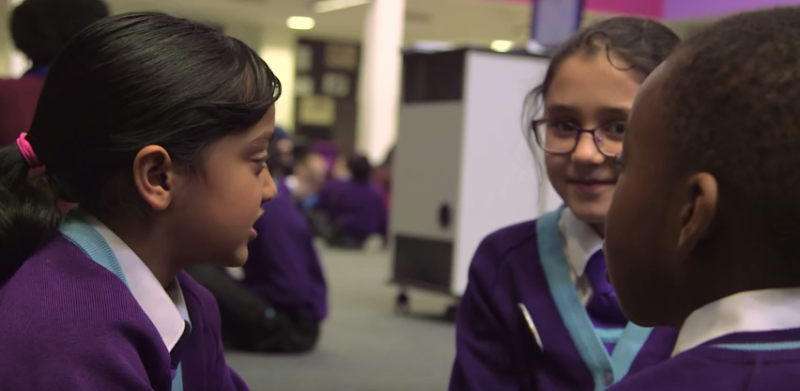
"caption": "Students at School 21 practice structured verbal tasks in every subject and class.",
"description": null,
"title": "oracy3",
"credit": "\u003ca href=\"http://www.edutopia.org/practice/oracy-classroom-strategies-effective-talk\">Edutopia\u003c/a>",
"status": "inherit",
"isLoading": false,
"fetchFailed": false
},
"mindshift_46514": {
"type": "attachments",
"id": "mindshift_46514",
"meta": {
"index": "attachments_1716263798",
"site": "mindshift",
"id": "46514",
"found": true
},
"parent": 46509,
"imgSizes": {
"twentyfourteen-full-width": {
"file": "https://ww2.kqed.org/app/uploads/sites/23/2016/09/4775778765_fb752174c9_o-1038x576.jpg",
"width": 1038,
"mimeType": "image/jpeg",
"height": 576
},
"thumbnail": {
"file": "https://ww2.kqed.org/app/uploads/sites/23/2016/09/4775778765_fb752174c9_o-400x268.jpg",
"width": 400,
"mimeType": "image/jpeg",
"height": 268
},
"fd-sm": {
"file": "https://ww2.kqed.org/app/uploads/sites/23/2016/09/4775778765_fb752174c9_o-960x643.jpg",
"width": 960,
"mimeType": "image/jpeg",
"height": 643
},
"post-thumbnail": {
"file": "https://ww2.kqed.org/app/uploads/sites/23/2016/09/4775778765_fb752174c9_o-672x372.jpg",
"width": 672,
"mimeType": "image/jpeg",
"height": 372
},
"kqedFullSize": {
"file": "https://ww2.kqed.org/app/uploads/sites/23/2016/09/4775778765_fb752174c9_o-e1475269845794.jpg",
"width": 1920,
"height": 1285
},
"large": {
"file": "https://ww2.kqed.org/app/uploads/sites/23/2016/09/4775778765_fb752174c9_o-1440x964.jpg",
"width": 1440,
"mimeType": "image/jpeg",
"height": 964
},
"guest-author-50": {
"file": "https://ww2.kqed.org/app/uploads/sites/23/2016/09/4775778765_fb752174c9_o-50x50.jpg",
"width": 50,
"mimeType": "image/jpeg",
"height": 50
},
"guest-author-96": {
"file": "https://ww2.kqed.org/app/uploads/sites/23/2016/09/4775778765_fb752174c9_o-96x96.jpg",
"width": 96,
"mimeType": "image/jpeg",
"height": 96
},
"medium": {
"file": "https://ww2.kqed.org/app/uploads/sites/23/2016/09/4775778765_fb752174c9_o-800x536.jpg",
"width": 800,
"mimeType": "image/jpeg",
"height": 536
},
"guest-author-64": {
"file": "https://ww2.kqed.org/app/uploads/sites/23/2016/09/4775778765_fb752174c9_o-64x64.jpg",
"width": 64,
"mimeType": "image/jpeg",
"height": 64
},
"guest-author-32": {
"file": "https://ww2.kqed.org/app/uploads/sites/23/2016/09/4775778765_fb752174c9_o-32x32.jpg",
"width": 32,
"mimeType": "image/jpeg",
"height": 32
},
"cat_post_thumb_sizecategory-posts-2": {
"file": "https://ww2.kqed.org/app/uploads/sites/23/2016/09/4775778765_fb752174c9_o-50x50.jpg",
"width": 50,
"mimeType": "image/jpeg",
"height": 50
},
"fd-lrg": {
"file": "https://ww2.kqed.org/app/uploads/sites/23/2016/09/4775778765_fb752174c9_o-1920x1285.jpg",
"width": 1920,
"mimeType": "image/jpeg",
"height": 1285
},
"fd-med": {
"file": "https://ww2.kqed.org/app/uploads/sites/23/2016/09/4775778765_fb752174c9_o-1180x790.jpg",
"width": 1180,
"mimeType": "image/jpeg",
"height": 790
},
"detail": {
"file": "https://ww2.kqed.org/app/uploads/sites/23/2016/09/4775778765_fb752174c9_o-150x150.jpg",
"width": 150,
"mimeType": "image/jpeg",
"height": 150
},
"medium_large": {
"file": "https://ww2.kqed.org/app/uploads/sites/23/2016/09/4775778765_fb752174c9_o-768x514.jpg",
"width": 768,
"mimeType": "image/jpeg",
"height": 514
},
"guest-author-128": {
"file": "https://ww2.kqed.org/app/uploads/sites/23/2016/09/4775778765_fb752174c9_o-128x128.jpg",
"width": 128,
"mimeType": "image/jpeg",
"height": 128
}
},
"publishDate": 1475173493,
"modified": 1475173550,
"caption": null,
"description": null,
"title": "4775778765_fb752174c9_o",
"credit": "Rachel Sapp/\u003ca href=\"https://www.flickr.com/photos/rks71794/4775778765/\">Flickr\u003c/a>",
"status": "inherit",
"isLoading": false,
"fetchFailed": false
},
"mindshift_46393": {
"type": "attachments",
"id": "mindshift_46393",
"meta": {
"index": "attachments_1716263798",
"site": "mindshift",
"id": "46393",
"found": true
},
"parent": 46388,
"imgSizes": {
"twentyfourteen-full-width": {
"file": "https://ww2.kqed.org/app/uploads/sites/23/2016/09/Kindergarten-1038x576.jpg",
"width": 1038,
"mimeType": "image/jpeg",
"height": 576
},
"thumbnail": {
"file": "https://ww2.kqed.org/app/uploads/sites/23/2016/09/Kindergarten-400x225.jpg",
"width": 400,
"mimeType": "image/jpeg",
"height": 225
},
"fd-sm": {
"file": "https://ww2.kqed.org/app/uploads/sites/23/2016/09/Kindergarten-960x540.jpg",
"width": 960,
"mimeType": "image/jpeg",
"height": 540
},
"post-thumbnail": {
"file": "https://ww2.kqed.org/app/uploads/sites/23/2016/09/Kindergarten-672x372.jpg",
"width": 672,
"mimeType": "image/jpeg",
"height": 372
},
"kqedFullSize": {
"file": "https://ww2.kqed.org/app/uploads/sites/23/2016/09/Kindergarten.jpg",
"width": 1920,
"height": 1080
},
"large": {
"file": "https://ww2.kqed.org/app/uploads/sites/23/2016/09/Kindergarten-1440x810.jpg",
"width": 1440,
"mimeType": "image/jpeg",
"height": 810
},
"guest-author-50": {
"file": "https://ww2.kqed.org/app/uploads/sites/23/2016/09/Kindergarten-50x50.jpg",
"width": 50,
"mimeType": "image/jpeg",
"height": 50
},
"guest-author-96": {
"file": "https://ww2.kqed.org/app/uploads/sites/23/2016/09/Kindergarten-96x96.jpg",
"width": 96,
"mimeType": "image/jpeg",
"height": 96
},
"medium": {
"file": "https://ww2.kqed.org/app/uploads/sites/23/2016/09/Kindergarten-800x450.jpg",
"width": 800,
"mimeType": "image/jpeg",
"height": 450
},
"guest-author-64": {
"file": "https://ww2.kqed.org/app/uploads/sites/23/2016/09/Kindergarten-64x64.jpg",
"width": 64,
"mimeType": "image/jpeg",
"height": 64
},
"guest-author-32": {
"file": "https://ww2.kqed.org/app/uploads/sites/23/2016/09/Kindergarten-32x32.jpg",
"width": 32,
"mimeType": "image/jpeg",
"height": 32
},
"cat_post_thumb_sizecategory-posts-2": {
"file": "https://ww2.kqed.org/app/uploads/sites/23/2016/09/Kindergarten-50x50.jpg",
"width": 50,
"mimeType": "image/jpeg",
"height": 50
},
"fd-lrg": {
"file": "https://ww2.kqed.org/app/uploads/sites/23/2016/09/Kindergarten-1920x1080.jpg",
"width": 1920,
"mimeType": "image/jpeg",
"height": 1080
},
"fd-med": {
"file": "https://ww2.kqed.org/app/uploads/sites/23/2016/09/Kindergarten-1180x664.jpg",
"width": 1180,
"mimeType": "image/jpeg",
"height": 664
},
"detail": {
"file": "https://ww2.kqed.org/app/uploads/sites/23/2016/09/Kindergarten-150x150.jpg",
"width": 150,
"mimeType": "image/jpeg",
"height": 150
},
"medium_large": {
"file": "https://ww2.kqed.org/app/uploads/sites/23/2016/09/Kindergarten-768x432.jpg",
"width": 768,
"mimeType": "image/jpeg",
"height": 432
},
"guest-author-128": {
"file": "https://ww2.kqed.org/app/uploads/sites/23/2016/09/Kindergarten-128x128.jpg",
"width": 128,
"mimeType": "image/jpeg",
"height": 128
}
},
"publishDate": 1474288150,
"modified": 1474288183,
"caption": null,
"description": null,
"title": "Kindergarten",
"credit": "iStock/monkeybusinessimages",
"status": "inherit",
"isLoading": false,
"fetchFailed": false
},
"mindshift_46318": {
"type": "attachments",
"id": "mindshift_46318",
"meta": {
"index": "attachments_1716263798",
"site": "mindshift",
"id": "46318",
"found": true
},
"parent": 46316,
"imgSizes": {
"twentyfourteen-full-width": {
"file": "https://ww2.kqed.org/app/uploads/sites/23/2016/09/a-making-reflection-1038x576.jpg",
"width": 1038,
"mimeType": "image/jpeg",
"height": 576
},
"thumbnail": {
"file": "https://ww2.kqed.org/app/uploads/sites/23/2016/09/a-making-reflection-400x300.jpg",
"width": 400,
"mimeType": "image/jpeg",
"height": 300
},
"fd-sm": {
"file": "https://ww2.kqed.org/app/uploads/sites/23/2016/09/a-making-reflection-960x720.jpg",
"width": 960,
"mimeType": "image/jpeg",
"height": 720
},
"post-thumbnail": {
"file": "https://ww2.kqed.org/app/uploads/sites/23/2016/09/a-making-reflection-672x372.jpg",
"width": 672,
"mimeType": "image/jpeg",
"height": 372
},
"kqedFullSize": {
"file": "https://ww2.kqed.org/app/uploads/sites/23/2016/09/a-making-reflection.jpg",
"width": 3000,
"height": 2250
},
"large": {
"file": "https://ww2.kqed.org/app/uploads/sites/23/2016/09/a-making-reflection-1440x1080.jpg",
"width": 1440,
"mimeType": "image/jpeg",
"height": 1080
},
"guest-author-50": {
"file": "https://ww2.kqed.org/app/uploads/sites/23/2016/09/a-making-reflection-50x50.jpg",
"width": 50,
"mimeType": "image/jpeg",
"height": 50
},
"guest-author-96": {
"file": "https://ww2.kqed.org/app/uploads/sites/23/2016/09/a-making-reflection-96x96.jpg",
"width": 96,
"mimeType": "image/jpeg",
"height": 96
},
"medium": {
"file": "https://ww2.kqed.org/app/uploads/sites/23/2016/09/a-making-reflection-800x600.jpg",
"width": 800,
"mimeType": "image/jpeg",
"height": 600
},
"guest-author-64": {
"file": "https://ww2.kqed.org/app/uploads/sites/23/2016/09/a-making-reflection-64x64.jpg",
"width": 64,
"mimeType": "image/jpeg",
"height": 64
},
"guest-author-32": {
"file": "https://ww2.kqed.org/app/uploads/sites/23/2016/09/a-making-reflection-32x32.jpg",
"width": 32,
"mimeType": "image/jpeg",
"height": 32
},
"cat_post_thumb_sizecategory-posts-2": {
"file": "https://ww2.kqed.org/app/uploads/sites/23/2016/09/a-making-reflection-50x50.jpg",
"width": 50,
"mimeType": "image/jpeg",
"height": 50
},
"fd-lrg": {
"file": "https://ww2.kqed.org/app/uploads/sites/23/2016/09/a-making-reflection-1920x1440.jpg",
"width": 1920,
"mimeType": "image/jpeg",
"height": 1440
},
"fd-med": {
"file": "https://ww2.kqed.org/app/uploads/sites/23/2016/09/a-making-reflection-1180x885.jpg",
"width": 1180,
"mimeType": "image/jpeg",
"height": 885
},
"detail": {
"file": "https://ww2.kqed.org/app/uploads/sites/23/2016/09/a-making-reflection-150x150.jpg",
"width": 150,
"mimeType": "image/jpeg",
"height": 150
},
"medium_large": {
"file": "https://ww2.kqed.org/app/uploads/sites/23/2016/09/a-making-reflection-768x576.jpg",
"width": 768,
"mimeType": "image/jpeg",
"height": 576
},
"guest-author-128": {
"file": "https://ww2.kqed.org/app/uploads/sites/23/2016/09/a-making-reflection-128x128.jpg",
"width": 128,
"mimeType": "image/jpeg",
"height": 128
}
},
"publishDate": 1473451376,
"modified": 1473451458,
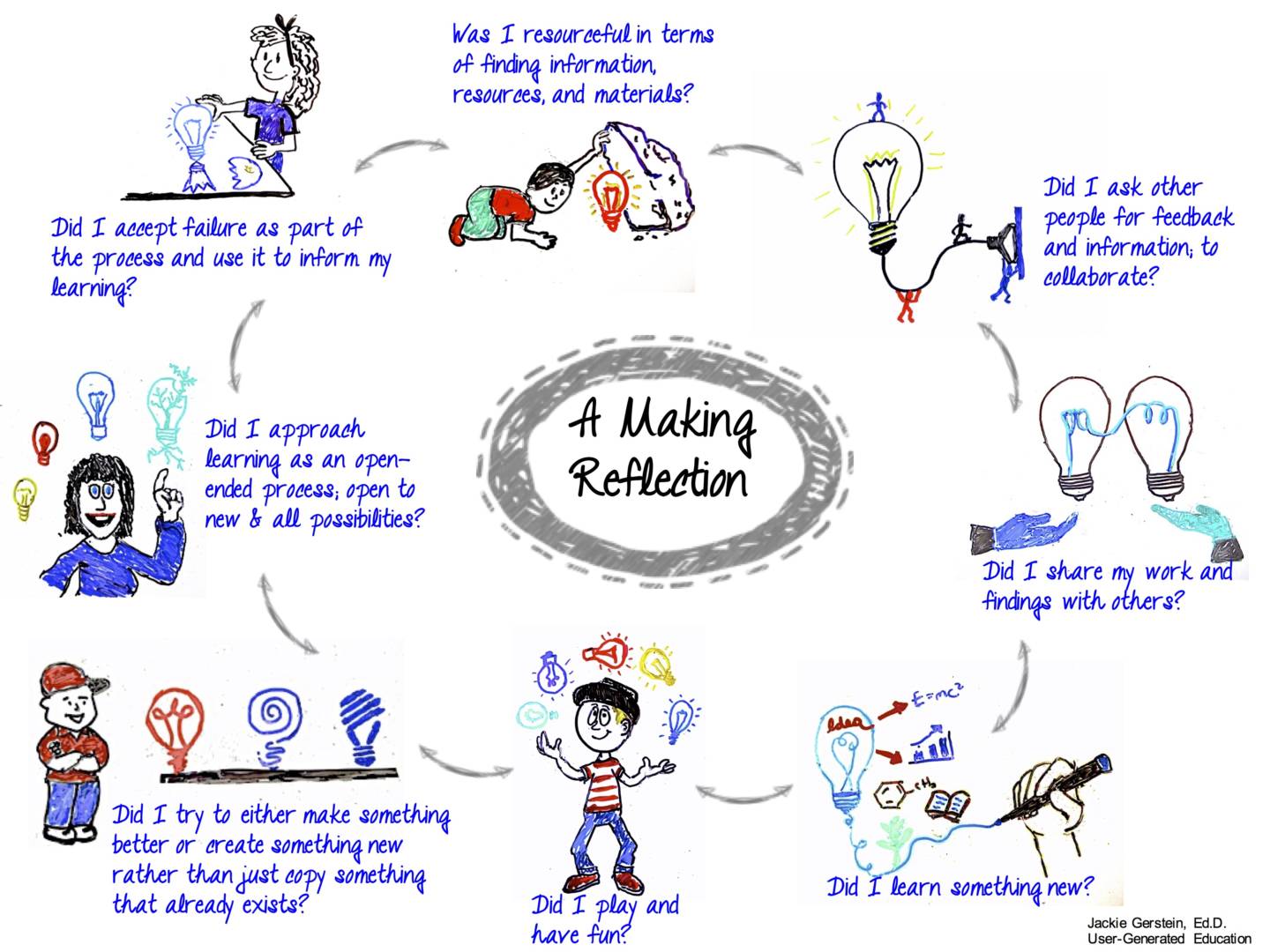
"caption": "Infographic explaining the importance of reflection in maker education.",
"description": null,
"title": "a-making-reflection",
"credit": "Courtesy Jackie Gerstein/\u003ca href=\"https://usergeneratededucation.wordpress.com/author/jackiegerstein/\">User Generated Education\u003c/a>",
"status": "inherit",
"isLoading": false,
"fetchFailed": false
},
"mindshift_46345": {
"type": "attachments",
"id": "mindshift_46345",
"meta": {
"index": "attachments_1716263798",
"site": "mindshift",
"id": "46345",
"found": true
},
"parent": 46127,
"imgSizes": {
"twentyfourteen-full-width": {
"file": "https://ww2.kqed.org/app/uploads/sites/23/2016/09/6770756531_584482049a_o-1038x576.jpg",
"width": 1038,
"mimeType": "image/jpeg",
"height": 576
},
"thumbnail": {
"file": "https://ww2.kqed.org/app/uploads/sites/23/2016/09/6770756531_584482049a_o-400x267.jpg",
"width": 400,
"mimeType": "image/jpeg",
"height": 267
},
"fd-sm": {
"file": "https://ww2.kqed.org/app/uploads/sites/23/2016/09/6770756531_584482049a_o-960x640.jpg",
"width": 960,
"mimeType": "image/jpeg",
"height": 640
},
"post-thumbnail": {
"file": "https://ww2.kqed.org/app/uploads/sites/23/2016/09/6770756531_584482049a_o-672x372.jpg",
"width": 672,
"mimeType": "image/jpeg",
"height": 372
},
"kqedFullSize": {
"file": "https://ww2.kqed.org/app/uploads/sites/23/2016/09/6770756531_584482049a_o.jpg",
"width": 1050,
"height": 700
},
"guest-author-50": {
"file": "https://ww2.kqed.org/app/uploads/sites/23/2016/09/6770756531_584482049a_o-50x50.jpg",
"width": 50,
"mimeType": "image/jpeg",
"height": 50
},
"guest-author-96": {
"file": "https://ww2.kqed.org/app/uploads/sites/23/2016/09/6770756531_584482049a_o-96x96.jpg",
"width": 96,
"mimeType": "image/jpeg",
"height": 96
},
"medium": {
"file": "https://ww2.kqed.org/app/uploads/sites/23/2016/09/6770756531_584482049a_o-800x533.jpg",
"width": 800,
"mimeType": "image/jpeg",
"height": 533
},
"guest-author-64": {
"file": "https://ww2.kqed.org/app/uploads/sites/23/2016/09/6770756531_584482049a_o-64x64.jpg",
"width": 64,
"mimeType": "image/jpeg",
"height": 64
},
"guest-author-32": {
"file": "https://ww2.kqed.org/app/uploads/sites/23/2016/09/6770756531_584482049a_o-32x32.jpg",
"width": 32,
"mimeType": "image/jpeg",
"height": 32
},
"cat_post_thumb_sizecategory-posts-2": {
"file": "https://ww2.kqed.org/app/uploads/sites/23/2016/09/6770756531_584482049a_o-50x50.jpg",
"width": 50,
"mimeType": "image/jpeg",
"height": 50
},
"detail": {
"file": "https://ww2.kqed.org/app/uploads/sites/23/2016/09/6770756531_584482049a_o-150x150.jpg",
"width": 150,
"mimeType": "image/jpeg",
"height": 150
},
"medium_large": {
"file": "https://ww2.kqed.org/app/uploads/sites/23/2016/09/6770756531_584482049a_o-768x512.jpg",
"width": 768,
"mimeType": "image/jpeg",
"height": 512
},
"guest-author-128": {
"file": "https://ww2.kqed.org/app/uploads/sites/23/2016/09/6770756531_584482049a_o-128x128.jpg",
"width": 128,
"mimeType": "image/jpeg",
"height": 128
}
},
"publishDate": 1473768139,
"modified": 1473768151,
"caption": null,
"description": null,
"title": "6770756531_584482049a_o",
"credit": "\u003ca href=\"https://www.flickr.com/photos/viictoria4/6770756531/in/photolist-bjiU2z-5vZS-2RtJn-ozA8uJ-dZEx1o-by3Jwo-doBtjC-p8YXky-bUWFQi-Hs64h-mGvnf-dqhTqo-8fLozu-4QHea9-doWmYT-doWoPx-4HEcva-6urZhd-uJpZ1-bUWFGP-bUWFJe-6S7CwP-7x6MP9-36TJPu-q6h9d9-iyPiR-75LJYa-q6pUPX-doWuPf-5BmiGo-doWwtJ-46WZC8-doWo8V-aqP6ra-73Dv2K-fZKQ7V-qnLqZf-4wrr1-4Hogsa-doWmu6-dWeZsy-cNCmt3-doWpn6-7QsY-mGvnh-a2i8j6-mGvng-5qLHuK-7Xn8f-arTXfG\">Flickr/vic xia\u003c/a>",
"status": "inherit",
"isLoading": false,
"fetchFailed": false
},
"mindshift_46209": {
"type": "attachments",
"id": "mindshift_46209",
"meta": {
"index": "attachments_1716263798",
"site": "mindshift",
"id": "46209",
"found": true
},
"parent": 46166,
"imgSizes": {
"twentyfourteen-full-width": {
"file": "https://ww2.kqed.org/app/uploads/sites/23/2016/08/Clark4-1038x576.png",
"width": 1038,
"mimeType": "image/png",
"height": 576
},
"thumbnail": {
"file": "https://ww2.kqed.org/app/uploads/sites/23/2016/08/Clark4-400x225.png",
"width": 400,
"mimeType": "image/png",
"height": 225
},
"fd-sm": {
"file": "https://ww2.kqed.org/app/uploads/sites/23/2016/08/Clark4-960x540.png",
"width": 960,
"mimeType": "image/png",
"height": 540
},
"post-thumbnail": {
"file": "https://ww2.kqed.org/app/uploads/sites/23/2016/08/Clark4-672x372.png",
"width": 672,
"mimeType": "image/png",
"height": 372
},
"kqedFullSize": {
"file": "https://ww2.kqed.org/app/uploads/sites/23/2016/08/Clark4.png",
"width": 1920,
"height": 1080
},
"large": {
"file": "https://ww2.kqed.org/app/uploads/sites/23/2016/08/Clark4-1440x810.png",
"width": 1440,
"mimeType": "image/png",
"height": 810
},
"guest-author-50": {
"file": "https://ww2.kqed.org/app/uploads/sites/23/2016/08/Clark4-50x50.png",
"width": 50,
"mimeType": "image/png",
"height": 50
},
"guest-author-96": {
"file": "https://ww2.kqed.org/app/uploads/sites/23/2016/08/Clark4-96x96.png",
"width": 96,
"mimeType": "image/png",
"height": 96
},
"medium": {
"file": "https://ww2.kqed.org/app/uploads/sites/23/2016/08/Clark4-800x450.png",
"width": 800,
"mimeType": "image/png",
"height": 450
},
"guest-author-64": {
"file": "https://ww2.kqed.org/app/uploads/sites/23/2016/08/Clark4-64x64.png",
"width": 64,
"mimeType": "image/png",
"height": 64
},
"guest-author-32": {
"file": "https://ww2.kqed.org/app/uploads/sites/23/2016/08/Clark4-32x32.png",
"width": 32,
"mimeType": "image/png",
"height": 32
},
"cat_post_thumb_sizecategory-posts-2": {
"file": "https://ww2.kqed.org/app/uploads/sites/23/2016/08/Clark4-50x50.png",
"width": 50,
"mimeType": "image/png",
"height": 50
},
"fd-lrg": {
"file": "https://ww2.kqed.org/app/uploads/sites/23/2016/08/Clark4-1920x1080.png",
"width": 1920,
"mimeType": "image/png",
"height": 1080
},
"fd-med": {
"file": "https://ww2.kqed.org/app/uploads/sites/23/2016/08/Clark4-1180x664.png",
"width": 1180,
"mimeType": "image/png",
"height": 664
},
"detail": {
"file": "https://ww2.kqed.org/app/uploads/sites/23/2016/08/Clark4-150x150.png",
"width": 150,
"mimeType": "image/png",
"height": 150
},
"medium_large": {
"file": "https://ww2.kqed.org/app/uploads/sites/23/2016/08/Clark4-768x432.png",
"width": 768,
"mimeType": "image/png",
"height": 432
},
"guest-author-128": {
"file": "https://ww2.kqed.org/app/uploads/sites/23/2016/08/Clark4-128x128.png",
"width": 128,
"mimeType": "image/png",
"height": 128
}
},
"publishDate": 1472166757,
"modified": 1472166831,
"caption": "Clark Montessori students work with a teacher.",
"description": null,
"title": "Clark4",
"credit": "Bob Ohr/Courtesy Clark Montessori",
"status": "inherit",
"isLoading": false,
"fetchFailed": false
},
"mindshift_46263": {
"type": "attachments",
"id": "mindshift_46263",
"meta": {
"index": "attachments_1716263798",
"site": "mindshift",
"id": "46263",
"found": true
},
"parent": 46259,
"imgSizes": {
"twentyfourteen-full-width": {
"file": "https://ww2.kqed.org/app/uploads/sites/23/2016/09/ice-castle-1024x576.jpg",
"width": 1024,
"mimeType": "image/jpeg",
"height": 576
},
"thumbnail": {
"file": "https://ww2.kqed.org/app/uploads/sites/23/2016/09/ice-castle-400x300.jpg",
"width": 400,
"mimeType": "image/jpeg",
"height": 300
},
"fd-sm": {
"file": "https://ww2.kqed.org/app/uploads/sites/23/2016/09/ice-castle-960x720.jpg",
"width": 960,
"mimeType": "image/jpeg",
"height": 720
},
"post-thumbnail": {
"file": "https://ww2.kqed.org/app/uploads/sites/23/2016/09/ice-castle-672x372.jpg",
"width": 672,
"mimeType": "image/jpeg",
"height": 372
},
"kqedFullSize": {
"file": "https://ww2.kqed.org/app/uploads/sites/23/2016/09/ice-castle.jpg",
"width": 1024,
"height": 768
},
"guest-author-50": {
"file": "https://ww2.kqed.org/app/uploads/sites/23/2016/09/ice-castle-50x50.jpg",
"width": 50,
"mimeType": "image/jpeg",
"height": 50
},
"guest-author-96": {
"file": "https://ww2.kqed.org/app/uploads/sites/23/2016/09/ice-castle-96x96.jpg",
"width": 96,
"mimeType": "image/jpeg",
"height": 96
},
"medium": {
"file": "https://ww2.kqed.org/app/uploads/sites/23/2016/09/ice-castle-800x600.jpg",
"width": 800,
"mimeType": "image/jpeg",
"height": 600
},
"guest-author-64": {
"file": "https://ww2.kqed.org/app/uploads/sites/23/2016/09/ice-castle-64x64.jpg",
"width": 64,
"mimeType": "image/jpeg",
"height": 64
},
"guest-author-32": {
"file": "https://ww2.kqed.org/app/uploads/sites/23/2016/09/ice-castle-32x32.jpg",
"width": 32,
"mimeType": "image/jpeg",
"height": 32
},
"cat_post_thumb_sizecategory-posts-2": {
"file": "https://ww2.kqed.org/app/uploads/sites/23/2016/09/ice-castle-50x50.jpg",
"width": 50,
"mimeType": "image/jpeg",
"height": 50
},
"detail": {
"file": "https://ww2.kqed.org/app/uploads/sites/23/2016/09/ice-castle-150x150.jpg",
"width": 150,
"mimeType": "image/jpeg",
"height": 150
},
"medium_large": {
"file": "https://ww2.kqed.org/app/uploads/sites/23/2016/09/ice-castle-768x576.jpg",
"width": 768,
"mimeType": "image/jpeg",
"height": 576
},
"guest-author-128": {
"file": "https://ww2.kqed.org/app/uploads/sites/23/2016/09/ice-castle-128x128.jpg",
"width": 128,
"mimeType": "image/jpeg",
"height": 128
}
},
"publishDate": 1472848203,
"modified": 1472848286,
"caption": "Students designed and built an ice castle window display that was 30 feet deep.",
"description": null,
"title": "ice castle",
"credit": "Courtesy Michael Stone",
"status": "inherit",
"isLoading": false,
"fetchFailed": false
},
"mindshift_46234": {
"type": "attachments",
"id": "mindshift_46234",
"meta": {
"index": "attachments_1716263798",
"site": "mindshift",
"id": "46234",
"found": true
},
"parent": 46221,
"imgSizes": {
"twentyfourteen-full-width": {
"file": "https://ww2.kqed.org/app/uploads/sites/23/2016/08/16048169352_03600daaac_k-1038x576.jpg",
"width": 1038,
"mimeType": "image/jpeg",
"height": 576
},
"thumbnail": {
"file": "https://ww2.kqed.org/app/uploads/sites/23/2016/08/16048169352_03600daaac_k-400x267.jpg",
"width": 400,
"mimeType": "image/jpeg",
"height": 267
},
"fd-sm": {
"file": "https://ww2.kqed.org/app/uploads/sites/23/2016/08/16048169352_03600daaac_k-960x640.jpg",
"width": 960,
"mimeType": "image/jpeg",
"height": 640
},
"post-thumbnail": {
"file": "https://ww2.kqed.org/app/uploads/sites/23/2016/08/16048169352_03600daaac_k-672x372.jpg",
"width": 672,
"mimeType": "image/jpeg",
"height": 372
},
"kqedFullSize": {
"file": "https://ww2.kqed.org/app/uploads/sites/23/2016/08/16048169352_03600daaac_k-e1472559307781.jpg",
"width": 1920,
"height": 1280
},
"large": {
"file": "https://ww2.kqed.org/app/uploads/sites/23/2016/08/16048169352_03600daaac_k-1440x960.jpg",
"width": 1440,
"mimeType": "image/jpeg",
"height": 960
},
"guest-author-50": {
"file": "https://ww2.kqed.org/app/uploads/sites/23/2016/08/16048169352_03600daaac_k-50x50.jpg",
"width": 50,
"mimeType": "image/jpeg",
"height": 50
},
"guest-author-96": {
"file": "https://ww2.kqed.org/app/uploads/sites/23/2016/08/16048169352_03600daaac_k-96x96.jpg",
"width": 96,
"mimeType": "image/jpeg",
"height": 96
},
"medium": {
"file": "https://ww2.kqed.org/app/uploads/sites/23/2016/08/16048169352_03600daaac_k-800x533.jpg",
"width": 800,
"mimeType": "image/jpeg",
"height": 533
},
"guest-author-64": {
"file": "https://ww2.kqed.org/app/uploads/sites/23/2016/08/16048169352_03600daaac_k-64x64.jpg",
"width": 64,
"mimeType": "image/jpeg",
"height": 64
},
"guest-author-32": {
"file": "https://ww2.kqed.org/app/uploads/sites/23/2016/08/16048169352_03600daaac_k-32x32.jpg",
"width": 32,
"mimeType": "image/jpeg",
"height": 32
},
"cat_post_thumb_sizecategory-posts-2": {
"file": "https://ww2.kqed.org/app/uploads/sites/23/2016/08/16048169352_03600daaac_k-50x50.jpg",
"width": 50,
"mimeType": "image/jpeg",
"height": 50
},
"fd-lrg": {
"file": "https://ww2.kqed.org/app/uploads/sites/23/2016/08/16048169352_03600daaac_k-1920x1280.jpg",
"width": 1920,
"mimeType": "image/jpeg",
"height": 1280
},
"fd-med": {
"file": "https://ww2.kqed.org/app/uploads/sites/23/2016/08/16048169352_03600daaac_k-1180x786.jpg",
"width": 1180,
"mimeType": "image/jpeg",
"height": 786
},
"detail": {
"file": "https://ww2.kqed.org/app/uploads/sites/23/2016/08/16048169352_03600daaac_k-150x150.jpg",
"width": 150,
"mimeType": "image/jpeg",
"height": 150
},
"medium_large": {
"file": "https://ww2.kqed.org/app/uploads/sites/23/2016/08/16048169352_03600daaac_k-768x512.jpg",
"width": 768,
"mimeType": "image/jpeg",
"height": 512
},
"guest-author-128": {
"file": "https://ww2.kqed.org/app/uploads/sites/23/2016/08/16048169352_03600daaac_k-128x128.jpg",
"width": 128,
"mimeType": "image/jpeg",
"height": 128
}
},
"publishDate": 1472559285,
"modified": 1472559301,
"caption": null,
"description": null,
"title": "16048169352_03600daaac_k",
"credit": "\u003ca href=\"https://www.flickr.com/photos/55467251@N03/16048169352/in/photolist-qs84D3-qs1RRB-qaLNW8-pvqTuk-qsbYyi-pvr5CH-qaCCv7-qaBTsb-qs1KSx-qsbTMV-pvqYwe-pvcwKb-qpUo2Y-qs8779-qpUCDJ-qaCYQA-pvqJDV-qpUwAS-gwmAC2-pKvQmN-6HgoEZ-qaLJ2Z-qaCdwU-qaK7Gz-qaBLDS-pvckV5-qs1vtH-qaBNS9-Ck5RsD-BuRUjC-pvcb8E-CsnzjV-pvr3Jc-BuRU8A-qsbBWX-BuRUcJ-pvqXFB-BuZeVX-Ck5S5F-Cq51K3-Ck5SeZ-BTShaD-BuZeA8-qaKp3k-BuRX8y-Cq51Cu-BuRY2s-BuRWi7-BTShJV-BTShoe\">Flickr/La Fabulerie\u003c/a>",
"status": "inherit",
"isLoading": false,
"fetchFailed": false
}
},
"audioPlayerReducer": {
"postId": "stream_live",
"isPaused": true,
"isPlaying": false,
"pfsActive": false,
"pledgeModalIsOpen": true,
"playerDrawerIsOpen": false,
"liveAudioPlayStartedAt": 0,
"liveAudioPlayContext": ""
},
"authorsReducer": {
"byline_mindshift_46648": {
"type": "authors",
"id": "byline_mindshift_46648",
"meta": {
"override": true
},
"slug": "byline_mindshift_46648",
"name": "Kat Lonsdorf, NPR",
"isLoading": false
},
"katrinaschwartz": {
"type": "authors",
"id": "234",
"meta": {
"index": "authors_1716337520",
"id": "234",
"found": true
},
"name": "Katrina Schwartz",
"firstName": "Katrina",
"lastName": "Schwartz",
"slug": "katrinaschwartz",
"email": "kschwartz@kqed.org",
"display_author_email": false,
"staff_mastheads": [
"news"
],
"title": "Producer",
"bio": "Katrina Schwartz is a journalist based in San Francisco. She's worked at KPCC public radio in LA and has reported on air and online for KQED since 2010. She covered how teaching and learning is changing for MindShift between 2012 and 2020. She is the co-host of the MindShift podcast and now produces KQED's Bay Curious podcast.",
"avatar": "https://secure.gravatar.com/avatar/edb4ee79070447a018538c9aae6eeecf28786515b8a0c30e43b6b7dce5aa44c8?s=600&d=blank&r=g",
"twitter": "kschwart",
"bluesky": null,
"facebook": null,
"instagram": null,
"linkedin": null,
"sites": [
{
"site": "",
"roles": [
"editor"
]
},
{
"site": "news",
"roles": [
"editor"
]
},
{
"site": "mindshift",
"roles": [
"administrator"
]
},
{
"site": "stateofhealth",
"roles": [
"author"
]
},
{
"site": "science",
"roles": [
"editor"
]
}
],
"headData": {
"title": "Katrina Schwartz | KQED",
"description": "Producer",
"ogImgSrc": "https://secure.gravatar.com/avatar/edb4ee79070447a018538c9aae6eeecf28786515b8a0c30e43b6b7dce5aa44c8?s=600&d=blank&r=g",
"twImgSrc": "https://secure.gravatar.com/avatar/edb4ee79070447a018538c9aae6eeecf28786515b8a0c30e43b6b7dce5aa44c8?s=600&d=blank&r=g"
},
"isLoading": false,
"link": "/author/katrinaschwartz"
},
"hollykorbey": {
"type": "authors",
"id": "4445",
"meta": {
"index": "authors_1716337520",
"id": "4445",
"found": true
},
"name": "Holly Korbey",
"firstName": "Holly",
"lastName": "Korbey",
"slug": "hollykorbey",
"email": "holly@hollykorbey.com",
"display_author_email": false,
"staff_mastheads": [],
"title": null,
"bio": "Holly Korbey's work on parenting and education has appeared in The New York Times, The Atlantic, Babble, Brain, Child Magazine, and others. She lives in Nashville with her family. Follow her on Twitter: @HKorbey",
"avatar": "https://secure.gravatar.com/avatar/f385f7a3b90e52ecd5e85c24fbd0a363?s=600&d=blank&r=g",
"twitter": null,
"facebook": null,
"instagram": null,
"linkedin": null,
"sites": [
{
"site": "mindshift",
"roles": [
"contributor"
]
}
],
"headData": {
"title": "Holly Korbey | KQED",
"description": null,
"ogImgSrc": "https://secure.gravatar.com/avatar/f385f7a3b90e52ecd5e85c24fbd0a363?s=600&d=blank&r=g",
"twImgSrc": "https://secure.gravatar.com/avatar/f385f7a3b90e52ecd5e85c24fbd0a363?s=600&d=blank&r=g"
},
"isLoading": false,
"link": "/author/hollykorbey"
}
},
"pagesReducer": {
"mindshift_category_teaching-strategies": {
"type": "terms",
"id": "mindshift_193",
"meta": {
"index": "terms_1716263798",
"site": "mindshift",
"id": "193",
"score": 14.406914
},
"featImg": null,
"name": "Teaching Strategies",
"description": "Innovative ideas - projects, processes, curricula, and more - that are transforming how we teach and learn.",
"taxonomy": "category",
"headData": {
"twImgId": null,
"twTitle": null,
"ogTitle": null,
"ogImgId": null,
"twDescription": null,
"description": "Innovative ideas - projects, processes, curricula, and more - that are transforming how we teach and learn.",
"title": "Teaching Strategies Archives | KQED Mindshift",
"ogDescription": null
},
"ttid": 193,
"slug": "teaching-strategies",
"isLoading": false,
"title": "Teaching Strategies",
"pageMeta": {
"site": "mindshift",
"WpPageTemplate": "page-topic-editorial",
"currentPage": 32
},
"blocks": [
{
"blockName": "kqed/company-paragraph",
"content": "Innovative ideas - projects, processes, curricula, and more - that are transforming how we teach and learn."
},
{
"blockName": "kqed/post-list",
"attrs": {
"layout": "cardArticle2",
"query": "posts/mindshift?category=teaching-strategies",
"seeMore": false,
"paginated": true,
"page": 32
}
},
{
"blockName": "kqed/ad"
}
]
}
},
"pfsSessionReducer": {},
"postsReducer": {
"stream_live": {
"type": "live",
"id": "stream_live",
"audioUrl": "https://streams.kqed.org/kqedradio",
"title": "Live Stream",
"excerpt": "Live Stream information currently unavailable.",
"link": "/radio",
"featImg": "",
"label": {
"name": "KQED Live",
"link": "/"
}
},
"stream_kqedNewscast": {
"type": "posts",
"id": "stream_kqedNewscast",
"audioUrl": "https://www.kqed.org/.stream/anon/radio/RDnews/newscast.mp3?_=1",
"title": "KQED Newscast",
"featImg": "",
"label": {
"name": "88.5 FM",
"link": "/"
}
},
"mindshift_46712": {
"type": "posts",
"id": "mindshift_46712",
"meta": {
"index": "posts_1716263798",
"site": "mindshift",
"id": "46712",
"score": null,
"sort": [
1476770304000
]
},
"parent": 0,
"labelTerm": {
"site": "mindshift"
},
"blocks": [],
"publishDate": 1476770304,
"format": "standard",
"disqusTitle": "How Civic Engagement Helps Students See Their Capacity to Make Change",
"title": "How Civic Engagement Helps Students See Their Capacity to Make Change",
"headTitle": "MindShift | KQED News",
"content": "\u003cp>Many English language arts and social studies teachers are working to make their curricula more\u003ca href=\"https://ww2.kqed.org/mindshift/2016/09/15/tapping-into-the-adolescent-need-for-purpose-to-motivate-learners/\"> engaging to adolescent learners\u003c/a> by including topics that affect the lives of their students. Teenagers often feel passionately about social justice, or issues that directly affects those in their communities.\u003c/p>\n\u003cp>Teachers in Oakland are working to help young people find ways to take what they are learning and become active agents for change in their community using a program called \u003ca href=\"http://eddaoakland.org/\">Educating for Democracy in the Digital Age\u003c/a>. The Teaching Channel documented \u003ca href=\"https://www.teachingchannel.org/videos/digital-age-civic-engagement-edda\">how teachers empower and engage students\u003c/a> through a curriculum devoted to not only teaching students about the problems, but giving them tools to begin trying to change them.\u003c/p>\n\u003cp>\"The civic engagement work has given students a sense of agency, a sense of voice, and like a structure to think about 'how can I actually do something with the things that I'm learning,'\" said Matt Colley, a ninth grade English and History teacher at \u003ca href=\"http://oaklandtech.com/staff/\">Oakland Technical High School\u003c/a>.* \"And to really see school as a springboard to community engagement, as opposed to a report card grade.\"\u003c/p>\n\u003cp>\u003c!-- iframe plugin v.4.3 wordpress.org/plugins/iframe/ -->\u003cbr>\n\u003ciframe src=\"https://player.vimeo.com/video/187078422\" width=\"640\" height=\"360\" frameborder=\"0\" scrolling=\"yes\" class=\"iframe-class\">\u003c/iframe>\u003cbr>\n\u003cem>Civic Engagement in the Digital Age from \u003ca href=\"https://vimeo.com/user11426713\">Teaching Channel\u003c/a> on \u003ca href=\"https://vimeo.com\">Vimeo\u003c/a>.\u003c/em>\u003c/p>\n\u003cp>Many of the issues facing Oakland students, like violence or discrimination, are big systemic issues that many people in society have tried to address for a long time. These issues can feel overwhelming, but trying to understand a complex issue with deep historical roots is a good exercise in systems thinking. One assignment asks students to \u003ca href=\"https://www.teachingchannel.org/videos/infographics-in-lessons-edda\">create an infographic \u003c/a>that simply, but accurately, conveys the root cause, issue and a theory of change.\u003c/p>\n\u003cp>[ad fullwidth]\u003c/p>\n\u003cp>Teacher Chela Delgado notes that for her students injustice feels very tangible, they experience if often. But the theories of resistance or activism feel much less tangible. She wants them to understand that \"change agents are just people who care about things, and who do something about those things.\"\u003c/p>\n\u003cp>\u003c!-- iframe plugin v.4.3 wordpress.org/plugins/iframe/ -->\u003cbr>\n\u003ciframe src=\"https://player.vimeo.com/video/187083956\" width=\"640\" height=\"360\" frameborder=\"0\" scrolling=\"yes\" class=\"iframe-class\">\u003c/iframe>\u003cbr>\n \u003cem>Infographics for Change from \u003ca href=\"https://vimeo.com/user11426713\">Teaching Channel\u003c/a> on \u003ca href=\"https://vimeo.com\">Vimeo\u003c/a>.\u003c/em>\u003c/p>\n\u003cp>After students think through the root causes of an issue of choice they work to \u003ca href=\"https://www.teachingchannel.org/videos/prepare-civic-engagement-edda\">implement a theory of action\u003c/a> to address those root causes. This type of civic engagement requires research, group discussions, effective collaboration, and taking the difficult step of identifying some solutions. It's a more optimistic approach to civics that teaches hope will empower students to stay engaged with local issues.\u003c/p>\n\u003cp>\u003c!-- iframe plugin v.4.3 wordpress.org/plugins/iframe/ -->\u003cbr>\n\u003ciframe src=\"https://player.vimeo.com/video/187078423\" width=\"640\" height=\"360\" frameborder=\"0\" scrolling=\"yes\" class=\"iframe-class\">\u003c/iframe>\u003cbr>\n \u003cem>Encouraging Students to Take Action from \u003ca href=\"https://vimeo.com/user11426713\">Teaching Channel\u003c/a> on \u003ca href=\"https://vimeo.com\">Vimeo\u003c/a>.\u003c/em>\u003c/p>\n\u003cp>\u003c/p>\n\u003cp>\u003cem>*A previous version of this article incorrectly identified Matt Colley as a teacher at Coliseum College Prep Academy. We regret the error.\u003c/em>\u003c/p>\n\n",
"disqusIdentifier": "46712 http://ww2.kqed.org/mindshift/?p=46712",
"disqusUrl": "https://ww2.kqed.org/mindshift/2016/10/17/how-civic-engagement-helps-students-see-their-capacity-to-make-change/",
"stats": {
"hasVideo": true,
"hasChartOrMap": true,
"hasAudio": false,
"hasPolis": false,
"wordCount": 425,
"hasGoogleForm": false,
"hasGallery": false,
"hasHearkenModule": false,
"iframeSrcs": [
"https://player.vimeo.com/video/187078422",
"https://player.vimeo.com/video/187083956",
"https://player.vimeo.com/video/187078423"
],
"paragraphCount": 12
},
"modified": 1477328351,
"excerpt": "As civic engagement moves into the digital sphere, teachers have an opportunity to engage students with their local communities and the issues they face.",
"headData": {
"twImgId": "",
"twTitle": "",
"ogTitle": "",
"ogImgId": "",
"twDescription": "",
"description": "As civic engagement moves into the digital sphere, teachers have an opportunity to engage students with their local communities and the issues they face.",
"title": "How Civic Engagement Helps Students See Their Capacity to Make Change | KQED",
"ogDescription": "",
"schema": {
"@context": "https://schema.org",
"@type": "Article",
"headline": "How Civic Engagement Helps Students See Their Capacity to Make Change",
"datePublished": "2016-10-17T22:58:24-07:00",
"dateModified": "2016-10-24T09:59:11-07:00",
"image": "https://cdn.kqed.org/wp-content/uploads/2020/02/KQED-OG-Image@1x.png"
}
},
"guestAuthors": [],
"slug": "how-civic-engagement-helps-students-see-their-capacity-to-make-change",
"status": "publish",
"path": "/mindshift/46712/how-civic-engagement-helps-students-see-their-capacity-to-make-change",
"audioTrackLength": null,
"parsedContent": [
{
"type": "contentString",
"content": "\u003cdiv class=\"post-body\">\u003cp>\u003cp>Many English language arts and social studies teachers are working to make their curricula more\u003ca href=\"https://ww2.kqed.org/mindshift/2016/09/15/tapping-into-the-adolescent-need-for-purpose-to-motivate-learners/\"> engaging to adolescent learners\u003c/a> by including topics that affect the lives of their students. Teenagers often feel passionately about social justice, or issues that directly affects those in their communities.\u003c/p>\n\u003cp>Teachers in Oakland are working to help young people find ways to take what they are learning and become active agents for change in their community using a program called \u003ca href=\"http://eddaoakland.org/\">Educating for Democracy in the Digital Age\u003c/a>. The Teaching Channel documented \u003ca href=\"https://www.teachingchannel.org/videos/digital-age-civic-engagement-edda\">how teachers empower and engage students\u003c/a> through a curriculum devoted to not only teaching students about the problems, but giving them tools to begin trying to change them.\u003c/p>\n\u003cp>\"The civic engagement work has given students a sense of agency, a sense of voice, and like a structure to think about 'how can I actually do something with the things that I'm learning,'\" said Matt Colley, a ninth grade English and History teacher at \u003ca href=\"http://oaklandtech.com/staff/\">Oakland Technical High School\u003c/a>.* \"And to really see school as a springboard to community engagement, as opposed to a report card grade.\"\u003c/p>\n\u003cp>\u003c!-- iframe plugin v.4.3 wordpress.org/plugins/iframe/ -->\u003cbr>\n\u003ciframe src=\"https://player.vimeo.com/video/187078422\" width=\"640\" height=\"360\" frameborder=\"0\" scrolling=\"yes\" class=\"iframe-class\">\u003c/iframe>\u003cbr>\n\u003cem>Civic Engagement in the Digital Age from \u003ca href=\"https://vimeo.com/user11426713\">Teaching Channel\u003c/a> on \u003ca href=\"https://vimeo.com\">Vimeo\u003c/a>.\u003c/em>\u003c/p>\n\u003cp>Many of the issues facing Oakland students, like violence or discrimination, are big systemic issues that many people in society have tried to address for a long time. These issues can feel overwhelming, but trying to understand a complex issue with deep historical roots is a good exercise in systems thinking. One assignment asks students to \u003ca href=\"https://www.teachingchannel.org/videos/infographics-in-lessons-edda\">create an infographic \u003c/a>that simply, but accurately, conveys the root cause, issue and a theory of change.\u003c/p>\n\u003cp>\u003c/p>\u003c/div>",
"attributes": {
"named": {},
"numeric": []
}
},
{
"type": "component",
"content": "",
"name": "ad",
"attributes": {
"named": {
"label": "fullwidth"
},
"numeric": [
"fullwidth"
]
}
},
{
"type": "contentString",
"content": "\u003cdiv class=\"post-body\">\u003cp>\u003c/p>\n\u003cp>Teacher Chela Delgado notes that for her students injustice feels very tangible, they experience if often. But the theories of resistance or activism feel much less tangible. She wants them to understand that \"change agents are just people who care about things, and who do something about those things.\"\u003c/p>\n\u003cp>\u003c!-- iframe plugin v.4.3 wordpress.org/plugins/iframe/ -->\u003cbr>\n\u003ciframe src=\"https://player.vimeo.com/video/187083956\" width=\"640\" height=\"360\" frameborder=\"0\" scrolling=\"yes\" class=\"iframe-class\">\u003c/iframe>\u003cbr>\n \u003cem>Infographics for Change from \u003ca href=\"https://vimeo.com/user11426713\">Teaching Channel\u003c/a> on \u003ca href=\"https://vimeo.com\">Vimeo\u003c/a>.\u003c/em>\u003c/p>\n\u003cp>After students think through the root causes of an issue of choice they work to \u003ca href=\"https://www.teachingchannel.org/videos/prepare-civic-engagement-edda\">implement a theory of action\u003c/a> to address those root causes. This type of civic engagement requires research, group discussions, effective collaboration, and taking the difficult step of identifying some solutions. It's a more optimistic approach to civics that teaches hope will empower students to stay engaged with local issues.\u003c/p>\n\u003cp>\u003c!-- iframe plugin v.4.3 wordpress.org/plugins/iframe/ -->\u003cbr>\n\u003ciframe src=\"https://player.vimeo.com/video/187078423\" width=\"640\" height=\"360\" frameborder=\"0\" scrolling=\"yes\" class=\"iframe-class\">\u003c/iframe>\u003cbr>\n \u003cem>Encouraging Students to Take Action from \u003ca href=\"https://vimeo.com/user11426713\">Teaching Channel\u003c/a> on \u003ca href=\"https://vimeo.com\">Vimeo\u003c/a>.\u003c/em>\u003c/p>\n\u003cp>\u003c/p>\n\u003cp>\u003cem>*A previous version of this article incorrectly identified Matt Colley as a teacher at Coliseum College Prep Academy. We regret the error.\u003c/em>\u003c/p>\n\n\u003c/div>\u003c/p>",
"attributes": {
"named": {},
"numeric": []
}
}
],
"link": "/mindshift/46712/how-civic-engagement-helps-students-see-their-capacity-to-make-change",
"authors": [
"4354"
],
"categories": [
"mindshift_193"
],
"tags": [
"mindshift_20533",
"mindshift_20784",
"mindshift_1040",
"mindshift_256",
"mindshift_20839",
"mindshift_20615"
],
"featImg": "mindshift_46714",
"label": "mindshift"
},
"mindshift_46426": {
"type": "posts",
"id": "mindshift_46426",
"meta": {
"index": "posts_1716263798",
"site": "mindshift",
"id": "46426",
"score": null,
"sort": [
1476682193000
]
},
"parent": 0,
"labelTerm": {
"site": "mindshift"
},
"blocks": [],
"publishDate": 1476682193,
"format": "standard",
"disqusTitle": "Strategies to Help Students 'Go Deep' When Reading Digitally",
"title": "Strategies to Help Students 'Go Deep' When Reading Digitally",
"headTitle": "MindShift | KQED News",
"content": "\u003cp>Students are doing more reading on digital devices than they ever have before. Not only are many teachers using tablets and computers for classroom instruction, but many state tests are now administered on computers, adding incentive for teachers to teach digital reading strategies. But casual digital reading on the internet has instilled bad habits in many students, making it difficult for them to \u003ca href=\"https://ww2.kqed.org/mindshift/2014/09/09/can-students-go-deep-with-digital-reading/\" target=\"_blank\">engage deeply with digital text\u003c/a> in the same way they do when reading materials printed on paper.\u003c/p>\n\u003cp>\u003ca href=\"http://www.edtechsplore.com/edtech-professional-development-training-and-consultation.html\" target=\"_blank\">Devin Hess\u003c/a> sympathizes with educators’ concerns, but believes digital reading is here to stay and teachers have a duty to equip students to engage with digital texts in meaningful ways. Hess was a middle school social studies teacher and early tech adopter in his classroom. Now he works with the \u003ca href=\"http://ucbhssp.berkeley.edu/content/about-uc-berkeley-history-social-science-project\" target=\"_blank\">UC Berkeley History-Social Science Project\u003c/a> training social studies teachers on deep reading strategies. The techniques were developed by the Project for reading on paper, but Hess has worked to extend and further them in the digital space.*\u003c/p>\n\u003cp>“I don’t believe technology should ever be taught separately,” Hess said. Most of what he helps teachers learn are plain old good reading strategies, but he tries to highlight how practicing them in the digital space can make feedback easier and help students go further in their thinking.\u003c/p>\n\u003caside class=\"pullquote alignleft\">'The goal in almost all the strategies is to slow the kids down so they are focusing on this text.'\u003ccite>Devin Hess, technology integration coach\u003c/cite>\u003c/aside>\n\u003cp>“The world is almost forcing us to go there,” Hess said. He sees deep digital reading as a new kind of literacy and a crucial one for the academic environment, as well as for students who will grow up to be adult citizens interacting with digital text as they move through their daily lives. Many of his strategies resonate with teachers because they are based in research about how students have always made sense of difficult texts and are only enhanced by a few digital affordances.\u003c/p>\n\u003cp>“I’m sure you’ve had the experience of thinking about a problem and then you talk to someone else,” Hess said. “Just the nature of conversation impacts your comprehension.” Discourse is at the center of the strategies he teaches, which is why he’s not a fan of one-to-one programs that isolate kids on individual computers practicing rote skills through software. To him, that usage of technology doesn’t capitalize on the powerful learning that happens in social, collaborative spaces.\u003c/p>\n\u003cp>[ad fullwidth]\u003c/p>\n\u003cp>“There is that danger of silencing that discourse, to the degree that teachers were using it anyway,” Hess said. He acknowledges that too few teachers know how to effectively facilitate academic discussions in classrooms, and that often “turn and talk to a partner” devolves into “turn and gossip.” But those issues have always existed in classrooms and aren’t the fault of technology. In fact, Hess maintains that to be a good teacher who uses technology, a person must first be a good teacher. Technology won’t repair those gaps.\u003c/p>\n\u003cp>\u003cstrong>READING ON PAPER VS. READING DIGITALLY\u003c/strong>\u003c/p>\n\u003cp>Reading print media is undeniably different from reading digital content. Researchers have been trying to understand how and why people interact differently with the two media and have shown that when students read online they comprehend less. But there isn’t enough longitudinal data to know if those deficits can be remediated by learning strategies specific to digital content.\u003c/p>\n\u003cp>Those who prefer reading in print talk about the ability to flip pages, write in the margins and that they remember a scene based on where it was located on the page. It’s more of a linear experience and readers interact with it in specific ways.\u003c/p>\n\u003cp>In contrast, digital reading takes place on a flat screen and the ability to hyperlink to related content makes the experience feel more like stream of consciousness than like a linear reading experience. It takes more self-control to stay focused when reading digitally, a challenge for many students used to quickly navigating around the Web. “It’s an amazing thing, but it also causes a lot of fragmentation,” Hess said.\u003c/p>\n\u003cp>The key to getting kids to read deeply in any format is to have them engage with the text in meaningful ways. In the digital space, that means disrupting a pattern of skipping around, writing short chats and getting lost down the rabbit hole of the internet. It means teaching kids ways to break down a complex text, find key ideas, organize them and defend them. Practicing those skills in class can be time-consuming, but it also builds good digital reading habits that hopefully become second nature.\u003c/p>\n\u003cp>“The goal in almost all the strategies is to slow the kids down so they are focusing on this text,” Hess said. “Number two is to engage them in an active way with the text, and number three you want to encourage oral discourse. And number four you want them to do some reflection.” Those steps should sound familiar to teachers because they are important for any kind of reading for comprehension and analysis. The trick for teachers is to learn how to transfer these processes into the digital space and push them even further.\u003c/p>\n\u003cp>\u003cstrong>“HEADINGS AND HIGHLIGHT” STRATEGY\u003c/strong>\u003c/p>\n\u003cp>Most of Hess’ tricks are easy to do in Google Docs, a free tool \u003ca href=\"https://ww2.kqed.org/mindshift/2014/08/28/what-do-schools-risk-by-going-full-google/\">many schools are adopting \u003c/a>because it’s easy for students to access their work anywhere. In this strategy, students have an excerpt of a difficult article open in Google Docs. First, the teacher asks students to read through on their own and highlight words they don’t know. This is basic decoding work.\u003c/p>\n\u003cp>After everyone is on the same page with the vocabulary, teachers can ask pairs of students to read a paragraph together and highlight key ideas. As they do this, they’ll have to discuss why they believe those parts are important. After they have a few minutes to do this activity, the teacher can ask them to individually devise a four-word heading for that portion of the text based on the main ideas they’ve highlighted. They can type their heading into the Google Doc and then compare the headings each created.\u003c/p>\n\u003cp>“If you came up with something different, you have to now justify why yours is better,” Hess said. Once again, students have to defend their thinking using text. “Making that heading has forced us to dig into the text,” Hess said.\u003c/p>\n\u003cp>The teacher can then ask for all the agreed-upon headings and pair different groups together so that four students have to discuss their headings and come to consensus on the single best representation of the main ideas. “When you walk around and listen, what the kids are talking about is the text,” Hess said. At the end, the teacher might have groups present or even have the whole class vote on their favorite heading. And individually students can reflect on the process they went through, how the heading helps them understand the reading, and how it helps them answer the driving question of the unit.\u003c/p>\n\u003cp>Hess is the first to admit that this strategy could easily be done with paper and pencil. The only real affordance of the technology is the ability to change the heading multiple times in a clean way. But it does help teachers see how to bring dialogue and discussion into the classroom, even when students are reading on the computer, and it has achieved the goal of slowing down reading. When students practice this method they may internalize it as well and start looking for the main idea in each paragraph as they read.\u003c/p>\n\u003cp>“Part of it is getting kids to be thinking about why they are reading something,” Hess said. Often kids will read an entire paragraph, understand all the words in it, but never slow down to make meaning or look for main ideas. This basic reading strategy forces them to do so. Once students can identify the main idea of a reading, the next task is to understand the flow of the ideas and to connect concepts.\u003c/p>\n\u003cp>The “Document outline” tool in Google Docs can be an easy and effective way to ask students to pick out evidence that supports the main ideas they’ve found. When this tool is turned on, students can write a heading for the paragraph or group of paragraphs and select “Heading 1” from the drop-down menu. When they come across a sentence or phrase that represents evidence supporting that main idea, they summarize it and label it “Heading 2.”\u003c/p>\n\u003cp>https://www.youtube.com/watch?v=N527GidoPKQ\u003c/p>\n\u003cp>Meanwhile, along the side of the Google Doc an outline will automatically populate with main ideas in Heading 1 and supporting evidence nested below in Heading 2. At the end, the whole essay is outlined and can be “exported to table of contents,” which will put it at the top of the document, where it can be used as a jumping-off point for writing.\u003c/p>\n\u003cp>The technology didn’t do any of the thinking for students, but in this case the software helped build an outline as students discuss and winnow down their evidence, and their work has been conveniently saved in an easy-to-review manner. That makes initiating writing -- often hard for students -- much easier. And the headings in the outline are links that automatically skip to the part of the text where students inserted that heading. “You’ve created an active document,” Hess said.\u003c/p>\n\u003cp>Even better in Hess’ mind, when a teacher sees an outline like this he or she can easily tell if the student understood the reading. To create the outline students have to comprehend the text; decoding isn’t enough. Hess says he uses this strategy all the time when reading documents for his own work because it’s useful, not just a tedious exercise to force kids to slow down.\u003c/p>\n\u003cp>If a school or teacher isn’t using Google Docs, a similar type of “talking to the text” can be achieved using Diigo, which also allows users to share marked-up documents with one another that include comments or highlights.\u003c/p>\n\u003cp>\u003cstrong>HIGHLIGHTING STRATEGY\u003c/strong>\u003c/p>\n\u003cp>Students have been highlighting print texts for a long time, but anyone who has picked up an old copy of a high school text knows that sometimes the various highlights can get confusing. Teachers sometimes try to organize students by having them highlight different concepts in different colors, but the text can end up quite messy and hard to read after all that highlighting.\u003c/p>\n\u003cp>Hess worked with a student to improve on a “highlighter tool,” \u003ca href=\"https://jsonchin.github.io/highlight_tool.html\" target=\"_blank\">Google Doc add-on\u003c/a> that the student created in his computer science class. The tool lets users create individualized highlighters in different colors. So, for example, all the text that supports “Argument #1” might be in red, while the evidence in “Argument #2” might be in green, and so on. The highlights can be exported by color, which creates a table with all the ideas. Hess often suggests that students then add another column to the highlighter table, where they can write summaries of everything in that highlighted category.\u003c/p>\n\u003cp>https://www.youtube.com/watch?v=RwmIZlEVWRQ\u003c/p>\n\u003cp>“It helps them discern between different things, and secondly, you’ve asked them to summarize what they’ve done,” Hess said. That provides good reflection and consolidation of the information they just picked out. Since some kids have difficulty prioritizing what to highlight, a teacher could limit the number of items for each color.\u003c/p>\n\u003cp>In this case, the highlighting strategy is made much easier and more effective because it is digital. The various colors are labeled so the student doesn’t need a key to decipher highlights and all the information can be exported in one table, rather than having to sift back through the entire article.\u003c/p>\n\u003cp>Hess warns that many of these strategies should first be taught using a text that isn’t a difficult cognitive lift for students so they can learn the reading strategy and the digital tools without also having to puzzle their way through a difficult text. A new tech tool and a new learning challenge at the same time are a recipe for frustration.\u003c/p>\n\u003cp>While these strategies take time, they also get students deeply engaged with texts that may be difficult for them. Digital tools that modify articles for different reading levels, like Newsela, have a time and a place -- like getting students on the same page about a topic so they can debate -- but there are drawbacks to offering students only texts at their level.\u003c/p>\n\u003cp>“If you are constantly bringing it down, you lose some of the richness,” Hess said. And challenging texts that force students to struggle also help them grow. “You can have someone reading a very complex text if you can scaffold it,” Hess said.\u003c/p>\n\u003cp>\u003cstrong>TEACHER REACTIONS\u003c/strong>\u003c/p>\n\u003cp>Evelyn Cervantes is an eighth-grade social studies teacher at Bret Harte Middle School in San Jose, California. Although located in the heart of Silicon Valley, the school only has a few laptop carts that all the teachers share. Cervantes knows many of her students are online at home a lot and she wants to make sure the lower-income students the school also serves are learning good digital skills when at school. In the past she experimented with showing videos in class and using a polling app, but wasn’t very impressed with how those tools impacted learning for her students.\u003c/p>\n\u003cp>“I felt like it was very much about giving information to the kids, so more delivery of information, and not much beyond that,” Cervantes said. She has been pushing herself to use some of the strategies Hess taught her and likes the way they require students to engage deeply with text. She’s tired of students copying and pasting text without doing any analysis.\u003c/p>\n\u003cp>“The strategies make it so that students have to slow down and analyze what they’re reading,” Cervantes said. She also noticed that when kids had their own computers they often didn’t really engage in dialogue when they were asked to share with a partner. Instead, they would merely share their screens. In response she halved the number of computers in the room, so pairs of students would have to share. After that modification she started to see much more robust dialogue.\u003c/p>\n\u003cp>Cervantes says although many of the strategies Hess taught her could be done on paper, she likes using Google Docs because the outlines and annotations students create during class can easily become their notes. She can review them and return them quickly, touching on common themes or helping to point out holes in the thinking of the class.\u003c/p>\n\u003cp>Hess emphasizes that all these digital reading tools must be used within the context of bigger, interesting questions, or else the strategies just become a list of steps. While Socratic seminars can take a lot of preparation, students are identifying main ideas, categorizing evidence and highlighting important passages in the service of an argument that they care about, which makes the whole process more meaningful.\u003c/p>\n\u003cp>A \u003ca href=\"http://www.newyorker.com/science/maria-konnikova/being-a-better-online-reader\" target=\"_blank\">\u003cem>New Yorker\u003c/em> article\u003c/a> dedicated to the question of whether students read as deeply on digital devices as in print focuses on the work of Maryanne Wolf, as well as others studying the space. Several studies found the decrease in comprehension on digital devices was more due to distractions on the internet than to the medium itself. Perhaps self-control is among the key skills to teach students expected to read more online.\u003c/p>\n\u003cp>In the article, Maria Konnikova ends on a hopeful note:\u003c/p>\n\u003cblockquote>\u003cp>\"Wolf is optimistic that we can learn to navigate online reading just as deeply as we once did print—if we go about it with the necessary thoughtfulness. In a\u003ca href=\"http://www.sciencedirect.com/science/article/pii/S0360131514000955\" target=\"_blank\"> new study\u003c/a>, the introduction of an interactive annotation component helped improve comprehension and reading strategy use in a group of fifth graders. It turns out that they could read deeply. They just had to be taught how.\"\u003c/p>\u003c/blockquote>\n\u003cp>[ad floatright]\u003c/p>\n\u003cp>\u003cem>*This article has been updated to clarify that many of these strategies were first developed as paper-based strategies by the UC Berkeley History-Social Science Project.\u003c/em>\u003c/p>\n\n",
"disqusIdentifier": "46426 http://ww2.kqed.org/mindshift/?p=46426",
"disqusUrl": "https://ww2.kqed.org/mindshift/2016/10/16/strategies-to-help-students-go-deep-when-reading-digitally/",
"stats": {
"hasVideo": true,
"hasChartOrMap": false,
"hasAudio": false,
"hasPolis": false,
"wordCount": 2786,
"hasGoogleForm": false,
"hasGallery": false,
"hasHearkenModule": false,
"iframeSrcs": [],
"paragraphCount": 44
},
"modified": 1493096888,
"excerpt": "Teachers are finding that when they explicitly teach deep reading strategies geared to digital media, students can access and comprehend complex texts.",
"headData": {
"twImgId": "",
"twTitle": "",
"ogTitle": "",
"ogImgId": "",
"twDescription": "",
"description": "Teachers are finding that when they explicitly teach deep reading strategies geared to digital media, students can access and comprehend complex texts.",
"title": "Strategies to Help Students 'Go Deep' When Reading Digitally | KQED",
"ogDescription": "",
"schema": {
"@context": "https://schema.org",
"@type": "Article",
"headline": "Strategies to Help Students 'Go Deep' When Reading Digitally",
"datePublished": "2016-10-16T22:29:53-07:00",
"dateModified": "2017-04-24T22:08:08-07:00",
"image": "https://cdn.kqed.org/wp-content/uploads/2020/02/KQED-OG-Image@1x.png"
}
},
"guestAuthors": [],
"slug": "strategies-to-help-students-go-deep-when-reading-digitally",
"status": "publish",
"path": "/mindshift/46426/strategies-to-help-students-go-deep-when-reading-digitally",
"audioTrackLength": null,
"parsedContent": [
{
"type": "contentString",
"content": "\u003cdiv class=\"post-body\">\u003cp>\u003cp>Students are doing more reading on digital devices than they ever have before. Not only are many teachers using tablets and computers for classroom instruction, but many state tests are now administered on computers, adding incentive for teachers to teach digital reading strategies. But casual digital reading on the internet has instilled bad habits in many students, making it difficult for them to \u003ca href=\"https://ww2.kqed.org/mindshift/2014/09/09/can-students-go-deep-with-digital-reading/\" target=\"_blank\">engage deeply with digital text\u003c/a> in the same way they do when reading materials printed on paper.\u003c/p>\n\u003cp>\u003ca href=\"http://www.edtechsplore.com/edtech-professional-development-training-and-consultation.html\" target=\"_blank\">Devin Hess\u003c/a> sympathizes with educators’ concerns, but believes digital reading is here to stay and teachers have a duty to equip students to engage with digital texts in meaningful ways. Hess was a middle school social studies teacher and early tech adopter in his classroom. Now he works with the \u003ca href=\"http://ucbhssp.berkeley.edu/content/about-uc-berkeley-history-social-science-project\" target=\"_blank\">UC Berkeley History-Social Science Project\u003c/a> training social studies teachers on deep reading strategies. The techniques were developed by the Project for reading on paper, but Hess has worked to extend and further them in the digital space.*\u003c/p>\n\u003cp>“I don’t believe technology should ever be taught separately,” Hess said. Most of what he helps teachers learn are plain old good reading strategies, but he tries to highlight how practicing them in the digital space can make feedback easier and help students go further in their thinking.\u003c/p>\n\u003caside class=\"pullquote alignleft\">'The goal in almost all the strategies is to slow the kids down so they are focusing on this text.'\u003ccite>Devin Hess, technology integration coach\u003c/cite>\u003c/aside>\n\u003cp>“The world is almost forcing us to go there,” Hess said. He sees deep digital reading as a new kind of literacy and a crucial one for the academic environment, as well as for students who will grow up to be adult citizens interacting with digital text as they move through their daily lives. Many of his strategies resonate with teachers because they are based in research about how students have always made sense of difficult texts and are only enhanced by a few digital affordances.\u003c/p>\n\u003cp>“I’m sure you’ve had the experience of thinking about a problem and then you talk to someone else,” Hess said. “Just the nature of conversation impacts your comprehension.” Discourse is at the center of the strategies he teaches, which is why he’s not a fan of one-to-one programs that isolate kids on individual computers practicing rote skills through software. To him, that usage of technology doesn’t capitalize on the powerful learning that happens in social, collaborative spaces.\u003c/p>\n\u003cp>\u003c/p>\u003c/div>",
"attributes": {
"named": {},
"numeric": []
}
},
{
"type": "component",
"content": "",
"name": "ad",
"attributes": {
"named": {
"label": "fullwidth"
},
"numeric": [
"fullwidth"
]
}
},
{
"type": "contentString",
"content": "\u003cdiv class=\"post-body\">\u003cp>\u003c/p>\n\u003cp>“There is that danger of silencing that discourse, to the degree that teachers were using it anyway,” Hess said. He acknowledges that too few teachers know how to effectively facilitate academic discussions in classrooms, and that often “turn and talk to a partner” devolves into “turn and gossip.” But those issues have always existed in classrooms and aren’t the fault of technology. In fact, Hess maintains that to be a good teacher who uses technology, a person must first be a good teacher. Technology won’t repair those gaps.\u003c/p>\n\u003cp>\u003cstrong>READING ON PAPER VS. READING DIGITALLY\u003c/strong>\u003c/p>\n\u003cp>Reading print media is undeniably different from reading digital content. Researchers have been trying to understand how and why people interact differently with the two media and have shown that when students read online they comprehend less. But there isn’t enough longitudinal data to know if those deficits can be remediated by learning strategies specific to digital content.\u003c/p>\n\u003cp>Those who prefer reading in print talk about the ability to flip pages, write in the margins and that they remember a scene based on where it was located on the page. It’s more of a linear experience and readers interact with it in specific ways.\u003c/p>\n\u003cp>In contrast, digital reading takes place on a flat screen and the ability to hyperlink to related content makes the experience feel more like stream of consciousness than like a linear reading experience. It takes more self-control to stay focused when reading digitally, a challenge for many students used to quickly navigating around the Web. “It’s an amazing thing, but it also causes a lot of fragmentation,” Hess said.\u003c/p>\n\u003cp>The key to getting kids to read deeply in any format is to have them engage with the text in meaningful ways. In the digital space, that means disrupting a pattern of skipping around, writing short chats and getting lost down the rabbit hole of the internet. It means teaching kids ways to break down a complex text, find key ideas, organize them and defend them. Practicing those skills in class can be time-consuming, but it also builds good digital reading habits that hopefully become second nature.\u003c/p>\n\u003cp>“The goal in almost all the strategies is to slow the kids down so they are focusing on this text,” Hess said. “Number two is to engage them in an active way with the text, and number three you want to encourage oral discourse. And number four you want them to do some reflection.” Those steps should sound familiar to teachers because they are important for any kind of reading for comprehension and analysis. The trick for teachers is to learn how to transfer these processes into the digital space and push them even further.\u003c/p>\n\u003cp>\u003cstrong>“HEADINGS AND HIGHLIGHT” STRATEGY\u003c/strong>\u003c/p>\n\u003cp>Most of Hess’ tricks are easy to do in Google Docs, a free tool \u003ca href=\"https://ww2.kqed.org/mindshift/2014/08/28/what-do-schools-risk-by-going-full-google/\">many schools are adopting \u003c/a>because it’s easy for students to access their work anywhere. In this strategy, students have an excerpt of a difficult article open in Google Docs. First, the teacher asks students to read through on their own and highlight words they don’t know. This is basic decoding work.\u003c/p>\n\u003cp>After everyone is on the same page with the vocabulary, teachers can ask pairs of students to read a paragraph together and highlight key ideas. As they do this, they’ll have to discuss why they believe those parts are important. After they have a few minutes to do this activity, the teacher can ask them to individually devise a four-word heading for that portion of the text based on the main ideas they’ve highlighted. They can type their heading into the Google Doc and then compare the headings each created.\u003c/p>\n\u003cp>“If you came up with something different, you have to now justify why yours is better,” Hess said. Once again, students have to defend their thinking using text. “Making that heading has forced us to dig into the text,” Hess said.\u003c/p>\n\u003cp>The teacher can then ask for all the agreed-upon headings and pair different groups together so that four students have to discuss their headings and come to consensus on the single best representation of the main ideas. “When you walk around and listen, what the kids are talking about is the text,” Hess said. At the end, the teacher might have groups present or even have the whole class vote on their favorite heading. And individually students can reflect on the process they went through, how the heading helps them understand the reading, and how it helps them answer the driving question of the unit.\u003c/p>\n\u003cp>Hess is the first to admit that this strategy could easily be done with paper and pencil. The only real affordance of the technology is the ability to change the heading multiple times in a clean way. But it does help teachers see how to bring dialogue and discussion into the classroom, even when students are reading on the computer, and it has achieved the goal of slowing down reading. When students practice this method they may internalize it as well and start looking for the main idea in each paragraph as they read.\u003c/p>\n\u003cp>“Part of it is getting kids to be thinking about why they are reading something,” Hess said. Often kids will read an entire paragraph, understand all the words in it, but never slow down to make meaning or look for main ideas. This basic reading strategy forces them to do so. Once students can identify the main idea of a reading, the next task is to understand the flow of the ideas and to connect concepts.\u003c/p>\n\u003cp>The “Document outline” tool in Google Docs can be an easy and effective way to ask students to pick out evidence that supports the main ideas they’ve found. When this tool is turned on, students can write a heading for the paragraph or group of paragraphs and select “Heading 1” from the drop-down menu. When they come across a sentence or phrase that represents evidence supporting that main idea, they summarize it and label it “Heading 2.”\u003c/p>\u003c/p>\u003cp>\u003cspan class='utils-parseShortcode-shortcodes-__youtubeShortcode__embedYoutube'>\n \u003cspan class='utils-parseShortcode-shortcodes-__youtubeShortcode__embedYoutubeInside'>\n \u003ciframe\n loading='lazy'\n class='utils-parseShortcode-shortcodes-__youtubeShortcode__youtubePlayer'\n type='text/html'\n src='//www.youtube.com/embed/N527GidoPKQ'\n title='//www.youtube.com/embed/N527GidoPKQ'\n allowfullscreen='true'\n style='border:0;'>\u003c/iframe>\n \u003c/span>\n \u003c/span>\u003c/p>\u003cp>\u003cp>Meanwhile, along the side of the Google Doc an outline will automatically populate with main ideas in Heading 1 and supporting evidence nested below in Heading 2. At the end, the whole essay is outlined and can be “exported to table of contents,” which will put it at the top of the document, where it can be used as a jumping-off point for writing.\u003c/p>\n\u003cp>The technology didn’t do any of the thinking for students, but in this case the software helped build an outline as students discuss and winnow down their evidence, and their work has been conveniently saved in an easy-to-review manner. That makes initiating writing -- often hard for students -- much easier. And the headings in the outline are links that automatically skip to the part of the text where students inserted that heading. “You’ve created an active document,” Hess said.\u003c/p>\n\u003cp>Even better in Hess’ mind, when a teacher sees an outline like this he or she can easily tell if the student understood the reading. To create the outline students have to comprehend the text; decoding isn’t enough. Hess says he uses this strategy all the time when reading documents for his own work because it’s useful, not just a tedious exercise to force kids to slow down.\u003c/p>\n\u003cp>If a school or teacher isn’t using Google Docs, a similar type of “talking to the text” can be achieved using Diigo, which also allows users to share marked-up documents with one another that include comments or highlights.\u003c/p>\n\u003cp>\u003cstrong>HIGHLIGHTING STRATEGY\u003c/strong>\u003c/p>\n\u003cp>Students have been highlighting print texts for a long time, but anyone who has picked up an old copy of a high school text knows that sometimes the various highlights can get confusing. Teachers sometimes try to organize students by having them highlight different concepts in different colors, but the text can end up quite messy and hard to read after all that highlighting.\u003c/p>\n\u003cp>Hess worked with a student to improve on a “highlighter tool,” \u003ca href=\"https://jsonchin.github.io/highlight_tool.html\" target=\"_blank\">Google Doc add-on\u003c/a> that the student created in his computer science class. The tool lets users create individualized highlighters in different colors. So, for example, all the text that supports “Argument #1” might be in red, while the evidence in “Argument #2” might be in green, and so on. The highlights can be exported by color, which creates a table with all the ideas. Hess often suggests that students then add another column to the highlighter table, where they can write summaries of everything in that highlighted category.\u003c/p>\u003c/p>\u003cp>\u003cspan class='utils-parseShortcode-shortcodes-__youtubeShortcode__embedYoutube'>\n \u003cspan class='utils-parseShortcode-shortcodes-__youtubeShortcode__embedYoutubeInside'>\n \u003ciframe\n loading='lazy'\n class='utils-parseShortcode-shortcodes-__youtubeShortcode__youtubePlayer'\n type='text/html'\n src='//www.youtube.com/embed/RwmIZlEVWRQ'\n title='//www.youtube.com/embed/RwmIZlEVWRQ'\n allowfullscreen='true'\n style='border:0;'>\u003c/iframe>\n \u003c/span>\n \u003c/span>\u003c/p>\u003cp>\u003cp>“It helps them discern between different things, and secondly, you’ve asked them to summarize what they’ve done,” Hess said. That provides good reflection and consolidation of the information they just picked out. Since some kids have difficulty prioritizing what to highlight, a teacher could limit the number of items for each color.\u003c/p>\n\u003cp>In this case, the highlighting strategy is made much easier and more effective because it is digital. The various colors are labeled so the student doesn’t need a key to decipher highlights and all the information can be exported in one table, rather than having to sift back through the entire article.\u003c/p>\n\u003cp>Hess warns that many of these strategies should first be taught using a text that isn’t a difficult cognitive lift for students so they can learn the reading strategy and the digital tools without also having to puzzle their way through a difficult text. A new tech tool and a new learning challenge at the same time are a recipe for frustration.\u003c/p>\n\u003cp>While these strategies take time, they also get students deeply engaged with texts that may be difficult for them. Digital tools that modify articles for different reading levels, like Newsela, have a time and a place -- like getting students on the same page about a topic so they can debate -- but there are drawbacks to offering students only texts at their level.\u003c/p>\n\u003cp>“If you are constantly bringing it down, you lose some of the richness,” Hess said. And challenging texts that force students to struggle also help them grow. “You can have someone reading a very complex text if you can scaffold it,” Hess said.\u003c/p>\n\u003cp>\u003cstrong>TEACHER REACTIONS\u003c/strong>\u003c/p>\n\u003cp>Evelyn Cervantes is an eighth-grade social studies teacher at Bret Harte Middle School in San Jose, California. Although located in the heart of Silicon Valley, the school only has a few laptop carts that all the teachers share. Cervantes knows many of her students are online at home a lot and she wants to make sure the lower-income students the school also serves are learning good digital skills when at school. In the past she experimented with showing videos in class and using a polling app, but wasn’t very impressed with how those tools impacted learning for her students.\u003c/p>\n\u003cp>“I felt like it was very much about giving information to the kids, so more delivery of information, and not much beyond that,” Cervantes said. She has been pushing herself to use some of the strategies Hess taught her and likes the way they require students to engage deeply with text. She’s tired of students copying and pasting text without doing any analysis.\u003c/p>\n\u003cp>“The strategies make it so that students have to slow down and analyze what they’re reading,” Cervantes said. She also noticed that when kids had their own computers they often didn’t really engage in dialogue when they were asked to share with a partner. Instead, they would merely share their screens. In response she halved the number of computers in the room, so pairs of students would have to share. After that modification she started to see much more robust dialogue.\u003c/p>\n\u003cp>Cervantes says although many of the strategies Hess taught her could be done on paper, she likes using Google Docs because the outlines and annotations students create during class can easily become their notes. She can review them and return them quickly, touching on common themes or helping to point out holes in the thinking of the class.\u003c/p>\n\u003cp>Hess emphasizes that all these digital reading tools must be used within the context of bigger, interesting questions, or else the strategies just become a list of steps. While Socratic seminars can take a lot of preparation, students are identifying main ideas, categorizing evidence and highlighting important passages in the service of an argument that they care about, which makes the whole process more meaningful.\u003c/p>\n\u003cp>A \u003ca href=\"http://www.newyorker.com/science/maria-konnikova/being-a-better-online-reader\" target=\"_blank\">\u003cem>New Yorker\u003c/em> article\u003c/a> dedicated to the question of whether students read as deeply on digital devices as in print focuses on the work of Maryanne Wolf, as well as others studying the space. Several studies found the decrease in comprehension on digital devices was more due to distractions on the internet than to the medium itself. Perhaps self-control is among the key skills to teach students expected to read more online.\u003c/p>\n\u003cp>In the article, Maria Konnikova ends on a hopeful note:\u003c/p>\n\u003cblockquote>\u003cp>\"Wolf is optimistic that we can learn to navigate online reading just as deeply as we once did print—if we go about it with the necessary thoughtfulness. In a\u003ca href=\"http://www.sciencedirect.com/science/article/pii/S0360131514000955\" target=\"_blank\"> new study\u003c/a>, the introduction of an interactive annotation component helped improve comprehension and reading strategy use in a group of fifth graders. It turns out that they could read deeply. They just had to be taught how.\"\u003c/p>\u003c/blockquote>\n\u003cp>\u003c/p>\u003c/div>",
"attributes": {
"named": {},
"numeric": []
}
},
{
"type": "component",
"content": "",
"name": "ad",
"attributes": {
"named": {
"label": "floatright"
},
"numeric": [
"floatright"
]
}
},
{
"type": "contentString",
"content": "\u003cdiv class=\"post-body\">\u003cp>\u003c/p>\n\u003cp>\u003cem>*This article has been updated to clarify that many of these strategies were first developed as paper-based strategies by the UC Berkeley History-Social Science Project.\u003c/em>\u003c/p>\n\n\u003c/div>\u003c/p>",
"attributes": {
"named": {},
"numeric": []
}
}
],
"link": "/mindshift/46426/strategies-to-help-students-go-deep-when-reading-digitally",
"authors": [
"234"
],
"categories": [
"mindshift_193"
],
"tags": [
"mindshift_21089",
"mindshift_968",
"mindshift_20646",
"mindshift_20784",
"mindshift_1040",
"mindshift_550",
"mindshift_20615"
],
"featImg": "mindshift_46434",
"label": "mindshift"
},
"mindshift_46648": {
"type": "posts",
"id": "mindshift_46648",
"meta": {
"index": "posts_1716263798",
"site": "mindshift",
"id": "46648",
"score": null,
"sort": [
1476123857000
]
},
"parent": 0,
"labelTerm": {
"site": "mindshift"
},
"blocks": [],
"publishDate": 1476123857,
"format": "standard",
"disqusTitle": "How Can Middle Schools Best Organize to Help Young Adolescents Thrive?",
"title": "How Can Middle Schools Best Organize to Help Young Adolescents Thrive?",
"headTitle": "MindShift | KQED News",
"content": "\u003cp>Middle school is tough. Bodies change. Hormones rage. Algebra becomes a reality. But there are things schools can do to make life easier for students — like this \u003ca href=\"http://www.npr.org/sections/ed/2016/09/19/494232646/sixth-grade-is-tough-it-helps-to-be-top-dog\">big study we wrote about\u003c/a> showing that K-8 schools may be better for kids than traditional middle schools.\u003c/p>\n\u003cp>But aside from re-configuring an entire school system, are there other ways to make the sixth-grade experience better?\u003c/p>\n\u003cp>To answer that question, I called up Dru Tomlin, a director at the \u003ca href=\"https://www.amle.org/\">Association for Middle Level Education\u003c/a> — an organization that's been researching best practices for middle grade students for decades. Tomlin knows middle school: He's been a middle school teacher, an administrator, and he's the parent of a seventh-grade student.\u003c/p>\n\u003cp>\u003cstrong>What do you think about the idea of K-8 schools as opposed to the traditional 6-8 middle school set up?\u003c/strong>\u003c/p>\n\u003cp>Our research shows that when the school is made to feel smaller, that's when young adolescents flourish more. With a K-8 school you have potentially more students in the school because you have all the way from 5-year-olds to 13- and 14-year-olds.\u003c/p>\n\u003cfigure id=\"attachment_46650\" class=\"wp-caption alignright\" style=\"max-width: 200px\">\u003cimg class=\"size-full wp-image-46650\" src=\"http://ww2.kqed.org/mindshift/wp-content/uploads/sites/23/2016/10/drudrawn_custom-f9b37fe9f2e7413d8c2901f473016f0f40034a01.jpg\" alt=\"Dru Tomlin, Ph.D. Director of Middle Level Services Association for Middle Level Education.\" width=\"200\" height=\"200\" srcset=\"https://ww2.kqed.org/app/uploads/sites/23/2016/10/drudrawn_custom-f9b37fe9f2e7413d8c2901f473016f0f40034a01.jpg 200w, https://ww2.kqed.org/app/uploads/sites/23/2016/10/drudrawn_custom-f9b37fe9f2e7413d8c2901f473016f0f40034a01-50x50.jpg 50w, https://ww2.kqed.org/app/uploads/sites/23/2016/10/drudrawn_custom-f9b37fe9f2e7413d8c2901f473016f0f40034a01-32x32.jpg 32w, https://ww2.kqed.org/app/uploads/sites/23/2016/10/drudrawn_custom-f9b37fe9f2e7413d8c2901f473016f0f40034a01-64x64.jpg 64w, https://ww2.kqed.org/app/uploads/sites/23/2016/10/drudrawn_custom-f9b37fe9f2e7413d8c2901f473016f0f40034a01-96x96.jpg 96w, https://ww2.kqed.org/app/uploads/sites/23/2016/10/drudrawn_custom-f9b37fe9f2e7413d8c2901f473016f0f40034a01-128x128.jpg 128w, https://ww2.kqed.org/app/uploads/sites/23/2016/10/drudrawn_custom-f9b37fe9f2e7413d8c2901f473016f0f40034a01-150x150.jpg 150w\" sizes=\"(max-width: 200px) 100vw, 200px\">\u003cfigcaption class=\"wp-caption-text\">Dru Tomlin, Ph.D. Director of Middle Level Services Association for Middle Level Education. \u003ccite>(Illustration by Lara Tomlin/Courtesy of Dru Tomlin)\u003c/cite>\u003c/figcaption>\u003c/figure>\n\u003cp>An effective middle school, or middle grades, program needs to go beyond the grade configuration change. You can change the grade configuration of a school all day long. But you can also do some other things, and should do some things, that are developmentally responsive to young adolescents.\u003c/p>\n\u003cp>[ad fullwidth]\u003c/p>\n\u003cp>Of course safety and security is paramount, so we want students to not feel like they're going to be bullied or picked on or harassed in a school setting. But if you just change it to a K-8 school from a 6-8 school it doesn't guarantee that there is going to be less bullying and less transition issues for kids. There need to be other characteristics in place.\u003c/p>\n\u003cp>\u003cstrong>So how can we design middle schools to make the sixth-grade experience better? \u003c/strong>\u003c/p>\n\u003cp>It starts with identifying what their unique characteristics are. Identifying that they are trying to achieve not just academically or cognitively, but they're achieving and really working on social, emotional, behavioral, psychological, ethical — all that stuff at one time in a rapid way. So, we start with that understanding, plus a shared vision of what type of programs and what type of people we need to have in our buildings to serve those kids, that's where it really begins.\u003c/p>\n\u003cp>Without a common language, a common understanding and a common passion, then it's really not going to work as well as it should. It might function, but it won't help them flourish.\u003c/p>\n\u003cp>\u003cstrong>You talk about keeping schools small — what does that look like?\u003c/strong>\u003c/p>\n\u003cp>There are a couple of different structures that a middle grades program can put into place to make the learning community smaller. One of those key structures is called interdisciplinary teaming. It has both an academic focus as well as a social and emotional learning focus. Interdisciplinary in place of departments, because that's the junior high model, where you have separate departments that really never meet.\u003c/p>\n\u003cp>Instead, you take a large student body and you create a smaller learning community through interdisciplinary teams. Those teams can be two people. So for instance on a sixth-grade team, you have two teachers: One teaches English, language arts, reading and social studies and the other teaches math and science. Then, they can just really focus on those kids.\u003c/p>\n\u003cp>\u003cstrong>So how do you make a K-8 school feel small?\u003c/strong>\u003c/p>\n\u003cp>What it takes to make that happen is \u003ca href=\"https://www.amle.org/BrowsebyTopic/MiddleSchoolConcept/MSCDet/TabId/193/ArtMID/817/ArticleID/515/Scheduling-Time-for-Interdisciplinary-Collaboration.aspx\">a master bell schedule\u003c/a> that provides common planning. Which sounds like a mundane logistical piece, but that's where really creative work happens in a middle grades program — to have a schedule where those grade level teachers can meet across the content areas.\u003c/p>\n\u003cp>But the point is if it's just about the grade configuration but no attention is paid to interdisciplinary teaming or other developmentally responsive programs and initiatives, then you're really just putting more grades in the building.\u003c/p>\n\u003cp>\u003cstrong>What are some other structures that would help?\u003c/strong>\u003c/p>\n\u003cp>Another structure that is imperative, I think, is something called advisory or advisement. In the Utopian sense of it, it [a middle school] really should have a dedicated time during the day when students are meeting with an adult advocate in the building. That could be a teacher that they have or, it could be a teacher that they don't have that just meets with them. In these advisory periods, they work on social-emotional learning, behavioral issues, they work on skill development, they work on character education.\u003c/p>\n\u003cp>That's the environment in which young adolescents flourish: When they feel like they have a personal connection and someone who really cares about them. It's that old adage of they don't care to learn, unless they learn that we care.\u003c/p>\n\u003cp>\u003cstrong>When sixth-graders go to a new school they may not have those relationships that they had at their old elementary school. Is that part of the problem?\u003c/strong>\u003c/p>\n\u003cp>It really depends on what they call the \"feeder patterns\" of the school, so how the elementary schools matriculate up to the middle school. I've been in a middle school where they had five elementary schools feed into the school. That can be an issue. So that means even more that there needs to be a dialogue between elementary and middle grades to make sure those transitions are smooth.\u003c/p>\n\u003cp>Now in a K-8 structure, those conversations still need to happen, but the benefit of that is that everyone's in the same building. Transition conversations need to happen to ease the transition of sixth-grade students regardless of a 6-8 school or a K-8 school or whatever it is.\u003c/p>\n\u003cp>\u003cstrong>Sixth grade can be a rough time. Is being a sixth-grade student just always hard?\u003c/strong>\u003c/p>\n\u003cp>Well, they're a young adolescent first. So a young adolescent \u003ca href=\"https://www.amle.org/BrowsebyTopic/MiddleSchoolConcept/MSCDet/TabId/193/ArtMID/817/ArticleID/455/Developmental-Characteristics-of-Young-Adolescents.aspx\">has unique characteristics\u003c/a> that the school needs to recognize and respond to. For instance, they're undergoing the most rapid physical and cognitive change in their life in this grade. The only other time that it's this fast is birth to 3.\u003c/p>\n\u003cp>So, having a difficult time as a sixth-grader is in some ways regardless of the grade configuration. They're going through a massive identity shift with friends, with family, with their relationship to academics, to other adults in their lives, to other kids in their lives, trying to figure it all out.\u003c/p>\n\u003cp>Having difficulty in the sixth grade is part of that young adolescent journey. How we respond to and support them on that journey starts with an awareness that they're on it.\u003c/p>\n\u003cp>[ad floatright]\u003c/p>\n\u003cp>Quite honestly, one of the first things that a middle grades program needs to do is just to remember that. Have the teachers and administrators and staff members in the school take those characteristics of young adolescents that they have and remember what they were like at this age too.\u003c/p>\n\u003cdiv class=\"fullattribution\">\u003cem>Copyright 2016 NPR. To see more, visit http://www.npr.org/.\u003cimg src=\"http://www.google-analytics.com/__utm.gif?utmac=UA-5828686-4&utmdt=Here%27s+How+Schools+Can+Soften+The+Blow+Of+Sixth+Grade&utme=8(APIKey)9(MDAxOTAwOTE4MDEyMTkxMDAzNjczZDljZA004)\">\u003c/em>\u003c/div>\n\n",
"disqusIdentifier": "46648 http://ww2.kqed.org/mindshift/?p=46648",
"disqusUrl": "https://ww2.kqed.org/mindshift/2016/10/10/how-can-middle-schools-best-organize-to-help-young-adolescents-thrive/",
"stats": {
"hasVideo": false,
"hasChartOrMap": false,
"hasAudio": false,
"hasPolis": false,
"wordCount": 1216,
"hasGoogleForm": false,
"hasGallery": false,
"hasHearkenModule": false,
"iframeSrcs": [],
"paragraphCount": 29
},
"modified": 1476123857,
"excerpt": "Middle school is an awkward time — there's no getting around that. But there are ways we can make it better, hormones and all.",
"headData": {
"twImgId": "",
"twTitle": "",
"ogTitle": "",
"ogImgId": "",
"twDescription": "",
"description": "Middle school is an awkward time — there's no getting around that. But there are ways we can make it better, hormones and all.",
"title": "How Can Middle Schools Best Organize to Help Young Adolescents Thrive? | KQED",
"ogDescription": "",
"schema": {
"@context": "https://schema.org",
"@type": "Article",
"headline": "How Can Middle Schools Best Organize to Help Young Adolescents Thrive?",
"datePublished": "2016-10-10T11:24:17-07:00",
"dateModified": "2016-10-10T11:24:17-07:00",
"image": "https://cdn.kqed.org/wp-content/uploads/2020/02/KQED-OG-Image@1x.png"
}
},
"guestAuthors": [],
"slug": "how-can-middle-schools-best-organize-to-help-young-adolescents-thrive",
"status": "publish",
"nprApiLink": "http://api.npr.org/query?id=495961751&apiKey=MDAxOTAwOTE4MDEyMTkxMDAzNjczZDljZA004",
"nprByline": "Kat Lonsdorf, NPR",
"nprStoryDate": "Sun, 09 Oct 2016 06:00:00 -0400",
"nprLastModifiedDate": "Mon, 10 Oct 2016 11:32:09 -0400",
"nprHtmlLink": "http://www.npr.org/sections/ed/2016/10/09/495961751/heres-how-schools-can-soften-the-blow-of-sixth-grade?ft=nprml&f=495961751",
"nprImageAgency": "NPR",
"nprImageCredit": "LA Johnson",
"nprStoryId": "495961751",
"nprRetrievedStory": "1",
"nprPubDate": "Mon, 10 Oct 2016 11:32:00 -0400",
"path": "/mindshift/46648/how-can-middle-schools-best-organize-to-help-young-adolescents-thrive",
"audioTrackLength": null,
"parsedContent": [
{
"type": "contentString",
"content": "\u003cdiv class=\"post-body\">\u003cp>\u003cp>Middle school is tough. Bodies change. Hormones rage. Algebra becomes a reality. But there are things schools can do to make life easier for students — like this \u003ca href=\"http://www.npr.org/sections/ed/2016/09/19/494232646/sixth-grade-is-tough-it-helps-to-be-top-dog\">big study we wrote about\u003c/a> showing that K-8 schools may be better for kids than traditional middle schools.\u003c/p>\n\u003cp>But aside from re-configuring an entire school system, are there other ways to make the sixth-grade experience better?\u003c/p>\n\u003cp>To answer that question, I called up Dru Tomlin, a director at the \u003ca href=\"https://www.amle.org/\">Association for Middle Level Education\u003c/a> — an organization that's been researching best practices for middle grade students for decades. Tomlin knows middle school: He's been a middle school teacher, an administrator, and he's the parent of a seventh-grade student.\u003c/p>\n\u003cp>\u003cstrong>What do you think about the idea of K-8 schools as opposed to the traditional 6-8 middle school set up?\u003c/strong>\u003c/p>\n\u003cp>Our research shows that when the school is made to feel smaller, that's when young adolescents flourish more. With a K-8 school you have potentially more students in the school because you have all the way from 5-year-olds to 13- and 14-year-olds.\u003c/p>\n\u003cfigure id=\"attachment_46650\" class=\"wp-caption alignright\" style=\"max-width: 200px\">\u003cimg class=\"size-full wp-image-46650\" src=\"http://ww2.kqed.org/mindshift/wp-content/uploads/sites/23/2016/10/drudrawn_custom-f9b37fe9f2e7413d8c2901f473016f0f40034a01.jpg\" alt=\"Dru Tomlin, Ph.D. Director of Middle Level Services Association for Middle Level Education.\" width=\"200\" height=\"200\" srcset=\"https://ww2.kqed.org/app/uploads/sites/23/2016/10/drudrawn_custom-f9b37fe9f2e7413d8c2901f473016f0f40034a01.jpg 200w, https://ww2.kqed.org/app/uploads/sites/23/2016/10/drudrawn_custom-f9b37fe9f2e7413d8c2901f473016f0f40034a01-50x50.jpg 50w, https://ww2.kqed.org/app/uploads/sites/23/2016/10/drudrawn_custom-f9b37fe9f2e7413d8c2901f473016f0f40034a01-32x32.jpg 32w, https://ww2.kqed.org/app/uploads/sites/23/2016/10/drudrawn_custom-f9b37fe9f2e7413d8c2901f473016f0f40034a01-64x64.jpg 64w, https://ww2.kqed.org/app/uploads/sites/23/2016/10/drudrawn_custom-f9b37fe9f2e7413d8c2901f473016f0f40034a01-96x96.jpg 96w, https://ww2.kqed.org/app/uploads/sites/23/2016/10/drudrawn_custom-f9b37fe9f2e7413d8c2901f473016f0f40034a01-128x128.jpg 128w, https://ww2.kqed.org/app/uploads/sites/23/2016/10/drudrawn_custom-f9b37fe9f2e7413d8c2901f473016f0f40034a01-150x150.jpg 150w\" sizes=\"(max-width: 200px) 100vw, 200px\">\u003cfigcaption class=\"wp-caption-text\">Dru Tomlin, Ph.D. Director of Middle Level Services Association for Middle Level Education. \u003ccite>(Illustration by Lara Tomlin/Courtesy of Dru Tomlin)\u003c/cite>\u003c/figcaption>\u003c/figure>\n\u003cp>An effective middle school, or middle grades, program needs to go beyond the grade configuration change. You can change the grade configuration of a school all day long. But you can also do some other things, and should do some things, that are developmentally responsive to young adolescents.\u003c/p>\n\u003cp>\u003c/p>\u003c/div>",
"attributes": {
"named": {},
"numeric": []
}
},
{
"type": "component",
"content": "",
"name": "ad",
"attributes": {
"named": {
"label": "fullwidth"
},
"numeric": [
"fullwidth"
]
}
},
{
"type": "contentString",
"content": "\u003cdiv class=\"post-body\">\u003cp>\u003c/p>\n\u003cp>Of course safety and security is paramount, so we want students to not feel like they're going to be bullied or picked on or harassed in a school setting. But if you just change it to a K-8 school from a 6-8 school it doesn't guarantee that there is going to be less bullying and less transition issues for kids. There need to be other characteristics in place.\u003c/p>\n\u003cp>\u003cstrong>So how can we design middle schools to make the sixth-grade experience better? \u003c/strong>\u003c/p>\n\u003cp>It starts with identifying what their unique characteristics are. Identifying that they are trying to achieve not just academically or cognitively, but they're achieving and really working on social, emotional, behavioral, psychological, ethical — all that stuff at one time in a rapid way. So, we start with that understanding, plus a shared vision of what type of programs and what type of people we need to have in our buildings to serve those kids, that's where it really begins.\u003c/p>\n\u003cp>Without a common language, a common understanding and a common passion, then it's really not going to work as well as it should. It might function, but it won't help them flourish.\u003c/p>\n\u003cp>\u003cstrong>You talk about keeping schools small — what does that look like?\u003c/strong>\u003c/p>\n\u003cp>There are a couple of different structures that a middle grades program can put into place to make the learning community smaller. One of those key structures is called interdisciplinary teaming. It has both an academic focus as well as a social and emotional learning focus. Interdisciplinary in place of departments, because that's the junior high model, where you have separate departments that really never meet.\u003c/p>\n\u003cp>Instead, you take a large student body and you create a smaller learning community through interdisciplinary teams. Those teams can be two people. So for instance on a sixth-grade team, you have two teachers: One teaches English, language arts, reading and social studies and the other teaches math and science. Then, they can just really focus on those kids.\u003c/p>\n\u003cp>\u003cstrong>So how do you make a K-8 school feel small?\u003c/strong>\u003c/p>\n\u003cp>What it takes to make that happen is \u003ca href=\"https://www.amle.org/BrowsebyTopic/MiddleSchoolConcept/MSCDet/TabId/193/ArtMID/817/ArticleID/515/Scheduling-Time-for-Interdisciplinary-Collaboration.aspx\">a master bell schedule\u003c/a> that provides common planning. Which sounds like a mundane logistical piece, but that's where really creative work happens in a middle grades program — to have a schedule where those grade level teachers can meet across the content areas.\u003c/p>\n\u003cp>But the point is if it's just about the grade configuration but no attention is paid to interdisciplinary teaming or other developmentally responsive programs and initiatives, then you're really just putting more grades in the building.\u003c/p>\n\u003cp>\u003cstrong>What are some other structures that would help?\u003c/strong>\u003c/p>\n\u003cp>Another structure that is imperative, I think, is something called advisory or advisement. In the Utopian sense of it, it [a middle school] really should have a dedicated time during the day when students are meeting with an adult advocate in the building. That could be a teacher that they have or, it could be a teacher that they don't have that just meets with them. In these advisory periods, they work on social-emotional learning, behavioral issues, they work on skill development, they work on character education.\u003c/p>\n\u003cp>That's the environment in which young adolescents flourish: When they feel like they have a personal connection and someone who really cares about them. It's that old adage of they don't care to learn, unless they learn that we care.\u003c/p>\n\u003cp>\u003cstrong>When sixth-graders go to a new school they may not have those relationships that they had at their old elementary school. Is that part of the problem?\u003c/strong>\u003c/p>\n\u003cp>It really depends on what they call the \"feeder patterns\" of the school, so how the elementary schools matriculate up to the middle school. I've been in a middle school where they had five elementary schools feed into the school. That can be an issue. So that means even more that there needs to be a dialogue between elementary and middle grades to make sure those transitions are smooth.\u003c/p>\n\u003cp>Now in a K-8 structure, those conversations still need to happen, but the benefit of that is that everyone's in the same building. Transition conversations need to happen to ease the transition of sixth-grade students regardless of a 6-8 school or a K-8 school or whatever it is.\u003c/p>\n\u003cp>\u003cstrong>Sixth grade can be a rough time. Is being a sixth-grade student just always hard?\u003c/strong>\u003c/p>\n\u003cp>Well, they're a young adolescent first. So a young adolescent \u003ca href=\"https://www.amle.org/BrowsebyTopic/MiddleSchoolConcept/MSCDet/TabId/193/ArtMID/817/ArticleID/455/Developmental-Characteristics-of-Young-Adolescents.aspx\">has unique characteristics\u003c/a> that the school needs to recognize and respond to. For instance, they're undergoing the most rapid physical and cognitive change in their life in this grade. The only other time that it's this fast is birth to 3.\u003c/p>\n\u003cp>So, having a difficult time as a sixth-grader is in some ways regardless of the grade configuration. They're going through a massive identity shift with friends, with family, with their relationship to academics, to other adults in their lives, to other kids in their lives, trying to figure it all out.\u003c/p>\n\u003cp>Having difficulty in the sixth grade is part of that young adolescent journey. How we respond to and support them on that journey starts with an awareness that they're on it.\u003c/p>\n\u003cp>\u003c/p>\u003c/div>",
"attributes": {
"named": {},
"numeric": []
}
},
{
"type": "component",
"content": "",
"name": "ad",
"attributes": {
"named": {
"label": "floatright"
},
"numeric": [
"floatright"
]
}
},
{
"type": "contentString",
"content": "\u003cdiv class=\"post-body\">\u003cp>\u003c/p>\n\u003cp>Quite honestly, one of the first things that a middle grades program needs to do is just to remember that. Have the teachers and administrators and staff members in the school take those characteristics of young adolescents that they have and remember what they were like at this age too.\u003c/p>\n\u003cdiv class=\"fullattribution\">\u003cem>Copyright 2016 NPR. To see more, visit http://www.npr.org/.\u003cimg src=\"http://www.google-analytics.com/__utm.gif?utmac=UA-5828686-4&utmdt=Here%27s+How+Schools+Can+Soften+The+Blow+Of+Sixth+Grade&utme=8(APIKey)9(MDAxOTAwOTE4MDEyMTkxMDAzNjczZDljZA004)\">\u003c/em>\u003c/div>\n\n\u003c/div>\u003c/p>",
"attributes": {
"named": {},
"numeric": []
}
}
],
"link": "/mindshift/46648/how-can-middle-schools-best-organize-to-help-young-adolescents-thrive",
"authors": [
"byline_mindshift_46648"
],
"categories": [
"mindshift_193",
"mindshift_20874"
],
"tags": [
"mindshift_20811",
"mindshift_20784",
"mindshift_1040",
"mindshift_145"
],
"featImg": "mindshift_46649",
"label": "mindshift"
},
"mindshift_46138": {
"type": "posts",
"id": "mindshift_46138",
"meta": {
"index": "posts_1716263798",
"site": "mindshift",
"id": "46138",
"score": null,
"sort": [
1475652821000
]
},
"parent": 0,
"labelTerm": {
"site": "mindshift"
},
"blocks": [],
"publishDate": 1475652821,
"format": "standard",
"disqusTitle": "Why It's Vital for Native Students to Learn With a Culturally Relevant Lens",
"title": "Why It's Vital for Native Students to Learn With a Culturally Relevant Lens",
"headTitle": "MindShift | KQED News",
"content": "\u003cp>Sometimes Armando Ortiz looks back at his life and can hardly believe where he is today. He grew up in White Center, just south of Seattle, and at a pretty early age got involved in gang life and hanging out with people who were getting into trouble. He says much of his early educational life felt like he was being passed along from one grade to the next, no one paying much attention to whether he was learning or not.\u003c/p>\n\u003cp>By eighth grade he felt behind in every subject except math, which came easily to him, and he was struggling with his work. Life outside of school called to him and homework usually took a place on the back burner. And then two older guys in the gang, who were like brothers to Ortiz, were killed.\u003c/p>\n\u003cp>“Losing them was kind of a wake-up call,” Ortiz said. He decided to attend \u003ca href=\"http://www.highlineschools.org/bigpicture\" target=\"_blank\">Highline Big Picture High School\u003c/a> in Seattle to get away from the neighborhood schools, which he knew would draw him back into a lifestyle he didn’t want. At Highline he started taking school more seriously, and he began to discover more about his cultural heritage as a \u003ca href=\"http://www.yakamanation-nsn.gov/\" target=\"_blank\">Yakama \u003c/a>Indian.\u003c/p>\n\u003cp>“What it really meant for me was bringing that new identity into myself, like finally knowing who I am as a whole, not feeling like there was a missing part,” Ortiz said. He’d always known he was part Native American, but it wasn’t a part of his identity he knew much about. He’s also part Filipino and part Mexican, cultures that were easier to access and understand where he grew up. At Highline, Ortiz encountered mentors at the \u003ca href=\"http://www.firstpeoplescenter.org/?page_id=93\">Native Student and Family Wellness Initiative\u003c/a>, a unique program designed to help urban American Indians from Seattle reconnect with their culture and heritage.\u003c/p>\n\u003cp>\u003ca href=\"http://anthropology.as.nyu.edu/object/anthro.angelobaca\" target=\"_blank\">Angelo Baca\u003c/a>, a Navajo and Hopi filmmaker who helped start the initiative, was a big inspiration for Ortiz. Baca taught him traditional native games, history and about the legacy of disrespect and discrimination that clouds American Indian education. “After learning a lot about my culture and real history, and looking at real data for native students within high school, college and post-baccalaureate degrees, I got more motivated,” Ortiz said. Baca’s achievements as an employee at NASA and a lecturer at Brown University also inspired him tremendously. “I need to be a positive statistic instead of a negative statistic,” he said.\u003c/p>\n\u003cp>[ad fullwidth]\u003c/p>\n\u003cp>https://www.youtube.com/watch?v=L-DxrR3SQrc\u003c/p>\n\u003cp>Now Ortiz is president of the student government organization at Central Washington University, and has worked hard to raise awareness on campus about the culture and history of the Yakama people, whose reservation is near the school. When Ortiz looks back, he’s amazed he’s come so far: “A kid who grew up on welfare, food stamps, going to the food bank and stuff like that, and now I’m involved in student government,” he said. Next he plans to go to graduate school for a teaching credential in secondary social studies, so he can set the record straight with the next generation of students about American history.\u003c/p>\n\u003cp>Ortiz’s experience shows just how important\u003ca href=\"http://www.niea-resourcerepository.org/browseLessons.php\"> culturally relevant education\u003c/a> can be for native students, who have some of the\u003ca href=\"http://files.eric.ed.gov/fulltext/ED500010.pdf\"> worst educational outcomes\u003c/a> of any marginalized group in the U.S. In 2006, just \u003ca href=\"http://nces.ed.gov/pubs2008/nativetrends/ind_6_1.asp\">26 percent of American Indian youth\u003c/a> between the ages of 18 and 24 were enrolled in college or university, as compared with 41 percent of whites. A 2014 White House \u003ca href=\"https://www.whitehouse.gov/sites/default/files/docs/20141129nativeyouthreport_final.pdf\" target=\"_blank\">report on native youth\u003c/a> found their high school graduation rate is 67 percent. And since 93 percent of Native American and Native Alaskan students attend public schools, it is imperative that all teachers recognize the particular struggles they face.\u003c/p>\n\u003cp>Ortiz remembers how disrespected he felt in the early part of his education when teachers talked about how Christopher Columbus had “discovered” America. “I was being told a lot of lies,” Ortiz said. “Reflecting back on it, I just think that sucks. It’s really traumatizing and it’s really heartbreaking. That’s what my little brother is learning.” When Ortiz would push back against a version of history that didn’t recognize the contributions of nonwhite people, his teachers would dismiss him, further alienating him from school.\u003c/p>\n\u003cp>\u003cstrong>THE NATIVE STUDENT AND FAMILY WELLNESS INITIATIVE\u003c/strong>\u003c/p>\n\u003cp>Schools in the Big Picture network prioritize relationships and real-world relevance in learning, letting students drive their academics based on individual interests. It’s a small school environment, which facilitates the deep relationships formed between adults and students in the building, and is also more flexible because of its mission to honor individual passions. And the focus on passion-based projects doesn’t stop with students; staff are encouraged to pursue their passions too.\u003c/p>\n\u003caside class=\"pullquote alignright\">'What it really meant for me was bringing that new identity into myself, finally knowing who I am as a whole, not feeling like there was a missing part.'\u003ccite>Armando Ortiz\u003c/cite>\u003c/aside>\n\u003cp>“We were at a point where a lot of the advisers were reporting back that they had concerns about the health and wellness of the students and their ability to achieve in their academic work,” said Holly Sheehan, a former internship coordinator at Highline and one of the staff members responsible for bringing the Native Student and Family Wellness Initiative (NSFWI) to life. She is writing her master's thesis on how NSFWI affected academic outcomes for the native students involved.\u003c/p>\n\u003cp>The administration put resources toward a wellness center for all students in the school, most of whom come from poverty, but Sheehan wanted to also specifically provide resources for a smaller group of native students at the school. She started a Native Student Alliance that met weekly and began reaching out to anyone she could find in Seattle’s Native American community to be resources for her students.\u003c/p>\n\u003cp>“The students had very different amounts of exposure to their cultures,” Sheehan remembers. One student’s grandmother was the chair of the \u003ca href=\"http://www.duwamishtribe.org/\">Duwamish tribe\u003c/a>, on whose land Seattle sits. On the other end of the spectrum, another student had been adopted by a white family and knew almost nothing about her cultural heritage. When students had a space to meet, learn about one another’s cultures, meet elders from their community and find resources about their tribes, they began to prioritize their native identities in their personal learning plans, too.\u003c/p>\n\u003cp>Students at Big Picture schools do\u003ca href=\"https://ww2.kqed.org/mindshift/2016/06/16/interests-to-internships-when-students-take-the-lead-in-learning/\"> internships based on their interests \u003c/a>and set individualized learning goals each quarter. Sheehan began to see students incorporating learning about their native identities into their learning goals. One student found a person in the community to teach him Cherokee, while another researched native games and brought them to peers at the school. Because Big Picture students present exhibitions about their learning, non-native peers also learned the history of Seattle and Washington tribes they’d never known before.\u003c/p>\n\u003cp>Angelo Baca helped start and run the NSFWI at Highline and was a crucial role model for many of the participating students. At a presentation on how educators can respect their native students at the \u003ca href=\"http://www.bigpicture.org/apps/pages/index.jsp?uREC_ID=389381&type=d&pREC_ID=882383\">Big Bang conference\u003c/a>, he told educators that many times school can be a re-traumatizing experience for native youth. The U.S. government has a history of forcing native people to assimilate, \u003ca href=\"http://www.nrcprograms.org/site/PageServer?pagename=airc_hist_boardingschools\">sending children to boarding schools\u003c/a> meant to distance them from their culture, and generally leaving them behind when it comes to educational attainment. Many native students carry the weight of this history with them into school.\u003c/p>\n\u003cp>“If you know you have native students, you should know where they’re from,” Baca said. “Reach them as human beings first and students next.”\u003c/p>\n\u003cp>He says there are a lot of things educators in traditional schools can do to make school a more welcoming place for native students. One is to teach a version of history that doesn’t whitewash what happened to native people and demonize them for being on the land first. “It hurts. It’s depressing,” Baca said. “It sucks. But it’s necessary. We need to just engage that and make sure our students are getting good role modeling on that.”\u003c/p>\n\u003cp>\u003cstrong>STORIES FROM A SCHOOL CLOSE TO A RESERVATION\u003c/strong>\u003c/p>\n\u003cp>Leonard Oppedisano started teaching science in the LaFayette Central School District in New York state 15 years ago. The district is contracted to provide education to kids from the \u003ca href=\"http://www.onondaganation.org/\">Onondaga Nation\u003c/a>, whose land is located nearby. \u003ca href=\"http://www.usnews.com/education/best-high-schools/new-york/districts/lafayette-central-school-district/la-fayette-junior-senior-high-school-13807/student-body\">More than a quarter\u003c/a> of the traditional high school population is Native American. Oppedisano soon realized there were a lot of cultural differences he would need to pick up on to better understand and serve his native students.\u003c/p>\n\u003cfigure id=\"attachment_46585\" class=\"wp-caption alignleft\" style=\"max-width: 400px\">\u003cimg class=\"size-thumbnail wp-image-46585\" src=\"http://ww2.kqed.org/mindshift/wp-content/uploads/sites/23/2016/10/Lafayette3-400x602.jpg\" alt=\"John Gizzi is helping Kirwin Parsons to build a picnic table for the school.\" width=\"400\" height=\"602\" srcset=\"https://ww2.kqed.org/app/uploads/sites/23/2016/10/Lafayette3-400x602.jpg 400w, https://ww2.kqed.org/app/uploads/sites/23/2016/10/Lafayette3-800x1203.jpg 800w, https://ww2.kqed.org/app/uploads/sites/23/2016/10/Lafayette3-768x1155.jpg 768w, https://ww2.kqed.org/app/uploads/sites/23/2016/10/Lafayette3-1440x2166.jpg 1440w, https://ww2.kqed.org/app/uploads/sites/23/2016/10/Lafayette3-1180x1775.jpg 1180w, https://ww2.kqed.org/app/uploads/sites/23/2016/10/Lafayette3-960x1444.jpg 960w\" sizes=\"(max-width: 400px) 100vw, 400px\">\u003cfigcaption class=\"wp-caption-text\">John Gizzi is helping Kirwin Parsons to build a picnic table for the school. \u003ccite>(Courtesy LaFayette Big Picture School)\u003c/cite>\u003c/figcaption>\u003c/figure>\n\u003cp>“One of the first things I realized was that in our dominant American culture eye contact is seen as sign of respect, but in this particular native culture students typically wouldn’t look you in the eye, or in some cases doing so was disrespectful,” Oppedisano said. Teachers in LaFayette typically get a short tour of the nation, meet with a clan mother and get a short lesson on the traditional historical perspective of the Onondaga Nation. But in daily school life, there are lots of ways that native students' lives as members of the Onondaga Nation conflict with the schedule and expectations of school.\u003c/p>\n\u003cp>Oppedisano remembers a day when one of his native students was dissecting an owl pellet. The student was just starting to get immersed in the task, excited at what he was learning, when the bell rang. He got up dejectedly to go to his next class.\u003c/p>\n\u003cp>“That was a very important moment because I was thinking to myself, why do we have to only think about a subject for 40 minutes and then we’re forced to stop and think about another subject?” Oppedisano said. “That’s really not how the brain works for a lot of people.”\u003c/p>\n\u003cp>https://www.youtube.com/watch?v=sQRibiC5aHc\u003c/p>\n\u003cp>Around the same time, the LaFayette Central School District decided to open a Big Picture school, which would focus on interest-based learning, relationships and real-world learning. Oppedisano became one of the first advisers at the school -- another name for a teacher -- and in his first class three-quarters of his 15 students were native. He began to see how the more flexible schedule, commitment to learning from mentors and freedom for students to bring themselves into the classroom aided students in their learning.\u003c/p>\n\u003caside class=\"pullquote alignleft\">'When a student sees that you know a piece of history that other history books have kind of whitewashed, then they're a little more willing to open up.'\u003ccite>Leonardo Oppedisano\u003c/cite>\u003c/aside>\n\u003cp>“In general we just aren’t as much as a clock-oriented culture in our school,” Oppedisano said. While there are times and places that things happen, there’s also flexibility and strong relationships between staff that allow for activities to run long if necessary. And, when native students would miss class to attend ceremonies important to their culture, they weren’t as negatively impacted.\u003c/p>\n\u003cp>The internship piece of the school also allowed students from the Onondaga Nation to learn in ways that have traditionally always been part of their culture. “If you look at their tradition and how many of these students were taught, they were taught how to be or how to do something by going out with people in their village and doing those things,” Oppedisano said. Students are used to learning through oral histories passed down over generations, by doing, failing, trying again and ultimately succeeding.\u003c/p>\n\u003cp>Oppedisano feels lucky to have learned a lot about the Onondaga Nation through his students and what they’ve chosen to share about their culture and traditions. He has learned to be patient, to allow for more silence in class, and to let students reveal pieces of themselves to him as they are ready. Many of their internships have been related to their culture, which has also given him a unique window into life in the Onondaga Nation.\u003c/p>\n\u003cp>One student apprenticed with the master lacrosse stick maker in his tribe, learning woodworking skills to not only make sticks but also to build his own house. Another student learned how to find and use various plants for medicinal purposes. Students have learned traditional beading, or how to make the ceremonial headdresses worn by their ancestors, or how to do traditional dances performed at ceremonies.\u003c/p>\n\u003caside class=\"pullquote alignright\">'A native student who doesn’t spend their entire life on the reservation is kind of walking between two worlds. And when they leave for college they're kind of choosing the other world.'\u003c/aside>\n\u003cp>“In all of these situations the student reveals their interest and it’s my job, without ruining it or hijacking the project, to help them document it,” Oppedisano said. Big Picture advisers try to ensure that projects or internships have \u003ca href=\"http://bigpicture.ultrascopic.com/2007/03/what-is-rigor/\">rigor \u003c/a>by looking for five qualities: quantitative reasoning, empirical reasoning, communication, social reasoning and personal qualities. When students present their work, they talk about whether it meets these five areas.\u003c/p>\n\u003cp>And, since it is still a public school and students must take Regents Exams, teachers also sometimes present information students will be expected to know in more traditional ways. But Oppedisano says he still tries to make the learning relevant to the local context, talking about pollution in a local lake in biology, for example. He recommends that teachers read up on the history that’s not often taught.\u003c/p>\n\u003cp>“When a student sees that you know a piece of history that other history books have kind of whitewashed, then they’re a little more willing to open up,” Oppedisano said.\u003c/p>\n\u003cp>Working with students from the Onondaga Nation has also given Oppedisano a greater appreciation for how difficult it can be for native youth to choose to go to college. The low college-going rate among native young people is often portrayed as an \u003ca href=\"http://www.npr.org/sections/ed/2016/08/15/488685773/helping-college-bound-native-americans-beat-the-odds\">access gap\u003c/a>, which is often true, but there are good reasons a student might be afraid to go off to a big university.\u003c/p>\n\u003cp>“Colleges, even the smaller campuses, are large and native students are rare, so it’s extremely daunting and scary for them to leave a very close-knit community of people who get them and get shipped away to college,” Oppedisano said. And, while away at school, students miss important ceremonies, a large part of how their culture is expressed and carried forward.\u003c/p>\n\u003cp>Onondaga Nation leaders recognize the dilemma college represents for native youth. At a recent meeting between Onondaga chiefs and a delegation from the \u003ca href=\"https://www.rit.edu/academicaffairs/futurestewards/partnerships.php\" target=\"_blank\">Rochester Institute of Technology\u003c/a>, one chief plainly stated that what students learn at university is of no use to their life back in the nation. And conversely, the skills elders teach young people at the Nation are of no use to them at the university. “It was kind of extremely awkward, but he was speaking from the heart,” Oppedisano said.\u003c/p>\n\u003cp>“A native student who doesn’t spend their entire life on the reservation is kind of walking between two worlds. And when they leave for college they’re kind of choosing the other world,” he said. That is understandably a difficult decision for some students, and Oppedisano has had students who wanted to “go back to the old ways” when they graduated from high school.\u003c/p>\n\u003cp>The student populations at Highline Big Picture High School and LaFayette Big Picture High School are very different, with students from different tribes and traditions. But both examples show how the experience of native students is unique from other marginalized groups, although issues of trauma and poverty could overlap. Many teachers may have native kids in their classrooms and not even know it, which is why it’s important for educators to think about how they teach.\u003c/p>\n\u003cp>Oppedisano said if he were to boil down all that he’s learned into a few pieces of advice, he’d say the number one thing is not to teach in an ethnocentric manner. Secondly, educators can focus on giving students voice to express their identities, and take ownership over the curriculum to bring that diversity of experience into the classroom. The government is required by treaty to provide equitable education opportunities to native children through \u003ca href=\"http://www2.ed.gov/policy/elsec/leg/esea02/pg98.html\">Title VII funds\u003c/a>, but data collection on native students is poor. Baca recommends educators get in touch with their district's Title VII coordinator and push to improve the use of those funds.\u003c/p>\n\u003cp>[ad floatright]\u003c/p>\n\u003cp>On the personal level, teachers make a big difference when they create trusting relationships with students so they feel more comfortable sharing themselves. And, encouragingly, the \u003ca href=\"https://ww2.kqed.org/mindshift/tag/project-based-learning/\">project-based\u003c/a>, real-world learning trends that have become more common in education writ-large could also be promising avenues to engage and motivate native youth for whom traditional education could be traumatizing.\u003c/p>\n\n",
"disqusIdentifier": "46138 http://ww2.kqed.org/mindshift/?p=46138",
"disqusUrl": "https://ww2.kqed.org/mindshift/2016/10/05/why-its-vital-for-native-students-to-learn-with-a-culturally-relevant-lens/",
"stats": {
"hasVideo": true,
"hasChartOrMap": false,
"hasAudio": false,
"hasPolis": false,
"wordCount": 2905,
"hasGoogleForm": false,
"hasGallery": false,
"hasHearkenModule": false,
"iframeSrcs": [],
"paragraphCount": 39
},
"modified": 1475652821,
"excerpt": "By prioritizing understanding of Native American culture for indigenous students, schools can help kids feel a greater sense of relevance and belonging.",
"headData": {
"twImgId": "",
"twTitle": "",
"ogTitle": "",
"ogImgId": "",
"twDescription": "",
"description": "By prioritizing understanding of Native American culture for indigenous students, schools can help kids feel a greater sense of relevance and belonging.",
"title": "Why It's Vital for Native Students to Learn With a Culturally Relevant Lens | KQED",
"ogDescription": "",
"schema": {
"@context": "https://schema.org",
"@type": "Article",
"headline": "Why It's Vital for Native Students to Learn With a Culturally Relevant Lens",
"datePublished": "2016-10-05T00:33:41-07:00",
"dateModified": "2016-10-05T00:33:41-07:00",
"image": "https://cdn.kqed.org/wp-content/uploads/2020/02/KQED-OG-Image@1x.png"
}
},
"guestAuthors": [],
"slug": "why-its-vital-for-native-students-to-learn-with-a-culturally-relevant-lens",
"status": "publish",
"path": "/mindshift/46138/why-its-vital-for-native-students-to-learn-with-a-culturally-relevant-lens",
"audioTrackLength": null,
"parsedContent": [
{
"type": "contentString",
"content": "\u003cdiv class=\"post-body\">\u003cp>\u003cp>Sometimes Armando Ortiz looks back at his life and can hardly believe where he is today. He grew up in White Center, just south of Seattle, and at a pretty early age got involved in gang life and hanging out with people who were getting into trouble. He says much of his early educational life felt like he was being passed along from one grade to the next, no one paying much attention to whether he was learning or not.\u003c/p>\n\u003cp>By eighth grade he felt behind in every subject except math, which came easily to him, and he was struggling with his work. Life outside of school called to him and homework usually took a place on the back burner. And then two older guys in the gang, who were like brothers to Ortiz, were killed.\u003c/p>\n\u003cp>“Losing them was kind of a wake-up call,” Ortiz said. He decided to attend \u003ca href=\"http://www.highlineschools.org/bigpicture\" target=\"_blank\">Highline Big Picture High School\u003c/a> in Seattle to get away from the neighborhood schools, which he knew would draw him back into a lifestyle he didn’t want. At Highline he started taking school more seriously, and he began to discover more about his cultural heritage as a \u003ca href=\"http://www.yakamanation-nsn.gov/\" target=\"_blank\">Yakama \u003c/a>Indian.\u003c/p>\n\u003cp>“What it really meant for me was bringing that new identity into myself, like finally knowing who I am as a whole, not feeling like there was a missing part,” Ortiz said. He’d always known he was part Native American, but it wasn’t a part of his identity he knew much about. He’s also part Filipino and part Mexican, cultures that were easier to access and understand where he grew up. At Highline, Ortiz encountered mentors at the \u003ca href=\"http://www.firstpeoplescenter.org/?page_id=93\">Native Student and Family Wellness Initiative\u003c/a>, a unique program designed to help urban American Indians from Seattle reconnect with their culture and heritage.\u003c/p>\n\u003cp>\u003ca href=\"http://anthropology.as.nyu.edu/object/anthro.angelobaca\" target=\"_blank\">Angelo Baca\u003c/a>, a Navajo and Hopi filmmaker who helped start the initiative, was a big inspiration for Ortiz. Baca taught him traditional native games, history and about the legacy of disrespect and discrimination that clouds American Indian education. “After learning a lot about my culture and real history, and looking at real data for native students within high school, college and post-baccalaureate degrees, I got more motivated,” Ortiz said. Baca’s achievements as an employee at NASA and a lecturer at Brown University also inspired him tremendously. “I need to be a positive statistic instead of a negative statistic,” he said.\u003c/p>\n\u003cp>\u003c/p>\u003c/div>",
"attributes": {
"named": {},
"numeric": []
}
},
{
"type": "component",
"content": "",
"name": "ad",
"attributes": {
"named": {
"label": "fullwidth"
},
"numeric": [
"fullwidth"
]
}
},
{
"type": "contentString",
"content": "\u003cdiv class=\"post-body\">\u003cp>\u003c/p>\u003c/p>\u003cp>\u003cspan class='utils-parseShortcode-shortcodes-__youtubeShortcode__embedYoutube'>\n \u003cspan class='utils-parseShortcode-shortcodes-__youtubeShortcode__embedYoutubeInside'>\n \u003ciframe\n loading='lazy'\n class='utils-parseShortcode-shortcodes-__youtubeShortcode__youtubePlayer'\n type='text/html'\n src='//www.youtube.com/embed/L-DxrR3SQrc'\n title='//www.youtube.com/embed/L-DxrR3SQrc'\n allowfullscreen='true'\n style='border:0;'>\u003c/iframe>\n \u003c/span>\n \u003c/span>\u003c/p>\u003cp>\u003cp>Now Ortiz is president of the student government organization at Central Washington University, and has worked hard to raise awareness on campus about the culture and history of the Yakama people, whose reservation is near the school. When Ortiz looks back, he’s amazed he’s come so far: “A kid who grew up on welfare, food stamps, going to the food bank and stuff like that, and now I’m involved in student government,” he said. Next he plans to go to graduate school for a teaching credential in secondary social studies, so he can set the record straight with the next generation of students about American history.\u003c/p>\n\u003cp>Ortiz’s experience shows just how important\u003ca href=\"http://www.niea-resourcerepository.org/browseLessons.php\"> culturally relevant education\u003c/a> can be for native students, who have some of the\u003ca href=\"http://files.eric.ed.gov/fulltext/ED500010.pdf\"> worst educational outcomes\u003c/a> of any marginalized group in the U.S. In 2006, just \u003ca href=\"http://nces.ed.gov/pubs2008/nativetrends/ind_6_1.asp\">26 percent of American Indian youth\u003c/a> between the ages of 18 and 24 were enrolled in college or university, as compared with 41 percent of whites. A 2014 White House \u003ca href=\"https://www.whitehouse.gov/sites/default/files/docs/20141129nativeyouthreport_final.pdf\" target=\"_blank\">report on native youth\u003c/a> found their high school graduation rate is 67 percent. And since 93 percent of Native American and Native Alaskan students attend public schools, it is imperative that all teachers recognize the particular struggles they face.\u003c/p>\n\u003cp>Ortiz remembers how disrespected he felt in the early part of his education when teachers talked about how Christopher Columbus had “discovered” America. “I was being told a lot of lies,” Ortiz said. “Reflecting back on it, I just think that sucks. It’s really traumatizing and it’s really heartbreaking. That’s what my little brother is learning.” When Ortiz would push back against a version of history that didn’t recognize the contributions of nonwhite people, his teachers would dismiss him, further alienating him from school.\u003c/p>\n\u003cp>\u003cstrong>THE NATIVE STUDENT AND FAMILY WELLNESS INITIATIVE\u003c/strong>\u003c/p>\n\u003cp>Schools in the Big Picture network prioritize relationships and real-world relevance in learning, letting students drive their academics based on individual interests. It’s a small school environment, which facilitates the deep relationships formed between adults and students in the building, and is also more flexible because of its mission to honor individual passions. And the focus on passion-based projects doesn’t stop with students; staff are encouraged to pursue their passions too.\u003c/p>\n\u003caside class=\"pullquote alignright\">'What it really meant for me was bringing that new identity into myself, finally knowing who I am as a whole, not feeling like there was a missing part.'\u003ccite>Armando Ortiz\u003c/cite>\u003c/aside>\n\u003cp>“We were at a point where a lot of the advisers were reporting back that they had concerns about the health and wellness of the students and their ability to achieve in their academic work,” said Holly Sheehan, a former internship coordinator at Highline and one of the staff members responsible for bringing the Native Student and Family Wellness Initiative (NSFWI) to life. She is writing her master's thesis on how NSFWI affected academic outcomes for the native students involved.\u003c/p>\n\u003cp>The administration put resources toward a wellness center for all students in the school, most of whom come from poverty, but Sheehan wanted to also specifically provide resources for a smaller group of native students at the school. She started a Native Student Alliance that met weekly and began reaching out to anyone she could find in Seattle’s Native American community to be resources for her students.\u003c/p>\n\u003cp>“The students had very different amounts of exposure to their cultures,” Sheehan remembers. One student’s grandmother was the chair of the \u003ca href=\"http://www.duwamishtribe.org/\">Duwamish tribe\u003c/a>, on whose land Seattle sits. On the other end of the spectrum, another student had been adopted by a white family and knew almost nothing about her cultural heritage. When students had a space to meet, learn about one another’s cultures, meet elders from their community and find resources about their tribes, they began to prioritize their native identities in their personal learning plans, too.\u003c/p>\n\u003cp>Students at Big Picture schools do\u003ca href=\"https://ww2.kqed.org/mindshift/2016/06/16/interests-to-internships-when-students-take-the-lead-in-learning/\"> internships based on their interests \u003c/a>and set individualized learning goals each quarter. Sheehan began to see students incorporating learning about their native identities into their learning goals. One student found a person in the community to teach him Cherokee, while another researched native games and brought them to peers at the school. Because Big Picture students present exhibitions about their learning, non-native peers also learned the history of Seattle and Washington tribes they’d never known before.\u003c/p>\n\u003cp>Angelo Baca helped start and run the NSFWI at Highline and was a crucial role model for many of the participating students. At a presentation on how educators can respect their native students at the \u003ca href=\"http://www.bigpicture.org/apps/pages/index.jsp?uREC_ID=389381&type=d&pREC_ID=882383\">Big Bang conference\u003c/a>, he told educators that many times school can be a re-traumatizing experience for native youth. The U.S. government has a history of forcing native people to assimilate, \u003ca href=\"http://www.nrcprograms.org/site/PageServer?pagename=airc_hist_boardingschools\">sending children to boarding schools\u003c/a> meant to distance them from their culture, and generally leaving them behind when it comes to educational attainment. Many native students carry the weight of this history with them into school.\u003c/p>\n\u003cp>“If you know you have native students, you should know where they’re from,” Baca said. “Reach them as human beings first and students next.”\u003c/p>\n\u003cp>He says there are a lot of things educators in traditional schools can do to make school a more welcoming place for native students. One is to teach a version of history that doesn’t whitewash what happened to native people and demonize them for being on the land first. “It hurts. It’s depressing,” Baca said. “It sucks. But it’s necessary. We need to just engage that and make sure our students are getting good role modeling on that.”\u003c/p>\n\u003cp>\u003cstrong>STORIES FROM A SCHOOL CLOSE TO A RESERVATION\u003c/strong>\u003c/p>\n\u003cp>Leonard Oppedisano started teaching science in the LaFayette Central School District in New York state 15 years ago. The district is contracted to provide education to kids from the \u003ca href=\"http://www.onondaganation.org/\">Onondaga Nation\u003c/a>, whose land is located nearby. \u003ca href=\"http://www.usnews.com/education/best-high-schools/new-york/districts/lafayette-central-school-district/la-fayette-junior-senior-high-school-13807/student-body\">More than a quarter\u003c/a> of the traditional high school population is Native American. Oppedisano soon realized there were a lot of cultural differences he would need to pick up on to better understand and serve his native students.\u003c/p>\n\u003cfigure id=\"attachment_46585\" class=\"wp-caption alignleft\" style=\"max-width: 400px\">\u003cimg class=\"size-thumbnail wp-image-46585\" src=\"http://ww2.kqed.org/mindshift/wp-content/uploads/sites/23/2016/10/Lafayette3-400x602.jpg\" alt=\"John Gizzi is helping Kirwin Parsons to build a picnic table for the school.\" width=\"400\" height=\"602\" srcset=\"https://ww2.kqed.org/app/uploads/sites/23/2016/10/Lafayette3-400x602.jpg 400w, https://ww2.kqed.org/app/uploads/sites/23/2016/10/Lafayette3-800x1203.jpg 800w, https://ww2.kqed.org/app/uploads/sites/23/2016/10/Lafayette3-768x1155.jpg 768w, https://ww2.kqed.org/app/uploads/sites/23/2016/10/Lafayette3-1440x2166.jpg 1440w, https://ww2.kqed.org/app/uploads/sites/23/2016/10/Lafayette3-1180x1775.jpg 1180w, https://ww2.kqed.org/app/uploads/sites/23/2016/10/Lafayette3-960x1444.jpg 960w\" sizes=\"(max-width: 400px) 100vw, 400px\">\u003cfigcaption class=\"wp-caption-text\">John Gizzi is helping Kirwin Parsons to build a picnic table for the school. \u003ccite>(Courtesy LaFayette Big Picture School)\u003c/cite>\u003c/figcaption>\u003c/figure>\n\u003cp>“One of the first things I realized was that in our dominant American culture eye contact is seen as sign of respect, but in this particular native culture students typically wouldn’t look you in the eye, or in some cases doing so was disrespectful,” Oppedisano said. Teachers in LaFayette typically get a short tour of the nation, meet with a clan mother and get a short lesson on the traditional historical perspective of the Onondaga Nation. But in daily school life, there are lots of ways that native students' lives as members of the Onondaga Nation conflict with the schedule and expectations of school.\u003c/p>\n\u003cp>Oppedisano remembers a day when one of his native students was dissecting an owl pellet. The student was just starting to get immersed in the task, excited at what he was learning, when the bell rang. He got up dejectedly to go to his next class.\u003c/p>\n\u003cp>“That was a very important moment because I was thinking to myself, why do we have to only think about a subject for 40 minutes and then we’re forced to stop and think about another subject?” Oppedisano said. “That’s really not how the brain works for a lot of people.”\u003c/p>\u003c/p>\u003cp>\u003cspan class='utils-parseShortcode-shortcodes-__youtubeShortcode__embedYoutube'>\n \u003cspan class='utils-parseShortcode-shortcodes-__youtubeShortcode__embedYoutubeInside'>\n \u003ciframe\n loading='lazy'\n class='utils-parseShortcode-shortcodes-__youtubeShortcode__youtubePlayer'\n type='text/html'\n src='//www.youtube.com/embed/sQRibiC5aHc'\n title='//www.youtube.com/embed/sQRibiC5aHc'\n allowfullscreen='true'\n style='border:0;'>\u003c/iframe>\n \u003c/span>\n \u003c/span>\u003c/p>\u003cp>\u003cp>Around the same time, the LaFayette Central School District decided to open a Big Picture school, which would focus on interest-based learning, relationships and real-world learning. Oppedisano became one of the first advisers at the school -- another name for a teacher -- and in his first class three-quarters of his 15 students were native. He began to see how the more flexible schedule, commitment to learning from mentors and freedom for students to bring themselves into the classroom aided students in their learning.\u003c/p>\n\u003caside class=\"pullquote alignleft\">'When a student sees that you know a piece of history that other history books have kind of whitewashed, then they're a little more willing to open up.'\u003ccite>Leonardo Oppedisano\u003c/cite>\u003c/aside>\n\u003cp>“In general we just aren’t as much as a clock-oriented culture in our school,” Oppedisano said. While there are times and places that things happen, there’s also flexibility and strong relationships between staff that allow for activities to run long if necessary. And, when native students would miss class to attend ceremonies important to their culture, they weren’t as negatively impacted.\u003c/p>\n\u003cp>The internship piece of the school also allowed students from the Onondaga Nation to learn in ways that have traditionally always been part of their culture. “If you look at their tradition and how many of these students were taught, they were taught how to be or how to do something by going out with people in their village and doing those things,” Oppedisano said. Students are used to learning through oral histories passed down over generations, by doing, failing, trying again and ultimately succeeding.\u003c/p>\n\u003cp>Oppedisano feels lucky to have learned a lot about the Onondaga Nation through his students and what they’ve chosen to share about their culture and traditions. He has learned to be patient, to allow for more silence in class, and to let students reveal pieces of themselves to him as they are ready. Many of their internships have been related to their culture, which has also given him a unique window into life in the Onondaga Nation.\u003c/p>\n\u003cp>One student apprenticed with the master lacrosse stick maker in his tribe, learning woodworking skills to not only make sticks but also to build his own house. Another student learned how to find and use various plants for medicinal purposes. Students have learned traditional beading, or how to make the ceremonial headdresses worn by their ancestors, or how to do traditional dances performed at ceremonies.\u003c/p>\n\u003caside class=\"pullquote alignright\">'A native student who doesn’t spend their entire life on the reservation is kind of walking between two worlds. And when they leave for college they're kind of choosing the other world.'\u003c/aside>\n\u003cp>“In all of these situations the student reveals their interest and it’s my job, without ruining it or hijacking the project, to help them document it,” Oppedisano said. Big Picture advisers try to ensure that projects or internships have \u003ca href=\"http://bigpicture.ultrascopic.com/2007/03/what-is-rigor/\">rigor \u003c/a>by looking for five qualities: quantitative reasoning, empirical reasoning, communication, social reasoning and personal qualities. When students present their work, they talk about whether it meets these five areas.\u003c/p>\n\u003cp>And, since it is still a public school and students must take Regents Exams, teachers also sometimes present information students will be expected to know in more traditional ways. But Oppedisano says he still tries to make the learning relevant to the local context, talking about pollution in a local lake in biology, for example. He recommends that teachers read up on the history that’s not often taught.\u003c/p>\n\u003cp>“When a student sees that you know a piece of history that other history books have kind of whitewashed, then they’re a little more willing to open up,” Oppedisano said.\u003c/p>\n\u003cp>Working with students from the Onondaga Nation has also given Oppedisano a greater appreciation for how difficult it can be for native youth to choose to go to college. The low college-going rate among native young people is often portrayed as an \u003ca href=\"http://www.npr.org/sections/ed/2016/08/15/488685773/helping-college-bound-native-americans-beat-the-odds\">access gap\u003c/a>, which is often true, but there are good reasons a student might be afraid to go off to a big university.\u003c/p>\n\u003cp>“Colleges, even the smaller campuses, are large and native students are rare, so it’s extremely daunting and scary for them to leave a very close-knit community of people who get them and get shipped away to college,” Oppedisano said. And, while away at school, students miss important ceremonies, a large part of how their culture is expressed and carried forward.\u003c/p>\n\u003cp>Onondaga Nation leaders recognize the dilemma college represents for native youth. At a recent meeting between Onondaga chiefs and a delegation from the \u003ca href=\"https://www.rit.edu/academicaffairs/futurestewards/partnerships.php\" target=\"_blank\">Rochester Institute of Technology\u003c/a>, one chief plainly stated that what students learn at university is of no use to their life back in the nation. And conversely, the skills elders teach young people at the Nation are of no use to them at the university. “It was kind of extremely awkward, but he was speaking from the heart,” Oppedisano said.\u003c/p>\n\u003cp>“A native student who doesn’t spend their entire life on the reservation is kind of walking between two worlds. And when they leave for college they’re kind of choosing the other world,” he said. That is understandably a difficult decision for some students, and Oppedisano has had students who wanted to “go back to the old ways” when they graduated from high school.\u003c/p>\n\u003cp>The student populations at Highline Big Picture High School and LaFayette Big Picture High School are very different, with students from different tribes and traditions. But both examples show how the experience of native students is unique from other marginalized groups, although issues of trauma and poverty could overlap. Many teachers may have native kids in their classrooms and not even know it, which is why it’s important for educators to think about how they teach.\u003c/p>\n\u003cp>Oppedisano said if he were to boil down all that he’s learned into a few pieces of advice, he’d say the number one thing is not to teach in an ethnocentric manner. Secondly, educators can focus on giving students voice to express their identities, and take ownership over the curriculum to bring that diversity of experience into the classroom. The government is required by treaty to provide equitable education opportunities to native children through \u003ca href=\"http://www2.ed.gov/policy/elsec/leg/esea02/pg98.html\">Title VII funds\u003c/a>, but data collection on native students is poor. Baca recommends educators get in touch with their district's Title VII coordinator and push to improve the use of those funds.\u003c/p>\n\u003cp>\u003c/p>\u003c/div>",
"attributes": {
"named": {},
"numeric": []
}
},
{
"type": "component",
"content": "",
"name": "ad",
"attributes": {
"named": {
"label": "floatright"
},
"numeric": [
"floatright"
]
}
},
{
"type": "contentString",
"content": "\u003cdiv class=\"post-body\">\u003cp>\u003c/p>\n\u003cp>On the personal level, teachers make a big difference when they create trusting relationships with students so they feel more comfortable sharing themselves. And, encouragingly, the \u003ca href=\"https://ww2.kqed.org/mindshift/tag/project-based-learning/\">project-based\u003c/a>, real-world learning trends that have become more common in education writ-large could also be promising avenues to engage and motivate native youth for whom traditional education could be traumatizing.\u003c/p>\n\n\u003c/div>\u003c/p>",
"attributes": {
"named": {},
"numeric": []
}
}
],
"link": "/mindshift/46138/why-its-vital-for-native-students-to-learn-with-a-culturally-relevant-lens",
"authors": [
"234"
],
"categories": [
"mindshift_192",
"mindshift_193"
],
"tags": [
"mindshift_20891",
"mindshift_20784",
"mindshift_1040",
"mindshift_21026",
"mindshift_20585",
"mindshift_21025"
],
"featImg": "mindshift_46583",
"label": "mindshift"
},
"mindshift_46546": {
"type": "posts",
"id": "mindshift_46546",
"meta": {
"index": "posts_1716263798",
"site": "mindshift",
"id": "46546",
"score": null,
"sort": [
1475557584000
]
},
"parent": 0,
"labelTerm": {
"site": "mindshift"
},
"blocks": [],
"publishDate": 1475557584,
"format": "standard",
"disqusTitle": "Why The Art of Speaking Should Be Taught Alongside Math and Literacy",
"title": "Why The Art of Speaking Should Be Taught Alongside Math and Literacy",
"headTitle": "MindShift | KQED News",
"content": "\u003cp>Classrooms in the U.S. often focus most attention on literacy and math, largely because those skills are considered foundational and are tested. However most people will also need to communicate their thoughts and ideas to other people through oral language, and yet effective communication strategies are often not taught with the same precision and structure as other parts of the curriculum.\u003c/p>\n\u003cp>School 21, a public school in London has made \u003ca href=\"http://www.edutopia.org/blog/oracy-literacy-of-spoken-word-oli-de-botton\" target=\"_blank\">\"oracy\"\u003c/a> a primary focus of everything they do. From the earliest grades on up teachers support students to find their voice, express differing opinions politely, and challenge one another's thinking. These are skills called for in the Common Core, but can be hard to find in many classrooms because students haven't been \u003ca href=\"http://www.edutopia.org/practice/oracy-classroom-strategies-effective-talk\" target=\"_blank\">taught how\u003c/a> to make \"turn and talks\" truly effective.\u003c/p>\n\u003cp>The Edutopia team visited School 21 and captured \u003ca href=\"http://www.edutopia.org/school/school-21\" target=\"_blank\">some amazing videos\u003c/a> of students practicing their communication skills with support from teachers.\u003c/p>\n\u003cp>\u003c!-- iframe plugin v.4.3 wordpress.org/plugins/iframe/ -->\u003cbr>\n\u003ciframe width=\"640\" height=\"360\" src=\"https://www.youtube.com/embed/2ADAY9AQm54\" frameborder=\"0\" scrolling=\"yes\" class=\"iframe-class\">\u003c/iframe>\u003c/p>\n\u003cp>Another key element of the School 21 program is \"\u003ca href=\"http://www.edutopia.org/practice/wellbeing-developing-empathy-emotional-awareness-and-agency\" target=\"_blank\">well-being\u003c/a>,\" a social emotional learning curriculum that is once again embedded throughout students' experience of school. In the following video, the communication skills teachers have helped foster become supremely important as even young students grapple with difficult topics like race, difference, diversity and kindness.\u003c/p>\n\u003cp>[ad fullwidth]\u003c/p>\n\u003cp>\u003c!-- iframe plugin v.4.3 wordpress.org/plugins/iframe/ -->\u003cbr>\n\u003ciframe width=\"640\" height=\"360\" src=\"https://www.youtube.com/embed/nralkrM43uQ\" frameborder=\"0\" scrolling=\"yes\" class=\"iframe-class\">\u003c/iframe>\u003c/p>\n\u003cp>Because oral communication is a core tenet of School 21, students continue to build on their skills throughout school until arguing an opinion and defending with research are almost second nature to them. The school also tries to help students see the progress they've made by offering culminating moments when they can show off their \u003ca href=\"http://www.edutopia.org/practice/public-speaking-oracy-skills-real-world\" target=\"_blank\">public speaking skills\u003c/a> in front of real audiences.\u003c/p>\n\u003cp>\u003c!-- iframe plugin v.4.3 wordpress.org/plugins/iframe/ -->\u003cbr>\n\u003ciframe width=\"640\" height=\"360\" src=\"https://www.youtube.com/embed/KfrwGZyk-bc\" frameborder=\"0\" scrolling=\"yes\" class=\"iframe-class\">\u003c/iframe>\u003c/p>\n\u003cp>Speaking is a part of almost every classroom, but it can be easy to assume that students already know how to do things like challenge an idea or back up an argument with evidence. In reality, those oral communication skills must be explicitly taught like other core skills in school. And a well-spoken, confident young person will have occasion to use those communication skills throughout his or her life. Peter Hyman, School 21 cofounder and executive head teacher, says, \"\u003cspan class=\"s1\">We need to elevate speaking to the same level as reading and writing.”\u003c/span>\u003c/p>\n\u003cp>\u003c/p>\n\u003cp> \u003c/p>\n\n",
"disqusIdentifier": "46546 http://ww2.kqed.org/mindshift/?p=46546",
"disqusUrl": "https://ww2.kqed.org/mindshift/2016/10/03/why-the-art-of-speaking-should-be-taught-alongside-math-and-literacy/",
"stats": {
"hasVideo": true,
"hasChartOrMap": true,
"hasAudio": false,
"hasPolis": false,
"wordCount": 371,
"hasGoogleForm": false,
"hasGallery": false,
"hasHearkenModule": false,
"iframeSrcs": [
"https://www.youtube.com/embed/2ADAY9AQm54",
"https://www.youtube.com/embed/nralkrM43uQ",
"https://www.youtube.com/embed/KfrwGZyk-bc"
],
"paragraphCount": 11
},
"modified": 1475783210,
"excerpt": "Oral communication skills are often overlooked in school in favor of math, reading and writing. But this London school has put it front and center with amazing results.",
"headData": {
"twImgId": "",
"twTitle": "",
"ogTitle": "",
"ogImgId": "",
"twDescription": "",
"description": "Oral communication skills are often overlooked in school in favor of math, reading and writing. But this London school has put it front and center with amazing results.",
"title": "Why The Art of Speaking Should Be Taught Alongside Math and Literacy | KQED",
"ogDescription": "",
"schema": {
"@context": "https://schema.org",
"@type": "Article",
"headline": "Why The Art of Speaking Should Be Taught Alongside Math and Literacy",
"datePublished": "2016-10-03T22:06:24-07:00",
"dateModified": "2016-10-06T12:46:50-07:00",
"image": "https://cdn.kqed.org/wp-content/uploads/2020/02/KQED-OG-Image@1x.png"
}
},
"guestAuthors": [],
"slug": "why-the-art-of-speaking-should-be-taught-alongside-math-and-literacy",
"status": "publish",
"path": "/mindshift/46546/why-the-art-of-speaking-should-be-taught-alongside-math-and-literacy",
"audioTrackLength": null,
"parsedContent": [
{
"type": "contentString",
"content": "\u003cdiv class=\"post-body\">\u003cp>\u003cp>Classrooms in the U.S. often focus most attention on literacy and math, largely because those skills are considered foundational and are tested. However most people will also need to communicate their thoughts and ideas to other people through oral language, and yet effective communication strategies are often not taught with the same precision and structure as other parts of the curriculum.\u003c/p>\n\u003cp>School 21, a public school in London has made \u003ca href=\"http://www.edutopia.org/blog/oracy-literacy-of-spoken-word-oli-de-botton\" target=\"_blank\">\"oracy\"\u003c/a> a primary focus of everything they do. From the earliest grades on up teachers support students to find their voice, express differing opinions politely, and challenge one another's thinking. These are skills called for in the Common Core, but can be hard to find in many classrooms because students haven't been \u003ca href=\"http://www.edutopia.org/practice/oracy-classroom-strategies-effective-talk\" target=\"_blank\">taught how\u003c/a> to make \"turn and talks\" truly effective.\u003c/p>\n\u003cp>The Edutopia team visited School 21 and captured \u003ca href=\"http://www.edutopia.org/school/school-21\" target=\"_blank\">some amazing videos\u003c/a> of students practicing their communication skills with support from teachers.\u003c/p>\n\u003cp>\u003c!-- iframe plugin v.4.3 wordpress.org/plugins/iframe/ -->\u003cbr>\n\u003ciframe width=\"640\" height=\"360\" src=\"https://www.youtube.com/embed/2ADAY9AQm54\" frameborder=\"0\" scrolling=\"yes\" class=\"iframe-class\">\u003c/iframe>\u003c/p>\n\u003cp>Another key element of the School 21 program is \"\u003ca href=\"http://www.edutopia.org/practice/wellbeing-developing-empathy-emotional-awareness-and-agency\" target=\"_blank\">well-being\u003c/a>,\" a social emotional learning curriculum that is once again embedded throughout students' experience of school. In the following video, the communication skills teachers have helped foster become supremely important as even young students grapple with difficult topics like race, difference, diversity and kindness.\u003c/p>\n\u003cp>\u003c/p>\u003c/div>",
"attributes": {
"named": {},
"numeric": []
}
},
{
"type": "component",
"content": "",
"name": "ad",
"attributes": {
"named": {
"label": "fullwidth"
},
"numeric": [
"fullwidth"
]
}
},
{
"type": "contentString",
"content": "\u003cdiv class=\"post-body\">\u003cp>\u003c/p>\n\u003cp>\u003c!-- iframe plugin v.4.3 wordpress.org/plugins/iframe/ -->\u003cbr>\n\u003ciframe width=\"640\" height=\"360\" src=\"https://www.youtube.com/embed/nralkrM43uQ\" frameborder=\"0\" scrolling=\"yes\" class=\"iframe-class\">\u003c/iframe>\u003c/p>\n\u003cp>Because oral communication is a core tenet of School 21, students continue to build on their skills throughout school until arguing an opinion and defending with research are almost second nature to them. The school also tries to help students see the progress they've made by offering culminating moments when they can show off their \u003ca href=\"http://www.edutopia.org/practice/public-speaking-oracy-skills-real-world\" target=\"_blank\">public speaking skills\u003c/a> in front of real audiences.\u003c/p>\n\u003cp>\u003c!-- iframe plugin v.4.3 wordpress.org/plugins/iframe/ -->\u003cbr>\n\u003ciframe width=\"640\" height=\"360\" src=\"https://www.youtube.com/embed/KfrwGZyk-bc\" frameborder=\"0\" scrolling=\"yes\" class=\"iframe-class\">\u003c/iframe>\u003c/p>\n\u003cp>Speaking is a part of almost every classroom, but it can be easy to assume that students already know how to do things like challenge an idea or back up an argument with evidence. In reality, those oral communication skills must be explicitly taught like other core skills in school. And a well-spoken, confident young person will have occasion to use those communication skills throughout his or her life. Peter Hyman, School 21 cofounder and executive head teacher, says, \"\u003cspan class=\"s1\">We need to elevate speaking to the same level as reading and writing.”\u003c/span>\u003c/p>\n\u003cp>\u003c/p>\n\u003cp> \u003c/p>\n\n\u003c/div>\u003c/p>",
"attributes": {
"named": {},
"numeric": []
}
}
],
"link": "/mindshift/46546/why-the-art-of-speaking-should-be-taught-alongside-math-and-literacy",
"authors": [
"4354"
],
"categories": [
"mindshift_193"
],
"tags": [
"mindshift_21036",
"mindshift_20784",
"mindshift_1040",
"mindshift_256",
"mindshift_21037"
],
"featImg": "mindshift_46549",
"label": "mindshift"
},
"mindshift_46509": {
"type": "posts",
"id": "mindshift_46509",
"meta": {
"index": "posts_1716263798",
"site": "mindshift",
"id": "46509",
"score": null,
"sort": [
1475234856000
]
},
"parent": 0,
"labelTerm": {
"site": "mindshift"
},
"blocks": [],
"publishDate": 1475234856,
"format": "standard",
"disqusTitle": "Why Are We So Obsessed With Teaching Kids Cursive Handwriting?",
"title": "Why Are We So Obsessed With Teaching Kids Cursive Handwriting?",
"headTitle": "MindShift | KQED News",
"content": "\u003cp>As computers become a common part of daily life for most adults and children, the debate about whether handwriting should be taught in school has heated up. Some claim it will be more important for students to learn keyboarding than writing with pen and paper given the ubiquity of digital communication. But there's a lot of strong research showing that \u003ca href=\"https://ww2.kqed.org/mindshift/2014/06/05/does-losing-handwriting-in-school-mean-losing-other-skills-too/\" target=\"_blank\">learning to write by hand aids cognition\u003c/a>. Linking motor skills and the sense of touch to writing helps the brain recognize letters, an important part of learning to read. But while handwriting is supported by research, as well as the link between \u003ca href=\"https://ww2.kqed.org/mindshift/2015/08/18/taking-notes-is-the-pen-still-mightier-than-the-keyboard/\" target=\"_blank\">writing by hand and memory\u003c/a>, it is far \u003ca href=\"https://ww2.kqed.org/mindshift/2013/06/28/should-schools-still-teach-cursive/\" target=\"_blank\">less obvious that students must learn cursive\u003c/a> in order to get those cognitive benefits.\u003c/p>\n\u003cp>In a \u003ca href=\"http://nautil.us/issue/40/learning/cursive-handwriting-and-other-education-myths\" target=\"_blank\">Nautilus article\u003c/a> dissecting the claims made about cursive, Philip Ball writes:\u003c/p>\n\u003cblockquote>\u003cp>But imposing cursive from an early age is another matter. There should be a sound reason for it, as there should be reasons for teaching anything to children. Yet the grip that cursive exerts on much of teaching practice is sustained only by a disturbing blend of traditionalism, institutional inertia, folklore, prejudice, and bribery. It suggests that what teachers “know” about how children learn is sometimes more a product of the culture in which they’re immersed than a result of research and data. It seems unlikely, in this regard, that teaching cursive is unique in educational practice. Which forces us to wonder: What happened to evidence?\u003c/p>\u003c/blockquote>\n\u003cp>Ball writes that teachers often cite three reasons for teaching cursive: it's faster, helps with spelling and helps children with dyslexia. In this article he takes on those claims one by one, looking at the research, and the myths behind them. This deep dive into the research on handwriting -- both manuscript and cursive -- cuts through the noise and emotion often raised when the subject of handwriting comes up.\u003c/p>\n\u003cp>http://nautil.us/issue/40/learning/cursive-handwriting-and-other-education-myths\u003c/p>\n\u003cp>[ad fullwidth]\u003c/p>\u003cp>\u003c/p>\n",
"disqusIdentifier": "46509 http://ww2.kqed.org/mindshift/?p=46509",
"disqusUrl": "https://ww2.kqed.org/mindshift/2016/09/30/why-are-we-so-obsessed-with-teaching-kids-cursive-handwriting/",
"stats": {
"hasVideo": false,
"hasChartOrMap": false,
"hasAudio": false,
"hasPolis": false,
"wordCount": 338,
"hasGoogleForm": false,
"hasGallery": false,
"hasHearkenModule": false,
"iframeSrcs": [],
"paragraphCount": 6
},
"modified": 1475234856,
"excerpt": "While learning to write by hand has been proven by researchers to aid cognition and early reading, the scientific foundation for cursive writing specifically is far fuzzier.",
"headData": {
"twImgId": "",
"twTitle": "",
"ogTitle": "",
"ogImgId": "",
"twDescription": "",
"description": "While learning to write by hand has been proven by researchers to aid cognition and early reading, the scientific foundation for cursive writing specifically is far fuzzier.",
"title": "Why Are We So Obsessed With Teaching Kids Cursive Handwriting? | KQED",
"ogDescription": "",
"schema": {
"@context": "https://schema.org",
"@type": "Article",
"headline": "Why Are We So Obsessed With Teaching Kids Cursive Handwriting?",
"datePublished": "2016-09-30T04:27:36-07:00",
"dateModified": "2016-09-30T04:27:36-07:00",
"image": "https://cdn.kqed.org/wp-content/uploads/2020/02/KQED-OG-Image@1x.png"
}
},
"guestAuthors": [],
"slug": "why-are-we-so-obsessed-with-teaching-kids-cursive-handwriting",
"status": "publish",
"path": "/mindshift/46509/why-are-we-so-obsessed-with-teaching-kids-cursive-handwriting",
"audioTrackLength": null,
"parsedContent": [
{
"type": "contentString",
"content": "\u003cdiv class=\"post-body\">\u003cp>\u003cp>As computers become a common part of daily life for most adults and children, the debate about whether handwriting should be taught in school has heated up. Some claim it will be more important for students to learn keyboarding than writing with pen and paper given the ubiquity of digital communication. But there's a lot of strong research showing that \u003ca href=\"https://ww2.kqed.org/mindshift/2014/06/05/does-losing-handwriting-in-school-mean-losing-other-skills-too/\" target=\"_blank\">learning to write by hand aids cognition\u003c/a>. Linking motor skills and the sense of touch to writing helps the brain recognize letters, an important part of learning to read. But while handwriting is supported by research, as well as the link between \u003ca href=\"https://ww2.kqed.org/mindshift/2015/08/18/taking-notes-is-the-pen-still-mightier-than-the-keyboard/\" target=\"_blank\">writing by hand and memory\u003c/a>, it is far \u003ca href=\"https://ww2.kqed.org/mindshift/2013/06/28/should-schools-still-teach-cursive/\" target=\"_blank\">less obvious that students must learn cursive\u003c/a> in order to get those cognitive benefits.\u003c/p>\n\u003cp>In a \u003ca href=\"http://nautil.us/issue/40/learning/cursive-handwriting-and-other-education-myths\" target=\"_blank\">Nautilus article\u003c/a> dissecting the claims made about cursive, Philip Ball writes:\u003c/p>\n\u003cblockquote>\u003cp>But imposing cursive from an early age is another matter. There should be a sound reason for it, as there should be reasons for teaching anything to children. Yet the grip that cursive exerts on much of teaching practice is sustained only by a disturbing blend of traditionalism, institutional inertia, folklore, prejudice, and bribery. It suggests that what teachers “know” about how children learn is sometimes more a product of the culture in which they’re immersed than a result of research and data. It seems unlikely, in this regard, that teaching cursive is unique in educational practice. Which forces us to wonder: What happened to evidence?\u003c/p>\u003c/blockquote>\n\u003cp>Ball writes that teachers often cite three reasons for teaching cursive: it's faster, helps with spelling and helps children with dyslexia. In this article he takes on those claims one by one, looking at the research, and the myths behind them. This deep dive into the research on handwriting -- both manuscript and cursive -- cuts through the noise and emotion often raised when the subject of handwriting comes up.\u003c/p>\n\u003cp>http://nautil.us/issue/40/learning/cursive-handwriting-and-other-education-myths\u003c/p>\n\u003cp>\u003c/p>\u003c/div>",
"attributes": {
"named": {},
"numeric": []
}
},
{
"type": "component",
"content": "",
"name": "ad",
"attributes": {
"named": {
"label": "fullwidth"
},
"numeric": [
"fullwidth"
]
}
},
{
"type": "contentString",
"content": "\u003cdiv class=\"post-body\">\u003cp>\u003c/p>\u003cp>\u003c/p>\n\u003c/div>\u003c/p>",
"attributes": {
"named": {},
"numeric": []
}
}
],
"link": "/mindshift/46509/why-are-we-so-obsessed-with-teaching-kids-cursive-handwriting",
"authors": [
"234"
],
"categories": [
"mindshift_194",
"mindshift_193"
],
"tags": [
"mindshift_918",
"mindshift_20784",
"mindshift_1040",
"mindshift_20637"
],
"featImg": "mindshift_46514",
"label": "mindshift"
},
"mindshift_46388": {
"type": "posts",
"id": "mindshift_46388",
"meta": {
"index": "posts_1716263798",
"site": "mindshift",
"id": "46388",
"score": null,
"sort": [
1474288614000
]
},
"parent": 0,
"labelTerm": {
"site": "mindshift"
},
"blocks": [],
"publishDate": 1474288614,
"format": "standard",
"disqusTitle": "How Are Kindergarten Teachers Balancing More Rigorous Standards?",
"title": "How Are Kindergarten Teachers Balancing More Rigorous Standards?",
"headTitle": "MindShift | KQED News",
"content": "\u003cp>Education experts widely recognize that a strong early childhood education is an important factor to set kids up for success in school. But whether kindergarten is more like preschool or elementary school has long been an open question that leaves teachers caught in-between. For some children kindergarten is the first time they’ve been to school, and at five-years-old they’re still too young to shoulder the anxiety and pressure of benchmark testing. All this leaves kindergarten teachers in a tough spot -- they are required to teach an increasingly demanding set of standards, but many are also trained in child development and see the new demands as developmentally inappropriate.\u003c/p>\n\u003cp>Lisa Minicozzi was an elementary school principal before she went back to school for her doctorate in early childhood education. She’s now a \u003ca href=\"http://www.adelphi.edu/faculty/profiles/profile.php?PID=0574\" target=\"_blank\">professor of education\u003c/a> at Adelphi University, where she instructs teachers in-training and studies effective teaching practice in classrooms. She recently published \u003ca href=\"http://gsc.sagepub.com/content/6/3/299\" target=\"_blank\">an article\u003c/a> in the Global Studies of Childhood journal entitled “The garden is thorny: Teaching kindergarten in the age of accountability,” in which she documents how veteran kindergarten teachers navigate more rigorous expectations for students along with their own deeply held beliefs about how young children should learn.\u003c/p>\n\u003cp>“I have witnessed the changes myself and have felt the frustrations as an administrator and as a parent of a young child myself,” Minicozzi said of the “academic trickle down” that has affected day-to-day kindergarten routines. In classrooms that seemed to be navigating the shift well Minicozzi saw some common themes: first, the kindergarten educators had the support of administrators to determine what was developmentally appropriate.\u003c/p>\n\u003cp>Second, veteran teachers saw themselves as experts and were confident dissecting the standards and designing units that met them, without giving up their beliefs about how young children learn. In exemplar classrooms Minicozzi never saw kids sitting in rows for long periods of time or doing worksheets. Rather, teachers held exploration and movement at the center of the practice, essentially designing thematic project-based learning units.\u003c/p>\n\u003cp>“We know from educational theory what works,” Minicozzi said. “Kids should be actively engaged. They should be outside. They should be moving, exploring. They should have multiple opportunities to explore at different times.” She worries that as schools adopt Common Core State Standards school administrators will continue to push more content and direct instruction into kindergarten. She sees veteran teachers who are successfully navigating the shift as important mentors for novice teachers who will need that same strength and skill when they get into classrooms.\u003c/p>\n\u003cp>[ad fullwidth]\u003c/p>\n\u003cp>“I feel that most of the programs that have come out of alignment to Common Core have academic challenges that are way above what they should be doing,” said kindergarten teacher Mojdeh Hassani. She co-teaches at a public school on Long Island. She says she believes in challenging students, but the difference is that now there are many more discrete units that have to be crammed into each day, forcing her young students to move too quickly between tasks.\u003c/p>\n\u003cp>Hassani says they are expected to teach a 45 minute math block, a 45 minute reading block, 45 minutes of phonics, science, social studies and other special programming as well. That’s too many transitions for a young student and doesn’t leave enough time for the play-based and experiential learning that has long been a hallmark of kindergarten.\u003c/p>\n\u003cp>“The structure, the rigor of the day is too much for them,” Hassani said.” And that rigor is making kids more anxious about what’s coming up.” She has noticed in recent years that kids have a harder time paying attention because they are worried about the next transition. And she doesn’t have enough time to dive deeply into topics so she worries those same concepts will have to be retaught again later in students’ elementary careers.\u003c/p>\n\u003cp>“We have to try to get the curriculum done because we have a timelines that we have to stick to, so we have to try to get things done,” Hassani said. But, “If we feel we’re losing kids, we will try to give them more movement breaks.” While Hassani and her co-teacher are always prepared to follow the curriculum, they often have to read the energy of their students and switch tasks if students’ eyes are glazing over.\u003c/p>\n\u003cp>“That rushing, that dipping your feet into something and not digging really deep into anything, I don’t believe in that kind of teaching,” Hassani said.“I feel like we are training kids to not dig deep into anything. They are just happy and satisfied doing the bare minimum.”\u003c/p>\n\u003cp>Veteran teachers like Hassani can’t completely shield their pupils from the more rigorously paced day and jam-packed schedule, but she does everything she can to hold onto the parts of kindergarten she thinks are most important: hands-on, exploratory play and social and emotional learning. She tries to weave those lessons throughout everything she’s doing. The other key is to have a clear structure and to hold kids accountable to it.\u003c/p>\n\u003cp>“I don’t think teachers should be afraid to have the structure to run an effective classroom,” Hassani said. “I think kids at this age need structure. They demand the structure. They learn through it.” She doesn’t want kids guessing about what’s coming up because then that anxiety takes over the learning space.\u003c/p>\n\u003cp>“To be a good teacher I think is to be able to balance the structure and the kindness and softness that’s necessary for teachers to connect with every student,” she said. Hossani isn’t concerned about the argument that without the rigorous standards in kindergarten some kids will be left behind. She said her job has always been to differentiate for students, including the ones who’ve never attended school before, but that doesn’t mean kindergarten teachers should have to rush through important foundational topics.\u003c/p>\n\u003cp>“The amount we are trying to fit in the day is too much, not the content itself,” Hassani said. “I still feel we are missing the boat with what’s developmentally appropriate.”\u003c/p>\n\u003cp>In her pre-service training classes Minicozzi is frantically trying to help novice teachers develop the confidence Hassani has to stick up for developmentally appropriate teaching as much as possible. She constantly visits classrooms to learn from techniques teachers are using and then tweaks her college-course curriculum.\u003c/p>\n\u003cp>Despite everything she’s seen and experienced with her own son, who left kindergarten feeling like he wasn’t a good reader because he hadn’t reached a certain level, Minicozzi feels hopeful about the future of kindergarten education. “I feel that the pendulum is swinging back because so many parents are concerned about the pressures and anxieties that the teachers feel, which comes back to the kids in the classroom,” Minicozzi said.\u003c/p>\n\u003cp>[ad floatright]\u003c/p>\n\u003cp>She says the important thing to keep in mind is that children develop at different rates and, barring any significant learning difficulty, that’s normal. Parents sometimes think if their child learns to read earlier he or she will have an academic head start, but Minicozzi said the research doesn’t support that view. A student who learns to read a little later will be able to read just as well. The research does show that the social and emotional foundation of kindergarten is incredibly important, and that those simple lessons about how to take turns, to share and to get along with others are critical to later academic success.\u003c/p>\n\n",
"disqusIdentifier": "46388 http://ww2.kqed.org/mindshift/?p=46388",
"disqusUrl": "https://ww2.kqed.org/mindshift/2016/09/19/how-are-kindergarten-teachers-balancing-more-rigorous-standards/",
"stats": {
"hasVideo": false,
"hasChartOrMap": false,
"hasAudio": false,
"hasPolis": false,
"wordCount": 1317,
"hasGoogleForm": false,
"hasGallery": false,
"hasHearkenModule": false,
"iframeSrcs": [],
"paragraphCount": 19
},
"modified": 1474288614,
"excerpt": "Veteran kindergarten teachers aren't worried that the content in kindergarten is too difficult, but they do say far too much has been packed into everyday. It's not developmentally appropriate.",
"headData": {
"twImgId": "",
"twTitle": "",
"ogTitle": "",
"ogImgId": "",
"twDescription": "",
"description": "Veteran kindergarten teachers aren't worried that the content in kindergarten is too difficult, but they do say far too much has been packed into everyday. It's not developmentally appropriate.",
"title": "How Are Kindergarten Teachers Balancing More Rigorous Standards? | KQED",
"ogDescription": "",
"schema": {
"@context": "https://schema.org",
"@type": "Article",
"headline": "How Are Kindergarten Teachers Balancing More Rigorous Standards?",
"datePublished": "2016-09-19T05:36:54-07:00",
"dateModified": "2016-09-19T05:36:54-07:00",
"image": "https://cdn.kqed.org/wp-content/uploads/2020/02/KQED-OG-Image@1x.png"
}
},
"guestAuthors": [],
"slug": "how-are-kindergarten-teachers-balancing-more-rigorous-standards",
"status": "publish",
"path": "/mindshift/46388/how-are-kindergarten-teachers-balancing-more-rigorous-standards",
"audioTrackLength": null,
"parsedContent": [
{
"type": "contentString",
"content": "\u003cdiv class=\"post-body\">\u003cp>\u003cp>Education experts widely recognize that a strong early childhood education is an important factor to set kids up for success in school. But whether kindergarten is more like preschool or elementary school has long been an open question that leaves teachers caught in-between. For some children kindergarten is the first time they’ve been to school, and at five-years-old they’re still too young to shoulder the anxiety and pressure of benchmark testing. All this leaves kindergarten teachers in a tough spot -- they are required to teach an increasingly demanding set of standards, but many are also trained in child development and see the new demands as developmentally inappropriate.\u003c/p>\n\u003cp>Lisa Minicozzi was an elementary school principal before she went back to school for her doctorate in early childhood education. She’s now a \u003ca href=\"http://www.adelphi.edu/faculty/profiles/profile.php?PID=0574\" target=\"_blank\">professor of education\u003c/a> at Adelphi University, where she instructs teachers in-training and studies effective teaching practice in classrooms. She recently published \u003ca href=\"http://gsc.sagepub.com/content/6/3/299\" target=\"_blank\">an article\u003c/a> in the Global Studies of Childhood journal entitled “The garden is thorny: Teaching kindergarten in the age of accountability,” in which she documents how veteran kindergarten teachers navigate more rigorous expectations for students along with their own deeply held beliefs about how young children should learn.\u003c/p>\n\u003cp>“I have witnessed the changes myself and have felt the frustrations as an administrator and as a parent of a young child myself,” Minicozzi said of the “academic trickle down” that has affected day-to-day kindergarten routines. In classrooms that seemed to be navigating the shift well Minicozzi saw some common themes: first, the kindergarten educators had the support of administrators to determine what was developmentally appropriate.\u003c/p>\n\u003cp>Second, veteran teachers saw themselves as experts and were confident dissecting the standards and designing units that met them, without giving up their beliefs about how young children learn. In exemplar classrooms Minicozzi never saw kids sitting in rows for long periods of time or doing worksheets. Rather, teachers held exploration and movement at the center of the practice, essentially designing thematic project-based learning units.\u003c/p>\n\u003cp>“We know from educational theory what works,” Minicozzi said. “Kids should be actively engaged. They should be outside. They should be moving, exploring. They should have multiple opportunities to explore at different times.” She worries that as schools adopt Common Core State Standards school administrators will continue to push more content and direct instruction into kindergarten. She sees veteran teachers who are successfully navigating the shift as important mentors for novice teachers who will need that same strength and skill when they get into classrooms.\u003c/p>\n\u003cp>\u003c/p>\u003c/div>",
"attributes": {
"named": {},
"numeric": []
}
},
{
"type": "component",
"content": "",
"name": "ad",
"attributes": {
"named": {
"label": "fullwidth"
},
"numeric": [
"fullwidth"
]
}
},
{
"type": "contentString",
"content": "\u003cdiv class=\"post-body\">\u003cp>\u003c/p>\n\u003cp>“I feel that most of the programs that have come out of alignment to Common Core have academic challenges that are way above what they should be doing,” said kindergarten teacher Mojdeh Hassani. She co-teaches at a public school on Long Island. She says she believes in challenging students, but the difference is that now there are many more discrete units that have to be crammed into each day, forcing her young students to move too quickly between tasks.\u003c/p>\n\u003cp>Hassani says they are expected to teach a 45 minute math block, a 45 minute reading block, 45 minutes of phonics, science, social studies and other special programming as well. That’s too many transitions for a young student and doesn’t leave enough time for the play-based and experiential learning that has long been a hallmark of kindergarten.\u003c/p>\n\u003cp>“The structure, the rigor of the day is too much for them,” Hassani said.” And that rigor is making kids more anxious about what’s coming up.” She has noticed in recent years that kids have a harder time paying attention because they are worried about the next transition. And she doesn’t have enough time to dive deeply into topics so she worries those same concepts will have to be retaught again later in students’ elementary careers.\u003c/p>\n\u003cp>“We have to try to get the curriculum done because we have a timelines that we have to stick to, so we have to try to get things done,” Hassani said. But, “If we feel we’re losing kids, we will try to give them more movement breaks.” While Hassani and her co-teacher are always prepared to follow the curriculum, they often have to read the energy of their students and switch tasks if students’ eyes are glazing over.\u003c/p>\n\u003cp>“That rushing, that dipping your feet into something and not digging really deep into anything, I don’t believe in that kind of teaching,” Hassani said.“I feel like we are training kids to not dig deep into anything. They are just happy and satisfied doing the bare minimum.”\u003c/p>\n\u003cp>Veteran teachers like Hassani can’t completely shield their pupils from the more rigorously paced day and jam-packed schedule, but she does everything she can to hold onto the parts of kindergarten she thinks are most important: hands-on, exploratory play and social and emotional learning. She tries to weave those lessons throughout everything she’s doing. The other key is to have a clear structure and to hold kids accountable to it.\u003c/p>\n\u003cp>“I don’t think teachers should be afraid to have the structure to run an effective classroom,” Hassani said. “I think kids at this age need structure. They demand the structure. They learn through it.” She doesn’t want kids guessing about what’s coming up because then that anxiety takes over the learning space.\u003c/p>\n\u003cp>“To be a good teacher I think is to be able to balance the structure and the kindness and softness that’s necessary for teachers to connect with every student,” she said. Hossani isn’t concerned about the argument that without the rigorous standards in kindergarten some kids will be left behind. She said her job has always been to differentiate for students, including the ones who’ve never attended school before, but that doesn’t mean kindergarten teachers should have to rush through important foundational topics.\u003c/p>\n\u003cp>“The amount we are trying to fit in the day is too much, not the content itself,” Hassani said. “I still feel we are missing the boat with what’s developmentally appropriate.”\u003c/p>\n\u003cp>In her pre-service training classes Minicozzi is frantically trying to help novice teachers develop the confidence Hassani has to stick up for developmentally appropriate teaching as much as possible. She constantly visits classrooms to learn from techniques teachers are using and then tweaks her college-course curriculum.\u003c/p>\n\u003cp>Despite everything she’s seen and experienced with her own son, who left kindergarten feeling like he wasn’t a good reader because he hadn’t reached a certain level, Minicozzi feels hopeful about the future of kindergarten education. “I feel that the pendulum is swinging back because so many parents are concerned about the pressures and anxieties that the teachers feel, which comes back to the kids in the classroom,” Minicozzi said.\u003c/p>\n\u003cp>\u003c/p>\u003c/div>",
"attributes": {
"named": {},
"numeric": []
}
},
{
"type": "component",
"content": "",
"name": "ad",
"attributes": {
"named": {
"label": "floatright"
},
"numeric": [
"floatright"
]
}
},
{
"type": "contentString",
"content": "\u003cdiv class=\"post-body\">\u003cp>\u003c/p>\n\u003cp>She says the important thing to keep in mind is that children develop at different rates and, barring any significant learning difficulty, that’s normal. Parents sometimes think if their child learns to read earlier he or she will have an academic head start, but Minicozzi said the research doesn’t support that view. A student who learns to read a little later will be able to read just as well. The research does show that the social and emotional foundation of kindergarten is incredibly important, and that those simple lessons about how to take turns, to share and to get along with others are critical to later academic success.\u003c/p>\n\n\u003c/div>\u003c/p>",
"attributes": {
"named": {},
"numeric": []
}
}
],
"link": "/mindshift/46388/how-are-kindergarten-teachers-balancing-more-rigorous-standards",
"authors": [
"234"
],
"categories": [
"mindshift_193"
],
"tags": [
"mindshift_20589",
"mindshift_1004",
"mindshift_20784",
"mindshift_1040",
"mindshift_790"
],
"featImg": "mindshift_46393",
"label": "mindshift"
},
"mindshift_46316": {
"type": "posts",
"id": "mindshift_46316",
"meta": {
"index": "posts_1716263798",
"site": "mindshift",
"id": "46316",
"score": null,
"sort": [
1473853359000
]
},
"parent": 0,
"labelTerm": {
"site": "mindshift"
},
"blocks": [],
"publishDate": 1473853359,
"format": "standard",
"disqusTitle": "Don't Leave Learning Up to Chance: Framing and Reflection",
"title": "Don't Leave Learning Up to Chance: Framing and Reflection",
"headTitle": "MindShift | KQED News",
"content": "\u003cp>\u003ca href=\"https://usergeneratededucation.wordpress.com/author/jackiegerstein/\" target=\"_blank\">Jackie Gerstein\u003c/a> is an experienced educator who has been working as a classroom teacher and pre-service teacher trainer for years. With a background in experiential learning, Gerstein is excited about current trends in education that have more people excited to try project-based learning, maker education and other approaches that let students get hands-on with their learning.\u003c/p>\n\u003cp>She hopes all the excitement turns into robust, meaningful change in how mainstream teachers educate. To do that, she says it’s crucial that teachers not only focus on the materials and tools of a maker activity, but also carefully \u003ca href=\"https://usergeneratededucation.wordpress.com/2016/03/16/framing-and-frontloading-maker-activities/\" target=\"_blank\">frame it\u003c/a> and \u003ca href=\"https://usergeneratededucation.wordpress.com/2015/10/05/reflecting-on-the-making-process/\" target=\"_blank\">reflect upon it\u003c/a> to make sure learning happens.\u003c/p>\n\u003cp>“If we don’t create a process of reflecting and framing them, then we are leaving learning up to chance,” Gerstein said on a panel about makerspaces hosted at the \u003ca href=\"https://conference.iste.org/2016/\" target=\"_blank\">International Society of Technology in Education (ISTE)\u003c/a> conference.\u003c/p>\n\u003cp>To frame lessons, Gerstein thinks carefully about her goals for the lesson and then makes sure the kids are thinking about those goals, too, by asking essential questions. If the goal is to meet certain standards, the class might have a brief discussion of the standards in question, framed in kid language. Or the teacher might ask, “How would an inventor or scientist approach this problem?”\u003c/p>\n\u003cfigure id=\"attachment_46320\" class=\"wp-caption aligncenter\" style=\"max-width: 700px\">\u003cimg class=\"wp-image-46320 size-full\" src=\"http://ww2.kqed.org/mindshift/wp-content/uploads/sites/23/2016/09/frontloading-maker-activities1.jpg\" alt=\"Frontloading and framing are important parts of a maker activity.\" width=\"700\" height=\"700\" srcset=\"https://ww2.kqed.org/app/uploads/sites/23/2016/09/frontloading-maker-activities1.jpg 700w, https://ww2.kqed.org/app/uploads/sites/23/2016/09/frontloading-maker-activities1-400x400.jpg 400w, https://ww2.kqed.org/app/uploads/sites/23/2016/09/frontloading-maker-activities1-50x50.jpg 50w, https://ww2.kqed.org/app/uploads/sites/23/2016/09/frontloading-maker-activities1-32x32.jpg 32w, https://ww2.kqed.org/app/uploads/sites/23/2016/09/frontloading-maker-activities1-64x64.jpg 64w, https://ww2.kqed.org/app/uploads/sites/23/2016/09/frontloading-maker-activities1-96x96.jpg 96w, https://ww2.kqed.org/app/uploads/sites/23/2016/09/frontloading-maker-activities1-128x128.jpg 128w, https://ww2.kqed.org/app/uploads/sites/23/2016/09/frontloading-maker-activities1-150x150.jpg 150w\" sizes=\"(max-width: 700px) 100vw, 700px\">\u003cfigcaption class=\"wp-caption-text\">Frontloading and framing are important parts of a maker activity. \u003ccite>(Courtesy Jackie Gerstein/\u003ca href=\"https://usergeneratededucation.wordpress.com/author/jackiegerstein/\">User Generated Education\u003c/a>)\u003c/cite>\u003c/figcaption>\u003c/figure>\n\u003cp>“I think maker-ed has huge potential to build social emotional skills and I don’t think that’s being tapped enough,” Gerstein said. Problem-solving, managing emotions, organizing one's time and designing with empathy are often all part of the making experience, but if teachers want to make sure students recognize they are building those skills, they need to frame them explicitly.\u003c/p>\n\u003cp>[ad fullwidth]\u003c/p>\n\u003cp>For example, Gerstein will raise the question of frustration, noting that some students were frustrated during the last experience and asking what they might do if they experience frustration again. Then, while the making is happening, if she notices a child getting frustrated, she can remind him of the ideas the class generated together before the activity.\u003c/p>\n\u003cp>“I like framing my activities with self-awareness,” Gerstein said. “You’re planting these things into our learners' heads prior to doing our making.” This seeding of ideas before students dive in is crucial, Gerstein said, because it is easy to assume that students understand the learning goals, when really they are just following directions.\u003c/p>\n\u003cp>“Just because students are complying doesn’t mean they are learning,” Gerstein said. “We teach too much compliance in schools. I think if 10 percent [of your students] like your lesson and 90 percent are sitting there tolerating because they’ve learned to tolerate, that’s a failure in my mind.”\u003c/p>\n\u003cp>In addition to coaching pre-service teachers, Gerstein often works with gifted elementary school children in Santa Fe. Since many of her students think a little differently, she emphasizes the social and emotional learning skills in each activity, often explicitly working to build empathy.\u003c/p>\n\u003cp>Reticent educators often worry that hands-on, integrated activities take too much time and create an unruly classroom, but Gerstein says often when teachers experience a maker-education lesson for themselves they see the potential for their students.\u003c/p>\n\u003cp>“When I did the maker-ed workshops, the teachers were so excited because they got to experience it and see how engaged their colleagues were,” Gerstein said. If teachers can get students that engaged in an activity, most behavior problems fade away, too.\u003c/p>\n\u003cp>Reflection after the activity is just as important as how it is framed and often gets overlooked or cut out when time runs short. Educator and consultant Silvia Tolisano \u003ca href=\"http://langwitches.org/blog/2016/08/30/amplify-reflection/\" target=\"_blank\">writes powerfully about reflection\u003c/a>, reminding educators that it’s a learned skill.\u003c/p>\n\u003cblockquote>\u003cp>Asking a teacher to simply “reflect” on a lesson taught or asking students to “reflect” on their learning, will often be met with blank stares. Being able to reflect is a skill to be learned, a habit to develop. Reflection requires metacognition (thinking about your thinking), articulation of that thinking and the ability to make connections (past, present, future, outliers, relevant information, etc.).\u003c/p>\u003c/blockquote>\n\u003cp>Many educators use reflection in their classrooms, sometimes in the form of exit tickets or quick-writes at the end of the class. But those methods can get stale for students. Gerstein likes to try to make the reflection portion of the lesson as fun as the making portion. One of her favorite ways is to embed questions about the day’s learning in a board game.\u003c/p>\n\u003cfigure id=\"attachment_46317\" class=\"wp-caption aligncenter\" style=\"max-width: 640px\">\u003cimg class=\"wp-image-46317 size-large\" src=\"http://ww2.kqed.org/mindshift/wp-content/uploads/sites/23/2016/09/maker-game-best-1440x1018.jpg\" alt=\"A reflection board game designed to solidify learning after a maker activity.\" width=\"640\" height=\"452\" srcset=\"https://ww2.kqed.org/app/uploads/sites/23/2016/09/maker-game-best-1440x1018.jpg 1440w, https://ww2.kqed.org/app/uploads/sites/23/2016/09/maker-game-best-400x283.jpg 400w, https://ww2.kqed.org/app/uploads/sites/23/2016/09/maker-game-best-800x566.jpg 800w, https://ww2.kqed.org/app/uploads/sites/23/2016/09/maker-game-best-768x543.jpg 768w, https://ww2.kqed.org/app/uploads/sites/23/2016/09/maker-game-best-1180x834.jpg 1180w, https://ww2.kqed.org/app/uploads/sites/23/2016/09/maker-game-best-960x679.jpg 960w\" sizes=\"(max-width: 640px) 100vw, 640px\">\u003cfigcaption class=\"wp-caption-text\">A reflection board game designed to solidify learning after a maker activity. \u003ccite>(Courtesy Jackie Gerstein/\u003ca href=\"https://usergeneratededucation.wordpress.com/2015/10/05/reflecting-on-the-making-process/\">User Generated Education\u003c/a>)\u003c/cite>\u003c/figcaption>\u003c/figure>\n\u003cp>“Instead of just asking questions like, ‘What was your major learning?’ or ‘How did you use the resources of your peers?’ I embedded them in the game,” Gerstein said. Student might hop two spaces forward if they can name a way they worked through a problem on their own, but slide back a few spaces if upon reflection they realize they didn’t ask friends for help before going to the teacher. Gerstein also likes to let kids get creative with reflections through video, podcasts or a blog post about their learning experiences.\u003c/p>\n\u003cp>“Coax them into uncomfortable ways to reflect and it might be ways they use in the future,” Gerstein said. She had a pre-service teacher who hated mind mapping before writing, but by the end of the semester she had learned to love the tool and used it before she wrote anything.\u003c/p>\n\u003cp>The main thing for teachers to remember is that just because they can see that students are learning doesn’t mean the students are making the same connection. And while sometimes that dynamic is good because students don’t feel like they are “in school” in the typical, boring way they are used to, it is important for students to make meaning on their own, \u003ca href=\"https://ww2.kqed.org/mindshift/2016/08/10/the-role-of-metacognition-in-learning-and-achievement/\" target=\"_blank\">practice metacognition\u003c/a> and learn to self-evaluate.\u003c/p>\n\u003cp>\u003c/p>\n\u003cp>“We’re missing something when we gloss over what we just did in this powerful making and not being intentional about what you learned,” Gerstein said.\u003c/p>\n\n",
"disqusIdentifier": "46316 http://ww2.kqed.org/mindshift/?p=46316",
"disqusUrl": "https://ww2.kqed.org/mindshift/2016/09/14/dont-leave-learning-up-to-chance-framing-and-reflection/",
"stats": {
"hasVideo": false,
"hasChartOrMap": false,
"hasAudio": false,
"hasPolis": false,
"wordCount": 1062,
"hasGoogleForm": false,
"hasGallery": false,
"hasHearkenModule": false,
"iframeSrcs": [],
"paragraphCount": 20
},
"modified": 1473853359,
"excerpt": "When educators take the time to explicitly frame the maker activities and build meaningful reflection in at the end, they're helping to ensure kids are reaching the desired learning goal.",
"headData": {
"twImgId": "",
"twTitle": "",
"ogTitle": "",
"ogImgId": "",
"twDescription": "",
"description": "When educators take the time to explicitly frame the maker activities and build meaningful reflection in at the end, they're helping to ensure kids are reaching the desired learning goal.",
"title": "Don't Leave Learning Up to Chance: Framing and Reflection | KQED",
"ogDescription": "",
"schema": {
"@context": "https://schema.org",
"@type": "Article",
"headline": "Don't Leave Learning Up to Chance: Framing and Reflection",
"datePublished": "2016-09-14T04:42:39-07:00",
"dateModified": "2016-09-14T04:42:39-07:00",
"image": "https://cdn.kqed.org/wp-content/uploads/2020/02/KQED-OG-Image@1x.png"
}
},
"guestAuthors": [],
"slug": "dont-leave-learning-up-to-chance-framing-and-reflection",
"status": "publish",
"path": "/mindshift/46316/dont-leave-learning-up-to-chance-framing-and-reflection",
"audioTrackLength": null,
"parsedContent": [
{
"type": "contentString",
"content": "\u003cdiv class=\"post-body\">\u003cp>\u003cp>\u003ca href=\"https://usergeneratededucation.wordpress.com/author/jackiegerstein/\" target=\"_blank\">Jackie Gerstein\u003c/a> is an experienced educator who has been working as a classroom teacher and pre-service teacher trainer for years. With a background in experiential learning, Gerstein is excited about current trends in education that have more people excited to try project-based learning, maker education and other approaches that let students get hands-on with their learning.\u003c/p>\n\u003cp>She hopes all the excitement turns into robust, meaningful change in how mainstream teachers educate. To do that, she says it’s crucial that teachers not only focus on the materials and tools of a maker activity, but also carefully \u003ca href=\"https://usergeneratededucation.wordpress.com/2016/03/16/framing-and-frontloading-maker-activities/\" target=\"_blank\">frame it\u003c/a> and \u003ca href=\"https://usergeneratededucation.wordpress.com/2015/10/05/reflecting-on-the-making-process/\" target=\"_blank\">reflect upon it\u003c/a> to make sure learning happens.\u003c/p>\n\u003cp>“If we don’t create a process of reflecting and framing them, then we are leaving learning up to chance,” Gerstein said on a panel about makerspaces hosted at the \u003ca href=\"https://conference.iste.org/2016/\" target=\"_blank\">International Society of Technology in Education (ISTE)\u003c/a> conference.\u003c/p>\n\u003cp>To frame lessons, Gerstein thinks carefully about her goals for the lesson and then makes sure the kids are thinking about those goals, too, by asking essential questions. If the goal is to meet certain standards, the class might have a brief discussion of the standards in question, framed in kid language. Or the teacher might ask, “How would an inventor or scientist approach this problem?”\u003c/p>\n\u003cfigure id=\"attachment_46320\" class=\"wp-caption aligncenter\" style=\"max-width: 700px\">\u003cimg class=\"wp-image-46320 size-full\" src=\"http://ww2.kqed.org/mindshift/wp-content/uploads/sites/23/2016/09/frontloading-maker-activities1.jpg\" alt=\"Frontloading and framing are important parts of a maker activity.\" width=\"700\" height=\"700\" srcset=\"https://ww2.kqed.org/app/uploads/sites/23/2016/09/frontloading-maker-activities1.jpg 700w, https://ww2.kqed.org/app/uploads/sites/23/2016/09/frontloading-maker-activities1-400x400.jpg 400w, https://ww2.kqed.org/app/uploads/sites/23/2016/09/frontloading-maker-activities1-50x50.jpg 50w, https://ww2.kqed.org/app/uploads/sites/23/2016/09/frontloading-maker-activities1-32x32.jpg 32w, https://ww2.kqed.org/app/uploads/sites/23/2016/09/frontloading-maker-activities1-64x64.jpg 64w, https://ww2.kqed.org/app/uploads/sites/23/2016/09/frontloading-maker-activities1-96x96.jpg 96w, https://ww2.kqed.org/app/uploads/sites/23/2016/09/frontloading-maker-activities1-128x128.jpg 128w, https://ww2.kqed.org/app/uploads/sites/23/2016/09/frontloading-maker-activities1-150x150.jpg 150w\" sizes=\"(max-width: 700px) 100vw, 700px\">\u003cfigcaption class=\"wp-caption-text\">Frontloading and framing are important parts of a maker activity. \u003ccite>(Courtesy Jackie Gerstein/\u003ca href=\"https://usergeneratededucation.wordpress.com/author/jackiegerstein/\">User Generated Education\u003c/a>)\u003c/cite>\u003c/figcaption>\u003c/figure>\n\u003cp>“I think maker-ed has huge potential to build social emotional skills and I don’t think that’s being tapped enough,” Gerstein said. Problem-solving, managing emotions, organizing one's time and designing with empathy are often all part of the making experience, but if teachers want to make sure students recognize they are building those skills, they need to frame them explicitly.\u003c/p>\n\u003cp>\u003c/p>\u003c/div>",
"attributes": {
"named": {},
"numeric": []
}
},
{
"type": "component",
"content": "",
"name": "ad",
"attributes": {
"named": {
"label": "fullwidth"
},
"numeric": [
"fullwidth"
]
}
},
{
"type": "contentString",
"content": "\u003cdiv class=\"post-body\">\u003cp>\u003c/p>\n\u003cp>For example, Gerstein will raise the question of frustration, noting that some students were frustrated during the last experience and asking what they might do if they experience frustration again. Then, while the making is happening, if she notices a child getting frustrated, she can remind him of the ideas the class generated together before the activity.\u003c/p>\n\u003cp>“I like framing my activities with self-awareness,” Gerstein said. “You’re planting these things into our learners' heads prior to doing our making.” This seeding of ideas before students dive in is crucial, Gerstein said, because it is easy to assume that students understand the learning goals, when really they are just following directions.\u003c/p>\n\u003cp>“Just because students are complying doesn’t mean they are learning,” Gerstein said. “We teach too much compliance in schools. I think if 10 percent [of your students] like your lesson and 90 percent are sitting there tolerating because they’ve learned to tolerate, that’s a failure in my mind.”\u003c/p>\n\u003cp>In addition to coaching pre-service teachers, Gerstein often works with gifted elementary school children in Santa Fe. Since many of her students think a little differently, she emphasizes the social and emotional learning skills in each activity, often explicitly working to build empathy.\u003c/p>\n\u003cp>Reticent educators often worry that hands-on, integrated activities take too much time and create an unruly classroom, but Gerstein says often when teachers experience a maker-education lesson for themselves they see the potential for their students.\u003c/p>\n\u003cp>“When I did the maker-ed workshops, the teachers were so excited because they got to experience it and see how engaged their colleagues were,” Gerstein said. If teachers can get students that engaged in an activity, most behavior problems fade away, too.\u003c/p>\n\u003cp>Reflection after the activity is just as important as how it is framed and often gets overlooked or cut out when time runs short. Educator and consultant Silvia Tolisano \u003ca href=\"http://langwitches.org/blog/2016/08/30/amplify-reflection/\" target=\"_blank\">writes powerfully about reflection\u003c/a>, reminding educators that it’s a learned skill.\u003c/p>\n\u003cblockquote>\u003cp>Asking a teacher to simply “reflect” on a lesson taught or asking students to “reflect” on their learning, will often be met with blank stares. Being able to reflect is a skill to be learned, a habit to develop. Reflection requires metacognition (thinking about your thinking), articulation of that thinking and the ability to make connections (past, present, future, outliers, relevant information, etc.).\u003c/p>\u003c/blockquote>\n\u003cp>Many educators use reflection in their classrooms, sometimes in the form of exit tickets or quick-writes at the end of the class. But those methods can get stale for students. Gerstein likes to try to make the reflection portion of the lesson as fun as the making portion. One of her favorite ways is to embed questions about the day’s learning in a board game.\u003c/p>\n\u003cfigure id=\"attachment_46317\" class=\"wp-caption aligncenter\" style=\"max-width: 640px\">\u003cimg class=\"wp-image-46317 size-large\" src=\"http://ww2.kqed.org/mindshift/wp-content/uploads/sites/23/2016/09/maker-game-best-1440x1018.jpg\" alt=\"A reflection board game designed to solidify learning after a maker activity.\" width=\"640\" height=\"452\" srcset=\"https://ww2.kqed.org/app/uploads/sites/23/2016/09/maker-game-best-1440x1018.jpg 1440w, https://ww2.kqed.org/app/uploads/sites/23/2016/09/maker-game-best-400x283.jpg 400w, https://ww2.kqed.org/app/uploads/sites/23/2016/09/maker-game-best-800x566.jpg 800w, https://ww2.kqed.org/app/uploads/sites/23/2016/09/maker-game-best-768x543.jpg 768w, https://ww2.kqed.org/app/uploads/sites/23/2016/09/maker-game-best-1180x834.jpg 1180w, https://ww2.kqed.org/app/uploads/sites/23/2016/09/maker-game-best-960x679.jpg 960w\" sizes=\"(max-width: 640px) 100vw, 640px\">\u003cfigcaption class=\"wp-caption-text\">A reflection board game designed to solidify learning after a maker activity. \u003ccite>(Courtesy Jackie Gerstein/\u003ca href=\"https://usergeneratededucation.wordpress.com/2015/10/05/reflecting-on-the-making-process/\">User Generated Education\u003c/a>)\u003c/cite>\u003c/figcaption>\u003c/figure>\n\u003cp>“Instead of just asking questions like, ‘What was your major learning?’ or ‘How did you use the resources of your peers?’ I embedded them in the game,” Gerstein said. Student might hop two spaces forward if they can name a way they worked through a problem on their own, but slide back a few spaces if upon reflection they realize they didn’t ask friends for help before going to the teacher. Gerstein also likes to let kids get creative with reflections through video, podcasts or a blog post about their learning experiences.\u003c/p>\n\u003cp>“Coax them into uncomfortable ways to reflect and it might be ways they use in the future,” Gerstein said. She had a pre-service teacher who hated mind mapping before writing, but by the end of the semester she had learned to love the tool and used it before she wrote anything.\u003c/p>\n\u003cp>The main thing for teachers to remember is that just because they can see that students are learning doesn’t mean the students are making the same connection. And while sometimes that dynamic is good because students don’t feel like they are “in school” in the typical, boring way they are used to, it is important for students to make meaning on their own, \u003ca href=\"https://ww2.kqed.org/mindshift/2016/08/10/the-role-of-metacognition-in-learning-and-achievement/\" target=\"_blank\">practice metacognition\u003c/a> and learn to self-evaluate.\u003c/p>\n\u003cp>\u003c/p>\n\u003cp>“We’re missing something when we gloss over what we just did in this powerful making and not being intentional about what you learned,” Gerstein said.\u003c/p>\n\n\u003c/div>\u003c/p>",
"attributes": {
"named": {},
"numeric": []
}
}
],
"link": "/mindshift/46316/dont-leave-learning-up-to-chance-framing-and-reflection",
"authors": [
"234"
],
"categories": [
"mindshift_193"
],
"tags": [
"mindshift_20784",
"mindshift_1040",
"mindshift_20797",
"mindshift_20945",
"mindshift_20790",
"mindshift_256",
"mindshift_21033",
"mindshift_943"
],
"featImg": "mindshift_46318",
"label": "mindshift"
},
"mindshift_46127": {
"type": "posts",
"id": "mindshift_46127",
"meta": {
"index": "posts_1716263798",
"site": "mindshift",
"id": "46127",
"score": null,
"sort": [
1473772047000
]
},
"parent": 0,
"labelTerm": {
"site": "mindshift"
},
"blocks": [],
"publishDate": 1473772047,
"format": "standard",
"disqusTitle": "How Creating Imagery Can Help Dyslexic Students Who Struggle with Shakespeare",
"title": "How Creating Imagery Can Help Dyslexic Students Who Struggle with Shakespeare",
"headTitle": "MindShift | KQED News",
"content": "\u003cp>One of Rebecca Carey’s favorite exercises to do with the actors she coaches at the Oregon Shakespeare Festival is called “Cameraman.” Carey, who is the voice and text director of the renowned company, said “Cameraman” at first can make even actors feel a little silly, because in order to pretend they are filming the action of a Shakespearean scene, they have to hold an imaginary movie camera up to their eye.\u003c/p>\n\u003cp class=\"p1\">“Then as you read the text of the scene, or someone reads it to you, the Cameraman moves around the room and pretends that they are filming the thing that’s being talked about,” she said, “which is particularly useful for descriptive passages of text.” She used the example of the Prologue to \u003cem>Troilus and Cressida\u003c/em>:\u003c/p>\n\u003cp class=\"p1\">\u003ci>In Troy there lies the scene. From isles of Greece\u003cbr>\n\u003c/i>\u003ci>The princes orgulous, their high blood chaf’d,\u003cbr>\n\u003c/i>\u003ci>Have to the port of Athens sent their ships,\u003cbr>\n\u003c/i>\u003ci>Fraught with the ministers and instruments\u003cbr>\n\u003c/i>\u003ci>Of cruel war: sixty and nine, that wore \u003cspan class=\"Apple-converted-space\">\u003cbr>\n\u003c/span>\u003c/i>\u003ci>Their crownets regal, from the Athenian bay\u003cbr>\n\u003c/i>\u003ci>Put forth toward Phrygia; and their vow is made\u003cbr>\n\u003c/i>\u003ci style=\"line-height: 1.5\">To ransack Troy, within whose strong immured\u003cbr>\n\u003c/i>\u003ci>The ravish’d Helen, Menelaus’ queen,\u003cbr>\n\u003c/i>\u003ci>With wanton Paris sleeps; and that’s the quarrel.\u003c/i>\u003c/p>\n\u003cp class=\"p1\">The “cameraman” would first imagine that she was filming Troy: she pans across the massive walls of Troy in front of her. Then, for the \u003ci>isles of Greece\u003c/i>, maybe she moves the camera up in the air and pretends to get a helicopter shot, panning over the islands. For the \u003ci>prince’s orgulous\u003c/i>, she zooms in for a close-up of the angry face of the prince.\u003c/p>\n\u003cp class=\"p1\">Carey said this kind of visualization of the complex 400-year-old text is a great exercise for all actors, but seems to work especially well for the dyslexic ones, which, when she was teaching in the United Kingdom, she estimates to be about 10-20 percent of all the actors she worked with. Here in the United States, she said, the percentages seem to be about the same, though it seems that a lot of younger actors have an official diagnosis, while some older actors never received anything official, though they have trouble reading and memorizing.\u003c/p>\n\u003cp>[ad fullwidth]\u003c/p>\n\u003cp class=\"p1\">Another exercise Carey uses in workshops is called “Sandbox.” She places some random objects -- a water bottle, a pencil -- in front of a student. Then they take a piece of text -- in this example, Proteus’s funny speech in Act II, Scene 6 from \u003ci>Two Gentleman of Verona\u003c/i>: “In this particular speech, Proteus has a problem,” Carey said. “He has a girlfriend and made a promise to her, but now he’s in love with his best friend’s girlfriend. Now in the Sandbox game, if you are playing Proteus, every time you talk about your girlfriend, pick up the water bottle. And every time you talk about your friend, pick up the pencil.”\u003c/p>\n\u003cp class=\"p1\">Carey said that the name \"Sandbox\" comes from kids' imaginary sandbox games. “It’s like a little kid in a sandbox, like ‘First, Superman did this!’ And you pick up Superman and make him fly around in the air. ‘And then Batman came along and did this!’ So it’s a way to use your toys to act out Shakespeare.” These childlike games are far from pointless; visual and physical explorations can help an actor who has difficulty with Shakespearean text make it more concrete by grounding it in their reality, an idea Carey adapted while teaching in Great Britain from Petronilla Whitfield, associate professor and senior lecturer of voice and acting at the Arts University Bournemouth.\u003c/p>\n\u003cp class=\"p1\">After 20 years as a professional actress with prestigious companies like the \u003ca href=\"http://https://www.rsc.org.uk/\">Royal Shakespeare Company\u003c/a>, Whitfield went back to earn a Ph.D. in voice and acting, the focus of her work centering on how to help dyslexic actors read, understand and perform Shakespearean text with less difficulty -- not to mention the fear and anxiety she said often accompanies dyslexics' expectations that they will be forced to read aloud in front of their peers.\u003c/p>\n\u003cfigure id=\"attachment_46334\" class=\"wp-caption alignnone\" style=\"max-width: 742px\">\u003cimg class=\"wp-image-46334 size-full\" src=\"http://ww2.kqed.org/mindshift/wp-content/uploads/sites/23/2016/08/Shakespeare-story-board.png\" alt=\"Shakespeare story board\" width=\"742\" height=\"666\" srcset=\"https://ww2.kqed.org/app/uploads/sites/23/2016/08/Shakespeare-story-board.png 742w, https://ww2.kqed.org/app/uploads/sites/23/2016/08/Shakespeare-story-board-400x359.png 400w\" sizes=\"(max-width: 742px) 100vw, 742px\">\u003cfigcaption class=\"wp-caption-text\">Storyboard by a student of Psychological Gesture, courtesy of Petronilla Whitfield.\u003c/figcaption>\u003c/figure>\n\u003cp class=\"p1\">Whitfield said that imagery is often the key that unlocks the door of understanding and memory, and her research supports the idea. People with dyslexia often feel disassociated from the words and their meanings, and attaching imagery to the words makes them more concrete and three-dimensional, as well as easier to remember. Using a technique Whitfield calls “visual storyboarding,” she often asks her students to draw or find images that help prop up their understanding. Often, the images aren’t literal -- they can be colors to suggest an emotion, for example -- but sometimes they are.\u003c/p>\n\u003cp class=\"p1\">Carey said she has seen some of these strategies help people with dyslexia over the hump. “Petronilla really helped me become more aware of dyslexia, of the different ways that it manifests, that it’s kind of an umbrella term. Not every dyslexic reads or learns in the same way, which is not something I really had any awareness of at all.\" But Carey saw how specialized coaches who worked with the acting and voice and speech teachers helped to raise awareness of dyslexia among the teaching staff, and helped students learn strategies that made a huge difference both in comprehension and memorization.*\u003c/p>\n\u003cp class=\"p1\">“I have invented the term Interpretive Mnemonics to encapsulate the devising of images (both physical and visual) which capture a subjective representation of meaning and expression,” Whitfield \u003ca href=\"http://www.tandfonline.com/doi/full/10.1080/23268263.2016.1183918\">writes\u003c/a> in the journal \u003ci>Voice and Speech Review\u003c/i>. “Interpretive Mnemonics can aid the individual’s comprehension, utterances, memory and performance of Shakespeare.”\u003c/p>\n\u003cp class=\"p1\">Whitfield said that creating image-based PowerPoint storyboards is a way to help both dyslexic and nondyslexic students better understand the words and the underlying emotional meaning of Shakespearean texts. She described the work of one student, Sophia, who took Adrianna’s speech from Act II, Scene II from \u003ci>The Comedy of Errors, \u003c/i>and carefully created her own image slides that represented what each line, or in some cases each word, meant to her.\u003c/p>\n\u003cp class=\"p1\">Though it took a while to find the right images and make all the slides, Sophia \u003ca href=\"http://www.tandfonline.com/doi/abs/10.1080/13569783.2016.1194191\">said \u003c/a>that making the PowerPoint helped a lot. “I was absorbing and teaching myself and making discoveries, thinking about the different meanings and looking up words I wasn’t sure of,” she told Whitfield. The PowerPoint “hooked the text into my brain as I had sectioned it out in manageable chunks and could play the slideshow while I was reciting the text.”\u003c/p>\n\u003cp class=\"p1\">Whitfield said that in classrooms, students might even be able to turn the slideshow into a kind of performance, playing the slides and reciting the text simultaneously.\u003c/p>\n\u003cp class=\"p1\">Carey was sure to emphasize that dyslexia in no way should prohibit a professional actor or student from understanding Shakespeare, and said that there are many successful dyslexic actors to prove her point. She recalled a particular dyslexic drama student she taught who had, up to a point, avoided doing anything with literature, and was scared of it. With the help of a coach with expertise in dyslexia, the student learned how to use visual cues for certain words or phrases by drawing them out on a piece of paper. After the coach showed him how to use visualization and physical techniques to understand the words in a Wordsworth poem, the student not only was able to make his way through poetry and Shakespeare — he eventually became a passionate poetry devotee.**\u003c/p>\n\u003cp class=\"p1\">“It was just really exciting how she helped the students break through that barrier,” Carey said.\u003c/p>\n\u003cfigure id=\"attachment_46335\" class=\"wp-caption alignnone\" style=\"max-width: 588px\">\u003cimg class=\"size-full wp-image-46335\" src=\"http://ww2.kqed.org/mindshift/wp-content/uploads/sites/23/2016/08/Shakespeare-story-board-2.png\" alt='Section of a storyboard of Sonnet 147 illustrating \"My love is as a fever longing still for that which longer nurseth the disease.\" Courtesy of Petronilla Whitfield.' width=\"588\" height=\"637\" srcset=\"https://ww2.kqed.org/app/uploads/sites/23/2016/08/Shakespeare-story-board-2.png 588w, https://ww2.kqed.org/app/uploads/sites/23/2016/08/Shakespeare-story-board-2-400x433.png 400w\" sizes=\"(max-width: 588px) 100vw, 588px\">\u003cfigcaption class=\"wp-caption-text\">Section of a storyboard of Sonnet 147 illustrating \"My love is as a fever longing still for that which longer nurseth the disease.\" Courtesy of Petronilla Whitfield.\u003c/figcaption>\u003c/figure>\n\u003cp class=\"p1\">Whitfield, who said all her experience and expertise was in helping university drama school students, said that visual methods may also work well with high school students studying Shakespeare, with the understanding that each teacher must adapt the methods to her teaching style and her individual students. She found that dyslexic students were already often using their own version of visual aids without even realizing it -- intuitively using symbols, pictures or even doodles drawn onto the text, but that even students who don’t struggle with reading might find visual storyboarding helpful.\u003c/p>\n\u003cp class=\"p1\">“Shakespeare’s text is full of images, which is one of the techniques he uses to make his brilliant use of language so rich,” Whitfield said. “It’s what Caroline Spurgeon, in her book \u003ci>Shakespeare’s Imagery\u003c/i>, refers to as his ‘little word pictures.’ There is a paradox here in that those with dyslexia can be locked out of his text, but once they’ve found their way into the vivid images in the metaphors, double meanings and similes through recognizing and creating images, in my experience they begin to really love Shakespeare and respond to the writing and inherent images very strongly, originally and cleverly.”\u003c/p>\n\u003cp>[ad floatright]\u003c/p>\n\u003cp>\u003cem>*A previous version of this article misstated that Petronilla Whitfield worked with staff and students directly.\u003cbr>\n**An earlier version misidentified the coach as Petronilla Whitfield. We regret these errors.\u003c/em>\u003c/p>\n\n",
"disqusIdentifier": "46127 http://ww2.kqed.org/mindshift/?p=46127",
"disqusUrl": "https://ww2.kqed.org/mindshift/2016/09/13/how-creating-imagery-can-help-dyslexic-students-who-struggle-with-shakespeare/",
"stats": {
"hasVideo": false,
"hasChartOrMap": false,
"hasAudio": false,
"hasPolis": false,
"wordCount": 1585,
"hasGoogleForm": false,
"hasGallery": false,
"hasHearkenModule": false,
"iframeSrcs": [],
"paragraphCount": 4
},
"modified": 1473968165,
"excerpt": "Techniques developed to help those with dyslexia are also being used with professional actors at the Oregon Shakespeare Festival. ",
"headData": {
"twImgId": "",
"twTitle": "",
"ogTitle": "",
"ogImgId": "",
"twDescription": "",
"description": "Techniques developed to help those with dyslexia are also being used with professional actors at the Oregon Shakespeare Festival. ",
"title": "How Creating Imagery Can Help Dyslexic Students Who Struggle with Shakespeare | KQED",
"ogDescription": "",
"schema": {
"@context": "https://schema.org",
"@type": "Article",
"headline": "How Creating Imagery Can Help Dyslexic Students Who Struggle with Shakespeare",
"datePublished": "2016-09-13T06:07:27-07:00",
"dateModified": "2016-09-15T12:36:05-07:00",
"image": "https://cdn.kqed.org/wp-content/uploads/2020/02/KQED-OG-Image@1x.png"
}
},
"guestAuthors": [],
"slug": "how-creating-imagery-can-help-dyslexic-students-who-struggle-with-shakespeare",
"status": "publish",
"path": "/mindshift/46127/how-creating-imagery-can-help-dyslexic-students-who-struggle-with-shakespeare",
"audioTrackLength": null,
"parsedContent": [
{
"type": "contentString",
"content": "\u003cdiv class=\"post-body\">\u003cp>\u003cp>One of Rebecca Carey’s favorite exercises to do with the actors she coaches at the Oregon Shakespeare Festival is called “Cameraman.” Carey, who is the voice and text director of the renowned company, said “Cameraman” at first can make even actors feel a little silly, because in order to pretend they are filming the action of a Shakespearean scene, they have to hold an imaginary movie camera up to their eye.\u003c/p>\n\u003cp class=\"p1\">“Then as you read the text of the scene, or someone reads it to you, the Cameraman moves around the room and pretends that they are filming the thing that’s being talked about,” she said, “which is particularly useful for descriptive passages of text.” She used the example of the Prologue to \u003cem>Troilus and Cressida\u003c/em>:\u003c/p>\n\u003cp class=\"p1\">\u003ci>In Troy there lies the scene. From isles of Greece\u003cbr>\n\u003c/i>\u003ci>The princes orgulous, their high blood chaf’d,\u003cbr>\n\u003c/i>\u003ci>Have to the port of Athens sent their ships,\u003cbr>\n\u003c/i>\u003ci>Fraught with the ministers and instruments\u003cbr>\n\u003c/i>\u003ci>Of cruel war: sixty and nine, that wore \u003cspan class=\"Apple-converted-space\">\u003cbr>\n\u003c/span>\u003c/i>\u003ci>Their crownets regal, from the Athenian bay\u003cbr>\n\u003c/i>\u003ci>Put forth toward Phrygia; and their vow is made\u003cbr>\n\u003c/i>\u003ci style=\"line-height: 1.5\">To ransack Troy, within whose strong immured\u003cbr>\n\u003c/i>\u003ci>The ravish’d Helen, Menelaus’ queen,\u003cbr>\n\u003c/i>\u003ci>With wanton Paris sleeps; and that’s the quarrel.\u003c/i>\u003c/p>\n\u003cp class=\"p1\">The “cameraman” would first imagine that she was filming Troy: she pans across the massive walls of Troy in front of her. Then, for the \u003ci>isles of Greece\u003c/i>, maybe she moves the camera up in the air and pretends to get a helicopter shot, panning over the islands. For the \u003ci>prince’s orgulous\u003c/i>, she zooms in for a close-up of the angry face of the prince.\u003c/p>\n\u003cp class=\"p1\">Carey said this kind of visualization of the complex 400-year-old text is a great exercise for all actors, but seems to work especially well for the dyslexic ones, which, when she was teaching in the United Kingdom, she estimates to be about 10-20 percent of all the actors she worked with. Here in the United States, she said, the percentages seem to be about the same, though it seems that a lot of younger actors have an official diagnosis, while some older actors never received anything official, though they have trouble reading and memorizing.\u003c/p>\n\u003cp>\u003c/p>\u003c/div>",
"attributes": {
"named": {},
"numeric": []
}
},
{
"type": "component",
"content": "",
"name": "ad",
"attributes": {
"named": {
"label": "fullwidth"
},
"numeric": [
"fullwidth"
]
}
},
{
"type": "contentString",
"content": "\u003cdiv class=\"post-body\">\u003cp>\u003c/p>\n\u003cp class=\"p1\">Another exercise Carey uses in workshops is called “Sandbox.” She places some random objects -- a water bottle, a pencil -- in front of a student. Then they take a piece of text -- in this example, Proteus’s funny speech in Act II, Scene 6 from \u003ci>Two Gentleman of Verona\u003c/i>: “In this particular speech, Proteus has a problem,” Carey said. “He has a girlfriend and made a promise to her, but now he’s in love with his best friend’s girlfriend. Now in the Sandbox game, if you are playing Proteus, every time you talk about your girlfriend, pick up the water bottle. And every time you talk about your friend, pick up the pencil.”\u003c/p>\n\u003cp class=\"p1\">Carey said that the name \"Sandbox\" comes from kids' imaginary sandbox games. “It’s like a little kid in a sandbox, like ‘First, Superman did this!’ And you pick up Superman and make him fly around in the air. ‘And then Batman came along and did this!’ So it’s a way to use your toys to act out Shakespeare.” These childlike games are far from pointless; visual and physical explorations can help an actor who has difficulty with Shakespearean text make it more concrete by grounding it in their reality, an idea Carey adapted while teaching in Great Britain from Petronilla Whitfield, associate professor and senior lecturer of voice and acting at the Arts University Bournemouth.\u003c/p>\n\u003cp class=\"p1\">After 20 years as a professional actress with prestigious companies like the \u003ca href=\"http://https://www.rsc.org.uk/\">Royal Shakespeare Company\u003c/a>, Whitfield went back to earn a Ph.D. in voice and acting, the focus of her work centering on how to help dyslexic actors read, understand and perform Shakespearean text with less difficulty -- not to mention the fear and anxiety she said often accompanies dyslexics' expectations that they will be forced to read aloud in front of their peers.\u003c/p>\n\u003cfigure id=\"attachment_46334\" class=\"wp-caption alignnone\" style=\"max-width: 742px\">\u003cimg class=\"wp-image-46334 size-full\" src=\"http://ww2.kqed.org/mindshift/wp-content/uploads/sites/23/2016/08/Shakespeare-story-board.png\" alt=\"Shakespeare story board\" width=\"742\" height=\"666\" srcset=\"https://ww2.kqed.org/app/uploads/sites/23/2016/08/Shakespeare-story-board.png 742w, https://ww2.kqed.org/app/uploads/sites/23/2016/08/Shakespeare-story-board-400x359.png 400w\" sizes=\"(max-width: 742px) 100vw, 742px\">\u003cfigcaption class=\"wp-caption-text\">Storyboard by a student of Psychological Gesture, courtesy of Petronilla Whitfield.\u003c/figcaption>\u003c/figure>\n\u003cp class=\"p1\">Whitfield said that imagery is often the key that unlocks the door of understanding and memory, and her research supports the idea. People with dyslexia often feel disassociated from the words and their meanings, and attaching imagery to the words makes them more concrete and three-dimensional, as well as easier to remember. Using a technique Whitfield calls “visual storyboarding,” she often asks her students to draw or find images that help prop up their understanding. Often, the images aren’t literal -- they can be colors to suggest an emotion, for example -- but sometimes they are.\u003c/p>\n\u003cp class=\"p1\">Carey said she has seen some of these strategies help people with dyslexia over the hump. “Petronilla really helped me become more aware of dyslexia, of the different ways that it manifests, that it’s kind of an umbrella term. Not every dyslexic reads or learns in the same way, which is not something I really had any awareness of at all.\" But Carey saw how specialized coaches who worked with the acting and voice and speech teachers helped to raise awareness of dyslexia among the teaching staff, and helped students learn strategies that made a huge difference both in comprehension and memorization.*\u003c/p>\n\u003cp class=\"p1\">“I have invented the term Interpretive Mnemonics to encapsulate the devising of images (both physical and visual) which capture a subjective representation of meaning and expression,” Whitfield \u003ca href=\"http://www.tandfonline.com/doi/full/10.1080/23268263.2016.1183918\">writes\u003c/a> in the journal \u003ci>Voice and Speech Review\u003c/i>. “Interpretive Mnemonics can aid the individual’s comprehension, utterances, memory and performance of Shakespeare.”\u003c/p>\n\u003cp class=\"p1\">Whitfield said that creating image-based PowerPoint storyboards is a way to help both dyslexic and nondyslexic students better understand the words and the underlying emotional meaning of Shakespearean texts. She described the work of one student, Sophia, who took Adrianna’s speech from Act II, Scene II from \u003ci>The Comedy of Errors, \u003c/i>and carefully created her own image slides that represented what each line, or in some cases each word, meant to her.\u003c/p>\n\u003cp class=\"p1\">Though it took a while to find the right images and make all the slides, Sophia \u003ca href=\"http://www.tandfonline.com/doi/abs/10.1080/13569783.2016.1194191\">said \u003c/a>that making the PowerPoint helped a lot. “I was absorbing and teaching myself and making discoveries, thinking about the different meanings and looking up words I wasn’t sure of,” she told Whitfield. The PowerPoint “hooked the text into my brain as I had sectioned it out in manageable chunks and could play the slideshow while I was reciting the text.”\u003c/p>\n\u003cp class=\"p1\">Whitfield said that in classrooms, students might even be able to turn the slideshow into a kind of performance, playing the slides and reciting the text simultaneously.\u003c/p>\n\u003cp class=\"p1\">Carey was sure to emphasize that dyslexia in no way should prohibit a professional actor or student from understanding Shakespeare, and said that there are many successful dyslexic actors to prove her point. She recalled a particular dyslexic drama student she taught who had, up to a point, avoided doing anything with literature, and was scared of it. With the help of a coach with expertise in dyslexia, the student learned how to use visual cues for certain words or phrases by drawing them out on a piece of paper. After the coach showed him how to use visualization and physical techniques to understand the words in a Wordsworth poem, the student not only was able to make his way through poetry and Shakespeare — he eventually became a passionate poetry devotee.**\u003c/p>\n\u003cp class=\"p1\">“It was just really exciting how she helped the students break through that barrier,” Carey said.\u003c/p>\n\u003cfigure id=\"attachment_46335\" class=\"wp-caption alignnone\" style=\"max-width: 588px\">\u003cimg class=\"size-full wp-image-46335\" src=\"http://ww2.kqed.org/mindshift/wp-content/uploads/sites/23/2016/08/Shakespeare-story-board-2.png\" alt='Section of a storyboard of Sonnet 147 illustrating \"My love is as a fever longing still for that which longer nurseth the disease.\" Courtesy of Petronilla Whitfield.' width=\"588\" height=\"637\" srcset=\"https://ww2.kqed.org/app/uploads/sites/23/2016/08/Shakespeare-story-board-2.png 588w, https://ww2.kqed.org/app/uploads/sites/23/2016/08/Shakespeare-story-board-2-400x433.png 400w\" sizes=\"(max-width: 588px) 100vw, 588px\">\u003cfigcaption class=\"wp-caption-text\">Section of a storyboard of Sonnet 147 illustrating \"My love is as a fever longing still for that which longer nurseth the disease.\" Courtesy of Petronilla Whitfield.\u003c/figcaption>\u003c/figure>\n\u003cp class=\"p1\">Whitfield, who said all her experience and expertise was in helping university drama school students, said that visual methods may also work well with high school students studying Shakespeare, with the understanding that each teacher must adapt the methods to her teaching style and her individual students. She found that dyslexic students were already often using their own version of visual aids without even realizing it -- intuitively using symbols, pictures or even doodles drawn onto the text, but that even students who don’t struggle with reading might find visual storyboarding helpful.\u003c/p>\n\u003cp class=\"p1\">“Shakespeare’s text is full of images, which is one of the techniques he uses to make his brilliant use of language so rich,” Whitfield said. “It’s what Caroline Spurgeon, in her book \u003ci>Shakespeare’s Imagery\u003c/i>, refers to as his ‘little word pictures.’ There is a paradox here in that those with dyslexia can be locked out of his text, but once they’ve found their way into the vivid images in the metaphors, double meanings and similes through recognizing and creating images, in my experience they begin to really love Shakespeare and respond to the writing and inherent images very strongly, originally and cleverly.”\u003c/p>\n\u003cp>\u003c/p>\u003c/div>",
"attributes": {
"named": {},
"numeric": []
}
},
{
"type": "component",
"content": "",
"name": "ad",
"attributes": {
"named": {
"label": "floatright"
},
"numeric": [
"floatright"
]
}
},
{
"type": "contentString",
"content": "\u003cdiv class=\"post-body\">\u003cp>\u003c/p>\n\u003cp>\u003cem>*A previous version of this article misstated that Petronilla Whitfield worked with staff and students directly.\u003cbr>\n**An earlier version misidentified the coach as Petronilla Whitfield. We regret these errors.\u003c/em>\u003c/p>\n\n\u003c/div>\u003c/p>",
"attributes": {
"named": {},
"numeric": []
}
}
],
"link": "/mindshift/46127/how-creating-imagery-can-help-dyslexic-students-who-struggle-with-shakespeare",
"authors": [
"4445"
],
"categories": [
"mindshift_192",
"mindshift_193"
],
"tags": [
"mindshift_160",
"mindshift_20711",
"mindshift_20784",
"mindshift_1040",
"mindshift_550",
"mindshift_978"
],
"featImg": "mindshift_46345",
"label": "mindshift"
},
"mindshift_46166": {
"type": "posts",
"id": "mindshift_46166",
"meta": {
"index": "posts_1716263798",
"site": "mindshift",
"id": "46166",
"score": null,
"sort": [
1473697398000
]
},
"parent": 0,
"labelTerm": {
"site": "mindshift"
},
"blocks": [],
"publishDate": 1473697398,
"format": "standard",
"disqusTitle": "Where Are All The Public Montessori High Schools?",
"title": "Where Are All The Public Montessori High Schools?",
"headTitle": "MindShift | KQED News",
"content": "\u003cp>More than a hundred years ago \u003ca href=\"http://amshq.org/Montessori-Education/History-of-Montessori-Education\" target=\"_blank\">Maria Montessori\u003c/a> began to attract attention for her approach to educating children that aimed to build off the natural curiosity and impulse to learn innate in humans. Today thousands of Montessori schools exist around the world, and the philosophy has remained a darling of progressive educators. But Montessori’s direct work and many of her writings pertain to educating young children up through elementary school, so it is harder to find high schools, especially public ones, that have adopted the model.\u003c/p>\n\u003caside class=\"pullquote alignright\">'Here is an essential principle of education: to teach details is to bring confusion; to establish the relationship between things is to bring knowledge.'\u003ccite>Maria Montessori, '\u003cem>From Childhood to Adolescence'\u003c/em>\u003c/cite>\u003c/aside>\n\u003cp>The \u003ca href=\"http://clark.cps-k12.org/\">first public Montessori high school in the U.S.\u003c/a> started over 20 years ago out of the work of a group of middle school students who had been educated in the Montessori system their whole lives and wanted a high school option. In their eighth-grade year every student worked on a \"Change Project.\" This small group of students researched Montessori’s writings on education, focusing on what she said about adolescents, and designed the broad strokes for what a high school could look like. They drew heavily on their own experiences as Montessori students as well. They presented their plan before the Cincinnati Board of Education and inspired the adults on the board and in the room. Shortly thereafter, Clark Montessori High School was born.\u003c/p>\n\u003cp>“I remember being nervous going into the board meeting,” said Anna Meloy, one of the students who worked on the project. \"I remember being really hopeful that they would listen to us.”\u003c/p>\n\u003cfigure id=\"attachment_46239\" class=\"wp-caption aligncenter\" style=\"max-width: 640px\">\u003cimg class=\"wp-image-46239 size-large\" src=\"http://ww2.kqed.org/mindshift/wp-content/uploads/sites/23/2016/08/Clark2-1440x1080.jpg\" alt=\"Juniors and seniors on a field study of the geology and culture of a volcanic island in Hawaii. Students look into a mound that formed around a living tree that the lava killed.\" width=\"640\" height=\"480\" srcset=\"https://ww2.kqed.org/app/uploads/sites/23/2016/08/Clark2-1440x1080.jpg 1440w, https://ww2.kqed.org/app/uploads/sites/23/2016/08/Clark2-400x300.jpg 400w, https://ww2.kqed.org/app/uploads/sites/23/2016/08/Clark2-800x600.jpg 800w, https://ww2.kqed.org/app/uploads/sites/23/2016/08/Clark2-768x576.jpg 768w, https://ww2.kqed.org/app/uploads/sites/23/2016/08/Clark2-1180x885.jpg 1180w, https://ww2.kqed.org/app/uploads/sites/23/2016/08/Clark2-960x720.jpg 960w\" sizes=\"(max-width: 640px) 100vw, 640px\">\u003cfigcaption class=\"wp-caption-text\">Juniors and seniors on a field study of the geology and culture of a volcanic island in Hawaii. Students look into a mound formed when lava surrounded a living tree. They are taking measurements for the Park Service. \u003ccite>(Courtesy Barb Scholtz)\u003c/cite>\u003c/figcaption>\u003c/figure>\n\u003cp>Montessori schools have the reputation of being elitist, mostly white and often private, but Cincinnati has a history of diverse, public Montessori elementary schools that came out of a desegregation lawsuit filed in 1974. That history was a boon to Clark as it got started because it helped ensure a racially and socioeconomically diverse student body from the beginning. Current Clark Principal Dean Blase says the demographics mirror those of the city with about 50 percent African-American students and 50 percent white students.\u003c/p>\n\u003cp>\u003cstrong>\u003ca href=\"http://cmstep.com/wp-content/uploads/Articles-Whats-the-Difference-Best-Practices-the-Montessori-Secondary-Program.pdf\" target=\"_blank\">WHAT MAKES IT MONTESSORI?\u003c/a>\u003c/strong>\u003c/p>\n\u003cp>[ad fullwidth]\u003c/p>\n\u003cp>There are many progressive high schools incorporating elements of what might be considered Montessori education. Ideas like fostering a culture of respect, strong communication between teachers and students, building on individual students’ interests, providing real-world opportunities to make a difference in the world, and using school as a training ground for good citizenship show up in many different schools in various forms.\u003c/p>\n\u003cp>“What shifts and makes it become more of a Montessori program at that level is that the Montessori schools are going to have a real focus on adolescent development,” said Marta Donahoe, a founding teacher at Clark Montessori High School and now a coach for teachers from around the world who want to learn \u003ca href=\"http://cmstep.com/\">how to be Montessori secondary teachers\u003c/a>.\u003c/p>\n\u003caside class=\"pullquote alignleft\">'I really believe we focus on the whole child through our academics. It's the vehicle through which we create this opportunity for being better people. We don't need to shy away from that.'\u003ccite>Marta Donahoe\u003c/cite>\u003c/aside>\n\u003cp>The focus on adolescent development means teachers are always thinking about how to build curriculum that will help students take their place in the world. They recognize that high school is a training ground for the rest of society and so they focus on “\u003ca href=\"http://cmstep.com/wp-content/uploads/Valorization_of_the_Personality1.pdf\" target=\"_blank\">valorization of the personality\u003c/a>” -- a Montessori phrase for character development -- and giving many opportunities for students to engage their hands, hearts and bodies in authentic work.\u003c/p>\n\u003cp>“It has to be real,” Donahoe stressed. “It can’t be fake things or just chores. It needs to be real work, like real businesses or real farm work or real service work.” She also noted that adolescents are often cynical about the world, so educators aim to inspire them and make them feel hopeful about the impact they can have.\u003c/p>\n\u003cp>“The teachers develop this curriculum that has developmental themes and they always focus on the nobility of work and the progression of the human spirit,” Donahoe said. The school is well known for its many purposeful structures to develop community and collaboration, including a pair of \u003ca href=\"http://clark.cps-k12.org/academics/high-school\" target=\"_blank\">two-week long intercessions\u003c/a>, one in the fall semester and one in the spring semester, when students often leave campus and go on trips that could include community service or even more costly endeavors, like studying marine biology in the Bahamas. In keeping with the work ethic values of Montessori, students are expected to come up with half the money for these trips, but they start early (sometimes two years before) and raise the money together.\u003c/p>\n\u003cp>\u003c!-- iframe plugin v.4.3 wordpress.org/plugins/iframe/ -->\u003cbr>\n\u003ciframe width=\"640\" height=\"480\" src=\"https://www.youtube.com/embed/Wpwpy1YPze0?rel=0\" frameborder=\"0\" scrolling=\"yes\" class=\"iframe-class\">\u003c/iframe>\u003c/p>\n\u003cp>Principal Dean Blase said fundraising has been a great way for families to get to know one another and learn from one another. “We’ve learned a lot from our African-American families about ways to pass the plate in respectful, fun ways,” she said.\u003c/p>\n\u003cp>Structurally, Clark is on a block schedule and teachers work in teams to try and make the learning as interdisciplinary and relevant as possible. The learning themes help provide the bridge between subjects and encourage students to study a cluster of ideas deeply. Most projects at Clark require collaboration between students, and educators see it as their job to help students figure out who they are going to be in the world.\u003c/p>\n\u003cp>“I felt really prepared for college and had those real-life experiences,” said Anna Meloy. “I had the opportunity to learn and grow with my peers. I felt like I understood myself and had direction for what I wanted to do with my life.”\u003c/p>\n\u003cp>Donahoe has worked with many teachers in this model and says the key factors for success are self-confidence in the classroom, being drawn to the age group, a personality that thrives on adolescent energy, and a true passion for the subject being taught.\u003c/p>\n\u003cp>“[Students] are so relational between 12 and 18,” Donahoe said. “That’s really important. You can’t resist a teacher who loves what they’re teaching.” When a teacher clearly wants to bring out the best in a young person, it is hard for that young person to resist the attention.\u003c/p>\n\u003cp>“I really believe we focus on the whole child through our academics,” Donahoe said. “It’s the vehicle through which we create this opportunity for being better people. We don’t need to shy away from that.” Montessori is known for the structures that govern the classroom, but Donahoe said those structures help provide consistency so that within them teachers and students feel empowered to showcase their individual talents.\u003c/p>\n\u003cp>“The reason it works is we have certain structures, and then say how can you show up within the structure to be an amazing person,” Donahoe said.\u003c/p>\n\u003cp>\u003cstrong>CHALLENGES TO MONTESSORI HIGH SCHOOLS\u003c/strong>\u003c/p>\n\u003cp>The Montessori philosophy has been around for a long time and yet there are very few high schools that claim the model, especially public ones. There is no official database of Montessori high schools, but the \u003ca href=\"http://www.public-montessori.org/\">National Center for Montessori in the Public Sector \u003c/a>(NCMPS) estimates that there are about 20 public Montessori high schools.\u003c/p>\n\u003cp>\u003cspan style=\"font-weight: 400\">“During her lifetime, Dr. Montessori worked out in great detail pedagogy and curriculum up through sixth grade,\" said David Ayer, Communications Director for NCMPS. Montessori didn't write very much about adolescents so there is less of a clear path to follow. \"\u003c/span>\u003cspan style=\"font-weight: 400\">There's not a consensus on what a Montessori middle school or high school is,\" he said.\u003c/span>\u003c/p>\n\u003cp>Other challenges to the model are more logistical: High schools need to hire specialty teachers, which costs more money and requires a large student body to make it economically feasible. Larger school and class sizes in turn make it difficult to carry out the Montessori values. And there's the question of whether a large high school with 1,500 to 2,000 students is the right kind of community for adolescents to best learn.\u003c/p>\n\u003cp>The typical schedule of many high schools is also a basic barrier. It’s hard to dive deeply and think critically when each class is 40 minutes long. Montessori classrooms also don’t track students into advanced courses, something many high schools see as a priority for getting students into college. “It’s complicated because we’re trying to make sure the students are learning how to care about each other, be kind to one another, and dive into the academic work at the same time,” Donahoe said.\u003c/p>\n\u003cp>Another big challenge to Montessori high school as a widespread model is the fact that it works best as an extension of Montessori education in the earlier grades. Kids who have grown up in caring relationships with teachers and one another already know what’s expected of them and have had a lot of coaching around how to make decisions about learning. Donahoe said she’s seen the challenges teachers face when there are too many kids without this foundation: “They have trouble with some of the freedom to make decisions and ways of getting along with others,” she said. And that results in a chaotic classroom.\u003c/p>\n\u003cp>\u003c!-- iframe plugin v.4.3 wordpress.org/plugins/iframe/ -->\u003cbr>\n\u003ciframe width=\"640\" height=\"360\" src=\"https://www.youtube.com/embed/Xv3paVexLS0?rel=0\" frameborder=\"0\" scrolling=\"yes\" class=\"iframe-class\">\u003c/iframe>\u003c/p>\n\u003cp>Donahoe recommends at least 75 percent of the student body come from Montessori elementary and middle schools for the best results. That way there’s an existing culture and peer-led expectation setting already in existence that non-Montessori kids can fit into. Donahoe said she used to interview all applicants to Clark, looking not for the best GPA or test scores, but for a real desire to be in a different kind of educational setting.\u003c/p>\n\u003cp>“Even if they’re difficult, it’s really that desire to be in a particular environment that can make a big difference,” she said.\u003c/p>\n\u003cp>The other big challenge comes from the district level. Donahoe has seen too many well-intentioned educators and programs fall apart if the leadership isn't strong and pressures coming down from above derail an exciting idea. Her recommendation to people looking to start something new is to do it without asking permission about every specific decision. Once a popular, exciting school is in place, few district officials will want to dismantle it.\u003c/p>\n\u003cp>That’s been true for Clark, which is now a very desirable school to attend because it has a reputation as a “good school.” But that hasn’t stopped Clark educators from continually trying to improve on what they’re doing. Most recently, Blase has spearheaded an effort to bring \u003ca href=\"https://ww2.kqed.org/mindshift/2016/07/12/why-discipline-should-be-aligned-with-a-schools-learning-philosophy/\">restorative justice practices to school discipline\u003c/a>. She’s concerned that Montessori values are stopping at the office door, a poor example for students.\u003c/p>\n\u003cp>[ad floatright]\u003c/p>\n\u003cp>Over the summer she and her staff went on retreat, where they’ve been reading critical race theory, discussing their own implicit biases and trying to come to consensus as a staff about how to live out the Montessori values they want to instill in kids in all parts of their teaching practice.\u003c/p>\n\n",
"disqusIdentifier": "46166 http://ww2.kqed.org/mindshift/?p=46166",
"disqusUrl": "https://ww2.kqed.org/mindshift/2016/09/12/where-are-all-the-public-montessori-high-schools/",
"stats": {
"hasVideo": true,
"hasChartOrMap": true,
"hasAudio": false,
"hasPolis": false,
"wordCount": 1933,
"hasGoogleForm": false,
"hasGallery": false,
"hasHearkenModule": false,
"iframeSrcs": [
"https://www.youtube.com/embed/Wpwpy1YPze0",
"https://www.youtube.com/embed/Xv3paVexLS0"
],
"paragraphCount": 32
},
"modified": 1473697398,
"excerpt": "Although few, public Montessori high schools do exist and they focus on helping adolescents find themselves as global citizens through interdisciplinary academic work and community.",
"headData": {
"twImgId": "",
"twTitle": "",
"ogTitle": "",
"ogImgId": "",
"twDescription": "",
"description": "Although few, public Montessori high schools do exist and they focus on helping adolescents find themselves as global citizens through interdisciplinary academic work and community.",
"title": "Where Are All The Public Montessori High Schools? | KQED",
"ogDescription": "",
"schema": {
"@context": "https://schema.org",
"@type": "Article",
"headline": "Where Are All The Public Montessori High Schools?",
"datePublished": "2016-09-12T09:23:18-07:00",
"dateModified": "2016-09-12T09:23:18-07:00",
"image": "https://cdn.kqed.org/wp-content/uploads/2020/02/KQED-OG-Image@1x.png"
}
},
"guestAuthors": [],
"slug": "where-are-all-the-public-montessori-high-schools",
"status": "publish",
"path": "/mindshift/46166/where-are-all-the-public-montessori-high-schools",
"audioTrackLength": null,
"parsedContent": [
{
"type": "contentString",
"content": "\u003cdiv class=\"post-body\">\u003cp>\u003cp>More than a hundred years ago \u003ca href=\"http://amshq.org/Montessori-Education/History-of-Montessori-Education\" target=\"_blank\">Maria Montessori\u003c/a> began to attract attention for her approach to educating children that aimed to build off the natural curiosity and impulse to learn innate in humans. Today thousands of Montessori schools exist around the world, and the philosophy has remained a darling of progressive educators. But Montessori’s direct work and many of her writings pertain to educating young children up through elementary school, so it is harder to find high schools, especially public ones, that have adopted the model.\u003c/p>\n\u003caside class=\"pullquote alignright\">'Here is an essential principle of education: to teach details is to bring confusion; to establish the relationship between things is to bring knowledge.'\u003ccite>Maria Montessori, '\u003cem>From Childhood to Adolescence'\u003c/em>\u003c/cite>\u003c/aside>\n\u003cp>The \u003ca href=\"http://clark.cps-k12.org/\">first public Montessori high school in the U.S.\u003c/a> started over 20 years ago out of the work of a group of middle school students who had been educated in the Montessori system their whole lives and wanted a high school option. In their eighth-grade year every student worked on a \"Change Project.\" This small group of students researched Montessori’s writings on education, focusing on what she said about adolescents, and designed the broad strokes for what a high school could look like. They drew heavily on their own experiences as Montessori students as well. They presented their plan before the Cincinnati Board of Education and inspired the adults on the board and in the room. Shortly thereafter, Clark Montessori High School was born.\u003c/p>\n\u003cp>“I remember being nervous going into the board meeting,” said Anna Meloy, one of the students who worked on the project. \"I remember being really hopeful that they would listen to us.”\u003c/p>\n\u003cfigure id=\"attachment_46239\" class=\"wp-caption aligncenter\" style=\"max-width: 640px\">\u003cimg class=\"wp-image-46239 size-large\" src=\"http://ww2.kqed.org/mindshift/wp-content/uploads/sites/23/2016/08/Clark2-1440x1080.jpg\" alt=\"Juniors and seniors on a field study of the geology and culture of a volcanic island in Hawaii. Students look into a mound that formed around a living tree that the lava killed.\" width=\"640\" height=\"480\" srcset=\"https://ww2.kqed.org/app/uploads/sites/23/2016/08/Clark2-1440x1080.jpg 1440w, https://ww2.kqed.org/app/uploads/sites/23/2016/08/Clark2-400x300.jpg 400w, https://ww2.kqed.org/app/uploads/sites/23/2016/08/Clark2-800x600.jpg 800w, https://ww2.kqed.org/app/uploads/sites/23/2016/08/Clark2-768x576.jpg 768w, https://ww2.kqed.org/app/uploads/sites/23/2016/08/Clark2-1180x885.jpg 1180w, https://ww2.kqed.org/app/uploads/sites/23/2016/08/Clark2-960x720.jpg 960w\" sizes=\"(max-width: 640px) 100vw, 640px\">\u003cfigcaption class=\"wp-caption-text\">Juniors and seniors on a field study of the geology and culture of a volcanic island in Hawaii. Students look into a mound formed when lava surrounded a living tree. They are taking measurements for the Park Service. \u003ccite>(Courtesy Barb Scholtz)\u003c/cite>\u003c/figcaption>\u003c/figure>\n\u003cp>Montessori schools have the reputation of being elitist, mostly white and often private, but Cincinnati has a history of diverse, public Montessori elementary schools that came out of a desegregation lawsuit filed in 1974. That history was a boon to Clark as it got started because it helped ensure a racially and socioeconomically diverse student body from the beginning. Current Clark Principal Dean Blase says the demographics mirror those of the city with about 50 percent African-American students and 50 percent white students.\u003c/p>\n\u003cp>\u003cstrong>\u003ca href=\"http://cmstep.com/wp-content/uploads/Articles-Whats-the-Difference-Best-Practices-the-Montessori-Secondary-Program.pdf\" target=\"_blank\">WHAT MAKES IT MONTESSORI?\u003c/a>\u003c/strong>\u003c/p>\n\u003cp>\u003c/p>\u003c/div>",
"attributes": {
"named": {},
"numeric": []
}
},
{
"type": "component",
"content": "",
"name": "ad",
"attributes": {
"named": {
"label": "fullwidth"
},
"numeric": [
"fullwidth"
]
}
},
{
"type": "contentString",
"content": "\u003cdiv class=\"post-body\">\u003cp>\u003c/p>\n\u003cp>There are many progressive high schools incorporating elements of what might be considered Montessori education. Ideas like fostering a culture of respect, strong communication between teachers and students, building on individual students’ interests, providing real-world opportunities to make a difference in the world, and using school as a training ground for good citizenship show up in many different schools in various forms.\u003c/p>\n\u003cp>“What shifts and makes it become more of a Montessori program at that level is that the Montessori schools are going to have a real focus on adolescent development,” said Marta Donahoe, a founding teacher at Clark Montessori High School and now a coach for teachers from around the world who want to learn \u003ca href=\"http://cmstep.com/\">how to be Montessori secondary teachers\u003c/a>.\u003c/p>\n\u003caside class=\"pullquote alignleft\">'I really believe we focus on the whole child through our academics. It's the vehicle through which we create this opportunity for being better people. We don't need to shy away from that.'\u003ccite>Marta Donahoe\u003c/cite>\u003c/aside>\n\u003cp>The focus on adolescent development means teachers are always thinking about how to build curriculum that will help students take their place in the world. They recognize that high school is a training ground for the rest of society and so they focus on “\u003ca href=\"http://cmstep.com/wp-content/uploads/Valorization_of_the_Personality1.pdf\" target=\"_blank\">valorization of the personality\u003c/a>” -- a Montessori phrase for character development -- and giving many opportunities for students to engage their hands, hearts and bodies in authentic work.\u003c/p>\n\u003cp>“It has to be real,” Donahoe stressed. “It can’t be fake things or just chores. It needs to be real work, like real businesses or real farm work or real service work.” She also noted that adolescents are often cynical about the world, so educators aim to inspire them and make them feel hopeful about the impact they can have.\u003c/p>\n\u003cp>“The teachers develop this curriculum that has developmental themes and they always focus on the nobility of work and the progression of the human spirit,” Donahoe said. The school is well known for its many purposeful structures to develop community and collaboration, including a pair of \u003ca href=\"http://clark.cps-k12.org/academics/high-school\" target=\"_blank\">two-week long intercessions\u003c/a>, one in the fall semester and one in the spring semester, when students often leave campus and go on trips that could include community service or even more costly endeavors, like studying marine biology in the Bahamas. In keeping with the work ethic values of Montessori, students are expected to come up with half the money for these trips, but they start early (sometimes two years before) and raise the money together.\u003c/p>\n\u003cp>\u003c!-- iframe plugin v.4.3 wordpress.org/plugins/iframe/ -->\u003cbr>\n\u003ciframe width=\"640\" height=\"480\" src=\"https://www.youtube.com/embed/Wpwpy1YPze0?rel=0\" frameborder=\"0\" scrolling=\"yes\" class=\"iframe-class\">\u003c/iframe>\u003c/p>\n\u003cp>Principal Dean Blase said fundraising has been a great way for families to get to know one another and learn from one another. “We’ve learned a lot from our African-American families about ways to pass the plate in respectful, fun ways,” she said.\u003c/p>\n\u003cp>Structurally, Clark is on a block schedule and teachers work in teams to try and make the learning as interdisciplinary and relevant as possible. The learning themes help provide the bridge between subjects and encourage students to study a cluster of ideas deeply. Most projects at Clark require collaboration between students, and educators see it as their job to help students figure out who they are going to be in the world.\u003c/p>\n\u003cp>“I felt really prepared for college and had those real-life experiences,” said Anna Meloy. “I had the opportunity to learn and grow with my peers. I felt like I understood myself and had direction for what I wanted to do with my life.”\u003c/p>\n\u003cp>Donahoe has worked with many teachers in this model and says the key factors for success are self-confidence in the classroom, being drawn to the age group, a personality that thrives on adolescent energy, and a true passion for the subject being taught.\u003c/p>\n\u003cp>“[Students] are so relational between 12 and 18,” Donahoe said. “That’s really important. You can’t resist a teacher who loves what they’re teaching.” When a teacher clearly wants to bring out the best in a young person, it is hard for that young person to resist the attention.\u003c/p>\n\u003cp>“I really believe we focus on the whole child through our academics,” Donahoe said. “It’s the vehicle through which we create this opportunity for being better people. We don’t need to shy away from that.” Montessori is known for the structures that govern the classroom, but Donahoe said those structures help provide consistency so that within them teachers and students feel empowered to showcase their individual talents.\u003c/p>\n\u003cp>“The reason it works is we have certain structures, and then say how can you show up within the structure to be an amazing person,” Donahoe said.\u003c/p>\n\u003cp>\u003cstrong>CHALLENGES TO MONTESSORI HIGH SCHOOLS\u003c/strong>\u003c/p>\n\u003cp>The Montessori philosophy has been around for a long time and yet there are very few high schools that claim the model, especially public ones. There is no official database of Montessori high schools, but the \u003ca href=\"http://www.public-montessori.org/\">National Center for Montessori in the Public Sector \u003c/a>(NCMPS) estimates that there are about 20 public Montessori high schools.\u003c/p>\n\u003cp>\u003cspan style=\"font-weight: 400\">“During her lifetime, Dr. Montessori worked out in great detail pedagogy and curriculum up through sixth grade,\" said David Ayer, Communications Director for NCMPS. Montessori didn't write very much about adolescents so there is less of a clear path to follow. \"\u003c/span>\u003cspan style=\"font-weight: 400\">There's not a consensus on what a Montessori middle school or high school is,\" he said.\u003c/span>\u003c/p>\n\u003cp>Other challenges to the model are more logistical: High schools need to hire specialty teachers, which costs more money and requires a large student body to make it economically feasible. Larger school and class sizes in turn make it difficult to carry out the Montessori values. And there's the question of whether a large high school with 1,500 to 2,000 students is the right kind of community for adolescents to best learn.\u003c/p>\n\u003cp>The typical schedule of many high schools is also a basic barrier. It’s hard to dive deeply and think critically when each class is 40 minutes long. Montessori classrooms also don’t track students into advanced courses, something many high schools see as a priority for getting students into college. “It’s complicated because we’re trying to make sure the students are learning how to care about each other, be kind to one another, and dive into the academic work at the same time,” Donahoe said.\u003c/p>\n\u003cp>Another big challenge to Montessori high school as a widespread model is the fact that it works best as an extension of Montessori education in the earlier grades. Kids who have grown up in caring relationships with teachers and one another already know what’s expected of them and have had a lot of coaching around how to make decisions about learning. Donahoe said she’s seen the challenges teachers face when there are too many kids without this foundation: “They have trouble with some of the freedom to make decisions and ways of getting along with others,” she said. And that results in a chaotic classroom.\u003c/p>\n\u003cp>\u003c!-- iframe plugin v.4.3 wordpress.org/plugins/iframe/ -->\u003cbr>\n\u003ciframe width=\"640\" height=\"360\" src=\"https://www.youtube.com/embed/Xv3paVexLS0?rel=0\" frameborder=\"0\" scrolling=\"yes\" class=\"iframe-class\">\u003c/iframe>\u003c/p>\n\u003cp>Donahoe recommends at least 75 percent of the student body come from Montessori elementary and middle schools for the best results. That way there’s an existing culture and peer-led expectation setting already in existence that non-Montessori kids can fit into. Donahoe said she used to interview all applicants to Clark, looking not for the best GPA or test scores, but for a real desire to be in a different kind of educational setting.\u003c/p>\n\u003cp>“Even if they’re difficult, it’s really that desire to be in a particular environment that can make a big difference,” she said.\u003c/p>\n\u003cp>The other big challenge comes from the district level. Donahoe has seen too many well-intentioned educators and programs fall apart if the leadership isn't strong and pressures coming down from above derail an exciting idea. Her recommendation to people looking to start something new is to do it without asking permission about every specific decision. Once a popular, exciting school is in place, few district officials will want to dismantle it.\u003c/p>\n\u003cp>That’s been true for Clark, which is now a very desirable school to attend because it has a reputation as a “good school.” But that hasn’t stopped Clark educators from continually trying to improve on what they’re doing. Most recently, Blase has spearheaded an effort to bring \u003ca href=\"https://ww2.kqed.org/mindshift/2016/07/12/why-discipline-should-be-aligned-with-a-schools-learning-philosophy/\">restorative justice practices to school discipline\u003c/a>. She’s concerned that Montessori values are stopping at the office door, a poor example for students.\u003c/p>\n\u003cp>\u003c/p>\u003c/div>",
"attributes": {
"named": {},
"numeric": []
}
},
{
"type": "component",
"content": "",
"name": "ad",
"attributes": {
"named": {
"label": "floatright"
},
"numeric": [
"floatright"
]
}
},
{
"type": "contentString",
"content": "\u003cdiv class=\"post-body\">\u003cp>\u003c/p>\n\u003cp>Over the summer she and her staff went on retreat, where they’ve been reading critical race theory, discussing their own implicit biases and trying to come to consensus as a staff about how to live out the Montessori values they want to instill in kids in all parts of their teaching practice.\u003c/p>\n\n\u003c/div>\u003c/p>",
"attributes": {
"named": {},
"numeric": []
}
}
],
"link": "/mindshift/46166/where-are-all-the-public-montessori-high-schools",
"authors": [
"234"
],
"categories": [
"mindshift_193"
],
"tags": [
"mindshift_20784",
"mindshift_1040",
"mindshift_146",
"mindshift_21028"
],
"featImg": "mindshift_46209",
"label": "mindshift"
},
"mindshift_46259": {
"type": "posts",
"id": "mindshift_46259",
"meta": {
"index": "posts_1716263798",
"site": "mindshift",
"id": "46259",
"score": null,
"sort": [
1473148321000
]
},
"parent": 0,
"labelTerm": {
"site": "mindshift"
},
"blocks": [],
"publishDate": 1473148321,
"format": "standard",
"disqusTitle": "How Failure and Solving Real Problems Help This School Thrive",
"title": "How Failure and Solving Real Problems Help This School Thrive",
"headTitle": "MindShift | KQED News",
"content": "\u003cp>When Michael Stone was considering a job at the \u003ca href=\"http://www.stemschoolchattanooga.net/\" target=\"_blank\">STEM School Chattanooga\u003c/a> he was a little skeptical at first. He had been a successful traditional high school calculus teacher and he wasn’t totally sure he bought into the \u003ca href=\"https://ww2.kqed.org/mindshift/tag/project-based-learning/\">project-based learning \u003c/a>model. Proponents always described it to him as though students should do all the work with no help from him -- something he couldn’t imagine in calculus. But a tour of the school -- led by a student -- was all he needed to see what an education there was all about.\u003c/p>\n\u003cp>The student started off by explaining that the \u003ca href=\"http://www.stemschoolchattanooga.net/?PageName=bc&n=163126\" target=\"_blank\">grading policy\u003c/a> encouraged students to attempt an assignment, mess up, identify the failure points and try again. This same approach was applied to teaching, and students saw how Principal Tony Donen and teachers modeled this same approach in everything they did. The other big emphasis: assessing process skills alongside content knowledge. Stone knew that if a sophomore could \u003ca href=\"http://www.stemschoolchattanooga.net/?PageName=bc&n=188405\" target=\"_blank\">so clearly articulate a vision of education\u003c/a> so different from many traditional high schools, he needed to be there.\u003c/p>\n\u003cp>Stone took a job as the Fab Lab Director and Project-Based Learning Coordinator and became intimately aware of the process skills that formed the foundation for everything happening at the school: collaboration, critical thinking, and innovation. His job was to find partners in the Chattanooga business community who had real problems they needed solved and to coach students as they worked together designing solutions. His main goal directive: grow students into adaptable problem solvers.\u003c/p>\n\u003cp>[vimeo 64830560 w=640 h=360]\u003c/p>\n\u003cp>\u003ca href=\"https://vimeo.com/64830560\">Grading to promote\u003c/a> from \u003ca href=\"https://vimeo.com/user16164848\">PEF STEM Innovation Hub\u003c/a> on \u003ca href=\"https://vimeo.com\">Vimeo\u003c/a>.\u003c/p>\n\u003cp>[ad fullwidth]\u003c/p>\n\u003cp>Stone reached out to businesses and told them all he needed was an authentic problem they needed solved and two hours of their time. He was surprised at how easy it was to build partnerships when he wasn’t asking for money. One of his first big takers was EPB, a big electric utility and telecommunications company in Chattanooga. Every year EPB creates holiday themed displays in their office windows featuring lots of lights. The company asked STEM School Chattanooga students to design prototypes for the window dressings.\u003c/p>\n\u003cp>After nine weeks of developing their ideas and fabricating intricate small scale designs, the six student groups presented in front of a panel of EPB executives. The company wanted to fund each group to make their designs at full scale and wanted it done quickly for the unveiling of the windows.\u003c/p>\n\u003cp>Originally Stone had only wanted an authentic problem and audience for his students, but now the students kicked into overdrive to make their design ideas a reality, some of which were not easy to build at full scale. The most difficult was an ice castle, that when finished was 30 feet deep and made of plexiglass bricks that students engineered on CAD and printed with the 3D printer.\u003c/p>\n\u003cp>Working on these projects with his students helped Stone see some of the magic behind a motivating project like this one. One student on the ice castle team who was not the type of kid to “be in the brochure” realized that when the spires on the castle leaned they would lose some strength. So he pulled out his phone and looked up how to recalculate how much weight they could bear, which involved trigonometry. Later Stone heard him tell a friend, “Hey, that trig stuff is pretty useful.” This student had never been particularly successful in math before, but his dedication to the project created an opportunity for him to discover the content he needed to solve a real problem he faced.\u003c/p>\n\u003cp>Another member of the ice castle team was a typical “good” student. She always turned her homework in on time and demonstrated leadership, but when faced with the prospect of actually building the ice castle they had imagined at scale, she was paralyzed.\u003c/p>\n\u003cp>“ ‘I’m only good at school, I can’t make anything that actually matters,’ ” Stone recalls her saying. He had to coach her through her fear of creating something real and in the process became completely convinced that these kinds of challenges are necessary in today’s schools. And EPB was so delighted with the students’ work that it highlighted the partnership in \u003ca href=\"https://static.epb.com/annual-reports/2015/wp-content/uploads/2015/10/2015-annual-report.pdf\" target=\"_blank\">its annual report\u003c/a>.\u003cbr>\n\u003cstrong>\u003cbr>\nCOACHING STUDENTS TO SUCCESS\u003c/strong>\u003c/p>\n\u003cp>Students don’t enter the STEM School Chattanooga with the skills, experience, and self-confidence to build incredible life-sized window displays for major utilities. They are coached throughout their time at the school in intentional ways. Principal Tony Donen says science, technology, engineering and math (STEM) education is not about having more of those things, it’s about teaching those things through \u003ca href=\"https://ww2.kqed.org/mindshift/2016/08/30/five-ways-to-ensure-real-learning-happens-in-maker-enhanced-projects/\" target=\"_blank\">projects that integrate them and the process skills\u003c/a> required to work together, figure things out and come up with a unique idea in the first place.\u003c/p>\n\u003cblockquote class=\"twitter-tweet\">\n\u003cp dir=\"ltr\" lang=\"en\">Science on the Go cart taking form! Designed and built by \u003ca href=\"https://twitter.com/STEMcha\">@STEMcha\u003c/a> juniors for Spring Creek Elementary School \u003ca href=\"https://t.co/f5PSdIghVJ\">pic.twitter.com/f5PSdIghVJ\u003c/a>\u003c/p>\n\u003cp>— STEM School FabLab (@STEMFabLab) \u003ca href=\"https://twitter.com/STEMFabLab/status/730556534816686080\">May 12, 2016\u003c/a>\u003c/p>\u003c/blockquote>\n\u003cp>“Collaboration is probably one of the most difficult skills for a person to learn because there’s so many facets to it,” Donen said. And, while many schools profess to teach collaboration, Donen said it doesn’t really matter unless educators have thought carefully about how the skill builds as students progress through high school. In other words, what specific things make an 11th grade student better at collaboration than a 10th grade student?\u003c/p>\n\u003cp>Since collaboration is a core value of the school, educators have developed a schema to build up those skills. In ninth grade, students focus on diversity, learning about who they are and how to work with people who are different from themselves. In 10th grade they work on holding one another accountable, a difficult task if you don’t already know them and their patterns well. In 11th grade they focus on time management both individually and as a team. Students work on carving out time and space for different stages of a project to ensure it all gets done. By their last year in high school students are working on collaborating beyond the walls of school, networking and connecting with experts in areas of interest. They are developing an entrepreneurial venture and getting advice from outside “teachers.”\u003c/p>\n\u003cblockquote class=\"twitter-tweet\">\n\u003cp dir=\"ltr\" lang=\"en\">\u003ca href=\"https://twitter.com/STEMcha\">@STEMcha\u003c/a> juniors share their \"smart garden\" projects with \u003ca href=\"https://twitter.com/HATponics\">@HATPonics\u003c/a> \u003ca href=\"https://twitter.com/hashtag/feedthegeese?src=hash\">#feedthegeese\u003c/a> \u003ca href=\"https://t.co/iUhgUDZzps\">pic.twitter.com/iUhgUDZzps\u003c/a>\u003c/p>\n\u003cp>— STEM School FabLab (@STEMFabLab) \u003ca href=\"https://twitter.com/STEMFabLab/status/733507178380726272\">May 20, 2016\u003c/a>\u003c/p>\u003c/blockquote>\n\u003cp>The same clear cut path exists for the other two pillars of the school: critical thinking and innovation. Donen recognizes that kids walk into school with phones that can tell them almost anything, but they also have learned dependence on teachers to tell them the “right way” to do an assignment. The critical thinking progression is about helping them to understand the tools they have and how to apply them to problems they face.\u003c/p>\n\u003cp>“Now they’ve gone from, ‘I can’t do this without my teacher telling me what to do,’ to ‘my teacher’s not even the expert,’ ” Donen said.\u003c/p>\n\u003cp>In their content work, students are doing \u003ca href=\"http://www.stemschoolchattanooga.net/?PageName=bc&n=161924\" target=\"_blank\">projects that often overlap in theme \u003c/a>with other subjects and could even be related to the bigger semester long project they’re working on in the Fab Lab. Students are graded based on mastery, which allows students to try, fail, try again and improve both their understanding and their grades.\u003cbr>\n\u003cstrong>\u003cbr>\nCOACHING TEACHERS TO SUCCESS\u003c/strong>\u003c/p>\n\u003cp>Thriving STEM School Chattanooga teachers weren’t necessarily chosen for their existing knowledge of project-based learning or how to use the equipment in the Fab Lab. Instead, Donen says the one quality he’s looking for in every good teacher is that they like kids and can relate to them. He calls this the “it factor,” the one fundamental quality that he can’t teach an educator. From there he says he can teach educators the classroom management skills to get kids working productively on a task. And once they can do that, he says he can teach them to make the activities they are working on engaging. And after all that he works with them on how to give effective feedback to students so their work goes from good to great.\u003c/p>\n\u003cp>As a coach for teachers, Donen employs many of the same practices he expects teachers to use with students, including recognizing that teachers are individuals with strengths and weaknesses, tendencies and preferences.\u003c/p>\n\u003cp>“I’m really thinking about their personality type when I’m coaching them because that plays into not only their strengths, but also where they need to put in more effort,” Donen said. For example, some people are big picture thinkers. They get excited about ideas and how they connect and can come up with amazing projects that engage kids. But those people are often less detail oriented, so the amazing idea can fall apart in the implementation phase due to lack of planning. When Donen notices that, he’ll try to point it out and help that teacher think ahead about the details so the project turns out as well as he or she imagined it.\u003c/p>\n\u003cblockquote class=\"twitter-tweet\">\n\u003cp dir=\"ltr\" lang=\"en\">In the future robots will entertain kids and help them exercise \u003ca href=\"https://twitter.com/STEMpythons\">@STEMpythons\u003c/a> \u003ca href=\"https://twitter.com/hashtag/LatinFestival?src=hash\">#LatinFestival\u003c/a> \u003ca href=\"https://t.co/JLcAd4vkOY\">pic.twitter.com/JLcAd4vkOY\u003c/a>\u003c/p>\n\u003cp>— STEM School FabLab (@STEMFabLab) \u003ca href=\"https://twitter.com/STEMFabLab/status/726458442794291201\">April 30, 2016\u003c/a>\u003c/p>\u003c/blockquote>\n\u003cp> \u003c/p>\n\u003cp>\u003cstrong>DONEN'S COACHING TIPS\u003c/strong>\u003c/p>\n\u003cp>The number one coaching misstep Donen sees is when education leaders take an effective teacher and try to turn every other teacher in the building into that teacher. That strategy doesn’t work because people are different and what works for one won’t work for another. It’s the same problem the education system has with students: standardization is not the same thing as personalization whether it relates to good teachers or successful students.\u003c/p>\n\u003cp>“You have to be able to highlight [teachers] strengths and make sure their weaknesses aren’t taking away from their strengths,” Donen said. That’s the key to being a good coach. He also says modeling effective collaboration is a big part of ensuring that teachers collaborate well and in turn students collaborate.\u003c/p>\n\u003cp>“When you have a shared vision and it’s embedded in your culture the teachers don’t talk about more work,” Donen said. “The work just becomes different. And the culture becomes less competitive.” At the STEM School Chattanooga, Donen has all the traditional jobs of a principal, so he can’t be the only person giving teacher feedback. Instead, every teacher is a resource for other teachers in the areas where they are strong. And, the kids get to see teachers working together, running into disagreements, struggling to find answers and compromising.\u003c/p>\n\u003cp>[ad floatright]\u003c/p>\n\u003cp>“We cannot expect students to collaborate effectively if we’re not trying to do the same thing,” Donen said. This equitable stance and lack of hierarchy extends all the way to the simplest things in the school like dress code. Students and staff have the same dress code, a small way of indicating that everyone in the building is on the same level.\u003c/p>\n\n",
"disqusIdentifier": "46259 http://ww2.kqed.org/mindshift/?p=46259",
"disqusUrl": "https://ww2.kqed.org/mindshift/2016/09/06/how-failure-and-solving-real-problems-helps-this-school-thrive/",
"stats": {
"hasVideo": true,
"hasChartOrMap": false,
"hasAudio": false,
"hasPolis": false,
"wordCount": 1897,
"hasGoogleForm": false,
"hasGallery": false,
"hasHearkenModule": false,
"iframeSrcs": [],
"paragraphCount": 30
},
"modified": 1486683751,
"excerpt": "Teachers at the STEM School Chattanooga push students to do their best work through questioning strategies that they've often learned by being coached.",
"headData": {
"twImgId": "",
"twTitle": "",
"ogTitle": "",
"ogImgId": "",
"twDescription": "",
"description": "Teachers at the STEM School Chattanooga push students to do their best work through questioning strategies that they've often learned by being coached.",
"title": "How Failure and Solving Real Problems Help This School Thrive | KQED",
"ogDescription": "",
"schema": {
"@context": "https://schema.org",
"@type": "Article",
"headline": "How Failure and Solving Real Problems Help This School Thrive",
"datePublished": "2016-09-06T00:52:01-07:00",
"dateModified": "2017-02-09T15:42:31-08:00",
"image": "https://cdn.kqed.org/wp-content/uploads/2020/02/KQED-OG-Image@1x.png"
}
},
"guestAuthors": [],
"slug": "how-failure-and-solving-real-problems-helps-this-school-thrive",
"status": "publish",
"path": "/mindshift/46259/how-failure-and-solving-real-problems-helps-this-school-thrive",
"audioTrackLength": null,
"parsedContent": [
{
"type": "contentString",
"content": "\u003cdiv class=\"post-body\">\u003cp>\u003cp>When Michael Stone was considering a job at the \u003ca href=\"http://www.stemschoolchattanooga.net/\" target=\"_blank\">STEM School Chattanooga\u003c/a> he was a little skeptical at first. He had been a successful traditional high school calculus teacher and he wasn’t totally sure he bought into the \u003ca href=\"https://ww2.kqed.org/mindshift/tag/project-based-learning/\">project-based learning \u003c/a>model. Proponents always described it to him as though students should do all the work with no help from him -- something he couldn’t imagine in calculus. But a tour of the school -- led by a student -- was all he needed to see what an education there was all about.\u003c/p>\n\u003cp>The student started off by explaining that the \u003ca href=\"http://www.stemschoolchattanooga.net/?PageName=bc&n=163126\" target=\"_blank\">grading policy\u003c/a> encouraged students to attempt an assignment, mess up, identify the failure points and try again. This same approach was applied to teaching, and students saw how Principal Tony Donen and teachers modeled this same approach in everything they did. The other big emphasis: assessing process skills alongside content knowledge. Stone knew that if a sophomore could \u003ca href=\"http://www.stemschoolchattanooga.net/?PageName=bc&n=188405\" target=\"_blank\">so clearly articulate a vision of education\u003c/a> so different from many traditional high schools, he needed to be there.\u003c/p>\n\u003cp>Stone took a job as the Fab Lab Director and Project-Based Learning Coordinator and became intimately aware of the process skills that formed the foundation for everything happening at the school: collaboration, critical thinking, and innovation. His job was to find partners in the Chattanooga business community who had real problems they needed solved and to coach students as they worked together designing solutions. His main goal directive: grow students into adaptable problem solvers.\u003c/p>\n\u003cp>\u003c/p>\u003c/div>",
"attributes": {
"named": {},
"numeric": []
}
},
{
"type": "component",
"content": "",
"name": "vimeo",
"attributes": {
"named": {
"w": "640",
"h": "360",
"label": "64830560"
},
"numeric": [
"64830560"
]
}
},
{
"type": "contentString",
"content": "\u003cdiv class=\"post-body\">\u003cp>\u003c/p>\n\u003cp>\u003ca href=\"https://vimeo.com/64830560\">Grading to promote\u003c/a> from \u003ca href=\"https://vimeo.com/user16164848\">PEF STEM Innovation Hub\u003c/a> on \u003ca href=\"https://vimeo.com\">Vimeo\u003c/a>.\u003c/p>\n\u003cp>\u003c/p>\u003c/div>",
"attributes": {
"named": {},
"numeric": []
}
},
{
"type": "component",
"content": "",
"name": "ad",
"attributes": {
"named": {
"label": "fullwidth"
},
"numeric": [
"fullwidth"
]
}
},
{
"type": "contentString",
"content": "\u003cdiv class=\"post-body\">\u003cp>\u003c/p>\n\u003cp>Stone reached out to businesses and told them all he needed was an authentic problem they needed solved and two hours of their time. He was surprised at how easy it was to build partnerships when he wasn’t asking for money. One of his first big takers was EPB, a big electric utility and telecommunications company in Chattanooga. Every year EPB creates holiday themed displays in their office windows featuring lots of lights. The company asked STEM School Chattanooga students to design prototypes for the window dressings.\u003c/p>\n\u003cp>After nine weeks of developing their ideas and fabricating intricate small scale designs, the six student groups presented in front of a panel of EPB executives. The company wanted to fund each group to make their designs at full scale and wanted it done quickly for the unveiling of the windows.\u003c/p>\n\u003cp>Originally Stone had only wanted an authentic problem and audience for his students, but now the students kicked into overdrive to make their design ideas a reality, some of which were not easy to build at full scale. The most difficult was an ice castle, that when finished was 30 feet deep and made of plexiglass bricks that students engineered on CAD and printed with the 3D printer.\u003c/p>\n\u003cp>Working on these projects with his students helped Stone see some of the magic behind a motivating project like this one. One student on the ice castle team who was not the type of kid to “be in the brochure” realized that when the spires on the castle leaned they would lose some strength. So he pulled out his phone and looked up how to recalculate how much weight they could bear, which involved trigonometry. Later Stone heard him tell a friend, “Hey, that trig stuff is pretty useful.” This student had never been particularly successful in math before, but his dedication to the project created an opportunity for him to discover the content he needed to solve a real problem he faced.\u003c/p>\n\u003cp>Another member of the ice castle team was a typical “good” student. She always turned her homework in on time and demonstrated leadership, but when faced with the prospect of actually building the ice castle they had imagined at scale, she was paralyzed.\u003c/p>\n\u003cp>“ ‘I’m only good at school, I can’t make anything that actually matters,’ ” Stone recalls her saying. He had to coach her through her fear of creating something real and in the process became completely convinced that these kinds of challenges are necessary in today’s schools. And EPB was so delighted with the students’ work that it highlighted the partnership in \u003ca href=\"https://static.epb.com/annual-reports/2015/wp-content/uploads/2015/10/2015-annual-report.pdf\" target=\"_blank\">its annual report\u003c/a>.\u003cbr>\n\u003cstrong>\u003cbr>\nCOACHING STUDENTS TO SUCCESS\u003c/strong>\u003c/p>\n\u003cp>Students don’t enter the STEM School Chattanooga with the skills, experience, and self-confidence to build incredible life-sized window displays for major utilities. They are coached throughout their time at the school in intentional ways. Principal Tony Donen says science, technology, engineering and math (STEM) education is not about having more of those things, it’s about teaching those things through \u003ca href=\"https://ww2.kqed.org/mindshift/2016/08/30/five-ways-to-ensure-real-learning-happens-in-maker-enhanced-projects/\" target=\"_blank\">projects that integrate them and the process skills\u003c/a> required to work together, figure things out and come up with a unique idea in the first place.\u003c/p>\n\u003cblockquote class=\"twitter-tweet\">\n\u003cp dir=\"ltr\" lang=\"en\">Science on the Go cart taking form! Designed and built by \u003ca href=\"https://twitter.com/STEMcha\">@STEMcha\u003c/a> juniors for Spring Creek Elementary School \u003ca href=\"https://t.co/f5PSdIghVJ\">pic.twitter.com/f5PSdIghVJ\u003c/a>\u003c/p>\n\u003cp>— STEM School FabLab (@STEMFabLab) \u003ca href=\"https://twitter.com/STEMFabLab/status/730556534816686080\">May 12, 2016\u003c/a>\u003c/p>\u003c/blockquote>\n\u003cp>“Collaboration is probably one of the most difficult skills for a person to learn because there’s so many facets to it,” Donen said. And, while many schools profess to teach collaboration, Donen said it doesn’t really matter unless educators have thought carefully about how the skill builds as students progress through high school. In other words, what specific things make an 11th grade student better at collaboration than a 10th grade student?\u003c/p>\n\u003cp>Since collaboration is a core value of the school, educators have developed a schema to build up those skills. In ninth grade, students focus on diversity, learning about who they are and how to work with people who are different from themselves. In 10th grade they work on holding one another accountable, a difficult task if you don’t already know them and their patterns well. In 11th grade they focus on time management both individually and as a team. Students work on carving out time and space for different stages of a project to ensure it all gets done. By their last year in high school students are working on collaborating beyond the walls of school, networking and connecting with experts in areas of interest. They are developing an entrepreneurial venture and getting advice from outside “teachers.”\u003c/p>\n\u003cblockquote class=\"twitter-tweet\">\n\u003cp dir=\"ltr\" lang=\"en\">\u003ca href=\"https://twitter.com/STEMcha\">@STEMcha\u003c/a> juniors share their \"smart garden\" projects with \u003ca href=\"https://twitter.com/HATponics\">@HATPonics\u003c/a> \u003ca href=\"https://twitter.com/hashtag/feedthegeese?src=hash\">#feedthegeese\u003c/a> \u003ca href=\"https://t.co/iUhgUDZzps\">pic.twitter.com/iUhgUDZzps\u003c/a>\u003c/p>\n\u003cp>— STEM School FabLab (@STEMFabLab) \u003ca href=\"https://twitter.com/STEMFabLab/status/733507178380726272\">May 20, 2016\u003c/a>\u003c/p>\u003c/blockquote>\n\u003cp>The same clear cut path exists for the other two pillars of the school: critical thinking and innovation. Donen recognizes that kids walk into school with phones that can tell them almost anything, but they also have learned dependence on teachers to tell them the “right way” to do an assignment. The critical thinking progression is about helping them to understand the tools they have and how to apply them to problems they face.\u003c/p>\n\u003cp>“Now they’ve gone from, ‘I can’t do this without my teacher telling me what to do,’ to ‘my teacher’s not even the expert,’ ” Donen said.\u003c/p>\n\u003cp>In their content work, students are doing \u003ca href=\"http://www.stemschoolchattanooga.net/?PageName=bc&n=161924\" target=\"_blank\">projects that often overlap in theme \u003c/a>with other subjects and could even be related to the bigger semester long project they’re working on in the Fab Lab. Students are graded based on mastery, which allows students to try, fail, try again and improve both their understanding and their grades.\u003cbr>\n\u003cstrong>\u003cbr>\nCOACHING TEACHERS TO SUCCESS\u003c/strong>\u003c/p>\n\u003cp>Thriving STEM School Chattanooga teachers weren’t necessarily chosen for their existing knowledge of project-based learning or how to use the equipment in the Fab Lab. Instead, Donen says the one quality he’s looking for in every good teacher is that they like kids and can relate to them. He calls this the “it factor,” the one fundamental quality that he can’t teach an educator. From there he says he can teach educators the classroom management skills to get kids working productively on a task. And once they can do that, he says he can teach them to make the activities they are working on engaging. And after all that he works with them on how to give effective feedback to students so their work goes from good to great.\u003c/p>\n\u003cp>As a coach for teachers, Donen employs many of the same practices he expects teachers to use with students, including recognizing that teachers are individuals with strengths and weaknesses, tendencies and preferences.\u003c/p>\n\u003cp>“I’m really thinking about their personality type when I’m coaching them because that plays into not only their strengths, but also where they need to put in more effort,” Donen said. For example, some people are big picture thinkers. They get excited about ideas and how they connect and can come up with amazing projects that engage kids. But those people are often less detail oriented, so the amazing idea can fall apart in the implementation phase due to lack of planning. When Donen notices that, he’ll try to point it out and help that teacher think ahead about the details so the project turns out as well as he or she imagined it.\u003c/p>\n\u003cblockquote class=\"twitter-tweet\">\n\u003cp dir=\"ltr\" lang=\"en\">In the future robots will entertain kids and help them exercise \u003ca href=\"https://twitter.com/STEMpythons\">@STEMpythons\u003c/a> \u003ca href=\"https://twitter.com/hashtag/LatinFestival?src=hash\">#LatinFestival\u003c/a> \u003ca href=\"https://t.co/JLcAd4vkOY\">pic.twitter.com/JLcAd4vkOY\u003c/a>\u003c/p>\n\u003cp>— STEM School FabLab (@STEMFabLab) \u003ca href=\"https://twitter.com/STEMFabLab/status/726458442794291201\">April 30, 2016\u003c/a>\u003c/p>\u003c/blockquote>\n\u003cp> \u003c/p>\n\u003cp>\u003cstrong>DONEN'S COACHING TIPS\u003c/strong>\u003c/p>\n\u003cp>The number one coaching misstep Donen sees is when education leaders take an effective teacher and try to turn every other teacher in the building into that teacher. That strategy doesn’t work because people are different and what works for one won’t work for another. It’s the same problem the education system has with students: standardization is not the same thing as personalization whether it relates to good teachers or successful students.\u003c/p>\n\u003cp>“You have to be able to highlight [teachers] strengths and make sure their weaknesses aren’t taking away from their strengths,” Donen said. That’s the key to being a good coach. He also says modeling effective collaboration is a big part of ensuring that teachers collaborate well and in turn students collaborate.\u003c/p>\n\u003cp>“When you have a shared vision and it’s embedded in your culture the teachers don’t talk about more work,” Donen said. “The work just becomes different. And the culture becomes less competitive.” At the STEM School Chattanooga, Donen has all the traditional jobs of a principal, so he can’t be the only person giving teacher feedback. Instead, every teacher is a resource for other teachers in the areas where they are strong. And, the kids get to see teachers working together, running into disagreements, struggling to find answers and compromising.\u003c/p>\n\u003cp>\u003c/p>\u003c/div>",
"attributes": {
"named": {},
"numeric": []
}
},
{
"type": "component",
"content": "",
"name": "ad",
"attributes": {
"named": {
"label": "floatright"
},
"numeric": [
"floatright"
]
}
},
{
"type": "contentString",
"content": "\u003cdiv class=\"post-body\">\u003cp>\u003c/p>\n\u003cp>“We cannot expect students to collaborate effectively if we’re not trying to do the same thing,” Donen said. This equitable stance and lack of hierarchy extends all the way to the simplest things in the school like dress code. Students and staff have the same dress code, a small way of indicating that everyone in the building is on the same level.\u003c/p>\n\n\u003c/div>\u003c/p>",
"attributes": {
"named": {},
"numeric": []
}
}
],
"link": "/mindshift/46259/how-failure-and-solving-real-problems-helps-this-school-thrive",
"authors": [
"234"
],
"categories": [
"mindshift_192",
"mindshift_20523",
"mindshift_193"
],
"tags": [
"mindshift_20951",
"mindshift_20784",
"mindshift_1040",
"mindshift_256",
"mindshift_391"
],
"featImg": "mindshift_46263",
"label": "mindshift"
},
"mindshift_46221": {
"type": "posts",
"id": "mindshift_46221",
"meta": {
"index": "posts_1716263798",
"site": "mindshift",
"id": "46221",
"score": null,
"sort": [
1472559446000
]
},
"parent": 0,
"labelTerm": {
"site": "mindshift"
},
"blocks": [],
"publishDate": 1472559446,
"format": "standard",
"disqusTitle": "Five Ways to Ensure Real Learning Happens in Maker-Enhanced Projects",
"title": "Five Ways to Ensure Real Learning Happens in Maker-Enhanced Projects",
"headTitle": "MindShift | KQED News",
"content": "\u003cp>While not new, \u003ca href=\"https://ww2.kqed.org/mindshift/tag/project-based-learning/\">project-based learning \u003c/a>has become a popular method to try and move beyond surface-level learning. Many teachers are trying to figure out the right ingredients for strong projects that interest and engage students, while helping them meet required learning targets. But implementing project-based learning well isn’t easy, especially when many teachers are more accustomed to direct instruction, when they can be sure they’ve at least touched on all the topics in the curriculum. On top of the push toward projects, some educators are also embracing \u003ca href=\"https://ww2.kqed.org/mindshift/tag/maker-education/\">maker-education\u003c/a>, a distinct but often overlapping idea.\u003c/p>\n\u003cp>“There’s a lot of research out there about integrating making into project-based learning to ramp up what students are learning in the core content areas that they’re going to be tested in,” said Michael Stone, an \u003ca href=\"https://orise.orau.gov/media-center/news-releases/2015/fy16-02-einstein-educator-fellowship-accepting-applications-for-2016-2017.aspx\">Albert Einstein Distinguished Educator Fellow\u003c/a>, who taught high school in Tennessee.\u003c/p>\n\u003cp>When Stone taught calculus, he was a fairly traditional teacher, but just before taking the Einstein Fellowship, he became director of the Fab Lab and project-based learning coordinator at the \u003ca href=\"http://www.stemschoolchattanooga.net/\">STEM School Chattanooga\u003c/a>, a high school recognized for giving kids from all over the city access to powerful learning opportunities.\u003c/p>\n\u003cp>Before the STEM school, Stone was skeptical of project-based learning. He said it had always been pitched to him as a process where the teacher got out of the way and the students learned on their own, something his experience with kids and calculus made him doubt. At the STEM school, he quickly learned that project-based learning actually requires a lot from teachers, and when done well can produce amazing results. Now he helps teachers in Chattanooga experience project-based learning professional development to help them build their skills.\u003c/p>\n\u003cp>\u003cstrong>FIVE GUIDING PRINCIPLES\u003c/strong>\u003c/p>\n\u003cp>[ad fullwidth]\u003c/p>\n\u003cp>\u003cstrong>1. Make Projects Explicitly Connected to Standards\u003c/strong>\u003c/p>\n\u003cp>“If you are going to do maker-enhanced project-based learning, it has to have explicit connections to standards,” Stone told a room full of teachers at the \u003ca href=\"http://www.remakeeducation.org/\">reMAKE Education conference\u003c/a> hosted by the \u003ca href=\"http://www.scoe.org/\">Sonoma County Office of Education\u003c/a>. “Otherwise you’re going to have a hard time justifying the time investment.”\u003c/p>\n\u003cp>While this may seem obvious, it’s especially relevant around maker-education. While many educators are excited about the potential for making to spark deeper engagement with learning in the classroom, often school makerspaces are separate from classroom activities. Some would argue that distance is good, allowing making to remain a self-directed tinkering exercise, but others argue that without clear connections to the curriculum, making in schools may be seen as tangential.\u003c/p>\n\u003cp>A hands-on making component to a classroom project could be a great enhancement, but Stone said it must be part of a clear plan driving toward learning outcomes. To engineer this type of learning experience, backwards planning is key.\u003c/p>\n\u003cp>\u003cstrong>2. Balance Clear Expectations with Open-Ended Problems\u003c/strong>\u003c/p>\n\u003cp>One reason experienced project-based learning teachers like the approach is that it encourages students to discover new concepts and to make meaning out of them on their own, with support from the teacher. And there’s a lot of research showing when students learn this way, they remember more and better than when someone merely tells them the information. So the strength of a project depends heavily on the initial driving question developed by the teacher.\u003c/p>\n\u003cp>“That’s by far the most challenging part,” Stone said. “We want the question to perfectly balance open-ended components, but with enough constraints that it’s pushing them towards learning targets.” Stone knows the project is well designed if two weeks into it the students are asking for the content he wanted to teach them. Through their exploration they came to a point where they need those pieces of content to answer their questions.\u003c/p>\n\u003cp>Stone also said it’s crucial to design the project rubric around that driving question. “We want to make sure that we’re assessing what it is we really want,” Stone said, so the teacher should constantly be referring back to the driving question as the main filter. The rubric should be clear about the expectations and how students can demonstrate they completed them and in an advanced way.\u003c/p>\n\u003cp>\u003cstrong>3. Assess Process Alongside Content\u003c/strong>\u003c/p>\n\u003cp>This is a big tenet at the STEM School Chattanooga and a core part of what the school’s founder, \u003ca href=\"https://tdtalkseducation.wordpress.com/2015/01/09/digital-citizenship-how-does-that-happen/\">Tony Donen\u003c/a>, says makes it a STEM school in the first place. Students are always being assessed on process skills like collaboration, critical thinking, communication and innovation alongside the specific content goals.\u003c/p>\n\u003cp>Stone says the rubric itself should have the process-oriented goals alongside the content goals so students understand they are of equal importance. Those two things side by side are the “why” behind the project, which means the actual final product is irrelevant and could be different for each group. If students are interested in the driving question, discovering the content as they need it, and demonstrating growth in process skills, what they ultimately make is far less important, Stone said.\u003c/p>\n\u003cp>Making it clear that process is as important as “getting it” is also important for the kids in any class who tend to understand quickly, but don’t always do a good job of documenting why they know. Stone said he’s given groups that made incredible final products low scores for not demonstrating process skills along the way.\u003c/p>\n\u003cp>\u003cstrong>4. Anticipate the Skills and Design Scaffolds\u003c/strong>\u003c/p>\n\u003cp>“Everyone is capable of solving the problem,” Stone said. Teachers have to start with that perspective and then think about how they can help make up ground for the kids who started behind. With experience, teachers can begin to anticipate the moments when students might stumble.\u003c/p>\n\u003cp>As Stone grew in his practice as a project-based learning teacher, he began to see how crucial this step is for successful execution of a project. In addition to thinking through the driving question and the learning standards students would need to answer that question, the teacher also thinks ahead about the likely gaps in skills students are going to have both in content and process.\u003c/p>\n\u003cp>For example, if the project is going to require factoring binomials, the teacher might anticipate that some kids won’t know how to follow a two-step equation. And collaboration is one of the most difficult process skills, especially for less mature learners, so the teacher might also anticipate that parts of collaboration won’t be intuitive to student groups.\u003c/p>\n\u003cp>“We make sure that while we’re identifying those things, in the planning phase, we’re identifying exactly what activity we’re going to use when that happens,” Stone said. For collaboration, a teacher might use open-ended questioning to help coach students through their stumbles. For content issues, Stone thinks about scaffolds, or wedges as he calls them, in a few different ways.\u003c/p>\n\u003cul>\n\u003cli>Whole class activities: This is brand-new content for everyone.\u003c/li>\n\u003cli>Station activities: This is content everyone needs to acquire, but not at the exact same time. “It allows the teacher to identify which piece of content is going to be the most difficult, and that’s where she can spend the most time coaching up,” Stone said. The other stations might be novel and require time, but may not be as cognitively challenging.\u003c/li>\n\u003cli>Workshops: This is an option for small groups of students who either feel they could need a review or the teacher sees they need a little more help.\u003c/li>\n\u003cli>Focus groups: Mandated time with the teacher because there are some prerequisite skills that a student needs, without which the project won’t be accessible.\u003c/li>\n\u003c/ul>\n\u003cp>As teachers plan their projects -- weeks before students even see it -- they are thinking about these categories of scaffolds and where in the project they foresee needing to use them. “When teachers can think in that way ahead of time and plan for those necessary scaffolds within those confines, we find it really helpful,” Stone said.\u003c/p>\n\u003cp>\u003cstrong>5. Transfer Accountability to Students\u003c/strong>\u003c/p>\n\u003cp>This becomes easier to do after a few projects and as students get older, but works especially well around skills like collaboration. At the STEM School Chattanooga, students make contracts with one another about how each member of a group is expected to participate, and students set the consequences for failure to do so. In the first project they might make very light consequences, but then one kid gets stuck doing all the work and decides to put more teeth into the consequences next time.\u003c/p>\n\u003cp>“We let them give each other detention; they could reduce their final grades,” Stone said. He found it liberating as a teacher because when a student didn’t meet the terms of the contract and received a consequence, she couldn’t complain because she had helped to design it and agreed to it at the beginning. Often, Stone said, the student-designed consequences were far more brilliant than anything he would have ever come up with.\u003c/p>\n\u003cp>[ad floatright]\u003c/p>\n\u003cp>When Stone coaches educators in project-based learning, he stresses that the point of the methodology is to put students in a position where they are solving authentic problems, not to check a box. Putting students in these kinds of situations creates opportunities for accidental learning, as does making, which is partly why making-enhanced project-based learning can be so powerful. The key thing for educators to remember is that both of these pedagogical strategies, which can go hand in hand, should be in the service of providing deep learning opportunities.\u003c/p>\n\n",
"disqusIdentifier": "46221 http://ww2.kqed.org/mindshift/?p=46221",
"disqusUrl": "https://ww2.kqed.org/mindshift/2016/08/30/five-ways-to-ensure-real-learning-happens-in-maker-enhanced-projects/",
"stats": {
"hasVideo": false,
"hasChartOrMap": false,
"hasAudio": false,
"hasPolis": false,
"wordCount": 1636,
"hasGoogleForm": false,
"hasGallery": false,
"hasHearkenModule": false,
"iframeSrcs": [],
"paragraphCount": 29
},
"modified": 1472559959,
"excerpt": "Maker education is a great way to get kids engaged with solving problems and creating elegant solutions, but if teachers don't clearly tie class projects to expected learning outcomes, the movement may be a passing fad.",
"headData": {
"twImgId": "",
"twTitle": "",
"ogTitle": "",
"ogImgId": "",
"twDescription": "",
"description": "Maker education is a great way to get kids engaged with solving problems and creating elegant solutions, but if teachers don't clearly tie class projects to expected learning outcomes, the movement may be a passing fad.",
"title": "Five Ways to Ensure Real Learning Happens in Maker-Enhanced Projects | KQED",
"ogDescription": "",
"schema": {
"@context": "https://schema.org",
"@type": "Article",
"headline": "Five Ways to Ensure Real Learning Happens in Maker-Enhanced Projects",
"datePublished": "2016-08-30T05:17:26-07:00",
"dateModified": "2016-08-30T05:25:59-07:00",
"image": "https://cdn.kqed.org/wp-content/uploads/2020/02/KQED-OG-Image@1x.png"
}
},
"guestAuthors": [],
"slug": "five-ways-to-ensure-real-learning-happens-in-maker-enhanced-projects",
"status": "publish",
"path": "/mindshift/46221/five-ways-to-ensure-real-learning-happens-in-maker-enhanced-projects",
"audioTrackLength": null,
"parsedContent": [
{
"type": "contentString",
"content": "\u003cdiv class=\"post-body\">\u003cp>\u003cp>While not new, \u003ca href=\"https://ww2.kqed.org/mindshift/tag/project-based-learning/\">project-based learning \u003c/a>has become a popular method to try and move beyond surface-level learning. Many teachers are trying to figure out the right ingredients for strong projects that interest and engage students, while helping them meet required learning targets. But implementing project-based learning well isn’t easy, especially when many teachers are more accustomed to direct instruction, when they can be sure they’ve at least touched on all the topics in the curriculum. On top of the push toward projects, some educators are also embracing \u003ca href=\"https://ww2.kqed.org/mindshift/tag/maker-education/\">maker-education\u003c/a>, a distinct but often overlapping idea.\u003c/p>\n\u003cp>“There’s a lot of research out there about integrating making into project-based learning to ramp up what students are learning in the core content areas that they’re going to be tested in,” said Michael Stone, an \u003ca href=\"https://orise.orau.gov/media-center/news-releases/2015/fy16-02-einstein-educator-fellowship-accepting-applications-for-2016-2017.aspx\">Albert Einstein Distinguished Educator Fellow\u003c/a>, who taught high school in Tennessee.\u003c/p>\n\u003cp>When Stone taught calculus, he was a fairly traditional teacher, but just before taking the Einstein Fellowship, he became director of the Fab Lab and project-based learning coordinator at the \u003ca href=\"http://www.stemschoolchattanooga.net/\">STEM School Chattanooga\u003c/a>, a high school recognized for giving kids from all over the city access to powerful learning opportunities.\u003c/p>\n\u003cp>Before the STEM school, Stone was skeptical of project-based learning. He said it had always been pitched to him as a process where the teacher got out of the way and the students learned on their own, something his experience with kids and calculus made him doubt. At the STEM school, he quickly learned that project-based learning actually requires a lot from teachers, and when done well can produce amazing results. Now he helps teachers in Chattanooga experience project-based learning professional development to help them build their skills.\u003c/p>\n\u003cp>\u003cstrong>FIVE GUIDING PRINCIPLES\u003c/strong>\u003c/p>\n\u003cp>\u003c/p>\u003c/div>",
"attributes": {
"named": {},
"numeric": []
}
},
{
"type": "component",
"content": "",
"name": "ad",
"attributes": {
"named": {
"label": "fullwidth"
},
"numeric": [
"fullwidth"
]
}
},
{
"type": "contentString",
"content": "\u003cdiv class=\"post-body\">\u003cp>\u003c/p>\n\u003cp>\u003cstrong>1. Make Projects Explicitly Connected to Standards\u003c/strong>\u003c/p>\n\u003cp>“If you are going to do maker-enhanced project-based learning, it has to have explicit connections to standards,” Stone told a room full of teachers at the \u003ca href=\"http://www.remakeeducation.org/\">reMAKE Education conference\u003c/a> hosted by the \u003ca href=\"http://www.scoe.org/\">Sonoma County Office of Education\u003c/a>. “Otherwise you’re going to have a hard time justifying the time investment.”\u003c/p>\n\u003cp>While this may seem obvious, it’s especially relevant around maker-education. While many educators are excited about the potential for making to spark deeper engagement with learning in the classroom, often school makerspaces are separate from classroom activities. Some would argue that distance is good, allowing making to remain a self-directed tinkering exercise, but others argue that without clear connections to the curriculum, making in schools may be seen as tangential.\u003c/p>\n\u003cp>A hands-on making component to a classroom project could be a great enhancement, but Stone said it must be part of a clear plan driving toward learning outcomes. To engineer this type of learning experience, backwards planning is key.\u003c/p>\n\u003cp>\u003cstrong>2. Balance Clear Expectations with Open-Ended Problems\u003c/strong>\u003c/p>\n\u003cp>One reason experienced project-based learning teachers like the approach is that it encourages students to discover new concepts and to make meaning out of them on their own, with support from the teacher. And there’s a lot of research showing when students learn this way, they remember more and better than when someone merely tells them the information. So the strength of a project depends heavily on the initial driving question developed by the teacher.\u003c/p>\n\u003cp>“That’s by far the most challenging part,” Stone said. “We want the question to perfectly balance open-ended components, but with enough constraints that it’s pushing them towards learning targets.” Stone knows the project is well designed if two weeks into it the students are asking for the content he wanted to teach them. Through their exploration they came to a point where they need those pieces of content to answer their questions.\u003c/p>\n\u003cp>Stone also said it’s crucial to design the project rubric around that driving question. “We want to make sure that we’re assessing what it is we really want,” Stone said, so the teacher should constantly be referring back to the driving question as the main filter. The rubric should be clear about the expectations and how students can demonstrate they completed them and in an advanced way.\u003c/p>\n\u003cp>\u003cstrong>3. Assess Process Alongside Content\u003c/strong>\u003c/p>\n\u003cp>This is a big tenet at the STEM School Chattanooga and a core part of what the school’s founder, \u003ca href=\"https://tdtalkseducation.wordpress.com/2015/01/09/digital-citizenship-how-does-that-happen/\">Tony Donen\u003c/a>, says makes it a STEM school in the first place. Students are always being assessed on process skills like collaboration, critical thinking, communication and innovation alongside the specific content goals.\u003c/p>\n\u003cp>Stone says the rubric itself should have the process-oriented goals alongside the content goals so students understand they are of equal importance. Those two things side by side are the “why” behind the project, which means the actual final product is irrelevant and could be different for each group. If students are interested in the driving question, discovering the content as they need it, and demonstrating growth in process skills, what they ultimately make is far less important, Stone said.\u003c/p>\n\u003cp>Making it clear that process is as important as “getting it” is also important for the kids in any class who tend to understand quickly, but don’t always do a good job of documenting why they know. Stone said he’s given groups that made incredible final products low scores for not demonstrating process skills along the way.\u003c/p>\n\u003cp>\u003cstrong>4. Anticipate the Skills and Design Scaffolds\u003c/strong>\u003c/p>\n\u003cp>“Everyone is capable of solving the problem,” Stone said. Teachers have to start with that perspective and then think about how they can help make up ground for the kids who started behind. With experience, teachers can begin to anticipate the moments when students might stumble.\u003c/p>\n\u003cp>As Stone grew in his practice as a project-based learning teacher, he began to see how crucial this step is for successful execution of a project. In addition to thinking through the driving question and the learning standards students would need to answer that question, the teacher also thinks ahead about the likely gaps in skills students are going to have both in content and process.\u003c/p>\n\u003cp>For example, if the project is going to require factoring binomials, the teacher might anticipate that some kids won’t know how to follow a two-step equation. And collaboration is one of the most difficult process skills, especially for less mature learners, so the teacher might also anticipate that parts of collaboration won’t be intuitive to student groups.\u003c/p>\n\u003cp>“We make sure that while we’re identifying those things, in the planning phase, we’re identifying exactly what activity we’re going to use when that happens,” Stone said. For collaboration, a teacher might use open-ended questioning to help coach students through their stumbles. For content issues, Stone thinks about scaffolds, or wedges as he calls them, in a few different ways.\u003c/p>\n\u003cul>\n\u003cli>Whole class activities: This is brand-new content for everyone.\u003c/li>\n\u003cli>Station activities: This is content everyone needs to acquire, but not at the exact same time. “It allows the teacher to identify which piece of content is going to be the most difficult, and that’s where she can spend the most time coaching up,” Stone said. The other stations might be novel and require time, but may not be as cognitively challenging.\u003c/li>\n\u003cli>Workshops: This is an option for small groups of students who either feel they could need a review or the teacher sees they need a little more help.\u003c/li>\n\u003cli>Focus groups: Mandated time with the teacher because there are some prerequisite skills that a student needs, without which the project won’t be accessible.\u003c/li>\n\u003c/ul>\n\u003cp>As teachers plan their projects -- weeks before students even see it -- they are thinking about these categories of scaffolds and where in the project they foresee needing to use them. “When teachers can think in that way ahead of time and plan for those necessary scaffolds within those confines, we find it really helpful,” Stone said.\u003c/p>\n\u003cp>\u003cstrong>5. Transfer Accountability to Students\u003c/strong>\u003c/p>\n\u003cp>This becomes easier to do after a few projects and as students get older, but works especially well around skills like collaboration. At the STEM School Chattanooga, students make contracts with one another about how each member of a group is expected to participate, and students set the consequences for failure to do so. In the first project they might make very light consequences, but then one kid gets stuck doing all the work and decides to put more teeth into the consequences next time.\u003c/p>\n\u003cp>“We let them give each other detention; they could reduce their final grades,” Stone said. He found it liberating as a teacher because when a student didn’t meet the terms of the contract and received a consequence, she couldn’t complain because she had helped to design it and agreed to it at the beginning. Often, Stone said, the student-designed consequences were far more brilliant than anything he would have ever come up with.\u003c/p>\n\u003cp>\u003c/p>\u003c/div>",
"attributes": {
"named": {},
"numeric": []
}
},
{
"type": "component",
"content": "",
"name": "ad",
"attributes": {
"named": {
"label": "floatright"
},
"numeric": [
"floatright"
]
}
},
{
"type": "contentString",
"content": "\u003cdiv class=\"post-body\">\u003cp>\u003c/p>\n\u003cp>When Stone coaches educators in project-based learning, he stresses that the point of the methodology is to put students in a position where they are solving authentic problems, not to check a box. Putting students in these kinds of situations creates opportunities for accidental learning, as does making, which is partly why making-enhanced project-based learning can be so powerful. The key thing for educators to remember is that both of these pedagogical strategies, which can go hand in hand, should be in the service of providing deep learning opportunities.\u003c/p>\n\n\u003c/div>\u003c/p>",
"attributes": {
"named": {},
"numeric": []
}
}
],
"link": "/mindshift/46221/five-ways-to-ensure-real-learning-happens-in-maker-enhanced-projects",
"authors": [
"234"
],
"categories": [
"mindshift_193"
],
"tags": [
"mindshift_939",
"mindshift_20784",
"mindshift_1040",
"mindshift_797",
"mindshift_20945",
"mindshift_256",
"mindshift_391"
],
"featImg": "mindshift_46234",
"label": "mindshift"
}
},
"podcastsReducer": {
"isFetching": false,
"fetchFailed": false,
"hasFetched": false,
"podcasts": {}
},
"radioProgramsReducer": {
"isFetching": false,
"fetchFailed": false,
"hasFetched": false,
"radioPrograms": {}
},
"radioSearchSegmentsReducer": {},
"programsReducer": {
"all-things-considered": {
"id": "all-things-considered",
"title": "All Things Considered",
"info": "Every weekday, \u003cem>All Things Considered\u003c/em> hosts Robert Siegel, Audie Cornish, Ari Shapiro, and Kelly McEvers present the program's trademark mix of news, interviews, commentaries, reviews, and offbeat features. Michel Martin hosts on the weekends.",
"airtime": "MON-FRI 1pm-2pm, 4:30pm-6:30pm\u003cbr />SAT-SUN 5pm-6pm",
"imageSrc": "https://cdn.kqed.org/wp-content/uploads/2024/04/All-Things-Considered-Podcast-Tile-360x360-1.jpg",
"officialWebsiteLink": "https://www.npr.org/programs/all-things-considered/",
"meta": {
"site": "news",
"source": "npr"
},
"link": "/radio/program/all-things-considered"
},
"american-suburb-podcast": {
"id": "american-suburb-podcast",
"title": "American Suburb: The Podcast",
"tagline": "The flip side of gentrification, told through one town",
"info": "Gentrification is changing cities across America, forcing people from neighborhoods they have long called home. Call them the displaced. Now those priced out of the Bay Area are looking for a better life in an unlikely place. American Suburb follows this migration to one California town along the Delta, 45 miles from San Francisco. But is this once sleepy suburb ready for them?",
"imageSrc": "https://cdn.kqed.org/wp-content/uploads/2024/04/American-Suburb-Podcast-Tile-703x703-1.jpg",
"officialWebsiteLink": "/news/series/american-suburb-podcast",
"meta": {
"site": "news",
"source": "kqed",
"order": 19
},
"link": "/news/series/american-suburb-podcast/",
"subscribe": {
"npr": "https://rpb3r.app.goo.gl/RBrW",
"apple": "https://itunes.apple.com/WebObjects/MZStore.woa/wa/viewPodcast?mt=2&id=1287748328",
"tuneIn": "https://tunein.com/radio/American-Suburb-p1086805/",
"rss": "https://ww2.kqed.org/news/series/american-suburb-podcast/feed/podcast",
"google": "https://podcasts.google.com/feed/aHR0cHM6Ly9mZWVkcy5tZWdhcGhvbmUuZm0vS1FJTkMzMDExODgxNjA5"
}
},
"baycurious": {
"id": "baycurious",
"title": "Bay Curious",
"tagline": "Exploring the Bay Area, one question at a time",
"info": "KQED’s new podcast, Bay Curious, gets to the bottom of the mysteries — both profound and peculiar — that give the Bay Area its unique identity. And we’ll do it with your help! You ask the questions. You decide what Bay Curious investigates. And you join us on the journey to find the answers.",
"imageSrc": "https://cdn.kqed.org/wp-content/uploads/2024/04/Bay-Curious-Podcast-Tile-703x703-1.jpg",
"imageAlt": "KQED Bay Curious",
"officialWebsiteLink": "/news/series/baycurious",
"meta": {
"site": "news",
"source": "kqed",
"order": 3
},
"link": "/podcasts/baycurious",
"subscribe": {
"apple": "https://podcasts.apple.com/us/podcast/bay-curious/id1172473406",
"npr": "https://www.npr.org/podcasts/500557090/bay-curious",
"rss": "https://ww2.kqed.org/news/category/bay-curious-podcast/feed/podcast",
"amazon": "https://music.amazon.com/podcasts/9a90d476-aa04-455d-9a4c-0871ed6216d4/bay-curious",
"stitcher": "https://www.stitcher.com/podcast/kqed/bay-curious",
"spotify": "https://open.spotify.com/show/6O76IdmhixfijmhTZLIJ8k"
}
},
"bbc-world-service": {
"id": "bbc-world-service",
"title": "BBC World Service",
"info": "The day's top stories from BBC News compiled twice daily in the week, once at weekends.",
"airtime": "MON-FRI 9pm-10pm, TUE-FRI 1am-2am",
"imageSrc": "https://cdn.kqed.org/wp-content/uploads/2024/04/BBC-World-Service-Podcast-Tile-360x360-1.jpg",
"officialWebsiteLink": "https://www.bbc.co.uk/sounds/play/live:bbc_world_service",
"meta": {
"site": "news",
"source": "BBC World Service"
},
"link": "/radio/program/bbc-world-service",
"subscribe": {
"apple": "https://itunes.apple.com/us/podcast/global-news-podcast/id135067274?mt=2",
"tuneIn": "https://tunein.com/radio/BBC-World-Service-p455581/",
"rss": "https://podcasts.files.bbci.co.uk/p02nq0gn.rss"
}
},
"californiareport": {
"id": "californiareport",
"title": "The California Report",
"tagline": "California, day by day",
"info": "KQED’s statewide radio news program providing daily coverage of issues, trends and public policy decisions.",
"imageSrc": "https://cdn.kqed.org/wp-content/uploads/2024/04/The-California-Report-Podcast-Tile-703x703-1.jpg",
"imageAlt": "KQED The California Report",
"officialWebsiteLink": "/californiareport",
"meta": {
"site": "news",
"source": "kqed",
"order": 8
},
"link": "/californiareport",
"subscribe": {
"apple": "https://podcasts.apple.com/us/podcast/kqeds-the-california-report/id79681292",
"amazon": "https://music.amazon.com/podcasts/26099305-72af-4542-9dde-ac1807fe36d5/kqed-s-the-california-report",
"npr": "https://www.npr.org/podcasts/432285393/the-california-report",
"stitcher": "https://www.stitcher.com/podcast/kqedfm-kqeds-the-california-report-podcast-8838",
"rss": "https://ww2.kqed.org/news/tag/tcram/feed/podcast"
}
},
"californiareportmagazine": {
"id": "californiareportmagazine",
"title": "The California Report Magazine",
"tagline": "Your state, your stories",
"info": "Every week, The California Report Magazine takes you on a road trip for the ears: to visit the places and meet the people who make California unique. The in-depth storytelling podcast from the California Report.",
"airtime": "FRI 4:30pm-5pm, 6:30pm-7pm, 11pm-11:30pm",
"imageSrc": "https://cdn.kqed.org/wp-content/uploads/2024/04/The-California-Report-Magazine-Podcast-Tile-703x703-1.jpg",
"imageAlt": "KQED The California Report Magazine",
"officialWebsiteLink": "/californiareportmagazine",
"meta": {
"site": "news",
"source": "kqed",
"order": 10
},
"link": "/californiareportmagazine",
"subscribe": {
"apple": "https://podcasts.apple.com/us/podcast/the-california-report-magazine/id1314750545",
"google": "https://podcasts.google.com/feed/aHR0cHM6Ly9mZWVkcy5tZWdhcGhvbmUuZm0vS1FJTkM3NjkwNjk1OTAz",
"npr": "https://www.npr.org/podcasts/564733126/the-california-report-magazine",
"stitcher": "https://www.stitcher.com/podcast/kqed/the-california-report-magazine",
"rss": "https://ww2.kqed.org/news/tag/tcrmag/feed/podcast"
}
},
"city-arts": {
"id": "city-arts",
"title": "City Arts & Lectures",
"info": "A one-hour radio program to hear celebrated writers, artists and thinkers address contemporary ideas and values, often discussing the creative process. Please note: tapes or transcripts are not available",
"imageSrc": "https://ww2.kqed.org/radio/wp-content/uploads/sites/50/2018/05/cityartsandlecture-300x300.jpg",
"officialWebsiteLink": "https://www.cityarts.net/",
"airtime": "SUN 1pm-2pm, TUE 10pm, WED 1am",
"meta": {
"site": "news",
"source": "City Arts & Lectures"
},
"link": "https://www.cityarts.net",
"subscribe": {
"tuneIn": "https://tunein.com/radio/City-Arts-and-Lectures-p692/",
"rss": "https://www.cityarts.net/feed/"
}
},
"closealltabs": {
"id": "closealltabs",
"title": "Close All Tabs",
"tagline": "Your irreverent guide to the trends redefining our world",
"info": "Close All Tabs breaks down how digital culture shapes our world through thoughtful insights and irreverent humor.",
"imageSrc": "https://cdn.kqed.org/wp-content/uploads/2025/02/CAT_2_Tile-scaled.jpg",
"imageAlt": "KQED Close All Tabs",
"officialWebsiteLink": "/podcasts/closealltabs",
"meta": {
"site": "news",
"source": "kqed",
"order": 1
},
"link": "/podcasts/closealltabs",
"subscribe": {
"apple": "https://podcasts.apple.com/us/podcast/close-all-tabs/id214663465",
"rss": "https://feeds.megaphone.fm/KQINC6993880386",
"amazon": "https://music.amazon.com/podcasts/92d9d4ac-67a3-4eed-b10a-fb45d45b1ef2/close-all-tabs",
"spotify": "https://open.spotify.com/show/6LAJFHnGK1pYXYzv6SIol6?si=deb0cae19813417c"
}
},
"code-switch-life-kit": {
"id": "code-switch-life-kit",
"title": "Code Switch / Life Kit",
"info": "\u003cem>Code Switch\u003c/em>, which listeners will hear in the first part of the hour, has fearless and much-needed conversations about race. Hosted by journalists of color, the show tackles the subject of race head-on, exploring how it impacts every part of society — from politics and pop culture to history, sports and more.\u003cbr />\u003cbr />\u003cem>Life Kit\u003c/em>, which will be in the second part of the hour, guides you through spaces and feelings no one prepares you for — from finances to mental health, from workplace microaggressions to imposter syndrome, from relationships to parenting. The show features experts with real world experience and shares their knowledge. Because everyone needs a little help being human.\u003cbr />\u003cbr />\u003ca href=\"https://www.npr.org/podcasts/510312/codeswitch\">\u003cem>Code Switch\u003c/em> offical site and podcast\u003c/a>\u003cbr />\u003ca href=\"https://www.npr.org/lifekit\">\u003cem>Life Kit\u003c/em> offical site and podcast\u003c/a>\u003cbr />",
"airtime": "SUN 9pm-10pm",
"imageSrc": "https://cdn.kqed.org/wp-content/uploads/2024/04/Code-Switch-Life-Kit-Podcast-Tile-360x360-1.jpg",
"meta": {
"site": "radio",
"source": "npr"
},
"link": "/radio/program/code-switch-life-kit",
"subscribe": {
"apple": "https://podcasts.apple.com/podcast/1112190608?mt=2&at=11l79Y&ct=nprdirectory",
"google": "https://podcasts.google.com/feed/aHR0cHM6Ly93d3cubnByLm9yZy9yc3MvcG9kY2FzdC5waHA_aWQ9NTEwMzEy",
"spotify": "https://open.spotify.com/show/3bExJ9JQpkwNhoHvaIIuyV",
"rss": "https://feeds.npr.org/510312/podcast.xml"
}
},
"commonwealth-club": {
"id": "commonwealth-club",
"title": "Commonwealth Club of California Podcast",
"info": "The Commonwealth Club of California is the nation's oldest and largest public affairs forum. As a non-partisan forum, The Club brings to the public airwaves diverse viewpoints on important topics. The Club's weekly radio broadcast - the oldest in the U.S., dating back to 1924 - is carried across the nation on public radio stations and is now podcasting. Our website archive features audio of our recent programs, as well as selected speeches from our long and distinguished history. This podcast feed is usually updated twice a week and is always un-edited.",
"airtime": "THU 10pm, FRI 1am",
"imageSrc": "https://cdn.kqed.org/wp-content/uploads/2024/04/Commonwealth-Club-Podcast-Tile-360x360-1.jpg",
"officialWebsiteLink": "https://www.commonwealthclub.org/podcasts",
"meta": {
"site": "news",
"source": "Commonwealth Club of California"
},
"link": "/radio/program/commonwealth-club",
"subscribe": {
"apple": "https://itunes.apple.com/us/podcast/commonwealth-club-of-california-podcast/id976334034?mt=2",
"google": "https://podcasts.google.com/feed/aHR0cDovL3d3dy5jb21tb253ZWFsdGhjbHViLm9yZy9hdWRpby9wb2RjYXN0L3dlZWtseS54bWw",
"tuneIn": "https://tunein.com/radio/Commonwealth-Club-of-California-p1060/"
}
},
"forum": {
"id": "forum",
"title": "Forum",
"tagline": "The conversation starts here",
"info": "KQED’s live call-in program discussing local, state, national and international issues, as well as in-depth interviews.",
"airtime": "MON-FRI 9am-11am, 10pm-11pm",
"imageSrc": "https://cdn.kqed.org/wp-content/uploads/2024/04/Forum-Podcast-Tile-703x703-1.jpg",
"imageAlt": "KQED Forum with Mina Kim and Alexis Madrigal",
"officialWebsiteLink": "/forum",
"meta": {
"site": "news",
"source": "kqed",
"order": 9
},
"link": "/forum",
"subscribe": {
"apple": "https://podcasts.apple.com/us/podcast/kqeds-forum/id73329719",
"google": "https://podcasts.google.com/feed/aHR0cHM6Ly9mZWVkcy5tZWdhcGhvbmUuZm0vS1FJTkM5NTU3MzgxNjMz",
"npr": "https://www.npr.org/podcasts/432307980/forum",
"stitcher": "https://www.stitcher.com/podcast/kqedfm-kqeds-forum-podcast",
"rss": "https://feeds.megaphone.fm/KQINC9557381633"
}
},
"freakonomics-radio": {
"id": "freakonomics-radio",
"title": "Freakonomics Radio",
"info": "Freakonomics Radio is a one-hour award-winning podcast and public-radio project hosted by Stephen Dubner, with co-author Steve Levitt as a regular guest. It is produced in partnership with WNYC.",
"imageSrc": "https://ww2.kqed.org/news/wp-content/uploads/sites/10/2018/05/freakonomicsRadio.png",
"officialWebsiteLink": "http://freakonomics.com/",
"airtime": "SUN 1am-2am, SAT 3pm-4pm",
"meta": {
"site": "radio",
"source": "WNYC"
},
"link": "/radio/program/freakonomics-radio",
"subscribe": {
"npr": "https://rpb3r.app.goo.gl/4s8b",
"apple": "https://itunes.apple.com/us/podcast/freakonomics-radio/id354668519",
"tuneIn": "https://tunein.com/podcasts/WNYC-Podcasts/Freakonomics-Radio-p272293/",
"rss": "https://feeds.feedburner.com/freakonomicsradio"
}
},
"fresh-air": {
"id": "fresh-air",
"title": "Fresh Air",
"info": "Hosted by Terry Gross, \u003cem>Fresh Air from WHYY\u003c/em> is the Peabody Award-winning weekday magazine of contemporary arts and issues. One of public radio's most popular programs, Fresh Air features intimate conversations with today's biggest luminaries.",
"airtime": "MON-FRI 7pm-8pm",
"imageSrc": "https://cdn.kqed.org/wp-content/uploads/2024/04/Fresh-Air-Podcast-Tile-360x360-1.jpg",
"officialWebsiteLink": "https://www.npr.org/programs/fresh-air/",
"meta": {
"site": "radio",
"source": "npr"
},
"link": "/radio/program/fresh-air",
"subscribe": {
"npr": "https://rpb3r.app.goo.gl/4s8b",
"apple": "https://itunes.apple.com/WebObjects/MZStore.woa/wa/viewPodcast?s=143441&mt=2&id=214089682&at=11l79Y&ct=nprdirectory",
"tuneIn": "https://tunein.com/radio/Fresh-Air-p17/",
"rss": "https://feeds.npr.org/381444908/podcast.xml"
}
},
"here-and-now": {
"id": "here-and-now",
"title": "Here & Now",
"info": "A live production of NPR and WBUR Boston, in collaboration with stations across the country, Here & Now reflects the fluid world of news as it's happening in the middle of the day, with timely, in-depth news, interviews and conversation. Hosted by Robin Young, Jeremy Hobson and Tonya Mosley.",
"airtime": "MON-THU 11am-12pm",
"imageSrc": "https://cdn.kqed.org/wp-content/uploads/2024/04/Here-And-Now-Podcast-Tile-360x360-1.jpg",
"officialWebsiteLink": "http://www.wbur.org/hereandnow",
"meta": {
"site": "news",
"source": "npr"
},
"link": "/radio/program/here-and-now",
"subsdcribe": {
"apple": "https://itunes.apple.com/WebObjects/MZStore.woa/wa/viewPodcast?mt=2&id=426698661",
"tuneIn": "https://tunein.com/radio/Here--Now-p211/",
"rss": "https://feeds.npr.org/510051/podcast.xml"
}
},
"hidden-brain": {
"id": "hidden-brain",
"title": "Hidden Brain",
"info": "Shankar Vedantam uses science and storytelling to reveal the unconscious patterns that drive human behavior, shape our choices and direct our relationships.",
"imageSrc": "https://ww2.kqed.org/radio/wp-content/uploads/sites/50/2018/05/hiddenbrain.jpg",
"officialWebsiteLink": "https://www.npr.org/series/423302056/hidden-brain",
"airtime": "SUN 7pm-8pm",
"meta": {
"site": "news",
"source": "NPR"
},
"link": "/radio/program/hidden-brain",
"subscribe": {
"apple": "https://itunes.apple.com/us/podcast/hidden-brain/id1028908750?mt=2",
"tuneIn": "https://tunein.com/podcasts/Science-Podcasts/Hidden-Brain-p787503/",
"rss": "https://feeds.npr.org/510308/podcast.xml"
}
},
"how-i-built-this": {
"id": "how-i-built-this",
"title": "How I Built This with Guy Raz",
"info": "Guy Raz dives into the stories behind some of the world's best known companies. How I Built This weaves a narrative journey about innovators, entrepreneurs and idealists—and the movements they built.",
"imageSrc": "https://ww2.kqed.org/news/wp-content/uploads/sites/10/2018/05/howIBuiltThis.png",
"officialWebsiteLink": "https://www.npr.org/podcasts/510313/how-i-built-this",
"airtime": "SUN 7:30pm-8pm",
"meta": {
"site": "news",
"source": "npr"
},
"link": "/radio/program/how-i-built-this",
"subscribe": {
"npr": "https://rpb3r.app.goo.gl/3zxy",
"apple": "https://itunes.apple.com/us/podcast/how-i-built-this-with-guy-raz/id1150510297?mt=2",
"tuneIn": "https://tunein.com/podcasts/Arts--Culture-Podcasts/How-I-Built-This-p910896/",
"rss": "https://feeds.npr.org/510313/podcast.xml"
}
},
"hyphenacion": {
"id": "hyphenacion",
"title": "Hyphenación",
"tagline": "Where conversation and cultura meet",
"info": "What kind of no sabo word is Hyphenación? For us, it’s about living within a hyphenation. Like being a third-gen Mexican-American from the Texas border now living that Bay Area Chicano life. Like Xorje! Each week we bring together a couple of hyphenated Latinos to talk all about personal life choices: family, careers, relationships, belonging … everything is on the table. ",
"imageSrc": "https://cdn.kqed.org/wp-content/uploads/2025/03/Hyphenacion_FinalAssets_PodcastTile.png",
"imageAlt": "KQED Hyphenación",
"officialWebsiteLink": "/podcasts/hyphenacion",
"meta": {
"site": "news",
"source": "kqed",
"order": 15
},
"link": "/podcasts/hyphenacion",
"subscribe": {
"apple": "https://podcasts.apple.com/us/podcast/hyphenaci%C3%B3n/id1191591838",
"spotify": "https://open.spotify.com/show/2p3Fifq96nw9BPcmFdIq0o?si=39209f7b25774f38",
"youtube": "https://www.youtube.com/c/kqedarts",
"amazon": "https://music.amazon.com/podcasts/6c3dd23c-93fb-4aab-97ba-1725fa6315f1/hyphenaci%C3%B3n",
"rss": "https://feeds.megaphone.fm/KQINC2275451163"
}
},
"jerrybrown": {
"id": "jerrybrown",
"title": "The Political Mind of Jerry Brown",
"tagline": "Lessons from a lifetime in politics",
"info": "The Political Mind of Jerry Brown brings listeners the wisdom of the former Governor, Mayor, and presidential candidate. Scott Shafer interviewed Brown for more than 40 hours, covering the former governor's life and half-century in the political game – and Brown has some lessons he'd like to share. ",
"imageSrc": "https://cdn.kqed.org/wp-content/uploads/2024/04/The-Political-Mind-of-Jerry-Brown-Podcast-Tile-703x703-1.jpg",
"imageAlt": "KQED The Political Mind of Jerry Brown",
"officialWebsiteLink": "/podcasts/jerrybrown",
"meta": {
"site": "news",
"source": "kqed",
"order": 18
},
"link": "/podcasts/jerrybrown",
"subscribe": {
"npr": "https://www.npr.org/podcasts/790253322/the-political-mind-of-jerry-brown",
"apple": "https://itunes.apple.com/us/podcast/id1492194549",
"rss": "https://ww2.kqed.org/news/series/jerrybrown/feed/podcast/",
"tuneIn": "http://tun.in/pjGcK",
"stitcher": "https://www.stitcher.com/podcast/kqed/the-political-mind-of-jerry-brown",
"spotify": "https://open.spotify.com/show/54C1dmuyFyKMFttY6X2j6r?si=K8SgRCoISNK6ZbjpXrX5-w",
"amazon": "https://music.amazon.com/podcasts/44420f75-3b0e-4301-ab3b-16da6b09e543/the-political-mind-of-jerry-brown"
}
},
"latino-usa": {
"id": "latino-usa",
"title": "Latino USA",
"airtime": "MON 1am-2am, SUN 6pm-7pm",
"info": "Latino USA, the radio journal of news and culture, is the only national, English-language radio program produced from a Latino perspective.",
"imageSrc": "https://ww2.kqed.org/radio/wp-content/uploads/sites/50/2018/04/latinoUsa.jpg",
"officialWebsiteLink": "http://latinousa.org/",
"meta": {
"site": "news",
"source": "npr"
},
"link": "/radio/program/latino-usa",
"subscribe": {
"npr": "https://rpb3r.app.goo.gl/xtTd",
"apple": "https://itunes.apple.com/WebObjects/MZStore.woa/wa/viewPodcast?s=143441&mt=2&id=79681317&at=11l79Y&ct=nprdirectory",
"tuneIn": "https://tunein.com/radio/Latino-USA-p621/",
"rss": "https://feeds.npr.org/510016/podcast.xml"
}
},
"marketplace": {
"id": "marketplace",
"title": "Marketplace",
"info": "Our flagship program, helmed by Kai Ryssdal, examines what the day in money delivered, through stories, conversations, newsworthy numbers and more. Updated Monday through Friday at about 3:30 p.m. PT.",
"airtime": "MON-FRI 4pm-4:30pm, MON-WED 6:30pm-7pm",
"imageSrc": "https://cdn.kqed.org/wp-content/uploads/2024/04/Marketplace-Podcast-Tile-360x360-1.jpg",
"officialWebsiteLink": "https://www.marketplace.org/",
"meta": {
"site": "news",
"source": "American Public Media"
},
"link": "/radio/program/marketplace",
"subscribe": {
"apple": "https://itunes.apple.com/WebObjects/MZStore.woa/wa/viewPodcast?s=143441&mt=2&id=201853034&at=11l79Y&ct=nprdirectory",
"tuneIn": "https://tunein.com/radio/APM-Marketplace-p88/",
"rss": "https://feeds.publicradio.org/public_feeds/marketplace-pm/rss/rss"
}
},
"masters-of-scale": {
"id": "masters-of-scale",
"title": "Masters of Scale",
"info": "Masters of Scale is an original podcast in which LinkedIn co-founder and Greylock Partner Reid Hoffman sets out to describe and prove theories that explain how great entrepreneurs take their companies from zero to a gazillion in ingenious fashion.",
"airtime": "Every other Wednesday June 12 through October 16 at 8pm (repeats Thursdays at 2am)",
"imageSrc": "https://cdn.kqed.org/wp-content/uploads/2024/04/Masters-of-Scale-Podcast-Tile-360x360-1.jpg",
"officialWebsiteLink": "https://mastersofscale.com/",
"meta": {
"site": "radio",
"source": "WaitWhat"
},
"link": "/radio/program/masters-of-scale",
"subscribe": {
"apple": "http://mastersofscale.app.link/",
"rss": "https://rss.art19.com/masters-of-scale"
}
},
"mindshift": {
"id": "mindshift",
"title": "MindShift",
"tagline": "A podcast about the future of learning and how we raise our kids",
"info": "The MindShift podcast explores the innovations in education that are shaping how kids learn. Hosts Ki Sung and Katrina Schwartz introduce listeners to educators, researchers, parents and students who are developing effective ways to improve how kids learn. We cover topics like how fed-up administrators are developing surprising tactics to deal with classroom disruptions; how listening to podcasts are helping kids develop reading skills; the consequences of overparenting; and why interdisciplinary learning can engage students on all ends of the traditional achievement spectrum. This podcast is part of the MindShift education site, a division of KQED News. KQED is an NPR/PBS member station based in San Francisco. You can also visit the MindShift website for episodes and supplemental blog posts or tweet us \u003ca href=\"https://twitter.com/MindShiftKQED\">@MindShiftKQED\u003c/a> or visit us at \u003ca href=\"/mindshift\">MindShift.KQED.org\u003c/a>",
"imageSrc": "https://cdn.kqed.org/wp-content/uploads/2024/04/Mindshift-Podcast-Tile-703x703-1.jpg",
"imageAlt": "KQED MindShift: How We Will Learn",
"officialWebsiteLink": "/mindshift/",
"meta": {
"site": "news",
"source": "kqed",
"order": 12
},
"link": "/podcasts/mindshift",
"subscribe": {
"apple": "https://podcasts.apple.com/us/podcast/mindshift-podcast/id1078765985",
"google": "https://podcasts.google.com/feed/aHR0cHM6Ly9mZWVkcy5tZWdhcGhvbmUuZm0vS1FJTkM1NzY0NjAwNDI5",
"npr": "https://www.npr.org/podcasts/464615685/mind-shift-podcast",
"stitcher": "https://www.stitcher.com/podcast/kqed/stories-teachers-share",
"spotify": "https://open.spotify.com/show/0MxSpNYZKNprFLCl7eEtyx"
}
},
"morning-edition": {
"id": "morning-edition",
"title": "Morning Edition",
"info": "\u003cem>Morning Edition\u003c/em> takes listeners around the country and the world with multi-faceted stories and commentaries every weekday. Hosts Steve Inskeep, David Greene and Rachel Martin bring you the latest breaking news and features to prepare you for the day.",
"airtime": "MON-FRI 3am-9am",
"imageSrc": "https://cdn.kqed.org/wp-content/uploads/2024/04/Morning-Edition-Podcast-Tile-360x360-1.jpg",
"officialWebsiteLink": "https://www.npr.org/programs/morning-edition/",
"meta": {
"site": "news",
"source": "npr"
},
"link": "/radio/program/morning-edition"
},
"onourwatch": {
"id": "onourwatch",
"title": "On Our Watch",
"tagline": "Deeply-reported investigative journalism",
"info": "For decades, the process for how police police themselves has been inconsistent – if not opaque. In some states, like California, these proceedings were completely hidden. After a new police transparency law unsealed scores of internal affairs files, our reporters set out to examine these cases and the shadow world of police discipline. On Our Watch brings listeners into the rooms where officers are questioned and witnesses are interrogated to find out who this system is really protecting. Is it the officers, or the public they've sworn to serve?",
"imageSrc": "https://cdn.kqed.org/wp-content/uploads/2024/04/On-Our-Watch-Podcast-Tile-703x703-1.jpg",
"imageAlt": "On Our Watch from NPR and KQED",
"officialWebsiteLink": "/podcasts/onourwatch",
"meta": {
"site": "news",
"source": "kqed",
"order": 11
},
"link": "/podcasts/onourwatch",
"subscribe": {
"apple": "https://podcasts.apple.com/podcast/id1567098962",
"google": "https://podcasts.google.com/feed/aHR0cHM6Ly9mZWVkcy5ucHIub3JnLzUxMDM2MC9wb2RjYXN0LnhtbD9zYz1nb29nbGVwb2RjYXN0cw",
"npr": "https://rpb3r.app.goo.gl/onourwatch",
"spotify": "https://open.spotify.com/show/0OLWoyizopu6tY1XiuX70x",
"tuneIn": "https://tunein.com/radio/On-Our-Watch-p1436229/",
"stitcher": "https://www.stitcher.com/show/on-our-watch",
"rss": "https://feeds.npr.org/510360/podcast.xml"
}
},
"on-the-media": {
"id": "on-the-media",
"title": "On The Media",
"info": "Our weekly podcast explores how the media 'sausage' is made, casts an incisive eye on fluctuations in the marketplace of ideas, and examines threats to the freedom of information and expression in America and abroad. For one hour a week, the show tries to lift the veil from the process of \"making media,\" especially news media, because it's through that lens that we see the world and the world sees us",
"airtime": "SUN 2pm-3pm, MON 12am-1am",
"imageSrc": "https://ww2.kqed.org/radio/wp-content/uploads/sites/50/2018/04/onTheMedia.png",
"officialWebsiteLink": "https://www.wnycstudios.org/shows/otm",
"meta": {
"site": "news",
"source": "wnyc"
},
"link": "/radio/program/on-the-media",
"subscribe": {
"apple": "https://itunes.apple.com/us/podcast/on-the-media/id73330715?mt=2",
"tuneIn": "https://tunein.com/radio/On-the-Media-p69/",
"rss": "http://feeds.wnyc.org/onthemedia"
}
},
"pbs-newshour": {
"id": "pbs-newshour",
"title": "PBS NewsHour",
"info": "Analysis, background reports and updates from the PBS NewsHour putting today's news in context.",
"airtime": "MON-FRI 3pm-4pm",
"imageSrc": "https://cdn.kqed.org/wp-content/uploads/2024/04/PBS-News-Hour-Podcast-Tile-360x360-1.jpg",
"officialWebsiteLink": "https://www.pbs.org/newshour/",
"meta": {
"site": "news",
"source": "pbs"
},
"link": "/radio/program/pbs-newshour",
"subscribe": {
"apple": "https://itunes.apple.com/us/podcast/pbs-newshour-full-show/id394432287?mt=2",
"tuneIn": "https://tunein.com/radio/PBS-NewsHour---Full-Show-p425698/",
"rss": "https://www.pbs.org/newshour/feeds/rss/podcasts/show"
}
},
"perspectives": {
"id": "perspectives",
"title": "Perspectives",
"tagline": "KQED's series of daily listener commentaries since 1991",
"info": "KQED's series of daily listener commentaries since 1991.",
"imageSrc": "https://cdn.kqed.org/wp-content/uploads/2025/01/Perspectives_Tile_Final.jpg",
"imageAlt": "KQED Perspectives",
"officialWebsiteLink": "/perspectives/",
"meta": {
"site": "radio",
"source": "kqed",
"order": 14
},
"link": "/perspectives",
"subscribe": {
"apple": "https://podcasts.apple.com/us/podcast/id73801135",
"npr": "https://www.npr.org/podcasts/432309616/perspectives",
"rss": "https://ww2.kqed.org/perspectives/category/perspectives/feed/",
"google": "https://podcasts.google.com/feed/aHR0cHM6Ly93dzIua3FlZC5vcmcvcGVyc3BlY3RpdmVzL2NhdGVnb3J5L3BlcnNwZWN0aXZlcy9mZWVkLw"
}
},
"planet-money": {
"id": "planet-money",
"title": "Planet Money",
"info": "The economy explained. Imagine you could call up a friend and say, Meet me at the bar and tell me what's going on with the economy. Now imagine that's actually a fun evening.",
"airtime": "SUN 3pm-4pm",
"imageSrc": "https://ww2.kqed.org/radio/wp-content/uploads/sites/50/2018/04/planetmoney.jpg",
"officialWebsiteLink": "https://www.npr.org/sections/money/",
"meta": {
"site": "news",
"source": "npr"
},
"link": "/radio/program/planet-money",
"subscribe": {
"npr": "https://rpb3r.app.goo.gl/M4f5",
"apple": "https://itunes.apple.com/us/podcast/planet-money/id290783428?mt=2",
"tuneIn": "https://tunein.com/podcasts/Business--Economics-Podcasts/Planet-Money-p164680/",
"rss": "https://feeds.npr.org/510289/podcast.xml"
}
},
"politicalbreakdown": {
"id": "politicalbreakdown",
"title": "Political Breakdown",
"tagline": "Politics from a personal perspective",
"info": "Political Breakdown is a new series that explores the political intersection of California and the nation. Each week hosts Scott Shafer and Marisa Lagos are joined with a new special guest to unpack politics -- with personality — and offer an insider’s glimpse at how politics happens.",
"airtime": "THU 6:30pm-7pm",
"imageSrc": "https://cdn.kqed.org/wp-content/uploads/2024/04/Political-Breakdown-2024-Podcast-Tile-703x703-1.jpg",
"imageAlt": "KQED Political Breakdown",
"officialWebsiteLink": "/podcasts/politicalbreakdown",
"meta": {
"site": "radio",
"source": "kqed",
"order": 5
},
"link": "/podcasts/politicalbreakdown",
"subscribe": {
"apple": "https://podcasts.apple.com/us/podcast/political-breakdown/id1327641087",
"amazon": "https://music.amazon.com/podcasts/e0c2d153-ad36-4c8d-901d-f1da6a724824/political-breakdown",
"npr": "https://www.npr.org/podcasts/572155894/political-breakdown",
"stitcher": "https://www.stitcher.com/podcast/kqed/political-breakdown",
"spotify": "https://open.spotify.com/show/07RVyIjIdk2WDuVehvBMoN",
"rss": "https://ww2.kqed.org/news/tag/political-breakdown/feed/podcast"
}
},
"possible": {
"id": "possible",
"title": "Possible",
"info": "Possible is hosted by entrepreneur Reid Hoffman and writer Aria Finger. Together in Possible, Hoffman and Finger lead enlightening discussions about building a brighter collective future. The show features interviews with visionary guests like Trevor Noah, Sam Altman and Janette Sadik-Khan. Possible paints an optimistic portrait of the world we can create through science, policy, business, art and our shared humanity. It asks: What if everything goes right for once? How can we get there? Each episode also includes a short fiction story generated by advanced AI GPT-4, serving as a thought-provoking springboard to speculate how humanity could leverage technology for good.",
"airtime": "SUN 2pm",
"imageSrc": "https://cdn.kqed.org/wp-content/uploads/2024/04/Possible-Podcast-Tile-360x360-1.jpg",
"officialWebsiteLink": "https://www.possible.fm/",
"meta": {
"site": "news",
"source": "Possible"
},
"link": "/radio/program/possible",
"subscribe": {
"apple": "https://podcasts.apple.com/us/podcast/possible/id1677184070",
"spotify": "https://open.spotify.com/show/730YpdUSNlMyPQwNnyjp4k"
}
},
"pri-the-world": {
"id": "pri-the-world",
"title": "PRI's The World: Latest Edition",
"info": "Each weekday, host Marco Werman and his team of producers bring you the world's most interesting stories in an hour of radio that reminds us just how small our planet really is.",
"airtime": "MON-FRI 2pm-3pm",
"imageSrc": "https://cdn.kqed.org/wp-content/uploads/2024/04/The-World-Podcast-Tile-360x360-1.jpg",
"officialWebsiteLink": "https://www.pri.org/programs/the-world",
"meta": {
"site": "news",
"source": "PRI"
},
"link": "/radio/program/pri-the-world",
"subscribe": {
"apple": "https://itunes.apple.com/us/podcast/pris-the-world-latest-edition/id278196007?mt=2",
"tuneIn": "https://tunein.com/podcasts/News--Politics-Podcasts/PRIs-The-World-p24/",
"rss": "http://feeds.feedburner.com/pri/theworld"
}
},
"radiolab": {
"id": "radiolab",
"title": "Radiolab",
"info": "A two-time Peabody Award-winner, Radiolab is an investigation told through sounds and stories, and centered around one big idea. In the Radiolab world, information sounds like music and science and culture collide. Hosted by Jad Abumrad and Robert Krulwich, the show is designed for listeners who demand skepticism, but appreciate wonder. WNYC Studios is the producer of other leading podcasts including Freakonomics Radio, Death, Sex & Money, On the Media and many more.",
"airtime": "SUN 12am-1am, SAT 2pm-3pm",
"imageSrc": "https://ww2.kqed.org/radio/wp-content/uploads/sites/50/2018/04/radiolab1400.png",
"officialWebsiteLink": "https://www.wnycstudios.org/shows/radiolab/",
"meta": {
"site": "science",
"source": "WNYC"
},
"link": "/radio/program/radiolab",
"subscribe": {
"apple": "https://itunes.apple.com/us/podcast/radiolab/id152249110?mt=2",
"tuneIn": "https://tunein.com/radio/RadioLab-p68032/",
"rss": "https://feeds.wnyc.org/radiolab"
}
},
"reveal": {
"id": "reveal",
"title": "Reveal",
"info": "Created by The Center for Investigative Reporting and PRX, Reveal is public radios first one-hour weekly radio show and podcast dedicated to investigative reporting. Credible, fact based and without a partisan agenda, Reveal combines the power and artistry of driveway moment storytelling with data-rich reporting on critically important issues. The result is stories that inform and inspire, arming our listeners with information to right injustices, hold the powerful accountable and improve lives.Reveal is hosted by Al Letson and showcases the award-winning work of CIR and newsrooms large and small across the nation. In a radio and podcast market crowded with choices, Reveal focuses on important and often surprising stories that illuminate the world for our listeners.",
"airtime": "SAT 4pm-5pm",
"imageSrc": "https://ww2.kqed.org/radio/wp-content/uploads/sites/50/2018/04/reveal300px.png",
"officialWebsiteLink": "https://www.revealnews.org/episodes/",
"meta": {
"site": "news",
"source": "npr"
},
"link": "/radio/program/reveal",
"subscribe": {
"apple": "https://itunes.apple.com/us/podcast/reveal/id886009669",
"tuneIn": "https://tunein.com/radio/Reveal-p679597/",
"rss": "http://feeds.revealradio.org/revealpodcast"
}
},
"rightnowish": {
"id": "rightnowish",
"title": "Rightnowish",
"tagline": "Art is where you find it",
"info": "Rightnowish digs into life in the Bay Area right now… ish. Journalist Pendarvis Harshaw takes us to galleries painted on the sides of liquor stores in West Oakland. We'll dance in warehouses in the Bayview, make smoothies with kids in South Berkeley, and listen to classical music in a 1984 Cutlass Supreme in Richmond. Every week, Pen talks to movers and shakers about how the Bay Area shapes what they create, and how they shape the place we call home.",
"imageSrc": "https://cdn.kqed.org/wp-content/uploads/2024/04/Rightnowish-Podcast-Tile-500x500-1.jpg",
"imageAlt": "KQED Rightnowish with Pendarvis Harshaw",
"officialWebsiteLink": "/podcasts/rightnowish",
"meta": {
"site": "arts",
"source": "kqed",
"order": 16
},
"link": "/podcasts/rightnowish",
"subscribe": {
"npr": "https://www.npr.org/podcasts/721590300/rightnowish",
"rss": "https://ww2.kqed.org/arts/programs/rightnowish/feed/podcast",
"apple": "https://podcasts.apple.com/us/podcast/rightnowish/id1482187648",
"stitcher": "https://www.stitcher.com/podcast/kqed/rightnowish",
"google": "https://podcasts.google.com/feed/aHR0cHM6Ly9mZWVkcy5tZWdhcGhvbmUuZm0vS1FJTkMxMjU5MTY3NDc4",
"spotify": "https://open.spotify.com/show/7kEJuafTzTVan7B78ttz1I"
}
},
"science-friday": {
"id": "science-friday",
"title": "Science Friday",
"info": "Science Friday is a weekly science talk show, broadcast live over public radio stations nationwide. Each week, the show focuses on science topics that are in the news and tries to bring an educated, balanced discussion to bear on the scientific issues at hand. Panels of expert guests join host Ira Flatow, a veteran science journalist, to discuss science and to take questions from listeners during the call-in portion of the program.",
"airtime": "FRI 11am-1pm",
"imageSrc": "https://cdn.kqed.org/wp-content/uploads/2024/04/Science-Friday-Podcast-Tile-360x360-1.jpg",
"officialWebsiteLink": "https://www.wnycstudios.org/shows/science-friday",
"meta": {
"site": "news",
"source": "npr"
},
"link": "/radio/program/science-friday",
"subscribe": {
"apple": "https://itunes.apple.com/WebObjects/MZStore.woa/wa/viewPodcast?s=143441&mt=2&id=73329284&at=11l79Y&ct=nprdirectory",
"tuneIn": "https://tunein.com/radio/Science-Friday-p394/",
"rss": "http://feeds.wnyc.org/science-friday"
}
},
"snap-judgment": {
"id": "snap-judgment",
"title": "Snap Judgment",
"tagline": "Real stories with killer beats",
"info": "The Snap Judgment radio show and podcast mixes real stories with killer beats to produce cinematic, dramatic radio. Snap's musical brand of storytelling dares listeners to see the world through the eyes of another. This is storytelling... with a BEAT!! Snap first aired on public radio stations nationwide in July 2010. Today, Snap Judgment airs on over 450 public radio stations and is brought to the airwaves by KQED & PRX.",
"airtime": "SAT 1pm-2pm, 9pm-10pm",
"imageSrc": "https://cdn.kqed.org/wp-content/uploads/2024/05/Snap-Judgment-Podcast-Tile-703x703-1.jpg",
"imageAlt": "KQED Snap Judgment",
"officialWebsiteLink": "https://snapjudgment.org",
"meta": {
"site": "arts",
"source": "kqed",
"order": 4
},
"link": "https://snapjudgment.org",
"subscribe": {
"apple": "https://podcasts.apple.com/us/podcast/snap-judgment/id283657561",
"npr": "https://www.npr.org/podcasts/449018144/snap-judgment",
"stitcher": "https://www.pandora.com/podcast/snap-judgment/PC:241?source=stitcher-sunset",
"spotify": "https://open.spotify.com/show/3Cct7ZWmxHNAtLgBTqjC5v",
"rss": "https://snap.feed.snapjudgment.org/"
}
},
"soldout": {
"id": "soldout",
"title": "SOLD OUT: Rethinking Housing in America",
"tagline": "A new future for housing",
"info": "Sold Out: Rethinking Housing in America",
"imageSrc": "https://cdn.kqed.org/wp-content/uploads/2024/04/Sold-Out-Podcast-Tile-703x703-1.jpg",
"imageAlt": "KQED Sold Out: Rethinking Housing in America",
"officialWebsiteLink": "/podcasts/soldout",
"meta": {
"site": "news",
"source": "kqed",
"order": 13
},
"link": "/podcasts/soldout",
"subscribe": {
"npr": "https://www.npr.org/podcasts/911586047/s-o-l-d-o-u-t-a-new-future-for-housing",
"apple": "https://podcasts.apple.com/us/podcast/introducing-sold-out-rethinking-housing-in-america/id1531354937",
"rss": "https://feeds.megaphone.fm/soldout",
"spotify": "https://open.spotify.com/show/38dTBSk2ISFoPiyYNoKn1X",
"stitcher": "https://www.stitcher.com/podcast/kqed/sold-out-rethinking-housing-in-america",
"tunein": "https://tunein.com/radio/SOLD-OUT-Rethinking-Housing-in-America-p1365871/"
}
},
"spooked": {
"id": "spooked",
"title": "Spooked",
"tagline": "True-life supernatural stories",
"info": "",
"imageSrc": "https://cdn.kqed.org/wp-content/uploads/2024/10/Spooked-Podcast-Tile-703x703-1.jpg",
"imageAlt": "KQED Spooked",
"officialWebsiteLink": "https://spookedpodcast.org/",
"meta": {
"site": "news",
"source": "kqed",
"order": 7
},
"link": "https://spookedpodcast.org/",
"subscribe": {
"apple": "https://podcasts.apple.com/us/podcast/spooked/id1279361017",
"npr": "https://www.npr.org/podcasts/549547848/snap-judgment-presents-spooked",
"spotify": "https://open.spotify.com/show/76571Rfl3m7PLJQZKQIGCT",
"rss": "https://feeds.simplecast.com/TBotaapn"
}
},
"tech-nation": {
"id": "tech-nation",
"title": "Tech Nation Radio Podcast",
"info": "Tech Nation is a weekly public radio program, hosted by Dr. Moira Gunn. Founded in 1993, it has grown from a simple interview show to a multi-faceted production, featuring conversations with noted technology and science leaders, and a weekly science and technology-related commentary.",
"airtime": "FRI 10pm",
"imageSrc": "https://cdn.kqed.org/wp-content/uploads/2024/04/Tech-Nation-Radio-Podcast-Tile-360x360-1.jpg",
"officialWebsiteLink": "http://technation.podomatic.com/",
"meta": {
"site": "science",
"source": "Tech Nation Media"
},
"link": "/radio/program/tech-nation",
"subscribe": {
"rss": "https://technation.podomatic.com/rss2.xml"
}
},
"ted-radio-hour": {
"id": "ted-radio-hour",
"title": "TED Radio Hour",
"info": "The TED Radio Hour is a journey through fascinating ideas, astonishing inventions, fresh approaches to old problems, and new ways to think and create.",
"airtime": "SUN 3pm-4pm, SAT 10pm-11pm",
"imageSrc": "https://ww2.kqed.org/radio/wp-content/uploads/sites/50/2018/04/tedRadioHour.jpg",
"officialWebsiteLink": "https://www.npr.org/programs/ted-radio-hour/?showDate=2018-06-22",
"meta": {
"site": "news",
"source": "npr"
},
"link": "/radio/program/ted-radio-hour",
"subscribe": {
"npr": "https://rpb3r.app.goo.gl/8vsS",
"apple": "https://itunes.apple.com/WebObjects/MZStore.woa/wa/viewPodcast?s=143441&mt=2&id=523121474&at=11l79Y&ct=nprdirectory",
"tuneIn": "https://tunein.com/radio/TED-Radio-Hour-p418021/",
"rss": "https://feeds.npr.org/510298/podcast.xml"
}
},
"thebay": {
"id": "thebay",
"title": "The Bay",
"tagline": "Local news to keep you rooted",
"info": "Host Devin Katayama walks you through the biggest story of the day with reporters and newsmakers.",
"imageSrc": "https://cdn.kqed.org/wp-content/uploads/2024/04/The-Bay-Podcast-Tile-703x703-1.jpg",
"imageAlt": "KQED The Bay",
"officialWebsiteLink": "/podcasts/thebay",
"meta": {
"site": "radio",
"source": "kqed",
"order": 2
},
"link": "/podcasts/thebay",
"subscribe": {
"apple": "https://podcasts.apple.com/us/podcast/the-bay/id1350043452",
"amazon": "https://music.amazon.com/podcasts/d800ea4c-7a2c-42f2-b861-edaf78a5db0b/the-bay",
"npr": "https://www.npr.org/podcasts/586725995/the-bay",
"stitcher": "https://www.stitcher.com/podcast/kqed/the-bay",
"spotify": "https://open.spotify.com/show/4BIKBKIujizLHlIlBNaAqQ",
"rss": "https://feeds.megaphone.fm/KQINC8259786327"
}
},
"thelatest": {
"id": "thelatest",
"title": "The Latest",
"tagline": "Trusted local news in real time",
"info": "",
"imageSrc": "https://cdn.kqed.org/wp-content/uploads/2025/05/The-Latest-2025-Podcast-Tile-703x703-1.jpg",
"imageAlt": "KQED The Latest",
"officialWebsiteLink": "/thelatest",
"meta": {
"site": "news",
"source": "kqed",
"order": 6
},
"link": "/thelatest",
"subscribe": {
"apple": "https://podcasts.apple.com/us/podcast/the-latest-from-kqed/id1197721799",
"npr": "https://www.npr.org/podcasts/1257949365/the-latest-from-k-q-e-d",
"spotify": "https://open.spotify.com/show/5KIIXMgM9GTi5AepwOYvIZ?si=bd3053fec7244dba",
"rss": "https://feeds.megaphone.fm/KQINC9137121918"
}
},
"theleap": {
"id": "theleap",
"title": "The Leap",
"tagline": "What if you closed your eyes, and jumped?",
"info": "Stories about people making dramatic, risky changes, told by award-winning public radio reporter Judy Campbell.",
"imageSrc": "https://cdn.kqed.org/wp-content/uploads/2024/04/The-Leap-Podcast-Tile-703x703-1.jpg",
"imageAlt": "KQED The Leap",
"officialWebsiteLink": "/podcasts/theleap",
"meta": {
"site": "news",
"source": "kqed",
"order": 17
},
"link": "/podcasts/theleap",
"subscribe": {
"apple": "https://podcasts.apple.com/us/podcast/the-leap/id1046668171",
"npr": "https://www.npr.org/podcasts/447248267/the-leap",
"stitcher": "https://www.stitcher.com/podcast/kqed/the-leap",
"spotify": "https://open.spotify.com/show/3sSlVHHzU0ytLwuGs1SD1U",
"rss": "https://ww2.kqed.org/news/programs/the-leap/feed/podcast"
}
},
"the-moth-radio-hour": {
"id": "the-moth-radio-hour",
"title": "The Moth Radio Hour",
"info": "Since its launch in 1997, The Moth has presented thousands of true stories, told live and without notes, to standing-room-only crowds worldwide. Moth storytellers stand alone, under a spotlight, with only a microphone and a roomful of strangers. The storyteller and the audience embark on a high-wire act of shared experience which is both terrifying and exhilarating. Since 2008, The Moth podcast has featured many of our favorite stories told live on Moth stages around the country. For information on all of our programs and live events, visit themoth.org.",
"airtime": "SAT 8pm-9pm and SUN 11am-12pm",
"imageSrc": "https://ww2.kqed.org/radio/wp-content/uploads/sites/50/2018/04/theMoth.jpg",
"officialWebsiteLink": "https://themoth.org/",
"meta": {
"site": "arts",
"source": "prx"
},
"link": "/radio/program/the-moth-radio-hour",
"subscribe": {
"apple": "https://itunes.apple.com/us/podcast/the-moth-podcast/id275699983?mt=2",
"tuneIn": "https://tunein.com/radio/The-Moth-p273888/",
"rss": "http://feeds.themoth.org/themothpodcast"
}
},
"the-new-yorker-radio-hour": {
"id": "the-new-yorker-radio-hour",
"title": "The New Yorker Radio Hour",
"info": "The New Yorker Radio Hour is a weekly program presented by the magazine's editor, David Remnick, and produced by WNYC Studios and The New Yorker. Each episode features a diverse mix of interviews, profiles, storytelling, and an occasional burst of humor inspired by the magazine, and shaped by its writers, artists, and editors. This isn't a radio version of a magazine, but something all its own, reflecting the rich possibilities of audio storytelling and conversation. Theme music for the show was composed and performed by Merrill Garbus of tUnE-YArDs.",
"airtime": "SAT 10am-11am",
"imageSrc": "https://cdn.kqed.org/wp-content/uploads/2024/04/The-New-Yorker-Podcast-Tile-360x360-1.jpg",
"officialWebsiteLink": "https://www.wnycstudios.org/shows/tnyradiohour",
"meta": {
"site": "arts",
"source": "WNYC"
},
"link": "/radio/program/the-new-yorker-radio-hour",
"subscribe": {
"apple": "https://itunes.apple.com/us/podcast/id1050430296",
"tuneIn": "https://tunein.com/podcasts/WNYC-Podcasts/New-Yorker-Radio-Hour-p803804/",
"rss": "https://feeds.feedburner.com/newyorkerradiohour"
}
},
"the-sam-sanders-show": {
"id": "the-sam-sanders-show",
"title": "The Sam Sanders Show",
"info": "One of public radio's most dynamic voices, Sam Sanders helped launch The NPR Politics Podcast and hosted NPR's hit show It's Been A Minute. Now, the award-winning host returns with something brand new, The Sam Sanders Show. Every week, Sam Sanders and friends dig into the culture that shapes our lives: what's driving the biggest trends, how artists really think, and even the memes you can't stop scrolling past. Sam is beloved for his way of unpacking the world and bringing you up close to fresh currents and engaging conversations. The Sam Sanders Show is smart, funny and always a good time.",
"airtime": "FRI 12-1pm AND SAT 11am-12pm",
"imageSrc": "https://cdn.kqed.org/wp-content/uploads/2025/11/The-Sam-Sanders-Show-Podcast-Tile-400x400-1.jpg",
"officialWebsiteLink": "https://www.kcrw.com/shows/the-sam-sanders-show/latest",
"meta": {
"site": "arts",
"source": "KCRW"
},
"link": "https://www.kcrw.com/shows/the-sam-sanders-show/latest",
"subscribe": {
"rss": "https://feed.cdnstream1.com/zjb/feed/download/ac/28/59/ac28594c-e1d0-4231-8728-61865cdc80e8.xml"
}
},
"the-splendid-table": {
"id": "the-splendid-table",
"title": "The Splendid Table",
"info": "\u003cem>The Splendid Table\u003c/em> hosts our nation's conversations about cooking, sustainability and food culture.",
"imageSrc": "https://cdn.kqed.org/wp-content/uploads/2024/04/The-Splendid-Table-Podcast-Tile-360x360-1.jpg",
"officialWebsiteLink": "https://www.splendidtable.org/",
"airtime": "SUN 10-11 pm",
"meta": {
"site": "radio",
"source": "npr"
},
"link": "/radio/program/the-splendid-table"
},
"this-american-life": {
"id": "this-american-life",
"title": "This American Life",
"info": "This American Life is a weekly public radio show, heard by 2.2 million people on more than 500 stations. Another 2.5 million people download the weekly podcast. It is hosted by Ira Glass, produced in collaboration with Chicago Public Media, delivered to stations by PRX The Public Radio Exchange, and has won all of the major broadcasting awards.",
"airtime": "SAT 12pm-1pm, 7pm-8pm",
"imageSrc": "https://ww2.kqed.org/radio/wp-content/uploads/sites/50/2018/04/thisAmericanLife.png",
"officialWebsiteLink": "https://www.thisamericanlife.org/",
"meta": {
"site": "news",
"source": "wbez"
},
"link": "/radio/program/this-american-life",
"subscribe": {
"apple": "https://itunes.apple.com/WebObjects/MZStore.woa/wa/viewPodcast?s=143441&mt=2&id=201671138&at=11l79Y&ct=nprdirectory",
"rss": "https://www.thisamericanlife.org/podcast/rss.xml"
}
},
"tinydeskradio": {
"id": "tinydeskradio",
"title": "Tiny Desk Radio",
"info": "We're bringing the best of Tiny Desk to the airwaves, only on public radio.",
"airtime": "SUN 8pm and SAT 9pm",
"imageSrc": "https://cdn.kqed.org/wp-content/uploads/2025/04/300x300-For-Member-Station-Logo-Tiny-Desk-Radio-@2x.png",
"officialWebsiteLink": "https://www.npr.org/series/g-s1-52030/tiny-desk-radio",
"meta": {
"site": "news",
"source": "npr"
},
"link": "/radio/program/tinydeskradio",
"subscribe": {
"rss": "https://feeds.npr.org/g-s1-52030/rss.xml"
}
},
"wait-wait-dont-tell-me": {
"id": "wait-wait-dont-tell-me",
"title": "Wait Wait... Don't Tell Me!",
"info": "Peter Sagal and Bill Kurtis host the weekly NPR News quiz show alongside some of the best and brightest news and entertainment personalities.",
"airtime": "SUN 10am-11am, SAT 11am-12pm, SAT 6pm-7pm",
"imageSrc": "https://cdn.kqed.org/wp-content/uploads/2024/04/Wait-Wait-Podcast-Tile-300x300-1.jpg",
"officialWebsiteLink": "https://www.npr.org/programs/wait-wait-dont-tell-me/",
"meta": {
"site": "news",
"source": "npr"
},
"link": "/radio/program/wait-wait-dont-tell-me",
"subscribe": {
"npr": "https://rpb3r.app.goo.gl/Xogv",
"apple": "https://itunes.apple.com/WebObjects/MZStore.woa/wa/viewPodcast?s=143441&mt=2&id=121493804&at=11l79Y&ct=nprdirectory",
"tuneIn": "https://tunein.com/radio/Wait-Wait-Dont-Tell-Me-p46/",
"rss": "https://feeds.npr.org/344098539/podcast.xml"
}
},
"weekend-edition-saturday": {
"id": "weekend-edition-saturday",
"title": "Weekend Edition Saturday",
"info": "Weekend Edition Saturday wraps up the week's news and offers a mix of analysis and features on a wide range of topics, including arts, sports, entertainment, and human interest stories. The two-hour program is hosted by NPR's Peabody Award-winning Scott Simon.",
"airtime": "SAT 5am-10am",
"imageSrc": "https://cdn.kqed.org/wp-content/uploads/2024/04/Weekend-Edition-Podcast-Tile-360x360-1.jpg",
"officialWebsiteLink": "https://www.npr.org/programs/weekend-edition-saturday/",
"meta": {
"site": "news",
"source": "npr"
},
"link": "/radio/program/weekend-edition-saturday"
},
"weekend-edition-sunday": {
"id": "weekend-edition-sunday",
"title": "Weekend Edition Sunday",
"info": "Weekend Edition Sunday features interviews with newsmakers, artists, scientists, politicians, musicians, writers, theologians and historians. The program has covered news events from Nelson Mandela's 1990 release from a South African prison to the capture of Saddam Hussein.",
"airtime": "SUN 5am-10am",
"imageSrc": "https://cdn.kqed.org/wp-content/uploads/2024/04/Weekend-Edition-Podcast-Tile-360x360-1.jpg",
"officialWebsiteLink": "https://www.npr.org/programs/weekend-edition-sunday/",
"meta": {
"site": "news",
"source": "npr"
},
"link": "/radio/program/weekend-edition-sunday"
}
},
"racesReducer": {},
"racesGenElectionReducer": {},
"racesGenElection2026Reducer": {},
"racesGenElection2026PresidentialReducer": {},
"radioSchedulesReducer": {},
"listsReducer": {
"posts/mindshift?category=teaching-strategies": {
"isFetching": false,
"latestQuery": {
"from": 372,
"size": 12
},
"vitalsOnly": false,
"totalRequested": 12,
"isLoading": false,
"isLoadingMore": true,
"total": {
"value": 1188,
"relation": "eq"
},
"items": [
"mindshift_46712",
"mindshift_46426",
"mindshift_46648",
"mindshift_46138",
"mindshift_46546",
"mindshift_46509",
"mindshift_46388",
"mindshift_46316",
"mindshift_46127",
"mindshift_46166",
"mindshift_46259",
"mindshift_46221"
],
"complete": true
}
},
"recallGuideReducer": {
"intros": {},
"policy": {},
"candidates": {}
},
"savedArticleReducer": {
"articles": [],
"status": {}
},
"newslettersReducer": {
"isFetching": false,
"fetchFailed": false,
"hasFetched": false,
"newsletters": {},
"isSubscribing": false,
"isUnsubscribing": false,
"subscribedNewsletters": {}
},
"termsReducer": {
"about": {
"name": "About",
"type": "terms",
"id": "about",
"slug": "about",
"link": "/about",
"taxonomy": "site"
},
"arts": {
"name": "Arts & Culture",
"grouping": [
"arts",
"pop",
"trulyca"
],
"description": "KQED Arts provides daily in-depth coverage of the Bay Area's music, art, film, performing arts, literature and arts news, as well as cultural commentary and criticism.",
"type": "terms",
"id": "arts",
"slug": "arts",
"link": "/arts",
"taxonomy": "site"
},
"artschool": {
"name": "Art School",
"parent": "arts",
"type": "terms",
"id": "artschool",
"slug": "artschool",
"link": "/artschool",
"taxonomy": "site"
},
"bayareabites": {
"name": "KQED food",
"grouping": [
"food",
"bayareabites",
"checkplease"
],
"parent": "food",
"type": "terms",
"id": "bayareabites",
"slug": "bayareabites",
"link": "/food",
"taxonomy": "site"
},
"bayareahiphop": {
"name": "Bay Area Hiphop",
"type": "terms",
"id": "bayareahiphop",
"slug": "bayareahiphop",
"link": "/bayareahiphop",
"taxonomy": "site"
},
"campaign21": {
"name": "Campaign 21",
"type": "terms",
"id": "campaign21",
"slug": "campaign21",
"link": "/campaign21",
"taxonomy": "site"
},
"careers": {
"name": "Careers",
"type": "terms",
"id": "careers",
"slug": "careers",
"link": "/careers",
"taxonomy": "site"
},
"checkplease": {
"name": "KQED food",
"grouping": [
"food",
"bayareabites",
"checkplease"
],
"parent": "food",
"type": "terms",
"id": "checkplease",
"slug": "checkplease",
"link": "/food",
"taxonomy": "site"
},
"education": {
"name": "Education",
"grouping": [
"education"
],
"type": "terms",
"id": "education",
"slug": "education",
"link": "/education",
"taxonomy": "site"
},
"elections": {
"name": "Elections",
"type": "terms",
"id": "elections",
"slug": "elections",
"link": "/elections",
"taxonomy": "site"
},
"events": {
"name": "Events",
"type": "terms",
"id": "events",
"slug": "events",
"link": "/events",
"taxonomy": "site"
},
"event": {
"name": "Event",
"alias": "events",
"type": "terms",
"id": "event",
"slug": "event",
"link": "/event",
"taxonomy": "site"
},
"filmschoolshorts": {
"name": "Film School Shorts",
"type": "terms",
"id": "filmschoolshorts",
"slug": "filmschoolshorts",
"link": "/filmschoolshorts",
"taxonomy": "site"
},
"food": {
"name": "KQED food",
"grouping": [
"food",
"bayareabites",
"checkplease"
],
"type": "terms",
"id": "food",
"slug": "food",
"link": "/food",
"taxonomy": "site"
},
"forum": {
"name": "Forum",
"relatedContentQuery": "posts/forum?",
"parent": "news",
"type": "terms",
"id": "forum",
"slug": "forum",
"link": "/forum",
"taxonomy": "site"
},
"futureofyou": {
"name": "Future of You",
"grouping": [
"science",
"futureofyou"
],
"parent": "science",
"type": "terms",
"id": "futureofyou",
"slug": "futureofyou",
"link": "/futureofyou",
"taxonomy": "site"
},
"jpepinheart": {
"name": "KQED food",
"relatedContentQuery": "posts/food,bayareabites,checkplease",
"parent": "food",
"type": "terms",
"id": "jpepinheart",
"slug": "jpepinheart",
"link": "/food",
"taxonomy": "site"
},
"liveblog": {
"name": "Live Blog",
"type": "terms",
"id": "liveblog",
"slug": "liveblog",
"link": "/liveblog",
"taxonomy": "site"
},
"livetv": {
"name": "Live TV",
"parent": "tv",
"type": "terms",
"id": "livetv",
"slug": "livetv",
"link": "/livetv",
"taxonomy": "site"
},
"lowdown": {
"name": "The Lowdown",
"relatedContentQuery": "posts/lowdown?",
"parent": "news",
"type": "terms",
"id": "lowdown",
"slug": "lowdown",
"link": "/lowdown",
"taxonomy": "site"
},
"mindshift": {
"name": "Mindshift",
"parent": "news",
"description": "MindShift explores the future of education by highlighting the innovative – and sometimes counterintuitive – ways educators and parents are helping all children succeed.",
"type": "terms",
"id": "mindshift",
"slug": "mindshift",
"link": "/mindshift",
"taxonomy": "site"
},
"news": {
"name": "News",
"grouping": [
"news",
"forum"
],
"type": "terms",
"id": "news",
"slug": "news",
"link": "/news",
"taxonomy": "site"
},
"newsletters": {
"name": "newsletters",
"type": "terms",
"id": "newsletters",
"slug": "newsletters",
"link": "/newsletters",
"taxonomy": "site"
},
"perspectives": {
"name": "Perspectives",
"parent": "radio",
"type": "terms",
"id": "perspectives",
"slug": "perspectives",
"link": "/perspectives",
"taxonomy": "site"
},
"podcasts": {
"name": "Podcasts",
"type": "terms",
"id": "podcasts",
"slug": "podcasts",
"link": "/podcasts",
"taxonomy": "site"
},
"pop": {
"name": "Pop",
"parent": "arts",
"type": "terms",
"id": "pop",
"slug": "pop",
"link": "/pop",
"taxonomy": "site"
},
"pressroom": {
"name": "Pressroom",
"type": "terms",
"id": "pressroom",
"slug": "pressroom",
"link": "/pressroom",
"taxonomy": "site"
},
"quest": {
"name": "Quest",
"parent": "science",
"type": "terms",
"id": "quest",
"slug": "quest",
"link": "/quest",
"taxonomy": "site"
},
"radio": {
"name": "Radio",
"grouping": [
"forum",
"perspectives"
],
"description": "Listen to KQED Public Radio – home of Forum and The California Report – on 88.5 FM in San Francisco, 89.3 FM in Sacramento, 88.3 FM in Santa Rosa and 88.1 FM in Martinez.",
"type": "terms",
"id": "radio",
"slug": "radio",
"link": "/radio",
"taxonomy": "site"
},
"root": {
"name": "KQED",
"image": "https://ww2.kqed.org/app/uploads/2020/02/KQED-OG-Image@1x.png",
"imageWidth": 1200,
"imageHeight": 630,
"headData": {
"title": "KQED | News, Radio, Podcasts, TV | Public Media for Northern California",
"description": "KQED provides public radio, television, and independent reporting on issues that matter to the Bay Area. We’re the NPR and PBS member station for Northern California."
},
"type": "terms",
"id": "root",
"slug": "root",
"link": "/root",
"taxonomy": "site"
},
"science": {
"name": "Science",
"grouping": [
"science",
"futureofyou"
],
"description": "KQED Science brings you award-winning science and environment coverage from the Bay Area and beyond.",
"type": "terms",
"id": "science",
"slug": "science",
"link": "/science",
"taxonomy": "site"
},
"stateofhealth": {
"name": "State of Health",
"parent": "science",
"type": "terms",
"id": "stateofhealth",
"slug": "stateofhealth",
"link": "/stateofhealth",
"taxonomy": "site"
},
"support": {
"name": "Support",
"type": "terms",
"id": "support",
"slug": "support",
"link": "/support",
"taxonomy": "site"
},
"thedolist": {
"name": "The Do List",
"parent": "arts",
"type": "terms",
"id": "thedolist",
"slug": "thedolist",
"link": "/thedolist",
"taxonomy": "site"
},
"trulyca": {
"name": "Truly CA",
"grouping": [
"arts",
"pop",
"trulyca"
],
"parent": "arts",
"type": "terms",
"id": "trulyca",
"slug": "trulyca",
"link": "/trulyca",
"taxonomy": "site"
},
"tv": {
"name": "TV",
"type": "terms",
"id": "tv",
"slug": "tv",
"link": "/tv",
"taxonomy": "site"
},
"voterguide": {
"name": "Voter Guide",
"parent": "elections",
"alias": "elections",
"type": "terms",
"id": "voterguide",
"slug": "voterguide",
"link": "/voterguide",
"taxonomy": "site"
},
"guiaelectoral": {
"name": "Guia Electoral",
"parent": "elections",
"alias": "elections",
"type": "terms",
"id": "guiaelectoral",
"slug": "guiaelectoral",
"link": "/guiaelectoral",
"taxonomy": "site"
},
"mindshift_category_teaching-strategies": {
"isLoading": true
},
"mindshift_193": {
"type": "terms",
"id": "mindshift_193",
"meta": {
"index": "terms_1716263798",
"site": "mindshift",
"id": "193",
"found": true
},
"relationships": {},
"featImg": null,
"name": "Teaching Strategies",
"description": "Innovative ideas - projects, processes, curricula, and more - that are transforming how we teach and learn.",
"taxonomy": "category",
"headData": {
"twImgId": null,
"twTitle": null,
"ogTitle": null,
"ogImgId": null,
"twDescription": null,
"description": "Innovative ideas - projects, processes, curricula, and more - that are transforming how we teach and learn.",
"title": "Teaching Strategies Archives | KQED Mindshift",
"ogDescription": null
},
"ttid": 193,
"slug": "teaching-strategies",
"isLoading": false,
"link": "/mindshift/category/teaching-strategies"
},
"mindshift_20533": {
"type": "terms",
"id": "mindshift_20533",
"meta": {
"index": "terms_1716263798",
"site": "mindshift",
"id": "20533",
"found": true
},
"relationships": {},
"featImg": null,
"name": "civics",
"description": null,
"taxonomy": "tag",
"headData": {
"twImgId": null,
"twTitle": null,
"ogTitle": null,
"ogImgId": null,
"twDescription": null,
"description": null,
"title": "civics Archives | KQED Mindshift",
"ogDescription": null
},
"ttid": 19810,
"slug": "civics",
"isLoading": false,
"link": "/mindshift/tag/civics"
},
"mindshift_20784": {
"type": "terms",
"id": "mindshift_20784",
"meta": {
"index": "terms_1716263798",
"site": "mindshift",
"id": "20784",
"found": true
},
"relationships": {},
"featImg": null,
"name": "featured",
"description": null,
"taxonomy": "tag",
"headData": {
"twImgId": null,
"twTitle": null,
"ogTitle": null,
"ogImgId": null,
"twDescription": null,
"description": null,
"title": "featured Archives | KQED Mindshift",
"ogDescription": null
},
"ttid": 20061,
"slug": "featured",
"isLoading": false,
"link": "/mindshift/tag/featured"
},
"mindshift_1040": {
"type": "terms",
"id": "mindshift_1040",
"meta": {
"index": "terms_1716263798",
"site": "mindshift",
"id": "1040",
"found": true
},
"relationships": {},
"featImg": null,
"name": "full-image",
"description": null,
"taxonomy": "tag",
"headData": {
"twImgId": null,
"twTitle": null,
"ogTitle": null,
"ogImgId": null,
"twDescription": null,
"description": null,
"title": "full-image Archives | KQED Mindshift",
"ogDescription": null
},
"ttid": 1045,
"slug": "full-image",
"isLoading": false,
"link": "/mindshift/tag/full-image"
},
"mindshift_256": {
"type": "terms",
"id": "mindshift_256",
"meta": {
"index": "terms_1716263798",
"site": "mindshift",
"id": "256",
"found": true
},
"relationships": {},
"featImg": null,
"name": "Project Based Learning",
"description": "Educators use Project Based Learning to allow students to make projects as they learn certain subjects.",
"taxonomy": "tag",
"headData": {
"twImgId": null,
"twTitle": null,
"ogTitle": null,
"ogImgId": null,
"twDescription": null,
"description": "Educators use Project Based Learning to allow students to make projects as they learn certain subjects.",
"title": "Project Based Learning Archives - KQED Mindshift",
"ogDescription": null
},
"ttid": 256,
"slug": "project-based-learning",
"isLoading": false,
"link": "/mindshift/tag/project-based-learning"
},
"mindshift_20839": {
"type": "terms",
"id": "mindshift_20839",
"meta": {
"index": "terms_1716263798",
"site": "mindshift",
"id": "20839",
"found": true
},
"relationships": {},
"featImg": null,
"name": "social justice",
"description": null,
"taxonomy": "tag",
"headData": {
"twImgId": null,
"twTitle": null,
"ogTitle": null,
"ogImgId": null,
"twDescription": null,
"description": null,
"title": "social justice Archives | KQED Mindshift",
"ogDescription": null
},
"ttid": 20117,
"slug": "social-justice",
"isLoading": false,
"link": "/mindshift/tag/social-justice"
},
"mindshift_20615": {
"type": "terms",
"id": "mindshift_20615",
"meta": {
"index": "terms_1716263798",
"site": "mindshift",
"id": "20615",
"found": true
},
"relationships": {},
"featImg": null,
"name": "social studies",
"description": null,
"taxonomy": "tag",
"headData": {
"twImgId": null,
"twTitle": null,
"ogTitle": null,
"ogImgId": null,
"twDescription": null,
"description": null,
"title": "social studies Archives | KQED Mindshift",
"ogDescription": null
},
"ttid": 19892,
"slug": "social-studies",
"isLoading": false,
"link": "/mindshift/tag/social-studies"
},
"mindshift_21089": {
"type": "terms",
"id": "mindshift_21089",
"meta": {
"index": "terms_1716263798",
"site": "mindshift",
"id": "21089",
"found": true
},
"relationships": {},
"featImg": null,
"name": "Bay Area Teachers",
"description": null,
"taxonomy": "tag",
"headData": {
"twImgId": null,
"twTitle": null,
"ogTitle": null,
"ogImgId": null,
"twDescription": null,
"description": null,
"title": "Bay Area Teachers Archives | KQED Mindshift",
"ogDescription": null
},
"ttid": 20361,
"slug": "bay-area-teachers",
"isLoading": false,
"link": "/mindshift/tag/bay-area-teachers"
},
"mindshift_968": {
"type": "terms",
"id": "mindshift_968",
"meta": {
"index": "terms_1716263798",
"site": "mindshift",
"id": "968",
"found": true
},
"relationships": {},
"featImg": null,
"name": "digital literacy",
"description": null,
"taxonomy": "tag",
"headData": {
"twImgId": null,
"twTitle": null,
"ogTitle": null,
"ogImgId": null,
"twDescription": null,
"description": null,
"title": "digital literacy Archives | KQED Mindshift",
"ogDescription": null
},
"ttid": 973,
"slug": "digital-literacy",
"isLoading": false,
"link": "/mindshift/tag/digital-literacy"
},
"mindshift_20646": {
"type": "terms",
"id": "mindshift_20646",
"meta": {
"index": "terms_1716263798",
"site": "mindshift",
"id": "20646",
"found": true
},
"relationships": {},
"featImg": null,
"name": "English Language Arts",
"description": null,
"taxonomy": "tag",
"headData": {
"twImgId": null,
"twTitle": null,
"ogTitle": null,
"ogImgId": null,
"twDescription": null,
"description": null,
"title": "English Language Arts Archives | KQED Mindshift",
"ogDescription": null
},
"ttid": 19923,
"slug": "english-language-arts",
"isLoading": false,
"link": "/mindshift/tag/english-language-arts"
},
"mindshift_550": {
"type": "terms",
"id": "mindshift_550",
"meta": {
"index": "terms_1716263798",
"site": "mindshift",
"id": "550",
"found": true
},
"relationships": {},
"featImg": null,
"name": "Reading",
"description": null,
"taxonomy": "tag",
"headData": {
"twImgId": null,
"twTitle": null,
"ogTitle": null,
"ogImgId": null,
"twDescription": null,
"description": null,
"title": "Reading Archives | KQED Mindshift",
"ogDescription": null
},
"ttid": 553,
"slug": "reading",
"isLoading": false,
"link": "/mindshift/tag/reading"
},
"mindshift_20874": {
"type": "terms",
"id": "mindshift_20874",
"meta": {
"index": "terms_1716263798",
"site": "mindshift",
"id": "20874",
"found": true
},
"relationships": {},
"featImg": null,
"name": "Teenage Years",
"description": null,
"taxonomy": "category",
"headData": {
"twImgId": null,
"twTitle": null,
"ogTitle": null,
"ogImgId": null,
"twDescription": null,
"description": null,
"title": "Teenage Years Archives | KQED Mindshift",
"ogDescription": null
},
"ttid": 20152,
"slug": "teenage-years",
"isLoading": false,
"link": "/mindshift/category/teenage-years"
},
"mindshift_20811": {
"type": "terms",
"id": "mindshift_20811",
"meta": {
"index": "terms_1716263798",
"site": "mindshift",
"id": "20811",
"found": true
},
"relationships": {},
"featImg": null,
"name": "adolescents",
"description": null,
"taxonomy": "tag",
"headData": {
"twImgId": null,
"twTitle": null,
"ogTitle": null,
"ogImgId": null,
"twDescription": null,
"description": null,
"title": "adolescents Archives | KQED Mindshift",
"ogDescription": null
},
"ttid": 20088,
"slug": "adolescents",
"isLoading": false,
"link": "/mindshift/tag/adolescents"
},
"mindshift_145": {
"type": "terms",
"id": "mindshift_145",
"meta": {
"index": "terms_1716263798",
"site": "mindshift",
"id": "145",
"found": true
},
"relationships": {},
"featImg": null,
"name": "Middle School",
"description": null,
"taxonomy": "tag",
"headData": {
"twImgId": null,
"twTitle": null,
"ogTitle": null,
"ogImgId": null,
"twDescription": null,
"description": null,
"title": "Middle School Archives | KQED Mindshift",
"ogDescription": null
},
"ttid": 145,
"slug": "middle-school",
"isLoading": false,
"link": "/mindshift/tag/middle-school"
},
"mindshift_192": {
"type": "terms",
"id": "mindshift_192",
"meta": {
"index": "terms_1716263798",
"site": "mindshift",
"id": "192",
"found": true
},
"relationships": {},
"featImg": null,
"name": "Big Ideas",
"description": "The latest findings from experts in the field related to the future of learning.",
"taxonomy": "category",
"headData": {
"twImgId": null,
"twTitle": null,
"ogTitle": null,
"ogImgId": null,
"twDescription": null,
"description": "The latest findings from experts in the field related to the future of learning.",
"title": "Big Ideas Archives | KQED Mindshift",
"ogDescription": null
},
"ttid": 192,
"slug": "big-ideas",
"isLoading": false,
"link": "/mindshift/category/big-ideas"
},
"mindshift_20891": {
"type": "terms",
"id": "mindshift_20891",
"meta": {
"index": "terms_1716263798",
"site": "mindshift",
"id": "20891",
"found": true
},
"relationships": {},
"featImg": null,
"name": "Big Picture Learning",
"description": null,
"taxonomy": "tag",
"headData": {
"twImgId": null,
"twTitle": null,
"ogTitle": null,
"ogImgId": null,
"twDescription": null,
"description": null,
"title": "Big Picture Learning Archives | KQED Mindshift",
"ogDescription": null
},
"ttid": 20169,
"slug": "big-picture-learning",
"isLoading": false,
"link": "/mindshift/tag/big-picture-learning"
},
"mindshift_21026": {
"type": "terms",
"id": "mindshift_21026",
"meta": {
"index": "terms_1716263798",
"site": "mindshift",
"id": "21026",
"found": true
},
"relationships": {},
"featImg": null,
"name": "Indian education",
"description": null,
"taxonomy": "tag",
"headData": {
"twImgId": null,
"twTitle": null,
"ogTitle": null,
"ogImgId": null,
"twDescription": null,
"description": null,
"title": "Indian education Archives | KQED Mindshift",
"ogDescription": null
},
"ttid": 20298,
"slug": "indian-education",
"isLoading": false,
"link": "/mindshift/tag/indian-education"
},
"mindshift_20585": {
"type": "terms",
"id": "mindshift_20585",
"meta": {
"index": "terms_1716263798",
"site": "mindshift",
"id": "20585",
"found": true
},
"relationships": {},
"featImg": null,
"name": "interest-based learning",
"description": null,
"taxonomy": "tag",
"headData": {
"twImgId": null,
"twTitle": null,
"ogTitle": null,
"ogImgId": null,
"twDescription": null,
"description": null,
"title": "interest-based learning Archives | KQED Mindshift",
"ogDescription": null
},
"ttid": 19862,
"slug": "interest-based-learning",
"isLoading": false,
"link": "/mindshift/tag/interest-based-learning"
},
"mindshift_21025": {
"type": "terms",
"id": "mindshift_21025",
"meta": {
"index": "terms_1716263798",
"site": "mindshift",
"id": "21025",
"found": true
},
"relationships": {},
"featImg": null,
"name": "Native American",
"description": null,
"taxonomy": "tag",
"headData": {
"twImgId": null,
"twTitle": null,
"ogTitle": null,
"ogImgId": null,
"twDescription": null,
"description": null,
"title": "Native American Archives | KQED Mindshift",
"ogDescription": null
},
"ttid": 20297,
"slug": "native-american",
"isLoading": false,
"link": "/mindshift/tag/native-american"
},
"mindshift_21036": {
"type": "terms",
"id": "mindshift_21036",
"meta": {
"index": "terms_1716263798",
"site": "mindshift",
"id": "21036",
"found": true
},
"relationships": {},
"featImg": null,
"name": "communication",
"description": null,
"taxonomy": "tag",
"headData": {
"twImgId": null,
"twTitle": null,
"ogTitle": null,
"ogImgId": null,
"twDescription": null,
"description": null,
"title": "communication Archives | KQED Mindshift",
"ogDescription": null
},
"ttid": 20308,
"slug": "communication",
"isLoading": false,
"link": "/mindshift/tag/communication"
},
"mindshift_21037": {
"type": "terms",
"id": "mindshift_21037",
"meta": {
"index": "terms_1716263798",
"site": "mindshift",
"id": "21037",
"found": true
},
"relationships": {},
"featImg": null,
"name": "public speaking",
"description": null,
"taxonomy": "tag",
"headData": {
"twImgId": null,
"twTitle": null,
"ogTitle": null,
"ogImgId": null,
"twDescription": null,
"description": null,
"title": "public speaking Archives | KQED Mindshift",
"ogDescription": null
},
"ttid": 20309,
"slug": "public-speaking",
"isLoading": false,
"link": "/mindshift/tag/public-speaking"
},
"mindshift_194": {
"type": "terms",
"id": "mindshift_194",
"meta": {
"index": "terms_1716263798",
"site": "mindshift",
"id": "194",
"found": true
},
"relationships": {},
"featImg": null,
"name": "Culture",
"description": "How trends in technology – social networks, Internet privacy, cyberbullying – influence education.",
"taxonomy": "category",
"headData": {
"twImgId": null,
"twTitle": null,
"ogTitle": null,
"ogImgId": null,
"twDescription": null,
"description": "How trends in technology – social networks, Internet privacy, cyberbullying – influence education.",
"title": "Culture Archives | KQED Mindshift",
"ogDescription": null
},
"ttid": 194,
"slug": "culture",
"isLoading": false,
"link": "/mindshift/category/culture"
},
"mindshift_918": {
"type": "terms",
"id": "mindshift_918",
"meta": {
"index": "terms_1716263798",
"site": "mindshift",
"id": "918",
"found": true
},
"relationships": {},
"featImg": null,
"name": "digital writing",
"description": null,
"taxonomy": "tag",
"headData": {
"twImgId": null,
"twTitle": null,
"ogTitle": null,
"ogImgId": null,
"twDescription": null,
"description": null,
"title": "digital writing Archives | KQED Mindshift",
"ogDescription": null
},
"ttid": 922,
"slug": "digital-writing",
"isLoading": false,
"link": "/mindshift/tag/digital-writing"
},
"mindshift_20637": {
"type": "terms",
"id": "mindshift_20637",
"meta": {
"index": "terms_1716263798",
"site": "mindshift",
"id": "20637",
"found": true
},
"relationships": {},
"featImg": null,
"name": "handwriting",
"description": null,
"taxonomy": "tag",
"headData": {
"twImgId": null,
"twTitle": null,
"ogTitle": null,
"ogImgId": null,
"twDescription": null,
"description": null,
"title": "handwriting Archives | KQED Mindshift",
"ogDescription": null
},
"ttid": 19914,
"slug": "handwriting",
"isLoading": false,
"link": "/mindshift/tag/handwriting"
},
"mindshift_20589": {
"type": "terms",
"id": "mindshift_20589",
"meta": {
"index": "terms_1716263798",
"site": "mindshift",
"id": "20589",
"found": true
},
"relationships": {},
"featImg": null,
"name": "anxiety",
"description": null,
"taxonomy": "tag",
"headData": {
"twImgId": null,
"twTitle": null,
"ogTitle": null,
"ogImgId": null,
"twDescription": null,
"description": null,
"title": "anxiety Archives | KQED Mindshift",
"ogDescription": null
},
"ttid": 19866,
"slug": "anxiety",
"isLoading": false,
"link": "/mindshift/tag/anxiety"
},
"mindshift_1004": {
"type": "terms",
"id": "mindshift_1004",
"meta": {
"index": "terms_1716263798",
"site": "mindshift",
"id": "1004",
"found": true
},
"relationships": {},
"featImg": null,
"name": "Common Core State Standards",
"description": null,
"taxonomy": "tag",
"headData": {
"twImgId": null,
"twTitle": null,
"ogTitle": null,
"ogImgId": null,
"twDescription": null,
"description": null,
"title": "Common Core State Standards Archives | KQED Mindshift",
"ogDescription": null
},
"ttid": 1009,
"slug": "common-core",
"isLoading": false,
"link": "/mindshift/tag/common-core"
},
"mindshift_790": {
"type": "terms",
"id": "mindshift_790",
"meta": {
"index": "terms_1716263798",
"site": "mindshift",
"id": "790",
"found": true
},
"relationships": {},
"featImg": null,
"name": "Kindergarten",
"description": null,
"taxonomy": "tag",
"headData": {
"twImgId": null,
"twTitle": null,
"ogTitle": null,
"ogImgId": null,
"twDescription": null,
"description": null,
"title": "Kindergarten Archives | KQED Mindshift",
"ogDescription": null
},
"ttid": 793,
"slug": "kindergarten",
"isLoading": false,
"link": "/mindshift/tag/kindergarten"
},
"mindshift_20797": {
"type": "terms",
"id": "mindshift_20797",
"meta": {
"index": "terms_1716263798",
"site": "mindshift",
"id": "20797",
"found": true
},
"relationships": {},
"featImg": null,
"name": "hands-on learning",
"description": null,
"taxonomy": "tag",
"headData": {
"twImgId": null,
"twTitle": null,
"ogTitle": null,
"ogImgId": null,
"twDescription": null,
"description": null,
"title": "hands-on learning Archives | KQED Mindshift",
"ogDescription": null
},
"ttid": 20074,
"slug": "hands-on-learning",
"isLoading": false,
"link": "/mindshift/tag/hands-on-learning"
},
"mindshift_20945": {
"type": "terms",
"id": "mindshift_20945",
"meta": {
"index": "terms_1716263798",
"site": "mindshift",
"id": "20945",
"found": true
},
"relationships": {},
"featImg": null,
"name": "maker education",
"description": null,
"taxonomy": "tag",
"headData": {
"twImgId": null,
"twTitle": null,
"ogTitle": null,
"ogImgId": null,
"twDescription": null,
"description": null,
"title": "maker education Archives | KQED Mindshift",
"ogDescription": null
},
"ttid": 20217,
"slug": "maker-education",
"isLoading": false,
"link": "/mindshift/tag/maker-education"
},
"mindshift_20790": {
"type": "terms",
"id": "mindshift_20790",
"meta": {
"index": "terms_1716263798",
"site": "mindshift",
"id": "20790",
"found": true
},
"relationships": {},
"featImg": null,
"name": "metacognition",
"description": null,
"taxonomy": "tag",
"headData": {
"twImgId": null,
"twTitle": null,
"ogTitle": null,
"ogImgId": null,
"twDescription": null,
"description": null,
"title": "metacognition Archives | KQED Mindshift",
"ogDescription": null
},
"ttid": 20067,
"slug": "metacognition",
"isLoading": false,
"link": "/mindshift/tag/metacognition"
},
"mindshift_21033": {
"type": "terms",
"id": "mindshift_21033",
"meta": {
"index": "terms_1716263798",
"site": "mindshift",
"id": "21033",
"found": true
},
"relationships": {},
"featImg": null,
"name": "reflection",
"description": null,
"taxonomy": "tag",
"headData": {
"twImgId": null,
"twTitle": null,
"ogTitle": null,
"ogImgId": null,
"twDescription": null,
"description": null,
"title": "reflection Archives | KQED Mindshift",
"ogDescription": null
},
"ttid": 20305,
"slug": "reflection",
"isLoading": false,
"link": "/mindshift/tag/reflection"
},
"mindshift_943": {
"type": "terms",
"id": "mindshift_943",
"meta": {
"index": "terms_1716263798",
"site": "mindshift",
"id": "943",
"found": true
},
"relationships": {},
"featImg": null,
"name": "social emotional learning",
"description": null,
"taxonomy": "tag",
"headData": {
"twImgId": null,
"twTitle": null,
"ogTitle": null,
"ogImgId": null,
"twDescription": null,
"description": null,
"title": "social emotional learning Archives - KQED Mindshift",
"ogDescription": null
},
"ttid": 948,
"slug": "social-emotional-learning",
"isLoading": false,
"link": "/mindshift/tag/social-emotional-learning"
},
"mindshift_160": {
"type": "terms",
"id": "mindshift_160",
"meta": {
"index": "terms_1716263798",
"site": "mindshift",
"id": "160",
"found": true
},
"relationships": {},
"featImg": null,
"name": "dyslexia",
"description": null,
"taxonomy": "tag",
"headData": {
"twImgId": null,
"twTitle": null,
"ogTitle": null,
"ogImgId": null,
"twDescription": null,
"description": null,
"title": "dyslexia Archives | KQED Mindshift",
"ogDescription": null
},
"ttid": 160,
"slug": "dyslexia",
"isLoading": false,
"link": "/mindshift/tag/dyslexia"
},
"mindshift_20711": {
"type": "terms",
"id": "mindshift_20711",
"meta": {
"index": "terms_1716263798",
"site": "mindshift",
"id": "20711",
"found": true
},
"relationships": {},
"featImg": null,
"name": "embodied learning",
"description": null,
"taxonomy": "tag",
"headData": {
"twImgId": null,
"twTitle": null,
"ogTitle": null,
"ogImgId": null,
"twDescription": null,
"description": null,
"title": "embodied learning Archives | KQED Mindshift",
"ogDescription": null
},
"ttid": 19988,
"slug": "embodied-learning",
"isLoading": false,
"link": "/mindshift/tag/embodied-learning"
},
"mindshift_978": {
"type": "terms",
"id": "mindshift_978",
"meta": {
"index": "terms_1716263798",
"site": "mindshift",
"id": "978",
"found": true
},
"relationships": {},
"featImg": null,
"name": "Shakespeare",
"description": null,
"taxonomy": "tag",
"headData": {
"twImgId": null,
"twTitle": null,
"ogTitle": null,
"ogImgId": null,
"twDescription": null,
"description": null,
"title": "Shakespeare Archives | KQED Mindshift",
"ogDescription": null
},
"ttid": 983,
"slug": "shakespeare",
"isLoading": false,
"link": "/mindshift/tag/shakespeare"
},
"mindshift_146": {
"type": "terms",
"id": "mindshift_146",
"meta": {
"index": "terms_1716263798",
"site": "mindshift",
"id": "146",
"found": true
},
"relationships": {},
"featImg": null,
"name": "High School",
"description": null,
"taxonomy": "tag",
"headData": {
"twImgId": null,
"twTitle": null,
"ogTitle": null,
"ogImgId": null,
"twDescription": null,
"description": null,
"title": "High School Archives | KQED Mindshift",
"ogDescription": null
},
"ttid": 146,
"slug": "high-school",
"isLoading": false,
"link": "/mindshift/tag/high-school"
},
"mindshift_21028": {
"type": "terms",
"id": "mindshift_21028",
"meta": {
"index": "terms_1716263798",
"site": "mindshift",
"id": "21028",
"found": true
},
"relationships": {},
"featImg": null,
"name": "Montessori",
"description": null,
"taxonomy": "tag",
"headData": {
"twImgId": null,
"twTitle": null,
"ogTitle": null,
"ogImgId": null,
"twDescription": null,
"description": null,
"title": "Montessori Archives | KQED Mindshift",
"ogDescription": null
},
"ttid": 20300,
"slug": "montessori",
"isLoading": false,
"link": "/mindshift/tag/montessori"
},
"mindshift_20523": {
"type": "terms",
"id": "mindshift_20523",
"meta": {
"index": "terms_1716263798",
"site": "mindshift",
"id": "20523",
"found": true
},
"relationships": {},
"featImg": null,
"name": "Design Thinking",
"description": null,
"taxonomy": "category",
"headData": {
"twImgId": null,
"twTitle": null,
"ogTitle": null,
"ogImgId": null,
"twDescription": null,
"description": null,
"title": "Design Thinking Archives | KQED Mindshift",
"ogDescription": null
},
"ttid": 19800,
"slug": "design-thinking-2",
"isLoading": false,
"link": "/mindshift/category/design-thinking-2"
},
"mindshift_20951": {
"type": "terms",
"id": "mindshift_20951",
"meta": {
"index": "terms_1716263798",
"site": "mindshift",
"id": "20951",
"found": true
},
"relationships": {},
"featImg": null,
"name": "Fab Lab",
"description": null,
"taxonomy": "tag",
"headData": {
"twImgId": null,
"twTitle": null,
"ogTitle": null,
"ogImgId": null,
"twDescription": null,
"description": null,
"title": "Fab Lab Archives | KQED Mindshift",
"ogDescription": null
},
"ttid": 20223,
"slug": "fab-lab",
"isLoading": false,
"link": "/mindshift/tag/fab-lab"
},
"mindshift_391": {
"type": "terms",
"id": "mindshift_391",
"meta": {
"index": "terms_1716263798",
"site": "mindshift",
"id": "391",
"found": true
},
"relationships": {},
"featImg": null,
"name": "STEM education",
"description": null,
"taxonomy": "tag",
"headData": {
"twImgId": null,
"twTitle": null,
"ogTitle": null,
"ogImgId": null,
"twDescription": null,
"description": null,
"title": "STEM education Archives | KQED Mindshift",
"ogDescription": null
},
"ttid": 392,
"slug": "stem-education",
"isLoading": false,
"link": "/mindshift/tag/stem-education"
},
"mindshift_939": {
"type": "terms",
"id": "mindshift_939",
"meta": {
"index": "terms_1716263798",
"site": "mindshift",
"id": "939",
"found": true
},
"relationships": {},
"featImg": null,
"name": "deeper learning",
"description": null,
"taxonomy": "tag",
"headData": {
"twImgId": null,
"twTitle": null,
"ogTitle": null,
"ogImgId": null,
"twDescription": null,
"description": null,
"title": "deeper learning Archives | KQED Mindshift",
"ogDescription": null
},
"ttid": 944,
"slug": "deeper-learning",
"isLoading": false,
"link": "/mindshift/tag/deeper-learning"
},
"mindshift_797": {
"type": "terms",
"id": "mindshift_797",
"meta": {
"index": "terms_1716263798",
"site": "mindshift",
"id": "797",
"found": true
},
"relationships": {},
"featImg": null,
"name": "inquiry learning",
"description": null,
"taxonomy": "tag",
"headData": {
"twImgId": null,
"twTitle": null,
"ogTitle": null,
"ogImgId": null,
"twDescription": null,
"description": null,
"title": "inquiry learning Archives - KQED Mindshift",
"ogDescription": null
},
"ttid": 800,
"slug": "inquiry-learning",
"isLoading": false,
"link": "/mindshift/tag/inquiry-learning"
}
},
"userPermissionsReducer": {
"wpLoggedIn": false
},
"eventsReducer": {},
"fssReducer": {},
"tvDailyScheduleReducer": {},
"tvWeeklyScheduleReducer": {},
"tvPrimetimeScheduleReducer": {},
"tvMonthlyScheduleReducer": {},
"userAccountReducer": {
"user": {
"email": null,
"emailStatus": "EMAIL_UNVALIDATED",
"loggedStatus": "LOGGED_OUT",
"loggingChecked": false,
"articles": [],
"firstName": null,
"lastName": null,
"phoneNumber": null,
"fetchingMembership": false,
"membershipError": false,
"memberships": [
{
"id": null,
"startDate": null,
"firstName": null,
"lastName": null,
"familyNumber": null,
"memberNumber": null,
"memberSince": null,
"expirationDate": null,
"pfsEligible": false,
"isSustaining": false,
"membershipLevel": "Prospect",
"membershipStatus": "Non Member",
"lastGiftDate": null,
"renewalDate": null,
"lastDonationAmount": null
}
]
},
"authModal": {
"isOpen": false,
"view": "LANDING_VIEW"
},
"error": null
},
"youthMediaReducer": {},
"checkPleaseReducer": {
"filterData": {
"region": {
"key": "Restaurant Region",
"filters": [
"Any Region"
]
},
"cuisine": {
"key": "Restaurant Cuisine",
"filters": [
"Any Cuisine"
]
}
},
"restaurantDataById": {},
"restaurantIdsSorted": [],
"error": null
},
"userAgentReducer": {
"userAgent": "Mozilla/5.0 AppleWebKit/537.36 (KHTML, like Gecko; compatible; ClaudeBot/1.0; +claudebot@anthropic.com)",
"isBot": true
},
"requestOutcomesReducer": {
"notFound": []
}
}