window.__IS_SSR__=true
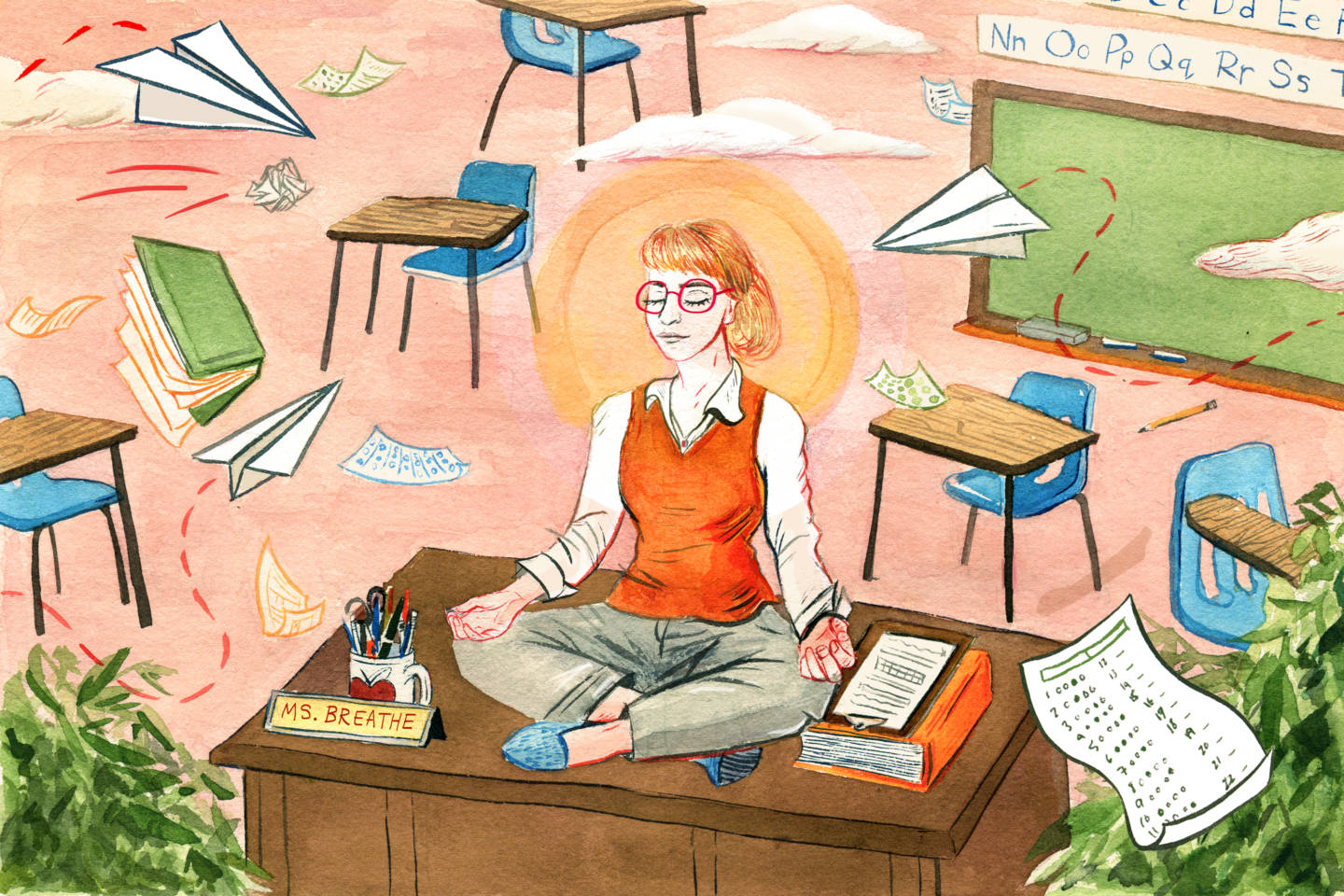
window.__INITIAL_STATE__={
"attachmentsReducer": {
"audio_0": {
"type": "attachments",
"id": "audio_0",
"imgSizes": {
"kqedFullSize": {
"file": "https://ww2.kqed.org/news/wp-content/themes/KQED-unified/img/audio_bgs/background0.jpg"
}
}
},
"audio_1": {
"type": "attachments",
"id": "audio_1",
"imgSizes": {
"kqedFullSize": {
"file": "https://ww2.kqed.org/news/wp-content/themes/KQED-unified/img/audio_bgs/background1.jpg"
}
}
},
"audio_2": {
"type": "attachments",
"id": "audio_2",
"imgSizes": {
"kqedFullSize": {
"file": "https://ww2.kqed.org/news/wp-content/themes/KQED-unified/img/audio_bgs/background2.jpg"
}
}
},
"audio_3": {
"type": "attachments",
"id": "audio_3",
"imgSizes": {
"kqedFullSize": {
"file": "https://ww2.kqed.org/news/wp-content/themes/KQED-unified/img/audio_bgs/background3.jpg"
}
}
},
"audio_4": {
"type": "attachments",
"id": "audio_4",
"imgSizes": {
"kqedFullSize": {
"file": "https://ww2.kqed.org/news/wp-content/themes/KQED-unified/img/audio_bgs/background4.jpg"
}
}
},
"placeholder": {
"type": "attachments",
"id": "placeholder",
"imgSizes": {
"thumbnail": {
"file": "https://cdn.kqed.org/wp-content/uploads/2024/12/KQED-Default-Image-816638274-2000x1333-1-160x107.jpg",
"width": 160,
"height": 107,
"mimeType": "image/jpeg"
},
"medium": {
"file": "https://cdn.kqed.org/wp-content/uploads/2024/12/KQED-Default-Image-816638274-2000x1333-1-800x533.jpg",
"width": 800,
"height": 533,
"mimeType": "image/jpeg"
},
"medium_large": {
"file": "https://cdn.kqed.org/wp-content/uploads/2024/12/KQED-Default-Image-816638274-2000x1333-1-768x512.jpg",
"width": 768,
"height": 512,
"mimeType": "image/jpeg"
},
"large": {
"file": "https://cdn.kqed.org/wp-content/uploads/2024/12/KQED-Default-Image-816638274-2000x1333-1-1020x680.jpg",
"width": 1020,
"height": 680,
"mimeType": "image/jpeg"
},
"1536x1536": {
"file": "https://cdn.kqed.org/wp-content/uploads/2024/12/KQED-Default-Image-816638274-2000x1333-1-1536x1024.jpg",
"width": 1536,
"height": 1024,
"mimeType": "image/jpeg"
},
"fd-lrg": {
"file": "https://cdn.kqed.org/wp-content/uploads/2024/12/KQED-Default-Image-816638274-2000x1333-1-1536x1024.jpg",
"width": 1536,
"height": 1024,
"mimeType": "image/jpeg"
},
"fd-med": {
"file": "https://cdn.kqed.org/wp-content/uploads/2024/12/KQED-Default-Image-816638274-2000x1333-1-1020x680.jpg",
"width": 1020,
"height": 680,
"mimeType": "image/jpeg"
},
"fd-sm": {
"file": "https://cdn.kqed.org/wp-content/uploads/2024/12/KQED-Default-Image-816638274-2000x1333-1-800x533.jpg",
"width": 800,
"height": 533,
"mimeType": "image/jpeg"
},
"post-thumbnail": {
"file": "https://cdn.kqed.org/wp-content/uploads/2024/12/KQED-Default-Image-816638274-2000x1333-1-672x372.jpg",
"width": 672,
"height": 372,
"mimeType": "image/jpeg"
},
"twentyfourteen-full-width": {
"file": "https://cdn.kqed.org/wp-content/uploads/2024/12/KQED-Default-Image-816638274-2000x1333-1-1038x576.jpg",
"width": 1038,
"height": 576,
"mimeType": "image/jpeg"
},
"xxsmall": {
"file": "https://cdn.kqed.org/wp-content/uploads/2024/12/KQED-Default-Image-816638274-2000x1333-1-160x107.jpg",
"width": 160,
"height": 107,
"mimeType": "image/jpeg"
},
"xsmall": {
"file": "https://cdn.kqed.org/wp-content/uploads/2024/12/KQED-Default-Image-816638274-2000x1333-1-672x372.jpg",
"width": 672,
"height": 372,
"mimeType": "image/jpeg"
},
"small": {
"file": "https://cdn.kqed.org/wp-content/uploads/2024/12/KQED-Default-Image-816638274-2000x1333-1-672x372.jpg",
"width": 672,
"height": 372,
"mimeType": "image/jpeg"
},
"xlarge": {
"file": "https://cdn.kqed.org/wp-content/uploads/2024/12/KQED-Default-Image-816638274-2000x1333-1-1020x680.jpg",
"width": 1020,
"height": 680,
"mimeType": "image/jpeg"
},
"full-width": {
"file": "https://cdn.kqed.org/wp-content/uploads/2024/12/KQED-Default-Image-816638274-2000x1333-1-1920x1280.jpg",
"width": 1920,
"height": 1280,
"mimeType": "image/jpeg"
},
"guest-author-32": {
"file": "https://cdn.kqed.org/wp-content/uploads/2025/01/KQED-Default-Image-816638274-1333x1333-1-160x160.jpg",
"width": 32,
"height": 32,
"mimeType": "image/jpeg"
},
"guest-author-50": {
"file": "https://cdn.kqed.org/wp-content/uploads/2025/01/KQED-Default-Image-816638274-1333x1333-1-160x160.jpg",
"width": 50,
"height": 50,
"mimeType": "image/jpeg"
},
"guest-author-64": {
"file": "https://cdn.kqed.org/wp-content/uploads/2025/01/KQED-Default-Image-816638274-1333x1333-1-160x160.jpg",
"width": 64,
"height": 64,
"mimeType": "image/jpeg"
},
"guest-author-96": {
"file": "https://cdn.kqed.org/wp-content/uploads/2025/01/KQED-Default-Image-816638274-1333x1333-1-160x160.jpg",
"width": 96,
"height": 96,
"mimeType": "image/jpeg"
},
"guest-author-128": {
"file": "https://cdn.kqed.org/wp-content/uploads/2025/01/KQED-Default-Image-816638274-1333x1333-1-160x160.jpg",
"width": 128,
"height": 128,
"mimeType": "image/jpeg"
},
"detail": {
"file": "https://cdn.kqed.org/wp-content/uploads/2025/01/KQED-Default-Image-816638274-1333x1333-1-160x160.jpg",
"width": 160,
"height": 160,
"mimeType": "image/jpeg"
},
"kqedFullSize": {
"file": "https://cdn.kqed.org/wp-content/uploads/2024/12/KQED-Default-Image-816638274-2000x1333-1.jpg",
"width": 2000,
"height": 1333
}
}
},
"mindshift_46151": {
"type": "attachments",
"id": "mindshift_46151",
"meta": {
"index": "attachments_1716263798",
"site": "mindshift",
"id": "46151",
"found": true
},
"parent": 46150,
"imgSizes": {
"twentyfourteen-full-width": {
"file": "https://ww2.kqed.org/app/uploads/sites/23/2016/08/npr_teachers_final_additional_vs_slide-f3e375b181ec50c306f5f0631762ea75a294e4a2-1038x576.jpg",
"width": 1038,
"mimeType": "image/jpeg",
"height": 576
},
"thumbnail": {
"file": "https://ww2.kqed.org/app/uploads/sites/23/2016/08/npr_teachers_final_additional_vs_slide-f3e375b181ec50c306f5f0631762ea75a294e4a2-400x267.jpg",
"width": 400,
"mimeType": "image/jpeg",
"height": 267
},
"fd-sm": {
"file": "https://ww2.kqed.org/app/uploads/sites/23/2016/08/npr_teachers_final_additional_vs_slide-f3e375b181ec50c306f5f0631762ea75a294e4a2-960x640.jpg",
"width": 960,
"mimeType": "image/jpeg",
"height": 640
},
"post-thumbnail": {
"file": "https://ww2.kqed.org/app/uploads/sites/23/2016/08/npr_teachers_final_additional_vs_slide-f3e375b181ec50c306f5f0631762ea75a294e4a2-672x372.jpg",
"width": 672,
"mimeType": "image/jpeg",
"height": 372
},
"kqedFullSize": {
"file": "https://ww2.kqed.org/app/uploads/sites/23/2016/08/npr_teachers_final_additional_vs_slide-f3e375b181ec50c306f5f0631762ea75a294e4a2.jpg",
"width": 2998,
"height": 1998
},
"large": {
"file": "https://ww2.kqed.org/app/uploads/sites/23/2016/08/npr_teachers_final_additional_vs_slide-f3e375b181ec50c306f5f0631762ea75a294e4a2-1440x960.jpg",
"width": 1440,
"mimeType": "image/jpeg",
"height": 960
},
"guest-author-50": {
"file": "https://ww2.kqed.org/app/uploads/sites/23/2016/08/npr_teachers_final_additional_vs_slide-f3e375b181ec50c306f5f0631762ea75a294e4a2-50x50.jpg",
"width": 50,
"mimeType": "image/jpeg",
"height": 50
},
"guest-author-96": {
"file": "https://ww2.kqed.org/app/uploads/sites/23/2016/08/npr_teachers_final_additional_vs_slide-f3e375b181ec50c306f5f0631762ea75a294e4a2-96x96.jpg",
"width": 96,
"mimeType": "image/jpeg",
"height": 96
},
"medium": {
"file": "https://ww2.kqed.org/app/uploads/sites/23/2016/08/npr_teachers_final_additional_vs_slide-f3e375b181ec50c306f5f0631762ea75a294e4a2-800x533.jpg",
"width": 800,
"mimeType": "image/jpeg",
"height": 533
},
"guest-author-64": {
"file": "https://ww2.kqed.org/app/uploads/sites/23/2016/08/npr_teachers_final_additional_vs_slide-f3e375b181ec50c306f5f0631762ea75a294e4a2-64x64.jpg",
"width": 64,
"mimeType": "image/jpeg",
"height": 64
},
"guest-author-32": {
"file": "https://ww2.kqed.org/app/uploads/sites/23/2016/08/npr_teachers_final_additional_vs_slide-f3e375b181ec50c306f5f0631762ea75a294e4a2-32x32.jpg",
"width": 32,
"mimeType": "image/jpeg",
"height": 32
},
"cat_post_thumb_sizecategory-posts-2": {
"file": "https://ww2.kqed.org/app/uploads/sites/23/2016/08/npr_teachers_final_additional_vs_slide-f3e375b181ec50c306f5f0631762ea75a294e4a2-50x50.jpg",
"width": 50,
"mimeType": "image/jpeg",
"height": 50
},
"fd-lrg": {
"file": "https://ww2.kqed.org/app/uploads/sites/23/2016/08/npr_teachers_final_additional_vs_slide-f3e375b181ec50c306f5f0631762ea75a294e4a2-1920x1280.jpg",
"width": 1920,
"mimeType": "image/jpeg",
"height": 1280
},
"fd-med": {
"file": "https://ww2.kqed.org/app/uploads/sites/23/2016/08/npr_teachers_final_additional_vs_slide-f3e375b181ec50c306f5f0631762ea75a294e4a2-1180x786.jpg",
"width": 1180,
"mimeType": "image/jpeg",
"height": 786
},
"detail": {
"file": "https://ww2.kqed.org/app/uploads/sites/23/2016/08/npr_teachers_final_additional_vs_slide-f3e375b181ec50c306f5f0631762ea75a294e4a2-150x150.jpg",
"width": 150,
"mimeType": "image/jpeg",
"height": 150
},
"medium_large": {
"file": "https://ww2.kqed.org/app/uploads/sites/23/2016/08/npr_teachers_final_additional_vs_slide-f3e375b181ec50c306f5f0631762ea75a294e4a2-768x512.jpg",
"width": 768,
"mimeType": "image/jpeg",
"height": 512
},
"guest-author-128": {
"file": "https://ww2.kqed.org/app/uploads/sites/23/2016/08/npr_teachers_final_additional_vs_slide-f3e375b181ec50c306f5f0631762ea75a294e4a2-128x128.jpg",
"width": 128,
"mimeType": "image/jpeg",
"height": 128
}
},
"publishDate": 1471636279,
"modified": 1471652141,
"caption": null,
"description": "Teacher meditates on her classroom desk.",
"title": "Teacher meditates on her classroom desk.",
"credit": "Vivian Shih",
"status": "inherit",
"isLoading": false,
"fetchFailed": false
},
"mindshift_46033": {
"type": "attachments",
"id": "mindshift_46033",
"meta": {
"index": "attachments_1716263798",
"site": "mindshift",
"id": "46033",
"found": true
},
"parent": 45994,
"imgSizes": {
"twentyfourteen-full-width": {
"file": "https://ww2.kqed.org/app/uploads/sites/23/2016/08/Light-Bulbs-1038x576.jpg",
"width": 1038,
"mimeType": "image/jpeg",
"height": 576
},
"thumbnail": {
"file": "https://ww2.kqed.org/app/uploads/sites/23/2016/08/Light-Bulbs-400x226.jpg",
"width": 400,
"mimeType": "image/jpeg",
"height": 226
},
"fd-sm": {
"file": "https://ww2.kqed.org/app/uploads/sites/23/2016/08/Light-Bulbs-960x542.jpg",
"width": 960,
"mimeType": "image/jpeg",
"height": 542
},
"post-thumbnail": {
"file": "https://ww2.kqed.org/app/uploads/sites/23/2016/08/Light-Bulbs-672x372.jpg",
"width": 672,
"mimeType": "image/jpeg",
"height": 372
},
"kqedFullSize": {
"file": "https://ww2.kqed.org/app/uploads/sites/23/2016/08/Light-Bulbs.jpg",
"width": 1920,
"height": 1084
},
"large": {
"file": "https://ww2.kqed.org/app/uploads/sites/23/2016/08/Light-Bulbs-1440x813.jpg",
"width": 1440,
"mimeType": "image/jpeg",
"height": 813
},
"guest-author-50": {
"file": "https://ww2.kqed.org/app/uploads/sites/23/2016/08/Light-Bulbs-50x50.jpg",
"width": 50,
"mimeType": "image/jpeg",
"height": 50
},
"guest-author-96": {
"file": "https://ww2.kqed.org/app/uploads/sites/23/2016/08/Light-Bulbs-96x96.jpg",
"width": 96,
"mimeType": "image/jpeg",
"height": 96
},
"medium": {
"file": "https://ww2.kqed.org/app/uploads/sites/23/2016/08/Light-Bulbs-800x452.jpg",
"width": 800,
"mimeType": "image/jpeg",
"height": 452
},
"guest-author-64": {
"file": "https://ww2.kqed.org/app/uploads/sites/23/2016/08/Light-Bulbs-64x64.jpg",
"width": 64,
"mimeType": "image/jpeg",
"height": 64
},
"guest-author-32": {
"file": "https://ww2.kqed.org/app/uploads/sites/23/2016/08/Light-Bulbs-32x32.jpg",
"width": 32,
"mimeType": "image/jpeg",
"height": 32
},
"cat_post_thumb_sizecategory-posts-2": {
"file": "https://ww2.kqed.org/app/uploads/sites/23/2016/08/Light-Bulbs-50x50.jpg",
"width": 50,
"mimeType": "image/jpeg",
"height": 50
},
"fd-lrg": {
"file": "https://ww2.kqed.org/app/uploads/sites/23/2016/08/Light-Bulbs-1920x1084.jpg",
"width": 1920,
"mimeType": "image/jpeg",
"height": 1084
},
"fd-med": {
"file": "https://ww2.kqed.org/app/uploads/sites/23/2016/08/Light-Bulbs-1180x666.jpg",
"width": 1180,
"mimeType": "image/jpeg",
"height": 666
},
"detail": {
"file": "https://ww2.kqed.org/app/uploads/sites/23/2016/08/Light-Bulbs-150x150.jpg",
"width": 150,
"mimeType": "image/jpeg",
"height": 150
},
"medium_large": {
"file": "https://ww2.kqed.org/app/uploads/sites/23/2016/08/Light-Bulbs-768x434.jpg",
"width": 768,
"mimeType": "image/jpeg",
"height": 434
},
"guest-author-128": {
"file": "https://ww2.kqed.org/app/uploads/sites/23/2016/08/Light-Bulbs-128x128.jpg",
"width": 128,
"mimeType": "image/jpeg",
"height": 128
}
},
"publishDate": 1470639406,
"modified": 1470639422,
"caption": null,
"description": null,
"title": "Light-Bulbs",
"credit": "iStock",
"status": "inherit",
"isLoading": false,
"fetchFailed": false
},
"mindshift_45858": {
"type": "attachments",
"id": "mindshift_45858",
"meta": {
"index": "attachments_1716263798",
"site": "mindshift",
"id": "45858",
"found": true
},
"parent": 45856,
"imgSizes": {
"twentyfourteen-full-width": {
"file": "https://ww2.kqed.org/app/uploads/sites/23/2016/07/Photo-15-04-2015-12-02-41-PM-1038x576.jpg",
"width": 1038,
"mimeType": "image/jpeg",
"height": 576
},
"thumbnail": {
"file": "https://ww2.kqed.org/app/uploads/sites/23/2016/07/Photo-15-04-2015-12-02-41-PM-400x249.jpg",
"width": 400,
"mimeType": "image/jpeg",
"height": 249
},
"fd-sm": {
"file": "https://ww2.kqed.org/app/uploads/sites/23/2016/07/Photo-15-04-2015-12-02-41-PM-960x598.jpg",
"width": 960,
"mimeType": "image/jpeg",
"height": 598
},
"post-thumbnail": {
"file": "https://ww2.kqed.org/app/uploads/sites/23/2016/07/Photo-15-04-2015-12-02-41-PM-672x372.jpg",
"width": 672,
"mimeType": "image/jpeg",
"height": 372
},
"kqedFullSize": {
"file": "https://ww2.kqed.org/app/uploads/sites/23/2016/07/Photo-15-04-2015-12-02-41-PM.jpg",
"width": 2464,
"height": 1536
},
"large": {
"file": "https://ww2.kqed.org/app/uploads/sites/23/2016/07/Photo-15-04-2015-12-02-41-PM-1440x898.jpg",
"width": 1440,
"mimeType": "image/jpeg",
"height": 898
},
"guest-author-50": {
"file": "https://ww2.kqed.org/app/uploads/sites/23/2016/07/Photo-15-04-2015-12-02-41-PM-50x50.jpg",
"width": 50,
"mimeType": "image/jpeg",
"height": 50
},
"guest-author-96": {
"file": "https://ww2.kqed.org/app/uploads/sites/23/2016/07/Photo-15-04-2015-12-02-41-PM-96x96.jpg",
"width": 96,
"mimeType": "image/jpeg",
"height": 96
},
"medium": {
"file": "https://ww2.kqed.org/app/uploads/sites/23/2016/07/Photo-15-04-2015-12-02-41-PM-800x499.jpg",
"width": 800,
"mimeType": "image/jpeg",
"height": 499
},
"guest-author-64": {
"file": "https://ww2.kqed.org/app/uploads/sites/23/2016/07/Photo-15-04-2015-12-02-41-PM-64x64.jpg",
"width": 64,
"mimeType": "image/jpeg",
"height": 64
},
"guest-author-32": {
"file": "https://ww2.kqed.org/app/uploads/sites/23/2016/07/Photo-15-04-2015-12-02-41-PM-32x32.jpg",
"width": 32,
"mimeType": "image/jpeg",
"height": 32
},
"cat_post_thumb_sizecategory-posts-2": {
"file": "https://ww2.kqed.org/app/uploads/sites/23/2016/07/Photo-15-04-2015-12-02-41-PM-50x50.jpg",
"width": 50,
"mimeType": "image/jpeg",
"height": 50
},
"fd-lrg": {
"file": "https://ww2.kqed.org/app/uploads/sites/23/2016/07/Photo-15-04-2015-12-02-41-PM-1920x1197.jpg",
"width": 1920,
"mimeType": "image/jpeg",
"height": 1197
},
"fd-med": {
"file": "https://ww2.kqed.org/app/uploads/sites/23/2016/07/Photo-15-04-2015-12-02-41-PM-1180x736.jpg",
"width": 1180,
"mimeType": "image/jpeg",
"height": 736
},
"detail": {
"file": "https://ww2.kqed.org/app/uploads/sites/23/2016/07/Photo-15-04-2015-12-02-41-PM-150x150.jpg",
"width": 150,
"mimeType": "image/jpeg",
"height": 150
},
"medium_large": {
"file": "https://ww2.kqed.org/app/uploads/sites/23/2016/07/Photo-15-04-2015-12-02-41-PM-768x479.jpg",
"width": 768,
"mimeType": "image/jpeg",
"height": 479
},
"guest-author-128": {
"file": "https://ww2.kqed.org/app/uploads/sites/23/2016/07/Photo-15-04-2015-12-02-41-PM-128x128.jpg",
"width": 128,
"mimeType": "image/jpeg",
"height": 128
}
},
"publishDate": 1469132720,
"modified": 1469133673,
"caption": "Students hold \u003ca href=\"http://www.ipadartroom.com/salad-selfies-art-history/\">\"Salad Selfies\"\u003c/a> they made as an exploration of Giuseppe Arcimboldo's portraiture. ",
"description": null,
"title": "Photo 15-04-2015, 12 02 41 PM",
"credit": "Courtesy Cathy Hunt",
"status": "inherit",
"isLoading": false,
"fetchFailed": false
},
"mindshift_45835": {
"type": "attachments",
"id": "mindshift_45835",
"meta": {
"index": "attachments_1716263798",
"site": "mindshift",
"id": "45835",
"found": true
},
"parent": 45834,
"imgSizes": {
"twentyfourteen-full-width": {
"file": "https://ww2.kqed.org/app/uploads/sites/23/2016/07/SpheroELA-1038x576.png",
"width": 1038,
"mimeType": "image/png",
"height": 576
},
"thumbnail": {
"file": "https://ww2.kqed.org/app/uploads/sites/23/2016/07/SpheroELA-400x225.png",
"width": 400,
"mimeType": "image/png",
"height": 225
},
"fd-sm": {
"file": "https://ww2.kqed.org/app/uploads/sites/23/2016/07/SpheroELA-960x540.png",
"width": 960,
"mimeType": "image/png",
"height": 540
},
"post-thumbnail": {
"file": "https://ww2.kqed.org/app/uploads/sites/23/2016/07/SpheroELA-672x372.png",
"width": 672,
"mimeType": "image/png",
"height": 372
},
"kqedFullSize": {
"file": "https://ww2.kqed.org/app/uploads/sites/23/2016/07/SpheroELA.png",
"width": 1920,
"height": 1080
},
"large": {
"file": "https://ww2.kqed.org/app/uploads/sites/23/2016/07/SpheroELA-1440x810.png",
"width": 1440,
"mimeType": "image/png",
"height": 810
},
"guest-author-50": {
"file": "https://ww2.kqed.org/app/uploads/sites/23/2016/07/SpheroELA-50x50.png",
"width": 50,
"mimeType": "image/png",
"height": 50
},
"guest-author-96": {
"file": "https://ww2.kqed.org/app/uploads/sites/23/2016/07/SpheroELA-96x96.png",
"width": 96,
"mimeType": "image/png",
"height": 96
},
"medium": {
"file": "https://ww2.kqed.org/app/uploads/sites/23/2016/07/SpheroELA-800x450.png",
"width": 800,
"mimeType": "image/png",
"height": 450
},
"guest-author-64": {
"file": "https://ww2.kqed.org/app/uploads/sites/23/2016/07/SpheroELA-64x64.png",
"width": 64,
"mimeType": "image/png",
"height": 64
},
"guest-author-32": {
"file": "https://ww2.kqed.org/app/uploads/sites/23/2016/07/SpheroELA-32x32.png",
"width": 32,
"mimeType": "image/png",
"height": 32
},
"cat_post_thumb_sizecategory-posts-2": {
"file": "https://ww2.kqed.org/app/uploads/sites/23/2016/07/SpheroELA-50x50.png",
"width": 50,
"mimeType": "image/png",
"height": 50
},
"fd-lrg": {
"file": "https://ww2.kqed.org/app/uploads/sites/23/2016/07/SpheroELA-1920x1080.png",
"width": 1920,
"mimeType": "image/png",
"height": 1080
},
"fd-med": {
"file": "https://ww2.kqed.org/app/uploads/sites/23/2016/07/SpheroELA-1180x664.png",
"width": 1180,
"mimeType": "image/png",
"height": 664
},
"detail": {
"file": "https://ww2.kqed.org/app/uploads/sites/23/2016/07/SpheroELA-150x150.png",
"width": 150,
"mimeType": "image/png",
"height": 150
},
"medium_large": {
"file": "https://ww2.kqed.org/app/uploads/sites/23/2016/07/SpheroELA-768x432.png",
"width": 768,
"mimeType": "image/png",
"height": 432
},
"guest-author-128": {
"file": "https://ww2.kqed.org/app/uploads/sites/23/2016/07/SpheroELA-128x128.png",
"width": 128,
"mimeType": "image/png",
"height": 128
}
},
"publishDate": 1468960118,
"modified": 1469140629,
"caption": "Jessica Herring's students work together to program a Sphero robot to represent the emotions and actions of characters in Huckleberry Finn.",
"description": null,
"title": "SpheroELA",
"credit": "Courtesy Michael Mills",
"status": "inherit",
"isLoading": false,
"fetchFailed": false
},
"mindshift_45770": {
"type": "attachments",
"id": "mindshift_45770",
"meta": {
"index": "attachments_1716263798",
"site": "mindshift",
"id": "45770",
"found": true
},
"parent": 45544,
"imgSizes": {
"twentyfourteen-full-width": {
"file": "https://ww2.kqed.org/app/uploads/sites/23/2016/07/Laptop-1038x576.jpg",
"width": 1038,
"mimeType": "image/jpeg",
"height": 576
},
"thumbnail": {
"file": "https://ww2.kqed.org/app/uploads/sites/23/2016/07/Laptop-400x225.jpg",
"width": 400,
"mimeType": "image/jpeg",
"height": 225
},
"fd-sm": {
"file": "https://ww2.kqed.org/app/uploads/sites/23/2016/07/Laptop-960x540.jpg",
"width": 960,
"mimeType": "image/jpeg",
"height": 540
},
"post-thumbnail": {
"file": "https://ww2.kqed.org/app/uploads/sites/23/2016/07/Laptop-672x372.jpg",
"width": 672,
"mimeType": "image/jpeg",
"height": 372
},
"kqedFullSize": {
"file": "https://ww2.kqed.org/app/uploads/sites/23/2016/07/Laptop.jpg",
"width": 1920,
"height": 1080
},
"large": {
"file": "https://ww2.kqed.org/app/uploads/sites/23/2016/07/Laptop-1440x810.jpg",
"width": 1440,
"mimeType": "image/jpeg",
"height": 810
},
"guest-author-50": {
"file": "https://ww2.kqed.org/app/uploads/sites/23/2016/07/Laptop-50x50.jpg",
"width": 50,
"mimeType": "image/jpeg",
"height": 50
},
"guest-author-96": {
"file": "https://ww2.kqed.org/app/uploads/sites/23/2016/07/Laptop-96x96.jpg",
"width": 96,
"mimeType": "image/jpeg",
"height": 96
},
"medium": {
"file": "https://ww2.kqed.org/app/uploads/sites/23/2016/07/Laptop-800x450.jpg",
"width": 800,
"mimeType": "image/jpeg",
"height": 450
},
"guest-author-64": {
"file": "https://ww2.kqed.org/app/uploads/sites/23/2016/07/Laptop-64x64.jpg",
"width": 64,
"mimeType": "image/jpeg",
"height": 64
},
"guest-author-32": {
"file": "https://ww2.kqed.org/app/uploads/sites/23/2016/07/Laptop-32x32.jpg",
"width": 32,
"mimeType": "image/jpeg",
"height": 32
},
"cat_post_thumb_sizecategory-posts-2": {
"file": "https://ww2.kqed.org/app/uploads/sites/23/2016/07/Laptop-50x50.jpg",
"width": 50,
"mimeType": "image/jpeg",
"height": 50
},
"fd-lrg": {
"file": "https://ww2.kqed.org/app/uploads/sites/23/2016/07/Laptop-1920x1080.jpg",
"width": 1920,
"mimeType": "image/jpeg",
"height": 1080
},
"fd-med": {
"file": "https://ww2.kqed.org/app/uploads/sites/23/2016/07/Laptop-1180x664.jpg",
"width": 1180,
"mimeType": "image/jpeg",
"height": 664
},
"detail": {
"file": "https://ww2.kqed.org/app/uploads/sites/23/2016/07/Laptop-150x150.jpg",
"width": 150,
"mimeType": "image/jpeg",
"height": 150
},
"medium_large": {
"file": "https://ww2.kqed.org/app/uploads/sites/23/2016/07/Laptop-768x432.jpg",
"width": 768,
"mimeType": "image/jpeg",
"height": 432
},
"guest-author-128": {
"file": "https://ww2.kqed.org/app/uploads/sites/23/2016/07/Laptop-128x128.jpg",
"width": 128,
"mimeType": "image/jpeg",
"height": 128
}
},
"publishDate": 1468220265,
"modified": 1468220278,
"caption": null,
"description": null,
"title": "Laptop",
"credit": "iStock",
"status": "inherit",
"isLoading": false,
"fetchFailed": false
},
"mindshift_45356": {
"type": "attachments",
"id": "mindshift_45356",
"meta": {
"index": "attachments_1716263798",
"site": "mindshift",
"id": "45356",
"found": true
},
"parent": 45341,
"imgSizes": {
"twentyfourteen-full-width": {
"file": "https://ww2.kqed.org/app/uploads/sites/23/2016/06/Watermelons1920-1038x576.jpg",
"width": 1038,
"mimeType": "image/jpeg",
"height": 576
},
"thumbnail": {
"file": "https://ww2.kqed.org/app/uploads/sites/23/2016/06/Watermelons1920-400x225.jpg",
"width": 400,
"mimeType": "image/jpeg",
"height": 225
},
"fd-sm": {
"file": "https://ww2.kqed.org/app/uploads/sites/23/2016/06/Watermelons1920-960x540.jpg",
"width": 960,
"mimeType": "image/jpeg",
"height": 540
},
"post-thumbnail": {
"file": "https://ww2.kqed.org/app/uploads/sites/23/2016/06/Watermelons1920-672x372.jpg",
"width": 672,
"mimeType": "image/jpeg",
"height": 372
},
"kqedFullSize": {
"file": "https://ww2.kqed.org/app/uploads/sites/23/2016/06/Watermelons1920.jpg",
"width": 1920,
"height": 1080
},
"large": {
"file": "https://ww2.kqed.org/app/uploads/sites/23/2016/06/Watermelons1920-1440x810.jpg",
"width": 1440,
"mimeType": "image/jpeg",
"height": 810
},
"guest-author-50": {
"file": "https://ww2.kqed.org/app/uploads/sites/23/2016/06/Watermelons1920-50x50.jpg",
"width": 50,
"mimeType": "image/jpeg",
"height": 50
},
"guest-author-96": {
"file": "https://ww2.kqed.org/app/uploads/sites/23/2016/06/Watermelons1920-96x96.jpg",
"width": 96,
"mimeType": "image/jpeg",
"height": 96
},
"medium": {
"file": "https://ww2.kqed.org/app/uploads/sites/23/2016/06/Watermelons1920-800x450.jpg",
"width": 800,
"mimeType": "image/jpeg",
"height": 450
},
"guest-author-64": {
"file": "https://ww2.kqed.org/app/uploads/sites/23/2016/06/Watermelons1920-64x64.jpg",
"width": 64,
"mimeType": "image/jpeg",
"height": 64
},
"guest-author-32": {
"file": "https://ww2.kqed.org/app/uploads/sites/23/2016/06/Watermelons1920-32x32.jpg",
"width": 32,
"mimeType": "image/jpeg",
"height": 32
},
"cat_post_thumb_sizecategory-posts-2": {
"file": "https://ww2.kqed.org/app/uploads/sites/23/2016/06/Watermelons1920-50x50.jpg",
"width": 50,
"mimeType": "image/jpeg",
"height": 50
},
"fd-lrg": {
"file": "https://ww2.kqed.org/app/uploads/sites/23/2016/06/Watermelons1920-1920x1080.jpg",
"width": 1920,
"mimeType": "image/jpeg",
"height": 1080
},
"fd-med": {
"file": "https://ww2.kqed.org/app/uploads/sites/23/2016/06/Watermelons1920-1180x664.jpg",
"width": 1180,
"mimeType": "image/jpeg",
"height": 664
},
"detail": {
"file": "https://ww2.kqed.org/app/uploads/sites/23/2016/06/Watermelons1920-150x150.jpg",
"width": 150,
"mimeType": "image/jpeg",
"height": 150
},
"medium_large": {
"file": "https://ww2.kqed.org/app/uploads/sites/23/2016/06/Watermelons1920-768x432.jpg",
"width": 768,
"mimeType": "image/jpeg",
"height": 432
},
"guest-author-128": {
"file": "https://ww2.kqed.org/app/uploads/sites/23/2016/06/Watermelons1920-128x128.jpg",
"width": 128,
"mimeType": "image/jpeg",
"height": 128
}
},
"publishDate": 1464904788,
"modified": 1464904852,
"caption": "Third grade teacher Maria Franco holds up two watermelons to demonstrate a fractions problem.",
"description": null,
"title": "Watermelons1920",
"credit": "\u003ca href=\"https://www.teachingchannel.org/videos/3-phase-lesson-structure-cisco\">Teaching Channel\u003c/a>",
"status": "inherit",
"isLoading": false,
"fetchFailed": false
},
"mindshift_44830": {
"type": "attachments",
"id": "mindshift_44830",
"meta": {
"index": "attachments_1716263798",
"site": "mindshift",
"id": "44830",
"found": true
},
"parent": 44818,
"imgSizes": {
"twentyfourteen-full-width": {
"file": "https://ww2.kqed.org/app/uploads/sites/23/2016/04/quartet-diverse-learner-1038x576.jpg",
"width": 1038,
"mimeType": "image/jpeg",
"height": 576
},
"thumbnail": {
"file": "https://ww2.kqed.org/app/uploads/sites/23/2016/04/quartet-diverse-learner-400x225.jpg",
"width": 400,
"mimeType": "image/jpeg",
"height": 225
},
"fd-sm": {
"file": "https://ww2.kqed.org/app/uploads/sites/23/2016/04/quartet-diverse-learner-960x540.jpg",
"width": 960,
"mimeType": "image/jpeg",
"height": 540
},
"post-thumbnail": {
"file": "https://ww2.kqed.org/app/uploads/sites/23/2016/04/quartet-diverse-learner-672x372.jpg",
"width": 672,
"mimeType": "image/jpeg",
"height": 372
},
"kqedFullSize": {
"file": "https://ww2.kqed.org/app/uploads/sites/23/2016/04/quartet-diverse-learner.jpg",
"width": 1920,
"height": 1080
},
"large": {
"file": "https://ww2.kqed.org/app/uploads/sites/23/2016/04/quartet-diverse-learner-1440x810.jpg",
"width": 1440,
"mimeType": "image/jpeg",
"height": 810
},
"guest-author-96": {
"file": "https://ww2.kqed.org/app/uploads/sites/23/2016/04/quartet-diverse-learner-96x96.jpg",
"width": 96,
"mimeType": "image/jpeg",
"height": 96
},
"medium": {
"file": "https://ww2.kqed.org/app/uploads/sites/23/2016/04/quartet-diverse-learner-800x450.jpg",
"width": 800,
"mimeType": "image/jpeg",
"height": 450
},
"guest-author-64": {
"file": "https://ww2.kqed.org/app/uploads/sites/23/2016/04/quartet-diverse-learner-64x64.jpg",
"width": 64,
"mimeType": "image/jpeg",
"height": 64
},
"guest-author-32": {
"file": "https://ww2.kqed.org/app/uploads/sites/23/2016/04/quartet-diverse-learner-32x32.jpg",
"width": 32,
"mimeType": "image/jpeg",
"height": 32
},
"cat_post_thumb_sizecategory-posts-2": {
"file": "https://ww2.kqed.org/app/uploads/sites/23/2016/04/quartet-diverse-learner-50x50.jpg",
"width": 50,
"mimeType": "image/jpeg",
"height": 50
},
"fd-lrg": {
"file": "https://ww2.kqed.org/app/uploads/sites/23/2016/04/quartet-diverse-learner-1920x1080.jpg",
"width": 1920,
"mimeType": "image/jpeg",
"height": 1080
},
"fd-med": {
"file": "https://ww2.kqed.org/app/uploads/sites/23/2016/04/quartet-diverse-learner-1180x664.jpg",
"width": 1180,
"mimeType": "image/jpeg",
"height": 664
},
"detail": {
"file": "https://ww2.kqed.org/app/uploads/sites/23/2016/04/quartet-diverse-learner-150x150.jpg",
"width": 150,
"mimeType": "image/jpeg",
"height": 150
},
"medium_large": {
"file": "https://ww2.kqed.org/app/uploads/sites/23/2016/04/quartet-diverse-learner-768x432.jpg",
"width": 768,
"mimeType": "image/jpeg",
"height": 432
},
"guest-author-128": {
"file": "https://ww2.kqed.org/app/uploads/sites/23/2016/04/quartet-diverse-learner-128x128.jpg",
"width": 128,
"mimeType": "image/jpeg",
"height": 128
}
},
"publishDate": 1461714728,
"modified": 1461714809,
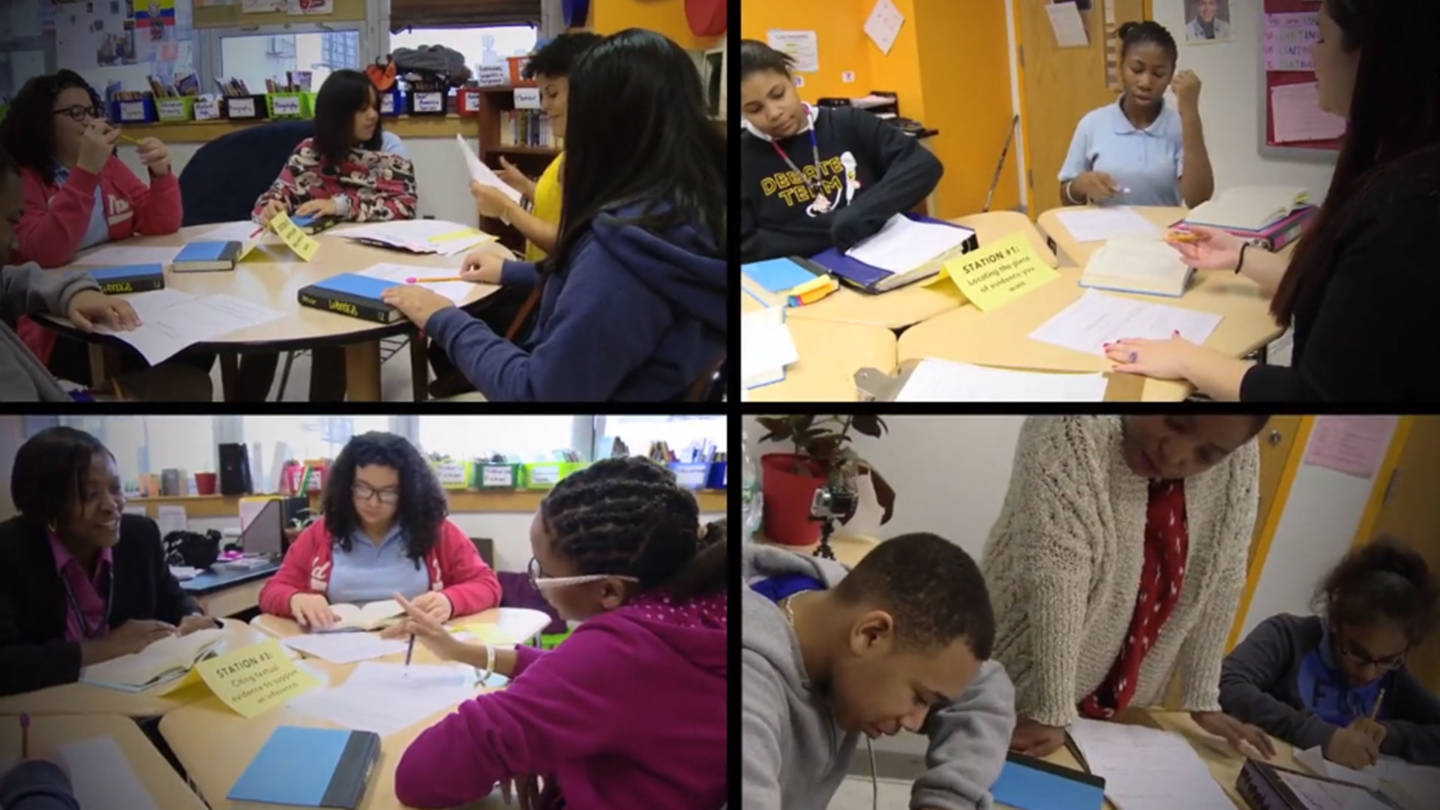
"caption": "DeBose broke students into four groups to work on different elements of using evidence to support textual analysis.",
"description": null,
"title": "quartet-diverse-learner",
"credit": "Teaching Channel",
"status": "inherit",
"isLoading": false,
"fetchFailed": false
},
"mindshift_45515": {
"type": "attachments",
"id": "mindshift_45515",
"meta": {
"index": "attachments_1716263798",
"site": "mindshift",
"id": "45515",
"found": true
},
"parent": 42949,
"imgSizes": {
"thumbnail": {
"file": "https://ww2.kqed.org/app/uploads/sites/23/2016/06/Ray_Salazar_Sandy-400x273.jpg",
"width": 400,
"mimeType": "image/jpeg",
"height": 273
},
"post-thumbnail": {
"file": "https://ww2.kqed.org/app/uploads/sites/23/2016/06/Ray_Salazar_Sandy-610x372.jpg",
"width": 610,
"mimeType": "image/jpeg",
"height": 372
},
"kqedFullSize": {
"file": "https://ww2.kqed.org/app/uploads/sites/23/2016/06/Ray_Salazar_Sandy.jpg",
"width": 610,
"height": 417
},
"cat_post_thumb_sizecategory-posts-2": {
"file": "https://ww2.kqed.org/app/uploads/sites/23/2016/06/Ray_Salazar_Sandy-50x50.jpg",
"width": 50,
"mimeType": "image/jpeg",
"height": 50
},
"guest-author-50": {
"file": "https://ww2.kqed.org/app/uploads/sites/23/2016/06/Ray_Salazar_Sandy-50x50.jpg",
"width": 50,
"mimeType": "image/jpeg",
"height": 50
},
"guest-author-96": {
"file": "https://ww2.kqed.org/app/uploads/sites/23/2016/06/Ray_Salazar_Sandy-96x96.jpg",
"width": 96,
"mimeType": "image/jpeg",
"height": 96
},
"guest-author-64": {
"file": "https://ww2.kqed.org/app/uploads/sites/23/2016/06/Ray_Salazar_Sandy-64x64.jpg",
"width": 64,
"mimeType": "image/jpeg",
"height": 64
},
"detail": {
"file": "https://ww2.kqed.org/app/uploads/sites/23/2016/06/Ray_Salazar_Sandy-150x150.jpg",
"width": 150,
"mimeType": "image/jpeg",
"height": 150
},
"guest-author-32": {
"file": "https://ww2.kqed.org/app/uploads/sites/23/2016/06/Ray_Salazar_Sandy-32x32.jpg",
"width": 32,
"mimeType": "image/jpeg",
"height": 32
},
"guest-author-128": {
"file": "https://ww2.kqed.org/app/uploads/sites/23/2016/06/Ray_Salazar_Sandy-128x128.jpg",
"width": 128,
"mimeType": "image/jpeg",
"height": 128
}
},
"publishDate": 1466143701,
"modified": 1466143718,
"caption": "Ray Salazar",
"description": null,
"title": "Ray_Salazar_Sandy",
"credit": "Sandra Steinbrecher",
"status": "inherit",
"isLoading": false,
"fetchFailed": false
},
"mindshift_45465": {
"type": "attachments",
"id": "mindshift_45465",
"meta": {
"index": "attachments_1716263798",
"site": "mindshift",
"id": "45465",
"found": true
},
"parent": 45453,
"imgSizes": {
"twentyfourteen-full-width": {
"file": "https://ww2.kqed.org/app/uploads/sites/23/2016/06/Kris-color-corrected-1038x576.jpg",
"width": 1038,
"mimeType": "image/jpeg",
"height": 576
},
"thumbnail": {
"file": "https://ww2.kqed.org/app/uploads/sites/23/2016/06/Kris-color-corrected-400x260.jpg",
"width": 400,
"mimeType": "image/jpeg",
"height": 260
},
"fd-sm": {
"file": "https://ww2.kqed.org/app/uploads/sites/23/2016/06/Kris-color-corrected-960x623.jpg",
"width": 960,
"mimeType": "image/jpeg",
"height": 623
},
"post-thumbnail": {
"file": "https://ww2.kqed.org/app/uploads/sites/23/2016/06/Kris-color-corrected-672x372.jpg",
"width": 672,
"mimeType": "image/jpeg",
"height": 372
},
"kqedFullSize": {
"file": "https://ww2.kqed.org/app/uploads/sites/23/2016/06/Kris-color-corrected.jpg",
"width": 2000,
"height": 1298
},
"large": {
"file": "https://ww2.kqed.org/app/uploads/sites/23/2016/06/Kris-color-corrected-1440x935.jpg",
"width": 1440,
"mimeType": "image/jpeg",
"height": 935
},
"guest-author-50": {
"file": "https://ww2.kqed.org/app/uploads/sites/23/2016/06/Kris-color-corrected-50x50.jpg",
"width": 50,
"mimeType": "image/jpeg",
"height": 50
},
"guest-author-96": {
"file": "https://ww2.kqed.org/app/uploads/sites/23/2016/06/Kris-color-corrected-96x96.jpg",
"width": 96,
"mimeType": "image/jpeg",
"height": 96
},
"medium": {
"file": "https://ww2.kqed.org/app/uploads/sites/23/2016/06/Kris-color-corrected-800x519.jpg",
"width": 800,
"mimeType": "image/jpeg",
"height": 519
},
"guest-author-64": {
"file": "https://ww2.kqed.org/app/uploads/sites/23/2016/06/Kris-color-corrected-64x64.jpg",
"width": 64,
"mimeType": "image/jpeg",
"height": 64
},
"guest-author-32": {
"file": "https://ww2.kqed.org/app/uploads/sites/23/2016/06/Kris-color-corrected-32x32.jpg",
"width": 32,
"mimeType": "image/jpeg",
"height": 32
},
"cat_post_thumb_sizecategory-posts-2": {
"file": "https://ww2.kqed.org/app/uploads/sites/23/2016/06/Kris-color-corrected-50x50.jpg",
"width": 50,
"mimeType": "image/jpeg",
"height": 50
},
"fd-lrg": {
"file": "https://ww2.kqed.org/app/uploads/sites/23/2016/06/Kris-color-corrected-1920x1246.jpg",
"width": 1920,
"mimeType": "image/jpeg",
"height": 1246
},
"fd-med": {
"file": "https://ww2.kqed.org/app/uploads/sites/23/2016/06/Kris-color-corrected-1180x766.jpg",
"width": 1180,
"mimeType": "image/jpeg",
"height": 766
},
"detail": {
"file": "https://ww2.kqed.org/app/uploads/sites/23/2016/06/Kris-color-corrected-150x150.jpg",
"width": 150,
"mimeType": "image/jpeg",
"height": 150
},
"medium_large": {
"file": "https://ww2.kqed.org/app/uploads/sites/23/2016/06/Kris-color-corrected-768x498.jpg",
"width": 768,
"mimeType": "image/jpeg",
"height": 498
},
"guest-author-128": {
"file": "https://ww2.kqed.org/app/uploads/sites/23/2016/06/Kris-color-corrected-128x128.jpg",
"width": 128,
"mimeType": "image/jpeg",
"height": 128
}
},
"publishDate": 1465932566,
"modified": 1465932624,
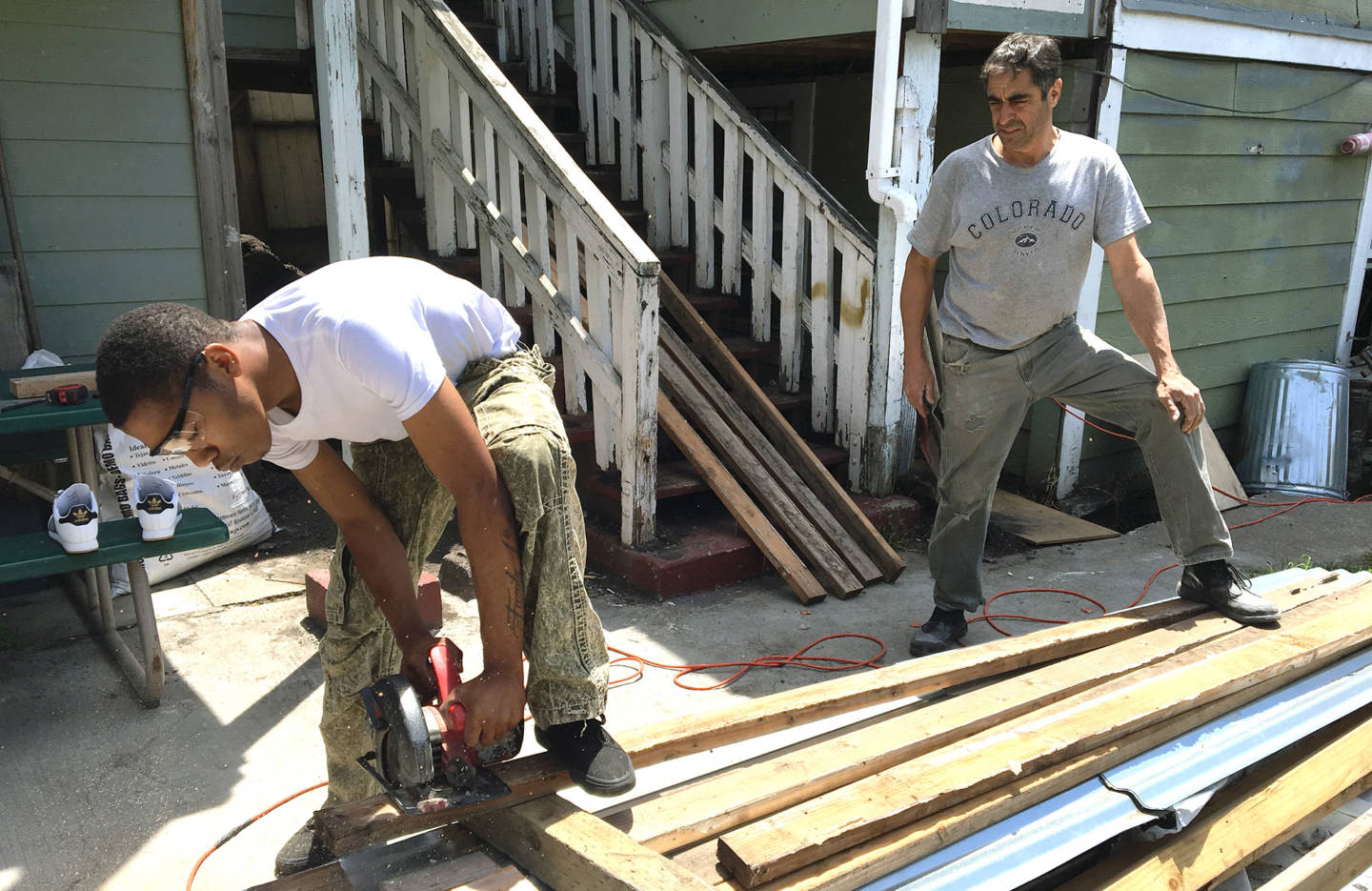
"caption": "Kris McCoy works with his mentor Murray Rubenzahl to cut wood they will use to frame a closet.",
"description": "Kris McCoy works with his mentor Murray Rubenzahl to cut wood they will use to frame a closet.",
"title": "Kris-color-corrected",
"credit": "Katrina Schwartz",
"status": "inherit",
"isLoading": false,
"fetchFailed": false
},
"mindshift_45350": {
"type": "attachments",
"id": "mindshift_45350",
"meta": {
"index": "attachments_1716263798",
"site": "mindshift",
"id": "45350",
"found": true
},
"parent": 45338,
"imgSizes": {
"twentyfourteen-full-width": {
"file": "https://ww2.kqed.org/app/uploads/sites/23/2016/06/3Act21920x1080-1038x576.jpg",
"width": 1038,
"mimeType": "image/jpeg",
"height": 576
},
"thumbnail": {
"file": "https://ww2.kqed.org/app/uploads/sites/23/2016/06/3Act21920x1080-400x225.jpg",
"width": 400,
"mimeType": "image/jpeg",
"height": 225
},
"fd-sm": {
"file": "https://ww2.kqed.org/app/uploads/sites/23/2016/06/3Act21920x1080-960x540.jpg",
"width": 960,
"mimeType": "image/jpeg",
"height": 540
},
"post-thumbnail": {
"file": "https://ww2.kqed.org/app/uploads/sites/23/2016/06/3Act21920x1080-672x372.jpg",
"width": 672,
"mimeType": "image/jpeg",
"height": 372
},
"kqedFullSize": {
"file": "https://ww2.kqed.org/app/uploads/sites/23/2016/06/3Act21920x1080.jpg",
"width": 1920,
"height": 1080
},
"large": {
"file": "https://ww2.kqed.org/app/uploads/sites/23/2016/06/3Act21920x1080-1440x810.jpg",
"width": 1440,
"mimeType": "image/jpeg",
"height": 810
},
"guest-author-50": {
"file": "https://ww2.kqed.org/app/uploads/sites/23/2016/06/3Act21920x1080-50x50.jpg",
"width": 50,
"mimeType": "image/jpeg",
"height": 50
},
"guest-author-96": {
"file": "https://ww2.kqed.org/app/uploads/sites/23/2016/06/3Act21920x1080-96x96.jpg",
"width": 96,
"mimeType": "image/jpeg",
"height": 96
},
"medium": {
"file": "https://ww2.kqed.org/app/uploads/sites/23/2016/06/3Act21920x1080-800x450.jpg",
"width": 800,
"mimeType": "image/jpeg",
"height": 450
},
"guest-author-64": {
"file": "https://ww2.kqed.org/app/uploads/sites/23/2016/06/3Act21920x1080-64x64.jpg",
"width": 64,
"mimeType": "image/jpeg",
"height": 64
},
"guest-author-32": {
"file": "https://ww2.kqed.org/app/uploads/sites/23/2016/06/3Act21920x1080-32x32.jpg",
"width": 32,
"mimeType": "image/jpeg",
"height": 32
},
"cat_post_thumb_sizecategory-posts-2": {
"file": "https://ww2.kqed.org/app/uploads/sites/23/2016/06/3Act21920x1080-50x50.jpg",
"width": 50,
"mimeType": "image/jpeg",
"height": 50
},
"fd-lrg": {
"file": "https://ww2.kqed.org/app/uploads/sites/23/2016/06/3Act21920x1080-1920x1080.jpg",
"width": 1920,
"mimeType": "image/jpeg",
"height": 1080
},
"fd-med": {
"file": "https://ww2.kqed.org/app/uploads/sites/23/2016/06/3Act21920x1080-1180x664.jpg",
"width": 1180,
"mimeType": "image/jpeg",
"height": 664
},
"detail": {
"file": "https://ww2.kqed.org/app/uploads/sites/23/2016/06/3Act21920x1080-150x150.jpg",
"width": 150,
"mimeType": "image/jpeg",
"height": 150
},
"medium_large": {
"file": "https://ww2.kqed.org/app/uploads/sites/23/2016/06/3Act21920x1080-768x432.jpg",
"width": 768,
"mimeType": "image/jpeg",
"height": 432
},
"guest-author-128": {
"file": "https://ww2.kqed.org/app/uploads/sites/23/2016/06/3Act21920x1080-128x128.jpg",
"width": 128,
"mimeType": "image/jpeg",
"height": 128
}
},
"publishDate": 1464903303,
"modified": 1464903372,
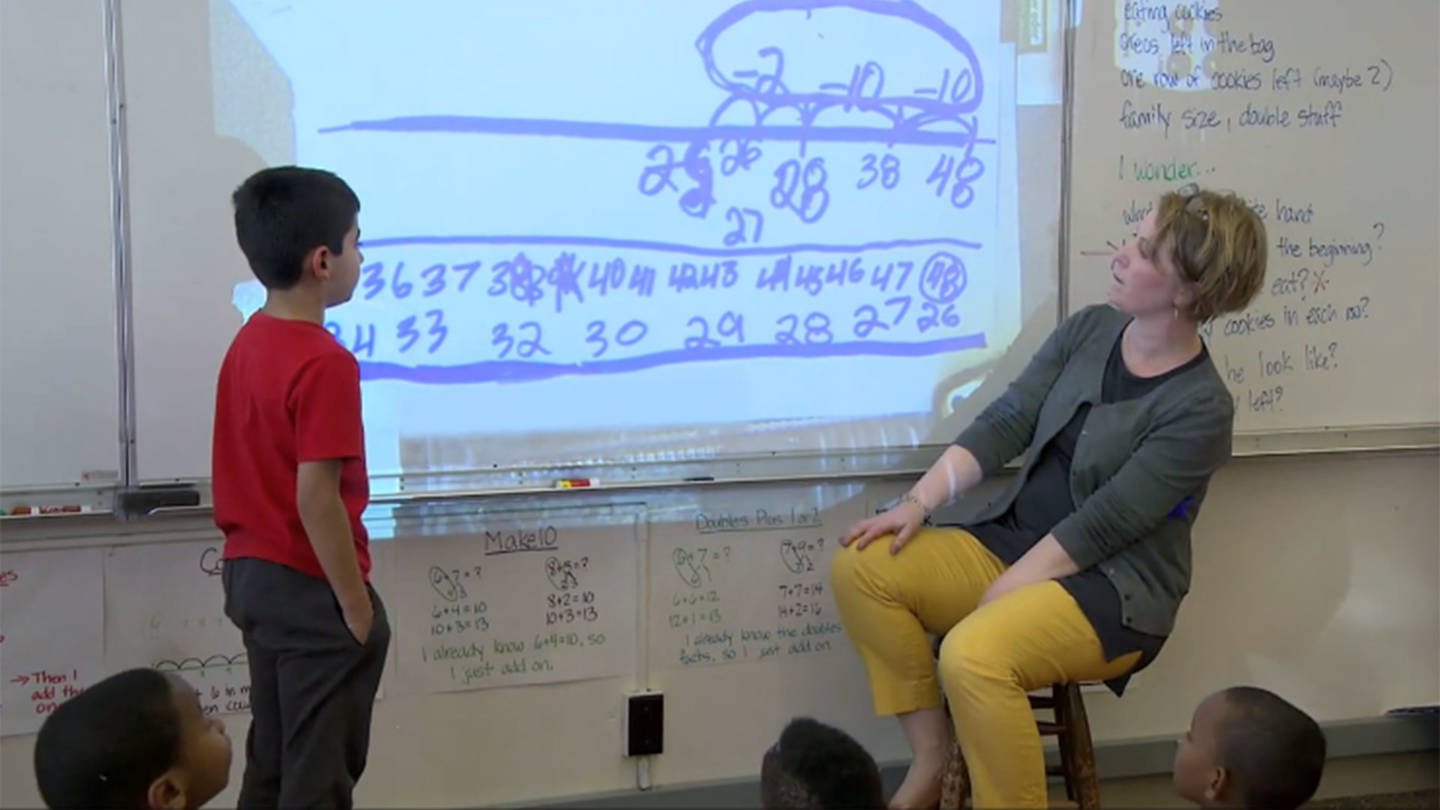
"caption": "A student explains how he solved a subtraction problem.",
"description": null,
"title": "3Act21920x1080",
"credit": "\u003ca href=\"https://www.teachingchannel.org/videos/teaching-subtraction-problems-nsf\">Teaching Channel\u003c/a>",
"status": "inherit",
"isLoading": false,
"fetchFailed": false
},
"mindshift_45414": {
"type": "attachments",
"id": "mindshift_45414",
"meta": {
"index": "attachments_1716263798",
"site": "mindshift",
"id": "45414",
"found": true
},
"parent": 45288,
"imgSizes": {
"twentyfourteen-full-width": {
"file": "https://ww2.kqed.org/app/uploads/sites/23/2016/06/15786066716_69a126469d_k-1038x576.jpg",
"width": 1038,
"mimeType": "image/jpeg",
"height": 576
},
"thumbnail": {
"file": "https://ww2.kqed.org/app/uploads/sites/23/2016/06/15786066716_69a126469d_k-400x300.jpg",
"width": 400,
"mimeType": "image/jpeg",
"height": 300
},
"fd-sm": {
"file": "https://ww2.kqed.org/app/uploads/sites/23/2016/06/15786066716_69a126469d_k-960x720.jpg",
"width": 960,
"mimeType": "image/jpeg",
"height": 720
},
"post-thumbnail": {
"file": "https://ww2.kqed.org/app/uploads/sites/23/2016/06/15786066716_69a126469d_k-672x372.jpg",
"width": 672,
"mimeType": "image/jpeg",
"height": 372
},
"kqedFullSize": {
"file": "https://ww2.kqed.org/app/uploads/sites/23/2016/06/15786066716_69a126469d_k-e1465334566409.jpg",
"width": 1920,
"height": 1440
},
"large": {
"file": "https://ww2.kqed.org/app/uploads/sites/23/2016/06/15786066716_69a126469d_k-1440x1080.jpg",
"width": 1440,
"mimeType": "image/jpeg",
"height": 1080
},
"guest-author-50": {
"file": "https://ww2.kqed.org/app/uploads/sites/23/2016/06/15786066716_69a126469d_k-50x50.jpg",
"width": 50,
"mimeType": "image/jpeg",
"height": 50
},
"guest-author-96": {
"file": "https://ww2.kqed.org/app/uploads/sites/23/2016/06/15786066716_69a126469d_k-96x96.jpg",
"width": 96,
"mimeType": "image/jpeg",
"height": 96
},
"medium": {
"file": "https://ww2.kqed.org/app/uploads/sites/23/2016/06/15786066716_69a126469d_k-800x600.jpg",
"width": 800,
"mimeType": "image/jpeg",
"height": 600
},
"guest-author-64": {
"file": "https://ww2.kqed.org/app/uploads/sites/23/2016/06/15786066716_69a126469d_k-64x64.jpg",
"width": 64,
"mimeType": "image/jpeg",
"height": 64
},
"guest-author-32": {
"file": "https://ww2.kqed.org/app/uploads/sites/23/2016/06/15786066716_69a126469d_k-32x32.jpg",
"width": 32,
"mimeType": "image/jpeg",
"height": 32
},
"cat_post_thumb_sizecategory-posts-2": {
"file": "https://ww2.kqed.org/app/uploads/sites/23/2016/06/15786066716_69a126469d_k-50x50.jpg",
"width": 50,
"mimeType": "image/jpeg",
"height": 50
},
"fd-lrg": {
"file": "https://ww2.kqed.org/app/uploads/sites/23/2016/06/15786066716_69a126469d_k-1920x1440.jpg",
"width": 1920,
"mimeType": "image/jpeg",
"height": 1440
},
"fd-med": {
"file": "https://ww2.kqed.org/app/uploads/sites/23/2016/06/15786066716_69a126469d_k-1180x885.jpg",
"width": 1180,
"mimeType": "image/jpeg",
"height": 885
},
"detail": {
"file": "https://ww2.kqed.org/app/uploads/sites/23/2016/06/15786066716_69a126469d_k-150x150.jpg",
"width": 150,
"mimeType": "image/jpeg",
"height": 150
},
"medium_large": {
"file": "https://ww2.kqed.org/app/uploads/sites/23/2016/06/15786066716_69a126469d_k-768x576.jpg",
"width": 768,
"mimeType": "image/jpeg",
"height": 576
},
"guest-author-128": {
"file": "https://ww2.kqed.org/app/uploads/sites/23/2016/06/15786066716_69a126469d_k-128x128.jpg",
"width": 128,
"mimeType": "image/jpeg",
"height": 128
}
},
"publishDate": 1465334549,
"modified": 1465387514,
"caption": null,
"description": "\u003ca href=\"https://www.flickr.com/photos/fdecomite/15786066716/in/photolist-q3XHE5-8YpWXA-o3eX9-6hxfRo-W4kvt-4PsS9i-636LJe-acpY9G-6hsP66-7wjyVH-7FEZAr-6UuyVh-6WyNaH-axWeXw-8YmRt8-9cakzv-aEkT38-eZH4vF-98xrMb-6hwND5-e3zVxj-ikLvaj-7vBn3V-8YmTTD-636LJX-9ywQRn-psSMpr-fWExJH-7FEZvr-4rVUeS-9c1yZA-omLnNJ-bJDq3-aokvAz-9vwgg5-5YReqT-edqBrQ-6eDUNQ-5uQA7s-fWCCvd-ee5SkA-jFX4p1-9QCLJP-E4mi3-d3nuH3-axREKQ-bc8Gy4-dkJtin-7As5JZ-79vzpK\">Flickr/fdecomite\u003c/a>\n",
"title": "15786066716_69a126469d_k",
"credit": "\u003ca href=\"https://www.flickr.com/photos/fdecomite/15786066716/in/photolist-q3XHE5-8YpWXA-o3eX9-6hxfRo-W4kvt-4PsS9i-636LJe-acpY9G-6hsP66-7wjyVH-7FEZAr-6UuyVh-6WyNaH-axWeXw-8YmRt8-9cakzv-aEkT38-eZH4vF-98xrMb-6hwND5-e3zVxj-ikLvaj-7vBn3V-8YmTTD-636LJX-9ywQRn-psSMpr-fWExJH-7FEZvr-4rVUeS-9c1yZA-omLnNJ-bJDq3-aokvAz-9vwgg5-5YReqT-edqBrQ-6eDUNQ-5uQA7s-fWCCvd-ee5SkA-jFX4p1-9QCLJP-E4mi3-d3nuH3-axREKQ-bc8Gy4-dkJtin-7As5JZ-79vzpK\">Flickr/fdecomite\u003c/a>",
"status": "inherit",
"isLoading": false,
"fetchFailed": false
},
"mindshift_45318": {
"type": "attachments",
"id": "mindshift_45318",
"meta": {
"index": "attachments_1716263798",
"site": "mindshift",
"id": "45318",
"found": true
},
"parent": 45294,
"imgSizes": {
"twentyfourteen-full-width": {
"file": "https://ww2.kqed.org/app/uploads/sites/23/2016/05/Mindfulness-1038x576.jpg",
"width": 1038,
"mimeType": "image/jpeg",
"height": 576
},
"thumbnail": {
"file": "https://ww2.kqed.org/app/uploads/sites/23/2016/05/Mindfulness-400x225.jpg",
"width": 400,
"mimeType": "image/jpeg",
"height": 225
},
"fd-sm": {
"file": "https://ww2.kqed.org/app/uploads/sites/23/2016/05/Mindfulness-960x540.jpg",
"width": 960,
"mimeType": "image/jpeg",
"height": 540
},
"post-thumbnail": {
"file": "https://ww2.kqed.org/app/uploads/sites/23/2016/05/Mindfulness-672x372.jpg",
"width": 672,
"mimeType": "image/jpeg",
"height": 372
},
"kqedFullSize": {
"file": "https://ww2.kqed.org/app/uploads/sites/23/2016/05/Mindfulness.jpg",
"width": 1920,
"height": 1080
},
"large": {
"file": "https://ww2.kqed.org/app/uploads/sites/23/2016/05/Mindfulness-1440x810.jpg",
"width": 1440,
"mimeType": "image/jpeg",
"height": 810
},
"guest-author-50": {
"file": "https://ww2.kqed.org/app/uploads/sites/23/2016/05/Mindfulness-50x50.jpg",
"width": 50,
"mimeType": "image/jpeg",
"height": 50
},
"guest-author-96": {
"file": "https://ww2.kqed.org/app/uploads/sites/23/2016/05/Mindfulness-96x96.jpg",
"width": 96,
"mimeType": "image/jpeg",
"height": 96
},
"medium": {
"file": "https://ww2.kqed.org/app/uploads/sites/23/2016/05/Mindfulness-800x450.jpg",
"width": 800,
"mimeType": "image/jpeg",
"height": 450
},
"guest-author-64": {
"file": "https://ww2.kqed.org/app/uploads/sites/23/2016/05/Mindfulness-64x64.jpg",
"width": 64,
"mimeType": "image/jpeg",
"height": 64
},
"guest-author-32": {
"file": "https://ww2.kqed.org/app/uploads/sites/23/2016/05/Mindfulness-32x32.jpg",
"width": 32,
"mimeType": "image/jpeg",
"height": 32
},
"cat_post_thumb_sizecategory-posts-2": {
"file": "https://ww2.kqed.org/app/uploads/sites/23/2016/05/Mindfulness-50x50.jpg",
"width": 50,
"mimeType": "image/jpeg",
"height": 50
},
"fd-lrg": {
"file": "https://ww2.kqed.org/app/uploads/sites/23/2016/05/Mindfulness-1920x1080.jpg",
"width": 1920,
"mimeType": "image/jpeg",
"height": 1080
},
"fd-med": {
"file": "https://ww2.kqed.org/app/uploads/sites/23/2016/05/Mindfulness-1180x664.jpg",
"width": 1180,
"mimeType": "image/jpeg",
"height": 664
},
"detail": {
"file": "https://ww2.kqed.org/app/uploads/sites/23/2016/05/Mindfulness-150x150.jpg",
"width": 150,
"mimeType": "image/jpeg",
"height": 150
},
"medium_large": {
"file": "https://ww2.kqed.org/app/uploads/sites/23/2016/05/Mindfulness-768x432.jpg",
"width": 768,
"mimeType": "image/jpeg",
"height": 432
},
"guest-author-128": {
"file": "https://ww2.kqed.org/app/uploads/sites/23/2016/05/Mindfulness-128x128.jpg",
"width": 128,
"mimeType": "image/jpeg",
"height": 128
}
},
"publishDate": 1464764683,
"modified": 1464764690,
"caption": null,
"description": null,
"title": "Mindfulness",
"credit": "iStock",
"status": "inherit",
"isLoading": false,
"fetchFailed": false
}
},
"audioPlayerReducer": {
"postId": "stream_live",
"isPaused": true,
"isPlaying": false,
"pfsActive": false,
"pledgeModalIsOpen": true,
"playerDrawerIsOpen": false,
"liveAudioPlayStartedAt": 0,
"liveAudioPlayContext": ""
},
"authorsReducer": {
"byline_mindshift_46150": {
"type": "authors",
"id": "byline_mindshift_46150",
"meta": {
"override": true
},
"slug": "byline_mindshift_46150",
"name": "Anya Kamenetz",
"isLoading": false
},
"katrinaschwartz": {
"type": "authors",
"id": "234",
"meta": {
"index": "authors_1716337520",
"id": "234",
"found": true
},
"name": "Katrina Schwartz",
"firstName": "Katrina",
"lastName": "Schwartz",
"slug": "katrinaschwartz",
"email": "kschwartz@kqed.org",
"display_author_email": false,
"staff_mastheads": [
"news"
],
"title": "Producer",
"bio": "Katrina Schwartz is a journalist based in San Francisco. She's worked at KPCC public radio in LA and has reported on air and online for KQED since 2010. She covered how teaching and learning is changing for MindShift between 2012 and 2020. She is the co-host of the MindShift podcast and now produces KQED's Bay Curious podcast.",
"avatar": "https://secure.gravatar.com/avatar/edb4ee79070447a018538c9aae6eeecf28786515b8a0c30e43b6b7dce5aa44c8?s=600&d=blank&r=g",
"twitter": "kschwart",
"bluesky": null,
"facebook": null,
"instagram": null,
"linkedin": null,
"sites": [
{
"site": "",
"roles": [
"editor"
]
},
{
"site": "news",
"roles": [
"editor"
]
},
{
"site": "mindshift",
"roles": [
"administrator"
]
},
{
"site": "stateofhealth",
"roles": [
"author"
]
},
{
"site": "science",
"roles": [
"editor"
]
}
],
"headData": {
"title": "Katrina Schwartz | KQED",
"description": "Producer",
"ogImgSrc": "https://secure.gravatar.com/avatar/edb4ee79070447a018538c9aae6eeecf28786515b8a0c30e43b6b7dce5aa44c8?s=600&d=blank&r=g",
"twImgSrc": "https://secure.gravatar.com/avatar/edb4ee79070447a018538c9aae6eeecf28786515b8a0c30e43b6b7dce5aa44c8?s=600&d=blank&r=g"
},
"isLoading": false,
"link": "/author/katrinaschwartz"
},
"hollykorbey": {
"type": "authors",
"id": "4445",
"meta": {
"index": "authors_1716337520",
"id": "4445",
"found": true
},
"name": "Holly Korbey",
"firstName": "Holly",
"lastName": "Korbey",
"slug": "hollykorbey",
"email": "holly@hollykorbey.com",
"display_author_email": false,
"staff_mastheads": [],
"title": null,
"bio": "Holly Korbey's work on parenting and education has appeared in The New York Times, The Atlantic, Babble, Brain, Child Magazine, and others. She lives in Nashville with her family. Follow her on Twitter: @HKorbey",
"avatar": "https://secure.gravatar.com/avatar/f385f7a3b90e52ecd5e85c24fbd0a363?s=600&d=blank&r=g",
"twitter": null,
"facebook": null,
"instagram": null,
"linkedin": null,
"sites": [
{
"site": "mindshift",
"roles": [
"contributor"
]
}
],
"headData": {
"title": "Holly Korbey | KQED",
"description": null,
"ogImgSrc": "https://secure.gravatar.com/avatar/f385f7a3b90e52ecd5e85c24fbd0a363?s=600&d=blank&r=g",
"twImgSrc": "https://secure.gravatar.com/avatar/f385f7a3b90e52ecd5e85c24fbd0a363?s=600&d=blank&r=g"
},
"isLoading": false,
"link": "/author/hollykorbey"
}
},
"pagesReducer": {
"mindshift_category_teaching-strategies": {
"type": "terms",
"id": "mindshift_193",
"meta": {
"index": "terms_1716263798",
"site": "mindshift",
"id": "193",
"score": 14.406914
},
"featImg": null,
"name": "Teaching Strategies",
"description": "Innovative ideas - projects, processes, curricula, and more - that are transforming how we teach and learn.",
"taxonomy": "category",
"headData": {
"twImgId": null,
"twTitle": null,
"ogTitle": null,
"ogImgId": null,
"twDescription": null,
"description": "Innovative ideas - projects, processes, curricula, and more - that are transforming how we teach and learn.",
"title": "Teaching Strategies Archives | KQED Mindshift",
"ogDescription": null
},
"ttid": 193,
"slug": "teaching-strategies",
"isLoading": false,
"title": "Teaching Strategies",
"pageMeta": {
"site": "mindshift",
"WpPageTemplate": "page-topic-editorial",
"currentPage": 33
},
"blocks": [
{
"blockName": "kqed/company-paragraph",
"content": "Innovative ideas - projects, processes, curricula, and more - that are transforming how we teach and learn."
},
{
"blockName": "kqed/post-list",
"attrs": {
"layout": "cardArticle2",
"query": "posts/mindshift?category=teaching-strategies",
"seeMore": false,
"paginated": true,
"page": 33
}
},
{
"blockName": "kqed/ad"
}
]
}
},
"pfsSessionReducer": {},
"postsReducer": {
"stream_live": {
"type": "live",
"id": "stream_live",
"audioUrl": "https://streams.kqed.org/kqedradio",
"title": "Live Stream",
"excerpt": "Live Stream information currently unavailable.",
"link": "/radio",
"featImg": "",
"label": {
"name": "KQED Live",
"link": "/"
}
},
"stream_kqedNewscast": {
"type": "posts",
"id": "stream_kqedNewscast",
"audioUrl": "https://www.kqed.org/.stream/anon/radio/RDnews/newscast.mp3?_=1",
"title": "KQED Newscast",
"featImg": "",
"label": {
"name": "88.5 FM",
"link": "/"
}
},
"mindshift_46150": {
"type": "posts",
"id": "mindshift_46150",
"meta": {
"index": "posts_1716263798",
"site": "mindshift",
"id": "46150",
"score": null,
"sort": [
1471651993000
]
},
"parent": 0,
"labelTerm": {
"site": "mindshift"
},
"blocks": [],
"publishDate": 1471651993,
"format": "standard",
"disqusTitle": "Why Teachers Say Practicing Mindfulness Is Transforming The Work",
"title": "Why Teachers Say Practicing Mindfulness Is Transforming The Work",
"headTitle": "MindShift | KQED News",
"content": "\u003cp>Garrison Institute looks a little like Hogwarts. The retreat center is housed in a former monastery amid tranquil green hills overlooking the Hudson River, 60 miles north and a world away from New York City.\u003c/p>\n\u003cp>Inside the airy chapel on a recent summer afternoon, about 35 educators from the U.S. and at least five foreign countries are seated quietly, shoes off.\u003c/p>\n\u003cp>\"Just notice your breath, the sensation of your air coming in, going out,\" says Christa Turksma, a Dutch woman dressed all in white with silver-white hair. She's one of the co-founders of \u003ca href=\"http://www.care4teachers.com/impact/\">Cultivating Awareness and Resilience for Educators,\u003c/a> or CARE for Teachers.\u003c/p>\n\u003cp>For the past nine years at this annual five-day summer retreat, and now within schools, CARE for Teachers teaches what's called mindfulness: calming the body and mind through breathing and movement, and using insights from psychology to better regulate your emotions.\u003c/p>\n\u003cp>They do a series of role-playing activities to practice listening and conducting difficult conversations with a boss, fellow teacher, parent or student. It's the first mindfulness program to be partially funded by the U.S. Department of Education — and aimed at teachers, not directly at students.\u003c/p>\n\u003cp>[ad fullwidth]\u003c/p>\n\u003cp>Teaching is inherently a stressful occupation, and by many accounts, it's getting more so. Students bring the effects of poverty and trauma into the classroom. Administrators lay on the pressure to meet ever-changing standards. In the last few years, teacher job satisfaction\u003ca href=\"http://www.newsweek.com/why-has-teacher-morale-plummeted-321447\"> has reportedly plummeted to a 25-year low\u003c/a>, and turnover is high — \u003ca href=\"http://all4ed.org/press/teacher-attrition-costs-united-states-up-to-2-2-billion-annually-says-new-alliance-report/\">almost 50 percent for new teachers\u003c/a>.\u003c/p>\n\u003cp>Patricia Jennings isn't necessarily out to change all these factors. Instead, she aims to help teachers become the change they wish to see in the world.\u003c/p>\n\u003cp>Jennings is the second co-founder of CARE (Richard Brown is the third). She has gray hair cut straight across in bangs and a beatific smile. Jennings had a difficult childhood; she was orphaned at age 14 when her mother committed suicide.\u003c/p>\n\u003cp>Then, as a college student in 1970s Arizona, she discovered Zen meditation. \"I started realizing that a lot of the suffering and anxiety I was feeling — that those thoughts were not me,\" she says. \"That was a huge revelation, to go oh, this feeling of dread is a result of this experience, but it's not who I am and I can let those thoughts go.\"\u003c/p>\n\u003cp>Jennings studied at the Buddhist \u003ca href=\"https://www.naropa.edu/\">Naropa University\u003c/a> in Boulder, Colo. She earned a degree in psychology and a teaching degree, then founded a Montessori school where she taught kids meditation as early as 1980.\u003c/p>\n\u003cp>In the classroom for over two decades, she also used mindfulness techniques moment-to-moment, whether to smooth transitions between activities or when figuring out what was really going on with a student who was acting up. Later, she took a position teaching teachers, and realized that other teachers could benefit from these tools as well.\u003c/p>\n\u003cp>Jennings is now an associate professor of psychology at the University of Virginia, where she conducts research on the CARE for Teachers program.\u003c/p>\n\u003cp>In a \u003ca href=\"https://news.virginia.edu/content/curry-study-reducing-teachers-stress-leads-higher-quality-classrooms\">soon-to-be published study\u003c/a>, Jennings and her co-authors provided an extended version of CARE training to 224 teachers in high-poverty schools in New York City, with several two-day sessions spaced over the course of a year. The participants reported that their anxiety, depression, feelings of burnout, being rushed and perceived stress all went down compared with a control group. Their sleep improved, and the teachers said they felt less judgmental.\u003c/p>\n\u003cp>Even more interesting effects came from classroom observations. When teachers were more mindful, \"yelling went down,\" says Jennings. Classrooms were rated more emotionally positive and productive. Students were more engaged.\u003c/p>\n\u003cp>Among the students who rated lower on social skills at the outset of the study — presumably some of the most vulnerable — reading scores also improved. Again, these effects came from working with the teachers, not directly with the students.\u003c/p>\n\u003cp>Bonnie Kirkwood and Michele Coyle-Hughes work at P.S. 279 in the Bronx. Their school participated in the study over the 2014-2015 school year, and they spent the school year that just ended helping teach the techniques to their colleagues.\u003c/p>\n\u003cp>They are back at the CARE For Teachers retreat to figure out how to spread it further. As part of the student support staff, \"I deal with teachers in crisis,\" says Coyle-Hughes. \"I can see that they need more tools.\"\u003c/p>\n\u003cp>About a third of the students in their K-8 school come from homeless shelters. A large percentage have incarcerated parents or are in foster care. Most are English language learners, including a refugee population.\u003c/p>\n\u003cp>\"Our kids gravitate to our building because they want structure and routine,\" says Coyle-Hughes. Kirkwood, a reading specialist, says the CARE techniques have improved her relationships with students and colleagues. \"I'm learning to let go and let God,\" she says.\u003c/p>\n\u003cp>(Although the practices taught in CARE draw on many different traditions, Jennings makes clear that the program is entirely secular and suitable for public schools. For example, they use the term \"mindful awareness practices\" rather than \"meditation.\")\u003c/p>\n\u003cp>Like Coyle-Hughes and Kirkwood, Nicole Willheimer has also agreed to help facilitate CARE training for her colleagues, at P.S. 140 in the Bronx. Jennings and Turksma are trying out this expansion this year, called CARE Coordinators, with the idea that these techniques will best spread from colleague to colleague, not as a top-down push from administrations.\u003c/p>\n\u003cp>Willheimer says the program has helped her be more attuned to her students. For example, rather than be set off by a kid who is tapping on a desk, she can recognize if he or she is trying to cope with attention difficulties. And like other teachers, she says CARE has been most helpful in dealing with her bosses, not just with students.\u003c/p>\n\u003cp>\"When administrators call you, you never know what they want. It could be a parent is upset with you, or you forgot something,\" she says. \"I used to rush to meetings, grab a seat, and jump in. Now, I practice mindful walking. I think about where I'm going. When I arrive, I'm not revved up. I'm able to receive criticism or conversation without being triggered.\"\u003c/p>\n\u003cp>In the training, CARE participants talk a lot about \"triggers\" and \"scripts\" and being \"reactive.\" Past experiences may shape your perception of a situation, and bring on too-strong or inappropriate emotions. If you are \"reactive,\" you'll succumb to those emotions, following the unconscious script in your head. If you are \"reflective,\" you'll be able to pause and get a more accurate read on the situation.\u003c/p>\n\u003cp>In one session Jennings tells a story recounted in her book, \u003cem>Mindfulness for Teachers,\u003c/em> of a previous CARE participant who was immensely bothered by a 7-year-old student who was late every day and disrupted the whole class with laughter. On reflection, the teacher remembered that in her own family, there had been severe punishments for being late. She sat down and talked to the girl and learned she was the daughter of a single mother who worked nights, so the little girl was responsible for getting herself to school every morning. And her giggling wasn't intended to be disrespectful — it came from embarrassment.\u003c/p>\n\u003cp>After a lunch of beet salad, quinoa and garden greens, the teachers disperse outside for a walking exercise and paired discussions. Here amid the wildflowers and butterflies, it's easy to feel tranquil.\u003c/p>\n\u003cp>But in a few short weeks a new school year will be starting. \"I can feel my heart start to race when I think about September getting closer,\" one teacher says in a session. \"In September there is NO space. If you were walking into an inner-city urban school this September, what two CARE practices would you bring?\" she asks Jennings.\u003c/p>\n\u003cp>Jennings replies that she has an empirical answer, from the forthcoming study, where they asked all the teachers the same question. Their top answer was simply stopping yourself, whenever needed, to take three deep breaths.\u003c/p>\n\u003cp>And the second answer was cultivating a daily practice in breathing, mindful walking, yoga or other relaxation discipline. \"That helps you remember to take the three breaths when you need it!\"\u003c/p>\n\u003cp>\u003cstrong>CARE TECHNIQUES TO TRY IN THE CLASSROOM\u003c/strong>\u003cbr>\n\u003cem>Mindfulness for students and teachers\u003c/em>\u003c/p>\n\u003cp>\u003cstrong>1. Calmer Transitions\u003c/strong>\u003c/p>\n\u003cp>When it's time to move on to lunch or PE, get students to take three deep breaths and then listen to the sound of a bell. Have students listen quietly until the sound fades away before moving on.\u003c/p>\n\u003cp>\u003cstrong>2. Take 5\u003c/strong>\u003c/p>\n\u003cp>Suggested by a CARE participant. For children too young or too restless to do regular meditation. Have them sit and quietly take note of five things they can see; then shut their eyes and count five things they can hear; then notice five things they are touching.\u003c/p>\n\u003cp>\u003cstrong>3. Quiet Corner Or Peace Corner\u003cbr>\n\u003c/strong>\u003cbr>\nDescribed in Montessori and the Inner Resilience program. Set up a space in the classroom where children can go to deal with difficult emotions. It might have pillows and be stocked with stuffed animals, calming books or smooth stones. It should be inviting, not feel like a punishment.\u003c/p>\n\u003cp>\u003cstrong>4. Mindful Walking And Centering\u003c/strong>\u003c/p>\n\u003cp>[ad floatright]\u003c/p>\n\u003cp>For teachers, who are always on their feet: When standing, focus on the sensation of the weight on the feet and the pressure of the feet on the floor. When walking, maintain the awareness of weight shifting from one foot to the other.\u003c/p>\n\u003cdiv class=\"fullattribution\">Copyright 2016 NPR. To see more, visit http://www.npr.org/.\u003cimg src=\"http://www.google-analytics.com/__utm.gif?utmac=UA-5828686-4&utmdt=When+Teachers+Take+A+Breath%2C+Students+Can+Bloom&utme=8(APIKey)9(MDAxOTAwOTE4MDEyMTkxMDAzNjczZDljZA004)\">\u003c/div>\n\n",
"disqusIdentifier": "46150 http://ww2.kqed.org/mindshift/?p=46150",
"disqusUrl": "https://ww2.kqed.org/mindshift/2016/08/19/why-teachers-say-practicing-mindfulness-is-transforming-the-work/",
"stats": {
"hasVideo": false,
"hasChartOrMap": false,
"hasAudio": false,
"hasPolis": false,
"wordCount": 1602,
"hasGoogleForm": false,
"hasGallery": false,
"hasHearkenModule": false,
"iframeSrcs": [],
"paragraphCount": 39
},
"modified": 1471652143,
"excerpt": "An evidence-based program teaches mindfulness to educators. Research suggests it can reduce their stress and improve their teaching.",
"headData": {
"twImgId": "",
"twTitle": "",
"ogTitle": "",
"ogImgId": "",
"twDescription": "",
"description": "An evidence-based program teaches mindfulness to educators. Research suggests it can reduce their stress and improve their teaching.",
"title": "Why Teachers Say Practicing Mindfulness Is Transforming The Work | KQED",
"ogDescription": "",
"schema": {
"@context": "https://schema.org",
"@type": "Article",
"headline": "Why Teachers Say Practicing Mindfulness Is Transforming The Work",
"datePublished": "2016-08-19T17:13:13-07:00",
"dateModified": "2016-08-19T17:15:43-07:00",
"image": "https://cdn.kqed.org/wp-content/uploads/2020/02/KQED-OG-Image@1x.png"
}
},
"guestAuthors": [],
"slug": "why-teachers-say-practicing-mindfulness-is-transforming-the-work",
"status": "publish",
"nprApiLink": "http://api.npr.org/query?id=488866975&apiKey=MDAxOTAwOTE4MDEyMTkxMDAzNjczZDljZA004",
"nprByline": "Anya Kamenetz",
"nprStoryDate": "Fri, 19 Aug 2016 06:00:00 -0400",
"nprLastModifiedDate": "Fri, 19 Aug 2016 11:56:48 -0400",
"nprHtmlLink": "http://www.npr.org/sections/ed/2016/08/19/488866975/when-teachers-take-a-breath-students-can-bloom?ft=nprml&f=488866975",
"nprImageAgency": "Vivian Shih for NPR",
"nprStoryId": "488866975",
"nprRetrievedStory": "1",
"nprPubDate": "Fri, 19 Aug 2016 11:56:00 -0400",
"path": "/mindshift/46150/why-teachers-say-practicing-mindfulness-is-transforming-the-work",
"audioTrackLength": null,
"parsedContent": [
{
"type": "contentString",
"content": "\u003cdiv class=\"post-body\">\u003cp>\u003cp>Garrison Institute looks a little like Hogwarts. The retreat center is housed in a former monastery amid tranquil green hills overlooking the Hudson River, 60 miles north and a world away from New York City.\u003c/p>\n\u003cp>Inside the airy chapel on a recent summer afternoon, about 35 educators from the U.S. and at least five foreign countries are seated quietly, shoes off.\u003c/p>\n\u003cp>\"Just notice your breath, the sensation of your air coming in, going out,\" says Christa Turksma, a Dutch woman dressed all in white with silver-white hair. She's one of the co-founders of \u003ca href=\"http://www.care4teachers.com/impact/\">Cultivating Awareness and Resilience for Educators,\u003c/a> or CARE for Teachers.\u003c/p>\n\u003cp>For the past nine years at this annual five-day summer retreat, and now within schools, CARE for Teachers teaches what's called mindfulness: calming the body and mind through breathing and movement, and using insights from psychology to better regulate your emotions.\u003c/p>\n\u003cp>They do a series of role-playing activities to practice listening and conducting difficult conversations with a boss, fellow teacher, parent or student. It's the first mindfulness program to be partially funded by the U.S. Department of Education — and aimed at teachers, not directly at students.\u003c/p>\n\u003cp>\u003c/p>\u003c/div>",
"attributes": {
"named": {},
"numeric": []
}
},
{
"type": "component",
"content": "",
"name": "ad",
"attributes": {
"named": {
"label": "fullwidth"
},
"numeric": [
"fullwidth"
]
}
},
{
"type": "contentString",
"content": "\u003cdiv class=\"post-body\">\u003cp>\u003c/p>\n\u003cp>Teaching is inherently a stressful occupation, and by many accounts, it's getting more so. Students bring the effects of poverty and trauma into the classroom. Administrators lay on the pressure to meet ever-changing standards. In the last few years, teacher job satisfaction\u003ca href=\"http://www.newsweek.com/why-has-teacher-morale-plummeted-321447\"> has reportedly plummeted to a 25-year low\u003c/a>, and turnover is high — \u003ca href=\"http://all4ed.org/press/teacher-attrition-costs-united-states-up-to-2-2-billion-annually-says-new-alliance-report/\">almost 50 percent for new teachers\u003c/a>.\u003c/p>\n\u003cp>Patricia Jennings isn't necessarily out to change all these factors. Instead, she aims to help teachers become the change they wish to see in the world.\u003c/p>\n\u003cp>Jennings is the second co-founder of CARE (Richard Brown is the third). She has gray hair cut straight across in bangs and a beatific smile. Jennings had a difficult childhood; she was orphaned at age 14 when her mother committed suicide.\u003c/p>\n\u003cp>Then, as a college student in 1970s Arizona, she discovered Zen meditation. \"I started realizing that a lot of the suffering and anxiety I was feeling — that those thoughts were not me,\" she says. \"That was a huge revelation, to go oh, this feeling of dread is a result of this experience, but it's not who I am and I can let those thoughts go.\"\u003c/p>\n\u003cp>Jennings studied at the Buddhist \u003ca href=\"https://www.naropa.edu/\">Naropa University\u003c/a> in Boulder, Colo. She earned a degree in psychology and a teaching degree, then founded a Montessori school where she taught kids meditation as early as 1980.\u003c/p>\n\u003cp>In the classroom for over two decades, she also used mindfulness techniques moment-to-moment, whether to smooth transitions between activities or when figuring out what was really going on with a student who was acting up. Later, she took a position teaching teachers, and realized that other teachers could benefit from these tools as well.\u003c/p>\n\u003cp>Jennings is now an associate professor of psychology at the University of Virginia, where she conducts research on the CARE for Teachers program.\u003c/p>\n\u003cp>In a \u003ca href=\"https://news.virginia.edu/content/curry-study-reducing-teachers-stress-leads-higher-quality-classrooms\">soon-to-be published study\u003c/a>, Jennings and her co-authors provided an extended version of CARE training to 224 teachers in high-poverty schools in New York City, with several two-day sessions spaced over the course of a year. The participants reported that their anxiety, depression, feelings of burnout, being rushed and perceived stress all went down compared with a control group. Their sleep improved, and the teachers said they felt less judgmental.\u003c/p>\n\u003cp>Even more interesting effects came from classroom observations. When teachers were more mindful, \"yelling went down,\" says Jennings. Classrooms were rated more emotionally positive and productive. Students were more engaged.\u003c/p>\n\u003cp>Among the students who rated lower on social skills at the outset of the study — presumably some of the most vulnerable — reading scores also improved. Again, these effects came from working with the teachers, not directly with the students.\u003c/p>\n\u003cp>Bonnie Kirkwood and Michele Coyle-Hughes work at P.S. 279 in the Bronx. Their school participated in the study over the 2014-2015 school year, and they spent the school year that just ended helping teach the techniques to their colleagues.\u003c/p>\n\u003cp>They are back at the CARE For Teachers retreat to figure out how to spread it further. As part of the student support staff, \"I deal with teachers in crisis,\" says Coyle-Hughes. \"I can see that they need more tools.\"\u003c/p>\n\u003cp>About a third of the students in their K-8 school come from homeless shelters. A large percentage have incarcerated parents or are in foster care. Most are English language learners, including a refugee population.\u003c/p>\n\u003cp>\"Our kids gravitate to our building because they want structure and routine,\" says Coyle-Hughes. Kirkwood, a reading specialist, says the CARE techniques have improved her relationships with students and colleagues. \"I'm learning to let go and let God,\" she says.\u003c/p>\n\u003cp>(Although the practices taught in CARE draw on many different traditions, Jennings makes clear that the program is entirely secular and suitable for public schools. For example, they use the term \"mindful awareness practices\" rather than \"meditation.\")\u003c/p>\n\u003cp>Like Coyle-Hughes and Kirkwood, Nicole Willheimer has also agreed to help facilitate CARE training for her colleagues, at P.S. 140 in the Bronx. Jennings and Turksma are trying out this expansion this year, called CARE Coordinators, with the idea that these techniques will best spread from colleague to colleague, not as a top-down push from administrations.\u003c/p>\n\u003cp>Willheimer says the program has helped her be more attuned to her students. For example, rather than be set off by a kid who is tapping on a desk, she can recognize if he or she is trying to cope with attention difficulties. And like other teachers, she says CARE has been most helpful in dealing with her bosses, not just with students.\u003c/p>\n\u003cp>\"When administrators call you, you never know what they want. It could be a parent is upset with you, or you forgot something,\" she says. \"I used to rush to meetings, grab a seat, and jump in. Now, I practice mindful walking. I think about where I'm going. When I arrive, I'm not revved up. I'm able to receive criticism or conversation without being triggered.\"\u003c/p>\n\u003cp>In the training, CARE participants talk a lot about \"triggers\" and \"scripts\" and being \"reactive.\" Past experiences may shape your perception of a situation, and bring on too-strong or inappropriate emotions. If you are \"reactive,\" you'll succumb to those emotions, following the unconscious script in your head. If you are \"reflective,\" you'll be able to pause and get a more accurate read on the situation.\u003c/p>\n\u003cp>In one session Jennings tells a story recounted in her book, \u003cem>Mindfulness for Teachers,\u003c/em> of a previous CARE participant who was immensely bothered by a 7-year-old student who was late every day and disrupted the whole class with laughter. On reflection, the teacher remembered that in her own family, there had been severe punishments for being late. She sat down and talked to the girl and learned she was the daughter of a single mother who worked nights, so the little girl was responsible for getting herself to school every morning. And her giggling wasn't intended to be disrespectful — it came from embarrassment.\u003c/p>\n\u003cp>After a lunch of beet salad, quinoa and garden greens, the teachers disperse outside for a walking exercise and paired discussions. Here amid the wildflowers and butterflies, it's easy to feel tranquil.\u003c/p>\n\u003cp>But in a few short weeks a new school year will be starting. \"I can feel my heart start to race when I think about September getting closer,\" one teacher says in a session. \"In September there is NO space. If you were walking into an inner-city urban school this September, what two CARE practices would you bring?\" she asks Jennings.\u003c/p>\n\u003cp>Jennings replies that she has an empirical answer, from the forthcoming study, where they asked all the teachers the same question. Their top answer was simply stopping yourself, whenever needed, to take three deep breaths.\u003c/p>\n\u003cp>And the second answer was cultivating a daily practice in breathing, mindful walking, yoga or other relaxation discipline. \"That helps you remember to take the three breaths when you need it!\"\u003c/p>\n\u003cp>\u003cstrong>CARE TECHNIQUES TO TRY IN THE CLASSROOM\u003c/strong>\u003cbr>\n\u003cem>Mindfulness for students and teachers\u003c/em>\u003c/p>\n\u003cp>\u003cstrong>1. Calmer Transitions\u003c/strong>\u003c/p>\n\u003cp>When it's time to move on to lunch or PE, get students to take three deep breaths and then listen to the sound of a bell. Have students listen quietly until the sound fades away before moving on.\u003c/p>\n\u003cp>\u003cstrong>2. Take 5\u003c/strong>\u003c/p>\n\u003cp>Suggested by a CARE participant. For children too young or too restless to do regular meditation. Have them sit and quietly take note of five things they can see; then shut their eyes and count five things they can hear; then notice five things they are touching.\u003c/p>\n\u003cp>\u003cstrong>3. Quiet Corner Or Peace Corner\u003cbr>\n\u003c/strong>\u003cbr>\nDescribed in Montessori and the Inner Resilience program. Set up a space in the classroom where children can go to deal with difficult emotions. It might have pillows and be stocked with stuffed animals, calming books or smooth stones. It should be inviting, not feel like a punishment.\u003c/p>\n\u003cp>\u003cstrong>4. Mindful Walking And Centering\u003c/strong>\u003c/p>\n\u003cp>\u003c/p>\u003c/div>",
"attributes": {
"named": {},
"numeric": []
}
},
{
"type": "component",
"content": "",
"name": "ad",
"attributes": {
"named": {
"label": "floatright"
},
"numeric": [
"floatright"
]
}
},
{
"type": "contentString",
"content": "\u003cdiv class=\"post-body\">\u003cp>\u003c/p>\n\u003cp>For teachers, who are always on their feet: When standing, focus on the sensation of the weight on the feet and the pressure of the feet on the floor. When walking, maintain the awareness of weight shifting from one foot to the other.\u003c/p>\n\u003cdiv class=\"fullattribution\">Copyright 2016 NPR. To see more, visit http://www.npr.org/.\u003cimg src=\"http://www.google-analytics.com/__utm.gif?utmac=UA-5828686-4&utmdt=When+Teachers+Take+A+Breath%2C+Students+Can+Bloom&utme=8(APIKey)9(MDAxOTAwOTE4MDEyMTkxMDAzNjczZDljZA004)\">\u003c/div>\n\n\u003c/div>\u003c/p>",
"attributes": {
"named": {},
"numeric": []
}
}
],
"link": "/mindshift/46150/why-teachers-say-practicing-mindfulness-is-transforming-the-work",
"authors": [
"byline_mindshift_46150"
],
"categories": [
"mindshift_193"
],
"tags": [
"mindshift_21027",
"mindshift_20784",
"mindshift_1040",
"mindshift_841",
"mindshift_20716"
],
"featImg": "mindshift_46151",
"label": "mindshift"
},
"mindshift_45994": {
"type": "posts",
"id": "mindshift_45994",
"meta": {
"index": "posts_1716263798",
"site": "mindshift",
"id": "45994",
"score": null,
"sort": [
1470641324000
]
},
"parent": 0,
"labelTerm": {
"site": "mindshift"
},
"blocks": [],
"publishDate": 1470641324,
"format": "standard",
"disqusTitle": "How Classroom Culture Opens Up When Students Can ‘Patent’ Ideas",
"title": "How Classroom Culture Opens Up When Students Can ‘Patent’ Ideas",
"headTitle": "MindShift | KQED News",
"content": "\u003cp>Building a catapult that can hit a target at one, three and five meters is a core project of \u003ca href=\"http://www.edtechinnovators.com/portfolioben/EdTechInnovators/Articles_and_Publications.html\" target=\"_blank\">Ben Smith\u003c/a>’s engineering class. When the project is assigned, groups get to work inventing a mechanism that will meet the objectives, often coming up with ingenious ideas. But when Smith noticed his students were increasingly asking to work in the hall, he realized they were trying to protect their ideas. If one person solved a tricky issue, other students would just copy her. So Smith decided to introduce a patent system in his classroom.\u003c/p>\n\u003cp>“We want kids to be collegial, but we also want to reward kids who have a good idea,” Smith said. Smith has been teaching for 27 years in the same room at Red Lion Area Senior High School in Pennsylvania and has earned a reputation as a hard, but fair teacher. He says when he introduced the patent system five or six years ago, it reinforced a culture of entrepreneurism, where students expect as much from themselves as Smith does.\u003c/p>\n\u003cp>“We have such high expectations for what’s going to happen in the room, so you really have to work if you’re going to be in there,” Smith said. “And I think that’s what kids want.” That doesn’t mean that all of Smith’s students are high-flyers. In fact, his engineering students arrive with very different levels of preparedness. He had one student who could only read at a third grade level, a significant challenge since most of the reading associated with the class was more complicated. But rather than making reading a barrier to the student’s participation, Smith set up systems so the student could listen to some of the reading and voice-to-text so he could speak some of his written assignments.\u003c/p>\n\u003cp>“By making that accommodation, I think it really empowered him and he felt so much better about himself,” Smith said. The student still had to write many of his assignments, but being accommodated some of the time helped him to see Smith as an ally. And, without anyone telling them, the rest of the students understood their peer needed a little extra help and gladly supplied it.\u003c/p>\n\u003cp>Once students could patent specific design elements of their projects, they gladly started working out in the open, showing off their solutions. Smith soon realized there was a flaw in his patent system. “If a group had a patent, nobody else could use it. But I realized that was limiting how other groups could work,” Smith said.\u003c/p>\n\u003cp>[ad fullwidth]\u003c/p>\n\u003cp>So, he gave every group points that could be “spent” on licensing patented ideas -- a lot like the real world. Students even started marketing their ideas to one another. Smith says points don’t make a huge difference in a student’s grade, but he does factor them into final project assessment.\u003c/p>\n\u003cp>Some students care a lot about getting patents on ideas, while others are less motivated by the system. And there are always smart and capable students who don’t tend to finish all their work, and consequently don’t get the highest grades. Smith finds it interesting that often it’s those kids who most want a patent, with their name on the wall, and the honor that comes with it. Students can also “sue” one another for patent infringement, where Smith acts as the judge.\u003c/p>\n\u003cp>To succeed at the catapult project students need a strong spring mechanism, so Smith often gets patents for different latching mechanisms. “That’s a key one because they all have to do that same type of thing,” Smith said. A simple hook isn’t strong enough and many students discover that a string jolts the catapult. Smith said many students design an oiled string or thin rod mechanism.\u003c/p>\n\u003cp>Another big engineering project is a two-step mousetrap, where the first mechanism triggers a car that hits a second mechanism that starts a second reaction of events. Smith gets a lot of patents for mechanisms to link the two steps, like a longer rod arm to keep the ball moving longer.\u003c/p>\n\u003cp>Smith also teaches AP physics, a class with very competitive and driven students. In that class, students design their own experiments – an element of the Next Generation Science Standards – and Smith allows them to patent their experimental designs so that all the groups don’t copy the first group to figure out a viable experiment. Smith has found that in his physics class, the girls patent their ideas more often than the boys.\u003c/p>\n\u003cp>“They’re very protective of their work,” Smith said. He’s not sure if that’s because the girls at his school are powerhouses in science, technology, engineering, and math (STEM), or if it’s because he explicitly teaches about the many instances in scientific history when men stole their female colleagues’ ideas and passed them off as their own. Either way, the girls hold far more patents than the boys, and when the school’s STEM team won a regional competition it was due in large part to two female leaders on the five-person team, Smith said.\u003c/p>\n\u003cp>Throughout his long career, Smith has always found that building a strong classroom culture is the foundation for success, and in order to build that classroom culture there has to be a give and take between students and teacher. He gives them some freedom to choose their projects, co-design rubrics and assessment measures, and makes them accountable to one another. For example, he always designates one student as note-taker for the class, using a three-column system. One column is for vocabulary, one for formulas, and one for big ideas.\u003c/p>\n\u003cp>“The rest of the class can focus in on the lecture,” Smith said. This system means that each student becomes responsible for creating the artifacts of learning for the rest of the class, and they are invested in doing a good job. At the end of the class period, Smith checks the notes to make sure everything is correct, and then posts them for everyone to use.\u003c/p>\n\u003cp>Smith also keeps a class blog and assigns one student a day to write about what happened in class, the big ideas discussed, and to post a photograph of what they did. This also helps Smith keep tabs on what’s going on in his classroom on days when he’s called away for one of his many other district duties.\u003c/p>\n\u003cp>Over time, Smith’s class has become more high-tech, but not because his district is handing out technology. The rural district where Smith teaches requires teachers to justify how and why they think a new piece of technology will improve learning. “That guided my approach to the use of technology throughout my career,” Smith said.\u003c/p>\n\u003cp>[ad floatright]\u003c/p>\n\u003cp>Technology limitations haven’t stopped Smith from applying for grants to get tools, especially devices his students can use to measure the world around them. He now has a collection of probes students can check out of the library. Smith is adamant that technology can and is already changing education for the better, but only if teachers remain vigilant about how and why they are using it to deepen learning experiences for kids.\u003c/p>\n\n",
"disqusIdentifier": "45994 http://ww2.kqed.org/mindshift/?p=45994",
"disqusUrl": "https://ww2.kqed.org/mindshift/2016/08/08/how-classroom-culture-opens-up-when-students-can-patent-ideas/",
"stats": {
"hasVideo": false,
"hasChartOrMap": false,
"hasAudio": false,
"hasPolis": false,
"wordCount": 1261,
"hasGoogleForm": false,
"hasGallery": false,
"hasHearkenModule": false,
"iframeSrcs": [],
"paragraphCount": 18
},
"modified": 1470641324,
"excerpt": "The ability to file patents helped students openly invent solutions for class projects, while having protection for their hard work.",
"headData": {
"twImgId": "",
"twTitle": "",
"ogTitle": "",
"ogImgId": "",
"twDescription": "",
"description": "The ability to file patents helped students openly invent solutions for class projects, while having protection for their hard work.",
"title": "How Classroom Culture Opens Up When Students Can ‘Patent’ Ideas | KQED",
"ogDescription": "",
"schema": {
"@context": "https://schema.org",
"@type": "Article",
"headline": "How Classroom Culture Opens Up When Students Can ‘Patent’ Ideas",
"datePublished": "2016-08-08T00:28:44-07:00",
"dateModified": "2016-08-08T00:28:44-07:00",
"image": "https://cdn.kqed.org/wp-content/uploads/2020/02/KQED-OG-Image@1x.png"
}
},
"guestAuthors": [],
"slug": "how-classroom-culture-opens-up-when-students-can-patent-ideas",
"status": "publish",
"path": "/mindshift/45994/how-classroom-culture-opens-up-when-students-can-patent-ideas",
"audioTrackLength": null,
"parsedContent": [
{
"type": "contentString",
"content": "\u003cdiv class=\"post-body\">\u003cp>\u003cp>Building a catapult that can hit a target at one, three and five meters is a core project of \u003ca href=\"http://www.edtechinnovators.com/portfolioben/EdTechInnovators/Articles_and_Publications.html\" target=\"_blank\">Ben Smith\u003c/a>’s engineering class. When the project is assigned, groups get to work inventing a mechanism that will meet the objectives, often coming up with ingenious ideas. But when Smith noticed his students were increasingly asking to work in the hall, he realized they were trying to protect their ideas. If one person solved a tricky issue, other students would just copy her. So Smith decided to introduce a patent system in his classroom.\u003c/p>\n\u003cp>“We want kids to be collegial, but we also want to reward kids who have a good idea,” Smith said. Smith has been teaching for 27 years in the same room at Red Lion Area Senior High School in Pennsylvania and has earned a reputation as a hard, but fair teacher. He says when he introduced the patent system five or six years ago, it reinforced a culture of entrepreneurism, where students expect as much from themselves as Smith does.\u003c/p>\n\u003cp>“We have such high expectations for what’s going to happen in the room, so you really have to work if you’re going to be in there,” Smith said. “And I think that’s what kids want.” That doesn’t mean that all of Smith’s students are high-flyers. In fact, his engineering students arrive with very different levels of preparedness. He had one student who could only read at a third grade level, a significant challenge since most of the reading associated with the class was more complicated. But rather than making reading a barrier to the student’s participation, Smith set up systems so the student could listen to some of the reading and voice-to-text so he could speak some of his written assignments.\u003c/p>\n\u003cp>“By making that accommodation, I think it really empowered him and he felt so much better about himself,” Smith said. The student still had to write many of his assignments, but being accommodated some of the time helped him to see Smith as an ally. And, without anyone telling them, the rest of the students understood their peer needed a little extra help and gladly supplied it.\u003c/p>\n\u003cp>Once students could patent specific design elements of their projects, they gladly started working out in the open, showing off their solutions. Smith soon realized there was a flaw in his patent system. “If a group had a patent, nobody else could use it. But I realized that was limiting how other groups could work,” Smith said.\u003c/p>\n\u003cp>\u003c/p>\u003c/div>",
"attributes": {
"named": {},
"numeric": []
}
},
{
"type": "component",
"content": "",
"name": "ad",
"attributes": {
"named": {
"label": "fullwidth"
},
"numeric": [
"fullwidth"
]
}
},
{
"type": "contentString",
"content": "\u003cdiv class=\"post-body\">\u003cp>\u003c/p>\n\u003cp>So, he gave every group points that could be “spent” on licensing patented ideas -- a lot like the real world. Students even started marketing their ideas to one another. Smith says points don’t make a huge difference in a student’s grade, but he does factor them into final project assessment.\u003c/p>\n\u003cp>Some students care a lot about getting patents on ideas, while others are less motivated by the system. And there are always smart and capable students who don’t tend to finish all their work, and consequently don’t get the highest grades. Smith finds it interesting that often it’s those kids who most want a patent, with their name on the wall, and the honor that comes with it. Students can also “sue” one another for patent infringement, where Smith acts as the judge.\u003c/p>\n\u003cp>To succeed at the catapult project students need a strong spring mechanism, so Smith often gets patents for different latching mechanisms. “That’s a key one because they all have to do that same type of thing,” Smith said. A simple hook isn’t strong enough and many students discover that a string jolts the catapult. Smith said many students design an oiled string or thin rod mechanism.\u003c/p>\n\u003cp>Another big engineering project is a two-step mousetrap, where the first mechanism triggers a car that hits a second mechanism that starts a second reaction of events. Smith gets a lot of patents for mechanisms to link the two steps, like a longer rod arm to keep the ball moving longer.\u003c/p>\n\u003cp>Smith also teaches AP physics, a class with very competitive and driven students. In that class, students design their own experiments – an element of the Next Generation Science Standards – and Smith allows them to patent their experimental designs so that all the groups don’t copy the first group to figure out a viable experiment. Smith has found that in his physics class, the girls patent their ideas more often than the boys.\u003c/p>\n\u003cp>“They’re very protective of their work,” Smith said. He’s not sure if that’s because the girls at his school are powerhouses in science, technology, engineering, and math (STEM), or if it’s because he explicitly teaches about the many instances in scientific history when men stole their female colleagues’ ideas and passed them off as their own. Either way, the girls hold far more patents than the boys, and when the school’s STEM team won a regional competition it was due in large part to two female leaders on the five-person team, Smith said.\u003c/p>\n\u003cp>Throughout his long career, Smith has always found that building a strong classroom culture is the foundation for success, and in order to build that classroom culture there has to be a give and take between students and teacher. He gives them some freedom to choose their projects, co-design rubrics and assessment measures, and makes them accountable to one another. For example, he always designates one student as note-taker for the class, using a three-column system. One column is for vocabulary, one for formulas, and one for big ideas.\u003c/p>\n\u003cp>“The rest of the class can focus in on the lecture,” Smith said. This system means that each student becomes responsible for creating the artifacts of learning for the rest of the class, and they are invested in doing a good job. At the end of the class period, Smith checks the notes to make sure everything is correct, and then posts them for everyone to use.\u003c/p>\n\u003cp>Smith also keeps a class blog and assigns one student a day to write about what happened in class, the big ideas discussed, and to post a photograph of what they did. This also helps Smith keep tabs on what’s going on in his classroom on days when he’s called away for one of his many other district duties.\u003c/p>\n\u003cp>Over time, Smith’s class has become more high-tech, but not because his district is handing out technology. The rural district where Smith teaches requires teachers to justify how and why they think a new piece of technology will improve learning. “That guided my approach to the use of technology throughout my career,” Smith said.\u003c/p>\n\u003cp>\u003c/p>\u003c/div>",
"attributes": {
"named": {},
"numeric": []
}
},
{
"type": "component",
"content": "",
"name": "ad",
"attributes": {
"named": {
"label": "floatright"
},
"numeric": [
"floatright"
]
}
},
{
"type": "contentString",
"content": "\u003cdiv class=\"post-body\">\u003cp>\u003c/p>\n\u003cp>Technology limitations haven’t stopped Smith from applying for grants to get tools, especially devices his students can use to measure the world around them. He now has a collection of probes students can check out of the library. Smith is adamant that technology can and is already changing education for the better, but only if teachers remain vigilant about how and why they are using it to deepen learning experiences for kids.\u003c/p>\n\n\u003c/div>\u003c/p>",
"attributes": {
"named": {},
"numeric": []
}
}
],
"link": "/mindshift/45994/how-classroom-culture-opens-up-when-students-can-patent-ideas",
"authors": [
"234"
],
"categories": [
"mindshift_193"
],
"tags": [
"mindshift_20784",
"mindshift_1040",
"mindshift_546",
"mindshift_20540",
"mindshift_551",
"mindshift_391"
],
"featImg": "mindshift_46033",
"label": "mindshift"
},
"mindshift_45856": {
"type": "posts",
"id": "mindshift_45856",
"meta": {
"index": "posts_1716263798",
"site": "mindshift",
"id": "45856",
"score": null,
"sort": [
1470121139000
]
},
"parent": 0,
"labelTerm": {
"site": "mindshift"
},
"blocks": [],
"publishDate": 1470121139,
"format": "standard",
"disqusTitle": "How Integrating Physical Art Into Digital Creations Expands Creativity",
"title": "How Integrating Physical Art Into Digital Creations Expands Creativity",
"headTitle": "MindShift | KQED News",
"content": "\u003cp>Students in \u003ca href=\"http://www.ipadartroom.com/author/cathy/\" target=\"_blank\">Cathy Hunt’s art classes\u003c/a> are constantly blurring the lines between physically created art and digital creations. In one project, students created \u003ca href=\"http://www.ipadartroom.com/year-8-clay-fish/\" target=\"_blank\">fish out of clay\u003c/a> using old pinch-potting techniques. But the project didn’t stop there. They then took photos of their creations and used digital tools to paint on the photos, adding color and design without fear that an unknown glaze would ruin their vision.\u003c/p>\n\u003cp>Once they designed their fish, they developed a storyline featuring their creations for a stop motion animation created by the whole group. When the project was completed students had artfully blended the physical world with the digital one, using the best of both, and creating a finished product that can be put online and shared with the world. The impact of that project goes far beyond a shelf full of clay fish.\u003c/p>\n\u003cfigure id=\"attachment_45859\" class=\"wp-caption aligncenter\" style=\"max-width: 640px\">\u003cimg class=\"size-large wp-image-45859\" src=\"http://ww2.kqed.org/mindshift/wp-content/uploads/sites/23/2016/07/Photo-14-11-2014-10-59-21-AM-1440x1079.jpg\" alt=\"Clay fish!\" width=\"640\" height=\"480\" srcset=\"https://ww2.kqed.org/app/uploads/sites/23/2016/07/Photo-14-11-2014-10-59-21-AM-1440x1079.jpg 1440w, https://ww2.kqed.org/app/uploads/sites/23/2016/07/Photo-14-11-2014-10-59-21-AM-400x300.jpg 400w, https://ww2.kqed.org/app/uploads/sites/23/2016/07/Photo-14-11-2014-10-59-21-AM-800x600.jpg 800w, https://ww2.kqed.org/app/uploads/sites/23/2016/07/Photo-14-11-2014-10-59-21-AM-768x576.jpg 768w, https://ww2.kqed.org/app/uploads/sites/23/2016/07/Photo-14-11-2014-10-59-21-AM-1180x885.jpg 1180w, https://ww2.kqed.org/app/uploads/sites/23/2016/07/Photo-14-11-2014-10-59-21-AM-960x720.jpg 960w\" sizes=\"(max-width: 640px) 100vw, 640px\">\u003cfigcaption class=\"wp-caption-text\">Clay fish! \u003ccite>(Courtesy Cathy Hunt)\u003c/cite>\u003c/figcaption>\u003c/figure>\n\u003cp>“The look on teachers' faces when they see the work of our students is really powerful,” said Hunt, a visual arts teacher at \u003ca href=\"http://www.sthildas.qld.edu.au/\" target=\"_blank\">St. Hilda’s School\u003c/a> in Australia. “And I think it’s because I have this wonderful advantage as a visual arts teacher of being able to share the process and the product in a very visual way.”\u003c/p>\n\u003cp>The fish project exemplifies the way Hunt encourages her students to delve deeply into visual art techniques, while giving them multiple points of entry into creativity. In her classroom, technology doesn’t replace oil paints and clay, but it adds facets of design, trial and error, and exhibition to a broader audience that were harder to access before tablets and smartphones became common in schools.\u003c/p>\n\u003cp>“One of the reasons I’m super interested in the digital space for our students is that they’re so used to using digital tools that allow them to go back all the time,” Hunt said. For many students, putting a mark on a page can feel paralyzing, just as the inability to render from life can convince them they aren’t creative. Hunt sees technology as a low-bar way to get students experimenting with creative expression. They can easily undo moves made digitally and document their process along the way, making it possible to step back to the point where they feel they went wrong and try again.\u003c/p>\n\u003cp>[ad fullwidth]\u003c/p>\n\u003cp>“I’m using the concept almost of \u003ca href=\"http://www.ipadartroom.com/multi-media-workflows/\" target=\"_blank\">workflows\u003c/a>,” Hunt said, “where you connect apps together or program software together to develop complex or original responses. We don’t have to stay digital with that.” The clay fish project demonstrates that idea nicely. Hunt linked a traditional sculpture project to digital painting, storyboarding, animation and storytelling. She doesn’t see boundaries between physical and digital art anymore; rather she sees them as forces that work powerfully together.\u003c/p>\n\u003cp>[gallery link=\"none\" ids=\"45864,45865,45866,45871\"]\u003c/p>\n\u003cp>Hunt became interested in how technology could play a role in her visual arts classroom several years ago when she noticed how other disciplines were incorporating technology into courses. As the conversation in education more broadly began to move toward a discussion of the digital literacies and modern skill sets like problem-solving, communication and collaboration that students will need, Hunt saw visual arts could contribute. Digital consumption of media and marketing has made it even more important for students to interpret, analyze and communicate visually. And, Hunt didn’t want visual arts to be sidelined as irrelevant in an education space increasingly dominated by technology.\u003c/p>\n\u003cp>“When we’re all talking about higher-order thinking and problem-creating and problem-solving, that’s something that quality arts teachers have been dealing with since the dawn of time,” Hunt said. Integrating digital techniques into her classroom has allowed Hunt to demonstrate how a visual arts classroom, led by a specialist teacher, can be the perfect place to hone skills that educators desire for children in every discipline.\u003c/p>\n\u003cp>\u003cimg class=\"alignleft size-thumbnail wp-image-45867\" src=\"http://ww2.kqed.org/mindshift/wp-content/uploads/sites/23/2016/07/Photo-2-02-2016-2-24-22-PM-400x400.jpg\" alt=\"Photo 2-02-2016, 2 24 22 PM\" width=\"400\" height=\"400\" srcset=\"https://ww2.kqed.org/app/uploads/sites/23/2016/07/Photo-2-02-2016-2-24-22-PM-400x400.jpg 400w, https://ww2.kqed.org/app/uploads/sites/23/2016/07/Photo-2-02-2016-2-24-22-PM-800x800.jpg 800w, https://ww2.kqed.org/app/uploads/sites/23/2016/07/Photo-2-02-2016-2-24-22-PM-768x768.jpg 768w, https://ww2.kqed.org/app/uploads/sites/23/2016/07/Photo-2-02-2016-2-24-22-PM-1440x1440.jpg 1440w, https://ww2.kqed.org/app/uploads/sites/23/2016/07/Photo-2-02-2016-2-24-22-PM-1180x1180.jpg 1180w, https://ww2.kqed.org/app/uploads/sites/23/2016/07/Photo-2-02-2016-2-24-22-PM-960x960.jpg 960w, https://ww2.kqed.org/app/uploads/sites/23/2016/07/Photo-2-02-2016-2-24-22-PM-50x50.jpg 50w, https://ww2.kqed.org/app/uploads/sites/23/2016/07/Photo-2-02-2016-2-24-22-PM-32x32.jpg 32w, https://ww2.kqed.org/app/uploads/sites/23/2016/07/Photo-2-02-2016-2-24-22-PM-64x64.jpg 64w, https://ww2.kqed.org/app/uploads/sites/23/2016/07/Photo-2-02-2016-2-24-22-PM-96x96.jpg 96w, https://ww2.kqed.org/app/uploads/sites/23/2016/07/Photo-2-02-2016-2-24-22-PM-128x128.jpg 128w, https://ww2.kqed.org/app/uploads/sites/23/2016/07/Photo-2-02-2016-2-24-22-PM-150x150.jpg 150w\" sizes=\"(max-width: 400px) 100vw, 400px\">“Schools that do not have arts programs are absolutely missing opportunities for student growth,” Hunt said. When she isn’t teaching at St. Hilda’s School, an all-girls independent school, she’s traveling the world presenting to other educators and working in classrooms. Her goal on these trips is to help teachers see creativity is a human quality everyone has, and that quality art instruction woven together with academic disciplines can produce powerful learning.\u003c/p>\n\u003cp>“We’re all collaborating and being responsive to our world, to the tools we have, and the people we’re connecting with,” Hunt said.\u003c/p>\n\u003cp>While she’s excited about \u003ca href=\"http://ww2.kqed.org/mindshift/2015/01/13/how-integrating-arts-into-other-subjects-makes-learning-come-alive/\" target=\"_blank\">arts integration\u003c/a> programs that value the specialist art teacher as an equal partner in designing learning experiences, she’s skeptical of programs that say they are integrating art, but don’t have any expertise on staff to make sure the scope and sequence of the art program is as in-depth and rigorous as that of the math, English or science with which it is integrated. Too often, she says, the art in STEAM (Science, Technology, Engineering, Art, and Math) projects is “undercooked.”\u003cbr>\n\u003cstrong>\u003cbr>\nBUILDING CREATIVE CONFIDENCE\u003c/strong>\u003c/p>\n\u003cp>“Teachers don’t necessarily know how to teach creativity, but I think perhaps if we stop thinking about that as much and start thinking about building creative confidence, then we might be on the right track,” Hunt said. \u003ca href=\"http://ww2.kqed.org/mindshift/2015/04/22/sir-ken-robinson-creativity-is-in-everything-especially-teaching/\" target=\"_blank\">Creativity\u003c/a> is a difficult concept to pin down, and many students get hung up believing they aren’t creative. But \u003ca href=\"http://ww2.kqed.org/mindshift/2013/10/13/the-importance-of-fostering-kids-creative-confidence/\" target=\"_blank\">creative confidence\u003c/a> comes from giving students lots of entry points to a project and focusing on the process instead of the end product.\u003c/p>\n\u003cp>\u003cimg class=\"alignright size-thumbnail wp-image-45875\" src=\"http://ww2.kqed.org/mindshift/wp-content/uploads/sites/23/2016/07/Photo-31-07-2015-10-00-43-AM-400x534.jpg\" alt=\"Photo 31-07-2015, 10 00 43 AM\" width=\"400\" height=\"534\" srcset=\"https://ww2.kqed.org/app/uploads/sites/23/2016/07/Photo-31-07-2015-10-00-43-AM-400x534.jpg 400w, https://ww2.kqed.org/app/uploads/sites/23/2016/07/Photo-31-07-2015-10-00-43-AM-800x1067.jpg 800w, https://ww2.kqed.org/app/uploads/sites/23/2016/07/Photo-31-07-2015-10-00-43-AM-768x1025.jpg 768w, https://ww2.kqed.org/app/uploads/sites/23/2016/07/Photo-31-07-2015-10-00-43-AM-1440x1921.jpg 1440w, https://ww2.kqed.org/app/uploads/sites/23/2016/07/Photo-31-07-2015-10-00-43-AM-1180x1574.jpg 1180w, https://ww2.kqed.org/app/uploads/sites/23/2016/07/Photo-31-07-2015-10-00-43-AM-960x1281.jpg 960w, https://ww2.kqed.org/app/uploads/sites/23/2016/07/Photo-31-07-2015-10-00-43-AM.jpg 1536w\" sizes=\"(max-width: 400px) 100vw, 400px\">Hunt wants her students to feel free to follow a track that turns out to be a dead end because learning will happen along the way. To her, making art is essentially an exercise in building a growth mindset. “If we can find ways for students to interact with purpose and to make mistakes, but rephrase it as just part of the process, an interactive process,” then they can begin to see their work as a ladder, one that they will climb up and down throughout the course of a project.\u003c/p>\n\u003cp>Often art projects start with sketching, but Hunt says that’s only one approach to brainstorming and ordering ideas. She often encourages students to use their cameras, tools they already use to interpret the world and share their experiences. Students may print photos, \u003ca href=\"http://www.ipadartroom.com/picasso-portrait-pieces/\" target=\"_blank\">cut them up\u003c/a> and play with the media in various ways until they have an idea. Hunt also encourages them to document their work along the way so they can go back to an earlier stage and try again or recognize at the end of a project that a real breakthrough happened at step three, even if the final product didn’t turn out as envisioned.\u003c/p>\n\u003cp>One of Hunt’s favorite tools is the kaleidoscope camera, found in a variety of apps. “I’m interested in how a mirroring lens is breaking up an image,” Hunt said. She’s noticed this simple tool can help students see mundane objects like flowers or a stripe on the floor in new ways. “It supercharges the art-making creative process. With a live camera you’ve got this active space, this window into the world.” And, as far as tools go, the kaleidoscope camera only helps students see differently. It doesn’t do the work for them.\u003c/p>\n\u003cfigure id=\"attachment_45861\" class=\"wp-caption aligncenter\" style=\"max-width: 640px\">\u003cimg class=\"size-large wp-image-45861\" src=\"http://ww2.kqed.org/mindshift/wp-content/uploads/sites/23/2016/07/Photo-27-07-2015-8-43-58-AM-1440x1080.jpg\" alt=\"St. Hilda's student with her kaleidoscope camera.\" width=\"640\" height=\"480\" srcset=\"https://ww2.kqed.org/app/uploads/sites/23/2016/07/Photo-27-07-2015-8-43-58-AM-1440x1080.jpg 1440w, https://ww2.kqed.org/app/uploads/sites/23/2016/07/Photo-27-07-2015-8-43-58-AM-400x300.jpg 400w, https://ww2.kqed.org/app/uploads/sites/23/2016/07/Photo-27-07-2015-8-43-58-AM-800x600.jpg 800w, https://ww2.kqed.org/app/uploads/sites/23/2016/07/Photo-27-07-2015-8-43-58-AM-768x576.jpg 768w, https://ww2.kqed.org/app/uploads/sites/23/2016/07/Photo-27-07-2015-8-43-58-AM-1180x885.jpg 1180w, https://ww2.kqed.org/app/uploads/sites/23/2016/07/Photo-27-07-2015-8-43-58-AM-960x720.jpg 960w\" sizes=\"(max-width: 640px) 100vw, 640px\">\u003cfigcaption class=\"wp-caption-text\">St. Hilda's student with her kaleidoscope camera. \u003ccite>(Courtesy Cathy Hunt)\u003c/cite>\u003c/figcaption>\u003c/figure>\n\u003cp>In one project, Hunt’s students took kaleidoscope photos and cut out flower fractals that became part of a huge oil painting with three-dimensional elements. Looking at it, you might never know it had a digital component. And yet, starting from the images of a familiar space made unfamiliar opened up incredible creative avenues for students.\u003c/p>\n\u003cp>\u003cimg class=\"aligncenter size-large wp-image-45862\" src=\"http://ww2.kqed.org/mindshift/wp-content/uploads/sites/23/2016/07/Photo-28-03-2014-12-07-19-PM-1440x1075.jpg\" alt=\"Photo 28-03-2014, 12 07 19 PM\" width=\"640\" height=\"478\" srcset=\"https://ww2.kqed.org/app/uploads/sites/23/2016/07/Photo-28-03-2014-12-07-19-PM-1440x1075.jpg 1440w, https://ww2.kqed.org/app/uploads/sites/23/2016/07/Photo-28-03-2014-12-07-19-PM-400x299.jpg 400w, https://ww2.kqed.org/app/uploads/sites/23/2016/07/Photo-28-03-2014-12-07-19-PM-800x597.jpg 800w, https://ww2.kqed.org/app/uploads/sites/23/2016/07/Photo-28-03-2014-12-07-19-PM-768x573.jpg 768w, https://ww2.kqed.org/app/uploads/sites/23/2016/07/Photo-28-03-2014-12-07-19-PM-1180x881.jpg 1180w, https://ww2.kqed.org/app/uploads/sites/23/2016/07/Photo-28-03-2014-12-07-19-PM-960x717.jpg 960w\" sizes=\"(max-width: 640px) 100vw, 640px\">\u003c/p>\n\u003cp>“Creating the conditions for creativity in and of itself is at times a really powerful experience,” Hunt said. “From there we have the opportunity to build curriculum.” She’s adamant that students need to manipulate materials in an unstructured way to learn their properties and what might come from them. If her students are working on animation, they play with the cameras and test out the green screen before they ever come up with an idea.\u003c/p>\n\u003cp>“We’re playfully exploring things first, becoming connected to the ideas, and developing a problem to solve from there,” Hunt said. And, she says, often the problem-solving is the easiest part, once the conditions for creativity are present.\u003cbr>\n\u003cstrong>\u003cbr>\nHELPING TEACHERS SEE VALUE IN ART\u003c/strong>\u003c/p>\n\u003cp>“If we think about our classrooms as living, breathing organisms, rather than static classrooms, that’s a start,” Hunt said.\u003c/p>\n\u003cp>Her own evolving practice is a strong testament to the idea that change must happen, but that it happens in steps. Hunt had no exposure to digital art in her training; it was only through research, connecting and experimentation that she came to embrace what \u003ca href=\"https://www.pinterest.com/tlcartflip/?redirected=1\">technology could add to her classroom\u003c/a>. She started by asking her students what apps they were using and then recognizing that, even without knowing much about the technology itself, she could add perspective on how they might use it.\u003c/p>\n\u003cp>“All of our students are the same in that they are all completely different,” Hunt said. “In each setting we’ve got teachers working with students who have come to the profession because they want to help kids through their learning journeys.” She bases her support for teachers on the premise that teachers love kids, and often finds that from there most educators want to shift practice in order to offer those kids the best learning experiences possible.\u003c/p>\n\u003cp>[ad floatright]\u003c/p>\n\u003cp>“I think teachers can share their learning journeys, and talk about mistakes, and talk about areas we can grow, and talk about our massive successes, just like students can talk about their creative process,” Hunt said. And like Hunt’s visual arts class, digital spaces can be powerful for connecting with real audiences about learning, growing and struggle.\u003c/p>\n\n",
"disqusIdentifier": "45856 http://ww2.kqed.org/mindshift/?p=45856",
"disqusUrl": "https://ww2.kqed.org/mindshift/2016/08/01/how-integrating-physical-art-into-digital-creations-expands-creativity/",
"stats": {
"hasVideo": false,
"hasChartOrMap": false,
"hasAudio": false,
"hasPolis": false,
"wordCount": 1722,
"hasGoogleForm": false,
"hasGallery": true,
"hasHearkenModule": false,
"iframeSrcs": [],
"paragraphCount": 26
},
"modified": 1470121139,
"excerpt": "Visual art can be an important opportunity for students to experience trial and error, while building a growth mindset and working on important life skills.",
"headData": {
"twImgId": "",
"twTitle": "",
"ogTitle": "",
"ogImgId": "",
"twDescription": "",
"description": "Visual art can be an important opportunity for students to experience trial and error, while building a growth mindset and working on important life skills.",
"title": "How Integrating Physical Art Into Digital Creations Expands Creativity | KQED",
"ogDescription": "",
"schema": {
"@context": "https://schema.org",
"@type": "Article",
"headline": "How Integrating Physical Art Into Digital Creations Expands Creativity",
"datePublished": "2016-08-01T23:58:59-07:00",
"dateModified": "2016-08-01T23:58:59-07:00",
"image": "https://cdn.kqed.org/wp-content/uploads/2020/02/KQED-OG-Image@1x.png"
}
},
"guestAuthors": [],
"slug": "how-integrating-physical-art-into-digital-creations-expands-creativity",
"status": "publish",
"path": "/mindshift/45856/how-integrating-physical-art-into-digital-creations-expands-creativity",
"audioTrackLength": null,
"parsedContent": [
{
"type": "contentString",
"content": "\u003cdiv class=\"post-body\">\u003cp>\u003cp>Students in \u003ca href=\"http://www.ipadartroom.com/author/cathy/\" target=\"_blank\">Cathy Hunt’s art classes\u003c/a> are constantly blurring the lines between physically created art and digital creations. In one project, students created \u003ca href=\"http://www.ipadartroom.com/year-8-clay-fish/\" target=\"_blank\">fish out of clay\u003c/a> using old pinch-potting techniques. But the project didn’t stop there. They then took photos of their creations and used digital tools to paint on the photos, adding color and design without fear that an unknown glaze would ruin their vision.\u003c/p>\n\u003cp>Once they designed their fish, they developed a storyline featuring their creations for a stop motion animation created by the whole group. When the project was completed students had artfully blended the physical world with the digital one, using the best of both, and creating a finished product that can be put online and shared with the world. The impact of that project goes far beyond a shelf full of clay fish.\u003c/p>\n\u003cfigure id=\"attachment_45859\" class=\"wp-caption aligncenter\" style=\"max-width: 640px\">\u003cimg class=\"size-large wp-image-45859\" src=\"http://ww2.kqed.org/mindshift/wp-content/uploads/sites/23/2016/07/Photo-14-11-2014-10-59-21-AM-1440x1079.jpg\" alt=\"Clay fish!\" width=\"640\" height=\"480\" srcset=\"https://ww2.kqed.org/app/uploads/sites/23/2016/07/Photo-14-11-2014-10-59-21-AM-1440x1079.jpg 1440w, https://ww2.kqed.org/app/uploads/sites/23/2016/07/Photo-14-11-2014-10-59-21-AM-400x300.jpg 400w, https://ww2.kqed.org/app/uploads/sites/23/2016/07/Photo-14-11-2014-10-59-21-AM-800x600.jpg 800w, https://ww2.kqed.org/app/uploads/sites/23/2016/07/Photo-14-11-2014-10-59-21-AM-768x576.jpg 768w, https://ww2.kqed.org/app/uploads/sites/23/2016/07/Photo-14-11-2014-10-59-21-AM-1180x885.jpg 1180w, https://ww2.kqed.org/app/uploads/sites/23/2016/07/Photo-14-11-2014-10-59-21-AM-960x720.jpg 960w\" sizes=\"(max-width: 640px) 100vw, 640px\">\u003cfigcaption class=\"wp-caption-text\">Clay fish! \u003ccite>(Courtesy Cathy Hunt)\u003c/cite>\u003c/figcaption>\u003c/figure>\n\u003cp>“The look on teachers' faces when they see the work of our students is really powerful,” said Hunt, a visual arts teacher at \u003ca href=\"http://www.sthildas.qld.edu.au/\" target=\"_blank\">St. Hilda’s School\u003c/a> in Australia. “And I think it’s because I have this wonderful advantage as a visual arts teacher of being able to share the process and the product in a very visual way.”\u003c/p>\n\u003cp>The fish project exemplifies the way Hunt encourages her students to delve deeply into visual art techniques, while giving them multiple points of entry into creativity. In her classroom, technology doesn’t replace oil paints and clay, but it adds facets of design, trial and error, and exhibition to a broader audience that were harder to access before tablets and smartphones became common in schools.\u003c/p>\n\u003cp>“One of the reasons I’m super interested in the digital space for our students is that they’re so used to using digital tools that allow them to go back all the time,” Hunt said. For many students, putting a mark on a page can feel paralyzing, just as the inability to render from life can convince them they aren’t creative. Hunt sees technology as a low-bar way to get students experimenting with creative expression. They can easily undo moves made digitally and document their process along the way, making it possible to step back to the point where they feel they went wrong and try again.\u003c/p>\n\u003cp>\u003c/p>\u003c/div>",
"attributes": {
"named": {},
"numeric": []
}
},
{
"type": "component",
"content": "",
"name": "ad",
"attributes": {
"named": {
"label": "fullwidth"
},
"numeric": [
"fullwidth"
]
}
},
{
"type": "contentString",
"content": "\u003cdiv class=\"post-body\">\u003cp>\u003c/p>\n\u003cp>“I’m using the concept almost of \u003ca href=\"http://www.ipadartroom.com/multi-media-workflows/\" target=\"_blank\">workflows\u003c/a>,” Hunt said, “where you connect apps together or program software together to develop complex or original responses. We don’t have to stay digital with that.” The clay fish project demonstrates that idea nicely. Hunt linked a traditional sculpture project to digital painting, storyboarding, animation and storytelling. She doesn’t see boundaries between physical and digital art anymore; rather she sees them as forces that work powerfully together.\u003c/p>\n\u003cp>\u003c/p>\u003c/div>",
"attributes": {
"named": {},
"numeric": []
}
},
{
"type": "component",
"content": "",
"name": "gallery",
"attributes": {
"named": {
"link": "none",
"ids": "45864,45865,45866,45871",
"label": ""
},
"numeric": []
}
},
{
"type": "contentString",
"content": "\u003cdiv class=\"post-body\">\u003cp>\u003c/p>\n\u003cp>Hunt became interested in how technology could play a role in her visual arts classroom several years ago when she noticed how other disciplines were incorporating technology into courses. As the conversation in education more broadly began to move toward a discussion of the digital literacies and modern skill sets like problem-solving, communication and collaboration that students will need, Hunt saw visual arts could contribute. Digital consumption of media and marketing has made it even more important for students to interpret, analyze and communicate visually. And, Hunt didn’t want visual arts to be sidelined as irrelevant in an education space increasingly dominated by technology.\u003c/p>\n\u003cp>“When we’re all talking about higher-order thinking and problem-creating and problem-solving, that’s something that quality arts teachers have been dealing with since the dawn of time,” Hunt said. Integrating digital techniques into her classroom has allowed Hunt to demonstrate how a visual arts classroom, led by a specialist teacher, can be the perfect place to hone skills that educators desire for children in every discipline.\u003c/p>\n\u003cp>\u003cimg class=\"alignleft size-thumbnail wp-image-45867\" src=\"http://ww2.kqed.org/mindshift/wp-content/uploads/sites/23/2016/07/Photo-2-02-2016-2-24-22-PM-400x400.jpg\" alt=\"Photo 2-02-2016, 2 24 22 PM\" width=\"400\" height=\"400\" srcset=\"https://ww2.kqed.org/app/uploads/sites/23/2016/07/Photo-2-02-2016-2-24-22-PM-400x400.jpg 400w, https://ww2.kqed.org/app/uploads/sites/23/2016/07/Photo-2-02-2016-2-24-22-PM-800x800.jpg 800w, https://ww2.kqed.org/app/uploads/sites/23/2016/07/Photo-2-02-2016-2-24-22-PM-768x768.jpg 768w, https://ww2.kqed.org/app/uploads/sites/23/2016/07/Photo-2-02-2016-2-24-22-PM-1440x1440.jpg 1440w, https://ww2.kqed.org/app/uploads/sites/23/2016/07/Photo-2-02-2016-2-24-22-PM-1180x1180.jpg 1180w, https://ww2.kqed.org/app/uploads/sites/23/2016/07/Photo-2-02-2016-2-24-22-PM-960x960.jpg 960w, https://ww2.kqed.org/app/uploads/sites/23/2016/07/Photo-2-02-2016-2-24-22-PM-50x50.jpg 50w, https://ww2.kqed.org/app/uploads/sites/23/2016/07/Photo-2-02-2016-2-24-22-PM-32x32.jpg 32w, https://ww2.kqed.org/app/uploads/sites/23/2016/07/Photo-2-02-2016-2-24-22-PM-64x64.jpg 64w, https://ww2.kqed.org/app/uploads/sites/23/2016/07/Photo-2-02-2016-2-24-22-PM-96x96.jpg 96w, https://ww2.kqed.org/app/uploads/sites/23/2016/07/Photo-2-02-2016-2-24-22-PM-128x128.jpg 128w, https://ww2.kqed.org/app/uploads/sites/23/2016/07/Photo-2-02-2016-2-24-22-PM-150x150.jpg 150w\" sizes=\"(max-width: 400px) 100vw, 400px\">“Schools that do not have arts programs are absolutely missing opportunities for student growth,” Hunt said. When she isn’t teaching at St. Hilda’s School, an all-girls independent school, she’s traveling the world presenting to other educators and working in classrooms. Her goal on these trips is to help teachers see creativity is a human quality everyone has, and that quality art instruction woven together with academic disciplines can produce powerful learning.\u003c/p>\n\u003cp>“We’re all collaborating and being responsive to our world, to the tools we have, and the people we’re connecting with,” Hunt said.\u003c/p>\n\u003cp>While she’s excited about \u003ca href=\"http://ww2.kqed.org/mindshift/2015/01/13/how-integrating-arts-into-other-subjects-makes-learning-come-alive/\" target=\"_blank\">arts integration\u003c/a> programs that value the specialist art teacher as an equal partner in designing learning experiences, she’s skeptical of programs that say they are integrating art, but don’t have any expertise on staff to make sure the scope and sequence of the art program is as in-depth and rigorous as that of the math, English or science with which it is integrated. Too often, she says, the art in STEAM (Science, Technology, Engineering, Art, and Math) projects is “undercooked.”\u003cbr>\n\u003cstrong>\u003cbr>\nBUILDING CREATIVE CONFIDENCE\u003c/strong>\u003c/p>\n\u003cp>“Teachers don’t necessarily know how to teach creativity, but I think perhaps if we stop thinking about that as much and start thinking about building creative confidence, then we might be on the right track,” Hunt said. \u003ca href=\"http://ww2.kqed.org/mindshift/2015/04/22/sir-ken-robinson-creativity-is-in-everything-especially-teaching/\" target=\"_blank\">Creativity\u003c/a> is a difficult concept to pin down, and many students get hung up believing they aren’t creative. But \u003ca href=\"http://ww2.kqed.org/mindshift/2013/10/13/the-importance-of-fostering-kids-creative-confidence/\" target=\"_blank\">creative confidence\u003c/a> comes from giving students lots of entry points to a project and focusing on the process instead of the end product.\u003c/p>\n\u003cp>\u003cimg class=\"alignright size-thumbnail wp-image-45875\" src=\"http://ww2.kqed.org/mindshift/wp-content/uploads/sites/23/2016/07/Photo-31-07-2015-10-00-43-AM-400x534.jpg\" alt=\"Photo 31-07-2015, 10 00 43 AM\" width=\"400\" height=\"534\" srcset=\"https://ww2.kqed.org/app/uploads/sites/23/2016/07/Photo-31-07-2015-10-00-43-AM-400x534.jpg 400w, https://ww2.kqed.org/app/uploads/sites/23/2016/07/Photo-31-07-2015-10-00-43-AM-800x1067.jpg 800w, https://ww2.kqed.org/app/uploads/sites/23/2016/07/Photo-31-07-2015-10-00-43-AM-768x1025.jpg 768w, https://ww2.kqed.org/app/uploads/sites/23/2016/07/Photo-31-07-2015-10-00-43-AM-1440x1921.jpg 1440w, https://ww2.kqed.org/app/uploads/sites/23/2016/07/Photo-31-07-2015-10-00-43-AM-1180x1574.jpg 1180w, https://ww2.kqed.org/app/uploads/sites/23/2016/07/Photo-31-07-2015-10-00-43-AM-960x1281.jpg 960w, https://ww2.kqed.org/app/uploads/sites/23/2016/07/Photo-31-07-2015-10-00-43-AM.jpg 1536w\" sizes=\"(max-width: 400px) 100vw, 400px\">Hunt wants her students to feel free to follow a track that turns out to be a dead end because learning will happen along the way. To her, making art is essentially an exercise in building a growth mindset. “If we can find ways for students to interact with purpose and to make mistakes, but rephrase it as just part of the process, an interactive process,” then they can begin to see their work as a ladder, one that they will climb up and down throughout the course of a project.\u003c/p>\n\u003cp>Often art projects start with sketching, but Hunt says that’s only one approach to brainstorming and ordering ideas. She often encourages students to use their cameras, tools they already use to interpret the world and share their experiences. Students may print photos, \u003ca href=\"http://www.ipadartroom.com/picasso-portrait-pieces/\" target=\"_blank\">cut them up\u003c/a> and play with the media in various ways until they have an idea. Hunt also encourages them to document their work along the way so they can go back to an earlier stage and try again or recognize at the end of a project that a real breakthrough happened at step three, even if the final product didn’t turn out as envisioned.\u003c/p>\n\u003cp>One of Hunt’s favorite tools is the kaleidoscope camera, found in a variety of apps. “I’m interested in how a mirroring lens is breaking up an image,” Hunt said. She’s noticed this simple tool can help students see mundane objects like flowers or a stripe on the floor in new ways. “It supercharges the art-making creative process. With a live camera you’ve got this active space, this window into the world.” And, as far as tools go, the kaleidoscope camera only helps students see differently. It doesn’t do the work for them.\u003c/p>\n\u003cfigure id=\"attachment_45861\" class=\"wp-caption aligncenter\" style=\"max-width: 640px\">\u003cimg class=\"size-large wp-image-45861\" src=\"http://ww2.kqed.org/mindshift/wp-content/uploads/sites/23/2016/07/Photo-27-07-2015-8-43-58-AM-1440x1080.jpg\" alt=\"St. Hilda's student with her kaleidoscope camera.\" width=\"640\" height=\"480\" srcset=\"https://ww2.kqed.org/app/uploads/sites/23/2016/07/Photo-27-07-2015-8-43-58-AM-1440x1080.jpg 1440w, https://ww2.kqed.org/app/uploads/sites/23/2016/07/Photo-27-07-2015-8-43-58-AM-400x300.jpg 400w, https://ww2.kqed.org/app/uploads/sites/23/2016/07/Photo-27-07-2015-8-43-58-AM-800x600.jpg 800w, https://ww2.kqed.org/app/uploads/sites/23/2016/07/Photo-27-07-2015-8-43-58-AM-768x576.jpg 768w, https://ww2.kqed.org/app/uploads/sites/23/2016/07/Photo-27-07-2015-8-43-58-AM-1180x885.jpg 1180w, https://ww2.kqed.org/app/uploads/sites/23/2016/07/Photo-27-07-2015-8-43-58-AM-960x720.jpg 960w\" sizes=\"(max-width: 640px) 100vw, 640px\">\u003cfigcaption class=\"wp-caption-text\">St. Hilda's student with her kaleidoscope camera. \u003ccite>(Courtesy Cathy Hunt)\u003c/cite>\u003c/figcaption>\u003c/figure>\n\u003cp>In one project, Hunt’s students took kaleidoscope photos and cut out flower fractals that became part of a huge oil painting with three-dimensional elements. Looking at it, you might never know it had a digital component. And yet, starting from the images of a familiar space made unfamiliar opened up incredible creative avenues for students.\u003c/p>\n\u003cp>\u003cimg class=\"aligncenter size-large wp-image-45862\" src=\"http://ww2.kqed.org/mindshift/wp-content/uploads/sites/23/2016/07/Photo-28-03-2014-12-07-19-PM-1440x1075.jpg\" alt=\"Photo 28-03-2014, 12 07 19 PM\" width=\"640\" height=\"478\" srcset=\"https://ww2.kqed.org/app/uploads/sites/23/2016/07/Photo-28-03-2014-12-07-19-PM-1440x1075.jpg 1440w, https://ww2.kqed.org/app/uploads/sites/23/2016/07/Photo-28-03-2014-12-07-19-PM-400x299.jpg 400w, https://ww2.kqed.org/app/uploads/sites/23/2016/07/Photo-28-03-2014-12-07-19-PM-800x597.jpg 800w, https://ww2.kqed.org/app/uploads/sites/23/2016/07/Photo-28-03-2014-12-07-19-PM-768x573.jpg 768w, https://ww2.kqed.org/app/uploads/sites/23/2016/07/Photo-28-03-2014-12-07-19-PM-1180x881.jpg 1180w, https://ww2.kqed.org/app/uploads/sites/23/2016/07/Photo-28-03-2014-12-07-19-PM-960x717.jpg 960w\" sizes=\"(max-width: 640px) 100vw, 640px\">\u003c/p>\n\u003cp>“Creating the conditions for creativity in and of itself is at times a really powerful experience,” Hunt said. “From there we have the opportunity to build curriculum.” She’s adamant that students need to manipulate materials in an unstructured way to learn their properties and what might come from them. If her students are working on animation, they play with the cameras and test out the green screen before they ever come up with an idea.\u003c/p>\n\u003cp>“We’re playfully exploring things first, becoming connected to the ideas, and developing a problem to solve from there,” Hunt said. And, she says, often the problem-solving is the easiest part, once the conditions for creativity are present.\u003cbr>\n\u003cstrong>\u003cbr>\nHELPING TEACHERS SEE VALUE IN ART\u003c/strong>\u003c/p>\n\u003cp>“If we think about our classrooms as living, breathing organisms, rather than static classrooms, that’s a start,” Hunt said.\u003c/p>\n\u003cp>Her own evolving practice is a strong testament to the idea that change must happen, but that it happens in steps. Hunt had no exposure to digital art in her training; it was only through research, connecting and experimentation that she came to embrace what \u003ca href=\"https://www.pinterest.com/tlcartflip/?redirected=1\">technology could add to her classroom\u003c/a>. She started by asking her students what apps they were using and then recognizing that, even without knowing much about the technology itself, she could add perspective on how they might use it.\u003c/p>\n\u003cp>“All of our students are the same in that they are all completely different,” Hunt said. “In each setting we’ve got teachers working with students who have come to the profession because they want to help kids through their learning journeys.” She bases her support for teachers on the premise that teachers love kids, and often finds that from there most educators want to shift practice in order to offer those kids the best learning experiences possible.\u003c/p>\n\u003cp>\u003c/p>\u003c/div>",
"attributes": {
"named": {},
"numeric": []
}
},
{
"type": "component",
"content": "",
"name": "ad",
"attributes": {
"named": {
"label": "floatright"
},
"numeric": [
"floatright"
]
}
},
{
"type": "contentString",
"content": "\u003cdiv class=\"post-body\">\u003cp>\u003c/p>\n\u003cp>“I think teachers can share their learning journeys, and talk about mistakes, and talk about areas we can grow, and talk about our massive successes, just like students can talk about their creative process,” Hunt said. And like Hunt’s visual arts class, digital spaces can be powerful for connecting with real audiences about learning, growing and struggle.\u003c/p>\n\n\u003c/div>\u003c/p>",
"attributes": {
"named": {},
"numeric": []
}
}
],
"link": "/mindshift/45856/how-integrating-physical-art-into-digital-creations-expands-creativity",
"authors": [
"234"
],
"categories": [
"mindshift_20579",
"mindshift_193"
],
"tags": [
"mindshift_20854",
"mindshift_21018",
"mindshift_20567",
"mindshift_862",
"mindshift_20784",
"mindshift_1040"
],
"featImg": "mindshift_45858",
"label": "mindshift"
},
"mindshift_45834": {
"type": "posts",
"id": "mindshift_45834",
"meta": {
"index": "posts_1716263798",
"site": "mindshift",
"id": "45834",
"score": null,
"sort": [
1469691845000
]
},
"parent": 0,
"labelTerm": {
"site": "mindshift"
},
"blocks": [],
"publishDate": 1469691845,
"format": "standard",
"disqusTitle": "How Robots in English Class Can Spark Empathy and Improve Writing",
"title": "How Robots in English Class Can Spark Empathy and Improve Writing",
"headTitle": "MindShift | KQED News",
"content": "\u003cp>Mention robots to many English teachers and they’ll immediately point down the hall to the science classroom or to the makerspace, if they have one. At many schools, if there’s a robot at all, it’s located in a science or math classroom or is being built by an after-school robotics club. It’s not usually a fixture in English classrooms. But as teachers continue to work at finding new entry points to old material for their students, \u003ca href=\"http://www.newyorker.com/magazine/2016/05/16/sphero-teaches-kids-to-code\" target=\"_blank\">robots are proving to be a great interdisciplinary tool\u003c/a> that builds collaboration and literacy skills.\u003c/p>\n\u003cp>“For someone like me who teaches literature by lots of dead white guys, teaching programming adds relevance to my class,” said Jessica Herring, a high school English teacher at Benton High School in Arkansas. Herring first experimented using \u003ca href=\"http://www.sphero.com/\" target=\"_blank\">Sphero\u003c/a>, essentially a programmable ball, when her American literature class was studying the writing of early settlers. Herring pushed the desks back and drew a maze on the floor with tape representing the journey from Europe to the New World. Her students used class iPads and an introductory manually guided app to steer their Spheros through the maze.\u003c/p>\n\u003cp>Herring, like many English teachers, was skeptical about how the Sphero robot could be a useful teaching tool in her classroom. She thought that type of technology would distract students from the core skills of reading, writing and analyzing literature. But she decided to try it after hearing about the success of another English teacher across the country.\u003c/p>\n\u003cfigure id=\"attachment_45836\" class=\"wp-caption aligncenter\" style=\"max-width: 640px\">\u003cimg class=\"wp-image-45836 size-large\" src=\"http://ww2.kqed.org/mindshift/wp-content/uploads/sites/23/2016/07/IMG_6291-1440x1440.jpg\" alt=\"Students experiment with the Spheros, learning how to manipulate them through a maze representing the journey from Europe to the New World.\" width=\"640\" height=\"640\" srcset=\"https://ww2.kqed.org/app/uploads/sites/23/2016/07/IMG_6291-1440x1440.jpg 1440w, https://ww2.kqed.org/app/uploads/sites/23/2016/07/IMG_6291-400x400.jpg 400w, https://ww2.kqed.org/app/uploads/sites/23/2016/07/IMG_6291-800x800.jpg 800w, https://ww2.kqed.org/app/uploads/sites/23/2016/07/IMG_6291-768x768.jpg 768w, https://ww2.kqed.org/app/uploads/sites/23/2016/07/IMG_6291-1180x1180.jpg 1180w, https://ww2.kqed.org/app/uploads/sites/23/2016/07/IMG_6291-960x960.jpg 960w, https://ww2.kqed.org/app/uploads/sites/23/2016/07/IMG_6291-50x50.jpg 50w, https://ww2.kqed.org/app/uploads/sites/23/2016/07/IMG_6291-32x32.jpg 32w, https://ww2.kqed.org/app/uploads/sites/23/2016/07/IMG_6291-64x64.jpg 64w, https://ww2.kqed.org/app/uploads/sites/23/2016/07/IMG_6291-96x96.jpg 96w, https://ww2.kqed.org/app/uploads/sites/23/2016/07/IMG_6291-128x128.jpg 128w, https://ww2.kqed.org/app/uploads/sites/23/2016/07/IMG_6291-150x150.jpg 150w\" sizes=\"(max-width: 640px) 100vw, 640px\">\u003cfigcaption class=\"wp-caption-text\">Students experiment with the Spheros, learning how to manipulate them through a maze representing the journey from Europe to the New World. \u003ccite>(Jessica Herring)\u003c/cite>\u003c/figcaption>\u003c/figure>\n\u003cp>“The conversation we had afterwards about those explorers coming to the New World was really amazing,” Herring said during a presentation on her experiences at the International Society for Technology in Education (ISTE) conference. Because students had struggled to keep their Spheros in the maze, they understood in a personal way how frustrating it must have been for early settlers who got lost, backtracked and eventually made it to a new land.\u003c/p>\n\u003cp>“They went from piloting these robots to talking about these bigger ideas and having this empathy for people in history,” Herring said. Students commented that they could understand why the Puritans had to believe in a higher power while making the journey, and expressed respect for their tenacity. Herring began to see how the Spheros could give students a more visceral point of connection to themes in the books they were studying, and began scheming more ways to connect programming to reflection and writing.\u003c/p>\n\u003cp>[ad fullwidth]\u003c/p>\n\u003cp>\u003c!-- iframe plugin v.4.3 wordpress.org/plugins/iframe/ -->\u003cbr>\n\u003ciframe width=\"640\" height=\"360\" src=\"https://www.youtube.com/embed/AxsZouCwnPc?rel=0\" frameborder=\"0\" scrolling=\"yes\" class=\"iframe-class\">\u003c/iframe>\u003c/p>\n\u003cp>\u003cstrong>PROGRAMMING MIRRORS WRITING PROCESS\u003c/strong>\u003c/p>\n\u003cp>After her students had that initial experience exploring with the Spheros, Herring decided to increase the complexity. For the next Spheros project, students chose a character from Mark Twain’s classic novel \u003cem>Adventures of Huckleberry Finn\u003c/em> and programmed their Spheros to represent the personality, emotions and journey of that character. To do this, students had to go back to the text and use close-reading strategies to find textual evidence that would back up their interpretation of the setting, motivations and feelings of the character. Then they had to decide how the Spheros, a simple round ball that can light up, could represent those qualities.\u003c/p>\n\u003cp>For example, one group chose “drunk Pap” as their character. They programmed their Sphero to zigzag across the river (marked out on the floor with tape), stop at the house, and then shake and turn red. As students went through the process they soon realized their graphic organizers of ideas were more like hypotheses; they had to adjust and add detail as they tried things in the programming language.\u003c/p>\n\u003cfigure id=\"attachment_45838\" class=\"wp-caption alignleft\" style=\"max-width: 400px\">\u003cimg class=\"size-thumbnail wp-image-45838\" src=\"http://ww2.kqed.org/mindshift/wp-content/uploads/sites/23/2016/07/Sphero-17-of-60-e1469588894594-400x283.jpg\" alt=\"Students filled in graphic organizers to justify their programming choices with textual evidence.\" width=\"400\" height=\"283\">\u003cfigcaption class=\"wp-caption-text\">Students filled in graphic organizers to justify their programming choices with textual evidence. \u003ccite>(Jessica Herring)\u003c/cite>\u003c/figcaption>\u003c/figure>\n\u003cp>“The programming process models the writing process,” Herring said. Many of her students struggle to see writing as an iterative process -- they prefer to dash something off and never look at it again. But as they collaboratively planned their storylines, tried programming different representations into the Spheros and modified their approaches, they began to see the importance of revision.\u003c/p>\n\u003cp>“When they could make that connection between writing and programming, it really changed their approach to writing,” Herring said. “It made them more open to that process.”\u003c/p>\n\u003cp>In her honors class, Herring used the Spheros for a project on \u003cem>Beowulf\u003c/em>. Together the class studied the three different battles between Beowulf and Grendel. Then students split into groups and chose different battles to represent. They had to code their Spheros to not only represent the actions of their character in the battle, but also collaborate with the group representing their opponent so that the interactions in the battle matched up. “The alignment of the two programs was really challenging and they liked it,” Herring said.\u003c/p>\n\u003cp>Herring tried the Spheros activities with both her honors British literature class and an on-level class. The two groups of students reacted differently to the assignment. The honors students were more reluctant to jump into the project, seeing it as “playing around,” not serious work. They wanted to continue doing what they were used to -- analyzing text and writing papers.\u003c/p>\n\u003cp>“When we think about higher-level kids, we think they’re really reflective and understand how they’re learning,” Herring said. “But sometimes they’re so overwhelmed by all these highly rigorous courses that demand a lot of them that they don’t have time to think.” As their teacher, she could see that they were digging into the text, closely reading, listening to one another, articulating their opinions and collaborating, but she had to actively point out these aspects to students.\u003c/p>\n\u003cp>In contrast, the on-level group was more engaged than Herring had ever seen them. “On-level kids were just so excited that someone let them get out of a desk,” Herring said. “They really saw it as impacting their understanding of the text. They saw this deep connection and change in their learning experience.”\u003c/p>\n\u003cp>Many of these students had struggled to care about English class, but when Herring let them show their thoughts in a different way and discuss before writing, their ideas flowed on paper more easily. And Herring is intentional about allowing students to revise work for a new grade to make sure her grading policies for writing mirror the kind of growth mindset she seeded with the Spheros programming.\u003c/p>\n\u003cp>Herring admits that she likes to keep her assignments fairly open, and that lack of structure can fluster students who have been told exactly how to complete assignments in the past. But Herring tells them she’s giving them freedom because she believes in their ability to impress her, that they can come up with far more creative approaches if she doesn’t give them a framework.\u003c/p>\n\u003cp>\u003cimg class=\"aligncenter size-large wp-image-45839\" src=\"http://ww2.kqed.org/mindshift/wp-content/uploads/sites/23/2016/07/IMG_7930-1440x771.jpg\" alt=\"IMG_7930\" width=\"640\" height=\"343\" srcset=\"https://ww2.kqed.org/app/uploads/sites/23/2016/07/IMG_7930-1440x771.jpg 1440w, https://ww2.kqed.org/app/uploads/sites/23/2016/07/IMG_7930-400x214.jpg 400w, https://ww2.kqed.org/app/uploads/sites/23/2016/07/IMG_7930-800x428.jpg 800w, https://ww2.kqed.org/app/uploads/sites/23/2016/07/IMG_7930-768x411.jpg 768w, https://ww2.kqed.org/app/uploads/sites/23/2016/07/IMG_7930-1180x632.jpg 1180w, https://ww2.kqed.org/app/uploads/sites/23/2016/07/IMG_7930-960x514.jpg 960w\" sizes=\"(max-width: 640px) 100vw, 640px\">\u003c/p>\n\u003cp>“It was so incredible to see how that freed them up to see that ‘my brain has value. I’m a creative person,’ \" Herring said. She also found that when students got out of their desks and worked together, different students tended to shine. She saw leadership and innovative ideas out of students who previously seemed checked out.\u003c/p>\n\u003cp>“I think it changed their perspective of themselves as learners,” Herring said. “They felt more confident. They were more willing to take risks.” Some of the students in her on-level class are now planning to take honors classes next year.\u003c/p>\n\u003cp>Throughout the year Herring experimented with different programming apps of various complexity to scaffold her students in their programming skills, as well as their literary analysis. She started them out on the manual app, which isn’t really programming, but gave students a chance to play with the technology and get over its novelty. For the next project she asked students to use \u003ca href=\"https://play.google.com/store/apps/details?id=orbotix.draw&hl=en\" target=\"_blank\">Sphero Drive N Draw\u003c/a>, an app that takes a step toward block-based programming by letting students draw the path the Sphero will follow. Most of Herrings projects used the free app \u003ca href=\"https://play.google.com/store/apps/details?id=com.sphero.sprk&hl=en\" target=\"_blank\">SPRK Lightning Lab\u003c/a>, a block-based coding app.\u003c/p>\n\u003cp>For students who want more control over the code, \u003ca href=\"https://edshelf.com/tool/sphero-macrolab/\" target=\"_blank\">Sphero Macrolab\u003c/a> and \u003ca href=\"https://play.google.com/store/apps/details?id=com.orbotix.orbbasic&hl=en\" target=\"_blank\">orbBasic for Sphero\u003c/a> require the user to actually write code. Herring didn’t use these two apps because she worried if the coding got too complicated and challenging, it would distract from the literature focus of the project. Herring herself had almost no experience with coding when she launched this project.\u003c/p>\n\u003cp>“We really didn’t go in with me as an expert,” she said. “I think that might have ruined it.” When she was learning alongside her students it gave them a chance to become the experts, to show her things they had figured out, and to reinforce the playful nature of trying something, improving on the design and working toward an ultimate product that made them all proud.\u003c/p>\n\u003cp>\u003cstrong>LEARNING FROM OTHER EDUCATORS\u003c/strong>\u003c/p>\n\u003cp>When Herring introduced the Spheros experiment it was her first year teaching high school after several years at the local middle school. She first learned about \u003ca href=\"https://itunes.apple.com/us/book/robotic-adventures-in-english/id1053472110?mt=11\" target=\"_blank\">Spheros in the classroom\u003c/a> from another educator teaching in New York state.\u003c/p>\n\u003cp>Veteran teacher Richard Perry was frustrated that his upper-level AP English students weren’t connecting with the heart of John Steinbeck’s novel \u003cem>The Grapes of Wrath\u003c/em>. They weren’t having trouble analyzing text, but he could see that they didn’t seem to have much empathy for the experiences of the Joad family. He hypothesized that there was too much distance between students’ privileged socioeconomic backgrounds and the experience of the Joad family; instead of empathy for the characters, students felt annoyed that so many bad things happened to them throughout the book.\u003c/p>\n\u003cp>Perry decided to build a mountain and assign student groups a Sphero that represented their family traveling over the mountain. “The whole idea was to make sure the kids understood you can be a good, hard-working person and sometimes the situation is still going to be aligned against you,” Perry said.\u003c/p>\n\u003cp>\u003c!-- iframe plugin v.4.3 wordpress.org/plugins/iframe/ -->\u003cbr>\n\u003ciframe width=\"640\" height=\"360\" src=\"https://www.youtube.com/embed/a0N7-lYW8Us?rel=0\" frameborder=\"0\" scrolling=\"yes\" class=\"iframe-class\">\u003c/iframe>\u003c/p>\n\u003cp>Perry gave student groups a few class periods to get familiar with the Spheros, then he brought out the \u003ca href=\"https://www.youtube.com/watch?v=a0N7-lYW8Us\" target=\"_blank\">mountain he had made\u003c/a> out of cardboard and AstroTurf. Students got a few class periods to work on programming their Sphero to get over the mountain and were expected to document their successes and failures. Finally, each group got five minutes to try to navigate their “Joad family” over the mountain. Perry had built in traps and at times the Sphero would cut out, as the Joad family car had done.\u003c/p>\n\u003cp>“The first year none of the families succeeded,” Perry said. But students had gained a lot of empathy for the Joad family, which showed up in their writing. The second year, Perry used the same activity, which was also an inclusion class. Perry said one of the students in that class was blind, and although incredibly bright, struggled with being seen as “disabled” by peers. He explored the mountain by touch and ended up identifying some of the tricks for his group.\u003c/p>\n\u003cp>“He became the hero for the entire unit,” Perry said. His group was the only one to successfully cross the mountain. Students saw the student’s blindness as an asset in this situation; he had the tools to understand the world around him in different and necessary ways. “That had an impact on me, too,” Perry said. “He beat me at this task because he had this ability that I don’t have, and it impressed the hell of me.”\u003c/p>\n\u003cp>Perry took the Spheros activity to the next level when his 10th-grade students were reading \u003cem>Lord of the Flies\u003c/em>. In discussions, it was clear that students were having a hard time connecting with the themes of the book. They didn’t believe humans would act the way the boys on the island did, and had no perception of what survival would have been like.\u003c/p>\n\u003cp>Perry \u003ca href=\"https://padlet-uploads.s3.amazonaws.com/prod/118719535/459c2c745bb168359e3ea3300609925f37e1ddc7/f4effeb28c5c19fcab85b1b92e70c178.pdf\" target=\"_blank\">designed three challenges\u003c/a> to represent surviving on the island: a shelter challenge, fire challenge and a pig hunt. He then assigned each student a character and doled out \u003ca href=\"https://padlet-uploads.s3.amazonaws.com/prod/118719535/dbb1a3bb576a98e376edd51c4d50cc83154da6db/68a45f57179878ff1048b382e19a21ff.pdf\" target=\"_blank\">different abilities and resources\u003c/a> depending on the character’s personality. For example, the Sphero representing Piggy was programmed to go half as fast as the fastest boy’s Sphero, but because he is a resourceful, smart character he had more tools to complete the challenges.\u003c/p>\n\u003cp>\u003c!-- iframe plugin v.4.3 wordpress.org/plugins/iframe/ -->\u003cbr>\n\u003ciframe width=\"640\" height=\"360\" src=\"https://www.youtube.com/embed/KRYv0DW4rZU?rel=0\" frameborder=\"0\" scrolling=\"yes\" class=\"iframe-class\">\u003c/iframe>\u003c/p>\n\u003cp>“We gave them the chance to really step into the shoes of those kids,” Perry said. And when it came to the pig hunt, a culminating scene in the book, the students “went all \u003cem>Lord of the Flies\u003c/em> on each other,” ganging up on the weakest among them in order to win.\u003c/p>\n\u003cp>“We had that moment when the light came on,” Perry said. Students had unwittingly acted exactly as the characters did in the book. Suddenly all the theoretical arguments they made before the activity fell flat. To improve the project next year, Perry plans to have students set the parameters for the different characters based on textual analysis.\u003c/p>\n\u003cp>Both Herring and Perry are excited at how such a simple robot like the Sphero could activate student thinking, discussion, excitement and empathy in their classrooms. They’re thinking about how they might have their classes collaborate and learn from one another, especially because Herring’s students are more ethnically and socioeconomically diverse than Perry’s.\u003c/p>\n\u003cp>[ad floatright]\u003c/p>\n\u003cp>“I feel like what we’re doing is really transformative and can be applied to other classes that are not literacy,” Herring said. She sees history as a natural application, but also realizes her students were using geometry and physics, among other disciplines, when programming their Spheros. The interdisciplinary nature of the project is part of its strength in her mind. She hopes more teachers will be open-minded about letting students have a kinesthetic experience that gets them out of their desks to grow into more confident learners.\u003c/p>\n\n",
"disqusIdentifier": "45834 http://ww2.kqed.org/mindshift/?p=45834",
"disqusUrl": "https://ww2.kqed.org/mindshift/2016/07/28/how-robots-in-english-class-can-spark-empathy-and-improve-writing/",
"stats": {
"hasVideo": true,
"hasChartOrMap": true,
"hasAudio": false,
"hasPolis": false,
"wordCount": 2389,
"hasGoogleForm": false,
"hasGallery": false,
"hasHearkenModule": false,
"iframeSrcs": [
"https://www.youtube.com/embed/AxsZouCwnPc",
"https://www.youtube.com/embed/a0N7-lYW8Us",
"https://www.youtube.com/embed/KRYv0DW4rZU"
],
"paragraphCount": 40
},
"modified": 1469692377,
"excerpt": "English teachers are finding hands-on interdisciplinary approaches for teaching literature that get kids empathizing with characters and excited to show off their best work.",
"headData": {
"twImgId": "",
"twTitle": "",
"ogTitle": "",
"ogImgId": "",
"twDescription": "",
"description": "English teachers are finding hands-on interdisciplinary approaches for teaching literature that get kids empathizing with characters and excited to show off their best work.",
"title": "How Robots in English Class Can Spark Empathy and Improve Writing | KQED",
"ogDescription": "",
"schema": {
"@context": "https://schema.org",
"@type": "Article",
"headline": "How Robots in English Class Can Spark Empathy and Improve Writing",
"datePublished": "2016-07-28T00:44:05-07:00",
"dateModified": "2016-07-28T00:52:57-07:00",
"image": "https://cdn.kqed.org/wp-content/uploads/2020/02/KQED-OG-Image@1x.png"
}
},
"guestAuthors": [],
"slug": "how-robots-in-english-class-can-spark-empathy-and-improve-writing",
"status": "publish",
"path": "/mindshift/45834/how-robots-in-english-class-can-spark-empathy-and-improve-writing",
"audioTrackLength": null,
"parsedContent": [
{
"type": "contentString",
"content": "\u003cdiv class=\"post-body\">\u003cp>\u003cp>Mention robots to many English teachers and they’ll immediately point down the hall to the science classroom or to the makerspace, if they have one. At many schools, if there’s a robot at all, it’s located in a science or math classroom or is being built by an after-school robotics club. It’s not usually a fixture in English classrooms. But as teachers continue to work at finding new entry points to old material for their students, \u003ca href=\"http://www.newyorker.com/magazine/2016/05/16/sphero-teaches-kids-to-code\" target=\"_blank\">robots are proving to be a great interdisciplinary tool\u003c/a> that builds collaboration and literacy skills.\u003c/p>\n\u003cp>“For someone like me who teaches literature by lots of dead white guys, teaching programming adds relevance to my class,” said Jessica Herring, a high school English teacher at Benton High School in Arkansas. Herring first experimented using \u003ca href=\"http://www.sphero.com/\" target=\"_blank\">Sphero\u003c/a>, essentially a programmable ball, when her American literature class was studying the writing of early settlers. Herring pushed the desks back and drew a maze on the floor with tape representing the journey from Europe to the New World. Her students used class iPads and an introductory manually guided app to steer their Spheros through the maze.\u003c/p>\n\u003cp>Herring, like many English teachers, was skeptical about how the Sphero robot could be a useful teaching tool in her classroom. She thought that type of technology would distract students from the core skills of reading, writing and analyzing literature. But she decided to try it after hearing about the success of another English teacher across the country.\u003c/p>\n\u003cfigure id=\"attachment_45836\" class=\"wp-caption aligncenter\" style=\"max-width: 640px\">\u003cimg class=\"wp-image-45836 size-large\" src=\"http://ww2.kqed.org/mindshift/wp-content/uploads/sites/23/2016/07/IMG_6291-1440x1440.jpg\" alt=\"Students experiment with the Spheros, learning how to manipulate them through a maze representing the journey from Europe to the New World.\" width=\"640\" height=\"640\" srcset=\"https://ww2.kqed.org/app/uploads/sites/23/2016/07/IMG_6291-1440x1440.jpg 1440w, https://ww2.kqed.org/app/uploads/sites/23/2016/07/IMG_6291-400x400.jpg 400w, https://ww2.kqed.org/app/uploads/sites/23/2016/07/IMG_6291-800x800.jpg 800w, https://ww2.kqed.org/app/uploads/sites/23/2016/07/IMG_6291-768x768.jpg 768w, https://ww2.kqed.org/app/uploads/sites/23/2016/07/IMG_6291-1180x1180.jpg 1180w, https://ww2.kqed.org/app/uploads/sites/23/2016/07/IMG_6291-960x960.jpg 960w, https://ww2.kqed.org/app/uploads/sites/23/2016/07/IMG_6291-50x50.jpg 50w, https://ww2.kqed.org/app/uploads/sites/23/2016/07/IMG_6291-32x32.jpg 32w, https://ww2.kqed.org/app/uploads/sites/23/2016/07/IMG_6291-64x64.jpg 64w, https://ww2.kqed.org/app/uploads/sites/23/2016/07/IMG_6291-96x96.jpg 96w, https://ww2.kqed.org/app/uploads/sites/23/2016/07/IMG_6291-128x128.jpg 128w, https://ww2.kqed.org/app/uploads/sites/23/2016/07/IMG_6291-150x150.jpg 150w\" sizes=\"(max-width: 640px) 100vw, 640px\">\u003cfigcaption class=\"wp-caption-text\">Students experiment with the Spheros, learning how to manipulate them through a maze representing the journey from Europe to the New World. \u003ccite>(Jessica Herring)\u003c/cite>\u003c/figcaption>\u003c/figure>\n\u003cp>“The conversation we had afterwards about those explorers coming to the New World was really amazing,” Herring said during a presentation on her experiences at the International Society for Technology in Education (ISTE) conference. Because students had struggled to keep their Spheros in the maze, they understood in a personal way how frustrating it must have been for early settlers who got lost, backtracked and eventually made it to a new land.\u003c/p>\n\u003cp>“They went from piloting these robots to talking about these bigger ideas and having this empathy for people in history,” Herring said. Students commented that they could understand why the Puritans had to believe in a higher power while making the journey, and expressed respect for their tenacity. Herring began to see how the Spheros could give students a more visceral point of connection to themes in the books they were studying, and began scheming more ways to connect programming to reflection and writing.\u003c/p>\n\u003cp>\u003c/p>\u003c/div>",
"attributes": {
"named": {},
"numeric": []
}
},
{
"type": "component",
"content": "",
"name": "ad",
"attributes": {
"named": {
"label": "fullwidth"
},
"numeric": [
"fullwidth"
]
}
},
{
"type": "contentString",
"content": "\u003cdiv class=\"post-body\">\u003cp>\u003c/p>\n\u003cp>\u003c!-- iframe plugin v.4.3 wordpress.org/plugins/iframe/ -->\u003cbr>\n\u003ciframe width=\"640\" height=\"360\" src=\"https://www.youtube.com/embed/AxsZouCwnPc?rel=0\" frameborder=\"0\" scrolling=\"yes\" class=\"iframe-class\">\u003c/iframe>\u003c/p>\n\u003cp>\u003cstrong>PROGRAMMING MIRRORS WRITING PROCESS\u003c/strong>\u003c/p>\n\u003cp>After her students had that initial experience exploring with the Spheros, Herring decided to increase the complexity. For the next Spheros project, students chose a character from Mark Twain’s classic novel \u003cem>Adventures of Huckleberry Finn\u003c/em> and programmed their Spheros to represent the personality, emotions and journey of that character. To do this, students had to go back to the text and use close-reading strategies to find textual evidence that would back up their interpretation of the setting, motivations and feelings of the character. Then they had to decide how the Spheros, a simple round ball that can light up, could represent those qualities.\u003c/p>\n\u003cp>For example, one group chose “drunk Pap” as their character. They programmed their Sphero to zigzag across the river (marked out on the floor with tape), stop at the house, and then shake and turn red. As students went through the process they soon realized their graphic organizers of ideas were more like hypotheses; they had to adjust and add detail as they tried things in the programming language.\u003c/p>\n\u003cfigure id=\"attachment_45838\" class=\"wp-caption alignleft\" style=\"max-width: 400px\">\u003cimg class=\"size-thumbnail wp-image-45838\" src=\"http://ww2.kqed.org/mindshift/wp-content/uploads/sites/23/2016/07/Sphero-17-of-60-e1469588894594-400x283.jpg\" alt=\"Students filled in graphic organizers to justify their programming choices with textual evidence.\" width=\"400\" height=\"283\">\u003cfigcaption class=\"wp-caption-text\">Students filled in graphic organizers to justify their programming choices with textual evidence. \u003ccite>(Jessica Herring)\u003c/cite>\u003c/figcaption>\u003c/figure>\n\u003cp>“The programming process models the writing process,” Herring said. Many of her students struggle to see writing as an iterative process -- they prefer to dash something off and never look at it again. But as they collaboratively planned their storylines, tried programming different representations into the Spheros and modified their approaches, they began to see the importance of revision.\u003c/p>\n\u003cp>“When they could make that connection between writing and programming, it really changed their approach to writing,” Herring said. “It made them more open to that process.”\u003c/p>\n\u003cp>In her honors class, Herring used the Spheros for a project on \u003cem>Beowulf\u003c/em>. Together the class studied the three different battles between Beowulf and Grendel. Then students split into groups and chose different battles to represent. They had to code their Spheros to not only represent the actions of their character in the battle, but also collaborate with the group representing their opponent so that the interactions in the battle matched up. “The alignment of the two programs was really challenging and they liked it,” Herring said.\u003c/p>\n\u003cp>Herring tried the Spheros activities with both her honors British literature class and an on-level class. The two groups of students reacted differently to the assignment. The honors students were more reluctant to jump into the project, seeing it as “playing around,” not serious work. They wanted to continue doing what they were used to -- analyzing text and writing papers.\u003c/p>\n\u003cp>“When we think about higher-level kids, we think they’re really reflective and understand how they’re learning,” Herring said. “But sometimes they’re so overwhelmed by all these highly rigorous courses that demand a lot of them that they don’t have time to think.” As their teacher, she could see that they were digging into the text, closely reading, listening to one another, articulating their opinions and collaborating, but she had to actively point out these aspects to students.\u003c/p>\n\u003cp>In contrast, the on-level group was more engaged than Herring had ever seen them. “On-level kids were just so excited that someone let them get out of a desk,” Herring said. “They really saw it as impacting their understanding of the text. They saw this deep connection and change in their learning experience.”\u003c/p>\n\u003cp>Many of these students had struggled to care about English class, but when Herring let them show their thoughts in a different way and discuss before writing, their ideas flowed on paper more easily. And Herring is intentional about allowing students to revise work for a new grade to make sure her grading policies for writing mirror the kind of growth mindset she seeded with the Spheros programming.\u003c/p>\n\u003cp>Herring admits that she likes to keep her assignments fairly open, and that lack of structure can fluster students who have been told exactly how to complete assignments in the past. But Herring tells them she’s giving them freedom because she believes in their ability to impress her, that they can come up with far more creative approaches if she doesn’t give them a framework.\u003c/p>\n\u003cp>\u003cimg class=\"aligncenter size-large wp-image-45839\" src=\"http://ww2.kqed.org/mindshift/wp-content/uploads/sites/23/2016/07/IMG_7930-1440x771.jpg\" alt=\"IMG_7930\" width=\"640\" height=\"343\" srcset=\"https://ww2.kqed.org/app/uploads/sites/23/2016/07/IMG_7930-1440x771.jpg 1440w, https://ww2.kqed.org/app/uploads/sites/23/2016/07/IMG_7930-400x214.jpg 400w, https://ww2.kqed.org/app/uploads/sites/23/2016/07/IMG_7930-800x428.jpg 800w, https://ww2.kqed.org/app/uploads/sites/23/2016/07/IMG_7930-768x411.jpg 768w, https://ww2.kqed.org/app/uploads/sites/23/2016/07/IMG_7930-1180x632.jpg 1180w, https://ww2.kqed.org/app/uploads/sites/23/2016/07/IMG_7930-960x514.jpg 960w\" sizes=\"(max-width: 640px) 100vw, 640px\">\u003c/p>\n\u003cp>“It was so incredible to see how that freed them up to see that ‘my brain has value. I’m a creative person,’ \" Herring said. She also found that when students got out of their desks and worked together, different students tended to shine. She saw leadership and innovative ideas out of students who previously seemed checked out.\u003c/p>\n\u003cp>“I think it changed their perspective of themselves as learners,” Herring said. “They felt more confident. They were more willing to take risks.” Some of the students in her on-level class are now planning to take honors classes next year.\u003c/p>\n\u003cp>Throughout the year Herring experimented with different programming apps of various complexity to scaffold her students in their programming skills, as well as their literary analysis. She started them out on the manual app, which isn’t really programming, but gave students a chance to play with the technology and get over its novelty. For the next project she asked students to use \u003ca href=\"https://play.google.com/store/apps/details?id=orbotix.draw&hl=en\" target=\"_blank\">Sphero Drive N Draw\u003c/a>, an app that takes a step toward block-based programming by letting students draw the path the Sphero will follow. Most of Herrings projects used the free app \u003ca href=\"https://play.google.com/store/apps/details?id=com.sphero.sprk&hl=en\" target=\"_blank\">SPRK Lightning Lab\u003c/a>, a block-based coding app.\u003c/p>\n\u003cp>For students who want more control over the code, \u003ca href=\"https://edshelf.com/tool/sphero-macrolab/\" target=\"_blank\">Sphero Macrolab\u003c/a> and \u003ca href=\"https://play.google.com/store/apps/details?id=com.orbotix.orbbasic&hl=en\" target=\"_blank\">orbBasic for Sphero\u003c/a> require the user to actually write code. Herring didn’t use these two apps because she worried if the coding got too complicated and challenging, it would distract from the literature focus of the project. Herring herself had almost no experience with coding when she launched this project.\u003c/p>\n\u003cp>“We really didn’t go in with me as an expert,” she said. “I think that might have ruined it.” When she was learning alongside her students it gave them a chance to become the experts, to show her things they had figured out, and to reinforce the playful nature of trying something, improving on the design and working toward an ultimate product that made them all proud.\u003c/p>\n\u003cp>\u003cstrong>LEARNING FROM OTHER EDUCATORS\u003c/strong>\u003c/p>\n\u003cp>When Herring introduced the Spheros experiment it was her first year teaching high school after several years at the local middle school. She first learned about \u003ca href=\"https://itunes.apple.com/us/book/robotic-adventures-in-english/id1053472110?mt=11\" target=\"_blank\">Spheros in the classroom\u003c/a> from another educator teaching in New York state.\u003c/p>\n\u003cp>Veteran teacher Richard Perry was frustrated that his upper-level AP English students weren’t connecting with the heart of John Steinbeck’s novel \u003cem>The Grapes of Wrath\u003c/em>. They weren’t having trouble analyzing text, but he could see that they didn’t seem to have much empathy for the experiences of the Joad family. He hypothesized that there was too much distance between students’ privileged socioeconomic backgrounds and the experience of the Joad family; instead of empathy for the characters, students felt annoyed that so many bad things happened to them throughout the book.\u003c/p>\n\u003cp>Perry decided to build a mountain and assign student groups a Sphero that represented their family traveling over the mountain. “The whole idea was to make sure the kids understood you can be a good, hard-working person and sometimes the situation is still going to be aligned against you,” Perry said.\u003c/p>\n\u003cp>\u003c!-- iframe plugin v.4.3 wordpress.org/plugins/iframe/ -->\u003cbr>\n\u003ciframe width=\"640\" height=\"360\" src=\"https://www.youtube.com/embed/a0N7-lYW8Us?rel=0\" frameborder=\"0\" scrolling=\"yes\" class=\"iframe-class\">\u003c/iframe>\u003c/p>\n\u003cp>Perry gave student groups a few class periods to get familiar with the Spheros, then he brought out the \u003ca href=\"https://www.youtube.com/watch?v=a0N7-lYW8Us\" target=\"_blank\">mountain he had made\u003c/a> out of cardboard and AstroTurf. Students got a few class periods to work on programming their Sphero to get over the mountain and were expected to document their successes and failures. Finally, each group got five minutes to try to navigate their “Joad family” over the mountain. Perry had built in traps and at times the Sphero would cut out, as the Joad family car had done.\u003c/p>\n\u003cp>“The first year none of the families succeeded,” Perry said. But students had gained a lot of empathy for the Joad family, which showed up in their writing. The second year, Perry used the same activity, which was also an inclusion class. Perry said one of the students in that class was blind, and although incredibly bright, struggled with being seen as “disabled” by peers. He explored the mountain by touch and ended up identifying some of the tricks for his group.\u003c/p>\n\u003cp>“He became the hero for the entire unit,” Perry said. His group was the only one to successfully cross the mountain. Students saw the student’s blindness as an asset in this situation; he had the tools to understand the world around him in different and necessary ways. “That had an impact on me, too,” Perry said. “He beat me at this task because he had this ability that I don’t have, and it impressed the hell of me.”\u003c/p>\n\u003cp>Perry took the Spheros activity to the next level when his 10th-grade students were reading \u003cem>Lord of the Flies\u003c/em>. In discussions, it was clear that students were having a hard time connecting with the themes of the book. They didn’t believe humans would act the way the boys on the island did, and had no perception of what survival would have been like.\u003c/p>\n\u003cp>Perry \u003ca href=\"https://padlet-uploads.s3.amazonaws.com/prod/118719535/459c2c745bb168359e3ea3300609925f37e1ddc7/f4effeb28c5c19fcab85b1b92e70c178.pdf\" target=\"_blank\">designed three challenges\u003c/a> to represent surviving on the island: a shelter challenge, fire challenge and a pig hunt. He then assigned each student a character and doled out \u003ca href=\"https://padlet-uploads.s3.amazonaws.com/prod/118719535/dbb1a3bb576a98e376edd51c4d50cc83154da6db/68a45f57179878ff1048b382e19a21ff.pdf\" target=\"_blank\">different abilities and resources\u003c/a> depending on the character’s personality. For example, the Sphero representing Piggy was programmed to go half as fast as the fastest boy’s Sphero, but because he is a resourceful, smart character he had more tools to complete the challenges.\u003c/p>\n\u003cp>\u003c!-- iframe plugin v.4.3 wordpress.org/plugins/iframe/ -->\u003cbr>\n\u003ciframe width=\"640\" height=\"360\" src=\"https://www.youtube.com/embed/KRYv0DW4rZU?rel=0\" frameborder=\"0\" scrolling=\"yes\" class=\"iframe-class\">\u003c/iframe>\u003c/p>\n\u003cp>“We gave them the chance to really step into the shoes of those kids,” Perry said. And when it came to the pig hunt, a culminating scene in the book, the students “went all \u003cem>Lord of the Flies\u003c/em> on each other,” ganging up on the weakest among them in order to win.\u003c/p>\n\u003cp>“We had that moment when the light came on,” Perry said. Students had unwittingly acted exactly as the characters did in the book. Suddenly all the theoretical arguments they made before the activity fell flat. To improve the project next year, Perry plans to have students set the parameters for the different characters based on textual analysis.\u003c/p>\n\u003cp>Both Herring and Perry are excited at how such a simple robot like the Sphero could activate student thinking, discussion, excitement and empathy in their classrooms. They’re thinking about how they might have their classes collaborate and learn from one another, especially because Herring’s students are more ethnically and socioeconomically diverse than Perry’s.\u003c/p>\n\u003cp>\u003c/p>\u003c/div>",
"attributes": {
"named": {},
"numeric": []
}
},
{
"type": "component",
"content": "",
"name": "ad",
"attributes": {
"named": {
"label": "floatright"
},
"numeric": [
"floatright"
]
}
},
{
"type": "contentString",
"content": "\u003cdiv class=\"post-body\">\u003cp>\u003c/p>\n\u003cp>“I feel like what we’re doing is really transformative and can be applied to other classes that are not literacy,” Herring said. She sees history as a natural application, but also realizes her students were using geometry and physics, among other disciplines, when programming their Spheros. The interdisciplinary nature of the project is part of its strength in her mind. She hopes more teachers will be open-minded about letting students have a kinesthetic experience that gets them out of their desks to grow into more confident learners.\u003c/p>\n\n\u003c/div>\u003c/p>",
"attributes": {
"named": {},
"numeric": []
}
}
],
"link": "/mindshift/45834/how-robots-in-english-class-can-spark-empathy-and-improve-writing",
"authors": [
"234"
],
"categories": [
"mindshift_195",
"mindshift_193"
],
"tags": [
"mindshift_20646",
"mindshift_20784",
"mindshift_1040",
"mindshift_20797",
"mindshift_546",
"mindshift_20564",
"mindshift_434",
"mindshift_47"
],
"featImg": "mindshift_45835",
"label": "mindshift"
},
"mindshift_45544": {
"type": "posts",
"id": "mindshift_45544",
"meta": {
"index": "posts_1716263798",
"site": "mindshift",
"id": "45544",
"score": null,
"sort": [
1468221290000
]
},
"parent": 0,
"labelTerm": {
"site": "mindshift"
},
"blocks": [],
"publishDate": 1468221290,
"format": "standard",
"disqusTitle": "How Teacher-Created Free Online Resources Are Changing the Classroom",
"title": "How Teacher-Created Free Online Resources Are Changing the Classroom",
"headTitle": "MindShift | KQED News",
"content": "\u003cp>When Eric Langhorst teaches the Civil War to his eighth-graders at Discovery Middle School in Liberty, Missouri, he likes to give his students a taste of what Missouri was like in that era. In addition to teaching about the big events found in any Civil War curriculum, like the battles of Gettysburg and Antietam, Langhorst incorporates materials he has created about the guerrilla-style warfare more common in his region at that time. He wouldn’t be able to localize his curriculum that way if he taught only out of a textbook.\u003c/p>\n\u003cp>“Some of the limitations of textbooks are they tend to be very non-interactive, kind of impersonal, and they’re not very flexible in terms of regional differences,” Langhorst said. For all these reasons, he doesn’t use them anymore. Instead, he creates his own curriculum, in collaboration with the other eighth-grade social studies teacher at his school, out of materials he has found on the internet and adapted to the needs of his classroom.\u003c/p>\n\u003caside class=\"pullquote alignright\">'Some of the limitations of textbooks are they tend to be very non-interactive, kind of impersonal, and they're not very flexible in terms of regional differences.'\u003c/aside>\n\u003cp>Langhorst didn’t always feel comfortable playing the role of curriculum creator, alongside his primary role as teacher. He started teaching in an analog-era, when finding and sharing materials was much more difficult. Teachers relied on textbooks as the primary resource because that’s all there was. And, as a new teacher juggling classes that spanned sixth through 12th grade, Langhorst didn’t feel confident enough to build his own curriculum. But now, 22 years into his career, he says he would never teach with a textbook again.\u003c/p>\n\u003cp>The Liberty Public Schools district sees Langhorst and his colleague as front-runners in an important shift toward open educational resources (OER). The district has joined the \u003ca href=\"http://tech.ed.gov/open-education/\" target=\"_blank\" rel=\"noopener\">#GoOpen movement\u003c/a> -- a Department of Education campaign to raise awareness about OER -- and has \u003ca href=\"http://tech.ed.gov/stories/liberty/?back=%2Fstories%2Fstate%2Fmissouri%2F\" target=\"_blank\" rel=\"noopener\">committed to ditching the textbook for at least one class\u003c/a>, using open and adaptable online resources instead.\u003c/p>\n\u003cp>\u003c!-- iframe plugin v.4.3 wordpress.org/plugins/iframe/ -->\u003cbr>\n\u003ciframe width=\"640\" height=\"360\" src=\"https://www.youtube.com/embed/QqaPWn6QPxM?rel=0\" frameborder=\"0\" scrolling=\"yes\" class=\"iframe-class\">\u003c/iframe>\u003c/p>\n\u003cp>[ad fullwidth]\u003c/p>\n\u003cp>Keeping information fresh and up to date in a quickly moving world is one of the biggest reasons districts are starting to get more serious about the power of teacher-created open resources. Districts typically adopt new textbooks on a five-year cycle. At that point, some of the information is outdated.\u003c/p>\n\u003cp>Another reason teachers like Langhorst are excited about this movement is the ability to adapt resources for their own use. If a teacher believes a lesson plan found online isn’t completely aligned with the standards taught in his state, he can modify it until he’s comfortable with it. And, textbook companies often tailor their content to the legislative priorities of big states like Texas and California -- where there are lots of schools -- essentially forcing teachers in other states to accept language around some ideas, like climate change and the characterization of different ethnic groups, that were approved by those state legislatures.\u003c/p>\n\u003cp>But many teachers still have big questions about OER that will determine how many of them choose to adopt this approach to teaching and curriculum. Teachers are familiar with the amount of time and energy it takes to create good learning materials because many already curate and remix lessons. As the infrastructure to search and share those lesson plans becomes more robust, some teachers wonder whether they should share lessons they created with the world when they were never compensated for the time they put into making them. Others worry about issues of intellectual copyright.\u003c/p>\n\u003cp>“You’ve got this potentially great lesson that you’ve created and you want to share it, but it’s not a book or a song, something that traditionally has an author,” Langhorst said. Instead, lesson plans are often mashups of articles, videos, photos and other media. Teachers are hesitant to share those lessons with their names attached because they know they don’t actually own all the elements within it.\u003c/p>\n\u003cp>“I can’t think of many things I do in the classroom that I can solely say I created or that I thought of,” Langhorst said. He’s also worried that some districts will pull back from textbooks as a way to save money (a lot of money), but won’t reinvest those savings into the teachers creating curriculum or into professional development to help them use the new resources well.\u003c/p>\n\u003cp>\u003cstrong>GOING OPEN BY FOCUSING ON PROJECTS\u003c/strong>\u003c/p>\n\u003cp>Vista Unified School District, just north of San Diego, has been quietly transitioning to open educational resources through its \u003ca href=\"http://tech.ed.gov/stories/vista/?back=%2Fstories%2Fstate%2Fcalifornia%2F\" target=\"_blank\" rel=\"noopener\">focus on providing alternative paths \u003c/a>to learning for students. For example, \u003ca href=\"http://vva.vistausd.org/\" target=\"_blank\" rel=\"noopener\">Vista Visions Academy\u003c/a> allows K-12 students to attend school only half the time, while pursuing independent study at home through online programs.\u003c/p>\n\u003cp>In middle school, students come to a school building only three days a week. They get help from their teacher or peers, have advisory and complete lab classes. The other two days a week are done online. High school students take 90 percent of their classes online. Because of the unique structure at Vista Visions, teachers there have been using digital resources they curated for several years.\u003c/p>\n\u003cp>District leaders are also trying to support teachers to move more toward a project-based learning approach to teaching and away from traditional, textbook-bound instruction. As part of the process they are training teachers to curate and remix engaging lessons, paying them for their time while they’re doing it. “We’re trying to teach teachers to be discerning about what they’re bringing to kids,” said Erin English, Vista’s director of blended and online learning.\u003c/p>\n\u003cp>She says this shift in professional development has translated to a change of instruction. A few years ago most teachers in a typical Vista Unified classroom were following a textbook, assigning a worksheet to practice a skill, and then doing an activity or writing assignment based on that lesson. Now, teachers who have had extra training are asking students to find their own information and use it to display their knowledge of the subject. Sometimes teachers will tell students where to find that information, but they are also trying to help students analyze their sources.\u003c/p>\n\u003cp>“It’s getting teachers to understand that all students learn differently,” English said. “We’ve been standardizing our instruction for years, but we haven’t been very successful.”\u003c/p>\n\u003cp>English said one big point of pushback from her teachers revolves around the time it takes to create materials this way. She understands it’s a huge workload, which is why she’s committed to paying teachers in her district who are working to create open educational resources.\u003c/p>\n\u003cp>“It’s about giving kids current, relevant and timely material,” English said. She contends that teachers can’t teach their students to think critically about the world and the information presented to them if they learn from only one source while in school. Open educational resources can help drive home the point that there’s always another opinion or a different perspective.\u003c/p>\n\u003cp>“We need to give [students] problems for them to solve themselves,” English said. That’s why she’s so excited about a collaborative project Vista teachers created \u003ca href=\"http://thevistapress.com/working-with-students-from-other-states-a-win-for-vista-schools/\" target=\"_blank\" rel=\"noopener\">with teachers in Ohio and Wisconsin\u003c/a> about how the earth affects people and how people affect the earth. The seventh-grade teachers at middle schools in all three states collaborated to build a unit of study that students in each class would do over three months. Students also collaborated with one another across state lines to give feedback, eventually presenting their final projects to one another through Google Hangouts.\u003c/p>\n\u003cp>“Students chose how they were going to display how they were going to master those standards through projects,” English said. In the final products, students demonstrated their learning with everything from coding to making videos. One girl built her own smoke machine to simulate smog. English said the cross-state collaboration was particularly fun because students in different parts of the country had a lot of misconceptions about one another. Connecting over their projects helped them learn about different regions of the country.\u003c/p>\n\u003cp>“We have not done competency-based education, nor have we done a lot of open materials in our classrooms in a typical school,” English said. Teachers involved in the collaboration were dipping their toes into a lot of new areas, but they felt safe doing so because the teachers in Ohio had much more experience with both project-based learning and competency-based education.\u003c/p>\n\u003cp>“For our teachers it was enlightening,” English said. While the collaboration impacted relatively few teachers and students, the exhibition of the projects sparked excitement in other teachers to try something similar. The use of open resources trickled down into other classes that are now trying to use digital content they’ve curated as supplements to textbooks.\u003c/p>\n\u003cp>“Most teachers have been doing this for a really long time without publicizing it,” English said. California teachers often feel particularly hamstrung by textbooks because of a court ruling in the Williams case that every child must have access to a textbook. The law came out of a class-action lawsuit meant to ensure equal access to clean and safe facilities and up-to-date learning materials for all California students. Practically, that means many district leaders feel they must spend huge portions of slim budgets on textbooks.\u003c/p>\n\u003cp>“Very few people haven’t realized the gold mine of the internet,” English said. That’s why she’s grateful the Office of Educational Technology at the Department of Education has been supportive of open educational resources through its #GoOpen push.\u003c/p>\n\u003cp>The Office of Ed Tech is supporting districts to #GoOpen in a few ways. First, staff members are trying to ensure that there is infrastructure in place to make teacher-created materials more discoverable. Amazon has brought its recommending and search prowess to the project with Inspire, a platform where teachers can upload their lessons, tag them and make them freely available to other teachers around the country. \u003ca href=\"https://www.amazoninspire.com/\" target=\"_blank\" rel=\"noopener\">Inspire is still in beta\u003c/a>, with several district around the country testing its functionality. The plan is for the Inspire platform to be compatible with third-party learning management systems that many schools already use, so teachers can search the \u003ca href=\"http://learningregistry.org/\" target=\"_blank\" rel=\"noopener\">learning registry\u003c/a> from within their school’s platform.\u003c/p>\n\u003cp>Another part of the #GoOpen initiative is to \u003ca href=\"http://tech.ed.gov/open-education/go-open-districts/\" target=\"_blank\" rel=\"noopener\">connect districts doing this work\u003c/a> and encourage more to join. DOE staff have paired “Ambassador” districts with “launch” districts, like Liberty and Vista, so educators involved in this work can \u003ca href=\"http://tech.ed.gov/stories/\" target=\"_blank\" rel=\"noopener\">share information, best practices and learnings\u003c/a>.\u003c/p>\n\u003cp>[ad floatright]\u003c/p>\n\u003cp>Lastly, the DOE recognizes that for many K-12 educators the OER space is new and a little daunting. Staff members are working to offer districts some guidance as they think about beginning to work more teacher-created and curated resources into their curricula.\u003c/p>\n\n",
"disqusIdentifier": "45544 http://ww2.kqed.org/mindshift/?p=45544",
"disqusUrl": "https://ww2.kqed.org/mindshift/2016/07/11/how-teacher-created-free-online-resources-are-changing-the-classroom/",
"stats": {
"hasVideo": true,
"hasChartOrMap": true,
"hasAudio": false,
"hasPolis": false,
"wordCount": 1875,
"hasGoogleForm": false,
"hasGallery": false,
"hasHearkenModule": false,
"iframeSrcs": [
"https://www.youtube.com/embed/QqaPWn6QPxM"
],
"paragraphCount": 29
},
"modified": 1556916738,
"excerpt": "Teachers using open educational resources to teach are finding new rewards in the #GoOpen movement. ",
"headData": {
"twImgId": "",
"twTitle": "",
"ogTitle": "",
"ogImgId": "",
"twDescription": "",
"description": "Teachers using open educational resources to teach are finding new rewards in the #GoOpen movement. ",
"title": "How Teacher-Created Free Online Resources Are Changing the Classroom | KQED",
"ogDescription": "",
"schema": {
"@context": "https://schema.org",
"@type": "Article",
"headline": "How Teacher-Created Free Online Resources Are Changing the Classroom",
"datePublished": "2016-07-11T00:14:50-07:00",
"dateModified": "2019-05-03T13:52:18-07:00",
"image": "https://cdn.kqed.org/wp-content/uploads/2020/02/KQED-OG-Image@1x.png"
}
},
"guestAuthors": [],
"slug": "how-teacher-created-free-online-resources-are-changing-the-classroom",
"status": "publish",
"path": "/mindshift/45544/how-teacher-created-free-online-resources-are-changing-the-classroom",
"audioTrackLength": null,
"parsedContent": [
{
"type": "contentString",
"content": "\u003cdiv class=\"post-body\">\u003cp>\u003cp>When Eric Langhorst teaches the Civil War to his eighth-graders at Discovery Middle School in Liberty, Missouri, he likes to give his students a taste of what Missouri was like in that era. In addition to teaching about the big events found in any Civil War curriculum, like the battles of Gettysburg and Antietam, Langhorst incorporates materials he has created about the guerrilla-style warfare more common in his region at that time. He wouldn’t be able to localize his curriculum that way if he taught only out of a textbook.\u003c/p>\n\u003cp>“Some of the limitations of textbooks are they tend to be very non-interactive, kind of impersonal, and they’re not very flexible in terms of regional differences,” Langhorst said. For all these reasons, he doesn’t use them anymore. Instead, he creates his own curriculum, in collaboration with the other eighth-grade social studies teacher at his school, out of materials he has found on the internet and adapted to the needs of his classroom.\u003c/p>\n\u003caside class=\"pullquote alignright\">'Some of the limitations of textbooks are they tend to be very non-interactive, kind of impersonal, and they're not very flexible in terms of regional differences.'\u003c/aside>\n\u003cp>Langhorst didn’t always feel comfortable playing the role of curriculum creator, alongside his primary role as teacher. He started teaching in an analog-era, when finding and sharing materials was much more difficult. Teachers relied on textbooks as the primary resource because that’s all there was. And, as a new teacher juggling classes that spanned sixth through 12th grade, Langhorst didn’t feel confident enough to build his own curriculum. But now, 22 years into his career, he says he would never teach with a textbook again.\u003c/p>\n\u003cp>The Liberty Public Schools district sees Langhorst and his colleague as front-runners in an important shift toward open educational resources (OER). The district has joined the \u003ca href=\"http://tech.ed.gov/open-education/\" target=\"_blank\" rel=\"noopener\">#GoOpen movement\u003c/a> -- a Department of Education campaign to raise awareness about OER -- and has \u003ca href=\"http://tech.ed.gov/stories/liberty/?back=%2Fstories%2Fstate%2Fmissouri%2F\" target=\"_blank\" rel=\"noopener\">committed to ditching the textbook for at least one class\u003c/a>, using open and adaptable online resources instead.\u003c/p>\n\u003cp>\u003c!-- iframe plugin v.4.3 wordpress.org/plugins/iframe/ -->\u003cbr>\n\u003ciframe width=\"640\" height=\"360\" src=\"https://www.youtube.com/embed/QqaPWn6QPxM?rel=0\" frameborder=\"0\" scrolling=\"yes\" class=\"iframe-class\">\u003c/iframe>\u003c/p>\n\u003cp>\u003c/p>\u003c/div>",
"attributes": {
"named": {},
"numeric": []
}
},
{
"type": "component",
"content": "",
"name": "ad",
"attributes": {
"named": {
"label": "fullwidth"
},
"numeric": [
"fullwidth"
]
}
},
{
"type": "contentString",
"content": "\u003cdiv class=\"post-body\">\u003cp>\u003c/p>\n\u003cp>Keeping information fresh and up to date in a quickly moving world is one of the biggest reasons districts are starting to get more serious about the power of teacher-created open resources. Districts typically adopt new textbooks on a five-year cycle. At that point, some of the information is outdated.\u003c/p>\n\u003cp>Another reason teachers like Langhorst are excited about this movement is the ability to adapt resources for their own use. If a teacher believes a lesson plan found online isn’t completely aligned with the standards taught in his state, he can modify it until he’s comfortable with it. And, textbook companies often tailor their content to the legislative priorities of big states like Texas and California -- where there are lots of schools -- essentially forcing teachers in other states to accept language around some ideas, like climate change and the characterization of different ethnic groups, that were approved by those state legislatures.\u003c/p>\n\u003cp>But many teachers still have big questions about OER that will determine how many of them choose to adopt this approach to teaching and curriculum. Teachers are familiar with the amount of time and energy it takes to create good learning materials because many already curate and remix lessons. As the infrastructure to search and share those lesson plans becomes more robust, some teachers wonder whether they should share lessons they created with the world when they were never compensated for the time they put into making them. Others worry about issues of intellectual copyright.\u003c/p>\n\u003cp>“You’ve got this potentially great lesson that you’ve created and you want to share it, but it’s not a book or a song, something that traditionally has an author,” Langhorst said. Instead, lesson plans are often mashups of articles, videos, photos and other media. Teachers are hesitant to share those lessons with their names attached because they know they don’t actually own all the elements within it.\u003c/p>\n\u003cp>“I can’t think of many things I do in the classroom that I can solely say I created or that I thought of,” Langhorst said. He’s also worried that some districts will pull back from textbooks as a way to save money (a lot of money), but won’t reinvest those savings into the teachers creating curriculum or into professional development to help them use the new resources well.\u003c/p>\n\u003cp>\u003cstrong>GOING OPEN BY FOCUSING ON PROJECTS\u003c/strong>\u003c/p>\n\u003cp>Vista Unified School District, just north of San Diego, has been quietly transitioning to open educational resources through its \u003ca href=\"http://tech.ed.gov/stories/vista/?back=%2Fstories%2Fstate%2Fcalifornia%2F\" target=\"_blank\" rel=\"noopener\">focus on providing alternative paths \u003c/a>to learning for students. For example, \u003ca href=\"http://vva.vistausd.org/\" target=\"_blank\" rel=\"noopener\">Vista Visions Academy\u003c/a> allows K-12 students to attend school only half the time, while pursuing independent study at home through online programs.\u003c/p>\n\u003cp>In middle school, students come to a school building only three days a week. They get help from their teacher or peers, have advisory and complete lab classes. The other two days a week are done online. High school students take 90 percent of their classes online. Because of the unique structure at Vista Visions, teachers there have been using digital resources they curated for several years.\u003c/p>\n\u003cp>District leaders are also trying to support teachers to move more toward a project-based learning approach to teaching and away from traditional, textbook-bound instruction. As part of the process they are training teachers to curate and remix engaging lessons, paying them for their time while they’re doing it. “We’re trying to teach teachers to be discerning about what they’re bringing to kids,” said Erin English, Vista’s director of blended and online learning.\u003c/p>\n\u003cp>She says this shift in professional development has translated to a change of instruction. A few years ago most teachers in a typical Vista Unified classroom were following a textbook, assigning a worksheet to practice a skill, and then doing an activity or writing assignment based on that lesson. Now, teachers who have had extra training are asking students to find their own information and use it to display their knowledge of the subject. Sometimes teachers will tell students where to find that information, but they are also trying to help students analyze their sources.\u003c/p>\n\u003cp>“It’s getting teachers to understand that all students learn differently,” English said. “We’ve been standardizing our instruction for years, but we haven’t been very successful.”\u003c/p>\n\u003cp>English said one big point of pushback from her teachers revolves around the time it takes to create materials this way. She understands it’s a huge workload, which is why she’s committed to paying teachers in her district who are working to create open educational resources.\u003c/p>\n\u003cp>“It’s about giving kids current, relevant and timely material,” English said. She contends that teachers can’t teach their students to think critically about the world and the information presented to them if they learn from only one source while in school. Open educational resources can help drive home the point that there’s always another opinion or a different perspective.\u003c/p>\n\u003cp>“We need to give [students] problems for them to solve themselves,” English said. That’s why she’s so excited about a collaborative project Vista teachers created \u003ca href=\"http://thevistapress.com/working-with-students-from-other-states-a-win-for-vista-schools/\" target=\"_blank\" rel=\"noopener\">with teachers in Ohio and Wisconsin\u003c/a> about how the earth affects people and how people affect the earth. The seventh-grade teachers at middle schools in all three states collaborated to build a unit of study that students in each class would do over three months. Students also collaborated with one another across state lines to give feedback, eventually presenting their final projects to one another through Google Hangouts.\u003c/p>\n\u003cp>“Students chose how they were going to display how they were going to master those standards through projects,” English said. In the final products, students demonstrated their learning with everything from coding to making videos. One girl built her own smoke machine to simulate smog. English said the cross-state collaboration was particularly fun because students in different parts of the country had a lot of misconceptions about one another. Connecting over their projects helped them learn about different regions of the country.\u003c/p>\n\u003cp>“We have not done competency-based education, nor have we done a lot of open materials in our classrooms in a typical school,” English said. Teachers involved in the collaboration were dipping their toes into a lot of new areas, but they felt safe doing so because the teachers in Ohio had much more experience with both project-based learning and competency-based education.\u003c/p>\n\u003cp>“For our teachers it was enlightening,” English said. While the collaboration impacted relatively few teachers and students, the exhibition of the projects sparked excitement in other teachers to try something similar. The use of open resources trickled down into other classes that are now trying to use digital content they’ve curated as supplements to textbooks.\u003c/p>\n\u003cp>“Most teachers have been doing this for a really long time without publicizing it,” English said. California teachers often feel particularly hamstrung by textbooks because of a court ruling in the Williams case that every child must have access to a textbook. The law came out of a class-action lawsuit meant to ensure equal access to clean and safe facilities and up-to-date learning materials for all California students. Practically, that means many district leaders feel they must spend huge portions of slim budgets on textbooks.\u003c/p>\n\u003cp>“Very few people haven’t realized the gold mine of the internet,” English said. That’s why she’s grateful the Office of Educational Technology at the Department of Education has been supportive of open educational resources through its #GoOpen push.\u003c/p>\n\u003cp>The Office of Ed Tech is supporting districts to #GoOpen in a few ways. First, staff members are trying to ensure that there is infrastructure in place to make teacher-created materials more discoverable. Amazon has brought its recommending and search prowess to the project with Inspire, a platform where teachers can upload their lessons, tag them and make them freely available to other teachers around the country. \u003ca href=\"https://www.amazoninspire.com/\" target=\"_blank\" rel=\"noopener\">Inspire is still in beta\u003c/a>, with several district around the country testing its functionality. The plan is for the Inspire platform to be compatible with third-party learning management systems that many schools already use, so teachers can search the \u003ca href=\"http://learningregistry.org/\" target=\"_blank\" rel=\"noopener\">learning registry\u003c/a> from within their school’s platform.\u003c/p>\n\u003cp>Another part of the #GoOpen initiative is to \u003ca href=\"http://tech.ed.gov/open-education/go-open-districts/\" target=\"_blank\" rel=\"noopener\">connect districts doing this work\u003c/a> and encourage more to join. DOE staff have paired “Ambassador” districts with “launch” districts, like Liberty and Vista, so educators involved in this work can \u003ca href=\"http://tech.ed.gov/stories/\" target=\"_blank\" rel=\"noopener\">share information, best practices and learnings\u003c/a>.\u003c/p>\n\u003cp>\u003c/p>\u003c/div>",
"attributes": {
"named": {},
"numeric": []
}
},
{
"type": "component",
"content": "",
"name": "ad",
"attributes": {
"named": {
"label": "floatright"
},
"numeric": [
"floatright"
]
}
},
{
"type": "contentString",
"content": "\u003cdiv class=\"post-body\">\u003cp>\u003c/p>\n\u003cp>Lastly, the DOE recognizes that for many K-12 educators the OER space is new and a little daunting. Staff members are working to offer districts some guidance as they think about beginning to work more teacher-created and curated resources into their curricula.\u003c/p>\n\n\u003c/div>\u003c/p>",
"attributes": {
"named": {},
"numeric": []
}
}
],
"link": "/mindshift/45544/how-teacher-created-free-online-resources-are-changing-the-classroom",
"authors": [
"234"
],
"categories": [
"mindshift_195",
"mindshift_193"
],
"tags": [
"mindshift_21006",
"mindshift_29",
"mindshift_20784",
"mindshift_1040",
"mindshift_458",
"mindshift_452"
],
"featImg": "mindshift_45770",
"label": "mindshift"
},
"mindshift_45341": {
"type": "posts",
"id": "mindshift_45341",
"meta": {
"index": "posts_1716263798",
"site": "mindshift",
"id": "45341",
"score": null,
"sort": [
1467184040000
]
},
"parent": 0,
"labelTerm": {
"site": "mindshift"
},
"blocks": [],
"publishDate": 1467184040,
"format": "standard",
"disqusTitle": "Sparking Curiosity For Fractions With Tasks That Feel Real to Students",
"title": "Sparking Curiosity For Fractions With Tasks That Feel Real to Students",
"headTitle": "MindShift | KQED News",
"content": "\u003cp>Fractions come up all the time in everyday life, and yet, they are often a difficult concept for elementary school-aged children to grasp. One way to help kids understand fractions as concrete things is to give them real world examples. In this \u003ca href=\"https://www.teachingchannel.org/videos/3-phase-lesson-structure-cisco\" target=\"_blank\">Teaching Channel video\u003c/a>, third grade teacher Maria Franco teaches a lesson on equivalent fractions in which she tries to give more space for student thinking and discussion.\u003c/p>\n\u003cp>Instead of asking all the questions, Franco says, \"I'm going to see how you guys work by yourselves.\" She's circling the room, listening for understanding and interesting solving problem techniques. Rather than asking the questions, she's listening to her students push one another to defend their problem solving.\u003c/p>\n\u003cp>\"You came up with you own idea. It doesn't have to be the same as mine as long as we get the same answer,\" Franco said.\u003c/p>\n\u003cp>\u003c!-- iframe plugin v.4.3 wordpress.org/plugins/iframe/ -->\u003cbr>\n\u003ciframe src=\"https://player.vimeo.com/video/163580060\" width=\"640\" height=\"360\" frameborder=\"0\" scrolling=\"yes\" class=\"iframe-class\">\u003c/iframe>\u003c/p>\n\u003cp>Understanding Fractions through Real-World Tasks from \u003ca href=\"https://vimeo.com/user11426713\">Teaching Channel\u003c/a> on \u003ca href=\"https://vimeo.com\">Vimeo\u003c/a>.\u003c/p>\n\u003cp>[ad fullwidth]\u003c/p>\u003cp>\u003c/p>\n",
"disqusIdentifier": "45341 http://ww2.kqed.org/mindshift/?p=45341",
"disqusUrl": "https://ww2.kqed.org/mindshift/2016/06/29/sparking-curiosity-for-fractions-with-tasks-that-feel-real-to-students/",
"stats": {
"hasVideo": true,
"hasChartOrMap": true,
"hasAudio": false,
"hasPolis": false,
"wordCount": 163,
"hasGoogleForm": false,
"hasGallery": false,
"hasHearkenModule": false,
"iframeSrcs": [
"https://player.vimeo.com/video/163580060"
],
"paragraphCount": 7
},
"modified": 1476303873,
"excerpt": "Fractions are notoriously tricky for many kids, but giving them real-world examples can help make abstract concepts more concrete.",
"headData": {
"twImgId": "",
"twTitle": "",
"ogTitle": "",
"ogImgId": "",
"twDescription": "",
"description": "Fractions are notoriously tricky for many kids, but giving them real-world examples can help make abstract concepts more concrete.",
"title": "Sparking Curiosity For Fractions With Tasks That Feel Real to Students | KQED",
"ogDescription": "",
"schema": {
"@context": "https://schema.org",
"@type": "Article",
"headline": "Sparking Curiosity For Fractions With Tasks That Feel Real to Students",
"datePublished": "2016-06-29T00:07:20-07:00",
"dateModified": "2016-10-12T13:24:33-07:00",
"image": "https://cdn.kqed.org/wp-content/uploads/2020/02/KQED-OG-Image@1x.png"
}
},
"guestAuthors": [],
"slug": "sparking-curiosity-for-fractions-with-tasks-that-feel-real-to-students",
"status": "publish",
"path": "/mindshift/45341/sparking-curiosity-for-fractions-with-tasks-that-feel-real-to-students",
"audioTrackLength": null,
"parsedContent": [
{
"type": "contentString",
"content": "\u003cdiv class=\"post-body\">\u003cp>\u003cp>Fractions come up all the time in everyday life, and yet, they are often a difficult concept for elementary school-aged children to grasp. One way to help kids understand fractions as concrete things is to give them real world examples. In this \u003ca href=\"https://www.teachingchannel.org/videos/3-phase-lesson-structure-cisco\" target=\"_blank\">Teaching Channel video\u003c/a>, third grade teacher Maria Franco teaches a lesson on equivalent fractions in which she tries to give more space for student thinking and discussion.\u003c/p>\n\u003cp>Instead of asking all the questions, Franco says, \"I'm going to see how you guys work by yourselves.\" She's circling the room, listening for understanding and interesting solving problem techniques. Rather than asking the questions, she's listening to her students push one another to defend their problem solving.\u003c/p>\n\u003cp>\"You came up with you own idea. It doesn't have to be the same as mine as long as we get the same answer,\" Franco said.\u003c/p>\n\u003cp>\u003c!-- iframe plugin v.4.3 wordpress.org/plugins/iframe/ -->\u003cbr>\n\u003ciframe src=\"https://player.vimeo.com/video/163580060\" width=\"640\" height=\"360\" frameborder=\"0\" scrolling=\"yes\" class=\"iframe-class\">\u003c/iframe>\u003c/p>\n\u003cp>Understanding Fractions through Real-World Tasks from \u003ca href=\"https://vimeo.com/user11426713\">Teaching Channel\u003c/a> on \u003ca href=\"https://vimeo.com\">Vimeo\u003c/a>.\u003c/p>\n\u003cp>\u003c/p>\u003c/div>",
"attributes": {
"named": {},
"numeric": []
}
},
{
"type": "component",
"content": "",
"name": "ad",
"attributes": {
"named": {
"label": "fullwidth"
},
"numeric": [
"fullwidth"
]
}
},
{
"type": "contentString",
"content": "\u003cdiv class=\"post-body\">\u003cp>\u003c/p>\u003cp>\u003c/p>\n\u003c/div>\u003c/p>",
"attributes": {
"named": {},
"numeric": []
}
}
],
"link": "/mindshift/45341/sparking-curiosity-for-fractions-with-tasks-that-feel-real-to-students",
"authors": [
"234"
],
"categories": [
"mindshift_193"
],
"tags": [
"mindshift_20784",
"mindshift_21001",
"mindshift_1040",
"mindshift_392",
"mindshift_20652"
],
"featImg": "mindshift_45356",
"label": "mindshift"
},
"mindshift_44818": {
"type": "posts",
"id": "mindshift_44818",
"meta": {
"index": "posts_1716263798",
"site": "mindshift",
"id": "44818",
"score": null,
"sort": [
1466492743000
]
},
"parent": 0,
"labelTerm": {
"site": "mindshift"
},
"blocks": [],
"publishDate": 1466492743,
"format": "standard",
"disqusTitle": "How to Break into Smaller Groups in the Classroom to Focus on Writing",
"title": "How to Break into Smaller Groups in the Classroom to Focus on Writing",
"headTitle": "MindShift | KQED News",
"content": "\u003cp>Teachers would love to give each student individual attention whenever they need it, but packed classrooms often make that a difficult task. As a result, it's not uncommon for teachers to move on to new concepts even when some are still struggling to implement the skills that have already been covered. Educators are working to solve this problem in diverse ways, some moving to \u003ca href=\"http://ww2.kqed.org/mindshift/tag/competency-based-education/\" target=\"_blank\">competency based learning\u003c/a> systems that let kids move through curriculum at their own pace, and others doing the best to get students working independently part of the time while giving focused attention to others.\u003c/p>\n\u003cp>A \u003ca href=\"https://www.teachingchannel.org/videos/teaching-diverse-learners\" target=\"_blank\">Teaching Channel video\u003c/a> spotlights Geneviève DeBose's efforts to do a better job supporting diverse learning needs in one large public school classroom. DeBose teaches seventh grade English Language Arts at Bronx Studio School for Writers and Artists in New York City. Over a third of her students either don't speak English as their first language or are struggling in school. She noticed that many of her students were having difficulty citing textual evidence to support their analysis. In an experiment, DeBose broke the class into four stations and used her student teacher and the two paraprofessionals in the room to help lead the lesson.\u003c/p>\n\u003cp>DeBose focused on helping students identify key events in the text by giving them a bookmark with questions they can ask themselves as they try to figure out which events are core to understanding the text and which are merely detail. DeBose also leveraged peer tutors whose writing showed they understood the learning goal to help support the groups.\u003c/p>\n\u003cp>\u003c!-- iframe plugin v.4.3 wordpress.org/plugins/iframe/ -->\u003cbr>\n\u003ciframe src=\"https://player.vimeo.com/video/164335737\" width=\"640\" height=\"360\" align=\"left\" frameborder=\"0\" scrolling=\"yes\" class=\"iframe-class\">\u003c/iframe>\u003c/p>\n\u003cp>\u003ca href=\"https://vimeo.com/164335737\">Meeting the Needs of Diverse Learners\u003c/a> from \u003ca href=\"https://vimeo.com/user11426713\">Teaching Channel\u003c/a> on \u003ca href=\"https://vimeo.com\">Vimeo\u003c/a>.\u003c/p>\n\u003cp>[ad fullwidth]\u003c/p>\u003cp>\u003c/p>\n",
"disqusIdentifier": "44818 http://ww2.kqed.org/mindshift/?p=44818",
"disqusUrl": "https://ww2.kqed.org/mindshift/2016/06/21/how-to-break-into-smaller-groups-in-the-classroom-to-focus-on-writing/",
"stats": {
"hasVideo": true,
"hasChartOrMap": true,
"hasAudio": false,
"hasPolis": false,
"wordCount": 280,
"hasGoogleForm": false,
"hasGallery": false,
"hasHearkenModule": false,
"iframeSrcs": [
"https://player.vimeo.com/video/164335737"
],
"paragraphCount": 7
},
"modified": 1466492743,
"excerpt": "South Bronx teacher demonstrates how she broke down a key part of writing with evidence to support students who needed more help with the concept.",
"headData": {
"twImgId": "",
"twTitle": "",
"ogTitle": "",
"ogImgId": "",
"twDescription": "",
"description": "South Bronx teacher demonstrates how she broke down a key part of writing with evidence to support students who needed more help with the concept.",
"title": "How to Break into Smaller Groups in the Classroom to Focus on Writing | KQED",
"ogDescription": "",
"schema": {
"@context": "https://schema.org",
"@type": "Article",
"headline": "How to Break into Smaller Groups in the Classroom to Focus on Writing",
"datePublished": "2016-06-21T00:05:43-07:00",
"dateModified": "2016-06-21T00:05:43-07:00",
"image": "https://cdn.kqed.org/wp-content/uploads/2020/02/KQED-OG-Image@1x.png"
}
},
"guestAuthors": [],
"slug": "how-to-break-into-smaller-groups-in-the-classroom-to-focus-on-writing",
"status": "publish",
"path": "/mindshift/44818/how-to-break-into-smaller-groups-in-the-classroom-to-focus-on-writing",
"audioTrackLength": null,
"parsedContent": [
{
"type": "contentString",
"content": "\u003cdiv class=\"post-body\">\u003cp>\u003cp>Teachers would love to give each student individual attention whenever they need it, but packed classrooms often make that a difficult task. As a result, it's not uncommon for teachers to move on to new concepts even when some are still struggling to implement the skills that have already been covered. Educators are working to solve this problem in diverse ways, some moving to \u003ca href=\"http://ww2.kqed.org/mindshift/tag/competency-based-education/\" target=\"_blank\">competency based learning\u003c/a> systems that let kids move through curriculum at their own pace, and others doing the best to get students working independently part of the time while giving focused attention to others.\u003c/p>\n\u003cp>A \u003ca href=\"https://www.teachingchannel.org/videos/teaching-diverse-learners\" target=\"_blank\">Teaching Channel video\u003c/a> spotlights Geneviève DeBose's efforts to do a better job supporting diverse learning needs in one large public school classroom. DeBose teaches seventh grade English Language Arts at Bronx Studio School for Writers and Artists in New York City. Over a third of her students either don't speak English as their first language or are struggling in school. She noticed that many of her students were having difficulty citing textual evidence to support their analysis. In an experiment, DeBose broke the class into four stations and used her student teacher and the two paraprofessionals in the room to help lead the lesson.\u003c/p>\n\u003cp>DeBose focused on helping students identify key events in the text by giving them a bookmark with questions they can ask themselves as they try to figure out which events are core to understanding the text and which are merely detail. DeBose also leveraged peer tutors whose writing showed they understood the learning goal to help support the groups.\u003c/p>\n\u003cp>\u003c!-- iframe plugin v.4.3 wordpress.org/plugins/iframe/ -->\u003cbr>\n\u003ciframe src=\"https://player.vimeo.com/video/164335737\" width=\"640\" height=\"360\" align=\"left\" frameborder=\"0\" scrolling=\"yes\" class=\"iframe-class\">\u003c/iframe>\u003c/p>\n\u003cp>\u003ca href=\"https://vimeo.com/164335737\">Meeting the Needs of Diverse Learners\u003c/a> from \u003ca href=\"https://vimeo.com/user11426713\">Teaching Channel\u003c/a> on \u003ca href=\"https://vimeo.com\">Vimeo\u003c/a>.\u003c/p>\n\u003cp>\u003c/p>\u003c/div>",
"attributes": {
"named": {},
"numeric": []
}
},
{
"type": "component",
"content": "",
"name": "ad",
"attributes": {
"named": {
"label": "fullwidth"
},
"numeric": [
"fullwidth"
]
}
},
{
"type": "contentString",
"content": "\u003cdiv class=\"post-body\">\u003cp>\u003c/p>\u003cp>\u003c/p>\n\u003c/div>\u003c/p>",
"attributes": {
"named": {},
"numeric": []
}
}
],
"link": "/mindshift/44818/how-to-break-into-smaller-groups-in-the-classroom-to-focus-on-writing",
"authors": [
"4354"
],
"categories": [
"mindshift_193"
],
"tags": [
"mindshift_722",
"mindshift_20784",
"mindshift_1040",
"mindshift_851"
],
"featImg": "mindshift_44830",
"label": "mindshift"
},
"mindshift_42949": {
"type": "posts",
"id": "mindshift_42949",
"meta": {
"index": "posts_1716263798",
"site": "mindshift",
"id": "42949",
"score": null,
"sort": [
1466149344000
]
},
"parent": 0,
"labelTerm": {
"site": "mindshift"
},
"blocks": [],
"publishDate": 1466149344,
"format": "standard",
"disqusTitle": "Books Teachers Share: Ray Salazar and The Alchemist",
"title": "Books Teachers Share: Ray Salazar and The Alchemist",
"headTitle": "MindShift | KQED News",
"content": "\u003cp>Educator and \u003ca href=\"http://www.chicagonow.com/white-rhino/\">blogger\u003c/a> Ray Salazar, who teaches junior and senior AP English in Chicago Public Schools on the Southwest side, said a book that has been significant to his teaching was \u003ca href=\"https://www.goodreads.com/book/show/865.The_Alchemist\">\u003cem>The Alchemist\u003c/em>\u003c/a>, by Brazilian writer Paolo Coelho. The short novel, which has been hailed as a favorite from Former President Bill Clinton to movie star Will Smith, is the fable of Andalusian shepherd boy Santiago, who embarks on a far-flung journey in search of Egyptian treasure after a powerful dream. Along the way, Santiago encounters spiritual messengers in the form of different characters, and meets an alchemist, who becomes his teacher.\u003c/p>\n\u003cp>Salazar recently told MindShift why \u003cem>The Alchemist\u003c/em> had such a big impact on him, and ideas from the book influence how he talks to students, and how he sees himself as a teacher. The conversation has been edited for clarity and length.\u003c/p>\n\u003cfigure id=\"attachment_42971\" class=\"wp-caption alignright\" style=\"max-width: 250px\">\u003cimg class=\"wp-image-42971 size-full\" src=\"http://ww2.kqed.org/mindshift/wp-content/uploads/sites/23/2015/12/Ray-Salazar-book-e1449083952478.jpg\" alt=\"Ray-Salazar-book\" width=\"250\" height=\"333\">\u003cfigcaption class=\"wp-caption-text\">Courtesy of Ray Salazar \u003ccite>(Courtesy of Ray Salazar)\u003c/cite>\u003c/figcaption>\u003c/figure>\n\u003cp>Salazar: \u003cem>The Alchemist\u003c/em> is a book of fiction. It’s about a shepherd boy who has this recurring dream about treasure at the foot of the Egyptian pyramids. And on that journey, things happen: he gets robbed, he’s going to get a job at a crystal shop, he moves along with some caravan, and then he falls in love at an oasis. He eventually meets an alchemist, and this alchemist starts talking to him about pursuing a personal legend, and he says that every person, every thing in the universe has the power to transform itself into something greater, and that’s our responsibility in life. So Santiago continues on his journey, and he realizes that his personal legend does not lie at the foot of the pyramids—the dream was just to encourage him so he could take that risk, and eventually find the true meaning in his life.\u003c/p>\n\u003cp>I found \u003cem>The Alchemist\u003c/em> about 18 years ago in a bookstore, back when there were still bookstores, and to be honest with you, I picked up the book because it had a pretty cover. It was unlike anything I’d ever read. I liked the whole spirituality of it, but it wasn’t religious; I liked his whole idea of this kid with big dreams—that kind of reminded me of being a kid with big dreams. I just got hooked into the story. [At the time] I’d been a teacher for two years, and I worked really hard to get that degree, and I was starting to see more and more how teaching is incredibly difficult, and I started to wonder if I’d made the wrong decision, if I should have been a lawyer like I’d originally wanted when I was 15 years old. The book gave me the vocabulary to figure out how to listen for my dream—how we have to have a dream, and if we don’t have a dream, we have to listen, and listen to our instincts, and listen to the signs that the universe does send to us, so that we can figure out what that dream is, so that we have a purpose in life.\u003c/p>\n\u003cp>\u003ca href=\"http://ww2.kqed.org/mindshift/tag/books-teachers-share/\">\u003cimg class=\"alignleft wp-image-45517 size-full\" src=\"http://ww2.kqed.org/mindshift/wp-content/uploads/sites/23/2016/06/BooksTeachersShare_header.png\" alt=\"BooksTeachersShare_header\" width=\"800\" height=\"150\" srcset=\"https://ww2.kqed.org/app/uploads/sites/23/2016/06/BooksTeachersShare_header.png 800w, https://ww2.kqed.org/app/uploads/sites/23/2016/06/BooksTeachersShare_header-400x75.png 400w, https://ww2.kqed.org/app/uploads/sites/23/2016/06/BooksTeachersShare_header-768x144.png 768w\" sizes=\"(max-width: 800px) 100vw, 800px\">\u003c/a>\u003c/p>\n\u003cp>[ad fullwidth]\u003c/p>\n\u003cp>So after reading this book, I started to have a new perspective. And I think \u003cem>The Alchemist\u003c/em> was a book that helped me re-adjust my perspective on life, and always always, as difficult as it is, to find the good things in every situation I’m in.\u003c/p>\n\u003cp>Here is one of my favorite passages: \u003cem>“What you still need to know is this: before a dream is realized, the Soul of the World tests everything that was learned along the way. It does this not because it is evil, but so that we can, in addition to realizing our dreams, master the lessons we’ve learned as we’ve moved toward that dream. That’s the point at which, as we say in the language of the desert, one ‘dies of thirst just when the palm trees have appeared on the horizon. Every search begins with beginner’s luck. And every search ends with the victor’s being severely tested.”\u003c/em>\u003c/p>\n\u003cfigure id=\"attachment_42972\" class=\"wp-caption alignright\" style=\"max-width: 250px\">\u003cimg class=\"wp-image-42972 size-full\" src=\"http://ww2.kqed.org/mindshift/wp-content/uploads/sites/23/2015/12/Ray-Salazar-book-2-e1449084055193.jpg\" alt=\"Ray Salazar book 2\" width=\"250\" height=\"333\">\u003cfigcaption class=\"wp-caption-text\">Courtesy of Ray Salazar \u003ccite>(Courtesy of Ray Salazar )\u003c/cite>\u003c/figcaption>\u003c/figure>\n\u003cp>I think I’ve learned as a teacher, as a parent, as a writer, I think I’ve learned to listen to my instinct. And more importantly, to overcome self-doubt. I’ve learned how to think about using that self-doubt to become a better person. I definitely make mistakes, and I try more and more to consciously learn from those mistakes. I really do believe that there’s more goodness in the universe than there is bad, and I do believe that the goodness of the universe speaks to us. And every time I start to think about leaving teaching again— I left teaching for three years—I think about it and think, I’m done, I always get a type of sign, something happens that sends me the message that I am exactly where I need to be, and I don’t need to be anywhere else.* I truly chalk that up to the goodness of the universe, saying, stay where you are.\u003c/p>\n\u003cp>One of the qualities I have tried to develop over the years is to be less stubborn, and to be more patient, and I think that this book, and the philosophy of this book, has helped me understand why patience is such a valuable quality, and why an open mind is essential for our success. And we have to listen to ourselves and our instincts, but we need to make sure we have to find people who believe in us and who care about us, and what they have to tell us, too, and that’s what we have to do, find people who believe us. And sometimes not all situations turn out the way you want, but [in the book] Santiago definitely listens to what the people around him tell him, and he makes decisions based on that.\u003c/p>\n\u003cp>[ad floatright]\u003c/p>\n\u003cp>\u003cem>*An earlier version of this post incorrectly stated the amount of time Salazar was away from teaching. We regret this error.\u003c/em>\u003c/p>\n\n",
"disqusIdentifier": "42949 http://ww2.kqed.org/mindshift/?p=42949",
"disqusUrl": "https://ww2.kqed.org/mindshift/2016/06/17/books-teachers-share-ray-salazar-and-the-alchemist/",
"stats": {
"hasVideo": false,
"hasChartOrMap": false,
"hasAudio": false,
"hasPolis": false,
"wordCount": 1056,
"hasGoogleForm": false,
"hasGallery": false,
"hasHearkenModule": false,
"iframeSrcs": [],
"paragraphCount": 12
},
"modified": 1466715870,
"excerpt": "There are some books that can transform how a teacher sees himself. For English teacher Ray Salazar, that book is \"The Alchemist.\"",
"headData": {
"twImgId": "",
"twTitle": "",
"ogTitle": "",
"ogImgId": "",
"twDescription": "",
"description": "There are some books that can transform how a teacher sees himself. For English teacher Ray Salazar, that book is "The Alchemist."",
"title": "Books Teachers Share: Ray Salazar and The Alchemist | KQED",
"ogDescription": "",
"schema": {
"@context": "https://schema.org",
"@type": "Article",
"headline": "Books Teachers Share: Ray Salazar and The Alchemist",
"datePublished": "2016-06-17T00:42:24-07:00",
"dateModified": "2016-06-23T14:04:30-07:00",
"image": "https://cdn.kqed.org/wp-content/uploads/2020/02/KQED-OG-Image@1x.png"
}
},
"guestAuthors": [],
"slug": "books-teachers-share-ray-salazar-and-the-alchemist",
"status": "publish",
"path": "/mindshift/42949/books-teachers-share-ray-salazar-and-the-alchemist",
"audioTrackLength": null,
"parsedContent": [
{
"type": "contentString",
"content": "\u003cdiv class=\"post-body\">\u003cp>\u003cp>Educator and \u003ca href=\"http://www.chicagonow.com/white-rhino/\">blogger\u003c/a> Ray Salazar, who teaches junior and senior AP English in Chicago Public Schools on the Southwest side, said a book that has been significant to his teaching was \u003ca href=\"https://www.goodreads.com/book/show/865.The_Alchemist\">\u003cem>The Alchemist\u003c/em>\u003c/a>, by Brazilian writer Paolo Coelho. The short novel, which has been hailed as a favorite from Former President Bill Clinton to movie star Will Smith, is the fable of Andalusian shepherd boy Santiago, who embarks on a far-flung journey in search of Egyptian treasure after a powerful dream. Along the way, Santiago encounters spiritual messengers in the form of different characters, and meets an alchemist, who becomes his teacher.\u003c/p>\n\u003cp>Salazar recently told MindShift why \u003cem>The Alchemist\u003c/em> had such a big impact on him, and ideas from the book influence how he talks to students, and how he sees himself as a teacher. The conversation has been edited for clarity and length.\u003c/p>\n\u003cfigure id=\"attachment_42971\" class=\"wp-caption alignright\" style=\"max-width: 250px\">\u003cimg class=\"wp-image-42971 size-full\" src=\"http://ww2.kqed.org/mindshift/wp-content/uploads/sites/23/2015/12/Ray-Salazar-book-e1449083952478.jpg\" alt=\"Ray-Salazar-book\" width=\"250\" height=\"333\">\u003cfigcaption class=\"wp-caption-text\">Courtesy of Ray Salazar \u003ccite>(Courtesy of Ray Salazar)\u003c/cite>\u003c/figcaption>\u003c/figure>\n\u003cp>Salazar: \u003cem>The Alchemist\u003c/em> is a book of fiction. It’s about a shepherd boy who has this recurring dream about treasure at the foot of the Egyptian pyramids. And on that journey, things happen: he gets robbed, he’s going to get a job at a crystal shop, he moves along with some caravan, and then he falls in love at an oasis. He eventually meets an alchemist, and this alchemist starts talking to him about pursuing a personal legend, and he says that every person, every thing in the universe has the power to transform itself into something greater, and that’s our responsibility in life. So Santiago continues on his journey, and he realizes that his personal legend does not lie at the foot of the pyramids—the dream was just to encourage him so he could take that risk, and eventually find the true meaning in his life.\u003c/p>\n\u003cp>I found \u003cem>The Alchemist\u003c/em> about 18 years ago in a bookstore, back when there were still bookstores, and to be honest with you, I picked up the book because it had a pretty cover. It was unlike anything I’d ever read. I liked the whole spirituality of it, but it wasn’t religious; I liked his whole idea of this kid with big dreams—that kind of reminded me of being a kid with big dreams. I just got hooked into the story. [At the time] I’d been a teacher for two years, and I worked really hard to get that degree, and I was starting to see more and more how teaching is incredibly difficult, and I started to wonder if I’d made the wrong decision, if I should have been a lawyer like I’d originally wanted when I was 15 years old. The book gave me the vocabulary to figure out how to listen for my dream—how we have to have a dream, and if we don’t have a dream, we have to listen, and listen to our instincts, and listen to the signs that the universe does send to us, so that we can figure out what that dream is, so that we have a purpose in life.\u003c/p>\n\u003cp>\u003ca href=\"http://ww2.kqed.org/mindshift/tag/books-teachers-share/\">\u003cimg class=\"alignleft wp-image-45517 size-full\" src=\"http://ww2.kqed.org/mindshift/wp-content/uploads/sites/23/2016/06/BooksTeachersShare_header.png\" alt=\"BooksTeachersShare_header\" width=\"800\" height=\"150\" srcset=\"https://ww2.kqed.org/app/uploads/sites/23/2016/06/BooksTeachersShare_header.png 800w, https://ww2.kqed.org/app/uploads/sites/23/2016/06/BooksTeachersShare_header-400x75.png 400w, https://ww2.kqed.org/app/uploads/sites/23/2016/06/BooksTeachersShare_header-768x144.png 768w\" sizes=\"(max-width: 800px) 100vw, 800px\">\u003c/a>\u003c/p>\n\u003cp>\u003c/p>\u003c/div>",
"attributes": {
"named": {},
"numeric": []
}
},
{
"type": "component",
"content": "",
"name": "ad",
"attributes": {
"named": {
"label": "fullwidth"
},
"numeric": [
"fullwidth"
]
}
},
{
"type": "contentString",
"content": "\u003cdiv class=\"post-body\">\u003cp>\u003c/p>\n\u003cp>So after reading this book, I started to have a new perspective. And I think \u003cem>The Alchemist\u003c/em> was a book that helped me re-adjust my perspective on life, and always always, as difficult as it is, to find the good things in every situation I’m in.\u003c/p>\n\u003cp>Here is one of my favorite passages: \u003cem>“What you still need to know is this: before a dream is realized, the Soul of the World tests everything that was learned along the way. It does this not because it is evil, but so that we can, in addition to realizing our dreams, master the lessons we’ve learned as we’ve moved toward that dream. That’s the point at which, as we say in the language of the desert, one ‘dies of thirst just when the palm trees have appeared on the horizon. Every search begins with beginner’s luck. And every search ends with the victor’s being severely tested.”\u003c/em>\u003c/p>\n\u003cfigure id=\"attachment_42972\" class=\"wp-caption alignright\" style=\"max-width: 250px\">\u003cimg class=\"wp-image-42972 size-full\" src=\"http://ww2.kqed.org/mindshift/wp-content/uploads/sites/23/2015/12/Ray-Salazar-book-2-e1449084055193.jpg\" alt=\"Ray Salazar book 2\" width=\"250\" height=\"333\">\u003cfigcaption class=\"wp-caption-text\">Courtesy of Ray Salazar \u003ccite>(Courtesy of Ray Salazar )\u003c/cite>\u003c/figcaption>\u003c/figure>\n\u003cp>I think I’ve learned as a teacher, as a parent, as a writer, I think I’ve learned to listen to my instinct. And more importantly, to overcome self-doubt. I’ve learned how to think about using that self-doubt to become a better person. I definitely make mistakes, and I try more and more to consciously learn from those mistakes. I really do believe that there’s more goodness in the universe than there is bad, and I do believe that the goodness of the universe speaks to us. And every time I start to think about leaving teaching again— I left teaching for three years—I think about it and think, I’m done, I always get a type of sign, something happens that sends me the message that I am exactly where I need to be, and I don’t need to be anywhere else.* I truly chalk that up to the goodness of the universe, saying, stay where you are.\u003c/p>\n\u003cp>One of the qualities I have tried to develop over the years is to be less stubborn, and to be more patient, and I think that this book, and the philosophy of this book, has helped me understand why patience is such a valuable quality, and why an open mind is essential for our success. And we have to listen to ourselves and our instincts, but we need to make sure we have to find people who believe in us and who care about us, and what they have to tell us, too, and that’s what we have to do, find people who believe us. And sometimes not all situations turn out the way you want, but [in the book] Santiago definitely listens to what the people around him tell him, and he makes decisions based on that.\u003c/p>\n\u003cp>\u003c/p>\u003c/div>",
"attributes": {
"named": {},
"numeric": []
}
},
{
"type": "component",
"content": "",
"name": "ad",
"attributes": {
"named": {
"label": "floatright"
},
"numeric": [
"floatright"
]
}
},
{
"type": "contentString",
"content": "\u003cdiv class=\"post-body\">\u003cp>\u003c/p>\n\u003cp>\u003cem>*An earlier version of this post incorrectly stated the amount of time Salazar was away from teaching. We regret this error.\u003c/em>\u003c/p>\n\n\u003c/div>\u003c/p>",
"attributes": {
"named": {},
"numeric": []
}
}
],
"link": "/mindshift/42949/books-teachers-share-ray-salazar-and-the-alchemist",
"authors": [
"4445"
],
"categories": [
"mindshift_193"
],
"tags": [
"mindshift_972",
"mindshift_21003",
"mindshift_20784",
"mindshift_1040"
],
"featImg": "mindshift_45515",
"label": "mindshift"
},
"mindshift_45453": {
"type": "posts",
"id": "mindshift_45453",
"meta": {
"index": "posts_1716263798",
"site": "mindshift",
"id": "45453",
"score": null,
"sort": [
1466062401000
]
},
"parent": 0,
"labelTerm": {
"site": "mindshift"
},
"blocks": [],
"publishDate": 1466062401,
"format": "standard",
"disqusTitle": "Interests-to-Internships: When Students Take the Lead in Learning",
"title": "Interests-to-Internships: When Students Take the Lead in Learning",
"headTitle": "MindShift | KQED News",
"content": "\u003cp>College and career readiness is a ubiquitous education catch-phrase, but in reality many high schools focus primarily on the “college” side of the equation. In part, that’s because \u003ca href=\"http://www.frbsf.org/economic-research/publications/economic-letter/2014/may/is-college-worth-it-education-tuition-wages/\" target=\"_blank\">research has shown\u003c/a> that young adults who graduate with college degrees tend to have better job prospects and earning potential throughout their lives, and educators rightly want to ensure that all students are able to take advantage of those opportunities. But what about the kids who just aren’t interested in college? And, even if kids do want to go to college, what might be lost in the development of a whole person when teenagers are asked to focus solely on traditional academics?\u003c/p>\n\u003cp>\u003ca href=\"http://www.theatlantic.com/business/archive/2015/09/vocational-education-high-school-philadelphia/407212/\" target=\"_blank\">Various school models\u003c/a> have tried to integrate more hands-on learning into the traditional school day, including schools in the \u003ca href=\"http://www.bigpicture.org/apps/pages/index.jsp?uREC_ID=389353&type=d&pREC_ID=902235\" target=\"_blank\">Big Picture Learning\u003c/a> network. One such school in Oakland, \u003ca href=\"http://www.ousd.org/metwest\" target=\"_blank\">MetWest High School\u003c/a>, aims to help high school students explore their passions outside of school and bring that learning and experience back into the academic setting. MetWest focuses on relationships, relevance and rigor, in that order.\u003c/p>\n\u003cp>[soundcloud url=\"https://api.soundcloud.com/tracks/269457498\" params=\"color=ff5500&inverse=false&auto_play=false&show_user=true\" width=\"100%\" height=\"20\" iframe=\"true\" /]\u003c/p>\n\u003cfigure id=\"attachment_45513\" class=\"wp-caption aligncenter\" style=\"max-width: 640px\">\u003cimg class=\"size-large wp-image-45513\" src=\"http://ww2.kqed.org/mindshift/wp-content/uploads/sites/23/2016/06/Kris-portrait-1440x989.jpg\" alt=\"Kris McCoy.\" width=\"640\" height=\"440\" srcset=\"https://ww2.kqed.org/app/uploads/sites/23/2016/06/Kris-portrait-1440x989.jpg 1440w, https://ww2.kqed.org/app/uploads/sites/23/2016/06/Kris-portrait-400x275.jpg 400w, https://ww2.kqed.org/app/uploads/sites/23/2016/06/Kris-portrait-800x550.jpg 800w, https://ww2.kqed.org/app/uploads/sites/23/2016/06/Kris-portrait-768x528.jpg 768w, https://ww2.kqed.org/app/uploads/sites/23/2016/06/Kris-portrait-1180x811.jpg 1180w, https://ww2.kqed.org/app/uploads/sites/23/2016/06/Kris-portrait-960x660.jpg 960w\" sizes=\"(max-width: 640px) 100vw, 640px\">\u003cfigcaption class=\"wp-caption-text\">Kris McCoy. \u003ccite>(Katrina Schwartz)\u003c/cite>\u003c/figcaption>\u003c/figure>\n\u003cp>A cornerstone of \u003ca href=\"http://ww2.kqed.org/mindshift/2015/12/08/is-the-public-system-scared-to-put-students-at-the-center-of-education/\" target=\"_blank\">Big Picture Learning model\u003c/a> is that teenagers need to begin building networks and discovering their passions in the real world, \u003ca href=\"http://ww2.kqed.org/mindshift/2014/03/07/the-value-of-interships-a-dose-of-the-real-world-in-high-school/\" target=\"_blank\">through internships\u003c/a>. Students spend two days each week with a mentor at a business or organization that interests them. During the first several weeks of school, students research opportunities, set up meetings with potential work sites, travel to meet potential mentors, and work to make a good impression. For school leaders, this entire process is valuable for young people who are about to embark into the world and be treated as adults.\u003c/p>\n\u003cp>\"As a young person approaches adulthood they should spend more time out in the real world,” said Greg Cluster, MetWest’s internship coordinator and assistant principal. The MetWest internship model gives students an opportunity to connect with adults outside their families and neighborhoods, building the kind of network that can help them with college recommendations, future jobs, and practical advice.\u003c/p>\n\u003cfigure id=\"attachment_45501\" class=\"wp-caption aligncenter\" style=\"max-width: 640px\">\u003cimg class=\"size-large wp-image-45501\" src=\"http://ww2.kqed.org/mindshift/wp-content/uploads/sites/23/2016/06/kris-in-car-1440x1080.jpg\" alt=\"Kris uses specialized equipment to look at information on a car's computer.\" width=\"640\" height=\"480\" srcset=\"https://ww2.kqed.org/app/uploads/sites/23/2016/06/kris-in-car-1440x1080.jpg 1440w, https://ww2.kqed.org/app/uploads/sites/23/2016/06/kris-in-car-400x300.jpg 400w, https://ww2.kqed.org/app/uploads/sites/23/2016/06/kris-in-car-800x600.jpg 800w, https://ww2.kqed.org/app/uploads/sites/23/2016/06/kris-in-car-768x576.jpg 768w, https://ww2.kqed.org/app/uploads/sites/23/2016/06/kris-in-car-1180x885.jpg 1180w, https://ww2.kqed.org/app/uploads/sites/23/2016/06/kris-in-car-960x720.jpg 960w\" sizes=\"(max-width: 640px) 100vw, 640px\">\u003cfigcaption class=\"wp-caption-text\">Kris uses specialized equipment to look at information on a car's computer. \u003ccite>(Katrina Schwartz)\u003c/cite>\u003c/figcaption>\u003c/figure>\n\u003cp>MetWest's individualized approach has made a huge difference for Kris McCoy. McCoy had struggled in school and was involved in an armed robbery part-way through his eighth grade year. He served time in juvenile hall for that offense. He also got into several fights his first year at MetWest.\u003c/p>\n\u003cp>[ad fullwidth]\u003c/p>\n\u003cp>“He came with an ankle bracelet, and with visits from his parole officer,” said McCoy's teacher, Shannon Carey. “And needing to be the alpha male and needing to show MetWest who he was and that he shouldn’t be messed with. He was way more concerned with that than he was with his academics or his future career.”\u003c/p>\n\u003cp>If the internships are a big draw to this high school, the close-knit relationships are what make the program work. Advisors like Carey each have a cohort of 20 students that they follow throughout four years of high school. Carey gets to know each student and their families well along the way. She also teaches English and social studies to that group, often weaving students’ personal interests into \u003ca href=\"http://ww2.kqed.org/mindshift/2015/11/04/talk-to-teachers-students-share-how-and-why-theyd-change-education/\" target=\"_blank\">the assignments\u003c/a> and offering a lot of choice within the whole group instruction.\u003c/p>\n\u003cp>The school practices a restorative justice approach to discipline, which Carey says she was using a lot that first year. She kept a plant in the middle of the room because she and her students were circling up so often. In those circles they would talk about how to repair the many instances of harm that were happening. “He would have been kicked out of another high school if he had been fighting the way he had been when he first arrived here,” Carey said.\u003c/p>\n\u003cfigure id=\"attachment_45491\" class=\"wp-caption aligncenter\" style=\"max-width: 640px\">\u003cimg class=\"size-large wp-image-45491\" src=\"http://ww2.kqed.org/mindshift/wp-content/uploads/sites/23/2016/06/Kris-work-on-car-1440x1080.jpg\" alt=\"Kris examines a car at L&L Auto Shop.\" width=\"640\" height=\"480\" srcset=\"https://ww2.kqed.org/app/uploads/sites/23/2016/06/Kris-work-on-car-1440x1080.jpg 1440w, https://ww2.kqed.org/app/uploads/sites/23/2016/06/Kris-work-on-car-400x300.jpg 400w, https://ww2.kqed.org/app/uploads/sites/23/2016/06/Kris-work-on-car-800x600.jpg 800w, https://ww2.kqed.org/app/uploads/sites/23/2016/06/Kris-work-on-car-768x576.jpg 768w, https://ww2.kqed.org/app/uploads/sites/23/2016/06/Kris-work-on-car-1180x885.jpg 1180w, https://ww2.kqed.org/app/uploads/sites/23/2016/06/Kris-work-on-car-960x720.jpg 960w\" sizes=\"(max-width: 640px) 100vw, 640px\">\u003cfigcaption class=\"wp-caption-text\">Kris examines a car at L&L Auto Shop. \u003ccite>(Katrina Schwartz)\u003c/cite>\u003c/figcaption>\u003c/figure>\n\u003cp>Instead, McCoy began to trust Carey, something she says is very important for him to learn. He found himself an internship at an auto repair shop. His boss, Edward Lam, gave him a chance when no one else would, and treated him like an employee, while teaching him ever more complicated mechanical skills. In consultation with McCoy’s family, Carey decided to allow him to stay at that internship for several years, a fairly uncommon practice at MetWest.\u003c/p>\n\u003cp>“For students, like Kris, who really struggle with positive adult relationships, I see no reason to interrupt that relationship,” Carey said. “He can go deep in the content and he can go really deep in the really caring, trusting, loving relationship with adult men in his life.”\u003c/p>\n\u003cp>Tragically, Lam died suddenly in December of McCoy’s junior year. McCoy was devastated. “If it wasn’t for that shop I wouldn’t be alive,” McCoy said. “That shop kept me off the streets, it kept me out of jail. It gave me something to do with all my craft and my skills.”\u003c/p>\n\u003cp>McCoy said everything started to go downhill after Lam’s death. He began skipping school and his grades were slipping. He got into an altercation with a neighbor that forced him to move in with his grandparents to get out of the neighborhood.\u003c/p>\n\u003cfigure id=\"attachment_45468\" class=\"wp-caption aligncenter\" style=\"max-width: 640px\">\u003cimg class=\"size-large wp-image-45468\" src=\"http://ww2.kqed.org/mindshift/wp-content/uploads/sites/23/2016/06/Kris-framing-1440x1080.jpg\" alt=\"Rubenzahl helps McCoy put the finishing touches on the framing for a closet they are building.\" width=\"640\" height=\"480\" srcset=\"https://ww2.kqed.org/app/uploads/sites/23/2016/06/Kris-framing-1440x1080.jpg 1440w, https://ww2.kqed.org/app/uploads/sites/23/2016/06/Kris-framing-400x300.jpg 400w, https://ww2.kqed.org/app/uploads/sites/23/2016/06/Kris-framing-800x600.jpg 800w, https://ww2.kqed.org/app/uploads/sites/23/2016/06/Kris-framing-768x576.jpg 768w, https://ww2.kqed.org/app/uploads/sites/23/2016/06/Kris-framing-1180x885.jpg 1180w, https://ww2.kqed.org/app/uploads/sites/23/2016/06/Kris-framing-960x720.jpg 960w\" sizes=\"(max-width: 640px) 100vw, 640px\">\u003cfigcaption class=\"wp-caption-text\">Rubenzahl helps McCoy put the finishing touches on the framing for a closet they are building. \u003ccite>(Katrina Schwartz)\u003c/cite>\u003c/figcaption>\u003c/figure>\n\u003cp>During this rough patch, McCoy started doing odd jobs for money with his neighbor, Murray Rubenzahl, who runs a contracting and rental business. Eventually, Rubenzahl became McCoy’s new mentor. They bond over a shared love of dirt bikes, but Rubenzahl takes his role as mentor seriously. He’s careful to lead by example, and doesn’t miss a chance to help McCoy see how his actions, like being late to work, affect the business.\u003c/p>\n\u003cp>“His presence here did push me to another level, “ Rubenzahl said. He’s excited to share his knowledge and skills with McCoy, and genuinely enjoys his company. “It’s something I’ve always been looking for, but was always too busy to set it up,” he said.\u003c/p>\n\u003cp>Rubenzahl is now part of McCoy’s “village,” the community of people who care deeply about his safety and happiness. Through those rough months after Lam’s death, no one gave up on McCoy, a fact not lost on him.\u003c/p>\n\u003cp>“MetWest has love for me,” he said. “They give me chances because they know I’m worth it. It was a point in my life when I was doubting myself.”\u003c/p>\n\u003cp>His teacher, Shannon Carey, has been patient, but firm with McCoy throughout this period. She reminded him of her expectations, but supported him with extensions on work and access to tutors. She knows how much the men at the auto shop meant to him, but doesn’t regret that the internship ultimately led to more loss in his life. She says it’s better for him to experience that with the support of the school than on his own.\u003c/p>\n\u003cp>“Just because a student appears to be backtracking or has lapses of reason or lapses in their school work that does not mean they aren’t progressing,” Carey said. She described the learning path as one of loop-de-loops, not a straight course. “It’s completely normal and needs to be supported, and attention needs to be brought to it, but there should be no faith lost or anger drummed up. That’s just the way it is for teens.”\u003c/p>\n\u003cp>\u003cstrong>Pursuing Interests\u003c/strong>\u003c/p>\n\u003cp>For some kids, connecting with people for internships is easy because they already have a deep passion for something. MetWest senior Ivan Reyes has loved fashion since he was eight and told his mom to stop dressing him. In his first three years at MetWest, he interned at a screen printing shop to learn how to design and print his own shirts, became proficient in the software Adobe Illustrator, and then worked at a local small business, where he learned the practical side of being an entrepreneur.\u003c/p>\n\u003cp>Reyes has his own clothing line, which he’s been able to display at the shop where he interned. The first time someone bought one of his shirts, he felt extremely motivated to continue improving his design skills so he could make new and better clothes. He likes MetWest because he can pursue his passion as part of school.\u003c/p>\n\u003cp>\u003c!-- iframe plugin v.4.3 wordpress.org/plugins/iframe/ -->\u003cbr>\n\u003ciframe width=\"640\" height=\"360\" src=\"https://www.youtube.com/embed/gfvOOm0e_0Q?rel=0\" frameborder=\"0\" scrolling=\"yes\" class=\"iframe-class\">\u003c/iframe>\u003c/p>\n\u003cp>“It would have been harder for me to get started because I wouldn’t have the school day to learn how to screen print and use Illustrator,” Reyes said. He’s also taking a community college class on apparel design and fashion history, which has helped him broaden his ideas about the kind of clothes he wants to design. And in his history classes at MetWest, his teacher, Shannon Carey is looking for ways to connect American history to the clothes of the time as a way to engage Reyes in the class.\u003c/p>\n\u003cp>Not all kids are as passionate about one thing as Reyes. Interest discovery and support are a big part of the first month of school for exactly that reason. Organizations and businesses visit the school to try and interest students in an internship and advisors work hard to help students figure out what they might like to work on for the year. Sometimes they visit students’ homes and talk with their parents about past interests that might be latent. Other times they help students recognize a passion that arises through class discussion.\u003c/p>\n\u003caside class=\"pullquote alignleft\">'Just because a student appears to be backtracking or has lapses of reason or lapses in their school work that does not mean they aren't progressing.'\u003ccite>Shannon Carey, MetWest teacher\u003c/cite>\u003c/aside>\n\u003cp>“I’m thinking about probably working with kids, or something to do with art, I’m still thinking about it,” said Alpha Cisse at the start of his junior year. Cisse has dabbled in several areas for his internships. He worked at a local TV station, learning the basics of animation and video production. Then he worked at a local screen printing shop. He didn’t have a great experience there, but he learned some valuable lessons he’s applying to his next internship. He’s not going to leave the search to the last minute, and he's learned to ask more specific questions about what will be expected of him so he knows if it’s something he wants to do or not.\u003c/p>\n\u003cp>“Picking something you really enjoy and are passionate about makes the experience much better,” Cisse said. Between his sophomore and junior years Cisse participated in a coding bootcamp called \u003ca href=\"http://www.hackthehood.org/\">Hack The Hood\u003c/a>, where he learned to make websites. He’s now using the network he created through that program to find an internship he’ll be excited to do.\u003c/p>\n\u003cp>“Interests are there, but in order to act on them you have to be able to name them,” Cluster said. Many students end up working on issues that affect their lives or their family personally. Students have worked on education reform, diabetes care, and with social justice organizations. Often times the internship program is the reason students wanted to attend MetWest.\u003c/p>\n\u003cp>\u003cstrong>DRAWBACKS TO THE MODEL\u003c/strong>\u003c/p>\n\u003cp>While MetWest’s small size makes it possible for teachers to have these intense relationships with students, it can also be limiting. The school hasn’t been able to innovate in its science and math programs in the same way that it has for English and social studies. Those classes still look fairly traditional, although the school leadership is willing to be flexible if students can find courses outside of school that could meet a requirement. For advanced classes most students attend Laney College, which is just next door.\u003c/p>\n\u003cp>There’s also the risk that after experiencing such a close-knit, supportive high school community students will feel lost when they graduate. Carey worries about that sometimes, but she’s doing her best to prepare her students by doing deep inquiry about what they want their future lives to look like and how they plan to get there.\u003c/p>\n\u003cp>[ad floatright]\u003c/p>\n\u003cp>“I have come to the belief that having the experience of being in a loving and caring community, while it might be jarring outside of it, really builds you up in a way that will bloom later,” Carey said. When students first leave MetWest, it might feel like jumping into a cold ocean, but Carey hopes while they are at the school they are learning the skills to recreate that type of community wherever they go.\u003c/p>\n\n",
"disqusIdentifier": "45453 http://ww2.kqed.org/mindshift/?p=45453",
"disqusUrl": "https://ww2.kqed.org/mindshift/2016/06/16/interests-to-internships-when-students-take-the-lead-in-learning/",
"stats": {
"hasVideo": true,
"hasChartOrMap": true,
"hasAudio": false,
"hasPolis": false,
"wordCount": 2189,
"hasGoogleForm": false,
"hasGallery": false,
"hasHearkenModule": false,
"iframeSrcs": [
"https://www.youtube.com/embed/gfvOOm0e_0Q"
],
"paragraphCount": 34
},
"modified": 1492623846,
"excerpt": "Internships chosen by students are one way to bring real-world relevance back to the classroom.",
"headData": {
"twImgId": "",
"twTitle": "",
"ogTitle": "",
"ogImgId": "",
"twDescription": "",
"description": "Internships chosen by students are one way to bring real-world relevance back to the classroom.",
"title": "Interests-to-Internships: When Students Take the Lead in Learning | KQED",
"ogDescription": "",
"schema": {
"@context": "https://schema.org",
"@type": "Article",
"headline": "Interests-to-Internships: When Students Take the Lead in Learning",
"datePublished": "2016-06-16T00:33:21-07:00",
"dateModified": "2017-04-19T10:44:06-07:00",
"image": "https://cdn.kqed.org/wp-content/uploads/2020/02/KQED-OG-Image@1x.png"
}
},
"guestAuthors": [],
"slug": "interests-to-internships-when-students-take-the-lead-in-learning",
"status": "publish",
"path": "/mindshift/45453/interests-to-internships-when-students-take-the-lead-in-learning",
"audioTrackLength": null,
"parsedContent": [
{
"type": "contentString",
"content": "\u003cdiv class=\"post-body\">\u003cp>\u003cp>College and career readiness is a ubiquitous education catch-phrase, but in reality many high schools focus primarily on the “college” side of the equation. In part, that’s because \u003ca href=\"http://www.frbsf.org/economic-research/publications/economic-letter/2014/may/is-college-worth-it-education-tuition-wages/\" target=\"_blank\">research has shown\u003c/a> that young adults who graduate with college degrees tend to have better job prospects and earning potential throughout their lives, and educators rightly want to ensure that all students are able to take advantage of those opportunities. But what about the kids who just aren’t interested in college? And, even if kids do want to go to college, what might be lost in the development of a whole person when teenagers are asked to focus solely on traditional academics?\u003c/p>\n\u003cp>\u003ca href=\"http://www.theatlantic.com/business/archive/2015/09/vocational-education-high-school-philadelphia/407212/\" target=\"_blank\">Various school models\u003c/a> have tried to integrate more hands-on learning into the traditional school day, including schools in the \u003ca href=\"http://www.bigpicture.org/apps/pages/index.jsp?uREC_ID=389353&type=d&pREC_ID=902235\" target=\"_blank\">Big Picture Learning\u003c/a> network. One such school in Oakland, \u003ca href=\"http://www.ousd.org/metwest\" target=\"_blank\">MetWest High School\u003c/a>, aims to help high school students explore their passions outside of school and bring that learning and experience back into the academic setting. MetWest focuses on relationships, relevance and rigor, in that order.\u003c/p>\n\u003cp>\u003c/p>\u003cp>\u003cdiv class='utils-parseShortcode-shortcodes-__shortcodes__shortcodeWrapper'>\n \u003ciframe width='100%' height='20'\n scrolling='no' frameborder='no'\n src='https://w.soundcloud.com/player/?url=https://api.soundcloud.com/tracks/269457498&visual=true&color=ff5500&inverse=false&auto_play=false&show_user=true'\n title='https://api.soundcloud.com/tracks/269457498'>\n \u003c/iframe>\n \u003c/div>\u003c/p>\u003cp>\u003c/p>\n\u003cfigure id=\"attachment_45513\" class=\"wp-caption aligncenter\" style=\"max-width: 640px\">\u003cimg class=\"size-large wp-image-45513\" src=\"http://ww2.kqed.org/mindshift/wp-content/uploads/sites/23/2016/06/Kris-portrait-1440x989.jpg\" alt=\"Kris McCoy.\" width=\"640\" height=\"440\" srcset=\"https://ww2.kqed.org/app/uploads/sites/23/2016/06/Kris-portrait-1440x989.jpg 1440w, https://ww2.kqed.org/app/uploads/sites/23/2016/06/Kris-portrait-400x275.jpg 400w, https://ww2.kqed.org/app/uploads/sites/23/2016/06/Kris-portrait-800x550.jpg 800w, https://ww2.kqed.org/app/uploads/sites/23/2016/06/Kris-portrait-768x528.jpg 768w, https://ww2.kqed.org/app/uploads/sites/23/2016/06/Kris-portrait-1180x811.jpg 1180w, https://ww2.kqed.org/app/uploads/sites/23/2016/06/Kris-portrait-960x660.jpg 960w\" sizes=\"(max-width: 640px) 100vw, 640px\">\u003cfigcaption class=\"wp-caption-text\">Kris McCoy. \u003ccite>(Katrina Schwartz)\u003c/cite>\u003c/figcaption>\u003c/figure>\n\u003cp>A cornerstone of \u003ca href=\"http://ww2.kqed.org/mindshift/2015/12/08/is-the-public-system-scared-to-put-students-at-the-center-of-education/\" target=\"_blank\">Big Picture Learning model\u003c/a> is that teenagers need to begin building networks and discovering their passions in the real world, \u003ca href=\"http://ww2.kqed.org/mindshift/2014/03/07/the-value-of-interships-a-dose-of-the-real-world-in-high-school/\" target=\"_blank\">through internships\u003c/a>. Students spend two days each week with a mentor at a business or organization that interests them. During the first several weeks of school, students research opportunities, set up meetings with potential work sites, travel to meet potential mentors, and work to make a good impression. For school leaders, this entire process is valuable for young people who are about to embark into the world and be treated as adults.\u003c/p>\n\u003cp>\"As a young person approaches adulthood they should spend more time out in the real world,” said Greg Cluster, MetWest’s internship coordinator and assistant principal. The MetWest internship model gives students an opportunity to connect with adults outside their families and neighborhoods, building the kind of network that can help them with college recommendations, future jobs, and practical advice.\u003c/p>\n\u003cfigure id=\"attachment_45501\" class=\"wp-caption aligncenter\" style=\"max-width: 640px\">\u003cimg class=\"size-large wp-image-45501\" src=\"http://ww2.kqed.org/mindshift/wp-content/uploads/sites/23/2016/06/kris-in-car-1440x1080.jpg\" alt=\"Kris uses specialized equipment to look at information on a car's computer.\" width=\"640\" height=\"480\" srcset=\"https://ww2.kqed.org/app/uploads/sites/23/2016/06/kris-in-car-1440x1080.jpg 1440w, https://ww2.kqed.org/app/uploads/sites/23/2016/06/kris-in-car-400x300.jpg 400w, https://ww2.kqed.org/app/uploads/sites/23/2016/06/kris-in-car-800x600.jpg 800w, https://ww2.kqed.org/app/uploads/sites/23/2016/06/kris-in-car-768x576.jpg 768w, https://ww2.kqed.org/app/uploads/sites/23/2016/06/kris-in-car-1180x885.jpg 1180w, https://ww2.kqed.org/app/uploads/sites/23/2016/06/kris-in-car-960x720.jpg 960w\" sizes=\"(max-width: 640px) 100vw, 640px\">\u003cfigcaption class=\"wp-caption-text\">Kris uses specialized equipment to look at information on a car's computer. \u003ccite>(Katrina Schwartz)\u003c/cite>\u003c/figcaption>\u003c/figure>\n\u003cp>MetWest's individualized approach has made a huge difference for Kris McCoy. McCoy had struggled in school and was involved in an armed robbery part-way through his eighth grade year. He served time in juvenile hall for that offense. He also got into several fights his first year at MetWest.\u003c/p>\n\u003cp>\u003c/p>\u003c/div>",
"attributes": {
"named": {},
"numeric": []
}
},
{
"type": "component",
"content": "",
"name": "ad",
"attributes": {
"named": {
"label": "fullwidth"
},
"numeric": [
"fullwidth"
]
}
},
{
"type": "contentString",
"content": "\u003cdiv class=\"post-body\">\u003cp>\u003c/p>\n\u003cp>“He came with an ankle bracelet, and with visits from his parole officer,” said McCoy's teacher, Shannon Carey. “And needing to be the alpha male and needing to show MetWest who he was and that he shouldn’t be messed with. He was way more concerned with that than he was with his academics or his future career.”\u003c/p>\n\u003cp>If the internships are a big draw to this high school, the close-knit relationships are what make the program work. Advisors like Carey each have a cohort of 20 students that they follow throughout four years of high school. Carey gets to know each student and their families well along the way. She also teaches English and social studies to that group, often weaving students’ personal interests into \u003ca href=\"http://ww2.kqed.org/mindshift/2015/11/04/talk-to-teachers-students-share-how-and-why-theyd-change-education/\" target=\"_blank\">the assignments\u003c/a> and offering a lot of choice within the whole group instruction.\u003c/p>\n\u003cp>The school practices a restorative justice approach to discipline, which Carey says she was using a lot that first year. She kept a plant in the middle of the room because she and her students were circling up so often. In those circles they would talk about how to repair the many instances of harm that were happening. “He would have been kicked out of another high school if he had been fighting the way he had been when he first arrived here,” Carey said.\u003c/p>\n\u003cfigure id=\"attachment_45491\" class=\"wp-caption aligncenter\" style=\"max-width: 640px\">\u003cimg class=\"size-large wp-image-45491\" src=\"http://ww2.kqed.org/mindshift/wp-content/uploads/sites/23/2016/06/Kris-work-on-car-1440x1080.jpg\" alt=\"Kris examines a car at L&L Auto Shop.\" width=\"640\" height=\"480\" srcset=\"https://ww2.kqed.org/app/uploads/sites/23/2016/06/Kris-work-on-car-1440x1080.jpg 1440w, https://ww2.kqed.org/app/uploads/sites/23/2016/06/Kris-work-on-car-400x300.jpg 400w, https://ww2.kqed.org/app/uploads/sites/23/2016/06/Kris-work-on-car-800x600.jpg 800w, https://ww2.kqed.org/app/uploads/sites/23/2016/06/Kris-work-on-car-768x576.jpg 768w, https://ww2.kqed.org/app/uploads/sites/23/2016/06/Kris-work-on-car-1180x885.jpg 1180w, https://ww2.kqed.org/app/uploads/sites/23/2016/06/Kris-work-on-car-960x720.jpg 960w\" sizes=\"(max-width: 640px) 100vw, 640px\">\u003cfigcaption class=\"wp-caption-text\">Kris examines a car at L&L Auto Shop. \u003ccite>(Katrina Schwartz)\u003c/cite>\u003c/figcaption>\u003c/figure>\n\u003cp>Instead, McCoy began to trust Carey, something she says is very important for him to learn. He found himself an internship at an auto repair shop. His boss, Edward Lam, gave him a chance when no one else would, and treated him like an employee, while teaching him ever more complicated mechanical skills. In consultation with McCoy’s family, Carey decided to allow him to stay at that internship for several years, a fairly uncommon practice at MetWest.\u003c/p>\n\u003cp>“For students, like Kris, who really struggle with positive adult relationships, I see no reason to interrupt that relationship,” Carey said. “He can go deep in the content and he can go really deep in the really caring, trusting, loving relationship with adult men in his life.”\u003c/p>\n\u003cp>Tragically, Lam died suddenly in December of McCoy’s junior year. McCoy was devastated. “If it wasn’t for that shop I wouldn’t be alive,” McCoy said. “That shop kept me off the streets, it kept me out of jail. It gave me something to do with all my craft and my skills.”\u003c/p>\n\u003cp>McCoy said everything started to go downhill after Lam’s death. He began skipping school and his grades were slipping. He got into an altercation with a neighbor that forced him to move in with his grandparents to get out of the neighborhood.\u003c/p>\n\u003cfigure id=\"attachment_45468\" class=\"wp-caption aligncenter\" style=\"max-width: 640px\">\u003cimg class=\"size-large wp-image-45468\" src=\"http://ww2.kqed.org/mindshift/wp-content/uploads/sites/23/2016/06/Kris-framing-1440x1080.jpg\" alt=\"Rubenzahl helps McCoy put the finishing touches on the framing for a closet they are building.\" width=\"640\" height=\"480\" srcset=\"https://ww2.kqed.org/app/uploads/sites/23/2016/06/Kris-framing-1440x1080.jpg 1440w, https://ww2.kqed.org/app/uploads/sites/23/2016/06/Kris-framing-400x300.jpg 400w, https://ww2.kqed.org/app/uploads/sites/23/2016/06/Kris-framing-800x600.jpg 800w, https://ww2.kqed.org/app/uploads/sites/23/2016/06/Kris-framing-768x576.jpg 768w, https://ww2.kqed.org/app/uploads/sites/23/2016/06/Kris-framing-1180x885.jpg 1180w, https://ww2.kqed.org/app/uploads/sites/23/2016/06/Kris-framing-960x720.jpg 960w\" sizes=\"(max-width: 640px) 100vw, 640px\">\u003cfigcaption class=\"wp-caption-text\">Rubenzahl helps McCoy put the finishing touches on the framing for a closet they are building. \u003ccite>(Katrina Schwartz)\u003c/cite>\u003c/figcaption>\u003c/figure>\n\u003cp>During this rough patch, McCoy started doing odd jobs for money with his neighbor, Murray Rubenzahl, who runs a contracting and rental business. Eventually, Rubenzahl became McCoy’s new mentor. They bond over a shared love of dirt bikes, but Rubenzahl takes his role as mentor seriously. He’s careful to lead by example, and doesn’t miss a chance to help McCoy see how his actions, like being late to work, affect the business.\u003c/p>\n\u003cp>“His presence here did push me to another level, “ Rubenzahl said. He’s excited to share his knowledge and skills with McCoy, and genuinely enjoys his company. “It’s something I’ve always been looking for, but was always too busy to set it up,” he said.\u003c/p>\n\u003cp>Rubenzahl is now part of McCoy’s “village,” the community of people who care deeply about his safety and happiness. Through those rough months after Lam’s death, no one gave up on McCoy, a fact not lost on him.\u003c/p>\n\u003cp>“MetWest has love for me,” he said. “They give me chances because they know I’m worth it. It was a point in my life when I was doubting myself.”\u003c/p>\n\u003cp>His teacher, Shannon Carey, has been patient, but firm with McCoy throughout this period. She reminded him of her expectations, but supported him with extensions on work and access to tutors. She knows how much the men at the auto shop meant to him, but doesn’t regret that the internship ultimately led to more loss in his life. She says it’s better for him to experience that with the support of the school than on his own.\u003c/p>\n\u003cp>“Just because a student appears to be backtracking or has lapses of reason or lapses in their school work that does not mean they aren’t progressing,” Carey said. She described the learning path as one of loop-de-loops, not a straight course. “It’s completely normal and needs to be supported, and attention needs to be brought to it, but there should be no faith lost or anger drummed up. That’s just the way it is for teens.”\u003c/p>\n\u003cp>\u003cstrong>Pursuing Interests\u003c/strong>\u003c/p>\n\u003cp>For some kids, connecting with people for internships is easy because they already have a deep passion for something. MetWest senior Ivan Reyes has loved fashion since he was eight and told his mom to stop dressing him. In his first three years at MetWest, he interned at a screen printing shop to learn how to design and print his own shirts, became proficient in the software Adobe Illustrator, and then worked at a local small business, where he learned the practical side of being an entrepreneur.\u003c/p>\n\u003cp>Reyes has his own clothing line, which he’s been able to display at the shop where he interned. The first time someone bought one of his shirts, he felt extremely motivated to continue improving his design skills so he could make new and better clothes. He likes MetWest because he can pursue his passion as part of school.\u003c/p>\n\u003cp>\u003c!-- iframe plugin v.4.3 wordpress.org/plugins/iframe/ -->\u003cbr>\n\u003ciframe width=\"640\" height=\"360\" src=\"https://www.youtube.com/embed/gfvOOm0e_0Q?rel=0\" frameborder=\"0\" scrolling=\"yes\" class=\"iframe-class\">\u003c/iframe>\u003c/p>\n\u003cp>“It would have been harder for me to get started because I wouldn’t have the school day to learn how to screen print and use Illustrator,” Reyes said. He’s also taking a community college class on apparel design and fashion history, which has helped him broaden his ideas about the kind of clothes he wants to design. And in his history classes at MetWest, his teacher, Shannon Carey is looking for ways to connect American history to the clothes of the time as a way to engage Reyes in the class.\u003c/p>\n\u003cp>Not all kids are as passionate about one thing as Reyes. Interest discovery and support are a big part of the first month of school for exactly that reason. Organizations and businesses visit the school to try and interest students in an internship and advisors work hard to help students figure out what they might like to work on for the year. Sometimes they visit students’ homes and talk with their parents about past interests that might be latent. Other times they help students recognize a passion that arises through class discussion.\u003c/p>\n\u003caside class=\"pullquote alignleft\">'Just because a student appears to be backtracking or has lapses of reason or lapses in their school work that does not mean they aren't progressing.'\u003ccite>Shannon Carey, MetWest teacher\u003c/cite>\u003c/aside>\n\u003cp>“I’m thinking about probably working with kids, or something to do with art, I’m still thinking about it,” said Alpha Cisse at the start of his junior year. Cisse has dabbled in several areas for his internships. He worked at a local TV station, learning the basics of animation and video production. Then he worked at a local screen printing shop. He didn’t have a great experience there, but he learned some valuable lessons he’s applying to his next internship. He’s not going to leave the search to the last minute, and he's learned to ask more specific questions about what will be expected of him so he knows if it’s something he wants to do or not.\u003c/p>\n\u003cp>“Picking something you really enjoy and are passionate about makes the experience much better,” Cisse said. Between his sophomore and junior years Cisse participated in a coding bootcamp called \u003ca href=\"http://www.hackthehood.org/\">Hack The Hood\u003c/a>, where he learned to make websites. He’s now using the network he created through that program to find an internship he’ll be excited to do.\u003c/p>\n\u003cp>“Interests are there, but in order to act on them you have to be able to name them,” Cluster said. Many students end up working on issues that affect their lives or their family personally. Students have worked on education reform, diabetes care, and with social justice organizations. Often times the internship program is the reason students wanted to attend MetWest.\u003c/p>\n\u003cp>\u003cstrong>DRAWBACKS TO THE MODEL\u003c/strong>\u003c/p>\n\u003cp>While MetWest’s small size makes it possible for teachers to have these intense relationships with students, it can also be limiting. The school hasn’t been able to innovate in its science and math programs in the same way that it has for English and social studies. Those classes still look fairly traditional, although the school leadership is willing to be flexible if students can find courses outside of school that could meet a requirement. For advanced classes most students attend Laney College, which is just next door.\u003c/p>\n\u003cp>There’s also the risk that after experiencing such a close-knit, supportive high school community students will feel lost when they graduate. Carey worries about that sometimes, but she’s doing her best to prepare her students by doing deep inquiry about what they want their future lives to look like and how they plan to get there.\u003c/p>\n\u003cp>\u003c/p>\u003c/div>",
"attributes": {
"named": {},
"numeric": []
}
},
{
"type": "component",
"content": "",
"name": "ad",
"attributes": {
"named": {
"label": "floatright"
},
"numeric": [
"floatright"
]
}
},
{
"type": "contentString",
"content": "\u003cdiv class=\"post-body\">\u003cp>\u003c/p>\n\u003cp>“I have come to the belief that having the experience of being in a loving and caring community, while it might be jarring outside of it, really builds you up in a way that will bloom later,” Carey said. When students first leave MetWest, it might feel like jumping into a cold ocean, but Carey hopes while they are at the school they are learning the skills to recreate that type of community wherever they go.\u003c/p>\n\n\u003c/div>\u003c/p>",
"attributes": {
"named": {},
"numeric": []
}
}
],
"link": "/mindshift/45453/interests-to-internships-when-students-take-the-lead-in-learning",
"authors": [
"234"
],
"categories": [
"mindshift_194",
"mindshift_193"
],
"tags": [
"mindshift_21089",
"mindshift_20891",
"mindshift_20784",
"mindshift_1040",
"mindshift_20848",
"mindshift_20923"
],
"featImg": "mindshift_45465",
"label": "mindshift"
},
"mindshift_45338": {
"type": "posts",
"id": "mindshift_45338",
"meta": {
"index": "posts_1716263798",
"site": "mindshift",
"id": "45338",
"score": null,
"sort": [
1465802206000
]
},
"parent": 0,
"labelTerm": {
"site": "mindshift"
},
"blocks": [],
"publishDate": 1465802206,
"format": "standard",
"disqusTitle": "How High-Interest Examples of Math Prime Student Curiosity",
"title": "How High-Interest Examples of Math Prime Student Curiosity",
"headTitle": "MindShift | KQED News",
"content": "\u003cp>Getting students excited and authentically curious about a math task takes more than presenting a word problem. Some teachers are finding that a short, high-interest video or other piece of media that raises questions in kids' minds is the best way to prime them to dive deeply into problem solving.\u003c/p>\n\u003cp>In this \u003ca href=\"https://www.teachingchannel.org/videos/teaching-subtraction-problems-nsf\" target=\"_blank\">Teaching Channel video\u003c/a> of Sarah Dietz' second grade class, she uses a video clip about cookie monster to grab her students' interest and get them questioning. The video presents a puzzle to students and Dietz makes sure to draw out their questions, honing in on the common theme (and the lesson for the day) based on their authentic questions. She's also asking them to \u003ca href=\"https://ww2.kqed.org/mindshift/2015/10/19/how-can-we-teach-math-to-encourage-patient-problem-solving/\" target=\"_blank\">decide what information they need\u003c/a> to solve their question, an important part of math in the real world that is often left out of traditional textbook problems. Then, she gives them time to work through the question they've posed using a model of the cookie package and their knowledge of various subtraction strategies.\u003c/p>\n\u003cp class=\"p1\">“To [the students], it’s not a math lesson; it’s a puzzle that needs to be solved,\" said Dietz. \"It’s a problem they want to work out.”\u003c/p>\n\u003cp>When students share their answers at the end, Dietz asks them to use their work to explain their thinking and she leaves enough time for multiple examples of different strategies. Emphasizing that there are many acceptable ways to solve a problem can help students remain open to struggle and figuring things out in the ways that make sense to them.\u003c/p>\n\u003cp>In another \u003ca href=\"https://www.teachingchannel.org/videos/kindergarten-math-addition-nsf\" target=\"_blank\">Teaching Channel video \u003c/a>about this three-step process called \"Three-Act Tasks,\" kindergarten teacher Kristin Alfonso says: \"I love that Three-Act Tasks are usually just difficult enough that even if kids can figure out really quickly on the carpet, they still have to go back to their tables and show us, and be able to prove their thinking to us.\"\u003c/p>\n\u003cp>[ad fullwidth]\u003c/p>\n\u003cp>\u003c!-- iframe plugin v.4.3 wordpress.org/plugins/iframe/ -->\u003cbr>\n\u003ciframe src=\"https://player.vimeo.com/video/168841943\" width=\"640\" height=\"360\" frameborder=\"0\" scrolling=\"yes\" class=\"iframe-class\">\u003c/iframe>\u003c/p>\n\u003cp>\u003c/p>\n\u003cp>Three-Act Tasks: Modeling Subtraction from \u003ca href=\"https://vimeo.com/user11426713\">Teaching Channel\u003c/a> on \u003ca href=\"https://vimeo.com\">Vimeo\u003c/a>.\u003c/p>\n\n",
"disqusIdentifier": "45338 http://ww2.kqed.org/mindshift/?p=45338",
"disqusUrl": "https://ww2.kqed.org/mindshift/2016/06/13/how-high-interest-examples-of-math-prime-student-curiosity/",
"stats": {
"hasVideo": true,
"hasChartOrMap": true,
"hasAudio": false,
"hasPolis": false,
"wordCount": 342,
"hasGoogleForm": false,
"hasGallery": false,
"hasHearkenModule": false,
"iframeSrcs": [
"https://player.vimeo.com/video/168841943"
],
"paragraphCount": 8
},
"modified": 1465802206,
"excerpt": "Connecting math to real world models can help make the learning more concrete and engaging for students.",
"headData": {
"twImgId": "",
"twTitle": "",
"ogTitle": "",
"ogImgId": "",
"twDescription": "",
"description": "Connecting math to real world models can help make the learning more concrete and engaging for students.",
"title": "How High-Interest Examples of Math Prime Student Curiosity | KQED",
"ogDescription": "",
"schema": {
"@context": "https://schema.org",
"@type": "Article",
"headline": "How High-Interest Examples of Math Prime Student Curiosity",
"datePublished": "2016-06-13T00:16:46-07:00",
"dateModified": "2016-06-13T00:16:46-07:00",
"image": "https://cdn.kqed.org/wp-content/uploads/2020/02/KQED-OG-Image@1x.png"
}
},
"guestAuthors": [],
"slug": "how-high-interest-examples-of-math-prime-student-curiosity",
"status": "publish",
"path": "/mindshift/45338/how-high-interest-examples-of-math-prime-student-curiosity",
"audioTrackLength": null,
"parsedContent": [
{
"type": "contentString",
"content": "\u003cdiv class=\"post-body\">\u003cp>\u003cp>Getting students excited and authentically curious about a math task takes more than presenting a word problem. Some teachers are finding that a short, high-interest video or other piece of media that raises questions in kids' minds is the best way to prime them to dive deeply into problem solving.\u003c/p>\n\u003cp>In this \u003ca href=\"https://www.teachingchannel.org/videos/teaching-subtraction-problems-nsf\" target=\"_blank\">Teaching Channel video\u003c/a> of Sarah Dietz' second grade class, she uses a video clip about cookie monster to grab her students' interest and get them questioning. The video presents a puzzle to students and Dietz makes sure to draw out their questions, honing in on the common theme (and the lesson for the day) based on their authentic questions. She's also asking them to \u003ca href=\"https://ww2.kqed.org/mindshift/2015/10/19/how-can-we-teach-math-to-encourage-patient-problem-solving/\" target=\"_blank\">decide what information they need\u003c/a> to solve their question, an important part of math in the real world that is often left out of traditional textbook problems. Then, she gives them time to work through the question they've posed using a model of the cookie package and their knowledge of various subtraction strategies.\u003c/p>\n\u003cp class=\"p1\">“To [the students], it’s not a math lesson; it’s a puzzle that needs to be solved,\" said Dietz. \"It’s a problem they want to work out.”\u003c/p>\n\u003cp>When students share their answers at the end, Dietz asks them to use their work to explain their thinking and she leaves enough time for multiple examples of different strategies. Emphasizing that there are many acceptable ways to solve a problem can help students remain open to struggle and figuring things out in the ways that make sense to them.\u003c/p>\n\u003cp>In another \u003ca href=\"https://www.teachingchannel.org/videos/kindergarten-math-addition-nsf\" target=\"_blank\">Teaching Channel video \u003c/a>about this three-step process called \"Three-Act Tasks,\" kindergarten teacher Kristin Alfonso says: \"I love that Three-Act Tasks are usually just difficult enough that even if kids can figure out really quickly on the carpet, they still have to go back to their tables and show us, and be able to prove their thinking to us.\"\u003c/p>\n\u003cp>\u003c/p>\u003c/div>",
"attributes": {
"named": {},
"numeric": []
}
},
{
"type": "component",
"content": "",
"name": "ad",
"attributes": {
"named": {
"label": "fullwidth"
},
"numeric": [
"fullwidth"
]
}
},
{
"type": "contentString",
"content": "\u003cdiv class=\"post-body\">\u003cp>\u003c/p>\n\u003cp>\u003c!-- iframe plugin v.4.3 wordpress.org/plugins/iframe/ -->\u003cbr>\n\u003ciframe src=\"https://player.vimeo.com/video/168841943\" width=\"640\" height=\"360\" frameborder=\"0\" scrolling=\"yes\" class=\"iframe-class\">\u003c/iframe>\u003c/p>\n\u003cp>\u003c/p>\n\u003cp>Three-Act Tasks: Modeling Subtraction from \u003ca href=\"https://vimeo.com/user11426713\">Teaching Channel\u003c/a> on \u003ca href=\"https://vimeo.com\">Vimeo\u003c/a>.\u003c/p>\n\n\u003c/div>\u003c/p>",
"attributes": {
"named": {},
"numeric": []
}
}
],
"link": "/mindshift/45338/how-high-interest-examples-of-math-prime-student-curiosity",
"authors": [
"234"
],
"categories": [
"mindshift_193"
],
"tags": [
"mindshift_20784",
"mindshift_1040",
"mindshift_797",
"mindshift_392",
"mindshift_20652"
],
"featImg": "mindshift_45350",
"label": "mindshift"
},
"mindshift_45288": {
"type": "posts",
"id": "mindshift_45288",
"meta": {
"index": "posts_1716263798",
"site": "mindshift",
"id": "45288",
"score": null,
"sort": [
1465387291000
]
},
"parent": 0,
"labelTerm": {
"site": "mindshift"
},
"blocks": [],
"publishDate": 1465387291,
"format": "standard",
"disqusTitle": "Five Classroom Dimensions That Show Deep Math Learning Is Happening",
"title": "Five Classroom Dimensions That Show Deep Math Learning Is Happening",
"headTitle": "MindShift | KQED News",
"content": "\u003cp>Mia Buljan remembers the specific moment eight years ago when she realized she had to give kids more space to grapple with a problem on their own. She was filming a student working on a math problem with her iPhone (something she does regularly so she can review her strategies and plan next steps). “At that time I thought my job was to be super helpful,” she said, “like ask some pointed questions, or give some suggestions of where he might go next.”\u003c/p>\n\u003cp>But before she could help the student, her attention was called away by a disturbance on the other side of the room among her 34 students. When she turned back to the struggling student, he had solved his issue. Buljan hadn’t moved the camera the whole time, so she captured him figuring it out on his own.\u003c/p>\n\u003cp>“The whole time I was distracted and not talking to him at all, he was thinking and redesigning his problem,” Buljan said. At that moment she knew she needed to stop talking so much. She still provides support, but she’s changed the kinds of questions she asks. She used to ask what she calls “funneling questions,” prompts that lead the student where she wanted them to go, like, “what comes next.” Now she tries to ask focusing questions like, “how do we get started?” Or, “who do you know who’s already good at this that you could ask?”\u003c/p>\n\u003cp>“I have watched so much wrong counting it hurts,” Buljan said. “The urge to fix their thinking is so strong, but I just changed my own mindset for creating space for them to think.” She’s learned to think of this approach as “going at the pace of the learning,” a phrase she heard from Akiko Takahashi, an expert in \u003ca href=\"http://ww2.kqed.org/mindshift/tag/lesson-study/\">lesson study\u003c/a>.\u003c/p>\n\u003cp>Buljan no longer rushes to cover everything in the pacing guide. Instead, she spends as long as is necessary on the most fundamental structures of math, making sure students know those really well. By her logic, going slower at the beginning is more efficient because her students learn concepts like subtraction well once, rather than having to learn it again in third, fourth and fifth grade.\u003c/p>\n\u003cp>[ad fullwidth]\u003c/p>\n\u003cp>She applies the \u003ca href=\"http://map.mathshell.org/trumath.php\">Teaching For Robust Understanding of Mathematics (TRU)\u003c/a> framework in her classroom. TRU could feel like another “new” math program, but it’s actually a simple way to remember the things many good teachers already know. TRU is five basic dimensions that will sound familiar to most teachers: content, cognitive demand, equitable access to content, agency, authority and identity, and uses of assessment.\u003c/p>\n\u003cp>“I’ve organized things that the whole field knows, so that there’s a small enough number of things to keep in mind,” said \u003ca href=\"https://gse.berkeley.edu/people/alan-h-schoenfeld\">Alan Schoenfeld\u003c/a>, University of California Berkeley professor of education and mathematics, and the person behind the TRU framework. “The main virtue of TRU is not that I’m telling you anything new.”\u003c/p>\n\u003cfigure id=\"attachment_45291\" class=\"wp-caption aligncenter\" style=\"max-width: 1234px\">\u003ca href=\"http://map.mathshell.org/trumath.php\">\u003cimg class=\"size-full wp-image-45291\" src=\"http://ww2.kqed.org/mindshift/wp-content/uploads/sites/23/2016/05/Screen-shot-2016-05-27-at-1.24.19-PM.png\" alt=\"The five dimensions of the TRU math framework.\" width=\"1234\" height=\"365\" srcset=\"https://ww2.kqed.org/app/uploads/sites/23/2016/05/Screen-shot-2016-05-27-at-1.24.19-PM.png 1234w, https://ww2.kqed.org/app/uploads/sites/23/2016/05/Screen-shot-2016-05-27-at-1.24.19-PM-400x118.png 400w, https://ww2.kqed.org/app/uploads/sites/23/2016/05/Screen-shot-2016-05-27-at-1.24.19-PM-800x237.png 800w, https://ww2.kqed.org/app/uploads/sites/23/2016/05/Screen-shot-2016-05-27-at-1.24.19-PM-768x227.png 768w, https://ww2.kqed.org/app/uploads/sites/23/2016/05/Screen-shot-2016-05-27-at-1.24.19-PM-1180x349.png 1180w, https://ww2.kqed.org/app/uploads/sites/23/2016/05/Screen-shot-2016-05-27-at-1.24.19-PM-960x284.png 960w\" sizes=\"(max-width: 1234px) 100vw, 1234px\">\u003c/a>\u003cfigcaption class=\"wp-caption-text\">The five dimensions of the TRU math framework. \u003ccite>(Mathematics Assessment Project)\u003c/cite>\u003c/figcaption>\u003c/figure>\n\u003cp>The TRU Framework focuses on how students experience the math, not on what the teacher is doing. “Our framework says you should really be focusing on, 'What does it feel like to be a student in that classroom?” Schoenfeld said. “What’s the experience from the point of view of the student? Because that’s what shapes who the student becomes.” And how a student feels about him or herself has everything to do with motivation, persistence and agency.\u003c/p>\n\u003cp>When Schoenfeld introduces the TRU Framework to teachers, he often shows three classroom videos and asks educators to make a list of all the behaviors they see happening. As a group they then categorize those observations into the five framework dimensions. In this way, teachers co-construct an outline of important elements in a classroom and can see that when they are present rigorous learning is happening.\u003c/p>\n\u003cp>“They provide a straightforward way to focus on and reflect on practice in a way that will really make a difference,” Schoenfeld said.\u003c/p>\n\u003cp>\u003cstrong>TEACHING WITH TRU\u003c/strong>\u003c/p>\n\u003cp>Buljan teaches second grade at Glassbrook Elementary school in Hayward, California. She’s been using the TRU framework for several years and finds it particularly helpful when her students are having difficulty with a concept. Thinking through the TRU framework lens helps her step back and focus on aspects like agency and authority.\u003c/p>\n\u003cp>For example, if two students get different answers, she might talk about the idea of proof, asking them to convince one another of their right answer. “That’s some of the richest growth, when they’re able to have that conversation,” Buljan said. Approaching their learning impasse through the TRU dimension of authority helped her to structure students’ conversations differently. Focusing on authority and agency in that moment led to student growth.\u003c/p>\n\u003cp>“You don’t ever just use one [element of the framework],” Buljan said. She has found the idea of cognitive demand particularly helpful in her diverse classroom, where students speak 11 different languages, and 90 percent qualify for free or reduced priced lunch. Buljan says teachers have a tendency to provide too much support to English language learners in their attempt to help them access the content.\u003c/p>\n\u003cp>“The danger we get into is you can scaffold so much that you pull the thinking out of it,” Buljan said. “So the trick is, how do we create access into certain kinds of problems, but still make it about the kids doing the proof and doing the thinking themselves?”\u003c/p>\n\u003cp>The TRU framework has kept Buljan focused on creating cognitive demand for all her students, regardless of language barriers or prior knowledge. She does that largely by focusing on the structure of problems, as opposed to one specific standard in the second grade curriculum. She wants her students to deeply understand fundamental mathematical structures like place value, or how to group and ungroup numbers, so she tries not to give students “rules” that will help with one kind of problem, but later could lead to confusion.\u003c/p>\n\u003cp>Subtraction is a good example. Some teachers tell students the “rule” is to always subtract the smaller number from the larger number. But that rule gets subverted when students start doing multidigit subtraction and they see each column of numbers as a free floating problem detached from the idea of place value.\u003c/p>\n\u003cp>Instead, Buljan gives students a lot of thinking time. “It is brutal,” she said. “Sticking with second graders long enough for them to push through all that confusion and get to a place where all those underlying structures are part of who they are is tough.” But, it’s also rewarding. When her students hit challenging problems, she tells them if it was easy, they would already know it. “They totally get it,\" Buljan said. \"They will say things like, ‘I’m really learning now,’”\u003c/p>\n\u003cp>Teaching with the TRU framework has also prompted Buljan to think creatively about how structures she uses for English instruction could be applied to math. She joked that in second grade, no one really cares about math, it’s all about reading, so there’s a lot of professional development around reading strategies. Buljan has adapted many of them for math.\u003c/p>\n\u003cp>For example, she’s applied writers and readers workshop to math workshop. She usually introduces a topic quickly, gives kids 30 minutes to think through the problem together, and then she does a quick wrap-up. There’s very little direct instruction in her math teaching. She also has adapted the idea of a “mentor text,” or in math a “mentor problem.”\u003c/p>\n\u003cp>“When you teach reading there’s this idea that I’m not teaching you to read this book, I’m using this text to teach you a strategy that you can use to read any book,” Buljan said. She’s used that same idea to teach kids math problem solving. She’s not teaching them how to do a certain type of problem, she’s trying to teach how this problem can help her students solve any problem. Instead of teaching rules of adding and subtracting, as a class students focus on describing the parts of the problem, what’s happening in the problem and how to talk about patterns in math.\u003c/p>\n\u003cp>Buljan said her second graders work on just six problems for half the year. The quantities will change and the items being added or subtracted change, but essentially the problem is the same. Within that familiarity, students are identifying parts of the number sentence, using location and quantity to describe patterns, determining what type of problem it is and moving forward with various strategies, but it all feels safe. And for second graders, small changes in the problem feel big - going from adding apples to adding stickers makes it a whole new problem, Buljan said.\u003c/p>\n\u003cp>To meet the equitable access to content part of the TRU framework for her many English language learners, Buljan has modified the common practice of using sentence frames. She felt a typical sentence frame like “ I thought __ because __” funneled student thinking too much. So now she just gives sentence stems like, “I noticed,” to help model how students can have an academic conversation. She then monitors how they are using those stems and gives immediate feedback.\u003c/p>\n\u003cp>\u003cstrong>COACHING FOR TRU\u003c/strong>\u003c/p>\n\u003cp>David Foster from the \u003ca href=\"http://www.svmimac.org/\" target=\"_blank\">Silicon Valley Mathematics Initiative\u003c/a> shot\u003ca href=\"http://www.insidemathematics.org/classroom-videos/building-classroom-climates-for-mathematical-learning/elementary/engaging-in-mathematical-discourse/reflection-we-dont-agree-so-we-think-this-has-two-answers\" target=\"_blank\"> videos\u003c/a> from the first several weeks of Buljan’s class and the last several weeks of class to show how she works to develop her students’ language, conversation ability, and classroom culture. Foster has been coaching math teachers for decades and he likes the TRU framework because it distills all the research into five easy-to-understand and recognize dimensions. He finds teachers often struggle to get kids to work productively in groups because they haven’t spent time at the beginning of the year developing a class culture of trust and collaboration. And they often aren’t giving students a \u003ca href=\"http://map.mathshell.org/tasks.php\" target=\"_blank\">worthwhile task\u003c/a> that’s worth discussing in the first place. He says if teachers pull a problem out of the textbook only one in 90 times will it be a worthwhile problem.\u003c/p>\n\u003cp>Foster says many of the structures Buljan used intuitively are great strategies to home in on questions of equity, agency, authority and cognitive demand. Sentence frames help students get into the habit of defending their thinking with evidence. Number talks help teachers pinpoint exactly where student misperceptions lie and are a venue for students to practice talking about math. Roles and norms can help ensure every group member has an equitable role.\u003c/p>\n\u003cp>Good teachers are doing these things already. Foster has seen very effective math classrooms in almost every school he enters. His work is to help all math teachers improve the quality of their teaching, something everyone needs. He finds the teachers who are most effective in this process are the ones who are never completely satisfied. They are the ones who leave at the end of the day worrying about how to reach the one kid who is still struggling. That hunger to improve is a huge part of becoming more effective.\u003c/p>\n\u003cp>\u003cstrong>OAKLAND STUDY\u003c/strong>\u003c/p>\n\u003cp>Alan Schoenfeld, in collaboration with colleagues at the University of Michigan, recently received a \u003ca href=\"http://ats.berkeley.edu/\" target=\"_blank\">National Science Foundation grant\u003c/a> to develop tools to coach math teachers in effective classroom practices. Schoenfeld is focusing his side of the work on high school teachers in Oakland using TRU along with lesson study. The central office math coaches have found the framework useful as a point of departure for \u003ca href=\"http://map.mathshell.org/trumath/trumath_conversation_guide_alpha.pdf\" target=\"_blank\">conversations with teachers\u003c/a>.\u003c/p>\n\u003cp>“It creates a structure for someone to give feedback and engage in reflecting with that teacher on something the teacher is interested in working on,” said Barbara Shreve, Oakland Unified’s Secondary Math Coordinator. She’s also found it helps administrators on classroom rounds focus in on what they’re seeing.\u003c/p>\n\u003cp>“There have not been a huge number of spaces where teachers get to talk together about the meat of what happens day-to-day in the classroom,” Shreve said. She hopes conversations centered around TRU will give everyone the same point of departure and a useful language to move towards solutions. “Success is going to look like having a much more common language for talking about the successes and challenges we’re experiencing as educators,” she said.\u003c/p>\n\u003cp>Schoenfeld, for his part, hopes to use the research period to develop a set of tools that could help other districts conduct coaching and professional development around the five dimensions of TRU. In previous research funded by the Bill & Melinda Gates Foundation and \u003ca href=\"https://www.cse.ucla.edu/products/reports/R845.pdf\" target=\"_blank\">verified by independent evaluators\u003c/a> at \u003ca href=\"http://www.cse.ucla.edu/\" target=\"_blank\">UCLA’s National Center for Research on Evaluation, Standards, and Student Testing (CRESST)\u003c/a>, Schoenfeld found that teachers who were trained on the TRU framework and used it in their classrooms saw on average an improvement in student understanding that correlates to 4.6 months of additional learning.\u003c/p>\n\u003cp>[ad floatright]\u003c/p>\n\u003cp>\"We documented changes in the teacher's behavior over time because of the lessons and the support,” Schoenfeld said. Teachers stopped telling students what to do and instead got students to work the problems out for themselves. The structure of lessons forced teachers to teach differently. Schoenfeld hopes that if he can develop an effective toolkit, more districts can easily scale up their work on TRU.\u003c/p>\n\n",
"disqusIdentifier": "45288 http://ww2.kqed.org/mindshift/?p=45288",
"disqusUrl": "https://ww2.kqed.org/mindshift/2016/06/08/five-classroom-dimensions-that-show-deep-math-learning-is-happening/",
"stats": {
"hasVideo": false,
"hasChartOrMap": false,
"hasAudio": false,
"hasPolis": false,
"wordCount": 2333,
"hasGoogleForm": false,
"hasGallery": false,
"hasHearkenModule": false,
"iframeSrcs": [],
"paragraphCount": 35
},
"modified": 1465387518,
"excerpt": "Narrowing down essential elements of teaching math to five dimensions can help teachers provide students the agency they need to be competent learners. ",
"headData": {
"twImgId": "",
"twTitle": "",
"ogTitle": "",
"ogImgId": "",
"twDescription": "",
"description": "Narrowing down essential elements of teaching math to five dimensions can help teachers provide students the agency they need to be competent learners. ",
"title": "Five Classroom Dimensions That Show Deep Math Learning Is Happening | KQED",
"ogDescription": "",
"schema": {
"@context": "https://schema.org",
"@type": "Article",
"headline": "Five Classroom Dimensions That Show Deep Math Learning Is Happening",
"datePublished": "2016-06-08T05:01:31-07:00",
"dateModified": "2016-06-08T05:05:18-07:00",
"image": "https://cdn.kqed.org/wp-content/uploads/2020/02/KQED-OG-Image@1x.png"
}
},
"guestAuthors": [],
"slug": "five-classroom-dimensions-that-show-deep-math-learning-is-happening",
"status": "publish",
"path": "/mindshift/45288/five-classroom-dimensions-that-show-deep-math-learning-is-happening",
"audioTrackLength": null,
"parsedContent": [
{
"type": "contentString",
"content": "\u003cdiv class=\"post-body\">\u003cp>\u003cp>Mia Buljan remembers the specific moment eight years ago when she realized she had to give kids more space to grapple with a problem on their own. She was filming a student working on a math problem with her iPhone (something she does regularly so she can review her strategies and plan next steps). “At that time I thought my job was to be super helpful,” she said, “like ask some pointed questions, or give some suggestions of where he might go next.”\u003c/p>\n\u003cp>But before she could help the student, her attention was called away by a disturbance on the other side of the room among her 34 students. When she turned back to the struggling student, he had solved his issue. Buljan hadn’t moved the camera the whole time, so she captured him figuring it out on his own.\u003c/p>\n\u003cp>“The whole time I was distracted and not talking to him at all, he was thinking and redesigning his problem,” Buljan said. At that moment she knew she needed to stop talking so much. She still provides support, but she’s changed the kinds of questions she asks. She used to ask what she calls “funneling questions,” prompts that lead the student where she wanted them to go, like, “what comes next.” Now she tries to ask focusing questions like, “how do we get started?” Or, “who do you know who’s already good at this that you could ask?”\u003c/p>\n\u003cp>“I have watched so much wrong counting it hurts,” Buljan said. “The urge to fix their thinking is so strong, but I just changed my own mindset for creating space for them to think.” She’s learned to think of this approach as “going at the pace of the learning,” a phrase she heard from Akiko Takahashi, an expert in \u003ca href=\"http://ww2.kqed.org/mindshift/tag/lesson-study/\">lesson study\u003c/a>.\u003c/p>\n\u003cp>Buljan no longer rushes to cover everything in the pacing guide. Instead, she spends as long as is necessary on the most fundamental structures of math, making sure students know those really well. By her logic, going slower at the beginning is more efficient because her students learn concepts like subtraction well once, rather than having to learn it again in third, fourth and fifth grade.\u003c/p>\n\u003cp>\u003c/p>\u003c/div>",
"attributes": {
"named": {},
"numeric": []
}
},
{
"type": "component",
"content": "",
"name": "ad",
"attributes": {
"named": {
"label": "fullwidth"
},
"numeric": [
"fullwidth"
]
}
},
{
"type": "contentString",
"content": "\u003cdiv class=\"post-body\">\u003cp>\u003c/p>\n\u003cp>She applies the \u003ca href=\"http://map.mathshell.org/trumath.php\">Teaching For Robust Understanding of Mathematics (TRU)\u003c/a> framework in her classroom. TRU could feel like another “new” math program, but it’s actually a simple way to remember the things many good teachers already know. TRU is five basic dimensions that will sound familiar to most teachers: content, cognitive demand, equitable access to content, agency, authority and identity, and uses of assessment.\u003c/p>\n\u003cp>“I’ve organized things that the whole field knows, so that there’s a small enough number of things to keep in mind,” said \u003ca href=\"https://gse.berkeley.edu/people/alan-h-schoenfeld\">Alan Schoenfeld\u003c/a>, University of California Berkeley professor of education and mathematics, and the person behind the TRU framework. “The main virtue of TRU is not that I’m telling you anything new.”\u003c/p>\n\u003cfigure id=\"attachment_45291\" class=\"wp-caption aligncenter\" style=\"max-width: 1234px\">\u003ca href=\"http://map.mathshell.org/trumath.php\">\u003cimg class=\"size-full wp-image-45291\" src=\"http://ww2.kqed.org/mindshift/wp-content/uploads/sites/23/2016/05/Screen-shot-2016-05-27-at-1.24.19-PM.png\" alt=\"The five dimensions of the TRU math framework.\" width=\"1234\" height=\"365\" srcset=\"https://ww2.kqed.org/app/uploads/sites/23/2016/05/Screen-shot-2016-05-27-at-1.24.19-PM.png 1234w, https://ww2.kqed.org/app/uploads/sites/23/2016/05/Screen-shot-2016-05-27-at-1.24.19-PM-400x118.png 400w, https://ww2.kqed.org/app/uploads/sites/23/2016/05/Screen-shot-2016-05-27-at-1.24.19-PM-800x237.png 800w, https://ww2.kqed.org/app/uploads/sites/23/2016/05/Screen-shot-2016-05-27-at-1.24.19-PM-768x227.png 768w, https://ww2.kqed.org/app/uploads/sites/23/2016/05/Screen-shot-2016-05-27-at-1.24.19-PM-1180x349.png 1180w, https://ww2.kqed.org/app/uploads/sites/23/2016/05/Screen-shot-2016-05-27-at-1.24.19-PM-960x284.png 960w\" sizes=\"(max-width: 1234px) 100vw, 1234px\">\u003c/a>\u003cfigcaption class=\"wp-caption-text\">The five dimensions of the TRU math framework. \u003ccite>(Mathematics Assessment Project)\u003c/cite>\u003c/figcaption>\u003c/figure>\n\u003cp>The TRU Framework focuses on how students experience the math, not on what the teacher is doing. “Our framework says you should really be focusing on, 'What does it feel like to be a student in that classroom?” Schoenfeld said. “What’s the experience from the point of view of the student? Because that’s what shapes who the student becomes.” And how a student feels about him or herself has everything to do with motivation, persistence and agency.\u003c/p>\n\u003cp>When Schoenfeld introduces the TRU Framework to teachers, he often shows three classroom videos and asks educators to make a list of all the behaviors they see happening. As a group they then categorize those observations into the five framework dimensions. In this way, teachers co-construct an outline of important elements in a classroom and can see that when they are present rigorous learning is happening.\u003c/p>\n\u003cp>“They provide a straightforward way to focus on and reflect on practice in a way that will really make a difference,” Schoenfeld said.\u003c/p>\n\u003cp>\u003cstrong>TEACHING WITH TRU\u003c/strong>\u003c/p>\n\u003cp>Buljan teaches second grade at Glassbrook Elementary school in Hayward, California. She’s been using the TRU framework for several years and finds it particularly helpful when her students are having difficulty with a concept. Thinking through the TRU framework lens helps her step back and focus on aspects like agency and authority.\u003c/p>\n\u003cp>For example, if two students get different answers, she might talk about the idea of proof, asking them to convince one another of their right answer. “That’s some of the richest growth, when they’re able to have that conversation,” Buljan said. Approaching their learning impasse through the TRU dimension of authority helped her to structure students’ conversations differently. Focusing on authority and agency in that moment led to student growth.\u003c/p>\n\u003cp>“You don’t ever just use one [element of the framework],” Buljan said. She has found the idea of cognitive demand particularly helpful in her diverse classroom, where students speak 11 different languages, and 90 percent qualify for free or reduced priced lunch. Buljan says teachers have a tendency to provide too much support to English language learners in their attempt to help them access the content.\u003c/p>\n\u003cp>“The danger we get into is you can scaffold so much that you pull the thinking out of it,” Buljan said. “So the trick is, how do we create access into certain kinds of problems, but still make it about the kids doing the proof and doing the thinking themselves?”\u003c/p>\n\u003cp>The TRU framework has kept Buljan focused on creating cognitive demand for all her students, regardless of language barriers or prior knowledge. She does that largely by focusing on the structure of problems, as opposed to one specific standard in the second grade curriculum. She wants her students to deeply understand fundamental mathematical structures like place value, or how to group and ungroup numbers, so she tries not to give students “rules” that will help with one kind of problem, but later could lead to confusion.\u003c/p>\n\u003cp>Subtraction is a good example. Some teachers tell students the “rule” is to always subtract the smaller number from the larger number. But that rule gets subverted when students start doing multidigit subtraction and they see each column of numbers as a free floating problem detached from the idea of place value.\u003c/p>\n\u003cp>Instead, Buljan gives students a lot of thinking time. “It is brutal,” she said. “Sticking with second graders long enough for them to push through all that confusion and get to a place where all those underlying structures are part of who they are is tough.” But, it’s also rewarding. When her students hit challenging problems, she tells them if it was easy, they would already know it. “They totally get it,\" Buljan said. \"They will say things like, ‘I’m really learning now,’”\u003c/p>\n\u003cp>Teaching with the TRU framework has also prompted Buljan to think creatively about how structures she uses for English instruction could be applied to math. She joked that in second grade, no one really cares about math, it’s all about reading, so there’s a lot of professional development around reading strategies. Buljan has adapted many of them for math.\u003c/p>\n\u003cp>For example, she’s applied writers and readers workshop to math workshop. She usually introduces a topic quickly, gives kids 30 minutes to think through the problem together, and then she does a quick wrap-up. There’s very little direct instruction in her math teaching. She also has adapted the idea of a “mentor text,” or in math a “mentor problem.”\u003c/p>\n\u003cp>“When you teach reading there’s this idea that I’m not teaching you to read this book, I’m using this text to teach you a strategy that you can use to read any book,” Buljan said. She’s used that same idea to teach kids math problem solving. She’s not teaching them how to do a certain type of problem, she’s trying to teach how this problem can help her students solve any problem. Instead of teaching rules of adding and subtracting, as a class students focus on describing the parts of the problem, what’s happening in the problem and how to talk about patterns in math.\u003c/p>\n\u003cp>Buljan said her second graders work on just six problems for half the year. The quantities will change and the items being added or subtracted change, but essentially the problem is the same. Within that familiarity, students are identifying parts of the number sentence, using location and quantity to describe patterns, determining what type of problem it is and moving forward with various strategies, but it all feels safe. And for second graders, small changes in the problem feel big - going from adding apples to adding stickers makes it a whole new problem, Buljan said.\u003c/p>\n\u003cp>To meet the equitable access to content part of the TRU framework for her many English language learners, Buljan has modified the common practice of using sentence frames. She felt a typical sentence frame like “ I thought __ because __” funneled student thinking too much. So now she just gives sentence stems like, “I noticed,” to help model how students can have an academic conversation. She then monitors how they are using those stems and gives immediate feedback.\u003c/p>\n\u003cp>\u003cstrong>COACHING FOR TRU\u003c/strong>\u003c/p>\n\u003cp>David Foster from the \u003ca href=\"http://www.svmimac.org/\" target=\"_blank\">Silicon Valley Mathematics Initiative\u003c/a> shot\u003ca href=\"http://www.insidemathematics.org/classroom-videos/building-classroom-climates-for-mathematical-learning/elementary/engaging-in-mathematical-discourse/reflection-we-dont-agree-so-we-think-this-has-two-answers\" target=\"_blank\"> videos\u003c/a> from the first several weeks of Buljan’s class and the last several weeks of class to show how she works to develop her students’ language, conversation ability, and classroom culture. Foster has been coaching math teachers for decades and he likes the TRU framework because it distills all the research into five easy-to-understand and recognize dimensions. He finds teachers often struggle to get kids to work productively in groups because they haven’t spent time at the beginning of the year developing a class culture of trust and collaboration. And they often aren’t giving students a \u003ca href=\"http://map.mathshell.org/tasks.php\" target=\"_blank\">worthwhile task\u003c/a> that’s worth discussing in the first place. He says if teachers pull a problem out of the textbook only one in 90 times will it be a worthwhile problem.\u003c/p>\n\u003cp>Foster says many of the structures Buljan used intuitively are great strategies to home in on questions of equity, agency, authority and cognitive demand. Sentence frames help students get into the habit of defending their thinking with evidence. Number talks help teachers pinpoint exactly where student misperceptions lie and are a venue for students to practice talking about math. Roles and norms can help ensure every group member has an equitable role.\u003c/p>\n\u003cp>Good teachers are doing these things already. Foster has seen very effective math classrooms in almost every school he enters. His work is to help all math teachers improve the quality of their teaching, something everyone needs. He finds the teachers who are most effective in this process are the ones who are never completely satisfied. They are the ones who leave at the end of the day worrying about how to reach the one kid who is still struggling. That hunger to improve is a huge part of becoming more effective.\u003c/p>\n\u003cp>\u003cstrong>OAKLAND STUDY\u003c/strong>\u003c/p>\n\u003cp>Alan Schoenfeld, in collaboration with colleagues at the University of Michigan, recently received a \u003ca href=\"http://ats.berkeley.edu/\" target=\"_blank\">National Science Foundation grant\u003c/a> to develop tools to coach math teachers in effective classroom practices. Schoenfeld is focusing his side of the work on high school teachers in Oakland using TRU along with lesson study. The central office math coaches have found the framework useful as a point of departure for \u003ca href=\"http://map.mathshell.org/trumath/trumath_conversation_guide_alpha.pdf\" target=\"_blank\">conversations with teachers\u003c/a>.\u003c/p>\n\u003cp>“It creates a structure for someone to give feedback and engage in reflecting with that teacher on something the teacher is interested in working on,” said Barbara Shreve, Oakland Unified’s Secondary Math Coordinator. She’s also found it helps administrators on classroom rounds focus in on what they’re seeing.\u003c/p>\n\u003cp>“There have not been a huge number of spaces where teachers get to talk together about the meat of what happens day-to-day in the classroom,” Shreve said. She hopes conversations centered around TRU will give everyone the same point of departure and a useful language to move towards solutions. “Success is going to look like having a much more common language for talking about the successes and challenges we’re experiencing as educators,” she said.\u003c/p>\n\u003cp>Schoenfeld, for his part, hopes to use the research period to develop a set of tools that could help other districts conduct coaching and professional development around the five dimensions of TRU. In previous research funded by the Bill & Melinda Gates Foundation and \u003ca href=\"https://www.cse.ucla.edu/products/reports/R845.pdf\" target=\"_blank\">verified by independent evaluators\u003c/a> at \u003ca href=\"http://www.cse.ucla.edu/\" target=\"_blank\">UCLA’s National Center for Research on Evaluation, Standards, and Student Testing (CRESST)\u003c/a>, Schoenfeld found that teachers who were trained on the TRU framework and used it in their classrooms saw on average an improvement in student understanding that correlates to 4.6 months of additional learning.\u003c/p>\n\u003cp>\u003c/p>\u003c/div>",
"attributes": {
"named": {},
"numeric": []
}
},
{
"type": "component",
"content": "",
"name": "ad",
"attributes": {
"named": {
"label": "floatright"
},
"numeric": [
"floatright"
]
}
},
{
"type": "contentString",
"content": "\u003cdiv class=\"post-body\">\u003cp>\u003c/p>\n\u003cp>\"We documented changes in the teacher's behavior over time because of the lessons and the support,” Schoenfeld said. Teachers stopped telling students what to do and instead got students to work the problems out for themselves. The structure of lessons forced teachers to teach differently. Schoenfeld hopes that if he can develop an effective toolkit, more districts can easily scale up their work on TRU.\u003c/p>\n\n\u003c/div>\u003c/p>",
"attributes": {
"named": {},
"numeric": []
}
}
],
"link": "/mindshift/45288/five-classroom-dimensions-that-show-deep-math-learning-is-happening",
"authors": [
"234"
],
"categories": [
"mindshift_193"
],
"tags": [
"mindshift_20784",
"mindshift_1040",
"mindshift_20911",
"mindshift_392",
"mindshift_20998"
],
"featImg": "mindshift_45414",
"label": "mindshift"
},
"mindshift_45294": {
"type": "posts",
"id": "mindshift_45294",
"meta": {
"index": "posts_1716263798",
"site": "mindshift",
"id": "45294",
"score": null,
"sort": [
1464764890000
]
},
"parent": 0,
"labelTerm": {
"site": "mindshift"
},
"blocks": [],
"publishDate": 1464764890,
"format": "standard",
"disqusTitle": "Can Research Prove Ties Between Mindfulness and Achievement?",
"title": "Can Research Prove Ties Between Mindfulness and Achievement?",
"headTitle": "MindShift | KQED News",
"content": "\u003cp>Researchers are in the first year of a three-year-study on how mindfulness programs affect the academic performance of children in 30 high poverty Chicago schools. The researchers will follow approximately 2,000 students in kindergarten, first and second grade to see how programs meant to teach students calming strategies -- like meditation or mindful drawing -- could help academic achievement.\u003c/p>\n\u003cp>In her \u003ca href=\"http://www.theatlantic.com/education/archive/2016/05/testing-mindfulness-in-the-early-years/483749/\" target=\"_blank\">article in The Atlantic\u003c/a>, Emily Deruy writes professor Amanda Moreno is specifically studying younger students to help bolster the body of research around mindfulness. While the idea has become more popular in recent years, the research on whether the practice improves academic outcomes for young low-income children is less clear. Most research up until now has focused on older students. Deruy writes:\u003c/p>\n\u003cblockquote>\u003cp>Moreno acknowledges that it’s not easy to measure the impact of such abstract ideas as mindfulness or, more broadly, social-emotional learning. But researchers can get at the answer by both testing kids’ math and reading abilities, and by surveying them about their sense of belonging, looking at how teachers handle discipline, how much time students are spending on-task, and assessing executive functioning. That last measure is often done using something called the \u003ca href=\"http://www.nihtoolbox.org/WhatAndWhy/Cognition/Attention/Pages/NIH-Toolbox-Flanker-Inhibitory-Control-and-Attention-Test.aspx\" target=\"_blank\">Flanker test\u003c/a>, which helps give researchers a sense of cognitive flexibility, something Moreno and other researchers think mindfulness has a positive impact on. Moreno and her team also talk to teachers about their ability to teach well to get a sense of whether mindfulness helps prevent burnout, something that is more prevalent in high-poverty schools than at well-resourced schools.\u003c/p>\u003c/blockquote>\n\u003cp>http://www.theatlantic.com/education/archive/2016/05/testing-mindfulness-in-the-early-years/483749/\u003c/p>\n\u003cp>[ad fullwidth]\u003c/p>\u003cp>\u003c/p>\n",
"disqusIdentifier": "45294 http://ww2.kqed.org/mindshift/?p=45294",
"disqusUrl": "https://ww2.kqed.org/mindshift/2016/06/01/can-research-prove-ties-between-mindfulness-and-achievement/",
"stats": {
"hasVideo": false,
"hasChartOrMap": false,
"hasAudio": false,
"hasPolis": false,
"wordCount": 281,
"hasGoogleForm": false,
"hasGallery": false,
"hasHearkenModule": false,
"iframeSrcs": [],
"paragraphCount": 5
},
"modified": 1464764890,
"excerpt": "A large federally funded study aims to understand how mindfulness programs could impact young learners' achievement in high poverty Chicago schools.",
"headData": {
"twImgId": "",
"twTitle": "",
"ogTitle": "",
"ogImgId": "",
"twDescription": "",
"description": "A large federally funded study aims to understand how mindfulness programs could impact young learners' achievement in high poverty Chicago schools.",
"title": "Can Research Prove Ties Between Mindfulness and Achievement? | KQED",
"ogDescription": "",
"schema": {
"@context": "https://schema.org",
"@type": "Article",
"headline": "Can Research Prove Ties Between Mindfulness and Achievement?",
"datePublished": "2016-06-01T00:08:10-07:00",
"dateModified": "2016-06-01T00:08:10-07:00",
"image": "https://cdn.kqed.org/wp-content/uploads/2020/02/KQED-OG-Image@1x.png"
}
},
"guestAuthors": [],
"slug": "can-research-prove-ties-between-mindfulness-and-achievement",
"status": "publish",
"path": "/mindshift/45294/can-research-prove-ties-between-mindfulness-and-achievement",
"audioTrackLength": null,
"parsedContent": [
{
"type": "contentString",
"content": "\u003cdiv class=\"post-body\">\u003cp>\u003cp>Researchers are in the first year of a three-year-study on how mindfulness programs affect the academic performance of children in 30 high poverty Chicago schools. The researchers will follow approximately 2,000 students in kindergarten, first and second grade to see how programs meant to teach students calming strategies -- like meditation or mindful drawing -- could help academic achievement.\u003c/p>\n\u003cp>In her \u003ca href=\"http://www.theatlantic.com/education/archive/2016/05/testing-mindfulness-in-the-early-years/483749/\" target=\"_blank\">article in The Atlantic\u003c/a>, Emily Deruy writes professor Amanda Moreno is specifically studying younger students to help bolster the body of research around mindfulness. While the idea has become more popular in recent years, the research on whether the practice improves academic outcomes for young low-income children is less clear. Most research up until now has focused on older students. Deruy writes:\u003c/p>\n\u003cblockquote>\u003cp>Moreno acknowledges that it’s not easy to measure the impact of such abstract ideas as mindfulness or, more broadly, social-emotional learning. But researchers can get at the answer by both testing kids’ math and reading abilities, and by surveying them about their sense of belonging, looking at how teachers handle discipline, how much time students are spending on-task, and assessing executive functioning. That last measure is often done using something called the \u003ca href=\"http://www.nihtoolbox.org/WhatAndWhy/Cognition/Attention/Pages/NIH-Toolbox-Flanker-Inhibitory-Control-and-Attention-Test.aspx\" target=\"_blank\">Flanker test\u003c/a>, which helps give researchers a sense of cognitive flexibility, something Moreno and other researchers think mindfulness has a positive impact on. Moreno and her team also talk to teachers about their ability to teach well to get a sense of whether mindfulness helps prevent burnout, something that is more prevalent in high-poverty schools than at well-resourced schools.\u003c/p>\u003c/blockquote>\n\u003cp>http://www.theatlantic.com/education/archive/2016/05/testing-mindfulness-in-the-early-years/483749/\u003c/p>\n\u003cp>\u003c/p>\u003c/div>",
"attributes": {
"named": {},
"numeric": []
}
},
{
"type": "component",
"content": "",
"name": "ad",
"attributes": {
"named": {
"label": "fullwidth"
},
"numeric": [
"fullwidth"
]
}
},
{
"type": "contentString",
"content": "\u003cdiv class=\"post-body\">\u003cp>\u003c/p>\u003cp>\u003c/p>\n\u003c/div>\u003c/p>",
"attributes": {
"named": {},
"numeric": []
}
}
],
"link": "/mindshift/45294/can-research-prove-ties-between-mindfulness-and-achievement",
"authors": [
"4354"
],
"categories": [
"mindshift_193"
],
"tags": [
"mindshift_20784",
"mindshift_1040",
"mindshift_841"
],
"featImg": "mindshift_45318",
"label": "mindshift"
}
},
"podcastsReducer": {
"isFetching": false,
"fetchFailed": false,
"hasFetched": false,
"podcasts": {}
},
"radioProgramsReducer": {
"isFetching": false,
"fetchFailed": false,
"hasFetched": false,
"radioPrograms": {}
},
"radioSearchSegmentsReducer": {},
"programsReducer": {
"all-things-considered": {
"id": "all-things-considered",
"title": "All Things Considered",
"info": "Every weekday, \u003cem>All Things Considered\u003c/em> hosts Robert Siegel, Audie Cornish, Ari Shapiro, and Kelly McEvers present the program's trademark mix of news, interviews, commentaries, reviews, and offbeat features. Michel Martin hosts on the weekends.",
"airtime": "MON-FRI 1pm-2pm, 4:30pm-6:30pm\u003cbr />SAT-SUN 5pm-6pm",
"imageSrc": "https://cdn.kqed.org/wp-content/uploads/2024/04/All-Things-Considered-Podcast-Tile-360x360-1.jpg",
"officialWebsiteLink": "https://www.npr.org/programs/all-things-considered/",
"meta": {
"site": "news",
"source": "npr"
},
"link": "/radio/program/all-things-considered"
},
"american-suburb-podcast": {
"id": "american-suburb-podcast",
"title": "American Suburb: The Podcast",
"tagline": "The flip side of gentrification, told through one town",
"info": "Gentrification is changing cities across America, forcing people from neighborhoods they have long called home. Call them the displaced. Now those priced out of the Bay Area are looking for a better life in an unlikely place. American Suburb follows this migration to one California town along the Delta, 45 miles from San Francisco. But is this once sleepy suburb ready for them?",
"imageSrc": "https://cdn.kqed.org/wp-content/uploads/2024/04/American-Suburb-Podcast-Tile-703x703-1.jpg",
"officialWebsiteLink": "/news/series/american-suburb-podcast",
"meta": {
"site": "news",
"source": "kqed",
"order": 19
},
"link": "/news/series/american-suburb-podcast/",
"subscribe": {
"npr": "https://rpb3r.app.goo.gl/RBrW",
"apple": "https://itunes.apple.com/WebObjects/MZStore.woa/wa/viewPodcast?mt=2&id=1287748328",
"tuneIn": "https://tunein.com/radio/American-Suburb-p1086805/",
"rss": "https://ww2.kqed.org/news/series/american-suburb-podcast/feed/podcast",
"google": "https://podcasts.google.com/feed/aHR0cHM6Ly9mZWVkcy5tZWdhcGhvbmUuZm0vS1FJTkMzMDExODgxNjA5"
}
},
"baycurious": {
"id": "baycurious",
"title": "Bay Curious",
"tagline": "Exploring the Bay Area, one question at a time",
"info": "KQED’s new podcast, Bay Curious, gets to the bottom of the mysteries — both profound and peculiar — that give the Bay Area its unique identity. And we’ll do it with your help! You ask the questions. You decide what Bay Curious investigates. And you join us on the journey to find the answers.",
"imageSrc": "https://cdn.kqed.org/wp-content/uploads/2024/04/Bay-Curious-Podcast-Tile-703x703-1.jpg",
"imageAlt": "KQED Bay Curious",
"officialWebsiteLink": "/news/series/baycurious",
"meta": {
"site": "news",
"source": "kqed",
"order": 3
},
"link": "/podcasts/baycurious",
"subscribe": {
"apple": "https://podcasts.apple.com/us/podcast/bay-curious/id1172473406",
"npr": "https://www.npr.org/podcasts/500557090/bay-curious",
"rss": "https://ww2.kqed.org/news/category/bay-curious-podcast/feed/podcast",
"amazon": "https://music.amazon.com/podcasts/9a90d476-aa04-455d-9a4c-0871ed6216d4/bay-curious",
"stitcher": "https://www.stitcher.com/podcast/kqed/bay-curious",
"spotify": "https://open.spotify.com/show/6O76IdmhixfijmhTZLIJ8k"
}
},
"bbc-world-service": {
"id": "bbc-world-service",
"title": "BBC World Service",
"info": "The day's top stories from BBC News compiled twice daily in the week, once at weekends.",
"airtime": "MON-FRI 9pm-10pm, TUE-FRI 1am-2am",
"imageSrc": "https://cdn.kqed.org/wp-content/uploads/2024/04/BBC-World-Service-Podcast-Tile-360x360-1.jpg",
"officialWebsiteLink": "https://www.bbc.co.uk/sounds/play/live:bbc_world_service",
"meta": {
"site": "news",
"source": "BBC World Service"
},
"link": "/radio/program/bbc-world-service",
"subscribe": {
"apple": "https://itunes.apple.com/us/podcast/global-news-podcast/id135067274?mt=2",
"tuneIn": "https://tunein.com/radio/BBC-World-Service-p455581/",
"rss": "https://podcasts.files.bbci.co.uk/p02nq0gn.rss"
}
},
"californiareport": {
"id": "californiareport",
"title": "The California Report",
"tagline": "California, day by day",
"info": "KQED’s statewide radio news program providing daily coverage of issues, trends and public policy decisions.",
"imageSrc": "https://cdn.kqed.org/wp-content/uploads/2024/04/The-California-Report-Podcast-Tile-703x703-1.jpg",
"imageAlt": "KQED The California Report",
"officialWebsiteLink": "/californiareport",
"meta": {
"site": "news",
"source": "kqed",
"order": 8
},
"link": "/californiareport",
"subscribe": {
"apple": "https://podcasts.apple.com/us/podcast/kqeds-the-california-report/id79681292",
"amazon": "https://music.amazon.com/podcasts/26099305-72af-4542-9dde-ac1807fe36d5/kqed-s-the-california-report",
"npr": "https://www.npr.org/podcasts/432285393/the-california-report",
"stitcher": "https://www.stitcher.com/podcast/kqedfm-kqeds-the-california-report-podcast-8838",
"rss": "https://ww2.kqed.org/news/tag/tcram/feed/podcast"
}
},
"californiareportmagazine": {
"id": "californiareportmagazine",
"title": "The California Report Magazine",
"tagline": "Your state, your stories",
"info": "Every week, The California Report Magazine takes you on a road trip for the ears: to visit the places and meet the people who make California unique. The in-depth storytelling podcast from the California Report.",
"airtime": "FRI 4:30pm-5pm, 6:30pm-7pm, 11pm-11:30pm",
"imageSrc": "https://cdn.kqed.org/wp-content/uploads/2024/04/The-California-Report-Magazine-Podcast-Tile-703x703-1.jpg",
"imageAlt": "KQED The California Report Magazine",
"officialWebsiteLink": "/californiareportmagazine",
"meta": {
"site": "news",
"source": "kqed",
"order": 10
},
"link": "/californiareportmagazine",
"subscribe": {
"apple": "https://podcasts.apple.com/us/podcast/the-california-report-magazine/id1314750545",
"google": "https://podcasts.google.com/feed/aHR0cHM6Ly9mZWVkcy5tZWdhcGhvbmUuZm0vS1FJTkM3NjkwNjk1OTAz",
"npr": "https://www.npr.org/podcasts/564733126/the-california-report-magazine",
"stitcher": "https://www.stitcher.com/podcast/kqed/the-california-report-magazine",
"rss": "https://ww2.kqed.org/news/tag/tcrmag/feed/podcast"
}
},
"city-arts": {
"id": "city-arts",
"title": "City Arts & Lectures",
"info": "A one-hour radio program to hear celebrated writers, artists and thinkers address contemporary ideas and values, often discussing the creative process. Please note: tapes or transcripts are not available",
"imageSrc": "https://ww2.kqed.org/radio/wp-content/uploads/sites/50/2018/05/cityartsandlecture-300x300.jpg",
"officialWebsiteLink": "https://www.cityarts.net/",
"airtime": "SUN 1pm-2pm, TUE 10pm, WED 1am",
"meta": {
"site": "news",
"source": "City Arts & Lectures"
},
"link": "https://www.cityarts.net",
"subscribe": {
"tuneIn": "https://tunein.com/radio/City-Arts-and-Lectures-p692/",
"rss": "https://www.cityarts.net/feed/"
}
},
"closealltabs": {
"id": "closealltabs",
"title": "Close All Tabs",
"tagline": "Your irreverent guide to the trends redefining our world",
"info": "Close All Tabs breaks down how digital culture shapes our world through thoughtful insights and irreverent humor.",
"imageSrc": "https://cdn.kqed.org/wp-content/uploads/2025/02/CAT_2_Tile-scaled.jpg",
"imageAlt": "KQED Close All Tabs",
"officialWebsiteLink": "/podcasts/closealltabs",
"meta": {
"site": "news",
"source": "kqed",
"order": 1
},
"link": "/podcasts/closealltabs",
"subscribe": {
"apple": "https://podcasts.apple.com/us/podcast/close-all-tabs/id214663465",
"rss": "https://feeds.megaphone.fm/KQINC6993880386",
"amazon": "https://music.amazon.com/podcasts/92d9d4ac-67a3-4eed-b10a-fb45d45b1ef2/close-all-tabs",
"spotify": "https://open.spotify.com/show/6LAJFHnGK1pYXYzv6SIol6?si=deb0cae19813417c"
}
},
"code-switch-life-kit": {
"id": "code-switch-life-kit",
"title": "Code Switch / Life Kit",
"info": "\u003cem>Code Switch\u003c/em>, which listeners will hear in the first part of the hour, has fearless and much-needed conversations about race. Hosted by journalists of color, the show tackles the subject of race head-on, exploring how it impacts every part of society — from politics and pop culture to history, sports and more.\u003cbr />\u003cbr />\u003cem>Life Kit\u003c/em>, which will be in the second part of the hour, guides you through spaces and feelings no one prepares you for — from finances to mental health, from workplace microaggressions to imposter syndrome, from relationships to parenting. The show features experts with real world experience and shares their knowledge. Because everyone needs a little help being human.\u003cbr />\u003cbr />\u003ca href=\"https://www.npr.org/podcasts/510312/codeswitch\">\u003cem>Code Switch\u003c/em> offical site and podcast\u003c/a>\u003cbr />\u003ca href=\"https://www.npr.org/lifekit\">\u003cem>Life Kit\u003c/em> offical site and podcast\u003c/a>\u003cbr />",
"airtime": "SUN 9pm-10pm",
"imageSrc": "https://cdn.kqed.org/wp-content/uploads/2024/04/Code-Switch-Life-Kit-Podcast-Tile-360x360-1.jpg",
"meta": {
"site": "radio",
"source": "npr"
},
"link": "/radio/program/code-switch-life-kit",
"subscribe": {
"apple": "https://podcasts.apple.com/podcast/1112190608?mt=2&at=11l79Y&ct=nprdirectory",
"google": "https://podcasts.google.com/feed/aHR0cHM6Ly93d3cubnByLm9yZy9yc3MvcG9kY2FzdC5waHA_aWQ9NTEwMzEy",
"spotify": "https://open.spotify.com/show/3bExJ9JQpkwNhoHvaIIuyV",
"rss": "https://feeds.npr.org/510312/podcast.xml"
}
},
"commonwealth-club": {
"id": "commonwealth-club",
"title": "Commonwealth Club of California Podcast",
"info": "The Commonwealth Club of California is the nation's oldest and largest public affairs forum. As a non-partisan forum, The Club brings to the public airwaves diverse viewpoints on important topics. The Club's weekly radio broadcast - the oldest in the U.S., dating back to 1924 - is carried across the nation on public radio stations and is now podcasting. Our website archive features audio of our recent programs, as well as selected speeches from our long and distinguished history. This podcast feed is usually updated twice a week and is always un-edited.",
"airtime": "THU 10pm, FRI 1am",
"imageSrc": "https://cdn.kqed.org/wp-content/uploads/2024/04/Commonwealth-Club-Podcast-Tile-360x360-1.jpg",
"officialWebsiteLink": "https://www.commonwealthclub.org/podcasts",
"meta": {
"site": "news",
"source": "Commonwealth Club of California"
},
"link": "/radio/program/commonwealth-club",
"subscribe": {
"apple": "https://itunes.apple.com/us/podcast/commonwealth-club-of-california-podcast/id976334034?mt=2",
"google": "https://podcasts.google.com/feed/aHR0cDovL3d3dy5jb21tb253ZWFsdGhjbHViLm9yZy9hdWRpby9wb2RjYXN0L3dlZWtseS54bWw",
"tuneIn": "https://tunein.com/radio/Commonwealth-Club-of-California-p1060/"
}
},
"forum": {
"id": "forum",
"title": "Forum",
"tagline": "The conversation starts here",
"info": "KQED’s live call-in program discussing local, state, national and international issues, as well as in-depth interviews.",
"airtime": "MON-FRI 9am-11am, 10pm-11pm",
"imageSrc": "https://cdn.kqed.org/wp-content/uploads/2024/04/Forum-Podcast-Tile-703x703-1.jpg",
"imageAlt": "KQED Forum with Mina Kim and Alexis Madrigal",
"officialWebsiteLink": "/forum",
"meta": {
"site": "news",
"source": "kqed",
"order": 9
},
"link": "/forum",
"subscribe": {
"apple": "https://podcasts.apple.com/us/podcast/kqeds-forum/id73329719",
"google": "https://podcasts.google.com/feed/aHR0cHM6Ly9mZWVkcy5tZWdhcGhvbmUuZm0vS1FJTkM5NTU3MzgxNjMz",
"npr": "https://www.npr.org/podcasts/432307980/forum",
"stitcher": "https://www.stitcher.com/podcast/kqedfm-kqeds-forum-podcast",
"rss": "https://feeds.megaphone.fm/KQINC9557381633"
}
},
"freakonomics-radio": {
"id": "freakonomics-radio",
"title": "Freakonomics Radio",
"info": "Freakonomics Radio is a one-hour award-winning podcast and public-radio project hosted by Stephen Dubner, with co-author Steve Levitt as a regular guest. It is produced in partnership with WNYC.",
"imageSrc": "https://ww2.kqed.org/news/wp-content/uploads/sites/10/2018/05/freakonomicsRadio.png",
"officialWebsiteLink": "http://freakonomics.com/",
"airtime": "SUN 1am-2am, SAT 3pm-4pm",
"meta": {
"site": "radio",
"source": "WNYC"
},
"link": "/radio/program/freakonomics-radio",
"subscribe": {
"npr": "https://rpb3r.app.goo.gl/4s8b",
"apple": "https://itunes.apple.com/us/podcast/freakonomics-radio/id354668519",
"tuneIn": "https://tunein.com/podcasts/WNYC-Podcasts/Freakonomics-Radio-p272293/",
"rss": "https://feeds.feedburner.com/freakonomicsradio"
}
},
"fresh-air": {
"id": "fresh-air",
"title": "Fresh Air",
"info": "Hosted by Terry Gross, \u003cem>Fresh Air from WHYY\u003c/em> is the Peabody Award-winning weekday magazine of contemporary arts and issues. One of public radio's most popular programs, Fresh Air features intimate conversations with today's biggest luminaries.",
"airtime": "MON-FRI 7pm-8pm",
"imageSrc": "https://cdn.kqed.org/wp-content/uploads/2024/04/Fresh-Air-Podcast-Tile-360x360-1.jpg",
"officialWebsiteLink": "https://www.npr.org/programs/fresh-air/",
"meta": {
"site": "radio",
"source": "npr"
},
"link": "/radio/program/fresh-air",
"subscribe": {
"npr": "https://rpb3r.app.goo.gl/4s8b",
"apple": "https://itunes.apple.com/WebObjects/MZStore.woa/wa/viewPodcast?s=143441&mt=2&id=214089682&at=11l79Y&ct=nprdirectory",
"tuneIn": "https://tunein.com/radio/Fresh-Air-p17/",
"rss": "https://feeds.npr.org/381444908/podcast.xml"
}
},
"here-and-now": {
"id": "here-and-now",
"title": "Here & Now",
"info": "A live production of NPR and WBUR Boston, in collaboration with stations across the country, Here & Now reflects the fluid world of news as it's happening in the middle of the day, with timely, in-depth news, interviews and conversation. Hosted by Robin Young, Jeremy Hobson and Tonya Mosley.",
"airtime": "MON-THU 11am-12pm",
"imageSrc": "https://cdn.kqed.org/wp-content/uploads/2024/04/Here-And-Now-Podcast-Tile-360x360-1.jpg",
"officialWebsiteLink": "http://www.wbur.org/hereandnow",
"meta": {
"site": "news",
"source": "npr"
},
"link": "/radio/program/here-and-now",
"subsdcribe": {
"apple": "https://itunes.apple.com/WebObjects/MZStore.woa/wa/viewPodcast?mt=2&id=426698661",
"tuneIn": "https://tunein.com/radio/Here--Now-p211/",
"rss": "https://feeds.npr.org/510051/podcast.xml"
}
},
"hidden-brain": {
"id": "hidden-brain",
"title": "Hidden Brain",
"info": "Shankar Vedantam uses science and storytelling to reveal the unconscious patterns that drive human behavior, shape our choices and direct our relationships.",
"imageSrc": "https://ww2.kqed.org/radio/wp-content/uploads/sites/50/2018/05/hiddenbrain.jpg",
"officialWebsiteLink": "https://www.npr.org/series/423302056/hidden-brain",
"airtime": "SUN 7pm-8pm",
"meta": {
"site": "news",
"source": "NPR"
},
"link": "/radio/program/hidden-brain",
"subscribe": {
"apple": "https://itunes.apple.com/us/podcast/hidden-brain/id1028908750?mt=2",
"tuneIn": "https://tunein.com/podcasts/Science-Podcasts/Hidden-Brain-p787503/",
"rss": "https://feeds.npr.org/510308/podcast.xml"
}
},
"how-i-built-this": {
"id": "how-i-built-this",
"title": "How I Built This with Guy Raz",
"info": "Guy Raz dives into the stories behind some of the world's best known companies. How I Built This weaves a narrative journey about innovators, entrepreneurs and idealists—and the movements they built.",
"imageSrc": "https://ww2.kqed.org/news/wp-content/uploads/sites/10/2018/05/howIBuiltThis.png",
"officialWebsiteLink": "https://www.npr.org/podcasts/510313/how-i-built-this",
"airtime": "SUN 7:30pm-8pm",
"meta": {
"site": "news",
"source": "npr"
},
"link": "/radio/program/how-i-built-this",
"subscribe": {
"npr": "https://rpb3r.app.goo.gl/3zxy",
"apple": "https://itunes.apple.com/us/podcast/how-i-built-this-with-guy-raz/id1150510297?mt=2",
"tuneIn": "https://tunein.com/podcasts/Arts--Culture-Podcasts/How-I-Built-This-p910896/",
"rss": "https://feeds.npr.org/510313/podcast.xml"
}
},
"hyphenacion": {
"id": "hyphenacion",
"title": "Hyphenación",
"tagline": "Where conversation and cultura meet",
"info": "What kind of no sabo word is Hyphenación? For us, it’s about living within a hyphenation. Like being a third-gen Mexican-American from the Texas border now living that Bay Area Chicano life. Like Xorje! Each week we bring together a couple of hyphenated Latinos to talk all about personal life choices: family, careers, relationships, belonging … everything is on the table. ",
"imageSrc": "https://cdn.kqed.org/wp-content/uploads/2025/03/Hyphenacion_FinalAssets_PodcastTile.png",
"imageAlt": "KQED Hyphenación",
"officialWebsiteLink": "/podcasts/hyphenacion",
"meta": {
"site": "news",
"source": "kqed",
"order": 15
},
"link": "/podcasts/hyphenacion",
"subscribe": {
"apple": "https://podcasts.apple.com/us/podcast/hyphenaci%C3%B3n/id1191591838",
"spotify": "https://open.spotify.com/show/2p3Fifq96nw9BPcmFdIq0o?si=39209f7b25774f38",
"youtube": "https://www.youtube.com/c/kqedarts",
"amazon": "https://music.amazon.com/podcasts/6c3dd23c-93fb-4aab-97ba-1725fa6315f1/hyphenaci%C3%B3n",
"rss": "https://feeds.megaphone.fm/KQINC2275451163"
}
},
"jerrybrown": {
"id": "jerrybrown",
"title": "The Political Mind of Jerry Brown",
"tagline": "Lessons from a lifetime in politics",
"info": "The Political Mind of Jerry Brown brings listeners the wisdom of the former Governor, Mayor, and presidential candidate. Scott Shafer interviewed Brown for more than 40 hours, covering the former governor's life and half-century in the political game – and Brown has some lessons he'd like to share. ",
"imageSrc": "https://cdn.kqed.org/wp-content/uploads/2024/04/The-Political-Mind-of-Jerry-Brown-Podcast-Tile-703x703-1.jpg",
"imageAlt": "KQED The Political Mind of Jerry Brown",
"officialWebsiteLink": "/podcasts/jerrybrown",
"meta": {
"site": "news",
"source": "kqed",
"order": 18
},
"link": "/podcasts/jerrybrown",
"subscribe": {
"npr": "https://www.npr.org/podcasts/790253322/the-political-mind-of-jerry-brown",
"apple": "https://itunes.apple.com/us/podcast/id1492194549",
"rss": "https://ww2.kqed.org/news/series/jerrybrown/feed/podcast/",
"tuneIn": "http://tun.in/pjGcK",
"stitcher": "https://www.stitcher.com/podcast/kqed/the-political-mind-of-jerry-brown",
"spotify": "https://open.spotify.com/show/54C1dmuyFyKMFttY6X2j6r?si=K8SgRCoISNK6ZbjpXrX5-w",
"amazon": "https://music.amazon.com/podcasts/44420f75-3b0e-4301-ab3b-16da6b09e543/the-political-mind-of-jerry-brown"
}
},
"latino-usa": {
"id": "latino-usa",
"title": "Latino USA",
"airtime": "MON 1am-2am, SUN 6pm-7pm",
"info": "Latino USA, the radio journal of news and culture, is the only national, English-language radio program produced from a Latino perspective.",
"imageSrc": "https://ww2.kqed.org/radio/wp-content/uploads/sites/50/2018/04/latinoUsa.jpg",
"officialWebsiteLink": "http://latinousa.org/",
"meta": {
"site": "news",
"source": "npr"
},
"link": "/radio/program/latino-usa",
"subscribe": {
"npr": "https://rpb3r.app.goo.gl/xtTd",
"apple": "https://itunes.apple.com/WebObjects/MZStore.woa/wa/viewPodcast?s=143441&mt=2&id=79681317&at=11l79Y&ct=nprdirectory",
"tuneIn": "https://tunein.com/radio/Latino-USA-p621/",
"rss": "https://feeds.npr.org/510016/podcast.xml"
}
},
"marketplace": {
"id": "marketplace",
"title": "Marketplace",
"info": "Our flagship program, helmed by Kai Ryssdal, examines what the day in money delivered, through stories, conversations, newsworthy numbers and more. Updated Monday through Friday at about 3:30 p.m. PT.",
"airtime": "MON-FRI 4pm-4:30pm, MON-WED 6:30pm-7pm",
"imageSrc": "https://cdn.kqed.org/wp-content/uploads/2024/04/Marketplace-Podcast-Tile-360x360-1.jpg",
"officialWebsiteLink": "https://www.marketplace.org/",
"meta": {
"site": "news",
"source": "American Public Media"
},
"link": "/radio/program/marketplace",
"subscribe": {
"apple": "https://itunes.apple.com/WebObjects/MZStore.woa/wa/viewPodcast?s=143441&mt=2&id=201853034&at=11l79Y&ct=nprdirectory",
"tuneIn": "https://tunein.com/radio/APM-Marketplace-p88/",
"rss": "https://feeds.publicradio.org/public_feeds/marketplace-pm/rss/rss"
}
},
"masters-of-scale": {
"id": "masters-of-scale",
"title": "Masters of Scale",
"info": "Masters of Scale is an original podcast in which LinkedIn co-founder and Greylock Partner Reid Hoffman sets out to describe and prove theories that explain how great entrepreneurs take their companies from zero to a gazillion in ingenious fashion.",
"airtime": "Every other Wednesday June 12 through October 16 at 8pm (repeats Thursdays at 2am)",
"imageSrc": "https://cdn.kqed.org/wp-content/uploads/2024/04/Masters-of-Scale-Podcast-Tile-360x360-1.jpg",
"officialWebsiteLink": "https://mastersofscale.com/",
"meta": {
"site": "radio",
"source": "WaitWhat"
},
"link": "/radio/program/masters-of-scale",
"subscribe": {
"apple": "http://mastersofscale.app.link/",
"rss": "https://rss.art19.com/masters-of-scale"
}
},
"mindshift": {
"id": "mindshift",
"title": "MindShift",
"tagline": "A podcast about the future of learning and how we raise our kids",
"info": "The MindShift podcast explores the innovations in education that are shaping how kids learn. Hosts Ki Sung and Katrina Schwartz introduce listeners to educators, researchers, parents and students who are developing effective ways to improve how kids learn. We cover topics like how fed-up administrators are developing surprising tactics to deal with classroom disruptions; how listening to podcasts are helping kids develop reading skills; the consequences of overparenting; and why interdisciplinary learning can engage students on all ends of the traditional achievement spectrum. This podcast is part of the MindShift education site, a division of KQED News. KQED is an NPR/PBS member station based in San Francisco. You can also visit the MindShift website for episodes and supplemental blog posts or tweet us \u003ca href=\"https://twitter.com/MindShiftKQED\">@MindShiftKQED\u003c/a> or visit us at \u003ca href=\"/mindshift\">MindShift.KQED.org\u003c/a>",
"imageSrc": "https://cdn.kqed.org/wp-content/uploads/2024/04/Mindshift-Podcast-Tile-703x703-1.jpg",
"imageAlt": "KQED MindShift: How We Will Learn",
"officialWebsiteLink": "/mindshift/",
"meta": {
"site": "news",
"source": "kqed",
"order": 12
},
"link": "/podcasts/mindshift",
"subscribe": {
"apple": "https://podcasts.apple.com/us/podcast/mindshift-podcast/id1078765985",
"google": "https://podcasts.google.com/feed/aHR0cHM6Ly9mZWVkcy5tZWdhcGhvbmUuZm0vS1FJTkM1NzY0NjAwNDI5",
"npr": "https://www.npr.org/podcasts/464615685/mind-shift-podcast",
"stitcher": "https://www.stitcher.com/podcast/kqed/stories-teachers-share",
"spotify": "https://open.spotify.com/show/0MxSpNYZKNprFLCl7eEtyx"
}
},
"morning-edition": {
"id": "morning-edition",
"title": "Morning Edition",
"info": "\u003cem>Morning Edition\u003c/em> takes listeners around the country and the world with multi-faceted stories and commentaries every weekday. Hosts Steve Inskeep, David Greene and Rachel Martin bring you the latest breaking news and features to prepare you for the day.",
"airtime": "MON-FRI 3am-9am",
"imageSrc": "https://cdn.kqed.org/wp-content/uploads/2024/04/Morning-Edition-Podcast-Tile-360x360-1.jpg",
"officialWebsiteLink": "https://www.npr.org/programs/morning-edition/",
"meta": {
"site": "news",
"source": "npr"
},
"link": "/radio/program/morning-edition"
},
"onourwatch": {
"id": "onourwatch",
"title": "On Our Watch",
"tagline": "Deeply-reported investigative journalism",
"info": "For decades, the process for how police police themselves has been inconsistent – if not opaque. In some states, like California, these proceedings were completely hidden. After a new police transparency law unsealed scores of internal affairs files, our reporters set out to examine these cases and the shadow world of police discipline. On Our Watch brings listeners into the rooms where officers are questioned and witnesses are interrogated to find out who this system is really protecting. Is it the officers, or the public they've sworn to serve?",
"imageSrc": "https://cdn.kqed.org/wp-content/uploads/2024/04/On-Our-Watch-Podcast-Tile-703x703-1.jpg",
"imageAlt": "On Our Watch from NPR and KQED",
"officialWebsiteLink": "/podcasts/onourwatch",
"meta": {
"site": "news",
"source": "kqed",
"order": 11
},
"link": "/podcasts/onourwatch",
"subscribe": {
"apple": "https://podcasts.apple.com/podcast/id1567098962",
"google": "https://podcasts.google.com/feed/aHR0cHM6Ly9mZWVkcy5ucHIub3JnLzUxMDM2MC9wb2RjYXN0LnhtbD9zYz1nb29nbGVwb2RjYXN0cw",
"npr": "https://rpb3r.app.goo.gl/onourwatch",
"spotify": "https://open.spotify.com/show/0OLWoyizopu6tY1XiuX70x",
"tuneIn": "https://tunein.com/radio/On-Our-Watch-p1436229/",
"stitcher": "https://www.stitcher.com/show/on-our-watch",
"rss": "https://feeds.npr.org/510360/podcast.xml"
}
},
"on-the-media": {
"id": "on-the-media",
"title": "On The Media",
"info": "Our weekly podcast explores how the media 'sausage' is made, casts an incisive eye on fluctuations in the marketplace of ideas, and examines threats to the freedom of information and expression in America and abroad. For one hour a week, the show tries to lift the veil from the process of \"making media,\" especially news media, because it's through that lens that we see the world and the world sees us",
"airtime": "SUN 2pm-3pm, MON 12am-1am",
"imageSrc": "https://ww2.kqed.org/radio/wp-content/uploads/sites/50/2018/04/onTheMedia.png",
"officialWebsiteLink": "https://www.wnycstudios.org/shows/otm",
"meta": {
"site": "news",
"source": "wnyc"
},
"link": "/radio/program/on-the-media",
"subscribe": {
"apple": "https://itunes.apple.com/us/podcast/on-the-media/id73330715?mt=2",
"tuneIn": "https://tunein.com/radio/On-the-Media-p69/",
"rss": "http://feeds.wnyc.org/onthemedia"
}
},
"pbs-newshour": {
"id": "pbs-newshour",
"title": "PBS NewsHour",
"info": "Analysis, background reports and updates from the PBS NewsHour putting today's news in context.",
"airtime": "MON-FRI 3pm-4pm",
"imageSrc": "https://cdn.kqed.org/wp-content/uploads/2024/04/PBS-News-Hour-Podcast-Tile-360x360-1.jpg",
"officialWebsiteLink": "https://www.pbs.org/newshour/",
"meta": {
"site": "news",
"source": "pbs"
},
"link": "/radio/program/pbs-newshour",
"subscribe": {
"apple": "https://itunes.apple.com/us/podcast/pbs-newshour-full-show/id394432287?mt=2",
"tuneIn": "https://tunein.com/radio/PBS-NewsHour---Full-Show-p425698/",
"rss": "https://www.pbs.org/newshour/feeds/rss/podcasts/show"
}
},
"perspectives": {
"id": "perspectives",
"title": "Perspectives",
"tagline": "KQED's series of daily listener commentaries since 1991",
"info": "KQED's series of daily listener commentaries since 1991.",
"imageSrc": "https://cdn.kqed.org/wp-content/uploads/2025/01/Perspectives_Tile_Final.jpg",
"imageAlt": "KQED Perspectives",
"officialWebsiteLink": "/perspectives/",
"meta": {
"site": "radio",
"source": "kqed",
"order": 14
},
"link": "/perspectives",
"subscribe": {
"apple": "https://podcasts.apple.com/us/podcast/id73801135",
"npr": "https://www.npr.org/podcasts/432309616/perspectives",
"rss": "https://ww2.kqed.org/perspectives/category/perspectives/feed/",
"google": "https://podcasts.google.com/feed/aHR0cHM6Ly93dzIua3FlZC5vcmcvcGVyc3BlY3RpdmVzL2NhdGVnb3J5L3BlcnNwZWN0aXZlcy9mZWVkLw"
}
},
"planet-money": {
"id": "planet-money",
"title": "Planet Money",
"info": "The economy explained. Imagine you could call up a friend and say, Meet me at the bar and tell me what's going on with the economy. Now imagine that's actually a fun evening.",
"airtime": "SUN 3pm-4pm",
"imageSrc": "https://ww2.kqed.org/radio/wp-content/uploads/sites/50/2018/04/planetmoney.jpg",
"officialWebsiteLink": "https://www.npr.org/sections/money/",
"meta": {
"site": "news",
"source": "npr"
},
"link": "/radio/program/planet-money",
"subscribe": {
"npr": "https://rpb3r.app.goo.gl/M4f5",
"apple": "https://itunes.apple.com/us/podcast/planet-money/id290783428?mt=2",
"tuneIn": "https://tunein.com/podcasts/Business--Economics-Podcasts/Planet-Money-p164680/",
"rss": "https://feeds.npr.org/510289/podcast.xml"
}
},
"politicalbreakdown": {
"id": "politicalbreakdown",
"title": "Political Breakdown",
"tagline": "Politics from a personal perspective",
"info": "Political Breakdown is a new series that explores the political intersection of California and the nation. Each week hosts Scott Shafer and Marisa Lagos are joined with a new special guest to unpack politics -- with personality — and offer an insider’s glimpse at how politics happens.",
"airtime": "THU 6:30pm-7pm",
"imageSrc": "https://cdn.kqed.org/wp-content/uploads/2024/04/Political-Breakdown-2024-Podcast-Tile-703x703-1.jpg",
"imageAlt": "KQED Political Breakdown",
"officialWebsiteLink": "/podcasts/politicalbreakdown",
"meta": {
"site": "radio",
"source": "kqed",
"order": 5
},
"link": "/podcasts/politicalbreakdown",
"subscribe": {
"apple": "https://podcasts.apple.com/us/podcast/political-breakdown/id1327641087",
"amazon": "https://music.amazon.com/podcasts/e0c2d153-ad36-4c8d-901d-f1da6a724824/political-breakdown",
"npr": "https://www.npr.org/podcasts/572155894/political-breakdown",
"stitcher": "https://www.stitcher.com/podcast/kqed/political-breakdown",
"spotify": "https://open.spotify.com/show/07RVyIjIdk2WDuVehvBMoN",
"rss": "https://ww2.kqed.org/news/tag/political-breakdown/feed/podcast"
}
},
"possible": {
"id": "possible",
"title": "Possible",
"info": "Possible is hosted by entrepreneur Reid Hoffman and writer Aria Finger. Together in Possible, Hoffman and Finger lead enlightening discussions about building a brighter collective future. The show features interviews with visionary guests like Trevor Noah, Sam Altman and Janette Sadik-Khan. Possible paints an optimistic portrait of the world we can create through science, policy, business, art and our shared humanity. It asks: What if everything goes right for once? How can we get there? Each episode also includes a short fiction story generated by advanced AI GPT-4, serving as a thought-provoking springboard to speculate how humanity could leverage technology for good.",
"airtime": "SUN 2pm",
"imageSrc": "https://cdn.kqed.org/wp-content/uploads/2024/04/Possible-Podcast-Tile-360x360-1.jpg",
"officialWebsiteLink": "https://www.possible.fm/",
"meta": {
"site": "news",
"source": "Possible"
},
"link": "/radio/program/possible",
"subscribe": {
"apple": "https://podcasts.apple.com/us/podcast/possible/id1677184070",
"spotify": "https://open.spotify.com/show/730YpdUSNlMyPQwNnyjp4k"
}
},
"pri-the-world": {
"id": "pri-the-world",
"title": "PRI's The World: Latest Edition",
"info": "Each weekday, host Marco Werman and his team of producers bring you the world's most interesting stories in an hour of radio that reminds us just how small our planet really is.",
"airtime": "MON-FRI 2pm-3pm",
"imageSrc": "https://cdn.kqed.org/wp-content/uploads/2024/04/The-World-Podcast-Tile-360x360-1.jpg",
"officialWebsiteLink": "https://www.pri.org/programs/the-world",
"meta": {
"site": "news",
"source": "PRI"
},
"link": "/radio/program/pri-the-world",
"subscribe": {
"apple": "https://itunes.apple.com/us/podcast/pris-the-world-latest-edition/id278196007?mt=2",
"tuneIn": "https://tunein.com/podcasts/News--Politics-Podcasts/PRIs-The-World-p24/",
"rss": "http://feeds.feedburner.com/pri/theworld"
}
},
"radiolab": {
"id": "radiolab",
"title": "Radiolab",
"info": "A two-time Peabody Award-winner, Radiolab is an investigation told through sounds and stories, and centered around one big idea. In the Radiolab world, information sounds like music and science and culture collide. Hosted by Jad Abumrad and Robert Krulwich, the show is designed for listeners who demand skepticism, but appreciate wonder. WNYC Studios is the producer of other leading podcasts including Freakonomics Radio, Death, Sex & Money, On the Media and many more.",
"airtime": "SUN 12am-1am, SAT 2pm-3pm",
"imageSrc": "https://ww2.kqed.org/radio/wp-content/uploads/sites/50/2018/04/radiolab1400.png",
"officialWebsiteLink": "https://www.wnycstudios.org/shows/radiolab/",
"meta": {
"site": "science",
"source": "WNYC"
},
"link": "/radio/program/radiolab",
"subscribe": {
"apple": "https://itunes.apple.com/us/podcast/radiolab/id152249110?mt=2",
"tuneIn": "https://tunein.com/radio/RadioLab-p68032/",
"rss": "https://feeds.wnyc.org/radiolab"
}
},
"reveal": {
"id": "reveal",
"title": "Reveal",
"info": "Created by The Center for Investigative Reporting and PRX, Reveal is public radios first one-hour weekly radio show and podcast dedicated to investigative reporting. Credible, fact based and without a partisan agenda, Reveal combines the power and artistry of driveway moment storytelling with data-rich reporting on critically important issues. The result is stories that inform and inspire, arming our listeners with information to right injustices, hold the powerful accountable and improve lives.Reveal is hosted by Al Letson and showcases the award-winning work of CIR and newsrooms large and small across the nation. In a radio and podcast market crowded with choices, Reveal focuses on important and often surprising stories that illuminate the world for our listeners.",
"airtime": "SAT 4pm-5pm",
"imageSrc": "https://ww2.kqed.org/radio/wp-content/uploads/sites/50/2018/04/reveal300px.png",
"officialWebsiteLink": "https://www.revealnews.org/episodes/",
"meta": {
"site": "news",
"source": "npr"
},
"link": "/radio/program/reveal",
"subscribe": {
"apple": "https://itunes.apple.com/us/podcast/reveal/id886009669",
"tuneIn": "https://tunein.com/radio/Reveal-p679597/",
"rss": "http://feeds.revealradio.org/revealpodcast"
}
},
"rightnowish": {
"id": "rightnowish",
"title": "Rightnowish",
"tagline": "Art is where you find it",
"info": "Rightnowish digs into life in the Bay Area right now… ish. Journalist Pendarvis Harshaw takes us to galleries painted on the sides of liquor stores in West Oakland. We'll dance in warehouses in the Bayview, make smoothies with kids in South Berkeley, and listen to classical music in a 1984 Cutlass Supreme in Richmond. Every week, Pen talks to movers and shakers about how the Bay Area shapes what they create, and how they shape the place we call home.",
"imageSrc": "https://cdn.kqed.org/wp-content/uploads/2024/04/Rightnowish-Podcast-Tile-500x500-1.jpg",
"imageAlt": "KQED Rightnowish with Pendarvis Harshaw",
"officialWebsiteLink": "/podcasts/rightnowish",
"meta": {
"site": "arts",
"source": "kqed",
"order": 16
},
"link": "/podcasts/rightnowish",
"subscribe": {
"npr": "https://www.npr.org/podcasts/721590300/rightnowish",
"rss": "https://ww2.kqed.org/arts/programs/rightnowish/feed/podcast",
"apple": "https://podcasts.apple.com/us/podcast/rightnowish/id1482187648",
"stitcher": "https://www.stitcher.com/podcast/kqed/rightnowish",
"google": "https://podcasts.google.com/feed/aHR0cHM6Ly9mZWVkcy5tZWdhcGhvbmUuZm0vS1FJTkMxMjU5MTY3NDc4",
"spotify": "https://open.spotify.com/show/7kEJuafTzTVan7B78ttz1I"
}
},
"science-friday": {
"id": "science-friday",
"title": "Science Friday",
"info": "Science Friday is a weekly science talk show, broadcast live over public radio stations nationwide. Each week, the show focuses on science topics that are in the news and tries to bring an educated, balanced discussion to bear on the scientific issues at hand. Panels of expert guests join host Ira Flatow, a veteran science journalist, to discuss science and to take questions from listeners during the call-in portion of the program.",
"airtime": "FRI 11am-1pm",
"imageSrc": "https://cdn.kqed.org/wp-content/uploads/2024/04/Science-Friday-Podcast-Tile-360x360-1.jpg",
"officialWebsiteLink": "https://www.wnycstudios.org/shows/science-friday",
"meta": {
"site": "news",
"source": "npr"
},
"link": "/radio/program/science-friday",
"subscribe": {
"apple": "https://itunes.apple.com/WebObjects/MZStore.woa/wa/viewPodcast?s=143441&mt=2&id=73329284&at=11l79Y&ct=nprdirectory",
"tuneIn": "https://tunein.com/radio/Science-Friday-p394/",
"rss": "http://feeds.wnyc.org/science-friday"
}
},
"snap-judgment": {
"id": "snap-judgment",
"title": "Snap Judgment",
"tagline": "Real stories with killer beats",
"info": "The Snap Judgment radio show and podcast mixes real stories with killer beats to produce cinematic, dramatic radio. Snap's musical brand of storytelling dares listeners to see the world through the eyes of another. This is storytelling... with a BEAT!! Snap first aired on public radio stations nationwide in July 2010. Today, Snap Judgment airs on over 450 public radio stations and is brought to the airwaves by KQED & PRX.",
"airtime": "SAT 1pm-2pm, 9pm-10pm",
"imageSrc": "https://cdn.kqed.org/wp-content/uploads/2024/05/Snap-Judgment-Podcast-Tile-703x703-1.jpg",
"imageAlt": "KQED Snap Judgment",
"officialWebsiteLink": "https://snapjudgment.org",
"meta": {
"site": "arts",
"source": "kqed",
"order": 4
},
"link": "https://snapjudgment.org",
"subscribe": {
"apple": "https://podcasts.apple.com/us/podcast/snap-judgment/id283657561",
"npr": "https://www.npr.org/podcasts/449018144/snap-judgment",
"stitcher": "https://www.pandora.com/podcast/snap-judgment/PC:241?source=stitcher-sunset",
"spotify": "https://open.spotify.com/show/3Cct7ZWmxHNAtLgBTqjC5v",
"rss": "https://snap.feed.snapjudgment.org/"
}
},
"soldout": {
"id": "soldout",
"title": "SOLD OUT: Rethinking Housing in America",
"tagline": "A new future for housing",
"info": "Sold Out: Rethinking Housing in America",
"imageSrc": "https://cdn.kqed.org/wp-content/uploads/2024/04/Sold-Out-Podcast-Tile-703x703-1.jpg",
"imageAlt": "KQED Sold Out: Rethinking Housing in America",
"officialWebsiteLink": "/podcasts/soldout",
"meta": {
"site": "news",
"source": "kqed",
"order": 13
},
"link": "/podcasts/soldout",
"subscribe": {
"npr": "https://www.npr.org/podcasts/911586047/s-o-l-d-o-u-t-a-new-future-for-housing",
"apple": "https://podcasts.apple.com/us/podcast/introducing-sold-out-rethinking-housing-in-america/id1531354937",
"rss": "https://feeds.megaphone.fm/soldout",
"spotify": "https://open.spotify.com/show/38dTBSk2ISFoPiyYNoKn1X",
"stitcher": "https://www.stitcher.com/podcast/kqed/sold-out-rethinking-housing-in-america",
"tunein": "https://tunein.com/radio/SOLD-OUT-Rethinking-Housing-in-America-p1365871/"
}
},
"spooked": {
"id": "spooked",
"title": "Spooked",
"tagline": "True-life supernatural stories",
"info": "",
"imageSrc": "https://cdn.kqed.org/wp-content/uploads/2024/10/Spooked-Podcast-Tile-703x703-1.jpg",
"imageAlt": "KQED Spooked",
"officialWebsiteLink": "https://spookedpodcast.org/",
"meta": {
"site": "news",
"source": "kqed",
"order": 7
},
"link": "https://spookedpodcast.org/",
"subscribe": {
"apple": "https://podcasts.apple.com/us/podcast/spooked/id1279361017",
"npr": "https://www.npr.org/podcasts/549547848/snap-judgment-presents-spooked",
"spotify": "https://open.spotify.com/show/76571Rfl3m7PLJQZKQIGCT",
"rss": "https://feeds.simplecast.com/TBotaapn"
}
},
"tech-nation": {
"id": "tech-nation",
"title": "Tech Nation Radio Podcast",
"info": "Tech Nation is a weekly public radio program, hosted by Dr. Moira Gunn. Founded in 1993, it has grown from a simple interview show to a multi-faceted production, featuring conversations with noted technology and science leaders, and a weekly science and technology-related commentary.",
"airtime": "FRI 10pm",
"imageSrc": "https://cdn.kqed.org/wp-content/uploads/2024/04/Tech-Nation-Radio-Podcast-Tile-360x360-1.jpg",
"officialWebsiteLink": "http://technation.podomatic.com/",
"meta": {
"site": "science",
"source": "Tech Nation Media"
},
"link": "/radio/program/tech-nation",
"subscribe": {
"rss": "https://technation.podomatic.com/rss2.xml"
}
},
"ted-radio-hour": {
"id": "ted-radio-hour",
"title": "TED Radio Hour",
"info": "The TED Radio Hour is a journey through fascinating ideas, astonishing inventions, fresh approaches to old problems, and new ways to think and create.",
"airtime": "SUN 3pm-4pm, SAT 10pm-11pm",
"imageSrc": "https://ww2.kqed.org/radio/wp-content/uploads/sites/50/2018/04/tedRadioHour.jpg",
"officialWebsiteLink": "https://www.npr.org/programs/ted-radio-hour/?showDate=2018-06-22",
"meta": {
"site": "news",
"source": "npr"
},
"link": "/radio/program/ted-radio-hour",
"subscribe": {
"npr": "https://rpb3r.app.goo.gl/8vsS",
"apple": "https://itunes.apple.com/WebObjects/MZStore.woa/wa/viewPodcast?s=143441&mt=2&id=523121474&at=11l79Y&ct=nprdirectory",
"tuneIn": "https://tunein.com/radio/TED-Radio-Hour-p418021/",
"rss": "https://feeds.npr.org/510298/podcast.xml"
}
},
"thebay": {
"id": "thebay",
"title": "The Bay",
"tagline": "Local news to keep you rooted",
"info": "Host Devin Katayama walks you through the biggest story of the day with reporters and newsmakers.",
"imageSrc": "https://cdn.kqed.org/wp-content/uploads/2024/04/The-Bay-Podcast-Tile-703x703-1.jpg",
"imageAlt": "KQED The Bay",
"officialWebsiteLink": "/podcasts/thebay",
"meta": {
"site": "radio",
"source": "kqed",
"order": 2
},
"link": "/podcasts/thebay",
"subscribe": {
"apple": "https://podcasts.apple.com/us/podcast/the-bay/id1350043452",
"amazon": "https://music.amazon.com/podcasts/d800ea4c-7a2c-42f2-b861-edaf78a5db0b/the-bay",
"npr": "https://www.npr.org/podcasts/586725995/the-bay",
"stitcher": "https://www.stitcher.com/podcast/kqed/the-bay",
"spotify": "https://open.spotify.com/show/4BIKBKIujizLHlIlBNaAqQ",
"rss": "https://feeds.megaphone.fm/KQINC8259786327"
}
},
"thelatest": {
"id": "thelatest",
"title": "The Latest",
"tagline": "Trusted local news in real time",
"info": "",
"imageSrc": "https://cdn.kqed.org/wp-content/uploads/2025/05/The-Latest-2025-Podcast-Tile-703x703-1.jpg",
"imageAlt": "KQED The Latest",
"officialWebsiteLink": "/thelatest",
"meta": {
"site": "news",
"source": "kqed",
"order": 6
},
"link": "/thelatest",
"subscribe": {
"apple": "https://podcasts.apple.com/us/podcast/the-latest-from-kqed/id1197721799",
"npr": "https://www.npr.org/podcasts/1257949365/the-latest-from-k-q-e-d",
"spotify": "https://open.spotify.com/show/5KIIXMgM9GTi5AepwOYvIZ?si=bd3053fec7244dba",
"rss": "https://feeds.megaphone.fm/KQINC9137121918"
}
},
"theleap": {
"id": "theleap",
"title": "The Leap",
"tagline": "What if you closed your eyes, and jumped?",
"info": "Stories about people making dramatic, risky changes, told by award-winning public radio reporter Judy Campbell.",
"imageSrc": "https://cdn.kqed.org/wp-content/uploads/2024/04/The-Leap-Podcast-Tile-703x703-1.jpg",
"imageAlt": "KQED The Leap",
"officialWebsiteLink": "/podcasts/theleap",
"meta": {
"site": "news",
"source": "kqed",
"order": 17
},
"link": "/podcasts/theleap",
"subscribe": {
"apple": "https://podcasts.apple.com/us/podcast/the-leap/id1046668171",
"npr": "https://www.npr.org/podcasts/447248267/the-leap",
"stitcher": "https://www.stitcher.com/podcast/kqed/the-leap",
"spotify": "https://open.spotify.com/show/3sSlVHHzU0ytLwuGs1SD1U",
"rss": "https://ww2.kqed.org/news/programs/the-leap/feed/podcast"
}
},
"the-moth-radio-hour": {
"id": "the-moth-radio-hour",
"title": "The Moth Radio Hour",
"info": "Since its launch in 1997, The Moth has presented thousands of true stories, told live and without notes, to standing-room-only crowds worldwide. Moth storytellers stand alone, under a spotlight, with only a microphone and a roomful of strangers. The storyteller and the audience embark on a high-wire act of shared experience which is both terrifying and exhilarating. Since 2008, The Moth podcast has featured many of our favorite stories told live on Moth stages around the country. For information on all of our programs and live events, visit themoth.org.",
"airtime": "SAT 8pm-9pm and SUN 11am-12pm",
"imageSrc": "https://ww2.kqed.org/radio/wp-content/uploads/sites/50/2018/04/theMoth.jpg",
"officialWebsiteLink": "https://themoth.org/",
"meta": {
"site": "arts",
"source": "prx"
},
"link": "/radio/program/the-moth-radio-hour",
"subscribe": {
"apple": "https://itunes.apple.com/us/podcast/the-moth-podcast/id275699983?mt=2",
"tuneIn": "https://tunein.com/radio/The-Moth-p273888/",
"rss": "http://feeds.themoth.org/themothpodcast"
}
},
"the-new-yorker-radio-hour": {
"id": "the-new-yorker-radio-hour",
"title": "The New Yorker Radio Hour",
"info": "The New Yorker Radio Hour is a weekly program presented by the magazine's editor, David Remnick, and produced by WNYC Studios and The New Yorker. Each episode features a diverse mix of interviews, profiles, storytelling, and an occasional burst of humor inspired by the magazine, and shaped by its writers, artists, and editors. This isn't a radio version of a magazine, but something all its own, reflecting the rich possibilities of audio storytelling and conversation. Theme music for the show was composed and performed by Merrill Garbus of tUnE-YArDs.",
"airtime": "SAT 10am-11am",
"imageSrc": "https://cdn.kqed.org/wp-content/uploads/2024/04/The-New-Yorker-Podcast-Tile-360x360-1.jpg",
"officialWebsiteLink": "https://www.wnycstudios.org/shows/tnyradiohour",
"meta": {
"site": "arts",
"source": "WNYC"
},
"link": "/radio/program/the-new-yorker-radio-hour",
"subscribe": {
"apple": "https://itunes.apple.com/us/podcast/id1050430296",
"tuneIn": "https://tunein.com/podcasts/WNYC-Podcasts/New-Yorker-Radio-Hour-p803804/",
"rss": "https://feeds.feedburner.com/newyorkerradiohour"
}
},
"the-sam-sanders-show": {
"id": "the-sam-sanders-show",
"title": "The Sam Sanders Show",
"info": "One of public radio's most dynamic voices, Sam Sanders helped launch The NPR Politics Podcast and hosted NPR's hit show It's Been A Minute. Now, the award-winning host returns with something brand new, The Sam Sanders Show. Every week, Sam Sanders and friends dig into the culture that shapes our lives: what's driving the biggest trends, how artists really think, and even the memes you can't stop scrolling past. Sam is beloved for his way of unpacking the world and bringing you up close to fresh currents and engaging conversations. The Sam Sanders Show is smart, funny and always a good time.",
"airtime": "FRI 12-1pm AND SAT 11am-12pm",
"imageSrc": "https://cdn.kqed.org/wp-content/uploads/2025/11/The-Sam-Sanders-Show-Podcast-Tile-400x400-1.jpg",
"officialWebsiteLink": "https://www.kcrw.com/shows/the-sam-sanders-show/latest",
"meta": {
"site": "arts",
"source": "KCRW"
},
"link": "https://www.kcrw.com/shows/the-sam-sanders-show/latest",
"subscribe": {
"rss": "https://feed.cdnstream1.com/zjb/feed/download/ac/28/59/ac28594c-e1d0-4231-8728-61865cdc80e8.xml"
}
},
"the-splendid-table": {
"id": "the-splendid-table",
"title": "The Splendid Table",
"info": "\u003cem>The Splendid Table\u003c/em> hosts our nation's conversations about cooking, sustainability and food culture.",
"imageSrc": "https://cdn.kqed.org/wp-content/uploads/2024/04/The-Splendid-Table-Podcast-Tile-360x360-1.jpg",
"officialWebsiteLink": "https://www.splendidtable.org/",
"airtime": "SUN 10-11 pm",
"meta": {
"site": "radio",
"source": "npr"
},
"link": "/radio/program/the-splendid-table"
},
"this-american-life": {
"id": "this-american-life",
"title": "This American Life",
"info": "This American Life is a weekly public radio show, heard by 2.2 million people on more than 500 stations. Another 2.5 million people download the weekly podcast. It is hosted by Ira Glass, produced in collaboration with Chicago Public Media, delivered to stations by PRX The Public Radio Exchange, and has won all of the major broadcasting awards.",
"airtime": "SAT 12pm-1pm, 7pm-8pm",
"imageSrc": "https://ww2.kqed.org/radio/wp-content/uploads/sites/50/2018/04/thisAmericanLife.png",
"officialWebsiteLink": "https://www.thisamericanlife.org/",
"meta": {
"site": "news",
"source": "wbez"
},
"link": "/radio/program/this-american-life",
"subscribe": {
"apple": "https://itunes.apple.com/WebObjects/MZStore.woa/wa/viewPodcast?s=143441&mt=2&id=201671138&at=11l79Y&ct=nprdirectory",
"rss": "https://www.thisamericanlife.org/podcast/rss.xml"
}
},
"tinydeskradio": {
"id": "tinydeskradio",
"title": "Tiny Desk Radio",
"info": "We're bringing the best of Tiny Desk to the airwaves, only on public radio.",
"airtime": "SUN 8pm and SAT 9pm",
"imageSrc": "https://cdn.kqed.org/wp-content/uploads/2025/04/300x300-For-Member-Station-Logo-Tiny-Desk-Radio-@2x.png",
"officialWebsiteLink": "https://www.npr.org/series/g-s1-52030/tiny-desk-radio",
"meta": {
"site": "news",
"source": "npr"
},
"link": "/radio/program/tinydeskradio",
"subscribe": {
"rss": "https://feeds.npr.org/g-s1-52030/rss.xml"
}
},
"wait-wait-dont-tell-me": {
"id": "wait-wait-dont-tell-me",
"title": "Wait Wait... Don't Tell Me!",
"info": "Peter Sagal and Bill Kurtis host the weekly NPR News quiz show alongside some of the best and brightest news and entertainment personalities.",
"airtime": "SUN 10am-11am, SAT 11am-12pm, SAT 6pm-7pm",
"imageSrc": "https://cdn.kqed.org/wp-content/uploads/2024/04/Wait-Wait-Podcast-Tile-300x300-1.jpg",
"officialWebsiteLink": "https://www.npr.org/programs/wait-wait-dont-tell-me/",
"meta": {
"site": "news",
"source": "npr"
},
"link": "/radio/program/wait-wait-dont-tell-me",
"subscribe": {
"npr": "https://rpb3r.app.goo.gl/Xogv",
"apple": "https://itunes.apple.com/WebObjects/MZStore.woa/wa/viewPodcast?s=143441&mt=2&id=121493804&at=11l79Y&ct=nprdirectory",
"tuneIn": "https://tunein.com/radio/Wait-Wait-Dont-Tell-Me-p46/",
"rss": "https://feeds.npr.org/344098539/podcast.xml"
}
},
"weekend-edition-saturday": {
"id": "weekend-edition-saturday",
"title": "Weekend Edition Saturday",
"info": "Weekend Edition Saturday wraps up the week's news and offers a mix of analysis and features on a wide range of topics, including arts, sports, entertainment, and human interest stories. The two-hour program is hosted by NPR's Peabody Award-winning Scott Simon.",
"airtime": "SAT 5am-10am",
"imageSrc": "https://cdn.kqed.org/wp-content/uploads/2024/04/Weekend-Edition-Podcast-Tile-360x360-1.jpg",
"officialWebsiteLink": "https://www.npr.org/programs/weekend-edition-saturday/",
"meta": {
"site": "news",
"source": "npr"
},
"link": "/radio/program/weekend-edition-saturday"
},
"weekend-edition-sunday": {
"id": "weekend-edition-sunday",
"title": "Weekend Edition Sunday",
"info": "Weekend Edition Sunday features interviews with newsmakers, artists, scientists, politicians, musicians, writers, theologians and historians. The program has covered news events from Nelson Mandela's 1990 release from a South African prison to the capture of Saddam Hussein.",
"airtime": "SUN 5am-10am",
"imageSrc": "https://cdn.kqed.org/wp-content/uploads/2024/04/Weekend-Edition-Podcast-Tile-360x360-1.jpg",
"officialWebsiteLink": "https://www.npr.org/programs/weekend-edition-sunday/",
"meta": {
"site": "news",
"source": "npr"
},
"link": "/radio/program/weekend-edition-sunday"
}
},
"racesReducer": {},
"racesGenElectionReducer": {},
"racesGenElection2026Reducer": {},
"racesGenElection2026PresidentialReducer": {},
"radioSchedulesReducer": {},
"listsReducer": {
"posts/mindshift?category=teaching-strategies": {
"isFetching": false,
"latestQuery": {
"from": 384,
"size": 12
},
"vitalsOnly": false,
"totalRequested": 12,
"isLoading": false,
"isLoadingMore": true,
"total": {
"value": 1188,
"relation": "eq"
},
"items": [
"mindshift_46150",
"mindshift_45994",
"mindshift_45856",
"mindshift_45834",
"mindshift_45544",
"mindshift_45341",
"mindshift_44818",
"mindshift_42949",
"mindshift_45453",
"mindshift_45338",
"mindshift_45288",
"mindshift_45294"
],
"complete": true
}
},
"recallGuideReducer": {
"intros": {},
"policy": {},
"candidates": {}
},
"savedArticleReducer": {
"articles": [],
"status": {}
},
"newslettersReducer": {
"isFetching": false,
"fetchFailed": false,
"hasFetched": false,
"newsletters": {},
"isSubscribing": false,
"isUnsubscribing": false,
"subscribedNewsletters": {}
},
"termsReducer": {
"about": {
"name": "About",
"type": "terms",
"id": "about",
"slug": "about",
"link": "/about",
"taxonomy": "site"
},
"arts": {
"name": "Arts & Culture",
"grouping": [
"arts",
"pop",
"trulyca"
],
"description": "KQED Arts provides daily in-depth coverage of the Bay Area's music, art, film, performing arts, literature and arts news, as well as cultural commentary and criticism.",
"type": "terms",
"id": "arts",
"slug": "arts",
"link": "/arts",
"taxonomy": "site"
},
"artschool": {
"name": "Art School",
"parent": "arts",
"type": "terms",
"id": "artschool",
"slug": "artschool",
"link": "/artschool",
"taxonomy": "site"
},
"bayareabites": {
"name": "KQED food",
"grouping": [
"food",
"bayareabites",
"checkplease"
],
"parent": "food",
"type": "terms",
"id": "bayareabites",
"slug": "bayareabites",
"link": "/food",
"taxonomy": "site"
},
"bayareahiphop": {
"name": "Bay Area Hiphop",
"type": "terms",
"id": "bayareahiphop",
"slug": "bayareahiphop",
"link": "/bayareahiphop",
"taxonomy": "site"
},
"campaign21": {
"name": "Campaign 21",
"type": "terms",
"id": "campaign21",
"slug": "campaign21",
"link": "/campaign21",
"taxonomy": "site"
},
"careers": {
"name": "Careers",
"type": "terms",
"id": "careers",
"slug": "careers",
"link": "/careers",
"taxonomy": "site"
},
"checkplease": {
"name": "KQED food",
"grouping": [
"food",
"bayareabites",
"checkplease"
],
"parent": "food",
"type": "terms",
"id": "checkplease",
"slug": "checkplease",
"link": "/food",
"taxonomy": "site"
},
"education": {
"name": "Education",
"grouping": [
"education"
],
"type": "terms",
"id": "education",
"slug": "education",
"link": "/education",
"taxonomy": "site"
},
"elections": {
"name": "Elections",
"type": "terms",
"id": "elections",
"slug": "elections",
"link": "/elections",
"taxonomy": "site"
},
"events": {
"name": "Events",
"type": "terms",
"id": "events",
"slug": "events",
"link": "/events",
"taxonomy": "site"
},
"event": {
"name": "Event",
"alias": "events",
"type": "terms",
"id": "event",
"slug": "event",
"link": "/event",
"taxonomy": "site"
},
"filmschoolshorts": {
"name": "Film School Shorts",
"type": "terms",
"id": "filmschoolshorts",
"slug": "filmschoolshorts",
"link": "/filmschoolshorts",
"taxonomy": "site"
},
"food": {
"name": "KQED food",
"grouping": [
"food",
"bayareabites",
"checkplease"
],
"type": "terms",
"id": "food",
"slug": "food",
"link": "/food",
"taxonomy": "site"
},
"forum": {
"name": "Forum",
"relatedContentQuery": "posts/forum?",
"parent": "news",
"type": "terms",
"id": "forum",
"slug": "forum",
"link": "/forum",
"taxonomy": "site"
},
"futureofyou": {
"name": "Future of You",
"grouping": [
"science",
"futureofyou"
],
"parent": "science",
"type": "terms",
"id": "futureofyou",
"slug": "futureofyou",
"link": "/futureofyou",
"taxonomy": "site"
},
"jpepinheart": {
"name": "KQED food",
"relatedContentQuery": "posts/food,bayareabites,checkplease",
"parent": "food",
"type": "terms",
"id": "jpepinheart",
"slug": "jpepinheart",
"link": "/food",
"taxonomy": "site"
},
"liveblog": {
"name": "Live Blog",
"type": "terms",
"id": "liveblog",
"slug": "liveblog",
"link": "/liveblog",
"taxonomy": "site"
},
"livetv": {
"name": "Live TV",
"parent": "tv",
"type": "terms",
"id": "livetv",
"slug": "livetv",
"link": "/livetv",
"taxonomy": "site"
},
"lowdown": {
"name": "The Lowdown",
"relatedContentQuery": "posts/lowdown?",
"parent": "news",
"type": "terms",
"id": "lowdown",
"slug": "lowdown",
"link": "/lowdown",
"taxonomy": "site"
},
"mindshift": {
"name": "Mindshift",
"parent": "news",
"description": "MindShift explores the future of education by highlighting the innovative – and sometimes counterintuitive – ways educators and parents are helping all children succeed.",
"type": "terms",
"id": "mindshift",
"slug": "mindshift",
"link": "/mindshift",
"taxonomy": "site"
},
"news": {
"name": "News",
"grouping": [
"news",
"forum"
],
"type": "terms",
"id": "news",
"slug": "news",
"link": "/news",
"taxonomy": "site"
},
"newsletters": {
"name": "newsletters",
"type": "terms",
"id": "newsletters",
"slug": "newsletters",
"link": "/newsletters",
"taxonomy": "site"
},
"perspectives": {
"name": "Perspectives",
"parent": "radio",
"type": "terms",
"id": "perspectives",
"slug": "perspectives",
"link": "/perspectives",
"taxonomy": "site"
},
"podcasts": {
"name": "Podcasts",
"type": "terms",
"id": "podcasts",
"slug": "podcasts",
"link": "/podcasts",
"taxonomy": "site"
},
"pop": {
"name": "Pop",
"parent": "arts",
"type": "terms",
"id": "pop",
"slug": "pop",
"link": "/pop",
"taxonomy": "site"
},
"pressroom": {
"name": "Pressroom",
"type": "terms",
"id": "pressroom",
"slug": "pressroom",
"link": "/pressroom",
"taxonomy": "site"
},
"quest": {
"name": "Quest",
"parent": "science",
"type": "terms",
"id": "quest",
"slug": "quest",
"link": "/quest",
"taxonomy": "site"
},
"radio": {
"name": "Radio",
"grouping": [
"forum",
"perspectives"
],
"description": "Listen to KQED Public Radio – home of Forum and The California Report – on 88.5 FM in San Francisco, 89.3 FM in Sacramento, 88.3 FM in Santa Rosa and 88.1 FM in Martinez.",
"type": "terms",
"id": "radio",
"slug": "radio",
"link": "/radio",
"taxonomy": "site"
},
"root": {
"name": "KQED",
"image": "https://ww2.kqed.org/app/uploads/2020/02/KQED-OG-Image@1x.png",
"imageWidth": 1200,
"imageHeight": 630,
"headData": {
"title": "KQED | News, Radio, Podcasts, TV | Public Media for Northern California",
"description": "KQED provides public radio, television, and independent reporting on issues that matter to the Bay Area. We’re the NPR and PBS member station for Northern California."
},
"type": "terms",
"id": "root",
"slug": "root",
"link": "/root",
"taxonomy": "site"
},
"science": {
"name": "Science",
"grouping": [
"science",
"futureofyou"
],
"description": "KQED Science brings you award-winning science and environment coverage from the Bay Area and beyond.",
"type": "terms",
"id": "science",
"slug": "science",
"link": "/science",
"taxonomy": "site"
},
"stateofhealth": {
"name": "State of Health",
"parent": "science",
"type": "terms",
"id": "stateofhealth",
"slug": "stateofhealth",
"link": "/stateofhealth",
"taxonomy": "site"
},
"support": {
"name": "Support",
"type": "terms",
"id": "support",
"slug": "support",
"link": "/support",
"taxonomy": "site"
},
"thedolist": {
"name": "The Do List",
"parent": "arts",
"type": "terms",
"id": "thedolist",
"slug": "thedolist",
"link": "/thedolist",
"taxonomy": "site"
},
"trulyca": {
"name": "Truly CA",
"grouping": [
"arts",
"pop",
"trulyca"
],
"parent": "arts",
"type": "terms",
"id": "trulyca",
"slug": "trulyca",
"link": "/trulyca",
"taxonomy": "site"
},
"tv": {
"name": "TV",
"type": "terms",
"id": "tv",
"slug": "tv",
"link": "/tv",
"taxonomy": "site"
},
"voterguide": {
"name": "Voter Guide",
"parent": "elections",
"alias": "elections",
"type": "terms",
"id": "voterguide",
"slug": "voterguide",
"link": "/voterguide",
"taxonomy": "site"
},
"guiaelectoral": {
"name": "Guia Electoral",
"parent": "elections",
"alias": "elections",
"type": "terms",
"id": "guiaelectoral",
"slug": "guiaelectoral",
"link": "/guiaelectoral",
"taxonomy": "site"
},
"mindshift_category_teaching-strategies": {
"isLoading": true
},
"mindshift_193": {
"type": "terms",
"id": "mindshift_193",
"meta": {
"index": "terms_1716263798",
"site": "mindshift",
"id": "193",
"found": true
},
"relationships": {},
"featImg": null,
"name": "Teaching Strategies",
"description": "Innovative ideas - projects, processes, curricula, and more - that are transforming how we teach and learn.",
"taxonomy": "category",
"headData": {
"twImgId": null,
"twTitle": null,
"ogTitle": null,
"ogImgId": null,
"twDescription": null,
"description": "Innovative ideas - projects, processes, curricula, and more - that are transforming how we teach and learn.",
"title": "Teaching Strategies Archives | KQED Mindshift",
"ogDescription": null
},
"ttid": 193,
"slug": "teaching-strategies",
"isLoading": false,
"link": "/mindshift/category/teaching-strategies"
},
"mindshift_21027": {
"type": "terms",
"id": "mindshift_21027",
"meta": {
"index": "terms_1716263798",
"site": "mindshift",
"id": "21027",
"found": true
},
"relationships": {},
"featImg": null,
"name": "burnout",
"description": null,
"taxonomy": "tag",
"headData": {
"twImgId": null,
"twTitle": null,
"ogTitle": null,
"ogImgId": null,
"twDescription": null,
"description": null,
"title": "burnout Archives | KQED Mindshift",
"ogDescription": null
},
"ttid": 20299,
"slug": "burnout",
"isLoading": false,
"link": "/mindshift/tag/burnout"
},
"mindshift_20784": {
"type": "terms",
"id": "mindshift_20784",
"meta": {
"index": "terms_1716263798",
"site": "mindshift",
"id": "20784",
"found": true
},
"relationships": {},
"featImg": null,
"name": "featured",
"description": null,
"taxonomy": "tag",
"headData": {
"twImgId": null,
"twTitle": null,
"ogTitle": null,
"ogImgId": null,
"twDescription": null,
"description": null,
"title": "featured Archives | KQED Mindshift",
"ogDescription": null
},
"ttid": 20061,
"slug": "featured",
"isLoading": false,
"link": "/mindshift/tag/featured"
},
"mindshift_1040": {
"type": "terms",
"id": "mindshift_1040",
"meta": {
"index": "terms_1716263798",
"site": "mindshift",
"id": "1040",
"found": true
},
"relationships": {},
"featImg": null,
"name": "full-image",
"description": null,
"taxonomy": "tag",
"headData": {
"twImgId": null,
"twTitle": null,
"ogTitle": null,
"ogImgId": null,
"twDescription": null,
"description": null,
"title": "full-image Archives | KQED Mindshift",
"ogDescription": null
},
"ttid": 1045,
"slug": "full-image",
"isLoading": false,
"link": "/mindshift/tag/full-image"
},
"mindshift_841": {
"type": "terms",
"id": "mindshift_841",
"meta": {
"index": "terms_1716263798",
"site": "mindshift",
"id": "841",
"found": true
},
"relationships": {},
"featImg": null,
"name": "mindfulness",
"description": null,
"taxonomy": "tag",
"headData": {
"twImgId": null,
"twTitle": null,
"ogTitle": null,
"ogImgId": null,
"twDescription": null,
"description": null,
"title": "mindfulness Archives - KQED Mindshift",
"ogDescription": null
},
"ttid": 844,
"slug": "mindfulness",
"isLoading": false,
"link": "/mindshift/tag/mindfulness"
},
"mindshift_20716": {
"type": "terms",
"id": "mindshift_20716",
"meta": {
"index": "terms_1716263798",
"site": "mindshift",
"id": "20716",
"found": true
},
"relationships": {},
"featImg": null,
"name": "teacher happiness",
"description": null,
"taxonomy": "tag",
"headData": {
"twImgId": null,
"twTitle": null,
"ogTitle": null,
"ogImgId": null,
"twDescription": null,
"description": null,
"title": "teacher happiness Archives | KQED Mindshift",
"ogDescription": null
},
"ttid": 19993,
"slug": "teacher-happiness",
"isLoading": false,
"link": "/mindshift/tag/teacher-happiness"
},
"mindshift_546": {
"type": "terms",
"id": "mindshift_546",
"meta": {
"index": "terms_1716263798",
"site": "mindshift",
"id": "546",
"found": true
},
"relationships": {},
"featImg": null,
"name": "ISTE",
"description": null,
"taxonomy": "tag",
"headData": {
"twImgId": null,
"twTitle": null,
"ogTitle": null,
"ogImgId": null,
"twDescription": null,
"description": null,
"title": "ISTE Archives | KQED Mindshift",
"ogDescription": null
},
"ttid": 549,
"slug": "iste",
"isLoading": false,
"link": "/mindshift/tag/iste"
},
"mindshift_20540": {
"type": "terms",
"id": "mindshift_20540",
"meta": {
"index": "terms_1716263798",
"site": "mindshift",
"id": "20540",
"found": true
},
"relationships": {},
"featImg": null,
"name": "physics",
"description": null,
"taxonomy": "tag",
"headData": {
"twImgId": null,
"twTitle": null,
"ogTitle": null,
"ogImgId": null,
"twDescription": null,
"description": null,
"title": "physics Archives | KQED Mindshift",
"ogDescription": null
},
"ttid": 19817,
"slug": "physics",
"isLoading": false,
"link": "/mindshift/tag/physics"
},
"mindshift_551": {
"type": "terms",
"id": "mindshift_551",
"meta": {
"index": "terms_1716263798",
"site": "mindshift",
"id": "551",
"found": true
},
"relationships": {},
"featImg": null,
"name": "science",
"description": null,
"taxonomy": "tag",
"headData": {
"twImgId": null,
"twTitle": null,
"ogTitle": null,
"ogImgId": null,
"twDescription": null,
"description": null,
"title": "science Archives | KQED Mindshift",
"ogDescription": null
},
"ttid": 554,
"slug": "science",
"isLoading": false,
"link": "/mindshift/tag/science"
},
"mindshift_391": {
"type": "terms",
"id": "mindshift_391",
"meta": {
"index": "terms_1716263798",
"site": "mindshift",
"id": "391",
"found": true
},
"relationships": {},
"featImg": null,
"name": "STEM education",
"description": null,
"taxonomy": "tag",
"headData": {
"twImgId": null,
"twTitle": null,
"ogTitle": null,
"ogImgId": null,
"twDescription": null,
"description": null,
"title": "STEM education Archives | KQED Mindshift",
"ogDescription": null
},
"ttid": 392,
"slug": "stem-education",
"isLoading": false,
"link": "/mindshift/tag/stem-education"
},
"mindshift_20579": {
"type": "terms",
"id": "mindshift_20579",
"meta": {
"index": "terms_1716263798",
"site": "mindshift",
"id": "20579",
"found": true
},
"relationships": {},
"featImg": null,
"name": "Creativity",
"description": null,
"taxonomy": "category",
"headData": {
"twImgId": null,
"twTitle": null,
"ogTitle": null,
"ogImgId": null,
"twDescription": null,
"description": null,
"title": "Creativity Archives | KQED Mindshift",
"ogDescription": null
},
"ttid": 19856,
"slug": "creativity-3",
"isLoading": false,
"link": "/mindshift/category/creativity-3"
},
"mindshift_20854": {
"type": "terms",
"id": "mindshift_20854",
"meta": {
"index": "terms_1716263798",
"site": "mindshift",
"id": "20854",
"found": true
},
"relationships": {},
"featImg": null,
"name": "art education",
"description": null,
"taxonomy": "tag",
"headData": {
"twImgId": null,
"twTitle": null,
"ogTitle": null,
"ogImgId": null,
"twDescription": null,
"description": null,
"title": "art education Archives | KQED Mindshift",
"ogDescription": null
},
"ttid": 20132,
"slug": "art-education",
"isLoading": false,
"link": "/mindshift/tag/art-education"
},
"mindshift_21018": {
"type": "terms",
"id": "mindshift_21018",
"meta": {
"index": "terms_1716263798",
"site": "mindshift",
"id": "21018",
"found": true
},
"relationships": {},
"featImg": null,
"name": "arts integration",
"description": null,
"taxonomy": "tag",
"headData": {
"twImgId": null,
"twTitle": null,
"ogTitle": null,
"ogImgId": null,
"twDescription": null,
"description": null,
"title": "arts integration Archives | KQED Mindshift",
"ogDescription": null
},
"ttid": 20290,
"slug": "arts-integration",
"isLoading": false,
"link": "/mindshift/tag/arts-integration"
},
"mindshift_20567": {
"type": "terms",
"id": "mindshift_20567",
"meta": {
"index": "terms_1716263798",
"site": "mindshift",
"id": "20567",
"found": true
},
"relationships": {},
"featImg": null,
"name": "creative confidence",
"description": null,
"taxonomy": "tag",
"headData": {
"twImgId": null,
"twTitle": null,
"ogTitle": null,
"ogImgId": null,
"twDescription": null,
"description": null,
"title": "creative confidence Archives | KQED Mindshift",
"ogDescription": null
},
"ttid": 19844,
"slug": "creative-confidence",
"isLoading": false,
"link": "/mindshift/tag/creative-confidence"
},
"mindshift_862": {
"type": "terms",
"id": "mindshift_862",
"meta": {
"index": "terms_1716263798",
"site": "mindshift",
"id": "862",
"found": true
},
"relationships": {},
"featImg": null,
"name": "creativity",
"description": null,
"taxonomy": "tag",
"headData": {
"twImgId": null,
"twTitle": null,
"ogTitle": null,
"ogImgId": null,
"twDescription": null,
"description": null,
"title": "creativity Archives | KQED Mindshift",
"ogDescription": null
},
"ttid": 865,
"slug": "creativity",
"isLoading": false,
"link": "/mindshift/tag/creativity"
},
"mindshift_195": {
"type": "terms",
"id": "mindshift_195",
"meta": {
"index": "terms_1716263798",
"site": "mindshift",
"id": "195",
"found": true
},
"relationships": {},
"featImg": null,
"name": "Digital Tools",
"description": "How devices, software, and the Internet are changing the classroom dynamic.",
"taxonomy": "category",
"headData": {
"twImgId": null,
"twTitle": null,
"ogTitle": null,
"ogImgId": null,
"twDescription": null,
"description": "How devices, software, and the Internet are changing the classroom dynamic.",
"title": "Digital Tools Archives | KQED Mindshift",
"ogDescription": null
},
"ttid": 195,
"slug": "digital-tools",
"isLoading": false,
"link": "/mindshift/category/digital-tools"
},
"mindshift_20646": {
"type": "terms",
"id": "mindshift_20646",
"meta": {
"index": "terms_1716263798",
"site": "mindshift",
"id": "20646",
"found": true
},
"relationships": {},
"featImg": null,
"name": "English Language Arts",
"description": null,
"taxonomy": "tag",
"headData": {
"twImgId": null,
"twTitle": null,
"ogTitle": null,
"ogImgId": null,
"twDescription": null,
"description": null,
"title": "English Language Arts Archives | KQED Mindshift",
"ogDescription": null
},
"ttid": 19923,
"slug": "english-language-arts",
"isLoading": false,
"link": "/mindshift/tag/english-language-arts"
},
"mindshift_20797": {
"type": "terms",
"id": "mindshift_20797",
"meta": {
"index": "terms_1716263798",
"site": "mindshift",
"id": "20797",
"found": true
},
"relationships": {},
"featImg": null,
"name": "hands-on learning",
"description": null,
"taxonomy": "tag",
"headData": {
"twImgId": null,
"twTitle": null,
"ogTitle": null,
"ogImgId": null,
"twDescription": null,
"description": null,
"title": "hands-on learning Archives | KQED Mindshift",
"ogDescription": null
},
"ttid": 20074,
"slug": "hands-on-learning",
"isLoading": false,
"link": "/mindshift/tag/hands-on-learning"
},
"mindshift_20564": {
"type": "terms",
"id": "mindshift_20564",
"meta": {
"index": "terms_1716263798",
"site": "mindshift",
"id": "20564",
"found": true
},
"relationships": {},
"featImg": null,
"name": "literature",
"description": null,
"taxonomy": "tag",
"headData": {
"twImgId": null,
"twTitle": null,
"ogTitle": null,
"ogImgId": null,
"twDescription": null,
"description": null,
"title": "literature Archives | KQED Mindshift",
"ogDescription": null
},
"ttid": 19841,
"slug": "literature",
"isLoading": false,
"link": "/mindshift/tag/literature"
},
"mindshift_434": {
"type": "terms",
"id": "mindshift_434",
"meta": {
"index": "terms_1716263798",
"site": "mindshift",
"id": "434",
"found": true
},
"relationships": {},
"featImg": null,
"name": "robots",
"description": null,
"taxonomy": "tag",
"headData": {
"twImgId": null,
"twTitle": null,
"ogTitle": null,
"ogImgId": null,
"twDescription": null,
"description": null,
"title": "robots Archives | KQED Mindshift",
"ogDescription": null
},
"ttid": 435,
"slug": "robots",
"isLoading": false,
"link": "/mindshift/tag/robots"
},
"mindshift_47": {
"type": "terms",
"id": "mindshift_47",
"meta": {
"index": "terms_1716263798",
"site": "mindshift",
"id": "47",
"found": true
},
"relationships": {},
"featImg": null,
"name": "STEM",
"description": null,
"taxonomy": "tag",
"headData": {
"twImgId": null,
"twTitle": null,
"ogTitle": null,
"ogImgId": null,
"twDescription": null,
"description": null,
"title": "STEM Archives - KQED Mindshift",
"ogDescription": null
},
"ttid": 47,
"slug": "stem",
"isLoading": false,
"link": "/mindshift/tag/stem"
},
"mindshift_21006": {
"type": "terms",
"id": "mindshift_21006",
"meta": {
"index": "terms_1716263798",
"site": "mindshift",
"id": "21006",
"found": true
},
"relationships": {},
"featImg": null,
"name": "#GoOpen",
"description": null,
"taxonomy": "tag",
"headData": {
"twImgId": null,
"twTitle": null,
"ogTitle": null,
"ogImgId": null,
"twDescription": null,
"description": null,
"title": "#GoOpen Archives | KQED Mindshift",
"ogDescription": null
},
"ttid": 20278,
"slug": "goopen",
"isLoading": false,
"link": "/mindshift/tag/goopen"
},
"mindshift_29": {
"type": "terms",
"id": "mindshift_29",
"meta": {
"index": "terms_1716263798",
"site": "mindshift",
"id": "29",
"found": true
},
"relationships": {},
"featImg": null,
"name": "Department of Education",
"description": null,
"taxonomy": "tag",
"headData": {
"twImgId": null,
"twTitle": null,
"ogTitle": null,
"ogImgId": null,
"twDescription": null,
"description": null,
"title": "Department of Education Archives | KQED Mindshift",
"ogDescription": null
},
"ttid": 29,
"slug": "department-of-education",
"isLoading": false,
"link": "/mindshift/tag/department-of-education"
},
"mindshift_458": {
"type": "terms",
"id": "mindshift_458",
"meta": {
"index": "terms_1716263798",
"site": "mindshift",
"id": "458",
"found": true
},
"relationships": {},
"featImg": null,
"name": "OER",
"description": null,
"taxonomy": "tag",
"headData": {
"twImgId": null,
"twTitle": null,
"ogTitle": null,
"ogImgId": null,
"twDescription": null,
"description": null,
"title": "OER Archives | KQED Mindshift",
"ogDescription": null
},
"ttid": 460,
"slug": "oer",
"isLoading": false,
"link": "/mindshift/tag/oer"
},
"mindshift_452": {
"type": "terms",
"id": "mindshift_452",
"meta": {
"index": "terms_1716263798",
"site": "mindshift",
"id": "452",
"found": true
},
"relationships": {},
"featImg": null,
"name": "open educational resources",
"description": null,
"taxonomy": "tag",
"headData": {
"twImgId": null,
"twTitle": null,
"ogTitle": null,
"ogImgId": null,
"twDescription": null,
"description": null,
"title": "open educational resources Archives | KQED Mindshift",
"ogDescription": null
},
"ttid": 454,
"slug": "open-educational-resources",
"isLoading": false,
"link": "/mindshift/tag/open-educational-resources"
},
"mindshift_21001": {
"type": "terms",
"id": "mindshift_21001",
"meta": {
"index": "terms_1716263798",
"site": "mindshift",
"id": "21001",
"found": true
},
"relationships": {},
"featImg": null,
"name": "fractions",
"description": null,
"taxonomy": "tag",
"headData": {
"twImgId": null,
"twTitle": null,
"ogTitle": null,
"ogImgId": null,
"twDescription": null,
"description": null,
"title": "fractions Archives | KQED Mindshift",
"ogDescription": null
},
"ttid": 20273,
"slug": "fractions",
"isLoading": false,
"link": "/mindshift/tag/fractions"
},
"mindshift_392": {
"type": "terms",
"id": "mindshift_392",
"meta": {
"index": "terms_1716263798",
"site": "mindshift",
"id": "392",
"found": true
},
"relationships": {},
"featImg": null,
"name": "math",
"description": null,
"taxonomy": "tag",
"headData": {
"twImgId": null,
"twTitle": null,
"ogTitle": null,
"ogImgId": null,
"twDescription": null,
"description": null,
"title": "math Archives - KQED Mindshift",
"ogDescription": null
},
"ttid": 393,
"slug": "math",
"isLoading": false,
"link": "/mindshift/tag/math"
},
"mindshift_20652": {
"type": "terms",
"id": "mindshift_20652",
"meta": {
"index": "terms_1716263798",
"site": "mindshift",
"id": "20652",
"found": true
},
"relationships": {},
"featImg": null,
"name": "Teaching Channel",
"description": null,
"taxonomy": "tag",
"headData": {
"twImgId": null,
"twTitle": null,
"ogTitle": null,
"ogImgId": null,
"twDescription": null,
"description": null,
"title": "Teaching Channel Archives | KQED Mindshift",
"ogDescription": null
},
"ttid": 19929,
"slug": "teaching-channel",
"isLoading": false,
"link": "/mindshift/tag/teaching-channel"
},
"mindshift_722": {
"type": "terms",
"id": "mindshift_722",
"meta": {
"index": "terms_1716263798",
"site": "mindshift",
"id": "722",
"found": true
},
"relationships": {},
"featImg": null,
"name": "differentiated instruction",
"description": null,
"taxonomy": "tag",
"headData": {
"twImgId": null,
"twTitle": null,
"ogTitle": null,
"ogImgId": null,
"twDescription": null,
"description": null,
"title": "differentiated instruction Archives | KQED Mindshift",
"ogDescription": null
},
"ttid": 725,
"slug": "differentiated-instruction",
"isLoading": false,
"link": "/mindshift/tag/differentiated-instruction"
},
"mindshift_851": {
"type": "terms",
"id": "mindshift_851",
"meta": {
"index": "terms_1716263798",
"site": "mindshift",
"id": "851",
"found": true
},
"relationships": {},
"featImg": null,
"name": "writing",
"description": null,
"taxonomy": "tag",
"headData": {
"twImgId": null,
"twTitle": null,
"ogTitle": null,
"ogImgId": null,
"twDescription": null,
"description": null,
"title": "writing Archives | KQED Mindshift",
"ogDescription": null
},
"ttid": 854,
"slug": "writing",
"isLoading": false,
"link": "/mindshift/tag/writing"
},
"mindshift_972": {
"type": "terms",
"id": "mindshift_972",
"meta": {
"index": "terms_1716263798",
"site": "mindshift",
"id": "972",
"found": true
},
"relationships": {},
"featImg": null,
"name": "books",
"description": null,
"taxonomy": "tag",
"headData": {
"twImgId": null,
"twTitle": null,
"ogTitle": null,
"ogImgId": null,
"twDescription": null,
"description": null,
"title": "books Archives | KQED Mindshift",
"ogDescription": null
},
"ttid": 977,
"slug": "books",
"isLoading": false,
"link": "/mindshift/tag/books"
},
"mindshift_21003": {
"type": "terms",
"id": "mindshift_21003",
"meta": {
"index": "terms_1716263798",
"site": "mindshift",
"id": "21003",
"found": true
},
"relationships": {},
"featImg": null,
"name": "Books Teachers Share",
"description": null,
"taxonomy": "tag",
"headData": {
"twImgId": null,
"twTitle": null,
"ogTitle": null,
"ogImgId": null,
"twDescription": null,
"description": null,
"title": "Books Teachers Share Archives | KQED Mindshift",
"ogDescription": null
},
"ttid": 20275,
"slug": "books-teachers-share",
"isLoading": false,
"link": "/mindshift/tag/books-teachers-share"
},
"mindshift_194": {
"type": "terms",
"id": "mindshift_194",
"meta": {
"index": "terms_1716263798",
"site": "mindshift",
"id": "194",
"found": true
},
"relationships": {},
"featImg": null,
"name": "Culture",
"description": "How trends in technology – social networks, Internet privacy, cyberbullying – influence education.",
"taxonomy": "category",
"headData": {
"twImgId": null,
"twTitle": null,
"ogTitle": null,
"ogImgId": null,
"twDescription": null,
"description": "How trends in technology – social networks, Internet privacy, cyberbullying – influence education.",
"title": "Culture Archives | KQED Mindshift",
"ogDescription": null
},
"ttid": 194,
"slug": "culture",
"isLoading": false,
"link": "/mindshift/category/culture"
},
"mindshift_21089": {
"type": "terms",
"id": "mindshift_21089",
"meta": {
"index": "terms_1716263798",
"site": "mindshift",
"id": "21089",
"found": true
},
"relationships": {},
"featImg": null,
"name": "Bay Area Teachers",
"description": null,
"taxonomy": "tag",
"headData": {
"twImgId": null,
"twTitle": null,
"ogTitle": null,
"ogImgId": null,
"twDescription": null,
"description": null,
"title": "Bay Area Teachers Archives | KQED Mindshift",
"ogDescription": null
},
"ttid": 20361,
"slug": "bay-area-teachers",
"isLoading": false,
"link": "/mindshift/tag/bay-area-teachers"
},
"mindshift_20891": {
"type": "terms",
"id": "mindshift_20891",
"meta": {
"index": "terms_1716263798",
"site": "mindshift",
"id": "20891",
"found": true
},
"relationships": {},
"featImg": null,
"name": "Big Picture Learning",
"description": null,
"taxonomy": "tag",
"headData": {
"twImgId": null,
"twTitle": null,
"ogTitle": null,
"ogImgId": null,
"twDescription": null,
"description": null,
"title": "Big Picture Learning Archives | KQED Mindshift",
"ogDescription": null
},
"ttid": 20169,
"slug": "big-picture-learning",
"isLoading": false,
"link": "/mindshift/tag/big-picture-learning"
},
"mindshift_20848": {
"type": "terms",
"id": "mindshift_20848",
"meta": {
"index": "terms_1716263798",
"site": "mindshift",
"id": "20848",
"found": true
},
"relationships": {},
"featImg": null,
"name": "internship",
"description": null,
"taxonomy": "tag",
"headData": {
"twImgId": null,
"twTitle": null,
"ogTitle": null,
"ogImgId": null,
"twDescription": null,
"description": null,
"title": "internship Archives | KQED Mindshift",
"ogDescription": null
},
"ttid": 20126,
"slug": "internship",
"isLoading": false,
"link": "/mindshift/tag/internship"
},
"mindshift_20923": {
"type": "terms",
"id": "mindshift_20923",
"meta": {
"index": "terms_1716263798",
"site": "mindshift",
"id": "20923",
"found": true
},
"relationships": {},
"featImg": null,
"name": "MetWest",
"description": null,
"taxonomy": "tag",
"headData": {
"twImgId": null,
"twTitle": null,
"ogTitle": null,
"ogImgId": null,
"twDescription": null,
"description": null,
"title": "MetWest Archives | KQED Mindshift",
"ogDescription": null
},
"ttid": 20195,
"slug": "metwest",
"isLoading": false,
"link": "/mindshift/tag/metwest"
},
"mindshift_797": {
"type": "terms",
"id": "mindshift_797",
"meta": {
"index": "terms_1716263798",
"site": "mindshift",
"id": "797",
"found": true
},
"relationships": {},
"featImg": null,
"name": "inquiry learning",
"description": null,
"taxonomy": "tag",
"headData": {
"twImgId": null,
"twTitle": null,
"ogTitle": null,
"ogImgId": null,
"twDescription": null,
"description": null,
"title": "inquiry learning Archives - KQED Mindshift",
"ogDescription": null
},
"ttid": 800,
"slug": "inquiry-learning",
"isLoading": false,
"link": "/mindshift/tag/inquiry-learning"
},
"mindshift_20911": {
"type": "terms",
"id": "mindshift_20911",
"meta": {
"index": "terms_1716263798",
"site": "mindshift",
"id": "20911",
"found": true
},
"relationships": {},
"featImg": null,
"name": "lesson study",
"description": null,
"taxonomy": "tag",
"headData": {
"twImgId": null,
"twTitle": null,
"ogTitle": null,
"ogImgId": null,
"twDescription": null,
"description": null,
"title": "lesson study Archives | KQED Mindshift",
"ogDescription": null
},
"ttid": 20183,
"slug": "lesson-study",
"isLoading": false,
"link": "/mindshift/tag/lesson-study"
},
"mindshift_20998": {
"type": "terms",
"id": "mindshift_20998",
"meta": {
"index": "terms_1716263798",
"site": "mindshift",
"id": "20998",
"found": true
},
"relationships": {},
"featImg": null,
"name": "TRU framework",
"description": null,
"taxonomy": "tag",
"headData": {
"twImgId": null,
"twTitle": null,
"ogTitle": null,
"ogImgId": null,
"twDescription": null,
"description": null,
"title": "TRU framework Archives | KQED Mindshift",
"ogDescription": null
},
"ttid": 20270,
"slug": "tru-framework",
"isLoading": false,
"link": "/mindshift/tag/tru-framework"
}
},
"userPermissionsReducer": {
"wpLoggedIn": false
},
"eventsReducer": {},
"fssReducer": {},
"tvDailyScheduleReducer": {},
"tvWeeklyScheduleReducer": {},
"tvPrimetimeScheduleReducer": {},
"tvMonthlyScheduleReducer": {},
"userAccountReducer": {
"user": {
"email": null,
"emailStatus": "EMAIL_UNVALIDATED",
"loggedStatus": "LOGGED_OUT",
"loggingChecked": false,
"articles": [],
"firstName": null,
"lastName": null,
"phoneNumber": null,
"fetchingMembership": false,
"membershipError": false,
"memberships": [
{
"id": null,
"startDate": null,
"firstName": null,
"lastName": null,
"familyNumber": null,
"memberNumber": null,
"memberSince": null,
"expirationDate": null,
"pfsEligible": false,
"isSustaining": false,
"membershipLevel": "Prospect",
"membershipStatus": "Non Member",
"lastGiftDate": null,
"renewalDate": null,
"lastDonationAmount": null
}
]
},
"authModal": {
"isOpen": false,
"view": "LANDING_VIEW"
},
"error": null
},
"youthMediaReducer": {},
"checkPleaseReducer": {
"filterData": {
"region": {
"key": "Restaurant Region",
"filters": [
"Any Region"
]
},
"cuisine": {
"key": "Restaurant Cuisine",
"filters": [
"Any Cuisine"
]
}
},
"restaurantDataById": {},
"restaurantIdsSorted": [],
"error": null
},
"userAgentReducer": {
"userAgent": "Mozilla/5.0 AppleWebKit/537.36 (KHTML, like Gecko; compatible; ClaudeBot/1.0; +claudebot@anthropic.com)",
"isBot": true
},
"requestOutcomesReducer": {
"notFound": []
}
}