window.__IS_SSR__=true
window.__INITIAL_STATE__={
"attachmentsReducer": {
"audio_0": {
"type": "attachments",
"id": "audio_0",
"imgSizes": {
"kqedFullSize": {
"file": "https://ww2.kqed.org/news/wp-content/themes/KQED-unified/img/audio_bgs/background0.jpg"
}
}
},
"audio_1": {
"type": "attachments",
"id": "audio_1",
"imgSizes": {
"kqedFullSize": {
"file": "https://ww2.kqed.org/news/wp-content/themes/KQED-unified/img/audio_bgs/background1.jpg"
}
}
},
"audio_2": {
"type": "attachments",
"id": "audio_2",
"imgSizes": {
"kqedFullSize": {
"file": "https://ww2.kqed.org/news/wp-content/themes/KQED-unified/img/audio_bgs/background2.jpg"
}
}
},
"audio_3": {
"type": "attachments",
"id": "audio_3",
"imgSizes": {
"kqedFullSize": {
"file": "https://ww2.kqed.org/news/wp-content/themes/KQED-unified/img/audio_bgs/background3.jpg"
}
}
},
"audio_4": {
"type": "attachments",
"id": "audio_4",
"imgSizes": {
"kqedFullSize": {
"file": "https://ww2.kqed.org/news/wp-content/themes/KQED-unified/img/audio_bgs/background4.jpg"
}
}
},
"placeholder": {
"type": "attachments",
"id": "placeholder",
"imgSizes": {
"thumbnail": {
"file": "https://cdn.kqed.org/wp-content/uploads/2024/12/KQED-Default-Image-816638274-2000x1333-1-160x107.jpg",
"width": 160,
"height": 107,
"mimeType": "image/jpeg"
},
"medium": {
"file": "https://cdn.kqed.org/wp-content/uploads/2024/12/KQED-Default-Image-816638274-2000x1333-1-800x533.jpg",
"width": 800,
"height": 533,
"mimeType": "image/jpeg"
},
"medium_large": {
"file": "https://cdn.kqed.org/wp-content/uploads/2024/12/KQED-Default-Image-816638274-2000x1333-1-768x512.jpg",
"width": 768,
"height": 512,
"mimeType": "image/jpeg"
},
"large": {
"file": "https://cdn.kqed.org/wp-content/uploads/2024/12/KQED-Default-Image-816638274-2000x1333-1-1020x680.jpg",
"width": 1020,
"height": 680,
"mimeType": "image/jpeg"
},
"1536x1536": {
"file": "https://cdn.kqed.org/wp-content/uploads/2024/12/KQED-Default-Image-816638274-2000x1333-1-1536x1024.jpg",
"width": 1536,
"height": 1024,
"mimeType": "image/jpeg"
},
"fd-lrg": {
"file": "https://cdn.kqed.org/wp-content/uploads/2024/12/KQED-Default-Image-816638274-2000x1333-1-1536x1024.jpg",
"width": 1536,
"height": 1024,
"mimeType": "image/jpeg"
},
"fd-med": {
"file": "https://cdn.kqed.org/wp-content/uploads/2024/12/KQED-Default-Image-816638274-2000x1333-1-1020x680.jpg",
"width": 1020,
"height": 680,
"mimeType": "image/jpeg"
},
"fd-sm": {
"file": "https://cdn.kqed.org/wp-content/uploads/2024/12/KQED-Default-Image-816638274-2000x1333-1-800x533.jpg",
"width": 800,
"height": 533,
"mimeType": "image/jpeg"
},
"post-thumbnail": {
"file": "https://cdn.kqed.org/wp-content/uploads/2024/12/KQED-Default-Image-816638274-2000x1333-1-672x372.jpg",
"width": 672,
"height": 372,
"mimeType": "image/jpeg"
},
"twentyfourteen-full-width": {
"file": "https://cdn.kqed.org/wp-content/uploads/2024/12/KQED-Default-Image-816638274-2000x1333-1-1038x576.jpg",
"width": 1038,
"height": 576,
"mimeType": "image/jpeg"
},
"xxsmall": {
"file": "https://cdn.kqed.org/wp-content/uploads/2024/12/KQED-Default-Image-816638274-2000x1333-1-160x107.jpg",
"width": 160,
"height": 107,
"mimeType": "image/jpeg"
},
"xsmall": {
"file": "https://cdn.kqed.org/wp-content/uploads/2024/12/KQED-Default-Image-816638274-2000x1333-1-672x372.jpg",
"width": 672,
"height": 372,
"mimeType": "image/jpeg"
},
"small": {
"file": "https://cdn.kqed.org/wp-content/uploads/2024/12/KQED-Default-Image-816638274-2000x1333-1-672x372.jpg",
"width": 672,
"height": 372,
"mimeType": "image/jpeg"
},
"xlarge": {
"file": "https://cdn.kqed.org/wp-content/uploads/2024/12/KQED-Default-Image-816638274-2000x1333-1-1020x680.jpg",
"width": 1020,
"height": 680,
"mimeType": "image/jpeg"
},
"full-width": {
"file": "https://cdn.kqed.org/wp-content/uploads/2024/12/KQED-Default-Image-816638274-2000x1333-1-1920x1280.jpg",
"width": 1920,
"height": 1280,
"mimeType": "image/jpeg"
},
"guest-author-32": {
"file": "https://cdn.kqed.org/wp-content/uploads/2025/01/KQED-Default-Image-816638274-1333x1333-1-160x160.jpg",
"width": 32,
"height": 32,
"mimeType": "image/jpeg"
},
"guest-author-50": {
"file": "https://cdn.kqed.org/wp-content/uploads/2025/01/KQED-Default-Image-816638274-1333x1333-1-160x160.jpg",
"width": 50,
"height": 50,
"mimeType": "image/jpeg"
},
"guest-author-64": {
"file": "https://cdn.kqed.org/wp-content/uploads/2025/01/KQED-Default-Image-816638274-1333x1333-1-160x160.jpg",
"width": 64,
"height": 64,
"mimeType": "image/jpeg"
},
"guest-author-96": {
"file": "https://cdn.kqed.org/wp-content/uploads/2025/01/KQED-Default-Image-816638274-1333x1333-1-160x160.jpg",
"width": 96,
"height": 96,
"mimeType": "image/jpeg"
},
"guest-author-128": {
"file": "https://cdn.kqed.org/wp-content/uploads/2025/01/KQED-Default-Image-816638274-1333x1333-1-160x160.jpg",
"width": 128,
"height": 128,
"mimeType": "image/jpeg"
},
"detail": {
"file": "https://cdn.kqed.org/wp-content/uploads/2025/01/KQED-Default-Image-816638274-1333x1333-1-160x160.jpg",
"width": 160,
"height": 160,
"mimeType": "image/jpeg"
},
"kqedFullSize": {
"file": "https://cdn.kqed.org/wp-content/uploads/2024/12/KQED-Default-Image-816638274-2000x1333-1.jpg",
"width": 2000,
"height": 1333
}
}
},
"mindshift_44952": {
"type": "attachments",
"id": "mindshift_44952",
"meta": {
"index": "attachments_1716263798",
"site": "mindshift",
"id": "44952",
"found": true
},
"parent": 44948,
"imgSizes": {
"twentyfourteen-full-width": {
"file": "https://ww2.kqed.org/app/uploads/sites/23/2016/05/Marna-Wolak-cropped-1038x576.jpg",
"width": 1038,
"mimeType": "image/jpeg",
"height": 576
},
"thumbnail": {
"file": "https://ww2.kqed.org/app/uploads/sites/23/2016/05/Marna-Wolak-cropped-400x225.jpg",
"width": 400,
"mimeType": "image/jpeg",
"height": 225
},
"fd-sm": {
"file": "https://ww2.kqed.org/app/uploads/sites/23/2016/05/Marna-Wolak-cropped-960x540.jpg",
"width": 960,
"mimeType": "image/jpeg",
"height": 540
},
"post-thumbnail": {
"file": "https://ww2.kqed.org/app/uploads/sites/23/2016/05/Marna-Wolak-cropped-672x372.jpg",
"width": 672,
"mimeType": "image/jpeg",
"height": 372
},
"kqedFullSize": {
"file": "https://ww2.kqed.org/app/uploads/sites/23/2016/05/Marna-Wolak-cropped.jpg",
"width": 1920,
"height": 1080
},
"large": {
"file": "https://ww2.kqed.org/app/uploads/sites/23/2016/05/Marna-Wolak-cropped-1440x810.jpg",
"width": 1440,
"mimeType": "image/jpeg",
"height": 810
},
"guest-author-96": {
"file": "https://ww2.kqed.org/app/uploads/sites/23/2016/05/Marna-Wolak-cropped-96x96.jpg",
"width": 96,
"mimeType": "image/jpeg",
"height": 96
},
"medium": {
"file": "https://ww2.kqed.org/app/uploads/sites/23/2016/05/Marna-Wolak-cropped-800x450.jpg",
"width": 800,
"mimeType": "image/jpeg",
"height": 450
},
"guest-author-64": {
"file": "https://ww2.kqed.org/app/uploads/sites/23/2016/05/Marna-Wolak-cropped-64x64.jpg",
"width": 64,
"mimeType": "image/jpeg",
"height": 64
},
"guest-author-32": {
"file": "https://ww2.kqed.org/app/uploads/sites/23/2016/05/Marna-Wolak-cropped-32x32.jpg",
"width": 32,
"mimeType": "image/jpeg",
"height": 32
},
"cat_post_thumb_sizecategory-posts-2": {
"file": "https://ww2.kqed.org/app/uploads/sites/23/2016/05/Marna-Wolak-cropped-50x50.jpg",
"width": 50,
"mimeType": "image/jpeg",
"height": 50
},
"fd-lrg": {
"file": "https://ww2.kqed.org/app/uploads/sites/23/2016/05/Marna-Wolak-cropped-1920x1080.jpg",
"width": 1920,
"mimeType": "image/jpeg",
"height": 1080
},
"fd-med": {
"file": "https://ww2.kqed.org/app/uploads/sites/23/2016/05/Marna-Wolak-cropped-1180x664.jpg",
"width": 1180,
"mimeType": "image/jpeg",
"height": 664
},
"detail": {
"file": "https://ww2.kqed.org/app/uploads/sites/23/2016/05/Marna-Wolak-cropped-150x150.jpg",
"width": 150,
"mimeType": "image/jpeg",
"height": 150
},
"medium_large": {
"file": "https://ww2.kqed.org/app/uploads/sites/23/2016/05/Marna-Wolak-cropped-768x432.jpg",
"width": 768,
"mimeType": "image/jpeg",
"height": 432
},
"guest-author-128": {
"file": "https://ww2.kqed.org/app/uploads/sites/23/2016/05/Marna-Wolak-cropped-128x128.jpg",
"width": 128,
"mimeType": "image/jpeg",
"height": 128
}
},
"publishDate": 1462238594,
"modified": 1462238636,
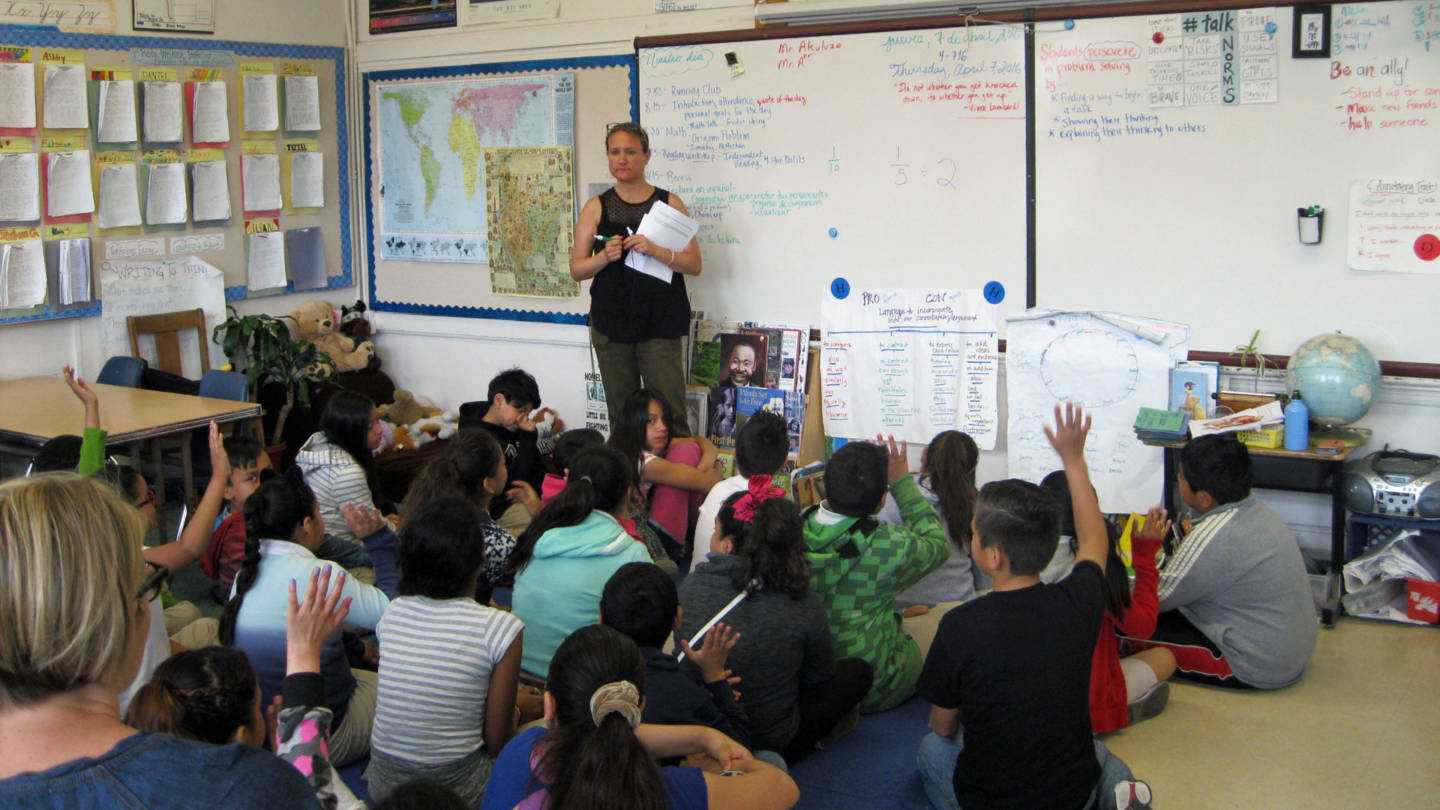
"caption": "Fifth grade teacher Marna Wolak starts her lesson off with a whole group number talk.",
"description": null,
"title": "Marna-Wolak-cropped",
"credit": "Katrina Schwartz/MindShift",
"status": "inherit",
"isLoading": false,
"fetchFailed": false
},
"mindshift_45189": {
"type": "attachments",
"id": "mindshift_45189",
"meta": {
"index": "attachments_1716263798",
"site": "mindshift",
"id": "45189",
"found": true
},
"parent": 45012,
"imgSizes": {
"twentyfourteen-full-width": {
"file": "https://ww2.kqed.org/app/uploads/sites/23/2016/05/11591550195_992b4a3434_k-1038x576.jpg",
"width": 1038,
"mimeType": "image/jpeg",
"height": 576
},
"thumbnail": {
"file": "https://ww2.kqed.org/app/uploads/sites/23/2016/05/11591550195_992b4a3434_k-400x300.jpg",
"width": 400,
"mimeType": "image/jpeg",
"height": 300
},
"fd-sm": {
"file": "https://ww2.kqed.org/app/uploads/sites/23/2016/05/11591550195_992b4a3434_k-960x720.jpg",
"width": 960,
"mimeType": "image/jpeg",
"height": 720
},
"post-thumbnail": {
"file": "https://ww2.kqed.org/app/uploads/sites/23/2016/05/11591550195_992b4a3434_k-672x372.jpg",
"width": 672,
"mimeType": "image/jpeg",
"height": 372
},
"kqedFullSize": {
"file": "https://ww2.kqed.org/app/uploads/sites/23/2016/05/11591550195_992b4a3434_k-e1463993997552.jpg",
"width": 1920,
"height": 1440
},
"large": {
"file": "https://ww2.kqed.org/app/uploads/sites/23/2016/05/11591550195_992b4a3434_k-1440x1080.jpg",
"width": 1440,
"mimeType": "image/jpeg",
"height": 1080
},
"guest-author-50": {
"file": "https://ww2.kqed.org/app/uploads/sites/23/2016/05/11591550195_992b4a3434_k-50x50.jpg",
"width": 50,
"mimeType": "image/jpeg",
"height": 50
},
"guest-author-96": {
"file": "https://ww2.kqed.org/app/uploads/sites/23/2016/05/11591550195_992b4a3434_k-96x96.jpg",
"width": 96,
"mimeType": "image/jpeg",
"height": 96
},
"medium": {
"file": "https://ww2.kqed.org/app/uploads/sites/23/2016/05/11591550195_992b4a3434_k-800x600.jpg",
"width": 800,
"mimeType": "image/jpeg",
"height": 600
},
"guest-author-64": {
"file": "https://ww2.kqed.org/app/uploads/sites/23/2016/05/11591550195_992b4a3434_k-64x64.jpg",
"width": 64,
"mimeType": "image/jpeg",
"height": 64
},
"guest-author-32": {
"file": "https://ww2.kqed.org/app/uploads/sites/23/2016/05/11591550195_992b4a3434_k-32x32.jpg",
"width": 32,
"mimeType": "image/jpeg",
"height": 32
},
"cat_post_thumb_sizecategory-posts-2": {
"file": "https://ww2.kqed.org/app/uploads/sites/23/2016/05/11591550195_992b4a3434_k-50x50.jpg",
"width": 50,
"mimeType": "image/jpeg",
"height": 50
},
"fd-lrg": {
"file": "https://ww2.kqed.org/app/uploads/sites/23/2016/05/11591550195_992b4a3434_k-1920x1440.jpg",
"width": 1920,
"mimeType": "image/jpeg",
"height": 1440
},
"fd-med": {
"file": "https://ww2.kqed.org/app/uploads/sites/23/2016/05/11591550195_992b4a3434_k-1180x885.jpg",
"width": 1180,
"mimeType": "image/jpeg",
"height": 885
},
"detail": {
"file": "https://ww2.kqed.org/app/uploads/sites/23/2016/05/11591550195_992b4a3434_k-150x150.jpg",
"width": 150,
"mimeType": "image/jpeg",
"height": 150
},
"medium_large": {
"file": "https://ww2.kqed.org/app/uploads/sites/23/2016/05/11591550195_992b4a3434_k-768x576.jpg",
"width": 768,
"mimeType": "image/jpeg",
"height": 576
},
"guest-author-128": {
"file": "https://ww2.kqed.org/app/uploads/sites/23/2016/05/11591550195_992b4a3434_k-128x128.jpg",
"width": 128,
"mimeType": "image/jpeg",
"height": 128
}
},
"publishDate": 1463993977,
"modified": 1463993990,
"caption": null,
"description": null,
"title": "11591550195_992b4a3434_k",
"credit": "\u003ca href=\"https://www.flickr.com/photos/fdecomite/11591550195/in/photolist-iEiJ2H-6YSQGT-64bCQD-buT7Sh-9BnLMh-9j9Ahd-9dEVDL-6PvyfF-9jSyCN-pNFJxe-cMp1M9-7AriTx-7XdcTr-6QqPDQ-q5T8MX-86vqfb-4ZUia7-amcJtd-83dnJQ-6WcyDP-7FJTDJ-2zrwk-6htZuH-8TW1qg-4nFMwM-8TW2A8-6htMdi-p5eyT2-6uhUvi-6Bsh7V-nZsHMc-nNJuKS-7gpjXY-bHMWoT-9znwCX-akoxRN-5W8yAV-6hvGVg-ahJA4k-gNBy7-6hMke3-93HJCo-5W9dgp-7gkptv-64ymp4-fPeWNr-6k6ekg-9d2ixZ-akxGus-9dEUiu\">Flickr/fdecomite\u003c/a>",
"status": "inherit",
"isLoading": false,
"fetchFailed": false
},
"mindshift_45112": {
"type": "attachments",
"id": "mindshift_45112",
"meta": {
"index": "attachments_1716263798",
"site": "mindshift",
"id": "45112",
"found": true
},
"parent": 45075,
"imgSizes": {
"twentyfourteen-full-width": {
"file": "https://ww2.kqed.org/app/uploads/sites/23/2016/05/Inclusivity-1038x576.jpg",
"width": 1038,
"mimeType": "image/jpeg",
"height": 576
},
"thumbnail": {
"file": "https://ww2.kqed.org/app/uploads/sites/23/2016/05/Inclusivity-400x225.jpg",
"width": 400,
"mimeType": "image/jpeg",
"height": 225
},
"fd-sm": {
"file": "https://ww2.kqed.org/app/uploads/sites/23/2016/05/Inclusivity-960x540.jpg",
"width": 960,
"mimeType": "image/jpeg",
"height": 540
},
"post-thumbnail": {
"file": "https://ww2.kqed.org/app/uploads/sites/23/2016/05/Inclusivity-672x372.jpg",
"width": 672,
"mimeType": "image/jpeg",
"height": 372
},
"kqedFullSize": {
"file": "https://ww2.kqed.org/app/uploads/sites/23/2016/05/Inclusivity.jpg",
"width": 1920,
"height": 1080
},
"large": {
"file": "https://ww2.kqed.org/app/uploads/sites/23/2016/05/Inclusivity-1440x810.jpg",
"width": 1440,
"mimeType": "image/jpeg",
"height": 810
},
"guest-author-50": {
"file": "https://ww2.kqed.org/app/uploads/sites/23/2016/05/Inclusivity-50x50.jpg",
"width": 50,
"mimeType": "image/jpeg",
"height": 50
},
"guest-author-96": {
"file": "https://ww2.kqed.org/app/uploads/sites/23/2016/05/Inclusivity-96x96.jpg",
"width": 96,
"mimeType": "image/jpeg",
"height": 96
},
"medium": {
"file": "https://ww2.kqed.org/app/uploads/sites/23/2016/05/Inclusivity-800x450.jpg",
"width": 800,
"mimeType": "image/jpeg",
"height": 450
},
"guest-author-64": {
"file": "https://ww2.kqed.org/app/uploads/sites/23/2016/05/Inclusivity-64x64.jpg",
"width": 64,
"mimeType": "image/jpeg",
"height": 64
},
"guest-author-32": {
"file": "https://ww2.kqed.org/app/uploads/sites/23/2016/05/Inclusivity-32x32.jpg",
"width": 32,
"mimeType": "image/jpeg",
"height": 32
},
"cat_post_thumb_sizecategory-posts-2": {
"file": "https://ww2.kqed.org/app/uploads/sites/23/2016/05/Inclusivity-50x50.jpg",
"width": 50,
"mimeType": "image/jpeg",
"height": 50
},
"fd-lrg": {
"file": "https://ww2.kqed.org/app/uploads/sites/23/2016/05/Inclusivity-1920x1080.jpg",
"width": 1920,
"mimeType": "image/jpeg",
"height": 1080
},
"fd-med": {
"file": "https://ww2.kqed.org/app/uploads/sites/23/2016/05/Inclusivity-1180x664.jpg",
"width": 1180,
"mimeType": "image/jpeg",
"height": 664
},
"detail": {
"file": "https://ww2.kqed.org/app/uploads/sites/23/2016/05/Inclusivity-150x150.jpg",
"width": 150,
"mimeType": "image/jpeg",
"height": 150
},
"medium_large": {
"file": "https://ww2.kqed.org/app/uploads/sites/23/2016/05/Inclusivity-768x432.jpg",
"width": 768,
"mimeType": "image/jpeg",
"height": 432
},
"guest-author-128": {
"file": "https://ww2.kqed.org/app/uploads/sites/23/2016/05/Inclusivity-128x128.jpg",
"width": 128,
"mimeType": "image/jpeg",
"height": 128
}
},
"publishDate": 1463577188,
"modified": 1463577198,
"caption": null,
"description": null,
"title": "Inclusivity",
"credit": "iStock",
"status": "inherit",
"isLoading": false,
"fetchFailed": false
},
"mindshift_45056": {
"type": "attachments",
"id": "mindshift_45056",
"meta": {
"index": "attachments_1716263798",
"site": "mindshift",
"id": "45056",
"found": true
},
"parent": 44971,
"imgSizes": {
"twentyfourteen-full-width": {
"file": "https://ww2.kqed.org/app/uploads/sites/23/2016/05/Zombie-1038x576.jpg",
"width": 1038,
"mimeType": "image/jpeg",
"height": 576
},
"thumbnail": {
"file": "https://ww2.kqed.org/app/uploads/sites/23/2016/05/Zombie-400x225.jpg",
"width": 400,
"mimeType": "image/jpeg",
"height": 225
},
"fd-sm": {
"file": "https://ww2.kqed.org/app/uploads/sites/23/2016/05/Zombie-960x540.jpg",
"width": 960,
"mimeType": "image/jpeg",
"height": 540
},
"post-thumbnail": {
"file": "https://ww2.kqed.org/app/uploads/sites/23/2016/05/Zombie-672x372.jpg",
"width": 672,
"mimeType": "image/jpeg",
"height": 372
},
"kqedFullSize": {
"file": "https://ww2.kqed.org/app/uploads/sites/23/2016/05/Zombie.jpg",
"width": 1920,
"height": 1080
},
"large": {
"file": "https://ww2.kqed.org/app/uploads/sites/23/2016/05/Zombie-1440x810.jpg",
"width": 1440,
"mimeType": "image/jpeg",
"height": 810
},
"guest-author-96": {
"file": "https://ww2.kqed.org/app/uploads/sites/23/2016/05/Zombie-96x96.jpg",
"width": 96,
"mimeType": "image/jpeg",
"height": 96
},
"medium": {
"file": "https://ww2.kqed.org/app/uploads/sites/23/2016/05/Zombie-800x450.jpg",
"width": 800,
"mimeType": "image/jpeg",
"height": 450
},
"guest-author-64": {
"file": "https://ww2.kqed.org/app/uploads/sites/23/2016/05/Zombie-64x64.jpg",
"width": 64,
"mimeType": "image/jpeg",
"height": 64
},
"guest-author-32": {
"file": "https://ww2.kqed.org/app/uploads/sites/23/2016/05/Zombie-32x32.jpg",
"width": 32,
"mimeType": "image/jpeg",
"height": 32
},
"cat_post_thumb_sizecategory-posts-2": {
"file": "https://ww2.kqed.org/app/uploads/sites/23/2016/05/Zombie-50x50.jpg",
"width": 50,
"mimeType": "image/jpeg",
"height": 50
},
"fd-lrg": {
"file": "https://ww2.kqed.org/app/uploads/sites/23/2016/05/Zombie-1920x1080.jpg",
"width": 1920,
"mimeType": "image/jpeg",
"height": 1080
},
"fd-med": {
"file": "https://ww2.kqed.org/app/uploads/sites/23/2016/05/Zombie-1180x664.jpg",
"width": 1180,
"mimeType": "image/jpeg",
"height": 664
},
"detail": {
"file": "https://ww2.kqed.org/app/uploads/sites/23/2016/05/Zombie-150x150.jpg",
"width": 150,
"mimeType": "image/jpeg",
"height": 150
},
"medium_large": {
"file": "https://ww2.kqed.org/app/uploads/sites/23/2016/05/Zombie-768x432.jpg",
"width": 768,
"mimeType": "image/jpeg",
"height": 432
},
"guest-author-128": {
"file": "https://ww2.kqed.org/app/uploads/sites/23/2016/05/Zombie-128x128.jpg",
"width": 128,
"mimeType": "image/jpeg",
"height": 128
}
},
"publishDate": 1463039977,
"modified": 1463039996,
"caption": null,
"description": null,
"title": "Zombie",
"credit": "TED-Ed",
"status": "inherit",
"isLoading": false,
"fetchFailed": false
},
"mindshift_44989": {
"type": "attachments",
"id": "mindshift_44989",
"meta": {
"index": "attachments_1716263798",
"site": "mindshift",
"id": "44989",
"found": true
},
"parent": 44986,
"imgSizes": {
"twentyfourteen-full-width": {
"file": "https://ww2.kqed.org/app/uploads/sites/23/2016/05/d7a7690_toned_slide-9c6b0545cfb1d02a794a44294b8b88e48e75b1b3-1038x576.jpg",
"width": 1038,
"mimeType": "image/jpeg",
"height": 576
},
"thumbnail": {
"file": "https://ww2.kqed.org/app/uploads/sites/23/2016/05/d7a7690_toned_slide-9c6b0545cfb1d02a794a44294b8b88e48e75b1b3-400x267.jpg",
"width": 400,
"mimeType": "image/jpeg",
"height": 267
},
"fd-sm": {
"file": "https://ww2.kqed.org/app/uploads/sites/23/2016/05/d7a7690_toned_slide-9c6b0545cfb1d02a794a44294b8b88e48e75b1b3-960x640.jpg",
"width": 960,
"mimeType": "image/jpeg",
"height": 640
},
"post-thumbnail": {
"file": "https://ww2.kqed.org/app/uploads/sites/23/2016/05/d7a7690_toned_slide-9c6b0545cfb1d02a794a44294b8b88e48e75b1b3-672x372.jpg",
"width": 672,
"mimeType": "image/jpeg",
"height": 372
},
"kqedFullSize": {
"file": "https://ww2.kqed.org/app/uploads/sites/23/2016/05/d7a7690_toned_slide-9c6b0545cfb1d02a794a44294b8b88e48e75b1b3-e1462475827302.jpg",
"width": 1920,
"height": 1280
},
"large": {
"file": "https://ww2.kqed.org/app/uploads/sites/23/2016/05/d7a7690_toned_slide-9c6b0545cfb1d02a794a44294b8b88e48e75b1b3-1440x960.jpg",
"width": 1440,
"mimeType": "image/jpeg",
"height": 960
},
"guest-author-96": {
"file": "https://ww2.kqed.org/app/uploads/sites/23/2016/05/d7a7690_toned_slide-9c6b0545cfb1d02a794a44294b8b88e48e75b1b3-96x96.jpg",
"width": 96,
"mimeType": "image/jpeg",
"height": 96
},
"medium": {
"file": "https://ww2.kqed.org/app/uploads/sites/23/2016/05/d7a7690_toned_slide-9c6b0545cfb1d02a794a44294b8b88e48e75b1b3-800x533.jpg",
"width": 800,
"mimeType": "image/jpeg",
"height": 533
},
"guest-author-64": {
"file": "https://ww2.kqed.org/app/uploads/sites/23/2016/05/d7a7690_toned_slide-9c6b0545cfb1d02a794a44294b8b88e48e75b1b3-64x64.jpg",
"width": 64,
"mimeType": "image/jpeg",
"height": 64
},
"guest-author-32": {
"file": "https://ww2.kqed.org/app/uploads/sites/23/2016/05/d7a7690_toned_slide-9c6b0545cfb1d02a794a44294b8b88e48e75b1b3-32x32.jpg",
"width": 32,
"mimeType": "image/jpeg",
"height": 32
},
"cat_post_thumb_sizecategory-posts-2": {
"file": "https://ww2.kqed.org/app/uploads/sites/23/2016/05/d7a7690_toned_slide-9c6b0545cfb1d02a794a44294b8b88e48e75b1b3-50x50.jpg",
"width": 50,
"mimeType": "image/jpeg",
"height": 50
},
"fd-lrg": {
"file": "https://ww2.kqed.org/app/uploads/sites/23/2016/05/d7a7690_toned_slide-9c6b0545cfb1d02a794a44294b8b88e48e75b1b3-1920x1280.jpg",
"width": 1920,
"mimeType": "image/jpeg",
"height": 1280
},
"fd-med": {
"file": "https://ww2.kqed.org/app/uploads/sites/23/2016/05/d7a7690_toned_slide-9c6b0545cfb1d02a794a44294b8b88e48e75b1b3-1180x787.jpg",
"width": 1180,
"mimeType": "image/jpeg",
"height": 787
},
"detail": {
"file": "https://ww2.kqed.org/app/uploads/sites/23/2016/05/d7a7690_toned_slide-9c6b0545cfb1d02a794a44294b8b88e48e75b1b3-150x150.jpg",
"width": 150,
"mimeType": "image/jpeg",
"height": 150
},
"medium_large": {
"file": "https://ww2.kqed.org/app/uploads/sites/23/2016/05/d7a7690_toned_slide-9c6b0545cfb1d02a794a44294b8b88e48e75b1b3-768x512.jpg",
"width": 768,
"mimeType": "image/jpeg",
"height": 512
},
"guest-author-128": {
"file": "https://ww2.kqed.org/app/uploads/sites/23/2016/05/d7a7690_toned_slide-9c6b0545cfb1d02a794a44294b8b88e48e75b1b3-128x128.jpg",
"width": 128,
"mimeType": "image/jpeg",
"height": 128
}
},
"publishDate": 1462475538,
"modified": 1462475987,
"caption": null,
"description": "Breakfast!",
"title": "Breakfast!",
"credit": "Elissa Nadworny/NPR",
"status": "inherit",
"isLoading": false,
"fetchFailed": false
},
"mindshift_44919": {
"type": "attachments",
"id": "mindshift_44919",
"meta": {
"index": "attachments_1716263798",
"site": "mindshift",
"id": "44919",
"found": true
},
"parent": 44915,
"imgSizes": {
"twentyfourteen-full-width": {
"file": "https://ww2.kqed.org/app/uploads/sites/23/2016/04/EquityTinkering1-1038x576.png",
"width": 1038,
"mimeType": "image/png",
"height": 576
},
"thumbnail": {
"file": "https://ww2.kqed.org/app/uploads/sites/23/2016/04/EquityTinkering1-400x225.png",
"width": 400,
"mimeType": "image/png",
"height": 225
},
"fd-sm": {
"file": "https://ww2.kqed.org/app/uploads/sites/23/2016/04/EquityTinkering1-960x540.png",
"width": 960,
"mimeType": "image/png",
"height": 540
},
"post-thumbnail": {
"file": "https://ww2.kqed.org/app/uploads/sites/23/2016/04/EquityTinkering1-672x372.png",
"width": 672,
"mimeType": "image/png",
"height": 372
},
"kqedFullSize": {
"file": "https://ww2.kqed.org/app/uploads/sites/23/2016/04/EquityTinkering1.png",
"width": 1920,
"height": 1080
},
"large": {
"file": "https://ww2.kqed.org/app/uploads/sites/23/2016/04/EquityTinkering1-1440x810.png",
"width": 1440,
"mimeType": "image/png",
"height": 810
},
"guest-author-96": {
"file": "https://ww2.kqed.org/app/uploads/sites/23/2016/04/EquityTinkering1-96x96.png",
"width": 96,
"mimeType": "image/png",
"height": 96
},
"medium": {
"file": "https://ww2.kqed.org/app/uploads/sites/23/2016/04/EquityTinkering1-800x450.png",
"width": 800,
"mimeType": "image/png",
"height": 450
},
"guest-author-64": {
"file": "https://ww2.kqed.org/app/uploads/sites/23/2016/04/EquityTinkering1-64x64.png",
"width": 64,
"mimeType": "image/png",
"height": 64
},
"guest-author-32": {
"file": "https://ww2.kqed.org/app/uploads/sites/23/2016/04/EquityTinkering1-32x32.png",
"width": 32,
"mimeType": "image/png",
"height": 32
},
"cat_post_thumb_sizecategory-posts-2": {
"file": "https://ww2.kqed.org/app/uploads/sites/23/2016/04/EquityTinkering1-50x50.png",
"width": 50,
"mimeType": "image/png",
"height": 50
},
"fd-lrg": {
"file": "https://ww2.kqed.org/app/uploads/sites/23/2016/04/EquityTinkering1-1920x1080.png",
"width": 1920,
"mimeType": "image/png",
"height": 1080
},
"fd-med": {
"file": "https://ww2.kqed.org/app/uploads/sites/23/2016/04/EquityTinkering1-1180x664.png",
"width": 1180,
"mimeType": "image/png",
"height": 664
},
"detail": {
"file": "https://ww2.kqed.org/app/uploads/sites/23/2016/04/EquityTinkering1-150x150.png",
"width": 150,
"mimeType": "image/png",
"height": 150
},
"medium_large": {
"file": "https://ww2.kqed.org/app/uploads/sites/23/2016/04/EquityTinkering1-768x432.png",
"width": 768,
"mimeType": "image/png",
"height": 432
},
"guest-author-128": {
"file": "https://ww2.kqed.org/app/uploads/sites/23/2016/04/EquityTinkering1-128x128.png",
"width": 128,
"mimeType": "image/png",
"height": 128
}
},
"publishDate": 1461966971,
"modified": 1462218999,
"caption": "Douglas and Ra'Kai work together on a light play activity.",
"description": null,
"title": "EquityTinkering1",
"credit": "Courtesy Meg Escudé/Exploratorium",
"status": "inherit",
"isLoading": false,
"fetchFailed": false
},
"mindshift_44863": {
"type": "attachments",
"id": "mindshift_44863",
"meta": {
"index": "attachments_1716263798",
"site": "mindshift",
"id": "44863",
"found": true
},
"parent": 44795,
"imgSizes": {
"twentyfourteen-full-width": {
"file": "https://ww2.kqed.org/app/uploads/sites/23/2016/04/Snowflakes-Danilo-Urbina-1038x576.jpg",
"width": 1038,
"mimeType": "image/jpeg",
"height": 576
},
"thumbnail": {
"file": "https://ww2.kqed.org/app/uploads/sites/23/2016/04/Snowflakes-Danilo-Urbina-400x400.jpg",
"width": 400,
"mimeType": "image/jpeg",
"height": 400
},
"fd-sm": {
"file": "https://ww2.kqed.org/app/uploads/sites/23/2016/04/Snowflakes-Danilo-Urbina-960x960.jpg",
"width": 960,
"mimeType": "image/jpeg",
"height": 960
},
"post-thumbnail": {
"file": "https://ww2.kqed.org/app/uploads/sites/23/2016/04/Snowflakes-Danilo-Urbina-672x372.jpg",
"width": 672,
"mimeType": "image/jpeg",
"height": 372
},
"kqedFullSize": {
"file": "https://ww2.kqed.org/app/uploads/sites/23/2016/04/Snowflakes-Danilo-Urbina.jpg",
"width": 1235,
"height": 1235
},
"guest-author-96": {
"file": "https://ww2.kqed.org/app/uploads/sites/23/2016/04/Snowflakes-Danilo-Urbina-96x96.jpg",
"width": 96,
"mimeType": "image/jpeg",
"height": 96
},
"medium": {
"file": "https://ww2.kqed.org/app/uploads/sites/23/2016/04/Snowflakes-Danilo-Urbina-800x800.jpg",
"width": 800,
"mimeType": "image/jpeg",
"height": 800
},
"guest-author-64": {
"file": "https://ww2.kqed.org/app/uploads/sites/23/2016/04/Snowflakes-Danilo-Urbina-64x64.jpg",
"width": 64,
"mimeType": "image/jpeg",
"height": 64
},
"guest-author-32": {
"file": "https://ww2.kqed.org/app/uploads/sites/23/2016/04/Snowflakes-Danilo-Urbina-32x32.jpg",
"width": 32,
"mimeType": "image/jpeg",
"height": 32
},
"cat_post_thumb_sizecategory-posts-2": {
"file": "https://ww2.kqed.org/app/uploads/sites/23/2016/04/Snowflakes-Danilo-Urbina-50x50.jpg",
"width": 50,
"mimeType": "image/jpeg",
"height": 50
},
"fd-med": {
"file": "https://ww2.kqed.org/app/uploads/sites/23/2016/04/Snowflakes-Danilo-Urbina-1180x1180.jpg",
"width": 1180,
"mimeType": "image/jpeg",
"height": 1180
},
"detail": {
"file": "https://ww2.kqed.org/app/uploads/sites/23/2016/04/Snowflakes-Danilo-Urbina-150x150.jpg",
"width": 150,
"mimeType": "image/jpeg",
"height": 150
},
"medium_large": {
"file": "https://ww2.kqed.org/app/uploads/sites/23/2016/04/Snowflakes-Danilo-Urbina-768x768.jpg",
"width": 768,
"mimeType": "image/jpeg",
"height": 768
},
"guest-author-128": {
"file": "https://ww2.kqed.org/app/uploads/sites/23/2016/04/Snowflakes-Danilo-Urbina-128x128.jpg",
"width": 128,
"mimeType": "image/jpeg",
"height": 128
}
},
"publishDate": 1461826489,
"modified": 1461826541,
"caption": null,
"description": null,
"title": "Snowflakes Danilo Urbina",
"credit": "\u003ca href=\"https://www.flickr.com/photos/hojas_cayendo/8237353320/in/photolist-dxUAa7-7p6vWT-AC2pG-7d7dxV-ijzTPg-p7XvLN-qoWpc5-r3Qvnm-ANZcb-bgke16-7mvngB-96CcSr-hNEq8J-j2uEfV-5411ok-vBeUht-9d8Mmv-5JzbZm-wbT3h-7KrLBs-7Dh7ix-j2xiXs-93suzM-8bHVCo-aXAVZH-8YwAbm-7nbW1F-7jNnUo-j2xj9u-4mtaTh-64Y25R-64VxJ4-j2teC2-aSYYyi-987BpM-aPWUyV-k3qk-bUyhjg-9qHzfY-6FxcGP-4E37m-sUHJf-D3R8QD-7oLqkz-8RbRQd-9d4xA3-pw7pWr-7rkwpJ-bApPaf-dWrvsR\">Danilo Urbina\u003c/a>",
"status": "inherit",
"isLoading": false,
"fetchFailed": false
},
"mindshift_44766": {
"type": "attachments",
"id": "mindshift_44766",
"meta": {
"index": "attachments_1716263798",
"site": "mindshift",
"id": "44766",
"found": true
},
"parent": 43049,
"imgSizes": {
"twentyfourteen-full-width": {
"file": "https://ww2.kqed.org/app/uploads/sites/23/2016/04/teen-1038x576.jpg",
"width": 1038,
"mimeType": "image/jpeg",
"height": 576
},
"thumbnail": {
"file": "https://ww2.kqed.org/app/uploads/sites/23/2016/04/teen-400x225.jpg",
"width": 400,
"mimeType": "image/jpeg",
"height": 225
},
"fd-sm": {
"file": "https://ww2.kqed.org/app/uploads/sites/23/2016/04/teen-960x540.jpg",
"width": 960,
"mimeType": "image/jpeg",
"height": 540
},
"post-thumbnail": {
"file": "https://ww2.kqed.org/app/uploads/sites/23/2016/04/teen-672x372.jpg",
"width": 672,
"mimeType": "image/jpeg",
"height": 372
},
"kqedFullSize": {
"file": "https://ww2.kqed.org/app/uploads/sites/23/2016/04/teen.jpg",
"width": 1920,
"height": 1080
},
"large": {
"file": "https://ww2.kqed.org/app/uploads/sites/23/2016/04/teen-1440x810.jpg",
"width": 1440,
"mimeType": "image/jpeg",
"height": 810
},
"guest-author-96": {
"file": "https://ww2.kqed.org/app/uploads/sites/23/2016/04/teen-96x96.jpg",
"width": 96,
"mimeType": "image/jpeg",
"height": 96
},
"medium": {
"file": "https://ww2.kqed.org/app/uploads/sites/23/2016/04/teen-800x450.jpg",
"width": 800,
"mimeType": "image/jpeg",
"height": 450
},
"guest-author-64": {
"file": "https://ww2.kqed.org/app/uploads/sites/23/2016/04/teen-64x64.jpg",
"width": 64,
"mimeType": "image/jpeg",
"height": 64
},
"guest-author-32": {
"file": "https://ww2.kqed.org/app/uploads/sites/23/2016/04/teen-32x32.jpg",
"width": 32,
"mimeType": "image/jpeg",
"height": 32
},
"cat_post_thumb_sizecategory-posts-2": {
"file": "https://ww2.kqed.org/app/uploads/sites/23/2016/04/teen-50x50.jpg",
"width": 50,
"mimeType": "image/jpeg",
"height": 50
},
"fd-lrg": {
"file": "https://ww2.kqed.org/app/uploads/sites/23/2016/04/teen-1920x1080.jpg",
"width": 1920,
"mimeType": "image/jpeg",
"height": 1080
},
"fd-med": {
"file": "https://ww2.kqed.org/app/uploads/sites/23/2016/04/teen-1180x664.jpg",
"width": 1180,
"mimeType": "image/jpeg",
"height": 664
},
"detail": {
"file": "https://ww2.kqed.org/app/uploads/sites/23/2016/04/teen-75x75.jpg",
"width": 75,
"mimeType": "image/jpeg",
"height": 75
},
"medium_large": {
"file": "https://ww2.kqed.org/app/uploads/sites/23/2016/04/teen-768x432.jpg",
"width": 768,
"mimeType": "image/jpeg",
"height": 432
},
"guest-author-128": {
"file": "https://ww2.kqed.org/app/uploads/sites/23/2016/04/teen-128x128.jpg",
"width": 128,
"mimeType": "image/jpeg",
"height": 128
}
},
"publishDate": 1461226272,
"modified": 1461226278,
"caption": null,
"description": null,
"title": "teen",
"credit": "iStock",
"status": "inherit",
"isLoading": false,
"fetchFailed": false
},
"mindshift_44752": {
"type": "attachments",
"id": "mindshift_44752",
"meta": {
"index": "attachments_1716263798",
"site": "mindshift",
"id": "44752",
"found": true
},
"parent": 44726,
"imgSizes": {
"twentyfourteen-full-width": {
"file": "https://ww2.kqed.org/app/uploads/sites/23/2016/04/062714_OaklandKQED02-1038x576.jpg",
"width": 1038,
"mimeType": "image/jpeg",
"height": 576
},
"thumbnail": {
"file": "https://ww2.kqed.org/app/uploads/sites/23/2016/04/062714_OaklandKQED02-400x266.jpg",
"width": 400,
"mimeType": "image/jpeg",
"height": 266
},
"fd-sm": {
"file": "https://ww2.kqed.org/app/uploads/sites/23/2016/04/062714_OaklandKQED02-960x639.jpg",
"width": 960,
"mimeType": "image/jpeg",
"height": 639
},
"post-thumbnail": {
"file": "https://ww2.kqed.org/app/uploads/sites/23/2016/04/062714_OaklandKQED02-672x372.jpg",
"width": 672,
"mimeType": "image/jpeg",
"height": 372
},
"kqedFullSize": {
"file": "https://ww2.kqed.org/app/uploads/sites/23/2016/04/062714_OaklandKQED02-e1461049098434.jpg",
"width": 1920,
"height": 1277
},
"large": {
"file": "https://ww2.kqed.org/app/uploads/sites/23/2016/04/062714_OaklandKQED02-1440x958.jpg",
"width": 1440,
"mimeType": "image/jpeg",
"height": 958
},
"guest-author-96": {
"file": "https://ww2.kqed.org/app/uploads/sites/23/2016/04/062714_OaklandKQED02-96x96.jpg",
"width": 96,
"mimeType": "image/jpeg",
"height": 96
},
"medium": {
"file": "https://ww2.kqed.org/app/uploads/sites/23/2016/04/062714_OaklandKQED02-800x532.jpg",
"width": 800,
"mimeType": "image/jpeg",
"height": 532
},
"guest-author-64": {
"file": "https://ww2.kqed.org/app/uploads/sites/23/2016/04/062714_OaklandKQED02-64x64.jpg",
"width": 64,
"mimeType": "image/jpeg",
"height": 64
},
"guest-author-32": {
"file": "https://ww2.kqed.org/app/uploads/sites/23/2016/04/062714_OaklandKQED02-32x32.jpg",
"width": 32,
"mimeType": "image/jpeg",
"height": 32
},
"cat_post_thumb_sizecategory-posts-2": {
"file": "https://ww2.kqed.org/app/uploads/sites/23/2016/04/062714_OaklandKQED02-50x50.jpg",
"width": 50,
"mimeType": "image/jpeg",
"height": 50
},
"fd-lrg": {
"file": "https://ww2.kqed.org/app/uploads/sites/23/2016/04/062714_OaklandKQED02-1920x1277.jpg",
"width": 1920,
"mimeType": "image/jpeg",
"height": 1277
},
"fd-med": {
"file": "https://ww2.kqed.org/app/uploads/sites/23/2016/04/062714_OaklandKQED02-1180x785.jpg",
"width": 1180,
"mimeType": "image/jpeg",
"height": 785
},
"detail": {
"file": "https://ww2.kqed.org/app/uploads/sites/23/2016/04/062714_OaklandKQED02-75x75.jpg",
"width": 75,
"mimeType": "image/jpeg",
"height": 75
},
"medium_large": {
"file": "https://ww2.kqed.org/app/uploads/sites/23/2016/04/062714_OaklandKQED02-768x511.jpg",
"width": 768,
"mimeType": "image/jpeg",
"height": 511
},
"guest-author-128": {
"file": "https://ww2.kqed.org/app/uploads/sites/23/2016/04/062714_OaklandKQED02-128x128.jpg",
"width": 128,
"mimeType": "image/jpeg",
"height": 128
}
},
"publishDate": 1461049055,
"modified": 1461049091,
"caption": null,
"description": null,
"title": "Tinkering",
"credit": "Amanda Lucier",
"status": "inherit",
"isLoading": false,
"fetchFailed": false
},
"mindshift_44745": {
"type": "attachments",
"id": "mindshift_44745",
"meta": {
"index": "attachments_1716263798",
"site": "mindshift",
"id": "44745",
"found": true
},
"parent": 44744,
"imgSizes": {
"twentyfourteen-full-width": {
"file": "https://ww2.kqed.org/app/uploads/sites/23/2016/04/flat-earth-theory1_custom-3df93006332abbd40427024f09b5dd1c4bff427e-1038x576.jpg",
"width": 1038,
"mimeType": "image/jpeg",
"height": 576
},
"thumbnail": {
"file": "https://ww2.kqed.org/app/uploads/sites/23/2016/04/flat-earth-theory1_custom-3df93006332abbd40427024f09b5dd1c4bff427e-400x295.jpg",
"width": 400,
"mimeType": "image/jpeg",
"height": 295
},
"fd-sm": {
"file": "https://ww2.kqed.org/app/uploads/sites/23/2016/04/flat-earth-theory1_custom-3df93006332abbd40427024f09b5dd1c4bff427e-960x709.jpg",
"width": 960,
"mimeType": "image/jpeg",
"height": 709
},
"post-thumbnail": {
"file": "https://ww2.kqed.org/app/uploads/sites/23/2016/04/flat-earth-theory1_custom-3df93006332abbd40427024f09b5dd1c4bff427e-672x372.jpg",
"width": 672,
"mimeType": "image/jpeg",
"height": 372
},
"kqedFullSize": {
"file": "https://ww2.kqed.org/app/uploads/sites/23/2016/04/flat-earth-theory1_custom-3df93006332abbd40427024f09b5dd1c4bff427e-e1494028772535.jpg",
"width": 1600,
"height": 1182
},
"large": {
"file": "https://ww2.kqed.org/app/uploads/sites/23/2016/04/flat-earth-theory1_custom-3df93006332abbd40427024f09b5dd1c4bff427e-1440x1063.jpg",
"width": 1440,
"mimeType": "image/jpeg",
"height": 1063
},
"guest-author-96": {
"file": "https://ww2.kqed.org/app/uploads/sites/23/2016/04/flat-earth-theory1_custom-3df93006332abbd40427024f09b5dd1c4bff427e-96x96.jpg",
"width": 96,
"mimeType": "image/jpeg",
"height": 96
},
"medium": {
"file": "https://ww2.kqed.org/app/uploads/sites/23/2016/04/flat-earth-theory1_custom-3df93006332abbd40427024f09b5dd1c4bff427e-800x591.jpg",
"width": 800,
"mimeType": "image/jpeg",
"height": 591
},
"guest-author-64": {
"file": "https://ww2.kqed.org/app/uploads/sites/23/2016/04/flat-earth-theory1_custom-3df93006332abbd40427024f09b5dd1c4bff427e-64x64.jpg",
"width": 64,
"mimeType": "image/jpeg",
"height": 64
},
"guest-author-32": {
"file": "https://ww2.kqed.org/app/uploads/sites/23/2016/04/flat-earth-theory1_custom-3df93006332abbd40427024f09b5dd1c4bff427e-32x32.jpg",
"width": 32,
"mimeType": "image/jpeg",
"height": 32
},
"cat_post_thumb_sizecategory-posts-2": {
"file": "https://ww2.kqed.org/app/uploads/sites/23/2016/04/flat-earth-theory1_custom-3df93006332abbd40427024f09b5dd1c4bff427e-50x50.jpg",
"width": 50,
"mimeType": "image/jpeg",
"height": 50
},
"fd-lrg": {
"file": "https://ww2.kqed.org/app/uploads/sites/23/2016/04/flat-earth-theory1_custom-3df93006332abbd40427024f09b5dd1c4bff427e-1920x1418.jpg",
"width": 1920,
"mimeType": "image/jpeg",
"height": 1418
},
"fd-med": {
"file": "https://ww2.kqed.org/app/uploads/sites/23/2016/04/flat-earth-theory1_custom-3df93006332abbd40427024f09b5dd1c4bff427e-1180x871.jpg",
"width": 1180,
"mimeType": "image/jpeg",
"height": 871
},
"detail": {
"file": "https://ww2.kqed.org/app/uploads/sites/23/2016/04/flat-earth-theory1_custom-3df93006332abbd40427024f09b5dd1c4bff427e-75x75.jpg",
"width": 75,
"mimeType": "image/jpeg",
"height": 75
},
"medium_large": {
"file": "https://ww2.kqed.org/app/uploads/sites/23/2016/04/flat-earth-theory1_custom-3df93006332abbd40427024f09b5dd1c4bff427e-768x567.jpg",
"width": 768,
"mimeType": "image/jpeg",
"height": 567
},
"guest-author-128": {
"file": "https://ww2.kqed.org/app/uploads/sites/23/2016/04/flat-earth-theory1_custom-3df93006332abbd40427024f09b5dd1c4bff427e-128x128.jpg",
"width": 128,
"mimeType": "image/jpeg",
"height": 128
}
},
"publishDate": 1461002546,
"modified": 1461011255,
"caption": null,
"description": "Flat Earth Theory",
"title": "Flat Earth Theory",
"credit": "LA Johnston/NPR",
"status": "inherit",
"isLoading": false,
"fetchFailed": false
},
"mindshift_44738": {
"type": "attachments",
"id": "mindshift_44738",
"meta": {
"index": "attachments_1716263798",
"site": "mindshift",
"id": "44738",
"found": true
},
"parent": 44538,
"imgSizes": {
"twentyfourteen-full-width": {
"file": "https://ww2.kqed.org/app/uploads/sites/23/2016/04/co-teaching-1038x576.jpg",
"width": 1038,
"mimeType": "image/jpeg",
"height": 576
},
"thumbnail": {
"file": "https://ww2.kqed.org/app/uploads/sites/23/2016/04/co-teaching-400x225.jpg",
"width": 400,
"mimeType": "image/jpeg",
"height": 225
},
"fd-sm": {
"file": "https://ww2.kqed.org/app/uploads/sites/23/2016/04/co-teaching-960x540.jpg",
"width": 960,
"mimeType": "image/jpeg",
"height": 540
},
"post-thumbnail": {
"file": "https://ww2.kqed.org/app/uploads/sites/23/2016/04/co-teaching-672x372.jpg",
"width": 672,
"mimeType": "image/jpeg",
"height": 372
},
"kqedFullSize": {
"file": "https://ww2.kqed.org/app/uploads/sites/23/2016/04/co-teaching.jpg",
"width": 1920,
"height": 1080
},
"large": {
"file": "https://ww2.kqed.org/app/uploads/sites/23/2016/04/co-teaching-1440x810.jpg",
"width": 1440,
"mimeType": "image/jpeg",
"height": 810
},
"guest-author-96": {
"file": "https://ww2.kqed.org/app/uploads/sites/23/2016/04/co-teaching-96x96.jpg",
"width": 96,
"mimeType": "image/jpeg",
"height": 96
},
"medium": {
"file": "https://ww2.kqed.org/app/uploads/sites/23/2016/04/co-teaching-800x450.jpg",
"width": 800,
"mimeType": "image/jpeg",
"height": 450
},
"guest-author-64": {
"file": "https://ww2.kqed.org/app/uploads/sites/23/2016/04/co-teaching-64x64.jpg",
"width": 64,
"mimeType": "image/jpeg",
"height": 64
},
"guest-author-32": {
"file": "https://ww2.kqed.org/app/uploads/sites/23/2016/04/co-teaching-32x32.jpg",
"width": 32,
"mimeType": "image/jpeg",
"height": 32
},
"cat_post_thumb_sizecategory-posts-2": {
"file": "https://ww2.kqed.org/app/uploads/sites/23/2016/04/co-teaching-50x50.jpg",
"width": 50,
"mimeType": "image/jpeg",
"height": 50
},
"fd-lrg": {
"file": "https://ww2.kqed.org/app/uploads/sites/23/2016/04/co-teaching-1920x1080.jpg",
"width": 1920,
"mimeType": "image/jpeg",
"height": 1080
},
"fd-med": {
"file": "https://ww2.kqed.org/app/uploads/sites/23/2016/04/co-teaching-1180x664.jpg",
"width": 1180,
"mimeType": "image/jpeg",
"height": 664
},
"detail": {
"file": "https://ww2.kqed.org/app/uploads/sites/23/2016/04/co-teaching-75x75.jpg",
"width": 75,
"mimeType": "image/jpeg",
"height": 75
},
"medium_large": {
"file": "https://ww2.kqed.org/app/uploads/sites/23/2016/04/co-teaching-768x432.jpg",
"width": 768,
"mimeType": "image/jpeg",
"height": 432
},
"guest-author-128": {
"file": "https://ww2.kqed.org/app/uploads/sites/23/2016/04/co-teaching-128x128.jpg",
"width": 128,
"mimeType": "image/jpeg",
"height": 128
}
},
"publishDate": 1460963820,
"modified": 1460963832,
"caption": null,
"description": null,
"title": "co-teaching",
"credit": "iStock",
"status": "inherit",
"isLoading": false,
"fetchFailed": false
},
"mindshift_44194": {
"type": "attachments",
"id": "mindshift_44194",
"meta": {
"index": "attachments_1716263798",
"site": "mindshift",
"id": "44194",
"found": true
},
"parent": 44188,
"imgSizes": {
"twentyfourteen-full-width": {
"file": "https://ww2.kqed.org/app/uploads/sites/23/2016/03/InspirationTime5-1038x576.jpg",
"width": 1038,
"mimeType": "image/jpeg",
"height": 576
},
"thumbnail": {
"file": "https://ww2.kqed.org/app/uploads/sites/23/2016/03/InspirationTime5-400x225.jpg",
"width": 400,
"mimeType": "image/jpeg",
"height": 225
},
"fd-sm": {
"file": "https://ww2.kqed.org/app/uploads/sites/23/2016/03/InspirationTime5-960x540.jpg",
"width": 960,
"mimeType": "image/jpeg",
"height": 540
},
"post-thumbnail": {
"file": "https://ww2.kqed.org/app/uploads/sites/23/2016/03/InspirationTime5-672x372.jpg",
"width": 672,
"mimeType": "image/jpeg",
"height": 372
},
"kqedFullSize": {
"file": "https://ww2.kqed.org/app/uploads/sites/23/2016/03/InspirationTime5.jpg",
"width": 4032,
"height": 2268
},
"large": {
"file": "https://ww2.kqed.org/app/uploads/sites/23/2016/03/InspirationTime5-1440x810.jpg",
"width": 1440,
"mimeType": "image/jpeg",
"height": 810
},
"guest-author-96": {
"file": "https://ww2.kqed.org/app/uploads/sites/23/2016/03/InspirationTime5-96x96.jpg",
"width": 96,
"mimeType": "image/jpeg",
"height": 96
},
"medium": {
"file": "https://ww2.kqed.org/app/uploads/sites/23/2016/03/InspirationTime5-800x450.jpg",
"width": 800,
"mimeType": "image/jpeg",
"height": 450
},
"guest-author-64": {
"file": "https://ww2.kqed.org/app/uploads/sites/23/2016/03/InspirationTime5-64x64.jpg",
"width": 64,
"mimeType": "image/jpeg",
"height": 64
},
"guest-author-32": {
"file": "https://ww2.kqed.org/app/uploads/sites/23/2016/03/InspirationTime5-32x32.jpg",
"width": 32,
"mimeType": "image/jpeg",
"height": 32
},
"cat_post_thumb_sizecategory-posts-2": {
"file": "https://ww2.kqed.org/app/uploads/sites/23/2016/03/InspirationTime5-50x50.jpg",
"width": 50,
"mimeType": "image/jpeg",
"height": 50
},
"fd-lrg": {
"file": "https://ww2.kqed.org/app/uploads/sites/23/2016/03/InspirationTime5-1920x1080.jpg",
"width": 1920,
"mimeType": "image/jpeg",
"height": 1080
},
"fd-med": {
"file": "https://ww2.kqed.org/app/uploads/sites/23/2016/03/InspirationTime5-1180x664.jpg",
"width": 1180,
"mimeType": "image/jpeg",
"height": 664
},
"detail": {
"file": "https://ww2.kqed.org/app/uploads/sites/23/2016/03/InspirationTime5-75x75.jpg",
"width": 75,
"mimeType": "image/jpeg",
"height": 75
},
"medium_large": {
"file": "https://ww2.kqed.org/app/uploads/sites/23/2016/03/InspirationTime5-768x432.jpg",
"width": 768,
"mimeType": "image/jpeg",
"height": 432
},
"guest-author-128": {
"file": "https://ww2.kqed.org/app/uploads/sites/23/2016/03/InspirationTime5-128x128.jpg",
"width": 128,
"mimeType": "image/jpeg",
"height": 128
}
},
"publishDate": 1457386769,
"modified": 1457386835,
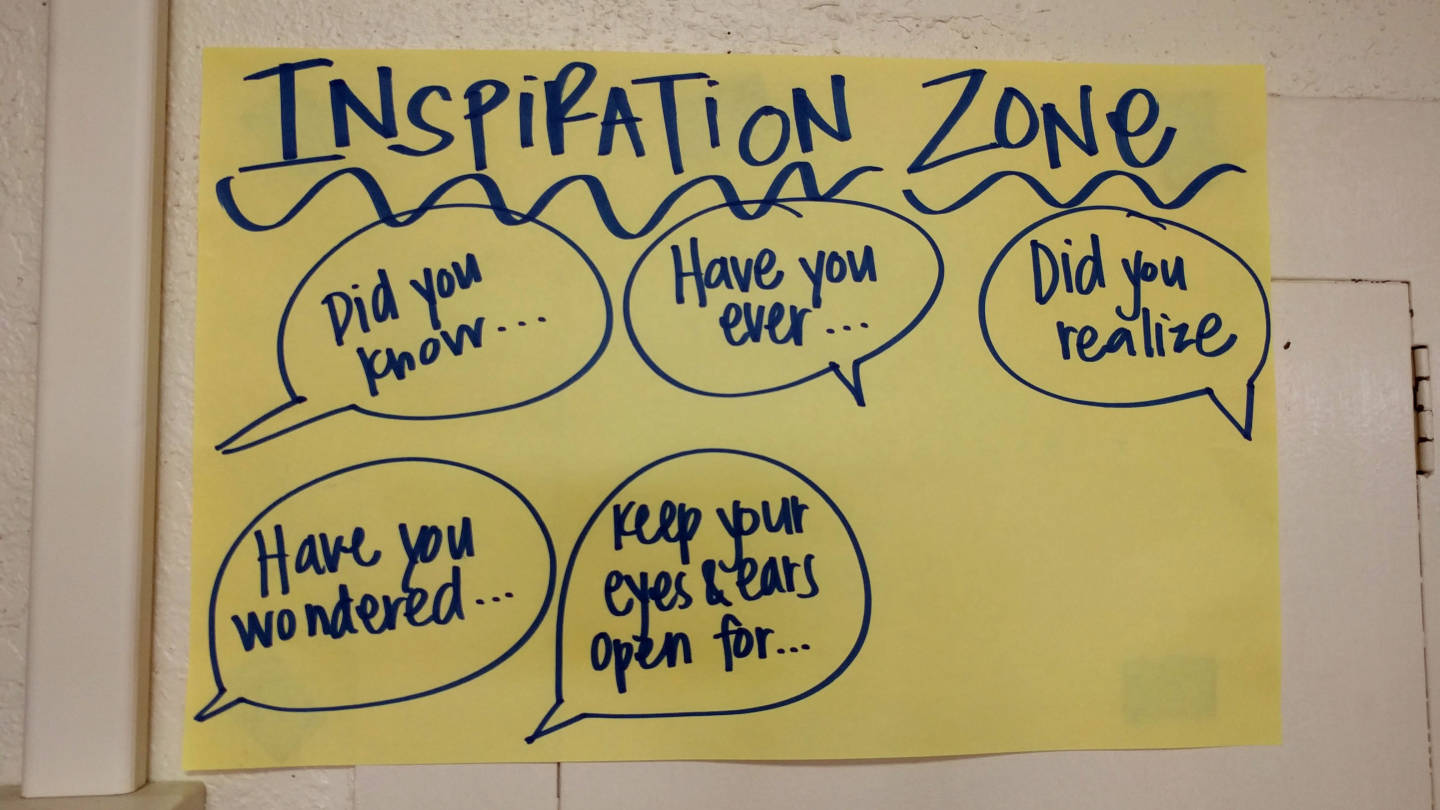
"caption": "Prompts on a class poster help students get started during Inspiration Time.",
"description": null,
"title": "InspirationTime5",
"credit": "Courtesy Maricela Montoy-Wilson",
"status": "inherit",
"isLoading": false,
"fetchFailed": false
}
},
"audioPlayerReducer": {
"postId": "stream_live",
"isPaused": true,
"isPlaying": false,
"pfsActive": false,
"pledgeModalIsOpen": true,
"playerDrawerIsOpen": false,
"liveAudioPlayStartedAt": 0,
"liveAudioPlayContext": ""
},
"authorsReducer": {
"byline_mindshift_44986": {
"type": "authors",
"id": "byline_mindshift_44986",
"meta": {
"override": true
},
"slug": "byline_mindshift_44986",
"name": "Elissa Nadworny ",
"isLoading": false
},
"byline_mindshift_44744": {
"type": "authors",
"id": "byline_mindshift_44744",
"meta": {
"override": true
},
"slug": "byline_mindshift_44744",
"name": "Anya Kamenetz",
"isLoading": false
},
"katrinaschwartz": {
"type": "authors",
"id": "234",
"meta": {
"index": "authors_1716337520",
"id": "234",
"found": true
},
"name": "Katrina Schwartz",
"firstName": "Katrina",
"lastName": "Schwartz",
"slug": "katrinaschwartz",
"email": "kschwartz@kqed.org",
"display_author_email": false,
"staff_mastheads": [
"news"
],
"title": "Producer",
"bio": "Katrina Schwartz is a journalist based in San Francisco. She's worked at KPCC public radio in LA and has reported on air and online for KQED since 2010. She covered how teaching and learning is changing for MindShift between 2012 and 2020. She is the co-host of the MindShift podcast and now produces KQED's Bay Curious podcast.",
"avatar": "https://secure.gravatar.com/avatar/edb4ee79070447a018538c9aae6eeecf28786515b8a0c30e43b6b7dce5aa44c8?s=600&d=blank&r=g",
"twitter": "kschwart",
"bluesky": null,
"facebook": null,
"instagram": null,
"linkedin": null,
"sites": [
{
"site": "",
"roles": [
"editor"
]
},
{
"site": "news",
"roles": [
"editor"
]
},
{
"site": "mindshift",
"roles": [
"administrator"
]
},
{
"site": "stateofhealth",
"roles": [
"author"
]
},
{
"site": "science",
"roles": [
"editor"
]
}
],
"headData": {
"title": "Katrina Schwartz | KQED",
"description": "Producer",
"ogImgSrc": "https://secure.gravatar.com/avatar/edb4ee79070447a018538c9aae6eeecf28786515b8a0c30e43b6b7dce5aa44c8?s=600&d=blank&r=g",
"twImgSrc": "https://secure.gravatar.com/avatar/edb4ee79070447a018538c9aae6eeecf28786515b8a0c30e43b6b7dce5aa44c8?s=600&d=blank&r=g"
},
"isLoading": false,
"link": "/author/katrinaschwartz"
}
},
"pagesReducer": {
"mindshift_category_teaching-strategies": {
"type": "terms",
"id": "mindshift_193",
"meta": {
"index": "terms_1716263798",
"site": "mindshift",
"id": "193",
"score": 14.406956
},
"featImg": null,
"name": "Teaching Strategies",
"description": "Innovative ideas - projects, processes, curricula, and more - that are transforming how we teach and learn.",
"taxonomy": "category",
"headData": {
"twImgId": null,
"twTitle": null,
"ogTitle": null,
"ogImgId": null,
"twDescription": null,
"description": "Innovative ideas - projects, processes, curricula, and more - that are transforming how we teach and learn.",
"title": "Teaching Strategies Archives | KQED Mindshift",
"ogDescription": null
},
"ttid": 193,
"slug": "teaching-strategies",
"isLoading": false,
"title": "Teaching Strategies",
"pageMeta": {
"site": "mindshift",
"WpPageTemplate": "page-topic-editorial",
"currentPage": 34
},
"blocks": [
{
"blockName": "kqed/company-paragraph",
"content": "Innovative ideas - projects, processes, curricula, and more - that are transforming how we teach and learn."
},
{
"blockName": "kqed/post-list",
"attrs": {
"layout": "cardArticle2",
"query": "posts/mindshift?category=teaching-strategies",
"seeMore": false,
"paginated": true,
"page": 34
}
},
{
"blockName": "kqed/ad"
}
]
}
},
"pfsSessionReducer": {},
"postsReducer": {
"stream_live": {
"type": "live",
"id": "stream_live",
"audioUrl": "https://streams.kqed.org/kqedradio",
"title": "Live Stream",
"excerpt": "Live Stream information currently unavailable.",
"link": "/radio",
"featImg": "",
"label": {
"name": "KQED Live",
"link": "/"
}
},
"stream_kqedNewscast": {
"type": "posts",
"id": "stream_kqedNewscast",
"audioUrl": "https://www.kqed.org/.stream/anon/radio/RDnews/newscast.mp3?_=1",
"title": "KQED Newscast",
"featImg": "",
"label": {
"name": "88.5 FM",
"link": "/"
}
},
"mindshift_44948": {
"type": "posts",
"id": "mindshift_44948",
"meta": {
"index": "posts_1716263798",
"site": "mindshift",
"id": "44948",
"score": null,
"sort": [
1464161187000
]
},
"parent": 0,
"labelTerm": {
"site": "mindshift"
},
"blocks": [],
"publishDate": 1464161187,
"format": "standard",
"disqusTitle": "Lesson Study: When Teachers Team Up to Improve Teaching",
"title": "Lesson Study: When Teachers Team Up to Improve Teaching",
"headTitle": "MindShift | KQED News",
"content": "\u003cp>Marna Wolak’s fifth grade students at Sanchez Elementary in San Francisco are gathered on the rug for a “number talk.” Wolak is getting her students thinking about fractions, noticing patterns and explaining their thinking to one another as a group before sending them off to work on a new topic - dividing whole numbers by fractions. The problem for today deals with origami stars. Students are told they have six pieces of paper, but it only takes one fifth of a piece to make one origami star. How many stars can they make with six pieces of paper?\u003c/p>\n\u003cp>[soundcloud url=\"https://api.soundcloud.com/tracks/265891337\" params=\"color=ff5500&inverse=false&auto_play=false&show_user=true\" width=\"100%\" height=\"20\" iframe=\"true\" /]\u003c/p>\n\u003cp>Wolak instructs students to work on the problem individually first, showing various ways they might solve it. She tells them they’ll get a chance to share their answers and think through the problem with a partner in a few minutes. This is a familiar math lesson scene, but on this day there are five other adults in the room -- including two Sanchez teachers -- observing how students tackle the problem as part of Wolak’s \u003ca href=\"http://ww2.kqed.org/mindshift/2015/09/14/lesson-study-technique-what-teachers-can-learn-from-one-another/\">lesson study\u003c/a> group.\u003c/p>\n\u003caside class=\"pullquote alignright\">'Its really powerful to have other educators' ideas. I always learn something new. And it always causes me to think in another way.\u003c/aside>\n\u003cp>It’s clear that students are a little shy of all the visitors, but Wolak has prepared them, explaining that the other adults are interested to see how students are thinking about the problem so they can improve their teaching. Kids seem content with this explanation, but also more subdued. As they get to work, the observing teachers scribble detailed notes about strategies kids are trying, where they might be going off track, and later how well they discuss their thinking with a small group.\u003c/p>\n\u003cp>“I’m noticing a student taking an example from the number talk and saying ⅕ x 6 is 1/30,” said third grade teacher Lauren Christensen in a whisper to an observer. But then she noticed the student starting to draw and said, \"maybe there was a feeling of, 'I don’t think that’s the correct answer, so I’m going to try another way.'”\u003c/p>\n\u003cp>[ad fullwidth]\u003c/p>\n\u003cp>This kind of detailed observation of student work is the focus of a kind of professional development called \u003ca href=\"http://ww2.kqed.org/mindshift/2015/09/14/lesson-study-technique-what-teachers-can-learn-from-one-another/\">lesson study\u003c/a>. Wolak can better understand how her students are thinking by having other teachers in her classroom focused on the students (as opposed to evaluating her performance). The teachers are looking for misconceptions, but also interesting ways students approach problems and how well they can talk through what they did.\u003c/p>\n\u003cfigure id=\"attachment_44953\" class=\"wp-caption alignleft\" style=\"max-width: 400px\">\u003cimg class=\"size-thumbnail wp-image-44953\" src=\"http://ww2.kqed.org/mindshift/wp-content/uploads/sites/23/2016/05/Christensen-observes-400x225.jpg\" alt=\"Third grade teacher Lauren Christensen observes fifth graders as they work on a problem individually.\" width=\"400\" height=\"225\" srcset=\"https://ww2.kqed.org/app/uploads/sites/23/2016/05/Christensen-observes-400x225.jpg 400w, https://ww2.kqed.org/app/uploads/sites/23/2016/05/Christensen-observes-800x450.jpg 800w, https://ww2.kqed.org/app/uploads/sites/23/2016/05/Christensen-observes-768x432.jpg 768w, https://ww2.kqed.org/app/uploads/sites/23/2016/05/Christensen-observes-1440x810.jpg 1440w, https://ww2.kqed.org/app/uploads/sites/23/2016/05/Christensen-observes-1180x664.jpg 1180w, https://ww2.kqed.org/app/uploads/sites/23/2016/05/Christensen-observes-960x540.jpg 960w\" sizes=\"(max-width: 400px) 100vw, 400px\">\u003cfigcaption class=\"wp-caption-text\">Third grade teacher Lauren Christensen observes fifth graders as they work on a problem individually. \u003ccite>(Katrina Schwartz/MindShift)\u003c/cite>\u003c/figcaption>\u003c/figure>\n\u003cp>Many students in the class got the correct answer, but fewer were able to explain why. Many seemed shy to talk through their answers and didn’t want to push each other on their thinking either. After the lesson, the adults convened to debrief what they saw, identify trends and offer ideas about where the misconceptions might lie. There’s a consensus that the number talk may have confused kids, making them think they were supposed to use a number line to solve the problem, even though that strategy wasn’t helpful for this problem.\u003c/p>\n\u003cp>“This made me wonder how much our students are influenced by what we do that morning or the most recent thing,” Christensen said as part of the debrief. “It felt like during the number talk there was some steering towards Kiara’s thinking about a number line, so I’m wondering if other students were thinking number line is something I should definitely be using today.”\u003c/p>\n\u003cp>This is useful information that Wolak and the other teachers can use as they plan future lessons. And it’s not necessarily something Wolak would have known without this observation period. Now, she has useful data points for when she revisits the lesson, so she can thoughtfully advance her students' understanding.\u003c/p>\n\u003cp>“Our goal is higher student achievement and we’re not going to achieve that in isolation, I feel, we’re going to achieve that as a team strategizing, creating lesson plans, seeing what worked and what didn’t, trying something new, and keeping our eyes on how students are learning,” Wolak said. “That invigorates me.”\u003c/p>\n\u003cp>\u003cstrong>A GROWING TREND\u003c/strong>\u003c/p>\n\u003cp>Lesson study is a common professional development practice in Japan and is slowly gaining popularity in the U.S.; there's even a \u003ca href=\"http://ww2.kqed.org/mindshift/2016/03/10/lesson-study-theres-an-app-for-that/\">lesson study \u003c/a>\u003ca href=\"http://ww2.kqed.org/mindshift/2016/03/10/lesson-study-theres-an-app-for-that/\">app \u003c/a>now. In San Francisco, many teachers are using the practice to help shift teaching practices towards the requirements of the Common Core State Standards. The Sanchez Elementary school teachers have been focusing on several points of mathematical practice throughout the year. They want students to find an entry point into the problem, persevere through difficult tasks, and explain their thinking to one another. After each observation the teachers discuss what they saw and brainstorm ways to keep pushing their students on these skills.\u003c/p>\n\u003cp>“The time to plan with colleagues and then observe each other, discuss what worked, what didn’t work, that might not just be for that lesson,” said Wolak. “What you learned trickles into other lessons. If you’re interested in improving teaching and learning in your classroom then it’s worth the time.”\u003c/p>\n\u003cp>In the San Francisco Unified School District, about 20 percent of schools are using lesson study in some capacity. The practice is part of the district’s \u003ca href=\"http://www.sfusd.edu/en/assets/sfusd-staff/careers/Professional%20Development/Master%20Teacher%20Description.pdf\" target=\"_blank\">master teaching program\u003c/a>, of which Wolak is a participant. At schools with a master teacher, at least one group of three to four teachers is doing lesson study as a way of sharing professional ideas. San Francisco is also part of \u003ca href=\"http://www.mills.edu/news/2015/pressrelease-02182015-SchoolOfEdGatesGrant.php\" target=\"_blank\">a grant\u003c/a> from the Bill and Melinda Gates Foundation to do whole-school lesson study at five sites. Oakland Unified and Chicago Public Schools are part of that grant as well. \u003ca href=\"http://www.lessonresearch.net/staffmain1.html\">Researchers from Mills College\u003c/a> will be working alongside these districts to document and assess how well the practice works.\u003c/p>\n\u003cp>\u003c!-- iframe plugin v.4.3 wordpress.org/plugins/iframe/ -->\u003cbr>\n\u003ciframe width=\"640\" height=\"360\" src=\"https://www.youtube.com/embed/0xgko79kO94?rel=0\" frameborder=\"0\" scrolling=\"yes\" class=\"iframe-class\">\u003c/iframe>\u003c/p>\n\u003cp>“It’s really powerful to have other educators’ ideas,” said Christensen. “I always learn something new. And it always causes me to think in another way.” The process has helped Christensen see how important lesson design is to achieve a learning objective. In one of her lessons she tried to engage her third graders with the math by framing it as a video game, but after getting feedback from the observing teachers, she realized the details she added to make the problem exciting detracted from the math.\u003c/p>\n\u003cp>“In my lesson it was engaging in how it was designed, but there were some barriers to student learning that had it been the same thing designed in another way, would have been more successful,” Christensen said. She also likes that lesson study has created an ongoing learning community for her. Even though Sanchez has a collaborative school culture, teachers are still often alone in their rooms with their students.\u003c/p>\n\u003cp>“You can get so wrapped up in this own little world of yours with the students you teach, and the opportunity to see how another person is teaching and to see what’s working or not working is really invaluable,” Christensen said.\u003c/p>\n\u003cp>Fourth grade teacher Luis Novoa is in his first year of credentialed teaching, although he taught with an emergency credential before that and has been involved in various aspects of education. For him, the non-evaluative nature of lesson study has been a nurturing environment to learn from colleagues and grow in his first year.\u003c/p>\n\u003cfigure id=\"attachment_44954\" class=\"wp-caption alignnone\" style=\"max-width: 1920px\">\u003cimg class=\"size-full wp-image-44954\" src=\"http://ww2.kqed.org/mindshift/wp-content/uploads/sites/23/2016/05/Luis-Novoa-e1464158718717.jpg\" alt=\"Fourth grade teacher Luis Novoa observes fifth graders working on a fractions problem.\" width=\"1920\" height=\"1440\">\u003cfigcaption class=\"wp-caption-text\">Fourth grade teacher Luis Novoa observes fifth graders working on a fractions problem. \u003ccite>(Katrina Schwartz/MindShift)\u003c/cite>\u003c/figcaption>\u003c/figure>\n\u003cp>Novoa is a product of the San Francisco public schools and identifies strongly with his bilingual students and their families. He has a strong classroom culture and relationships with students, but has found lesson study to be a great way of learning some of the more technical aspects of teaching from his colleagues. Lesson study observations of his classroom have helped him understand and build upon how much students learn from one another.\u003c/p>\n\u003cp>“I’ve noticed they don’t have those abilities to have that conversation and explain what they’re doing,” Novoa said. “So I’ve given more sentence frames. We’ve taken time on discussing how conversation works. What’s the difference between a normal lunchroom conversation and an academic conversation?” He’s pushing students to ask questions, discuss their ideas and listen closely to one another. And now, towards the end of the year, he thinks all that work on how to communicate about learning is paying off. Lesson study helped him hone in on why students were having difficulty talking to each other and he was then able to support them until they improved their skills.\u003c/p>\n\u003cp>Lesson study is very different from other professional development, Novoa said. While an outside expert’s ideas might be interesting and helpful, there’s no follow up to see how students reacted to it. “[Lesson study] is what we need to get better at our practice,” Novoa said. He’s grateful for the ability to think through what happened in the classroom and improve upon it, instead of just assuming that it worked.\u003c/p>\n\u003cp>Increasingly education leaders are seeing lesson study as a\u003ca href=\"http://www.lessonresearch.net/resources1.html\"> powerful way to grow teacher-leaders \u003c/a>willing to try new things and continually improve. The process helps to create a supportive environment within a building that bolsters the hard work of teaching. But it requires leadership from principals and districts.\u003c/p>\n\u003cp>Teachers need time to plan their lessons together, observe one another’s classes and to debrief after the lesson. In order to give them the time they need, the school or district has to pay substitute teachers and allocate planning time. At Sanchez, the model has gained traction and the principal has decided to allocate professional development money and time to implement lesson study school-wide as a central part of its professional development.\u003c/p>\n\u003cp>\u003cimg class=\"alignleft\" src=\"http://ww2.kqed.org/mindshift/wp-content/uploads/sites/23/2016/04/Podcast-Square-e1463002696628.jpg\" alt=\"\">\u003c/p>\n\u003ch3>\u003ca href=\"https://itunes.apple.com/us/podcast/id1078765985\">Subscribe in iTunes\u003c/a>\u003c/h3>\n\u003cp>Don't miss an episode of \u003cem>Stories Teachers Share\u003c/em>.\u003c/p>\n\u003cp>[ad floatright]\u003c/p>\n\u003cp>Also available via \u003ca href=\"https://ww2.kqed.org/mindshift/category/stories-teachers-share/feed/\">RSS\u003c/a>.\u003c/p>\n\n",
"disqusIdentifier": "44948 http://ww2.kqed.org/mindshift/?p=44948",
"disqusUrl": "https://ww2.kqed.org/mindshift/2016/05/25/lesson-study-when-teachers-team-up-to-improve-teaching/",
"stats": {
"hasVideo": true,
"hasChartOrMap": true,
"hasAudio": false,
"hasPolis": false,
"wordCount": 1761,
"hasGoogleForm": false,
"hasGallery": false,
"hasHearkenModule": false,
"iframeSrcs": [
"https://www.youtube.com/embed/0xgko79kO94"
],
"paragraphCount": 29
},
"modified": 1492623898,
"excerpt": "Teachers in San Francisco are embracing lesson study as a way to improve teaching practices and embrace the professionalism of their teachers.",
"headData": {
"twImgId": "",
"twTitle": "",
"ogTitle": "",
"ogImgId": "",
"twDescription": "",
"description": "Teachers in San Francisco are embracing lesson study as a way to improve teaching practices and embrace the professionalism of their teachers.",
"title": "Lesson Study: When Teachers Team Up to Improve Teaching | KQED",
"ogDescription": "",
"schema": {
"@context": "https://schema.org",
"@type": "Article",
"headline": "Lesson Study: When Teachers Team Up to Improve Teaching",
"datePublished": "2016-05-25T00:26:27-07:00",
"dateModified": "2017-04-19T10:44:58-07:00",
"image": "https://cdn.kqed.org/wp-content/uploads/2020/02/KQED-OG-Image@1x.png"
}
},
"guestAuthors": [],
"slug": "lesson-study-when-teachers-team-up-to-improve-teaching",
"status": "publish",
"path": "/mindshift/44948/lesson-study-when-teachers-team-up-to-improve-teaching",
"audioTrackLength": null,
"parsedContent": [
{
"type": "contentString",
"content": "\u003cdiv class=\"post-body\">\u003cp>\u003cp>Marna Wolak’s fifth grade students at Sanchez Elementary in San Francisco are gathered on the rug for a “number talk.” Wolak is getting her students thinking about fractions, noticing patterns and explaining their thinking to one another as a group before sending them off to work on a new topic - dividing whole numbers by fractions. The problem for today deals with origami stars. Students are told they have six pieces of paper, but it only takes one fifth of a piece to make one origami star. How many stars can they make with six pieces of paper?\u003c/p>\n\u003cp>\u003c/p>\u003cp>\u003cdiv class='utils-parseShortcode-shortcodes-__shortcodes__shortcodeWrapper'>\n \u003ciframe width='100%' height='20'\n scrolling='no' frameborder='no'\n src='https://w.soundcloud.com/player/?url=https://api.soundcloud.com/tracks/265891337&visual=true&color=ff5500&inverse=false&auto_play=false&show_user=true'\n title='https://api.soundcloud.com/tracks/265891337'>\n \u003c/iframe>\n \u003c/div>\u003c/p>\u003cp>\u003c/p>\n\u003cp>Wolak instructs students to work on the problem individually first, showing various ways they might solve it. She tells them they’ll get a chance to share their answers and think through the problem with a partner in a few minutes. This is a familiar math lesson scene, but on this day there are five other adults in the room -- including two Sanchez teachers -- observing how students tackle the problem as part of Wolak’s \u003ca href=\"http://ww2.kqed.org/mindshift/2015/09/14/lesson-study-technique-what-teachers-can-learn-from-one-another/\">lesson study\u003c/a> group.\u003c/p>\n\u003caside class=\"pullquote alignright\">'Its really powerful to have other educators' ideas. I always learn something new. And it always causes me to think in another way.\u003c/aside>\n\u003cp>It’s clear that students are a little shy of all the visitors, but Wolak has prepared them, explaining that the other adults are interested to see how students are thinking about the problem so they can improve their teaching. Kids seem content with this explanation, but also more subdued. As they get to work, the observing teachers scribble detailed notes about strategies kids are trying, where they might be going off track, and later how well they discuss their thinking with a small group.\u003c/p>\n\u003cp>“I’m noticing a student taking an example from the number talk and saying ⅕ x 6 is 1/30,” said third grade teacher Lauren Christensen in a whisper to an observer. But then she noticed the student starting to draw and said, \"maybe there was a feeling of, 'I don’t think that’s the correct answer, so I’m going to try another way.'”\u003c/p>\n\u003cp>\u003c/p>\u003c/div>",
"attributes": {
"named": {},
"numeric": []
}
},
{
"type": "component",
"content": "",
"name": "ad",
"attributes": {
"named": {
"label": "fullwidth"
},
"numeric": [
"fullwidth"
]
}
},
{
"type": "contentString",
"content": "\u003cdiv class=\"post-body\">\u003cp>\u003c/p>\n\u003cp>This kind of detailed observation of student work is the focus of a kind of professional development called \u003ca href=\"http://ww2.kqed.org/mindshift/2015/09/14/lesson-study-technique-what-teachers-can-learn-from-one-another/\">lesson study\u003c/a>. Wolak can better understand how her students are thinking by having other teachers in her classroom focused on the students (as opposed to evaluating her performance). The teachers are looking for misconceptions, but also interesting ways students approach problems and how well they can talk through what they did.\u003c/p>\n\u003cfigure id=\"attachment_44953\" class=\"wp-caption alignleft\" style=\"max-width: 400px\">\u003cimg class=\"size-thumbnail wp-image-44953\" src=\"http://ww2.kqed.org/mindshift/wp-content/uploads/sites/23/2016/05/Christensen-observes-400x225.jpg\" alt=\"Third grade teacher Lauren Christensen observes fifth graders as they work on a problem individually.\" width=\"400\" height=\"225\" srcset=\"https://ww2.kqed.org/app/uploads/sites/23/2016/05/Christensen-observes-400x225.jpg 400w, https://ww2.kqed.org/app/uploads/sites/23/2016/05/Christensen-observes-800x450.jpg 800w, https://ww2.kqed.org/app/uploads/sites/23/2016/05/Christensen-observes-768x432.jpg 768w, https://ww2.kqed.org/app/uploads/sites/23/2016/05/Christensen-observes-1440x810.jpg 1440w, https://ww2.kqed.org/app/uploads/sites/23/2016/05/Christensen-observes-1180x664.jpg 1180w, https://ww2.kqed.org/app/uploads/sites/23/2016/05/Christensen-observes-960x540.jpg 960w\" sizes=\"(max-width: 400px) 100vw, 400px\">\u003cfigcaption class=\"wp-caption-text\">Third grade teacher Lauren Christensen observes fifth graders as they work on a problem individually. \u003ccite>(Katrina Schwartz/MindShift)\u003c/cite>\u003c/figcaption>\u003c/figure>\n\u003cp>Many students in the class got the correct answer, but fewer were able to explain why. Many seemed shy to talk through their answers and didn’t want to push each other on their thinking either. After the lesson, the adults convened to debrief what they saw, identify trends and offer ideas about where the misconceptions might lie. There’s a consensus that the number talk may have confused kids, making them think they were supposed to use a number line to solve the problem, even though that strategy wasn’t helpful for this problem.\u003c/p>\n\u003cp>“This made me wonder how much our students are influenced by what we do that morning or the most recent thing,” Christensen said as part of the debrief. “It felt like during the number talk there was some steering towards Kiara’s thinking about a number line, so I’m wondering if other students were thinking number line is something I should definitely be using today.”\u003c/p>\n\u003cp>This is useful information that Wolak and the other teachers can use as they plan future lessons. And it’s not necessarily something Wolak would have known without this observation period. Now, she has useful data points for when she revisits the lesson, so she can thoughtfully advance her students' understanding.\u003c/p>\n\u003cp>“Our goal is higher student achievement and we’re not going to achieve that in isolation, I feel, we’re going to achieve that as a team strategizing, creating lesson plans, seeing what worked and what didn’t, trying something new, and keeping our eyes on how students are learning,” Wolak said. “That invigorates me.”\u003c/p>\n\u003cp>\u003cstrong>A GROWING TREND\u003c/strong>\u003c/p>\n\u003cp>Lesson study is a common professional development practice in Japan and is slowly gaining popularity in the U.S.; there's even a \u003ca href=\"http://ww2.kqed.org/mindshift/2016/03/10/lesson-study-theres-an-app-for-that/\">lesson study \u003c/a>\u003ca href=\"http://ww2.kqed.org/mindshift/2016/03/10/lesson-study-theres-an-app-for-that/\">app \u003c/a>now. In San Francisco, many teachers are using the practice to help shift teaching practices towards the requirements of the Common Core State Standards. The Sanchez Elementary school teachers have been focusing on several points of mathematical practice throughout the year. They want students to find an entry point into the problem, persevere through difficult tasks, and explain their thinking to one another. After each observation the teachers discuss what they saw and brainstorm ways to keep pushing their students on these skills.\u003c/p>\n\u003cp>“The time to plan with colleagues and then observe each other, discuss what worked, what didn’t work, that might not just be for that lesson,” said Wolak. “What you learned trickles into other lessons. If you’re interested in improving teaching and learning in your classroom then it’s worth the time.”\u003c/p>\n\u003cp>In the San Francisco Unified School District, about 20 percent of schools are using lesson study in some capacity. The practice is part of the district’s \u003ca href=\"http://www.sfusd.edu/en/assets/sfusd-staff/careers/Professional%20Development/Master%20Teacher%20Description.pdf\" target=\"_blank\">master teaching program\u003c/a>, of which Wolak is a participant. At schools with a master teacher, at least one group of three to four teachers is doing lesson study as a way of sharing professional ideas. San Francisco is also part of \u003ca href=\"http://www.mills.edu/news/2015/pressrelease-02182015-SchoolOfEdGatesGrant.php\" target=\"_blank\">a grant\u003c/a> from the Bill and Melinda Gates Foundation to do whole-school lesson study at five sites. Oakland Unified and Chicago Public Schools are part of that grant as well. \u003ca href=\"http://www.lessonresearch.net/staffmain1.html\">Researchers from Mills College\u003c/a> will be working alongside these districts to document and assess how well the practice works.\u003c/p>\n\u003cp>\u003c!-- iframe plugin v.4.3 wordpress.org/plugins/iframe/ -->\u003cbr>\n\u003ciframe width=\"640\" height=\"360\" src=\"https://www.youtube.com/embed/0xgko79kO94?rel=0\" frameborder=\"0\" scrolling=\"yes\" class=\"iframe-class\">\u003c/iframe>\u003c/p>\n\u003cp>“It’s really powerful to have other educators’ ideas,” said Christensen. “I always learn something new. And it always causes me to think in another way.” The process has helped Christensen see how important lesson design is to achieve a learning objective. In one of her lessons she tried to engage her third graders with the math by framing it as a video game, but after getting feedback from the observing teachers, she realized the details she added to make the problem exciting detracted from the math.\u003c/p>\n\u003cp>“In my lesson it was engaging in how it was designed, but there were some barriers to student learning that had it been the same thing designed in another way, would have been more successful,” Christensen said. She also likes that lesson study has created an ongoing learning community for her. Even though Sanchez has a collaborative school culture, teachers are still often alone in their rooms with their students.\u003c/p>\n\u003cp>“You can get so wrapped up in this own little world of yours with the students you teach, and the opportunity to see how another person is teaching and to see what’s working or not working is really invaluable,” Christensen said.\u003c/p>\n\u003cp>Fourth grade teacher Luis Novoa is in his first year of credentialed teaching, although he taught with an emergency credential before that and has been involved in various aspects of education. For him, the non-evaluative nature of lesson study has been a nurturing environment to learn from colleagues and grow in his first year.\u003c/p>\n\u003cfigure id=\"attachment_44954\" class=\"wp-caption alignnone\" style=\"max-width: 1920px\">\u003cimg class=\"size-full wp-image-44954\" src=\"http://ww2.kqed.org/mindshift/wp-content/uploads/sites/23/2016/05/Luis-Novoa-e1464158718717.jpg\" alt=\"Fourth grade teacher Luis Novoa observes fifth graders working on a fractions problem.\" width=\"1920\" height=\"1440\">\u003cfigcaption class=\"wp-caption-text\">Fourth grade teacher Luis Novoa observes fifth graders working on a fractions problem. \u003ccite>(Katrina Schwartz/MindShift)\u003c/cite>\u003c/figcaption>\u003c/figure>\n\u003cp>Novoa is a product of the San Francisco public schools and identifies strongly with his bilingual students and their families. He has a strong classroom culture and relationships with students, but has found lesson study to be a great way of learning some of the more technical aspects of teaching from his colleagues. Lesson study observations of his classroom have helped him understand and build upon how much students learn from one another.\u003c/p>\n\u003cp>“I’ve noticed they don’t have those abilities to have that conversation and explain what they’re doing,” Novoa said. “So I’ve given more sentence frames. We’ve taken time on discussing how conversation works. What’s the difference between a normal lunchroom conversation and an academic conversation?” He’s pushing students to ask questions, discuss their ideas and listen closely to one another. And now, towards the end of the year, he thinks all that work on how to communicate about learning is paying off. Lesson study helped him hone in on why students were having difficulty talking to each other and he was then able to support them until they improved their skills.\u003c/p>\n\u003cp>Lesson study is very different from other professional development, Novoa said. While an outside expert’s ideas might be interesting and helpful, there’s no follow up to see how students reacted to it. “[Lesson study] is what we need to get better at our practice,” Novoa said. He’s grateful for the ability to think through what happened in the classroom and improve upon it, instead of just assuming that it worked.\u003c/p>\n\u003cp>Increasingly education leaders are seeing lesson study as a\u003ca href=\"http://www.lessonresearch.net/resources1.html\"> powerful way to grow teacher-leaders \u003c/a>willing to try new things and continually improve. The process helps to create a supportive environment within a building that bolsters the hard work of teaching. But it requires leadership from principals and districts.\u003c/p>\n\u003cp>Teachers need time to plan their lessons together, observe one another’s classes and to debrief after the lesson. In order to give them the time they need, the school or district has to pay substitute teachers and allocate planning time. At Sanchez, the model has gained traction and the principal has decided to allocate professional development money and time to implement lesson study school-wide as a central part of its professional development.\u003c/p>\n\u003cp>\u003cimg class=\"alignleft\" src=\"http://ww2.kqed.org/mindshift/wp-content/uploads/sites/23/2016/04/Podcast-Square-e1463002696628.jpg\" alt=\"\">\u003c/p>\n\u003ch3>\u003ca href=\"https://itunes.apple.com/us/podcast/id1078765985\">Subscribe in iTunes\u003c/a>\u003c/h3>\n\u003cp>Don't miss an episode of \u003cem>Stories Teachers Share\u003c/em>.\u003c/p>\n\u003cp>\u003c/p>\u003c/div>",
"attributes": {
"named": {},
"numeric": []
}
},
{
"type": "component",
"content": "",
"name": "ad",
"attributes": {
"named": {
"label": "floatright"
},
"numeric": [
"floatright"
]
}
},
{
"type": "contentString",
"content": "\u003cdiv class=\"post-body\">\u003cp>\u003c/p>\n\u003cp>Also available via \u003ca href=\"https://ww2.kqed.org/mindshift/category/stories-teachers-share/feed/\">RSS\u003c/a>.\u003c/p>\n\n\u003c/div>\u003c/p>",
"attributes": {
"named": {},
"numeric": []
}
}
],
"link": "/mindshift/44948/lesson-study-when-teachers-team-up-to-improve-teaching",
"authors": [
"234"
],
"categories": [
"mindshift_192",
"mindshift_193"
],
"tags": [
"mindshift_21089",
"mindshift_20784",
"mindshift_1040",
"mindshift_20911",
"mindshift_96",
"mindshift_20993"
],
"featImg": "mindshift_44952",
"label": "mindshift"
},
"mindshift_45012": {
"type": "posts",
"id": "mindshift_45012",
"meta": {
"index": "posts_1716263798",
"site": "mindshift",
"id": "45012",
"score": null,
"sort": [
1463994515000
]
},
"parent": 0,
"labelTerm": {
"site": "mindshift"
},
"blocks": [],
"publishDate": 1463994515,
"format": "standard",
"disqusTitle": "How A Strengths-Based Approach to Math Redefines Who Is 'Smart'",
"title": "How A Strengths-Based Approach to Math Redefines Who Is 'Smart'",
"headTitle": "MindShift | KQED News",
"content": "\u003cp>A group of young women who had graduated from high school between 1997 and 2006 sat at the front of the room crying and laughing about their experiences \u003ca href=\"http://fairfieldmathadvocates.com/wp-content/uploads/2013/01/Case-of-Railside.pdf\" target=\"_blank\">learning math at Railside High\u003c/a> (a research pseudonym for the school). This session of the \u003ca href=\"http://www.nctm.org/\" target=\"_blank\">National Council of Teachers of Mathematics\u003c/a> annual meeting didn’t focus on any specific mathematical practice and yet it was enlightening -- with the right approach, teachers can help kids who hate math feel like it’s their best subject.\u003c/p>\n\u003cp>One after another, these young women, who had all graduated from an urban high school serving many kids living in poverty, described how math class made them feel safe, heard and able to express their ideas without fear.\u003c/p>\n\u003cp>“I felt like they cared for me,” said Martha Hernandez, who graduated in 2002 and is now a social worker. “They cared for my education and they wanted me to succeed.”\u003c/p>\n\u003cp>Hernandez was designated an English language learner in high school and was the first in her family to go to college. She loved her math classes so much that almost 15 years later, in the NCTM session, she held out physical examples of her work as she cried about the impact the non-traditional math program at Railside High had on her confidence and future success.\u003c/p>\n\u003caside class=\"pullquote alignright\">'It has expanded my thinking about what makes you smart at math.'\u003ccite>Tracy Thompson, High school math teacher\u003c/cite>\u003c/aside>\n\u003cp>“It changed what math meant,” said Maria Velazquez, who now studies education policy at the University of Wisconsin. “It was a process and it required other people. It wasn’t just you and your work and not talking.”\u003c/p>\n\u003cp>[ad fullwidth]\u003c/p>\n\u003cp>Before high school, these young women, like many students in the U.S., experienced math as lecture, sitting at desks quietly. Many believed they weren’t good at math because they didn’t understand or compute quickly. But the math program at Railside High changed that for each of these women, showing them their strengths and allowing them to bring all of themselves to the pursuit of mathematics.\u003c/p>\n\u003cp>But what was so different about how these women learned math in high school? How did their math teachers form bonds so strong that years later they were attending students’ weddings in Mexico?\u003c/p>\n\u003cp>The answer: \u003ca href=\"http://cgi.stanford.edu/group/pci/cgi-bin/site.cgi\" target=\"_blank\">Complex Instruction\u003c/a>. This pedagogy is not specific to math and has been \u003ca href=\"http://cgi.stanford.edu/group/pci/cgi-bin/site.cgi?page=research.html\" target=\"_blank\">in the literature\u003c/a> for decades, originally researched by \u003ca href=\"http://cgi.stanford.edu/group/pci/cgi-bin/site.cgi?page=whos_who.html\" target=\"_blank\">Elizabeth Cohen and Rachel Lotan\u003c/a> at Stanford University. Teachers at Railside High discovered the methodology when they were undergoing an accreditation review and were told they needed to drastically change something to improve their results. The ultimatum prompted teachers to try something different -- heterogeneous classes, high expectations for all students and, above all, approaching math with an eye to students’ strengths.\u003c/p>\n\u003cfigure id=\"attachment_45185\" class=\"wp-caption alignnone\" style=\"max-width: 1920px\">\u003cimg class=\"wp-image-45185 size-full\" src=\"http://ww2.kqed.org/mindshift/wp-content/uploads/sites/23/2016/05/Railside-2-e1463987977561.jpg\" alt=\"Railside 2\" width=\"1920\" height=\"1440\">\u003cfigcaption class=\"wp-caption-text\">Courtesy of Yuka Walton\u003c/figcaption>\u003c/figure>\n\u003cp>The three main tenets of Complex Instruction are that learning should have multi-ability access points, norms and roles that support interdependency between students, and attention to status and accountability for learning. In most Complex Instruction classrooms the majority of class time is spent with students working in groups of four on a rich task that has multiple entry points and ways it could be solved. If one student can solve the problem in his or her head, it’s not a rich task.\u003c/p>\n\u003cp>Each student in the group has a role: team captain, resource manager, recorder-reporter and facilitator. While these roles might sound cheesy to some students, they are important for helping groups to work equitably, ensuring that every group member has a crucial and intellectual task. The roles help students learn how to effectively participate and, because each role is necessary to solve a task, everyone must share their ideas.\u003c/p>\n\u003caside class=\"alignleft\">\n\u003ch3>More Resources on Complex Instruction\u003c/h3>\n\u003cp>These books delve more deeply into student experiences of Complex Instruction, details on how to create equitable groups and how to mitigate status issues.\u003c/p>\n\u003cul>\n\u003cli>\u003ca href=\"http://store.tcpress.com/0807755664.shtml\">\u003ci>Designing Groupwork\u003c/i>\u003c/a>\u003c/li>\n\u003cli>\u003ca href=\"http://www.nctm.org/store/Products/Smarter-Together!-Collaboration-and-Equity-in-the-Elementary-Math-Classroom/\">\u003ci>Smarter Together! Collaboration and Equity in the Elementary Math Classroom\u003c/i>\u003c/a>\u003c/li>\n\u003cli>\u003ca href=\"http://store.tcpress.com/0807755419.shtml\">\u003ci>Mathematics For Equity: A Framework For Successful Practice\u003c/i>\u003c/a>\u003c/li>\n\u003cli>\u003ca href=\"http://store.tcpress.com/0807752460.shtml\">\u003ci>\"Heterogeneous\" Classrooms: Detracking Math and Science -- A Look at Groupwork in Action\u003c/i>\u003c/a>\u003c/li>\n\u003c/ul>\n\u003c/aside>\n\u003cp>“Participation leads to more learning because learning is a socially constructed activity,” said \u003ca href=\"http://washington.academia.edu/LisaJilk/Papers\" target=\"_blank\">Lisa Jilk\u003c/a>, program director of Reculturing Math Departments for Excellence & Equity, part of the \u003ca href=\"http://www.matheducation.uw.edu/\" target=\"_blank\">Mathematics Education Project\u003c/a> at the University of Washington. Jilk taught at Railside High, and when she left to get her doctorate she studied how and why Complex Instruction worked for so many students from various backgrounds. Now she’s dedicated to helping other math departments around the country “reculture” themselves to think about what learners bring to math that will help them, rather than only about the information they are missing.\u003c/p>\n\u003cp>When the three tenets of Complex Instruction are all working together simultaneously it can feel like a magical experience. But getting there takes a lot of work. When Jilk starts training teachers, one of the first things that must be discussed is the idea of status in the classroom and how to break that down. Teaching with Complex Instruction is intimately tied to research in educational psychology, which says that to succeed students need more than content knowledge -- they need to see themselves as efficacious learners.\u003c/p>\n\u003cp>That is particularly hard in math, where many students believe they are dumb or incapable because of past math learning experiences. To combat that, a core part of Complex Instruction is to teach with a strengths-based approach, rather than only seeing student deficits.\u003c/p>\n\u003cp>“Every person who walks through our doors has mathematical strengths,” Jilk said. “They also have mathematical needs or weaknesses, things they have yet to learn. So we need each other.”\u003c/p>\n\u003cp>https://twitter.com/SFComplex_Instr/status/695004370312671232\u003c/p>\n\u003cp>The Complex Instruction model works because when students work in groups to grapple with a rich math task (Jilk says \u003ca href=\"http://cpm.org/textbooks/\" target=\"_blank\">College Prep Math\u003c/a> is a good place to look), they are each encouraged to bring their full personality and ways of seeing math to the task. The teacher’s job is to observe what’s going on within groups and assign status when she sees a great idea, technique or way of thinking.\u003c/p>\n\u003cp>“You definitely can’t fake these moments,” said Yuka Walton, a seventh- and eighth-grade math teacher at \u003ca href=\"http://www.sfusd.edu/en/schools/school-information/james-denman.html\" target=\"_blank\">James Denman Middle School\u003c/a> in San Francisco. “You can’t assign competence or publicly acknowledge kids for things that aren’t meaningful because then it feels super fake.” Kids are great at detecting inauthentic praise, which ends up sounding condescending.\u003c/p>\n\u003cp>But when a teacher recognizes competence in students who don’t often feel like they have much status as a math learner, it can make a huge difference. Walton remembers one student, Alexis, who would often push the limits in class and consistently referred to herself as bad at math. One day in group work, Walton’s Complex Instruction coach noticed that Alexis was using a really smart, unique technique to organize the numbers in the problem, and her method was propelling her group’s thinking forward. Walton publicly acknowledged how smart that specific technique was and why it was adding value to the group. From then on, the whole class started calling that technique the “Alexis Method.”\u003c/p>\n\u003cp>“It helped her feel ownership over her own learning and her own smartness and power,” Walton said. Over time, Alexis built an identity as a math person, and as she had more confidence in her ability to contribute to her group, other students started assigning her status on their own by asking her for help. In order for teachers to assign competence well, they need to be open to many ways of solving the problem and many kinds of “smartness.”\u003c/p>\n\u003cp>Tracy Thompson teaches math at \u003ca href=\"http://www.sfusd.edu/en/schools/school-information/george-washington.html\" target=\"_blank\">George Washington High School\u003c/a> in San Francisco. Her math department was one of the first in the district to take on Complex Instruction seven years ago, before San Francisco made the \u003ca href=\"http://ww2.kqed.org/news/2015/07/22/san-francisco-middle-schools-no-longer-teaching-algebra-1\" target=\"_blank\">decision to detrack \u003c/a>math classes through sophomore year of high school. When Thompson started trying this approach, she had a group of juniors taking a class called “Applied Math,” an alternative to Algebra II that mostly low-performing math students chose to take. The class counted for graduation credit, but many students couldn’t wait to finish and be done with their math requirements.\u003c/p>\n\u003cp>By the end of that year, students had changed their tune. “Most of the kids that were juniors told me on their own that they wanted to go to Algebra II now,” Thompson said. Even though these students came from 10 years of school where they felt bad at math, with one year of strengths-based instruction that focused on kids working together to figure out interesting problems, they wanted to take on more challenging math.\u003c/p>\n\u003cp>Both Thompson and Walton were clear that this is difficult work and that it doesn’t happen overnight. It can be overwhelming for teachers to balance all the elements: designing or choosing a rich task for every lesson, monitoring status issues, holding students accountable to the norms and roles of group work, and not helping too much when students struggle. It doesn’t always go perfectly. But both teachers say they’d never go back to teaching any other way.\u003c/p>\n\u003cp>“The most important thing is it makes you see so much more clearly,” Thompson said. “Even though things aren’t perfect, it gives me these tools to work with and it just becomes part of the lesson planning process.” Now, when a student is unengaged in the lesson she doesn’t assume he’s lazy. Instead, she tries to find ways to make the classroom a dynamic, comfortable place for him to share his ideas and to participate.\u003c/p>\n\u003cp>“It has expanded my thinking about what makes you smart at math,” Thompson said. “It’s really helped me understand that there are different strengths that people have and that also the fastest calculator is not the best math student always.” Thompson now teaches both Algebra II (which all juniors take) and Calculus BC, one of the few tracked classes for high achievers. She says she has more trouble getting her calculus students to explain their thinking because they believe the best students are godlike and don’t push on their thinking.\u003c/p>\n\u003cp>\u003cstrong>RECULTURING MATH DEPARTMENTS\u003c/strong>\u003c/p>\n\u003cp>San Francisco has been training teachers in Complex Instruction for seven years. The district started by focusing on high schools, bringing in cohorts of teachers who worked at the same school in order to build a community that could collaborate on this difficult and transformative work.\u003c/p>\n\u003cp>“We’re broadening this idea of smart,” said Angela Torres, high school math content specialist for SFUSD. She and Ho Nguyen have championed the Complex Instruction program within the district, slowly broadening its reach as teachers heard about the program and expressed interest.\u003c/p>\n\u003cp>“We literally have to reculture these spaces so we are providing people with a new message and a new narrative about what they bring, the strengths and smartness they bring, and redefine what they’re capable of,” Jilk said.\u003c/p>\n\u003cp>\u003c!-- iframe plugin v.4.3 wordpress.org/plugins/iframe/ -->\u003cbr>\n\u003ciframe width=\"640\" height=\"360\" src=\"https://www.youtube.com/embed/6b-WnJ3c2lo?rel=0\" frameborder=\"0\" scrolling=\"yes\" class=\"iframe-class\">\u003c/iframe>\u003c/p>\n\u003cp>Just a few years after San Francisco began dabbling in Complex Instruction, California adopted Common Core standards, which require more focus on the conceptual underpinnings of math, explaining thinking and reasoning, and less focus on procedural quickness. The SFUSD math department responded to the new standards by inviting teacher leaders to help them write the new math curriculum, pilot test it and offer feedback. They’re still iterating on that work, but the result has been a more engaged math team throughout the district, and more interest in strategies like Complex Instruction that can help teachers get students where they need to go.\u003c/p>\n\u003cp>“It took us really about four years to really understand what it takes,” Nguyen said. “And it wasn’t just about teacher change. It was really about reculturing the math department. We had to go through our own struggles.” SFUSD teachers have received training from Lisa Jilk’s organization, including classroom coaching.\u003c/p>\n\u003cp>The district has also been working to build up its own capacity to coach teachers through Complex Instruction so they can continue sustaining and broadening the program’s reach throughout the district. Coaches watch teachers as they teach and often provide on-the-spot feedback when they notice a student displaying a strength that the teacher missed. The coach will often nudge the teacher to acknowledge that student, sometimes to the whole class, as a way of breaking down some of the status issues in the classroom.\u003c/p>\n\u003cp>\u003c!-- iframe plugin v.4.3 wordpress.org/plugins/iframe/ -->\u003cbr>\n\u003ciframe width=\"640\" height=\"360\" src=\"https://www.youtube.com/embed/ZUKue1upMv0?rel=0\" frameborder=\"0\" scrolling=\"yes\" class=\"iframe-class\">\u003c/iframe>\u003c/p>\n\u003cp>Torres and Nguyen have strategically tried to build teams of teachers at school sites who have incubated the ideas and continue pushing each other. As with students, teachers each have their own strengths and issues of status. Working together to develop rich math tasks, align assessments and discuss strategies has helped them experience the kind of learning environment they are trying to create. And there are meetings to connect educators across the district doing Complex Instruction, as well as a \"video club\" to practice identifying and assigning competence to different students.\u003c/p>\n\u003cp>“When grading we see students are able to think in this critical way that they weren’t able to do before,” Walton said. She used to teach in a district that used direct instruction, a type of teaching that came naturally to her. But she noticed that her students struggled as soon as a problem involved something that had not been explicitly taught.\u003c/p>\n\u003cp>“After doing Complex Instruction, it didn’t matter how complicated the problem was. Even if kids hadn’t seen it before, they would dive right in and get started,” Walton said. Even better, “you see these moments where these kids who before were so discouraged, brighten up and engage and feel more empowered. It has made it so much more meaningful.”\u003c/p>\n\u003cp>All the teachers and coaches involved in Complex Instruction stress that like any other truly transformative teaching practice, getting good takes time. For this style of pedagogy to work well all three elements of the program must be in place and functioning simultaneously. Teachers have to have high expectations for all students, and a real belief that each learner is coming to the experience of learning math with strengths, not just gaps in learning. It takes time to get good at listening for authentic moments of brilliance in student work, and to help students create the interdependence on one another necessary for strong group work.\u003c/p>\n\u003cp>“If you do only one thing, and that is to create opportunities for kids to leverage their strengths in your classroom activities and then name those strengths for them, if you can create those strengths for them, you will already be changing things for most kids in ways that are otherwise not possible,” said Jilk.\u003c/p>\n\u003cp>[ad floatright]\u003c/p>\n\u003cp>And when it all starts to come together, and every student is in the “sweet spot,” it’s like magic. That’s when students start to feel the connection and recognition that the graduates of Railside High were so grateful to have experienced.\u003c/p>\n\n",
"disqusIdentifier": "45012 http://ww2.kqed.org/mindshift/?p=45012",
"disqusUrl": "https://ww2.kqed.org/mindshift/2016/05/23/how-a-strengths-based-approach-to-math-redefines-who-is-smart/",
"stats": {
"hasVideo": true,
"hasChartOrMap": true,
"hasAudio": false,
"hasPolis": false,
"wordCount": 2586,
"hasGoogleForm": false,
"hasGallery": false,
"hasHearkenModule": false,
"iframeSrcs": [
"https://www.youtube.com/embed/6b-WnJ3c2lo",
"https://www.youtube.com/embed/ZUKue1upMv0"
],
"paragraphCount": 41
},
"modified": 1492624001,
"excerpt": "Math teachers in San Francisco are using Complex Instruction to see the brilliance in all their students and help them to see it too.",
"headData": {
"twImgId": "",
"twTitle": "",
"ogTitle": "",
"ogImgId": "",
"twDescription": "",
"description": "Math teachers in San Francisco are using Complex Instruction to see the brilliance in all their students and help them to see it too.",
"title": "How A Strengths-Based Approach to Math Redefines Who Is 'Smart' | KQED",
"ogDescription": "",
"schema": {
"@context": "https://schema.org",
"@type": "Article",
"headline": "How A Strengths-Based Approach to Math Redefines Who Is 'Smart'",
"datePublished": "2016-05-23T02:08:35-07:00",
"dateModified": "2017-04-19T10:46:41-07:00",
"image": "https://cdn.kqed.org/wp-content/uploads/2020/02/KQED-OG-Image@1x.png"
}
},
"guestAuthors": [],
"slug": "how-a-strengths-based-approach-to-math-redefines-who-is-smart",
"status": "publish",
"path": "/mindshift/45012/how-a-strengths-based-approach-to-math-redefines-who-is-smart",
"audioTrackLength": null,
"parsedContent": [
{
"type": "contentString",
"content": "\u003cdiv class=\"post-body\">\u003cp>\u003cp>A group of young women who had graduated from high school between 1997 and 2006 sat at the front of the room crying and laughing about their experiences \u003ca href=\"http://fairfieldmathadvocates.com/wp-content/uploads/2013/01/Case-of-Railside.pdf\" target=\"_blank\">learning math at Railside High\u003c/a> (a research pseudonym for the school). This session of the \u003ca href=\"http://www.nctm.org/\" target=\"_blank\">National Council of Teachers of Mathematics\u003c/a> annual meeting didn’t focus on any specific mathematical practice and yet it was enlightening -- with the right approach, teachers can help kids who hate math feel like it’s their best subject.\u003c/p>\n\u003cp>One after another, these young women, who had all graduated from an urban high school serving many kids living in poverty, described how math class made them feel safe, heard and able to express their ideas without fear.\u003c/p>\n\u003cp>“I felt like they cared for me,” said Martha Hernandez, who graduated in 2002 and is now a social worker. “They cared for my education and they wanted me to succeed.”\u003c/p>\n\u003cp>Hernandez was designated an English language learner in high school and was the first in her family to go to college. She loved her math classes so much that almost 15 years later, in the NCTM session, she held out physical examples of her work as she cried about the impact the non-traditional math program at Railside High had on her confidence and future success.\u003c/p>\n\u003caside class=\"pullquote alignright\">'It has expanded my thinking about what makes you smart at math.'\u003ccite>Tracy Thompson, High school math teacher\u003c/cite>\u003c/aside>\n\u003cp>“It changed what math meant,” said Maria Velazquez, who now studies education policy at the University of Wisconsin. “It was a process and it required other people. It wasn’t just you and your work and not talking.”\u003c/p>\n\u003cp>\u003c/p>\u003c/div>",
"attributes": {
"named": {},
"numeric": []
}
},
{
"type": "component",
"content": "",
"name": "ad",
"attributes": {
"named": {
"label": "fullwidth"
},
"numeric": [
"fullwidth"
]
}
},
{
"type": "contentString",
"content": "\u003cdiv class=\"post-body\">\u003cp>\u003c/p>\n\u003cp>Before high school, these young women, like many students in the U.S., experienced math as lecture, sitting at desks quietly. Many believed they weren’t good at math because they didn’t understand or compute quickly. But the math program at Railside High changed that for each of these women, showing them their strengths and allowing them to bring all of themselves to the pursuit of mathematics.\u003c/p>\n\u003cp>But what was so different about how these women learned math in high school? How did their math teachers form bonds so strong that years later they were attending students’ weddings in Mexico?\u003c/p>\n\u003cp>The answer: \u003ca href=\"http://cgi.stanford.edu/group/pci/cgi-bin/site.cgi\" target=\"_blank\">Complex Instruction\u003c/a>. This pedagogy is not specific to math and has been \u003ca href=\"http://cgi.stanford.edu/group/pci/cgi-bin/site.cgi?page=research.html\" target=\"_blank\">in the literature\u003c/a> for decades, originally researched by \u003ca href=\"http://cgi.stanford.edu/group/pci/cgi-bin/site.cgi?page=whos_who.html\" target=\"_blank\">Elizabeth Cohen and Rachel Lotan\u003c/a> at Stanford University. Teachers at Railside High discovered the methodology when they were undergoing an accreditation review and were told they needed to drastically change something to improve their results. The ultimatum prompted teachers to try something different -- heterogeneous classes, high expectations for all students and, above all, approaching math with an eye to students’ strengths.\u003c/p>\n\u003cfigure id=\"attachment_45185\" class=\"wp-caption alignnone\" style=\"max-width: 1920px\">\u003cimg class=\"wp-image-45185 size-full\" src=\"http://ww2.kqed.org/mindshift/wp-content/uploads/sites/23/2016/05/Railside-2-e1463987977561.jpg\" alt=\"Railside 2\" width=\"1920\" height=\"1440\">\u003cfigcaption class=\"wp-caption-text\">Courtesy of Yuka Walton\u003c/figcaption>\u003c/figure>\n\u003cp>The three main tenets of Complex Instruction are that learning should have multi-ability access points, norms and roles that support interdependency between students, and attention to status and accountability for learning. In most Complex Instruction classrooms the majority of class time is spent with students working in groups of four on a rich task that has multiple entry points and ways it could be solved. If one student can solve the problem in his or her head, it’s not a rich task.\u003c/p>\n\u003cp>Each student in the group has a role: team captain, resource manager, recorder-reporter and facilitator. While these roles might sound cheesy to some students, they are important for helping groups to work equitably, ensuring that every group member has a crucial and intellectual task. The roles help students learn how to effectively participate and, because each role is necessary to solve a task, everyone must share their ideas.\u003c/p>\n\u003caside class=\"alignleft\">\n\u003ch3>More Resources on Complex Instruction\u003c/h3>\n\u003cp>These books delve more deeply into student experiences of Complex Instruction, details on how to create equitable groups and how to mitigate status issues.\u003c/p>\n\u003cul>\n\u003cli>\u003ca href=\"http://store.tcpress.com/0807755664.shtml\">\u003ci>Designing Groupwork\u003c/i>\u003c/a>\u003c/li>\n\u003cli>\u003ca href=\"http://www.nctm.org/store/Products/Smarter-Together!-Collaboration-and-Equity-in-the-Elementary-Math-Classroom/\">\u003ci>Smarter Together! Collaboration and Equity in the Elementary Math Classroom\u003c/i>\u003c/a>\u003c/li>\n\u003cli>\u003ca href=\"http://store.tcpress.com/0807755419.shtml\">\u003ci>Mathematics For Equity: A Framework For Successful Practice\u003c/i>\u003c/a>\u003c/li>\n\u003cli>\u003ca href=\"http://store.tcpress.com/0807752460.shtml\">\u003ci>\"Heterogeneous\" Classrooms: Detracking Math and Science -- A Look at Groupwork in Action\u003c/i>\u003c/a>\u003c/li>\n\u003c/ul>\n\u003c/aside>\n\u003cp>“Participation leads to more learning because learning is a socially constructed activity,” said \u003ca href=\"http://washington.academia.edu/LisaJilk/Papers\" target=\"_blank\">Lisa Jilk\u003c/a>, program director of Reculturing Math Departments for Excellence & Equity, part of the \u003ca href=\"http://www.matheducation.uw.edu/\" target=\"_blank\">Mathematics Education Project\u003c/a> at the University of Washington. Jilk taught at Railside High, and when she left to get her doctorate she studied how and why Complex Instruction worked for so many students from various backgrounds. Now she’s dedicated to helping other math departments around the country “reculture” themselves to think about what learners bring to math that will help them, rather than only about the information they are missing.\u003c/p>\n\u003cp>When the three tenets of Complex Instruction are all working together simultaneously it can feel like a magical experience. But getting there takes a lot of work. When Jilk starts training teachers, one of the first things that must be discussed is the idea of status in the classroom and how to break that down. Teaching with Complex Instruction is intimately tied to research in educational psychology, which says that to succeed students need more than content knowledge -- they need to see themselves as efficacious learners.\u003c/p>\n\u003cp>That is particularly hard in math, where many students believe they are dumb or incapable because of past math learning experiences. To combat that, a core part of Complex Instruction is to teach with a strengths-based approach, rather than only seeing student deficits.\u003c/p>\n\u003cp>“Every person who walks through our doors has mathematical strengths,” Jilk said. “They also have mathematical needs or weaknesses, things they have yet to learn. So we need each other.”\u003c/p>\u003c/p>\u003c/div>",
"attributes": {
"named": {},
"numeric": []
}
},
{
"type": "component",
"content": "",
"name": "singleTwitterStatus",
"attributes": {
"named": {
"id": "695004370312671232"
},
"numeric": []
}
},
{
"type": "contentString",
"content": "\u003cdiv class=\"post-body\">\u003cp>\n\u003cp>The Complex Instruction model works because when students work in groups to grapple with a rich math task (Jilk says \u003ca href=\"http://cpm.org/textbooks/\" target=\"_blank\">College Prep Math\u003c/a> is a good place to look), they are each encouraged to bring their full personality and ways of seeing math to the task. The teacher’s job is to observe what’s going on within groups and assign status when she sees a great idea, technique or way of thinking.\u003c/p>\n\u003cp>“You definitely can’t fake these moments,” said Yuka Walton, a seventh- and eighth-grade math teacher at \u003ca href=\"http://www.sfusd.edu/en/schools/school-information/james-denman.html\" target=\"_blank\">James Denman Middle School\u003c/a> in San Francisco. “You can’t assign competence or publicly acknowledge kids for things that aren’t meaningful because then it feels super fake.” Kids are great at detecting inauthentic praise, which ends up sounding condescending.\u003c/p>\n\u003cp>But when a teacher recognizes competence in students who don’t often feel like they have much status as a math learner, it can make a huge difference. Walton remembers one student, Alexis, who would often push the limits in class and consistently referred to herself as bad at math. One day in group work, Walton’s Complex Instruction coach noticed that Alexis was using a really smart, unique technique to organize the numbers in the problem, and her method was propelling her group’s thinking forward. Walton publicly acknowledged how smart that specific technique was and why it was adding value to the group. From then on, the whole class started calling that technique the “Alexis Method.”\u003c/p>\n\u003cp>“It helped her feel ownership over her own learning and her own smartness and power,” Walton said. Over time, Alexis built an identity as a math person, and as she had more confidence in her ability to contribute to her group, other students started assigning her status on their own by asking her for help. In order for teachers to assign competence well, they need to be open to many ways of solving the problem and many kinds of “smartness.”\u003c/p>\n\u003cp>Tracy Thompson teaches math at \u003ca href=\"http://www.sfusd.edu/en/schools/school-information/george-washington.html\" target=\"_blank\">George Washington High School\u003c/a> in San Francisco. Her math department was one of the first in the district to take on Complex Instruction seven years ago, before San Francisco made the \u003ca href=\"http://ww2.kqed.org/news/2015/07/22/san-francisco-middle-schools-no-longer-teaching-algebra-1\" target=\"_blank\">decision to detrack \u003c/a>math classes through sophomore year of high school. When Thompson started trying this approach, she had a group of juniors taking a class called “Applied Math,” an alternative to Algebra II that mostly low-performing math students chose to take. The class counted for graduation credit, but many students couldn’t wait to finish and be done with their math requirements.\u003c/p>\n\u003cp>By the end of that year, students had changed their tune. “Most of the kids that were juniors told me on their own that they wanted to go to Algebra II now,” Thompson said. Even though these students came from 10 years of school where they felt bad at math, with one year of strengths-based instruction that focused on kids working together to figure out interesting problems, they wanted to take on more challenging math.\u003c/p>\n\u003cp>Both Thompson and Walton were clear that this is difficult work and that it doesn’t happen overnight. It can be overwhelming for teachers to balance all the elements: designing or choosing a rich task for every lesson, monitoring status issues, holding students accountable to the norms and roles of group work, and not helping too much when students struggle. It doesn’t always go perfectly. But both teachers say they’d never go back to teaching any other way.\u003c/p>\n\u003cp>“The most important thing is it makes you see so much more clearly,” Thompson said. “Even though things aren’t perfect, it gives me these tools to work with and it just becomes part of the lesson planning process.” Now, when a student is unengaged in the lesson she doesn’t assume he’s lazy. Instead, she tries to find ways to make the classroom a dynamic, comfortable place for him to share his ideas and to participate.\u003c/p>\n\u003cp>“It has expanded my thinking about what makes you smart at math,” Thompson said. “It’s really helped me understand that there are different strengths that people have and that also the fastest calculator is not the best math student always.” Thompson now teaches both Algebra II (which all juniors take) and Calculus BC, one of the few tracked classes for high achievers. She says she has more trouble getting her calculus students to explain their thinking because they believe the best students are godlike and don’t push on their thinking.\u003c/p>\n\u003cp>\u003cstrong>RECULTURING MATH DEPARTMENTS\u003c/strong>\u003c/p>\n\u003cp>San Francisco has been training teachers in Complex Instruction for seven years. The district started by focusing on high schools, bringing in cohorts of teachers who worked at the same school in order to build a community that could collaborate on this difficult and transformative work.\u003c/p>\n\u003cp>“We’re broadening this idea of smart,” said Angela Torres, high school math content specialist for SFUSD. She and Ho Nguyen have championed the Complex Instruction program within the district, slowly broadening its reach as teachers heard about the program and expressed interest.\u003c/p>\n\u003cp>“We literally have to reculture these spaces so we are providing people with a new message and a new narrative about what they bring, the strengths and smartness they bring, and redefine what they’re capable of,” Jilk said.\u003c/p>\n\u003cp>\u003c!-- iframe plugin v.4.3 wordpress.org/plugins/iframe/ -->\u003cbr>\n\u003ciframe width=\"640\" height=\"360\" src=\"https://www.youtube.com/embed/6b-WnJ3c2lo?rel=0\" frameborder=\"0\" scrolling=\"yes\" class=\"iframe-class\">\u003c/iframe>\u003c/p>\n\u003cp>Just a few years after San Francisco began dabbling in Complex Instruction, California adopted Common Core standards, which require more focus on the conceptual underpinnings of math, explaining thinking and reasoning, and less focus on procedural quickness. The SFUSD math department responded to the new standards by inviting teacher leaders to help them write the new math curriculum, pilot test it and offer feedback. They’re still iterating on that work, but the result has been a more engaged math team throughout the district, and more interest in strategies like Complex Instruction that can help teachers get students where they need to go.\u003c/p>\n\u003cp>“It took us really about four years to really understand what it takes,” Nguyen said. “And it wasn’t just about teacher change. It was really about reculturing the math department. We had to go through our own struggles.” SFUSD teachers have received training from Lisa Jilk’s organization, including classroom coaching.\u003c/p>\n\u003cp>The district has also been working to build up its own capacity to coach teachers through Complex Instruction so they can continue sustaining and broadening the program’s reach throughout the district. Coaches watch teachers as they teach and often provide on-the-spot feedback when they notice a student displaying a strength that the teacher missed. The coach will often nudge the teacher to acknowledge that student, sometimes to the whole class, as a way of breaking down some of the status issues in the classroom.\u003c/p>\n\u003cp>\u003c!-- iframe plugin v.4.3 wordpress.org/plugins/iframe/ -->\u003cbr>\n\u003ciframe width=\"640\" height=\"360\" src=\"https://www.youtube.com/embed/ZUKue1upMv0?rel=0\" frameborder=\"0\" scrolling=\"yes\" class=\"iframe-class\">\u003c/iframe>\u003c/p>\n\u003cp>Torres and Nguyen have strategically tried to build teams of teachers at school sites who have incubated the ideas and continue pushing each other. As with students, teachers each have their own strengths and issues of status. Working together to develop rich math tasks, align assessments and discuss strategies has helped them experience the kind of learning environment they are trying to create. And there are meetings to connect educators across the district doing Complex Instruction, as well as a \"video club\" to practice identifying and assigning competence to different students.\u003c/p>\n\u003cp>“When grading we see students are able to think in this critical way that they weren’t able to do before,” Walton said. She used to teach in a district that used direct instruction, a type of teaching that came naturally to her. But she noticed that her students struggled as soon as a problem involved something that had not been explicitly taught.\u003c/p>\n\u003cp>“After doing Complex Instruction, it didn’t matter how complicated the problem was. Even if kids hadn’t seen it before, they would dive right in and get started,” Walton said. Even better, “you see these moments where these kids who before were so discouraged, brighten up and engage and feel more empowered. It has made it so much more meaningful.”\u003c/p>\n\u003cp>All the teachers and coaches involved in Complex Instruction stress that like any other truly transformative teaching practice, getting good takes time. For this style of pedagogy to work well all three elements of the program must be in place and functioning simultaneously. Teachers have to have high expectations for all students, and a real belief that each learner is coming to the experience of learning math with strengths, not just gaps in learning. It takes time to get good at listening for authentic moments of brilliance in student work, and to help students create the interdependence on one another necessary for strong group work.\u003c/p>\n\u003cp>“If you do only one thing, and that is to create opportunities for kids to leverage their strengths in your classroom activities and then name those strengths for them, if you can create those strengths for them, you will already be changing things for most kids in ways that are otherwise not possible,” said Jilk.\u003c/p>\n\u003cp>\u003c/p>\u003c/div>",
"attributes": {
"named": {},
"numeric": []
}
},
{
"type": "component",
"content": "",
"name": "ad",
"attributes": {
"named": {
"label": "floatright"
},
"numeric": [
"floatright"
]
}
},
{
"type": "contentString",
"content": "\u003cdiv class=\"post-body\">\u003cp>\u003c/p>\n\u003cp>And when it all starts to come together, and every student is in the “sweet spot,” it’s like magic. That’s when students start to feel the connection and recognition that the graduates of Railside High were so grateful to have experienced.\u003c/p>\n\n\u003c/div>\u003c/p>",
"attributes": {
"named": {},
"numeric": []
}
}
],
"link": "/mindshift/45012/how-a-strengths-based-approach-to-math-redefines-who-is-smart",
"authors": [
"234"
],
"categories": [
"mindshift_193"
],
"tags": [
"mindshift_21089",
"mindshift_20994",
"mindshift_20784",
"mindshift_1040",
"mindshift_20762",
"mindshift_20512",
"mindshift_392",
"mindshift_20993"
],
"featImg": "mindshift_45189",
"label": "mindshift"
},
"mindshift_45075": {
"type": "posts",
"id": "mindshift_45075",
"meta": {
"index": "posts_1716263798",
"site": "mindshift",
"id": "45075",
"score": null,
"sort": [
1463577253000
]
},
"parent": 0,
"labelTerm": {
"site": "mindshift"
},
"blocks": [],
"publishDate": 1463577253,
"format": "standard",
"disqusTitle": "Why the Language We Use About Learning Determines Inclusivity",
"title": "Why the Language We Use About Learning Determines Inclusivity",
"headTitle": "MindShift | KQED News",
"content": "\u003cp>Ron Berger started his career teaching low-income white kids in rural America. He has spent the last 15 years working with urban schools educating mostly kids of color. No matter the context or the population of students he has worked with, his definition of equitable education hasn’t changed. “My view of equity is that kids of all kinds are capable of doing beautiful work,” Berger said at High Tech High’s Deeper Learning Conference. This year the conference focused on equity and how the Deeper Learning Movement can position itself to demonstrate what quality learning in public schools could look like.\u003c/p>\n\u003cp>Now the \u003ca href=\"http://eleducation.org/about/staff/ron-berger#elnav-menu-0\" target=\"_blank\">Chief Academic Officer for EL Education\u003c/a>, Berger and his organization work with 150 schools using the Expeditionary Learning model deeply. He often notices that the language of deeper learning -- terms like project-based learning, expeditions, makerspaces -- doesn’t always connect with low-income families trying to choose the best education path for their children.\u003c/p>\n\u003cp>“If you go into a school of very low-income kids, and that can be an urban school or a rural school, it could be either, and it could be white kids or it could be kids of color, doesn’t matter, those parents are worried about their kids succeeding in life,” Berger said. “And they’re worried with good reason.”\u003c/p>\n\u003cp>Unlike peers from wealthier families who have a family narrative of going to college and achieving success (as well as more resources and connections to fall back on), kids from low-income families have little guarantees that they will succeed. Often their lived experiences demonstrate that people like them often don’t go to college or get good jobs. And schools in low-income neighborhoods are often worse than ones in higher-income areas. Parents are rightfully worried about the quality of education their children will receive.\u003c/p>\n\u003cp>“For them if you use words like makerspaces, project-based learning, different pedagogies, it scares them,” Berger said. “They feel like, ‘don’t experiment with my kids. My kids are already at risk. My kids just need the basic skills. They need to pass those tests. They need to do well in life. Don’t try crazy new ideas with our kids.’ And I empathize with that. I totally understand it.”\u003c/p>\n\u003cp>[ad fullwidth]\u003c/p>\n\u003cp>That’s why when Berger talks with parents and educators about \u003ca href=\"http://ww2.kqed.org/mindshift/2014/02/28/how-do-we-create-rich-learning-opportunities-for-all-students/\" target=\"_blank\">deeper learning\u003c/a> he starts by \u003ca href=\"http://ww2.kqed.org/mindshift/2014/10/03/report-finds-deeper-learning-model-improves-outcomes-for-all-students/\" target=\"_blank\">pointing out the success stories\u003c/a> of kids at other Expeditionary Learning schools, serving kids with the same demographics and family backgrounds, who have thrived in this kind of model.\u003c/p>\n\u003cp>“We go into those schools and we lead with what they are hoping for for their kids,” Berger said. “We lead with the outcome. And then the way we get there is second.” When he is able to show examples of schools that are far \u003ca href=\"http://eleducation.org/results/by-the-numbers\">outperforming the other district schools\u003c/a> in the area, while complying with the same rules, it’s much easier to get traction. It also helps convince doubtful educators or administrators.\u003c/p>\n\u003cp>“It’s the same kids,” Berger said. “You could say it’s a lack in the kids, there’s a lack in the families, but this school is proving that’s not it. It’s not a problem with the kids. It’s not a problem with the families. Under the right conditions those kids can be ready and get into college.” Berger is trying to demonstrate to anyone who falls back on these common excuses that they don’t hold up. Deeper learning can be done with all kids; all kids are capable of producing beautiful work, but it does take more time and a willingness to break from the sheer breadth of content and dig deeper in a few areas.\u003c/p>\n\u003cp>\u003c!-- iframe plugin v.4.3 wordpress.org/plugins/iframe/ -->\u003cbr>\n\u003ciframe src=\"https://player.vimeo.com/video/100358675\" width=\"640\" height=\"360\" frameborder=\"0\" scrolling=\"yes\" class=\"iframe-class\">\u003c/iframe>\u003c/p>\n\u003cp>\u003cstrong>GETTING STARTED WITH DEEPER LEARNING\u003c/strong>\u003c/p>\n\u003cp>Berger understands the pressure many teachers feel to cover every topic that might be on statewide exams, but he also knows most teachers didn’t get into the profession to skim through content, knowing full well students aren’t understanding or remembering everything. Most teachers got into the profession because they love kids, \u003ca href=\"http://ww2.kqed.org/mindshift/2014/07/30/what-motivates-teachers/\" target=\"_blank\">want to help them become lifelong learners\u003c/a> and deeply care about the subject they teach in all its complexity. Berger suggests that teachers in a traditional setting stop the coverage marathon at least once a year and go deep on one, rich topic.\u003c/p>\n\u003cp>“Start small and do some really powerful, complex and beautiful work with kids that they can share with their families with pride, and that you can share with the community with pride, and build from that,” Berger said. Maybe that’s a project where students identify an environmental problem in the community, do data collection, write up a scientific report, bring in scientific experts to critique it, and read real scientific papers. Crucially, there should be time to get \u003ca href=\"http://ww2.kqed.org/mindshift/2014/09/19/how-looking-at-student-work-keeps-teachers-and-kids-on-track/\" target=\"_blank\">reflect, incorporate feedback\u003c/a>, and turn in multiple drafts.\u003c/p>\n\u003cp>“That alone could change the whole school experience for those kids,” Berger said. “And it’s not totally interdisciplinary; it’s not totally project-based learning; it’s not scary. But once you’ve done that, then the parents and kids are proud to have done something much deeper and more complex and challenging.” He firmly believes that once a kid does high-quality work, she will never be the same after that. She will know she’s capable of that kind of work all the time.\u003c/p>\n\u003cp>“Give them time to do it and \u003ca href=\"http://ww2.kqed.org/mindshift/2015/12/21/harnessing-the-incredible-learning-potential-of-the-adolescent-brain/\">struggle through it\u003c/a>,\" Berger said. \"And let them be proud to have done something more valuable and more meaningful than they’re used to.”\u003c/p>\n\u003cp>Another way to introduce deeper learning principles to families in a non-threatening way is through the practice of \u003ca href=\"http://ww2.kqed.org/mindshift/2014/09/23/why-students-should-take-the-lead-in-parent-teacher-conferences/\" target=\"_blank\">student-led conferences\u003c/a>. This is a central practice at \u003ca href=\"http://wheelsnyc.org/\" target=\"_blank\">Washington Heights Expeditionary Learning School (WHEELS)\u003c/a>, a school Berger’s organization works with closely. Principal Tom Rochowicz says now that the school is in its tenth year, families trust its results. But when parents come in for the first student-led conferences in sixth grade, it’s an educational moment.\u003c/p>\n\u003cp>Parents come in expecting to hear mostly from the teacher about their child's progress. Instead, most of the conference time is taken up with the student presenting his or her work, focusing on strengths, weaknesses and learning habits. “Parents see their students talking about their work in meaningful ways and they say, oh, that is better,” Rochowicz said.\u003c/p>\n\u003cp>\u003c!-- iframe plugin v.4.3 wordpress.org/plugins/iframe/ -->\u003cbr>\n\u003ciframe src=\"https://player.vimeo.com/video/43992567\" width=\"640\" height=\"360\" frameborder=\"0\" scrolling=\"yes\" class=\"iframe-class\">\u003c/iframe>\u003c/p>\n\u003cp>\u003ca href=\"https://vimeo.com/43992567\">High School Student-Led Conference\u003c/a> from \u003ca href=\"https://vimeo.com/elschools\">EL Education\u003c/a> on \u003ca href=\"https://vimeo.com\">Vimeo\u003c/a>.\u003c/p>\n\u003cp>At WHEELS even the pre-K students lead their own conferences, often disproving their parents’ belief that they aren’t ready for the challenge. “That’s the greatest example of a powerful practice that we do here consistently well,” Rochowicz said. It takes time to explain to parents what’s going to happen and why it’s different, but the payoff is enormous.\u003c/p>\n\u003cp>\u003cstrong>DAY TO DAY CHALLENGES\u003c/strong>\u003c/p>\n\u003cp>WHEELS is the type of school Berger points to when he tell educators everywhere that deeper learning is possible in every community. The New York City district school mostly serves the community in the surrounding few blocks, which is overwhelmingly low-income. Over the past ten years it has developed a reputation as the “good” school in the neighborhood, but that doesn’t mean the teachers and administrators don’t struggle with the same behavior issues as other schools or that they don’t have high school students reading at an elementary school level. The difference is how those students are treated.\u003c/p>\n\u003cfigure id=\"attachment_45118\" class=\"wp-caption aligncenter\" style=\"max-width: 640px\">\u003cimg class=\"size-large wp-image-45118\" src=\"http://ww2.kqed.org/mindshift/wp-content/uploads/sites/23/2016/05/IMG_0150-1440x960.jpg\" alt=\"Students at WHEELS observe and examine butterflies.\" width=\"640\" height=\"427\" srcset=\"https://ww2.kqed.org/app/uploads/sites/23/2016/05/IMG_0150-1440x960.jpg 1440w, https://ww2.kqed.org/app/uploads/sites/23/2016/05/IMG_0150-400x267.jpg 400w, https://ww2.kqed.org/app/uploads/sites/23/2016/05/IMG_0150-800x533.jpg 800w, https://ww2.kqed.org/app/uploads/sites/23/2016/05/IMG_0150-768x512.jpg 768w, https://ww2.kqed.org/app/uploads/sites/23/2016/05/IMG_0150-1180x787.jpg 1180w, https://ww2.kqed.org/app/uploads/sites/23/2016/05/IMG_0150-960x640.jpg 960w\" sizes=\"(max-width: 640px) 100vw, 640px\">\u003cfigcaption class=\"wp-caption-text\">Students at WHEELS observe and examine butterflies. \u003ccite>(Courtesy WHEELS)\u003c/cite>\u003c/figcaption>\u003c/figure>\n\u003cp>“We seek to know kids well,” Rochowicz said. “And then we get to know families well and communities well.” Rochowicz is in his first year as the school’s principal after apprenticing with the outgoing founding principal. He also taught high school social studies at the school for five years.\u003c/p>\n\u003cp>When he taught seniors, Rochowicz would often ask his students what qualities they hoped the school will always have, no matter how much change it undergoes. “They all agree almost unanimously on the relationships and the rigor,” he said.\u003c/p>\n\u003cp>At WHEELS, rigor looks like engaging students in tasks with real consequences that also allow for broader conversations about concepts. For example, one of Rochowicz’ favorite projects was when he asked students to create business plans about something important to them. These weren’t pretend business plans. Rochowicz downloaded a small business plan template from the New York City website and students used those to build their plans. They interviewed people in the field doing the same type of work, talked to potential consumers and found business advisors. At the end, entrepreneurs came in to evaluate student pitches in a \"Shark Tank\" style event.\u003c/p>\n\u003cp>“That engaging task meant that my kids wanted to argue about whether Keynesian or supply-side economics would best support their business,” Rochowicz said. He believes that most behavior management problems in classrooms are actually instructional problems.\u003c/p>\n\u003cp>“They didn’t plan well that day or their unit plan is not authentic and engaging where students want to work towards it,” he said. When students are involved in work that matters to them and that really gets them thinking, there are often fewer behavior issues. He says social justice is a great place to start with many adolescents; they find issues that affect them daily engaging.\u003c/p>\n\u003cp>The other common structure many Expeditionary Learning schools have is \u003ca href=\"http://ww2.kqed.org/mindshift/2016/01/12/how-schools-build-a-positive-culture-through-advisory/\" target=\"_blank\">the crew\u003c/a>, a consistent group of peers and a facilitator who meet daily to check in, talk through life problems and support one another. “That’s where you start to see some of the peer-to-peer relationships that have significant impact,” Rochowicz said.\u003cbr>\n\u003cstrong>\u003cbr>\nRESOURCES\u003c/strong>\u003c/p>\n\u003cp>Ron Berger’s organization, \u003ca href=\"http://eleducation.org/about/our-approach\" target=\"_blank\">EL Education\u003c/a>, partners directly with district or charter schools to implement the whole school model at work in schools like WHEELS.* Additionally, Berger and other staff are mining best practices from the \u003ca href=\"http://eleducation.org/about/schools\" target=\"_blank\">initial 150 schools\u003c/a> to create free online resources any district could use. This approach has advantages and liabilities. On one hand, the organization has much less ability to control for quality, but on the other hand, their resources are reaching far more educators.\u003c/p>\n\u003cp>The\u003ca href=\"http://commoncoresuccess.eleducation.org/\"> English Language Arts curriculum\u003c/a> EL Education created out of novels, primary source documents, and non-fiction books has been downloaded six million times. Berger has no idea how the curriculum is being used, but he and his staff have tried to design it in a way that encourages teachers to use it to build school culture. Most of the curriculum is not teacher directed and many of the protocols call for students to analyze text together, think together and present together. These are good first steps towards a deeper level of learning that can reach any teacher looking to get started.\u003c/p>\n\u003cp>[ad floatright]\u003c/p>\n\u003cp>\u003cem>*This post was updated to clarify that EL Education still works with its original partner schools, but has also shifted to focus on free online resources.\u003c/em>\u003c/p>\n\n",
"disqusIdentifier": "45075 http://ww2.kqed.org/mindshift/?p=45075",
"disqusUrl": "https://ww2.kqed.org/mindshift/2016/05/18/why-the-language-we-use-about-learning-determines-inclusivity/",
"stats": {
"hasVideo": true,
"hasChartOrMap": true,
"hasAudio": false,
"hasPolis": false,
"wordCount": 1908,
"hasGoogleForm": false,
"hasGallery": false,
"hasHearkenModule": false,
"iframeSrcs": [
"https://player.vimeo.com/video/100358675",
"https://player.vimeo.com/video/43992567"
],
"paragraphCount": 32
},
"modified": 1463629034,
"excerpt": "The practice of deeper learning can draw suspicion from parents who aren't familiar with how it works. The Expeditionary Learning model has helped bridge some of those gaps. ",
"headData": {
"twImgId": "",
"twTitle": "",
"ogTitle": "",
"ogImgId": "",
"twDescription": "",
"description": "The practice of deeper learning can draw suspicion from parents who aren't familiar with how it works. The Expeditionary Learning model has helped bridge some of those gaps. ",
"title": "Why the Language We Use About Learning Determines Inclusivity | KQED",
"ogDescription": "",
"schema": {
"@context": "https://schema.org",
"@type": "Article",
"headline": "Why the Language We Use About Learning Determines Inclusivity",
"datePublished": "2016-05-18T06:14:13-07:00",
"dateModified": "2016-05-18T20:37:14-07:00",
"image": "https://cdn.kqed.org/wp-content/uploads/2020/02/KQED-OG-Image@1x.png"
}
},
"guestAuthors": [],
"slug": "why-the-language-we-use-about-learning-determines-inclusivity",
"status": "publish",
"path": "/mindshift/45075/why-the-language-we-use-about-learning-determines-inclusivity",
"audioTrackLength": null,
"parsedContent": [
{
"type": "contentString",
"content": "\u003cdiv class=\"post-body\">\u003cp>\u003cp>Ron Berger started his career teaching low-income white kids in rural America. He has spent the last 15 years working with urban schools educating mostly kids of color. No matter the context or the population of students he has worked with, his definition of equitable education hasn’t changed. “My view of equity is that kids of all kinds are capable of doing beautiful work,” Berger said at High Tech High’s Deeper Learning Conference. This year the conference focused on equity and how the Deeper Learning Movement can position itself to demonstrate what quality learning in public schools could look like.\u003c/p>\n\u003cp>Now the \u003ca href=\"http://eleducation.org/about/staff/ron-berger#elnav-menu-0\" target=\"_blank\">Chief Academic Officer for EL Education\u003c/a>, Berger and his organization work with 150 schools using the Expeditionary Learning model deeply. He often notices that the language of deeper learning -- terms like project-based learning, expeditions, makerspaces -- doesn’t always connect with low-income families trying to choose the best education path for their children.\u003c/p>\n\u003cp>“If you go into a school of very low-income kids, and that can be an urban school or a rural school, it could be either, and it could be white kids or it could be kids of color, doesn’t matter, those parents are worried about their kids succeeding in life,” Berger said. “And they’re worried with good reason.”\u003c/p>\n\u003cp>Unlike peers from wealthier families who have a family narrative of going to college and achieving success (as well as more resources and connections to fall back on), kids from low-income families have little guarantees that they will succeed. Often their lived experiences demonstrate that people like them often don’t go to college or get good jobs. And schools in low-income neighborhoods are often worse than ones in higher-income areas. Parents are rightfully worried about the quality of education their children will receive.\u003c/p>\n\u003cp>“For them if you use words like makerspaces, project-based learning, different pedagogies, it scares them,” Berger said. “They feel like, ‘don’t experiment with my kids. My kids are already at risk. My kids just need the basic skills. They need to pass those tests. They need to do well in life. Don’t try crazy new ideas with our kids.’ And I empathize with that. I totally understand it.”\u003c/p>\n\u003cp>\u003c/p>\u003c/div>",
"attributes": {
"named": {},
"numeric": []
}
},
{
"type": "component",
"content": "",
"name": "ad",
"attributes": {
"named": {
"label": "fullwidth"
},
"numeric": [
"fullwidth"
]
}
},
{
"type": "contentString",
"content": "\u003cdiv class=\"post-body\">\u003cp>\u003c/p>\n\u003cp>That’s why when Berger talks with parents and educators about \u003ca href=\"http://ww2.kqed.org/mindshift/2014/02/28/how-do-we-create-rich-learning-opportunities-for-all-students/\" target=\"_blank\">deeper learning\u003c/a> he starts by \u003ca href=\"http://ww2.kqed.org/mindshift/2014/10/03/report-finds-deeper-learning-model-improves-outcomes-for-all-students/\" target=\"_blank\">pointing out the success stories\u003c/a> of kids at other Expeditionary Learning schools, serving kids with the same demographics and family backgrounds, who have thrived in this kind of model.\u003c/p>\n\u003cp>“We go into those schools and we lead with what they are hoping for for their kids,” Berger said. “We lead with the outcome. And then the way we get there is second.” When he is able to show examples of schools that are far \u003ca href=\"http://eleducation.org/results/by-the-numbers\">outperforming the other district schools\u003c/a> in the area, while complying with the same rules, it’s much easier to get traction. It also helps convince doubtful educators or administrators.\u003c/p>\n\u003cp>“It’s the same kids,” Berger said. “You could say it’s a lack in the kids, there’s a lack in the families, but this school is proving that’s not it. It’s not a problem with the kids. It’s not a problem with the families. Under the right conditions those kids can be ready and get into college.” Berger is trying to demonstrate to anyone who falls back on these common excuses that they don’t hold up. Deeper learning can be done with all kids; all kids are capable of producing beautiful work, but it does take more time and a willingness to break from the sheer breadth of content and dig deeper in a few areas.\u003c/p>\n\u003cp>\u003c!-- iframe plugin v.4.3 wordpress.org/plugins/iframe/ -->\u003cbr>\n\u003ciframe src=\"https://player.vimeo.com/video/100358675\" width=\"640\" height=\"360\" frameborder=\"0\" scrolling=\"yes\" class=\"iframe-class\">\u003c/iframe>\u003c/p>\n\u003cp>\u003cstrong>GETTING STARTED WITH DEEPER LEARNING\u003c/strong>\u003c/p>\n\u003cp>Berger understands the pressure many teachers feel to cover every topic that might be on statewide exams, but he also knows most teachers didn’t get into the profession to skim through content, knowing full well students aren’t understanding or remembering everything. Most teachers got into the profession because they love kids, \u003ca href=\"http://ww2.kqed.org/mindshift/2014/07/30/what-motivates-teachers/\" target=\"_blank\">want to help them become lifelong learners\u003c/a> and deeply care about the subject they teach in all its complexity. Berger suggests that teachers in a traditional setting stop the coverage marathon at least once a year and go deep on one, rich topic.\u003c/p>\n\u003cp>“Start small and do some really powerful, complex and beautiful work with kids that they can share with their families with pride, and that you can share with the community with pride, and build from that,” Berger said. Maybe that’s a project where students identify an environmental problem in the community, do data collection, write up a scientific report, bring in scientific experts to critique it, and read real scientific papers. Crucially, there should be time to get \u003ca href=\"http://ww2.kqed.org/mindshift/2014/09/19/how-looking-at-student-work-keeps-teachers-and-kids-on-track/\" target=\"_blank\">reflect, incorporate feedback\u003c/a>, and turn in multiple drafts.\u003c/p>\n\u003cp>“That alone could change the whole school experience for those kids,” Berger said. “And it’s not totally interdisciplinary; it’s not totally project-based learning; it’s not scary. But once you’ve done that, then the parents and kids are proud to have done something much deeper and more complex and challenging.” He firmly believes that once a kid does high-quality work, she will never be the same after that. She will know she’s capable of that kind of work all the time.\u003c/p>\n\u003cp>“Give them time to do it and \u003ca href=\"http://ww2.kqed.org/mindshift/2015/12/21/harnessing-the-incredible-learning-potential-of-the-adolescent-brain/\">struggle through it\u003c/a>,\" Berger said. \"And let them be proud to have done something more valuable and more meaningful than they’re used to.”\u003c/p>\n\u003cp>Another way to introduce deeper learning principles to families in a non-threatening way is through the practice of \u003ca href=\"http://ww2.kqed.org/mindshift/2014/09/23/why-students-should-take-the-lead-in-parent-teacher-conferences/\" target=\"_blank\">student-led conferences\u003c/a>. This is a central practice at \u003ca href=\"http://wheelsnyc.org/\" target=\"_blank\">Washington Heights Expeditionary Learning School (WHEELS)\u003c/a>, a school Berger’s organization works with closely. Principal Tom Rochowicz says now that the school is in its tenth year, families trust its results. But when parents come in for the first student-led conferences in sixth grade, it’s an educational moment.\u003c/p>\n\u003cp>Parents come in expecting to hear mostly from the teacher about their child's progress. Instead, most of the conference time is taken up with the student presenting his or her work, focusing on strengths, weaknesses and learning habits. “Parents see their students talking about their work in meaningful ways and they say, oh, that is better,” Rochowicz said.\u003c/p>\n\u003cp>\u003c!-- iframe plugin v.4.3 wordpress.org/plugins/iframe/ -->\u003cbr>\n\u003ciframe src=\"https://player.vimeo.com/video/43992567\" width=\"640\" height=\"360\" frameborder=\"0\" scrolling=\"yes\" class=\"iframe-class\">\u003c/iframe>\u003c/p>\n\u003cp>\u003ca href=\"https://vimeo.com/43992567\">High School Student-Led Conference\u003c/a> from \u003ca href=\"https://vimeo.com/elschools\">EL Education\u003c/a> on \u003ca href=\"https://vimeo.com\">Vimeo\u003c/a>.\u003c/p>\n\u003cp>At WHEELS even the pre-K students lead their own conferences, often disproving their parents’ belief that they aren’t ready for the challenge. “That’s the greatest example of a powerful practice that we do here consistently well,” Rochowicz said. It takes time to explain to parents what’s going to happen and why it’s different, but the payoff is enormous.\u003c/p>\n\u003cp>\u003cstrong>DAY TO DAY CHALLENGES\u003c/strong>\u003c/p>\n\u003cp>WHEELS is the type of school Berger points to when he tell educators everywhere that deeper learning is possible in every community. The New York City district school mostly serves the community in the surrounding few blocks, which is overwhelmingly low-income. Over the past ten years it has developed a reputation as the “good” school in the neighborhood, but that doesn’t mean the teachers and administrators don’t struggle with the same behavior issues as other schools or that they don’t have high school students reading at an elementary school level. The difference is how those students are treated.\u003c/p>\n\u003cfigure id=\"attachment_45118\" class=\"wp-caption aligncenter\" style=\"max-width: 640px\">\u003cimg class=\"size-large wp-image-45118\" src=\"http://ww2.kqed.org/mindshift/wp-content/uploads/sites/23/2016/05/IMG_0150-1440x960.jpg\" alt=\"Students at WHEELS observe and examine butterflies.\" width=\"640\" height=\"427\" srcset=\"https://ww2.kqed.org/app/uploads/sites/23/2016/05/IMG_0150-1440x960.jpg 1440w, https://ww2.kqed.org/app/uploads/sites/23/2016/05/IMG_0150-400x267.jpg 400w, https://ww2.kqed.org/app/uploads/sites/23/2016/05/IMG_0150-800x533.jpg 800w, https://ww2.kqed.org/app/uploads/sites/23/2016/05/IMG_0150-768x512.jpg 768w, https://ww2.kqed.org/app/uploads/sites/23/2016/05/IMG_0150-1180x787.jpg 1180w, https://ww2.kqed.org/app/uploads/sites/23/2016/05/IMG_0150-960x640.jpg 960w\" sizes=\"(max-width: 640px) 100vw, 640px\">\u003cfigcaption class=\"wp-caption-text\">Students at WHEELS observe and examine butterflies. \u003ccite>(Courtesy WHEELS)\u003c/cite>\u003c/figcaption>\u003c/figure>\n\u003cp>“We seek to know kids well,” Rochowicz said. “And then we get to know families well and communities well.” Rochowicz is in his first year as the school’s principal after apprenticing with the outgoing founding principal. He also taught high school social studies at the school for five years.\u003c/p>\n\u003cp>When he taught seniors, Rochowicz would often ask his students what qualities they hoped the school will always have, no matter how much change it undergoes. “They all agree almost unanimously on the relationships and the rigor,” he said.\u003c/p>\n\u003cp>At WHEELS, rigor looks like engaging students in tasks with real consequences that also allow for broader conversations about concepts. For example, one of Rochowicz’ favorite projects was when he asked students to create business plans about something important to them. These weren’t pretend business plans. Rochowicz downloaded a small business plan template from the New York City website and students used those to build their plans. They interviewed people in the field doing the same type of work, talked to potential consumers and found business advisors. At the end, entrepreneurs came in to evaluate student pitches in a \"Shark Tank\" style event.\u003c/p>\n\u003cp>“That engaging task meant that my kids wanted to argue about whether Keynesian or supply-side economics would best support their business,” Rochowicz said. He believes that most behavior management problems in classrooms are actually instructional problems.\u003c/p>\n\u003cp>“They didn’t plan well that day or their unit plan is not authentic and engaging where students want to work towards it,” he said. When students are involved in work that matters to them and that really gets them thinking, there are often fewer behavior issues. He says social justice is a great place to start with many adolescents; they find issues that affect them daily engaging.\u003c/p>\n\u003cp>The other common structure many Expeditionary Learning schools have is \u003ca href=\"http://ww2.kqed.org/mindshift/2016/01/12/how-schools-build-a-positive-culture-through-advisory/\" target=\"_blank\">the crew\u003c/a>, a consistent group of peers and a facilitator who meet daily to check in, talk through life problems and support one another. “That’s where you start to see some of the peer-to-peer relationships that have significant impact,” Rochowicz said.\u003cbr>\n\u003cstrong>\u003cbr>\nRESOURCES\u003c/strong>\u003c/p>\n\u003cp>Ron Berger’s organization, \u003ca href=\"http://eleducation.org/about/our-approach\" target=\"_blank\">EL Education\u003c/a>, partners directly with district or charter schools to implement the whole school model at work in schools like WHEELS.* Additionally, Berger and other staff are mining best practices from the \u003ca href=\"http://eleducation.org/about/schools\" target=\"_blank\">initial 150 schools\u003c/a> to create free online resources any district could use. This approach has advantages and liabilities. On one hand, the organization has much less ability to control for quality, but on the other hand, their resources are reaching far more educators.\u003c/p>\n\u003cp>The\u003ca href=\"http://commoncoresuccess.eleducation.org/\"> English Language Arts curriculum\u003c/a> EL Education created out of novels, primary source documents, and non-fiction books has been downloaded six million times. Berger has no idea how the curriculum is being used, but he and his staff have tried to design it in a way that encourages teachers to use it to build school culture. Most of the curriculum is not teacher directed and many of the protocols call for students to analyze text together, think together and present together. These are good first steps towards a deeper level of learning that can reach any teacher looking to get started.\u003c/p>\n\u003cp>\u003c/p>\u003c/div>",
"attributes": {
"named": {},
"numeric": []
}
},
{
"type": "component",
"content": "",
"name": "ad",
"attributes": {
"named": {
"label": "floatright"
},
"numeric": [
"floatright"
]
}
},
{
"type": "contentString",
"content": "\u003cdiv class=\"post-body\">\u003cp>\u003c/p>\n\u003cp>\u003cem>*This post was updated to clarify that EL Education still works with its original partner schools, but has also shifted to focus on free online resources.\u003c/em>\u003c/p>\n\n\u003c/div>\u003c/p>",
"attributes": {
"named": {},
"numeric": []
}
}
],
"link": "/mindshift/45075/why-the-language-we-use-about-learning-determines-inclusivity",
"authors": [
"234"
],
"categories": [
"mindshift_193"
],
"tags": [
"mindshift_939",
"mindshift_20995",
"mindshift_20653",
"mindshift_20784",
"mindshift_1040",
"mindshift_20652"
],
"featImg": "mindshift_45112",
"label": "mindshift"
},
"mindshift_44971": {
"type": "posts",
"id": "mindshift_44971",
"meta": {
"index": "posts_1716263798",
"site": "mindshift",
"id": "44971",
"score": null,
"sort": [
1463040107000
]
},
"parent": 0,
"labelTerm": {
"site": "mindshift"
},
"blocks": [],
"publishDate": 1463040107,
"format": "standard",
"disqusTitle": "Three Brain Teasers to Spur Logical Thinking and Collaboration",
"title": "Three Brain Teasers to Spur Logical Thinking and Collaboration",
"headTitle": "MindShift | KQED News",
"content": "\u003cp>There are lots of ways to stretch student thinking and get them talking to each other about ideas. One fun way is through riddles that require inductive reasoning, critical thinking and hopefully some good collaboration around student ideas. The three brain teasers below created by \u003ca href=\"http://ed.ted.com/\" target=\"_blank\">TED-Ed\u003c/a> have fun visuals and include an explanation at the end. All the videos also include lesson plan ideas to deepen the conversation and start discussion.\u003c/p>\n\u003cp>In this first video about \u003ca href=\"http://ed.ted.com/lessons/can-you-solve-the-prisoner-hat-riddle-alex-gendler#watch\" target=\"_blank\">prisoners' hats\u003c/a> the problem set-up ends at 1:35, so stop the video there if you want kids to work on the problem before learning how to solve it.\u003c/p>\n\u003cp>\u003c!-- iframe plugin v.4.3 wordpress.org/plugins/iframe/ -->\u003cbr>\n\u003ciframe width=\"640\" height=\"360\" src=\"https://www.youtube.com/embed/N5vJSNXPEwA?rel=0\" frameborder=\"0\" scrolling=\"yes\" class=\"iframe-class\">\u003c/iframe>\u003c/p>\n\u003cp>In this \u003ca href=\"http://ed.ted.com/lessons/can-you-solve-the-bridge-riddle-alex-gendler\" target=\"_blank\">zombie bridge problem\u003c/a> the set-up ends at 2:00.\u003c/p>\n\u003cp>\u003c!-- iframe plugin v.4.3 wordpress.org/plugins/iframe/ -->\u003cbr>\n\u003ciframe width=\"640\" height=\"360\" src=\"https://www.youtube.com/embed/7yDmGnA8Hw0?rel=0\" frameborder=\"0\" scrolling=\"yes\" class=\"iframe-class\">\u003c/iframe>\u003c/p>\n\u003cp>[ad fullwidth]\u003c/p>\n\u003cp>The riddle of the \u003ca href=\"http://ed.ted.com/lessons/the-famously-difficult-green-eyed-logic-puzzle-alex-gendler\" target=\"_blank\">100 green-eyed logicians\u003c/a> ends at 1:53.\u003c/p>\n\u003cp>\u003c!-- iframe plugin v.4.3 wordpress.org/plugins/iframe/ -->\u003cbr>\n\u003ciframe width=\"640\" height=\"360\" src=\"https://www.youtube.com/embed/98TQv5IAtY8?rel=0\" frameborder=\"0\" scrolling=\"yes\" class=\"iframe-class\">\u003c/iframe>\u003c/p>\n\u003cp>\u003cimg class=\"alignleft\" src=\"http://ww2.kqed.org/mindshift/wp-content/uploads/sites/23/2016/04/Podcast-Square-e1463002696628.jpg\" alt=\"\">\u003c/p>\n\u003ch3>\u003ca href=\"https://itunes.apple.com/us/podcast/id1078765985\">Subscribe in iTunes\u003c/a>\u003c/h3>\n\u003cp>Don't miss an episode of \u003cem>Stories Teachers Share\u003c/em>.\u003c/p>\n\u003cp>\u003c/p>\n\u003cp>Also available via \u003ca href=\"https://ww2.kqed.org/mindshift/category/stories-teachers-share/feed/\">RSS\u003c/a>.\u003c/p>\n\n",
"disqusIdentifier": "44971 http://ww2.kqed.org/mindshift/?p=44971",
"disqusUrl": "https://ww2.kqed.org/mindshift/2016/05/12/three-brain-teasers-to-spur-logical-thinking-and-collaboration/",
"stats": {
"hasVideo": true,
"hasChartOrMap": true,
"hasAudio": false,
"hasPolis": false,
"wordCount": 149,
"hasGoogleForm": false,
"hasGallery": false,
"hasHearkenModule": false,
"iframeSrcs": [
"https://www.youtube.com/embed/N5vJSNXPEwA",
"https://www.youtube.com/embed/7yDmGnA8Hw0",
"https://www.youtube.com/embed/98TQv5IAtY8"
],
"paragraphCount": 12
},
"modified": 1463073927,
"excerpt": "Help students develop their inductive reasoning skills with three fun and visual riddles.",
"headData": {
"twImgId": "",
"twTitle": "",
"ogTitle": "",
"ogImgId": "",
"twDescription": "",
"description": "Help students develop their inductive reasoning skills with three fun and visual riddles.",
"title": "Three Brain Teasers to Spur Logical Thinking and Collaboration | KQED",
"ogDescription": "",
"schema": {
"@context": "https://schema.org",
"@type": "Article",
"headline": "Three Brain Teasers to Spur Logical Thinking and Collaboration",
"datePublished": "2016-05-12T01:01:47-07:00",
"dateModified": "2016-05-12T10:25:27-07:00",
"image": "https://cdn.kqed.org/wp-content/uploads/2020/02/KQED-OG-Image@1x.png"
}
},
"guestAuthors": [],
"slug": "three-brain-teasers-to-spur-logical-thinking-and-collaboration",
"status": "publish",
"path": "/mindshift/44971/three-brain-teasers-to-spur-logical-thinking-and-collaboration",
"audioTrackLength": null,
"parsedContent": [
{
"type": "contentString",
"content": "\u003cdiv class=\"post-body\">\u003cp>\u003cp>There are lots of ways to stretch student thinking and get them talking to each other about ideas. One fun way is through riddles that require inductive reasoning, critical thinking and hopefully some good collaboration around student ideas. The three brain teasers below created by \u003ca href=\"http://ed.ted.com/\" target=\"_blank\">TED-Ed\u003c/a> have fun visuals and include an explanation at the end. All the videos also include lesson plan ideas to deepen the conversation and start discussion.\u003c/p>\n\u003cp>In this first video about \u003ca href=\"http://ed.ted.com/lessons/can-you-solve-the-prisoner-hat-riddle-alex-gendler#watch\" target=\"_blank\">prisoners' hats\u003c/a> the problem set-up ends at 1:35, so stop the video there if you want kids to work on the problem before learning how to solve it.\u003c/p>\n\u003cp>\u003c!-- iframe plugin v.4.3 wordpress.org/plugins/iframe/ -->\u003cbr>\n\u003ciframe width=\"640\" height=\"360\" src=\"https://www.youtube.com/embed/N5vJSNXPEwA?rel=0\" frameborder=\"0\" scrolling=\"yes\" class=\"iframe-class\">\u003c/iframe>\u003c/p>\n\u003cp>In this \u003ca href=\"http://ed.ted.com/lessons/can-you-solve-the-bridge-riddle-alex-gendler\" target=\"_blank\">zombie bridge problem\u003c/a> the set-up ends at 2:00.\u003c/p>\n\u003cp>\u003c!-- iframe plugin v.4.3 wordpress.org/plugins/iframe/ -->\u003cbr>\n\u003ciframe width=\"640\" height=\"360\" src=\"https://www.youtube.com/embed/7yDmGnA8Hw0?rel=0\" frameborder=\"0\" scrolling=\"yes\" class=\"iframe-class\">\u003c/iframe>\u003c/p>\n\u003cp>\u003c/p>\u003c/div>",
"attributes": {
"named": {},
"numeric": []
}
},
{
"type": "component",
"content": "",
"name": "ad",
"attributes": {
"named": {
"label": "fullwidth"
},
"numeric": [
"fullwidth"
]
}
},
{
"type": "contentString",
"content": "\u003cdiv class=\"post-body\">\u003cp>\u003c/p>\n\u003cp>The riddle of the \u003ca href=\"http://ed.ted.com/lessons/the-famously-difficult-green-eyed-logic-puzzle-alex-gendler\" target=\"_blank\">100 green-eyed logicians\u003c/a> ends at 1:53.\u003c/p>\n\u003cp>\u003c!-- iframe plugin v.4.3 wordpress.org/plugins/iframe/ -->\u003cbr>\n\u003ciframe width=\"640\" height=\"360\" src=\"https://www.youtube.com/embed/98TQv5IAtY8?rel=0\" frameborder=\"0\" scrolling=\"yes\" class=\"iframe-class\">\u003c/iframe>\u003c/p>\n\u003cp>\u003cimg class=\"alignleft\" src=\"http://ww2.kqed.org/mindshift/wp-content/uploads/sites/23/2016/04/Podcast-Square-e1463002696628.jpg\" alt=\"\">\u003c/p>\n\u003ch3>\u003ca href=\"https://itunes.apple.com/us/podcast/id1078765985\">Subscribe in iTunes\u003c/a>\u003c/h3>\n\u003cp>Don't miss an episode of \u003cem>Stories Teachers Share\u003c/em>.\u003c/p>\n\u003cp>\u003c/p>\n\u003cp>Also available via \u003ca href=\"https://ww2.kqed.org/mindshift/category/stories-teachers-share/feed/\">RSS\u003c/a>.\u003c/p>\n\n\u003c/div>\u003c/p>",
"attributes": {
"named": {},
"numeric": []
}
}
],
"link": "/mindshift/44971/three-brain-teasers-to-spur-logical-thinking-and-collaboration",
"authors": [
"234"
],
"categories": [
"mindshift_195",
"mindshift_193"
],
"tags": [
"mindshift_20784",
"mindshift_1040",
"mindshift_392",
"mindshift_875"
],
"featImg": "mindshift_45056",
"label": "mindshift"
},
"mindshift_44986": {
"type": "posts",
"id": "mindshift_44986",
"meta": {
"index": "posts_1716263798",
"site": "mindshift",
"id": "44986",
"score": null,
"sort": [
1462481066000
]
},
"parent": 0,
"labelTerm": {
"site": "mindshift"
},
"blocks": [],
"publishDate": 1462481066,
"format": "standard",
"disqusTitle": "When Character, Flexibility and Laughter Are at the Center of Kindergarten",
"title": "When Character, Flexibility and Laughter Are at the Center of Kindergarten",
"headTitle": "MindShift | KQED News",
"content": "\u003cp>When you enter Marissa McGee's classroom, the first thing you notice is her connection with her students. They're delighted by her enthusiasm, they pick up on her sarcasm, and they often double over with giggles when she makes a joke.\u003c/p>\n\u003cp>And this is kindergarten. So McGee's students — her audience — are 5-year-olds.\u003c/p>\n\u003cp>\"They're easy to please,\" she says, laughing. \"I'm not that funny. I wouldn't even consider myself funny at all.\"\u003c/p>\n\u003cp>\u003cimg class=\"alignnone size-full wp-image-44988\" src=\"http://ww2.kqed.org/mindshift/wp-content/uploads/sites/23/2016/05/d7a8047_toned_2_slide-5d606a30b512c70069e5d2906983715c53c9bb13-e1462475870604.jpg\" alt=\"Marissa McGee is a kindergarten teacher at Walker Jones Elementary in Washington, D.C.\" width=\"1920\" height=\"1280\">\u003c/p>\n\u003cp>This rapport is how Marissa McGee works to shape these kindergartners into thoughtful, educated adults.\u003c/p>\n\u003cp>[ad fullwidth]\u003c/p>\n\u003cp>Her classroom at Walker-Jones Education Campus, not far from the U.S. Capitol in Washington, D.C., has been heralded as a room to watch by D.C.'s public schools. Last year, teachers from all over the city visited McGee's class to observe her teaching as part of their professional development.\u003c/p>\n\u003cp>So, she let us in on some of her classroom tips:\u003c/p>\n\u003cp>\u003cimg class=\"alignnone size-full wp-image-44987\" src=\"http://ww2.kqed.org/mindshift/wp-content/uploads/sites/23/2016/05/d7a8456toned_slide-32b1c7e2e26adcfc45f1554d98ccf732369b4145-e1462476021408.jpg\" alt=\"McGee in the class.\" width=\"1920\" height=\"1278\">\u003c/p>\n\u003cp>\u003cstrong>Character is just as important as academics.\u003c/strong>\u003c/p>\n\u003cp>\"Obviously, I think it's important for them to learn to read and do math and all of the other academic things that they need,\" she says. \"But I'd say character is just as important. I'm helping them be better people when they leave by the end of the year.\u003c/p>\n\u003cp>\"Sometimes we just have to stop and talk about things that aren't in the curriculum and aren't on the lesson plan,\" she says. And her students eat it up. \"When we give each other compliments and are compassionate,\" she says, \"their little faces just brighten up with smiles.\"\u003c/p>\n\u003cp>\u003cimg class=\"alignnone size-full wp-image-44990\" src=\"http://ww2.kqed.org/mindshift/wp-content/uploads/sites/23/2016/05/d7a8199toned_slide-5bf862bbe9ddf16b95c20ae3cc59fcc5e4445f87-e1462476092486.jpg\" alt=\"Blocks!\" width=\"1920\" height=\"1280\">\u003c/p>\n\u003cp>\u003cstrong>Get your kids on board.\u003c/strong>\u003c/p>\n\u003cp>\"Basically, I let them play teacher,\" she says. A recent example: \"We were introducing math journals where they got to cut and paste some things in a journal, and some student came over, 'Ms. McGee can I show so and so how to do this?' And I'm like, 'Sure! You go right ahead.' \"\u003c/p>\n\u003cp>\"It helps me because students are doing the front loading,\" she says, \"so when someone comes to me for help, we're reviewing and can move faster.\"\u003c/p>\n\u003cp>\u003cimg class=\"alignnone size-full wp-image-44991\" src=\"http://ww2.kqed.org/mindshift/wp-content/uploads/sites/23/2016/05/d7a8567toned_slide-c15d01c987c3c9672de0e5f23ad322cad800ed08-e1462476149400.jpg\" alt=\"Working on number grids\" width=\"1920\" height=\"1280\">\u003c/p>\n\u003cp>\u003cstrong>Remember that they're 5.\u003c/strong>\u003c/p>\n\u003cp>\"These kids are 5 years old and still figuring things out,\" McGee says. \"So they might not know that it's not appropriate to just snatch something from another student.\u003c/p>\n\u003cp>\"Instead of reacting in that moment, I try to make it a teachable moment,\" she says. \"I say, OK, this is what we should do. We can use our words and sort of talk it out. And I've noticed they're starting to adopt that.\"\u003c/p>\n\u003cp>\u003cimg class=\"alignnone size-full wp-image-44992\" src=\"http://ww2.kqed.org/mindshift/wp-content/uploads/sites/23/2016/05/d7a8279toned_small_slide-53f9cede76d63ea955c2bea8316a9f135822dcb7-e1462476210344.jpg\" alt=\"At the ipads!\" width=\"1920\" height=\"1280\">\u003c/p>\n\u003cp>\u003cstrong>Be flexible.\u003c/strong>\u003c/p>\n\u003cp>\"Each of my students have their own pace, so you can't expect them all to pick up on everything right away. You just have to go with the flow and recognize that everyone is moving.\"\u003c/p>\n\u003cp>Translation: If the lesson plan isn't working, throw it out. Or be willing to drop it.\u003c/p>\n\u003cp>\"It's not about who finishes first, but crossing the finish line eventually, however long it takes.\"\u003c/p>\n\u003cp>\u003cimg class=\"alignnone size-full wp-image-44993\" src=\"http://ww2.kqed.org/mindshift/wp-content/uploads/sites/23/2016/05/d7a7576toned2_slide-97e86124ca676c4cf41e468559754913034c0840-e1462476268450.jpg\" alt=\"Working on spelling and reading.\" width=\"1920\" height=\"1280\">\u003c/p>\n\u003cp>\u003cstrong>Embrace the intellectual challenge.\u003c/strong>\u003c/p>\n\u003cp>\"Some people are like, 'Oh, you teach kindergarten, that's cute.' And yeah, it's cute, but there are also challenges that come along with it.\"\u003c/p>\n\u003cp>\"Trying to take something that's so simple for you and putting it in 5 or 6-year-old language is really difficult.\" The other day, McGee asked her kids: What method is the most reliable for solving this word problem? That got the kids stumped.\u003c/p>\n\u003cp>\"They immediately asked me, What does 'reliable' mean? It took me a while to figure out, how can I make my explanation kid-friendly?\" McGee first tried: \"Reliable means something you can count on.\" But that didn't translate. \"Some students then counted on their fingers while others reached for a number line or 10 frame.\"\u003c/p>\n\u003cp>So she rephrased: \"Reliable is something that helps you.\"\u003c/p>\n\u003cp>\u003c/p>\n\u003cp>\"Things that you just know automatically, translating that, it's intellectually stimulating.\"\u003c/p>\n\u003cdiv class=\"fullattribution\">Copyright 2016 NPR. To see more, visit http://www.npr.org/.\u003cimg src=\"http://www.google-analytics.com/__utm.gif?utmac=UA-5828686-4&utmdt=5+Pieces+Of+Wisdom+For+Kindergarten+Teachers&utme=8(APIKey)9(MDAxOTAwOTE4MDEyMTkxMDAzNjczZDljZA004)\">\u003c/div>\n\n",
"disqusIdentifier": "44986 http://ww2.kqed.org/mindshift/?p=44986",
"disqusUrl": "https://ww2.kqed.org/mindshift/2016/05/05/when-character-flexibility-and-laughter-are-at-the-center-of-kindergarten/",
"stats": {
"hasVideo": false,
"hasChartOrMap": false,
"hasAudio": false,
"hasPolis": false,
"wordCount": 674,
"hasGoogleForm": false,
"hasGallery": false,
"hasHearkenModule": false,
"iframeSrcs": [],
"paragraphCount": 33
},
"modified": 1462481066,
"excerpt": "Teaching 5-year-olds how to read and count, while molding them into kind, confident students isn't easy. In kindergarten, every day is a surprise, says teacher Marissa McGee.",
"headData": {
"twImgId": "",
"twTitle": "",
"ogTitle": "",
"ogImgId": "",
"twDescription": "",
"description": "Teaching 5-year-olds how to read and count, while molding them into kind, confident students isn't easy. In kindergarten, every day is a surprise, says teacher Marissa McGee.",
"title": "When Character, Flexibility and Laughter Are at the Center of Kindergarten | KQED",
"ogDescription": "",
"schema": {
"@context": "https://schema.org",
"@type": "Article",
"headline": "When Character, Flexibility and Laughter Are at the Center of Kindergarten",
"datePublished": "2016-05-05T13:44:26-07:00",
"dateModified": "2016-05-05T13:44:26-07:00",
"image": "https://cdn.kqed.org/wp-content/uploads/2020/02/KQED-OG-Image@1x.png"
}
},
"guestAuthors": [],
"slug": "when-character-flexibility-and-laughter-are-at-the-center-of-kindergarten",
"status": "publish",
"nprApiLink": "http://api.npr.org/query?id=467217123&apiKey=MDAxOTAwOTE4MDEyMTkxMDAzNjczZDljZA004",
"nprByline": "Elissa Nadworny ",
"nprStoryDate": "Wed, 04 May 2016 07:01:00 -0400",
"nprLastModifiedDate": "Wed, 04 May 2016 09:48:09 -0400",
"nprHtmlLink": "http://www.npr.org/sections/ed/2016/05/04/467217123/5-pieces-of-wisdom-for-kindergarten-teachers?ft=nprml&f=467217123",
"nprImageAgency": "NPR",
"nprImageCredit": "Elissa Nadworny",
"nprStoryId": "467217123",
"nprRetrievedStory": "1",
"nprPubDate": "Wed, 04 May 2016 09:48:00 -0400",
"path": "/mindshift/44986/when-character-flexibility-and-laughter-are-at-the-center-of-kindergarten",
"audioTrackLength": null,
"parsedContent": [
{
"type": "contentString",
"content": "\u003cdiv class=\"post-body\">\u003cp>\u003cp>When you enter Marissa McGee's classroom, the first thing you notice is her connection with her students. They're delighted by her enthusiasm, they pick up on her sarcasm, and they often double over with giggles when she makes a joke.\u003c/p>\n\u003cp>And this is kindergarten. So McGee's students — her audience — are 5-year-olds.\u003c/p>\n\u003cp>\"They're easy to please,\" she says, laughing. \"I'm not that funny. I wouldn't even consider myself funny at all.\"\u003c/p>\n\u003cp>\u003cimg class=\"alignnone size-full wp-image-44988\" src=\"http://ww2.kqed.org/mindshift/wp-content/uploads/sites/23/2016/05/d7a8047_toned_2_slide-5d606a30b512c70069e5d2906983715c53c9bb13-e1462475870604.jpg\" alt=\"Marissa McGee is a kindergarten teacher at Walker Jones Elementary in Washington, D.C.\" width=\"1920\" height=\"1280\">\u003c/p>\n\u003cp>This rapport is how Marissa McGee works to shape these kindergartners into thoughtful, educated adults.\u003c/p>\n\u003cp>\u003c/p>\u003c/div>",
"attributes": {
"named": {},
"numeric": []
}
},
{
"type": "component",
"content": "",
"name": "ad",
"attributes": {
"named": {
"label": "fullwidth"
},
"numeric": [
"fullwidth"
]
}
},
{
"type": "contentString",
"content": "\u003cdiv class=\"post-body\">\u003cp>\u003c/p>\n\u003cp>Her classroom at Walker-Jones Education Campus, not far from the U.S. Capitol in Washington, D.C., has been heralded as a room to watch by D.C.'s public schools. Last year, teachers from all over the city visited McGee's class to observe her teaching as part of their professional development.\u003c/p>\n\u003cp>So, she let us in on some of her classroom tips:\u003c/p>\n\u003cp>\u003cimg class=\"alignnone size-full wp-image-44987\" src=\"http://ww2.kqed.org/mindshift/wp-content/uploads/sites/23/2016/05/d7a8456toned_slide-32b1c7e2e26adcfc45f1554d98ccf732369b4145-e1462476021408.jpg\" alt=\"McGee in the class.\" width=\"1920\" height=\"1278\">\u003c/p>\n\u003cp>\u003cstrong>Character is just as important as academics.\u003c/strong>\u003c/p>\n\u003cp>\"Obviously, I think it's important for them to learn to read and do math and all of the other academic things that they need,\" she says. \"But I'd say character is just as important. I'm helping them be better people when they leave by the end of the year.\u003c/p>\n\u003cp>\"Sometimes we just have to stop and talk about things that aren't in the curriculum and aren't on the lesson plan,\" she says. And her students eat it up. \"When we give each other compliments and are compassionate,\" she says, \"their little faces just brighten up with smiles.\"\u003c/p>\n\u003cp>\u003cimg class=\"alignnone size-full wp-image-44990\" src=\"http://ww2.kqed.org/mindshift/wp-content/uploads/sites/23/2016/05/d7a8199toned_slide-5bf862bbe9ddf16b95c20ae3cc59fcc5e4445f87-e1462476092486.jpg\" alt=\"Blocks!\" width=\"1920\" height=\"1280\">\u003c/p>\n\u003cp>\u003cstrong>Get your kids on board.\u003c/strong>\u003c/p>\n\u003cp>\"Basically, I let them play teacher,\" she says. A recent example: \"We were introducing math journals where they got to cut and paste some things in a journal, and some student came over, 'Ms. McGee can I show so and so how to do this?' And I'm like, 'Sure! You go right ahead.' \"\u003c/p>\n\u003cp>\"It helps me because students are doing the front loading,\" she says, \"so when someone comes to me for help, we're reviewing and can move faster.\"\u003c/p>\n\u003cp>\u003cimg class=\"alignnone size-full wp-image-44991\" src=\"http://ww2.kqed.org/mindshift/wp-content/uploads/sites/23/2016/05/d7a8567toned_slide-c15d01c987c3c9672de0e5f23ad322cad800ed08-e1462476149400.jpg\" alt=\"Working on number grids\" width=\"1920\" height=\"1280\">\u003c/p>\n\u003cp>\u003cstrong>Remember that they're 5.\u003c/strong>\u003c/p>\n\u003cp>\"These kids are 5 years old and still figuring things out,\" McGee says. \"So they might not know that it's not appropriate to just snatch something from another student.\u003c/p>\n\u003cp>\"Instead of reacting in that moment, I try to make it a teachable moment,\" she says. \"I say, OK, this is what we should do. We can use our words and sort of talk it out. And I've noticed they're starting to adopt that.\"\u003c/p>\n\u003cp>\u003cimg class=\"alignnone size-full wp-image-44992\" src=\"http://ww2.kqed.org/mindshift/wp-content/uploads/sites/23/2016/05/d7a8279toned_small_slide-53f9cede76d63ea955c2bea8316a9f135822dcb7-e1462476210344.jpg\" alt=\"At the ipads!\" width=\"1920\" height=\"1280\">\u003c/p>\n\u003cp>\u003cstrong>Be flexible.\u003c/strong>\u003c/p>\n\u003cp>\"Each of my students have their own pace, so you can't expect them all to pick up on everything right away. You just have to go with the flow and recognize that everyone is moving.\"\u003c/p>\n\u003cp>Translation: If the lesson plan isn't working, throw it out. Or be willing to drop it.\u003c/p>\n\u003cp>\"It's not about who finishes first, but crossing the finish line eventually, however long it takes.\"\u003c/p>\n\u003cp>\u003cimg class=\"alignnone size-full wp-image-44993\" src=\"http://ww2.kqed.org/mindshift/wp-content/uploads/sites/23/2016/05/d7a7576toned2_slide-97e86124ca676c4cf41e468559754913034c0840-e1462476268450.jpg\" alt=\"Working on spelling and reading.\" width=\"1920\" height=\"1280\">\u003c/p>\n\u003cp>\u003cstrong>Embrace the intellectual challenge.\u003c/strong>\u003c/p>\n\u003cp>\"Some people are like, 'Oh, you teach kindergarten, that's cute.' And yeah, it's cute, but there are also challenges that come along with it.\"\u003c/p>\n\u003cp>\"Trying to take something that's so simple for you and putting it in 5 or 6-year-old language is really difficult.\" The other day, McGee asked her kids: What method is the most reliable for solving this word problem? That got the kids stumped.\u003c/p>\n\u003cp>\"They immediately asked me, What does 'reliable' mean? It took me a while to figure out, how can I make my explanation kid-friendly?\" McGee first tried: \"Reliable means something you can count on.\" But that didn't translate. \"Some students then counted on their fingers while others reached for a number line or 10 frame.\"\u003c/p>\n\u003cp>So she rephrased: \"Reliable is something that helps you.\"\u003c/p>\n\u003cp>\u003c/p>\n\u003cp>\"Things that you just know automatically, translating that, it's intellectually stimulating.\"\u003c/p>\n\u003cdiv class=\"fullattribution\">Copyright 2016 NPR. To see more, visit http://www.npr.org/.\u003cimg src=\"http://www.google-analytics.com/__utm.gif?utmac=UA-5828686-4&utmdt=5+Pieces+Of+Wisdom+For+Kindergarten+Teachers&utme=8(APIKey)9(MDAxOTAwOTE4MDEyMTkxMDAzNjczZDljZA004)\">\u003c/div>\n\n\u003c/div>\u003c/p>",
"attributes": {
"named": {},
"numeric": []
}
}
],
"link": "/mindshift/44986/when-character-flexibility-and-laughter-are-at-the-center-of-kindergarten",
"authors": [
"byline_mindshift_44986"
],
"categories": [
"mindshift_193"
],
"tags": [
"mindshift_20784",
"mindshift_1040",
"mindshift_790"
],
"featImg": "mindshift_44989",
"label": "mindshift"
},
"mindshift_44915": {
"type": "posts",
"id": "mindshift_44915",
"meta": {
"index": "posts_1716263798",
"site": "mindshift",
"id": "44915",
"score": null,
"sort": [
1462282611000
]
},
"parent": 0,
"labelTerm": {
"site": "mindshift"
},
"blocks": [],
"publishDate": 1462282611,
"format": "standard",
"disqusTitle": "Tinkering Spaces: How Equity Means More Than Access",
"title": "Tinkering Spaces: How Equity Means More Than Access",
"headTitle": "MindShift | KQED News",
"content": "\u003cp>The Maker Movement has helped spur renewed interest in hands-on learning and the value of spaces where children can explore their own ideas, be creative, and tinker. Some \u003ca href=\"http://ww2.kqed.org/mindshift/2015/09/17/how-to-incubate-creativity-in-school-through-making-and-discovery/\">schools have made makerspaces\u003c/a> and \u003ca href=\"http://ww2.kqed.org/mindshift/2015/06/16/how-to-turn-digital-games-into-a-fun-physical-learning-experience-at-school/\">FabLabs a priority\u003c/a>, building making activities into the curriculum and encouraging kids through afterschool activities. In large part, this new excitement has come from a \u003ca href=\"http://tascha.uw.edu/2015/03/power-access-status-the-discourse-of-race-gender-and-class-in-the-maker-movement/\">predominantly white, male sensibility\u003c/a> and conversations about equity and tinkering tend to focus on questions of access to makerspaces and to tools.\u003c/p>\n\u003cp>Makerspaces are much less common in low-income schools where the academic focus remains on raising test scores, often through drill and practice. However, many communities of color have long traditions of using their hands for work and play that get left out of the discussion around making. Existing inequities play out when adults engage with kids around tinkering or making. And, while makerspaces are a unique kind of learning space, many of the \u003ca href=\"http://fablearn.stanford.edu/2013/wp-content/uploads/Tinkering-Learning-Equity-in-the-After-school-Setting.pdf\">techniques thoughtful educators are using to improve their interactions\u003c/a> with students could be used in other venues.\u003c/p>\n\u003caside class=\"pullquote alignright\">'Kids are brilliant and it's our responsibility to notice their brilliance and deepen it.'\u003ccite>Shirin Vossoughi\u003c/cite>\u003c/aside>\n\u003cp>One basic way to bring more cultural awareness to making is to carefully design activities that make space for the expertise, stories and experiences that students bring from their homes and families. But also, “make that assumption that social injustices and educational injustices are ubiquitous and they’re happening everywhere. Be ready to look for them,” said Meg Escudé, director of community youth programs at the Exploratorium, including the \u003ca href=\"http://www.exploratorium.edu/education/california-tinkering-afterschool-network-learning-equity\">Tinkering Afterschool Program.\u003c/a>\u003c/p>\n\u003cp>Escudé has spent a lot of time thinking about how social inequities are played out in moment-to-moment interactions. She believes that in order to change those structures, each educator must be on the lookout for her own biases at work and be willing to shift when they inevitably come up.\u003c/p>\n\u003cfigure id=\"attachment_44922\" class=\"wp-caption aligncenter\" style=\"max-width: 720px\">\u003cimg class=\"wp-image-44922 size-full\" src=\"http://ww2.kqed.org/mindshift/wp-content/uploads/sites/23/2016/04/EquityTinkering2.png\" alt=\"EquityTinkering2\" width=\"720\" height=\"575\" srcset=\"https://ww2.kqed.org/app/uploads/sites/23/2016/04/EquityTinkering2.png 720w, https://ww2.kqed.org/app/uploads/sites/23/2016/04/EquityTinkering2-400x319.png 400w\" sizes=\"(max-width: 720px) 100vw, 720px\">\u003cfigcaption class=\"wp-caption-text\">Zoe and Kevin make milk carton characters. \u003ccite>(Courtesy Franco Nguon/Boys and Girls Club of San Francisco)\u003c/cite>\u003c/figcaption>\u003c/figure>\n\u003cp>Sewing has been one of the most successful projects in the program Escudé helps run at the \u003ca href=\"https://www.kidsclub.org/find-a-club/visitacion-valley-clubhouse/\">Boys and Girls Club in San Francisco’s Visitacion Valley \u003c/a>neighborhood. Kids shared their family histories of sewing and even invited grandparents to participate and share. The activity was framed as intellectual thought and valued as equal to any other tinkering task. The success of this activity came from giving students the space to share themselves and build relationships with one another and the facilitators, not because they were using the most recent technology or because they were building robots.\u003c/p>\n\u003cp>[ad fullwidth]\u003c/p>\n\u003cp>One activity students have when they dive into technology is to take apart electronics and toys. Students find it to be a rich experience, but not all kids dive right in.\u003c/p>\n\u003cp>“It was really hard and there were a lot of reactions,” Escudé said. Some kids wanted to take the toy home, others didn’t want to take it apart because it was cute. Escudé realized it’s a cultural assumption that kids would think taking apart toys would be fun. “On the one hand, I hate using that example because it’s hard to see what I might have predicted happen, but it’s also very confirming,” Escudé said.\u003c/p>\n\u003cp>\u003c!-- iframe plugin v.4.3 wordpress.org/plugins/iframe/ -->\u003cbr>\n\u003ciframe src=\"http://www.youtube.com/embed/4qsGTXLnmKs\" width=\"100%\" height=\"500\" scrolling=\"yes\" class=\"iframe-class\" frameborder=\"0\">\u003c/iframe>\u003c/p>\n\u003cp>The facilitators of this tinkering club have done a lot of work to think through the many ways inequalities and power dynamics are reenacted. And they’ve found ways to help the tinkering facilitators leading workshops examine their actions, reflect and improve. Before every tinkering session, the facilitators talk through how they will approach various interactions, anticipating points of tension or potential questions. Immediately after the sessions they also debrief how they interacted with students, how well they got to know them, and what they might have learned about a student that day. They also record every tinkering session and \u003ca href=\"https://www.scholars.northwestern.edu/en/publications/what-does-the-camera-communicate-an-inquiry-into-the-politics-and\">review video \u003c/a>to improve their teaching.\u003c/p>\n\u003cfigure id=\"attachment_44923\" class=\"wp-caption alignleft\" style=\"max-width: 400px\">\u003cimg class=\"wp-image-44923 size-thumbnail\" src=\"http://ww2.kqed.org/mindshift/wp-content/uploads/sites/23/2016/04/Tinkering-Printmaking-with-Meg-Elena-Ciara-400x400.jpg\" alt=\"Printmaking.\" width=\"400\" height=\"400\" srcset=\"https://ww2.kqed.org/app/uploads/sites/23/2016/04/Tinkering-Printmaking-with-Meg-Elena-Ciara-400x400.jpg 400w, https://ww2.kqed.org/app/uploads/sites/23/2016/04/Tinkering-Printmaking-with-Meg-Elena-Ciara-800x800.jpg 800w, https://ww2.kqed.org/app/uploads/sites/23/2016/04/Tinkering-Printmaking-with-Meg-Elena-Ciara-768x768.jpg 768w, https://ww2.kqed.org/app/uploads/sites/23/2016/04/Tinkering-Printmaking-with-Meg-Elena-Ciara-1440x1440.jpg 1440w, https://ww2.kqed.org/app/uploads/sites/23/2016/04/Tinkering-Printmaking-with-Meg-Elena-Ciara-1180x1180.jpg 1180w, https://ww2.kqed.org/app/uploads/sites/23/2016/04/Tinkering-Printmaking-with-Meg-Elena-Ciara-960x960.jpg 960w, https://ww2.kqed.org/app/uploads/sites/23/2016/04/Tinkering-Printmaking-with-Meg-Elena-Ciara-32x32.jpg 32w, https://ww2.kqed.org/app/uploads/sites/23/2016/04/Tinkering-Printmaking-with-Meg-Elena-Ciara-64x64.jpg 64w, https://ww2.kqed.org/app/uploads/sites/23/2016/04/Tinkering-Printmaking-with-Meg-Elena-Ciara-96x96.jpg 96w, https://ww2.kqed.org/app/uploads/sites/23/2016/04/Tinkering-Printmaking-with-Meg-Elena-Ciara-128x128.jpg 128w, https://ww2.kqed.org/app/uploads/sites/23/2016/04/Tinkering-Printmaking-with-Meg-Elena-Ciara-50x50.jpg 50w, https://ww2.kqed.org/app/uploads/sites/23/2016/04/Tinkering-Printmaking-with-Meg-Elena-Ciara-150x150.jpg 150w\" sizes=\"(max-width: 400px) 100vw, 400px\">\u003cfigcaption class=\"wp-caption-text\">Meg, Elena, and Ciara make prints. \u003ccite>(Courtesy Franco Nguon/Boys and Girls Clubs of San Francisco)\u003c/cite>\u003c/figcaption>\u003c/figure>\n\u003cp>“We feel there’s not enough of a focus on pedagogy,” said \u003ca href=\"http://www.sesp.northwestern.edu/profile/?p=22753&/ShirinVossoughi/\">Shirin Vossoughi\u003c/a>, assistant professor at Northwestern University's School of Education and Social Policy. She says the rise of maker education activities have coincided with calls for more student-directed learning. But just because kids don’t learn from overly didactic experiences doesn’t mean adults should be completely hands off. She has observed that often, maker educators assume that because they’ve offered students freedom and choice, the space is automatically equitable. She says being intentional about how adults interact with kids in these spaces is more important than self-direction.\u003c/p>\n\u003cp>“There’s an emphasis on self-directed learning, but in that process there’s not enough of a conversation about all the ways we might subtlely in our talk and action reproduce deficit views of kids, or really transform some of those,” Vossoughi said. And, when self-direction takes primacy it’s easy to blame a student’s lack of success on him, rather than thinking about the power dynamics at play in the space.\u003c/p>\n\u003cfigure id=\"attachment_44926\" class=\"wp-caption aligncenter\" style=\"max-width: 640px\">\u003cimg class=\"wp-image-44926 size-large\" src=\"http://ww2.kqed.org/mindshift/wp-content/uploads/sites/23/2016/04/EquityTinkering3-1440x810.png\" alt=\"EquityTinkering3\" width=\"640\" height=\"360\" srcset=\"https://ww2.kqed.org/app/uploads/sites/23/2016/04/EquityTinkering3-1440x810.png 1440w, https://ww2.kqed.org/app/uploads/sites/23/2016/04/EquityTinkering3-400x225.png 400w, https://ww2.kqed.org/app/uploads/sites/23/2016/04/EquityTinkering3-800x450.png 800w, https://ww2.kqed.org/app/uploads/sites/23/2016/04/EquityTinkering3-768x432.png 768w, https://ww2.kqed.org/app/uploads/sites/23/2016/04/EquityTinkering3-1180x664.png 1180w, https://ww2.kqed.org/app/uploads/sites/23/2016/04/EquityTinkering3-960x540.png 960w\" sizes=\"(max-width: 640px) 100vw, 640px\">\u003cfigcaption class=\"wp-caption-text\">Students make wooden automatas. \u003ccite>(Courtesy Franco Nguon/Boys and Girls Clubs of San Francisco)\u003c/cite>\u003c/figcaption>\u003c/figure>\n\u003cp>The Visitacion Valley tinkering club runs with the help of teen facilitators, who carry with them experiences of being taught that are reflected in their work with kids. Early in the program Escudé and Vossoughi realized that time to plan and time to reflect after a tinkering session were both invaluable for calling out inequities when they happen and figuring out new strategies for the future.\u003c/p>\n\u003cp>For example, Escudé described a debrief with the teen facilitators after they had been working with a group of middle schoolers for the first time. One boy came in late and had missed some of the tool training, but was nevertheless using tools quickly. One facilitator kept describing his actions as “dangerous.” Escudé recognized that in this description of the students’ actions, the facilitator was already creating an image of him as a behavioral problem.\u003c/p>\n\u003cp>To move past this, Escudé asked the facilitator to stop focusing on the student's’ actions and instead to look closely at her own interactions with him. This method of carefully reviewing interactions helps facilitators slowly recognize how and where things might have gone wrong and what could be done differently next time.\u003c/p>\n\u003cp>Two days later, the same facilitator described an interaction with a girl who hadn’t started her work after several minutes of the workshop. It would be easy to assume that the student was off task or didn’t want to do the activity, but instead of assuming the worst about the student, the facilitator went over and started asking her questions that centered around agency and how she’d like to be involved. This gentle support helped the girl figure out how to start the activity. Analyzing video footage of interactions and constructively calling out interactions that assume deficits in a child or demonstrate a power dynamic is a big way Escudé and Vossoughi work to get everyone noticing the moment-to-moment inequalities.\u003c/p>\n\u003cp>They also focus on race and gender patterns around who is using which tools and the kinds of projects different kids are drawn towards. “There were some patterns around which students get intervened on more often and which students have projects taken out of their hands and fixed more often,” Vossoughi said. The video reviews help them notice these patterns and correct them.\u003c/p>\n\u003cp>“Kids make sense; what they’re doing makes sense and it’s our responsibility to figure out how it makes sense,” Vossoughi said. For example, a facilitator was trying to help a student, but in doing so became so focused on finishing the product, that he lost sight of the process. The student quickly realized her lack of agency and announced she was going to start a new project, he could keep that one. Those are the moments Vossoughi and Escudé say adults can pick up on, recognize their own values and biases at play, and try to shift.\u003c/p>\n\u003cfigure id=\"attachment_44927\" class=\"wp-caption aligncenter\" style=\"max-width: 640px\">\u003cimg class=\"wp-image-44927 size-large\" src=\"http://ww2.kqed.org/mindshift/wp-content/uploads/sites/23/2016/04/EquityTinkering4-1440x810.png\" alt=\"Stop motion activity.\" width=\"640\" height=\"360\" srcset=\"https://ww2.kqed.org/app/uploads/sites/23/2016/04/EquityTinkering4-1440x810.png 1440w, https://ww2.kqed.org/app/uploads/sites/23/2016/04/EquityTinkering4-400x225.png 400w, https://ww2.kqed.org/app/uploads/sites/23/2016/04/EquityTinkering4-800x450.png 800w, https://ww2.kqed.org/app/uploads/sites/23/2016/04/EquityTinkering4-768x432.png 768w, https://ww2.kqed.org/app/uploads/sites/23/2016/04/EquityTinkering4-1180x664.png 1180w, https://ww2.kqed.org/app/uploads/sites/23/2016/04/EquityTinkering4-960x540.png 960w\" sizes=\"(max-width: 640px) 100vw, 640px\">\u003cfigcaption class=\"wp-caption-text\">Two students work on a stop motion video. \u003ccite>(Courtesy Franco Nguon/Boys and Girls Clubs of San Francisco)\u003c/cite>\u003c/figcaption>\u003c/figure>\n\u003cp>A huge part of trying to bring equity to every moment of tinkering is to see students as full of strengths from their home community, their families, and their experiences. “Kids are brilliant and it's our responsibility to notice their brilliance and deepen it,” Vossoughi said. This perspective has allowed kids who don’t fit into traditional ideas about what it means to be smart, or academic, thrive in the tinkering space.\u003c/p>\n\u003cp>“There’s this one kid who does not sit still and he’s never quiet,” said Erin Gutierrez, the Visitacion Valley Clubhouse director. This boy clashes with his teachers a lot. “As far as emotional intelligence goes, he notices everything and I’m always impressed by how much he’s aware. I feel like I can’t get anything past him.”\u003c/p>\n\u003cp>Tinkering club is much more his style. “In tinkering he thrived because there you share your opinions, and question things that don’t make sense for you,” Gutierrez said. “You walk around the room and learn with your friends and get to disagree in a safe space. It’s a space where all of that is a good thing.” She notices this tension between school and tinkering a lot, but is glad there are spaces where kids who don’t often feel smart in school can shine.\u003c/p>\n\u003cp>She’s also noticed that kids who regularly participate in tinkering display confidence in other Boys and Girls Club activities. “The one trend I’m always surprised by is that the kids who go to tinkering have been the kids who come to the club and want to start their own programs,” Gutierrez said.\u003c/p>\n\u003cp>A group of girls came to her and wanted to start a “book club,” where they would write and illustrate stories together. They asked for a room, made flyers, presented their idea in front of other kids and ran the program on their own for about a year. One of the main instigators of that effort was a very quiet, smart, introverted girl.\u003c/p>\n\u003cp>“It was a whole new side to her that she attributes to the work she did in tinkering and particularly to Shirin,” Gutierrez said. Watching her present in front of peers and organize activities was so different from her usual shy demeanor.\u003c/p>\n\u003cp>“I’ve worked with kids my whole career and there is something unique about the agency these kids show and feel,” Gutierrez said.The kids are also vocal about things going on at school. “I was kind of surprised at how articulate they can be at times at calling us out and calling teachers out when something doesn’t feel right,” Gutierrez said. “They’re highly sensitive to good pedagogy and bad pedagogy. They’re aware of what feels right.” They complain when their teachers post their grades publicly or if one student’s work is publicly highlighted.\u003c/p>\n\u003cp>[ad floatright]\u003c/p>\n\u003cp>“Making is one potential space that has affordances for how to reimagine education,” Vossoughi said. But this careful attention to how adults talk to kids, the messages body language communicates, and being very attentive to how socio-political biases play out could be a larger part of every education space.\u003c/p>\n\n",
"disqusIdentifier": "44915 http://ww2.kqed.org/mindshift/?p=44915",
"disqusUrl": "https://ww2.kqed.org/mindshift/2016/05/03/tinkering-spaces-how-equity-means-more-than-access/",
"stats": {
"hasVideo": true,
"hasChartOrMap": true,
"hasAudio": false,
"hasPolis": false,
"wordCount": 1990,
"hasGoogleForm": false,
"hasGallery": false,
"hasHearkenModule": false,
"iframeSrcs": [
"http://www.youtube.com/embed/4qsGTXLnmKs"
],
"paragraphCount": 27
},
"modified": 1462395024,
"excerpt": "Youth programs are looking to redefine maker spaces into more equitable environments by rethinking what's valued and how facilitators interact with students. ",
"headData": {
"twImgId": "",
"twTitle": "",
"ogTitle": "",
"ogImgId": "",
"twDescription": "",
"description": "Youth programs are looking to redefine maker spaces into more equitable environments by rethinking what's valued and how facilitators interact with students. ",
"title": "Tinkering Spaces: How Equity Means More Than Access | KQED",
"ogDescription": "",
"schema": {
"@context": "https://schema.org",
"@type": "Article",
"headline": "Tinkering Spaces: How Equity Means More Than Access",
"datePublished": "2016-05-03T06:36:51-07:00",
"dateModified": "2016-05-04T13:50:24-07:00",
"image": "https://cdn.kqed.org/wp-content/uploads/2020/02/KQED-OG-Image@1x.png"
}
},
"guestAuthors": [],
"slug": "tinkering-spaces-how-equity-means-more-than-access",
"status": "publish",
"path": "/mindshift/44915/tinkering-spaces-how-equity-means-more-than-access",
"audioTrackLength": null,
"parsedContent": [
{
"type": "contentString",
"content": "\u003cdiv class=\"post-body\">\u003cp>\u003cp>The Maker Movement has helped spur renewed interest in hands-on learning and the value of spaces where children can explore their own ideas, be creative, and tinker. Some \u003ca href=\"http://ww2.kqed.org/mindshift/2015/09/17/how-to-incubate-creativity-in-school-through-making-and-discovery/\">schools have made makerspaces\u003c/a> and \u003ca href=\"http://ww2.kqed.org/mindshift/2015/06/16/how-to-turn-digital-games-into-a-fun-physical-learning-experience-at-school/\">FabLabs a priority\u003c/a>, building making activities into the curriculum and encouraging kids through afterschool activities. In large part, this new excitement has come from a \u003ca href=\"http://tascha.uw.edu/2015/03/power-access-status-the-discourse-of-race-gender-and-class-in-the-maker-movement/\">predominantly white, male sensibility\u003c/a> and conversations about equity and tinkering tend to focus on questions of access to makerspaces and to tools.\u003c/p>\n\u003cp>Makerspaces are much less common in low-income schools where the academic focus remains on raising test scores, often through drill and practice. However, many communities of color have long traditions of using their hands for work and play that get left out of the discussion around making. Existing inequities play out when adults engage with kids around tinkering or making. And, while makerspaces are a unique kind of learning space, many of the \u003ca href=\"http://fablearn.stanford.edu/2013/wp-content/uploads/Tinkering-Learning-Equity-in-the-After-school-Setting.pdf\">techniques thoughtful educators are using to improve their interactions\u003c/a> with students could be used in other venues.\u003c/p>\n\u003caside class=\"pullquote alignright\">'Kids are brilliant and it's our responsibility to notice their brilliance and deepen it.'\u003ccite>Shirin Vossoughi\u003c/cite>\u003c/aside>\n\u003cp>One basic way to bring more cultural awareness to making is to carefully design activities that make space for the expertise, stories and experiences that students bring from their homes and families. But also, “make that assumption that social injustices and educational injustices are ubiquitous and they’re happening everywhere. Be ready to look for them,” said Meg Escudé, director of community youth programs at the Exploratorium, including the \u003ca href=\"http://www.exploratorium.edu/education/california-tinkering-afterschool-network-learning-equity\">Tinkering Afterschool Program.\u003c/a>\u003c/p>\n\u003cp>Escudé has spent a lot of time thinking about how social inequities are played out in moment-to-moment interactions. She believes that in order to change those structures, each educator must be on the lookout for her own biases at work and be willing to shift when they inevitably come up.\u003c/p>\n\u003cfigure id=\"attachment_44922\" class=\"wp-caption aligncenter\" style=\"max-width: 720px\">\u003cimg class=\"wp-image-44922 size-full\" src=\"http://ww2.kqed.org/mindshift/wp-content/uploads/sites/23/2016/04/EquityTinkering2.png\" alt=\"EquityTinkering2\" width=\"720\" height=\"575\" srcset=\"https://ww2.kqed.org/app/uploads/sites/23/2016/04/EquityTinkering2.png 720w, https://ww2.kqed.org/app/uploads/sites/23/2016/04/EquityTinkering2-400x319.png 400w\" sizes=\"(max-width: 720px) 100vw, 720px\">\u003cfigcaption class=\"wp-caption-text\">Zoe and Kevin make milk carton characters. \u003ccite>(Courtesy Franco Nguon/Boys and Girls Club of San Francisco)\u003c/cite>\u003c/figcaption>\u003c/figure>\n\u003cp>Sewing has been one of the most successful projects in the program Escudé helps run at the \u003ca href=\"https://www.kidsclub.org/find-a-club/visitacion-valley-clubhouse/\">Boys and Girls Club in San Francisco’s Visitacion Valley \u003c/a>neighborhood. Kids shared their family histories of sewing and even invited grandparents to participate and share. The activity was framed as intellectual thought and valued as equal to any other tinkering task. The success of this activity came from giving students the space to share themselves and build relationships with one another and the facilitators, not because they were using the most recent technology or because they were building robots.\u003c/p>\n\u003cp>\u003c/p>\u003c/div>",
"attributes": {
"named": {},
"numeric": []
}
},
{
"type": "component",
"content": "",
"name": "ad",
"attributes": {
"named": {
"label": "fullwidth"
},
"numeric": [
"fullwidth"
]
}
},
{
"type": "contentString",
"content": "\u003cdiv class=\"post-body\">\u003cp>\u003c/p>\n\u003cp>One activity students have when they dive into technology is to take apart electronics and toys. Students find it to be a rich experience, but not all kids dive right in.\u003c/p>\n\u003cp>“It was really hard and there were a lot of reactions,” Escudé said. Some kids wanted to take the toy home, others didn’t want to take it apart because it was cute. Escudé realized it’s a cultural assumption that kids would think taking apart toys would be fun. “On the one hand, I hate using that example because it’s hard to see what I might have predicted happen, but it’s also very confirming,” Escudé said.\u003c/p>\n\u003cp>\u003c!-- iframe plugin v.4.3 wordpress.org/plugins/iframe/ -->\u003cbr>\n\u003ciframe src=\"http://www.youtube.com/embed/4qsGTXLnmKs\" width=\"100%\" height=\"500\" scrolling=\"yes\" class=\"iframe-class\" frameborder=\"0\">\u003c/iframe>\u003c/p>\n\u003cp>The facilitators of this tinkering club have done a lot of work to think through the many ways inequalities and power dynamics are reenacted. And they’ve found ways to help the tinkering facilitators leading workshops examine their actions, reflect and improve. Before every tinkering session, the facilitators talk through how they will approach various interactions, anticipating points of tension or potential questions. Immediately after the sessions they also debrief how they interacted with students, how well they got to know them, and what they might have learned about a student that day. They also record every tinkering session and \u003ca href=\"https://www.scholars.northwestern.edu/en/publications/what-does-the-camera-communicate-an-inquiry-into-the-politics-and\">review video \u003c/a>to improve their teaching.\u003c/p>\n\u003cfigure id=\"attachment_44923\" class=\"wp-caption alignleft\" style=\"max-width: 400px\">\u003cimg class=\"wp-image-44923 size-thumbnail\" src=\"http://ww2.kqed.org/mindshift/wp-content/uploads/sites/23/2016/04/Tinkering-Printmaking-with-Meg-Elena-Ciara-400x400.jpg\" alt=\"Printmaking.\" width=\"400\" height=\"400\" srcset=\"https://ww2.kqed.org/app/uploads/sites/23/2016/04/Tinkering-Printmaking-with-Meg-Elena-Ciara-400x400.jpg 400w, https://ww2.kqed.org/app/uploads/sites/23/2016/04/Tinkering-Printmaking-with-Meg-Elena-Ciara-800x800.jpg 800w, https://ww2.kqed.org/app/uploads/sites/23/2016/04/Tinkering-Printmaking-with-Meg-Elena-Ciara-768x768.jpg 768w, https://ww2.kqed.org/app/uploads/sites/23/2016/04/Tinkering-Printmaking-with-Meg-Elena-Ciara-1440x1440.jpg 1440w, https://ww2.kqed.org/app/uploads/sites/23/2016/04/Tinkering-Printmaking-with-Meg-Elena-Ciara-1180x1180.jpg 1180w, https://ww2.kqed.org/app/uploads/sites/23/2016/04/Tinkering-Printmaking-with-Meg-Elena-Ciara-960x960.jpg 960w, https://ww2.kqed.org/app/uploads/sites/23/2016/04/Tinkering-Printmaking-with-Meg-Elena-Ciara-32x32.jpg 32w, https://ww2.kqed.org/app/uploads/sites/23/2016/04/Tinkering-Printmaking-with-Meg-Elena-Ciara-64x64.jpg 64w, https://ww2.kqed.org/app/uploads/sites/23/2016/04/Tinkering-Printmaking-with-Meg-Elena-Ciara-96x96.jpg 96w, https://ww2.kqed.org/app/uploads/sites/23/2016/04/Tinkering-Printmaking-with-Meg-Elena-Ciara-128x128.jpg 128w, https://ww2.kqed.org/app/uploads/sites/23/2016/04/Tinkering-Printmaking-with-Meg-Elena-Ciara-50x50.jpg 50w, https://ww2.kqed.org/app/uploads/sites/23/2016/04/Tinkering-Printmaking-with-Meg-Elena-Ciara-150x150.jpg 150w\" sizes=\"(max-width: 400px) 100vw, 400px\">\u003cfigcaption class=\"wp-caption-text\">Meg, Elena, and Ciara make prints. \u003ccite>(Courtesy Franco Nguon/Boys and Girls Clubs of San Francisco)\u003c/cite>\u003c/figcaption>\u003c/figure>\n\u003cp>“We feel there’s not enough of a focus on pedagogy,” said \u003ca href=\"http://www.sesp.northwestern.edu/profile/?p=22753&/ShirinVossoughi/\">Shirin Vossoughi\u003c/a>, assistant professor at Northwestern University's School of Education and Social Policy. She says the rise of maker education activities have coincided with calls for more student-directed learning. But just because kids don’t learn from overly didactic experiences doesn’t mean adults should be completely hands off. She has observed that often, maker educators assume that because they’ve offered students freedom and choice, the space is automatically equitable. She says being intentional about how adults interact with kids in these spaces is more important than self-direction.\u003c/p>\n\u003cp>“There’s an emphasis on self-directed learning, but in that process there’s not enough of a conversation about all the ways we might subtlely in our talk and action reproduce deficit views of kids, or really transform some of those,” Vossoughi said. And, when self-direction takes primacy it’s easy to blame a student’s lack of success on him, rather than thinking about the power dynamics at play in the space.\u003c/p>\n\u003cfigure id=\"attachment_44926\" class=\"wp-caption aligncenter\" style=\"max-width: 640px\">\u003cimg class=\"wp-image-44926 size-large\" src=\"http://ww2.kqed.org/mindshift/wp-content/uploads/sites/23/2016/04/EquityTinkering3-1440x810.png\" alt=\"EquityTinkering3\" width=\"640\" height=\"360\" srcset=\"https://ww2.kqed.org/app/uploads/sites/23/2016/04/EquityTinkering3-1440x810.png 1440w, https://ww2.kqed.org/app/uploads/sites/23/2016/04/EquityTinkering3-400x225.png 400w, https://ww2.kqed.org/app/uploads/sites/23/2016/04/EquityTinkering3-800x450.png 800w, https://ww2.kqed.org/app/uploads/sites/23/2016/04/EquityTinkering3-768x432.png 768w, https://ww2.kqed.org/app/uploads/sites/23/2016/04/EquityTinkering3-1180x664.png 1180w, https://ww2.kqed.org/app/uploads/sites/23/2016/04/EquityTinkering3-960x540.png 960w\" sizes=\"(max-width: 640px) 100vw, 640px\">\u003cfigcaption class=\"wp-caption-text\">Students make wooden automatas. \u003ccite>(Courtesy Franco Nguon/Boys and Girls Clubs of San Francisco)\u003c/cite>\u003c/figcaption>\u003c/figure>\n\u003cp>The Visitacion Valley tinkering club runs with the help of teen facilitators, who carry with them experiences of being taught that are reflected in their work with kids. Early in the program Escudé and Vossoughi realized that time to plan and time to reflect after a tinkering session were both invaluable for calling out inequities when they happen and figuring out new strategies for the future.\u003c/p>\n\u003cp>For example, Escudé described a debrief with the teen facilitators after they had been working with a group of middle schoolers for the first time. One boy came in late and had missed some of the tool training, but was nevertheless using tools quickly. One facilitator kept describing his actions as “dangerous.” Escudé recognized that in this description of the students’ actions, the facilitator was already creating an image of him as a behavioral problem.\u003c/p>\n\u003cp>To move past this, Escudé asked the facilitator to stop focusing on the student's’ actions and instead to look closely at her own interactions with him. This method of carefully reviewing interactions helps facilitators slowly recognize how and where things might have gone wrong and what could be done differently next time.\u003c/p>\n\u003cp>Two days later, the same facilitator described an interaction with a girl who hadn’t started her work after several minutes of the workshop. It would be easy to assume that the student was off task or didn’t want to do the activity, but instead of assuming the worst about the student, the facilitator went over and started asking her questions that centered around agency and how she’d like to be involved. This gentle support helped the girl figure out how to start the activity. Analyzing video footage of interactions and constructively calling out interactions that assume deficits in a child or demonstrate a power dynamic is a big way Escudé and Vossoughi work to get everyone noticing the moment-to-moment inequalities.\u003c/p>\n\u003cp>They also focus on race and gender patterns around who is using which tools and the kinds of projects different kids are drawn towards. “There were some patterns around which students get intervened on more often and which students have projects taken out of their hands and fixed more often,” Vossoughi said. The video reviews help them notice these patterns and correct them.\u003c/p>\n\u003cp>“Kids make sense; what they’re doing makes sense and it’s our responsibility to figure out how it makes sense,” Vossoughi said. For example, a facilitator was trying to help a student, but in doing so became so focused on finishing the product, that he lost sight of the process. The student quickly realized her lack of agency and announced she was going to start a new project, he could keep that one. Those are the moments Vossoughi and Escudé say adults can pick up on, recognize their own values and biases at play, and try to shift.\u003c/p>\n\u003cfigure id=\"attachment_44927\" class=\"wp-caption aligncenter\" style=\"max-width: 640px\">\u003cimg class=\"wp-image-44927 size-large\" src=\"http://ww2.kqed.org/mindshift/wp-content/uploads/sites/23/2016/04/EquityTinkering4-1440x810.png\" alt=\"Stop motion activity.\" width=\"640\" height=\"360\" srcset=\"https://ww2.kqed.org/app/uploads/sites/23/2016/04/EquityTinkering4-1440x810.png 1440w, https://ww2.kqed.org/app/uploads/sites/23/2016/04/EquityTinkering4-400x225.png 400w, https://ww2.kqed.org/app/uploads/sites/23/2016/04/EquityTinkering4-800x450.png 800w, https://ww2.kqed.org/app/uploads/sites/23/2016/04/EquityTinkering4-768x432.png 768w, https://ww2.kqed.org/app/uploads/sites/23/2016/04/EquityTinkering4-1180x664.png 1180w, https://ww2.kqed.org/app/uploads/sites/23/2016/04/EquityTinkering4-960x540.png 960w\" sizes=\"(max-width: 640px) 100vw, 640px\">\u003cfigcaption class=\"wp-caption-text\">Two students work on a stop motion video. \u003ccite>(Courtesy Franco Nguon/Boys and Girls Clubs of San Francisco)\u003c/cite>\u003c/figcaption>\u003c/figure>\n\u003cp>A huge part of trying to bring equity to every moment of tinkering is to see students as full of strengths from their home community, their families, and their experiences. “Kids are brilliant and it's our responsibility to notice their brilliance and deepen it,” Vossoughi said. This perspective has allowed kids who don’t fit into traditional ideas about what it means to be smart, or academic, thrive in the tinkering space.\u003c/p>\n\u003cp>“There’s this one kid who does not sit still and he’s never quiet,” said Erin Gutierrez, the Visitacion Valley Clubhouse director. This boy clashes with his teachers a lot. “As far as emotional intelligence goes, he notices everything and I’m always impressed by how much he’s aware. I feel like I can’t get anything past him.”\u003c/p>\n\u003cp>Tinkering club is much more his style. “In tinkering he thrived because there you share your opinions, and question things that don’t make sense for you,” Gutierrez said. “You walk around the room and learn with your friends and get to disagree in a safe space. It’s a space where all of that is a good thing.” She notices this tension between school and tinkering a lot, but is glad there are spaces where kids who don’t often feel smart in school can shine.\u003c/p>\n\u003cp>She’s also noticed that kids who regularly participate in tinkering display confidence in other Boys and Girls Club activities. “The one trend I’m always surprised by is that the kids who go to tinkering have been the kids who come to the club and want to start their own programs,” Gutierrez said.\u003c/p>\n\u003cp>A group of girls came to her and wanted to start a “book club,” where they would write and illustrate stories together. They asked for a room, made flyers, presented their idea in front of other kids and ran the program on their own for about a year. One of the main instigators of that effort was a very quiet, smart, introverted girl.\u003c/p>\n\u003cp>“It was a whole new side to her that she attributes to the work she did in tinkering and particularly to Shirin,” Gutierrez said. Watching her present in front of peers and organize activities was so different from her usual shy demeanor.\u003c/p>\n\u003cp>“I’ve worked with kids my whole career and there is something unique about the agency these kids show and feel,” Gutierrez said.The kids are also vocal about things going on at school. “I was kind of surprised at how articulate they can be at times at calling us out and calling teachers out when something doesn’t feel right,” Gutierrez said. “They’re highly sensitive to good pedagogy and bad pedagogy. They’re aware of what feels right.” They complain when their teachers post their grades publicly or if one student’s work is publicly highlighted.\u003c/p>\n\u003cp>\u003c/p>\u003c/div>",
"attributes": {
"named": {},
"numeric": []
}
},
{
"type": "component",
"content": "",
"name": "ad",
"attributes": {
"named": {
"label": "floatright"
},
"numeric": [
"floatright"
]
}
},
{
"type": "contentString",
"content": "\u003cdiv class=\"post-body\">\u003cp>\u003c/p>\n\u003cp>“Making is one potential space that has affordances for how to reimagine education,” Vossoughi said. But this careful attention to how adults talk to kids, the messages body language communicates, and being very attentive to how socio-political biases play out could be a larger part of every education space.\u003c/p>\n\n\u003c/div>\u003c/p>",
"attributes": {
"named": {},
"numeric": []
}
}
],
"link": "/mindshift/44915/tinkering-spaces-how-equity-means-more-than-access",
"authors": [
"234"
],
"categories": [
"mindshift_192",
"mindshift_193"
],
"tags": [
"mindshift_976",
"mindshift_20784",
"mindshift_1040",
"mindshift_20945",
"mindshift_980",
"mindshift_975"
],
"featImg": "mindshift_44919",
"label": "mindshift"
},
"mindshift_44795": {
"type": "posts",
"id": "mindshift_44795",
"meta": {
"index": "posts_1716263798",
"site": "mindshift",
"id": "44795",
"score": null,
"sort": [
1461827620000
]
},
"parent": 0,
"labelTerm": {
"site": "mindshift"
},
"blocks": [],
"publishDate": 1461827620,
"format": "standard",
"disqusTitle": "When Celebrating Learning Differences Is At the Heart of School Culture",
"title": "When Celebrating Learning Differences Is At the Heart of School Culture",
"headTitle": "MindShift | KQED News",
"content": "\u003cp>Teachers and parents have long known that every child learns differently, excelling in some areas and struggling in others. And yet many schools still struggle to help students learn a set of standards, while allowing who they are as learners to determine how they do so. While some educators hope technology will make personalization cheaper and easier, so far many of the solutions involve keeping kids on the same path, but varying the pace. The rigid system and its requirements have made it difficult to truly celebrate neurodiversity.\u003c/p>\n\u003cp>Special education practices may offer a model for other educators hoping to pursue more authentic personalization. When special education teachers create Individualized Education Programs (IEPs) for kids with learning differences, a variety of professionals come together to help identify specific needs, and parents are part of the process. Building off this model, some schools are trying in various ways to position differences as strengths and are finding ways to let a child’s personality, likes, dislikes, strengths and weaknesses influence how he is taught.\u003c/p>\n\u003cp>\u003cstrong>GATEWAY PUBLIC SCHOOLS\u003c/strong>\u003c/p>\n\u003cp>\u003ca href=\"http://www.gatewaypublicschools.org/page.cfm?p=530\">Gateway High School\u003c/a> was founded by a group of parents who wanted to ensure learning differences wouldn’t be a barrier to college access. The San Francisco public charter school is founded on a few core principles, foremost of which are: All children can learn at high levels and all children learn differently, not just students with documented learning differences.\u003c/p>\n\u003caside class=\"pullquote alignleft\">'The idea that fair equals the same is challenged really early on at Gateway.'\u003c/aside>\n\u003cp>As a California public school, Gateway teachers use a curriculum that adheres to the Common Core State Standards. “A lot of the standards are about ways of thinking, and you can apply ways of thinking and demonstrate mastery in lots of ways,” said Becca Wieder, director of curriculum and instruction at Gateway.\u003c/p>\n\u003cp>[ad fullwidth]\u003c/p>\n\u003cp>The school tries to individualize the curriculum for students by offering flexible entry points, focusing on process as well as product, and having flexible timelines for achievement of mastery. For example, supporting one’s argument with evidence is a key standard in both math and English. But writing isn’t the only way to demonstrate a student can support an argument with evidence, so Gateway teachers give students the choice to demonstrate learning in multiple ways. Letting students start from their strengths builds their confidence to later show their mastery in other ways.\u003c/p>\n\u003cp>“All students ultimately in writing need to make an argument using evidence, but the way they get there might be slightly different,” Wieder said. Varying the length of the assignment for different students is another way teachers modify instruction to slowly build student skills. Wieder says the important thing is for students to demonstrate the cognitive skills and then work on length.\u003c/p>\n\u003cp>Gateway now has a middle school as well. In both sixth grade and \u003ca href=\"http://ww2.kqed.org/mindshift/2015/07/20/how-freshman-seminars-can-help-students-starting-the-ninth-grade/\">ninth grade\u003c/a>, students learn about how the \u003ca href=\"http://ww2.kqed.org/mindshift/2012/04/05/what-kids-should-know-about-their-own-brains/\">brain works\u003c/a>, and that there's a lot of \u003ca href=\"http://ww2.kqed.org/mindshift/2014/09/11/whats-going-on-inside-a-dyslexic-students-brain/\">diversity in how people learn \u003c/a>and approach problems. They work to identify strategies and habits that work for them, as well as identifying areas that need growth. These practices continue into high school; at the end of every assignment students reflect on how their learning strengths and weaknesses played into the assignment. The process builds metacognition about what they need as learners and how to ask for it.\u003c/p>\n\u003cp>“The idea that fair equals the same is challenged really early on at Gateway,” Wieder said. And when administrators poll students on diversity, the message is clearly coming through. Students explain how and why people are diverse, including how they learn, and what that adds to the school as a whole.\u003c/p>\n\u003cp>Students with documented learning differences are integrated into all classes at Gateway, but also receive extra support classes. “It normalizes the idea of difference,” Wieder said. “Our students identify as a strength of the school that it’s OK to be different here.”\u003c/p>\n\u003cp>In addition to focusing on diversity of learning needs, Gateway has a racially diverse student population, with different socioeconomic and ethnic groups well represented. Out of the 475 high school students and 300 middle school students, 15-18 percent are Asian, 20-25 percent are African-American, 20-25 percent are white and 35 percent are Latino.\u003c/p>\n\u003cp>“It’s unusual in San Francisco to have those four major ethnic groups represented in the same school,” Wieder said. Additionally, in any given year between 45-50 percent of students are on free and reduced-price lunch and about 20 percent have documented learning differences.\u003c/p>\n\u003cp>\u003cstrong>ADVANCED PLACEMENT AND HONORS COURSES\u003c/strong>\u003c/p>\n\u003cp>Gateway does offer Advanced Placement courses, but recently noticed there was a discrepancy in who took those classes. That led teachers to re-evaluate how they admitted students to honors and AP courses.\u003c/p>\n\u003cp>“We realized interest in the subject was being underprivileged in how we admitted and thought about honors and AP,” Wieder said. Teachers were looking for honors “readiness,” which in their minds translated to strong study skills, organization, time management and strong academic skills. When the staff widened how they thought about “readiness,” they doubled the number of African-American students taking honors and AP courses.\u003c/p>\n\u003cp>Rather than \u003ca href=\"http://ww2.kqed.org/mindshift/2015/04/06/what-students-gain-from-being-on-the-same-track-for-college/\">limiting who could take those courses\u003c/a>, the school doubled the number of honors and AP classes offered. “We didn’t want to change the criteria and keep different kids out. Instead, we wanted to expand the tent,” Wieder said. Now about 90 percent of the junior class is taking an honors or AP class, and by the time they graduate every student will have taken one. That’s very different from before the change, when only about 75 percent took those courses, says Wieder.\u003c/p>\n\u003cp>When making the decision to change the honors and AP course requirements, teachers of those courses worried that the rushed pace of the class would make it difficult to differentiate. The AP exams cover such a broad array of topics that teachers felt they were on a moving train that could not be slowed. But, Wieder says after the teaching staff re-examined their values and made the commitment to open up advanced courses, teachers have shifted to deep dives in some areas and a more surface approach in others.\u003c/p>\n\u003cp>“We had to clarify for ourselves that our main goal of offering advanced classes was not so students could pass the AP test,” Wieder said. Although many students will take the tests offered at the end of each year, some won’t, but that doesn’t mean the extra rigor won’t be important to their learning path. This was the first year advanced courses were opened up, so Gateway has not yet learned how well its students will do on the AP exams in this new model.\u003c/p>\n\u003cp>“Our goal is they all get the skills,” Wieder said. “We’ve always believed the skills are the most central and can be applied to lots of situations.” One part of the change has also meant teachers are using the textbook less, in order to provide a more culturally responsive curriculum in which their diverse student body can see themselves.\u003c/p>\n\u003cp>Gateway is smaller than many district middle and high schools, with a smaller student-to-teacher ratio because of extra funding. As a charter school it also has more flexibility around release days and staffing. But Wieder doesn’t think size necessarily matters for this type of individualization. She points to \u003ca href=\"http://ww2.kqed.org/mindshift/2015/12/24/what-teaching-that-lifts-all-students-could-look-like/\">Mission High\u003c/a>, whose staff developed a clear culture and approach that helped unify the community.\u003c/p>\n\u003cp>“If you can be really clear about what you believe and you can hire for that and allocate resources for that and make it a great place where people want to stay, then I think you could do it in a variety of environments,” Wieder said.\u003c/p>\n\u003cp>\u003cstrong>THE NEW SCHOOL OF SAN FRANCISCO \u003c/strong>\u003c/p>\n\u003cp>Across town another public charter school is just starting up with similar goals in mind. The \u003ca href=\"http://www.newschoolsf.org/\">New School of San Francisco\u003c/a> is in its first year, and currently has only two kindergarten classes and two first-grade classes, but intends to grow into a K-12 school. The school was founded on three principles: equity, inquiry and personalization. Every child has an \u003ca href=\"http://www.newschoolsf.org/personalized-learning/\">Individualized Learning Plan \u003c/a>(ILP) that includes parent goals and teacher observations about academics.\u003c/p>\n\u003cp>The process starts at registration with a survey sent home to parents aimed at learning as much as possible about each child. And, before starting school, parents attend “intake conferences” where their child’s teacher listens carefully to their hopes for their child and asks questions about the child’s interests, likes and dislikes. Sometimes parents’ goals aren’t academic. One family said the main goal was for their son to make friends.\u003c/p>\n\u003caside class=\"pullquote alignright\">'I felt like I knew these children so much better than any other child I’ve ever worked with.'\u003c/aside>\n\u003cp>“If that’s what matters most to the parent, we will honor that,” said the school’s co-founder and current head of school, Emily Bobel Kilduff. Additionally, teachers take time to observe the student in different academic settings to get a sense of what academic goals should be set in place as well. That’s made a lot easier by the fact that classes are capped at 25 kids and there are two teachers in each classroom.\u003c/p>\n\u003cp>First-grade teacher Nicola Fleischer said a lot of her ability to individualize comes from knowing the students well. The New School has a longer school day with \u003ca href=\"http://ww2.kqed.org/mindshift/2014/08/07/how-play-wires-kids-brains-for-social-and-academic-success/\">an hour of “park time” \u003c/a>(the school doesn’t have a playground) and other playtime in the classroom as well. When Fleischer thinks about the successes she’s had this year, many of them stem from interacting with children when there are no academic expectations and her students are just being kids.\u003c/p>\n\u003cp> \u003c/p>\n\u003cfigure id=\"attachment_44858\" class=\"wp-caption alignleft\" style=\"max-width: 400px\">\u003cimg class=\"wp-image-44858 size-thumbnail\" src=\"http://ww2.kqed.org/mindshift/wp-content/uploads/sites/23/2016/04/New-School-2-400x533.jpeg\" alt=\"New School 2\" width=\"400\" height=\"533\">\u003cfigcaption class=\"wp-caption-text\">(Courtesy Nicola Fleischer)\u003c/figcaption>\u003c/figure>\n\u003cp>She described one boy who struggles with reading. Over a few weeks, Fleischer ended up being the walking buddy of this child on the daily trips to and from the park. During those trips he eagerly described all the thoughts passing through his head. “I get to see this incredibly sophisticated creative thinker that I would never know if all I did was reading groups with him,” Fleischer said.\u003c/p>\n\u003cp>Fleischer knows the small classes, extra adult help in the classroom and school focus on this kind of whole-child individualization set her current environment apart from many other public schools where she has worked. But when she thought about what advice she’d give to colleagues working in more traditional schools, getting to know students apart from the academics was her first recommendation.\u003c/p>\n\u003cp>“You realize all their strengths in this new way and then you have more patience when you’re having a hard time,” Fleischer said. She also noted that when she knows her students better, she can also personalize their learning better, roping them into tasks or challenges using their authentic interests.\u003c/p>\n\u003cp>“I had my first round of parent conferences here at the New School and I walked away elated, the best I’ve ever felt as a teacher, because I felt like I knew these children so much better than any other child I’ve ever worked with,” Fleischer said. That doesn’t mean some of the conferences weren’t tough. She had meetings where she had to tell parents their child hadn’t made any progress on reading, but those difficult conversations felt different because of the level of respect present for each child.\u003c/p>\n\u003cfigure id=\"attachment_44859\" class=\"wp-caption alignleft\" style=\"max-width: 400px\">\u003cimg class=\"wp-image-44859 size-thumbnail\" src=\"http://ww2.kqed.org/mindshift/wp-content/uploads/sites/23/2016/04/New-School-1-400x300.jpeg\" alt=\"New School 1\" width=\"400\" height=\"300\">\u003cfigcaption class=\"wp-caption-text\">(Courtesy of Nicola Fleischer)\u003c/figcaption>\u003c/figure>\n\u003cp>“I really don’t want to send the message that we’ve done this perfectly this year, but we’ve tried to do it,” Bobel Kilduff said. She’s disappointed that the school hasn’t attracted a more socioeconomically diverse set of students, but recognizes that demonstrated success will help make families feel comfortable taking a risk on a new idea. Right now, many of the families attending New School were attracted to the model because they already knew traditional didn’t work for their children.\u003c/p>\n\u003cp>Equity in learning styles as well as race and socioeconomics are at the core of the school’s mission, so even in kindergarten and first grade, teachers are leading conversations with students about difference and learning diversity.\u003c/p>\n\u003cp>“We spent a lot of time at the beginning of the year talking about equity and what that means in a first-grade classroom,” Fleischer said. They started with the concrete, talking about why one child gets to sit on a bouncy chair and others have to sit on the floor. Soon that expanded into a discussion of whether the same thing for everyone is actually “fair.”\u003c/p>\n\u003cp>http://images.huffingtonpost.com/2014-07-25-equalityisnotalwaysjustice.jpg\u003c/p>\n\u003cp>“It was really beautiful,” Fleischer said of a conversation about a graphic showing three kids, each with a different number of crates under their feet so they can see over a fence. “They weren’t pushing back against that; they said that made sense,” Fleischer said. That conversation about “the same” being different from “equal” led the class into a more specific discussion about each of their own strengths, and areas where they might need a “crate” to support their learning.\u003c/p>\n\u003cp>Educators at the New School are hoping that having these types of conversations early in a child’s life will make them more tolerant generally. A celebration of difference is at the heart of the school and kids are learning early to be comfortable with it. This class culture grounds all the academic individualization teachers are trying to do at other times.\u003c/p>\n\u003cp>In Fleischer’s first-grade class, she has kids who came in reading at a pre-K level and others who are already mastering third- or fourth- grade-level books. She said it’s common during “readers workshop” for more advanced readers to find a spot in the room to dive into a book on their own, while a teacher leads a smaller group in a vowel patterns lesson that looks more typical of first grade. After a little while, the teacher might check back in with those advanced readers for a “book club discussion,” checking on their comprehension and vocabulary skills.\u003c/p>\n\u003cp>“You might imagine kids arriving at school and doing whatever they want to do all day,” Fleischer said. “That’s not our model. There’s a structure where everyone is doing reading at this time or doing writing at another time.” But the actual tasks they are engaged in could be very different.\u003c/p>\n\u003cp>The school’s focus on \u003ca href=\"http://ww2.kqed.org/mindshift/2015/09/21/10-tips-for-launching-an-inquiry-based-classroom/\">inquiry\u003c/a> also allows for personalization. Some kids hear a broad question and are off and running on their own curiosity, while others need more support questions to get them going. “It’s been so liberating as a teacher that when you see the ones who are ready to go, you can just let them go,” Fleischer said. And, while the school does focus on personalization, teachers also keep an eye on making sure students work together and learn important skills that will allow them to function outside the unique school environment.\u003c/p>\n\u003cp>“The hardest part is the tension between really giving everyone what they need and being a public school and meeting standards. That’s just really hard,” Fleischer said. And right now, to do that, teachers are spending a lot more time than the average teacher working. But, teachers are working with the administrators to find better ways to capture what they know about each individual child, document it and share it out to parents and future teachers.\u003c/p>\n\u003cp>[ad floatright]\u003c/p>\n\u003cp>That’s one of the New School’s current stretch goals.\u003c/p>\n\n",
"disqusIdentifier": "44795 http://ww2.kqed.org/mindshift/?p=44795",
"disqusUrl": "https://ww2.kqed.org/mindshift/2016/04/28/when-celebrating-learning-differences-is-at-the-heart-of-school-culture/",
"stats": {
"hasVideo": false,
"hasChartOrMap": false,
"hasAudio": false,
"hasPolis": false,
"wordCount": 2709,
"hasGoogleForm": false,
"hasGallery": false,
"hasHearkenModule": false,
"iframeSrcs": [],
"paragraphCount": 42
},
"modified": 1461955384,
"excerpt": "Some schools are trying to use ideas common to special education teachers in order to better tailor learning to the unique needs of each child.",
"headData": {
"twImgId": "",
"twTitle": "",
"ogTitle": "",
"ogImgId": "",
"twDescription": "",
"description": "Some schools are trying to use ideas common to special education teachers in order to better tailor learning to the unique needs of each child.",
"title": "When Celebrating Learning Differences Is At the Heart of School Culture | KQED",
"ogDescription": "",
"schema": {
"@context": "https://schema.org",
"@type": "Article",
"headline": "When Celebrating Learning Differences Is At the Heart of School Culture",
"datePublished": "2016-04-28T00:13:40-07:00",
"dateModified": "2016-04-29T11:43:04-07:00",
"image": "https://cdn.kqed.org/wp-content/uploads/2020/02/KQED-OG-Image@1x.png"
}
},
"guestAuthors": [],
"slug": "when-celebrating-learning-differences-is-at-the-heart-of-school-culture",
"status": "publish",
"path": "/mindshift/44795/when-celebrating-learning-differences-is-at-the-heart-of-school-culture",
"audioTrackLength": null,
"parsedContent": [
{
"type": "contentString",
"content": "\u003cdiv class=\"post-body\">\u003cp>\u003cp>Teachers and parents have long known that every child learns differently, excelling in some areas and struggling in others. And yet many schools still struggle to help students learn a set of standards, while allowing who they are as learners to determine how they do so. While some educators hope technology will make personalization cheaper and easier, so far many of the solutions involve keeping kids on the same path, but varying the pace. The rigid system and its requirements have made it difficult to truly celebrate neurodiversity.\u003c/p>\n\u003cp>Special education practices may offer a model for other educators hoping to pursue more authentic personalization. When special education teachers create Individualized Education Programs (IEPs) for kids with learning differences, a variety of professionals come together to help identify specific needs, and parents are part of the process. Building off this model, some schools are trying in various ways to position differences as strengths and are finding ways to let a child’s personality, likes, dislikes, strengths and weaknesses influence how he is taught.\u003c/p>\n\u003cp>\u003cstrong>GATEWAY PUBLIC SCHOOLS\u003c/strong>\u003c/p>\n\u003cp>\u003ca href=\"http://www.gatewaypublicschools.org/page.cfm?p=530\">Gateway High School\u003c/a> was founded by a group of parents who wanted to ensure learning differences wouldn’t be a barrier to college access. The San Francisco public charter school is founded on a few core principles, foremost of which are: All children can learn at high levels and all children learn differently, not just students with documented learning differences.\u003c/p>\n\u003caside class=\"pullquote alignleft\">'The idea that fair equals the same is challenged really early on at Gateway.'\u003c/aside>\n\u003cp>As a California public school, Gateway teachers use a curriculum that adheres to the Common Core State Standards. “A lot of the standards are about ways of thinking, and you can apply ways of thinking and demonstrate mastery in lots of ways,” said Becca Wieder, director of curriculum and instruction at Gateway.\u003c/p>\n\u003cp>\u003c/p>\u003c/div>",
"attributes": {
"named": {},
"numeric": []
}
},
{
"type": "component",
"content": "",
"name": "ad",
"attributes": {
"named": {
"label": "fullwidth"
},
"numeric": [
"fullwidth"
]
}
},
{
"type": "contentString",
"content": "\u003cdiv class=\"post-body\">\u003cp>\u003c/p>\n\u003cp>The school tries to individualize the curriculum for students by offering flexible entry points, focusing on process as well as product, and having flexible timelines for achievement of mastery. For example, supporting one’s argument with evidence is a key standard in both math and English. But writing isn’t the only way to demonstrate a student can support an argument with evidence, so Gateway teachers give students the choice to demonstrate learning in multiple ways. Letting students start from their strengths builds their confidence to later show their mastery in other ways.\u003c/p>\n\u003cp>“All students ultimately in writing need to make an argument using evidence, but the way they get there might be slightly different,” Wieder said. Varying the length of the assignment for different students is another way teachers modify instruction to slowly build student skills. Wieder says the important thing is for students to demonstrate the cognitive skills and then work on length.\u003c/p>\n\u003cp>Gateway now has a middle school as well. In both sixth grade and \u003ca href=\"http://ww2.kqed.org/mindshift/2015/07/20/how-freshman-seminars-can-help-students-starting-the-ninth-grade/\">ninth grade\u003c/a>, students learn about how the \u003ca href=\"http://ww2.kqed.org/mindshift/2012/04/05/what-kids-should-know-about-their-own-brains/\">brain works\u003c/a>, and that there's a lot of \u003ca href=\"http://ww2.kqed.org/mindshift/2014/09/11/whats-going-on-inside-a-dyslexic-students-brain/\">diversity in how people learn \u003c/a>and approach problems. They work to identify strategies and habits that work for them, as well as identifying areas that need growth. These practices continue into high school; at the end of every assignment students reflect on how their learning strengths and weaknesses played into the assignment. The process builds metacognition about what they need as learners and how to ask for it.\u003c/p>\n\u003cp>“The idea that fair equals the same is challenged really early on at Gateway,” Wieder said. And when administrators poll students on diversity, the message is clearly coming through. Students explain how and why people are diverse, including how they learn, and what that adds to the school as a whole.\u003c/p>\n\u003cp>Students with documented learning differences are integrated into all classes at Gateway, but also receive extra support classes. “It normalizes the idea of difference,” Wieder said. “Our students identify as a strength of the school that it’s OK to be different here.”\u003c/p>\n\u003cp>In addition to focusing on diversity of learning needs, Gateway has a racially diverse student population, with different socioeconomic and ethnic groups well represented. Out of the 475 high school students and 300 middle school students, 15-18 percent are Asian, 20-25 percent are African-American, 20-25 percent are white and 35 percent are Latino.\u003c/p>\n\u003cp>“It’s unusual in San Francisco to have those four major ethnic groups represented in the same school,” Wieder said. Additionally, in any given year between 45-50 percent of students are on free and reduced-price lunch and about 20 percent have documented learning differences.\u003c/p>\n\u003cp>\u003cstrong>ADVANCED PLACEMENT AND HONORS COURSES\u003c/strong>\u003c/p>\n\u003cp>Gateway does offer Advanced Placement courses, but recently noticed there was a discrepancy in who took those classes. That led teachers to re-evaluate how they admitted students to honors and AP courses.\u003c/p>\n\u003cp>“We realized interest in the subject was being underprivileged in how we admitted and thought about honors and AP,” Wieder said. Teachers were looking for honors “readiness,” which in their minds translated to strong study skills, organization, time management and strong academic skills. When the staff widened how they thought about “readiness,” they doubled the number of African-American students taking honors and AP courses.\u003c/p>\n\u003cp>Rather than \u003ca href=\"http://ww2.kqed.org/mindshift/2015/04/06/what-students-gain-from-being-on-the-same-track-for-college/\">limiting who could take those courses\u003c/a>, the school doubled the number of honors and AP classes offered. “We didn’t want to change the criteria and keep different kids out. Instead, we wanted to expand the tent,” Wieder said. Now about 90 percent of the junior class is taking an honors or AP class, and by the time they graduate every student will have taken one. That’s very different from before the change, when only about 75 percent took those courses, says Wieder.\u003c/p>\n\u003cp>When making the decision to change the honors and AP course requirements, teachers of those courses worried that the rushed pace of the class would make it difficult to differentiate. The AP exams cover such a broad array of topics that teachers felt they were on a moving train that could not be slowed. But, Wieder says after the teaching staff re-examined their values and made the commitment to open up advanced courses, teachers have shifted to deep dives in some areas and a more surface approach in others.\u003c/p>\n\u003cp>“We had to clarify for ourselves that our main goal of offering advanced classes was not so students could pass the AP test,” Wieder said. Although many students will take the tests offered at the end of each year, some won’t, but that doesn’t mean the extra rigor won’t be important to their learning path. This was the first year advanced courses were opened up, so Gateway has not yet learned how well its students will do on the AP exams in this new model.\u003c/p>\n\u003cp>“Our goal is they all get the skills,” Wieder said. “We’ve always believed the skills are the most central and can be applied to lots of situations.” One part of the change has also meant teachers are using the textbook less, in order to provide a more culturally responsive curriculum in which their diverse student body can see themselves.\u003c/p>\n\u003cp>Gateway is smaller than many district middle and high schools, with a smaller student-to-teacher ratio because of extra funding. As a charter school it also has more flexibility around release days and staffing. But Wieder doesn’t think size necessarily matters for this type of individualization. She points to \u003ca href=\"http://ww2.kqed.org/mindshift/2015/12/24/what-teaching-that-lifts-all-students-could-look-like/\">Mission High\u003c/a>, whose staff developed a clear culture and approach that helped unify the community.\u003c/p>\n\u003cp>“If you can be really clear about what you believe and you can hire for that and allocate resources for that and make it a great place where people want to stay, then I think you could do it in a variety of environments,” Wieder said.\u003c/p>\n\u003cp>\u003cstrong>THE NEW SCHOOL OF SAN FRANCISCO \u003c/strong>\u003c/p>\n\u003cp>Across town another public charter school is just starting up with similar goals in mind. The \u003ca href=\"http://www.newschoolsf.org/\">New School of San Francisco\u003c/a> is in its first year, and currently has only two kindergarten classes and two first-grade classes, but intends to grow into a K-12 school. The school was founded on three principles: equity, inquiry and personalization. Every child has an \u003ca href=\"http://www.newschoolsf.org/personalized-learning/\">Individualized Learning Plan \u003c/a>(ILP) that includes parent goals and teacher observations about academics.\u003c/p>\n\u003cp>The process starts at registration with a survey sent home to parents aimed at learning as much as possible about each child. And, before starting school, parents attend “intake conferences” where their child’s teacher listens carefully to their hopes for their child and asks questions about the child’s interests, likes and dislikes. Sometimes parents’ goals aren’t academic. One family said the main goal was for their son to make friends.\u003c/p>\n\u003caside class=\"pullquote alignright\">'I felt like I knew these children so much better than any other child I’ve ever worked with.'\u003c/aside>\n\u003cp>“If that’s what matters most to the parent, we will honor that,” said the school’s co-founder and current head of school, Emily Bobel Kilduff. Additionally, teachers take time to observe the student in different academic settings to get a sense of what academic goals should be set in place as well. That’s made a lot easier by the fact that classes are capped at 25 kids and there are two teachers in each classroom.\u003c/p>\n\u003cp>First-grade teacher Nicola Fleischer said a lot of her ability to individualize comes from knowing the students well. The New School has a longer school day with \u003ca href=\"http://ww2.kqed.org/mindshift/2014/08/07/how-play-wires-kids-brains-for-social-and-academic-success/\">an hour of “park time” \u003c/a>(the school doesn’t have a playground) and other playtime in the classroom as well. When Fleischer thinks about the successes she’s had this year, many of them stem from interacting with children when there are no academic expectations and her students are just being kids.\u003c/p>\n\u003cp> \u003c/p>\n\u003cfigure id=\"attachment_44858\" class=\"wp-caption alignleft\" style=\"max-width: 400px\">\u003cimg class=\"wp-image-44858 size-thumbnail\" src=\"http://ww2.kqed.org/mindshift/wp-content/uploads/sites/23/2016/04/New-School-2-400x533.jpeg\" alt=\"New School 2\" width=\"400\" height=\"533\">\u003cfigcaption class=\"wp-caption-text\">(Courtesy Nicola Fleischer)\u003c/figcaption>\u003c/figure>\n\u003cp>She described one boy who struggles with reading. Over a few weeks, Fleischer ended up being the walking buddy of this child on the daily trips to and from the park. During those trips he eagerly described all the thoughts passing through his head. “I get to see this incredibly sophisticated creative thinker that I would never know if all I did was reading groups with him,” Fleischer said.\u003c/p>\n\u003cp>Fleischer knows the small classes, extra adult help in the classroom and school focus on this kind of whole-child individualization set her current environment apart from many other public schools where she has worked. But when she thought about what advice she’d give to colleagues working in more traditional schools, getting to know students apart from the academics was her first recommendation.\u003c/p>\n\u003cp>“You realize all their strengths in this new way and then you have more patience when you’re having a hard time,” Fleischer said. She also noted that when she knows her students better, she can also personalize their learning better, roping them into tasks or challenges using their authentic interests.\u003c/p>\n\u003cp>“I had my first round of parent conferences here at the New School and I walked away elated, the best I’ve ever felt as a teacher, because I felt like I knew these children so much better than any other child I’ve ever worked with,” Fleischer said. That doesn’t mean some of the conferences weren’t tough. She had meetings where she had to tell parents their child hadn’t made any progress on reading, but those difficult conversations felt different because of the level of respect present for each child.\u003c/p>\n\u003cfigure id=\"attachment_44859\" class=\"wp-caption alignleft\" style=\"max-width: 400px\">\u003cimg class=\"wp-image-44859 size-thumbnail\" src=\"http://ww2.kqed.org/mindshift/wp-content/uploads/sites/23/2016/04/New-School-1-400x300.jpeg\" alt=\"New School 1\" width=\"400\" height=\"300\">\u003cfigcaption class=\"wp-caption-text\">(Courtesy of Nicola Fleischer)\u003c/figcaption>\u003c/figure>\n\u003cp>“I really don’t want to send the message that we’ve done this perfectly this year, but we’ve tried to do it,” Bobel Kilduff said. She’s disappointed that the school hasn’t attracted a more socioeconomically diverse set of students, but recognizes that demonstrated success will help make families feel comfortable taking a risk on a new idea. Right now, many of the families attending New School were attracted to the model because they already knew traditional didn’t work for their children.\u003c/p>\n\u003cp>Equity in learning styles as well as race and socioeconomics are at the core of the school’s mission, so even in kindergarten and first grade, teachers are leading conversations with students about difference and learning diversity.\u003c/p>\n\u003cp>“We spent a lot of time at the beginning of the year talking about equity and what that means in a first-grade classroom,” Fleischer said. They started with the concrete, talking about why one child gets to sit on a bouncy chair and others have to sit on the floor. Soon that expanded into a discussion of whether the same thing for everyone is actually “fair.”\u003c/p>\n\u003cp>http://images.huffingtonpost.com/2014-07-25-equalityisnotalwaysjustice.jpg\u003c/p>\n\u003cp>“It was really beautiful,” Fleischer said of a conversation about a graphic showing three kids, each with a different number of crates under their feet so they can see over a fence. “They weren’t pushing back against that; they said that made sense,” Fleischer said. That conversation about “the same” being different from “equal” led the class into a more specific discussion about each of their own strengths, and areas where they might need a “crate” to support their learning.\u003c/p>\n\u003cp>Educators at the New School are hoping that having these types of conversations early in a child’s life will make them more tolerant generally. A celebration of difference is at the heart of the school and kids are learning early to be comfortable with it. This class culture grounds all the academic individualization teachers are trying to do at other times.\u003c/p>\n\u003cp>In Fleischer’s first-grade class, she has kids who came in reading at a pre-K level and others who are already mastering third- or fourth- grade-level books. She said it’s common during “readers workshop” for more advanced readers to find a spot in the room to dive into a book on their own, while a teacher leads a smaller group in a vowel patterns lesson that looks more typical of first grade. After a little while, the teacher might check back in with those advanced readers for a “book club discussion,” checking on their comprehension and vocabulary skills.\u003c/p>\n\u003cp>“You might imagine kids arriving at school and doing whatever they want to do all day,” Fleischer said. “That’s not our model. There’s a structure where everyone is doing reading at this time or doing writing at another time.” But the actual tasks they are engaged in could be very different.\u003c/p>\n\u003cp>The school’s focus on \u003ca href=\"http://ww2.kqed.org/mindshift/2015/09/21/10-tips-for-launching-an-inquiry-based-classroom/\">inquiry\u003c/a> also allows for personalization. Some kids hear a broad question and are off and running on their own curiosity, while others need more support questions to get them going. “It’s been so liberating as a teacher that when you see the ones who are ready to go, you can just let them go,” Fleischer said. And, while the school does focus on personalization, teachers also keep an eye on making sure students work together and learn important skills that will allow them to function outside the unique school environment.\u003c/p>\n\u003cp>“The hardest part is the tension between really giving everyone what they need and being a public school and meeting standards. That’s just really hard,” Fleischer said. And right now, to do that, teachers are spending a lot more time than the average teacher working. But, teachers are working with the administrators to find better ways to capture what they know about each individual child, document it and share it out to parents and future teachers.\u003c/p>\n\u003cp>\u003c/p>\u003c/div>",
"attributes": {
"named": {},
"numeric": []
}
},
{
"type": "component",
"content": "",
"name": "ad",
"attributes": {
"named": {
"label": "floatright"
},
"numeric": [
"floatright"
]
}
},
{
"type": "contentString",
"content": "\u003cdiv class=\"post-body\">\u003cp>\u003c/p>\n\u003cp>That’s one of the New School’s current stretch goals.\u003c/p>\n\n\u003c/div>\u003c/p>",
"attributes": {
"named": {},
"numeric": []
}
}
],
"link": "/mindshift/44795/when-celebrating-learning-differences-is-at-the-heart-of-school-culture",
"authors": [
"234"
],
"categories": [
"mindshift_192",
"mindshift_193"
],
"tags": [
"mindshift_20784",
"mindshift_1040",
"mindshift_124",
"mindshift_421",
"mindshift_20934"
],
"featImg": "mindshift_44863",
"label": "mindshift"
},
"mindshift_43049": {
"type": "posts",
"id": "mindshift_43049",
"meta": {
"index": "posts_1716263798",
"site": "mindshift",
"id": "43049",
"score": null,
"sort": [
1461226353000
]
},
"parent": 0,
"labelTerm": {
"site": "mindshift"
},
"blocks": [],
"publishDate": 1461226353,
"format": "standard",
"disqusTitle": "20 Tips to Help De-escalate Interactions With Anxious or Defiant Students",
"title": "20 Tips to Help De-escalate Interactions With Anxious or Defiant Students",
"headTitle": "MindShift | KQED News",
"content": "\u003cp>Students’ behavior is a form of communication and when it’s negative it almost always stems from an underlying cause. There are many reasons kids might be acting out, which makes it difficult for a teacher in a crowded classroom to figure out the root cause. But even if there was time and space to do so, most teachers receive very little training in behavior during their credentialing programs. On average, teacher training programs mandate zero to one classes on behavior and zero to one courses on mental health. Teacher training programs mostly assume that kids in public schools will be “typical,” but that assumption can handicap teachers when they get into real classrooms.\u003c/p>\n\u003cp>A National Institute of Health study found that \u003ca href=\"http://www.nimh.nih.gov/health/statistics/prevalence/any-anxiety-disorder-among-children.shtml\" target=\"_blank\">25.1 percent \u003c/a>of kids 13-18 in the US have been diagnosed with anxiety disorders. No one knows how many more haven’t been diagnosed. Additionally between \u003ca href=\"http://www.education.com/reference/article/prevalence-learning-disabilities/\" target=\"_blank\">eight and 15 percent of the school-aged population\u003c/a> has learning disabilities (there is a range because there's no standard definition of what constitutes a learning disability). \u003ca href=\"http://www.nimh.nih.gov/health/statistics/prevalence/attention-deficit-hyperactivity-disorder-among-children.shtml\" target=\"_blank\">Nine percent \u003c/a>of 13-18 year-olds have been diagnosed with Attention Deficit Hyperactivity Disorder (ADHD) (although the number one misdiagnoses of anxiety is ADHD), and \u003ca href=\"http://www.nimh.nih.gov/health/statistics/prevalence/dysthymic-disorder-among-children.shtml\" target=\"_blank\">11.2 percent\u003c/a> suffer from depression.\u003c/p>\n\u003caside class=\"pullquote alignright\">'We are 50% of every interaction with a child, so we have a lot of control over that interaction.'\u003c/aside>\n\u003cp>“So basically we have this gap in teacher education,” said \u003ca href=\"http://jessicaminahan.com/\" target=\"_blank\">Jessica Minahan\u003c/a>, a certified behavior analyst, special educator, and co-author of \u003ca href=\"http://www.childmind.org/en/posts/articles/2012-5-18-breaking-behavior-code-disruptive-students\" target=\"_blank\">\u003cem>The Behavior Code: A Practical Guide to Understanding and Teaching the Most Challenging Students\u003c/em>\u003c/a>. She spoke to educators gathered at a \u003ca href=\"http://www.learningandthebrain.com/\" target=\"_blank\">Learning and the Brain conference\u003c/a> about strategies that work with oppositional students.\u003c/p>\n\u003cp>Minahan is usually called into schools to help with the most challenging behavior. She finds that often teachers are trying typical behavioral strategies for a group of kids for whom those strategies don't work. However, she says after teachers learn more about why kids are behaving badly there are some simple strategies to approach defiant behavior like avoiding work, fighting, and causing problems during transitions with more empathy.\u003c/p>\n\u003cp>\u003cstrong>ANXIETY\u003c/strong>\u003c/p>\n\u003cp>[ad fullwidth]\u003c/p>\n\u003cp>Anxiety is a huge barrier to learning and very difficult for educators to identify. “When anxiety is fueling the behavior, it’s the most confusing and complicated to figure out,” Minahan said. That’s because a student isn’t always anxious; it tends to come and go based on events in their lives, so their difficulties aren’t consistent. When we are anxious our working memory tanks, making it very difficult to recall any salient information.\u003c/p>\n\u003cp>Researchers surveyed a \u003ca href=\"https://www.researchgate.net/publication/15236317_The_significance_of_self-reported_anxious_symptoms_in_first-grade_children\" target=\"_blank\">group of first graders\u003c/a> none of whom had any reading or math disabilities. Those who had been diagnosed with an anxiety disorder were eight times more likely to be in the lowest achieving group in reading, and two-point-five times more likely to be in the lowest quartile in math achievement by the spring.\u003c/p>\n\u003cp>“Anxiety is a learning disability; it inhibits your ability to learn,” Minahan said. But it isn’t usually recognized as a learning disability and there is almost never a plan for how to address it in the classroom. “For kids with anxiety, the ‘can’ts fluctuate,” Minahan said. “When they’re calm they can. When they’re anxious they can’t. And that’s very deceiving.”\u003c/p>\n\u003cp>Anxiety isn’t about ability, it’s about interference, which means that traditional rewards and consequences don’t often work with this group of learners.\u003c/p>\n\u003cp>“Rewards and consequences are super helpful to increase motivation for something I’m able to do,” Minahan said. But an anxious person’s brain has shut down and they aren’t able in that moment to complete the task being asked of them. The best way to combat this tricky problem is to try to prevent anxiety triggers and build up students’ social and emotional skills to cope with the moments when anxiety sets in.\u003c/p>\n\u003cp>When kids are in the throes of bad behavior they have poor self-regulation skills, often get into negative thinking cycles that they can’t stop, have poor executive functioning, become inflexible thinkers and lose social skills like the ability to think about another person’s perspective. That’s why kids can seem so unempathetic when teachers ask, “how do you think that made Sam feel?” At that moment, the student acting out has no ability to take Sam’s perspective, but a few hours later or the next day, he might be able to show the remorse educators want to see.\u003cbr>\n\u003cstrong>\u003cbr>\nALL BEHAVIOR HAS A FUNCTION\u003c/strong>\u003c/p>\n\u003cp>Bad behavior is often connected to seeking attention, and when kids act out, they can see the results.* “Negative attention is way easier to get and hands down easier to understand,” Minahan said. “It’s much more efficient.” Adults tend to be unpredictable with attention when a student is doing what she is supposed to do, but as soon as there’s a dramatic, obvious tantrum, the student has the teacher’s attention. And negative attention is powerful -- one student can hijack a whole classroom.\u003c/p>\n\u003cp>A common teacher response to low-level negative attention seeking is to ignore the student. The teacher doesn’t want to reward bad behavior. “I want to caution you about ignoring someone with anxiety because their anxiety goes up,” Minahan said. Ignoring an already anxious student can accidentally convey the message that the teacher doesn’t care about the student, and worse might escalate the situation. Perhaps a teacher can ignore a student tapping his pencil or banging on his desk, but threatening behavior can’t be ignored. And the student learns exactly what level of behavior he must exhibit to get attention.\u003c/p>\n\u003cp>\u003ca href=\"https://itunes.apple.com/us/podcast/stories-teachers-share-mindshift/id1078765985\">\u003cimg class=\"alignright size-full wp-image-45053\" src=\"https://ww2.kqed.org/mindshift/wp-content/uploads/sites/23/2018/01/Podcast-e1515628002599.jpg\" alt=\"Podcast-Square\" width=\"250\" height=\"227\">\u003c/a>\u003cstrong>TIP 1: \u003c/strong>Instead, “what you need to do is make positive attention compete better,” Minahan said. She often suggests that teachers actively engage the most difficult student at the beginning of class saying something like, “I can’t wait to see what you think of this assignment. I’m going to check on you in 5 minutes.” When the teacher actually comes back in five minutes, validates the student’s progress, and tells her another check-in is coming in ten minutes it sets up a pattern of predictable attention for positive behavior. And while it might seem unfair to take that extra time and care with one student, it ultimately saves instruction time when a teacher doesn’t have to deal with a tantrum that sends the student out of the room.\u003c/p>\n\u003cp>\u003cstrong>TIP 2:\u003c/strong> Often in an attempt to form a positive relationship with a student teachers will publicly praise positive behavior. That can backfire, especially with anxious kids who don’t want any extra attention from peers. Private or non-verbal praise is often better. Minahan recommends pulling students aside at the beginning of the year to ask how teachers can best tell them they’re proud. “It’s a gift to your February self if you can figure out a system now, otherwise you’ll get stuck on the negative attention scale,” Minahan said.\u003c/p>\n\u003cp>\u003cstrong>Tip 2.1:\u003c/strong> She also recommends fact-based praise as opposed to general praise. Vague praise is easy to dismiss.\u003c/p>\n\u003cp>\u003cstrong>ANTECEDENTS TO BAD BEHAVIOR\u003c/strong>\u003c/p>\n\u003cp>Many kids have predictable anxiety triggers like unstructured time, transitions, writing tasks, social demands or any unexpected change. Similarly the antecedents of negative behavior are fairly predictable: unfacilitated social interactions, interaction with an authoritative adult, being asked to wait, when demands are placed, being told no, writing, and transitions.**\u003c/p>\n\u003cp>\u003cstrong>Tip 3:\u003c/strong> “Teach waiting now,” Minahan said. “When you are anxious, despite your age, it’s very hard to wait.” She was asked to observe a boy who constantly disrupted class. Minahan soon noticed the boy often did his work, but if he finished early or there was downtime in the class, he would start causing trouble. When Minahan pointed this out to him he had no idea what “wait time” was. She had to spell out to him that when he finished a task he should apply a strategy, like turning over the paper and doodling appropriately on the back. After this small intervention the student’s behavior was so improved that his teacher thought he’d gone on medication.\u003c/p>\n\u003caside class=\"pullquote alignleft\">'You can have really bright, able children whose anxiety is interfering so much.'\u003c/aside>\n\u003cp>For kids with anxiety, there are a number of strategies teachers can employ. The first is not to take any student behavior personally. The student isn’t trying to manipulate or torture the teacher, his behavior is reflecting something going on internally. Often a short movement break can help relieve anxiety, but not the way they are commonly given.\u003c/p>\n\u003cp>Minahan described a seventh grade girl who was recovering from an eating disorder. The girl was scraping her arms so badly they would bleed. After lunch, predictably, the behavior was worse, so her teachers were letting her color and draw to relieve her anxiety. Another common break is to tell a student to go get a drink of water down the hall. The coloring break wasn’t working for this seventh grader and Minahan soon figured out why. “We accidentally left her alone to fester in her anxious thoughts,” she said.\u003c/p>\n\u003cp>\u003cstrong>Tip 4:\u003c/strong> Leaving class doesn’t give the student a break from internal negative thoughts like “I’m fat,” or “I’m not smart enough,” which paralyze thinking. But a break paired with a cognitive distraction does offer respite from the “all or nothing” thinking that’s so common with anxious students. An older student might take a break and record herself reading a book out loud for a younger student with dyslexia. It’s impossible to read out loud and think another thought. Other distractions could include sports trivia, sudoku or crossword puzzles. Little kids might do a Where’s Waldo or look through a Highlight magazine for the hidden picture.\u003c/p>\n\u003cp>\u003cstrong>Tip 5:\u003c/strong> When teachers want to wrap up a task they often use a countdown. “Silent reading time is going to be over in five minutes.” But counting down doesn’t support a high achieving anxious child who feels she must finish. And it takes a lot of executive function skills and cognitive flexibility to fight the urge to keep going after the time is up. So instead of counting down, a teacher might walk over to that student and say, let’s find a good stopping point. She may stop a minute later than the rest of the class when she reaches the designated point, but it won’t escalate into a tug-of-war.\u003c/p>\n\u003cp>Transitions are another common time for kids to act out. Younger students often don’t want to come in from recess, for example. But when a teacher says, “Line up. Recess is over. It’s time for your spelling quiz,” it’s no wonder the student doesn’t want to go from something he loves to something he hates.\u003c/p>\n\u003cp>\u003cstrong>Tip 6: \u003c/strong>The teacher can give students an in-between step to make the transition more palatable. Go from recess, to two minutes of coloring, to the spelling quiz. The intermediary step gives that non-compliant student behavioral momentum. He’s already sitting down, quiet, with pen in hand, so the jump to spelling isn’t as jarring.\u003c/p>\n\u003cp>For middle and high school students, school is all about being social, but the only times students get to see their friends are in the two to five minute passing periods between classes. Again, the transition is from something they love to something they hate, so don’t make that transition extra hard by collecting homework as they come in the door. The toughest kids are probably already not doing well in the class, and a reminder of the homework exacerbates feelings of inadequacy.\u003c/p>\n\u003cp>\u003cstrong>Tip 7:\u003c/strong> One high school geometry teacher started playing two minute YouTube videos about geometry as students came into class. It got students from the hallway into the classroom without thinking negatively and her class started to run more smoothly. She didn’t have the same interruptions she used to, which made the lost two minutes seem worth it.\u003c/p>\n\u003cp>\u003cstrong>Tip 8:\u003c/strong> Minahan also likes some of the biofeedback tools that are now available, like the \u003ca href=\"http://www.heartmath.com/emwave-technology/\" target=\"_blank\">EmWave\u003c/a>. A wound up student puts a sensor on his finger and calming down becomes a game. He might start out with a picture of a black and white forest, but as he calms down (and the sensor monitors his heart rate) the colors start to pop in. It can take as little as two to five minutes to completely calm a kid down when they can see the feedback so clearly.\u003c/p>\n\u003cp>“I like it because it’s so concrete,” Minahan said. A student with high functioning autism might not even know what a teacher means by “calm down,” but with the biofeedback device she can see what it means.\u003c/p>\n\u003cp>\u003cstrong>WORK AVOIDANCE\u003cbr>\n\u003c/strong>\u003cbr>\nMinahan says it’s very common for students to have trouble initiating work, persisting through work and asking for help, but there are strategies to help kids build the skills to get better in these areas.\u003c/p>\n\u003cp>“You can have really bright, able children whose anxiety is interfering so much,” Minahan said. The anxiety isn’t coming from nowhere; it’s coming from prior experiences of feeling frozen and stupid. In that moment the child’s working memory isn’t working, so teachers need to find ways to bypass it until the anxiety passes.\u003c/p>\n\u003cp>\u003cstrong>Tip 9:\u003c/strong> One way is to let students preview the work for the day. In the morning, an elementary school teacher might work on the first few problems with the anxious child so she knows she can do it. Then, when it’s time for that work later in the day, that child receives the sheet she’s already started and can go from there.\u003c/p>\n\u003cp>\u003cstrong>Tip 9.1:\u003c/strong> In high school, teachers can give students with trouble initiating the preview as homework. Students can start at home without any pressure and continue at school. “Fight or flight is the worst when they first see it,” Minahan said, so try to bypass that moment and prevent a breakdown.\u003c/p>\n\u003cp>\u003cstrong>Tip 10:\u003c/strong> At the same time, when the teacher names the strategies a student is employing, he is helping the student build a toolbox that can be used independently. Strategies might include, asking a teacher to help her start when she feels frozen, or asking to preview the homework. For perfectionist students, difficulty starting can stem from a fear of messing up. Give those students dry erase boards, where the mess ups can be easily erased. It helps when teachers treat the difficulty starting as a small problem and say something like, “Looks like you’re not initiating. What strategy are you going to use?”\u003c/p>\n\u003caside class=\"pullquote alignright\">'When I shift the reinforcement to skills, I've noticed the skills go up and that's what makes the difference for the kids who have mental health difficulties.'\u003c/aside>\n\u003cp>\u003cstrong>Tip 11:\u003c/strong> Some strategies to build persistence include skipping the hard ones and doing the ones a student knows first, working with a buddy, and double checking work on problems that have been completed.\u003c/p>\n\u003cp>Giving help in class is often a tricky balance, especially if a student is too embarrassed to ask vocally. Instead of acting out because she can’t do the work, the student might raise her hand, pass the teacher a note or make eye contact. Then the teacher has to be careful not to give too much help. “We accidentally create dependency because we help so much,” Minahan said.\u003c/p>\n\u003cp>That goes for academics as well as behavior. Often a teacher will notice a student becoming agitated and dysregulated and tell him to take a short walk. But ultimately the student will be better served if he can learn to monitor himself and implement strategies when he notices early signs of agitation. “Kids have to learn how to catch themselves on the way up and calm down there,” Minahan said, because that’s when the strategies work. But kids need to be taught how to recognize the signs.\u003c/p>\n\u003cp>\u003cstrong>Tip 12:\u003c/strong> Teach kids how to do a body check. With younger students a teacher can describe the signs of agitation as they are happening so the student starts to recognize them. With older students, ask them where in their body they feel anxious, for example, “in your belly?” “Give them the data every day,” Minahan said. “This is your body on the way up.” After the groundwork has been laid, a teacher can just say “body check, please” to let a student know it’s time to check in with themselves and start using a strategy.\u003c/p>\n\u003cp>But what can you do when a kid is already exploding? Minahan says, not much because the child will have a very hard time reacting in a reasonable way once he or she is riled up.\u003c/p>\n\u003cp>\u003cstrong>Tip 13: \u003c/strong>What educators can do is anticipate those moments and rehearse self-calming strategies when the child is calm.\u003c/p>\n\u003cp>In one case, Minahan knew an elementary student she was working with was going to have a traumatic change in her life. The child’s mom was giving her up to foster care and the date had been set. To prepare for what would undoubtedly be a moment when the student couldn’t control herself, Minahan had her practice self-calming in the social worker’s office, where she would probably go on the day. Twice a day for five minutes she rehearsed a self-calming routine when she was already calm so her working memory was available and she was learning the strategies.\u003c/p>\n\u003cp>\u003ca href=\"https://itunes.apple.com/us/podcast/stories-teachers-share-mindshift/id1078765985\">\u003cimg class=\"alignright size-full wp-image-45053\" src=\"https://ww2.kqed.org/mindshift/wp-content/uploads/sites/23/2018/01/Podcast-e1515628002599.jpg\" alt=\"Podcast-Square\" width=\"250\" height=\"227\">\u003c/a>When the day came and the child did freak out, Minahan quickly got her into the office with very little touching or verbal interaction which might further set her off. Once there, the girl got into her routine, and started singing to herself as a cognitive distraction. “The rehearsal allowed for automaticity and did not require cognition or working memory in that moment,” Minahan said.\u003c/p>\n\u003cp>\u003cstrong>Tip 14:\u003c/strong> Rehearse replies to confrontations. Minahan worked with a high school student who constantly got in fights. If he felt disrespected he’d start swinging. Together they rehearsed over and over him saying, “I don’t have time for this,” and walking away. During the rehearsals, Minahan gave him something to hold in his hands as he said this. And soon, he stopped getting in fights. It gave him the moment he needed to make a decision not to use his fists and a go-to automatic reply.\u003c/p>\n\u003cp>\u003cstrong>Tip 15:\u003c/strong> Use data to disprove negative thinking. Writing is a common barrier for kids with anxiety, Minahan said. But one way to begin getting students past this hurdle is to ask them how hard a task will be before they start and again after they’ve completed it. Almost always the perception of the task is worse than the actual task. With several weeks of data you can show students the pattern in their responses.\u003c/p>\n\u003cp>Minahan worked with a girl who hated writing so much that she was skipping school twice a week. She would often say that writing was torture to her. Minahan broke writing down into component parts with corresponding strategies for getting started on each part. When the student worked on a writing task Minahan would ask her how many strategies she employed. Often the girl didn’t use that many strategies, which didn’t fit with her own conception of herself. “We reframed her whole thinking and she felt more empowered to solve her problems,” Minahan said.\u003c/p>\n\u003cp>\u003cstrong>INTERACTION STRATEGIES\u003cbr>\n\u003c/strong>\u003cbr>\nIn any interaction with students teachers can only control their own behavior, but that’s actually a lot of power. “We are 50% of every interaction with a child,” Minahan said. “We have a lot of control over that interaction.”\u003c/p>\n\u003cp>\u003cstrong>Tip 16:\u003c/strong> If a teacher gets off on the wrong foot with a student early in the year, try randomly being kind to the child, rather than only giving positive attention based on his or her behavior. This kind of noncontingent reinforcement helps the child to see the teacher likes him for who he is, not because he does math well or reads perfectly, Minahan said.\u003c/p>\n\u003cp>\u003cstrong>Tip 17:\u003c/strong> In areas where the difficult student is competent, give her a leadership role. Maybe let her take a younger child to the nurse or start an activity club. This helps change the child’s perception of herself and also her relationship to the teacher.\u003c/p>\n\u003cp>\u003cstrong>Tip 18:\u003c/strong> When demanding something of a student, don’t ask yes or no questions and teach kids not to ask yes or no questions. In that scenario, someone has a 50 percent chance of being disappointed with the answer. By changing the question, the teacher opens the door for the answer to be diffusing, rather than an escalation of defiance. For example, if a student asks, \"Can I work with Jack?\" The teacher can reframe the question: \"Oh, did you want to know when you could work with Jack? You can ask: When can I work with Jack.\" The student might not like the answer, but it likely won't produce the same explosive reaction as getting an outright \"no.\"\u003c/p>\n\u003cp>\u003cstrong>Tip 19:\u003c/strong> Give kids time and space. If a student is prone to arguing, eye contact and physical proximity can escalate potential protests.*** For example, if a kid is humming in an annoying way, a typical teacher move might be to make eye contact with the child and shake your head to get him to stop. But in this situation eye-contact is non-verbally asking the child for a response, which he may be incapable of giving at that moment. Instead, calmly walk over and put a note on his desk that says, “please stop humming.” Then run away and do not make eye contact with that student for a few minutes.\u003c/p>\n\u003cp>“The initial reaction is not pleasant and you have to wait for them to de-escalate before they can comply,” Minahan said. Sometimes the mere presence of the teacher prevents that de-escalation.\u003c/p>\n\u003cp>\u003cstrong>Tip 20:\u003c/strong> Reward practice or strategy use, not performance. “When I shift the reinforcement to skills, I’ve noticed the skills go up and that’s what makes the difference for the kids who have mental health difficulties,” Minahan said. Ultimately, educators are teaching kids the skills and strategies that they can then use throughout their life when they’re anxious, so rewarding practice makes sense.\u003c/p>\n\u003cp>The more teachers can empathize with students, teaching skill building and focus on preventing challenging behavior, the smoother the classroom will run. Often that means learning about the student in order to identify triggers and design new ways of interacting with even the most challenging students.\u003c/p>\n\u003cp>\u003cem>*An earlier version of this post overstated the connection between bad behavior and seeking attention.\u003c/em>\u003cbr>\n\u003cem>**An earlier version of this sentence highlighted only one type of negative behavior -- fighting.\u003c/em>\u003cbr>\n\u003cem>*** This section was updated to include the situations under which eye contact could make a situation worse for a student. We regret these errors. \u003c/em>\u003c/p>\n\u003cp>\u003cimg class=\"alignleft\" src=\"https://ww2.kqed.org/mindshift/wp-content/uploads/sites/23/2018/01/Podcast-e1515628002599.jpg\" alt=\"\">\u003c/p>\n\u003ch3>\u003ca href=\"https://itunes.apple.com/us/podcast/id1078765985\">Subscribe in iTunes\u003c/a>\u003c/h3>\n\u003cp>Don't miss an episode of the \u003cstrong>\u003cem>MindShift Podcast\u003c/em>\u003c/strong>\u003c/p>\n\u003cp>[ad floatright]\u003c/p>\n\u003cp>Also available via \u003ca href=\"https://ww2.kqed.org/mindshift/category/stories-teachers-share/feed/\">RSS\u003c/a>.\u003c/p>\n\n\n",
"disqusIdentifier": "43049 http://ww2.kqed.org/mindshift/?p=43049",
"disqusUrl": "https://ww2.kqed.org/mindshift/2016/04/21/20-tips-to-help-de-escalate-interactions-with-anxious-or-defiant-students/",
"stats": {
"hasVideo": false,
"hasChartOrMap": false,
"hasAudio": false,
"hasPolis": false,
"wordCount": 4063,
"hasGoogleForm": false,
"hasGallery": false,
"hasHearkenModule": false,
"iframeSrcs": [],
"paragraphCount": 59
},
"modified": 1515628196,
"excerpt": "Interventions and strategic behaviors can help teachers manage students who are acting out or missing out on learning because of behavioral issues. ",
"headData": {
"twImgId": "",
"twTitle": "",
"ogTitle": "",
"ogImgId": "",
"twDescription": "",
"description": "Interventions and strategic behaviors can help teachers manage students who are acting out or missing out on learning because of behavioral issues. ",
"title": "20 Tips to Help De-escalate Interactions With Anxious or Defiant Students | KQED",
"ogDescription": "",
"schema": {
"@context": "https://schema.org",
"@type": "Article",
"headline": "20 Tips to Help De-escalate Interactions With Anxious or Defiant Students",
"datePublished": "2016-04-21T01:12:33-07:00",
"dateModified": "2018-01-10T15:49:56-08:00",
"image": "https://cdn.kqed.org/wp-content/uploads/2020/02/KQED-OG-Image@1x.png"
}
},
"guestAuthors": [],
"slug": "20-tips-to-help-de-escalate-interactions-with-anxious-or-defiant-students",
"status": "publish",
"path": "/mindshift/43049/20-tips-to-help-de-escalate-interactions-with-anxious-or-defiant-students",
"audioTrackLength": null,
"parsedContent": [
{
"type": "contentString",
"content": "\u003cdiv class=\"post-body\">\u003cp>\u003cp>Students’ behavior is a form of communication and when it’s negative it almost always stems from an underlying cause. There are many reasons kids might be acting out, which makes it difficult for a teacher in a crowded classroom to figure out the root cause. But even if there was time and space to do so, most teachers receive very little training in behavior during their credentialing programs. On average, teacher training programs mandate zero to one classes on behavior and zero to one courses on mental health. Teacher training programs mostly assume that kids in public schools will be “typical,” but that assumption can handicap teachers when they get into real classrooms.\u003c/p>\n\u003cp>A National Institute of Health study found that \u003ca href=\"http://www.nimh.nih.gov/health/statistics/prevalence/any-anxiety-disorder-among-children.shtml\" target=\"_blank\">25.1 percent \u003c/a>of kids 13-18 in the US have been diagnosed with anxiety disorders. No one knows how many more haven’t been diagnosed. Additionally between \u003ca href=\"http://www.education.com/reference/article/prevalence-learning-disabilities/\" target=\"_blank\">eight and 15 percent of the school-aged population\u003c/a> has learning disabilities (there is a range because there's no standard definition of what constitutes a learning disability). \u003ca href=\"http://www.nimh.nih.gov/health/statistics/prevalence/attention-deficit-hyperactivity-disorder-among-children.shtml\" target=\"_blank\">Nine percent \u003c/a>of 13-18 year-olds have been diagnosed with Attention Deficit Hyperactivity Disorder (ADHD) (although the number one misdiagnoses of anxiety is ADHD), and \u003ca href=\"http://www.nimh.nih.gov/health/statistics/prevalence/dysthymic-disorder-among-children.shtml\" target=\"_blank\">11.2 percent\u003c/a> suffer from depression.\u003c/p>\n\u003caside class=\"pullquote alignright\">'We are 50% of every interaction with a child, so we have a lot of control over that interaction.'\u003c/aside>\n\u003cp>“So basically we have this gap in teacher education,” said \u003ca href=\"http://jessicaminahan.com/\" target=\"_blank\">Jessica Minahan\u003c/a>, a certified behavior analyst, special educator, and co-author of \u003ca href=\"http://www.childmind.org/en/posts/articles/2012-5-18-breaking-behavior-code-disruptive-students\" target=\"_blank\">\u003cem>The Behavior Code: A Practical Guide to Understanding and Teaching the Most Challenging Students\u003c/em>\u003c/a>. She spoke to educators gathered at a \u003ca href=\"http://www.learningandthebrain.com/\" target=\"_blank\">Learning and the Brain conference\u003c/a> about strategies that work with oppositional students.\u003c/p>\n\u003cp>Minahan is usually called into schools to help with the most challenging behavior. She finds that often teachers are trying typical behavioral strategies for a group of kids for whom those strategies don't work. However, she says after teachers learn more about why kids are behaving badly there are some simple strategies to approach defiant behavior like avoiding work, fighting, and causing problems during transitions with more empathy.\u003c/p>\n\u003cp>\u003cstrong>ANXIETY\u003c/strong>\u003c/p>\n\u003cp>\u003c/p>\u003c/div>",
"attributes": {
"named": {},
"numeric": []
}
},
{
"type": "component",
"content": "",
"name": "ad",
"attributes": {
"named": {
"label": "fullwidth"
},
"numeric": [
"fullwidth"
]
}
},
{
"type": "contentString",
"content": "\u003cdiv class=\"post-body\">\u003cp>\u003c/p>\n\u003cp>Anxiety is a huge barrier to learning and very difficult for educators to identify. “When anxiety is fueling the behavior, it’s the most confusing and complicated to figure out,” Minahan said. That’s because a student isn’t always anxious; it tends to come and go based on events in their lives, so their difficulties aren’t consistent. When we are anxious our working memory tanks, making it very difficult to recall any salient information.\u003c/p>\n\u003cp>Researchers surveyed a \u003ca href=\"https://www.researchgate.net/publication/15236317_The_significance_of_self-reported_anxious_symptoms_in_first-grade_children\" target=\"_blank\">group of first graders\u003c/a> none of whom had any reading or math disabilities. Those who had been diagnosed with an anxiety disorder were eight times more likely to be in the lowest achieving group in reading, and two-point-five times more likely to be in the lowest quartile in math achievement by the spring.\u003c/p>\n\u003cp>“Anxiety is a learning disability; it inhibits your ability to learn,” Minahan said. But it isn’t usually recognized as a learning disability and there is almost never a plan for how to address it in the classroom. “For kids with anxiety, the ‘can’ts fluctuate,” Minahan said. “When they’re calm they can. When they’re anxious they can’t. And that’s very deceiving.”\u003c/p>\n\u003cp>Anxiety isn’t about ability, it’s about interference, which means that traditional rewards and consequences don’t often work with this group of learners.\u003c/p>\n\u003cp>“Rewards and consequences are super helpful to increase motivation for something I’m able to do,” Minahan said. But an anxious person’s brain has shut down and they aren’t able in that moment to complete the task being asked of them. The best way to combat this tricky problem is to try to prevent anxiety triggers and build up students’ social and emotional skills to cope with the moments when anxiety sets in.\u003c/p>\n\u003cp>When kids are in the throes of bad behavior they have poor self-regulation skills, often get into negative thinking cycles that they can’t stop, have poor executive functioning, become inflexible thinkers and lose social skills like the ability to think about another person’s perspective. That’s why kids can seem so unempathetic when teachers ask, “how do you think that made Sam feel?” At that moment, the student acting out has no ability to take Sam’s perspective, but a few hours later or the next day, he might be able to show the remorse educators want to see.\u003cbr>\n\u003cstrong>\u003cbr>\nALL BEHAVIOR HAS A FUNCTION\u003c/strong>\u003c/p>\n\u003cp>Bad behavior is often connected to seeking attention, and when kids act out, they can see the results.* “Negative attention is way easier to get and hands down easier to understand,” Minahan said. “It’s much more efficient.” Adults tend to be unpredictable with attention when a student is doing what she is supposed to do, but as soon as there’s a dramatic, obvious tantrum, the student has the teacher’s attention. And negative attention is powerful -- one student can hijack a whole classroom.\u003c/p>\n\u003cp>A common teacher response to low-level negative attention seeking is to ignore the student. The teacher doesn’t want to reward bad behavior. “I want to caution you about ignoring someone with anxiety because their anxiety goes up,” Minahan said. Ignoring an already anxious student can accidentally convey the message that the teacher doesn’t care about the student, and worse might escalate the situation. Perhaps a teacher can ignore a student tapping his pencil or banging on his desk, but threatening behavior can’t be ignored. And the student learns exactly what level of behavior he must exhibit to get attention.\u003c/p>\n\u003cp>\u003ca href=\"https://itunes.apple.com/us/podcast/stories-teachers-share-mindshift/id1078765985\">\u003cimg class=\"alignright size-full wp-image-45053\" src=\"https://ww2.kqed.org/mindshift/wp-content/uploads/sites/23/2018/01/Podcast-e1515628002599.jpg\" alt=\"Podcast-Square\" width=\"250\" height=\"227\">\u003c/a>\u003cstrong>TIP 1: \u003c/strong>Instead, “what you need to do is make positive attention compete better,” Minahan said. She often suggests that teachers actively engage the most difficult student at the beginning of class saying something like, “I can’t wait to see what you think of this assignment. I’m going to check on you in 5 minutes.” When the teacher actually comes back in five minutes, validates the student’s progress, and tells her another check-in is coming in ten minutes it sets up a pattern of predictable attention for positive behavior. And while it might seem unfair to take that extra time and care with one student, it ultimately saves instruction time when a teacher doesn’t have to deal with a tantrum that sends the student out of the room.\u003c/p>\n\u003cp>\u003cstrong>TIP 2:\u003c/strong> Often in an attempt to form a positive relationship with a student teachers will publicly praise positive behavior. That can backfire, especially with anxious kids who don’t want any extra attention from peers. Private or non-verbal praise is often better. Minahan recommends pulling students aside at the beginning of the year to ask how teachers can best tell them they’re proud. “It’s a gift to your February self if you can figure out a system now, otherwise you’ll get stuck on the negative attention scale,” Minahan said.\u003c/p>\n\u003cp>\u003cstrong>Tip 2.1:\u003c/strong> She also recommends fact-based praise as opposed to general praise. Vague praise is easy to dismiss.\u003c/p>\n\u003cp>\u003cstrong>ANTECEDENTS TO BAD BEHAVIOR\u003c/strong>\u003c/p>\n\u003cp>Many kids have predictable anxiety triggers like unstructured time, transitions, writing tasks, social demands or any unexpected change. Similarly the antecedents of negative behavior are fairly predictable: unfacilitated social interactions, interaction with an authoritative adult, being asked to wait, when demands are placed, being told no, writing, and transitions.**\u003c/p>\n\u003cp>\u003cstrong>Tip 3:\u003c/strong> “Teach waiting now,” Minahan said. “When you are anxious, despite your age, it’s very hard to wait.” She was asked to observe a boy who constantly disrupted class. Minahan soon noticed the boy often did his work, but if he finished early or there was downtime in the class, he would start causing trouble. When Minahan pointed this out to him he had no idea what “wait time” was. She had to spell out to him that when he finished a task he should apply a strategy, like turning over the paper and doodling appropriately on the back. After this small intervention the student’s behavior was so improved that his teacher thought he’d gone on medication.\u003c/p>\n\u003caside class=\"pullquote alignleft\">'You can have really bright, able children whose anxiety is interfering so much.'\u003c/aside>\n\u003cp>For kids with anxiety, there are a number of strategies teachers can employ. The first is not to take any student behavior personally. The student isn’t trying to manipulate or torture the teacher, his behavior is reflecting something going on internally. Often a short movement break can help relieve anxiety, but not the way they are commonly given.\u003c/p>\n\u003cp>Minahan described a seventh grade girl who was recovering from an eating disorder. The girl was scraping her arms so badly they would bleed. After lunch, predictably, the behavior was worse, so her teachers were letting her color and draw to relieve her anxiety. Another common break is to tell a student to go get a drink of water down the hall. The coloring break wasn’t working for this seventh grader and Minahan soon figured out why. “We accidentally left her alone to fester in her anxious thoughts,” she said.\u003c/p>\n\u003cp>\u003cstrong>Tip 4:\u003c/strong> Leaving class doesn’t give the student a break from internal negative thoughts like “I’m fat,” or “I’m not smart enough,” which paralyze thinking. But a break paired with a cognitive distraction does offer respite from the “all or nothing” thinking that’s so common with anxious students. An older student might take a break and record herself reading a book out loud for a younger student with dyslexia. It’s impossible to read out loud and think another thought. Other distractions could include sports trivia, sudoku or crossword puzzles. Little kids might do a Where’s Waldo or look through a Highlight magazine for the hidden picture.\u003c/p>\n\u003cp>\u003cstrong>Tip 5:\u003c/strong> When teachers want to wrap up a task they often use a countdown. “Silent reading time is going to be over in five minutes.” But counting down doesn’t support a high achieving anxious child who feels she must finish. And it takes a lot of executive function skills and cognitive flexibility to fight the urge to keep going after the time is up. So instead of counting down, a teacher might walk over to that student and say, let’s find a good stopping point. She may stop a minute later than the rest of the class when she reaches the designated point, but it won’t escalate into a tug-of-war.\u003c/p>\n\u003cp>Transitions are another common time for kids to act out. Younger students often don’t want to come in from recess, for example. But when a teacher says, “Line up. Recess is over. It’s time for your spelling quiz,” it’s no wonder the student doesn’t want to go from something he loves to something he hates.\u003c/p>\n\u003cp>\u003cstrong>Tip 6: \u003c/strong>The teacher can give students an in-between step to make the transition more palatable. Go from recess, to two minutes of coloring, to the spelling quiz. The intermediary step gives that non-compliant student behavioral momentum. He’s already sitting down, quiet, with pen in hand, so the jump to spelling isn’t as jarring.\u003c/p>\n\u003cp>For middle and high school students, school is all about being social, but the only times students get to see their friends are in the two to five minute passing periods between classes. Again, the transition is from something they love to something they hate, so don’t make that transition extra hard by collecting homework as they come in the door. The toughest kids are probably already not doing well in the class, and a reminder of the homework exacerbates feelings of inadequacy.\u003c/p>\n\u003cp>\u003cstrong>Tip 7:\u003c/strong> One high school geometry teacher started playing two minute YouTube videos about geometry as students came into class. It got students from the hallway into the classroom without thinking negatively and her class started to run more smoothly. She didn’t have the same interruptions she used to, which made the lost two minutes seem worth it.\u003c/p>\n\u003cp>\u003cstrong>Tip 8:\u003c/strong> Minahan also likes some of the biofeedback tools that are now available, like the \u003ca href=\"http://www.heartmath.com/emwave-technology/\" target=\"_blank\">EmWave\u003c/a>. A wound up student puts a sensor on his finger and calming down becomes a game. He might start out with a picture of a black and white forest, but as he calms down (and the sensor monitors his heart rate) the colors start to pop in. It can take as little as two to five minutes to completely calm a kid down when they can see the feedback so clearly.\u003c/p>\n\u003cp>“I like it because it’s so concrete,” Minahan said. A student with high functioning autism might not even know what a teacher means by “calm down,” but with the biofeedback device she can see what it means.\u003c/p>\n\u003cp>\u003cstrong>WORK AVOIDANCE\u003cbr>\n\u003c/strong>\u003cbr>\nMinahan says it’s very common for students to have trouble initiating work, persisting through work and asking for help, but there are strategies to help kids build the skills to get better in these areas.\u003c/p>\n\u003cp>“You can have really bright, able children whose anxiety is interfering so much,” Minahan said. The anxiety isn’t coming from nowhere; it’s coming from prior experiences of feeling frozen and stupid. In that moment the child’s working memory isn’t working, so teachers need to find ways to bypass it until the anxiety passes.\u003c/p>\n\u003cp>\u003cstrong>Tip 9:\u003c/strong> One way is to let students preview the work for the day. In the morning, an elementary school teacher might work on the first few problems with the anxious child so she knows she can do it. Then, when it’s time for that work later in the day, that child receives the sheet she’s already started and can go from there.\u003c/p>\n\u003cp>\u003cstrong>Tip 9.1:\u003c/strong> In high school, teachers can give students with trouble initiating the preview as homework. Students can start at home without any pressure and continue at school. “Fight or flight is the worst when they first see it,” Minahan said, so try to bypass that moment and prevent a breakdown.\u003c/p>\n\u003cp>\u003cstrong>Tip 10:\u003c/strong> At the same time, when the teacher names the strategies a student is employing, he is helping the student build a toolbox that can be used independently. Strategies might include, asking a teacher to help her start when she feels frozen, or asking to preview the homework. For perfectionist students, difficulty starting can stem from a fear of messing up. Give those students dry erase boards, where the mess ups can be easily erased. It helps when teachers treat the difficulty starting as a small problem and say something like, “Looks like you’re not initiating. What strategy are you going to use?”\u003c/p>\n\u003caside class=\"pullquote alignright\">'When I shift the reinforcement to skills, I've noticed the skills go up and that's what makes the difference for the kids who have mental health difficulties.'\u003c/aside>\n\u003cp>\u003cstrong>Tip 11:\u003c/strong> Some strategies to build persistence include skipping the hard ones and doing the ones a student knows first, working with a buddy, and double checking work on problems that have been completed.\u003c/p>\n\u003cp>Giving help in class is often a tricky balance, especially if a student is too embarrassed to ask vocally. Instead of acting out because she can’t do the work, the student might raise her hand, pass the teacher a note or make eye contact. Then the teacher has to be careful not to give too much help. “We accidentally create dependency because we help so much,” Minahan said.\u003c/p>\n\u003cp>That goes for academics as well as behavior. Often a teacher will notice a student becoming agitated and dysregulated and tell him to take a short walk. But ultimately the student will be better served if he can learn to monitor himself and implement strategies when he notices early signs of agitation. “Kids have to learn how to catch themselves on the way up and calm down there,” Minahan said, because that’s when the strategies work. But kids need to be taught how to recognize the signs.\u003c/p>\n\u003cp>\u003cstrong>Tip 12:\u003c/strong> Teach kids how to do a body check. With younger students a teacher can describe the signs of agitation as they are happening so the student starts to recognize them. With older students, ask them where in their body they feel anxious, for example, “in your belly?” “Give them the data every day,” Minahan said. “This is your body on the way up.” After the groundwork has been laid, a teacher can just say “body check, please” to let a student know it’s time to check in with themselves and start using a strategy.\u003c/p>\n\u003cp>But what can you do when a kid is already exploding? Minahan says, not much because the child will have a very hard time reacting in a reasonable way once he or she is riled up.\u003c/p>\n\u003cp>\u003cstrong>Tip 13: \u003c/strong>What educators can do is anticipate those moments and rehearse self-calming strategies when the child is calm.\u003c/p>\n\u003cp>In one case, Minahan knew an elementary student she was working with was going to have a traumatic change in her life. The child’s mom was giving her up to foster care and the date had been set. To prepare for what would undoubtedly be a moment when the student couldn’t control herself, Minahan had her practice self-calming in the social worker’s office, where she would probably go on the day. Twice a day for five minutes she rehearsed a self-calming routine when she was already calm so her working memory was available and she was learning the strategies.\u003c/p>\n\u003cp>\u003ca href=\"https://itunes.apple.com/us/podcast/stories-teachers-share-mindshift/id1078765985\">\u003cimg class=\"alignright size-full wp-image-45053\" src=\"https://ww2.kqed.org/mindshift/wp-content/uploads/sites/23/2018/01/Podcast-e1515628002599.jpg\" alt=\"Podcast-Square\" width=\"250\" height=\"227\">\u003c/a>When the day came and the child did freak out, Minahan quickly got her into the office with very little touching or verbal interaction which might further set her off. Once there, the girl got into her routine, and started singing to herself as a cognitive distraction. “The rehearsal allowed for automaticity and did not require cognition or working memory in that moment,” Minahan said.\u003c/p>\n\u003cp>\u003cstrong>Tip 14:\u003c/strong> Rehearse replies to confrontations. Minahan worked with a high school student who constantly got in fights. If he felt disrespected he’d start swinging. Together they rehearsed over and over him saying, “I don’t have time for this,” and walking away. During the rehearsals, Minahan gave him something to hold in his hands as he said this. And soon, he stopped getting in fights. It gave him the moment he needed to make a decision not to use his fists and a go-to automatic reply.\u003c/p>\n\u003cp>\u003cstrong>Tip 15:\u003c/strong> Use data to disprove negative thinking. Writing is a common barrier for kids with anxiety, Minahan said. But one way to begin getting students past this hurdle is to ask them how hard a task will be before they start and again after they’ve completed it. Almost always the perception of the task is worse than the actual task. With several weeks of data you can show students the pattern in their responses.\u003c/p>\n\u003cp>Minahan worked with a girl who hated writing so much that she was skipping school twice a week. She would often say that writing was torture to her. Minahan broke writing down into component parts with corresponding strategies for getting started on each part. When the student worked on a writing task Minahan would ask her how many strategies she employed. Often the girl didn’t use that many strategies, which didn’t fit with her own conception of herself. “We reframed her whole thinking and she felt more empowered to solve her problems,” Minahan said.\u003c/p>\n\u003cp>\u003cstrong>INTERACTION STRATEGIES\u003cbr>\n\u003c/strong>\u003cbr>\nIn any interaction with students teachers can only control their own behavior, but that’s actually a lot of power. “We are 50% of every interaction with a child,” Minahan said. “We have a lot of control over that interaction.”\u003c/p>\n\u003cp>\u003cstrong>Tip 16:\u003c/strong> If a teacher gets off on the wrong foot with a student early in the year, try randomly being kind to the child, rather than only giving positive attention based on his or her behavior. This kind of noncontingent reinforcement helps the child to see the teacher likes him for who he is, not because he does math well or reads perfectly, Minahan said.\u003c/p>\n\u003cp>\u003cstrong>Tip 17:\u003c/strong> In areas where the difficult student is competent, give her a leadership role. Maybe let her take a younger child to the nurse or start an activity club. This helps change the child’s perception of herself and also her relationship to the teacher.\u003c/p>\n\u003cp>\u003cstrong>Tip 18:\u003c/strong> When demanding something of a student, don’t ask yes or no questions and teach kids not to ask yes or no questions. In that scenario, someone has a 50 percent chance of being disappointed with the answer. By changing the question, the teacher opens the door for the answer to be diffusing, rather than an escalation of defiance. For example, if a student asks, \"Can I work with Jack?\" The teacher can reframe the question: \"Oh, did you want to know when you could work with Jack? You can ask: When can I work with Jack.\" The student might not like the answer, but it likely won't produce the same explosive reaction as getting an outright \"no.\"\u003c/p>\n\u003cp>\u003cstrong>Tip 19:\u003c/strong> Give kids time and space. If a student is prone to arguing, eye contact and physical proximity can escalate potential protests.*** For example, if a kid is humming in an annoying way, a typical teacher move might be to make eye contact with the child and shake your head to get him to stop. But in this situation eye-contact is non-verbally asking the child for a response, which he may be incapable of giving at that moment. Instead, calmly walk over and put a note on his desk that says, “please stop humming.” Then run away and do not make eye contact with that student for a few minutes.\u003c/p>\n\u003cp>“The initial reaction is not pleasant and you have to wait for them to de-escalate before they can comply,” Minahan said. Sometimes the mere presence of the teacher prevents that de-escalation.\u003c/p>\n\u003cp>\u003cstrong>Tip 20:\u003c/strong> Reward practice or strategy use, not performance. “When I shift the reinforcement to skills, I’ve noticed the skills go up and that’s what makes the difference for the kids who have mental health difficulties,” Minahan said. Ultimately, educators are teaching kids the skills and strategies that they can then use throughout their life when they’re anxious, so rewarding practice makes sense.\u003c/p>\n\u003cp>The more teachers can empathize with students, teaching skill building and focus on preventing challenging behavior, the smoother the classroom will run. Often that means learning about the student in order to identify triggers and design new ways of interacting with even the most challenging students.\u003c/p>\n\u003cp>\u003cem>*An earlier version of this post overstated the connection between bad behavior and seeking attention.\u003c/em>\u003cbr>\n\u003cem>**An earlier version of this sentence highlighted only one type of negative behavior -- fighting.\u003c/em>\u003cbr>\n\u003cem>*** This section was updated to include the situations under which eye contact could make a situation worse for a student. We regret these errors. \u003c/em>\u003c/p>\n\u003cp>\u003cimg class=\"alignleft\" src=\"https://ww2.kqed.org/mindshift/wp-content/uploads/sites/23/2018/01/Podcast-e1515628002599.jpg\" alt=\"\">\u003c/p>\n\u003ch3>\u003ca href=\"https://itunes.apple.com/us/podcast/id1078765985\">Subscribe in iTunes\u003c/a>\u003c/h3>\n\u003cp>Don't miss an episode of the \u003cstrong>\u003cem>MindShift Podcast\u003c/em>\u003c/strong>\u003c/p>\n\u003cp>\u003c/p>\u003c/div>",
"attributes": {
"named": {},
"numeric": []
}
},
{
"type": "component",
"content": "",
"name": "ad",
"attributes": {
"named": {
"label": "floatright"
},
"numeric": [
"floatright"
]
}
},
{
"type": "contentString",
"content": "\u003cdiv class=\"post-body\">\u003cp>\u003c/p>\n\u003cp>Also available via \u003ca href=\"https://ww2.kqed.org/mindshift/category/stories-teachers-share/feed/\">RSS\u003c/a>.\u003c/p>\n\n\n\u003c/div>\u003c/p>",
"attributes": {
"named": {},
"numeric": []
}
}
],
"link": "/mindshift/43049/20-tips-to-help-de-escalate-interactions-with-anxious-or-defiant-students",
"authors": [
"234"
],
"categories": [
"mindshift_193"
],
"tags": [
"mindshift_20589",
"mindshift_20784",
"mindshift_1040",
"mindshift_163",
"mindshift_20952"
],
"featImg": "mindshift_44766",
"label": "mindshift"
},
"mindshift_44726": {
"type": "posts",
"id": "mindshift_44726",
"meta": {
"index": "posts_1716263798",
"site": "mindshift",
"id": "44726",
"score": null,
"sort": [
1461052630000
]
},
"parent": 0,
"labelTerm": {
"site": "mindshift"
},
"blocks": [],
"publishDate": 1461052630,
"format": "standard",
"disqusTitle": "How 'Productive Failure' In Math Class Helps Make Lessons Stick",
"title": "How 'Productive Failure' In Math Class Helps Make Lessons Stick",
"headTitle": "MindShift | KQED News",
"content": "\u003cp>Learning from failure has become a popular idea in education recently, partly because it feels like common sense to many people. In a general way, the idea of “picking yourself up after a fall” has long existed in American culture as in many other parts of the world. Teachers are hoping that if they can instill this idea in their students, the small, everyday setbacks inherent to learning new things won’t feel so emotionally charged to students, who might instead see them as part of the \u003ca href=\"http://ww2.kqed.org/mindshift/2015/08/12/what-do-students-lose-by-being-perfect-valuable-failure/\" target=\"_blank\">path to greater understanding \u003c/a>and ultimate success.\u003c/p>\n\u003cp>But turning the difficult experience of failure into a positive isn’t as easy as telling students to change their mindsets; it takes careful lesson design, a \u003ca href=\"http://ww2.kqed.org/mindshift/2015/08/24/growth-mindset-how-to-normalize-mistake-making-and-struggle-in-class/\" target=\"_blank\">strong classroom culture\u003c/a> and an instructor trained in getting results from small failures so his or her students succeed when it matters.\u003c/p>\n\u003caside class=\"pullquote alignright\">'It is failure-based activation of knowledge to prepare them to learn.'\u003ccite>Manu Kapur\u003c/cite>\u003c/aside>\n\u003cp>\u003ca href=\"https://www.ied.edu.hk/ps/view.php?secid=50175\" target=\"_blank\">Manu Kapur\u003c/a> has been studying what he calls “productive failure” for most of his career, attempting to turn the general advice to “learn from mistakes” into a clearly defined, specific pedagogical design process that yields strong learning results. Now a professor of psychological studies at the \u003ca href=\"https://www.ied.edu.hk/ps/view.php?secid=50175\">Education University of Hong Kong\u003c/a>, Kapur has conducted both quasi-experimental and randomized controlled trials on how \u003ca href=\"https://www.learntechlib.org/p/167229/\" target=\"_blank\">teaching through productive failure\u003c/a> measures up to \u003ca href=\"http://www.tandfonline.com/doi/full/10.1080/00461520.2016.1155457\" target=\"_blank\">both direct instruction as well as more constructivist problem-solving approaches\u003c/a>.\u003c/p>\n\u003cp>For Kapur, productive failure is not just a maxim about persisting through challenges; it's an effective teaching strategy that enables students to not only do well on short term measures of knowledge, like tests, but also affords better conceptual understanding, creative thinking, and helps students to transfer learning to novel situations.\u003c/p>\n\u003cp>“Learning from failure is a very intuitive and compelling idea that’s been around for ages, but teachers may not know how to use it,” Kapur said. He has run enough experiments both in lab settings and in real classrooms to have a fairly good idea of how to structure lessons that include failure up front, followed by consolidation of understanding through instruction.\u003c/p>\n\u003cp>[ad fullwidth]\u003c/p>\n\u003cp>The general idea is to develop tasks that students will not be able to solve, but require them to call upon their preexisting knowledge to try to solve the problem. That knowledge can be of the subject itself, as well as the informal insights students bring from their lives. The students will inevitably fail -- as the teacher expects them to -- but that failure is framed as part of learning and so is not seen as shameful. This process primes students’ brains to learn the new concept from their instructor after the initial failure.\u003c/p>\n\u003cp>“It is failure-based activation of knowledge to prepare them to learn,” Kapur said.\u003c/p>\n\u003cp>It might seem like this process would frustrate kids until they stop trying, but Kapur’s studies found that instead of feeling bad about their inability to solve the problem, students’ interest in the concept spiked. “I think that’s a great place to get students to before we teach them something,” Kapur said.\u003c/p>\n\u003cp>After students experience failure in their own discovery and problem solving process, the teacher facilitates a discussion that highlights various student attempts and teaches the new concept, consolidating students’ understanding of the processes required to complete the task.\u003c/p>\n\u003cp>\u003cstrong>PRINCIPLES OF PRODUCTIVE FAILURE LESSON DESIGN\u003c/strong>\u003c/p>\n\u003cul>\n\u003cli>Tasks must be challenging enough to engage learners, but not so challenging they give up.\u003c/li>\n\u003cli>Tasks must have multiple ideas, solutions or ways to solve so that students generate a multitude of ideas. It cannot be a closed task with only one path to finding a correct answer.\u003c/li>\n\u003cli>The task must activate prior knowledge, and not just formal learning from a previous lesson. “If you design a task where a student only displays their prior class learning it’s not good because then you aren’t tapping into their intuitive reasoning,” Kapur said. Intuitive reasoning is a big part of how students transfer knowledge to new situations.\u003c/li>\n\u003cli>While the task should activate knowledge, it should be designed so that the knowledge students have is not sufficient to solve the problem. They should hit a roadblock that they can’t get around. “It makes the child aware of what he or she knows, and the limits of what he or she knows, and that creates a motivation to figure out what it is they need to know to solve this problem,” Kapur said.\u003c/li>\n\u003cli>It helps if that task as an “affective draw,” in that it’s related to something students care about or is concerns something with which they identify.\u003c/li>\n\u003c/ul>\n\u003cp>Kapur has tested productive failure teaching strategies with students of varying abilities in Singapore and has found it to work with all students, regardless of ability. “Initial pre-existing conditions between students do not predict how much they learn,” Kapur said. “How they solve the initial problem is what predicts how much they learn.”\u003c/p>\n\u003caside class=\"pullquote alignleft\">'We won’t make the assumption that you’re prepared to learn yet; what we will do is activate your formal and informal knowledge systems.'\u003c/aside>\n\u003cp>Singapore tracks students into ability-based schools after primary school, which makes it easy to conduct research that compares low, middle and high achievers. However, Kapur has also tested productive failure in Indian schools in which students were not grouped by ability. He saw good results there as well. “The task is open enough that kids from different abilities can work together,” Kapur said.\u003c/p>\n\u003cp>Part of Kapur’s research has been to show that teaching with productive failure doesn’t harm students’ ability to perform on tests, but does \u003ca href=\"https://www.causeweb.org/cause/research/literature/inventing-prepare-future-learning-hidden-efficiency-encouraging-original-stude-0\" target=\"_blank\">improve knowledge transfer and conceptual understanding\u003c/a>. In the process he’s discovered an interesting element of creative thinking in math that appears to disprove the generally held notion that students need basic content knowledge before they can move on to more creative uses of the information.\u003c/p>\n\u003cp>“We’ve found that creativity actually suffers if you teach kids something too early,” Kapur said. When students who have been taught with direct instruction are later asked to generate as many ways of solving the problem as they can, many can’t go beyond the method they have already been taught.\u003c/p>\n\u003cp>“They were locked into that way of thinking,” Kapur said. “When we start with generating or exploring we find that students still learn the material later on, but the knowledge was more flexible.” This finding tells Kapur that creativity is itself a function of how students’ acquire information.\u003c/p>\n\u003cp>\u003cstrong>SINGAPORE TAKES IT TO SCALE\u003c/strong>\u003c/p>\n\u003cp>Kapur’s research on productive failure has convinced Singapore’s Ministry of Education to use the pedagogical model for the statistical portion of it’s A-level curriculum. Statistics make up about one third of the Cambridge A-level exam, Kapur said. All university-track junior-college students in Singapore are in school to pass that exam (junior-college in Singapore is like high school in the US).\u003c/p>\n\u003cp>Although Singapore’s education system is very test-based, its Ministry of Education is interested in research-proven pedagogical approaches that lead to lasting learning beyond the test. “There is a very strong policy emphasis on changing how we teach,” Kapur said of Singapore. “Just because there are tests does not mean we can’t teach in ways that lead to very deep learning while doing well on the tests.”\u003c/p>\n\u003cp>Kapur was able to show that productive failure worked well with students at the least prestigious of Singapore’s 20 junior colleges, which provided a compelling proof of concept to scale up to all students studying for the Cambridge A-levels. Kapur and his team have designed a curriculum of tasks that use productive failure, and are training Singapore’s teachers in the method.\u003c/p>\n\u003cp>The concept is new to many Singaporean teachers and Kapur says the first part of his training focuses on helping teachers understand the \u003ca href=\"http://cadrek12.org/sites/default/files/Schwartz.Chase_.Oppezzo.Chin_2011_PracticingVsInventing.pdf\" target=\"_blank\">problems with direct instruction\u003c/a>. He uses the analogy of watching a film. The average viewer focuses on plot, and perhaps pays some attention to acting ability or cinematography. When a director watches the same film, on the other hand, she is likely noticing nuances of camera placement, shot selection, and much more. That’s the difference between what a novice sees and what an expert sees.\u003c/p>\n\u003cp>“No matter how engaging, entertaining or logically structured the new information is, the novice by definition is not going to see the same thing as the expert in the presentation,” Kapur said. He works to help teachers understand the flawed assumption that students will understand after a concept has been told to them, explaining that direct instruction doesn't prime students’ brains to process the new information.\u003c/p>\n\u003cp>“We won’t make the assumption that you’re prepared to learn yet; what we will do is activate your formal and informal knowledge systems,” Kapur said.\u003c/p>\n\u003cp>The teacher training program also focuses on improving teachers’ content knowledge. Working with student ideas and misconceptions requires the instructor have a deep understanding of the subject matter. Finally, Kapur helps teachers improve on important pedagogical aspects of this model like facilitating group work and consolidating ideas after students have grappled with a problem and failed.\u003c/p>\n\u003cp>“Your job as a teacher is to first prepare them, to give them the proverbial eyes to be able to see what is important, and then show them what is important in interesting and engaging ways,” Kapur said.\u003c/p>\n\u003cp>[ad floatright]\u003c/p>\n\u003cp>Singapore’s Ministry of Education has agreed to give Kapur’s team four years to build teachers’ capacity in this new style of teaching before evaluating its effectiveness. Kapur sees this as a huge gift, knowing that the effectiveness of any program lies in its implementation and that it takes time to get people up to speed.\u003c/p>\n\n",
"disqusIdentifier": "44726 http://ww2.kqed.org/mindshift/?p=44726",
"disqusUrl": "https://ww2.kqed.org/mindshift/2016/04/19/how-productive-failure-for-students-can-help-lessons-stick/",
"stats": {
"hasVideo": false,
"hasChartOrMap": false,
"hasAudio": false,
"hasPolis": false,
"wordCount": 1708,
"hasGoogleForm": false,
"hasGallery": false,
"hasHearkenModule": false,
"iframeSrcs": [],
"paragraphCount": 27
},
"modified": 1461105857,
"excerpt": "Building struggle into lessons can help students learn better than using direct instruction, according to research, and Singapore's education system is investing in 'productive failure' to help its already high-achieving students. ",
"headData": {
"twImgId": "",
"twTitle": "",
"ogTitle": "",
"ogImgId": "",
"twDescription": "",
"description": "Building struggle into lessons can help students learn better than using direct instruction, according to research, and Singapore's education system is investing in 'productive failure' to help its already high-achieving students. ",
"title": "How 'Productive Failure' In Math Class Helps Make Lessons Stick | KQED",
"ogDescription": "",
"schema": {
"@context": "https://schema.org",
"@type": "Article",
"headline": "How 'Productive Failure' In Math Class Helps Make Lessons Stick",
"datePublished": "2016-04-19T00:57:10-07:00",
"dateModified": "2016-04-19T15:44:17-07:00",
"image": "https://cdn.kqed.org/wp-content/uploads/2020/02/KQED-OG-Image@1x.png"
}
},
"guestAuthors": [],
"slug": "how-productive-failure-for-students-can-help-lessons-stick",
"status": "publish",
"path": "/mindshift/44726/how-productive-failure-for-students-can-help-lessons-stick",
"audioTrackLength": null,
"parsedContent": [
{
"type": "contentString",
"content": "\u003cdiv class=\"post-body\">\u003cp>\u003cp>Learning from failure has become a popular idea in education recently, partly because it feels like common sense to many people. In a general way, the idea of “picking yourself up after a fall” has long existed in American culture as in many other parts of the world. Teachers are hoping that if they can instill this idea in their students, the small, everyday setbacks inherent to learning new things won’t feel so emotionally charged to students, who might instead see them as part of the \u003ca href=\"http://ww2.kqed.org/mindshift/2015/08/12/what-do-students-lose-by-being-perfect-valuable-failure/\" target=\"_blank\">path to greater understanding \u003c/a>and ultimate success.\u003c/p>\n\u003cp>But turning the difficult experience of failure into a positive isn’t as easy as telling students to change their mindsets; it takes careful lesson design, a \u003ca href=\"http://ww2.kqed.org/mindshift/2015/08/24/growth-mindset-how-to-normalize-mistake-making-and-struggle-in-class/\" target=\"_blank\">strong classroom culture\u003c/a> and an instructor trained in getting results from small failures so his or her students succeed when it matters.\u003c/p>\n\u003caside class=\"pullquote alignright\">'It is failure-based activation of knowledge to prepare them to learn.'\u003ccite>Manu Kapur\u003c/cite>\u003c/aside>\n\u003cp>\u003ca href=\"https://www.ied.edu.hk/ps/view.php?secid=50175\" target=\"_blank\">Manu Kapur\u003c/a> has been studying what he calls “productive failure” for most of his career, attempting to turn the general advice to “learn from mistakes” into a clearly defined, specific pedagogical design process that yields strong learning results. Now a professor of psychological studies at the \u003ca href=\"https://www.ied.edu.hk/ps/view.php?secid=50175\">Education University of Hong Kong\u003c/a>, Kapur has conducted both quasi-experimental and randomized controlled trials on how \u003ca href=\"https://www.learntechlib.org/p/167229/\" target=\"_blank\">teaching through productive failure\u003c/a> measures up to \u003ca href=\"http://www.tandfonline.com/doi/full/10.1080/00461520.2016.1155457\" target=\"_blank\">both direct instruction as well as more constructivist problem-solving approaches\u003c/a>.\u003c/p>\n\u003cp>For Kapur, productive failure is not just a maxim about persisting through challenges; it's an effective teaching strategy that enables students to not only do well on short term measures of knowledge, like tests, but also affords better conceptual understanding, creative thinking, and helps students to transfer learning to novel situations.\u003c/p>\n\u003cp>“Learning from failure is a very intuitive and compelling idea that’s been around for ages, but teachers may not know how to use it,” Kapur said. He has run enough experiments both in lab settings and in real classrooms to have a fairly good idea of how to structure lessons that include failure up front, followed by consolidation of understanding through instruction.\u003c/p>\n\u003cp>\u003c/p>\u003c/div>",
"attributes": {
"named": {},
"numeric": []
}
},
{
"type": "component",
"content": "",
"name": "ad",
"attributes": {
"named": {
"label": "fullwidth"
},
"numeric": [
"fullwidth"
]
}
},
{
"type": "contentString",
"content": "\u003cdiv class=\"post-body\">\u003cp>\u003c/p>\n\u003cp>The general idea is to develop tasks that students will not be able to solve, but require them to call upon their preexisting knowledge to try to solve the problem. That knowledge can be of the subject itself, as well as the informal insights students bring from their lives. The students will inevitably fail -- as the teacher expects them to -- but that failure is framed as part of learning and so is not seen as shameful. This process primes students’ brains to learn the new concept from their instructor after the initial failure.\u003c/p>\n\u003cp>“It is failure-based activation of knowledge to prepare them to learn,” Kapur said.\u003c/p>\n\u003cp>It might seem like this process would frustrate kids until they stop trying, but Kapur’s studies found that instead of feeling bad about their inability to solve the problem, students’ interest in the concept spiked. “I think that’s a great place to get students to before we teach them something,” Kapur said.\u003c/p>\n\u003cp>After students experience failure in their own discovery and problem solving process, the teacher facilitates a discussion that highlights various student attempts and teaches the new concept, consolidating students’ understanding of the processes required to complete the task.\u003c/p>\n\u003cp>\u003cstrong>PRINCIPLES OF PRODUCTIVE FAILURE LESSON DESIGN\u003c/strong>\u003c/p>\n\u003cul>\n\u003cli>Tasks must be challenging enough to engage learners, but not so challenging they give up.\u003c/li>\n\u003cli>Tasks must have multiple ideas, solutions or ways to solve so that students generate a multitude of ideas. It cannot be a closed task with only one path to finding a correct answer.\u003c/li>\n\u003cli>The task must activate prior knowledge, and not just formal learning from a previous lesson. “If you design a task where a student only displays their prior class learning it’s not good because then you aren’t tapping into their intuitive reasoning,” Kapur said. Intuitive reasoning is a big part of how students transfer knowledge to new situations.\u003c/li>\n\u003cli>While the task should activate knowledge, it should be designed so that the knowledge students have is not sufficient to solve the problem. They should hit a roadblock that they can’t get around. “It makes the child aware of what he or she knows, and the limits of what he or she knows, and that creates a motivation to figure out what it is they need to know to solve this problem,” Kapur said.\u003c/li>\n\u003cli>It helps if that task as an “affective draw,” in that it’s related to something students care about or is concerns something with which they identify.\u003c/li>\n\u003c/ul>\n\u003cp>Kapur has tested productive failure teaching strategies with students of varying abilities in Singapore and has found it to work with all students, regardless of ability. “Initial pre-existing conditions between students do not predict how much they learn,” Kapur said. “How they solve the initial problem is what predicts how much they learn.”\u003c/p>\n\u003caside class=\"pullquote alignleft\">'We won’t make the assumption that you’re prepared to learn yet; what we will do is activate your formal and informal knowledge systems.'\u003c/aside>\n\u003cp>Singapore tracks students into ability-based schools after primary school, which makes it easy to conduct research that compares low, middle and high achievers. However, Kapur has also tested productive failure in Indian schools in which students were not grouped by ability. He saw good results there as well. “The task is open enough that kids from different abilities can work together,” Kapur said.\u003c/p>\n\u003cp>Part of Kapur’s research has been to show that teaching with productive failure doesn’t harm students’ ability to perform on tests, but does \u003ca href=\"https://www.causeweb.org/cause/research/literature/inventing-prepare-future-learning-hidden-efficiency-encouraging-original-stude-0\" target=\"_blank\">improve knowledge transfer and conceptual understanding\u003c/a>. In the process he’s discovered an interesting element of creative thinking in math that appears to disprove the generally held notion that students need basic content knowledge before they can move on to more creative uses of the information.\u003c/p>\n\u003cp>“We’ve found that creativity actually suffers if you teach kids something too early,” Kapur said. When students who have been taught with direct instruction are later asked to generate as many ways of solving the problem as they can, many can’t go beyond the method they have already been taught.\u003c/p>\n\u003cp>“They were locked into that way of thinking,” Kapur said. “When we start with generating or exploring we find that students still learn the material later on, but the knowledge was more flexible.” This finding tells Kapur that creativity is itself a function of how students’ acquire information.\u003c/p>\n\u003cp>\u003cstrong>SINGAPORE TAKES IT TO SCALE\u003c/strong>\u003c/p>\n\u003cp>Kapur’s research on productive failure has convinced Singapore’s Ministry of Education to use the pedagogical model for the statistical portion of it’s A-level curriculum. Statistics make up about one third of the Cambridge A-level exam, Kapur said. All university-track junior-college students in Singapore are in school to pass that exam (junior-college in Singapore is like high school in the US).\u003c/p>\n\u003cp>Although Singapore’s education system is very test-based, its Ministry of Education is interested in research-proven pedagogical approaches that lead to lasting learning beyond the test. “There is a very strong policy emphasis on changing how we teach,” Kapur said of Singapore. “Just because there are tests does not mean we can’t teach in ways that lead to very deep learning while doing well on the tests.”\u003c/p>\n\u003cp>Kapur was able to show that productive failure worked well with students at the least prestigious of Singapore’s 20 junior colleges, which provided a compelling proof of concept to scale up to all students studying for the Cambridge A-levels. Kapur and his team have designed a curriculum of tasks that use productive failure, and are training Singapore’s teachers in the method.\u003c/p>\n\u003cp>The concept is new to many Singaporean teachers and Kapur says the first part of his training focuses on helping teachers understand the \u003ca href=\"http://cadrek12.org/sites/default/files/Schwartz.Chase_.Oppezzo.Chin_2011_PracticingVsInventing.pdf\" target=\"_blank\">problems with direct instruction\u003c/a>. He uses the analogy of watching a film. The average viewer focuses on plot, and perhaps pays some attention to acting ability or cinematography. When a director watches the same film, on the other hand, she is likely noticing nuances of camera placement, shot selection, and much more. That’s the difference between what a novice sees and what an expert sees.\u003c/p>\n\u003cp>“No matter how engaging, entertaining or logically structured the new information is, the novice by definition is not going to see the same thing as the expert in the presentation,” Kapur said. He works to help teachers understand the flawed assumption that students will understand after a concept has been told to them, explaining that direct instruction doesn't prime students’ brains to process the new information.\u003c/p>\n\u003cp>“We won’t make the assumption that you’re prepared to learn yet; what we will do is activate your formal and informal knowledge systems,” Kapur said.\u003c/p>\n\u003cp>The teacher training program also focuses on improving teachers’ content knowledge. Working with student ideas and misconceptions requires the instructor have a deep understanding of the subject matter. Finally, Kapur helps teachers improve on important pedagogical aspects of this model like facilitating group work and consolidating ideas after students have grappled with a problem and failed.\u003c/p>\n\u003cp>“Your job as a teacher is to first prepare them, to give them the proverbial eyes to be able to see what is important, and then show them what is important in interesting and engaging ways,” Kapur said.\u003c/p>\n\u003cp>\u003c/p>\u003c/div>",
"attributes": {
"named": {},
"numeric": []
}
},
{
"type": "component",
"content": "",
"name": "ad",
"attributes": {
"named": {
"label": "floatright"
},
"numeric": [
"floatright"
]
}
},
{
"type": "contentString",
"content": "\u003cdiv class=\"post-body\">\u003cp>\u003c/p>\n\u003cp>Singapore’s Ministry of Education has agreed to give Kapur’s team four years to build teachers’ capacity in this new style of teaching before evaluating its effectiveness. Kapur sees this as a huge gift, knowing that the effectiveness of any program lies in its implementation and that it takes time to get people up to speed.\u003c/p>\n\n\u003c/div>\u003c/p>",
"attributes": {
"named": {},
"numeric": []
}
}
],
"link": "/mindshift/44726/how-productive-failure-for-students-can-help-lessons-stick",
"authors": [
"234"
],
"categories": [
"mindshift_193"
],
"tags": [
"mindshift_870",
"mindshift_20784",
"mindshift_1040",
"mindshift_20512",
"mindshift_20986",
"mindshift_392",
"mindshift_20987",
"mindshift_20988"
],
"featImg": "mindshift_44752",
"label": "mindshift"
},
"mindshift_44744": {
"type": "posts",
"id": "mindshift_44744",
"meta": {
"index": "posts_1716263798",
"site": "mindshift",
"id": "44744",
"score": null,
"sort": [
1461007166000
]
},
"parent": 0,
"labelTerm": {
"site": "mindshift"
},
"blocks": [],
"publishDate": 1461007166,
"format": "standard",
"disqusTitle": "Getting Inside Students' Minds: Why Misconceptions Are So Powerful",
"title": "Getting Inside Students' Minds: Why Misconceptions Are So Powerful",
"headTitle": "MindShift | KQED News",
"content": "\u003cp>Think about our planet for a second. Earth has an elliptical — oval-shaped --orbit. That means we're closer to the sun for one part of the year and farther away another part of the year.\u003c/p>\n\u003cp>Does that fact explain why it's hotter in the summer and colder in the winter?\u003c/p>\n\u003cp>Lots of kids think it does. Lots of adults think so too. And they're wrong.*\u003c/p>\n\u003cp>Philip Sadler is both a professor of astronomy and the director of the Science Education department at Harvard University, and he's obsessed with wrong answers like these.\u003c/p>\n\u003cp>\"Students are not empty vessels,\" he says. \"Students are full of all kinds of knowledge, and they have explanations for everything.\" From birth, human beings are working hard to figure out the world around us.\u003c/p>\n\u003cp>[ad fullwidth]\u003c/p>\n\u003cp>But we go about it more like the early Greek philosophers than modern scientists: reasoning from our limited experience. And like those early philosophers — \u003ca href=\"https://en.wikipedia.org/wiki/Geocentric_model#Ptolemaic_model\">Ptolemy comes to mind\u003c/a> — we're often dead wrong.\u003c/p>\n\u003cp>Sadler says that cognitive science tells us that if you don't understand the flaws in students' reasoning, you're not going to be able to dislodge their misconceptions and replace them with the correct concepts.\u003c/p>\n\u003cp>\"It's very expensive in terms of mental effort to change the ideas that you come up with yourself,\" Sadler says. \"It's a big investment to say, 'I'm going to abandon this thing that I came up with that makes sense to me and believe what the book or the teacher says instead.' \"\u003c/p>\n\u003cp>In one study, which he recently wrote about in \u003ca href=\"http://www.aft.org/ae/spring2016/sadler-and-sonnert\">American Educator magazine\u003c/a>, Sadler gave 20 multiple-choice science questions to a group of middle school students. For each test item, one of the \"distractors\" was a very common misconception. In fact, often the misconception was far more popular than the right answer.\u003c/p>\n\u003cp>For example:\u003c/p>\n\u003cblockquote>\u003cp>2. Eric is watching a burning candle very carefully. After all of the candle has burned, he wonders what happened to the wax. He has a number of ideas; which one do you agree with most?\u003c/p>\n\u003cp>a. The candle wax has turned into invisible gases.\u003c/p>\n\u003cp>d. All of the wax has melted and dripped to the bottom of the candle holder.\u003c/p>\u003c/blockquote>\n\u003cp>The wrong answer, d., was chosen by 59 percent of the students; only 17 percent chose the right answer, a.\u003c/p>\n\u003cp>The study also gave the same test to these students' teachers. They asked them which of the wrong answers was most commonly chosen. They found that teacher knowledge of common student misconceptions was weak: They knew 85 percent of the right answers, but only 41 percent of the \"right\" wrong answers.\u003c/p>\n\u003cp>But, among teachers with stronger knowledge of student weaknesses, their students learned significantly more science, based on a retest at the end of the year.\u003c/p>\n\u003cp>Having discovered the importance of wrongness, how can teachers act on that knowledge?\u003c/p>\n\u003cp>The first step, says Sadler, is to teach Socratically (there's the Greeks again), by asking questions and having students think out loud. This works much better than lecturing.\u003c/p>\n\u003cp>\"Teachers who find their kids' ideas fascinating are just better teachers than teachers who find the subject matter fascinating,\" he says.\u003c/p>\n\u003cp>The next step is to give students exposure to the information and experience that will enable them to reason their way to the right answer.\u003c/p>\n\u003cp>For example, Sadler and colleagues created a high school astronomy course. In one of the lessons, students looked at pictures of the sun taken through the same telescope at each month of the year. Most predicted that the sun would appear larger in the hot months. However, once they got out the rulers, they would discover that the sun is biggest (i.e., closest) in January. (The closest point in our orbit, the \"perihelion\", was January 2 this year.)\u003c/p>\n\u003cp>\"That throws a monkey wrench into the logic of the elliptical orbit,\" says Sadler.\u003c/p>\n\u003cp>\u003c/p>\n\u003cp>*The true cause of the seasons is our planet's 23.5 degree tilt off its axis.\u003c/p>\n\u003cdiv class=\"fullattribution\">Copyright 2016 NPR. To see more, visit http://www.npr.org/.\u003cimg src=\"http://www.google-analytics.com/__utm.gif?utmac=UA-5828686-4&utmdt=Why+Teachers+Need+To+Know+The+Wrong+Answers&utme=8(APIKey)9(MDAxOTAwOTE4MDEyMTkxMDAzNjczZDljZA004)\" alt=\"\">\u003c/div>\n\n",
"disqusIdentifier": "44744 http://ww2.kqed.org/mindshift/?p=44744",
"disqusUrl": "https://ww2.kqed.org/mindshift/2016/04/18/getting-inside-students-minds-why-misconceptions-are-so-powerful/",
"stats": {
"hasVideo": false,
"hasChartOrMap": false,
"hasAudio": false,
"hasPolis": false,
"wordCount": 680,
"hasGoogleForm": false,
"hasGallery": false,
"hasHearkenModule": false,
"iframeSrcs": [],
"paragraphCount": 25
},
"modified": 1461011259,
"excerpt": "Successful science learning starts with understanding student misconceptions, argues a Harvard professor.",
"headData": {
"twImgId": "",
"twTitle": "",
"ogTitle": "",
"ogImgId": "",
"twDescription": "",
"description": "Successful science learning starts with understanding student misconceptions, argues a Harvard professor.",
"title": "Getting Inside Students' Minds: Why Misconceptions Are So Powerful | KQED",
"ogDescription": "",
"schema": {
"@context": "https://schema.org",
"@type": "Article",
"headline": "Getting Inside Students' Minds: Why Misconceptions Are So Powerful",
"datePublished": "2016-04-18T12:19:26-07:00",
"dateModified": "2016-04-18T13:27:39-07:00",
"image": "https://cdn.kqed.org/wp-content/uploads/2020/02/KQED-OG-Image@1x.png"
}
},
"guestAuthors": [],
"slug": "getting-inside-students-minds-why-misconceptions-are-so-powerful",
"status": "publish",
"nprApiLink": "http://api.npr.org/query?id=473273571&apiKey=MDAxOTAwOTE4MDEyMTkxMDAzNjczZDljZA004",
"nprByline": "Anya Kamenetz",
"nprStoryDate": "Sat, 16 Apr 2016 05:49:12 -0400",
"nprLastModifiedDate": "Sat, 16 Apr 2016 05:49:12 -0400",
"nprHtmlLink": "http://www.npr.org/sections/ed/2016/04/16/473273571/why-teachers-need-to-know-the-wrong-answers?ft=nprml&f=473273571",
"nprImageAgency": "NPR",
"nprImageCredit": "LA Johnson",
"nprStoryId": "473273571",
"nprRetrievedStory": "1",
"nprPubDate": "Sat, 16 Apr 2016 05:49:00 -0400",
"path": "/mindshift/44744/getting-inside-students-minds-why-misconceptions-are-so-powerful",
"audioTrackLength": null,
"parsedContent": [
{
"type": "contentString",
"content": "\u003cdiv class=\"post-body\">\u003cp>\u003cp>Think about our planet for a second. Earth has an elliptical — oval-shaped --orbit. That means we're closer to the sun for one part of the year and farther away another part of the year.\u003c/p>\n\u003cp>Does that fact explain why it's hotter in the summer and colder in the winter?\u003c/p>\n\u003cp>Lots of kids think it does. Lots of adults think so too. And they're wrong.*\u003c/p>\n\u003cp>Philip Sadler is both a professor of astronomy and the director of the Science Education department at Harvard University, and he's obsessed with wrong answers like these.\u003c/p>\n\u003cp>\"Students are not empty vessels,\" he says. \"Students are full of all kinds of knowledge, and they have explanations for everything.\" From birth, human beings are working hard to figure out the world around us.\u003c/p>\n\u003cp>\u003c/p>\u003c/div>",
"attributes": {
"named": {},
"numeric": []
}
},
{
"type": "component",
"content": "",
"name": "ad",
"attributes": {
"named": {
"label": "fullwidth"
},
"numeric": [
"fullwidth"
]
}
},
{
"type": "contentString",
"content": "\u003cdiv class=\"post-body\">\u003cp>\u003c/p>\n\u003cp>But we go about it more like the early Greek philosophers than modern scientists: reasoning from our limited experience. And like those early philosophers — \u003ca href=\"https://en.wikipedia.org/wiki/Geocentric_model#Ptolemaic_model\">Ptolemy comes to mind\u003c/a> — we're often dead wrong.\u003c/p>\n\u003cp>Sadler says that cognitive science tells us that if you don't understand the flaws in students' reasoning, you're not going to be able to dislodge their misconceptions and replace them with the correct concepts.\u003c/p>\n\u003cp>\"It's very expensive in terms of mental effort to change the ideas that you come up with yourself,\" Sadler says. \"It's a big investment to say, 'I'm going to abandon this thing that I came up with that makes sense to me and believe what the book or the teacher says instead.' \"\u003c/p>\n\u003cp>In one study, which he recently wrote about in \u003ca href=\"http://www.aft.org/ae/spring2016/sadler-and-sonnert\">American Educator magazine\u003c/a>, Sadler gave 20 multiple-choice science questions to a group of middle school students. For each test item, one of the \"distractors\" was a very common misconception. In fact, often the misconception was far more popular than the right answer.\u003c/p>\n\u003cp>For example:\u003c/p>\n\u003cblockquote>\u003cp>2. Eric is watching a burning candle very carefully. After all of the candle has burned, he wonders what happened to the wax. He has a number of ideas; which one do you agree with most?\u003c/p>\n\u003cp>a. The candle wax has turned into invisible gases.\u003c/p>\n\u003cp>d. All of the wax has melted and dripped to the bottom of the candle holder.\u003c/p>\u003c/blockquote>\n\u003cp>The wrong answer, d., was chosen by 59 percent of the students; only 17 percent chose the right answer, a.\u003c/p>\n\u003cp>The study also gave the same test to these students' teachers. They asked them which of the wrong answers was most commonly chosen. They found that teacher knowledge of common student misconceptions was weak: They knew 85 percent of the right answers, but only 41 percent of the \"right\" wrong answers.\u003c/p>\n\u003cp>But, among teachers with stronger knowledge of student weaknesses, their students learned significantly more science, based on a retest at the end of the year.\u003c/p>\n\u003cp>Having discovered the importance of wrongness, how can teachers act on that knowledge?\u003c/p>\n\u003cp>The first step, says Sadler, is to teach Socratically (there's the Greeks again), by asking questions and having students think out loud. This works much better than lecturing.\u003c/p>\n\u003cp>\"Teachers who find their kids' ideas fascinating are just better teachers than teachers who find the subject matter fascinating,\" he says.\u003c/p>\n\u003cp>The next step is to give students exposure to the information and experience that will enable them to reason their way to the right answer.\u003c/p>\n\u003cp>For example, Sadler and colleagues created a high school astronomy course. In one of the lessons, students looked at pictures of the sun taken through the same telescope at each month of the year. Most predicted that the sun would appear larger in the hot months. However, once they got out the rulers, they would discover that the sun is biggest (i.e., closest) in January. (The closest point in our orbit, the \"perihelion\", was January 2 this year.)\u003c/p>\n\u003cp>\"That throws a monkey wrench into the logic of the elliptical orbit,\" says Sadler.\u003c/p>\n\u003cp>\u003c/p>\n\u003cp>*The true cause of the seasons is our planet's 23.5 degree tilt off its axis.\u003c/p>\n\u003cdiv class=\"fullattribution\">Copyright 2016 NPR. To see more, visit http://www.npr.org/.\u003cimg src=\"http://www.google-analytics.com/__utm.gif?utmac=UA-5828686-4&utmdt=Why+Teachers+Need+To+Know+The+Wrong+Answers&utme=8(APIKey)9(MDAxOTAwOTE4MDEyMTkxMDAzNjczZDljZA004)\" alt=\"\">\u003c/div>\n\n\u003c/div>\u003c/p>",
"attributes": {
"named": {},
"numeric": []
}
}
],
"link": "/mindshift/44744/getting-inside-students-minds-why-misconceptions-are-so-powerful",
"authors": [
"byline_mindshift_44744"
],
"categories": [
"mindshift_193"
],
"tags": [
"mindshift_551",
"mindshift_20989"
],
"featImg": "mindshift_44745",
"label": "mindshift"
},
"mindshift_44538": {
"type": "posts",
"id": "mindshift_44538",
"meta": {
"index": "posts_1716263798",
"site": "mindshift",
"id": "44538",
"score": null,
"sort": [
1460964473000
]
},
"parent": 0,
"labelTerm": {
"site": "mindshift"
},
"blocks": [],
"publishDate": 1460964473,
"format": "standard",
"disqusTitle": "What Teachers Can Gain When Students Design the Lessons",
"title": "What Teachers Can Gain When Students Design the Lessons",
"headTitle": "MindShift | KQED News",
"content": "\u003cp>\u003cem>Excerpted from \u003cem>\u003ca href=\"http://;%20http://www.amazon.com/gp/product/0807006408/ref=s9_simh_gw_g14_i1_r?ie=UTF8&fpl=fresh&pf_rd_m=ATVPDKIKX0DER&pf_rd_s=desktop-1&pf_rd_r=0DTWHWKAWS8TCGK89CAY&pf_rd_t=36701&pf_rd_p=2437869742&pf_rd_i=desktop\" target=\"_blank\">For White Folks Who Teach in the Hood…and the Rest of Y’all Too: Reality Pedagogy and Urban Education\u003c/a>\u003c/em> by Christopher Emdin (Beacon Press, 2016). Reprinted with permission from Beacon Press.\u003c/em>\u003c/p>\n\u003cp>\u003cem>In this section of the book Emdin reframes the practice of \"coteaching\" as a partnership between the teacher and one or two students. Emdin argues for what he calls \"reality pedagogy\" in which students are valued experts on their own lives and contexts, and consequently know best how they should be taught. While the teacher is the content expert, he can learn from his students about how to best reach them. Emdin also uses the term \"neoindigenous\" when talking about urban youth of color, referring to the complicated relationship between a school system that holds white-middle class culture as the norm and youth whose lived experiences are seen as deficits to learning. \u003c/em>\u003c/p>\n\u003cp>\u003cstrong>By Christopher Emdin\u003c/strong>\u003c/p>\n\u003cp>Coteaching in reality pedagogy provides neoindigenous youth this opportunity to model good teaching by drawing from the three models of coteaching described earlier to create the ideal conditions for a reality-pedagogy-based model. Drawing from the first type of coteaching I described, the reality-pedagogy version focuses on creating opportunities for collaboration among experts. However, instead of having two teachers work together to create a lesson, two students or more are asked to not only teach the class but take on all the responsibilities that the teacher has for delivering the content effectively. This includes writing a lesson plan, aligning it to standards, identifying examples to be used during the lesson, finding teaching resources, arranging the seats in the class, and finding a method for the assessment of the teaching.\u003c/p>\n\u003cp>Coteaching in reality pedagogy requires that teachers acknowledge that they may be an expert in their content, or at teaching that content in another location/setting, but not at teaching it to the neoindigenous. The process also requires that teachers let their students know that they are not only students but teaching experts whose knowledge about how to teach has tremendous value. This value for the students must then be displayed in the classroom through deliberate practices where the teacher is indicating a role shift and signaling to students that he or she is taking on the role of student. For example, while students are teaching the class, it is important for the teacher to sit in a seat where a student normally does and not interrupt the teaching. While in the student’s seat, the teacher may takes notes on the ways that the students teach, document what they are doing differently from what the teacher would do, and pay attention to the content that is being delivered. Particular attention should be paid to the examples that students use and the ways they interact with each other; it is in these small expressions of neoindigeneity through words, expressions, and examples that the magic of teaching is revealed.\u003c/p>\n\u003cp>[ad fullwidth]\u003c/p>\n\u003cp>\u003cimg class=\"alignright wp-image-44539\" src=\"http://ww2.kqed.org/mindshift/wp-content/uploads/sites/23/2016/03/Emdin-ForWhiteFolksWhoTeachintheHood-400x618.jpg\" alt=\"Emdin-ForWhiteFolksWhoTeachintheHood\" width=\"250\" height=\"386\" srcset=\"https://ww2.kqed.org/app/uploads/sites/23/2016/03/Emdin-ForWhiteFolksWhoTeachintheHood-400x618.jpg 400w, https://ww2.kqed.org/app/uploads/sites/23/2016/03/Emdin-ForWhiteFolksWhoTeachintheHood-800x1236.jpg 800w, https://ww2.kqed.org/app/uploads/sites/23/2016/03/Emdin-ForWhiteFolksWhoTeachintheHood-768x1187.jpg 768w, https://ww2.kqed.org/app/uploads/sites/23/2016/03/Emdin-ForWhiteFolksWhoTeachintheHood-1440x2225.jpg 1440w, https://ww2.kqed.org/app/uploads/sites/23/2016/03/Emdin-ForWhiteFolksWhoTeachintheHood-1180x1824.jpg 1180w, https://ww2.kqed.org/app/uploads/sites/23/2016/03/Emdin-ForWhiteFolksWhoTeachintheHood-960x1484.jpg 960w\" sizes=\"(max-width: 250px) 100vw, 250px\">\u003c/p>\n\u003cp>The goal here is for the teacher to incorporate what is observed from students’ teaching into their own instruction. For example, after teaching a lesson on Newton’s laws of motion a few years ago, and struggling to get students to understand the real-life application of the concepts, I started describing what would happen if we had two marbles on an endless frictionless surface feet away from each other, and what would happen if one marble was pushed to hit the other. My thought was that students would find this imaginary scenario fascinating and that it would help them grasp the concepts I was trying to teach. However, after providing this example with all the enthusiasm I could muster, students looked up at me either completely confused or disinterested.\u003c/p>\n\u003cp>Later that day, with another class, I decided to see what would happen if I gave students the opportunity to teach the same lesson. I invited two students to coteach the lesson I had previously taught. I handed them the materials I used to design my lesson, gave them a quick tutorial on the concept, and assigned them to write a lesson plan instead of completing a traditional homework assignment. The next day, after reviewing their lesson plan, I was astounded by the depth and detail in the lesson they had designed. I then invited the students to teach their lesson later in the day. As they stood in front of their peers, I became so enamored with their teaching style that I began to note how they engaged with their peers. The new coteachers gave everyone equal attention, walked around the classroom freely, and most importantly, instead of giving an example about marbles on a frictionless surface like I did, they used an example of someone riding a New York City subway, and what forces acted on the person’s body after someone pulled the emergency brake. Instead of the disinterest that came from my example the previous day, the student coteachers’ example sparked a powerful conversation about unbalanced forces, Newton’s laws of motion, and how they apply to everyday life.\u003c/p>\n\u003cp>As the students and the coteachers engaged in this powerful conversation, I jotted down the example about riding the subway that the students used and was sure to write even more detailed notes about how they chose to describe that example to the class. I then went home and closely studied my notes and their lesson plan. I practiced my delivery of their example in the mirror till I had perfected it and then walked into the school the next day armed with a confidence and expertise about teaching that came directly from my new coteachers. In front of a class who hadn’t yet been introduced to Newton’s laws, I followed the lesson plan developed by my coteachers. As I taught, I described the example of riding the train my coteachers used and almost immediately the students engaged in ways that they had not done when I had taught the lesson previously. At one point, there was a collective “ohhhhhhhhhhh” from everyone in the class that lets any teacher know that clarity has been reached. I nodded excitedly as the lesson began to resonate with these students, knowing full well that having students serve as coteachers provided me with an opportunity to teach in a way that was directly informed by what the students needed in order to be engaged. I could not have made that type of connection on my own.\u003c/p>\n\u003cfigure id=\"attachment_44540\" class=\"wp-caption alignright\" style=\"max-width: 250px\">\u003cimg class=\"wp-image-44540\" src=\"http://ww2.kqed.org/mindshift/wp-content/uploads/sites/23/2016/03/Chris-Emdin-au-photo-credit-to-Ryan-Lash.jpg\" alt=\"Christopher Emdin\" width=\"250\" height=\"250\" srcset=\"https://ww2.kqed.org/app/uploads/sites/23/2016/03/Chris-Emdin-au-photo-credit-to-Ryan-Lash.jpg 1024w, https://ww2.kqed.org/app/uploads/sites/23/2016/03/Chris-Emdin-au-photo-credit-to-Ryan-Lash-400x400.jpg 400w, https://ww2.kqed.org/app/uploads/sites/23/2016/03/Chris-Emdin-au-photo-credit-to-Ryan-Lash-800x800.jpg 800w, https://ww2.kqed.org/app/uploads/sites/23/2016/03/Chris-Emdin-au-photo-credit-to-Ryan-Lash-768x768.jpg 768w, https://ww2.kqed.org/app/uploads/sites/23/2016/03/Chris-Emdin-au-photo-credit-to-Ryan-Lash-960x960.jpg 960w, https://ww2.kqed.org/app/uploads/sites/23/2016/03/Chris-Emdin-au-photo-credit-to-Ryan-Lash-32x32.jpg 32w, https://ww2.kqed.org/app/uploads/sites/23/2016/03/Chris-Emdin-au-photo-credit-to-Ryan-Lash-64x64.jpg 64w, https://ww2.kqed.org/app/uploads/sites/23/2016/03/Chris-Emdin-au-photo-credit-to-Ryan-Lash-96x96.jpg 96w, https://ww2.kqed.org/app/uploads/sites/23/2016/03/Chris-Emdin-au-photo-credit-to-Ryan-Lash-128x128.jpg 128w, https://ww2.kqed.org/app/uploads/sites/23/2016/03/Chris-Emdin-au-photo-credit-to-Ryan-Lash-50x50.jpg 50w, https://ww2.kqed.org/app/uploads/sites/23/2016/03/Chris-Emdin-au-photo-credit-to-Ryan-Lash-75x75.jpg 75w\" sizes=\"(max-width: 250px) 100vw, 250px\">\u003cfigcaption class=\"wp-caption-text\">Christopher Emdin \u003ccite>(Ryan Lash)\u003c/cite>\u003c/figcaption>\u003c/figure>\n\u003cp>As stated earlier, coteaching in reality pedagogy focuses on a willingness to share all the resources the teacher has with students who will be doing the coteaching. This includes all the information gathered over the course of the academic year about the class and about teaching the subject at hand even when the information garnered is developed with and by students. In other words, it is just as important to glean information from students on how to teach better as it is to share the successes of their teaching strategies with them and future coteachers. The more information about the kind of instruction that students respond to within a particular setting becomes available, the better the tools are that are developed, and the better equipped future coteachers are for enhancing their teaching and learning.\u003c/p>\n\u003cp>With the availability of new teaching tools, students approach researching, preparing for, and teaching a classroom lesson with a newfound motivation that surpasses anything that could be generated in the traditional classroom. As the student takes the helm of the classroom and uncovers new approaches to teaching, there is a positioning of both the traditional teacher and student as colearners. Within this new classroom structure, both students and teacher learn the nuances of each other’s culture and how to see the classroom from each other’s perspective. The student learns responsibility, puts in the effort it takes to prepare a lesson, and develops empathy for the struggles of the teacher. At the same time, the teacher observes lessons taught by students, takes notes on the ways that the student enacts pedagogy, documents the specific examples the student uses, takes note of the way the student/coteacher interacts with peers, and learns how to teach in ways that reflect the realities of students’ experiences.\u003c/p>\n\u003cp>For the neoindigenous, coteaching in reality pedagogy provides a counternarrative to the pedagogy of poverty that inscribes an anti-school identity on youth who are actually deeply engaged in school and committed to academic success. As students collect resources, prepare lessons, and share ideas, it again becomes apparent that they love the process of teaching and learning when they are a part of it. I have had experiences where students who have previously cotaught lessons stand up in the middle of a teacher’s lesson visibly upset because “it” (the teacher’s instruction) was “being done the wrong way.” When coteaching is enacted, students develop the agency or power to act in ways that challenge the oppression they are often conditioned to be silent about. They are not only vocal about when teaching is not working for them; they model what the type of teaching they need looks like. They reveal their core identities or true selves; which for the neoindigenous involves being free from any structures that inhibit them from being fully actualized. In urban classrooms, to be fully actualized is to be free to teach and learn on their own terms.\u003c/p>\n\u003cp>[ad floatright]\u003c/p>\n\u003cp>\u003cem>Christopher Emdin is an associate professor in the Department of Mathematics, Science, and Technology at Teachers College, Columbia University, where he also serves as associate director of the Institute for Urban and Minority Education. The creator of the #HipHopEd social media movement and Science Genius B.A.T.T.L.E.S., Emdin was named the 2015 Multicultural Educator of the Year by the National Association of Multicultural Educators and has been honored as a STEM Access Champion of Change by the White House. In addition to teaching, he serves as a Minorities in Energy Ambassador for the US Department of Energy.\u003c/em>\u003c/p>\n\n",
"disqusIdentifier": "44538 http://ww2.kqed.org/mindshift/?p=44538",
"disqusUrl": "https://ww2.kqed.org/mindshift/2016/04/18/what-teachers-can-gain-when-students-design-the-lessons/",
"stats": {
"hasVideo": false,
"hasChartOrMap": false,
"hasAudio": false,
"hasPolis": false,
"wordCount": 1700,
"hasGoogleForm": false,
"hasGallery": false,
"hasHearkenModule": false,
"iframeSrcs": [],
"paragraphCount": 15
},
"modified": 1460964473,
"excerpt": "Educator Chris Emdin suggests teachers break down cultural barriers between themselves and their students by treating students as experts of their own experiences and learning from them.",
"headData": {
"twImgId": "",
"twTitle": "",
"ogTitle": "",
"ogImgId": "",
"twDescription": "",
"description": "Educator Chris Emdin suggests teachers break down cultural barriers between themselves and their students by treating students as experts of their own experiences and learning from them.",
"title": "What Teachers Can Gain When Students Design the Lessons | KQED",
"ogDescription": "",
"schema": {
"@context": "https://schema.org",
"@type": "Article",
"headline": "What Teachers Can Gain When Students Design the Lessons",
"datePublished": "2016-04-18T00:27:53-07:00",
"dateModified": "2016-04-18T00:27:53-07:00",
"image": "https://cdn.kqed.org/wp-content/uploads/2020/02/KQED-OG-Image@1x.png"
}
},
"guestAuthors": [],
"slug": "what-teachers-can-gain-when-students-design-the-lessons",
"status": "publish",
"path": "/mindshift/44538/what-teachers-can-gain-when-students-design-the-lessons",
"audioTrackLength": null,
"parsedContent": [
{
"type": "contentString",
"content": "\u003cdiv class=\"post-body\">\u003cp>\u003cp>\u003cem>Excerpted from \u003cem>\u003ca href=\"http://;%20http://www.amazon.com/gp/product/0807006408/ref=s9_simh_gw_g14_i1_r?ie=UTF8&fpl=fresh&pf_rd_m=ATVPDKIKX0DER&pf_rd_s=desktop-1&pf_rd_r=0DTWHWKAWS8TCGK89CAY&pf_rd_t=36701&pf_rd_p=2437869742&pf_rd_i=desktop\" target=\"_blank\">For White Folks Who Teach in the Hood…and the Rest of Y’all Too: Reality Pedagogy and Urban Education\u003c/a>\u003c/em> by Christopher Emdin (Beacon Press, 2016). Reprinted with permission from Beacon Press.\u003c/em>\u003c/p>\n\u003cp>\u003cem>In this section of the book Emdin reframes the practice of \"coteaching\" as a partnership between the teacher and one or two students. Emdin argues for what he calls \"reality pedagogy\" in which students are valued experts on their own lives and contexts, and consequently know best how they should be taught. While the teacher is the content expert, he can learn from his students about how to best reach them. Emdin also uses the term \"neoindigenous\" when talking about urban youth of color, referring to the complicated relationship between a school system that holds white-middle class culture as the norm and youth whose lived experiences are seen as deficits to learning. \u003c/em>\u003c/p>\n\u003cp>\u003cstrong>By Christopher Emdin\u003c/strong>\u003c/p>\n\u003cp>Coteaching in reality pedagogy provides neoindigenous youth this opportunity to model good teaching by drawing from the three models of coteaching described earlier to create the ideal conditions for a reality-pedagogy-based model. Drawing from the first type of coteaching I described, the reality-pedagogy version focuses on creating opportunities for collaboration among experts. However, instead of having two teachers work together to create a lesson, two students or more are asked to not only teach the class but take on all the responsibilities that the teacher has for delivering the content effectively. This includes writing a lesson plan, aligning it to standards, identifying examples to be used during the lesson, finding teaching resources, arranging the seats in the class, and finding a method for the assessment of the teaching.\u003c/p>\n\u003cp>Coteaching in reality pedagogy requires that teachers acknowledge that they may be an expert in their content, or at teaching that content in another location/setting, but not at teaching it to the neoindigenous. The process also requires that teachers let their students know that they are not only students but teaching experts whose knowledge about how to teach has tremendous value. This value for the students must then be displayed in the classroom through deliberate practices where the teacher is indicating a role shift and signaling to students that he or she is taking on the role of student. For example, while students are teaching the class, it is important for the teacher to sit in a seat where a student normally does and not interrupt the teaching. While in the student’s seat, the teacher may takes notes on the ways that the students teach, document what they are doing differently from what the teacher would do, and pay attention to the content that is being delivered. Particular attention should be paid to the examples that students use and the ways they interact with each other; it is in these small expressions of neoindigeneity through words, expressions, and examples that the magic of teaching is revealed.\u003c/p>\n\u003cp>\u003c/p>\u003c/div>",
"attributes": {
"named": {},
"numeric": []
}
},
{
"type": "component",
"content": "",
"name": "ad",
"attributes": {
"named": {
"label": "fullwidth"
},
"numeric": [
"fullwidth"
]
}
},
{
"type": "contentString",
"content": "\u003cdiv class=\"post-body\">\u003cp>\u003c/p>\n\u003cp>\u003cimg class=\"alignright wp-image-44539\" src=\"http://ww2.kqed.org/mindshift/wp-content/uploads/sites/23/2016/03/Emdin-ForWhiteFolksWhoTeachintheHood-400x618.jpg\" alt=\"Emdin-ForWhiteFolksWhoTeachintheHood\" width=\"250\" height=\"386\" srcset=\"https://ww2.kqed.org/app/uploads/sites/23/2016/03/Emdin-ForWhiteFolksWhoTeachintheHood-400x618.jpg 400w, https://ww2.kqed.org/app/uploads/sites/23/2016/03/Emdin-ForWhiteFolksWhoTeachintheHood-800x1236.jpg 800w, https://ww2.kqed.org/app/uploads/sites/23/2016/03/Emdin-ForWhiteFolksWhoTeachintheHood-768x1187.jpg 768w, https://ww2.kqed.org/app/uploads/sites/23/2016/03/Emdin-ForWhiteFolksWhoTeachintheHood-1440x2225.jpg 1440w, https://ww2.kqed.org/app/uploads/sites/23/2016/03/Emdin-ForWhiteFolksWhoTeachintheHood-1180x1824.jpg 1180w, https://ww2.kqed.org/app/uploads/sites/23/2016/03/Emdin-ForWhiteFolksWhoTeachintheHood-960x1484.jpg 960w\" sizes=\"(max-width: 250px) 100vw, 250px\">\u003c/p>\n\u003cp>The goal here is for the teacher to incorporate what is observed from students’ teaching into their own instruction. For example, after teaching a lesson on Newton’s laws of motion a few years ago, and struggling to get students to understand the real-life application of the concepts, I started describing what would happen if we had two marbles on an endless frictionless surface feet away from each other, and what would happen if one marble was pushed to hit the other. My thought was that students would find this imaginary scenario fascinating and that it would help them grasp the concepts I was trying to teach. However, after providing this example with all the enthusiasm I could muster, students looked up at me either completely confused or disinterested.\u003c/p>\n\u003cp>Later that day, with another class, I decided to see what would happen if I gave students the opportunity to teach the same lesson. I invited two students to coteach the lesson I had previously taught. I handed them the materials I used to design my lesson, gave them a quick tutorial on the concept, and assigned them to write a lesson plan instead of completing a traditional homework assignment. The next day, after reviewing their lesson plan, I was astounded by the depth and detail in the lesson they had designed. I then invited the students to teach their lesson later in the day. As they stood in front of their peers, I became so enamored with their teaching style that I began to note how they engaged with their peers. The new coteachers gave everyone equal attention, walked around the classroom freely, and most importantly, instead of giving an example about marbles on a frictionless surface like I did, they used an example of someone riding a New York City subway, and what forces acted on the person’s body after someone pulled the emergency brake. Instead of the disinterest that came from my example the previous day, the student coteachers’ example sparked a powerful conversation about unbalanced forces, Newton’s laws of motion, and how they apply to everyday life.\u003c/p>\n\u003cp>As the students and the coteachers engaged in this powerful conversation, I jotted down the example about riding the subway that the students used and was sure to write even more detailed notes about how they chose to describe that example to the class. I then went home and closely studied my notes and their lesson plan. I practiced my delivery of their example in the mirror till I had perfected it and then walked into the school the next day armed with a confidence and expertise about teaching that came directly from my new coteachers. In front of a class who hadn’t yet been introduced to Newton’s laws, I followed the lesson plan developed by my coteachers. As I taught, I described the example of riding the train my coteachers used and almost immediately the students engaged in ways that they had not done when I had taught the lesson previously. At one point, there was a collective “ohhhhhhhhhhh” from everyone in the class that lets any teacher know that clarity has been reached. I nodded excitedly as the lesson began to resonate with these students, knowing full well that having students serve as coteachers provided me with an opportunity to teach in a way that was directly informed by what the students needed in order to be engaged. I could not have made that type of connection on my own.\u003c/p>\n\u003cfigure id=\"attachment_44540\" class=\"wp-caption alignright\" style=\"max-width: 250px\">\u003cimg class=\"wp-image-44540\" src=\"http://ww2.kqed.org/mindshift/wp-content/uploads/sites/23/2016/03/Chris-Emdin-au-photo-credit-to-Ryan-Lash.jpg\" alt=\"Christopher Emdin\" width=\"250\" height=\"250\" srcset=\"https://ww2.kqed.org/app/uploads/sites/23/2016/03/Chris-Emdin-au-photo-credit-to-Ryan-Lash.jpg 1024w, https://ww2.kqed.org/app/uploads/sites/23/2016/03/Chris-Emdin-au-photo-credit-to-Ryan-Lash-400x400.jpg 400w, https://ww2.kqed.org/app/uploads/sites/23/2016/03/Chris-Emdin-au-photo-credit-to-Ryan-Lash-800x800.jpg 800w, https://ww2.kqed.org/app/uploads/sites/23/2016/03/Chris-Emdin-au-photo-credit-to-Ryan-Lash-768x768.jpg 768w, https://ww2.kqed.org/app/uploads/sites/23/2016/03/Chris-Emdin-au-photo-credit-to-Ryan-Lash-960x960.jpg 960w, https://ww2.kqed.org/app/uploads/sites/23/2016/03/Chris-Emdin-au-photo-credit-to-Ryan-Lash-32x32.jpg 32w, https://ww2.kqed.org/app/uploads/sites/23/2016/03/Chris-Emdin-au-photo-credit-to-Ryan-Lash-64x64.jpg 64w, https://ww2.kqed.org/app/uploads/sites/23/2016/03/Chris-Emdin-au-photo-credit-to-Ryan-Lash-96x96.jpg 96w, https://ww2.kqed.org/app/uploads/sites/23/2016/03/Chris-Emdin-au-photo-credit-to-Ryan-Lash-128x128.jpg 128w, https://ww2.kqed.org/app/uploads/sites/23/2016/03/Chris-Emdin-au-photo-credit-to-Ryan-Lash-50x50.jpg 50w, https://ww2.kqed.org/app/uploads/sites/23/2016/03/Chris-Emdin-au-photo-credit-to-Ryan-Lash-75x75.jpg 75w\" sizes=\"(max-width: 250px) 100vw, 250px\">\u003cfigcaption class=\"wp-caption-text\">Christopher Emdin \u003ccite>(Ryan Lash)\u003c/cite>\u003c/figcaption>\u003c/figure>\n\u003cp>As stated earlier, coteaching in reality pedagogy focuses on a willingness to share all the resources the teacher has with students who will be doing the coteaching. This includes all the information gathered over the course of the academic year about the class and about teaching the subject at hand even when the information garnered is developed with and by students. In other words, it is just as important to glean information from students on how to teach better as it is to share the successes of their teaching strategies with them and future coteachers. The more information about the kind of instruction that students respond to within a particular setting becomes available, the better the tools are that are developed, and the better equipped future coteachers are for enhancing their teaching and learning.\u003c/p>\n\u003cp>With the availability of new teaching tools, students approach researching, preparing for, and teaching a classroom lesson with a newfound motivation that surpasses anything that could be generated in the traditional classroom. As the student takes the helm of the classroom and uncovers new approaches to teaching, there is a positioning of both the traditional teacher and student as colearners. Within this new classroom structure, both students and teacher learn the nuances of each other’s culture and how to see the classroom from each other’s perspective. The student learns responsibility, puts in the effort it takes to prepare a lesson, and develops empathy for the struggles of the teacher. At the same time, the teacher observes lessons taught by students, takes notes on the ways that the student enacts pedagogy, documents the specific examples the student uses, takes note of the way the student/coteacher interacts with peers, and learns how to teach in ways that reflect the realities of students’ experiences.\u003c/p>\n\u003cp>For the neoindigenous, coteaching in reality pedagogy provides a counternarrative to the pedagogy of poverty that inscribes an anti-school identity on youth who are actually deeply engaged in school and committed to academic success. As students collect resources, prepare lessons, and share ideas, it again becomes apparent that they love the process of teaching and learning when they are a part of it. I have had experiences where students who have previously cotaught lessons stand up in the middle of a teacher’s lesson visibly upset because “it” (the teacher’s instruction) was “being done the wrong way.” When coteaching is enacted, students develop the agency or power to act in ways that challenge the oppression they are often conditioned to be silent about. They are not only vocal about when teaching is not working for them; they model what the type of teaching they need looks like. They reveal their core identities or true selves; which for the neoindigenous involves being free from any structures that inhibit them from being fully actualized. In urban classrooms, to be fully actualized is to be free to teach and learn on their own terms.\u003c/p>\n\u003cp>\u003c/p>\u003c/div>",
"attributes": {
"named": {},
"numeric": []
}
},
{
"type": "component",
"content": "",
"name": "ad",
"attributes": {
"named": {
"label": "floatright"
},
"numeric": [
"floatright"
]
}
},
{
"type": "contentString",
"content": "\u003cdiv class=\"post-body\">\u003cp>\u003c/p>\n\u003cp>\u003cem>Christopher Emdin is an associate professor in the Department of Mathematics, Science, and Technology at Teachers College, Columbia University, where he also serves as associate director of the Institute for Urban and Minority Education. The creator of the #HipHopEd social media movement and Science Genius B.A.T.T.L.E.S., Emdin was named the 2015 Multicultural Educator of the Year by the National Association of Multicultural Educators and has been honored as a STEM Access Champion of Change by the White House. In addition to teaching, he serves as a Minorities in Energy Ambassador for the US Department of Energy.\u003c/em>\u003c/p>\n\n\u003c/div>\u003c/p>",
"attributes": {
"named": {},
"numeric": []
}
}
],
"link": "/mindshift/44538/what-teachers-can-gain-when-students-design-the-lessons",
"authors": [
"4354"
],
"categories": [
"mindshift_193"
],
"tags": [
"mindshift_20980",
"mindshift_20979",
"mindshift_20701",
"mindshift_20784",
"mindshift_1040",
"mindshift_20981"
],
"featImg": "mindshift_44738",
"label": "mindshift"
},
"mindshift_44188": {
"type": "posts",
"id": "mindshift_44188",
"meta": {
"index": "posts_1716263798",
"site": "mindshift",
"id": "44188",
"score": null,
"sort": [
1460698028000
]
},
"parent": 0,
"labelTerm": {
"site": "mindshift"
},
"blocks": [],
"publishDate": 1460698028,
"format": "standard",
"disqusTitle": "How Giving Students Choice During the Day Can Create Unstoppable Learning",
"title": "How Giving Students Choice During the Day Can Create Unstoppable Learning",
"headTitle": "MindShift | KQED News",
"content": "\u003cp>\u003cstrong>By Maricela Montoy-Wilson\u003c/strong>\u003c/p>\n\u003cp>\u003cem>A version of this post originally ran on the Teaching Channel's \u003ca href=\"https://www.teachingchannel.org/blog/2016/03/24/unstoppable-learning/\" target=\"_blank\">Tcher's Voice blog\u003c/a>.\u003c/em>\u003c/p>\n\u003cp>I came back from my morning run completely energized. I took my headphones out and continued to puzzle over \u003ca href=\"http://www.npr.org/2013/04/25/179010396/unstoppable-learning\" target=\"_blank\">Sugata Mitra’s compelling segment\u003c/a> on the TED Radio Hour of “Unstoppable Learning,” which suggested that in many ways, teachers are getting in the way of learning. A tough pill for me - a teacher of seven years - to swallow.\u003c/p>\n\u003cp>I scrawled some thoughts in my journal: “Students in pursuit of learning,” “fostering curiosity,” “CHOICE,” “unstoppable learning,” and grinned as I imagined what this transformation could look like in my classroom. A few weeks later, I told my students we'd be starting \"Inspiration Time.\" I explained this time was designed for them to ask themselves what they are curious about and what they want to pursue.\u003c/p>\n\u003cp>In the past, when I made space for “choice time,” I put options on the board and students got to choose, but not this time. I have come to realize how in so many instances, I rob students of the opportunity to think for themselves, to create, to imagine. I am reassured that I am offering them choice within blocks of time: my students choose their books, they choose their writing topics, they choose their strategies in math, justify which they used, and consider more efficient ways.\u003c/p>\n\u003cp>[ad fullwidth]\u003c/p>\n\u003cp>But I think I can do even better. I feel strongly that it is my responsibility to foster curiosity. To do that I’m trying to give them even more opportunities to make responsible choices for themselves, actively think about what they are curious about, and make a plan about how to pursue it.\u003c/p>\n\u003cfigure id=\"attachment_44732\" class=\"wp-caption aligncenter\" style=\"max-width: 640px\">\u003cimg src=\"http://ww2.kqed.org/mindshift/wp-content/uploads/sites/23/2016/04/game-1440x810.jpg\" alt=\"Students create a game, equipped with bleachers.\" width=\"640\" height=\"360\" class=\"size-large wp-image-44732\" srcset=\"https://ww2.kqed.org/app/uploads/sites/23/2016/04/game-1440x810.jpg 1440w, https://ww2.kqed.org/app/uploads/sites/23/2016/04/game-400x225.jpg 400w, https://ww2.kqed.org/app/uploads/sites/23/2016/04/game-800x450.jpg 800w, https://ww2.kqed.org/app/uploads/sites/23/2016/04/game-768x432.jpg 768w, https://ww2.kqed.org/app/uploads/sites/23/2016/04/game-1180x664.jpg 1180w, https://ww2.kqed.org/app/uploads/sites/23/2016/04/game-960x540.jpg 960w\" sizes=\"(max-width: 640px) 100vw, 640px\">\u003cfigcaption class=\"wp-caption-text\">Students create a game, equipped with bleachers. \u003ccite>(Courtesy Maricela Montoy-Wilson)\u003c/cite>\u003c/figcaption>\u003c/figure>\n\u003cp>Most teachers, like me, feel jam-packed in their days. I love the curricula we are using, and often wish we had more hours in our day to really pursue it. But our days and hours are limited. It would be easy to look at my schedule and think implementing Inspiration Time is impossible. But I have found this time has made the rest of my day more meaningful. Making space for this type of learning and exploration has produced some incredible results.\u003c/p>\n\u003cp>Inspiration Time has given my students a designated time to reflect and consider where they have gaps in their learning. When given complete liberty over how to spend their time, many ask peers for help with a concept they’re still struggling to grasp. It has helped provide the time to consolidate their learning that is often absent from the frenzied classroom.\u003c/p>\n\u003cp>Our current models of jam-packed school days starting in kindergarten with early start times, late release, and hours of homework are not conducive to true consolidation of learning. We need to carve out time for students to make deeper connections, identify gaps, and make plans for next steps.\u003c/p>\n\u003cp>Teachers can begin with questions like:\u003c/p>\n\u003cp>-What are you curious about?\u003cbr>\n-What is inspiring you?\u003cbr>\n-What is your plan to pursue it?\u003c/p>\n\u003cp>At first, students may need direction, but don’t steal an opportunity for them to grapple and problem solve. Give space and time for them to develop. Ask purposeful questions. Build their capacity as a class community that seeks out one another and collaborates. Offer frameworks instead of answers. Posting \"Office Hours,\" in which students can sign up for time with me or their peers is a framework I've introduced that has helped me let go of being directive and instead pay attention to where students' thoughts reside.\u003c/p>\n\u003cp>Here's some language I've used to help students build on the passions I've observed and insights they've shared: “I noticed how some of you really marveled at how developed Christian’s writing topic was on outer space. You might find him and ask him how you can develop and grow your topic of interest. Others of you really puzzled over Jaylene’s strategy in math, and you’re STILL wondering about it! What can you do if the wheels in your brain are still turning?”\u003c/p>\n\u003cp>Asking questions and giving purposeful feedback while still letting students hold the reins is critical. Let them decide what their plan is, and let them grapple with it. Asking questions like How will you know when you’ve met your goal? And debriefing as a class allows students to be reflective and thoughtful about their process.\u003c/p>\n\u003cfigure id=\"attachment_44734\" class=\"wp-caption aligncenter\" style=\"max-width: 640px\">\u003cimg src=\"http://ww2.kqed.org/mindshift/wp-content/uploads/sites/23/2016/04/girls-work-together-1440x810.jpg\" alt=\"Students work together during Inspiration Time.\" width=\"640\" height=\"360\" class=\"size-large wp-image-44734\" srcset=\"https://ww2.kqed.org/app/uploads/sites/23/2016/04/girls-work-together-1440x810.jpg 1440w, https://ww2.kqed.org/app/uploads/sites/23/2016/04/girls-work-together-400x225.jpg 400w, https://ww2.kqed.org/app/uploads/sites/23/2016/04/girls-work-together-800x450.jpg 800w, https://ww2.kqed.org/app/uploads/sites/23/2016/04/girls-work-together-768x432.jpg 768w, https://ww2.kqed.org/app/uploads/sites/23/2016/04/girls-work-together-1180x664.jpg 1180w, https://ww2.kqed.org/app/uploads/sites/23/2016/04/girls-work-together-960x540.jpg 960w\" sizes=\"(max-width: 640px) 100vw, 640px\">\u003cfigcaption class=\"wp-caption-text\">Students work together during Inspiration Time. \u003ccite>(Courtesy Maricela Montoy-Wilson)\u003c/cite>\u003c/figcaption>\u003c/figure>\n\u003cp>Inspiration Time has also helped my students build and strengthen connections with one another and with me. My struggling readers are seeking out their friends, asking them to coach them on a chapter book series that is just out of their reach. They’re working together to design and build games, sometimes even taking the work home and involving their parents in their passions. These experiences strengthen my students’ relationships with one another, and deepen their sense of class community. This time also offers me an authentic opportunity to get to know the individuals in my classroom; and to see the inner workings of all my students, not just those who are vocal and confident!\u003c/p>\n\u003cp>I’m happy to report that the energy and excitement I felt after my run, is now evident in my classroom. And when 25 students bubble over with excitement, they create a synergy and morale that is contagious. Inspiration Time is a tangible way to show students how fun it is to learn! The joy of learning and the connectedness we feel spills into other parts of our day. Students make deeper, more meaningful connections between content because they have engaged with it in personal and authentic ways.\u003c/p>\n\u003cp>I understand the doubt and concern teachers feel about whether students are capable of making responsible decisions, or apprehension that extended learning time won’t be as meaningful and valuable as a teacher-planned and led segment. But it’s precisely because of those concerns -- including the many demands on our time — that teachers must find a way to bring something like Inspiration Time into classrooms.\u003c/p>\n\u003cp>I marveled the first day I tried Inspiration Time at the topics, questions and offerings that turned up on the first office hours form I posted. Aleyda offered time to lecture on female wrestlers, while students pursued Aaron about his efficient use of the “doubling and halving” strategy he articulated during number talks. A handful of students pursued Brenda to set up office hours on how to become the expert speller she is, while other students signed up on my office hours to find other ways to learn about perimeter.\u003c/p>\n\u003cp>My job is for naught if I help develop intelligent students who don’t know how to make responsible decisions. There are few times in my day when my students truly hold the reins of their time, completely void of direction. But in college, in life beyond school, they won’t have someone directing their time. If they can’t exercise their responsibility and decision making in true, authentic ways as they develop starting now, how do we expect them to do it as adults?\u003c/p>\n\u003cp>Our students deserve opportunities to grow as critical thinkers, to be given purposeful feedback, to develop their passions and independence in pursuing meaningful work. And sometimes that requires us as teachers to take a step back and just make space.\u003c/p>\n\u003cp>[ad floatright]\u003c/p>\n\u003cp>\u003cem>Maricela Montoy-Wilson is a 2-3 master teacher at Aspire Public Schools, an East Palo Alto Charter School. She is a lifelong learner and hopes to impart her love of learning to her students.\u003c/em>\u003c/p>\n\n",
"disqusIdentifier": "44188 http://ww2.kqed.org/mindshift/?p=44188",
"disqusUrl": "https://ww2.kqed.org/mindshift/2016/04/14/how-giving-students-choice-during-the-day-can-create-unstoppable-learning/",
"stats": {
"hasVideo": false,
"hasChartOrMap": false,
"hasAudio": false,
"hasPolis": false,
"wordCount": 1319,
"hasGoogleForm": false,
"hasGallery": false,
"hasHearkenModule": false,
"iframeSrcs": [],
"paragraphCount": 23
},
"modified": 1460739566,
"excerpt": "Teacher Marciela Montoy-Wilson explains how when she gave her second and third grade students space to explore their passions they learned more deeply in every part of the day.",
"headData": {
"twImgId": "",
"twTitle": "",
"ogTitle": "",
"ogImgId": "",
"twDescription": "",
"description": "Teacher Marciela Montoy-Wilson explains how when she gave her second and third grade students space to explore their passions they learned more deeply in every part of the day.",
"title": "How Giving Students Choice During the Day Can Create Unstoppable Learning | KQED",
"ogDescription": "",
"schema": {
"@context": "https://schema.org",
"@type": "Article",
"headline": "How Giving Students Choice During the Day Can Create Unstoppable Learning",
"datePublished": "2016-04-14T22:27:08-07:00",
"dateModified": "2016-04-15T09:59:26-07:00",
"image": "https://cdn.kqed.org/wp-content/uploads/2020/02/KQED-OG-Image@1x.png"
}
},
"guestAuthors": [],
"slug": "how-giving-students-choice-during-the-day-can-create-unstoppable-learning",
"status": "publish",
"path": "/mindshift/44188/how-giving-students-choice-during-the-day-can-create-unstoppable-learning",
"audioTrackLength": null,
"parsedContent": [
{
"type": "contentString",
"content": "\u003cdiv class=\"post-body\">\u003cp>\u003cp>\u003cstrong>By Maricela Montoy-Wilson\u003c/strong>\u003c/p>\n\u003cp>\u003cem>A version of this post originally ran on the Teaching Channel's \u003ca href=\"https://www.teachingchannel.org/blog/2016/03/24/unstoppable-learning/\" target=\"_blank\">Tcher's Voice blog\u003c/a>.\u003c/em>\u003c/p>\n\u003cp>I came back from my morning run completely energized. I took my headphones out and continued to puzzle over \u003ca href=\"http://www.npr.org/2013/04/25/179010396/unstoppable-learning\" target=\"_blank\">Sugata Mitra’s compelling segment\u003c/a> on the TED Radio Hour of “Unstoppable Learning,” which suggested that in many ways, teachers are getting in the way of learning. A tough pill for me - a teacher of seven years - to swallow.\u003c/p>\n\u003cp>I scrawled some thoughts in my journal: “Students in pursuit of learning,” “fostering curiosity,” “CHOICE,” “unstoppable learning,” and grinned as I imagined what this transformation could look like in my classroom. A few weeks later, I told my students we'd be starting \"Inspiration Time.\" I explained this time was designed for them to ask themselves what they are curious about and what they want to pursue.\u003c/p>\n\u003cp>In the past, when I made space for “choice time,” I put options on the board and students got to choose, but not this time. I have come to realize how in so many instances, I rob students of the opportunity to think for themselves, to create, to imagine. I am reassured that I am offering them choice within blocks of time: my students choose their books, they choose their writing topics, they choose their strategies in math, justify which they used, and consider more efficient ways.\u003c/p>\n\u003cp>\u003c/p>\u003c/div>",
"attributes": {
"named": {},
"numeric": []
}
},
{
"type": "component",
"content": "",
"name": "ad",
"attributes": {
"named": {
"label": "fullwidth"
},
"numeric": [
"fullwidth"
]
}
},
{
"type": "contentString",
"content": "\u003cdiv class=\"post-body\">\u003cp>\u003c/p>\n\u003cp>But I think I can do even better. I feel strongly that it is my responsibility to foster curiosity. To do that I’m trying to give them even more opportunities to make responsible choices for themselves, actively think about what they are curious about, and make a plan about how to pursue it.\u003c/p>\n\u003cfigure id=\"attachment_44732\" class=\"wp-caption aligncenter\" style=\"max-width: 640px\">\u003cimg src=\"http://ww2.kqed.org/mindshift/wp-content/uploads/sites/23/2016/04/game-1440x810.jpg\" alt=\"Students create a game, equipped with bleachers.\" width=\"640\" height=\"360\" class=\"size-large wp-image-44732\" srcset=\"https://ww2.kqed.org/app/uploads/sites/23/2016/04/game-1440x810.jpg 1440w, https://ww2.kqed.org/app/uploads/sites/23/2016/04/game-400x225.jpg 400w, https://ww2.kqed.org/app/uploads/sites/23/2016/04/game-800x450.jpg 800w, https://ww2.kqed.org/app/uploads/sites/23/2016/04/game-768x432.jpg 768w, https://ww2.kqed.org/app/uploads/sites/23/2016/04/game-1180x664.jpg 1180w, https://ww2.kqed.org/app/uploads/sites/23/2016/04/game-960x540.jpg 960w\" sizes=\"(max-width: 640px) 100vw, 640px\">\u003cfigcaption class=\"wp-caption-text\">Students create a game, equipped with bleachers. \u003ccite>(Courtesy Maricela Montoy-Wilson)\u003c/cite>\u003c/figcaption>\u003c/figure>\n\u003cp>Most teachers, like me, feel jam-packed in their days. I love the curricula we are using, and often wish we had more hours in our day to really pursue it. But our days and hours are limited. It would be easy to look at my schedule and think implementing Inspiration Time is impossible. But I have found this time has made the rest of my day more meaningful. Making space for this type of learning and exploration has produced some incredible results.\u003c/p>\n\u003cp>Inspiration Time has given my students a designated time to reflect and consider where they have gaps in their learning. When given complete liberty over how to spend their time, many ask peers for help with a concept they’re still struggling to grasp. It has helped provide the time to consolidate their learning that is often absent from the frenzied classroom.\u003c/p>\n\u003cp>Our current models of jam-packed school days starting in kindergarten with early start times, late release, and hours of homework are not conducive to true consolidation of learning. We need to carve out time for students to make deeper connections, identify gaps, and make plans for next steps.\u003c/p>\n\u003cp>Teachers can begin with questions like:\u003c/p>\n\u003cp>-What are you curious about?\u003cbr>\n-What is inspiring you?\u003cbr>\n-What is your plan to pursue it?\u003c/p>\n\u003cp>At first, students may need direction, but don’t steal an opportunity for them to grapple and problem solve. Give space and time for them to develop. Ask purposeful questions. Build their capacity as a class community that seeks out one another and collaborates. Offer frameworks instead of answers. Posting \"Office Hours,\" in which students can sign up for time with me or their peers is a framework I've introduced that has helped me let go of being directive and instead pay attention to where students' thoughts reside.\u003c/p>\n\u003cp>Here's some language I've used to help students build on the passions I've observed and insights they've shared: “I noticed how some of you really marveled at how developed Christian’s writing topic was on outer space. You might find him and ask him how you can develop and grow your topic of interest. Others of you really puzzled over Jaylene’s strategy in math, and you’re STILL wondering about it! What can you do if the wheels in your brain are still turning?”\u003c/p>\n\u003cp>Asking questions and giving purposeful feedback while still letting students hold the reins is critical. Let them decide what their plan is, and let them grapple with it. Asking questions like How will you know when you’ve met your goal? And debriefing as a class allows students to be reflective and thoughtful about their process.\u003c/p>\n\u003cfigure id=\"attachment_44734\" class=\"wp-caption aligncenter\" style=\"max-width: 640px\">\u003cimg src=\"http://ww2.kqed.org/mindshift/wp-content/uploads/sites/23/2016/04/girls-work-together-1440x810.jpg\" alt=\"Students work together during Inspiration Time.\" width=\"640\" height=\"360\" class=\"size-large wp-image-44734\" srcset=\"https://ww2.kqed.org/app/uploads/sites/23/2016/04/girls-work-together-1440x810.jpg 1440w, https://ww2.kqed.org/app/uploads/sites/23/2016/04/girls-work-together-400x225.jpg 400w, https://ww2.kqed.org/app/uploads/sites/23/2016/04/girls-work-together-800x450.jpg 800w, https://ww2.kqed.org/app/uploads/sites/23/2016/04/girls-work-together-768x432.jpg 768w, https://ww2.kqed.org/app/uploads/sites/23/2016/04/girls-work-together-1180x664.jpg 1180w, https://ww2.kqed.org/app/uploads/sites/23/2016/04/girls-work-together-960x540.jpg 960w\" sizes=\"(max-width: 640px) 100vw, 640px\">\u003cfigcaption class=\"wp-caption-text\">Students work together during Inspiration Time. \u003ccite>(Courtesy Maricela Montoy-Wilson)\u003c/cite>\u003c/figcaption>\u003c/figure>\n\u003cp>Inspiration Time has also helped my students build and strengthen connections with one another and with me. My struggling readers are seeking out their friends, asking them to coach them on a chapter book series that is just out of their reach. They’re working together to design and build games, sometimes even taking the work home and involving their parents in their passions. These experiences strengthen my students’ relationships with one another, and deepen their sense of class community. This time also offers me an authentic opportunity to get to know the individuals in my classroom; and to see the inner workings of all my students, not just those who are vocal and confident!\u003c/p>\n\u003cp>I’m happy to report that the energy and excitement I felt after my run, is now evident in my classroom. And when 25 students bubble over with excitement, they create a synergy and morale that is contagious. Inspiration Time is a tangible way to show students how fun it is to learn! The joy of learning and the connectedness we feel spills into other parts of our day. Students make deeper, more meaningful connections between content because they have engaged with it in personal and authentic ways.\u003c/p>\n\u003cp>I understand the doubt and concern teachers feel about whether students are capable of making responsible decisions, or apprehension that extended learning time won’t be as meaningful and valuable as a teacher-planned and led segment. But it’s precisely because of those concerns -- including the many demands on our time — that teachers must find a way to bring something like Inspiration Time into classrooms.\u003c/p>\n\u003cp>I marveled the first day I tried Inspiration Time at the topics, questions and offerings that turned up on the first office hours form I posted. Aleyda offered time to lecture on female wrestlers, while students pursued Aaron about his efficient use of the “doubling and halving” strategy he articulated during number talks. A handful of students pursued Brenda to set up office hours on how to become the expert speller she is, while other students signed up on my office hours to find other ways to learn about perimeter.\u003c/p>\n\u003cp>My job is for naught if I help develop intelligent students who don’t know how to make responsible decisions. There are few times in my day when my students truly hold the reins of their time, completely void of direction. But in college, in life beyond school, they won’t have someone directing their time. If they can’t exercise their responsibility and decision making in true, authentic ways as they develop starting now, how do we expect them to do it as adults?\u003c/p>\n\u003cp>Our students deserve opportunities to grow as critical thinkers, to be given purposeful feedback, to develop their passions and independence in pursuing meaningful work. And sometimes that requires us as teachers to take a step back and just make space.\u003c/p>\n\u003cp>\u003c/p>\u003c/div>",
"attributes": {
"named": {},
"numeric": []
}
},
{
"type": "component",
"content": "",
"name": "ad",
"attributes": {
"named": {
"label": "floatright"
},
"numeric": [
"floatright"
]
}
},
{
"type": "contentString",
"content": "\u003cdiv class=\"post-body\">\u003cp>\u003c/p>\n\u003cp>\u003cem>Maricela Montoy-Wilson is a 2-3 master teacher at Aspire Public Schools, an East Palo Alto Charter School. She is a lifelong learner and hopes to impart her love of learning to her students.\u003c/em>\u003c/p>\n\n\u003c/div>\u003c/p>",
"attributes": {
"named": {},
"numeric": []
}
}
],
"link": "/mindshift/44188/how-giving-students-choice-during-the-day-can-create-unstoppable-learning",
"authors": [
"4354"
],
"categories": [
"mindshift_193"
],
"tags": [
"mindshift_20784",
"mindshift_1040",
"mindshift_20861",
"mindshift_623"
],
"featImg": "mindshift_44194",
"label": "mindshift"
}
},
"podcastsReducer": {
"isFetching": false,
"fetchFailed": false,
"hasFetched": false,
"podcasts": {}
},
"radioProgramsReducer": {
"isFetching": false,
"fetchFailed": false,
"hasFetched": false,
"radioPrograms": {}
},
"radioSearchSegmentsReducer": {},
"programsReducer": {
"all-things-considered": {
"id": "all-things-considered",
"title": "All Things Considered",
"info": "Every weekday, \u003cem>All Things Considered\u003c/em> hosts Robert Siegel, Audie Cornish, Ari Shapiro, and Kelly McEvers present the program's trademark mix of news, interviews, commentaries, reviews, and offbeat features. Michel Martin hosts on the weekends.",
"airtime": "MON-FRI 1pm-2pm, 4:30pm-6:30pm\u003cbr />SAT-SUN 5pm-6pm",
"imageSrc": "https://cdn.kqed.org/wp-content/uploads/2024/04/All-Things-Considered-Podcast-Tile-360x360-1.jpg",
"officialWebsiteLink": "https://www.npr.org/programs/all-things-considered/",
"meta": {
"site": "news",
"source": "npr"
},
"link": "/radio/program/all-things-considered"
},
"american-suburb-podcast": {
"id": "american-suburb-podcast",
"title": "American Suburb: The Podcast",
"tagline": "The flip side of gentrification, told through one town",
"info": "Gentrification is changing cities across America, forcing people from neighborhoods they have long called home. Call them the displaced. Now those priced out of the Bay Area are looking for a better life in an unlikely place. American Suburb follows this migration to one California town along the Delta, 45 miles from San Francisco. But is this once sleepy suburb ready for them?",
"imageSrc": "https://cdn.kqed.org/wp-content/uploads/2024/04/American-Suburb-Podcast-Tile-703x703-1.jpg",
"officialWebsiteLink": "/news/series/american-suburb-podcast",
"meta": {
"site": "news",
"source": "kqed",
"order": 19
},
"link": "/news/series/american-suburb-podcast/",
"subscribe": {
"npr": "https://rpb3r.app.goo.gl/RBrW",
"apple": "https://itunes.apple.com/WebObjects/MZStore.woa/wa/viewPodcast?mt=2&id=1287748328",
"tuneIn": "https://tunein.com/radio/American-Suburb-p1086805/",
"rss": "https://ww2.kqed.org/news/series/american-suburb-podcast/feed/podcast",
"google": "https://podcasts.google.com/feed/aHR0cHM6Ly9mZWVkcy5tZWdhcGhvbmUuZm0vS1FJTkMzMDExODgxNjA5"
}
},
"baycurious": {
"id": "baycurious",
"title": "Bay Curious",
"tagline": "Exploring the Bay Area, one question at a time",
"info": "KQED’s new podcast, Bay Curious, gets to the bottom of the mysteries — both profound and peculiar — that give the Bay Area its unique identity. And we’ll do it with your help! You ask the questions. You decide what Bay Curious investigates. And you join us on the journey to find the answers.",
"imageSrc": "https://cdn.kqed.org/wp-content/uploads/2024/04/Bay-Curious-Podcast-Tile-703x703-1.jpg",
"imageAlt": "KQED Bay Curious",
"officialWebsiteLink": "/news/series/baycurious",
"meta": {
"site": "news",
"source": "kqed",
"order": 3
},
"link": "/podcasts/baycurious",
"subscribe": {
"apple": "https://podcasts.apple.com/us/podcast/bay-curious/id1172473406",
"npr": "https://www.npr.org/podcasts/500557090/bay-curious",
"rss": "https://ww2.kqed.org/news/category/bay-curious-podcast/feed/podcast",
"amazon": "https://music.amazon.com/podcasts/9a90d476-aa04-455d-9a4c-0871ed6216d4/bay-curious",
"stitcher": "https://www.stitcher.com/podcast/kqed/bay-curious",
"spotify": "https://open.spotify.com/show/6O76IdmhixfijmhTZLIJ8k"
}
},
"bbc-world-service": {
"id": "bbc-world-service",
"title": "BBC World Service",
"info": "The day's top stories from BBC News compiled twice daily in the week, once at weekends.",
"airtime": "MON-FRI 9pm-10pm, TUE-FRI 1am-2am",
"imageSrc": "https://cdn.kqed.org/wp-content/uploads/2024/04/BBC-World-Service-Podcast-Tile-360x360-1.jpg",
"officialWebsiteLink": "https://www.bbc.co.uk/sounds/play/live:bbc_world_service",
"meta": {
"site": "news",
"source": "BBC World Service"
},
"link": "/radio/program/bbc-world-service",
"subscribe": {
"apple": "https://itunes.apple.com/us/podcast/global-news-podcast/id135067274?mt=2",
"tuneIn": "https://tunein.com/radio/BBC-World-Service-p455581/",
"rss": "https://podcasts.files.bbci.co.uk/p02nq0gn.rss"
}
},
"californiareport": {
"id": "californiareport",
"title": "The California Report",
"tagline": "California, day by day",
"info": "KQED’s statewide radio news program providing daily coverage of issues, trends and public policy decisions.",
"imageSrc": "https://cdn.kqed.org/wp-content/uploads/2024/04/The-California-Report-Podcast-Tile-703x703-1.jpg",
"imageAlt": "KQED The California Report",
"officialWebsiteLink": "/californiareport",
"meta": {
"site": "news",
"source": "kqed",
"order": 8
},
"link": "/californiareport",
"subscribe": {
"apple": "https://podcasts.apple.com/us/podcast/kqeds-the-california-report/id79681292",
"amazon": "https://music.amazon.com/podcasts/26099305-72af-4542-9dde-ac1807fe36d5/kqed-s-the-california-report",
"npr": "https://www.npr.org/podcasts/432285393/the-california-report",
"stitcher": "https://www.stitcher.com/podcast/kqedfm-kqeds-the-california-report-podcast-8838",
"rss": "https://ww2.kqed.org/news/tag/tcram/feed/podcast"
}
},
"californiareportmagazine": {
"id": "californiareportmagazine",
"title": "The California Report Magazine",
"tagline": "Your state, your stories",
"info": "Every week, The California Report Magazine takes you on a road trip for the ears: to visit the places and meet the people who make California unique. The in-depth storytelling podcast from the California Report.",
"airtime": "FRI 4:30pm-5pm, 6:30pm-7pm, 11pm-11:30pm",
"imageSrc": "https://cdn.kqed.org/wp-content/uploads/2024/04/The-California-Report-Magazine-Podcast-Tile-703x703-1.jpg",
"imageAlt": "KQED The California Report Magazine",
"officialWebsiteLink": "/californiareportmagazine",
"meta": {
"site": "news",
"source": "kqed",
"order": 10
},
"link": "/californiareportmagazine",
"subscribe": {
"apple": "https://podcasts.apple.com/us/podcast/the-california-report-magazine/id1314750545",
"google": "https://podcasts.google.com/feed/aHR0cHM6Ly9mZWVkcy5tZWdhcGhvbmUuZm0vS1FJTkM3NjkwNjk1OTAz",
"npr": "https://www.npr.org/podcasts/564733126/the-california-report-magazine",
"stitcher": "https://www.stitcher.com/podcast/kqed/the-california-report-magazine",
"rss": "https://ww2.kqed.org/news/tag/tcrmag/feed/podcast"
}
},
"city-arts": {
"id": "city-arts",
"title": "City Arts & Lectures",
"info": "A one-hour radio program to hear celebrated writers, artists and thinkers address contemporary ideas and values, often discussing the creative process. Please note: tapes or transcripts are not available",
"imageSrc": "https://ww2.kqed.org/radio/wp-content/uploads/sites/50/2018/05/cityartsandlecture-300x300.jpg",
"officialWebsiteLink": "https://www.cityarts.net/",
"airtime": "SUN 1pm-2pm, TUE 10pm, WED 1am",
"meta": {
"site": "news",
"source": "City Arts & Lectures"
},
"link": "https://www.cityarts.net",
"subscribe": {
"tuneIn": "https://tunein.com/radio/City-Arts-and-Lectures-p692/",
"rss": "https://www.cityarts.net/feed/"
}
},
"closealltabs": {
"id": "closealltabs",
"title": "Close All Tabs",
"tagline": "Your irreverent guide to the trends redefining our world",
"info": "Close All Tabs breaks down how digital culture shapes our world through thoughtful insights and irreverent humor.",
"imageSrc": "https://cdn.kqed.org/wp-content/uploads/2025/02/CAT_2_Tile-scaled.jpg",
"imageAlt": "KQED Close All Tabs",
"officialWebsiteLink": "/podcasts/closealltabs",
"meta": {
"site": "news",
"source": "kqed",
"order": 1
},
"link": "/podcasts/closealltabs",
"subscribe": {
"apple": "https://podcasts.apple.com/us/podcast/close-all-tabs/id214663465",
"rss": "https://feeds.megaphone.fm/KQINC6993880386",
"amazon": "https://music.amazon.com/podcasts/92d9d4ac-67a3-4eed-b10a-fb45d45b1ef2/close-all-tabs",
"spotify": "https://open.spotify.com/show/6LAJFHnGK1pYXYzv6SIol6?si=deb0cae19813417c"
}
},
"code-switch-life-kit": {
"id": "code-switch-life-kit",
"title": "Code Switch / Life Kit",
"info": "\u003cem>Code Switch\u003c/em>, which listeners will hear in the first part of the hour, has fearless and much-needed conversations about race. Hosted by journalists of color, the show tackles the subject of race head-on, exploring how it impacts every part of society — from politics and pop culture to history, sports and more.\u003cbr />\u003cbr />\u003cem>Life Kit\u003c/em>, which will be in the second part of the hour, guides you through spaces and feelings no one prepares you for — from finances to mental health, from workplace microaggressions to imposter syndrome, from relationships to parenting. The show features experts with real world experience and shares their knowledge. Because everyone needs a little help being human.\u003cbr />\u003cbr />\u003ca href=\"https://www.npr.org/podcasts/510312/codeswitch\">\u003cem>Code Switch\u003c/em> offical site and podcast\u003c/a>\u003cbr />\u003ca href=\"https://www.npr.org/lifekit\">\u003cem>Life Kit\u003c/em> offical site and podcast\u003c/a>\u003cbr />",
"airtime": "SUN 9pm-10pm",
"imageSrc": "https://cdn.kqed.org/wp-content/uploads/2024/04/Code-Switch-Life-Kit-Podcast-Tile-360x360-1.jpg",
"meta": {
"site": "radio",
"source": "npr"
},
"link": "/radio/program/code-switch-life-kit",
"subscribe": {
"apple": "https://podcasts.apple.com/podcast/1112190608?mt=2&at=11l79Y&ct=nprdirectory",
"google": "https://podcasts.google.com/feed/aHR0cHM6Ly93d3cubnByLm9yZy9yc3MvcG9kY2FzdC5waHA_aWQ9NTEwMzEy",
"spotify": "https://open.spotify.com/show/3bExJ9JQpkwNhoHvaIIuyV",
"rss": "https://feeds.npr.org/510312/podcast.xml"
}
},
"commonwealth-club": {
"id": "commonwealth-club",
"title": "Commonwealth Club of California Podcast",
"info": "The Commonwealth Club of California is the nation's oldest and largest public affairs forum. As a non-partisan forum, The Club brings to the public airwaves diverse viewpoints on important topics. The Club's weekly radio broadcast - the oldest in the U.S., dating back to 1924 - is carried across the nation on public radio stations and is now podcasting. Our website archive features audio of our recent programs, as well as selected speeches from our long and distinguished history. This podcast feed is usually updated twice a week and is always un-edited.",
"airtime": "THU 10pm, FRI 1am",
"imageSrc": "https://cdn.kqed.org/wp-content/uploads/2024/04/Commonwealth-Club-Podcast-Tile-360x360-1.jpg",
"officialWebsiteLink": "https://www.commonwealthclub.org/podcasts",
"meta": {
"site": "news",
"source": "Commonwealth Club of California"
},
"link": "/radio/program/commonwealth-club",
"subscribe": {
"apple": "https://itunes.apple.com/us/podcast/commonwealth-club-of-california-podcast/id976334034?mt=2",
"google": "https://podcasts.google.com/feed/aHR0cDovL3d3dy5jb21tb253ZWFsdGhjbHViLm9yZy9hdWRpby9wb2RjYXN0L3dlZWtseS54bWw",
"tuneIn": "https://tunein.com/radio/Commonwealth-Club-of-California-p1060/"
}
},
"forum": {
"id": "forum",
"title": "Forum",
"tagline": "The conversation starts here",
"info": "KQED’s live call-in program discussing local, state, national and international issues, as well as in-depth interviews.",
"airtime": "MON-FRI 9am-11am, 10pm-11pm",
"imageSrc": "https://cdn.kqed.org/wp-content/uploads/2024/04/Forum-Podcast-Tile-703x703-1.jpg",
"imageAlt": "KQED Forum with Mina Kim and Alexis Madrigal",
"officialWebsiteLink": "/forum",
"meta": {
"site": "news",
"source": "kqed",
"order": 9
},
"link": "/forum",
"subscribe": {
"apple": "https://podcasts.apple.com/us/podcast/kqeds-forum/id73329719",
"google": "https://podcasts.google.com/feed/aHR0cHM6Ly9mZWVkcy5tZWdhcGhvbmUuZm0vS1FJTkM5NTU3MzgxNjMz",
"npr": "https://www.npr.org/podcasts/432307980/forum",
"stitcher": "https://www.stitcher.com/podcast/kqedfm-kqeds-forum-podcast",
"rss": "https://feeds.megaphone.fm/KQINC9557381633"
}
},
"freakonomics-radio": {
"id": "freakonomics-radio",
"title": "Freakonomics Radio",
"info": "Freakonomics Radio is a one-hour award-winning podcast and public-radio project hosted by Stephen Dubner, with co-author Steve Levitt as a regular guest. It is produced in partnership with WNYC.",
"imageSrc": "https://ww2.kqed.org/news/wp-content/uploads/sites/10/2018/05/freakonomicsRadio.png",
"officialWebsiteLink": "http://freakonomics.com/",
"airtime": "SUN 1am-2am, SAT 3pm-4pm",
"meta": {
"site": "radio",
"source": "WNYC"
},
"link": "/radio/program/freakonomics-radio",
"subscribe": {
"npr": "https://rpb3r.app.goo.gl/4s8b",
"apple": "https://itunes.apple.com/us/podcast/freakonomics-radio/id354668519",
"tuneIn": "https://tunein.com/podcasts/WNYC-Podcasts/Freakonomics-Radio-p272293/",
"rss": "https://feeds.feedburner.com/freakonomicsradio"
}
},
"fresh-air": {
"id": "fresh-air",
"title": "Fresh Air",
"info": "Hosted by Terry Gross, \u003cem>Fresh Air from WHYY\u003c/em> is the Peabody Award-winning weekday magazine of contemporary arts and issues. One of public radio's most popular programs, Fresh Air features intimate conversations with today's biggest luminaries.",
"airtime": "MON-FRI 7pm-8pm",
"imageSrc": "https://cdn.kqed.org/wp-content/uploads/2024/04/Fresh-Air-Podcast-Tile-360x360-1.jpg",
"officialWebsiteLink": "https://www.npr.org/programs/fresh-air/",
"meta": {
"site": "radio",
"source": "npr"
},
"link": "/radio/program/fresh-air",
"subscribe": {
"npr": "https://rpb3r.app.goo.gl/4s8b",
"apple": "https://itunes.apple.com/WebObjects/MZStore.woa/wa/viewPodcast?s=143441&mt=2&id=214089682&at=11l79Y&ct=nprdirectory",
"tuneIn": "https://tunein.com/radio/Fresh-Air-p17/",
"rss": "https://feeds.npr.org/381444908/podcast.xml"
}
},
"here-and-now": {
"id": "here-and-now",
"title": "Here & Now",
"info": "A live production of NPR and WBUR Boston, in collaboration with stations across the country, Here & Now reflects the fluid world of news as it's happening in the middle of the day, with timely, in-depth news, interviews and conversation. Hosted by Robin Young, Jeremy Hobson and Tonya Mosley.",
"airtime": "MON-THU 11am-12pm",
"imageSrc": "https://cdn.kqed.org/wp-content/uploads/2024/04/Here-And-Now-Podcast-Tile-360x360-1.jpg",
"officialWebsiteLink": "http://www.wbur.org/hereandnow",
"meta": {
"site": "news",
"source": "npr"
},
"link": "/radio/program/here-and-now",
"subsdcribe": {
"apple": "https://itunes.apple.com/WebObjects/MZStore.woa/wa/viewPodcast?mt=2&id=426698661",
"tuneIn": "https://tunein.com/radio/Here--Now-p211/",
"rss": "https://feeds.npr.org/510051/podcast.xml"
}
},
"hidden-brain": {
"id": "hidden-brain",
"title": "Hidden Brain",
"info": "Shankar Vedantam uses science and storytelling to reveal the unconscious patterns that drive human behavior, shape our choices and direct our relationships.",
"imageSrc": "https://ww2.kqed.org/radio/wp-content/uploads/sites/50/2018/05/hiddenbrain.jpg",
"officialWebsiteLink": "https://www.npr.org/series/423302056/hidden-brain",
"airtime": "SUN 7pm-8pm",
"meta": {
"site": "news",
"source": "NPR"
},
"link": "/radio/program/hidden-brain",
"subscribe": {
"apple": "https://itunes.apple.com/us/podcast/hidden-brain/id1028908750?mt=2",
"tuneIn": "https://tunein.com/podcasts/Science-Podcasts/Hidden-Brain-p787503/",
"rss": "https://feeds.npr.org/510308/podcast.xml"
}
},
"how-i-built-this": {
"id": "how-i-built-this",
"title": "How I Built This with Guy Raz",
"info": "Guy Raz dives into the stories behind some of the world's best known companies. How I Built This weaves a narrative journey about innovators, entrepreneurs and idealists—and the movements they built.",
"imageSrc": "https://ww2.kqed.org/news/wp-content/uploads/sites/10/2018/05/howIBuiltThis.png",
"officialWebsiteLink": "https://www.npr.org/podcasts/510313/how-i-built-this",
"airtime": "SUN 7:30pm-8pm",
"meta": {
"site": "news",
"source": "npr"
},
"link": "/radio/program/how-i-built-this",
"subscribe": {
"npr": "https://rpb3r.app.goo.gl/3zxy",
"apple": "https://itunes.apple.com/us/podcast/how-i-built-this-with-guy-raz/id1150510297?mt=2",
"tuneIn": "https://tunein.com/podcasts/Arts--Culture-Podcasts/How-I-Built-This-p910896/",
"rss": "https://feeds.npr.org/510313/podcast.xml"
}
},
"hyphenacion": {
"id": "hyphenacion",
"title": "Hyphenación",
"tagline": "Where conversation and cultura meet",
"info": "What kind of no sabo word is Hyphenación? For us, it’s about living within a hyphenation. Like being a third-gen Mexican-American from the Texas border now living that Bay Area Chicano life. Like Xorje! Each week we bring together a couple of hyphenated Latinos to talk all about personal life choices: family, careers, relationships, belonging … everything is on the table. ",
"imageSrc": "https://cdn.kqed.org/wp-content/uploads/2025/03/Hyphenacion_FinalAssets_PodcastTile.png",
"imageAlt": "KQED Hyphenación",
"officialWebsiteLink": "/podcasts/hyphenacion",
"meta": {
"site": "news",
"source": "kqed",
"order": 15
},
"link": "/podcasts/hyphenacion",
"subscribe": {
"apple": "https://podcasts.apple.com/us/podcast/hyphenaci%C3%B3n/id1191591838",
"spotify": "https://open.spotify.com/show/2p3Fifq96nw9BPcmFdIq0o?si=39209f7b25774f38",
"youtube": "https://www.youtube.com/c/kqedarts",
"amazon": "https://music.amazon.com/podcasts/6c3dd23c-93fb-4aab-97ba-1725fa6315f1/hyphenaci%C3%B3n",
"rss": "https://feeds.megaphone.fm/KQINC2275451163"
}
},
"jerrybrown": {
"id": "jerrybrown",
"title": "The Political Mind of Jerry Brown",
"tagline": "Lessons from a lifetime in politics",
"info": "The Political Mind of Jerry Brown brings listeners the wisdom of the former Governor, Mayor, and presidential candidate. Scott Shafer interviewed Brown for more than 40 hours, covering the former governor's life and half-century in the political game – and Brown has some lessons he'd like to share. ",
"imageSrc": "https://cdn.kqed.org/wp-content/uploads/2024/04/The-Political-Mind-of-Jerry-Brown-Podcast-Tile-703x703-1.jpg",
"imageAlt": "KQED The Political Mind of Jerry Brown",
"officialWebsiteLink": "/podcasts/jerrybrown",
"meta": {
"site": "news",
"source": "kqed",
"order": 18
},
"link": "/podcasts/jerrybrown",
"subscribe": {
"npr": "https://www.npr.org/podcasts/790253322/the-political-mind-of-jerry-brown",
"apple": "https://itunes.apple.com/us/podcast/id1492194549",
"rss": "https://ww2.kqed.org/news/series/jerrybrown/feed/podcast/",
"tuneIn": "http://tun.in/pjGcK",
"stitcher": "https://www.stitcher.com/podcast/kqed/the-political-mind-of-jerry-brown",
"spotify": "https://open.spotify.com/show/54C1dmuyFyKMFttY6X2j6r?si=K8SgRCoISNK6ZbjpXrX5-w",
"amazon": "https://music.amazon.com/podcasts/44420f75-3b0e-4301-ab3b-16da6b09e543/the-political-mind-of-jerry-brown"
}
},
"latino-usa": {
"id": "latino-usa",
"title": "Latino USA",
"airtime": "MON 1am-2am, SUN 6pm-7pm",
"info": "Latino USA, the radio journal of news and culture, is the only national, English-language radio program produced from a Latino perspective.",
"imageSrc": "https://ww2.kqed.org/radio/wp-content/uploads/sites/50/2018/04/latinoUsa.jpg",
"officialWebsiteLink": "http://latinousa.org/",
"meta": {
"site": "news",
"source": "npr"
},
"link": "/radio/program/latino-usa",
"subscribe": {
"npr": "https://rpb3r.app.goo.gl/xtTd",
"apple": "https://itunes.apple.com/WebObjects/MZStore.woa/wa/viewPodcast?s=143441&mt=2&id=79681317&at=11l79Y&ct=nprdirectory",
"tuneIn": "https://tunein.com/radio/Latino-USA-p621/",
"rss": "https://feeds.npr.org/510016/podcast.xml"
}
},
"marketplace": {
"id": "marketplace",
"title": "Marketplace",
"info": "Our flagship program, helmed by Kai Ryssdal, examines what the day in money delivered, through stories, conversations, newsworthy numbers and more. Updated Monday through Friday at about 3:30 p.m. PT.",
"airtime": "MON-FRI 4pm-4:30pm, MON-WED 6:30pm-7pm",
"imageSrc": "https://cdn.kqed.org/wp-content/uploads/2024/04/Marketplace-Podcast-Tile-360x360-1.jpg",
"officialWebsiteLink": "https://www.marketplace.org/",
"meta": {
"site": "news",
"source": "American Public Media"
},
"link": "/radio/program/marketplace",
"subscribe": {
"apple": "https://itunes.apple.com/WebObjects/MZStore.woa/wa/viewPodcast?s=143441&mt=2&id=201853034&at=11l79Y&ct=nprdirectory",
"tuneIn": "https://tunein.com/radio/APM-Marketplace-p88/",
"rss": "https://feeds.publicradio.org/public_feeds/marketplace-pm/rss/rss"
}
},
"masters-of-scale": {
"id": "masters-of-scale",
"title": "Masters of Scale",
"info": "Masters of Scale is an original podcast in which LinkedIn co-founder and Greylock Partner Reid Hoffman sets out to describe and prove theories that explain how great entrepreneurs take their companies from zero to a gazillion in ingenious fashion.",
"airtime": "Every other Wednesday June 12 through October 16 at 8pm (repeats Thursdays at 2am)",
"imageSrc": "https://cdn.kqed.org/wp-content/uploads/2024/04/Masters-of-Scale-Podcast-Tile-360x360-1.jpg",
"officialWebsiteLink": "https://mastersofscale.com/",
"meta": {
"site": "radio",
"source": "WaitWhat"
},
"link": "/radio/program/masters-of-scale",
"subscribe": {
"apple": "http://mastersofscale.app.link/",
"rss": "https://rss.art19.com/masters-of-scale"
}
},
"mindshift": {
"id": "mindshift",
"title": "MindShift",
"tagline": "A podcast about the future of learning and how we raise our kids",
"info": "The MindShift podcast explores the innovations in education that are shaping how kids learn. Hosts Ki Sung and Katrina Schwartz introduce listeners to educators, researchers, parents and students who are developing effective ways to improve how kids learn. We cover topics like how fed-up administrators are developing surprising tactics to deal with classroom disruptions; how listening to podcasts are helping kids develop reading skills; the consequences of overparenting; and why interdisciplinary learning can engage students on all ends of the traditional achievement spectrum. This podcast is part of the MindShift education site, a division of KQED News. KQED is an NPR/PBS member station based in San Francisco. You can also visit the MindShift website for episodes and supplemental blog posts or tweet us \u003ca href=\"https://twitter.com/MindShiftKQED\">@MindShiftKQED\u003c/a> or visit us at \u003ca href=\"/mindshift\">MindShift.KQED.org\u003c/a>",
"imageSrc": "https://cdn.kqed.org/wp-content/uploads/2024/04/Mindshift-Podcast-Tile-703x703-1.jpg",
"imageAlt": "KQED MindShift: How We Will Learn",
"officialWebsiteLink": "/mindshift/",
"meta": {
"site": "news",
"source": "kqed",
"order": 12
},
"link": "/podcasts/mindshift",
"subscribe": {
"apple": "https://podcasts.apple.com/us/podcast/mindshift-podcast/id1078765985",
"google": "https://podcasts.google.com/feed/aHR0cHM6Ly9mZWVkcy5tZWdhcGhvbmUuZm0vS1FJTkM1NzY0NjAwNDI5",
"npr": "https://www.npr.org/podcasts/464615685/mind-shift-podcast",
"stitcher": "https://www.stitcher.com/podcast/kqed/stories-teachers-share",
"spotify": "https://open.spotify.com/show/0MxSpNYZKNprFLCl7eEtyx"
}
},
"morning-edition": {
"id": "morning-edition",
"title": "Morning Edition",
"info": "\u003cem>Morning Edition\u003c/em> takes listeners around the country and the world with multi-faceted stories and commentaries every weekday. Hosts Steve Inskeep, David Greene and Rachel Martin bring you the latest breaking news and features to prepare you for the day.",
"airtime": "MON-FRI 3am-9am",
"imageSrc": "https://cdn.kqed.org/wp-content/uploads/2024/04/Morning-Edition-Podcast-Tile-360x360-1.jpg",
"officialWebsiteLink": "https://www.npr.org/programs/morning-edition/",
"meta": {
"site": "news",
"source": "npr"
},
"link": "/radio/program/morning-edition"
},
"onourwatch": {
"id": "onourwatch",
"title": "On Our Watch",
"tagline": "Deeply-reported investigative journalism",
"info": "For decades, the process for how police police themselves has been inconsistent – if not opaque. In some states, like California, these proceedings were completely hidden. After a new police transparency law unsealed scores of internal affairs files, our reporters set out to examine these cases and the shadow world of police discipline. On Our Watch brings listeners into the rooms where officers are questioned and witnesses are interrogated to find out who this system is really protecting. Is it the officers, or the public they've sworn to serve?",
"imageSrc": "https://cdn.kqed.org/wp-content/uploads/2024/04/On-Our-Watch-Podcast-Tile-703x703-1.jpg",
"imageAlt": "On Our Watch from NPR and KQED",
"officialWebsiteLink": "/podcasts/onourwatch",
"meta": {
"site": "news",
"source": "kqed",
"order": 11
},
"link": "/podcasts/onourwatch",
"subscribe": {
"apple": "https://podcasts.apple.com/podcast/id1567098962",
"google": "https://podcasts.google.com/feed/aHR0cHM6Ly9mZWVkcy5ucHIub3JnLzUxMDM2MC9wb2RjYXN0LnhtbD9zYz1nb29nbGVwb2RjYXN0cw",
"npr": "https://rpb3r.app.goo.gl/onourwatch",
"spotify": "https://open.spotify.com/show/0OLWoyizopu6tY1XiuX70x",
"tuneIn": "https://tunein.com/radio/On-Our-Watch-p1436229/",
"stitcher": "https://www.stitcher.com/show/on-our-watch",
"rss": "https://feeds.npr.org/510360/podcast.xml"
}
},
"on-the-media": {
"id": "on-the-media",
"title": "On The Media",
"info": "Our weekly podcast explores how the media 'sausage' is made, casts an incisive eye on fluctuations in the marketplace of ideas, and examines threats to the freedom of information and expression in America and abroad. For one hour a week, the show tries to lift the veil from the process of \"making media,\" especially news media, because it's through that lens that we see the world and the world sees us",
"airtime": "SUN 2pm-3pm, MON 12am-1am",
"imageSrc": "https://ww2.kqed.org/radio/wp-content/uploads/sites/50/2018/04/onTheMedia.png",
"officialWebsiteLink": "https://www.wnycstudios.org/shows/otm",
"meta": {
"site": "news",
"source": "wnyc"
},
"link": "/radio/program/on-the-media",
"subscribe": {
"apple": "https://itunes.apple.com/us/podcast/on-the-media/id73330715?mt=2",
"tuneIn": "https://tunein.com/radio/On-the-Media-p69/",
"rss": "http://feeds.wnyc.org/onthemedia"
}
},
"pbs-newshour": {
"id": "pbs-newshour",
"title": "PBS NewsHour",
"info": "Analysis, background reports and updates from the PBS NewsHour putting today's news in context.",
"airtime": "MON-FRI 3pm-4pm",
"imageSrc": "https://cdn.kqed.org/wp-content/uploads/2024/04/PBS-News-Hour-Podcast-Tile-360x360-1.jpg",
"officialWebsiteLink": "https://www.pbs.org/newshour/",
"meta": {
"site": "news",
"source": "pbs"
},
"link": "/radio/program/pbs-newshour",
"subscribe": {
"apple": "https://itunes.apple.com/us/podcast/pbs-newshour-full-show/id394432287?mt=2",
"tuneIn": "https://tunein.com/radio/PBS-NewsHour---Full-Show-p425698/",
"rss": "https://www.pbs.org/newshour/feeds/rss/podcasts/show"
}
},
"perspectives": {
"id": "perspectives",
"title": "Perspectives",
"tagline": "KQED's series of daily listener commentaries since 1991",
"info": "KQED's series of daily listener commentaries since 1991.",
"imageSrc": "https://cdn.kqed.org/wp-content/uploads/2025/01/Perspectives_Tile_Final.jpg",
"imageAlt": "KQED Perspectives",
"officialWebsiteLink": "/perspectives/",
"meta": {
"site": "radio",
"source": "kqed",
"order": 14
},
"link": "/perspectives",
"subscribe": {
"apple": "https://podcasts.apple.com/us/podcast/id73801135",
"npr": "https://www.npr.org/podcasts/432309616/perspectives",
"rss": "https://ww2.kqed.org/perspectives/category/perspectives/feed/",
"google": "https://podcasts.google.com/feed/aHR0cHM6Ly93dzIua3FlZC5vcmcvcGVyc3BlY3RpdmVzL2NhdGVnb3J5L3BlcnNwZWN0aXZlcy9mZWVkLw"
}
},
"planet-money": {
"id": "planet-money",
"title": "Planet Money",
"info": "The economy explained. Imagine you could call up a friend and say, Meet me at the bar and tell me what's going on with the economy. Now imagine that's actually a fun evening.",
"airtime": "SUN 3pm-4pm",
"imageSrc": "https://ww2.kqed.org/radio/wp-content/uploads/sites/50/2018/04/planetmoney.jpg",
"officialWebsiteLink": "https://www.npr.org/sections/money/",
"meta": {
"site": "news",
"source": "npr"
},
"link": "/radio/program/planet-money",
"subscribe": {
"npr": "https://rpb3r.app.goo.gl/M4f5",
"apple": "https://itunes.apple.com/us/podcast/planet-money/id290783428?mt=2",
"tuneIn": "https://tunein.com/podcasts/Business--Economics-Podcasts/Planet-Money-p164680/",
"rss": "https://feeds.npr.org/510289/podcast.xml"
}
},
"politicalbreakdown": {
"id": "politicalbreakdown",
"title": "Political Breakdown",
"tagline": "Politics from a personal perspective",
"info": "Political Breakdown is a new series that explores the political intersection of California and the nation. Each week hosts Scott Shafer and Marisa Lagos are joined with a new special guest to unpack politics -- with personality — and offer an insider’s glimpse at how politics happens.",
"airtime": "THU 6:30pm-7pm",
"imageSrc": "https://cdn.kqed.org/wp-content/uploads/2024/04/Political-Breakdown-2024-Podcast-Tile-703x703-1.jpg",
"imageAlt": "KQED Political Breakdown",
"officialWebsiteLink": "/podcasts/politicalbreakdown",
"meta": {
"site": "radio",
"source": "kqed",
"order": 5
},
"link": "/podcasts/politicalbreakdown",
"subscribe": {
"apple": "https://podcasts.apple.com/us/podcast/political-breakdown/id1327641087",
"amazon": "https://music.amazon.com/podcasts/e0c2d153-ad36-4c8d-901d-f1da6a724824/political-breakdown",
"npr": "https://www.npr.org/podcasts/572155894/political-breakdown",
"stitcher": "https://www.stitcher.com/podcast/kqed/political-breakdown",
"spotify": "https://open.spotify.com/show/07RVyIjIdk2WDuVehvBMoN",
"rss": "https://ww2.kqed.org/news/tag/political-breakdown/feed/podcast"
}
},
"possible": {
"id": "possible",
"title": "Possible",
"info": "Possible is hosted by entrepreneur Reid Hoffman and writer Aria Finger. Together in Possible, Hoffman and Finger lead enlightening discussions about building a brighter collective future. The show features interviews with visionary guests like Trevor Noah, Sam Altman and Janette Sadik-Khan. Possible paints an optimistic portrait of the world we can create through science, policy, business, art and our shared humanity. It asks: What if everything goes right for once? How can we get there? Each episode also includes a short fiction story generated by advanced AI GPT-4, serving as a thought-provoking springboard to speculate how humanity could leverage technology for good.",
"airtime": "SUN 2pm",
"imageSrc": "https://cdn.kqed.org/wp-content/uploads/2024/04/Possible-Podcast-Tile-360x360-1.jpg",
"officialWebsiteLink": "https://www.possible.fm/",
"meta": {
"site": "news",
"source": "Possible"
},
"link": "/radio/program/possible",
"subscribe": {
"apple": "https://podcasts.apple.com/us/podcast/possible/id1677184070",
"spotify": "https://open.spotify.com/show/730YpdUSNlMyPQwNnyjp4k"
}
},
"pri-the-world": {
"id": "pri-the-world",
"title": "PRI's The World: Latest Edition",
"info": "Each weekday, host Marco Werman and his team of producers bring you the world's most interesting stories in an hour of radio that reminds us just how small our planet really is.",
"airtime": "MON-FRI 2pm-3pm",
"imageSrc": "https://cdn.kqed.org/wp-content/uploads/2024/04/The-World-Podcast-Tile-360x360-1.jpg",
"officialWebsiteLink": "https://www.pri.org/programs/the-world",
"meta": {
"site": "news",
"source": "PRI"
},
"link": "/radio/program/pri-the-world",
"subscribe": {
"apple": "https://itunes.apple.com/us/podcast/pris-the-world-latest-edition/id278196007?mt=2",
"tuneIn": "https://tunein.com/podcasts/News--Politics-Podcasts/PRIs-The-World-p24/",
"rss": "http://feeds.feedburner.com/pri/theworld"
}
},
"radiolab": {
"id": "radiolab",
"title": "Radiolab",
"info": "A two-time Peabody Award-winner, Radiolab is an investigation told through sounds and stories, and centered around one big idea. In the Radiolab world, information sounds like music and science and culture collide. Hosted by Jad Abumrad and Robert Krulwich, the show is designed for listeners who demand skepticism, but appreciate wonder. WNYC Studios is the producer of other leading podcasts including Freakonomics Radio, Death, Sex & Money, On the Media and many more.",
"airtime": "SUN 12am-1am, SAT 2pm-3pm",
"imageSrc": "https://ww2.kqed.org/radio/wp-content/uploads/sites/50/2018/04/radiolab1400.png",
"officialWebsiteLink": "https://www.wnycstudios.org/shows/radiolab/",
"meta": {
"site": "science",
"source": "WNYC"
},
"link": "/radio/program/radiolab",
"subscribe": {
"apple": "https://itunes.apple.com/us/podcast/radiolab/id152249110?mt=2",
"tuneIn": "https://tunein.com/radio/RadioLab-p68032/",
"rss": "https://feeds.wnyc.org/radiolab"
}
},
"reveal": {
"id": "reveal",
"title": "Reveal",
"info": "Created by The Center for Investigative Reporting and PRX, Reveal is public radios first one-hour weekly radio show and podcast dedicated to investigative reporting. Credible, fact based and without a partisan agenda, Reveal combines the power and artistry of driveway moment storytelling with data-rich reporting on critically important issues. The result is stories that inform and inspire, arming our listeners with information to right injustices, hold the powerful accountable and improve lives.Reveal is hosted by Al Letson and showcases the award-winning work of CIR and newsrooms large and small across the nation. In a radio and podcast market crowded with choices, Reveal focuses on important and often surprising stories that illuminate the world for our listeners.",
"airtime": "SAT 4pm-5pm",
"imageSrc": "https://ww2.kqed.org/radio/wp-content/uploads/sites/50/2018/04/reveal300px.png",
"officialWebsiteLink": "https://www.revealnews.org/episodes/",
"meta": {
"site": "news",
"source": "npr"
},
"link": "/radio/program/reveal",
"subscribe": {
"apple": "https://itunes.apple.com/us/podcast/reveal/id886009669",
"tuneIn": "https://tunein.com/radio/Reveal-p679597/",
"rss": "http://feeds.revealradio.org/revealpodcast"
}
},
"rightnowish": {
"id": "rightnowish",
"title": "Rightnowish",
"tagline": "Art is where you find it",
"info": "Rightnowish digs into life in the Bay Area right now… ish. Journalist Pendarvis Harshaw takes us to galleries painted on the sides of liquor stores in West Oakland. We'll dance in warehouses in the Bayview, make smoothies with kids in South Berkeley, and listen to classical music in a 1984 Cutlass Supreme in Richmond. Every week, Pen talks to movers and shakers about how the Bay Area shapes what they create, and how they shape the place we call home.",
"imageSrc": "https://cdn.kqed.org/wp-content/uploads/2024/04/Rightnowish-Podcast-Tile-500x500-1.jpg",
"imageAlt": "KQED Rightnowish with Pendarvis Harshaw",
"officialWebsiteLink": "/podcasts/rightnowish",
"meta": {
"site": "arts",
"source": "kqed",
"order": 16
},
"link": "/podcasts/rightnowish",
"subscribe": {
"npr": "https://www.npr.org/podcasts/721590300/rightnowish",
"rss": "https://ww2.kqed.org/arts/programs/rightnowish/feed/podcast",
"apple": "https://podcasts.apple.com/us/podcast/rightnowish/id1482187648",
"stitcher": "https://www.stitcher.com/podcast/kqed/rightnowish",
"google": "https://podcasts.google.com/feed/aHR0cHM6Ly9mZWVkcy5tZWdhcGhvbmUuZm0vS1FJTkMxMjU5MTY3NDc4",
"spotify": "https://open.spotify.com/show/7kEJuafTzTVan7B78ttz1I"
}
},
"science-friday": {
"id": "science-friday",
"title": "Science Friday",
"info": "Science Friday is a weekly science talk show, broadcast live over public radio stations nationwide. Each week, the show focuses on science topics that are in the news and tries to bring an educated, balanced discussion to bear on the scientific issues at hand. Panels of expert guests join host Ira Flatow, a veteran science journalist, to discuss science and to take questions from listeners during the call-in portion of the program.",
"airtime": "FRI 11am-1pm",
"imageSrc": "https://cdn.kqed.org/wp-content/uploads/2024/04/Science-Friday-Podcast-Tile-360x360-1.jpg",
"officialWebsiteLink": "https://www.wnycstudios.org/shows/science-friday",
"meta": {
"site": "news",
"source": "npr"
},
"link": "/radio/program/science-friday",
"subscribe": {
"apple": "https://itunes.apple.com/WebObjects/MZStore.woa/wa/viewPodcast?s=143441&mt=2&id=73329284&at=11l79Y&ct=nprdirectory",
"tuneIn": "https://tunein.com/radio/Science-Friday-p394/",
"rss": "http://feeds.wnyc.org/science-friday"
}
},
"snap-judgment": {
"id": "snap-judgment",
"title": "Snap Judgment",
"tagline": "Real stories with killer beats",
"info": "The Snap Judgment radio show and podcast mixes real stories with killer beats to produce cinematic, dramatic radio. Snap's musical brand of storytelling dares listeners to see the world through the eyes of another. This is storytelling... with a BEAT!! Snap first aired on public radio stations nationwide in July 2010. Today, Snap Judgment airs on over 450 public radio stations and is brought to the airwaves by KQED & PRX.",
"airtime": "SAT 1pm-2pm, 9pm-10pm",
"imageSrc": "https://cdn.kqed.org/wp-content/uploads/2024/05/Snap-Judgment-Podcast-Tile-703x703-1.jpg",
"imageAlt": "KQED Snap Judgment",
"officialWebsiteLink": "https://snapjudgment.org",
"meta": {
"site": "arts",
"source": "kqed",
"order": 4
},
"link": "https://snapjudgment.org",
"subscribe": {
"apple": "https://podcasts.apple.com/us/podcast/snap-judgment/id283657561",
"npr": "https://www.npr.org/podcasts/449018144/snap-judgment",
"stitcher": "https://www.pandora.com/podcast/snap-judgment/PC:241?source=stitcher-sunset",
"spotify": "https://open.spotify.com/show/3Cct7ZWmxHNAtLgBTqjC5v",
"rss": "https://snap.feed.snapjudgment.org/"
}
},
"soldout": {
"id": "soldout",
"title": "SOLD OUT: Rethinking Housing in America",
"tagline": "A new future for housing",
"info": "Sold Out: Rethinking Housing in America",
"imageSrc": "https://cdn.kqed.org/wp-content/uploads/2024/04/Sold-Out-Podcast-Tile-703x703-1.jpg",
"imageAlt": "KQED Sold Out: Rethinking Housing in America",
"officialWebsiteLink": "/podcasts/soldout",
"meta": {
"site": "news",
"source": "kqed",
"order": 13
},
"link": "/podcasts/soldout",
"subscribe": {
"npr": "https://www.npr.org/podcasts/911586047/s-o-l-d-o-u-t-a-new-future-for-housing",
"apple": "https://podcasts.apple.com/us/podcast/introducing-sold-out-rethinking-housing-in-america/id1531354937",
"rss": "https://feeds.megaphone.fm/soldout",
"spotify": "https://open.spotify.com/show/38dTBSk2ISFoPiyYNoKn1X",
"stitcher": "https://www.stitcher.com/podcast/kqed/sold-out-rethinking-housing-in-america",
"tunein": "https://tunein.com/radio/SOLD-OUT-Rethinking-Housing-in-America-p1365871/"
}
},
"spooked": {
"id": "spooked",
"title": "Spooked",
"tagline": "True-life supernatural stories",
"info": "",
"imageSrc": "https://cdn.kqed.org/wp-content/uploads/2024/10/Spooked-Podcast-Tile-703x703-1.jpg",
"imageAlt": "KQED Spooked",
"officialWebsiteLink": "https://spookedpodcast.org/",
"meta": {
"site": "news",
"source": "kqed",
"order": 7
},
"link": "https://spookedpodcast.org/",
"subscribe": {
"apple": "https://podcasts.apple.com/us/podcast/spooked/id1279361017",
"npr": "https://www.npr.org/podcasts/549547848/snap-judgment-presents-spooked",
"spotify": "https://open.spotify.com/show/76571Rfl3m7PLJQZKQIGCT",
"rss": "https://feeds.simplecast.com/TBotaapn"
}
},
"tech-nation": {
"id": "tech-nation",
"title": "Tech Nation Radio Podcast",
"info": "Tech Nation is a weekly public radio program, hosted by Dr. Moira Gunn. Founded in 1993, it has grown from a simple interview show to a multi-faceted production, featuring conversations with noted technology and science leaders, and a weekly science and technology-related commentary.",
"airtime": "FRI 10pm",
"imageSrc": "https://cdn.kqed.org/wp-content/uploads/2024/04/Tech-Nation-Radio-Podcast-Tile-360x360-1.jpg",
"officialWebsiteLink": "http://technation.podomatic.com/",
"meta": {
"site": "science",
"source": "Tech Nation Media"
},
"link": "/radio/program/tech-nation",
"subscribe": {
"rss": "https://technation.podomatic.com/rss2.xml"
}
},
"ted-radio-hour": {
"id": "ted-radio-hour",
"title": "TED Radio Hour",
"info": "The TED Radio Hour is a journey through fascinating ideas, astonishing inventions, fresh approaches to old problems, and new ways to think and create.",
"airtime": "SUN 3pm-4pm, SAT 10pm-11pm",
"imageSrc": "https://ww2.kqed.org/radio/wp-content/uploads/sites/50/2018/04/tedRadioHour.jpg",
"officialWebsiteLink": "https://www.npr.org/programs/ted-radio-hour/?showDate=2018-06-22",
"meta": {
"site": "news",
"source": "npr"
},
"link": "/radio/program/ted-radio-hour",
"subscribe": {
"npr": "https://rpb3r.app.goo.gl/8vsS",
"apple": "https://itunes.apple.com/WebObjects/MZStore.woa/wa/viewPodcast?s=143441&mt=2&id=523121474&at=11l79Y&ct=nprdirectory",
"tuneIn": "https://tunein.com/radio/TED-Radio-Hour-p418021/",
"rss": "https://feeds.npr.org/510298/podcast.xml"
}
},
"thebay": {
"id": "thebay",
"title": "The Bay",
"tagline": "Local news to keep you rooted",
"info": "Host Devin Katayama walks you through the biggest story of the day with reporters and newsmakers.",
"imageSrc": "https://cdn.kqed.org/wp-content/uploads/2024/04/The-Bay-Podcast-Tile-703x703-1.jpg",
"imageAlt": "KQED The Bay",
"officialWebsiteLink": "/podcasts/thebay",
"meta": {
"site": "radio",
"source": "kqed",
"order": 2
},
"link": "/podcasts/thebay",
"subscribe": {
"apple": "https://podcasts.apple.com/us/podcast/the-bay/id1350043452",
"amazon": "https://music.amazon.com/podcasts/d800ea4c-7a2c-42f2-b861-edaf78a5db0b/the-bay",
"npr": "https://www.npr.org/podcasts/586725995/the-bay",
"stitcher": "https://www.stitcher.com/podcast/kqed/the-bay",
"spotify": "https://open.spotify.com/show/4BIKBKIujizLHlIlBNaAqQ",
"rss": "https://feeds.megaphone.fm/KQINC8259786327"
}
},
"thelatest": {
"id": "thelatest",
"title": "The Latest",
"tagline": "Trusted local news in real time",
"info": "",
"imageSrc": "https://cdn.kqed.org/wp-content/uploads/2025/05/The-Latest-2025-Podcast-Tile-703x703-1.jpg",
"imageAlt": "KQED The Latest",
"officialWebsiteLink": "/thelatest",
"meta": {
"site": "news",
"source": "kqed",
"order": 6
},
"link": "/thelatest",
"subscribe": {
"apple": "https://podcasts.apple.com/us/podcast/the-latest-from-kqed/id1197721799",
"npr": "https://www.npr.org/podcasts/1257949365/the-latest-from-k-q-e-d",
"spotify": "https://open.spotify.com/show/5KIIXMgM9GTi5AepwOYvIZ?si=bd3053fec7244dba",
"rss": "https://feeds.megaphone.fm/KQINC9137121918"
}
},
"theleap": {
"id": "theleap",
"title": "The Leap",
"tagline": "What if you closed your eyes, and jumped?",
"info": "Stories about people making dramatic, risky changes, told by award-winning public radio reporter Judy Campbell.",
"imageSrc": "https://cdn.kqed.org/wp-content/uploads/2024/04/The-Leap-Podcast-Tile-703x703-1.jpg",
"imageAlt": "KQED The Leap",
"officialWebsiteLink": "/podcasts/theleap",
"meta": {
"site": "news",
"source": "kqed",
"order": 17
},
"link": "/podcasts/theleap",
"subscribe": {
"apple": "https://podcasts.apple.com/us/podcast/the-leap/id1046668171",
"npr": "https://www.npr.org/podcasts/447248267/the-leap",
"stitcher": "https://www.stitcher.com/podcast/kqed/the-leap",
"spotify": "https://open.spotify.com/show/3sSlVHHzU0ytLwuGs1SD1U",
"rss": "https://ww2.kqed.org/news/programs/the-leap/feed/podcast"
}
},
"the-moth-radio-hour": {
"id": "the-moth-radio-hour",
"title": "The Moth Radio Hour",
"info": "Since its launch in 1997, The Moth has presented thousands of true stories, told live and without notes, to standing-room-only crowds worldwide. Moth storytellers stand alone, under a spotlight, with only a microphone and a roomful of strangers. The storyteller and the audience embark on a high-wire act of shared experience which is both terrifying and exhilarating. Since 2008, The Moth podcast has featured many of our favorite stories told live on Moth stages around the country. For information on all of our programs and live events, visit themoth.org.",
"airtime": "SAT 8pm-9pm and SUN 11am-12pm",
"imageSrc": "https://ww2.kqed.org/radio/wp-content/uploads/sites/50/2018/04/theMoth.jpg",
"officialWebsiteLink": "https://themoth.org/",
"meta": {
"site": "arts",
"source": "prx"
},
"link": "/radio/program/the-moth-radio-hour",
"subscribe": {
"apple": "https://itunes.apple.com/us/podcast/the-moth-podcast/id275699983?mt=2",
"tuneIn": "https://tunein.com/radio/The-Moth-p273888/",
"rss": "http://feeds.themoth.org/themothpodcast"
}
},
"the-new-yorker-radio-hour": {
"id": "the-new-yorker-radio-hour",
"title": "The New Yorker Radio Hour",
"info": "The New Yorker Radio Hour is a weekly program presented by the magazine's editor, David Remnick, and produced by WNYC Studios and The New Yorker. Each episode features a diverse mix of interviews, profiles, storytelling, and an occasional burst of humor inspired by the magazine, and shaped by its writers, artists, and editors. This isn't a radio version of a magazine, but something all its own, reflecting the rich possibilities of audio storytelling and conversation. Theme music for the show was composed and performed by Merrill Garbus of tUnE-YArDs.",
"airtime": "SAT 10am-11am",
"imageSrc": "https://cdn.kqed.org/wp-content/uploads/2024/04/The-New-Yorker-Podcast-Tile-360x360-1.jpg",
"officialWebsiteLink": "https://www.wnycstudios.org/shows/tnyradiohour",
"meta": {
"site": "arts",
"source": "WNYC"
},
"link": "/radio/program/the-new-yorker-radio-hour",
"subscribe": {
"apple": "https://itunes.apple.com/us/podcast/id1050430296",
"tuneIn": "https://tunein.com/podcasts/WNYC-Podcasts/New-Yorker-Radio-Hour-p803804/",
"rss": "https://feeds.feedburner.com/newyorkerradiohour"
}
},
"the-sam-sanders-show": {
"id": "the-sam-sanders-show",
"title": "The Sam Sanders Show",
"info": "One of public radio's most dynamic voices, Sam Sanders helped launch The NPR Politics Podcast and hosted NPR's hit show It's Been A Minute. Now, the award-winning host returns with something brand new, The Sam Sanders Show. Every week, Sam Sanders and friends dig into the culture that shapes our lives: what's driving the biggest trends, how artists really think, and even the memes you can't stop scrolling past. Sam is beloved for his way of unpacking the world and bringing you up close to fresh currents and engaging conversations. The Sam Sanders Show is smart, funny and always a good time.",
"airtime": "FRI 12-1pm AND SAT 11am-12pm",
"imageSrc": "https://cdn.kqed.org/wp-content/uploads/2025/11/The-Sam-Sanders-Show-Podcast-Tile-400x400-1.jpg",
"officialWebsiteLink": "https://www.kcrw.com/shows/the-sam-sanders-show/latest",
"meta": {
"site": "arts",
"source": "KCRW"
},
"link": "https://www.kcrw.com/shows/the-sam-sanders-show/latest",
"subscribe": {
"rss": "https://feed.cdnstream1.com/zjb/feed/download/ac/28/59/ac28594c-e1d0-4231-8728-61865cdc80e8.xml"
}
},
"the-splendid-table": {
"id": "the-splendid-table",
"title": "The Splendid Table",
"info": "\u003cem>The Splendid Table\u003c/em> hosts our nation's conversations about cooking, sustainability and food culture.",
"imageSrc": "https://cdn.kqed.org/wp-content/uploads/2024/04/The-Splendid-Table-Podcast-Tile-360x360-1.jpg",
"officialWebsiteLink": "https://www.splendidtable.org/",
"airtime": "SUN 10-11 pm",
"meta": {
"site": "radio",
"source": "npr"
},
"link": "/radio/program/the-splendid-table"
},
"this-american-life": {
"id": "this-american-life",
"title": "This American Life",
"info": "This American Life is a weekly public radio show, heard by 2.2 million people on more than 500 stations. Another 2.5 million people download the weekly podcast. It is hosted by Ira Glass, produced in collaboration with Chicago Public Media, delivered to stations by PRX The Public Radio Exchange, and has won all of the major broadcasting awards.",
"airtime": "SAT 12pm-1pm, 7pm-8pm",
"imageSrc": "https://ww2.kqed.org/radio/wp-content/uploads/sites/50/2018/04/thisAmericanLife.png",
"officialWebsiteLink": "https://www.thisamericanlife.org/",
"meta": {
"site": "news",
"source": "wbez"
},
"link": "/radio/program/this-american-life",
"subscribe": {
"apple": "https://itunes.apple.com/WebObjects/MZStore.woa/wa/viewPodcast?s=143441&mt=2&id=201671138&at=11l79Y&ct=nprdirectory",
"rss": "https://www.thisamericanlife.org/podcast/rss.xml"
}
},
"tinydeskradio": {
"id": "tinydeskradio",
"title": "Tiny Desk Radio",
"info": "We're bringing the best of Tiny Desk to the airwaves, only on public radio.",
"airtime": "SUN 8pm and SAT 9pm",
"imageSrc": "https://cdn.kqed.org/wp-content/uploads/2025/04/300x300-For-Member-Station-Logo-Tiny-Desk-Radio-@2x.png",
"officialWebsiteLink": "https://www.npr.org/series/g-s1-52030/tiny-desk-radio",
"meta": {
"site": "news",
"source": "npr"
},
"link": "/radio/program/tinydeskradio",
"subscribe": {
"rss": "https://feeds.npr.org/g-s1-52030/rss.xml"
}
},
"wait-wait-dont-tell-me": {
"id": "wait-wait-dont-tell-me",
"title": "Wait Wait... Don't Tell Me!",
"info": "Peter Sagal and Bill Kurtis host the weekly NPR News quiz show alongside some of the best and brightest news and entertainment personalities.",
"airtime": "SUN 10am-11am, SAT 11am-12pm, SAT 6pm-7pm",
"imageSrc": "https://cdn.kqed.org/wp-content/uploads/2024/04/Wait-Wait-Podcast-Tile-300x300-1.jpg",
"officialWebsiteLink": "https://www.npr.org/programs/wait-wait-dont-tell-me/",
"meta": {
"site": "news",
"source": "npr"
},
"link": "/radio/program/wait-wait-dont-tell-me",
"subscribe": {
"npr": "https://rpb3r.app.goo.gl/Xogv",
"apple": "https://itunes.apple.com/WebObjects/MZStore.woa/wa/viewPodcast?s=143441&mt=2&id=121493804&at=11l79Y&ct=nprdirectory",
"tuneIn": "https://tunein.com/radio/Wait-Wait-Dont-Tell-Me-p46/",
"rss": "https://feeds.npr.org/344098539/podcast.xml"
}
},
"weekend-edition-saturday": {
"id": "weekend-edition-saturday",
"title": "Weekend Edition Saturday",
"info": "Weekend Edition Saturday wraps up the week's news and offers a mix of analysis and features on a wide range of topics, including arts, sports, entertainment, and human interest stories. The two-hour program is hosted by NPR's Peabody Award-winning Scott Simon.",
"airtime": "SAT 5am-10am",
"imageSrc": "https://cdn.kqed.org/wp-content/uploads/2024/04/Weekend-Edition-Podcast-Tile-360x360-1.jpg",
"officialWebsiteLink": "https://www.npr.org/programs/weekend-edition-saturday/",
"meta": {
"site": "news",
"source": "npr"
},
"link": "/radio/program/weekend-edition-saturday"
},
"weekend-edition-sunday": {
"id": "weekend-edition-sunday",
"title": "Weekend Edition Sunday",
"info": "Weekend Edition Sunday features interviews with newsmakers, artists, scientists, politicians, musicians, writers, theologians and historians. The program has covered news events from Nelson Mandela's 1990 release from a South African prison to the capture of Saddam Hussein.",
"airtime": "SUN 5am-10am",
"imageSrc": "https://cdn.kqed.org/wp-content/uploads/2024/04/Weekend-Edition-Podcast-Tile-360x360-1.jpg",
"officialWebsiteLink": "https://www.npr.org/programs/weekend-edition-sunday/",
"meta": {
"site": "news",
"source": "npr"
},
"link": "/radio/program/weekend-edition-sunday"
}
},
"racesReducer": {},
"racesGenElectionReducer": {},
"racesGenElection2026Reducer": {},
"racesGenElection2026PresidentialReducer": {},
"radioSchedulesReducer": {},
"listsReducer": {
"posts/mindshift?category=teaching-strategies": {
"isFetching": false,
"latestQuery": {
"from": 396,
"size": 12
},
"vitalsOnly": false,
"totalRequested": 12,
"isLoading": false,
"isLoadingMore": true,
"total": {
"value": 1188,
"relation": "eq"
},
"items": [
"mindshift_44948",
"mindshift_45012",
"mindshift_45075",
"mindshift_44971",
"mindshift_44986",
"mindshift_44915",
"mindshift_44795",
"mindshift_43049",
"mindshift_44726",
"mindshift_44744",
"mindshift_44538",
"mindshift_44188"
],
"complete": true
}
},
"recallGuideReducer": {
"intros": {},
"policy": {},
"candidates": {}
},
"savedArticleReducer": {
"articles": [],
"status": {}
},
"newslettersReducer": {
"isFetching": false,
"fetchFailed": false,
"hasFetched": false,
"newsletters": {},
"isSubscribing": false,
"isUnsubscribing": false,
"subscribedNewsletters": {}
},
"termsReducer": {
"about": {
"name": "About",
"type": "terms",
"id": "about",
"slug": "about",
"link": "/about",
"taxonomy": "site"
},
"arts": {
"name": "Arts & Culture",
"grouping": [
"arts",
"pop",
"trulyca"
],
"description": "KQED Arts provides daily in-depth coverage of the Bay Area's music, art, film, performing arts, literature and arts news, as well as cultural commentary and criticism.",
"type": "terms",
"id": "arts",
"slug": "arts",
"link": "/arts",
"taxonomy": "site"
},
"artschool": {
"name": "Art School",
"parent": "arts",
"type": "terms",
"id": "artschool",
"slug": "artschool",
"link": "/artschool",
"taxonomy": "site"
},
"bayareabites": {
"name": "KQED food",
"grouping": [
"food",
"bayareabites",
"checkplease"
],
"parent": "food",
"type": "terms",
"id": "bayareabites",
"slug": "bayareabites",
"link": "/food",
"taxonomy": "site"
},
"bayareahiphop": {
"name": "Bay Area Hiphop",
"type": "terms",
"id": "bayareahiphop",
"slug": "bayareahiphop",
"link": "/bayareahiphop",
"taxonomy": "site"
},
"campaign21": {
"name": "Campaign 21",
"type": "terms",
"id": "campaign21",
"slug": "campaign21",
"link": "/campaign21",
"taxonomy": "site"
},
"careers": {
"name": "Careers",
"type": "terms",
"id": "careers",
"slug": "careers",
"link": "/careers",
"taxonomy": "site"
},
"checkplease": {
"name": "KQED food",
"grouping": [
"food",
"bayareabites",
"checkplease"
],
"parent": "food",
"type": "terms",
"id": "checkplease",
"slug": "checkplease",
"link": "/food",
"taxonomy": "site"
},
"education": {
"name": "Education",
"grouping": [
"education"
],
"type": "terms",
"id": "education",
"slug": "education",
"link": "/education",
"taxonomy": "site"
},
"elections": {
"name": "Elections",
"type": "terms",
"id": "elections",
"slug": "elections",
"link": "/elections",
"taxonomy": "site"
},
"events": {
"name": "Events",
"type": "terms",
"id": "events",
"slug": "events",
"link": "/events",
"taxonomy": "site"
},
"event": {
"name": "Event",
"alias": "events",
"type": "terms",
"id": "event",
"slug": "event",
"link": "/event",
"taxonomy": "site"
},
"filmschoolshorts": {
"name": "Film School Shorts",
"type": "terms",
"id": "filmschoolshorts",
"slug": "filmschoolshorts",
"link": "/filmschoolshorts",
"taxonomy": "site"
},
"food": {
"name": "KQED food",
"grouping": [
"food",
"bayareabites",
"checkplease"
],
"type": "terms",
"id": "food",
"slug": "food",
"link": "/food",
"taxonomy": "site"
},
"forum": {
"name": "Forum",
"relatedContentQuery": "posts/forum?",
"parent": "news",
"type": "terms",
"id": "forum",
"slug": "forum",
"link": "/forum",
"taxonomy": "site"
},
"futureofyou": {
"name": "Future of You",
"grouping": [
"science",
"futureofyou"
],
"parent": "science",
"type": "terms",
"id": "futureofyou",
"slug": "futureofyou",
"link": "/futureofyou",
"taxonomy": "site"
},
"jpepinheart": {
"name": "KQED food",
"relatedContentQuery": "posts/food,bayareabites,checkplease",
"parent": "food",
"type": "terms",
"id": "jpepinheart",
"slug": "jpepinheart",
"link": "/food",
"taxonomy": "site"
},
"liveblog": {
"name": "Live Blog",
"type": "terms",
"id": "liveblog",
"slug": "liveblog",
"link": "/liveblog",
"taxonomy": "site"
},
"livetv": {
"name": "Live TV",
"parent": "tv",
"type": "terms",
"id": "livetv",
"slug": "livetv",
"link": "/livetv",
"taxonomy": "site"
},
"lowdown": {
"name": "The Lowdown",
"relatedContentQuery": "posts/lowdown?",
"parent": "news",
"type": "terms",
"id": "lowdown",
"slug": "lowdown",
"link": "/lowdown",
"taxonomy": "site"
},
"mindshift": {
"name": "Mindshift",
"parent": "news",
"description": "MindShift explores the future of education by highlighting the innovative – and sometimes counterintuitive – ways educators and parents are helping all children succeed.",
"type": "terms",
"id": "mindshift",
"slug": "mindshift",
"link": "/mindshift",
"taxonomy": "site"
},
"news": {
"name": "News",
"grouping": [
"news",
"forum"
],
"type": "terms",
"id": "news",
"slug": "news",
"link": "/news",
"taxonomy": "site"
},
"newsletters": {
"name": "newsletters",
"type": "terms",
"id": "newsletters",
"slug": "newsletters",
"link": "/newsletters",
"taxonomy": "site"
},
"perspectives": {
"name": "Perspectives",
"parent": "radio",
"type": "terms",
"id": "perspectives",
"slug": "perspectives",
"link": "/perspectives",
"taxonomy": "site"
},
"podcasts": {
"name": "Podcasts",
"type": "terms",
"id": "podcasts",
"slug": "podcasts",
"link": "/podcasts",
"taxonomy": "site"
},
"pop": {
"name": "Pop",
"parent": "arts",
"type": "terms",
"id": "pop",
"slug": "pop",
"link": "/pop",
"taxonomy": "site"
},
"pressroom": {
"name": "Pressroom",
"type": "terms",
"id": "pressroom",
"slug": "pressroom",
"link": "/pressroom",
"taxonomy": "site"
},
"quest": {
"name": "Quest",
"parent": "science",
"type": "terms",
"id": "quest",
"slug": "quest",
"link": "/quest",
"taxonomy": "site"
},
"radio": {
"name": "Radio",
"grouping": [
"forum",
"perspectives"
],
"description": "Listen to KQED Public Radio – home of Forum and The California Report – on 88.5 FM in San Francisco, 89.3 FM in Sacramento, 88.3 FM in Santa Rosa and 88.1 FM in Martinez.",
"type": "terms",
"id": "radio",
"slug": "radio",
"link": "/radio",
"taxonomy": "site"
},
"root": {
"name": "KQED",
"image": "https://ww2.kqed.org/app/uploads/2020/02/KQED-OG-Image@1x.png",
"imageWidth": 1200,
"imageHeight": 630,
"headData": {
"title": "KQED | News, Radio, Podcasts, TV | Public Media for Northern California",
"description": "KQED provides public radio, television, and independent reporting on issues that matter to the Bay Area. We’re the NPR and PBS member station for Northern California."
},
"type": "terms",
"id": "root",
"slug": "root",
"link": "/root",
"taxonomy": "site"
},
"science": {
"name": "Science",
"grouping": [
"science",
"futureofyou"
],
"description": "KQED Science brings you award-winning science and environment coverage from the Bay Area and beyond.",
"type": "terms",
"id": "science",
"slug": "science",
"link": "/science",
"taxonomy": "site"
},
"stateofhealth": {
"name": "State of Health",
"parent": "science",
"type": "terms",
"id": "stateofhealth",
"slug": "stateofhealth",
"link": "/stateofhealth",
"taxonomy": "site"
},
"support": {
"name": "Support",
"type": "terms",
"id": "support",
"slug": "support",
"link": "/support",
"taxonomy": "site"
},
"thedolist": {
"name": "The Do List",
"parent": "arts",
"type": "terms",
"id": "thedolist",
"slug": "thedolist",
"link": "/thedolist",
"taxonomy": "site"
},
"trulyca": {
"name": "Truly CA",
"grouping": [
"arts",
"pop",
"trulyca"
],
"parent": "arts",
"type": "terms",
"id": "trulyca",
"slug": "trulyca",
"link": "/trulyca",
"taxonomy": "site"
},
"tv": {
"name": "TV",
"type": "terms",
"id": "tv",
"slug": "tv",
"link": "/tv",
"taxonomy": "site"
},
"voterguide": {
"name": "Voter Guide",
"parent": "elections",
"alias": "elections",
"type": "terms",
"id": "voterguide",
"slug": "voterguide",
"link": "/voterguide",
"taxonomy": "site"
},
"guiaelectoral": {
"name": "Guia Electoral",
"parent": "elections",
"alias": "elections",
"type": "terms",
"id": "guiaelectoral",
"slug": "guiaelectoral",
"link": "/guiaelectoral",
"taxonomy": "site"
},
"mindshift_category_teaching-strategies": {
"isLoading": true
},
"mindshift_193": {
"type": "terms",
"id": "mindshift_193",
"meta": {
"index": "terms_1716263798",
"site": "mindshift",
"id": "193",
"found": true
},
"relationships": {},
"featImg": null,
"name": "Teaching Strategies",
"description": "Innovative ideas - projects, processes, curricula, and more - that are transforming how we teach and learn.",
"taxonomy": "category",
"headData": {
"twImgId": null,
"twTitle": null,
"ogTitle": null,
"ogImgId": null,
"twDescription": null,
"description": "Innovative ideas - projects, processes, curricula, and more - that are transforming how we teach and learn.",
"title": "Teaching Strategies Archives | KQED Mindshift",
"ogDescription": null
},
"ttid": 193,
"slug": "teaching-strategies",
"isLoading": false,
"link": "/mindshift/category/teaching-strategies"
},
"mindshift_192": {
"type": "terms",
"id": "mindshift_192",
"meta": {
"index": "terms_1716263798",
"site": "mindshift",
"id": "192",
"found": true
},
"relationships": {},
"featImg": null,
"name": "Big Ideas",
"description": "The latest findings from experts in the field related to the future of learning.",
"taxonomy": "category",
"headData": {
"twImgId": null,
"twTitle": null,
"ogTitle": null,
"ogImgId": null,
"twDescription": null,
"description": "The latest findings from experts in the field related to the future of learning.",
"title": "Big Ideas Archives | KQED Mindshift",
"ogDescription": null
},
"ttid": 192,
"slug": "big-ideas",
"isLoading": false,
"link": "/mindshift/category/big-ideas"
},
"mindshift_21089": {
"type": "terms",
"id": "mindshift_21089",
"meta": {
"index": "terms_1716263798",
"site": "mindshift",
"id": "21089",
"found": true
},
"relationships": {},
"featImg": null,
"name": "Bay Area Teachers",
"description": null,
"taxonomy": "tag",
"headData": {
"twImgId": null,
"twTitle": null,
"ogTitle": null,
"ogImgId": null,
"twDescription": null,
"description": null,
"title": "Bay Area Teachers Archives | KQED Mindshift",
"ogDescription": null
},
"ttid": 20361,
"slug": "bay-area-teachers",
"isLoading": false,
"link": "/mindshift/tag/bay-area-teachers"
},
"mindshift_20784": {
"type": "terms",
"id": "mindshift_20784",
"meta": {
"index": "terms_1716263798",
"site": "mindshift",
"id": "20784",
"found": true
},
"relationships": {},
"featImg": null,
"name": "featured",
"description": null,
"taxonomy": "tag",
"headData": {
"twImgId": null,
"twTitle": null,
"ogTitle": null,
"ogImgId": null,
"twDescription": null,
"description": null,
"title": "featured Archives | KQED Mindshift",
"ogDescription": null
},
"ttid": 20061,
"slug": "featured",
"isLoading": false,
"link": "/mindshift/tag/featured"
},
"mindshift_1040": {
"type": "terms",
"id": "mindshift_1040",
"meta": {
"index": "terms_1716263798",
"site": "mindshift",
"id": "1040",
"found": true
},
"relationships": {},
"featImg": null,
"name": "full-image",
"description": null,
"taxonomy": "tag",
"headData": {
"twImgId": null,
"twTitle": null,
"ogTitle": null,
"ogImgId": null,
"twDescription": null,
"description": null,
"title": "full-image Archives | KQED Mindshift",
"ogDescription": null
},
"ttid": 1045,
"slug": "full-image",
"isLoading": false,
"link": "/mindshift/tag/full-image"
},
"mindshift_20911": {
"type": "terms",
"id": "mindshift_20911",
"meta": {
"index": "terms_1716263798",
"site": "mindshift",
"id": "20911",
"found": true
},
"relationships": {},
"featImg": null,
"name": "lesson study",
"description": null,
"taxonomy": "tag",
"headData": {
"twImgId": null,
"twTitle": null,
"ogTitle": null,
"ogImgId": null,
"twDescription": null,
"description": null,
"title": "lesson study Archives | KQED Mindshift",
"ogDescription": null
},
"ttid": 20183,
"slug": "lesson-study",
"isLoading": false,
"link": "/mindshift/tag/lesson-study"
},
"mindshift_96": {
"type": "terms",
"id": "mindshift_96",
"meta": {
"index": "terms_1716263798",
"site": "mindshift",
"id": "96",
"found": true
},
"relationships": {},
"featImg": null,
"name": "professional development",
"description": null,
"taxonomy": "tag",
"headData": {
"twImgId": null,
"twTitle": null,
"ogTitle": null,
"ogImgId": null,
"twDescription": null,
"description": null,
"title": "professional development Archives | KQED Mindshift",
"ogDescription": null
},
"ttid": 96,
"slug": "professional-development",
"isLoading": false,
"link": "/mindshift/tag/professional-development"
},
"mindshift_20993": {
"type": "terms",
"id": "mindshift_20993",
"meta": {
"index": "terms_1716263798",
"site": "mindshift",
"id": "20993",
"found": true
},
"relationships": {},
"featImg": null,
"name": "SFUSD",
"description": null,
"taxonomy": "tag",
"headData": {
"twImgId": null,
"twTitle": null,
"ogTitle": null,
"ogImgId": null,
"twDescription": null,
"description": null,
"title": "SFUSD Archives | KQED Mindshift",
"ogDescription": null
},
"ttid": 20265,
"slug": "sfusd",
"isLoading": false,
"link": "/mindshift/tag/sfusd"
},
"mindshift_20994": {
"type": "terms",
"id": "mindshift_20994",
"meta": {
"index": "terms_1716263798",
"site": "mindshift",
"id": "20994",
"found": true
},
"relationships": {},
"featImg": null,
"name": "complex instruction",
"description": null,
"taxonomy": "tag",
"headData": {
"twImgId": null,
"twTitle": null,
"ogTitle": null,
"ogImgId": null,
"twDescription": null,
"description": null,
"title": "complex instruction Archives | KQED Mindshift",
"ogDescription": null
},
"ttid": 20266,
"slug": "complex-instruction",
"isLoading": false,
"link": "/mindshift/tag/complex-instruction"
},
"mindshift_20762": {
"type": "terms",
"id": "mindshift_20762",
"meta": {
"index": "terms_1716263798",
"site": "mindshift",
"id": "20762",
"found": true
},
"relationships": {},
"featImg": null,
"name": "group learning",
"description": null,
"taxonomy": "tag",
"headData": {
"twImgId": null,
"twTitle": null,
"ogTitle": null,
"ogImgId": null,
"twDescription": null,
"description": null,
"title": "group learning Archives | KQED Mindshift",
"ogDescription": null
},
"ttid": 20039,
"slug": "group-learning",
"isLoading": false,
"link": "/mindshift/tag/group-learning"
},
"mindshift_20512": {
"type": "terms",
"id": "mindshift_20512",
"meta": {
"index": "terms_1716263798",
"site": "mindshift",
"id": "20512",
"found": true
},
"relationships": {},
"featImg": null,
"name": "growth mindset",
"description": null,
"taxonomy": "tag",
"headData": {
"twImgId": null,
"twTitle": null,
"ogTitle": null,
"ogImgId": null,
"twDescription": null,
"description": null,
"title": "growth mindset Archives - KQED Mindshift",
"ogDescription": null
},
"ttid": 19789,
"slug": "growth-mindset",
"isLoading": false,
"link": "/mindshift/tag/growth-mindset"
},
"mindshift_392": {
"type": "terms",
"id": "mindshift_392",
"meta": {
"index": "terms_1716263798",
"site": "mindshift",
"id": "392",
"found": true
},
"relationships": {},
"featImg": null,
"name": "math",
"description": null,
"taxonomy": "tag",
"headData": {
"twImgId": null,
"twTitle": null,
"ogTitle": null,
"ogImgId": null,
"twDescription": null,
"description": null,
"title": "math Archives - KQED Mindshift",
"ogDescription": null
},
"ttid": 393,
"slug": "math",
"isLoading": false,
"link": "/mindshift/tag/math"
},
"mindshift_939": {
"type": "terms",
"id": "mindshift_939",
"meta": {
"index": "terms_1716263798",
"site": "mindshift",
"id": "939",
"found": true
},
"relationships": {},
"featImg": null,
"name": "deeper learning",
"description": null,
"taxonomy": "tag",
"headData": {
"twImgId": null,
"twTitle": null,
"ogTitle": null,
"ogImgId": null,
"twDescription": null,
"description": null,
"title": "deeper learning Archives | KQED Mindshift",
"ogDescription": null
},
"ttid": 944,
"slug": "deeper-learning",
"isLoading": false,
"link": "/mindshift/tag/deeper-learning"
},
"mindshift_20995": {
"type": "terms",
"id": "mindshift_20995",
"meta": {
"index": "terms_1716263798",
"site": "mindshift",
"id": "20995",
"found": true
},
"relationships": {},
"featImg": null,
"name": "EL Education",
"description": null,
"taxonomy": "tag",
"headData": {
"twImgId": null,
"twTitle": null,
"ogTitle": null,
"ogImgId": null,
"twDescription": null,
"description": null,
"title": "EL Education Archives | KQED Mindshift",
"ogDescription": null
},
"ttid": 20267,
"slug": "el-education",
"isLoading": false,
"link": "/mindshift/tag/el-education"
},
"mindshift_20653": {
"type": "terms",
"id": "mindshift_20653",
"meta": {
"index": "terms_1716263798",
"site": "mindshift",
"id": "20653",
"found": true
},
"relationships": {},
"featImg": null,
"name": "Expeditionary Learning",
"description": null,
"taxonomy": "tag",
"headData": {
"twImgId": null,
"twTitle": null,
"ogTitle": null,
"ogImgId": null,
"twDescription": null,
"description": null,
"title": "Expeditionary Learning Archives | KQED Mindshift",
"ogDescription": null
},
"ttid": 19930,
"slug": "expeditionary-learning",
"isLoading": false,
"link": "/mindshift/tag/expeditionary-learning"
},
"mindshift_20652": {
"type": "terms",
"id": "mindshift_20652",
"meta": {
"index": "terms_1716263798",
"site": "mindshift",
"id": "20652",
"found": true
},
"relationships": {},
"featImg": null,
"name": "Teaching Channel",
"description": null,
"taxonomy": "tag",
"headData": {
"twImgId": null,
"twTitle": null,
"ogTitle": null,
"ogImgId": null,
"twDescription": null,
"description": null,
"title": "Teaching Channel Archives | KQED Mindshift",
"ogDescription": null
},
"ttid": 19929,
"slug": "teaching-channel",
"isLoading": false,
"link": "/mindshift/tag/teaching-channel"
},
"mindshift_195": {
"type": "terms",
"id": "mindshift_195",
"meta": {
"index": "terms_1716263798",
"site": "mindshift",
"id": "195",
"found": true
},
"relationships": {},
"featImg": null,
"name": "Digital Tools",
"description": "How devices, software, and the Internet are changing the classroom dynamic.",
"taxonomy": "category",
"headData": {
"twImgId": null,
"twTitle": null,
"ogTitle": null,
"ogImgId": null,
"twDescription": null,
"description": "How devices, software, and the Internet are changing the classroom dynamic.",
"title": "Digital Tools Archives | KQED Mindshift",
"ogDescription": null
},
"ttid": 195,
"slug": "digital-tools",
"isLoading": false,
"link": "/mindshift/category/digital-tools"
},
"mindshift_875": {
"type": "terms",
"id": "mindshift_875",
"meta": {
"index": "terms_1716263798",
"site": "mindshift",
"id": "875",
"found": true
},
"relationships": {},
"featImg": null,
"name": "TED-Ed",
"description": null,
"taxonomy": "tag",
"headData": {
"twImgId": null,
"twTitle": null,
"ogTitle": null,
"ogImgId": null,
"twDescription": null,
"description": null,
"title": "TED-Ed Archives | KQED Mindshift",
"ogDescription": null
},
"ttid": 878,
"slug": "ted-ed",
"isLoading": false,
"link": "/mindshift/tag/ted-ed"
},
"mindshift_790": {
"type": "terms",
"id": "mindshift_790",
"meta": {
"index": "terms_1716263798",
"site": "mindshift",
"id": "790",
"found": true
},
"relationships": {},
"featImg": null,
"name": "Kindergarten",
"description": null,
"taxonomy": "tag",
"headData": {
"twImgId": null,
"twTitle": null,
"ogTitle": null,
"ogImgId": null,
"twDescription": null,
"description": null,
"title": "Kindergarten Archives | KQED Mindshift",
"ogDescription": null
},
"ttid": 793,
"slug": "kindergarten",
"isLoading": false,
"link": "/mindshift/tag/kindergarten"
},
"mindshift_976": {
"type": "terms",
"id": "mindshift_976",
"meta": {
"index": "terms_1716263798",
"site": "mindshift",
"id": "976",
"found": true
},
"relationships": {},
"featImg": null,
"name": "Exploratorium",
"description": null,
"taxonomy": "tag",
"headData": {
"twImgId": null,
"twTitle": null,
"ogTitle": null,
"ogImgId": null,
"twDescription": null,
"description": null,
"title": "Exploratorium Archives | KQED Mindshift",
"ogDescription": null
},
"ttid": 981,
"slug": "exploratorium",
"isLoading": false,
"link": "/mindshift/tag/exploratorium"
},
"mindshift_20945": {
"type": "terms",
"id": "mindshift_20945",
"meta": {
"index": "terms_1716263798",
"site": "mindshift",
"id": "20945",
"found": true
},
"relationships": {},
"featImg": null,
"name": "maker education",
"description": null,
"taxonomy": "tag",
"headData": {
"twImgId": null,
"twTitle": null,
"ogTitle": null,
"ogImgId": null,
"twDescription": null,
"description": null,
"title": "maker education Archives | KQED Mindshift",
"ogDescription": null
},
"ttid": 20217,
"slug": "maker-education",
"isLoading": false,
"link": "/mindshift/tag/maker-education"
},
"mindshift_980": {
"type": "terms",
"id": "mindshift_980",
"meta": {
"index": "terms_1716263798",
"site": "mindshift",
"id": "980",
"found": true
},
"relationships": {},
"featImg": null,
"name": "maker movement",
"description": null,
"taxonomy": "tag",
"headData": {
"twImgId": null,
"twTitle": null,
"ogTitle": null,
"ogImgId": null,
"twDescription": null,
"description": null,
"title": "maker movement Archives | KQED Mindshift",
"ogDescription": null
},
"ttid": 985,
"slug": "maker-movement",
"isLoading": false,
"link": "/mindshift/tag/maker-movement"
},
"mindshift_975": {
"type": "terms",
"id": "mindshift_975",
"meta": {
"index": "terms_1716263798",
"site": "mindshift",
"id": "975",
"found": true
},
"relationships": {},
"featImg": null,
"name": "tinkering",
"description": null,
"taxonomy": "tag",
"headData": {
"twImgId": null,
"twTitle": null,
"ogTitle": null,
"ogImgId": null,
"twDescription": null,
"description": null,
"title": "tinkering Archives | KQED Mindshift",
"ogDescription": null
},
"ttid": 980,
"slug": "tinkering",
"isLoading": false,
"link": "/mindshift/tag/tinkering"
},
"mindshift_124": {
"type": "terms",
"id": "mindshift_124",
"meta": {
"index": "terms_1716263798",
"site": "mindshift",
"id": "124",
"found": true
},
"relationships": {},
"featImg": null,
"name": "individualized learning",
"description": null,
"taxonomy": "tag",
"headData": {
"twImgId": null,
"twTitle": null,
"ogTitle": null,
"ogImgId": null,
"twDescription": null,
"description": null,
"title": "individualized learning Archives | KQED Mindshift",
"ogDescription": null
},
"ttid": 124,
"slug": "individualized-learning",
"isLoading": false,
"link": "/mindshift/tag/individualized-learning"
},
"mindshift_421": {
"type": "terms",
"id": "mindshift_421",
"meta": {
"index": "terms_1716263798",
"site": "mindshift",
"id": "421",
"found": true
},
"relationships": {},
"featImg": null,
"name": "personalized learning",
"description": null,
"taxonomy": "tag",
"headData": {
"twImgId": null,
"twTitle": null,
"ogTitle": null,
"ogImgId": null,
"twDescription": null,
"description": null,
"title": "personalized learning Archives | KQED Mindshift",
"ogDescription": null
},
"ttid": 422,
"slug": "personalized-learning",
"isLoading": false,
"link": "/mindshift/tag/personalized-learning"
},
"mindshift_20934": {
"type": "terms",
"id": "mindshift_20934",
"meta": {
"index": "terms_1716263798",
"site": "mindshift",
"id": "20934",
"found": true
},
"relationships": {},
"featImg": null,
"name": "special education",
"description": null,
"taxonomy": "tag",
"headData": {
"twImgId": null,
"twTitle": null,
"ogTitle": null,
"ogImgId": null,
"twDescription": null,
"description": null,
"title": "special education Archives | KQED Mindshift",
"ogDescription": null
},
"ttid": 20206,
"slug": "special-education",
"isLoading": false,
"link": "/mindshift/tag/special-education"
},
"mindshift_20589": {
"type": "terms",
"id": "mindshift_20589",
"meta": {
"index": "terms_1716263798",
"site": "mindshift",
"id": "20589",
"found": true
},
"relationships": {},
"featImg": null,
"name": "anxiety",
"description": null,
"taxonomy": "tag",
"headData": {
"twImgId": null,
"twTitle": null,
"ogTitle": null,
"ogImgId": null,
"twDescription": null,
"description": null,
"title": "anxiety Archives | KQED Mindshift",
"ogDescription": null
},
"ttid": 19866,
"slug": "anxiety",
"isLoading": false,
"link": "/mindshift/tag/anxiety"
},
"mindshift_163": {
"type": "terms",
"id": "mindshift_163",
"meta": {
"index": "terms_1716263798",
"site": "mindshift",
"id": "163",
"found": true
},
"relationships": {},
"featImg": null,
"name": "learning disabilities",
"description": null,
"taxonomy": "tag",
"headData": {
"twImgId": null,
"twTitle": null,
"ogTitle": null,
"ogImgId": null,
"twDescription": null,
"description": null,
"title": "learning disabilities Archives | KQED Mindshift",
"ogDescription": null
},
"ttid": 163,
"slug": "learning-disabilities",
"isLoading": false,
"link": "/mindshift/tag/learning-disabilities"
},
"mindshift_20952": {
"type": "terms",
"id": "mindshift_20952",
"meta": {
"index": "terms_1716263798",
"site": "mindshift",
"id": "20952",
"found": true
},
"relationships": {},
"featImg": null,
"name": "mental health. behavior",
"description": null,
"taxonomy": "tag",
"headData": {
"twImgId": null,
"twTitle": null,
"ogTitle": null,
"ogImgId": null,
"twDescription": null,
"description": null,
"title": "mental health. behavior Archives | KQED Mindshift",
"ogDescription": null
},
"ttid": 20224,
"slug": "mental-health-behavior",
"isLoading": false,
"link": "/mindshift/tag/mental-health-behavior"
},
"mindshift_870": {
"type": "terms",
"id": "mindshift_870",
"meta": {
"index": "terms_1716263798",
"site": "mindshift",
"id": "870",
"found": true
},
"relationships": {},
"featImg": null,
"name": "Failure",
"description": null,
"taxonomy": "tag",
"headData": {
"twImgId": null,
"twTitle": null,
"ogTitle": null,
"ogImgId": null,
"twDescription": null,
"description": null,
"title": "Failure Archives | KQED Mindshift",
"ogDescription": null
},
"ttid": 873,
"slug": "failure",
"isLoading": false,
"link": "/mindshift/tag/failure"
},
"mindshift_20986": {
"type": "terms",
"id": "mindshift_20986",
"meta": {
"index": "terms_1716263798",
"site": "mindshift",
"id": "20986",
"found": true
},
"relationships": {},
"featImg": null,
"name": "Manu Kapur",
"description": null,
"taxonomy": "tag",
"headData": {
"twImgId": null,
"twTitle": null,
"ogTitle": null,
"ogImgId": null,
"twDescription": null,
"description": null,
"title": "Manu Kapur Archives | KQED Mindshift",
"ogDescription": null
},
"ttid": 20258,
"slug": "manu-kapur",
"isLoading": false,
"link": "/mindshift/tag/manu-kapur"
},
"mindshift_20987": {
"type": "terms",
"id": "mindshift_20987",
"meta": {
"index": "terms_1716263798",
"site": "mindshift",
"id": "20987",
"found": true
},
"relationships": {},
"featImg": null,
"name": "productive failure",
"description": null,
"taxonomy": "tag",
"headData": {
"twImgId": null,
"twTitle": null,
"ogTitle": null,
"ogImgId": null,
"twDescription": null,
"description": null,
"title": "productive failure Archives | KQED Mindshift",
"ogDescription": null
},
"ttid": 20259,
"slug": "productive-failure",
"isLoading": false,
"link": "/mindshift/tag/productive-failure"
},
"mindshift_20988": {
"type": "terms",
"id": "mindshift_20988",
"meta": {
"index": "terms_1716263798",
"site": "mindshift",
"id": "20988",
"found": true
},
"relationships": {},
"featImg": null,
"name": "Singapore",
"description": null,
"taxonomy": "tag",
"headData": {
"twImgId": null,
"twTitle": null,
"ogTitle": null,
"ogImgId": null,
"twDescription": null,
"description": null,
"title": "Singapore Archives | KQED Mindshift",
"ogDescription": null
},
"ttid": 20260,
"slug": "singapore",
"isLoading": false,
"link": "/mindshift/tag/singapore"
},
"mindshift_551": {
"type": "terms",
"id": "mindshift_551",
"meta": {
"index": "terms_1716263798",
"site": "mindshift",
"id": "551",
"found": true
},
"relationships": {},
"featImg": null,
"name": "science",
"description": null,
"taxonomy": "tag",
"headData": {
"twImgId": null,
"twTitle": null,
"ogTitle": null,
"ogImgId": null,
"twDescription": null,
"description": null,
"title": "science Archives | KQED Mindshift",
"ogDescription": null
},
"ttid": 554,
"slug": "science",
"isLoading": false,
"link": "/mindshift/tag/science"
},
"mindshift_20989": {
"type": "terms",
"id": "mindshift_20989",
"meta": {
"index": "terms_1716263798",
"site": "mindshift",
"id": "20989",
"found": true
},
"relationships": {},
"featImg": null,
"name": "socratic seminar",
"description": null,
"taxonomy": "tag",
"headData": {
"twImgId": null,
"twTitle": null,
"ogTitle": null,
"ogImgId": null,
"twDescription": null,
"description": null,
"title": "socratic seminar Archives | KQED Mindshift",
"ogDescription": null
},
"ttid": 20261,
"slug": "socratic-seminar",
"isLoading": false,
"link": "/mindshift/tag/socratic-seminar"
},
"mindshift_20980": {
"type": "terms",
"id": "mindshift_20980",
"meta": {
"index": "terms_1716263798",
"site": "mindshift",
"id": "20980",
"found": true
},
"relationships": {},
"featImg": null,
"name": "Christopher Emdin",
"description": null,
"taxonomy": "tag",
"headData": {
"twImgId": null,
"twTitle": null,
"ogTitle": null,
"ogImgId": null,
"twDescription": null,
"description": null,
"title": "Christopher Emdin Archives | KQED Mindshift",
"ogDescription": null
},
"ttid": 20252,
"slug": "christopher-emdin",
"isLoading": false,
"link": "/mindshift/tag/christopher-emdin"
},
"mindshift_20979": {
"type": "terms",
"id": "mindshift_20979",
"meta": {
"index": "terms_1716263798",
"site": "mindshift",
"id": "20979",
"found": true
},
"relationships": {},
"featImg": null,
"name": "co-teaching",
"description": null,
"taxonomy": "tag",
"headData": {
"twImgId": null,
"twTitle": null,
"ogTitle": null,
"ogImgId": null,
"twDescription": null,
"description": null,
"title": "co-teaching Archives | KQED Mindshift",
"ogDescription": null
},
"ttid": 20251,
"slug": "co-teaching",
"isLoading": false,
"link": "/mindshift/tag/co-teaching"
},
"mindshift_20701": {
"type": "terms",
"id": "mindshift_20701",
"meta": {
"index": "terms_1716263798",
"site": "mindshift",
"id": "20701",
"found": true
},
"relationships": {},
"featImg": null,
"name": "equity",
"description": null,
"taxonomy": "tag",
"headData": {
"twImgId": null,
"twTitle": null,
"ogTitle": null,
"ogImgId": null,
"twDescription": null,
"description": null,
"title": "equity Archives - KQED Mindshift",
"ogDescription": null
},
"ttid": 19978,
"slug": "equity",
"isLoading": false,
"link": "/mindshift/tag/equity"
},
"mindshift_20981": {
"type": "terms",
"id": "mindshift_20981",
"meta": {
"index": "terms_1716263798",
"site": "mindshift",
"id": "20981",
"found": true
},
"relationships": {},
"featImg": null,
"name": "HipHopEd",
"description": null,
"taxonomy": "tag",
"headData": {
"twImgId": null,
"twTitle": null,
"ogTitle": null,
"ogImgId": null,
"twDescription": null,
"description": null,
"title": "HipHopEd Archives | KQED Mindshift",
"ogDescription": null
},
"ttid": 20253,
"slug": "hiphoped",
"isLoading": false,
"link": "/mindshift/tag/hiphoped"
},
"mindshift_20861": {
"type": "terms",
"id": "mindshift_20861",
"meta": {
"index": "terms_1716263798",
"site": "mindshift",
"id": "20861",
"found": true
},
"relationships": {},
"featImg": null,
"name": "genius hour",
"description": null,
"taxonomy": "tag",
"headData": {
"twImgId": null,
"twTitle": null,
"ogTitle": null,
"ogImgId": null,
"twDescription": null,
"description": null,
"title": "genius hour Archives | KQED Mindshift",
"ogDescription": null
},
"ttid": 20139,
"slug": "genius-hour",
"isLoading": false,
"link": "/mindshift/tag/genius-hour"
},
"mindshift_623": {
"type": "terms",
"id": "mindshift_623",
"meta": {
"index": "terms_1716263798",
"site": "mindshift",
"id": "623",
"found": true
},
"relationships": {},
"featImg": null,
"name": "passion-based learning",
"description": null,
"taxonomy": "tag",
"headData": {
"twImgId": null,
"twTitle": null,
"ogTitle": null,
"ogImgId": null,
"twDescription": null,
"description": null,
"title": "passion-based learning Archives | KQED Mindshift",
"ogDescription": null
},
"ttid": 626,
"slug": "passion-based-learning",
"isLoading": false,
"link": "/mindshift/tag/passion-based-learning"
}
},
"userPermissionsReducer": {
"wpLoggedIn": false
},
"eventsReducer": {},
"fssReducer": {},
"tvDailyScheduleReducer": {},
"tvWeeklyScheduleReducer": {},
"tvPrimetimeScheduleReducer": {},
"tvMonthlyScheduleReducer": {},
"userAccountReducer": {
"user": {
"email": null,
"emailStatus": "EMAIL_UNVALIDATED",
"loggedStatus": "LOGGED_OUT",
"loggingChecked": false,
"articles": [],
"firstName": null,
"lastName": null,
"phoneNumber": null,
"fetchingMembership": false,
"membershipError": false,
"memberships": [
{
"id": null,
"startDate": null,
"firstName": null,
"lastName": null,
"familyNumber": null,
"memberNumber": null,
"memberSince": null,
"expirationDate": null,
"pfsEligible": false,
"isSustaining": false,
"membershipLevel": "Prospect",
"membershipStatus": "Non Member",
"lastGiftDate": null,
"renewalDate": null,
"lastDonationAmount": null
}
]
},
"authModal": {
"isOpen": false,
"view": "LANDING_VIEW"
},
"error": null
},
"youthMediaReducer": {},
"checkPleaseReducer": {
"filterData": {
"region": {
"key": "Restaurant Region",
"filters": [
"Any Region"
]
},
"cuisine": {
"key": "Restaurant Cuisine",
"filters": [
"Any Cuisine"
]
}
},
"restaurantDataById": {},
"restaurantIdsSorted": [],
"error": null
},
"userAgentReducer": {
"userAgent": "Mozilla/5.0 AppleWebKit/537.36 (KHTML, like Gecko; compatible; ClaudeBot/1.0; +claudebot@anthropic.com)",
"isBot": true
},
"requestOutcomesReducer": {
"notFound": []
}
}