window.__IS_SSR__=true
window.__INITIAL_STATE__={
"attachmentsReducer": {
"audio_0": {
"type": "attachments",
"id": "audio_0",
"imgSizes": {
"kqedFullSize": {
"file": "https://ww2.kqed.org/news/wp-content/themes/KQED-unified/img/audio_bgs/background0.jpg"
}
}
},
"audio_1": {
"type": "attachments",
"id": "audio_1",
"imgSizes": {
"kqedFullSize": {
"file": "https://ww2.kqed.org/news/wp-content/themes/KQED-unified/img/audio_bgs/background1.jpg"
}
}
},
"audio_2": {
"type": "attachments",
"id": "audio_2",
"imgSizes": {
"kqedFullSize": {
"file": "https://ww2.kqed.org/news/wp-content/themes/KQED-unified/img/audio_bgs/background2.jpg"
}
}
},
"audio_3": {
"type": "attachments",
"id": "audio_3",
"imgSizes": {
"kqedFullSize": {
"file": "https://ww2.kqed.org/news/wp-content/themes/KQED-unified/img/audio_bgs/background3.jpg"
}
}
},
"audio_4": {
"type": "attachments",
"id": "audio_4",
"imgSizes": {
"kqedFullSize": {
"file": "https://ww2.kqed.org/news/wp-content/themes/KQED-unified/img/audio_bgs/background4.jpg"
}
}
},
"placeholder": {
"type": "attachments",
"id": "placeholder",
"imgSizes": {
"thumbnail": {
"file": "https://cdn.kqed.org/wp-content/uploads/2024/12/KQED-Default-Image-816638274-2000x1333-1-160x107.jpg",
"width": 160,
"height": 107,
"mimeType": "image/jpeg"
},
"medium": {
"file": "https://cdn.kqed.org/wp-content/uploads/2024/12/KQED-Default-Image-816638274-2000x1333-1-800x533.jpg",
"width": 800,
"height": 533,
"mimeType": "image/jpeg"
},
"medium_large": {
"file": "https://cdn.kqed.org/wp-content/uploads/2024/12/KQED-Default-Image-816638274-2000x1333-1-768x512.jpg",
"width": 768,
"height": 512,
"mimeType": "image/jpeg"
},
"large": {
"file": "https://cdn.kqed.org/wp-content/uploads/2024/12/KQED-Default-Image-816638274-2000x1333-1-1020x680.jpg",
"width": 1020,
"height": 680,
"mimeType": "image/jpeg"
},
"1536x1536": {
"file": "https://cdn.kqed.org/wp-content/uploads/2024/12/KQED-Default-Image-816638274-2000x1333-1-1536x1024.jpg",
"width": 1536,
"height": 1024,
"mimeType": "image/jpeg"
},
"fd-lrg": {
"file": "https://cdn.kqed.org/wp-content/uploads/2024/12/KQED-Default-Image-816638274-2000x1333-1-1536x1024.jpg",
"width": 1536,
"height": 1024,
"mimeType": "image/jpeg"
},
"fd-med": {
"file": "https://cdn.kqed.org/wp-content/uploads/2024/12/KQED-Default-Image-816638274-2000x1333-1-1020x680.jpg",
"width": 1020,
"height": 680,
"mimeType": "image/jpeg"
},
"fd-sm": {
"file": "https://cdn.kqed.org/wp-content/uploads/2024/12/KQED-Default-Image-816638274-2000x1333-1-800x533.jpg",
"width": 800,
"height": 533,
"mimeType": "image/jpeg"
},
"post-thumbnail": {
"file": "https://cdn.kqed.org/wp-content/uploads/2024/12/KQED-Default-Image-816638274-2000x1333-1-672x372.jpg",
"width": 672,
"height": 372,
"mimeType": "image/jpeg"
},
"twentyfourteen-full-width": {
"file": "https://cdn.kqed.org/wp-content/uploads/2024/12/KQED-Default-Image-816638274-2000x1333-1-1038x576.jpg",
"width": 1038,
"height": 576,
"mimeType": "image/jpeg"
},
"xxsmall": {
"file": "https://cdn.kqed.org/wp-content/uploads/2024/12/KQED-Default-Image-816638274-2000x1333-1-160x107.jpg",
"width": 160,
"height": 107,
"mimeType": "image/jpeg"
},
"xsmall": {
"file": "https://cdn.kqed.org/wp-content/uploads/2024/12/KQED-Default-Image-816638274-2000x1333-1-672x372.jpg",
"width": 672,
"height": 372,
"mimeType": "image/jpeg"
},
"small": {
"file": "https://cdn.kqed.org/wp-content/uploads/2024/12/KQED-Default-Image-816638274-2000x1333-1-672x372.jpg",
"width": 672,
"height": 372,
"mimeType": "image/jpeg"
},
"xlarge": {
"file": "https://cdn.kqed.org/wp-content/uploads/2024/12/KQED-Default-Image-816638274-2000x1333-1-1020x680.jpg",
"width": 1020,
"height": 680,
"mimeType": "image/jpeg"
},
"full-width": {
"file": "https://cdn.kqed.org/wp-content/uploads/2024/12/KQED-Default-Image-816638274-2000x1333-1-1920x1280.jpg",
"width": 1920,
"height": 1280,
"mimeType": "image/jpeg"
},
"guest-author-32": {
"file": "https://cdn.kqed.org/wp-content/uploads/2025/01/KQED-Default-Image-816638274-1333x1333-1-160x160.jpg",
"width": 32,
"height": 32,
"mimeType": "image/jpeg"
},
"guest-author-50": {
"file": "https://cdn.kqed.org/wp-content/uploads/2025/01/KQED-Default-Image-816638274-1333x1333-1-160x160.jpg",
"width": 50,
"height": 50,
"mimeType": "image/jpeg"
},
"guest-author-64": {
"file": "https://cdn.kqed.org/wp-content/uploads/2025/01/KQED-Default-Image-816638274-1333x1333-1-160x160.jpg",
"width": 64,
"height": 64,
"mimeType": "image/jpeg"
},
"guest-author-96": {
"file": "https://cdn.kqed.org/wp-content/uploads/2025/01/KQED-Default-Image-816638274-1333x1333-1-160x160.jpg",
"width": 96,
"height": 96,
"mimeType": "image/jpeg"
},
"guest-author-128": {
"file": "https://cdn.kqed.org/wp-content/uploads/2025/01/KQED-Default-Image-816638274-1333x1333-1-160x160.jpg",
"width": 128,
"height": 128,
"mimeType": "image/jpeg"
},
"detail": {
"file": "https://cdn.kqed.org/wp-content/uploads/2025/01/KQED-Default-Image-816638274-1333x1333-1-160x160.jpg",
"width": 160,
"height": 160,
"mimeType": "image/jpeg"
},
"kqedFullSize": {
"file": "https://cdn.kqed.org/wp-content/uploads/2024/12/KQED-Default-Image-816638274-2000x1333-1.jpg",
"width": 2000,
"height": 1333
}
}
},
"mindshift_46972": {
"type": "attachments",
"id": "mindshift_46972",
"meta": {
"index": "attachments_1716263798",
"site": "mindshift",
"id": "46972",
"found": true
},
"parent": 46953,
"imgSizes": {
"small": {
"file": "https://ww2.kqed.org/app/uploads/sites/23/2016/11/1831955837_e81eb6cca0_o-520x379.jpg",
"width": 520,
"mimeType": "image/jpeg",
"height": 379
},
"twentyfourteen-full-width": {
"file": "https://ww2.kqed.org/app/uploads/sites/23/2016/11/1831955837_e81eb6cca0_o-895x576.jpg",
"width": 895,
"mimeType": "image/jpeg",
"height": 576
},
"thumbnail": {
"file": "https://ww2.kqed.org/app/uploads/sites/23/2016/11/1831955837_e81eb6cca0_o-160x117.jpg",
"width": 160,
"mimeType": "image/jpeg",
"height": 117
},
"post-thumbnail": {
"file": "https://ww2.kqed.org/app/uploads/sites/23/2016/11/1831955837_e81eb6cca0_o-672x372.jpg",
"width": 672,
"mimeType": "image/jpeg",
"height": 372
},
"xsmall": {
"file": "https://ww2.kqed.org/app/uploads/sites/23/2016/11/1831955837_e81eb6cca0_o-375x273.jpg",
"width": 375,
"mimeType": "image/jpeg",
"height": 273
},
"kqedFullSize": {
"file": "https://ww2.kqed.org/app/uploads/sites/23/2016/11/1831955837_e81eb6cca0_o.jpg",
"width": 895,
"height": 652
},
"guest-author-50": {
"file": "https://ww2.kqed.org/app/uploads/sites/23/2016/11/1831955837_e81eb6cca0_o-50x50.jpg",
"width": 50,
"mimeType": "image/jpeg",
"height": 50
},
"guest-author-96": {
"file": "https://ww2.kqed.org/app/uploads/sites/23/2016/11/1831955837_e81eb6cca0_o-96x96.jpg",
"width": 96,
"mimeType": "image/jpeg",
"height": 96
},
"medium": {
"file": "https://ww2.kqed.org/app/uploads/sites/23/2016/11/1831955837_e81eb6cca0_o-800x583.jpg",
"width": 800,
"mimeType": "image/jpeg",
"height": 583
},
"guest-author-64": {
"file": "https://ww2.kqed.org/app/uploads/sites/23/2016/11/1831955837_e81eb6cca0_o-64x64.jpg",
"width": 64,
"mimeType": "image/jpeg",
"height": 64
},
"guest-author-32": {
"file": "https://ww2.kqed.org/app/uploads/sites/23/2016/11/1831955837_e81eb6cca0_o-32x32.jpg",
"width": 32,
"mimeType": "image/jpeg",
"height": 32
},
"detail": {
"file": "https://ww2.kqed.org/app/uploads/sites/23/2016/11/1831955837_e81eb6cca0_o-150x150.jpg",
"width": 150,
"mimeType": "image/jpeg",
"height": 150
},
"medium_large": {
"file": "https://ww2.kqed.org/app/uploads/sites/23/2016/11/1831955837_e81eb6cca0_o-768x559.jpg",
"width": 768,
"mimeType": "image/jpeg",
"height": 559
},
"guest-author-128": {
"file": "https://ww2.kqed.org/app/uploads/sites/23/2016/11/1831955837_e81eb6cca0_o-128x128.jpg",
"width": 128,
"mimeType": "image/jpeg",
"height": 128
},
"xxsmall": {
"file": "https://ww2.kqed.org/app/uploads/sites/23/2016/11/1831955837_e81eb6cca0_o-240x175.jpg",
"width": 240,
"mimeType": "image/jpeg",
"height": 175
}
},
"publishDate": 1478817041,
"modified": 1478817111,
"caption": null,
"description": null,
"title": "1831955837_e81eb6cca0_o",
"credit": "chrisbb@prodigy.net/\u003ca href=\"https://www.flickr.com/photos/chrisbrenschmidt/1831955837/in/photolist-3MTfDt-hkMRSu-buLYJq-a8e5MM-p9LUKA-6je5ZS-bb4bna-3MXvJm-yJ1QW-ch8d9-dk8Yuo-dFPssj-6DLCUu-6o5L1X-9CeKWh-5St63c-4bMYCS-8qksJS-8cA8Ng-nWffBP-hzi3i-493vB2-x2yZ-6TQbgQ-sb5AB-4hSsNV-9rJytz-4keLY5-856FtU-6NoE67-7G1x5R-az3x2h-9jYPT4-8v7ASy-bs35vg-KEzYV-8Pwydd-4vD7Lu-7FDvu2-HSm3aY-bF2U1c-di4stG-n1SKcZ-4CGP67-4bZAaX-qc1mPd-ug1qf-ornnrG-6TQbHA-7ztx4G\">Flickr\u003c/a>",
"status": "inherit",
"isLoading": false,
"fetchFailed": false
},
"mindshift_47048": {
"type": "attachments",
"id": "mindshift_47048",
"meta": {
"index": "attachments_1716263798",
"site": "mindshift",
"id": "47048",
"found": true
},
"parent": 46766,
"imgSizes": {
"small": {
"file": "https://ww2.kqed.org/app/uploads/sites/23/2016/11/Light-bulb-520x366.jpg",
"width": 520,
"mimeType": "image/jpeg",
"height": 366
},
"twentyfourteen-full-width": {
"file": "https://ww2.kqed.org/app/uploads/sites/23/2016/11/Light-bulb-1038x576.jpg",
"width": 1038,
"mimeType": "image/jpeg",
"height": 576
},
"thumbnail": {
"file": "https://ww2.kqed.org/app/uploads/sites/23/2016/11/Light-bulb-160x113.jpg",
"width": 160,
"mimeType": "image/jpeg",
"height": 113
},
"fd-sm": {
"file": "https://ww2.kqed.org/app/uploads/sites/23/2016/11/Light-bulb-960x676.jpg",
"width": 960,
"mimeType": "image/jpeg",
"height": 676
},
"post-thumbnail": {
"file": "https://ww2.kqed.org/app/uploads/sites/23/2016/11/Light-bulb-672x372.jpg",
"width": 672,
"mimeType": "image/jpeg",
"height": 372
},
"xsmall": {
"file": "https://ww2.kqed.org/app/uploads/sites/23/2016/11/Light-bulb-375x264.jpg",
"width": 375,
"mimeType": "image/jpeg",
"height": 264
},
"kqedFullSize": {
"file": "https://ww2.kqed.org/app/uploads/sites/23/2016/11/Light-bulb-e1480424959583.jpg",
"width": 1920,
"height": 1353
},
"large": {
"file": "https://ww2.kqed.org/app/uploads/sites/23/2016/11/Light-bulb-1020x719.jpg",
"width": 1020,
"mimeType": "image/jpeg",
"height": 719
},
"xlarge": {
"file": "https://ww2.kqed.org/app/uploads/sites/23/2016/11/Light-bulb-1180x831.jpg",
"width": 1180,
"mimeType": "image/jpeg",
"height": 831
},
"guest-author-50": {
"file": "https://ww2.kqed.org/app/uploads/sites/23/2016/11/Light-bulb-50x50.jpg",
"width": 50,
"mimeType": "image/jpeg",
"height": 50
},
"guest-author-96": {
"file": "https://ww2.kqed.org/app/uploads/sites/23/2016/11/Light-bulb-96x96.jpg",
"width": 96,
"mimeType": "image/jpeg",
"height": 96
},
"medium": {
"file": "https://ww2.kqed.org/app/uploads/sites/23/2016/11/Light-bulb-800x564.jpg",
"width": 800,
"mimeType": "image/jpeg",
"height": 564
},
"guest-author-64": {
"file": "https://ww2.kqed.org/app/uploads/sites/23/2016/11/Light-bulb-64x64.jpg",
"width": 64,
"mimeType": "image/jpeg",
"height": 64
},
"guest-author-32": {
"file": "https://ww2.kqed.org/app/uploads/sites/23/2016/11/Light-bulb-32x32.jpg",
"width": 32,
"mimeType": "image/jpeg",
"height": 32
},
"fd-lrg": {
"file": "https://ww2.kqed.org/app/uploads/sites/23/2016/11/Light-bulb-1920x1353.jpg",
"width": 1920,
"mimeType": "image/jpeg",
"height": 1353
},
"fd-med": {
"file": "https://ww2.kqed.org/app/uploads/sites/23/2016/11/Light-bulb-1180x831.jpg",
"width": 1180,
"mimeType": "image/jpeg",
"height": 831
},
"full-width": {
"file": "https://ww2.kqed.org/app/uploads/sites/23/2016/11/Light-bulb-1920x1353.jpg",
"width": 1920,
"mimeType": "image/jpeg",
"height": 1353
},
"detail": {
"file": "https://ww2.kqed.org/app/uploads/sites/23/2016/11/Light-bulb-150x150.jpg",
"width": 150,
"mimeType": "image/jpeg",
"height": 150
},
"medium_large": {
"file": "https://ww2.kqed.org/app/uploads/sites/23/2016/11/Light-bulb-768x541.jpg",
"width": 768,
"mimeType": "image/jpeg",
"height": 541
},
"guest-author-128": {
"file": "https://ww2.kqed.org/app/uploads/sites/23/2016/11/Light-bulb-128x128.jpg",
"width": 128,
"mimeType": "image/jpeg",
"height": 128
},
"xxsmall": {
"file": "https://ww2.kqed.org/app/uploads/sites/23/2016/11/Light-bulb-240x169.jpg",
"width": 240,
"mimeType": "image/jpeg",
"height": 169
}
},
"publishDate": 1480424932,
"modified": 1480424951,
"caption": null,
"description": null,
"title": "light-bulb",
"credit": "\u003ca href=\"https://www.flickr.com/photos/vathis/15223336584/in/photolist-pcezAq-67obZc-2oQ6zt-h9JGgg-65YARD-cNzfQo-nagmjA-c6o5Mh-9F1WMk-9apPRd-7RhKiv-72YceG-qG9coc-9QDnC9-vvPH-KS4X-cjCjB1-nrNabj-7HQv5e-4LSs4f-2TjRr6-qJtiEJ-rBdZmA-82z5vs-pMykDk-4szdkh-g83ALx-62LTmK-kLcp9a-2nC9gJ-5Q1ebJ-9ivksh-oBbEMy-pPFXyi-8mjvvc-4DVgcn-54aY5e-ddhWw5-nmpYCn-qo1Go9-5Tdx33-fQ2Lwr-mwoyD-pW9FJm-adjBb9-8BYudD-qa9jrK-7eaarC-eSYWX1-rz8CvK\">Flickr/Spiros Vathis\u003c/a>",
"status": "inherit",
"isLoading": false,
"fetchFailed": false
},
"mindshift_46929": {
"type": "attachments",
"id": "mindshift_46929",
"meta": {
"index": "attachments_1716263798",
"site": "mindshift",
"id": "46929",
"found": true
},
"parent": 46266,
"imgSizes": {
"small": {
"file": "https://ww2.kqed.org/app/uploads/sites/23/2016/09/ps89-520x346.jpg",
"width": 520,
"mimeType": "image/jpeg",
"height": 346
},
"thumbnail": {
"file": "https://ww2.kqed.org/app/uploads/sites/23/2016/09/ps89-160x107.jpg",
"width": 160,
"mimeType": "image/jpeg",
"height": 107
},
"post-thumbnail": {
"file": "https://ww2.kqed.org/app/uploads/sites/23/2016/09/ps89-640x372.jpg",
"width": 640,
"mimeType": "image/jpeg",
"height": 372
},
"xsmall": {
"file": "https://ww2.kqed.org/app/uploads/sites/23/2016/09/ps89-375x250.jpg",
"width": 375,
"mimeType": "image/jpeg",
"height": 250
},
"kqedFullSize": {
"file": "https://ww2.kqed.org/app/uploads/sites/23/2016/09/ps89.jpg",
"width": 640,
"height": 426
},
"guest-author-50": {
"file": "https://ww2.kqed.org/app/uploads/sites/23/2016/09/ps89-50x50.jpg",
"width": 50,
"mimeType": "image/jpeg",
"height": 50
},
"guest-author-96": {
"file": "https://ww2.kqed.org/app/uploads/sites/23/2016/09/ps89-96x96.jpg",
"width": 96,
"mimeType": "image/jpeg",
"height": 96
},
"guest-author-64": {
"file": "https://ww2.kqed.org/app/uploads/sites/23/2016/09/ps89-64x64.jpg",
"width": 64,
"mimeType": "image/jpeg",
"height": 64
},
"detail": {
"file": "https://ww2.kqed.org/app/uploads/sites/23/2016/09/ps89-150x150.jpg",
"width": 150,
"mimeType": "image/jpeg",
"height": 150
},
"guest-author-32": {
"file": "https://ww2.kqed.org/app/uploads/sites/23/2016/09/ps89-32x32.jpg",
"width": 32,
"mimeType": "image/jpeg",
"height": 32
},
"guest-author-128": {
"file": "https://ww2.kqed.org/app/uploads/sites/23/2016/09/ps89-128x128.jpg",
"width": 128,
"mimeType": "image/jpeg",
"height": 128
},
"xxsmall": {
"file": "https://ww2.kqed.org/app/uploads/sites/23/2016/09/ps89-240x160.jpg",
"width": 240,
"mimeType": "image/jpeg",
"height": 160
}
},
"publishDate": 1478631189,
"modified": 1478631226,
"caption": "Students in Gabrielle Lee's class at PS 89 in the Bronx, New York.",
"description": null,
"title": "ps89",
"credit": "Courtesy Gabrielle Lee",
"status": "inherit",
"isLoading": false,
"fetchFailed": false
},
"mindshift_47021": {
"type": "attachments",
"id": "mindshift_47021",
"meta": {
"index": "attachments_1716263798",
"site": "mindshift",
"id": "47021",
"found": true
},
"parent": 46865,
"imgSizes": {
"small": {
"file": "https://ww2.kqed.org/app/uploads/sites/23/2016/11/Fractions-520x322.jpg",
"width": 520,
"mimeType": "image/jpeg",
"height": 322
},
"twentyfourteen-full-width": {
"file": "https://ww2.kqed.org/app/uploads/sites/23/2016/11/Fractions-1038x576.jpg",
"width": 1038,
"mimeType": "image/jpeg",
"height": 576
},
"thumbnail": {
"file": "https://ww2.kqed.org/app/uploads/sites/23/2016/11/Fractions-160x99.jpg",
"width": 160,
"mimeType": "image/jpeg",
"height": 99
},
"fd-sm": {
"file": "https://ww2.kqed.org/app/uploads/sites/23/2016/11/Fractions-960x595.jpg",
"width": 960,
"mimeType": "image/jpeg",
"height": 595
},
"post-thumbnail": {
"file": "https://ww2.kqed.org/app/uploads/sites/23/2016/11/Fractions-672x372.jpg",
"width": 672,
"mimeType": "image/jpeg",
"height": 372
},
"xsmall": {
"file": "https://ww2.kqed.org/app/uploads/sites/23/2016/11/Fractions-375x232.jpg",
"width": 375,
"mimeType": "image/jpeg",
"height": 232
},
"kqedFullSize": {
"file": "https://ww2.kqed.org/app/uploads/sites/23/2016/11/Fractions-e1479734533920.jpg",
"width": 1920,
"height": 1189
},
"large": {
"file": "https://ww2.kqed.org/app/uploads/sites/23/2016/11/Fractions-1020x632.jpg",
"width": 1020,
"mimeType": "image/jpeg",
"height": 632
},
"xlarge": {
"file": "https://ww2.kqed.org/app/uploads/sites/23/2016/11/Fractions-1180x731.jpg",
"width": 1180,
"mimeType": "image/jpeg",
"height": 731
},
"guest-author-50": {
"file": "https://ww2.kqed.org/app/uploads/sites/23/2016/11/Fractions-50x50.jpg",
"width": 50,
"mimeType": "image/jpeg",
"height": 50
},
"guest-author-96": {
"file": "https://ww2.kqed.org/app/uploads/sites/23/2016/11/Fractions-96x96.jpg",
"width": 96,
"mimeType": "image/jpeg",
"height": 96
},
"medium": {
"file": "https://ww2.kqed.org/app/uploads/sites/23/2016/11/Fractions-800x496.jpg",
"width": 800,
"mimeType": "image/jpeg",
"height": 496
},
"guest-author-64": {
"file": "https://ww2.kqed.org/app/uploads/sites/23/2016/11/Fractions-64x64.jpg",
"width": 64,
"mimeType": "image/jpeg",
"height": 64
},
"guest-author-32": {
"file": "https://ww2.kqed.org/app/uploads/sites/23/2016/11/Fractions-32x32.jpg",
"width": 32,
"mimeType": "image/jpeg",
"height": 32
},
"fd-lrg": {
"file": "https://ww2.kqed.org/app/uploads/sites/23/2016/11/Fractions-1920x1189.jpg",
"width": 1920,
"mimeType": "image/jpeg",
"height": 1189
},
"fd-med": {
"file": "https://ww2.kqed.org/app/uploads/sites/23/2016/11/Fractions-1180x731.jpg",
"width": 1180,
"mimeType": "image/jpeg",
"height": 731
},
"full-width": {
"file": "https://ww2.kqed.org/app/uploads/sites/23/2016/11/Fractions-1920x1189.jpg",
"width": 1920,
"mimeType": "image/jpeg",
"height": 1189
},
"detail": {
"file": "https://ww2.kqed.org/app/uploads/sites/23/2016/11/Fractions-150x150.jpg",
"width": 150,
"mimeType": "image/jpeg",
"height": 150
},
"medium_large": {
"file": "https://ww2.kqed.org/app/uploads/sites/23/2016/11/Fractions-768x476.jpg",
"width": 768,
"mimeType": "image/jpeg",
"height": 476
},
"guest-author-128": {
"file": "https://ww2.kqed.org/app/uploads/sites/23/2016/11/Fractions-128x128.jpg",
"width": 128,
"mimeType": "image/jpeg",
"height": 128
},
"xxsmall": {
"file": "https://ww2.kqed.org/app/uploads/sites/23/2016/11/Fractions-240x149.jpg",
"width": 240,
"mimeType": "image/jpeg",
"height": 149
}
},
"publishDate": 1479734508,
"modified": 1479734642,
"caption": null,
"description": null,
"title": "Fractions -- Image cropped",
"credit": " \u003ca href=\"https://www.flickr.com/photos/postsumptio/4973762580/in/photolist-8zvQkf-cWezDN-99xAZt-bvBxz-oaJzSr-6nnzrS-omurUD-6aeQLX-nYgq8c-7FPQcJ-oCMzHR-7JBZeU-obkKET-9chxzP-5HVL95-nYXVwv-9ckBDy-o5B6JQ-9chvQz-aAP4bL-7FPQjN-8c4TWh-oxh8BR-9qw4Q9-o7Ku43-7FPUVW-o46Ljx-cRPDXN-6cL1BZ-nLPZYj-o8ymbm-2FF2LQ-9jb7fi-997eUG-9chw8t-7FPRdN-8GWvnk-9chwgt-7FKSPg-ogvg5v-o7rrz1-9chvU4-fo2qnc-aGTiz-7FKW4X-aNi8z-cRPDVL-aAiXfZ-7FL28x-fogFW9\">Flickr/Kai C. Schwarzer/cropped\u003c/a>",
"status": "inherit",
"isLoading": false,
"fetchFailed": false
},
"mindshift_46963": {
"type": "attachments",
"id": "mindshift_46963",
"meta": {
"index": "attachments_1716263798",
"site": "mindshift",
"id": "46963",
"found": true
},
"parent": 46938,
"imgSizes": {
"small": {
"file": "https://ww2.kqed.org/app/uploads/sites/23/2016/11/tinker-girls-520x347.jpg",
"width": 520,
"mimeType": "image/jpeg",
"height": 347
},
"twentyfourteen-full-width": {
"file": "https://ww2.kqed.org/app/uploads/sites/23/2016/11/tinker-girls-1038x576.jpg",
"width": 1038,
"mimeType": "image/jpeg",
"height": 576
},
"thumbnail": {
"file": "https://ww2.kqed.org/app/uploads/sites/23/2016/11/tinker-girls-160x107.jpg",
"width": 160,
"mimeType": "image/jpeg",
"height": 107
},
"fd-sm": {
"file": "https://ww2.kqed.org/app/uploads/sites/23/2016/11/tinker-girls-960x640.jpg",
"width": 960,
"mimeType": "image/jpeg",
"height": 640
},
"post-thumbnail": {
"file": "https://ww2.kqed.org/app/uploads/sites/23/2016/11/tinker-girls-672x372.jpg",
"width": 672,
"mimeType": "image/jpeg",
"height": 372
},
"xsmall": {
"file": "https://ww2.kqed.org/app/uploads/sites/23/2016/11/tinker-girls-375x250.jpg",
"width": 375,
"mimeType": "image/jpeg",
"height": 250
},
"kqedFullSize": {
"file": "https://ww2.kqed.org/app/uploads/sites/23/2016/11/tinker-girls.jpg",
"width": 3072,
"height": 2048
},
"large": {
"file": "https://ww2.kqed.org/app/uploads/sites/23/2016/11/tinker-girls-1020x680.jpg",
"width": 1020,
"mimeType": "image/jpeg",
"height": 680
},
"xlarge": {
"file": "https://ww2.kqed.org/app/uploads/sites/23/2016/11/tinker-girls-1180x787.jpg",
"width": 1180,
"mimeType": "image/jpeg",
"height": 787
},
"guest-author-50": {
"file": "https://ww2.kqed.org/app/uploads/sites/23/2016/11/tinker-girls-50x50.jpg",
"width": 50,
"mimeType": "image/jpeg",
"height": 50
},
"guest-author-96": {
"file": "https://ww2.kqed.org/app/uploads/sites/23/2016/11/tinker-girls-96x96.jpg",
"width": 96,
"mimeType": "image/jpeg",
"height": 96
},
"medium": {
"file": "https://ww2.kqed.org/app/uploads/sites/23/2016/11/tinker-girls-800x533.jpg",
"width": 800,
"mimeType": "image/jpeg",
"height": 533
},
"guest-author-64": {
"file": "https://ww2.kqed.org/app/uploads/sites/23/2016/11/tinker-girls-64x64.jpg",
"width": 64,
"mimeType": "image/jpeg",
"height": 64
},
"guest-author-32": {
"file": "https://ww2.kqed.org/app/uploads/sites/23/2016/11/tinker-girls-32x32.jpg",
"width": 32,
"mimeType": "image/jpeg",
"height": 32
},
"fd-lrg": {
"file": "https://ww2.kqed.org/app/uploads/sites/23/2016/11/tinker-girls-1920x1280.jpg",
"width": 1920,
"mimeType": "image/jpeg",
"height": 1280
},
"fd-med": {
"file": "https://ww2.kqed.org/app/uploads/sites/23/2016/11/tinker-girls-1180x787.jpg",
"width": 1180,
"mimeType": "image/jpeg",
"height": 787
},
"full-width": {
"file": "https://ww2.kqed.org/app/uploads/sites/23/2016/11/tinker-girls-1920x1280.jpg",
"width": 1920,
"mimeType": "image/jpeg",
"height": 1280
},
"detail": {
"file": "https://ww2.kqed.org/app/uploads/sites/23/2016/11/tinker-girls-150x150.jpg",
"width": 150,
"mimeType": "image/jpeg",
"height": 150
},
"medium_large": {
"file": "https://ww2.kqed.org/app/uploads/sites/23/2016/11/tinker-girls-768x512.jpg",
"width": 768,
"mimeType": "image/jpeg",
"height": 512
},
"guest-author-128": {
"file": "https://ww2.kqed.org/app/uploads/sites/23/2016/11/tinker-girls-128x128.jpg",
"width": 128,
"mimeType": "image/jpeg",
"height": 128
},
"xxsmall": {
"file": "https://ww2.kqed.org/app/uploads/sites/23/2016/11/tinker-girls-240x160.jpg",
"width": 240,
"mimeType": "image/jpeg",
"height": 160
}
},
"publishDate": 1478812150,
"modified": 1478812206,
"caption": "Baggett's students show off their Lego projects.",
"description": null,
"title": "tinker-girls",
"credit": "Courtesy Alice Baggett/Constructing Modern Knowledge Press",
"status": "inherit",
"isLoading": false,
"fetchFailed": false
},
"mindshift_46947": {
"type": "attachments",
"id": "mindshift_46947",
"meta": {
"index": "attachments_1716263798",
"site": "mindshift",
"id": "46947",
"found": true
},
"parent": 46820,
"imgSizes": {
"small": {
"file": "https://ww2.kqed.org/app/uploads/sites/23/2016/11/Generation-Global-520x251.jpg",
"width": 520,
"mimeType": "image/jpeg",
"height": 251
},
"twentyfourteen-full-width": {
"file": "https://ww2.kqed.org/app/uploads/sites/23/2016/11/Generation-Global-1038x576.jpg",
"width": 1038,
"mimeType": "image/jpeg",
"height": 576
},
"thumbnail": {
"file": "https://ww2.kqed.org/app/uploads/sites/23/2016/11/Generation-Global-160x77.jpg",
"width": 160,
"mimeType": "image/jpeg",
"height": 77
},
"fd-sm": {
"file": "https://ww2.kqed.org/app/uploads/sites/23/2016/11/Generation-Global-960x463.jpg",
"width": 960,
"mimeType": "image/jpeg",
"height": 463
},
"post-thumbnail": {
"file": "https://ww2.kqed.org/app/uploads/sites/23/2016/11/Generation-Global-672x372.jpg",
"width": 672,
"mimeType": "image/jpeg",
"height": 372
},
"xsmall": {
"file": "https://ww2.kqed.org/app/uploads/sites/23/2016/11/Generation-Global-375x181.jpg",
"width": 375,
"mimeType": "image/jpeg",
"height": 181
},
"kqedFullSize": {
"file": "https://ww2.kqed.org/app/uploads/sites/23/2016/11/Generation-Global.jpg",
"width": 1357,
"height": 655
},
"large": {
"file": "https://ww2.kqed.org/app/uploads/sites/23/2016/11/Generation-Global-1020x492.jpg",
"width": 1020,
"mimeType": "image/jpeg",
"height": 492
},
"xlarge": {
"file": "https://ww2.kqed.org/app/uploads/sites/23/2016/11/Generation-Global-1180x570.jpg",
"width": 1180,
"mimeType": "image/jpeg",
"height": 570
},
"guest-author-50": {
"file": "https://ww2.kqed.org/app/uploads/sites/23/2016/11/Generation-Global-50x50.jpg",
"width": 50,
"mimeType": "image/jpeg",
"height": 50
},
"guest-author-96": {
"file": "https://ww2.kqed.org/app/uploads/sites/23/2016/11/Generation-Global-96x96.jpg",
"width": 96,
"mimeType": "image/jpeg",
"height": 96
},
"medium": {
"file": "https://ww2.kqed.org/app/uploads/sites/23/2016/11/Generation-Global-800x386.jpg",
"width": 800,
"mimeType": "image/jpeg",
"height": 386
},
"guest-author-64": {
"file": "https://ww2.kqed.org/app/uploads/sites/23/2016/11/Generation-Global-64x64.jpg",
"width": 64,
"mimeType": "image/jpeg",
"height": 64
},
"guest-author-32": {
"file": "https://ww2.kqed.org/app/uploads/sites/23/2016/11/Generation-Global-32x32.jpg",
"width": 32,
"mimeType": "image/jpeg",
"height": 32
},
"fd-med": {
"file": "https://ww2.kqed.org/app/uploads/sites/23/2016/11/Generation-Global-1180x570.jpg",
"width": 1180,
"mimeType": "image/jpeg",
"height": 570
},
"detail": {
"file": "https://ww2.kqed.org/app/uploads/sites/23/2016/11/Generation-Global-150x150.jpg",
"width": 150,
"mimeType": "image/jpeg",
"height": 150
},
"medium_large": {
"file": "https://ww2.kqed.org/app/uploads/sites/23/2016/11/Generation-Global-768x371.jpg",
"width": 768,
"mimeType": "image/jpeg",
"height": 371
},
"guest-author-128": {
"file": "https://ww2.kqed.org/app/uploads/sites/23/2016/11/Generation-Global-128x128.jpg",
"width": 128,
"mimeType": "image/jpeg",
"height": 128
},
"xxsmall": {
"file": "https://ww2.kqed.org/app/uploads/sites/23/2016/11/Generation-Global-240x116.jpg",
"width": 240,
"mimeType": "image/jpeg",
"height": 116
}
},
"publishDate": 1478724266,
"modified": 1478724287,
"caption": "Screen grab from Generation Global",
"description": null,
"title": "generation-global",
"credit": null,
"status": "inherit",
"isLoading": false,
"fetchFailed": false
},
"mindshift_46856": {
"type": "attachments",
"id": "mindshift_46856",
"meta": {
"index": "attachments_1716263798",
"site": "mindshift",
"id": "46856",
"found": true
},
"parent": 46781,
"imgSizes": {
"small": {
"file": "https://ww2.kqed.org/app/uploads/sites/23/2016/11/3-Integrative-Thinking-Process-Clustering-Ideas-Grade-2-520x347.jpg",
"width": 520,
"mimeType": "image/jpeg",
"height": 347
},
"twentyfourteen-full-width": {
"file": "https://ww2.kqed.org/app/uploads/sites/23/2016/11/3-Integrative-Thinking-Process-Clustering-Ideas-Grade-2-1038x576.jpg",
"width": 1038,
"mimeType": "image/jpeg",
"height": 576
},
"thumbnail": {
"file": "https://ww2.kqed.org/app/uploads/sites/23/2016/11/3-Integrative-Thinking-Process-Clustering-Ideas-Grade-2-160x107.jpg",
"width": 160,
"mimeType": "image/jpeg",
"height": 107
},
"fd-sm": {
"file": "https://ww2.kqed.org/app/uploads/sites/23/2016/11/3-Integrative-Thinking-Process-Clustering-Ideas-Grade-2-960x640.jpg",
"width": 960,
"mimeType": "image/jpeg",
"height": 640
},
"post-thumbnail": {
"file": "https://ww2.kqed.org/app/uploads/sites/23/2016/11/3-Integrative-Thinking-Process-Clustering-Ideas-Grade-2-672x372.jpg",
"width": 672,
"mimeType": "image/jpeg",
"height": 372
},
"xsmall": {
"file": "https://ww2.kqed.org/app/uploads/sites/23/2016/11/3-Integrative-Thinking-Process-Clustering-Ideas-Grade-2-375x250.jpg",
"width": 375,
"mimeType": "image/jpeg",
"height": 250
},
"kqedFullSize": {
"file": "https://ww2.kqed.org/app/uploads/sites/23/2016/11/3-Integrative-Thinking-Process-Clustering-Ideas-Grade-2-e1478806781326.jpg",
"width": 1920,
"height": 1280
},
"large": {
"file": "https://ww2.kqed.org/app/uploads/sites/23/2016/11/3-Integrative-Thinking-Process-Clustering-Ideas-Grade-2-1020x680.jpg",
"width": 1020,
"mimeType": "image/jpeg",
"height": 680
},
"xlarge": {
"file": "https://ww2.kqed.org/app/uploads/sites/23/2016/11/3-Integrative-Thinking-Process-Clustering-Ideas-Grade-2-1180x786.jpg",
"width": 1180,
"mimeType": "image/jpeg",
"height": 786
},
"guest-author-50": {
"file": "https://ww2.kqed.org/app/uploads/sites/23/2016/11/3-Integrative-Thinking-Process-Clustering-Ideas-Grade-2-50x50.jpg",
"width": 50,
"mimeType": "image/jpeg",
"height": 50
},
"guest-author-96": {
"file": "https://ww2.kqed.org/app/uploads/sites/23/2016/11/3-Integrative-Thinking-Process-Clustering-Ideas-Grade-2-96x96.jpg",
"width": 96,
"mimeType": "image/jpeg",
"height": 96
},
"medium": {
"file": "https://ww2.kqed.org/app/uploads/sites/23/2016/11/3-Integrative-Thinking-Process-Clustering-Ideas-Grade-2-800x533.jpg",
"width": 800,
"mimeType": "image/jpeg",
"height": 533
},
"guest-author-64": {
"file": "https://ww2.kqed.org/app/uploads/sites/23/2016/11/3-Integrative-Thinking-Process-Clustering-Ideas-Grade-2-64x64.jpg",
"width": 64,
"mimeType": "image/jpeg",
"height": 64
},
"guest-author-32": {
"file": "https://ww2.kqed.org/app/uploads/sites/23/2016/11/3-Integrative-Thinking-Process-Clustering-Ideas-Grade-2-32x32.jpg",
"width": 32,
"mimeType": "image/jpeg",
"height": 32
},
"fd-lrg": {
"file": "https://ww2.kqed.org/app/uploads/sites/23/2016/11/3-Integrative-Thinking-Process-Clustering-Ideas-Grade-2-1920x1280.jpg",
"width": 1920,
"mimeType": "image/jpeg",
"height": 1280
},
"fd-med": {
"file": "https://ww2.kqed.org/app/uploads/sites/23/2016/11/3-Integrative-Thinking-Process-Clustering-Ideas-Grade-2-1180x786.jpg",
"width": 1180,
"mimeType": "image/jpeg",
"height": 786
},
"full-width": {
"file": "https://ww2.kqed.org/app/uploads/sites/23/2016/11/3-Integrative-Thinking-Process-Clustering-Ideas-Grade-2-1920x1280.jpg",
"width": 1920,
"mimeType": "image/jpeg",
"height": 1280
},
"detail": {
"file": "https://ww2.kqed.org/app/uploads/sites/23/2016/11/3-Integrative-Thinking-Process-Clustering-Ideas-Grade-2-150x150.jpg",
"width": 150,
"mimeType": "image/jpeg",
"height": 150
},
"medium_large": {
"file": "https://ww2.kqed.org/app/uploads/sites/23/2016/11/3-Integrative-Thinking-Process-Clustering-Ideas-Grade-2-768x512.jpg",
"width": 768,
"mimeType": "image/jpeg",
"height": 512
},
"guest-author-128": {
"file": "https://ww2.kqed.org/app/uploads/sites/23/2016/11/3-Integrative-Thinking-Process-Clustering-Ideas-Grade-2-128x128.jpg",
"width": 128,
"mimeType": "image/jpeg",
"height": 128
},
"xxsmall": {
"file": "https://ww2.kqed.org/app/uploads/sites/23/2016/11/3-Integrative-Thinking-Process-Clustering-Ideas-Grade-2-240x160.jpg",
"width": 240,
"mimeType": "image/jpeg",
"height": 160
}
},
"publishDate": 1478026182,
"modified": 1478026216,
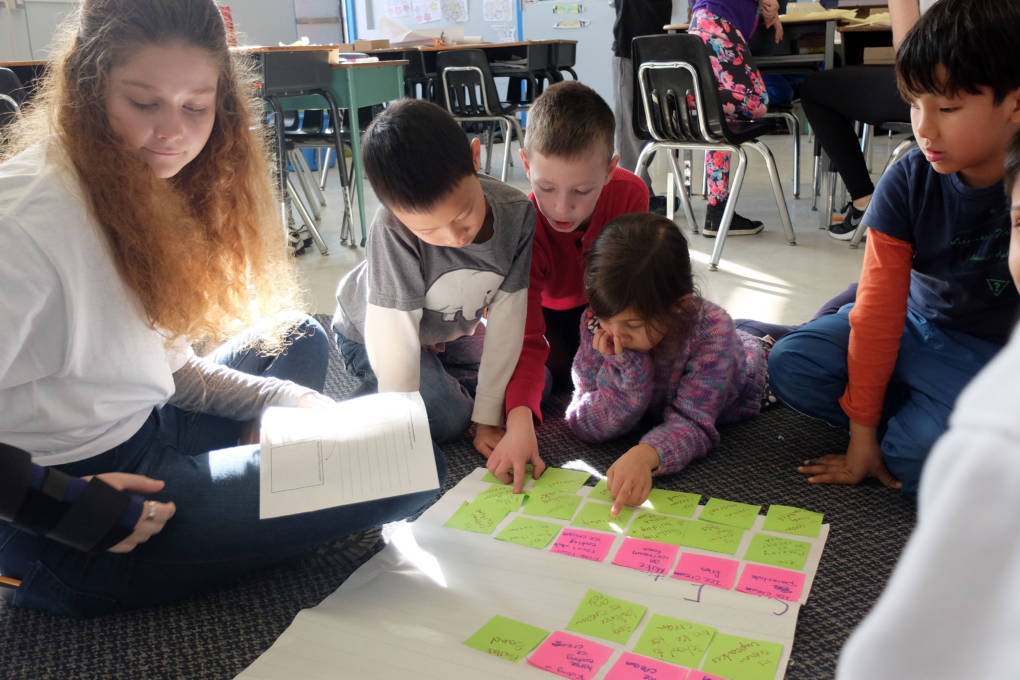
"caption": "Kristen Sligner’s Grade 2 class used a case study about an ice cream company to explore tensions. After completing their Pro-Pro charts and creating a reframe question, students brainstormed possible solutions. Here students are clustering their ideas before focusing on ones to pursue. ",
"description": null,
"title": "3-integrative-thinking-process-clustering-ideas-grade-2",
"credit": "Courtesy I-Think Initiative",
"status": "inherit",
"isLoading": false,
"fetchFailed": false
},
"mindshift_46793": {
"type": "attachments",
"id": "mindshift_46793",
"meta": {
"index": "attachments_1716263798",
"site": "mindshift",
"id": "46793",
"found": true
},
"parent": 46772,
"imgSizes": {
"small": {
"file": "https://ww2.kqed.org/app/uploads/sites/23/2016/10/piktochart-520x270.png",
"width": 520,
"mimeType": "image/png",
"height": 270
},
"thumbnail": {
"file": "https://ww2.kqed.org/app/uploads/sites/23/2016/10/piktochart-160x83.png",
"width": 160,
"mimeType": "image/png",
"height": 83
},
"post-thumbnail": {
"file": "https://ww2.kqed.org/app/uploads/sites/23/2016/10/piktochart-672x372.png",
"width": 672,
"mimeType": "image/png",
"height": 372
},
"xsmall": {
"file": "https://ww2.kqed.org/app/uploads/sites/23/2016/10/piktochart-375x195.png",
"width": 375,
"mimeType": "image/png",
"height": 195
},
"kqedFullSize": {
"file": "https://ww2.kqed.org/app/uploads/sites/23/2016/10/piktochart.png",
"width": 957,
"height": 497
},
"guest-author-50": {
"file": "https://ww2.kqed.org/app/uploads/sites/23/2016/10/piktochart-50x50.png",
"width": 50,
"mimeType": "image/png",
"height": 50
},
"guest-author-96": {
"file": "https://ww2.kqed.org/app/uploads/sites/23/2016/10/piktochart-96x96.png",
"width": 96,
"mimeType": "image/png",
"height": 96
},
"medium": {
"file": "https://ww2.kqed.org/app/uploads/sites/23/2016/10/piktochart-800x415.png",
"width": 800,
"mimeType": "image/png",
"height": 415
},
"guest-author-64": {
"file": "https://ww2.kqed.org/app/uploads/sites/23/2016/10/piktochart-64x64.png",
"width": 64,
"mimeType": "image/png",
"height": 64
},
"guest-author-32": {
"file": "https://ww2.kqed.org/app/uploads/sites/23/2016/10/piktochart-32x32.png",
"width": 32,
"mimeType": "image/png",
"height": 32
},
"detail": {
"file": "https://ww2.kqed.org/app/uploads/sites/23/2016/10/piktochart-150x150.png",
"width": 150,
"mimeType": "image/png",
"height": 150
},
"medium_large": {
"file": "https://ww2.kqed.org/app/uploads/sites/23/2016/10/piktochart-768x399.png",
"width": 768,
"mimeType": "image/png",
"height": 399
},
"guest-author-128": {
"file": "https://ww2.kqed.org/app/uploads/sites/23/2016/10/piktochart-128x128.png",
"width": 128,
"mimeType": "image/png",
"height": 128
},
"xxsmall": {
"file": "https://ww2.kqed.org/app/uploads/sites/23/2016/10/piktochart-240x125.png",
"width": 240,
"mimeType": "image/png",
"height": 125
}
},
"publishDate": 1477342614,
"modified": 1477342659,
"caption": "Students at Two Rivers Public Charter School present piktocharts.",
"description": null,
"title": "piktochart",
"credit": "Two Rivers Public Charter School",
"status": "inherit",
"isLoading": false,
"fetchFailed": false
},
"mindshift_46796": {
"type": "attachments",
"id": "mindshift_46796",
"meta": {
"index": "attachments_1716263798",
"site": "mindshift",
"id": "46796",
"found": true
},
"parent": 46795,
"imgSizes": {
"small": {
"file": "https://ww2.kqed.org/app/uploads/sites/23/2016/10/NMSA-cropped-520x293.gif",
"width": 520,
"mimeType": "image/gif",
"height": 293
},
"thumbnail": {
"file": "https://ww2.kqed.org/app/uploads/sites/23/2016/10/NMSA-cropped-160x90.gif",
"width": 160,
"mimeType": "image/gif",
"height": 90
},
"post-thumbnail": {
"file": "https://ww2.kqed.org/app/uploads/sites/23/2016/10/NMSA-cropped-672x372.gif",
"width": 672,
"mimeType": "image/gif",
"height": 372
},
"xsmall": {
"file": "https://ww2.kqed.org/app/uploads/sites/23/2016/10/NMSA-cropped-375x211.gif",
"width": 375,
"mimeType": "image/gif",
"height": 211
},
"kqedFullSize": {
"file": "https://ww2.kqed.org/app/uploads/sites/23/2016/10/NMSA-cropped.gif",
"width": 757,
"height": 426
},
"guest-author-50": {
"file": "https://ww2.kqed.org/app/uploads/sites/23/2016/10/NMSA-cropped-50x50.gif",
"width": 50,
"mimeType": "image/gif",
"height": 50
},
"guest-author-96": {
"file": "https://ww2.kqed.org/app/uploads/sites/23/2016/10/NMSA-cropped-96x96.gif",
"width": 96,
"mimeType": "image/gif",
"height": 96
},
"guest-author-64": {
"file": "https://ww2.kqed.org/app/uploads/sites/23/2016/10/NMSA-cropped-64x64.gif",
"width": 64,
"mimeType": "image/gif",
"height": 64
},
"detail": {
"file": "https://ww2.kqed.org/app/uploads/sites/23/2016/10/NMSA-cropped-150x150.gif",
"width": 150,
"mimeType": "image/gif",
"height": 150
},
"guest-author-32": {
"file": "https://ww2.kqed.org/app/uploads/sites/23/2016/10/NMSA-cropped-32x32.gif",
"width": 32,
"mimeType": "image/gif",
"height": 32
},
"guest-author-128": {
"file": "https://ww2.kqed.org/app/uploads/sites/23/2016/10/NMSA-cropped-128x128.gif",
"width": 128,
"mimeType": "image/gif",
"height": 128
},
"xxsmall": {
"file": "https://ww2.kqed.org/app/uploads/sites/23/2016/10/NMSA-cropped-240x135.gif",
"width": 240,
"mimeType": "image/gif",
"height": 135
}
},
"publishDate": 1477351578,
"modified": 1477351634,
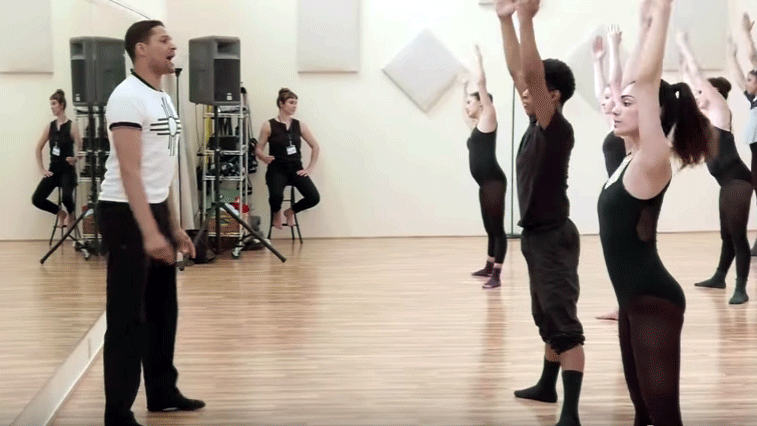
"caption": "Dance students at the New Mexico School of the Arts practice.",
"description": null,
"title": "NMSA-cropped",
"credit": "\u003ca href=\"https://www.edutopia.org/school/new-mexico-school-arts\">Edutopia\u003c/a>",
"status": "inherit",
"isLoading": false,
"fetchFailed": false
},
"mindshift_46834": {
"type": "attachments",
"id": "mindshift_46834",
"meta": {
"index": "attachments_1716263798",
"site": "mindshift",
"id": "46834",
"found": true
},
"parent": 46501,
"imgSizes": {
"small": {
"file": "https://ww2.kqed.org/app/uploads/sites/23/2016/10/iStock_95959307_LARGE-520x376.jpg",
"width": 520,
"mimeType": "image/jpeg",
"height": 376
},
"twentyfourteen-full-width": {
"file": "https://ww2.kqed.org/app/uploads/sites/23/2016/10/iStock_95959307_LARGE-1038x576.jpg",
"width": 1038,
"mimeType": "image/jpeg",
"height": 576
},
"thumbnail": {
"file": "https://ww2.kqed.org/app/uploads/sites/23/2016/10/iStock_95959307_LARGE-160x116.jpg",
"width": 160,
"mimeType": "image/jpeg",
"height": 116
},
"fd-sm": {
"file": "https://ww2.kqed.org/app/uploads/sites/23/2016/10/iStock_95959307_LARGE-960x693.jpg",
"width": 960,
"mimeType": "image/jpeg",
"height": 693
},
"post-thumbnail": {
"file": "https://ww2.kqed.org/app/uploads/sites/23/2016/10/iStock_95959307_LARGE-672x372.jpg",
"width": 672,
"mimeType": "image/jpeg",
"height": 372
},
"xsmall": {
"file": "https://ww2.kqed.org/app/uploads/sites/23/2016/10/iStock_95959307_LARGE-375x271.jpg",
"width": 375,
"mimeType": "image/jpeg",
"height": 271
},
"kqedFullSize": {
"file": "https://ww2.kqed.org/app/uploads/sites/23/2016/10/iStock_95959307_LARGE-e1477899855902.jpg",
"width": 1920,
"height": 1387
},
"large": {
"file": "https://ww2.kqed.org/app/uploads/sites/23/2016/10/iStock_95959307_LARGE-1020x737.jpg",
"width": 1020,
"mimeType": "image/jpeg",
"height": 737
},
"xlarge": {
"file": "https://ww2.kqed.org/app/uploads/sites/23/2016/10/iStock_95959307_LARGE-1180x852.jpg",
"width": 1180,
"mimeType": "image/jpeg",
"height": 852
},
"guest-author-50": {
"file": "https://ww2.kqed.org/app/uploads/sites/23/2016/10/iStock_95959307_LARGE-50x50.jpg",
"width": 50,
"mimeType": "image/jpeg",
"height": 50
},
"guest-author-96": {
"file": "https://ww2.kqed.org/app/uploads/sites/23/2016/10/iStock_95959307_LARGE-96x96.jpg",
"width": 96,
"mimeType": "image/jpeg",
"height": 96
},
"medium": {
"file": "https://ww2.kqed.org/app/uploads/sites/23/2016/10/iStock_95959307_LARGE-800x578.jpg",
"width": 800,
"mimeType": "image/jpeg",
"height": 578
},
"guest-author-64": {
"file": "https://ww2.kqed.org/app/uploads/sites/23/2016/10/iStock_95959307_LARGE-64x64.jpg",
"width": 64,
"mimeType": "image/jpeg",
"height": 64
},
"guest-author-32": {
"file": "https://ww2.kqed.org/app/uploads/sites/23/2016/10/iStock_95959307_LARGE-32x32.jpg",
"width": 32,
"mimeType": "image/jpeg",
"height": 32
},
"fd-lrg": {
"file": "https://ww2.kqed.org/app/uploads/sites/23/2016/10/iStock_95959307_LARGE-1920x1387.jpg",
"width": 1920,
"mimeType": "image/jpeg",
"height": 1387
},
"fd-med": {
"file": "https://ww2.kqed.org/app/uploads/sites/23/2016/10/iStock_95959307_LARGE-1180x852.jpg",
"width": 1180,
"mimeType": "image/jpeg",
"height": 852
},
"full-width": {
"file": "https://ww2.kqed.org/app/uploads/sites/23/2016/10/iStock_95959307_LARGE-1920x1387.jpg",
"width": 1920,
"mimeType": "image/jpeg",
"height": 1387
},
"detail": {
"file": "https://ww2.kqed.org/app/uploads/sites/23/2016/10/iStock_95959307_LARGE-150x150.jpg",
"width": 150,
"mimeType": "image/jpeg",
"height": 150
},
"medium_large": {
"file": "https://ww2.kqed.org/app/uploads/sites/23/2016/10/iStock_95959307_LARGE-768x555.jpg",
"width": 768,
"mimeType": "image/jpeg",
"height": 555
},
"guest-author-128": {
"file": "https://ww2.kqed.org/app/uploads/sites/23/2016/10/iStock_95959307_LARGE-128x128.jpg",
"width": 128,
"mimeType": "image/jpeg",
"height": 128
},
"xxsmall": {
"file": "https://ww2.kqed.org/app/uploads/sites/23/2016/10/iStock_95959307_LARGE-240x173.jpg",
"width": 240,
"mimeType": "image/jpeg",
"height": 173
}
},
"publishDate": 1477899822,
"modified": 1477899849,
"caption": null,
"description": null,
"title": "Teenager reading a book",
"credit": "iStock/xalanx",
"status": "inherit",
"isLoading": false,
"fetchFailed": false
},
"mindshift_46786": {
"type": "attachments",
"id": "mindshift_46786",
"meta": {
"index": "attachments_1716263798",
"site": "mindshift",
"id": "46786",
"found": true
},
"parent": 46600,
"imgSizes": {
"small": {
"file": "https://ww2.kqed.org/app/uploads/sites/23/2016/10/Headphones-520x308.jpg",
"width": 520,
"mimeType": "image/jpeg",
"height": 308
},
"twentyfourteen-full-width": {
"file": "https://ww2.kqed.org/app/uploads/sites/23/2016/10/Headphones-1038x576.jpg",
"width": 1038,
"mimeType": "image/jpeg",
"height": 576
},
"thumbnail": {
"file": "https://ww2.kqed.org/app/uploads/sites/23/2016/10/Headphones-160x95.jpg",
"width": 160,
"mimeType": "image/jpeg",
"height": 95
},
"fd-sm": {
"file": "https://ww2.kqed.org/app/uploads/sites/23/2016/10/Headphones-960x569.jpg",
"width": 960,
"mimeType": "image/jpeg",
"height": 569
},
"post-thumbnail": {
"file": "https://ww2.kqed.org/app/uploads/sites/23/2016/10/Headphones-672x372.jpg",
"width": 672,
"mimeType": "image/jpeg",
"height": 372
},
"xsmall": {
"file": "https://ww2.kqed.org/app/uploads/sites/23/2016/10/Headphones-375x222.jpg",
"width": 375,
"mimeType": "image/jpeg",
"height": 222
},
"kqedFullSize": {
"file": "https://ww2.kqed.org/app/uploads/sites/23/2016/10/Headphones-e1477288986681.jpg",
"width": 1920,
"height": 1139
},
"large": {
"file": "https://ww2.kqed.org/app/uploads/sites/23/2016/10/Headphones-1020x605.jpg",
"width": 1020,
"mimeType": "image/jpeg",
"height": 605
},
"xlarge": {
"file": "https://ww2.kqed.org/app/uploads/sites/23/2016/10/Headphones-1180x700.jpg",
"width": 1180,
"mimeType": "image/jpeg",
"height": 700
},
"guest-author-50": {
"file": "https://ww2.kqed.org/app/uploads/sites/23/2016/10/Headphones-50x50.jpg",
"width": 50,
"mimeType": "image/jpeg",
"height": 50
},
"guest-author-96": {
"file": "https://ww2.kqed.org/app/uploads/sites/23/2016/10/Headphones-96x96.jpg",
"width": 96,
"mimeType": "image/jpeg",
"height": 96
},
"medium": {
"file": "https://ww2.kqed.org/app/uploads/sites/23/2016/10/Headphones-800x475.jpg",
"width": 800,
"mimeType": "image/jpeg",
"height": 475
},
"guest-author-64": {
"file": "https://ww2.kqed.org/app/uploads/sites/23/2016/10/Headphones-64x64.jpg",
"width": 64,
"mimeType": "image/jpeg",
"height": 64
},
"guest-author-32": {
"file": "https://ww2.kqed.org/app/uploads/sites/23/2016/10/Headphones-32x32.jpg",
"width": 32,
"mimeType": "image/jpeg",
"height": 32
},
"fd-lrg": {
"file": "https://ww2.kqed.org/app/uploads/sites/23/2016/10/Headphones-1920x1139.jpg",
"width": 1920,
"mimeType": "image/jpeg",
"height": 1139
},
"fd-med": {
"file": "https://ww2.kqed.org/app/uploads/sites/23/2016/10/Headphones-1180x700.jpg",
"width": 1180,
"mimeType": "image/jpeg",
"height": 700
},
"full-width": {
"file": "https://ww2.kqed.org/app/uploads/sites/23/2016/10/Headphones-1920x1139.jpg",
"width": 1920,
"mimeType": "image/jpeg",
"height": 1139
},
"detail": {
"file": "https://ww2.kqed.org/app/uploads/sites/23/2016/10/Headphones-150x150.jpg",
"width": 150,
"mimeType": "image/jpeg",
"height": 150
},
"medium_large": {
"file": "https://ww2.kqed.org/app/uploads/sites/23/2016/10/Headphones-768x456.jpg",
"width": 768,
"mimeType": "image/jpeg",
"height": 456
},
"guest-author-128": {
"file": "https://ww2.kqed.org/app/uploads/sites/23/2016/10/Headphones-128x128.jpg",
"width": 128,
"mimeType": "image/jpeg",
"height": 128
},
"xxsmall": {
"file": "https://ww2.kqed.org/app/uploads/sites/23/2016/10/Headphones-240x142.jpg",
"width": 240,
"mimeType": "image/jpeg",
"height": 142
}
},
"publishDate": 1477288965,
"modified": 1477288981,
"caption": null,
"description": null,
"title": "Headphones",
"credit": "iStock/Rohappy",
"status": "inherit",
"isLoading": false,
"fetchFailed": false
},
"mindshift_46761": {
"type": "attachments",
"id": "mindshift_46761",
"meta": {
"index": "attachments_1716263798",
"site": "mindshift",
"id": "46761",
"found": true
},
"parent": 46760,
"imgSizes": {
"small": {
"file": "https://ww2.kqed.org/app/uploads/sites/23/2016/10/Kenilworth-520x340.jpg",
"width": 520,
"mimeType": "image/jpeg",
"height": 340
},
"twentyfourteen-full-width": {
"file": "https://ww2.kqed.org/app/uploads/sites/23/2016/10/Kenilworth-1038x576.jpg",
"width": 1038,
"mimeType": "image/jpeg",
"height": 576
},
"thumbnail": {
"file": "https://ww2.kqed.org/app/uploads/sites/23/2016/10/Kenilworth-160x105.jpg",
"width": 160,
"mimeType": "image/jpeg",
"height": 105
},
"fd-sm": {
"file": "https://ww2.kqed.org/app/uploads/sites/23/2016/10/Kenilworth-960x628.jpg",
"width": 960,
"mimeType": "image/jpeg",
"height": 628
},
"post-thumbnail": {
"file": "https://ww2.kqed.org/app/uploads/sites/23/2016/10/Kenilworth-672x372.jpg",
"width": 672,
"mimeType": "image/jpeg",
"height": 372
},
"xsmall": {
"file": "https://ww2.kqed.org/app/uploads/sites/23/2016/10/Kenilworth-375x245.jpg",
"width": 375,
"mimeType": "image/jpeg",
"height": 245
},
"kqedFullSize": {
"file": "https://ww2.kqed.org/app/uploads/sites/23/2016/10/Kenilworth.jpg",
"width": 2110,
"height": 1380
},
"large": {
"file": "https://ww2.kqed.org/app/uploads/sites/23/2016/10/Kenilworth-1020x667.jpg",
"width": 1020,
"mimeType": "image/jpeg",
"height": 667
},
"xlarge": {
"file": "https://ww2.kqed.org/app/uploads/sites/23/2016/10/Kenilworth-1180x772.jpg",
"width": 1180,
"mimeType": "image/jpeg",
"height": 772
},
"guest-author-50": {
"file": "https://ww2.kqed.org/app/uploads/sites/23/2016/10/Kenilworth-50x50.jpg",
"width": 50,
"mimeType": "image/jpeg",
"height": 50
},
"guest-author-96": {
"file": "https://ww2.kqed.org/app/uploads/sites/23/2016/10/Kenilworth-96x96.jpg",
"width": 96,
"mimeType": "image/jpeg",
"height": 96
},
"medium": {
"file": "https://ww2.kqed.org/app/uploads/sites/23/2016/10/Kenilworth-800x523.jpg",
"width": 800,
"mimeType": "image/jpeg",
"height": 523
},
"guest-author-64": {
"file": "https://ww2.kqed.org/app/uploads/sites/23/2016/10/Kenilworth-64x64.jpg",
"width": 64,
"mimeType": "image/jpeg",
"height": 64
},
"guest-author-32": {
"file": "https://ww2.kqed.org/app/uploads/sites/23/2016/10/Kenilworth-32x32.jpg",
"width": 32,
"mimeType": "image/jpeg",
"height": 32
},
"fd-lrg": {
"file": "https://ww2.kqed.org/app/uploads/sites/23/2016/10/Kenilworth-1920x1256.jpg",
"width": 1920,
"mimeType": "image/jpeg",
"height": 1256
},
"fd-med": {
"file": "https://ww2.kqed.org/app/uploads/sites/23/2016/10/Kenilworth-1180x772.jpg",
"width": 1180,
"mimeType": "image/jpeg",
"height": 772
},
"full-width": {
"file": "https://ww2.kqed.org/app/uploads/sites/23/2016/10/Kenilworth-1920x1256.jpg",
"width": 1920,
"mimeType": "image/jpeg",
"height": 1256
},
"detail": {
"file": "https://ww2.kqed.org/app/uploads/sites/23/2016/10/Kenilworth-150x150.jpg",
"width": 150,
"mimeType": "image/jpeg",
"height": 150
},
"medium_large": {
"file": "https://ww2.kqed.org/app/uploads/sites/23/2016/10/Kenilworth-768x502.jpg",
"width": 768,
"mimeType": "image/jpeg",
"height": 502
},
"guest-author-128": {
"file": "https://ww2.kqed.org/app/uploads/sites/23/2016/10/Kenilworth-128x128.jpg",
"width": 128,
"mimeType": "image/jpeg",
"height": 128
},
"xxsmall": {
"file": "https://ww2.kqed.org/app/uploads/sites/23/2016/10/Kenilworth-240x157.jpg",
"width": 240,
"mimeType": "image/jpeg",
"height": 157
}
},
"publishDate": 1476988699,
"modified": 1476988763,
"caption": "A Kenilworth Junior High School student works on his novel during National Novel Writing Month.",
"description": null,
"title": "Kenilworth",
"credit": "Courtesy of Laura Bradley",
"status": "inherit",
"isLoading": false,
"fetchFailed": false
}
},
"audioPlayerReducer": {
"postId": "stream_live",
"isPaused": true,
"isPlaying": false,
"pfsActive": false,
"pledgeModalIsOpen": true,
"playerDrawerIsOpen": false,
"liveAudioPlayStartedAt": 0,
"liveAudioPlayContext": ""
},
"authorsReducer": {
"katrinaschwartz": {
"type": "authors",
"id": "234",
"meta": {
"index": "authors_1716337520",
"id": "234",
"found": true
},
"name": "Katrina Schwartz",
"firstName": "Katrina",
"lastName": "Schwartz",
"slug": "katrinaschwartz",
"email": "kschwartz@kqed.org",
"display_author_email": false,
"staff_mastheads": [
"news"
],
"title": "Producer",
"bio": "Katrina Schwartz is a journalist based in San Francisco. She's worked at KPCC public radio in LA and has reported on air and online for KQED since 2010. She covered how teaching and learning is changing for MindShift between 2012 and 2020. She is the co-host of the MindShift podcast and now produces KQED's Bay Curious podcast.",
"avatar": "https://secure.gravatar.com/avatar/edb4ee79070447a018538c9aae6eeecf28786515b8a0c30e43b6b7dce5aa44c8?s=600&d=blank&r=g",
"twitter": "kschwart",
"bluesky": null,
"facebook": null,
"instagram": null,
"linkedin": null,
"sites": [
{
"site": "",
"roles": [
"editor"
]
},
{
"site": "news",
"roles": [
"editor"
]
},
{
"site": "mindshift",
"roles": [
"administrator"
]
},
{
"site": "stateofhealth",
"roles": [
"author"
]
},
{
"site": "science",
"roles": [
"editor"
]
}
],
"headData": {
"title": "Katrina Schwartz | KQED",
"description": "Producer",
"ogImgSrc": "https://secure.gravatar.com/avatar/edb4ee79070447a018538c9aae6eeecf28786515b8a0c30e43b6b7dce5aa44c8?s=600&d=blank&r=g",
"twImgSrc": "https://secure.gravatar.com/avatar/edb4ee79070447a018538c9aae6eeecf28786515b8a0c30e43b6b7dce5aa44c8?s=600&d=blank&r=g"
},
"isLoading": false,
"link": "/author/katrinaschwartz"
},
"hollykorbey": {
"type": "authors",
"id": "4445",
"meta": {
"index": "authors_1716337520",
"id": "4445",
"found": true
},
"name": "Holly Korbey",
"firstName": "Holly",
"lastName": "Korbey",
"slug": "hollykorbey",
"email": "holly@hollykorbey.com",
"display_author_email": false,
"staff_mastheads": [],
"title": null,
"bio": "Holly Korbey's work on parenting and education has appeared in The New York Times, The Atlantic, Babble, Brain, Child Magazine, and others. She lives in Nashville with her family. Follow her on Twitter: @HKorbey",
"avatar": "https://secure.gravatar.com/avatar/f385f7a3b90e52ecd5e85c24fbd0a363?s=600&d=blank&r=g",
"twitter": null,
"facebook": null,
"instagram": null,
"linkedin": null,
"sites": [
{
"site": "mindshift",
"roles": [
"contributor"
]
}
],
"headData": {
"title": "Holly Korbey | KQED",
"description": null,
"ogImgSrc": "https://secure.gravatar.com/avatar/f385f7a3b90e52ecd5e85c24fbd0a363?s=600&d=blank&r=g",
"twImgSrc": "https://secure.gravatar.com/avatar/f385f7a3b90e52ecd5e85c24fbd0a363?s=600&d=blank&r=g"
},
"isLoading": false,
"link": "/author/hollykorbey"
},
"ksung": {
"type": "authors",
"id": "4596",
"meta": {
"index": "authors_1716337520",
"id": "4596",
"found": true
},
"name": "Ki Sung",
"firstName": "Ki",
"lastName": "Sung",
"slug": "ksung",
"email": "ksung@kqed.org",
"display_author_email": false,
"staff_mastheads": [
"news"
],
"title": "KQED Contributor",
"bio": "Ki Sung is Managing Editor of Digital News at KQED. She is former Senior Editor of MindShift and worked at NPR before joining KQED in 2014.",
"avatar": "https://secure.gravatar.com/avatar/64271e01dc95486c133be56937739045b7c00c990525bf9add12d3dd4f0433c9?s=600&d=blank&r=g",
"twitter": null,
"bluesky": null,
"facebook": null,
"instagram": null,
"linkedin": null,
"sites": [
{
"site": "arts",
"roles": [
"administrator"
]
},
{
"site": "news",
"roles": [
"administrator"
]
},
{
"site": "mindshift",
"roles": [
"administrator"
]
},
{
"site": "science",
"roles": [
"administrator"
]
},
{
"site": "forum",
"roles": [
"administrator"
]
},
{
"site": "perspectives",
"roles": [
"administrator"
]
},
{
"site": "elections",
"roles": [
"administrator"
]
}
],
"headData": {
"title": "Ki Sung | KQED",
"description": "KQED Contributor",
"ogImgSrc": "https://secure.gravatar.com/avatar/64271e01dc95486c133be56937739045b7c00c990525bf9add12d3dd4f0433c9?s=600&d=blank&r=g",
"twImgSrc": "https://secure.gravatar.com/avatar/64271e01dc95486c133be56937739045b7c00c990525bf9add12d3dd4f0433c9?s=600&d=blank&r=g"
},
"isLoading": false,
"link": "/author/ksung"
},
"lindaflan": {
"type": "authors",
"id": "4613",
"meta": {
"index": "authors_1716337520",
"id": "4613",
"found": true
},
"name": "Linda Flanagan",
"firstName": "Linda",
"lastName": "Flanagan",
"slug": "lindaflan",
"email": "lindaflan@comcast.net",
"display_author_email": false,
"staff_mastheads": [],
"title": null,
"bio": "Linda Flanagan is a freelance writer, researcher, and editor. Her work has appeared in The Atlantic, The Wall St. Journal, Newsweek, Running Times, and Mind/Shift, and she blogs regularly for the Huffington Post. Linda writes about education, culture, athletics, youth sports, mental health, politics, college admissions, and other curiosities. She also reviews books and conducts interviews.",
"avatar": "https://secure.gravatar.com/avatar/6bca04c0736bf5eaea80654019de688f?s=600&d=blank&r=g",
"twitter": "LindaFlanagan2",
"facebook": null,
"instagram": null,
"linkedin": null,
"sites": [
{
"site": "mindshift",
"roles": [
"contributor"
]
}
],
"headData": {
"title": "Linda Flanagan | KQED",
"description": null,
"ogImgSrc": "https://secure.gravatar.com/avatar/6bca04c0736bf5eaea80654019de688f?s=600&d=blank&r=g",
"twImgSrc": "https://secure.gravatar.com/avatar/6bca04c0736bf5eaea80654019de688f?s=600&d=blank&r=g"
},
"isLoading": false,
"link": "/author/lindaflan"
}
},
"pagesReducer": {
"mindshift_category_teaching-strategies": {
"type": "terms",
"id": "mindshift_193",
"meta": {
"index": "terms_1716263798",
"site": "mindshift",
"id": "193",
"score": 14.406956
},
"featImg": null,
"name": "Teaching Strategies",
"description": "Innovative ideas - projects, processes, curricula, and more - that are transforming how we teach and learn.",
"taxonomy": "category",
"headData": {
"twImgId": null,
"twTitle": null,
"ogTitle": null,
"ogImgId": null,
"twDescription": null,
"description": "Innovative ideas - projects, processes, curricula, and more - that are transforming how we teach and learn.",
"title": "Teaching Strategies Archives | KQED Mindshift",
"ogDescription": null
},
"ttid": 193,
"slug": "teaching-strategies",
"isLoading": false,
"title": "Teaching Strategies",
"pageMeta": {
"site": "mindshift",
"WpPageTemplate": "page-topic-editorial",
"currentPage": 31
},
"blocks": [
{
"blockName": "kqed/company-paragraph",
"content": "Innovative ideas - projects, processes, curricula, and more - that are transforming how we teach and learn."
},
{
"blockName": "kqed/post-list",
"attrs": {
"layout": "cardArticle2",
"query": "posts/mindshift?category=teaching-strategies",
"seeMore": false,
"paginated": true,
"page": 31
}
},
{
"blockName": "kqed/ad"
}
]
}
},
"pfsSessionReducer": {},
"postsReducer": {
"stream_live": {
"type": "live",
"id": "stream_live",
"audioUrl": "https://streams.kqed.org/kqedradio",
"title": "Live Stream",
"excerpt": "Live Stream information currently unavailable.",
"link": "/radio",
"featImg": "",
"label": {
"name": "KQED Live",
"link": "/"
}
},
"stream_kqedNewscast": {
"type": "posts",
"id": "stream_kqedNewscast",
"audioUrl": "https://www.kqed.org/.stream/anon/radio/RDnews/newscast.mp3?_=1",
"title": "KQED Newscast",
"featImg": "",
"label": {
"name": "88.5 FM",
"link": "/"
}
},
"mindshift_46953": {
"type": "posts",
"id": "mindshift_46953",
"meta": {
"index": "posts_1716263798",
"site": "mindshift",
"id": "46953",
"score": null,
"sort": [
1480577607000
]
},
"parent": 0,
"labelTerm": {
"site": "mindshift"
},
"blocks": [],
"publishDate": 1480577607,
"format": "standard",
"disqusTitle": "Learning Styles: Is Visual Learning Really A Thing?",
"title": "Learning Styles: Is Visual Learning Really A Thing?",
"headTitle": "MindShift | KQED News",
"content": "\u003cp>It's common to hear people say, \"I'm a visual learner,\" but \u003ca href=\"https://ww2.kqed.org/mindshift/2012/04/13/do-students-have-different-learning-styles/\" target=\"_blank\">research doesn't support the idea\u003c/a> that learning styles like visual or auditory learning are inherent traits. That doesn't mean learners don't have preferences, but only one flawed study found that people actually learned better when information was presented in their preferred style. Instead, it seems that most people learn the best when information is presented in multiple ways, especially when one of them is visual.\u003c/p>\n\u003cp>“We are essentially walking talking vision-processing machines,\" writes \u003ca href=\"http://www.danroam.com/\" target=\"_blank\">Dan Roam\u003c/a>, author of \u003cem>Back of the Napkin\u003c/em>, a bestselling book on how visual language affects business. \"Our brain does a lot of stuff, but close to half of what we're doing is seeing the world, all the time.\"\u003c/p>\n\u003cp>So it's really no surprise that a lot of people say they \u003ca href=\"http://news.mit.edu/1996/visualprocessing\">need to see something\u003c/a> to remember it, a fact teachers should keep in mind when trying to reach students.\u003c/p>\n\u003cp>Hank Green lays it all out in this short \u003ca href=\"https://www.youtube.com/channel/UCZYTClx2T1of7BRZ86-8fow\" target=\"_blank\">SciShow\u003c/a> episode.\u003c/p>\n\u003cp>\u003c!-- iframe plugin v.4.3 wordpress.org/plugins/iframe/ -->\u003cbr>\n\u003ciframe width=\"640\" height=\"360\" src=\"https://www.youtube.com/embed/V-S_53HmEUA\" frameborder=\"0\" scrolling=\"yes\" class=\"iframe-class\">\u003c/iframe>\u003c/p>\n\u003cp>[ad fullwidth]\u003c/p>\u003cp>\u003c/p>\n",
"disqusIdentifier": "46953 http://ww2.kqed.org/mindshift/?p=46953",
"disqusUrl": "https://ww2.kqed.org/mindshift/2016/11/30/learning-styles-is-visual-learning-really-a-thing/",
"stats": {
"hasVideo": true,
"hasChartOrMap": true,
"hasAudio": false,
"hasPolis": false,
"wordCount": 177,
"hasGoogleForm": false,
"hasGallery": false,
"hasHearkenModule": false,
"iframeSrcs": [
"https://www.youtube.com/embed/V-S_53HmEUA"
],
"paragraphCount": 7
},
"modified": 1480577607,
"excerpt": "Many students confuse a learning preference with inherent trait when really most learners benefit when new information is presented in multiple ways.",
"headData": {
"twImgId": "",
"twTitle": "",
"ogTitle": "",
"ogImgId": "",
"twDescription": "",
"description": "Many students confuse a learning preference with inherent trait when really most learners benefit when new information is presented in multiple ways.",
"title": "Learning Styles: Is Visual Learning Really A Thing? | KQED",
"ogDescription": "",
"schema": {
"@context": "https://schema.org",
"@type": "Article",
"headline": "Learning Styles: Is Visual Learning Really A Thing?",
"datePublished": "2016-11-30T23:33:27-08:00",
"dateModified": "2016-11-30T23:33:27-08:00",
"image": "https://cdn.kqed.org/wp-content/uploads/2020/02/KQED-OG-Image@1x.png"
}
},
"guestAuthors": [],
"slug": "learning-styles-is-visual-learning-really-a-thing",
"status": "publish",
"path": "/mindshift/46953/learning-styles-is-visual-learning-really-a-thing",
"audioTrackLength": null,
"parsedContent": [
{
"type": "contentString",
"content": "\u003cdiv class=\"post-body\">\u003cp>\u003cp>It's common to hear people say, \"I'm a visual learner,\" but \u003ca href=\"https://ww2.kqed.org/mindshift/2012/04/13/do-students-have-different-learning-styles/\" target=\"_blank\">research doesn't support the idea\u003c/a> that learning styles like visual or auditory learning are inherent traits. That doesn't mean learners don't have preferences, but only one flawed study found that people actually learned better when information was presented in their preferred style. Instead, it seems that most people learn the best when information is presented in multiple ways, especially when one of them is visual.\u003c/p>\n\u003cp>“We are essentially walking talking vision-processing machines,\" writes \u003ca href=\"http://www.danroam.com/\" target=\"_blank\">Dan Roam\u003c/a>, author of \u003cem>Back of the Napkin\u003c/em>, a bestselling book on how visual language affects business. \"Our brain does a lot of stuff, but close to half of what we're doing is seeing the world, all the time.\"\u003c/p>\n\u003cp>So it's really no surprise that a lot of people say they \u003ca href=\"http://news.mit.edu/1996/visualprocessing\">need to see something\u003c/a> to remember it, a fact teachers should keep in mind when trying to reach students.\u003c/p>\n\u003cp>Hank Green lays it all out in this short \u003ca href=\"https://www.youtube.com/channel/UCZYTClx2T1of7BRZ86-8fow\" target=\"_blank\">SciShow\u003c/a> episode.\u003c/p>\n\u003cp>\u003c!-- iframe plugin v.4.3 wordpress.org/plugins/iframe/ -->\u003cbr>\n\u003ciframe width=\"640\" height=\"360\" src=\"https://www.youtube.com/embed/V-S_53HmEUA\" frameborder=\"0\" scrolling=\"yes\" class=\"iframe-class\">\u003c/iframe>\u003c/p>\n\u003cp>\u003c/p>\u003c/div>",
"attributes": {
"named": {},
"numeric": []
}
},
{
"type": "component",
"content": "",
"name": "ad",
"attributes": {
"named": {
"label": "fullwidth"
},
"numeric": [
"fullwidth"
]
}
},
{
"type": "contentString",
"content": "\u003cdiv class=\"post-body\">\u003cp>\u003c/p>\u003cp>\u003c/p>\n\u003c/div>\u003c/p>",
"attributes": {
"named": {},
"numeric": []
}
}
],
"link": "/mindshift/46953/learning-styles-is-visual-learning-really-a-thing",
"authors": [
"4354"
],
"categories": [
"mindshift_193"
],
"tags": [
"mindshift_20784",
"mindshift_1040",
"mindshift_812"
],
"featImg": "mindshift_46972",
"label": "mindshift"
},
"mindshift_46766": {
"type": "posts",
"id": "mindshift_46766",
"meta": {
"index": "posts_1716263798",
"site": "mindshift",
"id": "46766",
"score": null,
"sort": [
1480426597000
]
},
"parent": 0,
"labelTerm": {
"site": "mindshift"
},
"blocks": [],
"publishDate": 1480426597,
"format": "standard",
"disqusTitle": "Taking Small Steps Towards Change At A Big, Traditional High School",
"title": "Taking Small Steps Towards Change At A Big, Traditional High School",
"headTitle": "MindShift | KQED News",
"content": "\u003cp>It’s easy to hear or read stories of innovation happening at other schools and write them off -- those schools won a grant to try something new, or work with a less difficult population, or are charter networks, or are smaller, the list goes on. And while these factors matter, innovation is happening in big traditional schools too. How can administrators and teachers working in more traditional settings incorporate interest-driven, student-centered approaches without letting go of the diversity and broad offerings of a comprehensive school? It’s a challenge, but it starts with small steps.\u003c/p>\n\u003cp>Many students thrive in big traditional high schools. For some kids, playing on a sports team is the only thing motivating them to continue working hard at school. And big high schools can offer students many more choices including AP courses, foreign languages, arts and musical opportunities like band, chorus and orchestra. All these activities contribute to a vibrant community with many options for students to find a niche. Teachers and administrators at West Seattle High School are trying to hold onto all these good qualities and make shifts in pedagogy at the same time.\u003c/p>\n\u003cp>“The high school structure doesn’t work for every student,” said West Seattle Principal Ruth Medsker. Often big high schools like West Seattle require students to be compliant in order to fit in and that can lead to disengagement. Medsker is interested in finding models within her large school that offer something different to students who want it.\u003c/p>\n\u003cp>“How do we make the system fit the child instead of trying to make the kid fit the system?” she asked. Teachers at her school are exploring this question in a variety of ways, including through a pilot advisory-type program that began with a cohort of 25 tenth graders.\u003c/p>\n\u003cp>“The idea was these students have promise, they have skills, they have things to offer, but something about our school system wasn’t working for them,” said Matt Kachmarik, who acted as the advisor, social studies and English teacher to this group of students. As much as possible, school staff tried to give these 25 kids schedules that would allow them to take classes together. They also focused on non-cognitive skills using reflection, team-building games and discussion to tease out what was going on outside of school, as well as barriers to learning inside its walls.\u003c/p>\n\u003cp>[ad fullwidth]\u003c/p>\n\u003cp>“I definitely have some students who are among the deepest thinking of anyone in the entire grade,” Kachmarik said. Some of them are under a lot of stress or have experienced trauma or just don’t have strong executive functioning skills, but they’ve found a home in what they call the Focus program.\u003c/p>\n\u003cp>\u003cstrong>FOCUS\u003c/strong>\u003c/p>\n\u003cp>The staff hoped that keeping students together with a fewer number of teachers for most of the year would allow them to develop stronger bonds with adults and peers in the school who they could turn to when they needed help. And, because everyone was getting to know each other well, they could explore more interest-based projects and even give students opportunities to shadow professionals outside of school.\u003cbr>\n“When you start doing these cohorts you’re limiting them to a few classes,” Medsker said. “But you’ve built this capacity for them to advocate and see how their class choices affect where they want to go at the end of the day.”\u003c/p>\n\u003cp>The students who took part in the initial pilot program no longer have all their classes together, nor is the focused support of advisory built into their day now that they are juniors. But at least some of the students have found more success in the wider school after the experience.\u003c/p>\n\u003cp>Terrah was struggling after her freshman year. A few years before she moved to Seattle with her mom and siblings from Ohio and the transition hasn't been easy. She didn’t have a lot of friends in middle school and high school was overwhelming.\u003c/p>\n\u003cp>“A lot of my teachers told me they saw a lot of potential in me, but my transcript didn’t really show it,” Terrah said. Her teachers could tell she was working hard, but she struggled with math and often experienced anxiety that she said feels like something is pressing down on her, pushing her to explode. She still feels that way sometimes, but when it happens, she asks to visit the tutoring center, where one of her mentors from the previous year works. She can work in her own way when she’s there.\u003c/p>\n\u003cp>“I have a different learning style than most,” Terrah said. “I don’t like sitting in classrooms and taking notes.” She appreciated that in her Focus program she got individualized attention and formed tight bonds with the other students. “I made new friends through the program. It was just teachers caring about kids individually instead of putting everyone in a box.”\u003c/p>\n\u003cp>West Seattle has taken many ideas from the Big Picture schools, which focus on relationships, relevance and rigor. A core practice of schools following that model is exhibitions, when students present their work and how it connects to learning goals in front of an authentic audience. Terrah found this assignment scary at first, but also rewarding.\u003c/p>\n\u003cp>“We took things we were really proud of ourselves and put them together into a project and showed them to everyone’s parents including our own,” Terrah said. At first, she was worried that the work she was proud of wouldn’t be impressive to other kids’ parents. But she said parents were blown away. “A lot of parents were really impressed because their kids had never mentioned school things or said ‘Hey, look at my work.’ ”\u003c/p>\n\u003cp>\u003cstrong>RESULTS\u003c/strong>\u003c/p>\n\u003cp>The initial years of this pilot program have seemed to show some good results. Students in the program had fewer absences and passed their core classes at better rates. They’ve learned about themselves as learners, including strategies and habits of mind that will help them be effective in school and they’re trying to use those now that they don’t have as much support.\u003c/p>\n\u003cp>Medsker is also pushing numerous other changes in the school that fit well with the Focus program. She’s asking teachers to do more project-based learning and the whole school is trying to change the grading system. Medsker is pushing for 70-minute periods across the district to facilitate this work and is trying to find ways to let students get credits for internships outside of school.\u003c/p>\n\u003cp>“We’re using [the Focus program] as a lab for our schools,” Medsker said. “We’re putting teachers in there who want to do the work -- teachers who are skilled at relationships and who want to do something different in their classrooms.” The program has helped start some buzz around the school -- uninvolved teachers are taking note. Several came to watch the student exhibitions and were impressed. A teacher who declined participation originally is now interested in making her course part of the cohort.\u003c/p>\n\u003cp>The team is also learning a lot along the way. While the initial exhibitions focused mostly on non-cognitive skills, now teachers are pushing to make them more about academic work. To do that, they are considering a portfolio system to catalogue student work. They’ve already begun to do student-led conferences, but they see portfolios as a step forward to make those conversations more concretely about what the student did. Teachers of the cohort are also thinking through how they might do more interdisciplinary projects.\u003c/p>\n\u003cp>West Seattle High is also trying to implement a similar program with incoming freshmen, guessing at which kids could use a little more support based on factors like attendance in middle school. The hope is that a program like this will help prevent those kids from falling through the cracks of a big high school in the first year.\u003c/p>\n\u003cp>[ad floatright]\u003c/p>\n\u003cp>Ultimately, kids all learn in different ways and one of the strengths of a big school is the diversity it offers. West Seattle’s program is one attempt to provide a different option for kids who aren’t succeeding in traditional classrooms.\u003c/p>\n\n",
"disqusIdentifier": "46766 http://ww2.kqed.org/mindshift/?p=46766",
"disqusUrl": "https://ww2.kqed.org/mindshift/2016/11/29/taking-small-steps-towards-change-at-a-big-traditional-high-school/",
"stats": {
"hasVideo": false,
"hasChartOrMap": false,
"hasAudio": false,
"hasPolis": false,
"wordCount": 1420,
"hasGoogleForm": false,
"hasGallery": false,
"hasHearkenModule": false,
"iframeSrcs": [],
"paragraphCount": 23
},
"modified": 1480440943,
"excerpt": "West Seattle High School is developing a program within the school to help struggling students develop the relationships and skills they need to thrive. The Focus program applied ideas from Big Picture Learning schools. ",
"headData": {
"twImgId": "",
"twTitle": "",
"ogTitle": "",
"ogImgId": "",
"twDescription": "",
"description": "West Seattle High School is developing a program within the school to help struggling students develop the relationships and skills they need to thrive. The Focus program applied ideas from Big Picture Learning schools. ",
"title": "Taking Small Steps Towards Change At A Big, Traditional High School | KQED",
"ogDescription": "",
"schema": {
"@context": "https://schema.org",
"@type": "Article",
"headline": "Taking Small Steps Towards Change At A Big, Traditional High School",
"datePublished": "2016-11-29T05:36:37-08:00",
"dateModified": "2016-11-29T09:35:43-08:00",
"image": "https://cdn.kqed.org/wp-content/uploads/2020/02/KQED-OG-Image@1x.png"
}
},
"guestAuthors": [],
"slug": "taking-small-steps-towards-change-at-a-big-traditional-high-school",
"status": "publish",
"path": "/mindshift/46766/taking-small-steps-towards-change-at-a-big-traditional-high-school",
"audioTrackLength": null,
"parsedContent": [
{
"type": "contentString",
"content": "\u003cdiv class=\"post-body\">\u003cp>\u003cp>It’s easy to hear or read stories of innovation happening at other schools and write them off -- those schools won a grant to try something new, or work with a less difficult population, or are charter networks, or are smaller, the list goes on. And while these factors matter, innovation is happening in big traditional schools too. How can administrators and teachers working in more traditional settings incorporate interest-driven, student-centered approaches without letting go of the diversity and broad offerings of a comprehensive school? It’s a challenge, but it starts with small steps.\u003c/p>\n\u003cp>Many students thrive in big traditional high schools. For some kids, playing on a sports team is the only thing motivating them to continue working hard at school. And big high schools can offer students many more choices including AP courses, foreign languages, arts and musical opportunities like band, chorus and orchestra. All these activities contribute to a vibrant community with many options for students to find a niche. Teachers and administrators at West Seattle High School are trying to hold onto all these good qualities and make shifts in pedagogy at the same time.\u003c/p>\n\u003cp>“The high school structure doesn’t work for every student,” said West Seattle Principal Ruth Medsker. Often big high schools like West Seattle require students to be compliant in order to fit in and that can lead to disengagement. Medsker is interested in finding models within her large school that offer something different to students who want it.\u003c/p>\n\u003cp>“How do we make the system fit the child instead of trying to make the kid fit the system?” she asked. Teachers at her school are exploring this question in a variety of ways, including through a pilot advisory-type program that began with a cohort of 25 tenth graders.\u003c/p>\n\u003cp>“The idea was these students have promise, they have skills, they have things to offer, but something about our school system wasn’t working for them,” said Matt Kachmarik, who acted as the advisor, social studies and English teacher to this group of students. As much as possible, school staff tried to give these 25 kids schedules that would allow them to take classes together. They also focused on non-cognitive skills using reflection, team-building games and discussion to tease out what was going on outside of school, as well as barriers to learning inside its walls.\u003c/p>\n\u003cp>\u003c/p>\u003c/div>",
"attributes": {
"named": {},
"numeric": []
}
},
{
"type": "component",
"content": "",
"name": "ad",
"attributes": {
"named": {
"label": "fullwidth"
},
"numeric": [
"fullwidth"
]
}
},
{
"type": "contentString",
"content": "\u003cdiv class=\"post-body\">\u003cp>\u003c/p>\n\u003cp>“I definitely have some students who are among the deepest thinking of anyone in the entire grade,” Kachmarik said. Some of them are under a lot of stress or have experienced trauma or just don’t have strong executive functioning skills, but they’ve found a home in what they call the Focus program.\u003c/p>\n\u003cp>\u003cstrong>FOCUS\u003c/strong>\u003c/p>\n\u003cp>The staff hoped that keeping students together with a fewer number of teachers for most of the year would allow them to develop stronger bonds with adults and peers in the school who they could turn to when they needed help. And, because everyone was getting to know each other well, they could explore more interest-based projects and even give students opportunities to shadow professionals outside of school.\u003cbr>\n“When you start doing these cohorts you’re limiting them to a few classes,” Medsker said. “But you’ve built this capacity for them to advocate and see how their class choices affect where they want to go at the end of the day.”\u003c/p>\n\u003cp>The students who took part in the initial pilot program no longer have all their classes together, nor is the focused support of advisory built into their day now that they are juniors. But at least some of the students have found more success in the wider school after the experience.\u003c/p>\n\u003cp>Terrah was struggling after her freshman year. A few years before she moved to Seattle with her mom and siblings from Ohio and the transition hasn't been easy. She didn’t have a lot of friends in middle school and high school was overwhelming.\u003c/p>\n\u003cp>“A lot of my teachers told me they saw a lot of potential in me, but my transcript didn’t really show it,” Terrah said. Her teachers could tell she was working hard, but she struggled with math and often experienced anxiety that she said feels like something is pressing down on her, pushing her to explode. She still feels that way sometimes, but when it happens, she asks to visit the tutoring center, where one of her mentors from the previous year works. She can work in her own way when she’s there.\u003c/p>\n\u003cp>“I have a different learning style than most,” Terrah said. “I don’t like sitting in classrooms and taking notes.” She appreciated that in her Focus program she got individualized attention and formed tight bonds with the other students. “I made new friends through the program. It was just teachers caring about kids individually instead of putting everyone in a box.”\u003c/p>\n\u003cp>West Seattle has taken many ideas from the Big Picture schools, which focus on relationships, relevance and rigor. A core practice of schools following that model is exhibitions, when students present their work and how it connects to learning goals in front of an authentic audience. Terrah found this assignment scary at first, but also rewarding.\u003c/p>\n\u003cp>“We took things we were really proud of ourselves and put them together into a project and showed them to everyone’s parents including our own,” Terrah said. At first, she was worried that the work she was proud of wouldn’t be impressive to other kids’ parents. But she said parents were blown away. “A lot of parents were really impressed because their kids had never mentioned school things or said ‘Hey, look at my work.’ ”\u003c/p>\n\u003cp>\u003cstrong>RESULTS\u003c/strong>\u003c/p>\n\u003cp>The initial years of this pilot program have seemed to show some good results. Students in the program had fewer absences and passed their core classes at better rates. They’ve learned about themselves as learners, including strategies and habits of mind that will help them be effective in school and they’re trying to use those now that they don’t have as much support.\u003c/p>\n\u003cp>Medsker is also pushing numerous other changes in the school that fit well with the Focus program. She’s asking teachers to do more project-based learning and the whole school is trying to change the grading system. Medsker is pushing for 70-minute periods across the district to facilitate this work and is trying to find ways to let students get credits for internships outside of school.\u003c/p>\n\u003cp>“We’re using [the Focus program] as a lab for our schools,” Medsker said. “We’re putting teachers in there who want to do the work -- teachers who are skilled at relationships and who want to do something different in their classrooms.” The program has helped start some buzz around the school -- uninvolved teachers are taking note. Several came to watch the student exhibitions and were impressed. A teacher who declined participation originally is now interested in making her course part of the cohort.\u003c/p>\n\u003cp>The team is also learning a lot along the way. While the initial exhibitions focused mostly on non-cognitive skills, now teachers are pushing to make them more about academic work. To do that, they are considering a portfolio system to catalogue student work. They’ve already begun to do student-led conferences, but they see portfolios as a step forward to make those conversations more concretely about what the student did. Teachers of the cohort are also thinking through how they might do more interdisciplinary projects.\u003c/p>\n\u003cp>West Seattle High is also trying to implement a similar program with incoming freshmen, guessing at which kids could use a little more support based on factors like attendance in middle school. The hope is that a program like this will help prevent those kids from falling through the cracks of a big high school in the first year.\u003c/p>\n\u003cp>\u003c/p>\u003c/div>",
"attributes": {
"named": {},
"numeric": []
}
},
{
"type": "component",
"content": "",
"name": "ad",
"attributes": {
"named": {
"label": "floatright"
},
"numeric": [
"floatright"
]
}
},
{
"type": "contentString",
"content": "\u003cdiv class=\"post-body\">\u003cp>\u003c/p>\n\u003cp>Ultimately, kids all learn in different ways and one of the strengths of a big school is the diversity it offers. West Seattle’s program is one attempt to provide a different option for kids who aren’t succeeding in traditional classrooms.\u003c/p>\n\n\u003c/div>\u003c/p>",
"attributes": {
"named": {},
"numeric": []
}
}
],
"link": "/mindshift/46766/taking-small-steps-towards-change-at-a-big-traditional-high-school",
"authors": [
"234"
],
"categories": [
"mindshift_194",
"mindshift_193"
],
"tags": [
"mindshift_20957",
"mindshift_20891",
"mindshift_20784",
"mindshift_1040",
"mindshift_146",
"mindshift_70",
"mindshift_20867"
],
"featImg": "mindshift_47048",
"label": "mindshift"
},
"mindshift_46266": {
"type": "posts",
"id": "mindshift_46266",
"meta": {
"index": "posts_1716263798",
"site": "mindshift",
"id": "46266",
"score": null,
"sort": [
1479796607000
]
},
"parent": 0,
"labelTerm": {
"site": "mindshift"
},
"blocks": [],
"publishDate": 1479796607,
"format": "standard",
"disqusTitle": "How One School Changed Culture From Within So Students Could Succeed",
"title": "How One School Changed Culture From Within So Students Could Succeed",
"headTitle": "MindShift | KQED News",
"content": "\u003cp>Like many parents, Nicole Hambric’s two kids are very different from one another. Her older daughter is a straight A student who did well in traditional public school, but her younger daughter, Jada, never really liked school. She would do just enough to get by, but often struggled to understand lessons the first time and felt rushed by the pace of her classes. Hambric was surprised to learn in May of Jada’s fourth grade year that she might not be promoted to the next grade. She spent thousands of dollars on tutoring to help boost Jada’s academics quickly, but she was angry the school hadn’t communicated with her about Jada’s struggles earlier.\u003c/p>\n\u003caside class=\"pullquote alignright\">'I had never seen a 95 test result in all the years she's been in school. Now I see that she's focused and she has confidence in herself.'\u003ccite>Nicole Hambric, parent\u003c/cite>\u003c/aside>\n\u003cp>All that changed when Hambric moved Jada to\u003ca href=\"http://ps89x.org/wp/\" target=\"_blank\"> P.S. 89\u003c/a> for middle school and into the \u003ca href=\"http://www.bigpicture.org/\" target=\"_blank\">Big Picture Learning\u003c/a> Academy there. “I saw a complete [180] in my daughter,” Hambric said. “At one point learning wasn’t her thing and now she loves going to school; she loves learning.” Not only that, but Jada is bringing home better grades. She made the honor roll for the first time ever, and is motivated to continue working to improve.\u003c/p>\n\u003cp>“I had never seen a 95 test result in all the years she’s been in school,” Hambric said. “Now I see that she’s focused and she has confidence in herself.” Hambric believes the turnaround has come from the Big Picture Academy’s focus on a tight-knit classroom culture, which allows the teachers to focus on individual learner’s needs.\u003c/p>\n\u003cp>“Each of us are different and we all learn differently,” Hambric said. “It wasn’t that she wasn’t able to understand what she was being taught, it’s just that she needed a different style of learning.”\u003c/p>\n\u003cp>There are a lot of schools around the country trying to change the educational experience, but often the most visible examples like \u003ca href=\"https://ww2.kqed.org/mindshift/tag/high-tech-high/\" target=\"_blank\">High Tech High\u003c/a> or \u003ca href=\"http://www.summitps.org/\" target=\"_blank\">Summit Public Schools\u003c/a> are charter schools, built from the ground up around a shared vision and with the benefit of outside investment. While those schools can serve as inspiration, it’s often hard for educators in more traditional settings to see how they can apply those models in their own classrooms where there isn’t that same shared vision and extra support. It’s easy to see the accomplishments of educators in shiny new schools as out of reach to the average public school teacher.\u003c/p>\n\u003cp>[ad fullwidth]\u003c/p>\n\u003cp>P.S. 89 is not a magnet school or a charter school -- it’s a big, public K-8 school in the Bronx serving a diverse population and many students with high needs. The changes there have not been quick and easy, but rather are the result of a few teachers within the building working to try something different. For the past three years a small group of teachers have been experimenting with bringing aspects of the Big Picture Learning model into this otherwise traditional school.\u003c/p>\n\u003cp>P.S. 89 teachers aren’t implementing the \u003ca href=\"https://ww2.kqed.org/mindshift/2015/12/08/is-the-public-system-scared-to-put-students-at-the-center-of-education/\" target=\"_blank\">most radical or actualized version of Big Picture Learning\u003c/a>, but teachers and administrators at the school are applying aspects of the model that can work within their constraints and are slowly strategizing how they might include others.\u003c/p>\n\u003cp>\u003cstrong>TEACHER PERSPECTIVES\u003c/strong>\u003c/p>\n\u003cp>“I really feel like building up the classroom environment to be more family like was really important and different,” said eighth grade special education teacher Gabrielle Lee. “From there I really saw more growth in the students.”\u003c/p>\n\u003cp>Lee is about to start her third year in the Big Picture Academy; she will have the same 29 kids she has had for the past two years. Keeping students together in smaller, close-knit groups with educators who know them well is one way the Big Picture Academy creates the family feeling Lee described.\u003c/p>\n\u003caside class=\"pullquote alignleft\">'We can actually see the kids having fun and in turn I can have fun as well. It's not me pulling teeth to get them to pay attention or stay awake.'\u003ccite>Ashley Sims, 6th grade teacher\u003c/cite>\u003c/aside>\n\u003cp>Relationships are at the heart of the model. The school had to find ways to make class sizes smaller and to build in time for \u003ca href=\"https://ww2.kqed.org/mindshift/2016/01/12/how-schools-build-a-positive-culture-through-advisory/\" target=\"_blank\">advisory\u003c/a> with a ratio of one adult to twelve kids. They found that opportunity by using a co-teaching model in which a special education teacher and a general education teacher co-teach a smaller group of students in every subject. Half the class are students with special needs, but every student is given individualized attention. Having more adults assigned to these groups of students also means they can break them down into smaller advisories.\u003c/p>\n\u003cp>At first the model raised eyebrows and some parents wondered if it was a “special education thing,” but parents like Hambric were won over quickly by the changes they saw in their children. And teachers like Lee watched students who were known for behavior problems find their place and begin to shine.\u003c/p>\n\u003cp>One boy transferred into Lee’s class in the seventh grade. He’d been suspended the year before for bringing a BB gun to school, but in the smaller, more intimate setting he began to thrive. He was able to talk about his mistake with his classmates and even did his passion project on gun control issues.\u003c/p>\n\u003cp>“He would say he never wanted to participate in other classes, but he just loved that family feel of Big Picture,” Lee said. “He felt like he could be more than what other people were labeling him as.”\u003c/p>\n\u003cp>Another student started middle school barely verbal. She has autism and never spoke in front of the class. After two years of support and time to build trust with her teachers and classmates she now will present in front of the class. For her passion project, she wrote and illustrated a comic book in which each superhero has an autism characteristic that gives him or her superpowers. She has used this project to help educate her classmates about how she experiences the world. She also won the \"Most Good You Can Do\" \u003ca href=\"http://www.bigpicture.org/apps/pages/mostgood\">scholarship\u003c/a> from Big Picture Learning for her work.\u003c/p>\n\u003cp>[gallery type=\"rectangular\" size=\"medium\" ids=\"46931,46934,46932,46933\"]\u003c/p>\n\u003cp>The advisory time is one of the biggest differences between the Big Picture Academy and the rest of P.S. 89’s middle school. Students get one-on-one time with the teacher and they work on projects related to who they are, what they like, and who they want to be. Teachers have slowly started to integrate more of those qualities into the core academics as well.\u003c/p>\n\u003cp>Student choice and learning through individual interests is a big part of the Big Picture philosophy, but it was hard to implement at P.S. 89 because all grade level teachers were expected to follow a similar trajectory for the year. Still, teachers in the Big Picture Academy experimented with a bigger project in both math and English that would give students space to problem solve, collaborate, tap into expertise beyond the classroom and exhibit their knowledge in different ways.\u003c/p>\n\u003cp>For example, in Ashley Sims sixth grade class students were given a pretend pot of money to spend remodeling their bedrooms. They had to use the fractions, decimals and percentages they’d been working with all year to figure out how much paint they’d need and what it would cost, along with other construction challenges. A working contractor came to the class to talk about how he uses math in his work and act as an expert for their projects. Sims said even this small reach outside the classroom was important for students: “A lot of kids don’t see the connections in the real world,” she said.\u003c/p>\n\u003cp>The Big Picture Academy has been such a success that this coming school year the entire P.S. 89 middle school along with some elementary school classrooms are moving to the model. That’s a big shift because previously the teachers involved were those eager to try something different. Now, the “veteran” Big Picture teachers are coaching their more traditional colleagues in the model, trying to smooth the way for a successful implementation.\u003c/p>\n\u003cp>“When we’re making that whole school or much bigger shift, it’s definitely about figuring out in coaching individual advisors what’s going to get them excited about the model,” said Dana Luria, a regional director for Big Picture Learning who has been helping P.S. 89 implement the pilot program and now the full middle school shift. She’s trying to help advisors see that when they bring their passions and strengths to the advisory time they will form stronger bonds with kids.\u003c/p>\n\u003cp>For example, a math teacher who is new to the model got really excited about the idea of working on a semester long project to build life-sized catapults with his advisory. “He got so fired up,” Luria said, which is the most important ingredient. “There’s the relationship piece where he’s doing something he enjoys with them.”\u003c/p>\n\u003cp>The concerns many educators have about trying something new center around the time it takes, whether it will meet the standards and result in good test scores, and whether all the content will get covered. Those are important concerns, but Luria reminds them that few educators got into the profession excited to make kids take high stakes tests or to rush through curriculum. Most are passionate about helping students grow and learn, and those motivations are the building blocks of a successful advisory.\u003c/p>\n\u003cp>[ad floatright]\u003c/p>\n\u003cp>“Most teachers are in it for the students,” said sixth grade teacher Ashley Sims. “And when you have that heart for kids and that heart for learning, Big Picture is just that.” She said being part of a classroom where kids care for one another and are excited to learn has changed her job for the better. “It makes it more fun. We can actually see the kids having fun and in turn I can have fun as well. It’s not me pulling teeth to get them to pay attention or stay awake.”\u003c/p>\n\n",
"disqusIdentifier": "46266 http://ww2.kqed.org/mindshift/?p=46266",
"disqusUrl": "https://ww2.kqed.org/mindshift/2016/11/21/how-one-school-changed-culture-from-within-so-students-could-succeed/",
"stats": {
"hasVideo": false,
"hasChartOrMap": false,
"hasAudio": false,
"hasPolis": false,
"wordCount": 1787,
"hasGoogleForm": false,
"hasGallery": true,
"hasHearkenModule": false,
"iframeSrcs": [],
"paragraphCount": 26
},
"modified": 1479944243,
"excerpt": "Of all the innovative things happening in education, teachers at PS 89 focused in on building strong relationships with students and are seeing good results.",
"headData": {
"twImgId": "",
"twTitle": "",
"ogTitle": "",
"ogImgId": "",
"twDescription": "",
"description": "Of all the innovative things happening in education, teachers at PS 89 focused in on building strong relationships with students and are seeing good results.",
"title": "How One School Changed Culture From Within So Students Could Succeed | KQED",
"ogDescription": "",
"schema": {
"@context": "https://schema.org",
"@type": "Article",
"headline": "How One School Changed Culture From Within So Students Could Succeed",
"datePublished": "2016-11-21T22:36:47-08:00",
"dateModified": "2016-11-23T15:37:23-08:00",
"image": "https://cdn.kqed.org/wp-content/uploads/2020/02/KQED-OG-Image@1x.png"
}
},
"guestAuthors": [],
"slug": "how-one-school-changed-culture-from-within-so-students-could-succeed",
"status": "publish",
"path": "/mindshift/46266/how-one-school-changed-culture-from-within-so-students-could-succeed",
"audioTrackLength": null,
"parsedContent": [
{
"type": "contentString",
"content": "\u003cdiv class=\"post-body\">\u003cp>\u003cp>Like many parents, Nicole Hambric’s two kids are very different from one another. Her older daughter is a straight A student who did well in traditional public school, but her younger daughter, Jada, never really liked school. She would do just enough to get by, but often struggled to understand lessons the first time and felt rushed by the pace of her classes. Hambric was surprised to learn in May of Jada’s fourth grade year that she might not be promoted to the next grade. She spent thousands of dollars on tutoring to help boost Jada’s academics quickly, but she was angry the school hadn’t communicated with her about Jada’s struggles earlier.\u003c/p>\n\u003caside class=\"pullquote alignright\">'I had never seen a 95 test result in all the years she's been in school. Now I see that she's focused and she has confidence in herself.'\u003ccite>Nicole Hambric, parent\u003c/cite>\u003c/aside>\n\u003cp>All that changed when Hambric moved Jada to\u003ca href=\"http://ps89x.org/wp/\" target=\"_blank\"> P.S. 89\u003c/a> for middle school and into the \u003ca href=\"http://www.bigpicture.org/\" target=\"_blank\">Big Picture Learning\u003c/a> Academy there. “I saw a complete [180] in my daughter,” Hambric said. “At one point learning wasn’t her thing and now she loves going to school; she loves learning.” Not only that, but Jada is bringing home better grades. She made the honor roll for the first time ever, and is motivated to continue working to improve.\u003c/p>\n\u003cp>“I had never seen a 95 test result in all the years she’s been in school,” Hambric said. “Now I see that she’s focused and she has confidence in herself.” Hambric believes the turnaround has come from the Big Picture Academy’s focus on a tight-knit classroom culture, which allows the teachers to focus on individual learner’s needs.\u003c/p>\n\u003cp>“Each of us are different and we all learn differently,” Hambric said. “It wasn’t that she wasn’t able to understand what she was being taught, it’s just that she needed a different style of learning.”\u003c/p>\n\u003cp>There are a lot of schools around the country trying to change the educational experience, but often the most visible examples like \u003ca href=\"https://ww2.kqed.org/mindshift/tag/high-tech-high/\" target=\"_blank\">High Tech High\u003c/a> or \u003ca href=\"http://www.summitps.org/\" target=\"_blank\">Summit Public Schools\u003c/a> are charter schools, built from the ground up around a shared vision and with the benefit of outside investment. While those schools can serve as inspiration, it’s often hard for educators in more traditional settings to see how they can apply those models in their own classrooms where there isn’t that same shared vision and extra support. It’s easy to see the accomplishments of educators in shiny new schools as out of reach to the average public school teacher.\u003c/p>\n\u003cp>\u003c/p>\u003c/div>",
"attributes": {
"named": {},
"numeric": []
}
},
{
"type": "component",
"content": "",
"name": "ad",
"attributes": {
"named": {
"label": "fullwidth"
},
"numeric": [
"fullwidth"
]
}
},
{
"type": "contentString",
"content": "\u003cdiv class=\"post-body\">\u003cp>\u003c/p>\n\u003cp>P.S. 89 is not a magnet school or a charter school -- it’s a big, public K-8 school in the Bronx serving a diverse population and many students with high needs. The changes there have not been quick and easy, but rather are the result of a few teachers within the building working to try something different. For the past three years a small group of teachers have been experimenting with bringing aspects of the Big Picture Learning model into this otherwise traditional school.\u003c/p>\n\u003cp>P.S. 89 teachers aren’t implementing the \u003ca href=\"https://ww2.kqed.org/mindshift/2015/12/08/is-the-public-system-scared-to-put-students-at-the-center-of-education/\" target=\"_blank\">most radical or actualized version of Big Picture Learning\u003c/a>, but teachers and administrators at the school are applying aspects of the model that can work within their constraints and are slowly strategizing how they might include others.\u003c/p>\n\u003cp>\u003cstrong>TEACHER PERSPECTIVES\u003c/strong>\u003c/p>\n\u003cp>“I really feel like building up the classroom environment to be more family like was really important and different,” said eighth grade special education teacher Gabrielle Lee. “From there I really saw more growth in the students.”\u003c/p>\n\u003cp>Lee is about to start her third year in the Big Picture Academy; she will have the same 29 kids she has had for the past two years. Keeping students together in smaller, close-knit groups with educators who know them well is one way the Big Picture Academy creates the family feeling Lee described.\u003c/p>\n\u003caside class=\"pullquote alignleft\">'We can actually see the kids having fun and in turn I can have fun as well. It's not me pulling teeth to get them to pay attention or stay awake.'\u003ccite>Ashley Sims, 6th grade teacher\u003c/cite>\u003c/aside>\n\u003cp>Relationships are at the heart of the model. The school had to find ways to make class sizes smaller and to build in time for \u003ca href=\"https://ww2.kqed.org/mindshift/2016/01/12/how-schools-build-a-positive-culture-through-advisory/\" target=\"_blank\">advisory\u003c/a> with a ratio of one adult to twelve kids. They found that opportunity by using a co-teaching model in which a special education teacher and a general education teacher co-teach a smaller group of students in every subject. Half the class are students with special needs, but every student is given individualized attention. Having more adults assigned to these groups of students also means they can break them down into smaller advisories.\u003c/p>\n\u003cp>At first the model raised eyebrows and some parents wondered if it was a “special education thing,” but parents like Hambric were won over quickly by the changes they saw in their children. And teachers like Lee watched students who were known for behavior problems find their place and begin to shine.\u003c/p>\n\u003cp>One boy transferred into Lee’s class in the seventh grade. He’d been suspended the year before for bringing a BB gun to school, but in the smaller, more intimate setting he began to thrive. He was able to talk about his mistake with his classmates and even did his passion project on gun control issues.\u003c/p>\n\u003cp>“He would say he never wanted to participate in other classes, but he just loved that family feel of Big Picture,” Lee said. “He felt like he could be more than what other people were labeling him as.”\u003c/p>\n\u003cp>Another student started middle school barely verbal. She has autism and never spoke in front of the class. After two years of support and time to build trust with her teachers and classmates she now will present in front of the class. For her passion project, she wrote and illustrated a comic book in which each superhero has an autism characteristic that gives him or her superpowers. She has used this project to help educate her classmates about how she experiences the world. She also won the \"Most Good You Can Do\" \u003ca href=\"http://www.bigpicture.org/apps/pages/mostgood\">scholarship\u003c/a> from Big Picture Learning for her work.\u003c/p>\n\u003cp>\u003c/p>\u003c/div>",
"attributes": {
"named": {},
"numeric": []
}
},
{
"type": "component",
"content": "",
"name": "gallery",
"attributes": {
"named": {
"type": "rectangular",
"size": "medium",
"ids": "46931,46934,46932,46933",
"label": ""
},
"numeric": []
}
},
{
"type": "contentString",
"content": "\u003cdiv class=\"post-body\">\u003cp>\u003c/p>\n\u003cp>The advisory time is one of the biggest differences between the Big Picture Academy and the rest of P.S. 89’s middle school. Students get one-on-one time with the teacher and they work on projects related to who they are, what they like, and who they want to be. Teachers have slowly started to integrate more of those qualities into the core academics as well.\u003c/p>\n\u003cp>Student choice and learning through individual interests is a big part of the Big Picture philosophy, but it was hard to implement at P.S. 89 because all grade level teachers were expected to follow a similar trajectory for the year. Still, teachers in the Big Picture Academy experimented with a bigger project in both math and English that would give students space to problem solve, collaborate, tap into expertise beyond the classroom and exhibit their knowledge in different ways.\u003c/p>\n\u003cp>For example, in Ashley Sims sixth grade class students were given a pretend pot of money to spend remodeling their bedrooms. They had to use the fractions, decimals and percentages they’d been working with all year to figure out how much paint they’d need and what it would cost, along with other construction challenges. A working contractor came to the class to talk about how he uses math in his work and act as an expert for their projects. Sims said even this small reach outside the classroom was important for students: “A lot of kids don’t see the connections in the real world,” she said.\u003c/p>\n\u003cp>The Big Picture Academy has been such a success that this coming school year the entire P.S. 89 middle school along with some elementary school classrooms are moving to the model. That’s a big shift because previously the teachers involved were those eager to try something different. Now, the “veteran” Big Picture teachers are coaching their more traditional colleagues in the model, trying to smooth the way for a successful implementation.\u003c/p>\n\u003cp>“When we’re making that whole school or much bigger shift, it’s definitely about figuring out in coaching individual advisors what’s going to get them excited about the model,” said Dana Luria, a regional director for Big Picture Learning who has been helping P.S. 89 implement the pilot program and now the full middle school shift. She’s trying to help advisors see that when they bring their passions and strengths to the advisory time they will form stronger bonds with kids.\u003c/p>\n\u003cp>For example, a math teacher who is new to the model got really excited about the idea of working on a semester long project to build life-sized catapults with his advisory. “He got so fired up,” Luria said, which is the most important ingredient. “There’s the relationship piece where he’s doing something he enjoys with them.”\u003c/p>\n\u003cp>The concerns many educators have about trying something new center around the time it takes, whether it will meet the standards and result in good test scores, and whether all the content will get covered. Those are important concerns, but Luria reminds them that few educators got into the profession excited to make kids take high stakes tests or to rush through curriculum. Most are passionate about helping students grow and learn, and those motivations are the building blocks of a successful advisory.\u003c/p>\n\u003cp>\u003c/p>\u003c/div>",
"attributes": {
"named": {},
"numeric": []
}
},
{
"type": "component",
"content": "",
"name": "ad",
"attributes": {
"named": {
"label": "floatright"
},
"numeric": [
"floatright"
]
}
},
{
"type": "contentString",
"content": "\u003cdiv class=\"post-body\">\u003cp>\u003c/p>\n\u003cp>“Most teachers are in it for the students,” said sixth grade teacher Ashley Sims. “And when you have that heart for kids and that heart for learning, Big Picture is just that.” She said being part of a classroom where kids care for one another and are excited to learn has changed her job for the better. “It makes it more fun. We can actually see the kids having fun and in turn I can have fun as well. It’s not me pulling teeth to get them to pay attention or stay awake.”\u003c/p>\n\n\u003c/div>\u003c/p>",
"attributes": {
"named": {},
"numeric": []
}
}
],
"link": "/mindshift/46266/how-one-school-changed-culture-from-within-so-students-could-succeed",
"authors": [
"234"
],
"categories": [
"mindshift_192",
"mindshift_193"
],
"tags": [
"mindshift_20957",
"mindshift_20891",
"mindshift_20784",
"mindshift_1040"
],
"featImg": "mindshift_46929",
"label": "mindshift"
},
"mindshift_46865": {
"type": "posts",
"id": "mindshift_46865",
"meta": {
"index": "posts_1716263798",
"site": "mindshift",
"id": "46865",
"score": null,
"sort": [
1479734311000
]
},
"parent": 0,
"labelTerm": {
"site": "mindshift"
},
"blocks": [],
"publishDate": 1479734311,
"format": "standard",
"disqusTitle": "What Neuroscience Can Tell Us About Making Fractions Stick",
"title": "What Neuroscience Can Tell Us About Making Fractions Stick",
"headTitle": "MindShift | KQED News",
"content": "\u003cp>Fractions are a notoriously tricky part of elementary math education for many children. Too often teachers struggle to ensure students are grasping the conceptual underpinnings of this complicated topic, resorting to “tricks” that will help them learn the procedures of adding or multiplying instead. This is particularly troubling because \u003ca href=\"http://www2.ed.gov/about/bdscomm/list/mathpanel/report/final-report.pdf\" target=\"_blank\">studies have shown\u003c/a> that students’ knowledge of \u003ca href=\"http://www.psy.cmu.edu/~siegler/Siegler-etal-inpressPsySci.pdf\" target=\"_blank\">sixth grade fractions is a good predictor of their math achievement in high school\u003c/a>. This is largely because a deep understanding of fractions plays out in algebra.\u003c/p>\n\u003cp>“If a student has a solid understanding of fractions and precisely what they represent, they’re likely to perform much better with algebra,” said Valorie Salimpoor, a researcher at the Rotman Research Institute in Toronto, during an \u003ca href=\"http://home.edweb.net/\" target=\"_blank\">edWeb\u003c/a> presentation on the neuroscience of fractions. She thinks educators have an opportunity to leverage what researchers know about brain science to ensure students learn fractions well, but also admits that learning math is cognitively taxing.\u003c/p>\n\u003cfigure id=\"attachment_46867\" class=\"wp-caption aligncenter\" style=\"max-width: 957px\">\u003cimg class=\"size-full wp-image-46867\" src=\"http://ww2.kqed.org/mindshift/wp-content/uploads/sites/23/2016/11/brain-on-math.png\" alt=\"The various regions of the brain recruited when learning fractions.\" width=\"957\" height=\"716\" srcset=\"https://ww2.kqed.org/app/uploads/sites/23/2016/11/brain-on-math.png 957w, https://ww2.kqed.org/app/uploads/sites/23/2016/11/brain-on-math-160x120.png 160w, https://ww2.kqed.org/app/uploads/sites/23/2016/11/brain-on-math-800x599.png 800w, https://ww2.kqed.org/app/uploads/sites/23/2016/11/brain-on-math-768x575.png 768w, https://ww2.kqed.org/app/uploads/sites/23/2016/11/brain-on-math-240x180.png 240w, https://ww2.kqed.org/app/uploads/sites/23/2016/11/brain-on-math-375x281.png 375w, https://ww2.kqed.org/app/uploads/sites/23/2016/11/brain-on-math-520x389.png 520w\" sizes=\"(max-width: 957px) 100vw, 957px\">\u003cfigcaption class=\"wp-caption-text\">The various regions of the brain recruited when learning fractions. \u003ccite>(Valorie Salimpoor)\u003c/cite>\u003c/figcaption>\u003c/figure>\n\u003cp>Learning a new math concept takes a toll on the brain not only because of the new math concepts, but also because students must recruit many parts of the brain to solve any problem. For example, students need visuospatial and auditory working memory when solving a fractions problem, and they must focus attention, inhibit distractions, order tasks, recall information from long term memory and integrate new concepts into an old schema. There’s a lot of mental processing going on when learning math, so understanding how careful brain-based instruction can prime the brain for new learning becomes extra important.\u003c/p>\n\u003cp>\u003cstrong>OPTIMIZE INFORMATION PROCESSING\u003c/strong>\u003c/p>\n\u003cp>When a person learns something new she forms a connection between two previously unconnected neurons. If that connection is weak, the new learning can easily be lost through forgetting. But the stronger the pathway and the more ways a person has learned the information, the more likely it will become encoded into long term memory.\u003c/p>\n\u003cp>[ad fullwidth]\u003c/p>\n\u003cp>To improve a student’s information processing around fractions neuroscience tells us teachers should both present information and give students ways to interact with it, in a variety of ways. For example, explaining how to add fractions only uses an auditory pathway. Showing fractions on a line graph or as a pie chart are two other ways of presenting the same information. Asking students to visualize parts of the whole and show fractions using manipulatives are two more ways.\u003c/p>\n\u003cp>“Every time you are visualizing this in a different way, you are recruiting different neurons and neural connections,” Salimpoor said. And she says active learning through problem solving or manipulation is a whole different ballpark neurally than passively listening, partly because even if a student looks like she is listening she still may not be paying attention.\u003c/p>\n\u003cp>“In one case you are passively absorbing information and in the other case you have to initiate the motor sequences and carrying them through,” Salimpoor said. When students are actively learning they are using the frontal lobe to determine what needs to happen next and to organize the information, as well as the motor regions of the brain to carry it out.\u003c/p>\n\u003cfigure id=\"attachment_46869\" class=\"wp-caption aligncenter\" style=\"max-width: 670px\">\u003cimg class=\"size-full wp-image-46869\" src=\"http://ww2.kqed.org/mindshift/wp-content/uploads/sites/23/2016/11/gray-matter-over-time.png\" alt=\"In the first years of life babies are rapidly forming new connections between neurons, creating a dense network that represents deeply encoded learning.\" width=\"670\" height=\"486\" srcset=\"https://ww2.kqed.org/app/uploads/sites/23/2016/11/gray-matter-over-time.png 670w, https://ww2.kqed.org/app/uploads/sites/23/2016/11/gray-matter-over-time-160x116.png 160w, https://ww2.kqed.org/app/uploads/sites/23/2016/11/gray-matter-over-time-240x174.png 240w, https://ww2.kqed.org/app/uploads/sites/23/2016/11/gray-matter-over-time-375x272.png 375w, https://ww2.kqed.org/app/uploads/sites/23/2016/11/gray-matter-over-time-520x377.png 520w\" sizes=\"(max-width: 670px) 100vw, 670px\">\u003cfigcaption class=\"wp-caption-text\">In the first years of life babies are rapidly forming new connections between neurons, creating a dense network that represents deeply encoded learning. \u003ccite>(Source: Corel, JL. The postnatal development of the human cerebral cortex. Cambridge, MA: Harvard University Press; 1975.)\u003c/cite>\u003c/figcaption>\u003c/figure>\n\u003cp>“The more areas we recruit, the more elaborate this network becomes,” Salimpoor said. That’s important because later when the student tries to recall the new information and pings one node in the network, the entire system is primed to help retrieve the information. It’s also important for students to continue recalling that information in order to strengthen the network, even if a concept was introduced in many ways initially. Ultimately for something to be learned well it needs to be integrated into the student’s general schema, which happens through practice.\u003c/p>\n\u003cp>\u003cstrong>STRENGTHENING NEURAL NETWORKS\u003c/strong>\u003c/p>\n\u003cp>Practicing a new concept is one way good way to strengthen a neural network, but if students only practice using one problem solving strategy, that practice is leading to memorizing, not deep conceptual knowledge. To strengthen the whole network and by doing so deepening understanding, they must practice using various ways of visualizing and solving the same problem.\u003c/p>\n\u003cp>“It’s most important to create problems where students have to initiate and come up with their own solutions,” Salimpoor said. “This makes a big difference. You can never have too much of that.”\u003c/p>\n\u003cp>Neurochemicals like dopamine can also create shortcuts to encoding information. The brain releases dopamine in response to novelty or when a person is anticipating something and doesn’t know what’s going to happen. When a student is \u003ca href=\"https://ww2.kqed.org/mindshift/2016/05/31/why-emotions-are-integral-to-learning/\" target=\"_blank\">emotionally invested\u003c/a> in the learning or finds it intrinsically motivating, dopamine is also present. And dopamine helps strengthen neural networks.\u003c/p>\n\u003cp>Salimpoor uses the dopamine trick whenever she wants her toddler son to learn something new. She knows he loves trains, so if she can fold whatever new information she wants him to learn within a train narrative she knows he will be paying attention, intrinsically motivated and releasing dopamine that will help hardwire the new concepts. Rewards can also be a way to get at dopamine, but Salimpoor warns external rewards are never going to be as powerful as getting students to personally care about the learning.\u003c/p>\n\u003cp>\u003cstrong>GETTING AT CONCEPTUAL UNDERSTANDING\u003c/strong>\u003c/p>\n\u003cp>One of the trickiest things about helping students develop a deep conceptual understanding of a topic like fractions is that each student is coming into the learning experience not only with different levels of math knowledge, but also with different levels of working memory, executive functioning skills, ability to pay attention, and all the other non-content skills related to learning.\u003c/p>\n\u003cp>One way a teacher can use brain science to help students get at the deeper concepts is to relieve the pressure on students working memories as they are learning the new information. Salimpoor says working memory is a big challenge for many children. “If you can’t hold all of this new information in your mind, you can’t really process it,” she said. And if the information isn’t getting processed, it isn’t getting integrated into the large schema a child holds in his head of how things work.\u003c/p>\n\u003cp>“While some students might be very skilled at working memory, the ones who aren’t as good really suffer because they can’t take in all that information and process it, so they just tune out,” Salimpoor said. Teachers can be aware of this and try to break concepts down into the cognitive elements, always being mindful of how many pieces of new information the children need to hold in their minds at the same time to solve a problem.\u003c/p>\n\u003cp>When possible teachers can give students supports, like visuals representing the fractions, to work with as they are introduced to a concept. When the student has the visual, he doesn’t have to hold the symbolic representation of the fraction in his working memory as he figure out how to add the two together. After the concept has been introduced, teachers can slowly remove those scaffolds. Writing information down is another way student can offload some of what would be stored in working memory.\u003c/p>\n\u003cp>Working memory is one challenge, but it is very hard for teachers to identify all the specific ways students differ from one another cognitively. This is where technology can help.\u003c/p>\n\u003cp>Salimpoor has helped design a videogame focused on adding, subtracting, multiplying and dividing fractions -- the skills any student should have mastered by the end of sixth grade -- that puts all her neuroscience expertise for learning into the game mechanics. Called \u003ca href=\"http://fogstoneisle.com/\" target=\"_blank\">Fog Stone Island\u003c/a> and produced by \u003ca href=\"http://www.cignition.com/\" target=\"_blank\">Cignition\u003c/a>, the game is free and available online to teachers and students. Salimpoor said the game tracks the intangible information like working memory ability and executive functioning that a teacher would have a hard time identifying.\u003c/p>\n\u003cfigure id=\"attachment_46870\" class=\"wp-caption aligncenter\" style=\"max-width: 952px\">\u003cimg class=\"size-full wp-image-46870\" src=\"http://ww2.kqed.org/mindshift/wp-content/uploads/sites/23/2016/11/fog-island.png\" alt=\"A screen capture of Fog Stone Island juxtaposed with an image of the brain shows how multiple multiple brain regions are being stimulated while working on multiplying fractions.\" width=\"952\" height=\"540\" srcset=\"https://ww2.kqed.org/app/uploads/sites/23/2016/11/fog-island.png 952w, https://ww2.kqed.org/app/uploads/sites/23/2016/11/fog-island-160x91.png 160w, https://ww2.kqed.org/app/uploads/sites/23/2016/11/fog-island-800x454.png 800w, https://ww2.kqed.org/app/uploads/sites/23/2016/11/fog-island-768x436.png 768w, https://ww2.kqed.org/app/uploads/sites/23/2016/11/fog-island-240x136.png 240w, https://ww2.kqed.org/app/uploads/sites/23/2016/11/fog-island-375x213.png 375w, https://ww2.kqed.org/app/uploads/sites/23/2016/11/fog-island-520x295.png 520w\" sizes=\"(max-width: 952px) 100vw, 952px\">\u003cfigcaption class=\"wp-caption-text\">A screen capture of Fog Stone Island juxtaposed with an image of the brain shows how multiple multiple brain regions are being stimulated while working on multiplying fractions. \u003ccite>(Valorie Salimpoor)\u003c/cite>\u003c/figcaption>\u003c/figure>\n\u003cp>Salimpoor and her Cignition colleagues know full well that there are a lot of commercial games promising cognitive training that don’t deliver. There are also a lot of math games that are essentially procedural math disguised in a game form. The Fog Stone Island designers wanted to move away from both these models to develop a game that uses intrinsic and external rewards, offers multiple pathways to understand fractions, gives working memory support at the beginning of a task and slowly takes it away, and is situated within a context in which fractions would actually be used.\u003c/p>\n\u003cp>“We’ve tried to think of real life scenarios when you’d use math,” Salimpoor said. So, for example, in one corner of the immersive Fog Stone Island world, players use raw materials to build structures, a bit like \u003ca href=\"https://ww2.kqed.org/mindshift/2015/09/28/for-the-hesitant-teacher-leveraging-the-power-of-minecraft/\" target=\"_blank\">Minecraft\u003c/a>. The bricks have different lengths and the player must add like and unlike denominators to build a wall. Early in the concept the game provides a digital sketchbook -- essentially virtual working memory -- for students to use.\u003c/p>\n\u003cp>“Students can understand what they need to do in the situation without taxing their other cognitive abilities,” Salimpoor said. As they progress through the game they will gradually take over those working memory functions within the greater problem. Salimpoor finds it a little odd that she has ended up working on a videogame, but she wants good brain-based practices to be embedded in teaching and found that videogames were a far easier way to affect the many mental processes recruited when solving math problems.\u003c/p>\n\u003cp>\u003c!-- iframe plugin v.4.3 wordpress.org/plugins/iframe/ -->\u003cbr>\n\u003ciframe width=\"640\" height=\"360\" src=\"https://www.youtube.com/embed/SWKyDy78OtI\" frameborder=\"0\" scrolling=\"yes\" class=\"iframe-class\">\u003c/iframe>\u003c/p>\n\u003cp>Because Fog Stone Island is an immersive game, players can wander between the house building area, a farm plot and other zones that work on different elements of fractions. “The reason we wanted to keep it all in one game is it helps with investment,” Salimpoor said. Success in one area can lead to success in another area, and the different ways of working with fractions are integrated so students can develop a deep understanding of how the concepts are connected.\u003c/p>\n\u003cp>Salimpoor said the great thing about the game is that it adapts to the player’s level not just of math knowledge, but also working memory and executive functioning needs too. But Salimpoor is proud of how hard she and the designers worked to build those support skills into the game in a natural way that makes sense for the game. For example, rather than playing a silly side game that requires a player to repeat a sequence forward and then backwards -- a common working memory exercise -- Fog Stone Island may require a player to remember five items in the service of building part of his world. Now there’s an intrinsic motivation to build up working memory.\u003c/p>\n\u003cp>[ad floatright]\u003c/p>\n\u003cp>“In the video game we can do that so in depth,” Salimpoor said. “And really understand where each child is in each of these areas.” She says the latest iteration of the game is getting good reviews from students, who want to play even when it isn’t required for class. And very preliminary research results indicate that students are deepening their fractions knowledge outside of the game too, although those effects are still being studied.\u003c/p>\n\n",
"disqusIdentifier": "46865 http://ww2.kqed.org/mindshift/?p=46865",
"disqusUrl": "https://ww2.kqed.org/mindshift/2016/11/21/what-neuroscience-can-tell-us-about-making-fractions-stick/",
"stats": {
"hasVideo": true,
"hasChartOrMap": true,
"hasAudio": false,
"hasPolis": false,
"wordCount": 1948,
"hasGoogleForm": false,
"hasGallery": false,
"hasHearkenModule": false,
"iframeSrcs": [
"https://www.youtube.com/embed/SWKyDy78OtI"
],
"paragraphCount": 30
},
"modified": 1479734644,
"excerpt": "Students need a deep conceptual understanding of fractions to succeed in high school algebra. Maximizing learning with attention to brain science can help all students get there.",
"headData": {
"twImgId": "",
"twTitle": "",
"ogTitle": "",
"ogImgId": "",
"twDescription": "",
"description": "Students need a deep conceptual understanding of fractions to succeed in high school algebra. Maximizing learning with attention to brain science can help all students get there.",
"title": "What Neuroscience Can Tell Us About Making Fractions Stick | KQED",
"ogDescription": "",
"schema": {
"@context": "https://schema.org",
"@type": "Article",
"headline": "What Neuroscience Can Tell Us About Making Fractions Stick",
"datePublished": "2016-11-21T05:18:31-08:00",
"dateModified": "2016-11-21T05:24:04-08:00",
"image": "https://cdn.kqed.org/wp-content/uploads/2020/02/KQED-OG-Image@1x.png"
}
},
"guestAuthors": [],
"slug": "what-neuroscience-can-tell-us-about-making-fractions-stick",
"status": "publish",
"path": "/mindshift/46865/what-neuroscience-can-tell-us-about-making-fractions-stick",
"audioTrackLength": null,
"parsedContent": [
{
"type": "contentString",
"content": "\u003cdiv class=\"post-body\">\u003cp>\u003cp>Fractions are a notoriously tricky part of elementary math education for many children. Too often teachers struggle to ensure students are grasping the conceptual underpinnings of this complicated topic, resorting to “tricks” that will help them learn the procedures of adding or multiplying instead. This is particularly troubling because \u003ca href=\"http://www2.ed.gov/about/bdscomm/list/mathpanel/report/final-report.pdf\" target=\"_blank\">studies have shown\u003c/a> that students’ knowledge of \u003ca href=\"http://www.psy.cmu.edu/~siegler/Siegler-etal-inpressPsySci.pdf\" target=\"_blank\">sixth grade fractions is a good predictor of their math achievement in high school\u003c/a>. This is largely because a deep understanding of fractions plays out in algebra.\u003c/p>\n\u003cp>“If a student has a solid understanding of fractions and precisely what they represent, they’re likely to perform much better with algebra,” said Valorie Salimpoor, a researcher at the Rotman Research Institute in Toronto, during an \u003ca href=\"http://home.edweb.net/\" target=\"_blank\">edWeb\u003c/a> presentation on the neuroscience of fractions. She thinks educators have an opportunity to leverage what researchers know about brain science to ensure students learn fractions well, but also admits that learning math is cognitively taxing.\u003c/p>\n\u003cfigure id=\"attachment_46867\" class=\"wp-caption aligncenter\" style=\"max-width: 957px\">\u003cimg class=\"size-full wp-image-46867\" src=\"http://ww2.kqed.org/mindshift/wp-content/uploads/sites/23/2016/11/brain-on-math.png\" alt=\"The various regions of the brain recruited when learning fractions.\" width=\"957\" height=\"716\" srcset=\"https://ww2.kqed.org/app/uploads/sites/23/2016/11/brain-on-math.png 957w, https://ww2.kqed.org/app/uploads/sites/23/2016/11/brain-on-math-160x120.png 160w, https://ww2.kqed.org/app/uploads/sites/23/2016/11/brain-on-math-800x599.png 800w, https://ww2.kqed.org/app/uploads/sites/23/2016/11/brain-on-math-768x575.png 768w, https://ww2.kqed.org/app/uploads/sites/23/2016/11/brain-on-math-240x180.png 240w, https://ww2.kqed.org/app/uploads/sites/23/2016/11/brain-on-math-375x281.png 375w, https://ww2.kqed.org/app/uploads/sites/23/2016/11/brain-on-math-520x389.png 520w\" sizes=\"(max-width: 957px) 100vw, 957px\">\u003cfigcaption class=\"wp-caption-text\">The various regions of the brain recruited when learning fractions. \u003ccite>(Valorie Salimpoor)\u003c/cite>\u003c/figcaption>\u003c/figure>\n\u003cp>Learning a new math concept takes a toll on the brain not only because of the new math concepts, but also because students must recruit many parts of the brain to solve any problem. For example, students need visuospatial and auditory working memory when solving a fractions problem, and they must focus attention, inhibit distractions, order tasks, recall information from long term memory and integrate new concepts into an old schema. There’s a lot of mental processing going on when learning math, so understanding how careful brain-based instruction can prime the brain for new learning becomes extra important.\u003c/p>\n\u003cp>\u003cstrong>OPTIMIZE INFORMATION PROCESSING\u003c/strong>\u003c/p>\n\u003cp>When a person learns something new she forms a connection between two previously unconnected neurons. If that connection is weak, the new learning can easily be lost through forgetting. But the stronger the pathway and the more ways a person has learned the information, the more likely it will become encoded into long term memory.\u003c/p>\n\u003cp>\u003c/p>\u003c/div>",
"attributes": {
"named": {},
"numeric": []
}
},
{
"type": "component",
"content": "",
"name": "ad",
"attributes": {
"named": {
"label": "fullwidth"
},
"numeric": [
"fullwidth"
]
}
},
{
"type": "contentString",
"content": "\u003cdiv class=\"post-body\">\u003cp>\u003c/p>\n\u003cp>To improve a student’s information processing around fractions neuroscience tells us teachers should both present information and give students ways to interact with it, in a variety of ways. For example, explaining how to add fractions only uses an auditory pathway. Showing fractions on a line graph or as a pie chart are two other ways of presenting the same information. Asking students to visualize parts of the whole and show fractions using manipulatives are two more ways.\u003c/p>\n\u003cp>“Every time you are visualizing this in a different way, you are recruiting different neurons and neural connections,” Salimpoor said. And she says active learning through problem solving or manipulation is a whole different ballpark neurally than passively listening, partly because even if a student looks like she is listening she still may not be paying attention.\u003c/p>\n\u003cp>“In one case you are passively absorbing information and in the other case you have to initiate the motor sequences and carrying them through,” Salimpoor said. When students are actively learning they are using the frontal lobe to determine what needs to happen next and to organize the information, as well as the motor regions of the brain to carry it out.\u003c/p>\n\u003cfigure id=\"attachment_46869\" class=\"wp-caption aligncenter\" style=\"max-width: 670px\">\u003cimg class=\"size-full wp-image-46869\" src=\"http://ww2.kqed.org/mindshift/wp-content/uploads/sites/23/2016/11/gray-matter-over-time.png\" alt=\"In the first years of life babies are rapidly forming new connections between neurons, creating a dense network that represents deeply encoded learning.\" width=\"670\" height=\"486\" srcset=\"https://ww2.kqed.org/app/uploads/sites/23/2016/11/gray-matter-over-time.png 670w, https://ww2.kqed.org/app/uploads/sites/23/2016/11/gray-matter-over-time-160x116.png 160w, https://ww2.kqed.org/app/uploads/sites/23/2016/11/gray-matter-over-time-240x174.png 240w, https://ww2.kqed.org/app/uploads/sites/23/2016/11/gray-matter-over-time-375x272.png 375w, https://ww2.kqed.org/app/uploads/sites/23/2016/11/gray-matter-over-time-520x377.png 520w\" sizes=\"(max-width: 670px) 100vw, 670px\">\u003cfigcaption class=\"wp-caption-text\">In the first years of life babies are rapidly forming new connections between neurons, creating a dense network that represents deeply encoded learning. \u003ccite>(Source: Corel, JL. The postnatal development of the human cerebral cortex. Cambridge, MA: Harvard University Press; 1975.)\u003c/cite>\u003c/figcaption>\u003c/figure>\n\u003cp>“The more areas we recruit, the more elaborate this network becomes,” Salimpoor said. That’s important because later when the student tries to recall the new information and pings one node in the network, the entire system is primed to help retrieve the information. It’s also important for students to continue recalling that information in order to strengthen the network, even if a concept was introduced in many ways initially. Ultimately for something to be learned well it needs to be integrated into the student’s general schema, which happens through practice.\u003c/p>\n\u003cp>\u003cstrong>STRENGTHENING NEURAL NETWORKS\u003c/strong>\u003c/p>\n\u003cp>Practicing a new concept is one way good way to strengthen a neural network, but if students only practice using one problem solving strategy, that practice is leading to memorizing, not deep conceptual knowledge. To strengthen the whole network and by doing so deepening understanding, they must practice using various ways of visualizing and solving the same problem.\u003c/p>\n\u003cp>“It’s most important to create problems where students have to initiate and come up with their own solutions,” Salimpoor said. “This makes a big difference. You can never have too much of that.”\u003c/p>\n\u003cp>Neurochemicals like dopamine can also create shortcuts to encoding information. The brain releases dopamine in response to novelty or when a person is anticipating something and doesn’t know what’s going to happen. When a student is \u003ca href=\"https://ww2.kqed.org/mindshift/2016/05/31/why-emotions-are-integral-to-learning/\" target=\"_blank\">emotionally invested\u003c/a> in the learning or finds it intrinsically motivating, dopamine is also present. And dopamine helps strengthen neural networks.\u003c/p>\n\u003cp>Salimpoor uses the dopamine trick whenever she wants her toddler son to learn something new. She knows he loves trains, so if she can fold whatever new information she wants him to learn within a train narrative she knows he will be paying attention, intrinsically motivated and releasing dopamine that will help hardwire the new concepts. Rewards can also be a way to get at dopamine, but Salimpoor warns external rewards are never going to be as powerful as getting students to personally care about the learning.\u003c/p>\n\u003cp>\u003cstrong>GETTING AT CONCEPTUAL UNDERSTANDING\u003c/strong>\u003c/p>\n\u003cp>One of the trickiest things about helping students develop a deep conceptual understanding of a topic like fractions is that each student is coming into the learning experience not only with different levels of math knowledge, but also with different levels of working memory, executive functioning skills, ability to pay attention, and all the other non-content skills related to learning.\u003c/p>\n\u003cp>One way a teacher can use brain science to help students get at the deeper concepts is to relieve the pressure on students working memories as they are learning the new information. Salimpoor says working memory is a big challenge for many children. “If you can’t hold all of this new information in your mind, you can’t really process it,” she said. And if the information isn’t getting processed, it isn’t getting integrated into the large schema a child holds in his head of how things work.\u003c/p>\n\u003cp>“While some students might be very skilled at working memory, the ones who aren’t as good really suffer because they can’t take in all that information and process it, so they just tune out,” Salimpoor said. Teachers can be aware of this and try to break concepts down into the cognitive elements, always being mindful of how many pieces of new information the children need to hold in their minds at the same time to solve a problem.\u003c/p>\n\u003cp>When possible teachers can give students supports, like visuals representing the fractions, to work with as they are introduced to a concept. When the student has the visual, he doesn’t have to hold the symbolic representation of the fraction in his working memory as he figure out how to add the two together. After the concept has been introduced, teachers can slowly remove those scaffolds. Writing information down is another way student can offload some of what would be stored in working memory.\u003c/p>\n\u003cp>Working memory is one challenge, but it is very hard for teachers to identify all the specific ways students differ from one another cognitively. This is where technology can help.\u003c/p>\n\u003cp>Salimpoor has helped design a videogame focused on adding, subtracting, multiplying and dividing fractions -- the skills any student should have mastered by the end of sixth grade -- that puts all her neuroscience expertise for learning into the game mechanics. Called \u003ca href=\"http://fogstoneisle.com/\" target=\"_blank\">Fog Stone Island\u003c/a> and produced by \u003ca href=\"http://www.cignition.com/\" target=\"_blank\">Cignition\u003c/a>, the game is free and available online to teachers and students. Salimpoor said the game tracks the intangible information like working memory ability and executive functioning that a teacher would have a hard time identifying.\u003c/p>\n\u003cfigure id=\"attachment_46870\" class=\"wp-caption aligncenter\" style=\"max-width: 952px\">\u003cimg class=\"size-full wp-image-46870\" src=\"http://ww2.kqed.org/mindshift/wp-content/uploads/sites/23/2016/11/fog-island.png\" alt=\"A screen capture of Fog Stone Island juxtaposed with an image of the brain shows how multiple multiple brain regions are being stimulated while working on multiplying fractions.\" width=\"952\" height=\"540\" srcset=\"https://ww2.kqed.org/app/uploads/sites/23/2016/11/fog-island.png 952w, https://ww2.kqed.org/app/uploads/sites/23/2016/11/fog-island-160x91.png 160w, https://ww2.kqed.org/app/uploads/sites/23/2016/11/fog-island-800x454.png 800w, https://ww2.kqed.org/app/uploads/sites/23/2016/11/fog-island-768x436.png 768w, https://ww2.kqed.org/app/uploads/sites/23/2016/11/fog-island-240x136.png 240w, https://ww2.kqed.org/app/uploads/sites/23/2016/11/fog-island-375x213.png 375w, https://ww2.kqed.org/app/uploads/sites/23/2016/11/fog-island-520x295.png 520w\" sizes=\"(max-width: 952px) 100vw, 952px\">\u003cfigcaption class=\"wp-caption-text\">A screen capture of Fog Stone Island juxtaposed with an image of the brain shows how multiple multiple brain regions are being stimulated while working on multiplying fractions. \u003ccite>(Valorie Salimpoor)\u003c/cite>\u003c/figcaption>\u003c/figure>\n\u003cp>Salimpoor and her Cignition colleagues know full well that there are a lot of commercial games promising cognitive training that don’t deliver. There are also a lot of math games that are essentially procedural math disguised in a game form. The Fog Stone Island designers wanted to move away from both these models to develop a game that uses intrinsic and external rewards, offers multiple pathways to understand fractions, gives working memory support at the beginning of a task and slowly takes it away, and is situated within a context in which fractions would actually be used.\u003c/p>\n\u003cp>“We’ve tried to think of real life scenarios when you’d use math,” Salimpoor said. So, for example, in one corner of the immersive Fog Stone Island world, players use raw materials to build structures, a bit like \u003ca href=\"https://ww2.kqed.org/mindshift/2015/09/28/for-the-hesitant-teacher-leveraging-the-power-of-minecraft/\" target=\"_blank\">Minecraft\u003c/a>. The bricks have different lengths and the player must add like and unlike denominators to build a wall. Early in the concept the game provides a digital sketchbook -- essentially virtual working memory -- for students to use.\u003c/p>\n\u003cp>“Students can understand what they need to do in the situation without taxing their other cognitive abilities,” Salimpoor said. As they progress through the game they will gradually take over those working memory functions within the greater problem. Salimpoor finds it a little odd that she has ended up working on a videogame, but she wants good brain-based practices to be embedded in teaching and found that videogames were a far easier way to affect the many mental processes recruited when solving math problems.\u003c/p>\n\u003cp>\u003c!-- iframe plugin v.4.3 wordpress.org/plugins/iframe/ -->\u003cbr>\n\u003ciframe width=\"640\" height=\"360\" src=\"https://www.youtube.com/embed/SWKyDy78OtI\" frameborder=\"0\" scrolling=\"yes\" class=\"iframe-class\">\u003c/iframe>\u003c/p>\n\u003cp>Because Fog Stone Island is an immersive game, players can wander between the house building area, a farm plot and other zones that work on different elements of fractions. “The reason we wanted to keep it all in one game is it helps with investment,” Salimpoor said. Success in one area can lead to success in another area, and the different ways of working with fractions are integrated so students can develop a deep understanding of how the concepts are connected.\u003c/p>\n\u003cp>Salimpoor said the great thing about the game is that it adapts to the player’s level not just of math knowledge, but also working memory and executive functioning needs too. But Salimpoor is proud of how hard she and the designers worked to build those support skills into the game in a natural way that makes sense for the game. For example, rather than playing a silly side game that requires a player to repeat a sequence forward and then backwards -- a common working memory exercise -- Fog Stone Island may require a player to remember five items in the service of building part of his world. Now there’s an intrinsic motivation to build up working memory.\u003c/p>\n\u003cp>\u003c/p>\u003c/div>",
"attributes": {
"named": {},
"numeric": []
}
},
{
"type": "component",
"content": "",
"name": "ad",
"attributes": {
"named": {
"label": "floatright"
},
"numeric": [
"floatright"
]
}
},
{
"type": "contentString",
"content": "\u003cdiv class=\"post-body\">\u003cp>\u003c/p>\n\u003cp>“In the video game we can do that so in depth,” Salimpoor said. “And really understand where each child is in each of these areas.” She says the latest iteration of the game is getting good reviews from students, who want to play even when it isn’t required for class. And very preliminary research results indicate that students are deepening their fractions knowledge outside of the game too, although those effects are still being studied.\u003c/p>\n\n\u003c/div>\u003c/p>",
"attributes": {
"named": {},
"numeric": []
}
}
],
"link": "/mindshift/46865/what-neuroscience-can-tell-us-about-making-fractions-stick",
"authors": [
"234"
],
"categories": [
"mindshift_193"
],
"tags": [
"mindshift_767",
"mindshift_20784",
"mindshift_21001",
"mindshift_1040",
"mindshift_392",
"mindshift_46",
"mindshift_20713"
],
"featImg": "mindshift_47021",
"label": "mindshift"
},
"mindshift_46938": {
"type": "posts",
"id": "mindshift_46938",
"meta": {
"index": "posts_1716263798",
"site": "mindshift",
"id": "46938",
"score": null,
"sort": [
1479459445000
]
},
"parent": 0,
"labelTerm": {
"site": "mindshift"
},
"blocks": [],
"publishDate": 1479459445,
"format": "standard",
"disqusTitle": "Building A Tinkering Mindset In Young Students Through Making",
"title": "Building A Tinkering Mindset In Young Students Through Making",
"headTitle": "MindShift | KQED News",
"content": "\u003cp>\u003cem>Excerpted from \u003ca href=\"https://www.amazon.com/Invent-Learn-Guide-Making-Classroom/dp/0989151174/ref=as_li_ss_tl?ie=UTF8&qid=1466623666&sr=8-6&keywords=invent+to+learn&linkCode=sl1&tag=resourcesforprog&linkId=6221ca0abbbf6d2d6ea0584008c20199\" target=\"_blank\">The Invent to Learn Guide to Making in the K–3 Classroom: Why, How, and Wow!\u003c/a> by veteran teacher Alice Baggett, published in 2016 by \u003ca href=\"http://cmkpress.com\" target=\"_blank\">Constructing Modern Knowledge Press\u003c/a>. This book is the third of a line of “Invent to Learn Guides,” published as companions to \u003ca href=\"http://inventtolearn.com\" target=\"_blank\">Invent to Learn: Making, Tinkering, and Engineering in the Classroom\u003c/a>.\u003c/em>\u003c/p>\n\u003cp>\u003cstrong>By Alice Baggett\u003c/strong>\u003c/p>\n\u003cp>The most important thing you can do to set up your tinkering space for primary students has nothing to do with the space. Of course you’ll need space for your students to work in, but the physical space for tinkering matters much less than the mental space that you create for young makers.\u003c/p>\n\u003cp>To be effective tinkerers, students need to achieve a state of mind in which they are primed to play and make joyful discoveries.\u003c/p>\n\u003cp>Young kids who are playing don’t worry about making mistakes. They’re just playing, and the idea that they could make a mistake—that there’s a wrong way to play—doesn’t enter into their consciousness. It’s this freedom that enables the creation of elaborate pretend games and castles built from playground bits. Replicating a sense of play in the classroom is vital to creating a tinkering mindset for children.\u003c/p>\n\u003cp>[ad fullwidth]\u003c/p>\n\u003cp>One of the most powerful things you can do to set the philosophical tone in your makerspace is to hammer home the idea that taking risks, trying new things, and making mistakes are not only acceptable actions—they’re desirable actions. That’s what you’re hoping for! But telling a group of little kids that it’s okay to make mistakes is not an effective way to deliver your message. The droning voice of the teachers in the Peanuts cartoons springs to mind! To get kids to internalize your message and truly take it to heart, you have to show them in a wide variety of ways what you really mean.\u003c/p>\n\u003cp>\u003ca href=\"https://www.amazon.com/Invent-Learn-Guide-Making-Classroom/dp/0989151174/ref=as_li_ss_tl?ie=UTF8&qid=1466623666&sr=8-6&keywords=invent+to+learn&linkCode=sl1&tag=resourcesforprog&linkId=6221ca0abbbf6d2d6ea0584008c20199\">\u003cimg class=\"alignright wp-image-46964\" src=\"http://ww2.kqed.org/mindshift/wp-content/uploads/sites/23/2016/11/Making-in-k3-1020x1275.jpg\" alt=\"9780989151177_cov2.indd\" width=\"250\" height=\"313\">\u003c/a>\u003c/p>\n\u003cp>Here are some ideas for getting across the idea that taking risks, trying new things, and making mistakes are desirable outcomes.\u003c/p>\n\u003cp>\u003cstrong>READ STORIES ABOUT MISTAKES\u003c/strong>\u003c/p>\n\u003cp>There are lots of good children’s books about mistake making. My absolute favorite is Barney Saltzberg’s Beautiful Oops. This short book features mistakes repackaged as something awesome! For example, a torn piece of paper becomes the smile on an alligator. Young children respond to the simplicity of the “mistakes” and the delightful revelation of the reworked mistake into something beautiful and surprising. This book is a wonderful jumping-off point for a bigger discussion about how to handle mistakes and how mistakes can lead us in new, inspiring directions.\u003c/p>\n\u003cp>I read this story to each of my classes at the beginning of every year, and kids ask to hear it again and again. A few weeks after I read it to a kindergarten class one year, we were working on a challenge in which students were using graphic design tools to draw on a photograph of their faces. One student carefully tried to trace his eye so he could use the paint bucket to fill the shape. He hadn’t quite managed to draw a closed shape around his eye, though, so the paint spilled all over the photograph completely covering his face. Watching from across the room, I braced myself. Sometimes students are distraught when things like this happen. Would there be tears?\u003c/p>\n\u003cp>This student straightened up in his chair and blurted out, “I made a beautiful oops! I know how to turn my whole page white!” The other kindergartners jumped out of their seats to come have a look at this marvelous discovery. They all wanted to know exactly how he did it so they could go try it out.\u003c/p>\n\u003cp>Of course, students do not always react to their mistakes this way. However, I have found that deliberately creating a climate where risk taking and mistake making are valued makes a notable difference in the way students handle mistakes.\u003c/p>\n\u003cp>Frequently reading stories about risk taking, failure, recovery from failure, and mistake making goes a long way toward assuring students that you actually believe in the learning that comes when students make and recover from errors. Check the list of excellent story ideas in chapter 8 for more suggestions.\u003c/p>\n\u003cp>\u003cstrong>\u003cbr>\nACTUALLY MAKE MISTAKES IN FRONT OF KIDS\u003c/strong>\u003c/p>\n\u003cp>Modeling that it really is okay to make mistakes is vital. Fortunately for most of us working in a budding makerspace with young tinkerers, there are many opportunities to publicly fail in front of students. There is so much to know and things change so quickly. Technology's unpredictability benefits us in this instance! When I’m teaching a lesson and my projector malfunctions, the demonstration program I wrote does not even begin to do what I had hoped it would, or my robot goes backward instead of forward, I take it as an opportunity to model resilience and grit. I let students see me flustered and then (hopefully) recovering. I invite them to help me diagnose what went wrong, which they LOVE.\u003c/p>\n\u003cp>Taking public risks and making public mistakes not only helps normalize mistake making, it inspires enthusiasm for collectively problem-solving and collaborating. All of this is a desirable part of the philosophical underpinnings of a tinkering mindset.\u003c/p>\n\u003cp>If you are the kind of educator who rarely makes a mistake, you can\u003cbr>\nstrategically plan to make errors for students to catch. These preplanned mistakes can still help students see you as a real person who actually makes mistakes and recovers from them.\u003c/p>\n\u003cfigure id=\"attachment_46965\" class=\"wp-caption aligncenter\" style=\"max-width: 640px\">\u003cimg class=\"wp-image-46965 size-large\" src=\"http://ww2.kqed.org/mindshift/wp-content/uploads/sites/23/2016/11/tinkering-process-graphic-1020x900.jpg\" alt=\"A graphic showing how play and purpose lead to outcomes when tinkering in class.\" width=\"640\" height=\"565\" srcset=\"https://ww2.kqed.org/app/uploads/sites/23/2016/11/tinkering-process-graphic-1020x900.jpg 1020w, https://ww2.kqed.org/app/uploads/sites/23/2016/11/tinkering-process-graphic-160x141.jpg 160w, https://ww2.kqed.org/app/uploads/sites/23/2016/11/tinkering-process-graphic-800x706.jpg 800w, https://ww2.kqed.org/app/uploads/sites/23/2016/11/tinkering-process-graphic-768x678.jpg 768w, https://ww2.kqed.org/app/uploads/sites/23/2016/11/tinkering-process-graphic-1180x1041.jpg 1180w, https://ww2.kqed.org/app/uploads/sites/23/2016/11/tinkering-process-graphic-960x847.jpg 960w, https://ww2.kqed.org/app/uploads/sites/23/2016/11/tinkering-process-graphic-240x212.jpg 240w, https://ww2.kqed.org/app/uploads/sites/23/2016/11/tinkering-process-graphic-375x331.jpg 375w, https://ww2.kqed.org/app/uploads/sites/23/2016/11/tinkering-process-graphic-520x459.jpg 520w\" sizes=\"(max-width: 640px) 100vw, 640px\">\u003cfigcaption class=\"wp-caption-text\">A graphic showing how play and purpose lead to outcomes when tinkering in class. \u003ccite>(Courtesy Constructing Modern Knowledge Press)\u003c/cite>\u003c/figcaption>\u003c/figure>\n\u003cp>\u003cstrong>USE VISUAL REMINDERS\u003c/strong>\u003c/p>\n\u003cp>Posting quotations about or pictures of mistakes can go a long way toward reminding kids that you’re serious about the value of mistakes. I have James Joyce’s quote “Mistakes are the portals to discovery” displayed in huge letters on my classroom walls, and at the beginning of each year we have a discussion about exactly what the students think that quote means. At each workstation in my room I have a little sign stating, “Don’t be afraid of making a mistake. Mistakes are normal and we learn from them.”\u003c/p>\n\u003cp>At an art fair, I purchased a colorful print emblazoned with the phrase “Mistakes Make.” It seems like the artist accidentally got the words in the wrong order. Kids think it’s hilarious! I have a picture of my face posted in a prominent place in my classroom encircled by the words, “Ms. Baggett: Proud Mistake Maker Since 1966.” I have a series of posters I made of silhouettes of heads with famous people’s quotes about mistakes. The visual materials in my room affirm that I mean what I say about the value of making mistakes.\u003c/p>\n\u003cp>I start my year by having the kids do a scavenger hunt to become familiar with the room. One of the items they are supposed to search for is something that lets you know it’s okay to make a mistake. One year, as the kids were searching for all the items, I heard one girl say, “There are so many things in this room that let you know it's okay to make a mistake, but I can't find the specific one for the stupid scavenger hunt!”\u003c/p>\n\u003cp>\u003cstrong>HIGHLIGHT BOTH EPIC FAILS AND SPECTACULAR DISCOVERIES\u003c/strong>\u003c/p>\n\u003cp>To further develop the idea that risk taking and mistake making can lead to something positive, I created an Epic Fails and Spectacular Discoveries bulletin board in my room. I wanted to create a place for students to share their highest highs and their lowest lows, the idea being that the more kids talk openly and honestly about their successes and failures, the more normalized the idea that we all have highs and lows when we’re problem-solving becomes.\u003c/p>\n\u003cfigure id=\"attachment_46966\" class=\"wp-caption alignright\" style=\"max-width: 250px\">\u003cimg class=\"wp-image-46966\" src=\"http://ww2.kqed.org/mindshift/wp-content/uploads/sites/23/2016/11/alice-800x800.jpg\" alt=\"Alice Baggett\" width=\"250\" height=\"250\">\u003cfigcaption class=\"wp-caption-text\">Alice Baggett\u003c/figcaption>\u003c/figure>\n\u003cp>Students who want to participate can fill out a slip of paper (or ask me to fill it out if they’re still learning to write) that asks\u003cbr>\nthem what their epic fail or spectacular discovery was, how they happened upon it, and what about it made it an epic fail or spectacular discovery. Then they post their slips on a bulletin board so that other students can read them. Kids love reading what other kids have to say, and I often have to encourage them to go back to working on their projects instead of spending all their time reading the board.\u003c/p>\n\u003cp>One year after I finished introducing this idea to my students for the first time, a little hand shot up with a question. “But Ms. Baggett,” the boy said, puzzled, “how do you tell the difference between an epic fail and a spectacular discovery?\"\u003c/p>\n\u003cp>I adore this question! It gets at the fundamental nature of process -based, inquiry learning. Failure and discovery are so closely linked, so connected and interrelated, that it is very hard to distinguish between them, especially when failure leads directly to discovery and vice versa.\u003cbr>\n\u003cstrong>\u003cbr>\nEMPHASIZE THAT A MISTAKE IS NOT THE END\u003c/strong>\u003c/p>\n\u003cp>I have all sorts of old projects lying around my room. Students love to look at them, but they also find them intimidating because most of the projects are physical objects in a final state. They look perfect and finished. Students have a hard time envisioning the steps that led up to the final object's creation: all they see is the incredibly cool final iteration.\u003c/p>\n\u003cp>To help students understand the messy process of creation, I ask students to track their progress during any project (much more about this in chapter 6). Tracking a project’s progress helps illuminate the many mistakes along the way. Students looking at old projects can look up the reflection and documentation fellow students did on a given challenge to get a fuller picture of what happened along the way. It’s fun to see how many challenges a student has to overcome to complete a project. Students have the chance to internalize the idea that continuing to work even when a seemingly insurmountable obstacle presents itself is vital to learning and growing.\u003c/p>\n\u003cp>\u003cstrong>TALK ABOUT THE PROCESS\u003c/strong>\u003c/p>\n\u003cp>Kids enjoy sharing what is happening with their work on a project, and it’s great for other students to hear their peers talking about all the different challenges and successes they’ve experienced. Peer-to-peer sharing also opens the door for collaboration and collective problem-solving when a student is unsure of how to move past an obstacle.\u003c/p>\n\u003cp>I regularly invite students to teach their classmates. Students address their peers, explaining and demonstrating their mistakes\u003cbr>\nand discoveries. It is not unusual for them to have so much to say that I must gently help them wrap things up. Talking about the messy process of making is thrilling to students, who although they cannot always recognize why this appeals to them, appreciate the focus on their learning process instead of their final product.\u003c/p>\n\u003cp>[ad floatright]\u003c/p>\n\u003cp>\u003cem>\u003ca href=\"http://alicebaggett.wixsite.com/mysite\" target=\"_blank\">Alice Baggett\u003c/a> has been a teacher for over two decades. She holds a BA in archaeology from Oberlin College and an MA in education from Florida International University. This book is aimed at educators of primary school students who want to teach STEM and other subjects in a hands-on, minds-on way that engages and delights.\u003c/em>\u003c/p>\n\n",
"disqusIdentifier": "46938 http://ww2.kqed.org/mindshift/?p=46938",
"disqusUrl": "https://ww2.kqed.org/mindshift/2016/11/18/building-a-tinkering-mindset-in-young-students-through-making/",
"stats": {
"hasVideo": false,
"hasChartOrMap": false,
"hasAudio": false,
"hasPolis": false,
"wordCount": 2076,
"hasGoogleForm": false,
"hasGallery": false,
"hasHearkenModule": false,
"iframeSrcs": [],
"paragraphCount": 35
},
"modified": 1479459445,
"excerpt": "Making with early elementary students is not only possible, but incredibly rewarding. Alice Baggett describes how the maker mindset has helped her students to own a growth mindset while having fun learning.",
"headData": {
"twImgId": "",
"twTitle": "",
"ogTitle": "",
"ogImgId": "",
"twDescription": "",
"description": "Making with early elementary students is not only possible, but incredibly rewarding. Alice Baggett describes how the maker mindset has helped her students to own a growth mindset while having fun learning.",
"title": "Building A Tinkering Mindset In Young Students Through Making | KQED",
"ogDescription": "",
"schema": {
"@context": "https://schema.org",
"@type": "Article",
"headline": "Building A Tinkering Mindset In Young Students Through Making",
"datePublished": "2016-11-18T00:57:25-08:00",
"dateModified": "2016-11-18T00:57:25-08:00",
"image": "https://cdn.kqed.org/wp-content/uploads/2020/02/KQED-OG-Image@1x.png"
}
},
"guestAuthors": [],
"slug": "building-a-tinkering-mindset-in-young-students-through-making",
"status": "publish",
"path": "/mindshift/46938/building-a-tinkering-mindset-in-young-students-through-making",
"audioTrackLength": null,
"parsedContent": [
{
"type": "contentString",
"content": "\u003cdiv class=\"post-body\">\u003cp>\u003cp>\u003cem>Excerpted from \u003ca href=\"https://www.amazon.com/Invent-Learn-Guide-Making-Classroom/dp/0989151174/ref=as_li_ss_tl?ie=UTF8&qid=1466623666&sr=8-6&keywords=invent+to+learn&linkCode=sl1&tag=resourcesforprog&linkId=6221ca0abbbf6d2d6ea0584008c20199\" target=\"_blank\">The Invent to Learn Guide to Making in the K–3 Classroom: Why, How, and Wow!\u003c/a> by veteran teacher Alice Baggett, published in 2016 by \u003ca href=\"http://cmkpress.com\" target=\"_blank\">Constructing Modern Knowledge Press\u003c/a>. This book is the third of a line of “Invent to Learn Guides,” published as companions to \u003ca href=\"http://inventtolearn.com\" target=\"_blank\">Invent to Learn: Making, Tinkering, and Engineering in the Classroom\u003c/a>.\u003c/em>\u003c/p>\n\u003cp>\u003cstrong>By Alice Baggett\u003c/strong>\u003c/p>\n\u003cp>The most important thing you can do to set up your tinkering space for primary students has nothing to do with the space. Of course you’ll need space for your students to work in, but the physical space for tinkering matters much less than the mental space that you create for young makers.\u003c/p>\n\u003cp>To be effective tinkerers, students need to achieve a state of mind in which they are primed to play and make joyful discoveries.\u003c/p>\n\u003cp>Young kids who are playing don’t worry about making mistakes. They’re just playing, and the idea that they could make a mistake—that there’s a wrong way to play—doesn’t enter into their consciousness. It’s this freedom that enables the creation of elaborate pretend games and castles built from playground bits. Replicating a sense of play in the classroom is vital to creating a tinkering mindset for children.\u003c/p>\n\u003cp>\u003c/p>\u003c/div>",
"attributes": {
"named": {},
"numeric": []
}
},
{
"type": "component",
"content": "",
"name": "ad",
"attributes": {
"named": {
"label": "fullwidth"
},
"numeric": [
"fullwidth"
]
}
},
{
"type": "contentString",
"content": "\u003cdiv class=\"post-body\">\u003cp>\u003c/p>\n\u003cp>One of the most powerful things you can do to set the philosophical tone in your makerspace is to hammer home the idea that taking risks, trying new things, and making mistakes are not only acceptable actions—they’re desirable actions. That’s what you’re hoping for! But telling a group of little kids that it’s okay to make mistakes is not an effective way to deliver your message. The droning voice of the teachers in the Peanuts cartoons springs to mind! To get kids to internalize your message and truly take it to heart, you have to show them in a wide variety of ways what you really mean.\u003c/p>\n\u003cp>\u003ca href=\"https://www.amazon.com/Invent-Learn-Guide-Making-Classroom/dp/0989151174/ref=as_li_ss_tl?ie=UTF8&qid=1466623666&sr=8-6&keywords=invent+to+learn&linkCode=sl1&tag=resourcesforprog&linkId=6221ca0abbbf6d2d6ea0584008c20199\">\u003cimg class=\"alignright wp-image-46964\" src=\"http://ww2.kqed.org/mindshift/wp-content/uploads/sites/23/2016/11/Making-in-k3-1020x1275.jpg\" alt=\"9780989151177_cov2.indd\" width=\"250\" height=\"313\">\u003c/a>\u003c/p>\n\u003cp>Here are some ideas for getting across the idea that taking risks, trying new things, and making mistakes are desirable outcomes.\u003c/p>\n\u003cp>\u003cstrong>READ STORIES ABOUT MISTAKES\u003c/strong>\u003c/p>\n\u003cp>There are lots of good children’s books about mistake making. My absolute favorite is Barney Saltzberg’s Beautiful Oops. This short book features mistakes repackaged as something awesome! For example, a torn piece of paper becomes the smile on an alligator. Young children respond to the simplicity of the “mistakes” and the delightful revelation of the reworked mistake into something beautiful and surprising. This book is a wonderful jumping-off point for a bigger discussion about how to handle mistakes and how mistakes can lead us in new, inspiring directions.\u003c/p>\n\u003cp>I read this story to each of my classes at the beginning of every year, and kids ask to hear it again and again. A few weeks after I read it to a kindergarten class one year, we were working on a challenge in which students were using graphic design tools to draw on a photograph of their faces. One student carefully tried to trace his eye so he could use the paint bucket to fill the shape. He hadn’t quite managed to draw a closed shape around his eye, though, so the paint spilled all over the photograph completely covering his face. Watching from across the room, I braced myself. Sometimes students are distraught when things like this happen. Would there be tears?\u003c/p>\n\u003cp>This student straightened up in his chair and blurted out, “I made a beautiful oops! I know how to turn my whole page white!” The other kindergartners jumped out of their seats to come have a look at this marvelous discovery. They all wanted to know exactly how he did it so they could go try it out.\u003c/p>\n\u003cp>Of course, students do not always react to their mistakes this way. However, I have found that deliberately creating a climate where risk taking and mistake making are valued makes a notable difference in the way students handle mistakes.\u003c/p>\n\u003cp>Frequently reading stories about risk taking, failure, recovery from failure, and mistake making goes a long way toward assuring students that you actually believe in the learning that comes when students make and recover from errors. Check the list of excellent story ideas in chapter 8 for more suggestions.\u003c/p>\n\u003cp>\u003cstrong>\u003cbr>\nACTUALLY MAKE MISTAKES IN FRONT OF KIDS\u003c/strong>\u003c/p>\n\u003cp>Modeling that it really is okay to make mistakes is vital. Fortunately for most of us working in a budding makerspace with young tinkerers, there are many opportunities to publicly fail in front of students. There is so much to know and things change so quickly. Technology's unpredictability benefits us in this instance! When I’m teaching a lesson and my projector malfunctions, the demonstration program I wrote does not even begin to do what I had hoped it would, or my robot goes backward instead of forward, I take it as an opportunity to model resilience and grit. I let students see me flustered and then (hopefully) recovering. I invite them to help me diagnose what went wrong, which they LOVE.\u003c/p>\n\u003cp>Taking public risks and making public mistakes not only helps normalize mistake making, it inspires enthusiasm for collectively problem-solving and collaborating. All of this is a desirable part of the philosophical underpinnings of a tinkering mindset.\u003c/p>\n\u003cp>If you are the kind of educator who rarely makes a mistake, you can\u003cbr>\nstrategically plan to make errors for students to catch. These preplanned mistakes can still help students see you as a real person who actually makes mistakes and recovers from them.\u003c/p>\n\u003cfigure id=\"attachment_46965\" class=\"wp-caption aligncenter\" style=\"max-width: 640px\">\u003cimg class=\"wp-image-46965 size-large\" src=\"http://ww2.kqed.org/mindshift/wp-content/uploads/sites/23/2016/11/tinkering-process-graphic-1020x900.jpg\" alt=\"A graphic showing how play and purpose lead to outcomes when tinkering in class.\" width=\"640\" height=\"565\" srcset=\"https://ww2.kqed.org/app/uploads/sites/23/2016/11/tinkering-process-graphic-1020x900.jpg 1020w, https://ww2.kqed.org/app/uploads/sites/23/2016/11/tinkering-process-graphic-160x141.jpg 160w, https://ww2.kqed.org/app/uploads/sites/23/2016/11/tinkering-process-graphic-800x706.jpg 800w, https://ww2.kqed.org/app/uploads/sites/23/2016/11/tinkering-process-graphic-768x678.jpg 768w, https://ww2.kqed.org/app/uploads/sites/23/2016/11/tinkering-process-graphic-1180x1041.jpg 1180w, https://ww2.kqed.org/app/uploads/sites/23/2016/11/tinkering-process-graphic-960x847.jpg 960w, https://ww2.kqed.org/app/uploads/sites/23/2016/11/tinkering-process-graphic-240x212.jpg 240w, https://ww2.kqed.org/app/uploads/sites/23/2016/11/tinkering-process-graphic-375x331.jpg 375w, https://ww2.kqed.org/app/uploads/sites/23/2016/11/tinkering-process-graphic-520x459.jpg 520w\" sizes=\"(max-width: 640px) 100vw, 640px\">\u003cfigcaption class=\"wp-caption-text\">A graphic showing how play and purpose lead to outcomes when tinkering in class. \u003ccite>(Courtesy Constructing Modern Knowledge Press)\u003c/cite>\u003c/figcaption>\u003c/figure>\n\u003cp>\u003cstrong>USE VISUAL REMINDERS\u003c/strong>\u003c/p>\n\u003cp>Posting quotations about or pictures of mistakes can go a long way toward reminding kids that you’re serious about the value of mistakes. I have James Joyce’s quote “Mistakes are the portals to discovery” displayed in huge letters on my classroom walls, and at the beginning of each year we have a discussion about exactly what the students think that quote means. At each workstation in my room I have a little sign stating, “Don’t be afraid of making a mistake. Mistakes are normal and we learn from them.”\u003c/p>\n\u003cp>At an art fair, I purchased a colorful print emblazoned with the phrase “Mistakes Make.” It seems like the artist accidentally got the words in the wrong order. Kids think it’s hilarious! I have a picture of my face posted in a prominent place in my classroom encircled by the words, “Ms. Baggett: Proud Mistake Maker Since 1966.” I have a series of posters I made of silhouettes of heads with famous people’s quotes about mistakes. The visual materials in my room affirm that I mean what I say about the value of making mistakes.\u003c/p>\n\u003cp>I start my year by having the kids do a scavenger hunt to become familiar with the room. One of the items they are supposed to search for is something that lets you know it’s okay to make a mistake. One year, as the kids were searching for all the items, I heard one girl say, “There are so many things in this room that let you know it's okay to make a mistake, but I can't find the specific one for the stupid scavenger hunt!”\u003c/p>\n\u003cp>\u003cstrong>HIGHLIGHT BOTH EPIC FAILS AND SPECTACULAR DISCOVERIES\u003c/strong>\u003c/p>\n\u003cp>To further develop the idea that risk taking and mistake making can lead to something positive, I created an Epic Fails and Spectacular Discoveries bulletin board in my room. I wanted to create a place for students to share their highest highs and their lowest lows, the idea being that the more kids talk openly and honestly about their successes and failures, the more normalized the idea that we all have highs and lows when we’re problem-solving becomes.\u003c/p>\n\u003cfigure id=\"attachment_46966\" class=\"wp-caption alignright\" style=\"max-width: 250px\">\u003cimg class=\"wp-image-46966\" src=\"http://ww2.kqed.org/mindshift/wp-content/uploads/sites/23/2016/11/alice-800x800.jpg\" alt=\"Alice Baggett\" width=\"250\" height=\"250\">\u003cfigcaption class=\"wp-caption-text\">Alice Baggett\u003c/figcaption>\u003c/figure>\n\u003cp>Students who want to participate can fill out a slip of paper (or ask me to fill it out if they’re still learning to write) that asks\u003cbr>\nthem what their epic fail or spectacular discovery was, how they happened upon it, and what about it made it an epic fail or spectacular discovery. Then they post their slips on a bulletin board so that other students can read them. Kids love reading what other kids have to say, and I often have to encourage them to go back to working on their projects instead of spending all their time reading the board.\u003c/p>\n\u003cp>One year after I finished introducing this idea to my students for the first time, a little hand shot up with a question. “But Ms. Baggett,” the boy said, puzzled, “how do you tell the difference between an epic fail and a spectacular discovery?\"\u003c/p>\n\u003cp>I adore this question! It gets at the fundamental nature of process -based, inquiry learning. Failure and discovery are so closely linked, so connected and interrelated, that it is very hard to distinguish between them, especially when failure leads directly to discovery and vice versa.\u003cbr>\n\u003cstrong>\u003cbr>\nEMPHASIZE THAT A MISTAKE IS NOT THE END\u003c/strong>\u003c/p>\n\u003cp>I have all sorts of old projects lying around my room. Students love to look at them, but they also find them intimidating because most of the projects are physical objects in a final state. They look perfect and finished. Students have a hard time envisioning the steps that led up to the final object's creation: all they see is the incredibly cool final iteration.\u003c/p>\n\u003cp>To help students understand the messy process of creation, I ask students to track their progress during any project (much more about this in chapter 6). Tracking a project’s progress helps illuminate the many mistakes along the way. Students looking at old projects can look up the reflection and documentation fellow students did on a given challenge to get a fuller picture of what happened along the way. It’s fun to see how many challenges a student has to overcome to complete a project. Students have the chance to internalize the idea that continuing to work even when a seemingly insurmountable obstacle presents itself is vital to learning and growing.\u003c/p>\n\u003cp>\u003cstrong>TALK ABOUT THE PROCESS\u003c/strong>\u003c/p>\n\u003cp>Kids enjoy sharing what is happening with their work on a project, and it’s great for other students to hear their peers talking about all the different challenges and successes they’ve experienced. Peer-to-peer sharing also opens the door for collaboration and collective problem-solving when a student is unsure of how to move past an obstacle.\u003c/p>\n\u003cp>I regularly invite students to teach their classmates. Students address their peers, explaining and demonstrating their mistakes\u003cbr>\nand discoveries. It is not unusual for them to have so much to say that I must gently help them wrap things up. Talking about the messy process of making is thrilling to students, who although they cannot always recognize why this appeals to them, appreciate the focus on their learning process instead of their final product.\u003c/p>\n\u003cp>\u003c/p>\u003c/div>",
"attributes": {
"named": {},
"numeric": []
}
},
{
"type": "component",
"content": "",
"name": "ad",
"attributes": {
"named": {
"label": "floatright"
},
"numeric": [
"floatright"
]
}
},
{
"type": "contentString",
"content": "\u003cdiv class=\"post-body\">\u003cp>\u003c/p>\n\u003cp>\u003cem>\u003ca href=\"http://alicebaggett.wixsite.com/mysite\" target=\"_blank\">Alice Baggett\u003c/a> has been a teacher for over two decades. She holds a BA in archaeology from Oberlin College and an MA in education from Florida International University. This book is aimed at educators of primary school students who want to teach STEM and other subjects in a hands-on, minds-on way that engages and delights.\u003c/em>\u003c/p>\n\n\u003c/div>\u003c/p>",
"attributes": {
"named": {},
"numeric": []
}
}
],
"link": "/mindshift/46938/building-a-tinkering-mindset-in-young-students-through-making",
"authors": [
"4354"
],
"categories": [
"mindshift_20579",
"mindshift_194",
"mindshift_193"
],
"tags": [
"mindshift_20784",
"mindshift_1040",
"mindshift_790",
"mindshift_20945",
"mindshift_21020",
"mindshift_975"
],
"featImg": "mindshift_46963",
"label": "mindshift"
},
"mindshift_46820": {
"type": "posts",
"id": "mindshift_46820",
"meta": {
"index": "posts_1716263798",
"site": "mindshift",
"id": "46820",
"score": null,
"sort": [
1478782821000
]
},
"parent": 0,
"labelTerm": {
"site": "mindshift"
},
"blocks": [],
"publishDate": 1478782821,
"format": "standard",
"disqusTitle": "How Cross-Cultural Dialogue Builds Critical Thinking and Empathy",
"title": "How Cross-Cultural Dialogue Builds Critical Thinking and Empathy",
"headTitle": "MindShift | KQED News",
"content": "\u003cp>The world and the people who work and live in it have become ever more connected as the internet becomes more accessible. Yet despite the ability to connect and learn about happenings on the other side of the globe, many communities have become more polarized and entrenched in a particular worldview. As these trends emerge, teachers are looking for ways to foster productive dialogue skills in today’s students -- the generation that will have to deal with complex, increasingly global problems.\u003c/p>\n\u003cp>\u003ca href=\"https://ww2.kqed.org/mindshift/2012/11/19/5-ways-to-inspire-students-through-global-collaboration/\" target=\"_blank\" rel=\"noopener\">Activities that connect students to peers in other countries\u003c/a> have become more common in classrooms because it’s now possible. Decades ago students might have had an international penpal, now they can easily have digital penpals or video conference with students all over the world. Teachers are using this new ability to connect to offer students of all ages authentic audiences to practice writing and language skills, but often the focus has been on younger children. A program called \u003ca href=\"http://generation.global/\" target=\"_blank\" rel=\"noopener\">Generation Global\u003c/a>, which is part of the Tony Blair Faith Foundation, offers a similar program focused around the skills of dialogue for adolescents ages 12-17.\u003c/p>\n\u003cp>“What I noticed and appreciated is the students really start reflecting on themselves and their perspectives on the world,” said high school teacher Cory Davis in an \u003ca href=\"http://home.edweb.net/\" target=\"_blank\" rel=\"noopener\">edWeb\u003c/a> webinar. Davis teaches AP English and AP Psychology in Spokane, Washington. He said parents and students have been grateful for the opportunity to learn about other parts of the world.\u003c/p>\n\u003cp>Often adolescents hold strong opinions, but they don’t always know where and how they came to those beliefs. When a teacher pushes them to think critically about why they feel the way they do, it's easy for students to ignore them. But, when video conferencing with a teenager from another country who genuinely wants to know the answer, students often respond more thoughtfully.\u003c/p>\n\u003cp>\u003cstrong>HOW IT WORKS\u003c/strong>\u003c/p>\n\u003cp>[ad fullwidth]\u003c/p>\n\u003cp>A teacher interested in using Generation Global must register the school with the program first. Then he or she can access free lesson plans to introduce the basics of dialogue. Davis said one of his favorite elements of the product is its flexibility. Teachers can modify the lesson plans easily while still maintaining the spirit of the lesson.\u003c/p>\n\u003caside class=\"alignright\">\n\u003ch3>Generation Global Definition of Dialogue\u003c/h3>\n\u003cp>Dialogue is an empowering process that enables students to encounter the other in a safe environment; transforming the unfamiliar into the familiar. It is profoundly reciprocal, and rooted in an open, mutually respectful approach.\u003c/p>\u003c/aside>\n\u003cp>“They trust that you know your students best,” Davis said. “The lessons are designed so you can get at the heart of the meaning of the lesson without following the lesson prescriptively.”\u003c/p>\n\u003cp>Students practice dialogue skills like active listening and speaking from the “I” perspective with one another in class. Thus, not only do students have the ability to dialogue about the personal experiences, values and beliefs of peers across the world, but in the lead-up they do the same with students who they’ve sat next to for years, but still might not know very well.\u003c/p>\n\u003cp>After students have been introduced to the skills involved in productive dialogue, the teacher can set up various types of interactions with classes in one of the 20 countries where schools have signed up for Generation Global. This can be done through the site and is painless, according to Davis. Teachers can choose a one-to-one dialogue with another class or they can choose to participate in a multipoint dialogue, where up to four classes are participating. All the dialogues are moderated by a trained facilitator who keeps the conversation moving, helps move past the awkward beginning and makes sure that everyone feel safe within the dialogue. The dialogues are all in English.\u003c/p>\n\u003cp>\u003c!-- iframe plugin v.4.3 wordpress.org/plugins/iframe/ -->\u003cbr>\n\u003ciframe width=\"640\" height=\"360\" src=\"https://www.youtube.com/embed/Y8mYC91P8JQ\" frameborder=\"0\" scrolling=\"yes\" class=\"iframe-class\">\u003c/iframe>\u003c/p>\n\u003cp>Additionally, Generation Global has a secure online dialogue feature that allows two classes to commit to a longer dialogue on a series of questions. The site groups students for a more intimate experience and they respond to one another in writing. Teachers and facilitators can see all these interactions, and the technology offers teachers a dashboard on their students’ participation, too.\u003c/p>\n\u003cp>“The great thing about dialogue is it enables you to get inside someone else’s perspective,” said Ian Jamison, head of education for Generation Global. “So you explore not knowledge, but experiences, values and beliefs.”\u003c/p>\n\u003cp>He stresses that the dialogue topics are usually not about specific curriculum because, while there is some overlap in the curricula of different countries, it can also vary widely. Instead, the program staff at Generation Global are interested in how students can build empathy for one another by learning about personal experiences of culture and the world.\u003c/p>\n\u003cp>The goal is to make the exotic familiar. “One of the side effects of familiarity is it makes it very hard to hang on to prejudice,” Jamison said. He described one video conference he facilitated between a class in Pakistan and a class in the U.K. In the course of the conversation one of the students in Pakistan said that Islam was illegal in the U.K. He was surprised to hear from a U.K. student of Pakistani descent that actually he was himself a Muslim and attended a mosque in Birmingham.\u003c/p>\n\u003cp>“That’s the kind of misinformed comment that doesn't help people get on with one another,” Jamison said. But when the students could look one another in the eye and hear a different narrative about a place they’d never been, it started to change their views about the world.\u003c/p>\n\u003cp>“One of the things we often take for granted is we often think of ourselves as ordinary and the other as exotic,” Jamison said. But every person can be exotic to someone living in a different culture, and these global dialogues can have a huge impact on the many biases and stereotypes that get passed around almost unconsciously.\u003c/p>\n\u003cp>\u003cstrong>SAFETY AND SECURITY\u003c/strong>\u003c/p>\n\u003cp>Generation Global takes safety and security seriously both because its staff know that students must feel emotionally safe to open up about personal experiences, but also because they know parents worry about student safety online. The schools that participate have been vetted by Generation Global and the video conferences and online chats take place in a secure environment that is never shared.\u003c/p>\n\u003cp>In many ways this program asks students to do something that many adults aren’t modeling well -- how to be respectful of someone with a different lived experience and opinion. The dialogue skills are particularly important when people disagree strongly.\u003c/p>\n\u003cp>“As a teacher it was so refreshing to have a facilitator make sure that safe space for dialogue and conversation was kept,” Davis said. Conversations can still get heated, but if a student gets worked up the facilitator will stop the conversation, ask participants to take a moment, and then work to re-establish safety before continuing the conversation.\u003c/p>\n\u003cp>Jamison sees the online dialogue as an equally important element of helping adolescents to develop positive habits around interactions online, something that again many adults do not model well for students.\u003c/p>\n\u003cp>[ad floatright]\u003c/p>\n\u003cp>“What we want to end up with are young people who are able to take part confidently in dialogue,” Jamison said.\u003c/p>\n\n",
"disqusIdentifier": "46820 http://ww2.kqed.org/mindshift/?p=46820",
"disqusUrl": "https://ww2.kqed.org/mindshift/2016/11/10/how-cross-cultural-dialogue-builds-critical-thinking-and-empathy/",
"stats": {
"hasVideo": true,
"hasChartOrMap": true,
"hasAudio": false,
"hasPolis": false,
"wordCount": 1229,
"hasGoogleForm": false,
"hasGallery": false,
"hasHearkenModule": false,
"iframeSrcs": [
"https://www.youtube.com/embed/Y8mYC91P8JQ"
],
"paragraphCount": 25
},
"modified": 1532145515,
"excerpt": "Generation Global helps students build empathy for those in different cultures by engaging in dialogue about their experiences. The goal is to make the exotic familiar. ",
"headData": {
"twImgId": "",
"twTitle": "",
"ogTitle": "",
"ogImgId": "",
"twDescription": "",
"description": "Generation Global helps students build empathy for those in different cultures by engaging in dialogue about their experiences. The goal is to make the exotic familiar. ",
"title": "How Cross-Cultural Dialogue Builds Critical Thinking and Empathy | KQED",
"ogDescription": "",
"schema": {
"@context": "https://schema.org",
"@type": "Article",
"headline": "How Cross-Cultural Dialogue Builds Critical Thinking and Empathy",
"datePublished": "2016-11-10T05:00:21-08:00",
"dateModified": "2018-07-20T20:58:35-07:00",
"image": "https://cdn.kqed.org/wp-content/uploads/2020/02/KQED-OG-Image@1x.png"
}
},
"guestAuthors": [],
"slug": "how-cross-cultural-dialogue-builds-critical-thinking-and-empathy",
"status": "publish",
"path": "/mindshift/46820/how-cross-cultural-dialogue-builds-critical-thinking-and-empathy",
"audioTrackLength": null,
"parsedContent": [
{
"type": "contentString",
"content": "\u003cdiv class=\"post-body\">\u003cp>\u003cp>The world and the people who work and live in it have become ever more connected as the internet becomes more accessible. Yet despite the ability to connect and learn about happenings on the other side of the globe, many communities have become more polarized and entrenched in a particular worldview. As these trends emerge, teachers are looking for ways to foster productive dialogue skills in today’s students -- the generation that will have to deal with complex, increasingly global problems.\u003c/p>\n\u003cp>\u003ca href=\"https://ww2.kqed.org/mindshift/2012/11/19/5-ways-to-inspire-students-through-global-collaboration/\" target=\"_blank\" rel=\"noopener\">Activities that connect students to peers in other countries\u003c/a> have become more common in classrooms because it’s now possible. Decades ago students might have had an international penpal, now they can easily have digital penpals or video conference with students all over the world. Teachers are using this new ability to connect to offer students of all ages authentic audiences to practice writing and language skills, but often the focus has been on younger children. A program called \u003ca href=\"http://generation.global/\" target=\"_blank\" rel=\"noopener\">Generation Global\u003c/a>, which is part of the Tony Blair Faith Foundation, offers a similar program focused around the skills of dialogue for adolescents ages 12-17.\u003c/p>\n\u003cp>“What I noticed and appreciated is the students really start reflecting on themselves and their perspectives on the world,” said high school teacher Cory Davis in an \u003ca href=\"http://home.edweb.net/\" target=\"_blank\" rel=\"noopener\">edWeb\u003c/a> webinar. Davis teaches AP English and AP Psychology in Spokane, Washington. He said parents and students have been grateful for the opportunity to learn about other parts of the world.\u003c/p>\n\u003cp>Often adolescents hold strong opinions, but they don’t always know where and how they came to those beliefs. When a teacher pushes them to think critically about why they feel the way they do, it's easy for students to ignore them. But, when video conferencing with a teenager from another country who genuinely wants to know the answer, students often respond more thoughtfully.\u003c/p>\n\u003cp>\u003cstrong>HOW IT WORKS\u003c/strong>\u003c/p>\n\u003cp>\u003c/p>\u003c/div>",
"attributes": {
"named": {},
"numeric": []
}
},
{
"type": "component",
"content": "",
"name": "ad",
"attributes": {
"named": {
"label": "fullwidth"
},
"numeric": [
"fullwidth"
]
}
},
{
"type": "contentString",
"content": "\u003cdiv class=\"post-body\">\u003cp>\u003c/p>\n\u003cp>A teacher interested in using Generation Global must register the school with the program first. Then he or she can access free lesson plans to introduce the basics of dialogue. Davis said one of his favorite elements of the product is its flexibility. Teachers can modify the lesson plans easily while still maintaining the spirit of the lesson.\u003c/p>\n\u003caside class=\"alignright\">\n\u003ch3>Generation Global Definition of Dialogue\u003c/h3>\n\u003cp>Dialogue is an empowering process that enables students to encounter the other in a safe environment; transforming the unfamiliar into the familiar. It is profoundly reciprocal, and rooted in an open, mutually respectful approach.\u003c/p>\u003c/aside>\n\u003cp>“They trust that you know your students best,” Davis said. “The lessons are designed so you can get at the heart of the meaning of the lesson without following the lesson prescriptively.”\u003c/p>\n\u003cp>Students practice dialogue skills like active listening and speaking from the “I” perspective with one another in class. Thus, not only do students have the ability to dialogue about the personal experiences, values and beliefs of peers across the world, but in the lead-up they do the same with students who they’ve sat next to for years, but still might not know very well.\u003c/p>\n\u003cp>After students have been introduced to the skills involved in productive dialogue, the teacher can set up various types of interactions with classes in one of the 20 countries where schools have signed up for Generation Global. This can be done through the site and is painless, according to Davis. Teachers can choose a one-to-one dialogue with another class or they can choose to participate in a multipoint dialogue, where up to four classes are participating. All the dialogues are moderated by a trained facilitator who keeps the conversation moving, helps move past the awkward beginning and makes sure that everyone feel safe within the dialogue. The dialogues are all in English.\u003c/p>\n\u003cp>\u003c!-- iframe plugin v.4.3 wordpress.org/plugins/iframe/ -->\u003cbr>\n\u003ciframe width=\"640\" height=\"360\" src=\"https://www.youtube.com/embed/Y8mYC91P8JQ\" frameborder=\"0\" scrolling=\"yes\" class=\"iframe-class\">\u003c/iframe>\u003c/p>\n\u003cp>Additionally, Generation Global has a secure online dialogue feature that allows two classes to commit to a longer dialogue on a series of questions. The site groups students for a more intimate experience and they respond to one another in writing. Teachers and facilitators can see all these interactions, and the technology offers teachers a dashboard on their students’ participation, too.\u003c/p>\n\u003cp>“The great thing about dialogue is it enables you to get inside someone else’s perspective,” said Ian Jamison, head of education for Generation Global. “So you explore not knowledge, but experiences, values and beliefs.”\u003c/p>\n\u003cp>He stresses that the dialogue topics are usually not about specific curriculum because, while there is some overlap in the curricula of different countries, it can also vary widely. Instead, the program staff at Generation Global are interested in how students can build empathy for one another by learning about personal experiences of culture and the world.\u003c/p>\n\u003cp>The goal is to make the exotic familiar. “One of the side effects of familiarity is it makes it very hard to hang on to prejudice,” Jamison said. He described one video conference he facilitated between a class in Pakistan and a class in the U.K. In the course of the conversation one of the students in Pakistan said that Islam was illegal in the U.K. He was surprised to hear from a U.K. student of Pakistani descent that actually he was himself a Muslim and attended a mosque in Birmingham.\u003c/p>\n\u003cp>“That’s the kind of misinformed comment that doesn't help people get on with one another,” Jamison said. But when the students could look one another in the eye and hear a different narrative about a place they’d never been, it started to change their views about the world.\u003c/p>\n\u003cp>“One of the things we often take for granted is we often think of ourselves as ordinary and the other as exotic,” Jamison said. But every person can be exotic to someone living in a different culture, and these global dialogues can have a huge impact on the many biases and stereotypes that get passed around almost unconsciously.\u003c/p>\n\u003cp>\u003cstrong>SAFETY AND SECURITY\u003c/strong>\u003c/p>\n\u003cp>Generation Global takes safety and security seriously both because its staff know that students must feel emotionally safe to open up about personal experiences, but also because they know parents worry about student safety online. The schools that participate have been vetted by Generation Global and the video conferences and online chats take place in a secure environment that is never shared.\u003c/p>\n\u003cp>In many ways this program asks students to do something that many adults aren’t modeling well -- how to be respectful of someone with a different lived experience and opinion. The dialogue skills are particularly important when people disagree strongly.\u003c/p>\n\u003cp>“As a teacher it was so refreshing to have a facilitator make sure that safe space for dialogue and conversation was kept,” Davis said. Conversations can still get heated, but if a student gets worked up the facilitator will stop the conversation, ask participants to take a moment, and then work to re-establish safety before continuing the conversation.\u003c/p>\n\u003cp>Jamison sees the online dialogue as an equally important element of helping adolescents to develop positive habits around interactions online, something that again many adults do not model well for students.\u003c/p>\n\u003cp>\u003c/p>\u003c/div>",
"attributes": {
"named": {},
"numeric": []
}
},
{
"type": "component",
"content": "",
"name": "ad",
"attributes": {
"named": {
"label": "floatright"
},
"numeric": [
"floatright"
]
}
},
{
"type": "contentString",
"content": "\u003cdiv class=\"post-body\">\u003cp>\u003c/p>\n\u003cp>“What we want to end up with are young people who are able to take part confidently in dialogue,” Jamison said.\u003c/p>\n\n\u003c/div>\u003c/p>",
"attributes": {
"named": {},
"numeric": []
}
}
],
"link": "/mindshift/46820/how-cross-cultural-dialogue-builds-critical-thinking-and-empathy",
"authors": [
"234"
],
"categories": [
"mindshift_195",
"mindshift_193"
],
"tags": [
"mindshift_843",
"mindshift_20784",
"mindshift_1040",
"mindshift_85"
],
"featImg": "mindshift_46947",
"label": "mindshift"
},
"mindshift_46781": {
"type": "posts",
"id": "mindshift_46781",
"meta": {
"index": "posts_1716263798",
"site": "mindshift",
"id": "46781",
"score": null,
"sort": [
1478503562000
]
},
"parent": 0,
"labelTerm": {
"site": "mindshift"
},
"blocks": [],
"publishDate": 1478503562,
"format": "standard",
"disqusTitle": "Three Tools for Teaching Critical Thinking and Problem Solving Skills",
"title": "Three Tools for Teaching Critical Thinking and Problem Solving Skills",
"headTitle": "MindShift | KQED News",
"content": "\u003cp>As the world economy shifts away from manufacturing jobs and towards service industry and creative jobs, there’s a consensus among parents, educators, politicians and business leaders that it is crucial students graduate into university or the workforce with the ability to identify and solve complex problems, think critically about information, work effectively in teams and communicate clearly about their thinking.\u003c/p>\n\u003cp>While many teachers agree with this premise, they don’t often know exactly how to teach these skills explicitly, especially because many of the mandates and required curriculum seem to push in the opposite direction. Process-oriented skills are hard to pin down; teachers can see them in certain students, but developing these competencies in students who aren’t already demonstrating them can be tricky. A few teachers in Ontario, Canada have been experimenting with tools they think could make the difference.\u003c/p>\n\u003cp>Jason Watt has always had very high expectations for his students, whether they were seven-year-olds in grade two or the young adolescents he now teaches in grade seven at Norseman Junior Middle School. But Watt was frustrated that in order to meet his expectations his students would often have to redo their work six or seven times. He often received writing responses that were a simple sentence and he was struggling to empower his students to push their thinking further. Many of them already had deeply ingrained ideas about what they were and weren’t good at, what they could and couldn’t accomplish.\u003c/p>\n\u003cp>“I wanted the kids to realize there is no bad answer,” Watt said. “There’s just an appropriate answer or a not-quite there answer.” In a training on “\u003ca href=\"http://www.rotmanithink.ca/who-we-are-what-is-integrative-thinking\">integrative thinking\u003c/a>” at the University of Toronto’s Rotman School of Management, Watt finally found the tools he needed to develop students’ critical thinking. Several Ontario school boards (the Canadian version of school districts) are now supporting training in the effort.\u003c/p>\n\u003cp>Originally developed by Rotman’s former dean, \u003ca href=\"http://rogerlmartin.com/meet-roger#medium-bio\" target=\"_blank\" rel=\"noopener noreferrer\">Roger Martin\u003c/a>, integrative thinking is a broad term to describe looking for solutions through the tensions inherent in different viewpoints. Martin noticed that effective CEOs understood that their own world view was limited, so they sought out opposing viewpoints and came to creative solutions by leveraging seemingly opposing positions. For the past seven years, a spin-off group called the \u003ca href=\"http://www.rotmanithink.ca/\" target=\"_blank\" rel=\"noopener noreferrer\">I-Think Initiative\u003c/a> has been \u003ca href=\"http://thelearningexchange.ca/itl-project-home/itl-project-i-think/\" target=\"_blank\" rel=\"noopener noreferrer\">training teachers\u003c/a> in the Toronto area on how integrative thinking can build critical thinking in students from a young age.\u003c/p>\n\u003cp>[ad fullwidth]\u003c/p>\n\u003cp>\u003cstrong>LADDER OF INFERENCE \u003c/strong>\u003c/p>\n\u003cp>One of the tools Jason Watt learned about in his training is called the \u003ca href=\"http://www.pon.harvard.edu/tag/ladder-of-inference/\" target=\"_blank\" rel=\"noopener noreferrer\">ladder of inference\u003c/a>. It’s a model for decision making behavior developed by Harvard professors Chris Argyris and Donald Schön. Essentially, it helps students slow down and realize which data they are taking into account when they make a decision and how the data they choose is informed by their past experiences. Assumptions are often made in a split second decision because the brain is wired to prioritize data that confirms the model a person already holds. The ladder of inference is a way to check those assumptions.\u003c/p>\n\u003cp>\u003c!-- iframe plugin v.4.3 wordpress.org/plugins/iframe/ -->\u003cbr>\n\u003ciframe width=\"640\" height=\"360\" src=\"https://www.youtube.com/embed/KJLqOclPqis\" frameborder=\"0\" scrolling=\"yes\" class=\"iframe-class\">\u003c/iframe>\u003c/p>\n\u003cp>Watt first used the ladder in a very basic way; he showed his grade two students an image of a soccer player lying on the ground, one leg up, holding his head. The image was intentionally a little vague. At first Watt’s students concluded that the man had fallen. But as they worked their way up the ladder of inference they began to notice different aspects of the image and add those to their “data pool.”\u003c/p>\n\u003cp>“Students started to realize there was a lot more going on in the picture just in terms of data than what they first said,” Watt said. For example, students would say the man was hurt. That’s not a data point, it’s an inference. Watt could tease out from them that they thought the man was hurt because he was on the ground, holding his head and had a pained look on his face. “I started getting much deeper, more thoughtful answers from students,” Watt said.\u003c/p>\n\u003cp>As students practiced using the ladder of inference in various content areas they also started to use it on their own when dealing with social problems. When there is a disagreement, students now use the ladder of inference to back up and think through the data they chose and the assumptions that stemmed from that data. Watt says now students solve problems on their own or ask a friend to help them make their ladders.\u003c/p>\n\u003cp>“We’ve learned that there’s nothing wrong with questioning, so the kids have become much more willing and accepting of criticism because it’s not really criticism anymore,” Watt said. He feels the integrative thinking tools have naturally encouraged his students to build a \u003ca href=\"https://ww2.kqed.org/mindshift/2015/11/16/growth-mindset-clearing-up-some-common-confusions/\" target=\"_blank\" rel=\"noopener noreferrer\">growth mindset\u003c/a> about all aspects of life because multiple viewpoints or ways to solve a problem are a core part of why integrative thinking works. Difference is the strength of the model.\u003c/p>\n\u003cfigure id=\"attachment_46858\" class=\"wp-caption alignright\" style=\"max-width: 686px\">\u003cimg class=\"size-full wp-image-46858\" src=\"http://ww2.kqed.org/mindshift/wp-content/uploads/sites/23/2016/11/1-Ladder-of-Inference-Grade-1.png\" alt=\"Students in Jummi Kim’s grade 1 class are making their thinking explicit using the Ladder of Inference. They are tracking where a conclusion of theirs comes from. Using post-its allows students to move parts of their thinking around as they gain clarity. \" width=\"686\" height=\"687\" srcset=\"https://ww2.kqed.org/app/uploads/sites/23/2016/11/1-Ladder-of-Inference-Grade-1.png 686w, https://ww2.kqed.org/app/uploads/sites/23/2016/11/1-Ladder-of-Inference-Grade-1-160x160.png 160w, https://ww2.kqed.org/app/uploads/sites/23/2016/11/1-Ladder-of-Inference-Grade-1-240x240.png 240w, https://ww2.kqed.org/app/uploads/sites/23/2016/11/1-Ladder-of-Inference-Grade-1-375x376.png 375w, https://ww2.kqed.org/app/uploads/sites/23/2016/11/1-Ladder-of-Inference-Grade-1-520x521.png 520w, https://ww2.kqed.org/app/uploads/sites/23/2016/11/1-Ladder-of-Inference-Grade-1-32x32.png 32w, https://ww2.kqed.org/app/uploads/sites/23/2016/11/1-Ladder-of-Inference-Grade-1-50x50.png 50w, https://ww2.kqed.org/app/uploads/sites/23/2016/11/1-Ladder-of-Inference-Grade-1-64x64.png 64w, https://ww2.kqed.org/app/uploads/sites/23/2016/11/1-Ladder-of-Inference-Grade-1-96x96.png 96w, https://ww2.kqed.org/app/uploads/sites/23/2016/11/1-Ladder-of-Inference-Grade-1-128x128.png 128w, https://ww2.kqed.org/app/uploads/sites/23/2016/11/1-Ladder-of-Inference-Grade-1-150x150.png 150w\" sizes=\"(max-width: 686px) 100vw, 686px\">\u003cfigcaption class=\"wp-caption-text\">Students in Jummi Kim’s grade 1 class are making their thinking explicit using the Ladder of Inference. They are tracking where a conclusion of theirs comes from. Using post-its allows students to move parts of their thinking around as they gain clarity. \u003ccite>(Courtesy Jummi Kim)\u003c/cite>\u003c/figcaption>\u003c/figure>\n\u003cp>\u003cstrong>PRO/PRO\u003c/strong>\u003c/p>\n\u003cp>Another integrative thinking tool called the pro/pro chart offers some good examples of how students are learning to think flexibly. Most people are familiar with pro/con charts, but in a pro/pro chart the group thinks through the positives of two different ideas. Rather than deciding between two choices, this tool helps students identify the positive traits of different viewpoints, and then create a third option by merging the good qualities of both.\u003c/p>\n\u003cp>Watt asked his students to brainstorm ideas for the worst restaurant of all time. When they had a good list of terrible ideas, Watt then asked groups of students to each take one idea and explain why it was the best restaurant of all time. One group had initially proposed a restaurant with no seating would be the worst; they reframed that to say if everyone was standing up they would move through the restaurant faster and turn more of a profit. A second group had said a restaurant in the woods would be terrible; they reframed that as dining under the stars.\u003c/p>\n\u003cp>“They were coming up with these really good ideas out of a terrible idea,” Watt said. “It helps kids see that they are capable and switches those mindsets.” Watt built on the activity, asking the groups to pitch their ideas in a Shark Tank or Dragon’s Den style contest. Students came up with hilarious slogans and designs for their restaurants and what started as a silly, fun activity became a rich interdisciplinary project with written and oral communication, presentation skills, media literacy, and of course, the process skills that enable them.\u003c/p>\n\u003cp>“The students now are no longer afraid to think,” Watt said. “They’re being more creative thinkers.” He even uses integrative thinking in math instruction, asking students to use the ladder of inference to determine information in a word problem, or asking them to do Pro/Pro charts for different multiplication strategies and then letting them come up with their own third way. His students’ math scores started skyrocketing, and even better, they no longer felt they weren’t “math people.”\u003c/p>\n\u003cp>\u003cstrong>PROVOKING SELF REFLECTION\u003c/strong>\u003c/p>\n\u003cp>Jennifer Warren became curious about integrative thinking through her daughter who kept coming home from her grade six classroom saying things like, “we had the most interesting discussion today.” That piqued Warren’s interest.\u003c/p>\n\u003cp>“The way she was talking about her own thinking developing, I was kind of thinking I didn’t think my students were saying the same kind of things,” Warren said. She wanted to be sure she was provoking the same response from her high school English students at Dundas Valley Secondary School in Hamilton. So when her board of education decided to fund the I-Think training she signed up.\u003c/p>\n\u003cfigure id=\"attachment_46860\" class=\"wp-caption alignright\" style=\"max-width: 640px\">\u003cimg class=\"wp-image-46860 size-large\" src=\"http://ww2.kqed.org/mindshift/wp-content/uploads/sites/23/2016/11/2-Integrative-Thinking-Process-Grade-9-Articulating-the-Models-and-Examining-the-Models-2-1020x1360.jpg\" alt=\"Grade 9 students from Branksome Hall beginning their Integrative Thinking experience with a challenge from the Toronto and Region Conservation Authority. Here are their Pro-Pro charts.\" width=\"640\" height=\"853\" srcset=\"https://ww2.kqed.org/app/uploads/sites/23/2016/11/2-Integrative-Thinking-Process-Grade-9-Articulating-the-Models-and-Examining-the-Models-2-1020x1360.jpg 1020w, https://ww2.kqed.org/app/uploads/sites/23/2016/11/2-Integrative-Thinking-Process-Grade-9-Articulating-the-Models-and-Examining-the-Models-2-160x213.jpg 160w, https://ww2.kqed.org/app/uploads/sites/23/2016/11/2-Integrative-Thinking-Process-Grade-9-Articulating-the-Models-and-Examining-the-Models-2-800x1067.jpg 800w, https://ww2.kqed.org/app/uploads/sites/23/2016/11/2-Integrative-Thinking-Process-Grade-9-Articulating-the-Models-and-Examining-the-Models-2-768x1024.jpg 768w, https://ww2.kqed.org/app/uploads/sites/23/2016/11/2-Integrative-Thinking-Process-Grade-9-Articulating-the-Models-and-Examining-the-Models-2-1920x2560.jpg 1920w, https://ww2.kqed.org/app/uploads/sites/23/2016/11/2-Integrative-Thinking-Process-Grade-9-Articulating-the-Models-and-Examining-the-Models-2-1180x1573.jpg 1180w, https://ww2.kqed.org/app/uploads/sites/23/2016/11/2-Integrative-Thinking-Process-Grade-9-Articulating-the-Models-and-Examining-the-Models-2-960x1280.jpg 960w, https://ww2.kqed.org/app/uploads/sites/23/2016/11/2-Integrative-Thinking-Process-Grade-9-Articulating-the-Models-and-Examining-the-Models-2-240x320.jpg 240w, https://ww2.kqed.org/app/uploads/sites/23/2016/11/2-Integrative-Thinking-Process-Grade-9-Articulating-the-Models-and-Examining-the-Models-2-375x500.jpg 375w, https://ww2.kqed.org/app/uploads/sites/23/2016/11/2-Integrative-Thinking-Process-Grade-9-Articulating-the-Models-and-Examining-the-Models-2-520x693.jpg 520w\" sizes=\"(max-width: 640px) 100vw, 640px\">\u003cfigcaption class=\"wp-caption-text\">Grade 9 students from Branksome Hall beginning their Integrative Thinking experience with a challenge from the Toronto and Region Conservation Authority. Here are their Pro-Pro charts. \u003ccite>(Courtesy I-Think Initiative)\u003c/cite>\u003c/figcaption>\u003c/figure>\n\u003cp>The integrative thinking tools gave Warren a solution to a problem she and many other teachers have struggled with for a long time: how to deepen student thinking. Until then, Warren had tried to do this by modeling what deep thinking looks like. She was confident she could help any student become a strong writer. But the integrative thinking training forced her to ask some hard questions about her instruction and prompted her realization that her students were recreating her example, not creating it on their own.\u003c/p>\n\u003cp>“It completely flipped what mattered to me in an English classroom,” Warren said. She used to be mostly concerned with the product. Now, “instead of defending a stance, I’m so much more interested in having students reflect on their stance and shift and explain why they shifted. That metacognitive piece is more interesting to me now.”\u003c/p>\n\u003cp>\u003cstrong>CAUSAL MODELS\u003c/strong>\u003c/p>\n\u003cp>Warren starts the first semester by asking students to do a causal model -- another core integrative thinking tool -- of their values. She asks them to pick three to five things they value, anything from profound qualities like independence or kindness, to passions like music or hockey. They then have to dive deeply into why they value those qualities, what caused that? Often this requires them to have conversations with family about values taught to them from a young age.\u003c/p>\n\u003cp>She then asks them to make visual representations of their causal models and present them to one another. “I like that because they realize people don’t value the same things that they do,” Warren said. Those causal models go up on the wall as a reminder that everyone in the class is different and that the diversity of values, perspectives and opinions makes them better problem solvers.\u003c/p>\n\u003cp>Warren teaches a course for students who failed the Ontario literacy exam, a graduation requirement. The kids in this class often don’t have a lot of self confidence and are often missing some key literacy skills, like the ability to elaborate on a topic in writing. The ladder of inference has been an incredible tool to help Warren walk students through their thinking, modeling the tool step by step, climbing up or down the ladder as students offer insights from the text.\u003c/p>\n\u003cp>“It was such a simple and elegant way to allow someone who couldn’t wrap their head around inferring to do it well,” Warren said. She thinks the visual of a ladder helped these struggling students pin their thoughts to different steps and make connections.\u003c/p>\n\u003cp>She’s also found the tool to be helpful when she has disagreements with students. She’ll use the language of the tools to describe to students what data she’s using to make conclusions about their work ethic, their attendance, their behavior. But she always asks, “What am I missing.”\u003c/p>\n\u003cp>“It changes the conversation,” Warren said. It gives her a voice to express her disappointment to students in a way that is transparent and uses the shared language of their critical thinking tools. And because integrative thinking is based on the fact that one’s understanding of something is always incomplete, constantly shifting, there is room for students to be participants in the conversation.\u003c/p>\n\u003cp>\u003cstrong>TRUE COLLABORATION\u003c/strong>\u003c/p>\n\u003cp>“I’m completely and utterly blown away whenever I use one of these tools with my kids,” said Kristen Slinger, a grade two teacher at Norseman Junior Middle School. Before learning about integrative thinking, Slinger would have said she has been doing collaboration in the classroom for the past ten years. But she’s shifted her definition of collaboration and now sees what she was doing before as merely asking kids to write on the same piece of paper.\u003c/p>\n\u003cp>“When you use these tools [students] realize that they hit a roadblock when not everyone is participating,” Slinger said. The natural need for every students’ voice in order to solve the problem creates genuine collaboration.\u003c/p>\n\u003cp>Slinger remembers one boy who came from a Montessori background. He was used to a small school and small classes and was overwhelmed when he joined her class of 20 and the broader school of close to 700 students. Slinger said he was selectively mute until Christmas, an issue she raised with his mother. The news came as a surprise to his mom who said he was very chatty at home. Slinger kept the boy in a consistent group so he could develop trust with a few peers and slowly he realized that they really wanted to hear his opinion.\u003c/p>\n\u003cp>\u003c!-- iframe plugin v.4.3 wordpress.org/plugins/iframe/ -->\u003cbr>\n\u003ciframe width=\"640\" height=\"360\" src=\"https://www.youtube.com/embed/8XPrjbj8yHE\" frameborder=\"0\" scrolling=\"yes\" class=\"iframe-class\">\u003c/iframe>\u003c/p>\n\u003cp>“It would have taken me probably months longer to get him to that point, but it was that idea that his peers valued what he had to say,” Slinger said. He went from never talking in class to volunteering to be the student who went around to other classes polling students on their favorite lemonade for a project.\u003c/p>\n\u003cp>Slinger said before she learned about integrative thinking she would get interesting responses from students, but she wouldn’t know how they got to their conclusions. The integrative thinking tools help make student thinking visible. “It’s the thinking that’s been put into the responses and the way it’s been broken down,” Slinger said. When she can see the steps of their thinking she has more ways to push them to go even further.\u003c/p>\n\u003cp>“I haven’t taken a course in a very long time that has reshaped my entire program,” she said.\u003c/p>\n\u003cp>\u003cstrong>GETTING STARTED\u003c/strong>\u003c/p>\n\u003cp>“The safest way in was by using fiction stories,” Slinger said of her own attempts to use integrative thinking. “Find that story that maybe has that emotional clincher that may have different endings and then stop there and use the ladder of inference to come up with what they think might happen at the end.”\u003c/p>\n\u003cp>Jason Watt suggests starting with an activity that’s part of the curriculum every year. That way a teacher new to the practice can compare the kind of thinking students demonstrate when using an integrative thinking tool with their previous lesson plan.\u003c/p>\n\u003cp>One important element of success is choosing a topic that’s engaging to kids, that has multiple entry points and solutions, and that has a real stakeholder. “One of the biggest mistakes is when you give the tension without the problem to be solved from a particular perspective,” said Nogah Kornberg, Associate Director of the I-Think Initiative at the Rotman School of Management.\u003c/p>\n\u003cp>For example, a grade one teacher offered her students a challenge from the school’s janitor. In the summer the trash is stored outside and becomes infested with bees. In the winter the trash is stored inside and smells bad. What might be a better solution? Giving students the challenge from the perspective of the stakeholder helps them solve the problem for him. If it is just presented as an A or a B solution, they don’t know who to solve for.\u003c/p>\n\u003cp>Kornberg was a high school teacher herself before becoming part of the I-Think Initiative. She sees the program as offering two things: critical thinking skills and building better citizens.\u003c/p>\n\u003cp>“We’re seeing quite young students learning how to play the game of school and this is about how to become good thinkers and good questioners of our thinking,” she said. Getting started on this metacognition piece can’t start too young in her opinion. She also sees the tool as a way to empower young people. “Because it’s rooted in problem solving it’s about saying things are the way they are, but we can make them better and I have a responsibility to make them better.”\u003c/p>\n\u003cp>Rahim Essabhai wholeheartedly agrees with Kornberg; he’s seen the shift in his students. He teaches a class called Business and Cooperative Education for seniors at John Polanyi Collegiate Institute that asks students to work on one big problem for an outside organization over the course of the school year.\u003c/p>\n\u003cp>“When I have my kids coming back to visit me and they say that this course has gotten them ready for the next stage more than any course they took in high school, I don’t take that lightly,” Essabhai said. And since students are coming up with interesting solutions to problems real businesses and organizations have, they see that their thinking has value.\u003c/p>\n\u003cp>And he knows students are using the tools beyond his course as well. In a final reflection for his class, one student described how she constantly found herself having to choose between hanging out with her friends and spending time with her little sister. When she did either she felt bad, so she came up with a third option. Once a month she hosted a gathering for all her friends and their little sisters to spend time together.\u003c/p>\n\u003cp>“They’re not being a passenger in their own life,” Essabhai said. “Nothing is too messy or too tough.” Growing students who feel that way about tough challenges should be an essential function of education.\u003c/p>\n\u003cp>Here's a challenge for your students to tackle:\u003c/p>\n\u003cp>[ad floatright]\u003c/p>\n\u003cp>\u003c!-- iframe plugin v.4.3 wordpress.org/plugins/iframe/ -->\u003cbr>\n\u003ciframe width=\"640\" height=\"360\" src=\"https://www.youtube.com/embed/H2LPpejfo6E\" frameborder=\"0\" scrolling=\"yes\" class=\"iframe-class\">\u003c/iframe>\u003c/p>\n\n",
"disqusIdentifier": "46781 http://ww2.kqed.org/mindshift/?p=46781",
"disqusUrl": "https://ww2.kqed.org/mindshift/2016/11/06/three-tools-for-teaching-critical-thinking-and-problem-solving-skills/",
"stats": {
"hasVideo": true,
"hasChartOrMap": false,
"hasAudio": false,
"hasPolis": false,
"wordCount": 3002,
"hasGoogleForm": false,
"hasGallery": false,
"hasHearkenModule": false,
"iframeSrcs": [],
"paragraphCount": 52
},
"modified": 1595253486,
"excerpt": "Teaching students how to make inferences and see positive sides of even terrible ideas can help them develop critical thinking skills.",
"headData": {
"twImgId": "",
"twTitle": "",
"ogTitle": "",
"ogImgId": "",
"twDescription": "",
"description": "Teaching students how to make inferences and see positive sides of even terrible ideas can help them develop critical thinking skills.",
"title": "Three Tools for Teaching Critical Thinking and Problem Solving Skills - MindShift",
"ogDescription": "",
"schema": {
"@context": "https://schema.org",
"@type": "Article",
"headline": "Three Tools for Teaching Critical Thinking and Problem Solving Skills",
"datePublished": "2016-11-06T23:26:02-08:00",
"dateModified": "2020-07-20T06:58:06-07:00",
"image": "https://cdn.kqed.org/wp-content/uploads/2020/02/KQED-OG-Image@1x.png"
}
},
"guestAuthors": [],
"slug": "three-tools-for-teaching-critical-thinking-and-problem-solving-skills",
"status": "publish",
"templateType": "standard",
"featuredImageType": "standard",
"path": "/mindshift/46781/three-tools-for-teaching-critical-thinking-and-problem-solving-skills",
"audioTrackLength": null,
"parsedContent": [
{
"type": "contentString",
"content": "\u003cdiv class=\"post-body\">\u003cp>\u003cp>As the world economy shifts away from manufacturing jobs and towards service industry and creative jobs, there’s a consensus among parents, educators, politicians and business leaders that it is crucial students graduate into university or the workforce with the ability to identify and solve complex problems, think critically about information, work effectively in teams and communicate clearly about their thinking.\u003c/p>\n\u003cp>While many teachers agree with this premise, they don’t often know exactly how to teach these skills explicitly, especially because many of the mandates and required curriculum seem to push in the opposite direction. Process-oriented skills are hard to pin down; teachers can see them in certain students, but developing these competencies in students who aren’t already demonstrating them can be tricky. A few teachers in Ontario, Canada have been experimenting with tools they think could make the difference.\u003c/p>\n\u003cp>Jason Watt has always had very high expectations for his students, whether they were seven-year-olds in grade two or the young adolescents he now teaches in grade seven at Norseman Junior Middle School. But Watt was frustrated that in order to meet his expectations his students would often have to redo their work six or seven times. He often received writing responses that were a simple sentence and he was struggling to empower his students to push their thinking further. Many of them already had deeply ingrained ideas about what they were and weren’t good at, what they could and couldn’t accomplish.\u003c/p>\n\u003cp>“I wanted the kids to realize there is no bad answer,” Watt said. “There’s just an appropriate answer or a not-quite there answer.” In a training on “\u003ca href=\"http://www.rotmanithink.ca/who-we-are-what-is-integrative-thinking\">integrative thinking\u003c/a>” at the University of Toronto’s Rotman School of Management, Watt finally found the tools he needed to develop students’ critical thinking. Several Ontario school boards (the Canadian version of school districts) are now supporting training in the effort.\u003c/p>\n\u003cp>Originally developed by Rotman’s former dean, \u003ca href=\"http://rogerlmartin.com/meet-roger#medium-bio\" target=\"_blank\" rel=\"noopener noreferrer\">Roger Martin\u003c/a>, integrative thinking is a broad term to describe looking for solutions through the tensions inherent in different viewpoints. Martin noticed that effective CEOs understood that their own world view was limited, so they sought out opposing viewpoints and came to creative solutions by leveraging seemingly opposing positions. For the past seven years, a spin-off group called the \u003ca href=\"http://www.rotmanithink.ca/\" target=\"_blank\" rel=\"noopener noreferrer\">I-Think Initiative\u003c/a> has been \u003ca href=\"http://thelearningexchange.ca/itl-project-home/itl-project-i-think/\" target=\"_blank\" rel=\"noopener noreferrer\">training teachers\u003c/a> in the Toronto area on how integrative thinking can build critical thinking in students from a young age.\u003c/p>\n\u003cp>\u003c/p>\u003c/div>",
"attributes": {
"named": {},
"numeric": []
}
},
{
"type": "component",
"content": "",
"name": "ad",
"attributes": {
"named": {
"label": "fullwidth"
},
"numeric": [
"fullwidth"
]
}
},
{
"type": "contentString",
"content": "\u003cdiv class=\"post-body\">\u003cp>\u003c/p>\n\u003cp>\u003cstrong>LADDER OF INFERENCE \u003c/strong>\u003c/p>\n\u003cp>One of the tools Jason Watt learned about in his training is called the \u003ca href=\"http://www.pon.harvard.edu/tag/ladder-of-inference/\" target=\"_blank\" rel=\"noopener noreferrer\">ladder of inference\u003c/a>. It’s a model for decision making behavior developed by Harvard professors Chris Argyris and Donald Schön. Essentially, it helps students slow down and realize which data they are taking into account when they make a decision and how the data they choose is informed by their past experiences. Assumptions are often made in a split second decision because the brain is wired to prioritize data that confirms the model a person already holds. The ladder of inference is a way to check those assumptions.\u003c/p>\n\u003cp>\u003c!-- iframe plugin v.4.3 wordpress.org/plugins/iframe/ -->\u003cbr>\n\u003ciframe width=\"640\" height=\"360\" src=\"https://www.youtube.com/embed/KJLqOclPqis\" frameborder=\"0\" scrolling=\"yes\" class=\"iframe-class\">\u003c/iframe>\u003c/p>\n\u003cp>Watt first used the ladder in a very basic way; he showed his grade two students an image of a soccer player lying on the ground, one leg up, holding his head. The image was intentionally a little vague. At first Watt’s students concluded that the man had fallen. But as they worked their way up the ladder of inference they began to notice different aspects of the image and add those to their “data pool.”\u003c/p>\n\u003cp>“Students started to realize there was a lot more going on in the picture just in terms of data than what they first said,” Watt said. For example, students would say the man was hurt. That’s not a data point, it’s an inference. Watt could tease out from them that they thought the man was hurt because he was on the ground, holding his head and had a pained look on his face. “I started getting much deeper, more thoughtful answers from students,” Watt said.\u003c/p>\n\u003cp>As students practiced using the ladder of inference in various content areas they also started to use it on their own when dealing with social problems. When there is a disagreement, students now use the ladder of inference to back up and think through the data they chose and the assumptions that stemmed from that data. Watt says now students solve problems on their own or ask a friend to help them make their ladders.\u003c/p>\n\u003cp>“We’ve learned that there’s nothing wrong with questioning, so the kids have become much more willing and accepting of criticism because it’s not really criticism anymore,” Watt said. He feels the integrative thinking tools have naturally encouraged his students to build a \u003ca href=\"https://ww2.kqed.org/mindshift/2015/11/16/growth-mindset-clearing-up-some-common-confusions/\" target=\"_blank\" rel=\"noopener noreferrer\">growth mindset\u003c/a> about all aspects of life because multiple viewpoints or ways to solve a problem are a core part of why integrative thinking works. Difference is the strength of the model.\u003c/p>\n\u003cfigure id=\"attachment_46858\" class=\"wp-caption alignright\" style=\"max-width: 686px\">\u003cimg class=\"size-full wp-image-46858\" src=\"http://ww2.kqed.org/mindshift/wp-content/uploads/sites/23/2016/11/1-Ladder-of-Inference-Grade-1.png\" alt=\"Students in Jummi Kim’s grade 1 class are making their thinking explicit using the Ladder of Inference. They are tracking where a conclusion of theirs comes from. Using post-its allows students to move parts of their thinking around as they gain clarity. \" width=\"686\" height=\"687\" srcset=\"https://ww2.kqed.org/app/uploads/sites/23/2016/11/1-Ladder-of-Inference-Grade-1.png 686w, https://ww2.kqed.org/app/uploads/sites/23/2016/11/1-Ladder-of-Inference-Grade-1-160x160.png 160w, https://ww2.kqed.org/app/uploads/sites/23/2016/11/1-Ladder-of-Inference-Grade-1-240x240.png 240w, https://ww2.kqed.org/app/uploads/sites/23/2016/11/1-Ladder-of-Inference-Grade-1-375x376.png 375w, https://ww2.kqed.org/app/uploads/sites/23/2016/11/1-Ladder-of-Inference-Grade-1-520x521.png 520w, https://ww2.kqed.org/app/uploads/sites/23/2016/11/1-Ladder-of-Inference-Grade-1-32x32.png 32w, https://ww2.kqed.org/app/uploads/sites/23/2016/11/1-Ladder-of-Inference-Grade-1-50x50.png 50w, https://ww2.kqed.org/app/uploads/sites/23/2016/11/1-Ladder-of-Inference-Grade-1-64x64.png 64w, https://ww2.kqed.org/app/uploads/sites/23/2016/11/1-Ladder-of-Inference-Grade-1-96x96.png 96w, https://ww2.kqed.org/app/uploads/sites/23/2016/11/1-Ladder-of-Inference-Grade-1-128x128.png 128w, https://ww2.kqed.org/app/uploads/sites/23/2016/11/1-Ladder-of-Inference-Grade-1-150x150.png 150w\" sizes=\"(max-width: 686px) 100vw, 686px\">\u003cfigcaption class=\"wp-caption-text\">Students in Jummi Kim’s grade 1 class are making their thinking explicit using the Ladder of Inference. They are tracking where a conclusion of theirs comes from. Using post-its allows students to move parts of their thinking around as they gain clarity. \u003ccite>(Courtesy Jummi Kim)\u003c/cite>\u003c/figcaption>\u003c/figure>\n\u003cp>\u003cstrong>PRO/PRO\u003c/strong>\u003c/p>\n\u003cp>Another integrative thinking tool called the pro/pro chart offers some good examples of how students are learning to think flexibly. Most people are familiar with pro/con charts, but in a pro/pro chart the group thinks through the positives of two different ideas. Rather than deciding between two choices, this tool helps students identify the positive traits of different viewpoints, and then create a third option by merging the good qualities of both.\u003c/p>\n\u003cp>Watt asked his students to brainstorm ideas for the worst restaurant of all time. When they had a good list of terrible ideas, Watt then asked groups of students to each take one idea and explain why it was the best restaurant of all time. One group had initially proposed a restaurant with no seating would be the worst; they reframed that to say if everyone was standing up they would move through the restaurant faster and turn more of a profit. A second group had said a restaurant in the woods would be terrible; they reframed that as dining under the stars.\u003c/p>\n\u003cp>“They were coming up with these really good ideas out of a terrible idea,” Watt said. “It helps kids see that they are capable and switches those mindsets.” Watt built on the activity, asking the groups to pitch their ideas in a Shark Tank or Dragon’s Den style contest. Students came up with hilarious slogans and designs for their restaurants and what started as a silly, fun activity became a rich interdisciplinary project with written and oral communication, presentation skills, media literacy, and of course, the process skills that enable them.\u003c/p>\n\u003cp>“The students now are no longer afraid to think,” Watt said. “They’re being more creative thinkers.” He even uses integrative thinking in math instruction, asking students to use the ladder of inference to determine information in a word problem, or asking them to do Pro/Pro charts for different multiplication strategies and then letting them come up with their own third way. His students’ math scores started skyrocketing, and even better, they no longer felt they weren’t “math people.”\u003c/p>\n\u003cp>\u003cstrong>PROVOKING SELF REFLECTION\u003c/strong>\u003c/p>\n\u003cp>Jennifer Warren became curious about integrative thinking through her daughter who kept coming home from her grade six classroom saying things like, “we had the most interesting discussion today.” That piqued Warren’s interest.\u003c/p>\n\u003cp>“The way she was talking about her own thinking developing, I was kind of thinking I didn’t think my students were saying the same kind of things,” Warren said. She wanted to be sure she was provoking the same response from her high school English students at Dundas Valley Secondary School in Hamilton. So when her board of education decided to fund the I-Think training she signed up.\u003c/p>\n\u003cfigure id=\"attachment_46860\" class=\"wp-caption alignright\" style=\"max-width: 640px\">\u003cimg class=\"wp-image-46860 size-large\" src=\"http://ww2.kqed.org/mindshift/wp-content/uploads/sites/23/2016/11/2-Integrative-Thinking-Process-Grade-9-Articulating-the-Models-and-Examining-the-Models-2-1020x1360.jpg\" alt=\"Grade 9 students from Branksome Hall beginning their Integrative Thinking experience with a challenge from the Toronto and Region Conservation Authority. Here are their Pro-Pro charts.\" width=\"640\" height=\"853\" srcset=\"https://ww2.kqed.org/app/uploads/sites/23/2016/11/2-Integrative-Thinking-Process-Grade-9-Articulating-the-Models-and-Examining-the-Models-2-1020x1360.jpg 1020w, https://ww2.kqed.org/app/uploads/sites/23/2016/11/2-Integrative-Thinking-Process-Grade-9-Articulating-the-Models-and-Examining-the-Models-2-160x213.jpg 160w, https://ww2.kqed.org/app/uploads/sites/23/2016/11/2-Integrative-Thinking-Process-Grade-9-Articulating-the-Models-and-Examining-the-Models-2-800x1067.jpg 800w, https://ww2.kqed.org/app/uploads/sites/23/2016/11/2-Integrative-Thinking-Process-Grade-9-Articulating-the-Models-and-Examining-the-Models-2-768x1024.jpg 768w, https://ww2.kqed.org/app/uploads/sites/23/2016/11/2-Integrative-Thinking-Process-Grade-9-Articulating-the-Models-and-Examining-the-Models-2-1920x2560.jpg 1920w, https://ww2.kqed.org/app/uploads/sites/23/2016/11/2-Integrative-Thinking-Process-Grade-9-Articulating-the-Models-and-Examining-the-Models-2-1180x1573.jpg 1180w, https://ww2.kqed.org/app/uploads/sites/23/2016/11/2-Integrative-Thinking-Process-Grade-9-Articulating-the-Models-and-Examining-the-Models-2-960x1280.jpg 960w, https://ww2.kqed.org/app/uploads/sites/23/2016/11/2-Integrative-Thinking-Process-Grade-9-Articulating-the-Models-and-Examining-the-Models-2-240x320.jpg 240w, https://ww2.kqed.org/app/uploads/sites/23/2016/11/2-Integrative-Thinking-Process-Grade-9-Articulating-the-Models-and-Examining-the-Models-2-375x500.jpg 375w, https://ww2.kqed.org/app/uploads/sites/23/2016/11/2-Integrative-Thinking-Process-Grade-9-Articulating-the-Models-and-Examining-the-Models-2-520x693.jpg 520w\" sizes=\"(max-width: 640px) 100vw, 640px\">\u003cfigcaption class=\"wp-caption-text\">Grade 9 students from Branksome Hall beginning their Integrative Thinking experience with a challenge from the Toronto and Region Conservation Authority. Here are their Pro-Pro charts. \u003ccite>(Courtesy I-Think Initiative)\u003c/cite>\u003c/figcaption>\u003c/figure>\n\u003cp>The integrative thinking tools gave Warren a solution to a problem she and many other teachers have struggled with for a long time: how to deepen student thinking. Until then, Warren had tried to do this by modeling what deep thinking looks like. She was confident she could help any student become a strong writer. But the integrative thinking training forced her to ask some hard questions about her instruction and prompted her realization that her students were recreating her example, not creating it on their own.\u003c/p>\n\u003cp>“It completely flipped what mattered to me in an English classroom,” Warren said. She used to be mostly concerned with the product. Now, “instead of defending a stance, I’m so much more interested in having students reflect on their stance and shift and explain why they shifted. That metacognitive piece is more interesting to me now.”\u003c/p>\n\u003cp>\u003cstrong>CAUSAL MODELS\u003c/strong>\u003c/p>\n\u003cp>Warren starts the first semester by asking students to do a causal model -- another core integrative thinking tool -- of their values. She asks them to pick three to five things they value, anything from profound qualities like independence or kindness, to passions like music or hockey. They then have to dive deeply into why they value those qualities, what caused that? Often this requires them to have conversations with family about values taught to them from a young age.\u003c/p>\n\u003cp>She then asks them to make visual representations of their causal models and present them to one another. “I like that because they realize people don’t value the same things that they do,” Warren said. Those causal models go up on the wall as a reminder that everyone in the class is different and that the diversity of values, perspectives and opinions makes them better problem solvers.\u003c/p>\n\u003cp>Warren teaches a course for students who failed the Ontario literacy exam, a graduation requirement. The kids in this class often don’t have a lot of self confidence and are often missing some key literacy skills, like the ability to elaborate on a topic in writing. The ladder of inference has been an incredible tool to help Warren walk students through their thinking, modeling the tool step by step, climbing up or down the ladder as students offer insights from the text.\u003c/p>\n\u003cp>“It was such a simple and elegant way to allow someone who couldn’t wrap their head around inferring to do it well,” Warren said. She thinks the visual of a ladder helped these struggling students pin their thoughts to different steps and make connections.\u003c/p>\n\u003cp>She’s also found the tool to be helpful when she has disagreements with students. She’ll use the language of the tools to describe to students what data she’s using to make conclusions about their work ethic, their attendance, their behavior. But she always asks, “What am I missing.”\u003c/p>\n\u003cp>“It changes the conversation,” Warren said. It gives her a voice to express her disappointment to students in a way that is transparent and uses the shared language of their critical thinking tools. And because integrative thinking is based on the fact that one’s understanding of something is always incomplete, constantly shifting, there is room for students to be participants in the conversation.\u003c/p>\n\u003cp>\u003cstrong>TRUE COLLABORATION\u003c/strong>\u003c/p>\n\u003cp>“I’m completely and utterly blown away whenever I use one of these tools with my kids,” said Kristen Slinger, a grade two teacher at Norseman Junior Middle School. Before learning about integrative thinking, Slinger would have said she has been doing collaboration in the classroom for the past ten years. But she’s shifted her definition of collaboration and now sees what she was doing before as merely asking kids to write on the same piece of paper.\u003c/p>\n\u003cp>“When you use these tools [students] realize that they hit a roadblock when not everyone is participating,” Slinger said. The natural need for every students’ voice in order to solve the problem creates genuine collaboration.\u003c/p>\n\u003cp>Slinger remembers one boy who came from a Montessori background. He was used to a small school and small classes and was overwhelmed when he joined her class of 20 and the broader school of close to 700 students. Slinger said he was selectively mute until Christmas, an issue she raised with his mother. The news came as a surprise to his mom who said he was very chatty at home. Slinger kept the boy in a consistent group so he could develop trust with a few peers and slowly he realized that they really wanted to hear his opinion.\u003c/p>\n\u003cp>\u003c!-- iframe plugin v.4.3 wordpress.org/plugins/iframe/ -->\u003cbr>\n\u003ciframe width=\"640\" height=\"360\" src=\"https://www.youtube.com/embed/8XPrjbj8yHE\" frameborder=\"0\" scrolling=\"yes\" class=\"iframe-class\">\u003c/iframe>\u003c/p>\n\u003cp>“It would have taken me probably months longer to get him to that point, but it was that idea that his peers valued what he had to say,” Slinger said. He went from never talking in class to volunteering to be the student who went around to other classes polling students on their favorite lemonade for a project.\u003c/p>\n\u003cp>Slinger said before she learned about integrative thinking she would get interesting responses from students, but she wouldn’t know how they got to their conclusions. The integrative thinking tools help make student thinking visible. “It’s the thinking that’s been put into the responses and the way it’s been broken down,” Slinger said. When she can see the steps of their thinking she has more ways to push them to go even further.\u003c/p>\n\u003cp>“I haven’t taken a course in a very long time that has reshaped my entire program,” she said.\u003c/p>\n\u003cp>\u003cstrong>GETTING STARTED\u003c/strong>\u003c/p>\n\u003cp>“The safest way in was by using fiction stories,” Slinger said of her own attempts to use integrative thinking. “Find that story that maybe has that emotional clincher that may have different endings and then stop there and use the ladder of inference to come up with what they think might happen at the end.”\u003c/p>\n\u003cp>Jason Watt suggests starting with an activity that’s part of the curriculum every year. That way a teacher new to the practice can compare the kind of thinking students demonstrate when using an integrative thinking tool with their previous lesson plan.\u003c/p>\n\u003cp>One important element of success is choosing a topic that’s engaging to kids, that has multiple entry points and solutions, and that has a real stakeholder. “One of the biggest mistakes is when you give the tension without the problem to be solved from a particular perspective,” said Nogah Kornberg, Associate Director of the I-Think Initiative at the Rotman School of Management.\u003c/p>\n\u003cp>For example, a grade one teacher offered her students a challenge from the school’s janitor. In the summer the trash is stored outside and becomes infested with bees. In the winter the trash is stored inside and smells bad. What might be a better solution? Giving students the challenge from the perspective of the stakeholder helps them solve the problem for him. If it is just presented as an A or a B solution, they don’t know who to solve for.\u003c/p>\n\u003cp>Kornberg was a high school teacher herself before becoming part of the I-Think Initiative. She sees the program as offering two things: critical thinking skills and building better citizens.\u003c/p>\n\u003cp>“We’re seeing quite young students learning how to play the game of school and this is about how to become good thinkers and good questioners of our thinking,” she said. Getting started on this metacognition piece can’t start too young in her opinion. She also sees the tool as a way to empower young people. “Because it’s rooted in problem solving it’s about saying things are the way they are, but we can make them better and I have a responsibility to make them better.”\u003c/p>\n\u003cp>Rahim Essabhai wholeheartedly agrees with Kornberg; he’s seen the shift in his students. He teaches a class called Business and Cooperative Education for seniors at John Polanyi Collegiate Institute that asks students to work on one big problem for an outside organization over the course of the school year.\u003c/p>\n\u003cp>“When I have my kids coming back to visit me and they say that this course has gotten them ready for the next stage more than any course they took in high school, I don’t take that lightly,” Essabhai said. And since students are coming up with interesting solutions to problems real businesses and organizations have, they see that their thinking has value.\u003c/p>\n\u003cp>And he knows students are using the tools beyond his course as well. In a final reflection for his class, one student described how she constantly found herself having to choose between hanging out with her friends and spending time with her little sister. When she did either she felt bad, so she came up with a third option. Once a month she hosted a gathering for all her friends and their little sisters to spend time together.\u003c/p>\n\u003cp>“They’re not being a passenger in their own life,” Essabhai said. “Nothing is too messy or too tough.” Growing students who feel that way about tough challenges should be an essential function of education.\u003c/p>\n\u003cp>Here's a challenge for your students to tackle:\u003c/p>\n\u003cp>\u003c/p>\u003c/div>",
"attributes": {
"named": {},
"numeric": []
}
},
{
"type": "component",
"content": "",
"name": "ad",
"attributes": {
"named": {
"label": "floatright"
},
"numeric": [
"floatright"
]
}
},
{
"type": "contentString",
"content": "\u003cdiv class=\"post-body\">\u003cp>\u003c/p>\n\u003cp>\u003c!-- iframe plugin v.4.3 wordpress.org/plugins/iframe/ -->\u003cbr>\n\u003ciframe width=\"640\" height=\"360\" src=\"https://www.youtube.com/embed/H2LPpejfo6E\" frameborder=\"0\" scrolling=\"yes\" class=\"iframe-class\">\u003c/iframe>\u003c/p>\n\n\u003c/div>\u003c/p>",
"attributes": {
"named": {},
"numeric": []
}
}
],
"link": "/mindshift/46781/three-tools-for-teaching-critical-thinking-and-problem-solving-skills",
"authors": [
"234"
],
"categories": [
"mindshift_193"
],
"tags": [
"mindshift_1028",
"mindshift_843",
"mindshift_20784",
"mindshift_1040",
"mindshift_21048",
"mindshift_21051",
"mindshift_20703"
],
"featImg": "mindshift_46856",
"label": "mindshift"
},
"mindshift_46772": {
"type": "posts",
"id": "mindshift_46772",
"meta": {
"index": "posts_1716263798",
"site": "mindshift",
"id": "46772",
"score": null,
"sort": [
1478070013000
]
},
"parent": 0,
"labelTerm": {
"site": "mindshift"
},
"blocks": [],
"publishDate": 1478070013,
"format": "standard",
"disqusTitle": "How One School Changed Its Math Culture, Starting With Teachers",
"title": "How One School Changed Its Math Culture, Starting With Teachers",
"headTitle": "MindShift | KQED News",
"content": "\u003cp>Many educators are aware of Carol Dweck's research on \u003ca href=\"https://ww2.kqed.org/mindshift/2015/12/29/beyond-working-hard-what-growth-mindset-teaches-us-about-our-brains/\" target=\"_blank\">growth mindset\u003c/a>. The \u003ca href=\"https://ww2.kqed.org/mindshift/2014/12/23/why-talking-about-the-brain-can-empower-learners/\" target=\"_blank\">Stanford psychologist\u003c/a> has found that the way students think about and approach challenge makes a big impact on their learning. Students who believe that they were born with a certain amount of intelligence that cannot be changed -- a condition Dweck calls a fixed mindset -- are often afraid to seek out challenging tasks and are resigned to one's perceived set of abilities. Students who see intelligence as something that can grow and change with effort -- known as a growth mindset -- tend to persist at difficult tasks, trying new strategies and ultimately performing better in school. Many \u003ca href=\"https://ww2.kqed.org/mindshift/2015/10/02/how-to-weave-growth-mindset-into-school-culture/\" target=\"_blank\">schools have begun to focus\u003c/a> on building growth mindsets in students because of this research.\u003c/p>\n\u003cp>Helping students develop growth mindsets is made even trickier because \u003ca href=\"https://ww2.kqed.org/mindshift/2015/11/16/growth-mindset-clearing-up-some-common-confusions/\" target=\"_blank\">mindsets about learning can change depending on context\u003c/a>. And unfortunately \u003ca href=\"https://ww2.kqed.org/mindshift/2015/11/30/not-a-math-person-how-to-remove-obstacles-to-learning-math/\" target=\"_blank\">math class\u003c/a> is a time when many students have preconceived notions about their abilities. Many adults, including teachers, grew up receiving negative messages about their math ability and can unintentionally pass on unhelpful messages to students through casual words or actions.\u003c/p>\n\u003cp>That's why it's impressive that educators at Two Rivers Charter School in Washington, D.C. recognized a culture of math fear among the staff and worked hard to change teachers' relationships to math as part of their broader strategy to improve math achievement. The school's Director of Curriculum and Instruction, Jeff Heyck-Williams, described their efforts in an \u003ca href=\"http://blogs.edweek.org/edweek/learning_deeply/2016/10/how_we_got_teachers_to_love_math_--_and_improved_our_math_scores.html\" target=\"_blank\">Education Week article\u003c/a>:\u003c/p>\n\u003cblockquote>\u003cp>In August of 2010, we started by listening deeply to our teachers' math stories. We recognized that if we didn't start with their learning first, we would never be able to approach the kinds of mindset shifts necessary to impact the learning of students. Teachers—even the art teacher and the pre-school teacher—wrote their math stories, sharing their deepest feelings about math and the people and experiences that led them to those beliefs. Over 65% of the stories that teachers told were negative. When they were students, our teachers had been given messages like \"girls aren't good at math,\" \"it is OK if you don't get this, you won't need it once you get out of school anyway,\" and \"math is either something you get, or you don't get.\" These messages were pervasive and came from teachers with an affinity towards math as well as teachers who couldn't stand math. By acknowledging these messages, we brought them to the surface and made teachers aware of the messages that they were explicitly and too often implicitly sending to kids about math.\u003c/p>\u003c/blockquote>\n\u003cp>By starting with the mindsets of teachers, and recognizing that each person has her own mathematical history, Two Rivers was able to empower teachers to deepen their math skills. This professional development in turn helped teachers feel capable of teaching in problem-based ways that stretch student thinking.\u003c/p>\n\u003cp>\u003c!-- iframe plugin v.4.3 wordpress.org/plugins/iframe/ -->\u003cbr>\n\u003ciframe src=\"https://player.vimeo.com/video/145866873\" width=\"640\" height=\"360\" frameborder=\"0\" scrolling=\"yes\" class=\"iframe-class\">\u003c/iframe>\u003c/p>\n\u003cp>[ad fullwidth]\u003c/p>\n\u003cp>\u003ci>\u003ca href=\"https://vimeo.com/145866873\">Learning and Loving Math: A Problem-Based Approach\u003c/a> from \u003ca href=\"https://vimeo.com/tworiverspcs\">Two Rivers Public Charter School\u003c/a> on \u003ca href=\"https://vimeo.com\">Vimeo\u003c/a>.\u003c/i>\u003c/p>\n\u003cp>The Two Rivers Charter School example is a good reminder how so often the culture of particular schools and the attitudes of \u003ca href=\"https://ww2.kqed.org/mindshift/2015/09/24/never-too-late-creating-a-climate-for-adults-to-learn-new-skills/\" target=\"_blank\">the adults in the building\u003c/a> affect efforts to improve academic outcomes. It also shows that with a concerted effort, the teachers at this school flipped the script on their own math stories, learning the math they teach more deeply, while simultaneously becoming better mentors and guides to students.\u003c/p>\n\u003cp>\u003c/p>\n\u003cp>http://blogs.edweek.org/edweek/learning_deeply/2016/10/how_we_got_teachers_to_love_math_--_and_improved_our_math_scores.html\u003c/p>\n\n",
"disqusIdentifier": "46772 http://ww2.kqed.org/mindshift/?p=46772",
"disqusUrl": "https://ww2.kqed.org/mindshift/2016/11/02/how-one-school-changed-its-math-culture-starting-with-teachers/",
"stats": {
"hasVideo": true,
"hasChartOrMap": true,
"hasAudio": false,
"hasPolis": false,
"wordCount": 592,
"hasGoogleForm": false,
"hasGallery": false,
"hasHearkenModule": false,
"iframeSrcs": [
"https://player.vimeo.com/video/145866873"
],
"paragraphCount": 10
},
"modified": 1478070013,
"excerpt": "Many teachers grew up with troubling messages about their mathematical abilities that affect the subtle messages the send to students. But that can change.",
"headData": {
"twImgId": "",
"twTitle": "",
"ogTitle": "",
"ogImgId": "",
"twDescription": "",
"description": "Many teachers grew up with troubling messages about their mathematical abilities that affect the subtle messages the send to students. But that can change.",
"title": "How One School Changed Its Math Culture, Starting With Teachers | KQED",
"ogDescription": "",
"schema": {
"@context": "https://schema.org",
"@type": "Article",
"headline": "How One School Changed Its Math Culture, Starting With Teachers",
"datePublished": "2016-11-02T00:00:13-07:00",
"dateModified": "2016-11-02T00:00:13-07:00",
"image": "https://cdn.kqed.org/wp-content/uploads/2020/02/KQED-OG-Image@1x.png"
}
},
"guestAuthors": [],
"slug": "how-one-school-changed-its-math-culture-starting-with-teachers",
"status": "publish",
"path": "/mindshift/46772/how-one-school-changed-its-math-culture-starting-with-teachers",
"audioTrackLength": null,
"parsedContent": [
{
"type": "contentString",
"content": "\u003cdiv class=\"post-body\">\u003cp>\u003cp>Many educators are aware of Carol Dweck's research on \u003ca href=\"https://ww2.kqed.org/mindshift/2015/12/29/beyond-working-hard-what-growth-mindset-teaches-us-about-our-brains/\" target=\"_blank\">growth mindset\u003c/a>. The \u003ca href=\"https://ww2.kqed.org/mindshift/2014/12/23/why-talking-about-the-brain-can-empower-learners/\" target=\"_blank\">Stanford psychologist\u003c/a> has found that the way students think about and approach challenge makes a big impact on their learning. Students who believe that they were born with a certain amount of intelligence that cannot be changed -- a condition Dweck calls a fixed mindset -- are often afraid to seek out challenging tasks and are resigned to one's perceived set of abilities. Students who see intelligence as something that can grow and change with effort -- known as a growth mindset -- tend to persist at difficult tasks, trying new strategies and ultimately performing better in school. Many \u003ca href=\"https://ww2.kqed.org/mindshift/2015/10/02/how-to-weave-growth-mindset-into-school-culture/\" target=\"_blank\">schools have begun to focus\u003c/a> on building growth mindsets in students because of this research.\u003c/p>\n\u003cp>Helping students develop growth mindsets is made even trickier because \u003ca href=\"https://ww2.kqed.org/mindshift/2015/11/16/growth-mindset-clearing-up-some-common-confusions/\" target=\"_blank\">mindsets about learning can change depending on context\u003c/a>. And unfortunately \u003ca href=\"https://ww2.kqed.org/mindshift/2015/11/30/not-a-math-person-how-to-remove-obstacles-to-learning-math/\" target=\"_blank\">math class\u003c/a> is a time when many students have preconceived notions about their abilities. Many adults, including teachers, grew up receiving negative messages about their math ability and can unintentionally pass on unhelpful messages to students through casual words or actions.\u003c/p>\n\u003cp>That's why it's impressive that educators at Two Rivers Charter School in Washington, D.C. recognized a culture of math fear among the staff and worked hard to change teachers' relationships to math as part of their broader strategy to improve math achievement. The school's Director of Curriculum and Instruction, Jeff Heyck-Williams, described their efforts in an \u003ca href=\"http://blogs.edweek.org/edweek/learning_deeply/2016/10/how_we_got_teachers_to_love_math_--_and_improved_our_math_scores.html\" target=\"_blank\">Education Week article\u003c/a>:\u003c/p>\n\u003cblockquote>\u003cp>In August of 2010, we started by listening deeply to our teachers' math stories. We recognized that if we didn't start with their learning first, we would never be able to approach the kinds of mindset shifts necessary to impact the learning of students. Teachers—even the art teacher and the pre-school teacher—wrote their math stories, sharing their deepest feelings about math and the people and experiences that led them to those beliefs. Over 65% of the stories that teachers told were negative. When they were students, our teachers had been given messages like \"girls aren't good at math,\" \"it is OK if you don't get this, you won't need it once you get out of school anyway,\" and \"math is either something you get, or you don't get.\" These messages were pervasive and came from teachers with an affinity towards math as well as teachers who couldn't stand math. By acknowledging these messages, we brought them to the surface and made teachers aware of the messages that they were explicitly and too often implicitly sending to kids about math.\u003c/p>\u003c/blockquote>\n\u003cp>By starting with the mindsets of teachers, and recognizing that each person has her own mathematical history, Two Rivers was able to empower teachers to deepen their math skills. This professional development in turn helped teachers feel capable of teaching in problem-based ways that stretch student thinking.\u003c/p>\n\u003cp>\u003c!-- iframe plugin v.4.3 wordpress.org/plugins/iframe/ -->\u003cbr>\n\u003ciframe src=\"https://player.vimeo.com/video/145866873\" width=\"640\" height=\"360\" frameborder=\"0\" scrolling=\"yes\" class=\"iframe-class\">\u003c/iframe>\u003c/p>\n\u003cp>\u003c/p>\u003c/div>",
"attributes": {
"named": {},
"numeric": []
}
},
{
"type": "component",
"content": "",
"name": "ad",
"attributes": {
"named": {
"label": "fullwidth"
},
"numeric": [
"fullwidth"
]
}
},
{
"type": "contentString",
"content": "\u003cdiv class=\"post-body\">\u003cp>\u003c/p>\n\u003cp>\u003ci>\u003ca href=\"https://vimeo.com/145866873\">Learning and Loving Math: A Problem-Based Approach\u003c/a> from \u003ca href=\"https://vimeo.com/tworiverspcs\">Two Rivers Public Charter School\u003c/a> on \u003ca href=\"https://vimeo.com\">Vimeo\u003c/a>.\u003c/i>\u003c/p>\n\u003cp>The Two Rivers Charter School example is a good reminder how so often the culture of particular schools and the attitudes of \u003ca href=\"https://ww2.kqed.org/mindshift/2015/09/24/never-too-late-creating-a-climate-for-adults-to-learn-new-skills/\" target=\"_blank\">the adults in the building\u003c/a> affect efforts to improve academic outcomes. It also shows that with a concerted effort, the teachers at this school flipped the script on their own math stories, learning the math they teach more deeply, while simultaneously becoming better mentors and guides to students.\u003c/p>\n\u003cp>\u003c/p>\n\u003cp>http://blogs.edweek.org/edweek/learning_deeply/2016/10/how_we_got_teachers_to_love_math_--_and_improved_our_math_scores.html\u003c/p>\n\n\u003c/div>\u003c/p>",
"attributes": {
"named": {},
"numeric": []
}
}
],
"link": "/mindshift/46772/how-one-school-changed-its-math-culture-starting-with-teachers",
"authors": [
"4354"
],
"categories": [
"mindshift_194",
"mindshift_193"
],
"tags": [
"mindshift_20784",
"mindshift_1040",
"mindshift_20512",
"mindshift_392",
"mindshift_20893"
],
"featImg": "mindshift_46793",
"label": "mindshift"
},
"mindshift_46795": {
"type": "posts",
"id": "mindshift_46795",
"meta": {
"index": "posts_1716263798",
"site": "mindshift",
"id": "46795",
"score": null,
"sort": [
1478000147000
]
},
"parent": 0,
"labelTerm": {
"site": "mindshift"
},
"blocks": [],
"publishDate": 1478000147,
"format": "standard",
"disqusTitle": "How Arts Education Teaches Kids to Learn From Failure",
"title": "How Arts Education Teaches Kids to Learn From Failure",
"headTitle": "MindShift | KQED News",
"content": "\u003cp>Schools are beginning to recognize that arts education is not merely a nice addition to the learning experience, but rather an important vehicle for kids to learn skills that can also be applied to their other academic studies. \u003ca href=\"https://ww2.kqed.org/mindshift/2015/01/13/how-integrating-arts-into-other-subjects-makes-learning-come-alive/\" target=\"_blank\">Arts integration\u003c/a> has become increasingly popular because educators are finding that when art is meshed with content learning, students are more engaged and interested. However, some schools have used arts integration as an excuse to sideline trained arts teachers, a mistake if the program is truly going to uphold rigorous artistic standards alongside academic ones.\u003c/p>\n\u003cp>The New Mexico School for the Arts (NMSA), a state-wide charter school for students who want to pursue a particular artistic discipline, provides a good example of how rigorous arts instruction builds the character and academic fortitude of students. The students admitted to NMSA come from all over the state and arrive at varying levels of readiness. Since the school is focused on helping young people craft their artistic expression the admissions process is selective, but students are very clear about what they learn from an environment focused on critique, self-reflection and learning from failure.\u003c/p>\n\u003cp>An \u003ca href=\"https://www.edutopia.org/school/new-mexico-school-arts\" target=\"_blank\">Edutopia series on NMSA \u003c/a>highlights how students learn from their fumbles, their mistakes and come to realize that it's fine to \"make bad work,\" because that's the only way to eventually make \"good work.\" Teachers and students alike are clear that critical feedback is essential to improvement, and that while practice is important, it only harms a student to practice the same error over and over because \"practice makes permanent.\" The artistic training students receive is fundamentally one \u003ca href=\"https://www.edutopia.org/practice/embracing-failure-building-growth-mindset-through-arts\" target=\"_blank\">based on a growth mindset\u003c/a>, which they then apply to all their learning.\u003c/p>\n\u003cp>\u003c!-- iframe plugin v.4.3 wordpress.org/plugins/iframe/ -->\u003cbr>\n\u003ciframe width=\"640\" height=\"360\" src=\"https://www.youtube.com/embed/6sPYE-ihy_4\" frameborder=\"0\" scrolling=\"yes\" class=\"iframe-class\">\u003c/iframe>\u003c/p>\n\u003cp>These student artists not only learn to take and value critique from peers and teachers, but they are gradually learning how to \u003ca href=\"https://www.edutopia.org/practice/mastering-self-assessment-deepening-independent-learning-through-arts\" target=\"_blank\">evaluate their own work\u003c/a>. This skill is intentionally taught by teachers, broken down into steps that every student knows and routinely practices with each new assignment or piece of work. First the teacher shows examples of exceptional work. Then students work to expand their vocabulary to make critique more specific. In the third step students critique one another, and finally apply their assessment skills in a self-critique. In the peer reviews students learn how to give constructive feedback, but they also begin to notice patterns in the art that works and those pieces that are less successful.\u003c/p>\n\u003cp>[ad fullwidth]\u003c/p>\n\u003cp>\"The power of arts education is the student and teacher begin to recognize that every student artist is unique and cultivate that student voice. I think it's a very powerful tool for learning,\" said Cristina Gonzalez, visual arts department chair at NMSA.\u003c/p>\n\u003cp>\u003c!-- iframe plugin v.4.3 wordpress.org/plugins/iframe/ -->\u003cbr>\n\u003ciframe width=\"640\" height=\"360\" src=\"https://www.youtube.com/embed/Va66oMkWP_o\" frameborder=\"0\" scrolling=\"yes\" class=\"iframe-class\">\u003c/iframe>\u003c/p>\n\u003cp>While art is a focus for students at this unique high school, they also must take traditional academic classes to get diplomas and move on to post-secondary education, sometimes at conservatories. Educators at the school are intentional about \u003ca href=\"https://www.edutopia.org/practice/support-seminars-how-prepare-students-high-school-and-beyond\" target=\"_blank\">teaching incoming ninth graders how to be high school students\u003c/a>. The first year seminar helps them learn how to read their schedule and find their way around the building, but also gives them tips on study habits, time management and other key parts of success. In their senior year, a similarly intense focus is put on the college application process so that all students have a chance to go where they want and understand their financial choices along the way.\u003c/p>\n\u003cp>\u003c/p>\n\u003cp>\u003c!-- iframe plugin v.4.3 wordpress.org/plugins/iframe/ -->\u003cbr>\n\u003ciframe width=\"640\" height=\"360\" src=\"https://www.youtube.com/embed/t2At-v0raD8\" frameborder=\"0\" scrolling=\"yes\" class=\"iframe-class\">\u003c/iframe>\u003c/p>\n\n",
"disqusIdentifier": "46795 http://ww2.kqed.org/mindshift/?p=46795",
"disqusUrl": "https://ww2.kqed.org/mindshift/2016/11/01/how-arts-education-teaches-kids-to-learn-from-failure/",
"stats": {
"hasVideo": true,
"hasChartOrMap": true,
"hasAudio": false,
"hasPolis": false,
"wordCount": 568,
"hasGoogleForm": false,
"hasGallery": false,
"hasHearkenModule": false,
"iframeSrcs": [
"https://www.youtube.com/embed/6sPYE-ihy_4",
"https://www.youtube.com/embed/Va66oMkWP_o",
"https://www.youtube.com/embed/t2At-v0raD8"
],
"paragraphCount": 11
},
"modified": 1550255029,
"excerpt": "Schools that focus on rigorous arts instruction are discovering that the arts teach some core skills that lead to success in school and life.",
"headData": {
"twImgId": "",
"twTitle": "",
"ogTitle": "",
"ogImgId": "",
"twDescription": "",
"description": "Schools that focus on rigorous arts instruction are discovering that the arts teach some core skills that lead to success in school and life.",
"title": "How Arts Education Teaches Kids to Learn From Failure | KQED",
"ogDescription": "",
"schema": {
"@context": "https://schema.org",
"@type": "Article",
"headline": "How Arts Education Teaches Kids to Learn From Failure",
"datePublished": "2016-11-01T04:35:47-07:00",
"dateModified": "2019-02-15T10:23:49-08:00",
"image": "https://cdn.kqed.org/wp-content/uploads/2020/02/KQED-OG-Image@1x.png"
}
},
"guestAuthors": [],
"slug": "how-arts-education-teaches-kids-to-learn-from-failure",
"status": "publish",
"path": "/mindshift/46795/how-arts-education-teaches-kids-to-learn-from-failure",
"audioTrackLength": null,
"parsedContent": [
{
"type": "contentString",
"content": "\u003cdiv class=\"post-body\">\u003cp>\u003cp>Schools are beginning to recognize that arts education is not merely a nice addition to the learning experience, but rather an important vehicle for kids to learn skills that can also be applied to their other academic studies. \u003ca href=\"https://ww2.kqed.org/mindshift/2015/01/13/how-integrating-arts-into-other-subjects-makes-learning-come-alive/\" target=\"_blank\">Arts integration\u003c/a> has become increasingly popular because educators are finding that when art is meshed with content learning, students are more engaged and interested. However, some schools have used arts integration as an excuse to sideline trained arts teachers, a mistake if the program is truly going to uphold rigorous artistic standards alongside academic ones.\u003c/p>\n\u003cp>The New Mexico School for the Arts (NMSA), a state-wide charter school for students who want to pursue a particular artistic discipline, provides a good example of how rigorous arts instruction builds the character and academic fortitude of students. The students admitted to NMSA come from all over the state and arrive at varying levels of readiness. Since the school is focused on helping young people craft their artistic expression the admissions process is selective, but students are very clear about what they learn from an environment focused on critique, self-reflection and learning from failure.\u003c/p>\n\u003cp>An \u003ca href=\"https://www.edutopia.org/school/new-mexico-school-arts\" target=\"_blank\">Edutopia series on NMSA \u003c/a>highlights how students learn from their fumbles, their mistakes and come to realize that it's fine to \"make bad work,\" because that's the only way to eventually make \"good work.\" Teachers and students alike are clear that critical feedback is essential to improvement, and that while practice is important, it only harms a student to practice the same error over and over because \"practice makes permanent.\" The artistic training students receive is fundamentally one \u003ca href=\"https://www.edutopia.org/practice/embracing-failure-building-growth-mindset-through-arts\" target=\"_blank\">based on a growth mindset\u003c/a>, which they then apply to all their learning.\u003c/p>\n\u003cp>\u003c!-- iframe plugin v.4.3 wordpress.org/plugins/iframe/ -->\u003cbr>\n\u003ciframe width=\"640\" height=\"360\" src=\"https://www.youtube.com/embed/6sPYE-ihy_4\" frameborder=\"0\" scrolling=\"yes\" class=\"iframe-class\">\u003c/iframe>\u003c/p>\n\u003cp>These student artists not only learn to take and value critique from peers and teachers, but they are gradually learning how to \u003ca href=\"https://www.edutopia.org/practice/mastering-self-assessment-deepening-independent-learning-through-arts\" target=\"_blank\">evaluate their own work\u003c/a>. This skill is intentionally taught by teachers, broken down into steps that every student knows and routinely practices with each new assignment or piece of work. First the teacher shows examples of exceptional work. Then students work to expand their vocabulary to make critique more specific. In the third step students critique one another, and finally apply their assessment skills in a self-critique. In the peer reviews students learn how to give constructive feedback, but they also begin to notice patterns in the art that works and those pieces that are less successful.\u003c/p>\n\u003cp>\u003c/p>\u003c/div>",
"attributes": {
"named": {},
"numeric": []
}
},
{
"type": "component",
"content": "",
"name": "ad",
"attributes": {
"named": {
"label": "fullwidth"
},
"numeric": [
"fullwidth"
]
}
},
{
"type": "contentString",
"content": "\u003cdiv class=\"post-body\">\u003cp>\u003c/p>\n\u003cp>\"The power of arts education is the student and teacher begin to recognize that every student artist is unique and cultivate that student voice. I think it's a very powerful tool for learning,\" said Cristina Gonzalez, visual arts department chair at NMSA.\u003c/p>\n\u003cp>\u003c!-- iframe plugin v.4.3 wordpress.org/plugins/iframe/ -->\u003cbr>\n\u003ciframe width=\"640\" height=\"360\" src=\"https://www.youtube.com/embed/Va66oMkWP_o\" frameborder=\"0\" scrolling=\"yes\" class=\"iframe-class\">\u003c/iframe>\u003c/p>\n\u003cp>While art is a focus for students at this unique high school, they also must take traditional academic classes to get diplomas and move on to post-secondary education, sometimes at conservatories. Educators at the school are intentional about \u003ca href=\"https://www.edutopia.org/practice/support-seminars-how-prepare-students-high-school-and-beyond\" target=\"_blank\">teaching incoming ninth graders how to be high school students\u003c/a>. The first year seminar helps them learn how to read their schedule and find their way around the building, but also gives them tips on study habits, time management and other key parts of success. In their senior year, a similarly intense focus is put on the college application process so that all students have a chance to go where they want and understand their financial choices along the way.\u003c/p>\n\u003cp>\u003c/p>\n\u003cp>\u003c!-- iframe plugin v.4.3 wordpress.org/plugins/iframe/ -->\u003cbr>\n\u003ciframe width=\"640\" height=\"360\" src=\"https://www.youtube.com/embed/t2At-v0raD8\" frameborder=\"0\" scrolling=\"yes\" class=\"iframe-class\">\u003c/iframe>\u003c/p>\n\n\u003c/div>\u003c/p>",
"attributes": {
"named": {},
"numeric": []
}
}
],
"link": "/mindshift/46795/how-arts-education-teaches-kids-to-learn-from-failure",
"authors": [
"4354"
],
"categories": [
"mindshift_193"
],
"tags": [
"mindshift_950",
"mindshift_870",
"mindshift_20784",
"mindshift_1040",
"mindshift_20512",
"mindshift_146"
],
"featImg": "mindshift_46796",
"label": "mindshift"
},
"mindshift_46501": {
"type": "posts",
"id": "mindshift_46501",
"meta": {
"index": "posts_1716263798",
"site": "mindshift",
"id": "46501",
"score": null,
"sort": [
1477900500000
]
},
"parent": 0,
"labelTerm": {
"site": "mindshift"
},
"blocks": [],
"publishDate": 1477900500,
"format": "standard",
"disqusTitle": "How to Help Students Develop a Love of Reading",
"title": "How to Help Students Develop a Love of Reading",
"headTitle": "MindShift | KQED News",
"content": "\u003cp>Even though Laura Baumert’s son Andrew can choose whatever book he likes for the 20-minutes daily sustained silent reading program at his middle school, he still finds reading a chore.\u003c/p>\n\u003cp class=\"p1\">Over the years, the sixth grader from Washington, Michigan, has been on the receiving end of various incentives to gently nudge him into doing more reading: his elementary school used reading logs and rewards for time spent reading, and at home he is allowed to stay up 30 minutes past his bedtime if he reads an actual book. But so far nothing has done the trick, and Andrew rarely reads of his own volition.\u003c/p>\n\u003cp class=\"p1\">Baumert doesn’t really know why her second son doesn’t like reading but keeps on trying anyway, finding places to fit it in between his other interests, which include typical middle school boy stuff: lacrosse, basketball, riding his bike, and playing video games. She takes him to the library often, and gathers good book recommendations from other parents, teachers and librarians, but stops short of forcing him to read a certain number of pages at home, thinking it will do more harm than good.\u003c/p>\n\u003cp class=\"p1\">Schools have traditionally taught children how to read, and have always tried to encourage reading. But with an understanding that greater literacy is needed for the 21\u003cspan class=\"s1\">\u003csup>st\u003c/sup>\u003c/span> Century workforce as well as higher benchmarks to meet, schools like Andrew’s are coming up with programming that not only supports the nuts-and-bolts of learning how to read, but tries to hook kids as well: giving kids free time during the school day to read what they wish, holding all-family “literacy nights” to give away books, reading contests with prizes, and more.\u003c/p>\n\u003cp class=\"p1\">Parents often want to do the same at home. Some may feel like Baumert, a veterinarian at an emergency clinic, who said that between work, kids and extra-curricular activities, she’s often too tired to fight the reading battle. She knows that loving reading has a host of benefits for her son; she is just not sure where to draw the line.\u003c/p>\n\u003cp>[ad fullwidth]\u003c/p>\n\u003cp class=\"p1\">\u003cstrong>READING ON A GLOBAL SCALE\u003c/strong>\u003c/p>\n\u003cp class=\"p1\">Despite all the effort poured into enticing kids to read—the prizes, the posters, the contests—many U.S. students say they don't enjoy it. A \u003ca href=\"http://https://www.theguardian.com/books/2015/jan/09/decline-children-reading-pleasure-survey\">survey\u003c/a> conducted by Scholastic last year found that reading for pleasure drops off drastically for kids after age eight. Only 51 percent of kids surveyed said reading is something they like or love to do, a nine percent drop from when the survey was first conducted in 2010.\u003c/p>\n\u003cp class=\"p1\">And by age 15, the U.S. doesn’t even make the top 20 countries in the world who enjoy reading most. University of Virginia professor Michael McKenna, co-author of \u003ca href=\"https://www.routledge.com/World-Literacy-How-Countries-Rank-and-Why-It-Matters/Miller-McKenna/p/book/9781138909564\">\u003ci>World Literacy: How Countries Rank and Why it Matters\u003c/i>\u003c/a>, compared PISA literacy achievement scores to the Enjoyment of Reading Index, in which 15-year-olds answer 11 questions about their reading enjoyment, and found two very different lists. Those who read the “best” -- Shanghai-China, Korea, Finland, and Hong Kong -- didn’t necessarily like it the most. “You don’t have to be a world-class reader to be a reader, you just need a modicum of skill and proficiency,” said McKenna. Even though the U.S. ranked 17\u003cspan class=\"s1\">\u003csup>th\u003c/sup>\u003c/span> on the PISA in reading achievement, when it came to reading enjoyment, it didn’t even break the top twenty. Who loves to read most? Albania, Turkey, Shanghai-China, and Kazakhstan.*\u003c/p>\n\u003cp class=\"p1\">\u003cstrong>STEPS TO DEVELOPING READERS\u003c/strong>\u003c/p>\n\u003cp class=\"p1\"> According to the Scholastic survey, three-quarters of parents reported wishing their kids read more for fun. But how exactly do parents do that?\u003c/p>\n\u003cp class=\"p1\">Though there may not be a single secret, there are evidence-based things families can do to encourage kids to read outside of efforts made at school, said University of Virginia psychology professor Daniel Willingham, author of \u003ca href=\"http://https://www.amazon.com/Raising-Kids-Who-Read-Teachers/dp/1118769724\">\u003ci>Raising Kids Who Read: What Parents and Teachers Can Do\u003c/i>\u003c/a>. And the first one is tweaking the reasons behind wanting kids to read in the first place.\u003c/p>\n\u003cp class=\"p1\">Willingham wants parents to re-imagine the act of reading as having less to do with school and more with a life well-lived. Instead of telling kids that reading books will help them get good grades or find a good career, he said, make reading part of a larger family value: loving to learn.\u003c/p>\n\u003cp class=\"p1\">“Reading is part of a broader context of values that parents communicate to children,” Willingham said. “These are families who value learning new things. And not just in the context of school.”\u003c/p>\n\u003cp class=\"p1\">When learning about the world through books becomes a family value instead of a school responsibility, parents are no longer seen as enforcers: instead they’re the enjoyers, Willingham suggests. Kids may then absorb the values message, ‘reading is important to who we are; reading is what we \u003ci>do\u003c/i>.’\u003c/p>\n\u003cp class=\"p1\">\u003cstrong>READING AND DIGITAL DEVICES\u003c/strong>\u003c/p>\n\u003cp class=\"p1\">Modeling good reading behavior also works, said Willingham, in which a child might observe that \u003ci>Mom or Dad must like reading, so maybe I would, too\u003c/i>. Modeling can even be done with your cell phone or iPad, said \u003ca href=\"http://www.raisingdigitalnatives.com/\">Devorah Heitner\u003c/a>, parent of two and author of \u003ci>Screenwise: Helping Kids Thrive (and Survive) in Their Digital World\u003c/i>—just tell your kids what you’re doing when you’re sitting on the couch, looking at your phone. “I do a lot of my reading on the internet and other forms of screen time,” she said, though she spends time on social media and games, too. “So when we’re modeling reading habits for our kids [and you’re on your phone], let them know what you’re reading. They won’t be able to tell just by looking [at you].”\u003c/p>\n\u003cp class=\"p1\">One thing Heitner warns against is creating a Screens vs. Books mentality, in which parents may be tempted to reward “real reading” with screen time. (Willingham also advises to tread lightly with any rewards for reading, though he said sometimes they may work.) Yet parents often feel like digital devices compete for the time kids would use to read, and are looking for guidance.\u003c/p>\n\u003cp class=\"p1\">High school English teacher Jarred Amato knows that, for his Nashville freshmen, cell phones are indeed a barrier to reading. In a recent blog post titled \u003ca href=\"http://www.chalkbeat.org/posts/us/2016/09/20/first-person-what-100-ninth-graders-told-me-about-why-they-dont-read/#.V-vpVKIrK2w\">“What 100 Ninth Graders Told Me About Why They Don’t Read,”\u003c/a> Amato recounts a survey of students and confirms what he already knew: though students cite many reasons for not reading—can’t find a quiet place at home, other responsibilities and activities—cell phones take top priority.\u003c/p>\n\u003cp class=\"p1\">“Cell phone addiction is far and away the number one reason my students said they don’t read,” Amato said. “They are almost powerless to it. It’s not just a kid problem, either—adults and kids are reading less around the world. And I think there’s a value to talking to students about that.” In hopes of rewiring a habit, Amato has been having students put their phones away and practice reading quietly in his class with whatever book they like, hoping they will do the same--even for a few minutes--at home.\u003c/p>\n\u003cp class=\"p1\">Willingham said that by time kids are teens, when increased autonomy and social activities crowd their days, encouraging reading might be an uphill battle, so it’s best to instill the ‘family value’ early, when children spend more time with parents. And though he said there’s research to substantiate how television’s arrival changed reading habits, for digital devices, it may not be so cut-and-dried—after all, kids have been finding other things to do for a long time.\u003c/p>\n\u003cp class=\"p1\">“It’s not the case that there was this golden age of reading, back in the old days,” he said, laughing. “I think of myself growing up in the 70s, and who is kidding who? If I wanted to horse around with my friends, I wanted to horse around with my friends. We didn’t like look at each other and say, well we’ve got nothing to do, let’s go read \u003cem>Great Expectations!\u003c/em> We had other ways to kill time even though we didn’t have X-Box.”\u003c/p>\n\u003cp class=\"p1\">Though Baumert knows reading more would improve Andrew’s school performance, that’s not her number one concern. Critical thinking skills, empathy and a method of relaxation rank high on her list. For now Andrew reads only because he has no choice, but Baumert is optimistic that he will find the book that ‘ignites’ a love of reading. She also loved reading as a kid, and still finds that reading helps her relax and decompress.\u003c/p>\n\u003cp class=\"p1\">“I read a lot as a kid. I still remember trying to read through the tears at the end of \u003ci>Where the Red Fern Grows\u003c/i>,” she said, “and being disgusted at the abuse Buck suffered at the beginning of \u003ci>White Fang\u003c/i>. So many books had such a huge impact on me.”\u003c/p>\n\u003cp class=\"p1\">\u003cb>Willingham’s Tips for Raising Older Readers:\u003c/b>\u003c/p>\n\u003cp class=\"p1\">* \u003cb>Make sure kids have access to books\u003c/b>. Drop by the library often. If it’s affordable, leave books lying around the house, in the car, even in the bathroom.\u003c/p>\n\u003cp class=\"p1\">* \u003cb>Don’t control kids’ reading.\u003c/b> The temptation to “put the hammer down” for a page count may only result in a reaction and pushback. Comic books, graphic novels, and books below reading level all count.\u003c/p>\n\u003cp class=\"p1\">* \u003cb>Get kids involved in a peer network of readers. \u003c/b>For example, teen author \u003ca href=\"http://www.johngreenbooks.com/\">John Green\u003c/a> has created an incredible network of readers and fans that connect online.\u003c/p>\n\u003cp class=\"p1\">\u003cb>* Offer reading material that draws on something they’re already interested in. \u003c/b>If there’s a movie they already love, get the novelization of the movie, or a book about backstage gossip on set.\u003c/p>\n\u003cp class=\"p1\">* \u003cb>Don’t forget that as the parent, you are the cheerleader, not the literature judge\u003c/b>. Don’t worry if it’s not Shakespeare, the point is to show kids that “interesting things are found when you read print.”\u003c/p>\n\u003cp>[ad floatright]\u003c/p>\n\u003cp class=\"p1\">\u003cem>*This post has been updated to clarify Shanghai as Shanghai-China in the PISA results. \u003c/em>\u003c/p>\n\n",
"disqusIdentifier": "46501 http://ww2.kqed.org/mindshift/?p=46501",
"disqusUrl": "https://ww2.kqed.org/mindshift/2016/10/31/how-to-help-students-develop-a-love-of-reading/",
"stats": {
"hasVideo": false,
"hasChartOrMap": false,
"hasAudio": false,
"hasPolis": false,
"wordCount": 1768,
"hasGoogleForm": false,
"hasGallery": false,
"hasHearkenModule": false,
"iframeSrcs": [],
"paragraphCount": 3
},
"modified": 1478546243,
"excerpt": "Parents have several tools to enable kids to develop a love of reading books, including not being controlling over what kids read.",
"headData": {
"twImgId": "",
"twTitle": "",
"ogTitle": "",
"ogImgId": "",
"twDescription": "",
"description": "Parents have several tools to enable kids to develop a love of reading books, including not being controlling over what kids read.",
"title": "How to Help Students Develop a Love of Reading | KQED",
"ogDescription": "",
"schema": {
"@context": "https://schema.org",
"@type": "Article",
"headline": "How to Help Students Develop a Love of Reading",
"datePublished": "2016-10-31T00:55:00-07:00",
"dateModified": "2016-11-07T11:17:23-08:00",
"image": "https://cdn.kqed.org/wp-content/uploads/2020/02/KQED-OG-Image@1x.png"
}
},
"guestAuthors": [],
"slug": "how-to-help-students-develop-a-love-of-reading",
"status": "publish",
"path": "/mindshift/46501/how-to-help-students-develop-a-love-of-reading",
"audioTrackLength": null,
"parsedContent": [
{
"type": "contentString",
"content": "\u003cdiv class=\"post-body\">\u003cp>\u003cp>Even though Laura Baumert’s son Andrew can choose whatever book he likes for the 20-minutes daily sustained silent reading program at his middle school, he still finds reading a chore.\u003c/p>\n\u003cp class=\"p1\">Over the years, the sixth grader from Washington, Michigan, has been on the receiving end of various incentives to gently nudge him into doing more reading: his elementary school used reading logs and rewards for time spent reading, and at home he is allowed to stay up 30 minutes past his bedtime if he reads an actual book. But so far nothing has done the trick, and Andrew rarely reads of his own volition.\u003c/p>\n\u003cp class=\"p1\">Baumert doesn’t really know why her second son doesn’t like reading but keeps on trying anyway, finding places to fit it in between his other interests, which include typical middle school boy stuff: lacrosse, basketball, riding his bike, and playing video games. She takes him to the library often, and gathers good book recommendations from other parents, teachers and librarians, but stops short of forcing him to read a certain number of pages at home, thinking it will do more harm than good.\u003c/p>\n\u003cp class=\"p1\">Schools have traditionally taught children how to read, and have always tried to encourage reading. But with an understanding that greater literacy is needed for the 21\u003cspan class=\"s1\">\u003csup>st\u003c/sup>\u003c/span> Century workforce as well as higher benchmarks to meet, schools like Andrew’s are coming up with programming that not only supports the nuts-and-bolts of learning how to read, but tries to hook kids as well: giving kids free time during the school day to read what they wish, holding all-family “literacy nights” to give away books, reading contests with prizes, and more.\u003c/p>\n\u003cp class=\"p1\">Parents often want to do the same at home. Some may feel like Baumert, a veterinarian at an emergency clinic, who said that between work, kids and extra-curricular activities, she’s often too tired to fight the reading battle. She knows that loving reading has a host of benefits for her son; she is just not sure where to draw the line.\u003c/p>\n\u003cp>\u003c/p>\u003c/div>",
"attributes": {
"named": {},
"numeric": []
}
},
{
"type": "component",
"content": "",
"name": "ad",
"attributes": {
"named": {
"label": "fullwidth"
},
"numeric": [
"fullwidth"
]
}
},
{
"type": "contentString",
"content": "\u003cdiv class=\"post-body\">\u003cp>\u003c/p>\n\u003cp class=\"p1\">\u003cstrong>READING ON A GLOBAL SCALE\u003c/strong>\u003c/p>\n\u003cp class=\"p1\">Despite all the effort poured into enticing kids to read—the prizes, the posters, the contests—many U.S. students say they don't enjoy it. A \u003ca href=\"http://https://www.theguardian.com/books/2015/jan/09/decline-children-reading-pleasure-survey\">survey\u003c/a> conducted by Scholastic last year found that reading for pleasure drops off drastically for kids after age eight. Only 51 percent of kids surveyed said reading is something they like or love to do, a nine percent drop from when the survey was first conducted in 2010.\u003c/p>\n\u003cp class=\"p1\">And by age 15, the U.S. doesn’t even make the top 20 countries in the world who enjoy reading most. University of Virginia professor Michael McKenna, co-author of \u003ca href=\"https://www.routledge.com/World-Literacy-How-Countries-Rank-and-Why-It-Matters/Miller-McKenna/p/book/9781138909564\">\u003ci>World Literacy: How Countries Rank and Why it Matters\u003c/i>\u003c/a>, compared PISA literacy achievement scores to the Enjoyment of Reading Index, in which 15-year-olds answer 11 questions about their reading enjoyment, and found two very different lists. Those who read the “best” -- Shanghai-China, Korea, Finland, and Hong Kong -- didn’t necessarily like it the most. “You don’t have to be a world-class reader to be a reader, you just need a modicum of skill and proficiency,” said McKenna. Even though the U.S. ranked 17\u003cspan class=\"s1\">\u003csup>th\u003c/sup>\u003c/span> on the PISA in reading achievement, when it came to reading enjoyment, it didn’t even break the top twenty. Who loves to read most? Albania, Turkey, Shanghai-China, and Kazakhstan.*\u003c/p>\n\u003cp class=\"p1\">\u003cstrong>STEPS TO DEVELOPING READERS\u003c/strong>\u003c/p>\n\u003cp class=\"p1\"> According to the Scholastic survey, three-quarters of parents reported wishing their kids read more for fun. But how exactly do parents do that?\u003c/p>\n\u003cp class=\"p1\">Though there may not be a single secret, there are evidence-based things families can do to encourage kids to read outside of efforts made at school, said University of Virginia psychology professor Daniel Willingham, author of \u003ca href=\"http://https://www.amazon.com/Raising-Kids-Who-Read-Teachers/dp/1118769724\">\u003ci>Raising Kids Who Read: What Parents and Teachers Can Do\u003c/i>\u003c/a>. And the first one is tweaking the reasons behind wanting kids to read in the first place.\u003c/p>\n\u003cp class=\"p1\">Willingham wants parents to re-imagine the act of reading as having less to do with school and more with a life well-lived. Instead of telling kids that reading books will help them get good grades or find a good career, he said, make reading part of a larger family value: loving to learn.\u003c/p>\n\u003cp class=\"p1\">“Reading is part of a broader context of values that parents communicate to children,” Willingham said. “These are families who value learning new things. And not just in the context of school.”\u003c/p>\n\u003cp class=\"p1\">When learning about the world through books becomes a family value instead of a school responsibility, parents are no longer seen as enforcers: instead they’re the enjoyers, Willingham suggests. Kids may then absorb the values message, ‘reading is important to who we are; reading is what we \u003ci>do\u003c/i>.’\u003c/p>\n\u003cp class=\"p1\">\u003cstrong>READING AND DIGITAL DEVICES\u003c/strong>\u003c/p>\n\u003cp class=\"p1\">Modeling good reading behavior also works, said Willingham, in which a child might observe that \u003ci>Mom or Dad must like reading, so maybe I would, too\u003c/i>. Modeling can even be done with your cell phone or iPad, said \u003ca href=\"http://www.raisingdigitalnatives.com/\">Devorah Heitner\u003c/a>, parent of two and author of \u003ci>Screenwise: Helping Kids Thrive (and Survive) in Their Digital World\u003c/i>—just tell your kids what you’re doing when you’re sitting on the couch, looking at your phone. “I do a lot of my reading on the internet and other forms of screen time,” she said, though she spends time on social media and games, too. “So when we’re modeling reading habits for our kids [and you’re on your phone], let them know what you’re reading. They won’t be able to tell just by looking [at you].”\u003c/p>\n\u003cp class=\"p1\">One thing Heitner warns against is creating a Screens vs. Books mentality, in which parents may be tempted to reward “real reading” with screen time. (Willingham also advises to tread lightly with any rewards for reading, though he said sometimes they may work.) Yet parents often feel like digital devices compete for the time kids would use to read, and are looking for guidance.\u003c/p>\n\u003cp class=\"p1\">High school English teacher Jarred Amato knows that, for his Nashville freshmen, cell phones are indeed a barrier to reading. In a recent blog post titled \u003ca href=\"http://www.chalkbeat.org/posts/us/2016/09/20/first-person-what-100-ninth-graders-told-me-about-why-they-dont-read/#.V-vpVKIrK2w\">“What 100 Ninth Graders Told Me About Why They Don’t Read,”\u003c/a> Amato recounts a survey of students and confirms what he already knew: though students cite many reasons for not reading—can’t find a quiet place at home, other responsibilities and activities—cell phones take top priority.\u003c/p>\n\u003cp class=\"p1\">“Cell phone addiction is far and away the number one reason my students said they don’t read,” Amato said. “They are almost powerless to it. It’s not just a kid problem, either—adults and kids are reading less around the world. And I think there’s a value to talking to students about that.” In hopes of rewiring a habit, Amato has been having students put their phones away and practice reading quietly in his class with whatever book they like, hoping they will do the same--even for a few minutes--at home.\u003c/p>\n\u003cp class=\"p1\">Willingham said that by time kids are teens, when increased autonomy and social activities crowd their days, encouraging reading might be an uphill battle, so it’s best to instill the ‘family value’ early, when children spend more time with parents. And though he said there’s research to substantiate how television’s arrival changed reading habits, for digital devices, it may not be so cut-and-dried—after all, kids have been finding other things to do for a long time.\u003c/p>\n\u003cp class=\"p1\">“It’s not the case that there was this golden age of reading, back in the old days,” he said, laughing. “I think of myself growing up in the 70s, and who is kidding who? If I wanted to horse around with my friends, I wanted to horse around with my friends. We didn’t like look at each other and say, well we’ve got nothing to do, let’s go read \u003cem>Great Expectations!\u003c/em> We had other ways to kill time even though we didn’t have X-Box.”\u003c/p>\n\u003cp class=\"p1\">Though Baumert knows reading more would improve Andrew’s school performance, that’s not her number one concern. Critical thinking skills, empathy and a method of relaxation rank high on her list. For now Andrew reads only because he has no choice, but Baumert is optimistic that he will find the book that ‘ignites’ a love of reading. She also loved reading as a kid, and still finds that reading helps her relax and decompress.\u003c/p>\n\u003cp class=\"p1\">“I read a lot as a kid. I still remember trying to read through the tears at the end of \u003ci>Where the Red Fern Grows\u003c/i>,” she said, “and being disgusted at the abuse Buck suffered at the beginning of \u003ci>White Fang\u003c/i>. So many books had such a huge impact on me.”\u003c/p>\n\u003cp class=\"p1\">\u003cb>Willingham’s Tips for Raising Older Readers:\u003c/b>\u003c/p>\n\u003cp class=\"p1\">* \u003cb>Make sure kids have access to books\u003c/b>. Drop by the library often. If it’s affordable, leave books lying around the house, in the car, even in the bathroom.\u003c/p>\n\u003cp class=\"p1\">* \u003cb>Don’t control kids’ reading.\u003c/b> The temptation to “put the hammer down” for a page count may only result in a reaction and pushback. Comic books, graphic novels, and books below reading level all count.\u003c/p>\n\u003cp class=\"p1\">* \u003cb>Get kids involved in a peer network of readers. \u003c/b>For example, teen author \u003ca href=\"http://www.johngreenbooks.com/\">John Green\u003c/a> has created an incredible network of readers and fans that connect online.\u003c/p>\n\u003cp class=\"p1\">\u003cb>* Offer reading material that draws on something they’re already interested in. \u003c/b>If there’s a movie they already love, get the novelization of the movie, or a book about backstage gossip on set.\u003c/p>\n\u003cp class=\"p1\">* \u003cb>Don’t forget that as the parent, you are the cheerleader, not the literature judge\u003c/b>. Don’t worry if it’s not Shakespeare, the point is to show kids that “interesting things are found when you read print.”\u003c/p>\n\u003cp>\u003c/p>\u003c/div>",
"attributes": {
"named": {},
"numeric": []
}
},
{
"type": "component",
"content": "",
"name": "ad",
"attributes": {
"named": {
"label": "floatright"
},
"numeric": [
"floatright"
]
}
},
{
"type": "contentString",
"content": "\u003cdiv class=\"post-body\">\u003cp>\u003c/p>\n\u003cp class=\"p1\">\u003cem>*This post has been updated to clarify Shanghai as Shanghai-China in the PISA results. \u003c/em>\u003c/p>\n\n\u003c/div>\u003c/p>",
"attributes": {
"named": {},
"numeric": []
}
}
],
"link": "/mindshift/46501/how-to-help-students-develop-a-love-of-reading",
"authors": [
"4445"
],
"categories": [
"mindshift_193"
],
"tags": [
"mindshift_20784",
"mindshift_1040",
"mindshift_550"
],
"featImg": "mindshift_46834",
"label": "mindshift"
},
"mindshift_46600": {
"type": "posts",
"id": "mindshift_46600",
"meta": {
"index": "posts_1716263798",
"site": "mindshift",
"id": "46600",
"score": null,
"sort": [
1477290827000
]
},
"parent": 0,
"labelTerm": {
"site": "mindshift"
},
"blocks": [],
"publishDate": 1477290827,
"format": "standard",
"disqusTitle": "How Audiobooks Can Help Kids Who Struggle with Reading",
"title": "How Audiobooks Can Help Kids Who Struggle with Reading",
"headTitle": "MindShift | KQED News",
"content": "\u003cp>School librarian Mary Ann Scheuer remembers a second grader who couldn’t keep up with the class during reading time. The child was a grade-level behind in reading, and while the rest of the class could sit quietly for 30 minutes, engrossed in \u003cem>Horrible Harry\u003c/em>, this child began to act out after ten frustrating minutes with the book. On Scheuer’s recommendation, the teacher introduced the student to the same story via an audiobook; he listened to the story, and then sat alone with the book to read on his own. Scheuer recalls the boy saying, \"I read it so much faster by myself after I listened to it!.\" She added, “It was a game changer for him.”\u003c/p>\n\u003cp>Teachers and parents who read aloud to children have long known that good stories have the power to captivate the most restless of kids. Before books became the main means of conveying information, spoken word was the vehicle for sharing culture, tradition and values. The continuation of those experiences depended on the attention of the listener. Being able to listen well and remember what was said was an essential part of the oral tradition.\u003c/p>\n\u003cp>Research underscores the link between listening and literacy. Work by \u003ca href=\"http://www.stanleyteacherprep.org/uploads/2/3/3/0/23305258/soh_the_early_catastrophe_-_the_30_million_word_gap_by_age_3_-_risley_and_hart_-_summary.pdf\">Betty Hart and Todd Risley\u003c/a> found that the vocabularies of three-year-olds were predictive of their language and reading skills at age ten. Studies carried out at \u003ca href=\"http://news.stanford.edu/news/2013/september/toddler-language-gap-091213.html\">Stanford\u003c/a> showed a gap in vocabularies between children of the well-off and those with lower socioeconomic status is apparent in children as young as 18 months. And professor \u003ca href=\"http://www.npr.org/sections/ed/2016/07/22/486452431/from-mozart-to-mr-rogers-literacy-music-and-the-brain\">Nina Kraus\u003c/a> at Northwestern University, who explores the complexity of sound processing in the brain, has found that a variety of factors, including income level and a mother’s education, play a role in how well children process sound—which in turn affects reading ability.\u003c/p>\n\u003cp>Educators like Mary Ann Scheuer, who has taught with and promoted audiobooks in the classroom -- and began her own blog \u003ca href=\"http://greatkidbooks.blogspot.com/\">Great Kid Books \u003c/a>-- sees how exposing kids to the spoken word via rich stories improves literacy. While books require readers to decode every word, stories told aloud free up the listener to connect with the story and the storyteller. “It provides an emotional connection to the narrator,” Scheuer said, which in turn motivates kids to continue listening. Well-told stories can also fill the vocabulary gap for those students who haven’t been exposed to a rich array of words over their lives. For children with already abundant vocabularies, listening to stories with more complex language expands their stable of words and exposes them to more sophisticated stories. Scheuer said her 8\u003csup>th\u003c/sup> grade daughter, who struggles with ADD, listened to Walter Isaacson’s massive biography of Steve Jobs—something she would have given up on in written form—while doodling in a notebook. “It pulled her in and kept her attention,” she said.\u003c/p>\n\u003cp>For Ashley Alicea, a third grade teacher at W.J. Gurganus Elementary School in Havelock, North Carolina, audiobooks have been most transformative for those kids who hate to read. “It almost seems to open up a world of reading for them,” Alicea said. She encourages kids to make a movie in their minds while listening—to visualize the story they’re hearing. Absent the need to decipher each word, reread for content, and then picture the story, these struggling readers listening to stories soon fall for the book itself, and are able to participate in class discussions about plot and character. Many kids go on to read the books after hearing them read aloud. And audiobooks help all readers improve their fluency: Alicea sometimes plays a paragraph, and invites her students to read it aloud and try to match the narrator’s pacing, tone, and expression. “Every modality and learning type can benefit from audiobooks,” Alicea said.\u003c/p>\n\u003cp>[ad fullwidth]\u003c/p>\n\u003cp>Audiobooks and podcasts are popular ways of bringing stories to students, and each mode brings something unique to the class. William Weil, who with his wife founded the audiobook steaming service for schools, \u003ca href=\"https://www.tales2go.com/\">Tales2Go\u003c/a>, said that even kids surrounded by articulate adults benefit from hearing the complex words and sentences found in novels and nonfiction; correct usage is often lacking in ordinary conversation. Further, audiobooks come with “transcripts”—the book itself—which help support literacy. Finally, advances in digital technology allow teachers to bring audiobooks to the classroom without depending on dated cassettes or CDs: the site Tales2Go allows teachers and schools to buy instant, simultaneous, and unlimited access to audiobooks, letting students listen to stories on multiple devices.\u003c/p>\n\u003cp>Podcasts have their own virtues. Monica Brady-Myerov, who provides NPR podcasts to teachers through \u003ca href=\"https://listenwise.com/\">Listenwise\u003c/a>, said that hearing real people tell their stories triggers an emotional reaction among listeners. “Empathy comes from listening to other people tell their story, which improves learning,” she said—the same reason author \u003ca href=\"http://www.recode.net/2016/6/16/11934370/malcolm-gladwell-podcast-revisionist-history-mass-shootings\">Malcolm Gladwell\u003c/a> gave for starting his own podcast: to “move people emotionally.” Also, unlike audiobooks, which started on paper and were written to be read, podcasts are created to be heard. “That’s what moves the story along—the flow; it sounds better,” she said. Podcasts also often have the advantage of being shorter. What most podcasts don’t have, versus audiobooks? The editors or publishers who provide oversight. “A lot are provided by people who are just interested in the subject,” she said. This is fine, Brady-Myerov adds, except that the “tsunami of podcasts” makes it harder for teachers and parents to discern the legitimate from the looney.\u003c/p>\n\u003cp>For teachers eager to introduce audiobooks and podcasts to their classroom, the following compilation of stories have been recommended by educators and individuals cited in this post:\u003c/p>\n\u003cp>\u003cstrong>Audiobooks \u003c/strong>\u003c/p>\n\u003cp>\u003cspan style=\"text-decoration: underline\">Preschool-second grade\u003c/span>\u003cbr>\n\u003cem>Creepy Carrots\u003c/em>, by James Naughton\u003cbr>\n\u003cem>Don’t Let the Pigeon Drive the Bus\u003c/em>, by Mo Willems\u003cbr>\n\u003cem>Dynamite Daniels\u003c/em>, by Nikki Grimes\u003cbr>\n\u003cem>Frog & Toad\u003c/em>, by Arnold Lobel\u003cbr>\n\u003cem>Mercy Watson\u003c/em>, by Kate DiCamillo\u003cbr>\n\u003cem>Magic Treehouse Series\u003c/em>, by Mary Pope Osborne\u003cbr>\n\u003cem>Year of the Dog\u003c/em>, by Grace Lin\u003c/p>\n\u003cp>\u003cspan style=\"text-decoration: underline\">Elementary level\u003c/span>\u003cbr>\n\u003cem>What Elephants Know\u003c/em>, by Eric Dinerstein\u003cbr>\n\u003cem>Turtle in Paradise\u003c/em>, by Jennifer Holm\u003cbr>\n\u003cem>Bud, Not Buddy\u003c/em>, by Christopher Paul Curtis\u003cbr>\n\u003cem>The Watsons Go to Birmingham\u003c/em>, by Christopher Paul Curtis\u003cbr>\n\u003cem>H.O.R.S.E. A Game of Basketball and Imagination\u003c/em>, by Christopher Myers\u003cbr>\n\u003cem>Echo\u003c/em>, by Pam Munoz Ryan\u003cbr>\n\u003cem>Five, Six, Seven, Nate!\u003c/em> By Tim Federle\u003cbr>\n\u003cem>The Witches\u003c/em>, and \u003cem>BFG\u003c/em>, by Roald Dahl\u003cbr>\n\u003cem>Deep and Dark and Dangerous\u003c/em>, by Mary Downing Hahn\u003cbr>\n\u003cem>Ghetto Cowboy\u003c/em>, by G. Neri\u003cbr>\n\u003cem>The War That Saved My Life\u003c/em>, Kimberly Brubaker Bradley\u003cbr>\n\u003cem>Home of the Brave\u003c/em>, by Katherine Applegate\u003c/p>\n\u003cp>\u003cspan style=\"text-decoration: underline\">Teenagers\u003c/span>\u003cbr>\n\u003cem>All American Boy,\u003c/em> by Jason Reynolds\u003cbr>\n\u003cem>Anna and the Swallow Man\u003c/em>, by Gavriel Savit\u003cbr>\n\u003cem>Nimona\u003c/em>, by Noelle Stevenson\u003cbr>\n\u003cem>The Darkest Part of the Forest\u003c/em>, by Holly Black\u003cbr>\n\u003cem>Eleanor & Park: A Novel\u003c/em>, by Rainbow Rowell\u003cbr>\n\u003cem>The Fault in Our Stars\u003c/em>, by John Green\u003c/p>\n\u003cp>\u003cstrong>Podcasts\u003c/strong>\u003c/p>\n\u003cp>\u003cspan style=\"text-decoration: underline\">Pre-K to 3\u003cbr>\n\u003c/span>\u003cem>But Why?\u003c/em> – From Vermont Public Radio, starting with questions asked by young children. (Do bumblebees have hearts?)\u003cbr>\n\u003cem>Earsnacks\u003c/em> – An exploration of various topics, using kids’ voices, expert opinions, and music.\u003c/p>\n\u003cp>\u003cu>Grades 4 - 8\u003cbr>\n\u003c/u>\u003cem>Welcome to Nightvale – \u003c/em>A dark and funny exploration of the fictional town of Nightvale.\u003cbr>\n\u003cem>The Radio Adventures of Eleanor Amplified\u003c/em>– From WHYY in Philadelphia, this show follows young journalist and adventurer Eleanor, who goes from space to sea. With sound effects, lots of voices, and music.\u003c/p>\n\u003cp>\u003cu>Grades 9 - 12\u003cbr>\n\u003c/u>\u003cem>Lore\u003c/em> – Soon to be a TV show, this podcast examines the origins of vampires, witches and other grim historical tales.\u003cbr>\n\u003cem>Serial\u003c/em> – From NPR’s This American Life, these podcast series examine two dramatic events: the murder trial of Adnan Syed, and the disappearance of Sergeant Bowe Bergdahl from his unit in Afghanistan. (Adult content and language.)\u003cbr>\n\u003cem>Mortified\u003c/em> – Adults reading from their teenage diaries, with much embarrassment and humor. (Adult content and language.)\u003cbr>\n\u003cem>RadioLab\u003c/em> – From NPR, documentary-style examinations of real events and problems, told with music.\u003cbr>\n\u003cem>Revisionist History\u003c/em> – From Malcolm Gladwell, close looks at historical events that were either overlooked or possibly misinterpreted.\u003c/p>\n\u003cp>[ad floatright]\u003c/p>\n\u003cp>\u003cem>Are there other audiobooks we should know about? Please add to the list in the comments section below. \u003c/em>\u003c/p>\n\n",
"disqusIdentifier": "46600 http://ww2.kqed.org/mindshift/?p=46600",
"disqusUrl": "https://ww2.kqed.org/mindshift/2016/10/23/how-audiobooks-can-help-kids-who-struggle-with-reading/",
"stats": {
"hasVideo": false,
"hasChartOrMap": false,
"hasAudio": false,
"hasPolis": false,
"wordCount": 1403,
"hasGoogleForm": false,
"hasGallery": false,
"hasHearkenModule": false,
"iframeSrcs": [],
"paragraphCount": 19
},
"modified": 1477290827,
"excerpt": "The growth in digital technologies and spread of storytelling have made audiobooks easier than ever to download and use with kids. ",
"headData": {
"twImgId": "",
"twTitle": "",
"ogTitle": "",
"ogImgId": "",
"twDescription": "",
"description": "The growth in digital technologies and spread of storytelling have made audiobooks easier than ever to download and use with kids. ",
"title": "How Audiobooks Can Help Kids Who Struggle with Reading | KQED",
"ogDescription": "",
"schema": {
"@context": "https://schema.org",
"@type": "Article",
"headline": "How Audiobooks Can Help Kids Who Struggle with Reading",
"datePublished": "2016-10-23T23:33:47-07:00",
"dateModified": "2016-10-23T23:33:47-07:00",
"image": "https://cdn.kqed.org/wp-content/uploads/2020/02/KQED-OG-Image@1x.png"
}
},
"guestAuthors": [],
"slug": "how-audiobooks-can-help-kids-who-struggle-with-reading",
"status": "publish",
"path": "/mindshift/46600/how-audiobooks-can-help-kids-who-struggle-with-reading",
"audioTrackLength": null,
"parsedContent": [
{
"type": "contentString",
"content": "\u003cdiv class=\"post-body\">\u003cp>\u003cp>School librarian Mary Ann Scheuer remembers a second grader who couldn’t keep up with the class during reading time. The child was a grade-level behind in reading, and while the rest of the class could sit quietly for 30 minutes, engrossed in \u003cem>Horrible Harry\u003c/em>, this child began to act out after ten frustrating minutes with the book. On Scheuer’s recommendation, the teacher introduced the student to the same story via an audiobook; he listened to the story, and then sat alone with the book to read on his own. Scheuer recalls the boy saying, \"I read it so much faster by myself after I listened to it!.\" She added, “It was a game changer for him.”\u003c/p>\n\u003cp>Teachers and parents who read aloud to children have long known that good stories have the power to captivate the most restless of kids. Before books became the main means of conveying information, spoken word was the vehicle for sharing culture, tradition and values. The continuation of those experiences depended on the attention of the listener. Being able to listen well and remember what was said was an essential part of the oral tradition.\u003c/p>\n\u003cp>Research underscores the link between listening and literacy. Work by \u003ca href=\"http://www.stanleyteacherprep.org/uploads/2/3/3/0/23305258/soh_the_early_catastrophe_-_the_30_million_word_gap_by_age_3_-_risley_and_hart_-_summary.pdf\">Betty Hart and Todd Risley\u003c/a> found that the vocabularies of three-year-olds were predictive of their language and reading skills at age ten. Studies carried out at \u003ca href=\"http://news.stanford.edu/news/2013/september/toddler-language-gap-091213.html\">Stanford\u003c/a> showed a gap in vocabularies between children of the well-off and those with lower socioeconomic status is apparent in children as young as 18 months. And professor \u003ca href=\"http://www.npr.org/sections/ed/2016/07/22/486452431/from-mozart-to-mr-rogers-literacy-music-and-the-brain\">Nina Kraus\u003c/a> at Northwestern University, who explores the complexity of sound processing in the brain, has found that a variety of factors, including income level and a mother’s education, play a role in how well children process sound—which in turn affects reading ability.\u003c/p>\n\u003cp>Educators like Mary Ann Scheuer, who has taught with and promoted audiobooks in the classroom -- and began her own blog \u003ca href=\"http://greatkidbooks.blogspot.com/\">Great Kid Books \u003c/a>-- sees how exposing kids to the spoken word via rich stories improves literacy. While books require readers to decode every word, stories told aloud free up the listener to connect with the story and the storyteller. “It provides an emotional connection to the narrator,” Scheuer said, which in turn motivates kids to continue listening. Well-told stories can also fill the vocabulary gap for those students who haven’t been exposed to a rich array of words over their lives. For children with already abundant vocabularies, listening to stories with more complex language expands their stable of words and exposes them to more sophisticated stories. Scheuer said her 8\u003csup>th\u003c/sup> grade daughter, who struggles with ADD, listened to Walter Isaacson’s massive biography of Steve Jobs—something she would have given up on in written form—while doodling in a notebook. “It pulled her in and kept her attention,” she said.\u003c/p>\n\u003cp>For Ashley Alicea, a third grade teacher at W.J. Gurganus Elementary School in Havelock, North Carolina, audiobooks have been most transformative for those kids who hate to read. “It almost seems to open up a world of reading for them,” Alicea said. She encourages kids to make a movie in their minds while listening—to visualize the story they’re hearing. Absent the need to decipher each word, reread for content, and then picture the story, these struggling readers listening to stories soon fall for the book itself, and are able to participate in class discussions about plot and character. Many kids go on to read the books after hearing them read aloud. And audiobooks help all readers improve their fluency: Alicea sometimes plays a paragraph, and invites her students to read it aloud and try to match the narrator’s pacing, tone, and expression. “Every modality and learning type can benefit from audiobooks,” Alicea said.\u003c/p>\n\u003cp>\u003c/p>\u003c/div>",
"attributes": {
"named": {},
"numeric": []
}
},
{
"type": "component",
"content": "",
"name": "ad",
"attributes": {
"named": {
"label": "fullwidth"
},
"numeric": [
"fullwidth"
]
}
},
{
"type": "contentString",
"content": "\u003cdiv class=\"post-body\">\u003cp>\u003c/p>\n\u003cp>Audiobooks and podcasts are popular ways of bringing stories to students, and each mode brings something unique to the class. William Weil, who with his wife founded the audiobook steaming service for schools, \u003ca href=\"https://www.tales2go.com/\">Tales2Go\u003c/a>, said that even kids surrounded by articulate adults benefit from hearing the complex words and sentences found in novels and nonfiction; correct usage is often lacking in ordinary conversation. Further, audiobooks come with “transcripts”—the book itself—which help support literacy. Finally, advances in digital technology allow teachers to bring audiobooks to the classroom without depending on dated cassettes or CDs: the site Tales2Go allows teachers and schools to buy instant, simultaneous, and unlimited access to audiobooks, letting students listen to stories on multiple devices.\u003c/p>\n\u003cp>Podcasts have their own virtues. Monica Brady-Myerov, who provides NPR podcasts to teachers through \u003ca href=\"https://listenwise.com/\">Listenwise\u003c/a>, said that hearing real people tell their stories triggers an emotional reaction among listeners. “Empathy comes from listening to other people tell their story, which improves learning,” she said—the same reason author \u003ca href=\"http://www.recode.net/2016/6/16/11934370/malcolm-gladwell-podcast-revisionist-history-mass-shootings\">Malcolm Gladwell\u003c/a> gave for starting his own podcast: to “move people emotionally.” Also, unlike audiobooks, which started on paper and were written to be read, podcasts are created to be heard. “That’s what moves the story along—the flow; it sounds better,” she said. Podcasts also often have the advantage of being shorter. What most podcasts don’t have, versus audiobooks? The editors or publishers who provide oversight. “A lot are provided by people who are just interested in the subject,” she said. This is fine, Brady-Myerov adds, except that the “tsunami of podcasts” makes it harder for teachers and parents to discern the legitimate from the looney.\u003c/p>\n\u003cp>For teachers eager to introduce audiobooks and podcasts to their classroom, the following compilation of stories have been recommended by educators and individuals cited in this post:\u003c/p>\n\u003cp>\u003cstrong>Audiobooks \u003c/strong>\u003c/p>\n\u003cp>\u003cspan style=\"text-decoration: underline\">Preschool-second grade\u003c/span>\u003cbr>\n\u003cem>Creepy Carrots\u003c/em>, by James Naughton\u003cbr>\n\u003cem>Don’t Let the Pigeon Drive the Bus\u003c/em>, by Mo Willems\u003cbr>\n\u003cem>Dynamite Daniels\u003c/em>, by Nikki Grimes\u003cbr>\n\u003cem>Frog & Toad\u003c/em>, by Arnold Lobel\u003cbr>\n\u003cem>Mercy Watson\u003c/em>, by Kate DiCamillo\u003cbr>\n\u003cem>Magic Treehouse Series\u003c/em>, by Mary Pope Osborne\u003cbr>\n\u003cem>Year of the Dog\u003c/em>, by Grace Lin\u003c/p>\n\u003cp>\u003cspan style=\"text-decoration: underline\">Elementary level\u003c/span>\u003cbr>\n\u003cem>What Elephants Know\u003c/em>, by Eric Dinerstein\u003cbr>\n\u003cem>Turtle in Paradise\u003c/em>, by Jennifer Holm\u003cbr>\n\u003cem>Bud, Not Buddy\u003c/em>, by Christopher Paul Curtis\u003cbr>\n\u003cem>The Watsons Go to Birmingham\u003c/em>, by Christopher Paul Curtis\u003cbr>\n\u003cem>H.O.R.S.E. A Game of Basketball and Imagination\u003c/em>, by Christopher Myers\u003cbr>\n\u003cem>Echo\u003c/em>, by Pam Munoz Ryan\u003cbr>\n\u003cem>Five, Six, Seven, Nate!\u003c/em> By Tim Federle\u003cbr>\n\u003cem>The Witches\u003c/em>, and \u003cem>BFG\u003c/em>, by Roald Dahl\u003cbr>\n\u003cem>Deep and Dark and Dangerous\u003c/em>, by Mary Downing Hahn\u003cbr>\n\u003cem>Ghetto Cowboy\u003c/em>, by G. Neri\u003cbr>\n\u003cem>The War That Saved My Life\u003c/em>, Kimberly Brubaker Bradley\u003cbr>\n\u003cem>Home of the Brave\u003c/em>, by Katherine Applegate\u003c/p>\n\u003cp>\u003cspan style=\"text-decoration: underline\">Teenagers\u003c/span>\u003cbr>\n\u003cem>All American Boy,\u003c/em> by Jason Reynolds\u003cbr>\n\u003cem>Anna and the Swallow Man\u003c/em>, by Gavriel Savit\u003cbr>\n\u003cem>Nimona\u003c/em>, by Noelle Stevenson\u003cbr>\n\u003cem>The Darkest Part of the Forest\u003c/em>, by Holly Black\u003cbr>\n\u003cem>Eleanor & Park: A Novel\u003c/em>, by Rainbow Rowell\u003cbr>\n\u003cem>The Fault in Our Stars\u003c/em>, by John Green\u003c/p>\n\u003cp>\u003cstrong>Podcasts\u003c/strong>\u003c/p>\n\u003cp>\u003cspan style=\"text-decoration: underline\">Pre-K to 3\u003cbr>\n\u003c/span>\u003cem>But Why?\u003c/em> – From Vermont Public Radio, starting with questions asked by young children. (Do bumblebees have hearts?)\u003cbr>\n\u003cem>Earsnacks\u003c/em> – An exploration of various topics, using kids’ voices, expert opinions, and music.\u003c/p>\n\u003cp>\u003cu>Grades 4 - 8\u003cbr>\n\u003c/u>\u003cem>Welcome to Nightvale – \u003c/em>A dark and funny exploration of the fictional town of Nightvale.\u003cbr>\n\u003cem>The Radio Adventures of Eleanor Amplified\u003c/em>– From WHYY in Philadelphia, this show follows young journalist and adventurer Eleanor, who goes from space to sea. With sound effects, lots of voices, and music.\u003c/p>\n\u003cp>\u003cu>Grades 9 - 12\u003cbr>\n\u003c/u>\u003cem>Lore\u003c/em> – Soon to be a TV show, this podcast examines the origins of vampires, witches and other grim historical tales.\u003cbr>\n\u003cem>Serial\u003c/em> – From NPR’s This American Life, these podcast series examine two dramatic events: the murder trial of Adnan Syed, and the disappearance of Sergeant Bowe Bergdahl from his unit in Afghanistan. (Adult content and language.)\u003cbr>\n\u003cem>Mortified\u003c/em> – Adults reading from their teenage diaries, with much embarrassment and humor. (Adult content and language.)\u003cbr>\n\u003cem>RadioLab\u003c/em> – From NPR, documentary-style examinations of real events and problems, told with music.\u003cbr>\n\u003cem>Revisionist History\u003c/em> – From Malcolm Gladwell, close looks at historical events that were either overlooked or possibly misinterpreted.\u003c/p>\n\u003cp>\u003c/p>\u003c/div>",
"attributes": {
"named": {},
"numeric": []
}
},
{
"type": "component",
"content": "",
"name": "ad",
"attributes": {
"named": {
"label": "floatright"
},
"numeric": [
"floatright"
]
}
},
{
"type": "contentString",
"content": "\u003cdiv class=\"post-body\">\u003cp>\u003c/p>\n\u003cp>\u003cem>Are there other audiobooks we should know about? Please add to the list in the comments section below. \u003c/em>\u003c/p>\n\n\u003c/div>\u003c/p>",
"attributes": {
"named": {},
"numeric": []
}
}
],
"link": "/mindshift/46600/how-audiobooks-can-help-kids-who-struggle-with-reading",
"authors": [
"4613"
],
"categories": [
"mindshift_195",
"mindshift_193"
],
"tags": [
"mindshift_21023",
"mindshift_20784",
"mindshift_1040",
"mindshift_74",
"mindshift_550",
"mindshift_1037"
],
"featImg": "mindshift_46786",
"label": "mindshift"
},
"mindshift_46760": {
"type": "posts",
"id": "mindshift_46760",
"meta": {
"index": "posts_1716263798",
"site": "mindshift",
"id": "46760",
"score": null,
"sort": [
1477051463000
]
},
"parent": 0,
"labelTerm": {
"site": "mindshift"
},
"blocks": [],
"publishDate": 1477051463,
"format": "standard",
"disqusTitle": "How Writing Novels Expands Students’ Expectations of Themselves",
"title": "How Writing Novels Expands Students’ Expectations of Themselves",
"headTitle": "MindShift | KQED News",
"content": "\u003cp>Writing can be a challenge for anyone staring at a blank screen, faced with creating something from scratch. Making the leap to writing a novel can seem like a daunting task, but for English teacher Laura Bradley, assigning her students to write a novel every year is now part of how she teaches English to middle school students. The \u003ca href=\"https://ywp.nanowrimo.org/pages/educator-resources\">Young Writers Program\u003c/a> at National Novel Writing Month (NaNoWriMo) has helped make that possible.\u003c/p>\n\u003cp>“This has been a huge game changer,” said Bradley, who teaches at Kenilworth Junior High School in Petaluma, California.\u003c/p>\n\u003cp>Students do the bulk of their writing in November, which is the designated month of NaNoWriMo, but Bradley sets them up for success by building in planning time beforehand. In preparation, students identify their novel’s genre, create characters, craft conflicts and outline the plot. Students are free to choose their topics and develop their main characters. They set a word count goal on the NaNoWriMo site to determine the length of their novel -- the range for the entire novel is between 10,000 to 25,000 words for Bradley's students.\u003c/p>\n\u003cfigure id=\"attachment_46764\" class=\"wp-caption alignnone\" style=\"max-width: 831px\">\u003cimg class=\"size-full wp-image-46764\" src=\"http://ww2.kqed.org/mindshift/wp-content/uploads/sites/23/2016/10/plotplans.jpg\" alt=\"Students completing plot plans for their novels during NaNoWriMo. \" width=\"831\" height=\"623\" srcset=\"https://ww2.kqed.org/app/uploads/sites/23/2016/10/plotplans.jpg 831w, https://ww2.kqed.org/app/uploads/sites/23/2016/10/plotplans-160x120.jpg 160w, https://ww2.kqed.org/app/uploads/sites/23/2016/10/plotplans-800x600.jpg 800w, https://ww2.kqed.org/app/uploads/sites/23/2016/10/plotplans-768x576.jpg 768w, https://ww2.kqed.org/app/uploads/sites/23/2016/10/plotplans-240x180.jpg 240w, https://ww2.kqed.org/app/uploads/sites/23/2016/10/plotplans-375x281.jpg 375w, https://ww2.kqed.org/app/uploads/sites/23/2016/10/plotplans-520x390.jpg 520w\" sizes=\"(max-width: 831px) 100vw, 831px\">\u003cfigcaption class=\"wp-caption-text\">Students completing plot plans for their novels during NaNoWriMo. \u003ccite>(Courtesy of Laura Bradley)\u003c/cite>\u003c/figcaption>\u003c/figure>\n\u003cp>When November 1st rolls around, students start writing. They use both class time and homework assignments to write their novels. Writing a novel isn't just an assignment for her students; Bradley writes a novel alongside her students and Kenilworth's principal has also participated. NaNoWriMo is a school-wide project for all students in the eighth grade and Bradley likes the project because it's a big, challenging goal that lets kids stretch their skills and engenders a deep sense of accomplishment.\u003c/p>\n\u003cp>“They have to make so many writerly decisions during NaNoWriMo that they develop very very quickly in their writing skills and in their confidence,” said Bradley in a \u003ca href=\"https://www.facebook.com/MindShift.KQED/videos/1099550043414247/\">Facebook Live\u003c/a> interview with MindShift. “By midway through NaNoWriMo, they say things like, 'I have never written something so long before and I’m not even close to being halfway done with my novel.' So their confidence grows by leaps and bounds because they devote so much time to writing.”\u003c/p>\n\u003cp>[ad fullwidth]\u003c/p>\n\u003cp>\u003cstrong>CONNECTED LEARNING\u003c/strong>\u003c/p>\n\u003cp>When Bradley started using NaNoWriMo six years ago, students were writing by hand. She then applied for a grant to acquire a laptop for each student. The laptops have made everything easier; student can write more quickly, look up resources online, and connect with other students engaged in the NaNoWriMo challenge. Participants receive pep talks by email and can see videos by other students and published authors, like John Green.\u003c/p>\n\u003cp>https://www.youtube.com/watch?v=PCTO91aBFXk\u003c/p>\n\u003cp>“When I can show them a video by John Greene -- who’s one of their favorite authors -- and he talks about NaNoWriMo, suddenly a class assignment is not like school anymore. It’s an assignment that famous writers do that people all across the world do. My students are able to join into that international community,” Bradley said.\u003c/p>\n\u003cp>Students can even publish their books using CreateSpace and sell them on Amazon, which owns CreateSpace. Bradley keeps students’ novels in her classroom library, and Petaluma’s local bookstore, Copperfield’s, hosts author events where the students can read excerpts from their novels.\u003c/p>\n\u003cp>Bradley said teaching kids how to write a novel was a huge leap for her because she had no experience as a novelist herself.\u003c/p>\n\u003cp>“I love to teach writing, I love to read, but I have never considered myself a novelist. It’s not a form of writing that I ever thought I could attempt. So how could I possibly teach it to my students?”\u003c/p>\n\u003cp>The NaNoWriMo Young Writers Program already had \u003ca href=\"https://ywp.nanowrimo.org/pages/educator-resources\">curriculum and workbooks\u003c/a> available for free. They also connected novel writing to \u003ca href=\"https://ywp.nanowrimo.org/pages/educator-resources\">Common Core\u003c/a> State Standards. All of the eighth graders at Kenilworth Middle School participate in NaNoWriMo, including English Language Learners. Teachers adjust the assignment to meet the needs of each student.\u003c/p>\n\u003cp>\u003c/p>\n\u003cp>“Don’t let anyone tell you that this is not Common Core because it is about the most real world writing challenge that we could ever give our students,” said Bradley. “It’s really what we should be doing in English class.”\u003c/p>\n\u003cfigure id=\"attachment_46763\" class=\"wp-caption alignnone\" style=\"max-width: 834px\">\u003cimg class=\"size-full wp-image-46763\" src=\"http://ww2.kqed.org/mindshift/wp-content/uploads/sites/23/2016/10/Book-pics.jpg\" alt=\"Student novels\" width=\"834\" height=\"623\" srcset=\"https://ww2.kqed.org/app/uploads/sites/23/2016/10/Book-pics.jpg 834w, https://ww2.kqed.org/app/uploads/sites/23/2016/10/Book-pics-160x120.jpg 160w, https://ww2.kqed.org/app/uploads/sites/23/2016/10/Book-pics-800x598.jpg 800w, https://ww2.kqed.org/app/uploads/sites/23/2016/10/Book-pics-768x574.jpg 768w, https://ww2.kqed.org/app/uploads/sites/23/2016/10/Book-pics-240x179.jpg 240w, https://ww2.kqed.org/app/uploads/sites/23/2016/10/Book-pics-375x280.jpg 375w, https://ww2.kqed.org/app/uploads/sites/23/2016/10/Book-pics-520x388.jpg 520w\" sizes=\"(max-width: 834px) 100vw, 834px\">\u003cfigcaption class=\"wp-caption-text\">Student novels \u003ccite>(Courtesy of Laura Bradley)\u003c/cite>\u003c/figcaption>\u003c/figure>\n\n",
"disqusIdentifier": "46760 http://ww2.kqed.org/mindshift/?p=46760",
"disqusUrl": "https://ww2.kqed.org/mindshift/2016/10/21/how-writing-novels-expands-students-expectations-of-themselves/",
"stats": {
"hasVideo": true,
"hasChartOrMap": false,
"hasAudio": false,
"hasPolis": false,
"wordCount": 745,
"hasGoogleForm": false,
"hasGallery": false,
"hasHearkenModule": false,
"iframeSrcs": [],
"paragraphCount": 15
},
"modified": 1477051463,
"excerpt": "Students and teachers are able to improve their writing skills by taking on a big assignment: write a novel. ",
"headData": {
"twImgId": "",
"twTitle": "",
"ogTitle": "",
"ogImgId": "",
"twDescription": "",
"description": "Students and teachers are able to improve their writing skills by taking on a big assignment: write a novel. ",
"title": "How Writing Novels Expands Students’ Expectations of Themselves | KQED",
"ogDescription": "",
"schema": {
"@context": "https://schema.org",
"@type": "Article",
"headline": "How Writing Novels Expands Students’ Expectations of Themselves",
"datePublished": "2016-10-21T05:04:23-07:00",
"dateModified": "2016-10-21T05:04:23-07:00",
"image": "https://cdn.kqed.org/wp-content/uploads/2020/02/KQED-OG-Image@1x.png"
}
},
"guestAuthors": [],
"slug": "how-writing-novels-expands-students-expectations-of-themselves",
"status": "publish",
"path": "/mindshift/46760/how-writing-novels-expands-students-expectations-of-themselves",
"audioTrackLength": null,
"parsedContent": [
{
"type": "contentString",
"content": "\u003cdiv class=\"post-body\">\u003cp>\u003cp>Writing can be a challenge for anyone staring at a blank screen, faced with creating something from scratch. Making the leap to writing a novel can seem like a daunting task, but for English teacher Laura Bradley, assigning her students to write a novel every year is now part of how she teaches English to middle school students. The \u003ca href=\"https://ywp.nanowrimo.org/pages/educator-resources\">Young Writers Program\u003c/a> at National Novel Writing Month (NaNoWriMo) has helped make that possible.\u003c/p>\n\u003cp>“This has been a huge game changer,” said Bradley, who teaches at Kenilworth Junior High School in Petaluma, California.\u003c/p>\n\u003cp>Students do the bulk of their writing in November, which is the designated month of NaNoWriMo, but Bradley sets them up for success by building in planning time beforehand. In preparation, students identify their novel’s genre, create characters, craft conflicts and outline the plot. Students are free to choose their topics and develop their main characters. They set a word count goal on the NaNoWriMo site to determine the length of their novel -- the range for the entire novel is between 10,000 to 25,000 words for Bradley's students.\u003c/p>\n\u003cfigure id=\"attachment_46764\" class=\"wp-caption alignnone\" style=\"max-width: 831px\">\u003cimg class=\"size-full wp-image-46764\" src=\"http://ww2.kqed.org/mindshift/wp-content/uploads/sites/23/2016/10/plotplans.jpg\" alt=\"Students completing plot plans for their novels during NaNoWriMo. \" width=\"831\" height=\"623\" srcset=\"https://ww2.kqed.org/app/uploads/sites/23/2016/10/plotplans.jpg 831w, https://ww2.kqed.org/app/uploads/sites/23/2016/10/plotplans-160x120.jpg 160w, https://ww2.kqed.org/app/uploads/sites/23/2016/10/plotplans-800x600.jpg 800w, https://ww2.kqed.org/app/uploads/sites/23/2016/10/plotplans-768x576.jpg 768w, https://ww2.kqed.org/app/uploads/sites/23/2016/10/plotplans-240x180.jpg 240w, https://ww2.kqed.org/app/uploads/sites/23/2016/10/plotplans-375x281.jpg 375w, https://ww2.kqed.org/app/uploads/sites/23/2016/10/plotplans-520x390.jpg 520w\" sizes=\"(max-width: 831px) 100vw, 831px\">\u003cfigcaption class=\"wp-caption-text\">Students completing plot plans for their novels during NaNoWriMo. \u003ccite>(Courtesy of Laura Bradley)\u003c/cite>\u003c/figcaption>\u003c/figure>\n\u003cp>When November 1st rolls around, students start writing. They use both class time and homework assignments to write their novels. Writing a novel isn't just an assignment for her students; Bradley writes a novel alongside her students and Kenilworth's principal has also participated. NaNoWriMo is a school-wide project for all students in the eighth grade and Bradley likes the project because it's a big, challenging goal that lets kids stretch their skills and engenders a deep sense of accomplishment.\u003c/p>\n\u003cp>“They have to make so many writerly decisions during NaNoWriMo that they develop very very quickly in their writing skills and in their confidence,” said Bradley in a \u003ca href=\"https://www.facebook.com/MindShift.KQED/videos/1099550043414247/\">Facebook Live\u003c/a> interview with MindShift. “By midway through NaNoWriMo, they say things like, 'I have never written something so long before and I’m not even close to being halfway done with my novel.' So their confidence grows by leaps and bounds because they devote so much time to writing.”\u003c/p>\n\u003cp>\u003c/p>\u003c/div>",
"attributes": {
"named": {},
"numeric": []
}
},
{
"type": "component",
"content": "",
"name": "ad",
"attributes": {
"named": {
"label": "fullwidth"
},
"numeric": [
"fullwidth"
]
}
},
{
"type": "contentString",
"content": "\u003cdiv class=\"post-body\">\u003cp>\u003c/p>\n\u003cp>\u003cstrong>CONNECTED LEARNING\u003c/strong>\u003c/p>\n\u003cp>When Bradley started using NaNoWriMo six years ago, students were writing by hand. She then applied for a grant to acquire a laptop for each student. The laptops have made everything easier; student can write more quickly, look up resources online, and connect with other students engaged in the NaNoWriMo challenge. Participants receive pep talks by email and can see videos by other students and published authors, like John Green.\u003c/p>\u003c/p>\u003cp>\u003cspan class='utils-parseShortcode-shortcodes-__youtubeShortcode__embedYoutube'>\n \u003cspan class='utils-parseShortcode-shortcodes-__youtubeShortcode__embedYoutubeInside'>\n \u003ciframe\n loading='lazy'\n class='utils-parseShortcode-shortcodes-__youtubeShortcode__youtubePlayer'\n type='text/html'\n src='//www.youtube.com/embed/PCTO91aBFXk'\n title='//www.youtube.com/embed/PCTO91aBFXk'\n allowfullscreen='true'\n style='border:0;'>\u003c/iframe>\n \u003c/span>\n \u003c/span>\u003c/p>\u003cp>\u003cp>“When I can show them a video by John Greene -- who’s one of their favorite authors -- and he talks about NaNoWriMo, suddenly a class assignment is not like school anymore. It’s an assignment that famous writers do that people all across the world do. My students are able to join into that international community,” Bradley said.\u003c/p>\n\u003cp>Students can even publish their books using CreateSpace and sell them on Amazon, which owns CreateSpace. Bradley keeps students’ novels in her classroom library, and Petaluma’s local bookstore, Copperfield’s, hosts author events where the students can read excerpts from their novels.\u003c/p>\n\u003cp>Bradley said teaching kids how to write a novel was a huge leap for her because she had no experience as a novelist herself.\u003c/p>\n\u003cp>“I love to teach writing, I love to read, but I have never considered myself a novelist. It’s not a form of writing that I ever thought I could attempt. So how could I possibly teach it to my students?”\u003c/p>\n\u003cp>The NaNoWriMo Young Writers Program already had \u003ca href=\"https://ywp.nanowrimo.org/pages/educator-resources\">curriculum and workbooks\u003c/a> available for free. They also connected novel writing to \u003ca href=\"https://ywp.nanowrimo.org/pages/educator-resources\">Common Core\u003c/a> State Standards. All of the eighth graders at Kenilworth Middle School participate in NaNoWriMo, including English Language Learners. Teachers adjust the assignment to meet the needs of each student.\u003c/p>\n\u003cp>\u003c/p>\n\u003cp>“Don’t let anyone tell you that this is not Common Core because it is about the most real world writing challenge that we could ever give our students,” said Bradley. “It’s really what we should be doing in English class.”\u003c/p>\n\u003cfigure id=\"attachment_46763\" class=\"wp-caption alignnone\" style=\"max-width: 834px\">\u003cimg class=\"size-full wp-image-46763\" src=\"http://ww2.kqed.org/mindshift/wp-content/uploads/sites/23/2016/10/Book-pics.jpg\" alt=\"Student novels\" width=\"834\" height=\"623\" srcset=\"https://ww2.kqed.org/app/uploads/sites/23/2016/10/Book-pics.jpg 834w, https://ww2.kqed.org/app/uploads/sites/23/2016/10/Book-pics-160x120.jpg 160w, https://ww2.kqed.org/app/uploads/sites/23/2016/10/Book-pics-800x598.jpg 800w, https://ww2.kqed.org/app/uploads/sites/23/2016/10/Book-pics-768x574.jpg 768w, https://ww2.kqed.org/app/uploads/sites/23/2016/10/Book-pics-240x179.jpg 240w, https://ww2.kqed.org/app/uploads/sites/23/2016/10/Book-pics-375x280.jpg 375w, https://ww2.kqed.org/app/uploads/sites/23/2016/10/Book-pics-520x388.jpg 520w\" sizes=\"(max-width: 834px) 100vw, 834px\">\u003cfigcaption class=\"wp-caption-text\">Student novels \u003ccite>(Courtesy of Laura Bradley)\u003c/cite>\u003c/figcaption>\u003c/figure>\n\n\u003c/div>\u003c/p>",
"attributes": {
"named": {},
"numeric": []
}
}
],
"link": "/mindshift/46760/how-writing-novels-expands-students-expectations-of-themselves",
"authors": [
"4596"
],
"categories": [
"mindshift_193"
],
"tags": [
"mindshift_20646",
"mindshift_20784",
"mindshift_1040",
"mindshift_851"
],
"featImg": "mindshift_46761",
"label": "mindshift"
}
},
"podcastsReducer": {
"isFetching": false,
"fetchFailed": false,
"hasFetched": false,
"podcasts": {}
},
"radioProgramsReducer": {
"isFetching": false,
"fetchFailed": false,
"hasFetched": false,
"radioPrograms": {}
},
"radioSearchSegmentsReducer": {},
"programsReducer": {
"all-things-considered": {
"id": "all-things-considered",
"title": "All Things Considered",
"info": "Every weekday, \u003cem>All Things Considered\u003c/em> hosts Robert Siegel, Audie Cornish, Ari Shapiro, and Kelly McEvers present the program's trademark mix of news, interviews, commentaries, reviews, and offbeat features. Michel Martin hosts on the weekends.",
"airtime": "MON-FRI 1pm-2pm, 4:30pm-6:30pm\u003cbr />SAT-SUN 5pm-6pm",
"imageSrc": "https://cdn.kqed.org/wp-content/uploads/2024/04/All-Things-Considered-Podcast-Tile-360x360-1.jpg",
"officialWebsiteLink": "https://www.npr.org/programs/all-things-considered/",
"meta": {
"site": "news",
"source": "npr"
},
"link": "/radio/program/all-things-considered"
},
"american-suburb-podcast": {
"id": "american-suburb-podcast",
"title": "American Suburb: The Podcast",
"tagline": "The flip side of gentrification, told through one town",
"info": "Gentrification is changing cities across America, forcing people from neighborhoods they have long called home. Call them the displaced. Now those priced out of the Bay Area are looking for a better life in an unlikely place. American Suburb follows this migration to one California town along the Delta, 45 miles from San Francisco. But is this once sleepy suburb ready for them?",
"imageSrc": "https://cdn.kqed.org/wp-content/uploads/2024/04/American-Suburb-Podcast-Tile-703x703-1.jpg",
"officialWebsiteLink": "/news/series/american-suburb-podcast",
"meta": {
"site": "news",
"source": "kqed",
"order": 19
},
"link": "/news/series/american-suburb-podcast/",
"subscribe": {
"npr": "https://rpb3r.app.goo.gl/RBrW",
"apple": "https://itunes.apple.com/WebObjects/MZStore.woa/wa/viewPodcast?mt=2&id=1287748328",
"tuneIn": "https://tunein.com/radio/American-Suburb-p1086805/",
"rss": "https://ww2.kqed.org/news/series/american-suburb-podcast/feed/podcast",
"google": "https://podcasts.google.com/feed/aHR0cHM6Ly9mZWVkcy5tZWdhcGhvbmUuZm0vS1FJTkMzMDExODgxNjA5"
}
},
"baycurious": {
"id": "baycurious",
"title": "Bay Curious",
"tagline": "Exploring the Bay Area, one question at a time",
"info": "KQED’s new podcast, Bay Curious, gets to the bottom of the mysteries — both profound and peculiar — that give the Bay Area its unique identity. And we’ll do it with your help! You ask the questions. You decide what Bay Curious investigates. And you join us on the journey to find the answers.",
"imageSrc": "https://cdn.kqed.org/wp-content/uploads/2024/04/Bay-Curious-Podcast-Tile-703x703-1.jpg",
"imageAlt": "KQED Bay Curious",
"officialWebsiteLink": "/news/series/baycurious",
"meta": {
"site": "news",
"source": "kqed",
"order": 3
},
"link": "/podcasts/baycurious",
"subscribe": {
"apple": "https://podcasts.apple.com/us/podcast/bay-curious/id1172473406",
"npr": "https://www.npr.org/podcasts/500557090/bay-curious",
"rss": "https://ww2.kqed.org/news/category/bay-curious-podcast/feed/podcast",
"amazon": "https://music.amazon.com/podcasts/9a90d476-aa04-455d-9a4c-0871ed6216d4/bay-curious",
"stitcher": "https://www.stitcher.com/podcast/kqed/bay-curious",
"spotify": "https://open.spotify.com/show/6O76IdmhixfijmhTZLIJ8k"
}
},
"bbc-world-service": {
"id": "bbc-world-service",
"title": "BBC World Service",
"info": "The day's top stories from BBC News compiled twice daily in the week, once at weekends.",
"airtime": "MON-FRI 9pm-10pm, TUE-FRI 1am-2am",
"imageSrc": "https://cdn.kqed.org/wp-content/uploads/2024/04/BBC-World-Service-Podcast-Tile-360x360-1.jpg",
"officialWebsiteLink": "https://www.bbc.co.uk/sounds/play/live:bbc_world_service",
"meta": {
"site": "news",
"source": "BBC World Service"
},
"link": "/radio/program/bbc-world-service",
"subscribe": {
"apple": "https://itunes.apple.com/us/podcast/global-news-podcast/id135067274?mt=2",
"tuneIn": "https://tunein.com/radio/BBC-World-Service-p455581/",
"rss": "https://podcasts.files.bbci.co.uk/p02nq0gn.rss"
}
},
"californiareport": {
"id": "californiareport",
"title": "The California Report",
"tagline": "California, day by day",
"info": "KQED’s statewide radio news program providing daily coverage of issues, trends and public policy decisions.",
"imageSrc": "https://cdn.kqed.org/wp-content/uploads/2024/04/The-California-Report-Podcast-Tile-703x703-1.jpg",
"imageAlt": "KQED The California Report",
"officialWebsiteLink": "/californiareport",
"meta": {
"site": "news",
"source": "kqed",
"order": 8
},
"link": "/californiareport",
"subscribe": {
"apple": "https://podcasts.apple.com/us/podcast/kqeds-the-california-report/id79681292",
"amazon": "https://music.amazon.com/podcasts/26099305-72af-4542-9dde-ac1807fe36d5/kqed-s-the-california-report",
"npr": "https://www.npr.org/podcasts/432285393/the-california-report",
"stitcher": "https://www.stitcher.com/podcast/kqedfm-kqeds-the-california-report-podcast-8838",
"rss": "https://ww2.kqed.org/news/tag/tcram/feed/podcast"
}
},
"californiareportmagazine": {
"id": "californiareportmagazine",
"title": "The California Report Magazine",
"tagline": "Your state, your stories",
"info": "Every week, The California Report Magazine takes you on a road trip for the ears: to visit the places and meet the people who make California unique. The in-depth storytelling podcast from the California Report.",
"airtime": "FRI 4:30pm-5pm, 6:30pm-7pm, 11pm-11:30pm",
"imageSrc": "https://cdn.kqed.org/wp-content/uploads/2024/04/The-California-Report-Magazine-Podcast-Tile-703x703-1.jpg",
"imageAlt": "KQED The California Report Magazine",
"officialWebsiteLink": "/californiareportmagazine",
"meta": {
"site": "news",
"source": "kqed",
"order": 10
},
"link": "/californiareportmagazine",
"subscribe": {
"apple": "https://podcasts.apple.com/us/podcast/the-california-report-magazine/id1314750545",
"google": "https://podcasts.google.com/feed/aHR0cHM6Ly9mZWVkcy5tZWdhcGhvbmUuZm0vS1FJTkM3NjkwNjk1OTAz",
"npr": "https://www.npr.org/podcasts/564733126/the-california-report-magazine",
"stitcher": "https://www.stitcher.com/podcast/kqed/the-california-report-magazine",
"rss": "https://ww2.kqed.org/news/tag/tcrmag/feed/podcast"
}
},
"city-arts": {
"id": "city-arts",
"title": "City Arts & Lectures",
"info": "A one-hour radio program to hear celebrated writers, artists and thinkers address contemporary ideas and values, often discussing the creative process. Please note: tapes or transcripts are not available",
"imageSrc": "https://ww2.kqed.org/radio/wp-content/uploads/sites/50/2018/05/cityartsandlecture-300x300.jpg",
"officialWebsiteLink": "https://www.cityarts.net/",
"airtime": "SUN 1pm-2pm, TUE 10pm, WED 1am",
"meta": {
"site": "news",
"source": "City Arts & Lectures"
},
"link": "https://www.cityarts.net",
"subscribe": {
"tuneIn": "https://tunein.com/radio/City-Arts-and-Lectures-p692/",
"rss": "https://www.cityarts.net/feed/"
}
},
"closealltabs": {
"id": "closealltabs",
"title": "Close All Tabs",
"tagline": "Your irreverent guide to the trends redefining our world",
"info": "Close All Tabs breaks down how digital culture shapes our world through thoughtful insights and irreverent humor.",
"imageSrc": "https://cdn.kqed.org/wp-content/uploads/2025/02/CAT_2_Tile-scaled.jpg",
"imageAlt": "KQED Close All Tabs",
"officialWebsiteLink": "/podcasts/closealltabs",
"meta": {
"site": "news",
"source": "kqed",
"order": 1
},
"link": "/podcasts/closealltabs",
"subscribe": {
"apple": "https://podcasts.apple.com/us/podcast/close-all-tabs/id214663465",
"rss": "https://feeds.megaphone.fm/KQINC6993880386",
"amazon": "https://music.amazon.com/podcasts/92d9d4ac-67a3-4eed-b10a-fb45d45b1ef2/close-all-tabs",
"spotify": "https://open.spotify.com/show/6LAJFHnGK1pYXYzv6SIol6?si=deb0cae19813417c"
}
},
"code-switch-life-kit": {
"id": "code-switch-life-kit",
"title": "Code Switch / Life Kit",
"info": "\u003cem>Code Switch\u003c/em>, which listeners will hear in the first part of the hour, has fearless and much-needed conversations about race. Hosted by journalists of color, the show tackles the subject of race head-on, exploring how it impacts every part of society — from politics and pop culture to history, sports and more.\u003cbr />\u003cbr />\u003cem>Life Kit\u003c/em>, which will be in the second part of the hour, guides you through spaces and feelings no one prepares you for — from finances to mental health, from workplace microaggressions to imposter syndrome, from relationships to parenting. The show features experts with real world experience and shares their knowledge. Because everyone needs a little help being human.\u003cbr />\u003cbr />\u003ca href=\"https://www.npr.org/podcasts/510312/codeswitch\">\u003cem>Code Switch\u003c/em> offical site and podcast\u003c/a>\u003cbr />\u003ca href=\"https://www.npr.org/lifekit\">\u003cem>Life Kit\u003c/em> offical site and podcast\u003c/a>\u003cbr />",
"airtime": "SUN 9pm-10pm",
"imageSrc": "https://cdn.kqed.org/wp-content/uploads/2024/04/Code-Switch-Life-Kit-Podcast-Tile-360x360-1.jpg",
"meta": {
"site": "radio",
"source": "npr"
},
"link": "/radio/program/code-switch-life-kit",
"subscribe": {
"apple": "https://podcasts.apple.com/podcast/1112190608?mt=2&at=11l79Y&ct=nprdirectory",
"google": "https://podcasts.google.com/feed/aHR0cHM6Ly93d3cubnByLm9yZy9yc3MvcG9kY2FzdC5waHA_aWQ9NTEwMzEy",
"spotify": "https://open.spotify.com/show/3bExJ9JQpkwNhoHvaIIuyV",
"rss": "https://feeds.npr.org/510312/podcast.xml"
}
},
"commonwealth-club": {
"id": "commonwealth-club",
"title": "Commonwealth Club of California Podcast",
"info": "The Commonwealth Club of California is the nation's oldest and largest public affairs forum. As a non-partisan forum, The Club brings to the public airwaves diverse viewpoints on important topics. The Club's weekly radio broadcast - the oldest in the U.S., dating back to 1924 - is carried across the nation on public radio stations and is now podcasting. Our website archive features audio of our recent programs, as well as selected speeches from our long and distinguished history. This podcast feed is usually updated twice a week and is always un-edited.",
"airtime": "THU 10pm, FRI 1am",
"imageSrc": "https://cdn.kqed.org/wp-content/uploads/2024/04/Commonwealth-Club-Podcast-Tile-360x360-1.jpg",
"officialWebsiteLink": "https://www.commonwealthclub.org/podcasts",
"meta": {
"site": "news",
"source": "Commonwealth Club of California"
},
"link": "/radio/program/commonwealth-club",
"subscribe": {
"apple": "https://itunes.apple.com/us/podcast/commonwealth-club-of-california-podcast/id976334034?mt=2",
"google": "https://podcasts.google.com/feed/aHR0cDovL3d3dy5jb21tb253ZWFsdGhjbHViLm9yZy9hdWRpby9wb2RjYXN0L3dlZWtseS54bWw",
"tuneIn": "https://tunein.com/radio/Commonwealth-Club-of-California-p1060/"
}
},
"forum": {
"id": "forum",
"title": "Forum",
"tagline": "The conversation starts here",
"info": "KQED’s live call-in program discussing local, state, national and international issues, as well as in-depth interviews.",
"airtime": "MON-FRI 9am-11am, 10pm-11pm",
"imageSrc": "https://cdn.kqed.org/wp-content/uploads/2024/04/Forum-Podcast-Tile-703x703-1.jpg",
"imageAlt": "KQED Forum with Mina Kim and Alexis Madrigal",
"officialWebsiteLink": "/forum",
"meta": {
"site": "news",
"source": "kqed",
"order": 9
},
"link": "/forum",
"subscribe": {
"apple": "https://podcasts.apple.com/us/podcast/kqeds-forum/id73329719",
"google": "https://podcasts.google.com/feed/aHR0cHM6Ly9mZWVkcy5tZWdhcGhvbmUuZm0vS1FJTkM5NTU3MzgxNjMz",
"npr": "https://www.npr.org/podcasts/432307980/forum",
"stitcher": "https://www.stitcher.com/podcast/kqedfm-kqeds-forum-podcast",
"rss": "https://feeds.megaphone.fm/KQINC9557381633"
}
},
"freakonomics-radio": {
"id": "freakonomics-radio",
"title": "Freakonomics Radio",
"info": "Freakonomics Radio is a one-hour award-winning podcast and public-radio project hosted by Stephen Dubner, with co-author Steve Levitt as a regular guest. It is produced in partnership with WNYC.",
"imageSrc": "https://ww2.kqed.org/news/wp-content/uploads/sites/10/2018/05/freakonomicsRadio.png",
"officialWebsiteLink": "http://freakonomics.com/",
"airtime": "SUN 1am-2am, SAT 3pm-4pm",
"meta": {
"site": "radio",
"source": "WNYC"
},
"link": "/radio/program/freakonomics-radio",
"subscribe": {
"npr": "https://rpb3r.app.goo.gl/4s8b",
"apple": "https://itunes.apple.com/us/podcast/freakonomics-radio/id354668519",
"tuneIn": "https://tunein.com/podcasts/WNYC-Podcasts/Freakonomics-Radio-p272293/",
"rss": "https://feeds.feedburner.com/freakonomicsradio"
}
},
"fresh-air": {
"id": "fresh-air",
"title": "Fresh Air",
"info": "Hosted by Terry Gross, \u003cem>Fresh Air from WHYY\u003c/em> is the Peabody Award-winning weekday magazine of contemporary arts and issues. One of public radio's most popular programs, Fresh Air features intimate conversations with today's biggest luminaries.",
"airtime": "MON-FRI 7pm-8pm",
"imageSrc": "https://cdn.kqed.org/wp-content/uploads/2024/04/Fresh-Air-Podcast-Tile-360x360-1.jpg",
"officialWebsiteLink": "https://www.npr.org/programs/fresh-air/",
"meta": {
"site": "radio",
"source": "npr"
},
"link": "/radio/program/fresh-air",
"subscribe": {
"npr": "https://rpb3r.app.goo.gl/4s8b",
"apple": "https://itunes.apple.com/WebObjects/MZStore.woa/wa/viewPodcast?s=143441&mt=2&id=214089682&at=11l79Y&ct=nprdirectory",
"tuneIn": "https://tunein.com/radio/Fresh-Air-p17/",
"rss": "https://feeds.npr.org/381444908/podcast.xml"
}
},
"here-and-now": {
"id": "here-and-now",
"title": "Here & Now",
"info": "A live production of NPR and WBUR Boston, in collaboration with stations across the country, Here & Now reflects the fluid world of news as it's happening in the middle of the day, with timely, in-depth news, interviews and conversation. Hosted by Robin Young, Jeremy Hobson and Tonya Mosley.",
"airtime": "MON-THU 11am-12pm",
"imageSrc": "https://cdn.kqed.org/wp-content/uploads/2024/04/Here-And-Now-Podcast-Tile-360x360-1.jpg",
"officialWebsiteLink": "http://www.wbur.org/hereandnow",
"meta": {
"site": "news",
"source": "npr"
},
"link": "/radio/program/here-and-now",
"subsdcribe": {
"apple": "https://itunes.apple.com/WebObjects/MZStore.woa/wa/viewPodcast?mt=2&id=426698661",
"tuneIn": "https://tunein.com/radio/Here--Now-p211/",
"rss": "https://feeds.npr.org/510051/podcast.xml"
}
},
"hidden-brain": {
"id": "hidden-brain",
"title": "Hidden Brain",
"info": "Shankar Vedantam uses science and storytelling to reveal the unconscious patterns that drive human behavior, shape our choices and direct our relationships.",
"imageSrc": "https://ww2.kqed.org/radio/wp-content/uploads/sites/50/2018/05/hiddenbrain.jpg",
"officialWebsiteLink": "https://www.npr.org/series/423302056/hidden-brain",
"airtime": "SUN 7pm-8pm",
"meta": {
"site": "news",
"source": "NPR"
},
"link": "/radio/program/hidden-brain",
"subscribe": {
"apple": "https://itunes.apple.com/us/podcast/hidden-brain/id1028908750?mt=2",
"tuneIn": "https://tunein.com/podcasts/Science-Podcasts/Hidden-Brain-p787503/",
"rss": "https://feeds.npr.org/510308/podcast.xml"
}
},
"how-i-built-this": {
"id": "how-i-built-this",
"title": "How I Built This with Guy Raz",
"info": "Guy Raz dives into the stories behind some of the world's best known companies. How I Built This weaves a narrative journey about innovators, entrepreneurs and idealists—and the movements they built.",
"imageSrc": "https://ww2.kqed.org/news/wp-content/uploads/sites/10/2018/05/howIBuiltThis.png",
"officialWebsiteLink": "https://www.npr.org/podcasts/510313/how-i-built-this",
"airtime": "SUN 7:30pm-8pm",
"meta": {
"site": "news",
"source": "npr"
},
"link": "/radio/program/how-i-built-this",
"subscribe": {
"npr": "https://rpb3r.app.goo.gl/3zxy",
"apple": "https://itunes.apple.com/us/podcast/how-i-built-this-with-guy-raz/id1150510297?mt=2",
"tuneIn": "https://tunein.com/podcasts/Arts--Culture-Podcasts/How-I-Built-This-p910896/",
"rss": "https://feeds.npr.org/510313/podcast.xml"
}
},
"hyphenacion": {
"id": "hyphenacion",
"title": "Hyphenación",
"tagline": "Where conversation and cultura meet",
"info": "What kind of no sabo word is Hyphenación? For us, it’s about living within a hyphenation. Like being a third-gen Mexican-American from the Texas border now living that Bay Area Chicano life. Like Xorje! Each week we bring together a couple of hyphenated Latinos to talk all about personal life choices: family, careers, relationships, belonging … everything is on the table. ",
"imageSrc": "https://cdn.kqed.org/wp-content/uploads/2025/03/Hyphenacion_FinalAssets_PodcastTile.png",
"imageAlt": "KQED Hyphenación",
"officialWebsiteLink": "/podcasts/hyphenacion",
"meta": {
"site": "news",
"source": "kqed",
"order": 15
},
"link": "/podcasts/hyphenacion",
"subscribe": {
"apple": "https://podcasts.apple.com/us/podcast/hyphenaci%C3%B3n/id1191591838",
"spotify": "https://open.spotify.com/show/2p3Fifq96nw9BPcmFdIq0o?si=39209f7b25774f38",
"youtube": "https://www.youtube.com/c/kqedarts",
"amazon": "https://music.amazon.com/podcasts/6c3dd23c-93fb-4aab-97ba-1725fa6315f1/hyphenaci%C3%B3n",
"rss": "https://feeds.megaphone.fm/KQINC2275451163"
}
},
"jerrybrown": {
"id": "jerrybrown",
"title": "The Political Mind of Jerry Brown",
"tagline": "Lessons from a lifetime in politics",
"info": "The Political Mind of Jerry Brown brings listeners the wisdom of the former Governor, Mayor, and presidential candidate. Scott Shafer interviewed Brown for more than 40 hours, covering the former governor's life and half-century in the political game – and Brown has some lessons he'd like to share. ",
"imageSrc": "https://cdn.kqed.org/wp-content/uploads/2024/04/The-Political-Mind-of-Jerry-Brown-Podcast-Tile-703x703-1.jpg",
"imageAlt": "KQED The Political Mind of Jerry Brown",
"officialWebsiteLink": "/podcasts/jerrybrown",
"meta": {
"site": "news",
"source": "kqed",
"order": 18
},
"link": "/podcasts/jerrybrown",
"subscribe": {
"npr": "https://www.npr.org/podcasts/790253322/the-political-mind-of-jerry-brown",
"apple": "https://itunes.apple.com/us/podcast/id1492194549",
"rss": "https://ww2.kqed.org/news/series/jerrybrown/feed/podcast/",
"tuneIn": "http://tun.in/pjGcK",
"stitcher": "https://www.stitcher.com/podcast/kqed/the-political-mind-of-jerry-brown",
"spotify": "https://open.spotify.com/show/54C1dmuyFyKMFttY6X2j6r?si=K8SgRCoISNK6ZbjpXrX5-w",
"amazon": "https://music.amazon.com/podcasts/44420f75-3b0e-4301-ab3b-16da6b09e543/the-political-mind-of-jerry-brown"
}
},
"latino-usa": {
"id": "latino-usa",
"title": "Latino USA",
"airtime": "MON 1am-2am, SUN 6pm-7pm",
"info": "Latino USA, the radio journal of news and culture, is the only national, English-language radio program produced from a Latino perspective.",
"imageSrc": "https://ww2.kqed.org/radio/wp-content/uploads/sites/50/2018/04/latinoUsa.jpg",
"officialWebsiteLink": "http://latinousa.org/",
"meta": {
"site": "news",
"source": "npr"
},
"link": "/radio/program/latino-usa",
"subscribe": {
"npr": "https://rpb3r.app.goo.gl/xtTd",
"apple": "https://itunes.apple.com/WebObjects/MZStore.woa/wa/viewPodcast?s=143441&mt=2&id=79681317&at=11l79Y&ct=nprdirectory",
"tuneIn": "https://tunein.com/radio/Latino-USA-p621/",
"rss": "https://feeds.npr.org/510016/podcast.xml"
}
},
"marketplace": {
"id": "marketplace",
"title": "Marketplace",
"info": "Our flagship program, helmed by Kai Ryssdal, examines what the day in money delivered, through stories, conversations, newsworthy numbers and more. Updated Monday through Friday at about 3:30 p.m. PT.",
"airtime": "MON-FRI 4pm-4:30pm, MON-WED 6:30pm-7pm",
"imageSrc": "https://cdn.kqed.org/wp-content/uploads/2024/04/Marketplace-Podcast-Tile-360x360-1.jpg",
"officialWebsiteLink": "https://www.marketplace.org/",
"meta": {
"site": "news",
"source": "American Public Media"
},
"link": "/radio/program/marketplace",
"subscribe": {
"apple": "https://itunes.apple.com/WebObjects/MZStore.woa/wa/viewPodcast?s=143441&mt=2&id=201853034&at=11l79Y&ct=nprdirectory",
"tuneIn": "https://tunein.com/radio/APM-Marketplace-p88/",
"rss": "https://feeds.publicradio.org/public_feeds/marketplace-pm/rss/rss"
}
},
"masters-of-scale": {
"id": "masters-of-scale",
"title": "Masters of Scale",
"info": "Masters of Scale is an original podcast in which LinkedIn co-founder and Greylock Partner Reid Hoffman sets out to describe and prove theories that explain how great entrepreneurs take their companies from zero to a gazillion in ingenious fashion.",
"airtime": "Every other Wednesday June 12 through October 16 at 8pm (repeats Thursdays at 2am)",
"imageSrc": "https://cdn.kqed.org/wp-content/uploads/2024/04/Masters-of-Scale-Podcast-Tile-360x360-1.jpg",
"officialWebsiteLink": "https://mastersofscale.com/",
"meta": {
"site": "radio",
"source": "WaitWhat"
},
"link": "/radio/program/masters-of-scale",
"subscribe": {
"apple": "http://mastersofscale.app.link/",
"rss": "https://rss.art19.com/masters-of-scale"
}
},
"mindshift": {
"id": "mindshift",
"title": "MindShift",
"tagline": "A podcast about the future of learning and how we raise our kids",
"info": "The MindShift podcast explores the innovations in education that are shaping how kids learn. Hosts Ki Sung and Katrina Schwartz introduce listeners to educators, researchers, parents and students who are developing effective ways to improve how kids learn. We cover topics like how fed-up administrators are developing surprising tactics to deal with classroom disruptions; how listening to podcasts are helping kids develop reading skills; the consequences of overparenting; and why interdisciplinary learning can engage students on all ends of the traditional achievement spectrum. This podcast is part of the MindShift education site, a division of KQED News. KQED is an NPR/PBS member station based in San Francisco. You can also visit the MindShift website for episodes and supplemental blog posts or tweet us \u003ca href=\"https://twitter.com/MindShiftKQED\">@MindShiftKQED\u003c/a> or visit us at \u003ca href=\"/mindshift\">MindShift.KQED.org\u003c/a>",
"imageSrc": "https://cdn.kqed.org/wp-content/uploads/2024/04/Mindshift-Podcast-Tile-703x703-1.jpg",
"imageAlt": "KQED MindShift: How We Will Learn",
"officialWebsiteLink": "/mindshift/",
"meta": {
"site": "news",
"source": "kqed",
"order": 12
},
"link": "/podcasts/mindshift",
"subscribe": {
"apple": "https://podcasts.apple.com/us/podcast/mindshift-podcast/id1078765985",
"google": "https://podcasts.google.com/feed/aHR0cHM6Ly9mZWVkcy5tZWdhcGhvbmUuZm0vS1FJTkM1NzY0NjAwNDI5",
"npr": "https://www.npr.org/podcasts/464615685/mind-shift-podcast",
"stitcher": "https://www.stitcher.com/podcast/kqed/stories-teachers-share",
"spotify": "https://open.spotify.com/show/0MxSpNYZKNprFLCl7eEtyx"
}
},
"morning-edition": {
"id": "morning-edition",
"title": "Morning Edition",
"info": "\u003cem>Morning Edition\u003c/em> takes listeners around the country and the world with multi-faceted stories and commentaries every weekday. Hosts Steve Inskeep, David Greene and Rachel Martin bring you the latest breaking news and features to prepare you for the day.",
"airtime": "MON-FRI 3am-9am",
"imageSrc": "https://cdn.kqed.org/wp-content/uploads/2024/04/Morning-Edition-Podcast-Tile-360x360-1.jpg",
"officialWebsiteLink": "https://www.npr.org/programs/morning-edition/",
"meta": {
"site": "news",
"source": "npr"
},
"link": "/radio/program/morning-edition"
},
"onourwatch": {
"id": "onourwatch",
"title": "On Our Watch",
"tagline": "Deeply-reported investigative journalism",
"info": "For decades, the process for how police police themselves has been inconsistent – if not opaque. In some states, like California, these proceedings were completely hidden. After a new police transparency law unsealed scores of internal affairs files, our reporters set out to examine these cases and the shadow world of police discipline. On Our Watch brings listeners into the rooms where officers are questioned and witnesses are interrogated to find out who this system is really protecting. Is it the officers, or the public they've sworn to serve?",
"imageSrc": "https://cdn.kqed.org/wp-content/uploads/2024/04/On-Our-Watch-Podcast-Tile-703x703-1.jpg",
"imageAlt": "On Our Watch from NPR and KQED",
"officialWebsiteLink": "/podcasts/onourwatch",
"meta": {
"site": "news",
"source": "kqed",
"order": 11
},
"link": "/podcasts/onourwatch",
"subscribe": {
"apple": "https://podcasts.apple.com/podcast/id1567098962",
"google": "https://podcasts.google.com/feed/aHR0cHM6Ly9mZWVkcy5ucHIub3JnLzUxMDM2MC9wb2RjYXN0LnhtbD9zYz1nb29nbGVwb2RjYXN0cw",
"npr": "https://rpb3r.app.goo.gl/onourwatch",
"spotify": "https://open.spotify.com/show/0OLWoyizopu6tY1XiuX70x",
"tuneIn": "https://tunein.com/radio/On-Our-Watch-p1436229/",
"stitcher": "https://www.stitcher.com/show/on-our-watch",
"rss": "https://feeds.npr.org/510360/podcast.xml"
}
},
"on-the-media": {
"id": "on-the-media",
"title": "On The Media",
"info": "Our weekly podcast explores how the media 'sausage' is made, casts an incisive eye on fluctuations in the marketplace of ideas, and examines threats to the freedom of information and expression in America and abroad. For one hour a week, the show tries to lift the veil from the process of \"making media,\" especially news media, because it's through that lens that we see the world and the world sees us",
"airtime": "SUN 2pm-3pm, MON 12am-1am",
"imageSrc": "https://ww2.kqed.org/radio/wp-content/uploads/sites/50/2018/04/onTheMedia.png",
"officialWebsiteLink": "https://www.wnycstudios.org/shows/otm",
"meta": {
"site": "news",
"source": "wnyc"
},
"link": "/radio/program/on-the-media",
"subscribe": {
"apple": "https://itunes.apple.com/us/podcast/on-the-media/id73330715?mt=2",
"tuneIn": "https://tunein.com/radio/On-the-Media-p69/",
"rss": "http://feeds.wnyc.org/onthemedia"
}
},
"pbs-newshour": {
"id": "pbs-newshour",
"title": "PBS NewsHour",
"info": "Analysis, background reports and updates from the PBS NewsHour putting today's news in context.",
"airtime": "MON-FRI 3pm-4pm",
"imageSrc": "https://cdn.kqed.org/wp-content/uploads/2024/04/PBS-News-Hour-Podcast-Tile-360x360-1.jpg",
"officialWebsiteLink": "https://www.pbs.org/newshour/",
"meta": {
"site": "news",
"source": "pbs"
},
"link": "/radio/program/pbs-newshour",
"subscribe": {
"apple": "https://itunes.apple.com/us/podcast/pbs-newshour-full-show/id394432287?mt=2",
"tuneIn": "https://tunein.com/radio/PBS-NewsHour---Full-Show-p425698/",
"rss": "https://www.pbs.org/newshour/feeds/rss/podcasts/show"
}
},
"perspectives": {
"id": "perspectives",
"title": "Perspectives",
"tagline": "KQED's series of daily listener commentaries since 1991",
"info": "KQED's series of daily listener commentaries since 1991.",
"imageSrc": "https://cdn.kqed.org/wp-content/uploads/2025/01/Perspectives_Tile_Final.jpg",
"imageAlt": "KQED Perspectives",
"officialWebsiteLink": "/perspectives/",
"meta": {
"site": "radio",
"source": "kqed",
"order": 14
},
"link": "/perspectives",
"subscribe": {
"apple": "https://podcasts.apple.com/us/podcast/id73801135",
"npr": "https://www.npr.org/podcasts/432309616/perspectives",
"rss": "https://ww2.kqed.org/perspectives/category/perspectives/feed/",
"google": "https://podcasts.google.com/feed/aHR0cHM6Ly93dzIua3FlZC5vcmcvcGVyc3BlY3RpdmVzL2NhdGVnb3J5L3BlcnNwZWN0aXZlcy9mZWVkLw"
}
},
"planet-money": {
"id": "planet-money",
"title": "Planet Money",
"info": "The economy explained. Imagine you could call up a friend and say, Meet me at the bar and tell me what's going on with the economy. Now imagine that's actually a fun evening.",
"airtime": "SUN 3pm-4pm",
"imageSrc": "https://ww2.kqed.org/radio/wp-content/uploads/sites/50/2018/04/planetmoney.jpg",
"officialWebsiteLink": "https://www.npr.org/sections/money/",
"meta": {
"site": "news",
"source": "npr"
},
"link": "/radio/program/planet-money",
"subscribe": {
"npr": "https://rpb3r.app.goo.gl/M4f5",
"apple": "https://itunes.apple.com/us/podcast/planet-money/id290783428?mt=2",
"tuneIn": "https://tunein.com/podcasts/Business--Economics-Podcasts/Planet-Money-p164680/",
"rss": "https://feeds.npr.org/510289/podcast.xml"
}
},
"politicalbreakdown": {
"id": "politicalbreakdown",
"title": "Political Breakdown",
"tagline": "Politics from a personal perspective",
"info": "Political Breakdown is a new series that explores the political intersection of California and the nation. Each week hosts Scott Shafer and Marisa Lagos are joined with a new special guest to unpack politics -- with personality — and offer an insider’s glimpse at how politics happens.",
"airtime": "THU 6:30pm-7pm",
"imageSrc": "https://cdn.kqed.org/wp-content/uploads/2024/04/Political-Breakdown-2024-Podcast-Tile-703x703-1.jpg",
"imageAlt": "KQED Political Breakdown",
"officialWebsiteLink": "/podcasts/politicalbreakdown",
"meta": {
"site": "radio",
"source": "kqed",
"order": 5
},
"link": "/podcasts/politicalbreakdown",
"subscribe": {
"apple": "https://podcasts.apple.com/us/podcast/political-breakdown/id1327641087",
"amazon": "https://music.amazon.com/podcasts/e0c2d153-ad36-4c8d-901d-f1da6a724824/political-breakdown",
"npr": "https://www.npr.org/podcasts/572155894/political-breakdown",
"stitcher": "https://www.stitcher.com/podcast/kqed/political-breakdown",
"spotify": "https://open.spotify.com/show/07RVyIjIdk2WDuVehvBMoN",
"rss": "https://ww2.kqed.org/news/tag/political-breakdown/feed/podcast"
}
},
"possible": {
"id": "possible",
"title": "Possible",
"info": "Possible is hosted by entrepreneur Reid Hoffman and writer Aria Finger. Together in Possible, Hoffman and Finger lead enlightening discussions about building a brighter collective future. The show features interviews with visionary guests like Trevor Noah, Sam Altman and Janette Sadik-Khan. Possible paints an optimistic portrait of the world we can create through science, policy, business, art and our shared humanity. It asks: What if everything goes right for once? How can we get there? Each episode also includes a short fiction story generated by advanced AI GPT-4, serving as a thought-provoking springboard to speculate how humanity could leverage technology for good.",
"airtime": "SUN 2pm",
"imageSrc": "https://cdn.kqed.org/wp-content/uploads/2024/04/Possible-Podcast-Tile-360x360-1.jpg",
"officialWebsiteLink": "https://www.possible.fm/",
"meta": {
"site": "news",
"source": "Possible"
},
"link": "/radio/program/possible",
"subscribe": {
"apple": "https://podcasts.apple.com/us/podcast/possible/id1677184070",
"spotify": "https://open.spotify.com/show/730YpdUSNlMyPQwNnyjp4k"
}
},
"pri-the-world": {
"id": "pri-the-world",
"title": "PRI's The World: Latest Edition",
"info": "Each weekday, host Marco Werman and his team of producers bring you the world's most interesting stories in an hour of radio that reminds us just how small our planet really is.",
"airtime": "MON-FRI 2pm-3pm",
"imageSrc": "https://cdn.kqed.org/wp-content/uploads/2024/04/The-World-Podcast-Tile-360x360-1.jpg",
"officialWebsiteLink": "https://www.pri.org/programs/the-world",
"meta": {
"site": "news",
"source": "PRI"
},
"link": "/radio/program/pri-the-world",
"subscribe": {
"apple": "https://itunes.apple.com/us/podcast/pris-the-world-latest-edition/id278196007?mt=2",
"tuneIn": "https://tunein.com/podcasts/News--Politics-Podcasts/PRIs-The-World-p24/",
"rss": "http://feeds.feedburner.com/pri/theworld"
}
},
"radiolab": {
"id": "radiolab",
"title": "Radiolab",
"info": "A two-time Peabody Award-winner, Radiolab is an investigation told through sounds and stories, and centered around one big idea. In the Radiolab world, information sounds like music and science and culture collide. Hosted by Jad Abumrad and Robert Krulwich, the show is designed for listeners who demand skepticism, but appreciate wonder. WNYC Studios is the producer of other leading podcasts including Freakonomics Radio, Death, Sex & Money, On the Media and many more.",
"airtime": "SUN 12am-1am, SAT 2pm-3pm",
"imageSrc": "https://ww2.kqed.org/radio/wp-content/uploads/sites/50/2018/04/radiolab1400.png",
"officialWebsiteLink": "https://www.wnycstudios.org/shows/radiolab/",
"meta": {
"site": "science",
"source": "WNYC"
},
"link": "/radio/program/radiolab",
"subscribe": {
"apple": "https://itunes.apple.com/us/podcast/radiolab/id152249110?mt=2",
"tuneIn": "https://tunein.com/radio/RadioLab-p68032/",
"rss": "https://feeds.wnyc.org/radiolab"
}
},
"reveal": {
"id": "reveal",
"title": "Reveal",
"info": "Created by The Center for Investigative Reporting and PRX, Reveal is public radios first one-hour weekly radio show and podcast dedicated to investigative reporting. Credible, fact based and without a partisan agenda, Reveal combines the power and artistry of driveway moment storytelling with data-rich reporting on critically important issues. The result is stories that inform and inspire, arming our listeners with information to right injustices, hold the powerful accountable and improve lives.Reveal is hosted by Al Letson and showcases the award-winning work of CIR and newsrooms large and small across the nation. In a radio and podcast market crowded with choices, Reveal focuses on important and often surprising stories that illuminate the world for our listeners.",
"airtime": "SAT 4pm-5pm",
"imageSrc": "https://ww2.kqed.org/radio/wp-content/uploads/sites/50/2018/04/reveal300px.png",
"officialWebsiteLink": "https://www.revealnews.org/episodes/",
"meta": {
"site": "news",
"source": "npr"
},
"link": "/radio/program/reveal",
"subscribe": {
"apple": "https://itunes.apple.com/us/podcast/reveal/id886009669",
"tuneIn": "https://tunein.com/radio/Reveal-p679597/",
"rss": "http://feeds.revealradio.org/revealpodcast"
}
},
"rightnowish": {
"id": "rightnowish",
"title": "Rightnowish",
"tagline": "Art is where you find it",
"info": "Rightnowish digs into life in the Bay Area right now… ish. Journalist Pendarvis Harshaw takes us to galleries painted on the sides of liquor stores in West Oakland. We'll dance in warehouses in the Bayview, make smoothies with kids in South Berkeley, and listen to classical music in a 1984 Cutlass Supreme in Richmond. Every week, Pen talks to movers and shakers about how the Bay Area shapes what they create, and how they shape the place we call home.",
"imageSrc": "https://cdn.kqed.org/wp-content/uploads/2024/04/Rightnowish-Podcast-Tile-500x500-1.jpg",
"imageAlt": "KQED Rightnowish with Pendarvis Harshaw",
"officialWebsiteLink": "/podcasts/rightnowish",
"meta": {
"site": "arts",
"source": "kqed",
"order": 16
},
"link": "/podcasts/rightnowish",
"subscribe": {
"npr": "https://www.npr.org/podcasts/721590300/rightnowish",
"rss": "https://ww2.kqed.org/arts/programs/rightnowish/feed/podcast",
"apple": "https://podcasts.apple.com/us/podcast/rightnowish/id1482187648",
"stitcher": "https://www.stitcher.com/podcast/kqed/rightnowish",
"google": "https://podcasts.google.com/feed/aHR0cHM6Ly9mZWVkcy5tZWdhcGhvbmUuZm0vS1FJTkMxMjU5MTY3NDc4",
"spotify": "https://open.spotify.com/show/7kEJuafTzTVan7B78ttz1I"
}
},
"science-friday": {
"id": "science-friday",
"title": "Science Friday",
"info": "Science Friday is a weekly science talk show, broadcast live over public radio stations nationwide. Each week, the show focuses on science topics that are in the news and tries to bring an educated, balanced discussion to bear on the scientific issues at hand. Panels of expert guests join host Ira Flatow, a veteran science journalist, to discuss science and to take questions from listeners during the call-in portion of the program.",
"airtime": "FRI 11am-1pm",
"imageSrc": "https://cdn.kqed.org/wp-content/uploads/2024/04/Science-Friday-Podcast-Tile-360x360-1.jpg",
"officialWebsiteLink": "https://www.wnycstudios.org/shows/science-friday",
"meta": {
"site": "news",
"source": "npr"
},
"link": "/radio/program/science-friday",
"subscribe": {
"apple": "https://itunes.apple.com/WebObjects/MZStore.woa/wa/viewPodcast?s=143441&mt=2&id=73329284&at=11l79Y&ct=nprdirectory",
"tuneIn": "https://tunein.com/radio/Science-Friday-p394/",
"rss": "http://feeds.wnyc.org/science-friday"
}
},
"snap-judgment": {
"id": "snap-judgment",
"title": "Snap Judgment",
"tagline": "Real stories with killer beats",
"info": "The Snap Judgment radio show and podcast mixes real stories with killer beats to produce cinematic, dramatic radio. Snap's musical brand of storytelling dares listeners to see the world through the eyes of another. This is storytelling... with a BEAT!! Snap first aired on public radio stations nationwide in July 2010. Today, Snap Judgment airs on over 450 public radio stations and is brought to the airwaves by KQED & PRX.",
"airtime": "SAT 1pm-2pm, 9pm-10pm",
"imageSrc": "https://cdn.kqed.org/wp-content/uploads/2024/05/Snap-Judgment-Podcast-Tile-703x703-1.jpg",
"imageAlt": "KQED Snap Judgment",
"officialWebsiteLink": "https://snapjudgment.org",
"meta": {
"site": "arts",
"source": "kqed",
"order": 4
},
"link": "https://snapjudgment.org",
"subscribe": {
"apple": "https://podcasts.apple.com/us/podcast/snap-judgment/id283657561",
"npr": "https://www.npr.org/podcasts/449018144/snap-judgment",
"stitcher": "https://www.pandora.com/podcast/snap-judgment/PC:241?source=stitcher-sunset",
"spotify": "https://open.spotify.com/show/3Cct7ZWmxHNAtLgBTqjC5v",
"rss": "https://snap.feed.snapjudgment.org/"
}
},
"soldout": {
"id": "soldout",
"title": "SOLD OUT: Rethinking Housing in America",
"tagline": "A new future for housing",
"info": "Sold Out: Rethinking Housing in America",
"imageSrc": "https://cdn.kqed.org/wp-content/uploads/2024/04/Sold-Out-Podcast-Tile-703x703-1.jpg",
"imageAlt": "KQED Sold Out: Rethinking Housing in America",
"officialWebsiteLink": "/podcasts/soldout",
"meta": {
"site": "news",
"source": "kqed",
"order": 13
},
"link": "/podcasts/soldout",
"subscribe": {
"npr": "https://www.npr.org/podcasts/911586047/s-o-l-d-o-u-t-a-new-future-for-housing",
"apple": "https://podcasts.apple.com/us/podcast/introducing-sold-out-rethinking-housing-in-america/id1531354937",
"rss": "https://feeds.megaphone.fm/soldout",
"spotify": "https://open.spotify.com/show/38dTBSk2ISFoPiyYNoKn1X",
"stitcher": "https://www.stitcher.com/podcast/kqed/sold-out-rethinking-housing-in-america",
"tunein": "https://tunein.com/radio/SOLD-OUT-Rethinking-Housing-in-America-p1365871/"
}
},
"spooked": {
"id": "spooked",
"title": "Spooked",
"tagline": "True-life supernatural stories",
"info": "",
"imageSrc": "https://cdn.kqed.org/wp-content/uploads/2024/10/Spooked-Podcast-Tile-703x703-1.jpg",
"imageAlt": "KQED Spooked",
"officialWebsiteLink": "https://spookedpodcast.org/",
"meta": {
"site": "news",
"source": "kqed",
"order": 7
},
"link": "https://spookedpodcast.org/",
"subscribe": {
"apple": "https://podcasts.apple.com/us/podcast/spooked/id1279361017",
"npr": "https://www.npr.org/podcasts/549547848/snap-judgment-presents-spooked",
"spotify": "https://open.spotify.com/show/76571Rfl3m7PLJQZKQIGCT",
"rss": "https://feeds.simplecast.com/TBotaapn"
}
},
"tech-nation": {
"id": "tech-nation",
"title": "Tech Nation Radio Podcast",
"info": "Tech Nation is a weekly public radio program, hosted by Dr. Moira Gunn. Founded in 1993, it has grown from a simple interview show to a multi-faceted production, featuring conversations with noted technology and science leaders, and a weekly science and technology-related commentary.",
"airtime": "FRI 10pm",
"imageSrc": "https://cdn.kqed.org/wp-content/uploads/2024/04/Tech-Nation-Radio-Podcast-Tile-360x360-1.jpg",
"officialWebsiteLink": "http://technation.podomatic.com/",
"meta": {
"site": "science",
"source": "Tech Nation Media"
},
"link": "/radio/program/tech-nation",
"subscribe": {
"rss": "https://technation.podomatic.com/rss2.xml"
}
},
"ted-radio-hour": {
"id": "ted-radio-hour",
"title": "TED Radio Hour",
"info": "The TED Radio Hour is a journey through fascinating ideas, astonishing inventions, fresh approaches to old problems, and new ways to think and create.",
"airtime": "SUN 3pm-4pm, SAT 10pm-11pm",
"imageSrc": "https://ww2.kqed.org/radio/wp-content/uploads/sites/50/2018/04/tedRadioHour.jpg",
"officialWebsiteLink": "https://www.npr.org/programs/ted-radio-hour/?showDate=2018-06-22",
"meta": {
"site": "news",
"source": "npr"
},
"link": "/radio/program/ted-radio-hour",
"subscribe": {
"npr": "https://rpb3r.app.goo.gl/8vsS",
"apple": "https://itunes.apple.com/WebObjects/MZStore.woa/wa/viewPodcast?s=143441&mt=2&id=523121474&at=11l79Y&ct=nprdirectory",
"tuneIn": "https://tunein.com/radio/TED-Radio-Hour-p418021/",
"rss": "https://feeds.npr.org/510298/podcast.xml"
}
},
"thebay": {
"id": "thebay",
"title": "The Bay",
"tagline": "Local news to keep you rooted",
"info": "Host Devin Katayama walks you through the biggest story of the day with reporters and newsmakers.",
"imageSrc": "https://cdn.kqed.org/wp-content/uploads/2024/04/The-Bay-Podcast-Tile-703x703-1.jpg",
"imageAlt": "KQED The Bay",
"officialWebsiteLink": "/podcasts/thebay",
"meta": {
"site": "radio",
"source": "kqed",
"order": 2
},
"link": "/podcasts/thebay",
"subscribe": {
"apple": "https://podcasts.apple.com/us/podcast/the-bay/id1350043452",
"amazon": "https://music.amazon.com/podcasts/d800ea4c-7a2c-42f2-b861-edaf78a5db0b/the-bay",
"npr": "https://www.npr.org/podcasts/586725995/the-bay",
"stitcher": "https://www.stitcher.com/podcast/kqed/the-bay",
"spotify": "https://open.spotify.com/show/4BIKBKIujizLHlIlBNaAqQ",
"rss": "https://feeds.megaphone.fm/KQINC8259786327"
}
},
"thelatest": {
"id": "thelatest",
"title": "The Latest",
"tagline": "Trusted local news in real time",
"info": "",
"imageSrc": "https://cdn.kqed.org/wp-content/uploads/2025/05/The-Latest-2025-Podcast-Tile-703x703-1.jpg",
"imageAlt": "KQED The Latest",
"officialWebsiteLink": "/thelatest",
"meta": {
"site": "news",
"source": "kqed",
"order": 6
},
"link": "/thelatest",
"subscribe": {
"apple": "https://podcasts.apple.com/us/podcast/the-latest-from-kqed/id1197721799",
"npr": "https://www.npr.org/podcasts/1257949365/the-latest-from-k-q-e-d",
"spotify": "https://open.spotify.com/show/5KIIXMgM9GTi5AepwOYvIZ?si=bd3053fec7244dba",
"rss": "https://feeds.megaphone.fm/KQINC9137121918"
}
},
"theleap": {
"id": "theleap",
"title": "The Leap",
"tagline": "What if you closed your eyes, and jumped?",
"info": "Stories about people making dramatic, risky changes, told by award-winning public radio reporter Judy Campbell.",
"imageSrc": "https://cdn.kqed.org/wp-content/uploads/2024/04/The-Leap-Podcast-Tile-703x703-1.jpg",
"imageAlt": "KQED The Leap",
"officialWebsiteLink": "/podcasts/theleap",
"meta": {
"site": "news",
"source": "kqed",
"order": 17
},
"link": "/podcasts/theleap",
"subscribe": {
"apple": "https://podcasts.apple.com/us/podcast/the-leap/id1046668171",
"npr": "https://www.npr.org/podcasts/447248267/the-leap",
"stitcher": "https://www.stitcher.com/podcast/kqed/the-leap",
"spotify": "https://open.spotify.com/show/3sSlVHHzU0ytLwuGs1SD1U",
"rss": "https://ww2.kqed.org/news/programs/the-leap/feed/podcast"
}
},
"the-moth-radio-hour": {
"id": "the-moth-radio-hour",
"title": "The Moth Radio Hour",
"info": "Since its launch in 1997, The Moth has presented thousands of true stories, told live and without notes, to standing-room-only crowds worldwide. Moth storytellers stand alone, under a spotlight, with only a microphone and a roomful of strangers. The storyteller and the audience embark on a high-wire act of shared experience which is both terrifying and exhilarating. Since 2008, The Moth podcast has featured many of our favorite stories told live on Moth stages around the country. For information on all of our programs and live events, visit themoth.org.",
"airtime": "SAT 8pm-9pm and SUN 11am-12pm",
"imageSrc": "https://ww2.kqed.org/radio/wp-content/uploads/sites/50/2018/04/theMoth.jpg",
"officialWebsiteLink": "https://themoth.org/",
"meta": {
"site": "arts",
"source": "prx"
},
"link": "/radio/program/the-moth-radio-hour",
"subscribe": {
"apple": "https://itunes.apple.com/us/podcast/the-moth-podcast/id275699983?mt=2",
"tuneIn": "https://tunein.com/radio/The-Moth-p273888/",
"rss": "http://feeds.themoth.org/themothpodcast"
}
},
"the-new-yorker-radio-hour": {
"id": "the-new-yorker-radio-hour",
"title": "The New Yorker Radio Hour",
"info": "The New Yorker Radio Hour is a weekly program presented by the magazine's editor, David Remnick, and produced by WNYC Studios and The New Yorker. Each episode features a diverse mix of interviews, profiles, storytelling, and an occasional burst of humor inspired by the magazine, and shaped by its writers, artists, and editors. This isn't a radio version of a magazine, but something all its own, reflecting the rich possibilities of audio storytelling and conversation. Theme music for the show was composed and performed by Merrill Garbus of tUnE-YArDs.",
"airtime": "SAT 10am-11am",
"imageSrc": "https://cdn.kqed.org/wp-content/uploads/2024/04/The-New-Yorker-Podcast-Tile-360x360-1.jpg",
"officialWebsiteLink": "https://www.wnycstudios.org/shows/tnyradiohour",
"meta": {
"site": "arts",
"source": "WNYC"
},
"link": "/radio/program/the-new-yorker-radio-hour",
"subscribe": {
"apple": "https://itunes.apple.com/us/podcast/id1050430296",
"tuneIn": "https://tunein.com/podcasts/WNYC-Podcasts/New-Yorker-Radio-Hour-p803804/",
"rss": "https://feeds.feedburner.com/newyorkerradiohour"
}
},
"the-sam-sanders-show": {
"id": "the-sam-sanders-show",
"title": "The Sam Sanders Show",
"info": "One of public radio's most dynamic voices, Sam Sanders helped launch The NPR Politics Podcast and hosted NPR's hit show It's Been A Minute. Now, the award-winning host returns with something brand new, The Sam Sanders Show. Every week, Sam Sanders and friends dig into the culture that shapes our lives: what's driving the biggest trends, how artists really think, and even the memes you can't stop scrolling past. Sam is beloved for his way of unpacking the world and bringing you up close to fresh currents and engaging conversations. The Sam Sanders Show is smart, funny and always a good time.",
"airtime": "FRI 12-1pm AND SAT 11am-12pm",
"imageSrc": "https://cdn.kqed.org/wp-content/uploads/2025/11/The-Sam-Sanders-Show-Podcast-Tile-400x400-1.jpg",
"officialWebsiteLink": "https://www.kcrw.com/shows/the-sam-sanders-show/latest",
"meta": {
"site": "arts",
"source": "KCRW"
},
"link": "https://www.kcrw.com/shows/the-sam-sanders-show/latest",
"subscribe": {
"rss": "https://feed.cdnstream1.com/zjb/feed/download/ac/28/59/ac28594c-e1d0-4231-8728-61865cdc80e8.xml"
}
},
"the-splendid-table": {
"id": "the-splendid-table",
"title": "The Splendid Table",
"info": "\u003cem>The Splendid Table\u003c/em> hosts our nation's conversations about cooking, sustainability and food culture.",
"imageSrc": "https://cdn.kqed.org/wp-content/uploads/2024/04/The-Splendid-Table-Podcast-Tile-360x360-1.jpg",
"officialWebsiteLink": "https://www.splendidtable.org/",
"airtime": "SUN 10-11 pm",
"meta": {
"site": "radio",
"source": "npr"
},
"link": "/radio/program/the-splendid-table"
},
"this-american-life": {
"id": "this-american-life",
"title": "This American Life",
"info": "This American Life is a weekly public radio show, heard by 2.2 million people on more than 500 stations. Another 2.5 million people download the weekly podcast. It is hosted by Ira Glass, produced in collaboration with Chicago Public Media, delivered to stations by PRX The Public Radio Exchange, and has won all of the major broadcasting awards.",
"airtime": "SAT 12pm-1pm, 7pm-8pm",
"imageSrc": "https://ww2.kqed.org/radio/wp-content/uploads/sites/50/2018/04/thisAmericanLife.png",
"officialWebsiteLink": "https://www.thisamericanlife.org/",
"meta": {
"site": "news",
"source": "wbez"
},
"link": "/radio/program/this-american-life",
"subscribe": {
"apple": "https://itunes.apple.com/WebObjects/MZStore.woa/wa/viewPodcast?s=143441&mt=2&id=201671138&at=11l79Y&ct=nprdirectory",
"rss": "https://www.thisamericanlife.org/podcast/rss.xml"
}
},
"tinydeskradio": {
"id": "tinydeskradio",
"title": "Tiny Desk Radio",
"info": "We're bringing the best of Tiny Desk to the airwaves, only on public radio.",
"airtime": "SUN 8pm and SAT 9pm",
"imageSrc": "https://cdn.kqed.org/wp-content/uploads/2025/04/300x300-For-Member-Station-Logo-Tiny-Desk-Radio-@2x.png",
"officialWebsiteLink": "https://www.npr.org/series/g-s1-52030/tiny-desk-radio",
"meta": {
"site": "news",
"source": "npr"
},
"link": "/radio/program/tinydeskradio",
"subscribe": {
"rss": "https://feeds.npr.org/g-s1-52030/rss.xml"
}
},
"wait-wait-dont-tell-me": {
"id": "wait-wait-dont-tell-me",
"title": "Wait Wait... Don't Tell Me!",
"info": "Peter Sagal and Bill Kurtis host the weekly NPR News quiz show alongside some of the best and brightest news and entertainment personalities.",
"airtime": "SUN 10am-11am, SAT 11am-12pm, SAT 6pm-7pm",
"imageSrc": "https://cdn.kqed.org/wp-content/uploads/2024/04/Wait-Wait-Podcast-Tile-300x300-1.jpg",
"officialWebsiteLink": "https://www.npr.org/programs/wait-wait-dont-tell-me/",
"meta": {
"site": "news",
"source": "npr"
},
"link": "/radio/program/wait-wait-dont-tell-me",
"subscribe": {
"npr": "https://rpb3r.app.goo.gl/Xogv",
"apple": "https://itunes.apple.com/WebObjects/MZStore.woa/wa/viewPodcast?s=143441&mt=2&id=121493804&at=11l79Y&ct=nprdirectory",
"tuneIn": "https://tunein.com/radio/Wait-Wait-Dont-Tell-Me-p46/",
"rss": "https://feeds.npr.org/344098539/podcast.xml"
}
},
"weekend-edition-saturday": {
"id": "weekend-edition-saturday",
"title": "Weekend Edition Saturday",
"info": "Weekend Edition Saturday wraps up the week's news and offers a mix of analysis and features on a wide range of topics, including arts, sports, entertainment, and human interest stories. The two-hour program is hosted by NPR's Peabody Award-winning Scott Simon.",
"airtime": "SAT 5am-10am",
"imageSrc": "https://cdn.kqed.org/wp-content/uploads/2024/04/Weekend-Edition-Podcast-Tile-360x360-1.jpg",
"officialWebsiteLink": "https://www.npr.org/programs/weekend-edition-saturday/",
"meta": {
"site": "news",
"source": "npr"
},
"link": "/radio/program/weekend-edition-saturday"
},
"weekend-edition-sunday": {
"id": "weekend-edition-sunday",
"title": "Weekend Edition Sunday",
"info": "Weekend Edition Sunday features interviews with newsmakers, artists, scientists, politicians, musicians, writers, theologians and historians. The program has covered news events from Nelson Mandela's 1990 release from a South African prison to the capture of Saddam Hussein.",
"airtime": "SUN 5am-10am",
"imageSrc": "https://cdn.kqed.org/wp-content/uploads/2024/04/Weekend-Edition-Podcast-Tile-360x360-1.jpg",
"officialWebsiteLink": "https://www.npr.org/programs/weekend-edition-sunday/",
"meta": {
"site": "news",
"source": "npr"
},
"link": "/radio/program/weekend-edition-sunday"
}
},
"racesReducer": {},
"racesGenElectionReducer": {},
"racesGenElection2026Reducer": {},
"racesGenElection2026PresidentialReducer": {},
"radioSchedulesReducer": {},
"listsReducer": {
"posts/mindshift?category=teaching-strategies": {
"isFetching": false,
"latestQuery": {
"from": 360,
"size": 12
},
"vitalsOnly": false,
"totalRequested": 12,
"isLoading": false,
"isLoadingMore": true,
"total": {
"value": 1188,
"relation": "eq"
},
"items": [
"mindshift_46953",
"mindshift_46766",
"mindshift_46266",
"mindshift_46865",
"mindshift_46938",
"mindshift_46820",
"mindshift_46781",
"mindshift_46772",
"mindshift_46795",
"mindshift_46501",
"mindshift_46600",
"mindshift_46760"
],
"complete": true
}
},
"recallGuideReducer": {
"intros": {},
"policy": {},
"candidates": {}
},
"savedArticleReducer": {
"articles": [],
"status": {}
},
"newslettersReducer": {
"isFetching": false,
"fetchFailed": false,
"hasFetched": false,
"newsletters": {},
"isSubscribing": false,
"isUnsubscribing": false,
"subscribedNewsletters": {}
},
"termsReducer": {
"about": {
"name": "About",
"type": "terms",
"id": "about",
"slug": "about",
"link": "/about",
"taxonomy": "site"
},
"arts": {
"name": "Arts & Culture",
"grouping": [
"arts",
"pop",
"trulyca"
],
"description": "KQED Arts provides daily in-depth coverage of the Bay Area's music, art, film, performing arts, literature and arts news, as well as cultural commentary and criticism.",
"type": "terms",
"id": "arts",
"slug": "arts",
"link": "/arts",
"taxonomy": "site"
},
"artschool": {
"name": "Art School",
"parent": "arts",
"type": "terms",
"id": "artschool",
"slug": "artschool",
"link": "/artschool",
"taxonomy": "site"
},
"bayareabites": {
"name": "KQED food",
"grouping": [
"food",
"bayareabites",
"checkplease"
],
"parent": "food",
"type": "terms",
"id": "bayareabites",
"slug": "bayareabites",
"link": "/food",
"taxonomy": "site"
},
"bayareahiphop": {
"name": "Bay Area Hiphop",
"type": "terms",
"id": "bayareahiphop",
"slug": "bayareahiphop",
"link": "/bayareahiphop",
"taxonomy": "site"
},
"campaign21": {
"name": "Campaign 21",
"type": "terms",
"id": "campaign21",
"slug": "campaign21",
"link": "/campaign21",
"taxonomy": "site"
},
"careers": {
"name": "Careers",
"type": "terms",
"id": "careers",
"slug": "careers",
"link": "/careers",
"taxonomy": "site"
},
"checkplease": {
"name": "KQED food",
"grouping": [
"food",
"bayareabites",
"checkplease"
],
"parent": "food",
"type": "terms",
"id": "checkplease",
"slug": "checkplease",
"link": "/food",
"taxonomy": "site"
},
"education": {
"name": "Education",
"grouping": [
"education"
],
"type": "terms",
"id": "education",
"slug": "education",
"link": "/education",
"taxonomy": "site"
},
"elections": {
"name": "Elections",
"type": "terms",
"id": "elections",
"slug": "elections",
"link": "/elections",
"taxonomy": "site"
},
"events": {
"name": "Events",
"type": "terms",
"id": "events",
"slug": "events",
"link": "/events",
"taxonomy": "site"
},
"event": {
"name": "Event",
"alias": "events",
"type": "terms",
"id": "event",
"slug": "event",
"link": "/event",
"taxonomy": "site"
},
"filmschoolshorts": {
"name": "Film School Shorts",
"type": "terms",
"id": "filmschoolshorts",
"slug": "filmschoolshorts",
"link": "/filmschoolshorts",
"taxonomy": "site"
},
"food": {
"name": "KQED food",
"grouping": [
"food",
"bayareabites",
"checkplease"
],
"type": "terms",
"id": "food",
"slug": "food",
"link": "/food",
"taxonomy": "site"
},
"forum": {
"name": "Forum",
"relatedContentQuery": "posts/forum?",
"parent": "news",
"type": "terms",
"id": "forum",
"slug": "forum",
"link": "/forum",
"taxonomy": "site"
},
"futureofyou": {
"name": "Future of You",
"grouping": [
"science",
"futureofyou"
],
"parent": "science",
"type": "terms",
"id": "futureofyou",
"slug": "futureofyou",
"link": "/futureofyou",
"taxonomy": "site"
},
"jpepinheart": {
"name": "KQED food",
"relatedContentQuery": "posts/food,bayareabites,checkplease",
"parent": "food",
"type": "terms",
"id": "jpepinheart",
"slug": "jpepinheart",
"link": "/food",
"taxonomy": "site"
},
"liveblog": {
"name": "Live Blog",
"type": "terms",
"id": "liveblog",
"slug": "liveblog",
"link": "/liveblog",
"taxonomy": "site"
},
"livetv": {
"name": "Live TV",
"parent": "tv",
"type": "terms",
"id": "livetv",
"slug": "livetv",
"link": "/livetv",
"taxonomy": "site"
},
"lowdown": {
"name": "The Lowdown",
"relatedContentQuery": "posts/lowdown?",
"parent": "news",
"type": "terms",
"id": "lowdown",
"slug": "lowdown",
"link": "/lowdown",
"taxonomy": "site"
},
"mindshift": {
"name": "Mindshift",
"parent": "news",
"description": "MindShift explores the future of education by highlighting the innovative – and sometimes counterintuitive – ways educators and parents are helping all children succeed.",
"type": "terms",
"id": "mindshift",
"slug": "mindshift",
"link": "/mindshift",
"taxonomy": "site"
},
"news": {
"name": "News",
"grouping": [
"news",
"forum"
],
"type": "terms",
"id": "news",
"slug": "news",
"link": "/news",
"taxonomy": "site"
},
"newsletters": {
"name": "newsletters",
"type": "terms",
"id": "newsletters",
"slug": "newsletters",
"link": "/newsletters",
"taxonomy": "site"
},
"perspectives": {
"name": "Perspectives",
"parent": "radio",
"type": "terms",
"id": "perspectives",
"slug": "perspectives",
"link": "/perspectives",
"taxonomy": "site"
},
"podcasts": {
"name": "Podcasts",
"type": "terms",
"id": "podcasts",
"slug": "podcasts",
"link": "/podcasts",
"taxonomy": "site"
},
"pop": {
"name": "Pop",
"parent": "arts",
"type": "terms",
"id": "pop",
"slug": "pop",
"link": "/pop",
"taxonomy": "site"
},
"pressroom": {
"name": "Pressroom",
"type": "terms",
"id": "pressroom",
"slug": "pressroom",
"link": "/pressroom",
"taxonomy": "site"
},
"quest": {
"name": "Quest",
"parent": "science",
"type": "terms",
"id": "quest",
"slug": "quest",
"link": "/quest",
"taxonomy": "site"
},
"radio": {
"name": "Radio",
"grouping": [
"forum",
"perspectives"
],
"description": "Listen to KQED Public Radio – home of Forum and The California Report – on 88.5 FM in San Francisco, 89.3 FM in Sacramento, 88.3 FM in Santa Rosa and 88.1 FM in Martinez.",
"type": "terms",
"id": "radio",
"slug": "radio",
"link": "/radio",
"taxonomy": "site"
},
"root": {
"name": "KQED",
"image": "https://ww2.kqed.org/app/uploads/2020/02/KQED-OG-Image@1x.png",
"imageWidth": 1200,
"imageHeight": 630,
"headData": {
"title": "KQED | News, Radio, Podcasts, TV | Public Media for Northern California",
"description": "KQED provides public radio, television, and independent reporting on issues that matter to the Bay Area. We’re the NPR and PBS member station for Northern California."
},
"type": "terms",
"id": "root",
"slug": "root",
"link": "/root",
"taxonomy": "site"
},
"science": {
"name": "Science",
"grouping": [
"science",
"futureofyou"
],
"description": "KQED Science brings you award-winning science and environment coverage from the Bay Area and beyond.",
"type": "terms",
"id": "science",
"slug": "science",
"link": "/science",
"taxonomy": "site"
},
"stateofhealth": {
"name": "State of Health",
"parent": "science",
"type": "terms",
"id": "stateofhealth",
"slug": "stateofhealth",
"link": "/stateofhealth",
"taxonomy": "site"
},
"support": {
"name": "Support",
"type": "terms",
"id": "support",
"slug": "support",
"link": "/support",
"taxonomy": "site"
},
"thedolist": {
"name": "The Do List",
"parent": "arts",
"type": "terms",
"id": "thedolist",
"slug": "thedolist",
"link": "/thedolist",
"taxonomy": "site"
},
"trulyca": {
"name": "Truly CA",
"grouping": [
"arts",
"pop",
"trulyca"
],
"parent": "arts",
"type": "terms",
"id": "trulyca",
"slug": "trulyca",
"link": "/trulyca",
"taxonomy": "site"
},
"tv": {
"name": "TV",
"type": "terms",
"id": "tv",
"slug": "tv",
"link": "/tv",
"taxonomy": "site"
},
"voterguide": {
"name": "Voter Guide",
"parent": "elections",
"alias": "elections",
"type": "terms",
"id": "voterguide",
"slug": "voterguide",
"link": "/voterguide",
"taxonomy": "site"
},
"guiaelectoral": {
"name": "Guia Electoral",
"parent": "elections",
"alias": "elections",
"type": "terms",
"id": "guiaelectoral",
"slug": "guiaelectoral",
"link": "/guiaelectoral",
"taxonomy": "site"
},
"mindshift_category_teaching-strategies": {
"isLoading": true
},
"mindshift_193": {
"type": "terms",
"id": "mindshift_193",
"meta": {
"index": "terms_1716263798",
"site": "mindshift",
"id": "193",
"found": true
},
"relationships": {},
"featImg": null,
"name": "Teaching Strategies",
"description": "Innovative ideas - projects, processes, curricula, and more - that are transforming how we teach and learn.",
"taxonomy": "category",
"headData": {
"twImgId": null,
"twTitle": null,
"ogTitle": null,
"ogImgId": null,
"twDescription": null,
"description": "Innovative ideas - projects, processes, curricula, and more - that are transforming how we teach and learn.",
"title": "Teaching Strategies Archives | KQED Mindshift",
"ogDescription": null
},
"ttid": 193,
"slug": "teaching-strategies",
"isLoading": false,
"link": "/mindshift/category/teaching-strategies"
},
"mindshift_20784": {
"type": "terms",
"id": "mindshift_20784",
"meta": {
"index": "terms_1716263798",
"site": "mindshift",
"id": "20784",
"found": true
},
"relationships": {},
"featImg": null,
"name": "featured",
"description": null,
"taxonomy": "tag",
"headData": {
"twImgId": null,
"twTitle": null,
"ogTitle": null,
"ogImgId": null,
"twDescription": null,
"description": null,
"title": "featured Archives | KQED Mindshift",
"ogDescription": null
},
"ttid": 20061,
"slug": "featured",
"isLoading": false,
"link": "/mindshift/tag/featured"
},
"mindshift_1040": {
"type": "terms",
"id": "mindshift_1040",
"meta": {
"index": "terms_1716263798",
"site": "mindshift",
"id": "1040",
"found": true
},
"relationships": {},
"featImg": null,
"name": "full-image",
"description": null,
"taxonomy": "tag",
"headData": {
"twImgId": null,
"twTitle": null,
"ogTitle": null,
"ogImgId": null,
"twDescription": null,
"description": null,
"title": "full-image Archives | KQED Mindshift",
"ogDescription": null
},
"ttid": 1045,
"slug": "full-image",
"isLoading": false,
"link": "/mindshift/tag/full-image"
},
"mindshift_812": {
"type": "terms",
"id": "mindshift_812",
"meta": {
"index": "terms_1716263798",
"site": "mindshift",
"id": "812",
"found": true
},
"relationships": {},
"featImg": null,
"name": "learning styles",
"description": null,
"taxonomy": "tag",
"headData": {
"twImgId": null,
"twTitle": null,
"ogTitle": null,
"ogImgId": null,
"twDescription": null,
"description": null,
"title": "learning styles Archives | KQED Mindshift",
"ogDescription": null
},
"ttid": 815,
"slug": "learning-styles",
"isLoading": false,
"link": "/mindshift/tag/learning-styles"
},
"mindshift_194": {
"type": "terms",
"id": "mindshift_194",
"meta": {
"index": "terms_1716263798",
"site": "mindshift",
"id": "194",
"found": true
},
"relationships": {},
"featImg": null,
"name": "Culture",
"description": "How trends in technology – social networks, Internet privacy, cyberbullying – influence education.",
"taxonomy": "category",
"headData": {
"twImgId": null,
"twTitle": null,
"ogTitle": null,
"ogImgId": null,
"twDescription": null,
"description": "How trends in technology – social networks, Internet privacy, cyberbullying – influence education.",
"title": "Culture Archives | KQED Mindshift",
"ogDescription": null
},
"ttid": 194,
"slug": "culture",
"isLoading": false,
"link": "/mindshift/category/culture"
},
"mindshift_20957": {
"type": "terms",
"id": "mindshift_20957",
"meta": {
"index": "terms_1716263798",
"site": "mindshift",
"id": "20957",
"found": true
},
"relationships": {},
"featImg": null,
"name": "advisory",
"description": null,
"taxonomy": "tag",
"headData": {
"twImgId": null,
"twTitle": null,
"ogTitle": null,
"ogImgId": null,
"twDescription": null,
"description": null,
"title": "advisory Archives | KQED Mindshift",
"ogDescription": null
},
"ttid": 20229,
"slug": "advisory",
"isLoading": false,
"link": "/mindshift/tag/advisory"
},
"mindshift_20891": {
"type": "terms",
"id": "mindshift_20891",
"meta": {
"index": "terms_1716263798",
"site": "mindshift",
"id": "20891",
"found": true
},
"relationships": {},
"featImg": null,
"name": "Big Picture Learning",
"description": null,
"taxonomy": "tag",
"headData": {
"twImgId": null,
"twTitle": null,
"ogTitle": null,
"ogImgId": null,
"twDescription": null,
"description": null,
"title": "Big Picture Learning Archives | KQED Mindshift",
"ogDescription": null
},
"ttid": 20169,
"slug": "big-picture-learning",
"isLoading": false,
"link": "/mindshift/tag/big-picture-learning"
},
"mindshift_146": {
"type": "terms",
"id": "mindshift_146",
"meta": {
"index": "terms_1716263798",
"site": "mindshift",
"id": "146",
"found": true
},
"relationships": {},
"featImg": null,
"name": "High School",
"description": null,
"taxonomy": "tag",
"headData": {
"twImgId": null,
"twTitle": null,
"ogTitle": null,
"ogImgId": null,
"twDescription": null,
"description": null,
"title": "High School Archives | KQED Mindshift",
"ogDescription": null
},
"ttid": 146,
"slug": "high-school",
"isLoading": false,
"link": "/mindshift/tag/high-school"
},
"mindshift_70": {
"type": "terms",
"id": "mindshift_70",
"meta": {
"index": "terms_1716263798",
"site": "mindshift",
"id": "70",
"found": true
},
"relationships": {},
"featImg": null,
"name": "Innovation",
"description": null,
"taxonomy": "tag",
"headData": {
"twImgId": null,
"twTitle": null,
"ogTitle": null,
"ogImgId": null,
"twDescription": null,
"description": null,
"title": "Innovation Archives | KQED Mindshift",
"ogDescription": null
},
"ttid": 70,
"slug": "innovation",
"isLoading": false,
"link": "/mindshift/tag/innovation"
},
"mindshift_20867": {
"type": "terms",
"id": "mindshift_20867",
"meta": {
"index": "terms_1716263798",
"site": "mindshift",
"id": "20867",
"found": true
},
"relationships": {},
"featImg": null,
"name": "non-cognitive skills",
"description": null,
"taxonomy": "tag",
"headData": {
"twImgId": null,
"twTitle": null,
"ogTitle": null,
"ogImgId": null,
"twDescription": null,
"description": null,
"title": "non-cognitive skills Archives | KQED Mindshift",
"ogDescription": null
},
"ttid": 20145,
"slug": "non-cognitive-skills",
"isLoading": false,
"link": "/mindshift/tag/non-cognitive-skills"
},
"mindshift_192": {
"type": "terms",
"id": "mindshift_192",
"meta": {
"index": "terms_1716263798",
"site": "mindshift",
"id": "192",
"found": true
},
"relationships": {},
"featImg": null,
"name": "Big Ideas",
"description": "The latest findings from experts in the field related to the future of learning.",
"taxonomy": "category",
"headData": {
"twImgId": null,
"twTitle": null,
"ogTitle": null,
"ogImgId": null,
"twDescription": null,
"description": "The latest findings from experts in the field related to the future of learning.",
"title": "Big Ideas Archives | KQED Mindshift",
"ogDescription": null
},
"ttid": 192,
"slug": "big-ideas",
"isLoading": false,
"link": "/mindshift/category/big-ideas"
},
"mindshift_767": {
"type": "terms",
"id": "mindshift_767",
"meta": {
"index": "terms_1716263798",
"site": "mindshift",
"id": "767",
"found": true
},
"relationships": {},
"featImg": null,
"name": "brain research",
"description": null,
"taxonomy": "tag",
"headData": {
"twImgId": null,
"twTitle": null,
"ogTitle": null,
"ogImgId": null,
"twDescription": null,
"description": null,
"title": "brain research Archives | KQED Mindshift",
"ogDescription": null
},
"ttid": 770,
"slug": "brain-research",
"isLoading": false,
"link": "/mindshift/tag/brain-research"
},
"mindshift_21001": {
"type": "terms",
"id": "mindshift_21001",
"meta": {
"index": "terms_1716263798",
"site": "mindshift",
"id": "21001",
"found": true
},
"relationships": {},
"featImg": null,
"name": "fractions",
"description": null,
"taxonomy": "tag",
"headData": {
"twImgId": null,
"twTitle": null,
"ogTitle": null,
"ogImgId": null,
"twDescription": null,
"description": null,
"title": "fractions Archives | KQED Mindshift",
"ogDescription": null
},
"ttid": 20273,
"slug": "fractions",
"isLoading": false,
"link": "/mindshift/tag/fractions"
},
"mindshift_392": {
"type": "terms",
"id": "mindshift_392",
"meta": {
"index": "terms_1716263798",
"site": "mindshift",
"id": "392",
"found": true
},
"relationships": {},
"featImg": null,
"name": "math",
"description": null,
"taxonomy": "tag",
"headData": {
"twImgId": null,
"twTitle": null,
"ogTitle": null,
"ogImgId": null,
"twDescription": null,
"description": null,
"title": "math Archives - KQED Mindshift",
"ogDescription": null
},
"ttid": 393,
"slug": "math",
"isLoading": false,
"link": "/mindshift/tag/math"
},
"mindshift_46": {
"type": "terms",
"id": "mindshift_46",
"meta": {
"index": "terms_1716263798",
"site": "mindshift",
"id": "46",
"found": true
},
"relationships": {},
"featImg": null,
"name": "Neuroscience",
"description": null,
"taxonomy": "tag",
"headData": {
"twImgId": null,
"twTitle": null,
"ogTitle": null,
"ogImgId": null,
"twDescription": null,
"description": null,
"title": "Neuroscience Archives | KQED Mindshift",
"ogDescription": null
},
"ttid": 46,
"slug": "neuroscience",
"isLoading": false,
"link": "/mindshift/tag/neuroscience"
},
"mindshift_20713": {
"type": "terms",
"id": "mindshift_20713",
"meta": {
"index": "terms_1716263798",
"site": "mindshift",
"id": "20713",
"found": true
},
"relationships": {},
"featImg": null,
"name": "science of learning",
"description": null,
"taxonomy": "tag",
"headData": {
"twImgId": null,
"twTitle": null,
"ogTitle": null,
"ogImgId": null,
"twDescription": null,
"description": null,
"title": "science of learning Archives | KQED Mindshift",
"ogDescription": null
},
"ttid": 19990,
"slug": "science-of-learning",
"isLoading": false,
"link": "/mindshift/tag/science-of-learning"
},
"mindshift_20579": {
"type": "terms",
"id": "mindshift_20579",
"meta": {
"index": "terms_1716263798",
"site": "mindshift",
"id": "20579",
"found": true
},
"relationships": {},
"featImg": null,
"name": "Creativity",
"description": null,
"taxonomy": "category",
"headData": {
"twImgId": null,
"twTitle": null,
"ogTitle": null,
"ogImgId": null,
"twDescription": null,
"description": null,
"title": "Creativity Archives | KQED Mindshift",
"ogDescription": null
},
"ttid": 19856,
"slug": "creativity-3",
"isLoading": false,
"link": "/mindshift/category/creativity-3"
},
"mindshift_790": {
"type": "terms",
"id": "mindshift_790",
"meta": {
"index": "terms_1716263798",
"site": "mindshift",
"id": "790",
"found": true
},
"relationships": {},
"featImg": null,
"name": "Kindergarten",
"description": null,
"taxonomy": "tag",
"headData": {
"twImgId": null,
"twTitle": null,
"ogTitle": null,
"ogImgId": null,
"twDescription": null,
"description": null,
"title": "Kindergarten Archives | KQED Mindshift",
"ogDescription": null
},
"ttid": 793,
"slug": "kindergarten",
"isLoading": false,
"link": "/mindshift/tag/kindergarten"
},
"mindshift_20945": {
"type": "terms",
"id": "mindshift_20945",
"meta": {
"index": "terms_1716263798",
"site": "mindshift",
"id": "20945",
"found": true
},
"relationships": {},
"featImg": null,
"name": "maker education",
"description": null,
"taxonomy": "tag",
"headData": {
"twImgId": null,
"twTitle": null,
"ogTitle": null,
"ogImgId": null,
"twDescription": null,
"description": null,
"title": "maker education Archives | KQED Mindshift",
"ogDescription": null
},
"ttid": 20217,
"slug": "maker-education",
"isLoading": false,
"link": "/mindshift/tag/maker-education"
},
"mindshift_21020": {
"type": "terms",
"id": "mindshift_21020",
"meta": {
"index": "terms_1716263798",
"site": "mindshift",
"id": "21020",
"found": true
},
"relationships": {},
"featImg": null,
"name": "makerspace",
"description": null,
"taxonomy": "tag",
"headData": {
"twImgId": null,
"twTitle": null,
"ogTitle": null,
"ogImgId": null,
"twDescription": null,
"description": null,
"title": "makerspace Archives | KQED Mindshift",
"ogDescription": null
},
"ttid": 20292,
"slug": "makerspace",
"isLoading": false,
"link": "/mindshift/tag/makerspace"
},
"mindshift_975": {
"type": "terms",
"id": "mindshift_975",
"meta": {
"index": "terms_1716263798",
"site": "mindshift",
"id": "975",
"found": true
},
"relationships": {},
"featImg": null,
"name": "tinkering",
"description": null,
"taxonomy": "tag",
"headData": {
"twImgId": null,
"twTitle": null,
"ogTitle": null,
"ogImgId": null,
"twDescription": null,
"description": null,
"title": "tinkering Archives | KQED Mindshift",
"ogDescription": null
},
"ttid": 980,
"slug": "tinkering",
"isLoading": false,
"link": "/mindshift/tag/tinkering"
},
"mindshift_195": {
"type": "terms",
"id": "mindshift_195",
"meta": {
"index": "terms_1716263798",
"site": "mindshift",
"id": "195",
"found": true
},
"relationships": {},
"featImg": null,
"name": "Digital Tools",
"description": "How devices, software, and the Internet are changing the classroom dynamic.",
"taxonomy": "category",
"headData": {
"twImgId": null,
"twTitle": null,
"ogTitle": null,
"ogImgId": null,
"twDescription": null,
"description": "How devices, software, and the Internet are changing the classroom dynamic.",
"title": "Digital Tools Archives | KQED Mindshift",
"ogDescription": null
},
"ttid": 195,
"slug": "digital-tools",
"isLoading": false,
"link": "/mindshift/category/digital-tools"
},
"mindshift_843": {
"type": "terms",
"id": "mindshift_843",
"meta": {
"index": "terms_1716263798",
"site": "mindshift",
"id": "843",
"found": true
},
"relationships": {},
"featImg": null,
"name": "critical thinking",
"description": null,
"taxonomy": "tag",
"headData": {
"twImgId": null,
"twTitle": null,
"ogTitle": null,
"ogImgId": null,
"twDescription": null,
"description": null,
"title": "critical thinking Archives | KQED Mindshift",
"ogDescription": null
},
"ttid": 846,
"slug": "critical-thinking",
"isLoading": false,
"link": "/mindshift/tag/critical-thinking"
},
"mindshift_85": {
"type": "terms",
"id": "mindshift_85",
"meta": {
"index": "terms_1716263798",
"site": "mindshift",
"id": "85",
"found": true
},
"relationships": {},
"featImg": null,
"name": "global learning",
"description": null,
"taxonomy": "tag",
"headData": {
"twImgId": null,
"twTitle": null,
"ogTitle": null,
"ogImgId": null,
"twDescription": null,
"description": null,
"title": "global learning Archives | KQED Mindshift",
"ogDescription": null
},
"ttid": 85,
"slug": "global-learning",
"isLoading": false,
"link": "/mindshift/tag/global-learning"
},
"mindshift_1028": {
"type": "terms",
"id": "mindshift_1028",
"meta": {
"index": "terms_1716263798",
"site": "mindshift",
"id": "1028",
"found": true
},
"relationships": {},
"featImg": null,
"name": "collaboration",
"description": null,
"taxonomy": "tag",
"headData": {
"twImgId": null,
"twTitle": null,
"ogTitle": null,
"ogImgId": null,
"twDescription": null,
"description": null,
"title": "collaboration Archives | KQED Mindshift",
"ogDescription": null
},
"ttid": 1033,
"slug": "collaboration",
"isLoading": false,
"link": "/mindshift/tag/collaboration"
},
"mindshift_21048": {
"type": "terms",
"id": "mindshift_21048",
"meta": {
"index": "terms_1716263798",
"site": "mindshift",
"id": "21048",
"found": true
},
"relationships": {},
"featImg": null,
"name": "I-Think Initiative",
"description": null,
"taxonomy": "tag",
"headData": {
"twImgId": null,
"twTitle": null,
"ogTitle": null,
"ogImgId": null,
"twDescription": null,
"description": null,
"title": "I-Think Initiative Archives | KQED Mindshift",
"ogDescription": null
},
"ttid": 20320,
"slug": "i-think-initiative",
"isLoading": false,
"link": "/mindshift/tag/i-think-initiative"
},
"mindshift_21051": {
"type": "terms",
"id": "mindshift_21051",
"meta": {
"index": "terms_1716263798",
"site": "mindshift",
"id": "21051",
"found": true
},
"relationships": {},
"featImg": null,
"name": "Ladder of Inference",
"description": null,
"taxonomy": "tag",
"headData": {
"twImgId": null,
"twTitle": null,
"ogTitle": null,
"ogImgId": null,
"twDescription": null,
"description": null,
"title": "Ladder of Inference Archives | KQED Mindshift",
"ogDescription": null
},
"ttid": 20323,
"slug": "ladder-of-inference",
"isLoading": false,
"link": "/mindshift/tag/ladder-of-inference"
},
"mindshift_20703": {
"type": "terms",
"id": "mindshift_20703",
"meta": {
"index": "terms_1716263798",
"site": "mindshift",
"id": "20703",
"found": true
},
"relationships": {},
"featImg": null,
"name": "problem solving",
"description": null,
"taxonomy": "tag",
"headData": {
"twImgId": null,
"twTitle": null,
"ogTitle": null,
"ogImgId": null,
"twDescription": null,
"description": null,
"title": "problem solving Archives | KQED Mindshift",
"ogDescription": null
},
"ttid": 19980,
"slug": "problem-solving",
"isLoading": false,
"link": "/mindshift/tag/problem-solving"
},
"mindshift_20512": {
"type": "terms",
"id": "mindshift_20512",
"meta": {
"index": "terms_1716263798",
"site": "mindshift",
"id": "20512",
"found": true
},
"relationships": {},
"featImg": null,
"name": "growth mindset",
"description": null,
"taxonomy": "tag",
"headData": {
"twImgId": null,
"twTitle": null,
"ogTitle": null,
"ogImgId": null,
"twDescription": null,
"description": null,
"title": "growth mindset Archives - KQED Mindshift",
"ogDescription": null
},
"ttid": 19789,
"slug": "growth-mindset",
"isLoading": false,
"link": "/mindshift/tag/growth-mindset"
},
"mindshift_20893": {
"type": "terms",
"id": "mindshift_20893",
"meta": {
"index": "terms_1716263798",
"site": "mindshift",
"id": "20893",
"found": true
},
"relationships": {},
"featImg": null,
"name": "math anxiety",
"description": null,
"taxonomy": "tag",
"headData": {
"twImgId": null,
"twTitle": null,
"ogTitle": null,
"ogImgId": null,
"twDescription": null,
"description": null,
"title": "math anxiety Archives | KQED Mindshift",
"ogDescription": null
},
"ttid": 20171,
"slug": "math-anxiety",
"isLoading": false,
"link": "/mindshift/tag/math-anxiety"
},
"mindshift_950": {
"type": "terms",
"id": "mindshift_950",
"meta": {
"index": "terms_1716263798",
"site": "mindshift",
"id": "950",
"found": true
},
"relationships": {},
"featImg": null,
"name": "arts",
"description": null,
"taxonomy": "tag",
"headData": {
"twImgId": null,
"twTitle": null,
"ogTitle": null,
"ogImgId": null,
"twDescription": null,
"description": null,
"title": "arts Archives | KQED Mindshift",
"ogDescription": null
},
"ttid": 955,
"slug": "arts",
"isLoading": false,
"link": "/mindshift/tag/arts"
},
"mindshift_870": {
"type": "terms",
"id": "mindshift_870",
"meta": {
"index": "terms_1716263798",
"site": "mindshift",
"id": "870",
"found": true
},
"relationships": {},
"featImg": null,
"name": "Failure",
"description": null,
"taxonomy": "tag",
"headData": {
"twImgId": null,
"twTitle": null,
"ogTitle": null,
"ogImgId": null,
"twDescription": null,
"description": null,
"title": "Failure Archives | KQED Mindshift",
"ogDescription": null
},
"ttid": 873,
"slug": "failure",
"isLoading": false,
"link": "/mindshift/tag/failure"
},
"mindshift_550": {
"type": "terms",
"id": "mindshift_550",
"meta": {
"index": "terms_1716263798",
"site": "mindshift",
"id": "550",
"found": true
},
"relationships": {},
"featImg": null,
"name": "Reading",
"description": null,
"taxonomy": "tag",
"headData": {
"twImgId": null,
"twTitle": null,
"ogTitle": null,
"ogImgId": null,
"twDescription": null,
"description": null,
"title": "Reading Archives | KQED Mindshift",
"ogDescription": null
},
"ttid": 553,
"slug": "reading",
"isLoading": false,
"link": "/mindshift/tag/reading"
},
"mindshift_21023": {
"type": "terms",
"id": "mindshift_21023",
"meta": {
"index": "terms_1716263798",
"site": "mindshift",
"id": "21023",
"found": true
},
"relationships": {},
"featImg": null,
"name": "audio books",
"description": null,
"taxonomy": "tag",
"headData": {
"twImgId": null,
"twTitle": null,
"ogTitle": null,
"ogImgId": null,
"twDescription": null,
"description": null,
"title": "audio books Archives | KQED Mindshift",
"ogDescription": null
},
"ttid": 20295,
"slug": "audio-books",
"isLoading": false,
"link": "/mindshift/tag/audio-books"
},
"mindshift_74": {
"type": "terms",
"id": "mindshift_74",
"meta": {
"index": "terms_1716263798",
"site": "mindshift",
"id": "74",
"found": true
},
"relationships": {},
"featImg": null,
"name": "Podcasts",
"description": null,
"taxonomy": "tag",
"headData": {
"twImgId": null,
"twTitle": null,
"ogTitle": null,
"ogImgId": null,
"twDescription": null,
"description": null,
"title": "Podcasts Archives | KQED Mindshift",
"ogDescription": null
},
"ttid": 74,
"slug": "podcasts",
"isLoading": false,
"link": "/mindshift/tag/podcasts"
},
"mindshift_1037": {
"type": "terms",
"id": "mindshift_1037",
"meta": {
"index": "terms_1716263798",
"site": "mindshift",
"id": "1037",
"found": true
},
"relationships": {},
"featImg": null,
"name": "Reading aloud",
"description": null,
"taxonomy": "tag",
"headData": {
"twImgId": null,
"twTitle": null,
"ogTitle": null,
"ogImgId": null,
"twDescription": null,
"description": null,
"title": "Reading aloud Archives | KQED Mindshift",
"ogDescription": null
},
"ttid": 1042,
"slug": "reading-aloud",
"isLoading": false,
"link": "/mindshift/tag/reading-aloud"
},
"mindshift_20646": {
"type": "terms",
"id": "mindshift_20646",
"meta": {
"index": "terms_1716263798",
"site": "mindshift",
"id": "20646",
"found": true
},
"relationships": {},
"featImg": null,
"name": "English Language Arts",
"description": null,
"taxonomy": "tag",
"headData": {
"twImgId": null,
"twTitle": null,
"ogTitle": null,
"ogImgId": null,
"twDescription": null,
"description": null,
"title": "English Language Arts Archives | KQED Mindshift",
"ogDescription": null
},
"ttid": 19923,
"slug": "english-language-arts",
"isLoading": false,
"link": "/mindshift/tag/english-language-arts"
},
"mindshift_851": {
"type": "terms",
"id": "mindshift_851",
"meta": {
"index": "terms_1716263798",
"site": "mindshift",
"id": "851",
"found": true
},
"relationships": {},
"featImg": null,
"name": "writing",
"description": null,
"taxonomy": "tag",
"headData": {
"twImgId": null,
"twTitle": null,
"ogTitle": null,
"ogImgId": null,
"twDescription": null,
"description": null,
"title": "writing Archives | KQED Mindshift",
"ogDescription": null
},
"ttid": 854,
"slug": "writing",
"isLoading": false,
"link": "/mindshift/tag/writing"
}
},
"userPermissionsReducer": {
"wpLoggedIn": false
},
"eventsReducer": {},
"fssReducer": {},
"tvDailyScheduleReducer": {},
"tvWeeklyScheduleReducer": {},
"tvPrimetimeScheduleReducer": {},
"tvMonthlyScheduleReducer": {},
"userAccountReducer": {
"user": {
"email": null,
"emailStatus": "EMAIL_UNVALIDATED",
"loggedStatus": "LOGGED_OUT",
"loggingChecked": false,
"articles": [],
"firstName": null,
"lastName": null,
"phoneNumber": null,
"fetchingMembership": false,
"membershipError": false,
"memberships": [
{
"id": null,
"startDate": null,
"firstName": null,
"lastName": null,
"familyNumber": null,
"memberNumber": null,
"memberSince": null,
"expirationDate": null,
"pfsEligible": false,
"isSustaining": false,
"membershipLevel": "Prospect",
"membershipStatus": "Non Member",
"lastGiftDate": null,
"renewalDate": null,
"lastDonationAmount": null
}
]
},
"authModal": {
"isOpen": false,
"view": "LANDING_VIEW"
},
"error": null
},
"youthMediaReducer": {},
"checkPleaseReducer": {
"filterData": {
"region": {
"key": "Restaurant Region",
"filters": [
"Any Region"
]
},
"cuisine": {
"key": "Restaurant Cuisine",
"filters": [
"Any Cuisine"
]
}
},
"restaurantDataById": {},
"restaurantIdsSorted": [],
"error": null
},
"userAgentReducer": {
"userAgent": "Mozilla/5.0 AppleWebKit/537.36 (KHTML, like Gecko; compatible; ClaudeBot/1.0; +claudebot@anthropic.com)",
"isBot": true
},
"requestOutcomesReducer": {
"notFound": []
}
}