window.__IS_SSR__=true
window.__INITIAL_STATE__={
"attachmentsReducer": {
"audio_0": {
"type": "attachments",
"id": "audio_0",
"imgSizes": {
"kqedFullSize": {
"file": "https://ww2.kqed.org/news/wp-content/themes/KQED-unified/img/audio_bgs/background0.jpg"
}
}
},
"audio_1": {
"type": "attachments",
"id": "audio_1",
"imgSizes": {
"kqedFullSize": {
"file": "https://ww2.kqed.org/news/wp-content/themes/KQED-unified/img/audio_bgs/background1.jpg"
}
}
},
"audio_2": {
"type": "attachments",
"id": "audio_2",
"imgSizes": {
"kqedFullSize": {
"file": "https://ww2.kqed.org/news/wp-content/themes/KQED-unified/img/audio_bgs/background2.jpg"
}
}
},
"audio_3": {
"type": "attachments",
"id": "audio_3",
"imgSizes": {
"kqedFullSize": {
"file": "https://ww2.kqed.org/news/wp-content/themes/KQED-unified/img/audio_bgs/background3.jpg"
}
}
},
"audio_4": {
"type": "attachments",
"id": "audio_4",
"imgSizes": {
"kqedFullSize": {
"file": "https://ww2.kqed.org/news/wp-content/themes/KQED-unified/img/audio_bgs/background4.jpg"
}
}
},
"placeholder": {
"type": "attachments",
"id": "placeholder",
"imgSizes": {
"thumbnail": {
"file": "https://cdn.kqed.org/wp-content/uploads/2024/12/KQED-Default-Image-816638274-2000x1333-1-160x107.jpg",
"width": 160,
"height": 107,
"mimeType": "image/jpeg"
},
"medium": {
"file": "https://cdn.kqed.org/wp-content/uploads/2024/12/KQED-Default-Image-816638274-2000x1333-1-800x533.jpg",
"width": 800,
"height": 533,
"mimeType": "image/jpeg"
},
"medium_large": {
"file": "https://cdn.kqed.org/wp-content/uploads/2024/12/KQED-Default-Image-816638274-2000x1333-1-768x512.jpg",
"width": 768,
"height": 512,
"mimeType": "image/jpeg"
},
"large": {
"file": "https://cdn.kqed.org/wp-content/uploads/2024/12/KQED-Default-Image-816638274-2000x1333-1-1020x680.jpg",
"width": 1020,
"height": 680,
"mimeType": "image/jpeg"
},
"1536x1536": {
"file": "https://cdn.kqed.org/wp-content/uploads/2024/12/KQED-Default-Image-816638274-2000x1333-1-1536x1024.jpg",
"width": 1536,
"height": 1024,
"mimeType": "image/jpeg"
},
"fd-lrg": {
"file": "https://cdn.kqed.org/wp-content/uploads/2024/12/KQED-Default-Image-816638274-2000x1333-1-1536x1024.jpg",
"width": 1536,
"height": 1024,
"mimeType": "image/jpeg"
},
"fd-med": {
"file": "https://cdn.kqed.org/wp-content/uploads/2024/12/KQED-Default-Image-816638274-2000x1333-1-1020x680.jpg",
"width": 1020,
"height": 680,
"mimeType": "image/jpeg"
},
"fd-sm": {
"file": "https://cdn.kqed.org/wp-content/uploads/2024/12/KQED-Default-Image-816638274-2000x1333-1-800x533.jpg",
"width": 800,
"height": 533,
"mimeType": "image/jpeg"
},
"post-thumbnail": {
"file": "https://cdn.kqed.org/wp-content/uploads/2024/12/KQED-Default-Image-816638274-2000x1333-1-672x372.jpg",
"width": 672,
"height": 372,
"mimeType": "image/jpeg"
},
"twentyfourteen-full-width": {
"file": "https://cdn.kqed.org/wp-content/uploads/2024/12/KQED-Default-Image-816638274-2000x1333-1-1038x576.jpg",
"width": 1038,
"height": 576,
"mimeType": "image/jpeg"
},
"xxsmall": {
"file": "https://cdn.kqed.org/wp-content/uploads/2024/12/KQED-Default-Image-816638274-2000x1333-1-160x107.jpg",
"width": 160,
"height": 107,
"mimeType": "image/jpeg"
},
"xsmall": {
"file": "https://cdn.kqed.org/wp-content/uploads/2024/12/KQED-Default-Image-816638274-2000x1333-1-672x372.jpg",
"width": 672,
"height": 372,
"mimeType": "image/jpeg"
},
"small": {
"file": "https://cdn.kqed.org/wp-content/uploads/2024/12/KQED-Default-Image-816638274-2000x1333-1-672x372.jpg",
"width": 672,
"height": 372,
"mimeType": "image/jpeg"
},
"xlarge": {
"file": "https://cdn.kqed.org/wp-content/uploads/2024/12/KQED-Default-Image-816638274-2000x1333-1-1020x680.jpg",
"width": 1020,
"height": 680,
"mimeType": "image/jpeg"
},
"full-width": {
"file": "https://cdn.kqed.org/wp-content/uploads/2024/12/KQED-Default-Image-816638274-2000x1333-1-1920x1280.jpg",
"width": 1920,
"height": 1280,
"mimeType": "image/jpeg"
},
"guest-author-32": {
"file": "https://cdn.kqed.org/wp-content/uploads/2025/01/KQED-Default-Image-816638274-1333x1333-1-160x160.jpg",
"width": 32,
"height": 32,
"mimeType": "image/jpeg"
},
"guest-author-50": {
"file": "https://cdn.kqed.org/wp-content/uploads/2025/01/KQED-Default-Image-816638274-1333x1333-1-160x160.jpg",
"width": 50,
"height": 50,
"mimeType": "image/jpeg"
},
"guest-author-64": {
"file": "https://cdn.kqed.org/wp-content/uploads/2025/01/KQED-Default-Image-816638274-1333x1333-1-160x160.jpg",
"width": 64,
"height": 64,
"mimeType": "image/jpeg"
},
"guest-author-96": {
"file": "https://cdn.kqed.org/wp-content/uploads/2025/01/KQED-Default-Image-816638274-1333x1333-1-160x160.jpg",
"width": 96,
"height": 96,
"mimeType": "image/jpeg"
},
"guest-author-128": {
"file": "https://cdn.kqed.org/wp-content/uploads/2025/01/KQED-Default-Image-816638274-1333x1333-1-160x160.jpg",
"width": 128,
"height": 128,
"mimeType": "image/jpeg"
},
"detail": {
"file": "https://cdn.kqed.org/wp-content/uploads/2025/01/KQED-Default-Image-816638274-1333x1333-1-160x160.jpg",
"width": 160,
"height": 160,
"mimeType": "image/jpeg"
},
"kqedFullSize": {
"file": "https://cdn.kqed.org/wp-content/uploads/2024/12/KQED-Default-Image-816638274-2000x1333-1.jpg",
"width": 2000,
"height": 1333
}
}
},
"mindshift_59356": {
"type": "attachments",
"id": "mindshift_59356",
"meta": {
"index": "attachments_1716263798",
"site": "mindshift",
"id": "59356",
"found": true
},
"parent": 59353,
"imgSizes": {
"twentyfourteen-full-width": {
"file": "https://ww2.kqed.org/app/uploads/sites/23/2022/05/iStock-92041157-1038x576.jpg",
"width": 1038,
"mimeType": "image/jpeg",
"height": 576
},
"thumbnail": {
"file": "https://ww2.kqed.org/app/uploads/sites/23/2022/05/iStock-92041157-160x107.jpg",
"width": 160,
"mimeType": "image/jpeg",
"height": 107
},
"post-thumbnail": {
"file": "https://ww2.kqed.org/app/uploads/sites/23/2022/05/iStock-92041157-672x372.jpg",
"width": 672,
"mimeType": "image/jpeg",
"height": 372
},
"kqedFullSize": {
"file": "https://ww2.kqed.org/app/uploads/sites/23/2022/05/iStock-92041157-e1652165823123.jpg",
"width": 1920,
"height": 1280
},
"2048x2048": {
"file": "https://ww2.kqed.org/app/uploads/sites/23/2022/05/iStock-92041157-2048x1365.jpg",
"width": 2048,
"mimeType": "image/jpeg",
"height": 1365
},
"large": {
"file": "https://ww2.kqed.org/app/uploads/sites/23/2022/05/iStock-92041157-1020x680.jpg",
"width": 1020,
"mimeType": "image/jpeg",
"height": 680
},
"1536x1536": {
"file": "https://ww2.kqed.org/app/uploads/sites/23/2022/05/iStock-92041157-1536x1024.jpg",
"width": 1536,
"mimeType": "image/jpeg",
"height": 1024
},
"full-width": {
"file": "https://ww2.kqed.org/app/uploads/sites/23/2022/05/iStock-92041157-1920x1280.jpg",
"width": 1920,
"mimeType": "image/jpeg",
"height": 1280
},
"medium": {
"file": "https://ww2.kqed.org/app/uploads/sites/23/2022/05/iStock-92041157-800x533.jpg",
"width": 800,
"mimeType": "image/jpeg",
"height": 533
},
"medium_large": {
"file": "https://ww2.kqed.org/app/uploads/sites/23/2022/05/iStock-92041157-768x512.jpg",
"width": 768,
"mimeType": "image/jpeg",
"height": 512
}
},
"publishDate": 1652165801,
"modified": 1652165838,
"caption": null,
"description": null,
"title": "iStock-92041157",
"credit": "brown54486/iStock",
"status": "inherit",
"altTag": "Students running on field",
"isLoading": false,
"fetchFailed": false
},
"mindshift_59326": {
"type": "attachments",
"id": "mindshift_59326",
"meta": {
"index": "attachments_1716263798",
"site": "mindshift",
"id": "59326",
"found": true
},
"parent": 59323,
"imgSizes": {
"twentyfourteen-full-width": {
"file": "https://ww2.kqed.org/app/uploads/sites/23/2022/04/iStock-1340065960-1038x576.jpg",
"width": 1038,
"mimeType": "image/jpeg",
"height": 576
},
"thumbnail": {
"file": "https://ww2.kqed.org/app/uploads/sites/23/2022/04/iStock-1340065960-160x128.jpg",
"width": 160,
"mimeType": "image/jpeg",
"height": 128
},
"post-thumbnail": {
"file": "https://ww2.kqed.org/app/uploads/sites/23/2022/04/iStock-1340065960-672x372.jpg",
"width": 672,
"mimeType": "image/jpeg",
"height": 372
},
"kqedFullSize": {
"file": "https://ww2.kqed.org/app/uploads/sites/23/2022/04/iStock-1340065960.jpg",
"width": 1934,
"height": 1550
},
"large": {
"file": "https://ww2.kqed.org/app/uploads/sites/23/2022/04/iStock-1340065960-1020x817.jpg",
"width": 1020,
"mimeType": "image/jpeg",
"height": 817
},
"1536x1536": {
"file": "https://ww2.kqed.org/app/uploads/sites/23/2022/04/iStock-1340065960-1536x1231.jpg",
"width": 1536,
"mimeType": "image/jpeg",
"height": 1231
},
"full-width": {
"file": "https://ww2.kqed.org/app/uploads/sites/23/2022/04/iStock-1340065960-1920x1539.jpg",
"width": 1920,
"mimeType": "image/jpeg",
"height": 1539
},
"medium": {
"file": "https://ww2.kqed.org/app/uploads/sites/23/2022/04/iStock-1340065960-800x641.jpg",
"width": 800,
"mimeType": "image/jpeg",
"height": 641
},
"medium_large": {
"file": "https://ww2.kqed.org/app/uploads/sites/23/2022/04/iStock-1340065960-768x616.jpg",
"width": 768,
"mimeType": "image/jpeg",
"height": 616
}
},
"publishDate": 1650958360,
"modified": 1650958385,
"caption": null,
"description": null,
"title": "Professional worker sitting in front of her computer and feeling upset. Young woman addicted to internet and have a headache. Vector illustration.",
"credit": "salim hanzaz/iStock",
"status": "inherit",
"altTag": "Professional worker sitting in front of her computer and feeling upset. Young woman addicted to internet and have a headache.",
"isLoading": false,
"fetchFailed": false
},
"mindshift_59314": {
"type": "attachments",
"id": "mindshift_59314",
"meta": {
"index": "attachments_1716263798",
"site": "mindshift",
"id": "59314",
"found": true
},
"parent": 59313,
"imgSizes": {
"twentyfourteen-full-width": {
"file": "https://ww2.kqed.org/app/uploads/sites/23/2022/04/teen-anxiety-getty-1327949833-64507e3cbcd9b9ae17278a849920a37f1835cdbf-1038x576.jpg",
"width": 1038,
"mimeType": "image/jpeg",
"height": 576
},
"thumbnail": {
"file": "https://ww2.kqed.org/app/uploads/sites/23/2022/04/teen-anxiety-getty-1327949833-64507e3cbcd9b9ae17278a849920a37f1835cdbf-160x120.jpg",
"width": 160,
"mimeType": "image/jpeg",
"height": 120
},
"post-thumbnail": {
"file": "https://ww2.kqed.org/app/uploads/sites/23/2022/04/teen-anxiety-getty-1327949833-64507e3cbcd9b9ae17278a849920a37f1835cdbf-672x372.jpg",
"width": 672,
"mimeType": "image/jpeg",
"height": 372
},
"kqedFullSize": {
"file": "https://ww2.kqed.org/app/uploads/sites/23/2022/04/teen-anxiety-getty-1327949833-64507e3cbcd9b9ae17278a849920a37f1835cdbf-scaled-e1650266530135.jpg",
"width": 1920,
"height": 1440
},
"2048x2048": {
"file": "https://ww2.kqed.org/app/uploads/sites/23/2022/04/teen-anxiety-getty-1327949833-64507e3cbcd9b9ae17278a849920a37f1835cdbf-2048x1536.jpg",
"width": 2048,
"mimeType": "image/jpeg",
"height": 1536
},
"large": {
"file": "https://ww2.kqed.org/app/uploads/sites/23/2022/04/teen-anxiety-getty-1327949833-64507e3cbcd9b9ae17278a849920a37f1835cdbf-1020x765.jpg",
"width": 1020,
"mimeType": "image/jpeg",
"height": 765
},
"1536x1536": {
"file": "https://ww2.kqed.org/app/uploads/sites/23/2022/04/teen-anxiety-getty-1327949833-64507e3cbcd9b9ae17278a849920a37f1835cdbf-1536x1152.jpg",
"width": 1536,
"mimeType": "image/jpeg",
"height": 1152
},
"full-width": {
"file": "https://ww2.kqed.org/app/uploads/sites/23/2022/04/teen-anxiety-getty-1327949833-64507e3cbcd9b9ae17278a849920a37f1835cdbf-1920x1440.jpg",
"width": 1920,
"mimeType": "image/jpeg",
"height": 1440
},
"medium": {
"file": "https://ww2.kqed.org/app/uploads/sites/23/2022/04/teen-anxiety-getty-1327949833-64507e3cbcd9b9ae17278a849920a37f1835cdbf-800x600.jpg",
"width": 800,
"mimeType": "image/jpeg",
"height": 600
},
"medium_large": {
"file": "https://ww2.kqed.org/app/uploads/sites/23/2022/04/teen-anxiety-getty-1327949833-64507e3cbcd9b9ae17278a849920a37f1835cdbf-768x576.jpg",
"width": 768,
"mimeType": "image/jpeg",
"height": 576
}
},
"publishDate": 1650266507,
"modified": 1650266564,
"caption": "Regular screening for anxiety in their doctor's office is one way to help kids before their troubles escalate.\n",
"description": "Close up of a psychologist notes and a students knees during a mental health meeting in a stylish office",
"title": "Regular screening for anxiety in their doctor's office is one way to help kids before their troubles escalate.",
"credit": "Vladimir Vladimirov/Getty Images",
"status": "inherit",
"altTag": "Close up of a psychologist notes and a students knees during a mental health meeting in a stylish office",
"isLoading": false,
"fetchFailed": false
},
"mindshift_59268": {
"type": "attachments",
"id": "mindshift_59268",
"meta": {
"index": "attachments_1716263798",
"site": "mindshift",
"id": "59268",
"found": true
},
"parent": 59266,
"imgSizes": {
"twentyfourteen-full-width": {
"file": "https://ww2.kqed.org/app/uploads/sites/23/2022/04/5176473913_7f1f3ec5b7_k-1038x576.jpg",
"width": 1038,
"mimeType": "image/jpeg",
"height": 576
},
"thumbnail": {
"file": "https://ww2.kqed.org/app/uploads/sites/23/2022/04/5176473913_7f1f3ec5b7_k-160x106.jpg",
"width": 160,
"mimeType": "image/jpeg",
"height": 106
},
"post-thumbnail": {
"file": "https://ww2.kqed.org/app/uploads/sites/23/2022/04/5176473913_7f1f3ec5b7_k-672x372.jpg",
"width": 672,
"mimeType": "image/jpeg",
"height": 372
},
"kqedFullSize": {
"file": "https://ww2.kqed.org/app/uploads/sites/23/2022/04/5176473913_7f1f3ec5b7_k-e1649314941528.jpg",
"width": 1920,
"height": 1276
},
"large": {
"file": "https://ww2.kqed.org/app/uploads/sites/23/2022/04/5176473913_7f1f3ec5b7_k-1020x678.jpg",
"width": 1020,
"mimeType": "image/jpeg",
"height": 678
},
"1536x1536": {
"file": "https://ww2.kqed.org/app/uploads/sites/23/2022/04/5176473913_7f1f3ec5b7_k-1536x1020.jpg",
"width": 1536,
"mimeType": "image/jpeg",
"height": 1020
},
"full-width": {
"file": "https://ww2.kqed.org/app/uploads/sites/23/2022/04/5176473913_7f1f3ec5b7_k-1920x1276.jpg",
"width": 1920,
"mimeType": "image/jpeg",
"height": 1276
},
"medium": {
"file": "https://ww2.kqed.org/app/uploads/sites/23/2022/04/5176473913_7f1f3ec5b7_k-800x532.jpg",
"width": 800,
"mimeType": "image/jpeg",
"height": 532
},
"medium_large": {
"file": "https://ww2.kqed.org/app/uploads/sites/23/2022/04/5176473913_7f1f3ec5b7_k-768x510.jpg",
"width": 768,
"mimeType": "image/jpeg",
"height": 510
}
},
"publishDate": 1649314830,
"modified": 1649314961,
"caption": null,
"description": null,
"title": "5176473913_7f1f3ec5b7_k",
"credit": "\u003ca href=\"https://www.flickr.com/photos/pmillera4/5176473913/in/photolist-8TqMme-79AW3W-zCTrfG-oVg7z3-pRSPtF-7a4Ysd-7a4Vnf-7a4Y4o-MbXkLh-nanZHg-pRSPuc-oVg7zo-pSbN6L-aEtfoW-7a4XHu-3KSRHW-7a5cKh-7a4Wn5-7a17fp-7a14tM-7a13TK-dgQWF8-pzFqTz-7a4W2L-dovPpG-dovADp-gBnyBW-pzHuJu-pSbN5d-cce5JE-7a4VFQ-gBn48s-NAmE3M-pF3atn-yEovBA-71AYPm-pzFr5M-dovMJ7-dovuAM-7fZ4Ng-dowadX-ayNkcA-doweea-rbvvHG-aEtGiY-dow7uq-gBo1xy-PXrFvU-6aEtxy-8PFqdV\">Peter Miller/Flickr\u003c/a>",
"status": "inherit",
"altTag": "Leaves in the midst of changing color during the fall.",
"isLoading": false,
"fetchFailed": false
},
"mindshift_59224": {
"type": "attachments",
"id": "mindshift_59224",
"meta": {
"index": "attachments_1716263798",
"site": "mindshift",
"id": "59224",
"found": true
},
"parent": 59222,
"imgSizes": {
"twentyfourteen-full-width": {
"file": "https://ww2.kqed.org/app/uploads/sites/23/2022/03/tildarose_npr_finalart-copy_slide-7c0e7ab4933b38c7aea9dcd6315c707fd9fc12c1-1-1038x576.jpg",
"width": 1038,
"mimeType": "image/jpeg",
"height": 576
},
"thumbnail": {
"file": "https://ww2.kqed.org/app/uploads/sites/23/2022/03/tildarose_npr_finalart-copy_slide-7c0e7ab4933b38c7aea9dcd6315c707fd9fc12c1-1-160x107.jpg",
"width": 160,
"mimeType": "image/jpeg",
"height": 107
},
"post-thumbnail": {
"file": "https://ww2.kqed.org/app/uploads/sites/23/2022/03/tildarose_npr_finalart-copy_slide-7c0e7ab4933b38c7aea9dcd6315c707fd9fc12c1-1-672x372.jpg",
"width": 672,
"mimeType": "image/jpeg",
"height": 372
},
"kqedFullSize": {
"file": "https://ww2.kqed.org/app/uploads/sites/23/2022/03/tildarose_npr_finalart-copy_slide-7c0e7ab4933b38c7aea9dcd6315c707fd9fc12c1-1-scaled-e1648251718232.jpg",
"width": 1920,
"height": 1280
},
"2048x2048": {
"file": "https://ww2.kqed.org/app/uploads/sites/23/2022/03/tildarose_npr_finalart-copy_slide-7c0e7ab4933b38c7aea9dcd6315c707fd9fc12c1-1-2048x1365.jpg",
"width": 2048,
"mimeType": "image/jpeg",
"height": 1365
},
"large": {
"file": "https://ww2.kqed.org/app/uploads/sites/23/2022/03/tildarose_npr_finalart-copy_slide-7c0e7ab4933b38c7aea9dcd6315c707fd9fc12c1-1-1020x680.jpg",
"width": 1020,
"mimeType": "image/jpeg",
"height": 680
},
"1536x1536": {
"file": "https://ww2.kqed.org/app/uploads/sites/23/2022/03/tildarose_npr_finalart-copy_slide-7c0e7ab4933b38c7aea9dcd6315c707fd9fc12c1-1-1536x1024.jpg",
"width": 1536,
"mimeType": "image/jpeg",
"height": 1024
},
"full-width": {
"file": "https://ww2.kqed.org/app/uploads/sites/23/2022/03/tildarose_npr_finalart-copy_slide-7c0e7ab4933b38c7aea9dcd6315c707fd9fc12c1-1-1920x1280.jpg",
"width": 1920,
"mimeType": "image/jpeg",
"height": 1280
},
"medium": {
"file": "https://ww2.kqed.org/app/uploads/sites/23/2022/03/tildarose_npr_finalart-copy_slide-7c0e7ab4933b38c7aea9dcd6315c707fd9fc12c1-1-800x533.jpg",
"width": 800,
"mimeType": "image/jpeg",
"height": 533
},
"medium_large": {
"file": "https://ww2.kqed.org/app/uploads/sites/23/2022/03/tildarose_npr_finalart-copy_slide-7c0e7ab4933b38c7aea9dcd6315c707fd9fc12c1-1-768x512.jpg",
"width": 768,
"mimeType": "image/jpeg",
"height": 512
}
},
"publishDate": 1648251661,
"modified": 1648251731,
"caption": null,
"description": null,
"title": "Illustration of a busy mom lying on a yoga mat with rubber gloves on, she's surrounded by a swirling mess representing responsibilities — to do lists, a laptop, a vacuum, laundry, toys, pots and pans and paperwork, but she has created a moment of calm amidst the chaos.",
"credit": "Tilda Rose for NPR",
"status": "inherit",
"altTag": "Illustration of a busy mom lying on a yoga mat with rubber gloves on, she's surrounded by a swirling mess representing responsibilities — to do lists, a laptop, a vacuum, laundry, toys, pots and pans and paperwork, but she has created a moment of calm amidst the chaos.",
"isLoading": false,
"fetchFailed": false
},
"mindshift_59212": {
"type": "attachments",
"id": "mindshift_59212",
"meta": {
"index": "attachments_1716263798",
"site": "mindshift",
"id": "59212",
"found": true
},
"parent": 59211,
"imgSizes": {
"twentyfourteen-full-width": {
"file": "https://ww2.kqed.org/app/uploads/sites/23/2022/03/hbarczyk_npr_violenceoneducators_final_slide-6564fb544e7227a881a63c8d07585a9d2cf4715a-1038x576.jpg",
"width": 1038,
"mimeType": "image/jpeg",
"height": 576
},
"thumbnail": {
"file": "https://ww2.kqed.org/app/uploads/sites/23/2022/03/hbarczyk_npr_violenceoneducators_final_slide-6564fb544e7227a881a63c8d07585a9d2cf4715a-160x107.jpg",
"width": 160,
"mimeType": "image/jpeg",
"height": 107
},
"post-thumbnail": {
"file": "https://ww2.kqed.org/app/uploads/sites/23/2022/03/hbarczyk_npr_violenceoneducators_final_slide-6564fb544e7227a881a63c8d07585a9d2cf4715a-672x372.jpg",
"width": 672,
"mimeType": "image/jpeg",
"height": 372
},
"kqedFullSize": {
"file": "https://ww2.kqed.org/app/uploads/sites/23/2022/03/hbarczyk_npr_violenceoneducators_final_slide-6564fb544e7227a881a63c8d07585a9d2cf4715a-scaled-e1648193322665.jpg",
"width": 1920,
"height": 1280
},
"2048x2048": {
"file": "https://ww2.kqed.org/app/uploads/sites/23/2022/03/hbarczyk_npr_violenceoneducators_final_slide-6564fb544e7227a881a63c8d07585a9d2cf4715a-2048x1365.jpg",
"width": 2048,
"mimeType": "image/jpeg",
"height": 1365
},
"large": {
"file": "https://ww2.kqed.org/app/uploads/sites/23/2022/03/hbarczyk_npr_violenceoneducators_final_slide-6564fb544e7227a881a63c8d07585a9d2cf4715a-1020x680.jpg",
"width": 1020,
"mimeType": "image/jpeg",
"height": 680
},
"1536x1536": {
"file": "https://ww2.kqed.org/app/uploads/sites/23/2022/03/hbarczyk_npr_violenceoneducators_final_slide-6564fb544e7227a881a63c8d07585a9d2cf4715a-1536x1024.jpg",
"width": 1536,
"mimeType": "image/jpeg",
"height": 1024
},
"full-width": {
"file": "https://ww2.kqed.org/app/uploads/sites/23/2022/03/hbarczyk_npr_violenceoneducators_final_slide-6564fb544e7227a881a63c8d07585a9d2cf4715a-1920x1280.jpg",
"width": 1920,
"mimeType": "image/jpeg",
"height": 1280
},
"medium": {
"file": "https://ww2.kqed.org/app/uploads/sites/23/2022/03/hbarczyk_npr_violenceoneducators_final_slide-6564fb544e7227a881a63c8d07585a9d2cf4715a-800x533.jpg",
"width": 800,
"mimeType": "image/jpeg",
"height": 533
},
"medium_large": {
"file": "https://ww2.kqed.org/app/uploads/sites/23/2022/03/hbarczyk_npr_violenceoneducators_final_slide-6564fb544e7227a881a63c8d07585a9d2cf4715a-768x512.jpg",
"width": 768,
"mimeType": "image/jpeg",
"height": 512
}
},
"publishDate": 1648193237,
"modified": 1648193356,
"caption": null,
"description": null,
"title": "A new study suggests that violence against school personnel is greater than previously thought.",
"credit": "Hanna Barczyk for NPR",
"status": "inherit",
"altTag": "Teachers, parents and students expressing grief at school.",
"isLoading": false,
"fetchFailed": false
},
"mindshift_59167": {
"type": "attachments",
"id": "mindshift_59167",
"meta": {
"index": "attachments_1716263798",
"site": "mindshift",
"id": "59167",
"found": true
},
"parent": 59165,
"imgSizes": {
"twentyfourteen-full-width": {
"file": "https://ww2.kqed.org/app/uploads/sites/23/2022/03/peptoc2_custom-1b030e9c11ffb1d76113e67445f4caea195d8077-1038x576.jpg",
"width": 1038,
"mimeType": "image/jpeg",
"height": 576
},
"thumbnail": {
"file": "https://ww2.kqed.org/app/uploads/sites/23/2022/03/peptoc2_custom-1b030e9c11ffb1d76113e67445f4caea195d8077-160x118.jpg",
"width": 160,
"mimeType": "image/jpeg",
"height": 118
},
"post-thumbnail": {
"file": "https://ww2.kqed.org/app/uploads/sites/23/2022/03/peptoc2_custom-1b030e9c11ffb1d76113e67445f4caea195d8077-672x372.jpg",
"width": 672,
"mimeType": "image/jpeg",
"height": 372
},
"kqedFullSize": {
"file": "https://ww2.kqed.org/app/uploads/sites/23/2022/03/peptoc2_custom-1b030e9c11ffb1d76113e67445f4caea195d8077-scaled-e1646641901861.jpg",
"width": 1920,
"height": 1419
},
"2048x2048": {
"file": "https://ww2.kqed.org/app/uploads/sites/23/2022/03/peptoc2_custom-1b030e9c11ffb1d76113e67445f4caea195d8077-2048x1513.jpg",
"width": 2048,
"mimeType": "image/jpeg",
"height": 1513
},
"large": {
"file": "https://ww2.kqed.org/app/uploads/sites/23/2022/03/peptoc2_custom-1b030e9c11ffb1d76113e67445f4caea195d8077-1020x754.jpg",
"width": 1020,
"mimeType": "image/jpeg",
"height": 754
},
"1536x1536": {
"file": "https://ww2.kqed.org/app/uploads/sites/23/2022/03/peptoc2_custom-1b030e9c11ffb1d76113e67445f4caea195d8077-1536x1135.jpg",
"width": 1536,
"mimeType": "image/jpeg",
"height": 1135
},
"full-width": {
"file": "https://ww2.kqed.org/app/uploads/sites/23/2022/03/peptoc2_custom-1b030e9c11ffb1d76113e67445f4caea195d8077-1920x1419.jpg",
"width": 1920,
"mimeType": "image/jpeg",
"height": 1419
},
"medium": {
"file": "https://ww2.kqed.org/app/uploads/sites/23/2022/03/peptoc2_custom-1b030e9c11ffb1d76113e67445f4caea195d8077-800x591.jpg",
"width": 800,
"mimeType": "image/jpeg",
"height": 591
},
"medium_large": {
"file": "https://ww2.kqed.org/app/uploads/sites/23/2022/03/peptoc2_custom-1b030e9c11ffb1d76113e67445f4caea195d8077-768x567.jpg",
"width": 768,
"mimeType": "image/jpeg",
"height": 567
}
},
"publishDate": 1646641824,
"modified": 1646642051,
"caption": "The kids at West Side Elementary in Healdsburg, Calif., handed out Peptoc hotline cards to the public to help spread the word about the project.\n",
"description": null,
"title": "The kids at West Side Elementary in Healdsburg, Calif., handed out Peptoc hotline cards to the public to help spread the word about the project.",
"credit": "Jessica Martin",
"status": "inherit",
"altTag": "Two cards advertising the \"Peptoc\" hotline for folks who need a pep talk",
"isLoading": false,
"fetchFailed": false
},
"mindshift_59090": {
"type": "attachments",
"id": "mindshift_59090",
"meta": {
"index": "attachments_1716263798",
"site": "mindshift",
"id": "59090",
"found": true
},
"parent": 59089,
"imgSizes": {
"twentyfourteen-full-width": {
"file": "https://ww2.kqed.org/app/uploads/sites/23/2022/02/gettyimages-1163992004-8251fc901e5a46ca43caffa05a8c1bfc15024d56-1038x576.jpg",
"width": 1038,
"mimeType": "image/jpeg",
"height": 576
},
"thumbnail": {
"file": "https://ww2.kqed.org/app/uploads/sites/23/2022/02/gettyimages-1163992004-8251fc901e5a46ca43caffa05a8c1bfc15024d56-160x120.jpg",
"width": 160,
"mimeType": "image/jpeg",
"height": 120
},
"post-thumbnail": {
"file": "https://ww2.kqed.org/app/uploads/sites/23/2022/02/gettyimages-1163992004-8251fc901e5a46ca43caffa05a8c1bfc15024d56-672x372.jpg",
"width": 672,
"mimeType": "image/jpeg",
"height": 372
},
"kqedFullSize": {
"file": "https://ww2.kqed.org/app/uploads/sites/23/2022/02/gettyimages-1163992004-8251fc901e5a46ca43caffa05a8c1bfc15024d56-scaled-e1645166891633.jpg",
"width": 1920,
"height": 1440
},
"2048x2048": {
"file": "https://ww2.kqed.org/app/uploads/sites/23/2022/02/gettyimages-1163992004-8251fc901e5a46ca43caffa05a8c1bfc15024d56-2048x1536.jpg",
"width": 2048,
"mimeType": "image/jpeg",
"height": 1536
},
"large": {
"file": "https://ww2.kqed.org/app/uploads/sites/23/2022/02/gettyimages-1163992004-8251fc901e5a46ca43caffa05a8c1bfc15024d56-1020x765.jpg",
"width": 1020,
"mimeType": "image/jpeg",
"height": 765
},
"1536x1536": {
"file": "https://ww2.kqed.org/app/uploads/sites/23/2022/02/gettyimages-1163992004-8251fc901e5a46ca43caffa05a8c1bfc15024d56-1536x1152.jpg",
"width": 1536,
"mimeType": "image/jpeg",
"height": 1152
},
"full-width": {
"file": "https://ww2.kqed.org/app/uploads/sites/23/2022/02/gettyimages-1163992004-8251fc901e5a46ca43caffa05a8c1bfc15024d56-1920x1440.jpg",
"width": 1920,
"mimeType": "image/jpeg",
"height": 1440
},
"medium": {
"file": "https://ww2.kqed.org/app/uploads/sites/23/2022/02/gettyimages-1163992004-8251fc901e5a46ca43caffa05a8c1bfc15024d56-800x600.jpg",
"width": 800,
"mimeType": "image/jpeg",
"height": 600
},
"medium_large": {
"file": "https://ww2.kqed.org/app/uploads/sites/23/2022/02/gettyimages-1163992004-8251fc901e5a46ca43caffa05a8c1bfc15024d56-768x576.jpg",
"width": 768,
"mimeType": "image/jpeg",
"height": 576
}
},
"publishDate": 1645166839,
"modified": 1645166940,
"caption": "With many kids struggling emotionally, group of mental health organizations are pushing for increased investment in mental health services in schools.\n",
"description": null,
"title": "With many kids struggling emotionally, group of mental health organizations are pushing for increased investment in mental health services in schools.",
"credit": "SDI Productions/Getty Images",
"status": "inherit",
"altTag": "child and adult doing art",
"isLoading": false,
"fetchFailed": false
},
"mindshift_58943": {
"type": "attachments",
"id": "mindshift_58943",
"meta": {
"index": "attachments_1716263798",
"site": "mindshift",
"id": "58943",
"found": true
},
"parent": 58942,
"imgSizes": {
"twentyfourteen-full-width": {
"file": "https://ww2.kqed.org/app/uploads/sites/23/2022/01/kids-mental-health-getty-1281854873_enl-faacb473e855ecb2ac236b7bb596bd7593767ce2-1038x576.jpg",
"width": 1038,
"mimeType": "image/jpeg",
"height": 576
},
"thumbnail": {
"file": "https://ww2.kqed.org/app/uploads/sites/23/2022/01/kids-mental-health-getty-1281854873_enl-faacb473e855ecb2ac236b7bb596bd7593767ce2-160x107.jpg",
"width": 160,
"mimeType": "image/jpeg",
"height": 107
},
"post-thumbnail": {
"file": "https://ww2.kqed.org/app/uploads/sites/23/2022/01/kids-mental-health-getty-1281854873_enl-faacb473e855ecb2ac236b7bb596bd7593767ce2-672x372.jpg",
"width": 672,
"mimeType": "image/jpeg",
"height": 372
},
"kqedFullSize": {
"file": "https://ww2.kqed.org/app/uploads/sites/23/2022/01/kids-mental-health-getty-1281854873_enl-faacb473e855ecb2ac236b7bb596bd7593767ce2-e1641887932434.jpg",
"width": 1920,
"height": 1280
},
"large": {
"file": "https://ww2.kqed.org/app/uploads/sites/23/2022/01/kids-mental-health-getty-1281854873_enl-faacb473e855ecb2ac236b7bb596bd7593767ce2-1020x680.jpg",
"width": 1020,
"mimeType": "image/jpeg",
"height": 680
},
"1536x1536": {
"file": "https://ww2.kqed.org/app/uploads/sites/23/2022/01/kids-mental-health-getty-1281854873_enl-faacb473e855ecb2ac236b7bb596bd7593767ce2-1536x1024.jpg",
"width": 1536,
"mimeType": "image/jpeg",
"height": 1024
},
"full-width": {
"file": "https://ww2.kqed.org/app/uploads/sites/23/2022/01/kids-mental-health-getty-1281854873_enl-faacb473e855ecb2ac236b7bb596bd7593767ce2-1920x1280.jpg",
"width": 1920,
"mimeType": "image/jpeg",
"height": 1280
},
"medium": {
"file": "https://ww2.kqed.org/app/uploads/sites/23/2022/01/kids-mental-health-getty-1281854873_enl-faacb473e855ecb2ac236b7bb596bd7593767ce2-800x533.jpg",
"width": 800,
"mimeType": "image/jpeg",
"height": 533
},
"medium_large": {
"file": "https://ww2.kqed.org/app/uploads/sites/23/2022/01/kids-mental-health-getty-1281854873_enl-faacb473e855ecb2ac236b7bb596bd7593767ce2-768x512.jpg",
"width": 768,
"mimeType": "image/jpeg",
"height": 512
}
},
"publishDate": 1641887911,
"modified": 1641887943,
"caption": "As students have returned to school this year, mental health issues related to the pandemic are surging.\n",
"description": "Group of elementary school student with teacher sitting in classroom online,Elementary school,back at school after covid-19 quarantine and lockdown,Learning and people concept.",
"title": "As students have returned to school this year, mental health issues related to the pandemic are surging.",
"credit": "Cavan Images RF/Getty Images",
"status": "inherit",
"altTag": null,
"isLoading": false,
"fetchFailed": false
},
"mindshift_58864": {
"type": "attachments",
"id": "mindshift_58864",
"meta": {
"index": "attachments_1716263798",
"site": "mindshift",
"id": "58864",
"found": true
},
"parent": 58862,
"imgSizes": {
"twentyfourteen-full-width": {
"file": "https://ww2.kqed.org/app/uploads/sites/23/2021/12/ap21352667848597-41b1bfbe356d341fde2252b8b1928de48b06cb36-1038x576.jpg",
"width": 1038,
"mimeType": "image/jpeg",
"height": 576
},
"thumbnail": {
"file": "https://ww2.kqed.org/app/uploads/sites/23/2021/12/ap21352667848597-41b1bfbe356d341fde2252b8b1928de48b06cb36-160x120.jpg",
"width": 160,
"mimeType": "image/jpeg",
"height": 120
},
"post-thumbnail": {
"file": "https://ww2.kqed.org/app/uploads/sites/23/2021/12/ap21352667848597-41b1bfbe356d341fde2252b8b1928de48b06cb36-672x372.jpg",
"width": 672,
"mimeType": "image/jpeg",
"height": 372
},
"kqedFullSize": {
"file": "https://ww2.kqed.org/app/uploads/sites/23/2021/12/ap21352667848597-41b1bfbe356d341fde2252b8b1928de48b06cb36-scaled-e1640076624406.jpg",
"width": 1920,
"height": 1440
},
"2048x2048": {
"file": "https://ww2.kqed.org/app/uploads/sites/23/2021/12/ap21352667848597-41b1bfbe356d341fde2252b8b1928de48b06cb36-2048x1536.jpg",
"width": 2048,
"mimeType": "image/jpeg",
"height": 1536
},
"large": {
"file": "https://ww2.kqed.org/app/uploads/sites/23/2021/12/ap21352667848597-41b1bfbe356d341fde2252b8b1928de48b06cb36-1020x765.jpg",
"width": 1020,
"mimeType": "image/jpeg",
"height": 765
},
"1536x1536": {
"file": "https://ww2.kqed.org/app/uploads/sites/23/2021/12/ap21352667848597-41b1bfbe356d341fde2252b8b1928de48b06cb36-1536x1152.jpg",
"width": 1536,
"mimeType": "image/jpeg",
"height": 1152
},
"full-width": {
"file": "https://ww2.kqed.org/app/uploads/sites/23/2021/12/ap21352667848597-41b1bfbe356d341fde2252b8b1928de48b06cb36-1920x1440.jpg",
"width": 1920,
"mimeType": "image/jpeg",
"height": 1440
},
"medium": {
"file": "https://ww2.kqed.org/app/uploads/sites/23/2021/12/ap21352667848597-41b1bfbe356d341fde2252b8b1928de48b06cb36-800x600.jpg",
"width": 800,
"mimeType": "image/jpeg",
"height": 600
},
"medium_large": {
"file": "https://ww2.kqed.org/app/uploads/sites/23/2021/12/ap21352667848597-41b1bfbe356d341fde2252b8b1928de48b06cb36-768x576.jpg",
"width": 768,
"mimeType": "image/jpeg",
"height": 576
}
},
"publishDate": 1640076327,
"modified": 1640076663,
"caption": "Trixie, a comfort dog, waits to greet students at the early elementary wing of the Paw Paw Elementary School in Paw Paw, Mich. Staff members, from teachers to kitchen staff and bus drivers, have received training in social-emotional support to help students, more of whom have struggled in the pandemic.\n",
"description": null,
"title": null,
"credit": "Martha Irvine/AP",
"status": "inherit",
"altTag": "Trixie, a comfort dog, waits to greet students at the early elementary wing of the Paw Paw Elementary School.",
"isLoading": false,
"fetchFailed": false
},
"mindshift_58828": {
"type": "attachments",
"id": "mindshift_58828",
"meta": {
"index": "attachments_1716263798",
"site": "mindshift",
"id": "58828",
"found": true
},
"parent": 58827,
"imgSizes": {
"twentyfourteen-full-width": {
"file": "https://ww2.kqed.org/app/uploads/sites/23/2021/12/m.-levin-npr-1-2_slide-377c1432a66796509b3790e5280b0b1bd6d7ca49-1038x576.jpg",
"width": 1038,
"mimeType": "image/jpeg",
"height": 576
},
"thumbnail": {
"file": "https://ww2.kqed.org/app/uploads/sites/23/2021/12/m.-levin-npr-1-2_slide-377c1432a66796509b3790e5280b0b1bd6d7ca49-160x107.jpg",
"width": 160,
"mimeType": "image/jpeg",
"height": 107
},
"post-thumbnail": {
"file": "https://ww2.kqed.org/app/uploads/sites/23/2021/12/m.-levin-npr-1-2_slide-377c1432a66796509b3790e5280b0b1bd6d7ca49-672x372.jpg",
"width": 672,
"mimeType": "image/jpeg",
"height": 372
},
"kqedFullSize": {
"file": "https://ww2.kqed.org/app/uploads/sites/23/2021/12/m.-levin-npr-1-2_slide-377c1432a66796509b3790e5280b0b1bd6d7ca49-e1639119753549.jpg",
"width": 1920,
"height": 1280
},
"large": {
"file": "https://ww2.kqed.org/app/uploads/sites/23/2021/12/m.-levin-npr-1-2_slide-377c1432a66796509b3790e5280b0b1bd6d7ca49-1020x680.jpg",
"width": 1020,
"mimeType": "image/jpeg",
"height": 680
},
"1536x1536": {
"file": "https://ww2.kqed.org/app/uploads/sites/23/2021/12/m.-levin-npr-1-2_slide-377c1432a66796509b3790e5280b0b1bd6d7ca49-1536x1024.jpg",
"width": 1536,
"mimeType": "image/jpeg",
"height": 1024
},
"full-width": {
"file": "https://ww2.kqed.org/app/uploads/sites/23/2021/12/m.-levin-npr-1-2_slide-377c1432a66796509b3790e5280b0b1bd6d7ca49-1920x1280.jpg",
"width": 1920,
"mimeType": "image/jpeg",
"height": 1280
},
"medium": {
"file": "https://ww2.kqed.org/app/uploads/sites/23/2021/12/m.-levin-npr-1-2_slide-377c1432a66796509b3790e5280b0b1bd6d7ca49-800x533.jpg",
"width": 800,
"mimeType": "image/jpeg",
"height": 533
},
"medium_large": {
"file": "https://ww2.kqed.org/app/uploads/sites/23/2021/12/m.-levin-npr-1-2_slide-377c1432a66796509b3790e5280b0b1bd6d7ca49-768x512.jpg",
"width": 768,
"mimeType": "image/jpeg",
"height": 512
}
},
"publishDate": 1639119702,
"modified": 1639119767,
"caption": "Music therapist Monica Levin teaches via video conference at Frances Fuchs Early Childhood Center in Prince George's County, Maryland.\n",
"description": null,
"title": "Music therapist Monica Levin teaches via video conference at Frances Fuchs Early Childhood Center in Prince George's County, Maryland.",
"credit": "Jennifer Samson",
"status": "inherit",
"altTag": null,
"isLoading": false,
"fetchFailed": false
},
"mindshift_58740": {
"type": "attachments",
"id": "mindshift_58740",
"meta": {
"index": "attachments_1716263798",
"site": "mindshift",
"id": "58740",
"found": true
},
"parent": 58739,
"imgSizes": {
"twentyfourteen-full-width": {
"file": "https://ww2.kqed.org/app/uploads/sites/23/2021/11/gettyimages-1155237469-edit_custom-d88db97a6fa6055a052fbc1240b59f26435d1bb9-1038x576.jpg",
"width": 1038,
"mimeType": "image/jpeg",
"height": 576
},
"thumbnail": {
"file": "https://ww2.kqed.org/app/uploads/sites/23/2021/11/gettyimages-1155237469-edit_custom-d88db97a6fa6055a052fbc1240b59f26435d1bb9-160x107.jpg",
"width": 160,
"mimeType": "image/jpeg",
"height": 107
},
"post-thumbnail": {
"file": "https://ww2.kqed.org/app/uploads/sites/23/2021/11/gettyimages-1155237469-edit_custom-d88db97a6fa6055a052fbc1240b59f26435d1bb9-672x372.jpg",
"width": 672,
"mimeType": "image/jpeg",
"height": 372
},
"kqedFullSize": {
"file": "https://ww2.kqed.org/app/uploads/sites/23/2021/11/gettyimages-1155237469-edit_custom-d88db97a6fa6055a052fbc1240b59f26435d1bb9-scaled-e1636705187662.jpg",
"width": 1920,
"height": 1281
},
"2048x2048": {
"file": "https://ww2.kqed.org/app/uploads/sites/23/2021/11/gettyimages-1155237469-edit_custom-d88db97a6fa6055a052fbc1240b59f26435d1bb9-2048x1366.jpg",
"width": 2048,
"mimeType": "image/jpeg",
"height": 1366
},
"large": {
"file": "https://ww2.kqed.org/app/uploads/sites/23/2021/11/gettyimages-1155237469-edit_custom-d88db97a6fa6055a052fbc1240b59f26435d1bb9-1020x680.jpg",
"width": 1020,
"mimeType": "image/jpeg",
"height": 680
},
"1536x1536": {
"file": "https://ww2.kqed.org/app/uploads/sites/23/2021/11/gettyimages-1155237469-edit_custom-d88db97a6fa6055a052fbc1240b59f26435d1bb9-1536x1025.jpg",
"width": 1536,
"mimeType": "image/jpeg",
"height": 1025
},
"full-width": {
"file": "https://ww2.kqed.org/app/uploads/sites/23/2021/11/gettyimages-1155237469-edit_custom-d88db97a6fa6055a052fbc1240b59f26435d1bb9-1920x1281.jpg",
"width": 1920,
"mimeType": "image/jpeg",
"height": 1281
},
"medium": {
"file": "https://ww2.kqed.org/app/uploads/sites/23/2021/11/gettyimages-1155237469-edit_custom-d88db97a6fa6055a052fbc1240b59f26435d1bb9-800x534.jpg",
"width": 800,
"mimeType": "image/jpeg",
"height": 534
},
"medium_large": {
"file": "https://ww2.kqed.org/app/uploads/sites/23/2021/11/gettyimages-1155237469-edit_custom-d88db97a6fa6055a052fbc1240b59f26435d1bb9-768x512.jpg",
"width": 768,
"mimeType": "image/jpeg",
"height": 512
}
},
"publishDate": 1636705165,
"modified": 1636705214,
"caption": "According to the UCLA researchers, people who faced any discrimination had a 26% greater risk of poor health than those who said they hadn't faced any.\n",
"description": null,
"title": "According to the UCLA researchers, people who faced any discrimination had a 26% greater risk of poor health than those who said they hadn't faced any.",
"credit": "Mixmike/Getty Images",
"status": "inherit",
"altTag": null,
"isLoading": false,
"fetchFailed": false
}
},
"audioPlayerReducer": {
"postId": "stream_live",
"isPaused": true,
"isPlaying": false,
"pfsActive": false,
"pledgeModalIsOpen": true,
"playerDrawerIsOpen": false,
"liveAudioPlayStartedAt": 0,
"liveAudioPlayContext": ""
},
"authorsReducer": {
"byline_mindshift_59313": {
"type": "authors",
"id": "byline_mindshift_59313",
"meta": {
"override": true
},
"slug": "byline_mindshift_59313",
"name": "Rhitu Chatterjee",
"isLoading": false
},
"byline_mindshift_59222": {
"type": "authors",
"id": "byline_mindshift_59222",
"meta": {
"override": true
},
"slug": "byline_mindshift_59222",
"name": "Diana Opong and Janet W. Lee",
"isLoading": false
},
"byline_mindshift_59211": {
"type": "authors",
"id": "byline_mindshift_59211",
"meta": {
"override": true
},
"slug": "byline_mindshift_59211",
"name": "Anya Kamenetz",
"isLoading": false
},
"byline_mindshift_59165": {
"type": "authors",
"id": "byline_mindshift_59165",
"meta": {
"override": true
},
"slug": "byline_mindshift_59165",
"name": "Adrian Florida and Hiba Ahmad",
"isLoading": false
},
"byline_mindshift_59089": {
"type": "authors",
"id": "byline_mindshift_59089",
"meta": {
"override": true
},
"slug": "byline_mindshift_59089",
"name": "Rhitu Chatterjee",
"isLoading": false
},
"byline_mindshift_58942": {
"type": "authors",
"id": "byline_mindshift_58942",
"meta": {
"override": true
},
"slug": "byline_mindshift_58942",
"name": "Rhitu Chatterjee",
"isLoading": false
},
"byline_mindshift_58862": {
"type": "authors",
"id": "byline_mindshift_58862",
"meta": {
"override": true
},
"slug": "byline_mindshift_58862",
"name": "Lindsey Tanner, The Associated Press",
"isLoading": false
},
"byline_mindshift_58827": {
"type": "authors",
"id": "byline_mindshift_58827",
"meta": {
"override": true
},
"slug": "byline_mindshift_58827",
"name": "Elizabeth Blair",
"isLoading": false
},
"byline_mindshift_58739": {
"type": "authors",
"id": "byline_mindshift_58739",
"meta": {
"override": true
},
"slug": "byline_mindshift_58739",
"name": "Joe Hernandez",
"isLoading": false
},
"lindaflan": {
"type": "authors",
"id": "4613",
"meta": {
"index": "authors_1716337520",
"id": "4613",
"found": true
},
"name": "Linda Flanagan",
"firstName": "Linda",
"lastName": "Flanagan",
"slug": "lindaflan",
"email": "lindaflan@comcast.net",
"display_author_email": false,
"staff_mastheads": [],
"title": null,
"bio": "Linda Flanagan is a freelance writer, researcher, and editor. Her work has appeared in The Atlantic, The Wall St. Journal, Newsweek, Running Times, and Mind/Shift, and she blogs regularly for the Huffington Post. Linda writes about education, culture, athletics, youth sports, mental health, politics, college admissions, and other curiosities. She also reviews books and conducts interviews.",
"avatar": "https://secure.gravatar.com/avatar/6bca04c0736bf5eaea80654019de688f?s=600&d=blank&r=g",
"twitter": "LindaFlanagan2",
"facebook": null,
"instagram": null,
"linkedin": null,
"sites": [
{
"site": "mindshift",
"roles": [
"contributor"
]
}
],
"headData": {
"title": "Linda Flanagan | KQED",
"description": null,
"ogImgSrc": "https://secure.gravatar.com/avatar/6bca04c0736bf5eaea80654019de688f?s=600&d=blank&r=g",
"twImgSrc": "https://secure.gravatar.com/avatar/6bca04c0736bf5eaea80654019de688f?s=600&d=blank&r=g"
},
"isLoading": false,
"link": "/author/lindaflan"
},
"dfkris": {
"type": "authors",
"id": "11087",
"meta": {
"index": "authors_1716337520",
"id": "11087",
"found": true
},
"name": "Deborah Farmer Kris",
"firstName": "Deborah Farmer",
"lastName": "Kris",
"slug": "dfkris",
"email": "dfkris@gmail.com",
"display_author_email": false,
"staff_mastheads": [],
"title": null,
"bio": "\u003cem>\u003ca href=\"https://twitter.com/@dfkris\">Deborah Farmer Kris\u003c/a> has taught elementary, middle and high school and served as a charter school administrator. She spent a decade as an associate at Boston University’s \u003c/em>\u003cem>\u003ca href=\"http://www.bu.edu/ccsr/about-us/\">Center for Character and Social Responsibility\u003c/a>, \u003c/em>\u003cem>researching, writing, and consulting with schools. She is the mother of two young children. You can follower her on Twitter \u003ca href=\"https://twitter.com/@dfkris\">@dfkris\u003c/a>.\u003c/em>",
"avatar": "https://secure.gravatar.com/avatar/48efe6f17031ed31222b74af9605fe5a?s=600&d=blank&r=g",
"twitter": "dfkris",
"facebook": null,
"instagram": null,
"linkedin": null,
"sites": [
{
"site": "mindshift",
"roles": [
"author"
]
}
],
"headData": {
"title": "Deborah Farmer Kris | KQED",
"description": null,
"ogImgSrc": "https://secure.gravatar.com/avatar/48efe6f17031ed31222b74af9605fe5a?s=600&d=blank&r=g",
"twImgSrc": "https://secure.gravatar.com/avatar/48efe6f17031ed31222b74af9605fe5a?s=600&d=blank&r=g"
},
"isLoading": false,
"link": "/author/dfkris"
},
"kdnewhouse": {
"type": "authors",
"id": "11487",
"meta": {
"index": "authors_1716337520",
"id": "11487",
"found": true
},
"name": "Kara Newhouse",
"firstName": "Kara",
"lastName": "Newhouse",
"slug": "kdnewhouse",
"email": "knewhouse@kqed.org",
"display_author_email": false,
"staff_mastheads": [],
"title": "MindShift Editor",
"bio": null,
"avatar": "https://secure.gravatar.com/avatar/3dceed6fb271527113abfa9a8e9df34e?s=600&d=blank&r=g",
"twitter": null,
"facebook": null,
"instagram": null,
"linkedin": null,
"sites": [
{
"site": "",
"roles": [
"editor"
]
},
{
"site": "mindshift",
"roles": []
}
],
"headData": {
"title": "Kara Newhouse | KQED",
"description": "MindShift Editor",
"ogImgSrc": "https://secure.gravatar.com/avatar/3dceed6fb271527113abfa9a8e9df34e?s=600&d=blank&r=g",
"twImgSrc": "https://secure.gravatar.com/avatar/3dceed6fb271527113abfa9a8e9df34e?s=600&d=blank&r=g"
},
"isLoading": false,
"link": "/author/kdnewhouse"
}
},
"pagesReducer": {
"mindshift_category_mental-health": {
"type": "terms",
"id": "mindshift_21280",
"meta": {
"index": "terms_1716263798",
"site": "mindshift",
"id": "21280",
"score": 12.286692
},
"featImg": null,
"name": "Mental Health",
"description": null,
"taxonomy": "category",
"headData": {
"twImgId": null,
"twTitle": null,
"ogTitle": null,
"ogImgId": null,
"twDescription": null,
"description": null,
"title": "Mental Health Archives | KQED Mindshift",
"ogDescription": null
},
"ttid": 20552,
"slug": "mental-health",
"isLoading": false,
"title": "Mental Health",
"pageMeta": {
"site": "mindshift",
"WpPageTemplate": "page-topic-editorial",
"currentPage": 7
},
"blocks": [
{
"blockName": "kqed/post-list",
"attrs": {
"layout": "cardArticle2",
"query": "posts/mindshift?category=mental-health",
"seeMore": false,
"paginated": true,
"page": 7
}
},
{
"blockName": "kqed/ad"
}
]
}
},
"pfsSessionReducer": {},
"postsReducer": {
"stream_live": {
"type": "live",
"id": "stream_live",
"audioUrl": "https://streams.kqed.org/kqedradio",
"title": "Live Stream",
"excerpt": "Live Stream information currently unavailable.",
"link": "/radio",
"featImg": "",
"label": {
"name": "KQED Live",
"link": "/"
}
},
"stream_kqedNewscast": {
"type": "posts",
"id": "stream_kqedNewscast",
"audioUrl": "https://www.kqed.org/.stream/anon/radio/RDnews/newscast.mp3?_=1",
"title": "KQED Newscast",
"featImg": "",
"label": {
"name": "88.5 FM",
"link": "/"
}
},
"mindshift_59353": {
"type": "posts",
"id": "mindshift_59353",
"meta": {
"index": "posts_1716263798",
"site": "mindshift",
"id": "59353",
"score": null,
"sort": [
1652169555000
]
},
"parent": 0,
"labelTerm": {
"site": "mindshift"
},
"blocks": [],
"publishDate": 1652169555,
"format": "standard",
"disqusTitle": "Six ways schools improved P.E. to prioritize student interests and motivation",
"title": "Six ways schools improved P.E. to prioritize student interests and motivation",
"headTitle": "MindShift | KQED News",
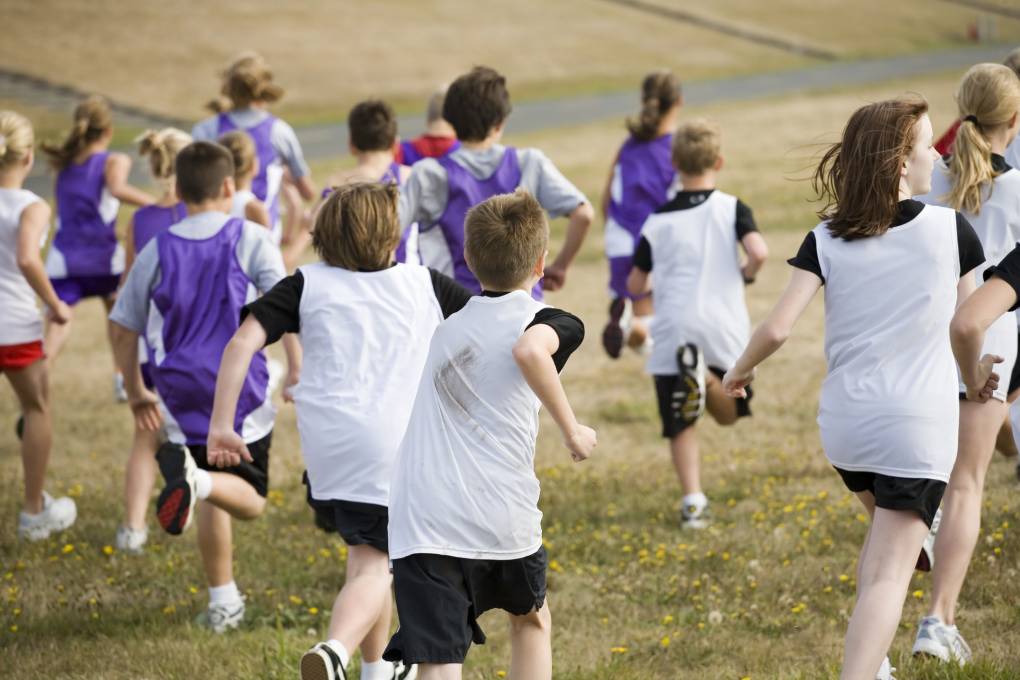
"content": "\u003cp>Gym class can’t get a break. A highly unscientific sampling of the conventional wisdom on physical education reveals a lot about what kids think of regular, enforced school exercise. “My least favorite thing about elementary school gym class was the boys being absolutely psycho,” one young woman told me. “Locker rooms were definitely fraught,” said another, about her middle school PE. “It’s not so much the body, as it is performing,” offered another—that pressure to throw and run well for an impromptu team, “so if you screw up a catch or whatever in dodgeball you let them down.”\u003c/p>\n\u003cp>The humiliation of being passed over when kids pick teams; the awkwardness of having to socialize with strangers from different grades; the Hobson’s choice of either undressing and showering in front of peers or returning to class in sweaty clothes: all these features of physical education contribute to kids’ discomfort.\u003c/p>\n\u003cp>Studies of student views toward PE add to these accounts. According to researcher Analisa Packham, who examined the impact of a comprehensive physical education program in Texas, kids resist PE because it invites bullying. Packham \u003ca href=\"https://www.theatlantic.com/education/archive/2019/01/why-pe-is-terrible/581467/\">reported\u003c/a> to Alia Wong in \u003cem>The Atlantic\u003c/em> that the lack of adult supervision in locker rooms, and ease with which unathletic and overweight kids are teased, explains why PE is unpopular.\u003c/p>\n\u003cp>The trouble with this resistance is that physical movement is linked to brain health and well-being. Exercise \u003ca href=\"https://link.springer.com/article/10.1007/s10902-018-9976-0\">contributes\u003c/a> to happiness. It \u003ca href=\"https://pubmed.ncbi.nlm.nih.gov/23637169/\">blunts\u003c/a> anxiety and \u003ca href=\"https://pubmed.ncbi.nlm.nih.gov/27765659/\">thwarts\u003c/a> depression. Even 30 minutes of daily “brisk walking,” the World Health Organization asserts, can lift the mood. A study \u003ca href=\"https://news.illinois.edu/view/6367/204540\">comparing\u003c/a> the brain MRIs of active and inactive nine and ten-year-olds found a higher volume of the “white matter” that’s associated with memory and learning among the fit children. In her book \"\u003ca href=\"https://www.kqed.org/mindshift/58053/42-ways-to-boost-learning-by-applying-our-bodies-surroundings-and-relationships\">The Extended Mind\u003c/a>,\" Annie Murphy Paul explains how moving at varied levels of exertion affects the brain: low-intensity enhances executive function; moderate improves problem-solving, focus, memory, and other cognitive advantages; and high-intensity exercise stokes creativity. “The best preparation for such (metaphysical) acts as wrestling with ideas or running through possibilities is to work up an (actual) sweat,” she writes.\u003cbr>\n[aside postID='mindshift_59342']\u003c/p>\n\u003cp>These cognitive and emotional advantages that come with exercise suggest that gym class, despite its stigma, is essential to learning. Is there a way to make physical education less alienating—and possibly even appealing—to the thousands of kids who take part?\u003c/p>\n\u003cp>[ad fullwidth]\u003c/p>\n\u003cp>Some schools have succeeded in making their PE programs popular and well-attended. At A.D. Henderson University School in Florida, the gym elective among middle schoolers is always full; though kids who play sports after school are allowed to skip it, 95 percent attend anyway. At the Girls Athletic Leadership Schools, charter programs for middle and high school kids, physical activity is integrated throughout the school day, and “morning movement” takes the place of PE. At Tuscarora High School in Maryland, where students are required to attend just one physical education section during their four years, about one-third of the students take it throughout high school.\u003c/p>\n\u003cp>These schools have adapted their physical education programs to help kids enjoy exercise. Educators there explained what makes their programs popular:\u003c/p>\n\u003cp>\u003cstrong>“We change it up a lot,”\u003c/strong> said Chris Childs, the athletic director at A.D. Henderson. Childs said that instructors switch units every two to three weeks and include sports that most students will have limited experience playing, like pickleball. Offering new sports options keeps PE fresh. Instructors also make up new games for the students to play as a way to level the playing field; even the most experienced athletes, then, have to learn these games from scratch. And teachers divide units into separate skills, so that a ten-day volleyball section, say, might start with four people working together to practice serving.\u003c/p>\n\u003cp>\u003cstrong>“Choice is a big buy-in,”\u003c/strong> Alyssa Worbetz, the director of athletics at GALS charter school, told me. Students progress through three large exercise “units” over the course of the year: team games and yoga; cardio; and choice, wherein kids decide for themselves if they’d like to play soccer or basketball, say, or take up self-defense or running, among other options. Free choice also appeals to students at Tuscarora High School, who get to decide for themselves, every “free-day Friday,” what activity they’ll play that day.\u003c/p>\n\u003cp>\u003cstrong>“We’re sensitive to kids’ wariness about the locker room,” \u003c/strong>said Howard Putterman, the athletic director at Tuscarora. As a practical matter, that means allowing kids who won’t change clothes to play anyway. “We work with the kids,” Putterman added. Instructors at A.D. Henderson permit some kids to use the locker room earlier, ahead of the crowd. They also put an adult in the locker room to preempt any bullying. “We accommodate kids who are awkward,” Childs told me.\u003c/p>\n\u003cp>\u003cstrong>They offer competitive and non-competitive games.\u003c/strong> Rather than throw aggressive athletes in with reluctant participants, the PE instructors at A.D. Henderson offer everyone the chance to choose between intense and relaxed play. Thus, kids who want to go hard at the game can compete against other gung-ho players, while those who prefer a relaxed and fun approach can participate with similarly mellow students. Childs said that the stigma around PE has persisted in part because the kids who relish gym class growing up are more apt to become physical education instructors as adults; they naturally assume that all kids enjoy aggressive play. More students will benefit from regular exercise if athletic departments find ways to reach kids who balk at competition.\u003c/p>\n\u003cp>\u003cstrong>“We don’t use fitness as a punishment,”\u003c/strong> Childs said. Sentencing the tardy student to three laps around the field won’t teach kids that exercise can be enjoyable. Students start moving as soon as they’ve changed clothes and teachers take attendance while kids walk the gym’s perimeter. Some kids use pedometers to measure their distance. At GALS, girls are taught that physical activity is central to life, and that anyone with a body is an athlete.\u003c/p>\n\u003cp>\u003cstrong>They focus on relationships.\u003c/strong> At Tuscarora, PE instructors strive to know the students personally. “They’re the most personable people in the building,” a 12\u003csup>th\u003c/sup> grader there said. Students at GALS relish morning movement because the teachers participate with the girls. “We don’t just talk about it, we’re a part of it,” Worbetz said.\u003c/p>\n\u003cp>[ad floatright]\u003c/p>\n\u003cp>\u003cem>Linda Flanagan is the author of the forthcoming book, \"\u003ca href=\"https://www.penguinrandomhouse.com/books/653840/take-back-the-game-by-linda-flanagan/\">Take Back the Game: How Money and Mania Are Ruining Kids’ Sports—and Why It Matters\u003c/a>,\" published by Penguin Random House.\u003c/em>\u003c/p>\n\n",
"disqusIdentifier": "59353 https://ww2.kqed.org/mindshift/?p=59353",
"disqusUrl": "https://ww2.kqed.org/mindshift/2022/05/10/six-ways-schools-improved-p-e-to-prioritize-student-interests-and-motivation/",
"stats": {
"hasVideo": false,
"hasChartOrMap": false,
"hasAudio": false,
"hasPolis": false,
"wordCount": 1160,
"hasGoogleForm": false,
"hasGallery": false,
"hasHearkenModule": false,
"iframeSrcs": [],
"paragraphCount": 16
},
"modified": 1652169555,
"excerpt": "Making physical education interesting to young adolescents can help them get the exercise they need for physical and mental health. ",
"headData": {
"twImgId": "",
"twTitle": "",
"ogTitle": "",
"ogImgId": "",
"twDescription": "",
"description": "Making physical education interesting to young adolescents can help them get the exercise they need for physical and mental health. ",
"title": "Six ways schools improved P.E. to prioritize student interests and motivation - MindShift",
"ogDescription": "",
"schema": {
"@context": "https://schema.org",
"@type": "Article",
"headline": "Six ways schools improved P.E. to prioritize student interests and motivation",
"datePublished": "2022-05-10T00:59:15-07:00",
"dateModified": "2022-05-10T00:59:15-07:00",
"image": "https://cdn.kqed.org/wp-content/uploads/2020/02/KQED-OG-Image@1x.png"
}
},
"guestAuthors": [],
"slug": "six-ways-schools-improved-p-e-to-prioritize-student-interests-and-motivation",
"status": "publish",
"excludeFromSiteSearch": "Include",
"path": "/mindshift/59353/six-ways-schools-improved-p-e-to-prioritize-student-interests-and-motivation",
"audioTrackLength": null,
"parsedContent": [
{
"type": "contentString",
"content": "\u003cdiv class=\"post-body\">\u003cp>\u003cp>Gym class can’t get a break. A highly unscientific sampling of the conventional wisdom on physical education reveals a lot about what kids think of regular, enforced school exercise. “My least favorite thing about elementary school gym class was the boys being absolutely psycho,” one young woman told me. “Locker rooms were definitely fraught,” said another, about her middle school PE. “It’s not so much the body, as it is performing,” offered another—that pressure to throw and run well for an impromptu team, “so if you screw up a catch or whatever in dodgeball you let them down.”\u003c/p>\n\u003cp>The humiliation of being passed over when kids pick teams; the awkwardness of having to socialize with strangers from different grades; the Hobson’s choice of either undressing and showering in front of peers or returning to class in sweaty clothes: all these features of physical education contribute to kids’ discomfort.\u003c/p>\n\u003cp>Studies of student views toward PE add to these accounts. According to researcher Analisa Packham, who examined the impact of a comprehensive physical education program in Texas, kids resist PE because it invites bullying. Packham \u003ca href=\"https://www.theatlantic.com/education/archive/2019/01/why-pe-is-terrible/581467/\">reported\u003c/a> to Alia Wong in \u003cem>The Atlantic\u003c/em> that the lack of adult supervision in locker rooms, and ease with which unathletic and overweight kids are teased, explains why PE is unpopular.\u003c/p>\n\u003cp>The trouble with this resistance is that physical movement is linked to brain health and well-being. Exercise \u003ca href=\"https://link.springer.com/article/10.1007/s10902-018-9976-0\">contributes\u003c/a> to happiness. It \u003ca href=\"https://pubmed.ncbi.nlm.nih.gov/23637169/\">blunts\u003c/a> anxiety and \u003ca href=\"https://pubmed.ncbi.nlm.nih.gov/27765659/\">thwarts\u003c/a> depression. Even 30 minutes of daily “brisk walking,” the World Health Organization asserts, can lift the mood. A study \u003ca href=\"https://news.illinois.edu/view/6367/204540\">comparing\u003c/a> the brain MRIs of active and inactive nine and ten-year-olds found a higher volume of the “white matter” that’s associated with memory and learning among the fit children. In her book \"\u003ca href=\"https://www.kqed.org/mindshift/58053/42-ways-to-boost-learning-by-applying-our-bodies-surroundings-and-relationships\">The Extended Mind\u003c/a>,\" Annie Murphy Paul explains how moving at varied levels of exertion affects the brain: low-intensity enhances executive function; moderate improves problem-solving, focus, memory, and other cognitive advantages; and high-intensity exercise stokes creativity. “The best preparation for such (metaphysical) acts as wrestling with ideas or running through possibilities is to work up an (actual) sweat,” she writes.\u003cbr>\n\u003c/p>\u003c/div>",
"attributes": {
"named": {},
"numeric": []
}
},
{
"type": "component",
"content": "",
"name": "aside",
"attributes": {
"named": {
"postid": "mindshift_59342",
"label": ""
},
"numeric": []
}
},
{
"type": "contentString",
"content": "\u003cdiv class=\"post-body\">\u003cp>\u003c/p>\n\u003cp>These cognitive and emotional advantages that come with exercise suggest that gym class, despite its stigma, is essential to learning. Is there a way to make physical education less alienating—and possibly even appealing—to the thousands of kids who take part?\u003c/p>\n\u003cp>\u003c/p>\u003c/div>",
"attributes": {
"named": {},
"numeric": []
}
},
{
"type": "component",
"content": "",
"name": "ad",
"attributes": {
"named": {
"label": "fullwidth"
},
"numeric": [
"fullwidth"
]
}
},
{
"type": "contentString",
"content": "\u003cdiv class=\"post-body\">\u003cp>\u003c/p>\n\u003cp>Some schools have succeeded in making their PE programs popular and well-attended. At A.D. Henderson University School in Florida, the gym elective among middle schoolers is always full; though kids who play sports after school are allowed to skip it, 95 percent attend anyway. At the Girls Athletic Leadership Schools, charter programs for middle and high school kids, physical activity is integrated throughout the school day, and “morning movement” takes the place of PE. At Tuscarora High School in Maryland, where students are required to attend just one physical education section during their four years, about one-third of the students take it throughout high school.\u003c/p>\n\u003cp>These schools have adapted their physical education programs to help kids enjoy exercise. Educators there explained what makes their programs popular:\u003c/p>\n\u003cp>\u003cstrong>“We change it up a lot,”\u003c/strong> said Chris Childs, the athletic director at A.D. Henderson. Childs said that instructors switch units every two to three weeks and include sports that most students will have limited experience playing, like pickleball. Offering new sports options keeps PE fresh. Instructors also make up new games for the students to play as a way to level the playing field; even the most experienced athletes, then, have to learn these games from scratch. And teachers divide units into separate skills, so that a ten-day volleyball section, say, might start with four people working together to practice serving.\u003c/p>\n\u003cp>\u003cstrong>“Choice is a big buy-in,”\u003c/strong> Alyssa Worbetz, the director of athletics at GALS charter school, told me. Students progress through three large exercise “units” over the course of the year: team games and yoga; cardio; and choice, wherein kids decide for themselves if they’d like to play soccer or basketball, say, or take up self-defense or running, among other options. Free choice also appeals to students at Tuscarora High School, who get to decide for themselves, every “free-day Friday,” what activity they’ll play that day.\u003c/p>\n\u003cp>\u003cstrong>“We’re sensitive to kids’ wariness about the locker room,” \u003c/strong>said Howard Putterman, the athletic director at Tuscarora. As a practical matter, that means allowing kids who won’t change clothes to play anyway. “We work with the kids,” Putterman added. Instructors at A.D. Henderson permit some kids to use the locker room earlier, ahead of the crowd. They also put an adult in the locker room to preempt any bullying. “We accommodate kids who are awkward,” Childs told me.\u003c/p>\n\u003cp>\u003cstrong>They offer competitive and non-competitive games.\u003c/strong> Rather than throw aggressive athletes in with reluctant participants, the PE instructors at A.D. Henderson offer everyone the chance to choose between intense and relaxed play. Thus, kids who want to go hard at the game can compete against other gung-ho players, while those who prefer a relaxed and fun approach can participate with similarly mellow students. Childs said that the stigma around PE has persisted in part because the kids who relish gym class growing up are more apt to become physical education instructors as adults; they naturally assume that all kids enjoy aggressive play. More students will benefit from regular exercise if athletic departments find ways to reach kids who balk at competition.\u003c/p>\n\u003cp>\u003cstrong>“We don’t use fitness as a punishment,”\u003c/strong> Childs said. Sentencing the tardy student to three laps around the field won’t teach kids that exercise can be enjoyable. Students start moving as soon as they’ve changed clothes and teachers take attendance while kids walk the gym’s perimeter. Some kids use pedometers to measure their distance. At GALS, girls are taught that physical activity is central to life, and that anyone with a body is an athlete.\u003c/p>\n\u003cp>\u003cstrong>They focus on relationships.\u003c/strong> At Tuscarora, PE instructors strive to know the students personally. “They’re the most personable people in the building,” a 12\u003csup>th\u003c/sup> grader there said. Students at GALS relish morning movement because the teachers participate with the girls. “We don’t just talk about it, we’re a part of it,” Worbetz said.\u003c/p>\n\u003cp>\u003c/p>\u003c/div>",
"attributes": {
"named": {},
"numeric": []
}
},
{
"type": "component",
"content": "",
"name": "ad",
"attributes": {
"named": {
"label": "floatright"
},
"numeric": [
"floatright"
]
}
},
{
"type": "contentString",
"content": "\u003cdiv class=\"post-body\">\u003cp>\u003c/p>\n\u003cp>\u003cem>Linda Flanagan is the author of the forthcoming book, \"\u003ca href=\"https://www.penguinrandomhouse.com/books/653840/take-back-the-game-by-linda-flanagan/\">Take Back the Game: How Money and Mania Are Ruining Kids’ Sports—and Why It Matters\u003c/a>,\" published by Penguin Random House.\u003c/em>\u003c/p>\n\n\u003c/div>\u003c/p>",
"attributes": {
"named": {},
"numeric": []
}
}
],
"link": "/mindshift/59353/six-ways-schools-improved-p-e-to-prioritize-student-interests-and-motivation",
"authors": [
"4613"
],
"categories": [
"mindshift_21280"
],
"tags": [
"mindshift_20865",
"mindshift_21057",
"mindshift_21246"
],
"featImg": "mindshift_59356",
"label": "mindshift"
},
"mindshift_59323": {
"type": "posts",
"id": "mindshift_59323",
"meta": {
"index": "posts_1716263798",
"site": "mindshift",
"id": "59323",
"score": null,
"sort": [
1650958442000
]
},
"guestAuthors": [],
"slug": "how-a-school-district-is-bringing-mental-health-support-directly-to-teachers-where-they-work",
"title": "How a School District Is Bringing Mental Health Support Directly To Teachers Where They Work ",
"publishDate": 1650958442,
"format": "standard",
"headTitle": "How a School District Is Bringing Mental Health Support Directly To Teachers Where They Work | KQED",
"labelTerm": {
"site": "mindshift"
},
"content": "\u003cp>\u003cspan style=\"font-weight: 400\">Two years into the COVID-19 pandemic, the in-person school days that once felt normal can feel totally draining for many educators. \u003c/span>\u003c/p>\n\u003cp>\u003cspan style=\"font-weight: 400\">That feeling comes from the challenges of motivating students after \u003c/span>\u003ca href=\"https://www.kqed.org/mindshift/59194/two-years-ago-schools-shut-down-around-the-world-these-are-the-biggest-impacts\">\u003cspan style=\"font-weight: 400\">two years of disrupted schooling\u003c/span>\u003c/a>\u003cspan style=\"font-weight: 400\">, as well as the toll the pandemic has taken on educators and their families. And it’s all layered on top of \u003c/span>\u003ca href=\"https://www.kqed.org/mindshift/tag/teacher-burnout\">\u003cspan style=\"font-weight: 400\">an already demanding job\u003c/span>\u003c/a>\u003cspan style=\"font-weight: 400\">. \u003c/span>\u003c/p>\n\u003cp>\u003cspan style=\"font-weight: 400\">“I just feel like a whole mountain is on top of me,” said a special education teacher in Arizona, \u003c/span>\u003cspan style=\"font-weight: 400\">whose name KQED is not revealing due to concerns about retaliation\u003c/span>\u003cspan style=\"font-weight: 400\">.\u003c/span>\u003c/p>\n\u003cp>\u003cspan style=\"font-weight: 400\">The overwhelm is widespread. Across the country, teachers have said they \u003c/span>\u003ca href=\"https://www.npr.org/2021/12/22/1067024858/teachers-are-drowning-as-they-deal-with-students-acting-out-low-staff-and-covid\">\u003cspan style=\"font-weight: 400\">feel like they are drowning\u003c/span>\u003c/a>\u003cspan style=\"font-weight: 400\">, and many are \u003c/span>\u003ca href=\"https://www.kqed.org/mindshift/59018/more-than-half-of-teachers-are-looking-for-the-exits-a-poll-says\">\u003cspan style=\"font-weight: 400\">considering quitting\u003c/span>\u003c/a>\u003cspan style=\"font-weight: 400\">. But at Phoenix Union High School District, where this teacher works, she can access a resource that’s not so common: mental health support for teachers on campus. Last year the school district hired two licensed professional counselors specifically to serve its 4,000 teachers and staff members. These \u003c/span>\u003ca href=\"https://www.pxu.org/Page/28214\">\u003cspan style=\"font-weight: 400\">wellness specialists\u003c/span>\u003c/a>\u003cspan style=\"font-weight: 400\"> meet with employees on-site, where they offer an empathetic ear, teach strategies for stress reduction and conflict management and make referrals for additional support.\u003c/span>\u003c/p>\n\u003cp>\u003cspan style=\"font-weight: 400\">“We come to you. It’s not something where you have to interrupt your workday in order to get your needs met,” said Erika Collins-Frazier, one of the wellness specialists. That model, she said, “changes the access, which means more people are going to reach out when they need help.”\u003c/span>\u003c/p>\n\u003ch1>\u003cb>Dreading the alarm\u003c/b>\u003c/h1>\n\u003cp>\u003cspan style=\"font-weight: 400\">Before the pandemic, the special education teacher I spoke with usually woke up excited for the school day. “I had joy in my heart and soul. I would think of all of the things that I had on my to-do list, but I had the energy to get through each of the items that I needed to accomplish,” she said. This past fall, that feeling morphed into dread. Difficulties at school were compounded by personal challenges and the responsibilities of motherhood. When her alarm went off, she’d think, “No, five more hours, please.”\u003c/span>\u003c/p>\n\u003cp>[ad fullwidth]\u003c/p>\n\u003cp>\u003cspan style=\"font-weight: 400\">In late October, at the suggestion of a colleague, she reached out to Phoenix Union’s wellness specialists. One of them, Cailene Pisciotta, responded “super quickly” and the pair scheduled an appointment for the end of a school day.\u003c/span>\u003c/p>\n\u003cp>\u003cspan style=\"font-weight: 400\">From the start of the school year through mid-March, Collins-Frazier and Pisciotta met with 208 teachers, administrators and staff members for a total of 438 individual counseling sessions, typically lasting an hour. They’d seen staff at every one of Phoenix Union’s 21 school sites. \u003c/span>\u003c/p>\n\u003cp>\u003cspan style=\"font-weight: 400\">The counselors said the most common reasons that employees contacted them were \u003c/span>\u003ca href=\"https://www.kqed.org/news/11859088/covid-19-and-personal-grief-advice-from-experts\">\u003cspan style=\"font-weight: 400\">grief\u003c/span>\u003c/a>\u003cspan style=\"font-weight: 400\">, depression, \u003c/span>\u003ca href=\"https://www.kqed.org/mindshift/tag/anxiety\">\u003cspan style=\"font-weight: 400\">anxiety\u003c/span>\u003c/a>\u003cspan style=\"font-weight: 400\">, challenges with some \u003c/span>\u003ca href=\"https://www.edweek.org/leadership/threats-of-student-violence-and-misbehavior-are-rising-many-school-leaders-report/2022/01\">\u003cspan style=\"font-weight: 400\">student behaviors\u003c/span>\u003c/a>\u003cspan style=\"font-weight: 400\"> and \u003c/span>\u003ca href=\"https://www.kqed.org/mindshift/58702/is-it-ok-for-teachers-to-cry-in-class\">\u003cspan style=\"font-weight: 400\">fatigue from the uncertainties\u003c/span>\u003c/a>\u003cspan style=\"font-weight: 400\"> wrought by COVID-19. When asked how they respond to those stressors, Collins-Frazier and Pisciotta replied in unison: “validation.” Teaching during a pandemic is scary. It’s overwhelming. And teachers need to hear that acknowledged “because what they’re going through is so real,” Pisciotta said.\u003c/span>\u003c/p>\n\u003cp>\u003cspan style=\"font-weight: 400\">The teacher I spoke with said she first contacted the counselors because of marital challenges but ended up talking about tension caused by differences in classroom management styles between her and her co-teacher. Pisciotta helped her practice articulating her feelings with “I” statements, which led to a three-hour conversation between the two teachers about how to better support each other.\u003c/span>\u003c/p>\n\u003cp>\u003cspan style=\"font-weight: 400\">“I think now we’re connecting more in every way, like personally and professionally,” she said after her meetings with Pisciotta. “And that tension has started to go down, which has been a sigh of relief now because now I feel better about coming to work.”\u003c/span>\u003c/p>\n\u003cp>\u003cspan style=\"font-weight: 400\">In addition to individual sessions, the wellness specialists lead workshops on self-care practices, such as \u003c/span>\u003ca href=\"https://www.kqed.org/mindshift/tag/mindfulness\">\u003cspan style=\"font-weight: 400\">mindfulness\u003c/span>\u003c/a>\u003cspan style=\"font-weight: 400\">. What they don’t do is crisis intervention or long-term treatment. If an employee needs more support after a few sessions, Collins-Frazier and Pisciotta refer them to an external provider. They’ve done a lot of outreach to find providers who can accept new clients and the district’s insurance, which can make a big difference when \u003c/span>\u003ca href=\"https://www.npr.org/sections/health-shots/2021/11/18/1053566020/americans-can-wait-many-weeks-to-see-a-therapist-california-law-aims-to-fix-that\">\u003cspan style=\"font-weight: 400\">long wait times for mental health services\u003c/span>\u003c/a>\u003cspan style=\"font-weight: 400\"> are the norm.\u003c/span>\u003c/p>\n\u003cp>\u003cspan style=\"font-weight: 400\">“We are building a little network of people that are willing to jump in and help,” said Collins-Frazier.\u003c/span>\u003c/p>\n\u003ch1>\u003cb>“Let’s start loving our people”\u003c/b>\u003c/h1>\n\u003cp>\u003cspan style=\"font-weight: 400\">Collins-Frazier and Pisciotta were hired in a time of \u003c/span>\u003ca href=\"https://www.nytimes.com/interactive/2021/12/16/well/mental-health-crisis-america-covid.html\">\u003cspan style=\"font-weight: 400\">heightened need\u003c/span>\u003c/a>\u003cspan style=\"font-weight: 400\"> for mental health support because of coronavirus, but the idea for their positions originated earlier, according to Phoenix Union Superintendent \u003c/span>\u003ca href=\"https://twitter.com/chadgestson\">\u003cspan style=\"font-weight: 400\">Chad Gestson\u003c/span>\u003c/a>\u003cspan style=\"font-weight: 400\">. “We had an initial discussion right before the pandemic about, you know, if we’re investing so much money into the mental health and wraparound services of our 30,000 teenagers, why are we not doing the same thing for our 4,000 employees?” he said.\u003c/span>\u003c/p>\n\u003cp>\u003cspan style=\"font-weight: 400\">So amid school closures in spring 2020, Gestson proposed to the governing board that the district create up to three full-time wellness positions, funded out of the regular operations budget. The board approved that plan. That was the start of the vision, not the end. In recent months, Gestson said, he and his team got approval for two wellness manager positions — one to oversee the social-emotional programs, and another to oversee physical wellness initiatives for staff. Those positions will be funded with money from the district’s medical insurance trust and its medical provider.\u003c/span>\u003c/p>\n\u003cp>\u003cspan style=\"font-weight: 400\">Gestson said the program is being built out with a “ready, fire, aim” approach — a term from the \u003c/span>\u003ca href=\"https://www.forbes.com/sites/kevinready/2012/08/16/ready-fire-aim/?sh=b46c52e26738\">\u003cspan style=\"font-weight: 400\">start-up world\u003c/span>\u003c/a>\u003cspan style=\"font-weight: 400\"> that suggests it’s better to start with something and adjust, rather than spending years planning. “When we launched this, it was just like, ‘let’s start loving our people,’” the superintendent said. In addition to adding manager positions, his team is still figuring out the parameters of the existing roles. For instance, what does wellness for the wellness specialists look like? When are they not on call? Pisciotta said setting the same kind of \u003c/span>\u003ca href=\"https://www.kqed.org/mindshift/tag/anxiety\">\u003cspan style=\"font-weight: 400\">boundaries she encourages teachers to set\u003c/span>\u003c/a>\u003cspan style=\"font-weight: 400\"> has taken conscious effort.\u003c/span>\u003c/p>\n\u003cp>\u003cspan style=\"font-weight: 400\">Administrators also are still figuring out how to evaluate the program’s success. Gestson said the numbers of employees requesting services, exiting services and being referred for additional support will be part of the equation, as will employee retention rates and an annual wellness survey that predates the creation of the positions.\u003c/span>\u003c/p>\n\u003cp>\u003cspan style=\"font-weight: 400\">But the anecdotal evidence of the benefits may be the most powerful. For example, Gestson said he’d received phone calls from two Phoenix Union administrators who told him that talking with the wellness specialists had been transformational for their mental health.\u003c/span>\u003c/p>\n\u003ch1>\u003cb>“They realize you’re not just a teacher”\u003c/b>\u003c/h1>\n\u003cp>\u003cspan style=\"font-weight: 400\">The special education teacher I spoke with also expressed gratitude for the service. “It’s just so awesome that, you know, we’re already struggling enough, and now this free, incredible resource just comes right to me, and I can do it on my prep period.”\u003c/span>\u003c/p>\n\u003cp>\u003cspan style=\"font-weight: 400\">It’s not a cure-all, of course. During winter break, she felt dread rising again at the thought of school. After returning in January, though, the honest communication she’d started to have with her co-teacher started to pay off in their classroom. She said that by leaning into and trusting each other more, they’ve been better able to handle student behaviors and target their instruction. “I think we’re finally getting to some of the kids. So I’ve seen more success, maybe the last two weeks than I have before that this year,” she said in February.\u003c/span>\u003c/p>\n\u003cp>\u003cspan style=\"font-weight: 400\">Meeting with Pisciotta also inspired her to \u003c/span>\u003ca href=\"https://www.kqed.org/mindshift/58377/unplanned-lessons-what-pandemic-education-has-taught-teachers\">\u003cspan style=\"font-weight: 400\">prioritize her own needs more\u003c/span>\u003c/a>\u003cspan style=\"font-weight: 400\">. For example, she started reading novels during her students’ silent reading time, bringing her back to her childhood identity as a bookworm. “I always tend to put everyone else in front of myself, and Cailene’s taught me how to be more aware of that,” she said.\u003c/span>\u003c/p>\n\u003cp>[ad floatright]\u003c/p>\n\u003cp>\u003cspan style=\"font-weight: 400\">“What I love about the program is they realize that you’re not just a teacher, that you’re a human and you have all these other things in your life.”\u003c/span>\u003c/p>\n\n",
"blocks": [],
"excerpt": "A school is making mental health services more easily accessible for teachers to use on campus. For one teacher, that's helped improve her teaching and how she shows up for her students.",
"status": "publish",
"parent": 0,
"modified": 1719325397,
"stats": {
"hasAudio": false,
"hasVideo": false,
"hasChartOrMap": false,
"iframeSrcs": [],
"hasGoogleForm": false,
"hasGallery": false,
"hasHearkenModule": false,
"hasPolis": false,
"paragraphCount": 24,
"wordCount": 1425
},
"headData": {
"title": "How a School District Is Bringing Mental Health Support Directly To Teachers Where They Work | KQED",
"description": "A school is making mental health services more easily accessible for teachers to use on campus. For one teacher, that's helped improve her teaching and how she shows up for her students.",
"ogTitle": "",
"ogDescription": "",
"ogImgId": "",
"twTitle": "",
"twDescription": "",
"twImgId": "",
"schema": {
"@context": "https://schema.org",
"@type": "Article",
"headline": "How a School District Is Bringing Mental Health Support Directly To Teachers Where They Work ",
"datePublished": "2022-04-26T00:34:02-07:00",
"dateModified": "2024-06-25T07:23:17-07:00",
"image": "https://cdn.kqed.org/wp-content/uploads/2020/02/KQED-OG-Image@1x.png"
}
},
"sticky": false,
"excludeFromSiteSearch": "Include",
"articleAge": "0",
"path": "/mindshift/59323/how-a-school-district-is-bringing-mental-health-support-directly-to-teachers-where-they-work",
"audioTrackLength": null,
"parsedContent": [
{
"type": "contentString",
"content": "\u003cdiv class=\"post-body\">\u003cp>\u003cp>\u003cspan style=\"font-weight: 400\">Two years into the COVID-19 pandemic, the in-person school days that once felt normal can feel totally draining for many educators. \u003c/span>\u003c/p>\n\u003cp>\u003cspan style=\"font-weight: 400\">That feeling comes from the challenges of motivating students after \u003c/span>\u003ca href=\"https://www.kqed.org/mindshift/59194/two-years-ago-schools-shut-down-around-the-world-these-are-the-biggest-impacts\">\u003cspan style=\"font-weight: 400\">two years of disrupted schooling\u003c/span>\u003c/a>\u003cspan style=\"font-weight: 400\">, as well as the toll the pandemic has taken on educators and their families. And it’s all layered on top of \u003c/span>\u003ca href=\"https://www.kqed.org/mindshift/tag/teacher-burnout\">\u003cspan style=\"font-weight: 400\">an already demanding job\u003c/span>\u003c/a>\u003cspan style=\"font-weight: 400\">. \u003c/span>\u003c/p>\n\u003cp>\u003cspan style=\"font-weight: 400\">“I just feel like a whole mountain is on top of me,” said a special education teacher in Arizona, \u003c/span>\u003cspan style=\"font-weight: 400\">whose name KQED is not revealing due to concerns about retaliation\u003c/span>\u003cspan style=\"font-weight: 400\">.\u003c/span>\u003c/p>\n\u003cp>\u003cspan style=\"font-weight: 400\">The overwhelm is widespread. Across the country, teachers have said they \u003c/span>\u003ca href=\"https://www.npr.org/2021/12/22/1067024858/teachers-are-drowning-as-they-deal-with-students-acting-out-low-staff-and-covid\">\u003cspan style=\"font-weight: 400\">feel like they are drowning\u003c/span>\u003c/a>\u003cspan style=\"font-weight: 400\">, and many are \u003c/span>\u003ca href=\"https://www.kqed.org/mindshift/59018/more-than-half-of-teachers-are-looking-for-the-exits-a-poll-says\">\u003cspan style=\"font-weight: 400\">considering quitting\u003c/span>\u003c/a>\u003cspan style=\"font-weight: 400\">. But at Phoenix Union High School District, where this teacher works, she can access a resource that’s not so common: mental health support for teachers on campus. Last year the school district hired two licensed professional counselors specifically to serve its 4,000 teachers and staff members. These \u003c/span>\u003ca href=\"https://www.pxu.org/Page/28214\">\u003cspan style=\"font-weight: 400\">wellness specialists\u003c/span>\u003c/a>\u003cspan style=\"font-weight: 400\"> meet with employees on-site, where they offer an empathetic ear, teach strategies for stress reduction and conflict management and make referrals for additional support.\u003c/span>\u003c/p>\n\u003cp>\u003cspan style=\"font-weight: 400\">“We come to you. It’s not something where you have to interrupt your workday in order to get your needs met,” said Erika Collins-Frazier, one of the wellness specialists. That model, she said, “changes the access, which means more people are going to reach out when they need help.”\u003c/span>\u003c/p>\n\u003ch1>\u003cb>Dreading the alarm\u003c/b>\u003c/h1>\n\u003cp>\u003cspan style=\"font-weight: 400\">Before the pandemic, the special education teacher I spoke with usually woke up excited for the school day. “I had joy in my heart and soul. I would think of all of the things that I had on my to-do list, but I had the energy to get through each of the items that I needed to accomplish,” she said. This past fall, that feeling morphed into dread. Difficulties at school were compounded by personal challenges and the responsibilities of motherhood. When her alarm went off, she’d think, “No, five more hours, please.”\u003c/span>\u003c/p>\n\u003cp>\u003c/p>\u003c/div>",
"attributes": {
"named": {},
"numeric": []
}
},
{
"type": "component",
"content": "",
"name": "ad",
"attributes": {
"named": {
"label": "fullwidth"
},
"numeric": [
"fullwidth"
]
}
},
{
"type": "contentString",
"content": "\u003cdiv class=\"post-body\">\u003cp>\u003c/p>\n\u003cp>\u003cspan style=\"font-weight: 400\">In late October, at the suggestion of a colleague, she reached out to Phoenix Union’s wellness specialists. One of them, Cailene Pisciotta, responded “super quickly” and the pair scheduled an appointment for the end of a school day.\u003c/span>\u003c/p>\n\u003cp>\u003cspan style=\"font-weight: 400\">From the start of the school year through mid-March, Collins-Frazier and Pisciotta met with 208 teachers, administrators and staff members for a total of 438 individual counseling sessions, typically lasting an hour. They’d seen staff at every one of Phoenix Union’s 21 school sites. \u003c/span>\u003c/p>\n\u003cp>\u003cspan style=\"font-weight: 400\">The counselors said the most common reasons that employees contacted them were \u003c/span>\u003ca href=\"https://www.kqed.org/news/11859088/covid-19-and-personal-grief-advice-from-experts\">\u003cspan style=\"font-weight: 400\">grief\u003c/span>\u003c/a>\u003cspan style=\"font-weight: 400\">, depression, \u003c/span>\u003ca href=\"https://www.kqed.org/mindshift/tag/anxiety\">\u003cspan style=\"font-weight: 400\">anxiety\u003c/span>\u003c/a>\u003cspan style=\"font-weight: 400\">, challenges with some \u003c/span>\u003ca href=\"https://www.edweek.org/leadership/threats-of-student-violence-and-misbehavior-are-rising-many-school-leaders-report/2022/01\">\u003cspan style=\"font-weight: 400\">student behaviors\u003c/span>\u003c/a>\u003cspan style=\"font-weight: 400\"> and \u003c/span>\u003ca href=\"https://www.kqed.org/mindshift/58702/is-it-ok-for-teachers-to-cry-in-class\">\u003cspan style=\"font-weight: 400\">fatigue from the uncertainties\u003c/span>\u003c/a>\u003cspan style=\"font-weight: 400\"> wrought by COVID-19. When asked how they respond to those stressors, Collins-Frazier and Pisciotta replied in unison: “validation.” Teaching during a pandemic is scary. It’s overwhelming. And teachers need to hear that acknowledged “because what they’re going through is so real,” Pisciotta said.\u003c/span>\u003c/p>\n\u003cp>\u003cspan style=\"font-weight: 400\">The teacher I spoke with said she first contacted the counselors because of marital challenges but ended up talking about tension caused by differences in classroom management styles between her and her co-teacher. Pisciotta helped her practice articulating her feelings with “I” statements, which led to a three-hour conversation between the two teachers about how to better support each other.\u003c/span>\u003c/p>\n\u003cp>\u003cspan style=\"font-weight: 400\">“I think now we’re connecting more in every way, like personally and professionally,” she said after her meetings with Pisciotta. “And that tension has started to go down, which has been a sigh of relief now because now I feel better about coming to work.”\u003c/span>\u003c/p>\n\u003cp>\u003cspan style=\"font-weight: 400\">In addition to individual sessions, the wellness specialists lead workshops on self-care practices, such as \u003c/span>\u003ca href=\"https://www.kqed.org/mindshift/tag/mindfulness\">\u003cspan style=\"font-weight: 400\">mindfulness\u003c/span>\u003c/a>\u003cspan style=\"font-weight: 400\">. What they don’t do is crisis intervention or long-term treatment. If an employee needs more support after a few sessions, Collins-Frazier and Pisciotta refer them to an external provider. They’ve done a lot of outreach to find providers who can accept new clients and the district’s insurance, which can make a big difference when \u003c/span>\u003ca href=\"https://www.npr.org/sections/health-shots/2021/11/18/1053566020/americans-can-wait-many-weeks-to-see-a-therapist-california-law-aims-to-fix-that\">\u003cspan style=\"font-weight: 400\">long wait times for mental health services\u003c/span>\u003c/a>\u003cspan style=\"font-weight: 400\"> are the norm.\u003c/span>\u003c/p>\n\u003cp>\u003cspan style=\"font-weight: 400\">“We are building a little network of people that are willing to jump in and help,” said Collins-Frazier.\u003c/span>\u003c/p>\n\u003ch1>\u003cb>“Let’s start loving our people”\u003c/b>\u003c/h1>\n\u003cp>\u003cspan style=\"font-weight: 400\">Collins-Frazier and Pisciotta were hired in a time of \u003c/span>\u003ca href=\"https://www.nytimes.com/interactive/2021/12/16/well/mental-health-crisis-america-covid.html\">\u003cspan style=\"font-weight: 400\">heightened need\u003c/span>\u003c/a>\u003cspan style=\"font-weight: 400\"> for mental health support because of coronavirus, but the idea for their positions originated earlier, according to Phoenix Union Superintendent \u003c/span>\u003ca href=\"https://twitter.com/chadgestson\">\u003cspan style=\"font-weight: 400\">Chad Gestson\u003c/span>\u003c/a>\u003cspan style=\"font-weight: 400\">. “We had an initial discussion right before the pandemic about, you know, if we’re investing so much money into the mental health and wraparound services of our 30,000 teenagers, why are we not doing the same thing for our 4,000 employees?” he said.\u003c/span>\u003c/p>\n\u003cp>\u003cspan style=\"font-weight: 400\">So amid school closures in spring 2020, Gestson proposed to the governing board that the district create up to three full-time wellness positions, funded out of the regular operations budget. The board approved that plan. That was the start of the vision, not the end. In recent months, Gestson said, he and his team got approval for two wellness manager positions — one to oversee the social-emotional programs, and another to oversee physical wellness initiatives for staff. Those positions will be funded with money from the district’s medical insurance trust and its medical provider.\u003c/span>\u003c/p>\n\u003cp>\u003cspan style=\"font-weight: 400\">Gestson said the program is being built out with a “ready, fire, aim” approach — a term from the \u003c/span>\u003ca href=\"https://www.forbes.com/sites/kevinready/2012/08/16/ready-fire-aim/?sh=b46c52e26738\">\u003cspan style=\"font-weight: 400\">start-up world\u003c/span>\u003c/a>\u003cspan style=\"font-weight: 400\"> that suggests it’s better to start with something and adjust, rather than spending years planning. “When we launched this, it was just like, ‘let’s start loving our people,’” the superintendent said. In addition to adding manager positions, his team is still figuring out the parameters of the existing roles. For instance, what does wellness for the wellness specialists look like? When are they not on call? Pisciotta said setting the same kind of \u003c/span>\u003ca href=\"https://www.kqed.org/mindshift/tag/anxiety\">\u003cspan style=\"font-weight: 400\">boundaries she encourages teachers to set\u003c/span>\u003c/a>\u003cspan style=\"font-weight: 400\"> has taken conscious effort.\u003c/span>\u003c/p>\n\u003cp>\u003cspan style=\"font-weight: 400\">Administrators also are still figuring out how to evaluate the program’s success. Gestson said the numbers of employees requesting services, exiting services and being referred for additional support will be part of the equation, as will employee retention rates and an annual wellness survey that predates the creation of the positions.\u003c/span>\u003c/p>\n\u003cp>\u003cspan style=\"font-weight: 400\">But the anecdotal evidence of the benefits may be the most powerful. For example, Gestson said he’d received phone calls from two Phoenix Union administrators who told him that talking with the wellness specialists had been transformational for their mental health.\u003c/span>\u003c/p>\n\u003ch1>\u003cb>“They realize you’re not just a teacher”\u003c/b>\u003c/h1>\n\u003cp>\u003cspan style=\"font-weight: 400\">The special education teacher I spoke with also expressed gratitude for the service. “It’s just so awesome that, you know, we’re already struggling enough, and now this free, incredible resource just comes right to me, and I can do it on my prep period.”\u003c/span>\u003c/p>\n\u003cp>\u003cspan style=\"font-weight: 400\">It’s not a cure-all, of course. During winter break, she felt dread rising again at the thought of school. After returning in January, though, the honest communication she’d started to have with her co-teacher started to pay off in their classroom. She said that by leaning into and trusting each other more, they’ve been better able to handle student behaviors and target their instruction. “I think we’re finally getting to some of the kids. So I’ve seen more success, maybe the last two weeks than I have before that this year,” she said in February.\u003c/span>\u003c/p>\n\u003cp>\u003cspan style=\"font-weight: 400\">Meeting with Pisciotta also inspired her to \u003c/span>\u003ca href=\"https://www.kqed.org/mindshift/58377/unplanned-lessons-what-pandemic-education-has-taught-teachers\">\u003cspan style=\"font-weight: 400\">prioritize her own needs more\u003c/span>\u003c/a>\u003cspan style=\"font-weight: 400\">. For example, she started reading novels during her students’ silent reading time, bringing her back to her childhood identity as a bookworm. “I always tend to put everyone else in front of myself, and Cailene’s taught me how to be more aware of that,” she said.\u003c/span>\u003c/p>\n\u003cp>\u003c/p>\u003c/div>",
"attributes": {
"named": {},
"numeric": []
}
},
{
"type": "component",
"content": "",
"name": "ad",
"attributes": {
"named": {
"label": "floatright"
},
"numeric": [
"floatright"
]
}
},
{
"type": "contentString",
"content": "\u003cdiv class=\"post-body\">\u003cp>\u003c/p>\n\u003cp>\u003cspan style=\"font-weight: 400\">“What I love about the program is they realize that you’re not just a teacher, that you’re a human and you have all these other things in your life.”\u003c/span>\u003c/p>\n\n\u003c/div>\u003c/p>",
"attributes": {
"named": {},
"numeric": []
}
}
],
"link": "/mindshift/59323/how-a-school-district-is-bringing-mental-health-support-directly-to-teachers-where-they-work",
"authors": [
"11487"
],
"categories": [
"mindshift_21280"
],
"tags": [
"mindshift_20865",
"mindshift_943",
"mindshift_21398"
],
"featImg": "mindshift_59326",
"label": "mindshift"
},
"mindshift_59313": {
"type": "posts",
"id": "mindshift_59313",
"meta": {
"index": "posts_1716263798",
"site": "mindshift",
"id": "59313",
"score": null,
"sort": [
1650266592000
]
},
"parent": 0,
"labelTerm": {
"site": "mindshift"
},
"blocks": [],
"publishDate": 1650266592,
"format": "standard",
"disqusTitle": "It's time to screen all kids for anxiety, physicians' task force recommends",
"title": "It's time to screen all kids for anxiety, physicians' task force recommends",
"headTitle": "MindShift | KQED News",
"content": "\u003cp>An influential panel of experts says all kids ages eight to 18 \u003ca href=\"https://www.uspreventiveservicestaskforce.org/uspstf/draft-recommendation/screening-anxiety-children-adolescents\">should be screened regularly for anxiety\u003c/a>. This draft recommendation by the United States Preventative Task Force comes at a time when mental health problems among kids have escalated and are overwhelming the health system.\u003c/p>\n\u003cp>The task force also recommends that kids 12 and older continue to be screened for depression, a recommendation that's been in place since 2016.\u003c/p>\n\u003cp>The screenings are usually done by primary care physicians using standardized questionnaires that parents and/or kids answer, depending on their age.\u003c/p>\n\u003cp>\"We were already seeing rising rates of anxiety, depression and also suicide behaviors and suicide in our young people,\" says \u003ca href=\"https://www.uspreventiveservicestaskforce.org/uspstf/about-uspstf/current-members/martha-kubik-phd-rn\">Martha Kubik\u003c/a>, a professor of nursing at George Mason University and a member of the task force.\u003c/p>\n\u003cp>The goal of the screenings, she says, is to help doctors and other providers identify at-risk kids early on in the trajectory of their illness so that they can be treated before symptoms escalate.\u003c/p>\n\u003cp>[ad fullwidth]\u003c/p>\n\u003cp>Child and adolescent mental health experts welcome the recommendations.\u003c/p>\n\u003cp>It has increasingly become clear that most mental illnesses manifest in childhood and adolescence, says \u003ca href=\"https://nyulangone.org/doctors/1205956968/jennifer-havens\">Dr. Jennifer Havens\u003c/a>, the chair of Child and Adolescent Psychiatry at NYU's Grossman School of Medicine.\u003c/p>\n\u003cp>But anxiety disorder, one of the most common mental illnesses among children, can go undetected for a long time.\u003c/p>\n\u003cp>\"It can be quiet. Kids who are anxious are often very self-conscious and aren't going to share this with their families or their physicians, necessarily. So screening is a very, very good idea.\"\u003c/p>\n\u003cp>Most cases of anxiety in children can be treated with psychotherapy, she adds. Only kids with severe anxiety need medication. That's why, she says, the earlier a child is diagnosed, the easier it is to treat.\u003c/p>\n\u003cp>Kids with anxiety disorders are at higher risk of anxiety disorders and depression in adulthood, along with related risks like substance abuse, the recommendation notes.\u003c/p>\n\u003cp>Pediatricians have long recognized the need for screening, says \u003ca href=\"https://www.aap.org/en/about-the-aap/aap-leadership/sandy-chung-biography/\">Dr. Sandy Chung,\u003c/a> president-elect of the American Academy of Pediatrics, because they've seen an increasing number of their patients struggle with a range of mental health symptoms for years. Those grew to alarming numbers during the pandemic.\u003c/p>\n\u003cp>\"We are truly in a crisis situation with mental health,\" she adds.\u003c/p>\n\u003cp>In the fall of 2021, the AAP along with the American Academy of Child and Adolescent Psychiatry and the Children's Hospital Association issued a statement calling children's mental health \u003ca href=\"https://publications.aap.org/aapnews/news/17718/AAP-AACAP-CHA-declare-national-emergency-in\">a national emergency\u003c/a>.\u003c/p>\n\u003cp>The AAP had already recommended screening teens for emotional and behavioral problems like anxiety and depression, and many pediatricians are already screening their patients for anxiety and depression, adds Chung.\u003c/p>\n\u003cp>\"We appreciate the task force making the recommendation, but in reality, many pediatricians are already doing the work [already],\" she says.\u003c/p>\n\u003cp>Many of those pediatricians are connected to psychiatrists and psychologists by telephone through what are called mental health access programs, adds Chung, who helped start the \u003ca href=\"https://vmap.org/\">Virginia Mental Health Access program\u003c/a>.\u003c/p>\n\u003cp>Some pediatric clinics that do mental health screens are able to provide follow up care through in-house providers. For example, \u003ca href=\"https://www.montefiore.org/\">Montefiore Medical Center\u003c/a>, which screens about 86,000 children annually for emotional and behavioral problems.\u003c/p>\n\u003cp>\"In our primary care practices, where children go to see their pediatrician, we already screen for pediatric anxiety, depression and also attention problems beginning actually when children are four years of age,\" says \u003ca href=\"https://www.cham.org/patients-families/find-a-doctor/miguelina-german-phd-1053611921\">Miguelina German\u003c/a>, a pediatric psychologist at the center, which has behavioral health providers like herself integrated into the practice.\u003c/p>\n\u003cp>Anyone who screens positive is referred to German or one of her behavioral health colleagues.\u003c/p>\n\u003cp>And the younger a child is when they screen positive for a mental health problem, the easier it is for her and her colleagues to treat them, she adds, because mental health problems worsen with age, if left untreated.\u003c/p>\n\u003cp>\"If I have a 15 year old who's anxious, the odds that she's also going to be depressed are very high,\" says German. \"But once upon a time that 15 year old was 10 years old, and let's say when she was 10 years old, she had some social anxiety. She was having some trouble making friends.\"\u003c/p>\n\u003cp>Also, if providers treat children's problems when they are younger when symptoms start emerging, she says, it often requires fewer sessions than treating a more complex problem in an older child.\u003c/p>\n\u003cp>That's why she hopes this model of integrating mental health care into pediatrician's offices along with universal screening for mental health symptoms will become the standard of care across the country.\u003c/p>\n\u003cp>The panel also looked into the evidence behind screening for suicide, and found insufficient evidence to support the idea.\u003c/p>\n\u003cp>But that decision troubles Dr. \u003ca href=\"https://afsp.org/bio/christine-moutier-m-d\">Christine Yu Moutier,\u003c/a> the chief medical officer of the American Foundation for Suicide Prevention.\u003c/p>\n\u003cp>\"It is of great concern to us that the the task force is not looking at the more recent data that actually shows that screening for suicide risk can be done effectively safely,\" says Moutier.\u003c/p>\n\u003cp>There are more than six recent studies that show that asking kids if they have had thoughts of hurting themselves can really help open up a safe space for them to talk about their distress, she adds.\u003c/p>\n\u003cp>\"We know that many youth who are thinking of suicide do not tell anyone,\" she says. \"And so we do need to screen.\"\u003c/p>\n\u003cp>The AAP and AFSP recently released \u003ca href=\"https://www.aap.org/suicideprevention\">a blueprint for preventing youth suicide\u003c/a>, which recommends screening adolescents for suicide.\u003c/p>\n\u003cp>The draft recommendations are open for public comments until May 9, says Kubik, and the final recommendations will likely be released by the end of 2022.\u003c/p>\n\u003cp>\u003c/p>\n\u003cp>Moutier hopes the final advice will include a recommendation to screen kids for suicide as well.\u003c/p>\n\u003cdiv class=\"fullattribution\">Copyright 2022 NPR. To see more, visit https://www.npr.org.\u003cimg src=\"https://www.google-analytics.com/__utm.gif?utmac=UA-5828686-4&utmdt=It%27s+time+to+screen+all+kids+for+anxiety%2C+physicians%27+task+force+recommends&utme=8(APIKey)9(MDAxOTAwOTE4MDEyMTkxMDAzNjczZDljZA004)\">\u003c/div>\n\n",
"disqusIdentifier": "59313 https://ww2.kqed.org/mindshift/?p=59313",
"disqusUrl": "https://ww2.kqed.org/mindshift/2022/04/18/its-time-to-screen-all-kids-for-anxiety-physicians-task-force-recommends/",
"stats": {
"hasVideo": false,
"hasChartOrMap": false,
"hasAudio": false,
"hasPolis": false,
"wordCount": 971,
"hasGoogleForm": false,
"hasGallery": false,
"hasHearkenModule": false,
"iframeSrcs": [],
"paragraphCount": 34
},
"modified": 1650266592,
"excerpt": "In light of the growing kids' mental health crisis, the group says it's crucial to identify kids who are struggling. The advice doesn't call for suicide screening, which many experts think is needed. ",
"headData": {
"twImgId": "",
"twTitle": "",
"ogTitle": "",
"ogImgId": "",
"twDescription": "",
"description": "In light of the growing kids' mental health crisis, the group says it's crucial to identify kids who are struggling. The advice doesn't call for suicide screening, which many experts think is needed. ",
"title": "It's time to screen all kids for anxiety, physicians' task force recommends - MindShift",
"ogDescription": "",
"schema": {
"@context": "https://schema.org",
"@type": "Article",
"headline": "It's time to screen all kids for anxiety, physicians' task force recommends",
"datePublished": "2022-04-18T00:23:12-07:00",
"dateModified": "2022-04-18T00:23:12-07:00",
"image": "https://cdn.kqed.org/wp-content/uploads/2020/02/KQED-OG-Image@1x.png"
}
},
"guestAuthors": [],
"slug": "its-time-to-screen-all-kids-for-anxiety-physicians-task-force-recommends",
"status": "publish",
"nprApiLink": "http://api.npr.org/query?id=1093164270&apiKey=MDAxOTAwOTE4MDEyMTkxMDAzNjczZDljZA004",
"nprByline": "Rhitu Chatterjee",
"nprStoryDate": "Sun, 17 Apr 2022 11:59:45 -0400",
"excludeFromSiteSearch": "Include",
"nprLastModifiedDate": "Sun, 17 Apr 2022 12:23:07 -0400",
"nprHtmlLink": "https://www.npr.org/sections/health-shots/2022/04/17/1093164270/kids-anxiety-screening-uspstf?ft=nprml&f=1093164270",
"nprImageAgency": "Vladimir Vladimirov/Getty Images",
"nprImageCredit": "Vladimir Vladimirov",
"showOnAuthorArchivePages": "No",
"nprStoryId": "1093164270",
"nprRetrievedStory": "1",
"nprPubDate": "Sun, 17 Apr 2022 12:23:00 -0400",
"path": "/mindshift/59313/its-time-to-screen-all-kids-for-anxiety-physicians-task-force-recommends",
"audioTrackLength": null,
"parsedContent": [
{
"type": "contentString",
"content": "\u003cdiv class=\"post-body\">\u003cp>\u003cp>An influential panel of experts says all kids ages eight to 18 \u003ca href=\"https://www.uspreventiveservicestaskforce.org/uspstf/draft-recommendation/screening-anxiety-children-adolescents\">should be screened regularly for anxiety\u003c/a>. This draft recommendation by the United States Preventative Task Force comes at a time when mental health problems among kids have escalated and are overwhelming the health system.\u003c/p>\n\u003cp>The task force also recommends that kids 12 and older continue to be screened for depression, a recommendation that's been in place since 2016.\u003c/p>\n\u003cp>The screenings are usually done by primary care physicians using standardized questionnaires that parents and/or kids answer, depending on their age.\u003c/p>\n\u003cp>\"We were already seeing rising rates of anxiety, depression and also suicide behaviors and suicide in our young people,\" says \u003ca href=\"https://www.uspreventiveservicestaskforce.org/uspstf/about-uspstf/current-members/martha-kubik-phd-rn\">Martha Kubik\u003c/a>, a professor of nursing at George Mason University and a member of the task force.\u003c/p>\n\u003cp>The goal of the screenings, she says, is to help doctors and other providers identify at-risk kids early on in the trajectory of their illness so that they can be treated before symptoms escalate.\u003c/p>\n\u003cp>\u003c/p>\u003c/div>",
"attributes": {
"named": {},
"numeric": []
}
},
{
"type": "component",
"content": "",
"name": "ad",
"attributes": {
"named": {
"label": "fullwidth"
},
"numeric": [
"fullwidth"
]
}
},
{
"type": "contentString",
"content": "\u003cdiv class=\"post-body\">\u003cp>\u003c/p>\n\u003cp>Child and adolescent mental health experts welcome the recommendations.\u003c/p>\n\u003cp>It has increasingly become clear that most mental illnesses manifest in childhood and adolescence, says \u003ca href=\"https://nyulangone.org/doctors/1205956968/jennifer-havens\">Dr. Jennifer Havens\u003c/a>, the chair of Child and Adolescent Psychiatry at NYU's Grossman School of Medicine.\u003c/p>\n\u003cp>But anxiety disorder, one of the most common mental illnesses among children, can go undetected for a long time.\u003c/p>\n\u003cp>\"It can be quiet. Kids who are anxious are often very self-conscious and aren't going to share this with their families or their physicians, necessarily. So screening is a very, very good idea.\"\u003c/p>\n\u003cp>Most cases of anxiety in children can be treated with psychotherapy, she adds. Only kids with severe anxiety need medication. That's why, she says, the earlier a child is diagnosed, the easier it is to treat.\u003c/p>\n\u003cp>Kids with anxiety disorders are at higher risk of anxiety disorders and depression in adulthood, along with related risks like substance abuse, the recommendation notes.\u003c/p>\n\u003cp>Pediatricians have long recognized the need for screening, says \u003ca href=\"https://www.aap.org/en/about-the-aap/aap-leadership/sandy-chung-biography/\">Dr. Sandy Chung,\u003c/a> president-elect of the American Academy of Pediatrics, because they've seen an increasing number of their patients struggle with a range of mental health symptoms for years. Those grew to alarming numbers during the pandemic.\u003c/p>\n\u003cp>\"We are truly in a crisis situation with mental health,\" she adds.\u003c/p>\n\u003cp>In the fall of 2021, the AAP along with the American Academy of Child and Adolescent Psychiatry and the Children's Hospital Association issued a statement calling children's mental health \u003ca href=\"https://publications.aap.org/aapnews/news/17718/AAP-AACAP-CHA-declare-national-emergency-in\">a national emergency\u003c/a>.\u003c/p>\n\u003cp>The AAP had already recommended screening teens for emotional and behavioral problems like anxiety and depression, and many pediatricians are already screening their patients for anxiety and depression, adds Chung.\u003c/p>\n\u003cp>\"We appreciate the task force making the recommendation, but in reality, many pediatricians are already doing the work [already],\" she says.\u003c/p>\n\u003cp>Many of those pediatricians are connected to psychiatrists and psychologists by telephone through what are called mental health access programs, adds Chung, who helped start the \u003ca href=\"https://vmap.org/\">Virginia Mental Health Access program\u003c/a>.\u003c/p>\n\u003cp>Some pediatric clinics that do mental health screens are able to provide follow up care through in-house providers. For example, \u003ca href=\"https://www.montefiore.org/\">Montefiore Medical Center\u003c/a>, which screens about 86,000 children annually for emotional and behavioral problems.\u003c/p>\n\u003cp>\"In our primary care practices, where children go to see their pediatrician, we already screen for pediatric anxiety, depression and also attention problems beginning actually when children are four years of age,\" says \u003ca href=\"https://www.cham.org/patients-families/find-a-doctor/miguelina-german-phd-1053611921\">Miguelina German\u003c/a>, a pediatric psychologist at the center, which has behavioral health providers like herself integrated into the practice.\u003c/p>\n\u003cp>Anyone who screens positive is referred to German or one of her behavioral health colleagues.\u003c/p>\n\u003cp>And the younger a child is when they screen positive for a mental health problem, the easier it is for her and her colleagues to treat them, she adds, because mental health problems worsen with age, if left untreated.\u003c/p>\n\u003cp>\"If I have a 15 year old who's anxious, the odds that she's also going to be depressed are very high,\" says German. \"But once upon a time that 15 year old was 10 years old, and let's say when she was 10 years old, she had some social anxiety. She was having some trouble making friends.\"\u003c/p>\n\u003cp>Also, if providers treat children's problems when they are younger when symptoms start emerging, she says, it often requires fewer sessions than treating a more complex problem in an older child.\u003c/p>\n\u003cp>That's why she hopes this model of integrating mental health care into pediatrician's offices along with universal screening for mental health symptoms will become the standard of care across the country.\u003c/p>\n\u003cp>The panel also looked into the evidence behind screening for suicide, and found insufficient evidence to support the idea.\u003c/p>\n\u003cp>But that decision troubles Dr. \u003ca href=\"https://afsp.org/bio/christine-moutier-m-d\">Christine Yu Moutier,\u003c/a> the chief medical officer of the American Foundation for Suicide Prevention.\u003c/p>\n\u003cp>\"It is of great concern to us that the the task force is not looking at the more recent data that actually shows that screening for suicide risk can be done effectively safely,\" says Moutier.\u003c/p>\n\u003cp>There are more than six recent studies that show that asking kids if they have had thoughts of hurting themselves can really help open up a safe space for them to talk about their distress, she adds.\u003c/p>\n\u003cp>\"We know that many youth who are thinking of suicide do not tell anyone,\" she says. \"And so we do need to screen.\"\u003c/p>\n\u003cp>The AAP and AFSP recently released \u003ca href=\"https://www.aap.org/suicideprevention\">a blueprint for preventing youth suicide\u003c/a>, which recommends screening adolescents for suicide.\u003c/p>\n\u003cp>The draft recommendations are open for public comments until May 9, says Kubik, and the final recommendations will likely be released by the end of 2022.\u003c/p>\n\u003cp>\u003c/p>\n\u003cp>Moutier hopes the final advice will include a recommendation to screen kids for suicide as well.\u003c/p>\n\u003cdiv class=\"fullattribution\">Copyright 2022 NPR. To see more, visit https://www.npr.org.\u003cimg src=\"https://www.google-analytics.com/__utm.gif?utmac=UA-5828686-4&utmdt=It%27s+time+to+screen+all+kids+for+anxiety%2C+physicians%27+task+force+recommends&utme=8(APIKey)9(MDAxOTAwOTE4MDEyMTkxMDAzNjczZDljZA004)\">\u003c/div>\n\n\u003c/div>\u003c/p>",
"attributes": {
"named": {},
"numeric": []
}
}
],
"link": "/mindshift/59313/its-time-to-screen-all-kids-for-anxiety-physicians-task-force-recommends",
"authors": [
"byline_mindshift_59313"
],
"categories": [
"mindshift_21280"
],
"tags": [
"mindshift_20589",
"mindshift_21070",
"mindshift_20865"
],
"featImg": "mindshift_59314",
"label": "mindshift"
},
"mindshift_59266": {
"type": "posts",
"id": "mindshift_59266",
"meta": {
"index": "posts_1716263798",
"site": "mindshift",
"id": "59266",
"score": null,
"sort": [
1649315639000
]
},
"parent": 0,
"labelTerm": {
"site": "mindshift"
},
"blocks": [],
"publishDate": 1649315639,
"format": "standard",
"disqusTitle": "How to help kids and teens process bittersweet feelings",
"title": "How to help kids and teens process bittersweet feelings",
"headTitle": "MindShift | KQED News",
"content": "\u003cp>When kids and teens experience challenges or loss, they often feel pressure to hide their struggles or show their strength by quickly bouncing back. Susan Cain wrote about the unexpected benefits of sadness and how to help kids understand that all emotions are part of the normal human experience in her book “\u003ca href=\"https://susancain.net/book/bittersweet/\">Bittersweet: How Sorrow and Longing Make us Whole.\u003c/a>” She previously wrote \"Quiet: \u003ca href=\"https://www.goodreads.com/book/show/8520610-quiet\">The Power of Introverts\u003c/a> in a World That Can't Stop Talking.\"\u003c/p>\n\u003cp>\u003cstrong>Kris: In the first section of your book, you describe some of the “uses of sadness,” from sharpening our attention to stimulating creativity. I really love this line, “If we could honor sadness a little more, maybe we could see it – rather than enforced smiles or righteous outrage – as the bridge we need to connect with one another.” What do you mean by that and what’s its application to raising kids?\u003c/strong>\u003c/p>\n\u003cp>Cain: None of us wants to see our kids sad, of course. At the same time, it is a deeply human experience. So telegraphing to our kids that they shouldn't feel sad is not only not helpful, but it makes them feel shame on top of whatever they're feeling sad about.\u003c/p>\n\u003cp>But in terms of honoring sadness as a bridge, we are deeply evolutionarily primed to respond to each other's sadness. When you see another being in trouble or crying, your vagus nerve reacts to that. This instinct to feel bad when we see somebody else feeling bad – and to want to do something about it – is as much a part of humanity as our need to breathe.\u003c/p>\n\u003cp>\u003cstrong>Kris: For teens, the pressure to bounce back quickly and show that something didn’t really affect them can be intense. You write about the distinction between “moving on” and “moving forward.” Can you talk about that?\u003c/strong>\u003c/p>\n\u003cp>[ad fullwidth]\u003c/p>\n\u003cp>Cain: The phrases “move on” or “get over it” are basically saying, “It's not okay for you to carry your loss for very long. Sure, it's okay to be sad on the day of the loss. And maybe it's okay the day after that. But there's a point at which we are going to expect you to get over it. It should no longer be part of you. Go back to your pre-loss self.”\u003c/p>\n\u003cp>\u003ca href=\"https://susancain.net/book/bittersweet/\">\u003cimg class=\"alignright size-thumbnail wp-image-59273\" src=\"https://ww2.kqed.org/app/uploads/sites/23/2022/04/bittersweet-2d-cover-scaled-1-160x243.jpeg\" alt=\"\" width=\"160\" height=\"243\" srcset=\"https://ww2.kqed.org/app/uploads/sites/23/2022/04/bittersweet-2d-cover-scaled-1-160x243.jpeg 160w, https://ww2.kqed.org/app/uploads/sites/23/2022/04/bittersweet-2d-cover-scaled-1-800x1216.jpeg 800w, https://ww2.kqed.org/app/uploads/sites/23/2022/04/bittersweet-2d-cover-scaled-1-1020x1551.jpeg 1020w, https://ww2.kqed.org/app/uploads/sites/23/2022/04/bittersweet-2d-cover-scaled-1-768x1168.jpeg 768w, https://ww2.kqed.org/app/uploads/sites/23/2022/04/bittersweet-2d-cover-scaled-1-1010x1536.jpeg 1010w, https://ww2.kqed.org/app/uploads/sites/23/2022/04/bittersweet-2d-cover-scaled-1-1347x2048.jpeg 1347w, https://ww2.kqed.org/app/uploads/sites/23/2022/04/bittersweet-2d-cover-scaled-1.jpeg 1684w\" sizes=\"(max-width: 160px) 100vw, 160px\">\u003c/a>But there’s another path: you can move forward with your life and carry that loss with you. You can still feel sad sometimes while also integrating new experiences and having new joys. It all becomes part of you. So instead of saying, “Okay, I've got to get from sad back to happy as fast as I can,” you realize life is just a collection of experiences that shape you and you're carrying them all.\u003c/p>\n\u003cp>\u003cstrong>Kris: While reading your book, I wrote in the margins this phrase from Dr. Susan David: “Life’s beauty is inseparable from its fragility.” As adults, we sometimes struggle with how to talk to kids about the fragile side of life – and put a premium on shielding them from pain and discomfort. What are some of your thoughts about this?\u003c/strong>\u003c/p>\n\u003cp>Cain: I think we inadvertently teach kids, especially those growing up in relative comfort, that “normal” means everything is sky high and flourishing. But the smooth road is not the default; it's the detour. Unexpected twists and turns are actually the main road. When life seems to go off path, kids need to know that it doesn’t mean something is wrong with them or with their experiences. It's incredibly comforting for children to know that life is made up of bittersweet. The question then becomes, how do you navigate it? Challenges can become an opportunity for them to learn – while still under the loving guidance of their parents – that this is part of what life is.\u003c/p>\n\u003cp>When my kids were little, we rented a house in the countryside that was right next to a field where two donkeys lived – Lucky and Norman. The kids and the donkeys absolutely fell in love with each other. They spent their whole week feeding the donkeys apples and carrots. And then as always happens with any summer romance, it had to come to an end. The kids were crying themselves to sleep at the thought of having to say goodbye to Lucky and Norman. We said all kinds of things to help them feel better. But what gave them the most comfort was when we said, “These kinds of goodbyes are a natural part of life. It's not the first time you're saying them, and it's not going to be the last time. Everybody has to say these kinds of goodbyes. It's natural.” It helped them to hear that the feelings they were having were normal.\u003c/p>\n\u003cp>\u003cstrong>Kris: Just last night, my eight-year-old son called me into his room in tears at 10 pm and said, \"I don’t want to fall asleep because once I do, vacation’s over.\" It strikes me that these small transitions can be a fertile time for parents and teachers to help kids think about the beauty in the bittersweet.\u003c/strong>\u003c/p>\n\u003cp>Cain: Absolutely. Because transitions are mini goodbyes, right? They're an expression of the final goodbye that we all face eventually. We don't know that when we're getting upset about the transition, but that's really what's happening. And so every time you can walk your child through the discomfort of transitions and the pain of the mini goodbye – whether it's the last day of camp or the last day of vacation – those are prime learning moments.\u003c/p>\n\u003cp>I quote a poem in the book by Gerard Manley Hopkin called “Spring and Fall.” And it's written by the poet to a little girl who is crying because the leaves are falling and she doesn't want the leaves to go away. She doesn't want winter to come. And he says, “Márgarét, áre you gríeving/Over Goldengrove unleaving?” And then later he says, “It's the blight that man was born for/It is Margaret you mourn for.”\u003cbr>\nI can't say those lines without shivers because of the wisdom and the empathy of that insight: Margaret doesn't know it yet; she's crying over the fact that life is impermanent.\u003c/p>\n\u003cp>But here’s the thing that's also true about that impermanence: it can be so painful, but it's also so intensely beautiful. The beauty of impermanence might be the greatest beauty we have – and all humans experience it. There's something about knowing that we're all in this crazy, beautiful, intensely imperfect experience together that is very uplifting.\u003c/p>\n\u003cp>\u003cstrong>Kris: Let’s talk about the idea of “effortless perfection.”\u003cbr>\n\u003c/strong>\u003cbr>\nCain: I sat down with a group of students at Princeton and asked them, “What is your life like, really?” Literally two minutes into the conversation, they start talking to me about this phenomenon they call effortless perfection, which is this intense pressure that they all feel to be effortlessly perfect – to be very fit, very good looking, to have great grades, to be socially adept, all this stuff. And not only to achieve all those things, but to look as if you didn't have to try and it all came to you naturally.\u003c/p>\n\u003cp>[ad floatright]\u003c/p>\n\u003cp>And this isn't just at Princeton. This is a phenomenon at schools all over the country. Kids are living in a culture where whatever is plaguing them seems wrong – and that they are wrong for feeling it – instead of being viewed as just a normal part of experience.\u003cbr>\nSo what we're really talking about is the normalization of experience. That the sweet is normal and the bitter is normal. We should expect that. The paradox is that the more we expect that and accept it, the more we have the emotional power to transform the bitter into sweet and to take the pain that we have and turn it into beauty in one form or another.\u003c/p>\n\n",
"disqusIdentifier": "59266 https://ww2.kqed.org/mindshift/?p=59266",
"disqusUrl": "https://ww2.kqed.org/mindshift/2022/04/07/how-to-help-kids-and-teens-process-bittersweet-feelings/",
"stats": {
"hasVideo": false,
"hasChartOrMap": false,
"hasAudio": false,
"hasPolis": false,
"wordCount": 1410,
"hasGoogleForm": false,
"hasGallery": false,
"hasHearkenModule": false,
"iframeSrcs": [],
"paragraphCount": 18
},
"modified": 1649315870,
"excerpt": "Understanding the upside of sadness can help kids better cope with sadness and moments that pass. ",
"headData": {
"twImgId": "",
"twTitle": "",
"ogTitle": "",
"ogImgId": "",
"twDescription": "",
"description": "Understanding the upside of sadness can help kids better cope with sadness and moments that pass. ",
"title": "How to help kids and teens process bittersweet feelings - MindShift",
"ogDescription": "",
"schema": {
"@context": "https://schema.org",
"@type": "Article",
"headline": "How to help kids and teens process bittersweet feelings",
"datePublished": "2022-04-07T00:13:59-07:00",
"dateModified": "2022-04-07T00:17:50-07:00",
"image": "https://cdn.kqed.org/wp-content/uploads/2020/02/KQED-OG-Image@1x.png"
}
},
"guestAuthors": [],
"slug": "how-to-help-kids-and-teens-process-bittersweet-feelings",
"status": "publish",
"excludeFromSiteSearch": "Include",
"path": "/mindshift/59266/how-to-help-kids-and-teens-process-bittersweet-feelings",
"audioTrackLength": null,
"parsedContent": [
{
"type": "contentString",
"content": "\u003cdiv class=\"post-body\">\u003cp>\u003cp>When kids and teens experience challenges or loss, they often feel pressure to hide their struggles or show their strength by quickly bouncing back. Susan Cain wrote about the unexpected benefits of sadness and how to help kids understand that all emotions are part of the normal human experience in her book “\u003ca href=\"https://susancain.net/book/bittersweet/\">Bittersweet: How Sorrow and Longing Make us Whole.\u003c/a>” She previously wrote \"Quiet: \u003ca href=\"https://www.goodreads.com/book/show/8520610-quiet\">The Power of Introverts\u003c/a> in a World That Can't Stop Talking.\"\u003c/p>\n\u003cp>\u003cstrong>Kris: In the first section of your book, you describe some of the “uses of sadness,” from sharpening our attention to stimulating creativity. I really love this line, “If we could honor sadness a little more, maybe we could see it – rather than enforced smiles or righteous outrage – as the bridge we need to connect with one another.” What do you mean by that and what’s its application to raising kids?\u003c/strong>\u003c/p>\n\u003cp>Cain: None of us wants to see our kids sad, of course. At the same time, it is a deeply human experience. So telegraphing to our kids that they shouldn't feel sad is not only not helpful, but it makes them feel shame on top of whatever they're feeling sad about.\u003c/p>\n\u003cp>But in terms of honoring sadness as a bridge, we are deeply evolutionarily primed to respond to each other's sadness. When you see another being in trouble or crying, your vagus nerve reacts to that. This instinct to feel bad when we see somebody else feeling bad – and to want to do something about it – is as much a part of humanity as our need to breathe.\u003c/p>\n\u003cp>\u003cstrong>Kris: For teens, the pressure to bounce back quickly and show that something didn’t really affect them can be intense. You write about the distinction between “moving on” and “moving forward.” Can you talk about that?\u003c/strong>\u003c/p>\n\u003cp>\u003c/p>\u003c/div>",
"attributes": {
"named": {},
"numeric": []
}
},
{
"type": "component",
"content": "",
"name": "ad",
"attributes": {
"named": {
"label": "fullwidth"
},
"numeric": [
"fullwidth"
]
}
},
{
"type": "contentString",
"content": "\u003cdiv class=\"post-body\">\u003cp>\u003c/p>\n\u003cp>Cain: The phrases “move on” or “get over it” are basically saying, “It's not okay for you to carry your loss for very long. Sure, it's okay to be sad on the day of the loss. And maybe it's okay the day after that. But there's a point at which we are going to expect you to get over it. It should no longer be part of you. Go back to your pre-loss self.”\u003c/p>\n\u003cp>\u003ca href=\"https://susancain.net/book/bittersweet/\">\u003cimg class=\"alignright size-thumbnail wp-image-59273\" src=\"https://ww2.kqed.org/app/uploads/sites/23/2022/04/bittersweet-2d-cover-scaled-1-160x243.jpeg\" alt=\"\" width=\"160\" height=\"243\" srcset=\"https://ww2.kqed.org/app/uploads/sites/23/2022/04/bittersweet-2d-cover-scaled-1-160x243.jpeg 160w, https://ww2.kqed.org/app/uploads/sites/23/2022/04/bittersweet-2d-cover-scaled-1-800x1216.jpeg 800w, https://ww2.kqed.org/app/uploads/sites/23/2022/04/bittersweet-2d-cover-scaled-1-1020x1551.jpeg 1020w, https://ww2.kqed.org/app/uploads/sites/23/2022/04/bittersweet-2d-cover-scaled-1-768x1168.jpeg 768w, https://ww2.kqed.org/app/uploads/sites/23/2022/04/bittersweet-2d-cover-scaled-1-1010x1536.jpeg 1010w, https://ww2.kqed.org/app/uploads/sites/23/2022/04/bittersweet-2d-cover-scaled-1-1347x2048.jpeg 1347w, https://ww2.kqed.org/app/uploads/sites/23/2022/04/bittersweet-2d-cover-scaled-1.jpeg 1684w\" sizes=\"(max-width: 160px) 100vw, 160px\">\u003c/a>But there’s another path: you can move forward with your life and carry that loss with you. You can still feel sad sometimes while also integrating new experiences and having new joys. It all becomes part of you. So instead of saying, “Okay, I've got to get from sad back to happy as fast as I can,” you realize life is just a collection of experiences that shape you and you're carrying them all.\u003c/p>\n\u003cp>\u003cstrong>Kris: While reading your book, I wrote in the margins this phrase from Dr. Susan David: “Life’s beauty is inseparable from its fragility.” As adults, we sometimes struggle with how to talk to kids about the fragile side of life – and put a premium on shielding them from pain and discomfort. What are some of your thoughts about this?\u003c/strong>\u003c/p>\n\u003cp>Cain: I think we inadvertently teach kids, especially those growing up in relative comfort, that “normal” means everything is sky high and flourishing. But the smooth road is not the default; it's the detour. Unexpected twists and turns are actually the main road. When life seems to go off path, kids need to know that it doesn’t mean something is wrong with them or with their experiences. It's incredibly comforting for children to know that life is made up of bittersweet. The question then becomes, how do you navigate it? Challenges can become an opportunity for them to learn – while still under the loving guidance of their parents – that this is part of what life is.\u003c/p>\n\u003cp>When my kids were little, we rented a house in the countryside that was right next to a field where two donkeys lived – Lucky and Norman. The kids and the donkeys absolutely fell in love with each other. They spent their whole week feeding the donkeys apples and carrots. And then as always happens with any summer romance, it had to come to an end. The kids were crying themselves to sleep at the thought of having to say goodbye to Lucky and Norman. We said all kinds of things to help them feel better. But what gave them the most comfort was when we said, “These kinds of goodbyes are a natural part of life. It's not the first time you're saying them, and it's not going to be the last time. Everybody has to say these kinds of goodbyes. It's natural.” It helped them to hear that the feelings they were having were normal.\u003c/p>\n\u003cp>\u003cstrong>Kris: Just last night, my eight-year-old son called me into his room in tears at 10 pm and said, \"I don’t want to fall asleep because once I do, vacation’s over.\" It strikes me that these small transitions can be a fertile time for parents and teachers to help kids think about the beauty in the bittersweet.\u003c/strong>\u003c/p>\n\u003cp>Cain: Absolutely. Because transitions are mini goodbyes, right? They're an expression of the final goodbye that we all face eventually. We don't know that when we're getting upset about the transition, but that's really what's happening. And so every time you can walk your child through the discomfort of transitions and the pain of the mini goodbye – whether it's the last day of camp or the last day of vacation – those are prime learning moments.\u003c/p>\n\u003cp>I quote a poem in the book by Gerard Manley Hopkin called “Spring and Fall.” And it's written by the poet to a little girl who is crying because the leaves are falling and she doesn't want the leaves to go away. She doesn't want winter to come. And he says, “Márgarét, áre you gríeving/Over Goldengrove unleaving?” And then later he says, “It's the blight that man was born for/It is Margaret you mourn for.”\u003cbr>\nI can't say those lines without shivers because of the wisdom and the empathy of that insight: Margaret doesn't know it yet; she's crying over the fact that life is impermanent.\u003c/p>\n\u003cp>But here’s the thing that's also true about that impermanence: it can be so painful, but it's also so intensely beautiful. The beauty of impermanence might be the greatest beauty we have – and all humans experience it. There's something about knowing that we're all in this crazy, beautiful, intensely imperfect experience together that is very uplifting.\u003c/p>\n\u003cp>\u003cstrong>Kris: Let’s talk about the idea of “effortless perfection.”\u003cbr>\n\u003c/strong>\u003cbr>\nCain: I sat down with a group of students at Princeton and asked them, “What is your life like, really?” Literally two minutes into the conversation, they start talking to me about this phenomenon they call effortless perfection, which is this intense pressure that they all feel to be effortlessly perfect – to be very fit, very good looking, to have great grades, to be socially adept, all this stuff. And not only to achieve all those things, but to look as if you didn't have to try and it all came to you naturally.\u003c/p>\n\u003cp>\u003c/p>\u003c/div>",
"attributes": {
"named": {},
"numeric": []
}
},
{
"type": "component",
"content": "",
"name": "ad",
"attributes": {
"named": {
"label": "floatright"
},
"numeric": [
"floatright"
]
}
},
{
"type": "contentString",
"content": "\u003cdiv class=\"post-body\">\u003cp>\u003c/p>\n\u003cp>And this isn't just at Princeton. This is a phenomenon at schools all over the country. Kids are living in a culture where whatever is plaguing them seems wrong – and that they are wrong for feeling it – instead of being viewed as just a normal part of experience.\u003cbr>\nSo what we're really talking about is the normalization of experience. That the sweet is normal and the bitter is normal. We should expect that. The paradox is that the more we expect that and accept it, the more we have the emotional power to transform the bitter into sweet and to take the pain that we have and turn it into beauty in one form or another.\u003c/p>\n\n\u003c/div>\u003c/p>",
"attributes": {
"named": {},
"numeric": []
}
}
],
"link": "/mindshift/59266/how-to-help-kids-and-teens-process-bittersweet-feelings",
"authors": [
"11087"
],
"categories": [
"mindshift_21280"
],
"tags": [
"mindshift_21071",
"mindshift_21157",
"mindshift_943"
],
"featImg": "mindshift_59268",
"label": "mindshift"
},
"mindshift_59222": {
"type": "posts",
"id": "mindshift_59222",
"meta": {
"index": "posts_1716263798",
"site": "mindshift",
"id": "59222",
"score": null,
"sort": [
1648251785000
]
},
"parent": 0,
"labelTerm": {
"site": "mindshift"
},
"blocks": [],
"publishDate": 1648251785,
"format": "standard",
"disqusTitle": "These strategies can help working parents build support and reclaim some time",
"title": "These strategies can help working parents build support and reclaim some time",
"headTitle": "MindShift | KQED News",
"content": "\u003cdiv class=\"storyMajorUpdateDate\">\u003cstrong>Updated March 25, 2022 at 4:20 PM ET\u003c/strong>\u003c/div>\n\u003cp>Let's be real: being a working parent can be really hard! Whether you have one kid or seven, caring for a human while trying to maintain relationships at work and at home is \u003cem>a lot\u003c/em> to juggle. For so many parents and caregivers it just feels like there isn't enough time in the day to get it all done – or done well.\u003c/p>\n\u003cp>Daisy Dowling is a career coach and author of \u003ca href=\"https://www.workparent.com/book\">\u003cem>Workparent: The Complete Guide to Succeeding on the Job, Staying True to Yourself, and Raising Happy Kids\u003c/em>\u003c/a>. She says parents can rewrite the story of being a working parent by taking charge of the mental picture they have of what it means and what it requires.\u003c/p>\n\u003cp>That picture could include how our own parents operated as working parents, what we see on social media or the way our colleagues talk about parenting. Then, we can take a step back and set our own parameters based on our current reality instead of responding to outside pressures. .\u003c/p>\n\u003cp>Dowling shares actionable tips to help you reset your mindset and reclaim your time:\u003c/p>\n\u003ch3>Take control of your time with these 4 tips\u003c/h3>\n\u003cp>\u003cstrong>1. Do a calendar audit \u003c/strong>\u003c/p>\n\u003cp>[ad fullwidth]\u003c/p>\n\u003cp>This is a way to win yourself back some time by looking at how you're already using your time.\u003c/p>\n\u003cp>Grab your calendar and a red pen (real or virtual) and look at all the obligations you had scheduled last week.\u003c/p>\n\u003cp>Start circling entries you could have stepped away from or even said no to. You're not going to suddenly free up 25 percent of your calendar, but you'll find some themes and through lines.\u003c/p>\n\u003cp>Maybe your kids are old enough to throw the laundry in the wash. Maybe you could spend less time perfecting your emails.\u003c/p>\n\u003cp>Once the audit is done use those insights and apply them to next week's calendar.\u003c/p>\n\u003cp>\u003cstrong>2. Try timeboxing \u003c/strong>\u003c/p>\n\u003cp>Also known as \"containment,\" timeboxing is a way to break up daily tasks into smaller pieces so you're not spending all day on them. For example, set a timer for 25 minutes to do housework. When the buzzer rings, you're done. Maybe you will have only made a dent. But in the working parent world, a dent is plenty.\u003c/p>\n\u003cp>\u003cstrong>3. Set rules for yourself that you don't have to think about \u003c/strong>\u003c/p>\n\u003cp>Make room in your week to tap into things that fill your tank instead of draining it. One example Dowling uses is taking a break from work on Saturdays. It's the time she uses to go do things that bring her joy, and give her a chance to relax. Dowling says once she made the decision to try and protect her Saturdays, she was no longer bargaining and negotiating with herself on what she needed to get done and when.\u003c/p>\n\u003cp>\u003cstrong>4. Try taking a \"Microbreak\" \u003c/strong>\u003c/p>\n\u003cp>A microbreak is 10 to 15 minutes where you say to yourself, \"I'm not going to do anything that's 'productive' right now.\" That means not folding laundry or reading work messages or whatever it is. Instead, choose something you find enjoyable and restorative, like taking a walk, just sitting with your thoughts or calling a friend.\u003c/p>\n\u003ch3>Build your village: the 8-C tool\u003c/h3>\n\u003cp>We all have different levels of resources, and different types of help we can access. But by remembering these eight Cs from Dowling's book, we can find a few people in our lives we can ask for help.\u003c/p>\n\u003cp>\u003cstrong>Career\u003c/strong>: Is there a manager who can extend a bit of informal flexibility, or a mentor who can share their experience and provide you some feedback?\u003c/p>\n\u003cp>\u003cstrong>Colleagues\u003c/strong>: You interact with them day-in and day-out. Do you know someone who can give you a pep talk when you're dragging through the day, or weighed down bythe load you're carrying as a working parent?\u003c/p>\n\u003cp>\u003cstrong>Corporate\u003c/strong>: Does your employer provide an employee assistance program (EAP)? An EAP is usually designed to help employees who may need extra support.\u003c/p>\n\u003cp>\u003cstrong>Care\u003c/strong>: Can you think of additional people who can help share the load of daily or weekly tasks? Maybe you can ask for help from a friend or family member to watch your kids while you go to therapy, or just to have some quiet time at home?\u003c/p>\n\u003cp>\u003cstrong>Computer: \u003c/strong>Technology can be a great resource for coordinating childcare! Can you put all of the carpool logistics in an app to streamline who is picking your kids from school or helping them get to and from an activity?\u003c/p>\n\u003cp>\u003cstrong>Clinical support\u003c/strong>: Could a pediatrician or other medical professional (maybe a nurse practitioner) share some advice on how to improve bedtime routines or reduce tantrums?\u003c/p>\n\u003cp>\u003cstrong>Couple or co-parent\u003c/strong>: This can include a grandparent, spouse or partner (current or former). Are there different ways to rebalance the load to take some items off your plate in order to help you not be so depleted at the end of the day?\u003c/p>\n\u003cp>\u003cstrong>Community\u003c/strong>: Are you a member of a faith community that can help bolster you? Maybe you have a neighbor who can help make sure the kids get home safe from the bus after school.\u003c/p>\n\u003cp>If you're resisting the idea of asking for help, ask yourself, \"Why?\" Break through that resistance and think about one person you could reach out over the next week – and do it. Dowling wants us to remember that we can be the architects of our support network to make it as robust and well-functioning as possible.\u003c/p>\n\u003cp>Of course, this is all a process. You'll have to reevaluate as you go. But you've got this.\u003c/p>\n\u003chr>\n\u003cp>\u003cem>The podcast portion of this story was produced by Janet W. Lee.\u003c/em>\u003c/p>\n\u003cp>\u003cem>We'd love to hear from you. If you have a good life hack, leave us a voicemail at \u003c/em>\u003ca href=\"tel:2022169823\">\u003cem>202-216-9823\u003c/em>\u003c/a>\u003cem> or email us at \u003c/em>\u003ca href=\"mailto:LifeKit@npr.org\">\u003cem>LifeKit@npr.org\u003c/em>\u003c/a>\u003cem>. Your tip could appear in an upcoming episode.\u003c/em>\u003c/p>\n\u003cp>\u003c/p>\n\u003cp>\u003cem>If you love Life Kit and want more, \u003c/em>\u003ca href=\"https://www.npr.org/newsletter/life-kit\">\u003cem>subscribe to our newsletter\u003c/em>\u003c/a>\u003cem>.\u003c/em>\u003c/p>\n\u003cdiv class=\"fullattribution\">Copyright 2022 NPR. To see more, visit https://www.npr.org.\u003cimg src=\"https://www.google-analytics.com/__utm.gif?utmac=UA-5828686-4&utmdt=These+strategies+can+help+working+parents+build+support+and+reclaim+some+time&utme=8(APIKey)9(MDAxOTAwOTE4MDEyMTkxMDAzNjczZDljZA004)\">\u003c/div>\n\n",
"disqusIdentifier": "59222 https://ww2.kqed.org/mindshift/?p=59222",
"disqusUrl": "https://ww2.kqed.org/mindshift/2022/03/25/these-strategies-can-help-working-parents-build-support-and-reclaim-some-time/",
"stats": {
"hasVideo": false,
"hasChartOrMap": false,
"hasAudio": false,
"hasPolis": false,
"wordCount": 1021,
"hasGoogleForm": false,
"hasGallery": false,
"hasHearkenModule": false,
"iframeSrcs": [],
"paragraphCount": 32
},
"modified": 1648251785,
"excerpt": "Calling all working parents and caregivers! We see you, and we know you don't have much time. Career coach Daisy Dowling shares time management tips to help working parents find sanity and joy.",
"headData": {
"twImgId": "",
"twTitle": "",
"ogTitle": "",
"ogImgId": "",
"twDescription": "",
"description": "Calling all working parents and caregivers! We see you, and we know you don't have much time. Career coach Daisy Dowling shares time management tips to help working parents find sanity and joy.",
"title": "These strategies can help working parents build support and reclaim some time - MindShift",
"ogDescription": "",
"schema": {
"@context": "https://schema.org",
"@type": "Article",
"headline": "These strategies can help working parents build support and reclaim some time",
"datePublished": "2022-03-25T16:43:05-07:00",
"dateModified": "2022-03-25T16:43:05-07:00",
"image": "https://cdn.kqed.org/wp-content/uploads/2020/02/KQED-OG-Image@1x.png"
}
},
"guestAuthors": [],
"slug": "these-strategies-can-help-working-parents-build-support-and-reclaim-some-time",
"status": "publish",
"nprApiLink": "http://api.npr.org/query?id=1086480869&profileTypeId=15&apiKey=MDAxOTAwOTE4MDEyMTkxMDAzNjczZDljZA004",
"nprStoryDate": "Thu, 24 Mar 2022 00:03:38 -0400",
"excludeFromSiteSearch": "Include",
"nprLastModifiedDate": "Fri, 25 Mar 2022 16:34:57 -0400",
"nprHtmlLink": "https://www.npr.org/2022/03/14/1086480869/parents-are-exhausted-these-strategies-can-help-you-build-support-and-win-back-t?ft=nprml&f=1086480869",
"nprAudio": "https://ondemand.npr.org/anon.npr-mp3/npr/lifekit/2022/03/20220324_lifekit_life_kit_-_parenting-work_balance_-_final.mp3?orgId=1&topicId=1008&aggIds=676529561&d=973&p=510338&story=1086480869&t=podcast&e=1086480869&ft=nprml&f=1086480869",
"nprImageAgency": "Tilda Rose for NPR ",
"nprAudioM3u": "http://api.npr.org/m3u/11088021887-f06497.m3u?orgId=1&topicId=1008&aggIds=676529561&d=973&p=510338&story=1086480869&t=podcast&e=1086480869&ft=nprml&f=1086480869",
"nprStoryId": "1086480869",
"nprByline": "Diana Opong and Janet W. Lee",
"showOnAuthorArchivePages": "No",
"nprRetrievedStory": "1",
"nprPubDate": "Fri, 25 Mar 2022 16:35:00 -0400",
"path": "/mindshift/59222/these-strategies-can-help-working-parents-build-support-and-reclaim-some-time",
"audioUrl": "https://ondemand.npr.org/anon.npr-mp3/npr/lifekit/2022/03/20220324_lifekit_life_kit_-_parenting-work_balance_-_final.mp3?orgId=1&topicId=1008&aggIds=676529561&d=973&p=510338&story=1086480869&t=podcast&e=1086480869&ft=nprml&f=1086480869",
"audioTrackLength": null,
"parsedContent": [
{
"type": "contentString",
"content": "\u003cdiv class=\"post-body\">\u003cp>\u003cdiv class=\"storyMajorUpdateDate\">\u003cstrong>Updated March 25, 2022 at 4:20 PM ET\u003c/strong>\u003c/div>\n\u003cp>Let's be real: being a working parent can be really hard! Whether you have one kid or seven, caring for a human while trying to maintain relationships at work and at home is \u003cem>a lot\u003c/em> to juggle. For so many parents and caregivers it just feels like there isn't enough time in the day to get it all done – or done well.\u003c/p>\n\u003cp>Daisy Dowling is a career coach and author of \u003ca href=\"https://www.workparent.com/book\">\u003cem>Workparent: The Complete Guide to Succeeding on the Job, Staying True to Yourself, and Raising Happy Kids\u003c/em>\u003c/a>. She says parents can rewrite the story of being a working parent by taking charge of the mental picture they have of what it means and what it requires.\u003c/p>\n\u003cp>That picture could include how our own parents operated as working parents, what we see on social media or the way our colleagues talk about parenting. Then, we can take a step back and set our own parameters based on our current reality instead of responding to outside pressures. .\u003c/p>\n\u003cp>Dowling shares actionable tips to help you reset your mindset and reclaim your time:\u003c/p>\n\u003ch3>Take control of your time with these 4 tips\u003c/h3>\n\u003cp>\u003cstrong>1. Do a calendar audit \u003c/strong>\u003c/p>\n\u003cp>\u003c/p>\u003c/div>",
"attributes": {
"named": {},
"numeric": []
}
},
{
"type": "component",
"content": "",
"name": "ad",
"attributes": {
"named": {
"label": "fullwidth"
},
"numeric": [
"fullwidth"
]
}
},
{
"type": "contentString",
"content": "\u003cdiv class=\"post-body\">\u003cp>\u003c/p>\n\u003cp>This is a way to win yourself back some time by looking at how you're already using your time.\u003c/p>\n\u003cp>Grab your calendar and a red pen (real or virtual) and look at all the obligations you had scheduled last week.\u003c/p>\n\u003cp>Start circling entries you could have stepped away from or even said no to. You're not going to suddenly free up 25 percent of your calendar, but you'll find some themes and through lines.\u003c/p>\n\u003cp>Maybe your kids are old enough to throw the laundry in the wash. Maybe you could spend less time perfecting your emails.\u003c/p>\n\u003cp>Once the audit is done use those insights and apply them to next week's calendar.\u003c/p>\n\u003cp>\u003cstrong>2. Try timeboxing \u003c/strong>\u003c/p>\n\u003cp>Also known as \"containment,\" timeboxing is a way to break up daily tasks into smaller pieces so you're not spending all day on them. For example, set a timer for 25 minutes to do housework. When the buzzer rings, you're done. Maybe you will have only made a dent. But in the working parent world, a dent is plenty.\u003c/p>\n\u003cp>\u003cstrong>3. Set rules for yourself that you don't have to think about \u003c/strong>\u003c/p>\n\u003cp>Make room in your week to tap into things that fill your tank instead of draining it. One example Dowling uses is taking a break from work on Saturdays. It's the time she uses to go do things that bring her joy, and give her a chance to relax. Dowling says once she made the decision to try and protect her Saturdays, she was no longer bargaining and negotiating with herself on what she needed to get done and when.\u003c/p>\n\u003cp>\u003cstrong>4. Try taking a \"Microbreak\" \u003c/strong>\u003c/p>\n\u003cp>A microbreak is 10 to 15 minutes where you say to yourself, \"I'm not going to do anything that's 'productive' right now.\" That means not folding laundry or reading work messages or whatever it is. Instead, choose something you find enjoyable and restorative, like taking a walk, just sitting with your thoughts or calling a friend.\u003c/p>\n\u003ch3>Build your village: the 8-C tool\u003c/h3>\n\u003cp>We all have different levels of resources, and different types of help we can access. But by remembering these eight Cs from Dowling's book, we can find a few people in our lives we can ask for help.\u003c/p>\n\u003cp>\u003cstrong>Career\u003c/strong>: Is there a manager who can extend a bit of informal flexibility, or a mentor who can share their experience and provide you some feedback?\u003c/p>\n\u003cp>\u003cstrong>Colleagues\u003c/strong>: You interact with them day-in and day-out. Do you know someone who can give you a pep talk when you're dragging through the day, or weighed down bythe load you're carrying as a working parent?\u003c/p>\n\u003cp>\u003cstrong>Corporate\u003c/strong>: Does your employer provide an employee assistance program (EAP)? An EAP is usually designed to help employees who may need extra support.\u003c/p>\n\u003cp>\u003cstrong>Care\u003c/strong>: Can you think of additional people who can help share the load of daily or weekly tasks? Maybe you can ask for help from a friend or family member to watch your kids while you go to therapy, or just to have some quiet time at home?\u003c/p>\n\u003cp>\u003cstrong>Computer: \u003c/strong>Technology can be a great resource for coordinating childcare! Can you put all of the carpool logistics in an app to streamline who is picking your kids from school or helping them get to and from an activity?\u003c/p>\n\u003cp>\u003cstrong>Clinical support\u003c/strong>: Could a pediatrician or other medical professional (maybe a nurse practitioner) share some advice on how to improve bedtime routines or reduce tantrums?\u003c/p>\n\u003cp>\u003cstrong>Couple or co-parent\u003c/strong>: This can include a grandparent, spouse or partner (current or former). Are there different ways to rebalance the load to take some items off your plate in order to help you not be so depleted at the end of the day?\u003c/p>\n\u003cp>\u003cstrong>Community\u003c/strong>: Are you a member of a faith community that can help bolster you? Maybe you have a neighbor who can help make sure the kids get home safe from the bus after school.\u003c/p>\n\u003cp>If you're resisting the idea of asking for help, ask yourself, \"Why?\" Break through that resistance and think about one person you could reach out over the next week – and do it. Dowling wants us to remember that we can be the architects of our support network to make it as robust and well-functioning as possible.\u003c/p>\n\u003cp>Of course, this is all a process. You'll have to reevaluate as you go. But you've got this.\u003c/p>\n\u003chr>\n\u003cp>\u003cem>The podcast portion of this story was produced by Janet W. Lee.\u003c/em>\u003c/p>\n\u003cp>\u003cem>We'd love to hear from you. If you have a good life hack, leave us a voicemail at \u003c/em>\u003ca href=\"tel:2022169823\">\u003cem>202-216-9823\u003c/em>\u003c/a>\u003cem> or email us at \u003c/em>\u003ca href=\"mailto:LifeKit@npr.org\">\u003cem>LifeKit@npr.org\u003c/em>\u003c/a>\u003cem>. Your tip could appear in an upcoming episode.\u003c/em>\u003c/p>\n\u003cp>\u003c/p>\n\u003cp>\u003cem>If you love Life Kit and want more, \u003c/em>\u003ca href=\"https://www.npr.org/newsletter/life-kit\">\u003cem>subscribe to our newsletter\u003c/em>\u003c/a>\u003cem>.\u003c/em>\u003c/p>\n\u003cdiv class=\"fullattribution\">Copyright 2022 NPR. To see more, visit https://www.npr.org.\u003cimg src=\"https://www.google-analytics.com/__utm.gif?utmac=UA-5828686-4&utmdt=These+strategies+can+help+working+parents+build+support+and+reclaim+some+time&utme=8(APIKey)9(MDAxOTAwOTE4MDEyMTkxMDAzNjczZDljZA004)\">\u003c/div>\n\n\u003c/div>\u003c/p>",
"attributes": {
"named": {},
"numeric": []
}
}
],
"link": "/mindshift/59222/these-strategies-can-help-working-parents-build-support-and-reclaim-some-time",
"authors": [
"byline_mindshift_59222"
],
"categories": [
"mindshift_21280",
"mindshift_21385"
],
"tags": [
"mindshift_20563",
"mindshift_20568"
],
"featImg": "mindshift_59224",
"label": "mindshift"
},
"mindshift_59211": {
"type": "posts",
"id": "mindshift_59211",
"meta": {
"index": "posts_1716263798",
"site": "mindshift",
"id": "59211",
"score": null,
"sort": [
1647761250000
]
},
"parent": 0,
"labelTerm": {
"site": "mindshift"
},
"blocks": [],
"publishDate": 1647761250,
"format": "standard",
"disqusTitle": "6 in 10 teachers experienced physical violence or verbal aggression during COVID",
"title": "6 in 10 teachers experienced physical violence or verbal aggression during COVID",
"headTitle": "MindShift | KQED News",
"content": "\u003cdiv class=\"storyMajorUpdateDate\">\u003cstrong>Updated March 19, 2022 at 10:13 AM ET\u003c/strong>\u003c/div>\n\u003cp>Tonya Shonkwiler, a special education teacher in Montana, remembers the moment she realized she had to leave her last job.\u003c/p>\n\u003cp>A high school student, taller and stronger than her, who was \"working through lots of significant behaviors,\" had just hit her in the nose. She was in the hallway, holding the door shut on the student – following his behavior plan – and trying to compose herself, as her nose bled.\u003c/p>\n\u003cp>At that moment, an administrator walked by.\u003c/p>\n\u003cp>\"He's like, 'Are you OK?' I'm like 'I'm fine!' – crying and holding the door, not really communicating my needs. [Teachers are] not good at that. And he was like, 'OK!' And he just kept walking. Clearly, I'm not OK. Right? Clearly, I needed help.\"\u003c/p>\n\u003cp>The school district did not respond to requests for comment.\u003c/p>\n\u003cp>[ad fullwidth]\u003c/p>\n\u003cp>Educators are taking blows from all sides, and they sometimes feel like no one is hearing them. That is the key finding of\u003ca href=\"https://www.apa.org/news/press/releases/2022/03/school-staff-violence-pandemic\"> a big, new COVID-19-era survey\u003c/a> from an American Psychological Association task force. Responses, collected between July 2020 and June 2021, came from nearly 15,000 school personnel – from psychologists to bus drivers – in all 50 states. On Thursday, Shonkwiler told her story to members of Congress and the task force briefed lawmakers.\u003c/p>\n\u003cp>As part of the survey, educators contributed around 7,000 written responses, says Ron Avi Astor, a school safety researcher at UCLA and a member of the task force.\u003c/p>\n\u003cp>\"I read every single one of those 7,000. I had to stop every 20 minutes just tearing up and crying, how powerful they were.\"\u003c/p>\n\u003cp>Here are some of the task force's key findings.\u003c/p>\n\u003cul>\n\u003cli>Overall, 59% of teachers, 58% of administrators, 48% of support staff and 38% of school psychologists and social workers reported being victimized in some way while at work.\u003c/li>\n\u003c/ul>\n\u003cul>\n\u003cli>When it came to physical violence, support staff – like school resource officers, aides and even bus drivers – were the most likely to report physical aggression. More than 99% of the aggressors were students.\u003c/li>\n\u003c/ul>\n\u003cul>\n\u003cli>Specifically, 22% of staff, 18% of school psychologists and school social workers, 15% of administrators and 14% of teachers reported acts of violence such as what Tonya Shonkwiler experienced. Notably, the survey asked about incidents during the early phases of the pandemic, when large numbers of schools were remote or hybrid. This meant less in-person contact. So the task force members believe the survey may actually understate the true prevalence of violence.\u003c/li>\n\u003c/ul>\n\u003ch3>Children act out physically when their needs aren't being met\u003c/h3>\n\u003cp>Shonkwiler, the experts and the respondents to the survey were clear that children act out physically when they have significant needs that aren't being met, perhaps because they have trouble communicating them.\u003c/p>\n\u003cp>\"Most kids aren't being violent because they're choosing to,\" says Shonkwiler. \"There is an underlying need that we have to get to.\"\u003c/p>\n\u003cp>Linda Reddy, a school psychology professor at Rutgers University, and a member of the task force, says the solution is not in punishing individuals.\u003c/p>\n\u003cp>\"Violence against teachers – it's an organizational system health problem. This is a public health issue,\" she says. The answer lies in \"training teachers and supporting teachers on how to use research-based practices.\"\u003c/p>\n\u003cp>This includes evaluating children for special education services and interventions in a timely way. As it stands, it can take months for a student who is acting out in class to get the help they need, survey respondents told the task force.\u003c/p>\n\u003cp>Then, specialists create a behavior plan, but that's just the first step. Everyone in the building needs to be trained and confident on how to follow those plans, Reddy explains. Shonkwiler says, in her experience, educators, especially in rural areas, often lack training.\u003c/p>\n\u003cp>The task force speculated that staff members, including police officers, reported experiencing violence more often than teachers precisely because they are called into tense situations and don't know the best way to de-escalate.\u003c/p>\n\u003cp>Shonkwiler and other survey respondents said the number of disruptions has gotten worse during the pandemic. Children came back to school with missed learning, rusty social skills and sometimes trauma from being in unsafe homes.\u003c/p>\n\u003cp>\"Everybody kind of had to come back and learn, 'OK, what does it mean to be a student again'?\" Shonkwiler says.\u003c/p>\n\u003ch3>Verbal aggression is more likely to come from parents\u003c/h3>\n\u003cp>Verbal aggression, the task force members agreed, is in some ways an even tougher issue to manage. That's because it's very often coming from parents.\u003c/p>\n\u003cp>The survey's definition of verbal aggression goes far beyond an unpleasant conversation. It asked about threats, slurs, bullying, online harassment and sexual harassment.\u003c/p>\n\u003cp>Administrators were the ones most often caught in the crossfire: 42% said they experienced this behavior from parents, while 37% said they got it from students.\u003c/p>\n\u003cp>Meanwhile, 33% of teachers reported verbal aggression from students, and 29% from parents.\u003c/p>\n\u003cp>Sara Foppiano, a high school teacher in Washington state who was not part of the survey, says the hostility from parents and other community members is the worst she's seen in a decade of teaching.\u003c/p>\n\u003cp>\"I don't get paid enough to put up with this kind of verbal abuse,\" she says. \"I don't know how much longer I can really exist in a space where I'm constantly being attacked, but I also need to do you know, 'the customer is always right' kind of response and just sit and take it because I'm a teacher.\"\u003c/p>\n\u003cp>She thinks Zoom school made things worse, because parents can walk by, overhear and take things out of context. \"It's like they're looking over my shoulder and auditing how I do my job.\"\u003c/p>\n\u003cp>A parent complained about her Black Lives Matter t-shirt. Parents rejected her requests that students follow the mask policy. Another parent berated her on the phone for more than 20 minutes after she called to do a routine welfare check on a student who wasn't handing in assignments.\u003c/p>\n\u003cp>\"After that phone call, I went and cried in a colleague's office for a little while. And then when I got back to my classroom, I had a missed call from my administrator because that parent had then hung up with me and immediately called the administrator to report me for targeting their child.\"\u003c/p>\n\u003cp>Reddy, at Rutgers, observes that everyone in the school community is carrying a lot of stress right now, and teachers and administrators may be ending up as dumping grounds.\u003c/p>\n\u003cp>\"The level of mental health needs for school personnel, children and of course parents is at the highest level it's probably been in this country. And the pandemic ... has highlighted the inequities and also the mental health needs that are being not addressed for families and communities and schools.\"\u003c/p>\n\u003ch3>How lawmakers can help\u003c/h3>\n\u003cp>Task force recommendations often boil down to asking Congress for more money, and this is no exception. APA's task force and its partners – including two national teacher unions, the National Association of School Psychologists, the National Association of Social Workers and the School Social Work Association of America –\u003c/p>\n\u003cp>\u003ca href=\"https://votervoice.s3.amazonaws.com/groups/apaadvocacy/attachments/APA%20Taskforce%20Violence%20Against%20Educators_Supported%20policies.pdf\">backed several bills\u003c/a> that have to do with educator training, as well as supplementing payand replacing education jobs lost to COVID-19 budget cuts.\u003c/p>\n\u003cp>They also endorsed a House bill, called the \"\u003ca href=\"https://www.congress.gov/bill/117th-congress/house-bill/3549/text?r=4&s=1\">Comprehensive Mental Health In Schools Pilot Program Act\u003c/a>,\" which would fund things like restorative justice and social-emotional learning programs.\u003c/p>\n\u003cp>Ron Avi Astor at UCLA says that he wants to do more research on the approximately one-fifth of schools where people reported no ongoing problems with violence, verbal or physical.\u003c/p>\n\u003cp>\"We spend almost no time talking about positive places that have had obstacles and overcome them ... We could learn a whole lot from those places too.\"\u003c/p>\n\u003cp>[ad floatright]\u003c/p>\n\u003cp>In the meantime, an increasingly harried workforce of educators will keep going the best they can, until they can't take it anymore. Shonkwiler transferred to a different position at a middle school two years ago. Foppiano put in her resignation in January.\u003c/p>\n\u003cdiv class=\"fullattribution\">Copyright 2022 NPR. To see more, visit https://www.npr.org.\u003cimg src=\"https://www.google-analytics.com/__utm.gif?utmac=UA-5828686-4&utmdt=6+in+10+teachers+experienced+physical+violence+or+verbal+aggression+during+COVID&utme=8(APIKey)9(MDAxOTAwOTE4MDEyMTkxMDAzNjczZDljZA004)\">\u003c/div>\n\n",
"disqusIdentifier": "59211 https://ww2.kqed.org/mindshift/?p=59211",
"disqusUrl": "https://ww2.kqed.org/mindshift/2022/03/20/6-in-10-teachers-experienced-physical-violence-or-verbal-aggression-during-covid/",
"stats": {
"hasVideo": false,
"hasChartOrMap": false,
"hasAudio": false,
"hasPolis": false,
"wordCount": 1369,
"hasGoogleForm": false,
"hasGallery": false,
"hasHearkenModule": false,
"iframeSrcs": [],
"paragraphCount": 37
},
"modified": 1648193396,
"excerpt": "In a big, new COVID-19-era survey, more than half of all educators and school personnel reported being victimized at work.",
"headData": {
"twImgId": "",
"twTitle": "",
"ogTitle": "",
"ogImgId": "",
"twDescription": "",
"description": "In a big, new COVID-19-era survey, more than half of all educators and school personnel reported being victimized at work.",
"title": "6 in 10 teachers experienced physical violence or verbal aggression during COVID - MindShift",
"ogDescription": "",
"schema": {
"@context": "https://schema.org",
"@type": "Article",
"headline": "6 in 10 teachers experienced physical violence or verbal aggression during COVID",
"datePublished": "2022-03-20T00:27:30-07:00",
"dateModified": "2022-03-25T00:29:56-07:00",
"image": "https://cdn.kqed.org/wp-content/uploads/2020/02/KQED-OG-Image@1x.png"
}
},
"guestAuthors": [],
"slug": "6-in-10-teachers-experienced-physical-violence-or-verbal-aggression-during-covid",
"status": "publish",
"nprApiLink": "http://api.npr.org/query?id=1087137571&apiKey=MDAxOTAwOTE4MDEyMTkxMDAzNjczZDljZA004",
"nprStoryDate": "Thu, 17 Mar 2022 05:04:00 -0400",
"excludeFromSiteSearch": "Include",
"nprLastModifiedDate": "Sat, 19 Mar 2022 12:03:14 -0400",
"nprHtmlLink": "https://www.npr.org/2022/03/17/1087137571/school-violence-teachers-covid?ft=nprml&f=1087137571",
"nprAudio": "https://ondemand.npr.org/anon.npr-mp3/npr/me/2022/03/20220317_me_research_from_the_american_psychological_association_looked_into_school_violence.mp3?orgId=1&topicId=1013&d=215&p=3&story=1087137571&ft=nprml&f=1087137571",
"nprImageAgency": "Hanna Barczyk for NPR",
"nprAudioM3u": "http://api.npr.org/m3u/11087137572-d3b5f9.m3u?orgId=1&topicId=1013&d=215&p=3&story=1087137571&ft=nprml&f=1087137571",
"nprStoryId": "1087137571",
"nprByline": "Anya Kamenetz",
"showOnAuthorArchivePages": "No",
"nprRetrievedStory": "1",
"nprPubDate": "Sat, 19 Mar 2022 12:03:00 -0400",
"path": "/mindshift/59211/6-in-10-teachers-experienced-physical-violence-or-verbal-aggression-during-covid",
"audioUrl": "https://ondemand.npr.org/anon.npr-mp3/npr/me/2022/03/20220317_me_research_from_the_american_psychological_association_looked_into_school_violence.mp3?orgId=1&topicId=1013&d=215&p=3&story=1087137571&ft=nprml&f=1087137571",
"audioTrackLength": null,
"parsedContent": [
{
"type": "contentString",
"content": "\u003cdiv class=\"post-body\">\u003cp>\u003cdiv class=\"storyMajorUpdateDate\">\u003cstrong>Updated March 19, 2022 at 10:13 AM ET\u003c/strong>\u003c/div>\n\u003cp>Tonya Shonkwiler, a special education teacher in Montana, remembers the moment she realized she had to leave her last job.\u003c/p>\n\u003cp>A high school student, taller and stronger than her, who was \"working through lots of significant behaviors,\" had just hit her in the nose. She was in the hallway, holding the door shut on the student – following his behavior plan – and trying to compose herself, as her nose bled.\u003c/p>\n\u003cp>At that moment, an administrator walked by.\u003c/p>\n\u003cp>\"He's like, 'Are you OK?' I'm like 'I'm fine!' – crying and holding the door, not really communicating my needs. [Teachers are] not good at that. And he was like, 'OK!' And he just kept walking. Clearly, I'm not OK. Right? Clearly, I needed help.\"\u003c/p>\n\u003cp>The school district did not respond to requests for comment.\u003c/p>\n\u003cp>\u003c/p>\u003c/div>",
"attributes": {
"named": {},
"numeric": []
}
},
{
"type": "component",
"content": "",
"name": "ad",
"attributes": {
"named": {
"label": "fullwidth"
},
"numeric": [
"fullwidth"
]
}
},
{
"type": "contentString",
"content": "\u003cdiv class=\"post-body\">\u003cp>\u003c/p>\n\u003cp>Educators are taking blows from all sides, and they sometimes feel like no one is hearing them. That is the key finding of\u003ca href=\"https://www.apa.org/news/press/releases/2022/03/school-staff-violence-pandemic\"> a big, new COVID-19-era survey\u003c/a> from an American Psychological Association task force. Responses, collected between July 2020 and June 2021, came from nearly 15,000 school personnel – from psychologists to bus drivers – in all 50 states. On Thursday, Shonkwiler told her story to members of Congress and the task force briefed lawmakers.\u003c/p>\n\u003cp>As part of the survey, educators contributed around 7,000 written responses, says Ron Avi Astor, a school safety researcher at UCLA and a member of the task force.\u003c/p>\n\u003cp>\"I read every single one of those 7,000. I had to stop every 20 minutes just tearing up and crying, how powerful they were.\"\u003c/p>\n\u003cp>Here are some of the task force's key findings.\u003c/p>\n\u003cul>\n\u003cli>Overall, 59% of teachers, 58% of administrators, 48% of support staff and 38% of school psychologists and social workers reported being victimized in some way while at work.\u003c/li>\n\u003c/ul>\n\u003cul>\n\u003cli>When it came to physical violence, support staff – like school resource officers, aides and even bus drivers – were the most likely to report physical aggression. More than 99% of the aggressors were students.\u003c/li>\n\u003c/ul>\n\u003cul>\n\u003cli>Specifically, 22% of staff, 18% of school psychologists and school social workers, 15% of administrators and 14% of teachers reported acts of violence such as what Tonya Shonkwiler experienced. Notably, the survey asked about incidents during the early phases of the pandemic, when large numbers of schools were remote or hybrid. This meant less in-person contact. So the task force members believe the survey may actually understate the true prevalence of violence.\u003c/li>\n\u003c/ul>\n\u003ch3>Children act out physically when their needs aren't being met\u003c/h3>\n\u003cp>Shonkwiler, the experts and the respondents to the survey were clear that children act out physically when they have significant needs that aren't being met, perhaps because they have trouble communicating them.\u003c/p>\n\u003cp>\"Most kids aren't being violent because they're choosing to,\" says Shonkwiler. \"There is an underlying need that we have to get to.\"\u003c/p>\n\u003cp>Linda Reddy, a school psychology professor at Rutgers University, and a member of the task force, says the solution is not in punishing individuals.\u003c/p>\n\u003cp>\"Violence against teachers – it's an organizational system health problem. This is a public health issue,\" she says. The answer lies in \"training teachers and supporting teachers on how to use research-based practices.\"\u003c/p>\n\u003cp>This includes evaluating children for special education services and interventions in a timely way. As it stands, it can take months for a student who is acting out in class to get the help they need, survey respondents told the task force.\u003c/p>\n\u003cp>Then, specialists create a behavior plan, but that's just the first step. Everyone in the building needs to be trained and confident on how to follow those plans, Reddy explains. Shonkwiler says, in her experience, educators, especially in rural areas, often lack training.\u003c/p>\n\u003cp>The task force speculated that staff members, including police officers, reported experiencing violence more often than teachers precisely because they are called into tense situations and don't know the best way to de-escalate.\u003c/p>\n\u003cp>Shonkwiler and other survey respondents said the number of disruptions has gotten worse during the pandemic. Children came back to school with missed learning, rusty social skills and sometimes trauma from being in unsafe homes.\u003c/p>\n\u003cp>\"Everybody kind of had to come back and learn, 'OK, what does it mean to be a student again'?\" Shonkwiler says.\u003c/p>\n\u003ch3>Verbal aggression is more likely to come from parents\u003c/h3>\n\u003cp>Verbal aggression, the task force members agreed, is in some ways an even tougher issue to manage. That's because it's very often coming from parents.\u003c/p>\n\u003cp>The survey's definition of verbal aggression goes far beyond an unpleasant conversation. It asked about threats, slurs, bullying, online harassment and sexual harassment.\u003c/p>\n\u003cp>Administrators were the ones most often caught in the crossfire: 42% said they experienced this behavior from parents, while 37% said they got it from students.\u003c/p>\n\u003cp>Meanwhile, 33% of teachers reported verbal aggression from students, and 29% from parents.\u003c/p>\n\u003cp>Sara Foppiano, a high school teacher in Washington state who was not part of the survey, says the hostility from parents and other community members is the worst she's seen in a decade of teaching.\u003c/p>\n\u003cp>\"I don't get paid enough to put up with this kind of verbal abuse,\" she says. \"I don't know how much longer I can really exist in a space where I'm constantly being attacked, but I also need to do you know, 'the customer is always right' kind of response and just sit and take it because I'm a teacher.\"\u003c/p>\n\u003cp>She thinks Zoom school made things worse, because parents can walk by, overhear and take things out of context. \"It's like they're looking over my shoulder and auditing how I do my job.\"\u003c/p>\n\u003cp>A parent complained about her Black Lives Matter t-shirt. Parents rejected her requests that students follow the mask policy. Another parent berated her on the phone for more than 20 minutes after she called to do a routine welfare check on a student who wasn't handing in assignments.\u003c/p>\n\u003cp>\"After that phone call, I went and cried in a colleague's office for a little while. And then when I got back to my classroom, I had a missed call from my administrator because that parent had then hung up with me and immediately called the administrator to report me for targeting their child.\"\u003c/p>\n\u003cp>Reddy, at Rutgers, observes that everyone in the school community is carrying a lot of stress right now, and teachers and administrators may be ending up as dumping grounds.\u003c/p>\n\u003cp>\"The level of mental health needs for school personnel, children and of course parents is at the highest level it's probably been in this country. And the pandemic ... has highlighted the inequities and also the mental health needs that are being not addressed for families and communities and schools.\"\u003c/p>\n\u003ch3>How lawmakers can help\u003c/h3>\n\u003cp>Task force recommendations often boil down to asking Congress for more money, and this is no exception. APA's task force and its partners – including two national teacher unions, the National Association of School Psychologists, the National Association of Social Workers and the School Social Work Association of America –\u003c/p>\n\u003cp>\u003ca href=\"https://votervoice.s3.amazonaws.com/groups/apaadvocacy/attachments/APA%20Taskforce%20Violence%20Against%20Educators_Supported%20policies.pdf\">backed several bills\u003c/a> that have to do with educator training, as well as supplementing payand replacing education jobs lost to COVID-19 budget cuts.\u003c/p>\n\u003cp>They also endorsed a House bill, called the \"\u003ca href=\"https://www.congress.gov/bill/117th-congress/house-bill/3549/text?r=4&s=1\">Comprehensive Mental Health In Schools Pilot Program Act\u003c/a>,\" which would fund things like restorative justice and social-emotional learning programs.\u003c/p>\n\u003cp>Ron Avi Astor at UCLA says that he wants to do more research on the approximately one-fifth of schools where people reported no ongoing problems with violence, verbal or physical.\u003c/p>\n\u003cp>\"We spend almost no time talking about positive places that have had obstacles and overcome them ... We could learn a whole lot from those places too.\"\u003c/p>\n\u003cp>\u003c/p>\u003c/div>",
"attributes": {
"named": {},
"numeric": []
}
},
{
"type": "component",
"content": "",
"name": "ad",
"attributes": {
"named": {
"label": "floatright"
},
"numeric": [
"floatright"
]
}
},
{
"type": "contentString",
"content": "\u003cdiv class=\"post-body\">\u003cp>\u003c/p>\n\u003cp>In the meantime, an increasingly harried workforce of educators will keep going the best they can, until they can't take it anymore. Shonkwiler transferred to a different position at a middle school two years ago. Foppiano put in her resignation in January.\u003c/p>\n\u003cdiv class=\"fullattribution\">Copyright 2022 NPR. To see more, visit https://www.npr.org.\u003cimg src=\"https://www.google-analytics.com/__utm.gif?utmac=UA-5828686-4&utmdt=6+in+10+teachers+experienced+physical+violence+or+verbal+aggression+during+COVID&utme=8(APIKey)9(MDAxOTAwOTE4MDEyMTkxMDAzNjczZDljZA004)\">\u003c/div>\n\n\u003c/div>\u003c/p>",
"attributes": {
"named": {},
"numeric": []
}
}
],
"link": "/mindshift/59211/6-in-10-teachers-experienced-physical-violence-or-verbal-aggression-during-covid",
"authors": [
"byline_mindshift_59211"
],
"categories": [
"mindshift_21280"
],
"tags": [
"mindshift_21198",
"mindshift_21343",
"mindshift_20865"
],
"featImg": "mindshift_59212",
"label": "mindshift"
},
"mindshift_59165": {
"type": "posts",
"id": "mindshift_59165",
"meta": {
"index": "posts_1716263798",
"site": "mindshift",
"id": "59165",
"score": null,
"sort": [
1646642184000
]
},
"parent": 0,
"labelTerm": {
"site": "mindshift"
},
"blocks": [],
"publishDate": 1646642184,
"format": "standard",
"disqusTitle": "Need a pep talk from kindergartners? A new hotline gives you options for joy",
"title": "Need a pep talk from kindergartners? A new hotline gives you options for joy",
"headTitle": "MindShift | KQED News",
"content": "\u003cdiv class=\"storyMajorUpdateDate\">\u003cstrong>Updated March 6, 2022 at 5:34 PM ET\u003c/strong>\u003c/div>\n\u003cp>Amid a crush of heavy news from around the world, who couldn't use some sage advice right now?\u003c/p>\n\u003cp>Call a new hotline, and you'll get just that — encouraging words from a resilient group of kindergartners.\u003c/p>\n\u003cp>Kids' voices will prompt you with a menu of options:\u003c/p>\n\u003cp>\u003cem>If you're feeling mad, frustrated or nervous, press 1. If you need words of encouragement and life advice, press 2. If you need a pep talk from kindergartners, press 3. If you need to hear kids laughing with delight, press 4. For encouragement in Spanish, press 5.\u003c/em>\u003c/p>\n\u003cp>Pressing 3 leads to a chorus of kids sounding off a series of uplifting mantras:\u003c/p>\n\u003cp>[ad fullwidth]\u003c/p>\n\u003cp>\"Be grateful for yourself,\" offers one student.\u003c/p>\n\u003cp>\"If you're feeling up high and unbalanced, think of groundhogs,\" another chimes in.\u003c/p>\n\u003cp>\"Bro, you're looking great.\"\u003c/p>\n\u003cp>Peptoc, as the free hotline is called, is a project from the students of West Side Elementary, a small school in the town of Healdsburg, Calif.\u003c/p>\n\u003cp>It was put together with the help of teachers Jessica Martin and Asherah Weiss. Martin, who teaches the arts program at the school, says she was inspired by her students' positive attitudes, despite all they've been through — the pandemic, wildfires in the region and just the everyday challenges of being a kid.\u003c/p>\n\u003cp>\"I thought, you know, with this world being as it is, we all really needed to hear from them — their extraordinary advice and their continual joy,\" she said.\u003c/p>\n\u003cfigure id=\"attachment_59168\" class=\"wp-caption alignnone\" style=\"max-width: 1920px\">\u003cimg class=\"size-full wp-image-59168\" src=\"https://ww2.kqed.org/app/uploads/sites/23/2022/03/peptoc4-64a6daa84383ba35c09d938934c1fd4cdaa3becc-scaled-e1646641980623.jpg\" alt=\"\" width=\"1920\" height=\"1440\">\u003cfigcaption class=\"wp-caption-text\">August Pochan, a West Side Elementary 1st grader, hangs a poster with encouraging words on a phone pole for the Peptoc project. \u003ccite>(Jessica Martin)\u003c/cite>\u003c/figcaption>\u003c/figure>\n\u003cp>Martin said she spoke with her class about the idea of art as a kind of social practice, a conversation to contribute to the world — and something we can all learn from.\u003c/p>\n\u003cp>\"Their creativity and resourcefulness is something that we need to emulate, because that level of joy and love and imagination is what's going to save us in the end,\" she said.\u003c/p>\n\u003cp>Martin says she hopes the hotline will give callers a little respite from whatever it is they're going through, which — judging from the thousands of calls the hotline gets each day — is quite a lot.\u003c/p>\n\u003cp>Two days after launching the hotline on Feb. 26, she said they were up to 700 callers per hour.\u003c/p>\n\u003cfigure id=\"attachment_59166\" class=\"wp-caption alignnone\" style=\"max-width: 1924px\">\u003cimg class=\"size-full wp-image-59166\" src=\"https://ww2.kqed.org/app/uploads/sites/23/2022/03/peptoc3_custom-4b2cc887f590b78676dedf235bcf769b0cdcd896-scaled.jpg\" alt=\"An array of inspirational posters\" width=\"1924\" height=\"2560\" srcset=\"https://ww2.kqed.org/app/uploads/sites/23/2022/03/peptoc3_custom-4b2cc887f590b78676dedf235bcf769b0cdcd896-scaled.jpg 1924w, https://ww2.kqed.org/app/uploads/sites/23/2022/03/peptoc3_custom-4b2cc887f590b78676dedf235bcf769b0cdcd896-800x1064.jpg 800w, https://ww2.kqed.org/app/uploads/sites/23/2022/03/peptoc3_custom-4b2cc887f590b78676dedf235bcf769b0cdcd896-1020x1357.jpg 1020w, https://ww2.kqed.org/app/uploads/sites/23/2022/03/peptoc3_custom-4b2cc887f590b78676dedf235bcf769b0cdcd896-160x213.jpg 160w, https://ww2.kqed.org/app/uploads/sites/23/2022/03/peptoc3_custom-4b2cc887f590b78676dedf235bcf769b0cdcd896-768x1022.jpg 768w, https://ww2.kqed.org/app/uploads/sites/23/2022/03/peptoc3_custom-4b2cc887f590b78676dedf235bcf769b0cdcd896-1155x1536.jpg 1155w, https://ww2.kqed.org/app/uploads/sites/23/2022/03/peptoc3_custom-4b2cc887f590b78676dedf235bcf769b0cdcd896-1539x2048.jpg 1539w, https://ww2.kqed.org/app/uploads/sites/23/2022/03/peptoc3_custom-4b2cc887f590b78676dedf235bcf769b0cdcd896-1920x2554.jpg 1920w\" sizes=\"(max-width: 1924px) 100vw, 1924px\">\u003cfigcaption class=\"wp-caption-text\">An installation of the inspirational posters at a youth art exhibit at Healdsburg Center for the Arts in California. \u003ccite>(Jessica Martin)\u003c/cite>\u003c/figcaption>\u003c/figure>\n\u003cp>\"That this went viral is really testament that we all still have a lot of healing to do,\" she said. \"And you know, with the current situation in Ukraine and all of the other terrors and sadness that we all carry, it's really important that we continue to hold this light.\"\u003c/p>\n\u003cp>She said it's also a testament to fostering the arts in schools, noting that West Side doesn't have much of an arts program after a massive budget cut this year.\u003c/p>\n\u003cp>So the next time you need a little boost, dial Peptoc at 707-998-8410.\u003c/p>\n\u003cp>To help support the program's hotline fees, you can \u003ca href=\"http://www.westsideusd.org/\">click here to donate\u003c/a>. Martin said that any surplus funds will go toward the school's enrichment programs.\u003c/p>\n\u003cp>\u003c/p>\n\u003cp>\u003cem>Hiba Ahmad and Hadeel Al-Shalchi produced and edited this story for broadcast. Emma Bowman produced the story for the web.\u003c/em>\u003c/p>\n\u003cdiv class=\"fullattribution\">Copyright 2022 NPR. To see more, visit https://www.npr.org.\u003cimg src=\"https://www.google-analytics.com/__utm.gif?utmac=UA-5828686-4&utmdt=Press+3+for+a+pep+talk+from+kindergartners.+A+new+hotline+gives+you+options+for+joy&utme=8(APIKey)9(MDAxOTAwOTE4MDEyMTkxMDAzNjczZDljZA004)\">\u003c/div>\n\n",
"disqusIdentifier": "59165 https://ww2.kqed.org/mindshift/?p=59165",
"disqusUrl": "https://ww2.kqed.org/mindshift/2022/03/07/need-a-pep-talk-from-kindergartners-a-new-hotline-gives-you-options-for-joy/",
"stats": {
"hasVideo": false,
"hasChartOrMap": false,
"hasAudio": false,
"hasPolis": false,
"wordCount": 583,
"hasGoogleForm": false,
"hasGallery": false,
"hasHearkenModule": false,
"iframeSrcs": [],
"paragraphCount": 22
},
"modified": 1646642303,
"excerpt": "What started as an art project at a California elementary school has gone viral. The free hotline offers wise advice and encouraging messages from kids to anyone who calls.",
"headData": {
"twImgId": "",
"twTitle": "",
"ogTitle": "",
"ogImgId": "",
"twDescription": "",
"description": "What started as an art project at a California elementary school has gone viral. The free hotline offers wise advice and encouraging messages from kids to anyone who calls.",
"title": "Need a pep talk from kindergartners? A new hotline gives you options for joy - MindShift",
"ogDescription": "",
"schema": {
"@context": "https://schema.org",
"@type": "Article",
"headline": "Need a pep talk from kindergartners? A new hotline gives you options for joy",
"datePublished": "2022-03-07T00:36:24-08:00",
"dateModified": "2022-03-07T00:38:23-08:00",
"image": "https://cdn.kqed.org/wp-content/uploads/2020/02/KQED-OG-Image@1x.png"
}
},
"guestAuthors": [],
"slug": "need-a-pep-talk-from-kindergartners-a-new-hotline-gives-you-options-for-joy",
"status": "publish",
"nprApiLink": "http://api.npr.org/query?id=1084800784&apiKey=MDAxOTAwOTE4MDEyMTkxMDAzNjczZDljZA004",
"nprStoryDate": "Sun, 06 Mar 2022 08:41:59 -0500",
"excludeFromSiteSearch": "Include",
"nprLastModifiedDate": "Sun, 06 Mar 2022 17:48:48 -0500",
"nprHtmlLink": "https://www.npr.org/2022/03/06/1084800784/peptoc-hotline-kindergarteners?ft=nprml&f=1084800784",
"nprAudio": "https://ondemand.npr.org/anon.npr-mp3/npr/wesun/2022/03/20220306_wesun_good_news_hotline.mp3?orgId=1&topicId=1003&d=170&p=10&story=1084800784&ft=nprml&f=1084800784",
"nprImageAgency": "Jessica Martin",
"nprAudioM3u": "http://api.npr.org/m3u/11084800785-af5493.m3u?orgId=1&topicId=1003&d=170&p=10&story=1084800784&ft=nprml&f=1084800784",
"nprStoryId": "1084800784",
"nprByline": "Adrian Florida and Hiba Ahmad",
"showOnAuthorArchivePages": "No",
"nprRetrievedStory": "1",
"nprPubDate": "Sun, 06 Mar 2022 17:48:00 -0500",
"path": "/mindshift/59165/need-a-pep-talk-from-kindergartners-a-new-hotline-gives-you-options-for-joy",
"audioUrl": "https://ondemand.npr.org/anon.npr-mp3/npr/wesun/2022/03/20220306_wesun_good_news_hotline.mp3?orgId=1&topicId=1003&d=170&p=10&story=1084800784&ft=nprml&f=1084800784",
"audioTrackLength": null,
"parsedContent": [
{
"type": "contentString",
"content": "\u003cdiv class=\"post-body\">\u003cp>\u003cdiv class=\"storyMajorUpdateDate\">\u003cstrong>Updated March 6, 2022 at 5:34 PM ET\u003c/strong>\u003c/div>\n\u003cp>Amid a crush of heavy news from around the world, who couldn't use some sage advice right now?\u003c/p>\n\u003cp>Call a new hotline, and you'll get just that — encouraging words from a resilient group of kindergartners.\u003c/p>\n\u003cp>Kids' voices will prompt you with a menu of options:\u003c/p>\n\u003cp>\u003cem>If you're feeling mad, frustrated or nervous, press 1. If you need words of encouragement and life advice, press 2. If you need a pep talk from kindergartners, press 3. If you need to hear kids laughing with delight, press 4. For encouragement in Spanish, press 5.\u003c/em>\u003c/p>\n\u003cp>Pressing 3 leads to a chorus of kids sounding off a series of uplifting mantras:\u003c/p>\n\u003cp>\u003c/p>\u003c/div>",
"attributes": {
"named": {},
"numeric": []
}
},
{
"type": "component",
"content": "",
"name": "ad",
"attributes": {
"named": {
"label": "fullwidth"
},
"numeric": [
"fullwidth"
]
}
},
{
"type": "contentString",
"content": "\u003cdiv class=\"post-body\">\u003cp>\u003c/p>\n\u003cp>\"Be grateful for yourself,\" offers one student.\u003c/p>\n\u003cp>\"If you're feeling up high and unbalanced, think of groundhogs,\" another chimes in.\u003c/p>\n\u003cp>\"Bro, you're looking great.\"\u003c/p>\n\u003cp>Peptoc, as the free hotline is called, is a project from the students of West Side Elementary, a small school in the town of Healdsburg, Calif.\u003c/p>\n\u003cp>It was put together with the help of teachers Jessica Martin and Asherah Weiss. Martin, who teaches the arts program at the school, says she was inspired by her students' positive attitudes, despite all they've been through — the pandemic, wildfires in the region and just the everyday challenges of being a kid.\u003c/p>\n\u003cp>\"I thought, you know, with this world being as it is, we all really needed to hear from them — their extraordinary advice and their continual joy,\" she said.\u003c/p>\n\u003cfigure id=\"attachment_59168\" class=\"wp-caption alignnone\" style=\"max-width: 1920px\">\u003cimg class=\"size-full wp-image-59168\" src=\"https://ww2.kqed.org/app/uploads/sites/23/2022/03/peptoc4-64a6daa84383ba35c09d938934c1fd4cdaa3becc-scaled-e1646641980623.jpg\" alt=\"\" width=\"1920\" height=\"1440\">\u003cfigcaption class=\"wp-caption-text\">August Pochan, a West Side Elementary 1st grader, hangs a poster with encouraging words on a phone pole for the Peptoc project. \u003ccite>(Jessica Martin)\u003c/cite>\u003c/figcaption>\u003c/figure>\n\u003cp>Martin said she spoke with her class about the idea of art as a kind of social practice, a conversation to contribute to the world — and something we can all learn from.\u003c/p>\n\u003cp>\"Their creativity and resourcefulness is something that we need to emulate, because that level of joy and love and imagination is what's going to save us in the end,\" she said.\u003c/p>\n\u003cp>Martin says she hopes the hotline will give callers a little respite from whatever it is they're going through, which — judging from the thousands of calls the hotline gets each day — is quite a lot.\u003c/p>\n\u003cp>Two days after launching the hotline on Feb. 26, she said they were up to 700 callers per hour.\u003c/p>\n\u003cfigure id=\"attachment_59166\" class=\"wp-caption alignnone\" style=\"max-width: 1924px\">\u003cimg class=\"size-full wp-image-59166\" src=\"https://ww2.kqed.org/app/uploads/sites/23/2022/03/peptoc3_custom-4b2cc887f590b78676dedf235bcf769b0cdcd896-scaled.jpg\" alt=\"An array of inspirational posters\" width=\"1924\" height=\"2560\" srcset=\"https://ww2.kqed.org/app/uploads/sites/23/2022/03/peptoc3_custom-4b2cc887f590b78676dedf235bcf769b0cdcd896-scaled.jpg 1924w, https://ww2.kqed.org/app/uploads/sites/23/2022/03/peptoc3_custom-4b2cc887f590b78676dedf235bcf769b0cdcd896-800x1064.jpg 800w, https://ww2.kqed.org/app/uploads/sites/23/2022/03/peptoc3_custom-4b2cc887f590b78676dedf235bcf769b0cdcd896-1020x1357.jpg 1020w, https://ww2.kqed.org/app/uploads/sites/23/2022/03/peptoc3_custom-4b2cc887f590b78676dedf235bcf769b0cdcd896-160x213.jpg 160w, https://ww2.kqed.org/app/uploads/sites/23/2022/03/peptoc3_custom-4b2cc887f590b78676dedf235bcf769b0cdcd896-768x1022.jpg 768w, https://ww2.kqed.org/app/uploads/sites/23/2022/03/peptoc3_custom-4b2cc887f590b78676dedf235bcf769b0cdcd896-1155x1536.jpg 1155w, https://ww2.kqed.org/app/uploads/sites/23/2022/03/peptoc3_custom-4b2cc887f590b78676dedf235bcf769b0cdcd896-1539x2048.jpg 1539w, https://ww2.kqed.org/app/uploads/sites/23/2022/03/peptoc3_custom-4b2cc887f590b78676dedf235bcf769b0cdcd896-1920x2554.jpg 1920w\" sizes=\"(max-width: 1924px) 100vw, 1924px\">\u003cfigcaption class=\"wp-caption-text\">An installation of the inspirational posters at a youth art exhibit at Healdsburg Center for the Arts in California. \u003ccite>(Jessica Martin)\u003c/cite>\u003c/figcaption>\u003c/figure>\n\u003cp>\"That this went viral is really testament that we all still have a lot of healing to do,\" she said. \"And you know, with the current situation in Ukraine and all of the other terrors and sadness that we all carry, it's really important that we continue to hold this light.\"\u003c/p>\n\u003cp>She said it's also a testament to fostering the arts in schools, noting that West Side doesn't have much of an arts program after a massive budget cut this year.\u003c/p>\n\u003cp>So the next time you need a little boost, dial Peptoc at 707-998-8410.\u003c/p>\n\u003cp>To help support the program's hotline fees, you can \u003ca href=\"http://www.westsideusd.org/\">click here to donate\u003c/a>. Martin said that any surplus funds will go toward the school's enrichment programs.\u003c/p>\n\u003cp>\u003c/p>\n\u003cp>\u003cem>Hiba Ahmad and Hadeel Al-Shalchi produced and edited this story for broadcast. Emma Bowman produced the story for the web.\u003c/em>\u003c/p>\n\u003cdiv class=\"fullattribution\">Copyright 2022 NPR. To see more, visit https://www.npr.org.\u003cimg src=\"https://www.google-analytics.com/__utm.gif?utmac=UA-5828686-4&utmdt=Press+3+for+a+pep+talk+from+kindergartners.+A+new+hotline+gives+you+options+for+joy&utme=8(APIKey)9(MDAxOTAwOTE4MDEyMTkxMDAzNjczZDljZA004)\">\u003c/div>\n\n\u003c/div>\u003c/p>",
"attributes": {
"named": {},
"numeric": []
}
}
],
"link": "/mindshift/59165/need-a-pep-talk-from-kindergartners-a-new-hotline-gives-you-options-for-joy",
"authors": [
"byline_mindshift_59165"
],
"categories": [
"mindshift_21280"
],
"tags": [
"mindshift_21324",
"mindshift_790",
"mindshift_21106",
"mindshift_20865"
],
"featImg": "mindshift_59167",
"label": "mindshift"
},
"mindshift_59089": {
"type": "posts",
"id": "mindshift_59089",
"meta": {
"index": "posts_1716263798",
"site": "mindshift",
"id": "59089",
"score": null,
"sort": [
1645167233000
]
},
"parent": 0,
"labelTerm": {
"site": "mindshift"
},
"blocks": [],
"publishDate": 1645167233,
"format": "standard",
"disqusTitle": "How supportive state policies can help kids' mental health",
"title": "How supportive state policies can help kids' mental health",
"headTitle": "MindShift | KQED News",
"content": "\u003cp>There's a growing consensus that the pandemic has taken a big emotional toll on young people. Among other troubling signs, children's hospitals across the country have seen \u003ca href=\"https://www.cdc.gov/mmwr/volumes/69/wr/mm6945a3.htm\">more kids showing up in their emergency rooms\u003c/a> for mental health reasons, seeking care for everything from severe anxiety and eating disorders to suicide attempts.\u003c/p>\n\u003cp>The vast majority of Americans – 87% – are concerned about the wellbeing of the next generation, according to\u003ca href=\"https://hopefulfutures.us/research/\"> a new poll\u003c/a>.\u003c/p>\n\u003cp>In response to the crisis, a group of 17 national mental health organizations are calling for a new investment in school-based mental health support for kids. The group published \u003ca href=\"https://drive.google.com/file/d/1exCftDPhZ8bhCZgvoIktLGPcPKM6GzvY/view\">a new report \u003c/a>this week rating states based on how well they are addressing the crisis through programs and services in schools.\u003c/p>\n\u003cp>The report highlights states that have invested in building a culture and system of care at schools that reduces the risk of emotional problems and ensures kids who are struggling don't fall through the cracks.\u003c/p>\n\u003cp>\"This report card really aims to give us a better understanding and overview of what's currently happening in our schools specific to mental health, what are the areas we might be able to improve,\" says psychologist \u003ca href=\"https://wellbeingtrust.org/about/staff/benjamin-f-miller/\">Benjamin Miller\u003c/a>, president of Well Being Trust, which was also involved in the report. \"And most importantly, where should policymakers be prioritizing their limited resources to help our youth in this time of crisis?\"\u003c/p>\n\u003cp>[ad fullwidth]\u003c/p>\n\u003cp>The youth mental health crisis has been growing over many years. Recent studies show that the pandemic made things much worse because of its health and economic impacts on families, isolation, challenges with virtual schooling and ongoing stress and uncertainty.\u003c/p>\n\u003cp>And mental health care experts agree that the solution will involve investments in many sectors, including families, communities, and the health care system. However, schools are increasingly being recognized as central to solving the problem.\u003c/p>\n\u003cp>\"We need to have a range of services that are offered to children [through schools],\" says Miller, so that they can meet the range of needs that kids have.\u003c/p>\n\u003cp>\"Some kids might just simply need to be more supported,\" he says. \"Some kids might actually need to have more intensive counseling. Some kids might need to have access to social services that's going to allow their family additional benefits.\"\u003c/p>\n\u003cp>The report grades states based on how well they've developed eight different kinds of programs and services to improve school mental health.\u003c/p>\n\u003cp>These cover everything from mental health education for students, training for teachers and staff, to access to school counselors and psychologists, says\u003ca href=\"https://www.linkedin.com/in/angela-kimball-0a60219\"> Angela Kimball\u003c/a>, senior vice president of policy and advocacy at \u003ca href=\"https://www.inseparable.us/\">Inseparable\u003c/a>, one of the many advocacy groups involved in the poll. They also include getting funding from Medicaid for eligible kids, developing partnerships with community mental health professionals, and policies that foster a healthy school climate.\u003c/p>\n\u003cp>States like Colorado, California, Washington, Illinois and Nevada were highly rated in the report, says Kimball, because they've adopted a range of measures.\u003c/p>\n\u003cp>For example, she says, Colorado has leveraged Medicaid to cover school-based mental health care – including telehealth services – for all eligible students. The state has adopted anti-bullying and anti-discrimination legislation, which help create a more inclusive environment for marginalized students. (Studies show that discrimination and bullying are associated with a higher risk of mental health struggles.)\u003c/p>\n\u003cp>\"They have a legislation that provides alternatives to exclusionary discipline like suspensions and and expulsions, which disproportionately harm students with mental health conditions, and as students of color,\" adds Kimball. \"In addition, Colorado has also adopted mental health excused absences legislation and suicide prevention programs.\"\u003c/p>\n\u003cp>Some of the lowest rated states were Georgia, West Virginia, Missouri, New Mexico, Nebraska and South Dakota. These are places which have invested very little in mental health support in schools.\u003c/p>\n\u003cp>The good news, says Kimball, is that a growing number of states have adopted legislation to incorporate mental health in K-12 health curricula, so that students have the language to understand, talk about and seek help for their emotional health if necessary.\u003c/p>\n\u003cp>The report also highlights other states for their efforts. For example, New Jersey invested $1 million in 2021 to do regular wellness screenings, so that students who are struggling can be identified and connected to help before their symptoms escalate.\u003c/p>\n\u003cp>Similarly, Kansas was lauded for creating a School Mental Health Advisory Council, which brings together parents, providers, legislators and others to advise the state Board of Education on ways to address students' emotional health.\u003c/p>\n\u003cp>At the federal level, lawmakers are paying attention to this issue, and there is bipartisan support towards addressing it. A law \u003ca href=\"https://www.congress.gov/bill/117th-congress/senate-bill/1390?s=1&r=95\">passed in 2021\u003c/a> making funding available for school-based mental health services, and Senate leaders this year have pledged to put together a legislative package addressing mental health, including improving kids' access to care.\u003c/p>\n\u003cp>There have been several Congressional hearings on the issue recently, where both young people, providers and advocates have testified.\u003c/p>\n\u003cp>Earlier this week, \u003ca href=\"https://www.c-span.org/person/?133016/TraceTerrell\">Trace Terrell\u003c/a>, a 17-year-old in Oregon, \u003ca href=\"https://www.finance.senate.gov/imo/media/doc/Terrell_Written%20Testimony.pdf\">testified\u003c/a> before the Senate Finance Committee about his own struggles with depression and suicide, as well as those of teens across the country.\u003c/p>\n\u003cp>Terrell, who now volunteers at \u003ca href=\"https://oregonyouthline.org/\">Youthline,\u003c/a> a free teen-to-teen crisis hotline, shared messages he's received from kids across the country recently, and urged lawmakers to make schools a focus in their efforts to address this crisis.\u003c/p>\n\u003cp>\"From my experience and many of my peers, mental health efforts in schools are lacking,\" said Terrell. \"Day after day, I hear my friends and those on the line voice about how inaccessible school counselors are due to being overworked and overloaded. This is an especially difficult challenge for the many teens who rely on school mental health professionals for crisis care.\"\u003c/p>\n\u003cp>He argued for investments to \"create a streamlined approach to free mental health screenings and referrals.\"\u003c/p>\n\u003cp>\u003c/p>\n\u003cp>\"At my school, four out of every five referrals to external resources are not carried out,\" he said. \"Let that sink in: 80% of referrals go nowhere. Someone who needs help, should receive help.\"\u003c/p>\n\u003cdiv class=\"fullattribution\">Copyright 2022 NPR. To see more, visit https://www.npr.org.\u003cimg src=\"https://www.google-analytics.com/__utm.gif?utmac=UA-5828686-4&utmdt=State+by+state%2C+here%27s+how+well+schools+are+doing+at+supporting+kids%27+mental+health&utme=8(APIKey)9(MDAxOTAwOTE4MDEyMTkxMDAzNjczZDljZA004)\">\u003c/div>\n\n",
"disqusIdentifier": "59089 https://ww2.kqed.org/mindshift/?p=59089",
"disqusUrl": "https://ww2.kqed.org/mindshift/2022/02/17/how-supportive-state-policies-can-help-kids-mental-health/",
"stats": {
"hasVideo": false,
"hasChartOrMap": false,
"hasAudio": false,
"hasPolis": false,
"wordCount": 1020,
"hasGoogleForm": false,
"hasGallery": false,
"hasHearkenModule": false,
"iframeSrcs": [],
"paragraphCount": 27
},
"modified": 1645167233,
"excerpt": "Two years of disrupted schooling and limited social contact have been tough on kids. A new report calls out states that do a good job supporting kids' mental health at school — and those that don't.",
"headData": {
"twImgId": "",
"twTitle": "",
"ogTitle": "",
"ogImgId": "",
"twDescription": "",
"description": "Two years of disrupted schooling and limited social contact have been tough on kids. A new report calls out states that do a good job supporting kids' mental health at school — and those that don't.",
"title": "How supportive state policies can help kids' mental health - MindShift",
"ogDescription": "",
"schema": {
"@context": "https://schema.org",
"@type": "Article",
"headline": "How supportive state policies can help kids' mental health",
"datePublished": "2022-02-17T22:53:53-08:00",
"dateModified": "2022-02-17T22:53:53-08:00",
"image": "https://cdn.kqed.org/wp-content/uploads/2020/02/KQED-OG-Image@1x.png"
}
},
"guestAuthors": [],
"slug": "how-supportive-state-policies-can-help-kids-mental-health",
"status": "publish",
"nprApiLink": "http://api.npr.org/query?id=1080863226&apiKey=MDAxOTAwOTE4MDEyMTkxMDAzNjczZDljZA004",
"nprByline": "Rhitu Chatterjee",
"nprStoryDate": "Wed, 16 Feb 2022 16:48:06 -0500",
"excludeFromSiteSearch": "Include",
"nprLastModifiedDate": "Wed, 16 Feb 2022 19:16:34 -0500",
"nprHtmlLink": "https://www.npr.org/sections/health-shots/2022/02/16/1080863226/state-by-state-heres-how-well-schools-are-doing-at-supporting-kids-mental-health?ft=nprml&f=1080863226",
"nprImageAgency": "Getty Images",
"nprImageCredit": "SDI Productions",
"showOnAuthorArchivePages": "No",
"nprStoryId": "1080863226",
"nprRetrievedStory": "1",
"nprPubDate": "Wed, 16 Feb 2022 19:16:00 -0500",
"path": "/mindshift/59089/how-supportive-state-policies-can-help-kids-mental-health",
"audioTrackLength": null,
"parsedContent": [
{
"type": "contentString",
"content": "\u003cdiv class=\"post-body\">\u003cp>\u003cp>There's a growing consensus that the pandemic has taken a big emotional toll on young people. Among other troubling signs, children's hospitals across the country have seen \u003ca href=\"https://www.cdc.gov/mmwr/volumes/69/wr/mm6945a3.htm\">more kids showing up in their emergency rooms\u003c/a> for mental health reasons, seeking care for everything from severe anxiety and eating disorders to suicide attempts.\u003c/p>\n\u003cp>The vast majority of Americans – 87% – are concerned about the wellbeing of the next generation, according to\u003ca href=\"https://hopefulfutures.us/research/\"> a new poll\u003c/a>.\u003c/p>\n\u003cp>In response to the crisis, a group of 17 national mental health organizations are calling for a new investment in school-based mental health support for kids. The group published \u003ca href=\"https://drive.google.com/file/d/1exCftDPhZ8bhCZgvoIktLGPcPKM6GzvY/view\">a new report \u003c/a>this week rating states based on how well they are addressing the crisis through programs and services in schools.\u003c/p>\n\u003cp>The report highlights states that have invested in building a culture and system of care at schools that reduces the risk of emotional problems and ensures kids who are struggling don't fall through the cracks.\u003c/p>\n\u003cp>\"This report card really aims to give us a better understanding and overview of what's currently happening in our schools specific to mental health, what are the areas we might be able to improve,\" says psychologist \u003ca href=\"https://wellbeingtrust.org/about/staff/benjamin-f-miller/\">Benjamin Miller\u003c/a>, president of Well Being Trust, which was also involved in the report. \"And most importantly, where should policymakers be prioritizing their limited resources to help our youth in this time of crisis?\"\u003c/p>\n\u003cp>\u003c/p>\u003c/div>",
"attributes": {
"named": {},
"numeric": []
}
},
{
"type": "component",
"content": "",
"name": "ad",
"attributes": {
"named": {
"label": "fullwidth"
},
"numeric": [
"fullwidth"
]
}
},
{
"type": "contentString",
"content": "\u003cdiv class=\"post-body\">\u003cp>\u003c/p>\n\u003cp>The youth mental health crisis has been growing over many years. Recent studies show that the pandemic made things much worse because of its health and economic impacts on families, isolation, challenges with virtual schooling and ongoing stress and uncertainty.\u003c/p>\n\u003cp>And mental health care experts agree that the solution will involve investments in many sectors, including families, communities, and the health care system. However, schools are increasingly being recognized as central to solving the problem.\u003c/p>\n\u003cp>\"We need to have a range of services that are offered to children [through schools],\" says Miller, so that they can meet the range of needs that kids have.\u003c/p>\n\u003cp>\"Some kids might just simply need to be more supported,\" he says. \"Some kids might actually need to have more intensive counseling. Some kids might need to have access to social services that's going to allow their family additional benefits.\"\u003c/p>\n\u003cp>The report grades states based on how well they've developed eight different kinds of programs and services to improve school mental health.\u003c/p>\n\u003cp>These cover everything from mental health education for students, training for teachers and staff, to access to school counselors and psychologists, says\u003ca href=\"https://www.linkedin.com/in/angela-kimball-0a60219\"> Angela Kimball\u003c/a>, senior vice president of policy and advocacy at \u003ca href=\"https://www.inseparable.us/\">Inseparable\u003c/a>, one of the many advocacy groups involved in the poll. They also include getting funding from Medicaid for eligible kids, developing partnerships with community mental health professionals, and policies that foster a healthy school climate.\u003c/p>\n\u003cp>States like Colorado, California, Washington, Illinois and Nevada were highly rated in the report, says Kimball, because they've adopted a range of measures.\u003c/p>\n\u003cp>For example, she says, Colorado has leveraged Medicaid to cover school-based mental health care – including telehealth services – for all eligible students. The state has adopted anti-bullying and anti-discrimination legislation, which help create a more inclusive environment for marginalized students. (Studies show that discrimination and bullying are associated with a higher risk of mental health struggles.)\u003c/p>\n\u003cp>\"They have a legislation that provides alternatives to exclusionary discipline like suspensions and and expulsions, which disproportionately harm students with mental health conditions, and as students of color,\" adds Kimball. \"In addition, Colorado has also adopted mental health excused absences legislation and suicide prevention programs.\"\u003c/p>\n\u003cp>Some of the lowest rated states were Georgia, West Virginia, Missouri, New Mexico, Nebraska and South Dakota. These are places which have invested very little in mental health support in schools.\u003c/p>\n\u003cp>The good news, says Kimball, is that a growing number of states have adopted legislation to incorporate mental health in K-12 health curricula, so that students have the language to understand, talk about and seek help for their emotional health if necessary.\u003c/p>\n\u003cp>The report also highlights other states for their efforts. For example, New Jersey invested $1 million in 2021 to do regular wellness screenings, so that students who are struggling can be identified and connected to help before their symptoms escalate.\u003c/p>\n\u003cp>Similarly, Kansas was lauded for creating a School Mental Health Advisory Council, which brings together parents, providers, legislators and others to advise the state Board of Education on ways to address students' emotional health.\u003c/p>\n\u003cp>At the federal level, lawmakers are paying attention to this issue, and there is bipartisan support towards addressing it. A law \u003ca href=\"https://www.congress.gov/bill/117th-congress/senate-bill/1390?s=1&r=95\">passed in 2021\u003c/a> making funding available for school-based mental health services, and Senate leaders this year have pledged to put together a legislative package addressing mental health, including improving kids' access to care.\u003c/p>\n\u003cp>There have been several Congressional hearings on the issue recently, where both young people, providers and advocates have testified.\u003c/p>\n\u003cp>Earlier this week, \u003ca href=\"https://www.c-span.org/person/?133016/TraceTerrell\">Trace Terrell\u003c/a>, a 17-year-old in Oregon, \u003ca href=\"https://www.finance.senate.gov/imo/media/doc/Terrell_Written%20Testimony.pdf\">testified\u003c/a> before the Senate Finance Committee about his own struggles with depression and suicide, as well as those of teens across the country.\u003c/p>\n\u003cp>Terrell, who now volunteers at \u003ca href=\"https://oregonyouthline.org/\">Youthline,\u003c/a> a free teen-to-teen crisis hotline, shared messages he's received from kids across the country recently, and urged lawmakers to make schools a focus in their efforts to address this crisis.\u003c/p>\n\u003cp>\"From my experience and many of my peers, mental health efforts in schools are lacking,\" said Terrell. \"Day after day, I hear my friends and those on the line voice about how inaccessible school counselors are due to being overworked and overloaded. This is an especially difficult challenge for the many teens who rely on school mental health professionals for crisis care.\"\u003c/p>\n\u003cp>He argued for investments to \"create a streamlined approach to free mental health screenings and referrals.\"\u003c/p>\n\u003cp>\u003c/p>\n\u003cp>\"At my school, four out of every five referrals to external resources are not carried out,\" he said. \"Let that sink in: 80% of referrals go nowhere. Someone who needs help, should receive help.\"\u003c/p>\n\u003cdiv class=\"fullattribution\">Copyright 2022 NPR. To see more, visit https://www.npr.org.\u003cimg src=\"https://www.google-analytics.com/__utm.gif?utmac=UA-5828686-4&utmdt=State+by+state%2C+here%27s+how+well+schools+are+doing+at+supporting+kids%27+mental+health&utme=8(APIKey)9(MDAxOTAwOTE4MDEyMTkxMDAzNjczZDljZA004)\">\u003c/div>\n\n\u003c/div>\u003c/p>",
"attributes": {
"named": {},
"numeric": []
}
}
],
"link": "/mindshift/59089/how-supportive-state-policies-can-help-kids-mental-health",
"authors": [
"byline_mindshift_59089"
],
"categories": [
"mindshift_21280"
],
"tags": [
"mindshift_20589",
"mindshift_21070",
"mindshift_20865"
],
"featImg": "mindshift_59090",
"label": "mindshift"
},
"mindshift_58942": {
"type": "posts",
"id": "mindshift_58942",
"meta": {
"index": "posts_1716263798",
"site": "mindshift",
"id": "58942",
"score": null,
"sort": [
1641715119000
]
},
"parent": 0,
"labelTerm": {
"site": "mindshift"
},
"blocks": [],
"publishDate": 1641715119,
"format": "standard",
"disqusTitle": "Students' social and mental health care needs weigh heavily on schools",
"title": "Students' social and mental health care needs weigh heavily on schools",
"headTitle": "MindShift | KQED News",
"content": "\u003cp>When \u003ca href=\"https://www.millisps.org/\">Millis Public Schools\u003c/a> opened its doors for the start of the 2021-22 school year, teachers and staff were looking forward to seeing their students back in real classrooms.\u003c/p>\n\u003cp>\"We were so excited that everyone was coming back to begin the school year,\" says Bob Mullaney, the superintendent of the suburban Boston school district.\u003c/p>\n\u003cp>But the transition has been more fraught than anticipated.\u003c/p>\n\u003cp>\"From the beginning, we've seen elevated levels of stress, anxiety, different behavioral issues in students,\" says Mullaney.\u003c/p>\n\u003cp>Schools across the country are overwhelmed with K-12 students struggling with mental health problems, according to school staff, pediatricians and mental health care workers. Not only has this surge made the return to classrooms more challenging to educators, it's also taxing an already strained health-care system.\u003c/p>\n\u003cp>[ad fullwidth]\u003c/p>\n\u003cp>Of course, the rise in children's mental health symptoms didn't start with this school year. Recent studies show that the pandemic exacerbated an already growing crisis in youth mental health. CDC data shows that the proportion of mental health emergency visits for kids \u003ca href=\"https://www.cdc.gov/mmwr/volumes/69/wr/mm6945a3.htm\">started going up early on in the pandemic\u003c/a>. In the fall of 2020, the American Academy of Pediatrics, the Children's Hospital Association and the American Academy of Child & Adolescent Psychiatry declared \u003ca href=\"https://www.aap.org/en/advocacy/child-and-adolescent-healthy-mental-development/aap-aacap-cha-declaration-of-a-national-emergency-in-child-and-adolescent-mental-health/\">an emergency in child and adolescent mental health\u003c/a>.\u003c/p>\n\u003cp>The U.S. Surgeon General also called attention to the crisis in an advisory on youth mental health issued in December 2020.\u003c/p>\n\u003cp>The rise in symptoms continued through 2021. According to data from the \u003ca href=\"https://www.childrenshospitals.org/-/media/Files/CHA/Main/Issues_and_Advocacy/Key_Issues/Mental-Health/2021/covid_and_childrens_mental_health_factsheet_091721.pdf?la=en&hash=F201013848F9B9C97FAE16A89B01A38547C7C5C7\">Children's Hospital Association\u003c/a>, there were more than 47,000 mental health visits to emergency departments at 38 children's hospitals around the country in the first three quarters of 2021 – nearly 40% higher than the same period in 2020.\u003c/p>\n\u003cp>And the situation has worsened in recent months.\u003c/p>\n\u003ch3>Stressed students are hurting others — and themselves\u003c/h3>\n\u003cp>Schools are seeing many kids acting younger than their age, says \u003ca href=\"https://www.linkedin.com/in/vera-feuer-3831365b\">Dr. Vera Feuer\u003c/a>, an associate vice president of school mental health at Cohen's Children's Medical Center in Long Island. For example, high schoolers are behaving more like middle school students, often shoving and pushing each other in the hallways, she says. Some kids who are struggling often manifest their emotions with more aggression and violence.\u003c/p>\n\u003cp>\"In some districts, they are seeing really alarming numbers of fights among students,\" says Mullaney.\u003c/p>\n\u003cp>In addition, Mullaney says there have been recent reports of violence against those in authority: a school principal in Massachusetts was assaulted by a student, he says, and other schools have had staff members assaulted by students.\u003c/p>\n\u003cp>And many students are hurting themselves. There has been a rise in students reporting self-harm, suicidal thoughts and attempts in his district, says Mullaney. His school district has referred more kids for mental health treatment than ever before, he adds.\u003c/p>\n\u003cp>Based on data from nearly 40 children's hospitals around the country, there were 14,630 ER visits for children aged 5-18 years between January and September of last year.\u003c/p>\n\u003cp>\"And unfortunately, younger children are experiencing higher rates of this than they have in the past,\" said Amy Knight, president of the \u003ca href=\"https://www.childrenshospitals.org/\">Children's Hospital Association (CHA),\u003c/a> who moderated a congressional briefing on the youth mental health crisis.\u003c/p>\n\u003cp>Indeed, health-care providers across the country are seeing more referrals with cases that go beyond schools' capacities.\u003c/p>\n\u003cp>\"Definitely we're seeing schools referring kids with more behavioral issues and aggression,\" Feuer says. She and her colleagues are also seeing kids with depressive symptoms and those refusing to go to school and needing to be assessed for suicide risk. \u003ca href=\"blank\">According to CDC data\u003c/a>, the number of Emergency Department visits due to suspected suicide attempts by people aged 12-25 started to rise by May 2020, and children's \u003ca href=\"https://www.npr.org/sections/health-shots/2021/02/02/962060105/child-psychiatrists-warn-that-the-pandemic-may-be-driving-up-kids-suicide-risk\">hospitals around the country\u003c/a> have seen those numbers continue to increase.\u003c/p>\n\u003ch3>The psychological cost of a year away from in-person school\u003c/h3>\n\u003cp>Much of this \u003ca href=\"https://www.npr.org/sections/back-to-school-live-updates/2021/08/30/1032461532/as-schools-reopen-child-psychiatrists-expect-to-see-a-surge-of-kids-who-need-hel\">increase in reports of mental health issues\u003c/a> stems from the stress of returning to school, says \u003ca href=\"https://www.chop.edu/doctors/benton-tami-d\">Dr. Tami Benton\u003c/a>, psychiatrist-in-chief at \u003ca href=\"https://www.chop.edu/\">Children's Hospital of Philadelphia\u003c/a>, referring to her and her colleagues' observations working with patients and schools.\u003c/p>\n\u003cp>\"The year that they were out of school was a year that they didn't have the opportunities for developing the social skills that normally happen during their period of development,\" she says. \"And you're sort of catching up on all of that under extraordinary circumstances.\"\u003c/p>\n\u003cp>High school junior \u003ca href=\"https://www.linkedin.com/in/francesca-henderson-469114218\">Francesca Henderson\u003c/a> of Atlanta says many of her friends have felt anxious about navigating the social landscape after a year in isolation. While Henderson herself was able to maintain her friendships through the pandemic, she says she initially found it difficult to interact with people up close again.\u003c/p>\n\u003cp>\"The biggest issue I had was adjusting back to in-person life,\" says the 17-year-old.\u003c/p>\n\u003cp>Academics have been stressful, too. \"They made a lot of things a lot easier [last year],\" Henderson says. \"We didn't have exams; we had projects and almost all of our assessments were open. So you didn't have to study as much.\"\u003c/p>\n\u003cp>Henderson and her peers have had to re-learn skills like time management and are focusing to catch up with this year's tougher academic pressures.\u003c/p>\n\u003cp>That catching up has been particularly hard for some kids, Benton says.\u003c/p>\n\u003cp>Children with special needs who relied on in-person support at school fell far behind their peers both academically and developmentally last school year, as did kids who had a mental health diagnosis before the pandemic.\u003c/p>\n\u003cp>\"Many people had delayed services, so by the time they did seek mental health treatment, they were actually doing worse,\" says Benton. \"For some of those kids, who had actually pretty strong peer support groups prior to the pandemic, [they] had to reestablish those [relationships] when they returned to school.\"\u003c/p>\n\u003cp>Henderson has seen that among some of her friends, whose emotional wellbeing benefited greatly from social interactions at school before the pandemic. \"So you take that away cold turkey, it was kind of detrimental.\"\u003c/p>\n\u003cp>Then there are children grieving the loss of loved ones to COVID-19. An estimated \u003ca href=\"https://www.npr.org/sections/health-shots/2021/10/07/1043881136/covid-deaths-leave-thousands-of-u-s-kids-grieving-parents-or-primary-caregivers\">175,000 lost a parent or a caregiver\u003c/a>, according to a CDC study. Kids of color have been disproportionately affected by these losses because long standing inequities caused \u003ca href=\"https://www.npr.org/sections/health-shots/2020/05/30/865413079/what-do-coronavirus-racial-disparities-look-like-state-by-state\">higher death rates in their communities\u003c/a>. The CDC study showed that compared to white children, Asian children were 4.5 times as likely to have lost a parent or another caregiver to COVID-19, Black children were 2.4 times as likely and Hispanic kids twice as likely.\u003c/p>\n\u003cp>\"And that trauma alone is very significant,\" says \u003ca href=\"https://arraybc.com/mngmt-team-member/nicole-christian-brathwaite-m-d\">Dr. Nicole Christian-Brathwaite\u003c/a>, a child and adolescent psychiatrist and chief medical officer at Array Behavioral Health, a telepsychiatry company. It's especially strong \"when there are some children who have lost generations of family members and then going into school and having to manage that stress without necessarily having a therapist available or school counselor or nurse.\"\u003c/p>\n\u003cp>Nor is there always adequate help for these children. Schools in many underserved communities have no mental health support, she adds. \"Some schools have one counselor spread across an entire district.\"\u003c/p>\n\u003cp>And many kids who developed symptoms of mental health problems during the first year of the pandemic didn't get help right away because they were away from school staff who might have spotted symptoms early on.\u003c/p>\n\u003cp>Pre-pandemic, schools were \"kind of like the first responders\" with respect to student mental health issues, explains Mullaney, the Massachusetts superintendent. Teachers and other school staff would spot changes in behavior or symptoms of mental illness and connect those kids to help. But that proved harder in a virtual learning environment.\u003c/p>\n\u003ch3>A perfect storm: more need for help, harder to get it\u003c/h3>\n\u003cp>With an already saturated health-care system, kids and families are struggling to get timely help.\u003c/p>\n\u003cp>\"You're seeing this perfect storm of just the increased need [and] difficulty accessing care,\" says psychiatrist Feuer, referring to the demand on mental health professionals. \"Everybody's booked or not taking new patients or really scheduling very far in advance. But in many cases, not even scheduling, just saying 'right now, we can't take anybody new,' because they are so full.\"\u003c/p>\n\u003cp>As a result, families are left with no options but to take their child to a hospital emergency room for diagnosis and treatment of mental health issues, especially if the child is in a crisis.\u003c/p>\n\u003cp>Emergency department visits at Colorado Children's hospital for child and adolescent mental health increased by 75% in recent months, said \u003ca href=\"https://medschool.cuanschutz.edu/farleyhealthpolicycenter/who-we-are/national-steering-committee/heidi-baskfield\">Heidi Baskfield\u003c/a>, vice president of population health and advocacy at \u003ca href=\"https://www.childrenscolorado.org/\">Children's Hospital Colorado\u003c/a>, speaking at a virtual congressional briefing last month. She called the situation \"untenable\" for providers and communities.\u003c/p>\n\u003cp>\"On any given day in our emergency departments, there are between 15 and 40 children with mental health needs seeking care,\" she says. \"We are consistently full with all of our mental health units. Our outpatient visits went from a three-week wait to sometimes upwards of nine months. Imagine you're the parent of a child in crisis calling for help and being told, 'call us back in a year.' \"\u003c/p>\n\u003cp>The steep rise in need has led schools and health-care providers to come up with some solutions on the fly. Overwhelmed school staff in many places have reached out to mental health-care providers for advice on better spotting symptoms of mental and behavioral problems so that they can help kids sooner. In some well-resourced communities, schools and providers are collaborating to connect kids to care before things escalate.\u003c/p>\n\u003cp>There has been some recognition of the problem at the federal level, \u003ca href=\"https://www.hhs.gov/about/news/2021/10/08/fact-sheet-efforts-across-hhs-promote-behavioral-health-for-children-and-youth.html\">and some resources to address it\u003c/a>. The CARES Act and the American Rescue Act have helped many schools add more counselors and social workers to address the increased demand.\u003c/p>\n\u003cp>But Mullaney is still concerned about what will happen when the money from COVID relief plans run out.\u003c/p>\n\u003cp>[ad floatright]\u003c/p>\n\u003cp>\"We need to find a way to continue these services,\" he says. \"The need is still going to exist for years to come.\"\u003c/p>\n\u003cdiv class=\"fullattribution\">Copyright 2022 NPR. To see more, visit https://www.npr.org.\u003cimg src=\"https://www.google-analytics.com/__utm.gif?utmac=UA-5828686-4&utmdt=Kids+are+back+in+school+%E2%80%94+and+struggling+with+mental+health+issues&utme=8(APIKey)9(MDAxOTAwOTE4MDEyMTkxMDAzNjczZDljZA004)\">\u003c/div>\n\n",
"disqusIdentifier": "58942 https://ww2.kqed.org/mindshift/?p=58942",
"disqusUrl": "https://ww2.kqed.org/mindshift/2022/01/08/students-social-and-mental-health-care-needs-weigh-heavily-on-schools/",
"stats": {
"hasVideo": false,
"hasChartOrMap": false,
"hasAudio": false,
"hasPolis": false,
"wordCount": 1700,
"hasGoogleForm": false,
"hasGallery": false,
"hasHearkenModule": false,
"iframeSrcs": [],
"paragraphCount": 43
},
"modified": 1641888397,
"excerpt": "This school year was supposed to bring a return to normalcy. But the stress of transitioning back to in-person learning and the ever-changing pandemic has caused a surge in mental health needs.",
"headData": {
"twImgId": "",
"twTitle": "",
"ogTitle": "",
"ogImgId": "",
"twDescription": "",
"description": "This school year was supposed to bring a return to normalcy. But the stress of transitioning back to in-person learning and the ever-changing pandemic has caused a surge in mental health needs.",
"title": "Students' social and mental health care needs weigh heavily on schools - MindShift",
"ogDescription": "",
"schema": {
"@context": "https://schema.org",
"@type": "Article",
"headline": "Students' social and mental health care needs weigh heavily on schools",
"datePublished": "2022-01-08T23:58:39-08:00",
"dateModified": "2022-01-11T00:06:37-08:00",
"image": "https://cdn.kqed.org/wp-content/uploads/2020/02/KQED-OG-Image@1x.png"
}
},
"guestAuthors": [],
"slug": "students-social-and-mental-health-care-needs-weigh-heavily-on-schools",
"status": "publish",
"nprApiLink": "http://api.npr.org/query?id=1070969456&apiKey=MDAxOTAwOTE4MDEyMTkxMDAzNjczZDljZA004",
"nprStoryDate": "Fri, 07 Jan 2022 12:22:38 -0500",
"excludeFromSiteSearch": "Include",
"nprLastModifiedDate": "Fri, 07 Jan 2022 21:06:21 -0500",
"nprHtmlLink": "https://www.npr.org/sections/health-shots/2022/01/07/1070969456/kids-are-back-in-school-and-struggling-with-mental-health-issues?ft=nprml&f=1070969456",
"nprAudio": "https://ondemand.npr.org/anon.npr-mp3/npr/atc/2021/12/20211223_atc_theres_a_surge_of_mental_health_issues_for_kids_back_for_in-school_learning.mp3?orgId=1&topicId=1013&d=381&story=1070969456&ft=nprml&f=1070969456",
"nprImageAgency": "Cavan Images RF/Getty Images",
"nprAudioM3u": "http://api.npr.org/m3u/11070970153-094d44.m3u?orgId=1&topicId=1013&d=381&story=1070969456&ft=nprml&f=1070969456",
"nprStoryId": "1070969456",
"nprByline": "Rhitu Chatterjee",
"showOnAuthorArchivePages": "No",
"nprRetrievedStory": "1",
"nprPubDate": "Fri, 07 Jan 2022 21:06:00 -0500",
"path": "/mindshift/58942/students-social-and-mental-health-care-needs-weigh-heavily-on-schools",
"audioUrl": "https://ondemand.npr.org/anon.npr-mp3/npr/atc/2021/12/20211223_atc_theres_a_surge_of_mental_health_issues_for_kids_back_for_in-school_learning.mp3?orgId=1&topicId=1013&d=381&story=1070969456&ft=nprml&f=1070969456",
"audioTrackLength": null,
"parsedContent": [
{
"type": "contentString",
"content": "\u003cdiv class=\"post-body\">\u003cp>\u003cp>When \u003ca href=\"https://www.millisps.org/\">Millis Public Schools\u003c/a> opened its doors for the start of the 2021-22 school year, teachers and staff were looking forward to seeing their students back in real classrooms.\u003c/p>\n\u003cp>\"We were so excited that everyone was coming back to begin the school year,\" says Bob Mullaney, the superintendent of the suburban Boston school district.\u003c/p>\n\u003cp>But the transition has been more fraught than anticipated.\u003c/p>\n\u003cp>\"From the beginning, we've seen elevated levels of stress, anxiety, different behavioral issues in students,\" says Mullaney.\u003c/p>\n\u003cp>Schools across the country are overwhelmed with K-12 students struggling with mental health problems, according to school staff, pediatricians and mental health care workers. Not only has this surge made the return to classrooms more challenging to educators, it's also taxing an already strained health-care system.\u003c/p>\n\u003cp>\u003c/p>\u003c/div>",
"attributes": {
"named": {},
"numeric": []
}
},
{
"type": "component",
"content": "",
"name": "ad",
"attributes": {
"named": {
"label": "fullwidth"
},
"numeric": [
"fullwidth"
]
}
},
{
"type": "contentString",
"content": "\u003cdiv class=\"post-body\">\u003cp>\u003c/p>\n\u003cp>Of course, the rise in children's mental health symptoms didn't start with this school year. Recent studies show that the pandemic exacerbated an already growing crisis in youth mental health. CDC data shows that the proportion of mental health emergency visits for kids \u003ca href=\"https://www.cdc.gov/mmwr/volumes/69/wr/mm6945a3.htm\">started going up early on in the pandemic\u003c/a>. In the fall of 2020, the American Academy of Pediatrics, the Children's Hospital Association and the American Academy of Child & Adolescent Psychiatry declared \u003ca href=\"https://www.aap.org/en/advocacy/child-and-adolescent-healthy-mental-development/aap-aacap-cha-declaration-of-a-national-emergency-in-child-and-adolescent-mental-health/\">an emergency in child and adolescent mental health\u003c/a>.\u003c/p>\n\u003cp>The U.S. Surgeon General also called attention to the crisis in an advisory on youth mental health issued in December 2020.\u003c/p>\n\u003cp>The rise in symptoms continued through 2021. According to data from the \u003ca href=\"https://www.childrenshospitals.org/-/media/Files/CHA/Main/Issues_and_Advocacy/Key_Issues/Mental-Health/2021/covid_and_childrens_mental_health_factsheet_091721.pdf?la=en&hash=F201013848F9B9C97FAE16A89B01A38547C7C5C7\">Children's Hospital Association\u003c/a>, there were more than 47,000 mental health visits to emergency departments at 38 children's hospitals around the country in the first three quarters of 2021 – nearly 40% higher than the same period in 2020.\u003c/p>\n\u003cp>And the situation has worsened in recent months.\u003c/p>\n\u003ch3>Stressed students are hurting others — and themselves\u003c/h3>\n\u003cp>Schools are seeing many kids acting younger than their age, says \u003ca href=\"https://www.linkedin.com/in/vera-feuer-3831365b\">Dr. Vera Feuer\u003c/a>, an associate vice president of school mental health at Cohen's Children's Medical Center in Long Island. For example, high schoolers are behaving more like middle school students, often shoving and pushing each other in the hallways, she says. Some kids who are struggling often manifest their emotions with more aggression and violence.\u003c/p>\n\u003cp>\"In some districts, they are seeing really alarming numbers of fights among students,\" says Mullaney.\u003c/p>\n\u003cp>In addition, Mullaney says there have been recent reports of violence against those in authority: a school principal in Massachusetts was assaulted by a student, he says, and other schools have had staff members assaulted by students.\u003c/p>\n\u003cp>And many students are hurting themselves. There has been a rise in students reporting self-harm, suicidal thoughts and attempts in his district, says Mullaney. His school district has referred more kids for mental health treatment than ever before, he adds.\u003c/p>\n\u003cp>Based on data from nearly 40 children's hospitals around the country, there were 14,630 ER visits for children aged 5-18 years between January and September of last year.\u003c/p>\n\u003cp>\"And unfortunately, younger children are experiencing higher rates of this than they have in the past,\" said Amy Knight, president of the \u003ca href=\"https://www.childrenshospitals.org/\">Children's Hospital Association (CHA),\u003c/a> who moderated a congressional briefing on the youth mental health crisis.\u003c/p>\n\u003cp>Indeed, health-care providers across the country are seeing more referrals with cases that go beyond schools' capacities.\u003c/p>\n\u003cp>\"Definitely we're seeing schools referring kids with more behavioral issues and aggression,\" Feuer says. She and her colleagues are also seeing kids with depressive symptoms and those refusing to go to school and needing to be assessed for suicide risk. \u003ca href=\"blank\">According to CDC data\u003c/a>, the number of Emergency Department visits due to suspected suicide attempts by people aged 12-25 started to rise by May 2020, and children's \u003ca href=\"https://www.npr.org/sections/health-shots/2021/02/02/962060105/child-psychiatrists-warn-that-the-pandemic-may-be-driving-up-kids-suicide-risk\">hospitals around the country\u003c/a> have seen those numbers continue to increase.\u003c/p>\n\u003ch3>The psychological cost of a year away from in-person school\u003c/h3>\n\u003cp>Much of this \u003ca href=\"https://www.npr.org/sections/back-to-school-live-updates/2021/08/30/1032461532/as-schools-reopen-child-psychiatrists-expect-to-see-a-surge-of-kids-who-need-hel\">increase in reports of mental health issues\u003c/a> stems from the stress of returning to school, says \u003ca href=\"https://www.chop.edu/doctors/benton-tami-d\">Dr. Tami Benton\u003c/a>, psychiatrist-in-chief at \u003ca href=\"https://www.chop.edu/\">Children's Hospital of Philadelphia\u003c/a>, referring to her and her colleagues' observations working with patients and schools.\u003c/p>\n\u003cp>\"The year that they were out of school was a year that they didn't have the opportunities for developing the social skills that normally happen during their period of development,\" she says. \"And you're sort of catching up on all of that under extraordinary circumstances.\"\u003c/p>\n\u003cp>High school junior \u003ca href=\"https://www.linkedin.com/in/francesca-henderson-469114218\">Francesca Henderson\u003c/a> of Atlanta says many of her friends have felt anxious about navigating the social landscape after a year in isolation. While Henderson herself was able to maintain her friendships through the pandemic, she says she initially found it difficult to interact with people up close again.\u003c/p>\n\u003cp>\"The biggest issue I had was adjusting back to in-person life,\" says the 17-year-old.\u003c/p>\n\u003cp>Academics have been stressful, too. \"They made a lot of things a lot easier [last year],\" Henderson says. \"We didn't have exams; we had projects and almost all of our assessments were open. So you didn't have to study as much.\"\u003c/p>\n\u003cp>Henderson and her peers have had to re-learn skills like time management and are focusing to catch up with this year's tougher academic pressures.\u003c/p>\n\u003cp>That catching up has been particularly hard for some kids, Benton says.\u003c/p>\n\u003cp>Children with special needs who relied on in-person support at school fell far behind their peers both academically and developmentally last school year, as did kids who had a mental health diagnosis before the pandemic.\u003c/p>\n\u003cp>\"Many people had delayed services, so by the time they did seek mental health treatment, they were actually doing worse,\" says Benton. \"For some of those kids, who had actually pretty strong peer support groups prior to the pandemic, [they] had to reestablish those [relationships] when they returned to school.\"\u003c/p>\n\u003cp>Henderson has seen that among some of her friends, whose emotional wellbeing benefited greatly from social interactions at school before the pandemic. \"So you take that away cold turkey, it was kind of detrimental.\"\u003c/p>\n\u003cp>Then there are children grieving the loss of loved ones to COVID-19. An estimated \u003ca href=\"https://www.npr.org/sections/health-shots/2021/10/07/1043881136/covid-deaths-leave-thousands-of-u-s-kids-grieving-parents-or-primary-caregivers\">175,000 lost a parent or a caregiver\u003c/a>, according to a CDC study. Kids of color have been disproportionately affected by these losses because long standing inequities caused \u003ca href=\"https://www.npr.org/sections/health-shots/2020/05/30/865413079/what-do-coronavirus-racial-disparities-look-like-state-by-state\">higher death rates in their communities\u003c/a>. The CDC study showed that compared to white children, Asian children were 4.5 times as likely to have lost a parent or another caregiver to COVID-19, Black children were 2.4 times as likely and Hispanic kids twice as likely.\u003c/p>\n\u003cp>\"And that trauma alone is very significant,\" says \u003ca href=\"https://arraybc.com/mngmt-team-member/nicole-christian-brathwaite-m-d\">Dr. Nicole Christian-Brathwaite\u003c/a>, a child and adolescent psychiatrist and chief medical officer at Array Behavioral Health, a telepsychiatry company. It's especially strong \"when there are some children who have lost generations of family members and then going into school and having to manage that stress without necessarily having a therapist available or school counselor or nurse.\"\u003c/p>\n\u003cp>Nor is there always adequate help for these children. Schools in many underserved communities have no mental health support, she adds. \"Some schools have one counselor spread across an entire district.\"\u003c/p>\n\u003cp>And many kids who developed symptoms of mental health problems during the first year of the pandemic didn't get help right away because they were away from school staff who might have spotted symptoms early on.\u003c/p>\n\u003cp>Pre-pandemic, schools were \"kind of like the first responders\" with respect to student mental health issues, explains Mullaney, the Massachusetts superintendent. Teachers and other school staff would spot changes in behavior or symptoms of mental illness and connect those kids to help. But that proved harder in a virtual learning environment.\u003c/p>\n\u003ch3>A perfect storm: more need for help, harder to get it\u003c/h3>\n\u003cp>With an already saturated health-care system, kids and families are struggling to get timely help.\u003c/p>\n\u003cp>\"You're seeing this perfect storm of just the increased need [and] difficulty accessing care,\" says psychiatrist Feuer, referring to the demand on mental health professionals. \"Everybody's booked or not taking new patients or really scheduling very far in advance. But in many cases, not even scheduling, just saying 'right now, we can't take anybody new,' because they are so full.\"\u003c/p>\n\u003cp>As a result, families are left with no options but to take their child to a hospital emergency room for diagnosis and treatment of mental health issues, especially if the child is in a crisis.\u003c/p>\n\u003cp>Emergency department visits at Colorado Children's hospital for child and adolescent mental health increased by 75% in recent months, said \u003ca href=\"https://medschool.cuanschutz.edu/farleyhealthpolicycenter/who-we-are/national-steering-committee/heidi-baskfield\">Heidi Baskfield\u003c/a>, vice president of population health and advocacy at \u003ca href=\"https://www.childrenscolorado.org/\">Children's Hospital Colorado\u003c/a>, speaking at a virtual congressional briefing last month. She called the situation \"untenable\" for providers and communities.\u003c/p>\n\u003cp>\"On any given day in our emergency departments, there are between 15 and 40 children with mental health needs seeking care,\" she says. \"We are consistently full with all of our mental health units. Our outpatient visits went from a three-week wait to sometimes upwards of nine months. Imagine you're the parent of a child in crisis calling for help and being told, 'call us back in a year.' \"\u003c/p>\n\u003cp>The steep rise in need has led schools and health-care providers to come up with some solutions on the fly. Overwhelmed school staff in many places have reached out to mental health-care providers for advice on better spotting symptoms of mental and behavioral problems so that they can help kids sooner. In some well-resourced communities, schools and providers are collaborating to connect kids to care before things escalate.\u003c/p>\n\u003cp>There has been some recognition of the problem at the federal level, \u003ca href=\"https://www.hhs.gov/about/news/2021/10/08/fact-sheet-efforts-across-hhs-promote-behavioral-health-for-children-and-youth.html\">and some resources to address it\u003c/a>. The CARES Act and the American Rescue Act have helped many schools add more counselors and social workers to address the increased demand.\u003c/p>\n\u003cp>But Mullaney is still concerned about what will happen when the money from COVID relief plans run out.\u003c/p>\n\u003cp>\u003c/p>\u003c/div>",
"attributes": {
"named": {},
"numeric": []
}
},
{
"type": "component",
"content": "",
"name": "ad",
"attributes": {
"named": {
"label": "floatright"
},
"numeric": [
"floatright"
]
}
},
{
"type": "contentString",
"content": "\u003cdiv class=\"post-body\">\u003cp>\u003c/p>\n\u003cp>\"We need to find a way to continue these services,\" he says. \"The need is still going to exist for years to come.\"\u003c/p>\n\u003cdiv class=\"fullattribution\">Copyright 2022 NPR. To see more, visit https://www.npr.org.\u003cimg src=\"https://www.google-analytics.com/__utm.gif?utmac=UA-5828686-4&utmdt=Kids+are+back+in+school+%E2%80%94+and+struggling+with+mental+health+issues&utme=8(APIKey)9(MDAxOTAwOTE4MDEyMTkxMDAzNjczZDljZA004)\">\u003c/div>\n\n\u003c/div>\u003c/p>",
"attributes": {
"named": {},
"numeric": []
}
}
],
"link": "/mindshift/58942/students-social-and-mental-health-care-needs-weigh-heavily-on-schools",
"authors": [
"byline_mindshift_58942"
],
"categories": [
"mindshift_21280"
],
"tags": [
"mindshift_21343",
"mindshift_20865"
],
"featImg": "mindshift_58943",
"label": "mindshift"
},
"mindshift_58862": {
"type": "posts",
"id": "mindshift_58862",
"meta": {
"index": "posts_1716263798",
"site": "mindshift",
"id": "58862",
"score": null,
"sort": [
1640077384000
]
},
"parent": 0,
"labelTerm": {
"site": "mindshift"
},
"blocks": [],
"publishDate": 1640077384,
"format": "standard",
"disqusTitle": "Schools embrace tools to help 'overwhelmed' students",
"title": "Schools embrace tools to help 'overwhelmed' students",
"headTitle": "MindShift | KQED News",
"content": "\u003cp>PAW PAW, Mich. — On a windy December morning in rural southwest Michigan, an American flag flapped at half-staff outside Paw Paw Early Elementary School. A social worker with a miniature therapy dog named Trixie offered comfort at the entry doors.\u003c/p>\n\u003cp>Children wearing face masks scampered off buses into the morning chill, some stooping to pet the shaggy pup before ambling inside.\u003c/p>\n\u003cp>Like kids in so many cities and towns around the globe, the youngsters in Michigan's Van Buren Intermediate School District have been through a lot these past few years. A relentless pandemic that continues to disrupt classrooms, sicken friends and loved ones, and has left some district families jobless and homeless. Three student suicide attempts since in-person school resumed full-time this fall, two student suicides last year. And now, a deadly shooting just two days earlier at a school a few hours away.\u003c/p>\n\u003cp>But with an infusion of federal COVID relief money and state funding this year plus a belief among local school officials that kids can't succeed academically if they are struggling emotionally, every child in this district's 11 schools is receiving extra help.\u003c/p>\n\u003cp>In a school year that was supposed to be a return to normal but has proven anything but, the district has launched an educational program based on a key component of modern psychology — cognitive behavior therapy. Principles of this method are embedded in the curriculum and are part of the district's full embrace of social and emotional learning.\u003c/p>\n\u003cp>[ad fullwidth]\u003c/p>\n\u003cp>Students in every grade are taught how thoughts, feelings and behaviors are linked and how learning how to control and reframe thoughts can lead to more positive outcomes. The program includes more intensive lessons for kids struggling with anxiety, depression or trauma, along with sessions on suicide prevention. All district employees learn about the concepts.\u003c/p>\n\u003cp>While schools in the U.S. and elsewhere are increasingly teaching social and emotional learning skills, many use a more piecemeal approach, creating a designated class for talking about feelings, or focusing that attention only on the most troubled kids. Many lack funding and resources to adopt the kind of comprehensive approach that Paw Paw and its neighbor schools are attempting, weaving evidence-based psychology methods into the curriculum and involving all students and staff.\u003c/p>\n\u003cp>Effective social and emotional learning doesn't happen \"only at certain times of the day or with certain people,\" it should be reflected in all school operations and practices, said Olga Acosta Price, director of the national Center for Health and Health Care in Schools. With disruptions from the pandemic so widespread, that kind of approach is needed \"now more than ever,\" she said.\u003c/p>\n\u003cfigure id=\"attachment_58863\" class=\"wp-caption alignnone\" style=\"max-width: 1920px\">\u003cimg class=\"size-full wp-image-58863\" src=\"https://ww2.kqed.org/app/uploads/sites/23/2021/12/ap21352668106100-4ecfea18207b543fe0d6cee0b47ad3612a994f01-scaled-e1640076527963.jpg\" alt='Second-graders hold their heads as they talk about \"thoughts\" and how they compare with \"feelings\" and resulting \"actions.\"' width=\"1920\" height=\"1440\">\u003cfigcaption class=\"wp-caption-text\">Second-graders hold their heads as they talk about \"thoughts\" and how they compare with \"feelings\" and resulting \"actions,\" at Paw Paw Elementary School earlier this month, in Paw Paw, Mich. \u003ccite>(Martha Irvine/AP)\u003c/cite>\u003c/figcaption>\u003c/figure>\n\u003cp>As second-graders at Paw Paw Early Elementary sat crossed-legged on the floor on this December day, they received an introduction from their teacher and a video presentation, learning how to identify, manage and reframe \"big\" feelings like anxiety, anger and sadness.\u003c/p>\n\u003cp>The youngsters were given an example: Feeling angry and yelling at your mom because she forgot to buy your favorite breakfast cereal. That makes you more upset and your mom feel sad. Instead, remember that you also like waffles and could ask her nicely to make some, leading you both to feel happier as you begin your day.\u003c/p>\n\u003cp>At the adjoining elementary school for older grades, in a group session for more at-risk kids, four fifth graders practiced a mindfulness exercise, slowly breathing in and out while using a forefinger to trace up and down the fingers on the other hand. Behavior specialist Eric Clark, wearing a black face mask printed with the message, \"Be Nice,\" led the session, calmly accepting a defiant girl's refusal to participate.\u003c/p>\n\u003cp>Clark said that since school resumed, he's seen kids with lots of anxiety, thoughts of self-harm and feeling \"completely overwhelmed, they just don't want to do it anymore.\"\u003c/p>\n\u003cp>\"I think we're starting to see some of the effects of the past few years,\" he said. \"The extra stresses of not knowing what's next and not knowing if we're going to have school because we have too many cases or not knowing if another variant has come in or not knowing if somebody has a job still.\"\u003c/p>\n\u003cp>Clark said the psychology-focused program the district has adopted, dubbed \"TRAILS\" by its University of Michigan creators, is helping everyone manage the challenges.\u003c/p>\n\u003cfigure id=\"attachment_58865\" class=\"wp-caption alignnone\" style=\"max-width: 1920px\">\u003cimg class=\"size-full wp-image-58865\" src=\"https://ww2.kqed.org/app/uploads/sites/23/2021/12/ap21352668154502-bafaccce50f9f9d80e734ea1d1f002d5d6369648-scaled-e1640076699861.jpg\" alt=\"\" width=\"1920\" height=\"1440\">\u003cfigcaption class=\"wp-caption-text\">Second-graders talk in small groups about their how they're feeling at Paw Paw Elementary School in Paw Paw, Mich. With an infusion of federal COVID relief money and state funding this year, every child in this district's 11 schools is receiving extra support of some kind. \u003ccite>(Martha Irvine/AP)\u003c/cite>\u003c/figcaption>\u003c/figure>\n\u003cp>\"We can't control what's coming at us, but we can control how we respond to it,\" Clark said.\u003c/p>\n\u003cp>Abby Olmstead, a dark-haired, dark-eyed 10-year-old girl with a splash of freckles across her nose, says the finger-breathing exercise calms her and that working with Clark \"has been helping me a lot.\"\u003c/p>\n\u003cp>\"He always makes me laugh when I have anxiety, and that's not a bad thing,\" she said.\u003c/p>\n\u003cp>Her mom, Dawn Olmstead, said Abby struggled with online school last year and is learning how to better manage her frustrations.\u003c/p>\n\u003cp>\"I definitely approve of what they're doing for social and emotional learning,\" Olmstead said. \"If that was not there, you couldn't get down to the basics for my own daughter.\"\u003c/p>\n\u003cp>More than 1,000 district employees, even bus drivers, have received training in the program.\u003c/p>\n\u003cp>\"From the superintendent on down to every staff person, we have said you need to know what makes kids tick,\" said Corey Harbaugh, Paw Paw schools' curriculum director. \"You need to be better at that so that every adult a student comes into contact with — from the moment they get on a bus in the morning, the moment they get off in the afternoon — every adult has been trained and has been given some tools to work with kids around social, emotional skills.\"\u003c/p>\n\u003cp>Some parents have questioned the approach, arguing that their kids are \"well-regulated\" and don't need it. And some mistakenly think social and emotional learning is somehow related to a method of understanding American racism called critical race theory.\u003c/p>\n\u003cp>Harbaugh doesn't back down.\u003c/p>\n\u003cp>\"We're very direct in saying we know this is good for kids. The research is there,\" he said.\u003c/p>\n\u003cp>Studies have shown that social and emotional learning programs can improve academic performance, classroom behavior and stress management. Research also suggests TRAILS lessons for at-risk kids can reduce depression and improve coping skills.\u003c/p>\n\u003cp>Almost 700 U.S. schools have paid contracts to receive support and implement the program. Its website provides free online materials that are downloaded more than 2,000 times daily, and users come from all over the world, said Elizabeth Koschmann, a University of Michigan researcher who developed the program. Those downloads have skyrocketed during the pandemic.\u003c/p>\n\u003cp>She said schools contact her almost daily, asking \"how how they can possibly keep up with students who are falling apart, staff who are losing morale and experiencing tremendous burnout, and just a pervasive sense of exhaustion, despair, and hopelessness.\"\u003c/p>\n\u003cp>Evidence supporting the need for more attention to students' mental well-being is plentiful.\u003c/p>\n\u003cp>U.S. emergency rooms have seen a surge in kids with mental health crises including suicidal behavior, depression and eating disorders. Pediatric mental health therapists are scarce in many areas and kids often wait months for outpatient treatment.\u003c/p>\n\u003cp>In a Dec. 7 public health advisory, U.S. Surgeon General Vivek Murthy cited research showing that depression and anxiety symptoms doubled among youth worldwide during the pandemic. Expanding school-based programs is among his recommendations.\u003c/p>\n\u003cp>The American Academy of Pediatrics is among groups that recently made similar recommendations in declaring children's faltering mental health a national emergency.\u003c/p>\n\u003cp>With teachers and students all struggling with the effects of the pandemic, \"more needs to be done,\" said Dr. Sara Bode, chair-elect of the academy's council on school health and a pediatrician at Nationwide Children's Hospital in Columbus, Ohio. Comprehensive programs are \"critical because we cannot individually treat our way out of this crisis.\"\u003c/p>\n\u003cp>At Paw Paw Middle School, an emergency drill interrupted 8th graders writing down values and behavior they'd like to see in a social contract for the class. The drill gave students and administrators time to reflect on the recent school shooting in Oxford, Michigan, allegedly by a boy just a few years older than these kids.\u003c/p>\n\u003cp>Paw Paw students were told to seek the nearest classroom rather than flee outside, in case a shooter was positioned there.\u003c/p>\n\u003cp>Will Bowater, 13, said the reminders are stressful but that \"it helps to know that there are people who are, like, collected enough to think about how to deal with stuff like that.\"\u003c/p>\n\u003cp>He said the school's focus on feelings and positivity is a good thing, even if \"sometimes it does kind of sound, a bit, like, corny.\"\u003c/p>\n\u003cp>Harbaugh acknowledged it's a work in progress.\u003c/p>\n\u003cp>[ad floatright]\u003c/p>\n\u003cp>\"If you come to look at our school, social, emotional learning and Paw Paw, we're not serving up a gourmet meal here,\" he said. \"We're in the kitchen, there's flour everywhere, the eggs are broken and you know, we've got things in motion and the ovens are heating behind us. We're trying to figure it out. And we're going to keep at it.\"\u003c/p>\n\u003cdiv class=\"fullattribution\">Copyright 2021 NPR. To see more, visit https://www.npr.org.\u003cimg src=\"https://www.google-analytics.com/__utm.gif?utmac=UA-5828686-4&utmdt=Schools+embrace+social+and+emotional+learning+to+help+%27overwhelmed%27+students&utme=8(APIKey)9(MDAxOTAwOTE4MDEyMTkxMDAzNjczZDljZA004)\">\u003c/div>\n\n",
"disqusIdentifier": "58862 https://ww2.kqed.org/mindshift/?p=58862",
"disqusUrl": "https://ww2.kqed.org/mindshift/2021/12/21/schools-embrace-tools-to-help-overwhelmed-students/",
"stats": {
"hasVideo": false,
"hasChartOrMap": false,
"hasAudio": false,
"hasPolis": false,
"wordCount": 1641,
"hasGoogleForm": false,
"hasGallery": false,
"hasHearkenModule": false,
"iframeSrcs": [],
"paragraphCount": 40
},
"modified": 1640077384,
"excerpt": "School officials believe that kids can't succeed academically if they are struggling emotionally.",
"headData": {
"twImgId": "",
"twTitle": "",
"ogTitle": "",
"ogImgId": "",
"twDescription": "",
"description": "School officials believe that kids can't succeed academically if they are struggling emotionally.",
"title": "Schools embrace tools to help 'overwhelmed' students - MindShift",
"ogDescription": "",
"schema": {
"@context": "https://schema.org",
"@type": "Article",
"headline": "Schools embrace tools to help 'overwhelmed' students",
"datePublished": "2021-12-21T01:03:04-08:00",
"dateModified": "2021-12-21T01:03:04-08:00",
"image": "https://cdn.kqed.org/wp-content/uploads/2020/02/KQED-OG-Image@1x.png"
}
},
"guestAuthors": [],
"slug": "schools-embrace-tools-to-help-overwhelmed-students",
"status": "publish",
"nprApiLink": "http://api.npr.org/query?id=1065714681&apiKey=MDAxOTAwOTE4MDEyMTkxMDAzNjczZDljZA004",
"nprByline": "Lindsey Tanner, The Associated Press",
"nprStoryDate": "Mon, 20 Dec 2021 02:30:19 -0500",
"excludeFromSiteSearch": "Include",
"nprLastModifiedDate": "Mon, 20 Dec 2021 02:30:19 -0500",
"nprHtmlLink": "https://www.npr.org/2021/12/20/1065714681/schools-embrace-social-and-emotional-learning-to-help-overwhelmed-students?ft=nprml&f=1065714681",
"nprImageAgency": "AP",
"nprImageCredit": "Martha Irvine",
"showOnAuthorArchivePages": "No",
"nprStoryId": "1065714681",
"nprRetrievedStory": "1",
"nprPubDate": "Mon, 20 Dec 2021 02:30:00 -0500",
"path": "/mindshift/58862/schools-embrace-tools-to-help-overwhelmed-students",
"audioTrackLength": null,
"parsedContent": [
{
"type": "contentString",
"content": "\u003cdiv class=\"post-body\">\u003cp>\u003cp>PAW PAW, Mich. — On a windy December morning in rural southwest Michigan, an American flag flapped at half-staff outside Paw Paw Early Elementary School. A social worker with a miniature therapy dog named Trixie offered comfort at the entry doors.\u003c/p>\n\u003cp>Children wearing face masks scampered off buses into the morning chill, some stooping to pet the shaggy pup before ambling inside.\u003c/p>\n\u003cp>Like kids in so many cities and towns around the globe, the youngsters in Michigan's Van Buren Intermediate School District have been through a lot these past few years. A relentless pandemic that continues to disrupt classrooms, sicken friends and loved ones, and has left some district families jobless and homeless. Three student suicide attempts since in-person school resumed full-time this fall, two student suicides last year. And now, a deadly shooting just two days earlier at a school a few hours away.\u003c/p>\n\u003cp>But with an infusion of federal COVID relief money and state funding this year plus a belief among local school officials that kids can't succeed academically if they are struggling emotionally, every child in this district's 11 schools is receiving extra help.\u003c/p>\n\u003cp>In a school year that was supposed to be a return to normal but has proven anything but, the district has launched an educational program based on a key component of modern psychology — cognitive behavior therapy. Principles of this method are embedded in the curriculum and are part of the district's full embrace of social and emotional learning.\u003c/p>\n\u003cp>\u003c/p>\u003c/div>",
"attributes": {
"named": {},
"numeric": []
}
},
{
"type": "component",
"content": "",
"name": "ad",
"attributes": {
"named": {
"label": "fullwidth"
},
"numeric": [
"fullwidth"
]
}
},
{
"type": "contentString",
"content": "\u003cdiv class=\"post-body\">\u003cp>\u003c/p>\n\u003cp>Students in every grade are taught how thoughts, feelings and behaviors are linked and how learning how to control and reframe thoughts can lead to more positive outcomes. The program includes more intensive lessons for kids struggling with anxiety, depression or trauma, along with sessions on suicide prevention. All district employees learn about the concepts.\u003c/p>\n\u003cp>While schools in the U.S. and elsewhere are increasingly teaching social and emotional learning skills, many use a more piecemeal approach, creating a designated class for talking about feelings, or focusing that attention only on the most troubled kids. Many lack funding and resources to adopt the kind of comprehensive approach that Paw Paw and its neighbor schools are attempting, weaving evidence-based psychology methods into the curriculum and involving all students and staff.\u003c/p>\n\u003cp>Effective social and emotional learning doesn't happen \"only at certain times of the day or with certain people,\" it should be reflected in all school operations and practices, said Olga Acosta Price, director of the national Center for Health and Health Care in Schools. With disruptions from the pandemic so widespread, that kind of approach is needed \"now more than ever,\" she said.\u003c/p>\n\u003cfigure id=\"attachment_58863\" class=\"wp-caption alignnone\" style=\"max-width: 1920px\">\u003cimg class=\"size-full wp-image-58863\" src=\"https://ww2.kqed.org/app/uploads/sites/23/2021/12/ap21352668106100-4ecfea18207b543fe0d6cee0b47ad3612a994f01-scaled-e1640076527963.jpg\" alt='Second-graders hold their heads as they talk about \"thoughts\" and how they compare with \"feelings\" and resulting \"actions.\"' width=\"1920\" height=\"1440\">\u003cfigcaption class=\"wp-caption-text\">Second-graders hold their heads as they talk about \"thoughts\" and how they compare with \"feelings\" and resulting \"actions,\" at Paw Paw Elementary School earlier this month, in Paw Paw, Mich. \u003ccite>(Martha Irvine/AP)\u003c/cite>\u003c/figcaption>\u003c/figure>\n\u003cp>As second-graders at Paw Paw Early Elementary sat crossed-legged on the floor on this December day, they received an introduction from their teacher and a video presentation, learning how to identify, manage and reframe \"big\" feelings like anxiety, anger and sadness.\u003c/p>\n\u003cp>The youngsters were given an example: Feeling angry and yelling at your mom because she forgot to buy your favorite breakfast cereal. That makes you more upset and your mom feel sad. Instead, remember that you also like waffles and could ask her nicely to make some, leading you both to feel happier as you begin your day.\u003c/p>\n\u003cp>At the adjoining elementary school for older grades, in a group session for more at-risk kids, four fifth graders practiced a mindfulness exercise, slowly breathing in and out while using a forefinger to trace up and down the fingers on the other hand. Behavior specialist Eric Clark, wearing a black face mask printed with the message, \"Be Nice,\" led the session, calmly accepting a defiant girl's refusal to participate.\u003c/p>\n\u003cp>Clark said that since school resumed, he's seen kids with lots of anxiety, thoughts of self-harm and feeling \"completely overwhelmed, they just don't want to do it anymore.\"\u003c/p>\n\u003cp>\"I think we're starting to see some of the effects of the past few years,\" he said. \"The extra stresses of not knowing what's next and not knowing if we're going to have school because we have too many cases or not knowing if another variant has come in or not knowing if somebody has a job still.\"\u003c/p>\n\u003cp>Clark said the psychology-focused program the district has adopted, dubbed \"TRAILS\" by its University of Michigan creators, is helping everyone manage the challenges.\u003c/p>\n\u003cfigure id=\"attachment_58865\" class=\"wp-caption alignnone\" style=\"max-width: 1920px\">\u003cimg class=\"size-full wp-image-58865\" src=\"https://ww2.kqed.org/app/uploads/sites/23/2021/12/ap21352668154502-bafaccce50f9f9d80e734ea1d1f002d5d6369648-scaled-e1640076699861.jpg\" alt=\"\" width=\"1920\" height=\"1440\">\u003cfigcaption class=\"wp-caption-text\">Second-graders talk in small groups about their how they're feeling at Paw Paw Elementary School in Paw Paw, Mich. With an infusion of federal COVID relief money and state funding this year, every child in this district's 11 schools is receiving extra support of some kind. \u003ccite>(Martha Irvine/AP)\u003c/cite>\u003c/figcaption>\u003c/figure>\n\u003cp>\"We can't control what's coming at us, but we can control how we respond to it,\" Clark said.\u003c/p>\n\u003cp>Abby Olmstead, a dark-haired, dark-eyed 10-year-old girl with a splash of freckles across her nose, says the finger-breathing exercise calms her and that working with Clark \"has been helping me a lot.\"\u003c/p>\n\u003cp>\"He always makes me laugh when I have anxiety, and that's not a bad thing,\" she said.\u003c/p>\n\u003cp>Her mom, Dawn Olmstead, said Abby struggled with online school last year and is learning how to better manage her frustrations.\u003c/p>\n\u003cp>\"I definitely approve of what they're doing for social and emotional learning,\" Olmstead said. \"If that was not there, you couldn't get down to the basics for my own daughter.\"\u003c/p>\n\u003cp>More than 1,000 district employees, even bus drivers, have received training in the program.\u003c/p>\n\u003cp>\"From the superintendent on down to every staff person, we have said you need to know what makes kids tick,\" said Corey Harbaugh, Paw Paw schools' curriculum director. \"You need to be better at that so that every adult a student comes into contact with — from the moment they get on a bus in the morning, the moment they get off in the afternoon — every adult has been trained and has been given some tools to work with kids around social, emotional skills.\"\u003c/p>\n\u003cp>Some parents have questioned the approach, arguing that their kids are \"well-regulated\" and don't need it. And some mistakenly think social and emotional learning is somehow related to a method of understanding American racism called critical race theory.\u003c/p>\n\u003cp>Harbaugh doesn't back down.\u003c/p>\n\u003cp>\"We're very direct in saying we know this is good for kids. The research is there,\" he said.\u003c/p>\n\u003cp>Studies have shown that social and emotional learning programs can improve academic performance, classroom behavior and stress management. Research also suggests TRAILS lessons for at-risk kids can reduce depression and improve coping skills.\u003c/p>\n\u003cp>Almost 700 U.S. schools have paid contracts to receive support and implement the program. Its website provides free online materials that are downloaded more than 2,000 times daily, and users come from all over the world, said Elizabeth Koschmann, a University of Michigan researcher who developed the program. Those downloads have skyrocketed during the pandemic.\u003c/p>\n\u003cp>She said schools contact her almost daily, asking \"how how they can possibly keep up with students who are falling apart, staff who are losing morale and experiencing tremendous burnout, and just a pervasive sense of exhaustion, despair, and hopelessness.\"\u003c/p>\n\u003cp>Evidence supporting the need for more attention to students' mental well-being is plentiful.\u003c/p>\n\u003cp>U.S. emergency rooms have seen a surge in kids with mental health crises including suicidal behavior, depression and eating disorders. Pediatric mental health therapists are scarce in many areas and kids often wait months for outpatient treatment.\u003c/p>\n\u003cp>In a Dec. 7 public health advisory, U.S. Surgeon General Vivek Murthy cited research showing that depression and anxiety symptoms doubled among youth worldwide during the pandemic. Expanding school-based programs is among his recommendations.\u003c/p>\n\u003cp>The American Academy of Pediatrics is among groups that recently made similar recommendations in declaring children's faltering mental health a national emergency.\u003c/p>\n\u003cp>With teachers and students all struggling with the effects of the pandemic, \"more needs to be done,\" said Dr. Sara Bode, chair-elect of the academy's council on school health and a pediatrician at Nationwide Children's Hospital in Columbus, Ohio. Comprehensive programs are \"critical because we cannot individually treat our way out of this crisis.\"\u003c/p>\n\u003cp>At Paw Paw Middle School, an emergency drill interrupted 8th graders writing down values and behavior they'd like to see in a social contract for the class. The drill gave students and administrators time to reflect on the recent school shooting in Oxford, Michigan, allegedly by a boy just a few years older than these kids.\u003c/p>\n\u003cp>Paw Paw students were told to seek the nearest classroom rather than flee outside, in case a shooter was positioned there.\u003c/p>\n\u003cp>Will Bowater, 13, said the reminders are stressful but that \"it helps to know that there are people who are, like, collected enough to think about how to deal with stuff like that.\"\u003c/p>\n\u003cp>He said the school's focus on feelings and positivity is a good thing, even if \"sometimes it does kind of sound, a bit, like, corny.\"\u003c/p>\n\u003cp>Harbaugh acknowledged it's a work in progress.\u003c/p>\n\u003cp>\u003c/p>\u003c/div>",
"attributes": {
"named": {},
"numeric": []
}
},
{
"type": "component",
"content": "",
"name": "ad",
"attributes": {
"named": {
"label": "floatright"
},
"numeric": [
"floatright"
]
}
},
{
"type": "contentString",
"content": "\u003cdiv class=\"post-body\">\u003cp>\u003c/p>\n\u003cp>\"If you come to look at our school, social, emotional learning and Paw Paw, we're not serving up a gourmet meal here,\" he said. \"We're in the kitchen, there's flour everywhere, the eggs are broken and you know, we've got things in motion and the ovens are heating behind us. We're trying to figure it out. And we're going to keep at it.\"\u003c/p>\n\u003cdiv class=\"fullattribution\">Copyright 2021 NPR. To see more, visit https://www.npr.org.\u003cimg src=\"https://www.google-analytics.com/__utm.gif?utmac=UA-5828686-4&utmdt=Schools+embrace+social+and+emotional+learning+to+help+%27overwhelmed%27+students&utme=8(APIKey)9(MDAxOTAwOTE4MDEyMTkxMDAzNjczZDljZA004)\">\u003c/div>\n\n\u003c/div>\u003c/p>",
"attributes": {
"named": {},
"numeric": []
}
}
],
"link": "/mindshift/58862/schools-embrace-tools-to-help-overwhelmed-students",
"authors": [
"byline_mindshift_58862"
],
"categories": [
"mindshift_21280"
],
"tags": [
"mindshift_20589",
"mindshift_21137",
"mindshift_21047",
"mindshift_20865",
"mindshift_943"
],
"featImg": "mindshift_58864",
"label": "mindshift"
},
"mindshift_58827": {
"type": "posts",
"id": "mindshift_58827",
"meta": {
"index": "posts_1716263798",
"site": "mindshift",
"id": "58827",
"score": null,
"sort": [
1639120024000
]
},
"parent": 0,
"labelTerm": {
"site": "mindshift"
},
"blocks": [],
"publishDate": 1639120024,
"format": "standard",
"disqusTitle": "For kids grappling with the pandemic's traumas, art classes can be an oasis",
"title": "For kids grappling with the pandemic's traumas, art classes can be an oasis",
"headTitle": "MindShift | KQED News",
"content": "\u003cp>\u003ca href=\"https://www.youtube.com/watch?v=42psNdBXhNE&t=6s\">\u003cem>School's a little different this year\u003c/em>\u003c/a>\u003cem>,\u003c/em> so art teachers are using their classes to help kids cope.\u003c/p>\n\u003cp>After spending months trying to get used to remote learning, now kids are struggling to adjust to being in school in person again. Health experts recently \u003ca href=\"https://www.aap.org/en/advocacy/child-and-adolescent-healthy-mental-development/aap-aacap-cha-declaration-of-a-national-emergency-in-child-and-adolescent-mental-health/\">declared\u003c/a> the decline in children and adolescents' mental health a \"national emergency.\" As schools grapple with \u003ca href=\"https://www.npr.org/live-updates/morning-edition-2021-12-07#surgeon-general-vivek-murthy-issues-a-warning-about-youth-and-mental-health\">the social and emotional effects of the pandemic on students\u003c/a>, music, theater and other art teachers are trying to help.\u003c/p>\n\u003ch3>Going back to school means big transitions\u003c/h3>\n\u003cp>Imagine you're back in sixth grade, your first year of middle school, surrounded by tons of new people you don't know. It's a big transition for kids, says Jesse Mazur, the principal of George Washington Middle School in Alexandria, Va.\u003c/p>\n\u003cp>\"We have sixth-graders that come from eight different feeder schools, so when our sixth-graders arrive here, there's generally some jockeying for social positioning.\"\u003c/p>\n\u003cp>This year, says Mazur, there's so much jockeying going on, \"it's almost like we have an entire building full of sixth-graders. ... I think it caught us all off guard. The student behaviors were not what we anticipated. Coming back together, resocialization required more support than I think we were ready to provide.\"\u003c/p>\n\u003ch3>Art is a way to channel big emotions\u003c/h3>\n\u003cp>Emotions are the stuff of great theater. Robert McDonough's drama class at George Washington is controlled chaos as some 20 seventh-graders in small groups rehearse different scenes in the same room at the same time.\u003c/p>\n\u003cp>[ad fullwidth]\u003c/p>\n\u003cp>The energy, not to mention the noise, is high, and McDonough doesn't try to turn it off. Amid the constant chatter, each group takes its turn performing for him. His feedback is enthusiastic but pointed: \"Memorize your lines\" and \"Wait for her cue.\"\u003c/p>\n\u003cp>After months of being \"estranged\" from their peers, McDonough says students are eager to be together again. \"There is a hunger for that piece that was missing, and so they're on the search to find it, to get it, and it's great,\" he says. \"It can also be a little tiring,\" McDonough laughs.\u003c/p>\n\u003cfigure id=\"attachment_58829\" class=\"wp-caption alignnone\" style=\"max-width: 1998px\">\u003cimg class=\"wp-image-58829 size-full\" src=\"https://ww2.kqed.org/app/uploads/sites/23/2021/12/robert_mcdonough_gwms-2186_slide-459045adfbb5a801f58d772cf30c7697119a9da9.jpg\" alt=\"\" width=\"1998\" height=\"1332\" srcset=\"https://ww2.kqed.org/app/uploads/sites/23/2021/12/robert_mcdonough_gwms-2186_slide-459045adfbb5a801f58d772cf30c7697119a9da9.jpg 1998w, https://ww2.kqed.org/app/uploads/sites/23/2021/12/robert_mcdonough_gwms-2186_slide-459045adfbb5a801f58d772cf30c7697119a9da9-800x533.jpg 800w, https://ww2.kqed.org/app/uploads/sites/23/2021/12/robert_mcdonough_gwms-2186_slide-459045adfbb5a801f58d772cf30c7697119a9da9-1020x680.jpg 1020w, https://ww2.kqed.org/app/uploads/sites/23/2021/12/robert_mcdonough_gwms-2186_slide-459045adfbb5a801f58d772cf30c7697119a9da9-160x107.jpg 160w, https://ww2.kqed.org/app/uploads/sites/23/2021/12/robert_mcdonough_gwms-2186_slide-459045adfbb5a801f58d772cf30c7697119a9da9-768x512.jpg 768w, https://ww2.kqed.org/app/uploads/sites/23/2021/12/robert_mcdonough_gwms-2186_slide-459045adfbb5a801f58d772cf30c7697119a9da9-1536x1024.jpg 1536w, https://ww2.kqed.org/app/uploads/sites/23/2021/12/robert_mcdonough_gwms-2186_slide-459045adfbb5a801f58d772cf30c7697119a9da9-1920x1280.jpg 1920w\" sizes=\"(max-width: 1998px) 100vw, 1998px\">\u003cfigcaption class=\"wp-caption-text\">George Washington Middle School drama teacher Robert McDonough says after months of being \"estranged\" from their peers, students are eager to be together again. \"There is a hunger for that piece that was missing, and so they're on the search to find it, to get it, and it's great\" he says. \"It can also be a little tiring,\" McDonough laughs. \u003ccite>(Susan Hale Thomas/Alexandria City Public Schools)\u003c/cite>\u003c/figcaption>\u003c/figure>\n\u003cp>James Haywood Rolling Jr., a former art teacher and president of the National Art Education Association, hopes art teachers recognize that \"even though it's a struggle right now, we're very much needed.\"\u003c/p>\n\u003cp>Drama, music, dance and other art classes allow kids to tap into their \"creative superpowers,\" says Rolling, who is also the Chair of Art Education at Syracuse University. He says art class is often a school's \"oasis.\"\u003c/p>\n\u003cp>\"Art teachers have a unique ability to affect students' agency, the sense of being able to take what is a mess or chaos and make order out of it,\" says Rolling, \"even if one is feeling lost in oneself or in the context of one's daily circumstances, we have this ability to get at that thing that makes us human.\"\u003c/p>\n\u003cp>But Rolling acknowledges it's not as though kids can just go back to art or drama and suddenly everything's fine, especially when teachers themselves are feeling the stress.\u003c/p>\n\u003cp>Early childhood music teachers, for example, have had some of their most effective teaching tools taken away, starting with the most popular: singing.\u003c/p>\n\u003ch3>Music teachers are improvising\u003c/h3>\n\u003cp>At Frances Fuchs Early Childhood Learning Center in Prince George's County, Md., music therapist Monica Levin keeps her sessions safe by Zooming into small classes, even though she's in the same building. A group of five kids are masked up and keeping their distance ... for the most part — they're 3- and 4-year-olds. Levin easily gets them singing and dancing.\u003c/p>\n\u003cp>While this might be better than no music class at all, Levin says the pandemic has limited what the kids can do.\u003c/p>\n\u003cp>\"They're missing the ability to share, to take turns, to touch toys together ... to work together in a group,\" says Levin. Pre-pandemic, \"I could sit kids on the floor and they could share a small drum together, so they're making music \u003cem>together\u003c/em>.\"\u003c/p>\n\u003cp>Another popular activity had the kids \"build a tower out of instruments and then pretend they were something else.\" Levin says she misses that kind of creative play, \"because it's a catalyst for language development, questions and answers, inquiry.\"\u003c/p>\n\u003cp>Songs can be a powerful instructional tool. Music therapist Stephanie Leavell says she's written dozens of pandemic-themed songs for young children including \"The Masked Moose\" and \"The Washing Walrus.\" She's been sharing them with music educators around the country.\u003c/p>\n\u003cp>Leavell says she never sugar-coats her lyrics.\u003c/p>\n\u003cp>\"Kids are so perceptive,\" she says, \"They have the ability to understand their own emotions in the right environment, so I like creating songs that really acknowledge those real emotions and big emotions that kids have.\"\u003c/p>\n\u003cp>https://youtu.be/42psNdBXhNE\u003c/p>\n\u003cp>The song \"School's a Little Different This Year,\" for example, \"was just an opportunity to say, you know, all of these big things are happening, all of these big changes are happening, but it's going to be OK,\" Leavell explains.\u003c/p>\n\u003ch3>Teen angst is heightened\u003c/h3>\n\u003cp>Older kids are also wrestling with real pandemic-induced emotions. Interacting with peers is an essential part of teens' social development.\u003c/p>\n\u003cp>According to \u003ca href=\"https://publichealth.jhu.edu/2021/teen-mental-health-during-covid-19\">Johns Hopkins' Bloomberg School of Public Health\u003c/a>, \"the pandemic's shrinking of their world has been especially difficult.\"\u003c/p>\n\u003cp>\"Since we've been alone for over a year, getting back into socializing with classmates and teachers,\" says Heaven Hill, a high school junior in Chicago, \"I have noticed, like, a disconnect. Being around so many people at once, I can feel kind of anxious sometimes.\"\u003c/p>\n\u003cp>For Hill, making art is an important outlet. At a program called After School Matters, she and other students and artists collaborate to make brilliantly colored mosaics that have been turned into public murals.\u003c/p>\n\u003cfigure id=\"attachment_58830\" class=\"wp-caption alignnone\" style=\"max-width: 1920px\">\u003cimg class=\"wp-image-58830 size-full\" src=\"https://ww2.kqed.org/app/uploads/sites/23/2021/12/mirtes-and-teens-working-on-gately-mosaic_wide-afba866e66ab50580f8fc8ea3f37441c7eb6558e-e1639119862577.jpg\" alt=\"\" width=\"1920\" height=\"1080\">\u003cfigcaption class=\"wp-caption-text\">In a program called After School Matters, students and artists collaborate to make brilliantly colored mosaics that have been turned into public murals. \u003ccite>(After School Matters)\u003c/cite>\u003c/figcaption>\u003c/figure>\n\u003cp>\"Each person kind of gets their own section to work on,\" says Hill, \"As we go, we start putting the pieces together...it's basically just like one big puzzle and we all put it together at the end.\"\u003c/p>\n\u003cp>The process of solving the puzzle and figuring out \"how I can make these tiles flow and show movement through tile and color,\" says Hill, is \"a great creative way to say what you want without actually having to speak.\"\u003c/p>\n\u003cfigure id=\"attachment_58831\" class=\"wp-caption alignnone\" style=\"max-width: 1150px\">\u003cimg class=\"size-full wp-image-58831\" src=\"https://ww2.kqed.org/app/uploads/sites/23/2021/12/arts-01_wide-edc8c60ef8e9898685d6dd8a58ab77cd38ffea53.jpg\" alt=\"\" width=\"1150\" height=\"647\" srcset=\"https://ww2.kqed.org/app/uploads/sites/23/2021/12/arts-01_wide-edc8c60ef8e9898685d6dd8a58ab77cd38ffea53.jpg 1150w, https://ww2.kqed.org/app/uploads/sites/23/2021/12/arts-01_wide-edc8c60ef8e9898685d6dd8a58ab77cd38ffea53-800x450.jpg 800w, https://ww2.kqed.org/app/uploads/sites/23/2021/12/arts-01_wide-edc8c60ef8e9898685d6dd8a58ab77cd38ffea53-1020x574.jpg 1020w, https://ww2.kqed.org/app/uploads/sites/23/2021/12/arts-01_wide-edc8c60ef8e9898685d6dd8a58ab77cd38ffea53-160x90.jpg 160w, https://ww2.kqed.org/app/uploads/sites/23/2021/12/arts-01_wide-edc8c60ef8e9898685d6dd8a58ab77cd38ffea53-768x432.jpg 768w\" sizes=\"(max-width: 1150px) 100vw, 1150px\">\u003cfigcaption class=\"wp-caption-text\">During a program called After School Matters, students and artists collaborate to make brilliantly colored mosaics that have been turned into public murals. \u003ccite>(After School Matters)\u003c/cite>\u003c/figcaption>\u003c/figure>\n\u003cp>There's another side effect of art-making.\u003c/p>\n\u003cp>[ad floatright]\u003c/p>\n\u003cp>Whether it's a mosaic, writing a poem or learning to play an instrument, making art is about solving problems. \"That ability to make something from nothing,\" says James Haywood Rolling Jr., also builds \"resilience.\"\u003c/p>\n\u003cdiv class=\"fullattribution\">Copyright 2021 NPR. To see more, visit https://www.npr.org.\u003cimg src=\"https://www.google-analytics.com/__utm.gif?utmac=UA-5828686-4&utmdt=For+kids+grappling+with+the+pandemic%27s+traumas%2C+art+classes+can+be+an+oasis&utme=8(APIKey)9(MDAxOTAwOTE4MDEyMTkxMDAzNjczZDljZA004)\">\u003c/div>\n\n",
"disqusIdentifier": "58827 https://ww2.kqed.org/mindshift/?p=58827",
"disqusUrl": "https://ww2.kqed.org/mindshift/2021/12/09/for-kids-grappling-with-the-pandemics-traumas-art-classes-can-be-an-oasis/",
"stats": {
"hasVideo": false,
"hasChartOrMap": false,
"hasAudio": false,
"hasPolis": false,
"wordCount": 1232,
"hasGoogleForm": false,
"hasGallery": false,
"hasHearkenModule": false,
"iframeSrcs": [],
"paragraphCount": 31
},
"modified": 1639120024,
"excerpt": "As health officials sound the alarm about the pandemic's impact on children's mental health, music, drama and other art classes are helping kids adjust to being in-person again. ",
"headData": {
"twImgId": "",
"twTitle": "",
"ogTitle": "",
"ogImgId": "",
"twDescription": "",
"description": "As health officials sound the alarm about the pandemic's impact on children's mental health, music, drama and other art classes are helping kids adjust to being in-person again.",
"title": "For kids grappling with the pandemic's traumas, art classes can be an oasis - MindShift",
"ogDescription": "",
"schema": {
"@context": "https://schema.org",
"@type": "Article",
"headline": "For kids grappling with the pandemic's traumas, art classes can be an oasis",
"datePublished": "2021-12-09T23:07:04-08:00",
"dateModified": "2021-12-09T23:07:04-08:00",
"image": "https://cdn.kqed.org/wp-content/uploads/2020/02/KQED-OG-Image@1x.png"
}
},
"guestAuthors": [],
"slug": "for-kids-grappling-with-the-pandemics-traumas-art-classes-can-be-an-oasis",
"status": "publish",
"nprApiLink": "http://api.npr.org/query?id=1061027655&apiKey=MDAxOTAwOTE4MDEyMTkxMDAzNjczZDljZA004",
"nprByline": "Elizabeth Blair",
"nprStoryDate": "Thu, 09 Dec 2021 09:53:19 -0500",
"excludeFromSiteSearch": "Include",
"nprLastModifiedDate": "Thu, 09 Dec 2021 09:53:19 -0500",
"nprHtmlLink": "https://www.npr.org/2021/12/09/1061027655/arts-education-kids-teens-pandemic-stress-help?ft=nprml&f=1061027655",
"nprImageAgency": "Jennifer Samson",
"showOnAuthorArchivePages": "No",
"nprStoryId": "1061027655",
"nprRetrievedStory": "1",
"nprPubDate": "Thu, 09 Dec 2021 09:53:00 -0500",
"path": "/mindshift/58827/for-kids-grappling-with-the-pandemics-traumas-art-classes-can-be-an-oasis",
"audioTrackLength": null,
"parsedContent": [
{
"type": "contentString",
"content": "\u003cdiv class=\"post-body\">\u003cp>\u003cp>\u003ca href=\"https://www.youtube.com/watch?v=42psNdBXhNE&t=6s\">\u003cem>School's a little different this year\u003c/em>\u003c/a>\u003cem>,\u003c/em> so art teachers are using their classes to help kids cope.\u003c/p>\n\u003cp>After spending months trying to get used to remote learning, now kids are struggling to adjust to being in school in person again. Health experts recently \u003ca href=\"https://www.aap.org/en/advocacy/child-and-adolescent-healthy-mental-development/aap-aacap-cha-declaration-of-a-national-emergency-in-child-and-adolescent-mental-health/\">declared\u003c/a> the decline in children and adolescents' mental health a \"national emergency.\" As schools grapple with \u003ca href=\"https://www.npr.org/live-updates/morning-edition-2021-12-07#surgeon-general-vivek-murthy-issues-a-warning-about-youth-and-mental-health\">the social and emotional effects of the pandemic on students\u003c/a>, music, theater and other art teachers are trying to help.\u003c/p>\n\u003ch3>Going back to school means big transitions\u003c/h3>\n\u003cp>Imagine you're back in sixth grade, your first year of middle school, surrounded by tons of new people you don't know. It's a big transition for kids, says Jesse Mazur, the principal of George Washington Middle School in Alexandria, Va.\u003c/p>\n\u003cp>\"We have sixth-graders that come from eight different feeder schools, so when our sixth-graders arrive here, there's generally some jockeying for social positioning.\"\u003c/p>\n\u003cp>This year, says Mazur, there's so much jockeying going on, \"it's almost like we have an entire building full of sixth-graders. ... I think it caught us all off guard. The student behaviors were not what we anticipated. Coming back together, resocialization required more support than I think we were ready to provide.\"\u003c/p>\n\u003ch3>Art is a way to channel big emotions\u003c/h3>\n\u003cp>Emotions are the stuff of great theater. Robert McDonough's drama class at George Washington is controlled chaos as some 20 seventh-graders in small groups rehearse different scenes in the same room at the same time.\u003c/p>\n\u003cp>\u003c/p>\u003c/div>",
"attributes": {
"named": {},
"numeric": []
}
},
{
"type": "component",
"content": "",
"name": "ad",
"attributes": {
"named": {
"label": "fullwidth"
},
"numeric": [
"fullwidth"
]
}
},
{
"type": "contentString",
"content": "\u003cdiv class=\"post-body\">\u003cp>\u003c/p>\n\u003cp>The energy, not to mention the noise, is high, and McDonough doesn't try to turn it off. Amid the constant chatter, each group takes its turn performing for him. His feedback is enthusiastic but pointed: \"Memorize your lines\" and \"Wait for her cue.\"\u003c/p>\n\u003cp>After months of being \"estranged\" from their peers, McDonough says students are eager to be together again. \"There is a hunger for that piece that was missing, and so they're on the search to find it, to get it, and it's great,\" he says. \"It can also be a little tiring,\" McDonough laughs.\u003c/p>\n\u003cfigure id=\"attachment_58829\" class=\"wp-caption alignnone\" style=\"max-width: 1998px\">\u003cimg class=\"wp-image-58829 size-full\" src=\"https://ww2.kqed.org/app/uploads/sites/23/2021/12/robert_mcdonough_gwms-2186_slide-459045adfbb5a801f58d772cf30c7697119a9da9.jpg\" alt=\"\" width=\"1998\" height=\"1332\" srcset=\"https://ww2.kqed.org/app/uploads/sites/23/2021/12/robert_mcdonough_gwms-2186_slide-459045adfbb5a801f58d772cf30c7697119a9da9.jpg 1998w, https://ww2.kqed.org/app/uploads/sites/23/2021/12/robert_mcdonough_gwms-2186_slide-459045adfbb5a801f58d772cf30c7697119a9da9-800x533.jpg 800w, https://ww2.kqed.org/app/uploads/sites/23/2021/12/robert_mcdonough_gwms-2186_slide-459045adfbb5a801f58d772cf30c7697119a9da9-1020x680.jpg 1020w, https://ww2.kqed.org/app/uploads/sites/23/2021/12/robert_mcdonough_gwms-2186_slide-459045adfbb5a801f58d772cf30c7697119a9da9-160x107.jpg 160w, https://ww2.kqed.org/app/uploads/sites/23/2021/12/robert_mcdonough_gwms-2186_slide-459045adfbb5a801f58d772cf30c7697119a9da9-768x512.jpg 768w, https://ww2.kqed.org/app/uploads/sites/23/2021/12/robert_mcdonough_gwms-2186_slide-459045adfbb5a801f58d772cf30c7697119a9da9-1536x1024.jpg 1536w, https://ww2.kqed.org/app/uploads/sites/23/2021/12/robert_mcdonough_gwms-2186_slide-459045adfbb5a801f58d772cf30c7697119a9da9-1920x1280.jpg 1920w\" sizes=\"(max-width: 1998px) 100vw, 1998px\">\u003cfigcaption class=\"wp-caption-text\">George Washington Middle School drama teacher Robert McDonough says after months of being \"estranged\" from their peers, students are eager to be together again. \"There is a hunger for that piece that was missing, and so they're on the search to find it, to get it, and it's great\" he says. \"It can also be a little tiring,\" McDonough laughs. \u003ccite>(Susan Hale Thomas/Alexandria City Public Schools)\u003c/cite>\u003c/figcaption>\u003c/figure>\n\u003cp>James Haywood Rolling Jr., a former art teacher and president of the National Art Education Association, hopes art teachers recognize that \"even though it's a struggle right now, we're very much needed.\"\u003c/p>\n\u003cp>Drama, music, dance and other art classes allow kids to tap into their \"creative superpowers,\" says Rolling, who is also the Chair of Art Education at Syracuse University. He says art class is often a school's \"oasis.\"\u003c/p>\n\u003cp>\"Art teachers have a unique ability to affect students' agency, the sense of being able to take what is a mess or chaos and make order out of it,\" says Rolling, \"even if one is feeling lost in oneself or in the context of one's daily circumstances, we have this ability to get at that thing that makes us human.\"\u003c/p>\n\u003cp>But Rolling acknowledges it's not as though kids can just go back to art or drama and suddenly everything's fine, especially when teachers themselves are feeling the stress.\u003c/p>\n\u003cp>Early childhood music teachers, for example, have had some of their most effective teaching tools taken away, starting with the most popular: singing.\u003c/p>\n\u003ch3>Music teachers are improvising\u003c/h3>\n\u003cp>At Frances Fuchs Early Childhood Learning Center in Prince George's County, Md., music therapist Monica Levin keeps her sessions safe by Zooming into small classes, even though she's in the same building. A group of five kids are masked up and keeping their distance ... for the most part — they're 3- and 4-year-olds. Levin easily gets them singing and dancing.\u003c/p>\n\u003cp>While this might be better than no music class at all, Levin says the pandemic has limited what the kids can do.\u003c/p>\n\u003cp>\"They're missing the ability to share, to take turns, to touch toys together ... to work together in a group,\" says Levin. Pre-pandemic, \"I could sit kids on the floor and they could share a small drum together, so they're making music \u003cem>together\u003c/em>.\"\u003c/p>\n\u003cp>Another popular activity had the kids \"build a tower out of instruments and then pretend they were something else.\" Levin says she misses that kind of creative play, \"because it's a catalyst for language development, questions and answers, inquiry.\"\u003c/p>\n\u003cp>Songs can be a powerful instructional tool. Music therapist Stephanie Leavell says she's written dozens of pandemic-themed songs for young children including \"The Masked Moose\" and \"The Washing Walrus.\" She's been sharing them with music educators around the country.\u003c/p>\n\u003cp>Leavell says she never sugar-coats her lyrics.\u003c/p>\n\u003cp>\"Kids are so perceptive,\" she says, \"They have the ability to understand their own emotions in the right environment, so I like creating songs that really acknowledge those real emotions and big emotions that kids have.\"\u003c/p>\u003c/p>\u003cp>\u003cspan class='utils-parseShortcode-shortcodes-__youtubeShortcode__embedYoutube'>\n \u003cspan class='utils-parseShortcode-shortcodes-__youtubeShortcode__embedYoutubeInside'>\n \u003ciframe\n loading='lazy'\n class='utils-parseShortcode-shortcodes-__youtubeShortcode__youtubePlayer'\n type='text/html'\n src='//www.youtube.com/embed/42psNdBXhNE'\n title='//www.youtube.com/embed/42psNdBXhNE'\n allowfullscreen='true'\n style='border:0;'>\u003c/iframe>\n \u003c/span>\n \u003c/span>\u003c/p>\u003cp>\u003cp>The song \"School's a Little Different This Year,\" for example, \"was just an opportunity to say, you know, all of these big things are happening, all of these big changes are happening, but it's going to be OK,\" Leavell explains.\u003c/p>\n\u003ch3>Teen angst is heightened\u003c/h3>\n\u003cp>Older kids are also wrestling with real pandemic-induced emotions. Interacting with peers is an essential part of teens' social development.\u003c/p>\n\u003cp>According to \u003ca href=\"https://publichealth.jhu.edu/2021/teen-mental-health-during-covid-19\">Johns Hopkins' Bloomberg School of Public Health\u003c/a>, \"the pandemic's shrinking of their world has been especially difficult.\"\u003c/p>\n\u003cp>\"Since we've been alone for over a year, getting back into socializing with classmates and teachers,\" says Heaven Hill, a high school junior in Chicago, \"I have noticed, like, a disconnect. Being around so many people at once, I can feel kind of anxious sometimes.\"\u003c/p>\n\u003cp>For Hill, making art is an important outlet. At a program called After School Matters, she and other students and artists collaborate to make brilliantly colored mosaics that have been turned into public murals.\u003c/p>\n\u003cfigure id=\"attachment_58830\" class=\"wp-caption alignnone\" style=\"max-width: 1920px\">\u003cimg class=\"wp-image-58830 size-full\" src=\"https://ww2.kqed.org/app/uploads/sites/23/2021/12/mirtes-and-teens-working-on-gately-mosaic_wide-afba866e66ab50580f8fc8ea3f37441c7eb6558e-e1639119862577.jpg\" alt=\"\" width=\"1920\" height=\"1080\">\u003cfigcaption class=\"wp-caption-text\">In a program called After School Matters, students and artists collaborate to make brilliantly colored mosaics that have been turned into public murals. \u003ccite>(After School Matters)\u003c/cite>\u003c/figcaption>\u003c/figure>\n\u003cp>\"Each person kind of gets their own section to work on,\" says Hill, \"As we go, we start putting the pieces together...it's basically just like one big puzzle and we all put it together at the end.\"\u003c/p>\n\u003cp>The process of solving the puzzle and figuring out \"how I can make these tiles flow and show movement through tile and color,\" says Hill, is \"a great creative way to say what you want without actually having to speak.\"\u003c/p>\n\u003cfigure id=\"attachment_58831\" class=\"wp-caption alignnone\" style=\"max-width: 1150px\">\u003cimg class=\"size-full wp-image-58831\" src=\"https://ww2.kqed.org/app/uploads/sites/23/2021/12/arts-01_wide-edc8c60ef8e9898685d6dd8a58ab77cd38ffea53.jpg\" alt=\"\" width=\"1150\" height=\"647\" srcset=\"https://ww2.kqed.org/app/uploads/sites/23/2021/12/arts-01_wide-edc8c60ef8e9898685d6dd8a58ab77cd38ffea53.jpg 1150w, https://ww2.kqed.org/app/uploads/sites/23/2021/12/arts-01_wide-edc8c60ef8e9898685d6dd8a58ab77cd38ffea53-800x450.jpg 800w, https://ww2.kqed.org/app/uploads/sites/23/2021/12/arts-01_wide-edc8c60ef8e9898685d6dd8a58ab77cd38ffea53-1020x574.jpg 1020w, https://ww2.kqed.org/app/uploads/sites/23/2021/12/arts-01_wide-edc8c60ef8e9898685d6dd8a58ab77cd38ffea53-160x90.jpg 160w, https://ww2.kqed.org/app/uploads/sites/23/2021/12/arts-01_wide-edc8c60ef8e9898685d6dd8a58ab77cd38ffea53-768x432.jpg 768w\" sizes=\"(max-width: 1150px) 100vw, 1150px\">\u003cfigcaption class=\"wp-caption-text\">During a program called After School Matters, students and artists collaborate to make brilliantly colored mosaics that have been turned into public murals. \u003ccite>(After School Matters)\u003c/cite>\u003c/figcaption>\u003c/figure>\n\u003cp>There's another side effect of art-making.\u003c/p>\n\u003cp>\u003c/p>\u003c/div>",
"attributes": {
"named": {},
"numeric": []
}
},
{
"type": "component",
"content": "",
"name": "ad",
"attributes": {
"named": {
"label": "floatright"
},
"numeric": [
"floatright"
]
}
},
{
"type": "contentString",
"content": "\u003cdiv class=\"post-body\">\u003cp>\u003c/p>\n\u003cp>Whether it's a mosaic, writing a poem or learning to play an instrument, making art is about solving problems. \"That ability to make something from nothing,\" says James Haywood Rolling Jr., also builds \"resilience.\"\u003c/p>\n\u003cdiv class=\"fullattribution\">Copyright 2021 NPR. To see more, visit https://www.npr.org.\u003cimg src=\"https://www.google-analytics.com/__utm.gif?utmac=UA-5828686-4&utmdt=For+kids+grappling+with+the+pandemic%27s+traumas%2C+art+classes+can+be+an+oasis&utme=8(APIKey)9(MDAxOTAwOTE4MDEyMTkxMDAzNjczZDljZA004)\">\u003c/div>\n\n\u003c/div>\u003c/p>",
"attributes": {
"named": {},
"numeric": []
}
}
],
"link": "/mindshift/58827/for-kids-grappling-with-the-pandemics-traumas-art-classes-can-be-an-oasis",
"authors": [
"byline_mindshift_58827"
],
"categories": [
"mindshift_21280"
],
"tags": [
"mindshift_1036",
"mindshift_20854",
"mindshift_21149",
"mindshift_20865",
"mindshift_943"
],
"featImg": "mindshift_58828",
"label": "mindshift"
},
"mindshift_58739": {
"type": "posts",
"id": "mindshift_58739",
"meta": {
"index": "posts_1716263798",
"site": "mindshift",
"id": "58739",
"score": null,
"sort": [
1636445977000
]
},
"parent": 0,
"labelTerm": {
"site": "mindshift"
},
"blocks": [],
"publishDate": 1636445977,
"format": "standard",
"disqusTitle": "A study links facing discrimination at a young age with future mental health issues",
"title": "A study links facing discrimination at a young age with future mental health issues",
"headTitle": "MindShift | KQED News",
"content": "\u003cp>A new study suggests that people who face discrimination at a young age are more likely to develop behavioral and mental health problems later in life.\u003c/p>\n\u003cp>And the risks may be cumulative; those who faced more incidents of discrimination had an even higher risk of future problems, researchers found.\u003c/p>\n\u003cp>The \u003ca href=\"https://newsroom.ucla.edu/releases/discrimination-risk-mental-health-young-adults\">UCLA study\u003c/a>, published in the journal \u003cem>Pediatrics\u003c/em> on Sunday, looked at health data for 1,834 Americans who were between the ages of 18 and 28 when the study started. The authors said it was the first time researchers had probed the effects of discrimination on the same group of young people during their transition to adulthood.\u003c/p>\n\u003cp>\"With 75% of all lifetime mental health disorders presenting by age 24, the transition to adulthood is a crucial time to prevent mental and behavioral health problems,\" Yvonne Lei, a medical student at the David Geffen School of Medicine at UCLA and the study's corresponding author, said in a press release.\u003c/p>\n\u003cp>The data came from the University of Michigan's Transition to Adulthood Supplement of the Panel Study of Income Dynamics survey, in which 93% of respondents reported experiencing discrimination. It included discrimination based on age, physical appearance, sex, race and other factors.\u003c/p>\n\u003cp>[ad fullwidth]\u003c/p>\n\u003cp>According to the UCLA researchers, people who faced any discrimination had a 26% greater risk of poor health than those who said they hadn't faced any.\u003c/p>\n\u003cp>And young people who faced frequent discrimination, which was defined as at least a few times per month, saw a roughly 25% jump in their likelihood of being diagnosed with a mental illness over those who had faced little or no discrimination. They were also twice as likely to develop severe psychological stress.\u003c/p>\n\u003cp>The study also suggested a connection between the effects of discrimination on young people and the disparate levels of care they receive in the health care system.\u003c/p>\n\u003cp>\u003c/p>\n\u003cp>\"The associations we found are likely also intertwined with mental health care service disparities — including inequities in care access, provider biases and structural and institutional discrimination in health care — leading to inequities in diagnoses, treatment and outcomes,\" said Dr. Adam Schickedanz, an assistant professor of pediatrics at the Geffen School of Medicine and the study's senior author.\u003c/p>\n\u003cdiv class=\"fullattribution\">Copyright 2021 NPR. To see more, visit https://www.npr.org.\u003cimg src=\"https://www.google-analytics.com/__utm.gif?utmac=UA-5828686-4&utmdt=A+study+links+facing+discrimination+at+a+young+age+with+future+mental+health+issues&utme=8(APIKey)9(MDAxOTAwOTE4MDEyMTkxMDAzNjczZDljZA004)\">\u003c/div>\n\n",
"disqusIdentifier": "58739 https://ww2.kqed.org/mindshift/?p=58739",
"disqusUrl": "https://ww2.kqed.org/mindshift/2021/11/09/a-study-links-facing-discrimination-at-a-young-age-with-future-mental-health-issues/",
"stats": {
"hasVideo": false,
"hasChartOrMap": false,
"hasAudio": false,
"hasPolis": false,
"wordCount": 381,
"hasGoogleForm": false,
"hasGallery": false,
"hasHearkenModule": false,
"iframeSrcs": [],
"paragraphCount": 11
},
"modified": 1636705248,
"excerpt": "And the risks may be cumulative. UCLA researchers found that those who faced more incidents of discrimination had an even higher risk of future health problems.",
"headData": {
"twImgId": "",
"twTitle": "",
"ogTitle": "",
"ogImgId": "",
"twDescription": "",
"description": "And the risks may be cumulative. UCLA researchers found that those who faced more incidents of discrimination had an even higher risk of future health problems.",
"title": "A study links facing discrimination at a young age with future mental health issues - MindShift",
"ogDescription": "",
"schema": {
"@context": "https://schema.org",
"@type": "Article",
"headline": "A study links facing discrimination at a young age with future mental health issues",
"datePublished": "2021-11-09T00:19:37-08:00",
"dateModified": "2021-11-12T00:20:48-08:00",
"image": "https://cdn.kqed.org/wp-content/uploads/2020/02/KQED-OG-Image@1x.png"
}
},
"guestAuthors": [],
"slug": "a-study-links-facing-discrimination-at-a-young-age-with-future-mental-health-issues",
"status": "publish",
"nprApiLink": "http://api.npr.org/query?id=1053632912&apiKey=MDAxOTAwOTE4MDEyMTkxMDAzNjczZDljZA004",
"nprByline": "Joe Hernandez",
"nprStoryDate": "Mon, 08 Nov 2021 16:58:35 -0500",
"excludeFromSiteSearch": "Include",
"nprLastModifiedDate": "Mon, 08 Nov 2021 16:59:05 -0500",
"nprHtmlLink": "https://www.npr.org/2021/11/08/1053632912/study-discrimination-young-age-future-mental-health-issue?ft=nprml&f=1053632912",
"nprImageAgency": "Getty Images",
"nprImageCredit": "Mixmike",
"nprStoryId": "1053632912",
"nprRetrievedStory": "1",
"nprPubDate": "Mon, 08 Nov 2021 16:58:00 -0500",
"path": "/mindshift/58739/a-study-links-facing-discrimination-at-a-young-age-with-future-mental-health-issues",
"audioTrackLength": null,
"parsedContent": [
{
"type": "contentString",
"content": "\u003cdiv class=\"post-body\">\u003cp>\u003cp>A new study suggests that people who face discrimination at a young age are more likely to develop behavioral and mental health problems later in life.\u003c/p>\n\u003cp>And the risks may be cumulative; those who faced more incidents of discrimination had an even higher risk of future problems, researchers found.\u003c/p>\n\u003cp>The \u003ca href=\"https://newsroom.ucla.edu/releases/discrimination-risk-mental-health-young-adults\">UCLA study\u003c/a>, published in the journal \u003cem>Pediatrics\u003c/em> on Sunday, looked at health data for 1,834 Americans who were between the ages of 18 and 28 when the study started. The authors said it was the first time researchers had probed the effects of discrimination on the same group of young people during their transition to adulthood.\u003c/p>\n\u003cp>\"With 75% of all lifetime mental health disorders presenting by age 24, the transition to adulthood is a crucial time to prevent mental and behavioral health problems,\" Yvonne Lei, a medical student at the David Geffen School of Medicine at UCLA and the study's corresponding author, said in a press release.\u003c/p>\n\u003cp>The data came from the University of Michigan's Transition to Adulthood Supplement of the Panel Study of Income Dynamics survey, in which 93% of respondents reported experiencing discrimination. It included discrimination based on age, physical appearance, sex, race and other factors.\u003c/p>\n\u003cp>\u003c/p>\u003c/div>",
"attributes": {
"named": {},
"numeric": []
}
},
{
"type": "component",
"content": "",
"name": "ad",
"attributes": {
"named": {
"label": "fullwidth"
},
"numeric": [
"fullwidth"
]
}
},
{
"type": "contentString",
"content": "\u003cdiv class=\"post-body\">\u003cp>\u003c/p>\n\u003cp>According to the UCLA researchers, people who faced any discrimination had a 26% greater risk of poor health than those who said they hadn't faced any.\u003c/p>\n\u003cp>And young people who faced frequent discrimination, which was defined as at least a few times per month, saw a roughly 25% jump in their likelihood of being diagnosed with a mental illness over those who had faced little or no discrimination. They were also twice as likely to develop severe psychological stress.\u003c/p>\n\u003cp>The study also suggested a connection between the effects of discrimination on young people and the disparate levels of care they receive in the health care system.\u003c/p>\n\u003cp>\u003c/p>\n\u003cp>\"The associations we found are likely also intertwined with mental health care service disparities — including inequities in care access, provider biases and structural and institutional discrimination in health care — leading to inequities in diagnoses, treatment and outcomes,\" said Dr. Adam Schickedanz, an assistant professor of pediatrics at the Geffen School of Medicine and the study's senior author.\u003c/p>\n\u003cdiv class=\"fullattribution\">Copyright 2021 NPR. To see more, visit https://www.npr.org.\u003cimg src=\"https://www.google-analytics.com/__utm.gif?utmac=UA-5828686-4&utmdt=A+study+links+facing+discrimination+at+a+young+age+with+future+mental+health+issues&utme=8(APIKey)9(MDAxOTAwOTE4MDEyMTkxMDAzNjczZDljZA004)\">\u003c/div>\n\n\u003c/div>\u003c/p>",
"attributes": {
"named": {},
"numeric": []
}
}
],
"link": "/mindshift/58739/a-study-links-facing-discrimination-at-a-young-age-with-future-mental-health-issues",
"authors": [
"byline_mindshift_58739"
],
"categories": [
"mindshift_21280"
],
"tags": [
"mindshift_20865",
"mindshift_21317"
],
"featImg": "mindshift_58740",
"label": "mindshift"
}
},
"podcastsReducer": {
"isFetching": false,
"fetchFailed": false,
"hasFetched": false,
"podcasts": {}
},
"radioProgramsReducer": {
"isFetching": false,
"fetchFailed": false,
"hasFetched": false,
"radioPrograms": {}
},
"radioSearchSegmentsReducer": {},
"programsReducer": {
"all-things-considered": {
"id": "all-things-considered",
"title": "All Things Considered",
"info": "Every weekday, \u003cem>All Things Considered\u003c/em> hosts Robert Siegel, Audie Cornish, Ari Shapiro, and Kelly McEvers present the program's trademark mix of news, interviews, commentaries, reviews, and offbeat features. Michel Martin hosts on the weekends.",
"airtime": "MON-FRI 1pm-2pm, 4:30pm-6:30pm\u003cbr />SAT-SUN 5pm-6pm",
"imageSrc": "https://cdn.kqed.org/wp-content/uploads/2024/04/All-Things-Considered-Podcast-Tile-360x360-1.jpg",
"officialWebsiteLink": "https://www.npr.org/programs/all-things-considered/",
"meta": {
"site": "news",
"source": "npr"
},
"link": "/radio/program/all-things-considered"
},
"american-suburb-podcast": {
"id": "american-suburb-podcast",
"title": "American Suburb: The Podcast",
"tagline": "The flip side of gentrification, told through one town",
"info": "Gentrification is changing cities across America, forcing people from neighborhoods they have long called home. Call them the displaced. Now those priced out of the Bay Area are looking for a better life in an unlikely place. American Suburb follows this migration to one California town along the Delta, 45 miles from San Francisco. But is this once sleepy suburb ready for them?",
"imageSrc": "https://cdn.kqed.org/wp-content/uploads/2024/04/American-Suburb-Podcast-Tile-703x703-1.jpg",
"officialWebsiteLink": "/news/series/american-suburb-podcast",
"meta": {
"site": "news",
"source": "kqed",
"order": 19
},
"link": "/news/series/american-suburb-podcast/",
"subscribe": {
"npr": "https://rpb3r.app.goo.gl/RBrW",
"apple": "https://itunes.apple.com/WebObjects/MZStore.woa/wa/viewPodcast?mt=2&id=1287748328",
"tuneIn": "https://tunein.com/radio/American-Suburb-p1086805/",
"rss": "https://ww2.kqed.org/news/series/american-suburb-podcast/feed/podcast",
"google": "https://podcasts.google.com/feed/aHR0cHM6Ly9mZWVkcy5tZWdhcGhvbmUuZm0vS1FJTkMzMDExODgxNjA5"
}
},
"baycurious": {
"id": "baycurious",
"title": "Bay Curious",
"tagline": "Exploring the Bay Area, one question at a time",
"info": "KQED’s new podcast, Bay Curious, gets to the bottom of the mysteries — both profound and peculiar — that give the Bay Area its unique identity. And we’ll do it with your help! You ask the questions. You decide what Bay Curious investigates. And you join us on the journey to find the answers.",
"imageSrc": "https://cdn.kqed.org/wp-content/uploads/2024/04/Bay-Curious-Podcast-Tile-703x703-1.jpg",
"imageAlt": "KQED Bay Curious",
"officialWebsiteLink": "/news/series/baycurious",
"meta": {
"site": "news",
"source": "kqed",
"order": 3
},
"link": "/podcasts/baycurious",
"subscribe": {
"apple": "https://podcasts.apple.com/us/podcast/bay-curious/id1172473406",
"npr": "https://www.npr.org/podcasts/500557090/bay-curious",
"rss": "https://ww2.kqed.org/news/category/bay-curious-podcast/feed/podcast",
"amazon": "https://music.amazon.com/podcasts/9a90d476-aa04-455d-9a4c-0871ed6216d4/bay-curious",
"stitcher": "https://www.stitcher.com/podcast/kqed/bay-curious",
"spotify": "https://open.spotify.com/show/6O76IdmhixfijmhTZLIJ8k"
}
},
"bbc-world-service": {
"id": "bbc-world-service",
"title": "BBC World Service",
"info": "The day's top stories from BBC News compiled twice daily in the week, once at weekends.",
"airtime": "MON-FRI 9pm-10pm, TUE-FRI 1am-2am",
"imageSrc": "https://cdn.kqed.org/wp-content/uploads/2024/04/BBC-World-Service-Podcast-Tile-360x360-1.jpg",
"officialWebsiteLink": "https://www.bbc.co.uk/sounds/play/live:bbc_world_service",
"meta": {
"site": "news",
"source": "BBC World Service"
},
"link": "/radio/program/bbc-world-service",
"subscribe": {
"apple": "https://itunes.apple.com/us/podcast/global-news-podcast/id135067274?mt=2",
"tuneIn": "https://tunein.com/radio/BBC-World-Service-p455581/",
"rss": "https://podcasts.files.bbci.co.uk/p02nq0gn.rss"
}
},
"californiareport": {
"id": "californiareport",
"title": "The California Report",
"tagline": "California, day by day",
"info": "KQED’s statewide radio news program providing daily coverage of issues, trends and public policy decisions.",
"imageSrc": "https://cdn.kqed.org/wp-content/uploads/2024/04/The-California-Report-Podcast-Tile-703x703-1.jpg",
"imageAlt": "KQED The California Report",
"officialWebsiteLink": "/californiareport",
"meta": {
"site": "news",
"source": "kqed",
"order": 8
},
"link": "/californiareport",
"subscribe": {
"apple": "https://podcasts.apple.com/us/podcast/kqeds-the-california-report/id79681292",
"amazon": "https://music.amazon.com/podcasts/26099305-72af-4542-9dde-ac1807fe36d5/kqed-s-the-california-report",
"npr": "https://www.npr.org/podcasts/432285393/the-california-report",
"stitcher": "https://www.stitcher.com/podcast/kqedfm-kqeds-the-california-report-podcast-8838",
"rss": "https://ww2.kqed.org/news/tag/tcram/feed/podcast"
}
},
"californiareportmagazine": {
"id": "californiareportmagazine",
"title": "The California Report Magazine",
"tagline": "Your state, your stories",
"info": "Every week, The California Report Magazine takes you on a road trip for the ears: to visit the places and meet the people who make California unique. The in-depth storytelling podcast from the California Report.",
"airtime": "FRI 4:30pm-5pm, 6:30pm-7pm, 11pm-11:30pm",
"imageSrc": "https://cdn.kqed.org/wp-content/uploads/2024/04/The-California-Report-Magazine-Podcast-Tile-703x703-1.jpg",
"imageAlt": "KQED The California Report Magazine",
"officialWebsiteLink": "/californiareportmagazine",
"meta": {
"site": "news",
"source": "kqed",
"order": 10
},
"link": "/californiareportmagazine",
"subscribe": {
"apple": "https://podcasts.apple.com/us/podcast/the-california-report-magazine/id1314750545",
"google": "https://podcasts.google.com/feed/aHR0cHM6Ly9mZWVkcy5tZWdhcGhvbmUuZm0vS1FJTkM3NjkwNjk1OTAz",
"npr": "https://www.npr.org/podcasts/564733126/the-california-report-magazine",
"stitcher": "https://www.stitcher.com/podcast/kqed/the-california-report-magazine",
"rss": "https://ww2.kqed.org/news/tag/tcrmag/feed/podcast"
}
},
"city-arts": {
"id": "city-arts",
"title": "City Arts & Lectures",
"info": "A one-hour radio program to hear celebrated writers, artists and thinkers address contemporary ideas and values, often discussing the creative process. Please note: tapes or transcripts are not available",
"imageSrc": "https://ww2.kqed.org/radio/wp-content/uploads/sites/50/2018/05/cityartsandlecture-300x300.jpg",
"officialWebsiteLink": "https://www.cityarts.net/",
"airtime": "SUN 1pm-2pm, TUE 10pm, WED 1am",
"meta": {
"site": "news",
"source": "City Arts & Lectures"
},
"link": "https://www.cityarts.net",
"subscribe": {
"tuneIn": "https://tunein.com/radio/City-Arts-and-Lectures-p692/",
"rss": "https://www.cityarts.net/feed/"
}
},
"closealltabs": {
"id": "closealltabs",
"title": "Close All Tabs",
"tagline": "Your irreverent guide to the trends redefining our world",
"info": "Close All Tabs breaks down how digital culture shapes our world through thoughtful insights and irreverent humor.",
"imageSrc": "https://cdn.kqed.org/wp-content/uploads/2025/02/CAT_2_Tile-scaled.jpg",
"imageAlt": "KQED Close All Tabs",
"officialWebsiteLink": "/podcasts/closealltabs",
"meta": {
"site": "news",
"source": "kqed",
"order": 1
},
"link": "/podcasts/closealltabs",
"subscribe": {
"apple": "https://podcasts.apple.com/us/podcast/close-all-tabs/id214663465",
"rss": "https://feeds.megaphone.fm/KQINC6993880386",
"amazon": "https://music.amazon.com/podcasts/92d9d4ac-67a3-4eed-b10a-fb45d45b1ef2/close-all-tabs",
"spotify": "https://open.spotify.com/show/6LAJFHnGK1pYXYzv6SIol6?si=deb0cae19813417c"
}
},
"code-switch-life-kit": {
"id": "code-switch-life-kit",
"title": "Code Switch / Life Kit",
"info": "\u003cem>Code Switch\u003c/em>, which listeners will hear in the first part of the hour, has fearless and much-needed conversations about race. Hosted by journalists of color, the show tackles the subject of race head-on, exploring how it impacts every part of society — from politics and pop culture to history, sports and more.\u003cbr />\u003cbr />\u003cem>Life Kit\u003c/em>, which will be in the second part of the hour, guides you through spaces and feelings no one prepares you for — from finances to mental health, from workplace microaggressions to imposter syndrome, from relationships to parenting. The show features experts with real world experience and shares their knowledge. Because everyone needs a little help being human.\u003cbr />\u003cbr />\u003ca href=\"https://www.npr.org/podcasts/510312/codeswitch\">\u003cem>Code Switch\u003c/em> offical site and podcast\u003c/a>\u003cbr />\u003ca href=\"https://www.npr.org/lifekit\">\u003cem>Life Kit\u003c/em> offical site and podcast\u003c/a>\u003cbr />",
"airtime": "SUN 9pm-10pm",
"imageSrc": "https://cdn.kqed.org/wp-content/uploads/2024/04/Code-Switch-Life-Kit-Podcast-Tile-360x360-1.jpg",
"meta": {
"site": "radio",
"source": "npr"
},
"link": "/radio/program/code-switch-life-kit",
"subscribe": {
"apple": "https://podcasts.apple.com/podcast/1112190608?mt=2&at=11l79Y&ct=nprdirectory",
"google": "https://podcasts.google.com/feed/aHR0cHM6Ly93d3cubnByLm9yZy9yc3MvcG9kY2FzdC5waHA_aWQ9NTEwMzEy",
"spotify": "https://open.spotify.com/show/3bExJ9JQpkwNhoHvaIIuyV",
"rss": "https://feeds.npr.org/510312/podcast.xml"
}
},
"commonwealth-club": {
"id": "commonwealth-club",
"title": "Commonwealth Club of California Podcast",
"info": "The Commonwealth Club of California is the nation's oldest and largest public affairs forum. As a non-partisan forum, The Club brings to the public airwaves diverse viewpoints on important topics. The Club's weekly radio broadcast - the oldest in the U.S., dating back to 1924 - is carried across the nation on public radio stations and is now podcasting. Our website archive features audio of our recent programs, as well as selected speeches from our long and distinguished history. This podcast feed is usually updated twice a week and is always un-edited.",
"airtime": "THU 10pm, FRI 1am",
"imageSrc": "https://cdn.kqed.org/wp-content/uploads/2024/04/Commonwealth-Club-Podcast-Tile-360x360-1.jpg",
"officialWebsiteLink": "https://www.commonwealthclub.org/podcasts",
"meta": {
"site": "news",
"source": "Commonwealth Club of California"
},
"link": "/radio/program/commonwealth-club",
"subscribe": {
"apple": "https://itunes.apple.com/us/podcast/commonwealth-club-of-california-podcast/id976334034?mt=2",
"google": "https://podcasts.google.com/feed/aHR0cDovL3d3dy5jb21tb253ZWFsdGhjbHViLm9yZy9hdWRpby9wb2RjYXN0L3dlZWtseS54bWw",
"tuneIn": "https://tunein.com/radio/Commonwealth-Club-of-California-p1060/"
}
},
"forum": {
"id": "forum",
"title": "Forum",
"tagline": "The conversation starts here",
"info": "KQED’s live call-in program discussing local, state, national and international issues, as well as in-depth interviews.",
"airtime": "MON-FRI 9am-11am, 10pm-11pm",
"imageSrc": "https://cdn.kqed.org/wp-content/uploads/2024/04/Forum-Podcast-Tile-703x703-1.jpg",
"imageAlt": "KQED Forum with Mina Kim and Alexis Madrigal",
"officialWebsiteLink": "/forum",
"meta": {
"site": "news",
"source": "kqed",
"order": 9
},
"link": "/forum",
"subscribe": {
"apple": "https://podcasts.apple.com/us/podcast/kqeds-forum/id73329719",
"google": "https://podcasts.google.com/feed/aHR0cHM6Ly9mZWVkcy5tZWdhcGhvbmUuZm0vS1FJTkM5NTU3MzgxNjMz",
"npr": "https://www.npr.org/podcasts/432307980/forum",
"stitcher": "https://www.stitcher.com/podcast/kqedfm-kqeds-forum-podcast",
"rss": "https://feeds.megaphone.fm/KQINC9557381633"
}
},
"freakonomics-radio": {
"id": "freakonomics-radio",
"title": "Freakonomics Radio",
"info": "Freakonomics Radio is a one-hour award-winning podcast and public-radio project hosted by Stephen Dubner, with co-author Steve Levitt as a regular guest. It is produced in partnership with WNYC.",
"imageSrc": "https://ww2.kqed.org/news/wp-content/uploads/sites/10/2018/05/freakonomicsRadio.png",
"officialWebsiteLink": "http://freakonomics.com/",
"airtime": "SUN 1am-2am, SAT 3pm-4pm",
"meta": {
"site": "radio",
"source": "WNYC"
},
"link": "/radio/program/freakonomics-radio",
"subscribe": {
"npr": "https://rpb3r.app.goo.gl/4s8b",
"apple": "https://itunes.apple.com/us/podcast/freakonomics-radio/id354668519",
"tuneIn": "https://tunein.com/podcasts/WNYC-Podcasts/Freakonomics-Radio-p272293/",
"rss": "https://feeds.feedburner.com/freakonomicsradio"
}
},
"fresh-air": {
"id": "fresh-air",
"title": "Fresh Air",
"info": "Hosted by Terry Gross, \u003cem>Fresh Air from WHYY\u003c/em> is the Peabody Award-winning weekday magazine of contemporary arts and issues. One of public radio's most popular programs, Fresh Air features intimate conversations with today's biggest luminaries.",
"airtime": "MON-FRI 7pm-8pm",
"imageSrc": "https://cdn.kqed.org/wp-content/uploads/2024/04/Fresh-Air-Podcast-Tile-360x360-1.jpg",
"officialWebsiteLink": "https://www.npr.org/programs/fresh-air/",
"meta": {
"site": "radio",
"source": "npr"
},
"link": "/radio/program/fresh-air",
"subscribe": {
"npr": "https://rpb3r.app.goo.gl/4s8b",
"apple": "https://itunes.apple.com/WebObjects/MZStore.woa/wa/viewPodcast?s=143441&mt=2&id=214089682&at=11l79Y&ct=nprdirectory",
"tuneIn": "https://tunein.com/radio/Fresh-Air-p17/",
"rss": "https://feeds.npr.org/381444908/podcast.xml"
}
},
"here-and-now": {
"id": "here-and-now",
"title": "Here & Now",
"info": "A live production of NPR and WBUR Boston, in collaboration with stations across the country, Here & Now reflects the fluid world of news as it's happening in the middle of the day, with timely, in-depth news, interviews and conversation. Hosted by Robin Young, Jeremy Hobson and Tonya Mosley.",
"airtime": "MON-THU 11am-12pm",
"imageSrc": "https://cdn.kqed.org/wp-content/uploads/2024/04/Here-And-Now-Podcast-Tile-360x360-1.jpg",
"officialWebsiteLink": "http://www.wbur.org/hereandnow",
"meta": {
"site": "news",
"source": "npr"
},
"link": "/radio/program/here-and-now",
"subsdcribe": {
"apple": "https://itunes.apple.com/WebObjects/MZStore.woa/wa/viewPodcast?mt=2&id=426698661",
"tuneIn": "https://tunein.com/radio/Here--Now-p211/",
"rss": "https://feeds.npr.org/510051/podcast.xml"
}
},
"hidden-brain": {
"id": "hidden-brain",
"title": "Hidden Brain",
"info": "Shankar Vedantam uses science and storytelling to reveal the unconscious patterns that drive human behavior, shape our choices and direct our relationships.",
"imageSrc": "https://ww2.kqed.org/radio/wp-content/uploads/sites/50/2018/05/hiddenbrain.jpg",
"officialWebsiteLink": "https://www.npr.org/series/423302056/hidden-brain",
"airtime": "SUN 7pm-8pm",
"meta": {
"site": "news",
"source": "NPR"
},
"link": "/radio/program/hidden-brain",
"subscribe": {
"apple": "https://itunes.apple.com/us/podcast/hidden-brain/id1028908750?mt=2",
"tuneIn": "https://tunein.com/podcasts/Science-Podcasts/Hidden-Brain-p787503/",
"rss": "https://feeds.npr.org/510308/podcast.xml"
}
},
"how-i-built-this": {
"id": "how-i-built-this",
"title": "How I Built This with Guy Raz",
"info": "Guy Raz dives into the stories behind some of the world's best known companies. How I Built This weaves a narrative journey about innovators, entrepreneurs and idealists—and the movements they built.",
"imageSrc": "https://ww2.kqed.org/news/wp-content/uploads/sites/10/2018/05/howIBuiltThis.png",
"officialWebsiteLink": "https://www.npr.org/podcasts/510313/how-i-built-this",
"airtime": "SUN 7:30pm-8pm",
"meta": {
"site": "news",
"source": "npr"
},
"link": "/radio/program/how-i-built-this",
"subscribe": {
"npr": "https://rpb3r.app.goo.gl/3zxy",
"apple": "https://itunes.apple.com/us/podcast/how-i-built-this-with-guy-raz/id1150510297?mt=2",
"tuneIn": "https://tunein.com/podcasts/Arts--Culture-Podcasts/How-I-Built-This-p910896/",
"rss": "https://feeds.npr.org/510313/podcast.xml"
}
},
"hyphenacion": {
"id": "hyphenacion",
"title": "Hyphenación",
"tagline": "Where conversation and cultura meet",
"info": "What kind of no sabo word is Hyphenación? For us, it’s about living within a hyphenation. Like being a third-gen Mexican-American from the Texas border now living that Bay Area Chicano life. Like Xorje! Each week we bring together a couple of hyphenated Latinos to talk all about personal life choices: family, careers, relationships, belonging … everything is on the table. ",
"imageSrc": "https://cdn.kqed.org/wp-content/uploads/2025/03/Hyphenacion_FinalAssets_PodcastTile.png",
"imageAlt": "KQED Hyphenación",
"officialWebsiteLink": "/podcasts/hyphenacion",
"meta": {
"site": "news",
"source": "kqed",
"order": 15
},
"link": "/podcasts/hyphenacion",
"subscribe": {
"apple": "https://podcasts.apple.com/us/podcast/hyphenaci%C3%B3n/id1191591838",
"spotify": "https://open.spotify.com/show/2p3Fifq96nw9BPcmFdIq0o?si=39209f7b25774f38",
"youtube": "https://www.youtube.com/c/kqedarts",
"amazon": "https://music.amazon.com/podcasts/6c3dd23c-93fb-4aab-97ba-1725fa6315f1/hyphenaci%C3%B3n",
"rss": "https://feeds.megaphone.fm/KQINC2275451163"
}
},
"jerrybrown": {
"id": "jerrybrown",
"title": "The Political Mind of Jerry Brown",
"tagline": "Lessons from a lifetime in politics",
"info": "The Political Mind of Jerry Brown brings listeners the wisdom of the former Governor, Mayor, and presidential candidate. Scott Shafer interviewed Brown for more than 40 hours, covering the former governor's life and half-century in the political game – and Brown has some lessons he'd like to share. ",
"imageSrc": "https://cdn.kqed.org/wp-content/uploads/2024/04/The-Political-Mind-of-Jerry-Brown-Podcast-Tile-703x703-1.jpg",
"imageAlt": "KQED The Political Mind of Jerry Brown",
"officialWebsiteLink": "/podcasts/jerrybrown",
"meta": {
"site": "news",
"source": "kqed",
"order": 18
},
"link": "/podcasts/jerrybrown",
"subscribe": {
"npr": "https://www.npr.org/podcasts/790253322/the-political-mind-of-jerry-brown",
"apple": "https://itunes.apple.com/us/podcast/id1492194549",
"rss": "https://ww2.kqed.org/news/series/jerrybrown/feed/podcast/",
"tuneIn": "http://tun.in/pjGcK",
"stitcher": "https://www.stitcher.com/podcast/kqed/the-political-mind-of-jerry-brown",
"spotify": "https://open.spotify.com/show/54C1dmuyFyKMFttY6X2j6r?si=K8SgRCoISNK6ZbjpXrX5-w",
"amazon": "https://music.amazon.com/podcasts/44420f75-3b0e-4301-ab3b-16da6b09e543/the-political-mind-of-jerry-brown"
}
},
"latino-usa": {
"id": "latino-usa",
"title": "Latino USA",
"airtime": "MON 1am-2am, SUN 6pm-7pm",
"info": "Latino USA, the radio journal of news and culture, is the only national, English-language radio program produced from a Latino perspective.",
"imageSrc": "https://ww2.kqed.org/radio/wp-content/uploads/sites/50/2018/04/latinoUsa.jpg",
"officialWebsiteLink": "http://latinousa.org/",
"meta": {
"site": "news",
"source": "npr"
},
"link": "/radio/program/latino-usa",
"subscribe": {
"npr": "https://rpb3r.app.goo.gl/xtTd",
"apple": "https://itunes.apple.com/WebObjects/MZStore.woa/wa/viewPodcast?s=143441&mt=2&id=79681317&at=11l79Y&ct=nprdirectory",
"tuneIn": "https://tunein.com/radio/Latino-USA-p621/",
"rss": "https://feeds.npr.org/510016/podcast.xml"
}
},
"marketplace": {
"id": "marketplace",
"title": "Marketplace",
"info": "Our flagship program, helmed by Kai Ryssdal, examines what the day in money delivered, through stories, conversations, newsworthy numbers and more. Updated Monday through Friday at about 3:30 p.m. PT.",
"airtime": "MON-FRI 4pm-4:30pm, MON-WED 6:30pm-7pm",
"imageSrc": "https://cdn.kqed.org/wp-content/uploads/2024/04/Marketplace-Podcast-Tile-360x360-1.jpg",
"officialWebsiteLink": "https://www.marketplace.org/",
"meta": {
"site": "news",
"source": "American Public Media"
},
"link": "/radio/program/marketplace",
"subscribe": {
"apple": "https://itunes.apple.com/WebObjects/MZStore.woa/wa/viewPodcast?s=143441&mt=2&id=201853034&at=11l79Y&ct=nprdirectory",
"tuneIn": "https://tunein.com/radio/APM-Marketplace-p88/",
"rss": "https://feeds.publicradio.org/public_feeds/marketplace-pm/rss/rss"
}
},
"masters-of-scale": {
"id": "masters-of-scale",
"title": "Masters of Scale",
"info": "Masters of Scale is an original podcast in which LinkedIn co-founder and Greylock Partner Reid Hoffman sets out to describe and prove theories that explain how great entrepreneurs take their companies from zero to a gazillion in ingenious fashion.",
"airtime": "Every other Wednesday June 12 through October 16 at 8pm (repeats Thursdays at 2am)",
"imageSrc": "https://cdn.kqed.org/wp-content/uploads/2024/04/Masters-of-Scale-Podcast-Tile-360x360-1.jpg",
"officialWebsiteLink": "https://mastersofscale.com/",
"meta": {
"site": "radio",
"source": "WaitWhat"
},
"link": "/radio/program/masters-of-scale",
"subscribe": {
"apple": "http://mastersofscale.app.link/",
"rss": "https://rss.art19.com/masters-of-scale"
}
},
"mindshift": {
"id": "mindshift",
"title": "MindShift",
"tagline": "A podcast about the future of learning and how we raise our kids",
"info": "The MindShift podcast explores the innovations in education that are shaping how kids learn. Hosts Ki Sung and Katrina Schwartz introduce listeners to educators, researchers, parents and students who are developing effective ways to improve how kids learn. We cover topics like how fed-up administrators are developing surprising tactics to deal with classroom disruptions; how listening to podcasts are helping kids develop reading skills; the consequences of overparenting; and why interdisciplinary learning can engage students on all ends of the traditional achievement spectrum. This podcast is part of the MindShift education site, a division of KQED News. KQED is an NPR/PBS member station based in San Francisco. You can also visit the MindShift website for episodes and supplemental blog posts or tweet us \u003ca href=\"https://twitter.com/MindShiftKQED\">@MindShiftKQED\u003c/a> or visit us at \u003ca href=\"/mindshift\">MindShift.KQED.org\u003c/a>",
"imageSrc": "https://cdn.kqed.org/wp-content/uploads/2024/04/Mindshift-Podcast-Tile-703x703-1.jpg",
"imageAlt": "KQED MindShift: How We Will Learn",
"officialWebsiteLink": "/mindshift/",
"meta": {
"site": "news",
"source": "kqed",
"order": 12
},
"link": "/podcasts/mindshift",
"subscribe": {
"apple": "https://podcasts.apple.com/us/podcast/mindshift-podcast/id1078765985",
"google": "https://podcasts.google.com/feed/aHR0cHM6Ly9mZWVkcy5tZWdhcGhvbmUuZm0vS1FJTkM1NzY0NjAwNDI5",
"npr": "https://www.npr.org/podcasts/464615685/mind-shift-podcast",
"stitcher": "https://www.stitcher.com/podcast/kqed/stories-teachers-share",
"spotify": "https://open.spotify.com/show/0MxSpNYZKNprFLCl7eEtyx"
}
},
"morning-edition": {
"id": "morning-edition",
"title": "Morning Edition",
"info": "\u003cem>Morning Edition\u003c/em> takes listeners around the country and the world with multi-faceted stories and commentaries every weekday. Hosts Steve Inskeep, David Greene and Rachel Martin bring you the latest breaking news and features to prepare you for the day.",
"airtime": "MON-FRI 3am-9am",
"imageSrc": "https://cdn.kqed.org/wp-content/uploads/2024/04/Morning-Edition-Podcast-Tile-360x360-1.jpg",
"officialWebsiteLink": "https://www.npr.org/programs/morning-edition/",
"meta": {
"site": "news",
"source": "npr"
},
"link": "/radio/program/morning-edition"
},
"onourwatch": {
"id": "onourwatch",
"title": "On Our Watch",
"tagline": "Deeply-reported investigative journalism",
"info": "For decades, the process for how police police themselves has been inconsistent – if not opaque. In some states, like California, these proceedings were completely hidden. After a new police transparency law unsealed scores of internal affairs files, our reporters set out to examine these cases and the shadow world of police discipline. On Our Watch brings listeners into the rooms where officers are questioned and witnesses are interrogated to find out who this system is really protecting. Is it the officers, or the public they've sworn to serve?",
"imageSrc": "https://cdn.kqed.org/wp-content/uploads/2024/04/On-Our-Watch-Podcast-Tile-703x703-1.jpg",
"imageAlt": "On Our Watch from NPR and KQED",
"officialWebsiteLink": "/podcasts/onourwatch",
"meta": {
"site": "news",
"source": "kqed",
"order": 11
},
"link": "/podcasts/onourwatch",
"subscribe": {
"apple": "https://podcasts.apple.com/podcast/id1567098962",
"google": "https://podcasts.google.com/feed/aHR0cHM6Ly9mZWVkcy5ucHIub3JnLzUxMDM2MC9wb2RjYXN0LnhtbD9zYz1nb29nbGVwb2RjYXN0cw",
"npr": "https://rpb3r.app.goo.gl/onourwatch",
"spotify": "https://open.spotify.com/show/0OLWoyizopu6tY1XiuX70x",
"tuneIn": "https://tunein.com/radio/On-Our-Watch-p1436229/",
"stitcher": "https://www.stitcher.com/show/on-our-watch",
"rss": "https://feeds.npr.org/510360/podcast.xml"
}
},
"on-the-media": {
"id": "on-the-media",
"title": "On The Media",
"info": "Our weekly podcast explores how the media 'sausage' is made, casts an incisive eye on fluctuations in the marketplace of ideas, and examines threats to the freedom of information and expression in America and abroad. For one hour a week, the show tries to lift the veil from the process of \"making media,\" especially news media, because it's through that lens that we see the world and the world sees us",
"airtime": "SUN 2pm-3pm, MON 12am-1am",
"imageSrc": "https://ww2.kqed.org/radio/wp-content/uploads/sites/50/2018/04/onTheMedia.png",
"officialWebsiteLink": "https://www.wnycstudios.org/shows/otm",
"meta": {
"site": "news",
"source": "wnyc"
},
"link": "/radio/program/on-the-media",
"subscribe": {
"apple": "https://itunes.apple.com/us/podcast/on-the-media/id73330715?mt=2",
"tuneIn": "https://tunein.com/radio/On-the-Media-p69/",
"rss": "http://feeds.wnyc.org/onthemedia"
}
},
"pbs-newshour": {
"id": "pbs-newshour",
"title": "PBS NewsHour",
"info": "Analysis, background reports and updates from the PBS NewsHour putting today's news in context.",
"airtime": "MON-FRI 3pm-4pm",
"imageSrc": "https://cdn.kqed.org/wp-content/uploads/2024/04/PBS-News-Hour-Podcast-Tile-360x360-1.jpg",
"officialWebsiteLink": "https://www.pbs.org/newshour/",
"meta": {
"site": "news",
"source": "pbs"
},
"link": "/radio/program/pbs-newshour",
"subscribe": {
"apple": "https://itunes.apple.com/us/podcast/pbs-newshour-full-show/id394432287?mt=2",
"tuneIn": "https://tunein.com/radio/PBS-NewsHour---Full-Show-p425698/",
"rss": "https://www.pbs.org/newshour/feeds/rss/podcasts/show"
}
},
"perspectives": {
"id": "perspectives",
"title": "Perspectives",
"tagline": "KQED's series of daily listener commentaries since 1991",
"info": "KQED's series of daily listener commentaries since 1991.",
"imageSrc": "https://cdn.kqed.org/wp-content/uploads/2025/01/Perspectives_Tile_Final.jpg",
"imageAlt": "KQED Perspectives",
"officialWebsiteLink": "/perspectives/",
"meta": {
"site": "radio",
"source": "kqed",
"order": 14
},
"link": "/perspectives",
"subscribe": {
"apple": "https://podcasts.apple.com/us/podcast/id73801135",
"npr": "https://www.npr.org/podcasts/432309616/perspectives",
"rss": "https://ww2.kqed.org/perspectives/category/perspectives/feed/",
"google": "https://podcasts.google.com/feed/aHR0cHM6Ly93dzIua3FlZC5vcmcvcGVyc3BlY3RpdmVzL2NhdGVnb3J5L3BlcnNwZWN0aXZlcy9mZWVkLw"
}
},
"planet-money": {
"id": "planet-money",
"title": "Planet Money",
"info": "The economy explained. Imagine you could call up a friend and say, Meet me at the bar and tell me what's going on with the economy. Now imagine that's actually a fun evening.",
"airtime": "SUN 3pm-4pm",
"imageSrc": "https://ww2.kqed.org/radio/wp-content/uploads/sites/50/2018/04/planetmoney.jpg",
"officialWebsiteLink": "https://www.npr.org/sections/money/",
"meta": {
"site": "news",
"source": "npr"
},
"link": "/radio/program/planet-money",
"subscribe": {
"npr": "https://rpb3r.app.goo.gl/M4f5",
"apple": "https://itunes.apple.com/us/podcast/planet-money/id290783428?mt=2",
"tuneIn": "https://tunein.com/podcasts/Business--Economics-Podcasts/Planet-Money-p164680/",
"rss": "https://feeds.npr.org/510289/podcast.xml"
}
},
"politicalbreakdown": {
"id": "politicalbreakdown",
"title": "Political Breakdown",
"tagline": "Politics from a personal perspective",
"info": "Political Breakdown is a new series that explores the political intersection of California and the nation. Each week hosts Scott Shafer and Marisa Lagos are joined with a new special guest to unpack politics -- with personality — and offer an insider’s glimpse at how politics happens.",
"airtime": "THU 6:30pm-7pm",
"imageSrc": "https://cdn.kqed.org/wp-content/uploads/2024/04/Political-Breakdown-2024-Podcast-Tile-703x703-1.jpg",
"imageAlt": "KQED Political Breakdown",
"officialWebsiteLink": "/podcasts/politicalbreakdown",
"meta": {
"site": "radio",
"source": "kqed",
"order": 5
},
"link": "/podcasts/politicalbreakdown",
"subscribe": {
"apple": "https://podcasts.apple.com/us/podcast/political-breakdown/id1327641087",
"amazon": "https://music.amazon.com/podcasts/e0c2d153-ad36-4c8d-901d-f1da6a724824/political-breakdown",
"npr": "https://www.npr.org/podcasts/572155894/political-breakdown",
"stitcher": "https://www.stitcher.com/podcast/kqed/political-breakdown",
"spotify": "https://open.spotify.com/show/07RVyIjIdk2WDuVehvBMoN",
"rss": "https://ww2.kqed.org/news/tag/political-breakdown/feed/podcast"
}
},
"possible": {
"id": "possible",
"title": "Possible",
"info": "Possible is hosted by entrepreneur Reid Hoffman and writer Aria Finger. Together in Possible, Hoffman and Finger lead enlightening discussions about building a brighter collective future. The show features interviews with visionary guests like Trevor Noah, Sam Altman and Janette Sadik-Khan. Possible paints an optimistic portrait of the world we can create through science, policy, business, art and our shared humanity. It asks: What if everything goes right for once? How can we get there? Each episode also includes a short fiction story generated by advanced AI GPT-4, serving as a thought-provoking springboard to speculate how humanity could leverage technology for good.",
"airtime": "SUN 2pm",
"imageSrc": "https://cdn.kqed.org/wp-content/uploads/2024/04/Possible-Podcast-Tile-360x360-1.jpg",
"officialWebsiteLink": "https://www.possible.fm/",
"meta": {
"site": "news",
"source": "Possible"
},
"link": "/radio/program/possible",
"subscribe": {
"apple": "https://podcasts.apple.com/us/podcast/possible/id1677184070",
"spotify": "https://open.spotify.com/show/730YpdUSNlMyPQwNnyjp4k"
}
},
"pri-the-world": {
"id": "pri-the-world",
"title": "PRI's The World: Latest Edition",
"info": "Each weekday, host Marco Werman and his team of producers bring you the world's most interesting stories in an hour of radio that reminds us just how small our planet really is.",
"airtime": "MON-FRI 2pm-3pm",
"imageSrc": "https://cdn.kqed.org/wp-content/uploads/2024/04/The-World-Podcast-Tile-360x360-1.jpg",
"officialWebsiteLink": "https://www.pri.org/programs/the-world",
"meta": {
"site": "news",
"source": "PRI"
},
"link": "/radio/program/pri-the-world",
"subscribe": {
"apple": "https://itunes.apple.com/us/podcast/pris-the-world-latest-edition/id278196007?mt=2",
"tuneIn": "https://tunein.com/podcasts/News--Politics-Podcasts/PRIs-The-World-p24/",
"rss": "http://feeds.feedburner.com/pri/theworld"
}
},
"radiolab": {
"id": "radiolab",
"title": "Radiolab",
"info": "A two-time Peabody Award-winner, Radiolab is an investigation told through sounds and stories, and centered around one big idea. In the Radiolab world, information sounds like music and science and culture collide. Hosted by Jad Abumrad and Robert Krulwich, the show is designed for listeners who demand skepticism, but appreciate wonder. WNYC Studios is the producer of other leading podcasts including Freakonomics Radio, Death, Sex & Money, On the Media and many more.",
"airtime": "SUN 12am-1am, SAT 2pm-3pm",
"imageSrc": "https://ww2.kqed.org/radio/wp-content/uploads/sites/50/2018/04/radiolab1400.png",
"officialWebsiteLink": "https://www.wnycstudios.org/shows/radiolab/",
"meta": {
"site": "science",
"source": "WNYC"
},
"link": "/radio/program/radiolab",
"subscribe": {
"apple": "https://itunes.apple.com/us/podcast/radiolab/id152249110?mt=2",
"tuneIn": "https://tunein.com/radio/RadioLab-p68032/",
"rss": "https://feeds.wnyc.org/radiolab"
}
},
"reveal": {
"id": "reveal",
"title": "Reveal",
"info": "Created by The Center for Investigative Reporting and PRX, Reveal is public radios first one-hour weekly radio show and podcast dedicated to investigative reporting. Credible, fact based and without a partisan agenda, Reveal combines the power and artistry of driveway moment storytelling with data-rich reporting on critically important issues. The result is stories that inform and inspire, arming our listeners with information to right injustices, hold the powerful accountable and improve lives.Reveal is hosted by Al Letson and showcases the award-winning work of CIR and newsrooms large and small across the nation. In a radio and podcast market crowded with choices, Reveal focuses on important and often surprising stories that illuminate the world for our listeners.",
"airtime": "SAT 4pm-5pm",
"imageSrc": "https://ww2.kqed.org/radio/wp-content/uploads/sites/50/2018/04/reveal300px.png",
"officialWebsiteLink": "https://www.revealnews.org/episodes/",
"meta": {
"site": "news",
"source": "npr"
},
"link": "/radio/program/reveal",
"subscribe": {
"apple": "https://itunes.apple.com/us/podcast/reveal/id886009669",
"tuneIn": "https://tunein.com/radio/Reveal-p679597/",
"rss": "http://feeds.revealradio.org/revealpodcast"
}
},
"rightnowish": {
"id": "rightnowish",
"title": "Rightnowish",
"tagline": "Art is where you find it",
"info": "Rightnowish digs into life in the Bay Area right now… ish. Journalist Pendarvis Harshaw takes us to galleries painted on the sides of liquor stores in West Oakland. We'll dance in warehouses in the Bayview, make smoothies with kids in South Berkeley, and listen to classical music in a 1984 Cutlass Supreme in Richmond. Every week, Pen talks to movers and shakers about how the Bay Area shapes what they create, and how they shape the place we call home.",
"imageSrc": "https://cdn.kqed.org/wp-content/uploads/2024/04/Rightnowish-Podcast-Tile-500x500-1.jpg",
"imageAlt": "KQED Rightnowish with Pendarvis Harshaw",
"officialWebsiteLink": "/podcasts/rightnowish",
"meta": {
"site": "arts",
"source": "kqed",
"order": 16
},
"link": "/podcasts/rightnowish",
"subscribe": {
"npr": "https://www.npr.org/podcasts/721590300/rightnowish",
"rss": "https://ww2.kqed.org/arts/programs/rightnowish/feed/podcast",
"apple": "https://podcasts.apple.com/us/podcast/rightnowish/id1482187648",
"stitcher": "https://www.stitcher.com/podcast/kqed/rightnowish",
"google": "https://podcasts.google.com/feed/aHR0cHM6Ly9mZWVkcy5tZWdhcGhvbmUuZm0vS1FJTkMxMjU5MTY3NDc4",
"spotify": "https://open.spotify.com/show/7kEJuafTzTVan7B78ttz1I"
}
},
"science-friday": {
"id": "science-friday",
"title": "Science Friday",
"info": "Science Friday is a weekly science talk show, broadcast live over public radio stations nationwide. Each week, the show focuses on science topics that are in the news and tries to bring an educated, balanced discussion to bear on the scientific issues at hand. Panels of expert guests join host Ira Flatow, a veteran science journalist, to discuss science and to take questions from listeners during the call-in portion of the program.",
"airtime": "FRI 11am-1pm",
"imageSrc": "https://cdn.kqed.org/wp-content/uploads/2024/04/Science-Friday-Podcast-Tile-360x360-1.jpg",
"officialWebsiteLink": "https://www.wnycstudios.org/shows/science-friday",
"meta": {
"site": "news",
"source": "npr"
},
"link": "/radio/program/science-friday",
"subscribe": {
"apple": "https://itunes.apple.com/WebObjects/MZStore.woa/wa/viewPodcast?s=143441&mt=2&id=73329284&at=11l79Y&ct=nprdirectory",
"tuneIn": "https://tunein.com/radio/Science-Friday-p394/",
"rss": "http://feeds.wnyc.org/science-friday"
}
},
"snap-judgment": {
"id": "snap-judgment",
"title": "Snap Judgment",
"tagline": "Real stories with killer beats",
"info": "The Snap Judgment radio show and podcast mixes real stories with killer beats to produce cinematic, dramatic radio. Snap's musical brand of storytelling dares listeners to see the world through the eyes of another. This is storytelling... with a BEAT!! Snap first aired on public radio stations nationwide in July 2010. Today, Snap Judgment airs on over 450 public radio stations and is brought to the airwaves by KQED & PRX.",
"airtime": "SAT 1pm-2pm, 9pm-10pm",
"imageSrc": "https://cdn.kqed.org/wp-content/uploads/2024/05/Snap-Judgment-Podcast-Tile-703x703-1.jpg",
"imageAlt": "KQED Snap Judgment",
"officialWebsiteLink": "https://snapjudgment.org",
"meta": {
"site": "arts",
"source": "kqed",
"order": 4
},
"link": "https://snapjudgment.org",
"subscribe": {
"apple": "https://podcasts.apple.com/us/podcast/snap-judgment/id283657561",
"npr": "https://www.npr.org/podcasts/449018144/snap-judgment",
"stitcher": "https://www.pandora.com/podcast/snap-judgment/PC:241?source=stitcher-sunset",
"spotify": "https://open.spotify.com/show/3Cct7ZWmxHNAtLgBTqjC5v",
"rss": "https://snap.feed.snapjudgment.org/"
}
},
"soldout": {
"id": "soldout",
"title": "SOLD OUT: Rethinking Housing in America",
"tagline": "A new future for housing",
"info": "Sold Out: Rethinking Housing in America",
"imageSrc": "https://cdn.kqed.org/wp-content/uploads/2024/04/Sold-Out-Podcast-Tile-703x703-1.jpg",
"imageAlt": "KQED Sold Out: Rethinking Housing in America",
"officialWebsiteLink": "/podcasts/soldout",
"meta": {
"site": "news",
"source": "kqed",
"order": 13
},
"link": "/podcasts/soldout",
"subscribe": {
"npr": "https://www.npr.org/podcasts/911586047/s-o-l-d-o-u-t-a-new-future-for-housing",
"apple": "https://podcasts.apple.com/us/podcast/introducing-sold-out-rethinking-housing-in-america/id1531354937",
"rss": "https://feeds.megaphone.fm/soldout",
"spotify": "https://open.spotify.com/show/38dTBSk2ISFoPiyYNoKn1X",
"stitcher": "https://www.stitcher.com/podcast/kqed/sold-out-rethinking-housing-in-america",
"tunein": "https://tunein.com/radio/SOLD-OUT-Rethinking-Housing-in-America-p1365871/"
}
},
"spooked": {
"id": "spooked",
"title": "Spooked",
"tagline": "True-life supernatural stories",
"info": "",
"imageSrc": "https://cdn.kqed.org/wp-content/uploads/2024/10/Spooked-Podcast-Tile-703x703-1.jpg",
"imageAlt": "KQED Spooked",
"officialWebsiteLink": "https://spookedpodcast.org/",
"meta": {
"site": "news",
"source": "kqed",
"order": 7
},
"link": "https://spookedpodcast.org/",
"subscribe": {
"apple": "https://podcasts.apple.com/us/podcast/spooked/id1279361017",
"npr": "https://www.npr.org/podcasts/549547848/snap-judgment-presents-spooked",
"spotify": "https://open.spotify.com/show/76571Rfl3m7PLJQZKQIGCT",
"rss": "https://feeds.simplecast.com/TBotaapn"
}
},
"tech-nation": {
"id": "tech-nation",
"title": "Tech Nation Radio Podcast",
"info": "Tech Nation is a weekly public radio program, hosted by Dr. Moira Gunn. Founded in 1993, it has grown from a simple interview show to a multi-faceted production, featuring conversations with noted technology and science leaders, and a weekly science and technology-related commentary.",
"airtime": "FRI 10pm",
"imageSrc": "https://cdn.kqed.org/wp-content/uploads/2024/04/Tech-Nation-Radio-Podcast-Tile-360x360-1.jpg",
"officialWebsiteLink": "http://technation.podomatic.com/",
"meta": {
"site": "science",
"source": "Tech Nation Media"
},
"link": "/radio/program/tech-nation",
"subscribe": {
"rss": "https://technation.podomatic.com/rss2.xml"
}
},
"ted-radio-hour": {
"id": "ted-radio-hour",
"title": "TED Radio Hour",
"info": "The TED Radio Hour is a journey through fascinating ideas, astonishing inventions, fresh approaches to old problems, and new ways to think and create.",
"airtime": "SUN 3pm-4pm, SAT 10pm-11pm",
"imageSrc": "https://ww2.kqed.org/radio/wp-content/uploads/sites/50/2018/04/tedRadioHour.jpg",
"officialWebsiteLink": "https://www.npr.org/programs/ted-radio-hour/?showDate=2018-06-22",
"meta": {
"site": "news",
"source": "npr"
},
"link": "/radio/program/ted-radio-hour",
"subscribe": {
"npr": "https://rpb3r.app.goo.gl/8vsS",
"apple": "https://itunes.apple.com/WebObjects/MZStore.woa/wa/viewPodcast?s=143441&mt=2&id=523121474&at=11l79Y&ct=nprdirectory",
"tuneIn": "https://tunein.com/radio/TED-Radio-Hour-p418021/",
"rss": "https://feeds.npr.org/510298/podcast.xml"
}
},
"thebay": {
"id": "thebay",
"title": "The Bay",
"tagline": "Local news to keep you rooted",
"info": "Host Devin Katayama walks you through the biggest story of the day with reporters and newsmakers.",
"imageSrc": "https://cdn.kqed.org/wp-content/uploads/2024/04/The-Bay-Podcast-Tile-703x703-1.jpg",
"imageAlt": "KQED The Bay",
"officialWebsiteLink": "/podcasts/thebay",
"meta": {
"site": "radio",
"source": "kqed",
"order": 2
},
"link": "/podcasts/thebay",
"subscribe": {
"apple": "https://podcasts.apple.com/us/podcast/the-bay/id1350043452",
"amazon": "https://music.amazon.com/podcasts/d800ea4c-7a2c-42f2-b861-edaf78a5db0b/the-bay",
"npr": "https://www.npr.org/podcasts/586725995/the-bay",
"stitcher": "https://www.stitcher.com/podcast/kqed/the-bay",
"spotify": "https://open.spotify.com/show/4BIKBKIujizLHlIlBNaAqQ",
"rss": "https://feeds.megaphone.fm/KQINC8259786327"
}
},
"thelatest": {
"id": "thelatest",
"title": "The Latest",
"tagline": "Trusted local news in real time",
"info": "",
"imageSrc": "https://cdn.kqed.org/wp-content/uploads/2025/05/The-Latest-2025-Podcast-Tile-703x703-1.jpg",
"imageAlt": "KQED The Latest",
"officialWebsiteLink": "/thelatest",
"meta": {
"site": "news",
"source": "kqed",
"order": 6
},
"link": "/thelatest",
"subscribe": {
"apple": "https://podcasts.apple.com/us/podcast/the-latest-from-kqed/id1197721799",
"npr": "https://www.npr.org/podcasts/1257949365/the-latest-from-k-q-e-d",
"spotify": "https://open.spotify.com/show/5KIIXMgM9GTi5AepwOYvIZ?si=bd3053fec7244dba",
"rss": "https://feeds.megaphone.fm/KQINC9137121918"
}
},
"theleap": {
"id": "theleap",
"title": "The Leap",
"tagline": "What if you closed your eyes, and jumped?",
"info": "Stories about people making dramatic, risky changes, told by award-winning public radio reporter Judy Campbell.",
"imageSrc": "https://cdn.kqed.org/wp-content/uploads/2024/04/The-Leap-Podcast-Tile-703x703-1.jpg",
"imageAlt": "KQED The Leap",
"officialWebsiteLink": "/podcasts/theleap",
"meta": {
"site": "news",
"source": "kqed",
"order": 17
},
"link": "/podcasts/theleap",
"subscribe": {
"apple": "https://podcasts.apple.com/us/podcast/the-leap/id1046668171",
"npr": "https://www.npr.org/podcasts/447248267/the-leap",
"stitcher": "https://www.stitcher.com/podcast/kqed/the-leap",
"spotify": "https://open.spotify.com/show/3sSlVHHzU0ytLwuGs1SD1U",
"rss": "https://ww2.kqed.org/news/programs/the-leap/feed/podcast"
}
},
"the-moth-radio-hour": {
"id": "the-moth-radio-hour",
"title": "The Moth Radio Hour",
"info": "Since its launch in 1997, The Moth has presented thousands of true stories, told live and without notes, to standing-room-only crowds worldwide. Moth storytellers stand alone, under a spotlight, with only a microphone and a roomful of strangers. The storyteller and the audience embark on a high-wire act of shared experience which is both terrifying and exhilarating. Since 2008, The Moth podcast has featured many of our favorite stories told live on Moth stages around the country. For information on all of our programs and live events, visit themoth.org.",
"airtime": "SAT 8pm-9pm and SUN 11am-12pm",
"imageSrc": "https://ww2.kqed.org/radio/wp-content/uploads/sites/50/2018/04/theMoth.jpg",
"officialWebsiteLink": "https://themoth.org/",
"meta": {
"site": "arts",
"source": "prx"
},
"link": "/radio/program/the-moth-radio-hour",
"subscribe": {
"apple": "https://itunes.apple.com/us/podcast/the-moth-podcast/id275699983?mt=2",
"tuneIn": "https://tunein.com/radio/The-Moth-p273888/",
"rss": "http://feeds.themoth.org/themothpodcast"
}
},
"the-new-yorker-radio-hour": {
"id": "the-new-yorker-radio-hour",
"title": "The New Yorker Radio Hour",
"info": "The New Yorker Radio Hour is a weekly program presented by the magazine's editor, David Remnick, and produced by WNYC Studios and The New Yorker. Each episode features a diverse mix of interviews, profiles, storytelling, and an occasional burst of humor inspired by the magazine, and shaped by its writers, artists, and editors. This isn't a radio version of a magazine, but something all its own, reflecting the rich possibilities of audio storytelling and conversation. Theme music for the show was composed and performed by Merrill Garbus of tUnE-YArDs.",
"airtime": "SAT 10am-11am",
"imageSrc": "https://cdn.kqed.org/wp-content/uploads/2024/04/The-New-Yorker-Podcast-Tile-360x360-1.jpg",
"officialWebsiteLink": "https://www.wnycstudios.org/shows/tnyradiohour",
"meta": {
"site": "arts",
"source": "WNYC"
},
"link": "/radio/program/the-new-yorker-radio-hour",
"subscribe": {
"apple": "https://itunes.apple.com/us/podcast/id1050430296",
"tuneIn": "https://tunein.com/podcasts/WNYC-Podcasts/New-Yorker-Radio-Hour-p803804/",
"rss": "https://feeds.feedburner.com/newyorkerradiohour"
}
},
"the-sam-sanders-show": {
"id": "the-sam-sanders-show",
"title": "The Sam Sanders Show",
"info": "One of public radio's most dynamic voices, Sam Sanders helped launch The NPR Politics Podcast and hosted NPR's hit show It's Been A Minute. Now, the award-winning host returns with something brand new, The Sam Sanders Show. Every week, Sam Sanders and friends dig into the culture that shapes our lives: what's driving the biggest trends, how artists really think, and even the memes you can't stop scrolling past. Sam is beloved for his way of unpacking the world and bringing you up close to fresh currents and engaging conversations. The Sam Sanders Show is smart, funny and always a good time.",
"airtime": "FRI 12-1pm AND SAT 11am-12pm",
"imageSrc": "https://cdn.kqed.org/wp-content/uploads/2025/11/The-Sam-Sanders-Show-Podcast-Tile-400x400-1.jpg",
"officialWebsiteLink": "https://www.kcrw.com/shows/the-sam-sanders-show/latest",
"meta": {
"site": "arts",
"source": "KCRW"
},
"link": "https://www.kcrw.com/shows/the-sam-sanders-show/latest",
"subscribe": {
"rss": "https://feed.cdnstream1.com/zjb/feed/download/ac/28/59/ac28594c-e1d0-4231-8728-61865cdc80e8.xml"
}
},
"the-splendid-table": {
"id": "the-splendid-table",
"title": "The Splendid Table",
"info": "\u003cem>The Splendid Table\u003c/em> hosts our nation's conversations about cooking, sustainability and food culture.",
"imageSrc": "https://cdn.kqed.org/wp-content/uploads/2024/04/The-Splendid-Table-Podcast-Tile-360x360-1.jpg",
"officialWebsiteLink": "https://www.splendidtable.org/",
"airtime": "SUN 10-11 pm",
"meta": {
"site": "radio",
"source": "npr"
},
"link": "/radio/program/the-splendid-table"
},
"this-american-life": {
"id": "this-american-life",
"title": "This American Life",
"info": "This American Life is a weekly public radio show, heard by 2.2 million people on more than 500 stations. Another 2.5 million people download the weekly podcast. It is hosted by Ira Glass, produced in collaboration with Chicago Public Media, delivered to stations by PRX The Public Radio Exchange, and has won all of the major broadcasting awards.",
"airtime": "SAT 12pm-1pm, 7pm-8pm",
"imageSrc": "https://ww2.kqed.org/radio/wp-content/uploads/sites/50/2018/04/thisAmericanLife.png",
"officialWebsiteLink": "https://www.thisamericanlife.org/",
"meta": {
"site": "news",
"source": "wbez"
},
"link": "/radio/program/this-american-life",
"subscribe": {
"apple": "https://itunes.apple.com/WebObjects/MZStore.woa/wa/viewPodcast?s=143441&mt=2&id=201671138&at=11l79Y&ct=nprdirectory",
"rss": "https://www.thisamericanlife.org/podcast/rss.xml"
}
},
"tinydeskradio": {
"id": "tinydeskradio",
"title": "Tiny Desk Radio",
"info": "We're bringing the best of Tiny Desk to the airwaves, only on public radio.",
"airtime": "SUN 8pm and SAT 9pm",
"imageSrc": "https://cdn.kqed.org/wp-content/uploads/2025/04/300x300-For-Member-Station-Logo-Tiny-Desk-Radio-@2x.png",
"officialWebsiteLink": "https://www.npr.org/series/g-s1-52030/tiny-desk-radio",
"meta": {
"site": "news",
"source": "npr"
},
"link": "/radio/program/tinydeskradio",
"subscribe": {
"rss": "https://feeds.npr.org/g-s1-52030/rss.xml"
}
},
"wait-wait-dont-tell-me": {
"id": "wait-wait-dont-tell-me",
"title": "Wait Wait... Don't Tell Me!",
"info": "Peter Sagal and Bill Kurtis host the weekly NPR News quiz show alongside some of the best and brightest news and entertainment personalities.",
"airtime": "SUN 10am-11am, SAT 11am-12pm, SAT 6pm-7pm",
"imageSrc": "https://cdn.kqed.org/wp-content/uploads/2024/04/Wait-Wait-Podcast-Tile-300x300-1.jpg",
"officialWebsiteLink": "https://www.npr.org/programs/wait-wait-dont-tell-me/",
"meta": {
"site": "news",
"source": "npr"
},
"link": "/radio/program/wait-wait-dont-tell-me",
"subscribe": {
"npr": "https://rpb3r.app.goo.gl/Xogv",
"apple": "https://itunes.apple.com/WebObjects/MZStore.woa/wa/viewPodcast?s=143441&mt=2&id=121493804&at=11l79Y&ct=nprdirectory",
"tuneIn": "https://tunein.com/radio/Wait-Wait-Dont-Tell-Me-p46/",
"rss": "https://feeds.npr.org/344098539/podcast.xml"
}
},
"weekend-edition-saturday": {
"id": "weekend-edition-saturday",
"title": "Weekend Edition Saturday",
"info": "Weekend Edition Saturday wraps up the week's news and offers a mix of analysis and features on a wide range of topics, including arts, sports, entertainment, and human interest stories. The two-hour program is hosted by NPR's Peabody Award-winning Scott Simon.",
"airtime": "SAT 5am-10am",
"imageSrc": "https://cdn.kqed.org/wp-content/uploads/2024/04/Weekend-Edition-Podcast-Tile-360x360-1.jpg",
"officialWebsiteLink": "https://www.npr.org/programs/weekend-edition-saturday/",
"meta": {
"site": "news",
"source": "npr"
},
"link": "/radio/program/weekend-edition-saturday"
},
"weekend-edition-sunday": {
"id": "weekend-edition-sunday",
"title": "Weekend Edition Sunday",
"info": "Weekend Edition Sunday features interviews with newsmakers, artists, scientists, politicians, musicians, writers, theologians and historians. The program has covered news events from Nelson Mandela's 1990 release from a South African prison to the capture of Saddam Hussein.",
"airtime": "SUN 5am-10am",
"imageSrc": "https://cdn.kqed.org/wp-content/uploads/2024/04/Weekend-Edition-Podcast-Tile-360x360-1.jpg",
"officialWebsiteLink": "https://www.npr.org/programs/weekend-edition-sunday/",
"meta": {
"site": "news",
"source": "npr"
},
"link": "/radio/program/weekend-edition-sunday"
}
},
"racesReducer": {},
"racesGenElectionReducer": {},
"racesGenElection2026Reducer": {},
"racesGenElection2026PresidentialReducer": {},
"radioSchedulesReducer": {},
"listsReducer": {
"posts/mindshift?category=mental-health": {
"isFetching": false,
"latestQuery": {
"from": 72,
"size": 12
},
"vitalsOnly": false,
"totalRequested": 12,
"isLoading": false,
"isLoadingMore": true,
"total": {
"value": 137,
"relation": "eq"
},
"items": [
"mindshift_59353",
"mindshift_59323",
"mindshift_59313",
"mindshift_59266",
"mindshift_59222",
"mindshift_59211",
"mindshift_59165",
"mindshift_59089",
"mindshift_58942",
"mindshift_58862",
"mindshift_58827",
"mindshift_58739"
],
"complete": true
}
},
"recallGuideReducer": {
"intros": {},
"policy": {},
"candidates": {}
},
"savedArticleReducer": {
"articles": [],
"status": {}
},
"newslettersReducer": {
"isFetching": false,
"fetchFailed": false,
"hasFetched": false,
"newsletters": {},
"isSubscribing": false,
"isUnsubscribing": false,
"subscribedNewsletters": {}
},
"termsReducer": {
"about": {
"name": "About",
"type": "terms",
"id": "about",
"slug": "about",
"link": "/about",
"taxonomy": "site"
},
"arts": {
"name": "Arts & Culture",
"grouping": [
"arts",
"pop",
"trulyca"
],
"description": "KQED Arts provides daily in-depth coverage of the Bay Area's music, art, film, performing arts, literature and arts news, as well as cultural commentary and criticism.",
"type": "terms",
"id": "arts",
"slug": "arts",
"link": "/arts",
"taxonomy": "site"
},
"artschool": {
"name": "Art School",
"parent": "arts",
"type": "terms",
"id": "artschool",
"slug": "artschool",
"link": "/artschool",
"taxonomy": "site"
},
"bayareabites": {
"name": "KQED food",
"grouping": [
"food",
"bayareabites",
"checkplease"
],
"parent": "food",
"type": "terms",
"id": "bayareabites",
"slug": "bayareabites",
"link": "/food",
"taxonomy": "site"
},
"bayareahiphop": {
"name": "Bay Area Hiphop",
"type": "terms",
"id": "bayareahiphop",
"slug": "bayareahiphop",
"link": "/bayareahiphop",
"taxonomy": "site"
},
"campaign21": {
"name": "Campaign 21",
"type": "terms",
"id": "campaign21",
"slug": "campaign21",
"link": "/campaign21",
"taxonomy": "site"
},
"careers": {
"name": "Careers",
"type": "terms",
"id": "careers",
"slug": "careers",
"link": "/careers",
"taxonomy": "site"
},
"checkplease": {
"name": "KQED food",
"grouping": [
"food",
"bayareabites",
"checkplease"
],
"parent": "food",
"type": "terms",
"id": "checkplease",
"slug": "checkplease",
"link": "/food",
"taxonomy": "site"
},
"education": {
"name": "Education",
"grouping": [
"education"
],
"type": "terms",
"id": "education",
"slug": "education",
"link": "/education",
"taxonomy": "site"
},
"elections": {
"name": "Elections",
"type": "terms",
"id": "elections",
"slug": "elections",
"link": "/elections",
"taxonomy": "site"
},
"events": {
"name": "Events",
"type": "terms",
"id": "events",
"slug": "events",
"link": "/events",
"taxonomy": "site"
},
"event": {
"name": "Event",
"alias": "events",
"type": "terms",
"id": "event",
"slug": "event",
"link": "/event",
"taxonomy": "site"
},
"filmschoolshorts": {
"name": "Film School Shorts",
"type": "terms",
"id": "filmschoolshorts",
"slug": "filmschoolshorts",
"link": "/filmschoolshorts",
"taxonomy": "site"
},
"food": {
"name": "KQED food",
"grouping": [
"food",
"bayareabites",
"checkplease"
],
"type": "terms",
"id": "food",
"slug": "food",
"link": "/food",
"taxonomy": "site"
},
"forum": {
"name": "Forum",
"relatedContentQuery": "posts/forum?",
"parent": "news",
"type": "terms",
"id": "forum",
"slug": "forum",
"link": "/forum",
"taxonomy": "site"
},
"futureofyou": {
"name": "Future of You",
"grouping": [
"science",
"futureofyou"
],
"parent": "science",
"type": "terms",
"id": "futureofyou",
"slug": "futureofyou",
"link": "/futureofyou",
"taxonomy": "site"
},
"jpepinheart": {
"name": "KQED food",
"relatedContentQuery": "posts/food,bayareabites,checkplease",
"parent": "food",
"type": "terms",
"id": "jpepinheart",
"slug": "jpepinheart",
"link": "/food",
"taxonomy": "site"
},
"liveblog": {
"name": "Live Blog",
"type": "terms",
"id": "liveblog",
"slug": "liveblog",
"link": "/liveblog",
"taxonomy": "site"
},
"livetv": {
"name": "Live TV",
"parent": "tv",
"type": "terms",
"id": "livetv",
"slug": "livetv",
"link": "/livetv",
"taxonomy": "site"
},
"lowdown": {
"name": "The Lowdown",
"relatedContentQuery": "posts/lowdown?",
"parent": "news",
"type": "terms",
"id": "lowdown",
"slug": "lowdown",
"link": "/lowdown",
"taxonomy": "site"
},
"mindshift": {
"name": "Mindshift",
"parent": "news",
"description": "MindShift explores the future of education by highlighting the innovative – and sometimes counterintuitive – ways educators and parents are helping all children succeed.",
"type": "terms",
"id": "mindshift",
"slug": "mindshift",
"link": "/mindshift",
"taxonomy": "site"
},
"news": {
"name": "News",
"grouping": [
"news",
"forum"
],
"type": "terms",
"id": "news",
"slug": "news",
"link": "/news",
"taxonomy": "site"
},
"newsletters": {
"name": "newsletters",
"type": "terms",
"id": "newsletters",
"slug": "newsletters",
"link": "/newsletters",
"taxonomy": "site"
},
"perspectives": {
"name": "Perspectives",
"parent": "radio",
"type": "terms",
"id": "perspectives",
"slug": "perspectives",
"link": "/perspectives",
"taxonomy": "site"
},
"podcasts": {
"name": "Podcasts",
"type": "terms",
"id": "podcasts",
"slug": "podcasts",
"link": "/podcasts",
"taxonomy": "site"
},
"pop": {
"name": "Pop",
"parent": "arts",
"type": "terms",
"id": "pop",
"slug": "pop",
"link": "/pop",
"taxonomy": "site"
},
"pressroom": {
"name": "Pressroom",
"type": "terms",
"id": "pressroom",
"slug": "pressroom",
"link": "/pressroom",
"taxonomy": "site"
},
"quest": {
"name": "Quest",
"parent": "science",
"type": "terms",
"id": "quest",
"slug": "quest",
"link": "/quest",
"taxonomy": "site"
},
"radio": {
"name": "Radio",
"grouping": [
"forum",
"perspectives"
],
"description": "Listen to KQED Public Radio – home of Forum and The California Report – on 88.5 FM in San Francisco, 89.3 FM in Sacramento, 88.3 FM in Santa Rosa and 88.1 FM in Martinez.",
"type": "terms",
"id": "radio",
"slug": "radio",
"link": "/radio",
"taxonomy": "site"
},
"root": {
"name": "KQED",
"image": "https://ww2.kqed.org/app/uploads/2020/02/KQED-OG-Image@1x.png",
"imageWidth": 1200,
"imageHeight": 630,
"headData": {
"title": "KQED | News, Radio, Podcasts, TV | Public Media for Northern California",
"description": "KQED provides public radio, television, and independent reporting on issues that matter to the Bay Area. We’re the NPR and PBS member station for Northern California."
},
"type": "terms",
"id": "root",
"slug": "root",
"link": "/root",
"taxonomy": "site"
},
"science": {
"name": "Science",
"grouping": [
"science",
"futureofyou"
],
"description": "KQED Science brings you award-winning science and environment coverage from the Bay Area and beyond.",
"type": "terms",
"id": "science",
"slug": "science",
"link": "/science",
"taxonomy": "site"
},
"stateofhealth": {
"name": "State of Health",
"parent": "science",
"type": "terms",
"id": "stateofhealth",
"slug": "stateofhealth",
"link": "/stateofhealth",
"taxonomy": "site"
},
"support": {
"name": "Support",
"type": "terms",
"id": "support",
"slug": "support",
"link": "/support",
"taxonomy": "site"
},
"thedolist": {
"name": "The Do List",
"parent": "arts",
"type": "terms",
"id": "thedolist",
"slug": "thedolist",
"link": "/thedolist",
"taxonomy": "site"
},
"trulyca": {
"name": "Truly CA",
"grouping": [
"arts",
"pop",
"trulyca"
],
"parent": "arts",
"type": "terms",
"id": "trulyca",
"slug": "trulyca",
"link": "/trulyca",
"taxonomy": "site"
},
"tv": {
"name": "TV",
"type": "terms",
"id": "tv",
"slug": "tv",
"link": "/tv",
"taxonomy": "site"
},
"voterguide": {
"name": "Voter Guide",
"parent": "elections",
"alias": "elections",
"type": "terms",
"id": "voterguide",
"slug": "voterguide",
"link": "/voterguide",
"taxonomy": "site"
},
"guiaelectoral": {
"name": "Guia Electoral",
"parent": "elections",
"alias": "elections",
"type": "terms",
"id": "guiaelectoral",
"slug": "guiaelectoral",
"link": "/guiaelectoral",
"taxonomy": "site"
},
"mindshift_category_mental-health": {
"isLoading": true
},
"mindshift_21280": {
"type": "terms",
"id": "mindshift_21280",
"meta": {
"index": "terms_1716263798",
"site": "mindshift",
"id": "21280",
"found": true
},
"relationships": {},
"featImg": null,
"name": "Mental Health",
"description": null,
"taxonomy": "category",
"headData": {
"twImgId": null,
"twTitle": null,
"ogTitle": null,
"ogImgId": null,
"twDescription": null,
"description": null,
"title": "Mental Health Archives | KQED Mindshift",
"ogDescription": null
},
"ttid": 20552,
"slug": "mental-health",
"isLoading": false,
"link": "/mindshift/category/mental-health"
},
"mindshift_20865": {
"type": "terms",
"id": "mindshift_20865",
"meta": {
"index": "terms_1716263798",
"site": "mindshift",
"id": "20865",
"found": true
},
"relationships": {},
"featImg": null,
"name": "mental health",
"description": null,
"taxonomy": "tag",
"headData": {
"twImgId": null,
"twTitle": null,
"ogTitle": null,
"ogImgId": null,
"twDescription": null,
"description": null,
"title": "mental health Archives - KQED Mindshift",
"ogDescription": null
},
"ttid": 20143,
"slug": "mental-health",
"isLoading": false,
"link": "/mindshift/tag/mental-health"
},
"mindshift_21057": {
"type": "terms",
"id": "mindshift_21057",
"meta": {
"index": "terms_1716263798",
"site": "mindshift",
"id": "21057",
"found": true
},
"relationships": {},
"featImg": null,
"name": "physical education",
"description": null,
"taxonomy": "tag",
"headData": {
"twImgId": null,
"twTitle": null,
"ogTitle": null,
"ogImgId": null,
"twDescription": null,
"description": null,
"title": "physical education Archives | KQED Mindshift",
"ogDescription": null
},
"ttid": 20329,
"slug": "physical-education",
"isLoading": false,
"link": "/mindshift/tag/physical-education"
},
"mindshift_21246": {
"type": "terms",
"id": "mindshift_21246",
"meta": {
"index": "terms_1716263798",
"site": "mindshift",
"id": "21246",
"found": true
},
"relationships": {},
"featImg": null,
"name": "school sports",
"description": null,
"taxonomy": "tag",
"headData": {
"twImgId": null,
"twTitle": null,
"ogTitle": null,
"ogImgId": null,
"twDescription": null,
"description": null,
"title": "school sports Archives | KQED Mindshift",
"ogDescription": null
},
"ttid": 20518,
"slug": "school-sports",
"isLoading": false,
"link": "/mindshift/tag/school-sports"
},
"mindshift_943": {
"type": "terms",
"id": "mindshift_943",
"meta": {
"index": "terms_1716263798",
"site": "mindshift",
"id": "943",
"found": true
},
"relationships": {},
"featImg": null,
"name": "social emotional learning",
"description": null,
"taxonomy": "tag",
"headData": {
"twImgId": null,
"twTitle": null,
"ogTitle": null,
"ogImgId": null,
"twDescription": null,
"description": null,
"title": "social emotional learning Archives - KQED Mindshift",
"ogDescription": null
},
"ttid": 948,
"slug": "social-emotional-learning",
"isLoading": false,
"link": "/mindshift/tag/social-emotional-learning"
},
"mindshift_21398": {
"type": "terms",
"id": "mindshift_21398",
"meta": {
"index": "terms_1716263798",
"site": "mindshift",
"id": "21398",
"found": true
},
"relationships": {},
"featImg": null,
"name": "teacher burnout",
"description": null,
"taxonomy": "tag",
"headData": {
"twImgId": null,
"twTitle": null,
"ogTitle": null,
"ogImgId": null,
"twDescription": null,
"description": null,
"title": "teacher burnout Archives | KQED Mindshift",
"ogDescription": null
},
"ttid": 20670,
"slug": "teacher-burnout",
"isLoading": false,
"link": "/mindshift/tag/teacher-burnout"
},
"mindshift_20589": {
"type": "terms",
"id": "mindshift_20589",
"meta": {
"index": "terms_1716263798",
"site": "mindshift",
"id": "20589",
"found": true
},
"relationships": {},
"featImg": null,
"name": "anxiety",
"description": null,
"taxonomy": "tag",
"headData": {
"twImgId": null,
"twTitle": null,
"ogTitle": null,
"ogImgId": null,
"twDescription": null,
"description": null,
"title": "anxiety Archives | KQED Mindshift",
"ogDescription": null
},
"ttid": 19866,
"slug": "anxiety",
"isLoading": false,
"link": "/mindshift/tag/anxiety"
},
"mindshift_21070": {
"type": "terms",
"id": "mindshift_21070",
"meta": {
"index": "terms_1716263798",
"site": "mindshift",
"id": "21070",
"found": true
},
"relationships": {},
"featImg": null,
"name": "depression",
"description": null,
"taxonomy": "tag",
"headData": {
"twImgId": null,
"twTitle": null,
"ogTitle": null,
"ogImgId": null,
"twDescription": null,
"description": null,
"title": "depression Archives | KQED Mindshift",
"ogDescription": null
},
"ttid": 20342,
"slug": "depression",
"isLoading": false,
"link": "/mindshift/tag/depression"
},
"mindshift_21071": {
"type": "terms",
"id": "mindshift_21071",
"meta": {
"index": "terms_1716263798",
"site": "mindshift",
"id": "21071",
"found": true
},
"relationships": {},
"featImg": null,
"name": "emotional agility",
"description": null,
"taxonomy": "tag",
"headData": {
"twImgId": null,
"twTitle": null,
"ogTitle": null,
"ogImgId": null,
"twDescription": null,
"description": null,
"title": "emotional agility Archives | KQED Mindshift",
"ogDescription": null
},
"ttid": 20343,
"slug": "emotional-agility",
"isLoading": false,
"link": "/mindshift/tag/emotional-agility"
},
"mindshift_21157": {
"type": "terms",
"id": "mindshift_21157",
"meta": {
"index": "terms_1716263798",
"site": "mindshift",
"id": "21157",
"found": true
},
"relationships": {},
"featImg": null,
"name": "emotional intelligence",
"description": null,
"taxonomy": "tag",
"headData": {
"twImgId": null,
"twTitle": null,
"ogTitle": null,
"ogImgId": null,
"twDescription": null,
"description": null,
"title": "emotional intelligence Archives | KQED Mindshift",
"ogDescription": null
},
"ttid": 20429,
"slug": "emotional-intelligence",
"isLoading": false,
"link": "/mindshift/tag/emotional-intelligence"
},
"mindshift_21385": {
"type": "terms",
"id": "mindshift_21385",
"meta": {
"index": "terms_1716263798",
"site": "mindshift",
"id": "21385",
"found": true
},
"relationships": {},
"featImg": null,
"name": "Parenting",
"description": null,
"taxonomy": "category",
"headData": {
"twImgId": null,
"twTitle": null,
"ogTitle": null,
"ogImgId": null,
"twDescription": null,
"description": null,
"title": "Parenting Archives | KQED Mindshift",
"ogDescription": null
},
"ttid": 20657,
"slug": "parenting",
"isLoading": false,
"link": "/mindshift/category/parenting"
},
"mindshift_20563": {
"type": "terms",
"id": "mindshift_20563",
"meta": {
"index": "terms_1716263798",
"site": "mindshift",
"id": "20563",
"found": true
},
"relationships": {},
"featImg": null,
"name": "Parent Toolkit",
"description": null,
"taxonomy": "tag",
"headData": {
"twImgId": null,
"twTitle": null,
"ogTitle": null,
"ogImgId": null,
"twDescription": null,
"description": null,
"title": "Parent Toolkit Archives | KQED Mindshift",
"ogDescription": null
},
"ttid": 19840,
"slug": "parent-toolkit",
"isLoading": false,
"link": "/mindshift/tag/parent-toolkit"
},
"mindshift_20568": {
"type": "terms",
"id": "mindshift_20568",
"meta": {
"index": "terms_1716263798",
"site": "mindshift",
"id": "20568",
"found": true
},
"relationships": {},
"featImg": null,
"name": "parenting",
"description": null,
"taxonomy": "tag",
"headData": {
"twImgId": null,
"twTitle": null,
"ogTitle": null,
"ogImgId": null,
"twDescription": null,
"description": null,
"title": "parenting Archives - KQED Mindshift",
"ogDescription": null
},
"ttid": 19845,
"slug": "parenting",
"isLoading": false,
"link": "/mindshift/tag/parenting"
},
"mindshift_21198": {
"type": "terms",
"id": "mindshift_21198",
"meta": {
"index": "terms_1716263798",
"site": "mindshift",
"id": "21198",
"found": true
},
"relationships": {},
"featImg": null,
"name": "behavior",
"description": null,
"taxonomy": "tag",
"headData": {
"twImgId": null,
"twTitle": null,
"ogTitle": null,
"ogImgId": null,
"twDescription": null,
"description": null,
"title": "behavior Archives | KQED Mindshift",
"ogDescription": null
},
"ttid": 20470,
"slug": "behavior",
"isLoading": false,
"link": "/mindshift/tag/behavior"
},
"mindshift_21343": {
"type": "terms",
"id": "mindshift_21343",
"meta": {
"index": "terms_1716263798",
"site": "mindshift",
"id": "21343",
"found": true
},
"relationships": {},
"featImg": null,
"name": "COVID-19",
"description": null,
"taxonomy": "tag",
"headData": {
"twImgId": null,
"twTitle": null,
"ogTitle": null,
"ogImgId": null,
"twDescription": null,
"description": null,
"title": "COVID-19 Archives - KQED Mindshift",
"ogDescription": null
},
"ttid": 20615,
"slug": "covid-19",
"isLoading": false,
"link": "/mindshift/tag/covid-19"
},
"mindshift_21324": {
"type": "terms",
"id": "mindshift_21324",
"meta": {
"index": "terms_1716263798",
"site": "mindshift",
"id": "21324",
"found": true
},
"relationships": {},
"featImg": null,
"name": "joy",
"description": null,
"taxonomy": "tag",
"headData": {
"twImgId": null,
"twTitle": null,
"ogTitle": null,
"ogImgId": null,
"twDescription": null,
"description": null,
"title": "joy Archives | KQED Mindshift",
"ogDescription": null
},
"ttid": 20596,
"slug": "joy",
"isLoading": false,
"link": "/mindshift/tag/joy"
},
"mindshift_790": {
"type": "terms",
"id": "mindshift_790",
"meta": {
"index": "terms_1716263798",
"site": "mindshift",
"id": "790",
"found": true
},
"relationships": {},
"featImg": null,
"name": "Kindergarten",
"description": null,
"taxonomy": "tag",
"headData": {
"twImgId": null,
"twTitle": null,
"ogTitle": null,
"ogImgId": null,
"twDescription": null,
"description": null,
"title": "Kindergarten Archives | KQED Mindshift",
"ogDescription": null
},
"ttid": 793,
"slug": "kindergarten",
"isLoading": false,
"link": "/mindshift/tag/kindergarten"
},
"mindshift_21106": {
"type": "terms",
"id": "mindshift_21106",
"meta": {
"index": "terms_1716263798",
"site": "mindshift",
"id": "21106",
"found": true
},
"relationships": {},
"featImg": null,
"name": "kindness",
"description": null,
"taxonomy": "tag",
"headData": {
"twImgId": null,
"twTitle": null,
"ogTitle": null,
"ogImgId": null,
"twDescription": null,
"description": null,
"title": "kindness Archives | KQED Mindshift",
"ogDescription": null
},
"ttid": 20378,
"slug": "kindness",
"isLoading": false,
"link": "/mindshift/tag/kindness"
},
"mindshift_21137": {
"type": "terms",
"id": "mindshift_21137",
"meta": {
"index": "terms_1716263798",
"site": "mindshift",
"id": "21137",
"found": true
},
"relationships": {},
"featImg": null,
"name": "cognitive behavioral therapy",
"description": null,
"taxonomy": "tag",
"headData": {
"twImgId": null,
"twTitle": null,
"ogTitle": null,
"ogImgId": null,
"twDescription": null,
"description": null,
"title": "cognitive behavioral therapy Archives | KQED Mindshift",
"ogDescription": null
},
"ttid": 20409,
"slug": "cognitive-behavioral-therapy",
"isLoading": false,
"link": "/mindshift/tag/cognitive-behavioral-therapy"
},
"mindshift_21047": {
"type": "terms",
"id": "mindshift_21047",
"meta": {
"index": "terms_1716263798",
"site": "mindshift",
"id": "21047",
"found": true
},
"relationships": {},
"featImg": null,
"name": "emotions and learning",
"description": null,
"taxonomy": "tag",
"headData": {
"twImgId": null,
"twTitle": null,
"ogTitle": null,
"ogImgId": null,
"twDescription": null,
"description": null,
"title": "emotions and learning Archives | KQED Mindshift",
"ogDescription": null
},
"ttid": 20319,
"slug": "emotions-and-learning",
"isLoading": false,
"link": "/mindshift/tag/emotions-and-learning"
},
"mindshift_1036": {
"type": "terms",
"id": "mindshift_1036",
"meta": {
"index": "terms_1716263798",
"site": "mindshift",
"id": "1036",
"found": true
},
"relationships": {},
"featImg": null,
"name": "art",
"description": null,
"taxonomy": "tag",
"headData": {
"twImgId": null,
"twTitle": null,
"ogTitle": null,
"ogImgId": null,
"twDescription": null,
"description": null,
"title": "art Archives | KQED Mindshift",
"ogDescription": null
},
"ttid": 1041,
"slug": "art",
"isLoading": false,
"link": "/mindshift/tag/art"
},
"mindshift_20854": {
"type": "terms",
"id": "mindshift_20854",
"meta": {
"index": "terms_1716263798",
"site": "mindshift",
"id": "20854",
"found": true
},
"relationships": {},
"featImg": null,
"name": "art education",
"description": null,
"taxonomy": "tag",
"headData": {
"twImgId": null,
"twTitle": null,
"ogTitle": null,
"ogImgId": null,
"twDescription": null,
"description": null,
"title": "art education Archives | KQED Mindshift",
"ogDescription": null
},
"ttid": 20132,
"slug": "art-education",
"isLoading": false,
"link": "/mindshift/tag/art-education"
},
"mindshift_21149": {
"type": "terms",
"id": "mindshift_21149",
"meta": {
"index": "terms_1716263798",
"site": "mindshift",
"id": "21149",
"found": true
},
"relationships": {},
"featImg": null,
"name": "art therapy",
"description": null,
"taxonomy": "tag",
"headData": {
"twImgId": null,
"twTitle": null,
"ogTitle": null,
"ogImgId": null,
"twDescription": null,
"description": null,
"title": "art therapy Archives | KQED Mindshift",
"ogDescription": null
},
"ttid": 20421,
"slug": "art-therapy",
"isLoading": false,
"link": "/mindshift/tag/art-therapy"
},
"mindshift_21317": {
"type": "terms",
"id": "mindshift_21317",
"meta": {
"index": "terms_1716263798",
"site": "mindshift",
"id": "21317",
"found": true
},
"relationships": {},
"featImg": null,
"name": "racism",
"description": null,
"taxonomy": "tag",
"headData": {
"twImgId": null,
"twTitle": null,
"ogTitle": null,
"ogImgId": null,
"twDescription": null,
"description": null,
"title": "racism Archives | KQED Mindshift",
"ogDescription": null
},
"ttid": 20589,
"slug": "racism",
"isLoading": false,
"link": "/mindshift/tag/racism"
}
},
"userPermissionsReducer": {
"wpLoggedIn": false
},
"eventsReducer": {},
"fssReducer": {},
"tvDailyScheduleReducer": {},
"tvWeeklyScheduleReducer": {},
"tvPrimetimeScheduleReducer": {},
"tvMonthlyScheduleReducer": {},
"userAccountReducer": {
"user": {
"email": null,
"emailStatus": "EMAIL_UNVALIDATED",
"loggedStatus": "LOGGED_OUT",
"loggingChecked": false,
"articles": [],
"firstName": null,
"lastName": null,
"phoneNumber": null,
"fetchingMembership": false,
"membershipError": false,
"memberships": [
{
"id": null,
"startDate": null,
"firstName": null,
"lastName": null,
"familyNumber": null,
"memberNumber": null,
"memberSince": null,
"expirationDate": null,
"pfsEligible": false,
"isSustaining": false,
"membershipLevel": "Prospect",
"membershipStatus": "Non Member",
"lastGiftDate": null,
"renewalDate": null,
"lastDonationAmount": null
}
]
},
"authModal": {
"isOpen": false,
"view": "LANDING_VIEW"
},
"error": null
},
"youthMediaReducer": {},
"checkPleaseReducer": {
"filterData": {
"region": {
"key": "Restaurant Region",
"filters": [
"Any Region"
]
},
"cuisine": {
"key": "Restaurant Cuisine",
"filters": [
"Any Cuisine"
]
}
},
"restaurantDataById": {},
"restaurantIdsSorted": [],
"error": null
},
"userAgentReducer": {
"userAgent": "Mozilla/5.0 AppleWebKit/537.36 (KHTML, like Gecko; compatible; ClaudeBot/1.0; +claudebot@anthropic.com)",
"isBot": true
},
"requestOutcomesReducer": {
"notFound": []
}
}