window.__IS_SSR__=true
window.__INITIAL_STATE__={
"attachmentsReducer": {
"audio_0": {
"type": "attachments",
"id": "audio_0",
"imgSizes": {
"kqedFullSize": {
"file": "https://ww2.kqed.org/news/wp-content/themes/KQED-unified/img/audio_bgs/background0.jpg"
}
}
},
"audio_1": {
"type": "attachments",
"id": "audio_1",
"imgSizes": {
"kqedFullSize": {
"file": "https://ww2.kqed.org/news/wp-content/themes/KQED-unified/img/audio_bgs/background1.jpg"
}
}
},
"audio_2": {
"type": "attachments",
"id": "audio_2",
"imgSizes": {
"kqedFullSize": {
"file": "https://ww2.kqed.org/news/wp-content/themes/KQED-unified/img/audio_bgs/background2.jpg"
}
}
},
"audio_3": {
"type": "attachments",
"id": "audio_3",
"imgSizes": {
"kqedFullSize": {
"file": "https://ww2.kqed.org/news/wp-content/themes/KQED-unified/img/audio_bgs/background3.jpg"
}
}
},
"audio_4": {
"type": "attachments",
"id": "audio_4",
"imgSizes": {
"kqedFullSize": {
"file": "https://ww2.kqed.org/news/wp-content/themes/KQED-unified/img/audio_bgs/background4.jpg"
}
}
},
"placeholder": {
"type": "attachments",
"id": "placeholder",
"imgSizes": {
"thumbnail": {
"file": "https://cdn.kqed.org/wp-content/uploads/2024/12/KQED-Default-Image-816638274-2000x1333-1-160x107.jpg",
"width": 160,
"height": 107,
"mimeType": "image/jpeg"
},
"medium": {
"file": "https://cdn.kqed.org/wp-content/uploads/2024/12/KQED-Default-Image-816638274-2000x1333-1-800x533.jpg",
"width": 800,
"height": 533,
"mimeType": "image/jpeg"
},
"medium_large": {
"file": "https://cdn.kqed.org/wp-content/uploads/2024/12/KQED-Default-Image-816638274-2000x1333-1-768x512.jpg",
"width": 768,
"height": 512,
"mimeType": "image/jpeg"
},
"large": {
"file": "https://cdn.kqed.org/wp-content/uploads/2024/12/KQED-Default-Image-816638274-2000x1333-1-1020x680.jpg",
"width": 1020,
"height": 680,
"mimeType": "image/jpeg"
},
"1536x1536": {
"file": "https://cdn.kqed.org/wp-content/uploads/2024/12/KQED-Default-Image-816638274-2000x1333-1-1536x1024.jpg",
"width": 1536,
"height": 1024,
"mimeType": "image/jpeg"
},
"fd-lrg": {
"file": "https://cdn.kqed.org/wp-content/uploads/2024/12/KQED-Default-Image-816638274-2000x1333-1-1536x1024.jpg",
"width": 1536,
"height": 1024,
"mimeType": "image/jpeg"
},
"fd-med": {
"file": "https://cdn.kqed.org/wp-content/uploads/2024/12/KQED-Default-Image-816638274-2000x1333-1-1020x680.jpg",
"width": 1020,
"height": 680,
"mimeType": "image/jpeg"
},
"fd-sm": {
"file": "https://cdn.kqed.org/wp-content/uploads/2024/12/KQED-Default-Image-816638274-2000x1333-1-800x533.jpg",
"width": 800,
"height": 533,
"mimeType": "image/jpeg"
},
"post-thumbnail": {
"file": "https://cdn.kqed.org/wp-content/uploads/2024/12/KQED-Default-Image-816638274-2000x1333-1-672x372.jpg",
"width": 672,
"height": 372,
"mimeType": "image/jpeg"
},
"twentyfourteen-full-width": {
"file": "https://cdn.kqed.org/wp-content/uploads/2024/12/KQED-Default-Image-816638274-2000x1333-1-1038x576.jpg",
"width": 1038,
"height": 576,
"mimeType": "image/jpeg"
},
"xxsmall": {
"file": "https://cdn.kqed.org/wp-content/uploads/2024/12/KQED-Default-Image-816638274-2000x1333-1-160x107.jpg",
"width": 160,
"height": 107,
"mimeType": "image/jpeg"
},
"xsmall": {
"file": "https://cdn.kqed.org/wp-content/uploads/2024/12/KQED-Default-Image-816638274-2000x1333-1-672x372.jpg",
"width": 672,
"height": 372,
"mimeType": "image/jpeg"
},
"small": {
"file": "https://cdn.kqed.org/wp-content/uploads/2024/12/KQED-Default-Image-816638274-2000x1333-1-672x372.jpg",
"width": 672,
"height": 372,
"mimeType": "image/jpeg"
},
"xlarge": {
"file": "https://cdn.kqed.org/wp-content/uploads/2024/12/KQED-Default-Image-816638274-2000x1333-1-1020x680.jpg",
"width": 1020,
"height": 680,
"mimeType": "image/jpeg"
},
"full-width": {
"file": "https://cdn.kqed.org/wp-content/uploads/2024/12/KQED-Default-Image-816638274-2000x1333-1-1920x1280.jpg",
"width": 1920,
"height": 1280,
"mimeType": "image/jpeg"
},
"guest-author-32": {
"file": "https://cdn.kqed.org/wp-content/uploads/2025/01/KQED-Default-Image-816638274-1333x1333-1-160x160.jpg",
"width": 32,
"height": 32,
"mimeType": "image/jpeg"
},
"guest-author-50": {
"file": "https://cdn.kqed.org/wp-content/uploads/2025/01/KQED-Default-Image-816638274-1333x1333-1-160x160.jpg",
"width": 50,
"height": 50,
"mimeType": "image/jpeg"
},
"guest-author-64": {
"file": "https://cdn.kqed.org/wp-content/uploads/2025/01/KQED-Default-Image-816638274-1333x1333-1-160x160.jpg",
"width": 64,
"height": 64,
"mimeType": "image/jpeg"
},
"guest-author-96": {
"file": "https://cdn.kqed.org/wp-content/uploads/2025/01/KQED-Default-Image-816638274-1333x1333-1-160x160.jpg",
"width": 96,
"height": 96,
"mimeType": "image/jpeg"
},
"guest-author-128": {
"file": "https://cdn.kqed.org/wp-content/uploads/2025/01/KQED-Default-Image-816638274-1333x1333-1-160x160.jpg",
"width": 128,
"height": 128,
"mimeType": "image/jpeg"
},
"detail": {
"file": "https://cdn.kqed.org/wp-content/uploads/2025/01/KQED-Default-Image-816638274-1333x1333-1-160x160.jpg",
"width": 160,
"height": 160,
"mimeType": "image/jpeg"
},
"kqedFullSize": {
"file": "https://cdn.kqed.org/wp-content/uploads/2024/12/KQED-Default-Image-816638274-2000x1333-1.jpg",
"width": 2000,
"height": 1333
}
}
},
"mindshift_58664": {
"type": "attachments",
"id": "mindshift_58664",
"meta": {
"index": "attachments_1716263798",
"site": "mindshift",
"id": "58664",
"found": true
},
"parent": 58663,
"imgSizes": {
"twentyfourteen-full-width": {
"file": "https://ww2.kqed.org/app/uploads/sites/23/2021/10/gettyimages-1316576374_custom-e146de6edf3dc65e7a49556dde8db8fc2b08df27-1038x576.jpg",
"width": 1038,
"mimeType": "image/jpeg",
"height": 576
},
"thumbnail": {
"file": "https://ww2.kqed.org/app/uploads/sites/23/2021/10/gettyimages-1316576374_custom-e146de6edf3dc65e7a49556dde8db8fc2b08df27-160x107.jpg",
"width": 160,
"mimeType": "image/jpeg",
"height": 107
},
"post-thumbnail": {
"file": "https://ww2.kqed.org/app/uploads/sites/23/2021/10/gettyimages-1316576374_custom-e146de6edf3dc65e7a49556dde8db8fc2b08df27-672x372.jpg",
"width": 672,
"mimeType": "image/jpeg",
"height": 372
},
"kqedFullSize": {
"file": "https://ww2.kqed.org/app/uploads/sites/23/2021/10/gettyimages-1316576374_custom-e146de6edf3dc65e7a49556dde8db8fc2b08df27-scaled-e1634796016718.jpg",
"width": 1920,
"height": 1279
},
"2048x2048": {
"file": "https://ww2.kqed.org/app/uploads/sites/23/2021/10/gettyimages-1316576374_custom-e146de6edf3dc65e7a49556dde8db8fc2b08df27-2048x1364.jpg",
"width": 2048,
"mimeType": "image/jpeg",
"height": 1364
},
"large": {
"file": "https://ww2.kqed.org/app/uploads/sites/23/2021/10/gettyimages-1316576374_custom-e146de6edf3dc65e7a49556dde8db8fc2b08df27-1020x679.jpg",
"width": 1020,
"mimeType": "image/jpeg",
"height": 679
},
"1536x1536": {
"file": "https://ww2.kqed.org/app/uploads/sites/23/2021/10/gettyimages-1316576374_custom-e146de6edf3dc65e7a49556dde8db8fc2b08df27-1536x1023.jpg",
"width": 1536,
"mimeType": "image/jpeg",
"height": 1023
},
"full-width": {
"file": "https://ww2.kqed.org/app/uploads/sites/23/2021/10/gettyimages-1316576374_custom-e146de6edf3dc65e7a49556dde8db8fc2b08df27-1920x1279.jpg",
"width": 1920,
"mimeType": "image/jpeg",
"height": 1279
},
"medium": {
"file": "https://ww2.kqed.org/app/uploads/sites/23/2021/10/gettyimages-1316576374_custom-e146de6edf3dc65e7a49556dde8db8fc2b08df27-800x533.jpg",
"width": 800,
"mimeType": "image/jpeg",
"height": 533
},
"medium_large": {
"file": "https://ww2.kqed.org/app/uploads/sites/23/2021/10/gettyimages-1316576374_custom-e146de6edf3dc65e7a49556dde8db8fc2b08df27-768x511.jpg",
"width": 768,
"mimeType": "image/jpeg",
"height": 511
}
},
"publishDate": 1634795919,
"modified": 1634796034,
"caption": "A girl looks out of her bedroom window as the sun is setting.\n",
"description": null,
"title": "A girl looks out of her bedroom window as the sun is setting.",
"credit": "Justin Paget/Getty Images",
"status": "inherit",
"altTag": null,
"isLoading": false,
"fetchFailed": false
},
"mindshift_58573": {
"type": "attachments",
"id": "mindshift_58573",
"meta": {
"index": "attachments_1716263798",
"site": "mindshift",
"id": "58573",
"found": true
},
"parent": 58572,
"imgSizes": {
"twentyfourteen-full-width": {
"file": "https://ww2.kqed.org/app/uploads/sites/23/2021/09/iStock-1224548497-1038x576.jpg",
"width": 1038,
"mimeType": "image/jpeg",
"height": 576
},
"thumbnail": {
"file": "https://ww2.kqed.org/app/uploads/sites/23/2021/09/iStock-1224548497-160x128.jpg",
"width": 160,
"mimeType": "image/jpeg",
"height": 128
},
"post-thumbnail": {
"file": "https://ww2.kqed.org/app/uploads/sites/23/2021/09/iStock-1224548497-672x372.jpg",
"width": 672,
"mimeType": "image/jpeg",
"height": 372
},
"kqedFullSize": {
"file": "https://ww2.kqed.org/app/uploads/sites/23/2021/09/iStock-1224548497-e1632897089528.jpg",
"width": 1920,
"height": 1536
},
"large": {
"file": "https://ww2.kqed.org/app/uploads/sites/23/2021/09/iStock-1224548497-1020x816.jpg",
"width": 1020,
"mimeType": "image/jpeg",
"height": 816
},
"1536x1536": {
"file": "https://ww2.kqed.org/app/uploads/sites/23/2021/09/iStock-1224548497-1536x1229.jpg",
"width": 1536,
"mimeType": "image/jpeg",
"height": 1229
},
"full-width": {
"file": "https://ww2.kqed.org/app/uploads/sites/23/2021/09/iStock-1224548497-1920x1536.jpg",
"width": 1920,
"mimeType": "image/jpeg",
"height": 1536
},
"medium": {
"file": "https://ww2.kqed.org/app/uploads/sites/23/2021/09/iStock-1224548497-800x640.jpg",
"width": 800,
"mimeType": "image/jpeg",
"height": 640
},
"medium_large": {
"file": "https://ww2.kqed.org/app/uploads/sites/23/2021/09/iStock-1224548497-768x614.jpg",
"width": 768,
"mimeType": "image/jpeg",
"height": 614
}
},
"publishDate": 1632897067,
"modified": 1632897099,
"caption": null,
"description": null,
"title": "iStock-1224548497",
"credit": "Prostock-Studio/iStock",
"status": "inherit",
"altTag": null,
"isLoading": false,
"fetchFailed": false
},
"mindshift_58526": {
"type": "attachments",
"id": "mindshift_58526",
"meta": {
"index": "attachments_1716263798",
"site": "mindshift",
"id": "58526",
"found": true
},
"parent": 58525,
"imgSizes": {
"twentyfourteen-full-width": {
"file": "https://ww2.kqed.org/app/uploads/sites/23/2021/09/gettyimages-1039771404-826c05ced61eb3468ca6dca7a1d2773360ca1438-1038x576.jpg",
"width": 1038,
"mimeType": "image/jpeg",
"height": 576
},
"thumbnail": {
"file": "https://ww2.kqed.org/app/uploads/sites/23/2021/09/gettyimages-1039771404-826c05ced61eb3468ca6dca7a1d2773360ca1438-160x120.jpg",
"width": 160,
"mimeType": "image/jpeg",
"height": 120
},
"post-thumbnail": {
"file": "https://ww2.kqed.org/app/uploads/sites/23/2021/09/gettyimages-1039771404-826c05ced61eb3468ca6dca7a1d2773360ca1438-672x372.jpg",
"width": 672,
"mimeType": "image/jpeg",
"height": 372
},
"kqedFullSize": {
"file": "https://ww2.kqed.org/app/uploads/sites/23/2021/09/gettyimages-1039771404-826c05ced61eb3468ca6dca7a1d2773360ca1438-scaled-e1631894055684.jpg",
"width": 1920,
"height": 1438
},
"2048x2048": {
"file": "https://ww2.kqed.org/app/uploads/sites/23/2021/09/gettyimages-1039771404-826c05ced61eb3468ca6dca7a1d2773360ca1438-2048x1534.jpg",
"width": 2048,
"mimeType": "image/jpeg",
"height": 1534
},
"large": {
"file": "https://ww2.kqed.org/app/uploads/sites/23/2021/09/gettyimages-1039771404-826c05ced61eb3468ca6dca7a1d2773360ca1438-1020x764.jpg",
"width": 1020,
"mimeType": "image/jpeg",
"height": 764
},
"1536x1536": {
"file": "https://ww2.kqed.org/app/uploads/sites/23/2021/09/gettyimages-1039771404-826c05ced61eb3468ca6dca7a1d2773360ca1438-1536x1150.jpg",
"width": 1536,
"mimeType": "image/jpeg",
"height": 1150
},
"full-width": {
"file": "https://ww2.kqed.org/app/uploads/sites/23/2021/09/gettyimages-1039771404-826c05ced61eb3468ca6dca7a1d2773360ca1438-1920x1438.jpg",
"width": 1920,
"mimeType": "image/jpeg",
"height": 1438
},
"medium": {
"file": "https://ww2.kqed.org/app/uploads/sites/23/2021/09/gettyimages-1039771404-826c05ced61eb3468ca6dca7a1d2773360ca1438-800x599.jpg",
"width": 800,
"mimeType": "image/jpeg",
"height": 599
},
"medium_large": {
"file": "https://ww2.kqed.org/app/uploads/sites/23/2021/09/gettyimages-1039771404-826c05ced61eb3468ca6dca7a1d2773360ca1438-768x575.jpg",
"width": 768,
"mimeType": "image/jpeg",
"height": 575
}
},
"publishDate": 1631894013,
"modified": 1631894066,
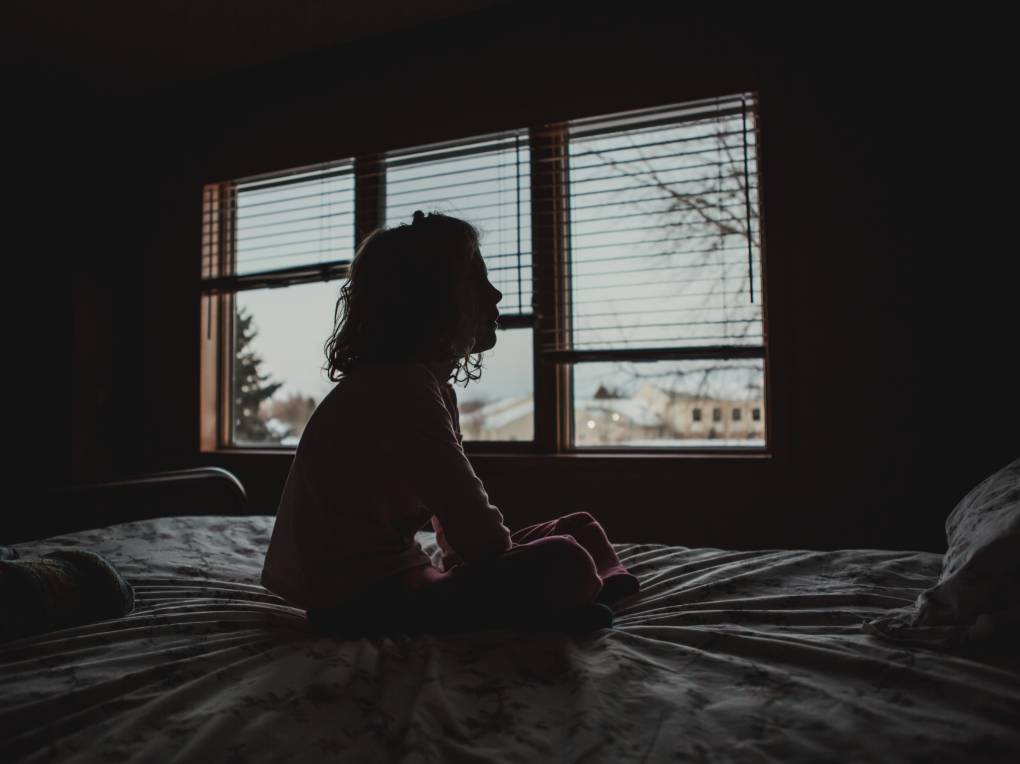
"caption": "According to the CDC, between March and May, 2020, hospitals across the country saw a 24% increase in mental health emergency visits by kids aged 5 to 11 years old, and a 31% increase for kids 12 to 17.\n",
"description": "Little girl sits on a bed in a dark bedroom with blue sky and trees can be seen behind her in the window.",
"title": "According to the CDC, between March and May, 2020, hospitals across the country saw a 24% increase in mental health emergency visits by kids aged 5 to 11 years old, and a 31% increase for kids 12 to 17.",
"credit": "Annie Otzen/Getty Images",
"status": "inherit",
"altTag": null,
"isLoading": false,
"fetchFailed": false
},
"mindshift_58448": {
"type": "attachments",
"id": "mindshift_58448",
"meta": {
"index": "attachments_1716263798",
"site": "mindshift",
"id": "58448",
"found": true
},
"parent": 58447,
"imgSizes": {
"twentyfourteen-full-width": {
"file": "https://ww2.kqed.org/app/uploads/sites/23/2021/09/IllinoisSchoolBus-fbbd1bfb4dea89079cb8719580ee2e647a48a1cd-1038x576.jpg",
"width": 1038,
"mimeType": "image/jpeg",
"height": 576
},
"thumbnail": {
"file": "https://ww2.kqed.org/app/uploads/sites/23/2021/09/IllinoisSchoolBus-fbbd1bfb4dea89079cb8719580ee2e647a48a1cd-160x120.jpg",
"width": 160,
"mimeType": "image/jpeg",
"height": 120
},
"post-thumbnail": {
"file": "https://ww2.kqed.org/app/uploads/sites/23/2021/09/IllinoisSchoolBus-fbbd1bfb4dea89079cb8719580ee2e647a48a1cd-672x372.jpg",
"width": 672,
"mimeType": "image/jpeg",
"height": 372
},
"kqedFullSize": {
"file": "https://ww2.kqed.org/app/uploads/sites/23/2021/09/IllinoisSchoolBus-fbbd1bfb4dea89079cb8719580ee2e647a48a1cd-scaled-e1630652687930.jpg",
"width": 1920,
"height": 1440
},
"2048x2048": {
"file": "https://ww2.kqed.org/app/uploads/sites/23/2021/09/IllinoisSchoolBus-fbbd1bfb4dea89079cb8719580ee2e647a48a1cd-2048x1536.jpg",
"width": 2048,
"mimeType": "image/jpeg",
"height": 1536
},
"large": {
"file": "https://ww2.kqed.org/app/uploads/sites/23/2021/09/IllinoisSchoolBus-fbbd1bfb4dea89079cb8719580ee2e647a48a1cd-1020x765.jpg",
"width": 1020,
"mimeType": "image/jpeg",
"height": 765
},
"1536x1536": {
"file": "https://ww2.kqed.org/app/uploads/sites/23/2021/09/IllinoisSchoolBus-fbbd1bfb4dea89079cb8719580ee2e647a48a1cd-1536x1152.jpg",
"width": 1536,
"mimeType": "image/jpeg",
"height": 1152
},
"full-width": {
"file": "https://ww2.kqed.org/app/uploads/sites/23/2021/09/IllinoisSchoolBus-fbbd1bfb4dea89079cb8719580ee2e647a48a1cd-1920x1440.jpg",
"width": 1920,
"mimeType": "image/jpeg",
"height": 1440
},
"medium": {
"file": "https://ww2.kqed.org/app/uploads/sites/23/2021/09/IllinoisSchoolBus-fbbd1bfb4dea89079cb8719580ee2e647a48a1cd-800x600.jpg",
"width": 800,
"mimeType": "image/jpeg",
"height": 600
},
"medium_large": {
"file": "https://ww2.kqed.org/app/uploads/sites/23/2021/09/IllinoisSchoolBus-fbbd1bfb4dea89079cb8719580ee2e647a48a1cd-768x576.jpg",
"width": 768,
"mimeType": "image/jpeg",
"height": 576
}
},
"publishDate": 1630652594,
"modified": 1630652746,
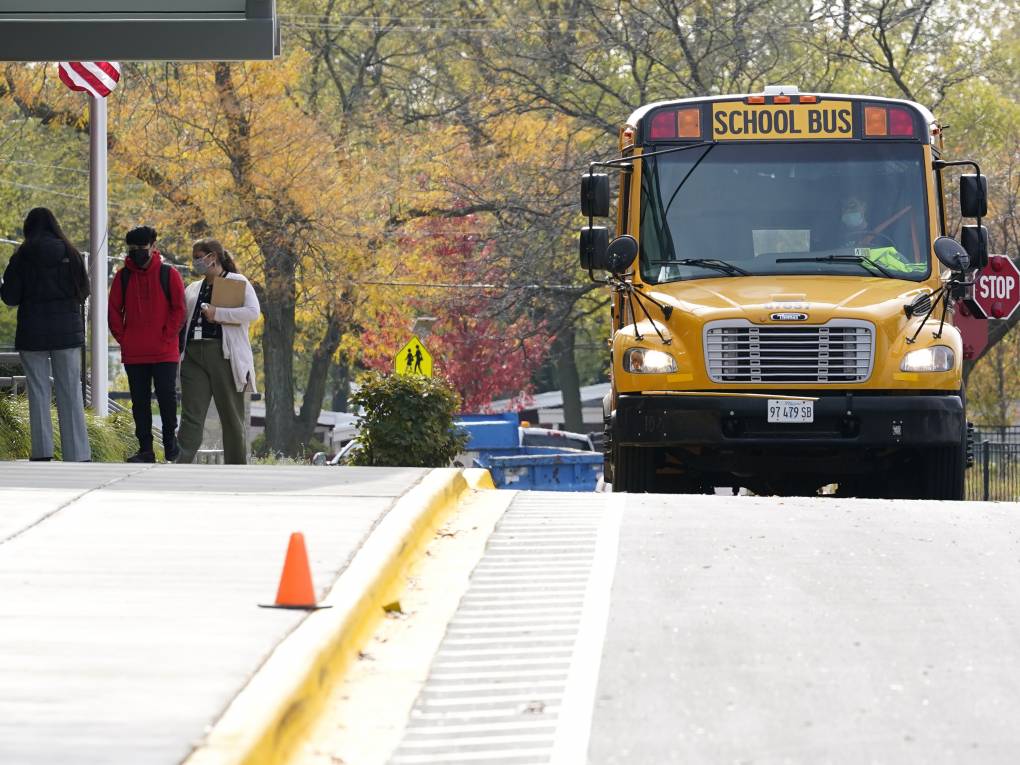
"caption": "Students wear mask as they arrive their school for in- person learning at Holmes Middle School in Wheeling, Ill., Wednesday, Oct. 21, 2020. The Lake County Health Department recommended that all public and private schools in the county currently education children in the classroom immediately return to virtual learning because of the threats posed by the coronavirus pandemic. ",
"description": "Students wear mask as they arrive their school for in- person learning at Holmes Middle School in Wheeling, Ill., Wednesday, Oct. 21, 2020. The Lake County Health Department recommended that all public and private schools in the county currently education children in the classroom immediately return to virtual learning because of the threats posed by the coronavirus pandemic. ",
"title": "Students wear mask as they arrive at school for in-person learning at Holmes Middle School in Wheeling, Ill., on Oct. 21, 2020. Students in Illinois schools will be able to take up to five excused mental or behavioral health days beginning in January 2022.",
"credit": "AP Photo/Nam Y. Huh",
"status": "inherit",
"altTag": null,
"isLoading": false,
"fetchFailed": false
},
"mindshift_58440": {
"type": "attachments",
"id": "mindshift_58440",
"meta": {
"index": "attachments_1716263798",
"site": "mindshift",
"id": "58440",
"found": true
},
"parent": 58439,
"imgSizes": {
"twentyfourteen-full-width": {
"file": "https://ww2.kqed.org/app/uploads/sites/23/2021/09/dwyer_dee-podcast-8_custom-98179471ff60c2960cab4864ae18dca0954c2677-1038x576.jpg",
"width": 1038,
"mimeType": "image/jpeg",
"height": 576
},
"thumbnail": {
"file": "https://ww2.kqed.org/app/uploads/sites/23/2021/09/dwyer_dee-podcast-8_custom-98179471ff60c2960cab4864ae18dca0954c2677-160x127.jpg",
"width": 160,
"mimeType": "image/jpeg",
"height": 127
},
"post-thumbnail": {
"file": "https://ww2.kqed.org/app/uploads/sites/23/2021/09/dwyer_dee-podcast-8_custom-98179471ff60c2960cab4864ae18dca0954c2677-672x372.jpg",
"width": 672,
"mimeType": "image/jpeg",
"height": 372
},
"kqedFullSize": {
"file": "https://ww2.kqed.org/app/uploads/sites/23/2021/09/dwyer_dee-podcast-8_custom-98179471ff60c2960cab4864ae18dca0954c2677.jpg",
"width": 2000,
"height": 1593
},
"large": {
"file": "https://ww2.kqed.org/app/uploads/sites/23/2021/09/dwyer_dee-podcast-8_custom-98179471ff60c2960cab4864ae18dca0954c2677-1020x812.jpg",
"width": 1020,
"mimeType": "image/jpeg",
"height": 812
},
"1536x1536": {
"file": "https://ww2.kqed.org/app/uploads/sites/23/2021/09/dwyer_dee-podcast-8_custom-98179471ff60c2960cab4864ae18dca0954c2677-1536x1223.jpg",
"width": 1536,
"mimeType": "image/jpeg",
"height": 1223
},
"full-width": {
"file": "https://ww2.kqed.org/app/uploads/sites/23/2021/09/dwyer_dee-podcast-8_custom-98179471ff60c2960cab4864ae18dca0954c2677-1920x1529.jpg",
"width": 1920,
"mimeType": "image/jpeg",
"height": 1529
},
"medium": {
"file": "https://ww2.kqed.org/app/uploads/sites/23/2021/09/dwyer_dee-podcast-8_custom-98179471ff60c2960cab4864ae18dca0954c2677-800x637.jpg",
"width": 800,
"mimeType": "image/jpeg",
"height": 637
},
"medium_large": {
"file": "https://ww2.kqed.org/app/uploads/sites/23/2021/09/dwyer_dee-podcast-8_custom-98179471ff60c2960cab4864ae18dca0954c2677-768x612.jpg",
"width": 768,
"mimeType": "image/jpeg",
"height": 612
}
},
"publishDate": 1630651868,
"modified": 1630651943,
"caption": null,
"description": "Jonetta Harrison\nMakiyah Hicks in front of their high school Duke Ellington in Washington, D.C. They help to produce the first podcast titled \"Loss and Transformation\" produced by the Technical Design & Production department at Duke Ellington School of the Arts.",
"title": "Makiyah Hicks and Jonetta Harrison in front of their high school, Duke Ellington School of the Arts, in Washington, D.C. They are finalists in this year's NPR Student Podcast Challenge for their entry \"Loss and Transformation.\"",
"credit": null,
"status": "inherit",
"altTag": null,
"isLoading": false,
"fetchFailed": false
},
"mindshift_58427": {
"type": "attachments",
"id": "mindshift_58427",
"meta": {
"index": "attachments_1716263798",
"site": "mindshift",
"id": "58427",
"found": true
},
"parent": 58426,
"imgSizes": {
"twentyfourteen-full-width": {
"file": "https://ww2.kqed.org/app/uploads/sites/23/2021/08/gettyimages-1152656345-876e1f998ef784fa6c6ae3a79cf8c7c243956cfc-1038x576.jpg",
"width": 1038,
"mimeType": "image/jpeg",
"height": 576
},
"thumbnail": {
"file": "https://ww2.kqed.org/app/uploads/sites/23/2021/08/gettyimages-1152656345-876e1f998ef784fa6c6ae3a79cf8c7c243956cfc-160x120.jpg",
"width": 160,
"mimeType": "image/jpeg",
"height": 120
},
"post-thumbnail": {
"file": "https://ww2.kqed.org/app/uploads/sites/23/2021/08/gettyimages-1152656345-876e1f998ef784fa6c6ae3a79cf8c7c243956cfc-672x372.jpg",
"width": 672,
"mimeType": "image/jpeg",
"height": 372
},
"kqedFullSize": {
"file": "https://ww2.kqed.org/app/uploads/sites/23/2021/08/gettyimages-1152656345-876e1f998ef784fa6c6ae3a79cf8c7c243956cfc-scaled-e1630478535243.jpg",
"width": 1920,
"height": 1438
},
"2048x2048": {
"file": "https://ww2.kqed.org/app/uploads/sites/23/2021/08/gettyimages-1152656345-876e1f998ef784fa6c6ae3a79cf8c7c243956cfc-2048x1534.jpg",
"width": 2048,
"mimeType": "image/jpeg",
"height": 1534
},
"large": {
"file": "https://ww2.kqed.org/app/uploads/sites/23/2021/08/gettyimages-1152656345-876e1f998ef784fa6c6ae3a79cf8c7c243956cfc-1020x764.jpg",
"width": 1020,
"mimeType": "image/jpeg",
"height": 764
},
"1536x1536": {
"file": "https://ww2.kqed.org/app/uploads/sites/23/2021/08/gettyimages-1152656345-876e1f998ef784fa6c6ae3a79cf8c7c243956cfc-1536x1150.jpg",
"width": 1536,
"mimeType": "image/jpeg",
"height": 1150
},
"full-width": {
"file": "https://ww2.kqed.org/app/uploads/sites/23/2021/08/gettyimages-1152656345-876e1f998ef784fa6c6ae3a79cf8c7c243956cfc-1920x1438.jpg",
"width": 1920,
"mimeType": "image/jpeg",
"height": 1438
},
"medium": {
"file": "https://ww2.kqed.org/app/uploads/sites/23/2021/08/gettyimages-1152656345-876e1f998ef784fa6c6ae3a79cf8c7c243956cfc-800x599.jpg",
"width": 800,
"mimeType": "image/jpeg",
"height": 599
},
"medium_large": {
"file": "https://ww2.kqed.org/app/uploads/sites/23/2021/08/gettyimages-1152656345-876e1f998ef784fa6c6ae3a79cf8c7c243956cfc-768x575.jpg",
"width": 768,
"mimeType": "image/jpeg",
"height": 575
}
},
"publishDate": 1630478507,
"modified": 1630478569,
"caption": null,
"description": null,
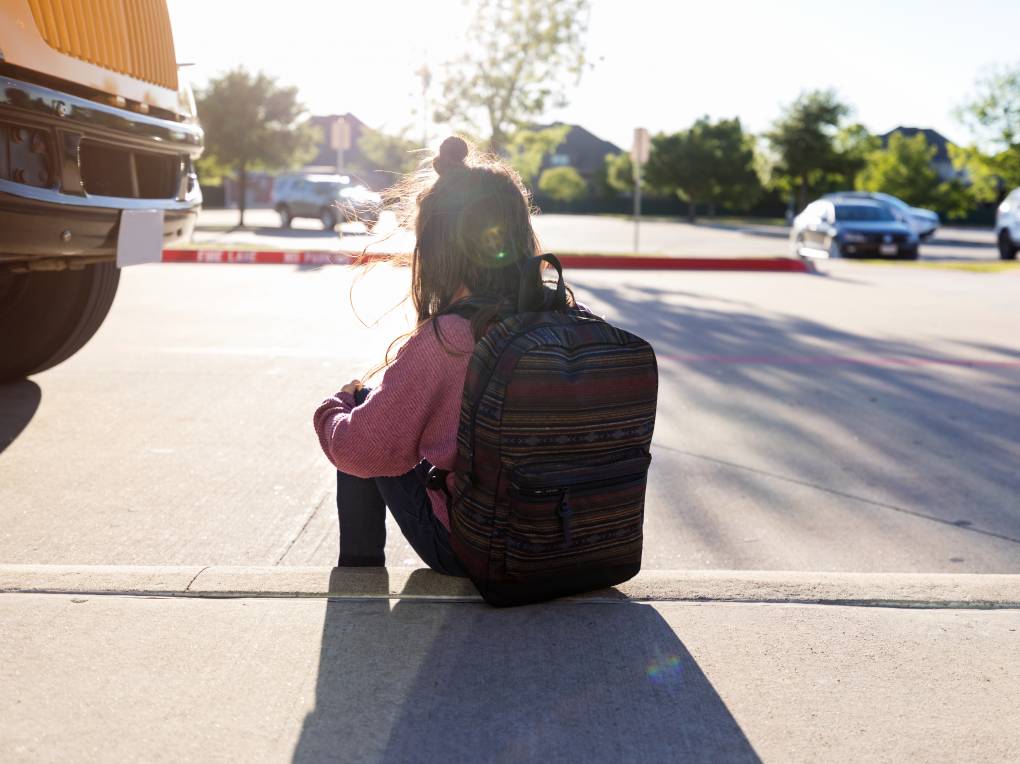
"title": "\"We have already been seeing a lot of pick up in pre-existing anxiety in anticipation of school starting,\" says child and adolescent psychiatrist Dr. Ujjwal Ramtekkar. \"They're worried about getting sick,\" or their parents getting sick.",
"credit": "SDI Productions/Getty Images",
"status": "inherit",
"altTag": "An unknown schoolgirl with a backpack hugs her knees and sits on the curb by herself at a bus stop, while the bus is parked nearby.",
"isLoading": false,
"fetchFailed": false
},
"mindshift_58402": {
"type": "attachments",
"id": "mindshift_58402",
"meta": {
"index": "attachments_1716263798",
"site": "mindshift",
"id": "58402",
"found": true
},
"parent": 58377,
"imgSizes": {
"twentyfourteen-full-width": {
"file": "https://ww2.kqed.org/app/uploads/sites/23/2021/08/Unplanned-Lessons-1038x576.png",
"width": 1038,
"mimeType": "image/png",
"height": 576
},
"thumbnail": {
"file": "https://ww2.kqed.org/app/uploads/sites/23/2021/08/Unplanned-Lessons-160x50.png",
"width": 160,
"mimeType": "image/png",
"height": 50
},
"post-thumbnail": {
"file": "https://ww2.kqed.org/app/uploads/sites/23/2021/08/Unplanned-Lessons-672x372.png",
"width": 672,
"mimeType": "image/png",
"height": 372
},
"kqedFullSize": {
"file": "https://ww2.kqed.org/app/uploads/sites/23/2021/08/Unplanned-Lessons.png",
"width": 2730,
"height": 858
},
"2048x2048": {
"file": "https://ww2.kqed.org/app/uploads/sites/23/2021/08/Unplanned-Lessons-2048x644.png",
"width": 2048,
"mimeType": "image/png",
"height": 644
},
"large": {
"file": "https://ww2.kqed.org/app/uploads/sites/23/2021/08/Unplanned-Lessons-1020x321.png",
"width": 1020,
"mimeType": "image/png",
"height": 321
},
"1536x1536": {
"file": "https://ww2.kqed.org/app/uploads/sites/23/2021/08/Unplanned-Lessons-1536x483.png",
"width": 1536,
"mimeType": "image/png",
"height": 483
},
"full-width": {
"file": "https://ww2.kqed.org/app/uploads/sites/23/2021/08/Unplanned-Lessons-1920x603.png",
"width": 1920,
"mimeType": "image/png",
"height": 603
},
"medium": {
"file": "https://ww2.kqed.org/app/uploads/sites/23/2021/08/Unplanned-Lessons-800x251.png",
"width": 800,
"mimeType": "image/png",
"height": 251
},
"medium_large": {
"file": "https://ww2.kqed.org/app/uploads/sites/23/2021/08/Unplanned-Lessons-768x241.png",
"width": 768,
"mimeType": "image/png",
"height": 241
}
},
"publishDate": 1630310299,
"modified": 1630310299,
"caption": null,
"description": null,
"title": "Unplanned Lessons",
"credit": null,
"status": "inherit",
"altTag": null,
"isLoading": false,
"fetchFailed": false
},
"mindshift_58264": {
"type": "attachments",
"id": "mindshift_58264",
"meta": {
"index": "attachments_1716263798",
"site": "mindshift",
"id": "58264",
"found": true
},
"parent": 58263,
"imgSizes": {
"twentyfourteen-full-width": {
"file": "https://ww2.kqed.org/app/uploads/sites/23/2021/08/Jo-Napolitano-IMG_9742-e1628552222219-1038x576.jpg",
"width": 1038,
"mimeType": "image/jpeg",
"height": 576
},
"thumbnail": {
"file": "https://ww2.kqed.org/app/uploads/sites/23/2021/08/Jo-Napolitano-IMG_9742-e1628552222219-160x116.jpg",
"width": 160,
"mimeType": "image/jpeg",
"height": 116
},
"post-thumbnail": {
"file": "https://ww2.kqed.org/app/uploads/sites/23/2021/08/Jo-Napolitano-IMG_9742-e1628552222219-672x372.jpg",
"width": 672,
"mimeType": "image/jpeg",
"height": 372
},
"kqedFullSize": {
"file": "https://ww2.kqed.org/app/uploads/sites/23/2021/08/Jo-Napolitano-IMG_9742-e1628552243615.jpg",
"width": 1920,
"height": 1398
},
"large": {
"file": "https://ww2.kqed.org/app/uploads/sites/23/2021/08/Jo-Napolitano-IMG_9742-e1628552222219-1020x743.jpg",
"width": 1020,
"mimeType": "image/jpeg",
"height": 743
},
"1536x1536": {
"file": "https://ww2.kqed.org/app/uploads/sites/23/2021/08/Jo-Napolitano-IMG_9742-e1628552222219-1536x1118.jpg",
"width": 1536,
"mimeType": "image/jpeg",
"height": 1118
},
"full-width": {
"file": "https://ww2.kqed.org/app/uploads/sites/23/2021/08/Jo-Napolitano-IMG_9742-e1628552222219-1920x1398.jpg",
"width": 1920,
"mimeType": "image/jpeg",
"height": 1398
},
"medium": {
"file": "https://ww2.kqed.org/app/uploads/sites/23/2021/08/Jo-Napolitano-IMG_9742-e1628552222219-800x582.jpg",
"width": 800,
"mimeType": "image/jpeg",
"height": 582
},
"medium_large": {
"file": "https://ww2.kqed.org/app/uploads/sites/23/2021/08/Jo-Napolitano-IMG_9742-e1628552222219-768x559.jpg",
"width": 768,
"mimeType": "image/jpeg",
"height": 559
}
},
"publishDate": 1628552036,
"modified": 1628552290,
"caption": "Allison Perez, 11, on the cusp of sixth grade in the Elmsford Union Free School District, some 20 miles north of Manhattan, jumps into the air to help propel her hand-made rocket, which soon launched into the sky before crashing to the ground. ",
"description": null,
"title": "Jo Napolitano - IMG_9742",
"credit": "Jo Napolitano for The Hechinger Report",
"status": "inherit",
"altTag": "Students jump on pump to propel their rockets into the air",
"isLoading": false,
"fetchFailed": false
},
"mindshift_57988": {
"type": "attachments",
"id": "mindshift_57988",
"meta": {
"index": "attachments_1716263798",
"site": "mindshift",
"id": "57988",
"found": true
},
"parent": 57982,
"imgSizes": {
"twentyfourteen-full-width": {
"file": "https://ww2.kqed.org/app/uploads/sites/23/2021/06/iStock-1198225660-copy-1038x576.jpg",
"width": 1038,
"mimeType": "image/jpeg",
"height": 576
},
"thumbnail": {
"file": "https://ww2.kqed.org/app/uploads/sites/23/2021/06/iStock-1198225660-copy-160x90.jpg",
"width": 160,
"mimeType": "image/jpeg",
"height": 90
},
"post-thumbnail": {
"file": "https://ww2.kqed.org/app/uploads/sites/23/2021/06/iStock-1198225660-copy-672x372.jpg",
"width": 672,
"mimeType": "image/jpeg",
"height": 372
},
"kqedFullSize": {
"file": "https://ww2.kqed.org/app/uploads/sites/23/2021/06/iStock-1198225660-copy.jpg",
"width": 1920,
"height": 1080
},
"large": {
"file": "https://ww2.kqed.org/app/uploads/sites/23/2021/06/iStock-1198225660-copy-1020x574.jpg",
"width": 1020,
"mimeType": "image/jpeg",
"height": 574
},
"1536x1536": {
"file": "https://ww2.kqed.org/app/uploads/sites/23/2021/06/iStock-1198225660-copy-1536x864.jpg",
"width": 1536,
"mimeType": "image/jpeg",
"height": 864
},
"medium": {
"file": "https://ww2.kqed.org/app/uploads/sites/23/2021/06/iStock-1198225660-copy-800x450.jpg",
"width": 800,
"mimeType": "image/jpeg",
"height": 450
},
"medium_large": {
"file": "https://ww2.kqed.org/app/uploads/sites/23/2021/06/iStock-1198225660-copy-768x432.jpg",
"width": 768,
"mimeType": "image/jpeg",
"height": 432
}
},
"publishDate": 1623697374,
"modified": 1623697416,
"caption": null,
"description": null,
"title": "iStock-1198225660-copy",
"credit": "Intpro/iStock",
"status": "inherit",
"altTag": null,
"isLoading": false,
"fetchFailed": false
},
"mindshift_58057": {
"type": "attachments",
"id": "mindshift_58057",
"meta": {
"index": "attachments_1716263798",
"site": "mindshift",
"id": "58057",
"found": true
},
"parent": 58055,
"imgSizes": {
"twentyfourteen-full-width": {
"file": "https://ww2.kqed.org/app/uploads/sites/23/2021/06/RS44115_004_KQED_Oakland_SchoolPods_ElisaCecaci_07272020-qut-1038x576.jpg",
"width": 1038,
"mimeType": "image/jpeg",
"height": 576
},
"thumbnail": {
"file": "https://ww2.kqed.org/app/uploads/sites/23/2021/06/RS44115_004_KQED_Oakland_SchoolPods_ElisaCecaci_07272020-qut-160x107.jpg",
"width": 160,
"mimeType": "image/jpeg",
"height": 107
},
"post-thumbnail": {
"file": "https://ww2.kqed.org/app/uploads/sites/23/2021/06/RS44115_004_KQED_Oakland_SchoolPods_ElisaCecaci_07272020-qut-672x372.jpg",
"width": 672,
"mimeType": "image/jpeg",
"height": 372
},
"kqedFullSize": {
"file": "https://ww2.kqed.org/app/uploads/sites/23/2021/06/RS44115_004_KQED_Oakland_SchoolPods_ElisaCecaci_07272020-qut.jpg",
"width": 1920,
"height": 1280
},
"large": {
"file": "https://ww2.kqed.org/app/uploads/sites/23/2021/06/RS44115_004_KQED_Oakland_SchoolPods_ElisaCecaci_07272020-qut-1020x680.jpg",
"width": 1020,
"mimeType": "image/jpeg",
"height": 680
},
"1536x1536": {
"file": "https://ww2.kqed.org/app/uploads/sites/23/2021/06/RS44115_004_KQED_Oakland_SchoolPods_ElisaCecaci_07272020-qut-1536x1024.jpg",
"width": 1536,
"mimeType": "image/jpeg",
"height": 1024
},
"medium": {
"file": "https://ww2.kqed.org/app/uploads/sites/23/2021/06/RS44115_004_KQED_Oakland_SchoolPods_ElisaCecaci_07272020-qut-800x533.jpg",
"width": 800,
"mimeType": "image/jpeg",
"height": 533
},
"medium_large": {
"file": "https://ww2.kqed.org/app/uploads/sites/23/2021/06/RS44115_004_KQED_Oakland_SchoolPods_ElisaCecaci_07272020-qut-768x512.jpg",
"width": 768,
"mimeType": "image/jpeg",
"height": 512
}
},
"publishDate": 1624911977,
"modified": 1625037692,
"caption": null,
"description": null,
"title": "RS44115_004_KQED_Oakland_SchoolPods_ElisaCecaci_07272020-qut",
"credit": "Beth LaBerge/KQED",
"status": "inherit",
"altTag": null,
"isLoading": false,
"fetchFailed": false
},
"mindshift_58065": {
"type": "attachments",
"id": "mindshift_58065",
"meta": {
"index": "attachments_1716263798",
"site": "mindshift",
"id": "58065",
"found": true
},
"parent": 58064,
"imgSizes": {
"twentyfourteen-full-width": {
"file": "https://ww2.kqed.org/app/uploads/sites/23/2021/06/awe-science-2_enl-710e561a55b4e3af84670044ef95ab0e718ba444-1038x576.jpg",
"width": 1038,
"mimeType": "image/jpeg",
"height": 576
},
"thumbnail": {
"file": "https://ww2.kqed.org/app/uploads/sites/23/2021/06/awe-science-2_enl-710e561a55b4e3af84670044ef95ab0e718ba444-160x107.jpg",
"width": 160,
"mimeType": "image/jpeg",
"height": 107
},
"post-thumbnail": {
"file": "https://ww2.kqed.org/app/uploads/sites/23/2021/06/awe-science-2_enl-710e561a55b4e3af84670044ef95ab0e718ba444-672x372.jpg",
"width": 672,
"mimeType": "image/jpeg",
"height": 372
},
"kqedFullSize": {
"file": "https://ww2.kqed.org/app/uploads/sites/23/2021/06/awe-science-2_enl-710e561a55b4e3af84670044ef95ab0e718ba444.jpg",
"width": 2000,
"height": 1333
},
"large": {
"file": "https://ww2.kqed.org/app/uploads/sites/23/2021/06/awe-science-2_enl-710e561a55b4e3af84670044ef95ab0e718ba444-1020x680.jpg",
"width": 1020,
"mimeType": "image/jpeg",
"height": 680
},
"1536x1536": {
"file": "https://ww2.kqed.org/app/uploads/sites/23/2021/06/awe-science-2_enl-710e561a55b4e3af84670044ef95ab0e718ba444-1536x1024.jpg",
"width": 1536,
"mimeType": "image/jpeg",
"height": 1024
},
"full-width": {
"file": "https://ww2.kqed.org/app/uploads/sites/23/2021/06/awe-science-2_enl-710e561a55b4e3af84670044ef95ab0e718ba444-1920x1280.jpg",
"width": 1920,
"mimeType": "image/jpeg",
"height": 1280
},
"medium": {
"file": "https://ww2.kqed.org/app/uploads/sites/23/2021/06/awe-science-2_enl-710e561a55b4e3af84670044ef95ab0e718ba444-800x533.jpg",
"width": 800,
"mimeType": "image/jpeg",
"height": 533
},
"medium_large": {
"file": "https://ww2.kqed.org/app/uploads/sites/23/2021/06/awe-science-2_enl-710e561a55b4e3af84670044ef95ab0e718ba444-768x512.jpg",
"width": 768,
"mimeType": "image/jpeg",
"height": 512
}
},
"publishDate": 1625036960,
"modified": 1625037191,
"caption": null,
"description": null,
"title": "During the pandemic, many people have felt their mental health decline. The problem has hit essential workers and young adults, ages 18 to 24, the worst, the Kaiser Family Foundation reported in May. The percentage of adults with signs of anxiety or depression has grown threefold, from about 10% to 30%.",
"credit": "Meredith Rizzo/NPR",
"status": "inherit",
"altTag": null,
"isLoading": false,
"fetchFailed": false
},
"mindshift_57993": {
"type": "attachments",
"id": "mindshift_57993",
"meta": {
"index": "attachments_1716263798",
"site": "mindshift",
"id": "57993",
"found": true
},
"parent": 57992,
"imgSizes": {
"twentyfourteen-full-width": {
"file": "https://ww2.kqed.org/app/uploads/sites/23/2021/06/npr_lifekit_disenfranchisedgrief_final_sg_1920x1080px_wide-b3e79ed9a57a8be374e1319713aa810fd79022d2-1038x576.png",
"width": 1038,
"mimeType": "image/png",
"height": 576
},
"thumbnail": {
"file": "https://ww2.kqed.org/app/uploads/sites/23/2021/06/npr_lifekit_disenfranchisedgrief_final_sg_1920x1080px_wide-b3e79ed9a57a8be374e1319713aa810fd79022d2-160x90.png",
"width": 160,
"mimeType": "image/png",
"height": 90
},
"post-thumbnail": {
"file": "https://ww2.kqed.org/app/uploads/sites/23/2021/06/npr_lifekit_disenfranchisedgrief_final_sg_1920x1080px_wide-b3e79ed9a57a8be374e1319713aa810fd79022d2-672x372.png",
"width": 672,
"mimeType": "image/png",
"height": 372
},
"kqedFullSize": {
"file": "https://ww2.kqed.org/app/uploads/sites/23/2021/06/npr_lifekit_disenfranchisedgrief_final_sg_1920x1080px_wide-b3e79ed9a57a8be374e1319713aa810fd79022d2.png",
"width": 1916,
"height": 1078
},
"large": {
"file": "https://ww2.kqed.org/app/uploads/sites/23/2021/06/npr_lifekit_disenfranchisedgrief_final_sg_1920x1080px_wide-b3e79ed9a57a8be374e1319713aa810fd79022d2-1020x574.png",
"width": 1020,
"mimeType": "image/png",
"height": 574
},
"1536x1536": {
"file": "https://ww2.kqed.org/app/uploads/sites/23/2021/06/npr_lifekit_disenfranchisedgrief_final_sg_1920x1080px_wide-b3e79ed9a57a8be374e1319713aa810fd79022d2-1536x864.png",
"width": 1536,
"mimeType": "image/png",
"height": 864
},
"medium": {
"file": "https://ww2.kqed.org/app/uploads/sites/23/2021/06/npr_lifekit_disenfranchisedgrief_final_sg_1920x1080px_wide-b3e79ed9a57a8be374e1319713aa810fd79022d2-800x450.png",
"width": 800,
"mimeType": "image/png",
"height": 450
},
"medium_large": {
"file": "https://ww2.kqed.org/app/uploads/sites/23/2021/06/npr_lifekit_disenfranchisedgrief_final_sg_1920x1080px_wide-b3e79ed9a57a8be374e1319713aa810fd79022d2-768x432.png",
"width": 768,
"mimeType": "image/png",
"height": 432
}
},
"publishDate": 1623745387,
"modified": 1623745589,
"caption": null,
"description": null,
"title": "An illustration of a young adult woman standing at the sink washing dishes in an eerie pink light, viewed from behind. Her reflection in the window is wavy and distorted, communicating persistent sadness.",
"credit": "Sarah Gonzales for NPR",
"status": "inherit",
"altTag": null,
"isLoading": false,
"fetchFailed": false
}
},
"audioPlayerReducer": {
"postId": "stream_live",
"isPaused": true,
"isPlaying": false,
"pfsActive": false,
"pledgeModalIsOpen": true,
"playerDrawerIsOpen": false,
"liveAudioPlayStartedAt": 0,
"liveAudioPlayContext": ""
},
"authorsReducer": {
"byline_mindshift_58663": {
"type": "authors",
"id": "byline_mindshift_58663",
"meta": {
"override": true
},
"slug": "byline_mindshift_58663",
"name": "Deepa Shivaram",
"isLoading": false
},
"byline_mindshift_58572": {
"type": "authors",
"id": "byline_mindshift_58572",
"meta": {
"override": true
},
"slug": "byline_mindshift_58572",
"name": "Kalyn Belsha, \u003ca href=\"https://www.chalkbeat.org/2021/9/27/22691601/student-behavior-stress-trauma-return/\">Chalkbeat\u003c/a>",
"isLoading": false
},
"byline_mindshift_58525": {
"type": "authors",
"id": "byline_mindshift_58525",
"meta": {
"override": true
},
"slug": "byline_mindshift_58525",
"name": "Rhitu Chatterjee",
"isLoading": false
},
"byline_mindshift_58447": {
"type": "authors",
"id": "byline_mindshift_58447",
"meta": {
"override": true
},
"slug": "byline_mindshift_58447",
"name": "Jonathan Franklin",
"isLoading": false
},
"byline_mindshift_58439": {
"type": "authors",
"id": "byline_mindshift_58439",
"meta": {
"override": true
},
"slug": "byline_mindshift_58439",
"name": "Sequoia Carrillo and Sneha Dey",
"isLoading": false
},
"byline_mindshift_58426": {
"type": "authors",
"id": "byline_mindshift_58426",
"meta": {
"override": true
},
"slug": "byline_mindshift_58426",
"name": "Rhitu Chatterjee",
"isLoading": false
},
"byline_mindshift_58263": {
"type": "authors",
"id": "byline_mindshift_58263",
"meta": {
"override": true
},
"slug": "byline_mindshift_58263",
"name": "Jo Napolitano, \u003ca href=\"https://hechingerreport.org/\">The Hechinger Report\u003c/a>",
"isLoading": false
},
"byline_mindshift_58064": {
"type": "authors",
"id": "byline_mindshift_58064",
"meta": {
"override": true
},
"slug": "byline_mindshift_58064",
"name": "Michaeleen Doucleff",
"isLoading": false
},
"byline_mindshift_57992": {
"type": "authors",
"id": "byline_mindshift_57992",
"meta": {
"override": true
},
"slug": "byline_mindshift_57992",
"name": "Kavitha Cardoza and Clare Marie Schneider",
"isLoading": false
},
"ksung": {
"type": "authors",
"id": "4596",
"meta": {
"index": "authors_1716337520",
"id": "4596",
"found": true
},
"name": "Ki Sung",
"firstName": "Ki",
"lastName": "Sung",
"slug": "ksung",
"email": "ksung@kqed.org",
"display_author_email": false,
"staff_mastheads": [
"news"
],
"title": "KQED Contributor",
"bio": "Ki Sung is Managing Editor of Digital News at KQED. She is former Senior Editor of MindShift and worked at NPR before joining KQED in 2014.",
"avatar": "https://secure.gravatar.com/avatar/64271e01dc95486c133be56937739045b7c00c990525bf9add12d3dd4f0433c9?s=600&d=blank&r=g",
"twitter": null,
"bluesky": null,
"facebook": null,
"instagram": null,
"linkedin": null,
"sites": [
{
"site": "arts",
"roles": [
"administrator"
]
},
{
"site": "news",
"roles": [
"administrator"
]
},
{
"site": "mindshift",
"roles": [
"administrator"
]
},
{
"site": "science",
"roles": [
"administrator"
]
},
{
"site": "forum",
"roles": [
"administrator"
]
},
{
"site": "perspectives",
"roles": [
"administrator"
]
},
{
"site": "elections",
"roles": [
"administrator"
]
}
],
"headData": {
"title": "Ki Sung | KQED",
"description": "KQED Contributor",
"ogImgSrc": "https://secure.gravatar.com/avatar/64271e01dc95486c133be56937739045b7c00c990525bf9add12d3dd4f0433c9?s=600&d=blank&r=g",
"twImgSrc": "https://secure.gravatar.com/avatar/64271e01dc95486c133be56937739045b7c00c990525bf9add12d3dd4f0433c9?s=600&d=blank&r=g"
},
"isLoading": false,
"link": "/author/ksung"
},
"kdnewhouse": {
"type": "authors",
"id": "11487",
"meta": {
"index": "authors_1716337520",
"id": "11487",
"found": true
},
"name": "Kara Newhouse",
"firstName": "Kara",
"lastName": "Newhouse",
"slug": "kdnewhouse",
"email": "knewhouse@kqed.org",
"display_author_email": false,
"staff_mastheads": [],
"title": "MindShift Editor",
"bio": null,
"avatar": "https://secure.gravatar.com/avatar/3dceed6fb271527113abfa9a8e9df34e?s=600&d=blank&r=g",
"twitter": null,
"facebook": null,
"instagram": null,
"linkedin": null,
"sites": [
{
"site": "",
"roles": [
"editor"
]
},
{
"site": "mindshift",
"roles": []
}
],
"headData": {
"title": "Kara Newhouse | KQED",
"description": "MindShift Editor",
"ogImgSrc": "https://secure.gravatar.com/avatar/3dceed6fb271527113abfa9a8e9df34e?s=600&d=blank&r=g",
"twImgSrc": "https://secure.gravatar.com/avatar/3dceed6fb271527113abfa9a8e9df34e?s=600&d=blank&r=g"
},
"isLoading": false,
"link": "/author/kdnewhouse"
},
"ngobir": {
"type": "authors",
"id": "11721",
"meta": {
"index": "authors_1716337520",
"id": "11721",
"found": true
},
"name": "Nimah Gobir",
"firstName": "Nimah",
"lastName": "Gobir",
"slug": "ngobir",
"email": "ngobir@kqed.org",
"display_author_email": false,
"staff_mastheads": [],
"title": "KQED Contributor",
"bio": null,
"avatar": "https://secure.gravatar.com/avatar/837f5df7045c59f3ec097cdf7ac391373ab75d5ec936dd7099b8cb6f0af1b0e9?s=600&d=blank&r=g",
"twitter": null,
"bluesky": null,
"facebook": null,
"instagram": null,
"linkedin": null,
"sites": [
{
"site": "mindshift",
"roles": [
"editor"
]
}
],
"headData": {
"title": "Nimah Gobir | KQED",
"description": "KQED Contributor",
"ogImgSrc": "https://secure.gravatar.com/avatar/837f5df7045c59f3ec097cdf7ac391373ab75d5ec936dd7099b8cb6f0af1b0e9?s=600&d=blank&r=g",
"twImgSrc": "https://secure.gravatar.com/avatar/837f5df7045c59f3ec097cdf7ac391373ab75d5ec936dd7099b8cb6f0af1b0e9?s=600&d=blank&r=g"
},
"isLoading": false,
"link": "/author/ngobir"
}
},
"pagesReducer": {
"mindshift_category_mental-health": {
"type": "terms",
"id": "mindshift_21280",
"meta": {
"index": "terms_1716263798",
"site": "mindshift",
"id": "21280",
"score": 12.286692
},
"featImg": null,
"name": "Mental Health",
"description": null,
"taxonomy": "category",
"headData": {
"twImgId": null,
"twTitle": null,
"ogTitle": null,
"ogImgId": null,
"twDescription": null,
"description": null,
"title": "Mental Health Archives | KQED Mindshift",
"ogDescription": null
},
"ttid": 20552,
"slug": "mental-health",
"isLoading": false,
"title": "Mental Health",
"pageMeta": {
"site": "mindshift",
"WpPageTemplate": "page-topic-editorial",
"currentPage": 8
},
"blocks": [
{
"blockName": "kqed/post-list",
"attrs": {
"layout": "cardArticle2",
"query": "posts/mindshift?category=mental-health",
"seeMore": false,
"paginated": true,
"page": 8
}
},
{
"blockName": "kqed/ad"
}
]
}
},
"pfsSessionReducer": {},
"postsReducer": {
"stream_live": {
"type": "live",
"id": "stream_live",
"audioUrl": "https://streams.kqed.org/kqedradio",
"title": "Live Stream",
"excerpt": "Live Stream information currently unavailable.",
"link": "/radio",
"featImg": "",
"label": {
"name": "KQED Live",
"link": "/"
}
},
"stream_kqedNewscast": {
"type": "posts",
"id": "stream_kqedNewscast",
"audioUrl": "https://www.kqed.org/.stream/anon/radio/RDnews/newscast.mp3?_=1",
"title": "KQED Newscast",
"featImg": "",
"label": {
"name": "88.5 FM",
"link": "/"
}
},
"mindshift_58663": {
"type": "posts",
"id": "mindshift_58663",
"meta": {
"index": "posts_1716263798",
"site": "mindshift",
"id": "58663",
"score": null,
"sort": [
1634796040000
]
},
"parent": 0,
"labelTerm": {
"site": "mindshift"
},
"blocks": [],
"publishDate": 1634796040,
"format": "standard",
"disqusTitle": "Pediatricians say the mental health crisis among kids has become a national emergency",
"title": "Pediatricians say the mental health crisis among kids has become a national emergency",
"headTitle": "MindShift | KQED News",
"content": "\u003cp>\u003cem>This story includes the topic of suicide.\u003c/em>\u003c/p>\n\u003cp>\u003cem>If you or someone you know may be considering suicide, contact the \u003c/em>\u003ca href=\"http://suicidepreventionlifeline.org/\">\u003cem>National Suicide Prevention Lifeline\u003c/em>\u003c/a>\u003cem> at \u003c/em>\u003ca href=\"tel:18002738255\">\u003cem>1-800-273-8255\u003c/em>\u003c/a>\u003cem> (en español: \u003c/em>\u003ca href=\"tel:18886289454\">\u003cem>1-888-628-9454\u003c/em>\u003c/a>\u003cem>; deaf and hard of hearing: \u003c/em>\u003ca href=\"tel:18007994889\">\u003cem>1-800-799-4889\u003c/em>\u003c/a>\u003cem>) or the \u003c/em>\u003ca href=\"http://www.crisistextline.org/\">\u003cem>Crisis Text Line\u003c/em>\u003c/a>\u003cem> by texting HOME to 741741.\u003c/em>\u003c/p>\n\u003chr>\n\u003cp>A coalition of the nation's leading experts in pediatric health has issued an urgent warning\u003ca href=\"https://www.aap.org/en/advocacy/child-and-adolescent-healthy-mental-development/aap-aacap-cha-declaration-of-a-national-emergency-in-child-and-adolescent-mental-health/\"> declaring \u003c/a>the mental health crisis among children so dire that it has become a national emergency.\u003c/p>\n\u003cp>The declaration was penned by the American Academy of Pediatrics, the Children's Hospital Association and the American Academy of Child and Adolescent Psychiatry, which together \u003ca href=\"https://www.aap.org/en/news-room/news-releases/aap/2021/pediatricians-child-and-adolescent-psychiatrists-and-childrens-hospitals-declare-national-emergency-for-childrens-mental-health/\">represent\u003c/a> more than 77,000 physicians and 200 children's hospitals.\u003c/p>\n\u003cp>In a letter released Tuesday, the groups say that rates of childhood mental health concerns were already steadily rising over the past decade. But the coronavirus pandemic, as well as the issue of racial inequality, they write, has\u003ca href=\"https://www.npr.org/sections/health-shots/2021/01/18/953581851/ive-tried-everything-pandemic-has-cut-options-for-kids-with-mental-illness\"> exacerbated\u003c/a> the challenges.\u003c/p>\n\u003cp>[ad fullwidth]\u003c/p>\n\u003cp>\"This worsening crisis in child and adolescent mental health is inextricably tied to the stress brought on by COVID-19 and the ongoing struggle for racial justice and represents an acceleration of trends observed prior to 2020,\" the declaration from the pediatric groups says.\u003c/p>\n\u003cp>When it comes to suicide in particular, the groups point to data showing that by 2018, suicide was the second-leading cause of death for people between the ages of 10 and 24.\u003c/p>\n\u003cp>Teenage girls have emerged particularly at risk. From February to March of this year, emergency department visits for suspected suicide attempts were \u003ca href=\"https://www.cdc.gov/mmwr/volumes/70/wr/mm7024e1.htm?s_cid=mm7024e1_w\">up 51% for girls ages 12 to 17\u003c/a>, compared with the same period in 2019, according to data from the Centers for Disease Control and Prevention.\u003c/p>\n\u003cp>Overall, the data shows that in 2020, the percentage of \u003ca href=\"https://www.cdc.gov/mmwr/volumes/69/wr/mm6945a3.htm?s_cid=mm6945a3_w\">emergency department visits\u003c/a> for mental health emergencies rose by 24% for children between the ages of 5 and 11 and 31% for those 12 to 17, compared with 2019.\u003c/p>\n\u003cp>\"Young people have endured so much throughout this pandemic and while much of the attention is often placed on its physical health consequences, we cannot overlook the escalating mental health crisis facing our patients,\" the American Academy of Pediatrics' president, Dr. Lee Savio Beers, \u003ca href=\"https://www.aap.org/en/news-room/news-releases/aap/2021/pediatricians-child-and-adolescent-psychiatrists-and-childrens-hospitals-declare-national-emergency-for-childrens-mental-health/\">said in a statement\u003c/a>.\u003c/p>\n\u003ch3>The crisis affects children of color even more\u003c/h3>\n\u003cp>The declaration from the pediatric groups notes that the disruptions children and families have experienced during the pandemic have disproportionately affected children of color.\u003c/p>\n\u003cp>A recent study in the journal \u003cem>Pediatrics\u003c/em> showed that \u003ca href=\"https://www.npr.org/sections/health-shots/2021/10/07/1043881136/covid-deaths-leave-thousands-of-u-s-kids-grieving-parents-or-primary-caregivers\">140,000 children \u003c/a>have lost a parent or grandparent caregiver to COVID-19. A majority of those children were kids of color.\u003c/p>\n\u003cp>The study \u003ca href=\"https://www.npr.org/sections/health-shots/2021/10/07/1043881136/covid-deaths-leave-thousands-of-u-s-kids-grieving-parents-or-primary-caregivers\">showed\u003c/a> that, compared with white children, Native American children were 4.5 times more likely to have\u003ca href=\"https://www.npr.org/2021/09/18/1038606510/pediatric-psychologist-on-the-high-rates-of-children-orphaned-by-covid-19\"> lost\u003c/a> a primary caregiver. Black children were 2.4 times more likely, and Hispanic children nearly twice as likely.\u003c/p>\n\u003cp>\"We are caring for young people with soaring rates of depression, anxiety, trauma, loneliness, and suicidality that will have lasting impacts on them, their families, their communities, and all of our futures,\" said Dr. Gabrielle Carlson, president of the American Academy of Child and Adolescent Psychiatry.\u003c/p>\n\u003ch3>Pediatric leaders are urging policymakers to invest in telemedicine and mental health in schools\u003c/h3>\n\u003cp>The declaration calls for policymakers on the local and federal levels to fund and improve mental health care for children when it comes to screening, diagnosing and treatment. Access to telemedicine and mental health care in schools should be a priority, the letter says. The groups also want to address the challenge of children experiencing a shortage of beds in emergency care.\u003c/p>\n\u003cp>\u003c/p>\n\u003cp>The Biden administration \u003ca href=\"https://www.npr.org/sections/back-to-school-live-updates/2021/08/27/1031493941/childrens-mental-health-gets-millions-in-funding-from-the-biden-administration\">announced\u003c/a> in August plans to invest nearly $85 million in funding for mental health awareness, training and treatment for children.\u003c/p>\n\u003cdiv class=\"fullattribution\">Copyright 2021 NPR. To see more, visit https://www.npr.org.\u003cimg src=\"https://www.google-analytics.com/__utm.gif?utmac=UA-5828686-4&utmdt=Pediatricians+say+the+mental+health+crisis+among+kids+has+become+a+national+emergency&utme=8(APIKey)9(MDAxOTAwOTE4MDEyMTkxMDAzNjczZDljZA004)\">\u003c/div>\n\n",
"disqusIdentifier": "58663 https://ww2.kqed.org/mindshift/?p=58663",
"disqusUrl": "https://ww2.kqed.org/mindshift/2021/10/20/pediatricians-say-the-mental-health-crisis-among-kids-has-become-a-national-emergency/",
"stats": {
"hasVideo": false,
"hasChartOrMap": false,
"hasAudio": false,
"hasPolis": false,
"wordCount": 636,
"hasGoogleForm": false,
"hasGallery": false,
"hasHearkenModule": false,
"iframeSrcs": [],
"paragraphCount": 18
},
"modified": 1634834477,
"excerpt": "Three leading pediatric health organizations are sounding the alarm about \"soaring rates\" of depression, anxiety and suicidal thoughts among children and adolescents.",
"headData": {
"twImgId": "",
"twTitle": "",
"ogTitle": "",
"ogImgId": "",
"twDescription": "",
"description": "Three leading pediatric health organizations are sounding the alarm about "soaring rates" of depression, anxiety and suicidal thoughts among children and adolescents.",
"title": "Pediatricians say the mental health crisis among kids has become a national emergency - MindShift",
"ogDescription": "",
"schema": {
"@context": "https://schema.org",
"@type": "Article",
"headline": "Pediatricians say the mental health crisis among kids has become a national emergency",
"datePublished": "2021-10-20T23:00:40-07:00",
"dateModified": "2021-10-21T09:41:17-07:00",
"image": "https://cdn.kqed.org/wp-content/uploads/2020/02/KQED-OG-Image@1x.png"
}
},
"guestAuthors": [],
"slug": "pediatricians-say-the-mental-health-crisis-among-kids-has-become-a-national-emergency",
"status": "publish",
"nprApiLink": "http://api.npr.org/query?id=1047624943&apiKey=MDAxOTAwOTE4MDEyMTkxMDAzNjczZDljZA004",
"nprByline": "Deepa Shivaram",
"nprStoryDate": "Wed, 20 Oct 2021 15:50:00 -0400",
"nprLastModifiedDate": "Wed, 20 Oct 2021 18:10:00 -0400",
"nprHtmlLink": "https://www.npr.org/2021/10/20/1047624943/pediatricians-call-mental-health-crisis-among-kids-a-national-emergency?ft=nprml&f=1047624943",
"nprImageAgency": "Getty Images",
"nprImageCredit": "Justin Paget",
"nprStoryId": "1047624943",
"nprRetrievedStory": "1",
"nprPubDate": "Wed, 20 Oct 2021 18:10:00 -0400",
"path": "/mindshift/58663/pediatricians-say-the-mental-health-crisis-among-kids-has-become-a-national-emergency",
"audioTrackLength": null,
"parsedContent": [
{
"type": "contentString",
"content": "\u003cdiv class=\"post-body\">\u003cp>\u003cp>\u003cem>This story includes the topic of suicide.\u003c/em>\u003c/p>\n\u003cp>\u003cem>If you or someone you know may be considering suicide, contact the \u003c/em>\u003ca href=\"http://suicidepreventionlifeline.org/\">\u003cem>National Suicide Prevention Lifeline\u003c/em>\u003c/a>\u003cem> at \u003c/em>\u003ca href=\"tel:18002738255\">\u003cem>1-800-273-8255\u003c/em>\u003c/a>\u003cem> (en español: \u003c/em>\u003ca href=\"tel:18886289454\">\u003cem>1-888-628-9454\u003c/em>\u003c/a>\u003cem>; deaf and hard of hearing: \u003c/em>\u003ca href=\"tel:18007994889\">\u003cem>1-800-799-4889\u003c/em>\u003c/a>\u003cem>) or the \u003c/em>\u003ca href=\"http://www.crisistextline.org/\">\u003cem>Crisis Text Line\u003c/em>\u003c/a>\u003cem> by texting HOME to 741741.\u003c/em>\u003c/p>\n\u003chr>\n\u003cp>A coalition of the nation's leading experts in pediatric health has issued an urgent warning\u003ca href=\"https://www.aap.org/en/advocacy/child-and-adolescent-healthy-mental-development/aap-aacap-cha-declaration-of-a-national-emergency-in-child-and-adolescent-mental-health/\"> declaring \u003c/a>the mental health crisis among children so dire that it has become a national emergency.\u003c/p>\n\u003cp>The declaration was penned by the American Academy of Pediatrics, the Children's Hospital Association and the American Academy of Child and Adolescent Psychiatry, which together \u003ca href=\"https://www.aap.org/en/news-room/news-releases/aap/2021/pediatricians-child-and-adolescent-psychiatrists-and-childrens-hospitals-declare-national-emergency-for-childrens-mental-health/\">represent\u003c/a> more than 77,000 physicians and 200 children's hospitals.\u003c/p>\n\u003cp>In a letter released Tuesday, the groups say that rates of childhood mental health concerns were already steadily rising over the past decade. But the coronavirus pandemic, as well as the issue of racial inequality, they write, has\u003ca href=\"https://www.npr.org/sections/health-shots/2021/01/18/953581851/ive-tried-everything-pandemic-has-cut-options-for-kids-with-mental-illness\"> exacerbated\u003c/a> the challenges.\u003c/p>\n\u003cp>\u003c/p>\u003c/div>",
"attributes": {
"named": {},
"numeric": []
}
},
{
"type": "component",
"content": "",
"name": "ad",
"attributes": {
"named": {
"label": "fullwidth"
},
"numeric": [
"fullwidth"
]
}
},
{
"type": "contentString",
"content": "\u003cdiv class=\"post-body\">\u003cp>\u003c/p>\n\u003cp>\"This worsening crisis in child and adolescent mental health is inextricably tied to the stress brought on by COVID-19 and the ongoing struggle for racial justice and represents an acceleration of trends observed prior to 2020,\" the declaration from the pediatric groups says.\u003c/p>\n\u003cp>When it comes to suicide in particular, the groups point to data showing that by 2018, suicide was the second-leading cause of death for people between the ages of 10 and 24.\u003c/p>\n\u003cp>Teenage girls have emerged particularly at risk. From February to March of this year, emergency department visits for suspected suicide attempts were \u003ca href=\"https://www.cdc.gov/mmwr/volumes/70/wr/mm7024e1.htm?s_cid=mm7024e1_w\">up 51% for girls ages 12 to 17\u003c/a>, compared with the same period in 2019, according to data from the Centers for Disease Control and Prevention.\u003c/p>\n\u003cp>Overall, the data shows that in 2020, the percentage of \u003ca href=\"https://www.cdc.gov/mmwr/volumes/69/wr/mm6945a3.htm?s_cid=mm6945a3_w\">emergency department visits\u003c/a> for mental health emergencies rose by 24% for children between the ages of 5 and 11 and 31% for those 12 to 17, compared with 2019.\u003c/p>\n\u003cp>\"Young people have endured so much throughout this pandemic and while much of the attention is often placed on its physical health consequences, we cannot overlook the escalating mental health crisis facing our patients,\" the American Academy of Pediatrics' president, Dr. Lee Savio Beers, \u003ca href=\"https://www.aap.org/en/news-room/news-releases/aap/2021/pediatricians-child-and-adolescent-psychiatrists-and-childrens-hospitals-declare-national-emergency-for-childrens-mental-health/\">said in a statement\u003c/a>.\u003c/p>\n\u003ch3>The crisis affects children of color even more\u003c/h3>\n\u003cp>The declaration from the pediatric groups notes that the disruptions children and families have experienced during the pandemic have disproportionately affected children of color.\u003c/p>\n\u003cp>A recent study in the journal \u003cem>Pediatrics\u003c/em> showed that \u003ca href=\"https://www.npr.org/sections/health-shots/2021/10/07/1043881136/covid-deaths-leave-thousands-of-u-s-kids-grieving-parents-or-primary-caregivers\">140,000 children \u003c/a>have lost a parent or grandparent caregiver to COVID-19. A majority of those children were kids of color.\u003c/p>\n\u003cp>The study \u003ca href=\"https://www.npr.org/sections/health-shots/2021/10/07/1043881136/covid-deaths-leave-thousands-of-u-s-kids-grieving-parents-or-primary-caregivers\">showed\u003c/a> that, compared with white children, Native American children were 4.5 times more likely to have\u003ca href=\"https://www.npr.org/2021/09/18/1038606510/pediatric-psychologist-on-the-high-rates-of-children-orphaned-by-covid-19\"> lost\u003c/a> a primary caregiver. Black children were 2.4 times more likely, and Hispanic children nearly twice as likely.\u003c/p>\n\u003cp>\"We are caring for young people with soaring rates of depression, anxiety, trauma, loneliness, and suicidality that will have lasting impacts on them, their families, their communities, and all of our futures,\" said Dr. Gabrielle Carlson, president of the American Academy of Child and Adolescent Psychiatry.\u003c/p>\n\u003ch3>Pediatric leaders are urging policymakers to invest in telemedicine and mental health in schools\u003c/h3>\n\u003cp>The declaration calls for policymakers on the local and federal levels to fund and improve mental health care for children when it comes to screening, diagnosing and treatment. Access to telemedicine and mental health care in schools should be a priority, the letter says. The groups also want to address the challenge of children experiencing a shortage of beds in emergency care.\u003c/p>\n\u003cp>\u003c/p>\n\u003cp>The Biden administration \u003ca href=\"https://www.npr.org/sections/back-to-school-live-updates/2021/08/27/1031493941/childrens-mental-health-gets-millions-in-funding-from-the-biden-administration\">announced\u003c/a> in August plans to invest nearly $85 million in funding for mental health awareness, training and treatment for children.\u003c/p>\n\u003cdiv class=\"fullattribution\">Copyright 2021 NPR. To see more, visit https://www.npr.org.\u003cimg src=\"https://www.google-analytics.com/__utm.gif?utmac=UA-5828686-4&utmdt=Pediatricians+say+the+mental+health+crisis+among+kids+has+become+a+national+emergency&utme=8(APIKey)9(MDAxOTAwOTE4MDEyMTkxMDAzNjczZDljZA004)\">\u003c/div>\n\n\u003c/div>\u003c/p>",
"attributes": {
"named": {},
"numeric": []
}
}
],
"link": "/mindshift/58663/pediatricians-say-the-mental-health-crisis-among-kids-has-become-a-national-emergency",
"authors": [
"byline_mindshift_58663"
],
"categories": [
"mindshift_21280"
],
"tags": [
"mindshift_20865"
],
"featImg": "mindshift_58664",
"label": "mindshift"
},
"mindshift_58572": {
"type": "posts",
"id": "mindshift_58572",
"meta": {
"index": "posts_1716263798",
"site": "mindshift",
"id": "58572",
"score": null,
"sort": [
1632897313000
]
},
"parent": 0,
"labelTerm": {
"site": "mindshift"
},
"blocks": [],
"publishDate": 1632897313,
"format": "standard",
"disqusTitle": "Stress and Short Tempers: Schools Struggle with Behavior as Students Return",
"title": "Stress and Short Tempers: Schools Struggle with Behavior as Students Return",
"headTitle": "MindShift | KQED News",
"content": "\u003cp>\u003cem>\u003ctime>Sep 27, 5:00am EDT\u003c/time>\u003c/em>\u003c/p>\n\u003cp>Alyssa Rodriguez expected a rocky readjustment this school year. The Chicago social worker figured she’d see more students who felt anxious, frustrated by their schoolwork, or disoriented by unfamiliar routines.\u003c/p>\n\u003cp>A month into school, she says she underestimated the challenge ahead. Student behavior referrals are up, as middle schoolers hurt each others’ feelings with comments they’d usually only be bold enough to say online. She and other social workers have seen more verbal and physical fights, and worried parents are calling with concerns about their child’s shorter-than-usual temper.\u003c/p>\n\u003cp>“It’s definitely a lot more than I think any of us were mentally prepared for, even though we tried to prepare for it,” Rodriguez said.\u003c/p>\n\u003cp>Schools across the country say they’re seeing an uptick in disruptive behaviors. Some are obvious and visible, like students trashing bathrooms, fighting over social media posts, or running out of classrooms. Others are quieter calls for help, like students putting their head down and refusing to talk.\u003c/p>\n\u003cp>[ad fullwidth]\u003c/p>\n\u003cp>“This is a prolonged adjustment period,” said Dr. Tali Raviv, the associate director of the Center for Childhood Resilience at Lurie Children’s Hospital in Chicago. As children return to school, “There’s much more interaction, there’s much less downtime to recharge, there’s much less flexibility.”\u003c/p>\n\u003cp>The behavior issues are a reflection of the stress the pandemic placed on children, experts say, upending their education, schedules, and social lives. For students dealing with grief, mental health issues, or the layered effects of poverty and racism, big transitions can be even more challenging.\u003c/p>\n\u003cp>Anxiety and chronic stress also trigger a child’s “survival brain,” as Raviv put it. While some students retreat, others feel like they’re on high alert — turning a nudge in the hallway into cause for an outburst, for example. “You can get these really big reactions over really small things,” she said.\u003c/p>\n\u003cp>Coupled with staff exhaustion, the behavior challenges are making school environments more tense than educators and students had anticipated — and underscoring how much support students need right now.\u003c/p>\n\u003ch3>\u003cstrong>‘It’s like we’ve forgotten how to socialize’ \u003c/strong>\u003c/h3>\n\u003cp>Alex Magaña saw behavioral challenges crop up last year at the two Denver middle schools he oversees as executive principal, Grant Beacon and Kepner Beacon, when students were largely confined to one classroom. Students would occasionally rip off their masks and storm away, leaving staff members to chase them around the building, trying to prevent more disruption.\u003c/p>\n\u003cp>When classes resumed last month, the acting out intensified, Magaña said. There was a fight on the first day of school instigated by a social media slight, plus more defiance and challenging of authority.\u003c/p>\n\u003cp>“It’s hard when there are bumps,” said Kelsy Schmidt, the schools’ dean of instruction. “We want everything to be nice and smooth, and have high academic growth for students. But there are bumps now.”\u003c/p>\n\u003cp>Across the district, fights are up 21% this fall from the pre-pandemic fall of 2019, according to statistics shared publicly by Denver Public Schools officials. Mike Eaton, the chief of safety for the 90,000-student district, said he doesn’t know for sure what is driving the increase but suspects staff shortages are playing a role.\u003c/p>\n\u003cp>Chanyce Johnson, a junior at Houston’s North Forest High School, has also noticed more student fights this year, especially among freshmen and sophomores. Social interactions feel different, too.\u003c/p>\n\u003cp>“Everybody is off in their own little la la land. It’s like we just go there, get to class, get out of the class, go home,” said Johnson, who’s also a member of Houston’s student-led congress. During group projects in class, teachers have to urge students to talk with one another. “It’s like we’ve forgotten how to socialize since we’ve been out of school for so long.”\u003c/p>\n\u003cp>Among teachers of younger students, it’s not uncommon to hear that students seem two grade levels behind socially. Educators have noticed that elementary schoolers who spent much of the last two years learning online are — to no one’s surprise — struggling to share and walk slowly in the hallway.\u003c/p>\n\u003cp>One challenge is that teachers often can’t point back to established rules and expectations, because those looked very different last year.\u003c/p>\n\u003cp>In Los Angeles, Cabrillo Avenue Elementary principal Nathan Mac Ainsh is hearing from parents asking why their children are getting hit on the playground. The reality is they’re just playing “a little too rough,” and not used to the rules on the playground after last year’s recess consisted of socially distanced walks.\u003c/p>\n\u003cp>“We’re doing a lot of conflict resolution,” Mac Ainsh said. “But it takes time.”\u003c/p>\n\u003cp>Some students have responded differently. In Chicago, Rodriguez has watched students who are fearful of the virus refuse to get out of the car or hover at the entrance of school, afraid to go inside.\u003c/p>\n\u003cp>Other schools that expected to see more emotional outbursts and disruptive behavior \u003ca href=\"https://whyy.org/articles/new-friends-missing-students-and-lingering-tests-inside-a-reopened-north-philly-school/\">haven’t seen them\u003c/a>. In some places, staff have noticed behavior improvement, as students regain the structure and schedules they didn’t have last school year — though they acknowledge it may be a “honeymoon phase.”\u003c/p>\n\u003cp>“Kids are excited to be in this social environment. They missed each other,” said Shirley Brown, the high school principal at Detroit Edison Public School Academy. She’s noticed behavior is better than usual, perhaps because students don’t want to risk being suspended. “The students really want to be in the building, and they’re not quick to jeopardize that.”\u003c/p>\n\u003ch3>\u003cstrong>Holiday exhaustion hits early for teachers\u003c/strong>\u003c/h3>\n\u003cp>Complicating how schools are responding to disruptive behavior is the fact that many educators are on edge, too. Staff shortages and quarantines have stretched teachers thin, leaving many with less of the patience needed to de-escalate student conflicts. Some say they’re already as tired as they’d typically be by Thanksgiving.\u003c/p>\n\u003cp>“Normally we are really energized and rocking and rolling at the end of September,” said Roxanne James, the principal of Jerome Mack Middle School in Las Vegas. This year, staffers are already exhausted. “They’re being asked to be those emotional supports for kids, for their families, for each other,” she said. “And they themselves have gone through the trauma of the pandemic.”\u003c/p>\n\u003cp>That community-wide stress takes a toll, Raviv said.\u003c/p>\n\u003cp>“One of the things different about COVID is that it’s not something just happening to one student and one family, and the teacher is on the outside. Teachers are right in there,” she said. “What we see a lot of is teachers feeling overwhelmed and burned out, and that does make a difference in how available they can be for their students.”\u003c/p>\n\u003cp>Sixteen-year-old Johnson has seen that dynamic at her Houston high school.\u003c/p>\n\u003cp>“You can tell some teachers really, really do love their job, but I feel like some teachers over the course of the pandemic, they really got a short temper,” she said.\u003c/p>\n\u003cp>She’s seen educators yell at students for talking and assign punishments usually used for younger students, like silent lunch. Johnson wants to see her school hire more counselors so they can spend more time talking with students and less time building schedules. Her counselor, she said, is always busy.\u003c/p>\n\u003ch3>\u003cstrong>Teachers and students look for solutions\u003c/strong>\u003c/h3>\n\u003cp>Schools are making changes meant to help, often with the help of COVID relief funding. Missoula County schools in Montana, for example, hired a dozen additional staffers to focus on student behavior and mental health. Now they have staff at every elementary and middle school to teach coping strategies to kids who are getting frustrated quickly.\u003c/p>\n\u003cp>Brown’s school in Detroit adjusted schedules this year so every morning begins with 15 minutes students can spend on deep breathing, discussing something in the news, or venting about personal stress.\u003c/p>\n\u003cp>“The needs are different than in a typical year because there’s such a high level of grief,” Brown said. “If they don’t have the opportunity to talk it out, they’ll act it out.”\u003c/p>\n\u003cp>Schools within the Indianapolis-based Phalen Leadership Academies charter network expanded their art and theater programs, and brought in adults — “semi-therapists,” as the network’s CEO Earl Martin Phalen dubbed them — to help kids make connections and sort through their emotions. The organization also boosted staffing by 10% across its 25 schools, with a focus on coaches and teachers who spend time daily with students to build “sticky relationships,” Phalen said.\u003c/p>\n\u003cp>Students are working to improve school environments, too. When school was remote, 15-year-old Carlos Alvarado, like many teens, realized that LGBTQIA+ students were experiencing less bullying away from school. When Alvarado, who uses he and they pronouns, returned this year to Houston’s Furr High School wearing a skirt, they were called names and filmed by older students.\u003c/p>\n\u003cp>He’s now planning a week of activities to make his school more welcoming, including a day where students will be asked to wear pins with their pronouns.\u003c/p>\n\u003cp>“I know people’s judgments and other people’s opinions. I was like: ‘Why not make an activity where people can learn?’” they said. “I feel these activities that we’re creating helps.”\u003c/p>\n\u003cp>At the two Denver middle schools, leaders are trying to take an empathetic approach. They have incorporated more downtime into daily schedules and loosened some rules, too — if students want to wear their hoodies up, they can.\u003c/p>\n\u003cp>One day earlier this month, Schmidt was making coffee when she saw another staff member consoling a former student sobbing in the hallway. She took the eighth grade boy under her arm, walked with him outside, and listened.\u003c/p>\n\u003cp>“Don’t we all sometimes just need a safe person to walk with?” Schmidt said. “A lot of our kids need that right now.”\u003c/p>\n\u003cp>\u003cem>Melanie Asmar, Matt Barnum, Sarah Darville, Eric Gorski, Tracie Mauriello, and Sharon Noguchi contributed reporting.\u003c/em>\u003c/p>\n\u003cp>[ad floatright]\u003c/p>\n\u003cp>Chalkbeat is a nonprofit news site covering educational change in public schools.\u003c/p>\n\n",
"disqusIdentifier": "58572 https://ww2.kqed.org/mindshift/?p=58572",
"disqusUrl": "https://ww2.kqed.org/mindshift/2021/09/28/stress-and-short-tempers-schools-struggle-with-behavior-as-students-return/",
"stats": {
"hasVideo": false,
"hasChartOrMap": false,
"hasAudio": false,
"hasPolis": false,
"wordCount": 1798,
"hasGoogleForm": false,
"hasGallery": false,
"hasHearkenModule": false,
"iframeSrcs": [],
"paragraphCount": 43
},
"modified": 1632897313,
"excerpt": "Teachers are seeing more stress and short tempers among students as they readjust to being in school buildings again with one another.",
"headData": {
"twImgId": "",
"twTitle": "",
"ogTitle": "",
"ogImgId": "",
"twDescription": "",
"description": "Teachers are seeing more stress and short tempers among students as they readjust to being in school buildings again with one another.",
"title": "Stress and Short Tempers: Schools Struggle with Behavior as Students Return - MindShift",
"ogDescription": "",
"schema": {
"@context": "https://schema.org",
"@type": "Article",
"headline": "Stress and Short Tempers: Schools Struggle with Behavior as Students Return",
"datePublished": "2021-09-28T23:35:13-07:00",
"dateModified": "2021-09-28T23:35:13-07:00",
"image": "https://cdn.kqed.org/wp-content/uploads/2020/02/KQED-OG-Image@1x.png"
}
},
"guestAuthors": [],
"slug": "stress-and-short-tempers-schools-struggle-with-behavior-as-students-return",
"status": "publish",
"nprByline": "Kalyn Belsha, \u003ca href=\"https://www.chalkbeat.org/2021/9/27/22691601/student-behavior-stress-trauma-return/\">Chalkbeat\u003c/a>",
"path": "/mindshift/58572/stress-and-short-tempers-schools-struggle-with-behavior-as-students-return",
"audioTrackLength": null,
"parsedContent": [
{
"type": "contentString",
"content": "\u003cdiv class=\"post-body\">\u003cp>\u003cp>\u003cem>\u003ctime>Sep 27, 5:00am EDT\u003c/time>\u003c/em>\u003c/p>\n\u003cp>Alyssa Rodriguez expected a rocky readjustment this school year. The Chicago social worker figured she’d see more students who felt anxious, frustrated by their schoolwork, or disoriented by unfamiliar routines.\u003c/p>\n\u003cp>A month into school, she says she underestimated the challenge ahead. Student behavior referrals are up, as middle schoolers hurt each others’ feelings with comments they’d usually only be bold enough to say online. She and other social workers have seen more verbal and physical fights, and worried parents are calling with concerns about their child’s shorter-than-usual temper.\u003c/p>\n\u003cp>“It’s definitely a lot more than I think any of us were mentally prepared for, even though we tried to prepare for it,” Rodriguez said.\u003c/p>\n\u003cp>Schools across the country say they’re seeing an uptick in disruptive behaviors. Some are obvious and visible, like students trashing bathrooms, fighting over social media posts, or running out of classrooms. Others are quieter calls for help, like students putting their head down and refusing to talk.\u003c/p>\n\u003cp>\u003c/p>\u003c/div>",
"attributes": {
"named": {},
"numeric": []
}
},
{
"type": "component",
"content": "",
"name": "ad",
"attributes": {
"named": {
"label": "fullwidth"
},
"numeric": [
"fullwidth"
]
}
},
{
"type": "contentString",
"content": "\u003cdiv class=\"post-body\">\u003cp>\u003c/p>\n\u003cp>“This is a prolonged adjustment period,” said Dr. Tali Raviv, the associate director of the Center for Childhood Resilience at Lurie Children’s Hospital in Chicago. As children return to school, “There’s much more interaction, there’s much less downtime to recharge, there’s much less flexibility.”\u003c/p>\n\u003cp>The behavior issues are a reflection of the stress the pandemic placed on children, experts say, upending their education, schedules, and social lives. For students dealing with grief, mental health issues, or the layered effects of poverty and racism, big transitions can be even more challenging.\u003c/p>\n\u003cp>Anxiety and chronic stress also trigger a child’s “survival brain,” as Raviv put it. While some students retreat, others feel like they’re on high alert — turning a nudge in the hallway into cause for an outburst, for example. “You can get these really big reactions over really small things,” she said.\u003c/p>\n\u003cp>Coupled with staff exhaustion, the behavior challenges are making school environments more tense than educators and students had anticipated — and underscoring how much support students need right now.\u003c/p>\n\u003ch3>\u003cstrong>‘It’s like we’ve forgotten how to socialize’ \u003c/strong>\u003c/h3>\n\u003cp>Alex Magaña saw behavioral challenges crop up last year at the two Denver middle schools he oversees as executive principal, Grant Beacon and Kepner Beacon, when students were largely confined to one classroom. Students would occasionally rip off their masks and storm away, leaving staff members to chase them around the building, trying to prevent more disruption.\u003c/p>\n\u003cp>When classes resumed last month, the acting out intensified, Magaña said. There was a fight on the first day of school instigated by a social media slight, plus more defiance and challenging of authority.\u003c/p>\n\u003cp>“It’s hard when there are bumps,” said Kelsy Schmidt, the schools’ dean of instruction. “We want everything to be nice and smooth, and have high academic growth for students. But there are bumps now.”\u003c/p>\n\u003cp>Across the district, fights are up 21% this fall from the pre-pandemic fall of 2019, according to statistics shared publicly by Denver Public Schools officials. Mike Eaton, the chief of safety for the 90,000-student district, said he doesn’t know for sure what is driving the increase but suspects staff shortages are playing a role.\u003c/p>\n\u003cp>Chanyce Johnson, a junior at Houston’s North Forest High School, has also noticed more student fights this year, especially among freshmen and sophomores. Social interactions feel different, too.\u003c/p>\n\u003cp>“Everybody is off in their own little la la land. It’s like we just go there, get to class, get out of the class, go home,” said Johnson, who’s also a member of Houston’s student-led congress. During group projects in class, teachers have to urge students to talk with one another. “It’s like we’ve forgotten how to socialize since we’ve been out of school for so long.”\u003c/p>\n\u003cp>Among teachers of younger students, it’s not uncommon to hear that students seem two grade levels behind socially. Educators have noticed that elementary schoolers who spent much of the last two years learning online are — to no one’s surprise — struggling to share and walk slowly in the hallway.\u003c/p>\n\u003cp>One challenge is that teachers often can’t point back to established rules and expectations, because those looked very different last year.\u003c/p>\n\u003cp>In Los Angeles, Cabrillo Avenue Elementary principal Nathan Mac Ainsh is hearing from parents asking why their children are getting hit on the playground. The reality is they’re just playing “a little too rough,” and not used to the rules on the playground after last year’s recess consisted of socially distanced walks.\u003c/p>\n\u003cp>“We’re doing a lot of conflict resolution,” Mac Ainsh said. “But it takes time.”\u003c/p>\n\u003cp>Some students have responded differently. In Chicago, Rodriguez has watched students who are fearful of the virus refuse to get out of the car or hover at the entrance of school, afraid to go inside.\u003c/p>\n\u003cp>Other schools that expected to see more emotional outbursts and disruptive behavior \u003ca href=\"https://whyy.org/articles/new-friends-missing-students-and-lingering-tests-inside-a-reopened-north-philly-school/\">haven’t seen them\u003c/a>. In some places, staff have noticed behavior improvement, as students regain the structure and schedules they didn’t have last school year — though they acknowledge it may be a “honeymoon phase.”\u003c/p>\n\u003cp>“Kids are excited to be in this social environment. They missed each other,” said Shirley Brown, the high school principal at Detroit Edison Public School Academy. She’s noticed behavior is better than usual, perhaps because students don’t want to risk being suspended. “The students really want to be in the building, and they’re not quick to jeopardize that.”\u003c/p>\n\u003ch3>\u003cstrong>Holiday exhaustion hits early for teachers\u003c/strong>\u003c/h3>\n\u003cp>Complicating how schools are responding to disruptive behavior is the fact that many educators are on edge, too. Staff shortages and quarantines have stretched teachers thin, leaving many with less of the patience needed to de-escalate student conflicts. Some say they’re already as tired as they’d typically be by Thanksgiving.\u003c/p>\n\u003cp>“Normally we are really energized and rocking and rolling at the end of September,” said Roxanne James, the principal of Jerome Mack Middle School in Las Vegas. This year, staffers are already exhausted. “They’re being asked to be those emotional supports for kids, for their families, for each other,” she said. “And they themselves have gone through the trauma of the pandemic.”\u003c/p>\n\u003cp>That community-wide stress takes a toll, Raviv said.\u003c/p>\n\u003cp>“One of the things different about COVID is that it’s not something just happening to one student and one family, and the teacher is on the outside. Teachers are right in there,” she said. “What we see a lot of is teachers feeling overwhelmed and burned out, and that does make a difference in how available they can be for their students.”\u003c/p>\n\u003cp>Sixteen-year-old Johnson has seen that dynamic at her Houston high school.\u003c/p>\n\u003cp>“You can tell some teachers really, really do love their job, but I feel like some teachers over the course of the pandemic, they really got a short temper,” she said.\u003c/p>\n\u003cp>She’s seen educators yell at students for talking and assign punishments usually used for younger students, like silent lunch. Johnson wants to see her school hire more counselors so they can spend more time talking with students and less time building schedules. Her counselor, she said, is always busy.\u003c/p>\n\u003ch3>\u003cstrong>Teachers and students look for solutions\u003c/strong>\u003c/h3>\n\u003cp>Schools are making changes meant to help, often with the help of COVID relief funding. Missoula County schools in Montana, for example, hired a dozen additional staffers to focus on student behavior and mental health. Now they have staff at every elementary and middle school to teach coping strategies to kids who are getting frustrated quickly.\u003c/p>\n\u003cp>Brown’s school in Detroit adjusted schedules this year so every morning begins with 15 minutes students can spend on deep breathing, discussing something in the news, or venting about personal stress.\u003c/p>\n\u003cp>“The needs are different than in a typical year because there’s such a high level of grief,” Brown said. “If they don’t have the opportunity to talk it out, they’ll act it out.”\u003c/p>\n\u003cp>Schools within the Indianapolis-based Phalen Leadership Academies charter network expanded their art and theater programs, and brought in adults — “semi-therapists,” as the network’s CEO Earl Martin Phalen dubbed them — to help kids make connections and sort through their emotions. The organization also boosted staffing by 10% across its 25 schools, with a focus on coaches and teachers who spend time daily with students to build “sticky relationships,” Phalen said.\u003c/p>\n\u003cp>Students are working to improve school environments, too. When school was remote, 15-year-old Carlos Alvarado, like many teens, realized that LGBTQIA+ students were experiencing less bullying away from school. When Alvarado, who uses he and they pronouns, returned this year to Houston’s Furr High School wearing a skirt, they were called names and filmed by older students.\u003c/p>\n\u003cp>He’s now planning a week of activities to make his school more welcoming, including a day where students will be asked to wear pins with their pronouns.\u003c/p>\n\u003cp>“I know people’s judgments and other people’s opinions. I was like: ‘Why not make an activity where people can learn?’” they said. “I feel these activities that we’re creating helps.”\u003c/p>\n\u003cp>At the two Denver middle schools, leaders are trying to take an empathetic approach. They have incorporated more downtime into daily schedules and loosened some rules, too — if students want to wear their hoodies up, they can.\u003c/p>\n\u003cp>One day earlier this month, Schmidt was making coffee when she saw another staff member consoling a former student sobbing in the hallway. She took the eighth grade boy under her arm, walked with him outside, and listened.\u003c/p>\n\u003cp>“Don’t we all sometimes just need a safe person to walk with?” Schmidt said. “A lot of our kids need that right now.”\u003c/p>\n\u003cp>\u003cem>Melanie Asmar, Matt Barnum, Sarah Darville, Eric Gorski, Tracie Mauriello, and Sharon Noguchi contributed reporting.\u003c/em>\u003c/p>\n\u003cp>\u003c/p>\u003c/div>",
"attributes": {
"named": {},
"numeric": []
}
},
{
"type": "component",
"content": "",
"name": "ad",
"attributes": {
"named": {
"label": "floatright"
},
"numeric": [
"floatright"
]
}
},
{
"type": "contentString",
"content": "\u003cdiv class=\"post-body\">\u003cp>\u003c/p>\n\u003cp>Chalkbeat is a nonprofit news site covering educational change in public schools.\u003c/p>\n\n\u003c/div>\u003c/p>",
"attributes": {
"named": {},
"numeric": []
}
}
],
"link": "/mindshift/58572/stress-and-short-tempers-schools-struggle-with-behavior-as-students-return",
"authors": [
"byline_mindshift_58572"
],
"categories": [
"mindshift_21280"
],
"tags": [
"mindshift_21448",
"mindshift_21344",
"mindshift_21343",
"mindshift_20865",
"mindshift_21274",
"mindshift_20999"
],
"featImg": "mindshift_58573",
"label": "mindshift"
},
"mindshift_58525": {
"type": "posts",
"id": "mindshift_58525",
"meta": {
"index": "posts_1716263798",
"site": "mindshift",
"id": "58525",
"score": null,
"sort": [
1631894107000
]
},
"parent": 0,
"labelTerm": {
"site": "mindshift"
},
"blocks": [],
"publishDate": 1631894107,
"format": "standard",
"disqusTitle": "We Know Students Are Struggling With Their Mental Health. Here's How You Can Help",
"title": "We Know Students Are Struggling With Their Mental Health. Here's How You Can Help",
"headTitle": "MindShift | KQED News",
"content": "\u003cp>Most kids around the country are back in classrooms by now, but this school year isn't quite the return-to-normalcy that everyone had hoped for. Covid-19 cases are surging again, and many school districts have \u003ca href=\"https://districtadministration.com/school-closings-tracker-where-covid-shut-down-schools-again/\">already closed due to outbreaks\u003c/a>. Others are \u003ca href=\"https://www.npr.org/sections/back-to-school-live-updates/2021/09/13/1036613586/moms-on-both-sides-of-the-back-to-school-debate\">offering remote learning options\u003c/a>. This school year is already feeling uncertain and anxiety ridden for many students.\u003c/p>\n\u003cp>\"Teacher, kids, everybody thought we were going to come back this year and everything would be back to normal,\" says \u003ca href=\"https://www.wellmindsconsulting.com/about.php\">Dr. Nicole Christian-Brathwaite\u003c/a>, a child and adolescent psychiatrist and a senior vice president at \u003ca href=\"https://arraybc.com/about/our-history\">Array Behavioral Care\u003c/a>. \"And now that it's not, how do we prepare kids for another potentially challenging year?\"\u003c/p>\n\u003cp>That's a question she's been getting a lot from schools in recent weeks. So what do you do? Christian-Brathwaite and other mental health experts gave NPR some tips that parents, teachers and all adults can use to help kids cope better in these uncertain times.\u003c/p>\n\u003cp>\u003cstrong>1. Adults, take care of your own well being first.\u003c/strong>\u003c/p>\n\u003cp>\"There are no healthy children without healthy adults,\" says Christian-Brathwaite.\u003c/p>\n\u003cp>[ad fullwidth]\u003c/p>\n\u003cp>It's important for adults in charge of kids to take care of their own mental health, she says, so they are able to better manage whatever comes their way.\u003c/p>\n\u003cp>Practice things that will support your resilience, advises child and adolescent psychiatrist \u003ca href=\"https://www.northwell.edu/find-care/find-a-doctor/psychiatry/dr-vera-feuer-md-11351332\">Dr. Vera Feuer\u003c/a>, the associate vice president for school mental health at Northwell Health.\u003c/p>\n\u003cp>Feuer suggests doing calming activities like yoga and meditation. In fact, any physical activity can help, she adds, like hiking, dancing or playing sports. It will help you manage your emotions better and stay calm during stressful times, she says. And in the process you can teach your kids or students these important skills, too.\u003c/p>\n\u003cp>\"Kids and parents should understand that we all have anxiety and stress in our lives, and the goal is not to eliminate it, but to learn to manage it,\" adds Feuer.\u003c/p>\n\u003cp>Christian-Brathwaite suggests incorporating calming activities like meditation into the school day — either at the start of the day, or during transitions between classes.\u003c/p>\n\u003cp>\"Something as simple as a regular practice of meditation or mindfulness, it decreases our stress response,\" she says. \"It brings kids out of that fight, flight or freeze, and it brings the adults out of it as well.\"\u003c/p>\n\u003cp>\u003cstrong>2. Talk to kids about their concerns — and validate their feelings\u003c/strong>\u003c/p>\n\u003cp>It's important to start talking to kids about their emotions and their mental health early, and before things reach a crisis point.\u003c/p>\n\u003cp>Families should \"provide kids with open spaces to discuss their concerns,\" says Feuer. \"This generation is changing in terms of their view of mental health. And there is a positive shift in the stigma issue in terms of kids being more willing and able to come forward and talk about things. And really, adults need to continue to support that.\"\u003c/p>\n\u003cp>The same advice goes for schools, too, says Dena Trujillo, interim CEO of Crisis Text Line, which has created \u003ca href=\"https://www.crisistextline.org/school-mental-health/\">a toolkit called Mental Health School Supplies\u003c/a> to help kids cope better during these times.\u003c/p>\n\u003cp>\u003cstrong>\"\u003c/strong>Some of these things seem basic, but they're really important,\" she says.\u003c/p>\n\u003cp>And when kids express their concerns, say about being back in school, or fear of infections, parents and teachers need to accept their concerns as valid, says Feuer, and then teach them tools to manage their anxiety and stress, like yoga, meditation and mindfulness.\u003c/p>\n\u003cp>Even better: practice these skills as a family.\u003c/p>\n\u003cp>\"Combining that with family time to give parents the opportunity to implement these practices, but to open the door for dialogue,\" says Christian-Brathwaite.\u003c/p>\n\u003cp>And be on the lookout for changes in behavior like sleeping and eating patterns, she adds.\u003c/p>\n\u003cp>\"Just being aware of those behavioral changes: Is there a decrease or increase in eating? Is there a decrease or increase in exercise? Who are they hanging out with? What are they doing?\"\u003c/p>\n\u003cp>All of those can be indicators of a child starting to struggle emotionally.\u003c/p>\n\u003cp>\u003cstrong>3. Be ready to provide extra support to students \u003c/strong>\u003cem>\u003cstrong>and \u003c/strong>\u003c/em>\u003cstrong>teachers\u003c/strong>\u003c/p>\n\u003cp>\"I really recommend that you just assume that everyone has experienced some level of pain,\" says Chirstian-Brathwaite. \"Every child that you engage with has some level of trauma.\"\u003c/p>\n\u003cp>But children's pain and emotional struggles often come out in the form of behavioral problems, like being disruptive in a classroom or inability to focus and learn.\u003c/p>\n\u003cp>For kids being disruptive in class, she advises against disciplinary action.\u003c/p>\n\u003cp>\"I'm really asking schools not to implement suspensions or detentions immediately and to really take a more trauma sensitive lens,\" says Christian-Brathwaite. \"Instead of focusing on the behavior, disciplining them, sending them out of school, leading to more disruption in education, let's focus on what's behind that behavior. Where is this pain coming from? What was the catalyst for this child to act out? What's happened at home that may lead this child to misbehave?\"\u003c/p>\n\u003cp>School administrators should take a similar approach toward teachers, she adds. If a teacher is late, or having a hard time, she suggests that the school principal or superintendent ask the teacher what additional support they need to be successful.\u003c/p>\n\u003cp>\u003cstrong>4. Help kids embrace structure and routine \u003c/strong>\u003c/p>\n\u003cp>In a world filled with so much uncertainty, structure and routine are one's friends.\u003c/p>\n\u003cp>\"Some of what is helpful is actually making a schedule,\" says Trujillo. \"As you go back into this new way of living, structure is helpful. Writing down that schedule or having it in your calendar so that you have that sense of control and stability.\"\u003c/p>\n\u003cp>Feuer suggests working ahead of time with your child to come up with a structure and stick to it. \"Be consistent,\" she says.\u003c/p>\n\u003cp>And if a child is worried about past experiences that have stressed them out, she suggests \"collaborative problem solving.\"\u003c/p>\n\u003cp>\"Just talking to kids about what they [can] do if that were to happen and how to manage it and how to talk about what skills they can use in terms of managing it,\" says Feuer.\u003c/p>\n\u003cp>\u003cstrong>5. Know where to turn for help\u003c/strong>\u003c/p>\n\u003cp>If a child is struggling emotionally, or in crisis, know beforehand where to reach for help, suggests Trujillo.\u003c/p>\n\u003cp>The easiest option for kids or their teachers or families is the Crisis Text Line, by texting HOME to 741741 and connecting to a trained counselor.\u003c/p>\n\u003cp>[ad floatright]\u003c/p>\n\u003cp>If you know a child struggling with thoughts of suicide, you can call the \u003ca href=\"http://suicidepreventionlifeline.org/\">Suicide Prevention Lifeline\u003c/a> at 1(800) 273-8255.\u003c/p>\n\u003cdiv class=\"fullattribution\">Copyright 2021 NPR. To see more, visit https://www.npr.org.\u003cimg src=\"https://www.google-analytics.com/__utm.gif?utmac=UA-5828686-4&utmdt=We+Know+Students+Are+Struggling+With+Their+Mental+Health.+Here%27s+How+You+Can+Help&utme=8(APIKey)9(MDAxOTAwOTE4MDEyMTkxMDAzNjczZDljZA004)\">\u003c/div>\n\n",
"disqusIdentifier": "58525 https://ww2.kqed.org/mindshift/?p=58525",
"disqusUrl": "https://ww2.kqed.org/mindshift/2021/09/17/we-know-students-are-struggling-with-their-mental-health-heres-how-you-can-help/",
"stats": {
"hasVideo": false,
"hasChartOrMap": false,
"hasAudio": false,
"hasPolis": false,
"wordCount": 1102,
"hasGoogleForm": false,
"hasGallery": false,
"hasHearkenModule": false,
"iframeSrcs": [],
"paragraphCount": 40
},
"modified": 1631894107,
"excerpt": "Experts say taking care of your own wellbeing first will allow you to help your kids and students. You should also listen to their concerns and teach them tools to manage their anxieties.",
"headData": {
"twImgId": "",
"twTitle": "",
"ogTitle": "",
"ogImgId": "",
"twDescription": "",
"description": "Experts say taking care of your own wellbeing first will allow you to help your kids and students. You should also listen to their concerns and teach them tools to manage their anxieties.",
"title": "We Know Students Are Struggling With Their Mental Health. Here's How You Can Help - MindShift",
"ogDescription": "",
"schema": {
"@context": "https://schema.org",
"@type": "Article",
"headline": "We Know Students Are Struggling With Their Mental Health. Here's How You Can Help",
"datePublished": "2021-09-17T08:55:07-07:00",
"dateModified": "2021-09-17T08:55:07-07:00",
"image": "https://cdn.kqed.org/wp-content/uploads/2020/02/KQED-OG-Image@1x.png"
}
},
"guestAuthors": [],
"slug": "we-know-students-are-struggling-with-their-mental-health-heres-how-you-can-help",
"status": "publish",
"nprApiLink": "http://api.npr.org/query?id=1038022995&apiKey=MDAxOTAwOTE4MDEyMTkxMDAzNjczZDljZA004",
"nprByline": "Rhitu Chatterjee",
"nprStoryDate": "Fri, 17 Sep 2021 09:11:16 -0400",
"nprLastModifiedDate": "Fri, 17 Sep 2021 09:11:27 -0400",
"nprHtmlLink": "https://www.npr.org/sections/back-to-school-live-updates/2021/09/17/1038022995/we-know-students-are-struggling-with-their-mental-health-heres-how-you-can-help?ft=nprml&f=1038022995",
"nprImageAgency": "Getty Images",
"nprImageCredit": "Annie Otzen",
"nprStoryId": "1038022995",
"nprRetrievedStory": "1",
"nprPubDate": "Fri, 17 Sep 2021 09:11:00 -0400",
"path": "/mindshift/58525/we-know-students-are-struggling-with-their-mental-health-heres-how-you-can-help",
"audioTrackLength": null,
"parsedContent": [
{
"type": "contentString",
"content": "\u003cdiv class=\"post-body\">\u003cp>\u003cp>Most kids around the country are back in classrooms by now, but this school year isn't quite the return-to-normalcy that everyone had hoped for. Covid-19 cases are surging again, and many school districts have \u003ca href=\"https://districtadministration.com/school-closings-tracker-where-covid-shut-down-schools-again/\">already closed due to outbreaks\u003c/a>. Others are \u003ca href=\"https://www.npr.org/sections/back-to-school-live-updates/2021/09/13/1036613586/moms-on-both-sides-of-the-back-to-school-debate\">offering remote learning options\u003c/a>. This school year is already feeling uncertain and anxiety ridden for many students.\u003c/p>\n\u003cp>\"Teacher, kids, everybody thought we were going to come back this year and everything would be back to normal,\" says \u003ca href=\"https://www.wellmindsconsulting.com/about.php\">Dr. Nicole Christian-Brathwaite\u003c/a>, a child and adolescent psychiatrist and a senior vice president at \u003ca href=\"https://arraybc.com/about/our-history\">Array Behavioral Care\u003c/a>. \"And now that it's not, how do we prepare kids for another potentially challenging year?\"\u003c/p>\n\u003cp>That's a question she's been getting a lot from schools in recent weeks. So what do you do? Christian-Brathwaite and other mental health experts gave NPR some tips that parents, teachers and all adults can use to help kids cope better in these uncertain times.\u003c/p>\n\u003cp>\u003cstrong>1. Adults, take care of your own well being first.\u003c/strong>\u003c/p>\n\u003cp>\"There are no healthy children without healthy adults,\" says Christian-Brathwaite.\u003c/p>\n\u003cp>\u003c/p>\u003c/div>",
"attributes": {
"named": {},
"numeric": []
}
},
{
"type": "component",
"content": "",
"name": "ad",
"attributes": {
"named": {
"label": "fullwidth"
},
"numeric": [
"fullwidth"
]
}
},
{
"type": "contentString",
"content": "\u003cdiv class=\"post-body\">\u003cp>\u003c/p>\n\u003cp>It's important for adults in charge of kids to take care of their own mental health, she says, so they are able to better manage whatever comes their way.\u003c/p>\n\u003cp>Practice things that will support your resilience, advises child and adolescent psychiatrist \u003ca href=\"https://www.northwell.edu/find-care/find-a-doctor/psychiatry/dr-vera-feuer-md-11351332\">Dr. Vera Feuer\u003c/a>, the associate vice president for school mental health at Northwell Health.\u003c/p>\n\u003cp>Feuer suggests doing calming activities like yoga and meditation. In fact, any physical activity can help, she adds, like hiking, dancing or playing sports. It will help you manage your emotions better and stay calm during stressful times, she says. And in the process you can teach your kids or students these important skills, too.\u003c/p>\n\u003cp>\"Kids and parents should understand that we all have anxiety and stress in our lives, and the goal is not to eliminate it, but to learn to manage it,\" adds Feuer.\u003c/p>\n\u003cp>Christian-Brathwaite suggests incorporating calming activities like meditation into the school day — either at the start of the day, or during transitions between classes.\u003c/p>\n\u003cp>\"Something as simple as a regular practice of meditation or mindfulness, it decreases our stress response,\" she says. \"It brings kids out of that fight, flight or freeze, and it brings the adults out of it as well.\"\u003c/p>\n\u003cp>\u003cstrong>2. Talk to kids about their concerns — and validate their feelings\u003c/strong>\u003c/p>\n\u003cp>It's important to start talking to kids about their emotions and their mental health early, and before things reach a crisis point.\u003c/p>\n\u003cp>Families should \"provide kids with open spaces to discuss their concerns,\" says Feuer. \"This generation is changing in terms of their view of mental health. And there is a positive shift in the stigma issue in terms of kids being more willing and able to come forward and talk about things. And really, adults need to continue to support that.\"\u003c/p>\n\u003cp>The same advice goes for schools, too, says Dena Trujillo, interim CEO of Crisis Text Line, which has created \u003ca href=\"https://www.crisistextline.org/school-mental-health/\">a toolkit called Mental Health School Supplies\u003c/a> to help kids cope better during these times.\u003c/p>\n\u003cp>\u003cstrong>\"\u003c/strong>Some of these things seem basic, but they're really important,\" she says.\u003c/p>\n\u003cp>And when kids express their concerns, say about being back in school, or fear of infections, parents and teachers need to accept their concerns as valid, says Feuer, and then teach them tools to manage their anxiety and stress, like yoga, meditation and mindfulness.\u003c/p>\n\u003cp>Even better: practice these skills as a family.\u003c/p>\n\u003cp>\"Combining that with family time to give parents the opportunity to implement these practices, but to open the door for dialogue,\" says Christian-Brathwaite.\u003c/p>\n\u003cp>And be on the lookout for changes in behavior like sleeping and eating patterns, she adds.\u003c/p>\n\u003cp>\"Just being aware of those behavioral changes: Is there a decrease or increase in eating? Is there a decrease or increase in exercise? Who are they hanging out with? What are they doing?\"\u003c/p>\n\u003cp>All of those can be indicators of a child starting to struggle emotionally.\u003c/p>\n\u003cp>\u003cstrong>3. Be ready to provide extra support to students \u003c/strong>\u003cem>\u003cstrong>and \u003c/strong>\u003c/em>\u003cstrong>teachers\u003c/strong>\u003c/p>\n\u003cp>\"I really recommend that you just assume that everyone has experienced some level of pain,\" says Chirstian-Brathwaite. \"Every child that you engage with has some level of trauma.\"\u003c/p>\n\u003cp>But children's pain and emotional struggles often come out in the form of behavioral problems, like being disruptive in a classroom or inability to focus and learn.\u003c/p>\n\u003cp>For kids being disruptive in class, she advises against disciplinary action.\u003c/p>\n\u003cp>\"I'm really asking schools not to implement suspensions or detentions immediately and to really take a more trauma sensitive lens,\" says Christian-Brathwaite. \"Instead of focusing on the behavior, disciplining them, sending them out of school, leading to more disruption in education, let's focus on what's behind that behavior. Where is this pain coming from? What was the catalyst for this child to act out? What's happened at home that may lead this child to misbehave?\"\u003c/p>\n\u003cp>School administrators should take a similar approach toward teachers, she adds. If a teacher is late, or having a hard time, she suggests that the school principal or superintendent ask the teacher what additional support they need to be successful.\u003c/p>\n\u003cp>\u003cstrong>4. Help kids embrace structure and routine \u003c/strong>\u003c/p>\n\u003cp>In a world filled with so much uncertainty, structure and routine are one's friends.\u003c/p>\n\u003cp>\"Some of what is helpful is actually making a schedule,\" says Trujillo. \"As you go back into this new way of living, structure is helpful. Writing down that schedule or having it in your calendar so that you have that sense of control and stability.\"\u003c/p>\n\u003cp>Feuer suggests working ahead of time with your child to come up with a structure and stick to it. \"Be consistent,\" she says.\u003c/p>\n\u003cp>And if a child is worried about past experiences that have stressed them out, she suggests \"collaborative problem solving.\"\u003c/p>\n\u003cp>\"Just talking to kids about what they [can] do if that were to happen and how to manage it and how to talk about what skills they can use in terms of managing it,\" says Feuer.\u003c/p>\n\u003cp>\u003cstrong>5. Know where to turn for help\u003c/strong>\u003c/p>\n\u003cp>If a child is struggling emotionally, or in crisis, know beforehand where to reach for help, suggests Trujillo.\u003c/p>\n\u003cp>The easiest option for kids or their teachers or families is the Crisis Text Line, by texting HOME to 741741 and connecting to a trained counselor.\u003c/p>\n\u003cp>\u003c/p>\u003c/div>",
"attributes": {
"named": {},
"numeric": []
}
},
{
"type": "component",
"content": "",
"name": "ad",
"attributes": {
"named": {
"label": "floatright"
},
"numeric": [
"floatright"
]
}
},
{
"type": "contentString",
"content": "\u003cdiv class=\"post-body\">\u003cp>\u003c/p>\n\u003cp>If you know a child struggling with thoughts of suicide, you can call the \u003ca href=\"http://suicidepreventionlifeline.org/\">Suicide Prevention Lifeline\u003c/a> at 1(800) 273-8255.\u003c/p>\n\u003cdiv class=\"fullattribution\">Copyright 2021 NPR. To see more, visit https://www.npr.org.\u003cimg src=\"https://www.google-analytics.com/__utm.gif?utmac=UA-5828686-4&utmdt=We+Know+Students+Are+Struggling+With+Their+Mental+Health.+Here%27s+How+You+Can+Help&utme=8(APIKey)9(MDAxOTAwOTE4MDEyMTkxMDAzNjczZDljZA004)\">\u003c/div>\n\n\u003c/div>\u003c/p>",
"attributes": {
"named": {},
"numeric": []
}
}
],
"link": "/mindshift/58525/we-know-students-are-struggling-with-their-mental-health-heres-how-you-can-help",
"authors": [
"byline_mindshift_58525"
],
"categories": [
"mindshift_21280"
],
"tags": [
"mindshift_20589",
"mindshift_21343",
"mindshift_21070",
"mindshift_20865",
"mindshift_21359"
],
"featImg": "mindshift_58526",
"label": "mindshift"
},
"mindshift_58447": {
"type": "posts",
"id": "mindshift_58447",
"meta": {
"index": "posts_1716263798",
"site": "mindshift",
"id": "58447",
"score": null,
"sort": [
1630652367000
]
},
"parent": 0,
"labelTerm": {
"site": "mindshift"
},
"blocks": [],
"publishDate": 1630652367,
"format": "standard",
"disqusTitle": "Kids In Illinois Will Soon Be Able To Take 5 Mental Health Days From School",
"title": "Kids In Illinois Will Soon Be Able To Take 5 Mental Health Days From School",
"headTitle": "MindShift | KQED News",
"content": "\u003cp>Students across Illinois will be able to take up to five excused mental health days starting in January.\u003c/p>\n\u003cp>Under a\u003ca href=\"https://www.ilga.gov/legislation/102/SB/PDF/10200SB1577lv.pdf\"> bill\u003c/a> signed into law by Gov. J.B. Pritzker last month, students who decide to take a mental health day will not be required to provide their school with a doctor's note and will be able to make up any work that was missed on their day off.\u003c/p>\n\u003cp>\"Having this now for all students across the state will be really beneficial, especially with what's going on with COVID,\" State Rep. Barbara Hernandez, who co-sponsored the bill, told the \u003ca href=\"https://www.myjournalcourier.com/news/article/School-students-to-get-no-questions-asked-16427152.php\">Journal-Courier\u003c/a>. \"Many students feel stressed, and have developed anxiety and depression because they're not able to see teachers and friends, and may have lower grades due to remote learning.\"\u003c/p>\n\u003ch2>Child psychiatrists say they expect more children will need help\u003c/h2>\n\u003cp>The pandemic has placed unique strains on children, and as a new school year begins, child psychiatrists say they expect to see a surge of kids who need help.\u003c/p>\n\u003cp>\u003ca href=\"https://www.cdc.gov/mmwr/volumes/69/wr/mm6945a3.htm?s_cid=mm6945a3_w\">According to the Centers for Disease Control and Prevention\u003c/a>, between March and May of last year, hospitals across the country saw a 24% increase in the number of mental health emergency visits by kids aged 5 to 11 years old, and a 31% increase for kids 12 to 17.\u003c/p>\n\u003cp>[ad fullwidth]\u003c/p>\n\u003cp>\"The younger school-age kids are more anxious about separation from their parents and caregivers,\" child and adolescent psychiatrist Dr. Ujjwal Ramtekkar at Nationwide Children's Hospital in Ohio, \u003ca href=\"https://www.npr.org/sections/back-to-school-live-updates/2021/08/30/1032461532/as-schools-reopen-child-psychiatrists-expect-to-see-a-surge-of-kids-who-need-hel\">told NPR\u003c/a>. \"They're worried about getting sick,\" or their parents getting sick.\u003c/p>\n\u003cp>For teens, the challenges can be somewhat different, according to Ramtekkar. Most teenagers are struggling with social and academic anxiety, he said, as most are worried about socializing with their peers again and adapting to full-time in-person learning.\u003c/p>\n\u003ch2>The new law is designed to help kids get care\u003c/h2>\n\u003cp>With the new law in Illinois, Hernandez says students will have more of an opportunity to get the care they need.\u003c/p>\n\u003cp>\"I am really excited for this. I think it will help students, parents and teachers, and can help them understand what's going on in their students' lives,\" Hernandez said.\u003c/p>\n\u003cp>Once a student requests a second mental health day, a school counselor will reach out to their family and the student may be referred to get professional help, according to the \u003ca href=\"https://www.ilga.gov/legislation/102/SB/PDF/10200SB1577lv.pdf\">bill\u003c/a>.\u003c/p>\n\u003cp>Hernandez says that after students take their second mental health day, they should understand that a conversation with an adult is needed about whatever it is they're going through.\u003c/p>\n\u003cp>\"Many students are going through a lot mentally and emotionally and they need support,\" Hernandez said.\u003c/p>\n\u003ch2>Several states have taken similar steps\u003c/h2>\n\u003cp>School districts across Illinois will have until the end of the year to come up with a specific plan to execute the new law ahead of its effective date in January.\u003c/p>\n\u003cp>\u003c/p>\n\u003cp>Illinois joins states such as Arizona, Colorado, Connecticut, Illinois, Maine, Nevada, Oregon and Virginia that have passed similar bills over the last two years allowing students to be absent from school due to mental or behavioral health reasons, according to \u003ca href=\"https://www.nytimes.com/2021/08/23/well/mind/mental-health-day-laws-kids.html\">The New York Times\u003c/a>.\u003c/p>\n\u003cdiv class=\"fullattribution\">Copyright 2021 NPR. To see more, visit https://www.npr.org.\u003cimg src=\"https://www.google-analytics.com/__utm.gif?utmac=UA-5828686-4&utmdt=Kids+In+Illinois+Will+Soon+Be+Able+To+Take+5+Mental+Health+Days+From+School&utme=8(APIKey)9(MDAxOTAwOTE4MDEyMTkxMDAzNjczZDljZA004)\">\u003c/div>\n\n",
"disqusIdentifier": "58447 https://ww2.kqed.org/mindshift/?p=58447",
"disqusUrl": "https://ww2.kqed.org/mindshift/2021/09/02/kids-in-illinois-will-soon-be-able-to-take-5-mental-health-days-from-school/",
"stats": {
"hasVideo": false,
"hasChartOrMap": false,
"hasAudio": false,
"hasPolis": false,
"wordCount": 535,
"hasGoogleForm": false,
"hasGallery": false,
"hasHearkenModule": false,
"iframeSrcs": [],
"paragraphCount": 16
},
"modified": 1630652783,
"excerpt": "Starting in January, students will be allowed to use their five mental health days without needing to provide a doctor's note for their absence.",
"headData": {
"twImgId": "",
"twTitle": "",
"ogTitle": "",
"ogImgId": "",
"twDescription": "",
"description": "Starting in January, students will be allowed to use their five mental health days without needing to provide a doctor's note for their absence.",
"title": "Kids In Illinois Will Soon Be Able To Take 5 Mental Health Days From School - MindShift",
"ogDescription": "",
"schema": {
"@context": "https://schema.org",
"@type": "Article",
"headline": "Kids In Illinois Will Soon Be Able To Take 5 Mental Health Days From School",
"datePublished": "2021-09-02T23:59:27-07:00",
"dateModified": "2021-09-03T00:06:23-07:00",
"image": "https://cdn.kqed.org/wp-content/uploads/2020/02/KQED-OG-Image@1x.png"
}
},
"guestAuthors": [],
"slug": "kids-in-illinois-will-soon-be-able-to-take-5-mental-health-days-from-school",
"status": "publish",
"nprApiLink": "http://api.npr.org/query?id=1033605650&apiKey=MDAxOTAwOTE4MDEyMTkxMDAzNjczZDljZA004",
"nprByline": "Jonathan Franklin",
"nprStoryDate": "Thu, 02 Sep 2021 12:27:51 -0400",
"nprLastModifiedDate": "Thu, 02 Sep 2021 13:36:54 -0400",
"nprHtmlLink": "https://www.npr.org/sections/back-to-school-live-updates/2021/09/02/1033605650/illinois-children-mental-health-days-schools-coronavirus?ft=nprml&f=1033605650",
"nprImageAgency": "AP",
"nprImageCredit": "Nam Y. Huh",
"nprStoryId": "1033605650",
"nprRetrievedStory": "1",
"nprPubDate": "Thu, 02 Sep 2021 13:36:00 -0400",
"path": "/mindshift/58447/kids-in-illinois-will-soon-be-able-to-take-5-mental-health-days-from-school",
"audioTrackLength": null,
"parsedContent": [
{
"type": "contentString",
"content": "\u003cdiv class=\"post-body\">\u003cp>\u003cp>Students across Illinois will be able to take up to five excused mental health days starting in January.\u003c/p>\n\u003cp>Under a\u003ca href=\"https://www.ilga.gov/legislation/102/SB/PDF/10200SB1577lv.pdf\"> bill\u003c/a> signed into law by Gov. J.B. Pritzker last month, students who decide to take a mental health day will not be required to provide their school with a doctor's note and will be able to make up any work that was missed on their day off.\u003c/p>\n\u003cp>\"Having this now for all students across the state will be really beneficial, especially with what's going on with COVID,\" State Rep. Barbara Hernandez, who co-sponsored the bill, told the \u003ca href=\"https://www.myjournalcourier.com/news/article/School-students-to-get-no-questions-asked-16427152.php\">Journal-Courier\u003c/a>. \"Many students feel stressed, and have developed anxiety and depression because they're not able to see teachers and friends, and may have lower grades due to remote learning.\"\u003c/p>\n\u003ch2>Child psychiatrists say they expect more children will need help\u003c/h2>\n\u003cp>The pandemic has placed unique strains on children, and as a new school year begins, child psychiatrists say they expect to see a surge of kids who need help.\u003c/p>\n\u003cp>\u003ca href=\"https://www.cdc.gov/mmwr/volumes/69/wr/mm6945a3.htm?s_cid=mm6945a3_w\">According to the Centers for Disease Control and Prevention\u003c/a>, between March and May of last year, hospitals across the country saw a 24% increase in the number of mental health emergency visits by kids aged 5 to 11 years old, and a 31% increase for kids 12 to 17.\u003c/p>\n\u003cp>\u003c/p>\u003c/div>",
"attributes": {
"named": {},
"numeric": []
}
},
{
"type": "component",
"content": "",
"name": "ad",
"attributes": {
"named": {
"label": "fullwidth"
},
"numeric": [
"fullwidth"
]
}
},
{
"type": "contentString",
"content": "\u003cdiv class=\"post-body\">\u003cp>\u003c/p>\n\u003cp>\"The younger school-age kids are more anxious about separation from their parents and caregivers,\" child and adolescent psychiatrist Dr. Ujjwal Ramtekkar at Nationwide Children's Hospital in Ohio, \u003ca href=\"https://www.npr.org/sections/back-to-school-live-updates/2021/08/30/1032461532/as-schools-reopen-child-psychiatrists-expect-to-see-a-surge-of-kids-who-need-hel\">told NPR\u003c/a>. \"They're worried about getting sick,\" or their parents getting sick.\u003c/p>\n\u003cp>For teens, the challenges can be somewhat different, according to Ramtekkar. Most teenagers are struggling with social and academic anxiety, he said, as most are worried about socializing with their peers again and adapting to full-time in-person learning.\u003c/p>\n\u003ch2>The new law is designed to help kids get care\u003c/h2>\n\u003cp>With the new law in Illinois, Hernandez says students will have more of an opportunity to get the care they need.\u003c/p>\n\u003cp>\"I am really excited for this. I think it will help students, parents and teachers, and can help them understand what's going on in their students' lives,\" Hernandez said.\u003c/p>\n\u003cp>Once a student requests a second mental health day, a school counselor will reach out to their family and the student may be referred to get professional help, according to the \u003ca href=\"https://www.ilga.gov/legislation/102/SB/PDF/10200SB1577lv.pdf\">bill\u003c/a>.\u003c/p>\n\u003cp>Hernandez says that after students take their second mental health day, they should understand that a conversation with an adult is needed about whatever it is they're going through.\u003c/p>\n\u003cp>\"Many students are going through a lot mentally and emotionally and they need support,\" Hernandez said.\u003c/p>\n\u003ch2>Several states have taken similar steps\u003c/h2>\n\u003cp>School districts across Illinois will have until the end of the year to come up with a specific plan to execute the new law ahead of its effective date in January.\u003c/p>\n\u003cp>\u003c/p>\n\u003cp>Illinois joins states such as Arizona, Colorado, Connecticut, Illinois, Maine, Nevada, Oregon and Virginia that have passed similar bills over the last two years allowing students to be absent from school due to mental or behavioral health reasons, according to \u003ca href=\"https://www.nytimes.com/2021/08/23/well/mind/mental-health-day-laws-kids.html\">The New York Times\u003c/a>.\u003c/p>\n\u003cdiv class=\"fullattribution\">Copyright 2021 NPR. To see more, visit https://www.npr.org.\u003cimg src=\"https://www.google-analytics.com/__utm.gif?utmac=UA-5828686-4&utmdt=Kids+In+Illinois+Will+Soon+Be+Able+To+Take+5+Mental+Health+Days+From+School&utme=8(APIKey)9(MDAxOTAwOTE4MDEyMTkxMDAzNjczZDljZA004)\">\u003c/div>\n\n\u003c/div>\u003c/p>",
"attributes": {
"named": {},
"numeric": []
}
}
],
"link": "/mindshift/58447/kids-in-illinois-will-soon-be-able-to-take-5-mental-health-days-from-school",
"authors": [
"byline_mindshift_58447"
],
"categories": [
"mindshift_21280"
],
"tags": [
"mindshift_21093",
"mindshift_20589",
"mindshift_21343",
"mindshift_358",
"mindshift_20865"
],
"featImg": "mindshift_58448",
"label": "mindshift"
},
"mindshift_58439": {
"type": "posts",
"id": "mindshift_58439",
"meta": {
"index": "posts_1716263798",
"site": "mindshift",
"id": "58439",
"score": null,
"sort": [
1630652325000
]
},
"parent": 0,
"labelTerm": {
"site": "mindshift"
},
"blocks": [],
"publishDate": 1630652325,
"format": "standard",
"disqusTitle": "These Students Grew Up Around Gun Violence. They Decided It Was Time To Talk About It.",
"title": "These Students Grew Up Around Gun Violence. They Decided It Was Time To Talk About It.",
"headTitle": "MindShift | KQED News",
"content": "\u003cp>When Makiyah Hicks was young, her uncle, Jamal Hazel, was killed in her District Heights neighborhood in southwest Maryland. Her father lost a brother and her grandmother, Darlene Hazel, lost her youngest son.\u003c/p>\n\u003cp>Every year since, on her uncle's birthday, Makiyah and her family visit his grave.\u003c/p>\n\u003cp>Despite the traumatic loss, she says her family and community members mostly avoid conversations about gun violence.\u003c/p>\n\u003cp>\"It was always something we were around, but not something that was talked about,\" says Hicks, who graduated this year from Washington's Duke Ellington School of the Arts. \"Especially with regards to my grandmother. That was her youngest son. It's a bit of a touchy subject.\"\u003c/p>\n\u003cp>So Hicks, along with her classmates Jonetta Harrison and Quin Wells, decided to talk about it. The students, all recent graduates of the Duke Ellington School, made a podcast about gun violence in D.C., and how families of victims are shaped by the loss. Their teacher, Thom Woodward, entered it in \u003ca href=\"https://www.npr.org/2018/11/15/650500116/npr-student-podcast-challenge-home\">NPR's Student Podcast Challenge\u003c/a>, and their story is \u003ca href=\"https://www.npr.org/2021/05/09/994612055/this-years-favorites-our-2021-spc-finalists\">one of 10 high school finalists\u003c/a>, chosen by our judges from more than 2,200 entries.\u003c/p>\n\u003cfigure id=\"attachment_58441\" class=\"wp-caption alignnone\" style=\"max-width: 1920px\">\u003cimg class=\"size-full wp-image-58441\" src=\"https://ww2.kqed.org/app/uploads/sites/23/2021/09/dwyer_dee-podcast-12-edit_custom-50d5812eb1715e0549f3e9bbc83c7fe82e330e8d-e1630652067253.jpg\" alt='Makiyah Hicks, sits in her bedroom where she recorded her part of the podcast \"Loss And Transformation.\"' width=\"1920\" height=\"1281\">\u003cfigcaption class=\"wp-caption-text\">Makiyah Hicks, sits in her bedroom where she recorded her part of the podcast \"Loss And Transformation.\" \u003ccite>(Dee Dwyer for NPR)\u003c/cite>\u003c/figcaption>\u003c/figure>\n\u003cp>As part of the podcast, Hicks interviewed her grandmother, and they talked about the death of Jamal Hazel for the first time. \"It's all for a cause when things occur in life that you don't anticipate or expect to happen to you,\" her grandmother tells her.\u003c/p>\n\u003cp>[ad fullwidth]\u003c/p>\n\u003cp>The conversation, Hicks says, was a breakthrough after so much silence: \"It's hard to find a light at the end of the tunnel,\" she says of her grief. But when she spoke about it with her grandmother, \"for a second, it was there. It was something.\"\u003c/p>\n\u003cp>[soundcloud url=\"https://api.soundcloud.com/tracks/1008326041\" params=\"color=#ff5500&auto_play=false&hide_related=false&show_comments=true&show_user=true&show_reposts=false&show_teaser=true\" width=\"100%\" height=\"166\" iframe=\"true\" /]\u003c/p>\n\u003cdiv style=\"font-size: 10px;color: #cccccc;overflow: hidden;font-family: Interstate,Lucida Grande,Lucida Sans Unicode,Lucida Sans,Garuda,Verdana,Tahoma,sans-serif;font-weight: 100\">\u003ca style=\"color: #cccccc;text-decoration: none\" title=\"DESA TDP Audio\" href=\"https://soundcloud.com/user-838438709\" target=\"_blank\" rel=\"noopener noreferrer\">DESA TDP Audio\u003c/a> · \u003ca style=\"color: #cccccc;text-decoration: none\" title=\"Loss And Transformation - A Podcast\" href=\"https://soundcloud.com/user-838438709/loss-and-transformation-a-podcast\" target=\"_blank\" rel=\"noopener noreferrer\">Loss And Transformation - A Podcast\u003c/a>\u003c/div>\n\u003cp>'D.C. has long struggled with one of the highest rates of gun violence in the country. The district saw 198 homicides in 2020, \u003ca href=\"https://www.washingtonpost.com/local/public-safety/homicides-rise-washington/2020/12/31/59dd659e-3953-11eb-bc68-96af0daae728_story.html\">a 16-year-high\u003c/a>, and the 2021 homicide rate is \u003ca href=\"https://www.wusa9.com/article/news/crime/dc-homicide-rate-skyrocketing-2021/65-fad6f3f9-c527-49b5-b949-c8231373d265\">already outpacing 2020\u003c/a>.\u003c/p>\n\u003cp>Harrison, Hicks and Wells wanted their podcast to show that it's not just about the numbers. Real people are impacted by every life lost to gun violence, so the students talked to three of them: first, Darlene Hazel, Hicks' grandmother. Then one of Harrison's friends, Jayla Faust, who lost her stepfather to gun violence.\u003c/p>\n\u003cfigure id=\"attachment_58442\" class=\"wp-caption alignnone\" style=\"max-width: 1920px\">\u003cimg class=\"size-full wp-image-58442\" src=\"https://ww2.kqed.org/app/uploads/sites/23/2021/09/dwyer_dee-podcast-10-edit_custom-39e5f384bd6a09339da0fcfa4867dc42a2682c03-e1630652180946.jpg\" alt='Thom Woodward stands in front of Duke Ellington School of the Arts located in Washington, D.C. where he teaches. Woodward guided his student Jonetta Harrison, Makiyah Hicks and Quin Wells in creating the first podcast title \"Loss and Transformation.\"' width=\"1920\" height=\"1442\">\u003cfigcaption class=\"wp-caption-text\">Thom Woodward stands in front of Duke Ellington School of the Arts located in Washington, D.C. where he teaches. Woodward guided his student Jonetta Harrison, Makiyah Hicks and Quin Wells in creating the first podcast title \"Loss and Transformation.\" \u003ccite>(Dee Dwyer for NPR)\u003c/cite>\u003c/figcaption>\u003c/figure>\n\u003cp>Through the podcast, Harrison explains she wanted to give families a chance to speak.\u003c/p>\n\u003cp>\"It's important for the people who are affected by it to be able to speak because I feel like a lot of times the government is speaking for them,\" Harrison says. \"These are the people that actually have to go through this.\"\u003c/p>\n\u003cp>The final interview in the podcast is with RuQuan Brown. Now a football player at Harvard University, but in the podcast, he says he didn't always know if he would make it to college.\u003c/p>\n\u003cp>\"I would walk down Florida Ave on my way back home and I would cry some nights because I was afraid I wouldn't make it to college because I'd be killed,\" he tells Harrison.\u003c/p>\n\u003cp>His fear of whether he would survive in D.C. is a very real fear among his peers.\u003c/p>\n\u003cp>Harrison thinks about \u003ca href=\"https://www.washingtonpost.com/local/public-safety/teenager-who-graduated-from-dunbar-high-school-in-june-fatally-shot-in-northeast-washington/2020/08/17/c531e4fc-e0af-11ea-8181-606e603bb1c4_story.html\">18-year-old Richard Bangura\u003c/a> often these days as she starts her first semester at Temple University. Bangura was shot and killed in northeast DC last summer, days before he was supposed to move into the same university.\u003c/p>\n\u003cfigure id=\"attachment_58443\" class=\"wp-caption alignnone\" style=\"max-width: 1920px\">\u003cimg class=\"size-full wp-image-58443\" src=\"https://ww2.kqed.org/app/uploads/sites/23/2021/09/dwyer_dee-podcast-16-crop_custom-a57991c49aca58a8704e604dd1fb553e98b6669f-e1630652222706.jpg\" alt='Jonetta Harrison, sits on her computer in her bedroom where she recorded her part for the podcast \"Loss And Transformation.\"' width=\"1920\" height=\"1422\">\u003cfigcaption class=\"wp-caption-text\">Jonetta Harrison, sits on her computer in her bedroom where she recorded her part for the podcast \"Loss And Transformation.\" \u003ccite>(Dee Dwyer for NPR)\u003c/cite>\u003c/figcaption>\u003c/figure>\n\u003cp>Losing a loved one to gun violence is painful, but Harrison says the podcast is about what community members take away from that pain, too. \"You have a loss, but because of this loss, you have transformed to a better person or have a better view of life.\"\u003c/p>\n\u003cp>Brown, for example, dealt with the grief by creating art.\u003c/p>\n\u003cp>He owns a clothing brand, \u003ca href=\"https://www.love1biz.com/\">Love1\u003c/a>, which donates to communities affected by gun violence. Brown is currently looking to fund therapy for students in D.C.'s public schools. He has also donated thousands of dollars to the One Gun Gone project, which repurposes guns into artwork to raise awareness about gun violence.\u003c/p>\n\u003cp>\"I created this brand because I wanted to live,\" he says.\u003c/p>\n\u003cp>Harrison, Hicks and Wells are starting college this fall and hope the lessons they learned from the people in their podcast will help them handle loss, and challenges, in their own lives.\u003c/p>\n\u003cp>\u003c/p>\n\u003cp>\u003cem>Sneha Dey is an intern for NPR's Education Desk.\u003c/em>\u003c/p>\n\u003cdiv class=\"fullattribution\">Copyright 2021 NPR. To see more, visit https://www.npr.org.\u003cimg src=\"https://www.google-analytics.com/__utm.gif?utmac=UA-5828686-4&utmdt=These+Students+Grew+Up+Around+Gun+Violence.+They+Decided+It+Was+Time+To+Talk+About+It.&utme=8(APIKey)9(MDAxOTAwOTE4MDEyMTkxMDAzNjczZDljZA004)\">\u003c/div>\n\n",
"disqusIdentifier": "58439 https://ww2.kqed.org/mindshift/?p=58439",
"disqusUrl": "https://ww2.kqed.org/mindshift/2021/09/02/these-students-grew-up-around-gun-violence-they-decided-it-was-time-to-talk-about-it/",
"stats": {
"hasVideo": false,
"hasChartOrMap": false,
"hasAudio": false,
"hasPolis": false,
"wordCount": 875,
"hasGoogleForm": false,
"hasGallery": false,
"hasHearkenModule": false,
"iframeSrcs": [],
"paragraphCount": 24
},
"modified": 1630652490,
"excerpt": "D.C. has long struggled with one of the highest rates of gun violence in the country. Three local students talked to their community about losing their loved ones and living with the grief.",
"headData": {
"twImgId": "",
"twTitle": "",
"ogTitle": "",
"ogImgId": "",
"twDescription": "",
"description": "D.C. has long struggled with one of the highest rates of gun violence in the country. Three local students talked to their community about losing their loved ones and living with the grief.",
"title": "These Students Grew Up Around Gun Violence. They Decided It Was Time To Talk About It. - MindShift",
"ogDescription": "",
"schema": {
"@context": "https://schema.org",
"@type": "Article",
"headline": "These Students Grew Up Around Gun Violence. They Decided It Was Time To Talk About It.",
"datePublished": "2021-09-02T23:58:45-07:00",
"dateModified": "2021-09-03T00:01:30-07:00",
"image": "https://cdn.kqed.org/wp-content/uploads/2020/02/KQED-OG-Image@1x.png"
}
},
"guestAuthors": [],
"slug": "these-students-grew-up-around-gun-violence-they-decided-it-was-time-to-talk-about-it",
"status": "publish",
"nprApiLink": "http://api.npr.org/query?id=1017878815&apiKey=MDAxOTAwOTE4MDEyMTkxMDAzNjczZDljZA004",
"nprByline": "Sequoia Carrillo and Sneha Dey",
"nprStoryDate": "Thu, 02 Sep 2021 07:02:26 -0400",
"nprLastModifiedDate": "Thu, 02 Sep 2021 07:02:26 -0400",
"nprHtmlLink": "https://www.npr.org/2021/09/02/1017878815/these-students-grew-up-around-gun-violence-they-decided-it-was-time-to-talk-abou?ft=nprml&f=1017878815",
"nprImageAgency": "Dee Dwyer for NPR",
"nprStoryId": "1017878815",
"nprRetrievedStory": "1",
"nprPubDate": "Thu, 02 Sep 2021 07:02:00 -0400",
"path": "/mindshift/58439/these-students-grew-up-around-gun-violence-they-decided-it-was-time-to-talk-about-it",
"audioTrackLength": null,
"parsedContent": [
{
"type": "contentString",
"content": "\u003cdiv class=\"post-body\">\u003cp>\u003cp>When Makiyah Hicks was young, her uncle, Jamal Hazel, was killed in her District Heights neighborhood in southwest Maryland. Her father lost a brother and her grandmother, Darlene Hazel, lost her youngest son.\u003c/p>\n\u003cp>Every year since, on her uncle's birthday, Makiyah and her family visit his grave.\u003c/p>\n\u003cp>Despite the traumatic loss, she says her family and community members mostly avoid conversations about gun violence.\u003c/p>\n\u003cp>\"It was always something we were around, but not something that was talked about,\" says Hicks, who graduated this year from Washington's Duke Ellington School of the Arts. \"Especially with regards to my grandmother. That was her youngest son. It's a bit of a touchy subject.\"\u003c/p>\n\u003cp>So Hicks, along with her classmates Jonetta Harrison and Quin Wells, decided to talk about it. The students, all recent graduates of the Duke Ellington School, made a podcast about gun violence in D.C., and how families of victims are shaped by the loss. Their teacher, Thom Woodward, entered it in \u003ca href=\"https://www.npr.org/2018/11/15/650500116/npr-student-podcast-challenge-home\">NPR's Student Podcast Challenge\u003c/a>, and their story is \u003ca href=\"https://www.npr.org/2021/05/09/994612055/this-years-favorites-our-2021-spc-finalists\">one of 10 high school finalists\u003c/a>, chosen by our judges from more than 2,200 entries.\u003c/p>\n\u003cfigure id=\"attachment_58441\" class=\"wp-caption alignnone\" style=\"max-width: 1920px\">\u003cimg class=\"size-full wp-image-58441\" src=\"https://ww2.kqed.org/app/uploads/sites/23/2021/09/dwyer_dee-podcast-12-edit_custom-50d5812eb1715e0549f3e9bbc83c7fe82e330e8d-e1630652067253.jpg\" alt='Makiyah Hicks, sits in her bedroom where she recorded her part of the podcast \"Loss And Transformation.\"' width=\"1920\" height=\"1281\">\u003cfigcaption class=\"wp-caption-text\">Makiyah Hicks, sits in her bedroom where she recorded her part of the podcast \"Loss And Transformation.\" \u003ccite>(Dee Dwyer for NPR)\u003c/cite>\u003c/figcaption>\u003c/figure>\n\u003cp>As part of the podcast, Hicks interviewed her grandmother, and they talked about the death of Jamal Hazel for the first time. \"It's all for a cause when things occur in life that you don't anticipate or expect to happen to you,\" her grandmother tells her.\u003c/p>\n\u003cp>\u003c/p>\u003c/div>",
"attributes": {
"named": {},
"numeric": []
}
},
{
"type": "component",
"content": "",
"name": "ad",
"attributes": {
"named": {
"label": "fullwidth"
},
"numeric": [
"fullwidth"
]
}
},
{
"type": "contentString",
"content": "\u003cdiv class=\"post-body\">\u003cp>\u003c/p>\n\u003cp>The conversation, Hicks says, was a breakthrough after so much silence: \"It's hard to find a light at the end of the tunnel,\" she says of her grief. But when she spoke about it with her grandmother, \"for a second, it was there. It was something.\"\u003c/p>\n\u003cp>\u003c/p>\u003cp>\u003cdiv class='utils-parseShortcode-shortcodes-__shortcodes__shortcodeWrapper'>\n \u003ciframe width='100%' height='166'\n scrolling='no' frameborder='no'\n src='https://w.soundcloud.com/player/?url=https://api.soundcloud.com/tracks/1008326041&visual=true&color=#ff5500&auto_play=false&hide_related=false&show_comments=true&show_user=true&show_reposts=false&show_teaser=true'\n title='https://api.soundcloud.com/tracks/1008326041'>\n \u003c/iframe>\n \u003c/div>\u003c/p>\u003cp>\u003c/p>\n\u003cdiv style=\"font-size: 10px;color: #cccccc;overflow: hidden;font-family: Interstate,Lucida Grande,Lucida Sans Unicode,Lucida Sans,Garuda,Verdana,Tahoma,sans-serif;font-weight: 100\">\u003ca style=\"color: #cccccc;text-decoration: none\" title=\"DESA TDP Audio\" href=\"https://soundcloud.com/user-838438709\" target=\"_blank\" rel=\"noopener noreferrer\">DESA TDP Audio\u003c/a> · \u003ca style=\"color: #cccccc;text-decoration: none\" title=\"Loss And Transformation - A Podcast\" href=\"https://soundcloud.com/user-838438709/loss-and-transformation-a-podcast\" target=\"_blank\" rel=\"noopener noreferrer\">Loss And Transformation - A Podcast\u003c/a>\u003c/div>\n\u003cp>'D.C. has long struggled with one of the highest rates of gun violence in the country. The district saw 198 homicides in 2020, \u003ca href=\"https://www.washingtonpost.com/local/public-safety/homicides-rise-washington/2020/12/31/59dd659e-3953-11eb-bc68-96af0daae728_story.html\">a 16-year-high\u003c/a>, and the 2021 homicide rate is \u003ca href=\"https://www.wusa9.com/article/news/crime/dc-homicide-rate-skyrocketing-2021/65-fad6f3f9-c527-49b5-b949-c8231373d265\">already outpacing 2020\u003c/a>.\u003c/p>\n\u003cp>Harrison, Hicks and Wells wanted their podcast to show that it's not just about the numbers. Real people are impacted by every life lost to gun violence, so the students talked to three of them: first, Darlene Hazel, Hicks' grandmother. Then one of Harrison's friends, Jayla Faust, who lost her stepfather to gun violence.\u003c/p>\n\u003cfigure id=\"attachment_58442\" class=\"wp-caption alignnone\" style=\"max-width: 1920px\">\u003cimg class=\"size-full wp-image-58442\" src=\"https://ww2.kqed.org/app/uploads/sites/23/2021/09/dwyer_dee-podcast-10-edit_custom-39e5f384bd6a09339da0fcfa4867dc42a2682c03-e1630652180946.jpg\" alt='Thom Woodward stands in front of Duke Ellington School of the Arts located in Washington, D.C. where he teaches. Woodward guided his student Jonetta Harrison, Makiyah Hicks and Quin Wells in creating the first podcast title \"Loss and Transformation.\"' width=\"1920\" height=\"1442\">\u003cfigcaption class=\"wp-caption-text\">Thom Woodward stands in front of Duke Ellington School of the Arts located in Washington, D.C. where he teaches. Woodward guided his student Jonetta Harrison, Makiyah Hicks and Quin Wells in creating the first podcast title \"Loss and Transformation.\" \u003ccite>(Dee Dwyer for NPR)\u003c/cite>\u003c/figcaption>\u003c/figure>\n\u003cp>Through the podcast, Harrison explains she wanted to give families a chance to speak.\u003c/p>\n\u003cp>\"It's important for the people who are affected by it to be able to speak because I feel like a lot of times the government is speaking for them,\" Harrison says. \"These are the people that actually have to go through this.\"\u003c/p>\n\u003cp>The final interview in the podcast is with RuQuan Brown. Now a football player at Harvard University, but in the podcast, he says he didn't always know if he would make it to college.\u003c/p>\n\u003cp>\"I would walk down Florida Ave on my way back home and I would cry some nights because I was afraid I wouldn't make it to college because I'd be killed,\" he tells Harrison.\u003c/p>\n\u003cp>His fear of whether he would survive in D.C. is a very real fear among his peers.\u003c/p>\n\u003cp>Harrison thinks about \u003ca href=\"https://www.washingtonpost.com/local/public-safety/teenager-who-graduated-from-dunbar-high-school-in-june-fatally-shot-in-northeast-washington/2020/08/17/c531e4fc-e0af-11ea-8181-606e603bb1c4_story.html\">18-year-old Richard Bangura\u003c/a> often these days as she starts her first semester at Temple University. Bangura was shot and killed in northeast DC last summer, days before he was supposed to move into the same university.\u003c/p>\n\u003cfigure id=\"attachment_58443\" class=\"wp-caption alignnone\" style=\"max-width: 1920px\">\u003cimg class=\"size-full wp-image-58443\" src=\"https://ww2.kqed.org/app/uploads/sites/23/2021/09/dwyer_dee-podcast-16-crop_custom-a57991c49aca58a8704e604dd1fb553e98b6669f-e1630652222706.jpg\" alt='Jonetta Harrison, sits on her computer in her bedroom where she recorded her part for the podcast \"Loss And Transformation.\"' width=\"1920\" height=\"1422\">\u003cfigcaption class=\"wp-caption-text\">Jonetta Harrison, sits on her computer in her bedroom where she recorded her part for the podcast \"Loss And Transformation.\" \u003ccite>(Dee Dwyer for NPR)\u003c/cite>\u003c/figcaption>\u003c/figure>\n\u003cp>Losing a loved one to gun violence is painful, but Harrison says the podcast is about what community members take away from that pain, too. \"You have a loss, but because of this loss, you have transformed to a better person or have a better view of life.\"\u003c/p>\n\u003cp>Brown, for example, dealt with the grief by creating art.\u003c/p>\n\u003cp>He owns a clothing brand, \u003ca href=\"https://www.love1biz.com/\">Love1\u003c/a>, which donates to communities affected by gun violence. Brown is currently looking to fund therapy for students in D.C.'s public schools. He has also donated thousands of dollars to the One Gun Gone project, which repurposes guns into artwork to raise awareness about gun violence.\u003c/p>\n\u003cp>\"I created this brand because I wanted to live,\" he says.\u003c/p>\n\u003cp>Harrison, Hicks and Wells are starting college this fall and hope the lessons they learned from the people in their podcast will help them handle loss, and challenges, in their own lives.\u003c/p>\n\u003cp>\u003c/p>\n\u003cp>\u003cem>Sneha Dey is an intern for NPR's Education Desk.\u003c/em>\u003c/p>\n\u003cdiv class=\"fullattribution\">Copyright 2021 NPR. To see more, visit https://www.npr.org.\u003cimg src=\"https://www.google-analytics.com/__utm.gif?utmac=UA-5828686-4&utmdt=These+Students+Grew+Up+Around+Gun+Violence.+They+Decided+It+Was+Time+To+Talk+About+It.&utme=8(APIKey)9(MDAxOTAwOTE4MDEyMTkxMDAzNjczZDljZA004)\">\u003c/div>\n\n\u003c/div>\u003c/p>",
"attributes": {
"named": {},
"numeric": []
}
}
],
"link": "/mindshift/58439/these-students-grew-up-around-gun-violence-they-decided-it-was-time-to-talk-about-it",
"authors": [
"byline_mindshift_58439"
],
"categories": [
"mindshift_21280"
],
"tags": [
"mindshift_21143",
"mindshift_21229",
"mindshift_21448",
"mindshift_20865",
"mindshift_74"
],
"featImg": "mindshift_58440",
"label": "mindshift"
},
"mindshift_58426": {
"type": "posts",
"id": "mindshift_58426",
"meta": {
"index": "posts_1716263798",
"site": "mindshift",
"id": "58426",
"score": null,
"sort": [
1630479063000
]
},
"parent": 0,
"labelTerm": {
"site": "mindshift"
},
"blocks": [],
"publishDate": 1630479063,
"format": "standard",
"disqusTitle": "With Return to School, Number of Kids Who Need Mental Health Help Expected to Rise",
"title": "With Return to School, Number of Kids Who Need Mental Health Help Expected to Rise",
"headTitle": "MindShift | KQED News",
"content": "\u003cp>As schools across the country reopen, mental health professionals are anticipating a surge in the number of kids seeking help in the coming weeks.\u003c/p>\n\u003cp>That's not unlike previous years.\u003c/p>\n\u003cp>\"Historically, our busiest times of the year are a couple of weeks into the school year, perhaps the end of September, beginning of October,\" says \u003ca href=\"https://healthcare.utah.edu/fad/mddetail.php?physicianID=u0615696&name=d-richard-martini\">Dr. Richard Martini\u003c/a>, a child and adolescent psychiatrist at the University of Utah and Primary Children's Hospital in Salt Lake City. \"These are times where you really begin to identify kids that are struggling — the schools begin to identify them.\"\u003c/p>\n\u003cp>But what's different this year is that the pandemic has already increased the number of kids struggling with mental illness. Another surge this fall might mean a further worsening of an ongoing crisis.\u003c/p>\n\u003cp>\"It was about this time last year that hospitals started raising red flags, like 'we are being overrun in the [emergency department],' \" says Amy Knight, president of the Children's Hospital Association.\u003c/p>\n\u003cp>[ad fullwidth]\u003c/p>\n\u003cp>\u003ca href=\"https://www.cdc.gov/mmwr/volumes/69/wr/mm6945a3.htm?s_cid=mm6945a3_w\">According to the CDC\u003c/a>, between March and May, 2020, hospitals across the country saw a 24% increase in the proportion of mental health emergency visits by kids aged 5 to 11 years old, and a 31% increase for kids 12 to 17.\u003c/p>\n\u003cp>\"And it hasn't really subsided,\" says Knight.\u003c/p>\n\u003cp>This year, the number of kids coming to hospitals for mental health needs in 2021 is 15% higher than two years ago, says Knight, referring to data collected by the Children's Hospital Association.\u003c/p>\n\u003cp>While many kids are excited to go back to school, mental health care providers around the country are already seeing signs of growing anxiety among students.\u003c/p>\n\u003cp>\"We have already been seeing a lot of pick up in pre-existing anxiety in anticipation of school starting,\" says child and adolescent psychiatrist \u003ca href=\"https://www.nationwidechildrens.org/find-a-doctor/profiles/ujjwal-p-ramtekkar\">Dr. Ujjwal Ramtekkar\u003c/a> at Nationwide Children's Hospital. The hospital has a school-based mental health program in 70 schools in the area. (It also provides financial support to NPR.)\u003c/p>\n\u003cp>The causes for anxiety differ for different age groups. \"The younger school-age kids are more anxious about separation from their parents and caregivers,\" he says. \"They're worried about getting sick,\" or their parents getting sick.\u003c/p>\n\u003cp>On the other hand, most teenagers are struggling with social and academic anxiety, he adds. They are worried about socializing with their peers again and adapting to full-time in-person learning.\u003c/p>\n\u003cp>\"As the [Covid-19 case] numbers were improving, there was a significant amount of hope that, oh, great, now I can play basketball, or I can hug my friends when I see them,\" says \u003ca href=\"https://www.wellmindsconsulting.com/about.php\">Dr. Nicole Christian-Brathwaite\u003c/a>, a child and adolescent psychiatrist in Boston.\u003c/p>\n\u003cp>With cases rising again, she says, there's a lot of disappointment especially among older students. Many of her patients are angry, frustrated and stressed by the uncertainty of what this school year will look like.\u003c/p>\n\u003cp>\"That uncertainty increases anxiety,\" says Christian-Brathwaite.\u003c/p>\n\u003cp>Kids most vulnerable to feeling anxious right now, or to having other mental health problems are those with certain risk factors, say child and adolescent psychiatrists.\u003c/p>\n\u003cp>\"This is more for kids who already are prone to anxiety or they already had pre-existing depression, anxiety, separation related issues, trauma or things like that,\" says Ramtekkar.\u003c/p>\n\u003cp>And kids in communities of color have been disproportionately affected by trauma during the pandemic, says \u003ca href=\"https://childadolescentpsych.cumc.columbia.edu/faculty/warren-yk-ng-md\">Dr. Warren Ng\u003c/a>, president-elect for the American Academy of Child and Adolescent Psychiatry. That's because their communities have been disproportionately affected by the health and economic impacts of the pandemic.\u003c/p>\n\u003cp>\"What we've experienced over the past 18 months is that there's been a lot of stress and anxiety experienced by our children and adolescents and families,\" says Ng, who also directs outpatient behavioral health at Columbia University, which primarily serves Latino and African American families in Manhattan and the Bronx.\u003c/p>\n\u003cp>\"Many of these children also live in households where there are more multigenerational family members, where you're more likely to experience a loss,\" he says\u003c/p>\n\u003cp>They are also more likely to have fallen behind with school work, he adds, because many don't have a private space at home for attending school online.\u003c/p>\n\u003cp>\"What we've seen with the youth has been much more anxiety related to preparedness,\" says Ng. \"They're concerned about how far they've fallen in terms of their schooling and their education and their progress. They've worried that they've lost a year of schooling.\"\u003c/p>\n\u003cp>Fortunately, schools and teachers are aware of all these issues. And many have been proactively reaching out to mental health experts for guidance and advice, says Christian-Brathwaite.\u003c/p>\n\u003cp>\"I am getting a significant number of calls from schools requesting education and professional development for teachers around how to support kids with trauma,\" she says. \"They're looking for tools to help support students.\"\u003c/p>\n\u003cp>Children's hospitals, too, have been preparing, some adding more resources in anticipation of a fall surge in mental health visits.\u003c/p>\n\u003cp>\"This summer allowed us at the children's hospital and at the psychiatric hospital to catch up a little bit with recruitment and expanding services and capacity,\" says \u003ca href=\"https://www.northwell.edu/find-care/find-a-doctor/psychiatry/dr-vera-feuer-md-11351332\">Dr. Vera Feuer\u003c/a>, a child and adolescent psychiatrist at Cohen's Children's Medical Center in Long Island, N.Y., and the associate vice president for school mental health at Northwell Health.\u003c/p>\n\u003cp>\u003c/p>\n\u003cp>She hopes more kids and families will have access to care if and when kids struggle with mental health problems. For now, she says, her team is just watching and waiting. \"It's the quiet before the storm phase.\"\u003c/p>\n\u003cdiv class=\"fullattribution\">Copyright 2021 NPR. To see more, visit https://www.npr.org.\u003cimg src=\"https://www.google-analytics.com/__utm.gif?utmac=UA-5828686-4&utmdt=As+Schools+Reopen%2C+Child+Psychiatrists+Expect+To+See+A+Surge+Of+Kids+Who+Need+Help&utme=8(APIKey)9(MDAxOTAwOTE4MDEyMTkxMDAzNjczZDljZA004)\">\u003c/div>\n\n",
"disqusIdentifier": "58426 https://ww2.kqed.org/mindshift/?p=58426",
"disqusUrl": "https://ww2.kqed.org/mindshift/2021/08/31/with-return-to-school-number-of-kids-who-need-mental-health-help-expected-to-rise/",
"stats": {
"hasVideo": false,
"hasChartOrMap": false,
"hasAudio": false,
"hasPolis": false,
"wordCount": 937,
"hasGoogleForm": false,
"hasGallery": false,
"hasHearkenModule": false,
"iframeSrcs": [],
"paragraphCount": 29
},
"modified": 1630479063,
"excerpt": "Many kids are feeling anxious about returning to school. Mental health providers say that kids with past trauma and pre-existing mental illness are the most vulnerable. ",
"headData": {
"twImgId": "",
"twTitle": "",
"ogTitle": "",
"ogImgId": "",
"twDescription": "",
"description": "Many kids are feeling anxious about returning to school. Mental health providers say that kids with past trauma and pre-existing mental illness are the most vulnerable.",
"title": "With Return to School, Number of Kids Who Need Mental Health Help Expected to Rise - MindShift",
"ogDescription": "",
"schema": {
"@context": "https://schema.org",
"@type": "Article",
"headline": "With Return to School, Number of Kids Who Need Mental Health Help Expected to Rise",
"datePublished": "2021-08-31T23:51:03-07:00",
"dateModified": "2021-08-31T23:51:03-07:00",
"image": "https://cdn.kqed.org/wp-content/uploads/2020/02/KQED-OG-Image@1x.png"
}
},
"guestAuthors": [],
"slug": "with-return-to-school-number-of-kids-who-need-mental-health-help-expected-to-rise",
"status": "publish",
"nprApiLink": "http://api.npr.org/query?id=1032461532&apiKey=MDAxOTAwOTE4MDEyMTkxMDAzNjczZDljZA004",
"nprByline": "Rhitu Chatterjee",
"nprStoryDate": "Mon, 30 Aug 2021 13:46:52 -0400",
"nprLastModifiedDate": "Mon, 30 Aug 2021 13:48:25 -0400",
"nprHtmlLink": "https://www.npr.org/sections/back-to-school-live-updates/2021/08/30/1032461532/as-schools-reopen-child-psychiatrists-expect-to-see-a-surge-of-kids-who-need-hel?ft=nprml&f=1032461532",
"nprImageAgency": "Getty Images",
"nprImageCredit": "SDI Productions",
"nprStoryId": "1032461532",
"nprRetrievedStory": "1",
"nprPubDate": "Mon, 30 Aug 2021 13:46:00 -0400",
"path": "/mindshift/58426/with-return-to-school-number-of-kids-who-need-mental-health-help-expected-to-rise",
"audioTrackLength": null,
"parsedContent": [
{
"type": "contentString",
"content": "\u003cdiv class=\"post-body\">\u003cp>\u003cp>As schools across the country reopen, mental health professionals are anticipating a surge in the number of kids seeking help in the coming weeks.\u003c/p>\n\u003cp>That's not unlike previous years.\u003c/p>\n\u003cp>\"Historically, our busiest times of the year are a couple of weeks into the school year, perhaps the end of September, beginning of October,\" says \u003ca href=\"https://healthcare.utah.edu/fad/mddetail.php?physicianID=u0615696&name=d-richard-martini\">Dr. Richard Martini\u003c/a>, a child and adolescent psychiatrist at the University of Utah and Primary Children's Hospital in Salt Lake City. \"These are times where you really begin to identify kids that are struggling — the schools begin to identify them.\"\u003c/p>\n\u003cp>But what's different this year is that the pandemic has already increased the number of kids struggling with mental illness. Another surge this fall might mean a further worsening of an ongoing crisis.\u003c/p>\n\u003cp>\"It was about this time last year that hospitals started raising red flags, like 'we are being overrun in the [emergency department],' \" says Amy Knight, president of the Children's Hospital Association.\u003c/p>\n\u003cp>\u003c/p>\u003c/div>",
"attributes": {
"named": {},
"numeric": []
}
},
{
"type": "component",
"content": "",
"name": "ad",
"attributes": {
"named": {
"label": "fullwidth"
},
"numeric": [
"fullwidth"
]
}
},
{
"type": "contentString",
"content": "\u003cdiv class=\"post-body\">\u003cp>\u003c/p>\n\u003cp>\u003ca href=\"https://www.cdc.gov/mmwr/volumes/69/wr/mm6945a3.htm?s_cid=mm6945a3_w\">According to the CDC\u003c/a>, between March and May, 2020, hospitals across the country saw a 24% increase in the proportion of mental health emergency visits by kids aged 5 to 11 years old, and a 31% increase for kids 12 to 17.\u003c/p>\n\u003cp>\"And it hasn't really subsided,\" says Knight.\u003c/p>\n\u003cp>This year, the number of kids coming to hospitals for mental health needs in 2021 is 15% higher than two years ago, says Knight, referring to data collected by the Children's Hospital Association.\u003c/p>\n\u003cp>While many kids are excited to go back to school, mental health care providers around the country are already seeing signs of growing anxiety among students.\u003c/p>\n\u003cp>\"We have already been seeing a lot of pick up in pre-existing anxiety in anticipation of school starting,\" says child and adolescent psychiatrist \u003ca href=\"https://www.nationwidechildrens.org/find-a-doctor/profiles/ujjwal-p-ramtekkar\">Dr. Ujjwal Ramtekkar\u003c/a> at Nationwide Children's Hospital. The hospital has a school-based mental health program in 70 schools in the area. (It also provides financial support to NPR.)\u003c/p>\n\u003cp>The causes for anxiety differ for different age groups. \"The younger school-age kids are more anxious about separation from their parents and caregivers,\" he says. \"They're worried about getting sick,\" or their parents getting sick.\u003c/p>\n\u003cp>On the other hand, most teenagers are struggling with social and academic anxiety, he adds. They are worried about socializing with their peers again and adapting to full-time in-person learning.\u003c/p>\n\u003cp>\"As the [Covid-19 case] numbers were improving, there was a significant amount of hope that, oh, great, now I can play basketball, or I can hug my friends when I see them,\" says \u003ca href=\"https://www.wellmindsconsulting.com/about.php\">Dr. Nicole Christian-Brathwaite\u003c/a>, a child and adolescent psychiatrist in Boston.\u003c/p>\n\u003cp>With cases rising again, she says, there's a lot of disappointment especially among older students. Many of her patients are angry, frustrated and stressed by the uncertainty of what this school year will look like.\u003c/p>\n\u003cp>\"That uncertainty increases anxiety,\" says Christian-Brathwaite.\u003c/p>\n\u003cp>Kids most vulnerable to feeling anxious right now, or to having other mental health problems are those with certain risk factors, say child and adolescent psychiatrists.\u003c/p>\n\u003cp>\"This is more for kids who already are prone to anxiety or they already had pre-existing depression, anxiety, separation related issues, trauma or things like that,\" says Ramtekkar.\u003c/p>\n\u003cp>And kids in communities of color have been disproportionately affected by trauma during the pandemic, says \u003ca href=\"https://childadolescentpsych.cumc.columbia.edu/faculty/warren-yk-ng-md\">Dr. Warren Ng\u003c/a>, president-elect for the American Academy of Child and Adolescent Psychiatry. That's because their communities have been disproportionately affected by the health and economic impacts of the pandemic.\u003c/p>\n\u003cp>\"What we've experienced over the past 18 months is that there's been a lot of stress and anxiety experienced by our children and adolescents and families,\" says Ng, who also directs outpatient behavioral health at Columbia University, which primarily serves Latino and African American families in Manhattan and the Bronx.\u003c/p>\n\u003cp>\"Many of these children also live in households where there are more multigenerational family members, where you're more likely to experience a loss,\" he says\u003c/p>\n\u003cp>They are also more likely to have fallen behind with school work, he adds, because many don't have a private space at home for attending school online.\u003c/p>\n\u003cp>\"What we've seen with the youth has been much more anxiety related to preparedness,\" says Ng. \"They're concerned about how far they've fallen in terms of their schooling and their education and their progress. They've worried that they've lost a year of schooling.\"\u003c/p>\n\u003cp>Fortunately, schools and teachers are aware of all these issues. And many have been proactively reaching out to mental health experts for guidance and advice, says Christian-Brathwaite.\u003c/p>\n\u003cp>\"I am getting a significant number of calls from schools requesting education and professional development for teachers around how to support kids with trauma,\" she says. \"They're looking for tools to help support students.\"\u003c/p>\n\u003cp>Children's hospitals, too, have been preparing, some adding more resources in anticipation of a fall surge in mental health visits.\u003c/p>\n\u003cp>\"This summer allowed us at the children's hospital and at the psychiatric hospital to catch up a little bit with recruitment and expanding services and capacity,\" says \u003ca href=\"https://www.northwell.edu/find-care/find-a-doctor/psychiatry/dr-vera-feuer-md-11351332\">Dr. Vera Feuer\u003c/a>, a child and adolescent psychiatrist at Cohen's Children's Medical Center in Long Island, N.Y., and the associate vice president for school mental health at Northwell Health.\u003c/p>\n\u003cp>\u003c/p>\n\u003cp>She hopes more kids and families will have access to care if and when kids struggle with mental health problems. For now, she says, her team is just watching and waiting. \"It's the quiet before the storm phase.\"\u003c/p>\n\u003cdiv class=\"fullattribution\">Copyright 2021 NPR. To see more, visit https://www.npr.org.\u003cimg src=\"https://www.google-analytics.com/__utm.gif?utmac=UA-5828686-4&utmdt=As+Schools+Reopen%2C+Child+Psychiatrists+Expect+To+See+A+Surge+Of+Kids+Who+Need+Help&utme=8(APIKey)9(MDAxOTAwOTE4MDEyMTkxMDAzNjczZDljZA004)\">\u003c/div>\n\n\u003c/div>\u003c/p>",
"attributes": {
"named": {},
"numeric": []
}
}
],
"link": "/mindshift/58426/with-return-to-school-number-of-kids-who-need-mental-health-help-expected-to-rise",
"authors": [
"byline_mindshift_58426"
],
"categories": [
"mindshift_21280"
],
"tags": [
"mindshift_20589",
"mindshift_21343",
"mindshift_358",
"mindshift_20865",
"mindshift_21447"
],
"featImg": "mindshift_58427",
"label": "mindshift"
},
"mindshift_58377": {
"type": "posts",
"id": "mindshift_58377",
"meta": {
"index": "posts_1716263798",
"site": "mindshift",
"id": "58377",
"score": null,
"sort": [
1630310554000
]
},
"parent": 0,
"labelTerm": {
"site": "mindshift"
},
"blocks": [],
"publishDate": 1630310554,
"format": "standard",
"disqusTitle": "Unplanned Lessons: What Pandemic Education Has Taught Teachers",
"title": "Unplanned Lessons: What Pandemic Education Has Taught Teachers",
"headTitle": "MindShift | KQED News",
"content": "\u003cp>\u003cspan style=\"font-weight: 400\">Throughout the COVID-19 pandemic, American educators have experienced unprecedented change and challenges. But not everything unexpected is undesirable. Whether in virtual classrooms, hybrid instruction or in-person schools, teachers also gained new insights on themselves, their students and their practice. Now, as the Delta variant sparks ongoing worries about school building re-openings, five teachers share the unplanned lessons they will carry into the new school year and beyond.\u003c/span>\u003c/p>\n\u003cp>\u003cb>\u003cimg class=\"alignleft size-thumbnail wp-image-58396\" src=\"https://ww2.kqed.org/app/uploads/sites/23/2021/08/lucia_bowers1-160x213.jpg\" alt=\"\" width=\"160\" height=\"213\" srcset=\"https://ww2.kqed.org/app/uploads/sites/23/2021/08/lucia_bowers1-160x213.jpg 160w, https://ww2.kqed.org/app/uploads/sites/23/2021/08/lucia_bowers1-800x1067.jpg 800w, https://ww2.kqed.org/app/uploads/sites/23/2021/08/lucia_bowers1-768x1024.jpg 768w, https://ww2.kqed.org/app/uploads/sites/23/2021/08/lucia_bowers1.jpg 960w\" sizes=\"(max-width: 160px) 100vw, 160px\">Lucia Bowers\u003cbr>\n\u003c/b>\u003cem>English teacher, Dolores Huerta Middle School\u003cbr>\nBurbank, California\u003c/em>\u003c/p>\n\u003cp>\u003cstrong>Recognizing resilience\u003c/strong>\u003c/p>\n\u003cp>“We talk about kids being resilient all the time. I truly believe they are. But this is the first time where I noticed my own resiliency in the moment. I'm proud of that.”\u003c/p>\n\u003cp>\u003cspan style=\"font-weight: 400\">For Lucia Bowers, a mom of three and teacher to more than 100, the idea of teaching online while keeping her own family afloat and the house stocked with toilet paper sounds like a science fiction novel. Yet for the past year, it was her reality.\u003c/span>\u003c/p>\n\u003cp>[ad fullwidth]\u003c/p>\n\u003cp>\u003cspan style=\"font-weight: 400\">Sure, there were days when the WiFi went out, but Bowers took those hurdles one at a time. And sometime last fall, she looked up from teaching to a smoothly operating scene. She saw her second-grader attending Zoom class in the living room right beside her and her sophomore daughter dancing in the backyard for P.E. Meanwhile, her freshman son studied biology in his bedroom and her husband worked from the family room.\u003c/span>\u003c/p>\n\u003cp>\u003cspan style=\"font-weight: 400\">“I thought, ‘Is this really happening?’ We talk about kids being resilient all the time. I truly believe they are. But this is the first time where I noticed my own resiliency in the moment. I'm proud of that,” Bowers said.\u003c/span>\u003c/p>\n\u003cp>\u003cspan style=\"font-weight: 400\">The pandemic also highlighted to Bowers that her students may not have the same resources that were in her home. She said that as the year progressed and students used up school-provided supplies, some families quickly replaced them while others couldn’t.\u003c/span>\u003c/p>\n\u003cp>\u003cspan style=\"font-weight: 400\">Her school worked to fill in the gaps, but seeing those disparities has changed how Bowers thinks about equity in the school building, too. She said \u003c/span>\u003ca href=\"https://dredwardseducator.com/it-was-never-about-pencils/\">\u003cspan style=\"font-weight: 400\">it can create stigma and shame when teachers call out students who don’t have supplies ready\u003c/span>\u003c/a>\u003cspan style=\"font-weight: 400\">, or when they put flags on classroom pencils to make sure they stay in the room. Going forward, her assumption will be that every kid needs a pencil or other materials. “And if they don't — great, cool. But I'm going to still provide it for them and just hope that they will not feel embarrassed to take the supplies that are there.”\u003c/span>\u003c/p>\n\u003cp> \u003c/p>\n\u003cp>\u003cb>\u003cimg class=\"alignleft size-thumbnail wp-image-58394\" src=\"https://ww2.kqed.org/app/uploads/sites/23/2021/08/rickey_townsend-scaled-e1630308852609-160x253.jpg\" alt=\"\" width=\"160\" height=\"253\" srcset=\"https://ww2.kqed.org/app/uploads/sites/23/2021/08/rickey_townsend-scaled-e1630308852609-160x253.jpg 160w, https://ww2.kqed.org/app/uploads/sites/23/2021/08/rickey_townsend-scaled-e1630308852609-800x1267.jpg 800w, https://ww2.kqed.org/app/uploads/sites/23/2021/08/rickey_townsend-scaled-e1630308852609-1020x1616.jpg 1020w, https://ww2.kqed.org/app/uploads/sites/23/2021/08/rickey_townsend-scaled-e1630308852609-768x1217.jpg 768w, https://ww2.kqed.org/app/uploads/sites/23/2021/08/rickey_townsend-scaled-e1630308852609-970x1536.jpg 970w, https://ww2.kqed.org/app/uploads/sites/23/2021/08/rickey_townsend-scaled-e1630308852609-1293x2048.jpg 1293w, https://ww2.kqed.org/app/uploads/sites/23/2021/08/rickey_townsend-scaled-e1630308852609.jpg 1337w\" sizes=\"(max-width: 160px) 100vw, 160px\">Rickey Townsend\u003c/b>\u003c/p>\n\u003cp>\u003cem>7th grade math teacher, Benjamin Franklin International Exploratory Academy\u003cbr>\nDallas, Texas\u003c/em>\u003c/p>\n\u003cp>\u003cstrong>Opening up online\u003c/strong>\u003c/p>\n\u003cp>\u003cspan style=\"font-weight: 400\">“I am learning that there are platforms to capture the voice of all students, no matter if extroverted or introverted.”\u003c/span>\u003c/p>\n\u003cp>\u003cspan style=\"font-weight: 400\">One day in late 2020, as students logged into Rickey Townsend’s hybrid classroom, they encountered the usual digital scene. Their math teacher, wearing a suit and tie with matching glasses, greeted students by name. His own name was displayed in the bottom corner of his picture. But that day, the transparent gray label included a few new words: “He/Him/His.”\u003c/span>\u003c/p>\n\u003cp>\u003cspan style=\"font-weight: 400\">Townsend appended those \u003c/span>\u003ca href=\"https://www.gse.upenn.edu/news/educators-playbook/erin-cross-pronouns-gender-identity\">\u003cspan style=\"font-weight: 400\">pronouns\u003c/span>\u003c/a>\u003cspan style=\"font-weight: 400\"> after seeing a tweet that suggested including them would acknowledge and affirm \u003c/span>\u003ca href=\"https://www.edweek.org/leadership/the-pandemic-and-politics-made-life-especially-rough-for-lgbtq-youth-survey-finds/2021/07\">\u003cspan style=\"font-weight: 400\">LGBTQ students\u003c/span>\u003c/a>\u003cspan style=\"font-weight: 400\">. He didn’t point out the change, but his seventh graders noticed. One student sent him a private message saying they’d never seen a teacher do that and asking if it was OK to list their pronouns, too. It was the start of conversations Townsend said probably wouldn’t have happened in another year. And it contributed to a larger trend of his students opening up more in Zoom chat than when within an arms’ length of peers. “This is the first year a lot of students shared about who they are personally, how they identify,” Townsend said. They shared what's going on at home (and about) \u003c/span>\u003ca href=\"https://www.kqed.org/mindshift/57511/why-helping-grieving-students-heal-matters-so-much\">\u003cspan style=\"font-weight: 400\">deaths in the family\u003c/span>\u003c/a>\u003cspan style=\"font-weight: 400\">. I don't think that I would have gotten that in a traditional school setting.” \u003c/span>\u003c/p>\n\u003cp>\u003cspan style=\"font-weight: 400\">Townsend found other small but intentional acts to connect with students, too. He used Zoom polls for mental health checks, and he \u003c/span>\u003ca href=\"https://www.kqed.org/mindshift/58221/down-with-toxic-positivity-for-teachers-and-students-healing-isnt-blind-optimism\">\u003cspan style=\"font-weight: 400\">spoke honestly\u003c/span>\u003c/a>\u003cspan style=\"font-weight: 400\"> about his own ups and downs. Several times per week, he started class with non-math questions about student interests, and after the \u003c/span>\u003ca href=\"https://www.npr.org/sections/insurrection-at-the-capitol/2021/01/07/954415771/how-to-talk-to-kids-about-the-riots-at-the-u-s-capitol\">\u003cspan style=\"font-weight: 400\">Capitol riot in January\u003c/span>\u003c/a>\u003cspan style=\"font-weight: 400\">, he set aside linear equations so students could process national events.\u003c/span>\u003c/p>\n\u003cp>\u003cspan style=\"font-weight: 400\">Those kinds of conversations, along with \u003c/span>\u003ca href=\"https://www.kqed.org/mindshift/56836/how-teachers-are-leaning-on-each-other-to-stay-resilient-during-covid-19\">\u003cspan style=\"font-weight: 400\">a supportive network\u003c/span>\u003c/a>\u003cspan style=\"font-weight: 400\">, helped Townsend through the \u003c/span>\u003ca href=\"https://www.kqed.org/mindshift/57716/we-need-to-be-nurtured-too-many-teachers-say-theyre-reaching-a-breaking-point\">\u003cspan style=\"font-weight: 400\">harder days\u003c/span>\u003c/a>\u003cspan style=\"font-weight: 400\">. This was his fifth year teaching and the first time he contemplated quitting. He said the Zoom connections weren’t as fulfilling as those in a physical classroom, but they have caused him to reflect on how he \u003c/span>\u003ca href=\"https://www.kqed.org/mindshift/tag/introvert\">\u003cspan style=\"font-weight: 400\">engages with quiet students\u003c/span>\u003c/a>\u003cspan style=\"font-weight: 400\"> in-person. He might, for example, continue using virtual check-in polls or give student index cards as an alternate way to share. “Pre-coronavirus, I was guilty of encouraging students who were labeled as quiet scholars to speak up in class,” Townsend said. “I am learning that there are platforms to capture the voice of all students, no matter if (they are) extroverted or introverted.”\u003c/span>\u003c/p>\n\u003cp>\u003cb>\u003cimg class=\"alignleft size-thumbnail wp-image-58399\" src=\"https://ww2.kqed.org/app/uploads/sites/23/2021/08/janelle_henderson-scaled-e1630309065654-160x213.jpg\" alt=\"\" width=\"160\" height=\"213\" srcset=\"https://ww2.kqed.org/app/uploads/sites/23/2021/08/janelle_henderson-scaled-e1630309065654-160x213.jpg 160w, https://ww2.kqed.org/app/uploads/sites/23/2021/08/janelle_henderson-scaled-e1630309065654-800x1067.jpg 800w, https://ww2.kqed.org/app/uploads/sites/23/2021/08/janelle_henderson-scaled-e1630309065654-1020x1360.jpg 1020w, https://ww2.kqed.org/app/uploads/sites/23/2021/08/janelle_henderson-scaled-e1630309065654-768x1024.jpg 768w, https://ww2.kqed.org/app/uploads/sites/23/2021/08/janelle_henderson-scaled-e1630309065654-1152x1536.jpg 1152w, https://ww2.kqed.org/app/uploads/sites/23/2021/08/janelle_henderson-scaled-e1630309065654-1536x2048.jpg 1536w, https://ww2.kqed.org/app/uploads/sites/23/2021/08/janelle_henderson-scaled-e1630309065654.jpg 1920w\" sizes=\"(max-width: 160px) 100vw, 160px\">Janelle Henderson\u003c/b>\u003c/p>\n\u003cp>\u003cem>Grade 3 teacher, Mill Creek Leadership Academy\u003cbr>\nLouisville, Kentucky\u003c/em>\u003c/p>\n\u003cp>\u003cstrong>Hard conversations, healthy habits\u003c/strong>\u003c/p>\n\u003cp>\u003cspan style=\"font-weight: 400\">“I was in a lighter mood, we had more fun together. And I know my students got more out of our content.”\u003c/span>\u003c/p>\n\u003cp>\u003cspan style=\"font-weight: 400\">Last September, when a Kentucky grand jury \u003c/span>\u003ca href=\"https://www.npr.org/sections/live-updates-protests-for-racial-justice/2020/09/23/914250463/breonna-taylor-charging-decision-to-be-announced-this-afternoon-lawyer-says\">\u003cspan style=\"font-weight: 400\">brought no charges\u003c/span>\u003c/a>\u003cspan style=\"font-weight: 400\"> against the police officers who shot and killed Breonna Taylor, Janelle Henderson took a deep breath. Discussing tough topics is nothing new to Henderson’s third grade classroom, but she knew this conversation would be different. For one thing, it came early in the year, with little time to \u003c/span>\u003ca href=\"https://www.kqed.org/mindshift/57241/six-ways-to-build-community-in-online-classrooms\">\u003cspan style=\"font-weight: 400\">build trust among students\u003c/span>\u003c/a>\u003cspan style=\"font-weight: 400\">. What’s more, the events quite literally hit close to home.\u003c/span>\u003c/p>\n\u003cp>\u003cspan style=\"font-weight: 400\">“I don't want to say our city was on fire, but the energy was palpable, like everyone was in a very heightened state of anxiety and stress,” Henderson said. That meant she needed to establish a clear structure and ground rules for discussing the news. Those rules included speaking in “I” statements, not “we” statements, that it’s not OK to hurt people or things, that no one was required to share, and that anyone could turn off their screens at any time.\u003c/span>\u003c/p>\n\u003cp>\u003cspan style=\"font-weight: 400\">Henderson raised the topic in small group sessions with students. With each group, she started by sharing that she was “not OK” and \u003c/span>\u003ca href=\"https://www.kqed.org/mindshift/tag/social-emotional-learning\">\u003cspan style=\"font-weight: 400\">affirming any emotions\u003c/span>\u003c/a>\u003cspan style=\"font-weight: 400\"> her students felt. Then she stepped back to listen. After everyone got a chance to speak, they moved on to the day’s regular content. \u003c/span>\u003c/p>\n\u003cp>\u003cspan style=\"font-weight: 400\">Henderson said that facilitating those conversations terrified her — especially knowing that families of students would be listening and watching — but they were necessary. And September was just the start. Throughout the year, her third graders circled up online to discuss the presidential election, \u003c/span>\u003ca href=\"https://www.kqed.org/arts/13885541/black-panther-star-chadwick-boseman-dies-of-cancer-at-43\">\u003cspan style=\"font-weight: 400\">Chadwick Boseman’s death\u003c/span>\u003c/a>\u003cspan style=\"font-weight: 400\">, the Capitol insurrection and more. “We did a lot in this virtual setting that I didn't ever expect to do, but it just worked, and that was the classroom that I had,” Henderson said.\u003c/span>\u003c/p>\n\u003cp>\u003cspan style=\"font-weight: 400\">It helped that Henderson herself felt more grounded and present this year. Her school didn’t require as many hours of synchronous virtual instruction as they would have in-person, and Henderson used the first hour of the day to prepare at her own pace. She also took more movement and \u003c/span>\u003ca href=\"https://www.kqed.org/mindshift/56849/look-inward-to-make-external-change-advice-from-a-meditation-teacher\">\u003cspan style=\"font-weight: 400\">meditation breaks\u003c/span>\u003c/a>\u003cspan style=\"font-weight: 400\"> throughout the day. “So as a human, I just felt really grounded, like I didn't feel like there was this pressure to rush, rush, rush and go, go, go.”\u003c/span>\u003c/p>\n\u003cp>\u003cspan style=\"font-weight: 400\">That pace may be hard to maintain with a return to \u003c/span>\u003ca href=\"https://www.edweek.org/teaching-learning/here-we-are-again-weary-teachers-brace-for-another-covid-school-year/2021/08\">\u003cspan style=\"font-weight: 400\">regular schedules\u003c/span>\u003c/a>\u003cspan style=\"font-weight: 400\">, but Henderson said she’ll try to set boundaries, like guarding her planning period for self-care rather than squeezing in a dozen miscellaneous tasks. If she can, she knows it will be good for herself and for her third-graders. Just as it was this year. “I was in a lighter mood, we had more fun together. And I know my students got more out of our content,” she said.\u003c/span>\u003c/p>\n\u003cp>\u003cb>\u003cimg class=\"alignleft size-thumbnail wp-image-58398\" src=\"https://ww2.kqed.org/app/uploads/sites/23/2021/08/jennifer_dao-e1630309274176-160x301.png\" alt=\"\" width=\"160\" height=\"301\" srcset=\"https://ww2.kqed.org/app/uploads/sites/23/2021/08/jennifer_dao-e1630309274176-160x301.png 160w, https://ww2.kqed.org/app/uploads/sites/23/2021/08/jennifer_dao-e1630309274176.png 560w\" sizes=\"(max-width: 160px) 100vw, 160px\">Jennifer Dao\u003c/b>\u003c/p>\n\u003cp>\u003cem>Algebra teacher, Nichols Middle School\u003cbr>\nEvanston, Illinois\u003c/em>\u003c/p>\n\u003cp>\u003cstrong>Tapping into technology\u003c/strong>\u003c/p>\n\u003cp>\u003cspan style=\"font-weight: 400\">“I used to think I was a pretty tech savvy teacher, but remote learning has taught me to tap more into my tech skills and use them to be more intentional with my students.”\u003c/span>\u003c/p>\n\u003cp>\u003cspan style=\"font-weight: 400\">Jennifer Dao’s mathematics teaching style has always been pretty open-ended. There’s a lesson plan and a learning goal, of course, but after presenting a problem, she follows her students’ lead. “Whatever the kids do, I use it throughout the lesson to summarize and to piece together their work,” she explained.\u003c/span>\u003c/p>\n\u003cp>\u003cspan style=\"font-weight: 400\">Without students in the same room as her until February, Dao decided to implement a new structure this year. Along with some colleagues, she adopted a practice called \u003c/span>\u003ca href=\"https://www.geniconsulting.org/chapter-6#learning-contracts-the-structure-of-self-directedness\">\u003cspan style=\"font-weight: 400\">learning contracts\u003c/span>\u003c/a>\u003cspan style=\"font-weight: 400\"> from \u003c/span>\u003ca href=\"https://www.geniconsulting.org/bio\">\u003cspan style=\"font-weight: 400\">Larry Geni\u003c/span>\u003c/a>\u003cspan style=\"font-weight: 400\">, a retired science teacher. Using this model, Dao started each class with a slide containing information and links to everything that would be covered that day. The class spent the first 40 minutes on a warm-up and the main lesson. For the second half of class, students chose a task from three options to work on independently or with \u003c/span>\u003ca href=\"https://www.kqed.org/mindshift/54986/how-black-girls-benefit-when-math-has-social-interaction-and-ways-to-learn-together\">\u003cspan style=\"font-weight: 400\">small groups\u003c/span>\u003c/a>\u003cspan style=\"font-weight: 400\">.\u003c/span>\u003c/p>\n\u003cp>\u003cspan style=\"font-weight: 400\">One task might be watching a review video on a foundational skill or completing guided notes with teacher support. There are also advanced practice exercises for the day’s topic and advanced challenges related to the standard. Dao said these options helped her organize class more clearly, and it showed her that students benefit from visual and written instructions, in addition to the oral ones she gives in-person. “I used to think I was a pretty tech savvy teacher, but remote learning has taught me to tap more into my tech skills and use them to be more intentional with my students,” she said.\u003c/span>\u003c/p>\n\u003cp>\u003cspan style=\"font-weight: 400\">Choosing between tasks also improved students’ \u003c/span>\u003ca href=\"https://www.kqed.org/mindshift/53524/how-revising-math-exams-turns-students-into-learners-not-processors\">\u003cspan style=\"font-weight: 400\">metacognitive skills\u003c/span>\u003c/a>\u003cspan style=\"font-weight: 400\"> by requiring them to take stock of their understanding. Students were “brutally honest” about themselves in weekly self-evaluations and optional blog posts, Dao said. Since she couldn’t \u003c/span>\u003ca href=\"https://www.kqed.org/mindshift/54504/three-simple-tech-tools-to-make-math-thinking-visible\">\u003cspan style=\"font-weight: 400\">see students’ independent work\u003c/span>\u003c/a>\u003cspan style=\"font-weight: 400\"> on paper, reading their self-reflections encouraged her. “It made me feel like the work that I put in wasn't for nothing, because a lot of teachers felt that frustration on Zoom, seeing just squares on a page. … It gave me a better snapshot of the kids.”\u003c/span>\u003c/p>\n\u003cp>\u003cb>\u003cimg class=\"alignleft wp-image-58397 size-thumbnail\" src=\"https://ww2.kqed.org/app/uploads/sites/23/2021/08/lauren_merkley-e1630309436791-160x240.jpeg\" alt=\"\" width=\"160\" height=\"240\" srcset=\"https://ww2.kqed.org/app/uploads/sites/23/2021/08/lauren_merkley-e1630309436791-160x240.jpeg 160w, https://ww2.kqed.org/app/uploads/sites/23/2021/08/lauren_merkley-e1630309436791.jpeg 645w\" sizes=\"(max-width: 160px) 100vw, 160px\">Lauren Merkley\u003c/b>\u003c/p>\n\u003cp>\u003cem>English teacher, Cottonwood High School\u003cbr>\nMurray, Utah\u003c/em>\u003c/p>\n\u003cp>\u003cstrong>A “both/and” year\u003c/strong>\u003c/p>\n\u003cp>\u003cspan style=\"font-weight: 400\">“I must have said, ‘I can't do this’ 1,000 times this school year … But every time — every time! — I could do it. I could keep going.”\u003c/span>\u003c/p>\n\u003cp>\u003cspan style=\"font-weight: 400\">For Lauren Merkley, the 2020-21 school year started with a sense of foreboding. Her school began with both in-person and asynchronous virtual options. That meant she had to build an online class while also preparing for socially distanced traditional instruction. At the same time, ambient anxiety about possible closures loomed large. The school went fully remote twice in the fall because of surging COVID-19 numbers.\u003c/span>\u003c/p>\n\u003cp>\u003cspan style=\"font-weight: 400\">“First quarter was brutal,” Merkley said. In her virtual classes, there were dozens of students she never saw or heard from. “They were ghosts,” she said. And that meant failing more students than ever before. It was all so much. “I must have said, ‘I can't do this’ 1,000 times this school year,” Merkley recalled. “But every morning my heart was beating, and I found that I could do it. Whatever ‘it’ was that day.”\u003c/span>\u003c/p>\n\u003cp>\u003cspan style=\"font-weight: 400\">The seeming impossibility of so many tasks forced Merkley, who in 2020 was the \u003c/span>\u003ca href=\"https://www.deseret.com/utah/2019/9/6/20851964/utahs-teacher-of-the-year-2020-lauren-merkley\">\u003cspan style=\"font-weight: 400\">Utah Teacher of the Year\u003c/span>\u003c/a>\u003cspan style=\"font-weight: 400\">, to accept \u003c/span>\u003ca href=\"https://www.kqed.org/mindshift/56650/were-all-new-this-year-how-advice-for-rookie-teachers-can-help-everyone-during-virtual-learning\">\u003cspan style=\"font-weight: 400\">imperfection in her teaching\u003c/span>\u003c/a>\u003cspan style=\"font-weight: 400\">. She told students that she was learning alongside them and asked for their feedback. Though uncertainty persisted, things did improve after the first quarter. And like flowers pushing through cracks in concrete, some wonderful moments blossomed, too. Like when her students read Martin Luther King Jr.’s “Letter from Birmingham Jail.” In FlipGrid video responses and comments, the high schoolers drew connections between King’s rhetoric and contemporary questions about police violence and the Black Lives Matter movement. The discussion had the highest engagement of any activity in Merkley’s virtual classes.\u003c/span>\u003c/p>\n\u003cp>\u003cspan style=\"font-weight: 400\">While not every lesson sparked that kind of response, Merkley said that the pandemic and the politics of the past year catalyzed students to look beyond their usual rhythm of school or work or soccer practice. They \u003c/span>\u003ca href=\"https://www.kqed.org/mindshift/56141/im-willing-to-fight-for-america-5-student-activists-on-protesting-for-change\">\u003cspan style=\"font-weight: 400\">made connections\u003c/span>\u003c/a>\u003cspan style=\"font-weight: 400\"> between their lives and larger systems. “It's a both/and,” Merkley said. “It was (a year that we survived). But there were also moments where my kids felt so alive, where they felt so relevant, where what we were doing felt like it mattered.”\u003c/span>\u003c/p>\n\u003cp>[ad floatright]\u003c/p>\n\u003cp>\u003cspan style=\"font-weight: 400\">For some teachers, the pandemic has tipped the scale from a stressful job to an untenable one, \u003c/span>\u003ca href=\"https://www.cnbc.com/2021/06/24/1-in-4-teachers-are-considering-quitting-after-this-past-year.html\">\u003cspan style=\"font-weight: 400\">prompting them to walk away\u003c/span>\u003c/a>\u003cspan style=\"font-weight: 400\">. Merkley, however, said this year reaffirmed her place in the profession. The successes may have been fewer, but they were hard won. “You're in it to help kids and to have those moments of discovery,” she said. “So when they came this year, I think they were all the sweeter because of that juxtaposition.”\u003c/span>\u003c/p>\n\n",
"disqusIdentifier": "58377 https://ww2.kqed.org/mindshift/?p=58377",
"disqusUrl": "https://ww2.kqed.org/mindshift/2021/08/30/unplanned-lessons-what-pandemic-education-has-taught-teachers/",
"stats": {
"hasVideo": false,
"hasChartOrMap": false,
"hasAudio": false,
"hasPolis": false,
"wordCount": 2319,
"hasGoogleForm": false,
"hasGallery": false,
"hasHearkenModule": false,
"iframeSrcs": [],
"paragraphCount": 46
},
"modified": 1631039000,
"excerpt": "Teachers reflect on what they learned during the ongoing pandemic and how they will apply those lessons in the new school year. ",
"headData": {
"twImgId": "",
"twTitle": "",
"ogTitle": "",
"ogImgId": "",
"twDescription": "",
"description": "Teachers reflect on what they learned during the ongoing pandemic and how they will apply those lessons in the new school year. ",
"title": "Unplanned Lessons: What Pandemic Education Has Taught Teachers - MindShift",
"ogDescription": "",
"schema": {
"@context": "https://schema.org",
"@type": "Article",
"headline": "Unplanned Lessons: What Pandemic Education Has Taught Teachers",
"datePublished": "2021-08-30T01:02:34-07:00",
"dateModified": "2021-09-07T11:23:20-07:00",
"image": "https://cdn.kqed.org/wp-content/uploads/2020/02/KQED-OG-Image@1x.png"
}
},
"guestAuthors": [],
"slug": "unplanned-lessons-what-pandemic-education-has-taught-teachers",
"status": "publish",
"path": "/mindshift/58377/unplanned-lessons-what-pandemic-education-has-taught-teachers",
"audioTrackLength": null,
"parsedContent": [
{
"type": "contentString",
"content": "\u003cdiv class=\"post-body\">\u003cp>\u003cp>\u003cspan style=\"font-weight: 400\">Throughout the COVID-19 pandemic, American educators have experienced unprecedented change and challenges. But not everything unexpected is undesirable. Whether in virtual classrooms, hybrid instruction or in-person schools, teachers also gained new insights on themselves, their students and their practice. Now, as the Delta variant sparks ongoing worries about school building re-openings, five teachers share the unplanned lessons they will carry into the new school year and beyond.\u003c/span>\u003c/p>\n\u003cp>\u003cb>\u003cimg class=\"alignleft size-thumbnail wp-image-58396\" src=\"https://ww2.kqed.org/app/uploads/sites/23/2021/08/lucia_bowers1-160x213.jpg\" alt=\"\" width=\"160\" height=\"213\" srcset=\"https://ww2.kqed.org/app/uploads/sites/23/2021/08/lucia_bowers1-160x213.jpg 160w, https://ww2.kqed.org/app/uploads/sites/23/2021/08/lucia_bowers1-800x1067.jpg 800w, https://ww2.kqed.org/app/uploads/sites/23/2021/08/lucia_bowers1-768x1024.jpg 768w, https://ww2.kqed.org/app/uploads/sites/23/2021/08/lucia_bowers1.jpg 960w\" sizes=\"(max-width: 160px) 100vw, 160px\">Lucia Bowers\u003cbr>\n\u003c/b>\u003cem>English teacher, Dolores Huerta Middle School\u003cbr>\nBurbank, California\u003c/em>\u003c/p>\n\u003cp>\u003cstrong>Recognizing resilience\u003c/strong>\u003c/p>\n\u003cp>“We talk about kids being resilient all the time. I truly believe they are. But this is the first time where I noticed my own resiliency in the moment. I'm proud of that.”\u003c/p>\n\u003cp>\u003cspan style=\"font-weight: 400\">For Lucia Bowers, a mom of three and teacher to more than 100, the idea of teaching online while keeping her own family afloat and the house stocked with toilet paper sounds like a science fiction novel. Yet for the past year, it was her reality.\u003c/span>\u003c/p>\n\u003cp>\u003c/p>\u003c/div>",
"attributes": {
"named": {},
"numeric": []
}
},
{
"type": "component",
"content": "",
"name": "ad",
"attributes": {
"named": {
"label": "fullwidth"
},
"numeric": [
"fullwidth"
]
}
},
{
"type": "contentString",
"content": "\u003cdiv class=\"post-body\">\u003cp>\u003c/p>\n\u003cp>\u003cspan style=\"font-weight: 400\">Sure, there were days when the WiFi went out, but Bowers took those hurdles one at a time. And sometime last fall, she looked up from teaching to a smoothly operating scene. She saw her second-grader attending Zoom class in the living room right beside her and her sophomore daughter dancing in the backyard for P.E. Meanwhile, her freshman son studied biology in his bedroom and her husband worked from the family room.\u003c/span>\u003c/p>\n\u003cp>\u003cspan style=\"font-weight: 400\">“I thought, ‘Is this really happening?’ We talk about kids being resilient all the time. I truly believe they are. But this is the first time where I noticed my own resiliency in the moment. I'm proud of that,” Bowers said.\u003c/span>\u003c/p>\n\u003cp>\u003cspan style=\"font-weight: 400\">The pandemic also highlighted to Bowers that her students may not have the same resources that were in her home. She said that as the year progressed and students used up school-provided supplies, some families quickly replaced them while others couldn’t.\u003c/span>\u003c/p>\n\u003cp>\u003cspan style=\"font-weight: 400\">Her school worked to fill in the gaps, but seeing those disparities has changed how Bowers thinks about equity in the school building, too. She said \u003c/span>\u003ca href=\"https://dredwardseducator.com/it-was-never-about-pencils/\">\u003cspan style=\"font-weight: 400\">it can create stigma and shame when teachers call out students who don’t have supplies ready\u003c/span>\u003c/a>\u003cspan style=\"font-weight: 400\">, or when they put flags on classroom pencils to make sure they stay in the room. Going forward, her assumption will be that every kid needs a pencil or other materials. “And if they don't — great, cool. But I'm going to still provide it for them and just hope that they will not feel embarrassed to take the supplies that are there.”\u003c/span>\u003c/p>\n\u003cp> \u003c/p>\n\u003cp>\u003cb>\u003cimg class=\"alignleft size-thumbnail wp-image-58394\" src=\"https://ww2.kqed.org/app/uploads/sites/23/2021/08/rickey_townsend-scaled-e1630308852609-160x253.jpg\" alt=\"\" width=\"160\" height=\"253\" srcset=\"https://ww2.kqed.org/app/uploads/sites/23/2021/08/rickey_townsend-scaled-e1630308852609-160x253.jpg 160w, https://ww2.kqed.org/app/uploads/sites/23/2021/08/rickey_townsend-scaled-e1630308852609-800x1267.jpg 800w, https://ww2.kqed.org/app/uploads/sites/23/2021/08/rickey_townsend-scaled-e1630308852609-1020x1616.jpg 1020w, https://ww2.kqed.org/app/uploads/sites/23/2021/08/rickey_townsend-scaled-e1630308852609-768x1217.jpg 768w, https://ww2.kqed.org/app/uploads/sites/23/2021/08/rickey_townsend-scaled-e1630308852609-970x1536.jpg 970w, https://ww2.kqed.org/app/uploads/sites/23/2021/08/rickey_townsend-scaled-e1630308852609-1293x2048.jpg 1293w, https://ww2.kqed.org/app/uploads/sites/23/2021/08/rickey_townsend-scaled-e1630308852609.jpg 1337w\" sizes=\"(max-width: 160px) 100vw, 160px\">Rickey Townsend\u003c/b>\u003c/p>\n\u003cp>\u003cem>7th grade math teacher, Benjamin Franklin International Exploratory Academy\u003cbr>\nDallas, Texas\u003c/em>\u003c/p>\n\u003cp>\u003cstrong>Opening up online\u003c/strong>\u003c/p>\n\u003cp>\u003cspan style=\"font-weight: 400\">“I am learning that there are platforms to capture the voice of all students, no matter if extroverted or introverted.”\u003c/span>\u003c/p>\n\u003cp>\u003cspan style=\"font-weight: 400\">One day in late 2020, as students logged into Rickey Townsend’s hybrid classroom, they encountered the usual digital scene. Their math teacher, wearing a suit and tie with matching glasses, greeted students by name. His own name was displayed in the bottom corner of his picture. But that day, the transparent gray label included a few new words: “He/Him/His.”\u003c/span>\u003c/p>\n\u003cp>\u003cspan style=\"font-weight: 400\">Townsend appended those \u003c/span>\u003ca href=\"https://www.gse.upenn.edu/news/educators-playbook/erin-cross-pronouns-gender-identity\">\u003cspan style=\"font-weight: 400\">pronouns\u003c/span>\u003c/a>\u003cspan style=\"font-weight: 400\"> after seeing a tweet that suggested including them would acknowledge and affirm \u003c/span>\u003ca href=\"https://www.edweek.org/leadership/the-pandemic-and-politics-made-life-especially-rough-for-lgbtq-youth-survey-finds/2021/07\">\u003cspan style=\"font-weight: 400\">LGBTQ students\u003c/span>\u003c/a>\u003cspan style=\"font-weight: 400\">. He didn’t point out the change, but his seventh graders noticed. One student sent him a private message saying they’d never seen a teacher do that and asking if it was OK to list their pronouns, too. It was the start of conversations Townsend said probably wouldn’t have happened in another year. And it contributed to a larger trend of his students opening up more in Zoom chat than when within an arms’ length of peers. “This is the first year a lot of students shared about who they are personally, how they identify,” Townsend said. They shared what's going on at home (and about) \u003c/span>\u003ca href=\"https://www.kqed.org/mindshift/57511/why-helping-grieving-students-heal-matters-so-much\">\u003cspan style=\"font-weight: 400\">deaths in the family\u003c/span>\u003c/a>\u003cspan style=\"font-weight: 400\">. I don't think that I would have gotten that in a traditional school setting.” \u003c/span>\u003c/p>\n\u003cp>\u003cspan style=\"font-weight: 400\">Townsend found other small but intentional acts to connect with students, too. He used Zoom polls for mental health checks, and he \u003c/span>\u003ca href=\"https://www.kqed.org/mindshift/58221/down-with-toxic-positivity-for-teachers-and-students-healing-isnt-blind-optimism\">\u003cspan style=\"font-weight: 400\">spoke honestly\u003c/span>\u003c/a>\u003cspan style=\"font-weight: 400\"> about his own ups and downs. Several times per week, he started class with non-math questions about student interests, and after the \u003c/span>\u003ca href=\"https://www.npr.org/sections/insurrection-at-the-capitol/2021/01/07/954415771/how-to-talk-to-kids-about-the-riots-at-the-u-s-capitol\">\u003cspan style=\"font-weight: 400\">Capitol riot in January\u003c/span>\u003c/a>\u003cspan style=\"font-weight: 400\">, he set aside linear equations so students could process national events.\u003c/span>\u003c/p>\n\u003cp>\u003cspan style=\"font-weight: 400\">Those kinds of conversations, along with \u003c/span>\u003ca href=\"https://www.kqed.org/mindshift/56836/how-teachers-are-leaning-on-each-other-to-stay-resilient-during-covid-19\">\u003cspan style=\"font-weight: 400\">a supportive network\u003c/span>\u003c/a>\u003cspan style=\"font-weight: 400\">, helped Townsend through the \u003c/span>\u003ca href=\"https://www.kqed.org/mindshift/57716/we-need-to-be-nurtured-too-many-teachers-say-theyre-reaching-a-breaking-point\">\u003cspan style=\"font-weight: 400\">harder days\u003c/span>\u003c/a>\u003cspan style=\"font-weight: 400\">. This was his fifth year teaching and the first time he contemplated quitting. He said the Zoom connections weren’t as fulfilling as those in a physical classroom, but they have caused him to reflect on how he \u003c/span>\u003ca href=\"https://www.kqed.org/mindshift/tag/introvert\">\u003cspan style=\"font-weight: 400\">engages with quiet students\u003c/span>\u003c/a>\u003cspan style=\"font-weight: 400\"> in-person. He might, for example, continue using virtual check-in polls or give student index cards as an alternate way to share. “Pre-coronavirus, I was guilty of encouraging students who were labeled as quiet scholars to speak up in class,” Townsend said. “I am learning that there are platforms to capture the voice of all students, no matter if (they are) extroverted or introverted.”\u003c/span>\u003c/p>\n\u003cp>\u003cb>\u003cimg class=\"alignleft size-thumbnail wp-image-58399\" src=\"https://ww2.kqed.org/app/uploads/sites/23/2021/08/janelle_henderson-scaled-e1630309065654-160x213.jpg\" alt=\"\" width=\"160\" height=\"213\" srcset=\"https://ww2.kqed.org/app/uploads/sites/23/2021/08/janelle_henderson-scaled-e1630309065654-160x213.jpg 160w, https://ww2.kqed.org/app/uploads/sites/23/2021/08/janelle_henderson-scaled-e1630309065654-800x1067.jpg 800w, https://ww2.kqed.org/app/uploads/sites/23/2021/08/janelle_henderson-scaled-e1630309065654-1020x1360.jpg 1020w, https://ww2.kqed.org/app/uploads/sites/23/2021/08/janelle_henderson-scaled-e1630309065654-768x1024.jpg 768w, https://ww2.kqed.org/app/uploads/sites/23/2021/08/janelle_henderson-scaled-e1630309065654-1152x1536.jpg 1152w, https://ww2.kqed.org/app/uploads/sites/23/2021/08/janelle_henderson-scaled-e1630309065654-1536x2048.jpg 1536w, https://ww2.kqed.org/app/uploads/sites/23/2021/08/janelle_henderson-scaled-e1630309065654.jpg 1920w\" sizes=\"(max-width: 160px) 100vw, 160px\">Janelle Henderson\u003c/b>\u003c/p>\n\u003cp>\u003cem>Grade 3 teacher, Mill Creek Leadership Academy\u003cbr>\nLouisville, Kentucky\u003c/em>\u003c/p>\n\u003cp>\u003cstrong>Hard conversations, healthy habits\u003c/strong>\u003c/p>\n\u003cp>\u003cspan style=\"font-weight: 400\">“I was in a lighter mood, we had more fun together. And I know my students got more out of our content.”\u003c/span>\u003c/p>\n\u003cp>\u003cspan style=\"font-weight: 400\">Last September, when a Kentucky grand jury \u003c/span>\u003ca href=\"https://www.npr.org/sections/live-updates-protests-for-racial-justice/2020/09/23/914250463/breonna-taylor-charging-decision-to-be-announced-this-afternoon-lawyer-says\">\u003cspan style=\"font-weight: 400\">brought no charges\u003c/span>\u003c/a>\u003cspan style=\"font-weight: 400\"> against the police officers who shot and killed Breonna Taylor, Janelle Henderson took a deep breath. Discussing tough topics is nothing new to Henderson’s third grade classroom, but she knew this conversation would be different. For one thing, it came early in the year, with little time to \u003c/span>\u003ca href=\"https://www.kqed.org/mindshift/57241/six-ways-to-build-community-in-online-classrooms\">\u003cspan style=\"font-weight: 400\">build trust among students\u003c/span>\u003c/a>\u003cspan style=\"font-weight: 400\">. What’s more, the events quite literally hit close to home.\u003c/span>\u003c/p>\n\u003cp>\u003cspan style=\"font-weight: 400\">“I don't want to say our city was on fire, but the energy was palpable, like everyone was in a very heightened state of anxiety and stress,” Henderson said. That meant she needed to establish a clear structure and ground rules for discussing the news. Those rules included speaking in “I” statements, not “we” statements, that it’s not OK to hurt people or things, that no one was required to share, and that anyone could turn off their screens at any time.\u003c/span>\u003c/p>\n\u003cp>\u003cspan style=\"font-weight: 400\">Henderson raised the topic in small group sessions with students. With each group, she started by sharing that she was “not OK” and \u003c/span>\u003ca href=\"https://www.kqed.org/mindshift/tag/social-emotional-learning\">\u003cspan style=\"font-weight: 400\">affirming any emotions\u003c/span>\u003c/a>\u003cspan style=\"font-weight: 400\"> her students felt. Then she stepped back to listen. After everyone got a chance to speak, they moved on to the day’s regular content. \u003c/span>\u003c/p>\n\u003cp>\u003cspan style=\"font-weight: 400\">Henderson said that facilitating those conversations terrified her — especially knowing that families of students would be listening and watching — but they were necessary. And September was just the start. Throughout the year, her third graders circled up online to discuss the presidential election, \u003c/span>\u003ca href=\"https://www.kqed.org/arts/13885541/black-panther-star-chadwick-boseman-dies-of-cancer-at-43\">\u003cspan style=\"font-weight: 400\">Chadwick Boseman’s death\u003c/span>\u003c/a>\u003cspan style=\"font-weight: 400\">, the Capitol insurrection and more. “We did a lot in this virtual setting that I didn't ever expect to do, but it just worked, and that was the classroom that I had,” Henderson said.\u003c/span>\u003c/p>\n\u003cp>\u003cspan style=\"font-weight: 400\">It helped that Henderson herself felt more grounded and present this year. Her school didn’t require as many hours of synchronous virtual instruction as they would have in-person, and Henderson used the first hour of the day to prepare at her own pace. She also took more movement and \u003c/span>\u003ca href=\"https://www.kqed.org/mindshift/56849/look-inward-to-make-external-change-advice-from-a-meditation-teacher\">\u003cspan style=\"font-weight: 400\">meditation breaks\u003c/span>\u003c/a>\u003cspan style=\"font-weight: 400\"> throughout the day. “So as a human, I just felt really grounded, like I didn't feel like there was this pressure to rush, rush, rush and go, go, go.”\u003c/span>\u003c/p>\n\u003cp>\u003cspan style=\"font-weight: 400\">That pace may be hard to maintain with a return to \u003c/span>\u003ca href=\"https://www.edweek.org/teaching-learning/here-we-are-again-weary-teachers-brace-for-another-covid-school-year/2021/08\">\u003cspan style=\"font-weight: 400\">regular schedules\u003c/span>\u003c/a>\u003cspan style=\"font-weight: 400\">, but Henderson said she’ll try to set boundaries, like guarding her planning period for self-care rather than squeezing in a dozen miscellaneous tasks. If she can, she knows it will be good for herself and for her third-graders. Just as it was this year. “I was in a lighter mood, we had more fun together. And I know my students got more out of our content,” she said.\u003c/span>\u003c/p>\n\u003cp>\u003cb>\u003cimg class=\"alignleft size-thumbnail wp-image-58398\" src=\"https://ww2.kqed.org/app/uploads/sites/23/2021/08/jennifer_dao-e1630309274176-160x301.png\" alt=\"\" width=\"160\" height=\"301\" srcset=\"https://ww2.kqed.org/app/uploads/sites/23/2021/08/jennifer_dao-e1630309274176-160x301.png 160w, https://ww2.kqed.org/app/uploads/sites/23/2021/08/jennifer_dao-e1630309274176.png 560w\" sizes=\"(max-width: 160px) 100vw, 160px\">Jennifer Dao\u003c/b>\u003c/p>\n\u003cp>\u003cem>Algebra teacher, Nichols Middle School\u003cbr>\nEvanston, Illinois\u003c/em>\u003c/p>\n\u003cp>\u003cstrong>Tapping into technology\u003c/strong>\u003c/p>\n\u003cp>\u003cspan style=\"font-weight: 400\">“I used to think I was a pretty tech savvy teacher, but remote learning has taught me to tap more into my tech skills and use them to be more intentional with my students.”\u003c/span>\u003c/p>\n\u003cp>\u003cspan style=\"font-weight: 400\">Jennifer Dao’s mathematics teaching style has always been pretty open-ended. There’s a lesson plan and a learning goal, of course, but after presenting a problem, she follows her students’ lead. “Whatever the kids do, I use it throughout the lesson to summarize and to piece together their work,” she explained.\u003c/span>\u003c/p>\n\u003cp>\u003cspan style=\"font-weight: 400\">Without students in the same room as her until February, Dao decided to implement a new structure this year. Along with some colleagues, she adopted a practice called \u003c/span>\u003ca href=\"https://www.geniconsulting.org/chapter-6#learning-contracts-the-structure-of-self-directedness\">\u003cspan style=\"font-weight: 400\">learning contracts\u003c/span>\u003c/a>\u003cspan style=\"font-weight: 400\"> from \u003c/span>\u003ca href=\"https://www.geniconsulting.org/bio\">\u003cspan style=\"font-weight: 400\">Larry Geni\u003c/span>\u003c/a>\u003cspan style=\"font-weight: 400\">, a retired science teacher. Using this model, Dao started each class with a slide containing information and links to everything that would be covered that day. The class spent the first 40 minutes on a warm-up and the main lesson. For the second half of class, students chose a task from three options to work on independently or with \u003c/span>\u003ca href=\"https://www.kqed.org/mindshift/54986/how-black-girls-benefit-when-math-has-social-interaction-and-ways-to-learn-together\">\u003cspan style=\"font-weight: 400\">small groups\u003c/span>\u003c/a>\u003cspan style=\"font-weight: 400\">.\u003c/span>\u003c/p>\n\u003cp>\u003cspan style=\"font-weight: 400\">One task might be watching a review video on a foundational skill or completing guided notes with teacher support. There are also advanced practice exercises for the day’s topic and advanced challenges related to the standard. Dao said these options helped her organize class more clearly, and it showed her that students benefit from visual and written instructions, in addition to the oral ones she gives in-person. “I used to think I was a pretty tech savvy teacher, but remote learning has taught me to tap more into my tech skills and use them to be more intentional with my students,” she said.\u003c/span>\u003c/p>\n\u003cp>\u003cspan style=\"font-weight: 400\">Choosing between tasks also improved students’ \u003c/span>\u003ca href=\"https://www.kqed.org/mindshift/53524/how-revising-math-exams-turns-students-into-learners-not-processors\">\u003cspan style=\"font-weight: 400\">metacognitive skills\u003c/span>\u003c/a>\u003cspan style=\"font-weight: 400\"> by requiring them to take stock of their understanding. Students were “brutally honest” about themselves in weekly self-evaluations and optional blog posts, Dao said. Since she couldn’t \u003c/span>\u003ca href=\"https://www.kqed.org/mindshift/54504/three-simple-tech-tools-to-make-math-thinking-visible\">\u003cspan style=\"font-weight: 400\">see students’ independent work\u003c/span>\u003c/a>\u003cspan style=\"font-weight: 400\"> on paper, reading their self-reflections encouraged her. “It made me feel like the work that I put in wasn't for nothing, because a lot of teachers felt that frustration on Zoom, seeing just squares on a page. … It gave me a better snapshot of the kids.”\u003c/span>\u003c/p>\n\u003cp>\u003cb>\u003cimg class=\"alignleft wp-image-58397 size-thumbnail\" src=\"https://ww2.kqed.org/app/uploads/sites/23/2021/08/lauren_merkley-e1630309436791-160x240.jpeg\" alt=\"\" width=\"160\" height=\"240\" srcset=\"https://ww2.kqed.org/app/uploads/sites/23/2021/08/lauren_merkley-e1630309436791-160x240.jpeg 160w, https://ww2.kqed.org/app/uploads/sites/23/2021/08/lauren_merkley-e1630309436791.jpeg 645w\" sizes=\"(max-width: 160px) 100vw, 160px\">Lauren Merkley\u003c/b>\u003c/p>\n\u003cp>\u003cem>English teacher, Cottonwood High School\u003cbr>\nMurray, Utah\u003c/em>\u003c/p>\n\u003cp>\u003cstrong>A “both/and” year\u003c/strong>\u003c/p>\n\u003cp>\u003cspan style=\"font-weight: 400\">“I must have said, ‘I can't do this’ 1,000 times this school year … But every time — every time! — I could do it. I could keep going.”\u003c/span>\u003c/p>\n\u003cp>\u003cspan style=\"font-weight: 400\">For Lauren Merkley, the 2020-21 school year started with a sense of foreboding. Her school began with both in-person and asynchronous virtual options. That meant she had to build an online class while also preparing for socially distanced traditional instruction. At the same time, ambient anxiety about possible closures loomed large. The school went fully remote twice in the fall because of surging COVID-19 numbers.\u003c/span>\u003c/p>\n\u003cp>\u003cspan style=\"font-weight: 400\">“First quarter was brutal,” Merkley said. In her virtual classes, there were dozens of students she never saw or heard from. “They were ghosts,” she said. And that meant failing more students than ever before. It was all so much. “I must have said, ‘I can't do this’ 1,000 times this school year,” Merkley recalled. “But every morning my heart was beating, and I found that I could do it. Whatever ‘it’ was that day.”\u003c/span>\u003c/p>\n\u003cp>\u003cspan style=\"font-weight: 400\">The seeming impossibility of so many tasks forced Merkley, who in 2020 was the \u003c/span>\u003ca href=\"https://www.deseret.com/utah/2019/9/6/20851964/utahs-teacher-of-the-year-2020-lauren-merkley\">\u003cspan style=\"font-weight: 400\">Utah Teacher of the Year\u003c/span>\u003c/a>\u003cspan style=\"font-weight: 400\">, to accept \u003c/span>\u003ca href=\"https://www.kqed.org/mindshift/56650/were-all-new-this-year-how-advice-for-rookie-teachers-can-help-everyone-during-virtual-learning\">\u003cspan style=\"font-weight: 400\">imperfection in her teaching\u003c/span>\u003c/a>\u003cspan style=\"font-weight: 400\">. She told students that she was learning alongside them and asked for their feedback. Though uncertainty persisted, things did improve after the first quarter. And like flowers pushing through cracks in concrete, some wonderful moments blossomed, too. Like when her students read Martin Luther King Jr.’s “Letter from Birmingham Jail.” In FlipGrid video responses and comments, the high schoolers drew connections between King’s rhetoric and contemporary questions about police violence and the Black Lives Matter movement. The discussion had the highest engagement of any activity in Merkley’s virtual classes.\u003c/span>\u003c/p>\n\u003cp>\u003cspan style=\"font-weight: 400\">While not every lesson sparked that kind of response, Merkley said that the pandemic and the politics of the past year catalyzed students to look beyond their usual rhythm of school or work or soccer practice. They \u003c/span>\u003ca href=\"https://www.kqed.org/mindshift/56141/im-willing-to-fight-for-america-5-student-activists-on-protesting-for-change\">\u003cspan style=\"font-weight: 400\">made connections\u003c/span>\u003c/a>\u003cspan style=\"font-weight: 400\"> between their lives and larger systems. “It's a both/and,” Merkley said. “It was (a year that we survived). But there were also moments where my kids felt so alive, where they felt so relevant, where what we were doing felt like it mattered.”\u003c/span>\u003c/p>\n\u003cp>\u003c/p>\u003c/div>",
"attributes": {
"named": {},
"numeric": []
}
},
{
"type": "component",
"content": "",
"name": "ad",
"attributes": {
"named": {
"label": "floatright"
},
"numeric": [
"floatright"
]
}
},
{
"type": "contentString",
"content": "\u003cdiv class=\"post-body\">\u003cp>\u003c/p>\n\u003cp>\u003cspan style=\"font-weight: 400\">For some teachers, the pandemic has tipped the scale from a stressful job to an untenable one, \u003c/span>\u003ca href=\"https://www.cnbc.com/2021/06/24/1-in-4-teachers-are-considering-quitting-after-this-past-year.html\">\u003cspan style=\"font-weight: 400\">prompting them to walk away\u003c/span>\u003c/a>\u003cspan style=\"font-weight: 400\">. Merkley, however, said this year reaffirmed her place in the profession. The successes may have been fewer, but they were hard won. “You're in it to help kids and to have those moments of discovery,” she said. “So when they came this year, I think they were all the sweeter because of that juxtaposition.”\u003c/span>\u003c/p>\n\n\u003c/div>\u003c/p>",
"attributes": {
"named": {},
"numeric": []
}
}
],
"link": "/mindshift/58377/unplanned-lessons-what-pandemic-education-has-taught-teachers",
"authors": [
"11487"
],
"categories": [
"mindshift_21280"
],
"tags": [
"mindshift_21344",
"mindshift_21343",
"mindshift_358",
"mindshift_122",
"mindshift_21038",
"mindshift_21359"
],
"featImg": "mindshift_58402",
"label": "mindshift"
},
"mindshift_58263": {
"type": "posts",
"id": "mindshift_58263",
"meta": {
"index": "posts_1716263798",
"site": "mindshift",
"id": "58263",
"score": null,
"sort": [
1628578933000
]
},
"parent": 0,
"labelTerm": {
"site": "mindshift"
},
"blocks": [],
"publishDate": 1628578933,
"format": "standard",
"disqusTitle": "At Summer Camp: More Anxiety, More Learning, More Hugs — Same Fun",
"title": "At Summer Camp: More Anxiety, More Learning, More Hugs — Same Fun",
"headTitle": "MindShift | KQED News",
"content": "\u003cp>\u003cem>This story about \u003c/em>\u003ca href=\"https://hechingerreport.org/summer-camp-2021-more-anxiety-more-learning-more-hugs-same-fun/\">\u003cem>summer \u003c/em>\u003cem>camp\u003c/em>\u003c/a>\u003cem> was produced by \u003c/em>\u003ca href=\"http://hechingerreport.org/\">\u003cem>The Hechinger Report\u003c/em>\u003c/a>\u003cem>, a nonprofit, independent news organization focused on inequality and innovation in education. Sign up for \u003c/em>\u003ca href=\"http://eepurl.com/c36ixT\">\u003cem>Hechinger’s newsletter\u003c/em>\u003c/a>\u003cem>.\u003c/em>\u003c/p>\n\u003cp>Allison Perez, 11, and on the cusp of sixth grade in the Elmsford Union Free School District in New York, had been working all morning to build a rocket she would launch as soon as it was fit to fly.\u003c/p>\n\u003cp>After more than a year of interrupted learning, she was eager to see her project through. She shot the colorful 12-inch missile into the air with abandon on the last day of summer camp. “Whoa!” she said through her mask as the rocket soared overhead before crashing to the pavement. After adjusting her glasses and retrieving her projectile, she lined up behind her peers, anxious to try again.\u003c/p>\n\u003cp>Before the program started, Allison worried it would feel too much like school. A brand-new joint venture between the district, located some 20 miles north of Manhattan, and a local educational enrichment organization, it promised a far more academic focus than a typical summer camp. But after learning from home for nearly the entire school year — Allison attended class for only two weeks at the end of last semester — she knew she would benefit from the experience.\u003c/p>\n\u003cp>“After my mom told me all we are learning and that it would help me in sixth grade, I was like, ‘Yeah, I’ll do it,” she said. “If I am already prepared, the grade will be easier for me.”\u003c/p>\n\u003cp>[ad fullwidth]\u003c/p>\n\u003cp>For many children who descended on the nation’s public parks and schools this summer, camp was their first taste of normalcy in well more than a year. Educators, parents and camp directors embraced the experience as a way to support student mental health as children isolated by the pandemic re-entered the outside world, in some cases for the first time since schools were shuttered.\u003c/p>\n\u003cp>And, while some camps stayed true to their core mission of outdoor fun, focusing on sports, crafts and teambuilding exercises, others, like the one Allison attended, infused math, science, literacy and other core subjects into hands-on, project-based programs meant to help spark kids’ enthusiasm for learning.\u003c/p>\n\u003cp>Summer camps, many of which remain financially fragile after last year’s closures, could see an influx of cash: The American Rescue Plan Elementary and Secondary School Emergency Relief Fund earmarked $1.2 billion specifically for \u003ca href=\"https://www.ed.gov/news/press-releases/us-department-education-launches-national-summer-learning-enrichment-collaborative-help-students-most-impacted-pandemic\">evidence-based summer enrichment\u003c/a>.\u003c/p>\n\u003cp>Federal guidelines also required school districts to use at least $21 billion in aid to fund initiatives meant to blunt the pandemic’s impact on learning. These can include summer programs, which White House officials say are key to addressing lost instructional and extracurricular time.\u003c/p>\n\u003cp>Ian Rosenblum, acting assistant secretary for the Office of Elementary and Secondary Education, said quality summer programming, the type that often emerges from partnerships between schools and community groups, will go far to re-engage students.\u003c/p>\n\u003cp>“That really helps them get geared up for the new school year,” he said during a recent press briefing on the topic.\u003c/p>\n\u003cp>While some camps were shuttered for \u003ca href=\"https://www.nytimes.com/2021/07/24/us/summer-camp-reopen-counselors.html\">lack of staff\u003c/a>, or because of \u003ca href=\"https://www.cbsnews.com/news/covid-outbreaks-summer-camps/\">Covid outbreaks\u003c/a>, the federal money has allowed schools and camps across the nation to open their doors to a wider swath of children. Before the pandemic, Elmsford’s summer program was offered only to students who needed reading intervention or who were just beginning to learn English.\u003c/p>\n\u003cp>Concerns about learning loss and a desire for a seamless return to in-person instruction in the fall prompted school officials to create an entirely new program, meant to help any child who wished to participate: 80 attended this summer.\u003c/p>\n\u003cp>The district, which serves nearly 1,000 students across three campuses, partnered with a long-established enrichment group called \u003ca href=\"https://curiousonhudson.com/\">Curious-on-Hudson\u003c/a> to incorporate math and literacy into engaging, hands-on learning projects for elementary-aged participants.\u003c/p>\n\u003cp>The academics were subtle by design: The youngest kids — the program was open to children from kindergarten through fifth grade — learned about lift and drag by making kites. They wrote about their experience and drew pictures of their creations, activities that tied in other aspects of science, technology, engineering, the arts and math (STEAM).\u003c/p>\n\u003cp>Older students performed a number of design challenges by building parachutes, windmills, rockets, model space shuttles and simple roller coasters.\u003c/p>\n\u003cp>Many of the projects called for running and jumping, giving children a chance to burn energy through physical activity.\u003c/p>\n\u003cp>The program, which operated on school grounds, paired the district’s classroom teachers with Curious-on-Hudson staff, many of whom also have extensive experience in education. The union proved fruitful: Mary Ann Maric, a special education teacher in the district who works with first graders, said the alliance gave her new tools and ideas with which to engage students.\u003c/p>\n\u003cp>“It catches everything an early childhood learner needs,” she said after conducting a game in which children tossed oversized dice to solve simple math problems before sprinting across the classroom to pin their answers on a black board.\u003c/p>\n\u003cp>Elmsford schools received some $1.1 million in Covid-related federal funding, with roughly $220,000 earmarked for summer programs. School superintendent Marc Baiocco said the district wanted to build students’ skills ahead of the new school year by offering more than the local municipal summer camp, which focused largely on games, crafts and field trips.\u003c/p>\n\u003cp>“The other thing we wanted to make certain of was that students were having fun,” he said. “The two were equally important.”\u003c/p>\n\u003cp>It’s not unusual to link camping and schools. The first camp directors in the late 1800s were teachers, according to Tom Rosenberg, president of the American Camp Association. That bond has only grown stronger during the shutdowns as camps have been invited to host myriad programs meant to supplement in-school learning, he said.\u003c/p>\n\u003cp>Rosenberg’s organization, which sets the standards for the field and issues accreditations, serves more than 15,000 camps attended by more than 26 million children in a typical year. That figure nosedived last summer, he said, because of closures and safety precautions, but is expected to rise by the end of the season — though not nearly to pre-pandemic levels.\u003c/p>\n\u003cp>“There is nothing about this summer that is the same as always,” Rosenberg said.\u003c/p>\n\u003cp>Some camps have adapted new curriculum or invested more money into existing programs.\u003c/p>\n\u003cp>Those who led the summer camp in Elsmford knew it couldn’t undo a year of interrupted schooling, but hoped that it might help kids this fall.\u003c/p>\n\u003cp>“You can’t make up for an entire year in four weeks, but you can get them excited for what’s to come,” said Elizabeth McQuaid, director of curriculum development for Curious-on-Hudson. “They will have had a great experience … creating an enthusiasm and excitement for September.”\u003c/p>\n\u003cp>Marckez Moncada, 11, and headed to sixth grade in the fall, was initially unsure about coming to a camp run by his school. “But when my mom said, ‘You don’t have to do homework, but you get to do fun projects,’ I said ‘I’ll go.’”\u003c/p>\n\u003cfigure id=\"attachment_58265\" class=\"wp-caption alignnone\" style=\"max-width: 1920px\">\u003cimg class=\"size-full wp-image-58265\" src=\"https://ww2.kqed.org/app/uploads/sites/23/2021/08/Jo-Napolitano-IMG_9731-e1628552344761.jpg\" alt=\"Two students display their rockets prior to launch.\" width=\"1920\" height=\"1440\">\u003cfigcaption class=\"wp-caption-text\">Zenaya Moncada, 10, and her brother, Marckez Moncada, 11, also of the Elmsford Union Free School District, get ready to launch their own rockets on the last day of summer camp. Both were sad to see the program come to an end. \u003ccite>( Jo Napolitano for The Hechinger Report)\u003c/cite>\u003c/figcaption>\u003c/figure>\n\u003cp>Marckez’ sister, Zenaya, 10, and soon to enter fifth grade, didn’t want to spend her summer watching television. “Being at home last year, it wasn’t that much fun,” she said. “When we went virtual, it was kind of boring to not be in class.”\u003c/p>\n\u003cp>Their mother, Sandra Moncada, said she was glad to see a school-based program that didn’t focus on standardized testing. Her children were thrilled to attend each morning and seemed to absorb their lessons with ease because of the fun delivery.\u003c/p>\n\u003cp>“They came home with lots of projects,” she said. “They were so excited to share with me what they were learning.”\u003c/p>\n\u003cp>Many camp leaders eschewed adding academics, however. Joshua J. Phillips is Chief Executive Officer of Change Summer, an organization that aims to provide children from under-resourced communities with more equal access to high-quality summer programming. His group partners with Uncommon Schools, a nonprofit charter with campuses in six cities and three states, and Achievement First, which runs charter schools in New York, Connecticut and Rhode Island. Phillips said the camps affiliated with both groups serve approximately 1,000 children per summer and are focused on nonacademic skills: independence, curiosity, responsibility and confidence.\u003c/p>\n\u003cp>Change Summer offers arts and crafts, dance, theater, music and sports as well as nature and adventure programming. Phillips, who worked as a teacher for more than 15 years before switching to summer camps, considered building more academics into the camp’s offerings, and raised it with the board of trustees and school partners, he said.\u003c/p>\n\u003cp>“The reactions from both were that we should not,” he said. “We should stick to what we know. There is a need on the social emotional and trauma side. That’s what we do and we do it extremely well.”\u003c/p>\n\u003cp>Both of his school partners are running separate summer academic programs.\u003c/p>\n\u003cp>Christie Ko, executive director of Fiver Children’s Foundation, a comprehensive youth development organization that works with kids from some of the most underserved communities in New York City and central New York, said students have been in social isolation for so long that fostering a sense of connectedness seemed more pressing than focusing on academics.\u003c/p>\n\u003cp>Though her summer program includes literacy and environmental education — allowing kids to learn by exploring lakes and creeks — it did not ramp up these efforts in response to the pandemic.\u003c/p>\n\u003cp>“I have not heard the demand for them to be sitting behind computers or doing some rote academic work while at camp,” Ko said. “Social- emotional support is what we are hearing loud and clear.”\u003c/p>\n\u003cp>While her summer camp is staying the course, her students’ needs have changed: Her camp director, a licensed social worker, has fielded more questions from students related to mental health than ever before, she said.\u003c/p>\n\u003cp>Rosenberg, of the American Camp Association, said counselors throughout the country are observing the same phenomenon.\u003c/p>\n\u003cp>Older campers, for example, are more homesick.\u003c/p>\n\u003cp>“They are working through it, but it’s taking longer,” Rosenberg said. “They’re more emotionally fragile, reactive and maybe have forgotten some subtleties of developing friendships.”\u003c/p>\n\u003cp>Samantha Razook, founder and CEO of Curious Jane, a project- and classroom-based program for girls ages 6 to 11, works with hundreds of children each summer in Manhattan, Brooklyn and Denver. “We’ve seen significant social and emotional struggles, which is very different from previous years,” she said, adding that anxiety and uncertainty are among girls’ greatest challenges.\u003c/p>\n\u003cp>She said younger campers craved one-on-one physical contact; they often asked for hugs from their counselors. Older participants were more easily agitated by their peers, and needed more mediation to help solve disputes.\u003c/p>\n\u003cp>Her camp, which was largely unchanged this year, except for Covid-related precautions, helped students address some social-emotional problems that stemmed from long isolation, Razook said. It was a critical service; one she did not anticipate at the start of the summer.\u003c/p>\n\u003cp>“Parents are so in need of having out-of-the-house, socialized, and non-screen-based opportunities for their children — and their sanity — and children are so in need of being in a social setting, with lots of tactile materials at their finger-tips, and the chance to learn and experiment with their hands,” she said.\u003c/p>\n\u003cp>Mia Slivinski, 10, was so enthusiastic about her experience at Curious Jane that she hopes to become a counselor-in-training next summer. Her sister, Gianna, 7, cannot wait to return to the program.\u003c/p>\n\u003cp>“It’s really fun to make all of the crafts,” Gianna said. “And I really liked the teachers, too.”\u003c/p>\n\u003cp>Parents, happy to see their daughters enjoy such a positive outlet, asked if their sons could participate. Curious Jane developed a few “CJ for All” classes that served some boys earlier this summer.\u003c/p>\n\u003cp>“When parents come back to us and say, ‘I’m seeing my child become more comfortable around other children for the first time in more than a year,’” Razook said, “I feel very, very good about that.”\u003c/p>\n\u003cp>[ad floatright]\u003c/p>\n\u003cp>\u003cem>This story about summer camp was produced by \u003c/em>\u003ca href=\"http://hechingerreport.org/\">\u003cem>The Hechinger Report\u003c/em>\u003c/a>\u003cem>, a nonprofit, independent news organization focused on inequality and innovation in education. Sign up for \u003c/em>\u003ca href=\"http://eepurl.com/c36ixT\">\u003cem>Hechinger’s newsletter\u003c/em>\u003c/a>\u003cem>.\u003c/em>\u003c/p>\n\n",
"disqusIdentifier": "58263 https://ww2.kqed.org/mindshift/?p=58263",
"disqusUrl": "https://ww2.kqed.org/mindshift/2021/08/10/at-summer-camp-more-anxiety-more-learning-more-hugs-same-fun/",
"stats": {
"hasVideo": false,
"hasChartOrMap": false,
"hasAudio": false,
"hasPolis": false,
"wordCount": 2200,
"hasGoogleForm": false,
"hasGallery": false,
"hasHearkenModule": false,
"iframeSrcs": [],
"paragraphCount": 53
},
"modified": 1628578933,
"excerpt": "Some school district-run and traditional summer camps infused more academics into their programs, while others doubled down on arts, crafts and physical activity — but all focused on fun. Summer camp is seeing a massive influx of cash: The American Rescue Plan Elementary and Secondary School Emergency Relief Fund earmarked $1.2 billion specifically for summer enrichment. Federal guidelines also required school districts to use at least $21 billion in aid for evidence-based initiatives to blunt the impact of the pandemic, some of which also went to summer camp programs.",
"headData": {
"twImgId": "",
"twTitle": "",
"ogTitle": "",
"ogImgId": "",
"twDescription": "",
"description": "Some school district-run and traditional summer camps infused more academics into their programs, while others doubled down on arts, crafts and physical activity — but all focused on fun. Summer camp is seeing a massive influx of cash: The American Rescue Plan Elementary and Secondary School Emergency Relief Fund earmarked $1.2 billion specifically for summer enrichment. Federal guidelines also required school districts to use at least $21 billion in aid for evidence-based initiatives to blunt the impact of the pandemic, some of which also went to summer camp programs.",
"title": "At Summer Camp: More Anxiety, More Learning, More Hugs — Same Fun - MindShift",
"ogDescription": "",
"schema": {
"@context": "https://schema.org",
"@type": "Article",
"headline": "At Summer Camp: More Anxiety, More Learning, More Hugs — Same Fun",
"datePublished": "2021-08-10T00:02:13-07:00",
"dateModified": "2021-08-10T00:02:13-07:00",
"image": "https://cdn.kqed.org/wp-content/uploads/2020/02/KQED-OG-Image@1x.png"
}
},
"guestAuthors": [],
"slug": "at-summer-camp-more-anxiety-more-learning-more-hugs-same-fun",
"status": "publish",
"nprByline": "Jo Napolitano, \u003ca href=\"https://hechingerreport.org/\">The Hechinger Report\u003c/a>",
"path": "/mindshift/58263/at-summer-camp-more-anxiety-more-learning-more-hugs-same-fun",
"audioTrackLength": null,
"parsedContent": [
{
"type": "contentString",
"content": "\u003cdiv class=\"post-body\">\u003cp>\u003cp>\u003cem>This story about \u003c/em>\u003ca href=\"https://hechingerreport.org/summer-camp-2021-more-anxiety-more-learning-more-hugs-same-fun/\">\u003cem>summer \u003c/em>\u003cem>camp\u003c/em>\u003c/a>\u003cem> was produced by \u003c/em>\u003ca href=\"http://hechingerreport.org/\">\u003cem>The Hechinger Report\u003c/em>\u003c/a>\u003cem>, a nonprofit, independent news organization focused on inequality and innovation in education. Sign up for \u003c/em>\u003ca href=\"http://eepurl.com/c36ixT\">\u003cem>Hechinger’s newsletter\u003c/em>\u003c/a>\u003cem>.\u003c/em>\u003c/p>\n\u003cp>Allison Perez, 11, and on the cusp of sixth grade in the Elmsford Union Free School District in New York, had been working all morning to build a rocket she would launch as soon as it was fit to fly.\u003c/p>\n\u003cp>After more than a year of interrupted learning, she was eager to see her project through. She shot the colorful 12-inch missile into the air with abandon on the last day of summer camp. “Whoa!” she said through her mask as the rocket soared overhead before crashing to the pavement. After adjusting her glasses and retrieving her projectile, she lined up behind her peers, anxious to try again.\u003c/p>\n\u003cp>Before the program started, Allison worried it would feel too much like school. A brand-new joint venture between the district, located some 20 miles north of Manhattan, and a local educational enrichment organization, it promised a far more academic focus than a typical summer camp. But after learning from home for nearly the entire school year — Allison attended class for only two weeks at the end of last semester — she knew she would benefit from the experience.\u003c/p>\n\u003cp>“After my mom told me all we are learning and that it would help me in sixth grade, I was like, ‘Yeah, I’ll do it,” she said. “If I am already prepared, the grade will be easier for me.”\u003c/p>\n\u003cp>\u003c/p>\u003c/div>",
"attributes": {
"named": {},
"numeric": []
}
},
{
"type": "component",
"content": "",
"name": "ad",
"attributes": {
"named": {
"label": "fullwidth"
},
"numeric": [
"fullwidth"
]
}
},
{
"type": "contentString",
"content": "\u003cdiv class=\"post-body\">\u003cp>\u003c/p>\n\u003cp>For many children who descended on the nation’s public parks and schools this summer, camp was their first taste of normalcy in well more than a year. Educators, parents and camp directors embraced the experience as a way to support student mental health as children isolated by the pandemic re-entered the outside world, in some cases for the first time since schools were shuttered.\u003c/p>\n\u003cp>And, while some camps stayed true to their core mission of outdoor fun, focusing on sports, crafts and teambuilding exercises, others, like the one Allison attended, infused math, science, literacy and other core subjects into hands-on, project-based programs meant to help spark kids’ enthusiasm for learning.\u003c/p>\n\u003cp>Summer camps, many of which remain financially fragile after last year’s closures, could see an influx of cash: The American Rescue Plan Elementary and Secondary School Emergency Relief Fund earmarked $1.2 billion specifically for \u003ca href=\"https://www.ed.gov/news/press-releases/us-department-education-launches-national-summer-learning-enrichment-collaborative-help-students-most-impacted-pandemic\">evidence-based summer enrichment\u003c/a>.\u003c/p>\n\u003cp>Federal guidelines also required school districts to use at least $21 billion in aid to fund initiatives meant to blunt the pandemic’s impact on learning. These can include summer programs, which White House officials say are key to addressing lost instructional and extracurricular time.\u003c/p>\n\u003cp>Ian Rosenblum, acting assistant secretary for the Office of Elementary and Secondary Education, said quality summer programming, the type that often emerges from partnerships between schools and community groups, will go far to re-engage students.\u003c/p>\n\u003cp>“That really helps them get geared up for the new school year,” he said during a recent press briefing on the topic.\u003c/p>\n\u003cp>While some camps were shuttered for \u003ca href=\"https://www.nytimes.com/2021/07/24/us/summer-camp-reopen-counselors.html\">lack of staff\u003c/a>, or because of \u003ca href=\"https://www.cbsnews.com/news/covid-outbreaks-summer-camps/\">Covid outbreaks\u003c/a>, the federal money has allowed schools and camps across the nation to open their doors to a wider swath of children. Before the pandemic, Elmsford’s summer program was offered only to students who needed reading intervention or who were just beginning to learn English.\u003c/p>\n\u003cp>Concerns about learning loss and a desire for a seamless return to in-person instruction in the fall prompted school officials to create an entirely new program, meant to help any child who wished to participate: 80 attended this summer.\u003c/p>\n\u003cp>The district, which serves nearly 1,000 students across three campuses, partnered with a long-established enrichment group called \u003ca href=\"https://curiousonhudson.com/\">Curious-on-Hudson\u003c/a> to incorporate math and literacy into engaging, hands-on learning projects for elementary-aged participants.\u003c/p>\n\u003cp>The academics were subtle by design: The youngest kids — the program was open to children from kindergarten through fifth grade — learned about lift and drag by making kites. They wrote about their experience and drew pictures of their creations, activities that tied in other aspects of science, technology, engineering, the arts and math (STEAM).\u003c/p>\n\u003cp>Older students performed a number of design challenges by building parachutes, windmills, rockets, model space shuttles and simple roller coasters.\u003c/p>\n\u003cp>Many of the projects called for running and jumping, giving children a chance to burn energy through physical activity.\u003c/p>\n\u003cp>The program, which operated on school grounds, paired the district’s classroom teachers with Curious-on-Hudson staff, many of whom also have extensive experience in education. The union proved fruitful: Mary Ann Maric, a special education teacher in the district who works with first graders, said the alliance gave her new tools and ideas with which to engage students.\u003c/p>\n\u003cp>“It catches everything an early childhood learner needs,” she said after conducting a game in which children tossed oversized dice to solve simple math problems before sprinting across the classroom to pin their answers on a black board.\u003c/p>\n\u003cp>Elmsford schools received some $1.1 million in Covid-related federal funding, with roughly $220,000 earmarked for summer programs. School superintendent Marc Baiocco said the district wanted to build students’ skills ahead of the new school year by offering more than the local municipal summer camp, which focused largely on games, crafts and field trips.\u003c/p>\n\u003cp>“The other thing we wanted to make certain of was that students were having fun,” he said. “The two were equally important.”\u003c/p>\n\u003cp>It’s not unusual to link camping and schools. The first camp directors in the late 1800s were teachers, according to Tom Rosenberg, president of the American Camp Association. That bond has only grown stronger during the shutdowns as camps have been invited to host myriad programs meant to supplement in-school learning, he said.\u003c/p>\n\u003cp>Rosenberg’s organization, which sets the standards for the field and issues accreditations, serves more than 15,000 camps attended by more than 26 million children in a typical year. That figure nosedived last summer, he said, because of closures and safety precautions, but is expected to rise by the end of the season — though not nearly to pre-pandemic levels.\u003c/p>\n\u003cp>“There is nothing about this summer that is the same as always,” Rosenberg said.\u003c/p>\n\u003cp>Some camps have adapted new curriculum or invested more money into existing programs.\u003c/p>\n\u003cp>Those who led the summer camp in Elsmford knew it couldn’t undo a year of interrupted schooling, but hoped that it might help kids this fall.\u003c/p>\n\u003cp>“You can’t make up for an entire year in four weeks, but you can get them excited for what’s to come,” said Elizabeth McQuaid, director of curriculum development for Curious-on-Hudson. “They will have had a great experience … creating an enthusiasm and excitement for September.”\u003c/p>\n\u003cp>Marckez Moncada, 11, and headed to sixth grade in the fall, was initially unsure about coming to a camp run by his school. “But when my mom said, ‘You don’t have to do homework, but you get to do fun projects,’ I said ‘I’ll go.’”\u003c/p>\n\u003cfigure id=\"attachment_58265\" class=\"wp-caption alignnone\" style=\"max-width: 1920px\">\u003cimg class=\"size-full wp-image-58265\" src=\"https://ww2.kqed.org/app/uploads/sites/23/2021/08/Jo-Napolitano-IMG_9731-e1628552344761.jpg\" alt=\"Two students display their rockets prior to launch.\" width=\"1920\" height=\"1440\">\u003cfigcaption class=\"wp-caption-text\">Zenaya Moncada, 10, and her brother, Marckez Moncada, 11, also of the Elmsford Union Free School District, get ready to launch their own rockets on the last day of summer camp. Both were sad to see the program come to an end. \u003ccite>( Jo Napolitano for The Hechinger Report)\u003c/cite>\u003c/figcaption>\u003c/figure>\n\u003cp>Marckez’ sister, Zenaya, 10, and soon to enter fifth grade, didn’t want to spend her summer watching television. “Being at home last year, it wasn’t that much fun,” she said. “When we went virtual, it was kind of boring to not be in class.”\u003c/p>\n\u003cp>Their mother, Sandra Moncada, said she was glad to see a school-based program that didn’t focus on standardized testing. Her children were thrilled to attend each morning and seemed to absorb their lessons with ease because of the fun delivery.\u003c/p>\n\u003cp>“They came home with lots of projects,” she said. “They were so excited to share with me what they were learning.”\u003c/p>\n\u003cp>Many camp leaders eschewed adding academics, however. Joshua J. Phillips is Chief Executive Officer of Change Summer, an organization that aims to provide children from under-resourced communities with more equal access to high-quality summer programming. His group partners with Uncommon Schools, a nonprofit charter with campuses in six cities and three states, and Achievement First, which runs charter schools in New York, Connecticut and Rhode Island. Phillips said the camps affiliated with both groups serve approximately 1,000 children per summer and are focused on nonacademic skills: independence, curiosity, responsibility and confidence.\u003c/p>\n\u003cp>Change Summer offers arts and crafts, dance, theater, music and sports as well as nature and adventure programming. Phillips, who worked as a teacher for more than 15 years before switching to summer camps, considered building more academics into the camp’s offerings, and raised it with the board of trustees and school partners, he said.\u003c/p>\n\u003cp>“The reactions from both were that we should not,” he said. “We should stick to what we know. There is a need on the social emotional and trauma side. That’s what we do and we do it extremely well.”\u003c/p>\n\u003cp>Both of his school partners are running separate summer academic programs.\u003c/p>\n\u003cp>Christie Ko, executive director of Fiver Children’s Foundation, a comprehensive youth development organization that works with kids from some of the most underserved communities in New York City and central New York, said students have been in social isolation for so long that fostering a sense of connectedness seemed more pressing than focusing on academics.\u003c/p>\n\u003cp>Though her summer program includes literacy and environmental education — allowing kids to learn by exploring lakes and creeks — it did not ramp up these efforts in response to the pandemic.\u003c/p>\n\u003cp>“I have not heard the demand for them to be sitting behind computers or doing some rote academic work while at camp,” Ko said. “Social- emotional support is what we are hearing loud and clear.”\u003c/p>\n\u003cp>While her summer camp is staying the course, her students’ needs have changed: Her camp director, a licensed social worker, has fielded more questions from students related to mental health than ever before, she said.\u003c/p>\n\u003cp>Rosenberg, of the American Camp Association, said counselors throughout the country are observing the same phenomenon.\u003c/p>\n\u003cp>Older campers, for example, are more homesick.\u003c/p>\n\u003cp>“They are working through it, but it’s taking longer,” Rosenberg said. “They’re more emotionally fragile, reactive and maybe have forgotten some subtleties of developing friendships.”\u003c/p>\n\u003cp>Samantha Razook, founder and CEO of Curious Jane, a project- and classroom-based program for girls ages 6 to 11, works with hundreds of children each summer in Manhattan, Brooklyn and Denver. “We’ve seen significant social and emotional struggles, which is very different from previous years,” she said, adding that anxiety and uncertainty are among girls’ greatest challenges.\u003c/p>\n\u003cp>She said younger campers craved one-on-one physical contact; they often asked for hugs from their counselors. Older participants were more easily agitated by their peers, and needed more mediation to help solve disputes.\u003c/p>\n\u003cp>Her camp, which was largely unchanged this year, except for Covid-related precautions, helped students address some social-emotional problems that stemmed from long isolation, Razook said. It was a critical service; one she did not anticipate at the start of the summer.\u003c/p>\n\u003cp>“Parents are so in need of having out-of-the-house, socialized, and non-screen-based opportunities for their children — and their sanity — and children are so in need of being in a social setting, with lots of tactile materials at their finger-tips, and the chance to learn and experiment with their hands,” she said.\u003c/p>\n\u003cp>Mia Slivinski, 10, was so enthusiastic about her experience at Curious Jane that she hopes to become a counselor-in-training next summer. Her sister, Gianna, 7, cannot wait to return to the program.\u003c/p>\n\u003cp>“It’s really fun to make all of the crafts,” Gianna said. “And I really liked the teachers, too.”\u003c/p>\n\u003cp>Parents, happy to see their daughters enjoy such a positive outlet, asked if their sons could participate. Curious Jane developed a few “CJ for All” classes that served some boys earlier this summer.\u003c/p>\n\u003cp>“When parents come back to us and say, ‘I’m seeing my child become more comfortable around other children for the first time in more than a year,’” Razook said, “I feel very, very good about that.”\u003c/p>\n\u003cp>\u003c/p>\u003c/div>",
"attributes": {
"named": {},
"numeric": []
}
},
{
"type": "component",
"content": "",
"name": "ad",
"attributes": {
"named": {
"label": "floatright"
},
"numeric": [
"floatright"
]
}
},
{
"type": "contentString",
"content": "\u003cdiv class=\"post-body\">\u003cp>\u003c/p>\n\u003cp>\u003cem>This story about summer camp was produced by \u003c/em>\u003ca href=\"http://hechingerreport.org/\">\u003cem>The Hechinger Report\u003c/em>\u003c/a>\u003cem>, a nonprofit, independent news organization focused on inequality and innovation in education. Sign up for \u003c/em>\u003ca href=\"http://eepurl.com/c36ixT\">\u003cem>Hechinger’s newsletter\u003c/em>\u003c/a>\u003cem>.\u003c/em>\u003c/p>\n\n\u003c/div>\u003c/p>",
"attributes": {
"named": {},
"numeric": []
}
}
],
"link": "/mindshift/58263/at-summer-camp-more-anxiety-more-learning-more-hugs-same-fun",
"authors": [
"byline_mindshift_58263"
],
"categories": [
"mindshift_21280"
],
"tags": [
"mindshift_21343",
"mindshift_943",
"mindshift_21083"
],
"featImg": "mindshift_58264",
"label": "mindshift"
},
"mindshift_57982": {
"type": "posts",
"id": "mindshift_57982",
"meta": {
"index": "posts_1716263798",
"site": "mindshift",
"id": "57982",
"score": null,
"sort": [
1626078028000
]
},
"parent": 0,
"labelTerm": {
"site": "mindshift"
},
"blocks": [],
"publishDate": 1626078028,
"format": "standard",
"disqusTitle": "‘Trauma Is A Lens, Not A Label’: How Schools Can Support All Students",
"title": "‘Trauma Is A Lens, Not A Label’: How Schools Can Support All Students",
"headTitle": "MindShift | KQED News",
"content": "\u003cp>\u003cspan style=\"font-weight: 400\">The pandemic has raised concerns about the way stress is affecting kids. Even though the word ‘trauma’ is on a lot of worried adults’ minds these days, information about it is wide-ranging and can leave people feeling unsure about what to do next.\u003c/span>\u003c/p>\n\u003cp>\u003cspan style=\"font-weight: 400\">Trauma is a response to life-threatening events, harmful conditions or stressful environments, writes Vermont-based educator \u003ca href=\"https://unconditionallearning.org/about-alex/\">Alex Shevrin Venet\u003c/a> in her book “\u003ca href=\"https://wwnorton.com/books/9780393714739\">Equity-Centered Trauma-Informed Education.\u003c/a>” \u003c/span>\u003cspan style=\"font-weight: 400\">As students transition back to learning in school buildings, traumas that have been hard to see during Zoom classes may become more apparent. On top of that, adjusting to new schooling structures may be another hurdle for young learners and teachers alike. Educators who want to create a nurturing school environment for returning students or hybrid learners may find solutions in trauma-informed education that uses an equity lens.\u003c/span>\u003c/p>\n\u003ch2>\u003cb>How school leaders can support teachers\u003c/b>\u003c/h2>\n\u003cp>\u003cspan style=\"font-weight: 400\">While \u003c/span>\u003ca href=\"https://www.kqed.org/mindshift/57716/we-need-to-be-nurtured-too-many-teachers-say-theyre-reaching-a-breaking-point\">\u003cspan style=\"font-weight: 400\">teachers can benefit from self-care practices\u003c/span>\u003c/a>\u003cspan style=\"font-weight: 400\"> such as making sure that their \u003c/span>\u003ca href=\"https://www.kqed.org/mindshift/57540/why-setting-boundaries-is-helpful-for-teachers-and-their-students\">\u003cspan style=\"font-weight: 400\">physical needs are met\u003c/span>\u003c/a>\u003cspan style=\"font-weight: 400\">, responsibility falls on school leaders to create the school conditions that set teachers up for success. “Teachers are witnessing and being present for children who are struggling [with trauma] and if you don’t have the opportunity to process or make sense of that, it can bubble over in negative ways,” said Venet. \u003c/span>\u003c/p>\n\u003cp>\u003ca href=\"https://www.gse.harvard.edu/news/uk/15/03/science-resilience\">\u003cspan style=\"font-weight: 400\">Research about child trauma \u003c/span>\u003c/a>\u003cspan style=\"font-weight: 400\">shows how important it is that children are in caring relationships with stable and supportive adults. In order to be ready for those relationships, that means in schools: \"the adults need to feel cared for, connected and grounded in order to have the capacity to show up for kids,” said Venet. “Giving everybody donuts on the first day back to school is not going to help them manage this incredible stress of shifting modes.” \u003c/span>\u003c/p>\n\u003cp>\u003cspan style=\"font-weight: 400\">She refers to trivial moves towards teacher wellbeing as “cutesy wellness” practices because they don’t actually address the sustainable changes teachers need in order to experience long-term positive mental health. Venet champions time, money, autonomy and support as ways school leaders can\u003c/span>\u003cspan style=\"font-weight: 400\"> show up for\u003c/span>\u003cspan style=\"font-weight: 400\"> their teachers. \u003c/span>\u003c/p>\n\u003cp>[ad fullwidth]\u003c/p>\n\u003cp>\u003cspan style=\"font-weight: 400\">In order to check in and make sure that educators feel that they can do all they need to do within the hours of the work week, she advises that school leaders provide space for teachers to ask questions, ideate and reflect with their principal or school counselor. “We have a cultural expectation that people aren’t working after hours. And if you are finding that you can’t keep up with your job expectations in the 40-hour work week, you’re talking to your supervisor about getting support in a non-shaming way,” said Alison Putnam, a school leader at Centerpoint School in Vermont. Her school leaders prioritized getting rid of unnecessary, extra meetings and giving teachers more opportunities to connect with each other. \u003c/span>\u003c/p>\n\u003cp>\u003cspan style=\"font-weight: 400\">“We do a monthly wellness group where teachers from across the school get together in small groups to talk about our wellness, and how we’re feeling at work. We talk about goals we have for ourselves and what is supportive of those goals,” said Putnam.\u003c/span>\u003c/p>\n\u003cp>\u003cspan style=\"font-weight: 400\">Another way to support teachers’ working conditions and workload is “\u003ca href=\"https://www.youtube.com/watch?v=qPtsP7pBobI\">tap in, tap out\u003c/a>,” a self care strategy from Fall-Hamilton Elementary School in Nashville, Tennessee. In this technique, educators form a text message group to contact whoever is available to temporarily fill in for them whenever they need to take a moment to step out and regroup during class.\u003c/span>\u003c/p>\n\u003cp>\u003cspan style=\"font-weight: 400\">“It’s just so simple, but it can be so powerful in acknowledging that you don’t have to carry this stress by yourself,” said Venet. “It’s more than saying, ‘We’re a community.' It’s actually finding a way to put a structure around that.”\u003c/span>\u003c/p>\n\u003ch2>\u003cb>Trauma happens inside schools\u003c/b>\u003c/h2>\n\u003cp>\u003cspan style=\"font-weight: 400\">It’s not uncommon for educators to think of students as “bringing their trauma to school” as if it’s packed in their backpacks somewhere between their bag lunch and homework folders. \u003c/span>\u003c/p>\n\u003cp>\u003cspan style=\"font-weight: 400\">“Too often, teachers perceive trauma as something that comes from ‘outside of school,’” said Venet. “Much of the research and writing on trauma frames it as resulting from factors schools cannot control.” When effectively applied, trauma-informed education means critically examining how oppression at schools causes trauma in students. Oppression can happen outside of schools as well as within schools, caused by peers in \u003c/span>\u003ca href=\"https://www.kqed.org/mindshift/44872/when-kids-are-bullied-what-can-parents-do\">\u003cspan style=\"font-weight: 400\">bullying\u003c/span>\u003c/a>\u003cspan style=\"font-weight: 400\"> situations, individual teachers and curriculum. \u003c/span>\u003c/p>\n\u003cp>\u003cspan style=\"font-weight: 400\">“Trauma is a lens, not a label,” advises Venet in her book, pushing teachers to look beyond labeling trauma-affected students to understanding how structures may cause trauma. \u003c/span>\u003c/p>\n\u003cp>\u003cspan style=\"font-weight: 400\">Schools are not equitable for trauma-affected students and numerous studies show that \u003c/span>\u003ca href=\"https://www.samhsa.gov/child-trauma/understanding-child-trauma\">\u003cspan style=\"font-weight: 400\">children experiencing trauma have greater difficulty learning\u003c/span>\u003c/a>\u003cspan style=\"font-weight: 400\">. On top of that, student responses to trauma, such as disengagement or misbehavior, are often unknowingly disciplined. \u003c/span>\u003c/p>\n\u003cp>\u003cspan style=\"font-weight: 400\">Venet recommends a universal approach to trauma-informed education so that schools are centering students’ humanity, whether their trauma is apparent or not. She advocates for making responsive, social-emotional supports accessible to all students with as few barriers as possible. That means making sure students know what is available to them when they are struggling whether it’s having flyers on the wall, information on the school websites, or informed teachers that can point them in the right direction.\u003c/span>\u003c/p>\n\u003cp>\u003cspan style=\"font-weight: 400\">A universal approach \u003c/span>ensures\u003cspan style=\"font-weight: 400\"> that all students, including students who are unwilling to ask or have cultivated coping mechanisms that allow them to go unnoticed, get support. High achievers affected by trauma are especially at risk for being overlooked, and adults often misinterpret their coping for resilience. \u003c/span>\u003c/p>\n\u003ch2>\u003cb>Cultivate relationships rooted in equity\u003c/b>\u003c/h2>\n\u003cp>\u003cspan style=\"font-weight: 400\">“Take whatever timeline you have in your mind for how soon you're going to have that strong relationship and multiply it by two, three or four because it just takes people so much longer to build that trusting relationship,” said Venet about cultivating connections with students. \u003c/span>\u003c/p>\n\u003cp>\u003cspan style=\"font-weight: 400\">She cautions that students' capacity to trust will be lower as a result of the instability and uncertainty of the pandemic. When children go through trauma, they have some mistrust in authority figures and in systems, because often during trauma, those people and systems weren't there for them.\u003c/span>\u003c/p>\n\u003cp>\u003cspan style=\"font-weight: 400\">“I think we have a lot of work to do to rebuild and prove that schools can be places of safety and community,” she said.\u003c/span>\u003c/p>\n\u003cp>\u003cspan style=\"font-weight: 400\">To do this, Venet urges teachers to\u003c/span>\u003ca href=\"https://www.kqed.org/mindshift/57646/how-unconditional-positive-regard-can-help-students-feel-cared-for\">\u003cspan style=\"font-weight: 400\"> take a stance of unconditional positive regard\u003c/span>\u003c/a>\u003cspan style=\"font-weight: 400\"> for students, a concept developed by psychologist Carl Rogers, that emphasizes removing conditions – such as compliance or achievement – for accepting another person. In schools, Venet sees unconditional positive regard as communicating to the student, \u003c/span>\u003ca href=\"https://www.kqed.org/mindshift/57646/how-unconditional-positive-regard-can-help-students-feel-cared-for\">\u003cspan style=\"font-weight: 400\">“I care about you. You have value. You don’t have to do anything to prove it to me, and nothing’s going to change my mind.”\u003c/span>\u003c/a>\u003c/p>\n\u003cp>\u003cspan style=\"font-weight: 400\">She encourages teachers to build positive relationships during everyday moments like how students are greeted when they enter class or when they make a mistake. \u003c/span>\u003c/p>\n\u003cp>\u003cspan style=\"font-weight: 400\">“Any opportunity you have to affirm the student’s inherent worth is a moment for unconditional positive regard,” she said. \u003c/span>\u003c/p>\n\u003cp>\u003cspan style=\"font-weight: 400\"> \u003c/span>\u003cspan style=\"font-weight: 400\">Establishing good relationships can be a long process. And just because students are not openly responding to relationship-building efforts, it does not necessarily mean that the care and support they’ve received are unappreciated.\u003c/span>\u003c/p>\n\u003cp>\u003cspan style=\"font-weight: 400\">Make sure to note students' progress and focus on their strengths. “Recognize that even though you might not see a shift right away, it doesn't mean the shift isn't happening,” said Venet. Additionally, it’s helpful to remember what is developmentally appropriate for students, so don’t take it personally when \u003c/span>\u003ca href=\"https://www.kqed.org/mindshift/53354/compassion-based-strategies-for-managing-classroom-behavior\">\u003cspan style=\"font-weight: 400\">a highschooler rolls their eyes\u003c/span>\u003c/a>\u003cspan style=\"font-weight: 400\"> or a kindergartener has trouble following directions.\u003c/span>\u003c/p>\n\u003cp>\u003cspan style=\"font-weight: 400\">Trauma-informed education is not going to look the same for every educator. In the same way that Venet encourages teachers to pay attention to what is going right when working with students, teachers can expand upon what they do well when it comes to their own practice. \u003c/span>\u003c/p>\n\u003cp>[ad floatright]\u003c/p>\n\u003cp>\u003cspan style=\"font-weight: 400\">“I think it's about finding where your strengths are helpful,” she said. “And also recognizing that if we're going to be systems-oriented, that means that no one person is doing this alone.”\u003c/span>\u003c/p>\n\n",
"disqusIdentifier": "57982 https://ww2.kqed.org/mindshift/?p=57982",
"disqusUrl": "https://ww2.kqed.org/mindshift/2021/07/12/trauma-is-a-lens-not-a-label-how-schools-can-support-all-students/",
"stats": {
"hasVideo": false,
"hasChartOrMap": false,
"hasAudio": false,
"hasPolis": false,
"wordCount": 1442,
"hasGoogleForm": false,
"hasGallery": false,
"hasHearkenModule": false,
"iframeSrcs": [],
"paragraphCount": 26
},
"modified": 1626078028,
"excerpt": "For teachers and school leaders seeking to support students as they return to school buildings, \"Equity-centered Trauma-informed Education\" by educator Alex Shevrin Venet provides concrete tips on building relationships and creating nurturing schools.",
"headData": {
"twImgId": "",
"twTitle": "",
"ogTitle": "",
"ogImgId": "",
"twDescription": "",
"description": "For teachers and school leaders seeking to support students as they return to school buildings, "Equity-centered Trauma-informed Education" by educator Alex Shevrin Venet provides concrete tips on building relationships and creating nurturing schools.",
"title": "‘Trauma Is A Lens, Not A Label’: How Schools Can Support All Students - MindShift",
"ogDescription": "",
"schema": {
"@context": "https://schema.org",
"@type": "Article",
"headline": "‘Trauma Is A Lens, Not A Label’: How Schools Can Support All Students",
"datePublished": "2021-07-12T01:20:28-07:00",
"dateModified": "2021-07-12T01:20:28-07:00",
"image": "https://cdn.kqed.org/wp-content/uploads/2020/02/KQED-OG-Image@1x.png"
}
},
"guestAuthors": [],
"slug": "trauma-is-a-lens-not-a-label-how-schools-can-support-all-students",
"status": "publish",
"path": "/mindshift/57982/trauma-is-a-lens-not-a-label-how-schools-can-support-all-students",
"audioTrackLength": null,
"parsedContent": [
{
"type": "contentString",
"content": "\u003cdiv class=\"post-body\">\u003cp>\u003cp>\u003cspan style=\"font-weight: 400\">The pandemic has raised concerns about the way stress is affecting kids. Even though the word ‘trauma’ is on a lot of worried adults’ minds these days, information about it is wide-ranging and can leave people feeling unsure about what to do next.\u003c/span>\u003c/p>\n\u003cp>\u003cspan style=\"font-weight: 400\">Trauma is a response to life-threatening events, harmful conditions or stressful environments, writes Vermont-based educator \u003ca href=\"https://unconditionallearning.org/about-alex/\">Alex Shevrin Venet\u003c/a> in her book “\u003ca href=\"https://wwnorton.com/books/9780393714739\">Equity-Centered Trauma-Informed Education.\u003c/a>” \u003c/span>\u003cspan style=\"font-weight: 400\">As students transition back to learning in school buildings, traumas that have been hard to see during Zoom classes may become more apparent. On top of that, adjusting to new schooling structures may be another hurdle for young learners and teachers alike. Educators who want to create a nurturing school environment for returning students or hybrid learners may find solutions in trauma-informed education that uses an equity lens.\u003c/span>\u003c/p>\n\u003ch2>\u003cb>How school leaders can support teachers\u003c/b>\u003c/h2>\n\u003cp>\u003cspan style=\"font-weight: 400\">While \u003c/span>\u003ca href=\"https://www.kqed.org/mindshift/57716/we-need-to-be-nurtured-too-many-teachers-say-theyre-reaching-a-breaking-point\">\u003cspan style=\"font-weight: 400\">teachers can benefit from self-care practices\u003c/span>\u003c/a>\u003cspan style=\"font-weight: 400\"> such as making sure that their \u003c/span>\u003ca href=\"https://www.kqed.org/mindshift/57540/why-setting-boundaries-is-helpful-for-teachers-and-their-students\">\u003cspan style=\"font-weight: 400\">physical needs are met\u003c/span>\u003c/a>\u003cspan style=\"font-weight: 400\">, responsibility falls on school leaders to create the school conditions that set teachers up for success. “Teachers are witnessing and being present for children who are struggling [with trauma] and if you don’t have the opportunity to process or make sense of that, it can bubble over in negative ways,” said Venet. \u003c/span>\u003c/p>\n\u003cp>\u003ca href=\"https://www.gse.harvard.edu/news/uk/15/03/science-resilience\">\u003cspan style=\"font-weight: 400\">Research about child trauma \u003c/span>\u003c/a>\u003cspan style=\"font-weight: 400\">shows how important it is that children are in caring relationships with stable and supportive adults. In order to be ready for those relationships, that means in schools: \"the adults need to feel cared for, connected and grounded in order to have the capacity to show up for kids,” said Venet. “Giving everybody donuts on the first day back to school is not going to help them manage this incredible stress of shifting modes.” \u003c/span>\u003c/p>\n\u003cp>\u003cspan style=\"font-weight: 400\">She refers to trivial moves towards teacher wellbeing as “cutesy wellness” practices because they don’t actually address the sustainable changes teachers need in order to experience long-term positive mental health. Venet champions time, money, autonomy and support as ways school leaders can\u003c/span>\u003cspan style=\"font-weight: 400\"> show up for\u003c/span>\u003cspan style=\"font-weight: 400\"> their teachers. \u003c/span>\u003c/p>\n\u003cp>\u003c/p>\u003c/div>",
"attributes": {
"named": {},
"numeric": []
}
},
{
"type": "component",
"content": "",
"name": "ad",
"attributes": {
"named": {
"label": "fullwidth"
},
"numeric": [
"fullwidth"
]
}
},
{
"type": "contentString",
"content": "\u003cdiv class=\"post-body\">\u003cp>\u003c/p>\n\u003cp>\u003cspan style=\"font-weight: 400\">In order to check in and make sure that educators feel that they can do all they need to do within the hours of the work week, she advises that school leaders provide space for teachers to ask questions, ideate and reflect with their principal or school counselor. “We have a cultural expectation that people aren’t working after hours. And if you are finding that you can’t keep up with your job expectations in the 40-hour work week, you’re talking to your supervisor about getting support in a non-shaming way,” said Alison Putnam, a school leader at Centerpoint School in Vermont. Her school leaders prioritized getting rid of unnecessary, extra meetings and giving teachers more opportunities to connect with each other. \u003c/span>\u003c/p>\n\u003cp>\u003cspan style=\"font-weight: 400\">“We do a monthly wellness group where teachers from across the school get together in small groups to talk about our wellness, and how we’re feeling at work. We talk about goals we have for ourselves and what is supportive of those goals,” said Putnam.\u003c/span>\u003c/p>\n\u003cp>\u003cspan style=\"font-weight: 400\">Another way to support teachers’ working conditions and workload is “\u003ca href=\"https://www.youtube.com/watch?v=qPtsP7pBobI\">tap in, tap out\u003c/a>,” a self care strategy from Fall-Hamilton Elementary School in Nashville, Tennessee. In this technique, educators form a text message group to contact whoever is available to temporarily fill in for them whenever they need to take a moment to step out and regroup during class.\u003c/span>\u003c/p>\n\u003cp>\u003cspan style=\"font-weight: 400\">“It’s just so simple, but it can be so powerful in acknowledging that you don’t have to carry this stress by yourself,” said Venet. “It’s more than saying, ‘We’re a community.' It’s actually finding a way to put a structure around that.”\u003c/span>\u003c/p>\n\u003ch2>\u003cb>Trauma happens inside schools\u003c/b>\u003c/h2>\n\u003cp>\u003cspan style=\"font-weight: 400\">It’s not uncommon for educators to think of students as “bringing their trauma to school” as if it’s packed in their backpacks somewhere between their bag lunch and homework folders. \u003c/span>\u003c/p>\n\u003cp>\u003cspan style=\"font-weight: 400\">“Too often, teachers perceive trauma as something that comes from ‘outside of school,’” said Venet. “Much of the research and writing on trauma frames it as resulting from factors schools cannot control.” When effectively applied, trauma-informed education means critically examining how oppression at schools causes trauma in students. Oppression can happen outside of schools as well as within schools, caused by peers in \u003c/span>\u003ca href=\"https://www.kqed.org/mindshift/44872/when-kids-are-bullied-what-can-parents-do\">\u003cspan style=\"font-weight: 400\">bullying\u003c/span>\u003c/a>\u003cspan style=\"font-weight: 400\"> situations, individual teachers and curriculum. \u003c/span>\u003c/p>\n\u003cp>\u003cspan style=\"font-weight: 400\">“Trauma is a lens, not a label,” advises Venet in her book, pushing teachers to look beyond labeling trauma-affected students to understanding how structures may cause trauma. \u003c/span>\u003c/p>\n\u003cp>\u003cspan style=\"font-weight: 400\">Schools are not equitable for trauma-affected students and numerous studies show that \u003c/span>\u003ca href=\"https://www.samhsa.gov/child-trauma/understanding-child-trauma\">\u003cspan style=\"font-weight: 400\">children experiencing trauma have greater difficulty learning\u003c/span>\u003c/a>\u003cspan style=\"font-weight: 400\">. On top of that, student responses to trauma, such as disengagement or misbehavior, are often unknowingly disciplined. \u003c/span>\u003c/p>\n\u003cp>\u003cspan style=\"font-weight: 400\">Venet recommends a universal approach to trauma-informed education so that schools are centering students’ humanity, whether their trauma is apparent or not. She advocates for making responsive, social-emotional supports accessible to all students with as few barriers as possible. That means making sure students know what is available to them when they are struggling whether it’s having flyers on the wall, information on the school websites, or informed teachers that can point them in the right direction.\u003c/span>\u003c/p>\n\u003cp>\u003cspan style=\"font-weight: 400\">A universal approach \u003c/span>ensures\u003cspan style=\"font-weight: 400\"> that all students, including students who are unwilling to ask or have cultivated coping mechanisms that allow them to go unnoticed, get support. High achievers affected by trauma are especially at risk for being overlooked, and adults often misinterpret their coping for resilience. \u003c/span>\u003c/p>\n\u003ch2>\u003cb>Cultivate relationships rooted in equity\u003c/b>\u003c/h2>\n\u003cp>\u003cspan style=\"font-weight: 400\">“Take whatever timeline you have in your mind for how soon you're going to have that strong relationship and multiply it by two, three or four because it just takes people so much longer to build that trusting relationship,” said Venet about cultivating connections with students. \u003c/span>\u003c/p>\n\u003cp>\u003cspan style=\"font-weight: 400\">She cautions that students' capacity to trust will be lower as a result of the instability and uncertainty of the pandemic. When children go through trauma, they have some mistrust in authority figures and in systems, because often during trauma, those people and systems weren't there for them.\u003c/span>\u003c/p>\n\u003cp>\u003cspan style=\"font-weight: 400\">“I think we have a lot of work to do to rebuild and prove that schools can be places of safety and community,” she said.\u003c/span>\u003c/p>\n\u003cp>\u003cspan style=\"font-weight: 400\">To do this, Venet urges teachers to\u003c/span>\u003ca href=\"https://www.kqed.org/mindshift/57646/how-unconditional-positive-regard-can-help-students-feel-cared-for\">\u003cspan style=\"font-weight: 400\"> take a stance of unconditional positive regard\u003c/span>\u003c/a>\u003cspan style=\"font-weight: 400\"> for students, a concept developed by psychologist Carl Rogers, that emphasizes removing conditions – such as compliance or achievement – for accepting another person. In schools, Venet sees unconditional positive regard as communicating to the student, \u003c/span>\u003ca href=\"https://www.kqed.org/mindshift/57646/how-unconditional-positive-regard-can-help-students-feel-cared-for\">\u003cspan style=\"font-weight: 400\">“I care about you. You have value. You don’t have to do anything to prove it to me, and nothing’s going to change my mind.”\u003c/span>\u003c/a>\u003c/p>\n\u003cp>\u003cspan style=\"font-weight: 400\">She encourages teachers to build positive relationships during everyday moments like how students are greeted when they enter class or when they make a mistake. \u003c/span>\u003c/p>\n\u003cp>\u003cspan style=\"font-weight: 400\">“Any opportunity you have to affirm the student’s inherent worth is a moment for unconditional positive regard,” she said. \u003c/span>\u003c/p>\n\u003cp>\u003cspan style=\"font-weight: 400\"> \u003c/span>\u003cspan style=\"font-weight: 400\">Establishing good relationships can be a long process. And just because students are not openly responding to relationship-building efforts, it does not necessarily mean that the care and support they’ve received are unappreciated.\u003c/span>\u003c/p>\n\u003cp>\u003cspan style=\"font-weight: 400\">Make sure to note students' progress and focus on their strengths. “Recognize that even though you might not see a shift right away, it doesn't mean the shift isn't happening,” said Venet. Additionally, it’s helpful to remember what is developmentally appropriate for students, so don’t take it personally when \u003c/span>\u003ca href=\"https://www.kqed.org/mindshift/53354/compassion-based-strategies-for-managing-classroom-behavior\">\u003cspan style=\"font-weight: 400\">a highschooler rolls their eyes\u003c/span>\u003c/a>\u003cspan style=\"font-weight: 400\"> or a kindergartener has trouble following directions.\u003c/span>\u003c/p>\n\u003cp>\u003cspan style=\"font-weight: 400\">Trauma-informed education is not going to look the same for every educator. In the same way that Venet encourages teachers to pay attention to what is going right when working with students, teachers can expand upon what they do well when it comes to their own practice. \u003c/span>\u003c/p>\n\u003cp>\u003c/p>\u003c/div>",
"attributes": {
"named": {},
"numeric": []
}
},
{
"type": "component",
"content": "",
"name": "ad",
"attributes": {
"named": {
"label": "floatright"
},
"numeric": [
"floatright"
]
}
},
{
"type": "contentString",
"content": "\u003cdiv class=\"post-body\">\u003cp>\u003c/p>\n\u003cp>\u003cspan style=\"font-weight: 400\">“I think it's about finding where your strengths are helpful,” she said. “And also recognizing that if we're going to be systems-oriented, that means that no one person is doing this alone.”\u003c/span>\u003c/p>\n\n\u003c/div>\u003c/p>",
"attributes": {
"named": {},
"numeric": []
}
}
],
"link": "/mindshift/57982/trauma-is-a-lens-not-a-label-how-schools-can-support-all-students",
"authors": [
"11721"
],
"categories": [
"mindshift_21280"
],
"tags": [
"mindshift_21322",
"mindshift_20794",
"mindshift_20701",
"mindshift_20865",
"mindshift_21213",
"mindshift_21105",
"mindshift_20999"
],
"featImg": "mindshift_57988",
"label": "mindshift"
},
"mindshift_58055": {
"type": "posts",
"id": "mindshift_58055",
"meta": {
"index": "posts_1716263798",
"site": "mindshift",
"id": "58055",
"score": null,
"sort": [
1625038720000
]
},
"parent": 0,
"labelTerm": {
"site": "mindshift"
},
"blocks": [],
"publishDate": 1625038720,
"format": "standard",
"title": "‘Don’t go back to the old normal’: Opportunities for Adolescent Learning Revealed by COVID-19 ",
"headTitle": "‘Don’t go back to the old normal’: Opportunities for Adolescent Learning Revealed by COVID-19 | KQED",
"content": "\u003cp>\u003cspan style=\"font-weight: 400;\">Long before the COVID-19 shutdown forced schools to launch remote learning, the nonprofit Challenge Success tracked student wellness, using the findings to encourage schools and families to rethink what constitutes “success” for students. \u003c/span>\u003c/p>\n\u003cp>\u003cspan style=\"font-weight: 400;\">In the early months of the pandemic shutdown, some students and families experienced silver linings alongside COVID-19’s many challenges. Those included more time with family, and in some cases, more sleep for students learning from home. Some districts adopted policies \u003c/span>\u003ca href=\"https://www.latimes.com/california/story/2020-04-13/no-fail-school-grades-during-coronavirus\">\u003cspan style=\"font-weight: 400;\">prohibiting\u003c/span>\u003c/a>\u003cspan style=\"font-weight: 400;\"> Fs on spring report cards.\u003c/span>\u003c/p>\n\u003cp>\u003cspan style=\"font-weight: 400;\">But, once fall 2020 rolled around, a lot of the grace given to everyone in the spring evaporated, and class mostly got back to normal but online. Even though many students weren’t showing up for school online, standardized tests resumed. Students were back to feeling stress, which was more elevated for girls and students of color, according to a fall Challenge Success/NBC News \u003c/span>\u003ca href=\"https://www.challengesuccess.org/kids-under-pressure-student-well-being-and-engagement-during-the-pandemic/\">\u003cspan style=\"font-weight: 400;\">survey\u003c/span>\u003c/a>\u003cspan style=\"font-weight: 400;\">. \u003c/span>\u003c/p>\n\u003cp>\u003cspan style=\"font-weight: 400;\">“There was a real increase reported in student-related stress,” said Challenge Success co-founder Denise Pope at the Education Writers Association’s 2021 National Seminar. “Parent expectations can be a protective factor; it can be a positive thing in a kid’s life, but if [students] don’t feel like they can meet the expectations, that’s where you can run into some problems.”\u003c/span>\u003c/p>\n\u003cp>\u003cspan style=\"font-weight: 400;\">The pressure for high-academic achievement has sometimes come at the expense of students’ well-being. Despite extensive research on the benefits of adequate \u003c/span>\u003ca href=\"https://www.kqed.org/mindshift/54248/three-things-overscheduled-kids-need-more-of-in-their-lives\">\u003cspan style=\"font-weight: 400;\">sleep, downtime and strong relationships\u003c/span>\u003c/a>\u003cspan style=\"font-weight: 400;\">, the march to academic success often stretches students to the limit. \u003c/span>\u003c/p>\n\u003cp>[ad fullwidth]\u003c/p>\n\u003cp>\u003cspan style=\"font-weight: 400;\">Those particularly attuned to brain development during adolescence might wonder about the pandemic’s impact on children. Adolescence – the period between ages 10 and 25 – usually gets a bad rap as a time of growth spurts and mood swings, but the brain is going through its second most important developmental period after \u003c/span>\u003ca href=\"https://www.kqed.org/mindshift/57373/why-we-need-to-pay-more-attention-to-the-youngest-children-right-now-and-their-parents\">\u003cspan style=\"font-weight: 400;\">ages 0 – 3\u003c/span>\u003c/a>\u003cspan style=\"font-weight: 400;\">. \u003c/span>\u003c/p>\n\u003cp>\u003cspan style=\"font-weight: 400;\">“It’s important to think about [adolescence] as a time of remarkable opportunity,” said Adriana \u003c/span>\u003cspan style=\"font-weight: 400;\">Galván\u003c/span>\u003cspan style=\"font-weight: 400;\">, a professor of neuroscience at UCLA who also spoke at the conference. “And certainly, some of the key developmental milestones that happen during adolescence include establishing new social relationships, exploring the world, thinking about new activities and passions.”\u003c/span>\u003c/p>\n\u003cp>\u003cspan style=\"font-weight: 400;\">The changes that occur in a child’s brain makes adolescence a period of testing boundaries, further developing a sense of self, seeking novel experiences and taking risks, all while awareness of social status is heightened. But when students are confined to home and distanced from their peers, should adults be worried?\u003c/span>\u003c/p>\n\u003cp>\u003cspan style=\"font-weight: 400;\">Not necessarily, \u003c/span>\u003cspan style=\"font-weight: 400;\">Galván said\u003c/span>\u003cspan style=\"font-weight: 400;\">. Students took on new responsibilities over the past year, such as helping around the house, working to support their family, taking care of siblings, marching for racial justice and learning how to be safe during a pandemic. \u003c/span>\u003c/p>\n\u003cp>\u003cspan style=\"font-weight: 400;\">Still, what worries Pope and \u003c/span>\u003cspan style=\"font-weight: 400;\">Galván\u003c/span>\u003cspan style=\"font-weight: 400;\"> is that in the rush to leave pandemic schooling behind, communities will revert back to the way school was done before the pandemic. \u003c/span>\u003c/p>\n\u003cp>\u003cspan style=\"font-weight: 400;\">“Don’t go back to the old normal,” Pope advised educators and parents. “They’re \u003c/span>\u003cspan style=\"font-weight: 400;\">so excited about the old normal, they don’t realize the old normal wasn’t healthy. We had mental health problems, stress and sleep deprivation before the pandemic, so I’d like to see some real changes.”\u003c/span>\u003c/p>\n\u003cp>\u003cspan style=\"font-weight: 400;\">Below are some changes Pope and \u003c/span>\u003cspan style=\"font-weight: 400;\">Galván hope to see in the lives of adolescents. \u003c/span>\u003c/p>\n\u003ch2>\u003cb>School and curriculum\u003c/b>\u003c/h2>\n\u003cp>\u003cspan style=\"font-weight: 400;\">Some of the changes schools made to their schedules, including later start times for teens, should be kept, Pope said. Block scheduling is more conducive to deeper learning instead of rushing through six to seven courses each day, she added. \u003c/span>\u003c/p>\n\u003cp>\u003cspan style=\"font-weight: 400;\">Research has shown \u003c/span>\u003ca href=\"https://www.kqed.org/mindshift/57734/distracted-these-four-learning-strategies-can-help\">\u003cspan style=\"font-weight: 400;\">shifting attention\u003c/span>\u003c/a>\u003cspan style=\"font-weight: 400;\"> requires a lot of mental load, and it takes time for someone to be primed to receive new information. \u003c/span>\u003c/p>\n\u003cp>\u003cspan style=\"font-weight: 400;\">“We’re doing a lot of what’s called cognitive flexibility that your brain has to shift in what it’s thinking about rather than focusing on two particular, three particular main topics,” \u003c/span>\u003cspan style=\"font-weight: 400;\">Galván said\u003c/span>\u003cspan style=\"font-weight: 400;\">. \u003c/span>\u003c/p>\n\u003cp>\u003cspan style=\"font-weight: 400;\">High engagement with school correlates with positive mental health, and curriculum can make that difference, Pope said. \u003c/span>\u003c/p>\n\u003cp>\u003cspan style=\"font-weight: 400;\">“You have to make the curriculum engaging and exciting and developmentally appropriate, and that comes with giving students real things to think about, real tests to do,” Pope said. \u003c/span>\u003c/p>\n\u003cp>\u003cspan style=\"font-weight: 400;\">She recommended service learning opportunities to make what’s learned in school more relevant.\u003c/span>\u003cb> \u003c/b>\u003c/p>\n\u003cp>\u003cspan style=\"font-weight: 400;\">Parental expectations about a child’s school performance is still a source of stress, Pope said. She hears from parents who worry a lot about their child’s school, grades and college prospects, but not nearly as much about sleep, which is connected to mental health problems, depression and anxiety. \u003c/span>\u003c/p>\n\u003cp>\u003cspan style=\"font-weight: 400;\">As part of being a well-balanced individual, kids need to know how to develop positive coping strategies and how to be responsible for life skills, like doing chores around the house, she said. \u003c/span>\u003c/p>\n\u003ch2>\u003cb>Sleep and mental health \u003c/b>\u003c/h2>\n\u003cp>\u003cspan style=\"font-weight: 400;\">Despite some reports that found teens getting \u003c/span>\u003ca href=\"https://www.washingtonpost.com/health/teenage-sleep-remote-learning-school-time/2021/03/26/29d3c004-898b-11eb-8a8b-5cf82c3dffe4_story.html\">\u003cspan style=\"font-weight: 400;\">more sleep\u003c/span>\u003c/a>\u003cspan style=\"font-weight: 400;\"> during distance learning, Pope’s survey results found just the opposite. This came as a surprise during a time when extracurricular and social activities were reduced by COVID restrictions. \u003c/span>\u003c/p>\n\u003cp>\u003cspan style=\"font-weight: 400;\">“Those high-achieving students kept trying to stay up and do the work,” Pope said. Adding to this issue were so many people’s reliance on screens for socializing and entertainment, which could go well into the night. \u003c/span>\u003c/p>\n\u003cp>\u003cspan style=\"font-weight: 400;\">“Some of us, myself included, got caught into that \u003c/span>\u003ca href=\"https://www.npr.org/2020/07/19/892728595/your-doomscrolling-breeds-anxiety-here-s-how-to-stop-the-cycle\">\u003cspan style=\"font-weight: 400;\">doom scrolling\u003c/span>\u003c/a>\u003cspan style=\"font-weight: 400;\">,” she said of people who spent a lot of time on their devices reading the news and absorbing social media to no end. “And then, I think the other thing that happened is the anxiety; the rates of anxiety and depression went up, and we know that’s related to sleep.”\u003c/span>\u003c/p>\n\u003ch2>\u003cb>Building relationships\u003c/b>\u003cspan style=\"font-weight: 400;\"> \u003c/span>\u003c/h2>\n\u003cp>\u003cspan style=\"font-weight: 400;\">Even though adolescence can feel like a time when adults are pushed away, they still play an important role. The Challenge Success poll found that nearly 50% of those surveyed saw a decrease in the strength of relationships with teachers and between peers. But fortunately, 72% of students said they had a trusted adult to turn to at school, and that can serve as a protective factor for student wellness. She also said advisory and regular check-ins can help with relationship-building. \u003c/span>\u003c/p>\n\u003cp>\u003cspan style=\"font-weight: 400;\">“There is usually an adult who is going above and beyond, who’s tracking them down at \u003c/span>\u003cspan style=\"font-weight: 400;\">their home, who’s making sure that they have extra help on something and so they’re … appreciating that, and I think that’s a sign of resilience as well,” Pope said.\u003c/span>\u003c/p>\n\u003ch2>\u003cb>Make room for exploration, risk and failure\u003c/b>\u003c/h2>\n\u003cp>\u003cspan style=\"font-weight: 400;\">Adolescence is a time for new experiences and taking risks. And even though when adults look back, we mostly see the difficulties, those experiences helped us grow. \u003c/span>\u003c/p>\n\u003cp>\u003cspan style=\"font-weight: 400;\">Galván\u003c/span>\u003cspan style=\"font-weight: 400;\"> said it’s hard not to overreact when someone you love is hurting or failing, but supporting them is a normative part of development. \u003c/span>\u003c/p>\n\u003cp>\u003cspan style=\"font-weight: 400;\">“Taking risks outside of one’s comfort zone is the way that we mature and that we grow, and it’s so necessary for adolescence,” \u003c/span>\u003cspan style=\"font-weight: 400;\">Galván said\u003c/span>\u003cspan style=\"font-weight: 400;\">, adding that it’s important to ensure one’s health is not compromised. \u003c/span>\u003c/p>\n\u003cp>\u003cspan style=\"font-weight: 400;\">“What’s the worst thing that can happen if they don’t start their chemistry project until the night before? You know that’s going to be a train wreck,” Pope said. Adolescents need to learn how to make good life decisions without their parents hovering over them. \u003c/span>\u003c/p>\n\u003cp>\u003cspan style=\"font-weight: 400;\">“It’s hard to let your kids sort of fail, but it’s a safe fail, as opposed to letting them drive drunk,” she said. \u003c/span>\u003c/p>\n\u003cp>\u003cspan style=\"font-weight: 400;\">Young people have a great capacity to bounce back from setbacks in adolescence – such as bad grades and social failures – and the adolescent brain’s extraordinary plasticity makes that possible, \u003c/span>\u003cspan style=\"font-weight: 400;\">Galván\u003c/span>\u003cspan style=\"font-weight: 400;\"> said.\u003c/span>\u003c/p>\n\u003cp>\u003cspan style=\"font-weight: 400;\">“Those are all learning experiences, and adolescents are remarkably resilient,” \u003c/span>\u003cspan style=\"font-weight: 400;\">Galván said\u003c/span>\u003cspan style=\"font-weight: 400;\">. “As adults, we can look back and say, ‘I was such a nerd and kind of laugh at that.’” \u003c/span>\u003c/p>\n\u003cp>\u003cspan style=\"font-weight: 400;\">And the students who took on extra responsibilities to support their families during the pandemic or tapped into their beliefs to advocate for racial justice demonstrated just how capable they can be, according to Pope. “The resilience has been amazing.”\u003c/span>\u003c/p>\n\u003cp>[ad floatright]\u003c/p>\n\u003cp>\u003cem>MindShift is part of KQED, a non-profit NPR and PBS member station in San Francisco, CA. The text of this specific article is available to republish for noncommercial purposes under a Creative Commons \u003ca href=\"https://creativecommons.org/licenses/by-nc-nd/4.0/\">CC BY-NC-ND 4.0\u003c/a> license, thanks to support from the William and Flora Hewlett Foundation.\u003c/em>\u003c/p>\n\n",
"stats": {
"hasVideo": false,
"hasChartOrMap": false,
"hasAudio": false,
"hasPolis": false,
"wordCount": 1535,
"hasGoogleForm": false,
"hasGallery": false,
"hasHearkenModule": false,
"iframeSrcs": [],
"paragraphCount": 36
},
"modified": 1713642387,
"excerpt": "Distance learning created some obstacles and opportunities to expand upon how adolescents learn, according to researchers. Some of their top concerns include more sleep, fewer classes per day and appreciating adolescents' unique resilience during this period of significant brain development. ",
"headData": {
"twImgId": "",
"twTitle": "",
"ogTitle": "",
"ogImgId": "",
"twDescription": "",
"description": "Distance learning created some obstacles and opportunities to expand upon how adolescents learn, according to researchers. Some of their top concerns include more sleep, fewer classes per day and appreciating adolescents' unique resilience during this period of significant brain development.",
"socialDescription": "Distance learning created some obstacles and opportunities to expand upon how adolescents learn, according to researchers. Some of their top concerns include more sleep, fewer classes per day and appreciating adolescents' unique resilience during this period of significant brain development.",
"title": "‘Don’t go back to the old normal’: Opportunities for Adolescent Learning Revealed by COVID-19 | KQED",
"ogDescription": "",
"schema": {
"@context": "https://schema.org",
"@type": "Article",
"headline": "‘Don’t go back to the old normal’: Opportunities for Adolescent Learning Revealed by COVID-19 ",
"datePublished": "2021-06-30T00:38:40-07:00",
"dateModified": "2024-04-20T12:46:27-07:00",
"image": "https://cdn.kqed.org/wp-content/uploads/2020/02/KQED-OG-Image@1x.png"
}
},
"guestAuthors": [],
"slug": "dont-go-back-to-the-old-normal-opportunities-for-adolescent-learning-revealed-by-covid-19",
"status": "publish",
"excludeFromSiteSearch": "Include",
"sticky": false,
"articleAge": "0",
"path": "/mindshift/58055/dont-go-back-to-the-old-normal-opportunities-for-adolescent-learning-revealed-by-covid-19",
"audioTrackLength": null,
"parsedContent": [
{
"type": "contentString",
"content": "\u003cdiv class=\"post-body\">\u003cp>\u003cp>\u003cspan style=\"font-weight: 400;\">Long before the COVID-19 shutdown forced schools to launch remote learning, the nonprofit Challenge Success tracked student wellness, using the findings to encourage schools and families to rethink what constitutes “success” for students. \u003c/span>\u003c/p>\n\u003cp>\u003cspan style=\"font-weight: 400;\">In the early months of the pandemic shutdown, some students and families experienced silver linings alongside COVID-19’s many challenges. Those included more time with family, and in some cases, more sleep for students learning from home. Some districts adopted policies \u003c/span>\u003ca href=\"https://www.latimes.com/california/story/2020-04-13/no-fail-school-grades-during-coronavirus\">\u003cspan style=\"font-weight: 400;\">prohibiting\u003c/span>\u003c/a>\u003cspan style=\"font-weight: 400;\"> Fs on spring report cards.\u003c/span>\u003c/p>\n\u003cp>\u003cspan style=\"font-weight: 400;\">But, once fall 2020 rolled around, a lot of the grace given to everyone in the spring evaporated, and class mostly got back to normal but online. Even though many students weren’t showing up for school online, standardized tests resumed. Students were back to feeling stress, which was more elevated for girls and students of color, according to a fall Challenge Success/NBC News \u003c/span>\u003ca href=\"https://www.challengesuccess.org/kids-under-pressure-student-well-being-and-engagement-during-the-pandemic/\">\u003cspan style=\"font-weight: 400;\">survey\u003c/span>\u003c/a>\u003cspan style=\"font-weight: 400;\">. \u003c/span>\u003c/p>\n\u003cp>\u003cspan style=\"font-weight: 400;\">“There was a real increase reported in student-related stress,” said Challenge Success co-founder Denise Pope at the Education Writers Association’s 2021 National Seminar. “Parent expectations can be a protective factor; it can be a positive thing in a kid’s life, but if [students] don’t feel like they can meet the expectations, that’s where you can run into some problems.”\u003c/span>\u003c/p>\n\u003cp>\u003cspan style=\"font-weight: 400;\">The pressure for high-academic achievement has sometimes come at the expense of students’ well-being. Despite extensive research on the benefits of adequate \u003c/span>\u003ca href=\"https://www.kqed.org/mindshift/54248/three-things-overscheduled-kids-need-more-of-in-their-lives\">\u003cspan style=\"font-weight: 400;\">sleep, downtime and strong relationships\u003c/span>\u003c/a>\u003cspan style=\"font-weight: 400;\">, the march to academic success often stretches students to the limit. \u003c/span>\u003c/p>\n\u003cp>\u003c/p>\u003c/div>",
"attributes": {
"named": {},
"numeric": []
}
},
{
"type": "component",
"content": "",
"name": "ad",
"attributes": {
"named": {
"label": "fullwidth"
},
"numeric": [
"fullwidth"
]
}
},
{
"type": "contentString",
"content": "\u003cdiv class=\"post-body\">\u003cp>\u003c/p>\n\u003cp>\u003cspan style=\"font-weight: 400;\">Those particularly attuned to brain development during adolescence might wonder about the pandemic’s impact on children. Adolescence – the period between ages 10 and 25 – usually gets a bad rap as a time of growth spurts and mood swings, but the brain is going through its second most important developmental period after \u003c/span>\u003ca href=\"https://www.kqed.org/mindshift/57373/why-we-need-to-pay-more-attention-to-the-youngest-children-right-now-and-their-parents\">\u003cspan style=\"font-weight: 400;\">ages 0 – 3\u003c/span>\u003c/a>\u003cspan style=\"font-weight: 400;\">. \u003c/span>\u003c/p>\n\u003cp>\u003cspan style=\"font-weight: 400;\">“It’s important to think about [adolescence] as a time of remarkable opportunity,” said Adriana \u003c/span>\u003cspan style=\"font-weight: 400;\">Galván\u003c/span>\u003cspan style=\"font-weight: 400;\">, a professor of neuroscience at UCLA who also spoke at the conference. “And certainly, some of the key developmental milestones that happen during adolescence include establishing new social relationships, exploring the world, thinking about new activities and passions.”\u003c/span>\u003c/p>\n\u003cp>\u003cspan style=\"font-weight: 400;\">The changes that occur in a child’s brain makes adolescence a period of testing boundaries, further developing a sense of self, seeking novel experiences and taking risks, all while awareness of social status is heightened. But when students are confined to home and distanced from their peers, should adults be worried?\u003c/span>\u003c/p>\n\u003cp>\u003cspan style=\"font-weight: 400;\">Not necessarily, \u003c/span>\u003cspan style=\"font-weight: 400;\">Galván said\u003c/span>\u003cspan style=\"font-weight: 400;\">. Students took on new responsibilities over the past year, such as helping around the house, working to support their family, taking care of siblings, marching for racial justice and learning how to be safe during a pandemic. \u003c/span>\u003c/p>\n\u003cp>\u003cspan style=\"font-weight: 400;\">Still, what worries Pope and \u003c/span>\u003cspan style=\"font-weight: 400;\">Galván\u003c/span>\u003cspan style=\"font-weight: 400;\"> is that in the rush to leave pandemic schooling behind, communities will revert back to the way school was done before the pandemic. \u003c/span>\u003c/p>\n\u003cp>\u003cspan style=\"font-weight: 400;\">“Don’t go back to the old normal,” Pope advised educators and parents. “They’re \u003c/span>\u003cspan style=\"font-weight: 400;\">so excited about the old normal, they don’t realize the old normal wasn’t healthy. We had mental health problems, stress and sleep deprivation before the pandemic, so I’d like to see some real changes.”\u003c/span>\u003c/p>\n\u003cp>\u003cspan style=\"font-weight: 400;\">Below are some changes Pope and \u003c/span>\u003cspan style=\"font-weight: 400;\">Galván hope to see in the lives of adolescents. \u003c/span>\u003c/p>\n\u003ch2>\u003cb>School and curriculum\u003c/b>\u003c/h2>\n\u003cp>\u003cspan style=\"font-weight: 400;\">Some of the changes schools made to their schedules, including later start times for teens, should be kept, Pope said. Block scheduling is more conducive to deeper learning instead of rushing through six to seven courses each day, she added. \u003c/span>\u003c/p>\n\u003cp>\u003cspan style=\"font-weight: 400;\">Research has shown \u003c/span>\u003ca href=\"https://www.kqed.org/mindshift/57734/distracted-these-four-learning-strategies-can-help\">\u003cspan style=\"font-weight: 400;\">shifting attention\u003c/span>\u003c/a>\u003cspan style=\"font-weight: 400;\"> requires a lot of mental load, and it takes time for someone to be primed to receive new information. \u003c/span>\u003c/p>\n\u003cp>\u003cspan style=\"font-weight: 400;\">“We’re doing a lot of what’s called cognitive flexibility that your brain has to shift in what it’s thinking about rather than focusing on two particular, three particular main topics,” \u003c/span>\u003cspan style=\"font-weight: 400;\">Galván said\u003c/span>\u003cspan style=\"font-weight: 400;\">. \u003c/span>\u003c/p>\n\u003cp>\u003cspan style=\"font-weight: 400;\">High engagement with school correlates with positive mental health, and curriculum can make that difference, Pope said. \u003c/span>\u003c/p>\n\u003cp>\u003cspan style=\"font-weight: 400;\">“You have to make the curriculum engaging and exciting and developmentally appropriate, and that comes with giving students real things to think about, real tests to do,” Pope said. \u003c/span>\u003c/p>\n\u003cp>\u003cspan style=\"font-weight: 400;\">She recommended service learning opportunities to make what’s learned in school more relevant.\u003c/span>\u003cb> \u003c/b>\u003c/p>\n\u003cp>\u003cspan style=\"font-weight: 400;\">Parental expectations about a child’s school performance is still a source of stress, Pope said. She hears from parents who worry a lot about their child’s school, grades and college prospects, but not nearly as much about sleep, which is connected to mental health problems, depression and anxiety. \u003c/span>\u003c/p>\n\u003cp>\u003cspan style=\"font-weight: 400;\">As part of being a well-balanced individual, kids need to know how to develop positive coping strategies and how to be responsible for life skills, like doing chores around the house, she said. \u003c/span>\u003c/p>\n\u003ch2>\u003cb>Sleep and mental health \u003c/b>\u003c/h2>\n\u003cp>\u003cspan style=\"font-weight: 400;\">Despite some reports that found teens getting \u003c/span>\u003ca href=\"https://www.washingtonpost.com/health/teenage-sleep-remote-learning-school-time/2021/03/26/29d3c004-898b-11eb-8a8b-5cf82c3dffe4_story.html\">\u003cspan style=\"font-weight: 400;\">more sleep\u003c/span>\u003c/a>\u003cspan style=\"font-weight: 400;\"> during distance learning, Pope’s survey results found just the opposite. This came as a surprise during a time when extracurricular and social activities were reduced by COVID restrictions. \u003c/span>\u003c/p>\n\u003cp>\u003cspan style=\"font-weight: 400;\">“Those high-achieving students kept trying to stay up and do the work,” Pope said. Adding to this issue were so many people’s reliance on screens for socializing and entertainment, which could go well into the night. \u003c/span>\u003c/p>\n\u003cp>\u003cspan style=\"font-weight: 400;\">“Some of us, myself included, got caught into that \u003c/span>\u003ca href=\"https://www.npr.org/2020/07/19/892728595/your-doomscrolling-breeds-anxiety-here-s-how-to-stop-the-cycle\">\u003cspan style=\"font-weight: 400;\">doom scrolling\u003c/span>\u003c/a>\u003cspan style=\"font-weight: 400;\">,” she said of people who spent a lot of time on their devices reading the news and absorbing social media to no end. “And then, I think the other thing that happened is the anxiety; the rates of anxiety and depression went up, and we know that’s related to sleep.”\u003c/span>\u003c/p>\n\u003ch2>\u003cb>Building relationships\u003c/b>\u003cspan style=\"font-weight: 400;\"> \u003c/span>\u003c/h2>\n\u003cp>\u003cspan style=\"font-weight: 400;\">Even though adolescence can feel like a time when adults are pushed away, they still play an important role. The Challenge Success poll found that nearly 50% of those surveyed saw a decrease in the strength of relationships with teachers and between peers. But fortunately, 72% of students said they had a trusted adult to turn to at school, and that can serve as a protective factor for student wellness. She also said advisory and regular check-ins can help with relationship-building. \u003c/span>\u003c/p>\n\u003cp>\u003cspan style=\"font-weight: 400;\">“There is usually an adult who is going above and beyond, who’s tracking them down at \u003c/span>\u003cspan style=\"font-weight: 400;\">their home, who’s making sure that they have extra help on something and so they’re … appreciating that, and I think that’s a sign of resilience as well,” Pope said.\u003c/span>\u003c/p>\n\u003ch2>\u003cb>Make room for exploration, risk and failure\u003c/b>\u003c/h2>\n\u003cp>\u003cspan style=\"font-weight: 400;\">Adolescence is a time for new experiences and taking risks. And even though when adults look back, we mostly see the difficulties, those experiences helped us grow. \u003c/span>\u003c/p>\n\u003cp>\u003cspan style=\"font-weight: 400;\">Galván\u003c/span>\u003cspan style=\"font-weight: 400;\"> said it’s hard not to overreact when someone you love is hurting or failing, but supporting them is a normative part of development. \u003c/span>\u003c/p>\n\u003cp>\u003cspan style=\"font-weight: 400;\">“Taking risks outside of one’s comfort zone is the way that we mature and that we grow, and it’s so necessary for adolescence,” \u003c/span>\u003cspan style=\"font-weight: 400;\">Galván said\u003c/span>\u003cspan style=\"font-weight: 400;\">, adding that it’s important to ensure one’s health is not compromised. \u003c/span>\u003c/p>\n\u003cp>\u003cspan style=\"font-weight: 400;\">“What’s the worst thing that can happen if they don’t start their chemistry project until the night before? You know that’s going to be a train wreck,” Pope said. Adolescents need to learn how to make good life decisions without their parents hovering over them. \u003c/span>\u003c/p>\n\u003cp>\u003cspan style=\"font-weight: 400;\">“It’s hard to let your kids sort of fail, but it’s a safe fail, as opposed to letting them drive drunk,” she said. \u003c/span>\u003c/p>\n\u003cp>\u003cspan style=\"font-weight: 400;\">Young people have a great capacity to bounce back from setbacks in adolescence – such as bad grades and social failures – and the adolescent brain’s extraordinary plasticity makes that possible, \u003c/span>\u003cspan style=\"font-weight: 400;\">Galván\u003c/span>\u003cspan style=\"font-weight: 400;\"> said.\u003c/span>\u003c/p>\n\u003cp>\u003cspan style=\"font-weight: 400;\">“Those are all learning experiences, and adolescents are remarkably resilient,” \u003c/span>\u003cspan style=\"font-weight: 400;\">Galván said\u003c/span>\u003cspan style=\"font-weight: 400;\">. “As adults, we can look back and say, ‘I was such a nerd and kind of laugh at that.’” \u003c/span>\u003c/p>\n\u003cp>\u003cspan style=\"font-weight: 400;\">And the students who took on extra responsibilities to support their families during the pandemic or tapped into their beliefs to advocate for racial justice demonstrated just how capable they can be, according to Pope. “The resilience has been amazing.”\u003c/span>\u003c/p>\n\u003cp>\u003c/p>\u003c/div>",
"attributes": {
"named": {},
"numeric": []
}
},
{
"type": "component",
"content": "",
"name": "ad",
"attributes": {
"named": {
"label": "floatright"
},
"numeric": [
"floatright"
]
}
},
{
"type": "contentString",
"content": "\u003cdiv class=\"post-body\">\u003cp>\u003c/p>\n\u003cp>\u003cem>MindShift is part of KQED, a non-profit NPR and PBS member station in San Francisco, CA. The text of this specific article is available to republish for noncommercial purposes under a Creative Commons \u003ca href=\"https://creativecommons.org/licenses/by-nc-nd/4.0/\">CC BY-NC-ND 4.0\u003c/a> license, thanks to support from the William and Flora Hewlett Foundation.\u003c/em>\u003c/p>\n\n\u003c/div>\u003c/p>",
"attributes": {
"named": {},
"numeric": []
}
}
],
"link": "/mindshift/58055/dont-go-back-to-the-old-normal-opportunities-for-adolescent-learning-revealed-by-covid-19",
"authors": [
"4596"
],
"categories": [
"mindshift_21280"
],
"tags": [
"mindshift_21343",
"mindshift_358",
"mindshift_20865",
"mindshift_20568",
"mindshift_21906",
"mindshift_21038",
"mindshift_21373"
],
"featImg": "mindshift_58057",
"label": "mindshift"
},
"mindshift_58064": {
"type": "posts",
"id": "mindshift_58064",
"meta": {
"index": "posts_1716263798",
"site": "mindshift",
"id": "58064",
"score": null,
"sort": [
1625037278000
]
},
"parent": 0,
"labelTerm": {
"site": "mindshift"
},
"blocks": [],
"publishDate": 1625037278,
"format": "standard",
"disqusTitle": "Cultivating Joy Takes Work: 3 Ways to Turn Happiness Into a Habit",
"title": "Cultivating Joy Takes Work: 3 Ways to Turn Happiness Into a Habit",
"headTitle": "MindShift | KQED News",
"content": "\u003cp>Back in the fall, Michelle Shiota noticed she wasn't feeling like herself. Her mind felt trapped. \"I don't know if you've ever worn a corset, but I had this very tight, straining feeling in my mind,\" she says. \"My mind had shrunk.\"\u003c/p>\n\u003cp>\u003ca href=\"https://psychology.asu.edu/content/michelle-shiota\">Shiota\u003c/a> is a psychologist at Arizona State University and an expert on emotions. When the COVID-19 crisis struck, she began working from home and doing one activity, over and over again, all day long.\u003c/p>\n\u003cp>\"I will be honest, for the past 14 months, I have spent most of my waking hours looking at a screen, either my laptop, my phone or a TV screen,\" she says, often from the same sofa, in the same room in her San Francisco home. All that isolation — and screen time — had taken a toll on Shiota.\u003c/p>\n\u003cp>During the pandemic, many people have felt their mental health decline. The problem has hit essential workers and young adults, ages 18 to 24, the worst, the Kaiser Family Foundation \u003ca href=\"https://www.kff.org/statedata/mental-health-and-substance-use-state-fact-sheets/\">reported\u003c/a> in May. The percentage of adults with signs of anxiety or depression has grown threefold, from about 10% to 30%.\u003c/p>\n\u003cp>Although some people are starting to test the waters of public life again, planning vacations and socializing more, others may still have lingering signs of what psychologists call languishing. They may feel an emptiness or dissatisfaction in day-to-day life. Or feel like they're stuck in weariness or stagnation.\u003c/p>\n\u003cp>[ad fullwidth]\u003c/p>\n\u003cp>Luckily, an emerging area of brain science has a new way to help lift yourself out of languishing — and bring more joy into your life. It worked for Shiota.\u003c/p>\n\u003cp>\"I had to expand my consciousness,\" she says. And she did it by intentionally cultivating a particular emotion.\u003c/p>\n\u003cp>\u003cem>Explore ways to cultivate well-being with \u003c/em>\u003ca href=\"https://apps.npr.org/joy-generator/#story=intro&page=0\">\u003cem>NPR's Joy Generator\u003c/em>\u003c/a>\u003cem>.\u003c/em>\u003c/p>\n\u003ch3>How emotions arise\u003c/h3>\n\u003cp>For thousands of years, there's been a common belief in Western culture about emotions — that they are hard-wired and reflexive, psychologist Lisa Feldman Barrett writes in the book \u003cem>How Emotions Are Made: The Secret Life of the Brain\u003c/em>. \"When something happens in the world ... our emotions come on fast and uncontrollable, as if somebody flipped a switch,\" she writes.\u003c/p>\n\u003cp>But when researchers look at what's going on inside the brain and inside the body during specific emotional states, the theory doesn't hold up.\u003c/p>\n\u003cp>Over the past decade, neuroscientists \u003ca href=\"https://www.ncbi.nlm.nih.gov/pmc/articles/PMC5785564/\">have begun to shift \u003c/a>how they think emotions arise. Rather than being inevitable, hard-coded experiences, researchers now think emotions are malleable, and people have more influence over them than previously thought.\u003c/p>\n\u003cp>Say for example, you're walking in the woods, and you see a grizzly bear, says neuroscientist \u003ca href=\"https://www.anilseth.com/\">Anil Seth\u003c/a> at the University of Sussex. \"You recognize it's a bear,\" he says, \"and then what happens?\"\u003c/p>\n\u003cp>Previously researchers thought the emotion comes first. \"You see a bear and then you feel afraid,\" Seth says. \"Because you're afraid, your brain then jacks up your adrenaline levels.\"\u003c/p>\n\u003cp>Your heart rate rises. Your breath quickens. Your pupils dilate. And blood rushes to your skeletal muscles. The old theory was that \"the fear sets in train all kinds of flight and fight responses so that you are well-prepared to run away and live another day,\" he adds. In other words, the emotion (i.e., fear) triggers the physiological responses (i.e., an adrenaline rush).\u003c/p>\n\u003cp>But according to the latest research, the human body probably works the other way around, Seth says. \"The brain registers a grizzly bear, and that perception sets in train all the physiological responses.\" You get an adrenaline rush. Your heart rate goes up. You start breathing faster. Blood rushes to your muscles. And \u003cem>then \u003c/em>the emotion comes.\u003c/p>\n\u003cp>The brain senses these physiological changes and decides which emotion to conjure up. The emotion is an interpretation of what's going on both inside the body (the adrenaline rush) and the outside of the body (the sight of the bear). \"The brain has to figure out what caused the sensory signals,\" Seth says.\u003c/p>\n\u003cp>The chosen emotion not only helps the brain make sense of these signals, but it also helps the brain predict better the immediate future and how to handle the situation at hand. Which emotion would be most useful? Which emotion will help me survive?\u003c/p>\n\u003cp>To figure that all out, Seth says, the brain uses one more piece of information — and this part is key. The brain takes into account your past experiences, your memories.\u003c/p>\n\u003cp>Let's return back to that encounter with the grizzly bear. If your past experiences with bears come largely through news reports of attacks and maulings, then your brain will likely interpret your bodily sensations — raised heart rate, raised blood pressure, sweaty palms — as fear. Lots of fear! And this emotion will help drive you away from the bear. \"So you can live another day,\" Seth says.\u003c/p>\n\u003cp>But what if your family hunts for a living? And your past encounters with a bear ended in a wonderful feast for you and your neighbors. Then your brain may interpret the adrenaline rush — the heavy breathing and raised heart rate — as excitement. This positive emotion will help drive you forward toward the bear, while all the physiological changes help you bring home dinner.\u003c/p>\n\u003cp>\"Your brain uses memories from the past in order to create the present,\" says Barrett, who also does neuroscience research. \"It's bringing knowledge from the past to make sense of the immediate future, which then becomes your present.\"\u003c/p>\n\u003cp>Neuroscientists call this \"the predictive brain.\" Understanding how these predictions work is \"very powerful knowledge,\" Barrett says. It means that emotions aren't hard-wired reactions to particular situations, which are out of your control (i.e., you see a bear and therefore you must feel afraid). But rather it's the opposite. \"You can, in fact, modify what you feel in very direct ways,\" she says.\u003c/p>\n\u003ch3>Emotional muscle memory\u003c/h3>\n\u003cp>It's not about trying to force a happier or less fearful feeling in the moment, Barrett says. But rather, it's all about planning ahead. You can stack the deck in favor of your brain, choosing positive, uplifting emotions in two major ways, she says.\u003c/p>\n\u003cp>The first one is a no-brainer: You can take care of your body physically. According to this new theory, the brain constructs emotions based largely on physiological signals and other sensations from your body. So by boosting your physical health, you can decrease the chance your body will send unpleasant signals to your brain and, in turn, increase the chance, your brain will construct positive emotions instead of negative ones. \"You can get more sleep. You can eat properly and exercise,\" she says.\u003c/p>\n\u003cp>The second approach to influencing your emotions may be less familiar but likely just as impactful: You can \"cultivate\" the emotions you want to have in the future.\u003c/p>\n\u003cp>\"If you know that your brain uses your past in order to make sense [of] and create the present, then you can practice cultivating [positive] emotions today so that your brain can automatically use that knowledge when it's making emotions tomorrow,\" Barrett says.\u003c/p>\n\u003cp>By practicing particular emotions, you can \"rewire\" your brain, she says. \"Your brain grows new connections that make it easier for you to automatically cultivate these emotions in the future.\" So when you start to feel a negative emotion, such as sadness or frustration, you can more easily swap that negative feeling for a positive one, such as awe or gratitude.\u003c/p>\n\u003cp>\"For example, when I am video chatting with somebody in China, I can feel irritated very easily when the connection isn't very good,\" Barrett says. \"Or I can feel awe at the fact that someone can be halfway around the world, and I can see their face and hear their voice, even if it is imperfect, and I can be grateful for that ability.\"\u003c/p>\n\u003cp>In this way, emotions are a bit like muscle memory. If you practice the finger patterns for a chord on the piano, a few minutes each day, eventually your fingers can play those chords with little thought. The chords become second nature.\u003c/p>\n\u003cp>The same goes for emotions. To help pull out of the pandemic blues, it's time to start \"practicing\" positive emotions — and it won't take as much as learning all the chords.\u003c/p>\n\u003cp>All you need is about five to 10 minutes, says psychologist \u003ca href=\"https://faculty.sites.uci.edu/bcampos/\">Belinda Campos\u003c/a> at the University of California, Irvine. \"Hopefully it wouldn't take people as much effort as it does to eat healthier or to exercise,\" she says. \"Positive emotions feel good. I think people will find them rewarding enough to return to them and keep doing them.\"\u003c/p>\n\u003cp>Scientists say this practice is helpful to prevent or work with everyday doldrums and weariness. It isn't intended as a replacement for treatments, such as counseling and medication, for serious mood disorders or anyone going through intense or prolonged bouts of depression.\u003c/p>\n\u003ch3>The antidote to isolation\u003c/h3>\n\u003cp>A few decades ago, scientists used to lump together all kinds of positive emotions into one concept: happiness. Since then, a group of psychologists, including Campos and Shiota, figured that there is a whole \"family tree\" of positive emotions, including pride, nurturant love, contentment, nostalgia, flow, gratitude and awe.\u003c/p>\n\u003cp>One reason these emotions often make us feel good is they shift our focus away from the self — that is \"me and my problems\" — and onto others, Campos says. \"They help put the self in its balanced place, of not being absolutely the highest thing on the to-do list. They help us focus on the joys that relationships can bring.\"\u003c/p>\n\u003cp>She adds, \"In this way, positive emotions are part of what helps you to put others before the self.\" And helping others often makes people feel good. \"So, for example, people report levels of higher well-being when they're giving to others, and it can feel better to be on the giving end rather than the receiving end,\" she says. \"I think that's more evidence that focusing on others can be really good for us.\"\u003c/p>\n\u003cp>The idea of cultivating positive emotions is pretty simple. Choose one of these emotions and then do a specific action regularly that helps evoke it. Psychologists have devised \u003ca href=\"https://ggia.berkeley.edu/#filters=parenting\">suggestions\u003c/a> for how to get started, but it can be as simple as taking time to notice and appreciate the small things around you that uplift you. \u003cem>(Read three tips to get started at the end of this piece.)\u003c/em>\u003c/p>\n\u003cp>Over time, your brain will start to use these emotions more often — and turn to negative emotions less frequently.\u003c/p>\n\u003cp>Take, for instance, \u003ca href=\"https://www.npr.org/sections/health-shots/2018/12/24/678232331/if-you-feel-thankful-write-it-down-its-good-for-your-health\">gratitude\u003c/a>.\u003c/p>\n\u003cp>For the past year and a half, Dr. Sriram Shamasunder has been on the front lines of the COVID-19 pandemic. Shamasunder is a physician at the University of California, San Francisco, and he spends about half his time in low-income communities around the world.\u003c/p>\n\u003cp>To help bring more \"light\" into his life, Shamasunder started to keep a gratitude journal. It was part of a project for the \u003ca href=\"https://ggsc.berkeley.edu/?_ga=2.64388524.2010216342.1623123517-2094821597.1619587087\">Greater Good Science Center\u003c/a> at the University of California, Berkeley.\u003c/p>\n\u003cp>Each day, Shamasunder simply jotted down things around him for which he was grateful. \"So not necessarily spending a whole lot of time racking my mind, but just everyday occurrences that were powerful or meaningful or just simple and beautiful,\" Shamasunder \u003ca href=\"https://greatergood.berkeley.edu/podcasts/item/finding_strength_through_gratitude\">told\u003c/a> \u003cem>The Science of Happiness\u003c/em> podcast. He jotted down the doctors and nurses working on Sunday, \"the unseen hands who created a vaccine,\" \"the evening light, magical and orange and blue,\" and a tree outside that provides refuge to birds, ants and squirrels.\u003c/p>\n\u003cp>By intentionally cultivating gratitude, for even a short period each day, Shamasunder found it easier to evoke positive feelings throughout the day. \"The act of naming the gratitudes carried into the next day and the next, where I became more aware of things in my life that I should cherish in the moment, or I need to cherish.\"\u003c/p>\n\u003ch3>An awe a day keeps the malaise away\u003c/h3>\n\u003cp>Back in the fall, when Shiota, the Arizona State psychologist, felt her mind shrinking, she knew exactly which emotion she needed to cultivate.\u003c/p>\n\u003cp>She got up off the couch, drove West from her San Francisco home and ended up at the edge of the ocean. \"I am trying to reconnect with the vast natural world, with the universe beyond my professional and personal responsibilities, and beyond this moment in time,\" Shiota \u003ca href=\"https://nyaspubs.onlinelibrary.wiley.com/doi/abs/10.1111/nyas.14588?af=R\">writes\u003c/a> in the \u003cem>Annals of the New York Academy of Sciences\u003c/em>. \"I am searching for awe.\"\u003c/p>\n\u003cp>Shiota is a world expert on awe. She says the emotion is difficult to define, \"but I think that what we are dealing with is a change that happens in our mind — and in our bodies and in our feelings — when we encounter something so extraordinary that we can't explain it.\"\u003c/p>\n\u003cp>That encounter can be with something grand, such as a panoramic view of a red sun dipping into the Pacific Ocean. It can be with something minuscule, such as the black spots on a ladybug. (How did they get so perfectly round?) It can be a scent, a taste or sound. \"It can be a very complex and powerful song that you've never heard before or even a scene in a TV show,\" Shiota says.\u003c/p>\n\u003cp>Whatever it is, the extraordinariness of the event makes you pause, for a bit, Shiota says, and try to figure it out. How does a rose smell like a lemon? Why does a perfectly ripened peach taste so good? \"We simply slow down our body, slow down,\" Shiota says.\u003c/p>\n\u003cp>And this pause calms your body. \"I've found evidence that the activation of our fight-flight sympathetic nervous system dials back a little bit.\"\u003c/p>\n\u003cp>The feeling of awe also widens your perspective, she says — which Shiota desperately needed after spending so much time looking at screens. \"I had to consciously force myself to look further away. I had to let my senses — my sight, my sound, take in a broader scope of what was going on around me.\"\u003c/p>\n\u003cp>In addition to going to the beach, Shiota also simply walked around her neighborhood, looking for unexpected and inspiring things.\u003c/p>\n\u003cp>\"There was this amazingly elaborate, chalk drawing in recognition of somebody's birthday. There was a couple, in which one person was clearly helping the other learn to roller-skate on the San Francisco hills. And they're clinging on to each other for dear life,\" she says with a chuckle. \"Then the flowers! If you look closely at flowers, in a way that you never take the time to do, you'll see how incredibly intricate they are.\u003c/p>\n\u003cp>\"So the opportunities for awe are there,\" she says. \"Look for what moves you, what pushes your sense of boundaries of what is out there in the world.\"\u003c/p>\n\u003cp>It took a little time — and patience — Shiota says, but eventually these \"awe walks\" helped her recover from her pandemic funk. Practicing awe released her mind from that constraining \"corset.\"\u003c/p>\n\u003cp>\"Then my mind was able to spread out and take up the space that it needs to take to feel OK,\" she says. And once her mind released, her body followed. \"When you take off the corset, your whole body goes, 'Oh, oh! That's much better.' \"\u003c/p>\n\u003ch3>Three ways to practice happiness\u003c/h3>\n\u003cp>Psychologists say you can improve your well-being if you recognize moments of positive feelings, value them and seek them out more often. Below, find a few other ideas for cultivating positive emotions and turning happiness into a habit. To explore more ideas, check out \u003ca href=\"https://apps.npr.org/joy-generator/#story=intro&page=0\">NPR's Joy Generator\u003c/a>.\u003c/p>\n\u003cp>\u003cstrong>1) Share some appreciation:\u003c/strong> Campos recommends this simple practice. Get together with some friends and write out on cards three things that you're grateful for in the other person. Then share the cards with each other.\u003c/p>\n\u003cp>\"We're using this task right now in my laboratory, and it seems to be very evocative of positive emotion,\" she says. And though the data is preliminary, she says, \"what we see so far is that people enjoy writing what they appreciate in others, and they enjoy sharing it with the other person. It seems to be affirming bonds.\" Sometimes it even ends in hugs.\u003c/p>\n\u003cp>\u003cstrong>2) Take an awe walk:\u003c/strong> Take a five-minute walk outside each day where you intentionally shift your thoughts outward. Turn off your cellphone or even better don't bring it with you. \"Focus your attention on small details of the world around you,\" psychologist Piercarlo Valdesolo at Claremont McKenna College suggests. Look for things that are unexpected, hard to explain and delightful.\u003c/p>\n\u003cp>For example, take a moment and find a crack in the sidewalk, where a weed is poking out, Barrett says. And let yourself feel awe at the power of nature. \"Practice that feeling over and over again,\" she says. \"Practice feeling awe at colorful clouds, an intricate pattern on a flower or the sight of a full moon.\"\u003c/p>\n\u003cp>[ad floatright]\u003c/p>\n\u003cp>\u003cstrong>3) Listen to a calm concert: \u003c/strong>A recent \u003ca href=\"https://www.pnas.org/content/118/14/e2013097118#ref-33\">meta-analysis\u003c/a> from the University of Michigan found that sounds of nature, including birdsongs and water sounds, lower stress, promote calmness and improve mood. Find a bench in your neighborhood under a tree or near water. Sit down, close your eyes and consciously listen to the natural sounds around you. Listen for birdsongs, rustling wind or trickling water. Try sitting for at least five minutes whenever you get a chance. Allow and enjoy calm to wash over you.\u003c/p>\n\u003cdiv class=\"fullattribution\">Copyright 2021 NPR. To see more, visit https://www.npr.org.\u003cimg src=\"https://www.google-analytics.com/__utm.gif?utmac=UA-5828686-4&utmdt=Stuck+In+A+Rut%3F+Sometimes+Joy+Takes+A+Little+Practice&utme=8(APIKey)9(MDAxOTAwOTE4MDEyMTkxMDAzNjczZDljZA004)\">\u003c/div>\n\n",
"disqusIdentifier": "58064 https://ww2.kqed.org/mindshift/?p=58064",
"disqusUrl": "https://ww2.kqed.org/mindshift/2021/06/30/cultivating-joy-takes-work-3-ways-to-turn-happiness-into-a-habit/",
"stats": {
"hasVideo": false,
"hasChartOrMap": false,
"hasAudio": false,
"hasPolis": false,
"wordCount": 2942,
"hasGoogleForm": false,
"hasGallery": false,
"hasHearkenModule": false,
"iframeSrcs": [],
"paragraphCount": 62
},
"modified": 1625037278,
"excerpt": "If you've been feeling blah recently, you're not alone. The good news is you can retrain your brain to feel happier. Here's how to shift your mood and restore your well-being. ",
"headData": {
"twImgId": "",
"twTitle": "",
"ogTitle": "",
"ogImgId": "",
"twDescription": "",
"description": "If you've been feeling blah recently, you're not alone. The good news is you can retrain your brain to feel happier. Here's how to shift your mood and restore your well-being.",
"title": "Cultivating Joy Takes Work: 3 Ways to Turn Happiness Into a Habit - MindShift",
"ogDescription": "",
"schema": {
"@context": "https://schema.org",
"@type": "Article",
"headline": "Cultivating Joy Takes Work: 3 Ways to Turn Happiness Into a Habit",
"datePublished": "2021-06-30T00:14:38-07:00",
"dateModified": "2021-06-30T00:14:38-07:00",
"image": "https://cdn.kqed.org/wp-content/uploads/2020/02/KQED-OG-Image@1x.png"
}
},
"guestAuthors": [],
"slug": "cultivating-joy-takes-work-3-ways-to-turn-happiness-into-a-habit",
"status": "publish",
"nprApiLink": "http://api.npr.org/query?id=1010319240&apiKey=MDAxOTAwOTE4MDEyMTkxMDAzNjczZDljZA004",
"nprByline": "Michaeleen Doucleff",
"nprStoryDate": "Tue, 29 Jun 2021 05:00:55 -0400",
"nprLastModifiedDate": "Tue, 29 Jun 2021 18:00:22 -0400",
"nprHtmlLink": "https://www.npr.org/sections/health-shots/2021/06/29/1010319240/stuck-in-a-rut-sometimes-joy-takes-a-little-practice?ft=nprml&f=1010319240",
"nprImageAgency": "Meredith Rizzo/NPR",
"nprStoryId": "1010319240",
"nprRetrievedStory": "1",
"nprPubDate": "Tue, 29 Jun 2021 18:00:00 -0400",
"path": "/mindshift/58064/cultivating-joy-takes-work-3-ways-to-turn-happiness-into-a-habit",
"audioTrackLength": null,
"parsedContent": [
{
"type": "contentString",
"content": "\u003cdiv class=\"post-body\">\u003cp>\u003cp>Back in the fall, Michelle Shiota noticed she wasn't feeling like herself. Her mind felt trapped. \"I don't know if you've ever worn a corset, but I had this very tight, straining feeling in my mind,\" she says. \"My mind had shrunk.\"\u003c/p>\n\u003cp>\u003ca href=\"https://psychology.asu.edu/content/michelle-shiota\">Shiota\u003c/a> is a psychologist at Arizona State University and an expert on emotions. When the COVID-19 crisis struck, she began working from home and doing one activity, over and over again, all day long.\u003c/p>\n\u003cp>\"I will be honest, for the past 14 months, I have spent most of my waking hours looking at a screen, either my laptop, my phone or a TV screen,\" she says, often from the same sofa, in the same room in her San Francisco home. All that isolation — and screen time — had taken a toll on Shiota.\u003c/p>\n\u003cp>During the pandemic, many people have felt their mental health decline. The problem has hit essential workers and young adults, ages 18 to 24, the worst, the Kaiser Family Foundation \u003ca href=\"https://www.kff.org/statedata/mental-health-and-substance-use-state-fact-sheets/\">reported\u003c/a> in May. The percentage of adults with signs of anxiety or depression has grown threefold, from about 10% to 30%.\u003c/p>\n\u003cp>Although some people are starting to test the waters of public life again, planning vacations and socializing more, others may still have lingering signs of what psychologists call languishing. They may feel an emptiness or dissatisfaction in day-to-day life. Or feel like they're stuck in weariness or stagnation.\u003c/p>\n\u003cp>\u003c/p>\u003c/div>",
"attributes": {
"named": {},
"numeric": []
}
},
{
"type": "component",
"content": "",
"name": "ad",
"attributes": {
"named": {
"label": "fullwidth"
},
"numeric": [
"fullwidth"
]
}
},
{
"type": "contentString",
"content": "\u003cdiv class=\"post-body\">\u003cp>\u003c/p>\n\u003cp>Luckily, an emerging area of brain science has a new way to help lift yourself out of languishing — and bring more joy into your life. It worked for Shiota.\u003c/p>\n\u003cp>\"I had to expand my consciousness,\" she says. And she did it by intentionally cultivating a particular emotion.\u003c/p>\n\u003cp>\u003cem>Explore ways to cultivate well-being with \u003c/em>\u003ca href=\"https://apps.npr.org/joy-generator/#story=intro&page=0\">\u003cem>NPR's Joy Generator\u003c/em>\u003c/a>\u003cem>.\u003c/em>\u003c/p>\n\u003ch3>How emotions arise\u003c/h3>\n\u003cp>For thousands of years, there's been a common belief in Western culture about emotions — that they are hard-wired and reflexive, psychologist Lisa Feldman Barrett writes in the book \u003cem>How Emotions Are Made: The Secret Life of the Brain\u003c/em>. \"When something happens in the world ... our emotions come on fast and uncontrollable, as if somebody flipped a switch,\" she writes.\u003c/p>\n\u003cp>But when researchers look at what's going on inside the brain and inside the body during specific emotional states, the theory doesn't hold up.\u003c/p>\n\u003cp>Over the past decade, neuroscientists \u003ca href=\"https://www.ncbi.nlm.nih.gov/pmc/articles/PMC5785564/\">have begun to shift \u003c/a>how they think emotions arise. Rather than being inevitable, hard-coded experiences, researchers now think emotions are malleable, and people have more influence over them than previously thought.\u003c/p>\n\u003cp>Say for example, you're walking in the woods, and you see a grizzly bear, says neuroscientist \u003ca href=\"https://www.anilseth.com/\">Anil Seth\u003c/a> at the University of Sussex. \"You recognize it's a bear,\" he says, \"and then what happens?\"\u003c/p>\n\u003cp>Previously researchers thought the emotion comes first. \"You see a bear and then you feel afraid,\" Seth says. \"Because you're afraid, your brain then jacks up your adrenaline levels.\"\u003c/p>\n\u003cp>Your heart rate rises. Your breath quickens. Your pupils dilate. And blood rushes to your skeletal muscles. The old theory was that \"the fear sets in train all kinds of flight and fight responses so that you are well-prepared to run away and live another day,\" he adds. In other words, the emotion (i.e., fear) triggers the physiological responses (i.e., an adrenaline rush).\u003c/p>\n\u003cp>But according to the latest research, the human body probably works the other way around, Seth says. \"The brain registers a grizzly bear, and that perception sets in train all the physiological responses.\" You get an adrenaline rush. Your heart rate goes up. You start breathing faster. Blood rushes to your muscles. And \u003cem>then \u003c/em>the emotion comes.\u003c/p>\n\u003cp>The brain senses these physiological changes and decides which emotion to conjure up. The emotion is an interpretation of what's going on both inside the body (the adrenaline rush) and the outside of the body (the sight of the bear). \"The brain has to figure out what caused the sensory signals,\" Seth says.\u003c/p>\n\u003cp>The chosen emotion not only helps the brain make sense of these signals, but it also helps the brain predict better the immediate future and how to handle the situation at hand. Which emotion would be most useful? Which emotion will help me survive?\u003c/p>\n\u003cp>To figure that all out, Seth says, the brain uses one more piece of information — and this part is key. The brain takes into account your past experiences, your memories.\u003c/p>\n\u003cp>Let's return back to that encounter with the grizzly bear. If your past experiences with bears come largely through news reports of attacks and maulings, then your brain will likely interpret your bodily sensations — raised heart rate, raised blood pressure, sweaty palms — as fear. Lots of fear! And this emotion will help drive you away from the bear. \"So you can live another day,\" Seth says.\u003c/p>\n\u003cp>But what if your family hunts for a living? And your past encounters with a bear ended in a wonderful feast for you and your neighbors. Then your brain may interpret the adrenaline rush — the heavy breathing and raised heart rate — as excitement. This positive emotion will help drive you forward toward the bear, while all the physiological changes help you bring home dinner.\u003c/p>\n\u003cp>\"Your brain uses memories from the past in order to create the present,\" says Barrett, who also does neuroscience research. \"It's bringing knowledge from the past to make sense of the immediate future, which then becomes your present.\"\u003c/p>\n\u003cp>Neuroscientists call this \"the predictive brain.\" Understanding how these predictions work is \"very powerful knowledge,\" Barrett says. It means that emotions aren't hard-wired reactions to particular situations, which are out of your control (i.e., you see a bear and therefore you must feel afraid). But rather it's the opposite. \"You can, in fact, modify what you feel in very direct ways,\" she says.\u003c/p>\n\u003ch3>Emotional muscle memory\u003c/h3>\n\u003cp>It's not about trying to force a happier or less fearful feeling in the moment, Barrett says. But rather, it's all about planning ahead. You can stack the deck in favor of your brain, choosing positive, uplifting emotions in two major ways, she says.\u003c/p>\n\u003cp>The first one is a no-brainer: You can take care of your body physically. According to this new theory, the brain constructs emotions based largely on physiological signals and other sensations from your body. So by boosting your physical health, you can decrease the chance your body will send unpleasant signals to your brain and, in turn, increase the chance, your brain will construct positive emotions instead of negative ones. \"You can get more sleep. You can eat properly and exercise,\" she says.\u003c/p>\n\u003cp>The second approach to influencing your emotions may be less familiar but likely just as impactful: You can \"cultivate\" the emotions you want to have in the future.\u003c/p>\n\u003cp>\"If you know that your brain uses your past in order to make sense [of] and create the present, then you can practice cultivating [positive] emotions today so that your brain can automatically use that knowledge when it's making emotions tomorrow,\" Barrett says.\u003c/p>\n\u003cp>By practicing particular emotions, you can \"rewire\" your brain, she says. \"Your brain grows new connections that make it easier for you to automatically cultivate these emotions in the future.\" So when you start to feel a negative emotion, such as sadness or frustration, you can more easily swap that negative feeling for a positive one, such as awe or gratitude.\u003c/p>\n\u003cp>\"For example, when I am video chatting with somebody in China, I can feel irritated very easily when the connection isn't very good,\" Barrett says. \"Or I can feel awe at the fact that someone can be halfway around the world, and I can see their face and hear their voice, even if it is imperfect, and I can be grateful for that ability.\"\u003c/p>\n\u003cp>In this way, emotions are a bit like muscle memory. If you practice the finger patterns for a chord on the piano, a few minutes each day, eventually your fingers can play those chords with little thought. The chords become second nature.\u003c/p>\n\u003cp>The same goes for emotions. To help pull out of the pandemic blues, it's time to start \"practicing\" positive emotions — and it won't take as much as learning all the chords.\u003c/p>\n\u003cp>All you need is about five to 10 minutes, says psychologist \u003ca href=\"https://faculty.sites.uci.edu/bcampos/\">Belinda Campos\u003c/a> at the University of California, Irvine. \"Hopefully it wouldn't take people as much effort as it does to eat healthier or to exercise,\" she says. \"Positive emotions feel good. I think people will find them rewarding enough to return to them and keep doing them.\"\u003c/p>\n\u003cp>Scientists say this practice is helpful to prevent or work with everyday doldrums and weariness. It isn't intended as a replacement for treatments, such as counseling and medication, for serious mood disorders or anyone going through intense or prolonged bouts of depression.\u003c/p>\n\u003ch3>The antidote to isolation\u003c/h3>\n\u003cp>A few decades ago, scientists used to lump together all kinds of positive emotions into one concept: happiness. Since then, a group of psychologists, including Campos and Shiota, figured that there is a whole \"family tree\" of positive emotions, including pride, nurturant love, contentment, nostalgia, flow, gratitude and awe.\u003c/p>\n\u003cp>One reason these emotions often make us feel good is they shift our focus away from the self — that is \"me and my problems\" — and onto others, Campos says. \"They help put the self in its balanced place, of not being absolutely the highest thing on the to-do list. They help us focus on the joys that relationships can bring.\"\u003c/p>\n\u003cp>She adds, \"In this way, positive emotions are part of what helps you to put others before the self.\" And helping others often makes people feel good. \"So, for example, people report levels of higher well-being when they're giving to others, and it can feel better to be on the giving end rather than the receiving end,\" she says. \"I think that's more evidence that focusing on others can be really good for us.\"\u003c/p>\n\u003cp>The idea of cultivating positive emotions is pretty simple. Choose one of these emotions and then do a specific action regularly that helps evoke it. Psychologists have devised \u003ca href=\"https://ggia.berkeley.edu/#filters=parenting\">suggestions\u003c/a> for how to get started, but it can be as simple as taking time to notice and appreciate the small things around you that uplift you. \u003cem>(Read three tips to get started at the end of this piece.)\u003c/em>\u003c/p>\n\u003cp>Over time, your brain will start to use these emotions more often — and turn to negative emotions less frequently.\u003c/p>\n\u003cp>Take, for instance, \u003ca href=\"https://www.npr.org/sections/health-shots/2018/12/24/678232331/if-you-feel-thankful-write-it-down-its-good-for-your-health\">gratitude\u003c/a>.\u003c/p>\n\u003cp>For the past year and a half, Dr. Sriram Shamasunder has been on the front lines of the COVID-19 pandemic. Shamasunder is a physician at the University of California, San Francisco, and he spends about half his time in low-income communities around the world.\u003c/p>\n\u003cp>To help bring more \"light\" into his life, Shamasunder started to keep a gratitude journal. It was part of a project for the \u003ca href=\"https://ggsc.berkeley.edu/?_ga=2.64388524.2010216342.1623123517-2094821597.1619587087\">Greater Good Science Center\u003c/a> at the University of California, Berkeley.\u003c/p>\n\u003cp>Each day, Shamasunder simply jotted down things around him for which he was grateful. \"So not necessarily spending a whole lot of time racking my mind, but just everyday occurrences that were powerful or meaningful or just simple and beautiful,\" Shamasunder \u003ca href=\"https://greatergood.berkeley.edu/podcasts/item/finding_strength_through_gratitude\">told\u003c/a> \u003cem>The Science of Happiness\u003c/em> podcast. He jotted down the doctors and nurses working on Sunday, \"the unseen hands who created a vaccine,\" \"the evening light, magical and orange and blue,\" and a tree outside that provides refuge to birds, ants and squirrels.\u003c/p>\n\u003cp>By intentionally cultivating gratitude, for even a short period each day, Shamasunder found it easier to evoke positive feelings throughout the day. \"The act of naming the gratitudes carried into the next day and the next, where I became more aware of things in my life that I should cherish in the moment, or I need to cherish.\"\u003c/p>\n\u003ch3>An awe a day keeps the malaise away\u003c/h3>\n\u003cp>Back in the fall, when Shiota, the Arizona State psychologist, felt her mind shrinking, she knew exactly which emotion she needed to cultivate.\u003c/p>\n\u003cp>She got up off the couch, drove West from her San Francisco home and ended up at the edge of the ocean. \"I am trying to reconnect with the vast natural world, with the universe beyond my professional and personal responsibilities, and beyond this moment in time,\" Shiota \u003ca href=\"https://nyaspubs.onlinelibrary.wiley.com/doi/abs/10.1111/nyas.14588?af=R\">writes\u003c/a> in the \u003cem>Annals of the New York Academy of Sciences\u003c/em>. \"I am searching for awe.\"\u003c/p>\n\u003cp>Shiota is a world expert on awe. She says the emotion is difficult to define, \"but I think that what we are dealing with is a change that happens in our mind — and in our bodies and in our feelings — when we encounter something so extraordinary that we can't explain it.\"\u003c/p>\n\u003cp>That encounter can be with something grand, such as a panoramic view of a red sun dipping into the Pacific Ocean. It can be with something minuscule, such as the black spots on a ladybug. (How did they get so perfectly round?) It can be a scent, a taste or sound. \"It can be a very complex and powerful song that you've never heard before or even a scene in a TV show,\" Shiota says.\u003c/p>\n\u003cp>Whatever it is, the extraordinariness of the event makes you pause, for a bit, Shiota says, and try to figure it out. How does a rose smell like a lemon? Why does a perfectly ripened peach taste so good? \"We simply slow down our body, slow down,\" Shiota says.\u003c/p>\n\u003cp>And this pause calms your body. \"I've found evidence that the activation of our fight-flight sympathetic nervous system dials back a little bit.\"\u003c/p>\n\u003cp>The feeling of awe also widens your perspective, she says — which Shiota desperately needed after spending so much time looking at screens. \"I had to consciously force myself to look further away. I had to let my senses — my sight, my sound, take in a broader scope of what was going on around me.\"\u003c/p>\n\u003cp>In addition to going to the beach, Shiota also simply walked around her neighborhood, looking for unexpected and inspiring things.\u003c/p>\n\u003cp>\"There was this amazingly elaborate, chalk drawing in recognition of somebody's birthday. There was a couple, in which one person was clearly helping the other learn to roller-skate on the San Francisco hills. And they're clinging on to each other for dear life,\" she says with a chuckle. \"Then the flowers! If you look closely at flowers, in a way that you never take the time to do, you'll see how incredibly intricate they are.\u003c/p>\n\u003cp>\"So the opportunities for awe are there,\" she says. \"Look for what moves you, what pushes your sense of boundaries of what is out there in the world.\"\u003c/p>\n\u003cp>It took a little time — and patience — Shiota says, but eventually these \"awe walks\" helped her recover from her pandemic funk. Practicing awe released her mind from that constraining \"corset.\"\u003c/p>\n\u003cp>\"Then my mind was able to spread out and take up the space that it needs to take to feel OK,\" she says. And once her mind released, her body followed. \"When you take off the corset, your whole body goes, 'Oh, oh! That's much better.' \"\u003c/p>\n\u003ch3>Three ways to practice happiness\u003c/h3>\n\u003cp>Psychologists say you can improve your well-being if you recognize moments of positive feelings, value them and seek them out more often. Below, find a few other ideas for cultivating positive emotions and turning happiness into a habit. To explore more ideas, check out \u003ca href=\"https://apps.npr.org/joy-generator/#story=intro&page=0\">NPR's Joy Generator\u003c/a>.\u003c/p>\n\u003cp>\u003cstrong>1) Share some appreciation:\u003c/strong> Campos recommends this simple practice. Get together with some friends and write out on cards three things that you're grateful for in the other person. Then share the cards with each other.\u003c/p>\n\u003cp>\"We're using this task right now in my laboratory, and it seems to be very evocative of positive emotion,\" she says. And though the data is preliminary, she says, \"what we see so far is that people enjoy writing what they appreciate in others, and they enjoy sharing it with the other person. It seems to be affirming bonds.\" Sometimes it even ends in hugs.\u003c/p>\n\u003cp>\u003cstrong>2) Take an awe walk:\u003c/strong> Take a five-minute walk outside each day where you intentionally shift your thoughts outward. Turn off your cellphone or even better don't bring it with you. \"Focus your attention on small details of the world around you,\" psychologist Piercarlo Valdesolo at Claremont McKenna College suggests. Look for things that are unexpected, hard to explain and delightful.\u003c/p>\n\u003cp>For example, take a moment and find a crack in the sidewalk, where a weed is poking out, Barrett says. And let yourself feel awe at the power of nature. \"Practice that feeling over and over again,\" she says. \"Practice feeling awe at colorful clouds, an intricate pattern on a flower or the sight of a full moon.\"\u003c/p>\n\u003cp>\u003c/p>\u003c/div>",
"attributes": {
"named": {},
"numeric": []
}
},
{
"type": "component",
"content": "",
"name": "ad",
"attributes": {
"named": {
"label": "floatright"
},
"numeric": [
"floatright"
]
}
},
{
"type": "contentString",
"content": "\u003cdiv class=\"post-body\">\u003cp>\u003c/p>\n\u003cp>\u003cstrong>3) Listen to a calm concert: \u003c/strong>A recent \u003ca href=\"https://www.pnas.org/content/118/14/e2013097118#ref-33\">meta-analysis\u003c/a> from the University of Michigan found that sounds of nature, including birdsongs and water sounds, lower stress, promote calmness and improve mood. Find a bench in your neighborhood under a tree or near water. Sit down, close your eyes and consciously listen to the natural sounds around you. Listen for birdsongs, rustling wind or trickling water. Try sitting for at least five minutes whenever you get a chance. Allow and enjoy calm to wash over you.\u003c/p>\n\u003cdiv class=\"fullattribution\">Copyright 2021 NPR. To see more, visit https://www.npr.org.\u003cimg src=\"https://www.google-analytics.com/__utm.gif?utmac=UA-5828686-4&utmdt=Stuck+In+A+Rut%3F+Sometimes+Joy+Takes+A+Little+Practice&utme=8(APIKey)9(MDAxOTAwOTE4MDEyMTkxMDAzNjczZDljZA004)\">\u003c/div>\n\n\u003c/div>\u003c/p>",
"attributes": {
"named": {},
"numeric": []
}
}
],
"link": "/mindshift/58064/cultivating-joy-takes-work-3-ways-to-turn-happiness-into-a-habit",
"authors": [
"byline_mindshift_58064"
],
"categories": [
"mindshift_21280"
],
"tags": [
"mindshift_21157",
"mindshift_268",
"mindshift_21324",
"mindshift_20865",
"mindshift_943"
],
"featImg": "mindshift_58065",
"label": "mindshift"
},
"mindshift_57992": {
"type": "posts",
"id": "mindshift_57992",
"meta": {
"index": "posts_1716263798",
"site": "mindshift",
"id": "57992",
"score": null,
"sort": [
1623745677000
]
},
"parent": 0,
"labelTerm": {
"site": "mindshift"
},
"blocks": [],
"publishDate": 1623745677,
"format": "standard",
"disqusTitle": "The Importance Of Mourning Losses (Even When They Seem Small)",
"title": "The Importance Of Mourning Losses (Even When They Seem Small)",
"headTitle": "MindShift | KQED News",
"content": "\u003cp>When someone close to you dies — maybe a parent, a spouse or a sibling — it's a big loss. Those around you might acknowledge that loss by showing up with food, checking in or maybe sending a card. But what about when a neighbor dies? Or that long-awaited family reunion is cancelled? There's a chance others might not acknowledge or recognize it as a loss — and you may even feel guilty for even feeling this way.\u003c/p>\n\u003cp>Bereavement expert Kenneth Doka calls this 'disenfranchised grief'. He coined the term in 1989 to capture this feeling of loss that no one seems to understand and that you don't feel entitled to. \"Disenfranchised grief refers to a loss that's not openly acknowledged, socially mourned or publicly supported,\" he says.\u003c/p>\n\u003cp>Doka says disenfranchised grief doesn't just occur when someone dies — it includes other losses that aren't acknowledged: a pet dying, losing a job or missing out on milestone events like prom or a 50th birthday celebration. \"The pandemic of COVID-19 will be followed by a pandemic of complicated grief, because so many losses are disenfranchised,\" he says.\u003c/p>\n\u003cp>We spoke with Doka and\u003ca href=\"https://therapyforblackmen.org/therapists/david-defoe/\"> therapist David Defoe\u003c/a> about why it's important to acknowledge, understand, and honor those losses while also adapting to a changed life.\u003c/p>\n\u003cp>Listen to the full conversation on Life Kit at the top of this page or \u003ca href=\"https://podcasts.apple.com/us/podcast/life-kit/id1461493560\">here\u003c/a>.\u003c/p>\n\u003ch3>Know that these types of losses are valid, natural and normal\u003c/h3>\n\u003cp>Some relationships, like an online friend, an ex-spouse or a godparent, aren't the same for everyone. In many Hispanic families, Doka says, godparents are very significant. \"We even called godparents 'compadres' and 'comadres,' which literally mean 'to father with' or 'to mother with.' But if a godparent dies, most of society will just shrug it off, 'Well, OK, sorry, but what's the big deal?\"\u003c/p>\n\u003cp>[ad fullwidth]\u003c/p>\n\u003cp>You may be mourning your daily commute because it was time to be alone with your thoughts and decompress, you might miss social outings and the joy they brought, or you may miss being able to volunteer and feel a sense of purpose. All of that can create disenfranchised grief. \"Grief is a reaction to a loss, not just a reaction to a death,\" he says.\u003c/p>\n\u003cp>Don't dismiss how you feel: acknowledging the loss and what it means to you is the first step.\u003c/p>\n\u003ch3>Get to the root of the grief\u003c/h3>\n\u003cp>You might mistake the grief you are feeling with depression and anxiety. Defoe says some of the symptoms are the same: numbness, trouble focusing, feelings of being overwhelmed. But he says your feelings of grief won't go away unless you address them. \"We say depression and anxiety are conditions of the mind, while grief is a condition of the heart. The grief that is associated with loss has to be dealt with on the emotional and the heart level. You can't think your way into better grief,\" says Defoe.\u003c/p>\n\u003cp>Even as more people are getting vaccinated and life is slowly returning to \"normal,\" Defoe says, it's important to deal with these feelings, because they won't go away. \"They stay with us. When we don't take the time to appropriately grieve our pain and our emotional stuff that we put aside, it comes out. We'll get angry, we'll get apathetic, we start realizing that there's some things that used to not bother us, but now we're easily triggered,\" he says.\u003c/p>\n\u003ch3>Talk to someone and tell them what you need\u003c/h3>\n\u003cp>Talk to friends about how you are feeling. Let them know how they can support you in grief. You might find a therapist helpful. Finding community in support groups, whether in person or online, can also help you create connections and process the grief. There's power in being with people who have an understanding of what you're going through. \"One of the least advantageous things that we can do is try to mourn by ourselves,\" says Defoe.\u003c/p>\n\u003ch3>Find a ritual to honor the loss\u003c/h3>\n\u003cp>For losses associated with disenfranchised grief, there are no established, societally-approved rituals. \"There's no casket, there's no burial. There's nothing like that — you have to figure out how to navigate a new world without even a sense of conclusion,\" says Defoe.\u003c/p>\n\u003cp>Create your own conclusionary rituals. It could be journaling, creating a piece of art, planting flowers, running a race or getting a tattoo. Remember, all grief is processed at a very personal, individual level, so rituals will be specific to you and how you are feeling. \"We don't get over losses,\" says Defoe. \"We have to then figure out a way to move beyond them.\"\u003c/p>\n\u003chr>\n\u003cp>\u003cem>The audio portion of this episode was produced by \u003c/em>\u003ca href=\"https://www.npr.org/people/895092631/clare-schneider\">\u003cem>Clare Marie Schneider.\u003c/em>\u003c/a>\u003c/p>\n\u003cp>\u003c/p>\n\u003cp>\u003cem>We'd love to hear from you. Leave us a voicemail at 202-216-9823, or email us at \u003c/em>\u003ca href=\"mailto:lifekit.org\">\u003cem>LifeKit@npr.org\u003c/em>\u003c/a>\u003cem>. For more Life Kit, \u003c/em>\u003ca href=\"https://www.npr.org/newsletter/life-kit\">\u003cem>subscribe to our newsletter\u003c/em>\u003c/a>\u003cem>.\u003c/em>\u003c/p>\n\u003cdiv class=\"fullattribution\">Copyright 2021 NPR. To see more, visit https://www.npr.org.\u003cimg src=\"https://www.google-analytics.com/__utm.gif?utmac=UA-5828686-4&utmdt=The+Importance+Of+Mourning+Losses+%28Even+When+They+Seem+Small%29&utme=8(APIKey)9(MDAxOTAwOTE4MDEyMTkxMDAzNjczZDljZA004)\">\u003c/div>\n\n",
"disqusIdentifier": "57992 https://ww2.kqed.org/mindshift/?p=57992",
"disqusUrl": "https://ww2.kqed.org/mindshift/2021/06/15/the-importance-of-mourning-losses-even-when-they-seem-small/",
"stats": {
"hasVideo": false,
"hasChartOrMap": false,
"hasAudio": false,
"hasPolis": false,
"wordCount": 847,
"hasGoogleForm": false,
"hasGallery": false,
"hasHearkenModule": false,
"iframeSrcs": [],
"paragraphCount": 17
},
"modified": 1623745677,
"excerpt": "It's normal to grieve when someone close to you dies. But what about the feelings that come with the loss of a job, or a long-awaited milestone? That's grief too, experts say — and it's normal. ",
"headData": {
"twImgId": "",
"twTitle": "",
"ogTitle": "",
"ogImgId": "",
"twDescription": "",
"description": "It's normal to grieve when someone close to you dies. But what about the feelings that come with the loss of a job, or a long-awaited milestone? That's grief too, experts say — and it's normal. ",
"title": "The Importance Of Mourning Losses (Even When They Seem Small) - MindShift",
"ogDescription": "",
"schema": {
"@context": "https://schema.org",
"@type": "Article",
"headline": "The Importance Of Mourning Losses (Even When They Seem Small)",
"datePublished": "2021-06-15T01:27:57-07:00",
"dateModified": "2021-06-15T01:27:57-07:00",
"image": "https://cdn.kqed.org/wp-content/uploads/2020/02/KQED-OG-Image@1x.png"
}
},
"guestAuthors": [],
"slug": "the-importance-of-mourning-losses-even-when-they-seem-small",
"status": "publish",
"nprApiLink": "http://api.npr.org/query?id=1002446604&profileTypeId=15&apiKey=MDAxOTAwOTE4MDEyMTkxMDAzNjczZDljZA004",
"nprByline": "Kavitha Cardoza and Clare Marie Schneider",
"nprStoryDate": "Mon, 14 Jun 2021 00:03:23 -0400",
"nprLastModifiedDate": "Mon, 14 Jun 2021 10:26:33 -0400",
"nprHtmlLink": "https://www.npr.org/2021/06/02/1002446604/the-importance-of-mourning-losses-even-when-they-seem-small?ft=nprml&f=1002446604",
"nprAudio": "https://ondemand.npr.org/anon.npr-mp3/npr/lifekit/2021/06/20210614_lifekit_life_kit_disenfranchised_grief___-_final.mp3?orgId=1&topicId=1029&aggIds=676529561&d=843&p=510338&story=1002446604&t=podcast&e=1002446604&ft=nprml&f=1002446604",
"nprImageAgency": "Sarah Gonzales for NPR",
"nprAudioM3u": "http://api.npr.org/m3u/11005532753-178bdc.m3u?orgId=1&topicId=1029&aggIds=676529561&d=843&p=510338&story=1002446604&t=podcast&e=1002446604&ft=nprml&f=1002446604",
"nprStoryId": "1002446604",
"nprRetrievedStory": "1",
"nprPubDate": "Mon, 14 Jun 2021 00:03:00 -0400",
"path": "/mindshift/57992/the-importance-of-mourning-losses-even-when-they-seem-small",
"audioUrl": "https://ondemand.npr.org/anon.npr-mp3/npr/lifekit/2021/06/20210614_lifekit_life_kit_disenfranchised_grief___-_final.mp3?orgId=1&topicId=1029&aggIds=676529561&d=843&p=510338&story=1002446604&t=podcast&e=1002446604&ft=nprml&f=1002446604",
"audioTrackLength": null,
"parsedContent": [
{
"type": "contentString",
"content": "\u003cdiv class=\"post-body\">\u003cp>\u003cp>When someone close to you dies — maybe a parent, a spouse or a sibling — it's a big loss. Those around you might acknowledge that loss by showing up with food, checking in or maybe sending a card. But what about when a neighbor dies? Or that long-awaited family reunion is cancelled? There's a chance others might not acknowledge or recognize it as a loss — and you may even feel guilty for even feeling this way.\u003c/p>\n\u003cp>Bereavement expert Kenneth Doka calls this 'disenfranchised grief'. He coined the term in 1989 to capture this feeling of loss that no one seems to understand and that you don't feel entitled to. \"Disenfranchised grief refers to a loss that's not openly acknowledged, socially mourned or publicly supported,\" he says.\u003c/p>\n\u003cp>Doka says disenfranchised grief doesn't just occur when someone dies — it includes other losses that aren't acknowledged: a pet dying, losing a job or missing out on milestone events like prom or a 50th birthday celebration. \"The pandemic of COVID-19 will be followed by a pandemic of complicated grief, because so many losses are disenfranchised,\" he says.\u003c/p>\n\u003cp>We spoke with Doka and\u003ca href=\"https://therapyforblackmen.org/therapists/david-defoe/\"> therapist David Defoe\u003c/a> about why it's important to acknowledge, understand, and honor those losses while also adapting to a changed life.\u003c/p>\n\u003cp>Listen to the full conversation on Life Kit at the top of this page or \u003ca href=\"https://podcasts.apple.com/us/podcast/life-kit/id1461493560\">here\u003c/a>.\u003c/p>\n\u003ch3>Know that these types of losses are valid, natural and normal\u003c/h3>\n\u003cp>Some relationships, like an online friend, an ex-spouse or a godparent, aren't the same for everyone. In many Hispanic families, Doka says, godparents are very significant. \"We even called godparents 'compadres' and 'comadres,' which literally mean 'to father with' or 'to mother with.' But if a godparent dies, most of society will just shrug it off, 'Well, OK, sorry, but what's the big deal?\"\u003c/p>\n\u003cp>\u003c/p>\u003c/div>",
"attributes": {
"named": {},
"numeric": []
}
},
{
"type": "component",
"content": "",
"name": "ad",
"attributes": {
"named": {
"label": "fullwidth"
},
"numeric": [
"fullwidth"
]
}
},
{
"type": "contentString",
"content": "\u003cdiv class=\"post-body\">\u003cp>\u003c/p>\n\u003cp>You may be mourning your daily commute because it was time to be alone with your thoughts and decompress, you might miss social outings and the joy they brought, or you may miss being able to volunteer and feel a sense of purpose. All of that can create disenfranchised grief. \"Grief is a reaction to a loss, not just a reaction to a death,\" he says.\u003c/p>\n\u003cp>Don't dismiss how you feel: acknowledging the loss and what it means to you is the first step.\u003c/p>\n\u003ch3>Get to the root of the grief\u003c/h3>\n\u003cp>You might mistake the grief you are feeling with depression and anxiety. Defoe says some of the symptoms are the same: numbness, trouble focusing, feelings of being overwhelmed. But he says your feelings of grief won't go away unless you address them. \"We say depression and anxiety are conditions of the mind, while grief is a condition of the heart. The grief that is associated with loss has to be dealt with on the emotional and the heart level. You can't think your way into better grief,\" says Defoe.\u003c/p>\n\u003cp>Even as more people are getting vaccinated and life is slowly returning to \"normal,\" Defoe says, it's important to deal with these feelings, because they won't go away. \"They stay with us. When we don't take the time to appropriately grieve our pain and our emotional stuff that we put aside, it comes out. We'll get angry, we'll get apathetic, we start realizing that there's some things that used to not bother us, but now we're easily triggered,\" he says.\u003c/p>\n\u003ch3>Talk to someone and tell them what you need\u003c/h3>\n\u003cp>Talk to friends about how you are feeling. Let them know how they can support you in grief. You might find a therapist helpful. Finding community in support groups, whether in person or online, can also help you create connections and process the grief. There's power in being with people who have an understanding of what you're going through. \"One of the least advantageous things that we can do is try to mourn by ourselves,\" says Defoe.\u003c/p>\n\u003ch3>Find a ritual to honor the loss\u003c/h3>\n\u003cp>For losses associated with disenfranchised grief, there are no established, societally-approved rituals. \"There's no casket, there's no burial. There's nothing like that — you have to figure out how to navigate a new world without even a sense of conclusion,\" says Defoe.\u003c/p>\n\u003cp>Create your own conclusionary rituals. It could be journaling, creating a piece of art, planting flowers, running a race or getting a tattoo. Remember, all grief is processed at a very personal, individual level, so rituals will be specific to you and how you are feeling. \"We don't get over losses,\" says Defoe. \"We have to then figure out a way to move beyond them.\"\u003c/p>\n\u003chr>\n\u003cp>\u003cem>The audio portion of this episode was produced by \u003c/em>\u003ca href=\"https://www.npr.org/people/895092631/clare-schneider\">\u003cem>Clare Marie Schneider.\u003c/em>\u003c/a>\u003c/p>\n\u003cp>\u003c/p>\n\u003cp>\u003cem>We'd love to hear from you. Leave us a voicemail at 202-216-9823, or email us at \u003c/em>\u003ca href=\"mailto:lifekit.org\">\u003cem>LifeKit@npr.org\u003c/em>\u003c/a>\u003cem>. For more Life Kit, \u003c/em>\u003ca href=\"https://www.npr.org/newsletter/life-kit\">\u003cem>subscribe to our newsletter\u003c/em>\u003c/a>\u003cem>.\u003c/em>\u003c/p>\n\u003cdiv class=\"fullattribution\">Copyright 2021 NPR. To see more, visit https://www.npr.org.\u003cimg src=\"https://www.google-analytics.com/__utm.gif?utmac=UA-5828686-4&utmdt=The+Importance+Of+Mourning+Losses+%28Even+When+They+Seem+Small%29&utme=8(APIKey)9(MDAxOTAwOTE4MDEyMTkxMDAzNjczZDljZA004)\">\u003c/div>\n\n\u003c/div>\u003c/p>",
"attributes": {
"named": {},
"numeric": []
}
}
],
"link": "/mindshift/57992/the-importance-of-mourning-losses-even-when-they-seem-small",
"authors": [
"byline_mindshift_57992"
],
"categories": [
"mindshift_21280"
],
"tags": [
"mindshift_21419",
"mindshift_20865",
"mindshift_943"
],
"featImg": "mindshift_57993",
"label": "mindshift"
}
},
"podcastsReducer": {
"isFetching": false,
"fetchFailed": false,
"hasFetched": false,
"podcasts": {}
},
"radioProgramsReducer": {
"isFetching": false,
"fetchFailed": false,
"hasFetched": false,
"radioPrograms": {}
},
"radioSearchSegmentsReducer": {},
"programsReducer": {
"all-things-considered": {
"id": "all-things-considered",
"title": "All Things Considered",
"info": "Every weekday, \u003cem>All Things Considered\u003c/em> hosts Robert Siegel, Audie Cornish, Ari Shapiro, and Kelly McEvers present the program's trademark mix of news, interviews, commentaries, reviews, and offbeat features. Michel Martin hosts on the weekends.",
"airtime": "MON-FRI 1pm-2pm, 4:30pm-6:30pm\u003cbr />SAT-SUN 5pm-6pm",
"imageSrc": "https://cdn.kqed.org/wp-content/uploads/2024/04/All-Things-Considered-Podcast-Tile-360x360-1.jpg",
"officialWebsiteLink": "https://www.npr.org/programs/all-things-considered/",
"meta": {
"site": "news",
"source": "npr"
},
"link": "/radio/program/all-things-considered"
},
"american-suburb-podcast": {
"id": "american-suburb-podcast",
"title": "American Suburb: The Podcast",
"tagline": "The flip side of gentrification, told through one town",
"info": "Gentrification is changing cities across America, forcing people from neighborhoods they have long called home. Call them the displaced. Now those priced out of the Bay Area are looking for a better life in an unlikely place. American Suburb follows this migration to one California town along the Delta, 45 miles from San Francisco. But is this once sleepy suburb ready for them?",
"imageSrc": "https://cdn.kqed.org/wp-content/uploads/2024/04/American-Suburb-Podcast-Tile-703x703-1.jpg",
"officialWebsiteLink": "/news/series/american-suburb-podcast",
"meta": {
"site": "news",
"source": "kqed",
"order": 19
},
"link": "/news/series/american-suburb-podcast/",
"subscribe": {
"npr": "https://rpb3r.app.goo.gl/RBrW",
"apple": "https://itunes.apple.com/WebObjects/MZStore.woa/wa/viewPodcast?mt=2&id=1287748328",
"tuneIn": "https://tunein.com/radio/American-Suburb-p1086805/",
"rss": "https://ww2.kqed.org/news/series/american-suburb-podcast/feed/podcast",
"google": "https://podcasts.google.com/feed/aHR0cHM6Ly9mZWVkcy5tZWdhcGhvbmUuZm0vS1FJTkMzMDExODgxNjA5"
}
},
"baycurious": {
"id": "baycurious",
"title": "Bay Curious",
"tagline": "Exploring the Bay Area, one question at a time",
"info": "KQED’s new podcast, Bay Curious, gets to the bottom of the mysteries — both profound and peculiar — that give the Bay Area its unique identity. And we’ll do it with your help! You ask the questions. You decide what Bay Curious investigates. And you join us on the journey to find the answers.",
"imageSrc": "https://cdn.kqed.org/wp-content/uploads/2024/04/Bay-Curious-Podcast-Tile-703x703-1.jpg",
"imageAlt": "KQED Bay Curious",
"officialWebsiteLink": "/news/series/baycurious",
"meta": {
"site": "news",
"source": "kqed",
"order": 3
},
"link": "/podcasts/baycurious",
"subscribe": {
"apple": "https://podcasts.apple.com/us/podcast/bay-curious/id1172473406",
"npr": "https://www.npr.org/podcasts/500557090/bay-curious",
"rss": "https://ww2.kqed.org/news/category/bay-curious-podcast/feed/podcast",
"amazon": "https://music.amazon.com/podcasts/9a90d476-aa04-455d-9a4c-0871ed6216d4/bay-curious",
"stitcher": "https://www.stitcher.com/podcast/kqed/bay-curious",
"spotify": "https://open.spotify.com/show/6O76IdmhixfijmhTZLIJ8k"
}
},
"bbc-world-service": {
"id": "bbc-world-service",
"title": "BBC World Service",
"info": "The day's top stories from BBC News compiled twice daily in the week, once at weekends.",
"airtime": "MON-FRI 9pm-10pm, TUE-FRI 1am-2am",
"imageSrc": "https://cdn.kqed.org/wp-content/uploads/2024/04/BBC-World-Service-Podcast-Tile-360x360-1.jpg",
"officialWebsiteLink": "https://www.bbc.co.uk/sounds/play/live:bbc_world_service",
"meta": {
"site": "news",
"source": "BBC World Service"
},
"link": "/radio/program/bbc-world-service",
"subscribe": {
"apple": "https://itunes.apple.com/us/podcast/global-news-podcast/id135067274?mt=2",
"tuneIn": "https://tunein.com/radio/BBC-World-Service-p455581/",
"rss": "https://podcasts.files.bbci.co.uk/p02nq0gn.rss"
}
},
"californiareport": {
"id": "californiareport",
"title": "The California Report",
"tagline": "California, day by day",
"info": "KQED’s statewide radio news program providing daily coverage of issues, trends and public policy decisions.",
"imageSrc": "https://cdn.kqed.org/wp-content/uploads/2024/04/The-California-Report-Podcast-Tile-703x703-1.jpg",
"imageAlt": "KQED The California Report",
"officialWebsiteLink": "/californiareport",
"meta": {
"site": "news",
"source": "kqed",
"order": 8
},
"link": "/californiareport",
"subscribe": {
"apple": "https://podcasts.apple.com/us/podcast/kqeds-the-california-report/id79681292",
"amazon": "https://music.amazon.com/podcasts/26099305-72af-4542-9dde-ac1807fe36d5/kqed-s-the-california-report",
"npr": "https://www.npr.org/podcasts/432285393/the-california-report",
"stitcher": "https://www.stitcher.com/podcast/kqedfm-kqeds-the-california-report-podcast-8838",
"rss": "https://ww2.kqed.org/news/tag/tcram/feed/podcast"
}
},
"californiareportmagazine": {
"id": "californiareportmagazine",
"title": "The California Report Magazine",
"tagline": "Your state, your stories",
"info": "Every week, The California Report Magazine takes you on a road trip for the ears: to visit the places and meet the people who make California unique. The in-depth storytelling podcast from the California Report.",
"airtime": "FRI 4:30pm-5pm, 6:30pm-7pm, 11pm-11:30pm",
"imageSrc": "https://cdn.kqed.org/wp-content/uploads/2024/04/The-California-Report-Magazine-Podcast-Tile-703x703-1.jpg",
"imageAlt": "KQED The California Report Magazine",
"officialWebsiteLink": "/californiareportmagazine",
"meta": {
"site": "news",
"source": "kqed",
"order": 10
},
"link": "/californiareportmagazine",
"subscribe": {
"apple": "https://podcasts.apple.com/us/podcast/the-california-report-magazine/id1314750545",
"google": "https://podcasts.google.com/feed/aHR0cHM6Ly9mZWVkcy5tZWdhcGhvbmUuZm0vS1FJTkM3NjkwNjk1OTAz",
"npr": "https://www.npr.org/podcasts/564733126/the-california-report-magazine",
"stitcher": "https://www.stitcher.com/podcast/kqed/the-california-report-magazine",
"rss": "https://ww2.kqed.org/news/tag/tcrmag/feed/podcast"
}
},
"city-arts": {
"id": "city-arts",
"title": "City Arts & Lectures",
"info": "A one-hour radio program to hear celebrated writers, artists and thinkers address contemporary ideas and values, often discussing the creative process. Please note: tapes or transcripts are not available",
"imageSrc": "https://ww2.kqed.org/radio/wp-content/uploads/sites/50/2018/05/cityartsandlecture-300x300.jpg",
"officialWebsiteLink": "https://www.cityarts.net/",
"airtime": "SUN 1pm-2pm, TUE 10pm, WED 1am",
"meta": {
"site": "news",
"source": "City Arts & Lectures"
},
"link": "https://www.cityarts.net",
"subscribe": {
"tuneIn": "https://tunein.com/radio/City-Arts-and-Lectures-p692/",
"rss": "https://www.cityarts.net/feed/"
}
},
"closealltabs": {
"id": "closealltabs",
"title": "Close All Tabs",
"tagline": "Your irreverent guide to the trends redefining our world",
"info": "Close All Tabs breaks down how digital culture shapes our world through thoughtful insights and irreverent humor.",
"imageSrc": "https://cdn.kqed.org/wp-content/uploads/2025/02/CAT_2_Tile-scaled.jpg",
"imageAlt": "KQED Close All Tabs",
"officialWebsiteLink": "/podcasts/closealltabs",
"meta": {
"site": "news",
"source": "kqed",
"order": 1
},
"link": "/podcasts/closealltabs",
"subscribe": {
"apple": "https://podcasts.apple.com/us/podcast/close-all-tabs/id214663465",
"rss": "https://feeds.megaphone.fm/KQINC6993880386",
"amazon": "https://music.amazon.com/podcasts/92d9d4ac-67a3-4eed-b10a-fb45d45b1ef2/close-all-tabs",
"spotify": "https://open.spotify.com/show/6LAJFHnGK1pYXYzv6SIol6?si=deb0cae19813417c"
}
},
"code-switch-life-kit": {
"id": "code-switch-life-kit",
"title": "Code Switch / Life Kit",
"info": "\u003cem>Code Switch\u003c/em>, which listeners will hear in the first part of the hour, has fearless and much-needed conversations about race. Hosted by journalists of color, the show tackles the subject of race head-on, exploring how it impacts every part of society — from politics and pop culture to history, sports and more.\u003cbr />\u003cbr />\u003cem>Life Kit\u003c/em>, which will be in the second part of the hour, guides you through spaces and feelings no one prepares you for — from finances to mental health, from workplace microaggressions to imposter syndrome, from relationships to parenting. The show features experts with real world experience and shares their knowledge. Because everyone needs a little help being human.\u003cbr />\u003cbr />\u003ca href=\"https://www.npr.org/podcasts/510312/codeswitch\">\u003cem>Code Switch\u003c/em> offical site and podcast\u003c/a>\u003cbr />\u003ca href=\"https://www.npr.org/lifekit\">\u003cem>Life Kit\u003c/em> offical site and podcast\u003c/a>\u003cbr />",
"airtime": "SUN 9pm-10pm",
"imageSrc": "https://cdn.kqed.org/wp-content/uploads/2024/04/Code-Switch-Life-Kit-Podcast-Tile-360x360-1.jpg",
"meta": {
"site": "radio",
"source": "npr"
},
"link": "/radio/program/code-switch-life-kit",
"subscribe": {
"apple": "https://podcasts.apple.com/podcast/1112190608?mt=2&at=11l79Y&ct=nprdirectory",
"google": "https://podcasts.google.com/feed/aHR0cHM6Ly93d3cubnByLm9yZy9yc3MvcG9kY2FzdC5waHA_aWQ9NTEwMzEy",
"spotify": "https://open.spotify.com/show/3bExJ9JQpkwNhoHvaIIuyV",
"rss": "https://feeds.npr.org/510312/podcast.xml"
}
},
"commonwealth-club": {
"id": "commonwealth-club",
"title": "Commonwealth Club of California Podcast",
"info": "The Commonwealth Club of California is the nation's oldest and largest public affairs forum. As a non-partisan forum, The Club brings to the public airwaves diverse viewpoints on important topics. The Club's weekly radio broadcast - the oldest in the U.S., dating back to 1924 - is carried across the nation on public radio stations and is now podcasting. Our website archive features audio of our recent programs, as well as selected speeches from our long and distinguished history. This podcast feed is usually updated twice a week and is always un-edited.",
"airtime": "THU 10pm, FRI 1am",
"imageSrc": "https://cdn.kqed.org/wp-content/uploads/2024/04/Commonwealth-Club-Podcast-Tile-360x360-1.jpg",
"officialWebsiteLink": "https://www.commonwealthclub.org/podcasts",
"meta": {
"site": "news",
"source": "Commonwealth Club of California"
},
"link": "/radio/program/commonwealth-club",
"subscribe": {
"apple": "https://itunes.apple.com/us/podcast/commonwealth-club-of-california-podcast/id976334034?mt=2",
"google": "https://podcasts.google.com/feed/aHR0cDovL3d3dy5jb21tb253ZWFsdGhjbHViLm9yZy9hdWRpby9wb2RjYXN0L3dlZWtseS54bWw",
"tuneIn": "https://tunein.com/radio/Commonwealth-Club-of-California-p1060/"
}
},
"forum": {
"id": "forum",
"title": "Forum",
"tagline": "The conversation starts here",
"info": "KQED’s live call-in program discussing local, state, national and international issues, as well as in-depth interviews.",
"airtime": "MON-FRI 9am-11am, 10pm-11pm",
"imageSrc": "https://cdn.kqed.org/wp-content/uploads/2024/04/Forum-Podcast-Tile-703x703-1.jpg",
"imageAlt": "KQED Forum with Mina Kim and Alexis Madrigal",
"officialWebsiteLink": "/forum",
"meta": {
"site": "news",
"source": "kqed",
"order": 9
},
"link": "/forum",
"subscribe": {
"apple": "https://podcasts.apple.com/us/podcast/kqeds-forum/id73329719",
"google": "https://podcasts.google.com/feed/aHR0cHM6Ly9mZWVkcy5tZWdhcGhvbmUuZm0vS1FJTkM5NTU3MzgxNjMz",
"npr": "https://www.npr.org/podcasts/432307980/forum",
"stitcher": "https://www.stitcher.com/podcast/kqedfm-kqeds-forum-podcast",
"rss": "https://feeds.megaphone.fm/KQINC9557381633"
}
},
"freakonomics-radio": {
"id": "freakonomics-radio",
"title": "Freakonomics Radio",
"info": "Freakonomics Radio is a one-hour award-winning podcast and public-radio project hosted by Stephen Dubner, with co-author Steve Levitt as a regular guest. It is produced in partnership with WNYC.",
"imageSrc": "https://ww2.kqed.org/news/wp-content/uploads/sites/10/2018/05/freakonomicsRadio.png",
"officialWebsiteLink": "http://freakonomics.com/",
"airtime": "SUN 1am-2am, SAT 3pm-4pm",
"meta": {
"site": "radio",
"source": "WNYC"
},
"link": "/radio/program/freakonomics-radio",
"subscribe": {
"npr": "https://rpb3r.app.goo.gl/4s8b",
"apple": "https://itunes.apple.com/us/podcast/freakonomics-radio/id354668519",
"tuneIn": "https://tunein.com/podcasts/WNYC-Podcasts/Freakonomics-Radio-p272293/",
"rss": "https://feeds.feedburner.com/freakonomicsradio"
}
},
"fresh-air": {
"id": "fresh-air",
"title": "Fresh Air",
"info": "Hosted by Terry Gross, \u003cem>Fresh Air from WHYY\u003c/em> is the Peabody Award-winning weekday magazine of contemporary arts and issues. One of public radio's most popular programs, Fresh Air features intimate conversations with today's biggest luminaries.",
"airtime": "MON-FRI 7pm-8pm",
"imageSrc": "https://cdn.kqed.org/wp-content/uploads/2024/04/Fresh-Air-Podcast-Tile-360x360-1.jpg",
"officialWebsiteLink": "https://www.npr.org/programs/fresh-air/",
"meta": {
"site": "radio",
"source": "npr"
},
"link": "/radio/program/fresh-air",
"subscribe": {
"npr": "https://rpb3r.app.goo.gl/4s8b",
"apple": "https://itunes.apple.com/WebObjects/MZStore.woa/wa/viewPodcast?s=143441&mt=2&id=214089682&at=11l79Y&ct=nprdirectory",
"tuneIn": "https://tunein.com/radio/Fresh-Air-p17/",
"rss": "https://feeds.npr.org/381444908/podcast.xml"
}
},
"here-and-now": {
"id": "here-and-now",
"title": "Here & Now",
"info": "A live production of NPR and WBUR Boston, in collaboration with stations across the country, Here & Now reflects the fluid world of news as it's happening in the middle of the day, with timely, in-depth news, interviews and conversation. Hosted by Robin Young, Jeremy Hobson and Tonya Mosley.",
"airtime": "MON-THU 11am-12pm",
"imageSrc": "https://cdn.kqed.org/wp-content/uploads/2024/04/Here-And-Now-Podcast-Tile-360x360-1.jpg",
"officialWebsiteLink": "http://www.wbur.org/hereandnow",
"meta": {
"site": "news",
"source": "npr"
},
"link": "/radio/program/here-and-now",
"subsdcribe": {
"apple": "https://itunes.apple.com/WebObjects/MZStore.woa/wa/viewPodcast?mt=2&id=426698661",
"tuneIn": "https://tunein.com/radio/Here--Now-p211/",
"rss": "https://feeds.npr.org/510051/podcast.xml"
}
},
"hidden-brain": {
"id": "hidden-brain",
"title": "Hidden Brain",
"info": "Shankar Vedantam uses science and storytelling to reveal the unconscious patterns that drive human behavior, shape our choices and direct our relationships.",
"imageSrc": "https://ww2.kqed.org/radio/wp-content/uploads/sites/50/2018/05/hiddenbrain.jpg",
"officialWebsiteLink": "https://www.npr.org/series/423302056/hidden-brain",
"airtime": "SUN 7pm-8pm",
"meta": {
"site": "news",
"source": "NPR"
},
"link": "/radio/program/hidden-brain",
"subscribe": {
"apple": "https://itunes.apple.com/us/podcast/hidden-brain/id1028908750?mt=2",
"tuneIn": "https://tunein.com/podcasts/Science-Podcasts/Hidden-Brain-p787503/",
"rss": "https://feeds.npr.org/510308/podcast.xml"
}
},
"how-i-built-this": {
"id": "how-i-built-this",
"title": "How I Built This with Guy Raz",
"info": "Guy Raz dives into the stories behind some of the world's best known companies. How I Built This weaves a narrative journey about innovators, entrepreneurs and idealists—and the movements they built.",
"imageSrc": "https://ww2.kqed.org/news/wp-content/uploads/sites/10/2018/05/howIBuiltThis.png",
"officialWebsiteLink": "https://www.npr.org/podcasts/510313/how-i-built-this",
"airtime": "SUN 7:30pm-8pm",
"meta": {
"site": "news",
"source": "npr"
},
"link": "/radio/program/how-i-built-this",
"subscribe": {
"npr": "https://rpb3r.app.goo.gl/3zxy",
"apple": "https://itunes.apple.com/us/podcast/how-i-built-this-with-guy-raz/id1150510297?mt=2",
"tuneIn": "https://tunein.com/podcasts/Arts--Culture-Podcasts/How-I-Built-This-p910896/",
"rss": "https://feeds.npr.org/510313/podcast.xml"
}
},
"hyphenacion": {
"id": "hyphenacion",
"title": "Hyphenación",
"tagline": "Where conversation and cultura meet",
"info": "What kind of no sabo word is Hyphenación? For us, it’s about living within a hyphenation. Like being a third-gen Mexican-American from the Texas border now living that Bay Area Chicano life. Like Xorje! Each week we bring together a couple of hyphenated Latinos to talk all about personal life choices: family, careers, relationships, belonging … everything is on the table. ",
"imageSrc": "https://cdn.kqed.org/wp-content/uploads/2025/03/Hyphenacion_FinalAssets_PodcastTile.png",
"imageAlt": "KQED Hyphenación",
"officialWebsiteLink": "/podcasts/hyphenacion",
"meta": {
"site": "news",
"source": "kqed",
"order": 15
},
"link": "/podcasts/hyphenacion",
"subscribe": {
"apple": "https://podcasts.apple.com/us/podcast/hyphenaci%C3%B3n/id1191591838",
"spotify": "https://open.spotify.com/show/2p3Fifq96nw9BPcmFdIq0o?si=39209f7b25774f38",
"youtube": "https://www.youtube.com/c/kqedarts",
"amazon": "https://music.amazon.com/podcasts/6c3dd23c-93fb-4aab-97ba-1725fa6315f1/hyphenaci%C3%B3n",
"rss": "https://feeds.megaphone.fm/KQINC2275451163"
}
},
"jerrybrown": {
"id": "jerrybrown",
"title": "The Political Mind of Jerry Brown",
"tagline": "Lessons from a lifetime in politics",
"info": "The Political Mind of Jerry Brown brings listeners the wisdom of the former Governor, Mayor, and presidential candidate. Scott Shafer interviewed Brown for more than 40 hours, covering the former governor's life and half-century in the political game – and Brown has some lessons he'd like to share. ",
"imageSrc": "https://cdn.kqed.org/wp-content/uploads/2024/04/The-Political-Mind-of-Jerry-Brown-Podcast-Tile-703x703-1.jpg",
"imageAlt": "KQED The Political Mind of Jerry Brown",
"officialWebsiteLink": "/podcasts/jerrybrown",
"meta": {
"site": "news",
"source": "kqed",
"order": 18
},
"link": "/podcasts/jerrybrown",
"subscribe": {
"npr": "https://www.npr.org/podcasts/790253322/the-political-mind-of-jerry-brown",
"apple": "https://itunes.apple.com/us/podcast/id1492194549",
"rss": "https://ww2.kqed.org/news/series/jerrybrown/feed/podcast/",
"tuneIn": "http://tun.in/pjGcK",
"stitcher": "https://www.stitcher.com/podcast/kqed/the-political-mind-of-jerry-brown",
"spotify": "https://open.spotify.com/show/54C1dmuyFyKMFttY6X2j6r?si=K8SgRCoISNK6ZbjpXrX5-w",
"amazon": "https://music.amazon.com/podcasts/44420f75-3b0e-4301-ab3b-16da6b09e543/the-political-mind-of-jerry-brown"
}
},
"latino-usa": {
"id": "latino-usa",
"title": "Latino USA",
"airtime": "MON 1am-2am, SUN 6pm-7pm",
"info": "Latino USA, the radio journal of news and culture, is the only national, English-language radio program produced from a Latino perspective.",
"imageSrc": "https://ww2.kqed.org/radio/wp-content/uploads/sites/50/2018/04/latinoUsa.jpg",
"officialWebsiteLink": "http://latinousa.org/",
"meta": {
"site": "news",
"source": "npr"
},
"link": "/radio/program/latino-usa",
"subscribe": {
"npr": "https://rpb3r.app.goo.gl/xtTd",
"apple": "https://itunes.apple.com/WebObjects/MZStore.woa/wa/viewPodcast?s=143441&mt=2&id=79681317&at=11l79Y&ct=nprdirectory",
"tuneIn": "https://tunein.com/radio/Latino-USA-p621/",
"rss": "https://feeds.npr.org/510016/podcast.xml"
}
},
"marketplace": {
"id": "marketplace",
"title": "Marketplace",
"info": "Our flagship program, helmed by Kai Ryssdal, examines what the day in money delivered, through stories, conversations, newsworthy numbers and more. Updated Monday through Friday at about 3:30 p.m. PT.",
"airtime": "MON-FRI 4pm-4:30pm, MON-WED 6:30pm-7pm",
"imageSrc": "https://cdn.kqed.org/wp-content/uploads/2024/04/Marketplace-Podcast-Tile-360x360-1.jpg",
"officialWebsiteLink": "https://www.marketplace.org/",
"meta": {
"site": "news",
"source": "American Public Media"
},
"link": "/radio/program/marketplace",
"subscribe": {
"apple": "https://itunes.apple.com/WebObjects/MZStore.woa/wa/viewPodcast?s=143441&mt=2&id=201853034&at=11l79Y&ct=nprdirectory",
"tuneIn": "https://tunein.com/radio/APM-Marketplace-p88/",
"rss": "https://feeds.publicradio.org/public_feeds/marketplace-pm/rss/rss"
}
},
"masters-of-scale": {
"id": "masters-of-scale",
"title": "Masters of Scale",
"info": "Masters of Scale is an original podcast in which LinkedIn co-founder and Greylock Partner Reid Hoffman sets out to describe and prove theories that explain how great entrepreneurs take their companies from zero to a gazillion in ingenious fashion.",
"airtime": "Every other Wednesday June 12 through October 16 at 8pm (repeats Thursdays at 2am)",
"imageSrc": "https://cdn.kqed.org/wp-content/uploads/2024/04/Masters-of-Scale-Podcast-Tile-360x360-1.jpg",
"officialWebsiteLink": "https://mastersofscale.com/",
"meta": {
"site": "radio",
"source": "WaitWhat"
},
"link": "/radio/program/masters-of-scale",
"subscribe": {
"apple": "http://mastersofscale.app.link/",
"rss": "https://rss.art19.com/masters-of-scale"
}
},
"mindshift": {
"id": "mindshift",
"title": "MindShift",
"tagline": "A podcast about the future of learning and how we raise our kids",
"info": "The MindShift podcast explores the innovations in education that are shaping how kids learn. Hosts Ki Sung and Katrina Schwartz introduce listeners to educators, researchers, parents and students who are developing effective ways to improve how kids learn. We cover topics like how fed-up administrators are developing surprising tactics to deal with classroom disruptions; how listening to podcasts are helping kids develop reading skills; the consequences of overparenting; and why interdisciplinary learning can engage students on all ends of the traditional achievement spectrum. This podcast is part of the MindShift education site, a division of KQED News. KQED is an NPR/PBS member station based in San Francisco. You can also visit the MindShift website for episodes and supplemental blog posts or tweet us \u003ca href=\"https://twitter.com/MindShiftKQED\">@MindShiftKQED\u003c/a> or visit us at \u003ca href=\"/mindshift\">MindShift.KQED.org\u003c/a>",
"imageSrc": "https://cdn.kqed.org/wp-content/uploads/2024/04/Mindshift-Podcast-Tile-703x703-1.jpg",
"imageAlt": "KQED MindShift: How We Will Learn",
"officialWebsiteLink": "/mindshift/",
"meta": {
"site": "news",
"source": "kqed",
"order": 12
},
"link": "/podcasts/mindshift",
"subscribe": {
"apple": "https://podcasts.apple.com/us/podcast/mindshift-podcast/id1078765985",
"google": "https://podcasts.google.com/feed/aHR0cHM6Ly9mZWVkcy5tZWdhcGhvbmUuZm0vS1FJTkM1NzY0NjAwNDI5",
"npr": "https://www.npr.org/podcasts/464615685/mind-shift-podcast",
"stitcher": "https://www.stitcher.com/podcast/kqed/stories-teachers-share",
"spotify": "https://open.spotify.com/show/0MxSpNYZKNprFLCl7eEtyx"
}
},
"morning-edition": {
"id": "morning-edition",
"title": "Morning Edition",
"info": "\u003cem>Morning Edition\u003c/em> takes listeners around the country and the world with multi-faceted stories and commentaries every weekday. Hosts Steve Inskeep, David Greene and Rachel Martin bring you the latest breaking news and features to prepare you for the day.",
"airtime": "MON-FRI 3am-9am",
"imageSrc": "https://cdn.kqed.org/wp-content/uploads/2024/04/Morning-Edition-Podcast-Tile-360x360-1.jpg",
"officialWebsiteLink": "https://www.npr.org/programs/morning-edition/",
"meta": {
"site": "news",
"source": "npr"
},
"link": "/radio/program/morning-edition"
},
"onourwatch": {
"id": "onourwatch",
"title": "On Our Watch",
"tagline": "Deeply-reported investigative journalism",
"info": "For decades, the process for how police police themselves has been inconsistent – if not opaque. In some states, like California, these proceedings were completely hidden. After a new police transparency law unsealed scores of internal affairs files, our reporters set out to examine these cases and the shadow world of police discipline. On Our Watch brings listeners into the rooms where officers are questioned and witnesses are interrogated to find out who this system is really protecting. Is it the officers, or the public they've sworn to serve?",
"imageSrc": "https://cdn.kqed.org/wp-content/uploads/2024/04/On-Our-Watch-Podcast-Tile-703x703-1.jpg",
"imageAlt": "On Our Watch from NPR and KQED",
"officialWebsiteLink": "/podcasts/onourwatch",
"meta": {
"site": "news",
"source": "kqed",
"order": 11
},
"link": "/podcasts/onourwatch",
"subscribe": {
"apple": "https://podcasts.apple.com/podcast/id1567098962",
"google": "https://podcasts.google.com/feed/aHR0cHM6Ly9mZWVkcy5ucHIub3JnLzUxMDM2MC9wb2RjYXN0LnhtbD9zYz1nb29nbGVwb2RjYXN0cw",
"npr": "https://rpb3r.app.goo.gl/onourwatch",
"spotify": "https://open.spotify.com/show/0OLWoyizopu6tY1XiuX70x",
"tuneIn": "https://tunein.com/radio/On-Our-Watch-p1436229/",
"stitcher": "https://www.stitcher.com/show/on-our-watch",
"rss": "https://feeds.npr.org/510360/podcast.xml"
}
},
"on-the-media": {
"id": "on-the-media",
"title": "On The Media",
"info": "Our weekly podcast explores how the media 'sausage' is made, casts an incisive eye on fluctuations in the marketplace of ideas, and examines threats to the freedom of information and expression in America and abroad. For one hour a week, the show tries to lift the veil from the process of \"making media,\" especially news media, because it's through that lens that we see the world and the world sees us",
"airtime": "SUN 2pm-3pm, MON 12am-1am",
"imageSrc": "https://ww2.kqed.org/radio/wp-content/uploads/sites/50/2018/04/onTheMedia.png",
"officialWebsiteLink": "https://www.wnycstudios.org/shows/otm",
"meta": {
"site": "news",
"source": "wnyc"
},
"link": "/radio/program/on-the-media",
"subscribe": {
"apple": "https://itunes.apple.com/us/podcast/on-the-media/id73330715?mt=2",
"tuneIn": "https://tunein.com/radio/On-the-Media-p69/",
"rss": "http://feeds.wnyc.org/onthemedia"
}
},
"pbs-newshour": {
"id": "pbs-newshour",
"title": "PBS NewsHour",
"info": "Analysis, background reports and updates from the PBS NewsHour putting today's news in context.",
"airtime": "MON-FRI 3pm-4pm",
"imageSrc": "https://cdn.kqed.org/wp-content/uploads/2024/04/PBS-News-Hour-Podcast-Tile-360x360-1.jpg",
"officialWebsiteLink": "https://www.pbs.org/newshour/",
"meta": {
"site": "news",
"source": "pbs"
},
"link": "/radio/program/pbs-newshour",
"subscribe": {
"apple": "https://itunes.apple.com/us/podcast/pbs-newshour-full-show/id394432287?mt=2",
"tuneIn": "https://tunein.com/radio/PBS-NewsHour---Full-Show-p425698/",
"rss": "https://www.pbs.org/newshour/feeds/rss/podcasts/show"
}
},
"perspectives": {
"id": "perspectives",
"title": "Perspectives",
"tagline": "KQED's series of daily listener commentaries since 1991",
"info": "KQED's series of daily listener commentaries since 1991.",
"imageSrc": "https://cdn.kqed.org/wp-content/uploads/2025/01/Perspectives_Tile_Final.jpg",
"imageAlt": "KQED Perspectives",
"officialWebsiteLink": "/perspectives/",
"meta": {
"site": "radio",
"source": "kqed",
"order": 14
},
"link": "/perspectives",
"subscribe": {
"apple": "https://podcasts.apple.com/us/podcast/id73801135",
"npr": "https://www.npr.org/podcasts/432309616/perspectives",
"rss": "https://ww2.kqed.org/perspectives/category/perspectives/feed/",
"google": "https://podcasts.google.com/feed/aHR0cHM6Ly93dzIua3FlZC5vcmcvcGVyc3BlY3RpdmVzL2NhdGVnb3J5L3BlcnNwZWN0aXZlcy9mZWVkLw"
}
},
"planet-money": {
"id": "planet-money",
"title": "Planet Money",
"info": "The economy explained. Imagine you could call up a friend and say, Meet me at the bar and tell me what's going on with the economy. Now imagine that's actually a fun evening.",
"airtime": "SUN 3pm-4pm",
"imageSrc": "https://ww2.kqed.org/radio/wp-content/uploads/sites/50/2018/04/planetmoney.jpg",
"officialWebsiteLink": "https://www.npr.org/sections/money/",
"meta": {
"site": "news",
"source": "npr"
},
"link": "/radio/program/planet-money",
"subscribe": {
"npr": "https://rpb3r.app.goo.gl/M4f5",
"apple": "https://itunes.apple.com/us/podcast/planet-money/id290783428?mt=2",
"tuneIn": "https://tunein.com/podcasts/Business--Economics-Podcasts/Planet-Money-p164680/",
"rss": "https://feeds.npr.org/510289/podcast.xml"
}
},
"politicalbreakdown": {
"id": "politicalbreakdown",
"title": "Political Breakdown",
"tagline": "Politics from a personal perspective",
"info": "Political Breakdown is a new series that explores the political intersection of California and the nation. Each week hosts Scott Shafer and Marisa Lagos are joined with a new special guest to unpack politics -- with personality — and offer an insider’s glimpse at how politics happens.",
"airtime": "THU 6:30pm-7pm",
"imageSrc": "https://cdn.kqed.org/wp-content/uploads/2024/04/Political-Breakdown-2024-Podcast-Tile-703x703-1.jpg",
"imageAlt": "KQED Political Breakdown",
"officialWebsiteLink": "/podcasts/politicalbreakdown",
"meta": {
"site": "radio",
"source": "kqed",
"order": 5
},
"link": "/podcasts/politicalbreakdown",
"subscribe": {
"apple": "https://podcasts.apple.com/us/podcast/political-breakdown/id1327641087",
"amazon": "https://music.amazon.com/podcasts/e0c2d153-ad36-4c8d-901d-f1da6a724824/political-breakdown",
"npr": "https://www.npr.org/podcasts/572155894/political-breakdown",
"stitcher": "https://www.stitcher.com/podcast/kqed/political-breakdown",
"spotify": "https://open.spotify.com/show/07RVyIjIdk2WDuVehvBMoN",
"rss": "https://ww2.kqed.org/news/tag/political-breakdown/feed/podcast"
}
},
"possible": {
"id": "possible",
"title": "Possible",
"info": "Possible is hosted by entrepreneur Reid Hoffman and writer Aria Finger. Together in Possible, Hoffman and Finger lead enlightening discussions about building a brighter collective future. The show features interviews with visionary guests like Trevor Noah, Sam Altman and Janette Sadik-Khan. Possible paints an optimistic portrait of the world we can create through science, policy, business, art and our shared humanity. It asks: What if everything goes right for once? How can we get there? Each episode also includes a short fiction story generated by advanced AI GPT-4, serving as a thought-provoking springboard to speculate how humanity could leverage technology for good.",
"airtime": "SUN 2pm",
"imageSrc": "https://cdn.kqed.org/wp-content/uploads/2024/04/Possible-Podcast-Tile-360x360-1.jpg",
"officialWebsiteLink": "https://www.possible.fm/",
"meta": {
"site": "news",
"source": "Possible"
},
"link": "/radio/program/possible",
"subscribe": {
"apple": "https://podcasts.apple.com/us/podcast/possible/id1677184070",
"spotify": "https://open.spotify.com/show/730YpdUSNlMyPQwNnyjp4k"
}
},
"pri-the-world": {
"id": "pri-the-world",
"title": "PRI's The World: Latest Edition",
"info": "Each weekday, host Marco Werman and his team of producers bring you the world's most interesting stories in an hour of radio that reminds us just how small our planet really is.",
"airtime": "MON-FRI 2pm-3pm",
"imageSrc": "https://cdn.kqed.org/wp-content/uploads/2024/04/The-World-Podcast-Tile-360x360-1.jpg",
"officialWebsiteLink": "https://www.pri.org/programs/the-world",
"meta": {
"site": "news",
"source": "PRI"
},
"link": "/radio/program/pri-the-world",
"subscribe": {
"apple": "https://itunes.apple.com/us/podcast/pris-the-world-latest-edition/id278196007?mt=2",
"tuneIn": "https://tunein.com/podcasts/News--Politics-Podcasts/PRIs-The-World-p24/",
"rss": "http://feeds.feedburner.com/pri/theworld"
}
},
"radiolab": {
"id": "radiolab",
"title": "Radiolab",
"info": "A two-time Peabody Award-winner, Radiolab is an investigation told through sounds and stories, and centered around one big idea. In the Radiolab world, information sounds like music and science and culture collide. Hosted by Jad Abumrad and Robert Krulwich, the show is designed for listeners who demand skepticism, but appreciate wonder. WNYC Studios is the producer of other leading podcasts including Freakonomics Radio, Death, Sex & Money, On the Media and many more.",
"airtime": "SUN 12am-1am, SAT 2pm-3pm",
"imageSrc": "https://ww2.kqed.org/radio/wp-content/uploads/sites/50/2018/04/radiolab1400.png",
"officialWebsiteLink": "https://www.wnycstudios.org/shows/radiolab/",
"meta": {
"site": "science",
"source": "WNYC"
},
"link": "/radio/program/radiolab",
"subscribe": {
"apple": "https://itunes.apple.com/us/podcast/radiolab/id152249110?mt=2",
"tuneIn": "https://tunein.com/radio/RadioLab-p68032/",
"rss": "https://feeds.wnyc.org/radiolab"
}
},
"reveal": {
"id": "reveal",
"title": "Reveal",
"info": "Created by The Center for Investigative Reporting and PRX, Reveal is public radios first one-hour weekly radio show and podcast dedicated to investigative reporting. Credible, fact based and without a partisan agenda, Reveal combines the power and artistry of driveway moment storytelling with data-rich reporting on critically important issues. The result is stories that inform and inspire, arming our listeners with information to right injustices, hold the powerful accountable and improve lives.Reveal is hosted by Al Letson and showcases the award-winning work of CIR and newsrooms large and small across the nation. In a radio and podcast market crowded with choices, Reveal focuses on important and often surprising stories that illuminate the world for our listeners.",
"airtime": "SAT 4pm-5pm",
"imageSrc": "https://ww2.kqed.org/radio/wp-content/uploads/sites/50/2018/04/reveal300px.png",
"officialWebsiteLink": "https://www.revealnews.org/episodes/",
"meta": {
"site": "news",
"source": "npr"
},
"link": "/radio/program/reveal",
"subscribe": {
"apple": "https://itunes.apple.com/us/podcast/reveal/id886009669",
"tuneIn": "https://tunein.com/radio/Reveal-p679597/",
"rss": "http://feeds.revealradio.org/revealpodcast"
}
},
"rightnowish": {
"id": "rightnowish",
"title": "Rightnowish",
"tagline": "Art is where you find it",
"info": "Rightnowish digs into life in the Bay Area right now… ish. Journalist Pendarvis Harshaw takes us to galleries painted on the sides of liquor stores in West Oakland. We'll dance in warehouses in the Bayview, make smoothies with kids in South Berkeley, and listen to classical music in a 1984 Cutlass Supreme in Richmond. Every week, Pen talks to movers and shakers about how the Bay Area shapes what they create, and how they shape the place we call home.",
"imageSrc": "https://cdn.kqed.org/wp-content/uploads/2024/04/Rightnowish-Podcast-Tile-500x500-1.jpg",
"imageAlt": "KQED Rightnowish with Pendarvis Harshaw",
"officialWebsiteLink": "/podcasts/rightnowish",
"meta": {
"site": "arts",
"source": "kqed",
"order": 16
},
"link": "/podcasts/rightnowish",
"subscribe": {
"npr": "https://www.npr.org/podcasts/721590300/rightnowish",
"rss": "https://ww2.kqed.org/arts/programs/rightnowish/feed/podcast",
"apple": "https://podcasts.apple.com/us/podcast/rightnowish/id1482187648",
"stitcher": "https://www.stitcher.com/podcast/kqed/rightnowish",
"google": "https://podcasts.google.com/feed/aHR0cHM6Ly9mZWVkcy5tZWdhcGhvbmUuZm0vS1FJTkMxMjU5MTY3NDc4",
"spotify": "https://open.spotify.com/show/7kEJuafTzTVan7B78ttz1I"
}
},
"science-friday": {
"id": "science-friday",
"title": "Science Friday",
"info": "Science Friday is a weekly science talk show, broadcast live over public radio stations nationwide. Each week, the show focuses on science topics that are in the news and tries to bring an educated, balanced discussion to bear on the scientific issues at hand. Panels of expert guests join host Ira Flatow, a veteran science journalist, to discuss science and to take questions from listeners during the call-in portion of the program.",
"airtime": "FRI 11am-1pm",
"imageSrc": "https://cdn.kqed.org/wp-content/uploads/2024/04/Science-Friday-Podcast-Tile-360x360-1.jpg",
"officialWebsiteLink": "https://www.wnycstudios.org/shows/science-friday",
"meta": {
"site": "news",
"source": "npr"
},
"link": "/radio/program/science-friday",
"subscribe": {
"apple": "https://itunes.apple.com/WebObjects/MZStore.woa/wa/viewPodcast?s=143441&mt=2&id=73329284&at=11l79Y&ct=nprdirectory",
"tuneIn": "https://tunein.com/radio/Science-Friday-p394/",
"rss": "http://feeds.wnyc.org/science-friday"
}
},
"snap-judgment": {
"id": "snap-judgment",
"title": "Snap Judgment",
"tagline": "Real stories with killer beats",
"info": "The Snap Judgment radio show and podcast mixes real stories with killer beats to produce cinematic, dramatic radio. Snap's musical brand of storytelling dares listeners to see the world through the eyes of another. This is storytelling... with a BEAT!! Snap first aired on public radio stations nationwide in July 2010. Today, Snap Judgment airs on over 450 public radio stations and is brought to the airwaves by KQED & PRX.",
"airtime": "SAT 1pm-2pm, 9pm-10pm",
"imageSrc": "https://cdn.kqed.org/wp-content/uploads/2024/05/Snap-Judgment-Podcast-Tile-703x703-1.jpg",
"imageAlt": "KQED Snap Judgment",
"officialWebsiteLink": "https://snapjudgment.org",
"meta": {
"site": "arts",
"source": "kqed",
"order": 4
},
"link": "https://snapjudgment.org",
"subscribe": {
"apple": "https://podcasts.apple.com/us/podcast/snap-judgment/id283657561",
"npr": "https://www.npr.org/podcasts/449018144/snap-judgment",
"stitcher": "https://www.pandora.com/podcast/snap-judgment/PC:241?source=stitcher-sunset",
"spotify": "https://open.spotify.com/show/3Cct7ZWmxHNAtLgBTqjC5v",
"rss": "https://snap.feed.snapjudgment.org/"
}
},
"soldout": {
"id": "soldout",
"title": "SOLD OUT: Rethinking Housing in America",
"tagline": "A new future for housing",
"info": "Sold Out: Rethinking Housing in America",
"imageSrc": "https://cdn.kqed.org/wp-content/uploads/2024/04/Sold-Out-Podcast-Tile-703x703-1.jpg",
"imageAlt": "KQED Sold Out: Rethinking Housing in America",
"officialWebsiteLink": "/podcasts/soldout",
"meta": {
"site": "news",
"source": "kqed",
"order": 13
},
"link": "/podcasts/soldout",
"subscribe": {
"npr": "https://www.npr.org/podcasts/911586047/s-o-l-d-o-u-t-a-new-future-for-housing",
"apple": "https://podcasts.apple.com/us/podcast/introducing-sold-out-rethinking-housing-in-america/id1531354937",
"rss": "https://feeds.megaphone.fm/soldout",
"spotify": "https://open.spotify.com/show/38dTBSk2ISFoPiyYNoKn1X",
"stitcher": "https://www.stitcher.com/podcast/kqed/sold-out-rethinking-housing-in-america",
"tunein": "https://tunein.com/radio/SOLD-OUT-Rethinking-Housing-in-America-p1365871/"
}
},
"spooked": {
"id": "spooked",
"title": "Spooked",
"tagline": "True-life supernatural stories",
"info": "",
"imageSrc": "https://cdn.kqed.org/wp-content/uploads/2024/10/Spooked-Podcast-Tile-703x703-1.jpg",
"imageAlt": "KQED Spooked",
"officialWebsiteLink": "https://spookedpodcast.org/",
"meta": {
"site": "news",
"source": "kqed",
"order": 7
},
"link": "https://spookedpodcast.org/",
"subscribe": {
"apple": "https://podcasts.apple.com/us/podcast/spooked/id1279361017",
"npr": "https://www.npr.org/podcasts/549547848/snap-judgment-presents-spooked",
"spotify": "https://open.spotify.com/show/76571Rfl3m7PLJQZKQIGCT",
"rss": "https://feeds.simplecast.com/TBotaapn"
}
},
"tech-nation": {
"id": "tech-nation",
"title": "Tech Nation Radio Podcast",
"info": "Tech Nation is a weekly public radio program, hosted by Dr. Moira Gunn. Founded in 1993, it has grown from a simple interview show to a multi-faceted production, featuring conversations with noted technology and science leaders, and a weekly science and technology-related commentary.",
"airtime": "FRI 10pm",
"imageSrc": "https://cdn.kqed.org/wp-content/uploads/2024/04/Tech-Nation-Radio-Podcast-Tile-360x360-1.jpg",
"officialWebsiteLink": "http://technation.podomatic.com/",
"meta": {
"site": "science",
"source": "Tech Nation Media"
},
"link": "/radio/program/tech-nation",
"subscribe": {
"rss": "https://technation.podomatic.com/rss2.xml"
}
},
"ted-radio-hour": {
"id": "ted-radio-hour",
"title": "TED Radio Hour",
"info": "The TED Radio Hour is a journey through fascinating ideas, astonishing inventions, fresh approaches to old problems, and new ways to think and create.",
"airtime": "SUN 3pm-4pm, SAT 10pm-11pm",
"imageSrc": "https://ww2.kqed.org/radio/wp-content/uploads/sites/50/2018/04/tedRadioHour.jpg",
"officialWebsiteLink": "https://www.npr.org/programs/ted-radio-hour/?showDate=2018-06-22",
"meta": {
"site": "news",
"source": "npr"
},
"link": "/radio/program/ted-radio-hour",
"subscribe": {
"npr": "https://rpb3r.app.goo.gl/8vsS",
"apple": "https://itunes.apple.com/WebObjects/MZStore.woa/wa/viewPodcast?s=143441&mt=2&id=523121474&at=11l79Y&ct=nprdirectory",
"tuneIn": "https://tunein.com/radio/TED-Radio-Hour-p418021/",
"rss": "https://feeds.npr.org/510298/podcast.xml"
}
},
"thebay": {
"id": "thebay",
"title": "The Bay",
"tagline": "Local news to keep you rooted",
"info": "Host Devin Katayama walks you through the biggest story of the day with reporters and newsmakers.",
"imageSrc": "https://cdn.kqed.org/wp-content/uploads/2024/04/The-Bay-Podcast-Tile-703x703-1.jpg",
"imageAlt": "KQED The Bay",
"officialWebsiteLink": "/podcasts/thebay",
"meta": {
"site": "radio",
"source": "kqed",
"order": 2
},
"link": "/podcasts/thebay",
"subscribe": {
"apple": "https://podcasts.apple.com/us/podcast/the-bay/id1350043452",
"amazon": "https://music.amazon.com/podcasts/d800ea4c-7a2c-42f2-b861-edaf78a5db0b/the-bay",
"npr": "https://www.npr.org/podcasts/586725995/the-bay",
"stitcher": "https://www.stitcher.com/podcast/kqed/the-bay",
"spotify": "https://open.spotify.com/show/4BIKBKIujizLHlIlBNaAqQ",
"rss": "https://feeds.megaphone.fm/KQINC8259786327"
}
},
"thelatest": {
"id": "thelatest",
"title": "The Latest",
"tagline": "Trusted local news in real time",
"info": "",
"imageSrc": "https://cdn.kqed.org/wp-content/uploads/2025/05/The-Latest-2025-Podcast-Tile-703x703-1.jpg",
"imageAlt": "KQED The Latest",
"officialWebsiteLink": "/thelatest",
"meta": {
"site": "news",
"source": "kqed",
"order": 6
},
"link": "/thelatest",
"subscribe": {
"apple": "https://podcasts.apple.com/us/podcast/the-latest-from-kqed/id1197721799",
"npr": "https://www.npr.org/podcasts/1257949365/the-latest-from-k-q-e-d",
"spotify": "https://open.spotify.com/show/5KIIXMgM9GTi5AepwOYvIZ?si=bd3053fec7244dba",
"rss": "https://feeds.megaphone.fm/KQINC9137121918"
}
},
"theleap": {
"id": "theleap",
"title": "The Leap",
"tagline": "What if you closed your eyes, and jumped?",
"info": "Stories about people making dramatic, risky changes, told by award-winning public radio reporter Judy Campbell.",
"imageSrc": "https://cdn.kqed.org/wp-content/uploads/2024/04/The-Leap-Podcast-Tile-703x703-1.jpg",
"imageAlt": "KQED The Leap",
"officialWebsiteLink": "/podcasts/theleap",
"meta": {
"site": "news",
"source": "kqed",
"order": 17
},
"link": "/podcasts/theleap",
"subscribe": {
"apple": "https://podcasts.apple.com/us/podcast/the-leap/id1046668171",
"npr": "https://www.npr.org/podcasts/447248267/the-leap",
"stitcher": "https://www.stitcher.com/podcast/kqed/the-leap",
"spotify": "https://open.spotify.com/show/3sSlVHHzU0ytLwuGs1SD1U",
"rss": "https://ww2.kqed.org/news/programs/the-leap/feed/podcast"
}
},
"the-moth-radio-hour": {
"id": "the-moth-radio-hour",
"title": "The Moth Radio Hour",
"info": "Since its launch in 1997, The Moth has presented thousands of true stories, told live and without notes, to standing-room-only crowds worldwide. Moth storytellers stand alone, under a spotlight, with only a microphone and a roomful of strangers. The storyteller and the audience embark on a high-wire act of shared experience which is both terrifying and exhilarating. Since 2008, The Moth podcast has featured many of our favorite stories told live on Moth stages around the country. For information on all of our programs and live events, visit themoth.org.",
"airtime": "SAT 8pm-9pm and SUN 11am-12pm",
"imageSrc": "https://ww2.kqed.org/radio/wp-content/uploads/sites/50/2018/04/theMoth.jpg",
"officialWebsiteLink": "https://themoth.org/",
"meta": {
"site": "arts",
"source": "prx"
},
"link": "/radio/program/the-moth-radio-hour",
"subscribe": {
"apple": "https://itunes.apple.com/us/podcast/the-moth-podcast/id275699983?mt=2",
"tuneIn": "https://tunein.com/radio/The-Moth-p273888/",
"rss": "http://feeds.themoth.org/themothpodcast"
}
},
"the-new-yorker-radio-hour": {
"id": "the-new-yorker-radio-hour",
"title": "The New Yorker Radio Hour",
"info": "The New Yorker Radio Hour is a weekly program presented by the magazine's editor, David Remnick, and produced by WNYC Studios and The New Yorker. Each episode features a diverse mix of interviews, profiles, storytelling, and an occasional burst of humor inspired by the magazine, and shaped by its writers, artists, and editors. This isn't a radio version of a magazine, but something all its own, reflecting the rich possibilities of audio storytelling and conversation. Theme music for the show was composed and performed by Merrill Garbus of tUnE-YArDs.",
"airtime": "SAT 10am-11am",
"imageSrc": "https://cdn.kqed.org/wp-content/uploads/2024/04/The-New-Yorker-Podcast-Tile-360x360-1.jpg",
"officialWebsiteLink": "https://www.wnycstudios.org/shows/tnyradiohour",
"meta": {
"site": "arts",
"source": "WNYC"
},
"link": "/radio/program/the-new-yorker-radio-hour",
"subscribe": {
"apple": "https://itunes.apple.com/us/podcast/id1050430296",
"tuneIn": "https://tunein.com/podcasts/WNYC-Podcasts/New-Yorker-Radio-Hour-p803804/",
"rss": "https://feeds.feedburner.com/newyorkerradiohour"
}
},
"the-sam-sanders-show": {
"id": "the-sam-sanders-show",
"title": "The Sam Sanders Show",
"info": "One of public radio's most dynamic voices, Sam Sanders helped launch The NPR Politics Podcast and hosted NPR's hit show It's Been A Minute. Now, the award-winning host returns with something brand new, The Sam Sanders Show. Every week, Sam Sanders and friends dig into the culture that shapes our lives: what's driving the biggest trends, how artists really think, and even the memes you can't stop scrolling past. Sam is beloved for his way of unpacking the world and bringing you up close to fresh currents and engaging conversations. The Sam Sanders Show is smart, funny and always a good time.",
"airtime": "FRI 12-1pm AND SAT 11am-12pm",
"imageSrc": "https://cdn.kqed.org/wp-content/uploads/2025/11/The-Sam-Sanders-Show-Podcast-Tile-400x400-1.jpg",
"officialWebsiteLink": "https://www.kcrw.com/shows/the-sam-sanders-show/latest",
"meta": {
"site": "arts",
"source": "KCRW"
},
"link": "https://www.kcrw.com/shows/the-sam-sanders-show/latest",
"subscribe": {
"rss": "https://feed.cdnstream1.com/zjb/feed/download/ac/28/59/ac28594c-e1d0-4231-8728-61865cdc80e8.xml"
}
},
"the-splendid-table": {
"id": "the-splendid-table",
"title": "The Splendid Table",
"info": "\u003cem>The Splendid Table\u003c/em> hosts our nation's conversations about cooking, sustainability and food culture.",
"imageSrc": "https://cdn.kqed.org/wp-content/uploads/2024/04/The-Splendid-Table-Podcast-Tile-360x360-1.jpg",
"officialWebsiteLink": "https://www.splendidtable.org/",
"airtime": "SUN 10-11 pm",
"meta": {
"site": "radio",
"source": "npr"
},
"link": "/radio/program/the-splendid-table"
},
"this-american-life": {
"id": "this-american-life",
"title": "This American Life",
"info": "This American Life is a weekly public radio show, heard by 2.2 million people on more than 500 stations. Another 2.5 million people download the weekly podcast. It is hosted by Ira Glass, produced in collaboration with Chicago Public Media, delivered to stations by PRX The Public Radio Exchange, and has won all of the major broadcasting awards.",
"airtime": "SAT 12pm-1pm, 7pm-8pm",
"imageSrc": "https://ww2.kqed.org/radio/wp-content/uploads/sites/50/2018/04/thisAmericanLife.png",
"officialWebsiteLink": "https://www.thisamericanlife.org/",
"meta": {
"site": "news",
"source": "wbez"
},
"link": "/radio/program/this-american-life",
"subscribe": {
"apple": "https://itunes.apple.com/WebObjects/MZStore.woa/wa/viewPodcast?s=143441&mt=2&id=201671138&at=11l79Y&ct=nprdirectory",
"rss": "https://www.thisamericanlife.org/podcast/rss.xml"
}
},
"tinydeskradio": {
"id": "tinydeskradio",
"title": "Tiny Desk Radio",
"info": "We're bringing the best of Tiny Desk to the airwaves, only on public radio.",
"airtime": "SUN 8pm and SAT 9pm",
"imageSrc": "https://cdn.kqed.org/wp-content/uploads/2025/04/300x300-For-Member-Station-Logo-Tiny-Desk-Radio-@2x.png",
"officialWebsiteLink": "https://www.npr.org/series/g-s1-52030/tiny-desk-radio",
"meta": {
"site": "news",
"source": "npr"
},
"link": "/radio/program/tinydeskradio",
"subscribe": {
"rss": "https://feeds.npr.org/g-s1-52030/rss.xml"
}
},
"wait-wait-dont-tell-me": {
"id": "wait-wait-dont-tell-me",
"title": "Wait Wait... Don't Tell Me!",
"info": "Peter Sagal and Bill Kurtis host the weekly NPR News quiz show alongside some of the best and brightest news and entertainment personalities.",
"airtime": "SUN 10am-11am, SAT 11am-12pm, SAT 6pm-7pm",
"imageSrc": "https://cdn.kqed.org/wp-content/uploads/2024/04/Wait-Wait-Podcast-Tile-300x300-1.jpg",
"officialWebsiteLink": "https://www.npr.org/programs/wait-wait-dont-tell-me/",
"meta": {
"site": "news",
"source": "npr"
},
"link": "/radio/program/wait-wait-dont-tell-me",
"subscribe": {
"npr": "https://rpb3r.app.goo.gl/Xogv",
"apple": "https://itunes.apple.com/WebObjects/MZStore.woa/wa/viewPodcast?s=143441&mt=2&id=121493804&at=11l79Y&ct=nprdirectory",
"tuneIn": "https://tunein.com/radio/Wait-Wait-Dont-Tell-Me-p46/",
"rss": "https://feeds.npr.org/344098539/podcast.xml"
}
},
"weekend-edition-saturday": {
"id": "weekend-edition-saturday",
"title": "Weekend Edition Saturday",
"info": "Weekend Edition Saturday wraps up the week's news and offers a mix of analysis and features on a wide range of topics, including arts, sports, entertainment, and human interest stories. The two-hour program is hosted by NPR's Peabody Award-winning Scott Simon.",
"airtime": "SAT 5am-10am",
"imageSrc": "https://cdn.kqed.org/wp-content/uploads/2024/04/Weekend-Edition-Podcast-Tile-360x360-1.jpg",
"officialWebsiteLink": "https://www.npr.org/programs/weekend-edition-saturday/",
"meta": {
"site": "news",
"source": "npr"
},
"link": "/radio/program/weekend-edition-saturday"
},
"weekend-edition-sunday": {
"id": "weekend-edition-sunday",
"title": "Weekend Edition Sunday",
"info": "Weekend Edition Sunday features interviews with newsmakers, artists, scientists, politicians, musicians, writers, theologians and historians. The program has covered news events from Nelson Mandela's 1990 release from a South African prison to the capture of Saddam Hussein.",
"airtime": "SUN 5am-10am",
"imageSrc": "https://cdn.kqed.org/wp-content/uploads/2024/04/Weekend-Edition-Podcast-Tile-360x360-1.jpg",
"officialWebsiteLink": "https://www.npr.org/programs/weekend-edition-sunday/",
"meta": {
"site": "news",
"source": "npr"
},
"link": "/radio/program/weekend-edition-sunday"
}
},
"racesReducer": {},
"racesGenElectionReducer": {},
"racesGenElection2026Reducer": {},
"racesGenElection2026PresidentialReducer": {},
"radioSchedulesReducer": {},
"listsReducer": {
"posts/mindshift?category=mental-health": {
"isFetching": false,
"latestQuery": {
"from": 84,
"size": 12
},
"vitalsOnly": false,
"totalRequested": 12,
"isLoading": false,
"isLoadingMore": true,
"total": {
"value": 137,
"relation": "eq"
},
"items": [
"mindshift_58663",
"mindshift_58572",
"mindshift_58525",
"mindshift_58447",
"mindshift_58439",
"mindshift_58426",
"mindshift_58377",
"mindshift_58263",
"mindshift_57982",
"mindshift_58055",
"mindshift_58064",
"mindshift_57992"
],
"complete": true
}
},
"recallGuideReducer": {
"intros": {},
"policy": {},
"candidates": {}
},
"savedArticleReducer": {
"articles": [],
"status": {}
},
"newslettersReducer": {
"isFetching": false,
"fetchFailed": false,
"hasFetched": false,
"newsletters": {},
"isSubscribing": false,
"isUnsubscribing": false,
"subscribedNewsletters": {}
},
"termsReducer": {
"about": {
"name": "About",
"type": "terms",
"id": "about",
"slug": "about",
"link": "/about",
"taxonomy": "site"
},
"arts": {
"name": "Arts & Culture",
"grouping": [
"arts",
"pop",
"trulyca"
],
"description": "KQED Arts provides daily in-depth coverage of the Bay Area's music, art, film, performing arts, literature and arts news, as well as cultural commentary and criticism.",
"type": "terms",
"id": "arts",
"slug": "arts",
"link": "/arts",
"taxonomy": "site"
},
"artschool": {
"name": "Art School",
"parent": "arts",
"type": "terms",
"id": "artschool",
"slug": "artschool",
"link": "/artschool",
"taxonomy": "site"
},
"bayareabites": {
"name": "KQED food",
"grouping": [
"food",
"bayareabites",
"checkplease"
],
"parent": "food",
"type": "terms",
"id": "bayareabites",
"slug": "bayareabites",
"link": "/food",
"taxonomy": "site"
},
"bayareahiphop": {
"name": "Bay Area Hiphop",
"type": "terms",
"id": "bayareahiphop",
"slug": "bayareahiphop",
"link": "/bayareahiphop",
"taxonomy": "site"
},
"campaign21": {
"name": "Campaign 21",
"type": "terms",
"id": "campaign21",
"slug": "campaign21",
"link": "/campaign21",
"taxonomy": "site"
},
"careers": {
"name": "Careers",
"type": "terms",
"id": "careers",
"slug": "careers",
"link": "/careers",
"taxonomy": "site"
},
"checkplease": {
"name": "KQED food",
"grouping": [
"food",
"bayareabites",
"checkplease"
],
"parent": "food",
"type": "terms",
"id": "checkplease",
"slug": "checkplease",
"link": "/food",
"taxonomy": "site"
},
"education": {
"name": "Education",
"grouping": [
"education"
],
"type": "terms",
"id": "education",
"slug": "education",
"link": "/education",
"taxonomy": "site"
},
"elections": {
"name": "Elections",
"type": "terms",
"id": "elections",
"slug": "elections",
"link": "/elections",
"taxonomy": "site"
},
"events": {
"name": "Events",
"type": "terms",
"id": "events",
"slug": "events",
"link": "/events",
"taxonomy": "site"
},
"event": {
"name": "Event",
"alias": "events",
"type": "terms",
"id": "event",
"slug": "event",
"link": "/event",
"taxonomy": "site"
},
"filmschoolshorts": {
"name": "Film School Shorts",
"type": "terms",
"id": "filmschoolshorts",
"slug": "filmschoolshorts",
"link": "/filmschoolshorts",
"taxonomy": "site"
},
"food": {
"name": "KQED food",
"grouping": [
"food",
"bayareabites",
"checkplease"
],
"type": "terms",
"id": "food",
"slug": "food",
"link": "/food",
"taxonomy": "site"
},
"forum": {
"name": "Forum",
"relatedContentQuery": "posts/forum?",
"parent": "news",
"type": "terms",
"id": "forum",
"slug": "forum",
"link": "/forum",
"taxonomy": "site"
},
"futureofyou": {
"name": "Future of You",
"grouping": [
"science",
"futureofyou"
],
"parent": "science",
"type": "terms",
"id": "futureofyou",
"slug": "futureofyou",
"link": "/futureofyou",
"taxonomy": "site"
},
"jpepinheart": {
"name": "KQED food",
"relatedContentQuery": "posts/food,bayareabites,checkplease",
"parent": "food",
"type": "terms",
"id": "jpepinheart",
"slug": "jpepinheart",
"link": "/food",
"taxonomy": "site"
},
"liveblog": {
"name": "Live Blog",
"type": "terms",
"id": "liveblog",
"slug": "liveblog",
"link": "/liveblog",
"taxonomy": "site"
},
"livetv": {
"name": "Live TV",
"parent": "tv",
"type": "terms",
"id": "livetv",
"slug": "livetv",
"link": "/livetv",
"taxonomy": "site"
},
"lowdown": {
"name": "The Lowdown",
"relatedContentQuery": "posts/lowdown?",
"parent": "news",
"type": "terms",
"id": "lowdown",
"slug": "lowdown",
"link": "/lowdown",
"taxonomy": "site"
},
"mindshift": {
"name": "Mindshift",
"parent": "news",
"description": "MindShift explores the future of education by highlighting the innovative – and sometimes counterintuitive – ways educators and parents are helping all children succeed.",
"type": "terms",
"id": "mindshift",
"slug": "mindshift",
"link": "/mindshift",
"taxonomy": "site"
},
"news": {
"name": "News",
"grouping": [
"news",
"forum"
],
"type": "terms",
"id": "news",
"slug": "news",
"link": "/news",
"taxonomy": "site"
},
"newsletters": {
"name": "newsletters",
"type": "terms",
"id": "newsletters",
"slug": "newsletters",
"link": "/newsletters",
"taxonomy": "site"
},
"perspectives": {
"name": "Perspectives",
"parent": "radio",
"type": "terms",
"id": "perspectives",
"slug": "perspectives",
"link": "/perspectives",
"taxonomy": "site"
},
"podcasts": {
"name": "Podcasts",
"type": "terms",
"id": "podcasts",
"slug": "podcasts",
"link": "/podcasts",
"taxonomy": "site"
},
"pop": {
"name": "Pop",
"parent": "arts",
"type": "terms",
"id": "pop",
"slug": "pop",
"link": "/pop",
"taxonomy": "site"
},
"pressroom": {
"name": "Pressroom",
"type": "terms",
"id": "pressroom",
"slug": "pressroom",
"link": "/pressroom",
"taxonomy": "site"
},
"quest": {
"name": "Quest",
"parent": "science",
"type": "terms",
"id": "quest",
"slug": "quest",
"link": "/quest",
"taxonomy": "site"
},
"radio": {
"name": "Radio",
"grouping": [
"forum",
"perspectives"
],
"description": "Listen to KQED Public Radio – home of Forum and The California Report – on 88.5 FM in San Francisco, 89.3 FM in Sacramento, 88.3 FM in Santa Rosa and 88.1 FM in Martinez.",
"type": "terms",
"id": "radio",
"slug": "radio",
"link": "/radio",
"taxonomy": "site"
},
"root": {
"name": "KQED",
"image": "https://ww2.kqed.org/app/uploads/2020/02/KQED-OG-Image@1x.png",
"imageWidth": 1200,
"imageHeight": 630,
"headData": {
"title": "KQED | News, Radio, Podcasts, TV | Public Media for Northern California",
"description": "KQED provides public radio, television, and independent reporting on issues that matter to the Bay Area. We’re the NPR and PBS member station for Northern California."
},
"type": "terms",
"id": "root",
"slug": "root",
"link": "/root",
"taxonomy": "site"
},
"science": {
"name": "Science",
"grouping": [
"science",
"futureofyou"
],
"description": "KQED Science brings you award-winning science and environment coverage from the Bay Area and beyond.",
"type": "terms",
"id": "science",
"slug": "science",
"link": "/science",
"taxonomy": "site"
},
"stateofhealth": {
"name": "State of Health",
"parent": "science",
"type": "terms",
"id": "stateofhealth",
"slug": "stateofhealth",
"link": "/stateofhealth",
"taxonomy": "site"
},
"support": {
"name": "Support",
"type": "terms",
"id": "support",
"slug": "support",
"link": "/support",
"taxonomy": "site"
},
"thedolist": {
"name": "The Do List",
"parent": "arts",
"type": "terms",
"id": "thedolist",
"slug": "thedolist",
"link": "/thedolist",
"taxonomy": "site"
},
"trulyca": {
"name": "Truly CA",
"grouping": [
"arts",
"pop",
"trulyca"
],
"parent": "arts",
"type": "terms",
"id": "trulyca",
"slug": "trulyca",
"link": "/trulyca",
"taxonomy": "site"
},
"tv": {
"name": "TV",
"type": "terms",
"id": "tv",
"slug": "tv",
"link": "/tv",
"taxonomy": "site"
},
"voterguide": {
"name": "Voter Guide",
"parent": "elections",
"alias": "elections",
"type": "terms",
"id": "voterguide",
"slug": "voterguide",
"link": "/voterguide",
"taxonomy": "site"
},
"guiaelectoral": {
"name": "Guia Electoral",
"parent": "elections",
"alias": "elections",
"type": "terms",
"id": "guiaelectoral",
"slug": "guiaelectoral",
"link": "/guiaelectoral",
"taxonomy": "site"
},
"mindshift_category_mental-health": {
"isLoading": true
},
"mindshift_21280": {
"type": "terms",
"id": "mindshift_21280",
"meta": {
"index": "terms_1716263798",
"site": "mindshift",
"id": "21280",
"found": true
},
"relationships": {},
"featImg": null,
"name": "Mental Health",
"description": null,
"taxonomy": "category",
"headData": {
"twImgId": null,
"twTitle": null,
"ogTitle": null,
"ogImgId": null,
"twDescription": null,
"description": null,
"title": "Mental Health Archives | KQED Mindshift",
"ogDescription": null
},
"ttid": 20552,
"slug": "mental-health",
"isLoading": false,
"link": "/mindshift/category/mental-health"
},
"mindshift_20865": {
"type": "terms",
"id": "mindshift_20865",
"meta": {
"index": "terms_1716263798",
"site": "mindshift",
"id": "20865",
"found": true
},
"relationships": {},
"featImg": null,
"name": "mental health",
"description": null,
"taxonomy": "tag",
"headData": {
"twImgId": null,
"twTitle": null,
"ogTitle": null,
"ogImgId": null,
"twDescription": null,
"description": null,
"title": "mental health Archives - KQED Mindshift",
"ogDescription": null
},
"ttid": 20143,
"slug": "mental-health",
"isLoading": false,
"link": "/mindshift/tag/mental-health"
},
"mindshift_21448": {
"type": "terms",
"id": "mindshift_21448",
"meta": {
"index": "terms_1716263798",
"site": "mindshift",
"id": "21448",
"found": true
},
"relationships": {},
"featImg": null,
"name": "community trauma",
"description": null,
"taxonomy": "tag",
"headData": {
"twImgId": null,
"twTitle": null,
"ogTitle": null,
"ogImgId": null,
"twDescription": null,
"description": null,
"title": "community trauma Archives | KQED Mindshift",
"ogDescription": null
},
"ttid": 20720,
"slug": "community-trauma",
"isLoading": false,
"link": "/mindshift/tag/community-trauma"
},
"mindshift_21344": {
"type": "terms",
"id": "mindshift_21344",
"meta": {
"index": "terms_1716263798",
"site": "mindshift",
"id": "21344",
"found": true
},
"relationships": {},
"featImg": null,
"name": "coronavirus",
"description": null,
"taxonomy": "tag",
"headData": {
"twImgId": null,
"twTitle": null,
"ogTitle": null,
"ogImgId": null,
"twDescription": null,
"description": null,
"title": "coronavirus Archives | KQED Mindshift",
"ogDescription": null
},
"ttid": 20616,
"slug": "coronavirus",
"isLoading": false,
"link": "/mindshift/tag/coronavirus"
},
"mindshift_21343": {
"type": "terms",
"id": "mindshift_21343",
"meta": {
"index": "terms_1716263798",
"site": "mindshift",
"id": "21343",
"found": true
},
"relationships": {},
"featImg": null,
"name": "COVID-19",
"description": null,
"taxonomy": "tag",
"headData": {
"twImgId": null,
"twTitle": null,
"ogTitle": null,
"ogImgId": null,
"twDescription": null,
"description": null,
"title": "COVID-19 Archives - KQED Mindshift",
"ogDescription": null
},
"ttid": 20615,
"slug": "covid-19",
"isLoading": false,
"link": "/mindshift/tag/covid-19"
},
"mindshift_21274": {
"type": "terms",
"id": "mindshift_21274",
"meta": {
"index": "terms_1716263798",
"site": "mindshift",
"id": "21274",
"found": true
},
"relationships": {},
"featImg": null,
"name": "secondary traumatic stress",
"description": null,
"taxonomy": "tag",
"headData": {
"twImgId": null,
"twTitle": null,
"ogTitle": null,
"ogImgId": null,
"twDescription": null,
"description": null,
"title": "secondary traumatic stress Archives | KQED Mindshift",
"ogDescription": null
},
"ttid": 20546,
"slug": "secondary-traumatic-stress",
"isLoading": false,
"link": "/mindshift/tag/secondary-traumatic-stress"
},
"mindshift_20999": {
"type": "terms",
"id": "mindshift_20999",
"meta": {
"index": "terms_1716263798",
"site": "mindshift",
"id": "20999",
"found": true
},
"relationships": {},
"featImg": null,
"name": "trauma-informed teaching",
"description": null,
"taxonomy": "tag",
"headData": {
"twImgId": null,
"twTitle": null,
"ogTitle": null,
"ogImgId": null,
"twDescription": null,
"description": null,
"title": "trauma-informed teaching Archives | KQED Mindshift",
"ogDescription": null
},
"ttid": 20271,
"slug": "trauma-informed-teaching",
"isLoading": false,
"link": "/mindshift/tag/trauma-informed-teaching"
},
"mindshift_20589": {
"type": "terms",
"id": "mindshift_20589",
"meta": {
"index": "terms_1716263798",
"site": "mindshift",
"id": "20589",
"found": true
},
"relationships": {},
"featImg": null,
"name": "anxiety",
"description": null,
"taxonomy": "tag",
"headData": {
"twImgId": null,
"twTitle": null,
"ogTitle": null,
"ogImgId": null,
"twDescription": null,
"description": null,
"title": "anxiety Archives | KQED Mindshift",
"ogDescription": null
},
"ttid": 19866,
"slug": "anxiety",
"isLoading": false,
"link": "/mindshift/tag/anxiety"
},
"mindshift_21070": {
"type": "terms",
"id": "mindshift_21070",
"meta": {
"index": "terms_1716263798",
"site": "mindshift",
"id": "21070",
"found": true
},
"relationships": {},
"featImg": null,
"name": "depression",
"description": null,
"taxonomy": "tag",
"headData": {
"twImgId": null,
"twTitle": null,
"ogTitle": null,
"ogImgId": null,
"twDescription": null,
"description": null,
"title": "depression Archives | KQED Mindshift",
"ogDescription": null
},
"ttid": 20342,
"slug": "depression",
"isLoading": false,
"link": "/mindshift/tag/depression"
},
"mindshift_21359": {
"type": "terms",
"id": "mindshift_21359",
"meta": {
"index": "terms_1716263798",
"site": "mindshift",
"id": "21359",
"found": true
},
"relationships": {},
"featImg": null,
"name": "social distancing",
"description": null,
"taxonomy": "tag",
"headData": {
"twImgId": null,
"twTitle": null,
"ogTitle": null,
"ogImgId": null,
"twDescription": null,
"description": null,
"title": "social distancing Archives | KQED Mindshift",
"ogDescription": null
},
"ttid": 20631,
"slug": "social-distancing",
"isLoading": false,
"link": "/mindshift/tag/social-distancing"
},
"mindshift_21093": {
"type": "terms",
"id": "mindshift_21093",
"meta": {
"index": "terms_1716263798",
"site": "mindshift",
"id": "21093",
"found": true
},
"relationships": {},
"featImg": null,
"name": "adolescence",
"description": null,
"taxonomy": "tag",
"headData": {
"twImgId": null,
"twTitle": null,
"ogTitle": null,
"ogImgId": null,
"twDescription": null,
"description": null,
"title": "adolescence Archives | KQED Mindshift",
"ogDescription": null
},
"ttid": 20365,
"slug": "adolescence",
"isLoading": false,
"link": "/mindshift/tag/adolescence"
},
"mindshift_358": {
"type": "terms",
"id": "mindshift_358",
"meta": {
"index": "terms_1716263798",
"site": "mindshift",
"id": "358",
"found": true
},
"relationships": {},
"featImg": null,
"name": "distance learning",
"description": null,
"taxonomy": "tag",
"headData": {
"twImgId": null,
"twTitle": null,
"ogTitle": null,
"ogImgId": null,
"twDescription": null,
"description": null,
"title": "distance learning Archives - KQED Mindshift",
"ogDescription": null
},
"ttid": 359,
"slug": "distance-learning",
"isLoading": false,
"link": "/mindshift/tag/distance-learning"
},
"mindshift_21143": {
"type": "terms",
"id": "mindshift_21143",
"meta": {
"index": "terms_1716263798",
"site": "mindshift",
"id": "21143",
"found": true
},
"relationships": {},
"featImg": null,
"name": "adverse childhood experiences",
"description": null,
"taxonomy": "tag",
"headData": {
"twImgId": null,
"twTitle": null,
"ogTitle": null,
"ogImgId": null,
"twDescription": null,
"description": null,
"title": "adverse childhood experiences Archives | KQED Mindshift",
"ogDescription": null
},
"ttid": 20415,
"slug": "adverse-childhood-experiences",
"isLoading": false,
"link": "/mindshift/tag/adverse-childhood-experiences"
},
"mindshift_21229": {
"type": "terms",
"id": "mindshift_21229",
"meta": {
"index": "terms_1716263798",
"site": "mindshift",
"id": "21229",
"found": true
},
"relationships": {},
"featImg": null,
"name": "adverse community experiences",
"description": null,
"taxonomy": "tag",
"headData": {
"twImgId": null,
"twTitle": null,
"ogTitle": null,
"ogImgId": null,
"twDescription": null,
"description": null,
"title": "adverse community experiences Archives | KQED Mindshift",
"ogDescription": null
},
"ttid": 20501,
"slug": "adverse-community-experiences",
"isLoading": false,
"link": "/mindshift/tag/adverse-community-experiences"
},
"mindshift_74": {
"type": "terms",
"id": "mindshift_74",
"meta": {
"index": "terms_1716263798",
"site": "mindshift",
"id": "74",
"found": true
},
"relationships": {},
"featImg": null,
"name": "Podcasts",
"description": null,
"taxonomy": "tag",
"headData": {
"twImgId": null,
"twTitle": null,
"ogTitle": null,
"ogImgId": null,
"twDescription": null,
"description": null,
"title": "Podcasts Archives | KQED Mindshift",
"ogDescription": null
},
"ttid": 74,
"slug": "podcasts",
"isLoading": false,
"link": "/mindshift/tag/podcasts"
},
"mindshift_21447": {
"type": "terms",
"id": "mindshift_21447",
"meta": {
"index": "terms_1716263798",
"site": "mindshift",
"id": "21447",
"found": true
},
"relationships": {},
"featImg": null,
"name": "therapy",
"description": null,
"taxonomy": "tag",
"headData": {
"twImgId": null,
"twTitle": null,
"ogTitle": null,
"ogImgId": null,
"twDescription": null,
"description": null,
"title": "therapy Archives | KQED Mindshift",
"ogDescription": null
},
"ttid": 20719,
"slug": "therapy",
"isLoading": false,
"link": "/mindshift/tag/therapy"
},
"mindshift_122": {
"type": "terms",
"id": "mindshift_122",
"meta": {
"index": "terms_1716263798",
"site": "mindshift",
"id": "122",
"found": true
},
"relationships": {},
"featImg": null,
"name": "online learning",
"description": null,
"taxonomy": "tag",
"headData": {
"twImgId": null,
"twTitle": null,
"ogTitle": null,
"ogImgId": null,
"twDescription": null,
"description": null,
"title": "online learning Archives | KQED Mindshift",
"ogDescription": null
},
"ttid": 122,
"slug": "online-learning",
"isLoading": false,
"link": "/mindshift/tag/online-learning"
},
"mindshift_21038": {
"type": "terms",
"id": "mindshift_21038",
"meta": {
"index": "terms_1716263798",
"site": "mindshift",
"id": "21038",
"found": true
},
"relationships": {},
"featImg": null,
"name": "resilience",
"description": null,
"taxonomy": "tag",
"headData": {
"twImgId": null,
"twTitle": null,
"ogTitle": null,
"ogImgId": null,
"twDescription": null,
"description": null,
"title": "resilience Archives | KQED Mindshift",
"ogDescription": null
},
"ttid": 20310,
"slug": "resilience",
"isLoading": false,
"link": "/mindshift/tag/resilience"
},
"mindshift_943": {
"type": "terms",
"id": "mindshift_943",
"meta": {
"index": "terms_1716263798",
"site": "mindshift",
"id": "943",
"found": true
},
"relationships": {},
"featImg": null,
"name": "social emotional learning",
"description": null,
"taxonomy": "tag",
"headData": {
"twImgId": null,
"twTitle": null,
"ogTitle": null,
"ogImgId": null,
"twDescription": null,
"description": null,
"title": "social emotional learning Archives - KQED Mindshift",
"ogDescription": null
},
"ttid": 948,
"slug": "social-emotional-learning",
"isLoading": false,
"link": "/mindshift/tag/social-emotional-learning"
},
"mindshift_21083": {
"type": "terms",
"id": "mindshift_21083",
"meta": {
"index": "terms_1716263798",
"site": "mindshift",
"id": "21083",
"found": true
},
"relationships": {},
"featImg": null,
"name": "summer camp",
"description": null,
"taxonomy": "tag",
"headData": {
"twImgId": null,
"twTitle": null,
"ogTitle": null,
"ogImgId": null,
"twDescription": null,
"description": null,
"title": "summer camp Archives | KQED Mindshift",
"ogDescription": null
},
"ttid": 20355,
"slug": "summer-camp",
"isLoading": false,
"link": "/mindshift/tag/summer-camp"
},
"mindshift_21322": {
"type": "terms",
"id": "mindshift_21322",
"meta": {
"index": "terms_1716263798",
"site": "mindshift",
"id": "21322",
"found": true
},
"relationships": {},
"featImg": null,
"name": "antiracist",
"description": null,
"taxonomy": "tag",
"headData": {
"twImgId": null,
"twTitle": null,
"ogTitle": null,
"ogImgId": null,
"twDescription": null,
"description": null,
"title": "antiracist Archives | KQED Mindshift",
"ogDescription": null
},
"ttid": 20594,
"slug": "antiracist",
"isLoading": false,
"link": "/mindshift/tag/antiracist"
},
"mindshift_20794": {
"type": "terms",
"id": "mindshift_20794",
"meta": {
"index": "terms_1716263798",
"site": "mindshift",
"id": "20794",
"found": true
},
"relationships": {},
"featImg": null,
"name": "discipline",
"description": null,
"taxonomy": "tag",
"headData": {
"twImgId": null,
"twTitle": null,
"ogTitle": null,
"ogImgId": null,
"twDescription": null,
"description": null,
"title": "discipline Archives | KQED Mindshift",
"ogDescription": null
},
"ttid": 20071,
"slug": "discipline",
"isLoading": false,
"link": "/mindshift/tag/discipline"
},
"mindshift_20701": {
"type": "terms",
"id": "mindshift_20701",
"meta": {
"index": "terms_1716263798",
"site": "mindshift",
"id": "20701",
"found": true
},
"relationships": {},
"featImg": null,
"name": "equity",
"description": null,
"taxonomy": "tag",
"headData": {
"twImgId": null,
"twTitle": null,
"ogTitle": null,
"ogImgId": null,
"twDescription": null,
"description": null,
"title": "equity Archives - KQED Mindshift",
"ogDescription": null
},
"ttid": 19978,
"slug": "equity",
"isLoading": false,
"link": "/mindshift/tag/equity"
},
"mindshift_21213": {
"type": "terms",
"id": "mindshift_21213",
"meta": {
"index": "terms_1716263798",
"site": "mindshift",
"id": "21213",
"found": true
},
"relationships": {},
"featImg": null,
"name": "relationships",
"description": null,
"taxonomy": "tag",
"headData": {
"twImgId": null,
"twTitle": null,
"ogTitle": null,
"ogImgId": null,
"twDescription": null,
"description": null,
"title": "relationships Archives - KQED Mindshift",
"ogDescription": null
},
"ttid": 20485,
"slug": "relationships",
"isLoading": false,
"link": "/mindshift/tag/relationships"
},
"mindshift_21105": {
"type": "terms",
"id": "mindshift_21105",
"meta": {
"index": "terms_1716263798",
"site": "mindshift",
"id": "21105",
"found": true
},
"relationships": {},
"featImg": null,
"name": "trauma",
"description": null,
"taxonomy": "tag",
"headData": {
"twImgId": null,
"twTitle": null,
"ogTitle": null,
"ogImgId": null,
"twDescription": null,
"description": null,
"title": "trauma Archives | KQED Mindshift",
"ogDescription": null
},
"ttid": 20377,
"slug": "trauma",
"isLoading": false,
"link": "/mindshift/tag/trauma"
},
"mindshift_20568": {
"type": "terms",
"id": "mindshift_20568",
"meta": {
"index": "terms_1716263798",
"site": "mindshift",
"id": "20568",
"found": true
},
"relationships": {},
"featImg": null,
"name": "parenting",
"description": null,
"taxonomy": "tag",
"headData": {
"twImgId": null,
"twTitle": null,
"ogTitle": null,
"ogImgId": null,
"twDescription": null,
"description": null,
"title": "parenting Archives - KQED Mindshift",
"ogDescription": null
},
"ttid": 19845,
"slug": "parenting",
"isLoading": false,
"link": "/mindshift/tag/parenting"
},
"mindshift_21906": {
"type": "terms",
"id": "mindshift_21906",
"meta": {
"index": "terms_1716263798",
"site": "mindshift",
"id": "21906",
"found": true
},
"relationships": {},
"featImg": null,
"name": "Republish",
"description": "MindShift is part of KQED, a non-profit NPR and PBS member station in San Francisco, CA. Some articles are specifically indicated for republishing under a \u003ca href=\"https://creativecommons.org/licenses/by-nc-nd/4.0/\">Creative Commons\u003c/a> CC BY-NC-ND 4.0 license, thanks to support from the William and Flora Hewlett Foundation. If an article is available to republish, the Creative Commons information will be clearly noted at the bottom.",
"taxonomy": "tag",
"headData": {
"twImgId": null,
"twTitle": null,
"ogTitle": null,
"ogImgId": null,
"twDescription": null,
"description": "MindShift is part of KQED, a non-profit NPR and PBS member station in San Francisco, CA. Some articles are specifically indicated for republishing under a Creative Commons CC BY-NC-ND 4.0 license, thanks to support from the William and Flora Hewlett Foundation. If an article is available to republish, the Creative Commons information will be clearly noted at the bottom.",
"title": "Republish Archives - KQED Mindshift",
"ogDescription": null
},
"ttid": 21178,
"slug": "republish",
"isLoading": false,
"link": "/mindshift/tag/republish"
},
"mindshift_21373": {
"type": "terms",
"id": "mindshift_21373",
"meta": {
"index": "terms_1716263798",
"site": "mindshift",
"id": "21373",
"found": true
},
"relationships": {},
"featImg": null,
"name": "sleep hygiene",
"description": null,
"taxonomy": "tag",
"headData": {
"twImgId": null,
"twTitle": null,
"ogTitle": null,
"ogImgId": null,
"twDescription": null,
"description": null,
"title": "sleep hygiene Archives | KQED Mindshift",
"ogDescription": null
},
"ttid": 20645,
"slug": "sleep-hygiene",
"isLoading": false,
"link": "/mindshift/tag/sleep-hygiene"
},
"mindshift_21157": {
"type": "terms",
"id": "mindshift_21157",
"meta": {
"index": "terms_1716263798",
"site": "mindshift",
"id": "21157",
"found": true
},
"relationships": {},
"featImg": null,
"name": "emotional intelligence",
"description": null,
"taxonomy": "tag",
"headData": {
"twImgId": null,
"twTitle": null,
"ogTitle": null,
"ogImgId": null,
"twDescription": null,
"description": null,
"title": "emotional intelligence Archives | KQED Mindshift",
"ogDescription": null
},
"ttid": 20429,
"slug": "emotional-intelligence",
"isLoading": false,
"link": "/mindshift/tag/emotional-intelligence"
},
"mindshift_268": {
"type": "terms",
"id": "mindshift_268",
"meta": {
"index": "terms_1716263798",
"site": "mindshift",
"id": "268",
"found": true
},
"relationships": {},
"featImg": null,
"name": "health",
"description": null,
"taxonomy": "tag",
"headData": {
"twImgId": null,
"twTitle": null,
"ogTitle": null,
"ogImgId": null,
"twDescription": null,
"description": null,
"title": "health Archives | KQED Mindshift",
"ogDescription": null
},
"ttid": 269,
"slug": "health",
"isLoading": false,
"link": "/mindshift/tag/health"
},
"mindshift_21324": {
"type": "terms",
"id": "mindshift_21324",
"meta": {
"index": "terms_1716263798",
"site": "mindshift",
"id": "21324",
"found": true
},
"relationships": {},
"featImg": null,
"name": "joy",
"description": null,
"taxonomy": "tag",
"headData": {
"twImgId": null,
"twTitle": null,
"ogTitle": null,
"ogImgId": null,
"twDescription": null,
"description": null,
"title": "joy Archives | KQED Mindshift",
"ogDescription": null
},
"ttid": 20596,
"slug": "joy",
"isLoading": false,
"link": "/mindshift/tag/joy"
},
"mindshift_21419": {
"type": "terms",
"id": "mindshift_21419",
"meta": {
"index": "terms_1716263798",
"site": "mindshift",
"id": "21419",
"found": true
},
"relationships": {},
"featImg": null,
"name": "grief",
"description": null,
"taxonomy": "tag",
"headData": {
"twImgId": null,
"twTitle": null,
"ogTitle": null,
"ogImgId": null,
"twDescription": null,
"description": null,
"title": "grief Archives | KQED Mindshift",
"ogDescription": null
},
"ttid": 20691,
"slug": "grief",
"isLoading": false,
"link": "/mindshift/tag/grief"
}
},
"userPermissionsReducer": {
"wpLoggedIn": false
},
"eventsReducer": {},
"fssReducer": {},
"tvDailyScheduleReducer": {},
"tvWeeklyScheduleReducer": {},
"tvPrimetimeScheduleReducer": {},
"tvMonthlyScheduleReducer": {},
"userAccountReducer": {
"user": {
"email": null,
"emailStatus": "EMAIL_UNVALIDATED",
"loggedStatus": "LOGGED_OUT",
"loggingChecked": false,
"articles": [],
"firstName": null,
"lastName": null,
"phoneNumber": null,
"fetchingMembership": false,
"membershipError": false,
"memberships": [
{
"id": null,
"startDate": null,
"firstName": null,
"lastName": null,
"familyNumber": null,
"memberNumber": null,
"memberSince": null,
"expirationDate": null,
"pfsEligible": false,
"isSustaining": false,
"membershipLevel": "Prospect",
"membershipStatus": "Non Member",
"lastGiftDate": null,
"renewalDate": null,
"lastDonationAmount": null
}
]
},
"authModal": {
"isOpen": false,
"view": "LANDING_VIEW"
},
"error": null
},
"youthMediaReducer": {},
"checkPleaseReducer": {
"filterData": {
"region": {
"key": "Restaurant Region",
"filters": [
"Any Region"
]
},
"cuisine": {
"key": "Restaurant Cuisine",
"filters": [
"Any Cuisine"
]
}
},
"restaurantDataById": {},
"restaurantIdsSorted": [],
"error": null
},
"userAgentReducer": {
"userAgent": "Mozilla/5.0 AppleWebKit/537.36 (KHTML, like Gecko; compatible; ClaudeBot/1.0; +claudebot@anthropic.com)",
"isBot": true
},
"requestOutcomesReducer": {
"notFound": []
}
}