window.__IS_SSR__=true
window.__INITIAL_STATE__={
"attachmentsReducer": {
"audio_0": {
"type": "attachments",
"id": "audio_0",
"imgSizes": {
"kqedFullSize": {
"file": "https://ww2.kqed.org/news/wp-content/themes/KQED-unified/img/audio_bgs/background0.jpg"
}
}
},
"audio_1": {
"type": "attachments",
"id": "audio_1",
"imgSizes": {
"kqedFullSize": {
"file": "https://ww2.kqed.org/news/wp-content/themes/KQED-unified/img/audio_bgs/background1.jpg"
}
}
},
"audio_2": {
"type": "attachments",
"id": "audio_2",
"imgSizes": {
"kqedFullSize": {
"file": "https://ww2.kqed.org/news/wp-content/themes/KQED-unified/img/audio_bgs/background2.jpg"
}
}
},
"audio_3": {
"type": "attachments",
"id": "audio_3",
"imgSizes": {
"kqedFullSize": {
"file": "https://ww2.kqed.org/news/wp-content/themes/KQED-unified/img/audio_bgs/background3.jpg"
}
}
},
"audio_4": {
"type": "attachments",
"id": "audio_4",
"imgSizes": {
"kqedFullSize": {
"file": "https://ww2.kqed.org/news/wp-content/themes/KQED-unified/img/audio_bgs/background4.jpg"
}
}
},
"placeholder": {
"type": "attachments",
"id": "placeholder",
"imgSizes": {
"thumbnail": {
"file": "https://cdn.kqed.org/wp-content/uploads/2024/12/KQED-Default-Image-816638274-2000x1333-1-160x107.jpg",
"width": 160,
"height": 107,
"mimeType": "image/jpeg"
},
"medium": {
"file": "https://cdn.kqed.org/wp-content/uploads/2024/12/KQED-Default-Image-816638274-2000x1333-1-800x533.jpg",
"width": 800,
"height": 533,
"mimeType": "image/jpeg"
},
"medium_large": {
"file": "https://cdn.kqed.org/wp-content/uploads/2024/12/KQED-Default-Image-816638274-2000x1333-1-768x512.jpg",
"width": 768,
"height": 512,
"mimeType": "image/jpeg"
},
"large": {
"file": "https://cdn.kqed.org/wp-content/uploads/2024/12/KQED-Default-Image-816638274-2000x1333-1-1020x680.jpg",
"width": 1020,
"height": 680,
"mimeType": "image/jpeg"
},
"1536x1536": {
"file": "https://cdn.kqed.org/wp-content/uploads/2024/12/KQED-Default-Image-816638274-2000x1333-1-1536x1024.jpg",
"width": 1536,
"height": 1024,
"mimeType": "image/jpeg"
},
"fd-lrg": {
"file": "https://cdn.kqed.org/wp-content/uploads/2024/12/KQED-Default-Image-816638274-2000x1333-1-1536x1024.jpg",
"width": 1536,
"height": 1024,
"mimeType": "image/jpeg"
},
"fd-med": {
"file": "https://cdn.kqed.org/wp-content/uploads/2024/12/KQED-Default-Image-816638274-2000x1333-1-1020x680.jpg",
"width": 1020,
"height": 680,
"mimeType": "image/jpeg"
},
"fd-sm": {
"file": "https://cdn.kqed.org/wp-content/uploads/2024/12/KQED-Default-Image-816638274-2000x1333-1-800x533.jpg",
"width": 800,
"height": 533,
"mimeType": "image/jpeg"
},
"post-thumbnail": {
"file": "https://cdn.kqed.org/wp-content/uploads/2024/12/KQED-Default-Image-816638274-2000x1333-1-672x372.jpg",
"width": 672,
"height": 372,
"mimeType": "image/jpeg"
},
"twentyfourteen-full-width": {
"file": "https://cdn.kqed.org/wp-content/uploads/2024/12/KQED-Default-Image-816638274-2000x1333-1-1038x576.jpg",
"width": 1038,
"height": 576,
"mimeType": "image/jpeg"
},
"xxsmall": {
"file": "https://cdn.kqed.org/wp-content/uploads/2024/12/KQED-Default-Image-816638274-2000x1333-1-160x107.jpg",
"width": 160,
"height": 107,
"mimeType": "image/jpeg"
},
"xsmall": {
"file": "https://cdn.kqed.org/wp-content/uploads/2024/12/KQED-Default-Image-816638274-2000x1333-1-672x372.jpg",
"width": 672,
"height": 372,
"mimeType": "image/jpeg"
},
"small": {
"file": "https://cdn.kqed.org/wp-content/uploads/2024/12/KQED-Default-Image-816638274-2000x1333-1-672x372.jpg",
"width": 672,
"height": 372,
"mimeType": "image/jpeg"
},
"xlarge": {
"file": "https://cdn.kqed.org/wp-content/uploads/2024/12/KQED-Default-Image-816638274-2000x1333-1-1020x680.jpg",
"width": 1020,
"height": 680,
"mimeType": "image/jpeg"
},
"full-width": {
"file": "https://cdn.kqed.org/wp-content/uploads/2024/12/KQED-Default-Image-816638274-2000x1333-1-1920x1280.jpg",
"width": 1920,
"height": 1280,
"mimeType": "image/jpeg"
},
"guest-author-32": {
"file": "https://cdn.kqed.org/wp-content/uploads/2025/01/KQED-Default-Image-816638274-1333x1333-1-160x160.jpg",
"width": 32,
"height": 32,
"mimeType": "image/jpeg"
},
"guest-author-50": {
"file": "https://cdn.kqed.org/wp-content/uploads/2025/01/KQED-Default-Image-816638274-1333x1333-1-160x160.jpg",
"width": 50,
"height": 50,
"mimeType": "image/jpeg"
},
"guest-author-64": {
"file": "https://cdn.kqed.org/wp-content/uploads/2025/01/KQED-Default-Image-816638274-1333x1333-1-160x160.jpg",
"width": 64,
"height": 64,
"mimeType": "image/jpeg"
},
"guest-author-96": {
"file": "https://cdn.kqed.org/wp-content/uploads/2025/01/KQED-Default-Image-816638274-1333x1333-1-160x160.jpg",
"width": 96,
"height": 96,
"mimeType": "image/jpeg"
},
"guest-author-128": {
"file": "https://cdn.kqed.org/wp-content/uploads/2025/01/KQED-Default-Image-816638274-1333x1333-1-160x160.jpg",
"width": 128,
"height": 128,
"mimeType": "image/jpeg"
},
"detail": {
"file": "https://cdn.kqed.org/wp-content/uploads/2025/01/KQED-Default-Image-816638274-1333x1333-1-160x160.jpg",
"width": 160,
"height": 160,
"mimeType": "image/jpeg"
},
"kqedFullSize": {
"file": "https://cdn.kqed.org/wp-content/uploads/2024/12/KQED-Default-Image-816638274-2000x1333-1.jpg",
"width": 2000,
"height": 1333
}
}
},
"mindshift_57819": {
"type": "attachments",
"id": "mindshift_57819",
"meta": {
"index": "attachments_1716263798",
"site": "mindshift",
"id": "57819",
"found": true
},
"parent": 57818,
"imgSizes": {
"twentyfourteen-full-width": {
"file": "https://ww2.kqed.org/app/uploads/sites/23/2021/05/gettyimages-1257996355_wide-350f2de5f7c45a45bb8154ff0335720bdca052eb-1038x576.jpg",
"width": 1038,
"mimeType": "image/jpeg",
"height": 576
},
"thumbnail": {
"file": "https://ww2.kqed.org/app/uploads/sites/23/2021/05/gettyimages-1257996355_wide-350f2de5f7c45a45bb8154ff0335720bdca052eb-160x90.jpg",
"width": 160,
"mimeType": "image/jpeg",
"height": 90
},
"post-thumbnail": {
"file": "https://ww2.kqed.org/app/uploads/sites/23/2021/05/gettyimages-1257996355_wide-350f2de5f7c45a45bb8154ff0335720bdca052eb-672x372.jpg",
"width": 672,
"mimeType": "image/jpeg",
"height": 372
},
"kqedFullSize": {
"file": "https://ww2.kqed.org/app/uploads/sites/23/2021/05/gettyimages-1257996355_wide-350f2de5f7c45a45bb8154ff0335720bdca052eb-scaled-e1620304507297.jpg",
"width": 1920,
"height": 1080
},
"2048x2048": {
"file": "https://ww2.kqed.org/app/uploads/sites/23/2021/05/gettyimages-1257996355_wide-350f2de5f7c45a45bb8154ff0335720bdca052eb-2048x1152.jpg",
"width": 2048,
"mimeType": "image/jpeg",
"height": 1152
},
"large": {
"file": "https://ww2.kqed.org/app/uploads/sites/23/2021/05/gettyimages-1257996355_wide-350f2de5f7c45a45bb8154ff0335720bdca052eb-1020x574.jpg",
"width": 1020,
"mimeType": "image/jpeg",
"height": 574
},
"1536x1536": {
"file": "https://ww2.kqed.org/app/uploads/sites/23/2021/05/gettyimages-1257996355_wide-350f2de5f7c45a45bb8154ff0335720bdca052eb-1536x864.jpg",
"width": 1536,
"mimeType": "image/jpeg",
"height": 864
},
"full-width": {
"file": "https://ww2.kqed.org/app/uploads/sites/23/2021/05/gettyimages-1257996355_wide-350f2de5f7c45a45bb8154ff0335720bdca052eb-1920x1080.jpg",
"width": 1920,
"mimeType": "image/jpeg",
"height": 1080
},
"medium": {
"file": "https://ww2.kqed.org/app/uploads/sites/23/2021/05/gettyimages-1257996355_wide-350f2de5f7c45a45bb8154ff0335720bdca052eb-800x450.jpg",
"width": 800,
"mimeType": "image/jpeg",
"height": 450
},
"medium_large": {
"file": "https://ww2.kqed.org/app/uploads/sites/23/2021/05/gettyimages-1257996355_wide-350f2de5f7c45a45bb8154ff0335720bdca052eb-768x432.jpg",
"width": 768,
"mimeType": "image/jpeg",
"height": 432
}
},
"publishDate": 1620304473,
"modified": 1620304527,
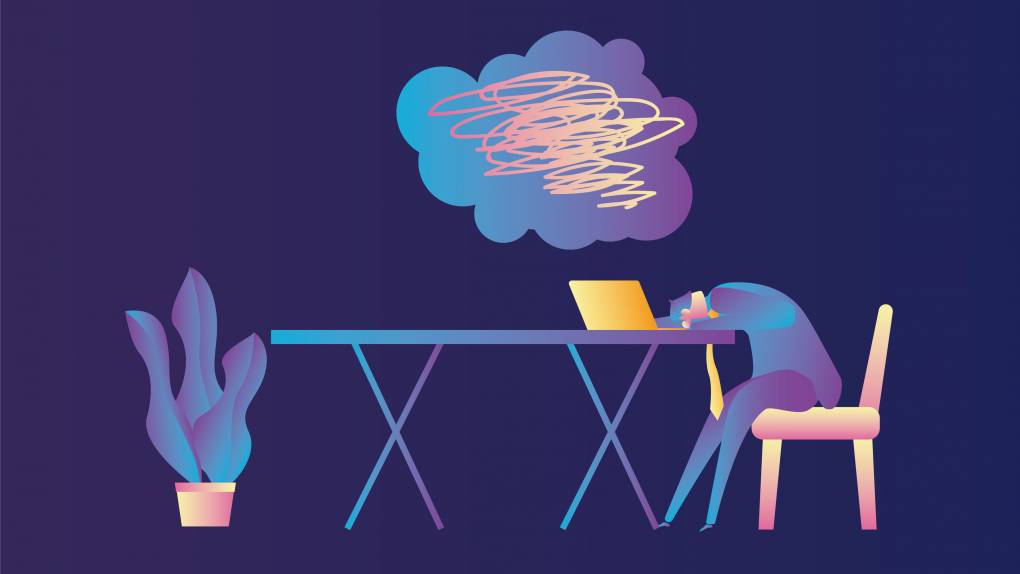
"caption": "Feelings of exhaustion, irritability and mental fogginess are our bodies' normal response to an abnormal year of pandemic life.\n",
"description": "Working, Office, Sitting, Business, Using Laptop, Tired,Boredom,Illness, Occupation,Sleeping,",
"title": "Feelings of exhaustion, irritability and mental fogginess are our bodies' normal response to an abnormal year of pandemic life.",
"credit": "Wenjin Chen/Getty Images",
"status": "inherit",
"altTag": null,
"isLoading": false,
"fetchFailed": false
},
"mindshift_57723": {
"type": "attachments",
"id": "mindshift_57723",
"meta": {
"index": "attachments_1716263798",
"site": "mindshift",
"id": "57723",
"found": true
},
"parent": 57720,
"imgSizes": {
"twentyfourteen-full-width": {
"file": "https://ww2.kqed.org/app/uploads/sites/23/2021/04/enadworny_rashidaandkai-promo_slide-857761f9ad20d8636d1d5b8b7f88f76ec71b6234-1038x576.jpg",
"width": 1038,
"mimeType": "image/jpeg",
"height": 576
},
"thumbnail": {
"file": "https://ww2.kqed.org/app/uploads/sites/23/2021/04/enadworny_rashidaandkai-promo_slide-857761f9ad20d8636d1d5b8b7f88f76ec71b6234-160x107.jpg",
"width": 160,
"mimeType": "image/jpeg",
"height": 107
},
"post-thumbnail": {
"file": "https://ww2.kqed.org/app/uploads/sites/23/2021/04/enadworny_rashidaandkai-promo_slide-857761f9ad20d8636d1d5b8b7f88f76ec71b6234-672x372.jpg",
"width": 672,
"mimeType": "image/jpeg",
"height": 372
},
"kqedFullSize": {
"file": "https://ww2.kqed.org/app/uploads/sites/23/2021/04/enadworny_rashidaandkai-promo_slide-857761f9ad20d8636d1d5b8b7f88f76ec71b6234-scaled-e1619077321694.jpg",
"width": 1920,
"height": 1280
},
"2048x2048": {
"file": "https://ww2.kqed.org/app/uploads/sites/23/2021/04/enadworny_rashidaandkai-promo_slide-857761f9ad20d8636d1d5b8b7f88f76ec71b6234-2048x1365.jpg",
"width": 2048,
"mimeType": "image/jpeg",
"height": 1365
},
"large": {
"file": "https://ww2.kqed.org/app/uploads/sites/23/2021/04/enadworny_rashidaandkai-promo_slide-857761f9ad20d8636d1d5b8b7f88f76ec71b6234-1020x680.jpg",
"width": 1020,
"mimeType": "image/jpeg",
"height": 680
},
"1536x1536": {
"file": "https://ww2.kqed.org/app/uploads/sites/23/2021/04/enadworny_rashidaandkai-promo_slide-857761f9ad20d8636d1d5b8b7f88f76ec71b6234-1536x1024.jpg",
"width": 1536,
"mimeType": "image/jpeg",
"height": 1024
},
"full-width": {
"file": "https://ww2.kqed.org/app/uploads/sites/23/2021/04/enadworny_rashidaandkai-promo_slide-857761f9ad20d8636d1d5b8b7f88f76ec71b6234-1920x1280.jpg",
"width": 1920,
"mimeType": "image/jpeg",
"height": 1280
},
"medium": {
"file": "https://ww2.kqed.org/app/uploads/sites/23/2021/04/enadworny_rashidaandkai-promo_slide-857761f9ad20d8636d1d5b8b7f88f76ec71b6234-800x533.jpg",
"width": 800,
"mimeType": "image/jpeg",
"height": 533
},
"medium_large": {
"file": "https://ww2.kqed.org/app/uploads/sites/23/2021/04/enadworny_rashidaandkai-promo_slide-857761f9ad20d8636d1d5b8b7f88f76ec71b6234-768x512.jpg",
"width": 768,
"mimeType": "image/jpeg",
"height": 512
}
},
"publishDate": 1619076841,
"modified": 1619077333,
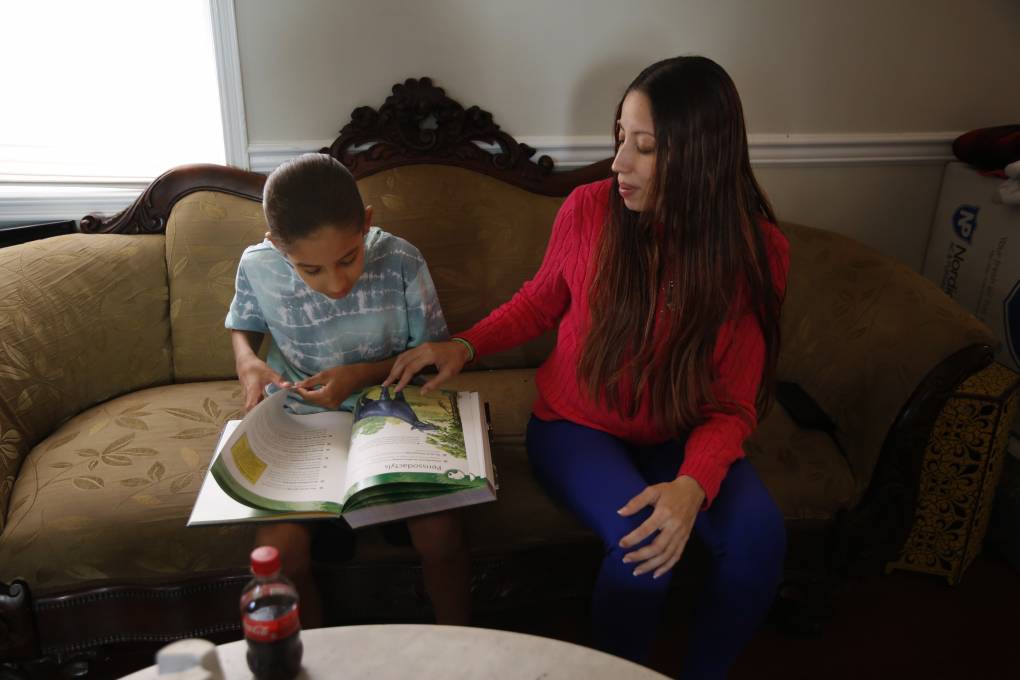
"caption": "Kai Humphrey, 9, has spent the past year learning remotely. His mom, Rashida Humphrey-Wall, says it's been hard on him. \"Stuff just keeps getting taken, and he just didn't understand like, 'When am I gonna see my friends again?' \"\n",
"description": null,
"title": "Rashida Humphrey-Wall (right) with her son Kai Humphrey at their home in Washington, D.C.",
"credit": "Elissa Nadworny/NPR",
"status": "inherit",
"altTag": null,
"isLoading": false,
"fetchFailed": false
},
"mindshift_57717": {
"type": "attachments",
"id": "mindshift_57717",
"meta": {
"index": "attachments_1716263798",
"site": "mindshift",
"id": "57717",
"found": true
},
"parent": 57716,
"imgSizes": {
"twentyfourteen-full-width": {
"file": "https://ww2.kqed.org/app/uploads/sites/23/2021/04/ryan-raphael_npr_teachers_slide-def39179ce36027a6c82ab9ce8e926d36a43f86d-1038x576.jpg",
"width": 1038,
"mimeType": "image/jpeg",
"height": 576
},
"thumbnail": {
"file": "https://ww2.kqed.org/app/uploads/sites/23/2021/04/ryan-raphael_npr_teachers_slide-def39179ce36027a6c82ab9ce8e926d36a43f86d-160x107.jpg",
"width": 160,
"mimeType": "image/jpeg",
"height": 107
},
"post-thumbnail": {
"file": "https://ww2.kqed.org/app/uploads/sites/23/2021/04/ryan-raphael_npr_teachers_slide-def39179ce36027a6c82ab9ce8e926d36a43f86d-672x372.jpg",
"width": 672,
"mimeType": "image/jpeg",
"height": 372
},
"kqedFullSize": {
"file": "https://ww2.kqed.org/app/uploads/sites/23/2021/04/ryan-raphael_npr_teachers_slide-def39179ce36027a6c82ab9ce8e926d36a43f86d-scaled.jpg",
"width": 2560,
"height": 1707
},
"2048x2048": {
"file": "https://ww2.kqed.org/app/uploads/sites/23/2021/04/ryan-raphael_npr_teachers_slide-def39179ce36027a6c82ab9ce8e926d36a43f86d-2048x1365.jpg",
"width": 2048,
"mimeType": "image/jpeg",
"height": 1365
},
"large": {
"file": "https://ww2.kqed.org/app/uploads/sites/23/2021/04/ryan-raphael_npr_teachers_slide-def39179ce36027a6c82ab9ce8e926d36a43f86d-1020x680.jpg",
"width": 1020,
"mimeType": "image/jpeg",
"height": 680
},
"1536x1536": {
"file": "https://ww2.kqed.org/app/uploads/sites/23/2021/04/ryan-raphael_npr_teachers_slide-def39179ce36027a6c82ab9ce8e926d36a43f86d-1536x1024.jpg",
"width": 1536,
"mimeType": "image/jpeg",
"height": 1024
},
"full-width": {
"file": "https://ww2.kqed.org/app/uploads/sites/23/2021/04/ryan-raphael_npr_teachers_slide-def39179ce36027a6c82ab9ce8e926d36a43f86d-1920x1280.jpg",
"width": 1920,
"mimeType": "image/jpeg",
"height": 1280
},
"medium": {
"file": "https://ww2.kqed.org/app/uploads/sites/23/2021/04/ryan-raphael_npr_teachers_slide-def39179ce36027a6c82ab9ce8e926d36a43f86d-800x533.jpg",
"width": 800,
"mimeType": "image/jpeg",
"height": 533
},
"medium_large": {
"file": "https://ww2.kqed.org/app/uploads/sites/23/2021/04/ryan-raphael_npr_teachers_slide-def39179ce36027a6c82ab9ce8e926d36a43f86d-768x512.jpg",
"width": 768,
"mimeType": "image/jpeg",
"height": 512
}
},
"publishDate": 1619076557,
"modified": 1619076624,
"caption": null,
"description": null,
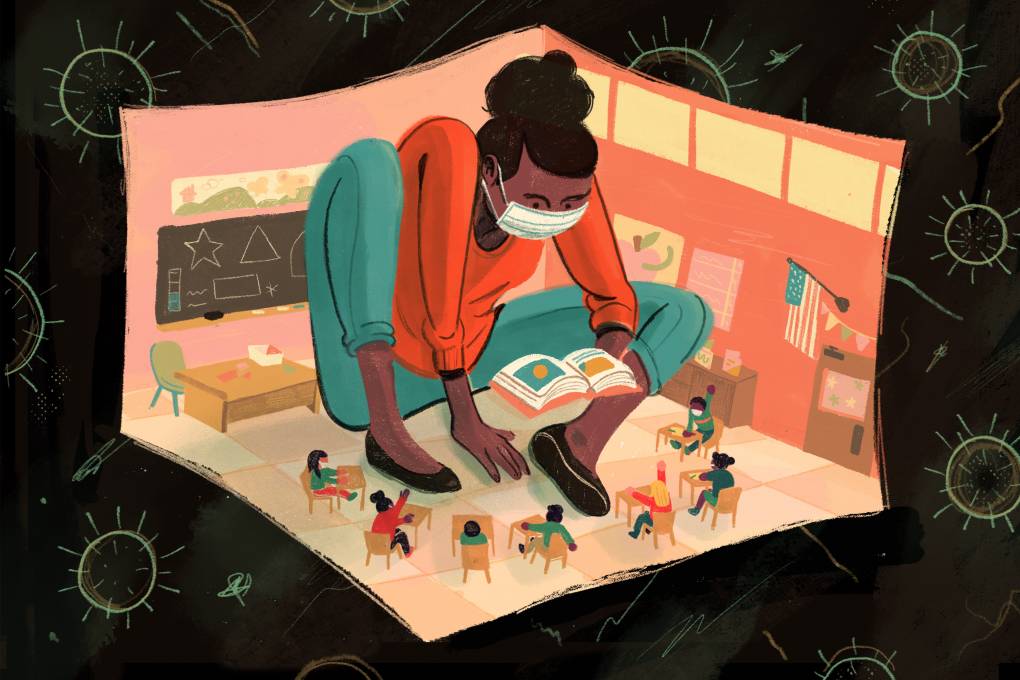
"title": "A masked teacher sits squeezed in a classroom with her students.",
"credit": "Ryan Raphael for NPR",
"status": "inherit",
"altTag": null,
"isLoading": false,
"fetchFailed": false
},
"mindshift_57697": {
"type": "attachments",
"id": "mindshift_57697",
"meta": {
"index": "attachments_1716263798",
"site": "mindshift",
"id": "57697",
"found": true
},
"parent": 57696,
"imgSizes": {
"twentyfourteen-full-width": {
"file": "https://ww2.kqed.org/app/uploads/sites/23/2021/04/ciera-amaro-bf03c8e5b059a2b0d55c5168f936128987f79c39-1038x576.jpg",
"width": 1038,
"mimeType": "image/jpeg",
"height": 576
},
"thumbnail": {
"file": "https://ww2.kqed.org/app/uploads/sites/23/2021/04/ciera-amaro-bf03c8e5b059a2b0d55c5168f936128987f79c39-160x120.jpg",
"width": 160,
"mimeType": "image/jpeg",
"height": 120
},
"post-thumbnail": {
"file": "https://ww2.kqed.org/app/uploads/sites/23/2021/04/ciera-amaro-bf03c8e5b059a2b0d55c5168f936128987f79c39-672x372.jpg",
"width": 672,
"mimeType": "image/jpeg",
"height": 372
},
"kqedFullSize": {
"file": "https://ww2.kqed.org/app/uploads/sites/23/2021/04/ciera-amaro-bf03c8e5b059a2b0d55c5168f936128987f79c39-e1618599373426.jpg",
"width": 1920,
"height": 1441
},
"2048x2048": {
"file": "https://ww2.kqed.org/app/uploads/sites/23/2021/04/ciera-amaro-bf03c8e5b059a2b0d55c5168f936128987f79c39-2048x1537.jpg",
"width": 2048,
"mimeType": "image/jpeg",
"height": 1537
},
"large": {
"file": "https://ww2.kqed.org/app/uploads/sites/23/2021/04/ciera-amaro-bf03c8e5b059a2b0d55c5168f936128987f79c39-1020x766.jpg",
"width": 1020,
"mimeType": "image/jpeg",
"height": 766
},
"1536x1536": {
"file": "https://ww2.kqed.org/app/uploads/sites/23/2021/04/ciera-amaro-bf03c8e5b059a2b0d55c5168f936128987f79c39-1536x1153.jpg",
"width": 1536,
"mimeType": "image/jpeg",
"height": 1153
},
"full-width": {
"file": "https://ww2.kqed.org/app/uploads/sites/23/2021/04/ciera-amaro-bf03c8e5b059a2b0d55c5168f936128987f79c39-1920x1441.jpg",
"width": 1920,
"mimeType": "image/jpeg",
"height": 1441
},
"medium": {
"file": "https://ww2.kqed.org/app/uploads/sites/23/2021/04/ciera-amaro-bf03c8e5b059a2b0d55c5168f936128987f79c39-800x601.jpg",
"width": 800,
"mimeType": "image/jpeg",
"height": 601
},
"medium_large": {
"file": "https://ww2.kqed.org/app/uploads/sites/23/2021/04/ciera-amaro-bf03c8e5b059a2b0d55c5168f936128987f79c39-768x577.jpg",
"width": 768,
"mimeType": "image/jpeg",
"height": 577
}
},
"publishDate": 1618599150,
"modified": 1618599460,
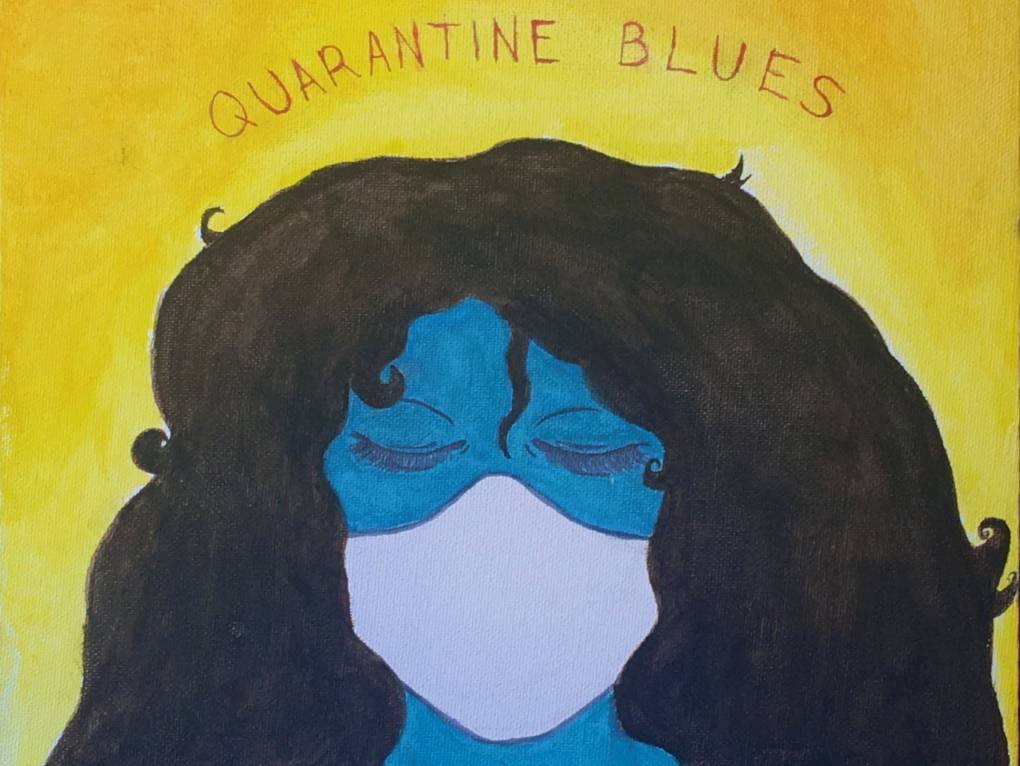
"caption": "Ciera Amaro's art is one of the submissions to a project called Dispatches from Quarantine.\n",
"description": null,
"title": "Ciera Amaro's art is one of the submissions to a project called Dispatches from Quarantine.",
"credit": "\u003ca href=\"https://alexandrazapruder.com/gallery\">Ciera Amaro via Alexandra Zapruder\u003c/a>",
"status": "inherit",
"altTag": null,
"isLoading": false,
"fetchFailed": false
},
"mindshift_57605": {
"type": "attachments",
"id": "mindshift_57605",
"meta": {
"index": "attachments_1716263798",
"site": "mindshift",
"id": "57605",
"found": true
},
"parent": 57600,
"imgSizes": {
"twentyfourteen-full-width": {
"file": "https://ww2.kqed.org/app/uploads/sites/23/2021/03/Books-About-Grief-for-Children-and-Teens-MindShift-KQED-1038x576.png",
"width": 1038,
"mimeType": "image/png",
"height": 576
},
"thumbnail": {
"file": "https://ww2.kqed.org/app/uploads/sites/23/2021/03/Books-About-Grief-for-Children-and-Teens-MindShift-KQED-160x101.png",
"width": 160,
"mimeType": "image/png",
"height": 101
},
"post-thumbnail": {
"file": "https://ww2.kqed.org/app/uploads/sites/23/2021/03/Books-About-Grief-for-Children-and-Teens-MindShift-KQED-672x372.png",
"width": 672,
"mimeType": "image/png",
"height": 372
},
"kqedFullSize": {
"file": "https://ww2.kqed.org/app/uploads/sites/23/2021/03/Books-About-Grief-for-Children-and-Teens-MindShift-KQED.png",
"width": 1598,
"height": 1008
},
"large": {
"file": "https://ww2.kqed.org/app/uploads/sites/23/2021/03/Books-About-Grief-for-Children-and-Teens-MindShift-KQED-1020x643.png",
"width": 1020,
"mimeType": "image/png",
"height": 643
},
"1536x1536": {
"file": "https://ww2.kqed.org/app/uploads/sites/23/2021/03/Books-About-Grief-for-Children-and-Teens-MindShift-KQED-1536x969.png",
"width": 1536,
"mimeType": "image/png",
"height": 969
},
"medium": {
"file": "https://ww2.kqed.org/app/uploads/sites/23/2021/03/Books-About-Grief-for-Children-and-Teens-MindShift-KQED-800x505.png",
"width": 800,
"mimeType": "image/png",
"height": 505
},
"medium_large": {
"file": "https://ww2.kqed.org/app/uploads/sites/23/2021/03/Books-About-Grief-for-Children-and-Teens-MindShift-KQED-768x484.png",
"width": 768,
"mimeType": "image/png",
"height": 484
}
},
"publishDate": 1616694283,
"modified": 1616694283,
"caption": null,
"description": null,
"title": "Books-About-Grief-for-Children-and-Teens MindShift KQED",
"credit": null,
"status": "inherit",
"altTag": null,
"isLoading": false,
"fetchFailed": false
},
"mindshift_57628": {
"type": "attachments",
"id": "mindshift_57628",
"meta": {
"index": "attachments_1716263798",
"site": "mindshift",
"id": "57628",
"found": true
},
"parent": 57627,
"imgSizes": {
"twentyfourteen-full-width": {
"file": "https://ww2.kqed.org/app/uploads/sites/23/2021/03/erickmramos_lifekit-v2_wide-35735ea8907e051b04146d5945b9840798378ca6-1038x576.jpg",
"width": 1038,
"mimeType": "image/jpeg",
"height": 576
},
"thumbnail": {
"file": "https://ww2.kqed.org/app/uploads/sites/23/2021/03/erickmramos_lifekit-v2_wide-35735ea8907e051b04146d5945b9840798378ca6-160x90.jpg",
"width": 160,
"mimeType": "image/jpeg",
"height": 90
},
"post-thumbnail": {
"file": "https://ww2.kqed.org/app/uploads/sites/23/2021/03/erickmramos_lifekit-v2_wide-35735ea8907e051b04146d5945b9840798378ca6-672x372.jpg",
"width": 672,
"mimeType": "image/jpeg",
"height": 372
},
"kqedFullSize": {
"file": "https://ww2.kqed.org/app/uploads/sites/23/2021/03/erickmramos_lifekit-v2_wide-35735ea8907e051b04146d5945b9840798378ca6.jpg",
"width": 1900,
"height": 1068
},
"large": {
"file": "https://ww2.kqed.org/app/uploads/sites/23/2021/03/erickmramos_lifekit-v2_wide-35735ea8907e051b04146d5945b9840798378ca6-1020x573.jpg",
"width": 1020,
"mimeType": "image/jpeg",
"height": 573
},
"1536x1536": {
"file": "https://ww2.kqed.org/app/uploads/sites/23/2021/03/erickmramos_lifekit-v2_wide-35735ea8907e051b04146d5945b9840798378ca6-1536x863.jpg",
"width": 1536,
"mimeType": "image/jpeg",
"height": 863
},
"medium": {
"file": "https://ww2.kqed.org/app/uploads/sites/23/2021/03/erickmramos_lifekit-v2_wide-35735ea8907e051b04146d5945b9840798378ca6-800x450.jpg",
"width": 800,
"mimeType": "image/jpeg",
"height": 450
},
"medium_large": {
"file": "https://ww2.kqed.org/app/uploads/sites/23/2021/03/erickmramos_lifekit-v2_wide-35735ea8907e051b04146d5945b9840798378ca6-768x432.jpg",
"width": 768,
"mimeType": "image/jpeg",
"height": 432
}
},
"publishDate": 1616747146,
"modified": 1616747213,
"caption": null,
"description": null,
"title": "Illustration of a teenage girl sitting on her bed with her head in her hands, her phone sitting next to her. Her mother walks through the door on the other side of the room, but is separated by a deep chasm that it appears she cannot cross.",
"credit": "Erick M. Ramos for NPR",
"status": "inherit",
"altTag": null,
"isLoading": false,
"fetchFailed": false
},
"mindshift_57569": {
"type": "attachments",
"id": "mindshift_57569",
"meta": {
"index": "attachments_1716263798",
"site": "mindshift",
"id": "57569",
"found": true
},
"parent": 57568,
"imgSizes": {
"twentyfourteen-full-width": {
"file": "https://ww2.kqed.org/app/uploads/sites/23/2021/03/lk_burnout__slide-ca91c54d21418d00d1124f9c63621601b869bef8-1038x576.jpg",
"width": 1038,
"mimeType": "image/jpeg",
"height": 576
},
"thumbnail": {
"file": "https://ww2.kqed.org/app/uploads/sites/23/2021/03/lk_burnout__slide-ca91c54d21418d00d1124f9c63621601b869bef8-160x107.jpg",
"width": 160,
"mimeType": "image/jpeg",
"height": 107
},
"post-thumbnail": {
"file": "https://ww2.kqed.org/app/uploads/sites/23/2021/03/lk_burnout__slide-ca91c54d21418d00d1124f9c63621601b869bef8-672x372.jpg",
"width": 672,
"mimeType": "image/jpeg",
"height": 372
},
"kqedFullSize": {
"file": "https://ww2.kqed.org/app/uploads/sites/23/2021/03/lk_burnout__slide-ca91c54d21418d00d1124f9c63621601b869bef8-e1616133154925.jpg",
"width": 1920,
"height": 1280
},
"large": {
"file": "https://ww2.kqed.org/app/uploads/sites/23/2021/03/lk_burnout__slide-ca91c54d21418d00d1124f9c63621601b869bef8-1020x680.jpg",
"width": 1020,
"mimeType": "image/jpeg",
"height": 680
},
"1536x1536": {
"file": "https://ww2.kqed.org/app/uploads/sites/23/2021/03/lk_burnout__slide-ca91c54d21418d00d1124f9c63621601b869bef8-1536x1024.jpg",
"width": 1536,
"mimeType": "image/jpeg",
"height": 1024
},
"full-width": {
"file": "https://ww2.kqed.org/app/uploads/sites/23/2021/03/lk_burnout__slide-ca91c54d21418d00d1124f9c63621601b869bef8-1920x1280.jpg",
"width": 1920,
"mimeType": "image/jpeg",
"height": 1280
},
"medium": {
"file": "https://ww2.kqed.org/app/uploads/sites/23/2021/03/lk_burnout__slide-ca91c54d21418d00d1124f9c63621601b869bef8-800x533.jpg",
"width": 800,
"mimeType": "image/jpeg",
"height": 533
},
"medium_large": {
"file": "https://ww2.kqed.org/app/uploads/sites/23/2021/03/lk_burnout__slide-ca91c54d21418d00d1124f9c63621601b869bef8-768x512.jpg",
"width": 768,
"mimeType": "image/jpeg",
"height": 512
}
},
"publishDate": 1616133089,
"modified": 1616133170,
"caption": null,
"description": null,
"title": "A dark pink tulip in a mint green vase droops, nearly touching the surface that the vase is resting on. The vase sits against a gray backdrop.",
"credit": "Photo illustration by Becky Harlan/NPR",
"status": "inherit",
"altTag": null,
"isLoading": false,
"fetchFailed": false
},
"mindshift_57538": {
"type": "attachments",
"id": "mindshift_57538",
"meta": {
"index": "attachments_1716263798",
"site": "mindshift",
"id": "57538",
"found": true
},
"parent": 57511,
"imgSizes": {
"twentyfourteen-full-width": {
"file": "https://ww2.kqed.org/app/uploads/sites/23/2021/03/Helping-students-deal-with-grief-stemming-from-Coronavirus-iStock-1227306238-1038x576.jpg",
"width": 1038,
"mimeType": "image/jpeg",
"height": 576
},
"thumbnail": {
"file": "https://ww2.kqed.org/app/uploads/sites/23/2021/03/Helping-students-deal-with-grief-stemming-from-Coronavirus-iStock-1227306238-160x113.jpg",
"width": 160,
"mimeType": "image/jpeg",
"height": 113
},
"post-thumbnail": {
"file": "https://ww2.kqed.org/app/uploads/sites/23/2021/03/Helping-students-deal-with-grief-stemming-from-Coronavirus-iStock-1227306238-672x372.jpg",
"width": 672,
"mimeType": "image/jpeg",
"height": 372
},
"kqedFullSize": {
"file": "https://ww2.kqed.org/app/uploads/sites/23/2021/03/Helping-students-deal-with-grief-stemming-from-Coronavirus-iStock-1227306238.jpg",
"width": 2057,
"height": 1457
},
"2048x2048": {
"file": "https://ww2.kqed.org/app/uploads/sites/23/2021/03/Helping-students-deal-with-grief-stemming-from-Coronavirus-iStock-1227306238-2048x1451.jpg",
"width": 2048,
"mimeType": "image/jpeg",
"height": 1451
},
"large": {
"file": "https://ww2.kqed.org/app/uploads/sites/23/2021/03/Helping-students-deal-with-grief-stemming-from-Coronavirus-iStock-1227306238-1020x722.jpg",
"width": 1020,
"mimeType": "image/jpeg",
"height": 722
},
"1536x1536": {
"file": "https://ww2.kqed.org/app/uploads/sites/23/2021/03/Helping-students-deal-with-grief-stemming-from-Coronavirus-iStock-1227306238-1536x1088.jpg",
"width": 1536,
"mimeType": "image/jpeg",
"height": 1088
},
"full-width": {
"file": "https://ww2.kqed.org/app/uploads/sites/23/2021/03/Helping-students-deal-with-grief-stemming-from-Coronavirus-iStock-1227306238-1920x1360.jpg",
"width": 1920,
"mimeType": "image/jpeg",
"height": 1360
},
"medium": {
"file": "https://ww2.kqed.org/app/uploads/sites/23/2021/03/Helping-students-deal-with-grief-stemming-from-Coronavirus-iStock-1227306238-800x567.jpg",
"width": 800,
"mimeType": "image/jpeg",
"height": 567
},
"medium_large": {
"file": "https://ww2.kqed.org/app/uploads/sites/23/2021/03/Helping-students-deal-with-grief-stemming-from-Coronavirus-iStock-1227306238-768x544.jpg",
"width": 768,
"mimeType": "image/jpeg",
"height": 544
}
},
"publishDate": 1615882509,
"modified": 1615882534,
"caption": null,
"description": null,
"title": null,
"credit": "nadia_bormotova/iStock",
"status": "inherit",
"altTag": null,
"isLoading": false,
"fetchFailed": false
},
"mindshift_57476": {
"type": "attachments",
"id": "mindshift_57476",
"meta": {
"index": "attachments_1716263798",
"site": "mindshift",
"id": "57476",
"found": true
},
"parent": 57474,
"imgSizes": {
"twentyfourteen-full-width": {
"file": "https://ww2.kqed.org/app/uploads/sites/23/2021/03/MindShift-Choosing-a-Counselor-Helps-Give-Students-Agency-iStock-1176672235-1038x576.jpg",
"width": 1038,
"mimeType": "image/jpeg",
"height": 576
},
"thumbnail": {
"file": "https://ww2.kqed.org/app/uploads/sites/23/2021/03/MindShift-Choosing-a-Counselor-Helps-Give-Students-Agency-iStock-1176672235-160x160.jpg",
"width": 160,
"mimeType": "image/jpeg",
"height": 160
},
"post-thumbnail": {
"file": "https://ww2.kqed.org/app/uploads/sites/23/2021/03/MindShift-Choosing-a-Counselor-Helps-Give-Students-Agency-iStock-1176672235-672x372.jpg",
"width": 672,
"mimeType": "image/jpeg",
"height": 372
},
"kqedFullSize": {
"file": "https://ww2.kqed.org/app/uploads/sites/23/2021/03/MindShift-Choosing-a-Counselor-Helps-Give-Students-Agency-iStock-1176672235.jpg",
"width": 1732,
"height": 1732
},
"large": {
"file": "https://ww2.kqed.org/app/uploads/sites/23/2021/03/MindShift-Choosing-a-Counselor-Helps-Give-Students-Agency-iStock-1176672235-1020x1020.jpg",
"width": 1020,
"mimeType": "image/jpeg",
"height": 1020
},
"1536x1536": {
"file": "https://ww2.kqed.org/app/uploads/sites/23/2021/03/MindShift-Choosing-a-Counselor-Helps-Give-Students-Agency-iStock-1176672235-1536x1536.jpg",
"width": 1536,
"mimeType": "image/jpeg",
"height": 1536
},
"medium": {
"file": "https://ww2.kqed.org/app/uploads/sites/23/2021/03/MindShift-Choosing-a-Counselor-Helps-Give-Students-Agency-iStock-1176672235-800x800.jpg",
"width": 800,
"mimeType": "image/jpeg",
"height": 800
},
"medium_large": {
"file": "https://ww2.kqed.org/app/uploads/sites/23/2021/03/MindShift-Choosing-a-Counselor-Helps-Give-Students-Agency-iStock-1176672235-768x768.jpg",
"width": 768,
"mimeType": "image/jpeg",
"height": 768
}
},
"publishDate": 1615193682,
"modified": 1615193707,
"caption": null,
"description": null,
"title": "Emotional intelligence. Balance of emotions and thoughts. Therapy. Harmony. Young male character choosing between heart and brain. Conceptual illustration, clip art",
"credit": "iStock/nadia_bormotova",
"status": "inherit",
"altTag": "Student making choices",
"isLoading": false,
"fetchFailed": false
},
"mindshift_57439": {
"type": "attachments",
"id": "mindshift_57439",
"meta": {
"index": "attachments_1716263798",
"site": "mindshift",
"id": "57439",
"found": true
},
"parent": 57438,
"imgSizes": {
"twentyfourteen-full-width": {
"file": "https://ww2.kqed.org/app/uploads/sites/23/2021/02/pandemic_connections_d_wide-07c97391630f2e12eea3e484c78a1426a599c9f0-1038x576.jpg",
"width": 1038,
"mimeType": "image/jpeg",
"height": 576
},
"thumbnail": {
"file": "https://ww2.kqed.org/app/uploads/sites/23/2021/02/pandemic_connections_d_wide-07c97391630f2e12eea3e484c78a1426a599c9f0-160x90.jpg",
"width": 160,
"mimeType": "image/jpeg",
"height": 90
},
"post-thumbnail": {
"file": "https://ww2.kqed.org/app/uploads/sites/23/2021/02/pandemic_connections_d_wide-07c97391630f2e12eea3e484c78a1426a599c9f0-672x372.jpg",
"width": 672,
"mimeType": "image/jpeg",
"height": 372
},
"kqedFullSize": {
"file": "https://ww2.kqed.org/app/uploads/sites/23/2021/02/pandemic_connections_d_wide-07c97391630f2e12eea3e484c78a1426a599c9f0-scaled.jpg",
"width": 2560,
"height": 1440
},
"2048x2048": {
"file": "https://ww2.kqed.org/app/uploads/sites/23/2021/02/pandemic_connections_d_wide-07c97391630f2e12eea3e484c78a1426a599c9f0-2048x1152.jpg",
"width": 2048,
"mimeType": "image/jpeg",
"height": 1152
},
"large": {
"file": "https://ww2.kqed.org/app/uploads/sites/23/2021/02/pandemic_connections_d_wide-07c97391630f2e12eea3e484c78a1426a599c9f0-1020x574.jpg",
"width": 1020,
"mimeType": "image/jpeg",
"height": 574
},
"1536x1536": {
"file": "https://ww2.kqed.org/app/uploads/sites/23/2021/02/pandemic_connections_d_wide-07c97391630f2e12eea3e484c78a1426a599c9f0-1536x864.jpg",
"width": 1536,
"mimeType": "image/jpeg",
"height": 864
},
"full-width": {
"file": "https://ww2.kqed.org/app/uploads/sites/23/2021/02/pandemic_connections_d_wide-07c97391630f2e12eea3e484c78a1426a599c9f0-1920x1080.jpg",
"width": 1920,
"mimeType": "image/jpeg",
"height": 1080
},
"medium": {
"file": "https://ww2.kqed.org/app/uploads/sites/23/2021/02/pandemic_connections_d_wide-07c97391630f2e12eea3e484c78a1426a599c9f0-800x450.jpg",
"width": 800,
"mimeType": "image/jpeg",
"height": 450
},
"medium_large": {
"file": "https://ww2.kqed.org/app/uploads/sites/23/2021/02/pandemic_connections_d_wide-07c97391630f2e12eea3e484c78a1426a599c9f0-768x432.jpg",
"width": 768,
"mimeType": "image/jpeg",
"height": 432
}
},
"publishDate": 1614152420,
"modified": 1614153090,
"caption": "Maintaining friendships and social networks during the pandemic often takes effort.\n",
"description": null,
"title": "Maintaining friendships and social networks during the pandemic often takes effort.",
"credit": "Susan Haejin Lee for NPR",
"status": "inherit",
"altTag": null,
"isLoading": false,
"fetchFailed": false
},
"mindshift_57339": {
"type": "attachments",
"id": "mindshift_57339",
"meta": {
"index": "attachments_1716263798",
"site": "mindshift",
"id": "57339",
"found": true
},
"parent": 57338,
"imgSizes": {
"twentyfourteen-full-width": {
"file": "https://ww2.kqed.org/app/uploads/sites/23/2021/02/zhang-suicide-help-parents_wide-d86646258e96471a77a04da06ee18809239c74d0-1038x576.jpg",
"width": 1038,
"mimeType": "image/jpeg",
"height": 576
},
"thumbnail": {
"file": "https://ww2.kqed.org/app/uploads/sites/23/2021/02/zhang-suicide-help-parents_wide-d86646258e96471a77a04da06ee18809239c74d0-160x90.jpg",
"width": 160,
"mimeType": "image/jpeg",
"height": 90
},
"post-thumbnail": {
"file": "https://ww2.kqed.org/app/uploads/sites/23/2021/02/zhang-suicide-help-parents_wide-d86646258e96471a77a04da06ee18809239c74d0-672x372.jpg",
"width": 672,
"mimeType": "image/jpeg",
"height": 372
},
"kqedFullSize": {
"file": "https://ww2.kqed.org/app/uploads/sites/23/2021/02/zhang-suicide-help-parents_wide-d86646258e96471a77a04da06ee18809239c74d0-scaled-e1612341619942.jpg",
"width": 1920,
"height": 1080
},
"2048x2048": {
"file": "https://ww2.kqed.org/app/uploads/sites/23/2021/02/zhang-suicide-help-parents_wide-d86646258e96471a77a04da06ee18809239c74d0-2048x1152.jpg",
"width": 2048,
"mimeType": "image/jpeg",
"height": 1152
},
"large": {
"file": "https://ww2.kqed.org/app/uploads/sites/23/2021/02/zhang-suicide-help-parents_wide-d86646258e96471a77a04da06ee18809239c74d0-1020x574.jpg",
"width": 1020,
"mimeType": "image/jpeg",
"height": 574
},
"1536x1536": {
"file": "https://ww2.kqed.org/app/uploads/sites/23/2021/02/zhang-suicide-help-parents_wide-d86646258e96471a77a04da06ee18809239c74d0-1536x864.jpg",
"width": 1536,
"mimeType": "image/jpeg",
"height": 864
},
"full-width": {
"file": "https://ww2.kqed.org/app/uploads/sites/23/2021/02/zhang-suicide-help-parents_wide-d86646258e96471a77a04da06ee18809239c74d0-1920x1080.jpg",
"width": 1920,
"mimeType": "image/jpeg",
"height": 1080
},
"medium": {
"file": "https://ww2.kqed.org/app/uploads/sites/23/2021/02/zhang-suicide-help-parents_wide-d86646258e96471a77a04da06ee18809239c74d0-800x450.jpg",
"width": 800,
"mimeType": "image/jpeg",
"height": 450
},
"medium_large": {
"file": "https://ww2.kqed.org/app/uploads/sites/23/2021/02/zhang-suicide-help-parents_wide-d86646258e96471a77a04da06ee18809239c74d0-768x432.jpg",
"width": 768,
"mimeType": "image/jpeg",
"height": 432
}
},
"publishDate": 1612341560,
"modified": 1612341630,
"caption": null,
"description": null,
"title": "If your child tells you they're thinking of wanting to end their life, how do you help? Number one, don't panic. Suicide is preventable. Here's advice for helping young people in crisis, from people who've lived through it.",
"credit": "Jesse Zhang for NPR",
"status": "inherit",
"altTag": null,
"isLoading": false,
"fetchFailed": false
},
"mindshift_57344": {
"type": "attachments",
"id": "mindshift_57344",
"meta": {
"index": "attachments_1716263798",
"site": "mindshift",
"id": "57344",
"found": true
},
"parent": 57343,
"imgSizes": {
"twentyfourteen-full-width": {
"file": "https://ww2.kqed.org/app/uploads/sites/23/2021/02/suicide-nv-3_enl-5394966bd04caaafa7b24486ad92451af7c976d1-1038x576.jpg",
"width": 1038,
"mimeType": "image/jpeg",
"height": 576
},
"thumbnail": {
"file": "https://ww2.kqed.org/app/uploads/sites/23/2021/02/suicide-nv-3_enl-5394966bd04caaafa7b24486ad92451af7c976d1-160x107.jpg",
"width": 160,
"mimeType": "image/jpeg",
"height": 107
},
"post-thumbnail": {
"file": "https://ww2.kqed.org/app/uploads/sites/23/2021/02/suicide-nv-3_enl-5394966bd04caaafa7b24486ad92451af7c976d1-672x372.jpg",
"width": 672,
"mimeType": "image/jpeg",
"height": 372
},
"kqedFullSize": {
"file": "https://ww2.kqed.org/app/uploads/sites/23/2021/02/suicide-nv-3_enl-5394966bd04caaafa7b24486ad92451af7c976d1-e1612341976987.jpg",
"width": 1920,
"height": 1284
},
"large": {
"file": "https://ww2.kqed.org/app/uploads/sites/23/2021/02/suicide-nv-3_enl-5394966bd04caaafa7b24486ad92451af7c976d1-1020x682.jpg",
"width": 1020,
"mimeType": "image/jpeg",
"height": 682
},
"1536x1536": {
"file": "https://ww2.kqed.org/app/uploads/sites/23/2021/02/suicide-nv-3_enl-5394966bd04caaafa7b24486ad92451af7c976d1-1536x1027.jpg",
"width": 1536,
"mimeType": "image/jpeg",
"height": 1027
},
"full-width": {
"file": "https://ww2.kqed.org/app/uploads/sites/23/2021/02/suicide-nv-3_enl-5394966bd04caaafa7b24486ad92451af7c976d1-1920x1284.jpg",
"width": 1920,
"mimeType": "image/jpeg",
"height": 1284
},
"medium": {
"file": "https://ww2.kqed.org/app/uploads/sites/23/2021/02/suicide-nv-3_enl-5394966bd04caaafa7b24486ad92451af7c976d1-800x535.jpg",
"width": 800,
"mimeType": "image/jpeg",
"height": 535
},
"medium_large": {
"file": "https://ww2.kqed.org/app/uploads/sites/23/2021/02/suicide-nv-3_enl-5394966bd04caaafa7b24486ad92451af7c976d1-768x514.jpg",
"width": 768,
"mimeType": "image/jpeg",
"height": 514
}
},
"publishDate": 1612341930,
"modified": 1612341985,
"caption": "An abrupt spike in suicide deaths among students in the Clark County School District has officials in the Las Vegas district wondering if pressures brought on by the coronavirus pandemic might have been part of what fueled the increase.\n",
"description": "The abrupt spike in suicide deaths has officials at the Clark County School District wondering if pressures brought on by the pandemic might have fueled the increase.\nJoe Buglewicz for NPR",
"title": "An abrupt spike in suicide deaths among students in the Clark County School District has officials in the Las Vegas district wondering if pressures brought on by the coronavirus pandemic might have been part of what fueled the increase.",
"credit": "Joe Buglewicz for NPR",
"status": "inherit",
"altTag": null,
"isLoading": false,
"fetchFailed": false
}
},
"audioPlayerReducer": {
"postId": "stream_live",
"isPaused": true,
"isPlaying": false,
"pfsActive": false,
"pledgeModalIsOpen": true,
"playerDrawerIsOpen": false,
"liveAudioPlayStartedAt": 0,
"liveAudioPlayContext": ""
},
"authorsReducer": {
"byline_mindshift_57818": {
"type": "authors",
"id": "byline_mindshift_57818",
"meta": {
"override": true
},
"slug": "byline_mindshift_57818",
"name": "Rhitu Chatterjee",
"isLoading": false
},
"byline_mindshift_57720": {
"type": "authors",
"id": "byline_mindshift_57720",
"meta": {
"override": true
},
"slug": "byline_mindshift_57720",
"name": "Cory Turner and Christine Herman",
"isLoading": false
},
"byline_mindshift_57716": {
"type": "authors",
"id": "byline_mindshift_57716",
"meta": {
"override": true
},
"slug": "byline_mindshift_57716",
"name": "Kavitha Cardoza",
"isLoading": false
},
"byline_mindshift_57696": {
"type": "authors",
"id": "byline_mindshift_57696",
"meta": {
"override": true
},
"slug": "byline_mindshift_57696",
"name": "Farah Eltohamy and Phil Harrell",
"isLoading": false
},
"byline_mindshift_57627": {
"type": "authors",
"id": "byline_mindshift_57627",
"meta": {
"override": true
},
"slug": "byline_mindshift_57627",
"name": "Anya Kamenetz",
"isLoading": false
},
"byline_mindshift_57568": {
"type": "authors",
"id": "byline_mindshift_57568",
"meta": {
"override": true
},
"slug": "byline_mindshift_57568",
"name": "Rhitu Chatterjee and Andee Tagle",
"isLoading": false
},
"byline_mindshift_57474": {
"type": "authors",
"id": "byline_mindshift_57474",
"meta": {
"override": true
},
"slug": "byline_mindshift_57474",
"name": "Alex Venet",
"isLoading": false
},
"byline_mindshift_57438": {
"type": "authors",
"id": "byline_mindshift_57438",
"meta": {
"override": true
},
"slug": "byline_mindshift_57438",
"name": "Hadia Bakkar",
"isLoading": false
},
"byline_mindshift_57338": {
"type": "authors",
"id": "byline_mindshift_57338",
"meta": {
"override": true
},
"slug": "byline_mindshift_57338",
"name": "Rhitu Chatterjee",
"isLoading": false
},
"byline_mindshift_57343": {
"type": "authors",
"id": "byline_mindshift_57343",
"meta": {
"override": true
},
"slug": "byline_mindshift_57343",
"name": "Rhitu Chatterjee",
"isLoading": false
},
"kdnewhouse": {
"type": "authors",
"id": "11487",
"meta": {
"index": "authors_1716337520",
"id": "11487",
"found": true
},
"name": "Kara Newhouse",
"firstName": "Kara",
"lastName": "Newhouse",
"slug": "kdnewhouse",
"email": "knewhouse@kqed.org",
"display_author_email": false,
"staff_mastheads": [],
"title": "MindShift Editor",
"bio": null,
"avatar": "https://secure.gravatar.com/avatar/3dceed6fb271527113abfa9a8e9df34e?s=600&d=blank&r=g",
"twitter": null,
"facebook": null,
"instagram": null,
"linkedin": null,
"sites": [
{
"site": "",
"roles": [
"editor"
]
},
{
"site": "mindshift",
"roles": []
}
],
"headData": {
"title": "Kara Newhouse | KQED",
"description": "MindShift Editor",
"ogImgSrc": "https://secure.gravatar.com/avatar/3dceed6fb271527113abfa9a8e9df34e?s=600&d=blank&r=g",
"twImgSrc": "https://secure.gravatar.com/avatar/3dceed6fb271527113abfa9a8e9df34e?s=600&d=blank&r=g"
},
"isLoading": false,
"link": "/author/kdnewhouse"
}
},
"pagesReducer": {
"mindshift_category_mental-health": {
"type": "terms",
"id": "mindshift_21280",
"meta": {
"index": "terms_1716263798",
"site": "mindshift",
"id": "21280",
"score": 12.282726
},
"featImg": null,
"name": "Mental Health",
"description": null,
"taxonomy": "category",
"headData": {
"twImgId": null,
"twTitle": null,
"ogTitle": null,
"ogImgId": null,
"twDescription": null,
"description": null,
"title": "Mental Health Archives | KQED Mindshift",
"ogDescription": null
},
"ttid": 20552,
"slug": "mental-health",
"isLoading": false,
"title": "Mental Health",
"pageMeta": {
"site": "mindshift",
"WpPageTemplate": "page-topic-editorial",
"currentPage": 9
},
"blocks": [
{
"blockName": "kqed/post-list",
"attrs": {
"layout": "cardArticle2",
"query": "posts/mindshift?category=mental-health",
"seeMore": false,
"paginated": true,
"page": 9
}
},
{
"blockName": "kqed/ad"
}
]
}
},
"pfsSessionReducer": {},
"postsReducer": {
"stream_live": {
"type": "live",
"id": "stream_live",
"audioUrl": "https://streams.kqed.org/kqedradio",
"title": "Live Stream",
"excerpt": "Live Stream information currently unavailable.",
"link": "/radio",
"featImg": "",
"label": {
"name": "KQED Live",
"link": "/"
}
},
"stream_kqedNewscast": {
"type": "posts",
"id": "stream_kqedNewscast",
"audioUrl": "https://www.kqed.org/.stream/anon/radio/RDnews/newscast.mp3?_=1",
"title": "KQED Newscast",
"featImg": "",
"label": {
"name": "88.5 FM",
"link": "/"
}
},
"mindshift_57818": {
"type": "posts",
"id": "mindshift_57818",
"meta": {
"index": "posts_1716263798",
"site": "mindshift",
"id": "57818",
"score": null,
"sort": [
1620304629000
]
},
"parent": 0,
"labelTerm": {
"site": "mindshift"
},
"blocks": [],
"publishDate": 1620304629,
"format": "standard",
"disqusTitle": "If Your Brain Feels Foggy And You're Tired All The Time, You're Not Alone",
"title": "If Your Brain Feels Foggy And You're Tired All The Time, You're Not Alone",
"headTitle": "MindShift | KQED News",
"content": "\u003cp>In recent weeks, \u003ca href=\"https://www.kalidcmd.com/about-me\">Dr. Kali Cyrus\u003c/a> has struggled with periods of exhaustion.\u003c/p>\n\u003cp>\"I am taking a nap in between patients,\" says Cyrus, a psychiatrist at Johns Hopkins University. \"I'm going to bed earlier. It's hard to even just get out of bed. I don't feel like being active again.\"\u003c/p>\n\u003cp>Exhaustion is also one of the top complaints she hears from her patients these days. They say things like, \"It's just so hard to get out of bed\" or \"I've been misplacing things more often,\" she says.\u003c/p>\n\u003cp>Some patients tell Cyrus they've been making mistakes at work. Some tell her they can \"barely turn on the TV. 'All I want to do is stare at the ceiling.' \" Others say they are more irritable.\u003c/p>\n\u003cp>Mental health care providers around the U.S. are hearing similar complaints. And many providers, like Cyrus, are feeling it themselves.\u003c/p>\n\u003cp>[ad fullwidth]\u003c/p>\n\u003cp>This kind of mental fog is real and can have a few different causes. But at the root of it are the stress and trauma of the past year, say Cyrus and other mental health experts. It's a normal reaction to a very abnormal year.\u003c/p>\n\u003cp>And while many people will likely continue to struggle with mental health symptoms in the long run, \u003ca href=\"https://pubmed.ncbi.nlm.nih.gov/19403217/\">research on past mass traumas\u003c/a> suggests that most people will recover once the coronavirus pandemic ends.\u003c/p>\n\u003cp>\"We know that the majority of people tend to be resilient,\" says \u003ca href=\"https://www.apa.org/research/action/speaking-of-psychology/stress-discrimination\">Lynn Bufka\u003c/a>, a psychologist with the American Psychological Association. \"They may have struggled during the time of the challenges but generally come out OK on the other end.\"\u003c/p>\n\u003cp>In the meantime, Bufka and other experts say that there are things we can do now to fight the mental fog and exhaustion.\u003c/p>\n\u003cp>\u003cstrong>How stress and sleep are linked\u003c/strong>\u003c/p>\n\u003cp>\"Exhaustion can be a symptom of many things,\" says Cyrus.\u003c/p>\n\u003cp>For one, it can be a symptom of stress.\u003c/p>\n\u003cp>\"We know from \u003ca href=\"https://bmcpsychiatry.biomedcentral.com/articles/10.1186/1471-244X-14-118\">other research \u003c/a>that people will talk about fatigue as something that they experience when they're feeling overstressed,\" says Bufka.\u003c/p>\n\u003cp>A \u003ca href=\"https://www.apa.org/news/press/releases/2020/11/coronavirus-pandemic-stress\">recent survey\u003c/a> by the American Psychological Association found that 3 in 4 Americans said that the pandemic is a significant source of stress.\u003c/p>\n\u003cp>Millions of people have lost loved ones, have become ill themselves and/or have lost income as a result of the pandemic. The threat of COVID-19 alone has been stressful for most people, as has all of the upheaval that the pandemic has brought, says Bufka.\u003c/p>\n\u003cp>Stress \"keeps our mind vigilant and our nervous system vigilant, and that uses more energy,\" says \u003ca href=\"https://profiles.ucsf.edu/elissa.epel\">Elissa Epel\u003c/a>, a psychologist at the University of California, San Francisco. That's one reason that prolonged stress can leave us feeling drained.\u003c/p>\n\u003cp>Another way that chronic stress makes us feel exhausted is by interfering with sleep, says Bufka. \"When we're feeling stressed, our sleep can get disrupted, which naturally leads to feelings of tiredness and exhaustion,\" she says.\u003c/p>\n\u003cp>\"We really rely on sleep to recover each day,\" explains Epel. \"And so for many of us, even though we might think we're sleeping the same number of hours, it's not the same quality. It doesn't have the same restorative ability, because we're getting less deep sleep, and we think that is tied to this chronic, subtle uncertainty, stress.\"\u003c/p>\n\u003cp>Chronic stress also triggers \u003ca href=\"https://pubmed.ncbi.nlm.nih.gov/24608036/\">low-grade inflammation\u003c/a>, she adds.\u003c/p>\n\u003cp>\"We have this inflammatory response when we're feeling severe states of stress that can last. It's subtle, it's low grade and it can absolutely cause fatigue and a worse mood.\"\u003c/p>\n\u003cp>\u003cstrong>A year of anxiety, grief and trauma\u003c/strong>\u003c/p>\n\u003cp>The fatigue and fog so many are feeling now also could be symptoms of other mental health issues that flared over the last year, says \u003ca href=\"https://psychiatry.wustl.edu/people/jessica-gold-md-ms/\">Dr. Jessica Gold\u003c/a>, a psychiatrist at Washington University in St. Louis. \"After this long, most people have had some degree of anxiety, depression, trauma, something,\" she says.\u003c/p>\n\u003cp>As \u003ca href=\"https://www.cdc.gov/mmwr/volumes/70/wr/mm7013e2.htm\">studies\u003c/a> have shown, rates of anxiety and depression in the population have gone up during the course of the pandemic.\u003c/p>\n\u003cp>Long-term anxiety can also exhaust the body, says Gold.\u003c/p>\n\u003cp>\"We evolved as creatures, people that run from predators in the animal kingdom, right? To have anxiety as a way to predict and run from threat,\" she says.\u003c/p>\n\u003cp>When we're anxious, \u003ca href=\"https://www.nm.org/healthbeat/healthy-tips/emotional-health/the-science-of-anxiety\">our hearts race and our muscles tense up\u003c/a> as we prepare to fight a predator or run from it. But \"you can only run a 100-yard dash for a short amount of time. Not a year, and not a year where they keep moving the finish line,\" says Gold. \"We can't do that. Eventually our muscles and our body say, 'No, I'm tired.' \"\u003c/p>\n\u003cp>The rise in symptoms of anxiety and depression, which include exhaustion, is a predictable response to the trauma of the pandemic, says \u003ca href=\"https://www.bu.edu/sph/profile/sandro-galea/\">Dr. Sandro Galea\u003c/a>, dean of the School of Public Health at Boston University.\u003c/p>\n\u003cp>\"The definition of a trauma is an event that threatens people's sense of safety and stability,\" which this pandemic is, he adds.\u003c/p>\n\u003cp>Nearly all of us are grieving the loss of life as we knew it, says \u003ca href=\"https://www.hopkinsmedicine.org/profiles/details/jennifer-payne\">Dr. Jennifer Payne\u003c/a>, director of the Women's Mood Disorders Center at Johns Hopkins. \"We're just in a completely different world right now,\" she says. \"A lot of things are not going to go back to the way they were. And so that causes grief and is a normal reaction to a big change.\"\u003c/p>\n\u003cp>However, the trauma is much bigger for individuals directly affected by the pandemic, says Galea — for instance, those who've lost loved ones or who had COVID-19, lost a job or housing, or struggled with child care.\u003c/p>\n\u003cp>Some people have been hit so hard — and are so worn down — that \"they are having trouble coming back from this,\" says Cyrus, the Johns Hopkins psychiatrist, whose patients are mostly people of color and/or queer. Black and Latino communities in particular have been \u003ca href=\"https://www.npr.org/sections/health-shots/2020/09/23/914427907/as-pandemic-deaths-add-up-racial-disparities-persist-and-in-some-cases-worsen\">disproportionately affected by the pandemic and its fallout\u003c/a>.\u003c/p>\n\u003cp>And people in these communities will likely struggle with more mental and physical health issues in the long run, notes Galea, and need access to mental health care and greater support to recover.\u003c/p>\n\u003cp>\u003cstrong>Steps to take now\u003c/strong>\u003c/p>\n\u003cp>For many people, the relaxing social activities that can help buffer against stress and anxiety — like seeing friends or going out to dinner — are not yet reality, due to uneven vaccination rates. So what can we do now to help recharge?\u003c/p>\n\u003cp>Payne, of Johns Hopkins' Women's Mood Disorders Center, encourages people to keep in mind all of the usual things that help during stressful times: exercise, a healthy diet, going outdoors and \u003ca href=\"https://www.npr.org/2020/10/23/927134772/when-the-headlines-wont-stop-here-s-how-to-cope-with-anxiety\">limiting news consumption\u003c/a>. And engage in relaxing activities often, like a hobby you love, listening to or watching something funny, or reading books you enjoy.\u003c/p>\n\u003cp>If these diversions aren't working for you now, she recommends trying a change of scenery if you can.\u003c/p>\n\u003cp>For Payne, who lives in Baltimore, that meant staying at her parents' home in West Virginia for three nights.\u003c/p>\n\u003cp>\"It was not a very exciting trip, but we got away and it was a completely different environment. And I didn't have any projects around the house that I could do other than reading or listening to a podcast, sleeping, eating,\" Payne says. \"And that was really, really renewing for me.\"\u003c/p>\n\u003cp>However, Cyrus, who is also at Johns Hopkins, says some of her patients say their normal coping strategies aren't working.\u003c/p>\n\u003cp>That's because we are running on an emptier gas tank than usual, she says. \"Your coping strategies that might be able to refill you a certain percent, [but now] you're starting lower. So it's not quite getting you where you need to be.\"\u003c/p>\n\u003cp>If that's the case for you, try changing up your routine, Payne says. \"If you're walking every day and that's no longer helping, you try biking.\"\u003c/p>\n\u003cp>Self-care is important, notes Gold of Washington University. \"Take the vacation time you need,\" she recommends. \"Make sure that you're taking care of yourself in the short and long term.\"\u003c/p>\n\u003cp>And, she adds, \"there's no wrong time to go talk to someone.\" If you can't get an appointment with a therapist, talk to a friend or co-worker, she suggests.\u003c/p>\n\u003cp>\"I think that because so many people are struggling with this and because it is so normal, everybody has something to say,\" says Gold. \"If we could just get to the point where we could be talking about the stuff more openly, we'd feel a lot less alone.\"\u003c/p>\n\u003cp>Feeling more connected can help ease some of our stress and related exhaustion.\u003c/p>\n\u003cp>Also, Payne encourages trying to find things to be grateful for. Research shows that \u003ca href=\"https://www.npr.org/sections/health-shots/2018/12/24/678232331/if-you-feel-thankful-write-it-down-its-good-for-your-health\">gratitude journaling\u003c/a> lifts your mood and is good for your mental health.\u003c/p>\n\u003cp>\"We can always find things to be grateful for,\" says Payne. \"It's springtime and the days are starting to be beautiful and the trees are blossoming, and really thinking about that and admiring the trees, for example, can make you feel really grateful.\"\u003c/p>\n\u003cp>Acceptance and self-compassion will also help, notes Gold. \"We have to be able to give ourselves a little bit of grace,\" she says. In other words, accept that you might not work as efficiently or get as much done right now.\u003c/p>\n\u003cp>For most of us, the brain fog will likely fade away when we are able to resume some normalcy in our lives, say Gold and others.\u003c/p>\n\u003cp>[ad floatright]\u003c/p>\n\u003cp>\"Most people are resilient to traumatic events, and we should always keep that in mind,\" says Galea of Boston University. \"Most people bounce back fairly quickly once the trauma resolves.\"\u003c/p>\n\u003cdiv class=\"fullattribution\">Copyright 2021 NPR. To see more, visit https://www.npr.org.\u003cimg src=\"https://www.google-analytics.com/__utm.gif?utmac=UA-5828686-4&utmdt=If+Your+Brain+Feels+Foggy+And+You%27re+Tired+All+The+Time%2C+You%27re+Not+Alone&utme=8(APIKey)9(MDAxOTAwOTE4MDEyMTkxMDAzNjczZDljZA004)\">\u003c/div>\n\n",
"disqusIdentifier": "57818 https://ww2.kqed.org/mindshift/?p=57818",
"disqusUrl": "https://ww2.kqed.org/mindshift/2021/05/06/if-your-brain-feels-foggy-and-youre-tired-all-the-time-youre-not-alone/",
"stats": {
"hasVideo": false,
"hasChartOrMap": false,
"hasAudio": false,
"hasPolis": false,
"wordCount": 1633,
"hasGoogleForm": false,
"hasGallery": false,
"hasHearkenModule": false,
"iframeSrcs": [],
"paragraphCount": 52
},
"modified": 1620304629,
"excerpt": "The pandemic has done a number on us, in too many ways to count. Our bodies are responding with feelings of fatigue and lack of focus, experts say. Here are some tips to help you feel better.",
"headData": {
"twImgId": "",
"twTitle": "",
"ogTitle": "",
"ogImgId": "",
"twDescription": "",
"description": "The pandemic has done a number on us, in too many ways to count. Our bodies are responding with feelings of fatigue and lack of focus, experts say. Here are some tips to help you feel better.",
"title": "If Your Brain Feels Foggy And You're Tired All The Time, You're Not Alone - MindShift",
"ogDescription": "",
"schema": {
"@context": "https://schema.org",
"@type": "Article",
"headline": "If Your Brain Feels Foggy And You're Tired All The Time, You're Not Alone",
"datePublished": "2021-05-06T05:37:09-07:00",
"dateModified": "2021-05-06T05:37:09-07:00",
"image": "https://cdn.kqed.org/wp-content/uploads/2020/02/KQED-OG-Image@1x.png"
}
},
"guestAuthors": [],
"slug": "if-your-brain-feels-foggy-and-youre-tired-all-the-time-youre-not-alone",
"status": "publish",
"nprApiLink": "http://api.npr.org/query?id=992401123&apiKey=MDAxOTAwOTE4MDEyMTkxMDAzNjczZDljZA004",
"nprByline": "Rhitu Chatterjee",
"nprStoryDate": "Thu, 06 May 2021 05:01:21 -0400",
"nprLastModifiedDate": "Thu, 06 May 2021 05:01:21 -0400",
"nprHtmlLink": "https://www.npr.org/sections/health-shots/2021/05/06/992401123/if-your-brain-feels-foggy-and-youre-tired-all-the-time-youre-not-alone?ft=nprml&f=992401123",
"nprAudio": "https://ondemand.npr.org/anon.npr-mp3/npr/wesat/2021/04/20210417_wesat_pandemic_fog_is_real.mp3?orgId=1&topicId=1029&aggIds=812054919&d=270&story=992401123&ft=nprml&f=992401123",
"nprImageAgency": "Getty Images",
"nprImageCredit": "Wenjin Chen",
"nprAudioM3u": "http://api.npr.org/m3u/1993099405-a335df.m3u?orgId=1&topicId=1029&aggIds=812054919&d=270&story=992401123&ft=nprml&f=992401123",
"nprStoryId": "992401123",
"nprRetrievedStory": "1",
"nprPubDate": "Thu, 06 May 2021 05:01:00 -0400",
"path": "/mindshift/57818/if-your-brain-feels-foggy-and-youre-tired-all-the-time-youre-not-alone",
"audioUrl": "https://ondemand.npr.org/anon.npr-mp3/npr/wesat/2021/04/20210417_wesat_pandemic_fog_is_real.mp3?orgId=1&topicId=1029&aggIds=812054919&d=270&story=992401123&ft=nprml&f=992401123",
"audioTrackLength": null,
"parsedContent": [
{
"type": "contentString",
"content": "\u003cdiv class=\"post-body\">\u003cp>\u003cp>In recent weeks, \u003ca href=\"https://www.kalidcmd.com/about-me\">Dr. Kali Cyrus\u003c/a> has struggled with periods of exhaustion.\u003c/p>\n\u003cp>\"I am taking a nap in between patients,\" says Cyrus, a psychiatrist at Johns Hopkins University. \"I'm going to bed earlier. It's hard to even just get out of bed. I don't feel like being active again.\"\u003c/p>\n\u003cp>Exhaustion is also one of the top complaints she hears from her patients these days. They say things like, \"It's just so hard to get out of bed\" or \"I've been misplacing things more often,\" she says.\u003c/p>\n\u003cp>Some patients tell Cyrus they've been making mistakes at work. Some tell her they can \"barely turn on the TV. 'All I want to do is stare at the ceiling.' \" Others say they are more irritable.\u003c/p>\n\u003cp>Mental health care providers around the U.S. are hearing similar complaints. And many providers, like Cyrus, are feeling it themselves.\u003c/p>\n\u003cp>\u003c/p>\u003c/div>",
"attributes": {
"named": {},
"numeric": []
}
},
{
"type": "component",
"content": "",
"name": "ad",
"attributes": {
"named": {
"label": "fullwidth"
},
"numeric": [
"fullwidth"
]
}
},
{
"type": "contentString",
"content": "\u003cdiv class=\"post-body\">\u003cp>\u003c/p>\n\u003cp>This kind of mental fog is real and can have a few different causes. But at the root of it are the stress and trauma of the past year, say Cyrus and other mental health experts. It's a normal reaction to a very abnormal year.\u003c/p>\n\u003cp>And while many people will likely continue to struggle with mental health symptoms in the long run, \u003ca href=\"https://pubmed.ncbi.nlm.nih.gov/19403217/\">research on past mass traumas\u003c/a> suggests that most people will recover once the coronavirus pandemic ends.\u003c/p>\n\u003cp>\"We know that the majority of people tend to be resilient,\" says \u003ca href=\"https://www.apa.org/research/action/speaking-of-psychology/stress-discrimination\">Lynn Bufka\u003c/a>, a psychologist with the American Psychological Association. \"They may have struggled during the time of the challenges but generally come out OK on the other end.\"\u003c/p>\n\u003cp>In the meantime, Bufka and other experts say that there are things we can do now to fight the mental fog and exhaustion.\u003c/p>\n\u003cp>\u003cstrong>How stress and sleep are linked\u003c/strong>\u003c/p>\n\u003cp>\"Exhaustion can be a symptom of many things,\" says Cyrus.\u003c/p>\n\u003cp>For one, it can be a symptom of stress.\u003c/p>\n\u003cp>\"We know from \u003ca href=\"https://bmcpsychiatry.biomedcentral.com/articles/10.1186/1471-244X-14-118\">other research \u003c/a>that people will talk about fatigue as something that they experience when they're feeling overstressed,\" says Bufka.\u003c/p>\n\u003cp>A \u003ca href=\"https://www.apa.org/news/press/releases/2020/11/coronavirus-pandemic-stress\">recent survey\u003c/a> by the American Psychological Association found that 3 in 4 Americans said that the pandemic is a significant source of stress.\u003c/p>\n\u003cp>Millions of people have lost loved ones, have become ill themselves and/or have lost income as a result of the pandemic. The threat of COVID-19 alone has been stressful for most people, as has all of the upheaval that the pandemic has brought, says Bufka.\u003c/p>\n\u003cp>Stress \"keeps our mind vigilant and our nervous system vigilant, and that uses more energy,\" says \u003ca href=\"https://profiles.ucsf.edu/elissa.epel\">Elissa Epel\u003c/a>, a psychologist at the University of California, San Francisco. That's one reason that prolonged stress can leave us feeling drained.\u003c/p>\n\u003cp>Another way that chronic stress makes us feel exhausted is by interfering with sleep, says Bufka. \"When we're feeling stressed, our sleep can get disrupted, which naturally leads to feelings of tiredness and exhaustion,\" she says.\u003c/p>\n\u003cp>\"We really rely on sleep to recover each day,\" explains Epel. \"And so for many of us, even though we might think we're sleeping the same number of hours, it's not the same quality. It doesn't have the same restorative ability, because we're getting less deep sleep, and we think that is tied to this chronic, subtle uncertainty, stress.\"\u003c/p>\n\u003cp>Chronic stress also triggers \u003ca href=\"https://pubmed.ncbi.nlm.nih.gov/24608036/\">low-grade inflammation\u003c/a>, she adds.\u003c/p>\n\u003cp>\"We have this inflammatory response when we're feeling severe states of stress that can last. It's subtle, it's low grade and it can absolutely cause fatigue and a worse mood.\"\u003c/p>\n\u003cp>\u003cstrong>A year of anxiety, grief and trauma\u003c/strong>\u003c/p>\n\u003cp>The fatigue and fog so many are feeling now also could be symptoms of other mental health issues that flared over the last year, says \u003ca href=\"https://psychiatry.wustl.edu/people/jessica-gold-md-ms/\">Dr. Jessica Gold\u003c/a>, a psychiatrist at Washington University in St. Louis. \"After this long, most people have had some degree of anxiety, depression, trauma, something,\" she says.\u003c/p>\n\u003cp>As \u003ca href=\"https://www.cdc.gov/mmwr/volumes/70/wr/mm7013e2.htm\">studies\u003c/a> have shown, rates of anxiety and depression in the population have gone up during the course of the pandemic.\u003c/p>\n\u003cp>Long-term anxiety can also exhaust the body, says Gold.\u003c/p>\n\u003cp>\"We evolved as creatures, people that run from predators in the animal kingdom, right? To have anxiety as a way to predict and run from threat,\" she says.\u003c/p>\n\u003cp>When we're anxious, \u003ca href=\"https://www.nm.org/healthbeat/healthy-tips/emotional-health/the-science-of-anxiety\">our hearts race and our muscles tense up\u003c/a> as we prepare to fight a predator or run from it. But \"you can only run a 100-yard dash for a short amount of time. Not a year, and not a year where they keep moving the finish line,\" says Gold. \"We can't do that. Eventually our muscles and our body say, 'No, I'm tired.' \"\u003c/p>\n\u003cp>The rise in symptoms of anxiety and depression, which include exhaustion, is a predictable response to the trauma of the pandemic, says \u003ca href=\"https://www.bu.edu/sph/profile/sandro-galea/\">Dr. Sandro Galea\u003c/a>, dean of the School of Public Health at Boston University.\u003c/p>\n\u003cp>\"The definition of a trauma is an event that threatens people's sense of safety and stability,\" which this pandemic is, he adds.\u003c/p>\n\u003cp>Nearly all of us are grieving the loss of life as we knew it, says \u003ca href=\"https://www.hopkinsmedicine.org/profiles/details/jennifer-payne\">Dr. Jennifer Payne\u003c/a>, director of the Women's Mood Disorders Center at Johns Hopkins. \"We're just in a completely different world right now,\" she says. \"A lot of things are not going to go back to the way they were. And so that causes grief and is a normal reaction to a big change.\"\u003c/p>\n\u003cp>However, the trauma is much bigger for individuals directly affected by the pandemic, says Galea — for instance, those who've lost loved ones or who had COVID-19, lost a job or housing, or struggled with child care.\u003c/p>\n\u003cp>Some people have been hit so hard — and are so worn down — that \"they are having trouble coming back from this,\" says Cyrus, the Johns Hopkins psychiatrist, whose patients are mostly people of color and/or queer. Black and Latino communities in particular have been \u003ca href=\"https://www.npr.org/sections/health-shots/2020/09/23/914427907/as-pandemic-deaths-add-up-racial-disparities-persist-and-in-some-cases-worsen\">disproportionately affected by the pandemic and its fallout\u003c/a>.\u003c/p>\n\u003cp>And people in these communities will likely struggle with more mental and physical health issues in the long run, notes Galea, and need access to mental health care and greater support to recover.\u003c/p>\n\u003cp>\u003cstrong>Steps to take now\u003c/strong>\u003c/p>\n\u003cp>For many people, the relaxing social activities that can help buffer against stress and anxiety — like seeing friends or going out to dinner — are not yet reality, due to uneven vaccination rates. So what can we do now to help recharge?\u003c/p>\n\u003cp>Payne, of Johns Hopkins' Women's Mood Disorders Center, encourages people to keep in mind all of the usual things that help during stressful times: exercise, a healthy diet, going outdoors and \u003ca href=\"https://www.npr.org/2020/10/23/927134772/when-the-headlines-wont-stop-here-s-how-to-cope-with-anxiety\">limiting news consumption\u003c/a>. And engage in relaxing activities often, like a hobby you love, listening to or watching something funny, or reading books you enjoy.\u003c/p>\n\u003cp>If these diversions aren't working for you now, she recommends trying a change of scenery if you can.\u003c/p>\n\u003cp>For Payne, who lives in Baltimore, that meant staying at her parents' home in West Virginia for three nights.\u003c/p>\n\u003cp>\"It was not a very exciting trip, but we got away and it was a completely different environment. And I didn't have any projects around the house that I could do other than reading or listening to a podcast, sleeping, eating,\" Payne says. \"And that was really, really renewing for me.\"\u003c/p>\n\u003cp>However, Cyrus, who is also at Johns Hopkins, says some of her patients say their normal coping strategies aren't working.\u003c/p>\n\u003cp>That's because we are running on an emptier gas tank than usual, she says. \"Your coping strategies that might be able to refill you a certain percent, [but now] you're starting lower. So it's not quite getting you where you need to be.\"\u003c/p>\n\u003cp>If that's the case for you, try changing up your routine, Payne says. \"If you're walking every day and that's no longer helping, you try biking.\"\u003c/p>\n\u003cp>Self-care is important, notes Gold of Washington University. \"Take the vacation time you need,\" she recommends. \"Make sure that you're taking care of yourself in the short and long term.\"\u003c/p>\n\u003cp>And, she adds, \"there's no wrong time to go talk to someone.\" If you can't get an appointment with a therapist, talk to a friend or co-worker, she suggests.\u003c/p>\n\u003cp>\"I think that because so many people are struggling with this and because it is so normal, everybody has something to say,\" says Gold. \"If we could just get to the point where we could be talking about the stuff more openly, we'd feel a lot less alone.\"\u003c/p>\n\u003cp>Feeling more connected can help ease some of our stress and related exhaustion.\u003c/p>\n\u003cp>Also, Payne encourages trying to find things to be grateful for. Research shows that \u003ca href=\"https://www.npr.org/sections/health-shots/2018/12/24/678232331/if-you-feel-thankful-write-it-down-its-good-for-your-health\">gratitude journaling\u003c/a> lifts your mood and is good for your mental health.\u003c/p>\n\u003cp>\"We can always find things to be grateful for,\" says Payne. \"It's springtime and the days are starting to be beautiful and the trees are blossoming, and really thinking about that and admiring the trees, for example, can make you feel really grateful.\"\u003c/p>\n\u003cp>Acceptance and self-compassion will also help, notes Gold. \"We have to be able to give ourselves a little bit of grace,\" she says. In other words, accept that you might not work as efficiently or get as much done right now.\u003c/p>\n\u003cp>For most of us, the brain fog will likely fade away when we are able to resume some normalcy in our lives, say Gold and others.\u003c/p>\n\u003cp>\u003c/p>\u003c/div>",
"attributes": {
"named": {},
"numeric": []
}
},
{
"type": "component",
"content": "",
"name": "ad",
"attributes": {
"named": {
"label": "floatright"
},
"numeric": [
"floatright"
]
}
},
{
"type": "contentString",
"content": "\u003cdiv class=\"post-body\">\u003cp>\u003c/p>\n\u003cp>\"Most people are resilient to traumatic events, and we should always keep that in mind,\" says Galea of Boston University. \"Most people bounce back fairly quickly once the trauma resolves.\"\u003c/p>\n\u003cdiv class=\"fullattribution\">Copyright 2021 NPR. To see more, visit https://www.npr.org.\u003cimg src=\"https://www.google-analytics.com/__utm.gif?utmac=UA-5828686-4&utmdt=If+Your+Brain+Feels+Foggy+And+You%27re+Tired+All+The+Time%2C+You%27re+Not+Alone&utme=8(APIKey)9(MDAxOTAwOTE4MDEyMTkxMDAzNjczZDljZA004)\">\u003c/div>\n\n\u003c/div>\u003c/p>",
"attributes": {
"named": {},
"numeric": []
}
}
],
"link": "/mindshift/57818/if-your-brain-feels-foggy-and-youre-tired-all-the-time-youre-not-alone",
"authors": [
"byline_mindshift_57818"
],
"categories": [
"mindshift_21280"
],
"tags": [
"mindshift_20589",
"mindshift_21344",
"mindshift_21343",
"mindshift_358",
"mindshift_21419",
"mindshift_20865",
"mindshift_21347",
"mindshift_21359",
"mindshift_21105"
],
"featImg": "mindshift_57819",
"label": "mindshift"
},
"mindshift_57720": {
"type": "posts",
"id": "mindshift_57720",
"meta": {
"index": "posts_1716263798",
"site": "mindshift",
"id": "57720",
"score": null,
"sort": [
1619078149000
]
},
"parent": 0,
"labelTerm": {
"site": "mindshift"
},
"blocks": [],
"publishDate": 1619078149,
"format": "standard",
"disqusTitle": "How Schools Can Help Kids Heal After A Year Of 'Crisis And Uncertainty'",
"title": "How Schools Can Help Kids Heal After A Year Of 'Crisis And Uncertainty'",
"headTitle": "MindShift | KQED News",
"content": "\u003cp>Kai Humphrey, 9, has been learning from home for more than a year. He badly misses his Washington, D.C., elementary school, along with his friends and the bustle of the classroom.\u003c/p>\n\u003cp>\"I will be the first person ever to have every single person in the world as my friend,\" he said on a recent Zoom call, his sandy brown hair hanging down to his shoulder blades. From Kai, this kind of proclamation doesn't feel like bragging, more like exuberant kindness.\u003c/p>\n\u003cp>But when Kai's school recently invited him back, he refused. That's because his worry list is long, topped by his fear of getting COVID-19 and giving it to his 2-year-old sister, Alaina. She was born with a heart condition, Down syndrome and a fragile immune system. To her, the disease poses a mortal threat, and he is her protector, the only one who can make her giggle breathlessly.\u003c/p>\n\u003cp>Kai also worries about being separated from his mom, Rashida Humphrey-Wall. His biological father died in 2014, and she remains his rock, his mama bear and occasional taekwondo partner. He sometimes visits her bedside, in the middle of the night, just to check on her.\u003c/p>\n\u003cfigure id=\"attachment_57721\" class=\"wp-caption alignnone\" style=\"max-width: 1920px\">\u003cimg class=\"size-full wp-image-57721\" src=\"https://ww2.kqed.org/app/uploads/sites/23/2021/04/enadworny_rashidaandkai_05_slide-8f1a45271ac12891eb1e6f579ff35b4bd7696126-scaled-e1619077382264.jpg\" alt=\"\" width=\"1920\" height=\"1280\">\u003cfigcaption class=\"wp-caption-text\">Kai worries he could give COVID-19 to his 2-year-old sister, Alaina. She was born with a heart condition, Down syndrome and a fragile immune system. \u003ccite>(Elissa Nadworny/NPR)\u003c/cite>\u003c/figcaption>\u003c/figure>\n\u003cp>This pandemic has been stressful for millions of children like Kai. Some have lost a loved one to COVID-19, and many families have lost jobs, their homes and even reliable access to food. If that stress isn't buffered by caring adults, it can have lifelong consequences.\u003c/p>\n\u003cp>[ad fullwidth]\u003c/p>\n\u003cp>\"Kids have had extended exposure to chaos, crisis and uncertainty,\" says Matt Biel, a child psychiatrist at MedStar Georgetown University Hospital.\u003c/p>\n\u003cp>But there's some good news for kids like Kai: Educators across the country say their top priority right now isn't doubling down on math or reading — it's helping students manage all of this pandemic-driven stress.\u003c/p>\n\u003cp>\"If kids don't return to school and get a lot of attention paid to security, safety, predictability and re-establishing of strong, secure relationships, [they] are not gonna be able to make up ground academically,\" Biel says.\u003c/p>\n\u003cp>\u003cstrong>Promoting mental wellness in the classroom\u003c/strong>\u003c/p>\n\u003cp>To reestablish relationships in the classroom — and help kids cope with the stress and trauma of the past year — mental health experts say educators can start by building in time every day, for every student, in every classroom to share their feelings and learn the basics of naming and managing their emotions. Think morning circle time or, for older students, homeroom.\u003c/p>\n\u003cp>At Hernandez Middle School in Chicago, teacher Lilian Sackett starts off each day by checking in with students, then diving into a short lesson on mindfulness and other social-emotional skills.\u003c/p>\n\u003cp>The school is in a predominantly Latino area that was hit hard by the pandemic, Sackett says. She teaches English as a second language, and she learned early on that many of her students' families were dealing with a lot of stress related to job losses and illness — that's on top of any trauma that may have \u003cem>predated \u003c/em>the pandemic.\u003c/p>\n\u003cp>\"We need to allow the students to share their experiences with the pandemic and to give them that safe space [to] talk about it,\" Sackett says.\u003c/p>\n\u003cp>What's more, she says, children can benefit a lot from just a few minutes each day of classwide\u003cem> calm\u003c/em>. When she found out her students love Bob Ross and his \u003ca href=\"https://www.npr.org/2016/08/29/490923502/the-real-bob-ross-meet-the-meticulous-artist-behind-those-happy-trees\">tranquil, televised painting lessons\u003c/a> from the 1980s and '90s, Sackett decided to work him into their morning routine.\u003c/p>\n\u003cfigure id=\"attachment_57725\" class=\"wp-caption alignnone\" style=\"max-width: 1920px\">\u003cimg class=\"size-full wp-image-57725\" src=\"https://ww2.kqed.org/app/uploads/sites/23/2021/04/enadworny_rashidaandkai_06_slide-efbed2c9acc41fcdc8666e08eb5a210b441e9dcc-scaled-e1619077426812.jpg\" alt=\"\" width=\"1920\" height=\"1280\">\u003cfigcaption class=\"wp-caption-text\">Rashida Humphrey-Wall is a longtime nurse who recently began a new job — on top of her already full-time job of parenting Kai and Alaina through the pandemic. \u003ccite>(Elissa Nadworny/NPR)\u003c/cite>\u003c/figcaption>\u003c/figure>\n\u003cp>\"We watch five minutes of Bob Ross, and we watch the whole painting session within one week,\" she explains. \"When they're having fun, they're so excited — they'll learn anything you throw at them.\"\u003c/p>\n\u003cp>Sackett says her approach was informed by a \u003ca href=\"https://www.luriechildrens.org/en/news-stories/isbe-partners-with-lurie-childrens-and-peoria-roe-on-mental-health-supports-for-illinois-students-and-staff/\">virtual training\u003c/a>, provided by Ann & Robert H. Lurie Children's Hospital, that focused on the impacts of trauma on children.\u003c/p>\n\u003cp>\"They mentioned a bad grade is never about a lazy kid,\" she says. If a child is struggling academically, they may be dealing with really tough circumstances at home. Sackett learned that teachers can help by creating a supportive environment that fosters resilience.\u003c/p>\n\u003cp>Sheyla Ramirez, an eighth-grader at Sackett's school, has benefited a lot from daily check-ins with her teacher. Last fall, her family came down with COVID-19, and her baby sister ended up hospitalized before she recovered. Sheyla's uncle had died after testing positive for the virus months earlier. She says it was a really stressful time, especially for her third-grade sister.\u003c/p>\n\u003cp>\"My sister was like, 'Oh, I don't want to die,'\" Sheyla remembers. \"And it made me feel bad because it's just like... I didn't know what to tell her because I was in shock, too.\"\u003c/p>\n\u003cp>School staff routinely checked in to see if she or her family needed anything, and they offered to connect Sheyla with a school counselor. But Sheyla says the short daily lessons in mindfulness at the start of each school day — and being able to share her feelings and concerns with her teacher — were enough to help her get through.\u003c/p>\n\u003cp>\"They've been doing an excellent job,\" says Sheyla's mom, Amparo Ramirez. \"I've been telling them, 'I'm thankful for you being here.'\"\u003c/p>\n\u003cp>\u003cstrong>When more serious help is needed\u003c/strong>\u003c/p>\n\u003cp>For many kids, a little morning circle time with a caring teacher, or an occasional chat with a school counselor is all they'll need. And the more schools invest in promoting mental health and equipping children with social-emotional skills, the fewer children will go on to develop more serious problems, says child psychiatrist Matt Biel.\u003c/p>\n\u003cp>But there will always be children who need more intensive interventions, which could involve school social workers and psychologists, when available, or a referral to a mental health professional beyond the school.\u003c/p>\n\u003cp>Kai has been talking regularly with a therapist through his elementary school. And he says she has helped him come up with strategies to manage his stress at home.\u003c/p>\n\u003cfigure id=\"attachment_57722\" class=\"wp-caption alignnone\" style=\"max-width: 1920px\">\u003cimg class=\"size-full wp-image-57722\" src=\"https://ww2.kqed.org/app/uploads/sites/23/2021/04/enadworny_rashidaandkai_09_slide-077f290be0bec7c47f592429a9bf6ac901f10a9d-scaled-e1619077597733.jpg\" alt=\"\" width=\"1920\" height=\"1280\">\u003cfigcaption class=\"wp-caption-text\">Kai has been talking regularly with a therapist through his elementary school. He says she has helped him come up with strategies to manage his stress at home. \u003ccite>(Elissa Nadworny/NPR)\u003c/cite>\u003c/figcaption>\u003c/figure>\n\u003cp>\"I would go in my room, lay on my bed, and either watch TV or play with my toys or do something like that,\" Kai says. \"And then I'll come back out when I'm more calm and happy.\"\u003c/p>\n\u003cp>As a solo parent, Kai's mom, Rashida Humphrey-Wall, has also had a tough year. She admits that looking after two kids, in addition to taking on a new job, during a pandemic has been stressful. \"In the beginning I think I had depression, anxiety... anything you can think of, I probably had it.\"\u003c/p>\n\u003cp>Biel says that kind of stress can trickle down to children.\u003c/p>\n\u003cp>\"All of the best evidence-based practices in the world are not going to have the desired effect if that child is living in a family that's overwhelmed by stress,\" he explains.\u003c/p>\n\u003cp>One of the best ways to address that is to also help caregivers, like Humphrey-Wall. And that's exactly what Kai's school has done. Through a partnership with \u003ca href=\"http://www.medstarwise.org/our-work\">Medstar Georgetown Center for Wellbeing in School Environments\u003c/a>, Kai's school arranged for Humphrey-Wall to meet with a clinical psychologist once a week for what they call \"parent wellbeing sessions.\"\u003c/p>\n\u003cp>Without it, she says, \"I don't know what I would have done, really.\"\u003c/p>\n\u003cp>Partnerships between schools and mental health care providers can be expensive for districts and may not be an option in rural or under-resourced areas where there simply aren't enough child-focused services.\u003c/p>\n\u003cfigure id=\"attachment_57727\" class=\"wp-caption alignnone\" style=\"max-width: 1920px\">\u003cimg class=\"size-full wp-image-57727\" src=\"https://ww2.kqed.org/app/uploads/sites/23/2021/04/enadworny_rashidaandkai_10_slide-b0078794ea6e5c005f0a555c084a7ef7c9ae2c4a-scaled-e1619077645425.jpg\" alt=\"\" width=\"1920\" height=\"1280\">\u003cfigcaption class=\"wp-caption-text\">\"In the beginning [of the pandemic] I think I had depression, anxiety... anything you can think of, I probably had it,\" Humphrey-Wall says. \u003ccite>(Elissa Nadworny/NPR)\u003c/cite>\u003c/figcaption>\u003c/figure>\n\u003cp>Biel says he's hopeful the rise in telehealth will help. But whatever the solution, he says schools need support as they explore their options.\u003c/p>\n\u003cp>\"Schools can't beg, borrow and steal from what they already have to do this,\" Biel says. \"We need to support schools and school systems with more resources to make this possible.\"\u003c/p>\n\u003cp>\u003cstrong>Federal help for schools\u003c/strong>\u003c/p>\n\u003cp>For districts that want to do more, \u003ca href=\"https://www.npr.org/sections/coronavirus-live-updates/2021/03/09/974841565/heres-whats-in-the-american-rescue-plan-as-it-heads-toward-final-passage\">the latest COVID-19 relief package\u003c/a> could be a big help. The American Rescue Plan contains roughly $122 billion for K-12 schools, some of which can be used to hire more counselors, social workers and psychologists. And one U.S. senator has been pushing the Biden administration to emphasize mental health as it guides districts on how to spend that money.\u003c/p>\n\u003cp>\"Not all schools and districts are equipped to work on these complex mental and behavioral health issues and meet the unique needs of today's students,\" Sen. Catherine Cortez Masto \u003ca href=\"https://www.cortezmasto.senate.gov/imo/media/doc/21.04.06%20CCM%20Letter%20to%20HHS%20and%20Ed.pdf\">wrote in a letter\u003c/a> to the secretaries of the U.S. Departments of Education and Health and Human Services. \"Many suffer from drastic shortages of counselors, social workers, and psychologists to work with students even under normal circumstances. They will need robust assistance from community-based service providers and the health care community.\"\u003c/p>\n\u003cp>Cortez Masto says a recent spate of \u003ca href=\"https://www.npr.org/sections/health-shots/2021/02/02/962060105/child-psychiatrists-warn-that-the-pandemic-may-be-driving-up-kids-suicide-risk\">student suicides in one county in her state\u003c/a>, Nevada, underscores just how urgent the needs are.\u003c/p>\n\u003cp>\"This is a unique situation we're in, hopefully a once-in-a-lifetime pandemic,\" she tells NPR. \"We don't know the impact it's going to have long-term [on] our kids. But we know the short-term. I've seen it here in southern Nevada and its devastating consequence here. So we've got to change that dynamic.\"\u003c/p>\n\u003cp>In the U.S., where access to health care — especially for children's mental health — is inequitable and inconsistent, the difficult work of identifying and tending to the mental and emotional health of this pandemic generation will fall largely on the shoulders of educators.\u003c/p>\n\u003cp>Programs like the one at Kai's school, in Washington, D.C., could play a critical role in helping to change that dynamic. Cortez Masto hopes the flood of federal relief dollars will help other districts create similar partnerships with child mental health providers, or find other solutions.\u003c/p>\n\u003cp>In the meantime, Kai and his mom are trying to figure out when Kai will return to in-person school. Humphrey-Wall thinks it would be good for her son to get out of the house, but Kai still fears bringing COVID-19 home. He's talking it through with his school-based therapist, doing his best to give those worries a roundhouse kick:\u003c/p>\n\u003cfigure id=\"attachment_57728\" class=\"wp-caption alignnone\" style=\"max-width: 1920px\">\u003cimg class=\"size-full wp-image-57728\" src=\"https://ww2.kqed.org/app/uploads/sites/23/2021/04/enadworny_rashidaandkai_07_slide-9c0033773489803bf3ed95626afd6bddcfd39afa-scaled-e1619077691258.jpg\" alt=\"\" width=\"1920\" height=\"1280\">\u003cfigcaption class=\"wp-caption-text\">Kai says he's doing his best to tamp his worries down. He's eager to get back to the business of making friends with the entire world. \u003ccite>(Elissa Nadworny/NPR)\u003c/cite>\u003c/figcaption>\u003c/figure>\n\u003cp>\"We all need to be free from this quarantine. I'm going crazy. I want to be free!\" Kai shouts. He's eager to get back to the business of making friends with the entire world.\u003c/p>\n\u003cp>\u003cem>If you or someone you know may be considering suicide, contact the \u003c/em>\u003ca href=\"http://suicidepreventionlifeline.org/\">\u003cem>National Suicide Prevention Lifeline\u003c/em>\u003c/a>\u003cem> at 1-800-273-8255 (en español: 1-888-628-9454; deaf and hard of hearing: dial 711, then 1-800-273-8255) or the \u003c/em>\u003ca href=\"http://www.crisistextline.org/\">\u003cem>Crisis Text Line\u003c/em>\u003c/a>\u003cem> by texting HOME to 741741.\u003c/em>\u003c/p>\n\u003cp>[ad floatright]\u003c/p>\n\u003cp>\u003cem>This story is part of a reporting partnership that includes NPR, Illinois Public Media and Kaiser Health News. \u003c/em>\u003c/p>\n\u003cdiv class=\"fullattribution\">Copyright 2021 NPR. To see more, visit https://www.npr.org.\u003cimg src=\"https://www.google-analytics.com/__utm.gif?utmac=UA-5828686-4&utmdt=How+Schools+Can+Help+Kids+Heal+After+A+Year+Of+%27Crisis+And+Uncertainty%27&utme=8(APIKey)9(MDAxOTAwOTE4MDEyMTkxMDAzNjczZDljZA004)\">\u003c/div>\n\n",
"disqusIdentifier": "57720 https://ww2.kqed.org/mindshift/?p=57720",
"disqusUrl": "https://ww2.kqed.org/mindshift/2021/04/22/how-schools-can-help-kids-heal-after-a-year-of-crisis-and-uncertainty/",
"stats": {
"hasVideo": false,
"hasChartOrMap": false,
"hasAudio": false,
"hasPolis": false,
"wordCount": 1984,
"hasGoogleForm": false,
"hasGallery": false,
"hasHearkenModule": false,
"iframeSrcs": [],
"paragraphCount": 47
},
"modified": 1619078149,
"excerpt": "The pandemic has been stressful for millions of children. If that stress isn't buffered by caring adults, it can have lifelong consequences. There's a lot schools can do to keep that from happening. ",
"headData": {
"twImgId": "",
"twTitle": "",
"ogTitle": "",
"ogImgId": "",
"twDescription": "",
"description": "The pandemic has been stressful for millions of children. If that stress isn't buffered by caring adults, it can have lifelong consequences. There's a lot schools can do to keep that from happening. ",
"title": "How Schools Can Help Kids Heal After A Year Of 'Crisis And Uncertainty' - MindShift",
"ogDescription": "",
"schema": {
"@context": "https://schema.org",
"@type": "Article",
"headline": "How Schools Can Help Kids Heal After A Year Of 'Crisis And Uncertainty'",
"datePublished": "2021-04-22T00:55:49-07:00",
"dateModified": "2021-04-22T00:55:49-07:00",
"image": "https://cdn.kqed.org/wp-content/uploads/2020/02/KQED-OG-Image@1x.png"
}
},
"guestAuthors": [],
"slug": "how-schools-can-help-kids-heal-after-a-year-of-crisis-and-uncertainty",
"status": "publish",
"nprApiLink": "http://api.npr.org/query?id=989056927&apiKey=MDAxOTAwOTE4MDEyMTkxMDAzNjczZDljZA004",
"nprByline": "Cory Turner and Christine Herman",
"nprStoryDate": "Wed, 21 Apr 2021 05:00:55 -0400",
"nprLastModifiedDate": "Wed, 21 Apr 2021 13:13:34 -0400",
"nprHtmlLink": "https://www.npr.org/2021/04/21/989056927/how-schools-can-help-kids-heal-after-a-year-of-crisis-and-uncertainty?ft=nprml&f=989056927",
"nprImageAgency": "NPR",
"nprImageCredit": "Elissa Nadworny",
"nprStoryId": "989056927",
"nprRetrievedStory": "1",
"nprPubDate": "Wed, 21 Apr 2021 13:13:00 -0400",
"path": "/mindshift/57720/how-schools-can-help-kids-heal-after-a-year-of-crisis-and-uncertainty",
"audioTrackLength": null,
"parsedContent": [
{
"type": "contentString",
"content": "\u003cdiv class=\"post-body\">\u003cp>\u003cp>Kai Humphrey, 9, has been learning from home for more than a year. He badly misses his Washington, D.C., elementary school, along with his friends and the bustle of the classroom.\u003c/p>\n\u003cp>\"I will be the first person ever to have every single person in the world as my friend,\" he said on a recent Zoom call, his sandy brown hair hanging down to his shoulder blades. From Kai, this kind of proclamation doesn't feel like bragging, more like exuberant kindness.\u003c/p>\n\u003cp>But when Kai's school recently invited him back, he refused. That's because his worry list is long, topped by his fear of getting COVID-19 and giving it to his 2-year-old sister, Alaina. She was born with a heart condition, Down syndrome and a fragile immune system. To her, the disease poses a mortal threat, and he is her protector, the only one who can make her giggle breathlessly.\u003c/p>\n\u003cp>Kai also worries about being separated from his mom, Rashida Humphrey-Wall. His biological father died in 2014, and she remains his rock, his mama bear and occasional taekwondo partner. He sometimes visits her bedside, in the middle of the night, just to check on her.\u003c/p>\n\u003cfigure id=\"attachment_57721\" class=\"wp-caption alignnone\" style=\"max-width: 1920px\">\u003cimg class=\"size-full wp-image-57721\" src=\"https://ww2.kqed.org/app/uploads/sites/23/2021/04/enadworny_rashidaandkai_05_slide-8f1a45271ac12891eb1e6f579ff35b4bd7696126-scaled-e1619077382264.jpg\" alt=\"\" width=\"1920\" height=\"1280\">\u003cfigcaption class=\"wp-caption-text\">Kai worries he could give COVID-19 to his 2-year-old sister, Alaina. She was born with a heart condition, Down syndrome and a fragile immune system. \u003ccite>(Elissa Nadworny/NPR)\u003c/cite>\u003c/figcaption>\u003c/figure>\n\u003cp>This pandemic has been stressful for millions of children like Kai. Some have lost a loved one to COVID-19, and many families have lost jobs, their homes and even reliable access to food. If that stress isn't buffered by caring adults, it can have lifelong consequences.\u003c/p>\n\u003cp>\u003c/p>\u003c/div>",
"attributes": {
"named": {},
"numeric": []
}
},
{
"type": "component",
"content": "",
"name": "ad",
"attributes": {
"named": {
"label": "fullwidth"
},
"numeric": [
"fullwidth"
]
}
},
{
"type": "contentString",
"content": "\u003cdiv class=\"post-body\">\u003cp>\u003c/p>\n\u003cp>\"Kids have had extended exposure to chaos, crisis and uncertainty,\" says Matt Biel, a child psychiatrist at MedStar Georgetown University Hospital.\u003c/p>\n\u003cp>But there's some good news for kids like Kai: Educators across the country say their top priority right now isn't doubling down on math or reading — it's helping students manage all of this pandemic-driven stress.\u003c/p>\n\u003cp>\"If kids don't return to school and get a lot of attention paid to security, safety, predictability and re-establishing of strong, secure relationships, [they] are not gonna be able to make up ground academically,\" Biel says.\u003c/p>\n\u003cp>\u003cstrong>Promoting mental wellness in the classroom\u003c/strong>\u003c/p>\n\u003cp>To reestablish relationships in the classroom — and help kids cope with the stress and trauma of the past year — mental health experts say educators can start by building in time every day, for every student, in every classroom to share their feelings and learn the basics of naming and managing their emotions. Think morning circle time or, for older students, homeroom.\u003c/p>\n\u003cp>At Hernandez Middle School in Chicago, teacher Lilian Sackett starts off each day by checking in with students, then diving into a short lesson on mindfulness and other social-emotional skills.\u003c/p>\n\u003cp>The school is in a predominantly Latino area that was hit hard by the pandemic, Sackett says. She teaches English as a second language, and she learned early on that many of her students' families were dealing with a lot of stress related to job losses and illness — that's on top of any trauma that may have \u003cem>predated \u003c/em>the pandemic.\u003c/p>\n\u003cp>\"We need to allow the students to share their experiences with the pandemic and to give them that safe space [to] talk about it,\" Sackett says.\u003c/p>\n\u003cp>What's more, she says, children can benefit a lot from just a few minutes each day of classwide\u003cem> calm\u003c/em>. When she found out her students love Bob Ross and his \u003ca href=\"https://www.npr.org/2016/08/29/490923502/the-real-bob-ross-meet-the-meticulous-artist-behind-those-happy-trees\">tranquil, televised painting lessons\u003c/a> from the 1980s and '90s, Sackett decided to work him into their morning routine.\u003c/p>\n\u003cfigure id=\"attachment_57725\" class=\"wp-caption alignnone\" style=\"max-width: 1920px\">\u003cimg class=\"size-full wp-image-57725\" src=\"https://ww2.kqed.org/app/uploads/sites/23/2021/04/enadworny_rashidaandkai_06_slide-efbed2c9acc41fcdc8666e08eb5a210b441e9dcc-scaled-e1619077426812.jpg\" alt=\"\" width=\"1920\" height=\"1280\">\u003cfigcaption class=\"wp-caption-text\">Rashida Humphrey-Wall is a longtime nurse who recently began a new job — on top of her already full-time job of parenting Kai and Alaina through the pandemic. \u003ccite>(Elissa Nadworny/NPR)\u003c/cite>\u003c/figcaption>\u003c/figure>\n\u003cp>\"We watch five minutes of Bob Ross, and we watch the whole painting session within one week,\" she explains. \"When they're having fun, they're so excited — they'll learn anything you throw at them.\"\u003c/p>\n\u003cp>Sackett says her approach was informed by a \u003ca href=\"https://www.luriechildrens.org/en/news-stories/isbe-partners-with-lurie-childrens-and-peoria-roe-on-mental-health-supports-for-illinois-students-and-staff/\">virtual training\u003c/a>, provided by Ann & Robert H. Lurie Children's Hospital, that focused on the impacts of trauma on children.\u003c/p>\n\u003cp>\"They mentioned a bad grade is never about a lazy kid,\" she says. If a child is struggling academically, they may be dealing with really tough circumstances at home. Sackett learned that teachers can help by creating a supportive environment that fosters resilience.\u003c/p>\n\u003cp>Sheyla Ramirez, an eighth-grader at Sackett's school, has benefited a lot from daily check-ins with her teacher. Last fall, her family came down with COVID-19, and her baby sister ended up hospitalized before she recovered. Sheyla's uncle had died after testing positive for the virus months earlier. She says it was a really stressful time, especially for her third-grade sister.\u003c/p>\n\u003cp>\"My sister was like, 'Oh, I don't want to die,'\" Sheyla remembers. \"And it made me feel bad because it's just like... I didn't know what to tell her because I was in shock, too.\"\u003c/p>\n\u003cp>School staff routinely checked in to see if she or her family needed anything, and they offered to connect Sheyla with a school counselor. But Sheyla says the short daily lessons in mindfulness at the start of each school day — and being able to share her feelings and concerns with her teacher — were enough to help her get through.\u003c/p>\n\u003cp>\"They've been doing an excellent job,\" says Sheyla's mom, Amparo Ramirez. \"I've been telling them, 'I'm thankful for you being here.'\"\u003c/p>\n\u003cp>\u003cstrong>When more serious help is needed\u003c/strong>\u003c/p>\n\u003cp>For many kids, a little morning circle time with a caring teacher, or an occasional chat with a school counselor is all they'll need. And the more schools invest in promoting mental health and equipping children with social-emotional skills, the fewer children will go on to develop more serious problems, says child psychiatrist Matt Biel.\u003c/p>\n\u003cp>But there will always be children who need more intensive interventions, which could involve school social workers and psychologists, when available, or a referral to a mental health professional beyond the school.\u003c/p>\n\u003cp>Kai has been talking regularly with a therapist through his elementary school. And he says she has helped him come up with strategies to manage his stress at home.\u003c/p>\n\u003cfigure id=\"attachment_57722\" class=\"wp-caption alignnone\" style=\"max-width: 1920px\">\u003cimg class=\"size-full wp-image-57722\" src=\"https://ww2.kqed.org/app/uploads/sites/23/2021/04/enadworny_rashidaandkai_09_slide-077f290be0bec7c47f592429a9bf6ac901f10a9d-scaled-e1619077597733.jpg\" alt=\"\" width=\"1920\" height=\"1280\">\u003cfigcaption class=\"wp-caption-text\">Kai has been talking regularly with a therapist through his elementary school. He says she has helped him come up with strategies to manage his stress at home. \u003ccite>(Elissa Nadworny/NPR)\u003c/cite>\u003c/figcaption>\u003c/figure>\n\u003cp>\"I would go in my room, lay on my bed, and either watch TV or play with my toys or do something like that,\" Kai says. \"And then I'll come back out when I'm more calm and happy.\"\u003c/p>\n\u003cp>As a solo parent, Kai's mom, Rashida Humphrey-Wall, has also had a tough year. She admits that looking after two kids, in addition to taking on a new job, during a pandemic has been stressful. \"In the beginning I think I had depression, anxiety... anything you can think of, I probably had it.\"\u003c/p>\n\u003cp>Biel says that kind of stress can trickle down to children.\u003c/p>\n\u003cp>\"All of the best evidence-based practices in the world are not going to have the desired effect if that child is living in a family that's overwhelmed by stress,\" he explains.\u003c/p>\n\u003cp>One of the best ways to address that is to also help caregivers, like Humphrey-Wall. And that's exactly what Kai's school has done. Through a partnership with \u003ca href=\"http://www.medstarwise.org/our-work\">Medstar Georgetown Center for Wellbeing in School Environments\u003c/a>, Kai's school arranged for Humphrey-Wall to meet with a clinical psychologist once a week for what they call \"parent wellbeing sessions.\"\u003c/p>\n\u003cp>Without it, she says, \"I don't know what I would have done, really.\"\u003c/p>\n\u003cp>Partnerships between schools and mental health care providers can be expensive for districts and may not be an option in rural or under-resourced areas where there simply aren't enough child-focused services.\u003c/p>\n\u003cfigure id=\"attachment_57727\" class=\"wp-caption alignnone\" style=\"max-width: 1920px\">\u003cimg class=\"size-full wp-image-57727\" src=\"https://ww2.kqed.org/app/uploads/sites/23/2021/04/enadworny_rashidaandkai_10_slide-b0078794ea6e5c005f0a555c084a7ef7c9ae2c4a-scaled-e1619077645425.jpg\" alt=\"\" width=\"1920\" height=\"1280\">\u003cfigcaption class=\"wp-caption-text\">\"In the beginning [of the pandemic] I think I had depression, anxiety... anything you can think of, I probably had it,\" Humphrey-Wall says. \u003ccite>(Elissa Nadworny/NPR)\u003c/cite>\u003c/figcaption>\u003c/figure>\n\u003cp>Biel says he's hopeful the rise in telehealth will help. But whatever the solution, he says schools need support as they explore their options.\u003c/p>\n\u003cp>\"Schools can't beg, borrow and steal from what they already have to do this,\" Biel says. \"We need to support schools and school systems with more resources to make this possible.\"\u003c/p>\n\u003cp>\u003cstrong>Federal help for schools\u003c/strong>\u003c/p>\n\u003cp>For districts that want to do more, \u003ca href=\"https://www.npr.org/sections/coronavirus-live-updates/2021/03/09/974841565/heres-whats-in-the-american-rescue-plan-as-it-heads-toward-final-passage\">the latest COVID-19 relief package\u003c/a> could be a big help. The American Rescue Plan contains roughly $122 billion for K-12 schools, some of which can be used to hire more counselors, social workers and psychologists. And one U.S. senator has been pushing the Biden administration to emphasize mental health as it guides districts on how to spend that money.\u003c/p>\n\u003cp>\"Not all schools and districts are equipped to work on these complex mental and behavioral health issues and meet the unique needs of today's students,\" Sen. Catherine Cortez Masto \u003ca href=\"https://www.cortezmasto.senate.gov/imo/media/doc/21.04.06%20CCM%20Letter%20to%20HHS%20and%20Ed.pdf\">wrote in a letter\u003c/a> to the secretaries of the U.S. Departments of Education and Health and Human Services. \"Many suffer from drastic shortages of counselors, social workers, and psychologists to work with students even under normal circumstances. They will need robust assistance from community-based service providers and the health care community.\"\u003c/p>\n\u003cp>Cortez Masto says a recent spate of \u003ca href=\"https://www.npr.org/sections/health-shots/2021/02/02/962060105/child-psychiatrists-warn-that-the-pandemic-may-be-driving-up-kids-suicide-risk\">student suicides in one county in her state\u003c/a>, Nevada, underscores just how urgent the needs are.\u003c/p>\n\u003cp>\"This is a unique situation we're in, hopefully a once-in-a-lifetime pandemic,\" she tells NPR. \"We don't know the impact it's going to have long-term [on] our kids. But we know the short-term. I've seen it here in southern Nevada and its devastating consequence here. So we've got to change that dynamic.\"\u003c/p>\n\u003cp>In the U.S., where access to health care — especially for children's mental health — is inequitable and inconsistent, the difficult work of identifying and tending to the mental and emotional health of this pandemic generation will fall largely on the shoulders of educators.\u003c/p>\n\u003cp>Programs like the one at Kai's school, in Washington, D.C., could play a critical role in helping to change that dynamic. Cortez Masto hopes the flood of federal relief dollars will help other districts create similar partnerships with child mental health providers, or find other solutions.\u003c/p>\n\u003cp>In the meantime, Kai and his mom are trying to figure out when Kai will return to in-person school. Humphrey-Wall thinks it would be good for her son to get out of the house, but Kai still fears bringing COVID-19 home. He's talking it through with his school-based therapist, doing his best to give those worries a roundhouse kick:\u003c/p>\n\u003cfigure id=\"attachment_57728\" class=\"wp-caption alignnone\" style=\"max-width: 1920px\">\u003cimg class=\"size-full wp-image-57728\" src=\"https://ww2.kqed.org/app/uploads/sites/23/2021/04/enadworny_rashidaandkai_07_slide-9c0033773489803bf3ed95626afd6bddcfd39afa-scaled-e1619077691258.jpg\" alt=\"\" width=\"1920\" height=\"1280\">\u003cfigcaption class=\"wp-caption-text\">Kai says he's doing his best to tamp his worries down. He's eager to get back to the business of making friends with the entire world. \u003ccite>(Elissa Nadworny/NPR)\u003c/cite>\u003c/figcaption>\u003c/figure>\n\u003cp>\"We all need to be free from this quarantine. I'm going crazy. I want to be free!\" Kai shouts. He's eager to get back to the business of making friends with the entire world.\u003c/p>\n\u003cp>\u003cem>If you or someone you know may be considering suicide, contact the \u003c/em>\u003ca href=\"http://suicidepreventionlifeline.org/\">\u003cem>National Suicide Prevention Lifeline\u003c/em>\u003c/a>\u003cem> at 1-800-273-8255 (en español: 1-888-628-9454; deaf and hard of hearing: dial 711, then 1-800-273-8255) or the \u003c/em>\u003ca href=\"http://www.crisistextline.org/\">\u003cem>Crisis Text Line\u003c/em>\u003c/a>\u003cem> by texting HOME to 741741.\u003c/em>\u003c/p>\n\u003cp>\u003c/p>\u003c/div>",
"attributes": {
"named": {},
"numeric": []
}
},
{
"type": "component",
"content": "",
"name": "ad",
"attributes": {
"named": {
"label": "floatright"
},
"numeric": [
"floatright"
]
}
},
{
"type": "contentString",
"content": "\u003cdiv class=\"post-body\">\u003cp>\u003c/p>\n\u003cp>\u003cem>This story is part of a reporting partnership that includes NPR, Illinois Public Media and Kaiser Health News. \u003c/em>\u003c/p>\n\u003cdiv class=\"fullattribution\">Copyright 2021 NPR. To see more, visit https://www.npr.org.\u003cimg src=\"https://www.google-analytics.com/__utm.gif?utmac=UA-5828686-4&utmdt=How+Schools+Can+Help+Kids+Heal+After+A+Year+Of+%27Crisis+And+Uncertainty%27&utme=8(APIKey)9(MDAxOTAwOTE4MDEyMTkxMDAzNjczZDljZA004)\">\u003c/div>\n\n\u003c/div>\u003c/p>",
"attributes": {
"named": {},
"numeric": []
}
}
],
"link": "/mindshift/57720/how-schools-can-help-kids-heal-after-a-year-of-crisis-and-uncertainty",
"authors": [
"byline_mindshift_57720"
],
"categories": [
"mindshift_21280"
],
"tags": [
"mindshift_21027",
"mindshift_21344",
"mindshift_21343",
"mindshift_358",
"mindshift_20865",
"mindshift_841",
"mindshift_21359",
"mindshift_943"
],
"featImg": "mindshift_57723",
"label": "mindshift"
},
"mindshift_57716": {
"type": "posts",
"id": "mindshift_57716",
"meta": {
"index": "posts_1716263798",
"site": "mindshift",
"id": "57716",
"score": null,
"sort": [
1618903773000
]
},
"parent": 0,
"labelTerm": {
"site": "mindshift"
},
"blocks": [],
"publishDate": 1618903773,
"format": "standard",
"disqusTitle": "'We Need To Be Nurtured, Too': Many Teachers Say They're Reaching A Breaking Point",
"title": "'We Need To Be Nurtured, Too': Many Teachers Say They're Reaching A Breaking Point",
"headTitle": "MindShift | KQED News",
"content": "\u003cp>To say Leah Juelke is an award-winning teacher is a bit of an understatement. She was a top 10 finalist for the Global Teacher Prize in 2020; she was North Dakota's Teacher of the Year in 2018; and she was awarded an NEA Foundation award for teaching excellence in 2019.\u003c/p>\n\u003cp>But Juelke, who teaches high school English learners in Fargo, N.D., says nothing prepared her for teaching during the coronavirus pandemic.\u003c/p>\n\u003cp>\"The level of stress is exponentially higher. It's like nothing I've experienced before.\"\u003c/p>\n\u003cp>It's a sentiment that NPR heard from teachers across the United States. After a year of uncertainty, long hours and juggling personal and work responsibilities, many told NPR they had reached a breaking point.\u003c/p>\n\u003cp>Heidi Crumrine, a high school English teacher in Concord, N.H., says this has been the most challenging year she has ever encountered in her two decades of teaching.\u003c/p>\n\u003cp>[ad fullwidth]\u003c/p>\n\u003cp>\"And I say [that] as someone who started her first day of teaching on 9/11 in the Bronx in New York City.\"\u003c/p>\n\u003cp>Teaching is one of the most stressful occupations in the U.S., tied only with nurses, a \u003ca href=\"https://www.gallup.com/education/269648/state-america-schools-report.aspx\">2013 Gallup poll found\u003c/a>. Jennifer Greif Green, an education professor at Boston University, says the additional stress that teachers are reporting during the pandemic is worrying because it doesn't affect only educators — it also affects students.\u003c/p>\n\u003cp>\"The mental health and well-being of teachers can have a really important impact on the mental health and well-being of the children who they're spending most of their days with,\" Green explains. \"Having teachers feel safe and supported in their school environments is essential to students learning and being successful.\"\u003c/p>\n\u003cp>Lisa Sanetti, a professor of educational psychology at the University of Connecticut, says, \"Chronically stressed teachers are just less effective in the classroom.\"\u003c/p>\n\u003cp>All that stress can also lead to burnout, which leads to teachers leaving the profession, Sanetti says. \"And we have a huge teacher turnover problem in our country.\"\u003c/p>\n\u003cp>Districts are trying to help — with yoga classes, counseling sessions and webinars on mental health. Some teachers have organized trivia nights or online happy hours where colleagues can just vent. Teachers told NPR they force themselves to take breaks, go for a bike ride or call a friend. Some have started therapy.\u003c/p>\n\u003cp>But most of the educators NPR spoke with say they're so exhausted that even self-care feels like one additional thing to do.\u003c/p>\n\u003cp>\"The reality is, when you're living it, you're just trying to get to the end of the day successfully and try again tomorrow,\" Crumrine says.\u003c/p>\n\u003cp>\u003cstrong>\"It feels like we're building the plane while we're flying it\"\u003c/strong>\u003c/p>\n\u003cp>In March 2020, when schools moved online, teachers across the U.S. had to completely reimagine their approach to education, often with no training or time to prepare. For many, it was a rough transition.\u003c/p>\n\u003cp>Teachers told NPR they've spent the past year experimenting with different methods of online and hybrid teaching, while also providing tech support for their students and families. Many say they routinely work 12-hour days and on weekends, yet struggle to form relationships with children virtually. Answering emails can take two hours a day.\u003c/p>\n\u003cp>Rashon Briggs, who teaches high school special education in Los Angeles, spent a lot of time worrying about his students during remote learning (his district only recently started offering in-person options). \"One of the biggest challenges is knowing that the kids were not getting the same level of service that they were getting in person,\" he says.\u003c/p>\n\u003cp>Teachers in districts that opened earlier for in-person learning say they have additional responsibilities now, such as sanitizing desks between classes, making sure children follow school safety protocols and keeping track of students who have had to quarantine.\u003c/p>\n\u003cp>\"I have a calendar, and it says who's quarantined, who is cleared to return on what day, who was absent,\" explains Rosamund Looney, who teaches first grade in Jefferson Parish, La. \"Then I follow up with those families to see 'Are you OK?' So there's just so much space taken up by that monitoring.\"\u003c/p>\n\u003cp>Looney also worries about her students' learning. Everyone in her district has to wear masks in class, which she says she completely agrees with. But those masks mean she can't see her first-graders' mouths as they learn phonics.\u003c/p>\n\u003cp>\"You are watching your teacher sound out words and then figuring out how to do that. And it's really hard for me to gauge what they are and aren't able to say.\" She says she's especially concerned about students who are more at risk of falling behind academically, like English learners.\u003c/p>\n\u003cp>In New Hampshire, Crumrine says quarantines and positive cases among school staff have led to a constant shifting between fully online and hybrid classes. The fluctuations have been exhausting for her. \"We started the year remote. Then we went back to school in October; then we were remote again in November, December. We went back to hybrid [in early February],\" she says. New Hampshire's governor has now \u003ca href=\"https://www.nhpr.org/post/sununu-says-all-nh-schools-must-reopen-later-month?nopop=1#stream/0\">ordered all schools to reopen\u003c/a> for full-time, in-person classes by this week.\u003c/p>\n\u003cp>\"It feels like we're building the plane while we're flying it and the destination keeps changing on us,\" Crumrine says.\u003c/p>\n\u003cp>\u003cstrong>Balancing work and home life\u003c/strong>\u003c/p>\n\u003cp>In addition to worrying about their students, many teachers are also concerned about their own children. Crumrine, whose husband is also a teacher, has three children and says she feels pulled by competing demands.\u003c/p>\n\u003cp>\"I feel this sense of guilt that I'm not a good enough teacher for my students and I'm not a good mother for my own kids. It just feels like a constant wave of never feeling like I can do what I know I'm good at.\"\u003c/p>\n\u003cp>Juelke, in North Dakota, is a single mom with a 9- and 3-year-old. \"I'm juggling the children and making sure my daughter is in her class and my 3-year-old is entertained. And that is definitely taking a toll.\"\u003c/p>\n\u003cp>Many teachers say they are eating and drinking more — and exercising and sleeping less.\u003c/p>\n\u003cp>Briggs, in LA, says his sleeping patterns are completely off. \"Being awake all hours of the night, going to bed at 2, 3 a.m., drinking coffee late at night and try to finish work so I can be more prepared the next day.\"\u003c/p>\n\u003cp>He's stressed, in part, because there are no clear work-life boundaries anymore. \"When you're waking up in the same space that you're on Zoom, that you're grading papers, that you're watching Netflix, those lines are blurred very easily.\"\u003c/p>\n\u003cp>Others say they're not as active at home and they're eating more junk food and putting on weight. The tight schedules mean they don't always move between classes or even remember to drink water.\u003c/p>\n\u003cp>\"There are a lot of dehydrated teachers out there,\" says Looney.\u003c/p>\n\u003cp>Many, like Juelke, say they miss having personal time. \"That time where I could sit in the car and drive to work and just kind of relax a little, or my prep time at school alone. That's gone now. And so I feel like my mental health has struggled in that way.\"\u003c/p>\n\u003cp>She says even though it breaks her heart, she has started looking for another profession.\u003c/p>\n\u003cp>Leonda Archer, a middle school math teacher in Arlington, Va., says she's usually a very upbeat person, but the pandemic — coupled with the racial turmoil in the country — has taken a toll. She's African American and says reports of Black men and women being killed by police make her fear for her husband's safety.\u003c/p>\n\u003cp>\"There were some points of lowness that I hadn't experienced before. There are some days where I feel like it's hard to keep going.\"\u003c/p>\n\u003cp>Archer says she has had difficulty sleeping and doesn't have an appetite. \"And right when I get into a groove, another traumatic experience happens.\"\u003c/p>\n\u003cp>Briggs says it was hard not being able to process events like \u003ca href=\"https://www.npr.org/sections/trial-over-killing-of-george-floyd/\">George Floyd's death\u003c/a> and the Black Lives Matter protests with his colleagues. In the past, those conversations informed what he would say in the classroom to help his own students make sense of the news.\u003c/p>\n\u003cp>\"The teachers were not able to talk to each other about 'How do you talk about this? How do you present that?' \" he says. \"There was a lack of ability for us to communicate a message about social justice and rights and the wrongs.\"\u003c/p>\n\u003cp>Crumrine says she misses the social aspect of being with her students, as well as other teachers. \"We're not eating lunch together. We're not popping into each other's classrooms. We're all in our little silos.\"\u003c/p>\n\u003cp>\u003cstrong>The school reopening divide\u003c/strong>\u003c/p>\n\u003cp>Teachers told NPR they feel a growing chasm in their communities: Parents want schools to open, but teachers first want to make sure it's safe. Many feel that they are not being included in these conversations and that their concerns aren't being taken seriously.\u003c/p>\n\u003cp>Crumrine says it has been devastating hearing elected officials and parents criticize teachers, insisting that schools need to open, even though teachers are concerned about their own health. She says some community members acted like online classes meant teachers weren't working at all. In fact, she says, they were working harder than ever. \"It just makes it feel so much worse when you read these horrible things that people say about us or these assumptions that they make about what we are or are not doing.\"\u003c/p>\n\u003cp>She says many states, \u003ca href=\"https://www.nhpr.org/post/you-dont-need-vaccine-reopen-schools-says-sununu#stream/0\">including her own\u003c/a>, didn't prioritize vaccines for teachers, which to her revealed just \"how deep that lack of value of educators is.\"\u003c/p>\n\u003cp>Sarahi Monterrey, who teaches English learners in Waukesha, Wis., says she has felt a \"huge divide\" in the community. \"It almost seems like us against them.\" She was in a Zoom school board meeting where parents and students were present, and a teacher testified that her husband had COVID-19. \"And a parent in the room said, 'Who cares?' And I was blown away. Just blown away.\"\u003c/p>\n\u003cp>In Virginia, Archer says that at the beginning of the pandemic, \"We were seen as angels. Like, 'Oh, my God, I've been home with my child for two months. How do teachers do it?' And now the narrative has totally flip-flopped.\"\u003c/p>\n\u003cp>She says she also misses \"the vibe of school, the energy, all of that. But I don't want people to be sick.\"\u003c/p>\n\u003cp>[ad floatright]\u003c/p>\n\u003cp>Archer works 12-hour days and says people need to remember that teachers are people too. \"Our profession is a nurturing one, but we also are humans that need to be poured into. We need to be nurtured, too.\"\u003c/p>\n\u003cdiv class=\"fullattribution\">Copyright 2021 NPR. To see more, visit https://www.npr.org.\u003cimg src=\"https://www.google-analytics.com/__utm.gif?utmac=UA-5828686-4&utmdt=%27We+Need+To+Be+Nurtured%2C+Too%27%3A+Many+Teachers+Say+They%27re+Reaching+A+Breaking+Point&utme=8(APIKey)9(MDAxOTAwOTE4MDEyMTkxMDAzNjczZDljZA004)\">\u003c/div>\n\n",
"disqusIdentifier": "57716 https://ww2.kqed.org/mindshift/?p=57716",
"disqusUrl": "https://ww2.kqed.org/mindshift/2021/04/20/we-need-to-be-nurtured-too-many-teachers-say-theyre-reaching-a-breaking-point/",
"stats": {
"hasVideo": false,
"hasChartOrMap": false,
"hasAudio": false,
"hasPolis": false,
"wordCount": 1835,
"hasGoogleForm": false,
"hasGallery": false,
"hasHearkenModule": false,
"iframeSrcs": [],
"paragraphCount": 50
},
"modified": 1619076758,
"excerpt": "Educators tell NPR that the stress of teaching through the pandemic has affected their health and their personal lives. \"It's like nothing I've experienced before,\" one teachers says.",
"headData": {
"twImgId": "",
"twTitle": "",
"ogTitle": "",
"ogImgId": "",
"twDescription": "",
"description": "The stress of teaching through the pandemic has affected teachers' mental health and their personal lives.",
"title": "'We Need To Be Nurtured, Too': Many Teachers Say They're Reaching A Breaking Point - MindShift",
"ogDescription": "",
"schema": {
"@context": "https://schema.org",
"@type": "Article",
"headline": "'We Need To Be Nurtured, Too': Many Teachers Say They're Reaching A Breaking Point",
"datePublished": "2021-04-20T00:29:33-07:00",
"dateModified": "2021-04-22T00:32:38-07:00",
"image": "https://cdn.kqed.org/wp-content/uploads/2020/02/KQED-OG-Image@1x.png"
}
},
"guestAuthors": [],
"slug": "we-need-to-be-nurtured-too-many-teachers-say-theyre-reaching-a-breaking-point",
"status": "publish",
"nprApiLink": "http://api.npr.org/query?id=988211478&apiKey=MDAxOTAwOTE4MDEyMTkxMDAzNjczZDljZA004",
"nprByline": "Kavitha Cardoza",
"nprStoryDate": "Mon, 19 Apr 2021 12:00:00 -0400",
"nprLastModifiedDate": "Mon, 19 Apr 2021 15:36:49 -0400",
"nprHtmlLink": "https://www.npr.org/2021/04/19/988211478/we-need-to-be-nurtured-too-many-teachers-say-theyre-reaching-a-breaking-point?ft=nprml&f=988211478",
"nprImageAgency": "Ryan Raphael for NPR",
"nprStoryId": "988211478",
"nprRetrievedStory": "1",
"nprPubDate": "Mon, 19 Apr 2021 15:36:00 -0400",
"path": "/mindshift/57716/we-need-to-be-nurtured-too-many-teachers-say-theyre-reaching-a-breaking-point",
"audioTrackLength": null,
"parsedContent": [
{
"type": "contentString",
"content": "\u003cdiv class=\"post-body\">\u003cp>\u003cp>To say Leah Juelke is an award-winning teacher is a bit of an understatement. She was a top 10 finalist for the Global Teacher Prize in 2020; she was North Dakota's Teacher of the Year in 2018; and she was awarded an NEA Foundation award for teaching excellence in 2019.\u003c/p>\n\u003cp>But Juelke, who teaches high school English learners in Fargo, N.D., says nothing prepared her for teaching during the coronavirus pandemic.\u003c/p>\n\u003cp>\"The level of stress is exponentially higher. It's like nothing I've experienced before.\"\u003c/p>\n\u003cp>It's a sentiment that NPR heard from teachers across the United States. After a year of uncertainty, long hours and juggling personal and work responsibilities, many told NPR they had reached a breaking point.\u003c/p>\n\u003cp>Heidi Crumrine, a high school English teacher in Concord, N.H., says this has been the most challenging year she has ever encountered in her two decades of teaching.\u003c/p>\n\u003cp>\u003c/p>\u003c/div>",
"attributes": {
"named": {},
"numeric": []
}
},
{
"type": "component",
"content": "",
"name": "ad",
"attributes": {
"named": {
"label": "fullwidth"
},
"numeric": [
"fullwidth"
]
}
},
{
"type": "contentString",
"content": "\u003cdiv class=\"post-body\">\u003cp>\u003c/p>\n\u003cp>\"And I say [that] as someone who started her first day of teaching on 9/11 in the Bronx in New York City.\"\u003c/p>\n\u003cp>Teaching is one of the most stressful occupations in the U.S., tied only with nurses, a \u003ca href=\"https://www.gallup.com/education/269648/state-america-schools-report.aspx\">2013 Gallup poll found\u003c/a>. Jennifer Greif Green, an education professor at Boston University, says the additional stress that teachers are reporting during the pandemic is worrying because it doesn't affect only educators — it also affects students.\u003c/p>\n\u003cp>\"The mental health and well-being of teachers can have a really important impact on the mental health and well-being of the children who they're spending most of their days with,\" Green explains. \"Having teachers feel safe and supported in their school environments is essential to students learning and being successful.\"\u003c/p>\n\u003cp>Lisa Sanetti, a professor of educational psychology at the University of Connecticut, says, \"Chronically stressed teachers are just less effective in the classroom.\"\u003c/p>\n\u003cp>All that stress can also lead to burnout, which leads to teachers leaving the profession, Sanetti says. \"And we have a huge teacher turnover problem in our country.\"\u003c/p>\n\u003cp>Districts are trying to help — with yoga classes, counseling sessions and webinars on mental health. Some teachers have organized trivia nights or online happy hours where colleagues can just vent. Teachers told NPR they force themselves to take breaks, go for a bike ride or call a friend. Some have started therapy.\u003c/p>\n\u003cp>But most of the educators NPR spoke with say they're so exhausted that even self-care feels like one additional thing to do.\u003c/p>\n\u003cp>\"The reality is, when you're living it, you're just trying to get to the end of the day successfully and try again tomorrow,\" Crumrine says.\u003c/p>\n\u003cp>\u003cstrong>\"It feels like we're building the plane while we're flying it\"\u003c/strong>\u003c/p>\n\u003cp>In March 2020, when schools moved online, teachers across the U.S. had to completely reimagine their approach to education, often with no training or time to prepare. For many, it was a rough transition.\u003c/p>\n\u003cp>Teachers told NPR they've spent the past year experimenting with different methods of online and hybrid teaching, while also providing tech support for their students and families. Many say they routinely work 12-hour days and on weekends, yet struggle to form relationships with children virtually. Answering emails can take two hours a day.\u003c/p>\n\u003cp>Rashon Briggs, who teaches high school special education in Los Angeles, spent a lot of time worrying about his students during remote learning (his district only recently started offering in-person options). \"One of the biggest challenges is knowing that the kids were not getting the same level of service that they were getting in person,\" he says.\u003c/p>\n\u003cp>Teachers in districts that opened earlier for in-person learning say they have additional responsibilities now, such as sanitizing desks between classes, making sure children follow school safety protocols and keeping track of students who have had to quarantine.\u003c/p>\n\u003cp>\"I have a calendar, and it says who's quarantined, who is cleared to return on what day, who was absent,\" explains Rosamund Looney, who teaches first grade in Jefferson Parish, La. \"Then I follow up with those families to see 'Are you OK?' So there's just so much space taken up by that monitoring.\"\u003c/p>\n\u003cp>Looney also worries about her students' learning. Everyone in her district has to wear masks in class, which she says she completely agrees with. But those masks mean she can't see her first-graders' mouths as they learn phonics.\u003c/p>\n\u003cp>\"You are watching your teacher sound out words and then figuring out how to do that. And it's really hard for me to gauge what they are and aren't able to say.\" She says she's especially concerned about students who are more at risk of falling behind academically, like English learners.\u003c/p>\n\u003cp>In New Hampshire, Crumrine says quarantines and positive cases among school staff have led to a constant shifting between fully online and hybrid classes. The fluctuations have been exhausting for her. \"We started the year remote. Then we went back to school in October; then we were remote again in November, December. We went back to hybrid [in early February],\" she says. New Hampshire's governor has now \u003ca href=\"https://www.nhpr.org/post/sununu-says-all-nh-schools-must-reopen-later-month?nopop=1#stream/0\">ordered all schools to reopen\u003c/a> for full-time, in-person classes by this week.\u003c/p>\n\u003cp>\"It feels like we're building the plane while we're flying it and the destination keeps changing on us,\" Crumrine says.\u003c/p>\n\u003cp>\u003cstrong>Balancing work and home life\u003c/strong>\u003c/p>\n\u003cp>In addition to worrying about their students, many teachers are also concerned about their own children. Crumrine, whose husband is also a teacher, has three children and says she feels pulled by competing demands.\u003c/p>\n\u003cp>\"I feel this sense of guilt that I'm not a good enough teacher for my students and I'm not a good mother for my own kids. It just feels like a constant wave of never feeling like I can do what I know I'm good at.\"\u003c/p>\n\u003cp>Juelke, in North Dakota, is a single mom with a 9- and 3-year-old. \"I'm juggling the children and making sure my daughter is in her class and my 3-year-old is entertained. And that is definitely taking a toll.\"\u003c/p>\n\u003cp>Many teachers say they are eating and drinking more — and exercising and sleeping less.\u003c/p>\n\u003cp>Briggs, in LA, says his sleeping patterns are completely off. \"Being awake all hours of the night, going to bed at 2, 3 a.m., drinking coffee late at night and try to finish work so I can be more prepared the next day.\"\u003c/p>\n\u003cp>He's stressed, in part, because there are no clear work-life boundaries anymore. \"When you're waking up in the same space that you're on Zoom, that you're grading papers, that you're watching Netflix, those lines are blurred very easily.\"\u003c/p>\n\u003cp>Others say they're not as active at home and they're eating more junk food and putting on weight. The tight schedules mean they don't always move between classes or even remember to drink water.\u003c/p>\n\u003cp>\"There are a lot of dehydrated teachers out there,\" says Looney.\u003c/p>\n\u003cp>Many, like Juelke, say they miss having personal time. \"That time where I could sit in the car and drive to work and just kind of relax a little, or my prep time at school alone. That's gone now. And so I feel like my mental health has struggled in that way.\"\u003c/p>\n\u003cp>She says even though it breaks her heart, she has started looking for another profession.\u003c/p>\n\u003cp>Leonda Archer, a middle school math teacher in Arlington, Va., says she's usually a very upbeat person, but the pandemic — coupled with the racial turmoil in the country — has taken a toll. She's African American and says reports of Black men and women being killed by police make her fear for her husband's safety.\u003c/p>\n\u003cp>\"There were some points of lowness that I hadn't experienced before. There are some days where I feel like it's hard to keep going.\"\u003c/p>\n\u003cp>Archer says she has had difficulty sleeping and doesn't have an appetite. \"And right when I get into a groove, another traumatic experience happens.\"\u003c/p>\n\u003cp>Briggs says it was hard not being able to process events like \u003ca href=\"https://www.npr.org/sections/trial-over-killing-of-george-floyd/\">George Floyd's death\u003c/a> and the Black Lives Matter protests with his colleagues. In the past, those conversations informed what he would say in the classroom to help his own students make sense of the news.\u003c/p>\n\u003cp>\"The teachers were not able to talk to each other about 'How do you talk about this? How do you present that?' \" he says. \"There was a lack of ability for us to communicate a message about social justice and rights and the wrongs.\"\u003c/p>\n\u003cp>Crumrine says she misses the social aspect of being with her students, as well as other teachers. \"We're not eating lunch together. We're not popping into each other's classrooms. We're all in our little silos.\"\u003c/p>\n\u003cp>\u003cstrong>The school reopening divide\u003c/strong>\u003c/p>\n\u003cp>Teachers told NPR they feel a growing chasm in their communities: Parents want schools to open, but teachers first want to make sure it's safe. Many feel that they are not being included in these conversations and that their concerns aren't being taken seriously.\u003c/p>\n\u003cp>Crumrine says it has been devastating hearing elected officials and parents criticize teachers, insisting that schools need to open, even though teachers are concerned about their own health. She says some community members acted like online classes meant teachers weren't working at all. In fact, she says, they were working harder than ever. \"It just makes it feel so much worse when you read these horrible things that people say about us or these assumptions that they make about what we are or are not doing.\"\u003c/p>\n\u003cp>She says many states, \u003ca href=\"https://www.nhpr.org/post/you-dont-need-vaccine-reopen-schools-says-sununu#stream/0\">including her own\u003c/a>, didn't prioritize vaccines for teachers, which to her revealed just \"how deep that lack of value of educators is.\"\u003c/p>\n\u003cp>Sarahi Monterrey, who teaches English learners in Waukesha, Wis., says she has felt a \"huge divide\" in the community. \"It almost seems like us against them.\" She was in a Zoom school board meeting where parents and students were present, and a teacher testified that her husband had COVID-19. \"And a parent in the room said, 'Who cares?' And I was blown away. Just blown away.\"\u003c/p>\n\u003cp>In Virginia, Archer says that at the beginning of the pandemic, \"We were seen as angels. Like, 'Oh, my God, I've been home with my child for two months. How do teachers do it?' And now the narrative has totally flip-flopped.\"\u003c/p>\n\u003cp>She says she also misses \"the vibe of school, the energy, all of that. But I don't want people to be sick.\"\u003c/p>\n\u003cp>\u003c/p>\u003c/div>",
"attributes": {
"named": {},
"numeric": []
}
},
{
"type": "component",
"content": "",
"name": "ad",
"attributes": {
"named": {
"label": "floatright"
},
"numeric": [
"floatright"
]
}
},
{
"type": "contentString",
"content": "\u003cdiv class=\"post-body\">\u003cp>\u003c/p>\n\u003cp>Archer works 12-hour days and says people need to remember that teachers are people too. \"Our profession is a nurturing one, but we also are humans that need to be poured into. We need to be nurtured, too.\"\u003c/p>\n\u003cdiv class=\"fullattribution\">Copyright 2021 NPR. To see more, visit https://www.npr.org.\u003cimg src=\"https://www.google-analytics.com/__utm.gif?utmac=UA-5828686-4&utmdt=%27We+Need+To+Be+Nurtured%2C+Too%27%3A+Many+Teachers+Say+They%27re+Reaching+A+Breaking+Point&utme=8(APIKey)9(MDAxOTAwOTE4MDEyMTkxMDAzNjczZDljZA004)\">\u003c/div>\n\n\u003c/div>\u003c/p>",
"attributes": {
"named": {},
"numeric": []
}
}
],
"link": "/mindshift/57716/we-need-to-be-nurtured-too-many-teachers-say-theyre-reaching-a-breaking-point",
"authors": [
"byline_mindshift_57716"
],
"categories": [
"mindshift_21280"
],
"tags": [
"mindshift_21344",
"mindshift_21343",
"mindshift_358",
"mindshift_480",
"mindshift_20865",
"mindshift_21398"
],
"featImg": "mindshift_57717",
"label": "mindshift"
},
"mindshift_57696": {
"type": "posts",
"id": "mindshift_57696",
"meta": {
"index": "posts_1716263798",
"site": "mindshift",
"id": "57696",
"score": null,
"sort": [
1618605439000
]
},
"parent": 0,
"labelTerm": {
"site": "mindshift"
},
"blocks": [],
"publishDate": 1618605439,
"format": "standard",
"disqusTitle": "Dispatches From Quarantine: How Young People Are Documenting History",
"title": "Dispatches From Quarantine: How Young People Are Documenting History",
"headTitle": "MindShift | KQED News",
"content": "\u003cp>It's been more than a year since the COVID-19 pandemic completely upended our lives. For young people especially, it reprieved them of fully experiencing the world during a crucial time of growth and development.\u003c/p>\n\u003cp>Parents all over the world are beaming with all sorts of questions to get a grasp on the pandemic's toll, such as: How has the pandemic been affecting our children? Has remote learning slowed their education? Has reduced socializing hurt their development?\u003c/p>\n\u003cp>Historian Alexandra Zapruder wanted to document what the young people of today are going through, so she asked a number of students to send her diary entries. The project, called \u003ca href=\"https://alexandrazapruder.com/dispatches-home\">Dispatches from Quarantine\u003c/a>, launched in April 2020, and those questions were explored and answered through all sorts of mediums — like the stringing of words, the strokes of a paintbrush or to the strums of a ukulele.\u003c/p>\n\u003cp>Naiobi Benjamin's song \"Not What I Planned\"\u003c/p>\n\u003cp>\"With the proliferation of social media, I started to think about how diaries have basically been supplanted,\" Zapruder tells NPR's \u003cem>Morning Edition.\u003c/em> \"And what's a little bit been lost is the kind of quiet reflection, the authentic preservation of experiences that are captured in diaries. And I'm very interested in preserving that.\"\u003c/p>\n\u003cp>[ad fullwidth]\u003c/p>\n\u003cp>Zapruder's interest behind documenting adolescence is simple: it's fleeting.\u003c/p>\n\u003cp>\"It goes so fast and once it's over, it's lost forever, we cannot recapture that point of view as anybody who knows anybody who lives with a teenager knows how foreign in a way that perspective can be,\" she adds.\u003c/p>\n\u003cfigure id=\"attachment_57698\" class=\"wp-caption alignnone\" style=\"max-width: 1921px\">\u003cimg class=\"size-full wp-image-57698\" src=\"https://ww2.kqed.org/app/uploads/sites/23/2021/04/stephanie_zhou_part2_vert-c52a7e8379dc1f8fbe9f902381056dc563cff7fe-scaled.jpg\" alt=\"\" width=\"1921\" height=\"2560\" srcset=\"https://ww2.kqed.org/app/uploads/sites/23/2021/04/stephanie_zhou_part2_vert-c52a7e8379dc1f8fbe9f902381056dc563cff7fe-scaled.jpg 1921w, https://ww2.kqed.org/app/uploads/sites/23/2021/04/stephanie_zhou_part2_vert-c52a7e8379dc1f8fbe9f902381056dc563cff7fe-800x1066.jpg 800w, https://ww2.kqed.org/app/uploads/sites/23/2021/04/stephanie_zhou_part2_vert-c52a7e8379dc1f8fbe9f902381056dc563cff7fe-1020x1359.jpg 1020w, https://ww2.kqed.org/app/uploads/sites/23/2021/04/stephanie_zhou_part2_vert-c52a7e8379dc1f8fbe9f902381056dc563cff7fe-160x213.jpg 160w, https://ww2.kqed.org/app/uploads/sites/23/2021/04/stephanie_zhou_part2_vert-c52a7e8379dc1f8fbe9f902381056dc563cff7fe-768x1024.jpg 768w, https://ww2.kqed.org/app/uploads/sites/23/2021/04/stephanie_zhou_part2_vert-c52a7e8379dc1f8fbe9f902381056dc563cff7fe-1152x1536.jpg 1152w, https://ww2.kqed.org/app/uploads/sites/23/2021/04/stephanie_zhou_part2_vert-c52a7e8379dc1f8fbe9f902381056dc563cff7fe-1537x2048.jpg 1537w, https://ww2.kqed.org/app/uploads/sites/23/2021/04/stephanie_zhou_part2_vert-c52a7e8379dc1f8fbe9f902381056dc563cff7fe-1920x2559.jpg 1920w\" sizes=\"(max-width: 1921px) 100vw, 1921px\">\u003cfigcaption class=\"wp-caption-text\">Stephanie Zhou: The Final Project \u003ccite>(\u003ca href=\"https://alexandrazapruder.com/zhou\">Stephanie Zhou via Alexandra Zapruder\u003c/a>)\u003c/cite>\u003c/figcaption>\u003c/figure>\n\u003cp>Zapruder was not invested in a generic writing project, but rather was interested in \"the idea of showing young people how their writing in the present day could really exist on a continuum of writers who've been writing over more than 100 years.\" Although participants mainly wrote the obvious, such as their general grief over missing school or prom — there was still appeal in the fact there is so much that is unexpected.\u003c/p>\n\u003cp>\u003cstrong>Maia Siegel\u003c/strong>\u003c/p>\n\u003cblockquote>\u003cp>I was ill until proven\u003c/p>\n\u003cp>healthy. My mother\u003c/p>\n\u003cp>left me small foods\u003c/p>\n\u003cp>laid on paper plates\u003c/p>\n\u003cp>on the stairs, running\u003c/p>\n\u003cp>away as I came out.\u003c/p>\n\u003cp>A date, some almonds,\u003c/p>\n\u003cp>a sweet potato stabbed\u003c/p>\n\u003cp>through with a fork.\u003c/p>\n\u003cp>I despised her for being so\u003c/p>\n\u003cp>scared of me, for crying\u003c/p>\n\u003cp>to the doctor If she comes down\u003c/p>\n\u003cp>I will feel panicked. I did not come down.\u003c/p>\n\u003cp>I stayed still for six days,\u003c/p>\n\u003cp>four of which I did not get out\u003c/p>\n\u003cp>of bed.\u003c/p>\u003c/blockquote>\n\u003cp>Through quick, blunt stanzas, \u003ca href=\"https://alexandrazapruder.com/siegel\">18-year-old Maya Siegel notes\u003c/a> the initial wave of panic and tension that eased into her household as she was in quarantine.\u003c/p>\n\u003cp>\"And she says, this thing that I absolutely adore, my mother starts to ration the seltzer water,\" Zapruder notes. \"Like this little detail that is so potent.\"\u003c/p>\n\u003cp>\u003cstrong>Claire Hammond\u003c/strong>\u003c/p>\n\u003cblockquote>\u003cp>I can hear the birds chirping all the time now. I never used to listen to the birds before; too busy running around from activity to activity. So many things have been taken out of my life and replaced. Yes, by worry and fear, but also by time, my silver lining. For the first time in such a long while, I've been able to just stop and sit. I've been able to focus on myself and heal a bit, in a world that's so broken.\u003c/p>\u003c/blockquote>\n\u003cp>In \u003ca href=\"https://alexandrazapruder.com/hammond\">this note from 16-year-old Claire Hammond\u003c/a>, she documents the small moments of mindfulness she's felt amid the chaos of the pandemic. Life has slowed down enough to the point where she can feel a little bit more free from the restraints of everyday life.\u003c/p>\n\u003cp>\u003cstrong>Fiona Dong\u003c/strong>\u003c/p>\n\u003cblockquote>\u003cp>I still clearly remember when the coronavirus outbreak happened in China, I checked the data on the number of cases every morning after I woke up. I was worried about my family and friends back in China. The coronavirus became the topic that we discussed on the dinner table. I worried about my family every day, but what I could do was only take care of myself and watch people experiencing all those tragedies. The whole world is having a hard time this year. However, in human history, when there was a world crisis, it always brought us together to unite as a whole and fight against the crisis. I didn't have a chance to prove that before the virus's outbreak, but I strongly feel that now. People from different countries are fighting against our enemy together.\u003c/p>\n\u003cp>We shouldn't blame or compare each other at this time. If we are facing this together as a group, I believe our enemy will capitulate soon.\u003c/p>\u003c/blockquote>\n\u003cp>Zapruder told \u003cem>Morning Edition \u003c/em>how glad she was to see the project reach an international scope. In this example, 16-year-old Fiona Dong was going to school in Massachusetts but was called to return to her home in China. Her\u003ca href=\"https://alexandrazapruder.com/dong\"> full submission\u003c/a> leads readers on the journey back home — detailing the anxiety behind traveling in turbulent times and a two-week quarantine in a hotel in her hometown, Xi'an.\u003c/p>\n\u003cp>\u003cstrong>Sam Kofman\u003c/strong>\u003c/p>\n\u003cblockquote>\u003cp>I had two tests yesterday, and the most stressful part of doing quizzes and tests is when you have to upload them. It's so much easier in school, where you just hand in a piece of paper. [...] Every single time I try to upload it, I have to do it at least twice because the Internet always crashes. We have so many people all trying to work on the same Internet. My mom and dad doing their work, and me and my brother and sister doing school. I'm really sick of this. I've been in quarantine for about 9 weeks. The only human interaction I have is with my family.\u003c/p>\u003c/blockquote>\n\u003cp>\u003ca href=\"https://alexandrazapruder.com/kofman\">Sam Kofman writes\u003c/a> about sharing the Internet with four other members of his family, and the stress of submitting a paper while the Internet keeps giving out.\u003c/p>\n\u003cp>\"This is something that we're all living through, you know, and we want and need to preserve those little details, because that's the texture of daily life,\" Zapruder says of the excerpt. \"That's the stuff we're going to forget 20 years from now.\"\u003c/p>\n\u003cp>Zapruder says the project, a collaboration with the \u003ca href=\"http://www.eihr.org/\">Educators' Institute for Human Rights\u003c/a>, reaffirms something she's believed so deeply — that young people and what they have to say matters.\u003c/p>\n\u003cp>[ad floatright]\u003c/p>\n\u003cp>The full Dispatches from Quarantine collection can be viewed \u003ca href=\"https://alexandrazapruder.com/dispatches-home\">on Zapruder's site\u003c/a>.\u003c/p>\n\u003cdiv class=\"fullattribution\">Copyright 2021 NPR. To see more, visit https://www.npr.org.\u003cimg src=\"https://www.google-analytics.com/__utm.gif?utmac=UA-5828686-4&utmdt=Dispatches+From+Quarantine%3A+How+Young+People+Are+Documenting+History+&utme=8(APIKey)9(MDAxOTAwOTE4MDEyMTkxMDAzNjczZDljZA004)\">\u003c/div>\n\n",
"disqusIdentifier": "57696 https://ww2.kqed.org/mindshift/?p=57696",
"disqusUrl": "https://ww2.kqed.org/mindshift/2021/04/16/dispatches-from-quarantine-how-young-people-are-documenting-history/",
"stats": {
"hasVideo": false,
"hasChartOrMap": false,
"hasAudio": false,
"hasPolis": false,
"wordCount": 1109,
"hasGoogleForm": false,
"hasGallery": false,
"hasHearkenModule": false,
"iframeSrcs": [],
"paragraphCount": 42
},
"modified": 1618605439,
"excerpt": "Enticed by what young adults had to share about the pandemic, historian Alexandra Zapruder set out to document history through an online gallery called Dispatches from Quarantine.",
"headData": {
"twImgId": "",
"twTitle": "",
"ogTitle": "",
"ogImgId": "",
"twDescription": "",
"description": "Enticed by what young adults had to share about the pandemic, historian Alexandra Zapruder set out to document history through an online gallery called Dispatches from Quarantine.",
"title": "Dispatches From Quarantine: How Young People Are Documenting History - MindShift",
"ogDescription": "",
"schema": {
"@context": "https://schema.org",
"@type": "Article",
"headline": "Dispatches From Quarantine: How Young People Are Documenting History",
"datePublished": "2021-04-16T13:37:19-07:00",
"dateModified": "2021-04-16T13:37:19-07:00",
"image": "https://cdn.kqed.org/wp-content/uploads/2020/02/KQED-OG-Image@1x.png"
}
},
"guestAuthors": [],
"slug": "dispatches-from-quarantine-how-young-people-are-documenting-history",
"status": "publish",
"nprApiLink": "http://api.npr.org/query?id=986927761&apiKey=MDAxOTAwOTE4MDEyMTkxMDAzNjczZDljZA004",
"nprByline": "Farah Eltohamy and Phil Harrell",
"nprStoryDate": "Fri, 16 Apr 2021 05:06:00 -0400",
"nprLastModifiedDate": "Fri, 16 Apr 2021 11:47:07 -0400",
"nprHtmlLink": "https://www.npr.org/2021/04/16/986927761/dispatches-from-quarantine-how-young-people-are-documenting-history?ft=nprml&f=986927761",
"nprAudio": "https://ondemand.npr.org/anon.npr-mp3/npr/me/2021/04/20210416_me_dispatches_from_quarantine_how_young_people_are_documenting_history_.mp3?orgId=1&topicId=1003&aggIds=812054919&d=414&p=3&story=986927761&ft=nprml&f=986927761",
"nprImageAgency": "Ciera Amaro via Alexandra Zapruder",
"nprAudioM3u": "http://api.npr.org/m3u/1987956467-244c90.m3u?orgId=1&topicId=1003&aggIds=812054919&d=414&p=3&story=986927761&ft=nprml&f=986927761",
"nprStoryId": "986927761",
"nprRetrievedStory": "1",
"nprPubDate": "Fri, 16 Apr 2021 11:47:00 -0400",
"path": "/mindshift/57696/dispatches-from-quarantine-how-young-people-are-documenting-history",
"audioUrl": "https://ondemand.npr.org/anon.npr-mp3/npr/me/2021/04/20210416_me_dispatches_from_quarantine_how_young_people_are_documenting_history_.mp3?orgId=1&topicId=1003&aggIds=812054919&d=414&p=3&story=986927761&ft=nprml&f=986927761",
"audioTrackLength": null,
"parsedContent": [
{
"type": "contentString",
"content": "\u003cdiv class=\"post-body\">\u003cp>\u003cp>It's been more than a year since the COVID-19 pandemic completely upended our lives. For young people especially, it reprieved them of fully experiencing the world during a crucial time of growth and development.\u003c/p>\n\u003cp>Parents all over the world are beaming with all sorts of questions to get a grasp on the pandemic's toll, such as: How has the pandemic been affecting our children? Has remote learning slowed their education? Has reduced socializing hurt their development?\u003c/p>\n\u003cp>Historian Alexandra Zapruder wanted to document what the young people of today are going through, so she asked a number of students to send her diary entries. The project, called \u003ca href=\"https://alexandrazapruder.com/dispatches-home\">Dispatches from Quarantine\u003c/a>, launched in April 2020, and those questions were explored and answered through all sorts of mediums — like the stringing of words, the strokes of a paintbrush or to the strums of a ukulele.\u003c/p>\n\u003cp>Naiobi Benjamin's song \"Not What I Planned\"\u003c/p>\n\u003cp>\"With the proliferation of social media, I started to think about how diaries have basically been supplanted,\" Zapruder tells NPR's \u003cem>Morning Edition.\u003c/em> \"And what's a little bit been lost is the kind of quiet reflection, the authentic preservation of experiences that are captured in diaries. And I'm very interested in preserving that.\"\u003c/p>\n\u003cp>\u003c/p>\u003c/div>",
"attributes": {
"named": {},
"numeric": []
}
},
{
"type": "component",
"content": "",
"name": "ad",
"attributes": {
"named": {
"label": "fullwidth"
},
"numeric": [
"fullwidth"
]
}
},
{
"type": "contentString",
"content": "\u003cdiv class=\"post-body\">\u003cp>\u003c/p>\n\u003cp>Zapruder's interest behind documenting adolescence is simple: it's fleeting.\u003c/p>\n\u003cp>\"It goes so fast and once it's over, it's lost forever, we cannot recapture that point of view as anybody who knows anybody who lives with a teenager knows how foreign in a way that perspective can be,\" she adds.\u003c/p>\n\u003cfigure id=\"attachment_57698\" class=\"wp-caption alignnone\" style=\"max-width: 1921px\">\u003cimg class=\"size-full wp-image-57698\" src=\"https://ww2.kqed.org/app/uploads/sites/23/2021/04/stephanie_zhou_part2_vert-c52a7e8379dc1f8fbe9f902381056dc563cff7fe-scaled.jpg\" alt=\"\" width=\"1921\" height=\"2560\" srcset=\"https://ww2.kqed.org/app/uploads/sites/23/2021/04/stephanie_zhou_part2_vert-c52a7e8379dc1f8fbe9f902381056dc563cff7fe-scaled.jpg 1921w, https://ww2.kqed.org/app/uploads/sites/23/2021/04/stephanie_zhou_part2_vert-c52a7e8379dc1f8fbe9f902381056dc563cff7fe-800x1066.jpg 800w, https://ww2.kqed.org/app/uploads/sites/23/2021/04/stephanie_zhou_part2_vert-c52a7e8379dc1f8fbe9f902381056dc563cff7fe-1020x1359.jpg 1020w, https://ww2.kqed.org/app/uploads/sites/23/2021/04/stephanie_zhou_part2_vert-c52a7e8379dc1f8fbe9f902381056dc563cff7fe-160x213.jpg 160w, https://ww2.kqed.org/app/uploads/sites/23/2021/04/stephanie_zhou_part2_vert-c52a7e8379dc1f8fbe9f902381056dc563cff7fe-768x1024.jpg 768w, https://ww2.kqed.org/app/uploads/sites/23/2021/04/stephanie_zhou_part2_vert-c52a7e8379dc1f8fbe9f902381056dc563cff7fe-1152x1536.jpg 1152w, https://ww2.kqed.org/app/uploads/sites/23/2021/04/stephanie_zhou_part2_vert-c52a7e8379dc1f8fbe9f902381056dc563cff7fe-1537x2048.jpg 1537w, https://ww2.kqed.org/app/uploads/sites/23/2021/04/stephanie_zhou_part2_vert-c52a7e8379dc1f8fbe9f902381056dc563cff7fe-1920x2559.jpg 1920w\" sizes=\"(max-width: 1921px) 100vw, 1921px\">\u003cfigcaption class=\"wp-caption-text\">Stephanie Zhou: The Final Project \u003ccite>(\u003ca href=\"https://alexandrazapruder.com/zhou\">Stephanie Zhou via Alexandra Zapruder\u003c/a>)\u003c/cite>\u003c/figcaption>\u003c/figure>\n\u003cp>Zapruder was not invested in a generic writing project, but rather was interested in \"the idea of showing young people how their writing in the present day could really exist on a continuum of writers who've been writing over more than 100 years.\" Although participants mainly wrote the obvious, such as their general grief over missing school or prom — there was still appeal in the fact there is so much that is unexpected.\u003c/p>\n\u003cp>\u003cstrong>Maia Siegel\u003c/strong>\u003c/p>\n\u003cblockquote>\u003cp>I was ill until proven\u003c/p>\n\u003cp>healthy. My mother\u003c/p>\n\u003cp>left me small foods\u003c/p>\n\u003cp>laid on paper plates\u003c/p>\n\u003cp>on the stairs, running\u003c/p>\n\u003cp>away as I came out.\u003c/p>\n\u003cp>A date, some almonds,\u003c/p>\n\u003cp>a sweet potato stabbed\u003c/p>\n\u003cp>through with a fork.\u003c/p>\n\u003cp>I despised her for being so\u003c/p>\n\u003cp>scared of me, for crying\u003c/p>\n\u003cp>to the doctor If she comes down\u003c/p>\n\u003cp>I will feel panicked. I did not come down.\u003c/p>\n\u003cp>I stayed still for six days,\u003c/p>\n\u003cp>four of which I did not get out\u003c/p>\n\u003cp>of bed.\u003c/p>\u003c/blockquote>\n\u003cp>Through quick, blunt stanzas, \u003ca href=\"https://alexandrazapruder.com/siegel\">18-year-old Maya Siegel notes\u003c/a> the initial wave of panic and tension that eased into her household as she was in quarantine.\u003c/p>\n\u003cp>\"And she says, this thing that I absolutely adore, my mother starts to ration the seltzer water,\" Zapruder notes. \"Like this little detail that is so potent.\"\u003c/p>\n\u003cp>\u003cstrong>Claire Hammond\u003c/strong>\u003c/p>\n\u003cblockquote>\u003cp>I can hear the birds chirping all the time now. I never used to listen to the birds before; too busy running around from activity to activity. So many things have been taken out of my life and replaced. Yes, by worry and fear, but also by time, my silver lining. For the first time in such a long while, I've been able to just stop and sit. I've been able to focus on myself and heal a bit, in a world that's so broken.\u003c/p>\u003c/blockquote>\n\u003cp>In \u003ca href=\"https://alexandrazapruder.com/hammond\">this note from 16-year-old Claire Hammond\u003c/a>, she documents the small moments of mindfulness she's felt amid the chaos of the pandemic. Life has slowed down enough to the point where she can feel a little bit more free from the restraints of everyday life.\u003c/p>\n\u003cp>\u003cstrong>Fiona Dong\u003c/strong>\u003c/p>\n\u003cblockquote>\u003cp>I still clearly remember when the coronavirus outbreak happened in China, I checked the data on the number of cases every morning after I woke up. I was worried about my family and friends back in China. The coronavirus became the topic that we discussed on the dinner table. I worried about my family every day, but what I could do was only take care of myself and watch people experiencing all those tragedies. The whole world is having a hard time this year. However, in human history, when there was a world crisis, it always brought us together to unite as a whole and fight against the crisis. I didn't have a chance to prove that before the virus's outbreak, but I strongly feel that now. People from different countries are fighting against our enemy together.\u003c/p>\n\u003cp>We shouldn't blame or compare each other at this time. If we are facing this together as a group, I believe our enemy will capitulate soon.\u003c/p>\u003c/blockquote>\n\u003cp>Zapruder told \u003cem>Morning Edition \u003c/em>how glad she was to see the project reach an international scope. In this example, 16-year-old Fiona Dong was going to school in Massachusetts but was called to return to her home in China. Her\u003ca href=\"https://alexandrazapruder.com/dong\"> full submission\u003c/a> leads readers on the journey back home — detailing the anxiety behind traveling in turbulent times and a two-week quarantine in a hotel in her hometown, Xi'an.\u003c/p>\n\u003cp>\u003cstrong>Sam Kofman\u003c/strong>\u003c/p>\n\u003cblockquote>\u003cp>I had two tests yesterday, and the most stressful part of doing quizzes and tests is when you have to upload them. It's so much easier in school, where you just hand in a piece of paper. [...] Every single time I try to upload it, I have to do it at least twice because the Internet always crashes. We have so many people all trying to work on the same Internet. My mom and dad doing their work, and me and my brother and sister doing school. I'm really sick of this. I've been in quarantine for about 9 weeks. The only human interaction I have is with my family.\u003c/p>\u003c/blockquote>\n\u003cp>\u003ca href=\"https://alexandrazapruder.com/kofman\">Sam Kofman writes\u003c/a> about sharing the Internet with four other members of his family, and the stress of submitting a paper while the Internet keeps giving out.\u003c/p>\n\u003cp>\"This is something that we're all living through, you know, and we want and need to preserve those little details, because that's the texture of daily life,\" Zapruder says of the excerpt. \"That's the stuff we're going to forget 20 years from now.\"\u003c/p>\n\u003cp>Zapruder says the project, a collaboration with the \u003ca href=\"http://www.eihr.org/\">Educators' Institute for Human Rights\u003c/a>, reaffirms something she's believed so deeply — that young people and what they have to say matters.\u003c/p>\n\u003cp>\u003c/p>\u003c/div>",
"attributes": {
"named": {},
"numeric": []
}
},
{
"type": "component",
"content": "",
"name": "ad",
"attributes": {
"named": {
"label": "floatright"
},
"numeric": [
"floatright"
]
}
},
{
"type": "contentString",
"content": "\u003cdiv class=\"post-body\">\u003cp>\u003c/p>\n\u003cp>The full Dispatches from Quarantine collection can be viewed \u003ca href=\"https://alexandrazapruder.com/dispatches-home\">on Zapruder's site\u003c/a>.\u003c/p>\n\u003cdiv class=\"fullattribution\">Copyright 2021 NPR. To see more, visit https://www.npr.org.\u003cimg src=\"https://www.google-analytics.com/__utm.gif?utmac=UA-5828686-4&utmdt=Dispatches+From+Quarantine%3A+How+Young+People+Are+Documenting+History+&utme=8(APIKey)9(MDAxOTAwOTE4MDEyMTkxMDAzNjczZDljZA004)\">\u003c/div>\n\n\u003c/div>\u003c/p>",
"attributes": {
"named": {},
"numeric": []
}
}
],
"link": "/mindshift/57696/dispatches-from-quarantine-how-young-people-are-documenting-history",
"authors": [
"byline_mindshift_57696"
],
"categories": [
"mindshift_21280",
"mindshift_20874"
],
"tags": [
"mindshift_21093",
"mindshift_21181",
"mindshift_20865",
"mindshift_21372",
"mindshift_21159"
],
"featImg": "mindshift_57697",
"label": "mindshift"
},
"mindshift_57600": {
"type": "posts",
"id": "mindshift_57600",
"meta": {
"index": "posts_1716263798",
"site": "mindshift",
"id": "57600",
"score": null,
"sort": [
1617002905000
]
},
"parent": 0,
"labelTerm": {
"site": "mindshift"
},
"blocks": [],
"publishDate": 1617002905,
"format": "standard",
"disqusTitle": "18 Books to Help Grieving Children and Teens Heal",
"title": "18 Books to Help Grieving Children and Teens Heal",
"headTitle": "MindShift | KQED News",
"content": "\u003cp>\u003cspan style=\"font-weight: 400\">Kids have dealt with a lot in the last year, says \u003c/span>\u003ca href=\"https://twitter.com/ashlm_12\">\u003cspan style=\"font-weight: 400\">Ashley McCall\u003c/span>\u003c/a>\u003cspan style=\"font-weight: 400\">, a third grade teacher in Chicago. \u003c/span>\u003c/p>\n\u003cp>\u003cspan style=\"font-weight: 400\">“Our students have had COVID-19, have watched relatives struggle through COVID-19, and lost relatives. And yet the world keeps spinning around them with seemingly little interruption or change in what's expected of them,” she said. To help students \u003c/span>\u003ca href=\"https://www.kqed.org/mindshift/tag/social-emotional-learning\">\u003cspan style=\"font-weight: 400\">name their emotions\u003c/span>\u003c/a>\u003cspan style=\"font-weight: 400\"> and develop coping strategies, McCall and her colleague Lindsay Singer developed social studies and \u003c/span>\u003ca href=\"https://www.donorschoose.org/project/processing-our-purpose-and-place-during/5345352/?rf=email-system-2021-01-proposal_message_donation&utm_swu=9681&utm_source=dc&utm_medium=page&utm_campaign=project&utm_term=teacher_1614753\">\u003cspan style=\"font-weight: 400\">reading units\u003c/span>\u003c/a>\u003cspan style=\"font-weight: 400\"> centered around children’s books about “big feelings.”\u003c/span>\u003c/p>\n\u003cp>\u003cspan style=\"font-weight: 400\">In Brooklyn, when schools were closed last spring, social worker Maria Garcia also turned to books to connect with grieving students. She partnered with a \u003c/span>\u003ca href=\"https://www.bookmarkshoppe.com/\">\u003cspan style=\"font-weight: 400\">local bookstore\u003c/span>\u003c/a>\u003cspan style=\"font-weight: 400\"> to send “bereavement baskets” to students at her Brooklyn elementary school who lost family members to coronavirus. Garcia said the baskets were a way to “acknowledge their grief until we were able to provide something more solid in terms of counseling and services.”\u003c/span>\u003c/p>\n\u003cp>\u003ca href=\"https://twitter.com/Adriana_Edu\">\u003cspan style=\"font-weight: 400\">Adriana White\u003c/span>\u003c/a>\u003cspan style=\"font-weight: 400\">, a middle school librarian in San Antonio, Texas, also sees the value in literature about loss. She has shared books with grief themes through individual recommendations and \u003c/span>\u003ca href=\"https://view.genial.ly/5fb3ee7eb637790d16dfc412/horizontal-infographic-review-childrens-grief-awareness-day\">\u003cspan style=\"font-weight: 400\">a virtual book display\u003c/span>\u003c/a>\u003cspan style=\"font-weight: 400\">. “Kids may not be ready or willing to talk about their feelings of grief right away,” she said. “They need time to process. And books about grief can help bridge that gap between being alone in your pain and reaching out to others for healing.”\u003c/span>\u003c/p>\n\u003cp>\u003cspan style=\"font-weight: 400\">Even as vaccination efforts offer hope for the pandemic’s end, and as more schools reopen, \u003c/span>\u003ca href=\"https://www.kqed.org/mindshift/57511/why-helping-grieving-students-heal-matters-so-much\">\u003cspan style=\"font-weight: 400\">the road to healing may just be starting\u003c/span>\u003c/a>\u003cspan style=\"font-weight: 400\"> for many students. Here are 18 books recommended by educators to help along the way.\u003c/span>\u003c/p>\n\u003ch1>\u003cb>Picture Books\u003c/b>\u003c/h1>\n\u003cp> \u003c/p>\n\u003cp>[ad fullwidth]\u003c/p>\n\u003cp>\u003ca href=\"https://www.goodreads.com/book/show/39293561-the-invisible-string\">\u003cb>\u003cimg class=\"wp-image-57607 alignleft\" src=\"https://ww2.kqed.org/app/uploads/sites/23/2021/03/The-Invisible-String.jpeg\" alt=\"\" width=\"200\" height=\"200\" srcset=\"https://ww2.kqed.org/app/uploads/sites/23/2021/03/The-Invisible-String.jpeg 1000w, https://ww2.kqed.org/app/uploads/sites/23/2021/03/The-Invisible-String-800x800.jpeg 800w, https://ww2.kqed.org/app/uploads/sites/23/2021/03/The-Invisible-String-160x160.jpeg 160w, https://ww2.kqed.org/app/uploads/sites/23/2021/03/The-Invisible-String-768x768.jpeg 768w\" sizes=\"(max-width: 200px) 100vw, 200px\">\u003c/b>\u003c/a>\u003cb>\u003ca href=\"https://www.goodreads.com/book/show/39293561-the-invisible-string\">The Invisible String\u003c/a>\u003cbr>\nwritten by Patrice Karst and illustrated by Joanne Lew-Vriethoff \u003c/b>\u003c/p>\n\u003cp>\u003cspan style=\"font-weight: 400\">This picture book was one included in the bereavement baskets for Garcia’s students. First published in 2000, it has become a staple for educators, therapists and caregivers helping children cope with loneliness and loss. It revolves around the idea of children being connected to adults through an invisible string of love. In 2019, Karst co-authored \u003c/span>\u003ci>\u003cspan style=\"font-weight: 400\">The Invisible String Workbook: Creative Activities to Comfort, Calm, and Connect\u003c/span>\u003c/i>\u003cspan style=\"font-weight: 400\">, with art therapist Dana Wyss.\u003c/span>\u003c/p>\n\u003cp>\u003c/p>\n\u003cp>\u003ca href=\"https://www.goodreads.com/book/show/220223.When_Someone_Very_Special_Dies\">\u003cb>\u003cimg class=\"alignleft wp-image-57608\" src=\"https://ww2.kqed.org/app/uploads/sites/23/2021/03/When-Someone-Very-Special-Dies-Children-Can-Learn-to-Cope-with-Grief.jpg\" alt=\"\" width=\"200\" height=\"152\" srcset=\"https://ww2.kqed.org/app/uploads/sites/23/2021/03/When-Someone-Very-Special-Dies-Children-Can-Learn-to-Cope-with-Grief.jpg 499w, https://ww2.kqed.org/app/uploads/sites/23/2021/03/When-Someone-Very-Special-Dies-Children-Can-Learn-to-Cope-with-Grief-160x122.jpg 160w\" sizes=\"(max-width: 200px) 100vw, 200px\">When Someone Very Special Dies: Children Can Learn to Cope\u003c/b>\u003c/a>\u003cb>\u003ca href=\"https://www.goodreads.com/book/show/220223.When_Someone_Very_Special_Dies\"> with Grief\u003c/a>\u003cbr>\nby Marge Eaton Heegaard\u003c/b>\u003c/p>\n\u003cp>\u003cspan style=\"font-weight: 400\">This one is an activity book with spaces for children to draw and reflect while processing emotions. It was also included in the bereavement baskets for Garcia’s students.\u003c/span>\u003c/p>\n\u003cp>\u003c/p>\n\u003cp>\u003ca href=\"https://www.goodreads.com/book/show/238136.I_Miss_You\">\u003cimg class=\"alignleft wp-image-57636\" src=\"https://ww2.kqed.org/app/uploads/sites/23/2021/03/When-Dinosaurs-Die-and-I-Miss-You.png\" alt=\"\" width=\"200\" height=\"372\" srcset=\"https://ww2.kqed.org/app/uploads/sites/23/2021/03/When-Dinosaurs-Die-and-I-Miss-You.png 241w, https://ww2.kqed.org/app/uploads/sites/23/2021/03/When-Dinosaurs-Die-and-I-Miss-You-160x297.png 160w\" sizes=\"(max-width: 200px) 100vw, 200px\">\u003c/a>\u003c/p>\n\u003cp>\u003cb>\u003ca href=\"https://www.goodreads.com/book/show/242824.When_Dinosaurs_Die\">When Dinosaurs Die: A Guide to Understanding Death\u003c/a>\u003cbr>\nby Laurie Krasny Brown and Marc Brown and \u003c/b>\u003cbr>\n\u003ca href=\"https://www.goodreads.com/book/show/238136.I_Miss_You\">\u003cb>I Miss You: a First Look at Death\u003c/b>\u003c/a>\u003cb>\u003cbr>\nby Pat Thomas\u003c/b>\u003c/p>\n\u003cp>\u003cspan style=\"font-weight: 400\">Well-meaning grown-ups sometimes talk about heaven, sleeping forever or someone being in the sky instead of directly explaining death to kids. Garcia said those ideas can cause confusion, fear and anxiety. She uses both of these books in her office to give children clear information about death. Particularly for children under age 7, who struggle to understand the permanency of death, didactic books can be important, Garcia said. “Because adults understand story based books they often feel like it’s a better way to explain it to kids, but developmentally that’s not always true. It depends on where the student is in their understanding of death.”\u003c/span>\u003c/p>\n\u003cp>\u003c/p>\n\u003cp>\u003ca href=\"https://twitter.com/goodbookpusher\">\u003cb>\u003cimg class=\"alignleft wp-image-57610\" src=\"https://ww2.kqed.org/app/uploads/sites/23/2021/03/Remembering-Crystal.jpeg\" alt=\"\" width=\"200\" height=\"145\" srcset=\"https://ww2.kqed.org/app/uploads/sites/23/2021/03/Remembering-Crystal.jpeg 264w, https://ww2.kqed.org/app/uploads/sites/23/2021/03/Remembering-Crystal-160x116.jpeg 160w\" sizes=\"(max-width: 200px) 100vw, 200px\">Remembering Crystal\u003c/b>\u003c/a>\u003cb>\u003cbr>\nby Sebastian Loth\u003c/b>\u003c/p>\n\u003cp>\u003cspan style=\"font-weight: 400\">Featuring a friendship between an aging turtle and a young goose, Abby Harrison, a school librarian in Addison, Texas, said this picture book is her go-to purchase for grieving families. And its comforting words and images aren’t just for children. “It helped me as an adult when I lost my beloved grandmother and my kids when they lost their grandfather,” she said.\u003c/span>\u003c/p>\n\u003cp>\u003c/p>\n\u003cp>\u003cimg class=\"alignleft wp-image-57611\" src=\"https://ww2.kqed.org/app/uploads/sites/23/2021/03/The-Rabbit-Listened-by-Cori-Doerrfeld.jpeg\" alt=\"\" width=\"200\" height=\"199\" srcset=\"https://ww2.kqed.org/app/uploads/sites/23/2021/03/The-Rabbit-Listened-by-Cori-Doerrfeld.jpeg 225w, https://ww2.kqed.org/app/uploads/sites/23/2021/03/The-Rabbit-Listened-by-Cori-Doerrfeld-160x159.jpeg 160w\" sizes=\"(max-width: 200px) 100vw, 200px\">\u003ca href=\"https://www.goodreads.com/book/show/35248504-the-rabbit-listened\">\u003cb>The Rabbit Listened\u003c/b>\u003c/a>\u003cb>\u003cbr>\nby Cori Doerrfeld\u003c/b>\u003c/p>\n\u003cp>\u003cspan style=\"font-weight: 400\">A simple story with a profound heart. When things come crashing down (literally) in Taylor's world, a stream of animals offer advice on ways to cope. But the rabbit offers what Taylor needs most of all: a steady presence and listening ear. Reading teacher Dena Rice \u003c/span>\u003ca href=\"https://twitter.com/denarice/status/1032733393149218817\">\u003cspan style=\"font-weight: 400\">wrote on Twitter\u003c/span>\u003c/a>\u003cspan style=\"font-weight: 400\"> that the empathetic takeaway from this book resonates with middle schoolers, too.\u003c/span>\u003c/p>\n\u003cp>\u003c/p>\n\u003cp>\u003cimg class=\"alignleft wp-image-57612\" src=\"https://ww2.kqed.org/app/uploads/sites/23/2021/03/Death-Is-Stupid-by-Anastasia-Higginbotham.jpeg\" alt=\"\" width=\"200\" height=\"199\" srcset=\"https://ww2.kqed.org/app/uploads/sites/23/2021/03/Death-Is-Stupid-by-Anastasia-Higginbotham.jpeg 225w, https://ww2.kqed.org/app/uploads/sites/23/2021/03/Death-Is-Stupid-by-Anastasia-Higginbotham-160x159.jpeg 160w\" sizes=\"(max-width: 200px) 100vw, 200px\">\u003ca href=\"https://www.goodreads.com/author/show/8511578.Anastasia_Higginbotham\">\u003cb>Death Is Stupid\u003c/b>\u003c/a>\u003cb>\u003cbr>\nby Anastasia Higginbotham\u003c/b>\u003c/p>\n\u003cp>\u003cspan style=\"font-weight: 400\">Part of the author’s “Ordinary Terrible Things” series, this frank picture book acknowledges that grief is hard and adults’ platitudes aren’t always helpful. Illustrated in magazine cut-outs and fabric scraps on a grocery bag background, it gives voices to the frustrations children may feel in addition to sadness after losing a loved one.\u003c/span>\u003c/p>\n\u003cp>\u003c/p>\n\u003cp>\u003ca href=\"https://www.goodreads.com/book/show/36206220-one-wave-at-a-time\">\u003cb>\u003cimg class=\"alignleft wp-image-57613\" src=\"https://ww2.kqed.org/app/uploads/sites/23/2021/03/One-Wave-at-a-Time-A-Story-about-Grief-and-Healing.jpeg\" alt=\"\" width=\"200\" height=\"164\" srcset=\"https://ww2.kqed.org/app/uploads/sites/23/2021/03/One-Wave-at-a-Time-A-Story-about-Grief-and-Healing.jpeg 248w, https://ww2.kqed.org/app/uploads/sites/23/2021/03/One-Wave-at-a-Time-A-Story-about-Grief-and-Healing-160x131.jpeg 160w\" sizes=\"(max-width: 200px) 100vw, 200px\">One Wave at a Time: A Story about Grief and Healing\u003c/b>\u003c/a>\u003cbr>\n\u003cb>written by Holly Thompson and illustrated by Ashley Crowley\u003c/b>\u003c/p>\n\u003cp>\u003cspan style=\"font-weight: 400\">With lyrical text and washes of color conveying waves of emotion, Kai moves through daily routines as he heals from his father’s death. “This book shows that there is no one way, no right way and no wrong way to experience grief,” said McCall.\u003c/span>\u003c/p>\n\u003ch1>\u003cb>Middle Grade\u003c/b>\u003c/h1>\n\u003cp> \u003c/p>\n\u003cp>\u003ca href=\"https://www.goodreads.com/book/show/27064348-ms-bixby-s-last-day\">\u003cb>\u003cimg class=\"alignleft wp-image-57614 size-full\" src=\"https://ww2.kqed.org/app/uploads/sites/23/2021/03/Ms.-Bixbys-Last-Day.jpeg\" alt=\"\" width=\"184\" height=\"274\" srcset=\"https://ww2.kqed.org/app/uploads/sites/23/2021/03/Ms.-Bixbys-Last-Day.jpeg 184w, https://ww2.kqed.org/app/uploads/sites/23/2021/03/Ms.-Bixbys-Last-Day-160x238.jpeg 160w\" sizes=\"(max-width: 184px) 100vw, 184px\">Ms. Bixby's Last Day\u003c/b>\u003c/a>\u003cb>\u003cbr>\nby John David Anderson\u003c/b>\u003c/p>\n\u003cp>\u003cspan style=\"font-weight: 400\">“Adults forget that kids feel especially powerless. They have no agency to make things better and very little life experience to equip them with ways to handle grief,” said Harrison. In this novel, three boys who “most people don’t expect much from” take action to give their beloved and terminally ill teacher a special day. Though their teacher’s death “forever changes them” they also realize “that her life will forever shape them,” Harrison said.\u003c/span>\u003c/p>\n\u003cp> \u003c/p>\n\u003cp>\u003cimg class=\"size-full wp-image-57615 alignleft\" src=\"https://ww2.kqed.org/app/uploads/sites/23/2021/03/After-Zero.jpeg\" alt=\"\" width=\"183\" height=\"275\" srcset=\"https://ww2.kqed.org/app/uploads/sites/23/2021/03/After-Zero.jpeg 183w, https://ww2.kqed.org/app/uploads/sites/23/2021/03/After-Zero-160x240.jpeg 160w\" sizes=\"(max-width: 183px) 100vw, 183px\">\u003ca href=\"https://www.goodreads.com/book/show/32194556-after-zero\">\u003cb>After Zero\u003c/b>\u003c/a>\u003cb>\u003cbr>\nby Christina Collins\u003c/b>\u003c/p>\n\u003cp>\u003cspan style=\"font-weight: 400\">Featuring a main character coping with anxiety that has progressed to mutism, this is “a story that is both heartbreaking and hopeful,” said White. “Elise's struggles with mental health and grief will resonate with anyone who has ever felt like the world was too loud, too demanding or too overwhelming.”\u003c/span>\u003c/p>\n\u003cp> \u003c/p>\n\u003cp>\u003ca href=\"https://www.goodreads.com/book/show/44575111-king-and-the-dragonflies\">\u003cb>\u003cimg class=\"size-full wp-image-57616 alignleft\" src=\"https://ww2.kqed.org/app/uploads/sites/23/2021/03/King-and-the-Dragonflies-.jpeg\" alt=\"\" width=\"183\" height=\"276\" srcset=\"https://ww2.kqed.org/app/uploads/sites/23/2021/03/King-and-the-Dragonflies-.jpeg 183w, https://ww2.kqed.org/app/uploads/sites/23/2021/03/King-and-the-Dragonflies--160x241.jpeg 160w\" sizes=\"(max-width: 183px) 100vw, 183px\">King and the Dragonflies\u003c/b>\u003c/a>\u003cb>\u003cbr>\nby Kacen Callender\u003c/b>\u003c/p>\n\u003cp>\u003cspan style=\"font-weight: 400\">Not long after 12-year-old King’s brother dies, his best friend goes missing. In this middle grade novel set in rural Louisiana, the author “explores how grief affects families while also masterfully tackling larger issues like race, masculinity, and identity, including LGBTQ identity,” said White.\u003c/span>\u003c/p>\n\u003cp> \u003c/p>\n\u003cp> \u003c/p>\n\u003cp>\u003ca href=\"https://www.goodreads.com/book/show/44901877-when-you-trap-a-tiger\">\u003cb>\u003cimg class=\"size-full wp-image-57617 alignleft\" src=\"https://ww2.kqed.org/app/uploads/sites/23/2021/03/When-You-Trap-a-Tiger.jpeg\" alt=\"\" width=\"182\" height=\"276\" srcset=\"https://ww2.kqed.org/app/uploads/sites/23/2021/03/When-You-Trap-a-Tiger.jpeg 182w, https://ww2.kqed.org/app/uploads/sites/23/2021/03/When-You-Trap-a-Tiger-160x243.jpeg 160w\" sizes=\"(max-width: 182px) 100vw, 182px\">When You Trap a Tiger\u003c/b>\u003c/a>\u003cb>\u003cbr>\nby Tae Keller\u003c/b>\u003c/p>\n\u003cp>\u003cspan style=\"font-weight: 400\">“This is a story about a girl whose family moves in with her grandmother, but it is also so much more,” said White. A “tale of grief, family and identity,” the book is interwoven with Korean folklore and shows its main character, along with readers, the power of stories.\u003c/span>\u003c/p>\n\u003cp> \u003c/p>\n\u003ch1>\u003cb>Young Adult\u003c/b>\u003c/h1>\n\u003cp> \u003c/p>\n\u003cp>\u003ca href=\"https://www.goodreads.com/book/show/21490991-the-boy-in-the-black-suit\">\u003cb>\u003cimg class=\"size-full wp-image-57618 alignleft\" src=\"https://ww2.kqed.org/app/uploads/sites/23/2021/03/The-Boy-in-the-Black-Suit-.jpeg\" alt=\"\" width=\"180\" height=\"279\" srcset=\"https://ww2.kqed.org/app/uploads/sites/23/2021/03/The-Boy-in-the-Black-Suit-.jpeg 180w, https://ww2.kqed.org/app/uploads/sites/23/2021/03/The-Boy-in-the-Black-Suit--160x248.jpeg 160w\" sizes=\"(max-width: 180px) 100vw, 180px\">The Boy in the Black Suit\u003c/b>\u003c/a>\u003cb>\u003cbr>\nby Jason Reynolds\u003c/b>\u003c/p>\n\u003cp>\u003cspan style=\"font-weight: 400\">Jason Reynolds is “known for writing about tough topics in an authentic way that respects the emotions and struggles of his young readers,” said White. In this novel, the protagonist, Matt, works at a funeral home while simultaneously grieving the loss of his mother. \u003c/span>\u003c/p>\n\u003cp> \u003c/p>\n\u003cp>\u003ca href=\"https://www.goodreads.com/book/show/43334416-the-truth-is\">\u003cb>\u003cimg class=\"size-full wp-image-57619 alignleft\" src=\"https://ww2.kqed.org/app/uploads/sites/23/2021/03/The-Truth-Is-by-NoNieqa-Ramos.jpeg\" alt=\"\" width=\"184\" height=\"275\" srcset=\"https://ww2.kqed.org/app/uploads/sites/23/2021/03/The-Truth-Is-by-NoNieqa-Ramos.jpeg 184w, https://ww2.kqed.org/app/uploads/sites/23/2021/03/The-Truth-Is-by-NoNieqa-Ramos-160x239.jpeg 160w\" sizes=\"(max-width: 184px) 100vw, 184px\">The Truth Is\u003c/b>\u003c/a>\u003cb>\u003cbr>\nby NoNieqa Ramos\u003c/b>\u003c/p>\n\u003cp>\u003cspan style=\"font-weight: 400\">While coping with the recent death of her best friend, Verdad finds herself falling for a new classmate, who is transgender. Her new relationship prompts questions about her own identity and tension with her mother. “Many teens not only struggle with grieving for the loss of a loved friend or family member, but as they come-of-age, they grieve for childhood, broken friendships and misguided parents,” according to Harrison. This novel, she said, “shines a light” on those challenges.\u003c/span>\u003c/p>\n\u003cp> \u003c/p>\n\u003cp>\u003cimg class=\"size-full wp-image-57620 alignleft\" src=\"https://ww2.kqed.org/app/uploads/sites/23/2021/03/Early-Departures-by-Justin-A.-Reynolds.jpeg\" alt=\"\" width=\"184\" height=\"274\" srcset=\"https://ww2.kqed.org/app/uploads/sites/23/2021/03/Early-Departures-by-Justin-A.-Reynolds.jpeg 184w, https://ww2.kqed.org/app/uploads/sites/23/2021/03/Early-Departures-by-Justin-A.-Reynolds-160x238.jpeg 160w\" sizes=\"(max-width: 184px) 100vw, 184px\">\u003ca href=\"https://www.goodreads.com/book/show/45734692-early-departures\">\u003cb>Early Departures\u003c/b>\u003c/a>\u003cb>\u003cbr>\n\u003c/b>\u003cb>by Justin A. Reynolds\u003c/b>\u003c/p>\n\u003cp>\u003cspan style=\"font-weight: 400\">Themes of grief and loss aren’t limited to realistic teen fiction. High school English teacher Laura Malafarina \u003c/span>\u003ca href=\"https://twitter.com/lauramalafarina/status/1368337989131243527\">\u003cspan style=\"font-weight: 400\">described \u003c/span>\u003ci>\u003cspan style=\"font-weight: 400\">Early Departures\u003c/span>\u003c/i>\u003c/a> \u003cspan style=\"font-weight: 400\">as “a poignant exploration of friendship & grief, with a sci-fi twist” featuring “smart, witty banter and dynamic characters.”\u003c/span>\u003c/p>\n\u003cp> \u003c/p>\n\u003cp>\u003ca href=\"https://www.goodreads.com/book/show/41941681-patron-saints-of-nothing\">\u003cb>\u003cimg class=\"wp-image-57621 size-full alignleft\" src=\"https://ww2.kqed.org/app/uploads/sites/23/2021/03/The-Patron-Saints-of-Nothing-by-Randy-Ribay-e1616695626443.jpeg\" alt=\"\" width=\"149\" height=\"225\">The Patron Saints of Nothing\u003c/b>\u003c/a>\u003cb>\u003cbr>\nby Randy Ribay\u003c/b>\u003c/p>\n\u003cp>\u003cspan style=\"font-weight: 400\">Words Alive, a nonprofit that organizes teen book clubs and other literacy programs in San Diego, \u003c/span>\u003ca href=\"https://twitter.com/WordsAliveSD/status/1369343552770035712\">\u003cspan style=\"font-weight: 400\">wrote on Twitter\u003c/span>\u003c/a>\u003cspan style=\"font-weight: 400\"> that this 2019 National Book Award finalist “is a favorite for our students. It's a beautiful novel about grief, guilt, and the risks a Filipino-American teenager takes to uncover the truth about his cousin's murder.”\u003c/span>\u003c/p>\n\u003cp> \u003c/p>\n\u003cp>\u003ca href=\"https://www.goodreads.com/book/show/35604686-the-astonishing-color-of-after\">\u003cb>\u003cimg class=\"size-full wp-image-57622 alignleft\" src=\"https://ww2.kqed.org/app/uploads/sites/23/2021/03/The-Astonishing-Color-of-After-by-Emily-X.R.-Pan.jpeg\" alt=\"\" width=\"183\" height=\"275\" srcset=\"https://ww2.kqed.org/app/uploads/sites/23/2021/03/The-Astonishing-Color-of-After-by-Emily-X.R.-Pan.jpeg 183w, https://ww2.kqed.org/app/uploads/sites/23/2021/03/The-Astonishing-Color-of-After-by-Emily-X.R.-Pan-160x240.jpeg 160w\" sizes=\"(max-width: 183px) 100vw, 183px\">The Astonishing Color of After\u003c/b>\u003c/a>\u003cb>\u003cbr>\nby Emily X.R. Pan\u003c/b>\u003c/p>\n\u003cp>\u003cspan style=\"font-weight: 400\">After Leigh’s mother dies by suicide, the biracial teen becomes convinced that her mom has turned into a bird. So Leigh travels to find her in Taiwan, where she also meets her maternal grandparents for the first time. “Pan's writing is beautiful and magical, and Leigh's grief is wonderfully interwoven with issues like identity, stigma, family, love and so much more,” said White.\u003c/span>\u003c/p>\n\u003cp>\u003ca href=\"https://www.goodreads.com/book/show/50010932-dancing-at-the-pity-party\">\u003cb>\u003cimg class=\"size-full wp-image-57623 alignleft\" src=\"https://ww2.kqed.org/app/uploads/sites/23/2021/03/Dancing-at-the-Pity-Party-by-Tyler-Feder.jpeg\" alt=\"\" width=\"184\" height=\"273\" srcset=\"https://ww2.kqed.org/app/uploads/sites/23/2021/03/Dancing-at-the-Pity-Party-by-Tyler-Feder.jpeg 184w, https://ww2.kqed.org/app/uploads/sites/23/2021/03/Dancing-at-the-Pity-Party-by-Tyler-Feder-160x237.jpeg 160w\" sizes=\"(max-width: 184px) 100vw, 184px\">Dancing at the Pity Party\u003c/b>\u003c/a>\u003cb>\u003cbr>\nby Tyler Feder\u003c/b>\u003c/p>\n\u003cp>\u003cspan style=\"font-weight: 400\">In this graphic memoir, Feder recounts losing her mother to cancer while in college and the difficult moments that followed, such as cleaning out her mom’s closet or celebrating holidays without her. “This book is part memoir, part how-to, and most importantly a celebration of her mother's life,” said Harrison. “It's the perfect book for someone who has suffered a loss and the perfect book for someone trying to understand a friend who has suffered loss.”\u003c/span>\u003c/p>\n\u003cp>[ad floatright]\u003c/p>\n\u003cp> \u003c/p>\n\n",
"disqusIdentifier": "57600 https://ww2.kqed.org/mindshift/?p=57600",
"disqusUrl": "https://ww2.kqed.org/mindshift/2021/03/29/18-books-to-help-grieving-children-and-teens-heal/",
"stats": {
"hasVideo": false,
"hasChartOrMap": false,
"hasAudio": false,
"hasPolis": false,
"wordCount": 1571,
"hasGoogleForm": false,
"hasGallery": false,
"hasHearkenModule": false,
"iframeSrcs": [],
"paragraphCount": 48
},
"modified": 1617002905,
"excerpt": "COVID-19 related deaths may mean teachers, librarians and caregivers need books about death for kids who are grieving, especially if it's a student who lost a parent. ",
"headData": {
"twImgId": "",
"twTitle": "",
"ogTitle": "",
"ogImgId": "",
"twDescription": "",
"description": "COVID-19 related deaths may mean teachers, librarians and caregivers need books about death for kids who are grieving, especially if it's a student who lost a parent.",
"title": "18 Books to Help Grieving Children and Teens Heal - MindShift",
"ogDescription": "",
"schema": {
"@context": "https://schema.org",
"@type": "Article",
"headline": "18 Books to Help Grieving Children and Teens Heal",
"datePublished": "2021-03-29T00:28:25-07:00",
"dateModified": "2021-03-29T00:28:25-07:00",
"image": "https://cdn.kqed.org/wp-content/uploads/2020/02/KQED-OG-Image@1x.png"
}
},
"guestAuthors": [],
"slug": "18-books-to-help-grieving-children-and-teens-heal",
"status": "publish",
"path": "/mindshift/57600/18-books-to-help-grieving-children-and-teens-heal",
"audioTrackLength": null,
"parsedContent": [
{
"type": "contentString",
"content": "\u003cdiv class=\"post-body\">\u003cp>\u003cp>\u003cspan style=\"font-weight: 400\">Kids have dealt with a lot in the last year, says \u003c/span>\u003ca href=\"https://twitter.com/ashlm_12\">\u003cspan style=\"font-weight: 400\">Ashley McCall\u003c/span>\u003c/a>\u003cspan style=\"font-weight: 400\">, a third grade teacher in Chicago. \u003c/span>\u003c/p>\n\u003cp>\u003cspan style=\"font-weight: 400\">“Our students have had COVID-19, have watched relatives struggle through COVID-19, and lost relatives. And yet the world keeps spinning around them with seemingly little interruption or change in what's expected of them,” she said. To help students \u003c/span>\u003ca href=\"https://www.kqed.org/mindshift/tag/social-emotional-learning\">\u003cspan style=\"font-weight: 400\">name their emotions\u003c/span>\u003c/a>\u003cspan style=\"font-weight: 400\"> and develop coping strategies, McCall and her colleague Lindsay Singer developed social studies and \u003c/span>\u003ca href=\"https://www.donorschoose.org/project/processing-our-purpose-and-place-during/5345352/?rf=email-system-2021-01-proposal_message_donation&utm_swu=9681&utm_source=dc&utm_medium=page&utm_campaign=project&utm_term=teacher_1614753\">\u003cspan style=\"font-weight: 400\">reading units\u003c/span>\u003c/a>\u003cspan style=\"font-weight: 400\"> centered around children’s books about “big feelings.”\u003c/span>\u003c/p>\n\u003cp>\u003cspan style=\"font-weight: 400\">In Brooklyn, when schools were closed last spring, social worker Maria Garcia also turned to books to connect with grieving students. She partnered with a \u003c/span>\u003ca href=\"https://www.bookmarkshoppe.com/\">\u003cspan style=\"font-weight: 400\">local bookstore\u003c/span>\u003c/a>\u003cspan style=\"font-weight: 400\"> to send “bereavement baskets” to students at her Brooklyn elementary school who lost family members to coronavirus. Garcia said the baskets were a way to “acknowledge their grief until we were able to provide something more solid in terms of counseling and services.”\u003c/span>\u003c/p>\n\u003cp>\u003ca href=\"https://twitter.com/Adriana_Edu\">\u003cspan style=\"font-weight: 400\">Adriana White\u003c/span>\u003c/a>\u003cspan style=\"font-weight: 400\">, a middle school librarian in San Antonio, Texas, also sees the value in literature about loss. She has shared books with grief themes through individual recommendations and \u003c/span>\u003ca href=\"https://view.genial.ly/5fb3ee7eb637790d16dfc412/horizontal-infographic-review-childrens-grief-awareness-day\">\u003cspan style=\"font-weight: 400\">a virtual book display\u003c/span>\u003c/a>\u003cspan style=\"font-weight: 400\">. “Kids may not be ready or willing to talk about their feelings of grief right away,” she said. “They need time to process. And books about grief can help bridge that gap between being alone in your pain and reaching out to others for healing.”\u003c/span>\u003c/p>\n\u003cp>\u003cspan style=\"font-weight: 400\">Even as vaccination efforts offer hope for the pandemic’s end, and as more schools reopen, \u003c/span>\u003ca href=\"https://www.kqed.org/mindshift/57511/why-helping-grieving-students-heal-matters-so-much\">\u003cspan style=\"font-weight: 400\">the road to healing may just be starting\u003c/span>\u003c/a>\u003cspan style=\"font-weight: 400\"> for many students. Here are 18 books recommended by educators to help along the way.\u003c/span>\u003c/p>\n\u003ch1>\u003cb>Picture Books\u003c/b>\u003c/h1>\n\u003cp> \u003c/p>\n\u003cp>\u003c/p>\u003c/div>",
"attributes": {
"named": {},
"numeric": []
}
},
{
"type": "component",
"content": "",
"name": "ad",
"attributes": {
"named": {
"label": "fullwidth"
},
"numeric": [
"fullwidth"
]
}
},
{
"type": "contentString",
"content": "\u003cdiv class=\"post-body\">\u003cp>\u003c/p>\n\u003cp>\u003ca href=\"https://www.goodreads.com/book/show/39293561-the-invisible-string\">\u003cb>\u003cimg class=\"wp-image-57607 alignleft\" src=\"https://ww2.kqed.org/app/uploads/sites/23/2021/03/The-Invisible-String.jpeg\" alt=\"\" width=\"200\" height=\"200\" srcset=\"https://ww2.kqed.org/app/uploads/sites/23/2021/03/The-Invisible-String.jpeg 1000w, https://ww2.kqed.org/app/uploads/sites/23/2021/03/The-Invisible-String-800x800.jpeg 800w, https://ww2.kqed.org/app/uploads/sites/23/2021/03/The-Invisible-String-160x160.jpeg 160w, https://ww2.kqed.org/app/uploads/sites/23/2021/03/The-Invisible-String-768x768.jpeg 768w\" sizes=\"(max-width: 200px) 100vw, 200px\">\u003c/b>\u003c/a>\u003cb>\u003ca href=\"https://www.goodreads.com/book/show/39293561-the-invisible-string\">The Invisible String\u003c/a>\u003cbr>\nwritten by Patrice Karst and illustrated by Joanne Lew-Vriethoff \u003c/b>\u003c/p>\n\u003cp>\u003cspan style=\"font-weight: 400\">This picture book was one included in the bereavement baskets for Garcia’s students. First published in 2000, it has become a staple for educators, therapists and caregivers helping children cope with loneliness and loss. It revolves around the idea of children being connected to adults through an invisible string of love. In 2019, Karst co-authored \u003c/span>\u003ci>\u003cspan style=\"font-weight: 400\">The Invisible String Workbook: Creative Activities to Comfort, Calm, and Connect\u003c/span>\u003c/i>\u003cspan style=\"font-weight: 400\">, with art therapist Dana Wyss.\u003c/span>\u003c/p>\n\u003cp>\u003c/p>\n\u003cp>\u003ca href=\"https://www.goodreads.com/book/show/220223.When_Someone_Very_Special_Dies\">\u003cb>\u003cimg class=\"alignleft wp-image-57608\" src=\"https://ww2.kqed.org/app/uploads/sites/23/2021/03/When-Someone-Very-Special-Dies-Children-Can-Learn-to-Cope-with-Grief.jpg\" alt=\"\" width=\"200\" height=\"152\" srcset=\"https://ww2.kqed.org/app/uploads/sites/23/2021/03/When-Someone-Very-Special-Dies-Children-Can-Learn-to-Cope-with-Grief.jpg 499w, https://ww2.kqed.org/app/uploads/sites/23/2021/03/When-Someone-Very-Special-Dies-Children-Can-Learn-to-Cope-with-Grief-160x122.jpg 160w\" sizes=\"(max-width: 200px) 100vw, 200px\">When Someone Very Special Dies: Children Can Learn to Cope\u003c/b>\u003c/a>\u003cb>\u003ca href=\"https://www.goodreads.com/book/show/220223.When_Someone_Very_Special_Dies\"> with Grief\u003c/a>\u003cbr>\nby Marge Eaton Heegaard\u003c/b>\u003c/p>\n\u003cp>\u003cspan style=\"font-weight: 400\">This one is an activity book with spaces for children to draw and reflect while processing emotions. It was also included in the bereavement baskets for Garcia’s students.\u003c/span>\u003c/p>\n\u003cp>\u003c/p>\n\u003cp>\u003ca href=\"https://www.goodreads.com/book/show/238136.I_Miss_You\">\u003cimg class=\"alignleft wp-image-57636\" src=\"https://ww2.kqed.org/app/uploads/sites/23/2021/03/When-Dinosaurs-Die-and-I-Miss-You.png\" alt=\"\" width=\"200\" height=\"372\" srcset=\"https://ww2.kqed.org/app/uploads/sites/23/2021/03/When-Dinosaurs-Die-and-I-Miss-You.png 241w, https://ww2.kqed.org/app/uploads/sites/23/2021/03/When-Dinosaurs-Die-and-I-Miss-You-160x297.png 160w\" sizes=\"(max-width: 200px) 100vw, 200px\">\u003c/a>\u003c/p>\n\u003cp>\u003cb>\u003ca href=\"https://www.goodreads.com/book/show/242824.When_Dinosaurs_Die\">When Dinosaurs Die: A Guide to Understanding Death\u003c/a>\u003cbr>\nby Laurie Krasny Brown and Marc Brown and \u003c/b>\u003cbr>\n\u003ca href=\"https://www.goodreads.com/book/show/238136.I_Miss_You\">\u003cb>I Miss You: a First Look at Death\u003c/b>\u003c/a>\u003cb>\u003cbr>\nby Pat Thomas\u003c/b>\u003c/p>\n\u003cp>\u003cspan style=\"font-weight: 400\">Well-meaning grown-ups sometimes talk about heaven, sleeping forever or someone being in the sky instead of directly explaining death to kids. Garcia said those ideas can cause confusion, fear and anxiety. She uses both of these books in her office to give children clear information about death. Particularly for children under age 7, who struggle to understand the permanency of death, didactic books can be important, Garcia said. “Because adults understand story based books they often feel like it’s a better way to explain it to kids, but developmentally that’s not always true. It depends on where the student is in their understanding of death.”\u003c/span>\u003c/p>\n\u003cp>\u003c/p>\n\u003cp>\u003ca href=\"https://twitter.com/goodbookpusher\">\u003cb>\u003cimg class=\"alignleft wp-image-57610\" src=\"https://ww2.kqed.org/app/uploads/sites/23/2021/03/Remembering-Crystal.jpeg\" alt=\"\" width=\"200\" height=\"145\" srcset=\"https://ww2.kqed.org/app/uploads/sites/23/2021/03/Remembering-Crystal.jpeg 264w, https://ww2.kqed.org/app/uploads/sites/23/2021/03/Remembering-Crystal-160x116.jpeg 160w\" sizes=\"(max-width: 200px) 100vw, 200px\">Remembering Crystal\u003c/b>\u003c/a>\u003cb>\u003cbr>\nby Sebastian Loth\u003c/b>\u003c/p>\n\u003cp>\u003cspan style=\"font-weight: 400\">Featuring a friendship between an aging turtle and a young goose, Abby Harrison, a school librarian in Addison, Texas, said this picture book is her go-to purchase for grieving families. And its comforting words and images aren’t just for children. “It helped me as an adult when I lost my beloved grandmother and my kids when they lost their grandfather,” she said.\u003c/span>\u003c/p>\n\u003cp>\u003c/p>\n\u003cp>\u003cimg class=\"alignleft wp-image-57611\" src=\"https://ww2.kqed.org/app/uploads/sites/23/2021/03/The-Rabbit-Listened-by-Cori-Doerrfeld.jpeg\" alt=\"\" width=\"200\" height=\"199\" srcset=\"https://ww2.kqed.org/app/uploads/sites/23/2021/03/The-Rabbit-Listened-by-Cori-Doerrfeld.jpeg 225w, https://ww2.kqed.org/app/uploads/sites/23/2021/03/The-Rabbit-Listened-by-Cori-Doerrfeld-160x159.jpeg 160w\" sizes=\"(max-width: 200px) 100vw, 200px\">\u003ca href=\"https://www.goodreads.com/book/show/35248504-the-rabbit-listened\">\u003cb>The Rabbit Listened\u003c/b>\u003c/a>\u003cb>\u003cbr>\nby Cori Doerrfeld\u003c/b>\u003c/p>\n\u003cp>\u003cspan style=\"font-weight: 400\">A simple story with a profound heart. When things come crashing down (literally) in Taylor's world, a stream of animals offer advice on ways to cope. But the rabbit offers what Taylor needs most of all: a steady presence and listening ear. Reading teacher Dena Rice \u003c/span>\u003ca href=\"https://twitter.com/denarice/status/1032733393149218817\">\u003cspan style=\"font-weight: 400\">wrote on Twitter\u003c/span>\u003c/a>\u003cspan style=\"font-weight: 400\"> that the empathetic takeaway from this book resonates with middle schoolers, too.\u003c/span>\u003c/p>\n\u003cp>\u003c/p>\n\u003cp>\u003cimg class=\"alignleft wp-image-57612\" src=\"https://ww2.kqed.org/app/uploads/sites/23/2021/03/Death-Is-Stupid-by-Anastasia-Higginbotham.jpeg\" alt=\"\" width=\"200\" height=\"199\" srcset=\"https://ww2.kqed.org/app/uploads/sites/23/2021/03/Death-Is-Stupid-by-Anastasia-Higginbotham.jpeg 225w, https://ww2.kqed.org/app/uploads/sites/23/2021/03/Death-Is-Stupid-by-Anastasia-Higginbotham-160x159.jpeg 160w\" sizes=\"(max-width: 200px) 100vw, 200px\">\u003ca href=\"https://www.goodreads.com/author/show/8511578.Anastasia_Higginbotham\">\u003cb>Death Is Stupid\u003c/b>\u003c/a>\u003cb>\u003cbr>\nby Anastasia Higginbotham\u003c/b>\u003c/p>\n\u003cp>\u003cspan style=\"font-weight: 400\">Part of the author’s “Ordinary Terrible Things” series, this frank picture book acknowledges that grief is hard and adults’ platitudes aren’t always helpful. Illustrated in magazine cut-outs and fabric scraps on a grocery bag background, it gives voices to the frustrations children may feel in addition to sadness after losing a loved one.\u003c/span>\u003c/p>\n\u003cp>\u003c/p>\n\u003cp>\u003ca href=\"https://www.goodreads.com/book/show/36206220-one-wave-at-a-time\">\u003cb>\u003cimg class=\"alignleft wp-image-57613\" src=\"https://ww2.kqed.org/app/uploads/sites/23/2021/03/One-Wave-at-a-Time-A-Story-about-Grief-and-Healing.jpeg\" alt=\"\" width=\"200\" height=\"164\" srcset=\"https://ww2.kqed.org/app/uploads/sites/23/2021/03/One-Wave-at-a-Time-A-Story-about-Grief-and-Healing.jpeg 248w, https://ww2.kqed.org/app/uploads/sites/23/2021/03/One-Wave-at-a-Time-A-Story-about-Grief-and-Healing-160x131.jpeg 160w\" sizes=\"(max-width: 200px) 100vw, 200px\">One Wave at a Time: A Story about Grief and Healing\u003c/b>\u003c/a>\u003cbr>\n\u003cb>written by Holly Thompson and illustrated by Ashley Crowley\u003c/b>\u003c/p>\n\u003cp>\u003cspan style=\"font-weight: 400\">With lyrical text and washes of color conveying waves of emotion, Kai moves through daily routines as he heals from his father’s death. “This book shows that there is no one way, no right way and no wrong way to experience grief,” said McCall.\u003c/span>\u003c/p>\n\u003ch1>\u003cb>Middle Grade\u003c/b>\u003c/h1>\n\u003cp> \u003c/p>\n\u003cp>\u003ca href=\"https://www.goodreads.com/book/show/27064348-ms-bixby-s-last-day\">\u003cb>\u003cimg class=\"alignleft wp-image-57614 size-full\" src=\"https://ww2.kqed.org/app/uploads/sites/23/2021/03/Ms.-Bixbys-Last-Day.jpeg\" alt=\"\" width=\"184\" height=\"274\" srcset=\"https://ww2.kqed.org/app/uploads/sites/23/2021/03/Ms.-Bixbys-Last-Day.jpeg 184w, https://ww2.kqed.org/app/uploads/sites/23/2021/03/Ms.-Bixbys-Last-Day-160x238.jpeg 160w\" sizes=\"(max-width: 184px) 100vw, 184px\">Ms. Bixby's Last Day\u003c/b>\u003c/a>\u003cb>\u003cbr>\nby John David Anderson\u003c/b>\u003c/p>\n\u003cp>\u003cspan style=\"font-weight: 400\">“Adults forget that kids feel especially powerless. They have no agency to make things better and very little life experience to equip them with ways to handle grief,” said Harrison. In this novel, three boys who “most people don’t expect much from” take action to give their beloved and terminally ill teacher a special day. Though their teacher’s death “forever changes them” they also realize “that her life will forever shape them,” Harrison said.\u003c/span>\u003c/p>\n\u003cp> \u003c/p>\n\u003cp>\u003cimg class=\"size-full wp-image-57615 alignleft\" src=\"https://ww2.kqed.org/app/uploads/sites/23/2021/03/After-Zero.jpeg\" alt=\"\" width=\"183\" height=\"275\" srcset=\"https://ww2.kqed.org/app/uploads/sites/23/2021/03/After-Zero.jpeg 183w, https://ww2.kqed.org/app/uploads/sites/23/2021/03/After-Zero-160x240.jpeg 160w\" sizes=\"(max-width: 183px) 100vw, 183px\">\u003ca href=\"https://www.goodreads.com/book/show/32194556-after-zero\">\u003cb>After Zero\u003c/b>\u003c/a>\u003cb>\u003cbr>\nby Christina Collins\u003c/b>\u003c/p>\n\u003cp>\u003cspan style=\"font-weight: 400\">Featuring a main character coping with anxiety that has progressed to mutism, this is “a story that is both heartbreaking and hopeful,” said White. “Elise's struggles with mental health and grief will resonate with anyone who has ever felt like the world was too loud, too demanding or too overwhelming.”\u003c/span>\u003c/p>\n\u003cp> \u003c/p>\n\u003cp>\u003ca href=\"https://www.goodreads.com/book/show/44575111-king-and-the-dragonflies\">\u003cb>\u003cimg class=\"size-full wp-image-57616 alignleft\" src=\"https://ww2.kqed.org/app/uploads/sites/23/2021/03/King-and-the-Dragonflies-.jpeg\" alt=\"\" width=\"183\" height=\"276\" srcset=\"https://ww2.kqed.org/app/uploads/sites/23/2021/03/King-and-the-Dragonflies-.jpeg 183w, https://ww2.kqed.org/app/uploads/sites/23/2021/03/King-and-the-Dragonflies--160x241.jpeg 160w\" sizes=\"(max-width: 183px) 100vw, 183px\">King and the Dragonflies\u003c/b>\u003c/a>\u003cb>\u003cbr>\nby Kacen Callender\u003c/b>\u003c/p>\n\u003cp>\u003cspan style=\"font-weight: 400\">Not long after 12-year-old King’s brother dies, his best friend goes missing. In this middle grade novel set in rural Louisiana, the author “explores how grief affects families while also masterfully tackling larger issues like race, masculinity, and identity, including LGBTQ identity,” said White.\u003c/span>\u003c/p>\n\u003cp> \u003c/p>\n\u003cp> \u003c/p>\n\u003cp>\u003ca href=\"https://www.goodreads.com/book/show/44901877-when-you-trap-a-tiger\">\u003cb>\u003cimg class=\"size-full wp-image-57617 alignleft\" src=\"https://ww2.kqed.org/app/uploads/sites/23/2021/03/When-You-Trap-a-Tiger.jpeg\" alt=\"\" width=\"182\" height=\"276\" srcset=\"https://ww2.kqed.org/app/uploads/sites/23/2021/03/When-You-Trap-a-Tiger.jpeg 182w, https://ww2.kqed.org/app/uploads/sites/23/2021/03/When-You-Trap-a-Tiger-160x243.jpeg 160w\" sizes=\"(max-width: 182px) 100vw, 182px\">When You Trap a Tiger\u003c/b>\u003c/a>\u003cb>\u003cbr>\nby Tae Keller\u003c/b>\u003c/p>\n\u003cp>\u003cspan style=\"font-weight: 400\">“This is a story about a girl whose family moves in with her grandmother, but it is also so much more,” said White. A “tale of grief, family and identity,” the book is interwoven with Korean folklore and shows its main character, along with readers, the power of stories.\u003c/span>\u003c/p>\n\u003cp> \u003c/p>\n\u003ch1>\u003cb>Young Adult\u003c/b>\u003c/h1>\n\u003cp> \u003c/p>\n\u003cp>\u003ca href=\"https://www.goodreads.com/book/show/21490991-the-boy-in-the-black-suit\">\u003cb>\u003cimg class=\"size-full wp-image-57618 alignleft\" src=\"https://ww2.kqed.org/app/uploads/sites/23/2021/03/The-Boy-in-the-Black-Suit-.jpeg\" alt=\"\" width=\"180\" height=\"279\" srcset=\"https://ww2.kqed.org/app/uploads/sites/23/2021/03/The-Boy-in-the-Black-Suit-.jpeg 180w, https://ww2.kqed.org/app/uploads/sites/23/2021/03/The-Boy-in-the-Black-Suit--160x248.jpeg 160w\" sizes=\"(max-width: 180px) 100vw, 180px\">The Boy in the Black Suit\u003c/b>\u003c/a>\u003cb>\u003cbr>\nby Jason Reynolds\u003c/b>\u003c/p>\n\u003cp>\u003cspan style=\"font-weight: 400\">Jason Reynolds is “known for writing about tough topics in an authentic way that respects the emotions and struggles of his young readers,” said White. In this novel, the protagonist, Matt, works at a funeral home while simultaneously grieving the loss of his mother. \u003c/span>\u003c/p>\n\u003cp> \u003c/p>\n\u003cp>\u003ca href=\"https://www.goodreads.com/book/show/43334416-the-truth-is\">\u003cb>\u003cimg class=\"size-full wp-image-57619 alignleft\" src=\"https://ww2.kqed.org/app/uploads/sites/23/2021/03/The-Truth-Is-by-NoNieqa-Ramos.jpeg\" alt=\"\" width=\"184\" height=\"275\" srcset=\"https://ww2.kqed.org/app/uploads/sites/23/2021/03/The-Truth-Is-by-NoNieqa-Ramos.jpeg 184w, https://ww2.kqed.org/app/uploads/sites/23/2021/03/The-Truth-Is-by-NoNieqa-Ramos-160x239.jpeg 160w\" sizes=\"(max-width: 184px) 100vw, 184px\">The Truth Is\u003c/b>\u003c/a>\u003cb>\u003cbr>\nby NoNieqa Ramos\u003c/b>\u003c/p>\n\u003cp>\u003cspan style=\"font-weight: 400\">While coping with the recent death of her best friend, Verdad finds herself falling for a new classmate, who is transgender. Her new relationship prompts questions about her own identity and tension with her mother. “Many teens not only struggle with grieving for the loss of a loved friend or family member, but as they come-of-age, they grieve for childhood, broken friendships and misguided parents,” according to Harrison. This novel, she said, “shines a light” on those challenges.\u003c/span>\u003c/p>\n\u003cp> \u003c/p>\n\u003cp>\u003cimg class=\"size-full wp-image-57620 alignleft\" src=\"https://ww2.kqed.org/app/uploads/sites/23/2021/03/Early-Departures-by-Justin-A.-Reynolds.jpeg\" alt=\"\" width=\"184\" height=\"274\" srcset=\"https://ww2.kqed.org/app/uploads/sites/23/2021/03/Early-Departures-by-Justin-A.-Reynolds.jpeg 184w, https://ww2.kqed.org/app/uploads/sites/23/2021/03/Early-Departures-by-Justin-A.-Reynolds-160x238.jpeg 160w\" sizes=\"(max-width: 184px) 100vw, 184px\">\u003ca href=\"https://www.goodreads.com/book/show/45734692-early-departures\">\u003cb>Early Departures\u003c/b>\u003c/a>\u003cb>\u003cbr>\n\u003c/b>\u003cb>by Justin A. Reynolds\u003c/b>\u003c/p>\n\u003cp>\u003cspan style=\"font-weight: 400\">Themes of grief and loss aren’t limited to realistic teen fiction. High school English teacher Laura Malafarina \u003c/span>\u003ca href=\"https://twitter.com/lauramalafarina/status/1368337989131243527\">\u003cspan style=\"font-weight: 400\">described \u003c/span>\u003ci>\u003cspan style=\"font-weight: 400\">Early Departures\u003c/span>\u003c/i>\u003c/a> \u003cspan style=\"font-weight: 400\">as “a poignant exploration of friendship & grief, with a sci-fi twist” featuring “smart, witty banter and dynamic characters.”\u003c/span>\u003c/p>\n\u003cp> \u003c/p>\n\u003cp>\u003ca href=\"https://www.goodreads.com/book/show/41941681-patron-saints-of-nothing\">\u003cb>\u003cimg class=\"wp-image-57621 size-full alignleft\" src=\"https://ww2.kqed.org/app/uploads/sites/23/2021/03/The-Patron-Saints-of-Nothing-by-Randy-Ribay-e1616695626443.jpeg\" alt=\"\" width=\"149\" height=\"225\">The Patron Saints of Nothing\u003c/b>\u003c/a>\u003cb>\u003cbr>\nby Randy Ribay\u003c/b>\u003c/p>\n\u003cp>\u003cspan style=\"font-weight: 400\">Words Alive, a nonprofit that organizes teen book clubs and other literacy programs in San Diego, \u003c/span>\u003ca href=\"https://twitter.com/WordsAliveSD/status/1369343552770035712\">\u003cspan style=\"font-weight: 400\">wrote on Twitter\u003c/span>\u003c/a>\u003cspan style=\"font-weight: 400\"> that this 2019 National Book Award finalist “is a favorite for our students. It's a beautiful novel about grief, guilt, and the risks a Filipino-American teenager takes to uncover the truth about his cousin's murder.”\u003c/span>\u003c/p>\n\u003cp> \u003c/p>\n\u003cp>\u003ca href=\"https://www.goodreads.com/book/show/35604686-the-astonishing-color-of-after\">\u003cb>\u003cimg class=\"size-full wp-image-57622 alignleft\" src=\"https://ww2.kqed.org/app/uploads/sites/23/2021/03/The-Astonishing-Color-of-After-by-Emily-X.R.-Pan.jpeg\" alt=\"\" width=\"183\" height=\"275\" srcset=\"https://ww2.kqed.org/app/uploads/sites/23/2021/03/The-Astonishing-Color-of-After-by-Emily-X.R.-Pan.jpeg 183w, https://ww2.kqed.org/app/uploads/sites/23/2021/03/The-Astonishing-Color-of-After-by-Emily-X.R.-Pan-160x240.jpeg 160w\" sizes=\"(max-width: 183px) 100vw, 183px\">The Astonishing Color of After\u003c/b>\u003c/a>\u003cb>\u003cbr>\nby Emily X.R. Pan\u003c/b>\u003c/p>\n\u003cp>\u003cspan style=\"font-weight: 400\">After Leigh’s mother dies by suicide, the biracial teen becomes convinced that her mom has turned into a bird. So Leigh travels to find her in Taiwan, where she also meets her maternal grandparents for the first time. “Pan's writing is beautiful and magical, and Leigh's grief is wonderfully interwoven with issues like identity, stigma, family, love and so much more,” said White.\u003c/span>\u003c/p>\n\u003cp>\u003ca href=\"https://www.goodreads.com/book/show/50010932-dancing-at-the-pity-party\">\u003cb>\u003cimg class=\"size-full wp-image-57623 alignleft\" src=\"https://ww2.kqed.org/app/uploads/sites/23/2021/03/Dancing-at-the-Pity-Party-by-Tyler-Feder.jpeg\" alt=\"\" width=\"184\" height=\"273\" srcset=\"https://ww2.kqed.org/app/uploads/sites/23/2021/03/Dancing-at-the-Pity-Party-by-Tyler-Feder.jpeg 184w, https://ww2.kqed.org/app/uploads/sites/23/2021/03/Dancing-at-the-Pity-Party-by-Tyler-Feder-160x237.jpeg 160w\" sizes=\"(max-width: 184px) 100vw, 184px\">Dancing at the Pity Party\u003c/b>\u003c/a>\u003cb>\u003cbr>\nby Tyler Feder\u003c/b>\u003c/p>\n\u003cp>\u003cspan style=\"font-weight: 400\">In this graphic memoir, Feder recounts losing her mother to cancer while in college and the difficult moments that followed, such as cleaning out her mom’s closet or celebrating holidays without her. “This book is part memoir, part how-to, and most importantly a celebration of her mother's life,” said Harrison. “It's the perfect book for someone who has suffered a loss and the perfect book for someone trying to understand a friend who has suffered loss.”\u003c/span>\u003c/p>\n\u003cp>\u003c/p>\u003c/div>",
"attributes": {
"named": {},
"numeric": []
}
},
{
"type": "component",
"content": "",
"name": "ad",
"attributes": {
"named": {
"label": "floatright"
},
"numeric": [
"floatright"
]
}
},
{
"type": "contentString",
"content": "\u003cdiv class=\"post-body\">\u003cp>\u003c/p>\n\u003cp> \u003c/p>\n\n\u003c/div>\u003c/p>",
"attributes": {
"named": {},
"numeric": []
}
}
],
"link": "/mindshift/57600/18-books-to-help-grieving-children-and-teens-heal",
"authors": [
"11487"
],
"categories": [
"mindshift_21280"
],
"tags": [
"mindshift_20589",
"mindshift_20997",
"mindshift_21070",
"mindshift_21419",
"mindshift_21339",
"mindshift_20865",
"mindshift_21422",
"mindshift_21423"
],
"featImg": "mindshift_57605",
"label": "mindshift"
},
"mindshift_57627": {
"type": "posts",
"id": "mindshift_57627",
"meta": {
"index": "posts_1716263798",
"site": "mindshift",
"id": "57627",
"score": null,
"sort": [
1616747375000
]
},
"parent": 0,
"labelTerm": {
"site": "mindshift"
},
"blocks": [],
"publishDate": 1616747375,
"format": "standard",
"disqusTitle": "How To Talk — And Listen — To A Teen With Mental Health Struggles",
"title": "How To Talk — And Listen — To A Teen With Mental Health Struggles",
"headTitle": "MindShift | KQED News",
"content": "\u003cp>\"It just is really sad to see what was supposed to be the best years of your life, like, go down the tubes.\"\u003c/p>\n\u003cp>That's how E., a 16-year-old who lives in Alexandria, Va., described her state of mind right now. E. is among many teenagers who have struggled during the pandemic with the loss of routines and milestones. (We're not using her name to protect her privacy.) When school went remote last spring, she started staying up late into the night. Once a cross-country runner, she became less physically active. Her grades slipped from A's and B's to F's. She lost friendships and felt lonely. She compared living with her mother to being \"in solitary confinement.\"\u003c/p>\n\u003cp>Not sleeping, failing classes, and expressing severe pain and turmoil — these are all what \u003ca href=\"https://www.mghclaycenter.org/about-us/our-team/khadijah-booth-watkins/\">Dr. Khadijah Booth Watkins\u003c/a>, a psychiatrist and associate director of The Clay Center for Young Healthy Minds at Massachusetts General Hospital, calls a \"loss of function.\" They could be indicators of a serious mental health problem.\u003c/p>\n\u003cp>There's not much solid data on this, but some clinicians, like Dr. Booth Watkins and \u003ca href=\"https://www.elisanebolsine.com/\">Elisa Nebolsine\u003c/a>, a cognitive behavioral therapist in Falls Church, Va., say that the \u003ca href=\"https://www.cidrap.umn.edu/news-perspective/2021/03/teens-mental-health-claims-skyrocket-pandemic\">levels of distress, including suicidality, in their adolescent patients\u003c/a> is among the highest they've seen in their careers. Nebolsine says that's because the pandemic is making it hard for teenagers to meet basic developmental needs. \"I mean, \u003ca href=\"https://www.npr.org/sections/ed/2014/10/04/351187049/q-a-plumbing-the-mysteries-of-the-teenage-brain\">their brain is wired for new experiences\u003c/a>, for new learning, for social connection, for romantic connection, for status and hierarchy and all these different developmental tasks that they are not getting access to.\"\u003c/p>\n\u003cp>If you are worried about a teenager you care about, here's how to start the conversation and when to get professional help.\u003c/p>\n\u003ch3>Spot the red flags\u003c/h3>\n\u003cp>Beyond loss of function, which could include sudden and severe changes in eating, sleeping, or even basic hygiene, red flags could include language about wanting to hurt yourself or not wanting to be around anymore. (If you have any questions about talking to a young person who may be suicidal, our mental health reporter \u003ca href=\"https://www.npr.org/sections/health-shots/2021/02/02/962185779/make-space-listen-offer-hope-how-to-help-a-child-at-risk-of-suicide\">Rhitu Chatterjee did a whole article\u003c/a> about that.)\u003c/p>\n\u003cp>[ad fullwidth]\u003c/p>\n\u003cp>Nebolsine, the therapist in Falls Church, Va., adds that depression manifests itself in talk that is PPP — personal, pervasive and permanent. Personal, meaning they're internalizing whatever's going wrong and experiencing it as a personal flaw. Pervasive, meaning the bad feelings cross many areas of their lives from school to socializing. And permanent, like E., who told us, \"Everything is hard because there's no end to it.\"\u003c/p>\n\u003ch3>Validating and modeling\u003c/h3>\n\u003cp>\u003cstrong>\"\u003c/strong>The biggest tool in the toolbox of a parent is being able to model,\" says Dr. Booth Watkins. \"So being able to model resilience, being able to model self-compassion, being able to model mindfulness.\" Of course, this means parents need their own support system and self-care practices in place if they want to help their children thrive.\u003c/p>\n\u003cp>Modeling self-compassion includes what Dr. Booth Watkins calls \"the best friend test.\" \"Would you tell your best friend, 'that was stupid'?\" Probably not, she says, and we should ask our teens not to talk to themselves that way either.\u003c/p>\n\u003cp>Modeling resilience doesn't mean belittling or downplaying our children's concerns. Dr. Booth Watkins says we need to validate and empathize with their feelings about missing a birthday party or a baseball season, even if it seems small in the grand scheme of things. Only then can you move to trying to creatively problem-solve with them.\u003c/p>\n\u003ch3>Getting help\u003c/h3>\n\u003cp>After having one of these conversations, you might want to seek out help from a professional. \u003ca href=\"https://www.npr.org/2020/04/03/826726628/how-to-get-therapy-when-you-cant-leave-the-house\">Teletherapy has made therapy more accessibl\u003c/a>e during the pandemic. Here are some resources and ideas:\u003c/p>\n\u003cul>\n\u003cli>Google for \"sliding scale therapy\" in your location to find clinicians who accept lower fees based on patients' income.\u003c/li>\n\u003cli>Check with a local graduate school to see if they have student therapists available. Check in with your teen's school for resources.\u003c/li>\n\u003cli>\u003ca href=\"https://openpathcollective.org/\">Open Path Collective\u003c/a> is a nonprofit committed to affordable therapy\u003c/li>\n\u003cli>\u003ca href=\"https://www.teencounseling.com/\">Teencounseling.com\u003c/a> is an online platform for teens created by the company BetterHelp. (BetterHelp is an NPR sponsor. A full list of NPR podcast sponsors is available \u003ca href=\"https://www.nationalpublicmedia.com/podcastsponsors/\">here\u003c/a>.)\u003c/li>\n\u003c/ul>\n\u003cp>With help from a therapist and medication, E. pulled her grades up from F's to C's. And she was excited to return to school in person this month.\u003c/p>\n\u003chr>\n\u003cp>\u003cem>The podcast version of this episode was produced by \u003c/em>\u003ca href=\"https://www.npr.org/people/747369843/audrey-nguyen\">\u003cem>Audrey Nguyen\u003c/em>\u003c/a>\u003cem>.\u003c/em>\u003c/p>\n\u003cp>\u003cem>We'd love to hear from you. Leave us a voicemail at 202-216-9823, or email us at \u003c/em>\u003ca href=\"mailto:LifeKit@npr.org\">\u003cem>LifeKit@npr.org\u003c/em>\u003c/a>\u003cem>.\u003c/em>\u003c/p>\n\u003cp>\u003c/p>\n\u003cp>\u003cem>For more Life Kit, \u003c/em>\u003ca href=\"https://www.npr.org/newsletter/life-kit\">\u003cem>subscribe to our newsletter\u003c/em>\u003c/a>\u003cem>.\u003c/em>\u003c/p>\n\u003cdiv class=\"fullattribution\">Copyright 2021 NPR. To see more, visit https://www.npr.org.\u003cimg src=\"https://www.google-analytics.com/__utm.gif?utmac=UA-5828686-4&utmdt=How+To+Talk+%E2%80%94+And+Listen+%E2%80%94+To+A+Teen+With+Mental+Health+Struggles&utme=8(APIKey)9(MDAxOTAwOTE4MDEyMTkxMDAzNjczZDljZA004)\">\u003c/div>\n\n",
"disqusIdentifier": "57627 https://ww2.kqed.org/mindshift/?p=57627",
"disqusUrl": "https://ww2.kqed.org/mindshift/2021/03/26/how-to-talk-and-listen-to-a-teen-with-mental-health-struggles/",
"stats": {
"hasVideo": false,
"hasChartOrMap": false,
"hasAudio": false,
"hasPolis": false,
"wordCount": 792,
"hasGoogleForm": false,
"hasGallery": false,
"hasHearkenModule": false,
"iframeSrcs": [],
"paragraphCount": 17
},
"modified": 1616747375,
"excerpt": "Over a year into the pandemic, many teens are missing milestones and struggling with their mental health. Here's how to spot red flags and when to get help. ",
"headData": {
"twImgId": "",
"twTitle": "",
"ogTitle": "",
"ogImgId": "",
"twDescription": "",
"description": "Many teens are struggling with depression and anxiety during a period of their lives that's supposed to be filled with exciting milestones. Here's how to spot red flags and some resources on how to get help.",
"title": "How To Talk — And Listen — To A Teen With Mental Health Struggles - MindShift",
"ogDescription": "",
"schema": {
"@context": "https://schema.org",
"@type": "Article",
"headline": "How To Talk — And Listen — To A Teen With Mental Health Struggles",
"datePublished": "2021-03-26T01:29:35-07:00",
"dateModified": "2021-03-26T01:29:35-07:00",
"image": "https://cdn.kqed.org/wp-content/uploads/2020/02/KQED-OG-Image@1x.png"
}
},
"guestAuthors": [],
"slug": "how-to-talk-and-listen-to-a-teen-with-mental-health-struggles",
"status": "publish",
"nprApiLink": "http://api.npr.org/query?id=980776808&profileTypeId=15&apiKey=MDAxOTAwOTE4MDEyMTkxMDAzNjczZDljZA004",
"nprByline": "Anya Kamenetz",
"nprStoryDate": "Thu, 25 Mar 2021 00:03:09 -0400",
"nprLastModifiedDate": "Wed, 24 Mar 2021 20:57:32 -0400",
"nprHtmlLink": "https://www.npr.org/2021/03/24/980776808/how-to-talk-and-listen-to-a-teen-with-mental-health-struggles?ft=nprml&f=980776808",
"nprAudio": "https://ondemand.npr.org/anon.npr-mp3/npr/lifekit/2021/03/20210325_lifekit_life_kit_-_teens_and_mental_health__-_final.mp3?orgId=1&topicId=1029&aggIds=676529561&d=1327&p=510338&story=980776808&t=podcast&e=980776808&ft=nprml&f=980776808",
"nprAudioM3u": "http://api.npr.org/m3u/1981038872-9a8027.m3u?orgId=1&topicId=1029&aggIds=676529561&d=1327&p=510338&story=980776808&t=podcast&e=980776808&ft=nprml&f=980776808",
"nprStoryId": "980776808",
"nprRetrievedStory": "1",
"nprPubDate": "Thu, 25 Mar 2021 00:03:00 -0400",
"path": "/mindshift/57627/how-to-talk-and-listen-to-a-teen-with-mental-health-struggles",
"audioUrl": "https://ondemand.npr.org/anon.npr-mp3/npr/lifekit/2021/03/20210325_lifekit_life_kit_-_teens_and_mental_health__-_final.mp3?orgId=1&topicId=1029&aggIds=676529561&d=1327&p=510338&story=980776808&t=podcast&e=980776808&ft=nprml&f=980776808",
"audioTrackLength": null,
"parsedContent": [
{
"type": "contentString",
"content": "\u003cdiv class=\"post-body\">\u003cp>\u003cp>\"It just is really sad to see what was supposed to be the best years of your life, like, go down the tubes.\"\u003c/p>\n\u003cp>That's how E., a 16-year-old who lives in Alexandria, Va., described her state of mind right now. E. is among many teenagers who have struggled during the pandemic with the loss of routines and milestones. (We're not using her name to protect her privacy.) When school went remote last spring, she started staying up late into the night. Once a cross-country runner, she became less physically active. Her grades slipped from A's and B's to F's. She lost friendships and felt lonely. She compared living with her mother to being \"in solitary confinement.\"\u003c/p>\n\u003cp>Not sleeping, failing classes, and expressing severe pain and turmoil — these are all what \u003ca href=\"https://www.mghclaycenter.org/about-us/our-team/khadijah-booth-watkins/\">Dr. Khadijah Booth Watkins\u003c/a>, a psychiatrist and associate director of The Clay Center for Young Healthy Minds at Massachusetts General Hospital, calls a \"loss of function.\" They could be indicators of a serious mental health problem.\u003c/p>\n\u003cp>There's not much solid data on this, but some clinicians, like Dr. Booth Watkins and \u003ca href=\"https://www.elisanebolsine.com/\">Elisa Nebolsine\u003c/a>, a cognitive behavioral therapist in Falls Church, Va., say that the \u003ca href=\"https://www.cidrap.umn.edu/news-perspective/2021/03/teens-mental-health-claims-skyrocket-pandemic\">levels of distress, including suicidality, in their adolescent patients\u003c/a> is among the highest they've seen in their careers. Nebolsine says that's because the pandemic is making it hard for teenagers to meet basic developmental needs. \"I mean, \u003ca href=\"https://www.npr.org/sections/ed/2014/10/04/351187049/q-a-plumbing-the-mysteries-of-the-teenage-brain\">their brain is wired for new experiences\u003c/a>, for new learning, for social connection, for romantic connection, for status and hierarchy and all these different developmental tasks that they are not getting access to.\"\u003c/p>\n\u003cp>If you are worried about a teenager you care about, here's how to start the conversation and when to get professional help.\u003c/p>\n\u003ch3>Spot the red flags\u003c/h3>\n\u003cp>Beyond loss of function, which could include sudden and severe changes in eating, sleeping, or even basic hygiene, red flags could include language about wanting to hurt yourself or not wanting to be around anymore. (If you have any questions about talking to a young person who may be suicidal, our mental health reporter \u003ca href=\"https://www.npr.org/sections/health-shots/2021/02/02/962185779/make-space-listen-offer-hope-how-to-help-a-child-at-risk-of-suicide\">Rhitu Chatterjee did a whole article\u003c/a> about that.)\u003c/p>\n\u003cp>\u003c/p>\u003c/div>",
"attributes": {
"named": {},
"numeric": []
}
},
{
"type": "component",
"content": "",
"name": "ad",
"attributes": {
"named": {
"label": "fullwidth"
},
"numeric": [
"fullwidth"
]
}
},
{
"type": "contentString",
"content": "\u003cdiv class=\"post-body\">\u003cp>\u003c/p>\n\u003cp>Nebolsine, the therapist in Falls Church, Va., adds that depression manifests itself in talk that is PPP — personal, pervasive and permanent. Personal, meaning they're internalizing whatever's going wrong and experiencing it as a personal flaw. Pervasive, meaning the bad feelings cross many areas of their lives from school to socializing. And permanent, like E., who told us, \"Everything is hard because there's no end to it.\"\u003c/p>\n\u003ch3>Validating and modeling\u003c/h3>\n\u003cp>\u003cstrong>\"\u003c/strong>The biggest tool in the toolbox of a parent is being able to model,\" says Dr. Booth Watkins. \"So being able to model resilience, being able to model self-compassion, being able to model mindfulness.\" Of course, this means parents need their own support system and self-care practices in place if they want to help their children thrive.\u003c/p>\n\u003cp>Modeling self-compassion includes what Dr. Booth Watkins calls \"the best friend test.\" \"Would you tell your best friend, 'that was stupid'?\" Probably not, she says, and we should ask our teens not to talk to themselves that way either.\u003c/p>\n\u003cp>Modeling resilience doesn't mean belittling or downplaying our children's concerns. Dr. Booth Watkins says we need to validate and empathize with their feelings about missing a birthday party or a baseball season, even if it seems small in the grand scheme of things. Only then can you move to trying to creatively problem-solve with them.\u003c/p>\n\u003ch3>Getting help\u003c/h3>\n\u003cp>After having one of these conversations, you might want to seek out help from a professional. \u003ca href=\"https://www.npr.org/2020/04/03/826726628/how-to-get-therapy-when-you-cant-leave-the-house\">Teletherapy has made therapy more accessibl\u003c/a>e during the pandemic. Here are some resources and ideas:\u003c/p>\n\u003cul>\n\u003cli>Google for \"sliding scale therapy\" in your location to find clinicians who accept lower fees based on patients' income.\u003c/li>\n\u003cli>Check with a local graduate school to see if they have student therapists available. Check in with your teen's school for resources.\u003c/li>\n\u003cli>\u003ca href=\"https://openpathcollective.org/\">Open Path Collective\u003c/a> is a nonprofit committed to affordable therapy\u003c/li>\n\u003cli>\u003ca href=\"https://www.teencounseling.com/\">Teencounseling.com\u003c/a> is an online platform for teens created by the company BetterHelp. (BetterHelp is an NPR sponsor. A full list of NPR podcast sponsors is available \u003ca href=\"https://www.nationalpublicmedia.com/podcastsponsors/\">here\u003c/a>.)\u003c/li>\n\u003c/ul>\n\u003cp>With help from a therapist and medication, E. pulled her grades up from F's to C's. And she was excited to return to school in person this month.\u003c/p>\n\u003chr>\n\u003cp>\u003cem>The podcast version of this episode was produced by \u003c/em>\u003ca href=\"https://www.npr.org/people/747369843/audrey-nguyen\">\u003cem>Audrey Nguyen\u003c/em>\u003c/a>\u003cem>.\u003c/em>\u003c/p>\n\u003cp>\u003cem>We'd love to hear from you. Leave us a voicemail at 202-216-9823, or email us at \u003c/em>\u003ca href=\"mailto:LifeKit@npr.org\">\u003cem>LifeKit@npr.org\u003c/em>\u003c/a>\u003cem>.\u003c/em>\u003c/p>\n\u003cp>\u003c/p>\n\u003cp>\u003cem>For more Life Kit, \u003c/em>\u003ca href=\"https://www.npr.org/newsletter/life-kit\">\u003cem>subscribe to our newsletter\u003c/em>\u003c/a>\u003cem>.\u003c/em>\u003c/p>\n\u003cdiv class=\"fullattribution\">Copyright 2021 NPR. To see more, visit https://www.npr.org.\u003cimg src=\"https://www.google-analytics.com/__utm.gif?utmac=UA-5828686-4&utmdt=How+To+Talk+%E2%80%94+And+Listen+%E2%80%94+To+A+Teen+With+Mental+Health+Struggles&utme=8(APIKey)9(MDAxOTAwOTE4MDEyMTkxMDAzNjczZDljZA004)\">\u003c/div>\n\n\u003c/div>\u003c/p>",
"attributes": {
"named": {},
"numeric": []
}
}
],
"link": "/mindshift/57627/how-to-talk-and-listen-to-a-teen-with-mental-health-struggles",
"authors": [
"byline_mindshift_57627"
],
"categories": [
"mindshift_21280"
],
"tags": [
"mindshift_20589",
"mindshift_21344",
"mindshift_21343",
"mindshift_21070",
"mindshift_20865",
"mindshift_21159"
],
"featImg": "mindshift_57628",
"label": "mindshift"
},
"mindshift_57568": {
"type": "posts",
"id": "mindshift_57568",
"meta": {
"index": "posts_1716263798",
"site": "mindshift",
"id": "57568",
"score": null,
"sort": [
1616133199000
]
},
"parent": 0,
"labelTerm": {
"site": "mindshift"
},
"blocks": [],
"publishDate": 1616133199,
"format": "standard",
"disqusTitle": "Burnout Isn't Just Exhaustion. Here's How To Deal With It",
"title": "Burnout Isn't Just Exhaustion. Here's How To Deal With It",
"headTitle": "MindShift | KQED News",
"content": "\u003cp>Whether working from home or not, many people are feeling burned out during the coronavirus pandemic.\u003c/p>\n\u003cp>A new survey found that nearly \u003ca href=\"https://hbr.org/2021/02/beyond-burned-out\">90%\u003c/a> of respondents in more than 40 countries felt that their work lives were getting worse during the pandemic. And more than 60% felt that they were experiencing burnout often or very often.\u003c/p>\n\u003cp>Workplace burnout was a growing problem in many professions even before the pandemic. For example, burnout has been \u003ca href=\"https://www.ahrq.gov/prevention/clinician/ahrq-works/burnout/index.html\">common among physicians\u003c/a> and health care workers for years.\u003c/p>\n\u003cp>In 2019, the World Health Organization brought some attention to the issue by \u003ca href=\"https://www.npr.org/sections/health-shots/2019/05/28/727637944/who-redefines-burnout-as-a-syndrome-linked-to-chronic-stress-at-work\">defining burnout as a syndrome\u003c/a> associated with chronic stress at work that goes unmanaged.\u003c/p>\n\u003cp>It's important to address burnout because it has serious consequences for individuals' mental health — it's a risk factor for depression, substance abuse and even suicide. Burnout can also be \u003ca href=\"https://bpspsychub.onlinelibrary.wiley.com/doi/abs/10.1111/joop.12296\">contagious\u003c/a> and often affects entire workplaces.\u003c/p>\n\u003cp>[ad fullwidth]\u003c/p>\n\u003cp>We asked some of the top experts on the topic for tips to recognize and address burnout in oneself and in the workplace. Here's what they told us.\u003c/p>\n\u003cp>\u003cstrong>Burnout is more than you think. \u003c/strong>Psychologist \u003ca href=\"https://psychology.berkeley.edu/people/christina-maslach\">Christina Maslach \u003c/a>of the University of California, Berkeley has been studying job-related burnout since the 1970s. She says burnout is more than the exhaustion that people think defines the experience. In fact, burnout has three components. One is the exhaustion — physical and emotional — you feel when you've been too stressed at work for too long. But burnout also comes with a feeling of cynicism about work. \"You know, it's ... 'take this job and shove it' sort of thing,\" says Maslach. \"And you begin to switch from trying to do your very best all the time to do the bare minimum.\"\u003c/p>\n\u003cp>The third component, she says, is when you start to blame yourself for it. \"Thinking, 'What has gone wrong with me?' 'Why am I not good at this?' 'Why can't I handle it?' \"\u003c/p>\n\u003cp>\u003cstrong>Spot the signs of burnout and regain some control.\u003c/strong> One way to catch the early signs is to make a daily practice of asking yourself multiple times during your workday how you are feeling, says Dr. \u003ca href=\"https://www.drjessigold.com/\">Jessi Gold\u003c/a>, a psychiatrist at the Washington University in St. Louis.\u003c/p>\n\u003cp>\"It can even be helpful to sort of note your mood throughout the day,\" says Gold. \"Like, 'Every time I have a meeting with so-and-so, I feel horrible, and then every time I'm with this person or doing this thing, that's where I find most meaning.' \"\u003c/p>\n\u003cp>Lack of control is one factor in causing burnout, so knowing those things can help you find ways to reduce the more stressful parts of your job or find ways to buffer the stressful bits with things you enjoy.\u003c/p>\n\u003cp>For people working from home during the pandemic, Gold suggests creating a workday routine like you had when you worked from an office. \"Get up at the same time, get dressed,\" she says. \"Sometimes even pretend-commute. So get up, go for a walk, like you would go for a commute.\"\u003c/p>\n\u003cp>This helps put boundaries between work and life and helps you have some control over your day.\u003c/p>\n\u003cp>\u003cstrong>Know when you're working too much. \u003c/strong>A heavy workload is another big risk factor for burnout, says Maslach. \"You have way too much to do. You don't have enough resources to actually do the job well. You don't have enough time.\" As a result, your brain and body are perpetually stressed and after a while are unable to perform as well.\u003c/p>\n\u003cp>So it's important to take breaks, says Dr. \u003ca href=\"https://www.feinberg.northwestern.edu/faculty-profiles/az/profile.html?xid=21901\">Gaurava Agarwal\u003c/a>, a psychiatrist and well-being coach with Northwestern University's Feinberg School of Medicine and the director of physician well-being.\u003c/p>\n\u003cp>We need to make sure \"we are resting and calming our brain down because brains aren't designed to work this hard, this long, chronically,\" he says. \"And so taking that five minutes in an hour or one day a week to your ability to recuperate is going to be a big part of dealing with that exhaustion.\"\u003c/p>\n\u003cp>\u003cstrong>Employers and managers need to address burnout. \u003c/strong>Workplace culture has a huge impact on burnout, says Maslach. The absence of reward or recognition in the workplace, lack of social support or a sense of community, and the presence of unfairness, bullying and discrimination increase risk of burnout. That's why Maslach and other researchers say that burnout is a systemic issue and that organizations need to take a systemwide approach to addressing it.\u003c/p>\n\u003cp>For example, a 2019 \u003ca href=\"https://nam.edu/event/taking-action-against-clinician-burnout-a-systems-approach-to-professional-well-being-report-release-event/\">National Academy of Medicine report \u003c/a>on burnout in the health care industry recommended that organizations address the root causes of burnout, say by making workloads more manageable, by providing incentives for more collaboration and teamwork, and by creating an organization-wide culture where employees feel safe.\u003c/p>\n\u003cp>Agarwal also encourages leaders in workplaces to talk openly and compassionately about burnout, especially now, during the pandemic. \"By being transparent, by being compassionate, by showing grief, leadership, what you're doing is you're building the sense that we are in this together and we are going to get through this together,\" he says. \"And we have frankly gotten through difficult times before. So what happens is people start leveraging those experiences. And in some ways, that's the heart of resilience.\"\u003c/p>\n\u003chr>\n\u003cp>\u003cem>The podcast portion of this episode was produced by \u003c/em>\u003ca href=\"https://www.npr.org/people/776533008/andee-tagle\">\u003cem>Andee Tagle\u003c/em>\u003c/a>\u003cem>.\u003c/em>\u003c/p>\n\u003cp>\u003cem>We'd love to hear from you. Leave us a voicemail at 202-216-9823, or email us at \u003c/em>\u003ca href=\"mailto:LifeKit@npr.org\">\u003cem>LifeKit@npr.org\u003c/em>\u003c/a>\u003cem>.\u003c/em>\u003c/p>\n\u003cp>\u003c/p>\n\u003cp>\u003cem>For more Life Kit, \u003c/em>\u003ca href=\"https://www.npr.org/newsletter/life-kit\">\u003cem>subscribe to our newsletter\u003c/em>\u003c/a>\u003cem>.\u003c/em>\u003c/p>\n\u003cdiv class=\"fullattribution\">Copyright 2021 NPR. To see more, visit https://www.npr.org.\u003cimg src=\"https://www.google-analytics.com/__utm.gif?utmac=UA-5828686-4&utmdt=Burnout+Isn%27t+Just+Exhaustion.+Here%27s+How+To+Deal+With+It&utme=8(APIKey)9(MDAxOTAwOTE4MDEyMTkxMDAzNjczZDljZA004)\">\u003c/div>\n\n",
"disqusIdentifier": "57568 https://ww2.kqed.org/mindshift/?p=57568",
"disqusUrl": "https://ww2.kqed.org/mindshift/2021/03/18/burnout-isnt-just-exhaustion-heres-how-to-deal-with-it/",
"stats": {
"hasVideo": false,
"hasChartOrMap": false,
"hasAudio": false,
"hasPolis": false,
"wordCount": 940,
"hasGoogleForm": false,
"hasGallery": false,
"hasHearkenModule": false,
"iframeSrcs": [],
"paragraphCount": 24
},
"modified": 1616133226,
"excerpt": "Burnout is common across the globe, and the pandemic has only exacerbated it. In this episode, experts unpack the signs of burnout and how you can gain more control over your work and your life.",
"headData": {
"twImgId": "",
"twTitle": "",
"ogTitle": "",
"ogImgId": "",
"twDescription": "",
"description": "Burnout is common across the globe, and the pandemic has only exacerbated it. In this episode, experts unpack the signs of burnout and how you can gain more control over your work and your life.",
"title": "Burnout Isn't Just Exhaustion. Here's How To Deal With It - MindShift",
"ogDescription": "",
"schema": {
"@context": "https://schema.org",
"@type": "Article",
"headline": "Burnout Isn't Just Exhaustion. Here's How To Deal With It",
"datePublished": "2021-03-18T22:53:19-07:00",
"dateModified": "2021-03-18T22:53:46-07:00",
"image": "https://cdn.kqed.org/wp-content/uploads/2020/02/KQED-OG-Image@1x.png"
}
},
"guestAuthors": [],
"slug": "burnout-isnt-just-exhaustion-heres-how-to-deal-with-it",
"status": "publish",
"nprApiLink": "http://api.npr.org/query?id=974787023&profileTypeId=15&apiKey=MDAxOTAwOTE4MDEyMTkxMDAzNjczZDljZA004",
"nprByline": "Rhitu Chatterjee and Andee Tagle",
"nprStoryDate": "Thu, 18 Mar 2021 00:03:39 -0400",
"nprLastModifiedDate": "Wed, 17 Mar 2021 22:29:41 -0400",
"nprHtmlLink": "https://www.npr.org/2021/03/08/974787023/burnout-isnt-just-exhaustion-heres-how-to-deal-with-it?ft=nprml&f=974787023",
"nprAudio": "https://ondemand.npr.org/anon.npr-mp3/npr/lifekit/2021/03/20210318_lifekit_lifekit_burnout__-_final_new.mp3?orgId=1&topicId=1128&aggIds=676529561&d=1281&p=510338&story=974787023&t=podcast&e=974787023&ft=nprml&f=974787023",
"nprImageAgency": "Photo illustration by Becky Harlan/NPR",
"nprAudioM3u": "http://api.npr.org/m3u/1978440031-8ce259.m3u?orgId=1&topicId=1128&aggIds=676529561&d=1281&p=510338&story=974787023&t=podcast&e=974787023&ft=nprml&f=974787023",
"nprStoryId": "974787023",
"nprRetrievedStory": "1",
"nprPubDate": "Thu, 18 Mar 2021 00:03:00 -0400",
"path": "/mindshift/57568/burnout-isnt-just-exhaustion-heres-how-to-deal-with-it",
"audioUrl": "https://ondemand.npr.org/anon.npr-mp3/npr/lifekit/2021/03/20210318_lifekit_lifekit_burnout__-_final_new.mp3?orgId=1&topicId=1128&aggIds=676529561&d=1281&p=510338&story=974787023&t=podcast&e=974787023&ft=nprml&f=974787023",
"audioTrackLength": null,
"parsedContent": [
{
"type": "contentString",
"content": "\u003cdiv class=\"post-body\">\u003cp>\u003cp>Whether working from home or not, many people are feeling burned out during the coronavirus pandemic.\u003c/p>\n\u003cp>A new survey found that nearly \u003ca href=\"https://hbr.org/2021/02/beyond-burned-out\">90%\u003c/a> of respondents in more than 40 countries felt that their work lives were getting worse during the pandemic. And more than 60% felt that they were experiencing burnout often or very often.\u003c/p>\n\u003cp>Workplace burnout was a growing problem in many professions even before the pandemic. For example, burnout has been \u003ca href=\"https://www.ahrq.gov/prevention/clinician/ahrq-works/burnout/index.html\">common among physicians\u003c/a> and health care workers for years.\u003c/p>\n\u003cp>In 2019, the World Health Organization brought some attention to the issue by \u003ca href=\"https://www.npr.org/sections/health-shots/2019/05/28/727637944/who-redefines-burnout-as-a-syndrome-linked-to-chronic-stress-at-work\">defining burnout as a syndrome\u003c/a> associated with chronic stress at work that goes unmanaged.\u003c/p>\n\u003cp>It's important to address burnout because it has serious consequences for individuals' mental health — it's a risk factor for depression, substance abuse and even suicide. Burnout can also be \u003ca href=\"https://bpspsychub.onlinelibrary.wiley.com/doi/abs/10.1111/joop.12296\">contagious\u003c/a> and often affects entire workplaces.\u003c/p>\n\u003cp>\u003c/p>\u003c/div>",
"attributes": {
"named": {},
"numeric": []
}
},
{
"type": "component",
"content": "",
"name": "ad",
"attributes": {
"named": {
"label": "fullwidth"
},
"numeric": [
"fullwidth"
]
}
},
{
"type": "contentString",
"content": "\u003cdiv class=\"post-body\">\u003cp>\u003c/p>\n\u003cp>We asked some of the top experts on the topic for tips to recognize and address burnout in oneself and in the workplace. Here's what they told us.\u003c/p>\n\u003cp>\u003cstrong>Burnout is more than you think. \u003c/strong>Psychologist \u003ca href=\"https://psychology.berkeley.edu/people/christina-maslach\">Christina Maslach \u003c/a>of the University of California, Berkeley has been studying job-related burnout since the 1970s. She says burnout is more than the exhaustion that people think defines the experience. In fact, burnout has three components. One is the exhaustion — physical and emotional — you feel when you've been too stressed at work for too long. But burnout also comes with a feeling of cynicism about work. \"You know, it's ... 'take this job and shove it' sort of thing,\" says Maslach. \"And you begin to switch from trying to do your very best all the time to do the bare minimum.\"\u003c/p>\n\u003cp>The third component, she says, is when you start to blame yourself for it. \"Thinking, 'What has gone wrong with me?' 'Why am I not good at this?' 'Why can't I handle it?' \"\u003c/p>\n\u003cp>\u003cstrong>Spot the signs of burnout and regain some control.\u003c/strong> One way to catch the early signs is to make a daily practice of asking yourself multiple times during your workday how you are feeling, says Dr. \u003ca href=\"https://www.drjessigold.com/\">Jessi Gold\u003c/a>, a psychiatrist at the Washington University in St. Louis.\u003c/p>\n\u003cp>\"It can even be helpful to sort of note your mood throughout the day,\" says Gold. \"Like, 'Every time I have a meeting with so-and-so, I feel horrible, and then every time I'm with this person or doing this thing, that's where I find most meaning.' \"\u003c/p>\n\u003cp>Lack of control is one factor in causing burnout, so knowing those things can help you find ways to reduce the more stressful parts of your job or find ways to buffer the stressful bits with things you enjoy.\u003c/p>\n\u003cp>For people working from home during the pandemic, Gold suggests creating a workday routine like you had when you worked from an office. \"Get up at the same time, get dressed,\" she says. \"Sometimes even pretend-commute. So get up, go for a walk, like you would go for a commute.\"\u003c/p>\n\u003cp>This helps put boundaries between work and life and helps you have some control over your day.\u003c/p>\n\u003cp>\u003cstrong>Know when you're working too much. \u003c/strong>A heavy workload is another big risk factor for burnout, says Maslach. \"You have way too much to do. You don't have enough resources to actually do the job well. You don't have enough time.\" As a result, your brain and body are perpetually stressed and after a while are unable to perform as well.\u003c/p>\n\u003cp>So it's important to take breaks, says Dr. \u003ca href=\"https://www.feinberg.northwestern.edu/faculty-profiles/az/profile.html?xid=21901\">Gaurava Agarwal\u003c/a>, a psychiatrist and well-being coach with Northwestern University's Feinberg School of Medicine and the director of physician well-being.\u003c/p>\n\u003cp>We need to make sure \"we are resting and calming our brain down because brains aren't designed to work this hard, this long, chronically,\" he says. \"And so taking that five minutes in an hour or one day a week to your ability to recuperate is going to be a big part of dealing with that exhaustion.\"\u003c/p>\n\u003cp>\u003cstrong>Employers and managers need to address burnout. \u003c/strong>Workplace culture has a huge impact on burnout, says Maslach. The absence of reward or recognition in the workplace, lack of social support or a sense of community, and the presence of unfairness, bullying and discrimination increase risk of burnout. That's why Maslach and other researchers say that burnout is a systemic issue and that organizations need to take a systemwide approach to addressing it.\u003c/p>\n\u003cp>For example, a 2019 \u003ca href=\"https://nam.edu/event/taking-action-against-clinician-burnout-a-systems-approach-to-professional-well-being-report-release-event/\">National Academy of Medicine report \u003c/a>on burnout in the health care industry recommended that organizations address the root causes of burnout, say by making workloads more manageable, by providing incentives for more collaboration and teamwork, and by creating an organization-wide culture where employees feel safe.\u003c/p>\n\u003cp>Agarwal also encourages leaders in workplaces to talk openly and compassionately about burnout, especially now, during the pandemic. \"By being transparent, by being compassionate, by showing grief, leadership, what you're doing is you're building the sense that we are in this together and we are going to get through this together,\" he says. \"And we have frankly gotten through difficult times before. So what happens is people start leveraging those experiences. And in some ways, that's the heart of resilience.\"\u003c/p>\n\u003chr>\n\u003cp>\u003cem>The podcast portion of this episode was produced by \u003c/em>\u003ca href=\"https://www.npr.org/people/776533008/andee-tagle\">\u003cem>Andee Tagle\u003c/em>\u003c/a>\u003cem>.\u003c/em>\u003c/p>\n\u003cp>\u003cem>We'd love to hear from you. Leave us a voicemail at 202-216-9823, or email us at \u003c/em>\u003ca href=\"mailto:LifeKit@npr.org\">\u003cem>LifeKit@npr.org\u003c/em>\u003c/a>\u003cem>.\u003c/em>\u003c/p>\n\u003cp>\u003c/p>\n\u003cp>\u003cem>For more Life Kit, \u003c/em>\u003ca href=\"https://www.npr.org/newsletter/life-kit\">\u003cem>subscribe to our newsletter\u003c/em>\u003c/a>\u003cem>.\u003c/em>\u003c/p>\n\u003cdiv class=\"fullattribution\">Copyright 2021 NPR. To see more, visit https://www.npr.org.\u003cimg src=\"https://www.google-analytics.com/__utm.gif?utmac=UA-5828686-4&utmdt=Burnout+Isn%27t+Just+Exhaustion.+Here%27s+How+To+Deal+With+It&utme=8(APIKey)9(MDAxOTAwOTE4MDEyMTkxMDAzNjczZDljZA004)\">\u003c/div>\n\n\u003c/div>\u003c/p>",
"attributes": {
"named": {},
"numeric": []
}
}
],
"link": "/mindshift/57568/burnout-isnt-just-exhaustion-heres-how-to-deal-with-it",
"authors": [
"byline_mindshift_57568"
],
"categories": [
"mindshift_21280"
],
"tags": [
"mindshift_21027",
"mindshift_20865",
"mindshift_21398"
],
"featImg": "mindshift_57569",
"label": "mindshift"
},
"mindshift_57511": {
"type": "posts",
"id": "mindshift_57511",
"meta": {
"index": "posts_1716263798",
"site": "mindshift",
"id": "57511",
"score": null,
"sort": [
1615883764000
]
},
"parent": 0,
"labelTerm": {
"site": "mindshift"
},
"blocks": [],
"publishDate": 1615883764,
"format": "standard",
"disqusTitle": "Why Helping Grieving Students Heal Matters So Much",
"title": "Why Helping Grieving Students Heal Matters So Much",
"headTitle": "MindShift | KQED News",
"content": "\u003cp>\u003cspan style=\"font-weight: 400\">School social worker Maria Garcia keeps a list on her computer. It’s not the kind of list anyone wants to have; it's not a list of dream vacations or birthday gifts for her three kids or even groceries to pick up. It’s a list of all her students’ family members who have died from coronavirus: 35 and counting.\u003c/span>\u003c/p>\n\u003cp>\u003cspan style=\"font-weight: 400\">Garcia works at a public elementary school in Sunset Park, Brooklyn, where she also grew up. Named for a park that sits in view of the Statue of Liberty, it’s a neighborhood Garcia describes as vibrant and resilient, “with many people seeking to better their lives.” It’s also a place that the serpent of COVID-19 struck with particular venom, attacking all its vulnerabilities: high poverty, crowded housing and low health \u003ca href=\"https://www.brooklynpaper.com/sunset-park-has-lowest-health-insurance-rate-in-brooklyn-report/\">insurance\u003c/a> coverage.\u003c/span>\u003c/p>\n\u003cp>\u003cspan style=\"font-weight: 400\">“In the spring, our families didn't know where to go,” Garcia recalled. With a large immigrant population and a tense political climate, she said people were afraid to reach out for services. The school fielded many calls “about people being very sick at home, not knowing what to do.”\u003c/span>\u003c/p>\n\u003cp>\u003cspan style=\"font-weight: 400\">Since then, Garcia and her colleagues have worked tirelessly to connect families to health care, set up food pantries, bridge technology gaps and keep education going for their 800 students. At the same time, they’re encountering the effects of widespread grief and trauma and all the ways it hinders learning. \u003c/span>\u003c/p>\n\u003cp>\u003cspan style=\"font-weight: 400\">It's a situation playing out in schools across America. One that educators and mental health professionals say requires an intentional response as more schools reopen this spring. But with so much focus on \"learning loss\" and “returning to normal,” it’s unclear whether schools will be able to prioritize healing.\u003c/span>\u003c/p>\n\u003cp>[ad fullwidth]\u003c/p>\n\u003cp>\u003cspan style=\"font-weight: 400\">Last month the U.S. death toll from coronavirus \u003c/span>\u003ca href=\"https://www.npr.org/sections/health-shots/2021/02/22/969494791/a-loss-to-the-whole-society-u-s-covid-19-death-toll-reaches-500-000\">\u003cspan style=\"font-weight: 400\">surpassed half a million\u003c/span>\u003c/a>\u003cspan style=\"font-weight: 400\">. That’s a difficult number to fathom, but in schools it can look like this: a list on a computer, dozens of grieving children, and staff stretching themselves thinner and thinner to support them.\u003c/span>\u003c/p>\n\u003ch2>\u003cb>Tidal wave of loss\u003c/b>\u003c/h2>\n\u003cp>\u003cspan style=\"font-weight: 400\">Garcia said she’d been hearing about unidentifiable, drawn-out illnesses among her school’s families — 74% of whom are Hispanic — even before the coronavirus outbreak was declared a pandemic in March 2020. Then, around mid-month, everything shifted. Fast. Schools shut down. Ambulance sirens wailed all day. Hospital morgues \u003c/span>\u003ca href=\"https://www.nytimes.com/2020/04/02/nyregion/coronavirus-new-york-bodies.html\">\u003cspan style=\"font-weight: 400\">overflowed\u003c/span>\u003c/a>\u003cspan style=\"font-weight: 400\">.\u003c/span>\u003c/p>\n\u003cp>\u003cspan style=\"font-weight: 400\">“It was like a tidal wave,” Garcia said.\u003c/span>\u003c/p>\n\u003cp>\u003cspan style=\"font-weight: 400\">At home with her own family, she typed the names of the deceased into a document, unsure what she would do with the list but compelled to keep a record. “There was no way to mourn during the spring,” she said. “But I was like, 'How could it be OK to just let this go by?'”\u003c/span>\u003c/p>\n\u003cp>\u003cspan style=\"font-weight: 400\">By August, 4,200 children in New York State lost a parent to COVID, according to \u003c/span>\u003ca href=\"https://uhfnyc.org/news/article/uhf-report-4200-children-nys--lost-parent-covid-19/\">\u003cspan style=\"font-weight: 400\">a report\u003c/span>\u003c/a>\u003cspan style=\"font-weight: 400\"> from the United Hospital Fund. Those children were disproportionately Black and Hispanic, and 57% lived in three boroughs of New York City, including Brooklyn.\u003c/span>\u003c/p>\n\u003cfigure id=\"attachment_57534\" class=\"wp-caption alignright\" style=\"max-width: 240px\">\u003cimg class=\"size-full wp-image-57534\" src=\"https://ww2.kqed.org/app/uploads/sites/23/2021/03/bereavement-basket-1-e1615879596821.jpg\" alt=\"\" width=\"240\" height=\"256\" srcset=\"https://ww2.kqed.org/app/uploads/sites/23/2021/03/bereavement-basket-1-e1615879596821.jpg 240w, https://ww2.kqed.org/app/uploads/sites/23/2021/03/bereavement-basket-1-e1615879596821-160x171.jpg 160w\" sizes=\"(max-width: 240px) 100vw, 240px\">\u003cfigcaption class=\"wp-caption-text\">Bereavement basket for kids filled with books, activities and comforting items. \u003ccite>(Courtesy of Maria Garcia)\u003c/cite>\u003c/figcaption>\u003c/figure>\n\u003cp>\u003cspan style=\"font-weight: 400\">School closures made it hard to \u003c/span>\u003ca href=\"https://www.kqed.org/mindshift/55595/staying-in-touch-why-kids-need-teachers-during-coronavirus-school-closings\">\u003cspan style=\"font-weight: 400\">reach those children\u003c/span>\u003c/a>\u003cspan style=\"font-weight: 400\">. Garcia partnered with a local bookstore to send home “bereavement baskets” with books, a stuffed animal, colored pencils and a handwritten note, but it wasn’t until the city’s schools \u003c/span>\u003ca href=\"https://www.nytimes.com/2020/10/01/nyregion/nyc-coronavirus-schools-reopen.html\">\u003cspan style=\"font-weight: 400\">reopened in October\u003c/span>\u003c/a>\u003cspan style=\"font-weight: 400\"> that she could assess how students were really doing. \u003c/span>\u003c/p>\n\u003cp>\u003cspan style=\"font-weight: 400\">The conflict between physical distancing and the human need for connection is one of the great challenges of the pandemic, according to Dr. Pamela Cantor, a child and adolescent psychiatrist. Cantor is the founder of Turnaround for Children, a nonprofit that translates developmental science into \u003c/span>\u003ca href=\"https://turnaroundusa.org/toolbox/\">\u003cspan style=\"font-weight: 400\">resources for educators\u003c/span>\u003c/a>\u003cspan style=\"font-weight: 400\">.\u003c/span>\u003c/p>\n\u003cp>\u003cspan style=\"font-weight: 400\">Stress caused by loss of a loved one or even the loss of daily routines can trigger a hormone called cortisol, Cantor explained. When stress is chronic, cortisol can do long-term harm to bodily systems, \u003c/span>\u003ca href=\"https://www.kqed.org/mindshift/57373/why-we-need-to-pay-more-attention-to-the-youngest-children-right-now-and-their-parents\">\u003cspan style=\"font-weight: 400\">including those associated with learning\u003c/span>\u003c/a>\u003cspan style=\"font-weight: 400\">. But Cantor said that another hormone, oxytocin, can have a countering effect on the same systems.\u003c/span>\u003c/p>\n\u003cp>\u003cspan style=\"font-weight: 400\">And what triggers oxytocin?\u003c/span>\u003c/p>\n\u003cp>\u003cspan style=\"font-weight: 400\">Human relationships. In particular, relationships that are full of love, trust, attachment and safety. That’s why, Cantor said, educational settings that put connection at the center are the most successful.\u003c/span>\u003c/p>\n\u003ch2>\u003cb>Space for healing\u003c/b>\u003c/h2>\n\u003cp>\u003cspan style=\"font-weight: 400\">In November, Garcia and two colleagues began offering \u003c/span>\u003ca href=\"https://www.kqed.org/mindshift/tag/trauma-informed-teaching\">\u003cspan style=\"font-weight: 400\">trauma support\u003c/span>\u003c/a>\u003cspan style=\"font-weight: 400\"> sessions for groups of about four students. Each group runs for 12 weeks, mostly via Zoom to accommodate in-person and virtual students. They use a \u003c/span>\u003ca href=\"https://www.kqed.org/mindshift/tag/cognitive-behavioral-therapy\">\u003cspan style=\"font-weight: 400\">cognitive-behavioral\u003c/span>\u003c/a>\u003cspan style=\"font-weight: 400\"> model that enables children to share their stories, recognize connections between emotions and behavior, and eventually reduce the intensity of negative feelings.\u003c/span>\u003c/p>\n\u003cp>\u003cspan style=\"font-weight: 400\">In a normal year, Garcia might facilitate one trauma support group. This year, she has run three. A colleague has done a similar number. They’ve also led \u003c/span>\u003ca href=\"https://www.kqed.org/mindshift/tag/resilience\">\u003cspan style=\"font-weight: 400\">resilience\u003c/span>\u003c/a>\u003cspan style=\"font-weight: 400\"> workshops for entire classes. Officially, Garcia’s job is focused on special education services, not counseling. She said some of these activities have been implemented by a partner agency in the past, but the technical logistics and unpredictable schedule made that too hard this year. So she adds to her own workload, sometimes missing lunch to fill the gaps.\u003c/span>\u003c/p>\n\u003cp>\u003cspan style=\"font-weight: 400\">“I can't allow the students to not have that kind of support,” she said. Without it, kids can become disengaged from school and overwhelmed by the seeming endlessness of the pandemic. “So we're trying to stretch ourselves.”\u003c/span>\u003c/p>\n\u003cp>\u003cspan style=\"font-weight: 400\">As Garcia speaks, she tugs her fists apart, like she’s pulling taffy. Her words echo many classroom teachers, who have had to learn new instructional methods, adapt to constant uncertainty, and go to great lengths to \u003c/span>\u003ca href=\"https://www.washingtonpost.com/education/pandemic-schools-students-missing/2021/02/25/f0b27262-5ce8-11eb-a976-bad6431e03e2_story.html\">\u003cspan style=\"font-weight: 400\">reach missing kids\u003c/span>\u003c/a>\u003cspan style=\"font-weight: 400\"> this year. And when counselors are unavailable or over capacity, teachers can face the decreased motivation among students that Garcia worries about.\u003c/span>\u003c/p>\n\u003cp>\u003cspan style=\"font-weight: 400\">“One of the universals about grief is that there has to be a place and a space for the feelings associated with loss,” said Cantor, the Turnaround for Children founder.\u003c/span>\u003c/p>\n\u003cp>\u003cspan style=\"font-weight: 400\">Marcus Harden, a former school counselor and school leader, said teachers can also provide those spaces by being intentional. Some of the activities he recommends include \u003c/span>\u003ca href=\"https://www.edutopia.org/article/building-community-restorative-circles\">\u003cspan style=\"font-weight: 400\">healing circles\u003c/span>\u003c/a>\u003cspan style=\"font-weight: 400\">, \u003c/span>\u003ca href=\"https://www.kqed.org/mindshift/tag/mindfulness\">\u003cspan style=\"font-weight: 400\">mindfulness\u003c/span>\u003c/a>\u003cspan style=\"font-weight: 400\">, \u003c/span>\u003ca href=\"https://www.kqed.org/mindshift/tag/journaling\">\u003cspan style=\"font-weight: 400\">journaling\u003c/span>\u003c/a>\u003cspan style=\"font-weight: 400\">, and authentic \u003c/span>\u003ca href=\"https://www.edutopia.org/article/simple-powerful-class-opening-activity\">\u003cspan style=\"font-weight: 400\">check-ins\u003c/span>\u003c/a>\u003cspan style=\"font-weight: 400\">. Through his organization, ACE Academy, Harden helps educators implement such practices with a focus on young men of color.\u003c/span>\u003c/p>\n\u003cp>\u003cspan style=\"font-weight: 400\">But as more teachers get \u003c/span>\u003ca href=\"https://www.edweek.org/policy-politics/vaccine-access-speeds-up-for-teachers-after-bidens-declaration/2021/03\">\u003cspan style=\"font-weight: 400\">vaccinated\u003c/span>\u003c/a>\u003cspan style=\"font-weight: 400\"> against coronavirus and the Biden administration \u003c/span>\u003ca href=\"https://www.npr.org/2021/03/04/973561015/education-secretary-cardona-has-a-plan-to-open-schools-for-in-person-learning\">\u003cspan style=\"font-weight: 400\">pushes for all schools to reopen\u003c/span>\u003c/a>\u003cspan style=\"font-weight: 400\">, Harden said these efforts could be skipped in the rush to make up for lost instruction. “You can't treat it like a throw away, which we tend to do with any relational thing.”\u003c/span>\u003c/p>\n\u003cp>\u003cspan style=\"font-weight: 400\">Healing takes time. In Sunset Park, businesses have reopened but foot traffic is lighter. A once-bustling diner no longer draws a line on weekends. Parents who used to clean affluent homes five days a week now work two or three.\u003c/span>\u003c/p>\n\u003cp>\u003cspan style=\"font-weight: 400\">Garcia’s list of the deceased isn’t growing as rapidly as 12 months ago, but it still weighs on her. She worries how the losses will affect students long-term. Recently, she spoke with a child who had been a diligent pupil before the pandemic. After a family member died from COVID-19, he started missing class and assignments. Garcia asked what was going on. He told her: “I just feel like I can't find happiness in anything.”\u003c/span>\u003c/p>\n\u003cp>[ad floatright]\u003c/p>\n\u003cp>\u003cspan style=\"font-weight: 400\">That student is 9-years-old, Garcia said. And his response was familiar. “There’s countless stories like that.”\u003c/span>\u003c/p>\n\n",
"disqusIdentifier": "57511 https://ww2.kqed.org/mindshift/?p=57511",
"disqusUrl": "https://ww2.kqed.org/mindshift/2021/03/16/why-helping-grieving-students-heal-matters-so-much/",
"stats": {
"hasVideo": false,
"hasChartOrMap": false,
"hasAudio": false,
"hasPolis": false,
"wordCount": 1284,
"hasGoogleForm": false,
"hasGallery": false,
"hasHearkenModule": false,
"iframeSrcs": [],
"paragraphCount": 27
},
"modified": 1615883764,
"excerpt": "With more than half a million COVID-19 deaths in the U.S., educators worry about how to help grieving students heal.",
"headData": {
"twImgId": "",
"twTitle": "",
"ogTitle": "",
"ogImgId": "",
"twDescription": "",
"description": "With more than half a million COVID-19 deaths in the U.S., educators worry about how to help grieving students heal.",
"title": "Why Helping Grieving Students Heal Matters So Much - MindShift",
"ogDescription": "",
"schema": {
"@context": "https://schema.org",
"@type": "Article",
"headline": "Why Helping Grieving Students Heal Matters So Much",
"datePublished": "2021-03-16T01:36:04-07:00",
"dateModified": "2021-03-16T01:36:04-07:00",
"image": "https://cdn.kqed.org/wp-content/uploads/2020/02/KQED-OG-Image@1x.png"
}
},
"guestAuthors": [],
"slug": "why-helping-grieving-students-heal-matters-so-much",
"status": "publish",
"path": "/mindshift/57511/why-helping-grieving-students-heal-matters-so-much",
"audioTrackLength": null,
"parsedContent": [
{
"type": "contentString",
"content": "\u003cdiv class=\"post-body\">\u003cp>\u003cp>\u003cspan style=\"font-weight: 400\">School social worker Maria Garcia keeps a list on her computer. It’s not the kind of list anyone wants to have; it's not a list of dream vacations or birthday gifts for her three kids or even groceries to pick up. It’s a list of all her students’ family members who have died from coronavirus: 35 and counting.\u003c/span>\u003c/p>\n\u003cp>\u003cspan style=\"font-weight: 400\">Garcia works at a public elementary school in Sunset Park, Brooklyn, where she also grew up. Named for a park that sits in view of the Statue of Liberty, it’s a neighborhood Garcia describes as vibrant and resilient, “with many people seeking to better their lives.” It’s also a place that the serpent of COVID-19 struck with particular venom, attacking all its vulnerabilities: high poverty, crowded housing and low health \u003ca href=\"https://www.brooklynpaper.com/sunset-park-has-lowest-health-insurance-rate-in-brooklyn-report/\">insurance\u003c/a> coverage.\u003c/span>\u003c/p>\n\u003cp>\u003cspan style=\"font-weight: 400\">“In the spring, our families didn't know where to go,” Garcia recalled. With a large immigrant population and a tense political climate, she said people were afraid to reach out for services. The school fielded many calls “about people being very sick at home, not knowing what to do.”\u003c/span>\u003c/p>\n\u003cp>\u003cspan style=\"font-weight: 400\">Since then, Garcia and her colleagues have worked tirelessly to connect families to health care, set up food pantries, bridge technology gaps and keep education going for their 800 students. At the same time, they’re encountering the effects of widespread grief and trauma and all the ways it hinders learning. \u003c/span>\u003c/p>\n\u003cp>\u003cspan style=\"font-weight: 400\">It's a situation playing out in schools across America. One that educators and mental health professionals say requires an intentional response as more schools reopen this spring. But with so much focus on \"learning loss\" and “returning to normal,” it’s unclear whether schools will be able to prioritize healing.\u003c/span>\u003c/p>\n\u003cp>\u003c/p>\u003c/div>",
"attributes": {
"named": {},
"numeric": []
}
},
{
"type": "component",
"content": "",
"name": "ad",
"attributes": {
"named": {
"label": "fullwidth"
},
"numeric": [
"fullwidth"
]
}
},
{
"type": "contentString",
"content": "\u003cdiv class=\"post-body\">\u003cp>\u003c/p>\n\u003cp>\u003cspan style=\"font-weight: 400\">Last month the U.S. death toll from coronavirus \u003c/span>\u003ca href=\"https://www.npr.org/sections/health-shots/2021/02/22/969494791/a-loss-to-the-whole-society-u-s-covid-19-death-toll-reaches-500-000\">\u003cspan style=\"font-weight: 400\">surpassed half a million\u003c/span>\u003c/a>\u003cspan style=\"font-weight: 400\">. That’s a difficult number to fathom, but in schools it can look like this: a list on a computer, dozens of grieving children, and staff stretching themselves thinner and thinner to support them.\u003c/span>\u003c/p>\n\u003ch2>\u003cb>Tidal wave of loss\u003c/b>\u003c/h2>\n\u003cp>\u003cspan style=\"font-weight: 400\">Garcia said she’d been hearing about unidentifiable, drawn-out illnesses among her school’s families — 74% of whom are Hispanic — even before the coronavirus outbreak was declared a pandemic in March 2020. Then, around mid-month, everything shifted. Fast. Schools shut down. Ambulance sirens wailed all day. Hospital morgues \u003c/span>\u003ca href=\"https://www.nytimes.com/2020/04/02/nyregion/coronavirus-new-york-bodies.html\">\u003cspan style=\"font-weight: 400\">overflowed\u003c/span>\u003c/a>\u003cspan style=\"font-weight: 400\">.\u003c/span>\u003c/p>\n\u003cp>\u003cspan style=\"font-weight: 400\">“It was like a tidal wave,” Garcia said.\u003c/span>\u003c/p>\n\u003cp>\u003cspan style=\"font-weight: 400\">At home with her own family, she typed the names of the deceased into a document, unsure what she would do with the list but compelled to keep a record. “There was no way to mourn during the spring,” she said. “But I was like, 'How could it be OK to just let this go by?'”\u003c/span>\u003c/p>\n\u003cp>\u003cspan style=\"font-weight: 400\">By August, 4,200 children in New York State lost a parent to COVID, according to \u003c/span>\u003ca href=\"https://uhfnyc.org/news/article/uhf-report-4200-children-nys--lost-parent-covid-19/\">\u003cspan style=\"font-weight: 400\">a report\u003c/span>\u003c/a>\u003cspan style=\"font-weight: 400\"> from the United Hospital Fund. Those children were disproportionately Black and Hispanic, and 57% lived in three boroughs of New York City, including Brooklyn.\u003c/span>\u003c/p>\n\u003cfigure id=\"attachment_57534\" class=\"wp-caption alignright\" style=\"max-width: 240px\">\u003cimg class=\"size-full wp-image-57534\" src=\"https://ww2.kqed.org/app/uploads/sites/23/2021/03/bereavement-basket-1-e1615879596821.jpg\" alt=\"\" width=\"240\" height=\"256\" srcset=\"https://ww2.kqed.org/app/uploads/sites/23/2021/03/bereavement-basket-1-e1615879596821.jpg 240w, https://ww2.kqed.org/app/uploads/sites/23/2021/03/bereavement-basket-1-e1615879596821-160x171.jpg 160w\" sizes=\"(max-width: 240px) 100vw, 240px\">\u003cfigcaption class=\"wp-caption-text\">Bereavement basket for kids filled with books, activities and comforting items. \u003ccite>(Courtesy of Maria Garcia)\u003c/cite>\u003c/figcaption>\u003c/figure>\n\u003cp>\u003cspan style=\"font-weight: 400\">School closures made it hard to \u003c/span>\u003ca href=\"https://www.kqed.org/mindshift/55595/staying-in-touch-why-kids-need-teachers-during-coronavirus-school-closings\">\u003cspan style=\"font-weight: 400\">reach those children\u003c/span>\u003c/a>\u003cspan style=\"font-weight: 400\">. Garcia partnered with a local bookstore to send home “bereavement baskets” with books, a stuffed animal, colored pencils and a handwritten note, but it wasn’t until the city’s schools \u003c/span>\u003ca href=\"https://www.nytimes.com/2020/10/01/nyregion/nyc-coronavirus-schools-reopen.html\">\u003cspan style=\"font-weight: 400\">reopened in October\u003c/span>\u003c/a>\u003cspan style=\"font-weight: 400\"> that she could assess how students were really doing. \u003c/span>\u003c/p>\n\u003cp>\u003cspan style=\"font-weight: 400\">The conflict between physical distancing and the human need for connection is one of the great challenges of the pandemic, according to Dr. Pamela Cantor, a child and adolescent psychiatrist. Cantor is the founder of Turnaround for Children, a nonprofit that translates developmental science into \u003c/span>\u003ca href=\"https://turnaroundusa.org/toolbox/\">\u003cspan style=\"font-weight: 400\">resources for educators\u003c/span>\u003c/a>\u003cspan style=\"font-weight: 400\">.\u003c/span>\u003c/p>\n\u003cp>\u003cspan style=\"font-weight: 400\">Stress caused by loss of a loved one or even the loss of daily routines can trigger a hormone called cortisol, Cantor explained. When stress is chronic, cortisol can do long-term harm to bodily systems, \u003c/span>\u003ca href=\"https://www.kqed.org/mindshift/57373/why-we-need-to-pay-more-attention-to-the-youngest-children-right-now-and-their-parents\">\u003cspan style=\"font-weight: 400\">including those associated with learning\u003c/span>\u003c/a>\u003cspan style=\"font-weight: 400\">. But Cantor said that another hormone, oxytocin, can have a countering effect on the same systems.\u003c/span>\u003c/p>\n\u003cp>\u003cspan style=\"font-weight: 400\">And what triggers oxytocin?\u003c/span>\u003c/p>\n\u003cp>\u003cspan style=\"font-weight: 400\">Human relationships. In particular, relationships that are full of love, trust, attachment and safety. That’s why, Cantor said, educational settings that put connection at the center are the most successful.\u003c/span>\u003c/p>\n\u003ch2>\u003cb>Space for healing\u003c/b>\u003c/h2>\n\u003cp>\u003cspan style=\"font-weight: 400\">In November, Garcia and two colleagues began offering \u003c/span>\u003ca href=\"https://www.kqed.org/mindshift/tag/trauma-informed-teaching\">\u003cspan style=\"font-weight: 400\">trauma support\u003c/span>\u003c/a>\u003cspan style=\"font-weight: 400\"> sessions for groups of about four students. Each group runs for 12 weeks, mostly via Zoom to accommodate in-person and virtual students. They use a \u003c/span>\u003ca href=\"https://www.kqed.org/mindshift/tag/cognitive-behavioral-therapy\">\u003cspan style=\"font-weight: 400\">cognitive-behavioral\u003c/span>\u003c/a>\u003cspan style=\"font-weight: 400\"> model that enables children to share their stories, recognize connections between emotions and behavior, and eventually reduce the intensity of negative feelings.\u003c/span>\u003c/p>\n\u003cp>\u003cspan style=\"font-weight: 400\">In a normal year, Garcia might facilitate one trauma support group. This year, she has run three. A colleague has done a similar number. They’ve also led \u003c/span>\u003ca href=\"https://www.kqed.org/mindshift/tag/resilience\">\u003cspan style=\"font-weight: 400\">resilience\u003c/span>\u003c/a>\u003cspan style=\"font-weight: 400\"> workshops for entire classes. Officially, Garcia’s job is focused on special education services, not counseling. She said some of these activities have been implemented by a partner agency in the past, but the technical logistics and unpredictable schedule made that too hard this year. So she adds to her own workload, sometimes missing lunch to fill the gaps.\u003c/span>\u003c/p>\n\u003cp>\u003cspan style=\"font-weight: 400\">“I can't allow the students to not have that kind of support,” she said. Without it, kids can become disengaged from school and overwhelmed by the seeming endlessness of the pandemic. “So we're trying to stretch ourselves.”\u003c/span>\u003c/p>\n\u003cp>\u003cspan style=\"font-weight: 400\">As Garcia speaks, she tugs her fists apart, like she’s pulling taffy. Her words echo many classroom teachers, who have had to learn new instructional methods, adapt to constant uncertainty, and go to great lengths to \u003c/span>\u003ca href=\"https://www.washingtonpost.com/education/pandemic-schools-students-missing/2021/02/25/f0b27262-5ce8-11eb-a976-bad6431e03e2_story.html\">\u003cspan style=\"font-weight: 400\">reach missing kids\u003c/span>\u003c/a>\u003cspan style=\"font-weight: 400\"> this year. And when counselors are unavailable or over capacity, teachers can face the decreased motivation among students that Garcia worries about.\u003c/span>\u003c/p>\n\u003cp>\u003cspan style=\"font-weight: 400\">“One of the universals about grief is that there has to be a place and a space for the feelings associated with loss,” said Cantor, the Turnaround for Children founder.\u003c/span>\u003c/p>\n\u003cp>\u003cspan style=\"font-weight: 400\">Marcus Harden, a former school counselor and school leader, said teachers can also provide those spaces by being intentional. Some of the activities he recommends include \u003c/span>\u003ca href=\"https://www.edutopia.org/article/building-community-restorative-circles\">\u003cspan style=\"font-weight: 400\">healing circles\u003c/span>\u003c/a>\u003cspan style=\"font-weight: 400\">, \u003c/span>\u003ca href=\"https://www.kqed.org/mindshift/tag/mindfulness\">\u003cspan style=\"font-weight: 400\">mindfulness\u003c/span>\u003c/a>\u003cspan style=\"font-weight: 400\">, \u003c/span>\u003ca href=\"https://www.kqed.org/mindshift/tag/journaling\">\u003cspan style=\"font-weight: 400\">journaling\u003c/span>\u003c/a>\u003cspan style=\"font-weight: 400\">, and authentic \u003c/span>\u003ca href=\"https://www.edutopia.org/article/simple-powerful-class-opening-activity\">\u003cspan style=\"font-weight: 400\">check-ins\u003c/span>\u003c/a>\u003cspan style=\"font-weight: 400\">. Through his organization, ACE Academy, Harden helps educators implement such practices with a focus on young men of color.\u003c/span>\u003c/p>\n\u003cp>\u003cspan style=\"font-weight: 400\">But as more teachers get \u003c/span>\u003ca href=\"https://www.edweek.org/policy-politics/vaccine-access-speeds-up-for-teachers-after-bidens-declaration/2021/03\">\u003cspan style=\"font-weight: 400\">vaccinated\u003c/span>\u003c/a>\u003cspan style=\"font-weight: 400\"> against coronavirus and the Biden administration \u003c/span>\u003ca href=\"https://www.npr.org/2021/03/04/973561015/education-secretary-cardona-has-a-plan-to-open-schools-for-in-person-learning\">\u003cspan style=\"font-weight: 400\">pushes for all schools to reopen\u003c/span>\u003c/a>\u003cspan style=\"font-weight: 400\">, Harden said these efforts could be skipped in the rush to make up for lost instruction. “You can't treat it like a throw away, which we tend to do with any relational thing.”\u003c/span>\u003c/p>\n\u003cp>\u003cspan style=\"font-weight: 400\">Healing takes time. In Sunset Park, businesses have reopened but foot traffic is lighter. A once-bustling diner no longer draws a line on weekends. Parents who used to clean affluent homes five days a week now work two or three.\u003c/span>\u003c/p>\n\u003cp>\u003cspan style=\"font-weight: 400\">Garcia’s list of the deceased isn’t growing as rapidly as 12 months ago, but it still weighs on her. She worries how the losses will affect students long-term. Recently, she spoke with a child who had been a diligent pupil before the pandemic. After a family member died from COVID-19, he started missing class and assignments. Garcia asked what was going on. He told her: “I just feel like I can't find happiness in anything.”\u003c/span>\u003c/p>\n\u003cp>\u003c/p>\u003c/div>",
"attributes": {
"named": {},
"numeric": []
}
},
{
"type": "component",
"content": "",
"name": "ad",
"attributes": {
"named": {
"label": "floatright"
},
"numeric": [
"floatright"
]
}
},
{
"type": "contentString",
"content": "\u003cdiv class=\"post-body\">\u003cp>\u003c/p>\n\u003cp>\u003cspan style=\"font-weight: 400\">That student is 9-years-old, Garcia said. And his response was familiar. “There’s countless stories like that.”\u003c/span>\u003c/p>\n\n\u003c/div>\u003c/p>",
"attributes": {
"named": {},
"numeric": []
}
}
],
"link": "/mindshift/57511/why-helping-grieving-students-heal-matters-so-much",
"authors": [
"11487"
],
"categories": [
"mindshift_21280"
],
"tags": [
"mindshift_21344",
"mindshift_21343",
"mindshift_358",
"mindshift_20701",
"mindshift_21419",
"mindshift_20865",
"mindshift_21091",
"mindshift_21359",
"mindshift_943"
],
"featImg": "mindshift_57538",
"label": "mindshift"
},
"mindshift_57474": {
"type": "posts",
"id": "mindshift_57474",
"meta": {
"index": "posts_1716263798",
"site": "mindshift",
"id": "57474",
"score": null,
"sort": [
1615194703000
]
},
"parent": 0,
"labelTerm": {
"site": "mindshift"
},
"blocks": [],
"publishDate": 1615194703,
"format": "standard",
"disqusTitle": "How to Give Students More Agency in Selecting Their Counselors",
"title": "How to Give Students More Agency in Selecting Their Counselors",
"headTitle": "MindShift | KQED News",
"content": "\u003cp>\u003cspan style=\"font-weight: 400\">In most high schools, students are assigned to a school counselor’s roster by last name or grade level. But at U-32 Middle and High School, in Montpelier, Vermont, students get to choose their own counselor. And if it doesn’t work out for the student, they can switch to a different counselor. \u003c/span>\u003c/p>\n\u003cp>\u003cspan style=\"font-weight: 400\">When Anna Farber was in tenth grade, she ‘fired’ her school counselor.\u003c/span>\u003c/p>\n\u003cp>\u003cspan style=\"font-weight: 400\"> At the start of high school, Anna began struggling with stress. “At one point, I had a huge breakdown and [my counselor] wasn’t in the office.” Anna turned to another counselor, Lisa, who was available and already familiar with Anna because she had been her brother’s counselor. “That day, she let me into her office and we talked about what was going on in my brain,” said Anna. \u003c/span>\u003c/p>\n\u003cp>\u003cspan style=\"font-weight: 400\">Under the Adopt-a-Counselor model, students select their own school counselor and can “fire” their counselor later if they so choose. This is one of several ways that U-32 fosters student agency and leadership.\u003c/span>\u003c/p>\n\u003cp>\u003cspan style=\"font-weight: 400\">The selection process starts in middle school. In seventh and eighth grade, students all share one counselor who then guides them at the end of their eighth grade year to choose their own high school counselor from the four members of the high school counseling team. Almost every student is assigned to their first or second choice, according to Student Services Director Lisa LaPlante. \u003c/span>\u003c/p>\n\u003cp>[ad fullwidth]\u003c/p>\n\u003cp>\u003cspan style=\"font-weight: 400\">While the Adopt-a-Counselor model has existed in some form since the school’s founding in 1971, LaPlante has led the counseling department in making the program more intentional over the past 14 years for the 750 students they serve.\u003c/span>\u003c/p>\n\u003ch2>\u003cspan style=\"font-weight: 400\">Getting to Know You\u003c/span>\u003c/h2>\n\u003cp>\u003cspan style=\"font-weight: 400\">To make an informed decision about who will support them through high school, students need to know themselves well and assess what they might need in a counselor. At U-32, they do this through Next Step, a quarter-long course in eighth grade co-taught by middle and high school counselors. Throughout the quarter, students engage in self-reflection activities to learn about themselves, life skills, and education and career pathways. As junior Anna Farber describes, “each counselor teaches a few classes so each student gets to know them a bit. They teach about planning for our future, such as dipping our toe into colleges and adult life. We learn about ourselves as people.”\u003c/span>\u003c/p>\n\u003cp>\u003cspan style=\"font-weight: 400\">The days of the course that are facilitated by the high school team are opportunities to see each counselor's personality and strengths; students also get to see how counselors interact with others. One counselor leads students in a personal finance activity where students create a sample budget for their ideal life as an adult; another focuses on conflict resolution. \u003c/span>\u003c/p>\n\u003cp>\u003cspan style=\"font-weight: 400\">Each counselor also takes part of one session to sit in a circle with students for “Ask Me Anything.” Students’ questions range from silly getting-to-know-you prompts like “Would you rather be eaten by a tiger or a whale?” to more personal questions about family or life experiences. \u003c/span>\u003c/p>\n\u003cp>\u003cspan style=\"font-weight: 400\">The quarter culminates in students sharing personal identity projects, and then it’s time to choose. In a final self-reflection survey, students consider their learning from the course and rank the high school counselors in order of who might be the best fit for them. From there, the counseling team creates their roster.\u003c/span>\u003c/p>\n\u003cp>\u003cspan style=\"font-weight: 400\">Of course, COVID-19 threw a wrench in the plan for this year. Due to necessary schedule changes for the school to open for in-person instruction, Next Step isn’t on the schedule for eighth graders this year. Instead, the counseling team is finding time for shorter sessions with the students, and the middle school counselor is using her strong relationships with the students to help the current eighth graders choose their counselor.\u003c/span>\u003c/p>\n\u003ch2>\u003cspan style=\"font-weight: 400\">Firing your counselor: conflict resolution skills in action\u003c/span>\u003c/h2>\n\u003cp>\u003cspan style=\"font-weight: 400\">When the Adopt-a-Counselor model is applied, vulnerability is a key tool. Students aren’t locked into the choice they made at the end of eighth grade: they maintain agency in the counseling relationship throughout all of high school. If students decide that a different counselor pairing would better meet their needs, they’re allowed to “fire” their counselor through an informal process that includes an honest conversation about their reasons. “If they want to fire me, they have to have a conversation with me telling me why they wish to fire me, and they have to have a conversation with who they wish to adopt,” said LaPlante. \u003c/span>\u003c/p>\n\u003cp>\u003cspan style=\"font-weight: 400\">Firing a counselor isn’t always about a conflict: sometimes a student recognizes that a different counselor might be a better fit for working on college applications or post-graduation planning, for example. The counselors do ask students to stick with the same counselor for a year if possible before making the decision to switch, and in the end switching doesn’t happen often. One of the counselors, Cairsten Keese, recalled that in six years, only two or three students of hers had requested to switch, which she sees as a success metric of the model’s strong relationship-building. \u003c/span>\u003c/p>\n\u003cp>\u003cspan style=\"font-weight: 400\">The counselors see the firing process as an opportunity to help students practice communication and conflict resolution skills. Counselor Nate Lovitz explains, “We really try to frame it with them as, ‘we’re not going to be defensive or upset, it’s just good feedback for us so we don't make a similar mistake or oversight with a student in the future.’ It’s good practice for them in giving constructive feedback.” Student Anna Farber experienced this support when she decided to fire Cairsten and adopt Lisa: “The switch was fairly smooth without any feelings hurt.” \u003c/span>\u003c/p>\n\u003ch2>\u003cspan style=\"font-weight: 400\">Teamwork makes the dream work \u003c/span>\u003c/h2>\n\u003cp>\u003cspan style=\"font-weight: 400\">One of the reasons the counseling team believes the Adopt-a-Counselor model is successful is that it aligns with an overall focus on student empowerment at U-32. A core piece of school design at U-32 is the teacher advisory (TA) model, in which every student is connected to a small group of peers with a shared teacher-advisor for all six years. As middle school counselor Jade Walker puts it, this creates “layers of support” for students, ensuring that there are at least two adults developing deep and sustained relationships with each student. \u003c/span>\u003c/p>\n\u003cp>\u003cspan style=\"font-weight: 400\">In addition to the TA model, U-32 is also working on implementing restorative justice practices across the school and has shifted to \u003c/span>\u003ca href=\"https://www.wcsu32.org/domain/158\">\u003cspan style=\"font-weight: 400\">proficiency-based graduation requirements\u003c/span>\u003c/a>\u003cspan style=\"font-weight: 400\">. These elements together mean student voice is prioritized across the whole school, not just in the counseling program. \u003c/span>\u003c/p>\n\u003cp>\u003cspan style=\"font-weight: 400\">And one of the keys to the counseling team’s success is their relationships with one another. The team is close, eating lunch together almost every day pre-COVID and taking professional development courses in the summer together. These relationships are essential as the counselors find common ground across their professional differences.\u003c/span>\u003c/p>\n\u003cp>\u003cspan style=\"font-weight: 400\">“We hire pretty eclectic,” says LaPlante, “We all bring very different things.” She sees the team’s differences as an asset, allowing students real options and differences in who they’ll choose. While the counselors are aligned on the big things, like a shared commitment to a relationship-focused approach, each member of the team has their own personality and relational style. \u003c/span>\u003c/p>\n\u003cp>\u003cspan style=\"font-weight: 400\">Based on these varying styles, each counselor tends to notice patterns within the students who end up choosing them – one often ends up with a caseload of quieter girls, while another has many students from farming families. But the counselors don’t see these as silos to be stuck in. As a team, they are committed to professional growth. “Vulnerability is it,” says counselor Ellen Cooke, who has been at U-32 for almost 30 years. “If we’re not practicing what we want everyone to do in this building, we all should just quit.” \u003c/span>\u003c/p>\n\u003ch2>\u003cspan style=\"font-weight: 400\">Staying flexible and adaptable \u003c/span>\u003c/h2>\n\u003cp>\u003cspan style=\"font-weight: 400\">For other schools thinking of trying a similar model, U-32 has some advice. First, stay nimble and willing to adjust. “This continues to morph. We’re always tweaking and building and moving,” says LaPlante. When the school had to adapt to closures and schedule changes during coronavirus, the counseling team stayed nimble, but also saw the fruits of their work. Students showed up to their Zoom sessions and sought out connections. \u003c/span>\u003c/p>\n\u003cp>\u003cspan style=\"font-weight: 400\">Ellen Cooke, the most veteran counselor on the team, says that “adults have to do the work” for a program like this to be successful. Cooke recalled a conversation with a former student, fifteen years after graduation. The former student was now the parent of a son at U-32 who had chosen Cooke to be his counselor. She called LaPlante to request a change, still upset over an unresolved conflict with Cooke from when she had been a student. Cooke, taking the school’s commitment to restorative justice practices to heart, reached out to her former student to see if they could resolve the simmering conflict. “I made the repair, fifteen years later,” said Cooke. “That’s a testament to the relationship-building that is the philosophy and fabric of the institution. It’s not something we take lightly at all.” \u003c/span>\u003c/p>\n\u003cp>\u003cspan style=\"font-weight: 400\">Finally, student Anna Farber encourages schools to try this out so that students who struggle, like her, can get support. “It is just nice to have someone who knows you, supports you and wants you to succeed as much as you do.” \u003c/span>\u003c/p>\n\u003cp>[ad floatright]\u003c/p>\n\u003cp>\u003cspan style=\"font-weight: 400\"> \u003c/span>\u003c/p>\n\n",
"disqusIdentifier": "57474 https://ww2.kqed.org/mindshift/?p=57474",
"disqusUrl": "https://ww2.kqed.org/mindshift/2021/03/08/how-to-give-students-more-agency-in-selecting-their-counselors/",
"stats": {
"hasVideo": false,
"hasChartOrMap": false,
"hasAudio": false,
"hasPolis": false,
"wordCount": 1658,
"hasGoogleForm": false,
"hasGallery": false,
"hasHearkenModule": false,
"iframeSrcs": [],
"paragraphCount": 24
},
"modified": 1615194703,
"excerpt": "Students usually have no say in the counselor they're assigned, but a school in Vermont has found giving students more agency helps counselors better meet their needs.",
"headData": {
"twImgId": "",
"twTitle": "",
"ogTitle": "",
"ogImgId": "",
"twDescription": "",
"description": "Students usually have no say in the counselor they're assigned, but a school in Vermont has found giving students more agency helps counselors better meet their needs. They've developed an "Adopt-a-Counselor" model.",
"title": "How to Give Students More Agency in Selecting Their Counselors - MindShift",
"ogDescription": "",
"schema": {
"@context": "https://schema.org",
"@type": "Article",
"headline": "How to Give Students More Agency in Selecting Their Counselors",
"datePublished": "2021-03-08T01:11:43-08:00",
"dateModified": "2021-03-08T01:11:43-08:00",
"image": "https://cdn.kqed.org/wp-content/uploads/2020/02/KQED-OG-Image@1x.png"
}
},
"guestAuthors": [],
"slug": "how-to-give-students-more-agency-in-selecting-their-counselors",
"status": "publish",
"nprByline": "Alex Venet",
"path": "/mindshift/57474/how-to-give-students-more-agency-in-selecting-their-counselors",
"audioTrackLength": null,
"parsedContent": [
{
"type": "contentString",
"content": "\u003cdiv class=\"post-body\">\u003cp>\u003cp>\u003cspan style=\"font-weight: 400\">In most high schools, students are assigned to a school counselor’s roster by last name or grade level. But at U-32 Middle and High School, in Montpelier, Vermont, students get to choose their own counselor. And if it doesn’t work out for the student, they can switch to a different counselor. \u003c/span>\u003c/p>\n\u003cp>\u003cspan style=\"font-weight: 400\">When Anna Farber was in tenth grade, she ‘fired’ her school counselor.\u003c/span>\u003c/p>\n\u003cp>\u003cspan style=\"font-weight: 400\"> At the start of high school, Anna began struggling with stress. “At one point, I had a huge breakdown and [my counselor] wasn’t in the office.” Anna turned to another counselor, Lisa, who was available and already familiar with Anna because she had been her brother’s counselor. “That day, she let me into her office and we talked about what was going on in my brain,” said Anna. \u003c/span>\u003c/p>\n\u003cp>\u003cspan style=\"font-weight: 400\">Under the Adopt-a-Counselor model, students select their own school counselor and can “fire” their counselor later if they so choose. This is one of several ways that U-32 fosters student agency and leadership.\u003c/span>\u003c/p>\n\u003cp>\u003cspan style=\"font-weight: 400\">The selection process starts in middle school. In seventh and eighth grade, students all share one counselor who then guides them at the end of their eighth grade year to choose their own high school counselor from the four members of the high school counseling team. Almost every student is assigned to their first or second choice, according to Student Services Director Lisa LaPlante. \u003c/span>\u003c/p>\n\u003cp>\u003c/p>\u003c/div>",
"attributes": {
"named": {},
"numeric": []
}
},
{
"type": "component",
"content": "",
"name": "ad",
"attributes": {
"named": {
"label": "fullwidth"
},
"numeric": [
"fullwidth"
]
}
},
{
"type": "contentString",
"content": "\u003cdiv class=\"post-body\">\u003cp>\u003c/p>\n\u003cp>\u003cspan style=\"font-weight: 400\">While the Adopt-a-Counselor model has existed in some form since the school’s founding in 1971, LaPlante has led the counseling department in making the program more intentional over the past 14 years for the 750 students they serve.\u003c/span>\u003c/p>\n\u003ch2>\u003cspan style=\"font-weight: 400\">Getting to Know You\u003c/span>\u003c/h2>\n\u003cp>\u003cspan style=\"font-weight: 400\">To make an informed decision about who will support them through high school, students need to know themselves well and assess what they might need in a counselor. At U-32, they do this through Next Step, a quarter-long course in eighth grade co-taught by middle and high school counselors. Throughout the quarter, students engage in self-reflection activities to learn about themselves, life skills, and education and career pathways. As junior Anna Farber describes, “each counselor teaches a few classes so each student gets to know them a bit. They teach about planning for our future, such as dipping our toe into colleges and adult life. We learn about ourselves as people.”\u003c/span>\u003c/p>\n\u003cp>\u003cspan style=\"font-weight: 400\">The days of the course that are facilitated by the high school team are opportunities to see each counselor's personality and strengths; students also get to see how counselors interact with others. One counselor leads students in a personal finance activity where students create a sample budget for their ideal life as an adult; another focuses on conflict resolution. \u003c/span>\u003c/p>\n\u003cp>\u003cspan style=\"font-weight: 400\">Each counselor also takes part of one session to sit in a circle with students for “Ask Me Anything.” Students’ questions range from silly getting-to-know-you prompts like “Would you rather be eaten by a tiger or a whale?” to more personal questions about family or life experiences. \u003c/span>\u003c/p>\n\u003cp>\u003cspan style=\"font-weight: 400\">The quarter culminates in students sharing personal identity projects, and then it’s time to choose. In a final self-reflection survey, students consider their learning from the course and rank the high school counselors in order of who might be the best fit for them. From there, the counseling team creates their roster.\u003c/span>\u003c/p>\n\u003cp>\u003cspan style=\"font-weight: 400\">Of course, COVID-19 threw a wrench in the plan for this year. Due to necessary schedule changes for the school to open for in-person instruction, Next Step isn’t on the schedule for eighth graders this year. Instead, the counseling team is finding time for shorter sessions with the students, and the middle school counselor is using her strong relationships with the students to help the current eighth graders choose their counselor.\u003c/span>\u003c/p>\n\u003ch2>\u003cspan style=\"font-weight: 400\">Firing your counselor: conflict resolution skills in action\u003c/span>\u003c/h2>\n\u003cp>\u003cspan style=\"font-weight: 400\">When the Adopt-a-Counselor model is applied, vulnerability is a key tool. Students aren’t locked into the choice they made at the end of eighth grade: they maintain agency in the counseling relationship throughout all of high school. If students decide that a different counselor pairing would better meet their needs, they’re allowed to “fire” their counselor through an informal process that includes an honest conversation about their reasons. “If they want to fire me, they have to have a conversation with me telling me why they wish to fire me, and they have to have a conversation with who they wish to adopt,” said LaPlante. \u003c/span>\u003c/p>\n\u003cp>\u003cspan style=\"font-weight: 400\">Firing a counselor isn’t always about a conflict: sometimes a student recognizes that a different counselor might be a better fit for working on college applications or post-graduation planning, for example. The counselors do ask students to stick with the same counselor for a year if possible before making the decision to switch, and in the end switching doesn’t happen often. One of the counselors, Cairsten Keese, recalled that in six years, only two or three students of hers had requested to switch, which she sees as a success metric of the model’s strong relationship-building. \u003c/span>\u003c/p>\n\u003cp>\u003cspan style=\"font-weight: 400\">The counselors see the firing process as an opportunity to help students practice communication and conflict resolution skills. Counselor Nate Lovitz explains, “We really try to frame it with them as, ‘we’re not going to be defensive or upset, it’s just good feedback for us so we don't make a similar mistake or oversight with a student in the future.’ It’s good practice for them in giving constructive feedback.” Student Anna Farber experienced this support when she decided to fire Cairsten and adopt Lisa: “The switch was fairly smooth without any feelings hurt.” \u003c/span>\u003c/p>\n\u003ch2>\u003cspan style=\"font-weight: 400\">Teamwork makes the dream work \u003c/span>\u003c/h2>\n\u003cp>\u003cspan style=\"font-weight: 400\">One of the reasons the counseling team believes the Adopt-a-Counselor model is successful is that it aligns with an overall focus on student empowerment at U-32. A core piece of school design at U-32 is the teacher advisory (TA) model, in which every student is connected to a small group of peers with a shared teacher-advisor for all six years. As middle school counselor Jade Walker puts it, this creates “layers of support” for students, ensuring that there are at least two adults developing deep and sustained relationships with each student. \u003c/span>\u003c/p>\n\u003cp>\u003cspan style=\"font-weight: 400\">In addition to the TA model, U-32 is also working on implementing restorative justice practices across the school and has shifted to \u003c/span>\u003ca href=\"https://www.wcsu32.org/domain/158\">\u003cspan style=\"font-weight: 400\">proficiency-based graduation requirements\u003c/span>\u003c/a>\u003cspan style=\"font-weight: 400\">. These elements together mean student voice is prioritized across the whole school, not just in the counseling program. \u003c/span>\u003c/p>\n\u003cp>\u003cspan style=\"font-weight: 400\">And one of the keys to the counseling team’s success is their relationships with one another. The team is close, eating lunch together almost every day pre-COVID and taking professional development courses in the summer together. These relationships are essential as the counselors find common ground across their professional differences.\u003c/span>\u003c/p>\n\u003cp>\u003cspan style=\"font-weight: 400\">“We hire pretty eclectic,” says LaPlante, “We all bring very different things.” She sees the team’s differences as an asset, allowing students real options and differences in who they’ll choose. While the counselors are aligned on the big things, like a shared commitment to a relationship-focused approach, each member of the team has their own personality and relational style. \u003c/span>\u003c/p>\n\u003cp>\u003cspan style=\"font-weight: 400\">Based on these varying styles, each counselor tends to notice patterns within the students who end up choosing them – one often ends up with a caseload of quieter girls, while another has many students from farming families. But the counselors don’t see these as silos to be stuck in. As a team, they are committed to professional growth. “Vulnerability is it,” says counselor Ellen Cooke, who has been at U-32 for almost 30 years. “If we’re not practicing what we want everyone to do in this building, we all should just quit.” \u003c/span>\u003c/p>\n\u003ch2>\u003cspan style=\"font-weight: 400\">Staying flexible and adaptable \u003c/span>\u003c/h2>\n\u003cp>\u003cspan style=\"font-weight: 400\">For other schools thinking of trying a similar model, U-32 has some advice. First, stay nimble and willing to adjust. “This continues to morph. We’re always tweaking and building and moving,” says LaPlante. When the school had to adapt to closures and schedule changes during coronavirus, the counseling team stayed nimble, but also saw the fruits of their work. Students showed up to their Zoom sessions and sought out connections. \u003c/span>\u003c/p>\n\u003cp>\u003cspan style=\"font-weight: 400\">Ellen Cooke, the most veteran counselor on the team, says that “adults have to do the work” for a program like this to be successful. Cooke recalled a conversation with a former student, fifteen years after graduation. The former student was now the parent of a son at U-32 who had chosen Cooke to be his counselor. She called LaPlante to request a change, still upset over an unresolved conflict with Cooke from when she had been a student. Cooke, taking the school’s commitment to restorative justice practices to heart, reached out to her former student to see if they could resolve the simmering conflict. “I made the repair, fifteen years later,” said Cooke. “That’s a testament to the relationship-building that is the philosophy and fabric of the institution. It’s not something we take lightly at all.” \u003c/span>\u003c/p>\n\u003cp>\u003cspan style=\"font-weight: 400\">Finally, student Anna Farber encourages schools to try this out so that students who struggle, like her, can get support. “It is just nice to have someone who knows you, supports you and wants you to succeed as much as you do.” \u003c/span>\u003c/p>\n\u003cp>\u003c/p>\u003c/div>",
"attributes": {
"named": {},
"numeric": []
}
},
{
"type": "component",
"content": "",
"name": "ad",
"attributes": {
"named": {
"label": "floatright"
},
"numeric": [
"floatright"
]
}
},
{
"type": "contentString",
"content": "\u003cdiv class=\"post-body\">\u003cp>\u003c/p>\n\u003cp>\u003cspan style=\"font-weight: 400\"> \u003c/span>\u003c/p>\n\n\u003c/div>\u003c/p>",
"attributes": {
"named": {},
"numeric": []
}
}
],
"link": "/mindshift/57474/how-to-give-students-more-agency-in-selecting-their-counselors",
"authors": [
"byline_mindshift_57474"
],
"categories": [
"mindshift_21280"
],
"tags": [
"mindshift_21418",
"mindshift_20865",
"mindshift_21337",
"mindshift_21395"
],
"featImg": "mindshift_57476",
"label": "mindshift"
},
"mindshift_57438": {
"type": "posts",
"id": "mindshift_57438",
"meta": {
"index": "posts_1716263798",
"site": "mindshift",
"id": "57438",
"score": null,
"sort": [
1614153222000
]
},
"parent": 0,
"labelTerm": {
"site": "mindshift"
},
"blocks": [],
"publishDate": 1614153222,
"format": "standard",
"disqusTitle": "Young People Struggle To Keep Friends Close As Pandemic Pulls Them Apart",
"title": "Young People Struggle To Keep Friends Close As Pandemic Pulls Them Apart",
"headTitle": "MindShift | KQED News",
"content": "\u003cp>Emma Fritschel, 25, and Evelyn Wang, 23, met on the first day of their freshman year as roommates almost six years ago and have been inseparable ever since.\u003c/p>\n\u003cp>But then the COVID-19 pandemic strained their relationship in ways they had never before experienced.\u003c/p>\n\u003cp>\"Things were really tense between us for reasons that we both kind of came up with in our heads,\" Wang says. At the heart of it, they were both struggling with communication.\u003c/p>\n\u003cp>Brought together by a similar interest in visual art and fashion, they experienced many traditional milestones together, including graduation from college and beginning their professional careers.\u003c/p>\n\u003cp>Wang and Fritschel live in New York City and Cambridge, Mass., respectively. After graduation, they made a habit of visiting each other once a month to keep in contact until the pandemic slowed down travel and they were robbed of the short weekends they spent together. Their friendship, like many others, switched to purely virtual.\u003c/p>\n\u003cp>[ad fullwidth]\u003c/p>\n\u003cp>For Fritschel and Wang, a crucial part of their dynamic prior to the pandemic was being in each other's presence. When that element disappeared, both had to grapple with a question: What does their friendship mean now with barriers and pandemic restrictions limiting their ability to be in the same space?\u003c/p>\n\u003cp>\u003cstrong>\"Vulnerable and upset\"\u003c/strong>\u003c/p>\n\u003cp>\"Postgrad,\" a transitional — and often challenging — period that recent college graduates encounter as they enter the workforce or move on to the next step of their lives, has been exacerbated by the pandemic. Many college graduates are struggling to find jobs in the worst economic recession in \u003ca href=\"https://www.npr.org/sections/coronavirus-live-updates/2020/07/30/896714437/3-months-of-hell-u-s-economys-worst-quarter-ever\">modern American history\u003c/a>. According to the U.S. Bureau of Labor Statistics, 46.7%\u003ca href=\"https://www.bls.gov/news.release/yoauth.nr0.htm\"> of young people ages 16-24 were employed in July 2020\u003c/a>, a decrease from 56.2% reported during the same time in 2019.\u003c/p>\n\u003cfigure id=\"attachment_57440\" class=\"wp-caption alignright\" style=\"max-width: 200px\">\u003cimg class=\"wp-image-57440\" src=\"https://ww2.kqed.org/app/uploads/sites/23/2021/02/emmaandevelyn_custom-0dd60aaa5c8c5588035f990d775dd05b8b0517d2.jpg\" alt=\"\" width=\"200\" height=\"231\" srcset=\"https://ww2.kqed.org/app/uploads/sites/23/2021/02/emmaandevelyn_custom-0dd60aaa5c8c5588035f990d775dd05b8b0517d2.jpg 749w, https://ww2.kqed.org/app/uploads/sites/23/2021/02/emmaandevelyn_custom-0dd60aaa5c8c5588035f990d775dd05b8b0517d2-160x185.jpg 160w\" sizes=\"(max-width: 200px) 100vw, 200px\">\u003cfigcaption class=\"wp-caption-text\">Emma Fritschel and Evelyn Wang, friends since freshman year, had to navigate a completely virtual friendship for the first time due to the pandemic. \u003ccite>(Emma Fritschel and Evelyn Wang)\u003c/cite>\u003c/figcaption>\u003c/figure>\n\u003cp>The prolonging of the transition amid a tough economy and shrinking of social interactions has its emotional toll. A study conducted by the Centers for Disease and Control Prevention found that 46% \u003ca href=\"https://www.cdc.gov/mmwr/volumes/69/wr/mm6932a1.htm#T1_down\">of surveyed young people\u003c/a> ages 18 to 24 reported feeling symptoms of anxiety and stressor-related disorders due to the pandemic. Out of all age groups, young people reported the highest percentage.\u003c/p>\n\u003cp>A report released by Making Caring Common, a Harvard Graduate School of Education Project, indicated that more than 1 in 3 Americans said they experienced \"serious loneliness\" during the pandemic, but \u003ca href=\"https://static1.squarespace.com/static/5b7c56e255b02c683659fe43/t/6021781b5ef8c15ffa215ee3/1612806171358/Loneliness+in+America+press+release+2021_02_08.pdf\">young adults are feeling it the most at 61%.\u003c/a>\u003c/p>\n\u003cp>During the pandemic, Wang moved out of her family home. She got a new job and adopted a dog as well. Fritschel felt left out of those life updates, and Wang, in return, was feeling conscious of the fact that they both have moved on in their lives, and seemingly without each other.\u003c/p>\n\u003cp>\"These big moments were happening and they were passing us by and I wasn't a part of it,\" Fritschel says. \"I think each of us and in our minds would be happy for the other person, but also vulnerable and upset.\"\u003c/p>\n\u003cp>As the pandemic's restrictions' stretched on, both Wang and Fritschel's insecurities about their relationship started to bubble. Even when they finally saw each other, months later, socially distanced in a park, it was not the same. Fritschel describes it as \"damaging\" to the friendship. Wang agrees, saying that she kept thinking about how to maintain boundaries and stay safe.\u003c/p>\n\u003cp>Eventually, they had a big argument discussing the insecurities that festered over the course of the past year, mainly about their friendship, but also about each other's artistic skills.\u003c/p>\n\u003cp>\"It turns out that my insecurities that I thought were insane, were actually the exact same that Emma was feeling,\" Wang says. \"That's crazy that we both feel this way,\" she reflects.\u003c/p>\n\u003cp>Fritschel contends that it was often hard to express negative feelings because it takes attention away from the other person.\u003c/p>\n\u003cp>\u003cstrong>Postgrad tensions \"amplified\"\u003c/strong>\u003c/p>\n\u003cfigure id=\"attachment_57441\" class=\"wp-caption alignright\" style=\"max-width: 200px\">\u003cimg class=\"size-full wp-image-57441\" src=\"https://ww2.kqed.org/app/uploads/sites/23/2021/02/img_0868_custom-fab420dae8c1931eb80446a896fc3220f462fbc2-scaled-e1614152766757.jpg\" alt=\"\" width=\"200\" height=\"300\">\u003cfigcaption class=\"wp-caption-text\">Maya Lee, 24, embraced virtual connection with her close friendships, but there are still some things she doesn't want to talk about. \u003ccite>(Maya Lee)\u003c/cite>\u003c/figcaption>\u003c/figure>\n\u003cp>Maya Lee, 24, from Indianapolis, had a similar experience. Although she has successfully kept in touch with her close-knit friends virtually, sometimes she feels unsure about discussing certain topics in their limited phone time, like her recent transition to medical school.\u003c/p>\n\u003cp>\"I have a lot of negative things to say as of late. That's just genuinely how I'm feeling. And I own that,\" Lee says. She does not want to bring herself or any of her friends down, even though she knows that would probably not be the case.\u003c/p>\n\u003cp>As a graduate of the class of 2019, she says that even before the pandemic, the year after graduation can be a somewhat hard experience to navigate for some.\u003c/p>\n\u003cp>Clare Mclnerney, 23, a 2020 graduate from Scarsdale, N.Y., who currently works as a first-grade teacher intern, says that the pandemic amplified natural tensions between her recent college graduate circles during the post-graduation transition.\u003c/p>\n\u003cfigure id=\"attachment_57445\" class=\"wp-caption alignright\" style=\"max-width: 249px\">\u003cimg class=\"size-full wp-image-57445\" src=\"https://ww2.kqed.org/app/uploads/sites/23/2021/02/clare_custom-b4396272ea5355da3bea8d8d9de62052a5584b05-s300-c85.png\" alt=\"\" width=\"249\" height=\"259\" data-wp-editing=\"1\" srcset=\"https://ww2.kqed.org/app/uploads/sites/23/2021/02/clare_custom-b4396272ea5355da3bea8d8d9de62052a5584b05-s300-c85.png 249w, https://ww2.kqed.org/app/uploads/sites/23/2021/02/clare_custom-b4396272ea5355da3bea8d8d9de62052a5584b05-s300-c85-160x166.png 160w\" sizes=\"(max-width: 249px) 100vw, 249px\">\u003cfigcaption class=\"wp-caption-text\">Clare Mclnerney, 23, a recent graduate, reflects on the challenges of maintaining friendships. \u003ccite>(David Gold)\u003c/cite>\u003c/figcaption>\u003c/figure>\n\u003cp>For Mclnerney, one of the main challenges to maintaining friendships right now is navigating how each person is in a completely different and equally valuable place.\u003c/p>\n\u003cp>\"People are feeling insecure about where they are in terms of the job search, in terms of the housing search,\" Mclnerney says. \"It all just really compounds when you add the pandemic.\"\u003c/p>\n\u003cp>She adds that the \"tension of not knowing what to share and what people want to hear about and what's going to make them anxious\" can be especially tricky to navigate. Therefore, she realized that connecting through games or watching movies can ease the impact of those stressors on friendships.\u003c/p>\n\u003cp>Mclnerney mentions that she sometimes feels guilty because she enjoys her job and is mostly doing well given the circumstances, which is perceived to be not very common among recent graduates at the moment.\u003c/p>\n\u003cfigure id=\"attachment_57443\" class=\"wp-caption alignnone\" style=\"max-width: 1920px\">\u003cimg class=\"size-full wp-image-57443\" src=\"https://ww2.kqed.org/app/uploads/sites/23/2021/02/jonah-1a02abcfc6c24ff4970cf1695b5e71f486f3b778-scaled-e1614153041207.jpg\" alt=\"\" width=\"1920\" height=\"1440\">\u003cfigcaption class=\"wp-caption-text\">Jonah Andreatta, a middle and high school band director, reflects on how the pandemic has put a pause on social and professional life. \u003ccite>(Thomas Neidecker)\u003c/cite>\u003c/figcaption>\u003c/figure>\n\u003cp>\u003cstrong>Loss of prime time\u003c/strong>\u003c/p>\n\u003cp>Jonah Andreatta, 23, from Lexington, Ky., a middle school and high school band director, found ways to connect with friends virtually but still feels a loss. The \"romanticized\" version of early 20s adulthood contradicts with life under the pandemic.\u003c/p>\n\u003cp>\"Here we are at this young age wanting to start things, wanting to go out into the world and try everything and be young and travel and see each other,\" Andreatta says. \"But we are stuck in our apartments.\"\u003c/p>\n\u003cp>For Wang and Fritschel, they knew that their friendship was too important to lose, and after their argument, the friendship rebounded stronger than ever.\u003c/p>\n\u003cp>They also found new ways to connect besides the occasional Zoom chat and are currently working on an art project together.\u003c/p>\n\u003cp>\"You can't just assume that things are good because you know that you love each other. That is not enough,\" Wang says, reflecting on the experience of maintaining a long-distance friendship during the pandemic.\u003c/p>\n\u003cp>\"You still have to maintain the relationship. If you care about that person, you put in work.\"\u003c/p>\n\u003cp>[ad floatright]\u003c/p>\n\u003cp>\u003cem>Hadia Bakkar is an intern on NPR's National Desk. \u003c/em>\u003c/p>\n\u003cdiv class=\"fullattribution\">Copyright 2021 NPR. To see more, visit https://www.npr.org.\u003cimg src=\"https://www.google-analytics.com/__utm.gif?utmac=UA-5828686-4&utmdt=Young+People+Struggle+To+Keep+Friends+Close+As+Pandemic+Pulls+Them+Apart&utme=8(APIKey)9(MDAxOTAwOTE4MDEyMTkxMDAzNjczZDljZA004)\">\u003c/div>\n\n",
"disqusIdentifier": "57438 https://ww2.kqed.org/mindshift/?p=57438",
"disqusUrl": "https://ww2.kqed.org/mindshift/2021/02/23/young-people-struggle-to-keep-friends-close-as-pandemic-pulls-them-apart/",
"stats": {
"hasVideo": false,
"hasChartOrMap": false,
"hasAudio": false,
"hasPolis": false,
"wordCount": 1244,
"hasGoogleForm": false,
"hasGallery": false,
"hasHearkenModule": false,
"iframeSrcs": [],
"paragraphCount": 35
},
"modified": 1614153222,
"excerpt": "The pandemic has prolonged the post-graduation transition amid a tough economy. With the lack of in-person interaction, young professionals are trying to adjust to a diminishing social circle.",
"headData": {
"twImgId": "",
"twTitle": "",
"ogTitle": "",
"ogImgId": "",
"twDescription": "",
"description": "The pandemic has prolonged the post-graduation transition amid a tough economy. With the lack of in-person interaction, young professionals are trying to adjust to a diminishing social circle.",
"title": "Young People Struggle To Keep Friends Close As Pandemic Pulls Them Apart - MindShift",
"ogDescription": "",
"schema": {
"@context": "https://schema.org",
"@type": "Article",
"headline": "Young People Struggle To Keep Friends Close As Pandemic Pulls Them Apart",
"datePublished": "2021-02-23T23:53:42-08:00",
"dateModified": "2021-02-23T23:53:42-08:00",
"image": "https://cdn.kqed.org/wp-content/uploads/2020/02/KQED-OG-Image@1x.png"
}
},
"guestAuthors": [],
"slug": "young-people-struggle-to-keep-friends-close-as-pandemic-pulls-them-apart",
"status": "publish",
"nprApiLink": "http://api.npr.org/query?id=968712893&apiKey=MDAxOTAwOTE4MDEyMTkxMDAzNjczZDljZA004",
"nprByline": "Hadia Bakkar",
"nprStoryDate": "Tue, 23 Feb 2021 05:00:26 -0500",
"nprLastModifiedDate": "Tue, 23 Feb 2021 13:40:53 -0500",
"nprHtmlLink": "https://www.npr.org/2021/02/23/968712893/young-people-struggle-to-keep-friends-close-as-pandemic-pulls-them-apart?ft=nprml&f=968712893",
"nprImageAgency": "Susan Haejin Lee for NPR",
"nprStoryId": "968712893",
"nprRetrievedStory": "1",
"nprPubDate": "Tue, 23 Feb 2021 13:40:00 -0500",
"path": "/mindshift/57438/young-people-struggle-to-keep-friends-close-as-pandemic-pulls-them-apart",
"audioTrackLength": null,
"parsedContent": [
{
"type": "contentString",
"content": "\u003cdiv class=\"post-body\">\u003cp>\u003cp>Emma Fritschel, 25, and Evelyn Wang, 23, met on the first day of their freshman year as roommates almost six years ago and have been inseparable ever since.\u003c/p>\n\u003cp>But then the COVID-19 pandemic strained their relationship in ways they had never before experienced.\u003c/p>\n\u003cp>\"Things were really tense between us for reasons that we both kind of came up with in our heads,\" Wang says. At the heart of it, they were both struggling with communication.\u003c/p>\n\u003cp>Brought together by a similar interest in visual art and fashion, they experienced many traditional milestones together, including graduation from college and beginning their professional careers.\u003c/p>\n\u003cp>Wang and Fritschel live in New York City and Cambridge, Mass., respectively. After graduation, they made a habit of visiting each other once a month to keep in contact until the pandemic slowed down travel and they were robbed of the short weekends they spent together. Their friendship, like many others, switched to purely virtual.\u003c/p>\n\u003cp>\u003c/p>\u003c/div>",
"attributes": {
"named": {},
"numeric": []
}
},
{
"type": "component",
"content": "",
"name": "ad",
"attributes": {
"named": {
"label": "fullwidth"
},
"numeric": [
"fullwidth"
]
}
},
{
"type": "contentString",
"content": "\u003cdiv class=\"post-body\">\u003cp>\u003c/p>\n\u003cp>For Fritschel and Wang, a crucial part of their dynamic prior to the pandemic was being in each other's presence. When that element disappeared, both had to grapple with a question: What does their friendship mean now with barriers and pandemic restrictions limiting their ability to be in the same space?\u003c/p>\n\u003cp>\u003cstrong>\"Vulnerable and upset\"\u003c/strong>\u003c/p>\n\u003cp>\"Postgrad,\" a transitional — and often challenging — period that recent college graduates encounter as they enter the workforce or move on to the next step of their lives, has been exacerbated by the pandemic. Many college graduates are struggling to find jobs in the worst economic recession in \u003ca href=\"https://www.npr.org/sections/coronavirus-live-updates/2020/07/30/896714437/3-months-of-hell-u-s-economys-worst-quarter-ever\">modern American history\u003c/a>. According to the U.S. Bureau of Labor Statistics, 46.7%\u003ca href=\"https://www.bls.gov/news.release/yoauth.nr0.htm\"> of young people ages 16-24 were employed in July 2020\u003c/a>, a decrease from 56.2% reported during the same time in 2019.\u003c/p>\n\u003cfigure id=\"attachment_57440\" class=\"wp-caption alignright\" style=\"max-width: 200px\">\u003cimg class=\"wp-image-57440\" src=\"https://ww2.kqed.org/app/uploads/sites/23/2021/02/emmaandevelyn_custom-0dd60aaa5c8c5588035f990d775dd05b8b0517d2.jpg\" alt=\"\" width=\"200\" height=\"231\" srcset=\"https://ww2.kqed.org/app/uploads/sites/23/2021/02/emmaandevelyn_custom-0dd60aaa5c8c5588035f990d775dd05b8b0517d2.jpg 749w, https://ww2.kqed.org/app/uploads/sites/23/2021/02/emmaandevelyn_custom-0dd60aaa5c8c5588035f990d775dd05b8b0517d2-160x185.jpg 160w\" sizes=\"(max-width: 200px) 100vw, 200px\">\u003cfigcaption class=\"wp-caption-text\">Emma Fritschel and Evelyn Wang, friends since freshman year, had to navigate a completely virtual friendship for the first time due to the pandemic. \u003ccite>(Emma Fritschel and Evelyn Wang)\u003c/cite>\u003c/figcaption>\u003c/figure>\n\u003cp>The prolonging of the transition amid a tough economy and shrinking of social interactions has its emotional toll. A study conducted by the Centers for Disease and Control Prevention found that 46% \u003ca href=\"https://www.cdc.gov/mmwr/volumes/69/wr/mm6932a1.htm#T1_down\">of surveyed young people\u003c/a> ages 18 to 24 reported feeling symptoms of anxiety and stressor-related disorders due to the pandemic. Out of all age groups, young people reported the highest percentage.\u003c/p>\n\u003cp>A report released by Making Caring Common, a Harvard Graduate School of Education Project, indicated that more than 1 in 3 Americans said they experienced \"serious loneliness\" during the pandemic, but \u003ca href=\"https://static1.squarespace.com/static/5b7c56e255b02c683659fe43/t/6021781b5ef8c15ffa215ee3/1612806171358/Loneliness+in+America+press+release+2021_02_08.pdf\">young adults are feeling it the most at 61%.\u003c/a>\u003c/p>\n\u003cp>During the pandemic, Wang moved out of her family home. She got a new job and adopted a dog as well. Fritschel felt left out of those life updates, and Wang, in return, was feeling conscious of the fact that they both have moved on in their lives, and seemingly without each other.\u003c/p>\n\u003cp>\"These big moments were happening and they were passing us by and I wasn't a part of it,\" Fritschel says. \"I think each of us and in our minds would be happy for the other person, but also vulnerable and upset.\"\u003c/p>\n\u003cp>As the pandemic's restrictions' stretched on, both Wang and Fritschel's insecurities about their relationship started to bubble. Even when they finally saw each other, months later, socially distanced in a park, it was not the same. Fritschel describes it as \"damaging\" to the friendship. Wang agrees, saying that she kept thinking about how to maintain boundaries and stay safe.\u003c/p>\n\u003cp>Eventually, they had a big argument discussing the insecurities that festered over the course of the past year, mainly about their friendship, but also about each other's artistic skills.\u003c/p>\n\u003cp>\"It turns out that my insecurities that I thought were insane, were actually the exact same that Emma was feeling,\" Wang says. \"That's crazy that we both feel this way,\" she reflects.\u003c/p>\n\u003cp>Fritschel contends that it was often hard to express negative feelings because it takes attention away from the other person.\u003c/p>\n\u003cp>\u003cstrong>Postgrad tensions \"amplified\"\u003c/strong>\u003c/p>\n\u003cfigure id=\"attachment_57441\" class=\"wp-caption alignright\" style=\"max-width: 200px\">\u003cimg class=\"size-full wp-image-57441\" src=\"https://ww2.kqed.org/app/uploads/sites/23/2021/02/img_0868_custom-fab420dae8c1931eb80446a896fc3220f462fbc2-scaled-e1614152766757.jpg\" alt=\"\" width=\"200\" height=\"300\">\u003cfigcaption class=\"wp-caption-text\">Maya Lee, 24, embraced virtual connection with her close friendships, but there are still some things she doesn't want to talk about. \u003ccite>(Maya Lee)\u003c/cite>\u003c/figcaption>\u003c/figure>\n\u003cp>Maya Lee, 24, from Indianapolis, had a similar experience. Although she has successfully kept in touch with her close-knit friends virtually, sometimes she feels unsure about discussing certain topics in their limited phone time, like her recent transition to medical school.\u003c/p>\n\u003cp>\"I have a lot of negative things to say as of late. That's just genuinely how I'm feeling. And I own that,\" Lee says. She does not want to bring herself or any of her friends down, even though she knows that would probably not be the case.\u003c/p>\n\u003cp>As a graduate of the class of 2019, she says that even before the pandemic, the year after graduation can be a somewhat hard experience to navigate for some.\u003c/p>\n\u003cp>Clare Mclnerney, 23, a 2020 graduate from Scarsdale, N.Y., who currently works as a first-grade teacher intern, says that the pandemic amplified natural tensions between her recent college graduate circles during the post-graduation transition.\u003c/p>\n\u003cfigure id=\"attachment_57445\" class=\"wp-caption alignright\" style=\"max-width: 249px\">\u003cimg class=\"size-full wp-image-57445\" src=\"https://ww2.kqed.org/app/uploads/sites/23/2021/02/clare_custom-b4396272ea5355da3bea8d8d9de62052a5584b05-s300-c85.png\" alt=\"\" width=\"249\" height=\"259\" data-wp-editing=\"1\" srcset=\"https://ww2.kqed.org/app/uploads/sites/23/2021/02/clare_custom-b4396272ea5355da3bea8d8d9de62052a5584b05-s300-c85.png 249w, https://ww2.kqed.org/app/uploads/sites/23/2021/02/clare_custom-b4396272ea5355da3bea8d8d9de62052a5584b05-s300-c85-160x166.png 160w\" sizes=\"(max-width: 249px) 100vw, 249px\">\u003cfigcaption class=\"wp-caption-text\">Clare Mclnerney, 23, a recent graduate, reflects on the challenges of maintaining friendships. \u003ccite>(David Gold)\u003c/cite>\u003c/figcaption>\u003c/figure>\n\u003cp>For Mclnerney, one of the main challenges to maintaining friendships right now is navigating how each person is in a completely different and equally valuable place.\u003c/p>\n\u003cp>\"People are feeling insecure about where they are in terms of the job search, in terms of the housing search,\" Mclnerney says. \"It all just really compounds when you add the pandemic.\"\u003c/p>\n\u003cp>She adds that the \"tension of not knowing what to share and what people want to hear about and what's going to make them anxious\" can be especially tricky to navigate. Therefore, she realized that connecting through games or watching movies can ease the impact of those stressors on friendships.\u003c/p>\n\u003cp>Mclnerney mentions that she sometimes feels guilty because she enjoys her job and is mostly doing well given the circumstances, which is perceived to be not very common among recent graduates at the moment.\u003c/p>\n\u003cfigure id=\"attachment_57443\" class=\"wp-caption alignnone\" style=\"max-width: 1920px\">\u003cimg class=\"size-full wp-image-57443\" src=\"https://ww2.kqed.org/app/uploads/sites/23/2021/02/jonah-1a02abcfc6c24ff4970cf1695b5e71f486f3b778-scaled-e1614153041207.jpg\" alt=\"\" width=\"1920\" height=\"1440\">\u003cfigcaption class=\"wp-caption-text\">Jonah Andreatta, a middle and high school band director, reflects on how the pandemic has put a pause on social and professional life. \u003ccite>(Thomas Neidecker)\u003c/cite>\u003c/figcaption>\u003c/figure>\n\u003cp>\u003cstrong>Loss of prime time\u003c/strong>\u003c/p>\n\u003cp>Jonah Andreatta, 23, from Lexington, Ky., a middle school and high school band director, found ways to connect with friends virtually but still feels a loss. The \"romanticized\" version of early 20s adulthood contradicts with life under the pandemic.\u003c/p>\n\u003cp>\"Here we are at this young age wanting to start things, wanting to go out into the world and try everything and be young and travel and see each other,\" Andreatta says. \"But we are stuck in our apartments.\"\u003c/p>\n\u003cp>For Wang and Fritschel, they knew that their friendship was too important to lose, and after their argument, the friendship rebounded stronger than ever.\u003c/p>\n\u003cp>They also found new ways to connect besides the occasional Zoom chat and are currently working on an art project together.\u003c/p>\n\u003cp>\"You can't just assume that things are good because you know that you love each other. That is not enough,\" Wang says, reflecting on the experience of maintaining a long-distance friendship during the pandemic.\u003c/p>\n\u003cp>\"You still have to maintain the relationship. If you care about that person, you put in work.\"\u003c/p>\n\u003cp>\u003c/p>\u003c/div>",
"attributes": {
"named": {},
"numeric": []
}
},
{
"type": "component",
"content": "",
"name": "ad",
"attributes": {
"named": {
"label": "floatright"
},
"numeric": [
"floatright"
]
}
},
{
"type": "contentString",
"content": "\u003cdiv class=\"post-body\">\u003cp>\u003c/p>\n\u003cp>\u003cem>Hadia Bakkar is an intern on NPR's National Desk. \u003c/em>\u003c/p>\n\u003cdiv class=\"fullattribution\">Copyright 2021 NPR. To see more, visit https://www.npr.org.\u003cimg src=\"https://www.google-analytics.com/__utm.gif?utmac=UA-5828686-4&utmdt=Young+People+Struggle+To+Keep+Friends+Close+As+Pandemic+Pulls+Them+Apart&utme=8(APIKey)9(MDAxOTAwOTE4MDEyMTkxMDAzNjczZDljZA004)\">\u003c/div>\n\n\u003c/div>\u003c/p>",
"attributes": {
"named": {},
"numeric": []
}
}
],
"link": "/mindshift/57438/young-people-struggle-to-keep-friends-close-as-pandemic-pulls-them-apart",
"authors": [
"byline_mindshift_57438"
],
"categories": [
"mindshift_21280"
],
"tags": [
"mindshift_20589",
"mindshift_21344",
"mindshift_21343",
"mindshift_21336",
"mindshift_20865",
"mindshift_21359"
],
"featImg": "mindshift_57439",
"label": "mindshift"
},
"mindshift_57338": {
"type": "posts",
"id": "mindshift_57338",
"meta": {
"index": "posts_1716263798",
"site": "mindshift",
"id": "57338",
"score": null,
"sort": [
1612338173000
]
},
"parent": 0,
"labelTerm": {
"site": "mindshift"
},
"blocks": [],
"publishDate": 1612338173,
"format": "standard",
"disqusTitle": "React Calmly, Listen, Offer Hope: How To Help A Child At Risk Of Suicide",
"title": "React Calmly, Listen, Offer Hope: How To Help A Child At Risk Of Suicide",
"headTitle": "MindShift | KQED News",
"content": "\u003cp>\u003cem>If you or someone you know may be considering suicide, contact the \u003c/em>\u003ca href=\"http://suicidepreventionlifeline.org/\">\u003cem>National Suicide Prevention Lifeline\u003c/em>\u003c/a>\u003cem> at 1-800-273-8255 (en español: 1-888-628-9454; deaf and hard of hearing: 1-800-799-4889) or the \u003c/em>\u003ca href=\"http://www.crisistextline.org/\">\u003cem>Crisis Text Line\u003c/em>\u003c/a>\u003cem> by texting HOME to 741741.\u003c/em>\u003c/p>\n\u003cp>It was over a decade ago when \u003ca href=\"https://ilalliance.org/about/staff-board/\">Regina Crider\u003c/a>'s daughter first attempted suicide at age 10.\u003c/p>\n\u003cp>\"As a mom, the thought of losing your child to suicide is overwhelming,\" says Crider, who is the founder and executive director of \u003ca href=\"https://ilalliance.org/about/who-we-serve/\">Youth and Family Alliance\u003c/a>, a support group for families of youth with mental illness in Rantoul, Ill.\u003c/p>\n\u003cp>Crider was upset and confused and felt that she had failed as a mother.\u003c/p>\n\u003cp>\"I felt like maybe I missed the signs,\" she says. \"Because I work with families, why didn't I see it?\"\u003c/p>\n\u003cp>[ad fullwidth]\u003c/p>\n\u003cp>Her daughter survived the attempt, but the fear of losing her kicked Crider into action. \"I needed to understand why and what I could do [to help her],\" she says, \"because I didn't want to come home to her gone.\"\u003c/p>\n\u003cp>That started her years-long journey into figuring out how best to help her daughter with her mental health struggles — a journey that hasn't ended for the family but has gotten easier over time.\u003c/p>\n\u003cp>As the coronavirus pandemic has worsened the mental health of kids, more families are dealing with their children feeling anxious and depressed and thinking about and even attempting suicide. But mental health professionals say that suicide is preventable and that parents and family members can play an important role.\u003c/p>\n\u003cp>It's hard work that requires parents to listen to their children, acknowledge their struggles and help them find a way out of their darkness. And in the long run, it calls for creating a home environment where kids feel safe sharing their emotional lives and where families solve problems together.\u003c/p>\n\u003cp>Here are some specific things that parents or a family member can do to help.\u003c/p>\n\u003ch2>\u003cstrong>1. Get support for yourself\u003c/strong>\u003c/h2>\n\u003cp>This could be a long and difficult journey, so parents need to have emotional support themselves, Crider says.\u003c/p>\n\u003cp>\"If it's a friend's house that maybe they can go to if they need to have a meltdown, to release all of that,\" says Crider. \"They need to be able to talk about this, even if it's going to therapy.\"\u003c/p>\n\u003cp>When she was dealing with her daughter's suicidal behavior, Crider says she found support in her sister and her staff.\u003c/p>\n\u003cp>Reann, a mother of two kids in Illinois, sought therapy for herself so she could better help her daughter when she started to struggle with anxiety and self-harm last year. (NPR is using only her middle name to protect her and her daughter's privacy.)\u003c/p>\n\u003cp>\"Definitely seeing a therapist really helped process just the pandemic anxiety in general,\" she says. \"And then [it] gave me a way to feel like I wasn't screwing everything up with what was going on with my daughter.\"\u003c/p>\n\u003cp>Opening up about what's going on is the key to finding resources to help your child, says Dr. Richard Martini, a child psychiatrist at the University of Utah. \"Parents need to feel comfortable reaching out.\"\u003c/p>\n\u003cp>Crider says peer counseling groups like her own are also a good source of support and education for parents.\u003c/p>\n\u003cp>The National Alliance on Mental Illness is a\u003ca href=\"https://www.nami.org/Support-Education/Support-Groups/NAMI-Family-Support-Group\"> good place to find support groups\u003c/a> in your community or region. The American Association of Suicidology also has a \u003ca href=\"https://suicidology.org/resources/support-groups/\">directory of support groups\u003c/a>. And \u003ca href=\"https://save.org/\">Suicide Awareness Voices of Education\u003c/a> has a \u003ca href=\"https://save.org/product/parents-as-partners/\">guide on how parents can be partners\u003c/a> for their kids.\u003c/p>\n\u003ch2>\u003cstrong>2. When a child shares they're in crisis, react calmly and be accepting\u003c/strong>\u003c/h2>\n\u003cp>It can be hard for a parent to understand why their child is considering suicide — even so, parents need to resist reacting with shock or skepticism.\u003c/p>\n\u003cp>\"As a parent, the first thing you think about is 'you have a place to stay, you have food, you have clothing, we love you,' \" says Crider. \"What could possibly be the issue?\"\u003c/p>\n\u003cp>But someone who is feeling suicidal or depressed is already overwhelmed and may be unable to see a way out of their pain and problems.\u003c/p>\n\u003cp>Instead of getting upset, parents should respond calmly and \"put their game face on,\" says Megan Hilton, a senior at Ithaca College, who has struggled with depression and anxiety and is a survivor of suicide attempts.\u003c/p>\n\u003cp>\"When I've come to my parents, their reactions have been way over the top,\" says Hilton. \"And I've felt like I'm responsible for their emotions now. It just adds a lot more pressure to things.\"\u003c/p>\n\u003cp>Hilton attributes a great deal of her recovery to her older sister's support, precisely because she was not phased when Hilton was in moments of crisis.\u003c/p>\n\u003cp>Parents should also \"really try to listen to what your kid is saying,\" says Hilton.\u003c/p>\n\u003cp>When she first told her father she was depressed, Hilton remembers him telling her to \"buck up, wipe it off, you're fine.\"\u003c/p>\n\u003cp>\"To somebody who's genuinely depressed, [who] is really not able to get it together, it is a very difficult thing to hear from a parent,\" says Dr. \u003ca href=\"https://www.northwell.edu/find-care/find-a-doctor/psychiatry/dr-vera-feuer-md-11351332\">Vera Feuer\u003c/a>, a child psychiatrist at Northwell Health in New York.\u003c/p>\n\u003cp>Children who are struggling need their parents to tell them \"that the feelings are valid and that these struggles are real,\" she says.\u003c/p>\n\u003cp>One way to do that is by asking more questions. \"Parents should ask, 'Tell me more. What is it that you're having a hard time with?' \" suggests Feuer.\u003c/p>\n\u003cp>If they aren't comfortable sharing with you, Feuer suggests you ask if there's someone else whom they'd rather talk to, like another relative, a teacher or a school counselor.\u003c/p>\n\u003ch2>\u003cstrong>3. Help problem-solve and find reasons to hope \u003c/strong>\u003c/h2>\n\u003cp>If your child confides in you about their struggles, offer them hope and reassurance, says Feuer.\u003c/p>\n\u003cp>As psychologist Ursula Whiteside \u003ca href=\"https://www.npr.org/sections/health-shots/2019/04/20/707686101/how-to-help-someone-at-risk-of-suicide\">told NPR\u003c/a>, some useful things to say are: \"I know how strong you are. I've seen you get through hard things. I think we can get through this together.\"\u003c/p>\n\u003cp>Feuer says it's important for your child to know that you think there are solutions to whatever they are grappling with. She suggests using language like: \"We'll go and get whatever help you need so that you can feel better and you can be your best.\"\u003c/p>\n\u003cp>Hilton cautions that not everyone needs the same thing when they're feeling down.\u003c/p>\n\u003cp>\"A lot of times, people try to comfort or fix things the way that they would want it,\" she says. \"Like if you're feeling really depressed and isolated, some people might be like, 'Well, what gets me out of a depression is to go exercise and go for a run.' And it might not be someone's thing.\"\u003c/p>\n\u003cp>So, she suggests, ask them what they need and support them in getting that help.\u003c/p>\n\u003ch2>\u003cstrong>4. Teach them a vocabulary for sharing their feelings — and model sharing your own\u003c/strong>\u003c/h2>\n\u003cp>Kids who are struggling emotionally need help identifying their emotions and what's causing them.\u003c/p>\n\u003cp>This is \"where you begin to do the work and start to heal around things,\" says Hilton.\u003c/p>\n\u003cp>\"When I was younger, I would just get so stuck on the initial 'I feel so awful' or 'I'm feeling this immense emotion right now,' \" she says. \"And I couldn't get what's behind it. What is causing this?\"\u003c/p>\n\u003cp>She says that this ambiguity used to make her feel helpless. But in therapy, she learned the vocabulary to identify her specific emotions, like anger or sadness, and explore what was causing them.\u003c/p>\n\u003cp>\"The more you do it, the better that you get,\" she says.\u003c/p>\n\u003cp>And parents can lead by example, says Feuer, \"by labeling and discussing our own feelings and our own struggles and really modeling for our kids how we talk about [emotions], how we cope in healthy ways.\"\u003c/p>\n\u003cp>This is especially important during the pandemic.\u003c/p>\n\u003cp>\"It's OK for you to sit down with your kids and say, 'This is a very stressful time. We're all going through something. But we're a family. We love each other,' \" suggests Crider. \"We encourage there to be open communication.\"\u003c/p>\n\u003cp>Having conversations like these can help kids feel safe about opening up.\u003c/p>\n\u003cp>\"It's the feeling of acceptance, it's the feeling of being supportive, it's the feeling of being heard, it's the feeling of 'our family is working together,' \" says Crider.\u003c/p>\n\u003cp>And that family connection alone can buffer your child against stress, which is particularly important right now.\u003c/p>\n\u003ch2>\u003cstrong>5. Seek professional help, starting with your pediatrician\u003c/strong>\u003c/h2>\n\u003cp>Navigating the mental health care system can be daunting, especially if you have never done it before.\u003c/p>\n\u003cp>If you need immediate support for a child's crisis, call the \u003ca href=\"https://suicidepreventionlifeline.org/\">National Suicide Prevention Lifeline\u003c/a>. You can talk to a trained counselor about your child's symptoms and be connected with local resources.\u003c/p>\n\u003cp>Another good place to start is your pediatrician's office, says Dr. \u003ca href=\"https://www.fairfaxpediatrics.com/providers/sandy-chung/\">Sandy Chung\u003c/a>, the medical director of the \u003ca href=\"https://www.vmap.org/\">Virginia Mental Health Access Program\u003c/a>, which trains and supports pediatricians to provide mental health care.\u003c/p>\n\u003cp>There are similar programs in more than 30 states around the United States. So your pediatrician may be able to treat your child themselves or at least refer you to the right person.\u003c/p>\n\u003cp>\"It may be going to the emergency room if your child is in crisis,\" says Chung. \"It may be referring to a child psychiatrist, if there's one in your area. ... So your pediatrician will know what to do.\"\u003c/p>\n\u003cp>You can also look for a therapist yourself using the \u003ca href=\"https://www.psychologytoday.com/us/therapists\">online directory at Psychology Today\u003c/a>, suggests Reann. That's how she found a therapist for her daughter last year.\u003c/p>\n\u003ch2>\u003cstrong>6. Educate yourself and stay involved in your child's treatment\u003c/strong>\u003c/h2>\n\u003cp>A parent's job doesn't end with finding their child a therapist; they have to stay involved in that process, inform themselves along the way and advocate for their child.\u003c/p>\n\u003cp>When Crider's daughter was 14, she was diagnosed with autism and severe anxiety.\u003c/p>\n\u003cp>Once they had the diagnosis, Crider learned more about autism and how it was affecting her daughter's emotional and social life. She finally understood why school had been such a source of stress and anxiety for the girl, who she says \"had a hard time socializing with peers.\"\u003c/p>\n\u003cp>What also helped Crider's own education was going to therapy with her.\u003c/p>\n\u003cp>\"We saw the same therapist,\" she says. \"The therapist would talk with her, then she would talk to me and then she would share with me what was appropriate in therapy, how to support [her].\"\u003c/p>\n\u003cp>Along the way, she learned about her daughter's triggers — her main one was school — and she was able to better advocate for her.\u003c/p>\n\u003cp>\"I really began to work more closely with the school to help her to feel like she can come to the school and be in a safe space, not being judged or [criticized] by students or teachers,\" says Crider.\u003c/p>\n\u003cp>It's important to find a therapist willing to work with the parents, says Reann. Her daughter's therapist spends some time at the end of each session explaining to Reann what her daughter is struggling with and gives Reann tips on how she can best support her daughter.\u003c/p>\n\u003ch2>\u003cstrong>7. Remove dangers from the home environment \u003c/strong>\u003c/h2>\n\u003cp>Suicidal thoughts can span a range of severity. Occasional passing thoughts are common and don't necessarily pose an immediate risk to life. But more persistent thoughts that lead to someone making a plan and thinking about means puts that person at higher risk.\u003c/p>\n\u003cp>(Find more advice on how to assess your loved one's risk level \u003ca href=\"https://www.npr.org/sections/health-shots/2019/04/20/707686101/how-to-help-someone-at-risk-of-suicide\">in this story\u003c/a>. And if you're worried your child is at high risk, call the \u003ca href=\"https://suicidepreventionlifeline.org/\">National Suicide Prevention Lifeline\u003c/a> for help.)\u003c/p>\n\u003cp>If your child has a specific suicide plan, prioritize removing the means from your home, say suicide prevention experts. It is one of the easiest and most well-proven ways to prevent suicide.\u003c/p>\n\u003cp>\"A lot of the time, thoughts about suicide or ending one's life come as a wave,\" says Feuer. \"And then if you have nothing to hurt yourself with, the wave passes and you feel better.\"\u003c/p>\n\u003cp>Guns and other weapons at home should be removed or safely stored, she says. And \"medications — over the counter and prescription — should be out of reach and locked up.\"\u003c/p>\n\u003cp>And you don't need to do this discreetly, she says. Talk openly with your child about what you're doing and why.\u003c/p>\n\u003cp>You can tell them, \" 'We're doing all of these things because for the time being, you're really struggling and we understand that it's hard,' \" says Feuer. \"Adolescents really respond well to honestly discussing with them what's happening.\"\u003c/p>\n\u003ch2>\u003cstrong>8. Learn the early warning signs of a crisis\u003c/strong>\u003c/h2>\n\u003cp>Look for sudden changes in behavior and mood, and listen for language that suggests they're thinking about killing themselves.\u003c/p>\n\u003cp>According to the American Foundation for Suicide Prevention, behavior changes such as withdrawing from social activities, sleeping too much or too little, and drug use are among signs to watch for. (See the\u003ca href=\"https://afsp.org/risk-factors-and-warning-signs\"> AFSP's full list here\u003c/a>.) Watch for irritability or anger. They are signs of depression too.\u003c/p>\n\u003cp>Also pay attention to how they're doing at school, suggests Martini, the University of Utah child psychiatrist.\u003c/p>\n\u003cp>\"Most kids want to do reasonably well in school,\" he says. \"I think particularly when they fall far behind, then they can easily get into feelings of hopelessness and helplessness.\"\u003c/p>\n\u003cp>Crider says that over the years, she and her daughter have learned to recognize the earliest signs of trouble bubbling up \u003cem>before\u003c/em> it becomes a crisis — what she describes as \"the rumbling stage.\"\u003c/p>\n\u003cp>\"I can say during that time, 'Are you using your coping skills? Can we identify what's stressing you, what's challenging you?' \"\u003c/p>\n\u003cp>Her daughter's coping skills include writing, singing, listening to music and going for walks. Those things \"calm her down, bring her joy, take her away from whatever negative space she's in,\" says Crider.\u003c/p>\n\u003ch2>\u003cstrong>9. Make room for family fun time \u003c/strong>\u003c/h2>\n\u003cp>Helping kids with mental health struggles doesn't have to be all serious. It's just as important to make time regularly to have fun as a family, especially during stressful times like right now, say parents and mental health experts.\u003c/p>\n\u003cp>Whether it's watching a movie, cooking or baking together, going for a hike or doing any other activity, family fun times are good for several reasons, says Dr. \u003ca href=\"https://vivo.brown.edu/display/sduffymd\">Susan Duffy\u003c/a>, a professor of pediatrics and emergency medicine at Brown University.\u003c/p>\n\u003cp>First of all, having fun together helps everyone destress, which, at a time like this pandemic, helps everybody.\u003c/p>\n\u003cp>And \"it's allowing a positive interaction between a kid and a parent, instead of arguing over schoolwork,\" says Duffy. \"It's reinforcing a bond between a parent and a child, which right now is more important than actually completing a lesson.\"\u003c/p>\n\u003cp>Reann says her family started doing regular gymnastics nights during the pandemic. \"We would do movement challenges, like who can do the longest handstand or silly walks,\" she says. \"Something fun, something totally ridiculous. It gave them something to look forward to.\"\u003c/p>\n\u003cp>These activities also create natural opportunities to talk.\u003c/p>\n\u003cp>\"A lot of the reason that we're seeing an increased number of kids with suicidal ideations, it's a symptom of underlying anxiety and depression and hopelessness,\" says Duffy. \"So by having conversations that are about something else, that leads to further conversation about 'What are the stressors? What's bothering you? What's going on in your life?' \"\u003c/p>\n\u003cp>It can help parents gain more insight into their child's life and mind and also do something we mentioned earlier — create a safe space for kids to share their struggles.\u003c/p>\n\u003cp>[ad floatright]\u003c/p>\n\u003cp>\u003cem>Christine Herman of member station WILL contributed to this report.\u003c/em>\u003c/p>\n\u003cdiv class=\"fullattribution\">Copyright 2021 NPR. To see more, visit https://www.npr.org.\u003cimg src=\"https://www.google-analytics.com/__utm.gif?utmac=UA-5828686-4&utmdt=Make+Space%2C+Listen%2C+Offer+Hope%3A+How+To+Help+A+Child+At+Risk+Of+Suicide&utme=8(APIKey)9(MDAxOTAwOTE4MDEyMTkxMDAzNjczZDljZA004)\">\u003c/div>\n\n",
"disqusIdentifier": "57338 https://ww2.kqed.org/mindshift/?p=57338",
"disqusUrl": "https://ww2.kqed.org/mindshift/2021/02/02/react-calmly-listen-offer-hope-how-to-help-a-child-at-risk-of-suicide/",
"stats": {
"hasVideo": false,
"hasChartOrMap": false,
"hasAudio": false,
"hasPolis": false,
"wordCount": 2689,
"hasGoogleForm": false,
"hasGallery": false,
"hasHearkenModule": false,
"iframeSrcs": [],
"paragraphCount": 86
},
"modified": 1612341896,
"excerpt": "If a young person says they want to end their life, how do you help? First, don't panic. Suicide is preventable. Here's advice for helping young people in crisis, from people who've lived through it.",
"headData": {
"twImgId": "",
"twTitle": "",
"ogTitle": "",
"ogImgId": "",
"twDescription": "",
"description": "If a young person says they want to end their life, how do you help? First, don't panic. Suicide is preventable. Here's advice for helping young people in crisis, from people who've lived through it.",
"title": "React Calmly, Listen, Offer Hope: How To Help A Child At Risk Of Suicide - MindShift",
"ogDescription": "",
"schema": {
"@context": "https://schema.org",
"@type": "Article",
"headline": "React Calmly, Listen, Offer Hope: How To Help A Child At Risk Of Suicide",
"datePublished": "2021-02-02T23:42:53-08:00",
"dateModified": "2021-02-03T00:44:56-08:00",
"image": "https://cdn.kqed.org/wp-content/uploads/2020/02/KQED-OG-Image@1x.png"
}
},
"guestAuthors": [],
"slug": "react-calmly-listen-offer-hope-how-to-help-a-child-at-risk-of-suicide",
"status": "publish",
"nprApiLink": "http://api.npr.org/query?id=962185779&apiKey=MDAxOTAwOTE4MDEyMTkxMDAzNjczZDljZA004",
"nprByline": "Rhitu Chatterjee",
"nprStoryDate": "Tue, 02 Feb 2021 10:23:49 -0500",
"nprLastModifiedDate": "Tue, 02 Feb 2021 10:24:29 -0500",
"nprHtmlLink": "https://www.npr.org/sections/health-shots/2021/02/02/962185779/make-space-listen-offer-hope-how-to-help-a-child-at-risk-of-suicide?ft=nprml&f=962185779",
"nprImageAgency": "Jesse Zhang for NPR",
"nprStoryId": "962185779",
"nprRetrievedStory": "1",
"nprPubDate": "Tue, 02 Feb 2021 10:24:00 -0500",
"path": "/mindshift/57338/react-calmly-listen-offer-hope-how-to-help-a-child-at-risk-of-suicide",
"audioTrackLength": null,
"parsedContent": [
{
"type": "contentString",
"content": "\u003cdiv class=\"post-body\">\u003cp>\u003cp>\u003cem>If you or someone you know may be considering suicide, contact the \u003c/em>\u003ca href=\"http://suicidepreventionlifeline.org/\">\u003cem>National Suicide Prevention Lifeline\u003c/em>\u003c/a>\u003cem> at 1-800-273-8255 (en español: 1-888-628-9454; deaf and hard of hearing: 1-800-799-4889) or the \u003c/em>\u003ca href=\"http://www.crisistextline.org/\">\u003cem>Crisis Text Line\u003c/em>\u003c/a>\u003cem> by texting HOME to 741741.\u003c/em>\u003c/p>\n\u003cp>It was over a decade ago when \u003ca href=\"https://ilalliance.org/about/staff-board/\">Regina Crider\u003c/a>'s daughter first attempted suicide at age 10.\u003c/p>\n\u003cp>\"As a mom, the thought of losing your child to suicide is overwhelming,\" says Crider, who is the founder and executive director of \u003ca href=\"https://ilalliance.org/about/who-we-serve/\">Youth and Family Alliance\u003c/a>, a support group for families of youth with mental illness in Rantoul, Ill.\u003c/p>\n\u003cp>Crider was upset and confused and felt that she had failed as a mother.\u003c/p>\n\u003cp>\"I felt like maybe I missed the signs,\" she says. \"Because I work with families, why didn't I see it?\"\u003c/p>\n\u003cp>\u003c/p>\u003c/div>",
"attributes": {
"named": {},
"numeric": []
}
},
{
"type": "component",
"content": "",
"name": "ad",
"attributes": {
"named": {
"label": "fullwidth"
},
"numeric": [
"fullwidth"
]
}
},
{
"type": "contentString",
"content": "\u003cdiv class=\"post-body\">\u003cp>\u003c/p>\n\u003cp>Her daughter survived the attempt, but the fear of losing her kicked Crider into action. \"I needed to understand why and what I could do [to help her],\" she says, \"because I didn't want to come home to her gone.\"\u003c/p>\n\u003cp>That started her years-long journey into figuring out how best to help her daughter with her mental health struggles — a journey that hasn't ended for the family but has gotten easier over time.\u003c/p>\n\u003cp>As the coronavirus pandemic has worsened the mental health of kids, more families are dealing with their children feeling anxious and depressed and thinking about and even attempting suicide. But mental health professionals say that suicide is preventable and that parents and family members can play an important role.\u003c/p>\n\u003cp>It's hard work that requires parents to listen to their children, acknowledge their struggles and help them find a way out of their darkness. And in the long run, it calls for creating a home environment where kids feel safe sharing their emotional lives and where families solve problems together.\u003c/p>\n\u003cp>Here are some specific things that parents or a family member can do to help.\u003c/p>\n\u003ch2>\u003cstrong>1. Get support for yourself\u003c/strong>\u003c/h2>\n\u003cp>This could be a long and difficult journey, so parents need to have emotional support themselves, Crider says.\u003c/p>\n\u003cp>\"If it's a friend's house that maybe they can go to if they need to have a meltdown, to release all of that,\" says Crider. \"They need to be able to talk about this, even if it's going to therapy.\"\u003c/p>\n\u003cp>When she was dealing with her daughter's suicidal behavior, Crider says she found support in her sister and her staff.\u003c/p>\n\u003cp>Reann, a mother of two kids in Illinois, sought therapy for herself so she could better help her daughter when she started to struggle with anxiety and self-harm last year. (NPR is using only her middle name to protect her and her daughter's privacy.)\u003c/p>\n\u003cp>\"Definitely seeing a therapist really helped process just the pandemic anxiety in general,\" she says. \"And then [it] gave me a way to feel like I wasn't screwing everything up with what was going on with my daughter.\"\u003c/p>\n\u003cp>Opening up about what's going on is the key to finding resources to help your child, says Dr. Richard Martini, a child psychiatrist at the University of Utah. \"Parents need to feel comfortable reaching out.\"\u003c/p>\n\u003cp>Crider says peer counseling groups like her own are also a good source of support and education for parents.\u003c/p>\n\u003cp>The National Alliance on Mental Illness is a\u003ca href=\"https://www.nami.org/Support-Education/Support-Groups/NAMI-Family-Support-Group\"> good place to find support groups\u003c/a> in your community or region. The American Association of Suicidology also has a \u003ca href=\"https://suicidology.org/resources/support-groups/\">directory of support groups\u003c/a>. And \u003ca href=\"https://save.org/\">Suicide Awareness Voices of Education\u003c/a> has a \u003ca href=\"https://save.org/product/parents-as-partners/\">guide on how parents can be partners\u003c/a> for their kids.\u003c/p>\n\u003ch2>\u003cstrong>2. When a child shares they're in crisis, react calmly and be accepting\u003c/strong>\u003c/h2>\n\u003cp>It can be hard for a parent to understand why their child is considering suicide — even so, parents need to resist reacting with shock or skepticism.\u003c/p>\n\u003cp>\"As a parent, the first thing you think about is 'you have a place to stay, you have food, you have clothing, we love you,' \" says Crider. \"What could possibly be the issue?\"\u003c/p>\n\u003cp>But someone who is feeling suicidal or depressed is already overwhelmed and may be unable to see a way out of their pain and problems.\u003c/p>\n\u003cp>Instead of getting upset, parents should respond calmly and \"put their game face on,\" says Megan Hilton, a senior at Ithaca College, who has struggled with depression and anxiety and is a survivor of suicide attempts.\u003c/p>\n\u003cp>\"When I've come to my parents, their reactions have been way over the top,\" says Hilton. \"And I've felt like I'm responsible for their emotions now. It just adds a lot more pressure to things.\"\u003c/p>\n\u003cp>Hilton attributes a great deal of her recovery to her older sister's support, precisely because she was not phased when Hilton was in moments of crisis.\u003c/p>\n\u003cp>Parents should also \"really try to listen to what your kid is saying,\" says Hilton.\u003c/p>\n\u003cp>When she first told her father she was depressed, Hilton remembers him telling her to \"buck up, wipe it off, you're fine.\"\u003c/p>\n\u003cp>\"To somebody who's genuinely depressed, [who] is really not able to get it together, it is a very difficult thing to hear from a parent,\" says Dr. \u003ca href=\"https://www.northwell.edu/find-care/find-a-doctor/psychiatry/dr-vera-feuer-md-11351332\">Vera Feuer\u003c/a>, a child psychiatrist at Northwell Health in New York.\u003c/p>\n\u003cp>Children who are struggling need their parents to tell them \"that the feelings are valid and that these struggles are real,\" she says.\u003c/p>\n\u003cp>One way to do that is by asking more questions. \"Parents should ask, 'Tell me more. What is it that you're having a hard time with?' \" suggests Feuer.\u003c/p>\n\u003cp>If they aren't comfortable sharing with you, Feuer suggests you ask if there's someone else whom they'd rather talk to, like another relative, a teacher or a school counselor.\u003c/p>\n\u003ch2>\u003cstrong>3. Help problem-solve and find reasons to hope \u003c/strong>\u003c/h2>\n\u003cp>If your child confides in you about their struggles, offer them hope and reassurance, says Feuer.\u003c/p>\n\u003cp>As psychologist Ursula Whiteside \u003ca href=\"https://www.npr.org/sections/health-shots/2019/04/20/707686101/how-to-help-someone-at-risk-of-suicide\">told NPR\u003c/a>, some useful things to say are: \"I know how strong you are. I've seen you get through hard things. I think we can get through this together.\"\u003c/p>\n\u003cp>Feuer says it's important for your child to know that you think there are solutions to whatever they are grappling with. She suggests using language like: \"We'll go and get whatever help you need so that you can feel better and you can be your best.\"\u003c/p>\n\u003cp>Hilton cautions that not everyone needs the same thing when they're feeling down.\u003c/p>\n\u003cp>\"A lot of times, people try to comfort or fix things the way that they would want it,\" she says. \"Like if you're feeling really depressed and isolated, some people might be like, 'Well, what gets me out of a depression is to go exercise and go for a run.' And it might not be someone's thing.\"\u003c/p>\n\u003cp>So, she suggests, ask them what they need and support them in getting that help.\u003c/p>\n\u003ch2>\u003cstrong>4. Teach them a vocabulary for sharing their feelings — and model sharing your own\u003c/strong>\u003c/h2>\n\u003cp>Kids who are struggling emotionally need help identifying their emotions and what's causing them.\u003c/p>\n\u003cp>This is \"where you begin to do the work and start to heal around things,\" says Hilton.\u003c/p>\n\u003cp>\"When I was younger, I would just get so stuck on the initial 'I feel so awful' or 'I'm feeling this immense emotion right now,' \" she says. \"And I couldn't get what's behind it. What is causing this?\"\u003c/p>\n\u003cp>She says that this ambiguity used to make her feel helpless. But in therapy, she learned the vocabulary to identify her specific emotions, like anger or sadness, and explore what was causing them.\u003c/p>\n\u003cp>\"The more you do it, the better that you get,\" she says.\u003c/p>\n\u003cp>And parents can lead by example, says Feuer, \"by labeling and discussing our own feelings and our own struggles and really modeling for our kids how we talk about [emotions], how we cope in healthy ways.\"\u003c/p>\n\u003cp>This is especially important during the pandemic.\u003c/p>\n\u003cp>\"It's OK for you to sit down with your kids and say, 'This is a very stressful time. We're all going through something. But we're a family. We love each other,' \" suggests Crider. \"We encourage there to be open communication.\"\u003c/p>\n\u003cp>Having conversations like these can help kids feel safe about opening up.\u003c/p>\n\u003cp>\"It's the feeling of acceptance, it's the feeling of being supportive, it's the feeling of being heard, it's the feeling of 'our family is working together,' \" says Crider.\u003c/p>\n\u003cp>And that family connection alone can buffer your child against stress, which is particularly important right now.\u003c/p>\n\u003ch2>\u003cstrong>5. Seek professional help, starting with your pediatrician\u003c/strong>\u003c/h2>\n\u003cp>Navigating the mental health care system can be daunting, especially if you have never done it before.\u003c/p>\n\u003cp>If you need immediate support for a child's crisis, call the \u003ca href=\"https://suicidepreventionlifeline.org/\">National Suicide Prevention Lifeline\u003c/a>. You can talk to a trained counselor about your child's symptoms and be connected with local resources.\u003c/p>\n\u003cp>Another good place to start is your pediatrician's office, says Dr. \u003ca href=\"https://www.fairfaxpediatrics.com/providers/sandy-chung/\">Sandy Chung\u003c/a>, the medical director of the \u003ca href=\"https://www.vmap.org/\">Virginia Mental Health Access Program\u003c/a>, which trains and supports pediatricians to provide mental health care.\u003c/p>\n\u003cp>There are similar programs in more than 30 states around the United States. So your pediatrician may be able to treat your child themselves or at least refer you to the right person.\u003c/p>\n\u003cp>\"It may be going to the emergency room if your child is in crisis,\" says Chung. \"It may be referring to a child psychiatrist, if there's one in your area. ... So your pediatrician will know what to do.\"\u003c/p>\n\u003cp>You can also look for a therapist yourself using the \u003ca href=\"https://www.psychologytoday.com/us/therapists\">online directory at Psychology Today\u003c/a>, suggests Reann. That's how she found a therapist for her daughter last year.\u003c/p>\n\u003ch2>\u003cstrong>6. Educate yourself and stay involved in your child's treatment\u003c/strong>\u003c/h2>\n\u003cp>A parent's job doesn't end with finding their child a therapist; they have to stay involved in that process, inform themselves along the way and advocate for their child.\u003c/p>\n\u003cp>When Crider's daughter was 14, she was diagnosed with autism and severe anxiety.\u003c/p>\n\u003cp>Once they had the diagnosis, Crider learned more about autism and how it was affecting her daughter's emotional and social life. She finally understood why school had been such a source of stress and anxiety for the girl, who she says \"had a hard time socializing with peers.\"\u003c/p>\n\u003cp>What also helped Crider's own education was going to therapy with her.\u003c/p>\n\u003cp>\"We saw the same therapist,\" she says. \"The therapist would talk with her, then she would talk to me and then she would share with me what was appropriate in therapy, how to support [her].\"\u003c/p>\n\u003cp>Along the way, she learned about her daughter's triggers — her main one was school — and she was able to better advocate for her.\u003c/p>\n\u003cp>\"I really began to work more closely with the school to help her to feel like she can come to the school and be in a safe space, not being judged or [criticized] by students or teachers,\" says Crider.\u003c/p>\n\u003cp>It's important to find a therapist willing to work with the parents, says Reann. Her daughter's therapist spends some time at the end of each session explaining to Reann what her daughter is struggling with and gives Reann tips on how she can best support her daughter.\u003c/p>\n\u003ch2>\u003cstrong>7. Remove dangers from the home environment \u003c/strong>\u003c/h2>\n\u003cp>Suicidal thoughts can span a range of severity. Occasional passing thoughts are common and don't necessarily pose an immediate risk to life. But more persistent thoughts that lead to someone making a plan and thinking about means puts that person at higher risk.\u003c/p>\n\u003cp>(Find more advice on how to assess your loved one's risk level \u003ca href=\"https://www.npr.org/sections/health-shots/2019/04/20/707686101/how-to-help-someone-at-risk-of-suicide\">in this story\u003c/a>. And if you're worried your child is at high risk, call the \u003ca href=\"https://suicidepreventionlifeline.org/\">National Suicide Prevention Lifeline\u003c/a> for help.)\u003c/p>\n\u003cp>If your child has a specific suicide plan, prioritize removing the means from your home, say suicide prevention experts. It is one of the easiest and most well-proven ways to prevent suicide.\u003c/p>\n\u003cp>\"A lot of the time, thoughts about suicide or ending one's life come as a wave,\" says Feuer. \"And then if you have nothing to hurt yourself with, the wave passes and you feel better.\"\u003c/p>\n\u003cp>Guns and other weapons at home should be removed or safely stored, she says. And \"medications — over the counter and prescription — should be out of reach and locked up.\"\u003c/p>\n\u003cp>And you don't need to do this discreetly, she says. Talk openly with your child about what you're doing and why.\u003c/p>\n\u003cp>You can tell them, \" 'We're doing all of these things because for the time being, you're really struggling and we understand that it's hard,' \" says Feuer. \"Adolescents really respond well to honestly discussing with them what's happening.\"\u003c/p>\n\u003ch2>\u003cstrong>8. Learn the early warning signs of a crisis\u003c/strong>\u003c/h2>\n\u003cp>Look for sudden changes in behavior and mood, and listen for language that suggests they're thinking about killing themselves.\u003c/p>\n\u003cp>According to the American Foundation for Suicide Prevention, behavior changes such as withdrawing from social activities, sleeping too much or too little, and drug use are among signs to watch for. (See the\u003ca href=\"https://afsp.org/risk-factors-and-warning-signs\"> AFSP's full list here\u003c/a>.) Watch for irritability or anger. They are signs of depression too.\u003c/p>\n\u003cp>Also pay attention to how they're doing at school, suggests Martini, the University of Utah child psychiatrist.\u003c/p>\n\u003cp>\"Most kids want to do reasonably well in school,\" he says. \"I think particularly when they fall far behind, then they can easily get into feelings of hopelessness and helplessness.\"\u003c/p>\n\u003cp>Crider says that over the years, she and her daughter have learned to recognize the earliest signs of trouble bubbling up \u003cem>before\u003c/em> it becomes a crisis — what she describes as \"the rumbling stage.\"\u003c/p>\n\u003cp>\"I can say during that time, 'Are you using your coping skills? Can we identify what's stressing you, what's challenging you?' \"\u003c/p>\n\u003cp>Her daughter's coping skills include writing, singing, listening to music and going for walks. Those things \"calm her down, bring her joy, take her away from whatever negative space she's in,\" says Crider.\u003c/p>\n\u003ch2>\u003cstrong>9. Make room for family fun time \u003c/strong>\u003c/h2>\n\u003cp>Helping kids with mental health struggles doesn't have to be all serious. It's just as important to make time regularly to have fun as a family, especially during stressful times like right now, say parents and mental health experts.\u003c/p>\n\u003cp>Whether it's watching a movie, cooking or baking together, going for a hike or doing any other activity, family fun times are good for several reasons, says Dr. \u003ca href=\"https://vivo.brown.edu/display/sduffymd\">Susan Duffy\u003c/a>, a professor of pediatrics and emergency medicine at Brown University.\u003c/p>\n\u003cp>First of all, having fun together helps everyone destress, which, at a time like this pandemic, helps everybody.\u003c/p>\n\u003cp>And \"it's allowing a positive interaction between a kid and a parent, instead of arguing over schoolwork,\" says Duffy. \"It's reinforcing a bond between a parent and a child, which right now is more important than actually completing a lesson.\"\u003c/p>\n\u003cp>Reann says her family started doing regular gymnastics nights during the pandemic. \"We would do movement challenges, like who can do the longest handstand or silly walks,\" she says. \"Something fun, something totally ridiculous. It gave them something to look forward to.\"\u003c/p>\n\u003cp>These activities also create natural opportunities to talk.\u003c/p>\n\u003cp>\"A lot of the reason that we're seeing an increased number of kids with suicidal ideations, it's a symptom of underlying anxiety and depression and hopelessness,\" says Duffy. \"So by having conversations that are about something else, that leads to further conversation about 'What are the stressors? What's bothering you? What's going on in your life?' \"\u003c/p>\n\u003cp>It can help parents gain more insight into their child's life and mind and also do something we mentioned earlier — create a safe space for kids to share their struggles.\u003c/p>\n\u003cp>\u003c/p>\u003c/div>",
"attributes": {
"named": {},
"numeric": []
}
},
{
"type": "component",
"content": "",
"name": "ad",
"attributes": {
"named": {
"label": "floatright"
},
"numeric": [
"floatright"
]
}
},
{
"type": "contentString",
"content": "\u003cdiv class=\"post-body\">\u003cp>\u003c/p>\n\u003cp>\u003cem>Christine Herman of member station WILL contributed to this report.\u003c/em>\u003c/p>\n\u003cdiv class=\"fullattribution\">Copyright 2021 NPR. To see more, visit https://www.npr.org.\u003cimg src=\"https://www.google-analytics.com/__utm.gif?utmac=UA-5828686-4&utmdt=Make+Space%2C+Listen%2C+Offer+Hope%3A+How+To+Help+A+Child+At+Risk+Of+Suicide&utme=8(APIKey)9(MDAxOTAwOTE4MDEyMTkxMDAzNjczZDljZA004)\">\u003c/div>\n\n\u003c/div>\u003c/p>",
"attributes": {
"named": {},
"numeric": []
}
}
],
"link": "/mindshift/57338/react-calmly-listen-offer-hope-how-to-help-a-child-at-risk-of-suicide",
"authors": [
"byline_mindshift_57338"
],
"categories": [
"mindshift_21280"
],
"tags": [
"mindshift_20589",
"mindshift_21344",
"mindshift_21343",
"mindshift_20865",
"mindshift_21359",
"mindshift_943",
"mindshift_20884"
],
"featImg": "mindshift_57339",
"label": "mindshift"
},
"mindshift_57343": {
"type": "posts",
"id": "mindshift_57343",
"meta": {
"index": "posts_1716263798",
"site": "mindshift",
"id": "57343",
"score": null,
"sort": [
1612337033000
]
},
"parent": 0,
"labelTerm": {
"site": "mindshift"
},
"blocks": [],
"publishDate": 1612337033,
"format": "standard",
"disqusTitle": "Child Psychiatrists Warn That The Pandemic May Be Driving Up Kids' Suicide Risk",
"title": "Child Psychiatrists Warn That The Pandemic May Be Driving Up Kids' Suicide Risk",
"headTitle": "MindShift | KQED News",
"content": "\u003cp>\u003cem>For ways to help kids at risk, \u003c/em>\u003ca href=\"https://www.npr.org/sections/health-shots/2021/01/29/962185779/make-space-listen-offer-hope-how-to-help-a-child-at-risk-of-suicide\">\u003cem>read Part 2 of this story\u003c/em>\u003c/a>\u003cem>.\u003c/em>\u003c/p>\n\u003cp>\u003cem>If you or someone you know may be considering suicide, contact the \u003c/em>\u003ca href=\"http://suicidepreventionlifeline.org/\">\u003cem>National Suicide Prevention Lifeline\u003c/em>\u003c/a>\u003cem> at 1-800-273-8255 (en español: 1-888-628-9454; deaf and hard of hearing: 1-800-799-4889) or the \u003c/em>\u003ca href=\"http://www.crisistextline.org/\">\u003cem>Crisis Text Line\u003c/em>\u003c/a>\u003cem> by texting HOME to 741741.\u003c/em>\u003c/p>\n\u003cp>Anthony Orr was almost done with his high school coursework when the governor of Nevada ordered a statewide shutdown of nonessential businesses on March 17, 2020.\u003c/p>\n\u003cp>\"He was looking forward to all of the senior activities, prom and graduation,\" says his mother, Pamela Orr. But all he got was a \"mini [graduation] ceremony,\" with only a handful of students walking, wearing masks and at a distance from each other.\u003c/p>\n\u003cp>\"That was the most we could do because of COVID,\" she says.\u003c/p>\n\u003cp>[ad fullwidth]\u003c/p>\n\u003cp>Anthony graduated with honors as he had planned to, wearing a white robe and cap and an advanced honors sash, says Pamela. But he decided against going to college.\u003c/p>\n\u003cp>\"Right now ... it's all online, and you just lose the whole college experience,\" she says.\u003c/p>\n\u003cp>Instead, he got a job working in construction. His parents thought he was doing fine. \"He seemed happy to us,\" says Pamela. \"He seemed happy.\"\u003c/p>\n\u003cp>But in August of last year, Anthony died by suicide.\u003c/p>\n\u003cp>While Pamela and her husband, Marc, struggle to come to terms with their loss, his school district in Las Vegas is trying to come to grips with the troubling statistic his death is part of.\u003c/p>\n\u003cp>He was one of 19 students who has died by suicide in the district since the shutdown last March. Thirteen of those deaths occurred since July.\u003c/p>\n\u003cp>\"There's a sense of urgency,\" says Jesus Jara, the superintendent of the Clark County School District. \"You know, we have a problem.\"\u003c/p>\n\u003cp>Suicide is complex, involving layers of risk factors, including biological and environmental ones. And it's hard to know the exact factors involved in the deaths of these 19 students.\u003c/p>\n\u003cp>But the sudden rise in deaths has school district officials worried that the coronavirus pandemic may have played a role. And educators and mental health care providers in other parts of the United States have the same concern.\u003c/p>\n\u003cp>In recent months, many suicidal children have been showing up in hospital emergency departments, and more kids are needing in-patient care after serious suicide attempts.\u003c/p>\n\u003cp>\"Across the country, we're hearing that there are increased numbers of serious suicidal attempts and suicidal deaths,\" says Dr. \u003ca href=\"https://vivo.brown.edu/display/sduffymd\">Susan Duffy\u003c/a>, a professor of pediatrics and emergency medicine at Brown University.\u003c/p>\n\u003cp>\u003ca href=\"https://www.cdc.gov/mmwr/volumes/69/wr/mm6945a3.htm\">According to the Centers for Disease Control and Prevention\u003c/a>, between April and October 2020, hospital emergency departments saw a rise in the share of total visits that were from kids for mental health needs.\u003c/p>\n\u003cp>Now, there are no nationwide numbers on suicide deaths in 2020 yet, and researchers have yet to clearly link recent suicides to the pandemic. Yet on the ground, there's growing concern.\u003c/p>\n\u003cp>NPR spoke with providers at hospitals in seven states across the country, and all of them reported a similar trend: More suicidal children are coming to their hospitals — in worse mental states.\u003c/p>\n\u003cp>\"The kids that we are seeing now in the emergency department are really at the stage of maybe even having tried or attempted or have a detailed plan,\" says Dr. \u003ca href=\"https://www.northwell.edu/find-care/find-a-doctor/psychiatry/dr-vera-feuer-md-11351332\">Vera Feuer\u003c/a>, director of pediatric emergency psychiatry at Cohen Children's Medical Center of Northwell Health in New York. \"And we're admitting to the hospital more kids than usual because of how unwell they are.\"\u003c/p>\n\u003cp>She has seen a slight increase in 10-to-11-year-olds attempting, but the majority of kids she sees are teenagers.\u003c/p>\n\u003cp>Other places are seeing a rise in 2020 numbers compared with 2019 as well.\u003c/p>\n\u003cp>The number of kids with suicide attempts coming to the emergency room at Children's Hospital Oakland, in California, in the fall of 2020 was double the number in the fall of 2019, says \u003ca href=\"https://rocketreach.co/marisol-romero-email_107721118\">Marisol Cruz Romero\u003c/a>, a psychologist and the coordinator for the hospital's behavioral emergency response team.\u003c/p>\n\u003cp>At Riley Hospital for Children in Indianapolis, the number of children and teens hospitalized after suicide attempts went up from 67 in 2019 to 108 in 2020. And October 2020 saw a 250% increase in these numbers over the previous October, says \u003ca href=\"https://medicine.iu.edu/faculty/13218/blake-hillary\">Hillary Blake\u003c/a>, a pediatric psychologist at the hospital.\u003c/p>\n\u003cp>Psychiatrists and other doctors who work with children say the pandemic has created a perfect storm of stressors for kids, increasing the risk of suicide for many. It has exacerbated an ongoing children's mental health crisis — suicide rates had already been going up for almost a decade among children and youth.\u003c/p>\n\u003cp>The problems brought on by the pandemic, they say, only highlight the weaknesses in the mental health safety net for children — and point to an urgent need for new solutions.\u003c/p>\n\u003cp>\"The stories that we hear day by day in the emergency department really speak to us about the level of difficulties, the layers of traumas and the real problems that families are facing,\" says Feuer.\u003c/p>\n\u003cp>\u003cem>Suicide can be prevented, and family members can play a role in keeping kids well. For ways to help kids at risk, \u003c/em>\u003ca href=\"https://www.npr.org/sections/health-shots/2021/01/29/962185779/make-space-listen-offer-hope-how-to-help-a-child-at-risk-of-suicide\">\u003cem>read Part 2 of this story\u003c/em>\u003c/a>\u003cem>.\u003c/em>\u003c/p>\n\u003cp>\u003cstrong>Loss of critical in-person support services\u003c/strong>\u003c/p>\n\u003cp>Many young people, like Anthony Orr, have no diagnosis or known history of mental illness when they start struggling with thoughts of suicide.\u003c/p>\n\u003cp>But the children who are most vulnerable right now, says Duffy, are the ones with underlying physical or mental illness, because the pandemic has disrupted in-person services they relied on in communities and at school.\u003c/p>\n\u003cp>\"They have difficulties with their mood or difficulties with learning or socialization or medical issues,\" says Feuer. \"And now you have other layers of difficulties on top of that. These are the kids we see in real hopeless moments.\"\u003c/p>\n\u003cp>Before the pandemic, many of these children were \"relatively stable in the community with outpatient resources,\" says Duffy.\u003c/p>\n\u003cp>For example, Duffy saw a 13-year-old in her ER recently who had underlying anxiety and depression. The at-home and in-school services she relied on had been suspended.\u003c/p>\n\u003cp>Without those supports, her mental health worsened and she started to fall behind at school, says Duffy. The girl turned to self-harm and eventually attempted suicide.\u003c/p>\n\u003cp>\"It was her [older] teenage sister who found her in the bathroom and who called their mother, who had to leave work,\" says Duffy.\u003c/p>\n\u003cp>Feuer recalls seeing a 14-year-old last fall who began to struggle at school after developing a medical issue that hadn't been properly diagnosed because of pandemic-related delays in care. He was in constant pain and couldn't focus on schoolwork, she says.\u003c/p>\n\u003cp>On top of that, the pandemic had taken away his access to sports, \"which was his world and life,\" says Feuer. \"And then he looks at you and says, 'What's the point? What do I have to look forward to? You tell me, what do I have to be hopeful about?' \"\u003c/p>\n\u003cp>\u003cstrong>Falling off the radar\u003c/strong>\u003c/p>\n\u003cp>Another layer of risk right now is that virtual schooling has \u003ca href=\"https://www.npr.org/2020/04/20/828026185/school-counselors-have-a-message-for-kids-it-s-ok-to-not-be-ok\">made it much harder\u003c/a> for teachers and school counselors to identify and help students who are struggling.\u003c/p>\n\u003cfigure id=\"attachment_57345\" class=\"wp-caption alignnone\" style=\"max-width: 1920px\">\u003cimg class=\"size-full wp-image-57345\" src=\"https://ww2.kqed.org/app/uploads/sites/23/2021/02/suicide-nv-1_enl-e04172b859840f437c7ca766192b14743fc4a53a-e1612342060508.jpg\" alt=\"\" width=\"1920\" height=\"1282\">\u003cfigcaption class=\"wp-caption-text\">Colleen Neely is a counselor at Shadow Ridge High School in Las Vegas. Neely lost one of her favorite students to suicide last May, just two weeks before graduation. \u003ccite>(Joe Buglewicz for NPR)\u003c/cite>\u003c/figcaption>\u003c/figure>\n\u003cp>When Nevada shut down last March and the Clark County School District switched to virtual learning, Colleen Neely, a counselor at Shadow Ridge High School, on the outskirts of Las Vegas, tried her best to stay connected with her students by email.\u003c/p>\n\u003cp>But it wasn't as easy as being in the school together, she says.\u003c/p>\n\u003cp>\"There are just extra barriers,\" says Neely. \"We're not there just in passing, or they can't go to their teacher and be like, 'Hey, I want to see my counselor.' They can't stop in at lunch. They have to make that effort with an email or clicking on a computer to make an appointment.\"\u003c/p>\n\u003cp>In May, Neely's supervisor called her to give her the news that one of her favorite students had died.\u003c/p>\n\u003cp>\"He was a smart ... shy kind of kid,\" says Neely. \"Very kind, polite and respectful.\"\u003c/p>\n\u003cp>She was used to seeing him every day as he would stop by her office to check in. She says he had been homeless for a while and had some emotional struggles too. The school had eventually found him a family to live with.\u003c/p>\n\u003cp>And he'd been doing really well when the school switched to virtual learning, says Neely.\u003c/p>\n\u003cp>\"He was passing all of his classes, going to earn the highest-level diploma that we offer at our school. So he was in a really good place,\" she says.\u003c/p>\n\u003cp>She was devastated to hear that he'd taken his own life.\u003c/p>\n\u003cp>\"I'd just sent him an email, telling him how proud I was of him,\" Neely says. \"And that he was almost there. And the next phase of his life was going to start.\"\u003c/p>\n\u003cp>Neely doesn't know the exact circumstances that led to his death. But she knew he was at risk because of his past struggles. And she wonders if someone could have helped him if the pandemic hadn't upended everything.\u003c/p>\n\u003cp>\"Part of me will always question, if we had been in the building — and if he had been able to just see another adult, his friends, possibly talk to me — if things would have been different.\"\u003c/p>\n\u003cp>\u003cstrong>Social isolation \u003c/strong>\u003c/p>\n\u003cp>Losing the in-person interactions of life at school is itself a big risk factor.\u003c/p>\n\u003cp>\"The vast majority of my patients want to go back to school, miss the social contacts, miss the life that they have,\" says Dr. \u003ca href=\"https://healthcare.utah.edu/fad/mddetail.php?physicianID=u0615696&name=d-richard-martini\">Richard Martini\u003c/a>, a professor of pediatrics and psychiatry at the University of Utah. \"I mean, these kids really do have a separate life in school that's important to them.\"\u003c/p>\n\u003cp>It's among the reasons that the \u003ca href=\"https://services.aap.org/en/pages/2019-novel-coronavirus-covid-19-infections/clinical-guidance/interim-guidance-on-supporting-the-emotional-and-behavioral-health-needs-of-children-adolescents-and-families-during-the-covid-19-pandemic/\">American Academy of Pediatrics is encouraging\u003c/a> school districts to aim to bring back students into classrooms safely.\u003c/p>\n\u003cp>\"There's a level of social isolation for these kids ... that they have not experienced before,\" Martini adds.\u003c/p>\n\u003cp>That isolation isn't just because schools are closed but also because the pandemic has restricted people's social lives. And that has a big impact, especially for kids in communities where extended family networks matter a lot, like in Oakland, where Romero, of Children's Hospital, works.\u003c/p>\n\u003cp>\"Many of our patients that do have a mental health history, they really depend on extended family to be able to support them,\" she says. \"And that's been really challenging lately.\"\u003c/p>\n\u003cp>And social isolation is \"one of the highest risk factors,\" for suicide, she says.\u003c/p>\n\u003cp>\u003cstrong>New kinds of stress at home\u003c/strong>\u003c/p>\n\u003cp>Amid the upheaval of the pandemic, the home environment has become unstable for many kids, says Martini, pointing to job and income loss as major stressors.\u003c/p>\n\u003cp>Especially vulnerable are kids from families hit hardest by the pandemic among communities of color.\u003c/p>\n\u003cp>\"Either they had the virus, they lost people to the virus or they're impacted because they are a minority and their community ... [has suffered] losses over losses,\" says Feuer.\u003c/p>\n\u003cp>Dr. Warren Ng, a child psychiatrist at Columbia University Medical Center, says one of his patients, a boy, told him he wanted to die after watching his father die from COVID-19.\u003c/p>\n\u003cp>Romero also recalls suicidal kids she has seen recently who have lost family members to the virus or have parents who are currently sick and hospitalized.\u003c/p>\n\u003cp>\"Families who have lost family members, parents who have lost jobs, kids who have lost contact with people who are close to them, children who have experienced some significant challenges at school,\" says Martini. \"All of these experiences are fairly traumatic.\"\u003c/p>\n\u003cp>A child faced with these layers of difficulties can easily start to feel overwhelmed, he says.\u003c/p>\n\u003cp>\"They may also be in a position where they feel they can't talk to anybody, even their parents,\" he says. \"And as the number of solutions for that situation dwindle, they may begin to think that I'd rather be dead than sort through this.\"\u003c/p>\n\u003cp>Especially when there is so much uncertainty around when the pandemic will end.\u003c/p>\n\u003cp>\"I think it's the coupling of those things that are pretty daunting for a lot of our youth,\" says Dr. \u003ca href=\"https://www.uofmhealth.org/profile/3598/nasuh-mahmoud-malas-md-mph\">Nasuh Malas\u003c/a>, a psychiatrist and pediatrician at the University of Michigan. \"I mean, these are kids, right?\"\u003c/p>\n\u003cp>\u003cem>Suicide can be prevented, and family members can play a role in keeping kids well. For ways to help kids at risk, \u003c/em>\u003ca href=\"https://www.npr.org/sections/health-shots/2021/01/29/962185779/make-space-listen-offer-hope-how-to-help-a-child-at-risk-of-suicide\">\u003cem>read Part 2 of this story\u003c/em>\u003c/a>\u003cem>.\u003c/em>\u003c/p>\n\u003cp>\u003cstrong>Thinking about prevention\u003c/strong>\u003c/p>\n\u003cp>In Clark County, the school district is grappling with what it can do to prevent more suicides. Last July, it started using a software that alerts staff when it identifies at-risk students by monitoring their online activity. The staff then contact parents and offer support.\u003c/p>\n\u003cp>\"We're trying to find kids that are just the 'silent screamers,' \" says Jesus Jara, the district superintendent.\u003c/p>\n\u003cfigure id=\"attachment_57346\" class=\"wp-caption alignnone\" style=\"max-width: 1920px\">\u003cimg class=\"size-full wp-image-57346\" src=\"https://ww2.kqed.org/app/uploads/sites/23/2021/02/suicide-nv-2_enl-df35e5391b1968a2cee4ba9ef665a9d0b8f050b2-e1612342102984.jpg\" alt=\"\" width=\"1920\" height=\"1280\">\u003cfigcaption class=\"wp-caption-text\">After an abrupt spike in suicide deaths among students, officials at the Clark County School District held a series of listening sessions and are looking for ways to bring the most vulnerable students back for some in-person support. \u003ccite>(Joe Buglewicz for NPR)\u003c/cite>\u003c/figcaption>\u003c/figure>\n\u003cp>In October, the district hosted a series of listening sessions with parents and other stakeholders to try to understand what's going on with student mental health and how to help. Based on the feedback it received, it is in the process of bringing some kids back to in-person school in small groups for academic and social and emotional support.\u003c/p>\n\u003cp>Nearly six months since their son died, Marc and Pamela Orr are still struggling to cope with their trauma and grief.\u003c/p>\n\u003cp>\"Sleep is elusive,\" says Pamela. \"Any time can be a hard time. I mean, I can be in the grocery store, and I see his favorite breakfast cereal, and I just have to stop what I'm doing and just leave because anything, everything can be a trigger for the intense sadness.\"\u003c/p>\n\u003cp>To cope, she and her husband go on long walks every day. They are also seeing a therapist for the first time and talking to other parents of youth who died by suicide. And in the process, they find themselves asking questions about suicide and mental health that they'd never asked before.\u003c/p>\n\u003cp>For example, why don't schools and workplaces talk more openly about mental health and suicide?\u003c/p>\n\u003cp>\"At work, we have all these tools — hard hats, gloves and glasses\" to safely work with electricity, says Marc, who's a crew foreman for NV Energy. \"We have nothing for mental health. ... It's not talked about. Everybody turns a blind eye to it because it's taboo, it's icky.\"\u003c/p>\n\u003cp>He also wonders why schools don't have mental wellness checks for students. \"They get well-checks, you know,\" he says. \"Insurance pays for a well-check. But there's not any mental [health] screening that's done or emotional screening.\"\u003c/p>\n\u003cp>\u003cstrong>A crisis, but also an opportunity \u003c/strong>\u003c/p>\n\u003cp>The rise in mental health problems among children should spur the country to fix its mental health care system, argues Dr. \u003ca href=\"https://nyulangone.org/doctors/1205956968/jennifer-havens\">Jennifer Havens\u003c/a>, a child and adolescent psychiatrist at New York University.\u003c/p>\n\u003cp>\"Crisis is often an opportunity,\" she says.\u003c/p>\n\u003cp>To start, the U.S. should provide routine mental health checks for kids from a young age and their families, she says: \"It should be just part of what we do to keep people well.\"\u003c/p>\n\u003cp>Hospitals and behavioral health care providers are already required to do depression screenings for adolescents, she says; schools should also be doing these screenings.\u003c/p>\n\u003cp>\"We have to be able to identify the kids ... particularly for getting kids who are in early stages before they're really sick, and help them,\" says Havens. \"You don't have to wait until kids try to kill themselves.\"\u003c/p>\n\u003cp>And mental health care providers can help teachers learn to spot the early signs of problems, says Martini.\u003c/p>\n\u003cp>The solutions aren't just at schools. We also need better access to mental health care services for kids, says Martini.\u003c/p>\n\u003cp>\"There is an incredible backlog in getting children mental health services,\" he says. \"If I had all the money in the world, I think what I would do is really invest in a broad scope of services for teenagers and children.\"\u003c/p>\n\u003cp>Those services would include day treatment programs that are less intense than in-patient units and can diagnose a child's problems. He would also expand access to telepsychiatry and create more programs that send mental health care workers into people's homes.\u003c/p>\n\u003cp>But the biggest roadblock in making all this a reality is a lack of parity in insurance coverage for mental and physical health, says Havens.\u003c/p>\n\u003cp>\"There are a lot of preventive interventions that are effective,\" she says. \"But the way the [mental health care] system is set up, we can't actually get paid to do that.\"\u003c/p>\n\u003cp>[ad floatright]\u003c/p>\n\u003cp>Ultimately, the country needs to invest in kids' mental health, she adds. But, \"there's no magic bullet here,\" she says. \"We need to have a robust [mental health] care system ... and insurance companies need to pay for it.\"\u003c/p>\n\u003cdiv class=\"fullattribution\">Copyright 2021 NPR. To see more, visit https://www.npr.org.\u003cimg src=\"https://www.google-analytics.com/__utm.gif?utmac=UA-5828686-4&utmdt=Child+Psychiatrists+Warn+That+The+Pandemic+May+Be+Driving+Up+Kids%27+Suicide+Risk&utme=8(APIKey)9(MDAxOTAwOTE4MDEyMTkxMDAzNjczZDljZA004)\">\u003c/div>\n\n",
"disqusIdentifier": "57343 https://ww2.kqed.org/mindshift/?p=57343",
"disqusUrl": "https://ww2.kqed.org/mindshift/2021/02/02/child-psychiatrists-warn-that-the-pandemic-may-be-driving-up-kids-suicide-risk/",
"stats": {
"hasVideo": false,
"hasChartOrMap": false,
"hasAudio": false,
"hasPolis": false,
"wordCount": 2919,
"hasGoogleForm": false,
"hasGallery": false,
"hasHearkenModule": false,
"iframeSrcs": [],
"paragraphCount": 97
},
"modified": 1612342187,
"excerpt": "A cluster of suicides in Las Vegas, plus a troubling rise in youth suicide attempts observed in ERs nationwide, is raising fears that the pandemic is fueling a children's mental health crisis. ",
"headData": {
"twImgId": "",
"twTitle": "",
"ogTitle": "",
"ogImgId": "",
"twDescription": "",
"description": "A cluster of suicides in Las Vegas, plus a troubling rise in youth suicide attempts observed in ERs nationwide, is raising fears that the pandemic is fueling a children's mental health crisis. ",
"title": "Child Psychiatrists Warn That The Pandemic May Be Driving Up Kids' Suicide Risk - MindShift",
"ogDescription": "",
"schema": {
"@context": "https://schema.org",
"@type": "Article",
"headline": "Child Psychiatrists Warn That The Pandemic May Be Driving Up Kids' Suicide Risk",
"datePublished": "2021-02-02T23:23:53-08:00",
"dateModified": "2021-02-03T00:49:47-08:00",
"image": "https://cdn.kqed.org/wp-content/uploads/2020/02/KQED-OG-Image@1x.png"
}
},
"guestAuthors": [],
"slug": "child-psychiatrists-warn-that-the-pandemic-may-be-driving-up-kids-suicide-risk",
"status": "publish",
"nprApiLink": "http://api.npr.org/query?id=962060105&apiKey=MDAxOTAwOTE4MDEyMTkxMDAzNjczZDljZA004",
"nprByline": "Rhitu Chatterjee",
"nprStoryDate": "Tue, 02 Feb 2021 10:23:24 -0500",
"nprLastModifiedDate": "Tue, 02 Feb 2021 15:49:06 -0500",
"nprHtmlLink": "https://www.npr.org/sections/health-shots/2021/02/02/962060105/child-psychiatrists-warn-that-the-pandemic-may-be-driving-up-kids-suicide-risk?ft=nprml&f=962060105",
"nprImageAgency": "Joe Buglewicz for NPR",
"nprStoryId": "962060105",
"nprRetrievedStory": "1",
"nprPubDate": "Tue, 02 Feb 2021 15:49:00 -0500",
"path": "/mindshift/57343/child-psychiatrists-warn-that-the-pandemic-may-be-driving-up-kids-suicide-risk",
"audioTrackLength": null,
"parsedContent": [
{
"type": "contentString",
"content": "\u003cdiv class=\"post-body\">\u003cp>\u003cp>\u003cem>For ways to help kids at risk, \u003c/em>\u003ca href=\"https://www.npr.org/sections/health-shots/2021/01/29/962185779/make-space-listen-offer-hope-how-to-help-a-child-at-risk-of-suicide\">\u003cem>read Part 2 of this story\u003c/em>\u003c/a>\u003cem>.\u003c/em>\u003c/p>\n\u003cp>\u003cem>If you or someone you know may be considering suicide, contact the \u003c/em>\u003ca href=\"http://suicidepreventionlifeline.org/\">\u003cem>National Suicide Prevention Lifeline\u003c/em>\u003c/a>\u003cem> at 1-800-273-8255 (en español: 1-888-628-9454; deaf and hard of hearing: 1-800-799-4889) or the \u003c/em>\u003ca href=\"http://www.crisistextline.org/\">\u003cem>Crisis Text Line\u003c/em>\u003c/a>\u003cem> by texting HOME to 741741.\u003c/em>\u003c/p>\n\u003cp>Anthony Orr was almost done with his high school coursework when the governor of Nevada ordered a statewide shutdown of nonessential businesses on March 17, 2020.\u003c/p>\n\u003cp>\"He was looking forward to all of the senior activities, prom and graduation,\" says his mother, Pamela Orr. But all he got was a \"mini [graduation] ceremony,\" with only a handful of students walking, wearing masks and at a distance from each other.\u003c/p>\n\u003cp>\"That was the most we could do because of COVID,\" she says.\u003c/p>\n\u003cp>\u003c/p>\u003c/div>",
"attributes": {
"named": {},
"numeric": []
}
},
{
"type": "component",
"content": "",
"name": "ad",
"attributes": {
"named": {
"label": "fullwidth"
},
"numeric": [
"fullwidth"
]
}
},
{
"type": "contentString",
"content": "\u003cdiv class=\"post-body\">\u003cp>\u003c/p>\n\u003cp>Anthony graduated with honors as he had planned to, wearing a white robe and cap and an advanced honors sash, says Pamela. But he decided against going to college.\u003c/p>\n\u003cp>\"Right now ... it's all online, and you just lose the whole college experience,\" she says.\u003c/p>\n\u003cp>Instead, he got a job working in construction. His parents thought he was doing fine. \"He seemed happy to us,\" says Pamela. \"He seemed happy.\"\u003c/p>\n\u003cp>But in August of last year, Anthony died by suicide.\u003c/p>\n\u003cp>While Pamela and her husband, Marc, struggle to come to terms with their loss, his school district in Las Vegas is trying to come to grips with the troubling statistic his death is part of.\u003c/p>\n\u003cp>He was one of 19 students who has died by suicide in the district since the shutdown last March. Thirteen of those deaths occurred since July.\u003c/p>\n\u003cp>\"There's a sense of urgency,\" says Jesus Jara, the superintendent of the Clark County School District. \"You know, we have a problem.\"\u003c/p>\n\u003cp>Suicide is complex, involving layers of risk factors, including biological and environmental ones. And it's hard to know the exact factors involved in the deaths of these 19 students.\u003c/p>\n\u003cp>But the sudden rise in deaths has school district officials worried that the coronavirus pandemic may have played a role. And educators and mental health care providers in other parts of the United States have the same concern.\u003c/p>\n\u003cp>In recent months, many suicidal children have been showing up in hospital emergency departments, and more kids are needing in-patient care after serious suicide attempts.\u003c/p>\n\u003cp>\"Across the country, we're hearing that there are increased numbers of serious suicidal attempts and suicidal deaths,\" says Dr. \u003ca href=\"https://vivo.brown.edu/display/sduffymd\">Susan Duffy\u003c/a>, a professor of pediatrics and emergency medicine at Brown University.\u003c/p>\n\u003cp>\u003ca href=\"https://www.cdc.gov/mmwr/volumes/69/wr/mm6945a3.htm\">According to the Centers for Disease Control and Prevention\u003c/a>, between April and October 2020, hospital emergency departments saw a rise in the share of total visits that were from kids for mental health needs.\u003c/p>\n\u003cp>Now, there are no nationwide numbers on suicide deaths in 2020 yet, and researchers have yet to clearly link recent suicides to the pandemic. Yet on the ground, there's growing concern.\u003c/p>\n\u003cp>NPR spoke with providers at hospitals in seven states across the country, and all of them reported a similar trend: More suicidal children are coming to their hospitals — in worse mental states.\u003c/p>\n\u003cp>\"The kids that we are seeing now in the emergency department are really at the stage of maybe even having tried or attempted or have a detailed plan,\" says Dr. \u003ca href=\"https://www.northwell.edu/find-care/find-a-doctor/psychiatry/dr-vera-feuer-md-11351332\">Vera Feuer\u003c/a>, director of pediatric emergency psychiatry at Cohen Children's Medical Center of Northwell Health in New York. \"And we're admitting to the hospital more kids than usual because of how unwell they are.\"\u003c/p>\n\u003cp>She has seen a slight increase in 10-to-11-year-olds attempting, but the majority of kids she sees are teenagers.\u003c/p>\n\u003cp>Other places are seeing a rise in 2020 numbers compared with 2019 as well.\u003c/p>\n\u003cp>The number of kids with suicide attempts coming to the emergency room at Children's Hospital Oakland, in California, in the fall of 2020 was double the number in the fall of 2019, says \u003ca href=\"https://rocketreach.co/marisol-romero-email_107721118\">Marisol Cruz Romero\u003c/a>, a psychologist and the coordinator for the hospital's behavioral emergency response team.\u003c/p>\n\u003cp>At Riley Hospital for Children in Indianapolis, the number of children and teens hospitalized after suicide attempts went up from 67 in 2019 to 108 in 2020. And October 2020 saw a 250% increase in these numbers over the previous October, says \u003ca href=\"https://medicine.iu.edu/faculty/13218/blake-hillary\">Hillary Blake\u003c/a>, a pediatric psychologist at the hospital.\u003c/p>\n\u003cp>Psychiatrists and other doctors who work with children say the pandemic has created a perfect storm of stressors for kids, increasing the risk of suicide for many. It has exacerbated an ongoing children's mental health crisis — suicide rates had already been going up for almost a decade among children and youth.\u003c/p>\n\u003cp>The problems brought on by the pandemic, they say, only highlight the weaknesses in the mental health safety net for children — and point to an urgent need for new solutions.\u003c/p>\n\u003cp>\"The stories that we hear day by day in the emergency department really speak to us about the level of difficulties, the layers of traumas and the real problems that families are facing,\" says Feuer.\u003c/p>\n\u003cp>\u003cem>Suicide can be prevented, and family members can play a role in keeping kids well. For ways to help kids at risk, \u003c/em>\u003ca href=\"https://www.npr.org/sections/health-shots/2021/01/29/962185779/make-space-listen-offer-hope-how-to-help-a-child-at-risk-of-suicide\">\u003cem>read Part 2 of this story\u003c/em>\u003c/a>\u003cem>.\u003c/em>\u003c/p>\n\u003cp>\u003cstrong>Loss of critical in-person support services\u003c/strong>\u003c/p>\n\u003cp>Many young people, like Anthony Orr, have no diagnosis or known history of mental illness when they start struggling with thoughts of suicide.\u003c/p>\n\u003cp>But the children who are most vulnerable right now, says Duffy, are the ones with underlying physical or mental illness, because the pandemic has disrupted in-person services they relied on in communities and at school.\u003c/p>\n\u003cp>\"They have difficulties with their mood or difficulties with learning or socialization or medical issues,\" says Feuer. \"And now you have other layers of difficulties on top of that. These are the kids we see in real hopeless moments.\"\u003c/p>\n\u003cp>Before the pandemic, many of these children were \"relatively stable in the community with outpatient resources,\" says Duffy.\u003c/p>\n\u003cp>For example, Duffy saw a 13-year-old in her ER recently who had underlying anxiety and depression. The at-home and in-school services she relied on had been suspended.\u003c/p>\n\u003cp>Without those supports, her mental health worsened and she started to fall behind at school, says Duffy. The girl turned to self-harm and eventually attempted suicide.\u003c/p>\n\u003cp>\"It was her [older] teenage sister who found her in the bathroom and who called their mother, who had to leave work,\" says Duffy.\u003c/p>\n\u003cp>Feuer recalls seeing a 14-year-old last fall who began to struggle at school after developing a medical issue that hadn't been properly diagnosed because of pandemic-related delays in care. He was in constant pain and couldn't focus on schoolwork, she says.\u003c/p>\n\u003cp>On top of that, the pandemic had taken away his access to sports, \"which was his world and life,\" says Feuer. \"And then he looks at you and says, 'What's the point? What do I have to look forward to? You tell me, what do I have to be hopeful about?' \"\u003c/p>\n\u003cp>\u003cstrong>Falling off the radar\u003c/strong>\u003c/p>\n\u003cp>Another layer of risk right now is that virtual schooling has \u003ca href=\"https://www.npr.org/2020/04/20/828026185/school-counselors-have-a-message-for-kids-it-s-ok-to-not-be-ok\">made it much harder\u003c/a> for teachers and school counselors to identify and help students who are struggling.\u003c/p>\n\u003cfigure id=\"attachment_57345\" class=\"wp-caption alignnone\" style=\"max-width: 1920px\">\u003cimg class=\"size-full wp-image-57345\" src=\"https://ww2.kqed.org/app/uploads/sites/23/2021/02/suicide-nv-1_enl-e04172b859840f437c7ca766192b14743fc4a53a-e1612342060508.jpg\" alt=\"\" width=\"1920\" height=\"1282\">\u003cfigcaption class=\"wp-caption-text\">Colleen Neely is a counselor at Shadow Ridge High School in Las Vegas. Neely lost one of her favorite students to suicide last May, just two weeks before graduation. \u003ccite>(Joe Buglewicz for NPR)\u003c/cite>\u003c/figcaption>\u003c/figure>\n\u003cp>When Nevada shut down last March and the Clark County School District switched to virtual learning, Colleen Neely, a counselor at Shadow Ridge High School, on the outskirts of Las Vegas, tried her best to stay connected with her students by email.\u003c/p>\n\u003cp>But it wasn't as easy as being in the school together, she says.\u003c/p>\n\u003cp>\"There are just extra barriers,\" says Neely. \"We're not there just in passing, or they can't go to their teacher and be like, 'Hey, I want to see my counselor.' They can't stop in at lunch. They have to make that effort with an email or clicking on a computer to make an appointment.\"\u003c/p>\n\u003cp>In May, Neely's supervisor called her to give her the news that one of her favorite students had died.\u003c/p>\n\u003cp>\"He was a smart ... shy kind of kid,\" says Neely. \"Very kind, polite and respectful.\"\u003c/p>\n\u003cp>She was used to seeing him every day as he would stop by her office to check in. She says he had been homeless for a while and had some emotional struggles too. The school had eventually found him a family to live with.\u003c/p>\n\u003cp>And he'd been doing really well when the school switched to virtual learning, says Neely.\u003c/p>\n\u003cp>\"He was passing all of his classes, going to earn the highest-level diploma that we offer at our school. So he was in a really good place,\" she says.\u003c/p>\n\u003cp>She was devastated to hear that he'd taken his own life.\u003c/p>\n\u003cp>\"I'd just sent him an email, telling him how proud I was of him,\" Neely says. \"And that he was almost there. And the next phase of his life was going to start.\"\u003c/p>\n\u003cp>Neely doesn't know the exact circumstances that led to his death. But she knew he was at risk because of his past struggles. And she wonders if someone could have helped him if the pandemic hadn't upended everything.\u003c/p>\n\u003cp>\"Part of me will always question, if we had been in the building — and if he had been able to just see another adult, his friends, possibly talk to me — if things would have been different.\"\u003c/p>\n\u003cp>\u003cstrong>Social isolation \u003c/strong>\u003c/p>\n\u003cp>Losing the in-person interactions of life at school is itself a big risk factor.\u003c/p>\n\u003cp>\"The vast majority of my patients want to go back to school, miss the social contacts, miss the life that they have,\" says Dr. \u003ca href=\"https://healthcare.utah.edu/fad/mddetail.php?physicianID=u0615696&name=d-richard-martini\">Richard Martini\u003c/a>, a professor of pediatrics and psychiatry at the University of Utah. \"I mean, these kids really do have a separate life in school that's important to them.\"\u003c/p>\n\u003cp>It's among the reasons that the \u003ca href=\"https://services.aap.org/en/pages/2019-novel-coronavirus-covid-19-infections/clinical-guidance/interim-guidance-on-supporting-the-emotional-and-behavioral-health-needs-of-children-adolescents-and-families-during-the-covid-19-pandemic/\">American Academy of Pediatrics is encouraging\u003c/a> school districts to aim to bring back students into classrooms safely.\u003c/p>\n\u003cp>\"There's a level of social isolation for these kids ... that they have not experienced before,\" Martini adds.\u003c/p>\n\u003cp>That isolation isn't just because schools are closed but also because the pandemic has restricted people's social lives. And that has a big impact, especially for kids in communities where extended family networks matter a lot, like in Oakland, where Romero, of Children's Hospital, works.\u003c/p>\n\u003cp>\"Many of our patients that do have a mental health history, they really depend on extended family to be able to support them,\" she says. \"And that's been really challenging lately.\"\u003c/p>\n\u003cp>And social isolation is \"one of the highest risk factors,\" for suicide, she says.\u003c/p>\n\u003cp>\u003cstrong>New kinds of stress at home\u003c/strong>\u003c/p>\n\u003cp>Amid the upheaval of the pandemic, the home environment has become unstable for many kids, says Martini, pointing to job and income loss as major stressors.\u003c/p>\n\u003cp>Especially vulnerable are kids from families hit hardest by the pandemic among communities of color.\u003c/p>\n\u003cp>\"Either they had the virus, they lost people to the virus or they're impacted because they are a minority and their community ... [has suffered] losses over losses,\" says Feuer.\u003c/p>\n\u003cp>Dr. Warren Ng, a child psychiatrist at Columbia University Medical Center, says one of his patients, a boy, told him he wanted to die after watching his father die from COVID-19.\u003c/p>\n\u003cp>Romero also recalls suicidal kids she has seen recently who have lost family members to the virus or have parents who are currently sick and hospitalized.\u003c/p>\n\u003cp>\"Families who have lost family members, parents who have lost jobs, kids who have lost contact with people who are close to them, children who have experienced some significant challenges at school,\" says Martini. \"All of these experiences are fairly traumatic.\"\u003c/p>\n\u003cp>A child faced with these layers of difficulties can easily start to feel overwhelmed, he says.\u003c/p>\n\u003cp>\"They may also be in a position where they feel they can't talk to anybody, even their parents,\" he says. \"And as the number of solutions for that situation dwindle, they may begin to think that I'd rather be dead than sort through this.\"\u003c/p>\n\u003cp>Especially when there is so much uncertainty around when the pandemic will end.\u003c/p>\n\u003cp>\"I think it's the coupling of those things that are pretty daunting for a lot of our youth,\" says Dr. \u003ca href=\"https://www.uofmhealth.org/profile/3598/nasuh-mahmoud-malas-md-mph\">Nasuh Malas\u003c/a>, a psychiatrist and pediatrician at the University of Michigan. \"I mean, these are kids, right?\"\u003c/p>\n\u003cp>\u003cem>Suicide can be prevented, and family members can play a role in keeping kids well. For ways to help kids at risk, \u003c/em>\u003ca href=\"https://www.npr.org/sections/health-shots/2021/01/29/962185779/make-space-listen-offer-hope-how-to-help-a-child-at-risk-of-suicide\">\u003cem>read Part 2 of this story\u003c/em>\u003c/a>\u003cem>.\u003c/em>\u003c/p>\n\u003cp>\u003cstrong>Thinking about prevention\u003c/strong>\u003c/p>\n\u003cp>In Clark County, the school district is grappling with what it can do to prevent more suicides. Last July, it started using a software that alerts staff when it identifies at-risk students by monitoring their online activity. The staff then contact parents and offer support.\u003c/p>\n\u003cp>\"We're trying to find kids that are just the 'silent screamers,' \" says Jesus Jara, the district superintendent.\u003c/p>\n\u003cfigure id=\"attachment_57346\" class=\"wp-caption alignnone\" style=\"max-width: 1920px\">\u003cimg class=\"size-full wp-image-57346\" src=\"https://ww2.kqed.org/app/uploads/sites/23/2021/02/suicide-nv-2_enl-df35e5391b1968a2cee4ba9ef665a9d0b8f050b2-e1612342102984.jpg\" alt=\"\" width=\"1920\" height=\"1280\">\u003cfigcaption class=\"wp-caption-text\">After an abrupt spike in suicide deaths among students, officials at the Clark County School District held a series of listening sessions and are looking for ways to bring the most vulnerable students back for some in-person support. \u003ccite>(Joe Buglewicz for NPR)\u003c/cite>\u003c/figcaption>\u003c/figure>\n\u003cp>In October, the district hosted a series of listening sessions with parents and other stakeholders to try to understand what's going on with student mental health and how to help. Based on the feedback it received, it is in the process of bringing some kids back to in-person school in small groups for academic and social and emotional support.\u003c/p>\n\u003cp>Nearly six months since their son died, Marc and Pamela Orr are still struggling to cope with their trauma and grief.\u003c/p>\n\u003cp>\"Sleep is elusive,\" says Pamela. \"Any time can be a hard time. I mean, I can be in the grocery store, and I see his favorite breakfast cereal, and I just have to stop what I'm doing and just leave because anything, everything can be a trigger for the intense sadness.\"\u003c/p>\n\u003cp>To cope, she and her husband go on long walks every day. They are also seeing a therapist for the first time and talking to other parents of youth who died by suicide. And in the process, they find themselves asking questions about suicide and mental health that they'd never asked before.\u003c/p>\n\u003cp>For example, why don't schools and workplaces talk more openly about mental health and suicide?\u003c/p>\n\u003cp>\"At work, we have all these tools — hard hats, gloves and glasses\" to safely work with electricity, says Marc, who's a crew foreman for NV Energy. \"We have nothing for mental health. ... It's not talked about. Everybody turns a blind eye to it because it's taboo, it's icky.\"\u003c/p>\n\u003cp>He also wonders why schools don't have mental wellness checks for students. \"They get well-checks, you know,\" he says. \"Insurance pays for a well-check. But there's not any mental [health] screening that's done or emotional screening.\"\u003c/p>\n\u003cp>\u003cstrong>A crisis, but also an opportunity \u003c/strong>\u003c/p>\n\u003cp>The rise in mental health problems among children should spur the country to fix its mental health care system, argues Dr. \u003ca href=\"https://nyulangone.org/doctors/1205956968/jennifer-havens\">Jennifer Havens\u003c/a>, a child and adolescent psychiatrist at New York University.\u003c/p>\n\u003cp>\"Crisis is often an opportunity,\" she says.\u003c/p>\n\u003cp>To start, the U.S. should provide routine mental health checks for kids from a young age and their families, she says: \"It should be just part of what we do to keep people well.\"\u003c/p>\n\u003cp>Hospitals and behavioral health care providers are already required to do depression screenings for adolescents, she says; schools should also be doing these screenings.\u003c/p>\n\u003cp>\"We have to be able to identify the kids ... particularly for getting kids who are in early stages before they're really sick, and help them,\" says Havens. \"You don't have to wait until kids try to kill themselves.\"\u003c/p>\n\u003cp>And mental health care providers can help teachers learn to spot the early signs of problems, says Martini.\u003c/p>\n\u003cp>The solutions aren't just at schools. We also need better access to mental health care services for kids, says Martini.\u003c/p>\n\u003cp>\"There is an incredible backlog in getting children mental health services,\" he says. \"If I had all the money in the world, I think what I would do is really invest in a broad scope of services for teenagers and children.\"\u003c/p>\n\u003cp>Those services would include day treatment programs that are less intense than in-patient units and can diagnose a child's problems. He would also expand access to telepsychiatry and create more programs that send mental health care workers into people's homes.\u003c/p>\n\u003cp>But the biggest roadblock in making all this a reality is a lack of parity in insurance coverage for mental and physical health, says Havens.\u003c/p>\n\u003cp>\"There are a lot of preventive interventions that are effective,\" she says. \"But the way the [mental health care] system is set up, we can't actually get paid to do that.\"\u003c/p>\n\u003cp>\u003c/p>\u003c/div>",
"attributes": {
"named": {},
"numeric": []
}
},
{
"type": "component",
"content": "",
"name": "ad",
"attributes": {
"named": {
"label": "floatright"
},
"numeric": [
"floatright"
]
}
},
{
"type": "contentString",
"content": "\u003cdiv class=\"post-body\">\u003cp>\u003c/p>\n\u003cp>Ultimately, the country needs to invest in kids' mental health, she adds. But, \"there's no magic bullet here,\" she says. \"We need to have a robust [mental health] care system ... and insurance companies need to pay for it.\"\u003c/p>\n\u003cdiv class=\"fullattribution\">Copyright 2021 NPR. To see more, visit https://www.npr.org.\u003cimg src=\"https://www.google-analytics.com/__utm.gif?utmac=UA-5828686-4&utmdt=Child+Psychiatrists+Warn+That+The+Pandemic+May+Be+Driving+Up+Kids%27+Suicide+Risk&utme=8(APIKey)9(MDAxOTAwOTE4MDEyMTkxMDAzNjczZDljZA004)\">\u003c/div>\n\n\u003c/div>\u003c/p>",
"attributes": {
"named": {},
"numeric": []
}
}
],
"link": "/mindshift/57343/child-psychiatrists-warn-that-the-pandemic-may-be-driving-up-kids-suicide-risk",
"authors": [
"byline_mindshift_57343"
],
"categories": [
"mindshift_21280"
],
"tags": [
"mindshift_20589",
"mindshift_21344",
"mindshift_21343",
"mindshift_20865",
"mindshift_20884",
"mindshift_1038"
],
"featImg": "mindshift_57344",
"label": "mindshift"
}
},
"podcastsReducer": {
"isFetching": false,
"fetchFailed": false,
"hasFetched": false,
"podcasts": {}
},
"radioProgramsReducer": {
"isFetching": false,
"fetchFailed": false,
"hasFetched": false,
"radioPrograms": {}
},
"radioSearchSegmentsReducer": {},
"programsReducer": {
"all-things-considered": {
"id": "all-things-considered",
"title": "All Things Considered",
"info": "Every weekday, \u003cem>All Things Considered\u003c/em> hosts Robert Siegel, Audie Cornish, Ari Shapiro, and Kelly McEvers present the program's trademark mix of news, interviews, commentaries, reviews, and offbeat features. Michel Martin hosts on the weekends.",
"airtime": "MON-FRI 1pm-2pm, 4:30pm-6:30pm\u003cbr />SAT-SUN 5pm-6pm",
"imageSrc": "https://cdn.kqed.org/wp-content/uploads/2024/04/All-Things-Considered-Podcast-Tile-360x360-1.jpg",
"officialWebsiteLink": "https://www.npr.org/programs/all-things-considered/",
"meta": {
"site": "news",
"source": "npr"
},
"link": "/radio/program/all-things-considered"
},
"american-suburb-podcast": {
"id": "american-suburb-podcast",
"title": "American Suburb: The Podcast",
"tagline": "The flip side of gentrification, told through one town",
"info": "Gentrification is changing cities across America, forcing people from neighborhoods they have long called home. Call them the displaced. Now those priced out of the Bay Area are looking for a better life in an unlikely place. American Suburb follows this migration to one California town along the Delta, 45 miles from San Francisco. But is this once sleepy suburb ready for them?",
"imageSrc": "https://cdn.kqed.org/wp-content/uploads/2024/04/American-Suburb-Podcast-Tile-703x703-1.jpg",
"officialWebsiteLink": "/news/series/american-suburb-podcast",
"meta": {
"site": "news",
"source": "kqed",
"order": 19
},
"link": "/news/series/american-suburb-podcast/",
"subscribe": {
"npr": "https://rpb3r.app.goo.gl/RBrW",
"apple": "https://itunes.apple.com/WebObjects/MZStore.woa/wa/viewPodcast?mt=2&id=1287748328",
"tuneIn": "https://tunein.com/radio/American-Suburb-p1086805/",
"rss": "https://ww2.kqed.org/news/series/american-suburb-podcast/feed/podcast",
"google": "https://podcasts.google.com/feed/aHR0cHM6Ly9mZWVkcy5tZWdhcGhvbmUuZm0vS1FJTkMzMDExODgxNjA5"
}
},
"baycurious": {
"id": "baycurious",
"title": "Bay Curious",
"tagline": "Exploring the Bay Area, one question at a time",
"info": "KQED’s new podcast, Bay Curious, gets to the bottom of the mysteries — both profound and peculiar — that give the Bay Area its unique identity. And we’ll do it with your help! You ask the questions. You decide what Bay Curious investigates. And you join us on the journey to find the answers.",
"imageSrc": "https://cdn.kqed.org/wp-content/uploads/2024/04/Bay-Curious-Podcast-Tile-703x703-1.jpg",
"imageAlt": "KQED Bay Curious",
"officialWebsiteLink": "/news/series/baycurious",
"meta": {
"site": "news",
"source": "kqed",
"order": 3
},
"link": "/podcasts/baycurious",
"subscribe": {
"apple": "https://podcasts.apple.com/us/podcast/bay-curious/id1172473406",
"npr": "https://www.npr.org/podcasts/500557090/bay-curious",
"rss": "https://ww2.kqed.org/news/category/bay-curious-podcast/feed/podcast",
"amazon": "https://music.amazon.com/podcasts/9a90d476-aa04-455d-9a4c-0871ed6216d4/bay-curious",
"stitcher": "https://www.stitcher.com/podcast/kqed/bay-curious",
"spotify": "https://open.spotify.com/show/6O76IdmhixfijmhTZLIJ8k"
}
},
"bbc-world-service": {
"id": "bbc-world-service",
"title": "BBC World Service",
"info": "The day's top stories from BBC News compiled twice daily in the week, once at weekends.",
"airtime": "MON-FRI 9pm-10pm, TUE-FRI 1am-2am",
"imageSrc": "https://cdn.kqed.org/wp-content/uploads/2024/04/BBC-World-Service-Podcast-Tile-360x360-1.jpg",
"officialWebsiteLink": "https://www.bbc.co.uk/sounds/play/live:bbc_world_service",
"meta": {
"site": "news",
"source": "BBC World Service"
},
"link": "/radio/program/bbc-world-service",
"subscribe": {
"apple": "https://itunes.apple.com/us/podcast/global-news-podcast/id135067274?mt=2",
"tuneIn": "https://tunein.com/radio/BBC-World-Service-p455581/",
"rss": "https://podcasts.files.bbci.co.uk/p02nq0gn.rss"
}
},
"californiareport": {
"id": "californiareport",
"title": "The California Report",
"tagline": "California, day by day",
"info": "KQED’s statewide radio news program providing daily coverage of issues, trends and public policy decisions.",
"imageSrc": "https://cdn.kqed.org/wp-content/uploads/2024/04/The-California-Report-Podcast-Tile-703x703-1.jpg",
"imageAlt": "KQED The California Report",
"officialWebsiteLink": "/californiareport",
"meta": {
"site": "news",
"source": "kqed",
"order": 8
},
"link": "/californiareport",
"subscribe": {
"apple": "https://podcasts.apple.com/us/podcast/kqeds-the-california-report/id79681292",
"amazon": "https://music.amazon.com/podcasts/26099305-72af-4542-9dde-ac1807fe36d5/kqed-s-the-california-report",
"npr": "https://www.npr.org/podcasts/432285393/the-california-report",
"stitcher": "https://www.stitcher.com/podcast/kqedfm-kqeds-the-california-report-podcast-8838",
"rss": "https://ww2.kqed.org/news/tag/tcram/feed/podcast"
}
},
"californiareportmagazine": {
"id": "californiareportmagazine",
"title": "The California Report Magazine",
"tagline": "Your state, your stories",
"info": "Every week, The California Report Magazine takes you on a road trip for the ears: to visit the places and meet the people who make California unique. The in-depth storytelling podcast from the California Report.",
"airtime": "FRI 4:30pm-5pm, 6:30pm-7pm, 11pm-11:30pm",
"imageSrc": "https://cdn.kqed.org/wp-content/uploads/2024/04/The-California-Report-Magazine-Podcast-Tile-703x703-1.jpg",
"imageAlt": "KQED The California Report Magazine",
"officialWebsiteLink": "/californiareportmagazine",
"meta": {
"site": "news",
"source": "kqed",
"order": 10
},
"link": "/californiareportmagazine",
"subscribe": {
"apple": "https://podcasts.apple.com/us/podcast/the-california-report-magazine/id1314750545",
"google": "https://podcasts.google.com/feed/aHR0cHM6Ly9mZWVkcy5tZWdhcGhvbmUuZm0vS1FJTkM3NjkwNjk1OTAz",
"npr": "https://www.npr.org/podcasts/564733126/the-california-report-magazine",
"stitcher": "https://www.stitcher.com/podcast/kqed/the-california-report-magazine",
"rss": "https://ww2.kqed.org/news/tag/tcrmag/feed/podcast"
}
},
"city-arts": {
"id": "city-arts",
"title": "City Arts & Lectures",
"info": "A one-hour radio program to hear celebrated writers, artists and thinkers address contemporary ideas and values, often discussing the creative process. Please note: tapes or transcripts are not available",
"imageSrc": "https://ww2.kqed.org/radio/wp-content/uploads/sites/50/2018/05/cityartsandlecture-300x300.jpg",
"officialWebsiteLink": "https://www.cityarts.net/",
"airtime": "SUN 1pm-2pm, TUE 10pm, WED 1am",
"meta": {
"site": "news",
"source": "City Arts & Lectures"
},
"link": "https://www.cityarts.net",
"subscribe": {
"tuneIn": "https://tunein.com/radio/City-Arts-and-Lectures-p692/",
"rss": "https://www.cityarts.net/feed/"
}
},
"closealltabs": {
"id": "closealltabs",
"title": "Close All Tabs",
"tagline": "Your irreverent guide to the trends redefining our world",
"info": "Close All Tabs breaks down how digital culture shapes our world through thoughtful insights and irreverent humor.",
"imageSrc": "https://cdn.kqed.org/wp-content/uploads/2025/02/CAT_2_Tile-scaled.jpg",
"imageAlt": "KQED Close All Tabs",
"officialWebsiteLink": "/podcasts/closealltabs",
"meta": {
"site": "news",
"source": "kqed",
"order": 1
},
"link": "/podcasts/closealltabs",
"subscribe": {
"apple": "https://podcasts.apple.com/us/podcast/close-all-tabs/id214663465",
"rss": "https://feeds.megaphone.fm/KQINC6993880386",
"amazon": "https://music.amazon.com/podcasts/92d9d4ac-67a3-4eed-b10a-fb45d45b1ef2/close-all-tabs",
"spotify": "https://open.spotify.com/show/6LAJFHnGK1pYXYzv6SIol6?si=deb0cae19813417c"
}
},
"code-switch-life-kit": {
"id": "code-switch-life-kit",
"title": "Code Switch / Life Kit",
"info": "\u003cem>Code Switch\u003c/em>, which listeners will hear in the first part of the hour, has fearless and much-needed conversations about race. Hosted by journalists of color, the show tackles the subject of race head-on, exploring how it impacts every part of society — from politics and pop culture to history, sports and more.\u003cbr />\u003cbr />\u003cem>Life Kit\u003c/em>, which will be in the second part of the hour, guides you through spaces and feelings no one prepares you for — from finances to mental health, from workplace microaggressions to imposter syndrome, from relationships to parenting. The show features experts with real world experience and shares their knowledge. Because everyone needs a little help being human.\u003cbr />\u003cbr />\u003ca href=\"https://www.npr.org/podcasts/510312/codeswitch\">\u003cem>Code Switch\u003c/em> offical site and podcast\u003c/a>\u003cbr />\u003ca href=\"https://www.npr.org/lifekit\">\u003cem>Life Kit\u003c/em> offical site and podcast\u003c/a>\u003cbr />",
"airtime": "SUN 9pm-10pm",
"imageSrc": "https://cdn.kqed.org/wp-content/uploads/2024/04/Code-Switch-Life-Kit-Podcast-Tile-360x360-1.jpg",
"meta": {
"site": "radio",
"source": "npr"
},
"link": "/radio/program/code-switch-life-kit",
"subscribe": {
"apple": "https://podcasts.apple.com/podcast/1112190608?mt=2&at=11l79Y&ct=nprdirectory",
"google": "https://podcasts.google.com/feed/aHR0cHM6Ly93d3cubnByLm9yZy9yc3MvcG9kY2FzdC5waHA_aWQ9NTEwMzEy",
"spotify": "https://open.spotify.com/show/3bExJ9JQpkwNhoHvaIIuyV",
"rss": "https://feeds.npr.org/510312/podcast.xml"
}
},
"commonwealth-club": {
"id": "commonwealth-club",
"title": "Commonwealth Club of California Podcast",
"info": "The Commonwealth Club of California is the nation's oldest and largest public affairs forum. As a non-partisan forum, The Club brings to the public airwaves diverse viewpoints on important topics. The Club's weekly radio broadcast - the oldest in the U.S., dating back to 1924 - is carried across the nation on public radio stations and is now podcasting. Our website archive features audio of our recent programs, as well as selected speeches from our long and distinguished history. This podcast feed is usually updated twice a week and is always un-edited.",
"airtime": "THU 10pm, FRI 1am",
"imageSrc": "https://cdn.kqed.org/wp-content/uploads/2024/04/Commonwealth-Club-Podcast-Tile-360x360-1.jpg",
"officialWebsiteLink": "https://www.commonwealthclub.org/podcasts",
"meta": {
"site": "news",
"source": "Commonwealth Club of California"
},
"link": "/radio/program/commonwealth-club",
"subscribe": {
"apple": "https://itunes.apple.com/us/podcast/commonwealth-club-of-california-podcast/id976334034?mt=2",
"google": "https://podcasts.google.com/feed/aHR0cDovL3d3dy5jb21tb253ZWFsdGhjbHViLm9yZy9hdWRpby9wb2RjYXN0L3dlZWtseS54bWw",
"tuneIn": "https://tunein.com/radio/Commonwealth-Club-of-California-p1060/"
}
},
"forum": {
"id": "forum",
"title": "Forum",
"tagline": "The conversation starts here",
"info": "KQED’s live call-in program discussing local, state, national and international issues, as well as in-depth interviews.",
"airtime": "MON-FRI 9am-11am, 10pm-11pm",
"imageSrc": "https://cdn.kqed.org/wp-content/uploads/2024/04/Forum-Podcast-Tile-703x703-1.jpg",
"imageAlt": "KQED Forum with Mina Kim and Alexis Madrigal",
"officialWebsiteLink": "/forum",
"meta": {
"site": "news",
"source": "kqed",
"order": 9
},
"link": "/forum",
"subscribe": {
"apple": "https://podcasts.apple.com/us/podcast/kqeds-forum/id73329719",
"google": "https://podcasts.google.com/feed/aHR0cHM6Ly9mZWVkcy5tZWdhcGhvbmUuZm0vS1FJTkM5NTU3MzgxNjMz",
"npr": "https://www.npr.org/podcasts/432307980/forum",
"stitcher": "https://www.stitcher.com/podcast/kqedfm-kqeds-forum-podcast",
"rss": "https://feeds.megaphone.fm/KQINC9557381633"
}
},
"freakonomics-radio": {
"id": "freakonomics-radio",
"title": "Freakonomics Radio",
"info": "Freakonomics Radio is a one-hour award-winning podcast and public-radio project hosted by Stephen Dubner, with co-author Steve Levitt as a regular guest. It is produced in partnership with WNYC.",
"imageSrc": "https://ww2.kqed.org/news/wp-content/uploads/sites/10/2018/05/freakonomicsRadio.png",
"officialWebsiteLink": "http://freakonomics.com/",
"airtime": "SUN 1am-2am, SAT 3pm-4pm",
"meta": {
"site": "radio",
"source": "WNYC"
},
"link": "/radio/program/freakonomics-radio",
"subscribe": {
"npr": "https://rpb3r.app.goo.gl/4s8b",
"apple": "https://itunes.apple.com/us/podcast/freakonomics-radio/id354668519",
"tuneIn": "https://tunein.com/podcasts/WNYC-Podcasts/Freakonomics-Radio-p272293/",
"rss": "https://feeds.feedburner.com/freakonomicsradio"
}
},
"fresh-air": {
"id": "fresh-air",
"title": "Fresh Air",
"info": "Hosted by Terry Gross, \u003cem>Fresh Air from WHYY\u003c/em> is the Peabody Award-winning weekday magazine of contemporary arts and issues. One of public radio's most popular programs, Fresh Air features intimate conversations with today's biggest luminaries.",
"airtime": "MON-FRI 7pm-8pm",
"imageSrc": "https://cdn.kqed.org/wp-content/uploads/2024/04/Fresh-Air-Podcast-Tile-360x360-1.jpg",
"officialWebsiteLink": "https://www.npr.org/programs/fresh-air/",
"meta": {
"site": "radio",
"source": "npr"
},
"link": "/radio/program/fresh-air",
"subscribe": {
"npr": "https://rpb3r.app.goo.gl/4s8b",
"apple": "https://itunes.apple.com/WebObjects/MZStore.woa/wa/viewPodcast?s=143441&mt=2&id=214089682&at=11l79Y&ct=nprdirectory",
"tuneIn": "https://tunein.com/radio/Fresh-Air-p17/",
"rss": "https://feeds.npr.org/381444908/podcast.xml"
}
},
"here-and-now": {
"id": "here-and-now",
"title": "Here & Now",
"info": "A live production of NPR and WBUR Boston, in collaboration with stations across the country, Here & Now reflects the fluid world of news as it's happening in the middle of the day, with timely, in-depth news, interviews and conversation. Hosted by Robin Young, Jeremy Hobson and Tonya Mosley.",
"airtime": "MON-THU 11am-12pm",
"imageSrc": "https://cdn.kqed.org/wp-content/uploads/2024/04/Here-And-Now-Podcast-Tile-360x360-1.jpg",
"officialWebsiteLink": "http://www.wbur.org/hereandnow",
"meta": {
"site": "news",
"source": "npr"
},
"link": "/radio/program/here-and-now",
"subsdcribe": {
"apple": "https://itunes.apple.com/WebObjects/MZStore.woa/wa/viewPodcast?mt=2&id=426698661",
"tuneIn": "https://tunein.com/radio/Here--Now-p211/",
"rss": "https://feeds.npr.org/510051/podcast.xml"
}
},
"hidden-brain": {
"id": "hidden-brain",
"title": "Hidden Brain",
"info": "Shankar Vedantam uses science and storytelling to reveal the unconscious patterns that drive human behavior, shape our choices and direct our relationships.",
"imageSrc": "https://ww2.kqed.org/radio/wp-content/uploads/sites/50/2018/05/hiddenbrain.jpg",
"officialWebsiteLink": "https://www.npr.org/series/423302056/hidden-brain",
"airtime": "SUN 7pm-8pm",
"meta": {
"site": "news",
"source": "NPR"
},
"link": "/radio/program/hidden-brain",
"subscribe": {
"apple": "https://itunes.apple.com/us/podcast/hidden-brain/id1028908750?mt=2",
"tuneIn": "https://tunein.com/podcasts/Science-Podcasts/Hidden-Brain-p787503/",
"rss": "https://feeds.npr.org/510308/podcast.xml"
}
},
"how-i-built-this": {
"id": "how-i-built-this",
"title": "How I Built This with Guy Raz",
"info": "Guy Raz dives into the stories behind some of the world's best known companies. How I Built This weaves a narrative journey about innovators, entrepreneurs and idealists—and the movements they built.",
"imageSrc": "https://ww2.kqed.org/news/wp-content/uploads/sites/10/2018/05/howIBuiltThis.png",
"officialWebsiteLink": "https://www.npr.org/podcasts/510313/how-i-built-this",
"airtime": "SUN 7:30pm-8pm",
"meta": {
"site": "news",
"source": "npr"
},
"link": "/radio/program/how-i-built-this",
"subscribe": {
"npr": "https://rpb3r.app.goo.gl/3zxy",
"apple": "https://itunes.apple.com/us/podcast/how-i-built-this-with-guy-raz/id1150510297?mt=2",
"tuneIn": "https://tunein.com/podcasts/Arts--Culture-Podcasts/How-I-Built-This-p910896/",
"rss": "https://feeds.npr.org/510313/podcast.xml"
}
},
"hyphenacion": {
"id": "hyphenacion",
"title": "Hyphenación",
"tagline": "Where conversation and cultura meet",
"info": "What kind of no sabo word is Hyphenación? For us, it’s about living within a hyphenation. Like being a third-gen Mexican-American from the Texas border now living that Bay Area Chicano life. Like Xorje! Each week we bring together a couple of hyphenated Latinos to talk all about personal life choices: family, careers, relationships, belonging … everything is on the table. ",
"imageSrc": "https://cdn.kqed.org/wp-content/uploads/2025/03/Hyphenacion_FinalAssets_PodcastTile.png",
"imageAlt": "KQED Hyphenación",
"officialWebsiteLink": "/podcasts/hyphenacion",
"meta": {
"site": "news",
"source": "kqed",
"order": 15
},
"link": "/podcasts/hyphenacion",
"subscribe": {
"apple": "https://podcasts.apple.com/us/podcast/hyphenaci%C3%B3n/id1191591838",
"spotify": "https://open.spotify.com/show/2p3Fifq96nw9BPcmFdIq0o?si=39209f7b25774f38",
"youtube": "https://www.youtube.com/c/kqedarts",
"amazon": "https://music.amazon.com/podcasts/6c3dd23c-93fb-4aab-97ba-1725fa6315f1/hyphenaci%C3%B3n",
"rss": "https://feeds.megaphone.fm/KQINC2275451163"
}
},
"jerrybrown": {
"id": "jerrybrown",
"title": "The Political Mind of Jerry Brown",
"tagline": "Lessons from a lifetime in politics",
"info": "The Political Mind of Jerry Brown brings listeners the wisdom of the former Governor, Mayor, and presidential candidate. Scott Shafer interviewed Brown for more than 40 hours, covering the former governor's life and half-century in the political game and Brown has some lessons he'd like to share. ",
"imageSrc": "https://cdn.kqed.org/wp-content/uploads/2024/04/The-Political-Mind-of-Jerry-Brown-Podcast-Tile-703x703-1.jpg",
"imageAlt": "KQED The Political Mind of Jerry Brown",
"officialWebsiteLink": "/podcasts/jerrybrown",
"meta": {
"site": "news",
"source": "kqed",
"order": 18
},
"link": "/podcasts/jerrybrown",
"subscribe": {
"npr": "https://www.npr.org/podcasts/790253322/the-political-mind-of-jerry-brown",
"apple": "https://itunes.apple.com/us/podcast/id1492194549",
"rss": "https://ww2.kqed.org/news/series/jerrybrown/feed/podcast/",
"tuneIn": "http://tun.in/pjGcK",
"stitcher": "https://www.stitcher.com/podcast/kqed/the-political-mind-of-jerry-brown",
"spotify": "https://open.spotify.com/show/54C1dmuyFyKMFttY6X2j6r?si=K8SgRCoISNK6ZbjpXrX5-w",
"amazon": "https://music.amazon.com/podcasts/44420f75-3b0e-4301-ab3b-16da6b09e543/the-political-mind-of-jerry-brown"
}
},
"latino-usa": {
"id": "latino-usa",
"title": "Latino USA",
"airtime": "MON 1am-2am, SUN 6pm-7pm",
"info": "Latino USA, the radio journal of news and culture, is the only national, English-language radio program produced from a Latino perspective.",
"imageSrc": "https://ww2.kqed.org/radio/wp-content/uploads/sites/50/2018/04/latinoUsa.jpg",
"officialWebsiteLink": "http://latinousa.org/",
"meta": {
"site": "news",
"source": "npr"
},
"link": "/radio/program/latino-usa",
"subscribe": {
"npr": "https://rpb3r.app.goo.gl/xtTd",
"apple": "https://itunes.apple.com/WebObjects/MZStore.woa/wa/viewPodcast?s=143441&mt=2&id=79681317&at=11l79Y&ct=nprdirectory",
"tuneIn": "https://tunein.com/radio/Latino-USA-p621/",
"rss": "https://feeds.npr.org/510016/podcast.xml"
}
},
"marketplace": {
"id": "marketplace",
"title": "Marketplace",
"info": "Our flagship program, helmed by Kai Ryssdal, examines what the day in money delivered, through stories, conversations, newsworthy numbers and more. Updated Monday through Friday at about 3:30 p.m. PT.",
"airtime": "MON-FRI 4pm-4:30pm, MON-WED 6:30pm-7pm",
"imageSrc": "https://cdn.kqed.org/wp-content/uploads/2024/04/Marketplace-Podcast-Tile-360x360-1.jpg",
"officialWebsiteLink": "https://www.marketplace.org/",
"meta": {
"site": "news",
"source": "American Public Media"
},
"link": "/radio/program/marketplace",
"subscribe": {
"apple": "https://itunes.apple.com/WebObjects/MZStore.woa/wa/viewPodcast?s=143441&mt=2&id=201853034&at=11l79Y&ct=nprdirectory",
"tuneIn": "https://tunein.com/radio/APM-Marketplace-p88/",
"rss": "https://feeds.publicradio.org/public_feeds/marketplace-pm/rss/rss"
}
},
"masters-of-scale": {
"id": "masters-of-scale",
"title": "Masters of Scale",
"info": "Masters of Scale is an original podcast in which LinkedIn co-founder and Greylock Partner Reid Hoffman sets out to describe and prove theories that explain how great entrepreneurs take their companies from zero to a gazillion in ingenious fashion.",
"airtime": "Every other Wednesday June 12 through October 16 at 8pm (repeats Thursdays at 2am)",
"imageSrc": "https://cdn.kqed.org/wp-content/uploads/2024/04/Masters-of-Scale-Podcast-Tile-360x360-1.jpg",
"officialWebsiteLink": "https://mastersofscale.com/",
"meta": {
"site": "radio",
"source": "WaitWhat"
},
"link": "/radio/program/masters-of-scale",
"subscribe": {
"apple": "http://mastersofscale.app.link/",
"rss": "https://rss.art19.com/masters-of-scale"
}
},
"mindshift": {
"id": "mindshift",
"title": "MindShift",
"tagline": "A podcast about the future of learning and how we raise our kids",
"info": "The MindShift podcast explores the innovations in education that are shaping how kids learn. Hosts Ki Sung and Katrina Schwartz introduce listeners to educators, researchers, parents and students who are developing effective ways to improve how kids learn. We cover topics like how fed-up administrators are developing surprising tactics to deal with classroom disruptions; how listening to podcasts are helping kids develop reading skills; the consequences of overparenting; and why interdisciplinary learning can engage students on all ends of the traditional achievement spectrum. This podcast is part of the MindShift education site, a division of KQED News. KQED is an NPR/PBS member station based in San Francisco. You can also visit the MindShift website for episodes and supplemental blog posts or tweet us \u003ca href=\"https://twitter.com/MindShiftKQED\">@MindShiftKQED\u003c/a> or visit us at \u003ca href=\"/mindshift\">MindShift.KQED.org\u003c/a>",
"imageSrc": "https://cdn.kqed.org/wp-content/uploads/2024/04/Mindshift-Podcast-Tile-703x703-1.jpg",
"imageAlt": "KQED MindShift: How We Will Learn",
"officialWebsiteLink": "/mindshift/",
"meta": {
"site": "news",
"source": "kqed",
"order": 12
},
"link": "/podcasts/mindshift",
"subscribe": {
"apple": "https://podcasts.apple.com/us/podcast/mindshift-podcast/id1078765985",
"google": "https://podcasts.google.com/feed/aHR0cHM6Ly9mZWVkcy5tZWdhcGhvbmUuZm0vS1FJTkM1NzY0NjAwNDI5",
"npr": "https://www.npr.org/podcasts/464615685/mind-shift-podcast",
"stitcher": "https://www.stitcher.com/podcast/kqed/stories-teachers-share",
"spotify": "https://open.spotify.com/show/0MxSpNYZKNprFLCl7eEtyx"
}
},
"morning-edition": {
"id": "morning-edition",
"title": "Morning Edition",
"info": "\u003cem>Morning Edition\u003c/em> takes listeners around the country and the world with multi-faceted stories and commentaries every weekday. Hosts Steve Inskeep, David Greene and Rachel Martin bring you the latest breaking news and features to prepare you for the day.",
"airtime": "MON-FRI 3am-9am",
"imageSrc": "https://cdn.kqed.org/wp-content/uploads/2024/04/Morning-Edition-Podcast-Tile-360x360-1.jpg",
"officialWebsiteLink": "https://www.npr.org/programs/morning-edition/",
"meta": {
"site": "news",
"source": "npr"
},
"link": "/radio/program/morning-edition"
},
"onourwatch": {
"id": "onourwatch",
"title": "On Our Watch",
"tagline": "Deeply-reported investigative journalism",
"info": "For decades, the process for how police police themselves has been inconsistent – if not opaque. In some states, like California, these proceedings were completely hidden. After a new police transparency law unsealed scores of internal affairs files, our reporters set out to examine these cases and the shadow world of police discipline. On Our Watch brings listeners into the rooms where officers are questioned and witnesses are interrogated to find out who this system is really protecting. Is it the officers, or the public they've sworn to serve?",
"imageSrc": "https://cdn.kqed.org/wp-content/uploads/2024/04/On-Our-Watch-Podcast-Tile-703x703-1.jpg",
"imageAlt": "On Our Watch from NPR and KQED",
"officialWebsiteLink": "/podcasts/onourwatch",
"meta": {
"site": "news",
"source": "kqed",
"order": 11
},
"link": "/podcasts/onourwatch",
"subscribe": {
"apple": "https://podcasts.apple.com/podcast/id1567098962",
"google": "https://podcasts.google.com/feed/aHR0cHM6Ly9mZWVkcy5ucHIub3JnLzUxMDM2MC9wb2RjYXN0LnhtbD9zYz1nb29nbGVwb2RjYXN0cw",
"npr": "https://rpb3r.app.goo.gl/onourwatch",
"spotify": "https://open.spotify.com/show/0OLWoyizopu6tY1XiuX70x",
"tuneIn": "https://tunein.com/radio/On-Our-Watch-p1436229/",
"stitcher": "https://www.stitcher.com/show/on-our-watch",
"rss": "https://feeds.npr.org/510360/podcast.xml"
}
},
"on-the-media": {
"id": "on-the-media",
"title": "On The Media",
"info": "Our weekly podcast explores how the media 'sausage' is made, casts an incisive eye on fluctuations in the marketplace of ideas, and examines threats to the freedom of information and expression in America and abroad. For one hour a week, the show tries to lift the veil from the process of \"making media,\" especially news media, because it's through that lens that we see the world and the world sees us",
"airtime": "SUN 2pm-3pm, MON 12am-1am",
"imageSrc": "https://ww2.kqed.org/radio/wp-content/uploads/sites/50/2018/04/onTheMedia.png",
"officialWebsiteLink": "https://www.wnycstudios.org/shows/otm",
"meta": {
"site": "news",
"source": "wnyc"
},
"link": "/radio/program/on-the-media",
"subscribe": {
"apple": "https://itunes.apple.com/us/podcast/on-the-media/id73330715?mt=2",
"tuneIn": "https://tunein.com/radio/On-the-Media-p69/",
"rss": "http://feeds.wnyc.org/onthemedia"
}
},
"pbs-newshour": {
"id": "pbs-newshour",
"title": "PBS NewsHour",
"info": "Analysis, background reports and updates from the PBS NewsHour putting today's news in context.",
"airtime": "MON-FRI 3pm-4pm",
"imageSrc": "https://cdn.kqed.org/wp-content/uploads/2024/04/PBS-News-Hour-Podcast-Tile-360x360-1.jpg",
"officialWebsiteLink": "https://www.pbs.org/newshour/",
"meta": {
"site": "news",
"source": "pbs"
},
"link": "/radio/program/pbs-newshour",
"subscribe": {
"apple": "https://itunes.apple.com/us/podcast/pbs-newshour-full-show/id394432287?mt=2",
"tuneIn": "https://tunein.com/radio/PBS-NewsHour---Full-Show-p425698/",
"rss": "https://www.pbs.org/newshour/feeds/rss/podcasts/show"
}
},
"perspectives": {
"id": "perspectives",
"title": "Perspectives",
"tagline": "KQED's series of daily listener commentaries since 1991",
"info": "KQED's series of daily listener commentaries since 1991.",
"imageSrc": "https://cdn.kqed.org/wp-content/uploads/2025/01/Perspectives_Tile_Final.jpg",
"imageAlt": "KQED Perspectives",
"officialWebsiteLink": "/perspectives/",
"meta": {
"site": "radio",
"source": "kqed",
"order": 14
},
"link": "/perspectives",
"subscribe": {
"apple": "https://podcasts.apple.com/us/podcast/id73801135",
"npr": "https://www.npr.org/podcasts/432309616/perspectives",
"rss": "https://ww2.kqed.org/perspectives/category/perspectives/feed/",
"google": "https://podcasts.google.com/feed/aHR0cHM6Ly93dzIua3FlZC5vcmcvcGVyc3BlY3RpdmVzL2NhdGVnb3J5L3BlcnNwZWN0aXZlcy9mZWVkLw"
}
},
"planet-money": {
"id": "planet-money",
"title": "Planet Money",
"info": "The economy explained. Imagine you could call up a friend and say, Meet me at the bar and tell me what's going on with the economy. Now imagine that's actually a fun evening.",
"airtime": "SUN 3pm-4pm",
"imageSrc": "https://ww2.kqed.org/radio/wp-content/uploads/sites/50/2018/04/planetmoney.jpg",
"officialWebsiteLink": "https://www.npr.org/sections/money/",
"meta": {
"site": "news",
"source": "npr"
},
"link": "/radio/program/planet-money",
"subscribe": {
"npr": "https://rpb3r.app.goo.gl/M4f5",
"apple": "https://itunes.apple.com/us/podcast/planet-money/id290783428?mt=2",
"tuneIn": "https://tunein.com/podcasts/Business--Economics-Podcasts/Planet-Money-p164680/",
"rss": "https://feeds.npr.org/510289/podcast.xml"
}
},
"politicalbreakdown": {
"id": "politicalbreakdown",
"title": "Political Breakdown",
"tagline": "Politics from a personal perspective",
"info": "Political Breakdown is a new series that explores the political intersection of California and the nation. Each week hosts Scott Shafer and Marisa Lagos are joined with a new special guest to unpack politics -- with personality — and offer an insider’s glimpse at how politics happens.",
"airtime": "THU 6:30pm-7pm",
"imageSrc": "https://cdn.kqed.org/wp-content/uploads/2024/04/Political-Breakdown-2024-Podcast-Tile-703x703-1.jpg",
"imageAlt": "KQED Political Breakdown",
"officialWebsiteLink": "/podcasts/politicalbreakdown",
"meta": {
"site": "radio",
"source": "kqed",
"order": 5
},
"link": "/podcasts/politicalbreakdown",
"subscribe": {
"apple": "https://podcasts.apple.com/us/podcast/political-breakdown/id1327641087",
"amazon": "https://music.amazon.com/podcasts/e0c2d153-ad36-4c8d-901d-f1da6a724824/political-breakdown",
"npr": "https://www.npr.org/podcasts/572155894/political-breakdown",
"stitcher": "https://www.stitcher.com/podcast/kqed/political-breakdown",
"spotify": "https://open.spotify.com/show/07RVyIjIdk2WDuVehvBMoN",
"rss": "https://ww2.kqed.org/news/tag/political-breakdown/feed/podcast"
}
},
"possible": {
"id": "possible",
"title": "Possible",
"info": "Possible is hosted by entrepreneur Reid Hoffman and writer Aria Finger. Together in Possible, Hoffman and Finger lead enlightening discussions about building a brighter collective future. The show features interviews with visionary guests like Trevor Noah, Sam Altman and Janette Sadik-Khan. Possible paints an optimistic portrait of the world we can create through science, policy, business, art and our shared humanity. It asks: What if everything goes right for once? How can we get there? Each episode also includes a short fiction story generated by advanced AI GPT-4, serving as a thought-provoking springboard to speculate how humanity could leverage technology for good.",
"airtime": "SUN 2pm",
"imageSrc": "https://cdn.kqed.org/wp-content/uploads/2024/04/Possible-Podcast-Tile-360x360-1.jpg",
"officialWebsiteLink": "https://www.possible.fm/",
"meta": {
"site": "news",
"source": "Possible"
},
"link": "/radio/program/possible",
"subscribe": {
"apple": "https://podcasts.apple.com/us/podcast/possible/id1677184070",
"spotify": "https://open.spotify.com/show/730YpdUSNlMyPQwNnyjp4k"
}
},
"pri-the-world": {
"id": "pri-the-world",
"title": "PRI's The World: Latest Edition",
"info": "Each weekday, host Marco Werman and his team of producers bring you the world's most interesting stories in an hour of radio that reminds us just how small our planet really is.",
"airtime": "MON-FRI 2pm-3pm",
"imageSrc": "https://cdn.kqed.org/wp-content/uploads/2024/04/The-World-Podcast-Tile-360x360-1.jpg",
"officialWebsiteLink": "https://www.pri.org/programs/the-world",
"meta": {
"site": "news",
"source": "PRI"
},
"link": "/radio/program/pri-the-world",
"subscribe": {
"apple": "https://itunes.apple.com/us/podcast/pris-the-world-latest-edition/id278196007?mt=2",
"tuneIn": "https://tunein.com/podcasts/News--Politics-Podcasts/PRIs-The-World-p24/",
"rss": "http://feeds.feedburner.com/pri/theworld"
}
},
"radiolab": {
"id": "radiolab",
"title": "Radiolab",
"info": "A two-time Peabody Award-winner, Radiolab is an investigation told through sounds and stories, and centered around one big idea. In the Radiolab world, information sounds like music and science and culture collide. Hosted by Jad Abumrad and Robert Krulwich, the show is designed for listeners who demand skepticism, but appreciate wonder. WNYC Studios is the producer of other leading podcasts including Freakonomics Radio, Death, Sex & Money, On the Media and many more.",
"airtime": "SUN 12am-1am, SAT 2pm-3pm",
"imageSrc": "https://ww2.kqed.org/radio/wp-content/uploads/sites/50/2018/04/radiolab1400.png",
"officialWebsiteLink": "https://www.wnycstudios.org/shows/radiolab/",
"meta": {
"site": "science",
"source": "WNYC"
},
"link": "/radio/program/radiolab",
"subscribe": {
"apple": "https://itunes.apple.com/us/podcast/radiolab/id152249110?mt=2",
"tuneIn": "https://tunein.com/radio/RadioLab-p68032/",
"rss": "https://feeds.wnyc.org/radiolab"
}
},
"reveal": {
"id": "reveal",
"title": "Reveal",
"info": "Created by The Center for Investigative Reporting and PRX, Reveal is public radios first one-hour weekly radio show and podcast dedicated to investigative reporting. Credible, fact based and without a partisan agenda, Reveal combines the power and artistry of driveway moment storytelling with data-rich reporting on critically important issues. The result is stories that inform and inspire, arming our listeners with information to right injustices, hold the powerful accountable and improve lives.Reveal is hosted by Al Letson and showcases the award-winning work of CIR and newsrooms large and small across the nation. In a radio and podcast market crowded with choices, Reveal focuses on important and often surprising stories that illuminate the world for our listeners.",
"airtime": "SAT 4pm-5pm",
"imageSrc": "https://ww2.kqed.org/radio/wp-content/uploads/sites/50/2018/04/reveal300px.png",
"officialWebsiteLink": "https://www.revealnews.org/episodes/",
"meta": {
"site": "news",
"source": "npr"
},
"link": "/radio/program/reveal",
"subscribe": {
"apple": "https://itunes.apple.com/us/podcast/reveal/id886009669",
"tuneIn": "https://tunein.com/radio/Reveal-p679597/",
"rss": "http://feeds.revealradio.org/revealpodcast"
}
},
"rightnowish": {
"id": "rightnowish",
"title": "Rightnowish",
"tagline": "Art is where you find it",
"info": "Rightnowish digs into life in the Bay Area right now… ish. Journalist Pendarvis Harshaw takes us to galleries painted on the sides of liquor stores in West Oakland. We'll dance in warehouses in the Bayview, make smoothies with kids in South Berkeley, and listen to classical music in a 1984 Cutlass Supreme in Richmond. Every week, Pen talks to movers and shakers about how the Bay Area shapes what they create, and how they shape the place we call home.",
"imageSrc": "https://cdn.kqed.org/wp-content/uploads/2024/04/Rightnowish-Podcast-Tile-500x500-1.jpg",
"imageAlt": "KQED Rightnowish with Pendarvis Harshaw",
"officialWebsiteLink": "/podcasts/rightnowish",
"meta": {
"site": "arts",
"source": "kqed",
"order": 16
},
"link": "/podcasts/rightnowish",
"subscribe": {
"npr": "https://www.npr.org/podcasts/721590300/rightnowish",
"rss": "https://ww2.kqed.org/arts/programs/rightnowish/feed/podcast",
"apple": "https://podcasts.apple.com/us/podcast/rightnowish/id1482187648",
"stitcher": "https://www.stitcher.com/podcast/kqed/rightnowish",
"google": "https://podcasts.google.com/feed/aHR0cHM6Ly9mZWVkcy5tZWdhcGhvbmUuZm0vS1FJTkMxMjU5MTY3NDc4",
"spotify": "https://open.spotify.com/show/7kEJuafTzTVan7B78ttz1I"
}
},
"science-friday": {
"id": "science-friday",
"title": "Science Friday",
"info": "Science Friday is a weekly science talk show, broadcast live over public radio stations nationwide. Each week, the show focuses on science topics that are in the news and tries to bring an educated, balanced discussion to bear on the scientific issues at hand. Panels of expert guests join host Ira Flatow, a veteran science journalist, to discuss science and to take questions from listeners during the call-in portion of the program.",
"airtime": "FRI 11am-1pm",
"imageSrc": "https://cdn.kqed.org/wp-content/uploads/2024/04/Science-Friday-Podcast-Tile-360x360-1.jpg",
"officialWebsiteLink": "https://www.wnycstudios.org/shows/science-friday",
"meta": {
"site": "news",
"source": "npr"
},
"link": "/radio/program/science-friday",
"subscribe": {
"apple": "https://itunes.apple.com/WebObjects/MZStore.woa/wa/viewPodcast?s=143441&mt=2&id=73329284&at=11l79Y&ct=nprdirectory",
"tuneIn": "https://tunein.com/radio/Science-Friday-p394/",
"rss": "http://feeds.wnyc.org/science-friday"
}
},
"snap-judgment": {
"id": "snap-judgment",
"title": "Snap Judgment",
"tagline": "Real stories with killer beats",
"info": "The Snap Judgment radio show and podcast mixes real stories with killer beats to produce cinematic, dramatic radio. Snap's musical brand of storytelling dares listeners to see the world through the eyes of another. This is storytelling... with a BEAT!! Snap first aired on public radio stations nationwide in July 2010. Today, Snap Judgment airs on over 450 public radio stations and is brought to the airwaves by KQED & PRX.",
"airtime": "SAT 1pm-2pm, 9pm-10pm",
"imageSrc": "https://cdn.kqed.org/wp-content/uploads/2024/05/Snap-Judgment-Podcast-Tile-703x703-1.jpg",
"imageAlt": "KQED Snap Judgment",
"officialWebsiteLink": "https://snapjudgment.org",
"meta": {
"site": "arts",
"source": "kqed",
"order": 4
},
"link": "https://snapjudgment.org",
"subscribe": {
"apple": "https://podcasts.apple.com/us/podcast/snap-judgment/id283657561",
"npr": "https://www.npr.org/podcasts/449018144/snap-judgment",
"stitcher": "https://www.pandora.com/podcast/snap-judgment/PC:241?source=stitcher-sunset",
"spotify": "https://open.spotify.com/show/3Cct7ZWmxHNAtLgBTqjC5v",
"rss": "https://snap.feed.snapjudgment.org/"
}
},
"soldout": {
"id": "soldout",
"title": "SOLD OUT: Rethinking Housing in America",
"tagline": "A new future for housing",
"info": "Sold Out: Rethinking Housing in America",
"imageSrc": "https://cdn.kqed.org/wp-content/uploads/2024/04/Sold-Out-Podcast-Tile-703x703-1.jpg",
"imageAlt": "KQED Sold Out: Rethinking Housing in America",
"officialWebsiteLink": "/podcasts/soldout",
"meta": {
"site": "news",
"source": "kqed",
"order": 13
},
"link": "/podcasts/soldout",
"subscribe": {
"npr": "https://www.npr.org/podcasts/911586047/s-o-l-d-o-u-t-a-new-future-for-housing",
"apple": "https://podcasts.apple.com/us/podcast/introducing-sold-out-rethinking-housing-in-america/id1531354937",
"rss": "https://feeds.megaphone.fm/soldout",
"spotify": "https://open.spotify.com/show/38dTBSk2ISFoPiyYNoKn1X",
"stitcher": "https://www.stitcher.com/podcast/kqed/sold-out-rethinking-housing-in-america",
"tunein": "https://tunein.com/radio/SOLD-OUT-Rethinking-Housing-in-America-p1365871/"
}
},
"spooked": {
"id": "spooked",
"title": "Spooked",
"tagline": "True-life supernatural stories",
"info": "",
"imageSrc": "https://cdn.kqed.org/wp-content/uploads/2024/10/Spooked-Podcast-Tile-703x703-1.jpg",
"imageAlt": "KQED Spooked",
"officialWebsiteLink": "https://spookedpodcast.org/",
"meta": {
"site": "news",
"source": "kqed",
"order": 7
},
"link": "https://spookedpodcast.org/",
"subscribe": {
"apple": "https://podcasts.apple.com/us/podcast/spooked/id1279361017",
"npr": "https://www.npr.org/podcasts/549547848/snap-judgment-presents-spooked",
"spotify": "https://open.spotify.com/show/76571Rfl3m7PLJQZKQIGCT",
"rss": "https://feeds.simplecast.com/TBotaapn"
}
},
"tech-nation": {
"id": "tech-nation",
"title": "Tech Nation Radio Podcast",
"info": "Tech Nation is a weekly public radio program, hosted by Dr. Moira Gunn. Founded in 1993, it has grown from a simple interview show to a multi-faceted production, featuring conversations with noted technology and science leaders, and a weekly science and technology-related commentary.",
"airtime": "FRI 10pm",
"imageSrc": "https://cdn.kqed.org/wp-content/uploads/2024/04/Tech-Nation-Radio-Podcast-Tile-360x360-1.jpg",
"officialWebsiteLink": "http://technation.podomatic.com/",
"meta": {
"site": "science",
"source": "Tech Nation Media"
},
"link": "/radio/program/tech-nation",
"subscribe": {
"rss": "https://technation.podomatic.com/rss2.xml"
}
},
"ted-radio-hour": {
"id": "ted-radio-hour",
"title": "TED Radio Hour",
"info": "The TED Radio Hour is a journey through fascinating ideas, astonishing inventions, fresh approaches to old problems, and new ways to think and create.",
"airtime": "SUN 3pm-4pm, SAT 10pm-11pm",
"imageSrc": "https://ww2.kqed.org/radio/wp-content/uploads/sites/50/2018/04/tedRadioHour.jpg",
"officialWebsiteLink": "https://www.npr.org/programs/ted-radio-hour/?showDate=2018-06-22",
"meta": {
"site": "news",
"source": "npr"
},
"link": "/radio/program/ted-radio-hour",
"subscribe": {
"npr": "https://rpb3r.app.goo.gl/8vsS",
"apple": "https://itunes.apple.com/WebObjects/MZStore.woa/wa/viewPodcast?s=143441&mt=2&id=523121474&at=11l79Y&ct=nprdirectory",
"tuneIn": "https://tunein.com/radio/TED-Radio-Hour-p418021/",
"rss": "https://feeds.npr.org/510298/podcast.xml"
}
},
"thebay": {
"id": "thebay",
"title": "The Bay",
"tagline": "Local news to keep you rooted",
"info": "Host Devin Katayama walks you through the biggest story of the day with reporters and newsmakers.",
"imageSrc": "https://cdn.kqed.org/wp-content/uploads/2024/04/The-Bay-Podcast-Tile-703x703-1.jpg",
"imageAlt": "KQED The Bay",
"officialWebsiteLink": "/podcasts/thebay",
"meta": {
"site": "radio",
"source": "kqed",
"order": 2
},
"link": "/podcasts/thebay",
"subscribe": {
"apple": "https://podcasts.apple.com/us/podcast/the-bay/id1350043452",
"amazon": "https://music.amazon.com/podcasts/d800ea4c-7a2c-42f2-b861-edaf78a5db0b/the-bay",
"npr": "https://www.npr.org/podcasts/586725995/the-bay",
"stitcher": "https://www.stitcher.com/podcast/kqed/the-bay",
"spotify": "https://open.spotify.com/show/4BIKBKIujizLHlIlBNaAqQ",
"rss": "https://feeds.megaphone.fm/KQINC8259786327"
}
},
"thelatest": {
"id": "thelatest",
"title": "The Latest",
"tagline": "Trusted local news in real time",
"info": "",
"imageSrc": "https://cdn.kqed.org/wp-content/uploads/2025/05/The-Latest-2025-Podcast-Tile-703x703-1.jpg",
"imageAlt": "KQED The Latest",
"officialWebsiteLink": "/thelatest",
"meta": {
"site": "news",
"source": "kqed",
"order": 6
},
"link": "/thelatest",
"subscribe": {
"apple": "https://podcasts.apple.com/us/podcast/the-latest-from-kqed/id1197721799",
"npr": "https://www.npr.org/podcasts/1257949365/the-latest-from-k-q-e-d",
"spotify": "https://open.spotify.com/show/5KIIXMgM9GTi5AepwOYvIZ?si=bd3053fec7244dba",
"rss": "https://feeds.megaphone.fm/KQINC9137121918"
}
},
"theleap": {
"id": "theleap",
"title": "The Leap",
"tagline": "What if you closed your eyes, and jumped?",
"info": "Stories about people making dramatic, risky changes, told by award-winning public radio reporter Judy Campbell.",
"imageSrc": "https://cdn.kqed.org/wp-content/uploads/2024/04/The-Leap-Podcast-Tile-703x703-1.jpg",
"imageAlt": "KQED The Leap",
"officialWebsiteLink": "/podcasts/theleap",
"meta": {
"site": "news",
"source": "kqed",
"order": 17
},
"link": "/podcasts/theleap",
"subscribe": {
"apple": "https://podcasts.apple.com/us/podcast/the-leap/id1046668171",
"npr": "https://www.npr.org/podcasts/447248267/the-leap",
"stitcher": "https://www.stitcher.com/podcast/kqed/the-leap",
"spotify": "https://open.spotify.com/show/3sSlVHHzU0ytLwuGs1SD1U",
"rss": "https://ww2.kqed.org/news/programs/the-leap/feed/podcast"
}
},
"the-moth-radio-hour": {
"id": "the-moth-radio-hour",
"title": "The Moth Radio Hour",
"info": "Since its launch in 1997, The Moth has presented thousands of true stories, told live and without notes, to standing-room-only crowds worldwide. Moth storytellers stand alone, under a spotlight, with only a microphone and a roomful of strangers. The storyteller and the audience embark on a high-wire act of shared experience which is both terrifying and exhilarating. Since 2008, The Moth podcast has featured many of our favorite stories told live on Moth stages around the country. For information on all of our programs and live events, visit themoth.org.",
"airtime": "SAT 8pm-9pm and SUN 11am-12pm",
"imageSrc": "https://ww2.kqed.org/radio/wp-content/uploads/sites/50/2018/04/theMoth.jpg",
"officialWebsiteLink": "https://themoth.org/",
"meta": {
"site": "arts",
"source": "prx"
},
"link": "/radio/program/the-moth-radio-hour",
"subscribe": {
"apple": "https://itunes.apple.com/us/podcast/the-moth-podcast/id275699983?mt=2",
"tuneIn": "https://tunein.com/radio/The-Moth-p273888/",
"rss": "http://feeds.themoth.org/themothpodcast"
}
},
"the-new-yorker-radio-hour": {
"id": "the-new-yorker-radio-hour",
"title": "The New Yorker Radio Hour",
"info": "The New Yorker Radio Hour is a weekly program presented by the magazine's editor, David Remnick, and produced by WNYC Studios and The New Yorker. Each episode features a diverse mix of interviews, profiles, storytelling, and an occasional burst of humor inspired by the magazine, and shaped by its writers, artists, and editors. This isn't a radio version of a magazine, but something all its own, reflecting the rich possibilities of audio storytelling and conversation. Theme music for the show was composed and performed by Merrill Garbus of tUnE-YArDs.",
"airtime": "SAT 10am-11am",
"imageSrc": "https://cdn.kqed.org/wp-content/uploads/2024/04/The-New-Yorker-Podcast-Tile-360x360-1.jpg",
"officialWebsiteLink": "https://www.wnycstudios.org/shows/tnyradiohour",
"meta": {
"site": "arts",
"source": "WNYC"
},
"link": "/radio/program/the-new-yorker-radio-hour",
"subscribe": {
"apple": "https://itunes.apple.com/us/podcast/id1050430296",
"tuneIn": "https://tunein.com/podcasts/WNYC-Podcasts/New-Yorker-Radio-Hour-p803804/",
"rss": "https://feeds.feedburner.com/newyorkerradiohour"
}
},
"the-sam-sanders-show": {
"id": "the-sam-sanders-show",
"title": "The Sam Sanders Show",
"info": "One of public radio's most dynamic voices, Sam Sanders helped launch The NPR Politics Podcast and hosted NPR's hit show It's Been A Minute. Now, the award-winning host returns with something brand new, The Sam Sanders Show. Every week, Sam Sanders and friends dig into the culture that shapes our lives: what's driving the biggest trends, how artists really think, and even the memes you can't stop scrolling past. Sam is beloved for his way of unpacking the world and bringing you up close to fresh currents and engaging conversations. The Sam Sanders Show is smart, funny and always a good time.",
"airtime": "FRI 12-1pm AND SAT 11am-12pm",
"imageSrc": "https://cdn.kqed.org/wp-content/uploads/2025/11/The-Sam-Sanders-Show-Podcast-Tile-400x400-1.jpg",
"officialWebsiteLink": "https://www.kcrw.com/shows/the-sam-sanders-show/latest",
"meta": {
"site": "arts",
"source": "KCRW"
},
"link": "https://www.kcrw.com/shows/the-sam-sanders-show/latest",
"subscribe": {
"rss": "https://feed.cdnstream1.com/zjb/feed/download/ac/28/59/ac28594c-e1d0-4231-8728-61865cdc80e8.xml"
}
},
"the-splendid-table": {
"id": "the-splendid-table",
"title": "The Splendid Table",
"info": "\u003cem>The Splendid Table\u003c/em> hosts our nation's conversations about cooking, sustainability and food culture.",
"imageSrc": "https://cdn.kqed.org/wp-content/uploads/2024/04/The-Splendid-Table-Podcast-Tile-360x360-1.jpg",
"officialWebsiteLink": "https://www.splendidtable.org/",
"airtime": "SUN 10-11 pm",
"meta": {
"site": "radio",
"source": "npr"
},
"link": "/radio/program/the-splendid-table"
},
"this-american-life": {
"id": "this-american-life",
"title": "This American Life",
"info": "This American Life is a weekly public radio show, heard by 2.2 million people on more than 500 stations. Another 2.5 million people download the weekly podcast. It is hosted by Ira Glass, produced in collaboration with Chicago Public Media, delivered to stations by PRX The Public Radio Exchange, and has won all of the major broadcasting awards.",
"airtime": "SAT 12pm-1pm, 7pm-8pm",
"imageSrc": "https://ww2.kqed.org/radio/wp-content/uploads/sites/50/2018/04/thisAmericanLife.png",
"officialWebsiteLink": "https://www.thisamericanlife.org/",
"meta": {
"site": "news",
"source": "wbez"
},
"link": "/radio/program/this-american-life",
"subscribe": {
"apple": "https://itunes.apple.com/WebObjects/MZStore.woa/wa/viewPodcast?s=143441&mt=2&id=201671138&at=11l79Y&ct=nprdirectory",
"rss": "https://www.thisamericanlife.org/podcast/rss.xml"
}
},
"tinydeskradio": {
"id": "tinydeskradio",
"title": "Tiny Desk Radio",
"info": "We're bringing the best of Tiny Desk to the airwaves, only on public radio.",
"airtime": "SUN 8pm and SAT 9pm",
"imageSrc": "https://cdn.kqed.org/wp-content/uploads/2025/04/300x300-For-Member-Station-Logo-Tiny-Desk-Radio-@2x.png",
"officialWebsiteLink": "https://www.npr.org/series/g-s1-52030/tiny-desk-radio",
"meta": {
"site": "news",
"source": "npr"
},
"link": "/radio/program/tinydeskradio",
"subscribe": {
"rss": "https://feeds.npr.org/g-s1-52030/rss.xml"
}
},
"wait-wait-dont-tell-me": {
"id": "wait-wait-dont-tell-me",
"title": "Wait Wait... Don't Tell Me!",
"info": "Peter Sagal and Bill Kurtis host the weekly NPR News quiz show alongside some of the best and brightest news and entertainment personalities.",
"airtime": "SUN 10am-11am, SAT 11am-12pm, SAT 6pm-7pm",
"imageSrc": "https://cdn.kqed.org/wp-content/uploads/2024/04/Wait-Wait-Podcast-Tile-300x300-1.jpg",
"officialWebsiteLink": "https://www.npr.org/programs/wait-wait-dont-tell-me/",
"meta": {
"site": "news",
"source": "npr"
},
"link": "/radio/program/wait-wait-dont-tell-me",
"subscribe": {
"npr": "https://rpb3r.app.goo.gl/Xogv",
"apple": "https://itunes.apple.com/WebObjects/MZStore.woa/wa/viewPodcast?s=143441&mt=2&id=121493804&at=11l79Y&ct=nprdirectory",
"tuneIn": "https://tunein.com/radio/Wait-Wait-Dont-Tell-Me-p46/",
"rss": "https://feeds.npr.org/344098539/podcast.xml"
}
},
"weekend-edition-saturday": {
"id": "weekend-edition-saturday",
"title": "Weekend Edition Saturday",
"info": "Weekend Edition Saturday wraps up the week's news and offers a mix of analysis and features on a wide range of topics, including arts, sports, entertainment, and human interest stories. The two-hour program is hosted by NPR's Peabody Award-winning Scott Simon.",
"airtime": "SAT 5am-10am",
"imageSrc": "https://cdn.kqed.org/wp-content/uploads/2024/04/Weekend-Edition-Podcast-Tile-360x360-1.jpg",
"officialWebsiteLink": "https://www.npr.org/programs/weekend-edition-saturday/",
"meta": {
"site": "news",
"source": "npr"
},
"link": "/radio/program/weekend-edition-saturday"
},
"weekend-edition-sunday": {
"id": "weekend-edition-sunday",
"title": "Weekend Edition Sunday",
"info": "Weekend Edition Sunday features interviews with newsmakers, artists, scientists, politicians, musicians, writers, theologians and historians. The program has covered news events from Nelson Mandela's 1990 release from a South African prison to the capture of Saddam Hussein.",
"airtime": "SUN 5am-10am",
"imageSrc": "https://cdn.kqed.org/wp-content/uploads/2024/04/Weekend-Edition-Podcast-Tile-360x360-1.jpg",
"officialWebsiteLink": "https://www.npr.org/programs/weekend-edition-sunday/",
"meta": {
"site": "news",
"source": "npr"
},
"link": "/radio/program/weekend-edition-sunday"
}
},
"racesReducer": {},
"racesGenElectionReducer": {},
"racesGenElection2026Reducer": {},
"radioSchedulesReducer": {},
"listsReducer": {
"posts/mindshift?category=mental-health": {
"isFetching": false,
"latestQuery": {
"from": 96,
"size": 12
},
"vitalsOnly": false,
"totalRequested": 12,
"isLoading": false,
"isLoadingMore": true,
"total": {
"value": 136,
"relation": "eq"
},
"items": [
"mindshift_57818",
"mindshift_57720",
"mindshift_57716",
"mindshift_57696",
"mindshift_57600",
"mindshift_57627",
"mindshift_57568",
"mindshift_57511",
"mindshift_57474",
"mindshift_57438",
"mindshift_57338",
"mindshift_57343"
],
"complete": true
}
},
"recallGuideReducer": {
"intros": {},
"policy": {},
"candidates": {}
},
"savedArticleReducer": {
"articles": [],
"status": {}
},
"newslettersReducer": {
"isFetching": false,
"fetchFailed": false,
"hasFetched": false,
"newsletters": {},
"isSubscribing": false,
"isUnsubscribing": false,
"subscribedNewsletters": {}
},
"termsReducer": {
"about": {
"name": "About",
"type": "terms",
"id": "about",
"slug": "about",
"link": "/about",
"taxonomy": "site"
},
"arts": {
"name": "Arts & Culture",
"grouping": [
"arts",
"pop",
"trulyca"
],
"description": "KQED Arts provides daily in-depth coverage of the Bay Area's music, art, film, performing arts, literature and arts news, as well as cultural commentary and criticism.",
"type": "terms",
"id": "arts",
"slug": "arts",
"link": "/arts",
"taxonomy": "site"
},
"artschool": {
"name": "Art School",
"parent": "arts",
"type": "terms",
"id": "artschool",
"slug": "artschool",
"link": "/artschool",
"taxonomy": "site"
},
"bayareabites": {
"name": "KQED food",
"grouping": [
"food",
"bayareabites",
"checkplease"
],
"parent": "food",
"type": "terms",
"id": "bayareabites",
"slug": "bayareabites",
"link": "/food",
"taxonomy": "site"
},
"bayareahiphop": {
"name": "Bay Area Hiphop",
"type": "terms",
"id": "bayareahiphop",
"slug": "bayareahiphop",
"link": "/bayareahiphop",
"taxonomy": "site"
},
"campaign21": {
"name": "Campaign 21",
"type": "terms",
"id": "campaign21",
"slug": "campaign21",
"link": "/campaign21",
"taxonomy": "site"
},
"careers": {
"name": "Careers",
"type": "terms",
"id": "careers",
"slug": "careers",
"link": "/careers",
"taxonomy": "site"
},
"checkplease": {
"name": "KQED food",
"grouping": [
"food",
"bayareabites",
"checkplease"
],
"parent": "food",
"type": "terms",
"id": "checkplease",
"slug": "checkplease",
"link": "/food",
"taxonomy": "site"
},
"education": {
"name": "Education",
"grouping": [
"education"
],
"type": "terms",
"id": "education",
"slug": "education",
"link": "/education",
"taxonomy": "site"
},
"elections": {
"name": "Elections",
"type": "terms",
"id": "elections",
"slug": "elections",
"link": "/elections",
"taxonomy": "site"
},
"events": {
"name": "Events",
"type": "terms",
"id": "events",
"slug": "events",
"link": "/events",
"taxonomy": "site"
},
"event": {
"name": "Event",
"alias": "events",
"type": "terms",
"id": "event",
"slug": "event",
"link": "/event",
"taxonomy": "site"
},
"filmschoolshorts": {
"name": "Film School Shorts",
"type": "terms",
"id": "filmschoolshorts",
"slug": "filmschoolshorts",
"link": "/filmschoolshorts",
"taxonomy": "site"
},
"food": {
"name": "KQED food",
"grouping": [
"food",
"bayareabites",
"checkplease"
],
"type": "terms",
"id": "food",
"slug": "food",
"link": "/food",
"taxonomy": "site"
},
"forum": {
"name": "Forum",
"relatedContentQuery": "posts/forum?",
"parent": "news",
"type": "terms",
"id": "forum",
"slug": "forum",
"link": "/forum",
"taxonomy": "site"
},
"futureofyou": {
"name": "Future of You",
"grouping": [
"science",
"futureofyou"
],
"parent": "science",
"type": "terms",
"id": "futureofyou",
"slug": "futureofyou",
"link": "/futureofyou",
"taxonomy": "site"
},
"jpepinheart": {
"name": "KQED food",
"relatedContentQuery": "posts/food,bayareabites,checkplease",
"parent": "food",
"type": "terms",
"id": "jpepinheart",
"slug": "jpepinheart",
"link": "/food",
"taxonomy": "site"
},
"liveblog": {
"name": "Live Blog",
"type": "terms",
"id": "liveblog",
"slug": "liveblog",
"link": "/liveblog",
"taxonomy": "site"
},
"livetv": {
"name": "Live TV",
"parent": "tv",
"type": "terms",
"id": "livetv",
"slug": "livetv",
"link": "/livetv",
"taxonomy": "site"
},
"lowdown": {
"name": "The Lowdown",
"relatedContentQuery": "posts/lowdown?",
"parent": "news",
"type": "terms",
"id": "lowdown",
"slug": "lowdown",
"link": "/lowdown",
"taxonomy": "site"
},
"mindshift": {
"name": "Mindshift",
"parent": "news",
"description": "MindShift explores the future of education by highlighting the innovative – and sometimes counterintuitive – ways educators and parents are helping all children succeed.",
"type": "terms",
"id": "mindshift",
"slug": "mindshift",
"link": "/mindshift",
"taxonomy": "site"
},
"news": {
"name": "News",
"grouping": [
"news",
"forum"
],
"type": "terms",
"id": "news",
"slug": "news",
"link": "/news",
"taxonomy": "site"
},
"newsletters": {
"name": "newsletters",
"type": "terms",
"id": "newsletters",
"slug": "newsletters",
"link": "/newsletters",
"taxonomy": "site"
},
"perspectives": {
"name": "Perspectives",
"parent": "radio",
"type": "terms",
"id": "perspectives",
"slug": "perspectives",
"link": "/perspectives",
"taxonomy": "site"
},
"podcasts": {
"name": "Podcasts",
"type": "terms",
"id": "podcasts",
"slug": "podcasts",
"link": "/podcasts",
"taxonomy": "site"
},
"pop": {
"name": "Pop",
"parent": "arts",
"type": "terms",
"id": "pop",
"slug": "pop",
"link": "/pop",
"taxonomy": "site"
},
"pressroom": {
"name": "Pressroom",
"type": "terms",
"id": "pressroom",
"slug": "pressroom",
"link": "/pressroom",
"taxonomy": "site"
},
"quest": {
"name": "Quest",
"parent": "science",
"type": "terms",
"id": "quest",
"slug": "quest",
"link": "/quest",
"taxonomy": "site"
},
"radio": {
"name": "Radio",
"grouping": [
"forum",
"perspectives"
],
"description": "Listen to KQED Public Radio – home of Forum and The California Report – on 88.5 FM in San Francisco, 89.3 FM in Sacramento, 88.3 FM in Santa Rosa and 88.1 FM in Martinez.",
"type": "terms",
"id": "radio",
"slug": "radio",
"link": "/radio",
"taxonomy": "site"
},
"root": {
"name": "KQED",
"image": "https://ww2.kqed.org/app/uploads/2020/02/KQED-OG-Image@1x.png",
"imageWidth": 1200,
"imageHeight": 630,
"headData": {
"title": "KQED | News, Radio, Podcasts, TV | Public Media for Northern California",
"description": "KQED provides public radio, television, and independent reporting on issues that matter to the Bay Area. We’re the NPR and PBS member station for Northern California."
},
"type": "terms",
"id": "root",
"slug": "root",
"link": "/root",
"taxonomy": "site"
},
"science": {
"name": "Science",
"grouping": [
"science",
"futureofyou"
],
"description": "KQED Science brings you award-winning science and environment coverage from the Bay Area and beyond.",
"type": "terms",
"id": "science",
"slug": "science",
"link": "/science",
"taxonomy": "site"
},
"stateofhealth": {
"name": "State of Health",
"parent": "science",
"type": "terms",
"id": "stateofhealth",
"slug": "stateofhealth",
"link": "/stateofhealth",
"taxonomy": "site"
},
"support": {
"name": "Support",
"type": "terms",
"id": "support",
"slug": "support",
"link": "/support",
"taxonomy": "site"
},
"thedolist": {
"name": "The Do List",
"parent": "arts",
"type": "terms",
"id": "thedolist",
"slug": "thedolist",
"link": "/thedolist",
"taxonomy": "site"
},
"trulyca": {
"name": "Truly CA",
"grouping": [
"arts",
"pop",
"trulyca"
],
"parent": "arts",
"type": "terms",
"id": "trulyca",
"slug": "trulyca",
"link": "/trulyca",
"taxonomy": "site"
},
"tv": {
"name": "TV",
"type": "terms",
"id": "tv",
"slug": "tv",
"link": "/tv",
"taxonomy": "site"
},
"voterguide": {
"name": "Voter Guide",
"parent": "elections",
"alias": "elections",
"type": "terms",
"id": "voterguide",
"slug": "voterguide",
"link": "/voterguide",
"taxonomy": "site"
},
"guiaelectoral": {
"name": "Guia Electoral",
"parent": "elections",
"alias": "elections",
"type": "terms",
"id": "guiaelectoral",
"slug": "guiaelectoral",
"link": "/guiaelectoral",
"taxonomy": "site"
},
"mindshift_category_mental-health": {
"isLoading": true
},
"mindshift_21280": {
"type": "terms",
"id": "mindshift_21280",
"meta": {
"index": "terms_1716263798",
"site": "mindshift",
"id": "21280",
"found": true
},
"relationships": {},
"featImg": null,
"name": "Mental Health",
"description": null,
"taxonomy": "category",
"headData": {
"twImgId": null,
"twTitle": null,
"ogTitle": null,
"ogImgId": null,
"twDescription": null,
"description": null,
"title": "Mental Health Archives | KQED Mindshift",
"ogDescription": null
},
"ttid": 20552,
"slug": "mental-health",
"isLoading": false,
"link": "/mindshift/category/mental-health"
},
"mindshift_20589": {
"type": "terms",
"id": "mindshift_20589",
"meta": {
"index": "terms_1716263798",
"site": "mindshift",
"id": "20589",
"found": true
},
"relationships": {},
"featImg": null,
"name": "anxiety",
"description": null,
"taxonomy": "tag",
"headData": {
"twImgId": null,
"twTitle": null,
"ogTitle": null,
"ogImgId": null,
"twDescription": null,
"description": null,
"title": "anxiety Archives | KQED Mindshift",
"ogDescription": null
},
"ttid": 19866,
"slug": "anxiety",
"isLoading": false,
"link": "/mindshift/tag/anxiety"
},
"mindshift_21344": {
"type": "terms",
"id": "mindshift_21344",
"meta": {
"index": "terms_1716263798",
"site": "mindshift",
"id": "21344",
"found": true
},
"relationships": {},
"featImg": null,
"name": "coronavirus",
"description": null,
"taxonomy": "tag",
"headData": {
"twImgId": null,
"twTitle": null,
"ogTitle": null,
"ogImgId": null,
"twDescription": null,
"description": null,
"title": "coronavirus Archives | KQED Mindshift",
"ogDescription": null
},
"ttid": 20616,
"slug": "coronavirus",
"isLoading": false,
"link": "/mindshift/tag/coronavirus"
},
"mindshift_21343": {
"type": "terms",
"id": "mindshift_21343",
"meta": {
"index": "terms_1716263798",
"site": "mindshift",
"id": "21343",
"found": true
},
"relationships": {},
"featImg": null,
"name": "COVID-19",
"description": null,
"taxonomy": "tag",
"headData": {
"twImgId": null,
"twTitle": null,
"ogTitle": null,
"ogImgId": null,
"twDescription": null,
"description": null,
"title": "COVID-19 Archives - KQED Mindshift",
"ogDescription": null
},
"ttid": 20615,
"slug": "covid-19",
"isLoading": false,
"link": "/mindshift/tag/covid-19"
},
"mindshift_358": {
"type": "terms",
"id": "mindshift_358",
"meta": {
"index": "terms_1716263798",
"site": "mindshift",
"id": "358",
"found": true
},
"relationships": {},
"featImg": null,
"name": "distance learning",
"description": null,
"taxonomy": "tag",
"headData": {
"twImgId": null,
"twTitle": null,
"ogTitle": null,
"ogImgId": null,
"twDescription": null,
"description": null,
"title": "distance learning Archives - KQED Mindshift",
"ogDescription": null
},
"ttid": 359,
"slug": "distance-learning",
"isLoading": false,
"link": "/mindshift/tag/distance-learning"
},
"mindshift_21419": {
"type": "terms",
"id": "mindshift_21419",
"meta": {
"index": "terms_1716263798",
"site": "mindshift",
"id": "21419",
"found": true
},
"relationships": {},
"featImg": null,
"name": "grief",
"description": null,
"taxonomy": "tag",
"headData": {
"twImgId": null,
"twTitle": null,
"ogTitle": null,
"ogImgId": null,
"twDescription": null,
"description": null,
"title": "grief Archives | KQED Mindshift",
"ogDescription": null
},
"ttid": 20691,
"slug": "grief",
"isLoading": false,
"link": "/mindshift/tag/grief"
},
"mindshift_20865": {
"type": "terms",
"id": "mindshift_20865",
"meta": {
"index": "terms_1716263798",
"site": "mindshift",
"id": "20865",
"found": true
},
"relationships": {},
"featImg": null,
"name": "mental health",
"description": null,
"taxonomy": "tag",
"headData": {
"twImgId": null,
"twTitle": null,
"ogTitle": null,
"ogImgId": null,
"twDescription": null,
"description": null,
"title": "mental health Archives - KQED Mindshift",
"ogDescription": null
},
"ttid": 20143,
"slug": "mental-health",
"isLoading": false,
"link": "/mindshift/tag/mental-health"
},
"mindshift_21347": {
"type": "terms",
"id": "mindshift_21347",
"meta": {
"index": "terms_1716263798",
"site": "mindshift",
"id": "21347",
"found": true
},
"relationships": {},
"featImg": null,
"name": "remote learning",
"description": null,
"taxonomy": "tag",
"headData": {
"twImgId": null,
"twTitle": null,
"ogTitle": null,
"ogImgId": null,
"twDescription": null,
"description": null,
"title": "remote learning Archives | KQED Mindshift",
"ogDescription": null
},
"ttid": 20619,
"slug": "remote-learning",
"isLoading": false,
"link": "/mindshift/tag/remote-learning"
},
"mindshift_21359": {
"type": "terms",
"id": "mindshift_21359",
"meta": {
"index": "terms_1716263798",
"site": "mindshift",
"id": "21359",
"found": true
},
"relationships": {},
"featImg": null,
"name": "social distancing",
"description": null,
"taxonomy": "tag",
"headData": {
"twImgId": null,
"twTitle": null,
"ogTitle": null,
"ogImgId": null,
"twDescription": null,
"description": null,
"title": "social distancing Archives | KQED Mindshift",
"ogDescription": null
},
"ttid": 20631,
"slug": "social-distancing",
"isLoading": false,
"link": "/mindshift/tag/social-distancing"
},
"mindshift_21105": {
"type": "terms",
"id": "mindshift_21105",
"meta": {
"index": "terms_1716263798",
"site": "mindshift",
"id": "21105",
"found": true
},
"relationships": {},
"featImg": null,
"name": "trauma",
"description": null,
"taxonomy": "tag",
"headData": {
"twImgId": null,
"twTitle": null,
"ogTitle": null,
"ogImgId": null,
"twDescription": null,
"description": null,
"title": "trauma Archives | KQED Mindshift",
"ogDescription": null
},
"ttid": 20377,
"slug": "trauma",
"isLoading": false,
"link": "/mindshift/tag/trauma"
},
"mindshift_21027": {
"type": "terms",
"id": "mindshift_21027",
"meta": {
"index": "terms_1716263798",
"site": "mindshift",
"id": "21027",
"found": true
},
"relationships": {},
"featImg": null,
"name": "burnout",
"description": null,
"taxonomy": "tag",
"headData": {
"twImgId": null,
"twTitle": null,
"ogTitle": null,
"ogImgId": null,
"twDescription": null,
"description": null,
"title": "burnout Archives | KQED Mindshift",
"ogDescription": null
},
"ttid": 20299,
"slug": "burnout",
"isLoading": false,
"link": "/mindshift/tag/burnout"
},
"mindshift_841": {
"type": "terms",
"id": "mindshift_841",
"meta": {
"index": "terms_1716263798",
"site": "mindshift",
"id": "841",
"found": true
},
"relationships": {},
"featImg": null,
"name": "mindfulness",
"description": null,
"taxonomy": "tag",
"headData": {
"twImgId": null,
"twTitle": null,
"ogTitle": null,
"ogImgId": null,
"twDescription": null,
"description": null,
"title": "mindfulness Archives - KQED Mindshift",
"ogDescription": null
},
"ttid": 844,
"slug": "mindfulness",
"isLoading": false,
"link": "/mindshift/tag/mindfulness"
},
"mindshift_943": {
"type": "terms",
"id": "mindshift_943",
"meta": {
"index": "terms_1716263798",
"site": "mindshift",
"id": "943",
"found": true
},
"relationships": {},
"featImg": null,
"name": "social emotional learning",
"description": null,
"taxonomy": "tag",
"headData": {
"twImgId": null,
"twTitle": null,
"ogTitle": null,
"ogImgId": null,
"twDescription": null,
"description": null,
"title": "social emotional learning Archives - KQED Mindshift",
"ogDescription": null
},
"ttid": 948,
"slug": "social-emotional-learning",
"isLoading": false,
"link": "/mindshift/tag/social-emotional-learning"
},
"mindshift_480": {
"type": "terms",
"id": "mindshift_480",
"meta": {
"index": "terms_1716263798",
"site": "mindshift",
"id": "480",
"found": true
},
"relationships": {},
"featImg": null,
"name": "hybrid learning",
"description": null,
"taxonomy": "tag",
"headData": {
"twImgId": null,
"twTitle": null,
"ogTitle": null,
"ogImgId": null,
"twDescription": null,
"description": null,
"title": "hybrid learning Archives | KQED Mindshift",
"ogDescription": null
},
"ttid": 482,
"slug": "hybrid-learning",
"isLoading": false,
"link": "/mindshift/tag/hybrid-learning"
},
"mindshift_21398": {
"type": "terms",
"id": "mindshift_21398",
"meta": {
"index": "terms_1716263798",
"site": "mindshift",
"id": "21398",
"found": true
},
"relationships": {},
"featImg": null,
"name": "teacher burnout",
"description": null,
"taxonomy": "tag",
"headData": {
"twImgId": null,
"twTitle": null,
"ogTitle": null,
"ogImgId": null,
"twDescription": null,
"description": null,
"title": "teacher burnout Archives | KQED Mindshift",
"ogDescription": null
},
"ttid": 20670,
"slug": "teacher-burnout",
"isLoading": false,
"link": "/mindshift/tag/teacher-burnout"
},
"mindshift_20874": {
"type": "terms",
"id": "mindshift_20874",
"meta": {
"index": "terms_1716263798",
"site": "mindshift",
"id": "20874",
"found": true
},
"relationships": {},
"featImg": null,
"name": "Teenage Years",
"description": null,
"taxonomy": "category",
"headData": {
"twImgId": null,
"twTitle": null,
"ogTitle": null,
"ogImgId": null,
"twDescription": null,
"description": null,
"title": "Teenage Years Archives | KQED Mindshift",
"ogDescription": null
},
"ttid": 20152,
"slug": "teenage-years",
"isLoading": false,
"link": "/mindshift/category/teenage-years"
},
"mindshift_21093": {
"type": "terms",
"id": "mindshift_21093",
"meta": {
"index": "terms_1716263798",
"site": "mindshift",
"id": "21093",
"found": true
},
"relationships": {},
"featImg": null,
"name": "adolescence",
"description": null,
"taxonomy": "tag",
"headData": {
"twImgId": null,
"twTitle": null,
"ogTitle": null,
"ogImgId": null,
"twDescription": null,
"description": null,
"title": "adolescence Archives | KQED Mindshift",
"ogDescription": null
},
"ttid": 20365,
"slug": "adolescence",
"isLoading": false,
"link": "/mindshift/tag/adolescence"
},
"mindshift_21181": {
"type": "terms",
"id": "mindshift_21181",
"meta": {
"index": "terms_1716263798",
"site": "mindshift",
"id": "21181",
"found": true
},
"relationships": {},
"featImg": null,
"name": "journaling",
"description": null,
"taxonomy": "tag",
"headData": {
"twImgId": null,
"twTitle": null,
"ogTitle": null,
"ogImgId": null,
"twDescription": null,
"description": null,
"title": "journaling Archives | KQED Mindshift",
"ogDescription": null
},
"ttid": 20453,
"slug": "journaling",
"isLoading": false,
"link": "/mindshift/tag/journaling"
},
"mindshift_21372": {
"type": "terms",
"id": "mindshift_21372",
"meta": {
"index": "terms_1716263798",
"site": "mindshift",
"id": "21372",
"found": true
},
"relationships": {},
"featImg": null,
"name": "pandemic journal",
"description": null,
"taxonomy": "tag",
"headData": {
"twImgId": null,
"twTitle": null,
"ogTitle": null,
"ogImgId": null,
"twDescription": null,
"description": null,
"title": "pandemic journal Archives | KQED Mindshift",
"ogDescription": null
},
"ttid": 20644,
"slug": "pandemic-journal",
"isLoading": false,
"link": "/mindshift/tag/pandemic-journal"
},
"mindshift_21159": {
"type": "terms",
"id": "mindshift_21159",
"meta": {
"index": "terms_1716263798",
"site": "mindshift",
"id": "21159",
"found": true
},
"relationships": {},
"featImg": null,
"name": "teenage brain",
"description": null,
"taxonomy": "tag",
"headData": {
"twImgId": null,
"twTitle": null,
"ogTitle": null,
"ogImgId": null,
"twDescription": null,
"description": null,
"title": "teenage brain Archives | KQED Mindshift",
"ogDescription": null
},
"ttid": 20431,
"slug": "teenage-brain",
"isLoading": false,
"link": "/mindshift/tag/teenage-brain"
},
"mindshift_20997": {
"type": "terms",
"id": "mindshift_20997",
"meta": {
"index": "terms_1716263798",
"site": "mindshift",
"id": "20997",
"found": true
},
"relationships": {},
"featImg": null,
"name": "children's books",
"description": null,
"taxonomy": "tag",
"headData": {
"twImgId": null,
"twTitle": null,
"ogTitle": null,
"ogImgId": null,
"twDescription": null,
"description": null,
"title": "children's books Archives | KQED Mindshift",
"ogDescription": null
},
"ttid": 20269,
"slug": "childrens-books",
"isLoading": false,
"link": "/mindshift/tag/childrens-books"
},
"mindshift_21070": {
"type": "terms",
"id": "mindshift_21070",
"meta": {
"index": "terms_1716263798",
"site": "mindshift",
"id": "21070",
"found": true
},
"relationships": {},
"featImg": null,
"name": "depression",
"description": null,
"taxonomy": "tag",
"headData": {
"twImgId": null,
"twTitle": null,
"ogTitle": null,
"ogImgId": null,
"twDescription": null,
"description": null,
"title": "depression Archives | KQED Mindshift",
"ogDescription": null
},
"ttid": 20342,
"slug": "depression",
"isLoading": false,
"link": "/mindshift/tag/depression"
},
"mindshift_21339": {
"type": "terms",
"id": "mindshift_21339",
"meta": {
"index": "terms_1716263798",
"site": "mindshift",
"id": "21339",
"found": true
},
"relationships": {},
"featImg": null,
"name": "LGBTQ",
"description": null,
"taxonomy": "tag",
"headData": {
"twImgId": null,
"twTitle": null,
"ogTitle": null,
"ogImgId": null,
"twDescription": null,
"description": null,
"title": "LGBTQ Archives | KQED Mindshift",
"ogDescription": null
},
"ttid": 20611,
"slug": "lgbtq",
"isLoading": false,
"link": "/mindshift/tag/lgbtq"
},
"mindshift_21422": {
"type": "terms",
"id": "mindshift_21422",
"meta": {
"index": "terms_1716263798",
"site": "mindshift",
"id": "21422",
"found": true
},
"relationships": {},
"featImg": null,
"name": "middle grades books",
"description": null,
"taxonomy": "tag",
"headData": {
"twImgId": null,
"twTitle": null,
"ogTitle": null,
"ogImgId": null,
"twDescription": null,
"description": null,
"title": "middle grades books Archives | KQED Mindshift",
"ogDescription": null
},
"ttid": 20694,
"slug": "middle-grades-books",
"isLoading": false,
"link": "/mindshift/tag/middle-grades-books"
},
"mindshift_21423": {
"type": "terms",
"id": "mindshift_21423",
"meta": {
"index": "terms_1716263798",
"site": "mindshift",
"id": "21423",
"found": true
},
"relationships": {},
"featImg": null,
"name": "picture books",
"description": null,
"taxonomy": "tag",
"headData": {
"twImgId": null,
"twTitle": null,
"ogTitle": null,
"ogImgId": null,
"twDescription": null,
"description": null,
"title": "picture books Archives | KQED Mindshift",
"ogDescription": null
},
"ttid": 20695,
"slug": "picture-books",
"isLoading": false,
"link": "/mindshift/tag/picture-books"
},
"mindshift_20701": {
"type": "terms",
"id": "mindshift_20701",
"meta": {
"index": "terms_1716263798",
"site": "mindshift",
"id": "20701",
"found": true
},
"relationships": {},
"featImg": null,
"name": "equity",
"description": null,
"taxonomy": "tag",
"headData": {
"twImgId": null,
"twTitle": null,
"ogTitle": null,
"ogImgId": null,
"twDescription": null,
"description": null,
"title": "equity Archives - KQED Mindshift",
"ogDescription": null
},
"ttid": 19978,
"slug": "equity",
"isLoading": false,
"link": "/mindshift/tag/equity"
},
"mindshift_21091": {
"type": "terms",
"id": "mindshift_21091",
"meta": {
"index": "terms_1716263798",
"site": "mindshift",
"id": "21091",
"found": true
},
"relationships": {},
"featImg": null,
"name": "poverty",
"description": null,
"taxonomy": "tag",
"headData": {
"twImgId": null,
"twTitle": null,
"ogTitle": null,
"ogImgId": null,
"twDescription": null,
"description": null,
"title": "poverty Archives | KQED Mindshift",
"ogDescription": null
},
"ttid": 20363,
"slug": "poverty",
"isLoading": false,
"link": "/mindshift/tag/poverty"
},
"mindshift_21418": {
"type": "terms",
"id": "mindshift_21418",
"meta": {
"index": "terms_1716263798",
"site": "mindshift",
"id": "21418",
"found": true
},
"relationships": {},
"featImg": null,
"name": "Adopt-A-Counselor",
"description": null,
"taxonomy": "tag",
"headData": {
"twImgId": null,
"twTitle": null,
"ogTitle": null,
"ogImgId": null,
"twDescription": null,
"description": null,
"title": "Adopt-A-Counselor Archives | KQED Mindshift",
"ogDescription": null
},
"ttid": 20690,
"slug": "adopt-a-counselor",
"isLoading": false,
"link": "/mindshift/tag/adopt-a-counselor"
},
"mindshift_21337": {
"type": "terms",
"id": "mindshift_21337",
"meta": {
"index": "terms_1716263798",
"site": "mindshift",
"id": "21337",
"found": true
},
"relationships": {},
"featImg": null,
"name": "school counselors",
"description": null,
"taxonomy": "tag",
"headData": {
"twImgId": null,
"twTitle": null,
"ogTitle": null,
"ogImgId": null,
"twDescription": null,
"description": null,
"title": "school counselors Archives | KQED Mindshift",
"ogDescription": null
},
"ttid": 20609,
"slug": "school-counselors",
"isLoading": false,
"link": "/mindshift/tag/school-counselors"
},
"mindshift_21395": {
"type": "terms",
"id": "mindshift_21395",
"meta": {
"index": "terms_1716263798",
"site": "mindshift",
"id": "21395",
"found": true
},
"relationships": {},
"featImg": null,
"name": "student agency",
"description": null,
"taxonomy": "tag",
"headData": {
"twImgId": null,
"twTitle": null,
"ogTitle": null,
"ogImgId": null,
"twDescription": null,
"description": null,
"title": "student agency Archives | KQED Mindshift",
"ogDescription": null
},
"ttid": 20667,
"slug": "student-agency",
"isLoading": false,
"link": "/mindshift/tag/student-agency"
},
"mindshift_21336": {
"type": "terms",
"id": "mindshift_21336",
"meta": {
"index": "terms_1716263798",
"site": "mindshift",
"id": "21336",
"found": true
},
"relationships": {},
"featImg": null,
"name": "friendships",
"description": null,
"taxonomy": "tag",
"headData": {
"twImgId": null,
"twTitle": null,
"ogTitle": null,
"ogImgId": null,
"twDescription": null,
"description": null,
"title": "friendships Archives - KQED Mindshift",
"ogDescription": null
},
"ttid": 20608,
"slug": "friendships",
"isLoading": false,
"link": "/mindshift/tag/friendships"
},
"mindshift_20884": {
"type": "terms",
"id": "mindshift_20884",
"meta": {
"index": "terms_1716263798",
"site": "mindshift",
"id": "20884",
"found": true
},
"relationships": {},
"featImg": null,
"name": "suicide",
"description": null,
"taxonomy": "tag",
"headData": {
"twImgId": null,
"twTitle": null,
"ogTitle": null,
"ogImgId": null,
"twDescription": null,
"description": null,
"title": "suicide Archives | KQED Mindshift",
"ogDescription": null
},
"ttid": 20162,
"slug": "suicide",
"isLoading": false,
"link": "/mindshift/tag/suicide"
},
"mindshift_1038": {
"type": "terms",
"id": "mindshift_1038",
"meta": {
"index": "terms_1716263798",
"site": "mindshift",
"id": "1038",
"found": true
},
"relationships": {},
"featImg": null,
"name": "teens",
"description": null,
"taxonomy": "tag",
"headData": {
"twImgId": null,
"twTitle": null,
"ogTitle": null,
"ogImgId": null,
"twDescription": null,
"description": null,
"title": "teens Archives | KQED Mindshift",
"ogDescription": null
},
"ttid": 1043,
"slug": "teens",
"isLoading": false,
"link": "/mindshift/tag/teens"
}
},
"userPermissionsReducer": {
"wpLoggedIn": false
},
"eventsReducer": {},
"fssReducer": {},
"tvDailyScheduleReducer": {},
"tvWeeklyScheduleReducer": {},
"tvPrimetimeScheduleReducer": {},
"tvMonthlyScheduleReducer": {},
"userAccountReducer": {
"user": {
"email": null,
"emailStatus": "EMAIL_UNVALIDATED",
"loggedStatus": "LOGGED_OUT",
"loggingChecked": false,
"articles": [],
"firstName": null,
"lastName": null,
"phoneNumber": null,
"fetchingMembership": false,
"membershipError": false,
"memberships": [
{
"id": null,
"startDate": null,
"firstName": null,
"lastName": null,
"familyNumber": null,
"memberNumber": null,
"memberSince": null,
"expirationDate": null,
"pfsEligible": false,
"isSustaining": false,
"membershipLevel": "Prospect",
"membershipStatus": "Non Member",
"lastGiftDate": null,
"renewalDate": null,
"lastDonationAmount": null
}
]
},
"authModal": {
"isOpen": false,
"view": "LANDING_VIEW"
},
"error": null
},
"youthMediaReducer": {},
"checkPleaseReducer": {
"filterData": {
"region": {
"key": "Restaurant Region",
"filters": [
"Any Region"
]
},
"cuisine": {
"key": "Restaurant Cuisine",
"filters": [
"Any Cuisine"
]
}
},
"restaurantDataById": {},
"restaurantIdsSorted": [],
"error": null
},
"userAgentReducer": {
"userAgent": "Mozilla/5.0 AppleWebKit/537.36 (KHTML, like Gecko; compatible; ClaudeBot/1.0; +claudebot@anthropic.com)",
"isBot": true
}
}