window.__IS_SSR__=true
window.__INITIAL_STATE__={
"attachmentsReducer": {
"audio_0": {
"type": "attachments",
"id": "audio_0",
"imgSizes": {
"kqedFullSize": {
"file": "https://ww2.kqed.org/news/wp-content/themes/KQED-unified/img/audio_bgs/background0.jpg"
}
}
},
"audio_1": {
"type": "attachments",
"id": "audio_1",
"imgSizes": {
"kqedFullSize": {
"file": "https://ww2.kqed.org/news/wp-content/themes/KQED-unified/img/audio_bgs/background1.jpg"
}
}
},
"audio_2": {
"type": "attachments",
"id": "audio_2",
"imgSizes": {
"kqedFullSize": {
"file": "https://ww2.kqed.org/news/wp-content/themes/KQED-unified/img/audio_bgs/background2.jpg"
}
}
},
"audio_3": {
"type": "attachments",
"id": "audio_3",
"imgSizes": {
"kqedFullSize": {
"file": "https://ww2.kqed.org/news/wp-content/themes/KQED-unified/img/audio_bgs/background3.jpg"
}
}
},
"audio_4": {
"type": "attachments",
"id": "audio_4",
"imgSizes": {
"kqedFullSize": {
"file": "https://ww2.kqed.org/news/wp-content/themes/KQED-unified/img/audio_bgs/background4.jpg"
}
}
},
"placeholder": {
"type": "attachments",
"id": "placeholder",
"imgSizes": {
"thumbnail": {
"file": "https://cdn.kqed.org/wp-content/uploads/2024/12/KQED-Default-Image-816638274-2000x1333-1-160x107.jpg",
"width": 160,
"height": 107,
"mimeType": "image/jpeg"
},
"medium": {
"file": "https://cdn.kqed.org/wp-content/uploads/2024/12/KQED-Default-Image-816638274-2000x1333-1-800x533.jpg",
"width": 800,
"height": 533,
"mimeType": "image/jpeg"
},
"medium_large": {
"file": "https://cdn.kqed.org/wp-content/uploads/2024/12/KQED-Default-Image-816638274-2000x1333-1-768x512.jpg",
"width": 768,
"height": 512,
"mimeType": "image/jpeg"
},
"large": {
"file": "https://cdn.kqed.org/wp-content/uploads/2024/12/KQED-Default-Image-816638274-2000x1333-1-1020x680.jpg",
"width": 1020,
"height": 680,
"mimeType": "image/jpeg"
},
"1536x1536": {
"file": "https://cdn.kqed.org/wp-content/uploads/2024/12/KQED-Default-Image-816638274-2000x1333-1-1536x1024.jpg",
"width": 1536,
"height": 1024,
"mimeType": "image/jpeg"
},
"fd-lrg": {
"file": "https://cdn.kqed.org/wp-content/uploads/2024/12/KQED-Default-Image-816638274-2000x1333-1-1536x1024.jpg",
"width": 1536,
"height": 1024,
"mimeType": "image/jpeg"
},
"fd-med": {
"file": "https://cdn.kqed.org/wp-content/uploads/2024/12/KQED-Default-Image-816638274-2000x1333-1-1020x680.jpg",
"width": 1020,
"height": 680,
"mimeType": "image/jpeg"
},
"fd-sm": {
"file": "https://cdn.kqed.org/wp-content/uploads/2024/12/KQED-Default-Image-816638274-2000x1333-1-800x533.jpg",
"width": 800,
"height": 533,
"mimeType": "image/jpeg"
},
"post-thumbnail": {
"file": "https://cdn.kqed.org/wp-content/uploads/2024/12/KQED-Default-Image-816638274-2000x1333-1-672x372.jpg",
"width": 672,
"height": 372,
"mimeType": "image/jpeg"
},
"twentyfourteen-full-width": {
"file": "https://cdn.kqed.org/wp-content/uploads/2024/12/KQED-Default-Image-816638274-2000x1333-1-1038x576.jpg",
"width": 1038,
"height": 576,
"mimeType": "image/jpeg"
},
"xxsmall": {
"file": "https://cdn.kqed.org/wp-content/uploads/2024/12/KQED-Default-Image-816638274-2000x1333-1-160x107.jpg",
"width": 160,
"height": 107,
"mimeType": "image/jpeg"
},
"xsmall": {
"file": "https://cdn.kqed.org/wp-content/uploads/2024/12/KQED-Default-Image-816638274-2000x1333-1-672x372.jpg",
"width": 672,
"height": 372,
"mimeType": "image/jpeg"
},
"small": {
"file": "https://cdn.kqed.org/wp-content/uploads/2024/12/KQED-Default-Image-816638274-2000x1333-1-672x372.jpg",
"width": 672,
"height": 372,
"mimeType": "image/jpeg"
},
"xlarge": {
"file": "https://cdn.kqed.org/wp-content/uploads/2024/12/KQED-Default-Image-816638274-2000x1333-1-1020x680.jpg",
"width": 1020,
"height": 680,
"mimeType": "image/jpeg"
},
"full-width": {
"file": "https://cdn.kqed.org/wp-content/uploads/2024/12/KQED-Default-Image-816638274-2000x1333-1-1920x1280.jpg",
"width": 1920,
"height": 1280,
"mimeType": "image/jpeg"
},
"guest-author-32": {
"file": "https://cdn.kqed.org/wp-content/uploads/2025/01/KQED-Default-Image-816638274-1333x1333-1-160x160.jpg",
"width": 32,
"height": 32,
"mimeType": "image/jpeg"
},
"guest-author-50": {
"file": "https://cdn.kqed.org/wp-content/uploads/2025/01/KQED-Default-Image-816638274-1333x1333-1-160x160.jpg",
"width": 50,
"height": 50,
"mimeType": "image/jpeg"
},
"guest-author-64": {
"file": "https://cdn.kqed.org/wp-content/uploads/2025/01/KQED-Default-Image-816638274-1333x1333-1-160x160.jpg",
"width": 64,
"height": 64,
"mimeType": "image/jpeg"
},
"guest-author-96": {
"file": "https://cdn.kqed.org/wp-content/uploads/2025/01/KQED-Default-Image-816638274-1333x1333-1-160x160.jpg",
"width": 96,
"height": 96,
"mimeType": "image/jpeg"
},
"guest-author-128": {
"file": "https://cdn.kqed.org/wp-content/uploads/2025/01/KQED-Default-Image-816638274-1333x1333-1-160x160.jpg",
"width": 128,
"height": 128,
"mimeType": "image/jpeg"
},
"detail": {
"file": "https://cdn.kqed.org/wp-content/uploads/2025/01/KQED-Default-Image-816638274-1333x1333-1-160x160.jpg",
"width": 160,
"height": 160,
"mimeType": "image/jpeg"
},
"kqedFullSize": {
"file": "https://cdn.kqed.org/wp-content/uploads/2024/12/KQED-Default-Image-816638274-2000x1333-1.jpg",
"width": 2000,
"height": 1333
}
}
},
"mindshift_62878": {
"type": "attachments",
"id": "mindshift_62878",
"meta": {
"index": "attachments_1716263798",
"site": "mindshift",
"id": "62878",
"found": true
},
"parent": 62877,
"imgSizes": {
"twentyfourteen-full-width": {
"file": "https://cdn.kqed.org/wp-content/uploads/sites/23/2023/12/231202_studentloans_patrickjunker_dsc0302_slide-0bbc5259c6646101d39c2b2b16f69a7d43dd3c16-1038x576.jpg",
"width": 1038,
"mimeType": "image/jpeg",
"height": 576
},
"thumbnail": {
"file": "https://cdn.kqed.org/wp-content/uploads/sites/23/2023/12/231202_studentloans_patrickjunker_dsc0302_slide-0bbc5259c6646101d39c2b2b16f69a7d43dd3c16-160x107.jpg",
"width": 160,
"mimeType": "image/jpeg",
"height": 107
},
"post-thumbnail": {
"file": "https://cdn.kqed.org/wp-content/uploads/sites/23/2023/12/231202_studentloans_patrickjunker_dsc0302_slide-0bbc5259c6646101d39c2b2b16f69a7d43dd3c16-672x372.jpg",
"width": 672,
"mimeType": "image/jpeg",
"height": 372
},
"kqedFullSize": {
"file": "https://cdn.kqed.org/wp-content/uploads/sites/23/2023/12/231202_studentloans_patrickjunker_dsc0302_slide-0bbc5259c6646101d39c2b2b16f69a7d43dd3c16-scaled.jpg",
"width": 2560,
"height": 1707
},
"2048x2048": {
"file": "https://cdn.kqed.org/wp-content/uploads/sites/23/2023/12/231202_studentloans_patrickjunker_dsc0302_slide-0bbc5259c6646101d39c2b2b16f69a7d43dd3c16-2048x1365.jpg",
"width": 2048,
"mimeType": "image/jpeg",
"height": 1365
},
"large": {
"file": "https://cdn.kqed.org/wp-content/uploads/sites/23/2023/12/231202_studentloans_patrickjunker_dsc0302_slide-0bbc5259c6646101d39c2b2b16f69a7d43dd3c16-1020x680.jpg",
"width": 1020,
"mimeType": "image/jpeg",
"height": 680
},
"1536x1536": {
"file": "https://cdn.kqed.org/wp-content/uploads/sites/23/2023/12/231202_studentloans_patrickjunker_dsc0302_slide-0bbc5259c6646101d39c2b2b16f69a7d43dd3c16-1536x1024.jpg",
"width": 1536,
"mimeType": "image/jpeg",
"height": 1024
},
"full-width": {
"file": "https://cdn.kqed.org/wp-content/uploads/sites/23/2023/12/231202_studentloans_patrickjunker_dsc0302_slide-0bbc5259c6646101d39c2b2b16f69a7d43dd3c16-1920x1280.jpg",
"width": 1920,
"mimeType": "image/jpeg",
"height": 1280
},
"medium": {
"file": "https://cdn.kqed.org/wp-content/uploads/sites/23/2023/12/231202_studentloans_patrickjunker_dsc0302_slide-0bbc5259c6646101d39c2b2b16f69a7d43dd3c16-800x533.jpg",
"width": 800,
"mimeType": "image/jpeg",
"height": 533
},
"medium_large": {
"file": "https://cdn.kqed.org/wp-content/uploads/sites/23/2023/12/231202_studentloans_patrickjunker_dsc0302_slide-0bbc5259c6646101d39c2b2b16f69a7d43dd3c16-768x512.jpg",
"width": 768,
"mimeType": "image/jpeg",
"height": 512
}
},
"publishDate": 1703170216,
"modified": 1703170425,
"caption": null,
"description": "Germany, Mannheim, 02. December 2023: Kurt with his wife Elisabeth and his daughter Pauline. Kurt Panton was a teacher in Miami and recently had his loans forgiven after many years of steady payment and hard work. He lives with his wife and their new baby in a village outside Mannheim.",
"title": "Kurt Panton, his wife, Lizzy, and their daughter, Pauline. His federal student loans have been canceled by a new Biden administration policy meant to remedy past failures with income-driven repayment plans.",
"credit": "Patrick Junker for NPR",
"status": "inherit",
"altTag": null,
"isLoading": false,
"fetchFailed": false
},
"mindshift_62861": {
"type": "attachments",
"id": "mindshift_62861",
"meta": {
"index": "attachments_1716263798",
"site": "mindshift",
"id": "62861",
"found": true
},
"parent": 62860,
"imgSizes": {
"twentyfourteen-full-width": {
"file": "https://cdn.kqed.org/wp-content/uploads/sites/23/2023/12/iStock-675073328-1038x576.jpg",
"width": 1038,
"mimeType": "image/jpeg",
"height": 576
},
"thumbnail": {
"file": "https://cdn.kqed.org/wp-content/uploads/sites/23/2023/12/iStock-675073328-160x107.jpg",
"width": 160,
"mimeType": "image/jpeg",
"height": 107
},
"post-thumbnail": {
"file": "https://cdn.kqed.org/wp-content/uploads/sites/23/2023/12/iStock-675073328-672x372.jpg",
"width": 672,
"mimeType": "image/jpeg",
"height": 372
},
"kqedFullSize": {
"file": "https://cdn.kqed.org/wp-content/uploads/sites/23/2023/12/iStock-675073328.jpg",
"width": 2121,
"height": 1414
},
"2048x2048": {
"file": "https://cdn.kqed.org/wp-content/uploads/sites/23/2023/12/iStock-675073328-2048x1365.jpg",
"width": 2048,
"mimeType": "image/jpeg",
"height": 1365
},
"large": {
"file": "https://cdn.kqed.org/wp-content/uploads/sites/23/2023/12/iStock-675073328-1020x680.jpg",
"width": 1020,
"mimeType": "image/jpeg",
"height": 680
},
"1536x1536": {
"file": "https://cdn.kqed.org/wp-content/uploads/sites/23/2023/12/iStock-675073328-1536x1024.jpg",
"width": 1536,
"mimeType": "image/jpeg",
"height": 1024
},
"full-width": {
"file": "https://cdn.kqed.org/wp-content/uploads/sites/23/2023/12/iStock-675073328-1920x1280.jpg",
"width": 1920,
"mimeType": "image/jpeg",
"height": 1280
},
"medium": {
"file": "https://cdn.kqed.org/wp-content/uploads/sites/23/2023/12/iStock-675073328-800x533.jpg",
"width": 800,
"mimeType": "image/jpeg",
"height": 533
},
"medium_large": {
"file": "https://cdn.kqed.org/wp-content/uploads/sites/23/2023/12/iStock-675073328-768x512.jpg",
"width": 768,
"mimeType": "image/jpeg",
"height": 512
}
},
"publishDate": 1702397967,
"modified": 1702398048,
"caption": null,
"description": null,
"title": "Admission concept on keyboard button, 3D rendering",
"credit": "istock/AlexLMX",
"status": "inherit",
"altTag": "Closeup of several keys on a computer keyboard. Mostly black keys with center key in red and the word \"Admission\" insteadof a letter of symbol. A small graduation cap rests on the key.",
"isLoading": false,
"fetchFailed": false
},
"mindshift_62830": {
"type": "attachments",
"id": "mindshift_62830",
"meta": {
"index": "attachments_1716263798",
"site": "mindshift",
"id": "62830",
"found": true
},
"parent": 62829,
"imgSizes": {
"twentyfourteen-full-width": {
"file": "https://cdn.kqed.org/wp-content/uploads/sites/23/2023/12/gettyimages-1653661278-8cbd56467973d5d040aa53775f8b56b63f8c7342-1038x576.jpg",
"width": 1038,
"mimeType": "image/jpeg",
"height": 576
},
"thumbnail": {
"file": "https://cdn.kqed.org/wp-content/uploads/sites/23/2023/12/gettyimages-1653661278-8cbd56467973d5d040aa53775f8b56b63f8c7342-160x120.jpg",
"width": 160,
"mimeType": "image/jpeg",
"height": 120
},
"post-thumbnail": {
"file": "https://cdn.kqed.org/wp-content/uploads/sites/23/2023/12/gettyimages-1653661278-8cbd56467973d5d040aa53775f8b56b63f8c7342-672x372.jpg",
"width": 672,
"mimeType": "image/jpeg",
"height": 372
},
"kqedFullSize": {
"file": "https://cdn.kqed.org/wp-content/uploads/sites/23/2023/12/gettyimages-1653661278-8cbd56467973d5d040aa53775f8b56b63f8c7342-scaled.jpg",
"width": 2560,
"height": 1920
},
"2048x2048": {
"file": "https://cdn.kqed.org/wp-content/uploads/sites/23/2023/12/gettyimages-1653661278-8cbd56467973d5d040aa53775f8b56b63f8c7342-2048x1536.jpg",
"width": 2048,
"mimeType": "image/jpeg",
"height": 1536
},
"large": {
"file": "https://cdn.kqed.org/wp-content/uploads/sites/23/2023/12/gettyimages-1653661278-8cbd56467973d5d040aa53775f8b56b63f8c7342-1020x765.jpg",
"width": 1020,
"mimeType": "image/jpeg",
"height": 765
},
"1536x1536": {
"file": "https://cdn.kqed.org/wp-content/uploads/sites/23/2023/12/gettyimages-1653661278-8cbd56467973d5d040aa53775f8b56b63f8c7342-1536x1152.jpg",
"width": 1536,
"mimeType": "image/jpeg",
"height": 1152
},
"full-width": {
"file": "https://cdn.kqed.org/wp-content/uploads/sites/23/2023/12/gettyimages-1653661278-8cbd56467973d5d040aa53775f8b56b63f8c7342-1920x1440.jpg",
"width": 1920,
"mimeType": "image/jpeg",
"height": 1440
},
"medium": {
"file": "https://cdn.kqed.org/wp-content/uploads/sites/23/2023/12/gettyimages-1653661278-8cbd56467973d5d040aa53775f8b56b63f8c7342-800x600.jpg",
"width": 800,
"mimeType": "image/jpeg",
"height": 600
},
"medium_large": {
"file": "https://cdn.kqed.org/wp-content/uploads/sites/23/2023/12/gettyimages-1653661278-8cbd56467973d5d040aa53775f8b56b63f8c7342-768x576.jpg",
"width": 768,
"mimeType": "image/jpeg",
"height": 576
}
},
"publishDate": 1701988446,
"modified": 1701988540,
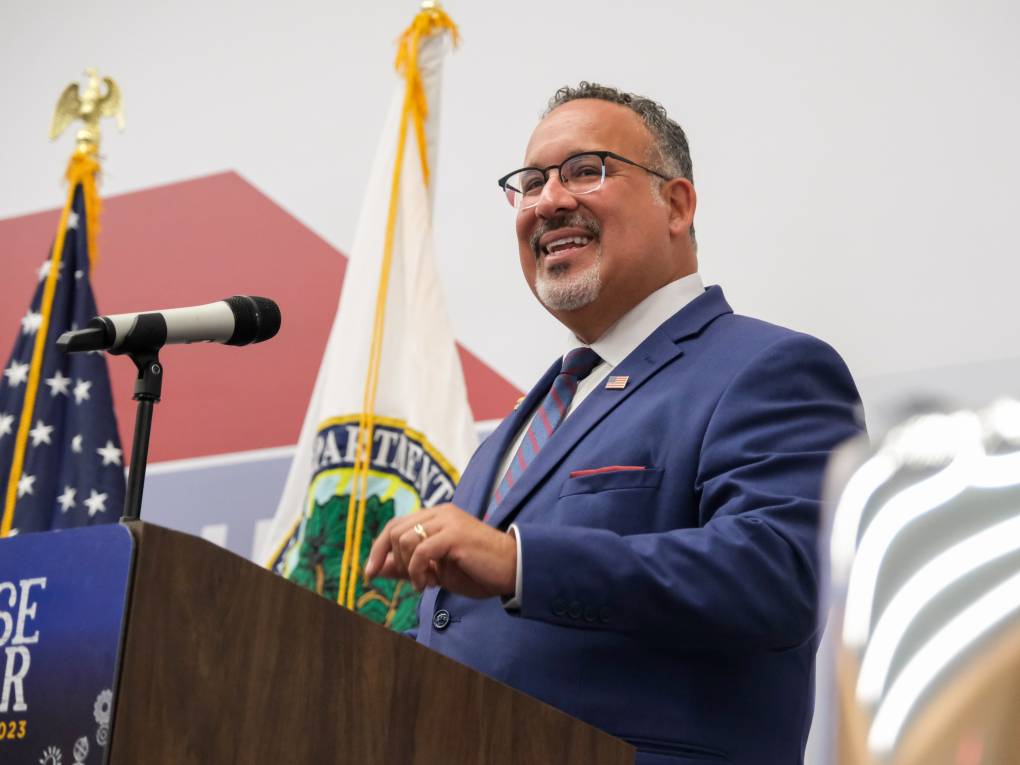
"caption": "Miguel Cardona, US secretary of education, speaks during a bus tour kick off at the University of Kansas as part of the Department of Education's (DOE) \"Back to School Bus Tour 2023: Raise the Bar\" campaign in Lawrence, Kansas, US, on Tuesday, Sept. 5, 2023. The multi-state road trip is showcasing the ways schools, families, and communities are doubling down on accelerating student learning and raising the bar in education, according to the DOE.",
"description": null,
"title": "Miguel Cardona, the U.S. Education Secretary, announced new efforts to help borrowers hurt by problems with its repayment programs.",
"credit": "Arin Yoon/Bloomberg via Getty Images",
"status": "inherit",
"altTag": null,
"isLoading": false,
"fetchFailed": false
},
"mindshift_62736": {
"type": "attachments",
"id": "mindshift_62736",
"meta": {
"index": "attachments_1716263798",
"site": "mindshift",
"id": "62736",
"found": true
},
"parent": 62734,
"imgSizes": {
"twentyfourteen-full-width": {
"file": "https://ww2.kqed.org/app/uploads/sites/23/2023/11/iStock-991129396-1038x576.jpg",
"width": 1038,
"mimeType": "image/jpeg",
"height": 576
},
"thumbnail": {
"file": "https://ww2.kqed.org/app/uploads/sites/23/2023/11/iStock-991129396-160x107.jpg",
"width": 160,
"mimeType": "image/jpeg",
"height": 107
},
"post-thumbnail": {
"file": "https://ww2.kqed.org/app/uploads/sites/23/2023/11/iStock-991129396-672x372.jpg",
"width": 672,
"mimeType": "image/jpeg",
"height": 372
},
"kqedFullSize": {
"file": "https://ww2.kqed.org/app/uploads/sites/23/2023/11/iStock-991129396.jpg",
"width": 2119,
"height": 1415
},
"2048x2048": {
"file": "https://ww2.kqed.org/app/uploads/sites/23/2023/11/iStock-991129396-2048x1368.jpg",
"width": 2048,
"mimeType": "image/jpeg",
"height": 1368
},
"large": {
"file": "https://ww2.kqed.org/app/uploads/sites/23/2023/11/iStock-991129396-1020x681.jpg",
"width": 1020,
"mimeType": "image/jpeg",
"height": 681
},
"1536x1536": {
"file": "https://ww2.kqed.org/app/uploads/sites/23/2023/11/iStock-991129396-1536x1026.jpg",
"width": 1536,
"mimeType": "image/jpeg",
"height": 1026
},
"full-width": {
"file": "https://ww2.kqed.org/app/uploads/sites/23/2023/11/iStock-991129396-1920x1282.jpg",
"width": 1920,
"mimeType": "image/jpeg",
"height": 1282
},
"medium": {
"file": "https://ww2.kqed.org/app/uploads/sites/23/2023/11/iStock-991129396-800x534.jpg",
"width": 800,
"mimeType": "image/jpeg",
"height": 534
},
"medium_large": {
"file": "https://ww2.kqed.org/app/uploads/sites/23/2023/11/iStock-991129396-768x513.jpg",
"width": 768,
"mimeType": "image/jpeg",
"height": 513
}
},
"publishDate": 1699989251,
"modified": 1700009270,
"caption": null,
"description": null,
"title": "Tired two student girl with stack of books close their face by book. education, session, exams and school conceptual. Two student tired from reading before examination.",
"credit": "iStock/Rachaphak",
"status": "inherit",
"altTag": "Two students with stack of books close their face, laying in the grass.",
"isLoading": false,
"fetchFailed": false
},
"mindshift_62725": {
"type": "attachments",
"id": "mindshift_62725",
"meta": {
"index": "attachments_1716263798",
"site": "mindshift",
"id": "62725",
"found": true
},
"parent": 62724,
"imgSizes": {
"twentyfourteen-full-width": {
"file": "https://ww2.kqed.org/app/uploads/sites/23/2023/11/iStock-1362670366-1038x576.jpg",
"width": 1038,
"mimeType": "image/jpeg",
"height": 576
},
"thumbnail": {
"file": "https://ww2.kqed.org/app/uploads/sites/23/2023/11/iStock-1362670366-160x107.jpg",
"width": 160,
"mimeType": "image/jpeg",
"height": 107
},
"post-thumbnail": {
"file": "https://ww2.kqed.org/app/uploads/sites/23/2023/11/iStock-1362670366-672x372.jpg",
"width": 672,
"mimeType": "image/jpeg",
"height": 372
},
"kqedFullSize": {
"file": "https://ww2.kqed.org/app/uploads/sites/23/2023/11/iStock-1362670366.jpg",
"width": 2121,
"height": 1414
},
"2048x2048": {
"file": "https://ww2.kqed.org/app/uploads/sites/23/2023/11/iStock-1362670366-2048x1365.jpg",
"width": 2048,
"mimeType": "image/jpeg",
"height": 1365
},
"large": {
"file": "https://ww2.kqed.org/app/uploads/sites/23/2023/11/iStock-1362670366-1020x680.jpg",
"width": 1020,
"mimeType": "image/jpeg",
"height": 680
},
"1536x1536": {
"file": "https://ww2.kqed.org/app/uploads/sites/23/2023/11/iStock-1362670366-1536x1024.jpg",
"width": 1536,
"mimeType": "image/jpeg",
"height": 1024
},
"full-width": {
"file": "https://ww2.kqed.org/app/uploads/sites/23/2023/11/iStock-1362670366-1920x1280.jpg",
"width": 1920,
"mimeType": "image/jpeg",
"height": 1280
},
"medium": {
"file": "https://ww2.kqed.org/app/uploads/sites/23/2023/11/iStock-1362670366-800x533.jpg",
"width": 800,
"mimeType": "image/jpeg",
"height": 533
},
"medium_large": {
"file": "https://ww2.kqed.org/app/uploads/sites/23/2023/11/iStock-1362670366-768x512.jpg",
"width": 768,
"mimeType": "image/jpeg",
"height": 512
}
},
"publishDate": 1699645520,
"modified": 1699645589,
"caption": null,
"description": null,
"title": "math",
"credit": "iStock/BRO Vector",
"status": "inherit",
"altTag": "Two students writing algebraic equations on chalk board.",
"isLoading": false,
"fetchFailed": false
},
"mindshift_62479": {
"type": "attachments",
"id": "mindshift_62479",
"meta": {
"index": "attachments_1716263798",
"site": "mindshift",
"id": "62479",
"found": true
},
"parent": 62478,
"imgSizes": {
"twentyfourteen-full-width": {
"file": "https://ww2.kqed.org/app/uploads/sites/23/2023/10/indebted-final_slide-f4e5ec5bdfb6c2316358737bf1c379a103e57d13-1038x576.jpg",
"width": 1038,
"mimeType": "image/jpeg",
"height": 576
},
"thumbnail": {
"file": "https://ww2.kqed.org/app/uploads/sites/23/2023/10/indebted-final_slide-f4e5ec5bdfb6c2316358737bf1c379a103e57d13-160x107.jpg",
"width": 160,
"mimeType": "image/jpeg",
"height": 107
},
"post-thumbnail": {
"file": "https://ww2.kqed.org/app/uploads/sites/23/2023/10/indebted-final_slide-f4e5ec5bdfb6c2316358737bf1c379a103e57d13-672x372.jpg",
"width": 672,
"mimeType": "image/jpeg",
"height": 372
},
"kqedFullSize": {
"file": "https://ww2.kqed.org/app/uploads/sites/23/2023/10/indebted-final_slide-f4e5ec5bdfb6c2316358737bf1c379a103e57d13-scaled.jpg",
"width": 2560,
"height": 1707
},
"2048x2048": {
"file": "https://ww2.kqed.org/app/uploads/sites/23/2023/10/indebted-final_slide-f4e5ec5bdfb6c2316358737bf1c379a103e57d13-2048x1366.jpg",
"width": 2048,
"mimeType": "image/jpeg",
"height": 1366
},
"large": {
"file": "https://ww2.kqed.org/app/uploads/sites/23/2023/10/indebted-final_slide-f4e5ec5bdfb6c2316358737bf1c379a103e57d13-1020x680.jpg",
"width": 1020,
"mimeType": "image/jpeg",
"height": 680
},
"1536x1536": {
"file": "https://ww2.kqed.org/app/uploads/sites/23/2023/10/indebted-final_slide-f4e5ec5bdfb6c2316358737bf1c379a103e57d13-1536x1024.jpg",
"width": 1536,
"mimeType": "image/jpeg",
"height": 1024
},
"full-width": {
"file": "https://ww2.kqed.org/app/uploads/sites/23/2023/10/indebted-final_slide-f4e5ec5bdfb6c2316358737bf1c379a103e57d13-1920x1280.jpg",
"width": 1920,
"mimeType": "image/jpeg",
"height": 1280
},
"medium": {
"file": "https://ww2.kqed.org/app/uploads/sites/23/2023/10/indebted-final_slide-f4e5ec5bdfb6c2316358737bf1c379a103e57d13-800x533.jpg",
"width": 800,
"mimeType": "image/jpeg",
"height": 533
},
"medium_large": {
"file": "https://ww2.kqed.org/app/uploads/sites/23/2023/10/indebted-final_slide-f4e5ec5bdfb6c2316358737bf1c379a103e57d13-768x512.jpg",
"width": 768,
"mimeType": "image/jpeg",
"height": 512
}
},
"publishDate": 1696435218,
"modified": 1696436366,
"caption": null,
"description": "Middle-income family in debt.",
"title": "Middle-income family in debt.",
"credit": "Delphine Lee/NPR",
"status": "inherit",
"altTag": "Illustration of a family on a rooftop. A woman rides a graduation cap in the sky as family waves to her.",
"isLoading": false,
"fetchFailed": false
},
"mindshift_62097": {
"type": "attachments",
"id": "mindshift_62097",
"meta": {
"index": "attachments_1716263798",
"site": "mindshift",
"id": "62097",
"found": true
},
"parent": 62094,
"imgSizes": {
"twentyfourteen-full-width": {
"file": "https://ww2.kqed.org/app/uploads/sites/23/2023/07/iStock-1496466238-1038x576.jpg",
"width": 1038,
"mimeType": "image/jpeg",
"height": 576
},
"thumbnail": {
"file": "https://ww2.kqed.org/app/uploads/sites/23/2023/07/iStock-1496466238-160x107.jpg",
"width": 160,
"mimeType": "image/jpeg",
"height": 107
},
"post-thumbnail": {
"file": "https://ww2.kqed.org/app/uploads/sites/23/2023/07/iStock-1496466238-672x372.jpg",
"width": 672,
"mimeType": "image/jpeg",
"height": 372
},
"kqedFullSize": {
"file": "https://ww2.kqed.org/app/uploads/sites/23/2023/07/iStock-1496466238.jpg",
"width": 2121,
"height": 1414
},
"2048x2048": {
"file": "https://ww2.kqed.org/app/uploads/sites/23/2023/07/iStock-1496466238-2048x1365.jpg",
"width": 2048,
"mimeType": "image/jpeg",
"height": 1365
},
"large": {
"file": "https://ww2.kqed.org/app/uploads/sites/23/2023/07/iStock-1496466238-1020x680.jpg",
"width": 1020,
"mimeType": "image/jpeg",
"height": 680
},
"1536x1536": {
"file": "https://ww2.kqed.org/app/uploads/sites/23/2023/07/iStock-1496466238-1536x1024.jpg",
"width": 1536,
"mimeType": "image/jpeg",
"height": 1024
},
"full-width": {
"file": "https://ww2.kqed.org/app/uploads/sites/23/2023/07/iStock-1496466238-1920x1280.jpg",
"width": 1920,
"mimeType": "image/jpeg",
"height": 1280
},
"medium": {
"file": "https://ww2.kqed.org/app/uploads/sites/23/2023/07/iStock-1496466238-800x533.jpg",
"width": 800,
"mimeType": "image/jpeg",
"height": 533
},
"medium_large": {
"file": "https://ww2.kqed.org/app/uploads/sites/23/2023/07/iStock-1496466238-768x512.jpg",
"width": 768,
"mimeType": "image/jpeg",
"height": 512
}
},
"publishDate": 1690595880,
"modified": 1690595923,
"caption": null,
"description": null,
"title": null,
"credit": "iStock/Liudmila Chernetska",
"status": "inherit",
"altTag": "coins and a graduation cap",
"isLoading": false,
"fetchFailed": false
},
"mindshift_62067": {
"type": "attachments",
"id": "mindshift_62067",
"meta": {
"index": "attachments_1716263798",
"site": "mindshift",
"id": "62067",
"found": true
},
"parent": 62061,
"imgSizes": {
"twentyfourteen-full-width": {
"file": "https://ww2.kqed.org/app/uploads/sites/23/2023/07/iStock-1194386686-1038x576.jpg",
"width": 1038,
"mimeType": "image/jpeg",
"height": 576
},
"thumbnail": {
"file": "https://ww2.kqed.org/app/uploads/sites/23/2023/07/iStock-1194386686-160x107.jpg",
"width": 160,
"mimeType": "image/jpeg",
"height": 107
},
"post-thumbnail": {
"file": "https://ww2.kqed.org/app/uploads/sites/23/2023/07/iStock-1194386686-672x372.jpg",
"width": 672,
"mimeType": "image/jpeg",
"height": 372
},
"kqedFullSize": {
"file": "https://ww2.kqed.org/app/uploads/sites/23/2023/07/iStock-1194386686.jpg",
"width": 2120,
"height": 1414
},
"2048x2048": {
"file": "https://ww2.kqed.org/app/uploads/sites/23/2023/07/iStock-1194386686-2048x1366.jpg",
"width": 2048,
"mimeType": "image/jpeg",
"height": 1366
},
"large": {
"file": "https://ww2.kqed.org/app/uploads/sites/23/2023/07/iStock-1194386686-1020x680.jpg",
"width": 1020,
"mimeType": "image/jpeg",
"height": 680
},
"1536x1536": {
"file": "https://ww2.kqed.org/app/uploads/sites/23/2023/07/iStock-1194386686-1536x1024.jpg",
"width": 1536,
"mimeType": "image/jpeg",
"height": 1024
},
"full-width": {
"file": "https://ww2.kqed.org/app/uploads/sites/23/2023/07/iStock-1194386686-1920x1281.jpg",
"width": 1920,
"mimeType": "image/jpeg",
"height": 1281
},
"medium": {
"file": "https://ww2.kqed.org/app/uploads/sites/23/2023/07/iStock-1194386686-800x534.jpg",
"width": 800,
"mimeType": "image/jpeg",
"height": 534
},
"medium_large": {
"file": "https://ww2.kqed.org/app/uploads/sites/23/2023/07/iStock-1194386686-768x512.jpg",
"width": 768,
"mimeType": "image/jpeg",
"height": 512
}
},
"publishDate": 1690044505,
"modified": 1690044563,
"caption": null,
"description": null,
"title": "Two Female Students Studying Together Outdoors in Winter on University Campus",
"credit": "iStock/Jeremy Poland",
"status": "inherit",
"altTag": null,
"isLoading": false,
"fetchFailed": false
},
"mindshift_62015": {
"type": "attachments",
"id": "mindshift_62015",
"meta": {
"index": "attachments_1716263798",
"site": "mindshift",
"id": "62015",
"found": true
},
"parent": 62014,
"imgSizes": {
"thumbnail": {
"file": "https://ww2.kqed.org/app/uploads/sites/23/2023/07/image1-160x107.jpg",
"width": 160,
"mimeType": "image/jpeg",
"height": 107
},
"post-thumbnail": {
"file": "https://ww2.kqed.org/app/uploads/sites/23/2023/07/image1-672x372.jpg",
"width": 672,
"mimeType": "image/jpeg",
"height": 372
},
"kqedFullSize": {
"file": "https://ww2.kqed.org/app/uploads/sites/23/2023/07/image1.jpg",
"width": 780,
"height": 520
},
"medium_large": {
"file": "https://ww2.kqed.org/app/uploads/sites/23/2023/07/image1-768x512.jpg",
"width": 768,
"mimeType": "image/jpeg",
"height": 512
}
},
"publishDate": 1689430437,
"modified": 1689430518,
"caption": "Confidence in higher education among Republicans sank the most. But confidence also dropped among independents and Democrats.",
"description": null,
"title": "image1",
"credit": "Amanda J. Cain for Hechinger Report",
"status": "inherit",
"altTag": null,
"isLoading": false,
"fetchFailed": false
},
"mindshift_61930": {
"type": "attachments",
"id": "mindshift_61930",
"meta": {
"index": "attachments_1716263798",
"site": "mindshift",
"id": "61930",
"found": true
},
"parent": 61929,
"imgSizes": {
"twentyfourteen-full-width": {
"file": "https://ww2.kqed.org/app/uploads/sites/23/2023/06/iStock-1160952396-1038x576.jpg",
"width": 1038,
"mimeType": "image/jpeg",
"height": 576
},
"thumbnail": {
"file": "https://ww2.kqed.org/app/uploads/sites/23/2023/06/iStock-1160952396-160x107.jpg",
"width": 160,
"mimeType": "image/jpeg",
"height": 107
},
"post-thumbnail": {
"file": "https://ww2.kqed.org/app/uploads/sites/23/2023/06/iStock-1160952396-672x372.jpg",
"width": 672,
"mimeType": "image/jpeg",
"height": 372
},
"kqedFullSize": {
"file": "https://ww2.kqed.org/app/uploads/sites/23/2023/06/iStock-1160952396.jpg",
"width": 2121,
"height": 1414
},
"2048x2048": {
"file": "https://ww2.kqed.org/app/uploads/sites/23/2023/06/iStock-1160952396-2048x1365.jpg",
"width": 2048,
"mimeType": "image/jpeg",
"height": 1365
},
"large": {
"file": "https://ww2.kqed.org/app/uploads/sites/23/2023/06/iStock-1160952396-1020x680.jpg",
"width": 1020,
"mimeType": "image/jpeg",
"height": 680
},
"1536x1536": {
"file": "https://ww2.kqed.org/app/uploads/sites/23/2023/06/iStock-1160952396-1536x1024.jpg",
"width": 1536,
"mimeType": "image/jpeg",
"height": 1024
},
"full-width": {
"file": "https://ww2.kqed.org/app/uploads/sites/23/2023/06/iStock-1160952396-1920x1280.jpg",
"width": 1920,
"mimeType": "image/jpeg",
"height": 1280
},
"medium": {
"file": "https://ww2.kqed.org/app/uploads/sites/23/2023/06/iStock-1160952396-800x533.jpg",
"width": 800,
"mimeType": "image/jpeg",
"height": 533
},
"medium_large": {
"file": "https://ww2.kqed.org/app/uploads/sites/23/2023/06/iStock-1160952396-768x512.jpg",
"width": 768,
"mimeType": "image/jpeg",
"height": 512
}
},
"publishDate": 1688052514,
"modified": 1688052560,
"caption": null,
"description": null,
"title": "college application on a clipboard",
"credit": "iStock/relif",
"status": "inherit",
"altTag": "a college application on a clipboard",
"isLoading": false,
"fetchFailed": false
}
},
"audioPlayerReducer": {
"postId": "stream_live",
"isPaused": true,
"isPlaying": false,
"pfsActive": false,
"pledgeModalIsOpen": true,
"playerDrawerIsOpen": false,
"liveAudioPlayStartedAt": 0,
"liveAudioPlayContext": ""
},
"authorsReducer": {
"byline_mindshift_62877": {
"type": "authors",
"id": "byline_mindshift_62877",
"meta": {
"override": true
},
"slug": "byline_mindshift_62877",
"name": "Cory Turner",
"isLoading": false
},
"byline_mindshift_62860": {
"type": "authors",
"id": "byline_mindshift_62860",
"meta": {
"override": true
},
"slug": "byline_mindshift_62860",
"name": "Jason Gonzales, Chalkbeat Colorado",
"isLoading": false
},
"byline_mindshift_62829": {
"type": "authors",
"id": "byline_mindshift_62829",
"meta": {
"override": true
},
"slug": "byline_mindshift_62829",
"name": "Cory Turner",
"isLoading": false
},
"byline_mindshift_62724": {
"type": "authors",
"id": "byline_mindshift_62724",
"meta": {
"override": true
},
"slug": "byline_mindshift_62724",
"name": "Jill Barshay, \u003ca href=\"https://hechingerreport.org/\" target=\"_blank\">The Hechinger Report\u003c/a>",
"isLoading": false
},
"byline_mindshift_62478": {
"type": "authors",
"id": "byline_mindshift_62478",
"meta": {
"override": true
},
"slug": "byline_mindshift_62478",
"name": "Cory Turner",
"isLoading": false
},
"byline_mindshift_62094": {
"type": "authors",
"id": "byline_mindshift_62094",
"meta": {
"override": true
},
"slug": "byline_mindshift_62094",
"name": "Jill Barshay, \u003ca href=\"https://hechingerreport.org/\" target=\"_blank\">The Hechinger Report\u003c/a>",
"isLoading": false
},
"byline_mindshift_62061": {
"type": "authors",
"id": "byline_mindshift_62061",
"meta": {
"override": true
},
"slug": "byline_mindshift_62061",
"name": "Jill Barshay, \u003ca href=\"https://hechingerreport.org/\" target=\"_blank\">The Hechinger Report\u003c/a>",
"isLoading": false
},
"byline_mindshift_62014": {
"type": "authors",
"id": "byline_mindshift_62014",
"meta": {
"override": true
},
"slug": "byline_mindshift_62014",
"name": "Jill Barshay, \u003ca href=\"https://hechingerreport.org/\" target=\"_blank\">The Hechinger Report\u003c/a>",
"isLoading": false
},
"byline_mindshift_61929": {
"type": "authors",
"id": "byline_mindshift_61929",
"meta": {
"override": true
},
"slug": "byline_mindshift_61929",
"name": "Kalyn Belsha, Chalkbeat",
"isLoading": false
},
"ngobir": {
"type": "authors",
"id": "11721",
"meta": {
"index": "authors_1716337520",
"id": "11721",
"found": true
},
"name": "Nimah Gobir",
"firstName": "Nimah",
"lastName": "Gobir",
"slug": "ngobir",
"email": "ngobir@kqed.org",
"display_author_email": false,
"staff_mastheads": [],
"title": "KQED Contributor",
"bio": null,
"avatar": "https://secure.gravatar.com/avatar/837f5df7045c59f3ec097cdf7ac391373ab75d5ec936dd7099b8cb6f0af1b0e9?s=600&d=blank&r=g",
"twitter": null,
"bluesky": null,
"facebook": null,
"instagram": null,
"linkedin": null,
"sites": [
{
"site": "mindshift",
"roles": [
"editor"
]
}
],
"headData": {
"title": "Nimah Gobir | KQED",
"description": "KQED Contributor",
"ogImgSrc": "https://secure.gravatar.com/avatar/837f5df7045c59f3ec097cdf7ac391373ab75d5ec936dd7099b8cb6f0af1b0e9?s=600&d=blank&r=g",
"twImgSrc": "https://secure.gravatar.com/avatar/837f5df7045c59f3ec097cdf7ac391373ab75d5ec936dd7099b8cb6f0af1b0e9?s=600&d=blank&r=g"
},
"isLoading": false,
"link": "/author/ngobir"
}
},
"pagesReducer": {
"mindshift_category_higher-education": {
"type": "terms",
"id": "mindshift_21694",
"meta": {
"index": "terms_1716263798",
"site": "mindshift",
"id": "21694",
"score": 13.107925
},
"featImg": null,
"name": "Higher Education",
"description": null,
"taxonomy": "category",
"headData": {
"twImgId": null,
"twTitle": null,
"ogTitle": null,
"ogImgId": null,
"twDescription": null,
"description": null,
"title": "Higher Education Archives - KQED Mindshift",
"ogDescription": null
},
"ttid": 20966,
"slug": "higher-education",
"isLoading": false,
"title": "Higher Education",
"pageMeta": {
"site": "mindshift",
"WpPageTemplate": "page-topic-editorial",
"currentPage": 4
},
"blocks": [
{
"blockName": "kqed/post-list",
"attrs": {
"layout": "cardArticle2",
"query": "posts/mindshift?category=higher-education",
"seeMore": false,
"paginated": true,
"page": 4
}
},
{
"blockName": "kqed/ad"
}
]
}
},
"pfsSessionReducer": {},
"postsReducer": {
"stream_live": {
"type": "live",
"id": "stream_live",
"audioUrl": "https://streams.kqed.org/kqedradio",
"title": "Live Stream",
"excerpt": "Live Stream information currently unavailable.",
"link": "/radio",
"featImg": "",
"label": {
"name": "KQED Live",
"link": "/"
}
},
"stream_kqedNewscast": {
"type": "posts",
"id": "stream_kqedNewscast",
"audioUrl": "https://www.kqed.org/.stream/anon/radio/RDnews/newscast.mp3?_=1",
"title": "KQED Newscast",
"featImg": "",
"label": {
"name": "88.5 FM",
"link": "/"
}
},
"mindshift_62877": {
"type": "posts",
"id": "mindshift_62877",
"meta": {
"index": "posts_1716263798",
"site": "mindshift",
"id": "62877",
"score": null,
"sort": [
1703084459000
]
},
"parent": 0,
"labelTerm": {
"site": "mindshift"
},
"blocks": [],
"publishDate": 1703084459,
"format": "standard",
"title": "A story of student loan forgiveness, 20 years in the making",
"headTitle": "A story of student loan forgiveness, 20 years in the making | KQED",
"content": "\u003cp>Kurt Panton’s laugh, surprising and unguarded, erupts when you expect it — after his baby daughter, Pauline, babbles adorably. But also when you don’t — after he confesses frustration with the federal student loan system.\u003c/p>\n\u003cp>Kurt laughed a lot during our first Zoom conversation, in December of 2022, when he was worried about his $18,000 in outstanding loan debt, but also during our last conversation, just a few days ago, when he told me those debts had suddenly disappeared.\u003c/p>\n\u003cp>This is the story of what happened in between.\u003c/p>\n\u003cp>Kurt Panton is 43. He grew up in Miami with his brother and their mother, Barbara. After graduating from college in 2003, Kurt taught high school until 2016, when he moved to Germany, married Lizzy, who is German, and tried his hand at copywriting.\u003c/p>\n\u003cp>Through every step of his adult life, there have been a few constants: that laugh, his doting mom and Kurt’s monthly federal student loan payment.\u003c/p>\n\u003cfigure id=\"attachment_62880\" class=\"wp-caption alignright\" style=\"max-width: 200px\">\u003cimg loading=\"lazy\" decoding=\"async\" class=\"size-full wp-image-62880\" src=\"https://cdn.kqed.org/wp-content/uploads/sites/23/2023/12/231202_studentloans_patrickjunker_dsc0342_custom-95b20b8d1f270fcc33720d652f0610404f8c32da.jpg\" alt=\"\" width=\"200\" height=\"300\" srcset=\"https://cdn.kqed.org/wp-content/uploads/sites/23/2023/12/231202_studentloans_patrickjunker_dsc0342_custom-95b20b8d1f270fcc33720d652f0610404f8c32da.jpg 200w, https://cdn.kqed.org/wp-content/uploads/sites/23/2023/12/231202_studentloans_patrickjunker_dsc0342_custom-95b20b8d1f270fcc33720d652f0610404f8c32da-160x240.jpg 160w\" sizes=\"(max-width: 200px) 100vw, 200px\">\u003cfigcaption class=\"wp-caption-text\">A portrait of Kurt in his living room. Kurt Panton was a teacher in Miami and recently had his loans forgiven after many years of steady payment and hard work. He lives with his wife and their new baby in a village outside Mannheim, Germany. \u003ccite>(Patrick Junker for NPR)\u003c/cite>\u003c/figcaption>\u003c/figure>\n\u003cp>“I’ve been so loyal to my payments,” Kurt told me in 2022. “I can’t even explain the outrage I feel when I look at comments on social media [about debt relief], and it’s like, ‘Well, you took out loans, you repay them!’ You know, this has been a serious financial debt to me. And I do everything within my power, within my income, to pay it back.\u003cem>” \u003c/em>\u003c/p>\n\u003cp>[ad fullwidth]\u003c/p>\n\u003cp>When we first met, last December, Kurt told me he had been repaying his loans consistently since late 2003, and he knew that if President Biden’s big plan to erase hundreds of billions of dollars in federal student loans could survive a barrage of legal challenges, it would erase every penny of his remaining debts. (Pell Grant recipients like Kurt would have qualified for $20,000 in debt cancellation.)\u003c/p>\n\u003cp>“That’s going to make an immediate effect,” he told me back then, “and I don’t have to sit here and think about whether I qualify under all these complicated formulas.”\u003c/p>\n\u003cp>But I was thinking of complicated formulas, because Kurt and I both knew Biden’s grand plan for debt relief was no sure thing. And I wondered if Kurt’s loans might qualify for another, lesser-understood form of debt relief that did not have to survive the courts.\u003c/p>\n\u003cp>At the end of our chat, I asked Kurt to send me every record of every payment he’d ever made. The plan was to manually tally his payments, all 19 years’ worth, to see if he qualified for this \u003cem>other\u003c/em> kind of relief.\u003c/p>\n\u003cp>Some borrowers might have been daunted by having to excavate so many records from multiple loan servicers. Kurt agreed eagerly, with a laugh.\u003c/p>\n\u003ch3>The sleeper debt relief that’s helped thousands of borrowers\u003c/h3>\n\u003cp>Before I met Kurt, in April 2022, \u003ca href=\"https://www.npr.org/2022/04/01/1089750113/student-loan-debt-investigation\">NPR published the damning findings of a monthslong investigation\u003c/a> into federal, income-driven repayment plans (IDR).\u003c/p>\n\u003cp>These IDR plans were meant to help lower-income borrowers by pegging their monthly payments to their income: The less they earn, the less they have to pay each month. They were meant to be an engine of good and to keep struggling borrowers from defaulting on their loans.\u003c/p>\n\u003cp>But NPR revealed a list of shocking problems that were hurting, not helping, borrowers. Though these plans promised loan forgiveness after 20 or 25 years, NPR found that some loan servicers weren’t counting payments, meaning they had no idea if, or when, a borrower qualified for forgiveness. Servicers were also miscounting payments, not always giving borrowers credit.\u003c/p>\n\u003cp>On top of that, advocates had been sounding the alarm for millions of borrowers who could have benefited from these repayment plans — like Kurt — but were never told about them or, worse, were put into forbearance instead.\u003c/p>\n\u003cp>IDR had become a debacle of good intentions.\u003c/p>\n\u003cp>Two weeks after NPR released its investigation, \u003ca href=\"https://www.npr.org/2022/04/19/1093310151/student-loans-income-based-repayment\">the Biden administration committed to a sweeping IDR overhaul\u003c/a>, promising to review the payment histories of millions of borrowers, find and fix these mistakes, and give borrowers retroactive credit toward IDR’s promise of loan forgiveness.\u003c/p>\n\u003cp>Basically, a monumental do-over.\u003c/p>\n\u003cfigure id=\"attachment_62879\" class=\"wp-caption aligncenter\" style=\"max-width: 800px\">\u003cimg loading=\"lazy\" decoding=\"async\" class=\"size-medium wp-image-62879\" src=\"https://cdn.kqed.org/wp-content/uploads/sites/23/2023/12/231202_studentloans_patrickjunker_dsc0964_slide-1fe3c6134b8ca4a57b9271342efc944350128bed-800x533.jpg\" alt=\"\" width=\"800\" height=\"533\" srcset=\"https://cdn.kqed.org/wp-content/uploads/sites/23/2023/12/231202_studentloans_patrickjunker_dsc0964_slide-1fe3c6134b8ca4a57b9271342efc944350128bed-800x533.jpg 800w, https://cdn.kqed.org/wp-content/uploads/sites/23/2023/12/231202_studentloans_patrickjunker_dsc0964_slide-1fe3c6134b8ca4a57b9271342efc944350128bed-1020x680.jpg 1020w, https://cdn.kqed.org/wp-content/uploads/sites/23/2023/12/231202_studentloans_patrickjunker_dsc0964_slide-1fe3c6134b8ca4a57b9271342efc944350128bed-160x107.jpg 160w, https://cdn.kqed.org/wp-content/uploads/sites/23/2023/12/231202_studentloans_patrickjunker_dsc0964_slide-1fe3c6134b8ca4a57b9271342efc944350128bed-768x512.jpg 768w, https://cdn.kqed.org/wp-content/uploads/sites/23/2023/12/231202_studentloans_patrickjunker_dsc0964_slide-1fe3c6134b8ca4a57b9271342efc944350128bed-1536x1024.jpg 1536w, https://cdn.kqed.org/wp-content/uploads/sites/23/2023/12/231202_studentloans_patrickjunker_dsc0964_slide-1fe3c6134b8ca4a57b9271342efc944350128bed-2048x1365.jpg 2048w, https://cdn.kqed.org/wp-content/uploads/sites/23/2023/12/231202_studentloans_patrickjunker_dsc0964_slide-1fe3c6134b8ca4a57b9271342efc944350128bed-1920x1280.jpg 1920w\" sizes=\"(max-width: 800px) 100vw, 800px\">\u003cfigcaption class=\"wp-caption-text\">Kurt, Elisabeth and Pauline ride the carousel at the Christmas market in Mannheim, Germany. \u003ccite>(Patrick Junker for NPR)\u003c/cite>\u003c/figcaption>\u003c/figure>\n\u003cp>Which brings us full circle to Kurt Panton, who’d been repaying his loans for \u003cem>19\u003c/em> \u003cem>years\u003c/em> when we met. Under this do-over, he could technically qualify for loan forgiveness in one more year. \u003cem>Technically\u003c/em>. But no one quite understood how or when this do-over would happen, and the U.S. Department of Education was still completely focused on the fate of Biden’s larger debt relief plan.\u003c/p>\n\u003cp>After that first Zoom, last December, Kurt pulled together his entire payment history. We kept in touch through spring, as I plugged hundreds of his payments into a spreadsheet. In June, the Supreme Court struck down Biden’s big relief plan. Kurt’s Plan A was gone. It was time to put Plan B to the test.\u003c/p>\n\u003cp>Kurt and I hopped on Zoom again in August. This time, Pauline was about 10 months old, and she sat on his lap as I showed them the spreadsheet I’d made.\u003c/p>\n\u003cp>“We’re having fun talking student loans! I hope you never have to pay student loans, little one,” Kurt said to Pauline, laughing.\u003c/p>\n\u003cfigure id=\"attachment_62881\" class=\"wp-caption aligncenter\" style=\"max-width: 800px\">\u003cimg loading=\"lazy\" decoding=\"async\" class=\"size-medium wp-image-62881\" src=\"https://cdn.kqed.org/wp-content/uploads/sites/23/2023/12/231202_studentloans_patrickjunker_dsc0397_slide-42839dd15ae20fd6754251e14bb540b0a7b6117f-800x533.jpg\" alt=\"\" width=\"800\" height=\"533\" srcset=\"https://cdn.kqed.org/wp-content/uploads/sites/23/2023/12/231202_studentloans_patrickjunker_dsc0397_slide-42839dd15ae20fd6754251e14bb540b0a7b6117f-800x533.jpg 800w, https://cdn.kqed.org/wp-content/uploads/sites/23/2023/12/231202_studentloans_patrickjunker_dsc0397_slide-42839dd15ae20fd6754251e14bb540b0a7b6117f-1020x680.jpg 1020w, https://cdn.kqed.org/wp-content/uploads/sites/23/2023/12/231202_studentloans_patrickjunker_dsc0397_slide-42839dd15ae20fd6754251e14bb540b0a7b6117f-160x107.jpg 160w, https://cdn.kqed.org/wp-content/uploads/sites/23/2023/12/231202_studentloans_patrickjunker_dsc0397_slide-42839dd15ae20fd6754251e14bb540b0a7b6117f-768x512.jpg 768w, https://cdn.kqed.org/wp-content/uploads/sites/23/2023/12/231202_studentloans_patrickjunker_dsc0397_slide-42839dd15ae20fd6754251e14bb540b0a7b6117f-1536x1024.jpg 1536w, https://cdn.kqed.org/wp-content/uploads/sites/23/2023/12/231202_studentloans_patrickjunker_dsc0397_slide-42839dd15ae20fd6754251e14bb540b0a7b6117f-2048x1365.jpg 2048w, https://cdn.kqed.org/wp-content/uploads/sites/23/2023/12/231202_studentloans_patrickjunker_dsc0397_slide-42839dd15ae20fd6754251e14bb540b0a7b6117f-1920x1280.jpg 1920w\" sizes=\"(max-width: 800px) 100vw, 800px\">\u003cfigcaption class=\"wp-caption-text\">Kurt Panton and his daughter, Pauline, at home in a village outside Mannheim, Germany. \u003ccite>(Patrick Junker for NPR)\u003c/cite>\u003c/figcaption>\u003c/figure>\n\u003cp>To qualify for forgiveness under the IDR do-over, a borrower needs to have been in repayment for 20 years, which is 240 monthly payments. By our count, Kurt had made 233, though that was a conservative estimate, ignoring a few months that had disappeared with servicers’ poor record-keeping.\u003c/p>\n\u003cp>“You are so close,” I told Kurt as we moved down the spreadsheet.\u003c/p>\n\u003cp>“I am so close!” he laughed back. “When you were scrolling down on the spreadsheet, I was like, ‘Please get to 240, please.’ And then I saw 233 and I was like, ‘Nooo!'”\u003c/p>\n\u003cp>The good news for Kurt was that the Education Department had recently announced the first round of reviews under this IDR do-over and said it would be erasing the loans of more than 800,000 people — just like him (a number that would continue to grow). All he had to do was wait seven more months, at the most.\u003c/p>\n\u003cp>Turns out, it was a lot less than that.\u003c/p>\n\u003ch3>“I think I’m done, Mom!”\u003c/h3>\n\u003cp>In the middle of November, Kurt woke up early with Pauline, who had a cold. He fed her, changed her diaper, and lay down on the couch with her, hoping she’d fall back asleep.\u003c/p>\n\u003cp>“She’s lying on my chest on the couch,” Kurt says, “and I really can’t go back to sleep that quickly. So I check my email, and as soon as I saw the subject I thought, ‘Oh my God, this is it!'”\u003c/p>\n\u003cp>The email was from the Education Department, and it said that under that big IDR do-over, Kurt now qualifies to have his remaining $18,000 in loans forgiven — 20 years since his first payment.\u003c/p>\n\u003cp>When I ask Kurt how he’ll celebrate, he calls his mom, Barbara.\u003c/p>\n\u003cp>“I am very, very proud of you,” she says, suggesting maybe now Kurt will consider going back to school to work on a doctorate.\u003c/p>\n\u003cp>“I don’t think so,” Kurt says, laughing. “I think I’m done, Mom!”\u003c/p>\n\u003cp>After Kurt hangs up, his wife, Lizzy, grabs a small, twist-top bottle of bubbly from the fridge, and they toast the email that says Kurt’s loans will soon be in his past — while his future sleeps quietly in the other room.\u003c/p>\n\u003cp>[ad floatright]\u003c/p>\n\u003cp>\u003ca href=\"https://www.npr.org/2023/12/06/1217552875/government-efforts-to-erase-student-loan-debt-have-now-reached-3-6-million-borro\">\u003cem>In early December\u003c/em>\u003c/a>\u003cem>, the Education Department announced it has now approved almost $44 billion in IDR-related debt relief for a total of more than 900,000 borrowers.\u003c/em>\u003c/p>\n\u003cdiv class=\"fullattribution\">Copyright 2023 NPR. To see more, visit https://www.npr.org.\u003cimg decoding=\"async\" src=\"https://www.google-analytics.com/__utm.gif?utmac=UA-5828686-4&utmdt=A+story+of+student+loan+forgiveness%2C+20+years+in+the+making&utme=8(APIKey)9(MDAxOTAwOTE4MDEyMTkxMDAzNjczZDljZA004)\">\u003c/div>\n\n",
"stats": {
"hasVideo": false,
"hasChartOrMap": false,
"hasAudio": false,
"hasPolis": false,
"wordCount": 1440,
"hasGoogleForm": false,
"hasGallery": false,
"hasHearkenModule": false,
"iframeSrcs": [],
"paragraphCount": 37
},
"modified": 1703170923,
"excerpt": "More than 900,000 federal student loan borrowers are seeing their loans erased after being in repayment for two decades or more.",
"headData": {
"twImgId": "",
"twTitle": "",
"ogTitle": "",
"ogImgId": "",
"twDescription": "",
"description": "More than 900,000 federal student loan borrowers are seeing their loans erased after being in repayment for two decades or more.",
"socialDescription": "More than 900,000 federal student loan borrowers are seeing their loans erased after being in repayment for two decades or more.",
"title": "A story of student loan forgiveness, 20 years in the making | KQED",
"ogDescription": "",
"schema": {
"@context": "https://schema.org",
"@type": "Article",
"headline": "A story of student loan forgiveness, 20 years in the making",
"datePublished": "2023-12-20T07:00:59-08:00",
"dateModified": "2023-12-21T07:02:03-08:00",
"image": "https://cdn.kqed.org/wp-content/uploads/2020/02/KQED-OG-Image@1x.png"
}
},
"guestAuthors": [],
"slug": "a-story-of-student-loan-forgiveness-20-years-in-the-making",
"status": "publish",
"nprApiLink": "http://api.npr.org/query?id=1215880180&apiKey=MDAxOTAwOTE4MDEyMTkxMDAzNjczZDljZA004",
"nprStoryDate": "Wed, 20 Dec 2023 05:01:16 -0500",
"excludeFromSiteSearch": "Include",
"nprLastModifiedDate": "Wed, 20 Dec 2023 05:01:16 -0500",
"nprHtmlLink": "https://www.npr.org/2023/12/20/1215880180/student-loan-forgiveness-borrower?ft=nprml&f=1215880180",
"nprAudio": "https://play.podtrac.com/npr-191676894/ondemand.npr.org/anon.npr-mp3/npr/atc/2023/12/20231220_atc_a_story_of_student_loan_forgiveness_20_years_in_the_making.mp3?orgId=1&topicId=1013&aggIds=1187230214&d=480&p=2&story=1215880180&ft=nprml&f=1215880180",
"nprImageAgency": "Patrick Junker for NPR",
"nprAudioM3u": "http://api.npr.org/m3u/11220726017-eda884.m3u?orgId=1&topicId=1013&aggIds=1187230214&d=480&p=2&story=1215880180&ft=nprml&f=1215880180",
"nprStoryId": "1215880180",
"nprByline": "Cory Turner",
"sticky": false,
"showOnAuthorArchivePages": "No",
"articleAge": "0",
"nprRetrievedStory": "1",
"nprPubDate": "Wed, 20 Dec 2023 17:35:00 -0500",
"path": "/mindshift/62877/a-story-of-student-loan-forgiveness-20-years-in-the-making",
"audioUrl": "https://play.podtrac.com/npr-191676894/ondemand.npr.org/anon.npr-mp3/npr/atc/2023/12/20231220_atc_a_story_of_student_loan_forgiveness_20_years_in_the_making.mp3?orgId=1&topicId=1013&aggIds=1187230214&d=480&p=2&story=1215880180&ft=nprml&f=1215880180",
"audioTrackLength": null,
"parsedContent": [
{
"type": "contentString",
"content": "\u003cdiv class=\"post-body\">\u003cp>\u003cp>Kurt Panton’s laugh, surprising and unguarded, erupts when you expect it — after his baby daughter, Pauline, babbles adorably. But also when you don’t — after he confesses frustration with the federal student loan system.\u003c/p>\n\u003cp>Kurt laughed a lot during our first Zoom conversation, in December of 2022, when he was worried about his $18,000 in outstanding loan debt, but also during our last conversation, just a few days ago, when he told me those debts had suddenly disappeared.\u003c/p>\n\u003cp>This is the story of what happened in between.\u003c/p>\n\u003cp>Kurt Panton is 43. He grew up in Miami with his brother and their mother, Barbara. After graduating from college in 2003, Kurt taught high school until 2016, when he moved to Germany, married Lizzy, who is German, and tried his hand at copywriting.\u003c/p>\n\u003cp>Through every step of his adult life, there have been a few constants: that laugh, his doting mom and Kurt’s monthly federal student loan payment.\u003c/p>\n\u003cfigure id=\"attachment_62880\" class=\"wp-caption alignright\" style=\"max-width: 200px\">\u003cimg loading=\"lazy\" decoding=\"async\" class=\"size-full wp-image-62880\" src=\"https://cdn.kqed.org/wp-content/uploads/sites/23/2023/12/231202_studentloans_patrickjunker_dsc0342_custom-95b20b8d1f270fcc33720d652f0610404f8c32da.jpg\" alt=\"\" width=\"200\" height=\"300\" srcset=\"https://cdn.kqed.org/wp-content/uploads/sites/23/2023/12/231202_studentloans_patrickjunker_dsc0342_custom-95b20b8d1f270fcc33720d652f0610404f8c32da.jpg 200w, https://cdn.kqed.org/wp-content/uploads/sites/23/2023/12/231202_studentloans_patrickjunker_dsc0342_custom-95b20b8d1f270fcc33720d652f0610404f8c32da-160x240.jpg 160w\" sizes=\"(max-width: 200px) 100vw, 200px\">\u003cfigcaption class=\"wp-caption-text\">A portrait of Kurt in his living room. Kurt Panton was a teacher in Miami and recently had his loans forgiven after many years of steady payment and hard work. He lives with his wife and their new baby in a village outside Mannheim, Germany. \u003ccite>(Patrick Junker for NPR)\u003c/cite>\u003c/figcaption>\u003c/figure>\n\u003cp>“I’ve been so loyal to my payments,” Kurt told me in 2022. “I can’t even explain the outrage I feel when I look at comments on social media [about debt relief], and it’s like, ‘Well, you took out loans, you repay them!’ You know, this has been a serious financial debt to me. And I do everything within my power, within my income, to pay it back.\u003cem>” \u003c/em>\u003c/p>\n\u003cp>\u003c/p>\u003c/div>",
"attributes": {
"named": {},
"numeric": []
}
},
{
"type": "component",
"content": "",
"name": "ad",
"attributes": {
"named": {
"label": "fullwidth"
},
"numeric": [
"fullwidth"
]
}
},
{
"type": "contentString",
"content": "\u003cdiv class=\"post-body\">\u003cp>\u003c/p>\n\u003cp>When we first met, last December, Kurt told me he had been repaying his loans consistently since late 2003, and he knew that if President Biden’s big plan to erase hundreds of billions of dollars in federal student loans could survive a barrage of legal challenges, it would erase every penny of his remaining debts. (Pell Grant recipients like Kurt would have qualified for $20,000 in debt cancellation.)\u003c/p>\n\u003cp>“That’s going to make an immediate effect,” he told me back then, “and I don’t have to sit here and think about whether I qualify under all these complicated formulas.”\u003c/p>\n\u003cp>But I was thinking of complicated formulas, because Kurt and I both knew Biden’s grand plan for debt relief was no sure thing. And I wondered if Kurt’s loans might qualify for another, lesser-understood form of debt relief that did not have to survive the courts.\u003c/p>\n\u003cp>At the end of our chat, I asked Kurt to send me every record of every payment he’d ever made. The plan was to manually tally his payments, all 19 years’ worth, to see if he qualified for this \u003cem>other\u003c/em> kind of relief.\u003c/p>\n\u003cp>Some borrowers might have been daunted by having to excavate so many records from multiple loan servicers. Kurt agreed eagerly, with a laugh.\u003c/p>\n\u003ch3>The sleeper debt relief that’s helped thousands of borrowers\u003c/h3>\n\u003cp>Before I met Kurt, in April 2022, \u003ca href=\"https://www.npr.org/2022/04/01/1089750113/student-loan-debt-investigation\">NPR published the damning findings of a monthslong investigation\u003c/a> into federal, income-driven repayment plans (IDR).\u003c/p>\n\u003cp>These IDR plans were meant to help lower-income borrowers by pegging their monthly payments to their income: The less they earn, the less they have to pay each month. They were meant to be an engine of good and to keep struggling borrowers from defaulting on their loans.\u003c/p>\n\u003cp>But NPR revealed a list of shocking problems that were hurting, not helping, borrowers. Though these plans promised loan forgiveness after 20 or 25 years, NPR found that some loan servicers weren’t counting payments, meaning they had no idea if, or when, a borrower qualified for forgiveness. Servicers were also miscounting payments, not always giving borrowers credit.\u003c/p>\n\u003cp>On top of that, advocates had been sounding the alarm for millions of borrowers who could have benefited from these repayment plans — like Kurt — but were never told about them or, worse, were put into forbearance instead.\u003c/p>\n\u003cp>IDR had become a debacle of good intentions.\u003c/p>\n\u003cp>Two weeks after NPR released its investigation, \u003ca href=\"https://www.npr.org/2022/04/19/1093310151/student-loans-income-based-repayment\">the Biden administration committed to a sweeping IDR overhaul\u003c/a>, promising to review the payment histories of millions of borrowers, find and fix these mistakes, and give borrowers retroactive credit toward IDR’s promise of loan forgiveness.\u003c/p>\n\u003cp>Basically, a monumental do-over.\u003c/p>\n\u003cfigure id=\"attachment_62879\" class=\"wp-caption aligncenter\" style=\"max-width: 800px\">\u003cimg loading=\"lazy\" decoding=\"async\" class=\"size-medium wp-image-62879\" src=\"https://cdn.kqed.org/wp-content/uploads/sites/23/2023/12/231202_studentloans_patrickjunker_dsc0964_slide-1fe3c6134b8ca4a57b9271342efc944350128bed-800x533.jpg\" alt=\"\" width=\"800\" height=\"533\" srcset=\"https://cdn.kqed.org/wp-content/uploads/sites/23/2023/12/231202_studentloans_patrickjunker_dsc0964_slide-1fe3c6134b8ca4a57b9271342efc944350128bed-800x533.jpg 800w, https://cdn.kqed.org/wp-content/uploads/sites/23/2023/12/231202_studentloans_patrickjunker_dsc0964_slide-1fe3c6134b8ca4a57b9271342efc944350128bed-1020x680.jpg 1020w, https://cdn.kqed.org/wp-content/uploads/sites/23/2023/12/231202_studentloans_patrickjunker_dsc0964_slide-1fe3c6134b8ca4a57b9271342efc944350128bed-160x107.jpg 160w, https://cdn.kqed.org/wp-content/uploads/sites/23/2023/12/231202_studentloans_patrickjunker_dsc0964_slide-1fe3c6134b8ca4a57b9271342efc944350128bed-768x512.jpg 768w, https://cdn.kqed.org/wp-content/uploads/sites/23/2023/12/231202_studentloans_patrickjunker_dsc0964_slide-1fe3c6134b8ca4a57b9271342efc944350128bed-1536x1024.jpg 1536w, https://cdn.kqed.org/wp-content/uploads/sites/23/2023/12/231202_studentloans_patrickjunker_dsc0964_slide-1fe3c6134b8ca4a57b9271342efc944350128bed-2048x1365.jpg 2048w, https://cdn.kqed.org/wp-content/uploads/sites/23/2023/12/231202_studentloans_patrickjunker_dsc0964_slide-1fe3c6134b8ca4a57b9271342efc944350128bed-1920x1280.jpg 1920w\" sizes=\"(max-width: 800px) 100vw, 800px\">\u003cfigcaption class=\"wp-caption-text\">Kurt, Elisabeth and Pauline ride the carousel at the Christmas market in Mannheim, Germany. \u003ccite>(Patrick Junker for NPR)\u003c/cite>\u003c/figcaption>\u003c/figure>\n\u003cp>Which brings us full circle to Kurt Panton, who’d been repaying his loans for \u003cem>19\u003c/em> \u003cem>years\u003c/em> when we met. Under this do-over, he could technically qualify for loan forgiveness in one more year. \u003cem>Technically\u003c/em>. But no one quite understood how or when this do-over would happen, and the U.S. Department of Education was still completely focused on the fate of Biden’s larger debt relief plan.\u003c/p>\n\u003cp>After that first Zoom, last December, Kurt pulled together his entire payment history. We kept in touch through spring, as I plugged hundreds of his payments into a spreadsheet. In June, the Supreme Court struck down Biden’s big relief plan. Kurt’s Plan A was gone. It was time to put Plan B to the test.\u003c/p>\n\u003cp>Kurt and I hopped on Zoom again in August. This time, Pauline was about 10 months old, and she sat on his lap as I showed them the spreadsheet I’d made.\u003c/p>\n\u003cp>“We’re having fun talking student loans! I hope you never have to pay student loans, little one,” Kurt said to Pauline, laughing.\u003c/p>\n\u003cfigure id=\"attachment_62881\" class=\"wp-caption aligncenter\" style=\"max-width: 800px\">\u003cimg loading=\"lazy\" decoding=\"async\" class=\"size-medium wp-image-62881\" src=\"https://cdn.kqed.org/wp-content/uploads/sites/23/2023/12/231202_studentloans_patrickjunker_dsc0397_slide-42839dd15ae20fd6754251e14bb540b0a7b6117f-800x533.jpg\" alt=\"\" width=\"800\" height=\"533\" srcset=\"https://cdn.kqed.org/wp-content/uploads/sites/23/2023/12/231202_studentloans_patrickjunker_dsc0397_slide-42839dd15ae20fd6754251e14bb540b0a7b6117f-800x533.jpg 800w, https://cdn.kqed.org/wp-content/uploads/sites/23/2023/12/231202_studentloans_patrickjunker_dsc0397_slide-42839dd15ae20fd6754251e14bb540b0a7b6117f-1020x680.jpg 1020w, https://cdn.kqed.org/wp-content/uploads/sites/23/2023/12/231202_studentloans_patrickjunker_dsc0397_slide-42839dd15ae20fd6754251e14bb540b0a7b6117f-160x107.jpg 160w, https://cdn.kqed.org/wp-content/uploads/sites/23/2023/12/231202_studentloans_patrickjunker_dsc0397_slide-42839dd15ae20fd6754251e14bb540b0a7b6117f-768x512.jpg 768w, https://cdn.kqed.org/wp-content/uploads/sites/23/2023/12/231202_studentloans_patrickjunker_dsc0397_slide-42839dd15ae20fd6754251e14bb540b0a7b6117f-1536x1024.jpg 1536w, https://cdn.kqed.org/wp-content/uploads/sites/23/2023/12/231202_studentloans_patrickjunker_dsc0397_slide-42839dd15ae20fd6754251e14bb540b0a7b6117f-2048x1365.jpg 2048w, https://cdn.kqed.org/wp-content/uploads/sites/23/2023/12/231202_studentloans_patrickjunker_dsc0397_slide-42839dd15ae20fd6754251e14bb540b0a7b6117f-1920x1280.jpg 1920w\" sizes=\"(max-width: 800px) 100vw, 800px\">\u003cfigcaption class=\"wp-caption-text\">Kurt Panton and his daughter, Pauline, at home in a village outside Mannheim, Germany. \u003ccite>(Patrick Junker for NPR)\u003c/cite>\u003c/figcaption>\u003c/figure>\n\u003cp>To qualify for forgiveness under the IDR do-over, a borrower needs to have been in repayment for 20 years, which is 240 monthly payments. By our count, Kurt had made 233, though that was a conservative estimate, ignoring a few months that had disappeared with servicers’ poor record-keeping.\u003c/p>\n\u003cp>“You are so close,” I told Kurt as we moved down the spreadsheet.\u003c/p>\n\u003cp>“I am so close!” he laughed back. “When you were scrolling down on the spreadsheet, I was like, ‘Please get to 240, please.’ And then I saw 233 and I was like, ‘Nooo!'”\u003c/p>\n\u003cp>The good news for Kurt was that the Education Department had recently announced the first round of reviews under this IDR do-over and said it would be erasing the loans of more than 800,000 people — just like him (a number that would continue to grow). All he had to do was wait seven more months, at the most.\u003c/p>\n\u003cp>Turns out, it was a lot less than that.\u003c/p>\n\u003ch3>“I think I’m done, Mom!”\u003c/h3>\n\u003cp>In the middle of November, Kurt woke up early with Pauline, who had a cold. He fed her, changed her diaper, and lay down on the couch with her, hoping she’d fall back asleep.\u003c/p>\n\u003cp>“She’s lying on my chest on the couch,” Kurt says, “and I really can’t go back to sleep that quickly. So I check my email, and as soon as I saw the subject I thought, ‘Oh my God, this is it!'”\u003c/p>\n\u003cp>The email was from the Education Department, and it said that under that big IDR do-over, Kurt now qualifies to have his remaining $18,000 in loans forgiven — 20 years since his first payment.\u003c/p>\n\u003cp>When I ask Kurt how he’ll celebrate, he calls his mom, Barbara.\u003c/p>\n\u003cp>“I am very, very proud of you,” she says, suggesting maybe now Kurt will consider going back to school to work on a doctorate.\u003c/p>\n\u003cp>“I don’t think so,” Kurt says, laughing. “I think I’m done, Mom!”\u003c/p>\n\u003cp>After Kurt hangs up, his wife, Lizzy, grabs a small, twist-top bottle of bubbly from the fridge, and they toast the email that says Kurt’s loans will soon be in his past — while his future sleeps quietly in the other room.\u003c/p>\n\u003cp>\u003c/p>\u003c/div>",
"attributes": {
"named": {},
"numeric": []
}
},
{
"type": "component",
"content": "",
"name": "ad",
"attributes": {
"named": {
"label": "floatright"
},
"numeric": [
"floatright"
]
}
},
{
"type": "contentString",
"content": "\u003cdiv class=\"post-body\">\u003cp>\u003c/p>\n\u003cp>\u003ca href=\"https://www.npr.org/2023/12/06/1217552875/government-efforts-to-erase-student-loan-debt-have-now-reached-3-6-million-borro\">\u003cem>In early December\u003c/em>\u003c/a>\u003cem>, the Education Department announced it has now approved almost $44 billion in IDR-related debt relief for a total of more than 900,000 borrowers.\u003c/em>\u003c/p>\n\u003cdiv class=\"fullattribution\">Copyright 2023 NPR. To see more, visit https://www.npr.org.\u003cimg decoding=\"async\" src=\"https://www.google-analytics.com/__utm.gif?utmac=UA-5828686-4&utmdt=A+story+of+student+loan+forgiveness%2C+20+years+in+the+making&utme=8(APIKey)9(MDAxOTAwOTE4MDEyMTkxMDAzNjczZDljZA004)\">\u003c/div>\n\n\u003c/div>\u003c/p>",
"attributes": {
"named": {},
"numeric": []
}
}
],
"link": "/mindshift/62877/a-story-of-student-loan-forgiveness-20-years-in-the-making",
"authors": [
"byline_mindshift_62877"
],
"categories": [
"mindshift_21694"
],
"tags": [
"mindshift_21810",
"mindshift_21873",
"mindshift_21376"
],
"featImg": "mindshift_62878",
"label": "mindshift"
},
"mindshift_62860": {
"type": "posts",
"id": "mindshift_62860",
"meta": {
"index": "posts_1716263798",
"site": "mindshift",
"id": "62860",
"score": null,
"sort": [
1702138220000
]
},
"parent": 0,
"labelTerm": {
"site": "mindshift"
},
"blocks": [],
"publishDate": 1702138220,
"format": "standard",
"title": "Can AI Someday Help Universities Sort Through College Essays?",
"headTitle": "Can AI Someday Help Universities Sort Through College Essays? | KQED",
"content": "\u003cp>\u003cem>This story was \u003ca href=\"https://www.chalkbeat.org/colorado/2023/12/08/researchers-use-ai-to-analyze-college-essays/\" rel=\"canonical\">originally published\u003c/a> by Chalkbeat. Sign up for their newsletters at \u003ca href=\"https://ckbe.at/newsletters\">ckbe.at/newsletters.\u003c/a>\u003c/em>\u003c/p>\n\u003cp>Every year, university admissions officers read and sort through tens of thousands of essays. It’s a long, arduous process.\u003c/p>\n\u003cp>Now, some researchers say an artificial intelligence tool may be able to help admissions officers sort through essays and recognize prospective students who might previously have gone unrecognized.\u003c/p>\n\u003cp>The application is a long way off from actually being used in the admissions process, but the group that includes researchers from the University of Colorado Boulder say it has the ability to pull out key traits of students, such as leadership qualities or the ability to persevere.\u003c/p>\n\u003cp>The possible use of AI in admissions, however, raises questions about how universities would responsibly use it, especially because college admissions officers have said essays might carry more weight \u003ca href=\"https://www.chalkbeat.org/colorado/2023/6/29/23778437/affirmative-action-supreme-court-colorado-colleges/\">in the wake of the Supreme Court decision eliminating the use of race-based admissions\u003c/a>.\u003c/p>\n\u003cp>[ad fullwidth]\u003c/p>\n\u003cp>Sidney D’Mello, a CU Boulder professor in the Institute of Cognitive Science and Department of Computer Science who helped develop the system, said he and fellow researchers want to emphasize the responsible use of AI, including calling for transparency in how admissions decisions would be made.\u003c/p>\n\u003cp>“We’re certainly very, very firm on the fact that it’s really what we call human-centered AI,” he said, “where the human is really the one making the decisions” and the AI acts as a tool.\u003c/p>\n\u003cp>To develop the AI tool, D’Mello and researchers from the University of Pennsylvania used more than 300,000 anonymous, 150-word essays submitted to colleges in 2008 and 2009. Those essays focused on extracurricular activities and work experiences.\u003c/p>\n\u003cp>A group of admissions officers then read those essays and scored them based on seven characteristics. The researchers trained the AI system based on how admissions officers evaluated those characteristics within the essays.\u003c/p>\n\u003cp>The AI platform was able to identify those characteristics in new essays and assign qualities to applicants across different student backgrounds, including whether students demonstrated teamwork or intrinsic motivation.\u003c/p>\n\u003cp>D’Mello said the model also showed it has potential to avoid bias by being designed not to show a preference for any particular racial, gender, or socioeconomic background.\u003c/p>\n\u003cp>“This is really kind of blending what computers do best — they can find patterns in large volumes of data — with what humans do best and that’s finding the best in each other,” D’Mello said. “This is the core of how we’ve been trying to approach this.”\u003c/p>\n\u003cp>Many universities across the country are evaluating their admissions processes after the Supreme Court’s affirmative action decision banning race-based admissions. They want to ensure they build diverse classes while still complying with the law.\u003c/p>\n\u003cp>\u003ca href=\"https://www.ed.gov/news/press-releases/fact-sheet-president-biden-announces-actions-promote-educational-opportunity-and-diversity-colleges-and-universities\">U.S. Department of Education guidelines encourage colleges to use materials\u003c/a> such as essays to get a fuller picture of who students are, the communities they come from, and any adversity — including discrimination — they might have dealt with.\u003c/p>\n\u003cp>At the same time, Melissa Clinedinst, director of research initiatives and partnership with the National Association for College Admission Counseling, said schools still rank essays lower than a student’s grades for college admissions or test scores. \u003ca href=\"https://www.chalkbeat.org/colorado/2021/4/28/22408538/colorado-public-colleges-test-optional-bill-advances-amendment-reporting-requirements/\">Colorado has made test scores optional for students\u003c/a> for students applying to public universities.\u003c/p>\n\u003cp>Clinedist said colleges are trying harder than ever to find ways to improve their admissions processes. She could see how AI systems might appeal to school officials who have to sort through thousands to tens of thousands of essays with only limited staff to do so.\u003c/p>\n\u003cp>AJ Alvero, a computational sociologist at the University of Florida who focuses on language, ethnicity, culture, and education, and who wasn’t involved in the study, but reviewed it at the request of Chalkbeat, said the researchers do a great job keeping the ethical issues of bias at the forefront of their study.\u003c/p>\n\u003cp>Getting to a point where universities could use AI systems might be a long way away, he said.\u003c/p>\n\u003cp>“A technical concern here could be, if and when universities adopt these tools, are they considering how student language is changing?” he said.\u003c/p>\n\u003cp>He also said universities would need to put accountability measures in place if there are errors and have staff on hand, such as a computer scientist, to handle any potential problems.\u003c/p>\n\u003cp>Alvero said schools would also benefit students by allowing more transparency in the application process. Transparency could also give researchers a better look at how to evaluate bias within school decisions and how to train the AI systems.\u003c/p>\n\u003cp>D’Mello and his fellow researchers hope to continue to develop the AI, including small testing in cooperation with universities.\u003c/p>\n\u003cp>“We really want to take a measure twice, cut once approach when it comes to high-stakes things such as this,” he said.\u003c/p>\n\u003cp>\u003ca href=\"https://www.chalkbeat.org/authors/jason-gonzales\">\u003ci>Jason Gonzales\u003c/i>\u003c/a>\u003ci> is a reporter covering higher education and the Colorado legislature. Chalkbeat Colorado partners with \u003c/i>\u003ca href=\"https://www.opencampusmedia.org/\">\u003ci>Open Campus\u003c/i>\u003c/a>\u003ci> on higher education coverage. Contact Jason at \u003c/i>\u003ca href=\"mailto:jgonzales@chalkbeat.org\">\u003ci>jgonzales@chalkbeat.org\u003c/i>\u003c/a>\u003ci>.\u003c/i>\u003c/p>\n\u003cp>\u003c/p>\n\u003cp>\u003ca href=\"https://www.chalkbeat.org/colorado/2023/12/08/researchers-use-ai-to-analyze-college-essays/\" rel='\"canonical'>Chalkbeat\u003c/a> is a nonprofit news site covering educational change in public schools.\u003c/p>\n\n",
"stats": {
"hasVideo": false,
"hasChartOrMap": false,
"hasAudio": false,
"hasPolis": false,
"wordCount": 868,
"hasGoogleForm": false,
"hasGallery": false,
"hasHearkenModule": false,
"iframeSrcs": [],
"paragraphCount": 27
},
"modified": 1715955087,
"excerpt": "Researchers think there is potential for artificial intelligence to aid in identifying students who might have previously gone unrecognized in the college admissions process.",
"headData": {
"twImgId": "",
"twTitle": "",
"ogTitle": "",
"ogImgId": "",
"twDescription": "",
"description": "Researchers think there is potential for AI to aid in identifying students who might have previously gone unrecognized in the college admissions process.",
"socialDescription": "Researchers think there is potential for AI to aid in identifying students who might have previously gone unrecognized in the college admissions process.",
"title": "Can AI Someday Help Universities Sort Through College Essays? | KQED",
"ogDescription": "",
"schema": {
"@context": "https://schema.org",
"@type": "Article",
"headline": "Can AI Someday Help Universities Sort Through College Essays?",
"datePublished": "2023-12-09T08:10:20-08:00",
"dateModified": "2024-05-17T07:11:27-07:00",
"image": "https://cdn.kqed.org/wp-content/uploads/2020/02/KQED-OG-Image@1x.png"
}
},
"guestAuthors": [],
"slug": "can-ai-someday-help-universities-sort-through-college-essays",
"status": "publish",
"nprByline": "Jason Gonzales, Chalkbeat Colorado",
"excludeFromSiteSearch": "Include",
"sticky": false,
"showOnAuthorArchivePages": "No",
"articleAge": "0",
"nprStoryId": "kqed-62860",
"path": "/mindshift/62860/can-ai-someday-help-universities-sort-through-college-essays",
"audioTrackLength": null,
"parsedContent": [
{
"type": "contentString",
"content": "\u003cdiv class=\"post-body\">\u003cp>\u003cp>\u003cem>This story was \u003ca href=\"https://www.chalkbeat.org/colorado/2023/12/08/researchers-use-ai-to-analyze-college-essays/\" rel=\"canonical\">originally published\u003c/a> by Chalkbeat. Sign up for their newsletters at \u003ca href=\"https://ckbe.at/newsletters\">ckbe.at/newsletters.\u003c/a>\u003c/em>\u003c/p>\n\u003cp>Every year, university admissions officers read and sort through tens of thousands of essays. It’s a long, arduous process.\u003c/p>\n\u003cp>Now, some researchers say an artificial intelligence tool may be able to help admissions officers sort through essays and recognize prospective students who might previously have gone unrecognized.\u003c/p>\n\u003cp>The application is a long way off from actually being used in the admissions process, but the group that includes researchers from the University of Colorado Boulder say it has the ability to pull out key traits of students, such as leadership qualities or the ability to persevere.\u003c/p>\n\u003cp>The possible use of AI in admissions, however, raises questions about how universities would responsibly use it, especially because college admissions officers have said essays might carry more weight \u003ca href=\"https://www.chalkbeat.org/colorado/2023/6/29/23778437/affirmative-action-supreme-court-colorado-colleges/\">in the wake of the Supreme Court decision eliminating the use of race-based admissions\u003c/a>.\u003c/p>\n\u003cp>\u003c/p>\u003c/div>",
"attributes": {
"named": {},
"numeric": []
}
},
{
"type": "component",
"content": "",
"name": "ad",
"attributes": {
"named": {
"label": "fullwidth"
},
"numeric": [
"fullwidth"
]
}
},
{
"type": "contentString",
"content": "\u003cdiv class=\"post-body\">\u003cp>\u003c/p>\n\u003cp>Sidney D’Mello, a CU Boulder professor in the Institute of Cognitive Science and Department of Computer Science who helped develop the system, said he and fellow researchers want to emphasize the responsible use of AI, including calling for transparency in how admissions decisions would be made.\u003c/p>\n\u003cp>“We’re certainly very, very firm on the fact that it’s really what we call human-centered AI,” he said, “where the human is really the one making the decisions” and the AI acts as a tool.\u003c/p>\n\u003cp>To develop the AI tool, D’Mello and researchers from the University of Pennsylvania used more than 300,000 anonymous, 150-word essays submitted to colleges in 2008 and 2009. Those essays focused on extracurricular activities and work experiences.\u003c/p>\n\u003cp>A group of admissions officers then read those essays and scored them based on seven characteristics. The researchers trained the AI system based on how admissions officers evaluated those characteristics within the essays.\u003c/p>\n\u003cp>The AI platform was able to identify those characteristics in new essays and assign qualities to applicants across different student backgrounds, including whether students demonstrated teamwork or intrinsic motivation.\u003c/p>\n\u003cp>D’Mello said the model also showed it has potential to avoid bias by being designed not to show a preference for any particular racial, gender, or socioeconomic background.\u003c/p>\n\u003cp>“This is really kind of blending what computers do best — they can find patterns in large volumes of data — with what humans do best and that’s finding the best in each other,” D’Mello said. “This is the core of how we’ve been trying to approach this.”\u003c/p>\n\u003cp>Many universities across the country are evaluating their admissions processes after the Supreme Court’s affirmative action decision banning race-based admissions. They want to ensure they build diverse classes while still complying with the law.\u003c/p>\n\u003cp>\u003ca href=\"https://www.ed.gov/news/press-releases/fact-sheet-president-biden-announces-actions-promote-educational-opportunity-and-diversity-colleges-and-universities\">U.S. Department of Education guidelines encourage colleges to use materials\u003c/a> such as essays to get a fuller picture of who students are, the communities they come from, and any adversity — including discrimination — they might have dealt with.\u003c/p>\n\u003cp>At the same time, Melissa Clinedinst, director of research initiatives and partnership with the National Association for College Admission Counseling, said schools still rank essays lower than a student’s grades for college admissions or test scores. \u003ca href=\"https://www.chalkbeat.org/colorado/2021/4/28/22408538/colorado-public-colleges-test-optional-bill-advances-amendment-reporting-requirements/\">Colorado has made test scores optional for students\u003c/a> for students applying to public universities.\u003c/p>\n\u003cp>Clinedist said colleges are trying harder than ever to find ways to improve their admissions processes. She could see how AI systems might appeal to school officials who have to sort through thousands to tens of thousands of essays with only limited staff to do so.\u003c/p>\n\u003cp>AJ Alvero, a computational sociologist at the University of Florida who focuses on language, ethnicity, culture, and education, and who wasn’t involved in the study, but reviewed it at the request of Chalkbeat, said the researchers do a great job keeping the ethical issues of bias at the forefront of their study.\u003c/p>\n\u003cp>Getting to a point where universities could use AI systems might be a long way away, he said.\u003c/p>\n\u003cp>“A technical concern here could be, if and when universities adopt these tools, are they considering how student language is changing?” he said.\u003c/p>\n\u003cp>He also said universities would need to put accountability measures in place if there are errors and have staff on hand, such as a computer scientist, to handle any potential problems.\u003c/p>\n\u003cp>Alvero said schools would also benefit students by allowing more transparency in the application process. Transparency could also give researchers a better look at how to evaluate bias within school decisions and how to train the AI systems.\u003c/p>\n\u003cp>D’Mello and his fellow researchers hope to continue to develop the AI, including small testing in cooperation with universities.\u003c/p>\n\u003cp>“We really want to take a measure twice, cut once approach when it comes to high-stakes things such as this,” he said.\u003c/p>\n\u003cp>\u003ca href=\"https://www.chalkbeat.org/authors/jason-gonzales\">\u003ci>Jason Gonzales\u003c/i>\u003c/a>\u003ci> is a reporter covering higher education and the Colorado legislature. Chalkbeat Colorado partners with \u003c/i>\u003ca href=\"https://www.opencampusmedia.org/\">\u003ci>Open Campus\u003c/i>\u003c/a>\u003ci> on higher education coverage. Contact Jason at \u003c/i>\u003ca href=\"mailto:jgonzales@chalkbeat.org\">\u003ci>jgonzales@chalkbeat.org\u003c/i>\u003c/a>\u003ci>.\u003c/i>\u003c/p>\n\u003cp>\u003c/p>\n\u003cp>\u003ca href=\"https://www.chalkbeat.org/colorado/2023/12/08/researchers-use-ai-to-analyze-college-essays/\" rel='\"canonical'>Chalkbeat\u003c/a> is a nonprofit news site covering educational change in public schools.\u003c/p>\n\n\u003c/div>\u003c/p>",
"attributes": {
"named": {},
"numeric": []
}
}
],
"link": "/mindshift/62860/can-ai-someday-help-universities-sort-through-college-essays",
"authors": [
"byline_mindshift_62860"
],
"categories": [
"mindshift_192",
"mindshift_195",
"mindshift_21694"
],
"tags": [
"mindshift_1023",
"mindshift_21261",
"mindshift_21189",
"mindshift_20610",
"mindshift_21871"
],
"featImg": "mindshift_62861",
"label": "mindshift"
},
"mindshift_62829": {
"type": "posts",
"id": "mindshift_62829",
"meta": {
"index": "posts_1716263798",
"site": "mindshift",
"id": "62829",
"score": null,
"sort": [
1701909464000
]
},
"parent": 0,
"labelTerm": {
"site": "mindshift"
},
"blocks": [],
"publishDate": 1701909464,
"format": "standard",
"title": "Government efforts to erase student loan debt have now reached 3.6 million borrowers",
"headTitle": "Government efforts to erase student loan debt have now reached 3.6 million borrowers | KQED",
"content": "\u003cp>More than 900,000 borrowers have had roughly $44 billion in federal student loan debts approved to be erased in the last year because of a little-understood effort to address past mistakes with federal income-driven (IDR) repayment plans, the U.S. Department of Education announced today.\u003c/p>\n\u003cp>In addition, the Department said almost 750,000 borrowers have now received up to $53.5 billion in relief through changes to the once-troubled Public Service Loan Forgiveness plan.\u003c/p>\n\u003cp>Combined, the Biden administration says it has approved the cancellation of nearly $132 billion in federal student loan debts for more than 3.6 million Americans.\u003c/p>\n\u003cp>“The data released today once again make clear that the Biden-Harris Administration’s relentless efforts to fix the broken student loan system are paying off in a big way … ” U.S. Secretary of Education Miguel Cardona said in a statement. “This level of debt relief is unparalleled and we have no intention of slowing down.”\u003c/p>\n\u003cp>The announcement is the latest result from a complex, slow-moving “account adjustment” the Department promised in \u003ca href=\"https://www.npr.org/2022/04/19/1093310151/student-loans-income-based-repayment\">April, 2022\u003c/a>. That effort came after advocates and an \u003ca href=\"https://www.npr.org/2022/04/01/1089750113/student-loan-debt-investigation\">NPR investigation\u003c/a> revealed mistakes and mismanagement of IDR plans, which promise affordable monthly payments based on a borrower’s income and loan forgiveness after 20 or 25 years.\u003c/p>\n\u003cp>[ad fullwidth]\u003c/p>\n\u003cp>Among the problems the Biden administration committed to address: Some loan servicers weren’t keeping track of borrowers’ progress toward forgiveness, low-income borrowers didn’t always receive credit toward forgiveness when they made their monthly payments, and \u003ca href=\"https://www.npr.org/2022/12/19/1144064881/millions-of-student-loan-borrowers-debt-unnecessarily-spent-years-in-forbearance\">millions of borrowers spent long periods of time in forbearance\u003c/a> because that was easier for servicers than helping borrowers enroll in an IDR plan.\u003c/p>\n\u003cp>As a result, the Department committed to reviewing the loan histories of millions of borrowers and giving them retroactive credit for these mistakes, bringing many of them much closer to loan forgiveness.\u003c/p>\n\u003cp>This account adjustment has taken considerable time, as the Department has been reviewing borrowers’ records in tranches. It \u003ca href=\"https://www.npr.org/2023/07/14/1187660793/student-loan-forgiveness-income-driven-repayment\">announced the first and largest tranche of loan forgiveness in July\u003c/a>, with 804,000 borrowers receiving $39 billion in debt relief. In early October, \u003ca href=\"https://www.ed.gov/news/press-releases/biden-harris-administration-announces-additional-9-billion-student-debt-relief\">it announced a second tranche\u003c/a> of 51,000 borrowers receiving another $2.8 billion in relief.\u003c/p>\n\u003cp>Wednesday marks the Department’s latest tranche of borrowers – an additional 46,000 who will receive $2.2 billion in relief – under the IDR account adjustment.\u003c/p>\n\u003ch3>‘I immediately just burst into tears.’\u003c/h3>\n\u003cp>At the same time, the Education Department has also been updating its tally of borrowers who have received debt relief following its efforts to make it easier to qualify for Public Service Loan Forgiveness, a\u003ca href=\"https://www.npr.org/2018/10/17/653853227/the-student-loan-whistleblower\"> long-troubled program\u003c/a> that promises debt relief for borrowers who stay current on their payments while working for a decade in public service.\u003c/p>\n\u003cp>Phoema Dubra is one of those borrowers. She earned her master’s degree from Ole Miss, and, until earlier this year, had about $80,000 in student loans. She now works as a speech language pathologist in the public schools in Dallas.\u003c/p>\n\u003cp>More than once over the years, Dubra struggled to afford her monthly loan payment, but didn’t know she could enroll in a more flexible, income-based repayment plan. Instead, when she called her loan servicer for help, she says, her loans were put into forbearance, pausing payments but allowing interest to keep accruing.\u003c/p>\n\u003cp>She wasn’t alone. According to federal data, in the decade before \u003ca href=\"https://www.npr.org/2023/10/02/1202937029/pause-on-federal-student-loans-ends-millions-have-to-make-payments-again\">the pandemic payment pause\u003c/a>, nearly 12 million borrowers spent at least 12 straight months in forbearance. Nearly 5.5 million borrowers, including Dubra, spent at least \u003cem>three years\u003c/em> in forbearance. Many, perhaps most, could have benefited from income-based repayment, had they known about it.\u003c/p>\n\u003cp>In February, Dubra was told that, under changes to PSLF rules, in return for her decade of service in schools as well as a stint in a public hospital, her remaining loans had been canceled.\u003c/p>\n\u003cp>\u003c/p>\n\u003cp>“I immediately just burst into tears,” Dubra says. She had called her loan servicer, “and the [call center worker] was so nice, and she said, ‘This is the purpose of this.’ I’ll never forget her saying that. ‘This is why we do this, because you’ve worked so hard to help other people, and now is our time to help you.’ ”\u003c/p>\n\u003cdiv class=\"fullattribution\">Copyright 2023 NPR. To see more, visit https://www.npr.org.\u003cimg decoding=\"async\" src=\"https://www.google-analytics.com/__utm.gif?utmac=UA-5828686-4&utmdt=Government+efforts+to+erase+student+loan+debt+have+now+reached+3.6+million+borrowers&utme=8(APIKey)9(MDAxOTAwOTE4MDEyMTkxMDAzNjczZDljZA004)\">\u003c/div>\n\n",
"stats": {
"hasVideo": false,
"hasChartOrMap": false,
"hasAudio": false,
"hasPolis": false,
"wordCount": 750,
"hasGoogleForm": false,
"hasGallery": false,
"hasHearkenModule": false,
"iframeSrcs": [],
"paragraphCount": 17
},
"modified": 1701988828,
"excerpt": "The Education Department said that changes to two previously troubled programs have led to $4.8 billion in loan relief for another 80,000 borrowers.",
"headData": {
"twImgId": "",
"twTitle": "",
"ogTitle": "",
"ogImgId": "",
"twDescription": "",
"description": "The Education Department said that changes to two previously troubled programs have led to $4.8 billion in loan relief for another 80,000 borrowers.",
"socialDescription": "The Education Department said that changes to two previously troubled programs have led to $4.8 billion in loan relief for another 80,000 borrowers.",
"title": "Government efforts to erase student loan debt have now reached 3.6 million borrowers | KQED",
"ogDescription": "",
"schema": {
"@context": "https://schema.org",
"@type": "Article",
"headline": "Government efforts to erase student loan debt have now reached 3.6 million borrowers",
"datePublished": "2023-12-06T16:37:44-08:00",
"dateModified": "2023-12-07T14:40:28-08:00",
"image": "https://cdn.kqed.org/wp-content/uploads/2020/02/KQED-OG-Image@1x.png"
}
},
"guestAuthors": [],
"slug": "government-efforts-to-erase-student-loan-debt-have-now-reached-3-6-million-borrowers",
"status": "publish",
"nprApiLink": "http://api.npr.org/query?id=1217552875&apiKey=MDAxOTAwOTE4MDEyMTkxMDAzNjczZDljZA004",
"nprStoryDate": "Wed, 06 Dec 2023 15:19:54 -0500",
"excludeFromSiteSearch": "Include",
"nprLastModifiedDate": "Wed, 06 Dec 2023 15:29:11 -0500",
"nprHtmlLink": "https://www.npr.org/2023/12/06/1217552875/government-efforts-to-erase-student-loan-debt-have-now-reached-3-6-million-borro?ft=nprml&f=1217552875",
"nprAudio": "https://play.podtrac.com/npr-191676894/ondemand.npr.org/anon.npr-mp3/npr/atc/2023/12/20231206_atc_government_efforts_to_erase_student_loan_debt_have_now_reached_36_million_borrowers.mp3?orgId=1&topicId=1013&aggIds=1187230214&d=191&p=2&story=1217552875&ft=nprml&f=1217552875",
"nprImageAgency": "Bloomberg via Getty Images",
"nprAudioM3u": "http://api.npr.org/m3u/11217663405-950d8d.m3u?orgId=1&topicId=1013&aggIds=1187230214&d=191&p=2&story=1217552875&ft=nprml&f=1217552875",
"nprStoryId": "1217552875",
"nprByline": "Cory Turner",
"sticky": false,
"nprImageCredit": "Arin Yoon",
"showOnAuthorArchivePages": "No",
"articleAge": "0",
"nprRetrievedStory": "1",
"nprPubDate": "Wed, 06 Dec 2023 20:09:00 -0500",
"path": "/mindshift/62829/government-efforts-to-erase-student-loan-debt-have-now-reached-3-6-million-borrowers",
"audioUrl": "https://play.podtrac.com/npr-191676894/ondemand.npr.org/anon.npr-mp3/npr/atc/2023/12/20231206_atc_government_efforts_to_erase_student_loan_debt_have_now_reached_36_million_borrowers.mp3?orgId=1&topicId=1013&aggIds=1187230214&d=191&p=2&story=1217552875&ft=nprml&f=1217552875",
"audioTrackLength": null,
"parsedContent": [
{
"type": "contentString",
"content": "\u003cdiv class=\"post-body\">\u003cp>\u003cp>More than 900,000 borrowers have had roughly $44 billion in federal student loan debts approved to be erased in the last year because of a little-understood effort to address past mistakes with federal income-driven (IDR) repayment plans, the U.S. Department of Education announced today.\u003c/p>\n\u003cp>In addition, the Department said almost 750,000 borrowers have now received up to $53.5 billion in relief through changes to the once-troubled Public Service Loan Forgiveness plan.\u003c/p>\n\u003cp>Combined, the Biden administration says it has approved the cancellation of nearly $132 billion in federal student loan debts for more than 3.6 million Americans.\u003c/p>\n\u003cp>“The data released today once again make clear that the Biden-Harris Administration’s relentless efforts to fix the broken student loan system are paying off in a big way … ” U.S. Secretary of Education Miguel Cardona said in a statement. “This level of debt relief is unparalleled and we have no intention of slowing down.”\u003c/p>\n\u003cp>The announcement is the latest result from a complex, slow-moving “account adjustment” the Department promised in \u003ca href=\"https://www.npr.org/2022/04/19/1093310151/student-loans-income-based-repayment\">April, 2022\u003c/a>. That effort came after advocates and an \u003ca href=\"https://www.npr.org/2022/04/01/1089750113/student-loan-debt-investigation\">NPR investigation\u003c/a> revealed mistakes and mismanagement of IDR plans, which promise affordable monthly payments based on a borrower’s income and loan forgiveness after 20 or 25 years.\u003c/p>\n\u003cp>\u003c/p>\u003c/div>",
"attributes": {
"named": {},
"numeric": []
}
},
{
"type": "component",
"content": "",
"name": "ad",
"attributes": {
"named": {
"label": "fullwidth"
},
"numeric": [
"fullwidth"
]
}
},
{
"type": "contentString",
"content": "\u003cdiv class=\"post-body\">\u003cp>\u003c/p>\n\u003cp>Among the problems the Biden administration committed to address: Some loan servicers weren’t keeping track of borrowers’ progress toward forgiveness, low-income borrowers didn’t always receive credit toward forgiveness when they made their monthly payments, and \u003ca href=\"https://www.npr.org/2022/12/19/1144064881/millions-of-student-loan-borrowers-debt-unnecessarily-spent-years-in-forbearance\">millions of borrowers spent long periods of time in forbearance\u003c/a> because that was easier for servicers than helping borrowers enroll in an IDR plan.\u003c/p>\n\u003cp>As a result, the Department committed to reviewing the loan histories of millions of borrowers and giving them retroactive credit for these mistakes, bringing many of them much closer to loan forgiveness.\u003c/p>\n\u003cp>This account adjustment has taken considerable time, as the Department has been reviewing borrowers’ records in tranches. It \u003ca href=\"https://www.npr.org/2023/07/14/1187660793/student-loan-forgiveness-income-driven-repayment\">announced the first and largest tranche of loan forgiveness in July\u003c/a>, with 804,000 borrowers receiving $39 billion in debt relief. In early October, \u003ca href=\"https://www.ed.gov/news/press-releases/biden-harris-administration-announces-additional-9-billion-student-debt-relief\">it announced a second tranche\u003c/a> of 51,000 borrowers receiving another $2.8 billion in relief.\u003c/p>\n\u003cp>Wednesday marks the Department’s latest tranche of borrowers – an additional 46,000 who will receive $2.2 billion in relief – under the IDR account adjustment.\u003c/p>\n\u003ch3>‘I immediately just burst into tears.’\u003c/h3>\n\u003cp>At the same time, the Education Department has also been updating its tally of borrowers who have received debt relief following its efforts to make it easier to qualify for Public Service Loan Forgiveness, a\u003ca href=\"https://www.npr.org/2018/10/17/653853227/the-student-loan-whistleblower\"> long-troubled program\u003c/a> that promises debt relief for borrowers who stay current on their payments while working for a decade in public service.\u003c/p>\n\u003cp>Phoema Dubra is one of those borrowers. She earned her master’s degree from Ole Miss, and, until earlier this year, had about $80,000 in student loans. She now works as a speech language pathologist in the public schools in Dallas.\u003c/p>\n\u003cp>More than once over the years, Dubra struggled to afford her monthly loan payment, but didn’t know she could enroll in a more flexible, income-based repayment plan. Instead, when she called her loan servicer for help, she says, her loans were put into forbearance, pausing payments but allowing interest to keep accruing.\u003c/p>\n\u003cp>She wasn’t alone. According to federal data, in the decade before \u003ca href=\"https://www.npr.org/2023/10/02/1202937029/pause-on-federal-student-loans-ends-millions-have-to-make-payments-again\">the pandemic payment pause\u003c/a>, nearly 12 million borrowers spent at least 12 straight months in forbearance. Nearly 5.5 million borrowers, including Dubra, spent at least \u003cem>three years\u003c/em> in forbearance. Many, perhaps most, could have benefited from income-based repayment, had they known about it.\u003c/p>\n\u003cp>In February, Dubra was told that, under changes to PSLF rules, in return for her decade of service in schools as well as a stint in a public hospital, her remaining loans had been canceled.\u003c/p>\n\u003cp>\u003c/p>\n\u003cp>“I immediately just burst into tears,” Dubra says. She had called her loan servicer, “and the [call center worker] was so nice, and she said, ‘This is the purpose of this.’ I’ll never forget her saying that. ‘This is why we do this, because you’ve worked so hard to help other people, and now is our time to help you.’ ”\u003c/p>\n\u003cdiv class=\"fullattribution\">Copyright 2023 NPR. To see more, visit https://www.npr.org.\u003cimg decoding=\"async\" src=\"https://www.google-analytics.com/__utm.gif?utmac=UA-5828686-4&utmdt=Government+efforts+to+erase+student+loan+debt+have+now+reached+3.6+million+borrowers&utme=8(APIKey)9(MDAxOTAwOTE4MDEyMTkxMDAzNjczZDljZA004)\">\u003c/div>\n\n\u003c/div>\u003c/p>",
"attributes": {
"named": {},
"numeric": []
}
}
],
"link": "/mindshift/62829/government-efforts-to-erase-student-loan-debt-have-now-reached-3-6-million-borrowers",
"authors": [
"byline_mindshift_62829"
],
"categories": [
"mindshift_21694"
],
"tags": [
"mindshift_21858",
"mindshift_21484",
"mindshift_21376"
],
"featImg": "mindshift_62830",
"label": "mindshift"
},
"mindshift_62734": {
"type": "posts",
"id": "mindshift_62734",
"meta": {
"index": "posts_1716263798",
"site": "mindshift",
"id": "62734",
"score": null,
"sort": [
1700046055000
]
},
"parent": 0,
"labelTerm": {
"site": "mindshift"
},
"blocks": [],
"publishDate": 1700046055,
"format": "standard",
"title": "When Parents Only Focus on College Admissions, Essential Skills Can Slip Through the Cracks",
"headTitle": "When Parents Only Focus on College Admissions, Essential Skills Can Slip Through the Cracks | KQED",
"content": "\u003cp>\u003cspan style=\"font-weight: 400\">The transition from high school to college has become a rite of passage laden with expectations – chief among them is the assumption that admission to a prestigious college is the golden ticket to future success. However, \u003c/span>\u003ca href=\"https://twitter.com/anahomayoun?ref_src=twsrc%5Egoogle%7Ctwcamp%5Eserp%7Ctwgr%5Eauthor\">\u003cspan style=\"font-weight: 400\">Ana Homayoun\u003c/span>\u003c/a>\u003cspan style=\"font-weight: 400\">, an academic advisor and early career development expert, challenges the belief that taking all AP classes, starting on the varsity team and being first string in orchestra guarantees the skills a student needs to thrive in college and beyond. “We all play a role in supporting students \u003c/span>\u003ca href=\"https://www.kqed.org/mindshift/58155/grades-have-huge-impact-but-are-they-effective\">\u003cspan style=\"font-weight: 400\">beyond grades\u003c/span>\u003c/a>\u003cspan style=\"font-weight: 400\">, test scores and college admission,” she said. “I started to think about what are the key skills that are not just crucial for our livelihood but also for social and economic mobility.” In her book \u003c/span>\u003ca href=\"https://anahomayoun.com/erasing-the-finish-line/\">\u003ci>\u003cspan style=\"font-weight: 400\">Erasing the Finish Line: The New Blueprint for Success Beyond Grades and College Admission,\u003c/span>\u003c/i>\u003c/a>\u003cspan style=\"font-weight: 400\"> Homayoun draws from over two decades of working with students to show how the narrow focus on competitive college admissions has inadvertently sidelined necessary skills like organization, planning, prioritization and non-transactional relationship building. These assets, she added, are essential for success not only in college but also in career paths and personal relationships.\u003c/span>\u003c/p>\n\u003cp>\u003cspan style=\"font-weight: 400\">While there have always been students who were not ready for college, Homayoun noted that the \u003c/span>\u003ca href=\"https://hechingerreport.org/after-the-pandemic-disrupted-their-high-school-educations-students-are-arriving-at-college-unprepared/\">\u003cspan style=\"font-weight: 400\">pandemic has made this more common\u003c/span>\u003c/a>\u003cspan style=\"font-weight: 400\">. “Particularly after the last few years, I will say that students’ skill sets aren’t as developed as they were in the past,” she said. Today’s students may struggle with managing their time effectively, building meaningful connections, and adapting to the challenges of a dynamic post-high school environment. Homayoun helps families establish a new approach to academic success and overall well-being that will sustain children in their journeys after K-12 education. She advises moving away from the \u003ca href=\"https://www.kqed.org/mindshift/62235/teens-are-overwhelmed-by-pressure-to-achieve-how-can-parents-restore-balance\">relentless pursuit of accolades\u003c/a> and places a renewed emphasis on social well-being and emotional development. \u003c/span>\u003c/p>\n\u003cp>\u003cspan style=\"font-weight: 400\">Given that there’s no one-size-fits-all path to success for any student, parents can support their child in \u003c/span>\u003cspan style=\"font-weight: 400\">building strong habits and refining skills that have a lasting impact on long-term success.\u003c/span>\u003cspan style=\"font-weight: 400\"> According to Homayoun, paying attention to kids’ energy levels, honing extracurricular commitments, and improving conversation skills yields benefits that extend far beyond gaining acceptance into college.\u003c/span>\u003c/p>\n\u003ch2>\u003cb>Pay attention to energy levels\u003c/b>\u003c/h2>\n\u003cp>\u003cspan style=\"font-weight: 400\">It’s common for parents to get caught up in a culture of comparison and wonder if their child is involved in enough activities for the college admissions process, especially during the transition from middle to high school, Homayoun pointed out. She urges parents to shift their perspective from time management, often driven by an unending to-do list, to \u003ca href=\"https://www.kqed.org/mindshift/60543/what-parents-need-to-monitor-about-teens-sleep-beyond-the-hour-count\">energy management\u003c/a>. Being attuned to a child’s energy levels empowers parents to understand their behavior patterns and support them in recharging when necessary. Homayoun said it can be as simple as asking three key questions: “What energizes you? What drains you? And how do you recharge?” \u003c/span>\u003c/p>\n\u003cp>\u003cspan style=\"font-weight: 400\">Parents can monitor their child’s energy levels by assessing the activities they participate in and ensuring there is a healthy balance between activity and rest. For instance, a child might require more transition time when moving between activities or need solo time during the weekend to recover from a demanding week. A child’s energy profile may evolve over time. Circumstances such as an injury, breakup, or \u003c/span>\u003ca href=\"https://www.kqed.org/mindshift/59837/four-circles-of-self-care-a-tool-to-help-students-make-mental-health-a-daily-practice\">\u003cspan style=\"font-weight: 400\">mental health concerns can also have an impact on a child’s energy profile\u003c/span>\u003c/a>\u003cspan style=\"font-weight: 400\">, whether temporarily or more permanently. Homayoun suggested that parents stay flexible and shift priorities accordingly.\u003c/span>\u003c/p>\n\u003cp>[ad fullwidth]\u003c/p>\n\u003cp>\u003cspan style=\"font-weight: 400\">It’s crucial to move away from the notion that there is something “wrong” with an \u003c/span>\u003ca href=\"https://www.kqed.org/mindshift/62119/how-extroverted-teachers-can-engage-introverted-students\">\u003cspan style=\"font-weight: 400\">introverted child\u003c/span>\u003c/a>\u003cspan style=\"font-weight: 400\"> who doesn’t socialize in the same way as their extroverted siblings or parents, said Homayoun. Embracing and respecting individual energy profiles allows each child to thrive in their own way, ensuring that they have the space and support to develop the skills and self-awareness necessary for a successful journey through education and beyond. While the race to college acceptance can push children to keep going until they burn out, shifting the focus to energy management helps parents support their child in a more sustainable and balanced approach to life.\u003c/span>\u003c/p>\n\u003ch2>\u003cb>Determine what is going to “take the B”\u003c/b>\u003c/h2>\n\u003cp>\u003cspan style=\"font-weight: 400\">In her book, Homayoun introduces the concept of “taking the B,” which means deciding which activities and obligations can take a back seat in one’s life. As children grow older, activities that were once minor commitments may start demanding more time and energy, leading to packed schedules that leave little room for rest, reflection and open-ended exploration. “I regularly see students who are in school from 8:30 a.m. to 3 p.m., and then have an activity from 3:30 to 6 p.m., and then need to commute home and complete one to three hours of homework,” wrote Homayoun. This kind of demanding schedule takes a toll on their energy, mood and motivation. It can foster a sense of never doing enough and an unceasing pressure to do more, which, in turn, can erode their self-esteem. \u003c/span>\u003ca href=\"https://www.kqed.org/mindshift/59625/three-reasons-teens-need-later-school-start-times\">\u003cspan style=\"font-weight: 400\">Valuable sleep time is often sacrificed\u003c/span>\u003c/a>\u003cspan style=\"font-weight: 400\"> as schedules become increasingly packed. “For students, the notion of “taking the B” shouldn’t be about grades or test scores but rather daily and weekly allocation of energy,” wrote Homayoun. \u003c/span>\u003c/p>\n\u003cp>\u003cspan style=\"font-weight: 400\">Parental fears can often shape a student’s schedule, with concerns that reducing extracurricular involvement may limit future opportunities. However, Homayoun emphasizes that the “bigger, better” culture doesn’t necessarily benefit anyone. Rather than encouraging kids to do it all, she urged parents to help them assess their schedules and \u003ca href=\"https://www.kqed.org/mindshift/61739/when-should-you-let-your-kid-quit\">identify activities that can be scaled back\u003c/a>. This doesn’t necessarily mean quitting an activity entirely. For instance, if a student enjoys playing a sport but doesn’t want to commit to it at a high level, they can \u003c/span>\u003ca href=\"https://www.kqed.org/mindshift/59342/how-can-high-school-sports-better-serve-students\">\u003cspan style=\"font-weight: 400\">join a low-commitment recreational league\u003c/span>\u003c/a>\u003cspan style=\"font-weight: 400\">. Reducing a child’s commitments can enable them to experience greater happiness, improved rest and less burnout.\u003c/span>\u003c/p>\n\u003ch2>\u003cb>Build conversation skills\u003c/b>\u003c/h2>\n\u003cp>\u003cspan style=\"font-weight: 400\">Many of the students Homayoun has worked with who have achieved the professional or personal success they aspired to possess strong conversation and small talk skills. “We get stuck in this faulty finish line of college admissions and the test scores and grades. And we think, ‘Oh, well, this kid is getting great grades, then they clearly are doing fine,’ but they don’t have the ability to connect,\u003c/span>\u003cspan style=\"font-weight: 400\">” she said. \u003c/span>\u003cspan style=\"font-weight: 400\">Developing better small talk skills can boost a student’s confidence in \u003c/span>\u003ca href=\"https://www.kqed.org/mindshift/58462/how-to-help-anxious-students-re-adjust-to-social-settings\">\u003cspan style=\"font-weight: 400\">navigating new social environments that might otherwise feel overwhelming\u003c/span>\u003c/a>\u003cspan style=\"font-weight: 400\">. \u003c/span>\u003c/p>\n\u003cp>\u003cspan style=\"font-weight: 400\">Homayoun encourages students to engage in conversations with people from different generations, because conversations with peers or family members can be limiting. “A lot of students are like, ‘Oh, I’m talking about college admissions with my classmates.’ And I’m like, ‘Well, none of them have applied to college yet,’\u003c/span>\u003cspan style=\"font-weight: 400\">”\u003c/span>\u003cspan style=\"font-weight: 400\"> said Homayoun.\u003c/span>\u003c/p>\n\u003cp>\u003cspan style=\"font-weight: 400\">For parents who are looking to build their child’s small talk skills, Homayoun suggested making it a game. During gatherings, whether they are family events or neighborhood barbecues, parents can challenge their child to initiate brief conversations with three new people. This practice not only helps in making eye contact, reading nonverbal cues, starting a conversation, asking questions, and wrapping up a conversation effectively but also improves their confidence in social situations.\u003c/span>\u003c/p>\n\u003cp>\u003cspan style=\"font-weight: 400\">Summer jobs that involve interacting with the public, like working at a grocery store or lifeguarding at a local pool, can help teenagers build their conversation skills. Additionally, \u003c/span>\u003ca href=\"https://www.pnas.org/doi/10.1073/pnas.2120668119\">\u003cspan style=\"font-weight: 400\">research\u003c/span>\u003c/a>\u003cspan style=\"font-weight: 400\"> has shown that the more small conversations and interactions a person engages in, the more likely they are to experience increased happiness, as they establish meaningful connections with others and build a foundation of positive social interactions. \u003c/span>\u003c/p>\n\u003cp>[ad floatright]\u003c/p>\n\u003cp>\u003cspan style=\"font-weight: 400\">There are many soft skills that children can benefit from developing. It may not require parents to add more activities to their schedule; rather, it could just mean fine-tuning their existing interests to help them thrive in the long run.\u003c/span>\u003c/p>\n\n",
"stats": {
"hasVideo": false,
"hasChartOrMap": false,
"hasAudio": false,
"hasPolis": false,
"wordCount": 1382,
"hasGoogleForm": false,
"hasGallery": false,
"hasHearkenModule": false,
"iframeSrcs": [],
"paragraphCount": 15
},
"modified": 1713534407,
"excerpt": "What are the keys to success beyond college admissions? In her book, “Erasing the Finish Line,” Ana Homayoun teaches parents to nurture essential skills like energy management, strong habits, and effective conversations for lifelong well-being.",
"headData": {
"twImgId": "",
"twTitle": "",
"ogTitle": "",
"ogImgId": "",
"twDescription": "",
"description": "Author and academic advisor Ana Homayoun says parents should nurture skills like energy management and small talk in their kids.",
"socialDescription": "Author and academic advisor Ana Homayoun says parents should nurture skills like energy management and small talk in their kids.",
"title": "When Parents Only Focus on College Admissions, Essential Skills Can Slip Through the Cracks | KQED",
"ogDescription": "",
"schema": {
"@context": "https://schema.org",
"@type": "Article",
"headline": "When Parents Only Focus on College Admissions, Essential Skills Can Slip Through the Cracks",
"datePublished": "2023-11-15T03:00:55-08:00",
"dateModified": "2024-04-19T06:46:47-07:00",
"image": "https://cdn.kqed.org/wp-content/uploads/2020/02/KQED-OG-Image@1x.png"
}
},
"guestAuthors": [],
"slug": "when-parents-only-focus-on-college-admissions-essential-skills-can-slip-through-the-cracks",
"status": "publish",
"excludeFromSiteSearch": "Include",
"sticky": false,
"articleAge": "0",
"path": "/mindshift/62734/when-parents-only-focus-on-college-admissions-essential-skills-can-slip-through-the-cracks",
"audioTrackLength": null,
"parsedContent": [
{
"type": "contentString",
"content": "\u003cdiv class=\"post-body\">\u003cp>\u003cp>\u003cspan style=\"font-weight: 400\">The transition from high school to college has become a rite of passage laden with expectations – chief among them is the assumption that admission to a prestigious college is the golden ticket to future success. However, \u003c/span>\u003ca href=\"https://twitter.com/anahomayoun?ref_src=twsrc%5Egoogle%7Ctwcamp%5Eserp%7Ctwgr%5Eauthor\">\u003cspan style=\"font-weight: 400\">Ana Homayoun\u003c/span>\u003c/a>\u003cspan style=\"font-weight: 400\">, an academic advisor and early career development expert, challenges the belief that taking all AP classes, starting on the varsity team and being first string in orchestra guarantees the skills a student needs to thrive in college and beyond. “We all play a role in supporting students \u003c/span>\u003ca href=\"https://www.kqed.org/mindshift/58155/grades-have-huge-impact-but-are-they-effective\">\u003cspan style=\"font-weight: 400\">beyond grades\u003c/span>\u003c/a>\u003cspan style=\"font-weight: 400\">, test scores and college admission,” she said. “I started to think about what are the key skills that are not just crucial for our livelihood but also for social and economic mobility.” In her book \u003c/span>\u003ca href=\"https://anahomayoun.com/erasing-the-finish-line/\">\u003ci>\u003cspan style=\"font-weight: 400\">Erasing the Finish Line: The New Blueprint for Success Beyond Grades and College Admission,\u003c/span>\u003c/i>\u003c/a>\u003cspan style=\"font-weight: 400\"> Homayoun draws from over two decades of working with students to show how the narrow focus on competitive college admissions has inadvertently sidelined necessary skills like organization, planning, prioritization and non-transactional relationship building. These assets, she added, are essential for success not only in college but also in career paths and personal relationships.\u003c/span>\u003c/p>\n\u003cp>\u003cspan style=\"font-weight: 400\">While there have always been students who were not ready for college, Homayoun noted that the \u003c/span>\u003ca href=\"https://hechingerreport.org/after-the-pandemic-disrupted-their-high-school-educations-students-are-arriving-at-college-unprepared/\">\u003cspan style=\"font-weight: 400\">pandemic has made this more common\u003c/span>\u003c/a>\u003cspan style=\"font-weight: 400\">. “Particularly after the last few years, I will say that students’ skill sets aren’t as developed as they were in the past,” she said. Today’s students may struggle with managing their time effectively, building meaningful connections, and adapting to the challenges of a dynamic post-high school environment. Homayoun helps families establish a new approach to academic success and overall well-being that will sustain children in their journeys after K-12 education. She advises moving away from the \u003ca href=\"https://www.kqed.org/mindshift/62235/teens-are-overwhelmed-by-pressure-to-achieve-how-can-parents-restore-balance\">relentless pursuit of accolades\u003c/a> and places a renewed emphasis on social well-being and emotional development. \u003c/span>\u003c/p>\n\u003cp>\u003cspan style=\"font-weight: 400\">Given that there’s no one-size-fits-all path to success for any student, parents can support their child in \u003c/span>\u003cspan style=\"font-weight: 400\">building strong habits and refining skills that have a lasting impact on long-term success.\u003c/span>\u003cspan style=\"font-weight: 400\"> According to Homayoun, paying attention to kids’ energy levels, honing extracurricular commitments, and improving conversation skills yields benefits that extend far beyond gaining acceptance into college.\u003c/span>\u003c/p>\n\u003ch2>\u003cb>Pay attention to energy levels\u003c/b>\u003c/h2>\n\u003cp>\u003cspan style=\"font-weight: 400\">It’s common for parents to get caught up in a culture of comparison and wonder if their child is involved in enough activities for the college admissions process, especially during the transition from middle to high school, Homayoun pointed out. She urges parents to shift their perspective from time management, often driven by an unending to-do list, to \u003ca href=\"https://www.kqed.org/mindshift/60543/what-parents-need-to-monitor-about-teens-sleep-beyond-the-hour-count\">energy management\u003c/a>. Being attuned to a child’s energy levels empowers parents to understand their behavior patterns and support them in recharging when necessary. Homayoun said it can be as simple as asking three key questions: “What energizes you? What drains you? And how do you recharge?” \u003c/span>\u003c/p>\n\u003cp>\u003cspan style=\"font-weight: 400\">Parents can monitor their child’s energy levels by assessing the activities they participate in and ensuring there is a healthy balance between activity and rest. For instance, a child might require more transition time when moving between activities or need solo time during the weekend to recover from a demanding week. A child’s energy profile may evolve over time. Circumstances such as an injury, breakup, or \u003c/span>\u003ca href=\"https://www.kqed.org/mindshift/59837/four-circles-of-self-care-a-tool-to-help-students-make-mental-health-a-daily-practice\">\u003cspan style=\"font-weight: 400\">mental health concerns can also have an impact on a child’s energy profile\u003c/span>\u003c/a>\u003cspan style=\"font-weight: 400\">, whether temporarily or more permanently. Homayoun suggested that parents stay flexible and shift priorities accordingly.\u003c/span>\u003c/p>\n\u003cp>\u003c/p>\u003c/div>",
"attributes": {
"named": {},
"numeric": []
}
},
{
"type": "component",
"content": "",
"name": "ad",
"attributes": {
"named": {
"label": "fullwidth"
},
"numeric": [
"fullwidth"
]
}
},
{
"type": "contentString",
"content": "\u003cdiv class=\"post-body\">\u003cp>\u003c/p>\n\u003cp>\u003cspan style=\"font-weight: 400\">It’s crucial to move away from the notion that there is something “wrong” with an \u003c/span>\u003ca href=\"https://www.kqed.org/mindshift/62119/how-extroverted-teachers-can-engage-introverted-students\">\u003cspan style=\"font-weight: 400\">introverted child\u003c/span>\u003c/a>\u003cspan style=\"font-weight: 400\"> who doesn’t socialize in the same way as their extroverted siblings or parents, said Homayoun. Embracing and respecting individual energy profiles allows each child to thrive in their own way, ensuring that they have the space and support to develop the skills and self-awareness necessary for a successful journey through education and beyond. While the race to college acceptance can push children to keep going until they burn out, shifting the focus to energy management helps parents support their child in a more sustainable and balanced approach to life.\u003c/span>\u003c/p>\n\u003ch2>\u003cb>Determine what is going to “take the B”\u003c/b>\u003c/h2>\n\u003cp>\u003cspan style=\"font-weight: 400\">In her book, Homayoun introduces the concept of “taking the B,” which means deciding which activities and obligations can take a back seat in one’s life. As children grow older, activities that were once minor commitments may start demanding more time and energy, leading to packed schedules that leave little room for rest, reflection and open-ended exploration. “I regularly see students who are in school from 8:30 a.m. to 3 p.m., and then have an activity from 3:30 to 6 p.m., and then need to commute home and complete one to three hours of homework,” wrote Homayoun. This kind of demanding schedule takes a toll on their energy, mood and motivation. It can foster a sense of never doing enough and an unceasing pressure to do more, which, in turn, can erode their self-esteem. \u003c/span>\u003ca href=\"https://www.kqed.org/mindshift/59625/three-reasons-teens-need-later-school-start-times\">\u003cspan style=\"font-weight: 400\">Valuable sleep time is often sacrificed\u003c/span>\u003c/a>\u003cspan style=\"font-weight: 400\"> as schedules become increasingly packed. “For students, the notion of “taking the B” shouldn’t be about grades or test scores but rather daily and weekly allocation of energy,” wrote Homayoun. \u003c/span>\u003c/p>\n\u003cp>\u003cspan style=\"font-weight: 400\">Parental fears can often shape a student’s schedule, with concerns that reducing extracurricular involvement may limit future opportunities. However, Homayoun emphasizes that the “bigger, better” culture doesn’t necessarily benefit anyone. Rather than encouraging kids to do it all, she urged parents to help them assess their schedules and \u003ca href=\"https://www.kqed.org/mindshift/61739/when-should-you-let-your-kid-quit\">identify activities that can be scaled back\u003c/a>. This doesn’t necessarily mean quitting an activity entirely. For instance, if a student enjoys playing a sport but doesn’t want to commit to it at a high level, they can \u003c/span>\u003ca href=\"https://www.kqed.org/mindshift/59342/how-can-high-school-sports-better-serve-students\">\u003cspan style=\"font-weight: 400\">join a low-commitment recreational league\u003c/span>\u003c/a>\u003cspan style=\"font-weight: 400\">. Reducing a child’s commitments can enable them to experience greater happiness, improved rest and less burnout.\u003c/span>\u003c/p>\n\u003ch2>\u003cb>Build conversation skills\u003c/b>\u003c/h2>\n\u003cp>\u003cspan style=\"font-weight: 400\">Many of the students Homayoun has worked with who have achieved the professional or personal success they aspired to possess strong conversation and small talk skills. “We get stuck in this faulty finish line of college admissions and the test scores and grades. And we think, ‘Oh, well, this kid is getting great grades, then they clearly are doing fine,’ but they don’t have the ability to connect,\u003c/span>\u003cspan style=\"font-weight: 400\">” she said. \u003c/span>\u003cspan style=\"font-weight: 400\">Developing better small talk skills can boost a student’s confidence in \u003c/span>\u003ca href=\"https://www.kqed.org/mindshift/58462/how-to-help-anxious-students-re-adjust-to-social-settings\">\u003cspan style=\"font-weight: 400\">navigating new social environments that might otherwise feel overwhelming\u003c/span>\u003c/a>\u003cspan style=\"font-weight: 400\">. \u003c/span>\u003c/p>\n\u003cp>\u003cspan style=\"font-weight: 400\">Homayoun encourages students to engage in conversations with people from different generations, because conversations with peers or family members can be limiting. “A lot of students are like, ‘Oh, I’m talking about college admissions with my classmates.’ And I’m like, ‘Well, none of them have applied to college yet,’\u003c/span>\u003cspan style=\"font-weight: 400\">”\u003c/span>\u003cspan style=\"font-weight: 400\"> said Homayoun.\u003c/span>\u003c/p>\n\u003cp>\u003cspan style=\"font-weight: 400\">For parents who are looking to build their child’s small talk skills, Homayoun suggested making it a game. During gatherings, whether they are family events or neighborhood barbecues, parents can challenge their child to initiate brief conversations with three new people. This practice not only helps in making eye contact, reading nonverbal cues, starting a conversation, asking questions, and wrapping up a conversation effectively but also improves their confidence in social situations.\u003c/span>\u003c/p>\n\u003cp>\u003cspan style=\"font-weight: 400\">Summer jobs that involve interacting with the public, like working at a grocery store or lifeguarding at a local pool, can help teenagers build their conversation skills. Additionally, \u003c/span>\u003ca href=\"https://www.pnas.org/doi/10.1073/pnas.2120668119\">\u003cspan style=\"font-weight: 400\">research\u003c/span>\u003c/a>\u003cspan style=\"font-weight: 400\"> has shown that the more small conversations and interactions a person engages in, the more likely they are to experience increased happiness, as they establish meaningful connections with others and build a foundation of positive social interactions. \u003c/span>\u003c/p>\n\u003cp>\u003c/p>\u003c/div>",
"attributes": {
"named": {},
"numeric": []
}
},
{
"type": "component",
"content": "",
"name": "ad",
"attributes": {
"named": {
"label": "floatright"
},
"numeric": [
"floatright"
]
}
},
{
"type": "contentString",
"content": "\u003cdiv class=\"post-body\">\u003cp>\u003c/p>\n\u003cp>\u003cspan style=\"font-weight: 400\">There are many soft skills that children can benefit from developing. It may not require parents to add more activities to their schedule; rather, it could just mean fine-tuning their existing interests to help them thrive in the long run.\u003c/span>\u003c/p>\n\n\u003c/div>\u003c/p>",
"attributes": {
"named": {},
"numeric": []
}
}
],
"link": "/mindshift/62734/when-parents-only-focus-on-college-admissions-essential-skills-can-slip-through-the-cracks",
"authors": [
"11721"
],
"categories": [
"mindshift_21482",
"mindshift_21694",
"mindshift_21280",
"mindshift_21385"
],
"tags": [
"mindshift_21188",
"mindshift_21189",
"mindshift_21177",
"mindshift_21100",
"mindshift_21736",
"mindshift_21732",
"mindshift_21416",
"mindshift_21707",
"mindshift_21230",
"mindshift_146",
"mindshift_21735",
"mindshift_20970",
"mindshift_52",
"mindshift_21213",
"mindshift_21234",
"mindshift_20725"
],
"featImg": "mindshift_62736",
"label": "mindshift"
},
"mindshift_62724": {
"type": "posts",
"id": "mindshift_62724",
"meta": {
"index": "posts_1716263798",
"site": "mindshift",
"id": "62724",
"score": null,
"sort": [
1699873234000
]
},
"guestAuthors": [],
"slug": "professors-say-high-school-math-doesnt-prepare-most-students-for-their-college-majors",
"title": "Professors Say High School Math Doesn’t Prepare Most Students For Their College Majors",
"publishDate": 1699873234,
"format": "standard",
"headTitle": "Professors Say High School Math Doesn’t Prepare Most Students For Their College Majors | KQED",
"labelTerm": {
"site": "mindshift"
},
"content": "\u003cp>\u003cspan style=\"font-weight: 400\">The typical ambitious high school student takes advanced algebra, trigonometry, pre-calculus and calculus. None of that math may be necessary for the vast majority of undergraduates who don’t intend to major in science or another STEM field. \u003c/span>\u003c/p>\n\u003cp>\u003cspan style=\"font-weight: 400\">But those same students don’t have many of the math skills that professors think they actually do need. In a survey, humanities, arts and social science professors say they really want their students to be able to \u003ca href=\"https://www.kqed.org/mindshift/58326/could-data-science-diversify-the-stem-field-why-courses-designed-this-century-feel-so-relevant-to-all-students\">analyze data, create charts and spreadsheets and reason mathematically\u003c/a> – skills that high school math courses often skip or rush through.\u003c/span>\u003c/p>\n\u003cp>\u003cspan style=\"font-weight: 400\">“We still need the traditional algebra-to-calculus curriculum for students who are intending a STEM major,” said Gary Martin, a professor of mathematics education at Auburn University in Alabama who led the team that conducted this survey of college professors. “But that’s maybe 20%. The other 80%, what about them?” \u003c/span>\u003c/p>\n\u003cp>\u003cspan style=\"font-weight: 400\">Martin said that the survey showed that high schools should stress “reasoning and critical thinking skills, decrease the emphasis on specific mathematical topics, and increase the focus on data analysis and statistics.”\u003c/span>\u003c/p>\n\u003cp>\u003cspan style=\"font-weight: 400\">This damning assessment of the content of high school math comes from a survey of about 300 Alabama college professors who oversee majors and undergraduate degree programs at both two-year and four-year public colleges in the humanities, arts, social sciences and some natural sciences. Majors that require calculus were excluded. \u003c/span>\u003c/p>\n\u003cp>[ad fullwidth]\u003c/p>\n\u003cp>\u003cspan style=\"font-weight: 400\">The 2021 survey prompted Alabama’s public colleges and universities to allow more students to meet their math requirements by taking a statistics course instead of a traditional math class, such as college algebra or calculus. \u003c/span>\u003c/p>\n\u003cp>\u003cspan style=\"font-weight: 400\">Martin and his colleagues later realized that the survey had implications for high school math too, and \u003c/span>\u003ca href=\"https://conference-handouts.s3.amazonaws.com/2023-ncsm-washington-dc/files/0930_0_Martin_3111.pdf\">\u003cspan style=\"font-weight: 400\">presented these results at an Oct. 26, 2023 session\u003c/span>\u003c/a>\u003cspan style=\"font-weight: 400\"> of the National Council of Teachers of Mathematics annual conference in Washington D.C. Full survey results are slated to be published in the winter 2024 issue of the \u003c/span>\u003ca href=\"https://amatyc.org/page/MathAMATYCEducator\">\u003cspan style=\"font-weight: 400\">MathAMATYC Educator\u003c/span>\u003c/a>\u003cspan style=\"font-weight: 400\">, a peer-reviewed journal of the American Mathematical Association of Two-Year Colleges.\u003c/span>\u003c/p>\n\u003cp>\u003cspan style=\"font-weight: 400\">In the survey, professors were asked \u003c/span>\u003cspan style=\"font-weight: 400\">detailed questions\u003c/span>\u003cspan style=\"font-weight: 400\"> about which mathematical concepts and skills students need in their programs. Many high school math topics were unimportant to college professors. For example, most professors said they wanted students to understand functions, particularly linear and exponential functions, which are used to model trends, population changes or compound interest. But Martin said that non-STEM students didn’t really need to learn trigonometric functions, which are used in satellite navigation or mechanical engineering. \u003c/span>\u003c/p>\n\u003cp>\u003cspan style=\"font-weight: 400\">College professors were more keen on an assortment of what was described as mathematical “practices,” including the ability to “interpret quantitative information,” “strategically infer, evaluate and reason,” “apply the mathematics they know to solve everyday life, society and the workplace,” and to “look for patterns and relationships and make generalizations.”\u003c/span>\u003c/p>\n\u003cp>\u003cspan style=\"font-weight: 400\">“Teachers are so focused on covering all the topics that they don’t have time to do the practices when the practices are what really matters,” said Martin.\u003c/span>\u003c/p>\n\u003cp>\u003cspan style=\"font-weight: 400\">Understanding statistics was high on the list. An overwhelming majority of college professors said students in their programs needed to be familiar with statistics and data analysis, including concepts like correlation, causation and the importance of sample size. They wanted students to be able to “interpret displays of data and statistical analyses to understand the reasonableness of the claims being presented.” Professors say students need to be able to produce bar charts, histograms and line charts. Facility with spreadsheets, such as Excel, is useful too.\u003c/span>\u003c/p>\n\u003cp>\u003cspan style=\"font-weight: 400\">“Statistics is what you need,” said Martin. “Yet, in many K-12 classrooms, statistics is the proverbial end-of-the-year unit that you may or may not get to. And if you do, you rush through it, just to say you did it. But there’s not this sense of urgency to get through the statistics, as there is to get through the math topics.”\u003c/span>\u003c/p>\n\u003cp>\u003cspan style=\"font-weight: 400\">Though the survey took place only in Alabama and professors in other states might have different thoughts on the math that students need, Martin suspects that there are more similarities than differences.\u003c/span>\u003c/p>\n\u003cp>\u003cspan style=\"font-weight: 400\">The mismatch between what students learn in high school and what they need in college isn’t easy to fix. Teachers generally don’t have time for longer statistics units, or the ability to go deeper into math concepts so that students can develop their reasoning skills, because high school math courses have become bloated with too many topics. However, there is no consensus on which algebra topics to jettison.\u003c/span>\u003c/p>\n\u003cp>\u003cspan style=\"font-weight: 400\">Encouraging high school students to take statistics classes during their junior and senior years is also fraught. College admissions officers value calculus, almost as a proxy for intelligence. And college admissions tests tend to emphasize math skills that students will practice more on the algebra-to-calculus track. A diversion to data analysis risks putting students at a disadvantage. \u003c/span>\u003c/p>\n\u003cp>\u003cspan style=\"font-weight: 400\">The thorniest problem is that revamping high school math could force students to make big choices in school before they know what they want to study in college. Students who want to enter STEM fields still need calculus and the country needs more people to pursue STEM careers. Taking more students off of the calculus track could close doors to many students and ultimately weaken the U.S. economy.\u003c/span>\u003c/p>\n\u003cp>\u003cspan style=\"font-weight: 400\">Martin said it’s also important to remember that vocational training is not the only purpose of math education. “We don’t have students read Shakespeare because they need it to be effective in whatever they’re going to do later,” he said. “It adds something to your life. I felt that it really gave me breadth as a human being.” He wants high school students to study some math concepts they will never need because there’s a beauty to them. “Appreciating mathematics is a really intriguing way of looking at the world,” he said.\u003c/span>\u003c/p>\n\u003cp>\u003cspan style=\"font-weight: 400\">Martin and his colleagues don’t have any definitive solutions, but their survey is a helpful data point in demonstrating how too few students are getting the mathematical foundations they need for the future. \u003c/span>\u003c/p>\n\u003cp>[ad floatright]\u003c/p>\n\u003cp>\u003ci>\u003cspan style=\"font-weight: 400\">This story about \u003c/span>\u003c/i>\u003ca href=\"https://hechingerreport.org/proof-points-professors-say-high-school-math-doesnt-prepare-most-students-for-their-college-majors/\">\u003ci>\u003cspan style=\"font-weight: 400\">high school math\u003c/span>\u003c/i>\u003c/a> \u003ci>\u003cspan style=\"font-weight: 400\">was written by Jill Barshay and produced by The Hechinger Report, a nonprofit, independent news organization focused on inequality and innovation in education. Sign up for the \u003c/span>\u003c/i>\u003ca href=\"http://hechingerreport.us2.list-manage1.com/subscribe?u=66c306eebb323868c3ce353c1&id=d3ee4c3e04\">\u003ci>\u003cspan style=\"font-weight: 400\">Hechinger newsletter.\u003c/span>\u003c/i>\u003c/a>\u003c/p>\n\n",
"blocks": [],
"excerpt": "In a survey, non-STEM professors said they really want their students to be able to analyze data, create charts and spreadsheets and reason mathematically.",
"status": "publish",
"parent": 0,
"modified": 1723562994,
"stats": {
"hasAudio": false,
"hasVideo": false,
"hasChartOrMap": false,
"iframeSrcs": [],
"hasGoogleForm": false,
"hasGallery": false,
"hasHearkenModule": false,
"hasPolis": false,
"paragraphCount": 21,
"wordCount": 1100
},
"headData": {
"title": "Professors Say High School Math Doesn’t Prepare Most Students For Their College Majors | KQED",
"description": "In a survey, non-STEM professors said they really want their students to be able to analyze data, create charts and spreadsheets and reason mathematically.",
"ogTitle": "",
"ogDescription": "",
"ogImgId": "",
"twTitle": "",
"twDescription": "",
"twImgId": "",
"socialDescription": "In a survey, non-STEM professors said they really want their students to be able to analyze data, create charts and spreadsheets and reason mathematically.",
"schema": {
"@context": "https://schema.org",
"@type": "Article",
"headline": "Professors Say High School Math Doesn’t Prepare Most Students For Their College Majors",
"datePublished": "2023-11-13T03:00:34-08:00",
"dateModified": "2024-08-13T08:29:54-07:00",
"image": "https://cdn.kqed.org/wp-content/uploads/2020/02/KQED-OG-Image@1x.png"
}
},
"sticky": false,
"nprByline": "Jill Barshay, \u003ca href=\"https://hechingerreport.org/\" target=\"_blank\">The Hechinger Report\u003c/a>",
"excludeFromSiteSearch": "Include",
"showOnAuthorArchivePages": "No",
"articleAge": "0",
"path": "/mindshift/62724/professors-say-high-school-math-doesnt-prepare-most-students-for-their-college-majors",
"audioTrackLength": null,
"parsedContent": [
{
"type": "contentString",
"content": "\u003cdiv class=\"post-body\">\u003cp>\u003cp>\u003cspan style=\"font-weight: 400\">The typical ambitious high school student takes advanced algebra, trigonometry, pre-calculus and calculus. None of that math may be necessary for the vast majority of undergraduates who don’t intend to major in science or another STEM field. \u003c/span>\u003c/p>\n\u003cp>\u003cspan style=\"font-weight: 400\">But those same students don’t have many of the math skills that professors think they actually do need. In a survey, humanities, arts and social science professors say they really want their students to be able to \u003ca href=\"https://www.kqed.org/mindshift/58326/could-data-science-diversify-the-stem-field-why-courses-designed-this-century-feel-so-relevant-to-all-students\">analyze data, create charts and spreadsheets and reason mathematically\u003c/a> – skills that high school math courses often skip or rush through.\u003c/span>\u003c/p>\n\u003cp>\u003cspan style=\"font-weight: 400\">“We still need the traditional algebra-to-calculus curriculum for students who are intending a STEM major,” said Gary Martin, a professor of mathematics education at Auburn University in Alabama who led the team that conducted this survey of college professors. “But that’s maybe 20%. The other 80%, what about them?” \u003c/span>\u003c/p>\n\u003cp>\u003cspan style=\"font-weight: 400\">Martin said that the survey showed that high schools should stress “reasoning and critical thinking skills, decrease the emphasis on specific mathematical topics, and increase the focus on data analysis and statistics.”\u003c/span>\u003c/p>\n\u003cp>\u003cspan style=\"font-weight: 400\">This damning assessment of the content of high school math comes from a survey of about 300 Alabama college professors who oversee majors and undergraduate degree programs at both two-year and four-year public colleges in the humanities, arts, social sciences and some natural sciences. Majors that require calculus were excluded. \u003c/span>\u003c/p>\n\u003cp>\u003c/p>\u003c/div>",
"attributes": {
"named": {},
"numeric": []
}
},
{
"type": "component",
"content": "",
"name": "ad",
"attributes": {
"named": {
"label": "fullwidth"
},
"numeric": [
"fullwidth"
]
}
},
{
"type": "contentString",
"content": "\u003cdiv class=\"post-body\">\u003cp>\u003c/p>\n\u003cp>\u003cspan style=\"font-weight: 400\">The 2021 survey prompted Alabama’s public colleges and universities to allow more students to meet their math requirements by taking a statistics course instead of a traditional math class, such as college algebra or calculus. \u003c/span>\u003c/p>\n\u003cp>\u003cspan style=\"font-weight: 400\">Martin and his colleagues later realized that the survey had implications for high school math too, and \u003c/span>\u003ca href=\"https://conference-handouts.s3.amazonaws.com/2023-ncsm-washington-dc/files/0930_0_Martin_3111.pdf\">\u003cspan style=\"font-weight: 400\">presented these results at an Oct. 26, 2023 session\u003c/span>\u003c/a>\u003cspan style=\"font-weight: 400\"> of the National Council of Teachers of Mathematics annual conference in Washington D.C. Full survey results are slated to be published in the winter 2024 issue of the \u003c/span>\u003ca href=\"https://amatyc.org/page/MathAMATYCEducator\">\u003cspan style=\"font-weight: 400\">MathAMATYC Educator\u003c/span>\u003c/a>\u003cspan style=\"font-weight: 400\">, a peer-reviewed journal of the American Mathematical Association of Two-Year Colleges.\u003c/span>\u003c/p>\n\u003cp>\u003cspan style=\"font-weight: 400\">In the survey, professors were asked \u003c/span>\u003cspan style=\"font-weight: 400\">detailed questions\u003c/span>\u003cspan style=\"font-weight: 400\"> about which mathematical concepts and skills students need in their programs. Many high school math topics were unimportant to college professors. For example, most professors said they wanted students to understand functions, particularly linear and exponential functions, which are used to model trends, population changes or compound interest. But Martin said that non-STEM students didn’t really need to learn trigonometric functions, which are used in satellite navigation or mechanical engineering. \u003c/span>\u003c/p>\n\u003cp>\u003cspan style=\"font-weight: 400\">College professors were more keen on an assortment of what was described as mathematical “practices,” including the ability to “interpret quantitative information,” “strategically infer, evaluate and reason,” “apply the mathematics they know to solve everyday life, society and the workplace,” and to “look for patterns and relationships and make generalizations.”\u003c/span>\u003c/p>\n\u003cp>\u003cspan style=\"font-weight: 400\">“Teachers are so focused on covering all the topics that they don’t have time to do the practices when the practices are what really matters,” said Martin.\u003c/span>\u003c/p>\n\u003cp>\u003cspan style=\"font-weight: 400\">Understanding statistics was high on the list. An overwhelming majority of college professors said students in their programs needed to be familiar with statistics and data analysis, including concepts like correlation, causation and the importance of sample size. They wanted students to be able to “interpret displays of data and statistical analyses to understand the reasonableness of the claims being presented.” Professors say students need to be able to produce bar charts, histograms and line charts. Facility with spreadsheets, such as Excel, is useful too.\u003c/span>\u003c/p>\n\u003cp>\u003cspan style=\"font-weight: 400\">“Statistics is what you need,” said Martin. “Yet, in many K-12 classrooms, statistics is the proverbial end-of-the-year unit that you may or may not get to. And if you do, you rush through it, just to say you did it. But there’s not this sense of urgency to get through the statistics, as there is to get through the math topics.”\u003c/span>\u003c/p>\n\u003cp>\u003cspan style=\"font-weight: 400\">Though the survey took place only in Alabama and professors in other states might have different thoughts on the math that students need, Martin suspects that there are more similarities than differences.\u003c/span>\u003c/p>\n\u003cp>\u003cspan style=\"font-weight: 400\">The mismatch between what students learn in high school and what they need in college isn’t easy to fix. Teachers generally don’t have time for longer statistics units, or the ability to go deeper into math concepts so that students can develop their reasoning skills, because high school math courses have become bloated with too many topics. However, there is no consensus on which algebra topics to jettison.\u003c/span>\u003c/p>\n\u003cp>\u003cspan style=\"font-weight: 400\">Encouraging high school students to take statistics classes during their junior and senior years is also fraught. College admissions officers value calculus, almost as a proxy for intelligence. And college admissions tests tend to emphasize math skills that students will practice more on the algebra-to-calculus track. A diversion to data analysis risks putting students at a disadvantage. \u003c/span>\u003c/p>\n\u003cp>\u003cspan style=\"font-weight: 400\">The thorniest problem is that revamping high school math could force students to make big choices in school before they know what they want to study in college. Students who want to enter STEM fields still need calculus and the country needs more people to pursue STEM careers. Taking more students off of the calculus track could close doors to many students and ultimately weaken the U.S. economy.\u003c/span>\u003c/p>\n\u003cp>\u003cspan style=\"font-weight: 400\">Martin said it’s also important to remember that vocational training is not the only purpose of math education. “We don’t have students read Shakespeare because they need it to be effective in whatever they’re going to do later,” he said. “It adds something to your life. I felt that it really gave me breadth as a human being.” He wants high school students to study some math concepts they will never need because there’s a beauty to them. “Appreciating mathematics is a really intriguing way of looking at the world,” he said.\u003c/span>\u003c/p>\n\u003cp>\u003cspan style=\"font-weight: 400\">Martin and his colleagues don’t have any definitive solutions, but their survey is a helpful data point in demonstrating how too few students are getting the mathematical foundations they need for the future. \u003c/span>\u003c/p>\n\u003cp>\u003c/p>\u003c/div>",
"attributes": {
"named": {},
"numeric": []
}
},
{
"type": "component",
"content": "",
"name": "ad",
"attributes": {
"named": {
"label": "floatright"
},
"numeric": [
"floatright"
]
}
},
{
"type": "contentString",
"content": "\u003cdiv class=\"post-body\">\u003cp>\u003c/p>\n\u003cp>\u003ci>\u003cspan style=\"font-weight: 400\">This story about \u003c/span>\u003c/i>\u003ca href=\"https://hechingerreport.org/proof-points-professors-say-high-school-math-doesnt-prepare-most-students-for-their-college-majors/\">\u003ci>\u003cspan style=\"font-weight: 400\">high school math\u003c/span>\u003c/i>\u003c/a> \u003ci>\u003cspan style=\"font-weight: 400\">was written by Jill Barshay and produced by The Hechinger Report, a nonprofit, independent news organization focused on inequality and innovation in education. Sign up for the \u003c/span>\u003c/i>\u003ca href=\"http://hechingerreport.us2.list-manage1.com/subscribe?u=66c306eebb323868c3ce353c1&id=d3ee4c3e04\">\u003ci>\u003cspan style=\"font-weight: 400\">Hechinger newsletter.\u003c/span>\u003c/i>\u003c/a>\u003c/p>\n\n\u003c/div>\u003c/p>",
"attributes": {
"named": {},
"numeric": []
}
}
],
"link": "/mindshift/62724/professors-say-high-school-math-doesnt-prepare-most-students-for-their-college-majors",
"authors": [
"byline_mindshift_62724"
],
"categories": [
"mindshift_21504",
"mindshift_21694"
],
"tags": [
"mindshift_276",
"mindshift_998",
"mindshift_21846",
"mindshift_21261",
"mindshift_21189",
"mindshift_21403",
"mindshift_21446",
"mindshift_68",
"mindshift_392",
"mindshift_21845",
"mindshift_47"
],
"featImg": "mindshift_62725",
"label": "mindshift"
},
"mindshift_62478": {
"type": "posts",
"id": "mindshift_62478",
"meta": {
"index": "posts_1716263798",
"site": "mindshift",
"id": "62478",
"score": null,
"sort": [
1696440384000
]
},
"parent": 0,
"labelTerm": {
"site": "mindshift"
},
"blocks": [],
"publishDate": 1696440384,
"format": "standard",
"title": "Student loans for parents can be a debt trap. But there's a loophole",
"headTitle": "Student loans for parents can be a debt trap. But there’s a loophole | KQED",
"content": "\u003cp>Carlos Sanchez of McAllen, Texas, took out an enormous amount of federal student loan debt to make sure his children could attend college.\u003c/p>\n\u003cp>“As my third child makes her way through her senior year in college, I now have what amounts to about $160,000 in parent PLUS loans,” Sanchez, 63, told NPR. He likely won’t have them paid off (or qualify for debt forgiveness) until he’s in his 80s, “which is an extraordinary journey for me,” he said, given that he’s approaching retirement.\u003c/p>\n\u003cp>“I’m just hoping to see if there is some relief.”\u003c/p>\n\u003cp>For Sanchez and millions of other parents and caregivers, that relief could come through a loophole in federal law — a loophole that could help them access a more forgiving payment plan and ultimately shed debts that might otherwise follow them for the rest of their lives.\u003c/p>\n\u003cp>That is, if they know about it. Few do.\u003c/p>\n\u003cp>[ad fullwidth]\u003c/p>\n\u003cp>The U.S. Department of Education won’t discuss this loophole. And if a borrower calls their loan servicer and asks about it, the call center worker will likely greet the question with a confused silence. It’s called the double-consolidation loophole.\u003c/p>\n\u003ch3>The parent PLUS debt trap\u003c/h3>\n\u003cp>According to federal data, 3.7 million Americans hold $111 billion in debt from parent PLUS loans. Though they’re federal loans, if you close one eye and squint at them sideways, parent PLUS loans look an awful lot like a bear trap. The interest rate is far higher than the rate on a standard undergraduate loan — 8.05% versus 5.50% — and parents don’t have easy access to the low monthly payments of income-based repayment plans. There’s also virtually no limit on how much families can borrow. Which can be good. Or calamitous.\u003c/p>\n\u003cp>In the ideal, parent PLUS loans can be engines of equity, helping low-income families and families of color send their children to schools that, because of cost and generational wealth gaps, might otherwise be out of reach. But research suggests that these loans often become the opposite: drivers of inequity.\u003c/p>\n\u003cp>“Because low-income families, and especially Black and Latino/a parents, are disproportionately taking out Parent PLUS loans, their heavy use and unfavorable terms and conditions exacerbate the racial wealth gap,” said a \u003ca href=\"https://tcf.org/content/report/parent-plus-borrowers-the-hidden-casualties-of-the-student-debt-crisis/\">2022 report from the Century Foundation\u003c/a> titled “Parent PLUS Borrowers: The Hidden Casualties of the Student Debt Crisis.”\u003c/p>\n\u003cp>At a \u003ca href=\"https://www.npr.org/2023/09/28/1202434960/black-leader-and-activist-continue-to-push-for-student-debt-cancelation\">recent forum\u003c/a> on student loan debt, Rep. Ayanna Pressley, D-Mass., opined on this parent PLUS crisis, saying she’d “spoken to Black parents who say, ‘I’m of age to retire, but I cannot retire — because I’m still paying on loans that I took out so my baby could have a better life.'”\u003c/p>\n\u003cp>“I’m \u003cem>really\u003c/em> worried about parent PLUS borrowers,” said Wisdom Cole, national director of the NAACP’s Youth & College Division.\u003c/p>\n\u003cp>Making matters worse, Cole said: These parent borrowers have been unfairly excluded from the \u003ca href=\"https://www.npr.org/2023/08/08/1192703211/biden-save-plan-how-it-works\">newest, most flexible repayment plan\u003c/a>, SAVE. Cole said the NAACP had expressed its concern over this exclusion to both the Biden administration and the Education Department.\u003c/p>\n\u003cp>In fact, in a \u003ca href=\"https://drive.google.com/file/d/15Z6ENlR_vmTNhtcoe1jCygDw3qo7TXWp/view\">letter sent Tuesday\u003c/a>, NAACP President and CEO Derrick Johnson warned Education Secretary Miguel Cardona that “Parent PLUS borrowers face a grim reality as loan repayments restart.”\u003c/p>\n\u003ch3>Parent PLUS borrowers can’t \u003cem>officially \u003c/em>access the most forgiving payment plan\u003c/h3>\n\u003cp>Parents’ official exclusion from SAVE is a big deal. (Unofficially, this is where the loophole comes in — more on that below.)\u003c/p>\n\u003cp>Technically, parent PLUS loan borrowers qualify for only the Standard, Graduated and Extended repayment plans, none of which take a borrower’s income into account or promise loan forgiveness after a given period of time.\u003c/p>\n\u003cp>Parent PLUS borrowers can qualify for the least flexible income-based repayment plan, known as Income-Contingent Repayment (ICR), if they consolidate their loans into a Direct Consolidation loan. But monthly payments on ICR can be high compared with those on the SAVE plan.\u003c/p>\n\u003cp>ICR calculates payments based on 20% of a borrower’s discretionary income, while SAVE uses half that: just 10%. Also, ICR defines discretionary income as any money you earn above 100% of the \u003ca href=\"https://aspe.hhs.gov/topics/poverty-economic-mobility/poverty-guidelines\">federal poverty level\u003c/a>. Translation: Any income an individual borrower earns over $14,580 is factored into the monthly payment math. The SAVE plan, on the other hand, protects more than\u003cem> twice\u003c/em> as much of a borrower’s income, allowing anyone who earns less than roughly $33,000 to qualify for a $0 monthly payment.\u003c/p>\n\u003cp>In short, if there were a way for parent PLUS borrowers to access SAVE, their monthly payments would be \u003cem>vastly\u003c/em> lower than they are on ICR.\u003c/p>\n\u003cp>That’s why, in Johnson’s letter, the NAACP president urges Cardona to use his authority to expand SAVE access to parent PLUS borrowers. Otherwise, he writes, “millions of families will see the resumption of crippling payments as student loan payments resume this month.”\u003c/p>\n\u003cp>It’s unclear whether the Education Department believes it can — or will try to — do as Johnson asks. In the meantime, though, there \u003cem>is\u003c/em> a way for parents to access SAVE, through an unofficial backdoor.\u003c/p>\n\u003ch3>How the double-consolidation loophole works\u003c/h3>\n\u003cp>The federal student loan system — as well as this loophole — depend on layers, like the floors of a home. Consolidating a parent PLUS loan, for example, is like laying a rug over a hardwood floor. The Education Department and its loan servicers can see the rug — the newly consolidated loan — but they can also still see the hardwood — a parent PLUS loan — beneath.\u003c/p>\n\u003cp>But when you consolidate a loan \u003cem>twice\u003c/em>, it’s like laying wall-to-wall carpet over it all: Servicers can no longer tell what’s beneath. And the system can prevent parent PLUS loans from qualifying for the SAVE plan only if it knows they’re parent PLUS loans.\u003c/p>\n\u003cp>The Education Department knows this is a problem.\u003c/p>\n\u003cp>“In the past, limitations in Department data may have enabled a parent PLUS loan that was consolidated and then re-consolidated to enroll in any [income-driven repayment] plan, despite the Department’s position that such loans are only eligible for the ICR plan,” the department \u003ca href=\"https://www.federalregister.gov/documents/2023/07/10/2023-13112/improving-income-driven-repayment-for-the-william-d-ford-federal-direct-loan-program-and-the-federal\">acknowledged in the Federal Register\u003c/a> in July. Still, it’s not immediately closing the loophole.\u003c/p>\n\u003cp>So, how does a borrower fit through this narrow opening?\u003c/p>\n\u003cp>It is complicated, and, as we said earlier, the Education Department and its servicers won’t help you with it. So if you choose to proceed, you’re on your own. Sort of.\u003c/p>\n\u003cp>You’ll find explainers \u003ca href=\"https://www.studentloanplanner.com/parent-plus-double-consolidation/\">here, from Student Loan Planner\u003c/a>, and \u003ca href=\"https://thecollegeinvestor.com/43530/student-loan-double-consolidation-loophole/\">here, from the College Investor\u003c/a>. Below, we’ve reprinted \u003ca href=\"https://www.mass.gov/info-details/repayment-options-for-parent-plus-loans\">detailed instructions\u003c/a> from Massachusetts’ Office of the Attorney General, recommended for borrowers with at least two parent PLUS loans:\u003c/p>\n\u003cp>\u003cstrong>Step 1:\u003c/strong> Fill out a consolidation application online on \u003ca href=\"https://studentaid.gov/\">studentaid.gov\u003c/a> \u003cstrong>for just one\u003c/strong> Parent PLUS Loan. Pick Nelnet for the servicer. Download a copy of your application to help you with Step 2. It will contain account numbers, balance information, loan type codes, and servicer names needed for your next application.\u003c/p>\n\u003cp>\u003cstrong>Step 2: \u003c/strong>Fill out a \u003ca href=\"https://studentaid.gov/sites/default/files/Consolidation-en-us.pdf\">paper consolidation application\u003c/a> for the second Parent PLUS Loan.\u003c/p>\n\u003cul>\n\u003cli>On page two of the application, identify the loans that you want to include in the consolidation. Fill in information about the Parent PLUS Loan that you excluded from the consolidation application you completed on studentaid.gov.\u003c/li>\n\u003cli>On page three of the paper application, identify the loans you want to exclude from the consolidation. Fill in information about the Parent PLUS Loan that you included in the application you completed on studentaid.gov.\u003c/li>\n\u003cli>Send the completed paper application to Aidvantage.\u003c/li>\n\u003c/ul>\n\u003cp>\u003cstrong>Step 3: \u003c/strong>After you have received notice from both Nelnet and Aidvantage that your two new Direct Consolidation Loans have been funded, fill out a final paper consolidation application.\u003c/p>\n\u003cul>\n\u003cli>On page two, list both Direct Consolidation Loans to include them in the consolidation. You will not have any loans to exclude from this application. You can choose any servicer and send the application to that servicer.\u003c/li>\n\u003cli>You can send the application to the servicer of your choice, but if you’re pursuing PSLF, send it to MOHELA.\u003c/li>\n\u003c/ul>\n\u003cp>\u003cstrong>Step 4: \u003c/strong>After receiving notice that your final Direct Consolidation Loan is funded, visit \u003ca href=\"https://studentaid.gov/idr/\">studentaid.gov/idr\u003c/a>, log in using your FSA ID and password, and fill out an Income-Driven Repayment plan application, choosing the SAVE plan.\u003c/p>\n\u003cp>[ad floatright]\u003c/p>\n\u003cp>We know. It sounds complicated and tedious. Because it is. And to be clear, NPR is not advising parent PLUS borrowers to do this; we’re simply making clear it’s an \u003cem>option\u003c/em>. At least, it’s an option until July 2025, when the Education Department says it will officially close the loophole.\u003c/p>\n\u003cdiv class=\"fullattribution\">Copyright 2023 NPR. To see more, visit https://www.npr.org.\u003cimg decoding=\"async\" src=\"https://www.google-analytics.com/__utm.gif?utmac=UA-5828686-4&utmdt=Student+loans+for+parents+can+be+a+debt+trap.+But+there%27s+a+loophole&utme=8(APIKey)9(MDAxOTAwOTE4MDEyMTkxMDAzNjczZDljZA004)\">\u003c/div>\n\n",
"stats": {
"hasVideo": false,
"hasChartOrMap": false,
"hasAudio": false,
"hasPolis": false,
"wordCount": 1528,
"hasGoogleForm": false,
"hasGallery": false,
"hasHearkenModule": false,
"iframeSrcs": [],
"paragraphCount": 34
},
"modified": 1696440425,
"excerpt": "Until July 2025, parent PLUS borrowers can paperwork their way into a kinder, gentler repayment plan.",
"headData": {
"twImgId": "",
"twTitle": "",
"ogTitle": "",
"ogImgId": "",
"twDescription": "",
"description": "Until July 2025, parent PLUS borrowers can paperwork their way into a kinder, gentler repayment plan.",
"socialDescription": "Until July 2025, parent PLUS borrowers can paperwork their way into a kinder, gentler repayment plan.",
"title": "Student loans for parents can be a debt trap. But there's a loophole | KQED",
"ogDescription": "",
"schema": {
"@context": "https://schema.org",
"@type": "Article",
"headline": "Student loans for parents can be a debt trap. But there's a loophole",
"datePublished": "2023-10-04T10:26:24-07:00",
"dateModified": "2023-10-04T10:27:05-07:00",
"image": "https://cdn.kqed.org/wp-content/uploads/2020/02/KQED-OG-Image@1x.png"
}
},
"guestAuthors": [],
"slug": "student-loans-for-parents-can-be-a-debt-trap-but-theres-a-loophole",
"status": "publish",
"nprApiLink": "http://api.npr.org/query?id=1200775288&apiKey=MDAxOTAwOTE4MDEyMTkxMDAzNjczZDljZA004",
"nprByline": "Cory Turner",
"nprStoryDate": "Wed, 04 Oct 2023 05:00:16 -0400",
"excludeFromSiteSearch": "Include",
"nprLastModifiedDate": "Wed, 04 Oct 2023 05:00:16 -0400",
"nprHtmlLink": "https://www.npr.org/2023/10/04/1200775288/student-loans-parent-plus-save-plan?ft=nprml&f=1200775288",
"nprImageAgency": "Delphine Lee/NPR",
"showOnAuthorArchivePages": "No",
"articleAge": "0",
"nprStoryId": "1200775288",
"nprRetrievedStory": "1",
"nprPubDate": "Wed, 04 Oct 2023 05:00:00 -0400",
"path": "/mindshift/62478/student-loans-for-parents-can-be-a-debt-trap-but-theres-a-loophole",
"audioTrackLength": null,
"parsedContent": [
{
"type": "contentString",
"content": "\u003cdiv class=\"post-body\">\u003cp>\u003cp>Carlos Sanchez of McAllen, Texas, took out an enormous amount of federal student loan debt to make sure his children could attend college.\u003c/p>\n\u003cp>“As my third child makes her way through her senior year in college, I now have what amounts to about $160,000 in parent PLUS loans,” Sanchez, 63, told NPR. He likely won’t have them paid off (or qualify for debt forgiveness) until he’s in his 80s, “which is an extraordinary journey for me,” he said, given that he’s approaching retirement.\u003c/p>\n\u003cp>“I’m just hoping to see if there is some relief.”\u003c/p>\n\u003cp>For Sanchez and millions of other parents and caregivers, that relief could come through a loophole in federal law — a loophole that could help them access a more forgiving payment plan and ultimately shed debts that might otherwise follow them for the rest of their lives.\u003c/p>\n\u003cp>That is, if they know about it. Few do.\u003c/p>\n\u003cp>\u003c/p>\u003c/div>",
"attributes": {
"named": {},
"numeric": []
}
},
{
"type": "component",
"content": "",
"name": "ad",
"attributes": {
"named": {
"label": "fullwidth"
},
"numeric": [
"fullwidth"
]
}
},
{
"type": "contentString",
"content": "\u003cdiv class=\"post-body\">\u003cp>\u003c/p>\n\u003cp>The U.S. Department of Education won’t discuss this loophole. And if a borrower calls their loan servicer and asks about it, the call center worker will likely greet the question with a confused silence. It’s called the double-consolidation loophole.\u003c/p>\n\u003ch3>The parent PLUS debt trap\u003c/h3>\n\u003cp>According to federal data, 3.7 million Americans hold $111 billion in debt from parent PLUS loans. Though they’re federal loans, if you close one eye and squint at them sideways, parent PLUS loans look an awful lot like a bear trap. The interest rate is far higher than the rate on a standard undergraduate loan — 8.05% versus 5.50% — and parents don’t have easy access to the low monthly payments of income-based repayment plans. There’s also virtually no limit on how much families can borrow. Which can be good. Or calamitous.\u003c/p>\n\u003cp>In the ideal, parent PLUS loans can be engines of equity, helping low-income families and families of color send their children to schools that, because of cost and generational wealth gaps, might otherwise be out of reach. But research suggests that these loans often become the opposite: drivers of inequity.\u003c/p>\n\u003cp>“Because low-income families, and especially Black and Latino/a parents, are disproportionately taking out Parent PLUS loans, their heavy use and unfavorable terms and conditions exacerbate the racial wealth gap,” said a \u003ca href=\"https://tcf.org/content/report/parent-plus-borrowers-the-hidden-casualties-of-the-student-debt-crisis/\">2022 report from the Century Foundation\u003c/a> titled “Parent PLUS Borrowers: The Hidden Casualties of the Student Debt Crisis.”\u003c/p>\n\u003cp>At a \u003ca href=\"https://www.npr.org/2023/09/28/1202434960/black-leader-and-activist-continue-to-push-for-student-debt-cancelation\">recent forum\u003c/a> on student loan debt, Rep. Ayanna Pressley, D-Mass., opined on this parent PLUS crisis, saying she’d “spoken to Black parents who say, ‘I’m of age to retire, but I cannot retire — because I’m still paying on loans that I took out so my baby could have a better life.'”\u003c/p>\n\u003cp>“I’m \u003cem>really\u003c/em> worried about parent PLUS borrowers,” said Wisdom Cole, national director of the NAACP’s Youth & College Division.\u003c/p>\n\u003cp>Making matters worse, Cole said: These parent borrowers have been unfairly excluded from the \u003ca href=\"https://www.npr.org/2023/08/08/1192703211/biden-save-plan-how-it-works\">newest, most flexible repayment plan\u003c/a>, SAVE. Cole said the NAACP had expressed its concern over this exclusion to both the Biden administration and the Education Department.\u003c/p>\n\u003cp>In fact, in a \u003ca href=\"https://drive.google.com/file/d/15Z6ENlR_vmTNhtcoe1jCygDw3qo7TXWp/view\">letter sent Tuesday\u003c/a>, NAACP President and CEO Derrick Johnson warned Education Secretary Miguel Cardona that “Parent PLUS borrowers face a grim reality as loan repayments restart.”\u003c/p>\n\u003ch3>Parent PLUS borrowers can’t \u003cem>officially \u003c/em>access the most forgiving payment plan\u003c/h3>\n\u003cp>Parents’ official exclusion from SAVE is a big deal. (Unofficially, this is where the loophole comes in — more on that below.)\u003c/p>\n\u003cp>Technically, parent PLUS loan borrowers qualify for only the Standard, Graduated and Extended repayment plans, none of which take a borrower’s income into account or promise loan forgiveness after a given period of time.\u003c/p>\n\u003cp>Parent PLUS borrowers can qualify for the least flexible income-based repayment plan, known as Income-Contingent Repayment (ICR), if they consolidate their loans into a Direct Consolidation loan. But monthly payments on ICR can be high compared with those on the SAVE plan.\u003c/p>\n\u003cp>ICR calculates payments based on 20% of a borrower’s discretionary income, while SAVE uses half that: just 10%. Also, ICR defines discretionary income as any money you earn above 100% of the \u003ca href=\"https://aspe.hhs.gov/topics/poverty-economic-mobility/poverty-guidelines\">federal poverty level\u003c/a>. Translation: Any income an individual borrower earns over $14,580 is factored into the monthly payment math. The SAVE plan, on the other hand, protects more than\u003cem> twice\u003c/em> as much of a borrower’s income, allowing anyone who earns less than roughly $33,000 to qualify for a $0 monthly payment.\u003c/p>\n\u003cp>In short, if there were a way for parent PLUS borrowers to access SAVE, their monthly payments would be \u003cem>vastly\u003c/em> lower than they are on ICR.\u003c/p>\n\u003cp>That’s why, in Johnson’s letter, the NAACP president urges Cardona to use his authority to expand SAVE access to parent PLUS borrowers. Otherwise, he writes, “millions of families will see the resumption of crippling payments as student loan payments resume this month.”\u003c/p>\n\u003cp>It’s unclear whether the Education Department believes it can — or will try to — do as Johnson asks. In the meantime, though, there \u003cem>is\u003c/em> a way for parents to access SAVE, through an unofficial backdoor.\u003c/p>\n\u003ch3>How the double-consolidation loophole works\u003c/h3>\n\u003cp>The federal student loan system — as well as this loophole — depend on layers, like the floors of a home. Consolidating a parent PLUS loan, for example, is like laying a rug over a hardwood floor. The Education Department and its loan servicers can see the rug — the newly consolidated loan — but they can also still see the hardwood — a parent PLUS loan — beneath.\u003c/p>\n\u003cp>But when you consolidate a loan \u003cem>twice\u003c/em>, it’s like laying wall-to-wall carpet over it all: Servicers can no longer tell what’s beneath. And the system can prevent parent PLUS loans from qualifying for the SAVE plan only if it knows they’re parent PLUS loans.\u003c/p>\n\u003cp>The Education Department knows this is a problem.\u003c/p>\n\u003cp>“In the past, limitations in Department data may have enabled a parent PLUS loan that was consolidated and then re-consolidated to enroll in any [income-driven repayment] plan, despite the Department’s position that such loans are only eligible for the ICR plan,” the department \u003ca href=\"https://www.federalregister.gov/documents/2023/07/10/2023-13112/improving-income-driven-repayment-for-the-william-d-ford-federal-direct-loan-program-and-the-federal\">acknowledged in the Federal Register\u003c/a> in July. Still, it’s not immediately closing the loophole.\u003c/p>\n\u003cp>So, how does a borrower fit through this narrow opening?\u003c/p>\n\u003cp>It is complicated, and, as we said earlier, the Education Department and its servicers won’t help you with it. So if you choose to proceed, you’re on your own. Sort of.\u003c/p>\n\u003cp>You’ll find explainers \u003ca href=\"https://www.studentloanplanner.com/parent-plus-double-consolidation/\">here, from Student Loan Planner\u003c/a>, and \u003ca href=\"https://thecollegeinvestor.com/43530/student-loan-double-consolidation-loophole/\">here, from the College Investor\u003c/a>. Below, we’ve reprinted \u003ca href=\"https://www.mass.gov/info-details/repayment-options-for-parent-plus-loans\">detailed instructions\u003c/a> from Massachusetts’ Office of the Attorney General, recommended for borrowers with at least two parent PLUS loans:\u003c/p>\n\u003cp>\u003cstrong>Step 1:\u003c/strong> Fill out a consolidation application online on \u003ca href=\"https://studentaid.gov/\">studentaid.gov\u003c/a> \u003cstrong>for just one\u003c/strong> Parent PLUS Loan. Pick Nelnet for the servicer. Download a copy of your application to help you with Step 2. It will contain account numbers, balance information, loan type codes, and servicer names needed for your next application.\u003c/p>\n\u003cp>\u003cstrong>Step 2: \u003c/strong>Fill out a \u003ca href=\"https://studentaid.gov/sites/default/files/Consolidation-en-us.pdf\">paper consolidation application\u003c/a> for the second Parent PLUS Loan.\u003c/p>\n\u003cul>\n\u003cli>On page two of the application, identify the loans that you want to include in the consolidation. Fill in information about the Parent PLUS Loan that you excluded from the consolidation application you completed on studentaid.gov.\u003c/li>\n\u003cli>On page three of the paper application, identify the loans you want to exclude from the consolidation. Fill in information about the Parent PLUS Loan that you included in the application you completed on studentaid.gov.\u003c/li>\n\u003cli>Send the completed paper application to Aidvantage.\u003c/li>\n\u003c/ul>\n\u003cp>\u003cstrong>Step 3: \u003c/strong>After you have received notice from both Nelnet and Aidvantage that your two new Direct Consolidation Loans have been funded, fill out a final paper consolidation application.\u003c/p>\n\u003cul>\n\u003cli>On page two, list both Direct Consolidation Loans to include them in the consolidation. You will not have any loans to exclude from this application. You can choose any servicer and send the application to that servicer.\u003c/li>\n\u003cli>You can send the application to the servicer of your choice, but if you’re pursuing PSLF, send it to MOHELA.\u003c/li>\n\u003c/ul>\n\u003cp>\u003cstrong>Step 4: \u003c/strong>After receiving notice that your final Direct Consolidation Loan is funded, visit \u003ca href=\"https://studentaid.gov/idr/\">studentaid.gov/idr\u003c/a>, log in using your FSA ID and password, and fill out an Income-Driven Repayment plan application, choosing the SAVE plan.\u003c/p>\n\u003cp>\u003c/p>\u003c/div>",
"attributes": {
"named": {},
"numeric": []
}
},
{
"type": "component",
"content": "",
"name": "ad",
"attributes": {
"named": {
"label": "floatright"
},
"numeric": [
"floatright"
]
}
},
{
"type": "contentString",
"content": "\u003cdiv class=\"post-body\">\u003cp>\u003c/p>\n\u003cp>We know. It sounds complicated and tedious. Because it is. And to be clear, NPR is not advising parent PLUS borrowers to do this; we’re simply making clear it’s an \u003cem>option\u003c/em>. At least, it’s an option until July 2025, when the Education Department says it will officially close the loophole.\u003c/p>\n\u003cdiv class=\"fullattribution\">Copyright 2023 NPR. To see more, visit https://www.npr.org.\u003cimg decoding=\"async\" src=\"https://www.google-analytics.com/__utm.gif?utmac=UA-5828686-4&utmdt=Student+loans+for+parents+can+be+a+debt+trap.+But+there%27s+a+loophole&utme=8(APIKey)9(MDAxOTAwOTE4MDEyMTkxMDAzNjczZDljZA004)\">\u003c/div>\n\n\u003c/div>\u003c/p>",
"attributes": {
"named": {},
"numeric": []
}
}
],
"link": "/mindshift/62478/student-loans-for-parents-can-be-a-debt-trap-but-theres-a-loophole",
"authors": [
"byline_mindshift_62478"
],
"categories": [
"mindshift_21694",
"mindshift_21385"
],
"tags": [
"mindshift_21261",
"mindshift_21305",
"mindshift_21811",
"mindshift_21810",
"mindshift_21809",
"mindshift_21812",
"mindshift_20568",
"mindshift_290",
"mindshift_21376",
"mindshift_21408"
],
"featImg": "mindshift_62479",
"label": "mindshift"
},
"mindshift_62094": {
"type": "posts",
"id": "mindshift_62094",
"meta": {
"index": "posts_1716263798",
"site": "mindshift",
"id": "62094",
"score": null,
"sort": [
1690797646000
]
},
"parent": 0,
"labelTerm": {
"site": "mindshift"
},
"blocks": [],
"publishDate": 1690797646,
"format": "standard",
"title": "As tuition discounts skyrocket, college aid is not equitably distributed",
"headTitle": "As tuition discounts skyrocket, college aid is not equitably distributed | KQED",
"content": "\u003cp>\u003cspan style=\"font-weight: 400\">The bottom line on college tuition is that there is no bottom line. \u003c/span>\u003c/p>\n\u003cp>\u003cspan style=\"font-weight: 400\">At most four-year institutions, admitted students are quoted all sorts of different prices. Often masquerading as “merit aid” or “scholarships,” the discounts are aimed at persuading students to attend, much like online retailers dangle coupons to persuade you to purchase the items in your shopping cart. \u003c/span>\u003c/p>\n\u003cp>\u003cspan style=\"font-weight: 400\">The college coupons are a lot larger than what you might get at Target – sometimes knocking off $30,000 or more from the published “sticker” price. The discounts are tailored by commercial algorithms that use each prospective family’s circumstances to find the right number that will tempt a student to enroll. That’s why college students on today’s campuses are paying different prices for their degrees, just like we pay different prices for our airplane seats.\u003c/span>\u003c/p>\n\u003cp>\u003cspan style=\"font-weight: 400\">Tuition discounts have been escalating in recent years, according to Department of Education data released in July 2023. More students are getting even more money knocked off their college bills. At the same time, colleges are distributing these tuition discounts unequally. White and Asian students were much more likely to receive this institutional aid than Black and Hispanic students, the data shows.\u003c/span>\u003c/p>\n\u003cp>\u003cspan style=\"font-weight: 400\">At private, nonprofit colleges and universities, where discounting is most prevalent, a whopping 57% of undergraduates received institutional aid in 2019-20, unchanged from the previous financial aid survey data in 2015-16. But the average tuition discount that each student received grew to $20,800 from $16,200 during this time period. At public four-year institutions, more than a third of all undergraduate students received institutional aid in 2019, up 3 percentage points from 30% in 2015. And the average discount grew to $5,200 from $4,900.\u003c/span>\u003c/p>\n\u003cp>[ad fullwidth]\u003c/p>\n\u003cp>\u003cimg decoding=\"async\" loading=\"lazy\" class=\"alignright size-full wp-image-62100\" src=\"https://ww2.kqed.org/app/uploads/sites/23/2023/07/image1-1.png\" alt=\"\" width=\"1456\" height=\"1046\" srcset=\"https://ww2.kqed.org/app/uploads/sites/23/2023/07/image1-1.png 1456w, https://ww2.kqed.org/app/uploads/sites/23/2023/07/image1-1-800x575.png 800w, https://ww2.kqed.org/app/uploads/sites/23/2023/07/image1-1-1020x733.png 1020w, https://ww2.kqed.org/app/uploads/sites/23/2023/07/image1-1-160x115.png 160w, https://ww2.kqed.org/app/uploads/sites/23/2023/07/image1-1-768x552.png 768w\" sizes=\"(max-width: 1456px) 100vw, 1456px\">\u003c/p>\n\u003cp>\u003cspan style=\"font-weight: 400\">“The percentage of students who are getting discounts, grants or scholarship aid from institutions has skyrocketed,” said Robert Massa, a retired college admissions and enrollment director who is now a research associate at the Center for Enrollment Research, Policy and Practice at the University of Southern California. \u003c/span>\u003c/p>\n\u003cp>\u003cspan style=\"font-weight: 400\">Colleges need to fill seats and maximize revenue. And a college can increase revenue when it discounts tuition because an enrolled student is still paying the remainder of a sticker price that keeps rising. From a college’s perspective, collecting reduced tuition from an enrolled student is better than collecting nothing from an empty seat.\u003c/span>\u003c/p>\n\u003cp>\u003cspan style=\"font-weight: 400\">Filling those seats is not a problem for the most selective institutions but those elite universities represent only a tiny portion of colleges. Many other schools struggle to reach their enrollment goals. That’s where the discounts come in. The less likely a student is to enroll in a college, the more discount the enrollment algorithm suggests to woo the student. “These are not-for-profit institutions, but like private businesses, they’re competing against each other on price,” Massa said. “If another college is giving $35,000 per student, I’m going to have to go there too to compete.”\u003c/span>\u003c/p>\n\u003cp>\u003cspan style=\"font-weight: 400\">Public universities have also been aggressively discounting since the 2008 recession, when states decreased public funding for higher education. To offset the shortfall, public universities looked to out-of-state students, who pay higher tuition. Tuition discounts help lure these students to attend. \u003c/span>\u003c/p>\n\u003cp>\u003cspan style=\"font-weight: 400\">Fewer students received tuition discounts at for-profit schools, down from 25% in 2015-16 to 21% of undergraduates in 2019-20. But the size of the average discount has grown from $2,750 to over $3,300 among students who got them. Far less discounting occurs at two-year community colleges, where posted tuition prices are much lower.\u003c/span>\u003c/p>\n\u003cp>\u003cspan style=\"font-weight: 400\">This institutional aid data comes from the \u003c/span>\u003ca href=\"https://nces.ed.gov/pubsearch/pubsinfo.asp?pubid=2023466\">\u003cspan style=\"font-weight: 400\">2019-20 National Postsecondary Student Aid Study\u003c/span>\u003c/a>\u003cspan style=\"font-weight: 400\">, which the Department of Education conducts every three to four years. More than 80,000 undergraduates and 2,000 colleges and universities were surveyed. In addition to a published report of tables, additional data was released on the National Center for Education Statistics’s \u003c/span>\u003ca href=\"https://nces.ed.gov/datalab/\">\u003cspan style=\"font-weight: 400\">DataLab website\u003c/span>\u003c/a>\u003cspan style=\"font-weight: 400\">, and that is where I retrieved the institutional aid data for this story.\u003c/span>\u003c/p>\n\u003cp>\u003cspan style=\"font-weight: 400\">The numbers combine both need-based and merit aid granted by colleges and universities. No one is actually transferring funds to students to pay their tuition bills, but the aid does reduce a student’s bill from the published sticker price. The final cost – after discounts – is often referred to as net tuition price.\u003c/span>\u003c/p>\n\u003cp>\u003cspan style=\"font-weight: 400\">Asian and white students were more likely to receive tuition discounts or be awarded larger amounts. At private non-profit four-year institutions, 62% of Asian, 59% of white, 53% of Hispanic and 51% of Black students received institutional aid. For those who received these discounts, the average amounts were $26,500 for Asian students, $20,900 for Hispanic students, $20,700 for Black students and $19,700 for white students. At public four-year institutions, 39% of Asian, 35% of white, 31% of Black and 30% of Hispanic undergraduates received institutional aid. The average amounts were about $5,400 for white students, $5,200 for Asian students, $5,000 for Black students and $4,800 for Hispanic students.\u003c/span>\u003c/p>\n\u003cp>\u003cspan style=\"font-weight: 400\">Looking at merit aid alone – subtracting out need-based aid – the sizes of the discounts rose sharply at private non-profit colleges, while the share of students getting them jumped at public colleges. “Put merit in quotation marks,” USC’s Massa said. “It’s really not about rewarding students for their wonderful performance in high school, as much as it is trying to change that student’s enrollment decision.”\u003c/span>\u003c/p>\n\u003cp>\u003cimg decoding=\"async\" loading=\"lazy\" class=\"alignright size-full wp-image-62102\" src=\"https://ww2.kqed.org/app/uploads/sites/23/2023/07/image3.png\" alt=\"\" width=\"1392\" height=\"1036\" srcset=\"https://ww2.kqed.org/app/uploads/sites/23/2023/07/image3.png 1392w, https://ww2.kqed.org/app/uploads/sites/23/2023/07/image3-800x595.png 800w, https://ww2.kqed.org/app/uploads/sites/23/2023/07/image3-1020x759.png 1020w, https://ww2.kqed.org/app/uploads/sites/23/2023/07/image3-160x119.png 160w, https://ww2.kqed.org/app/uploads/sites/23/2023/07/image3-768x572.png 768w\" sizes=\"(max-width: 1392px) 100vw, 1392px\">\u003c/p>\n\u003cp>\u003cspan style=\"font-weight: 400\">Explaining why merit aid has been rising is easier than explaining why there are big racial and ethnic disparities. Massa’s hypothesis is that Black and Hispanic students are disproportionately lower income, while the algorithms target merit aid to students who aren’t needy but have the means to pay. From a business perspective, enrolling a low-income student is riskier because they are more likely to drop out of college, and then the college has to recruit a new student to replace his or her tuition revenue. A wealthier student is more likely to pay tuition for four to five years straight. Wooing students who are more likely to graduate also raises the possibility of more state funding for some public universities whose budget is partly based on student success metrics. \u003c/span>\u003c/p>\n\u003cp>\u003cspan style=\"font-weight: 400\">The algorithms also target prestige, Massa explained. \u003c/span>\u003ca href=\"https://www.brookings.edu/articles/sat-math-scores-mirror-and-maintain-racial-inequity/\">\u003cspan style=\"font-weight: 400\">White and Asian students have historically posted higher SAT and ACT scores\u003c/span>\u003c/a>\u003cspan style=\"font-weight: 400\">, which has been an important component of U.S. News & World Report’s influential college rankings. High rankings attract future applicants, which bodes well for future enrollment and revenue. \u003c/span>\u003c/p>\n\u003cp>\u003cspan style=\"font-weight: 400\">Need-based aid has increased, too. This is the aid that colleges give to students whose families cannot reasonably be expected to afford tuition, even after federal and state subsidies. At private colleges, 31% of students received tuition discounts because of financial need and the average discount was over $17,200, sharply up from $12,500 in 2015-16. Asian students were more likely to receive it and to receive larger amounts.\u003c/span>\u003c/p>\n\u003cp>\u003cspan style=\"font-weight: 400\">Jill Desjean, a senior policy analyst at the National Association of Student Financial Aid Administrators, a Washington D.C.-based lobbying group, said need-based aid has climbed sharply because colleges keep hiking their sticker prices. “Say you get a $20,000 scholarship,” she said. “If the tuition goes up by $2,000 the next year, it’s not likely that the college is going to assume that the family can afford to spend $2,000 more. So they increase the scholarship to $22,000.”\u003c/span>\u003c/p>\n\u003cp>\u003cimg decoding=\"async\" loading=\"lazy\" class=\"alignright size-full wp-image-62101\" src=\"https://ww2.kqed.org/app/uploads/sites/23/2023/07/image2-3.png\" alt=\"\" width=\"1406\" height=\"992\" srcset=\"https://ww2.kqed.org/app/uploads/sites/23/2023/07/image2-3.png 1406w, https://ww2.kqed.org/app/uploads/sites/23/2023/07/image2-3-800x564.png 800w, https://ww2.kqed.org/app/uploads/sites/23/2023/07/image2-3-1020x720.png 1020w, https://ww2.kqed.org/app/uploads/sites/23/2023/07/image2-3-160x113.png 160w, https://ww2.kqed.org/app/uploads/sites/23/2023/07/image2-3-768x542.png 768w\" sizes=\"(max-width: 1406px) 100vw, 1406px\">\u003c/p>\n\u003cp> \u003c/p>\n\u003cp>\u003cspan style=\"font-weight: 400\">Desjean couldn’t explain why there might be racial and ethnic differences in who gets need-based tuition discounts. Only a \u003c/span>\u003ca href=\"https://www.usnews.com/education/best-colleges/paying-for-college/articles/schools-that-meet-full-financial-need-with-no-loans\">\u003cspan style=\"font-weight: 400\">few dozen colleges\u003c/span>\u003c/a>\u003cspan style=\"font-weight: 400\"> are able to provide enough need-based aid so that students don’t have to take out loans. Clearly, colleges have a lot of discretion on which needy students they want to support and by how much.\u003c/span>\u003c/p>\n\u003cp>\u003cspan style=\"font-weight: 400\">There’s a widespread feeling that discounting has gotten out of control. But no single university can stop it without hemorrhaging students. And a collective compact to curtail discounts could run afoul of the Department of Justice’s antitrust rules, said Jerry Lucido, a professor of practice and executive director of the USC Center for Enrollment Research, Policy and Practice. \u003c/span>\u003c/p>\n\u003cp>\u003cspan style=\"font-weight: 400\">The end result, according to Lucido, is that giving discounts to students who could actually pay more often means a bigger debt burden for less wealthy students. The companies that create the sophisticated algorithms, he says, pitch “revenue enhancement” to colleges while the purported mission of educating students from all walks of life can seem like an afterthought. \u003c/span>\u003c/p>\n\u003cp>[ad floatright]\u003c/p>\n\u003cp>\u003ci>\u003cspan style=\"font-weight: 400\">This story about \u003c/span>\u003c/i>\u003ca href=\"http://https//hechingerreport.org/proof-points-surprising-patterns-in-who-gets-merit-and-need-based-aid-from-colleges/\">\u003ci>\u003cspan style=\"font-weight: 400\">tuition discounts\u003c/span>\u003c/i>\u003c/a>\u003ci>\u003cspan style=\"font-weight: 400\"> was written by Jill Barshay and produced by \u003c/span>\u003c/i>\u003ca href=\"https://hechingerreport.org/special-reports/higher-education/\">\u003cspan style=\"font-weight: 400\">The Hechinger Report\u003c/span>\u003c/a>\u003ci>\u003cspan style=\"font-weight: 400\">, a nonprofit, independent news organization focused on inequality and innovation in education. Sign up for \u003c/span>\u003c/i>\u003ca href=\"https://hechingerreport.org/proofpoints/\">\u003ci>\u003cspan style=\"font-weight: 400\">Proof Points\u003c/span>\u003c/i>\u003c/a>\u003ci>\u003cspan style=\"font-weight: 400\"> and other \u003c/span>\u003c/i>\u003ca href=\"https://hechingerreport.org/newsletters/\">\u003ci>\u003cspan style=\"font-weight: 400\">Hechinger newsletters\u003c/span>\u003c/i>\u003c/a>\u003ci>\u003cspan style=\"font-weight: 400\">.\u003c/span>\u003c/i>\u003c/p>\n\n",
"stats": {
"hasVideo": false,
"hasChartOrMap": false,
"hasAudio": false,
"hasPolis": false,
"wordCount": 1526,
"hasGoogleForm": false,
"hasGallery": false,
"hasHearkenModule": false,
"iframeSrcs": [],
"paragraphCount": 27
},
"modified": 1690596471,
"excerpt": "Colleges use commercial algorithms to determine what tuition discounts will entice students to enroll. The likelihood a student will enroll for four years can trump financial need in an institution's offer.",
"headData": {
"twImgId": "",
"twTitle": "",
"ogTitle": "",
"ogImgId": "",
"twDescription": "",
"description": "Colleges use commercial algorithms to determine what tuition discounts will entice students to enroll.",
"socialDescription": "Colleges use commercial algorithms to determine what tuition discounts will entice students to enroll.",
"title": "As tuition discounts skyrocket, college aid is not equitably distributed | KQED",
"ogDescription": "",
"schema": {
"@context": "https://schema.org",
"@type": "Article",
"headline": "As tuition discounts skyrocket, college aid is not equitably distributed",
"datePublished": "2023-07-31T03:00:46-07:00",
"dateModified": "2023-07-28T19:07:51-07:00",
"image": "https://cdn.kqed.org/wp-content/uploads/2020/02/KQED-OG-Image@1x.png"
}
},
"guestAuthors": [],
"slug": "as-tuition-discounts-skyrocket-college-aid-is-not-equitably-distributed",
"status": "publish",
"nprByline": "Jill Barshay, \u003ca href=\"https://hechingerreport.org/\" target=\"_blank\">The Hechinger Report\u003c/a>",
"excludeFromSiteSearch": "Include",
"showOnAuthorArchivePages": "No",
"articleAge": "0",
"path": "/mindshift/62094/as-tuition-discounts-skyrocket-college-aid-is-not-equitably-distributed",
"audioTrackLength": null,
"parsedContent": [
{
"type": "contentString",
"content": "\u003cdiv class=\"post-body\">\u003cp>\u003cp>\u003cspan style=\"font-weight: 400\">The bottom line on college tuition is that there is no bottom line. \u003c/span>\u003c/p>\n\u003cp>\u003cspan style=\"font-weight: 400\">At most four-year institutions, admitted students are quoted all sorts of different prices. Often masquerading as “merit aid” or “scholarships,” the discounts are aimed at persuading students to attend, much like online retailers dangle coupons to persuade you to purchase the items in your shopping cart. \u003c/span>\u003c/p>\n\u003cp>\u003cspan style=\"font-weight: 400\">The college coupons are a lot larger than what you might get at Target – sometimes knocking off $30,000 or more from the published “sticker” price. The discounts are tailored by commercial algorithms that use each prospective family’s circumstances to find the right number that will tempt a student to enroll. That’s why college students on today’s campuses are paying different prices for their degrees, just like we pay different prices for our airplane seats.\u003c/span>\u003c/p>\n\u003cp>\u003cspan style=\"font-weight: 400\">Tuition discounts have been escalating in recent years, according to Department of Education data released in July 2023. More students are getting even more money knocked off their college bills. At the same time, colleges are distributing these tuition discounts unequally. White and Asian students were much more likely to receive this institutional aid than Black and Hispanic students, the data shows.\u003c/span>\u003c/p>\n\u003cp>\u003cspan style=\"font-weight: 400\">At private, nonprofit colleges and universities, where discounting is most prevalent, a whopping 57% of undergraduates received institutional aid in 2019-20, unchanged from the previous financial aid survey data in 2015-16. But the average tuition discount that each student received grew to $20,800 from $16,200 during this time period. At public four-year institutions, more than a third of all undergraduate students received institutional aid in 2019, up 3 percentage points from 30% in 2015. And the average discount grew to $5,200 from $4,900.\u003c/span>\u003c/p>\n\u003cp>\u003c/p>\u003c/div>",
"attributes": {
"named": {},
"numeric": []
}
},
{
"type": "component",
"content": "",
"name": "ad",
"attributes": {
"named": {
"label": "fullwidth"
},
"numeric": [
"fullwidth"
]
}
},
{
"type": "contentString",
"content": "\u003cdiv class=\"post-body\">\u003cp>\u003c/p>\n\u003cp>\u003cimg decoding=\"async\" loading=\"lazy\" class=\"alignright size-full wp-image-62100\" src=\"https://ww2.kqed.org/app/uploads/sites/23/2023/07/image1-1.png\" alt=\"\" width=\"1456\" height=\"1046\" srcset=\"https://ww2.kqed.org/app/uploads/sites/23/2023/07/image1-1.png 1456w, https://ww2.kqed.org/app/uploads/sites/23/2023/07/image1-1-800x575.png 800w, https://ww2.kqed.org/app/uploads/sites/23/2023/07/image1-1-1020x733.png 1020w, https://ww2.kqed.org/app/uploads/sites/23/2023/07/image1-1-160x115.png 160w, https://ww2.kqed.org/app/uploads/sites/23/2023/07/image1-1-768x552.png 768w\" sizes=\"(max-width: 1456px) 100vw, 1456px\">\u003c/p>\n\u003cp>\u003cspan style=\"font-weight: 400\">“The percentage of students who are getting discounts, grants or scholarship aid from institutions has skyrocketed,” said Robert Massa, a retired college admissions and enrollment director who is now a research associate at the Center for Enrollment Research, Policy and Practice at the University of Southern California. \u003c/span>\u003c/p>\n\u003cp>\u003cspan style=\"font-weight: 400\">Colleges need to fill seats and maximize revenue. And a college can increase revenue when it discounts tuition because an enrolled student is still paying the remainder of a sticker price that keeps rising. From a college’s perspective, collecting reduced tuition from an enrolled student is better than collecting nothing from an empty seat.\u003c/span>\u003c/p>\n\u003cp>\u003cspan style=\"font-weight: 400\">Filling those seats is not a problem for the most selective institutions but those elite universities represent only a tiny portion of colleges. Many other schools struggle to reach their enrollment goals. That’s where the discounts come in. The less likely a student is to enroll in a college, the more discount the enrollment algorithm suggests to woo the student. “These are not-for-profit institutions, but like private businesses, they’re competing against each other on price,” Massa said. “If another college is giving $35,000 per student, I’m going to have to go there too to compete.”\u003c/span>\u003c/p>\n\u003cp>\u003cspan style=\"font-weight: 400\">Public universities have also been aggressively discounting since the 2008 recession, when states decreased public funding for higher education. To offset the shortfall, public universities looked to out-of-state students, who pay higher tuition. Tuition discounts help lure these students to attend. \u003c/span>\u003c/p>\n\u003cp>\u003cspan style=\"font-weight: 400\">Fewer students received tuition discounts at for-profit schools, down from 25% in 2015-16 to 21% of undergraduates in 2019-20. But the size of the average discount has grown from $2,750 to over $3,300 among students who got them. Far less discounting occurs at two-year community colleges, where posted tuition prices are much lower.\u003c/span>\u003c/p>\n\u003cp>\u003cspan style=\"font-weight: 400\">This institutional aid data comes from the \u003c/span>\u003ca href=\"https://nces.ed.gov/pubsearch/pubsinfo.asp?pubid=2023466\">\u003cspan style=\"font-weight: 400\">2019-20 National Postsecondary Student Aid Study\u003c/span>\u003c/a>\u003cspan style=\"font-weight: 400\">, which the Department of Education conducts every three to four years. More than 80,000 undergraduates and 2,000 colleges and universities were surveyed. In addition to a published report of tables, additional data was released on the National Center for Education Statistics’s \u003c/span>\u003ca href=\"https://nces.ed.gov/datalab/\">\u003cspan style=\"font-weight: 400\">DataLab website\u003c/span>\u003c/a>\u003cspan style=\"font-weight: 400\">, and that is where I retrieved the institutional aid data for this story.\u003c/span>\u003c/p>\n\u003cp>\u003cspan style=\"font-weight: 400\">The numbers combine both need-based and merit aid granted by colleges and universities. No one is actually transferring funds to students to pay their tuition bills, but the aid does reduce a student’s bill from the published sticker price. The final cost – after discounts – is often referred to as net tuition price.\u003c/span>\u003c/p>\n\u003cp>\u003cspan style=\"font-weight: 400\">Asian and white students were more likely to receive tuition discounts or be awarded larger amounts. At private non-profit four-year institutions, 62% of Asian, 59% of white, 53% of Hispanic and 51% of Black students received institutional aid. For those who received these discounts, the average amounts were $26,500 for Asian students, $20,900 for Hispanic students, $20,700 for Black students and $19,700 for white students. At public four-year institutions, 39% of Asian, 35% of white, 31% of Black and 30% of Hispanic undergraduates received institutional aid. The average amounts were about $5,400 for white students, $5,200 for Asian students, $5,000 for Black students and $4,800 for Hispanic students.\u003c/span>\u003c/p>\n\u003cp>\u003cspan style=\"font-weight: 400\">Looking at merit aid alone – subtracting out need-based aid – the sizes of the discounts rose sharply at private non-profit colleges, while the share of students getting them jumped at public colleges. “Put merit in quotation marks,” USC’s Massa said. “It’s really not about rewarding students for their wonderful performance in high school, as much as it is trying to change that student’s enrollment decision.”\u003c/span>\u003c/p>\n\u003cp>\u003cimg decoding=\"async\" loading=\"lazy\" class=\"alignright size-full wp-image-62102\" src=\"https://ww2.kqed.org/app/uploads/sites/23/2023/07/image3.png\" alt=\"\" width=\"1392\" height=\"1036\" srcset=\"https://ww2.kqed.org/app/uploads/sites/23/2023/07/image3.png 1392w, https://ww2.kqed.org/app/uploads/sites/23/2023/07/image3-800x595.png 800w, https://ww2.kqed.org/app/uploads/sites/23/2023/07/image3-1020x759.png 1020w, https://ww2.kqed.org/app/uploads/sites/23/2023/07/image3-160x119.png 160w, https://ww2.kqed.org/app/uploads/sites/23/2023/07/image3-768x572.png 768w\" sizes=\"(max-width: 1392px) 100vw, 1392px\">\u003c/p>\n\u003cp>\u003cspan style=\"font-weight: 400\">Explaining why merit aid has been rising is easier than explaining why there are big racial and ethnic disparities. Massa’s hypothesis is that Black and Hispanic students are disproportionately lower income, while the algorithms target merit aid to students who aren’t needy but have the means to pay. From a business perspective, enrolling a low-income student is riskier because they are more likely to drop out of college, and then the college has to recruit a new student to replace his or her tuition revenue. A wealthier student is more likely to pay tuition for four to five years straight. Wooing students who are more likely to graduate also raises the possibility of more state funding for some public universities whose budget is partly based on student success metrics. \u003c/span>\u003c/p>\n\u003cp>\u003cspan style=\"font-weight: 400\">The algorithms also target prestige, Massa explained. \u003c/span>\u003ca href=\"https://www.brookings.edu/articles/sat-math-scores-mirror-and-maintain-racial-inequity/\">\u003cspan style=\"font-weight: 400\">White and Asian students have historically posted higher SAT and ACT scores\u003c/span>\u003c/a>\u003cspan style=\"font-weight: 400\">, which has been an important component of U.S. News & World Report’s influential college rankings. High rankings attract future applicants, which bodes well for future enrollment and revenue. \u003c/span>\u003c/p>\n\u003cp>\u003cspan style=\"font-weight: 400\">Need-based aid has increased, too. This is the aid that colleges give to students whose families cannot reasonably be expected to afford tuition, even after federal and state subsidies. At private colleges, 31% of students received tuition discounts because of financial need and the average discount was over $17,200, sharply up from $12,500 in 2015-16. Asian students were more likely to receive it and to receive larger amounts.\u003c/span>\u003c/p>\n\u003cp>\u003cspan style=\"font-weight: 400\">Jill Desjean, a senior policy analyst at the National Association of Student Financial Aid Administrators, a Washington D.C.-based lobbying group, said need-based aid has climbed sharply because colleges keep hiking their sticker prices. “Say you get a $20,000 scholarship,” she said. “If the tuition goes up by $2,000 the next year, it’s not likely that the college is going to assume that the family can afford to spend $2,000 more. So they increase the scholarship to $22,000.”\u003c/span>\u003c/p>\n\u003cp>\u003cimg decoding=\"async\" loading=\"lazy\" class=\"alignright size-full wp-image-62101\" src=\"https://ww2.kqed.org/app/uploads/sites/23/2023/07/image2-3.png\" alt=\"\" width=\"1406\" height=\"992\" srcset=\"https://ww2.kqed.org/app/uploads/sites/23/2023/07/image2-3.png 1406w, https://ww2.kqed.org/app/uploads/sites/23/2023/07/image2-3-800x564.png 800w, https://ww2.kqed.org/app/uploads/sites/23/2023/07/image2-3-1020x720.png 1020w, https://ww2.kqed.org/app/uploads/sites/23/2023/07/image2-3-160x113.png 160w, https://ww2.kqed.org/app/uploads/sites/23/2023/07/image2-3-768x542.png 768w\" sizes=\"(max-width: 1406px) 100vw, 1406px\">\u003c/p>\n\u003cp> \u003c/p>\n\u003cp>\u003cspan style=\"font-weight: 400\">Desjean couldn’t explain why there might be racial and ethnic differences in who gets need-based tuition discounts. Only a \u003c/span>\u003ca href=\"https://www.usnews.com/education/best-colleges/paying-for-college/articles/schools-that-meet-full-financial-need-with-no-loans\">\u003cspan style=\"font-weight: 400\">few dozen colleges\u003c/span>\u003c/a>\u003cspan style=\"font-weight: 400\"> are able to provide enough need-based aid so that students don’t have to take out loans. Clearly, colleges have a lot of discretion on which needy students they want to support and by how much.\u003c/span>\u003c/p>\n\u003cp>\u003cspan style=\"font-weight: 400\">There’s a widespread feeling that discounting has gotten out of control. But no single university can stop it without hemorrhaging students. And a collective compact to curtail discounts could run afoul of the Department of Justice’s antitrust rules, said Jerry Lucido, a professor of practice and executive director of the USC Center for Enrollment Research, Policy and Practice. \u003c/span>\u003c/p>\n\u003cp>\u003cspan style=\"font-weight: 400\">The end result, according to Lucido, is that giving discounts to students who could actually pay more often means a bigger debt burden for less wealthy students. The companies that create the sophisticated algorithms, he says, pitch “revenue enhancement” to colleges while the purported mission of educating students from all walks of life can seem like an afterthought. \u003c/span>\u003c/p>\n\u003cp>\u003c/p>\u003c/div>",
"attributes": {
"named": {},
"numeric": []
}
},
{
"type": "component",
"content": "",
"name": "ad",
"attributes": {
"named": {
"label": "floatright"
},
"numeric": [
"floatright"
]
}
},
{
"type": "contentString",
"content": "\u003cdiv class=\"post-body\">\u003cp>\u003c/p>\n\u003cp>\u003ci>\u003cspan style=\"font-weight: 400\">This story about \u003c/span>\u003c/i>\u003ca href=\"http://https//hechingerreport.org/proof-points-surprising-patterns-in-who-gets-merit-and-need-based-aid-from-colleges/\">\u003ci>\u003cspan style=\"font-weight: 400\">tuition discounts\u003c/span>\u003c/i>\u003c/a>\u003ci>\u003cspan style=\"font-weight: 400\"> was written by Jill Barshay and produced by \u003c/span>\u003c/i>\u003ca href=\"https://hechingerreport.org/special-reports/higher-education/\">\u003cspan style=\"font-weight: 400\">The Hechinger Report\u003c/span>\u003c/a>\u003ci>\u003cspan style=\"font-weight: 400\">, a nonprofit, independent news organization focused on inequality and innovation in education. Sign up for \u003c/span>\u003c/i>\u003ca href=\"https://hechingerreport.org/proofpoints/\">\u003ci>\u003cspan style=\"font-weight: 400\">Proof Points\u003c/span>\u003c/i>\u003c/a>\u003ci>\u003cspan style=\"font-weight: 400\"> and other \u003c/span>\u003c/i>\u003ca href=\"https://hechingerreport.org/newsletters/\">\u003ci>\u003cspan style=\"font-weight: 400\">Hechinger newsletters\u003c/span>\u003c/i>\u003c/a>\u003ci>\u003cspan style=\"font-weight: 400\">.\u003c/span>\u003c/i>\u003c/p>\n\n\u003c/div>\u003c/p>",
"attributes": {
"named": {},
"numeric": []
}
}
],
"link": "/mindshift/62094/as-tuition-discounts-skyrocket-college-aid-is-not-equitably-distributed",
"authors": [
"byline_mindshift_62094"
],
"categories": [
"mindshift_21504",
"mindshift_21694"
],
"tags": [
"mindshift_21728",
"mindshift_21261",
"mindshift_21305",
"mindshift_21306",
"mindshift_68",
"mindshift_21730",
"mindshift_21726",
"mindshift_21727",
"mindshift_21729",
"mindshift_21590"
],
"featImg": "mindshift_62097",
"label": "mindshift"
},
"mindshift_62061": {
"type": "posts",
"id": "mindshift_62061",
"meta": {
"index": "posts_1716263798",
"site": "mindshift",
"id": "62061",
"score": null,
"sort": [
1690192842000
]
},
"parent": 0,
"labelTerm": {
"site": "mindshift"
},
"blocks": [],
"publishDate": 1690192842,
"format": "standard",
"title": "High schoolers account for nearly 1 in 5 community college students",
"headTitle": "High schoolers account for nearly 1 in 5 community college students | KQED",
"content": "\u003cp>\u003cspan style=\"font-weight: 400\">When you think of a college student, you might imagine a young adult leaving home, moving into a dorm, navigating a campus and maybe attending a fraternity party. That’s an outdated image. We’ve written a lot about how older adults with jobs and children are a giant group on campus. But a more surprising species is spreading through the college registrar’s rolls: teenagers living at home, taking yellow buses to high school and maybe scrambling home before curfew.\u003c/span>\u003c/p>\n\u003cp>\u003cspan style=\"font-weight: 400\">The number of high schoolers taking college classes has been surging for more than two decades. In what is called dual enrollment, students simultaneously earn high school and college credits from a single class. These advanced college-level courses are no longer just for gifted students who have exhausted the high school course catalog. Now they’re a tool to encourage more Americans to enroll in college by giving them an early taste of post-secondary education and a head start with a few credits. \u003c/span>\u003c/p>\n\u003cp>\u003cspan style=\"font-weight: 400\">Dual enrollment students were estimated at more than 1.4 million in the fall of 2022, and account for almost one out of five community college students. That’s according to estimates from the National Student Clearinghouse Research Center. Some scholars believe the total number could be much higher, perhaps 2 million students, when spring 2023 course taking is included. Dual enrollees appear to far outnumber the \u003c/span>\u003ca href=\"https://reports.collegeboard.org/ap-program-results/class-of-2022\">\u003cspan style=\"font-weight: 400\">1.1 million high school graduates in the class of 2022 who took at least one Advanced Placement\u003c/span>\u003c/a>\u003cspan style=\"font-weight: 400\"> exam.\u003c/span>\u003c/p>\n\u003cp>\u003cspan style=\"font-weight: 400\">“It’s meteoric,” said Brian An, a sociologist at the University of Iowa. “When I first started working in dual enrollment research in the mid 2000s, it was nowhere near these numbers. If you had told me 10 years ago that 20% of all community college students would be dual enrollment, I would have said that’s crazy talk.”\u003c/span>\u003c/p>\n\u003cp>\u003cspan style=\"font-weight: 400\">Community colleges oversee roughly 70% of dual enrollments with four-year colleges running the remaining 30%. Students often don’t pay any college tuition for dual enrollment classes. In \u003c/span>\u003ca href=\"https://nces.ed.gov/pubs2019/2019176.pdf\">\u003cspan style=\"font-weight: 400\">most cases\u003c/span>\u003c/a>\u003cspan style=\"font-weight: 400\">, high schoolers never step foot on a college campus; the class is taught in a high school classroom by a high school teacher. English composition and college algebra are popular.\u003c/span>\u003c/p>\n\u003cfigure id=\"attachment_62062\" class=\"wp-caption aligncenter\" style=\"max-width: 780px\">\u003cimg decoding=\"async\" loading=\"lazy\" class=\"size-full wp-image-62062\" src=\"https://ww2.kqed.org/app/uploads/sites/23/2023/07/enrollment.jpg\" alt=\"\" width=\"780\" height=\"780\" srcset=\"https://ww2.kqed.org/app/uploads/sites/23/2023/07/enrollment.jpg 780w, https://ww2.kqed.org/app/uploads/sites/23/2023/07/enrollment-160x160.jpg 160w, https://ww2.kqed.org/app/uploads/sites/23/2023/07/enrollment-768x768.jpg 768w\" sizes=\"(max-width: 780px) 100vw, 780px\">\u003cfigcaption class=\"wp-caption-text\">The number of students 17 years old and under enrolled in a community college course increased sharply in the past 10 years. \u003ccite>(Source: Community College Research Center, January 2023)\u003c/cite>\u003c/figcaption>\u003c/figure>\n\u003cp>\u003cspan style=\"font-weight: 400\">Students are flocking to these courses because they perceive that it’s easier to earn college credits through dual enrollment than through Advanced Placement, said University of Iowa’s An. With Advanced Placement, students have to score high enough on an exam to earn college credit. With dual enrollment, a passing grade is sufficient.\u003c/span>\u003c/p>\n\u003cp>[ad fullwidth]\u003c/p>\n\u003cp>\u003cspan style=\"font-weight: 400\">The sharp growth in dual enrollment has raised a lot of questions about course content and whether students are really producing college-level work. John Fink, an expert in dual enrollment at the Community College Research Center, acknowledged that quality is uneven. That’s not surprising when 80% of high schools are now offering these courses and there’s decentralized oversight among thousands of colleges around the country. But colleges that oversee these courses are trying to improve quality, Fink said. (The Community College Research Center is a unit of Teachers College, Columbia University. The Hechinger Report is also an independent news organization based at Teachers College, but the two entities are not affiliated.)\u003c/span>\u003c/p>\n\u003cfigure id=\"attachment_62064\" class=\"wp-caption aligncenter\" style=\"max-width: 1600px\">\u003cimg decoding=\"async\" loading=\"lazy\" class=\"size-full wp-image-62064\" src=\"https://ww2.kqed.org/app/uploads/sites/23/2023/07/image2-2.png\" alt=\"\" width=\"1600\" height=\"955\" srcset=\"https://ww2.kqed.org/app/uploads/sites/23/2023/07/image2-2.png 1600w, https://ww2.kqed.org/app/uploads/sites/23/2023/07/image2-2-800x478.png 800w, https://ww2.kqed.org/app/uploads/sites/23/2023/07/image2-2-1020x609.png 1020w, https://ww2.kqed.org/app/uploads/sites/23/2023/07/image2-2-160x96.png 160w, https://ww2.kqed.org/app/uploads/sites/23/2023/07/image2-2-768x458.png 768w, https://ww2.kqed.org/app/uploads/sites/23/2023/07/image2-2-1536x917.png 1536w\" sizes=\"(max-width: 1600px) 100vw, 1600px\">\u003cfigcaption class=\"wp-caption-text\">More high school students are taking dual enrollment classes, and fewer traditional students are attending community colleges. \u003ccite>(Source: Community College Research Center, January 2023)\u003c/cite>\u003c/figcaption>\u003c/figure>\n\u003cp>\u003cspan style=\"font-weight: 400\">Despite concerns about course rigor, research points to better outcomes for students. Between similar students with comparable grades and family backgrounds, the student who takes a dual enrollment class is more likely to graduate high school, enroll in college and earn a college degree, many studies have found. In 2017, the What Works Clearinghouse, a unit of the Department of Education that reviews education research, gave dual enrollment its stamp of approval with a \u003c/span>\u003ca href=\"https://ies.ed.gov/ncee/wwc/EvidenceSnapshot/671\">\u003cspan style=\"font-weight: 400\">strong level of evidence\u003c/span>\u003c/a>\u003cspan style=\"font-weight: 400\"> for it.\u003c/span>\u003c/p>\n\u003cp>\u003cspan style=\"font-weight: 400\">In qualitative research interviews, students described how dual enrollment courses taught them how to take notes or study for a test, helping them feel more prepared for college. Much of the benefit may be in boosting a student’s confidence and soft skills, and not necessarily in teaching academic content, University of Iowa’s An explained.\u003c/span>\u003c/p>\n\u003cp>\u003cspan style=\"font-weight: 400\">A big downside to dual enrollment is that \u003c/span>\u003ca href=\"https://cherp.utah.edu/_resources/documents/publications/research_priorities_for_advancing_equitable_dual_enrollment_policy_and_practice.pdf\">\u003cspan style=\"font-weight: 400\">students of color are underrepresented\u003c/span>\u003c/a>\u003cspan style=\"font-weight: 400\">. That’s an ironic outcome given that advocates, including the Bill & Melinda Gates Foundation, pushed the expansion of these programs to help promote college going and attainment among Black and Hispanic students. Only one fifth of high schools have managed to enroll Black and Hispanic students in dual enrollment classes at the same or higher rates as white students, Fink said. \u003c/span>\u003cspan style=\"font-weight: 400\">(The Gates Foundation is among the many funders of The Hechinger Report.)\u003c/span>\u003c/p>\n\u003cp>\u003cspan style=\"font-weight: 400\">Another reason for the rapid expansion of dual enrollment may be financial. Dual enrollment courses are money losers for many community colleges, according to Fink at the Community College Research Center. That’s because colleges receive a discounted per-pupil allotment for each high schooler who signs up. Each state funds dual enrollment differently, often through a combination of state and school district budgets. Sometimes families need to contribute too, but it tends to be a lot cheaper than a usual college course.\u003c/span>\u003c/p>\n\u003cp>\u003cspan style=\"font-weight: 400\">But colleges can turn dual enrollment programs into a modest money maker when they serve more students, according to a \u003c/span>\u003ca href=\"https://ccrc.tc.columbia.edu/media/k2/attachments/community-colleges-afford-dual-enrollment-discount.pdf\">\u003cspan style=\"font-weight: 400\">February 2023 analysis\u003c/span>\u003c/a>\u003cspan style=\"font-weight: 400\"> by the Community College Research Center. Once fixed costs are covered, each additional student means an increase in revenues. For example, adding an additional high school teacher to an existing instructor training program isn’t very costly and could open up dozens more student slots, each generating income that flows to the college.\u003c/span>\u003c/p>\n\u003cp>\u003cspan style=\"font-weight: 400\">The reason that dual enrollments have become such a big slice of community colleges’ offerings is not only because more high school students are taking these courses, but also because fewer traditional students want to attend community colleges. When the pandemic hit in 2020, there were shocking double digit drops in enrollment at community colleges. Dual enrollment classes at many high schools temporarily shut down too, but they dramatically rebounded in 2022-23. Meanwhile, traditional students haven’t been returning to community colleges in large numbers, thanks to a strong job market. High school students even make up the \u003c/span>\u003ca href=\"https://hechingerreport.org/the-reckoning-is-here-more-than-a-third-of-community-college-students-have-vanished/\">\u003cspan style=\"font-weight: 400\">majority of students at 31 community colleges\u003c/span>\u003c/a>\u003cspan style=\"font-weight: 400\">, my colleague Jon Marcus found.\u003c/span>\u003c/p>\n\u003cp>\u003cspan style=\"font-weight: 400\">Precise numbers on exactly how many high schoolers are taking dual enrollment classes are hard to come by. The best data is from the National Student Clearinghouse, which receives enrollment data from most colleges in the country. But colleges report only the ages of their students and not whether they have finished high school. The estimates for dual enrollees are based on students 17 years and under and cross-checked against high school records available to the National Student Clearinghouse. We should get a clearer picture next year when the Department of Education is expected to release a more accurate report on the numbers, broken down by race and ethnicity.\u003c/span>\u003c/p>\n\u003cp>\u003ci>\u003cspan style=\"font-weight: 400\">This story about \u003c/span>\u003c/i>\u003ca href=\"https://hechingerreport.org/proof-points-high-schoolers-account-for-nearly-1-out-of-every-5-community-college-students/\">\u003ci>\u003cspan style=\"font-weight: 400\">dual enrollment classes\u003c/span>\u003c/i>\u003c/a>\u003ci>\u003cspan style=\"font-weight: 400\"> was written by Jill Barshay and produced by \u003c/span>\u003c/i>\u003ca href=\"https://hechingerreport.org/special-reports/higher-education/\">\u003cspan style=\"font-weight: 400\">The Hechinger Report\u003c/span>\u003c/a>\u003ci>\u003cspan style=\"font-weight: 400\">, a nonprofit, independent news organization focused on inequality and innovation in education. Sign up for \u003c/span>\u003c/i>\u003ca href=\"https://hechingerreport.org/proofpoints/\">\u003ci>\u003cspan style=\"font-weight: 400\">Proof Points\u003c/span>\u003c/i>\u003c/a>\u003ci>\u003cspan style=\"font-weight: 400\"> and other \u003c/span>\u003c/i>\u003ca href=\"https://hechingerreport.org/newsletters/\">\u003ci>\u003cspan style=\"font-weight: 400\">Hechinger newsletters\u003c/span>\u003c/i>\u003c/a>\u003ci>\u003cspan style=\"font-weight: 400\">.\u003c/span>\u003c/i>\u003cspan style=\"font-weight: 400\"> \u003c/span>\u003c/p>\n\u003cp>[ad floatright]\u003c/p>\n\u003cp> \u003c/p>\n\n",
"stats": {
"hasVideo": false,
"hasChartOrMap": false,
"hasAudio": false,
"hasPolis": false,
"wordCount": 1264,
"hasGoogleForm": false,
"hasGallery": false,
"hasHearkenModule": false,
"iframeSrcs": [],
"paragraphCount": 17
},
"modified": 1690044632,
"excerpt": "Dual enrollment far exceeds the popularity of Advanced Placement courses.",
"headData": {
"twImgId": "",
"twTitle": "",
"ogTitle": "",
"ogImgId": "",
"twDescription": "",
"description": "Dual enrollment far exceeds the popularity of Advanced Placement courses.",
"socialDescription": "Dual enrollment far exceeds the popularity of Advanced Placement courses.",
"title": "High schoolers account for nearly 1 in 5 community college students | KQED",
"ogDescription": "",
"schema": {
"@context": "https://schema.org",
"@type": "Article",
"headline": "High schoolers account for nearly 1 in 5 community college students",
"datePublished": "2023-07-24T03:00:42-07:00",
"dateModified": "2023-07-22T09:50:32-07:00",
"image": "https://cdn.kqed.org/wp-content/uploads/2020/02/KQED-OG-Image@1x.png"
}
},
"guestAuthors": [],
"slug": "high-schoolers-account-for-nearly-1-in-5-community-college-students",
"status": "publish",
"nprByline": "Jill Barshay, \u003ca href=\"https://hechingerreport.org/\" target=\"_blank\">The Hechinger Report\u003c/a>",
"excludeFromSiteSearch": "Include",
"showOnAuthorArchivePages": "No",
"articleAge": "0",
"path": "/mindshift/62061/high-schoolers-account-for-nearly-1-in-5-community-college-students",
"audioTrackLength": null,
"parsedContent": [
{
"type": "contentString",
"content": "\u003cdiv class=\"post-body\">\u003cp>\u003cp>\u003cspan style=\"font-weight: 400\">When you think of a college student, you might imagine a young adult leaving home, moving into a dorm, navigating a campus and maybe attending a fraternity party. That’s an outdated image. We’ve written a lot about how older adults with jobs and children are a giant group on campus. But a more surprising species is spreading through the college registrar’s rolls: teenagers living at home, taking yellow buses to high school and maybe scrambling home before curfew.\u003c/span>\u003c/p>\n\u003cp>\u003cspan style=\"font-weight: 400\">The number of high schoolers taking college classes has been surging for more than two decades. In what is called dual enrollment, students simultaneously earn high school and college credits from a single class. These advanced college-level courses are no longer just for gifted students who have exhausted the high school course catalog. Now they’re a tool to encourage more Americans to enroll in college by giving them an early taste of post-secondary education and a head start with a few credits. \u003c/span>\u003c/p>\n\u003cp>\u003cspan style=\"font-weight: 400\">Dual enrollment students were estimated at more than 1.4 million in the fall of 2022, and account for almost one out of five community college students. That’s according to estimates from the National Student Clearinghouse Research Center. Some scholars believe the total number could be much higher, perhaps 2 million students, when spring 2023 course taking is included. Dual enrollees appear to far outnumber the \u003c/span>\u003ca href=\"https://reports.collegeboard.org/ap-program-results/class-of-2022\">\u003cspan style=\"font-weight: 400\">1.1 million high school graduates in the class of 2022 who took at least one Advanced Placement\u003c/span>\u003c/a>\u003cspan style=\"font-weight: 400\"> exam.\u003c/span>\u003c/p>\n\u003cp>\u003cspan style=\"font-weight: 400\">“It’s meteoric,” said Brian An, a sociologist at the University of Iowa. “When I first started working in dual enrollment research in the mid 2000s, it was nowhere near these numbers. If you had told me 10 years ago that 20% of all community college students would be dual enrollment, I would have said that’s crazy talk.”\u003c/span>\u003c/p>\n\u003cp>\u003cspan style=\"font-weight: 400\">Community colleges oversee roughly 70% of dual enrollments with four-year colleges running the remaining 30%. Students often don’t pay any college tuition for dual enrollment classes. In \u003c/span>\u003ca href=\"https://nces.ed.gov/pubs2019/2019176.pdf\">\u003cspan style=\"font-weight: 400\">most cases\u003c/span>\u003c/a>\u003cspan style=\"font-weight: 400\">, high schoolers never step foot on a college campus; the class is taught in a high school classroom by a high school teacher. English composition and college algebra are popular.\u003c/span>\u003c/p>\n\u003cfigure id=\"attachment_62062\" class=\"wp-caption aligncenter\" style=\"max-width: 780px\">\u003cimg decoding=\"async\" loading=\"lazy\" class=\"size-full wp-image-62062\" src=\"https://ww2.kqed.org/app/uploads/sites/23/2023/07/enrollment.jpg\" alt=\"\" width=\"780\" height=\"780\" srcset=\"https://ww2.kqed.org/app/uploads/sites/23/2023/07/enrollment.jpg 780w, https://ww2.kqed.org/app/uploads/sites/23/2023/07/enrollment-160x160.jpg 160w, https://ww2.kqed.org/app/uploads/sites/23/2023/07/enrollment-768x768.jpg 768w\" sizes=\"(max-width: 780px) 100vw, 780px\">\u003cfigcaption class=\"wp-caption-text\">The number of students 17 years old and under enrolled in a community college course increased sharply in the past 10 years. \u003ccite>(Source: Community College Research Center, January 2023)\u003c/cite>\u003c/figcaption>\u003c/figure>\n\u003cp>\u003cspan style=\"font-weight: 400\">Students are flocking to these courses because they perceive that it’s easier to earn college credits through dual enrollment than through Advanced Placement, said University of Iowa’s An. With Advanced Placement, students have to score high enough on an exam to earn college credit. With dual enrollment, a passing grade is sufficient.\u003c/span>\u003c/p>\n\u003cp>\u003c/p>\u003c/div>",
"attributes": {
"named": {},
"numeric": []
}
},
{
"type": "component",
"content": "",
"name": "ad",
"attributes": {
"named": {
"label": "fullwidth"
},
"numeric": [
"fullwidth"
]
}
},
{
"type": "contentString",
"content": "\u003cdiv class=\"post-body\">\u003cp>\u003c/p>\n\u003cp>\u003cspan style=\"font-weight: 400\">The sharp growth in dual enrollment has raised a lot of questions about course content and whether students are really producing college-level work. John Fink, an expert in dual enrollment at the Community College Research Center, acknowledged that quality is uneven. That’s not surprising when 80% of high schools are now offering these courses and there’s decentralized oversight among thousands of colleges around the country. But colleges that oversee these courses are trying to improve quality, Fink said. (The Community College Research Center is a unit of Teachers College, Columbia University. The Hechinger Report is also an independent news organization based at Teachers College, but the two entities are not affiliated.)\u003c/span>\u003c/p>\n\u003cfigure id=\"attachment_62064\" class=\"wp-caption aligncenter\" style=\"max-width: 1600px\">\u003cimg decoding=\"async\" loading=\"lazy\" class=\"size-full wp-image-62064\" src=\"https://ww2.kqed.org/app/uploads/sites/23/2023/07/image2-2.png\" alt=\"\" width=\"1600\" height=\"955\" srcset=\"https://ww2.kqed.org/app/uploads/sites/23/2023/07/image2-2.png 1600w, https://ww2.kqed.org/app/uploads/sites/23/2023/07/image2-2-800x478.png 800w, https://ww2.kqed.org/app/uploads/sites/23/2023/07/image2-2-1020x609.png 1020w, https://ww2.kqed.org/app/uploads/sites/23/2023/07/image2-2-160x96.png 160w, https://ww2.kqed.org/app/uploads/sites/23/2023/07/image2-2-768x458.png 768w, https://ww2.kqed.org/app/uploads/sites/23/2023/07/image2-2-1536x917.png 1536w\" sizes=\"(max-width: 1600px) 100vw, 1600px\">\u003cfigcaption class=\"wp-caption-text\">More high school students are taking dual enrollment classes, and fewer traditional students are attending community colleges. \u003ccite>(Source: Community College Research Center, January 2023)\u003c/cite>\u003c/figcaption>\u003c/figure>\n\u003cp>\u003cspan style=\"font-weight: 400\">Despite concerns about course rigor, research points to better outcomes for students. Between similar students with comparable grades and family backgrounds, the student who takes a dual enrollment class is more likely to graduate high school, enroll in college and earn a college degree, many studies have found. In 2017, the What Works Clearinghouse, a unit of the Department of Education that reviews education research, gave dual enrollment its stamp of approval with a \u003c/span>\u003ca href=\"https://ies.ed.gov/ncee/wwc/EvidenceSnapshot/671\">\u003cspan style=\"font-weight: 400\">strong level of evidence\u003c/span>\u003c/a>\u003cspan style=\"font-weight: 400\"> for it.\u003c/span>\u003c/p>\n\u003cp>\u003cspan style=\"font-weight: 400\">In qualitative research interviews, students described how dual enrollment courses taught them how to take notes or study for a test, helping them feel more prepared for college. Much of the benefit may be in boosting a student’s confidence and soft skills, and not necessarily in teaching academic content, University of Iowa’s An explained.\u003c/span>\u003c/p>\n\u003cp>\u003cspan style=\"font-weight: 400\">A big downside to dual enrollment is that \u003c/span>\u003ca href=\"https://cherp.utah.edu/_resources/documents/publications/research_priorities_for_advancing_equitable_dual_enrollment_policy_and_practice.pdf\">\u003cspan style=\"font-weight: 400\">students of color are underrepresented\u003c/span>\u003c/a>\u003cspan style=\"font-weight: 400\">. That’s an ironic outcome given that advocates, including the Bill & Melinda Gates Foundation, pushed the expansion of these programs to help promote college going and attainment among Black and Hispanic students. Only one fifth of high schools have managed to enroll Black and Hispanic students in dual enrollment classes at the same or higher rates as white students, Fink said. \u003c/span>\u003cspan style=\"font-weight: 400\">(The Gates Foundation is among the many funders of The Hechinger Report.)\u003c/span>\u003c/p>\n\u003cp>\u003cspan style=\"font-weight: 400\">Another reason for the rapid expansion of dual enrollment may be financial. Dual enrollment courses are money losers for many community colleges, according to Fink at the Community College Research Center. That’s because colleges receive a discounted per-pupil allotment for each high schooler who signs up. Each state funds dual enrollment differently, often through a combination of state and school district budgets. Sometimes families need to contribute too, but it tends to be a lot cheaper than a usual college course.\u003c/span>\u003c/p>\n\u003cp>\u003cspan style=\"font-weight: 400\">But colleges can turn dual enrollment programs into a modest money maker when they serve more students, according to a \u003c/span>\u003ca href=\"https://ccrc.tc.columbia.edu/media/k2/attachments/community-colleges-afford-dual-enrollment-discount.pdf\">\u003cspan style=\"font-weight: 400\">February 2023 analysis\u003c/span>\u003c/a>\u003cspan style=\"font-weight: 400\"> by the Community College Research Center. Once fixed costs are covered, each additional student means an increase in revenues. For example, adding an additional high school teacher to an existing instructor training program isn’t very costly and could open up dozens more student slots, each generating income that flows to the college.\u003c/span>\u003c/p>\n\u003cp>\u003cspan style=\"font-weight: 400\">The reason that dual enrollments have become such a big slice of community colleges’ offerings is not only because more high school students are taking these courses, but also because fewer traditional students want to attend community colleges. When the pandemic hit in 2020, there were shocking double digit drops in enrollment at community colleges. Dual enrollment classes at many high schools temporarily shut down too, but they dramatically rebounded in 2022-23. Meanwhile, traditional students haven’t been returning to community colleges in large numbers, thanks to a strong job market. High school students even make up the \u003c/span>\u003ca href=\"https://hechingerreport.org/the-reckoning-is-here-more-than-a-third-of-community-college-students-have-vanished/\">\u003cspan style=\"font-weight: 400\">majority of students at 31 community colleges\u003c/span>\u003c/a>\u003cspan style=\"font-weight: 400\">, my colleague Jon Marcus found.\u003c/span>\u003c/p>\n\u003cp>\u003cspan style=\"font-weight: 400\">Precise numbers on exactly how many high schoolers are taking dual enrollment classes are hard to come by. The best data is from the National Student Clearinghouse, which receives enrollment data from most colleges in the country. But colleges report only the ages of their students and not whether they have finished high school. The estimates for dual enrollees are based on students 17 years and under and cross-checked against high school records available to the National Student Clearinghouse. We should get a clearer picture next year when the Department of Education is expected to release a more accurate report on the numbers, broken down by race and ethnicity.\u003c/span>\u003c/p>\n\u003cp>\u003ci>\u003cspan style=\"font-weight: 400\">This story about \u003c/span>\u003c/i>\u003ca href=\"https://hechingerreport.org/proof-points-high-schoolers-account-for-nearly-1-out-of-every-5-community-college-students/\">\u003ci>\u003cspan style=\"font-weight: 400\">dual enrollment classes\u003c/span>\u003c/i>\u003c/a>\u003ci>\u003cspan style=\"font-weight: 400\"> was written by Jill Barshay and produced by \u003c/span>\u003c/i>\u003ca href=\"https://hechingerreport.org/special-reports/higher-education/\">\u003cspan style=\"font-weight: 400\">The Hechinger Report\u003c/span>\u003c/a>\u003ci>\u003cspan style=\"font-weight: 400\">, a nonprofit, independent news organization focused on inequality and innovation in education. Sign up for \u003c/span>\u003c/i>\u003ca href=\"https://hechingerreport.org/proofpoints/\">\u003ci>\u003cspan style=\"font-weight: 400\">Proof Points\u003c/span>\u003c/i>\u003c/a>\u003ci>\u003cspan style=\"font-weight: 400\"> and other \u003c/span>\u003c/i>\u003ca href=\"https://hechingerreport.org/newsletters/\">\u003ci>\u003cspan style=\"font-weight: 400\">Hechinger newsletters\u003c/span>\u003c/i>\u003c/a>\u003ci>\u003cspan style=\"font-weight: 400\">.\u003c/span>\u003c/i>\u003cspan style=\"font-weight: 400\"> \u003c/span>\u003c/p>\n\u003cp>\u003c/p>\u003c/div>",
"attributes": {
"named": {},
"numeric": []
}
},
{
"type": "component",
"content": "",
"name": "ad",
"attributes": {
"named": {
"label": "floatright"
},
"numeric": [
"floatright"
]
}
},
{
"type": "contentString",
"content": "\u003cdiv class=\"post-body\">\u003cp>\u003c/p>\n\u003cp> \u003c/p>\n\n\u003c/div>\u003c/p>",
"attributes": {
"named": {},
"numeric": []
}
}
],
"link": "/mindshift/62061/high-schoolers-account-for-nearly-1-in-5-community-college-students",
"authors": [
"byline_mindshift_62061"
],
"categories": [
"mindshift_21504",
"mindshift_21694"
],
"tags": [
"mindshift_912",
"mindshift_913",
"mindshift_21305",
"mindshift_20966",
"mindshift_21723",
"mindshift_68"
],
"featImg": "mindshift_62067",
"label": "mindshift"
},
"mindshift_62014": {
"type": "posts",
"id": "mindshift_62014",
"meta": {
"index": "posts_1716263798",
"site": "mindshift",
"id": "62014",
"score": null,
"sort": [
1689588057000
]
},
"parent": 0,
"labelTerm": {
"site": "mindshift"
},
"blocks": [],
"publishDate": 1689588057,
"format": "standard",
"title": "American confidence in higher education hits a new low, yet most still see value in a college degree",
"headTitle": "American confidence in higher education hits a new low, yet most still see value in a college degree | KQED",
"content": "\u003cp>\u003cspan style=\"font-weight: 400\">Americans’ confidence in the nation’s colleges and universities has \u003c/span>\u003ca href=\"https://news.gallup.com/poll/508352/americans-confidence-higher-education-down-sharply.aspx\">\u003cspan style=\"font-weight: 400\">plummeted\u003c/span>\u003c/a>\u003cspan style=\"font-weight: 400\">, according to a new Gallup poll. If that lack of support continues, it could have long-term ramifications for both higher education and the U.S. economy as a whole. Fewer educated workers could stymie innovation, aggravate labor shortages and hinder social mobility.\u003c/span>\u003c/p>\n\u003cp>\u003cspan style=\"font-weight: 400\">But complicating our understanding of this poll, which was released on July 11, 2023, are several other more sanguine Gallup surveys. Even as confidence in institutions of higher education seems to be in free fall, Americans continue to feel that a college degree is valuable.\u003c/span>\u003c/p>\n\u003cp>\u003cspan style=\"font-weight: 400\">Stephanie Marken, a partner at Gallup who oversees its research in education, describes the conflicting polls as an “interesting juxtaposition.” \u003c/span>\u003c/p>\n\u003cp>\u003cspan style=\"font-weight: 400\">“Our theory is that people generally believe that higher education will get them a better job or a higher wage,” said Marken, “and yet they feel like the system of higher education is flawed in a rather significant way that’s impacting their confidence in that institution.”\u003c/span>\u003c/p>\n\u003cp>\u003cspan style=\"font-weight: 400\">Gallup called a thousand adults across the nation between June 1 and 22, and asked them how much confidence they had in a list of institutions, from the military to Congress. Only \u003c/span>\u003ca href=\"https://news.gallup.com/poll/508352/americans-confidence-higher-education-down-sharply.aspx\">\u003cspan style=\"font-weight: 400\">36% said they had a “great deal” (17%) or “quite a lot” (19%) of confidence in higher education\u003c/span>\u003c/a>\u003cspan style=\"font-weight: 400\">. Marken said it’s been a “precipitous” decline since 2015, the first time Gallup included higher education in its confidence surveys. Back then, 57% expressed confidence in higher education. That fell to 48% in 2018 before the current drop to 36% in 2023. At the same time, the number of Americans who say they have “very little confidence” in higher education – the lowest category – has more than doubled from 9% in 2015 to 22% in 2023.\u003c/span>\u003c/p>\n\u003cp>[ad fullwidth]\u003c/p>\n\u003cp>\u003cimg decoding=\"async\" loading=\"lazy\" class=\"aligncenter size-full wp-image-62016\" src=\"https://ww2.kqed.org/app/uploads/sites/23/2023/07/image2-1.png\" alt=\"\" width=\"780\" height=\"360\" srcset=\"https://ww2.kqed.org/app/uploads/sites/23/2023/07/image2-1.png 780w, https://ww2.kqed.org/app/uploads/sites/23/2023/07/image2-1-160x74.png 160w, https://ww2.kqed.org/app/uploads/sites/23/2023/07/image2-1-768x354.png 768w\" sizes=\"(max-width: 780px) 100vw, 780px\">\u003c/p>\n\u003cp>\u003cspan style=\"font-weight: 400\">For years, Republicans have been publicly criticizing college professors and administrators for being too left-leaning and confidence in higher education among Republicans sank the most. But confidence also dropped among independents and Democrats. Marken said news stories about higher education have taken a toll. President Biden’s controversial student loan cancellation plan reminded Americans of the high cost of college. The 2019 \u003c/span>\u003ca href=\"https://www.npr.org/2023/01/04/1146837418/rick-singer-sentenced-varsity-blues-college-admissions-bribery-scandal\">\u003cspan style=\"font-weight: 400\">Varsity Blues scandal\u003c/span>\u003c/a>\u003cspan style=\"font-weight: 400\">, which revealed how wealthy parents cheated and schemed to get their kids into elite schools, also tainted the sector. (Click \u003c/span>\u003ca href=\"https://hechingerreport.org/wp-content/uploads/2023/07/Screen-Shot-2023-07-13-at-4.03.01-PM.png\">\u003cspan style=\"font-weight: 400\">here\u003c/span>\u003c/a>\u003cspan style=\"font-weight: 400\"> for more detailed opinions by political party, education, gender and age.)\u003c/span>\u003c/p>\n\u003cp>\u003cspan style=\"font-weight: 400\">People “feel like the system is unaffordable and rigged against most Americans,” said Marken.\u003c/span>\u003c/p>\n\u003cp>\u003cspan style=\"font-weight: 400\">To be sure, American confidence in all institutions is deteriorating. Even though the loss of confidence in higher education is notably large, higher education still ranks fourth in confidence behind small business, the military and the police – the same place it had in 2018. Congress, by contrast, ranks dead last.\u003c/span>\u003c/p>\n\u003cp>\u003cspan style=\"font-weight: 400\">At the same time, several Gallup polls show that Americans still value a college degree. More than two-thirds of currently enrolled college students (71%) said that they strongly agree or agree that the degree they are pursuing is \u003c/span>\u003ca href=\"https://news.gallup.com/poll/505727/americans-value-college-education-despite-barriers.aspx\">\u003cspan style=\"font-weight: 400\">worth the cost\u003c/span>\u003c/a>\u003cspan style=\"font-weight: 400\">. That survey was conducted in the spring of 2023 and released in June. Another recent survey, conducted in 2022, found that three-quarters of currently enrolled college and prospective college students report that a college education is \u003c/span>\u003ca href=\"https://news.gallup.com/poll/505727/americans-value-college-education-despite-barriers.aspx\">\u003cspan style=\"font-weight: 400\">at least as or more important than it was 20 years ago\u003c/span>\u003c/a>\u003cspan style=\"font-weight: 400\">. \u003c/span>\u003c/p>\n\u003cp>\u003cspan style=\"font-weight: 400\">Gallup has been asking Americans about the\u003c/span>\u003ca href=\"https://news.gallup.com/poll/1612/Education.aspx\">\u003cspan style=\"font-weight: 400\"> importance of a college education\u003c/span>\u003c/a>\u003cspan style=\"font-weight: 400\"> for 45 years. And while the numbers go up and down, they are strong. In 1978, 82% said a college education was very (36%) or fairly (46%) important. In 2019, the most recent time Gallup asked this question, 88% said it was very (53%) or fairly (35%) important. \u003c/span>\u003c/p>\n\u003cp>\u003cspan style=\"font-weight: 400\">Gallup’s Marken likens the contradictory opinions about higher education to what we see in consumer banking. “People are very negative about big banks, but I still have a checking account. It’s the only system I have,” she said. “Post-secondary education is one of the only levers we have for social mobility. They’re still annoyed that that’s not available to more Americans or that it’s not more affordable.”\u003c/span>\u003c/p>\n\u003cp>\u003cspan style=\"font-weight: 400\">The crisis in confidence doesn’t appear to be affecting college enrollment yet, Marken said. (Enrollment has been dropping for other reasons, including a strong job market and a declining teenage population in some regions of the U.S.) But Marken worries that a consistent decline in confidence could lead to fewer students wanting to attend college in the future.\u003c/span>\u003c/p>\n\u003cp>\u003cspan style=\"font-weight: 400\">The cost of college is the principal reason that people are losing confidence in higher education, according to Marken. Popular perceptions are partly to blame. Rising sticker prices among a few elite colleges get a lot of media attention, she said, while net prices (after individual discounts from grants or scholarships) are confusing. Community colleges may be affordable, but Americans generally aren’t thinking of them when they respond to surveys about college, Marken said. \u003c/span>\u003c/p>\n\u003cp>\u003cspan style=\"font-weight: 400\">Still, tuition hikes are real too. “If we don’t really address the root cause of cost,” she said, “we will continue to operate in this environment where people are really frustrated with this system.”\u003c/span>\u003c/p>\n\u003cp>\u003c/p>\n\u003cp>\u003ci>\u003cspan style=\"font-weight: 400\">This story about \u003c/span>\u003c/i>\u003ca href=\"https://hechingerreport.org/proof-points-american-confidence-in-higher-education-hits-a-new-low-yet-most-still-see-value-in-a-college-degree/\">\u003ci>\u003cspan style=\"font-weight: 400\">confidence in higher education\u003c/span>\u003c/i>\u003c/a>\u003ci>\u003cspan style=\"font-weight: 400\"> was written by Jill Barshay and produced by \u003c/span>\u003c/i>\u003ca href=\"https://hechingerreport.org/special-reports/higher-education/\">\u003cspan style=\"font-weight: 400\">The Hechinger Report\u003c/span>\u003c/a>\u003ci>\u003cspan style=\"font-weight: 400\">, a nonprofit, independent news organization focused on inequality and innovation in education. Sign up for \u003c/span>\u003c/i>\u003ca href=\"https://hechingerreport.org/proofpoints/\">\u003ci>\u003cspan style=\"font-weight: 400\">Proof Points\u003c/span>\u003c/i>\u003c/a>\u003ci>\u003cspan style=\"font-weight: 400\"> and other \u003c/span>\u003c/i>\u003ca href=\"https://hechingerreport.org/newsletters/\">\u003ci>\u003cspan style=\"font-weight: 400\">Hechinger newsletters\u003c/span>\u003c/i>\u003c/a>\u003ci>\u003cspan style=\"font-weight: 400\">.\u003c/span>\u003c/i>\u003cspan style=\"font-weight: 400\"> \u003c/span>\u003c/p>\n\n",
"stats": {
"hasVideo": false,
"hasChartOrMap": false,
"hasAudio": false,
"hasPolis": false,
"wordCount": 935,
"hasGoogleForm": false,
"hasGallery": false,
"hasHearkenModule": false,
"iframeSrcs": [],
"paragraphCount": 18
},
"modified": 1689431401,
"excerpt": "Americans’ confidence in the nation’s colleges and universities has plummeted, according to a new Gallup poll.",
"headData": {
"twImgId": "",
"twTitle": "",
"ogTitle": "",
"ogImgId": "",
"twDescription": "",
"description": "Americans’ confidence in the nation’s colleges and universities has plummeted, according to a new Gallup poll.",
"socialDescription": "Americans’ confidence in the nation’s colleges and universities has plummeted, according to a new Gallup poll.",
"title": "American confidence in higher education hits a new low, yet most still see value in a college degree | KQED",
"ogDescription": "",
"schema": {
"@context": "https://schema.org",
"@type": "Article",
"headline": "American confidence in higher education hits a new low, yet most still see value in a college degree",
"datePublished": "2023-07-17T03:00:57-07:00",
"dateModified": "2023-07-15T07:30:01-07:00",
"image": "https://cdn.kqed.org/wp-content/uploads/2020/02/KQED-OG-Image@1x.png"
}
},
"guestAuthors": [],
"slug": "american-confidence-in-higher-education-hits-a-new-low-yet-most-still-see-value-in-a-college-degree",
"status": "publish",
"nprByline": "Jill Barshay, \u003ca href=\"https://hechingerreport.org/\" target=\"_blank\">The Hechinger Report\u003c/a>",
"excludeFromSiteSearch": "Include",
"showOnAuthorArchivePages": "No",
"articleAge": "0",
"path": "/mindshift/62014/american-confidence-in-higher-education-hits-a-new-low-yet-most-still-see-value-in-a-college-degree",
"audioTrackLength": null,
"parsedContent": [
{
"type": "contentString",
"content": "\u003cdiv class=\"post-body\">\u003cp>\u003cp>\u003cspan style=\"font-weight: 400\">Americans’ confidence in the nation’s colleges and universities has \u003c/span>\u003ca href=\"https://news.gallup.com/poll/508352/americans-confidence-higher-education-down-sharply.aspx\">\u003cspan style=\"font-weight: 400\">plummeted\u003c/span>\u003c/a>\u003cspan style=\"font-weight: 400\">, according to a new Gallup poll. If that lack of support continues, it could have long-term ramifications for both higher education and the U.S. economy as a whole. Fewer educated workers could stymie innovation, aggravate labor shortages and hinder social mobility.\u003c/span>\u003c/p>\n\u003cp>\u003cspan style=\"font-weight: 400\">But complicating our understanding of this poll, which was released on July 11, 2023, are several other more sanguine Gallup surveys. Even as confidence in institutions of higher education seems to be in free fall, Americans continue to feel that a college degree is valuable.\u003c/span>\u003c/p>\n\u003cp>\u003cspan style=\"font-weight: 400\">Stephanie Marken, a partner at Gallup who oversees its research in education, describes the conflicting polls as an “interesting juxtaposition.” \u003c/span>\u003c/p>\n\u003cp>\u003cspan style=\"font-weight: 400\">“Our theory is that people generally believe that higher education will get them a better job or a higher wage,” said Marken, “and yet they feel like the system of higher education is flawed in a rather significant way that’s impacting their confidence in that institution.”\u003c/span>\u003c/p>\n\u003cp>\u003cspan style=\"font-weight: 400\">Gallup called a thousand adults across the nation between June 1 and 22, and asked them how much confidence they had in a list of institutions, from the military to Congress. Only \u003c/span>\u003ca href=\"https://news.gallup.com/poll/508352/americans-confidence-higher-education-down-sharply.aspx\">\u003cspan style=\"font-weight: 400\">36% said they had a “great deal” (17%) or “quite a lot” (19%) of confidence in higher education\u003c/span>\u003c/a>\u003cspan style=\"font-weight: 400\">. Marken said it’s been a “precipitous” decline since 2015, the first time Gallup included higher education in its confidence surveys. Back then, 57% expressed confidence in higher education. That fell to 48% in 2018 before the current drop to 36% in 2023. At the same time, the number of Americans who say they have “very little confidence” in higher education – the lowest category – has more than doubled from 9% in 2015 to 22% in 2023.\u003c/span>\u003c/p>\n\u003cp>\u003c/p>\u003c/div>",
"attributes": {
"named": {},
"numeric": []
}
},
{
"type": "component",
"content": "",
"name": "ad",
"attributes": {
"named": {
"label": "fullwidth"
},
"numeric": [
"fullwidth"
]
}
},
{
"type": "contentString",
"content": "\u003cdiv class=\"post-body\">\u003cp>\u003c/p>\n\u003cp>\u003cimg decoding=\"async\" loading=\"lazy\" class=\"aligncenter size-full wp-image-62016\" src=\"https://ww2.kqed.org/app/uploads/sites/23/2023/07/image2-1.png\" alt=\"\" width=\"780\" height=\"360\" srcset=\"https://ww2.kqed.org/app/uploads/sites/23/2023/07/image2-1.png 780w, https://ww2.kqed.org/app/uploads/sites/23/2023/07/image2-1-160x74.png 160w, https://ww2.kqed.org/app/uploads/sites/23/2023/07/image2-1-768x354.png 768w\" sizes=\"(max-width: 780px) 100vw, 780px\">\u003c/p>\n\u003cp>\u003cspan style=\"font-weight: 400\">For years, Republicans have been publicly criticizing college professors and administrators for being too left-leaning and confidence in higher education among Republicans sank the most. But confidence also dropped among independents and Democrats. Marken said news stories about higher education have taken a toll. President Biden’s controversial student loan cancellation plan reminded Americans of the high cost of college. The 2019 \u003c/span>\u003ca href=\"https://www.npr.org/2023/01/04/1146837418/rick-singer-sentenced-varsity-blues-college-admissions-bribery-scandal\">\u003cspan style=\"font-weight: 400\">Varsity Blues scandal\u003c/span>\u003c/a>\u003cspan style=\"font-weight: 400\">, which revealed how wealthy parents cheated and schemed to get their kids into elite schools, also tainted the sector. (Click \u003c/span>\u003ca href=\"https://hechingerreport.org/wp-content/uploads/2023/07/Screen-Shot-2023-07-13-at-4.03.01-PM.png\">\u003cspan style=\"font-weight: 400\">here\u003c/span>\u003c/a>\u003cspan style=\"font-weight: 400\"> for more detailed opinions by political party, education, gender and age.)\u003c/span>\u003c/p>\n\u003cp>\u003cspan style=\"font-weight: 400\">People “feel like the system is unaffordable and rigged against most Americans,” said Marken.\u003c/span>\u003c/p>\n\u003cp>\u003cspan style=\"font-weight: 400\">To be sure, American confidence in all institutions is deteriorating. Even though the loss of confidence in higher education is notably large, higher education still ranks fourth in confidence behind small business, the military and the police – the same place it had in 2018. Congress, by contrast, ranks dead last.\u003c/span>\u003c/p>\n\u003cp>\u003cspan style=\"font-weight: 400\">At the same time, several Gallup polls show that Americans still value a college degree. More than two-thirds of currently enrolled college students (71%) said that they strongly agree or agree that the degree they are pursuing is \u003c/span>\u003ca href=\"https://news.gallup.com/poll/505727/americans-value-college-education-despite-barriers.aspx\">\u003cspan style=\"font-weight: 400\">worth the cost\u003c/span>\u003c/a>\u003cspan style=\"font-weight: 400\">. That survey was conducted in the spring of 2023 and released in June. Another recent survey, conducted in 2022, found that three-quarters of currently enrolled college and prospective college students report that a college education is \u003c/span>\u003ca href=\"https://news.gallup.com/poll/505727/americans-value-college-education-despite-barriers.aspx\">\u003cspan style=\"font-weight: 400\">at least as or more important than it was 20 years ago\u003c/span>\u003c/a>\u003cspan style=\"font-weight: 400\">. \u003c/span>\u003c/p>\n\u003cp>\u003cspan style=\"font-weight: 400\">Gallup has been asking Americans about the\u003c/span>\u003ca href=\"https://news.gallup.com/poll/1612/Education.aspx\">\u003cspan style=\"font-weight: 400\"> importance of a college education\u003c/span>\u003c/a>\u003cspan style=\"font-weight: 400\"> for 45 years. And while the numbers go up and down, they are strong. In 1978, 82% said a college education was very (36%) or fairly (46%) important. In 2019, the most recent time Gallup asked this question, 88% said it was very (53%) or fairly (35%) important. \u003c/span>\u003c/p>\n\u003cp>\u003cspan style=\"font-weight: 400\">Gallup’s Marken likens the contradictory opinions about higher education to what we see in consumer banking. “People are very negative about big banks, but I still have a checking account. It’s the only system I have,” she said. “Post-secondary education is one of the only levers we have for social mobility. They’re still annoyed that that’s not available to more Americans or that it’s not more affordable.”\u003c/span>\u003c/p>\n\u003cp>\u003cspan style=\"font-weight: 400\">The crisis in confidence doesn’t appear to be affecting college enrollment yet, Marken said. (Enrollment has been dropping for other reasons, including a strong job market and a declining teenage population in some regions of the U.S.) But Marken worries that a consistent decline in confidence could lead to fewer students wanting to attend college in the future.\u003c/span>\u003c/p>\n\u003cp>\u003cspan style=\"font-weight: 400\">The cost of college is the principal reason that people are losing confidence in higher education, according to Marken. Popular perceptions are partly to blame. Rising sticker prices among a few elite colleges get a lot of media attention, she said, while net prices (after individual discounts from grants or scholarships) are confusing. Community colleges may be affordable, but Americans generally aren’t thinking of them when they respond to surveys about college, Marken said. \u003c/span>\u003c/p>\n\u003cp>\u003cspan style=\"font-weight: 400\">Still, tuition hikes are real too. “If we don’t really address the root cause of cost,” she said, “we will continue to operate in this environment where people are really frustrated with this system.”\u003c/span>\u003c/p>\n\u003cp>\u003c/p>\n\u003cp>\u003ci>\u003cspan style=\"font-weight: 400\">This story about \u003c/span>\u003c/i>\u003ca href=\"https://hechingerreport.org/proof-points-american-confidence-in-higher-education-hits-a-new-low-yet-most-still-see-value-in-a-college-degree/\">\u003ci>\u003cspan style=\"font-weight: 400\">confidence in higher education\u003c/span>\u003c/i>\u003c/a>\u003ci>\u003cspan style=\"font-weight: 400\"> was written by Jill Barshay and produced by \u003c/span>\u003c/i>\u003ca href=\"https://hechingerreport.org/special-reports/higher-education/\">\u003cspan style=\"font-weight: 400\">The Hechinger Report\u003c/span>\u003c/a>\u003ci>\u003cspan style=\"font-weight: 400\">, a nonprofit, independent news organization focused on inequality and innovation in education. Sign up for \u003c/span>\u003c/i>\u003ca href=\"https://hechingerreport.org/proofpoints/\">\u003ci>\u003cspan style=\"font-weight: 400\">Proof Points\u003c/span>\u003c/i>\u003c/a>\u003ci>\u003cspan style=\"font-weight: 400\"> and other \u003c/span>\u003c/i>\u003ca href=\"https://hechingerreport.org/newsletters/\">\u003ci>\u003cspan style=\"font-weight: 400\">Hechinger newsletters\u003c/span>\u003c/i>\u003c/a>\u003ci>\u003cspan style=\"font-weight: 400\">.\u003c/span>\u003c/i>\u003cspan style=\"font-weight: 400\"> \u003c/span>\u003c/p>\n\n\u003c/div>\u003c/p>",
"attributes": {
"named": {},
"numeric": []
}
}
],
"link": "/mindshift/62014/american-confidence-in-higher-education-hits-a-new-low-yet-most-still-see-value-in-a-college-degree",
"authors": [
"byline_mindshift_62014"
],
"categories": [
"mindshift_21694"
],
"tags": [
"mindshift_21261",
"mindshift_21305",
"mindshift_20677",
"mindshift_68"
],
"featImg": "mindshift_62015",
"label": "mindshift"
},
"mindshift_61929": {
"type": "posts",
"id": "mindshift_61929",
"meta": {
"index": "posts_1716263798",
"site": "mindshift",
"id": "61929",
"score": null,
"sort": [
1688053200000
]
},
"parent": 0,
"labelTerm": {
"site": "mindshift"
},
"blocks": [],
"publishDate": 1688053200,
"format": "standard",
"title": "Supreme Court rules against affirmative action in college admissions; racial diversity likely to suffer",
"headTitle": "Supreme Court rules against affirmative action in college admissions; racial diversity likely to suffer | KQED",
"content": "\u003cp>\u003cem>This story was \u003ca href=\"https://www.chalkbeat.org/2023/6/29/23778335/supreme-court-affirmative-action-case-college-admissions-student-effects\" rel=\"canonical\">originally published\u003c/a> by Chalkbeat. Sign up for their newsletters at \u003ca class=\"Link\" href=\"https://ckbe.at/newsletters\" target=\"_blank\" rel=\"noopener\">\u003cu>ckbe.at/newsletters.\u003c/u>\u003c/a>\u003c/em>\u003c/p>\n\u003cp>The nation’s top colleges are likely to enroll fewer Black, Latino, and Native American students after the Supreme Court ruled Thursday that colleges and universities essentially cannot consider race as a factor in the admissions process.\u003c/p>\n\u003cp>The ruling severely restricts colleges’ ability to use affirmative action to create more racially diverse campuses, and will likely curtail broader efforts to fight for racial equity in higher education.\u003c/p>\n\u003cp>\u003ca class=\"Link\" href=\"https://www.supremecourt.gov/opinions/22pdf/20-1199_hgdj.pdf\" target=\"_blank\" rel=\"noopener\">Writing for the majority\u003c/a>, Chief Justice John Roberts said that Harvard and the University of North Carolina’s race-conscious admissions programs had violated the equal protection clause of the U.S. Constitution, which bars discrimination, because they “lack sufficiently focused and measurable objectives warranting the use of race, unavoidably employ race in a negative manner, involve racial stereotyping, and lack meaningful end points.”\u003c/p>\n\u003cp>“Eliminating racial discrimination means eliminating all of it,” Roberts wrote.\u003c/p>\n\u003cp>[ad fullwidth]\u003c/p>\n\u003cp>That bar will make it exceedingly difficult for colleges and universities to consider race as part of their admissions process going forward.\u003c/p>\n\u003cp>Roberts’ majority opinion did leave open a small window for how colleges could consider race in admissions. “Nothing in this opinion should be construed as prohibiting universities from considering an applicant’s discussion of how race affected his or her life, be it through discrimination, inspiration, or otherwise,” the chief justice wrote.\u003c/p>\n\u003cp>In dissent, Justice Sonia Sotomayor described this as a meaningless concession — “nothing but an attempt to put lipstick on a pig.”\u003c/p>\n\u003cp>“The Court’s opinion circumscribes universities’ ability to consider race in any form by meticulously gutting respondents’ asserted diversity interests,” wrote Sotomayor. “Yet, because the Court cannot escape the inevitable truth that race matters in students’ lives, it announces a false promise to save face and appear attuned to reality. No one is fooled.”\u003c/p>\n\u003cp>Nine states — including California, Florida, Michigan, and Washington — \u003ca class=\"Link\" href=\"https://www.nytimes.com/2022/10/31/us/politics/affirmative-action-ban-states.html\" target=\"_blank\" rel=\"noopener\">already ban affirmative action\u003c/a> at public colleges and universities.\u003c/p>\n\u003cp>This decision stems from \u003ca class=\"Link\" href=\"https://www.supremecourt.gov/docket/docketfiles/html/public/20-1199.html\" target=\"_blank\" rel=\"noopener\">two\u003c/a> \u003ca class=\"Link\" href=\"https://www.supremecourt.gov/docket/docketfiles/html/public/21-707.html\" target=\"_blank\" rel=\"noopener\">cases\u003c/a> that were brought before the court by Students for Fair Admissions, an organization headed by Edward Blum, who has \u003ca class=\"Link\" href=\"https://www.nytimes.com/2017/11/19/us/affirmative-action-lawsuits.html\" target=\"_blank\" rel=\"noopener\">spent years fighting affirmative action\u003c/a>.\u003c/p>\n\u003cp>Students for Fair Admissions sued Harvard and the University of North Carolina over their race-conscious admissions policies, arguing that they were unfair and discriminatory. The group alleged that Harvard’s policies, in particular, discriminated against Asian American applicants. The universities countered that they needed to take race into account to build a diverse student body, which brings educational benefits to the schools.\u003c/p>\n\u003cp>The decision has big implications for students looking to attend the nation’s most competitive colleges, which are more likely to consider race as a factor in admissions. But the ruling likely will have little effect on the vast majority of college students who attend less selective schools, such as community colleges, which accept most students who apply.\u003c/p>\n\u003cp>Here are three major ways the ruling is likely to affect students who are applying to college:\u003c/p>\n\u003ch2>Black, Latino, and Native students will be less likely to get into top colleges\u003c/h2>\n\u003cp>Officials at several selective colleges have said they expect the numbers of Black and Latino students, in particular, to decline if colleges are essentially no longer permitted to consider student race as part of a holistic admissions review.\u003c/p>\n\u003cp>An expert working on behalf of Harvard, for example, \u003ca class=\"Link\" href=\"https://www.supremecourt.gov/DocketPDF/20/20-1199/169941/20210225095533757_Students%20Appendix.pdf\" target=\"_blank\" rel=\"noopener\">estimated\u003c/a> that getting rid of race-conscious admissions would cause Black enrollment in Harvard’s freshman class to fall from 14% to 6%, and Hispanic enrollment to drop from 14% to 9%. White and Asian American enrollment, meanwhile, would grow.\u003c/p>\n\u003cp>Data from states that previously banned affirmative action also provide a look at what may happen nationwide. After California and Michigan got rid of affirmative action, the share of Black, Latino, and Indigenous students at several of the most selective colleges fell sharply. Those figures tended to tick back up with time, but never fully rebounded — and they still fail to represent the racial diversity of high school graduates in those states, \u003ca class=\"Link\" href=\"https://www.bostonglobe.com/2023/04/22/metro/with-supreme-court-poised-eliminate-use-race-college-admissions-states-with-existing-bans-offer-sobering-view/?event=event12\" target=\"_blank\" rel=\"noopener\">the Boston Globe reported\u003c/a>.\u003c/p>\n\u003cp>When colleges become less racially diverse, students of color often feel the schools are less welcoming — which could further depress the number of Black and Latino students on campus. That matters because Black and Latino students are \u003ca class=\"Link\" href=\"https://www.nytimes.com/2019/03/15/upshot/elite-colleges-actual-value.html\" target=\"_blank\" rel=\"noopener\">more likely to benefit\u003c/a> from the social capital that comes from attending a top college.\u003c/p>\n\u003cp>Colleges in states that axed affirmative action have tried alternatives to create racially diverse classes. That includes accepting a certain percentage of top high school graduates, recruiting from high schools that enroll large shares of underrepresented students, and \u003ca class=\"Link\" href=\"https://www.nytimes.com/2023/03/29/us/richard-kahlenberg-affirmative-action.html\" target=\"_blank\" rel=\"noopener\">giving preference to students from low-income families\u003c/a>. But \u003ca class=\"Link\" href=\"https://cew.georgetown.edu/cew-reports/diversity-without-race/#summary\" target=\"_blank\" rel=\"noopener\">researchers\u003c/a> and many college officials say those methods don’t work as well as explicitly taking race into account.\u003c/p>\n\u003cp>“There is no race-neutral alternative to being able to consider race,” Femi Ogundele, an official at the University of California, Berkeley, \u003ca class=\"Link\" href=\"https://www.latimes.com/california/story/2022-10-31/california-banned-affirmative-action-uc-struggles-for-diversity\" target=\"_blank\" rel=\"noopener\">told the Los Angeles Times recently\u003c/a>.\u003c/p>\n\u003cp>On top of that, colleges may not want to take new steps to ensure racial diversity for fear of violating the Supreme Court’s latest ruling.\u003c/p>\n\u003cp>“I think people imagine that we’ll find creative ways of working around the court’s decision, like using an applicant’s ZIP code as a stand-in for their race. But we won’t,” \u003ca class=\"Link\" href=\"https://magazine.columbia.edu/article/columbia-president-lee-c-bollinger-looks-back-two-remarkable-decades\" target=\"_blank\" rel=\"noopener\">said Lee Bollinger\u003c/a>, the outgoing president of Columbia University who was a defendant in a previous \u003ca class=\"Link\" href=\"https://www.oyez.org/cases/2002/02-241\" target=\"_blank\" rel=\"noopener\">landmark Supreme Court case\u003c/a> that upheld affirmative action. “We can’t knowingly violate the U.S. Supreme Court’s decision. We’ll have to abide by it, no matter how painful.”\u003c/p>\n\u003ch2 id=\"HuI6WT\">Students, and their school counselors, will have to navigate a new college admissions terrain\u003c/h2>\n\u003cp>The Supreme Court’s ruling will have the biggest effects on high-achieving high schoolers who are applying to highly selective colleges, as those institutions are more likely to use race as a factor in admissions.\u003c/p>\n\u003cp>A quarter of colleges considered race in admissions to some degree, according to a \u003ca class=\"Link\" href=\"https://nacacnet.org/wp-content/uploads/2022/10/soca2019_all.pdf?_ga=2.43022893.905831718.1682630032-703981455.1682630031\" target=\"_blank\" rel=\"noopener\">2019 survey\u003c/a> from the National Association for College Admission Counseling that was cited in the court case. But 60% of the most selective colleges — those that accept 4 in 10 applicants or less — considered an applicant’s race, according to a \u003ca class=\"Link\" href=\"https://www.acenet.edu/Documents/Race-Class-and-College-Access-Achieving-Diversity-in-a-Shifting-Legal-Landscape.pdf\" target=\"_blank\" rel=\"noopener\">2015 survey\u003c/a> from the American Council on Education.\u003c/p>\n\u003cp>Those colleges serve a small slice of the nation’s undergraduates. This fall, colleges that admitted half of their students or less enrolled just 10% of U.S. undergraduates, \u003ca class=\"Link\" href=\"https://nscresearchcenter.org/current-term-enrollment-estimates/\" target=\"_blank\" rel=\"noopener\">according to data from the National Student Clearinghouse\u003c/a>.\u003c/p>\n\u003cp>For those students, this ruling may change which colleges they apply to and what information they share on their applications.\u003c/p>\n\u003cp>That’s left many school counselors and college coaches worried about whether they’ll have time to research and advise students on changing admissions policies. Many low-income students of color — whose school counselors tend to have higher student caseloads — won’t have someone to provide that kind of hands-on help.\u003c/p>\n\u003cp>“It’s already a complicated job that’s underresourced,” said Austin Buchan, a senior vice president at College Possible, a nonprofit organization that helps students from low-income families apply to college. “And this is just not going to do us any favors.”\u003c/p>\n\u003cp>Personal essays, which often ask students about their identity, values, and how they’d contribute to campus life, are likely to be especially fraught.\u003c/p>\n\u003cp>During both sets of \u003ca class=\"Link\" href=\"https://www.supremecourt.gov/oral_arguments/argument_transcripts/2022/21-707_9o6b.pdf\" target=\"_blank\" rel=\"noopener\">oral arguments\u003c/a>, \u003ca class=\"Link\" href=\"https://www.supremecourt.gov/oral_arguments/argument_transcripts/2022/20-1199_g314.pdf\" target=\"_blank\" rel=\"noopener\">several justices asked\u003c/a> whether students would still be permitted to talk about certain personal experiences, such as overcoming racial discrimination or taking pride in their family’s cultural traditions, if race could not be considered.\u003c/p>\n\u003cp>A lawyer for Students for Fair Admissions said “culture, tradition, heritage are all not off limits for students to talk about and for universities to consider” so long as the college awarded credit for “something unique and individual in what they actually wrote, not race itself.” Some justices noted that distinction could be hard for colleges to make.\u003c/p>\n\u003cp>For that reason, some college access coaches and school counselors worry that students will avoid talking about anything that could hint at their race, even if it could enhance their application.\u003c/p>\n\u003cp>“Students might self-censor,” said Marie Bigham, the executive director of ACCEPT, a nonprofit that advocates for racial equity in college admissions. “Racial identities and experiences are just so interwoven with our lives in the United States. How do you pull that apart effectively in a way that’s not going to be constantly scrutinized?”\u003c/p>\n\u003ch2 id=\"kBebD1\">Some students of color may lower their college ambitions\u003c/h2>\n\u003cp>School counselors and college coaches say Black and Latino students already hold off on applying to the nation’s top colleges, or worry they don’t deserve their spots when they get accepted. The latest Supreme Court ruling, they said, could cause more students to question their abilities and whether they want to pursue higher education — at a time when there’s already been a spike in \u003ca class=\"Link\" href=\"https://www.npr.org/2022/01/13/1072529477/more-than-1-million-fewer-students-are-in-college-the-lowest-enrollment-numbers-\" target=\"_blank\" rel=\"noopener\">students skipping college\u003c/a>.\u003c/p>\n\u003cp>“It’s compounding a narrative that many students feel reinforced at each step of the process,” said Buchan, of College Possible. He worries the ruling will cause more students to think: “See, I told you higher ed isn’t for me.”\u003c/p>\n\u003cp>Some research also supports the idea that student motivation suffers when affirmative action is off the table. Natalie Bau, an economics professor at UCLA, looked at what happened when Texas lifted its ban on considering race in college admissions.\u003c/p>\n\u003cp>\u003ca class=\"Link\" href=\"https://www.dropbox.com/s/8ay92xe71fyzop1/ABL_August2021.pdf?dl=0\" target=\"_blank\" rel=\"noopener\">She and her colleagues found\u003c/a> that Black and Latino high schoolers had better school attendance, higher SAT scores, higher grades, and applied to more colleges — and the effects were greatest for students with the highest test scores.\u003c/p>\n\u003cp>The thinking is “before it seemed too hard” to get into a more selective college, and “now it becomes attainable, so it makes sense to put in that extra effort,” Bau said. With a nationwide ban on affirmative action, Bau said, student motivation may slip.\u003c/p>\n\u003cp>“Underrepresented minority students might reduce their effort in high school and that might result in lower test scores, lower grades, lower attendance, and fewer applications to selective institutions,” Bau said. “That might make this under-application problem worse.”\u003c/p>\n\u003cp>\u003ci>Kalyn Belsha is a national education reporter based in Chicago. Contact her at \u003c/i>\u003ca class=\"Link\" href=\"mailto:kbelsha@chalkbeat.org\" target=\"_blank\" rel=\"noopener\">\u003ci>kbelsha@chalkbeat.org\u003c/i>\u003c/a>\u003ci>.\u003c/i>\u003c/p>\n\u003cp>[ad floatright]\u003c/p>\n\u003cp>\u003ca href=\"https://www.chalkbeat.org/2023/6/29/23778335/supreme-court-affirmative-action-case-college-admissions-student-effects\" rel=\"canonical\">Chalkbeat\u003c/a> is a nonprofit news site covering educational change in public schools.\u003c/p>\n\n",
"stats": {
"hasVideo": false,
"hasChartOrMap": false,
"hasAudio": false,
"hasPolis": false,
"wordCount": 1799,
"hasGoogleForm": false,
"hasGallery": false,
"hasHearkenModule": false,
"iframeSrcs": [],
"paragraphCount": 43
},
"modified": 1688053356,
"excerpt": "The Supreme Court ruled that colleges and universities essentially cannot consider race as a factor in the admissions process. The ruling will likely curtail broader efforts to fight for racial equity in higher education.",
"headData": {
"twImgId": "",
"twTitle": "",
"ogTitle": "",
"ogImgId": "",
"twDescription": "",
"description": "The ruling severely restricts colleges’ ability to consider race in admissions and will likely curtail broader efforts to fight for racial equity in higher education.",
"socialDescription": "The ruling severely restricts colleges’ ability to consider race in admissions and will likely curtail broader efforts to fight for racial equity in higher education.",
"title": "Supreme Court rules against affirmative action in college admissions; racial diversity likely to suffer | KQED",
"ogDescription": "",
"schema": {
"@context": "https://schema.org",
"@type": "Article",
"headline": "Supreme Court rules against affirmative action in college admissions; racial diversity likely to suffer",
"datePublished": "2023-06-29T08:40:00-07:00",
"dateModified": "2023-06-29T08:42:36-07:00",
"image": "https://cdn.kqed.org/wp-content/uploads/2020/02/KQED-OG-Image@1x.png"
}
},
"guestAuthors": [],
"slug": "supreme-court-rules-against-affirmative-action-in-college-admissions-racial-diversity-likely-to-suffer",
"status": "publish",
"nprByline": "Kalyn Belsha, Chalkbeat",
"excludeFromSiteSearch": "Include",
"showOnAuthorArchivePages": "No",
"articleAge": "0",
"path": "/mindshift/61929/supreme-court-rules-against-affirmative-action-in-college-admissions-racial-diversity-likely-to-suffer",
"audioTrackLength": null,
"parsedContent": [
{
"type": "contentString",
"content": "\u003cdiv class=\"post-body\">\u003cp>\u003cp>\u003cem>This story was \u003ca href=\"https://www.chalkbeat.org/2023/6/29/23778335/supreme-court-affirmative-action-case-college-admissions-student-effects\" rel=\"canonical\">originally published\u003c/a> by Chalkbeat. Sign up for their newsletters at \u003ca class=\"Link\" href=\"https://ckbe.at/newsletters\" target=\"_blank\" rel=\"noopener\">\u003cu>ckbe.at/newsletters.\u003c/u>\u003c/a>\u003c/em>\u003c/p>\n\u003cp>The nation’s top colleges are likely to enroll fewer Black, Latino, and Native American students after the Supreme Court ruled Thursday that colleges and universities essentially cannot consider race as a factor in the admissions process.\u003c/p>\n\u003cp>The ruling severely restricts colleges’ ability to use affirmative action to create more racially diverse campuses, and will likely curtail broader efforts to fight for racial equity in higher education.\u003c/p>\n\u003cp>\u003ca class=\"Link\" href=\"https://www.supremecourt.gov/opinions/22pdf/20-1199_hgdj.pdf\" target=\"_blank\" rel=\"noopener\">Writing for the majority\u003c/a>, Chief Justice John Roberts said that Harvard and the University of North Carolina’s race-conscious admissions programs had violated the equal protection clause of the U.S. Constitution, which bars discrimination, because they “lack sufficiently focused and measurable objectives warranting the use of race, unavoidably employ race in a negative manner, involve racial stereotyping, and lack meaningful end points.”\u003c/p>\n\u003cp>“Eliminating racial discrimination means eliminating all of it,” Roberts wrote.\u003c/p>\n\u003cp>\u003c/p>\u003c/div>",
"attributes": {
"named": {},
"numeric": []
}
},
{
"type": "component",
"content": "",
"name": "ad",
"attributes": {
"named": {
"label": "fullwidth"
},
"numeric": [
"fullwidth"
]
}
},
{
"type": "contentString",
"content": "\u003cdiv class=\"post-body\">\u003cp>\u003c/p>\n\u003cp>That bar will make it exceedingly difficult for colleges and universities to consider race as part of their admissions process going forward.\u003c/p>\n\u003cp>Roberts’ majority opinion did leave open a small window for how colleges could consider race in admissions. “Nothing in this opinion should be construed as prohibiting universities from considering an applicant’s discussion of how race affected his or her life, be it through discrimination, inspiration, or otherwise,” the chief justice wrote.\u003c/p>\n\u003cp>In dissent, Justice Sonia Sotomayor described this as a meaningless concession — “nothing but an attempt to put lipstick on a pig.”\u003c/p>\n\u003cp>“The Court’s opinion circumscribes universities’ ability to consider race in any form by meticulously gutting respondents’ asserted diversity interests,” wrote Sotomayor. “Yet, because the Court cannot escape the inevitable truth that race matters in students’ lives, it announces a false promise to save face and appear attuned to reality. No one is fooled.”\u003c/p>\n\u003cp>Nine states — including California, Florida, Michigan, and Washington — \u003ca class=\"Link\" href=\"https://www.nytimes.com/2022/10/31/us/politics/affirmative-action-ban-states.html\" target=\"_blank\" rel=\"noopener\">already ban affirmative action\u003c/a> at public colleges and universities.\u003c/p>\n\u003cp>This decision stems from \u003ca class=\"Link\" href=\"https://www.supremecourt.gov/docket/docketfiles/html/public/20-1199.html\" target=\"_blank\" rel=\"noopener\">two\u003c/a> \u003ca class=\"Link\" href=\"https://www.supremecourt.gov/docket/docketfiles/html/public/21-707.html\" target=\"_blank\" rel=\"noopener\">cases\u003c/a> that were brought before the court by Students for Fair Admissions, an organization headed by Edward Blum, who has \u003ca class=\"Link\" href=\"https://www.nytimes.com/2017/11/19/us/affirmative-action-lawsuits.html\" target=\"_blank\" rel=\"noopener\">spent years fighting affirmative action\u003c/a>.\u003c/p>\n\u003cp>Students for Fair Admissions sued Harvard and the University of North Carolina over their race-conscious admissions policies, arguing that they were unfair and discriminatory. The group alleged that Harvard’s policies, in particular, discriminated against Asian American applicants. The universities countered that they needed to take race into account to build a diverse student body, which brings educational benefits to the schools.\u003c/p>\n\u003cp>The decision has big implications for students looking to attend the nation’s most competitive colleges, which are more likely to consider race as a factor in admissions. But the ruling likely will have little effect on the vast majority of college students who attend less selective schools, such as community colleges, which accept most students who apply.\u003c/p>\n\u003cp>Here are three major ways the ruling is likely to affect students who are applying to college:\u003c/p>\n\u003ch2>Black, Latino, and Native students will be less likely to get into top colleges\u003c/h2>\n\u003cp>Officials at several selective colleges have said they expect the numbers of Black and Latino students, in particular, to decline if colleges are essentially no longer permitted to consider student race as part of a holistic admissions review.\u003c/p>\n\u003cp>An expert working on behalf of Harvard, for example, \u003ca class=\"Link\" href=\"https://www.supremecourt.gov/DocketPDF/20/20-1199/169941/20210225095533757_Students%20Appendix.pdf\" target=\"_blank\" rel=\"noopener\">estimated\u003c/a> that getting rid of race-conscious admissions would cause Black enrollment in Harvard’s freshman class to fall from 14% to 6%, and Hispanic enrollment to drop from 14% to 9%. White and Asian American enrollment, meanwhile, would grow.\u003c/p>\n\u003cp>Data from states that previously banned affirmative action also provide a look at what may happen nationwide. After California and Michigan got rid of affirmative action, the share of Black, Latino, and Indigenous students at several of the most selective colleges fell sharply. Those figures tended to tick back up with time, but never fully rebounded — and they still fail to represent the racial diversity of high school graduates in those states, \u003ca class=\"Link\" href=\"https://www.bostonglobe.com/2023/04/22/metro/with-supreme-court-poised-eliminate-use-race-college-admissions-states-with-existing-bans-offer-sobering-view/?event=event12\" target=\"_blank\" rel=\"noopener\">the Boston Globe reported\u003c/a>.\u003c/p>\n\u003cp>When colleges become less racially diverse, students of color often feel the schools are less welcoming — which could further depress the number of Black and Latino students on campus. That matters because Black and Latino students are \u003ca class=\"Link\" href=\"https://www.nytimes.com/2019/03/15/upshot/elite-colleges-actual-value.html\" target=\"_blank\" rel=\"noopener\">more likely to benefit\u003c/a> from the social capital that comes from attending a top college.\u003c/p>\n\u003cp>Colleges in states that axed affirmative action have tried alternatives to create racially diverse classes. That includes accepting a certain percentage of top high school graduates, recruiting from high schools that enroll large shares of underrepresented students, and \u003ca class=\"Link\" href=\"https://www.nytimes.com/2023/03/29/us/richard-kahlenberg-affirmative-action.html\" target=\"_blank\" rel=\"noopener\">giving preference to students from low-income families\u003c/a>. But \u003ca class=\"Link\" href=\"https://cew.georgetown.edu/cew-reports/diversity-without-race/#summary\" target=\"_blank\" rel=\"noopener\">researchers\u003c/a> and many college officials say those methods don’t work as well as explicitly taking race into account.\u003c/p>\n\u003cp>“There is no race-neutral alternative to being able to consider race,” Femi Ogundele, an official at the University of California, Berkeley, \u003ca class=\"Link\" href=\"https://www.latimes.com/california/story/2022-10-31/california-banned-affirmative-action-uc-struggles-for-diversity\" target=\"_blank\" rel=\"noopener\">told the Los Angeles Times recently\u003c/a>.\u003c/p>\n\u003cp>On top of that, colleges may not want to take new steps to ensure racial diversity for fear of violating the Supreme Court’s latest ruling.\u003c/p>\n\u003cp>“I think people imagine that we’ll find creative ways of working around the court’s decision, like using an applicant’s ZIP code as a stand-in for their race. But we won’t,” \u003ca class=\"Link\" href=\"https://magazine.columbia.edu/article/columbia-president-lee-c-bollinger-looks-back-two-remarkable-decades\" target=\"_blank\" rel=\"noopener\">said Lee Bollinger\u003c/a>, the outgoing president of Columbia University who was a defendant in a previous \u003ca class=\"Link\" href=\"https://www.oyez.org/cases/2002/02-241\" target=\"_blank\" rel=\"noopener\">landmark Supreme Court case\u003c/a> that upheld affirmative action. “We can’t knowingly violate the U.S. Supreme Court’s decision. We’ll have to abide by it, no matter how painful.”\u003c/p>\n\u003ch2 id=\"HuI6WT\">Students, and their school counselors, will have to navigate a new college admissions terrain\u003c/h2>\n\u003cp>The Supreme Court’s ruling will have the biggest effects on high-achieving high schoolers who are applying to highly selective colleges, as those institutions are more likely to use race as a factor in admissions.\u003c/p>\n\u003cp>A quarter of colleges considered race in admissions to some degree, according to a \u003ca class=\"Link\" href=\"https://nacacnet.org/wp-content/uploads/2022/10/soca2019_all.pdf?_ga=2.43022893.905831718.1682630032-703981455.1682630031\" target=\"_blank\" rel=\"noopener\">2019 survey\u003c/a> from the National Association for College Admission Counseling that was cited in the court case. But 60% of the most selective colleges — those that accept 4 in 10 applicants or less — considered an applicant’s race, according to a \u003ca class=\"Link\" href=\"https://www.acenet.edu/Documents/Race-Class-and-College-Access-Achieving-Diversity-in-a-Shifting-Legal-Landscape.pdf\" target=\"_blank\" rel=\"noopener\">2015 survey\u003c/a> from the American Council on Education.\u003c/p>\n\u003cp>Those colleges serve a small slice of the nation’s undergraduates. This fall, colleges that admitted half of their students or less enrolled just 10% of U.S. undergraduates, \u003ca class=\"Link\" href=\"https://nscresearchcenter.org/current-term-enrollment-estimates/\" target=\"_blank\" rel=\"noopener\">according to data from the National Student Clearinghouse\u003c/a>.\u003c/p>\n\u003cp>For those students, this ruling may change which colleges they apply to and what information they share on their applications.\u003c/p>\n\u003cp>That’s left many school counselors and college coaches worried about whether they’ll have time to research and advise students on changing admissions policies. Many low-income students of color — whose school counselors tend to have higher student caseloads — won’t have someone to provide that kind of hands-on help.\u003c/p>\n\u003cp>“It’s already a complicated job that’s underresourced,” said Austin Buchan, a senior vice president at College Possible, a nonprofit organization that helps students from low-income families apply to college. “And this is just not going to do us any favors.”\u003c/p>\n\u003cp>Personal essays, which often ask students about their identity, values, and how they’d contribute to campus life, are likely to be especially fraught.\u003c/p>\n\u003cp>During both sets of \u003ca class=\"Link\" href=\"https://www.supremecourt.gov/oral_arguments/argument_transcripts/2022/21-707_9o6b.pdf\" target=\"_blank\" rel=\"noopener\">oral arguments\u003c/a>, \u003ca class=\"Link\" href=\"https://www.supremecourt.gov/oral_arguments/argument_transcripts/2022/20-1199_g314.pdf\" target=\"_blank\" rel=\"noopener\">several justices asked\u003c/a> whether students would still be permitted to talk about certain personal experiences, such as overcoming racial discrimination or taking pride in their family’s cultural traditions, if race could not be considered.\u003c/p>\n\u003cp>A lawyer for Students for Fair Admissions said “culture, tradition, heritage are all not off limits for students to talk about and for universities to consider” so long as the college awarded credit for “something unique and individual in what they actually wrote, not race itself.” Some justices noted that distinction could be hard for colleges to make.\u003c/p>\n\u003cp>For that reason, some college access coaches and school counselors worry that students will avoid talking about anything that could hint at their race, even if it could enhance their application.\u003c/p>\n\u003cp>“Students might self-censor,” said Marie Bigham, the executive director of ACCEPT, a nonprofit that advocates for racial equity in college admissions. “Racial identities and experiences are just so interwoven with our lives in the United States. How do you pull that apart effectively in a way that’s not going to be constantly scrutinized?”\u003c/p>\n\u003ch2 id=\"kBebD1\">Some students of color may lower their college ambitions\u003c/h2>\n\u003cp>School counselors and college coaches say Black and Latino students already hold off on applying to the nation’s top colleges, or worry they don’t deserve their spots when they get accepted. The latest Supreme Court ruling, they said, could cause more students to question their abilities and whether they want to pursue higher education — at a time when there’s already been a spike in \u003ca class=\"Link\" href=\"https://www.npr.org/2022/01/13/1072529477/more-than-1-million-fewer-students-are-in-college-the-lowest-enrollment-numbers-\" target=\"_blank\" rel=\"noopener\">students skipping college\u003c/a>.\u003c/p>\n\u003cp>“It’s compounding a narrative that many students feel reinforced at each step of the process,” said Buchan, of College Possible. He worries the ruling will cause more students to think: “See, I told you higher ed isn’t for me.”\u003c/p>\n\u003cp>Some research also supports the idea that student motivation suffers when affirmative action is off the table. Natalie Bau, an economics professor at UCLA, looked at what happened when Texas lifted its ban on considering race in college admissions.\u003c/p>\n\u003cp>\u003ca class=\"Link\" href=\"https://www.dropbox.com/s/8ay92xe71fyzop1/ABL_August2021.pdf?dl=0\" target=\"_blank\" rel=\"noopener\">She and her colleagues found\u003c/a> that Black and Latino high schoolers had better school attendance, higher SAT scores, higher grades, and applied to more colleges — and the effects were greatest for students with the highest test scores.\u003c/p>\n\u003cp>The thinking is “before it seemed too hard” to get into a more selective college, and “now it becomes attainable, so it makes sense to put in that extra effort,” Bau said. With a nationwide ban on affirmative action, Bau said, student motivation may slip.\u003c/p>\n\u003cp>“Underrepresented minority students might reduce their effort in high school and that might result in lower test scores, lower grades, lower attendance, and fewer applications to selective institutions,” Bau said. “That might make this under-application problem worse.”\u003c/p>\n\u003cp>\u003ci>Kalyn Belsha is a national education reporter based in Chicago. Contact her at \u003c/i>\u003ca class=\"Link\" href=\"mailto:kbelsha@chalkbeat.org\" target=\"_blank\" rel=\"noopener\">\u003ci>kbelsha@chalkbeat.org\u003c/i>\u003c/a>\u003ci>.\u003c/i>\u003c/p>\n\u003cp>\u003c/p>\u003c/div>",
"attributes": {
"named": {},
"numeric": []
}
},
{
"type": "component",
"content": "",
"name": "ad",
"attributes": {
"named": {
"label": "floatright"
},
"numeric": [
"floatright"
]
}
},
{
"type": "contentString",
"content": "\u003cdiv class=\"post-body\">\u003cp>\u003c/p>\n\u003cp>\u003ca href=\"https://www.chalkbeat.org/2023/6/29/23778335/supreme-court-affirmative-action-case-college-admissions-student-effects\" rel=\"canonical\">Chalkbeat\u003c/a> is a nonprofit news site covering educational change in public schools.\u003c/p>\n\n\u003c/div>\u003c/p>",
"attributes": {
"named": {},
"numeric": []
}
}
],
"link": "/mindshift/61929/supreme-court-rules-against-affirmative-action-in-college-admissions-racial-diversity-likely-to-suffer",
"authors": [
"byline_mindshift_61929"
],
"categories": [
"mindshift_21694"
],
"tags": [
"mindshift_21696",
"mindshift_21635",
"mindshift_21261",
"mindshift_21189",
"mindshift_20966",
"mindshift_21699",
"mindshift_20610",
"mindshift_21695",
"mindshift_21284",
"mindshift_21700",
"mindshift_21698",
"mindshift_21697"
],
"featImg": "mindshift_61930",
"label": "mindshift"
}
},
"podcastsReducer": {
"isFetching": false,
"fetchFailed": false,
"hasFetched": false,
"podcasts": {}
},
"radioProgramsReducer": {
"isFetching": false,
"fetchFailed": false,
"hasFetched": false,
"radioPrograms": {}
},
"radioSearchSegmentsReducer": {},
"programsReducer": {
"all-things-considered": {
"id": "all-things-considered",
"title": "All Things Considered",
"info": "Every weekday, \u003cem>All Things Considered\u003c/em> hosts Robert Siegel, Audie Cornish, Ari Shapiro, and Kelly McEvers present the program's trademark mix of news, interviews, commentaries, reviews, and offbeat features. Michel Martin hosts on the weekends.",
"airtime": "MON-FRI 1pm-2pm, 4:30pm-6:30pm\u003cbr />SAT-SUN 5pm-6pm",
"imageSrc": "https://cdn.kqed.org/wp-content/uploads/2024/04/All-Things-Considered-Podcast-Tile-360x360-1.jpg",
"officialWebsiteLink": "https://www.npr.org/programs/all-things-considered/",
"meta": {
"site": "news",
"source": "npr"
},
"link": "/radio/program/all-things-considered"
},
"american-suburb-podcast": {
"id": "american-suburb-podcast",
"title": "American Suburb: The Podcast",
"tagline": "The flip side of gentrification, told through one town",
"info": "Gentrification is changing cities across America, forcing people from neighborhoods they have long called home. Call them the displaced. Now those priced out of the Bay Area are looking for a better life in an unlikely place. American Suburb follows this migration to one California town along the Delta, 45 miles from San Francisco. But is this once sleepy suburb ready for them?",
"imageSrc": "https://cdn.kqed.org/wp-content/uploads/2024/04/American-Suburb-Podcast-Tile-703x703-1.jpg",
"officialWebsiteLink": "/news/series/american-suburb-podcast",
"meta": {
"site": "news",
"source": "kqed",
"order": 19
},
"link": "/news/series/american-suburb-podcast/",
"subscribe": {
"npr": "https://rpb3r.app.goo.gl/RBrW",
"apple": "https://itunes.apple.com/WebObjects/MZStore.woa/wa/viewPodcast?mt=2&id=1287748328",
"tuneIn": "https://tunein.com/radio/American-Suburb-p1086805/",
"rss": "https://ww2.kqed.org/news/series/american-suburb-podcast/feed/podcast",
"google": "https://podcasts.google.com/feed/aHR0cHM6Ly9mZWVkcy5tZWdhcGhvbmUuZm0vS1FJTkMzMDExODgxNjA5"
}
},
"baycurious": {
"id": "baycurious",
"title": "Bay Curious",
"tagline": "Exploring the Bay Area, one question at a time",
"info": "KQED’s new podcast, Bay Curious, gets to the bottom of the mysteries — both profound and peculiar — that give the Bay Area its unique identity. And we’ll do it with your help! You ask the questions. You decide what Bay Curious investigates. And you join us on the journey to find the answers.",
"imageSrc": "https://cdn.kqed.org/wp-content/uploads/2024/04/Bay-Curious-Podcast-Tile-703x703-1.jpg",
"imageAlt": "KQED Bay Curious",
"officialWebsiteLink": "/news/series/baycurious",
"meta": {
"site": "news",
"source": "kqed",
"order": 3
},
"link": "/podcasts/baycurious",
"subscribe": {
"apple": "https://podcasts.apple.com/us/podcast/bay-curious/id1172473406",
"npr": "https://www.npr.org/podcasts/500557090/bay-curious",
"rss": "https://ww2.kqed.org/news/category/bay-curious-podcast/feed/podcast",
"amazon": "https://music.amazon.com/podcasts/9a90d476-aa04-455d-9a4c-0871ed6216d4/bay-curious",
"stitcher": "https://www.stitcher.com/podcast/kqed/bay-curious",
"spotify": "https://open.spotify.com/show/6O76IdmhixfijmhTZLIJ8k"
}
},
"bbc-world-service": {
"id": "bbc-world-service",
"title": "BBC World Service",
"info": "The day's top stories from BBC News compiled twice daily in the week, once at weekends.",
"airtime": "MON-FRI 9pm-10pm, TUE-FRI 1am-2am",
"imageSrc": "https://cdn.kqed.org/wp-content/uploads/2024/04/BBC-World-Service-Podcast-Tile-360x360-1.jpg",
"officialWebsiteLink": "https://www.bbc.co.uk/sounds/play/live:bbc_world_service",
"meta": {
"site": "news",
"source": "BBC World Service"
},
"link": "/radio/program/bbc-world-service",
"subscribe": {
"apple": "https://itunes.apple.com/us/podcast/global-news-podcast/id135067274?mt=2",
"tuneIn": "https://tunein.com/radio/BBC-World-Service-p455581/",
"rss": "https://podcasts.files.bbci.co.uk/p02nq0gn.rss"
}
},
"californiareport": {
"id": "californiareport",
"title": "The California Report",
"tagline": "California, day by day",
"info": "KQED’s statewide radio news program providing daily coverage of issues, trends and public policy decisions.",
"imageSrc": "https://cdn.kqed.org/wp-content/uploads/2024/04/The-California-Report-Podcast-Tile-703x703-1.jpg",
"imageAlt": "KQED The California Report",
"officialWebsiteLink": "/californiareport",
"meta": {
"site": "news",
"source": "kqed",
"order": 8
},
"link": "/californiareport",
"subscribe": {
"apple": "https://podcasts.apple.com/us/podcast/kqeds-the-california-report/id79681292",
"amazon": "https://music.amazon.com/podcasts/26099305-72af-4542-9dde-ac1807fe36d5/kqed-s-the-california-report",
"npr": "https://www.npr.org/podcasts/432285393/the-california-report",
"stitcher": "https://www.stitcher.com/podcast/kqedfm-kqeds-the-california-report-podcast-8838",
"rss": "https://ww2.kqed.org/news/tag/tcram/feed/podcast"
}
},
"californiareportmagazine": {
"id": "californiareportmagazine",
"title": "The California Report Magazine",
"tagline": "Your state, your stories",
"info": "Every week, The California Report Magazine takes you on a road trip for the ears: to visit the places and meet the people who make California unique. The in-depth storytelling podcast from the California Report.",
"airtime": "FRI 4:30pm-5pm, 6:30pm-7pm, 11pm-11:30pm",
"imageSrc": "https://cdn.kqed.org/wp-content/uploads/2024/04/The-California-Report-Magazine-Podcast-Tile-703x703-1.jpg",
"imageAlt": "KQED The California Report Magazine",
"officialWebsiteLink": "/californiareportmagazine",
"meta": {
"site": "news",
"source": "kqed",
"order": 10
},
"link": "/californiareportmagazine",
"subscribe": {
"apple": "https://podcasts.apple.com/us/podcast/the-california-report-magazine/id1314750545",
"google": "https://podcasts.google.com/feed/aHR0cHM6Ly9mZWVkcy5tZWdhcGhvbmUuZm0vS1FJTkM3NjkwNjk1OTAz",
"npr": "https://www.npr.org/podcasts/564733126/the-california-report-magazine",
"stitcher": "https://www.stitcher.com/podcast/kqed/the-california-report-magazine",
"rss": "https://ww2.kqed.org/news/tag/tcrmag/feed/podcast"
}
},
"city-arts": {
"id": "city-arts",
"title": "City Arts & Lectures",
"info": "A one-hour radio program to hear celebrated writers, artists and thinkers address contemporary ideas and values, often discussing the creative process. Please note: tapes or transcripts are not available",
"imageSrc": "https://ww2.kqed.org/radio/wp-content/uploads/sites/50/2018/05/cityartsandlecture-300x300.jpg",
"officialWebsiteLink": "https://www.cityarts.net/",
"airtime": "SUN 1pm-2pm, TUE 10pm, WED 1am",
"meta": {
"site": "news",
"source": "City Arts & Lectures"
},
"link": "https://www.cityarts.net",
"subscribe": {
"tuneIn": "https://tunein.com/radio/City-Arts-and-Lectures-p692/",
"rss": "https://www.cityarts.net/feed/"
}
},
"closealltabs": {
"id": "closealltabs",
"title": "Close All Tabs",
"tagline": "Your irreverent guide to the trends redefining our world",
"info": "Close All Tabs breaks down how digital culture shapes our world through thoughtful insights and irreverent humor.",
"imageSrc": "https://cdn.kqed.org/wp-content/uploads/2025/02/CAT_2_Tile-scaled.jpg",
"imageAlt": "KQED Close All Tabs",
"officialWebsiteLink": "/podcasts/closealltabs",
"meta": {
"site": "news",
"source": "kqed",
"order": 1
},
"link": "/podcasts/closealltabs",
"subscribe": {
"apple": "https://podcasts.apple.com/us/podcast/close-all-tabs/id214663465",
"rss": "https://feeds.megaphone.fm/KQINC6993880386",
"amazon": "https://music.amazon.com/podcasts/92d9d4ac-67a3-4eed-b10a-fb45d45b1ef2/close-all-tabs",
"spotify": "https://open.spotify.com/show/6LAJFHnGK1pYXYzv6SIol6?si=deb0cae19813417c"
}
},
"code-switch-life-kit": {
"id": "code-switch-life-kit",
"title": "Code Switch / Life Kit",
"info": "\u003cem>Code Switch\u003c/em>, which listeners will hear in the first part of the hour, has fearless and much-needed conversations about race. Hosted by journalists of color, the show tackles the subject of race head-on, exploring how it impacts every part of society — from politics and pop culture to history, sports and more.\u003cbr />\u003cbr />\u003cem>Life Kit\u003c/em>, which will be in the second part of the hour, guides you through spaces and feelings no one prepares you for — from finances to mental health, from workplace microaggressions to imposter syndrome, from relationships to parenting. The show features experts with real world experience and shares their knowledge. Because everyone needs a little help being human.\u003cbr />\u003cbr />\u003ca href=\"https://www.npr.org/podcasts/510312/codeswitch\">\u003cem>Code Switch\u003c/em> offical site and podcast\u003c/a>\u003cbr />\u003ca href=\"https://www.npr.org/lifekit\">\u003cem>Life Kit\u003c/em> offical site and podcast\u003c/a>\u003cbr />",
"airtime": "SUN 9pm-10pm",
"imageSrc": "https://cdn.kqed.org/wp-content/uploads/2024/04/Code-Switch-Life-Kit-Podcast-Tile-360x360-1.jpg",
"meta": {
"site": "radio",
"source": "npr"
},
"link": "/radio/program/code-switch-life-kit",
"subscribe": {
"apple": "https://podcasts.apple.com/podcast/1112190608?mt=2&at=11l79Y&ct=nprdirectory",
"google": "https://podcasts.google.com/feed/aHR0cHM6Ly93d3cubnByLm9yZy9yc3MvcG9kY2FzdC5waHA_aWQ9NTEwMzEy",
"spotify": "https://open.spotify.com/show/3bExJ9JQpkwNhoHvaIIuyV",
"rss": "https://feeds.npr.org/510312/podcast.xml"
}
},
"commonwealth-club": {
"id": "commonwealth-club",
"title": "Commonwealth Club of California Podcast",
"info": "The Commonwealth Club of California is the nation's oldest and largest public affairs forum. As a non-partisan forum, The Club brings to the public airwaves diverse viewpoints on important topics. The Club's weekly radio broadcast - the oldest in the U.S., dating back to 1924 - is carried across the nation on public radio stations and is now podcasting. Our website archive features audio of our recent programs, as well as selected speeches from our long and distinguished history. This podcast feed is usually updated twice a week and is always un-edited.",
"airtime": "THU 10pm, FRI 1am",
"imageSrc": "https://cdn.kqed.org/wp-content/uploads/2024/04/Commonwealth-Club-Podcast-Tile-360x360-1.jpg",
"officialWebsiteLink": "https://www.commonwealthclub.org/podcasts",
"meta": {
"site": "news",
"source": "Commonwealth Club of California"
},
"link": "/radio/program/commonwealth-club",
"subscribe": {
"apple": "https://itunes.apple.com/us/podcast/commonwealth-club-of-california-podcast/id976334034?mt=2",
"google": "https://podcasts.google.com/feed/aHR0cDovL3d3dy5jb21tb253ZWFsdGhjbHViLm9yZy9hdWRpby9wb2RjYXN0L3dlZWtseS54bWw",
"tuneIn": "https://tunein.com/radio/Commonwealth-Club-of-California-p1060/"
}
},
"forum": {
"id": "forum",
"title": "Forum",
"tagline": "The conversation starts here",
"info": "KQED’s live call-in program discussing local, state, national and international issues, as well as in-depth interviews.",
"airtime": "MON-FRI 9am-11am, 10pm-11pm",
"imageSrc": "https://cdn.kqed.org/wp-content/uploads/2024/04/Forum-Podcast-Tile-703x703-1.jpg",
"imageAlt": "KQED Forum with Mina Kim and Alexis Madrigal",
"officialWebsiteLink": "/forum",
"meta": {
"site": "news",
"source": "kqed",
"order": 9
},
"link": "/forum",
"subscribe": {
"apple": "https://podcasts.apple.com/us/podcast/kqeds-forum/id73329719",
"google": "https://podcasts.google.com/feed/aHR0cHM6Ly9mZWVkcy5tZWdhcGhvbmUuZm0vS1FJTkM5NTU3MzgxNjMz",
"npr": "https://www.npr.org/podcasts/432307980/forum",
"stitcher": "https://www.stitcher.com/podcast/kqedfm-kqeds-forum-podcast",
"rss": "https://feeds.megaphone.fm/KQINC9557381633"
}
},
"freakonomics-radio": {
"id": "freakonomics-radio",
"title": "Freakonomics Radio",
"info": "Freakonomics Radio is a one-hour award-winning podcast and public-radio project hosted by Stephen Dubner, with co-author Steve Levitt as a regular guest. It is produced in partnership with WNYC.",
"imageSrc": "https://ww2.kqed.org/news/wp-content/uploads/sites/10/2018/05/freakonomicsRadio.png",
"officialWebsiteLink": "http://freakonomics.com/",
"airtime": "SUN 1am-2am, SAT 3pm-4pm",
"meta": {
"site": "radio",
"source": "WNYC"
},
"link": "/radio/program/freakonomics-radio",
"subscribe": {
"npr": "https://rpb3r.app.goo.gl/4s8b",
"apple": "https://itunes.apple.com/us/podcast/freakonomics-radio/id354668519",
"tuneIn": "https://tunein.com/podcasts/WNYC-Podcasts/Freakonomics-Radio-p272293/",
"rss": "https://feeds.feedburner.com/freakonomicsradio"
}
},
"fresh-air": {
"id": "fresh-air",
"title": "Fresh Air",
"info": "Hosted by Terry Gross, \u003cem>Fresh Air from WHYY\u003c/em> is the Peabody Award-winning weekday magazine of contemporary arts and issues. One of public radio's most popular programs, Fresh Air features intimate conversations with today's biggest luminaries.",
"airtime": "MON-FRI 7pm-8pm",
"imageSrc": "https://cdn.kqed.org/wp-content/uploads/2024/04/Fresh-Air-Podcast-Tile-360x360-1.jpg",
"officialWebsiteLink": "https://www.npr.org/programs/fresh-air/",
"meta": {
"site": "radio",
"source": "npr"
},
"link": "/radio/program/fresh-air",
"subscribe": {
"npr": "https://rpb3r.app.goo.gl/4s8b",
"apple": "https://itunes.apple.com/WebObjects/MZStore.woa/wa/viewPodcast?s=143441&mt=2&id=214089682&at=11l79Y&ct=nprdirectory",
"tuneIn": "https://tunein.com/radio/Fresh-Air-p17/",
"rss": "https://feeds.npr.org/381444908/podcast.xml"
}
},
"here-and-now": {
"id": "here-and-now",
"title": "Here & Now",
"info": "A live production of NPR and WBUR Boston, in collaboration with stations across the country, Here & Now reflects the fluid world of news as it's happening in the middle of the day, with timely, in-depth news, interviews and conversation. Hosted by Robin Young, Jeremy Hobson and Tonya Mosley.",
"airtime": "MON-THU 11am-12pm",
"imageSrc": "https://cdn.kqed.org/wp-content/uploads/2024/04/Here-And-Now-Podcast-Tile-360x360-1.jpg",
"officialWebsiteLink": "http://www.wbur.org/hereandnow",
"meta": {
"site": "news",
"source": "npr"
},
"link": "/radio/program/here-and-now",
"subsdcribe": {
"apple": "https://itunes.apple.com/WebObjects/MZStore.woa/wa/viewPodcast?mt=2&id=426698661",
"tuneIn": "https://tunein.com/radio/Here--Now-p211/",
"rss": "https://feeds.npr.org/510051/podcast.xml"
}
},
"hidden-brain": {
"id": "hidden-brain",
"title": "Hidden Brain",
"info": "Shankar Vedantam uses science and storytelling to reveal the unconscious patterns that drive human behavior, shape our choices and direct our relationships.",
"imageSrc": "https://ww2.kqed.org/radio/wp-content/uploads/sites/50/2018/05/hiddenbrain.jpg",
"officialWebsiteLink": "https://www.npr.org/series/423302056/hidden-brain",
"airtime": "SUN 7pm-8pm",
"meta": {
"site": "news",
"source": "NPR"
},
"link": "/radio/program/hidden-brain",
"subscribe": {
"apple": "https://itunes.apple.com/us/podcast/hidden-brain/id1028908750?mt=2",
"tuneIn": "https://tunein.com/podcasts/Science-Podcasts/Hidden-Brain-p787503/",
"rss": "https://feeds.npr.org/510308/podcast.xml"
}
},
"how-i-built-this": {
"id": "how-i-built-this",
"title": "How I Built This with Guy Raz",
"info": "Guy Raz dives into the stories behind some of the world's best known companies. How I Built This weaves a narrative journey about innovators, entrepreneurs and idealists—and the movements they built.",
"imageSrc": "https://ww2.kqed.org/news/wp-content/uploads/sites/10/2018/05/howIBuiltThis.png",
"officialWebsiteLink": "https://www.npr.org/podcasts/510313/how-i-built-this",
"airtime": "SUN 7:30pm-8pm",
"meta": {
"site": "news",
"source": "npr"
},
"link": "/radio/program/how-i-built-this",
"subscribe": {
"npr": "https://rpb3r.app.goo.gl/3zxy",
"apple": "https://itunes.apple.com/us/podcast/how-i-built-this-with-guy-raz/id1150510297?mt=2",
"tuneIn": "https://tunein.com/podcasts/Arts--Culture-Podcasts/How-I-Built-This-p910896/",
"rss": "https://feeds.npr.org/510313/podcast.xml"
}
},
"hyphenacion": {
"id": "hyphenacion",
"title": "Hyphenación",
"tagline": "Where conversation and cultura meet",
"info": "What kind of no sabo word is Hyphenación? For us, it’s about living within a hyphenation. Like being a third-gen Mexican-American from the Texas border now living that Bay Area Chicano life. Like Xorje! Each week we bring together a couple of hyphenated Latinos to talk all about personal life choices: family, careers, relationships, belonging … everything is on the table. ",
"imageSrc": "https://cdn.kqed.org/wp-content/uploads/2025/03/Hyphenacion_FinalAssets_PodcastTile.png",
"imageAlt": "KQED Hyphenación",
"officialWebsiteLink": "/podcasts/hyphenacion",
"meta": {
"site": "news",
"source": "kqed",
"order": 15
},
"link": "/podcasts/hyphenacion",
"subscribe": {
"apple": "https://podcasts.apple.com/us/podcast/hyphenaci%C3%B3n/id1191591838",
"spotify": "https://open.spotify.com/show/2p3Fifq96nw9BPcmFdIq0o?si=39209f7b25774f38",
"youtube": "https://www.youtube.com/c/kqedarts",
"amazon": "https://music.amazon.com/podcasts/6c3dd23c-93fb-4aab-97ba-1725fa6315f1/hyphenaci%C3%B3n",
"rss": "https://feeds.megaphone.fm/KQINC2275451163"
}
},
"jerrybrown": {
"id": "jerrybrown",
"title": "The Political Mind of Jerry Brown",
"tagline": "Lessons from a lifetime in politics",
"info": "The Political Mind of Jerry Brown brings listeners the wisdom of the former Governor, Mayor, and presidential candidate. Scott Shafer interviewed Brown for more than 40 hours, covering the former governor's life and half-century in the political game – and Brown has some lessons he'd like to share. ",
"imageSrc": "https://cdn.kqed.org/wp-content/uploads/2024/04/The-Political-Mind-of-Jerry-Brown-Podcast-Tile-703x703-1.jpg",
"imageAlt": "KQED The Political Mind of Jerry Brown",
"officialWebsiteLink": "/podcasts/jerrybrown",
"meta": {
"site": "news",
"source": "kqed",
"order": 18
},
"link": "/podcasts/jerrybrown",
"subscribe": {
"npr": "https://www.npr.org/podcasts/790253322/the-political-mind-of-jerry-brown",
"apple": "https://itunes.apple.com/us/podcast/id1492194549",
"rss": "https://ww2.kqed.org/news/series/jerrybrown/feed/podcast/",
"tuneIn": "http://tun.in/pjGcK",
"stitcher": "https://www.stitcher.com/podcast/kqed/the-political-mind-of-jerry-brown",
"spotify": "https://open.spotify.com/show/54C1dmuyFyKMFttY6X2j6r?si=K8SgRCoISNK6ZbjpXrX5-w",
"amazon": "https://music.amazon.com/podcasts/44420f75-3b0e-4301-ab3b-16da6b09e543/the-political-mind-of-jerry-brown"
}
},
"latino-usa": {
"id": "latino-usa",
"title": "Latino USA",
"airtime": "MON 1am-2am, SUN 6pm-7pm",
"info": "Latino USA, the radio journal of news and culture, is the only national, English-language radio program produced from a Latino perspective.",
"imageSrc": "https://ww2.kqed.org/radio/wp-content/uploads/sites/50/2018/04/latinoUsa.jpg",
"officialWebsiteLink": "http://latinousa.org/",
"meta": {
"site": "news",
"source": "npr"
},
"link": "/radio/program/latino-usa",
"subscribe": {
"npr": "https://rpb3r.app.goo.gl/xtTd",
"apple": "https://itunes.apple.com/WebObjects/MZStore.woa/wa/viewPodcast?s=143441&mt=2&id=79681317&at=11l79Y&ct=nprdirectory",
"tuneIn": "https://tunein.com/radio/Latino-USA-p621/",
"rss": "https://feeds.npr.org/510016/podcast.xml"
}
},
"marketplace": {
"id": "marketplace",
"title": "Marketplace",
"info": "Our flagship program, helmed by Kai Ryssdal, examines what the day in money delivered, through stories, conversations, newsworthy numbers and more. Updated Monday through Friday at about 3:30 p.m. PT.",
"airtime": "MON-FRI 4pm-4:30pm, MON-WED 6:30pm-7pm",
"imageSrc": "https://cdn.kqed.org/wp-content/uploads/2024/04/Marketplace-Podcast-Tile-360x360-1.jpg",
"officialWebsiteLink": "https://www.marketplace.org/",
"meta": {
"site": "news",
"source": "American Public Media"
},
"link": "/radio/program/marketplace",
"subscribe": {
"apple": "https://itunes.apple.com/WebObjects/MZStore.woa/wa/viewPodcast?s=143441&mt=2&id=201853034&at=11l79Y&ct=nprdirectory",
"tuneIn": "https://tunein.com/radio/APM-Marketplace-p88/",
"rss": "https://feeds.publicradio.org/public_feeds/marketplace-pm/rss/rss"
}
},
"masters-of-scale": {
"id": "masters-of-scale",
"title": "Masters of Scale",
"info": "Masters of Scale is an original podcast in which LinkedIn co-founder and Greylock Partner Reid Hoffman sets out to describe and prove theories that explain how great entrepreneurs take their companies from zero to a gazillion in ingenious fashion.",
"airtime": "Every other Wednesday June 12 through October 16 at 8pm (repeats Thursdays at 2am)",
"imageSrc": "https://cdn.kqed.org/wp-content/uploads/2024/04/Masters-of-Scale-Podcast-Tile-360x360-1.jpg",
"officialWebsiteLink": "https://mastersofscale.com/",
"meta": {
"site": "radio",
"source": "WaitWhat"
},
"link": "/radio/program/masters-of-scale",
"subscribe": {
"apple": "http://mastersofscale.app.link/",
"rss": "https://rss.art19.com/masters-of-scale"
}
},
"mindshift": {
"id": "mindshift",
"title": "MindShift",
"tagline": "A podcast about the future of learning and how we raise our kids",
"info": "The MindShift podcast explores the innovations in education that are shaping how kids learn. Hosts Ki Sung and Katrina Schwartz introduce listeners to educators, researchers, parents and students who are developing effective ways to improve how kids learn. We cover topics like how fed-up administrators are developing surprising tactics to deal with classroom disruptions; how listening to podcasts are helping kids develop reading skills; the consequences of overparenting; and why interdisciplinary learning can engage students on all ends of the traditional achievement spectrum. This podcast is part of the MindShift education site, a division of KQED News. KQED is an NPR/PBS member station based in San Francisco. You can also visit the MindShift website for episodes and supplemental blog posts or tweet us \u003ca href=\"https://twitter.com/MindShiftKQED\">@MindShiftKQED\u003c/a> or visit us at \u003ca href=\"/mindshift\">MindShift.KQED.org\u003c/a>",
"imageSrc": "https://cdn.kqed.org/wp-content/uploads/2024/04/Mindshift-Podcast-Tile-703x703-1.jpg",
"imageAlt": "KQED MindShift: How We Will Learn",
"officialWebsiteLink": "/mindshift/",
"meta": {
"site": "news",
"source": "kqed",
"order": 12
},
"link": "/podcasts/mindshift",
"subscribe": {
"apple": "https://podcasts.apple.com/us/podcast/mindshift-podcast/id1078765985",
"google": "https://podcasts.google.com/feed/aHR0cHM6Ly9mZWVkcy5tZWdhcGhvbmUuZm0vS1FJTkM1NzY0NjAwNDI5",
"npr": "https://www.npr.org/podcasts/464615685/mind-shift-podcast",
"stitcher": "https://www.stitcher.com/podcast/kqed/stories-teachers-share",
"spotify": "https://open.spotify.com/show/0MxSpNYZKNprFLCl7eEtyx"
}
},
"morning-edition": {
"id": "morning-edition",
"title": "Morning Edition",
"info": "\u003cem>Morning Edition\u003c/em> takes listeners around the country and the world with multi-faceted stories and commentaries every weekday. Hosts Steve Inskeep, David Greene and Rachel Martin bring you the latest breaking news and features to prepare you for the day.",
"airtime": "MON-FRI 3am-9am",
"imageSrc": "https://cdn.kqed.org/wp-content/uploads/2024/04/Morning-Edition-Podcast-Tile-360x360-1.jpg",
"officialWebsiteLink": "https://www.npr.org/programs/morning-edition/",
"meta": {
"site": "news",
"source": "npr"
},
"link": "/radio/program/morning-edition"
},
"onourwatch": {
"id": "onourwatch",
"title": "On Our Watch",
"tagline": "Deeply-reported investigative journalism",
"info": "For decades, the process for how police police themselves has been inconsistent – if not opaque. In some states, like California, these proceedings were completely hidden. After a new police transparency law unsealed scores of internal affairs files, our reporters set out to examine these cases and the shadow world of police discipline. On Our Watch brings listeners into the rooms where officers are questioned and witnesses are interrogated to find out who this system is really protecting. Is it the officers, or the public they've sworn to serve?",
"imageSrc": "https://cdn.kqed.org/wp-content/uploads/2024/04/On-Our-Watch-Podcast-Tile-703x703-1.jpg",
"imageAlt": "On Our Watch from NPR and KQED",
"officialWebsiteLink": "/podcasts/onourwatch",
"meta": {
"site": "news",
"source": "kqed",
"order": 11
},
"link": "/podcasts/onourwatch",
"subscribe": {
"apple": "https://podcasts.apple.com/podcast/id1567098962",
"google": "https://podcasts.google.com/feed/aHR0cHM6Ly9mZWVkcy5ucHIub3JnLzUxMDM2MC9wb2RjYXN0LnhtbD9zYz1nb29nbGVwb2RjYXN0cw",
"npr": "https://rpb3r.app.goo.gl/onourwatch",
"spotify": "https://open.spotify.com/show/0OLWoyizopu6tY1XiuX70x",
"tuneIn": "https://tunein.com/radio/On-Our-Watch-p1436229/",
"stitcher": "https://www.stitcher.com/show/on-our-watch",
"rss": "https://feeds.npr.org/510360/podcast.xml"
}
},
"on-the-media": {
"id": "on-the-media",
"title": "On The Media",
"info": "Our weekly podcast explores how the media 'sausage' is made, casts an incisive eye on fluctuations in the marketplace of ideas, and examines threats to the freedom of information and expression in America and abroad. For one hour a week, the show tries to lift the veil from the process of \"making media,\" especially news media, because it's through that lens that we see the world and the world sees us",
"airtime": "SUN 2pm-3pm, MON 12am-1am",
"imageSrc": "https://ww2.kqed.org/radio/wp-content/uploads/sites/50/2018/04/onTheMedia.png",
"officialWebsiteLink": "https://www.wnycstudios.org/shows/otm",
"meta": {
"site": "news",
"source": "wnyc"
},
"link": "/radio/program/on-the-media",
"subscribe": {
"apple": "https://itunes.apple.com/us/podcast/on-the-media/id73330715?mt=2",
"tuneIn": "https://tunein.com/radio/On-the-Media-p69/",
"rss": "http://feeds.wnyc.org/onthemedia"
}
},
"pbs-newshour": {
"id": "pbs-newshour",
"title": "PBS NewsHour",
"info": "Analysis, background reports and updates from the PBS NewsHour putting today's news in context.",
"airtime": "MON-FRI 3pm-4pm",
"imageSrc": "https://cdn.kqed.org/wp-content/uploads/2024/04/PBS-News-Hour-Podcast-Tile-360x360-1.jpg",
"officialWebsiteLink": "https://www.pbs.org/newshour/",
"meta": {
"site": "news",
"source": "pbs"
},
"link": "/radio/program/pbs-newshour",
"subscribe": {
"apple": "https://itunes.apple.com/us/podcast/pbs-newshour-full-show/id394432287?mt=2",
"tuneIn": "https://tunein.com/radio/PBS-NewsHour---Full-Show-p425698/",
"rss": "https://www.pbs.org/newshour/feeds/rss/podcasts/show"
}
},
"perspectives": {
"id": "perspectives",
"title": "Perspectives",
"tagline": "KQED's series of daily listener commentaries since 1991",
"info": "KQED's series of daily listener commentaries since 1991.",
"imageSrc": "https://cdn.kqed.org/wp-content/uploads/2025/01/Perspectives_Tile_Final.jpg",
"imageAlt": "KQED Perspectives",
"officialWebsiteLink": "/perspectives/",
"meta": {
"site": "radio",
"source": "kqed",
"order": 14
},
"link": "/perspectives",
"subscribe": {
"apple": "https://podcasts.apple.com/us/podcast/id73801135",
"npr": "https://www.npr.org/podcasts/432309616/perspectives",
"rss": "https://ww2.kqed.org/perspectives/category/perspectives/feed/",
"google": "https://podcasts.google.com/feed/aHR0cHM6Ly93dzIua3FlZC5vcmcvcGVyc3BlY3RpdmVzL2NhdGVnb3J5L3BlcnNwZWN0aXZlcy9mZWVkLw"
}
},
"planet-money": {
"id": "planet-money",
"title": "Planet Money",
"info": "The economy explained. Imagine you could call up a friend and say, Meet me at the bar and tell me what's going on with the economy. Now imagine that's actually a fun evening.",
"airtime": "SUN 3pm-4pm",
"imageSrc": "https://ww2.kqed.org/radio/wp-content/uploads/sites/50/2018/04/planetmoney.jpg",
"officialWebsiteLink": "https://www.npr.org/sections/money/",
"meta": {
"site": "news",
"source": "npr"
},
"link": "/radio/program/planet-money",
"subscribe": {
"npr": "https://rpb3r.app.goo.gl/M4f5",
"apple": "https://itunes.apple.com/us/podcast/planet-money/id290783428?mt=2",
"tuneIn": "https://tunein.com/podcasts/Business--Economics-Podcasts/Planet-Money-p164680/",
"rss": "https://feeds.npr.org/510289/podcast.xml"
}
},
"politicalbreakdown": {
"id": "politicalbreakdown",
"title": "Political Breakdown",
"tagline": "Politics from a personal perspective",
"info": "Political Breakdown is a new series that explores the political intersection of California and the nation. Each week hosts Scott Shafer and Marisa Lagos are joined with a new special guest to unpack politics -- with personality — and offer an insider’s glimpse at how politics happens.",
"airtime": "THU 6:30pm-7pm",
"imageSrc": "https://cdn.kqed.org/wp-content/uploads/2024/04/Political-Breakdown-2024-Podcast-Tile-703x703-1.jpg",
"imageAlt": "KQED Political Breakdown",
"officialWebsiteLink": "/podcasts/politicalbreakdown",
"meta": {
"site": "radio",
"source": "kqed",
"order": 5
},
"link": "/podcasts/politicalbreakdown",
"subscribe": {
"apple": "https://podcasts.apple.com/us/podcast/political-breakdown/id1327641087",
"amazon": "https://music.amazon.com/podcasts/e0c2d153-ad36-4c8d-901d-f1da6a724824/political-breakdown",
"npr": "https://www.npr.org/podcasts/572155894/political-breakdown",
"stitcher": "https://www.stitcher.com/podcast/kqed/political-breakdown",
"spotify": "https://open.spotify.com/show/07RVyIjIdk2WDuVehvBMoN",
"rss": "https://ww2.kqed.org/news/tag/political-breakdown/feed/podcast"
}
},
"possible": {
"id": "possible",
"title": "Possible",
"info": "Possible is hosted by entrepreneur Reid Hoffman and writer Aria Finger. Together in Possible, Hoffman and Finger lead enlightening discussions about building a brighter collective future. The show features interviews with visionary guests like Trevor Noah, Sam Altman and Janette Sadik-Khan. Possible paints an optimistic portrait of the world we can create through science, policy, business, art and our shared humanity. It asks: What if everything goes right for once? How can we get there? Each episode also includes a short fiction story generated by advanced AI GPT-4, serving as a thought-provoking springboard to speculate how humanity could leverage technology for good.",
"airtime": "SUN 2pm",
"imageSrc": "https://cdn.kqed.org/wp-content/uploads/2024/04/Possible-Podcast-Tile-360x360-1.jpg",
"officialWebsiteLink": "https://www.possible.fm/",
"meta": {
"site": "news",
"source": "Possible"
},
"link": "/radio/program/possible",
"subscribe": {
"apple": "https://podcasts.apple.com/us/podcast/possible/id1677184070",
"spotify": "https://open.spotify.com/show/730YpdUSNlMyPQwNnyjp4k"
}
},
"pri-the-world": {
"id": "pri-the-world",
"title": "PRI's The World: Latest Edition",
"info": "Each weekday, host Marco Werman and his team of producers bring you the world's most interesting stories in an hour of radio that reminds us just how small our planet really is.",
"airtime": "MON-FRI 2pm-3pm",
"imageSrc": "https://cdn.kqed.org/wp-content/uploads/2024/04/The-World-Podcast-Tile-360x360-1.jpg",
"officialWebsiteLink": "https://www.pri.org/programs/the-world",
"meta": {
"site": "news",
"source": "PRI"
},
"link": "/radio/program/pri-the-world",
"subscribe": {
"apple": "https://itunes.apple.com/us/podcast/pris-the-world-latest-edition/id278196007?mt=2",
"tuneIn": "https://tunein.com/podcasts/News--Politics-Podcasts/PRIs-The-World-p24/",
"rss": "http://feeds.feedburner.com/pri/theworld"
}
},
"radiolab": {
"id": "radiolab",
"title": "Radiolab",
"info": "A two-time Peabody Award-winner, Radiolab is an investigation told through sounds and stories, and centered around one big idea. In the Radiolab world, information sounds like music and science and culture collide. Hosted by Jad Abumrad and Robert Krulwich, the show is designed for listeners who demand skepticism, but appreciate wonder. WNYC Studios is the producer of other leading podcasts including Freakonomics Radio, Death, Sex & Money, On the Media and many more.",
"airtime": "SUN 12am-1am, SAT 2pm-3pm",
"imageSrc": "https://ww2.kqed.org/radio/wp-content/uploads/sites/50/2018/04/radiolab1400.png",
"officialWebsiteLink": "https://www.wnycstudios.org/shows/radiolab/",
"meta": {
"site": "science",
"source": "WNYC"
},
"link": "/radio/program/radiolab",
"subscribe": {
"apple": "https://itunes.apple.com/us/podcast/radiolab/id152249110?mt=2",
"tuneIn": "https://tunein.com/radio/RadioLab-p68032/",
"rss": "https://feeds.wnyc.org/radiolab"
}
},
"reveal": {
"id": "reveal",
"title": "Reveal",
"info": "Created by The Center for Investigative Reporting and PRX, Reveal is public radios first one-hour weekly radio show and podcast dedicated to investigative reporting. Credible, fact based and without a partisan agenda, Reveal combines the power and artistry of driveway moment storytelling with data-rich reporting on critically important issues. The result is stories that inform and inspire, arming our listeners with information to right injustices, hold the powerful accountable and improve lives.Reveal is hosted by Al Letson and showcases the award-winning work of CIR and newsrooms large and small across the nation. In a radio and podcast market crowded with choices, Reveal focuses on important and often surprising stories that illuminate the world for our listeners.",
"airtime": "SAT 4pm-5pm",
"imageSrc": "https://ww2.kqed.org/radio/wp-content/uploads/sites/50/2018/04/reveal300px.png",
"officialWebsiteLink": "https://www.revealnews.org/episodes/",
"meta": {
"site": "news",
"source": "npr"
},
"link": "/radio/program/reveal",
"subscribe": {
"apple": "https://itunes.apple.com/us/podcast/reveal/id886009669",
"tuneIn": "https://tunein.com/radio/Reveal-p679597/",
"rss": "http://feeds.revealradio.org/revealpodcast"
}
},
"rightnowish": {
"id": "rightnowish",
"title": "Rightnowish",
"tagline": "Art is where you find it",
"info": "Rightnowish digs into life in the Bay Area right now… ish. Journalist Pendarvis Harshaw takes us to galleries painted on the sides of liquor stores in West Oakland. We'll dance in warehouses in the Bayview, make smoothies with kids in South Berkeley, and listen to classical music in a 1984 Cutlass Supreme in Richmond. Every week, Pen talks to movers and shakers about how the Bay Area shapes what they create, and how they shape the place we call home.",
"imageSrc": "https://cdn.kqed.org/wp-content/uploads/2024/04/Rightnowish-Podcast-Tile-500x500-1.jpg",
"imageAlt": "KQED Rightnowish with Pendarvis Harshaw",
"officialWebsiteLink": "/podcasts/rightnowish",
"meta": {
"site": "arts",
"source": "kqed",
"order": 16
},
"link": "/podcasts/rightnowish",
"subscribe": {
"npr": "https://www.npr.org/podcasts/721590300/rightnowish",
"rss": "https://ww2.kqed.org/arts/programs/rightnowish/feed/podcast",
"apple": "https://podcasts.apple.com/us/podcast/rightnowish/id1482187648",
"stitcher": "https://www.stitcher.com/podcast/kqed/rightnowish",
"google": "https://podcasts.google.com/feed/aHR0cHM6Ly9mZWVkcy5tZWdhcGhvbmUuZm0vS1FJTkMxMjU5MTY3NDc4",
"spotify": "https://open.spotify.com/show/7kEJuafTzTVan7B78ttz1I"
}
},
"science-friday": {
"id": "science-friday",
"title": "Science Friday",
"info": "Science Friday is a weekly science talk show, broadcast live over public radio stations nationwide. Each week, the show focuses on science topics that are in the news and tries to bring an educated, balanced discussion to bear on the scientific issues at hand. Panels of expert guests join host Ira Flatow, a veteran science journalist, to discuss science and to take questions from listeners during the call-in portion of the program.",
"airtime": "FRI 11am-1pm",
"imageSrc": "https://cdn.kqed.org/wp-content/uploads/2024/04/Science-Friday-Podcast-Tile-360x360-1.jpg",
"officialWebsiteLink": "https://www.wnycstudios.org/shows/science-friday",
"meta": {
"site": "news",
"source": "npr"
},
"link": "/radio/program/science-friday",
"subscribe": {
"apple": "https://itunes.apple.com/WebObjects/MZStore.woa/wa/viewPodcast?s=143441&mt=2&id=73329284&at=11l79Y&ct=nprdirectory",
"tuneIn": "https://tunein.com/radio/Science-Friday-p394/",
"rss": "http://feeds.wnyc.org/science-friday"
}
},
"snap-judgment": {
"id": "snap-judgment",
"title": "Snap Judgment",
"tagline": "Real stories with killer beats",
"info": "The Snap Judgment radio show and podcast mixes real stories with killer beats to produce cinematic, dramatic radio. Snap's musical brand of storytelling dares listeners to see the world through the eyes of another. This is storytelling... with a BEAT!! Snap first aired on public radio stations nationwide in July 2010. Today, Snap Judgment airs on over 450 public radio stations and is brought to the airwaves by KQED & PRX.",
"airtime": "SAT 1pm-2pm, 9pm-10pm",
"imageSrc": "https://cdn.kqed.org/wp-content/uploads/2024/05/Snap-Judgment-Podcast-Tile-703x703-1.jpg",
"imageAlt": "KQED Snap Judgment",
"officialWebsiteLink": "https://snapjudgment.org",
"meta": {
"site": "arts",
"source": "kqed",
"order": 4
},
"link": "https://snapjudgment.org",
"subscribe": {
"apple": "https://podcasts.apple.com/us/podcast/snap-judgment/id283657561",
"npr": "https://www.npr.org/podcasts/449018144/snap-judgment",
"stitcher": "https://www.pandora.com/podcast/snap-judgment/PC:241?source=stitcher-sunset",
"spotify": "https://open.spotify.com/show/3Cct7ZWmxHNAtLgBTqjC5v",
"rss": "https://snap.feed.snapjudgment.org/"
}
},
"soldout": {
"id": "soldout",
"title": "SOLD OUT: Rethinking Housing in America",
"tagline": "A new future for housing",
"info": "Sold Out: Rethinking Housing in America",
"imageSrc": "https://cdn.kqed.org/wp-content/uploads/2024/04/Sold-Out-Podcast-Tile-703x703-1.jpg",
"imageAlt": "KQED Sold Out: Rethinking Housing in America",
"officialWebsiteLink": "/podcasts/soldout",
"meta": {
"site": "news",
"source": "kqed",
"order": 13
},
"link": "/podcasts/soldout",
"subscribe": {
"npr": "https://www.npr.org/podcasts/911586047/s-o-l-d-o-u-t-a-new-future-for-housing",
"apple": "https://podcasts.apple.com/us/podcast/introducing-sold-out-rethinking-housing-in-america/id1531354937",
"rss": "https://feeds.megaphone.fm/soldout",
"spotify": "https://open.spotify.com/show/38dTBSk2ISFoPiyYNoKn1X",
"stitcher": "https://www.stitcher.com/podcast/kqed/sold-out-rethinking-housing-in-america",
"tunein": "https://tunein.com/radio/SOLD-OUT-Rethinking-Housing-in-America-p1365871/"
}
},
"spooked": {
"id": "spooked",
"title": "Spooked",
"tagline": "True-life supernatural stories",
"info": "",
"imageSrc": "https://cdn.kqed.org/wp-content/uploads/2024/10/Spooked-Podcast-Tile-703x703-1.jpg",
"imageAlt": "KQED Spooked",
"officialWebsiteLink": "https://spookedpodcast.org/",
"meta": {
"site": "news",
"source": "kqed",
"order": 7
},
"link": "https://spookedpodcast.org/",
"subscribe": {
"apple": "https://podcasts.apple.com/us/podcast/spooked/id1279361017",
"npr": "https://www.npr.org/podcasts/549547848/snap-judgment-presents-spooked",
"spotify": "https://open.spotify.com/show/76571Rfl3m7PLJQZKQIGCT",
"rss": "https://feeds.simplecast.com/TBotaapn"
}
},
"tech-nation": {
"id": "tech-nation",
"title": "Tech Nation Radio Podcast",
"info": "Tech Nation is a weekly public radio program, hosted by Dr. Moira Gunn. Founded in 1993, it has grown from a simple interview show to a multi-faceted production, featuring conversations with noted technology and science leaders, and a weekly science and technology-related commentary.",
"airtime": "FRI 10pm",
"imageSrc": "https://cdn.kqed.org/wp-content/uploads/2024/04/Tech-Nation-Radio-Podcast-Tile-360x360-1.jpg",
"officialWebsiteLink": "http://technation.podomatic.com/",
"meta": {
"site": "science",
"source": "Tech Nation Media"
},
"link": "/radio/program/tech-nation",
"subscribe": {
"rss": "https://technation.podomatic.com/rss2.xml"
}
},
"ted-radio-hour": {
"id": "ted-radio-hour",
"title": "TED Radio Hour",
"info": "The TED Radio Hour is a journey through fascinating ideas, astonishing inventions, fresh approaches to old problems, and new ways to think and create.",
"airtime": "SUN 3pm-4pm, SAT 10pm-11pm",
"imageSrc": "https://ww2.kqed.org/radio/wp-content/uploads/sites/50/2018/04/tedRadioHour.jpg",
"officialWebsiteLink": "https://www.npr.org/programs/ted-radio-hour/?showDate=2018-06-22",
"meta": {
"site": "news",
"source": "npr"
},
"link": "/radio/program/ted-radio-hour",
"subscribe": {
"npr": "https://rpb3r.app.goo.gl/8vsS",
"apple": "https://itunes.apple.com/WebObjects/MZStore.woa/wa/viewPodcast?s=143441&mt=2&id=523121474&at=11l79Y&ct=nprdirectory",
"tuneIn": "https://tunein.com/radio/TED-Radio-Hour-p418021/",
"rss": "https://feeds.npr.org/510298/podcast.xml"
}
},
"thebay": {
"id": "thebay",
"title": "The Bay",
"tagline": "Local news to keep you rooted",
"info": "Host Devin Katayama walks you through the biggest story of the day with reporters and newsmakers.",
"imageSrc": "https://cdn.kqed.org/wp-content/uploads/2024/04/The-Bay-Podcast-Tile-703x703-1.jpg",
"imageAlt": "KQED The Bay",
"officialWebsiteLink": "/podcasts/thebay",
"meta": {
"site": "radio",
"source": "kqed",
"order": 2
},
"link": "/podcasts/thebay",
"subscribe": {
"apple": "https://podcasts.apple.com/us/podcast/the-bay/id1350043452",
"amazon": "https://music.amazon.com/podcasts/d800ea4c-7a2c-42f2-b861-edaf78a5db0b/the-bay",
"npr": "https://www.npr.org/podcasts/586725995/the-bay",
"stitcher": "https://www.stitcher.com/podcast/kqed/the-bay",
"spotify": "https://open.spotify.com/show/4BIKBKIujizLHlIlBNaAqQ",
"rss": "https://feeds.megaphone.fm/KQINC8259786327"
}
},
"thelatest": {
"id": "thelatest",
"title": "The Latest",
"tagline": "Trusted local news in real time",
"info": "",
"imageSrc": "https://cdn.kqed.org/wp-content/uploads/2025/05/The-Latest-2025-Podcast-Tile-703x703-1.jpg",
"imageAlt": "KQED The Latest",
"officialWebsiteLink": "/thelatest",
"meta": {
"site": "news",
"source": "kqed",
"order": 6
},
"link": "/thelatest",
"subscribe": {
"apple": "https://podcasts.apple.com/us/podcast/the-latest-from-kqed/id1197721799",
"npr": "https://www.npr.org/podcasts/1257949365/the-latest-from-k-q-e-d",
"spotify": "https://open.spotify.com/show/5KIIXMgM9GTi5AepwOYvIZ?si=bd3053fec7244dba",
"rss": "https://feeds.megaphone.fm/KQINC9137121918"
}
},
"theleap": {
"id": "theleap",
"title": "The Leap",
"tagline": "What if you closed your eyes, and jumped?",
"info": "Stories about people making dramatic, risky changes, told by award-winning public radio reporter Judy Campbell.",
"imageSrc": "https://cdn.kqed.org/wp-content/uploads/2024/04/The-Leap-Podcast-Tile-703x703-1.jpg",
"imageAlt": "KQED The Leap",
"officialWebsiteLink": "/podcasts/theleap",
"meta": {
"site": "news",
"source": "kqed",
"order": 17
},
"link": "/podcasts/theleap",
"subscribe": {
"apple": "https://podcasts.apple.com/us/podcast/the-leap/id1046668171",
"npr": "https://www.npr.org/podcasts/447248267/the-leap",
"stitcher": "https://www.stitcher.com/podcast/kqed/the-leap",
"spotify": "https://open.spotify.com/show/3sSlVHHzU0ytLwuGs1SD1U",
"rss": "https://ww2.kqed.org/news/programs/the-leap/feed/podcast"
}
},
"the-moth-radio-hour": {
"id": "the-moth-radio-hour",
"title": "The Moth Radio Hour",
"info": "Since its launch in 1997, The Moth has presented thousands of true stories, told live and without notes, to standing-room-only crowds worldwide. Moth storytellers stand alone, under a spotlight, with only a microphone and a roomful of strangers. The storyteller and the audience embark on a high-wire act of shared experience which is both terrifying and exhilarating. Since 2008, The Moth podcast has featured many of our favorite stories told live on Moth stages around the country. For information on all of our programs and live events, visit themoth.org.",
"airtime": "SAT 8pm-9pm and SUN 11am-12pm",
"imageSrc": "https://ww2.kqed.org/radio/wp-content/uploads/sites/50/2018/04/theMoth.jpg",
"officialWebsiteLink": "https://themoth.org/",
"meta": {
"site": "arts",
"source": "prx"
},
"link": "/radio/program/the-moth-radio-hour",
"subscribe": {
"apple": "https://itunes.apple.com/us/podcast/the-moth-podcast/id275699983?mt=2",
"tuneIn": "https://tunein.com/radio/The-Moth-p273888/",
"rss": "http://feeds.themoth.org/themothpodcast"
}
},
"the-new-yorker-radio-hour": {
"id": "the-new-yorker-radio-hour",
"title": "The New Yorker Radio Hour",
"info": "The New Yorker Radio Hour is a weekly program presented by the magazine's editor, David Remnick, and produced by WNYC Studios and The New Yorker. Each episode features a diverse mix of interviews, profiles, storytelling, and an occasional burst of humor inspired by the magazine, and shaped by its writers, artists, and editors. This isn't a radio version of a magazine, but something all its own, reflecting the rich possibilities of audio storytelling and conversation. Theme music for the show was composed and performed by Merrill Garbus of tUnE-YArDs.",
"airtime": "SAT 10am-11am",
"imageSrc": "https://cdn.kqed.org/wp-content/uploads/2024/04/The-New-Yorker-Podcast-Tile-360x360-1.jpg",
"officialWebsiteLink": "https://www.wnycstudios.org/shows/tnyradiohour",
"meta": {
"site": "arts",
"source": "WNYC"
},
"link": "/radio/program/the-new-yorker-radio-hour",
"subscribe": {
"apple": "https://itunes.apple.com/us/podcast/id1050430296",
"tuneIn": "https://tunein.com/podcasts/WNYC-Podcasts/New-Yorker-Radio-Hour-p803804/",
"rss": "https://feeds.feedburner.com/newyorkerradiohour"
}
},
"the-sam-sanders-show": {
"id": "the-sam-sanders-show",
"title": "The Sam Sanders Show",
"info": "One of public radio's most dynamic voices, Sam Sanders helped launch The NPR Politics Podcast and hosted NPR's hit show It's Been A Minute. Now, the award-winning host returns with something brand new, The Sam Sanders Show. Every week, Sam Sanders and friends dig into the culture that shapes our lives: what's driving the biggest trends, how artists really think, and even the memes you can't stop scrolling past. Sam is beloved for his way of unpacking the world and bringing you up close to fresh currents and engaging conversations. The Sam Sanders Show is smart, funny and always a good time.",
"airtime": "FRI 12-1pm AND SAT 11am-12pm",
"imageSrc": "https://cdn.kqed.org/wp-content/uploads/2025/11/The-Sam-Sanders-Show-Podcast-Tile-400x400-1.jpg",
"officialWebsiteLink": "https://www.kcrw.com/shows/the-sam-sanders-show/latest",
"meta": {
"site": "arts",
"source": "KCRW"
},
"link": "https://www.kcrw.com/shows/the-sam-sanders-show/latest",
"subscribe": {
"rss": "https://feed.cdnstream1.com/zjb/feed/download/ac/28/59/ac28594c-e1d0-4231-8728-61865cdc80e8.xml"
}
},
"the-splendid-table": {
"id": "the-splendid-table",
"title": "The Splendid Table",
"info": "\u003cem>The Splendid Table\u003c/em> hosts our nation's conversations about cooking, sustainability and food culture.",
"imageSrc": "https://cdn.kqed.org/wp-content/uploads/2024/04/The-Splendid-Table-Podcast-Tile-360x360-1.jpg",
"officialWebsiteLink": "https://www.splendidtable.org/",
"airtime": "SUN 10-11 pm",
"meta": {
"site": "radio",
"source": "npr"
},
"link": "/radio/program/the-splendid-table"
},
"this-american-life": {
"id": "this-american-life",
"title": "This American Life",
"info": "This American Life is a weekly public radio show, heard by 2.2 million people on more than 500 stations. Another 2.5 million people download the weekly podcast. It is hosted by Ira Glass, produced in collaboration with Chicago Public Media, delivered to stations by PRX The Public Radio Exchange, and has won all of the major broadcasting awards.",
"airtime": "SAT 12pm-1pm, 7pm-8pm",
"imageSrc": "https://ww2.kqed.org/radio/wp-content/uploads/sites/50/2018/04/thisAmericanLife.png",
"officialWebsiteLink": "https://www.thisamericanlife.org/",
"meta": {
"site": "news",
"source": "wbez"
},
"link": "/radio/program/this-american-life",
"subscribe": {
"apple": "https://itunes.apple.com/WebObjects/MZStore.woa/wa/viewPodcast?s=143441&mt=2&id=201671138&at=11l79Y&ct=nprdirectory",
"rss": "https://www.thisamericanlife.org/podcast/rss.xml"
}
},
"tinydeskradio": {
"id": "tinydeskradio",
"title": "Tiny Desk Radio",
"info": "We're bringing the best of Tiny Desk to the airwaves, only on public radio.",
"airtime": "SUN 8pm and SAT 9pm",
"imageSrc": "https://cdn.kqed.org/wp-content/uploads/2025/04/300x300-For-Member-Station-Logo-Tiny-Desk-Radio-@2x.png",
"officialWebsiteLink": "https://www.npr.org/series/g-s1-52030/tiny-desk-radio",
"meta": {
"site": "news",
"source": "npr"
},
"link": "/radio/program/tinydeskradio",
"subscribe": {
"rss": "https://feeds.npr.org/g-s1-52030/rss.xml"
}
},
"wait-wait-dont-tell-me": {
"id": "wait-wait-dont-tell-me",
"title": "Wait Wait... Don't Tell Me!",
"info": "Peter Sagal and Bill Kurtis host the weekly NPR News quiz show alongside some of the best and brightest news and entertainment personalities.",
"airtime": "SUN 10am-11am, SAT 11am-12pm, SAT 6pm-7pm",
"imageSrc": "https://cdn.kqed.org/wp-content/uploads/2024/04/Wait-Wait-Podcast-Tile-300x300-1.jpg",
"officialWebsiteLink": "https://www.npr.org/programs/wait-wait-dont-tell-me/",
"meta": {
"site": "news",
"source": "npr"
},
"link": "/radio/program/wait-wait-dont-tell-me",
"subscribe": {
"npr": "https://rpb3r.app.goo.gl/Xogv",
"apple": "https://itunes.apple.com/WebObjects/MZStore.woa/wa/viewPodcast?s=143441&mt=2&id=121493804&at=11l79Y&ct=nprdirectory",
"tuneIn": "https://tunein.com/radio/Wait-Wait-Dont-Tell-Me-p46/",
"rss": "https://feeds.npr.org/344098539/podcast.xml"
}
},
"weekend-edition-saturday": {
"id": "weekend-edition-saturday",
"title": "Weekend Edition Saturday",
"info": "Weekend Edition Saturday wraps up the week's news and offers a mix of analysis and features on a wide range of topics, including arts, sports, entertainment, and human interest stories. The two-hour program is hosted by NPR's Peabody Award-winning Scott Simon.",
"airtime": "SAT 5am-10am",
"imageSrc": "https://cdn.kqed.org/wp-content/uploads/2024/04/Weekend-Edition-Podcast-Tile-360x360-1.jpg",
"officialWebsiteLink": "https://www.npr.org/programs/weekend-edition-saturday/",
"meta": {
"site": "news",
"source": "npr"
},
"link": "/radio/program/weekend-edition-saturday"
},
"weekend-edition-sunday": {
"id": "weekend-edition-sunday",
"title": "Weekend Edition Sunday",
"info": "Weekend Edition Sunday features interviews with newsmakers, artists, scientists, politicians, musicians, writers, theologians and historians. The program has covered news events from Nelson Mandela's 1990 release from a South African prison to the capture of Saddam Hussein.",
"airtime": "SUN 5am-10am",
"imageSrc": "https://cdn.kqed.org/wp-content/uploads/2024/04/Weekend-Edition-Podcast-Tile-360x360-1.jpg",
"officialWebsiteLink": "https://www.npr.org/programs/weekend-edition-sunday/",
"meta": {
"site": "news",
"source": "npr"
},
"link": "/radio/program/weekend-edition-sunday"
}
},
"racesReducer": {},
"racesGenElectionReducer": {},
"racesGenElection2026Reducer": {},
"racesGenElection2026PresidentialReducer": {},
"radioSchedulesReducer": {},
"listsReducer": {
"posts/mindshift?category=higher-education": {
"isFetching": false,
"latestQuery": {
"from": 36,
"size": 12
},
"vitalsOnly": false,
"totalRequested": 10,
"isLoading": false,
"isLoadingMore": true,
"total": {
"value": 46,
"relation": "eq"
},
"items": [
"mindshift_62877",
"mindshift_62860",
"mindshift_62829",
"mindshift_62734",
"mindshift_62724",
"mindshift_62478",
"mindshift_62094",
"mindshift_62061",
"mindshift_62014",
"mindshift_61929"
],
"complete": true
}
},
"recallGuideReducer": {
"intros": {},
"policy": {},
"candidates": {}
},
"savedArticleReducer": {
"articles": [],
"status": {}
},
"newslettersReducer": {
"isFetching": false,
"fetchFailed": false,
"hasFetched": false,
"newsletters": {},
"isSubscribing": false,
"isUnsubscribing": false,
"subscribedNewsletters": {}
},
"termsReducer": {
"about": {
"name": "About",
"type": "terms",
"id": "about",
"slug": "about",
"link": "/about",
"taxonomy": "site"
},
"arts": {
"name": "Arts & Culture",
"grouping": [
"arts",
"pop",
"trulyca"
],
"description": "KQED Arts provides daily in-depth coverage of the Bay Area's music, art, film, performing arts, literature and arts news, as well as cultural commentary and criticism.",
"type": "terms",
"id": "arts",
"slug": "arts",
"link": "/arts",
"taxonomy": "site"
},
"artschool": {
"name": "Art School",
"parent": "arts",
"type": "terms",
"id": "artschool",
"slug": "artschool",
"link": "/artschool",
"taxonomy": "site"
},
"bayareabites": {
"name": "KQED food",
"grouping": [
"food",
"bayareabites",
"checkplease"
],
"parent": "food",
"type": "terms",
"id": "bayareabites",
"slug": "bayareabites",
"link": "/food",
"taxonomy": "site"
},
"bayareahiphop": {
"name": "Bay Area Hiphop",
"type": "terms",
"id": "bayareahiphop",
"slug": "bayareahiphop",
"link": "/bayareahiphop",
"taxonomy": "site"
},
"campaign21": {
"name": "Campaign 21",
"type": "terms",
"id": "campaign21",
"slug": "campaign21",
"link": "/campaign21",
"taxonomy": "site"
},
"careers": {
"name": "Careers",
"type": "terms",
"id": "careers",
"slug": "careers",
"link": "/careers",
"taxonomy": "site"
},
"checkplease": {
"name": "KQED food",
"grouping": [
"food",
"bayareabites",
"checkplease"
],
"parent": "food",
"type": "terms",
"id": "checkplease",
"slug": "checkplease",
"link": "/food",
"taxonomy": "site"
},
"education": {
"name": "Education",
"grouping": [
"education"
],
"type": "terms",
"id": "education",
"slug": "education",
"link": "/education",
"taxonomy": "site"
},
"elections": {
"name": "Elections",
"type": "terms",
"id": "elections",
"slug": "elections",
"link": "/elections",
"taxonomy": "site"
},
"events": {
"name": "Events",
"type": "terms",
"id": "events",
"slug": "events",
"link": "/events",
"taxonomy": "site"
},
"event": {
"name": "Event",
"alias": "events",
"type": "terms",
"id": "event",
"slug": "event",
"link": "/event",
"taxonomy": "site"
},
"filmschoolshorts": {
"name": "Film School Shorts",
"type": "terms",
"id": "filmschoolshorts",
"slug": "filmschoolshorts",
"link": "/filmschoolshorts",
"taxonomy": "site"
},
"food": {
"name": "KQED food",
"grouping": [
"food",
"bayareabites",
"checkplease"
],
"type": "terms",
"id": "food",
"slug": "food",
"link": "/food",
"taxonomy": "site"
},
"forum": {
"name": "Forum",
"relatedContentQuery": "posts/forum?",
"parent": "news",
"type": "terms",
"id": "forum",
"slug": "forum",
"link": "/forum",
"taxonomy": "site"
},
"futureofyou": {
"name": "Future of You",
"grouping": [
"science",
"futureofyou"
],
"parent": "science",
"type": "terms",
"id": "futureofyou",
"slug": "futureofyou",
"link": "/futureofyou",
"taxonomy": "site"
},
"jpepinheart": {
"name": "KQED food",
"relatedContentQuery": "posts/food,bayareabites,checkplease",
"parent": "food",
"type": "terms",
"id": "jpepinheart",
"slug": "jpepinheart",
"link": "/food",
"taxonomy": "site"
},
"liveblog": {
"name": "Live Blog",
"type": "terms",
"id": "liveblog",
"slug": "liveblog",
"link": "/liveblog",
"taxonomy": "site"
},
"livetv": {
"name": "Live TV",
"parent": "tv",
"type": "terms",
"id": "livetv",
"slug": "livetv",
"link": "/livetv",
"taxonomy": "site"
},
"lowdown": {
"name": "The Lowdown",
"relatedContentQuery": "posts/lowdown?",
"parent": "news",
"type": "terms",
"id": "lowdown",
"slug": "lowdown",
"link": "/lowdown",
"taxonomy": "site"
},
"mindshift": {
"name": "Mindshift",
"parent": "news",
"description": "MindShift explores the future of education by highlighting the innovative – and sometimes counterintuitive – ways educators and parents are helping all children succeed.",
"type": "terms",
"id": "mindshift",
"slug": "mindshift",
"link": "/mindshift",
"taxonomy": "site"
},
"news": {
"name": "News",
"grouping": [
"news",
"forum"
],
"type": "terms",
"id": "news",
"slug": "news",
"link": "/news",
"taxonomy": "site"
},
"newsletters": {
"name": "newsletters",
"type": "terms",
"id": "newsletters",
"slug": "newsletters",
"link": "/newsletters",
"taxonomy": "site"
},
"perspectives": {
"name": "Perspectives",
"parent": "radio",
"type": "terms",
"id": "perspectives",
"slug": "perspectives",
"link": "/perspectives",
"taxonomy": "site"
},
"podcasts": {
"name": "Podcasts",
"type": "terms",
"id": "podcasts",
"slug": "podcasts",
"link": "/podcasts",
"taxonomy": "site"
},
"pop": {
"name": "Pop",
"parent": "arts",
"type": "terms",
"id": "pop",
"slug": "pop",
"link": "/pop",
"taxonomy": "site"
},
"pressroom": {
"name": "Pressroom",
"type": "terms",
"id": "pressroom",
"slug": "pressroom",
"link": "/pressroom",
"taxonomy": "site"
},
"quest": {
"name": "Quest",
"parent": "science",
"type": "terms",
"id": "quest",
"slug": "quest",
"link": "/quest",
"taxonomy": "site"
},
"radio": {
"name": "Radio",
"grouping": [
"forum",
"perspectives"
],
"description": "Listen to KQED Public Radio – home of Forum and The California Report – on 88.5 FM in San Francisco, 89.3 FM in Sacramento, 88.3 FM in Santa Rosa and 88.1 FM in Martinez.",
"type": "terms",
"id": "radio",
"slug": "radio",
"link": "/radio",
"taxonomy": "site"
},
"root": {
"name": "KQED",
"image": "https://ww2.kqed.org/app/uploads/2020/02/KQED-OG-Image@1x.png",
"imageWidth": 1200,
"imageHeight": 630,
"headData": {
"title": "KQED | News, Radio, Podcasts, TV | Public Media for Northern California",
"description": "KQED provides public radio, television, and independent reporting on issues that matter to the Bay Area. We’re the NPR and PBS member station for Northern California."
},
"type": "terms",
"id": "root",
"slug": "root",
"link": "/root",
"taxonomy": "site"
},
"science": {
"name": "Science",
"grouping": [
"science",
"futureofyou"
],
"description": "KQED Science brings you award-winning science and environment coverage from the Bay Area and beyond.",
"type": "terms",
"id": "science",
"slug": "science",
"link": "/science",
"taxonomy": "site"
},
"stateofhealth": {
"name": "State of Health",
"parent": "science",
"type": "terms",
"id": "stateofhealth",
"slug": "stateofhealth",
"link": "/stateofhealth",
"taxonomy": "site"
},
"support": {
"name": "Support",
"type": "terms",
"id": "support",
"slug": "support",
"link": "/support",
"taxonomy": "site"
},
"thedolist": {
"name": "The Do List",
"parent": "arts",
"type": "terms",
"id": "thedolist",
"slug": "thedolist",
"link": "/thedolist",
"taxonomy": "site"
},
"trulyca": {
"name": "Truly CA",
"grouping": [
"arts",
"pop",
"trulyca"
],
"parent": "arts",
"type": "terms",
"id": "trulyca",
"slug": "trulyca",
"link": "/trulyca",
"taxonomy": "site"
},
"tv": {
"name": "TV",
"type": "terms",
"id": "tv",
"slug": "tv",
"link": "/tv",
"taxonomy": "site"
},
"voterguide": {
"name": "Voter Guide",
"parent": "elections",
"alias": "elections",
"type": "terms",
"id": "voterguide",
"slug": "voterguide",
"link": "/voterguide",
"taxonomy": "site"
},
"guiaelectoral": {
"name": "Guia Electoral",
"parent": "elections",
"alias": "elections",
"type": "terms",
"id": "guiaelectoral",
"slug": "guiaelectoral",
"link": "/guiaelectoral",
"taxonomy": "site"
},
"mindshift_category_higher-education": {
"isLoading": true
},
"mindshift_21694": {
"type": "terms",
"id": "mindshift_21694",
"meta": {
"index": "terms_1716263798",
"site": "mindshift",
"id": "21694",
"found": true
},
"relationships": {},
"featImg": null,
"name": "Higher Education",
"description": null,
"taxonomy": "category",
"headData": {
"twImgId": null,
"twTitle": null,
"ogTitle": null,
"ogImgId": null,
"twDescription": null,
"description": null,
"title": "Higher Education Archives - KQED Mindshift",
"ogDescription": null
},
"ttid": 20966,
"slug": "higher-education",
"isLoading": false,
"link": "/mindshift/category/higher-education"
},
"mindshift_21810": {
"type": "terms",
"id": "mindshift_21810",
"meta": {
"index": "terms_1716263798",
"site": "mindshift",
"id": "21810",
"found": true
},
"relationships": {},
"featImg": null,
"name": "college loans",
"description": null,
"taxonomy": "tag",
"headData": {
"twImgId": null,
"twTitle": null,
"ogTitle": null,
"ogImgId": null,
"twDescription": null,
"description": null,
"title": "college loans Archives - KQED Mindshift",
"ogDescription": null
},
"ttid": 21082,
"slug": "college-loans",
"isLoading": false,
"link": "/mindshift/tag/college-loans"
},
"mindshift_21873": {
"type": "terms",
"id": "mindshift_21873",
"meta": {
"index": "terms_1716263798",
"site": "mindshift",
"id": "21873",
"found": true
},
"relationships": {},
"featImg": null,
"name": "debt",
"description": null,
"taxonomy": "tag",
"headData": {
"twImgId": null,
"twTitle": null,
"ogTitle": null,
"ogImgId": null,
"twDescription": null,
"description": null,
"title": "debt Archives - KQED Mindshift",
"ogDescription": null
},
"ttid": 21145,
"slug": "debt",
"isLoading": false,
"link": "/mindshift/tag/debt"
},
"mindshift_21376": {
"type": "terms",
"id": "mindshift_21376",
"meta": {
"index": "terms_1716263798",
"site": "mindshift",
"id": "21376",
"found": true
},
"relationships": {},
"featImg": null,
"name": "student debt",
"description": null,
"taxonomy": "tag",
"headData": {
"twImgId": null,
"twTitle": null,
"ogTitle": null,
"ogImgId": null,
"twDescription": null,
"description": null,
"title": "student debt Archives | KQED Mindshift",
"ogDescription": null
},
"ttid": 20648,
"slug": "student-debt",
"isLoading": false,
"link": "/mindshift/tag/student-debt"
},
"mindshift_192": {
"type": "terms",
"id": "mindshift_192",
"meta": {
"index": "terms_1716263798",
"site": "mindshift",
"id": "192",
"found": true
},
"relationships": {},
"featImg": null,
"name": "Big Ideas",
"description": "The latest findings from experts in the field related to the future of learning.",
"taxonomy": "category",
"headData": {
"twImgId": null,
"twTitle": null,
"ogTitle": null,
"ogImgId": null,
"twDescription": null,
"description": "The latest findings from experts in the field related to the future of learning.",
"title": "Big Ideas Archives | KQED Mindshift",
"ogDescription": null
},
"ttid": 192,
"slug": "big-ideas",
"isLoading": false,
"link": "/mindshift/category/big-ideas"
},
"mindshift_195": {
"type": "terms",
"id": "mindshift_195",
"meta": {
"index": "terms_1716263798",
"site": "mindshift",
"id": "195",
"found": true
},
"relationships": {},
"featImg": null,
"name": "Digital Tools",
"description": "How devices, software, and the Internet are changing the classroom dynamic.",
"taxonomy": "category",
"headData": {
"twImgId": null,
"twTitle": null,
"ogTitle": null,
"ogImgId": null,
"twDescription": null,
"description": "How devices, software, and the Internet are changing the classroom dynamic.",
"title": "Digital Tools Archives | KQED Mindshift",
"ogDescription": null
},
"ttid": 195,
"slug": "digital-tools",
"isLoading": false,
"link": "/mindshift/category/digital-tools"
},
"mindshift_1023": {
"type": "terms",
"id": "mindshift_1023",
"meta": {
"index": "terms_1716263798",
"site": "mindshift",
"id": "1023",
"found": true
},
"relationships": {},
"featImg": null,
"name": "artificial intelligence",
"description": null,
"taxonomy": "tag",
"headData": {
"twImgId": null,
"twTitle": null,
"ogTitle": null,
"ogImgId": null,
"twDescription": null,
"description": null,
"title": "artificial intelligence Archives | KQED Mindshift",
"ogDescription": null
},
"ttid": 1028,
"slug": "artificial-intelligence",
"isLoading": false,
"link": "/mindshift/tag/artificial-intelligence"
},
"mindshift_21261": {
"type": "terms",
"id": "mindshift_21261",
"meta": {
"index": "terms_1716263798",
"site": "mindshift",
"id": "21261",
"found": true
},
"relationships": {},
"featImg": null,
"name": "college",
"description": null,
"taxonomy": "tag",
"headData": {
"twImgId": null,
"twTitle": null,
"ogTitle": null,
"ogImgId": null,
"twDescription": null,
"description": null,
"title": "college Archives | KQED Mindshift",
"ogDescription": null
},
"ttid": 20533,
"slug": "college",
"isLoading": false,
"link": "/mindshift/tag/college"
},
"mindshift_21189": {
"type": "terms",
"id": "mindshift_21189",
"meta": {
"index": "terms_1716263798",
"site": "mindshift",
"id": "21189",
"found": true
},
"relationships": {},
"featImg": null,
"name": "college admissions",
"description": null,
"taxonomy": "tag",
"headData": {
"twImgId": null,
"twTitle": null,
"ogTitle": null,
"ogImgId": null,
"twDescription": null,
"description": null,
"title": "college admissions Archives | KQED Mindshift",
"ogDescription": null
},
"ttid": 20461,
"slug": "college-admissions",
"isLoading": false,
"link": "/mindshift/tag/college-admissions"
},
"mindshift_20610": {
"type": "terms",
"id": "mindshift_20610",
"meta": {
"index": "terms_1716263798",
"site": "mindshift",
"id": "20610",
"found": true
},
"relationships": {},
"featImg": null,
"name": "diversity",
"description": null,
"taxonomy": "tag",
"headData": {
"twImgId": null,
"twTitle": null,
"ogTitle": null,
"ogImgId": null,
"twDescription": null,
"description": null,
"title": "diversity Archives | KQED Mindshift",
"ogDescription": null
},
"ttid": 19887,
"slug": "diversity",
"isLoading": false,
"link": "/mindshift/tag/diversity"
},
"mindshift_21871": {
"type": "terms",
"id": "mindshift_21871",
"meta": {
"index": "terms_1716263798",
"site": "mindshift",
"id": "21871",
"found": true
},
"relationships": {},
"featImg": null,
"name": "University of Colorado Boulder",
"description": null,
"taxonomy": "tag",
"headData": {
"twImgId": null,
"twTitle": null,
"ogTitle": null,
"ogImgId": null,
"twDescription": null,
"description": null,
"title": "University of Colorado Boulder Archives - KQED Mindshift",
"ogDescription": null
},
"ttid": 21143,
"slug": "university-of-colorado-boulder",
"isLoading": false,
"link": "/mindshift/tag/university-of-colorado-boulder"
},
"mindshift_21858": {
"type": "terms",
"id": "mindshift_21858",
"meta": {
"index": "terms_1716263798",
"site": "mindshift",
"id": "21858",
"found": true
},
"relationships": {},
"featImg": null,
"name": "federal loans",
"description": null,
"taxonomy": "tag",
"headData": {
"twImgId": null,
"twTitle": null,
"ogTitle": null,
"ogImgId": null,
"twDescription": null,
"description": null,
"title": "federal loans Archives - KQED Mindshift",
"ogDescription": null
},
"ttid": 21130,
"slug": "federal-loans",
"isLoading": false,
"link": "/mindshift/tag/federal-loans"
},
"mindshift_21484": {
"type": "terms",
"id": "mindshift_21484",
"meta": {
"index": "terms_1716263798",
"site": "mindshift",
"id": "21484",
"found": true
},
"relationships": {},
"featImg": null,
"name": "Public Service Loan Forgiveness",
"description": null,
"taxonomy": "tag",
"headData": {
"twImgId": null,
"twTitle": null,
"ogTitle": null,
"ogImgId": null,
"twDescription": null,
"description": null,
"title": "Public Service Loan Forgiveness Archives | KQED Mindshift",
"ogDescription": null
},
"ttid": 20756,
"slug": "public-service-loan-forgiveness",
"isLoading": false,
"link": "/mindshift/tag/public-service-loan-forgiveness"
},
"mindshift_21482": {
"type": "terms",
"id": "mindshift_21482",
"meta": {
"index": "terms_1716263798",
"site": "mindshift",
"id": "21482",
"found": true
},
"relationships": {},
"featImg": null,
"name": "Grades",
"description": null,
"taxonomy": "category",
"headData": {
"twImgId": null,
"twTitle": null,
"ogTitle": null,
"ogImgId": null,
"twDescription": null,
"description": null,
"title": "Grades Archives | KQED Mindshift",
"ogDescription": null
},
"ttid": 20754,
"slug": "grades",
"isLoading": false,
"link": "/mindshift/category/grades"
},
"mindshift_21280": {
"type": "terms",
"id": "mindshift_21280",
"meta": {
"index": "terms_1716263798",
"site": "mindshift",
"id": "21280",
"found": true
},
"relationships": {},
"featImg": null,
"name": "Mental Health",
"description": null,
"taxonomy": "category",
"headData": {
"twImgId": null,
"twTitle": null,
"ogTitle": null,
"ogImgId": null,
"twDescription": null,
"description": null,
"title": "Mental Health Archives | KQED Mindshift",
"ogDescription": null
},
"ttid": 20552,
"slug": "mental-health",
"isLoading": false,
"link": "/mindshift/category/mental-health"
},
"mindshift_21385": {
"type": "terms",
"id": "mindshift_21385",
"meta": {
"index": "terms_1716263798",
"site": "mindshift",
"id": "21385",
"found": true
},
"relationships": {},
"featImg": null,
"name": "Parenting",
"description": null,
"taxonomy": "category",
"headData": {
"twImgId": null,
"twTitle": null,
"ogTitle": null,
"ogImgId": null,
"twDescription": null,
"description": null,
"title": "Parenting Archives | KQED Mindshift",
"ogDescription": null
},
"ttid": 20657,
"slug": "parenting",
"isLoading": false,
"link": "/mindshift/category/parenting"
},
"mindshift_21188": {
"type": "terms",
"id": "mindshift_21188",
"meta": {
"index": "terms_1716263798",
"site": "mindshift",
"id": "21188",
"found": true
},
"relationships": {},
"featImg": null,
"name": "Career and Technical Education",
"description": null,
"taxonomy": "tag",
"headData": {
"twImgId": null,
"twTitle": null,
"ogTitle": null,
"ogImgId": null,
"twDescription": null,
"description": null,
"title": "Career and Technical Education Archives | KQED Mindshift",
"ogDescription": null
},
"ttid": 20460,
"slug": "career-and-technical-education",
"isLoading": false,
"link": "/mindshift/tag/career-and-technical-education"
},
"mindshift_21177": {
"type": "terms",
"id": "mindshift_21177",
"meta": {
"index": "terms_1716263798",
"site": "mindshift",
"id": "21177",
"found": true
},
"relationships": {},
"featImg": null,
"name": "college-ready",
"description": null,
"taxonomy": "tag",
"headData": {
"twImgId": null,
"twTitle": null,
"ogTitle": null,
"ogImgId": null,
"twDescription": null,
"description": null,
"title": "college-ready Archives | KQED Mindshift",
"ogDescription": null
},
"ttid": 20449,
"slug": "college-ready",
"isLoading": false,
"link": "/mindshift/tag/college-ready"
},
"mindshift_21100": {
"type": "terms",
"id": "mindshift_21100",
"meta": {
"index": "terms_1716263798",
"site": "mindshift",
"id": "21100",
"found": true
},
"relationships": {},
"featImg": null,
"name": "extracurricular",
"description": null,
"taxonomy": "tag",
"headData": {
"twImgId": null,
"twTitle": null,
"ogTitle": null,
"ogImgId": null,
"twDescription": null,
"description": null,
"title": "extracurricular Archives | KQED Mindshift",
"ogDescription": null
},
"ttid": 20372,
"slug": "extracurricular",
"isLoading": false,
"link": "/mindshift/tag/extracurricular"
},
"mindshift_21736": {
"type": "terms",
"id": "mindshift_21736",
"meta": {
"index": "terms_1716263798",
"site": "mindshift",
"id": "21736",
"found": true
},
"relationships": {},
"featImg": null,
"name": "extroversion",
"description": null,
"taxonomy": "tag",
"headData": {
"twImgId": null,
"twTitle": null,
"ogTitle": null,
"ogImgId": null,
"twDescription": null,
"description": null,
"title": "extroversion Archives - KQED Mindshift",
"ogDescription": null
},
"ttid": 21008,
"slug": "extroversion",
"isLoading": false,
"link": "/mindshift/tag/extroversion"
},
"mindshift_21732": {
"type": "terms",
"id": "mindshift_21732",
"meta": {
"index": "terms_1716263798",
"site": "mindshift",
"id": "21732",
"found": true
},
"relationships": {},
"featImg": null,
"name": "extrovert",
"description": null,
"taxonomy": "tag",
"headData": {
"twImgId": null,
"twTitle": null,
"ogTitle": null,
"ogImgId": null,
"twDescription": null,
"description": null,
"title": "extrovert Archives - KQED Mindshift",
"ogDescription": null
},
"ttid": 21004,
"slug": "extrovert",
"isLoading": false,
"link": "/mindshift/tag/extrovert"
},
"mindshift_21416": {
"type": "terms",
"id": "mindshift_21416",
"meta": {
"index": "terms_1716263798",
"site": "mindshift",
"id": "21416",
"found": true
},
"relationships": {},
"featImg": null,
"name": "families",
"description": null,
"taxonomy": "tag",
"headData": {
"twImgId": null,
"twTitle": null,
"ogTitle": null,
"ogImgId": null,
"twDescription": null,
"description": null,
"title": "families Archives | KQED Mindshift",
"ogDescription": null
},
"ttid": 20688,
"slug": "families",
"isLoading": false,
"link": "/mindshift/tag/families"
},
"mindshift_21707": {
"type": "terms",
"id": "mindshift_21707",
"meta": {
"index": "terms_1716263798",
"site": "mindshift",
"id": "21707",
"found": true
},
"relationships": {},
"featImg": null,
"name": "family",
"description": null,
"taxonomy": "tag",
"headData": {
"twImgId": null,
"twTitle": null,
"ogTitle": null,
"ogImgId": null,
"twDescription": null,
"description": null,
"title": "family Archives - KQED Mindshift",
"ogDescription": null
},
"ttid": 20979,
"slug": "family",
"isLoading": false,
"link": "/mindshift/tag/family"
},
"mindshift_21230": {
"type": "terms",
"id": "mindshift_21230",
"meta": {
"index": "terms_1716263798",
"site": "mindshift",
"id": "21230",
"found": true
},
"relationships": {},
"featImg": null,
"name": "family engagement",
"description": null,
"taxonomy": "tag",
"headData": {
"twImgId": null,
"twTitle": null,
"ogTitle": null,
"ogImgId": null,
"twDescription": null,
"description": null,
"title": "family engagement Archives | KQED Mindshift",
"ogDescription": null
},
"ttid": 20502,
"slug": "family-engagement",
"isLoading": false,
"link": "/mindshift/tag/family-engagement"
},
"mindshift_146": {
"type": "terms",
"id": "mindshift_146",
"meta": {
"index": "terms_1716263798",
"site": "mindshift",
"id": "146",
"found": true
},
"relationships": {},
"featImg": null,
"name": "High School",
"description": null,
"taxonomy": "tag",
"headData": {
"twImgId": null,
"twTitle": null,
"ogTitle": null,
"ogImgId": null,
"twDescription": null,
"description": null,
"title": "High School Archives | KQED Mindshift",
"ogDescription": null
},
"ttid": 146,
"slug": "high-school",
"isLoading": false,
"link": "/mindshift/tag/high-school"
},
"mindshift_21735": {
"type": "terms",
"id": "mindshift_21735",
"meta": {
"index": "terms_1716263798",
"site": "mindshift",
"id": "21735",
"found": true
},
"relationships": {},
"featImg": null,
"name": "introversion",
"description": null,
"taxonomy": "tag",
"headData": {
"twImgId": null,
"twTitle": null,
"ogTitle": null,
"ogImgId": null,
"twDescription": null,
"description": null,
"title": "introversion Archives - KQED Mindshift",
"ogDescription": null
},
"ttid": 21007,
"slug": "introversion",
"isLoading": false,
"link": "/mindshift/tag/introversion"
},
"mindshift_20970": {
"type": "terms",
"id": "mindshift_20970",
"meta": {
"index": "terms_1716263798",
"site": "mindshift",
"id": "20970",
"found": true
},
"relationships": {},
"featImg": null,
"name": "introvert",
"description": null,
"taxonomy": "tag",
"headData": {
"twImgId": null,
"twTitle": null,
"ogTitle": null,
"ogImgId": null,
"twDescription": null,
"description": null,
"title": "introvert Archives | KQED Mindshift",
"ogDescription": null
},
"ttid": 20242,
"slug": "introvert",
"isLoading": false,
"link": "/mindshift/tag/introvert"
},
"mindshift_52": {
"type": "terms",
"id": "mindshift_52",
"meta": {
"index": "terms_1716263798",
"site": "mindshift",
"id": "52",
"found": true
},
"relationships": {},
"featImg": null,
"name": "Organization",
"description": null,
"taxonomy": "tag",
"headData": {
"twImgId": null,
"twTitle": null,
"ogTitle": null,
"ogImgId": null,
"twDescription": null,
"description": null,
"title": "Organization Archives | KQED Mindshift",
"ogDescription": null
},
"ttid": 52,
"slug": "organization",
"isLoading": false,
"link": "/mindshift/tag/organization"
},
"mindshift_21213": {
"type": "terms",
"id": "mindshift_21213",
"meta": {
"index": "terms_1716263798",
"site": "mindshift",
"id": "21213",
"found": true
},
"relationships": {},
"featImg": null,
"name": "relationships",
"description": null,
"taxonomy": "tag",
"headData": {
"twImgId": null,
"twTitle": null,
"ogTitle": null,
"ogImgId": null,
"twDescription": null,
"description": null,
"title": "relationships Archives - KQED Mindshift",
"ogDescription": null
},
"ttid": 20485,
"slug": "relationships",
"isLoading": false,
"link": "/mindshift/tag/relationships"
},
"mindshift_21234": {
"type": "terms",
"id": "mindshift_21234",
"meta": {
"index": "terms_1716263798",
"site": "mindshift",
"id": "21234",
"found": true
},
"relationships": {},
"featImg": null,
"name": "soft skills",
"description": null,
"taxonomy": "tag",
"headData": {
"twImgId": null,
"twTitle": null,
"ogTitle": null,
"ogImgId": null,
"twDescription": null,
"description": null,
"title": "soft skills Archives | KQED Mindshift",
"ogDescription": null
},
"ttid": 20506,
"slug": "soft-skills",
"isLoading": false,
"link": "/mindshift/tag/soft-skills"
},
"mindshift_20725": {
"type": "terms",
"id": "mindshift_20725",
"meta": {
"index": "terms_1716263798",
"site": "mindshift",
"id": "20725",
"found": true
},
"relationships": {},
"featImg": null,
"name": "study habits",
"description": null,
"taxonomy": "tag",
"headData": {
"twImgId": null,
"twTitle": null,
"ogTitle": null,
"ogImgId": null,
"twDescription": null,
"description": null,
"title": "study habits Archives | KQED Mindshift",
"ogDescription": null
},
"ttid": 20002,
"slug": "study-habits",
"isLoading": false,
"link": "/mindshift/tag/study-habits"
},
"mindshift_21504": {
"type": "terms",
"id": "mindshift_21504",
"meta": {
"index": "terms_1716263798",
"site": "mindshift",
"id": "21504",
"found": true
},
"relationships": {},
"featImg": null,
"name": "Education research",
"description": null,
"taxonomy": "category",
"headData": {
"twImgId": null,
"twTitle": null,
"ogTitle": null,
"ogImgId": null,
"twDescription": null,
"description": null,
"title": "Education research Archives | KQED Mindshift",
"ogDescription": null
},
"ttid": 20776,
"slug": "education-research",
"isLoading": false,
"link": "/mindshift/category/education-research"
},
"mindshift_276": {
"type": "terms",
"id": "mindshift_276",
"meta": {
"index": "terms_1716263798",
"site": "mindshift",
"id": "276",
"found": true
},
"relationships": {},
"featImg": null,
"name": "algebra",
"description": null,
"taxonomy": "tag",
"headData": {
"twImgId": null,
"twTitle": null,
"ogTitle": null,
"ogImgId": null,
"twDescription": null,
"description": null,
"title": "algebra Archives | KQED Mindshift",
"ogDescription": null
},
"ttid": 277,
"slug": "algebra",
"isLoading": false,
"link": "/mindshift/tag/algebra"
},
"mindshift_998": {
"type": "terms",
"id": "mindshift_998",
"meta": {
"index": "terms_1716263798",
"site": "mindshift",
"id": "998",
"found": true
},
"relationships": {},
"featImg": null,
"name": "big data",
"description": null,
"taxonomy": "tag",
"headData": {
"twImgId": null,
"twTitle": null,
"ogTitle": null,
"ogImgId": null,
"twDescription": null,
"description": null,
"title": "big data Archives | KQED Mindshift",
"ogDescription": null
},
"ttid": 1003,
"slug": "big-data",
"isLoading": false,
"link": "/mindshift/tag/big-data"
},
"mindshift_21846": {
"type": "terms",
"id": "mindshift_21846",
"meta": {
"index": "terms_1716263798",
"site": "mindshift",
"id": "21846",
"found": true
},
"relationships": {},
"featImg": null,
"name": "calculus",
"description": null,
"taxonomy": "tag",
"headData": {
"twImgId": null,
"twTitle": null,
"ogTitle": null,
"ogImgId": null,
"twDescription": null,
"description": null,
"title": "calculus Archives - KQED Mindshift",
"ogDescription": null
},
"ttid": 21118,
"slug": "calculus",
"isLoading": false,
"link": "/mindshift/tag/calculus"
},
"mindshift_21403": {
"type": "terms",
"id": "mindshift_21403",
"meta": {
"index": "terms_1716263798",
"site": "mindshift",
"id": "21403",
"found": true
},
"relationships": {},
"featImg": null,
"name": "curriculum",
"description": null,
"taxonomy": "tag",
"headData": {
"twImgId": null,
"twTitle": null,
"ogTitle": null,
"ogImgId": null,
"twDescription": null,
"description": null,
"title": "curriculum Archives | KQED Mindshift",
"ogDescription": null
},
"ttid": 20675,
"slug": "curriculum",
"isLoading": false,
"link": "/mindshift/tag/curriculum"
},
"mindshift_21446": {
"type": "terms",
"id": "mindshift_21446",
"meta": {
"index": "terms_1716263798",
"site": "mindshift",
"id": "21446",
"found": true
},
"relationships": {},
"featImg": null,
"name": "data science",
"description": null,
"taxonomy": "tag",
"headData": {
"twImgId": null,
"twTitle": null,
"ogTitle": null,
"ogImgId": null,
"twDescription": null,
"description": null,
"title": "data science Archives | KQED Mindshift",
"ogDescription": null
},
"ttid": 20718,
"slug": "data-science",
"isLoading": false,
"link": "/mindshift/tag/data-science"
},
"mindshift_68": {
"type": "terms",
"id": "mindshift_68",
"meta": {
"index": "terms_1716263798",
"site": "mindshift",
"id": "68",
"found": true
},
"relationships": {},
"featImg": null,
"name": "Higher Education",
"description": null,
"taxonomy": "tag",
"headData": {
"twImgId": null,
"twTitle": null,
"ogTitle": null,
"ogImgId": null,
"twDescription": null,
"description": null,
"title": "Higher Education Archives - KQED Mindshift",
"ogDescription": null
},
"ttid": 68,
"slug": "higher-education",
"isLoading": false,
"link": "/mindshift/tag/higher-education"
},
"mindshift_392": {
"type": "terms",
"id": "mindshift_392",
"meta": {
"index": "terms_1716263798",
"site": "mindshift",
"id": "392",
"found": true
},
"relationships": {},
"featImg": null,
"name": "math",
"description": null,
"taxonomy": "tag",
"headData": {
"twImgId": null,
"twTitle": null,
"ogTitle": null,
"ogImgId": null,
"twDescription": null,
"description": null,
"title": "math Archives - KQED Mindshift",
"ogDescription": null
},
"ttid": 393,
"slug": "math",
"isLoading": false,
"link": "/mindshift/tag/math"
},
"mindshift_21845": {
"type": "terms",
"id": "mindshift_21845",
"meta": {
"index": "terms_1716263798",
"site": "mindshift",
"id": "21845",
"found": true
},
"relationships": {},
"featImg": null,
"name": "statistics",
"description": null,
"taxonomy": "tag",
"headData": {
"twImgId": null,
"twTitle": null,
"ogTitle": null,
"ogImgId": null,
"twDescription": null,
"description": null,
"title": "statistics Archives - KQED Mindshift",
"ogDescription": null
},
"ttid": 21117,
"slug": "statistics",
"isLoading": false,
"link": "/mindshift/tag/statistics"
},
"mindshift_47": {
"type": "terms",
"id": "mindshift_47",
"meta": {
"index": "terms_1716263798",
"site": "mindshift",
"id": "47",
"found": true
},
"relationships": {},
"featImg": null,
"name": "STEM",
"description": null,
"taxonomy": "tag",
"headData": {
"twImgId": null,
"twTitle": null,
"ogTitle": null,
"ogImgId": null,
"twDescription": null,
"description": null,
"title": "STEM Archives - KQED Mindshift",
"ogDescription": null
},
"ttid": 47,
"slug": "stem",
"isLoading": false,
"link": "/mindshift/tag/stem"
},
"mindshift_21305": {
"type": "terms",
"id": "mindshift_21305",
"meta": {
"index": "terms_1716263798",
"site": "mindshift",
"id": "21305",
"found": true
},
"relationships": {},
"featImg": null,
"name": "college affordability",
"description": null,
"taxonomy": "tag",
"headData": {
"twImgId": null,
"twTitle": null,
"ogTitle": null,
"ogImgId": null,
"twDescription": null,
"description": null,
"title": "college affordability Archives | KQED Mindshift",
"ogDescription": null
},
"ttid": 20577,
"slug": "college-affordability",
"isLoading": false,
"link": "/mindshift/tag/college-affordability"
},
"mindshift_21811": {
"type": "terms",
"id": "mindshift_21811",
"meta": {
"index": "terms_1716263798",
"site": "mindshift",
"id": "21811",
"found": true
},
"relationships": {},
"featImg": null,
"name": "college debt",
"description": null,
"taxonomy": "tag",
"headData": {
"twImgId": null,
"twTitle": null,
"ogTitle": null,
"ogImgId": null,
"twDescription": null,
"description": null,
"title": "college debt Archives - KQED Mindshift",
"ogDescription": null
},
"ttid": 21083,
"slug": "college-debt",
"isLoading": false,
"link": "/mindshift/tag/college-debt"
},
"mindshift_21809": {
"type": "terms",
"id": "mindshift_21809",
"meta": {
"index": "terms_1716263798",
"site": "mindshift",
"id": "21809",
"found": true
},
"relationships": {},
"featImg": null,
"name": "parent loans",
"description": null,
"taxonomy": "tag",
"headData": {
"twImgId": null,
"twTitle": null,
"ogTitle": null,
"ogImgId": null,
"twDescription": null,
"description": null,
"title": "parent loans Archives - KQED Mindshift",
"ogDescription": null
},
"ttid": 21081,
"slug": "parent-loans",
"isLoading": false,
"link": "/mindshift/tag/parent-loans"
},
"mindshift_21812": {
"type": "terms",
"id": "mindshift_21812",
"meta": {
"index": "terms_1716263798",
"site": "mindshift",
"id": "21812",
"found": true
},
"relationships": {},
"featImg": null,
"name": "Parent PLUS loans",
"description": null,
"taxonomy": "tag",
"headData": {
"twImgId": null,
"twTitle": null,
"ogTitle": null,
"ogImgId": null,
"twDescription": null,
"description": null,
"title": "Parent PLUS loans Archives - KQED Mindshift",
"ogDescription": null
},
"ttid": 21084,
"slug": "parent-plus-loans",
"isLoading": false,
"link": "/mindshift/tag/parent-plus-loans"
},
"mindshift_20568": {
"type": "terms",
"id": "mindshift_20568",
"meta": {
"index": "terms_1716263798",
"site": "mindshift",
"id": "20568",
"found": true
},
"relationships": {},
"featImg": null,
"name": "parenting",
"description": null,
"taxonomy": "tag",
"headData": {
"twImgId": null,
"twTitle": null,
"ogTitle": null,
"ogImgId": null,
"twDescription": null,
"description": null,
"title": "parenting Archives - KQED Mindshift",
"ogDescription": null
},
"ttid": 19845,
"slug": "parenting",
"isLoading": false,
"link": "/mindshift/tag/parenting"
},
"mindshift_290": {
"type": "terms",
"id": "mindshift_290",
"meta": {
"index": "terms_1716263798",
"site": "mindshift",
"id": "290",
"found": true
},
"relationships": {},
"featImg": null,
"name": "parents",
"description": null,
"taxonomy": "tag",
"headData": {
"twImgId": null,
"twTitle": null,
"ogTitle": null,
"ogImgId": null,
"twDescription": null,
"description": null,
"title": "parents Archives | KQED Mindshift",
"ogDescription": null
},
"ttid": 291,
"slug": "parents",
"isLoading": false,
"link": "/mindshift/tag/parents"
},
"mindshift_21408": {
"type": "terms",
"id": "mindshift_21408",
"meta": {
"index": "terms_1716263798",
"site": "mindshift",
"id": "21408",
"found": true
},
"relationships": {},
"featImg": null,
"name": "student loans",
"description": null,
"taxonomy": "tag",
"headData": {
"twImgId": null,
"twTitle": null,
"ogTitle": null,
"ogImgId": null,
"twDescription": null,
"description": null,
"title": "student loans Archives | KQED Mindshift",
"ogDescription": null
},
"ttid": 20680,
"slug": "student-loans",
"isLoading": false,
"link": "/mindshift/tag/student-loans"
},
"mindshift_21728": {
"type": "terms",
"id": "mindshift_21728",
"meta": {
"index": "terms_1716263798",
"site": "mindshift",
"id": "21728",
"found": true
},
"relationships": {},
"featImg": null,
"name": "Center for Enrollment Research",
"description": null,
"taxonomy": "tag",
"headData": {
"twImgId": null,
"twTitle": null,
"ogTitle": null,
"ogImgId": null,
"twDescription": null,
"description": null,
"title": "Center for Enrollment Research Archives - KQED Mindshift",
"ogDescription": null
},
"ttid": 21000,
"slug": "center-for-enrollment-research",
"isLoading": false,
"link": "/mindshift/tag/center-for-enrollment-research"
},
"mindshift_21306": {
"type": "terms",
"id": "mindshift_21306",
"meta": {
"index": "terms_1716263798",
"site": "mindshift",
"id": "21306",
"found": true
},
"relationships": {},
"featImg": null,
"name": "financial aid",
"description": null,
"taxonomy": "tag",
"headData": {
"twImgId": null,
"twTitle": null,
"ogTitle": null,
"ogImgId": null,
"twDescription": null,
"description": null,
"title": "financial aid Archives | KQED Mindshift",
"ogDescription": null
},
"ttid": 20578,
"slug": "financial-aid",
"isLoading": false,
"link": "/mindshift/tag/financial-aid"
},
"mindshift_21730": {
"type": "terms",
"id": "mindshift_21730",
"meta": {
"index": "terms_1716263798",
"site": "mindshift",
"id": "21730",
"found": true
},
"relationships": {},
"featImg": null,
"name": "Jill Desjean",
"description": null,
"taxonomy": "tag",
"headData": {
"twImgId": null,
"twTitle": null,
"ogTitle": null,
"ogImgId": null,
"twDescription": null,
"description": null,
"title": "Jill Desjean Archives - KQED Mindshift",
"ogDescription": null
},
"ttid": 21002,
"slug": "jill-desjean",
"isLoading": false,
"link": "/mindshift/tag/jill-desjean"
},
"mindshift_21726": {
"type": "terms",
"id": "mindshift_21726",
"meta": {
"index": "terms_1716263798",
"site": "mindshift",
"id": "21726",
"found": true
},
"relationships": {},
"featImg": null,
"name": "merit aid",
"description": null,
"taxonomy": "tag",
"headData": {
"twImgId": null,
"twTitle": null,
"ogTitle": null,
"ogImgId": null,
"twDescription": null,
"description": null,
"title": "merit aid Archives - KQED Mindshift",
"ogDescription": null
},
"ttid": 20998,
"slug": "merit-aid",
"isLoading": false,
"link": "/mindshift/tag/merit-aid"
},
"mindshift_21727": {
"type": "terms",
"id": "mindshift_21727",
"meta": {
"index": "terms_1716263798",
"site": "mindshift",
"id": "21727",
"found": true
},
"relationships": {},
"featImg": null,
"name": "need-based aid",
"description": null,
"taxonomy": "tag",
"headData": {
"twImgId": null,
"twTitle": null,
"ogTitle": null,
"ogImgId": null,
"twDescription": null,
"description": null,
"title": "need-based aid Archives - KQED Mindshift",
"ogDescription": null
},
"ttid": 20999,
"slug": "need-based-aid",
"isLoading": false,
"link": "/mindshift/tag/need-based-aid"
},
"mindshift_21729": {
"type": "terms",
"id": "mindshift_21729",
"meta": {
"index": "terms_1716263798",
"site": "mindshift",
"id": "21729",
"found": true
},
"relationships": {},
"featImg": null,
"name": "Policy and Practice",
"description": null,
"taxonomy": "tag",
"headData": {
"twImgId": null,
"twTitle": null,
"ogTitle": null,
"ogImgId": null,
"twDescription": null,
"description": null,
"title": "Policy and Practice Archives - KQED Mindshift",
"ogDescription": null
},
"ttid": 21001,
"slug": "policy-and-practice",
"isLoading": false,
"link": "/mindshift/tag/policy-and-practice"
},
"mindshift_21590": {
"type": "terms",
"id": "mindshift_21590",
"meta": {
"index": "terms_1716263798",
"site": "mindshift",
"id": "21590",
"found": true
},
"relationships": {},
"featImg": null,
"name": "tuition",
"description": null,
"taxonomy": "tag",
"headData": {
"twImgId": null,
"twTitle": null,
"ogTitle": null,
"ogImgId": null,
"twDescription": null,
"description": null,
"title": "tuition Archives - KQED Mindshift",
"ogDescription": null
},
"ttid": 20862,
"slug": "tuition",
"isLoading": false,
"link": "/mindshift/tag/tuition"
},
"mindshift_912": {
"type": "terms",
"id": "mindshift_912",
"meta": {
"index": "terms_1716263798",
"site": "mindshift",
"id": "912",
"found": true
},
"relationships": {},
"featImg": null,
"name": "Advanced Placement",
"description": null,
"taxonomy": "tag",
"headData": {
"twImgId": null,
"twTitle": null,
"ogTitle": null,
"ogImgId": null,
"twDescription": null,
"description": null,
"title": "Advanced Placement Archives | KQED Mindshift",
"ogDescription": null
},
"ttid": 916,
"slug": "advanced-placement",
"isLoading": false,
"link": "/mindshift/tag/advanced-placement"
},
"mindshift_913": {
"type": "terms",
"id": "mindshift_913",
"meta": {
"index": "terms_1716263798",
"site": "mindshift",
"id": "913",
"found": true
},
"relationships": {},
"featImg": null,
"name": "AP classes",
"description": null,
"taxonomy": "tag",
"headData": {
"twImgId": null,
"twTitle": null,
"ogTitle": null,
"ogImgId": null,
"twDescription": null,
"description": null,
"title": "AP classes Archives | KQED Mindshift",
"ogDescription": null
},
"ttid": 917,
"slug": "ap-classes",
"isLoading": false,
"link": "/mindshift/tag/ap-classes"
},
"mindshift_20966": {
"type": "terms",
"id": "mindshift_20966",
"meta": {
"index": "terms_1716263798",
"site": "mindshift",
"id": "20966",
"found": true
},
"relationships": {},
"featImg": null,
"name": "community college",
"description": null,
"taxonomy": "tag",
"headData": {
"twImgId": null,
"twTitle": null,
"ogTitle": null,
"ogImgId": null,
"twDescription": null,
"description": null,
"title": "community college Archives | KQED Mindshift",
"ogDescription": null
},
"ttid": 20238,
"slug": "community-college",
"isLoading": false,
"link": "/mindshift/tag/community-college"
},
"mindshift_21723": {
"type": "terms",
"id": "mindshift_21723",
"meta": {
"index": "terms_1716263798",
"site": "mindshift",
"id": "21723",
"found": true
},
"relationships": {},
"featImg": null,
"name": "dual enrollment",
"description": null,
"taxonomy": "tag",
"headData": {
"twImgId": null,
"twTitle": null,
"ogTitle": null,
"ogImgId": null,
"twDescription": null,
"description": null,
"title": "dual enrollment Archives - KQED Mindshift",
"ogDescription": null
},
"ttid": 20995,
"slug": "dual-enrollment",
"isLoading": false,
"link": "/mindshift/tag/dual-enrollment"
},
"mindshift_20677": {
"type": "terms",
"id": "mindshift_20677",
"meta": {
"index": "terms_1716263798",
"site": "mindshift",
"id": "20677",
"found": true
},
"relationships": {},
"featImg": null,
"name": "Gallup",
"description": null,
"taxonomy": "tag",
"headData": {
"twImgId": null,
"twTitle": null,
"ogTitle": null,
"ogImgId": null,
"twDescription": null,
"description": null,
"title": "Gallup Archives | KQED Mindshift",
"ogDescription": null
},
"ttid": 19954,
"slug": "gallup",
"isLoading": false,
"link": "/mindshift/tag/gallup"
},
"mindshift_21696": {
"type": "terms",
"id": "mindshift_21696",
"meta": {
"index": "terms_1716263798",
"site": "mindshift",
"id": "21696",
"found": true
},
"relationships": {},
"featImg": null,
"name": "affirmative action",
"description": null,
"taxonomy": "tag",
"headData": {
"twImgId": null,
"twTitle": null,
"ogTitle": null,
"ogImgId": null,
"twDescription": null,
"description": null,
"title": "affirmative action Archives - KQED Mindshift",
"ogDescription": null
},
"ttid": 20968,
"slug": "affirmative-action",
"isLoading": false,
"link": "/mindshift/tag/affirmative-action"
},
"mindshift_21635": {
"type": "terms",
"id": "mindshift_21635",
"meta": {
"index": "terms_1716263798",
"site": "mindshift",
"id": "21635",
"found": true
},
"relationships": {},
"featImg": null,
"name": "civil rights",
"description": null,
"taxonomy": "tag",
"headData": {
"twImgId": null,
"twTitle": null,
"ogTitle": null,
"ogImgId": null,
"twDescription": null,
"description": null,
"title": "civil rights Archives - KQED Mindshift",
"ogDescription": null
},
"ttid": 20907,
"slug": "civil-rights",
"isLoading": false,
"link": "/mindshift/tag/civil-rights"
},
"mindshift_21699": {
"type": "terms",
"id": "mindshift_21699",
"meta": {
"index": "terms_1716263798",
"site": "mindshift",
"id": "21699",
"found": true
},
"relationships": {},
"featImg": null,
"name": "DEI",
"description": null,
"taxonomy": "tag",
"headData": {
"twImgId": null,
"twTitle": null,
"ogTitle": null,
"ogImgId": null,
"twDescription": null,
"description": null,
"title": "DEI Archives - KQED Mindshift",
"ogDescription": null
},
"ttid": 20971,
"slug": "dei",
"isLoading": false,
"link": "/mindshift/tag/dei"
},
"mindshift_21695": {
"type": "terms",
"id": "mindshift_21695",
"meta": {
"index": "terms_1716263798",
"site": "mindshift",
"id": "21695",
"found": true
},
"relationships": {},
"featImg": null,
"name": "Ivy League",
"description": null,
"taxonomy": "tag",
"headData": {
"twImgId": null,
"twTitle": null,
"ogTitle": null,
"ogImgId": null,
"twDescription": null,
"description": null,
"title": "Ivy League Archives - KQED Mindshift",
"ogDescription": null
},
"ttid": 20967,
"slug": "ivy-league",
"isLoading": false,
"link": "/mindshift/tag/ivy-league"
},
"mindshift_21284": {
"type": "terms",
"id": "mindshift_21284",
"meta": {
"index": "terms_1716263798",
"site": "mindshift",
"id": "21284",
"found": true
},
"relationships": {},
"featImg": null,
"name": "race",
"description": null,
"taxonomy": "tag",
"headData": {
"twImgId": null,
"twTitle": null,
"ogTitle": null,
"ogImgId": null,
"twDescription": null,
"description": null,
"title": "race Archives | KQED Mindshift",
"ogDescription": null
},
"ttid": 20556,
"slug": "race",
"isLoading": false,
"link": "/mindshift/tag/race"
},
"mindshift_21700": {
"type": "terms",
"id": "mindshift_21700",
"meta": {
"index": "terms_1716263798",
"site": "mindshift",
"id": "21700",
"found": true
},
"relationships": {},
"featImg": null,
"name": "racial discrimination",
"description": null,
"taxonomy": "tag",
"headData": {
"twImgId": null,
"twTitle": null,
"ogTitle": null,
"ogImgId": null,
"twDescription": null,
"description": null,
"title": "racial discrimination Archives - KQED Mindshift",
"ogDescription": null
},
"ttid": 20972,
"slug": "racial-discrimination",
"isLoading": false,
"link": "/mindshift/tag/racial-discrimination"
},
"mindshift_21698": {
"type": "terms",
"id": "mindshift_21698",
"meta": {
"index": "terms_1716263798",
"site": "mindshift",
"id": "21698",
"found": true
},
"relationships": {},
"featImg": null,
"name": "SCOTUS",
"description": null,
"taxonomy": "tag",
"headData": {
"twImgId": null,
"twTitle": null,
"ogTitle": null,
"ogImgId": null,
"twDescription": null,
"description": null,
"title": "SCOTUS Archives - KQED Mindshift",
"ogDescription": null
},
"ttid": 20970,
"slug": "scotus",
"isLoading": false,
"link": "/mindshift/tag/scotus"
},
"mindshift_21697": {
"type": "terms",
"id": "mindshift_21697",
"meta": {
"index": "terms_1716263798",
"site": "mindshift",
"id": "21697",
"found": true
},
"relationships": {},
"featImg": null,
"name": "Supreme Court",
"description": null,
"taxonomy": "tag",
"headData": {
"twImgId": null,
"twTitle": null,
"ogTitle": null,
"ogImgId": null,
"twDescription": null,
"description": null,
"title": "Supreme Court Archives - KQED Mindshift",
"ogDescription": null
},
"ttid": 20969,
"slug": "supreme-court",
"isLoading": false,
"link": "/mindshift/tag/supreme-court"
}
},
"userPermissionsReducer": {
"wpLoggedIn": false
},
"eventsReducer": {},
"fssReducer": {},
"tvDailyScheduleReducer": {},
"tvWeeklyScheduleReducer": {},
"tvPrimetimeScheduleReducer": {},
"tvMonthlyScheduleReducer": {},
"userAccountReducer": {
"user": {
"email": null,
"emailStatus": "EMAIL_UNVALIDATED",
"loggedStatus": "LOGGED_OUT",
"loggingChecked": false,
"articles": [],
"firstName": null,
"lastName": null,
"phoneNumber": null,
"fetchingMembership": false,
"membershipError": false,
"memberships": [
{
"id": null,
"startDate": null,
"firstName": null,
"lastName": null,
"familyNumber": null,
"memberNumber": null,
"memberSince": null,
"expirationDate": null,
"pfsEligible": false,
"isSustaining": false,
"membershipLevel": "Prospect",
"membershipStatus": "Non Member",
"lastGiftDate": null,
"renewalDate": null,
"lastDonationAmount": null
}
]
},
"authModal": {
"isOpen": false,
"view": "LANDING_VIEW"
},
"error": null
},
"youthMediaReducer": {},
"checkPleaseReducer": {
"filterData": {
"region": {
"key": "Restaurant Region",
"filters": [
"Any Region"
]
},
"cuisine": {
"key": "Restaurant Cuisine",
"filters": [
"Any Cuisine"
]
}
},
"restaurantDataById": {},
"restaurantIdsSorted": [],
"error": null
},
"userAgentReducer": {
"userAgent": "Mozilla/5.0 AppleWebKit/537.36 (KHTML, like Gecko; compatible; ClaudeBot/1.0; +claudebot@anthropic.com)",
"isBot": true
},
"requestOutcomesReducer": {
"notFound": []
}
}