window.__IS_SSR__=true
window.__INITIAL_STATE__={
"attachmentsReducer": {
"audio_0": {
"type": "attachments",
"id": "audio_0",
"imgSizes": {
"kqedFullSize": {
"file": "https://ww2.kqed.org/news/wp-content/themes/KQED-unified/img/audio_bgs/background0.jpg"
}
}
},
"audio_1": {
"type": "attachments",
"id": "audio_1",
"imgSizes": {
"kqedFullSize": {
"file": "https://ww2.kqed.org/news/wp-content/themes/KQED-unified/img/audio_bgs/background1.jpg"
}
}
},
"audio_2": {
"type": "attachments",
"id": "audio_2",
"imgSizes": {
"kqedFullSize": {
"file": "https://ww2.kqed.org/news/wp-content/themes/KQED-unified/img/audio_bgs/background2.jpg"
}
}
},
"audio_3": {
"type": "attachments",
"id": "audio_3",
"imgSizes": {
"kqedFullSize": {
"file": "https://ww2.kqed.org/news/wp-content/themes/KQED-unified/img/audio_bgs/background3.jpg"
}
}
},
"audio_4": {
"type": "attachments",
"id": "audio_4",
"imgSizes": {
"kqedFullSize": {
"file": "https://ww2.kqed.org/news/wp-content/themes/KQED-unified/img/audio_bgs/background4.jpg"
}
}
},
"placeholder": {
"type": "attachments",
"id": "placeholder",
"imgSizes": {
"thumbnail": {
"file": "https://cdn.kqed.org/wp-content/uploads/2024/12/KQED-Default-Image-816638274-2000x1333-1-160x107.jpg",
"width": 160,
"height": 107,
"mimeType": "image/jpeg"
},
"medium": {
"file": "https://cdn.kqed.org/wp-content/uploads/2024/12/KQED-Default-Image-816638274-2000x1333-1-800x533.jpg",
"width": 800,
"height": 533,
"mimeType": "image/jpeg"
},
"medium_large": {
"file": "https://cdn.kqed.org/wp-content/uploads/2024/12/KQED-Default-Image-816638274-2000x1333-1-768x512.jpg",
"width": 768,
"height": 512,
"mimeType": "image/jpeg"
},
"large": {
"file": "https://cdn.kqed.org/wp-content/uploads/2024/12/KQED-Default-Image-816638274-2000x1333-1-1020x680.jpg",
"width": 1020,
"height": 680,
"mimeType": "image/jpeg"
},
"1536x1536": {
"file": "https://cdn.kqed.org/wp-content/uploads/2024/12/KQED-Default-Image-816638274-2000x1333-1-1536x1024.jpg",
"width": 1536,
"height": 1024,
"mimeType": "image/jpeg"
},
"fd-lrg": {
"file": "https://cdn.kqed.org/wp-content/uploads/2024/12/KQED-Default-Image-816638274-2000x1333-1-1536x1024.jpg",
"width": 1536,
"height": 1024,
"mimeType": "image/jpeg"
},
"fd-med": {
"file": "https://cdn.kqed.org/wp-content/uploads/2024/12/KQED-Default-Image-816638274-2000x1333-1-1020x680.jpg",
"width": 1020,
"height": 680,
"mimeType": "image/jpeg"
},
"fd-sm": {
"file": "https://cdn.kqed.org/wp-content/uploads/2024/12/KQED-Default-Image-816638274-2000x1333-1-800x533.jpg",
"width": 800,
"height": 533,
"mimeType": "image/jpeg"
},
"post-thumbnail": {
"file": "https://cdn.kqed.org/wp-content/uploads/2024/12/KQED-Default-Image-816638274-2000x1333-1-672x372.jpg",
"width": 672,
"height": 372,
"mimeType": "image/jpeg"
},
"twentyfourteen-full-width": {
"file": "https://cdn.kqed.org/wp-content/uploads/2024/12/KQED-Default-Image-816638274-2000x1333-1-1038x576.jpg",
"width": 1038,
"height": 576,
"mimeType": "image/jpeg"
},
"xxsmall": {
"file": "https://cdn.kqed.org/wp-content/uploads/2024/12/KQED-Default-Image-816638274-2000x1333-1-160x107.jpg",
"width": 160,
"height": 107,
"mimeType": "image/jpeg"
},
"xsmall": {
"file": "https://cdn.kqed.org/wp-content/uploads/2024/12/KQED-Default-Image-816638274-2000x1333-1-672x372.jpg",
"width": 672,
"height": 372,
"mimeType": "image/jpeg"
},
"small": {
"file": "https://cdn.kqed.org/wp-content/uploads/2024/12/KQED-Default-Image-816638274-2000x1333-1-672x372.jpg",
"width": 672,
"height": 372,
"mimeType": "image/jpeg"
},
"xlarge": {
"file": "https://cdn.kqed.org/wp-content/uploads/2024/12/KQED-Default-Image-816638274-2000x1333-1-1020x680.jpg",
"width": 1020,
"height": 680,
"mimeType": "image/jpeg"
},
"full-width": {
"file": "https://cdn.kqed.org/wp-content/uploads/2024/12/KQED-Default-Image-816638274-2000x1333-1-1920x1280.jpg",
"width": 1920,
"height": 1280,
"mimeType": "image/jpeg"
},
"guest-author-32": {
"file": "https://cdn.kqed.org/wp-content/uploads/2025/01/KQED-Default-Image-816638274-1333x1333-1-160x160.jpg",
"width": 32,
"height": 32,
"mimeType": "image/jpeg"
},
"guest-author-50": {
"file": "https://cdn.kqed.org/wp-content/uploads/2025/01/KQED-Default-Image-816638274-1333x1333-1-160x160.jpg",
"width": 50,
"height": 50,
"mimeType": "image/jpeg"
},
"guest-author-64": {
"file": "https://cdn.kqed.org/wp-content/uploads/2025/01/KQED-Default-Image-816638274-1333x1333-1-160x160.jpg",
"width": 64,
"height": 64,
"mimeType": "image/jpeg"
},
"guest-author-96": {
"file": "https://cdn.kqed.org/wp-content/uploads/2025/01/KQED-Default-Image-816638274-1333x1333-1-160x160.jpg",
"width": 96,
"height": 96,
"mimeType": "image/jpeg"
},
"guest-author-128": {
"file": "https://cdn.kqed.org/wp-content/uploads/2025/01/KQED-Default-Image-816638274-1333x1333-1-160x160.jpg",
"width": 128,
"height": 128,
"mimeType": "image/jpeg"
},
"detail": {
"file": "https://cdn.kqed.org/wp-content/uploads/2025/01/KQED-Default-Image-816638274-1333x1333-1-160x160.jpg",
"width": 160,
"height": 160,
"mimeType": "image/jpeg"
},
"kqedFullSize": {
"file": "https://cdn.kqed.org/wp-content/uploads/2024/12/KQED-Default-Image-816638274-2000x1333-1.jpg",
"width": 2000,
"height": 1333
}
}
},
"mindshift_63717": {
"type": "attachments",
"id": "mindshift_63717",
"meta": {
"index": "attachments_1716263798",
"site": "mindshift",
"id": "63717",
"found": true
},
"parent": 63713,
"imgSizes": {
"twentyfourteen-full-width": {
"file": "https://cdn.kqed.org/wp-content/uploads/sites/23/2024/05/winner-1038x576.jpeg",
"width": 1038,
"mimeType": "image/jpeg",
"height": 576
},
"thumbnail": {
"file": "https://cdn.kqed.org/wp-content/uploads/sites/23/2024/05/winner-160x120.jpeg",
"width": 160,
"mimeType": "image/jpeg",
"height": 120
},
"post-thumbnail": {
"file": "https://cdn.kqed.org/wp-content/uploads/sites/23/2024/05/winner-672x372.jpeg",
"width": 672,
"mimeType": "image/jpeg",
"height": 372
},
"kqedFullSize": {
"file": "https://cdn.kqed.org/wp-content/uploads/sites/23/2024/05/winner.jpeg",
"width": 1600,
"height": 1200
},
"large": {
"file": "https://cdn.kqed.org/wp-content/uploads/sites/23/2024/05/winner-1020x765.jpeg",
"width": 1020,
"mimeType": "image/jpeg",
"height": 765
},
"1536x1536": {
"file": "https://cdn.kqed.org/wp-content/uploads/sites/23/2024/05/winner-1536x1152.jpeg",
"width": 1536,
"mimeType": "image/jpeg",
"height": 1152
},
"medium": {
"file": "https://cdn.kqed.org/wp-content/uploads/sites/23/2024/05/winner-800x600.jpeg",
"width": 800,
"mimeType": "image/jpeg",
"height": 600
},
"medium_large": {
"file": "https://cdn.kqed.org/wp-content/uploads/sites/23/2024/05/winner-768x576.jpeg",
"width": 768,
"mimeType": "image/jpeg",
"height": 576
}
},
"publishDate": 1714998843,
"modified": 1714998904,
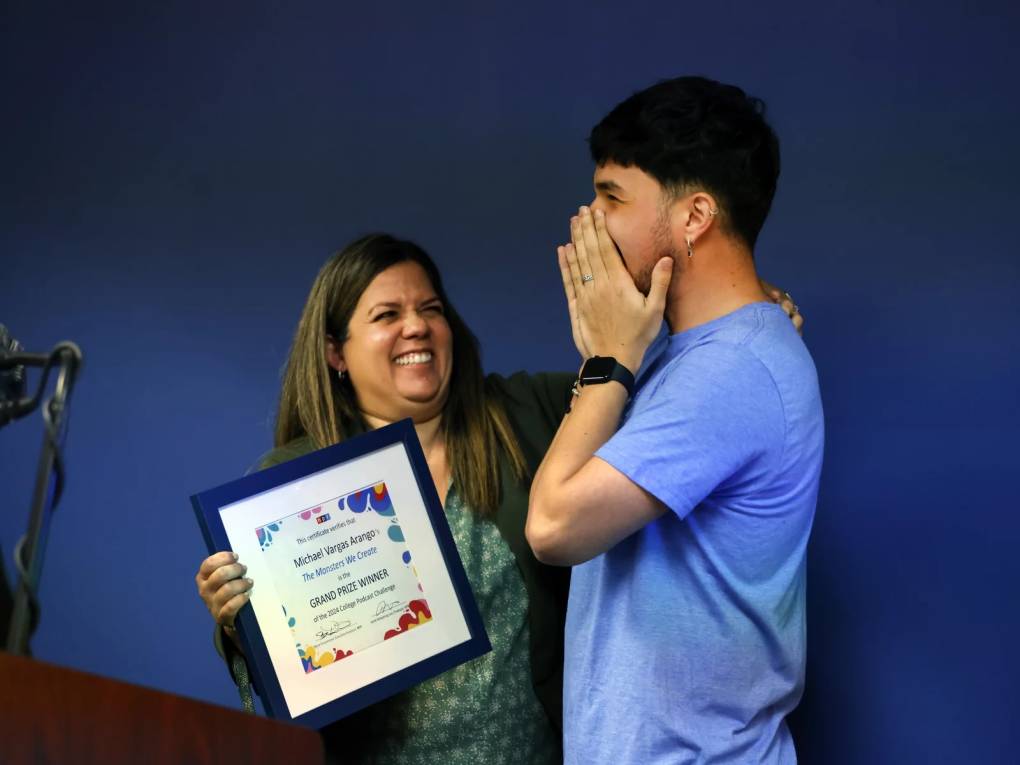
"caption": "Professor Emily Sendin of Miami Dade College (L) presents Michael Vargas Arango (R) with the winner certificate from the NPR Podcast Challenge.",
"description": null,
"title": null,
"credit": "Eva Marie Uzcategui for NPR",
"status": "inherit",
"altTag": null,
"isLoading": false,
"fetchFailed": false
},
"mindshift_63686": {
"type": "attachments",
"id": "mindshift_63686",
"meta": {
"index": "attachments_1716263798",
"site": "mindshift",
"id": "63686",
"found": true
},
"parent": 63685,
"imgSizes": {
"twentyfourteen-full-width": {
"file": "https://cdn.kqed.org/wp-content/uploads/sites/23/2024/04/gettyimages-2149598859-e3cb5d9ec08fb1422b7fe1a5471613d01240a26a-1038x576.jpg",
"width": 1038,
"mimeType": "image/jpeg",
"height": 576
},
"thumbnail": {
"file": "https://cdn.kqed.org/wp-content/uploads/sites/23/2024/04/gettyimages-2149598859-e3cb5d9ec08fb1422b7fe1a5471613d01240a26a-160x120.jpg",
"width": 160,
"mimeType": "image/jpeg",
"height": 120
},
"post-thumbnail": {
"file": "https://cdn.kqed.org/wp-content/uploads/sites/23/2024/04/gettyimages-2149598859-e3cb5d9ec08fb1422b7fe1a5471613d01240a26a-672x372.jpg",
"width": 672,
"mimeType": "image/jpeg",
"height": 372
},
"kqedFullSize": {
"file": "https://cdn.kqed.org/wp-content/uploads/sites/23/2024/04/gettyimages-2149598859-e3cb5d9ec08fb1422b7fe1a5471613d01240a26a-scaled.jpg",
"width": 2560,
"height": 1920
},
"2048x2048": {
"file": "https://cdn.kqed.org/wp-content/uploads/sites/23/2024/04/gettyimages-2149598859-e3cb5d9ec08fb1422b7fe1a5471613d01240a26a-2048x1536.jpg",
"width": 2048,
"mimeType": "image/jpeg",
"height": 1536
},
"large": {
"file": "https://cdn.kqed.org/wp-content/uploads/sites/23/2024/04/gettyimages-2149598859-e3cb5d9ec08fb1422b7fe1a5471613d01240a26a-1020x765.jpg",
"width": 1020,
"mimeType": "image/jpeg",
"height": 765
},
"1536x1536": {
"file": "https://cdn.kqed.org/wp-content/uploads/sites/23/2024/04/gettyimages-2149598859-e3cb5d9ec08fb1422b7fe1a5471613d01240a26a-1536x1152.jpg",
"width": 1536,
"mimeType": "image/jpeg",
"height": 1152
},
"full-width": {
"file": "https://cdn.kqed.org/wp-content/uploads/sites/23/2024/04/gettyimages-2149598859-e3cb5d9ec08fb1422b7fe1a5471613d01240a26a-1920x1440.jpg",
"width": 1920,
"mimeType": "image/jpeg",
"height": 1440
},
"medium": {
"file": "https://cdn.kqed.org/wp-content/uploads/sites/23/2024/04/gettyimages-2149598859-e3cb5d9ec08fb1422b7fe1a5471613d01240a26a-800x600.jpg",
"width": 800,
"mimeType": "image/jpeg",
"height": 600
},
"medium_large": {
"file": "https://cdn.kqed.org/wp-content/uploads/sites/23/2024/04/gettyimages-2149598859-e3cb5d9ec08fb1422b7fe1a5471613d01240a26a-768x576.jpg",
"width": 768,
"mimeType": "image/jpeg",
"height": 576
}
},
"publishDate": 1714525409,
"modified": 1714525409,
"caption": null,
"description": "A pro-Palestinian protester stands among tents and a Palestinian flag at an encampment at Columbia University campus in New York on April 25, 2024. College campuses across the US braced for fresh protests by pro-Palestinian students, extending a week of increasingly confrontational standoffs with police, mass arrests and accusations of anti-Semitism. (Photo by Leonardo Munoz / AFP) (Photo by LEONARDO MUNOZ/AFP via Getty Images)",
"title": "A pro-Palestinian protester stands among tents and a Palestinian flag at an encampment at Columbia University campus in New York earlier this month.",
"credit": null,
"status": "inherit",
"altTag": null,
"isLoading": false,
"fetchFailed": false
},
"mindshift_63364": {
"type": "attachments",
"id": "mindshift_63364",
"meta": {
"index": "attachments_1716263798",
"site": "mindshift",
"id": "63364",
"found": true
},
"parent": 63363,
"imgSizes": {
"twentyfourteen-full-width": {
"file": "https://cdn.kqed.org/wp-content/uploads/sites/23/2024/03/iStock-1179535960-1038x576.jpg",
"width": 1038,
"mimeType": "image/jpeg",
"height": 576
},
"thumbnail": {
"file": "https://cdn.kqed.org/wp-content/uploads/sites/23/2024/03/iStock-1179535960-160x107.jpg",
"width": 160,
"mimeType": "image/jpeg",
"height": 107
},
"post-thumbnail": {
"file": "https://cdn.kqed.org/wp-content/uploads/sites/23/2024/03/iStock-1179535960-672x372.jpg",
"width": 672,
"mimeType": "image/jpeg",
"height": 372
},
"kqedFullSize": {
"file": "https://cdn.kqed.org/wp-content/uploads/sites/23/2024/03/iStock-1179535960.jpg",
"width": 1254,
"height": 836
},
"large": {
"file": "https://cdn.kqed.org/wp-content/uploads/sites/23/2024/03/iStock-1179535960-1020x680.jpg",
"width": 1020,
"mimeType": "image/jpeg",
"height": 680
},
"medium": {
"file": "https://cdn.kqed.org/wp-content/uploads/sites/23/2024/03/iStock-1179535960-800x533.jpg",
"width": 800,
"mimeType": "image/jpeg",
"height": 533
},
"medium_large": {
"file": "https://cdn.kqed.org/wp-content/uploads/sites/23/2024/03/iStock-1179535960-768x512.jpg",
"width": 768,
"mimeType": "image/jpeg",
"height": 512
}
},
"publishDate": 1710863357,
"modified": 1710863428,
"caption": null,
"description": null,
"title": "Financial aid sign with money and piggy bank.",
"credit": "designer491/iStock",
"status": "inherit",
"altTag": "narrow spiral notebook with the words \"financial aid.\" In the corners, dollar bills, a piggy bank and calculator partially enter the frame",
"isLoading": false,
"fetchFailed": false
},
"mindshift_63209": {
"type": "attachments",
"id": "mindshift_63209",
"meta": {
"index": "attachments_1716263798",
"site": "mindshift",
"id": "63209",
"found": true
},
"parent": 63208,
"imgSizes": {
"twentyfourteen-full-width": {
"file": "https://cdn.kqed.org/wp-content/uploads/sites/23/2024/02/gettyimages-1186076156_slide-5d76e0cf26ea656f0eda551cfc9774aa05688653-1038x576.jpg",
"width": 1038,
"mimeType": "image/jpeg",
"height": 576
},
"thumbnail": {
"file": "https://cdn.kqed.org/wp-content/uploads/sites/23/2024/02/gettyimages-1186076156_slide-5d76e0cf26ea656f0eda551cfc9774aa05688653-160x107.jpg",
"width": 160,
"mimeType": "image/jpeg",
"height": 107
},
"post-thumbnail": {
"file": "https://cdn.kqed.org/wp-content/uploads/sites/23/2024/02/gettyimages-1186076156_slide-5d76e0cf26ea656f0eda551cfc9774aa05688653-672x372.jpg",
"width": 672,
"mimeType": "image/jpeg",
"height": 372
},
"kqedFullSize": {
"file": "https://cdn.kqed.org/wp-content/uploads/sites/23/2024/02/gettyimages-1186076156_slide-5d76e0cf26ea656f0eda551cfc9774aa05688653-scaled.jpg",
"width": 2560,
"height": 1705
},
"2048x2048": {
"file": "https://cdn.kqed.org/wp-content/uploads/sites/23/2024/02/gettyimages-1186076156_slide-5d76e0cf26ea656f0eda551cfc9774aa05688653-2048x1364.jpg",
"width": 2048,
"mimeType": "image/jpeg",
"height": 1364
},
"large": {
"file": "https://cdn.kqed.org/wp-content/uploads/sites/23/2024/02/gettyimages-1186076156_slide-5d76e0cf26ea656f0eda551cfc9774aa05688653-1020x679.jpg",
"width": 1020,
"mimeType": "image/jpeg",
"height": 679
},
"1536x1536": {
"file": "https://cdn.kqed.org/wp-content/uploads/sites/23/2024/02/gettyimages-1186076156_slide-5d76e0cf26ea656f0eda551cfc9774aa05688653-1536x1023.jpg",
"width": 1536,
"mimeType": "image/jpeg",
"height": 1023
},
"full-width": {
"file": "https://cdn.kqed.org/wp-content/uploads/sites/23/2024/02/gettyimages-1186076156_slide-5d76e0cf26ea656f0eda551cfc9774aa05688653-1920x1279.jpg",
"width": 1920,
"mimeType": "image/jpeg",
"height": 1279
},
"medium": {
"file": "https://cdn.kqed.org/wp-content/uploads/sites/23/2024/02/gettyimages-1186076156_slide-5d76e0cf26ea656f0eda551cfc9774aa05688653-800x533.jpg",
"width": 800,
"mimeType": "image/jpeg",
"height": 533
},
"medium_large": {
"file": "https://cdn.kqed.org/wp-content/uploads/sites/23/2024/02/gettyimages-1186076156_slide-5d76e0cf26ea656f0eda551cfc9774aa05688653-768x512.jpg",
"width": 768,
"mimeType": "image/jpeg",
"height": 512
}
},
"publishDate": 1708443565,
"modified": 1708443687,
"caption": null,
"description": null,
"title": "Applying for student aid",
"credit": "John Lamb/Getty Images",
"status": "inherit",
"altTag": null,
"isLoading": false,
"fetchFailed": false
},
"mindshift_63110": {
"type": "attachments",
"id": "mindshift_63110",
"meta": {
"index": "attachments_1716263798",
"site": "mindshift",
"id": "63110",
"found": true
},
"parent": 63109,
"imgSizes": {
"twentyfourteen-full-width": {
"file": "https://cdn.kqed.org/wp-content/uploads/sites/23/2024/02/ap23278738099349_slide-0700ac5234ac421632145d50eb01f031ec9a9ca8-1038x576.jpg",
"width": 1038,
"mimeType": "image/jpeg",
"height": 576
},
"thumbnail": {
"file": "https://cdn.kqed.org/wp-content/uploads/sites/23/2024/02/ap23278738099349_slide-0700ac5234ac421632145d50eb01f031ec9a9ca8-160x107.jpg",
"width": 160,
"mimeType": "image/jpeg",
"height": 107
},
"post-thumbnail": {
"file": "https://cdn.kqed.org/wp-content/uploads/sites/23/2024/02/ap23278738099349_slide-0700ac5234ac421632145d50eb01f031ec9a9ca8-672x372.jpg",
"width": 672,
"mimeType": "image/jpeg",
"height": 372
},
"kqedFullSize": {
"file": "https://cdn.kqed.org/wp-content/uploads/sites/23/2024/02/ap23278738099349_slide-0700ac5234ac421632145d50eb01f031ec9a9ca8-scaled.jpg",
"width": 2560,
"height": 1707
},
"2048x2048": {
"file": "https://cdn.kqed.org/wp-content/uploads/sites/23/2024/02/ap23278738099349_slide-0700ac5234ac421632145d50eb01f031ec9a9ca8-2048x1365.jpg",
"width": 2048,
"mimeType": "image/jpeg",
"height": 1365
},
"large": {
"file": "https://cdn.kqed.org/wp-content/uploads/sites/23/2024/02/ap23278738099349_slide-0700ac5234ac421632145d50eb01f031ec9a9ca8-1020x680.jpg",
"width": 1020,
"mimeType": "image/jpeg",
"height": 680
},
"1536x1536": {
"file": "https://cdn.kqed.org/wp-content/uploads/sites/23/2024/02/ap23278738099349_slide-0700ac5234ac421632145d50eb01f031ec9a9ca8-1536x1024.jpg",
"width": 1536,
"mimeType": "image/jpeg",
"height": 1024
},
"full-width": {
"file": "https://cdn.kqed.org/wp-content/uploads/sites/23/2024/02/ap23278738099349_slide-0700ac5234ac421632145d50eb01f031ec9a9ca8-1920x1280.jpg",
"width": 1920,
"mimeType": "image/jpeg",
"height": 1280
},
"medium": {
"file": "https://cdn.kqed.org/wp-content/uploads/sites/23/2024/02/ap23278738099349_slide-0700ac5234ac421632145d50eb01f031ec9a9ca8-800x533.jpg",
"width": 800,
"mimeType": "image/jpeg",
"height": 533
},
"medium_large": {
"file": "https://cdn.kqed.org/wp-content/uploads/sites/23/2024/02/ap23278738099349_slide-0700ac5234ac421632145d50eb01f031ec9a9ca8-768x512.jpg",
"width": 768,
"mimeType": "image/jpeg",
"height": 512
}
},
"publishDate": 1707270255,
"modified": 1707270462,
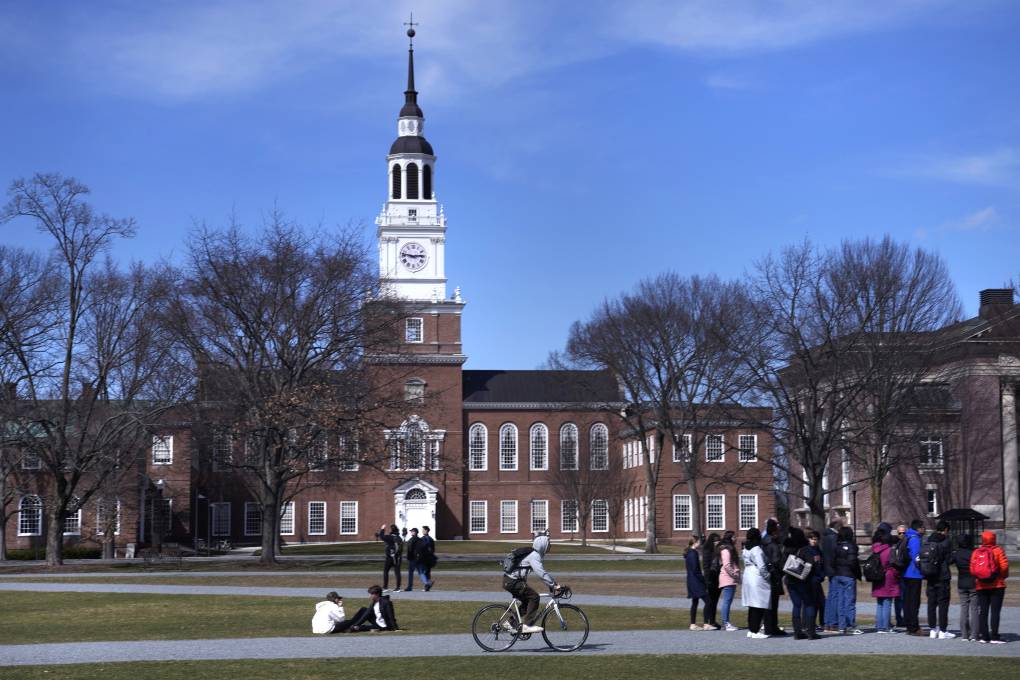
"caption": "A tour group makes its way through Dartmouth College's campus, in Hanover, N.H., in April 2023.",
"description": "FILE - A bicyclist passes a college tour group outside the Baker Library at Dartmouth College, April 7, 2023, in Hanover, N.H. Dartmouth College lawyers argued on Thursday, Oct. 5, that the Ivy League school’s basketball players should not be considered employees because they are unpaid members of a money-losing program whose need-based scholarships don’t depend on their participation or talent. (AP Photo/Charles Krupa, File)",
"title": null,
"credit": "Charles Krupa/AP",
"status": "inherit",
"altTag": null,
"isLoading": false,
"fetchFailed": false
},
"mindshift_63076": {
"type": "attachments",
"id": "mindshift_63076",
"meta": {
"index": "attachments_1716263798",
"site": "mindshift",
"id": "63076",
"found": true
},
"parent": 63075,
"imgSizes": {
"twentyfourteen-full-width": {
"file": "https://cdn.kqed.org/wp-content/uploads/sites/23/2024/01/gettyimages-1426661592-9072de6a3175ae7caa285c1064fe576bb0bc3db6-1038x576.jpg",
"width": 1038,
"mimeType": "image/jpeg",
"height": 576
},
"thumbnail": {
"file": "https://cdn.kqed.org/wp-content/uploads/sites/23/2024/01/gettyimages-1426661592-9072de6a3175ae7caa285c1064fe576bb0bc3db6-160x120.jpg",
"width": 160,
"mimeType": "image/jpeg",
"height": 120
},
"post-thumbnail": {
"file": "https://cdn.kqed.org/wp-content/uploads/sites/23/2024/01/gettyimages-1426661592-9072de6a3175ae7caa285c1064fe576bb0bc3db6-672x372.jpg",
"width": 672,
"mimeType": "image/jpeg",
"height": 372
},
"kqedFullSize": {
"file": "https://cdn.kqed.org/wp-content/uploads/sites/23/2024/01/gettyimages-1426661592-9072de6a3175ae7caa285c1064fe576bb0bc3db6-scaled.jpg",
"width": 2560,
"height": 1920
},
"2048x2048": {
"file": "https://cdn.kqed.org/wp-content/uploads/sites/23/2024/01/gettyimages-1426661592-9072de6a3175ae7caa285c1064fe576bb0bc3db6-2048x1536.jpg",
"width": 2048,
"mimeType": "image/jpeg",
"height": 1536
},
"large": {
"file": "https://cdn.kqed.org/wp-content/uploads/sites/23/2024/01/gettyimages-1426661592-9072de6a3175ae7caa285c1064fe576bb0bc3db6-1020x765.jpg",
"width": 1020,
"mimeType": "image/jpeg",
"height": 765
},
"1536x1536": {
"file": "https://cdn.kqed.org/wp-content/uploads/sites/23/2024/01/gettyimages-1426661592-9072de6a3175ae7caa285c1064fe576bb0bc3db6-1536x1152.jpg",
"width": 1536,
"mimeType": "image/jpeg",
"height": 1152
},
"full-width": {
"file": "https://cdn.kqed.org/wp-content/uploads/sites/23/2024/01/gettyimages-1426661592-9072de6a3175ae7caa285c1064fe576bb0bc3db6-1920x1440.jpg",
"width": 1920,
"mimeType": "image/jpeg",
"height": 1440
},
"medium": {
"file": "https://cdn.kqed.org/wp-content/uploads/sites/23/2024/01/gettyimages-1426661592-9072de6a3175ae7caa285c1064fe576bb0bc3db6-800x600.jpg",
"width": 800,
"mimeType": "image/jpeg",
"height": 600
},
"medium_large": {
"file": "https://cdn.kqed.org/wp-content/uploads/sites/23/2024/01/gettyimages-1426661592-9072de6a3175ae7caa285c1064fe576bb0bc3db6-768x576.jpg",
"width": 768,
"mimeType": "image/jpeg",
"height": 576
}
},
"publishDate": 1706924039,
"modified": 1706924230,
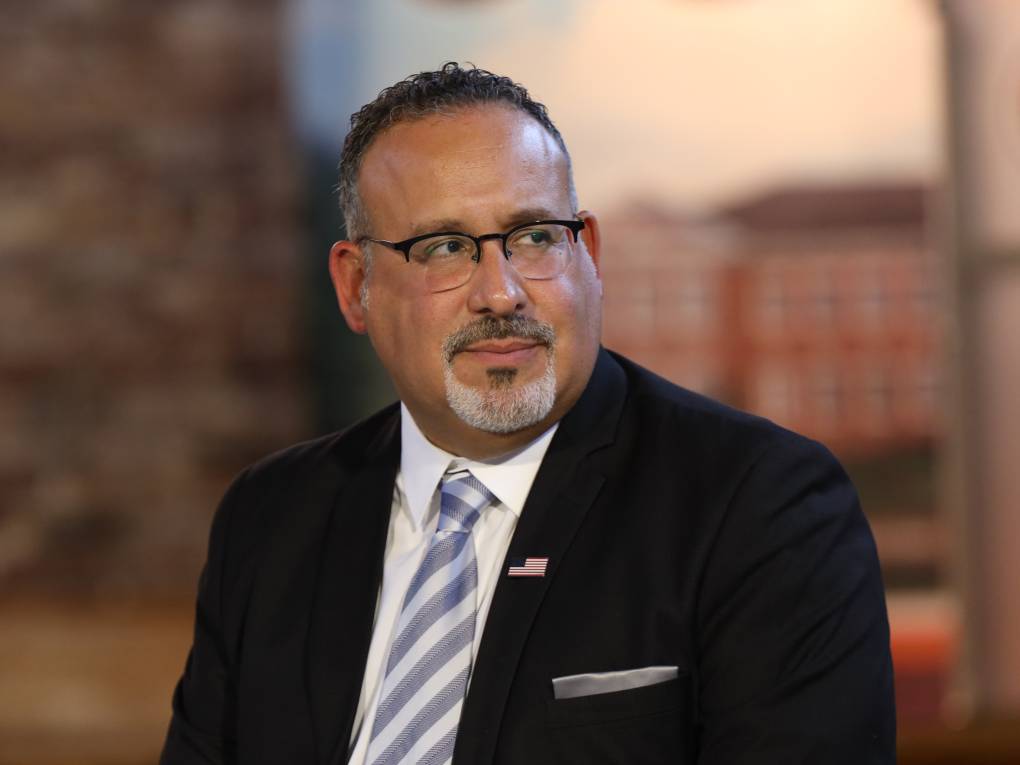
"caption": "U.S. Secretary of Education Miguel Cardona has led the department through a massive FAFSA overhaul mandated by Congress about three years ago.",
"description": "ORANGEBURG, SOUTH CAROLINA - SEPTEMBER 20: US Vice President Kamala Harris (not pictured) and U.S. Secretary of Education Miguel Cardona attend a panel discussion with nine outstanding scholars at Claflin University on September 20, 2022 in Orangeburg, South Carolina. Topics included voter registration, mental health, and entrepreneurship. Harris's visit coincided with National Voter Registration Day and HBCU (Historically Black Colleges/Universities) Week. (Photo by Colin Myers/Claflin University/HBCU via Getty Images)",
"title": "U.S. Secretary of Education Miguel Cardona has led the department through a massive FAFSA overhaul mandated by Congress about three years ago.",
"credit": "Colin Myers/Claflin University/Getty Images",
"status": "inherit",
"altTag": null,
"isLoading": false,
"fetchFailed": false
},
"mindshift_63006": {
"type": "attachments",
"id": "mindshift_63006",
"meta": {
"index": "attachments_1716263798",
"site": "mindshift",
"id": "63006",
"found": true
},
"parent": 63005,
"imgSizes": {
"twentyfourteen-full-width": {
"file": "https://cdn.kqed.org/wp-content/uploads/sites/23/2024/01/gajones_fafsa-pellgrant-01_slide-15147942ff05870a94a7d9fb10ebb2f89cc6158f-1038x576.jpg",
"width": 1038,
"mimeType": "image/jpeg",
"height": 576
},
"thumbnail": {
"file": "https://cdn.kqed.org/wp-content/uploads/sites/23/2024/01/gajones_fafsa-pellgrant-01_slide-15147942ff05870a94a7d9fb10ebb2f89cc6158f-160x107.jpg",
"width": 160,
"mimeType": "image/jpeg",
"height": 107
},
"post-thumbnail": {
"file": "https://cdn.kqed.org/wp-content/uploads/sites/23/2024/01/gajones_fafsa-pellgrant-01_slide-15147942ff05870a94a7d9fb10ebb2f89cc6158f-672x372.jpg",
"width": 672,
"mimeType": "image/jpeg",
"height": 372
},
"kqedFullSize": {
"file": "https://cdn.kqed.org/wp-content/uploads/sites/23/2024/01/gajones_fafsa-pellgrant-01_slide-15147942ff05870a94a7d9fb10ebb2f89cc6158f-scaled.jpg",
"width": 2560,
"height": 1706
},
"2048x2048": {
"file": "https://cdn.kqed.org/wp-content/uploads/sites/23/2024/01/gajones_fafsa-pellgrant-01_slide-15147942ff05870a94a7d9fb10ebb2f89cc6158f-2048x1365.jpg",
"width": 2048,
"mimeType": "image/jpeg",
"height": 1365
},
"large": {
"file": "https://cdn.kqed.org/wp-content/uploads/sites/23/2024/01/gajones_fafsa-pellgrant-01_slide-15147942ff05870a94a7d9fb10ebb2f89cc6158f-1020x680.jpg",
"width": 1020,
"mimeType": "image/jpeg",
"height": 680
},
"1536x1536": {
"file": "https://cdn.kqed.org/wp-content/uploads/sites/23/2024/01/gajones_fafsa-pellgrant-01_slide-15147942ff05870a94a7d9fb10ebb2f89cc6158f-1536x1023.jpg",
"width": 1536,
"mimeType": "image/jpeg",
"height": 1023
},
"full-width": {
"file": "https://cdn.kqed.org/wp-content/uploads/sites/23/2024/01/gajones_fafsa-pellgrant-01_slide-15147942ff05870a94a7d9fb10ebb2f89cc6158f-1920x1279.jpg",
"width": 1920,
"mimeType": "image/jpeg",
"height": 1279
},
"medium": {
"file": "https://cdn.kqed.org/wp-content/uploads/sites/23/2024/01/gajones_fafsa-pellgrant-01_slide-15147942ff05870a94a7d9fb10ebb2f89cc6158f-800x533.jpg",
"width": 800,
"mimeType": "image/jpeg",
"height": 533
},
"medium_large": {
"file": "https://cdn.kqed.org/wp-content/uploads/sites/23/2024/01/gajones_fafsa-pellgrant-01_slide-15147942ff05870a94a7d9fb10ebb2f89cc6158f-768x512.jpg",
"width": 768,
"mimeType": "image/jpeg",
"height": 512
}
},
"publishDate": 1706196167,
"modified": 1706196602,
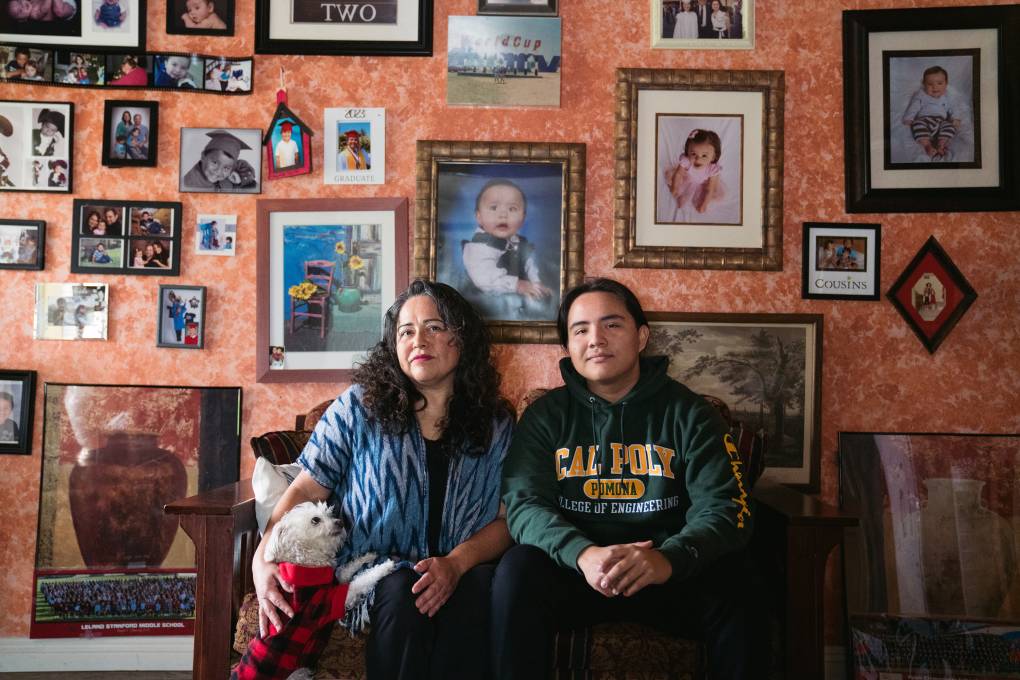
"caption": "SOUTH GATE, California— Myrna Aguilar and her son, David Thornton, pose for a portrait at their home on Saturday, Jan. 20, 2024.",
"description": null,
"title": "Myrna Aguilar and her son, David Thornton, pose for a portrait at their home in Los Angeles. Thornton applied for a pell grant last year, but did not qualify this academic year even though their income hasn't changed.",
"credit": "Gariella Angotti-Jones ",
"status": "inherit",
"altTag": null,
"isLoading": false,
"fetchFailed": false
},
"mindshift_62953": {
"type": "attachments",
"id": "mindshift_62953",
"meta": {
"index": "attachments_1716263798",
"site": "mindshift",
"id": "62953",
"found": true
},
"parent": 62952,
"imgSizes": {
"twentyfourteen-full-width": {
"file": "https://cdn.kqed.org/wp-content/uploads/sites/23/2024/01/iStock-1312284846-1038x576.jpg",
"width": 1038,
"mimeType": "image/jpeg",
"height": 576
},
"thumbnail": {
"file": "https://cdn.kqed.org/wp-content/uploads/sites/23/2024/01/iStock-1312284846-160x107.jpg",
"width": 160,
"mimeType": "image/jpeg",
"height": 107
},
"post-thumbnail": {
"file": "https://cdn.kqed.org/wp-content/uploads/sites/23/2024/01/iStock-1312284846-672x372.jpg",
"width": 672,
"mimeType": "image/jpeg",
"height": 372
},
"kqedFullSize": {
"file": "https://cdn.kqed.org/wp-content/uploads/sites/23/2024/01/iStock-1312284846.jpg",
"width": 2121,
"height": 1414
},
"2048x2048": {
"file": "https://cdn.kqed.org/wp-content/uploads/sites/23/2024/01/iStock-1312284846-2048x1365.jpg",
"width": 2048,
"mimeType": "image/jpeg",
"height": 1365
},
"large": {
"file": "https://cdn.kqed.org/wp-content/uploads/sites/23/2024/01/iStock-1312284846-1020x680.jpg",
"width": 1020,
"mimeType": "image/jpeg",
"height": 680
},
"1536x1536": {
"file": "https://cdn.kqed.org/wp-content/uploads/sites/23/2024/01/iStock-1312284846-1536x1024.jpg",
"width": 1536,
"mimeType": "image/jpeg",
"height": 1024
},
"full-width": {
"file": "https://cdn.kqed.org/wp-content/uploads/sites/23/2024/01/iStock-1312284846-1920x1280.jpg",
"width": 1920,
"mimeType": "image/jpeg",
"height": 1280
},
"medium": {
"file": "https://cdn.kqed.org/wp-content/uploads/sites/23/2024/01/iStock-1312284846-800x533.jpg",
"width": 800,
"mimeType": "image/jpeg",
"height": 533
},
"medium_large": {
"file": "https://cdn.kqed.org/wp-content/uploads/sites/23/2024/01/iStock-1312284846-768x512.jpg",
"width": 768,
"mimeType": "image/jpeg",
"height": 512
}
},
"publishDate": 1704833950,
"modified": 1704834084,
"caption": null,
"description": null,
"title": "Tree on the background of nature and industrial plant.",
"credit": "iStock/Valentina Shilkina",
"status": "inherit",
"altTag": "Tree in foreground. Background on left half is nature.Background on right half is industrial plant.",
"isLoading": false,
"fetchFailed": false
},
"mindshift_62960": {
"type": "attachments",
"id": "mindshift_62960",
"meta": {
"index": "attachments_1716263798",
"site": "mindshift",
"id": "62960",
"found": true
},
"parent": 62959,
"imgSizes": {
"twentyfourteen-full-width": {
"file": "https://cdn.kqed.org/wp-content/uploads/sites/23/2024/01/screenshot-2024-01-08-at-3.11.48-pm_slide-7c7867a0f1a9bba74c162965446a6367fc948526-1038x576.png",
"width": 1038,
"mimeType": "image/png",
"height": 576
},
"thumbnail": {
"file": "https://cdn.kqed.org/wp-content/uploads/sites/23/2024/01/screenshot-2024-01-08-at-3.11.48-pm_slide-7c7867a0f1a9bba74c162965446a6367fc948526-160x107.png",
"width": 160,
"mimeType": "image/png",
"height": 107
},
"post-thumbnail": {
"file": "https://cdn.kqed.org/wp-content/uploads/sites/23/2024/01/screenshot-2024-01-08-at-3.11.48-pm_slide-7c7867a0f1a9bba74c162965446a6367fc948526-672x372.png",
"width": 672,
"mimeType": "image/png",
"height": 372
},
"kqedFullSize": {
"file": "https://cdn.kqed.org/wp-content/uploads/sites/23/2024/01/screenshot-2024-01-08-at-3.11.48-pm_slide-7c7867a0f1a9bba74c162965446a6367fc948526.png",
"width": 2479,
"height": 1653
},
"2048x2048": {
"file": "https://cdn.kqed.org/wp-content/uploads/sites/23/2024/01/screenshot-2024-01-08-at-3.11.48-pm_slide-7c7867a0f1a9bba74c162965446a6367fc948526-2048x1366.png",
"width": 2048,
"mimeType": "image/png",
"height": 1366
},
"large": {
"file": "https://cdn.kqed.org/wp-content/uploads/sites/23/2024/01/screenshot-2024-01-08-at-3.11.48-pm_slide-7c7867a0f1a9bba74c162965446a6367fc948526-1020x680.png",
"width": 1020,
"mimeType": "image/png",
"height": 680
},
"1536x1536": {
"file": "https://cdn.kqed.org/wp-content/uploads/sites/23/2024/01/screenshot-2024-01-08-at-3.11.48-pm_slide-7c7867a0f1a9bba74c162965446a6367fc948526-1536x1024.png",
"width": 1536,
"mimeType": "image/png",
"height": 1024
},
"full-width": {
"file": "https://cdn.kqed.org/wp-content/uploads/sites/23/2024/01/screenshot-2024-01-08-at-3.11.48-pm_slide-7c7867a0f1a9bba74c162965446a6367fc948526-1920x1280.png",
"width": 1920,
"mimeType": "image/png",
"height": 1280
},
"medium": {
"file": "https://cdn.kqed.org/wp-content/uploads/sites/23/2024/01/screenshot-2024-01-08-at-3.11.48-pm_slide-7c7867a0f1a9bba74c162965446a6367fc948526-800x533.png",
"width": 800,
"mimeType": "image/png",
"height": 533
},
"medium_large": {
"file": "https://cdn.kqed.org/wp-content/uploads/sites/23/2024/01/screenshot-2024-01-08-at-3.11.48-pm_slide-7c7867a0f1a9bba74c162965446a6367fc948526-768x512.png",
"width": 768,
"mimeType": "image/png",
"height": 512
}
},
"publishDate": 1704854060,
"modified": 1704854313,
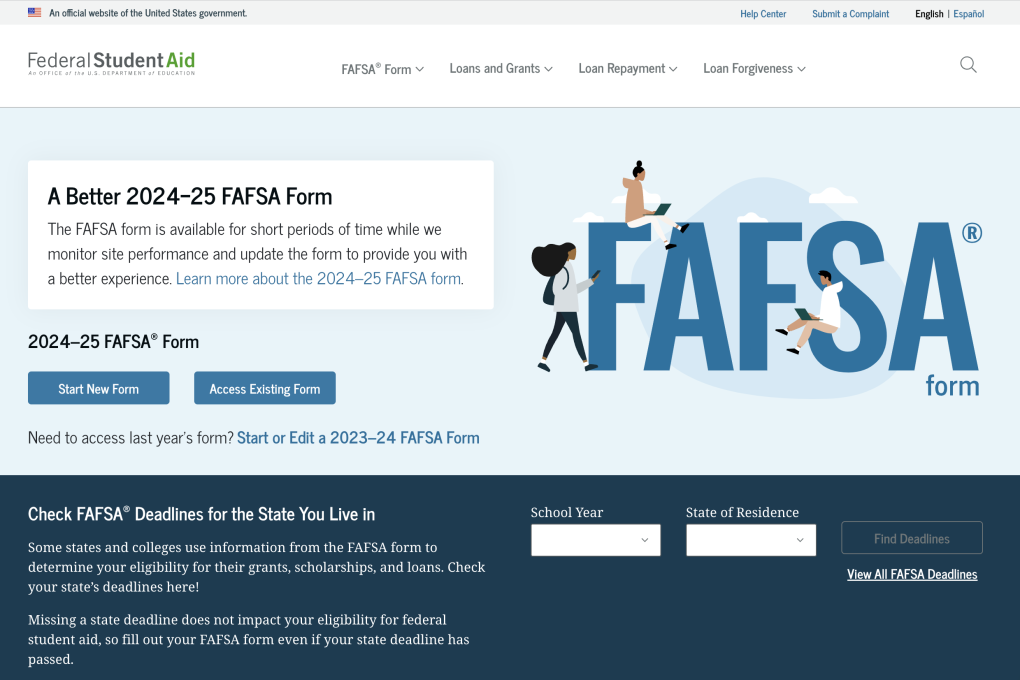
"caption": "Since the new FAFSA launched on Dec. 30, 2023, the form has only been available for short periods of time. That changed this week. On Tuesday, the U.S. Education Department said applicants will now have 24-hour access.",
"description": null,
"title": null,
"credit": "Screenshot by NPR",
"status": "inherit",
"altTag": null,
"isLoading": false,
"fetchFailed": false
},
"mindshift_62915": {
"type": "attachments",
"id": "mindshift_62915",
"meta": {
"index": "attachments_1716263798",
"site": "mindshift",
"id": "62915",
"found": true
},
"parent": 62913,
"imgSizes": {
"twentyfourteen-full-width": {
"file": "https://cdn.kqed.org/wp-content/uploads/sites/23/2024/01/professional-women-1038x576.jpg",
"width": 1038,
"mimeType": "image/jpeg",
"height": 576
},
"thumbnail": {
"file": "https://cdn.kqed.org/wp-content/uploads/sites/23/2024/01/professional-women-160x96.jpg",
"width": 160,
"mimeType": "image/jpeg",
"height": 96
},
"post-thumbnail": {
"file": "https://cdn.kqed.org/wp-content/uploads/sites/23/2024/01/professional-women-672x372.jpg",
"width": 672,
"mimeType": "image/jpeg",
"height": 372
},
"kqedFullSize": {
"file": "https://cdn.kqed.org/wp-content/uploads/sites/23/2024/01/professional-women.jpg",
"width": 2235,
"height": 1341
},
"2048x2048": {
"file": "https://cdn.kqed.org/wp-content/uploads/sites/23/2024/01/professional-women-2048x1229.jpg",
"width": 2048,
"mimeType": "image/jpeg",
"height": 1229
},
"large": {
"file": "https://cdn.kqed.org/wp-content/uploads/sites/23/2024/01/professional-women-1020x612.jpg",
"width": 1020,
"mimeType": "image/jpeg",
"height": 612
},
"1536x1536": {
"file": "https://cdn.kqed.org/wp-content/uploads/sites/23/2024/01/professional-women-1536x922.jpg",
"width": 1536,
"mimeType": "image/jpeg",
"height": 922
},
"full-width": {
"file": "https://cdn.kqed.org/wp-content/uploads/sites/23/2024/01/professional-women-1920x1152.jpg",
"width": 1920,
"mimeType": "image/jpeg",
"height": 1152
},
"medium": {
"file": "https://cdn.kqed.org/wp-content/uploads/sites/23/2024/01/professional-women-800x480.jpg",
"width": 800,
"mimeType": "image/jpeg",
"height": 480
},
"medium_large": {
"file": "https://cdn.kqed.org/wp-content/uploads/sites/23/2024/01/professional-women-768x461.jpg",
"width": 768,
"mimeType": "image/jpeg",
"height": 461
}
},
"publishDate": 1704401293,
"modified": 1704401355,
"caption": null,
"description": null,
"title": "group diverse women workers",
"credit": "iStock/djvstock",
"status": "inherit",
"altTag": "a line of diverse working professional women",
"isLoading": false,
"fetchFailed": false
},
"mindshift_62889": {
"type": "attachments",
"id": "mindshift_62889",
"meta": {
"index": "attachments_1716263798",
"site": "mindshift",
"id": "62889",
"found": true
},
"parent": 62887,
"imgSizes": {
"twentyfourteen-full-width": {
"file": "https://cdn.kqed.org/wp-content/uploads/sites/23/2024/01/hechingerivy-1038x576.jpeg",
"width": 1038,
"mimeType": "image/jpeg",
"height": 576
},
"thumbnail": {
"file": "https://cdn.kqed.org/wp-content/uploads/sites/23/2024/01/hechingerivy-160x107.jpeg",
"width": 160,
"mimeType": "image/jpeg",
"height": 107
},
"post-thumbnail": {
"file": "https://cdn.kqed.org/wp-content/uploads/sites/23/2024/01/hechingerivy-672x372.jpeg",
"width": 672,
"mimeType": "image/jpeg",
"height": 372
},
"kqedFullSize": {
"file": "https://cdn.kqed.org/wp-content/uploads/sites/23/2024/01/hechingerivy.jpeg",
"width": 2500,
"height": 1668
},
"2048x2048": {
"file": "https://cdn.kqed.org/wp-content/uploads/sites/23/2024/01/hechingerivy-2048x1366.jpeg",
"width": 2048,
"mimeType": "image/jpeg",
"height": 1366
},
"large": {
"file": "https://cdn.kqed.org/wp-content/uploads/sites/23/2024/01/hechingerivy-1020x681.jpeg",
"width": 1020,
"mimeType": "image/jpeg",
"height": 681
},
"1536x1536": {
"file": "https://cdn.kqed.org/wp-content/uploads/sites/23/2024/01/hechingerivy-1536x1025.jpeg",
"width": 1536,
"mimeType": "image/jpeg",
"height": 1025
},
"full-width": {
"file": "https://cdn.kqed.org/wp-content/uploads/sites/23/2024/01/hechingerivy-1920x1281.jpeg",
"width": 1920,
"mimeType": "image/jpeg",
"height": 1281
},
"medium": {
"file": "https://cdn.kqed.org/wp-content/uploads/sites/23/2024/01/hechingerivy-800x534.jpeg",
"width": 800,
"mimeType": "image/jpeg",
"height": 534
},
"medium_large": {
"file": "https://cdn.kqed.org/wp-content/uploads/sites/23/2024/01/hechingerivy-768x512.jpeg",
"width": 768,
"mimeType": "image/jpeg",
"height": 512
}
},
"publishDate": 1703867176,
"modified": 1703867188,
"caption": null,
"description": null,
"title": "hechingerivy",
"credit": "Camilla Forte/The Hechinger Report",
"status": "inherit",
"altTag": null,
"isLoading": false,
"fetchFailed": false
},
"mindshift_62901": {
"type": "attachments",
"id": "mindshift_62901",
"meta": {
"index": "attachments_1716263798",
"site": "mindshift",
"id": "62901",
"found": true
},
"parent": 62900,
"imgSizes": {
"twentyfourteen-full-width": {
"file": "https://cdn.kqed.org/wp-content/uploads/sites/23/2023/12/collegerecruiting_48_slide-e693a2df7c3311278fad64aa9387e534dbec03ec-1038x576.jpg",
"width": 1038,
"mimeType": "image/jpeg",
"height": 576
},
"thumbnail": {
"file": "https://cdn.kqed.org/wp-content/uploads/sites/23/2023/12/collegerecruiting_48_slide-e693a2df7c3311278fad64aa9387e534dbec03ec-160x107.jpg",
"width": 160,
"mimeType": "image/jpeg",
"height": 107
},
"post-thumbnail": {
"file": "https://cdn.kqed.org/wp-content/uploads/sites/23/2023/12/collegerecruiting_48_slide-e693a2df7c3311278fad64aa9387e534dbec03ec-672x372.jpg",
"width": 672,
"mimeType": "image/jpeg",
"height": 372
},
"kqedFullSize": {
"file": "https://cdn.kqed.org/wp-content/uploads/sites/23/2023/12/collegerecruiting_48_slide-e693a2df7c3311278fad64aa9387e534dbec03ec-scaled.jpg",
"width": 2560,
"height": 1706
},
"2048x2048": {
"file": "https://cdn.kqed.org/wp-content/uploads/sites/23/2023/12/collegerecruiting_48_slide-e693a2df7c3311278fad64aa9387e534dbec03ec-2048x1365.jpg",
"width": 2048,
"mimeType": "image/jpeg",
"height": 1365
},
"large": {
"file": "https://cdn.kqed.org/wp-content/uploads/sites/23/2023/12/collegerecruiting_48_slide-e693a2df7c3311278fad64aa9387e534dbec03ec-1020x680.jpg",
"width": 1020,
"mimeType": "image/jpeg",
"height": 680
},
"1536x1536": {
"file": "https://cdn.kqed.org/wp-content/uploads/sites/23/2023/12/collegerecruiting_48_slide-e693a2df7c3311278fad64aa9387e534dbec03ec-1536x1024.jpg",
"width": 1536,
"mimeType": "image/jpeg",
"height": 1024
},
"full-width": {
"file": "https://cdn.kqed.org/wp-content/uploads/sites/23/2023/12/collegerecruiting_48_slide-e693a2df7c3311278fad64aa9387e534dbec03ec-1920x1280.jpg",
"width": 1920,
"mimeType": "image/jpeg",
"height": 1280
},
"medium": {
"file": "https://cdn.kqed.org/wp-content/uploads/sites/23/2023/12/collegerecruiting_48_slide-e693a2df7c3311278fad64aa9387e534dbec03ec-800x533.jpg",
"width": 800,
"mimeType": "image/jpeg",
"height": 533
},
"medium_large": {
"file": "https://cdn.kqed.org/wp-content/uploads/sites/23/2023/12/collegerecruiting_48_slide-e693a2df7c3311278fad64aa9387e534dbec03ec-768x512.jpg",
"width": 768,
"mimeType": "image/jpeg",
"height": 512
}
},
"publishDate": 1704210142,
"modified": 1704212074,
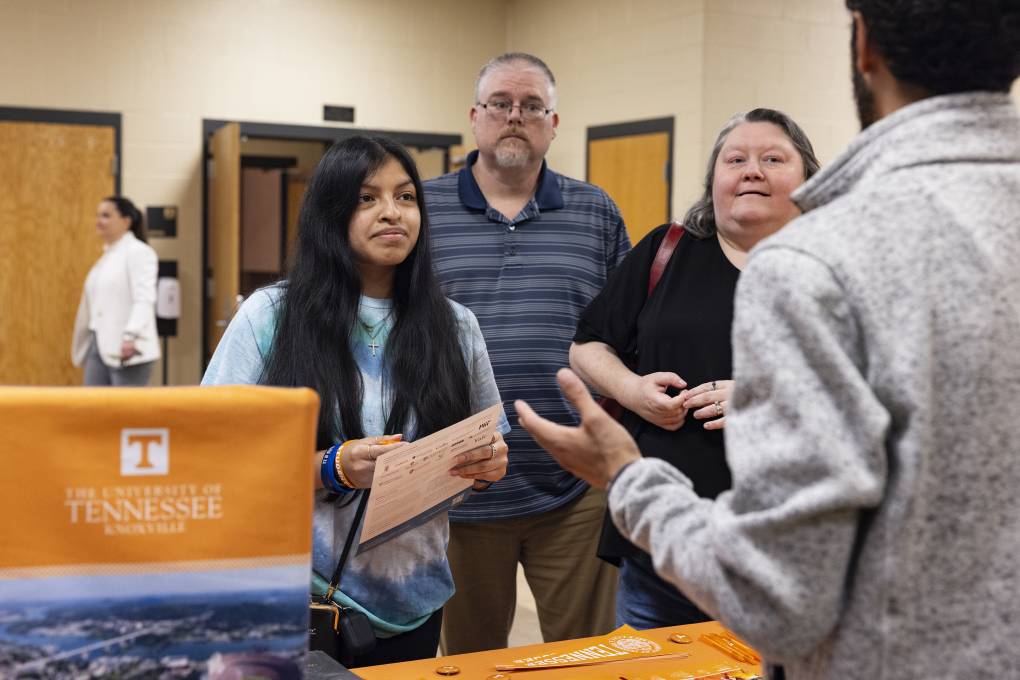
"caption": "Marla McCreless, a junior at Cookeville High School, and her parents Mark and Chastity McCreless, talks to University of Tennessee recruiter Dakota Hodges on Wednesday, Oct. 4, 2023, at Stone Memorial High School in Crossville, Tenn.",
"description": null,
"title": null,
"credit": "Austin Anthony for the Hechinger Report",
"status": "inherit",
"altTag": null,
"isLoading": false,
"fetchFailed": false
}
},
"audioPlayerReducer": {
"postId": "stream_live",
"isPaused": true,
"isPlaying": false,
"pfsActive": false,
"pledgeModalIsOpen": true,
"playerDrawerIsOpen": false,
"liveAudioPlayStartedAt": 0,
"liveAudioPlayContext": ""
},
"authorsReducer": {
"byline_mindshift_63713": {
"type": "authors",
"id": "byline_mindshift_63713",
"meta": {
"override": true
},
"slug": "byline_mindshift_63713",
"name": "Elissa Nadworny, Janet W. Lee",
"isLoading": false
},
"byline_mindshift_63685": {
"type": "authors",
"id": "byline_mindshift_63685",
"meta": {
"override": true
},
"slug": "byline_mindshift_63685",
"name": "Consider This from NPR",
"isLoading": false
},
"byline_mindshift_63363": {
"type": "authors",
"id": "byline_mindshift_63363",
"meta": {
"override": true
},
"slug": "byline_mindshift_63363",
"name": "Kalyn Belsha, Chalkbeat",
"isLoading": false
},
"byline_mindshift_63208": {
"type": "authors",
"id": "byline_mindshift_63208",
"meta": {
"override": true
},
"slug": "byline_mindshift_63208",
"name": "Sequoia Carrillo, Janet W. Lee",
"isLoading": false
},
"byline_mindshift_63109": {
"type": "authors",
"id": "byline_mindshift_63109",
"meta": {
"override": true
},
"slug": "byline_mindshift_63109",
"name": "Elissa Nadworny, Hiba Ahmad",
"isLoading": false
},
"byline_mindshift_63075": {
"type": "authors",
"id": "byline_mindshift_63075",
"meta": {
"override": true
},
"slug": "byline_mindshift_63075",
"name": "Cory Turner",
"isLoading": false
},
"byline_mindshift_63005": {
"type": "authors",
"id": "byline_mindshift_63005",
"meta": {
"override": true
},
"slug": "byline_mindshift_63005",
"name": "Cory Turner",
"isLoading": false
},
"byline_mindshift_62952": {
"type": "authors",
"id": "byline_mindshift_62952",
"meta": {
"override": true
},
"slug": "byline_mindshift_62952",
"name": "Anya Kamenetz, The Hechinger Report",
"isLoading": false
},
"byline_mindshift_62959": {
"type": "authors",
"id": "byline_mindshift_62959",
"meta": {
"override": true
},
"slug": "byline_mindshift_62959",
"name": "Cory Turner",
"isLoading": false
},
"byline_mindshift_62887": {
"type": "authors",
"id": "byline_mindshift_62887",
"meta": {
"override": true
},
"slug": "byline_mindshift_62887",
"name": "Jill Barshay, \u003ca href=\"https://hechingerreport.org/\" target=\"_blank\">The Hechinger Report\u003c/a>",
"isLoading": false
},
"byline_mindshift_62900": {
"type": "authors",
"id": "byline_mindshift_62900",
"meta": {
"override": true
},
"slug": "byline_mindshift_62900",
"name": "Elissa Nadworny, Jon Marcus",
"isLoading": false
},
"ngobir": {
"type": "authors",
"id": "11721",
"meta": {
"index": "authors_1716337520",
"id": "11721",
"found": true
},
"name": "Nimah Gobir",
"firstName": "Nimah",
"lastName": "Gobir",
"slug": "ngobir",
"email": "ngobir@kqed.org",
"display_author_email": false,
"staff_mastheads": [],
"title": "KQED Contributor",
"bio": null,
"avatar": "https://secure.gravatar.com/avatar/837f5df7045c59f3ec097cdf7ac391373ab75d5ec936dd7099b8cb6f0af1b0e9?s=600&d=blank&r=g",
"twitter": null,
"bluesky": null,
"facebook": null,
"instagram": null,
"linkedin": null,
"sites": [
{
"site": "mindshift",
"roles": [
"editor"
]
}
],
"headData": {
"title": "Nimah Gobir | KQED",
"description": "KQED Contributor",
"ogImgSrc": "https://secure.gravatar.com/avatar/837f5df7045c59f3ec097cdf7ac391373ab75d5ec936dd7099b8cb6f0af1b0e9?s=600&d=blank&r=g",
"twImgSrc": "https://secure.gravatar.com/avatar/837f5df7045c59f3ec097cdf7ac391373ab75d5ec936dd7099b8cb6f0af1b0e9?s=600&d=blank&r=g"
},
"isLoading": false,
"link": "/author/ngobir"
}
},
"pagesReducer": {
"mindshift_category_higher-education": {
"type": "terms",
"id": "mindshift_21694",
"meta": {
"index": "terms_1716263798",
"site": "mindshift",
"id": "21694",
"score": 13.1078825
},
"featImg": null,
"name": "Higher Education",
"description": null,
"taxonomy": "category",
"headData": {
"twImgId": null,
"twTitle": null,
"ogTitle": null,
"ogImgId": null,
"twDescription": null,
"description": null,
"title": "Higher Education Archives - KQED Mindshift",
"ogDescription": null
},
"ttid": 20966,
"slug": "higher-education",
"isLoading": false,
"title": "Higher Education",
"pageMeta": {
"site": "mindshift",
"WpPageTemplate": "page-topic-editorial",
"currentPage": 3
},
"blocks": [
{
"blockName": "kqed/post-list",
"attrs": {
"layout": "cardArticle2",
"query": "posts/mindshift?category=higher-education",
"seeMore": false,
"paginated": true,
"page": 3
}
},
{
"blockName": "kqed/ad"
}
]
}
},
"pfsSessionReducer": {},
"postsReducer": {
"stream_live": {
"type": "live",
"id": "stream_live",
"audioUrl": "https://streams.kqed.org/kqedradio",
"title": "Live Stream",
"excerpt": "Live Stream information currently unavailable.",
"link": "/radio",
"featImg": "",
"label": {
"name": "KQED Live",
"link": "/"
}
},
"stream_kqedNewscast": {
"type": "posts",
"id": "stream_kqedNewscast",
"audioUrl": "https://www.kqed.org/.stream/anon/radio/RDnews/newscast.mp3?_=1",
"title": "KQED Newscast",
"featImg": "",
"label": {
"name": "88.5 FM",
"link": "/"
}
},
"mindshift_63713": {
"type": "posts",
"id": "mindshift_63713",
"meta": {
"index": "posts_1716263798",
"site": "mindshift",
"id": "63713",
"score": null,
"sort": [
1714653504000
]
},
"parent": 0,
"labelTerm": {
"site": "mindshift"
},
"blocks": [],
"publishDate": 1714653504,
"format": "standard",
"title": "College Student Explores Rare Mental Health Condition in Award-Winning Podcast",
"headTitle": "College Student Explores Rare Mental Health Condition in Award-Winning Podcast | KQED",
"content": "\u003cp>It’s rare to get a first-person perspective on living with a condition called schizoaffective disorder. But Michael Vargas Arango, who was diagnosed as a teenager, wanted the world to know that it’s not something to be afraid of.\u003c/p>\n\u003cp>“I’m not dangerous. I’m not crazy. And I’m not delusional,” he says in his podcast, \u003ca href=\"https://soundcloud.com/michael-vargas-287705415/the-monsters-we-create?si=bf3625a3b7a94155977dad9a6f3f41cf&utm_source=clipboard&utm_medium=text&utm_campaign=social_sharing\">\u003cem>The Monsters We Create\u003c/em>\u003c/a>. “I’m just one more guy, with a mental health condition, living with it.”\u003c/p>\n\u003cp>His emotional and deeply personal entry was chosen by our judges, from among \u003ca href=\"https://www.npr.org/2024/03/04/1235364602/npr-best-college-podcast-challenge-2023-finalists\">10 finalists\u003c/a>. As the grand prize winner of this year’s \u003ca href=\"https://www.npr.org/2023/10/06/1203603708/college-podcast-challenge-contest-npr-2023\">NPR College Podcast Challenge\u003c/a>, he’ll receive a $5,000 scholarship.\u003c/p>\n\u003cp>The idea for his podcast came after Vargas Arango told his girlfriend, Elizabeth Pella, about his schizoaffective disorder.\u003c/p>\n\u003cp>“Of course I had to tell her this is happening to me: I hear voices. I feel presences,” says the 22-year-old international student at Miami Dade College in Florida. “This is who I am. I can’t lie. I cannot lie.”\u003c/p>\n\u003cp>[ad fullwidth]\u003c/p>\n\u003cp>It was a big deal for him to tell her. He was living in a foreign city, speaking his second language, far from his family back in Colombia, and Pella would be the first person outside of his family he’d told.\u003c/p>\n\u003cp>The conversation went well, and Pella was understanding, curious, and loving. But she had one request: \u003cem>Don’t tell my friends.\u003c/em>\u003c/p>\n\u003cp>She says she was worried that they would judge him and even judge her. “‘Like, why are you dating this guy?’ I was scared,” she says, “and I wanted to protect him, too.”\u003c/p>\n\u003ch2>\u003cstrong>“I’m gonna show you how it is.”\u003c/strong>\u003c/h2>\n\u003cfigure id=\"attachment_63714\" class=\"wp-caption aligncenter\" style=\"max-width: 800px\">\u003cimg loading=\"lazy\" decoding=\"async\" class=\"size-medium wp-image-63714\" src=\"https://cdn.kqed.org/wp-content/uploads/sites/23/2024/05/emuzca-tegui_mvargas_3822-4a774c13f4533c411ef00da27d9983ebb0354b3d-800x600.jpg\" alt=\"\" width=\"800\" height=\"600\" srcset=\"https://cdn.kqed.org/wp-content/uploads/sites/23/2024/05/emuzca-tegui_mvargas_3822-4a774c13f4533c411ef00da27d9983ebb0354b3d-800x600.jpg 800w, https://cdn.kqed.org/wp-content/uploads/sites/23/2024/05/emuzca-tegui_mvargas_3822-4a774c13f4533c411ef00da27d9983ebb0354b3d-1020x765.jpg 1020w, https://cdn.kqed.org/wp-content/uploads/sites/23/2024/05/emuzca-tegui_mvargas_3822-4a774c13f4533c411ef00da27d9983ebb0354b3d-160x120.jpg 160w, https://cdn.kqed.org/wp-content/uploads/sites/23/2024/05/emuzca-tegui_mvargas_3822-4a774c13f4533c411ef00da27d9983ebb0354b3d-768x576.jpg 768w, https://cdn.kqed.org/wp-content/uploads/sites/23/2024/05/emuzca-tegui_mvargas_3822-4a774c13f4533c411ef00da27d9983ebb0354b3d-1536x1152.jpg 1536w, https://cdn.kqed.org/wp-content/uploads/sites/23/2024/05/emuzca-tegui_mvargas_3822-4a774c13f4533c411ef00da27d9983ebb0354b3d-2048x1535.jpg 2048w, https://cdn.kqed.org/wp-content/uploads/sites/23/2024/05/emuzca-tegui_mvargas_3822-4a774c13f4533c411ef00da27d9983ebb0354b3d-1920x1439.jpg 1920w\" sizes=\"(max-width: 800px) 100vw, 800px\">\u003cfigcaption class=\"wp-caption-text\">Vargas Arango, 22, is a second-year student at Miami Dade College, studying business and psychology. \u003ccite>(Eva Marie Uzcategui for NPR)\u003c/cite>\u003c/figcaption>\u003c/figure>\n\u003cp>Pella’s request didn’t sit well with Vargas Arango. “You don’t wanna know?” he recalls thinking, “I’m gonna show you how it is.”\u003c/p>\n\u003cp>Now, he didn’t just want to tell his girlfriend and her friends. He wanted to show everyone what it was like living in his head.\u003c/p>\n\u003cp>Using his own voice, interviews and layers of sound design, he crafted the podcast that won NPR’s competition.\u003c/p>\n\u003cp>Vargas Arango’s podcast starts with an exchange between himself and the voice in his head: “Why would you tell them I exist? They won’t understand.”\u003c/p>\n\u003cp>He responds, “You’re giving me a headache. Can you shut up for a second?”\u003c/p>\n\u003cp>Then, Vargas Arango addresses the listener: “This is how I’ve been living my whole life. But you’re probably wondering: What is this guy talking about? Who is he even talking to? Well, let me explain.”\u003c/p>\n\u003cp>He explores what it’s like to live with schizoaffective disorder, a chronic mental health condition where a person experiences symptoms of schizophrenia, such as hallucinations or delusions, and mood disorders like depression. It’s rare – Vargas Arango is among the \u003ca href=\"https://www.yalemedicine.org/conditions/schizoaffective-disorder#:~:text=And%20the%20condition%20is%20rare,either%20bipolar%20disorder%20or%20schizophrenia.\">3 in 1,000 people\u003c/a> who experience it.\u003c/p>\n\u003cp>“I hear voices but in another language that I just don’t understand,” he explains. “I sometimes hear my name being called multiple times.”\u003c/p>\n\u003ch2>\u003cstrong>Challenging misconceptions about schizoaffective disorder\u003c/strong>\u003c/h2>\n\u003cp>Vargas Arango plays with sound effects and echoes in his podcast.\u003c/p>\n\u003cp>It’s not always to illustrate his experience, he says. In some cases, it’s a metaphor, where he uses distorted voice recordings as a “way to make fun of the prejudice that people have. Because they think that you’re hearing these voices to try to go hurt someone,” he says.\u003c/p>\n\u003cp>“That’s not what I hear,” he adds. “That’s not how it works.”\u003c/p>\n\u003cp>This openness is pretty radical for Vargas Arango. His family back in Colombia didn’t really talk about mental health, and, as a kid, his schizoaffective disorder presented itself as “imaginary friends.”\u003c/p>\n\u003cfigure id=\"attachment_63718\" class=\"wp-caption aligncenter\" style=\"max-width: 800px\">\u003cimg loading=\"lazy\" decoding=\"async\" class=\"size-medium wp-image-63718\" src=\"https://cdn.kqed.org/wp-content/uploads/sites/23/2024/05/pod-edit-800x533.jpeg\" alt=\"\" width=\"800\" height=\"533\" srcset=\"https://cdn.kqed.org/wp-content/uploads/sites/23/2024/05/pod-edit-800x533.jpeg 800w, https://cdn.kqed.org/wp-content/uploads/sites/23/2024/05/pod-edit-1020x680.jpeg 1020w, https://cdn.kqed.org/wp-content/uploads/sites/23/2024/05/pod-edit-160x107.jpeg 160w, https://cdn.kqed.org/wp-content/uploads/sites/23/2024/05/pod-edit-768x512.jpeg 768w, https://cdn.kqed.org/wp-content/uploads/sites/23/2024/05/pod-edit-1536x1023.jpeg 1536w, https://cdn.kqed.org/wp-content/uploads/sites/23/2024/05/pod-edit.jpeg 1600w\" sizes=\"(max-width: 800px) 100vw, 800px\">\u003cfigcaption class=\"wp-caption-text\">Vargas Arango shows his home recording setup in his Miami apartment. \u003ccite>(Eva Marie Uzcategui for NPR)\u003c/cite>\u003c/figcaption>\u003c/figure>\n\u003cp>“You can probably imagine what the reaction of my Colombian religious mother was,” he says in the podcast. “She thought I could see a ghost or something. But no, I can’t see ghosts. Sadly.”\u003c/p>\n\u003cp>The diagnosis came when he was a teenager, from visits to psychiatrists and psychologists. That was followed by dark times, which included depression, anxiety and suicidal thoughts as he struggled with his own preconceived notions around schizoaffective disorder and mental illness.\u003c/p>\n\u003cp>“I was one of those people that had this perspective of, ‘these people are crazy, these people are dangerous, these people are delusional, you got to be away from them,'” he recalls.\u003c/p>\n\u003cp>Talking openly about his condition and his treatment – which includes medicine and therapy – and then winning the NPR contest has also helped his family, he says.\u003c/p>\n\u003cp>After NPR gave Vargas Arango the news, he calls his parents to tell them. Through tears, his mom, Olga Arango, tells him in Spanish that she’s crying from joy, from happiness.\u003c/p>\n\u003cp>“She says she admires me,” Vargas Arango translates.\u003c/p>\n\u003cp>His mom says hearing about his podcast and his success has changed her perception of mental illness: “I know that God gave me a really beautiful person, and everyday I tell him not to change.”\u003c/p>\n\u003cp>Not changing, Michael says, is the biggest lesson he learned in telling his story. He says he’s no longer scared to tell people who he really is.\u003c/p>\n\u003cp>“You need to be honest. You need to embrace who you are and what you’re living with. Everyone’s going through their own stuff.”\u003c/p>\n\u003cp>Listen to Michael’s podcast \u003ca href=\"https://on.soundcloud.com/HGcXgHmoQzf6zSrd9\">here\u003c/a>.\u003c/p>\n\u003cp>[ad floatright]\u003c/p>\n\u003cp>\u003cem>If you or someone you know may be considering suicide, contact the \u003c/em>\u003ca href=\"https://988lifeline.org/\">\u003cem>988 Suicide & Crisis Lifeline\u003c/em>\u003c/a>\u003cem> by dialing 9-8-8, or the \u003c/em>\u003ca href=\"http://www.crisistextline.org/\">\u003cem>Crisis Text Line\u003c/em>\u003c/a>\u003cem> by texting HOME to 741741.\u003c/em>\u003c/p>\n\u003cdiv class=\"npr-transcript\">\n\u003ch2>\u003cstrong>Transcript:\u003c/strong>\u003c/h2>\n\u003cp>STEVE INSKEEP, HOST:\u003c/p>\n\u003cp>Michael Vargas Arango has a rare mental health condition. He was diagnosed as a teenager with schizoaffective disorder, and he would like people to think about that condition without fear.\u003c/p>\n\u003cp>(SOUNDBITE OF PODCAST, “THE MONSTERS WE CREATE”)\u003c/p>\n\u003cp>MICHAEL VARGAS ARANGO: I’m not dangerous. I’m not crazy. And I’m not delusional.\u003c/p>\n\u003cp>No, you’re not.\u003c/p>\n\u003cp>VARGAS ARANGO: I’m just one more guy with a mental health condition living with it.\u003c/p>\n\u003cp>INSKEEP: Michael’s podcast is the college winner of the NPR Student Podcast Challenge. NPR’s Elissa Nadworny went to Miami to hear his story.\u003c/p>\n\u003cp>ELISSA NADWORNY, BYLINE: The idea for the podcast came after he told his girlfriend about his condition, the first person outside of his family he’d told.\u003c/p>\n\u003cp>VARGAS ARANGO: Of course, I had to tell her, like, this is happening to me. I hear voices. I feel presences. This is who I am. I can’t lie. I cannot lie.\u003c/p>\n\u003cp>NADWORNY: It was a big deal for him to tell her. Michael is an international student at Miami-Dade, living in a foreign city, speaking a second language far from his family back in Colombia.\u003c/p>\n\u003cp>VARGAS ARANGO: You’re here by yourself doing things by yourself and trying to make your parents proud.\u003c/p>\n\u003cp>NADWORNY: His girlfriend, Elizabeth Pella, was understanding, curious and loving. But she had one request. Don’t tell my friends.\u003c/p>\n\u003cp>ELIZABETH PELLA: I was kind of concerned that then they would judge him, judge me, be confused. Like, why are you dating this guy? I was just scared, yeah. And yeah, I wanted to protect him, too.\u003c/p>\n\u003cp>NADWORNY: But that – it didn’t sit well with Michael.\u003c/p>\n\u003cp>VARGAS ARANGO: Why don’t you want your friends to know? You don’t want to know? I’m going to show you how it is.\u003c/p>\n\u003cp>NADWORNY: Now he didn’t just want to tell his girlfriend and her friends. He wanted to show everyone what it was like living in his head. Here’s what he came up with.\u003c/p>\n\u003cp>(SOUNDBITE OF PODCAST, “THE MONSTERS WE CREATE”)\u003c/p>\n\u003cp>VARGAS ARANGO: Michael. Michael. Why would you tell them I exist? They won’t understand.\u003c/p>\n\u003cp>NADWORNY: What resulted became a podcast called “The Monsters We Create.”\u003c/p>\n\u003cp>(SOUNDBITE OF PODCAST, “THE MONSTERS WE CREATE”)\u003c/p>\n\u003cp>VARGAS ARANGO: Stop. You’re giving me a headache. Can you shut up for a second?\u003c/p>\n\u003cp>No, I won’t.\u003c/p>\n\u003cp>Thank you. This is how I’ve been living my whole life.\u003c/p>\n\u003cp>Liar.\u003c/p>\n\u003cp>But you’re probably wondering, what is this guy talking about? Who’s he even talking to? Well, let me explain.\u003c/p>\n\u003cp>NADWORNY: Michael explores what it’s like to live with schizoaffective disorder, a chronic mental health condition where a person experiences symptoms of schizophrenia, such as hallucinations or delusions, and mood disorders like depression. It’s rare. Michael is among the 3 in 1,000 people who experience it.\u003c/p>\n\u003cp>So where are we going?\u003c/p>\n\u003cp>VARGAS ARANGO: To where the magic happens.\u003c/p>\n\u003cp>NADWORNY: He recorded most of it in his Miami apartment.\u003c/p>\n\u003cp>VARGAS ARANGO: My happy place, let’s say.\u003c/p>\n\u003cp>NADWORNY: And it was there where producer Janet Woojeong Lee and I sat with him on his bed and talked about how he went about translating what happens in his head.\u003c/p>\n\u003cp>Explain a little bit more, like, what it’s like from your perspective.\u003c/p>\n\u003cp>VARGAS ARANGO: I hear the voices, but in another language that I just don’t understand. I sometimes hear my name being called multiple times and this and that and that and that and that.\u003c/p>\n\u003cp>NADWORNY: In the podcast, Michael plays with sound effects and echoes.\u003c/p>\n\u003cp>(SOUNDBITE OF PODCAST, “THE MONSTERS WE CREATE”)\u003c/p>\n\u003cp>VARGAS ARANGO: I’m not delusional.\u003c/p>\n\u003cp>No, you’re not.\u003c/p>\n\u003cp>NADWORNY: But it’s not always to illustrate his experience. He often uses that echo to reflect the way people imagine the voices he hears.\u003c/p>\n\u003cp>VARGAS ARANGO: If you hear the voice responding to what I’m talking like…\u003c/p>\n\u003cp>NADWORNY: He pulls up a few spots in the podcast to illustrate this.\u003c/p>\n\u003cp>(SOUNDBITE OF PODCAST, “THE MONSTERS WE CREATE”)\u003c/p>\n\u003cp>VARGAS ARANGO: I just had an imaginary friend.\u003c/p>\n\u003cp>Imaginary friend.\u003c/p>\n\u003cp>What is this? What is wrong with me?\u003c/p>\n\u003cp>What do you mean wrong?\u003c/p>\n\u003cp>That’s never something that I hear. That’s somehow a way to make fun of the prejudice that people have about people with these kind of conditions because they think that you’re hearing (speaking Spanish). You’re hearing these voices to try to go hurt someone, like, inviting you, let’s say, asking you to go hurt someone. That’s not what you hear. That’s not how it works.\u003c/p>\n\u003cp>NADWORNY: This openness – it’s pretty radical for Michael. His family back in Colombia – they didn’t talk about mental health. And as a kid, his schizoaffective disorder presented as imaginary friends. Here’s how he explains it in the podcast.\u003c/p>\n\u003cp>(SOUNDBITE OF PODCAST, “THE MONSTERS WE CREATE”)\u003c/p>\n\u003cp>VARGAS ARANGO: You can probably imagine what the reaction of my Colombian religious mother was.\u003c/p>\n\u003cp>OLGA ARANGO: (Speaking Spanish).\u003c/p>\n\u003cp>VARGAS ARANGO: “This kid is possessed.”\u003c/p>\n\u003cp>NADWORNY: His mother, Olga Arango, brought him to a local priest.\u003c/p>\n\u003cp>VARGAS ARANGO: She thought I could see ghosts or something. But, hey, don’t get me wrong. It would be a super cool power.\u003c/p>\n\u003cp>Yeah, it would.\u003c/p>\n\u003cp>But no, I can’t see ghosts, sadly.\u003c/p>\n\u003cp>NADWORNY: The diagnosis came when he was a teenager with visits to psychiatrists and psychologists. That was followed by dark times, depression and anxiety. Michael also struggled with his own misperceptions and prejudices around schizoaffective disorder and mental health.\u003c/p>\n\u003cp>VARGAS ARANGO: I was one of those people that had this kind of perspective of, these people are crazy. These people are dangerous. You are delusional. You’ve got to be, like, away from them. Blah, blah, blah, blah, blah, blah.\u003c/p>\n\u003cp>NADWORNY: All of this comes through in his podcast, which our judges chose from hundreds of entries from all over the country. Our judges praised his vulnerability in telling his story. Here’s one example from the podcast where he asked random students at his college how they would describe someone with his condition.\u003c/p>\n\u003cp>(SOUNDBITE OF PODCAST, “THE MONSTERS WE CREATE”)\u003c/p>\n\u003cp>UNIDENTIFIED PERSON #1: Delusional, imbalanced and scared.\u003c/p>\n\u003cp>UNIDENTIFIED PERSON #2: So a lot of voices in their heads, I guess.\u003c/p>\n\u003cp>UNIDENTIFIED PERSON #3: Crazy, psychotic and scary.\u003c/p>\n\u003cp>VARGAS ARANGO: Then I asked these students, what would they do if they were told that there is a schizophrenic student on campus?\u003c/p>\n\u003cp>UNIDENTIFIED PERSON #4: Dangerous to their environment if they do not take their meds.\u003c/p>\n\u003cp>UNIDENTIFIED PERSON #2: I wouldn’t really care, honestly.\u003c/p>\n\u003cp>UNIDENTIFIED PERSON #3: I would be really scared, and I would probably call public safety because I would not feel safe.\u003c/p>\n\u003cp>NADWORNY: What is going through your head as you’re recording them saying this?\u003c/p>\n\u003cp>VARGAS ARANGO: I knew what kind of responses I was going to get.\u003c/p>\n\u003cp>NADWORNY: How?\u003c/p>\n\u003cp>VARGAS ARANGO: ‘Cause I once had this point of view because of environment and movies or whatever. You think, like, these people are crazy.\u003c/p>\n\u003cp>NADWORNY: And so when they’re saying this, are you, like…\u003c/p>\n\u003cp>VARGAS ARANGO: I was smiling.\u003c/p>\n\u003cp>NADWORNY: You were smiling.\u003c/p>\n\u003cp>VARGAS ARANGO: I guess it was, like, a…\u003c/p>\n\u003cp>NADWORNY: A knowing smile.\u003c/p>\n\u003cp>VARGAS ARANGO: A knowing smile. Like, I knew it. Like, I knew it (laughter).\u003c/p>\n\u003cp>NADWORNY: Talking openly about his schizoaffective disorder and his treatment, which includes medicine and therapy, has also helped his family, he says.\u003c/p>\n\u003cp>(SOUNDBITE OF DIAL TONE)\u003c/p>\n\u003cp>VARGAS ARANGO: They’re all in Colombia, so that’s the only way we have to, you know – mother.\u003c/p>\n\u003cp>ARANGO: (Speaking Spanish).\u003c/p>\n\u003cp>VARGAS ARANGO: (Speaking Spanish).\u003c/p>\n\u003cp>NADWORNY: After we gave Michael the news, he calls his parents. He tells them winning the Podcast Challenge comes with a $5,000 scholarship.\u003c/p>\n\u003cp>VARGAS ARANGO: (Speaking Spanish).\u003c/p>\n\u003cp>ARANGO: (Speaking Spanish).\u003c/p>\n\u003cp>NADWORNY: Through tears, his mom tells him she’s crying from joy, from happiness.\u003c/p>\n\u003cp>ARANGO: (Speaking Spanish).\u003c/p>\n\u003cp>VARGAS ARANGO: She said that she admires me.\u003c/p>\n\u003cp>ARANGO: (Speaking Spanish).\u003c/p>\n\u003cp>NADWORNY: She says watching Michael’s success has changed her perception of mental illness.\u003c/p>\n\u003cp>ARANGO: (Speaking Spanish).\u003c/p>\n\u003cp>VARGAS ARANGO: She said, “I know that God gave me a really beautiful person, and I – every day, I tell him to not change.”\u003c/p>\n\u003cp>NADWORNY: Not changing – that’s the biggest lesson he’s learned in telling his story. Trying to let go of being scared – to tell people who he really is.\u003c/p>\n\u003cp>VARGAS ARANGO: You need to be honest. You need to, I guess, embrace who you are and what you’re living with ’cause, like, everyone is going through things. Everyone is dealing with their own stuff.\u003c/p>\n\u003cp>NADWORNY: Elissa Nadworny, NPR News, Miami.\u003c/p>\n\u003cp>(SOUNDBITE OF MUSIC)\u003c/p>\n\u003c/div>\n\n",
"stats": {
"hasVideo": false,
"hasChartOrMap": false,
"hasAudio": false,
"hasPolis": false,
"wordCount": 2590,
"hasGoogleForm": false,
"hasGallery": false,
"hasHearkenModule": false,
"iframeSrcs": [],
"paragraphCount": 128
},
"modified": 1714999509,
"excerpt": "This year's winning NPR College Podcast Challenge entry is an emotional account of living with schizoaffective disorder from a student at Miami Dade College.",
"headData": {
"twImgId": "mindshift_63717",
"twTitle": "",
"ogTitle": "",
"ogImgId": "mindshift_63717",
"twDescription": "",
"description": "This year's winning entry is an emotional account of living with schizoaffective disorder from a student at Miami Dade College.",
"socialDescription": "This year's winning entry is an emotional account of living with schizoaffective disorder from a student at Miami Dade College.",
"title": "College Student Explores Rare Mental Health Condition in Award-Winning Podcast | KQED",
"ogDescription": "",
"schema": {
"@context": "https://schema.org",
"@type": "Article",
"headline": "College Student Explores Rare Mental Health Condition in Award-Winning Podcast",
"datePublished": "2024-05-02T05:38:24-07:00",
"dateModified": "2024-05-06T05:45:09-07:00",
"image": "https://cdn.kqed.org/wp-content/uploads/2020/02/KQED-OG-Image@1x.png"
}
},
"guestAuthors": [],
"slug": "college-student-explores-rare-mental-health-condition-in-award-winning-podcast",
"status": "publish",
"nprByline": "Elissa Nadworny, Janet W. Lee",
"nprStoryDate": "2024-05-02T05:00:00-04:00",
"excludeFromSiteSearch": "Include",
"nprLastModifiedDate": "2024-05-03T08:19:25-04:00",
"sticky": false,
"nprHtmlLink": "https://www.npr.org/2024/05/02/1247530855/npr-college-podcast-challenge-2023-winner",
"nprAudio": "https://ondemand.npr.org/anon.npr-mp3/npr/me/2024/05/20240503_me_college_student_explores_rare_mental_health_condition_in_award-winning_podcast.mp3?d=415&size=6656045&e=1247530855&t=progseg&seg=7&p=3",
"showOnAuthorArchivePages": "No",
"articleAge": "0",
"nprStoryId": "1247530855",
"nprRetrievedStory": "1",
"nprPubDate": "2024-05-02T05:00:00-04:00",
"path": "/mindshift/63713/college-student-explores-rare-mental-health-condition-in-award-winning-podcast",
"audioUrl": "https://ondemand.npr.org/anon.npr-mp3/npr/me/2024/05/20240503_me_college_student_explores_rare_mental_health_condition_in_award-winning_podcast.mp3?d=415&size=6656045&e=1247530855&t=progseg&seg=7&p=3",
"audioTrackLength": null,
"parsedContent": [
{
"type": "contentString",
"content": "\u003cdiv class=\"post-body\">\u003cp>\u003cp>It’s rare to get a first-person perspective on living with a condition called schizoaffective disorder. But Michael Vargas Arango, who was diagnosed as a teenager, wanted the world to know that it’s not something to be afraid of.\u003c/p>\n\u003cp>“I’m not dangerous. I’m not crazy. And I’m not delusional,” he says in his podcast, \u003ca href=\"https://soundcloud.com/michael-vargas-287705415/the-monsters-we-create?si=bf3625a3b7a94155977dad9a6f3f41cf&utm_source=clipboard&utm_medium=text&utm_campaign=social_sharing\">\u003cem>The Monsters We Create\u003c/em>\u003c/a>. “I’m just one more guy, with a mental health condition, living with it.”\u003c/p>\n\u003cp>His emotional and deeply personal entry was chosen by our judges, from among \u003ca href=\"https://www.npr.org/2024/03/04/1235364602/npr-best-college-podcast-challenge-2023-finalists\">10 finalists\u003c/a>. As the grand prize winner of this year’s \u003ca href=\"https://www.npr.org/2023/10/06/1203603708/college-podcast-challenge-contest-npr-2023\">NPR College Podcast Challenge\u003c/a>, he’ll receive a $5,000 scholarship.\u003c/p>\n\u003cp>The idea for his podcast came after Vargas Arango told his girlfriend, Elizabeth Pella, about his schizoaffective disorder.\u003c/p>\n\u003cp>“Of course I had to tell her this is happening to me: I hear voices. I feel presences,” says the 22-year-old international student at Miami Dade College in Florida. “This is who I am. I can’t lie. I cannot lie.”\u003c/p>\n\u003cp>\u003c/p>\u003c/div>",
"attributes": {
"named": {},
"numeric": []
}
},
{
"type": "component",
"content": "",
"name": "ad",
"attributes": {
"named": {
"label": "fullwidth"
},
"numeric": [
"fullwidth"
]
}
},
{
"type": "contentString",
"content": "\u003cdiv class=\"post-body\">\u003cp>\u003c/p>\n\u003cp>It was a big deal for him to tell her. He was living in a foreign city, speaking his second language, far from his family back in Colombia, and Pella would be the first person outside of his family he’d told.\u003c/p>\n\u003cp>The conversation went well, and Pella was understanding, curious, and loving. But she had one request: \u003cem>Don’t tell my friends.\u003c/em>\u003c/p>\n\u003cp>She says she was worried that they would judge him and even judge her. “‘Like, why are you dating this guy?’ I was scared,” she says, “and I wanted to protect him, too.”\u003c/p>\n\u003ch2>\u003cstrong>“I’m gonna show you how it is.”\u003c/strong>\u003c/h2>\n\u003cfigure id=\"attachment_63714\" class=\"wp-caption aligncenter\" style=\"max-width: 800px\">\u003cimg loading=\"lazy\" decoding=\"async\" class=\"size-medium wp-image-63714\" src=\"https://cdn.kqed.org/wp-content/uploads/sites/23/2024/05/emuzca-tegui_mvargas_3822-4a774c13f4533c411ef00da27d9983ebb0354b3d-800x600.jpg\" alt=\"\" width=\"800\" height=\"600\" srcset=\"https://cdn.kqed.org/wp-content/uploads/sites/23/2024/05/emuzca-tegui_mvargas_3822-4a774c13f4533c411ef00da27d9983ebb0354b3d-800x600.jpg 800w, https://cdn.kqed.org/wp-content/uploads/sites/23/2024/05/emuzca-tegui_mvargas_3822-4a774c13f4533c411ef00da27d9983ebb0354b3d-1020x765.jpg 1020w, https://cdn.kqed.org/wp-content/uploads/sites/23/2024/05/emuzca-tegui_mvargas_3822-4a774c13f4533c411ef00da27d9983ebb0354b3d-160x120.jpg 160w, https://cdn.kqed.org/wp-content/uploads/sites/23/2024/05/emuzca-tegui_mvargas_3822-4a774c13f4533c411ef00da27d9983ebb0354b3d-768x576.jpg 768w, https://cdn.kqed.org/wp-content/uploads/sites/23/2024/05/emuzca-tegui_mvargas_3822-4a774c13f4533c411ef00da27d9983ebb0354b3d-1536x1152.jpg 1536w, https://cdn.kqed.org/wp-content/uploads/sites/23/2024/05/emuzca-tegui_mvargas_3822-4a774c13f4533c411ef00da27d9983ebb0354b3d-2048x1535.jpg 2048w, https://cdn.kqed.org/wp-content/uploads/sites/23/2024/05/emuzca-tegui_mvargas_3822-4a774c13f4533c411ef00da27d9983ebb0354b3d-1920x1439.jpg 1920w\" sizes=\"(max-width: 800px) 100vw, 800px\">\u003cfigcaption class=\"wp-caption-text\">Vargas Arango, 22, is a second-year student at Miami Dade College, studying business and psychology. \u003ccite>(Eva Marie Uzcategui for NPR)\u003c/cite>\u003c/figcaption>\u003c/figure>\n\u003cp>Pella’s request didn’t sit well with Vargas Arango. “You don’t wanna know?” he recalls thinking, “I’m gonna show you how it is.”\u003c/p>\n\u003cp>Now, he didn’t just want to tell his girlfriend and her friends. He wanted to show everyone what it was like living in his head.\u003c/p>\n\u003cp>Using his own voice, interviews and layers of sound design, he crafted the podcast that won NPR’s competition.\u003c/p>\n\u003cp>Vargas Arango’s podcast starts with an exchange between himself and the voice in his head: “Why would you tell them I exist? They won’t understand.”\u003c/p>\n\u003cp>He responds, “You’re giving me a headache. Can you shut up for a second?”\u003c/p>\n\u003cp>Then, Vargas Arango addresses the listener: “This is how I’ve been living my whole life. But you’re probably wondering: What is this guy talking about? Who is he even talking to? Well, let me explain.”\u003c/p>\n\u003cp>He explores what it’s like to live with schizoaffective disorder, a chronic mental health condition where a person experiences symptoms of schizophrenia, such as hallucinations or delusions, and mood disorders like depression. It’s rare – Vargas Arango is among the \u003ca href=\"https://www.yalemedicine.org/conditions/schizoaffective-disorder#:~:text=And%20the%20condition%20is%20rare,either%20bipolar%20disorder%20or%20schizophrenia.\">3 in 1,000 people\u003c/a> who experience it.\u003c/p>\n\u003cp>“I hear voices but in another language that I just don’t understand,” he explains. “I sometimes hear my name being called multiple times.”\u003c/p>\n\u003ch2>\u003cstrong>Challenging misconceptions about schizoaffective disorder\u003c/strong>\u003c/h2>\n\u003cp>Vargas Arango plays with sound effects and echoes in his podcast.\u003c/p>\n\u003cp>It’s not always to illustrate his experience, he says. In some cases, it’s a metaphor, where he uses distorted voice recordings as a “way to make fun of the prejudice that people have. Because they think that you’re hearing these voices to try to go hurt someone,” he says.\u003c/p>\n\u003cp>“That’s not what I hear,” he adds. “That’s not how it works.”\u003c/p>\n\u003cp>This openness is pretty radical for Vargas Arango. His family back in Colombia didn’t really talk about mental health, and, as a kid, his schizoaffective disorder presented itself as “imaginary friends.”\u003c/p>\n\u003cfigure id=\"attachment_63718\" class=\"wp-caption aligncenter\" style=\"max-width: 800px\">\u003cimg loading=\"lazy\" decoding=\"async\" class=\"size-medium wp-image-63718\" src=\"https://cdn.kqed.org/wp-content/uploads/sites/23/2024/05/pod-edit-800x533.jpeg\" alt=\"\" width=\"800\" height=\"533\" srcset=\"https://cdn.kqed.org/wp-content/uploads/sites/23/2024/05/pod-edit-800x533.jpeg 800w, https://cdn.kqed.org/wp-content/uploads/sites/23/2024/05/pod-edit-1020x680.jpeg 1020w, https://cdn.kqed.org/wp-content/uploads/sites/23/2024/05/pod-edit-160x107.jpeg 160w, https://cdn.kqed.org/wp-content/uploads/sites/23/2024/05/pod-edit-768x512.jpeg 768w, https://cdn.kqed.org/wp-content/uploads/sites/23/2024/05/pod-edit-1536x1023.jpeg 1536w, https://cdn.kqed.org/wp-content/uploads/sites/23/2024/05/pod-edit.jpeg 1600w\" sizes=\"(max-width: 800px) 100vw, 800px\">\u003cfigcaption class=\"wp-caption-text\">Vargas Arango shows his home recording setup in his Miami apartment. \u003ccite>(Eva Marie Uzcategui for NPR)\u003c/cite>\u003c/figcaption>\u003c/figure>\n\u003cp>“You can probably imagine what the reaction of my Colombian religious mother was,” he says in the podcast. “She thought I could see a ghost or something. But no, I can’t see ghosts. Sadly.”\u003c/p>\n\u003cp>The diagnosis came when he was a teenager, from visits to psychiatrists and psychologists. That was followed by dark times, which included depression, anxiety and suicidal thoughts as he struggled with his own preconceived notions around schizoaffective disorder and mental illness.\u003c/p>\n\u003cp>“I was one of those people that had this perspective of, ‘these people are crazy, these people are dangerous, these people are delusional, you got to be away from them,'” he recalls.\u003c/p>\n\u003cp>Talking openly about his condition and his treatment – which includes medicine and therapy – and then winning the NPR contest has also helped his family, he says.\u003c/p>\n\u003cp>After NPR gave Vargas Arango the news, he calls his parents to tell them. Through tears, his mom, Olga Arango, tells him in Spanish that she’s crying from joy, from happiness.\u003c/p>\n\u003cp>“She says she admires me,” Vargas Arango translates.\u003c/p>\n\u003cp>His mom says hearing about his podcast and his success has changed her perception of mental illness: “I know that God gave me a really beautiful person, and everyday I tell him not to change.”\u003c/p>\n\u003cp>Not changing, Michael says, is the biggest lesson he learned in telling his story. He says he’s no longer scared to tell people who he really is.\u003c/p>\n\u003cp>“You need to be honest. You need to embrace who you are and what you’re living with. Everyone’s going through their own stuff.”\u003c/p>\n\u003cp>Listen to Michael’s podcast \u003ca href=\"https://on.soundcloud.com/HGcXgHmoQzf6zSrd9\">here\u003c/a>.\u003c/p>\n\u003cp>\u003c/p>\u003c/div>",
"attributes": {
"named": {},
"numeric": []
}
},
{
"type": "component",
"content": "",
"name": "ad",
"attributes": {
"named": {
"label": "floatright"
},
"numeric": [
"floatright"
]
}
},
{
"type": "contentString",
"content": "\u003cdiv class=\"post-body\">\u003cp>\u003c/p>\n\u003cp>\u003cem>If you or someone you know may be considering suicide, contact the \u003c/em>\u003ca href=\"https://988lifeline.org/\">\u003cem>988 Suicide & Crisis Lifeline\u003c/em>\u003c/a>\u003cem> by dialing 9-8-8, or the \u003c/em>\u003ca href=\"http://www.crisistextline.org/\">\u003cem>Crisis Text Line\u003c/em>\u003c/a>\u003cem> by texting HOME to 741741.\u003c/em>\u003c/p>\n\u003cdiv class=\"npr-transcript\">\n\u003ch2>\u003cstrong>Transcript:\u003c/strong>\u003c/h2>\n\u003cp>STEVE INSKEEP, HOST:\u003c/p>\n\u003cp>Michael Vargas Arango has a rare mental health condition. He was diagnosed as a teenager with schizoaffective disorder, and he would like people to think about that condition without fear.\u003c/p>\n\u003cp>(SOUNDBITE OF PODCAST, “THE MONSTERS WE CREATE”)\u003c/p>\n\u003cp>MICHAEL VARGAS ARANGO: I’m not dangerous. I’m not crazy. And I’m not delusional.\u003c/p>\n\u003cp>No, you’re not.\u003c/p>\n\u003cp>VARGAS ARANGO: I’m just one more guy with a mental health condition living with it.\u003c/p>\n\u003cp>INSKEEP: Michael’s podcast is the college winner of the NPR Student Podcast Challenge. NPR’s Elissa Nadworny went to Miami to hear his story.\u003c/p>\n\u003cp>ELISSA NADWORNY, BYLINE: The idea for the podcast came after he told his girlfriend about his condition, the first person outside of his family he’d told.\u003c/p>\n\u003cp>VARGAS ARANGO: Of course, I had to tell her, like, this is happening to me. I hear voices. I feel presences. This is who I am. I can’t lie. I cannot lie.\u003c/p>\n\u003cp>NADWORNY: It was a big deal for him to tell her. Michael is an international student at Miami-Dade, living in a foreign city, speaking a second language far from his family back in Colombia.\u003c/p>\n\u003cp>VARGAS ARANGO: You’re here by yourself doing things by yourself and trying to make your parents proud.\u003c/p>\n\u003cp>NADWORNY: His girlfriend, Elizabeth Pella, was understanding, curious and loving. But she had one request. Don’t tell my friends.\u003c/p>\n\u003cp>ELIZABETH PELLA: I was kind of concerned that then they would judge him, judge me, be confused. Like, why are you dating this guy? I was just scared, yeah. And yeah, I wanted to protect him, too.\u003c/p>\n\u003cp>NADWORNY: But that – it didn’t sit well with Michael.\u003c/p>\n\u003cp>VARGAS ARANGO: Why don’t you want your friends to know? You don’t want to know? I’m going to show you how it is.\u003c/p>\n\u003cp>NADWORNY: Now he didn’t just want to tell his girlfriend and her friends. He wanted to show everyone what it was like living in his head. Here’s what he came up with.\u003c/p>\n\u003cp>(SOUNDBITE OF PODCAST, “THE MONSTERS WE CREATE”)\u003c/p>\n\u003cp>VARGAS ARANGO: Michael. Michael. Why would you tell them I exist? They won’t understand.\u003c/p>\n\u003cp>NADWORNY: What resulted became a podcast called “The Monsters We Create.”\u003c/p>\n\u003cp>(SOUNDBITE OF PODCAST, “THE MONSTERS WE CREATE”)\u003c/p>\n\u003cp>VARGAS ARANGO: Stop. You’re giving me a headache. Can you shut up for a second?\u003c/p>\n\u003cp>No, I won’t.\u003c/p>\n\u003cp>Thank you. This is how I’ve been living my whole life.\u003c/p>\n\u003cp>Liar.\u003c/p>\n\u003cp>But you’re probably wondering, what is this guy talking about? Who’s he even talking to? Well, let me explain.\u003c/p>\n\u003cp>NADWORNY: Michael explores what it’s like to live with schizoaffective disorder, a chronic mental health condition where a person experiences symptoms of schizophrenia, such as hallucinations or delusions, and mood disorders like depression. It’s rare. Michael is among the 3 in 1,000 people who experience it.\u003c/p>\n\u003cp>So where are we going?\u003c/p>\n\u003cp>VARGAS ARANGO: To where the magic happens.\u003c/p>\n\u003cp>NADWORNY: He recorded most of it in his Miami apartment.\u003c/p>\n\u003cp>VARGAS ARANGO: My happy place, let’s say.\u003c/p>\n\u003cp>NADWORNY: And it was there where producer Janet Woojeong Lee and I sat with him on his bed and talked about how he went about translating what happens in his head.\u003c/p>\n\u003cp>Explain a little bit more, like, what it’s like from your perspective.\u003c/p>\n\u003cp>VARGAS ARANGO: I hear the voices, but in another language that I just don’t understand. I sometimes hear my name being called multiple times and this and that and that and that and that.\u003c/p>\n\u003cp>NADWORNY: In the podcast, Michael plays with sound effects and echoes.\u003c/p>\n\u003cp>(SOUNDBITE OF PODCAST, “THE MONSTERS WE CREATE”)\u003c/p>\n\u003cp>VARGAS ARANGO: I’m not delusional.\u003c/p>\n\u003cp>No, you’re not.\u003c/p>\n\u003cp>NADWORNY: But it’s not always to illustrate his experience. He often uses that echo to reflect the way people imagine the voices he hears.\u003c/p>\n\u003cp>VARGAS ARANGO: If you hear the voice responding to what I’m talking like…\u003c/p>\n\u003cp>NADWORNY: He pulls up a few spots in the podcast to illustrate this.\u003c/p>\n\u003cp>(SOUNDBITE OF PODCAST, “THE MONSTERS WE CREATE”)\u003c/p>\n\u003cp>VARGAS ARANGO: I just had an imaginary friend.\u003c/p>\n\u003cp>Imaginary friend.\u003c/p>\n\u003cp>What is this? What is wrong with me?\u003c/p>\n\u003cp>What do you mean wrong?\u003c/p>\n\u003cp>That’s never something that I hear. That’s somehow a way to make fun of the prejudice that people have about people with these kind of conditions because they think that you’re hearing (speaking Spanish). You’re hearing these voices to try to go hurt someone, like, inviting you, let’s say, asking you to go hurt someone. That’s not what you hear. That’s not how it works.\u003c/p>\n\u003cp>NADWORNY: This openness – it’s pretty radical for Michael. His family back in Colombia – they didn’t talk about mental health. And as a kid, his schizoaffective disorder presented as imaginary friends. Here’s how he explains it in the podcast.\u003c/p>\n\u003cp>(SOUNDBITE OF PODCAST, “THE MONSTERS WE CREATE”)\u003c/p>\n\u003cp>VARGAS ARANGO: You can probably imagine what the reaction of my Colombian religious mother was.\u003c/p>\n\u003cp>OLGA ARANGO: (Speaking Spanish).\u003c/p>\n\u003cp>VARGAS ARANGO: “This kid is possessed.”\u003c/p>\n\u003cp>NADWORNY: His mother, Olga Arango, brought him to a local priest.\u003c/p>\n\u003cp>VARGAS ARANGO: She thought I could see ghosts or something. But, hey, don’t get me wrong. It would be a super cool power.\u003c/p>\n\u003cp>Yeah, it would.\u003c/p>\n\u003cp>But no, I can’t see ghosts, sadly.\u003c/p>\n\u003cp>NADWORNY: The diagnosis came when he was a teenager with visits to psychiatrists and psychologists. That was followed by dark times, depression and anxiety. Michael also struggled with his own misperceptions and prejudices around schizoaffective disorder and mental health.\u003c/p>\n\u003cp>VARGAS ARANGO: I was one of those people that had this kind of perspective of, these people are crazy. These people are dangerous. You are delusional. You’ve got to be, like, away from them. Blah, blah, blah, blah, blah, blah.\u003c/p>\n\u003cp>NADWORNY: All of this comes through in his podcast, which our judges chose from hundreds of entries from all over the country. Our judges praised his vulnerability in telling his story. Here’s one example from the podcast where he asked random students at his college how they would describe someone with his condition.\u003c/p>\n\u003cp>(SOUNDBITE OF PODCAST, “THE MONSTERS WE CREATE”)\u003c/p>\n\u003cp>UNIDENTIFIED PERSON #1: Delusional, imbalanced and scared.\u003c/p>\n\u003cp>UNIDENTIFIED PERSON #2: So a lot of voices in their heads, I guess.\u003c/p>\n\u003cp>UNIDENTIFIED PERSON #3: Crazy, psychotic and scary.\u003c/p>\n\u003cp>VARGAS ARANGO: Then I asked these students, what would they do if they were told that there is a schizophrenic student on campus?\u003c/p>\n\u003cp>UNIDENTIFIED PERSON #4: Dangerous to their environment if they do not take their meds.\u003c/p>\n\u003cp>UNIDENTIFIED PERSON #2: I wouldn’t really care, honestly.\u003c/p>\n\u003cp>UNIDENTIFIED PERSON #3: I would be really scared, and I would probably call public safety because I would not feel safe.\u003c/p>\n\u003cp>NADWORNY: What is going through your head as you’re recording them saying this?\u003c/p>\n\u003cp>VARGAS ARANGO: I knew what kind of responses I was going to get.\u003c/p>\n\u003cp>NADWORNY: How?\u003c/p>\n\u003cp>VARGAS ARANGO: ‘Cause I once had this point of view because of environment and movies or whatever. You think, like, these people are crazy.\u003c/p>\n\u003cp>NADWORNY: And so when they’re saying this, are you, like…\u003c/p>\n\u003cp>VARGAS ARANGO: I was smiling.\u003c/p>\n\u003cp>NADWORNY: You were smiling.\u003c/p>\n\u003cp>VARGAS ARANGO: I guess it was, like, a…\u003c/p>\n\u003cp>NADWORNY: A knowing smile.\u003c/p>\n\u003cp>VARGAS ARANGO: A knowing smile. Like, I knew it. Like, I knew it (laughter).\u003c/p>\n\u003cp>NADWORNY: Talking openly about his schizoaffective disorder and his treatment, which includes medicine and therapy, has also helped his family, he says.\u003c/p>\n\u003cp>(SOUNDBITE OF DIAL TONE)\u003c/p>\n\u003cp>VARGAS ARANGO: They’re all in Colombia, so that’s the only way we have to, you know – mother.\u003c/p>\n\u003cp>ARANGO: (Speaking Spanish).\u003c/p>\n\u003cp>VARGAS ARANGO: (Speaking Spanish).\u003c/p>\n\u003cp>NADWORNY: After we gave Michael the news, he calls his parents. He tells them winning the Podcast Challenge comes with a $5,000 scholarship.\u003c/p>\n\u003cp>VARGAS ARANGO: (Speaking Spanish).\u003c/p>\n\u003cp>ARANGO: (Speaking Spanish).\u003c/p>\n\u003cp>NADWORNY: Through tears, his mom tells him she’s crying from joy, from happiness.\u003c/p>\n\u003cp>ARANGO: (Speaking Spanish).\u003c/p>\n\u003cp>VARGAS ARANGO: She said that she admires me.\u003c/p>\n\u003cp>ARANGO: (Speaking Spanish).\u003c/p>\n\u003cp>NADWORNY: She says watching Michael’s success has changed her perception of mental illness.\u003c/p>\n\u003cp>ARANGO: (Speaking Spanish).\u003c/p>\n\u003cp>VARGAS ARANGO: She said, “I know that God gave me a really beautiful person, and I – every day, I tell him to not change.”\u003c/p>\n\u003cp>NADWORNY: Not changing – that’s the biggest lesson he’s learned in telling his story. Trying to let go of being scared – to tell people who he really is.\u003c/p>\n\u003cp>VARGAS ARANGO: You need to be honest. You need to, I guess, embrace who you are and what you’re living with ’cause, like, everyone is going through things. Everyone is dealing with their own stuff.\u003c/p>\n\u003cp>NADWORNY: Elissa Nadworny, NPR News, Miami.\u003c/p>\n\u003cp>(SOUNDBITE OF MUSIC)\u003c/p>\n\u003c/div>\n\n\u003c/div>\u003c/p>",
"attributes": {
"named": {},
"numeric": []
}
}
],
"link": "/mindshift/63713/college-student-explores-rare-mental-health-condition-in-award-winning-podcast",
"authors": [
"byline_mindshift_63713"
],
"categories": [
"mindshift_21694",
"mindshift_21280"
],
"tags": [
"mindshift_20865",
"mindshift_21685",
"mindshift_20624"
],
"featImg": "mindshift_63717",
"label": "mindshift"
},
"mindshift_63685": {
"type": "posts",
"id": "mindshift_63685",
"meta": {
"index": "posts_1716263798",
"site": "mindshift",
"id": "63685",
"score": null,
"sort": [
1714439016000
]
},
"parent": 0,
"labelTerm": {
"site": "mindshift"
},
"blocks": [],
"publishDate": 1714439016,
"format": "standard",
"title": "How Today's College Protests Echo History",
"headTitle": "How Today’s College Protests Echo History | KQED",
"content": "\u003cp>\u003cem>You’re reading the Consider This newsletter, which unpacks one major news story each day. \u003c/em>\u003ca href=\"https://www.npr.org/newsletter/consider-this\">\u003cem>Subscribe here\u003c/em>\u003c/a>\u003cem> to get it delivered to your inbox, and listen to more from the \u003c/em>\u003ca href=\"https://www.npr.org/podcasts/510355/considerthis\">\u003cem>Consider This podcast\u003c/em>\u003c/a>\u003cem>.\u003c/em>\u003c/p>\n\u003cfigure class=\"wp-block-image size-large\">\u003c/figure>\n\u003ch3>\u003cstrong>1. The 2024 protests have an “uncanny” resemblance to the 1968 student protests.\u003c/strong>\u003c/h3>\n\u003cp>From coast to coast, dozens of universities are seeing pro-Palestinian protests and encampments on campuses across the U.S.:\u003c/p>\n\u003cul>\n\u003cli>Boston police took down a pro-Palestinian encampment at Emerson College, clashing with protesters and taking more than 100 into custody.\u003c/li>\n\u003cli>In just the past two weeks, at least\u003cstrong> 800 people have been arrested\u003c/strong> on college campuses, with \u003cstrong>some students facing suspension.\u003c/strong> Some universities are grappling with whether to proceed with upcoming graduation ceremonies.\u003c/li>\n\u003cli>The University of Southern California put out a statement recently canceling its main graduation ceremony due to “safety measures.”\u003c/li>\n\u003c/ul>\n\u003cp>The last time the U.S. saw such fervor over protests on college campuses was some five decades ago.\u003c/p>\n\u003cp>Frank Guridy is a professor of history at Columbia University, where roughly a hundred students have been arrested.\u003c/p>\n\u003cp>Guridy teaches a class about the 1968 protests against the Vietnam war that took place on Columbia’s campus. He teaches in one of the buildings that students occupied in 1968 – Fayerweather Hall.\u003c/p>\n\u003cp>[ad fullwidth]\u003c/p>\n\u003cp>“As in 1968, the Columbia students of 2024 are absolutely galvanized by what’s transpiring in Gaza, in the Middle East,” Guridy said in an interview with NPR.\u003c/p>\n\u003cp>“In that sense, it is an uncanny resemblance to what transpired in the late sixties in this country, where U.S. students and other people in this country were inspired to speak out and mobilize against what they saw as an unjust war in Vietnam.”\u003c/p>\n\u003ch3>\u003cstrong>2. Parallels and differences.\u003c/strong>\u003c/h3>\n\u003cp>In Guridy’s class, students read historical texts that put the 1968 protests in a larger historical context. Students visit archives at Columbia and other parts of the city. At the end of the semester, they complete a research paper on what they’ve learned about the 1968 student protests.\u003c/p>\n\u003cp>“Students on this campus, a generation of students who have no direct connection to ’68. Yet what they see in it is as a source of inspiration,” Guridy said.\u003c/p>\n\u003cp>A key similarity between the protests of 1968 and 2024 are the calls for divestment.\u003cstrong> In the ’60s, students at college campuses tried to get their administrations to divest from the defense industry or anything connected to the war in Vietnam.\u003c/strong>\u003c/p>\n\u003cp>Guridy adds that the strategy of divestment has a long history that can even be traced back to the 1930s, when people were calling for the boycotting of Nazi Germany.\u003c/p>\n\u003cp>Today’s students are also targeting the financial choices made by their administrations.\u003c/p>\n\u003cp>Two of the main differences: the U.S. doesn’t have boots on the ground in Gaza, and American college students aren’t facing the draft.\u003c/p>\n\u003cp>“The draft was a real reality, including for privileged college students in the late 1960s. And so the sense of urgency was slightly different for the college students and the antiwar movement at that time,” says Guridy.\u003c/p>\n\u003ch3>\u003cstrong>3. Lessons learned from 1968 protests.\u003c/strong>\u003c/h3>\n\u003cp>Several student activists who spoke to NPR cited the organizing of students in 1968 as \u003cstrong>inspiration for their own movements.\u003c/strong>\u003c/p>\n\u003cp>Matthew Vickers, a junior at Occidental College in Los Angeles is one of the many students to set up encampments protesting Israel’s war in Gaza.\u003c/p>\n\u003cp>“Most of the Palestinian solidarity movement has taken direct tactical and moral inspiration from the movements of the sixties. I think the parallels cannot be more obvious,” said Vickers.\u003c/p>\n\u003cp>Alifa Chowdhury is a junior at the University of Michigan, and one of the protest organizers on her campus. \u003cstrong>Their encampment on the Diag is on the exact spot where students in the Sixties marched against the Vietnam War.\u003c/strong>\u003c/p>\n\u003cp>[ad floatright]\u003c/p>\n\u003cp>“So we’re building on things that have been done before, this is not a new phenomenon. We stand on that protest history today,\u003cem>” \u003c/em>said Chowdhury.\u003c/p>\n\u003cdiv class=\"npr-transcript\">\n\u003cp>\u003cstrong>Transcript:\u003c/strong>\u003c/p>\n\u003cp>MARY LOUISE KELLY, HOST:\u003c/p>\n\u003cp>Early this morning, the quad at the center of Occidental College got some new residents.\u003c/p>\n\u003cp>MATTHEW VICKERS: And here at this side of the encampment we have 17 four-person tents. There are a lot of people out here – I would say over 30 people already here at 5:14 a.m. It’s very optimistic.\u003c/p>\n\u003cp>KELLY: Matthew Vickers is a junior at Occidental, a small college in LA. He’s one of many students on dozens of campuses all over the country to set up encampments protesting Israel’s war in Gaza. Well, the protests only grew over the weekend, and so did the police response, with more than 200 people arrested nationwide on Saturday. Now, these protests are very much of this moment, and yet they echo another moment of political upheaval more than 50 years ago.\u003c/p>\n\u003cp>VICKERS: Most of the Palestinian solidarity movement have taken direct tactical and sort of moral inspiration from the movements of the ’60s. I think the parallels cannot be more obvious.\u003c/p>\n\u003cp>KELLY: Matthew Vickers again at Occidental College, which, like so many campuses, saw major protests during the Vietnam War. In April of 1969, hundreds of students protested military recruiters on Occidental’s campus, and dozens occupied an administration building just a stone’s throw from the current encampment. Vickers says he also drew inspiration from another moment the following year.\u003c/p>\n\u003cp>(SOUNDBITE OF ARCHIVED RECORDING)\u003c/p>\n\u003cp>RICHARD NIXON: Good evening, my fellow Americans.\u003c/p>\n\u003cp>KELLY: This is Richard Nixon in 1970, announcing that the Vietnam War would be expanded into Cambodia.\u003c/p>\n\u003cp>(SOUNDBITE OF ARCHIVED RECORDING)\u003c/p>\n\u003cp>NIXON: In cooperation with the armed forces of South Vietnam, attacks are being launched this week to clean out major enemy sanctuaries on the Cambodian-Vietnam Border.\u003c/p>\n\u003cp>KELLY: In the following days, millions of students on campuses nationwide protested Nixon’s decision. It was during these demonstrations that four students were killed by the Ohio National Guard at Kent State University.\u003c/p>\n\u003cp>VICKERS: And that was followed by thousands of arrests, similar to this moment. That goes to show that if we are willing to do something for others, for Palestinians, we can do it.\u003c/p>\n\u003cp>KELLY: This parallel between today’s protests and those of the late ’60s – it’s being repeated over and over across the country. At the University of Michigan, pro-Palestinian protesters are camped out on an open space called the Diag, and they do not plan on leaving.\u003c/p>\n\u003cp>ALIFA CHOWDHURY: It’s like, are you camping forever? And we’re like, I guess.\u003c/p>\n\u003cp>KELLY: Alifa Chowdhury is a junior at Michigan, one of the protest’s organizers. Their encampment on the Diag is on the exact spot where students in the ’60s marched against the Vietnam War.\u003c/p>\n\u003cp>CHOWDHURY: So we’re building on things that have been done before. This is not a new phenomenon. We stand on that protest issue today.\u003c/p>\n\u003cp>KELLY: Same goes for students at UNC Chapel Hill.\u003c/p>\n\u003cp>LILY: Just like during Vietnam right now is this, like, unearthing moment where we’re turning over the topsoil, and we’re getting to see the ideology that lives within university administration.\u003c/p>\n\u003cp>KELLY: Lily is a senior at UNC who’s helping to organize students on campus, and she asked that we use just her first name for security concerns. There have been reasons for students to be careful.\u003c/p>\n\u003cp>(CROSSTALK)\u003c/p>\n\u003cp>KELLY: That’s the sound of police clashing with protesters at USC, UT Austin and Emory University.\u003c/p>\n\u003cp>(SOUNDBITE OF MUSIC)\u003c/p>\n\u003cp>KELLY: CONSIDER THIS – American college campuses are seeing the biggest student protests since the Vietnam War. So what do campus protests of today have in common with those of the ’60s, and what might we learn from the way that movement played out?\u003c/p>\n\u003cp>(SOUNDBITE OF MUSIC)\u003c/p>\n\u003cp>KELLY: From NPR, I’m Mary Louise Kelly.\u003c/p>\n\u003cp>(SOUNDBITE OF MUSIC)\u003c/p>\n\u003cp>KELLY: It’s CONSIDER THIS FROM NPR. Over the past two weeks, at least 800 people have been arrested on college campuses around the country. That police response is familiar for those who experienced the campus protests of the late 1960s.\u003c/p>\n\u003cp>TOM HORWITZ: They felt that the way to get us out of the buildings was to beat us up on the way out. So there was a lot of blood and a lot of hurt people.\u003c/p>\n\u003cp>KELLY: Tom Horwitz was a student at Columbia University in the spring of 1968, when that campus got turned upside down by student protests. He spent six days occupying the mathematics building with fellow students before police violently cleared out the protesters.\u003c/p>\n\u003cp>(SOUNDBITE OF ARCHIVED RECORDING)\u003c/p>\n\u003cp>UNIDENTIFIED GROUP: (Chanting) No violence, no violence.\u003c/p>\n\u003cp>KELLY: The protests at Columbia that year became a flashpoint for the student activist movement around the country. And this spring, too, Columbia was one of the first sparks of the broader student movement we are seeing now after an encampment on Columbia’s campus was dispersed by police and then reassembled by students. Horwitz sees his generation’s campus protest reflected in current students, and he has this advice for them.\u003c/p>\n\u003cp>HORWITZ: It’s important to keep key simple truths of your position and say it clearly and articulately and nonviolently – the simple truth that the projection of military might in order to solve problems is almost always a terrible thing. And we see it in Gaza, and we saw it in Vietnam.\u003c/p>\n\u003cp>KELLY: There is one place in particular where the protests of the ’60s and the protests of today collide – inside the classroom of Professor Frank Guridy.\u003c/p>\n\u003cp>FRANK GURIDY: The parallels and the comparisons are inevitable.\u003c/p>\n\u003cp>KELLY: Guridy is a professor of history at Columbia. He’s currently teaching an undergrad research seminar about the 1968 protests on campus and in a fitting setting.\u003c/p>\n\u003cp>GURIDY: Yes, I teach the course at Fayerweather Hall, which was one of the buildings that was occupied in 1968 by students.\u003c/p>\n\u003cp>KELLY: And not far from the encampment on campus today.\u003c/p>\n\u003cp>GURIDY: As in 1968, the Columbia students of 2024 are absolutely galvanized by what’s transpiring in Gaza in the Middle East. And in that sense, it is uncanny resemblance to what transpired in the late ’60s in this country, where U.S. students and other people in this country were inspired to speak out and mobilize against what they saw as an unjust war in Vietnam.\u003c/p>\n\u003cp>KELLY: You just described students as absolutely galvanized. And I am curious how cohesive or not student views today versus then are. You know, of course, today we’re seeing counterprotests at some campuses, including Columbia – range of student views all over the place. It was the same during Vietnam.\u003c/p>\n\u003cp>GURIDY: No doubt. I think that’s the thing. I mean, I think, as we get distant from Vietnam, I think there’s this growing perception I detect that somehow there was a widespread support for the antiwar movement. And there was not. So in that sense, this campus, just like the country, was absolutely polarized in 1968 as it is in 2024, and I think that’s an absolute similarity.\u003c/p>\n\u003cp>KELLY: I have been struck by another similarity between ’68 and today, and this is the calls for universities to divest. In the ’60s, students were trying to get their administrations to divest from the defense industry or anything connected to the war in Vietnam. Today’s students are also targeting the financial choices made by their institutions. What do you see as similarities, parallels there?\u003c/p>\n\u003cp>GURIDY: No question, right? So in ’68, the students were galvanized against the war, were targeting all sorts of things – everything from CIA recruitment and military recruitment on campus to the university’s affiliation with the Institute for Defense Analysis, which was a research arm that was facilitating military research at the time. And so yes, they were very much directed towards – one of the major goals of the protest was to get Columbia to disaffiliate with defense research at that time.\u003c/p>\n\u003cp>And yet divestment is a strategy that predates ’68, as we know. I mean, any historian of social movements would tell you that it was very active in the movement against the Nazis around the world in the 1930s. People were calling for boycotting Nazi Germany at that time, including on this campus. So there’s a longer history of divestment. And, of course, that goes after ’68 – when we look at the antiapartheid movement in South Africa in the 1980s – that, you know, Columbia has a long history of divestment activism.\u003c/p>\n\u003cp>KELLY: So let me raise the perhaps starkest difference between now and then, which is the U.S. doesn’t have boots on the ground in Gaza. There’s no American college student facing a draft. It doesn’t exist. How does that change the conversation?\u003c/p>\n\u003cp>GURIDY: Yeah. No, that’s a huge difference. The draft was a real reality, including for privileged college students in the late 1960s. And so, you know, the sense of urgency was slightly different for the college students in the antiwar movement at that time. And so yes – but I think because the U.S. is directly involved in both wars – in the Gaza War, supporting Israel and, of course, in supporting the South Vietnamese government against the Northern Vietnam communist government – you know, in some ways, that strikes me as being more similar than different.\u003c/p>\n\u003cp>So even if the prospect of troops landing in the Middle East is not evident, at least not at this point, I think the sense of urgency is very much there because of the way in which the Gaza-Israel question, you know, plays out domestically here and on this campus in particular.\u003c/p>\n\u003cp>KELLY: As someone teaching the history to current students, I am curious. Is there consensus that the 1968 protests directly influenced U.S. policy when the U.S., as we know, didn’t get out of Vietnam until 1975 – seven years after the 1968 protests?\u003c/p>\n\u003cp>GURIDY: Yes. You’re stepping into a long debate about what ’68 means – a debate that we historians still have now. In fact, when we had our 50th anniversary conference in 2018, we had a panel looking back at ’68. And one of my colleagues was saying, like, wow, you know, ’68 didn’t really deliver the things that the protesters wanted. That’s a fair point. I think that’s absolutely true. But as a social movement historian, you’d be hard-pressed to find any case of a dramatic political social change that didn’t have a social movement behind it. And so even though it took five more years or so for the Vietnam War to end, you know, the power of those social movements is undeniable.\u003c/p>\n\u003cp>And so in my mind, the ’68 protests at Columbia were overwhelmingly positive. Now, I know there are many alums who would disagree with me (laughter). But I think that, as a whole, the university, you know, turned out to be a more welcoming place even though there are plenty of people who really lamented what transpired and felt that the students were really trying to destroy the university. I happen to disagree with that argument. But I think that, for Colombia, you know, even though the central administration really has never publicly acknowledged ’68 in any significant way, I would argue that it actually produced a better campus environment for the students – subsequent generation of students than what existed before.\u003c/p>\n\u003cp>KELLY: Are you optimistic that that may be the case for 2024 – that these protests may ultimately result in a better Columbia and better colleges and universities across the country?\u003c/p>\n\u003cp>GURIDY: I’m not so sure, Mary Louise, I have to say, because I’m a little worried about the way in which our university leadership has responded to the protests. I mean, right now, our campus is still on edge, you know, and it’s not clear how this is going to wind up. But for the institution, I think it’s going to take us a while to recover from what’s transpired here.\u003c/p>\n\u003cp>(SOUNDBITE OF MUSIC)\u003c/p>\n\u003cp>KELLY: That was Columbia University professor of history Frank Guridy. He teaches a class on the legacy of the campus protests of the late 1960s.\u003c/p>\n\u003cp>This episode was produced by Noah Caldwell and Brianna Scott. It was edited by Courtney Dorning. Our executive producer is Sami Yenigun.\u003c/p>\n\u003cp>(SOUNDBITE OF MUSIC)\u003c/p>\n\u003cp>KELLY: It’s CONSIDER THIS FROM NPR. I’m Mary Louise Kelly.\u003c/p>\n\u003c/div>\n\n",
"stats": {
"hasVideo": false,
"hasChartOrMap": false,
"hasAudio": false,
"hasPolis": false,
"wordCount": 2849,
"hasGoogleForm": false,
"hasGallery": false,
"hasHearkenModule": false,
"iframeSrcs": [],
"paragraphCount": 80
},
"modified": 1714525821,
"excerpt": "Protests against Israel's war in Gaza on college campuses are the biggest student protests since college students demonstrated against the Vietnam war in the late sixties and early seventies.",
"headData": {
"twImgId": "",
"twTitle": "",
"ogTitle": "",
"ogImgId": "",
"twDescription": "",
"description": "Protests against Israel's war in Gaza on college campuses are the biggest student protests since college students demonstrated against the Vietnam war.",
"socialDescription": "Protests against Israel's war in Gaza on college campuses are the biggest student protests since college students demonstrated against the Vietnam war.",
"title": "How Today's College Protests Echo History | KQED",
"ogDescription": "",
"schema": {
"@context": "https://schema.org",
"@type": "Article",
"headline": "How Today's College Protests Echo History",
"datePublished": "2024-04-29T18:03:36-07:00",
"dateModified": "2024-04-30T18:10:21-07:00",
"image": "https://cdn.kqed.org/wp-content/uploads/2020/02/KQED-OG-Image@1x.png"
}
},
"guestAuthors": [],
"slug": "how-todays-college-protests-echo-history",
"status": "publish",
"nprByline": "Consider This from NPR",
"nprStoryDate": "2024-04-29T18:17:45-04:00",
"excludeFromSiteSearch": "Include",
"nprLastModifiedDate": "2024-04-30T14:33:13-04:00",
"sticky": false,
"nprHtmlLink": "https://www.npr.org/2024/04/29/1198911364/student-protests-palestine-israel-vietnam-compared-history-1968-columbia-campus",
"nprAudio": "https://chrt.fm/track/138C95/prfx.byspotify.com/e/play.podtrac.com/npr-510355/traffic.megaphone.fm/NPR5952124905.mp3?d=727&size=11648567&e=1198911364&t=podcast&p=510355",
"showOnAuthorArchivePages": "No",
"articleAge": "0",
"nprStoryId": "1198911364",
"nprRetrievedStory": "1",
"nprPubDate": "2024-04-29T18:17:45-04:00",
"path": "/mindshift/63685/how-todays-college-protests-echo-history",
"audioUrl": "https://chrt.fm/track/138C95/prfx.byspotify.com/e/play.podtrac.com/npr-510355/traffic.megaphone.fm/NPR5952124905.mp3?d=727&size=11648567&e=1198911364&t=podcast&p=510355",
"audioTrackLength": null,
"parsedContent": [
{
"type": "contentString",
"content": "\u003cdiv class=\"post-body\">\u003cp>\u003cp>\u003cem>You’re reading the Consider This newsletter, which unpacks one major news story each day. \u003c/em>\u003ca href=\"https://www.npr.org/newsletter/consider-this\">\u003cem>Subscribe here\u003c/em>\u003c/a>\u003cem> to get it delivered to your inbox, and listen to more from the \u003c/em>\u003ca href=\"https://www.npr.org/podcasts/510355/considerthis\">\u003cem>Consider This podcast\u003c/em>\u003c/a>\u003cem>.\u003c/em>\u003c/p>\n\u003cfigure class=\"wp-block-image size-large\">\u003c/figure>\n\u003ch3>\u003cstrong>1. The 2024 protests have an “uncanny” resemblance to the 1968 student protests.\u003c/strong>\u003c/h3>\n\u003cp>From coast to coast, dozens of universities are seeing pro-Palestinian protests and encampments on campuses across the U.S.:\u003c/p>\n\u003cul>\n\u003cli>Boston police took down a pro-Palestinian encampment at Emerson College, clashing with protesters and taking more than 100 into custody.\u003c/li>\n\u003cli>In just the past two weeks, at least\u003cstrong> 800 people have been arrested\u003c/strong> on college campuses, with \u003cstrong>some students facing suspension.\u003c/strong> Some universities are grappling with whether to proceed with upcoming graduation ceremonies.\u003c/li>\n\u003cli>The University of Southern California put out a statement recently canceling its main graduation ceremony due to “safety measures.”\u003c/li>\n\u003c/ul>\n\u003cp>The last time the U.S. saw such fervor over protests on college campuses was some five decades ago.\u003c/p>\n\u003cp>Frank Guridy is a professor of history at Columbia University, where roughly a hundred students have been arrested.\u003c/p>\n\u003cp>Guridy teaches a class about the 1968 protests against the Vietnam war that took place on Columbia’s campus. He teaches in one of the buildings that students occupied in 1968 – Fayerweather Hall.\u003c/p>\n\u003cp>\u003c/p>\u003c/div>",
"attributes": {
"named": {},
"numeric": []
}
},
{
"type": "component",
"content": "",
"name": "ad",
"attributes": {
"named": {
"label": "fullwidth"
},
"numeric": [
"fullwidth"
]
}
},
{
"type": "contentString",
"content": "\u003cdiv class=\"post-body\">\u003cp>\u003c/p>\n\u003cp>“As in 1968, the Columbia students of 2024 are absolutely galvanized by what’s transpiring in Gaza, in the Middle East,” Guridy said in an interview with NPR.\u003c/p>\n\u003cp>“In that sense, it is an uncanny resemblance to what transpired in the late sixties in this country, where U.S. students and other people in this country were inspired to speak out and mobilize against what they saw as an unjust war in Vietnam.”\u003c/p>\n\u003ch3>\u003cstrong>2. Parallels and differences.\u003c/strong>\u003c/h3>\n\u003cp>In Guridy’s class, students read historical texts that put the 1968 protests in a larger historical context. Students visit archives at Columbia and other parts of the city. At the end of the semester, they complete a research paper on what they’ve learned about the 1968 student protests.\u003c/p>\n\u003cp>“Students on this campus, a generation of students who have no direct connection to ’68. Yet what they see in it is as a source of inspiration,” Guridy said.\u003c/p>\n\u003cp>A key similarity between the protests of 1968 and 2024 are the calls for divestment.\u003cstrong> In the ’60s, students at college campuses tried to get their administrations to divest from the defense industry or anything connected to the war in Vietnam.\u003c/strong>\u003c/p>\n\u003cp>Guridy adds that the strategy of divestment has a long history that can even be traced back to the 1930s, when people were calling for the boycotting of Nazi Germany.\u003c/p>\n\u003cp>Today’s students are also targeting the financial choices made by their administrations.\u003c/p>\n\u003cp>Two of the main differences: the U.S. doesn’t have boots on the ground in Gaza, and American college students aren’t facing the draft.\u003c/p>\n\u003cp>“The draft was a real reality, including for privileged college students in the late 1960s. And so the sense of urgency was slightly different for the college students and the antiwar movement at that time,” says Guridy.\u003c/p>\n\u003ch3>\u003cstrong>3. Lessons learned from 1968 protests.\u003c/strong>\u003c/h3>\n\u003cp>Several student activists who spoke to NPR cited the organizing of students in 1968 as \u003cstrong>inspiration for their own movements.\u003c/strong>\u003c/p>\n\u003cp>Matthew Vickers, a junior at Occidental College in Los Angeles is one of the many students to set up encampments protesting Israel’s war in Gaza.\u003c/p>\n\u003cp>“Most of the Palestinian solidarity movement has taken direct tactical and moral inspiration from the movements of the sixties. I think the parallels cannot be more obvious,” said Vickers.\u003c/p>\n\u003cp>Alifa Chowdhury is a junior at the University of Michigan, and one of the protest organizers on her campus. \u003cstrong>Their encampment on the Diag is on the exact spot where students in the Sixties marched against the Vietnam War.\u003c/strong>\u003c/p>\n\u003cp>\u003c/p>\u003c/div>",
"attributes": {
"named": {},
"numeric": []
}
},
{
"type": "component",
"content": "",
"name": "ad",
"attributes": {
"named": {
"label": "floatright"
},
"numeric": [
"floatright"
]
}
},
{
"type": "contentString",
"content": "\u003cdiv class=\"post-body\">\u003cp>\u003c/p>\n\u003cp>“So we’re building on things that have been done before, this is not a new phenomenon. We stand on that protest history today,\u003cem>” \u003c/em>said Chowdhury.\u003c/p>\n\u003cdiv class=\"npr-transcript\">\n\u003cp>\u003cstrong>Transcript:\u003c/strong>\u003c/p>\n\u003cp>MARY LOUISE KELLY, HOST:\u003c/p>\n\u003cp>Early this morning, the quad at the center of Occidental College got some new residents.\u003c/p>\n\u003cp>MATTHEW VICKERS: And here at this side of the encampment we have 17 four-person tents. There are a lot of people out here – I would say over 30 people already here at 5:14 a.m. It’s very optimistic.\u003c/p>\n\u003cp>KELLY: Matthew Vickers is a junior at Occidental, a small college in LA. He’s one of many students on dozens of campuses all over the country to set up encampments protesting Israel’s war in Gaza. Well, the protests only grew over the weekend, and so did the police response, with more than 200 people arrested nationwide on Saturday. Now, these protests are very much of this moment, and yet they echo another moment of political upheaval more than 50 years ago.\u003c/p>\n\u003cp>VICKERS: Most of the Palestinian solidarity movement have taken direct tactical and sort of moral inspiration from the movements of the ’60s. I think the parallels cannot be more obvious.\u003c/p>\n\u003cp>KELLY: Matthew Vickers again at Occidental College, which, like so many campuses, saw major protests during the Vietnam War. In April of 1969, hundreds of students protested military recruiters on Occidental’s campus, and dozens occupied an administration building just a stone’s throw from the current encampment. Vickers says he also drew inspiration from another moment the following year.\u003c/p>\n\u003cp>(SOUNDBITE OF ARCHIVED RECORDING)\u003c/p>\n\u003cp>RICHARD NIXON: Good evening, my fellow Americans.\u003c/p>\n\u003cp>KELLY: This is Richard Nixon in 1970, announcing that the Vietnam War would be expanded into Cambodia.\u003c/p>\n\u003cp>(SOUNDBITE OF ARCHIVED RECORDING)\u003c/p>\n\u003cp>NIXON: In cooperation with the armed forces of South Vietnam, attacks are being launched this week to clean out major enemy sanctuaries on the Cambodian-Vietnam Border.\u003c/p>\n\u003cp>KELLY: In the following days, millions of students on campuses nationwide protested Nixon’s decision. It was during these demonstrations that four students were killed by the Ohio National Guard at Kent State University.\u003c/p>\n\u003cp>VICKERS: And that was followed by thousands of arrests, similar to this moment. That goes to show that if we are willing to do something for others, for Palestinians, we can do it.\u003c/p>\n\u003cp>KELLY: This parallel between today’s protests and those of the late ’60s – it’s being repeated over and over across the country. At the University of Michigan, pro-Palestinian protesters are camped out on an open space called the Diag, and they do not plan on leaving.\u003c/p>\n\u003cp>ALIFA CHOWDHURY: It’s like, are you camping forever? And we’re like, I guess.\u003c/p>\n\u003cp>KELLY: Alifa Chowdhury is a junior at Michigan, one of the protest’s organizers. Their encampment on the Diag is on the exact spot where students in the ’60s marched against the Vietnam War.\u003c/p>\n\u003cp>CHOWDHURY: So we’re building on things that have been done before. This is not a new phenomenon. We stand on that protest issue today.\u003c/p>\n\u003cp>KELLY: Same goes for students at UNC Chapel Hill.\u003c/p>\n\u003cp>LILY: Just like during Vietnam right now is this, like, unearthing moment where we’re turning over the topsoil, and we’re getting to see the ideology that lives within university administration.\u003c/p>\n\u003cp>KELLY: Lily is a senior at UNC who’s helping to organize students on campus, and she asked that we use just her first name for security concerns. There have been reasons for students to be careful.\u003c/p>\n\u003cp>(CROSSTALK)\u003c/p>\n\u003cp>KELLY: That’s the sound of police clashing with protesters at USC, UT Austin and Emory University.\u003c/p>\n\u003cp>(SOUNDBITE OF MUSIC)\u003c/p>\n\u003cp>KELLY: CONSIDER THIS – American college campuses are seeing the biggest student protests since the Vietnam War. So what do campus protests of today have in common with those of the ’60s, and what might we learn from the way that movement played out?\u003c/p>\n\u003cp>(SOUNDBITE OF MUSIC)\u003c/p>\n\u003cp>KELLY: From NPR, I’m Mary Louise Kelly.\u003c/p>\n\u003cp>(SOUNDBITE OF MUSIC)\u003c/p>\n\u003cp>KELLY: It’s CONSIDER THIS FROM NPR. Over the past two weeks, at least 800 people have been arrested on college campuses around the country. That police response is familiar for those who experienced the campus protests of the late 1960s.\u003c/p>\n\u003cp>TOM HORWITZ: They felt that the way to get us out of the buildings was to beat us up on the way out. So there was a lot of blood and a lot of hurt people.\u003c/p>\n\u003cp>KELLY: Tom Horwitz was a student at Columbia University in the spring of 1968, when that campus got turned upside down by student protests. He spent six days occupying the mathematics building with fellow students before police violently cleared out the protesters.\u003c/p>\n\u003cp>(SOUNDBITE OF ARCHIVED RECORDING)\u003c/p>\n\u003cp>UNIDENTIFIED GROUP: (Chanting) No violence, no violence.\u003c/p>\n\u003cp>KELLY: The protests at Columbia that year became a flashpoint for the student activist movement around the country. And this spring, too, Columbia was one of the first sparks of the broader student movement we are seeing now after an encampment on Columbia’s campus was dispersed by police and then reassembled by students. Horwitz sees his generation’s campus protest reflected in current students, and he has this advice for them.\u003c/p>\n\u003cp>HORWITZ: It’s important to keep key simple truths of your position and say it clearly and articulately and nonviolently – the simple truth that the projection of military might in order to solve problems is almost always a terrible thing. And we see it in Gaza, and we saw it in Vietnam.\u003c/p>\n\u003cp>KELLY: There is one place in particular where the protests of the ’60s and the protests of today collide – inside the classroom of Professor Frank Guridy.\u003c/p>\n\u003cp>FRANK GURIDY: The parallels and the comparisons are inevitable.\u003c/p>\n\u003cp>KELLY: Guridy is a professor of history at Columbia. He’s currently teaching an undergrad research seminar about the 1968 protests on campus and in a fitting setting.\u003c/p>\n\u003cp>GURIDY: Yes, I teach the course at Fayerweather Hall, which was one of the buildings that was occupied in 1968 by students.\u003c/p>\n\u003cp>KELLY: And not far from the encampment on campus today.\u003c/p>\n\u003cp>GURIDY: As in 1968, the Columbia students of 2024 are absolutely galvanized by what’s transpiring in Gaza in the Middle East. And in that sense, it is uncanny resemblance to what transpired in the late ’60s in this country, where U.S. students and other people in this country were inspired to speak out and mobilize against what they saw as an unjust war in Vietnam.\u003c/p>\n\u003cp>KELLY: You just described students as absolutely galvanized. And I am curious how cohesive or not student views today versus then are. You know, of course, today we’re seeing counterprotests at some campuses, including Columbia – range of student views all over the place. It was the same during Vietnam.\u003c/p>\n\u003cp>GURIDY: No doubt. I think that’s the thing. I mean, I think, as we get distant from Vietnam, I think there’s this growing perception I detect that somehow there was a widespread support for the antiwar movement. And there was not. So in that sense, this campus, just like the country, was absolutely polarized in 1968 as it is in 2024, and I think that’s an absolute similarity.\u003c/p>\n\u003cp>KELLY: I have been struck by another similarity between ’68 and today, and this is the calls for universities to divest. In the ’60s, students were trying to get their administrations to divest from the defense industry or anything connected to the war in Vietnam. Today’s students are also targeting the financial choices made by their institutions. What do you see as similarities, parallels there?\u003c/p>\n\u003cp>GURIDY: No question, right? So in ’68, the students were galvanized against the war, were targeting all sorts of things – everything from CIA recruitment and military recruitment on campus to the university’s affiliation with the Institute for Defense Analysis, which was a research arm that was facilitating military research at the time. And so yes, they were very much directed towards – one of the major goals of the protest was to get Columbia to disaffiliate with defense research at that time.\u003c/p>\n\u003cp>And yet divestment is a strategy that predates ’68, as we know. I mean, any historian of social movements would tell you that it was very active in the movement against the Nazis around the world in the 1930s. People were calling for boycotting Nazi Germany at that time, including on this campus. So there’s a longer history of divestment. And, of course, that goes after ’68 – when we look at the antiapartheid movement in South Africa in the 1980s – that, you know, Columbia has a long history of divestment activism.\u003c/p>\n\u003cp>KELLY: So let me raise the perhaps starkest difference between now and then, which is the U.S. doesn’t have boots on the ground in Gaza. There’s no American college student facing a draft. It doesn’t exist. How does that change the conversation?\u003c/p>\n\u003cp>GURIDY: Yeah. No, that’s a huge difference. The draft was a real reality, including for privileged college students in the late 1960s. And so, you know, the sense of urgency was slightly different for the college students in the antiwar movement at that time. And so yes – but I think because the U.S. is directly involved in both wars – in the Gaza War, supporting Israel and, of course, in supporting the South Vietnamese government against the Northern Vietnam communist government – you know, in some ways, that strikes me as being more similar than different.\u003c/p>\n\u003cp>So even if the prospect of troops landing in the Middle East is not evident, at least not at this point, I think the sense of urgency is very much there because of the way in which the Gaza-Israel question, you know, plays out domestically here and on this campus in particular.\u003c/p>\n\u003cp>KELLY: As someone teaching the history to current students, I am curious. Is there consensus that the 1968 protests directly influenced U.S. policy when the U.S., as we know, didn’t get out of Vietnam until 1975 – seven years after the 1968 protests?\u003c/p>\n\u003cp>GURIDY: Yes. You’re stepping into a long debate about what ’68 means – a debate that we historians still have now. In fact, when we had our 50th anniversary conference in 2018, we had a panel looking back at ’68. And one of my colleagues was saying, like, wow, you know, ’68 didn’t really deliver the things that the protesters wanted. That’s a fair point. I think that’s absolutely true. But as a social movement historian, you’d be hard-pressed to find any case of a dramatic political social change that didn’t have a social movement behind it. And so even though it took five more years or so for the Vietnam War to end, you know, the power of those social movements is undeniable.\u003c/p>\n\u003cp>And so in my mind, the ’68 protests at Columbia were overwhelmingly positive. Now, I know there are many alums who would disagree with me (laughter). But I think that, as a whole, the university, you know, turned out to be a more welcoming place even though there are plenty of people who really lamented what transpired and felt that the students were really trying to destroy the university. I happen to disagree with that argument. But I think that, for Colombia, you know, even though the central administration really has never publicly acknowledged ’68 in any significant way, I would argue that it actually produced a better campus environment for the students – subsequent generation of students than what existed before.\u003c/p>\n\u003cp>KELLY: Are you optimistic that that may be the case for 2024 – that these protests may ultimately result in a better Columbia and better colleges and universities across the country?\u003c/p>\n\u003cp>GURIDY: I’m not so sure, Mary Louise, I have to say, because I’m a little worried about the way in which our university leadership has responded to the protests. I mean, right now, our campus is still on edge, you know, and it’s not clear how this is going to wind up. But for the institution, I think it’s going to take us a while to recover from what’s transpired here.\u003c/p>\n\u003cp>(SOUNDBITE OF MUSIC)\u003c/p>\n\u003cp>KELLY: That was Columbia University professor of history Frank Guridy. He teaches a class on the legacy of the campus protests of the late 1960s.\u003c/p>\n\u003cp>This episode was produced by Noah Caldwell and Brianna Scott. It was edited by Courtney Dorning. Our executive producer is Sami Yenigun.\u003c/p>\n\u003cp>(SOUNDBITE OF MUSIC)\u003c/p>\n\u003cp>KELLY: It’s CONSIDER THIS FROM NPR. I’m Mary Louise Kelly.\u003c/p>\n\u003c/div>\n\n\u003c/div>\u003c/p>",
"attributes": {
"named": {},
"numeric": []
}
}
],
"link": "/mindshift/63685/how-todays-college-protests-echo-history",
"authors": [
"byline_mindshift_63685"
],
"categories": [
"mindshift_194",
"mindshift_21694"
],
"tags": [
"mindshift_21911",
"mindshift_1013",
"mindshift_21278"
],
"featImg": "mindshift_63686",
"label": "mindshift"
},
"mindshift_63363": {
"type": "posts",
"id": "mindshift_63363",
"meta": {
"index": "posts_1716263798",
"site": "mindshift",
"id": "63363",
"score": null,
"sort": [
1710806439000
]
},
"parent": 0,
"labelTerm": {
"site": "mindshift"
},
"blocks": [],
"publishDate": 1710806439,
"format": "standard",
"title": "Long-awaited FAFSA fix means students from immigrant families can finally finish aid applications",
"headTitle": "Long-awaited FAFSA fix means students from immigrant families can finally finish aid applications | KQED",
"content": "\u003cp>\u003cem>This story was \u003ca href=\"https://www.chalkbeat.org/2024/03/18/better-fafsa-fix-for-students-with-undocumented-parents-social-security/\" rel=\"canonical\">originally published\u003c/a> by Chalkbeat. Sign up for their newsletters at \u003ca href=\"https://ckbe.at/newsletters\">ckbe.at/newsletters\u003c/a>\u003c/em>.\u003c/p>\n\u003cp>Many students breathed a sigh of relief last week when federal education officials \u003ca href=\"https://fsapartners.ed.gov/knowledge-center/library/electronic-announcements/2024-03-12/update-technical-fix-2024-25-fafsa-form-individuals-without-social-security-number-ssn\">announced critical fixes\u003c/a> to the federal application for financial aid that allows parents without Social Security numbers to contribute information to the form.\u003c/p>\n\u003cp>The change means tens of thousands of U.S. citizen students and others who are eligible for federal financial aid can finally complete their FAFSAs. But it also leaves families and college counselors scrambling to get through the process months after other students. And some families are still encountering problems.\u003c/p>\n\u003cp>“It can be very discouraging for students and families who feel like they’re doing all the right things and yet are still coming up against barriers,” said Amanda Seider, who oversees the Massachusetts branch of the college access group OneGoal.\u003c/p>\n\u003cp>\u003ca href=\"https://www.chalkbeat.org/2024/01/25/better-fafsa-challenges-for-students-and-parents-social-security-number/\">Chalkbeat reported\u003c/a> in January that a technical glitch had blocked students with undocumented parents from completing their financial aid applications for over two months. That left many educators and college access groups worried that students who already face higher barriers to college would be deterred by the delays — piled on top of an already difficult rollout of the \u003ca href=\"https://www.chalkbeat.org/colorado/2024/01/09/colorado-counselor-advice-on-filling-out-better-fafsa/\">new, supposedly easier FAFSA\u003c/a>. Some colleges and scholarships award aid on a first-come, first-served basis, so students who apply later are at a disadvantage.\u003c/p>\n\u003cp>[ad fullwidth]\u003c/p>\n\u003cp>During that time, students were left to navigate a confusing array of options, including whether they should just sit tight and wait for a fix, or try a partial workaround that could \u003ca href=\"https://www.chalkbeat.org/2024/02/13/paper-fafsa-college-financial-aid-undocumented-parents/\">put them at a higher risk of making a mistake\u003c/a> on their application or would require them to \u003ca href=\"https://www.chalkbeat.org/2024/02/21/better-fafsa-social-security-number-glitch-fix-announced/\">come back and fill out more paperwork later\u003c/a>.\u003c/p>\n\u003cp>And there are still outstanding issues. As federal officials put the new fix in place, they \u003ca href=\"https://fsapartners.ed.gov/knowledge-center/library/electronic-announcements/2024-03-12/update-technical-fix-2024-25-fafsa-form-individuals-without-social-security-number-ssn\">uncovered two more issues\u003c/a> affecting the same group of students that still need to be resolved.\u003c/p>\n\u003cp>That means parents without Social Security numbers will have to enter their financial information manually, instead of having it pulled directly from the IRS. And in some cases — when a parent enters a name or address that doesn’t exactly match what their child put down, for example — parents are still getting error messages that block them from filling out the form. Federal officials said last week they would work to fix the issue “in the coming days.”\u003c/p>\n\u003cp>Federal officials estimated that around 2% of financial aid applicants were affected by the original Social Security number glitch, which would equate to hundreds of thousands of students in a typical year.\u003c/p>\n\u003cp>The issue caught the attention of dozens of Democratic House members, who \u003ca href=\"https://huffman.house.gov/imo/media/doc/FAFSA%20SSN%20Letter_Huffman_Garcia_Allred_Barragan.pdf\">sent a letter\u003c/a> to U.S. Secretary of Education Miguel Cardona urging the department to fix the problem quickly. \u003ca href=\"https://chuygarcia.house.gov/media/press-releases/garcia-huffman-allred-and-barragan-applaud-permanent-fix-to-federal-student-aid-form-following-letter-they-led\">In a press release issued last week\u003c/a>, U.S. Rep. Jared Huffman of California said the glitch was a “completely unacceptable error” that had caused “fear, stress, and missed opportunities for many kids across my district and the country.”\u003c/p>\n\u003cp>“I hope to see the Department take the steps necessary to ensure issues like this never arise again,” Huffman said.\u003c/p>\n\u003cp>The rollout of the new FAFSA has been riddled with \u003ca href=\"https://www.chalkbeat.org/colorado/2024/01/31/colorado-families-students-experience-more-fafsa-delays/\">problems and delays\u003c/a>. Education department officials have blamed \u003ca href=\"https://www.washingtonpost.com/education/2024/03/11/how-new-fafsa-problems-began/\">insufficient funding and significant technical challenges\u003c/a> in updating old systems. Republicans have \u003ca href=\"https://www.insidehighered.com/news/government/student-aid-policy/2024/03/04/how-ambitious-plans-new-fafsa-ended-fiasco\">accused the administration of being distracted by dealing with student loan forgiveness\u003c/a>. Outside observers have said \u003ca href=\"https://www.nytimes.com/2024/03/13/us/politics/fafsa-college-admissions.html\">all these factors and more played a role\u003c/a>, according to news reports.\u003c/p>\n\u003cp>FAFSA applications are down 33% compared with this time last year, according to federal data \u003ca href=\"https://www.ncan.org/page/FAFSAtracker\" target=\"_blank\" rel=\"noopener\">tracked by the National College Attainment Network\u003c/a>.\u003c/p>\n\u003cp>In the meantime, many colleges have \u003ca href=\"https://www.chalkbeat.org/colorado/2024/02/29/colleges-and-universities-in-colorado-push-enrollment-other-deadlines/\">pushed back deadlines\u003c/a> as they wait for student financial information that will help them assemble aid packages. And families are waiting.\u003c/p>\n\u003cp>Now, college counselors and advisers say they’re working to make sure students know what to do if they \u003ca href=\"https://www.chronicle.com/article/the-fafsa-fix-for-mixed-status-families-is-a-work-in-progress\">continue to encounter glitches\u003c/a>. They’re also trying to keep students’ spirits up and getting them ready to compare their financial aid and acceptance packages when they come in.\u003c/p>\n\u003cp>“The most important thing we can do is to share information about how to go about entering information manually, how to make sure that as they are completing those steps that it requires a lot of precision,” Seider said. “We really want to make sure that students and families are being proactive, and not experiencing this as their shortcoming, but rather saying ‘Hey, this system has been a little confusing, we need some help with it.’”\u003c/p>\n\u003cp>\u003ci>Kalyn Belsha is a senior national education reporter based in Chicago. Contact her at \u003c/i>\u003ca href=\"mailto:kbelsha@chalkbeat.org\" target=\"_blank\" rel=\"noopener\">\u003ci>kbelsha@chalkbeat.org\u003c/i>\u003c/a>\u003ci>.\u003c/i>\u003c/p>\n\u003cp>\u003c/p>\n\u003cp>Chalkbeat is a nonprofit news site covering \u003ca href=\"https://www.chalkbeat.org/2024/03/18/better-fafsa-fix-for-students-with-undocumented-parents-social-security/\" rel=\"canonical\">educational change\u003c/a> in public schools.\u003c/p>\n\n",
"stats": {
"hasVideo": false,
"hasChartOrMap": false,
"hasAudio": false,
"hasPolis": false,
"wordCount": 803,
"hasGoogleForm": false,
"hasGallery": false,
"hasHearkenModule": false,
"iframeSrcs": [],
"paragraphCount": 20
},
"modified": 1710944922,
"excerpt": "College counselors are rushing to help families now that a major FAFSA glitch is fixed.",
"headData": {
"twImgId": "mindshift_63364",
"twTitle": "",
"ogTitle": "",
"ogImgId": "",
"twDescription": "",
"description": "College counselors are rushing to help families now that a major FAFSA glitch is fixed.",
"socialDescription": "College counselors are rushing to help families now that a major FAFSA glitch is fixed.",
"title": "Long-awaited FAFSA fix means students from immigrant families can finally finish aid applications | KQED",
"ogDescription": "",
"schema": {
"@context": "https://schema.org",
"@type": "Article",
"headline": "Long-awaited FAFSA fix means students from immigrant families can finally finish aid applications",
"datePublished": "2024-03-18T17:00:39-07:00",
"dateModified": "2024-03-20T07:28:42-07:00",
"image": "https://cdn.kqed.org/wp-content/uploads/2020/02/KQED-OG-Image@1x.png"
}
},
"guestAuthors": [],
"slug": "long-awaited-fafsa-fix-means-students-from-immigrant-families-can-finally-finish-aid-applications",
"status": "publish",
"nprByline": "Kalyn Belsha, Chalkbeat",
"excludeFromSiteSearch": "Include",
"sticky": false,
"showOnAuthorArchivePages": "No",
"articleAge": "0",
"path": "/mindshift/63363/long-awaited-fafsa-fix-means-students-from-immigrant-families-can-finally-finish-aid-applications",
"audioTrackLength": null,
"parsedContent": [
{
"type": "contentString",
"content": "\u003cdiv class=\"post-body\">\u003cp>\u003cp>\u003cem>This story was \u003ca href=\"https://www.chalkbeat.org/2024/03/18/better-fafsa-fix-for-students-with-undocumented-parents-social-security/\" rel=\"canonical\">originally published\u003c/a> by Chalkbeat. Sign up for their newsletters at \u003ca href=\"https://ckbe.at/newsletters\">ckbe.at/newsletters\u003c/a>\u003c/em>.\u003c/p>\n\u003cp>Many students breathed a sigh of relief last week when federal education officials \u003ca href=\"https://fsapartners.ed.gov/knowledge-center/library/electronic-announcements/2024-03-12/update-technical-fix-2024-25-fafsa-form-individuals-without-social-security-number-ssn\">announced critical fixes\u003c/a> to the federal application for financial aid that allows parents without Social Security numbers to contribute information to the form.\u003c/p>\n\u003cp>The change means tens of thousands of U.S. citizen students and others who are eligible for federal financial aid can finally complete their FAFSAs. But it also leaves families and college counselors scrambling to get through the process months after other students. And some families are still encountering problems.\u003c/p>\n\u003cp>“It can be very discouraging for students and families who feel like they’re doing all the right things and yet are still coming up against barriers,” said Amanda Seider, who oversees the Massachusetts branch of the college access group OneGoal.\u003c/p>\n\u003cp>\u003ca href=\"https://www.chalkbeat.org/2024/01/25/better-fafsa-challenges-for-students-and-parents-social-security-number/\">Chalkbeat reported\u003c/a> in January that a technical glitch had blocked students with undocumented parents from completing their financial aid applications for over two months. That left many educators and college access groups worried that students who already face higher barriers to college would be deterred by the delays — piled on top of an already difficult rollout of the \u003ca href=\"https://www.chalkbeat.org/colorado/2024/01/09/colorado-counselor-advice-on-filling-out-better-fafsa/\">new, supposedly easier FAFSA\u003c/a>. Some colleges and scholarships award aid on a first-come, first-served basis, so students who apply later are at a disadvantage.\u003c/p>\n\u003cp>\u003c/p>\u003c/div>",
"attributes": {
"named": {},
"numeric": []
}
},
{
"type": "component",
"content": "",
"name": "ad",
"attributes": {
"named": {
"label": "fullwidth"
},
"numeric": [
"fullwidth"
]
}
},
{
"type": "contentString",
"content": "\u003cdiv class=\"post-body\">\u003cp>\u003c/p>\n\u003cp>During that time, students were left to navigate a confusing array of options, including whether they should just sit tight and wait for a fix, or try a partial workaround that could \u003ca href=\"https://www.chalkbeat.org/2024/02/13/paper-fafsa-college-financial-aid-undocumented-parents/\">put them at a higher risk of making a mistake\u003c/a> on their application or would require them to \u003ca href=\"https://www.chalkbeat.org/2024/02/21/better-fafsa-social-security-number-glitch-fix-announced/\">come back and fill out more paperwork later\u003c/a>.\u003c/p>\n\u003cp>And there are still outstanding issues. As federal officials put the new fix in place, they \u003ca href=\"https://fsapartners.ed.gov/knowledge-center/library/electronic-announcements/2024-03-12/update-technical-fix-2024-25-fafsa-form-individuals-without-social-security-number-ssn\">uncovered two more issues\u003c/a> affecting the same group of students that still need to be resolved.\u003c/p>\n\u003cp>That means parents without Social Security numbers will have to enter their financial information manually, instead of having it pulled directly from the IRS. And in some cases — when a parent enters a name or address that doesn’t exactly match what their child put down, for example — parents are still getting error messages that block them from filling out the form. Federal officials said last week they would work to fix the issue “in the coming days.”\u003c/p>\n\u003cp>Federal officials estimated that around 2% of financial aid applicants were affected by the original Social Security number glitch, which would equate to hundreds of thousands of students in a typical year.\u003c/p>\n\u003cp>The issue caught the attention of dozens of Democratic House members, who \u003ca href=\"https://huffman.house.gov/imo/media/doc/FAFSA%20SSN%20Letter_Huffman_Garcia_Allred_Barragan.pdf\">sent a letter\u003c/a> to U.S. Secretary of Education Miguel Cardona urging the department to fix the problem quickly. \u003ca href=\"https://chuygarcia.house.gov/media/press-releases/garcia-huffman-allred-and-barragan-applaud-permanent-fix-to-federal-student-aid-form-following-letter-they-led\">In a press release issued last week\u003c/a>, U.S. Rep. Jared Huffman of California said the glitch was a “completely unacceptable error” that had caused “fear, stress, and missed opportunities for many kids across my district and the country.”\u003c/p>\n\u003cp>“I hope to see the Department take the steps necessary to ensure issues like this never arise again,” Huffman said.\u003c/p>\n\u003cp>The rollout of the new FAFSA has been riddled with \u003ca href=\"https://www.chalkbeat.org/colorado/2024/01/31/colorado-families-students-experience-more-fafsa-delays/\">problems and delays\u003c/a>. Education department officials have blamed \u003ca href=\"https://www.washingtonpost.com/education/2024/03/11/how-new-fafsa-problems-began/\">insufficient funding and significant technical challenges\u003c/a> in updating old systems. Republicans have \u003ca href=\"https://www.insidehighered.com/news/government/student-aid-policy/2024/03/04/how-ambitious-plans-new-fafsa-ended-fiasco\">accused the administration of being distracted by dealing with student loan forgiveness\u003c/a>. Outside observers have said \u003ca href=\"https://www.nytimes.com/2024/03/13/us/politics/fafsa-college-admissions.html\">all these factors and more played a role\u003c/a>, according to news reports.\u003c/p>\n\u003cp>FAFSA applications are down 33% compared with this time last year, according to federal data \u003ca href=\"https://www.ncan.org/page/FAFSAtracker\" target=\"_blank\" rel=\"noopener\">tracked by the National College Attainment Network\u003c/a>.\u003c/p>\n\u003cp>In the meantime, many colleges have \u003ca href=\"https://www.chalkbeat.org/colorado/2024/02/29/colleges-and-universities-in-colorado-push-enrollment-other-deadlines/\">pushed back deadlines\u003c/a> as they wait for student financial information that will help them assemble aid packages. And families are waiting.\u003c/p>\n\u003cp>Now, college counselors and advisers say they’re working to make sure students know what to do if they \u003ca href=\"https://www.chronicle.com/article/the-fafsa-fix-for-mixed-status-families-is-a-work-in-progress\">continue to encounter glitches\u003c/a>. They’re also trying to keep students’ spirits up and getting them ready to compare their financial aid and acceptance packages when they come in.\u003c/p>\n\u003cp>“The most important thing we can do is to share information about how to go about entering information manually, how to make sure that as they are completing those steps that it requires a lot of precision,” Seider said. “We really want to make sure that students and families are being proactive, and not experiencing this as their shortcoming, but rather saying ‘Hey, this system has been a little confusing, we need some help with it.’”\u003c/p>\n\u003cp>\u003ci>Kalyn Belsha is a senior national education reporter based in Chicago. Contact her at \u003c/i>\u003ca href=\"mailto:kbelsha@chalkbeat.org\" target=\"_blank\" rel=\"noopener\">\u003ci>kbelsha@chalkbeat.org\u003c/i>\u003c/a>\u003ci>.\u003c/i>\u003c/p>\n\u003cp>\u003c/p>\n\u003cp>Chalkbeat is a nonprofit news site covering \u003ca href=\"https://www.chalkbeat.org/2024/03/18/better-fafsa-fix-for-students-with-undocumented-parents-social-security/\" rel=\"canonical\">educational change\u003c/a> in public schools.\u003c/p>\n\n\u003c/div>\u003c/p>",
"attributes": {
"named": {},
"numeric": []
}
}
],
"link": "/mindshift/63363/long-awaited-fafsa-fix-means-students-from-immigrant-families-can-finally-finish-aid-applications",
"authors": [
"byline_mindshift_63363"
],
"categories": [
"mindshift_21694"
],
"tags": [
"mindshift_21261",
"mindshift_21305",
"mindshift_21225",
"mindshift_21017",
"mindshift_21408"
],
"featImg": "mindshift_63364",
"label": "mindshift"
},
"mindshift_63208": {
"type": "posts",
"id": "mindshift_63208",
"meta": {
"index": "posts_1716263798",
"site": "mindshift",
"id": "63208",
"score": null,
"sort": [
1707994833000
]
},
"parent": 0,
"labelTerm": {
"site": "mindshift"
},
"blocks": [],
"publishDate": 1707994833,
"format": "standard",
"title": "Yet another FAFSA problem: Many noncitizens can't fill it out",
"headTitle": "Yet another FAFSA problem: Many noncitizens can’t fill it out | KQED",
"content": "\u003cdiv class=\"storyMajorUpdateDate\">\u003cstrong>Updated February 13, 2024 at 6:00 AM ET\u003c/strong>\u003c/div>\n\u003cp>Most days, Vanessa Cordova Ramirez wakes at 6 a.m. to take care of her little brother, walk the puppy, make breakfast, and tidy up her family’s Queens apartment before heading to school.\u003c/p>\n\u003cp>She’s a planner. Otherwise, the 17-year-old says, she couldn’t manage schoolwork, extracurriculars, two jobs, and family responsibilities. “Life is a little hectic,” she admits.\u003c/p>\n\u003cp>Cordova Ramirez is in her final semester at Williamsburg Preparatory High School, and already has acceptances from all five of her top college choices. Location – a college near her family in New York City – was top priority, she says. But next on the list? Affordability. In order to make this dream come true she needs federal financial aid and scholarships.\u003c/p>\n\u003cp>It’s a moment she’s been planning for years. But last month, when Cordova Ramirez and her mom sat down with a counselor to fill out the FAFSA, the form that will determine how much assistance she’ll receive, all they got was an error message.\u003c/p>\n\u003ch3>“They don’t have any solutions for us”\u003c/h3>\n\u003cp>Her family is not alone. This rejection has been a common error for students with parents who don’t have a Social Security number, says Kristin Azer, a college counselor at Williamsburg Prep.\u003c/p>\n\u003cp>[ad fullwidth]\u003c/p>\n\u003cp>In reporting this story, NPR spoke with families, counselors and advocates who shared similar problems. Among those impacted are permanent residents, green card holders or undocumented parents without a Social Security number.\u003c/p>\n\u003cp>Since the form opened in January, Azer, Cordova Ramirez and her mom have tried to complete the online application more than 20 times. Each time, they get the same error message, directing them to a phone number for any questions.\u003c/p>\n\u003cp>“We’ve called the number. They don’t have any solutions for us,” says Azer. When they call, they get an automated message that provides old and outdated information. When she’s lucky enough to get a live person on the line, often after waiting on hold for hours, they tell her to try filling out the form again later.\u003c/p>\n\u003cp>“Do you understand how frustrating that is?” she says. “You act like we have all the time in the world to just sit down and be like ‘Ah, time to apply for the FAFSA right now.”\u003c/p>\n\u003cp>Following NPR’s reporting, the U.S. Education Department said it was aware of the problem and that staff were meeting daily to resolve it. They recommended that students with parents who aren’t citizens should wait to fill out the form online, but were unable to provide any timeline for the fix.\u003c/p>\n\u003cp>It’s the latest in a series of \u003ca href=\"https://www.kqed.org/mindshift/63075/a-new-fafsa-setback-means-many-college-financial-aid-offers-wont-come-until-april\">problems with the FAFSA this year\u003c/a>. \u003ca href=\"https://www.kqed.org/mindshift/62959/the-fafsa-rollout-has-been-rough-on-students-the-biggest-problem-is-yet-to-come\">The form rolled out months late\u003c/a>, setting colleges scrambling to get financial aid packages out in time. Even with the extra time to get it correct, \u003ca href=\"https://www.kqed.org/mindshift/63005/exclusive-the-education-department-says-it-will-fix-its-1-8-billion-fafsa-mistake\">NPR reported recently on a technicality\u003c/a> the department overlooked – potentially costing students almost $2 billion.\u003c/p>\n\u003ch3>Concerns about bad advice\u003c/h3>\n\u003cp>The implications of this latest problem are huge, preventing families from getting essential access to money for college, or even making informed enrollment decisions about how much a college education will cost them.\u003c/p>\n\u003cp>In the meantime, there have been troubling reports of potentially risky workarounds – like asking students to take photos of their parents’ passports and email them to the Ed Department.\u003c/p>\n\u003cp>“First of all, that assumes [the parents] have one,” says Bill Short, who runs a scholarship program for first-generation students at Saint Lawrence University in Canton, N.Y. Beyond that, he adds, it raises serious concerns about online privacy:\u003c/p>\n\u003cp>“Emailing a sensitive document like that is about as insecure as it gets. You might as well make [the required paperwork] into a paper airplane and toss it out the window.”\u003c/p>\n\u003ch3>\u003cstrong>The long wait continues\u003c/strong>\u003c/h3>\n\u003cp>The Education Department did not respond to repeated requests for comment on the timetable for a fix, or about the reports of families being told to send photos of their passports through email.\u003c/p>\n\u003cp>In past years, the general guidance with FAFSA has been for students to complete it as soon as possible. Amid the current delays, some universities have pushed back enrollment deadlines from the usual May 1 to June 1, while others have made their deposits refundable.\u003c/p>\n\u003cp>Meanwhile, the frustrations are mounting for students and their families as they watch “everybody else get a head start on you,” says Short.\u003c/p>\n\u003cp>“You’re still standing in the starting line waiting for someone to say, ‘OK, now you can go,’ ” he adds. “Your perception is: ‘By the time I finally get there, they’re going to cross the finish line, and the money’s going to be gone.’ ”\u003c/p>\n\u003cp>Cordova Ramirez feels that frustration deeply.\u003c/p>\n\u003cp>“I have done everything,” she says. “I’ve taken the extracurriculars. I’ve tried to make a good application for myself for colleges to be like, ‘Yes, that’s someone we want.'”\u003c/p>\n\u003cp>Every day, she asks herself the same questions, over and over: “Am I going [to college] now? Am I going to the school that I want? Am I going to pursue the career that I want? Am I going to be something in life?”\u003c/p>\n\u003cp>\u003c/p>\n\u003cp>\u003cem>Audio produced by: Janet Woojeong Lee and Mallory Yu\u003cbr>\nEdited by: Steve Drummond\u003c/em>\u003c/p>\n\u003cdiv class=\"fullattribution\">Copyright 2024 NPR. To see more, visit https://www.npr.org.\u003cimg decoding=\"async\" src=\"https://www.google-analytics.com/__utm.gif?utmac=UA-5828686-4&utmdt=Yet+another+FAFSA+problem%3A+Many+noncitizens+can%27t+fill+it+out&utme=8(APIKey)9(MDAxOTAwOTE4MDEyMTkxMDAzNjczZDljZA004)\">\u003c/div>\n\n",
"stats": {
"hasVideo": false,
"hasChartOrMap": false,
"hasAudio": false,
"hasPolis": false,
"wordCount": 948,
"hasGoogleForm": false,
"hasGallery": false,
"hasHearkenModule": false,
"iframeSrcs": [],
"paragraphCount": 25
},
"modified": 1708443891,
"excerpt": "Students with parents who don't have a Social Security number are unable to complete the new version of the federal financial aid form, adding yet another barrier to the college admissions process.",
"headData": {
"twImgId": "",
"twTitle": "",
"ogTitle": "",
"ogImgId": "",
"twDescription": "",
"description": "Students with parents who don't have a Social Security number are unable to complete the new version of the federal financial aid form, adding yet another barrier to the college admissions process.",
"socialDescription": "Students with parents who don't have a Social Security number are unable to complete the new version of the federal financial aid form, adding yet another barrier to the college admissions process.",
"title": "Yet another FAFSA problem: Many noncitizens can't fill it out | KQED",
"ogDescription": "",
"schema": {
"@context": "https://schema.org",
"@type": "Article",
"headline": "Yet another FAFSA problem: Many noncitizens can't fill it out",
"datePublished": "2024-02-15T03:00:33-08:00",
"dateModified": "2024-02-20T07:44:51-08:00",
"image": "https://cdn.kqed.org/wp-content/uploads/2020/02/KQED-OG-Image@1x.png"
}
},
"guestAuthors": [],
"slug": "yet-another-fafsa-problem-many-noncitizens-cant-fill-it-out",
"status": "publish",
"nprApiLink": "http://api.npr.org/query?id=1230396481&apiKey=MDAxOTAwOTE4MDEyMTkxMDAzNjczZDljZA004",
"nprStoryDate": "Mon, 12 Feb 2024 14:34:42 -0500",
"excludeFromSiteSearch": "Include",
"nprLastModifiedDate": "Wed, 14 Feb 2024 13:37:39 -0500",
"nprHtmlLink": "https://www.npr.org/2024/02/12/1230396481/yet-another-fafsa-problem-non-citizens-cant-fill-it-out?ft=nprml&f=1230396481",
"nprAudio": "https://play.podtrac.com/npr-191676894/ondemand.npr.org/anon.npr-mp3/npr/atc/2024/02/20240212_atc_yet_another_fafsa_problem_non-citizens_cant_fill_it_out.mp3?orgId=1&topicId=1013&d=266&p=2&story=1230396481&ft=nprml&f=1230396481",
"nprImageAgency": "Getty Images",
"nprAudioM3u": "http://api.npr.org/m3u/11230987947-7e85c2.m3u?orgId=1&topicId=1013&d=266&p=2&story=1230396481&ft=nprml&f=1230396481",
"nprStoryId": "1230396481",
"nprByline": "Sequoia Carrillo, Janet W. Lee",
"sticky": false,
"nprImageCredit": "John Lamb",
"showOnAuthorArchivePages": "No",
"articleAge": "0",
"nprRetrievedStory": "1",
"nprPubDate": "Wed, 14 Feb 2024 13:37:00 -0500",
"path": "/mindshift/63208/yet-another-fafsa-problem-many-noncitizens-cant-fill-it-out",
"audioUrl": "https://play.podtrac.com/npr-191676894/ondemand.npr.org/anon.npr-mp3/npr/atc/2024/02/20240212_atc_yet_another_fafsa_problem_non-citizens_cant_fill_it_out.mp3?orgId=1&topicId=1013&d=266&p=2&story=1230396481&ft=nprml&f=1230396481",
"audioTrackLength": null,
"parsedContent": [
{
"type": "contentString",
"content": "\u003cdiv class=\"post-body\">\u003cp>\u003cdiv class=\"storyMajorUpdateDate\">\u003cstrong>Updated February 13, 2024 at 6:00 AM ET\u003c/strong>\u003c/div>\n\u003cp>Most days, Vanessa Cordova Ramirez wakes at 6 a.m. to take care of her little brother, walk the puppy, make breakfast, and tidy up her family’s Queens apartment before heading to school.\u003c/p>\n\u003cp>She’s a planner. Otherwise, the 17-year-old says, she couldn’t manage schoolwork, extracurriculars, two jobs, and family responsibilities. “Life is a little hectic,” she admits.\u003c/p>\n\u003cp>Cordova Ramirez is in her final semester at Williamsburg Preparatory High School, and already has acceptances from all five of her top college choices. Location – a college near her family in New York City – was top priority, she says. But next on the list? Affordability. In order to make this dream come true she needs federal financial aid and scholarships.\u003c/p>\n\u003cp>It’s a moment she’s been planning for years. But last month, when Cordova Ramirez and her mom sat down with a counselor to fill out the FAFSA, the form that will determine how much assistance she’ll receive, all they got was an error message.\u003c/p>\n\u003ch3>“They don’t have any solutions for us”\u003c/h3>\n\u003cp>Her family is not alone. This rejection has been a common error for students with parents who don’t have a Social Security number, says Kristin Azer, a college counselor at Williamsburg Prep.\u003c/p>\n\u003cp>\u003c/p>\u003c/div>",
"attributes": {
"named": {},
"numeric": []
}
},
{
"type": "component",
"content": "",
"name": "ad",
"attributes": {
"named": {
"label": "fullwidth"
},
"numeric": [
"fullwidth"
]
}
},
{
"type": "contentString",
"content": "\u003cdiv class=\"post-body\">\u003cp>\u003c/p>\n\u003cp>In reporting this story, NPR spoke with families, counselors and advocates who shared similar problems. Among those impacted are permanent residents, green card holders or undocumented parents without a Social Security number.\u003c/p>\n\u003cp>Since the form opened in January, Azer, Cordova Ramirez and her mom have tried to complete the online application more than 20 times. Each time, they get the same error message, directing them to a phone number for any questions.\u003c/p>\n\u003cp>“We’ve called the number. They don’t have any solutions for us,” says Azer. When they call, they get an automated message that provides old and outdated information. When she’s lucky enough to get a live person on the line, often after waiting on hold for hours, they tell her to try filling out the form again later.\u003c/p>\n\u003cp>“Do you understand how frustrating that is?” she says. “You act like we have all the time in the world to just sit down and be like ‘Ah, time to apply for the FAFSA right now.”\u003c/p>\n\u003cp>Following NPR’s reporting, the U.S. Education Department said it was aware of the problem and that staff were meeting daily to resolve it. They recommended that students with parents who aren’t citizens should wait to fill out the form online, but were unable to provide any timeline for the fix.\u003c/p>\n\u003cp>It’s the latest in a series of \u003ca href=\"https://www.kqed.org/mindshift/63075/a-new-fafsa-setback-means-many-college-financial-aid-offers-wont-come-until-april\">problems with the FAFSA this year\u003c/a>. \u003ca href=\"https://www.kqed.org/mindshift/62959/the-fafsa-rollout-has-been-rough-on-students-the-biggest-problem-is-yet-to-come\">The form rolled out months late\u003c/a>, setting colleges scrambling to get financial aid packages out in time. Even with the extra time to get it correct, \u003ca href=\"https://www.kqed.org/mindshift/63005/exclusive-the-education-department-says-it-will-fix-its-1-8-billion-fafsa-mistake\">NPR reported recently on a technicality\u003c/a> the department overlooked – potentially costing students almost $2 billion.\u003c/p>\n\u003ch3>Concerns about bad advice\u003c/h3>\n\u003cp>The implications of this latest problem are huge, preventing families from getting essential access to money for college, or even making informed enrollment decisions about how much a college education will cost them.\u003c/p>\n\u003cp>In the meantime, there have been troubling reports of potentially risky workarounds – like asking students to take photos of their parents’ passports and email them to the Ed Department.\u003c/p>\n\u003cp>“First of all, that assumes [the parents] have one,” says Bill Short, who runs a scholarship program for first-generation students at Saint Lawrence University in Canton, N.Y. Beyond that, he adds, it raises serious concerns about online privacy:\u003c/p>\n\u003cp>“Emailing a sensitive document like that is about as insecure as it gets. You might as well make [the required paperwork] into a paper airplane and toss it out the window.”\u003c/p>\n\u003ch3>\u003cstrong>The long wait continues\u003c/strong>\u003c/h3>\n\u003cp>The Education Department did not respond to repeated requests for comment on the timetable for a fix, or about the reports of families being told to send photos of their passports through email.\u003c/p>\n\u003cp>In past years, the general guidance with FAFSA has been for students to complete it as soon as possible. Amid the current delays, some universities have pushed back enrollment deadlines from the usual May 1 to June 1, while others have made their deposits refundable.\u003c/p>\n\u003cp>Meanwhile, the frustrations are mounting for students and their families as they watch “everybody else get a head start on you,” says Short.\u003c/p>\n\u003cp>“You’re still standing in the starting line waiting for someone to say, ‘OK, now you can go,’ ” he adds. “Your perception is: ‘By the time I finally get there, they’re going to cross the finish line, and the money’s going to be gone.’ ”\u003c/p>\n\u003cp>Cordova Ramirez feels that frustration deeply.\u003c/p>\n\u003cp>“I have done everything,” she says. “I’ve taken the extracurriculars. I’ve tried to make a good application for myself for colleges to be like, ‘Yes, that’s someone we want.'”\u003c/p>\n\u003cp>Every day, she asks herself the same questions, over and over: “Am I going [to college] now? Am I going to the school that I want? Am I going to pursue the career that I want? Am I going to be something in life?”\u003c/p>\n\u003cp>\u003c/p>\n\u003cp>\u003cem>Audio produced by: Janet Woojeong Lee and Mallory Yu\u003cbr>\nEdited by: Steve Drummond\u003c/em>\u003c/p>\n\u003cdiv class=\"fullattribution\">Copyright 2024 NPR. To see more, visit https://www.npr.org.\u003cimg decoding=\"async\" src=\"https://www.google-analytics.com/__utm.gif?utmac=UA-5828686-4&utmdt=Yet+another+FAFSA+problem%3A+Many+noncitizens+can%27t+fill+it+out&utme=8(APIKey)9(MDAxOTAwOTE4MDEyMTkxMDAzNjczZDljZA004)\">\u003c/div>\n\n\u003c/div>\u003c/p>",
"attributes": {
"named": {},
"numeric": []
}
}
],
"link": "/mindshift/63208/yet-another-fafsa-problem-many-noncitizens-cant-fill-it-out",
"authors": [
"byline_mindshift_63208"
],
"categories": [
"mindshift_21694"
],
"tags": [
"mindshift_21261",
"mindshift_21305",
"mindshift_21225"
],
"featImg": "mindshift_63209",
"label": "mindshift"
},
"mindshift_63109": {
"type": "posts",
"id": "mindshift_63109",
"meta": {
"index": "posts_1716263798",
"site": "mindshift",
"id": "63109",
"score": null,
"sort": [
1707264027000
]
},
"parent": 0,
"labelTerm": {
"site": "mindshift"
},
"blocks": [],
"publishDate": 1707264027,
"format": "standard",
"title": "Dartmouth will again require SAT, ACT scores. Other colleges won't necessarily follow",
"headTitle": "Dartmouth will again require SAT, ACT scores. Other colleges won’t necessarily follow | KQED",
"content": "\u003cp>Dartmouth College \u003ca href=\"https://admissions.dartmouth.edu/apply/update-testing-policy\">has announced\u003c/a> it will once again require applicants to submit standardized test scores, beginning with the next application cycle, for the class of 2029.\u003c/p>\n\u003cp>This comes after the Ivy League college, located in New Hampshire, opted to make test scores optional in 2020, citing the COVID-19 pandemic.\u003c/p>\n\u003cp>\u003ca href=\"https://home.dartmouth.edu/sites/home/files/2024-02/sat-undergrad-admissions.pdf\">A new study \u003c/a>conducted by the college found test scores could have helped less advantaged students, including first-generation students and students from low-income families, gain access to the school.\u003c/p>\n\u003cp>“We find ourselves missing out on some great students,” says Bruce Sacerdote, a Dartmouth economics professor and co-author of that study.\u003c/p>\n\u003cp>He says students from disadvantaged backgrounds submitted their test scores at far lower rates, but their scores were high enough that they might have helped the students get in.\u003c/p>\n\u003cp>[ad fullwidth]\u003c/p>\n\u003cp>“We can see in the data: Oh wow, that student, boy, they had a 1450 … or a 1500 … We didn’t even know that. And they were not admitted to Dartmouth,” he says. “That is a really outstanding score. And, it would have been a great piece [of information] to have\u003cem>.\u003c/em>”\u003c/p>\n\u003cp>The study also found that test scores helped bring in students from high schools that didn’t already have a track record of sending students to Dartmouth.\u003c/p>\n\u003ch3>What works for Dartmouth won’t necessarily work for everyone\u003c/h3>\n\u003cp>The Dartmouth study challenges the long-standing criticism that standardized tests, like the ACT and the College Board’s SAT, hurt students from marginalized backgrounds when it comes to admissions.\u003c/p>\n\u003cp>\u003ca href=\"https://budgetmodel.wharton.upenn.edu/issues/2021/9/28/is-income-implicit-in-measures-of-student-ability\">Multiple\u003c/a> \u003ca href=\"https://www.nytimes.com/interactive/2023/10/23/upshot/sat-inequality.html\">studies\u003c/a> have found a correlation between higher test scores and higher income. And in the high school class of 2020, Black and Latino students scored lower than white and Asian students on the math section of the SAT, \u003ca href=\"https://www.brookings.edu/articles/sat-math-scores-mirror-and-maintain-racial-inequity/\">according to the Brookings Institution\u003c/a>.\u003c/p>\n\u003cp>A years-long movement to get rid of test requirements gained critical momentum when the pandemic hit and complicated students’ ability to take the exams.\u003c/p>\n\u003cp>“The wave of test optional becomes a kind of tsunami,” says Harry Feder, executive director of FairTest, an advocacy organization that tracks test optional policies at colleges.\u003c/p>\n\u003cp>\u003ca href=\"https://fairtest.org/test-optional-list/\">According to FairTest\u003c/a>, more than 1,900 U.S. colleges and universities are currently “test optional,” meaning students can decide whether they want to submit their standardized test scores with their applications. One of the largest public systems in the country, California State University, \u003ca href=\"https://calmatters.org/education/higher-education/2022/03/csu-entrance-requirement/\">removed\u003c/a> standardized testing from their admissions requirements in 2022.\u003c/p>\n\u003cp>But many of the schools that went test optional during the pandemic are now weighing whether to keep those flexible testing policies. And experts stress those policies aren’t one size fits all.\u003c/p>\n\u003cp>“I’m concerned that other very different universities will join the bandwagon of the return to the SAT without themselves considering carefully whether the SAT aligns with their admissions objectives,” says Zachary Bleemer, an assistant professor in economics at Princeton University.\u003c/p>\n\u003cp>He’s done research looking at a program in California that admitted students with high GPAs and low test scores. They were able to take advantage of the universities’ opportunities and resources and turn them into a successful career that wouldn’t have happened if they hadn’t been admitted. Bleemer says that \u003cem>access \u003c/em>is kind of the point of a publicly funded college. A small, private college, like Dartmouth, may have different objectives.\u003c/p>\n\u003ch3>College applications are always up for interpretation\u003c/h3>\n\u003cp>Sacerdote, at Dartmouth, acknowledges the inequities in the admissions process. But he says those inequities exist in the larger education system – not just in tests.\u003c/p>\n\u003cp>The job of an admissions office is to \u003cem>interpret \u003c/em>an application, including test scores – which means it all comes down to human judgment, and making sure application readers don’t get obsessed with the test the way culture sometimes does.\u003c/p>\n\u003cp>“We have a lot of experience that says that people misinterpret and over emphasize numbers,” says Andrew Ho, an education professor at Harvard University.\u003c/p>\n\u003cp>“These are humans rendering judgments, right? And you hope that they have expertise. You \u003cem>trust \u003c/em>that they have expertise.”\u003c/p>\n\u003cp>Or maybe, he says, you don’t.\u003c/p>\n\u003cp>\u003c/p>\n\u003cp>\u003cem>Edited by: Nicole Cohen\u003c/em>\u003c/p>\n\u003cdiv class=\"fullattribution\">Copyright 2024 NPR. To see more, visit https://www.npr.org.\u003cimg decoding=\"async\" src=\"https://www.google-analytics.com/__utm.gif?utmac=UA-5828686-4&utmdt=Dartmouth+will+again+require+SAT%2C+ACT+scores.+Other+colleges+won%27t+necessarily+follow&utme=8(APIKey)9(MDAxOTAwOTE4MDEyMTkxMDAzNjczZDljZA004)\">\u003c/div>\n\n",
"stats": {
"hasVideo": false,
"hasChartOrMap": false,
"hasAudio": false,
"hasPolis": false,
"wordCount": 719,
"hasGoogleForm": false,
"hasGallery": false,
"hasHearkenModule": false,
"iframeSrcs": [],
"paragraphCount": 23
},
"modified": 1707270850,
"excerpt": "A new study conducted by Dartmouth College found test scores could have helped less advantaged students gain access to the school. ",
"headData": {
"twImgId": "",
"twTitle": "",
"ogTitle": "",
"ogImgId": "",
"twDescription": "",
"description": "A new study conducted by Dartmouth College found test scores could have helped less advantaged students gain access to the school.",
"socialDescription": "A new study conducted by Dartmouth College found test scores could have helped less advantaged students gain access to the school.",
"title": "Dartmouth will again require SAT, ACT scores. Other colleges won't necessarily follow | KQED",
"ogDescription": "",
"schema": {
"@context": "https://schema.org",
"@type": "Article",
"headline": "Dartmouth will again require SAT, ACT scores. Other colleges won't necessarily follow",
"datePublished": "2024-02-06T16:00:27-08:00",
"dateModified": "2024-02-06T17:54:10-08:00",
"image": "https://cdn.kqed.org/wp-content/uploads/2020/02/KQED-OG-Image@1x.png"
}
},
"guestAuthors": [],
"slug": "dartmouth-will-again-require-sat-act-scores-other-colleges-wont-necessarily-follow",
"status": "publish",
"nprApiLink": "http://api.npr.org/query?id=1229223433&apiKey=MDAxOTAwOTE4MDEyMTkxMDAzNjczZDljZA004",
"nprStoryDate": "Mon, 05 Feb 2024 14:14:45 -0500",
"excludeFromSiteSearch": "Include",
"nprLastModifiedDate": "Tue, 06 Feb 2024 12:49:05 -0500",
"nprHtmlLink": "https://www.npr.org/2024/02/05/1229223433/sat-act-diversity-dartmouth-college-admissions?ft=nprml&f=1229223433",
"nprAudio": "https://play.podtrac.com/npr-191676894/ondemand.npr.org/anon.npr-mp3/npr/atc/2024/02/20240205_atc_dartmouth_will_again_require_sat_and_act_scores_after_a_pandemic_pause.mp3?orgId=1&topicId=1013&d=143&p=2&story=1229223433&ft=nprml&f=1229223433",
"nprImageAgency": "AP",
"nprAudioM3u": "http://api.npr.org/m3u/11229306627-b886fc.m3u?orgId=1&topicId=1013&d=143&p=2&story=1229223433&ft=nprml&f=1229223433",
"nprStoryId": "1229223433",
"nprByline": "Elissa Nadworny, Hiba Ahmad",
"sticky": false,
"nprImageCredit": "Charles Krupa",
"showOnAuthorArchivePages": "No",
"articleAge": "0",
"nprRetrievedStory": "1",
"nprPubDate": "Tue, 06 Feb 2024 12:48:00 -0500",
"path": "/mindshift/63109/dartmouth-will-again-require-sat-act-scores-other-colleges-wont-necessarily-follow",
"audioUrl": "https://play.podtrac.com/npr-191676894/ondemand.npr.org/anon.npr-mp3/npr/atc/2024/02/20240205_atc_dartmouth_will_again_require_sat_and_act_scores_after_a_pandemic_pause.mp3?orgId=1&topicId=1013&d=143&p=2&story=1229223433&ft=nprml&f=1229223433",
"audioTrackLength": null,
"parsedContent": [
{
"type": "contentString",
"content": "\u003cdiv class=\"post-body\">\u003cp>\u003cp>Dartmouth College \u003ca href=\"https://admissions.dartmouth.edu/apply/update-testing-policy\">has announced\u003c/a> it will once again require applicants to submit standardized test scores, beginning with the next application cycle, for the class of 2029.\u003c/p>\n\u003cp>This comes after the Ivy League college, located in New Hampshire, opted to make test scores optional in 2020, citing the COVID-19 pandemic.\u003c/p>\n\u003cp>\u003ca href=\"https://home.dartmouth.edu/sites/home/files/2024-02/sat-undergrad-admissions.pdf\">A new study \u003c/a>conducted by the college found test scores could have helped less advantaged students, including first-generation students and students from low-income families, gain access to the school.\u003c/p>\n\u003cp>“We find ourselves missing out on some great students,” says Bruce Sacerdote, a Dartmouth economics professor and co-author of that study.\u003c/p>\n\u003cp>He says students from disadvantaged backgrounds submitted their test scores at far lower rates, but their scores were high enough that they might have helped the students get in.\u003c/p>\n\u003cp>\u003c/p>\u003c/div>",
"attributes": {
"named": {},
"numeric": []
}
},
{
"type": "component",
"content": "",
"name": "ad",
"attributes": {
"named": {
"label": "fullwidth"
},
"numeric": [
"fullwidth"
]
}
},
{
"type": "contentString",
"content": "\u003cdiv class=\"post-body\">\u003cp>\u003c/p>\n\u003cp>“We can see in the data: Oh wow, that student, boy, they had a 1450 … or a 1500 … We didn’t even know that. And they were not admitted to Dartmouth,” he says. “That is a really outstanding score. And, it would have been a great piece [of information] to have\u003cem>.\u003c/em>”\u003c/p>\n\u003cp>The study also found that test scores helped bring in students from high schools that didn’t already have a track record of sending students to Dartmouth.\u003c/p>\n\u003ch3>What works for Dartmouth won’t necessarily work for everyone\u003c/h3>\n\u003cp>The Dartmouth study challenges the long-standing criticism that standardized tests, like the ACT and the College Board’s SAT, hurt students from marginalized backgrounds when it comes to admissions.\u003c/p>\n\u003cp>\u003ca href=\"https://budgetmodel.wharton.upenn.edu/issues/2021/9/28/is-income-implicit-in-measures-of-student-ability\">Multiple\u003c/a> \u003ca href=\"https://www.nytimes.com/interactive/2023/10/23/upshot/sat-inequality.html\">studies\u003c/a> have found a correlation between higher test scores and higher income. And in the high school class of 2020, Black and Latino students scored lower than white and Asian students on the math section of the SAT, \u003ca href=\"https://www.brookings.edu/articles/sat-math-scores-mirror-and-maintain-racial-inequity/\">according to the Brookings Institution\u003c/a>.\u003c/p>\n\u003cp>A years-long movement to get rid of test requirements gained critical momentum when the pandemic hit and complicated students’ ability to take the exams.\u003c/p>\n\u003cp>“The wave of test optional becomes a kind of tsunami,” says Harry Feder, executive director of FairTest, an advocacy organization that tracks test optional policies at colleges.\u003c/p>\n\u003cp>\u003ca href=\"https://fairtest.org/test-optional-list/\">According to FairTest\u003c/a>, more than 1,900 U.S. colleges and universities are currently “test optional,” meaning students can decide whether they want to submit their standardized test scores with their applications. One of the largest public systems in the country, California State University, \u003ca href=\"https://calmatters.org/education/higher-education/2022/03/csu-entrance-requirement/\">removed\u003c/a> standardized testing from their admissions requirements in 2022.\u003c/p>\n\u003cp>But many of the schools that went test optional during the pandemic are now weighing whether to keep those flexible testing policies. And experts stress those policies aren’t one size fits all.\u003c/p>\n\u003cp>“I’m concerned that other very different universities will join the bandwagon of the return to the SAT without themselves considering carefully whether the SAT aligns with their admissions objectives,” says Zachary Bleemer, an assistant professor in economics at Princeton University.\u003c/p>\n\u003cp>He’s done research looking at a program in California that admitted students with high GPAs and low test scores. They were able to take advantage of the universities’ opportunities and resources and turn them into a successful career that wouldn’t have happened if they hadn’t been admitted. Bleemer says that \u003cem>access \u003c/em>is kind of the point of a publicly funded college. A small, private college, like Dartmouth, may have different objectives.\u003c/p>\n\u003ch3>College applications are always up for interpretation\u003c/h3>\n\u003cp>Sacerdote, at Dartmouth, acknowledges the inequities in the admissions process. But he says those inequities exist in the larger education system – not just in tests.\u003c/p>\n\u003cp>The job of an admissions office is to \u003cem>interpret \u003c/em>an application, including test scores – which means it all comes down to human judgment, and making sure application readers don’t get obsessed with the test the way culture sometimes does.\u003c/p>\n\u003cp>“We have a lot of experience that says that people misinterpret and over emphasize numbers,” says Andrew Ho, an education professor at Harvard University.\u003c/p>\n\u003cp>“These are humans rendering judgments, right? And you hope that they have expertise. You \u003cem>trust \u003c/em>that they have expertise.”\u003c/p>\n\u003cp>Or maybe, he says, you don’t.\u003c/p>\n\u003cp>\u003c/p>\n\u003cp>\u003cem>Edited by: Nicole Cohen\u003c/em>\u003c/p>\n\u003cdiv class=\"fullattribution\">Copyright 2024 NPR. To see more, visit https://www.npr.org.\u003cimg decoding=\"async\" src=\"https://www.google-analytics.com/__utm.gif?utmac=UA-5828686-4&utmdt=Dartmouth+will+again+require+SAT%2C+ACT+scores.+Other+colleges+won%27t+necessarily+follow&utme=8(APIKey)9(MDAxOTAwOTE4MDEyMTkxMDAzNjczZDljZA004)\">\u003c/div>\n\n\u003c/div>\u003c/p>",
"attributes": {
"named": {},
"numeric": []
}
}
],
"link": "/mindshift/63109/dartmouth-will-again-require-sat-act-scores-other-colleges-wont-necessarily-follow",
"authors": [
"byline_mindshift_63109"
],
"categories": [
"mindshift_21694"
],
"tags": [
"mindshift_21790",
"mindshift_21261",
"mindshift_21189",
"mindshift_20733",
"mindshift_464"
],
"featImg": "mindshift_63110",
"label": "mindshift"
},
"mindshift_63075": {
"type": "posts",
"id": "mindshift_63075",
"meta": {
"index": "posts_1716263798",
"site": "mindshift",
"id": "63075",
"score": null,
"sort": [
1706751250000
]
},
"parent": 0,
"labelTerm": {
"site": "mindshift"
},
"blocks": [],
"publishDate": 1706751250,
"format": "standard",
"title": "A new FAFSA setback means many college financial aid offers won't come until April",
"headTitle": "A new FAFSA setback means many college financial aid offers won’t come until April | KQED",
"content": "\u003cp>Families and students will have to wait even longer for financial aid offers from colleges and universities.\u003c/p>\n\u003cp>On Tuesday, the U.S. Department of Education announced yet another delay in the \u003ca href=\"https://www.npr.org/2024/01/09/1222664638/fafsa-student-financial-aid-college\">already-turbulent FAFSA\u003c/a> (Free Application for Federal Student Aid) timeline: The department says it won’t be sending students’ FAFSA data to schools until the first half of March. Previously, it had said it would start sending that data in late January.\u003c/p>\n\u003cp>For more than 17 million students, the FAFSA is the key to unlocking government dollars to help cover the cost of college, including federal student loans, work-study and Pell Grants for low-income students.\u003c/p>\n\u003cp>This new, four-to-six-week delay puts schools in a difficult bind as colleges can’t determine what financial aid students should get until they receive the government’s FAFSA data.\u003c/p>\n\u003cp>There is some good news: One big reason for the delay is that \u003ca href=\"https://www.npr.org/2024/01/23/1226406495/families-colleges-remain-limbo-education-department-promises-fix-fafsa-mistake\">the department is fixing a $1.8 billion mistake in the FAFSA\u003c/a> that could have especially hurt lower-income students. Proceeding without a fix would have, at best, confused many lower-income borrowers. At worst, it would have taken money out of their pockets and likely discouraged some from enrolling in college.\u003c/p>\n\u003cp>[ad fullwidth]\u003c/p>\n\u003cp>When that fix was announced, Justin Draeger, president and CEO of the National Association of Student Financial Aid Administrators (NASFAA), said it was “the right thing to do.”\u003c/p>\n\u003cp>Undersecretary of Education James Kvaal said in a statement Tuesday, “Updating our calculations will help students qualify for as much financial aid as possible. Thank you to the financial aid advisers, college counselors, and many others helping us put students first.”\u003c/p>\n\u003cp>Kvaal and the department know this delay will hit college financial aid offices especially hard and further compress their timeline for sending out financial aid offers. Draeger tells NPR that if schools don’t receive FAFSA data until early to mid-March, many of them likely won’t be able to send financial aid offers to students until April. For many of those students, that leaves less than a month before they’re expected to commit to a college.\u003c/p>\n\u003cp>Charles Conn, a top aid administrator at Cal Poly Pomona, tells NPR he is “relieved” the Education Department is fixing that $1.8 billion mistake, but “our hearts sank as we learned that schools will now not begin receiving FAFSA data until the first part of March, at the earliest.”\u003c/p>\n\u003cp>“It’s going to be difficult to get aid offers out to prospective students before April,” says Brad Barnett, the financial aid director at James Madison University in Virginia. “It’s unfortunate that these delays could impact whether a prospective student goes to college at all this fall, or at the very least where they go.”\u003c/p>\n\u003cp>The problem for schools — which, by extension, is now a problem for families too — is that, because this year’s FAFSA is the result of \u003ca href=\"https://www.npr.org/2023/12/01/1216340219/the-updated-federal-student-aid-form-has-been-simplified#:~:text=NADWORNY%3A%20The%20form%20has%20been,easier%20to%20access%20financial%20information.\">a massive overhaul\u003c/a>, financial aid offices aren’t entirely sure what to expect from the data they’ll be receiving. Ideally, they’d like several weeks to understand the new datasets and do some quality control of the new financial aid process.\u003c/p>\n\u003cp>“Schools are furiously reworking their timelines to see just how quickly they could turn around financial aid offers for students, to get them accurate aid offers as soon as possible,” says Draeger of NASFAA. But he points out, “This could be more difficult for under-resourced institutions that lack the funding, staffing, or technology capabilities of their peers.”\u003c/p>\n\u003cp>This new setback gives schools very little room for error.\u003c/p>\n\u003cp>Scott Skaro, the financial aid director at United Tribes Technical College, in North Dakota, says this new FAFSA timeline will be tough on tribal colleges, where more than 80% of students are low income and qualify for a federal Pell Grant.\u003c/p>\n\u003cp>“This is pretty devastating news,” says Skaro.\u003c/p>\n\u003cp>It’s good, he says, that the department is acting to make sure students get all the aid they’re entitled to, but not being able to make aid offers to prospective students until April or May could also do real harm.\u003c/p>\n\u003cp>“Our students rely on the peace of mind that comes with grant aid. And this uncertainty may lead them away from education. I don’t want the seniors of 2024 to be just a lost generation.”\u003c/p>\n\u003cp>\u003c/p>\n\u003cp>He worries that the longer seniors have to wait to know if college is affordable, the harder it will be for some to resist “the temptations to just find some entry-level job and give up on additional schooling. I just worry how many there are out there.”\u003c/p>\n\u003cdiv class=\"fullattribution\">Copyright 2024 NPR. To see more, visit https://www.npr.org.\u003cimg decoding=\"async\" src=\"https://www.google-analytics.com/__utm.gif?utmac=UA-5828686-4&utmdt=A+new+FAFSA+setback+means+many+college+financial+aid+offers+won%27t+come+until+April&utme=8(APIKey)9(MDAxOTAwOTE4MDEyMTkxMDAzNjczZDljZA004)\">\u003c/div>\n\n",
"stats": {
"hasVideo": false,
"hasChartOrMap": false,
"hasAudio": false,
"hasPolis": false,
"wordCount": 821,
"hasGoogleForm": false,
"hasGallery": false,
"hasHearkenModule": false,
"iframeSrcs": [],
"paragraphCount": 20
},
"modified": 1706924388,
"excerpt": "The Department of Education needs extra time to fix a FAFSA mistake that could have hurt lower-income borrowers. The delay means all students will have to wait longer for their college aid offers. ",
"headData": {
"twImgId": "",
"twTitle": "",
"ogTitle": "",
"ogImgId": "",
"twDescription": "",
"description": "The Department of Education needs extra time to fix a FAFSA mistake that could have hurt lower-income borrowers. The delay means all students will have to wait longer for their college aid offers.",
"socialDescription": "The Department of Education needs extra time to fix a FAFSA mistake that could have hurt lower-income borrowers. The delay means all students will have to wait longer for their college aid offers.",
"title": "A new FAFSA setback means many college financial aid offers won't come until April | KQED",
"ogDescription": "",
"schema": {
"@context": "https://schema.org",
"@type": "Article",
"headline": "A new FAFSA setback means many college financial aid offers won't come until April",
"datePublished": "2024-01-31T17:34:10-08:00",
"dateModified": "2024-02-02T17:39:48-08:00",
"image": "https://cdn.kqed.org/wp-content/uploads/2020/02/KQED-OG-Image@1x.png"
}
},
"guestAuthors": [],
"slug": "a-new-fafsa-setback-means-many-college-financial-aid-offers-wont-come-until-april",
"status": "publish",
"nprApiLink": "http://api.npr.org/query?id=1228082594&apiKey=MDAxOTAwOTE4MDEyMTkxMDAzNjczZDljZA004",
"nprStoryDate": "Wed, 31 Jan 2024 10:02:08 -0500",
"excludeFromSiteSearch": "Include",
"nprLastModifiedDate": "Wed, 31 Jan 2024 11:05:14 -0500",
"nprHtmlLink": "https://www.npr.org/2024/01/31/1228082594/fafsa-student-financial-aid-delay?ft=nprml&f=1228082594",
"nprAudio": "https://play.podtrac.com/npr-191676894/ondemand.npr.org/anon.npr-mp3/npr/me/2024/02/20240201_me_a_new_fafsa_setback_means_many_college_financial_aid_offers_wont_come_until_april.mp3?orgId=1&topicId=1013&d=212&p=3&story=1228082594&ft=nprml&f=1228082594",
"nprImageAgency": "Claflin University/Getty Images",
"nprAudioM3u": "http://api.npr.org/m3u/11228286384-1851ec.m3u?orgId=1&topicId=1013&d=212&p=3&story=1228082594&ft=nprml&f=1228082594",
"nprStoryId": "1228082594",
"nprByline": "Cory Turner",
"sticky": false,
"nprImageCredit": "Colin Myers",
"showOnAuthorArchivePages": "No",
"articleAge": "0",
"nprRetrievedStory": "1",
"nprPubDate": "Thu, 01 Feb 2024 07:32:00 -0500",
"path": "/mindshift/63075/a-new-fafsa-setback-means-many-college-financial-aid-offers-wont-come-until-april",
"audioUrl": "https://play.podtrac.com/npr-191676894/ondemand.npr.org/anon.npr-mp3/npr/me/2024/02/20240201_me_a_new_fafsa_setback_means_many_college_financial_aid_offers_wont_come_until_april.mp3?orgId=1&topicId=1013&d=212&p=3&story=1228082594&ft=nprml&f=1228082594",
"audioTrackLength": null,
"parsedContent": [
{
"type": "contentString",
"content": "\u003cdiv class=\"post-body\">\u003cp>\u003cp>Families and students will have to wait even longer for financial aid offers from colleges and universities.\u003c/p>\n\u003cp>On Tuesday, the U.S. Department of Education announced yet another delay in the \u003ca href=\"https://www.npr.org/2024/01/09/1222664638/fafsa-student-financial-aid-college\">already-turbulent FAFSA\u003c/a> (Free Application for Federal Student Aid) timeline: The department says it won’t be sending students’ FAFSA data to schools until the first half of March. Previously, it had said it would start sending that data in late January.\u003c/p>\n\u003cp>For more than 17 million students, the FAFSA is the key to unlocking government dollars to help cover the cost of college, including federal student loans, work-study and Pell Grants for low-income students.\u003c/p>\n\u003cp>This new, four-to-six-week delay puts schools in a difficult bind as colleges can’t determine what financial aid students should get until they receive the government’s FAFSA data.\u003c/p>\n\u003cp>There is some good news: One big reason for the delay is that \u003ca href=\"https://www.npr.org/2024/01/23/1226406495/families-colleges-remain-limbo-education-department-promises-fix-fafsa-mistake\">the department is fixing a $1.8 billion mistake in the FAFSA\u003c/a> that could have especially hurt lower-income students. Proceeding without a fix would have, at best, confused many lower-income borrowers. At worst, it would have taken money out of their pockets and likely discouraged some from enrolling in college.\u003c/p>\n\u003cp>\u003c/p>\u003c/div>",
"attributes": {
"named": {},
"numeric": []
}
},
{
"type": "component",
"content": "",
"name": "ad",
"attributes": {
"named": {
"label": "fullwidth"
},
"numeric": [
"fullwidth"
]
}
},
{
"type": "contentString",
"content": "\u003cdiv class=\"post-body\">\u003cp>\u003c/p>\n\u003cp>When that fix was announced, Justin Draeger, president and CEO of the National Association of Student Financial Aid Administrators (NASFAA), said it was “the right thing to do.”\u003c/p>\n\u003cp>Undersecretary of Education James Kvaal said in a statement Tuesday, “Updating our calculations will help students qualify for as much financial aid as possible. Thank you to the financial aid advisers, college counselors, and many others helping us put students first.”\u003c/p>\n\u003cp>Kvaal and the department know this delay will hit college financial aid offices especially hard and further compress their timeline for sending out financial aid offers. Draeger tells NPR that if schools don’t receive FAFSA data until early to mid-March, many of them likely won’t be able to send financial aid offers to students until April. For many of those students, that leaves less than a month before they’re expected to commit to a college.\u003c/p>\n\u003cp>Charles Conn, a top aid administrator at Cal Poly Pomona, tells NPR he is “relieved” the Education Department is fixing that $1.8 billion mistake, but “our hearts sank as we learned that schools will now not begin receiving FAFSA data until the first part of March, at the earliest.”\u003c/p>\n\u003cp>“It’s going to be difficult to get aid offers out to prospective students before April,” says Brad Barnett, the financial aid director at James Madison University in Virginia. “It’s unfortunate that these delays could impact whether a prospective student goes to college at all this fall, or at the very least where they go.”\u003c/p>\n\u003cp>The problem for schools — which, by extension, is now a problem for families too — is that, because this year’s FAFSA is the result of \u003ca href=\"https://www.npr.org/2023/12/01/1216340219/the-updated-federal-student-aid-form-has-been-simplified#:~:text=NADWORNY%3A%20The%20form%20has%20been,easier%20to%20access%20financial%20information.\">a massive overhaul\u003c/a>, financial aid offices aren’t entirely sure what to expect from the data they’ll be receiving. Ideally, they’d like several weeks to understand the new datasets and do some quality control of the new financial aid process.\u003c/p>\n\u003cp>“Schools are furiously reworking their timelines to see just how quickly they could turn around financial aid offers for students, to get them accurate aid offers as soon as possible,” says Draeger of NASFAA. But he points out, “This could be more difficult for under-resourced institutions that lack the funding, staffing, or technology capabilities of their peers.”\u003c/p>\n\u003cp>This new setback gives schools very little room for error.\u003c/p>\n\u003cp>Scott Skaro, the financial aid director at United Tribes Technical College, in North Dakota, says this new FAFSA timeline will be tough on tribal colleges, where more than 80% of students are low income and qualify for a federal Pell Grant.\u003c/p>\n\u003cp>“This is pretty devastating news,” says Skaro.\u003c/p>\n\u003cp>It’s good, he says, that the department is acting to make sure students get all the aid they’re entitled to, but not being able to make aid offers to prospective students until April or May could also do real harm.\u003c/p>\n\u003cp>“Our students rely on the peace of mind that comes with grant aid. And this uncertainty may lead them away from education. I don’t want the seniors of 2024 to be just a lost generation.”\u003c/p>\n\u003cp>\u003c/p>\n\u003cp>He worries that the longer seniors have to wait to know if college is affordable, the harder it will be for some to resist “the temptations to just find some entry-level job and give up on additional schooling. I just worry how many there are out there.”\u003c/p>\n\u003cdiv class=\"fullattribution\">Copyright 2024 NPR. To see more, visit https://www.npr.org.\u003cimg decoding=\"async\" src=\"https://www.google-analytics.com/__utm.gif?utmac=UA-5828686-4&utmdt=A+new+FAFSA+setback+means+many+college+financial+aid+offers+won%27t+come+until+April&utme=8(APIKey)9(MDAxOTAwOTE4MDEyMTkxMDAzNjczZDljZA004)\">\u003c/div>\n\n\u003c/div>\u003c/p>",
"attributes": {
"named": {},
"numeric": []
}
}
],
"link": "/mindshift/63075/a-new-fafsa-setback-means-many-college-financial-aid-offers-wont-come-until-april",
"authors": [
"byline_mindshift_63075"
],
"categories": [
"mindshift_21694"
],
"tags": [
"mindshift_21261",
"mindshift_21305",
"mindshift_21811",
"mindshift_21225",
"mindshift_21306",
"mindshift_21376"
],
"featImg": "mindshift_63076",
"label": "mindshift"
},
"mindshift_63005": {
"type": "posts",
"id": "mindshift_63005",
"meta": {
"index": "posts_1716263798",
"site": "mindshift",
"id": "63005",
"score": null,
"sort": [
1706094005000
]
},
"parent": 0,
"labelTerm": {
"site": "mindshift"
},
"blocks": [],
"publishDate": 1706094005,
"format": "standard",
"title": "The Education Department says it will fix its $1.8 billion FAFSA mistake",
"headTitle": "The Education Department says it will fix its $1.8 billion FAFSA mistake | KQED",
"content": "\u003cp>Families have a lot of questions right now about how much help they’ll get paying for college — questions that financial aid offices can’t yet answer.\u003c/p>\n\u003cp>That’s because this year’s Free Application for Federal Student Aid (FAFSA) is months behind schedule. And to make things \u003cem>really\u003c/em> complicated, it includes a mistake that would have cost students $1.8 billion in federal student aid.\u003c/p>\n\u003cp>\u003ca href=\"https://www.npr.org/2024/01/09/1222664638/fafsa-student-financial-aid-college\">We covered the mistake in detail here\u003c/a>. In a nutshell: The U.S. Education Department’s FAFSA math, for deciding how much aid a student should get, is wrong.\u003c/p>\n\u003cp>In practice, this mistake would make some students and families appear to have more income than they really do, and that means they would get less aid than they should. And not just federal financial aid but also all sorts of state and school-based aid.\u003c/p>\n\u003cp>On Tuesday, a department spokesperson confirmed to NPR that the department will fix this mistake in time for the 2024-2025 award year, though the spokesperson could not provide details on how or how quickly the fix will be made. For the first time, the department also gave a sense of just how much federal student aid is at stake: $1.8 billion.\u003c/p>\n\u003cp>[ad fullwidth]\u003c/p>\n\u003cp>“The Biden-Harris Administration is committed to making higher education possible for more students, including through ensuring students qualify for as much financial aid as possible,” the spokesperson said in a statement.\u003c/p>\n\u003ch3>The FAFSA mistake had college financial aid offices worried\u003c/h3>\n\u003cp>“The polite way to say it is, wow. I mean, I was shocked.”\u003c/p>\n\u003cp>That’s how Brad Barnett, the financial aid director at James Madison University in Virginia, describes learning about the mistake.\u003c/p>\n\u003cp>“I get that there’s complexities in building and programming a new system. OK. But forgetting to put the right numbers into a table that now has created all this consternation and delays really surprised me.”\u003c/p>\n\u003cp>The FAFSA is new this year because Congress passed a law ordering the Education Department to make sweeping changes. The idea was to make it easier to fill out and to give more lower-income families access to federal aid. Families like Myrna Aguilar’s.\u003c/p>\n\u003cp>“I am a single parent. In addition to my son, my mom lives with us, so we’re a multigenerational family, which is awesome,” Aguilar told NPR.\u003c/p>\n\u003cp>Aguilar’s son, David Thornton, is studying mechanical engineering at Cal Poly Pomona in Southern California, where he just finished his first semester.\u003c/p>\n\u003cp>“It was fun,” Thornton says, wearing a hooded sweatshirt emblazoned with “Cal Poly Pomona College of Engineering.” “There were a lot of events that I really enjoyed. My classes were very interesting. Stressful, but interesting.”\u003c/p>\n\u003cp>Thornton got lots of help paying for college, including a $1,500 Pell Grant from the U.S. government. Pell Grants are for lower-income students and don’t need to be paid back. That’s important because after Thornton filled out the new FAFSA a couple of weeks ago, the Education Department sent him an email with a surprise: Next year, it says, he’s going to lose that $1,500 Pell Grant, though it’s unclear why.\u003c/p>\n\u003cp>“That actually is equivalent to an extra mortgage payment,” Aguilar says. “That’s, you know, inconvenient.”\u003c/p>\n\u003cp>She insists this won’t keep her son from returning to Cal Poly, which he loves. She’ll save and fill the gap, if that’s what it takes. But she wants to know: Why did this happen?\u003c/p>\n\u003cp>It \u003cem>could \u003c/em>be because of the department’s FAFSA mistake. Financial aid experts tell NPR it’s difficult at this point to know for certain.\u003c/p>\n\u003cp>“We’re in a situation where we really can’t help students or their families,” says Charles Conn, a top aid administrator at Thornton’s university, Cal Poly Pomona. “They’re getting some information from the Department of Ed. We’re not\u003cem>.”\u003c/em>\u003c/p>\n\u003cp>Because of this year’s big FAFSA overhaul, Conn says, the Education Department is really behind, and it’s telling colleges they won’t be getting any financial aid data for students like Thornton until the end of this month, at the earliest.\u003c/p>\n\u003cp>“[That] really cripples our office and our ability to fulfill our role, which is to help students and their families make sense of all of this,” Conn says. That includes helping Thornton and Aguilar understand what happened to his Pell Grant.\u003c/p>\n\u003ch3>With no details on the fix, financial aid timelines are still in the air\u003c/h3>\n\u003cp>The Education Department says it will fix the FAFSA mistake this year, but it did not clarify how or when. And it’s unclear what impact any fix would have on universities’ financial aid timelines.\u003c/p>\n\u003cp>Before the department shared its decision, NPR spoke with a dozen financial aid experts and administrators across the U.S. — at colleges big and small, public and private — to hear how \u003cem>they\u003c/em> think the department should manage a potential fix.\u003c/p>\n\u003cp>“I don’t know what the best option is. None of them are good,” says Karen Krause, the executive director of financial aid for the University of Texas at Arlington.\u003c/p>\n\u003cp>Option 1: The Education Department can try to fix this quickly, before it sends any student FAFSA data on to colleges.\u003c/p>\n\u003cp>The problem with that option is that even a quick fix will take time, further delaying the student data that universities need. Without that data, colleges can’t even begin to come up with financial aid offers to send to families.\u003c/p>\n\u003cp>“It’s nausea-inducing,” says Christina Tangalakis, who manages student aid for Glendale Community College, in Glendale, California.\u003c/p>\n\u003cp>There’s also an option 2, she says, where the fix takes long enough that the department has to go ahead and send colleges data it knows is wrong, with a promise to update the data as soon as it can. That way, colleges can at least give families something, a kind of starting point. But Tangalakis worries that for many lower-income students, those preliminary award letters would be too low.\u003c/p>\n\u003cp>“How many students will be discouraged by what they see on paper and not even attend?” Tangalakis says.\u003c/p>\n\u003cp>We heard this fear a lot.\u003c/p>\n\u003cp>“Our students absolutely are relying on this,” says Scott Skaro, the financial aid director at United Tribes Technical College, in North Dakota.\u003c/p>\n\u003cp>He says tribal colleges will be hit especially hard by this uncertainty because more than 80% of their students qualify for a federal Pell Grant.\u003c/p>\n\u003cp>“[Students] may just go find some low-paying job that’s gonna pay the bills now, and they’ll just give up on school,” Skaro worries.\u003c/p>\n\u003cp>Robert Muhammad, director of financial aid at Howard University, shares that concern.\u003c/p>\n\u003cp>“Some students may truly feel defeated and decide not to pursue their education at this time.”\u003c/p>\n\u003cp>Most of the financial aid experts told NPR that they want the department to hurry up and make this fix now, before any award letters go out.\u003c/p>\n\u003cp>Is that realistic? Tangalakis, of Glendale Community College, says that shouldn’t matter.\u003c/p>\n\u003cp>“When we were headed to space, Kennedy said we do things because they’re hard. This is something hard, but it’s necessary.”\u003c/p>\n\u003cp>Many students have just over three months left before they’re expected to commit to a college. But colleges say that in the best case, it will still be weeks before they can begin sending out financial aid offers.\u003c/p>\n\u003cp>[ad floatright]\u003c/p>\n\u003cp>At this point, for families, universities and the Education Department, the clock isn’t just ticking. It’s roaring.\u003c/p>\n\u003cdiv class=\"fullattribution\">Copyright 2024 NPR. To see more, visit https://www.npr.org.\u003cimg decoding=\"async\" src=\"https://www.google-analytics.com/__utm.gif?utmac=UA-5828686-4&utmdt=Exclusive%3A+The+Education+Department+says+it+will+fix+its+%241.8+billion+FAFSA+mistake&utme=8(APIKey)9(MDAxOTAwOTE4MDEyMTkxMDAzNjczZDljZA004)\">\u003c/div>\n\n",
"stats": {
"hasVideo": false,
"hasChartOrMap": false,
"hasAudio": false,
"hasPolis": false,
"wordCount": 1343,
"hasGoogleForm": false,
"hasGallery": false,
"hasHearkenModule": false,
"iframeSrcs": [],
"paragraphCount": 41
},
"modified": 1706197485,
"excerpt": "The U.S. Department of Education says it will fix a mistake that would have hurt low-income students, lowering their financial aid.",
"headData": {
"twImgId": "",
"twTitle": "",
"ogTitle": "",
"ogImgId": "",
"twDescription": "",
"description": "The U.S. Department of Education says it will fix a mistake that would have hurt low-income students, lowering their financial aid.",
"socialDescription": "The U.S. Department of Education says it will fix a mistake that would have hurt low-income students, lowering their financial aid.",
"title": "The Education Department says it will fix its $1.8 billion FAFSA mistake | KQED",
"ogDescription": "",
"schema": {
"@context": "https://schema.org",
"@type": "Article",
"headline": "The Education Department says it will fix its $1.8 billion FAFSA mistake",
"datePublished": "2024-01-24T03:00:05-08:00",
"dateModified": "2024-01-25T07:44:45-08:00",
"image": "https://cdn.kqed.org/wp-content/uploads/2020/02/KQED-OG-Image@1x.png"
}
},
"guestAuthors": [],
"slug": "exclusive-the-education-department-says-it-will-fix-its-1-8-billion-fafsa-mistake",
"status": "publish",
"nprApiLink": "http://api.npr.org/query?id=1226406495&apiKey=MDAxOTAwOTE4MDEyMTkxMDAzNjczZDljZA004",
"nprStoryDate": "Tue, 23 Jan 2024 16:29:00 -0500",
"excludeFromSiteSearch": "Include",
"nprLastModifiedDate": "Tue, 23 Jan 2024 19:56:50 -0500",
"nprHtmlLink": "https://www.npr.org/2024/01/23/1226406495/families-colleges-remain-limbo-education-department-promises-fix-fafsa-mistake?ft=nprml&f=1226406495",
"nprAudio": "https://play.podtrac.com/npr-191676894/ondemand.npr.org/anon.npr-mp3/npr/atc/2024/01/20240123_atc_families_colleges_remain_in_limbo_as_the_education_department_promises_to_fix_fafsa.mp3?orgId=1&topicId=1013&d=412&p=2&story=1226406495&ft=nprml&f=1226406495",
"nprImageAgency": "Gabriella Angotti-Jones for NPR",
"nprAudioM3u": "http://api.npr.org/m3u/11226406496-1d1abc.m3u?orgId=1&topicId=1013&d=412&p=2&story=1226406495&ft=nprml&f=1226406495",
"nprStoryId": "1226406495",
"nprByline": "Cory Turner",
"sticky": false,
"showOnAuthorArchivePages": "No",
"articleAge": "0",
"nprRetrievedStory": "1",
"nprPubDate": "Tue, 23 Jan 2024 19:56:00 -0500",
"path": "/mindshift/63005/exclusive-the-education-department-says-it-will-fix-its-1-8-billion-fafsa-mistake",
"audioUrl": "https://play.podtrac.com/npr-191676894/ondemand.npr.org/anon.npr-mp3/npr/atc/2024/01/20240123_atc_families_colleges_remain_in_limbo_as_the_education_department_promises_to_fix_fafsa.mp3?orgId=1&topicId=1013&d=412&p=2&story=1226406495&ft=nprml&f=1226406495",
"audioTrackLength": null,
"parsedContent": [
{
"type": "contentString",
"content": "\u003cdiv class=\"post-body\">\u003cp>\u003cp>Families have a lot of questions right now about how much help they’ll get paying for college — questions that financial aid offices can’t yet answer.\u003c/p>\n\u003cp>That’s because this year’s Free Application for Federal Student Aid (FAFSA) is months behind schedule. And to make things \u003cem>really\u003c/em> complicated, it includes a mistake that would have cost students $1.8 billion in federal student aid.\u003c/p>\n\u003cp>\u003ca href=\"https://www.npr.org/2024/01/09/1222664638/fafsa-student-financial-aid-college\">We covered the mistake in detail here\u003c/a>. In a nutshell: The U.S. Education Department’s FAFSA math, for deciding how much aid a student should get, is wrong.\u003c/p>\n\u003cp>In practice, this mistake would make some students and families appear to have more income than they really do, and that means they would get less aid than they should. And not just federal financial aid but also all sorts of state and school-based aid.\u003c/p>\n\u003cp>On Tuesday, a department spokesperson confirmed to NPR that the department will fix this mistake in time for the 2024-2025 award year, though the spokesperson could not provide details on how or how quickly the fix will be made. For the first time, the department also gave a sense of just how much federal student aid is at stake: $1.8 billion.\u003c/p>\n\u003cp>\u003c/p>\u003c/div>",
"attributes": {
"named": {},
"numeric": []
}
},
{
"type": "component",
"content": "",
"name": "ad",
"attributes": {
"named": {
"label": "fullwidth"
},
"numeric": [
"fullwidth"
]
}
},
{
"type": "contentString",
"content": "\u003cdiv class=\"post-body\">\u003cp>\u003c/p>\n\u003cp>“The Biden-Harris Administration is committed to making higher education possible for more students, including through ensuring students qualify for as much financial aid as possible,” the spokesperson said in a statement.\u003c/p>\n\u003ch3>The FAFSA mistake had college financial aid offices worried\u003c/h3>\n\u003cp>“The polite way to say it is, wow. I mean, I was shocked.”\u003c/p>\n\u003cp>That’s how Brad Barnett, the financial aid director at James Madison University in Virginia, describes learning about the mistake.\u003c/p>\n\u003cp>“I get that there’s complexities in building and programming a new system. OK. But forgetting to put the right numbers into a table that now has created all this consternation and delays really surprised me.”\u003c/p>\n\u003cp>The FAFSA is new this year because Congress passed a law ordering the Education Department to make sweeping changes. The idea was to make it easier to fill out and to give more lower-income families access to federal aid. Families like Myrna Aguilar’s.\u003c/p>\n\u003cp>“I am a single parent. In addition to my son, my mom lives with us, so we’re a multigenerational family, which is awesome,” Aguilar told NPR.\u003c/p>\n\u003cp>Aguilar’s son, David Thornton, is studying mechanical engineering at Cal Poly Pomona in Southern California, where he just finished his first semester.\u003c/p>\n\u003cp>“It was fun,” Thornton says, wearing a hooded sweatshirt emblazoned with “Cal Poly Pomona College of Engineering.” “There were a lot of events that I really enjoyed. My classes were very interesting. Stressful, but interesting.”\u003c/p>\n\u003cp>Thornton got lots of help paying for college, including a $1,500 Pell Grant from the U.S. government. Pell Grants are for lower-income students and don’t need to be paid back. That’s important because after Thornton filled out the new FAFSA a couple of weeks ago, the Education Department sent him an email with a surprise: Next year, it says, he’s going to lose that $1,500 Pell Grant, though it’s unclear why.\u003c/p>\n\u003cp>“That actually is equivalent to an extra mortgage payment,” Aguilar says. “That’s, you know, inconvenient.”\u003c/p>\n\u003cp>She insists this won’t keep her son from returning to Cal Poly, which he loves. She’ll save and fill the gap, if that’s what it takes. But she wants to know: Why did this happen?\u003c/p>\n\u003cp>It \u003cem>could \u003c/em>be because of the department’s FAFSA mistake. Financial aid experts tell NPR it’s difficult at this point to know for certain.\u003c/p>\n\u003cp>“We’re in a situation where we really can’t help students or their families,” says Charles Conn, a top aid administrator at Thornton’s university, Cal Poly Pomona. “They’re getting some information from the Department of Ed. We’re not\u003cem>.”\u003c/em>\u003c/p>\n\u003cp>Because of this year’s big FAFSA overhaul, Conn says, the Education Department is really behind, and it’s telling colleges they won’t be getting any financial aid data for students like Thornton until the end of this month, at the earliest.\u003c/p>\n\u003cp>“[That] really cripples our office and our ability to fulfill our role, which is to help students and their families make sense of all of this,” Conn says. That includes helping Thornton and Aguilar understand what happened to his Pell Grant.\u003c/p>\n\u003ch3>With no details on the fix, financial aid timelines are still in the air\u003c/h3>\n\u003cp>The Education Department says it will fix the FAFSA mistake this year, but it did not clarify how or when. And it’s unclear what impact any fix would have on universities’ financial aid timelines.\u003c/p>\n\u003cp>Before the department shared its decision, NPR spoke with a dozen financial aid experts and administrators across the U.S. — at colleges big and small, public and private — to hear how \u003cem>they\u003c/em> think the department should manage a potential fix.\u003c/p>\n\u003cp>“I don’t know what the best option is. None of them are good,” says Karen Krause, the executive director of financial aid for the University of Texas at Arlington.\u003c/p>\n\u003cp>Option 1: The Education Department can try to fix this quickly, before it sends any student FAFSA data on to colleges.\u003c/p>\n\u003cp>The problem with that option is that even a quick fix will take time, further delaying the student data that universities need. Without that data, colleges can’t even begin to come up with financial aid offers to send to families.\u003c/p>\n\u003cp>“It’s nausea-inducing,” says Christina Tangalakis, who manages student aid for Glendale Community College, in Glendale, California.\u003c/p>\n\u003cp>There’s also an option 2, she says, where the fix takes long enough that the department has to go ahead and send colleges data it knows is wrong, with a promise to update the data as soon as it can. That way, colleges can at least give families something, a kind of starting point. But Tangalakis worries that for many lower-income students, those preliminary award letters would be too low.\u003c/p>\n\u003cp>“How many students will be discouraged by what they see on paper and not even attend?” Tangalakis says.\u003c/p>\n\u003cp>We heard this fear a lot.\u003c/p>\n\u003cp>“Our students absolutely are relying on this,” says Scott Skaro, the financial aid director at United Tribes Technical College, in North Dakota.\u003c/p>\n\u003cp>He says tribal colleges will be hit especially hard by this uncertainty because more than 80% of their students qualify for a federal Pell Grant.\u003c/p>\n\u003cp>“[Students] may just go find some low-paying job that’s gonna pay the bills now, and they’ll just give up on school,” Skaro worries.\u003c/p>\n\u003cp>Robert Muhammad, director of financial aid at Howard University, shares that concern.\u003c/p>\n\u003cp>“Some students may truly feel defeated and decide not to pursue their education at this time.”\u003c/p>\n\u003cp>Most of the financial aid experts told NPR that they want the department to hurry up and make this fix now, before any award letters go out.\u003c/p>\n\u003cp>Is that realistic? Tangalakis, of Glendale Community College, says that shouldn’t matter.\u003c/p>\n\u003cp>“When we were headed to space, Kennedy said we do things because they’re hard. This is something hard, but it’s necessary.”\u003c/p>\n\u003cp>Many students have just over three months left before they’re expected to commit to a college. But colleges say that in the best case, it will still be weeks before they can begin sending out financial aid offers.\u003c/p>\n\u003cp>\u003c/p>\u003c/div>",
"attributes": {
"named": {},
"numeric": []
}
},
{
"type": "component",
"content": "",
"name": "ad",
"attributes": {
"named": {
"label": "floatright"
},
"numeric": [
"floatright"
]
}
},
{
"type": "contentString",
"content": "\u003cdiv class=\"post-body\">\u003cp>\u003c/p>\n\u003cp>At this point, for families, universities and the Education Department, the clock isn’t just ticking. It’s roaring.\u003c/p>\n\u003cdiv class=\"fullattribution\">Copyright 2024 NPR. To see more, visit https://www.npr.org.\u003cimg decoding=\"async\" src=\"https://www.google-analytics.com/__utm.gif?utmac=UA-5828686-4&utmdt=Exclusive%3A+The+Education+Department+says+it+will+fix+its+%241.8+billion+FAFSA+mistake&utme=8(APIKey)9(MDAxOTAwOTE4MDEyMTkxMDAzNjczZDljZA004)\">\u003c/div>\n\n\u003c/div>\u003c/p>",
"attributes": {
"named": {},
"numeric": []
}
}
],
"link": "/mindshift/63005/exclusive-the-education-department-says-it-will-fix-its-1-8-billion-fafsa-mistake",
"authors": [
"byline_mindshift_63005"
],
"categories": [
"mindshift_21694"
],
"tags": [
"mindshift_21261",
"mindshift_21305",
"mindshift_21810",
"mindshift_21225",
"mindshift_21306"
],
"featImg": "mindshift_63006",
"label": "mindshift"
},
"mindshift_62952": {
"type": "posts",
"id": "mindshift_62952",
"meta": {
"index": "posts_1716263798",
"site": "mindshift",
"id": "62952",
"score": null,
"sort": [
1704970831000
]
},
"guestAuthors": [],
"slug": "colleges-must-give-communities-a-seat-at-the-table-alongside-scientists-to-achieve-real-environmental-justice",
"title": "Colleges Must Give Communities a Seat at the Table With Scientists to Achieve Real Environmental Justice",
"publishDate": 1704970831,
"format": "standard",
"headTitle": "Colleges Must Give Communities a Seat at the Table With Scientists to Achieve Real Environmental Justice | KQED",
"labelTerm": {
"site": "mindshift"
},
"content": "\u003cp>\u003ci>\u003cspan style=\"font-weight: 400\">This opinion column was produced by \u003c/span>\u003c/i>\u003ca href=\"https://hechingerreport.org/\">\u003cspan style=\"font-weight: 400\">The Hechinger Report\u003c/span>\u003c/a>\u003ci>\u003cspan style=\"font-weight: 400\">, a nonprofit, independent news organization focused on inequality and innovation in education. Sign up for the \u003c/span>\u003c/i>\u003ca href=\"https://hechingerreport.org/newsletters/\">\u003ci>\u003cspan style=\"font-weight: 400\">Hechinger newsletter\u003c/span>\u003c/i>\u003c/a>\u003cspan style=\"font-weight: 400\">.\u003c/span>\u003c/p>\n\u003cp>\u003cspan style=\"font-weight: 400\">Pleasantville is a mostly Black and Hispanic community located between two major freeways, the I-10 and the 610, in Houston, Texas. This placement is no accident, said\u003c/span> \u003cspan style=\"font-weight: 400\">Bridgette Murray, a retired nurse and local community leader: “\u003c/span>\u003cspan style=\"font-weight: 400\">The highway plan in the 1950s was used to divide communities of color.” Today, an estimated 300,000 vehicles stream by on a daily basis, she said. The neighborhood is also close to the Houston Ship Channel, exposing it to heavy industrial pollution. \u003c/span>\u003c/p>\n\u003cp>\u003cspan style=\"font-weight: 400\">But state air monitoring stations aren’t placed to capture all the hazards concentrated in that small area. So Murray’s group, ACTS (Achieving Community Tasks Successfully), has been partnering for almost a decade with urban planning expert Robert Bullard at Texas Southern University, to do their own air quality monitoring. ACTS \u003c/span>\u003ca href=\"https://www.epa.gov/newsreleases/epa-awards-nearly-500000-texas-organization-improve-air-quality-houston-area\">\u003cspan style=\"font-weight: 400\">just won\u003c/span>\u003c/a>\u003cspan style=\"font-weight: 400\"> a grant from the Environmental Protection Agency to expand the program.\u003c/span>\u003c/p>\n\u003cp>\u003cspan style=\"font-weight: 400\">Bullard has been called the father of the environmental justice movement. His 1990 book “Dumping in Dixie” documented the systemic placement of polluting facilities and waste disposal in communities of color, as well as those communities fighting back. He said scientists and communities need each other.\u003c/span>\u003c/p>\n\u003cp>\u003cspan style=\"font-weight: 400\">“\u003c/span>\u003cspan style=\"font-weight: 400\">Our climate scientists are great at science, but not good translators when it comes to taking that data to people,” he said. “We need the principle of environmental justice embedded in our climate policies. The overarching principle is that the people who are most impacted must speak for themselves and must be in those rooms and at those tables when decisions are being made about their lives.” \u003c/span>\u003c/p>\n\u003cp>[ad fullwidth]\u003c/p>\n\u003cp>\u003cspan style=\"font-weight: 400\">“It’s a mutual respect,” Murray said of the relationship between her group and the Texas Southern researchers. “You have to have a partner that respects the ideas you are bringing to the table and also allows you to grow.”\u003c/span>\u003c/p>\n\u003cp>\u003cspan style=\"font-weight: 400\">Bullard is co-founder, with Beverly Wright, of the HBCU Climate Change Consortium, which brings together historically black universities and community-based organizations in what Wright has termed the “communiversity” model. There are partnerships like the one in Houston all over the South: Dillard and Xavier Universities, in New Orleans, working on wetlands restoration and equitable recovery from storms; Jackson State is working in Gulfport, Mississippi, on legacy pollution; and Florida A&M in Pensacola on the issue of landfills and borrow pits (holes dug to extract sand and clay that are then used as landfill).\u003c/span>\u003c/p>\n\u003cp>\u003cspan style=\"font-weight: 400\">Bullard said it’s no accident that so many HBCUs are involved in this work. “Black colleges and universities historically combined the idea of using education for advancement and liberation, with the struggle for civil rights.”\u003c/span>\u003c/p>\n\u003cp>\u003cspan style=\"font-weight: 400\">When these partnerships go smoothly, Bullard said, universities provide community-based organizations with access to data and help advocating for themselves; students and scholars get opportunities to do applied research with a clear social mission.\u003c/span>\u003c/p>\n\u003cp>\u003cspan style=\"font-weight: 400\">A lot of growth is happening in environmental justice right now. ACTS’ $500,000 EPA grant is part of what the\u003c/span>\u003ca href=\"https://www.whitehouse.gov/environmentaljustice/\">\u003cspan style=\"font-weight: 400\"> White House touts as\u003c/span>\u003c/a>\u003cspan style=\"font-weight: 400\"> “\u003c/span>\u003cspan style=\"font-weight: 400\">the most ambitious environmental justice agenda ever undertaken by the Federal Government.” Notably, President Biden’s \u003c/span>\u003ca href=\"https://www.whitehouse.gov/environmentaljustice/justice40/\">\u003cspan style=\"font-weight: 400\">Justice40 initiative \u003c/span>\u003c/a>\u003cspan style=\"font-weight: 400\">decrees that 40% of all federal dollars allocated to climate change, clean energy, and related policy goals flow to communities like Pleasantville: marginalized, underserved and systematically overburdened by pollution. \u003c/span>\u003c/p>\n\u003cp>\u003cspan style=\"font-weight: 400\">Expanding on this model, the EPA has allocated \u003c/span>\u003ca href=\"https://www.epa.gov/environmentaljustice/environmental-justice-thriving-communities-technical-assistance-centers\">\u003cspan style=\"font-weight: 400\">$177 million\u003c/span>\u003c/a>\u003cspan style=\"font-weight: 400\"> to 16 “Environmental Justice Thriving Communities Technical Assistance Centers” — a mix of nonprofits and universities that will help groups like ACTS get federal grants to achieve their goals. \u003c/span>\u003c/p>\n\u003cp>\u003cspan style=\"font-weight: 400\">But, warned Bullard, all the new funding might cause a gold rush, raising the danger of attracting bad actors. Sometimes, he said, universities act like “grant-writing mills,” exploiting communities without sharing the benefits. “You parachute in, you mine the data, you leave and the community doesn’t know what hit them. That is not authentic partnership.” \u003c/span>\u003c/p>\n\u003cp>\u003cspan style=\"font-weight: 400\">Murray, at ACTS, has seen that kind of behavior herself. “A one-sided relationship where they came in to take information,” she recalled. “The paper was written, the accolades [for researchers] happen, and the community is just like it was, with no ability to address anything.” \u003c/span>\u003c/p>\n\u003cp>\u003cspan style=\"font-weight: 400\">It takes sensitivity and hard work to overcome what can be a long history of town-gown tensions between universities and local communities. “You have to earn trust,” said Bullard. “Trust is not given by a memorandum of understanding.” One way to break down barriers is to make sure that all participants — whether they have a GED or a PhD — share the air equitably at meetings between researchers and community leaders. And those meetings might be held in the evenings or on weekends, because community groups are often run by volunteers. \u003c/span>\u003c/p>\n\u003cp>\u003cspan style=\"font-weight: 400\">Denae King, a PhD toxicologist, works with Bullard as an associate director at the Bullard Center. She said she’s always looking for a chance to give space to community partners like ACTS, and reduce or equalize any power dynamic. \u003c/span>\u003c/p>\n\u003cp>\u003cspan style=\"font-weight: 400\">“I just ended a meeting where someone was asking me to put together a proposal to showcase environmental justice at a conference,” she said. “Before I would be willing to do that, I want to make sure it’s OK to showcase community leaders in this space. I might split my time in half and we co-present. Or it may look like me helping the community leader to prepare their presentation. I might be in the room and say nothing, but my presence says, I’m here to support you.”\u003c/span>\u003c/p>\n\u003cp>\u003c/p>\n\u003cp>\u003ci>\u003cspan style=\"font-weight: 400\">This opinion column was produced by \u003c/span>\u003c/i>\u003ca href=\"https://hechingerreport.org/\">\u003cspan style=\"font-weight: 400\">The Hechinger Report\u003c/span>\u003c/a>\u003ci>\u003cspan style=\"font-weight: 400\">, a nonprofit, independent news organization focused on inequality and innovation in education. Sign up for the \u003c/span>\u003c/i>\u003ca href=\"https://hechingerreport.org/newsletters/\">\u003ci>\u003cspan style=\"font-weight: 400\">Hechinger newsletter\u003c/span>\u003c/i>\u003c/a>\u003c/p>\n\n",
"blocks": [],
"excerpt": "In the ‘communiversity’ model, academic researchers work alongside local groups in marginalized communities to share the benefits of environmental work.",
"status": "publish",
"parent": 0,
"modified": 1716404288,
"stats": {
"hasAudio": false,
"hasVideo": false,
"hasChartOrMap": false,
"iframeSrcs": [],
"hasGoogleForm": false,
"hasGallery": false,
"hasHearkenModule": false,
"hasPolis": false,
"paragraphCount": 19,
"wordCount": 1015
},
"headData": {
"title": "Colleges Must Give Communities a Seat at the Table With Scientists to Achieve Real Environmental Justice | KQED",
"description": "In the ‘communiversity’ model, academic researchers work alongside local groups in marginalized communities to share the benefits of environmental work.",
"ogTitle": "",
"ogDescription": "",
"ogImgId": "",
"twTitle": "",
"twDescription": "",
"twImgId": "",
"socialDescription": "In the ‘communiversity’ model, academic researchers work alongside local groups in marginalized communities to share the benefits of environmental work.",
"schema": {
"@context": "https://schema.org",
"@type": "Article",
"headline": "Colleges Must Give Communities a Seat at the Table With Scientists to Achieve Real Environmental Justice",
"datePublished": "2024-01-11T03:00:31-08:00",
"dateModified": "2024-05-22T11:58:08-07:00",
"image": "https://cdn.kqed.org/wp-content/uploads/2020/02/KQED-OG-Image@1x.png"
}
},
"sticky": false,
"nprByline": "Anya Kamenetz, The Hechinger Report",
"excludeFromSiteSearch": "Include",
"showOnAuthorArchivePages": "No",
"articleAge": "0",
"path": "/mindshift/62952/colleges-must-give-communities-a-seat-at-the-table-alongside-scientists-to-achieve-real-environmental-justice",
"audioTrackLength": null,
"parsedContent": [
{
"type": "contentString",
"content": "\u003cdiv class=\"post-body\">\u003cp>\u003cp>\u003ci>\u003cspan style=\"font-weight: 400\">This opinion column was produced by \u003c/span>\u003c/i>\u003ca href=\"https://hechingerreport.org/\">\u003cspan style=\"font-weight: 400\">The Hechinger Report\u003c/span>\u003c/a>\u003ci>\u003cspan style=\"font-weight: 400\">, a nonprofit, independent news organization focused on inequality and innovation in education. Sign up for the \u003c/span>\u003c/i>\u003ca href=\"https://hechingerreport.org/newsletters/\">\u003ci>\u003cspan style=\"font-weight: 400\">Hechinger newsletter\u003c/span>\u003c/i>\u003c/a>\u003cspan style=\"font-weight: 400\">.\u003c/span>\u003c/p>\n\u003cp>\u003cspan style=\"font-weight: 400\">Pleasantville is a mostly Black and Hispanic community located between two major freeways, the I-10 and the 610, in Houston, Texas. This placement is no accident, said\u003c/span> \u003cspan style=\"font-weight: 400\">Bridgette Murray, a retired nurse and local community leader: “\u003c/span>\u003cspan style=\"font-weight: 400\">The highway plan in the 1950s was used to divide communities of color.” Today, an estimated 300,000 vehicles stream by on a daily basis, she said. The neighborhood is also close to the Houston Ship Channel, exposing it to heavy industrial pollution. \u003c/span>\u003c/p>\n\u003cp>\u003cspan style=\"font-weight: 400\">But state air monitoring stations aren’t placed to capture all the hazards concentrated in that small area. So Murray’s group, ACTS (Achieving Community Tasks Successfully), has been partnering for almost a decade with urban planning expert Robert Bullard at Texas Southern University, to do their own air quality monitoring. ACTS \u003c/span>\u003ca href=\"https://www.epa.gov/newsreleases/epa-awards-nearly-500000-texas-organization-improve-air-quality-houston-area\">\u003cspan style=\"font-weight: 400\">just won\u003c/span>\u003c/a>\u003cspan style=\"font-weight: 400\"> a grant from the Environmental Protection Agency to expand the program.\u003c/span>\u003c/p>\n\u003cp>\u003cspan style=\"font-weight: 400\">Bullard has been called the father of the environmental justice movement. His 1990 book “Dumping in Dixie” documented the systemic placement of polluting facilities and waste disposal in communities of color, as well as those communities fighting back. He said scientists and communities need each other.\u003c/span>\u003c/p>\n\u003cp>\u003cspan style=\"font-weight: 400\">“\u003c/span>\u003cspan style=\"font-weight: 400\">Our climate scientists are great at science, but not good translators when it comes to taking that data to people,” he said. “We need the principle of environmental justice embedded in our climate policies. The overarching principle is that the people who are most impacted must speak for themselves and must be in those rooms and at those tables when decisions are being made about their lives.” \u003c/span>\u003c/p>\n\u003cp>\u003c/p>\u003c/div>",
"attributes": {
"named": {},
"numeric": []
}
},
{
"type": "component",
"content": "",
"name": "ad",
"attributes": {
"named": {
"label": "fullwidth"
},
"numeric": [
"fullwidth"
]
}
},
{
"type": "contentString",
"content": "\u003cdiv class=\"post-body\">\u003cp>\u003c/p>\n\u003cp>\u003cspan style=\"font-weight: 400\">“It’s a mutual respect,” Murray said of the relationship between her group and the Texas Southern researchers. “You have to have a partner that respects the ideas you are bringing to the table and also allows you to grow.”\u003c/span>\u003c/p>\n\u003cp>\u003cspan style=\"font-weight: 400\">Bullard is co-founder, with Beverly Wright, of the HBCU Climate Change Consortium, which brings together historically black universities and community-based organizations in what Wright has termed the “communiversity” model. There are partnerships like the one in Houston all over the South: Dillard and Xavier Universities, in New Orleans, working on wetlands restoration and equitable recovery from storms; Jackson State is working in Gulfport, Mississippi, on legacy pollution; and Florida A&M in Pensacola on the issue of landfills and borrow pits (holes dug to extract sand and clay that are then used as landfill).\u003c/span>\u003c/p>\n\u003cp>\u003cspan style=\"font-weight: 400\">Bullard said it’s no accident that so many HBCUs are involved in this work. “Black colleges and universities historically combined the idea of using education for advancement and liberation, with the struggle for civil rights.”\u003c/span>\u003c/p>\n\u003cp>\u003cspan style=\"font-weight: 400\">When these partnerships go smoothly, Bullard said, universities provide community-based organizations with access to data and help advocating for themselves; students and scholars get opportunities to do applied research with a clear social mission.\u003c/span>\u003c/p>\n\u003cp>\u003cspan style=\"font-weight: 400\">A lot of growth is happening in environmental justice right now. ACTS’ $500,000 EPA grant is part of what the\u003c/span>\u003ca href=\"https://www.whitehouse.gov/environmentaljustice/\">\u003cspan style=\"font-weight: 400\"> White House touts as\u003c/span>\u003c/a>\u003cspan style=\"font-weight: 400\"> “\u003c/span>\u003cspan style=\"font-weight: 400\">the most ambitious environmental justice agenda ever undertaken by the Federal Government.” Notably, President Biden’s \u003c/span>\u003ca href=\"https://www.whitehouse.gov/environmentaljustice/justice40/\">\u003cspan style=\"font-weight: 400\">Justice40 initiative \u003c/span>\u003c/a>\u003cspan style=\"font-weight: 400\">decrees that 40% of all federal dollars allocated to climate change, clean energy, and related policy goals flow to communities like Pleasantville: marginalized, underserved and systematically overburdened by pollution. \u003c/span>\u003c/p>\n\u003cp>\u003cspan style=\"font-weight: 400\">Expanding on this model, the EPA has allocated \u003c/span>\u003ca href=\"https://www.epa.gov/environmentaljustice/environmental-justice-thriving-communities-technical-assistance-centers\">\u003cspan style=\"font-weight: 400\">$177 million\u003c/span>\u003c/a>\u003cspan style=\"font-weight: 400\"> to 16 “Environmental Justice Thriving Communities Technical Assistance Centers” — a mix of nonprofits and universities that will help groups like ACTS get federal grants to achieve their goals. \u003c/span>\u003c/p>\n\u003cp>\u003cspan style=\"font-weight: 400\">But, warned Bullard, all the new funding might cause a gold rush, raising the danger of attracting bad actors. Sometimes, he said, universities act like “grant-writing mills,” exploiting communities without sharing the benefits. “You parachute in, you mine the data, you leave and the community doesn’t know what hit them. That is not authentic partnership.” \u003c/span>\u003c/p>\n\u003cp>\u003cspan style=\"font-weight: 400\">Murray, at ACTS, has seen that kind of behavior herself. “A one-sided relationship where they came in to take information,” she recalled. “The paper was written, the accolades [for researchers] happen, and the community is just like it was, with no ability to address anything.” \u003c/span>\u003c/p>\n\u003cp>\u003cspan style=\"font-weight: 400\">It takes sensitivity and hard work to overcome what can be a long history of town-gown tensions between universities and local communities. “You have to earn trust,” said Bullard. “Trust is not given by a memorandum of understanding.” One way to break down barriers is to make sure that all participants — whether they have a GED or a PhD — share the air equitably at meetings between researchers and community leaders. And those meetings might be held in the evenings or on weekends, because community groups are often run by volunteers. \u003c/span>\u003c/p>\n\u003cp>\u003cspan style=\"font-weight: 400\">Denae King, a PhD toxicologist, works with Bullard as an associate director at the Bullard Center. She said she’s always looking for a chance to give space to community partners like ACTS, and reduce or equalize any power dynamic. \u003c/span>\u003c/p>\n\u003cp>\u003cspan style=\"font-weight: 400\">“I just ended a meeting where someone was asking me to put together a proposal to showcase environmental justice at a conference,” she said. “Before I would be willing to do that, I want to make sure it’s OK to showcase community leaders in this space. I might split my time in half and we co-present. Or it may look like me helping the community leader to prepare their presentation. I might be in the room and say nothing, but my presence says, I’m here to support you.”\u003c/span>\u003c/p>\n\u003cp>\u003c/p>\n\u003cp>\u003ci>\u003cspan style=\"font-weight: 400\">This opinion column was produced by \u003c/span>\u003c/i>\u003ca href=\"https://hechingerreport.org/\">\u003cspan style=\"font-weight: 400\">The Hechinger Report\u003c/span>\u003c/a>\u003ci>\u003cspan style=\"font-weight: 400\">, a nonprofit, independent news organization focused on inequality and innovation in education. Sign up for the \u003c/span>\u003c/i>\u003ca href=\"https://hechingerreport.org/newsletters/\">\u003ci>\u003cspan style=\"font-weight: 400\">Hechinger newsletter\u003c/span>\u003c/i>\u003c/a>\u003c/p>\n\n\u003c/div>\u003c/p>",
"attributes": {
"named": {},
"numeric": []
}
}
],
"link": "/mindshift/62952/colleges-must-give-communities-a-seat-at-the-table-alongside-scientists-to-achieve-real-environmental-justice",
"authors": [
"byline_mindshift_62952"
],
"categories": [
"mindshift_21508",
"mindshift_21694"
],
"tags": [
"mindshift_21261",
"mindshift_21059"
],
"featImg": "mindshift_62953",
"label": "mindshift"
},
"mindshift_62959": {
"type": "posts",
"id": "mindshift_62959",
"meta": {
"index": "posts_1716263798",
"site": "mindshift",
"id": "62959",
"score": null,
"sort": [
1704823202000
]
},
"guestAuthors": [],
"slug": "the-fafsa-rollout-has-been-rough-on-students-the-biggest-problem-is-yet-to-come",
"title": "The FAFSA Inflation Mistake: What It Means for Your Aid",
"publishDate": 1704823202,
"format": "standard",
"headTitle": "The FAFSA Inflation Mistake: What It Means for Your Aid | KQED",
"labelTerm": {
"site": "mindshift"
},
"content": "\u003cp>College hopefuls are already waiting longer than usual for their financial aid offers this year, due to the delayed release of the \u003ca href=\"https://studentaid.gov/h/apply-for-aid/fafsa\">Free Application for Federal Student Aid\u003c/a> (FAFSA). But what applicants may not realize is that this year’s FAFSA also comes with a big mistake — one that will \u003cem>lower \u003c/em>the amount of federal financial aid many receive unless it’s remedied soon.\u003c/p>\n\u003cp>The U.S. Department of Education is wrestling with whether to fix this mistake in time for this year’s financial aid applicants. A last-minute FAFSA change of this magnitude could further delay college aid offers, but it would also mean many students would qualify for \u003cem>more \u003c/em>help.\u003c/p>\n\u003cp>More than 17 million students are expected to fill out the FAFSA this year in hopes of getting help paying for college. The form had a \u003ca href=\"https://www.npr.org/2024/01/05/1222892834/fafsa-student-financial-aid-college\">shaky, first-week “soft launch.”\u003c/a> Normally released on Oct. 1, the latest FAFSA was repeatedly delayed, and many applicants have struggled to access or complete the form online since it was intermittently opened to the public, three months late, on Dec. 30.\u003c/p>\n\u003cp>On Monday, in spite of those problems, the Education Department said more than a million applicants have successfully submitted the form — and that the FAFSA is now available 24 hours a day, though a spokesperson said the department is still assessing how to handle the big mistake that will hurt many of these applicants unless it’s fixed.\u003c/p>\n\u003ch3>The big mistake has to do with inflation\u003c/h3>\n\u003cp>This year’s FAFSA is the result of a sweeping (and labor-intensive) update from prior versions of the form that was mandated by Congress three years ago.\u003c/p>\n\u003cp>[ad fullwidth]\u003c/p>\n\u003cp>Lawmakers wanted the form to be shorter and easier, with the IRS helping the Education Department automatically fill out some of the form’s toughest financial questions. Check!\u003c/p>\n\u003cp>Congress wanted to expand the number of lower-income students who qualify for a federal Pell Grant, a form of aid that does not need to be repaid. Check!\u003c/p>\n\u003cp>And lawmakers told the Education Department to use a new, more generous formula to protect more of a family’s income from being used to determine financial aid eligibility. They also told the department to adjust its math for inflation.\u003c/p>\n\u003cp>Let’s call this one partially checked … because the department didn’t do that last bit, adjusting for inflation — a failure first reported by \u003ca href=\"https://www.washingtonpost.com/education/2023/12/01/fafsa-income-allowance-protection-calculation-error/\">\u003cem>The Washington Post\u003c/em>\u003c/a>\u003cem>.\u003c/em>\u003c/p>\n\u003cp>That’s a problem because protecting more of a student’s or family’s income allows them to qualify for more financial aid. And failing to adjust this “income protection allowance” for inflation, especially given the past couple years of rampant inflation, will make it look as though students and families have more income at their disposal than they really do. And that will mean they qualify for less student aid.\u003c/p>\n\u003cp>“Because salaries go up every year and expenses go up every year with inflation, you need to make sure that that’s taken into account,” says Bryce McKibben, senior director of policy and advocacy at the Hope Center at Temple University. McKibben also helped craft the FAFSA update legislation as a congressional staffer.\u003c/p>\n\u003cp>“If you don’t adjust for inflation, that means more of your income is being calculated to apply toward financial aid. You’re being asked to pay more for college when you haven’t actually made more in real terms.”\u003c/p>\n\u003cp>Without this inflation adjustment, according to McKibben, a single parent with two children who is trying to go to college would have more than $10,000 of income considered in the student aid math that should instead, he says, be protected.\u003c/p>\n\u003cp>Without adjusting families’ incomes for inflation, McKibben warns, hundreds of thousands of students could either get less Pell Grant aid than they otherwise would have – or not qualify for Pell at all. The lack of an inflation adjustment will also impact a student’s ability to qualify for other federal aid, including work-study, as well as financial aid offered by states and schools.\u003c/p>\n\u003cp>“It is critical the Department comply with the law, especially given the significant inflation that has taken place since the legislation was passed,” wrote the heads of the National Association of Student Financial Aid Administrators, or NASFAA, \u003ca href=\"https://www.nasfaa.org/uploads/documents/2024-25DraftFAFSAcomments_30day-2.pdf\">in an October letter to the department.\u003c/a>\u003c/p>\n\u003cp>The problem now is that all of the potential remedies come with a host of complications.\u003c/p>\n\u003ch3>The potential paths to a fix\u003c/h3>\n\u003cp>The path of least resistance — albeit for the department, not for students — would be to simply ignore the failure and allow colleges and universities to make aid offers this year knowing that many students won’t be getting the full help they’re entitled to. In December, \u003cem>The Washington Post\u003c/em> \u003ca href=\"https://www.washingtonpost.com/education/2023/12/01/fafsa-income-allowance-protection-calculation-error/\">reported\u003c/a> that the department would be doing just that — not making the change imminently “because of timing and data constraints but will make updates for the 2025-2026 aid cycle.”\u003c/p>\n\u003cp>That position may be changing.\u003c/p>\n\u003cp>The department now appears to be leaning toward making the inflation adjustment sooner rather than later. That’s according to two sources with access to internal deliberations, who requested anonymity because they were not authorized to speak publicly.\u003c/p>\n\u003cp>This path would pose a Herculean challenge for the department. Students \u003cem>would\u003c/em> get the aid levels Congress had intended in the 2024-25 school year, but the change would either further delay aid offers from schools to families or potentially force schools to revise and adjust those offers (increasing aid for students) after the fact.\u003c/p>\n\u003cp>The Education Department would not confirm or deny that it has decided to move forward with the inflation adjustment this year. A spokesperson told NPR that the department is still assessing its options.\u003c/p>\n\u003cp>“Doing it now would certainly be good for a good number of students and families,” says Justin Draeger, president and CEO of NASFAA. “The downside is that it introduces several new complexities into an already disjointed rollout.\u003cem>“\u003c/em>\u003c/p>\n\u003cp>Even without this inflation adjustment, schools have been complaining of a compressed timeline, with the department saying it will not be sending them any FAFSA data — which schools need to make financial aid offers — until late January.\u003c/p>\n\u003cp>In previous years, Draeger says, students’ data was forwarded on to their schools of choice within just a few days of completing the FAFSA, beginning in October.\u003c/p>\n\u003cp>That means by the time schools can respond to the first round of students who fill out the FAFSA, they will already be nearly four months behind the normal financial aid schedule. And the longer students and families have to wait to know what a given college will cost them, the longer colleges will have to wait for students and families to make that life-altering decision.\u003c/p>\n\u003cp>[ad floatright]\u003c/p>\n\u003cp>The department now faces a painful choice: Prevent further delays by denying students the full aid Congress envisioned, or exacerbate FAFSA delays and confusion in order to follow the law and save families money.\u003c/p>\n\u003cdiv class=\"fullattribution\">Copyright 2024 NPR. To see more, visit https://www.npr.org.\u003cimg decoding=\"async\" src=\"https://www.google-analytics.com/__utm.gif?utmac=UA-5828686-4&utmdt=The+FAFSA+rollout+has+been+rough+on+students.+The+biggest+problem+is+yet+to+come&utme=8(APIKey)9(MDAxOTAwOTE4MDEyMTkxMDAzNjczZDljZA004)\">\u003c/div>\n\n",
"blocks": [],
"excerpt": "The Education Department has made a big mistake with this year's FAFSA — one that could cost students financial aid they're entitled to. It's now grappling with how to implement a fix.",
"status": "publish",
"parent": 0,
"modified": 1746463416,
"stats": {
"hasAudio": false,
"hasVideo": false,
"hasChartOrMap": false,
"iframeSrcs": [],
"hasGoogleForm": false,
"hasGallery": false,
"hasHearkenModule": false,
"hasPolis": false,
"paragraphCount": 28,
"wordCount": 1210
},
"headData": {
"title": "FAFSA Rollout Issues:How Inflation Impacts Financial Aid | KQED",
"description": "FAFSA’s failure to adjust for inflation could reduce student aid. Learn how this error could hurt applicants and what the U.S. Department of Education may do.",
"ogTitle": "",
"ogDescription": "",
"ogImgId": "",
"twTitle": "",
"twDescription": "",
"twImgId": "",
"socialTitle": "FAFSA Rollout Issues:How Inflation Impacts Financial Aid | KQED",
"socialDescription": "FAFSA’s failure to adjust for inflation could reduce student aid. Learn how this error could hurt applicants and what the U.S. Department of Education may do.",
"schema": {
"@context": "https://schema.org",
"@type": "Article",
"headline": "The FAFSA Inflation Mistake: What It Means for Your Aid",
"datePublished": "2024-01-09T10:00:02-08:00",
"dateModified": "2025-05-05T09:43:36-07:00",
"image": "https://cdn.kqed.org/wp-content/uploads/2020/02/KQED-OG-Image@1x.png"
}
},
"sticky": false,
"nprByline": "Cory Turner",
"nprImageAgency": "Screenshot by NPR",
"nprStoryId": "1222664638",
"nprApiLink": "http://api.npr.org/query?id=1222664638&apiKey=MDAxOTAwOTE4MDEyMTkxMDAzNjczZDljZA004",
"nprHtmlLink": "https://www.npr.org/2024/01/09/1222664638/fafsa-student-financial-aid-college?ft=nprml&f=1222664638",
"nprRetrievedStory": "1",
"nprPubDate": "Tue, 09 Jan 2024 16:05:00 -0500",
"nprStoryDate": "Tue, 09 Jan 2024 05:00:00 -0500",
"nprLastModifiedDate": "Tue, 09 Jan 2024 16:05:13 -0500",
"nprAudio": "https://play.podtrac.com/npr-191676894/ondemand.npr.org/anon.npr-mp3/npr/me/2024/01/20240109_me_the_fafsa_rollout_has_been_rough_on_students_the_biggest_problem_is_yet_to_come.mp3?orgId=1&topicId=1013&d=211&p=3&story=1222664638&ft=nprml&f=1222664638",
"nprAudioM3u": "http://api.npr.org/m3u/11223626452-914236.m3u?orgId=1&topicId=1013&d=211&p=3&story=1222664638&ft=nprml&f=1222664638",
"templateType": "standard",
"featuredImageType": "standard",
"excludeFromSiteSearch": "Include",
"showOnAuthorArchivePages": "No",
"articleAge": "0",
"path": "/mindshift/62959/the-fafsa-rollout-has-been-rough-on-students-the-biggest-problem-is-yet-to-come",
"audioUrl": "https://play.podtrac.com/npr-191676894/ondemand.npr.org/anon.npr-mp3/npr/me/2024/01/20240109_me_the_fafsa_rollout_has_been_rough_on_students_the_biggest_problem_is_yet_to_come.mp3?orgId=1&topicId=1013&d=211&p=3&story=1222664638&ft=nprml&f=1222664638",
"audioTrackLength": null,
"parsedContent": [
{
"type": "contentString",
"content": "\u003cdiv class=\"post-body\">\u003cp>\u003cp>College hopefuls are already waiting longer than usual for their financial aid offers this year, due to the delayed release of the \u003ca href=\"https://studentaid.gov/h/apply-for-aid/fafsa\">Free Application for Federal Student Aid\u003c/a> (FAFSA). But what applicants may not realize is that this year’s FAFSA also comes with a big mistake — one that will \u003cem>lower \u003c/em>the amount of federal financial aid many receive unless it’s remedied soon.\u003c/p>\n\u003cp>The U.S. Department of Education is wrestling with whether to fix this mistake in time for this year’s financial aid applicants. A last-minute FAFSA change of this magnitude could further delay college aid offers, but it would also mean many students would qualify for \u003cem>more \u003c/em>help.\u003c/p>\n\u003cp>More than 17 million students are expected to fill out the FAFSA this year in hopes of getting help paying for college. The form had a \u003ca href=\"https://www.npr.org/2024/01/05/1222892834/fafsa-student-financial-aid-college\">shaky, first-week “soft launch.”\u003c/a> Normally released on Oct. 1, the latest FAFSA was repeatedly delayed, and many applicants have struggled to access or complete the form online since it was intermittently opened to the public, three months late, on Dec. 30.\u003c/p>\n\u003cp>On Monday, in spite of those problems, the Education Department said more than a million applicants have successfully submitted the form — and that the FAFSA is now available 24 hours a day, though a spokesperson said the department is still assessing how to handle the big mistake that will hurt many of these applicants unless it’s fixed.\u003c/p>\n\u003ch3>The big mistake has to do with inflation\u003c/h3>\n\u003cp>This year’s FAFSA is the result of a sweeping (and labor-intensive) update from prior versions of the form that was mandated by Congress three years ago.\u003c/p>\n\u003cp>\u003c/p>\u003c/div>",
"attributes": {
"named": {},
"numeric": []
}
},
{
"type": "component",
"content": "",
"name": "ad",
"attributes": {
"named": {
"label": "fullwidth"
},
"numeric": [
"fullwidth"
]
}
},
{
"type": "contentString",
"content": "\u003cdiv class=\"post-body\">\u003cp>\u003c/p>\n\u003cp>Lawmakers wanted the form to be shorter and easier, with the IRS helping the Education Department automatically fill out some of the form’s toughest financial questions. Check!\u003c/p>\n\u003cp>Congress wanted to expand the number of lower-income students who qualify for a federal Pell Grant, a form of aid that does not need to be repaid. Check!\u003c/p>\n\u003cp>And lawmakers told the Education Department to use a new, more generous formula to protect more of a family’s income from being used to determine financial aid eligibility. They also told the department to adjust its math for inflation.\u003c/p>\n\u003cp>Let’s call this one partially checked … because the department didn’t do that last bit, adjusting for inflation — a failure first reported by \u003ca href=\"https://www.washingtonpost.com/education/2023/12/01/fafsa-income-allowance-protection-calculation-error/\">\u003cem>The Washington Post\u003c/em>\u003c/a>\u003cem>.\u003c/em>\u003c/p>\n\u003cp>That’s a problem because protecting more of a student’s or family’s income allows them to qualify for more financial aid. And failing to adjust this “income protection allowance” for inflation, especially given the past couple years of rampant inflation, will make it look as though students and families have more income at their disposal than they really do. And that will mean they qualify for less student aid.\u003c/p>\n\u003cp>“Because salaries go up every year and expenses go up every year with inflation, you need to make sure that that’s taken into account,” says Bryce McKibben, senior director of policy and advocacy at the Hope Center at Temple University. McKibben also helped craft the FAFSA update legislation as a congressional staffer.\u003c/p>\n\u003cp>“If you don’t adjust for inflation, that means more of your income is being calculated to apply toward financial aid. You’re being asked to pay more for college when you haven’t actually made more in real terms.”\u003c/p>\n\u003cp>Without this inflation adjustment, according to McKibben, a single parent with two children who is trying to go to college would have more than $10,000 of income considered in the student aid math that should instead, he says, be protected.\u003c/p>\n\u003cp>Without adjusting families’ incomes for inflation, McKibben warns, hundreds of thousands of students could either get less Pell Grant aid than they otherwise would have – or not qualify for Pell at all. The lack of an inflation adjustment will also impact a student’s ability to qualify for other federal aid, including work-study, as well as financial aid offered by states and schools.\u003c/p>\n\u003cp>“It is critical the Department comply with the law, especially given the significant inflation that has taken place since the legislation was passed,” wrote the heads of the National Association of Student Financial Aid Administrators, or NASFAA, \u003ca href=\"https://www.nasfaa.org/uploads/documents/2024-25DraftFAFSAcomments_30day-2.pdf\">in an October letter to the department.\u003c/a>\u003c/p>\n\u003cp>The problem now is that all of the potential remedies come with a host of complications.\u003c/p>\n\u003ch3>The potential paths to a fix\u003c/h3>\n\u003cp>The path of least resistance — albeit for the department, not for students — would be to simply ignore the failure and allow colleges and universities to make aid offers this year knowing that many students won’t be getting the full help they’re entitled to. In December, \u003cem>The Washington Post\u003c/em> \u003ca href=\"https://www.washingtonpost.com/education/2023/12/01/fafsa-income-allowance-protection-calculation-error/\">reported\u003c/a> that the department would be doing just that — not making the change imminently “because of timing and data constraints but will make updates for the 2025-2026 aid cycle.”\u003c/p>\n\u003cp>That position may be changing.\u003c/p>\n\u003cp>The department now appears to be leaning toward making the inflation adjustment sooner rather than later. That’s according to two sources with access to internal deliberations, who requested anonymity because they were not authorized to speak publicly.\u003c/p>\n\u003cp>This path would pose a Herculean challenge for the department. Students \u003cem>would\u003c/em> get the aid levels Congress had intended in the 2024-25 school year, but the change would either further delay aid offers from schools to families or potentially force schools to revise and adjust those offers (increasing aid for students) after the fact.\u003c/p>\n\u003cp>The Education Department would not confirm or deny that it has decided to move forward with the inflation adjustment this year. A spokesperson told NPR that the department is still assessing its options.\u003c/p>\n\u003cp>“Doing it now would certainly be good for a good number of students and families,” says Justin Draeger, president and CEO of NASFAA. “The downside is that it introduces several new complexities into an already disjointed rollout.\u003cem>“\u003c/em>\u003c/p>\n\u003cp>Even without this inflation adjustment, schools have been complaining of a compressed timeline, with the department saying it will not be sending them any FAFSA data — which schools need to make financial aid offers — until late January.\u003c/p>\n\u003cp>In previous years, Draeger says, students’ data was forwarded on to their schools of choice within just a few days of completing the FAFSA, beginning in October.\u003c/p>\n\u003cp>That means by the time schools can respond to the first round of students who fill out the FAFSA, they will already be nearly four months behind the normal financial aid schedule. And the longer students and families have to wait to know what a given college will cost them, the longer colleges will have to wait for students and families to make that life-altering decision.\u003c/p>\n\u003cp>\u003c/p>\u003c/div>",
"attributes": {
"named": {},
"numeric": []
}
},
{
"type": "component",
"content": "",
"name": "ad",
"attributes": {
"named": {
"label": "floatright"
},
"numeric": [
"floatright"
]
}
},
{
"type": "contentString",
"content": "\u003cdiv class=\"post-body\">\u003cp>\u003c/p>\n\u003cp>The department now faces a painful choice: Prevent further delays by denying students the full aid Congress envisioned, or exacerbate FAFSA delays and confusion in order to follow the law and save families money.\u003c/p>\n\u003cdiv class=\"fullattribution\">Copyright 2024 NPR. To see more, visit https://www.npr.org.\u003cimg decoding=\"async\" src=\"https://www.google-analytics.com/__utm.gif?utmac=UA-5828686-4&utmdt=The+FAFSA+rollout+has+been+rough+on+students.+The+biggest+problem+is+yet+to+come&utme=8(APIKey)9(MDAxOTAwOTE4MDEyMTkxMDAzNjczZDljZA004)\">\u003c/div>\n\n\u003c/div>\u003c/p>",
"attributes": {
"named": {},
"numeric": []
}
}
],
"link": "/mindshift/62959/the-fafsa-rollout-has-been-rough-on-students-the-biggest-problem-is-yet-to-come",
"authors": [
"byline_mindshift_62959"
],
"categories": [
"mindshift_21694",
"mindshift_21848"
],
"tags": [
"mindshift_21874",
"mindshift_21261",
"mindshift_21305",
"mindshift_20733",
"mindshift_29",
"mindshift_21225",
"mindshift_21306"
],
"featImg": "mindshift_62960",
"label": "mindshift"
},
"mindshift_62913": {
"type": "posts",
"id": "mindshift_62913",
"meta": {
"index": "posts_1716263798",
"site": "mindshift",
"id": "62913",
"score": null,
"sort": [
1704679258000
]
},
"parent": 0,
"labelTerm": {
"site": "mindshift"
},
"blocks": [],
"publishDate": 1704679258,
"format": "standard",
"title": "The Job Market Is Changing. Here’s How Educators Can Help Students Keep Up.",
"headTitle": "The Job Market Is Changing. Here’s How Educators Can Help Students Keep Up. | KQED",
"content": "\u003cp>\u003cspan style=\"font-weight: 400\">At the beginning of each year, researcher and adjunct professor Keith Benson used to pose a question to his high school students in Camden, New Jersey: “Why are you here?” They usually answered with a predictable chorus: to get an education and get a good job. However, the pathway from education to career may not be so straightforward. According to Benson’s\u003c/span>\u003ca href=\"https://www.mdpi.com/2227-7102/12/5/357\">\u003cspan style=\"font-weight: 400\"> research\u003c/span>\u003c/a>\u003cspan style=\"font-weight: 400\">, which analyzes historical trends, policies and reforms in education, high schools do not adequately prepare students for the realities of tomorrow’s workplaces. Schools emphasize to students that if you get a diploma or degree, “there will be occupational opportunities awaiting you on the other side,” said Benson, who taught high school social studies for 13 years in Camden City School District before becoming an adjunct professor at Rutgers University-Camden. Benson added that it’s common for recent college graduates to end up working in positions that do not require a degree. According to the New York Federal Reserve,\u003c/span> \u003ca href=\"https://www.newyorkfed.org/research/college-labor-market#--:explore:underemployment\">\u003cspan style=\"font-weight: 400\">40% of recent graduates\u003c/span>\u003c/a>\u003cspan style=\"font-weight: 400\"> were employed in roles that do not typically require a college degree in 2023. \u003c/span>\u003c/p>\n\u003cp>\u003cspan style=\"font-weight: 400\">At the \u003c/span>\u003ca href=\"https://ed.buffalo.edu/black-history-ed/programs/conference.html\">\u003cspan style=\"font-weight: 400\">Teaching Black History Conference\u003c/span>\u003c/a>\u003cspan style=\"font-weight: 400\"> hosted by the University at Buffalo last summer, Benson brought attention to shortcomings in the current approach to college and career preparation, notably its failure to adequately prepare Black and Latino students for an often unpredictable job market. He said that being real with students about workplace discrimination and economic trends can better prepare young people for their futures after high school. \u003c/span>\u003c/p>\n\u003ch2>\u003cb>Discuss workplace discrimination\u003c/b>\u003c/h2>\n\u003cp>\u003cspan style=\"font-weight: 400\">If schools aim to prepare students for today’s workplace, they need to discuss racism and discrimination in hiring practices, according to Benson, who pointed out that there has been almost \u003c/span>\u003ca href=\"https://news.northwestern.edu/stories/2023/01/racial-discrimination-in-hiring-remains-a-persistent-problem-northwestern-study/?fj=1\">\u003cspan style=\"font-weight: 400\">no change in job discrimination since 1968\u003c/span>\u003c/a>\u003cspan style=\"font-weight: 400\">. Black and Latino students are likely to face challenges in the job market that limit their access to social networks, opportunities and promotions. “Job discrimination, racial bias — it exists throughout the hiring process, even down to details like your name and address, irrespective of your educational achievements,” Benson said. \u003c/span>\u003ca href=\"https://hbswk.hbs.edu/item/minorities-who-whiten-job-resumes-get-more-interviews\">\u003cspan style=\"font-weight: 400\">One study by Harvard Business School\u003c/span>\u003c/a>\u003cspan style=\"font-weight: 400\"> found that Black and Asian students who “whitened” their resumes by taking out references to their race were twice as likely to get interview callbacks. \u003c/span>\u003c/p>\n\u003cp>\u003cspan style=\"font-weight: 400\">While workplaces need to be pushed to address discriminatory hiring practices, Benson said that high school teachers have a role to play as well. He implored educators to cover the reality of workplace discrimination in their classrooms or college and career centers by sharing recent research. “What we can’t do is ignore it and not be honest with students about what to expect and where the problems lie going forward,” Benson said.\u003c/span>\u003c/p>\n\u003cp>\u003cspan style=\"font-weight: 400\">Ana Homayoun, an early career development expert and author of \u003c/span>\u003ca href=\"https://anahomayoun.com/erasing-the-finish-line/\">\u003ci>\u003cspan style=\"font-weight: 400\">Erasing the Finish Line: The New Blueprint for Success Beyond Grades and College Admission\u003c/span>\u003c/i>\u003c/a>\u003cspan style=\"font-weight: 400\">, said that educators can \u003c/span>\u003ca href=\"https://www.kqed.org/mindshift/62734/when-parents-only-focus-on-college-admissions-essential-skills-can-slip-through-the-cracks\">\u003cspan style=\"font-weight: 400\">support students\u003c/span>\u003c/a>\u003cspan style=\"font-weight: 400\"> from marginalized identities by proactively providing resources and support. “Our role as sponsors is really important,” said Homayoun. “That’s a term that I use to describe this idea of creating opportunities for economic growth.” She added that sponsorship includes identifying students that might be facing barriers and leveraging one’s network to give them a leg up.\u003c/span>\u003c/p>\n\u003ch2>\u003cb>Prepare students to navigate an unpredictable job market\u003c/b>\u003c/h2>\n\u003cp>\u003cspan style=\"font-weight: 400\">Even though educational attainment in the U.S. has \u003c/span>\u003ca href=\"https://www.statista.com/statistics/184260/educational-attainment-in-the-us/#:~:text=In%202021%2C%20about%2037.7%20percent,population%20had%20graduated%20from%20college.\">\u003cspan style=\"font-weight: 400\">risen significantly in the past decade\u003c/span>\u003c/a>\u003cspan style=\"font-weight: 400\">, recent college graduates are \u003c/span>\u003ca href=\"https://www.washingtonpost.com/business/2023/11/19/college-grads-unemployed-jobs/\">\u003cspan style=\"font-weight: 400\">more likely to be unemployed\u003c/span>\u003c/a>\u003cspan style=\"font-weight: 400\">. The \u003c/span>\u003ca href=\"https://www.newyorkfed.org/research/college-labor-market#--:explore:unemployment\">\u003cspan style=\"font-weight: 400\">latest data from the Federal Reserve Bank of New York\u003c/span>\u003c/a>\u003cspan style=\"font-weight: 400\"> shows that recent graduates’ unemployment rate is 4.4%, which is higher than the overall joblessness rate and almost double the rate for all college graduates. According to Benson, one contributing factor is that hiring has been undercut by \u003c/span>\u003ca href=\"https://www.cnbc.com/2023/05/05/why-some-remote-jobs-are-disappearing-while-others-are-hiring-like-crazy.html\">\u003cspan style=\"font-weight: 400\">corporations seeking cheaper labor abroad\u003c/span>\u003c/a>\u003cspan style=\"font-weight: 400\">. “The profit margins are far greater offshore due to a more deregulated economy, allowing for significantly lower labor costs. Environmental regulations, which impact profit, are also less stringent,” he explained. This trend isn’t confined to blue collar jobs. Technology companies, such as IBM, \u003c/span>\u003ca href=\"https://www.seattletimes.com/business/ibm-shifts-center-of-gravity-half-a-world-away-to-india/\">\u003cspan style=\"font-weight: 400\">have moved\u003c/span>\u003c/a>\u003cspan style=\"font-weight: 400\"> skilled technology jobs overseas to access cheaper labor. Benson urged educators to include topics like offshoring, automation and artificial intelligence in their high school curriculum. For example, students should know that researchers estimate that \u003c/span>\u003ca href=\"https://www.gao.gov/blog/which-workers-are-most-affected-automation-and-what-could-help-them-get-new-jobs#:~:text=Researchers%20estimate%20that%20anywhere%20from,automation%20will%20affect%20the%20workforce.\">\u003cspan style=\"font-weight: 400\">9% to 47% of jobs could be lost to automation\u003c/span>\u003c/a>\u003cspan style=\"font-weight: 400\"> in the future. \u003c/span>\u003c/p>\n\u003cp>[ad fullwidth]\u003c/p>\n\u003cp>\u003cspan style=\"font-weight: 400\">STEM has often been touted as a surefire path to jobs after college, and the \u003c/span>\u003ca href=\"https://www.statista.com/statistics/828915/number-of-stem-degrees-awarded-in-the-us-by-degree-level/#:~:text=In%20the%20school%20year%202020,technology%2C%20engineering%2C%20and%20mathematics.\">\u003cspan style=\"font-weight: 400\">number of students majoring in STEM has risen in response\u003c/span>\u003c/a>\u003cspan style=\"font-weight: 400\">. However, U.S. universities produce more STEM graduates than \u003c/span>\u003ca href=\"https://issues.org/stem-workforce-shortage-data-hira/\">\u003cspan style=\"font-weight: 400\">the number of new jobs projected\u003c/span>\u003c/a>\u003cspan style=\"font-weight: 400\"> in those fields over the next ten years. \u003c/span>\u003ca href=\"https://cew.georgetown.edu/about-us/staff/nicole-smith-2/\">\u003cspan style=\"font-weight: 400\">Nicole Smith\u003c/span>\u003c/a>\u003cspan style=\"font-weight: 400\">, a research professor and chief economist at the Georgetown University Center on Education and the Workforce who co-authored a 2023 \u003c/span>\u003ca href=\"https://cew.georgetown.edu/cew-reports/projections2031/\">\u003cspan style=\"font-weight: 400\">report on job projections through 2031\u003c/span>\u003c/a>\u003cspan style=\"font-weight: 400\">, said that while STEM jobs may be contracting, on average STEM graduates make more money than other majors. Smith cautioned against chasing the highest paying industry because things are always changing. “The challenge is to figure out not only what you like and what you’re good at, but what is in demand for the marketplace,” she said. She added that jobs that require a human touch, like doctoring, teaching, nursing and psychiatry are unlikely to be outsourced or automated.\u003c/span>\u003cspan style=\"font-weight: 400\"> \u003c/span>\u003c/p>\n\u003ch2>\u003cb>Redefine why college is important\u003c/b>\u003c/h2>\n\u003cp>\u003cspan style=\"font-weight: 400\">Given uncertain job prospects, young people may wonder if college – and \u003c/span>\u003ca href=\"https://www.kqed.org/mindshift/62829/government-efforts-to-erase-student-loan-debt-have-now-reached-3-6-million-borrowers\">\u003cspan style=\"font-weight: 400\">the debt that often comes with it\u003c/span>\u003c/a>\u003cspan style=\"font-weight: 400\"> – is worth it. Smith acknowledged that a person can do well in today’s labor market with only a high school diploma. “We have a very tight labor market that’s sucking up as much labor as it can,” she said. But that won’t always be the case. “The moment that momentum slows, then the first out are those who don’t have the postsecondary education and training… You don’t want to be left without a chair when the music stops.”\u003c/span>\u003c/p>\n\u003cp>\u003cspan style=\"font-weight: 400\">The report that Smith co-authored projects that 72% of jobs will require postsecondary education or training and 42% of all jobs will require at least a bachelor’s degree. For example, an auto mechanic might have only needed a high school diploma 30 years ago, but today’s auto mechanics likely need more. “When the check engine light comes on, it’s a computer that tells you what’s up,” said Smith. Keeping up with those updates requires training and certifications.\u003c/span>\u003c/p>\n\u003cp>\u003cspan style=\"font-weight: 400\">Benson also said that college debt can be worthwhile. “We have been conditioned to reduce everything down to a monetary value,” said Benson. “College gives students more time to understand themselves, their thinking and other people’s perspectives.” He added that these skills enable young adults to navigate the world better, understand their agency, and contribute to a larger democracy. \u003c/span>\u003c/p>\n\u003cp>[ad floatright]\u003c/p>\n\u003cp>\u003cspan style=\"font-weight: 400\">Educators can reshape conversations about career readiness by openly discussing challenges students may face, proactively providing resources, and incorporating economic and industrial changes into the curriculum. “The workforce has always been unpredictable,” said Smith. “It’s our responsibility as an older generation, having seen several booms and slumps and sudden recessions in this economy, to warn kids about that.”\u003c/span>\u003c/p>\n\n",
"stats": {
"hasVideo": false,
"hasChartOrMap": false,
"hasAudio": false,
"hasPolis": false,
"wordCount": 1243,
"hasGoogleForm": false,
"hasGallery": false,
"hasHearkenModule": false,
"iframeSrcs": [],
"paragraphCount": 13
},
"modified": 1715955197,
"excerpt": "What is the link between college and getting a job? According to researcher and former high school teacher Keith Benson, teachers need to talk more about hiring practices.",
"headData": {
"twImgId": "",
"twTitle": "",
"ogTitle": "",
"ogImgId": "",
"twDescription": "",
"description": "What's the link between college and getting a job? Researcher teacher Keith Benson, says we need to talk to kids more about hiring practices.",
"socialDescription": "What's the link between college and getting a job? Researcher teacher Keith Benson, says we need to talk to kids more about hiring practices.",
"title": "The Job Market Is Changing. Here’s How Educators Can Help Students Keep Up. | KQED",
"ogDescription": "",
"schema": {
"@context": "https://schema.org",
"@type": "Article",
"headline": "The Job Market Is Changing. Here’s How Educators Can Help Students Keep Up.",
"datePublished": "2024-01-07T18:00:58-08:00",
"dateModified": "2024-05-17T07:13:17-07:00",
"image": "https://cdn.kqed.org/wp-content/uploads/2020/02/KQED-OG-Image@1x.png"
}
},
"guestAuthors": [],
"slug": "the-job-market-is-changing-heres-how-educators-can-help-students-keep-up",
"status": "publish",
"excludeFromSiteSearch": "Include",
"sticky": false,
"articleAge": "0",
"nprStoryId": "kqed-62913",
"path": "/mindshift/62913/the-job-market-is-changing-heres-how-educators-can-help-students-keep-up",
"audioTrackLength": null,
"parsedContent": [
{
"type": "contentString",
"content": "\u003cdiv class=\"post-body\">\u003cp>\u003cp>\u003cspan style=\"font-weight: 400\">At the beginning of each year, researcher and adjunct professor Keith Benson used to pose a question to his high school students in Camden, New Jersey: “Why are you here?” They usually answered with a predictable chorus: to get an education and get a good job. However, the pathway from education to career may not be so straightforward. According to Benson’s\u003c/span>\u003ca href=\"https://www.mdpi.com/2227-7102/12/5/357\">\u003cspan style=\"font-weight: 400\"> research\u003c/span>\u003c/a>\u003cspan style=\"font-weight: 400\">, which analyzes historical trends, policies and reforms in education, high schools do not adequately prepare students for the realities of tomorrow’s workplaces. Schools emphasize to students that if you get a diploma or degree, “there will be occupational opportunities awaiting you on the other side,” said Benson, who taught high school social studies for 13 years in Camden City School District before becoming an adjunct professor at Rutgers University-Camden. Benson added that it’s common for recent college graduates to end up working in positions that do not require a degree. According to the New York Federal Reserve,\u003c/span> \u003ca href=\"https://www.newyorkfed.org/research/college-labor-market#--:explore:underemployment\">\u003cspan style=\"font-weight: 400\">40% of recent graduates\u003c/span>\u003c/a>\u003cspan style=\"font-weight: 400\"> were employed in roles that do not typically require a college degree in 2023. \u003c/span>\u003c/p>\n\u003cp>\u003cspan style=\"font-weight: 400\">At the \u003c/span>\u003ca href=\"https://ed.buffalo.edu/black-history-ed/programs/conference.html\">\u003cspan style=\"font-weight: 400\">Teaching Black History Conference\u003c/span>\u003c/a>\u003cspan style=\"font-weight: 400\"> hosted by the University at Buffalo last summer, Benson brought attention to shortcomings in the current approach to college and career preparation, notably its failure to adequately prepare Black and Latino students for an often unpredictable job market. He said that being real with students about workplace discrimination and economic trends can better prepare young people for their futures after high school. \u003c/span>\u003c/p>\n\u003ch2>\u003cb>Discuss workplace discrimination\u003c/b>\u003c/h2>\n\u003cp>\u003cspan style=\"font-weight: 400\">If schools aim to prepare students for today’s workplace, they need to discuss racism and discrimination in hiring practices, according to Benson, who pointed out that there has been almost \u003c/span>\u003ca href=\"https://news.northwestern.edu/stories/2023/01/racial-discrimination-in-hiring-remains-a-persistent-problem-northwestern-study/?fj=1\">\u003cspan style=\"font-weight: 400\">no change in job discrimination since 1968\u003c/span>\u003c/a>\u003cspan style=\"font-weight: 400\">. Black and Latino students are likely to face challenges in the job market that limit their access to social networks, opportunities and promotions. “Job discrimination, racial bias — it exists throughout the hiring process, even down to details like your name and address, irrespective of your educational achievements,” Benson said. \u003c/span>\u003ca href=\"https://hbswk.hbs.edu/item/minorities-who-whiten-job-resumes-get-more-interviews\">\u003cspan style=\"font-weight: 400\">One study by Harvard Business School\u003c/span>\u003c/a>\u003cspan style=\"font-weight: 400\"> found that Black and Asian students who “whitened” their resumes by taking out references to their race were twice as likely to get interview callbacks. \u003c/span>\u003c/p>\n\u003cp>\u003cspan style=\"font-weight: 400\">While workplaces need to be pushed to address discriminatory hiring practices, Benson said that high school teachers have a role to play as well. He implored educators to cover the reality of workplace discrimination in their classrooms or college and career centers by sharing recent research. “What we can’t do is ignore it and not be honest with students about what to expect and where the problems lie going forward,” Benson said.\u003c/span>\u003c/p>\n\u003cp>\u003cspan style=\"font-weight: 400\">Ana Homayoun, an early career development expert and author of \u003c/span>\u003ca href=\"https://anahomayoun.com/erasing-the-finish-line/\">\u003ci>\u003cspan style=\"font-weight: 400\">Erasing the Finish Line: The New Blueprint for Success Beyond Grades and College Admission\u003c/span>\u003c/i>\u003c/a>\u003cspan style=\"font-weight: 400\">, said that educators can \u003c/span>\u003ca href=\"https://www.kqed.org/mindshift/62734/when-parents-only-focus-on-college-admissions-essential-skills-can-slip-through-the-cracks\">\u003cspan style=\"font-weight: 400\">support students\u003c/span>\u003c/a>\u003cspan style=\"font-weight: 400\"> from marginalized identities by proactively providing resources and support. “Our role as sponsors is really important,” said Homayoun. “That’s a term that I use to describe this idea of creating opportunities for economic growth.” She added that sponsorship includes identifying students that might be facing barriers and leveraging one’s network to give them a leg up.\u003c/span>\u003c/p>\n\u003ch2>\u003cb>Prepare students to navigate an unpredictable job market\u003c/b>\u003c/h2>\n\u003cp>\u003cspan style=\"font-weight: 400\">Even though educational attainment in the U.S. has \u003c/span>\u003ca href=\"https://www.statista.com/statistics/184260/educational-attainment-in-the-us/#:~:text=In%202021%2C%20about%2037.7%20percent,population%20had%20graduated%20from%20college.\">\u003cspan style=\"font-weight: 400\">risen significantly in the past decade\u003c/span>\u003c/a>\u003cspan style=\"font-weight: 400\">, recent college graduates are \u003c/span>\u003ca href=\"https://www.washingtonpost.com/business/2023/11/19/college-grads-unemployed-jobs/\">\u003cspan style=\"font-weight: 400\">more likely to be unemployed\u003c/span>\u003c/a>\u003cspan style=\"font-weight: 400\">. The \u003c/span>\u003ca href=\"https://www.newyorkfed.org/research/college-labor-market#--:explore:unemployment\">\u003cspan style=\"font-weight: 400\">latest data from the Federal Reserve Bank of New York\u003c/span>\u003c/a>\u003cspan style=\"font-weight: 400\"> shows that recent graduates’ unemployment rate is 4.4%, which is higher than the overall joblessness rate and almost double the rate for all college graduates. According to Benson, one contributing factor is that hiring has been undercut by \u003c/span>\u003ca href=\"https://www.cnbc.com/2023/05/05/why-some-remote-jobs-are-disappearing-while-others-are-hiring-like-crazy.html\">\u003cspan style=\"font-weight: 400\">corporations seeking cheaper labor abroad\u003c/span>\u003c/a>\u003cspan style=\"font-weight: 400\">. “The profit margins are far greater offshore due to a more deregulated economy, allowing for significantly lower labor costs. Environmental regulations, which impact profit, are also less stringent,” he explained. This trend isn’t confined to blue collar jobs. Technology companies, such as IBM, \u003c/span>\u003ca href=\"https://www.seattletimes.com/business/ibm-shifts-center-of-gravity-half-a-world-away-to-india/\">\u003cspan style=\"font-weight: 400\">have moved\u003c/span>\u003c/a>\u003cspan style=\"font-weight: 400\"> skilled technology jobs overseas to access cheaper labor. Benson urged educators to include topics like offshoring, automation and artificial intelligence in their high school curriculum. For example, students should know that researchers estimate that \u003c/span>\u003ca href=\"https://www.gao.gov/blog/which-workers-are-most-affected-automation-and-what-could-help-them-get-new-jobs#:~:text=Researchers%20estimate%20that%20anywhere%20from,automation%20will%20affect%20the%20workforce.\">\u003cspan style=\"font-weight: 400\">9% to 47% of jobs could be lost to automation\u003c/span>\u003c/a>\u003cspan style=\"font-weight: 400\"> in the future. \u003c/span>\u003c/p>\n\u003cp>\u003c/p>\u003c/div>",
"attributes": {
"named": {},
"numeric": []
}
},
{
"type": "component",
"content": "",
"name": "ad",
"attributes": {
"named": {
"label": "fullwidth"
},
"numeric": [
"fullwidth"
]
}
},
{
"type": "contentString",
"content": "\u003cdiv class=\"post-body\">\u003cp>\u003c/p>\n\u003cp>\u003cspan style=\"font-weight: 400\">STEM has often been touted as a surefire path to jobs after college, and the \u003c/span>\u003ca href=\"https://www.statista.com/statistics/828915/number-of-stem-degrees-awarded-in-the-us-by-degree-level/#:~:text=In%20the%20school%20year%202020,technology%2C%20engineering%2C%20and%20mathematics.\">\u003cspan style=\"font-weight: 400\">number of students majoring in STEM has risen in response\u003c/span>\u003c/a>\u003cspan style=\"font-weight: 400\">. However, U.S. universities produce more STEM graduates than \u003c/span>\u003ca href=\"https://issues.org/stem-workforce-shortage-data-hira/\">\u003cspan style=\"font-weight: 400\">the number of new jobs projected\u003c/span>\u003c/a>\u003cspan style=\"font-weight: 400\"> in those fields over the next ten years. \u003c/span>\u003ca href=\"https://cew.georgetown.edu/about-us/staff/nicole-smith-2/\">\u003cspan style=\"font-weight: 400\">Nicole Smith\u003c/span>\u003c/a>\u003cspan style=\"font-weight: 400\">, a research professor and chief economist at the Georgetown University Center on Education and the Workforce who co-authored a 2023 \u003c/span>\u003ca href=\"https://cew.georgetown.edu/cew-reports/projections2031/\">\u003cspan style=\"font-weight: 400\">report on job projections through 2031\u003c/span>\u003c/a>\u003cspan style=\"font-weight: 400\">, said that while STEM jobs may be contracting, on average STEM graduates make more money than other majors. Smith cautioned against chasing the highest paying industry because things are always changing. “The challenge is to figure out not only what you like and what you’re good at, but what is in demand for the marketplace,” she said. She added that jobs that require a human touch, like doctoring, teaching, nursing and psychiatry are unlikely to be outsourced or automated.\u003c/span>\u003cspan style=\"font-weight: 400\"> \u003c/span>\u003c/p>\n\u003ch2>\u003cb>Redefine why college is important\u003c/b>\u003c/h2>\n\u003cp>\u003cspan style=\"font-weight: 400\">Given uncertain job prospects, young people may wonder if college – and \u003c/span>\u003ca href=\"https://www.kqed.org/mindshift/62829/government-efforts-to-erase-student-loan-debt-have-now-reached-3-6-million-borrowers\">\u003cspan style=\"font-weight: 400\">the debt that often comes with it\u003c/span>\u003c/a>\u003cspan style=\"font-weight: 400\"> – is worth it. Smith acknowledged that a person can do well in today’s labor market with only a high school diploma. “We have a very tight labor market that’s sucking up as much labor as it can,” she said. But that won’t always be the case. “The moment that momentum slows, then the first out are those who don’t have the postsecondary education and training… You don’t want to be left without a chair when the music stops.”\u003c/span>\u003c/p>\n\u003cp>\u003cspan style=\"font-weight: 400\">The report that Smith co-authored projects that 72% of jobs will require postsecondary education or training and 42% of all jobs will require at least a bachelor’s degree. For example, an auto mechanic might have only needed a high school diploma 30 years ago, but today’s auto mechanics likely need more. “When the check engine light comes on, it’s a computer that tells you what’s up,” said Smith. Keeping up with those updates requires training and certifications.\u003c/span>\u003c/p>\n\u003cp>\u003cspan style=\"font-weight: 400\">Benson also said that college debt can be worthwhile. “We have been conditioned to reduce everything down to a monetary value,” said Benson. “College gives students more time to understand themselves, their thinking and other people’s perspectives.” He added that these skills enable young adults to navigate the world better, understand their agency, and contribute to a larger democracy. \u003c/span>\u003c/p>\n\u003cp>\u003c/p>\u003c/div>",
"attributes": {
"named": {},
"numeric": []
}
},
{
"type": "component",
"content": "",
"name": "ad",
"attributes": {
"named": {
"label": "floatright"
},
"numeric": [
"floatright"
]
}
},
{
"type": "contentString",
"content": "\u003cdiv class=\"post-body\">\u003cp>\u003c/p>\n\u003cp>\u003cspan style=\"font-weight: 400\">Educators can reshape conversations about career readiness by openly discussing challenges students may face, proactively providing resources, and incorporating economic and industrial changes into the curriculum. “The workforce has always been unpredictable,” said Smith. “It’s our responsibility as an older generation, having seen several booms and slumps and sudden recessions in this economy, to warn kids about that.”\u003c/span>\u003c/p>\n\n\u003c/div>\u003c/p>",
"attributes": {
"named": {},
"numeric": []
}
}
],
"link": "/mindshift/62913/the-job-market-is-changing-heres-how-educators-can-help-students-keep-up",
"authors": [
"11721"
],
"categories": [
"mindshift_21445",
"mindshift_21357",
"mindshift_21504",
"mindshift_21694"
],
"tags": [
"mindshift_21844",
"mindshift_1023",
"mindshift_20818",
"mindshift_21261",
"mindshift_21189",
"mindshift_21305",
"mindshift_21811",
"mindshift_21810",
"mindshift_733",
"mindshift_146",
"mindshift_68",
"mindshift_21700",
"mindshift_21522",
"mindshift_21817"
],
"featImg": "mindshift_62915",
"label": "mindshift"
},
"mindshift_62887": {
"type": "posts",
"id": "mindshift_62887",
"meta": {
"index": "posts_1716263798",
"site": "mindshift",
"id": "62887",
"score": null,
"sort": [
1704193224000
]
},
"parent": 0,
"labelTerm": {
"site": "mindshift"
},
"blocks": [],
"publishDate": 1704193224,
"format": "standard",
"title": "Two studies find admissions scattergrams reduce applications to elite colleges",
"headTitle": "Two studies find admissions scattergrams reduce applications to elite colleges | KQED",
"content": "\u003cp>\u003cspan style=\"font-weight: 400\">Example of a hypothetical scattergram showing test scores and grades of past applicants to a college. The dotted lines highlight the average grades and test scores of accepted students. Source: Figure 1 in Tomkins et al, “Showing high-achieving college applicants past admissions outcomes increases undermatching,” Proceedings of the National Academy of Sciences, Oct 2023\u003c/span>\u003c/p>\n\u003cp>\u003cspan style=\"font-weight: 400\">Many high school students struggle to figure out which of the nation’s \u003c/span>\u003ca href=\"https://nces.ed.gov/fastfacts/display.asp?id=1122#:~:text=Among%20Title%20IV%20degree%2Dgranting,and%202%2C637%204%2Dyear%20colleges.\">\u003cspan style=\"font-weight: 400\">2,600\u003c/span>\u003c/a>\u003cspan style=\"font-weight: 400\"> four-year colleges and universities should be on their lists of reach, target and safety schools. To help with that decision, schools across the country have paid many millions to private companies that display data on the fate of past students. But two recent studies have found that this information could discourage students who might have a shot at the most elite schools.\u003c/span>\u003c/p>\n\u003cp>\u003cspan style=\"font-weight: 400\">One of the most popular data displays in the college application process is a scattergram, which shows the grades and test scores of admitted and rejected students from a student’s own high school at each college. Scattergrams are a bit like looking at horse race results for each school except the names of former classmates aren’t displayed.\u003c/span>\u003c/p>\n\u003cfigure id=\"attachment_62890\" class=\"wp-caption aligncenter\" style=\"max-width: 780px\">\u003cimg loading=\"lazy\" decoding=\"async\" class=\"size-full wp-image-62890\" src=\"https://cdn.kqed.org/wp-content/uploads/sites/23/2024/01/scattergram.jpg\" alt=\"\" width=\"780\" height=\"445\" srcset=\"https://cdn.kqed.org/wp-content/uploads/sites/23/2024/01/scattergram.jpg 780w, https://cdn.kqed.org/wp-content/uploads/sites/23/2024/01/scattergram-160x91.jpg 160w, https://cdn.kqed.org/wp-content/uploads/sites/23/2024/01/scattergram-768x438.jpg 768w\" sizes=\"(max-width: 780px) 100vw, 780px\">\u003cfigcaption class=\"wp-caption-text\">Example of a hypothetical scattergram showing test scores and grades of past applicants to a college. The dotted lines highlight the average grades and test scores of accepted students. \u003ccite>(Source: Figure 1 in Tomkins et al, “Showing high-achieving college applicants past admissions outcomes increases undermatching,” Proceedings of the National Academy of Sciences, Oct 2023)\u003c/cite>\u003c/figcaption>\u003c/figure>\n\u003cp>\u003cspan style=\"font-weight: 400\">Academic researchers have been trying to find out how these scattergrams, which have been widely adopted by U.S. high schools over the past two decades, are influencing students. Two separate studies indicate that these information displays are discouraging some teens from applying to the most competitive schools, such as Harvard and Stanford. The researchers found that applications to these schools plummet after students see the scattergrams. At the same time, the researchers note that lower-achieving students tend to benefit from the scattergrams because the data encourages them to aim higher. \u003c/span>\u003c/p>\n\u003cp>\u003cspan style=\"font-weight: 400\">The latest study, \u003c/span>\u003ca href=\"https://www.pnas.org/doi/10.1073/pnas.2306017120#bibliography\">\u003cspan style=\"font-weight: 400\">published in the Proceedings of the National Academy of Sciences in October 2023\u003c/span>\u003c/a>\u003cspan style=\"font-weight: 400\">, tracked the college applications of 70,000 students at 220 public high schools over five application cycles, from 2014-15 to 2019-20. In the years immediately after a school purchased Naviance, the market leader in scattergrams, 17,000 high achieving students with test scores above 1310 on the SAT (out of 1600 points) or above 29 on the ACT (out of 36 points), were 50% less likely to apply to the most competitive universities and colleges. Consider 100 high-achieving students applying to college: 24 applied to the most competitive schools before the scattergrams, but only 16 of them did afterward.\u003c/span>\u003c/p>\n\u003cp>[ad fullwidth]\u003c/p>\n\u003cp>\u003cspan style=\"font-weight: 400\">Among high-achieving students, an unidentified college that had received the third-most applications dropped out of the top 10 after Naviance was introduced. High-achieving students became much more likely to apply to local colleges, which were relatively unpopular choices before Naviance.\u003c/span>\u003c/p>\n\u003cp>\u003cspan style=\"font-weight: 400\">Sabina Tomkins, an assistant professor at the University of Michigan’s School of Information and lead author of the study, doesn’t know exactly why students were deterred, but she said there are two likely explanations. One is that students are intimidated when they see that their scores are slightly below the average of previously admitted students. Some kids might want to avoid the risk of rejection altogether and play it safe, applying only to places where they’re more likely to be accepted. \u003c/span>\u003c/p>\n\u003cp>\u003cspan style=\"font-weight: 400\">Another possibility is that the scattergrams have an unintended marketing or advertising effect. Students may feel more motivated to apply to the most popular schools where they see masses of green checks, showing that many previous peers have been admitted. Students can’t see the scattergrams for the least popular schools. To preserve student privacy, high schools commonly suppress scattergrams for schools to which fewer than five or 10 alumni have applied. Small or far-away elite schools can often fall into this suppressed category. “When the school doesn’t show up as a scattergram, it might not cross their mind in the same way it would have before,” said Tomkins. \u003c/span>\u003c/p>\n\u003cp>\u003cspan style=\"font-weight: 400\">Tomkins only had application data and doesn’t know where students enrolled in college. But if students are applying to fewer elite schools, they’re likely getting into and matriculating at fewer of them too, Tomkins said.\u003c/span>\u003c/p>\n\u003cp>\u003cspan style=\"font-weight: 400\">An earlier study, \u003c/span>\u003ca href=\"https://www.journals.uchicago.edu/doi/10.1086/708839\">\u003cspan style=\"font-weight: 400\">published in 2021 in the Journal of Labor Economics\u003c/span>\u003c/a>\u003cspan style=\"font-weight: 400\">, also found that Naviance’s scattergrams deterred students from applying to and enrolling in the most selective colleges. That study looked at only 8,000 students at one unidentified school district in the mid-Atlantic region. At the time that study was released, some critics questioned whether the unintended consequences of scattergrams were true nationwide. The larger 2023 study bolsters the evidence that more information isn’t always a good thing for all students.\u003c/span>\u003c/p>\n\u003cp>\u003cspan style=\"font-weight: 400\">Importantly, both studies also found that the scattergrams encouraged lower-achieving students. They were more likely to apply to four-year colleges after seeing that their grades and test scores were similar to those of previous students who had been accepted. Before their schools purchased Naviance, more of these students avoided four-year colleges and opted for two-year community colleges instead. A separate body of research has generally found that starting at a four-year college, while more expensive, increases the likelihood of earning a bachelor’s degree and higher wages after graduation. \u003c/span>\u003c/p>\n\u003cp>\u003cspan style=\"font-weight: 400\">Whether we should care about students attending the most prestigious and elite colleges is a matter of debate. Authors of the 2023 study pointed me to Harvard economist Raj Chetty’s research, which has found that going to an \u003c/span>\u003ca href=\"https://opportunityinsights.org/wp-content/uploads/2023/07/CollegeAdmissions_Nontech.pdf\">\u003cspan style=\"font-weight: 400\">Ivy League university or four other elite colleges\u003c/span>\u003c/a>\u003cspan style=\"font-weight: 400\">, instead of a top flagship public college, increases the likelihood of becoming a CEO or a U.S. senator and substantially increases a graduate’s chances of earning in the top 1%. However, attending an Ivy instead of a top public flagship \u003ca href=\"https://www.nytimes.com/interactive/2023/07/24/upshot/ivy-league-elite-college-admissions.html\">didn’t increase a graduate’s income on average\u003c/a>. \u003c/span>\u003c/p>\n\u003cp>\u003cspan style=\"font-weight: 400\">The scattergram studies looked only at high schools that had purchased Naviance’s product. The company was the first to market scattergrams to schools in 2002 and says its product reaches nine million of the nation’s 15 million high school students. According to GovSpend, which tracks government contracts, public high schools have spent well over $100 million on Naviance, which, in addition to scattergrams, also allows high school counselors to manage their students’ college applications and send transcripts to colleges. Competitors include Scoir, Ciaflo and MaiaLearning, which all offer similar scattergrams. \u003c/span>\u003c/p>\n\u003cp>\u003cspan style=\"font-weight: 400\">PowerSchool, the company that owns Naviance, points out that analyzing small slices of its customer base, as the academic researchers have, can be misleading. According to the data PowerSchool shared with me, 38% of the six million college applications that flow through its platform each year were sent to “reach” schools, schools where it would be challenging for a student to gain acceptance based on their grades and test scores. A spokesperson said that applications to reach schools have been increasing annually, proof that its product “does not discourage students from applying to their reach or target schools.” \u003c/span>\u003c/p>\n\u003cp>\u003cspan style=\"font-weight: 400\">The company also highlighted the benefits for lower-achieving students, asserting that the scattergrams “increase equity.” Indeed, the earlier 2021 study found that Black, Hispanic and low-income students were especially more likely to apply to and enroll in four-year colleges after using Naviance.\u003c/span>\u003c/p>\n\u003cp>\u003cspan style=\"font-weight: 400\">I talked with a half dozen college counselors who work with high school students and they said they generally didn’t see high-achieving students getting discouraged after \u003c/span>\u003ca href=\"https://www.aaronbergman.net/p/most-ivy-smart-students-arent-at\">\u003cspan style=\"font-weight: 400\">seeing scattergrams\u003c/span>\u003c/a>\u003cspan style=\"font-weight: 400\">. “If anything, I see the opposite,” said Scott White, an independent college counselor in New Jersey and a former high school guidance counselor for over 30 years. “Students are over-applying, not under-applying. They throw in dream applications. If you look at the Naviance scattergrams, they are not in profile. ‘I know I’m not gonna get in there, but I’m gonna apply there anyway.’ That is incredibly common.” \u003c/span>\u003c/p>\n\u003cp>\u003cspan style=\"font-weight: 400\">Amy Thompson, a college counselor at York High School outside of Chicago, told me that the scattergrams are a “big hit” with high school students and get students engaged in the college process because clicking on the data can be fun and even addicting. \u003c/span>\u003c/p>\n\u003cp>\u003cspan style=\"font-weight: 400\">Only one counselor told me he had seen a case where a student was discouraged after seeing scattergrams, but he said it was an unusual experience. That doesn’t mean the researchers’ data analysis is wrong. It’s common for data to point out things that we’re not aware of or that we cannot readily see. \u003c/span>\u003c/p>\n\u003cp>\u003cspan style=\"font-weight: 400\">The biggest drawback to scattergrams, according to veteran college counselors, is that the information is incomplete and can give students the false sense that admissions decisions at elite schools are primarily based on grades and test scores. The scattergrams don’t show whether a student was an athlete, a musician or from a wealthy family with many generations of alumni. Students might see a green check with a low test score and not appreciate that the student had other factors weighing in his or her favor. \u003c/span>\u003c/p>\n\u003cp>\u003cspan style=\"font-weight: 400\">Counselors told me the scattergrams are most useful and accurate for large state schools, where there is a lot of data and the academic range of past admittees helps students identify safety and target schools. The more competitive the college, and the more the college looks at factors other than grades and test scores, the less useful the scattergrams. \u003c/span>\u003c/p>\n\u003cp>\u003cspan style=\"font-weight: 400\">And just like the stock market, past performance is no guarantee of future results. Schools fall in and out of favor. What was a safety school one year can unexpectedly rise in selectivity. A school that was once hard to get into can lower its standards in an effort to fill seats.\u003c/span>\u003c/p>\n\u003cp>\u003cspan style=\"font-weight: 400\">I don’t know that I care so much about kids not applying to enough Ivy League schools. But it’s fascinating how the information age changes our behavior for better and for worse, and how kids are influenced by spending hours and hours clicking on websites and absorbing masses of data.\u003c/span>\u003c/p>\n\u003cp>\u003ci>\u003cspan style=\"font-weight: 400\">This story about \u003c/span>\u003c/i>\u003ca href=\"https://hechingerreport.org/proof-points-two-studies-find-scattergrams-reduce-applications-to-elite-colleges/\">\u003ci>\u003cspan style=\"font-weight: 400\">scattergrams\u003c/span>\u003c/i>\u003c/a>\u003ci>\u003cspan style=\"font-weight: 400\"> was written by Jill Barshay and produced by \u003c/span>\u003c/i>\u003cspan style=\"font-weight: 400\">The Hechinger Report\u003c/span>\u003ci>\u003cspan style=\"font-weight: 400\">, a nonprofit, independent news organization focused on inequality and innovation in education. \u003c/span>\u003c/i>\u003ca href=\"https://hechingerreport.org/proofpoints/\">\u003ci>\u003cspan style=\"font-weight: 400\">Sign up for the Proof Points newsletter\u003c/span>\u003c/i>\u003c/a>\u003cspan style=\"font-weight: 400\">.\u003c/span>\u003c/p>\n\u003cp>[ad floatright]\u003c/p>\n\u003cp> \u003c/p>\n\n",
"stats": {
"hasVideo": false,
"hasChartOrMap": false,
"hasAudio": false,
"hasPolis": false,
"wordCount": 1799,
"hasGoogleForm": false,
"hasGallery": false,
"hasHearkenModule": false,
"iframeSrcs": [],
"paragraphCount": 25
},
"modified": 1703990454,
"excerpt": "Schools across the country have paid millions to private companies that display admissions data of past students. New research shows how it's influencing students' application choices.",
"headData": {
"twImgId": "",
"twTitle": "",
"ogTitle": "",
"ogImgId": "",
"twDescription": "",
"description": "Schools across the country have paid millions to private companies that display admissions data of past students. New research shows how it's influencing students",
"socialDescription": "Schools across the country have paid millions to private companies that display admissions data of past students. New research shows how it's influencing students",
"title": "Two studies find admissions scattergrams reduce applications to elite colleges | KQED",
"ogDescription": "",
"schema": {
"@context": "https://schema.org",
"@type": "Article",
"headline": "Two studies find admissions scattergrams reduce applications to elite colleges",
"datePublished": "2024-01-02T03:00:24-08:00",
"dateModified": "2023-12-30T18:40:54-08:00",
"image": "https://cdn.kqed.org/wp-content/uploads/2020/02/KQED-OG-Image@1x.png"
}
},
"guestAuthors": [],
"slug": "two-studies-find-admissions-scattergrams-reduce-applications-to-elite-colleges",
"status": "publish",
"nprByline": "Jill Barshay, \u003ca href=\"https://hechingerreport.org/\" target=\"_blank\">The Hechinger Report\u003c/a>",
"excludeFromSiteSearch": "Include",
"sticky": false,
"showOnAuthorArchivePages": "No",
"articleAge": "0",
"path": "/mindshift/62887/two-studies-find-admissions-scattergrams-reduce-applications-to-elite-colleges",
"audioTrackLength": null,
"parsedContent": [
{
"type": "contentString",
"content": "\u003cdiv class=\"post-body\">\u003cp>\u003cp>\u003cspan style=\"font-weight: 400\">Example of a hypothetical scattergram showing test scores and grades of past applicants to a college. The dotted lines highlight the average grades and test scores of accepted students. Source: Figure 1 in Tomkins et al, “Showing high-achieving college applicants past admissions outcomes increases undermatching,” Proceedings of the National Academy of Sciences, Oct 2023\u003c/span>\u003c/p>\n\u003cp>\u003cspan style=\"font-weight: 400\">Many high school students struggle to figure out which of the nation’s \u003c/span>\u003ca href=\"https://nces.ed.gov/fastfacts/display.asp?id=1122#:~:text=Among%20Title%20IV%20degree%2Dgranting,and%202%2C637%204%2Dyear%20colleges.\">\u003cspan style=\"font-weight: 400\">2,600\u003c/span>\u003c/a>\u003cspan style=\"font-weight: 400\"> four-year colleges and universities should be on their lists of reach, target and safety schools. To help with that decision, schools across the country have paid many millions to private companies that display data on the fate of past students. But two recent studies have found that this information could discourage students who might have a shot at the most elite schools.\u003c/span>\u003c/p>\n\u003cp>\u003cspan style=\"font-weight: 400\">One of the most popular data displays in the college application process is a scattergram, which shows the grades and test scores of admitted and rejected students from a student’s own high school at each college. Scattergrams are a bit like looking at horse race results for each school except the names of former classmates aren’t displayed.\u003c/span>\u003c/p>\n\u003cfigure id=\"attachment_62890\" class=\"wp-caption aligncenter\" style=\"max-width: 780px\">\u003cimg loading=\"lazy\" decoding=\"async\" class=\"size-full wp-image-62890\" src=\"https://cdn.kqed.org/wp-content/uploads/sites/23/2024/01/scattergram.jpg\" alt=\"\" width=\"780\" height=\"445\" srcset=\"https://cdn.kqed.org/wp-content/uploads/sites/23/2024/01/scattergram.jpg 780w, https://cdn.kqed.org/wp-content/uploads/sites/23/2024/01/scattergram-160x91.jpg 160w, https://cdn.kqed.org/wp-content/uploads/sites/23/2024/01/scattergram-768x438.jpg 768w\" sizes=\"(max-width: 780px) 100vw, 780px\">\u003cfigcaption class=\"wp-caption-text\">Example of a hypothetical scattergram showing test scores and grades of past applicants to a college. The dotted lines highlight the average grades and test scores of accepted students. \u003ccite>(Source: Figure 1 in Tomkins et al, “Showing high-achieving college applicants past admissions outcomes increases undermatching,” Proceedings of the National Academy of Sciences, Oct 2023)\u003c/cite>\u003c/figcaption>\u003c/figure>\n\u003cp>\u003cspan style=\"font-weight: 400\">Academic researchers have been trying to find out how these scattergrams, which have been widely adopted by U.S. high schools over the past two decades, are influencing students. Two separate studies indicate that these information displays are discouraging some teens from applying to the most competitive schools, such as Harvard and Stanford. The researchers found that applications to these schools plummet after students see the scattergrams. At the same time, the researchers note that lower-achieving students tend to benefit from the scattergrams because the data encourages them to aim higher. \u003c/span>\u003c/p>\n\u003cp>\u003cspan style=\"font-weight: 400\">The latest study, \u003c/span>\u003ca href=\"https://www.pnas.org/doi/10.1073/pnas.2306017120#bibliography\">\u003cspan style=\"font-weight: 400\">published in the Proceedings of the National Academy of Sciences in October 2023\u003c/span>\u003c/a>\u003cspan style=\"font-weight: 400\">, tracked the college applications of 70,000 students at 220 public high schools over five application cycles, from 2014-15 to 2019-20. In the years immediately after a school purchased Naviance, the market leader in scattergrams, 17,000 high achieving students with test scores above 1310 on the SAT (out of 1600 points) or above 29 on the ACT (out of 36 points), were 50% less likely to apply to the most competitive universities and colleges. Consider 100 high-achieving students applying to college: 24 applied to the most competitive schools before the scattergrams, but only 16 of them did afterward.\u003c/span>\u003c/p>\n\u003cp>\u003c/p>\u003c/div>",
"attributes": {
"named": {},
"numeric": []
}
},
{
"type": "component",
"content": "",
"name": "ad",
"attributes": {
"named": {
"label": "fullwidth"
},
"numeric": [
"fullwidth"
]
}
},
{
"type": "contentString",
"content": "\u003cdiv class=\"post-body\">\u003cp>\u003c/p>\n\u003cp>\u003cspan style=\"font-weight: 400\">Among high-achieving students, an unidentified college that had received the third-most applications dropped out of the top 10 after Naviance was introduced. High-achieving students became much more likely to apply to local colleges, which were relatively unpopular choices before Naviance.\u003c/span>\u003c/p>\n\u003cp>\u003cspan style=\"font-weight: 400\">Sabina Tomkins, an assistant professor at the University of Michigan’s School of Information and lead author of the study, doesn’t know exactly why students were deterred, but she said there are two likely explanations. One is that students are intimidated when they see that their scores are slightly below the average of previously admitted students. Some kids might want to avoid the risk of rejection altogether and play it safe, applying only to places where they’re more likely to be accepted. \u003c/span>\u003c/p>\n\u003cp>\u003cspan style=\"font-weight: 400\">Another possibility is that the scattergrams have an unintended marketing or advertising effect. Students may feel more motivated to apply to the most popular schools where they see masses of green checks, showing that many previous peers have been admitted. Students can’t see the scattergrams for the least popular schools. To preserve student privacy, high schools commonly suppress scattergrams for schools to which fewer than five or 10 alumni have applied. Small or far-away elite schools can often fall into this suppressed category. “When the school doesn’t show up as a scattergram, it might not cross their mind in the same way it would have before,” said Tomkins. \u003c/span>\u003c/p>\n\u003cp>\u003cspan style=\"font-weight: 400\">Tomkins only had application data and doesn’t know where students enrolled in college. But if students are applying to fewer elite schools, they’re likely getting into and matriculating at fewer of them too, Tomkins said.\u003c/span>\u003c/p>\n\u003cp>\u003cspan style=\"font-weight: 400\">An earlier study, \u003c/span>\u003ca href=\"https://www.journals.uchicago.edu/doi/10.1086/708839\">\u003cspan style=\"font-weight: 400\">published in 2021 in the Journal of Labor Economics\u003c/span>\u003c/a>\u003cspan style=\"font-weight: 400\">, also found that Naviance’s scattergrams deterred students from applying to and enrolling in the most selective colleges. That study looked at only 8,000 students at one unidentified school district in the mid-Atlantic region. At the time that study was released, some critics questioned whether the unintended consequences of scattergrams were true nationwide. The larger 2023 study bolsters the evidence that more information isn’t always a good thing for all students.\u003c/span>\u003c/p>\n\u003cp>\u003cspan style=\"font-weight: 400\">Importantly, both studies also found that the scattergrams encouraged lower-achieving students. They were more likely to apply to four-year colleges after seeing that their grades and test scores were similar to those of previous students who had been accepted. Before their schools purchased Naviance, more of these students avoided four-year colleges and opted for two-year community colleges instead. A separate body of research has generally found that starting at a four-year college, while more expensive, increases the likelihood of earning a bachelor’s degree and higher wages after graduation. \u003c/span>\u003c/p>\n\u003cp>\u003cspan style=\"font-weight: 400\">Whether we should care about students attending the most prestigious and elite colleges is a matter of debate. Authors of the 2023 study pointed me to Harvard economist Raj Chetty’s research, which has found that going to an \u003c/span>\u003ca href=\"https://opportunityinsights.org/wp-content/uploads/2023/07/CollegeAdmissions_Nontech.pdf\">\u003cspan style=\"font-weight: 400\">Ivy League university or four other elite colleges\u003c/span>\u003c/a>\u003cspan style=\"font-weight: 400\">, instead of a top flagship public college, increases the likelihood of becoming a CEO or a U.S. senator and substantially increases a graduate’s chances of earning in the top 1%. However, attending an Ivy instead of a top public flagship \u003ca href=\"https://www.nytimes.com/interactive/2023/07/24/upshot/ivy-league-elite-college-admissions.html\">didn’t increase a graduate’s income on average\u003c/a>. \u003c/span>\u003c/p>\n\u003cp>\u003cspan style=\"font-weight: 400\">The scattergram studies looked only at high schools that had purchased Naviance’s product. The company was the first to market scattergrams to schools in 2002 and says its product reaches nine million of the nation’s 15 million high school students. According to GovSpend, which tracks government contracts, public high schools have spent well over $100 million on Naviance, which, in addition to scattergrams, also allows high school counselors to manage their students’ college applications and send transcripts to colleges. Competitors include Scoir, Ciaflo and MaiaLearning, which all offer similar scattergrams. \u003c/span>\u003c/p>\n\u003cp>\u003cspan style=\"font-weight: 400\">PowerSchool, the company that owns Naviance, points out that analyzing small slices of its customer base, as the academic researchers have, can be misleading. According to the data PowerSchool shared with me, 38% of the six million college applications that flow through its platform each year were sent to “reach” schools, schools where it would be challenging for a student to gain acceptance based on their grades and test scores. A spokesperson said that applications to reach schools have been increasing annually, proof that its product “does not discourage students from applying to their reach or target schools.” \u003c/span>\u003c/p>\n\u003cp>\u003cspan style=\"font-weight: 400\">The company also highlighted the benefits for lower-achieving students, asserting that the scattergrams “increase equity.” Indeed, the earlier 2021 study found that Black, Hispanic and low-income students were especially more likely to apply to and enroll in four-year colleges after using Naviance.\u003c/span>\u003c/p>\n\u003cp>\u003cspan style=\"font-weight: 400\">I talked with a half dozen college counselors who work with high school students and they said they generally didn’t see high-achieving students getting discouraged after \u003c/span>\u003ca href=\"https://www.aaronbergman.net/p/most-ivy-smart-students-arent-at\">\u003cspan style=\"font-weight: 400\">seeing scattergrams\u003c/span>\u003c/a>\u003cspan style=\"font-weight: 400\">. “If anything, I see the opposite,” said Scott White, an independent college counselor in New Jersey and a former high school guidance counselor for over 30 years. “Students are over-applying, not under-applying. They throw in dream applications. If you look at the Naviance scattergrams, they are not in profile. ‘I know I’m not gonna get in there, but I’m gonna apply there anyway.’ That is incredibly common.” \u003c/span>\u003c/p>\n\u003cp>\u003cspan style=\"font-weight: 400\">Amy Thompson, a college counselor at York High School outside of Chicago, told me that the scattergrams are a “big hit” with high school students and get students engaged in the college process because clicking on the data can be fun and even addicting. \u003c/span>\u003c/p>\n\u003cp>\u003cspan style=\"font-weight: 400\">Only one counselor told me he had seen a case where a student was discouraged after seeing scattergrams, but he said it was an unusual experience. That doesn’t mean the researchers’ data analysis is wrong. It’s common for data to point out things that we’re not aware of or that we cannot readily see. \u003c/span>\u003c/p>\n\u003cp>\u003cspan style=\"font-weight: 400\">The biggest drawback to scattergrams, according to veteran college counselors, is that the information is incomplete and can give students the false sense that admissions decisions at elite schools are primarily based on grades and test scores. The scattergrams don’t show whether a student was an athlete, a musician or from a wealthy family with many generations of alumni. Students might see a green check with a low test score and not appreciate that the student had other factors weighing in his or her favor. \u003c/span>\u003c/p>\n\u003cp>\u003cspan style=\"font-weight: 400\">Counselors told me the scattergrams are most useful and accurate for large state schools, where there is a lot of data and the academic range of past admittees helps students identify safety and target schools. The more competitive the college, and the more the college looks at factors other than grades and test scores, the less useful the scattergrams. \u003c/span>\u003c/p>\n\u003cp>\u003cspan style=\"font-weight: 400\">And just like the stock market, past performance is no guarantee of future results. Schools fall in and out of favor. What was a safety school one year can unexpectedly rise in selectivity. A school that was once hard to get into can lower its standards in an effort to fill seats.\u003c/span>\u003c/p>\n\u003cp>\u003cspan style=\"font-weight: 400\">I don’t know that I care so much about kids not applying to enough Ivy League schools. But it’s fascinating how the information age changes our behavior for better and for worse, and how kids are influenced by spending hours and hours clicking on websites and absorbing masses of data.\u003c/span>\u003c/p>\n\u003cp>\u003ci>\u003cspan style=\"font-weight: 400\">This story about \u003c/span>\u003c/i>\u003ca href=\"https://hechingerreport.org/proof-points-two-studies-find-scattergrams-reduce-applications-to-elite-colleges/\">\u003ci>\u003cspan style=\"font-weight: 400\">scattergrams\u003c/span>\u003c/i>\u003c/a>\u003ci>\u003cspan style=\"font-weight: 400\"> was written by Jill Barshay and produced by \u003c/span>\u003c/i>\u003cspan style=\"font-weight: 400\">The Hechinger Report\u003c/span>\u003ci>\u003cspan style=\"font-weight: 400\">, a nonprofit, independent news organization focused on inequality and innovation in education. \u003c/span>\u003c/i>\u003ca href=\"https://hechingerreport.org/proofpoints/\">\u003ci>\u003cspan style=\"font-weight: 400\">Sign up for the Proof Points newsletter\u003c/span>\u003c/i>\u003c/a>\u003cspan style=\"font-weight: 400\">.\u003c/span>\u003c/p>\n\u003cp>\u003c/p>\u003c/div>",
"attributes": {
"named": {},
"numeric": []
}
},
{
"type": "component",
"content": "",
"name": "ad",
"attributes": {
"named": {
"label": "floatright"
},
"numeric": [
"floatright"
]
}
},
{
"type": "contentString",
"content": "\u003cdiv class=\"post-body\">\u003cp>\u003c/p>\n\u003cp> \u003c/p>\n\n\u003c/div>\u003c/p>",
"attributes": {
"named": {},
"numeric": []
}
}
],
"link": "/mindshift/62887/two-studies-find-admissions-scattergrams-reduce-applications-to-elite-colleges",
"authors": [
"byline_mindshift_62887"
],
"categories": [
"mindshift_21694"
],
"tags": [
"mindshift_21189",
"mindshift_20733",
"mindshift_21695"
],
"featImg": "mindshift_62889",
"label": "mindshift"
},
"mindshift_62900": {
"type": "posts",
"id": "mindshift_62900",
"meta": {
"index": "posts_1716263798",
"site": "mindshift",
"id": "62900",
"score": null,
"sort": [
1703262781000
]
},
"parent": 0,
"labelTerm": {
"site": "mindshift"
},
"blocks": [],
"publishDate": 1703262781,
"format": "standard",
"title": "MIT, Yale, and other elite colleges are finally reaching out to rural students",
"headTitle": "MIT, Yale, and other elite colleges are finally reaching out to rural students | KQED",
"content": "\u003cp>Since the time she was in elementary school, Isabella Cross has dreamed of going to an Ivy League college to become an engineer.\u003c/p>\n\u003cp>But in Crossville, her “little no-name town” in East Tennessee, as she describes it, selective universities and colleges rarely came to recruit.\u003c/p>\n\u003cp>As a 17-year-old in a rural community, and the daughter of a single parent, “I always kind of felt, like, I wouldn’t say necessarily trapped, but a lot of kids feel trapped,” says Cross. “And a lot of them never get out. They never get to explore and never get to see other things.”\u003c/p>\n\u003cp>Now, Cross thinks applying to a top-flight college might be possible after all.\u003c/p>\n\u003cp>Recruiters from some of the nation’s most selective universities — MIT, the University of Chicago, Yale — have, for the first time, come to her “little no-name town.” It’s part of an effort by top schools to pay more attention to rural America, where students are less likely than their urban and suburban counterparts to go to college and, if they do, are more likely to drop out.\u003c/p>\n\u003cp>[ad fullwidth]\u003c/p>\n\u003cp>“It kind of just felt like they heard us, and they see us, and that they know that there’s a need as well for small-town kids like me to have really big dreams,” says Cross.\u003c/p>\n\u003cp>The college fair in Crossville this fall was part of a string of events throughout the state, where admissions officers from about a half-dozen of the nation’s most selective universities visited with students and parents. It was among the first by a new consortium called STARS, or Small Town and Rural Students College Network, prompted by a $20 million grant from a University of Chicago trustee.\u003c/p>\n\u003cfigure id=\"attachment_62903\" class=\"wp-caption alignleft\" style=\"max-width: 200px\">\u003cimg loading=\"lazy\" decoding=\"async\" class=\"size-full wp-image-62903\" src=\"https://cdn.kqed.org/wp-content/uploads/sites/23/2023/12/collegerecruiting_45-1-_custom-0367a1046cdc6184a31d4546a9a476b8c08a562a.jpg\" alt=\"\" width=\"200\" height=\"260\" srcset=\"https://cdn.kqed.org/wp-content/uploads/sites/23/2023/12/collegerecruiting_45-1-_custom-0367a1046cdc6184a31d4546a9a476b8c08a562a.jpg 200w, https://cdn.kqed.org/wp-content/uploads/sites/23/2023/12/collegerecruiting_45-1-_custom-0367a1046cdc6184a31d4546a9a476b8c08a562a-160x208.jpg 160w\" sizes=\"(max-width: 200px) 100vw, 200px\">\u003cfigcaption class=\"wp-caption-text\">A poster for the Tristar College Tour on Wednesday, Oct. 4, 2023, at Stone Memorial High School in Crossville, Tenn. \u003ccite>(Austin Anthony for the Hechinger Report)\u003c/cite>\u003c/figcaption>\u003c/figure>\n\u003cp>It follows a long history of neglect of rural areas by many colleges and universities. Not even public research universities recruit in rural places, a 2019 study by scholars at UCLA and the University of Arizona found, disproportionately favoring\u003ca href=\"https://emraresearch.org/sites/default/files/2019-03/joyce_report.pdf\"> higher-income public and private high schools\u003c/a> in major metropolitan areas. (The study was produced for the Joyce Foundation, which financially supports NPR.)\u003c/p>\n\u003cp>Even when they do find their way to these small towns, recruiters are up against increasing reluctance by students and their families to go to four-year institutions, and especially to campuses far away from home.\u003c/p>\n\u003cp>\u003ca href=\"https://starscollegenetwork.org/allmembers/\">Sixteen colleges and universities in all\u003c/a> — also including Brown, the California Institute of Technology, Columbia, Northwestern, and the University of Southern California — have signed on to STARS and have agreed to visit rural high schools in exchange for financial help with travel costs and staffing.\u003c/p>\n\u003cfigure id=\"attachment_62904\" class=\"wp-caption aligncenter\" style=\"max-width: 800px\">\u003cimg loading=\"lazy\" decoding=\"async\" class=\"size-medium wp-image-62904\" src=\"https://cdn.kqed.org/wp-content/uploads/sites/23/2023/12/collegerecruiting_25_slide-5374c02f4a768b9152454815a314d04bcae9a82c-800x533.jpg\" alt=\"\" width=\"800\" height=\"533\" srcset=\"https://cdn.kqed.org/wp-content/uploads/sites/23/2023/12/collegerecruiting_25_slide-5374c02f4a768b9152454815a314d04bcae9a82c-800x533.jpg 800w, https://cdn.kqed.org/wp-content/uploads/sites/23/2023/12/collegerecruiting_25_slide-5374c02f4a768b9152454815a314d04bcae9a82c-1020x680.jpg 1020w, https://cdn.kqed.org/wp-content/uploads/sites/23/2023/12/collegerecruiting_25_slide-5374c02f4a768b9152454815a314d04bcae9a82c-160x107.jpg 160w, https://cdn.kqed.org/wp-content/uploads/sites/23/2023/12/collegerecruiting_25_slide-5374c02f4a768b9152454815a314d04bcae9a82c-768x512.jpg 768w, https://cdn.kqed.org/wp-content/uploads/sites/23/2023/12/collegerecruiting_25_slide-5374c02f4a768b9152454815a314d04bcae9a82c-1536x1023.jpg 1536w, https://cdn.kqed.org/wp-content/uploads/sites/23/2023/12/collegerecruiting_25_slide-5374c02f4a768b9152454815a314d04bcae9a82c-2048x1365.jpg 2048w, https://cdn.kqed.org/wp-content/uploads/sites/23/2023/12/collegerecruiting_25_slide-5374c02f4a768b9152454815a314d04bcae9a82c-1920x1279.jpg 1920w\" sizes=\"(max-width: 800px) 100vw, 800px\">\u003cfigcaption class=\"wp-caption-text\">School counselor Karen Hicks poses for a photo on Wednesday, Oct. 4, 2023, at Stone Memorial High School in Crossville, Tenn. \u003ccite>(Austin Anthony for the Hechinger Report)\u003c/cite>\u003c/figcaption>\u003c/figure>\n\u003cp>“They’ve never come and taken an interest in us. But the big thing right now is rural, and they’re finally seeing it, I guess,” says Karen Hicks, lead counselor at Crossville’s Stone Memorial High School, who has been an educator in the city for 36 years. “I love it in the sense that it gives our kids opportunities. I hate that they didn’t see it before.”\u003c/p>\n\u003cp>Rural communities can be hard to reach, and often have only small numbers of prospective high school seniors, says Marjorie Betley, senior associate director of admissions at the University of Chicago. She helped organize the STARS project and serves as its executive director.\u003c/p>\n\u003cp>For recruiters, she says, “driving hours and hours on the road to meet with five students, that’s really hard.”\u003c/p>\n\u003cp>The new initiative comes from a University of Chicago trustee, Byron Trott, who left a small town in Missouri to attend the university, and later created a financial services company. In 2018, he asked Betley how many students at her university came from rural places, as he had.\u003c/p>\n\u003cp>“We couldn’t even answer the question,” Betley recalls. After further inquiry, she realized that, “the numbers were not good.”\u003c/p>\n\u003cp>Rural students were about 3% of enrollment at the time, which she says has since increased to 9%. Rural Americans comprise\u003ca href=\"https://www.census.gov/newsroom/press-releases/2016/cb16-210.html\"> nearly 20%\u003c/a> of the population, the Census Bureau reports.\u003c/p>\n\u003cp>Rural students\u003ca href=\"https://nces.ed.gov/programs/coe/pdf/2023/LBA_508c.pdf\"> graduate from high school at a higher rate\u003c/a> (90%) than their counterparts in cities (82%) and suburbs (89%), according to the U.S. Department of Education. But only 55%\u003ca href=\"https://nscresearchcenter.org/high-school-benchmarks/\"> go directly to college\u003c/a>.\u003c/p>\n\u003cp>That’s a smaller proportion than suburban students. It’s also declining, down from\u003ca href=\"https://nscresearchcenter.org/wp-content/uploads/2017HSBenchmarksReport-1.pdf\"> 61% in 2016\u003c/a>, the National Student Clearinghouse Research Center says.\u003c/p>\n\u003cp>So rarely do top colleges recruit in rural towns, says Bryan Sexton, a father who came with his son to the college fair in Crossville, that, “you know, when I saw some of the names, I was, like, what are these schools doing here?”\u003c/p>\n\u003cp>A city of\u003ca href=\"https://www.census.gov/quickfacts/fact/table/crossvillecitytennessee/PST045222\"> 12,470\u003c/a> named for the spot where an old stagecoach road crossed a onetime cattle drivers’ route between Nashville and Knoxville, Crossville is a case study in how rural families aspire to, fret about, and often decide to forgo, college.\u003c/p>\n\u003cfigure id=\"attachment_62905\" class=\"wp-caption aligncenter\" style=\"max-width: 800px\">\u003cimg loading=\"lazy\" decoding=\"async\" class=\"size-medium wp-image-62905\" src=\"https://cdn.kqed.org/wp-content/uploads/sites/23/2023/12/collegerecruiting_33-1-_wide-40e8299adc3ac46a4f01bafdc2f0f29a450e1576-800x450.jpg\" alt=\"\" width=\"800\" height=\"450\" srcset=\"https://cdn.kqed.org/wp-content/uploads/sites/23/2023/12/collegerecruiting_33-1-_wide-40e8299adc3ac46a4f01bafdc2f0f29a450e1576-800x450.jpg 800w, https://cdn.kqed.org/wp-content/uploads/sites/23/2023/12/collegerecruiting_33-1-_wide-40e8299adc3ac46a4f01bafdc2f0f29a450e1576-1020x574.jpg 1020w, https://cdn.kqed.org/wp-content/uploads/sites/23/2023/12/collegerecruiting_33-1-_wide-40e8299adc3ac46a4f01bafdc2f0f29a450e1576-160x90.jpg 160w, https://cdn.kqed.org/wp-content/uploads/sites/23/2023/12/collegerecruiting_33-1-_wide-40e8299adc3ac46a4f01bafdc2f0f29a450e1576-768x432.jpg 768w, https://cdn.kqed.org/wp-content/uploads/sites/23/2023/12/collegerecruiting_33-1-_wide-40e8299adc3ac46a4f01bafdc2f0f29a450e1576-1536x864.jpg 1536w, https://cdn.kqed.org/wp-content/uploads/sites/23/2023/12/collegerecruiting_33-1-_wide-40e8299adc3ac46a4f01bafdc2f0f29a450e1576-2048x1152.jpg 2048w, https://cdn.kqed.org/wp-content/uploads/sites/23/2023/12/collegerecruiting_33-1-_wide-40e8299adc3ac46a4f01bafdc2f0f29a450e1576-1920x1080.jpg 1920w\" sizes=\"(max-width: 800px) 100vw, 800px\">\u003cfigcaption class=\"wp-caption-text\">An aerial view of Main Street on Wednesday, Oct. 4, 2023, in Crossville, Tenn. \u003ccite>(Austin Anthony for the Hechinger Report)\u003c/cite>\u003c/figcaption>\u003c/figure>\n\u003cp>Outside the high school’s auditorium, Nae Evans Sims stopped and thought for a moment about the smallest community she’d ever visited as an admissions recruiter for Case Western Reserve University. “Oh, my gosh,” she says. “Probably this one.”\u003c/p>\n\u003cp>Alongside representatives from Yale, MIT, the University of Chicago, and other institutions, Sims was arranging brochures on a table in anticipation of the kind of college recruiting fair that – in more populated places – draws throngs of anxious students and their parents.\u003c/p>\n\u003cp>In Crossville, families from adjoining towns were also invited. In all, 81 students showed up.\u003c/p>\n\u003cp>“My friends in the cities, their kids start talking about college when they’re freshmen,” says Rob Harrison, a city council member who stopped by. But in Crossville, he says, “a lot of kids don’t even think about the opportunities out there. It’s just not part of the culture.”\u003c/p>\n\u003cp>Then again, no one from those elite universities had ever come to Crossville, local educators say, even though the graduation rate from Stone Memorial is\u003ca href=\"http://smhspanthers.ccschools.k12tn.net/academics/smhsprofile.pdf\"> 91%\u003c/a>.\u003c/p>\n\u003cp>Of the students here who do continue their education, many attend the community college just across the street, where tuition is free. More than 1 in 10 enroll in a local trade school, the Tennessee College of Applied Technology, and 4% enlist in the military.\u003c/p>\n\u003cp>That makes Crossville fairly typical of rural places, where residents are less likely to get bachelor’s degrees. Only about 20% of people over age 25 in rural America (and\u003ca href=\"https://www.census.gov/quickfacts/fact/table/crossvillecitytennessee/PST045222\"> 15% in Crossville\u003c/a>)\u003ca href=\"https://www.ers.usda.gov/topics/rural-economy-population/employment-education/rural-education\"> have bachelor’s degrees or higher\u003c/a>, compared with \u003ca href=\"https://nces.ed.gov/fastfacts/display.asp?id=27#:~:text=During%20this%20period%2C%20the%20percentage%20of%2025-%20to,higher%20degree%20increased%20from%207%20to%2010%20percent.\">40%\u003c/a> nationally, according to the U.S. Department of Agriculture. This gap, the Federal Reserve reports,\u003ca href=\"https://www.federalreserve.gov/publications/files/consumer-community-context-201901.pdf\"> has been widening steadily\u003c/a> over the last 50 years.\u003c/p>\n\u003cp>That not only contributes to a worsening political and earnings divide between urban and rural America; it limits economic opportunity in rural places.\u003c/p>\n\u003cp>“It’s essential for rural communities to have a skilled and invested workforce,” says Noa Meyer, president of rootED Alliance, another STARS partner, which puts college and career advisors in rural high schools. “Local businesses need skilled workers.”\u003c/p>\n\u003cp>But the path to that goal is narrowing. At least a dozen private, nonprofit colleges in rural areas or that serve rural students have closed or announced their closings in the last three years. Public universities in\u003ca href=\"https://hechingerreport.org/the-shuttering-of-a-rural-university-reveals-a-surprising-source-of-its-financing/\"> rural parts of Kansas, Arkansas\u003c/a> and West Virginia\u003ca href=\"https://hechingerreport.org/rural-universities-already-few-and-far-between-are-being-stripped-of-majors/\"> are cutting dozens of majors\u003c/a>.\u003c/p>\n\u003cp>Others are merging, including in\u003ca href=\"https://www.passhe.edu/SystemRedesign/Pages/redesign.aspx\"> Pennsylvania\u003c/a> and\u003ca href=\"https://vermontstate.edu/about/\"> Vermont\u003c/a>. Spending on higher education\u003ca href=\"https://www.cbpp.org/research/state-budget-and-tax/state-higher-education-funding-cuts-have-pushed-costs-to-students\"> fell\u003c/a> in 16 of\u003ca href=\"https://www.census.gov/programs-surveys/geography/guidance/geo-areas/urban-rural/2010-urban-rural.html\"> the 20 most rural states\u003c/a> between 2008 and 2018, when adjusted for inflation, according to the Center on Budget and Policy Priorities.\u003c/p>\n\u003cp>About 13 million people now live in\u003ca href=\"https://www.acenet.edu/Documents/Education-Deserts-The-Continued-Significance-of-Place-in-the-Twenty-First-Century.pdf\"> higher education “deserts,”\u003c/a> mostly in the Midwest and Great Plains, where the nearest university is beyond a reasonable commute away, the American Council on Education estimates.\u003c/p>\n\u003cp>“There is a significant untapped talent pool in our rural communities,” says Trott, the founder, chairman, and co-CEO of the banking company BDT & MSD Partners. “Yet rural students often lack access to the resources needed to help set them up for their education, careers, and economic stability.”\u003c/p>\n\u003cp>Also, as in Crossville, rural students who do go to college generally\u003ca href=\"https://www.acenet.edu/Documents/Education-Deserts-The-Continued-Significance-of-Place-in-the-Twenty-First-Century.pdf\"> prefer to stay close to home\u003c/a>, research shows.\u003c/p>\n\u003cp>“Even the ones that have the higher scores, that can survive at some of the more prestigious colleges, they like it here, and they don’t necessarily want to leave,” says Laura Kidwell, a counselor at Stone Memorial. “They want to be within driving distance from home and their family and friends and relatives.”\u003c/p>\n\u003cp>Aaron Conley is a senior at the school. He says he’s deciding between learning heating, ventilation and air conditioning to start his own HVAC business, or going to college to study physical therapy or nursing. Both of those fields, he notes, require “a lot of college. It’s something that I just don’t know if I want to do for a long period of time like that.”\u003c/p>\n\u003cp>If he does go to college, he’d opt for Tennessee Technological University in Cookeville, 30 minutes away. There, he explains, “I can come back and see my family whenever I want.”\u003c/p>\n\u003cp>Many parents here don’t want their kids to move away. Some worry that university campuses and faculty in far-flung places are too liberal, and not religious enough, says Hicks, the school counselor.\u003c/p>\n\u003cp>“Some of the things that you hear in the news and stuff that happens at different colleges is scary for a conservative family,” Hicks explains. Parents think, ” ‘I have control of you now, and I know your environment, and to send you out to that big world is scary.’ ”\u003c/p>\n\u003cp>Amy Beth Strong says she would prefer that her daughter, Ellie Beth, stick around for at least a little while, and maybe start at the local community college after she graduates from Stone Memorial next spring.\u003c/p>\n\u003cfigure id=\"attachment_62906\" class=\"wp-caption aligncenter\" style=\"max-width: 800px\">\u003cimg loading=\"lazy\" decoding=\"async\" class=\"size-medium wp-image-62906\" src=\"https://cdn.kqed.org/wp-content/uploads/sites/23/2023/12/collegerecruiting_01_slide-31e18f3ef7fb9af7b1bfc3637a7a9a0555be74f9-800x533.jpg\" alt=\"\" width=\"800\" height=\"533\" srcset=\"https://cdn.kqed.org/wp-content/uploads/sites/23/2023/12/collegerecruiting_01_slide-31e18f3ef7fb9af7b1bfc3637a7a9a0555be74f9-800x533.jpg 800w, https://cdn.kqed.org/wp-content/uploads/sites/23/2023/12/collegerecruiting_01_slide-31e18f3ef7fb9af7b1bfc3637a7a9a0555be74f9-1020x680.jpg 1020w, https://cdn.kqed.org/wp-content/uploads/sites/23/2023/12/collegerecruiting_01_slide-31e18f3ef7fb9af7b1bfc3637a7a9a0555be74f9-160x107.jpg 160w, https://cdn.kqed.org/wp-content/uploads/sites/23/2023/12/collegerecruiting_01_slide-31e18f3ef7fb9af7b1bfc3637a7a9a0555be74f9-768x512.jpg 768w, https://cdn.kqed.org/wp-content/uploads/sites/23/2023/12/collegerecruiting_01_slide-31e18f3ef7fb9af7b1bfc3637a7a9a0555be74f9-1536x1023.jpg 1536w, https://cdn.kqed.org/wp-content/uploads/sites/23/2023/12/collegerecruiting_01_slide-31e18f3ef7fb9af7b1bfc3637a7a9a0555be74f9-2048x1365.jpg 2048w, https://cdn.kqed.org/wp-content/uploads/sites/23/2023/12/collegerecruiting_01_slide-31e18f3ef7fb9af7b1bfc3637a7a9a0555be74f9-1920x1279.jpg 1920w\" sizes=\"(max-width: 800px) 100vw, 800px\">\u003cfigcaption class=\"wp-caption-text\">Ellie Beth Strong and her mother Amy Beth Strong pose for a photo together on Wednesday, Oct. 4, 2023, at Stone Memorial High School in Crossville, Tenn. \u003ccite>(Austin Anthony for the Hechinger Report)\u003c/cite>\u003c/figcaption>\u003c/figure>\n\u003cp>“I’m not trying to hold on to them, and I want them to do what they want to do, but I would rather they have a little bit more life experience under their belt,” Strong says, instead of, “throwing them out in the middle of the world and saying, ‘OK, there you go. You’re 18, you’re done.’ ”\u003c/p>\n\u003cp>Some rural parents also worry that their children, if they go far away for college, won’t come back, Hicks adds.\u003c/p>\n\u003cp>Some Crossville parents are encouraging their reluctant children to go on to further education, however.\u003c/p>\n\u003cp>Tina Carr started college, stopping now and then to earn the money she needed to pay for it. But she never graduated.\u003c/p>\n\u003cp>“I’ve always regretted not being able to finish,” Carr says. She’s still wearing her scrubs after commuting home from her job in Knoxville as the front-desk coordinator at a surgeon’s office. “I just see where people get stuck in – it’s a bad word to say – but ‘dead-end’ jobs without a college degree.” And while she likes what she does, “I’ve seen a lot of jobs posted throughout the years that I think I could do, but I can’t because I don’t have that degree.”\u003c/p>\n\u003cp>And so Carr is pushing her daughter, Kira, to continue her education: “I don’t want her down the line to eventually regret that she didn’t go to college.” Kira Carr wants to go directly into the workforce; she decided to skip the college recruiting fair.\u003c/p>\n\u003cp>Another major reason fewer rural high school students go to college is the cost. Median earnings in rural areas are\u003ca href=\"https://www.ers.usda.gov/topics/rural-economy-population/employment-education/rural-education\"> nearly one-sixth lower\u003c/a> than incomes elsewhere, according to the USDA.\u003c/p>\n\u003cp>In Crossville, the median household income\u003ca href=\"https://www.census.gov/quickfacts/fact/table/crossvillecitytennessee/PST045222\"> is $40,708\u003c/a>, compared with the national median of\u003ca href=\"https://www.census.gov/library/publications/2023/demo/p60-279.html\"> $74,580\u003c/a>. More than 20% of the population lives in poverty; 40% of the 1,000 students at the high school\u003ca href=\"https://tdepublicschools.ondemand.sas.com/school/001800079\"> are considered economically disadvantaged\u003c/a>.\u003c/p>\n\u003cp>Despite their higher graduation rates, rural students often feel that they don’t belong at top colleges. That, along with homesickness and the cost, is among the reasons those who do go are\u003ca href=\"https://nscresearchcenter.org/high-school-benchmarks/\"> more likely to drop out\u003c/a> than their urban and suburban classmates.\u003c/p>\n\u003cp>“We do have rural students come in who have that imposter syndrome, with classmates who took 20 [Advanced Placement courses] and their high school didn’t have any,” says Betley, at the University of Chicago.\u003c/p>\n\u003cp>At the Stone Memorial recruiting fair, the longest lines were to talk to representatives from the nearby University of Tennessee at Knoxville, Middle Tennessee State University, and Tennessee Tech. The shortest line was for MIT.\u003c/p>\n\u003cfigure id=\"attachment_62902\" class=\"wp-caption aligncenter\" style=\"max-width: 800px\">\u003cimg loading=\"lazy\" decoding=\"async\" class=\"size-medium wp-image-62902\" src=\"https://cdn.kqed.org/wp-content/uploads/sites/23/2023/12/collegerecruiting_36-2-_wide-2e50acb7c2f6aa6eb9d9e0900b5c55722df8addd-800x450.jpg\" alt=\"\" width=\"800\" height=\"450\" srcset=\"https://cdn.kqed.org/wp-content/uploads/sites/23/2023/12/collegerecruiting_36-2-_wide-2e50acb7c2f6aa6eb9d9e0900b5c55722df8addd-800x450.jpg 800w, https://cdn.kqed.org/wp-content/uploads/sites/23/2023/12/collegerecruiting_36-2-_wide-2e50acb7c2f6aa6eb9d9e0900b5c55722df8addd-1020x574.jpg 1020w, https://cdn.kqed.org/wp-content/uploads/sites/23/2023/12/collegerecruiting_36-2-_wide-2e50acb7c2f6aa6eb9d9e0900b5c55722df8addd-160x90.jpg 160w, https://cdn.kqed.org/wp-content/uploads/sites/23/2023/12/collegerecruiting_36-2-_wide-2e50acb7c2f6aa6eb9d9e0900b5c55722df8addd-768x432.jpg 768w, https://cdn.kqed.org/wp-content/uploads/sites/23/2023/12/collegerecruiting_36-2-_wide-2e50acb7c2f6aa6eb9d9e0900b5c55722df8addd-1536x864.jpg 1536w, https://cdn.kqed.org/wp-content/uploads/sites/23/2023/12/collegerecruiting_36-2-_wide-2e50acb7c2f6aa6eb9d9e0900b5c55722df8addd-2048x1152.jpg 2048w, https://cdn.kqed.org/wp-content/uploads/sites/23/2023/12/collegerecruiting_36-2-_wide-2e50acb7c2f6aa6eb9d9e0900b5c55722df8addd-1920x1080.jpg 1920w\" sizes=\"(max-width: 800px) 100vw, 800px\">\u003cfigcaption class=\"wp-caption-text\">The Crossville water tower on Wednesday, Oct. 4, 2023, in Crossville, Tenn. \u003ccite>(Austin Anthony for the Hechinger Report)\u003c/cite>\u003c/figcaption>\u003c/figure>\n\u003cp>“That’s typically not the MIT experience,” says Carlos Vega, the recruiter from that university. “I go somewhere and I have auditoriums full of students.”\u003c/p>\n\u003cp>In Tennessee, however, two other high schools that he also was supposed to visit, outside of the STARS tour, had told him not to bother coming for scheduled visits, he says, because they didn’t have any students who were interested — a first in his career.\u003c/p>\n\u003cp>Stone Memorial senior Ellie Beth Strong — she goes by E.B., a nickname given to her by her soccer coach — wonders how comfortable she’d feel at a big, far-off university. She says she’s applied to two Christian colleges and the University of Tennessee.\u003c/p>\n\u003cp>After growing up in a small town, “I don’t want to go to a giant university where I’m just another person that you pass by when you’re going to class,” she explains. “I don’t want to have 300 people in my class and have the professor just lecture the whole time. I want to actually get to sit down and talk to the people and get to know everybody.”\u003c/p>\n\u003cp>Many students from rural areas have similar concerns, says Corinne Smith, an associate director of admissions at Yale.\u003c/p>\n\u003cp>Smith is the advisor to the Rural Student Alliance at Yale, formed five years ago to help rural students feel more of a sense of belonging. When the group was started, she suggested social activities such as apple-picking. But the students instead wanted help getting used to the unaccustomed urban traffic noise outside their dorms or off-campus apartments. “Then they said, ‘Can someone take us on a tour of New Haven so I can see where things are? My town has one stoplight.’ ”\u003c/p>\n\u003cp>Smith notes that rural perspectives like these are essential to the diversity of campuses:\u003c/p>\n\u003cp>“If you say you want to have a university with a wonderful political science department, and then 100% of the students in that political science seminar are from urban and suburban towns with the same religious and political affiliation, then are you really having the discussions that we say our institutions are meant to be having?”\u003c/p>\n\u003cp>Isabella Cross, the aspiring engineer, has no doubt about what she would contribute to a campus: a small-town sense of community.\u003c/p>\n\u003cp>In Crossville, she says, “We see you in Walmart? We’re going to stop and talk to you for 45 minutes. We’re going to ask how the kids are. We’re going to ask how your mom is doing. We’re going to ask about all of the things that, you know, sometimes you just don’t get” in big cities. “I just think that that’s something that you can bring to a school where it’s definitely a cutthroat competition to get into.”\u003c/p>\n\u003cp>[ad floatright]\u003c/p>\n\u003cp>\u003cem>This story was produced by\u003c/em>\u003ca href=\"https://hechingerreport.org/special-reports/higher-education/\">\u003cem> The Hechinger Report\u003c/em>\u003c/a>\u003cem>, a nonprofit, independent news organization focused on inequality and innovation in education. Additional reporting by Lauren Migaki.\u003c/em>\u003c/p>\n\u003cdiv class=\"fullattribution\">Copyright 2024 The Hechinger Report. To see more, visit \u003ca href=\"https://hechingerreport.org/\">The Hechinger Report\u003c/a>.\u003cimg decoding=\"async\" src=\"https://www.google-analytics.com/__utm.gif?utmac=UA-5828686-4&utmdt=MIT%2C+Yale%2C+and+other+elite+colleges+are+finally+reaching+out+to+rural+students&utme=8(APIKey)9(MDAxOTAwOTE4MDEyMTkxMDAzNjczZDljZA004)\">\u003c/div>\n\n",
"stats": {
"hasVideo": false,
"hasChartOrMap": false,
"hasAudio": false,
"hasPolis": false,
"wordCount": 2858,
"hasGoogleForm": false,
"hasGallery": false,
"hasHearkenModule": false,
"iframeSrcs": [],
"paragraphCount": 64
},
"modified": 1704213435,
"excerpt": "As they aim to create diverse campuses, elite colleges are traveling to places they've neglected before: rural communities. ",
"headData": {
"twImgId": "",
"twTitle": "",
"ogTitle": "",
"ogImgId": "",
"twDescription": "",
"description": "As they aim to create diverse campuses, elite colleges are traveling to places they've neglected before: rural communities.",
"socialDescription": "As they aim to create diverse campuses, elite colleges are traveling to places they've neglected before: rural communities.",
"title": "MIT, Yale, and other elite colleges are finally reaching out to rural students | KQED",
"ogDescription": "",
"schema": {
"@context": "https://schema.org",
"@type": "Article",
"headline": "MIT, Yale, and other elite colleges are finally reaching out to rural students",
"datePublished": "2023-12-22T08:33:01-08:00",
"dateModified": "2024-01-02T08:37:15-08:00",
"image": "https://cdn.kqed.org/wp-content/uploads/2020/02/KQED-OG-Image@1x.png"
}
},
"guestAuthors": [],
"slug": "mit-yale-and-other-elite-colleges-are-finally-reaching-out-to-rural-students",
"status": "publish",
"nprApiLink": "http://api.npr.org/query?id=1215408745&apiKey=MDAxOTAwOTE4MDEyMTkxMDAzNjczZDljZA004",
"nprStoryDate": "Fri, 22 Dec 2023 05:00:15 -0500",
"excludeFromSiteSearch": "Include",
"nprLastModifiedDate": "Fri, 22 Dec 2023 09:04:20 -0500",
"nprHtmlLink": "https://www.npr.org/2023/12/22/1215408745/mit-yale-and-other-elite-colleges-are-finally-reaching-out-to-rural-students?ft=nprml&f=1215408745",
"nprImageAgency": "Austin Anthony for the Hechinger Report",
"nprStoryId": "1215408745",
"nprByline": "Elissa Nadworny, Jon Marcus",
"sticky": false,
"showOnAuthorArchivePages": "No",
"articleAge": "0",
"nprRetrievedStory": "1",
"nprPubDate": "Fri, 22 Dec 2023 09:04:00 -0500",
"path": "/mindshift/62900/mit-yale-and-other-elite-colleges-are-finally-reaching-out-to-rural-students",
"audioTrackLength": null,
"parsedContent": [
{
"type": "contentString",
"content": "\u003cdiv class=\"post-body\">\u003cp>\u003cp>Since the time she was in elementary school, Isabella Cross has dreamed of going to an Ivy League college to become an engineer.\u003c/p>\n\u003cp>But in Crossville, her “little no-name town” in East Tennessee, as she describes it, selective universities and colleges rarely came to recruit.\u003c/p>\n\u003cp>As a 17-year-old in a rural community, and the daughter of a single parent, “I always kind of felt, like, I wouldn’t say necessarily trapped, but a lot of kids feel trapped,” says Cross. “And a lot of them never get out. They never get to explore and never get to see other things.”\u003c/p>\n\u003cp>Now, Cross thinks applying to a top-flight college might be possible after all.\u003c/p>\n\u003cp>Recruiters from some of the nation’s most selective universities — MIT, the University of Chicago, Yale — have, for the first time, come to her “little no-name town.” It’s part of an effort by top schools to pay more attention to rural America, where students are less likely than their urban and suburban counterparts to go to college and, if they do, are more likely to drop out.\u003c/p>\n\u003cp>\u003c/p>\u003c/div>",
"attributes": {
"named": {},
"numeric": []
}
},
{
"type": "component",
"content": "",
"name": "ad",
"attributes": {
"named": {
"label": "fullwidth"
},
"numeric": [
"fullwidth"
]
}
},
{
"type": "contentString",
"content": "\u003cdiv class=\"post-body\">\u003cp>\u003c/p>\n\u003cp>“It kind of just felt like they heard us, and they see us, and that they know that there’s a need as well for small-town kids like me to have really big dreams,” says Cross.\u003c/p>\n\u003cp>The college fair in Crossville this fall was part of a string of events throughout the state, where admissions officers from about a half-dozen of the nation’s most selective universities visited with students and parents. It was among the first by a new consortium called STARS, or Small Town and Rural Students College Network, prompted by a $20 million grant from a University of Chicago trustee.\u003c/p>\n\u003cfigure id=\"attachment_62903\" class=\"wp-caption alignleft\" style=\"max-width: 200px\">\u003cimg loading=\"lazy\" decoding=\"async\" class=\"size-full wp-image-62903\" src=\"https://cdn.kqed.org/wp-content/uploads/sites/23/2023/12/collegerecruiting_45-1-_custom-0367a1046cdc6184a31d4546a9a476b8c08a562a.jpg\" alt=\"\" width=\"200\" height=\"260\" srcset=\"https://cdn.kqed.org/wp-content/uploads/sites/23/2023/12/collegerecruiting_45-1-_custom-0367a1046cdc6184a31d4546a9a476b8c08a562a.jpg 200w, https://cdn.kqed.org/wp-content/uploads/sites/23/2023/12/collegerecruiting_45-1-_custom-0367a1046cdc6184a31d4546a9a476b8c08a562a-160x208.jpg 160w\" sizes=\"(max-width: 200px) 100vw, 200px\">\u003cfigcaption class=\"wp-caption-text\">A poster for the Tristar College Tour on Wednesday, Oct. 4, 2023, at Stone Memorial High School in Crossville, Tenn. \u003ccite>(Austin Anthony for the Hechinger Report)\u003c/cite>\u003c/figcaption>\u003c/figure>\n\u003cp>It follows a long history of neglect of rural areas by many colleges and universities. Not even public research universities recruit in rural places, a 2019 study by scholars at UCLA and the University of Arizona found, disproportionately favoring\u003ca href=\"https://emraresearch.org/sites/default/files/2019-03/joyce_report.pdf\"> higher-income public and private high schools\u003c/a> in major metropolitan areas. (The study was produced for the Joyce Foundation, which financially supports NPR.)\u003c/p>\n\u003cp>Even when they do find their way to these small towns, recruiters are up against increasing reluctance by students and their families to go to four-year institutions, and especially to campuses far away from home.\u003c/p>\n\u003cp>\u003ca href=\"https://starscollegenetwork.org/allmembers/\">Sixteen colleges and universities in all\u003c/a> — also including Brown, the California Institute of Technology, Columbia, Northwestern, and the University of Southern California — have signed on to STARS and have agreed to visit rural high schools in exchange for financial help with travel costs and staffing.\u003c/p>\n\u003cfigure id=\"attachment_62904\" class=\"wp-caption aligncenter\" style=\"max-width: 800px\">\u003cimg loading=\"lazy\" decoding=\"async\" class=\"size-medium wp-image-62904\" src=\"https://cdn.kqed.org/wp-content/uploads/sites/23/2023/12/collegerecruiting_25_slide-5374c02f4a768b9152454815a314d04bcae9a82c-800x533.jpg\" alt=\"\" width=\"800\" height=\"533\" srcset=\"https://cdn.kqed.org/wp-content/uploads/sites/23/2023/12/collegerecruiting_25_slide-5374c02f4a768b9152454815a314d04bcae9a82c-800x533.jpg 800w, https://cdn.kqed.org/wp-content/uploads/sites/23/2023/12/collegerecruiting_25_slide-5374c02f4a768b9152454815a314d04bcae9a82c-1020x680.jpg 1020w, https://cdn.kqed.org/wp-content/uploads/sites/23/2023/12/collegerecruiting_25_slide-5374c02f4a768b9152454815a314d04bcae9a82c-160x107.jpg 160w, https://cdn.kqed.org/wp-content/uploads/sites/23/2023/12/collegerecruiting_25_slide-5374c02f4a768b9152454815a314d04bcae9a82c-768x512.jpg 768w, https://cdn.kqed.org/wp-content/uploads/sites/23/2023/12/collegerecruiting_25_slide-5374c02f4a768b9152454815a314d04bcae9a82c-1536x1023.jpg 1536w, https://cdn.kqed.org/wp-content/uploads/sites/23/2023/12/collegerecruiting_25_slide-5374c02f4a768b9152454815a314d04bcae9a82c-2048x1365.jpg 2048w, https://cdn.kqed.org/wp-content/uploads/sites/23/2023/12/collegerecruiting_25_slide-5374c02f4a768b9152454815a314d04bcae9a82c-1920x1279.jpg 1920w\" sizes=\"(max-width: 800px) 100vw, 800px\">\u003cfigcaption class=\"wp-caption-text\">School counselor Karen Hicks poses for a photo on Wednesday, Oct. 4, 2023, at Stone Memorial High School in Crossville, Tenn. \u003ccite>(Austin Anthony for the Hechinger Report)\u003c/cite>\u003c/figcaption>\u003c/figure>\n\u003cp>“They’ve never come and taken an interest in us. But the big thing right now is rural, and they’re finally seeing it, I guess,” says Karen Hicks, lead counselor at Crossville’s Stone Memorial High School, who has been an educator in the city for 36 years. “I love it in the sense that it gives our kids opportunities. I hate that they didn’t see it before.”\u003c/p>\n\u003cp>Rural communities can be hard to reach, and often have only small numbers of prospective high school seniors, says Marjorie Betley, senior associate director of admissions at the University of Chicago. She helped organize the STARS project and serves as its executive director.\u003c/p>\n\u003cp>For recruiters, she says, “driving hours and hours on the road to meet with five students, that’s really hard.”\u003c/p>\n\u003cp>The new initiative comes from a University of Chicago trustee, Byron Trott, who left a small town in Missouri to attend the university, and later created a financial services company. In 2018, he asked Betley how many students at her university came from rural places, as he had.\u003c/p>\n\u003cp>“We couldn’t even answer the question,” Betley recalls. After further inquiry, she realized that, “the numbers were not good.”\u003c/p>\n\u003cp>Rural students were about 3% of enrollment at the time, which she says has since increased to 9%. Rural Americans comprise\u003ca href=\"https://www.census.gov/newsroom/press-releases/2016/cb16-210.html\"> nearly 20%\u003c/a> of the population, the Census Bureau reports.\u003c/p>\n\u003cp>Rural students\u003ca href=\"https://nces.ed.gov/programs/coe/pdf/2023/LBA_508c.pdf\"> graduate from high school at a higher rate\u003c/a> (90%) than their counterparts in cities (82%) and suburbs (89%), according to the U.S. Department of Education. But only 55%\u003ca href=\"https://nscresearchcenter.org/high-school-benchmarks/\"> go directly to college\u003c/a>.\u003c/p>\n\u003cp>That’s a smaller proportion than suburban students. It’s also declining, down from\u003ca href=\"https://nscresearchcenter.org/wp-content/uploads/2017HSBenchmarksReport-1.pdf\"> 61% in 2016\u003c/a>, the National Student Clearinghouse Research Center says.\u003c/p>\n\u003cp>So rarely do top colleges recruit in rural towns, says Bryan Sexton, a father who came with his son to the college fair in Crossville, that, “you know, when I saw some of the names, I was, like, what are these schools doing here?”\u003c/p>\n\u003cp>A city of\u003ca href=\"https://www.census.gov/quickfacts/fact/table/crossvillecitytennessee/PST045222\"> 12,470\u003c/a> named for the spot where an old stagecoach road crossed a onetime cattle drivers’ route between Nashville and Knoxville, Crossville is a case study in how rural families aspire to, fret about, and often decide to forgo, college.\u003c/p>\n\u003cfigure id=\"attachment_62905\" class=\"wp-caption aligncenter\" style=\"max-width: 800px\">\u003cimg loading=\"lazy\" decoding=\"async\" class=\"size-medium wp-image-62905\" src=\"https://cdn.kqed.org/wp-content/uploads/sites/23/2023/12/collegerecruiting_33-1-_wide-40e8299adc3ac46a4f01bafdc2f0f29a450e1576-800x450.jpg\" alt=\"\" width=\"800\" height=\"450\" srcset=\"https://cdn.kqed.org/wp-content/uploads/sites/23/2023/12/collegerecruiting_33-1-_wide-40e8299adc3ac46a4f01bafdc2f0f29a450e1576-800x450.jpg 800w, https://cdn.kqed.org/wp-content/uploads/sites/23/2023/12/collegerecruiting_33-1-_wide-40e8299adc3ac46a4f01bafdc2f0f29a450e1576-1020x574.jpg 1020w, https://cdn.kqed.org/wp-content/uploads/sites/23/2023/12/collegerecruiting_33-1-_wide-40e8299adc3ac46a4f01bafdc2f0f29a450e1576-160x90.jpg 160w, https://cdn.kqed.org/wp-content/uploads/sites/23/2023/12/collegerecruiting_33-1-_wide-40e8299adc3ac46a4f01bafdc2f0f29a450e1576-768x432.jpg 768w, https://cdn.kqed.org/wp-content/uploads/sites/23/2023/12/collegerecruiting_33-1-_wide-40e8299adc3ac46a4f01bafdc2f0f29a450e1576-1536x864.jpg 1536w, https://cdn.kqed.org/wp-content/uploads/sites/23/2023/12/collegerecruiting_33-1-_wide-40e8299adc3ac46a4f01bafdc2f0f29a450e1576-2048x1152.jpg 2048w, https://cdn.kqed.org/wp-content/uploads/sites/23/2023/12/collegerecruiting_33-1-_wide-40e8299adc3ac46a4f01bafdc2f0f29a450e1576-1920x1080.jpg 1920w\" sizes=\"(max-width: 800px) 100vw, 800px\">\u003cfigcaption class=\"wp-caption-text\">An aerial view of Main Street on Wednesday, Oct. 4, 2023, in Crossville, Tenn. \u003ccite>(Austin Anthony for the Hechinger Report)\u003c/cite>\u003c/figcaption>\u003c/figure>\n\u003cp>Outside the high school’s auditorium, Nae Evans Sims stopped and thought for a moment about the smallest community she’d ever visited as an admissions recruiter for Case Western Reserve University. “Oh, my gosh,” she says. “Probably this one.”\u003c/p>\n\u003cp>Alongside representatives from Yale, MIT, the University of Chicago, and other institutions, Sims was arranging brochures on a table in anticipation of the kind of college recruiting fair that – in more populated places – draws throngs of anxious students and their parents.\u003c/p>\n\u003cp>In Crossville, families from adjoining towns were also invited. In all, 81 students showed up.\u003c/p>\n\u003cp>“My friends in the cities, their kids start talking about college when they’re freshmen,” says Rob Harrison, a city council member who stopped by. But in Crossville, he says, “a lot of kids don’t even think about the opportunities out there. It’s just not part of the culture.”\u003c/p>\n\u003cp>Then again, no one from those elite universities had ever come to Crossville, local educators say, even though the graduation rate from Stone Memorial is\u003ca href=\"http://smhspanthers.ccschools.k12tn.net/academics/smhsprofile.pdf\"> 91%\u003c/a>.\u003c/p>\n\u003cp>Of the students here who do continue their education, many attend the community college just across the street, where tuition is free. More than 1 in 10 enroll in a local trade school, the Tennessee College of Applied Technology, and 4% enlist in the military.\u003c/p>\n\u003cp>That makes Crossville fairly typical of rural places, where residents are less likely to get bachelor’s degrees. Only about 20% of people over age 25 in rural America (and\u003ca href=\"https://www.census.gov/quickfacts/fact/table/crossvillecitytennessee/PST045222\"> 15% in Crossville\u003c/a>)\u003ca href=\"https://www.ers.usda.gov/topics/rural-economy-population/employment-education/rural-education\"> have bachelor’s degrees or higher\u003c/a>, compared with \u003ca href=\"https://nces.ed.gov/fastfacts/display.asp?id=27#:~:text=During%20this%20period%2C%20the%20percentage%20of%2025-%20to,higher%20degree%20increased%20from%207%20to%2010%20percent.\">40%\u003c/a> nationally, according to the U.S. Department of Agriculture. This gap, the Federal Reserve reports,\u003ca href=\"https://www.federalreserve.gov/publications/files/consumer-community-context-201901.pdf\"> has been widening steadily\u003c/a> over the last 50 years.\u003c/p>\n\u003cp>That not only contributes to a worsening political and earnings divide between urban and rural America; it limits economic opportunity in rural places.\u003c/p>\n\u003cp>“It’s essential for rural communities to have a skilled and invested workforce,” says Noa Meyer, president of rootED Alliance, another STARS partner, which puts college and career advisors in rural high schools. “Local businesses need skilled workers.”\u003c/p>\n\u003cp>But the path to that goal is narrowing. At least a dozen private, nonprofit colleges in rural areas or that serve rural students have closed or announced their closings in the last three years. Public universities in\u003ca href=\"https://hechingerreport.org/the-shuttering-of-a-rural-university-reveals-a-surprising-source-of-its-financing/\"> rural parts of Kansas, Arkansas\u003c/a> and West Virginia\u003ca href=\"https://hechingerreport.org/rural-universities-already-few-and-far-between-are-being-stripped-of-majors/\"> are cutting dozens of majors\u003c/a>.\u003c/p>\n\u003cp>Others are merging, including in\u003ca href=\"https://www.passhe.edu/SystemRedesign/Pages/redesign.aspx\"> Pennsylvania\u003c/a> and\u003ca href=\"https://vermontstate.edu/about/\"> Vermont\u003c/a>. Spending on higher education\u003ca href=\"https://www.cbpp.org/research/state-budget-and-tax/state-higher-education-funding-cuts-have-pushed-costs-to-students\"> fell\u003c/a> in 16 of\u003ca href=\"https://www.census.gov/programs-surveys/geography/guidance/geo-areas/urban-rural/2010-urban-rural.html\"> the 20 most rural states\u003c/a> between 2008 and 2018, when adjusted for inflation, according to the Center on Budget and Policy Priorities.\u003c/p>\n\u003cp>About 13 million people now live in\u003ca href=\"https://www.acenet.edu/Documents/Education-Deserts-The-Continued-Significance-of-Place-in-the-Twenty-First-Century.pdf\"> higher education “deserts,”\u003c/a> mostly in the Midwest and Great Plains, where the nearest university is beyond a reasonable commute away, the American Council on Education estimates.\u003c/p>\n\u003cp>“There is a significant untapped talent pool in our rural communities,” says Trott, the founder, chairman, and co-CEO of the banking company BDT & MSD Partners. “Yet rural students often lack access to the resources needed to help set them up for their education, careers, and economic stability.”\u003c/p>\n\u003cp>Also, as in Crossville, rural students who do go to college generally\u003ca href=\"https://www.acenet.edu/Documents/Education-Deserts-The-Continued-Significance-of-Place-in-the-Twenty-First-Century.pdf\"> prefer to stay close to home\u003c/a>, research shows.\u003c/p>\n\u003cp>“Even the ones that have the higher scores, that can survive at some of the more prestigious colleges, they like it here, and they don’t necessarily want to leave,” says Laura Kidwell, a counselor at Stone Memorial. “They want to be within driving distance from home and their family and friends and relatives.”\u003c/p>\n\u003cp>Aaron Conley is a senior at the school. He says he’s deciding between learning heating, ventilation and air conditioning to start his own HVAC business, or going to college to study physical therapy or nursing. Both of those fields, he notes, require “a lot of college. It’s something that I just don’t know if I want to do for a long period of time like that.”\u003c/p>\n\u003cp>If he does go to college, he’d opt for Tennessee Technological University in Cookeville, 30 minutes away. There, he explains, “I can come back and see my family whenever I want.”\u003c/p>\n\u003cp>Many parents here don’t want their kids to move away. Some worry that university campuses and faculty in far-flung places are too liberal, and not religious enough, says Hicks, the school counselor.\u003c/p>\n\u003cp>“Some of the things that you hear in the news and stuff that happens at different colleges is scary for a conservative family,” Hicks explains. Parents think, ” ‘I have control of you now, and I know your environment, and to send you out to that big world is scary.’ ”\u003c/p>\n\u003cp>Amy Beth Strong says she would prefer that her daughter, Ellie Beth, stick around for at least a little while, and maybe start at the local community college after she graduates from Stone Memorial next spring.\u003c/p>\n\u003cfigure id=\"attachment_62906\" class=\"wp-caption aligncenter\" style=\"max-width: 800px\">\u003cimg loading=\"lazy\" decoding=\"async\" class=\"size-medium wp-image-62906\" src=\"https://cdn.kqed.org/wp-content/uploads/sites/23/2023/12/collegerecruiting_01_slide-31e18f3ef7fb9af7b1bfc3637a7a9a0555be74f9-800x533.jpg\" alt=\"\" width=\"800\" height=\"533\" srcset=\"https://cdn.kqed.org/wp-content/uploads/sites/23/2023/12/collegerecruiting_01_slide-31e18f3ef7fb9af7b1bfc3637a7a9a0555be74f9-800x533.jpg 800w, https://cdn.kqed.org/wp-content/uploads/sites/23/2023/12/collegerecruiting_01_slide-31e18f3ef7fb9af7b1bfc3637a7a9a0555be74f9-1020x680.jpg 1020w, https://cdn.kqed.org/wp-content/uploads/sites/23/2023/12/collegerecruiting_01_slide-31e18f3ef7fb9af7b1bfc3637a7a9a0555be74f9-160x107.jpg 160w, https://cdn.kqed.org/wp-content/uploads/sites/23/2023/12/collegerecruiting_01_slide-31e18f3ef7fb9af7b1bfc3637a7a9a0555be74f9-768x512.jpg 768w, https://cdn.kqed.org/wp-content/uploads/sites/23/2023/12/collegerecruiting_01_slide-31e18f3ef7fb9af7b1bfc3637a7a9a0555be74f9-1536x1023.jpg 1536w, https://cdn.kqed.org/wp-content/uploads/sites/23/2023/12/collegerecruiting_01_slide-31e18f3ef7fb9af7b1bfc3637a7a9a0555be74f9-2048x1365.jpg 2048w, https://cdn.kqed.org/wp-content/uploads/sites/23/2023/12/collegerecruiting_01_slide-31e18f3ef7fb9af7b1bfc3637a7a9a0555be74f9-1920x1279.jpg 1920w\" sizes=\"(max-width: 800px) 100vw, 800px\">\u003cfigcaption class=\"wp-caption-text\">Ellie Beth Strong and her mother Amy Beth Strong pose for a photo together on Wednesday, Oct. 4, 2023, at Stone Memorial High School in Crossville, Tenn. \u003ccite>(Austin Anthony for the Hechinger Report)\u003c/cite>\u003c/figcaption>\u003c/figure>\n\u003cp>“I’m not trying to hold on to them, and I want them to do what they want to do, but I would rather they have a little bit more life experience under their belt,” Strong says, instead of, “throwing them out in the middle of the world and saying, ‘OK, there you go. You’re 18, you’re done.’ ”\u003c/p>\n\u003cp>Some rural parents also worry that their children, if they go far away for college, won’t come back, Hicks adds.\u003c/p>\n\u003cp>Some Crossville parents are encouraging their reluctant children to go on to further education, however.\u003c/p>\n\u003cp>Tina Carr started college, stopping now and then to earn the money she needed to pay for it. But she never graduated.\u003c/p>\n\u003cp>“I’ve always regretted not being able to finish,” Carr says. She’s still wearing her scrubs after commuting home from her job in Knoxville as the front-desk coordinator at a surgeon’s office. “I just see where people get stuck in – it’s a bad word to say – but ‘dead-end’ jobs without a college degree.” And while she likes what she does, “I’ve seen a lot of jobs posted throughout the years that I think I could do, but I can’t because I don’t have that degree.”\u003c/p>\n\u003cp>And so Carr is pushing her daughter, Kira, to continue her education: “I don’t want her down the line to eventually regret that she didn’t go to college.” Kira Carr wants to go directly into the workforce; she decided to skip the college recruiting fair.\u003c/p>\n\u003cp>Another major reason fewer rural high school students go to college is the cost. Median earnings in rural areas are\u003ca href=\"https://www.ers.usda.gov/topics/rural-economy-population/employment-education/rural-education\"> nearly one-sixth lower\u003c/a> than incomes elsewhere, according to the USDA.\u003c/p>\n\u003cp>In Crossville, the median household income\u003ca href=\"https://www.census.gov/quickfacts/fact/table/crossvillecitytennessee/PST045222\"> is $40,708\u003c/a>, compared with the national median of\u003ca href=\"https://www.census.gov/library/publications/2023/demo/p60-279.html\"> $74,580\u003c/a>. More than 20% of the population lives in poverty; 40% of the 1,000 students at the high school\u003ca href=\"https://tdepublicschools.ondemand.sas.com/school/001800079\"> are considered economically disadvantaged\u003c/a>.\u003c/p>\n\u003cp>Despite their higher graduation rates, rural students often feel that they don’t belong at top colleges. That, along with homesickness and the cost, is among the reasons those who do go are\u003ca href=\"https://nscresearchcenter.org/high-school-benchmarks/\"> more likely to drop out\u003c/a> than their urban and suburban classmates.\u003c/p>\n\u003cp>“We do have rural students come in who have that imposter syndrome, with classmates who took 20 [Advanced Placement courses] and their high school didn’t have any,” says Betley, at the University of Chicago.\u003c/p>\n\u003cp>At the Stone Memorial recruiting fair, the longest lines were to talk to representatives from the nearby University of Tennessee at Knoxville, Middle Tennessee State University, and Tennessee Tech. The shortest line was for MIT.\u003c/p>\n\u003cfigure id=\"attachment_62902\" class=\"wp-caption aligncenter\" style=\"max-width: 800px\">\u003cimg loading=\"lazy\" decoding=\"async\" class=\"size-medium wp-image-62902\" src=\"https://cdn.kqed.org/wp-content/uploads/sites/23/2023/12/collegerecruiting_36-2-_wide-2e50acb7c2f6aa6eb9d9e0900b5c55722df8addd-800x450.jpg\" alt=\"\" width=\"800\" height=\"450\" srcset=\"https://cdn.kqed.org/wp-content/uploads/sites/23/2023/12/collegerecruiting_36-2-_wide-2e50acb7c2f6aa6eb9d9e0900b5c55722df8addd-800x450.jpg 800w, https://cdn.kqed.org/wp-content/uploads/sites/23/2023/12/collegerecruiting_36-2-_wide-2e50acb7c2f6aa6eb9d9e0900b5c55722df8addd-1020x574.jpg 1020w, https://cdn.kqed.org/wp-content/uploads/sites/23/2023/12/collegerecruiting_36-2-_wide-2e50acb7c2f6aa6eb9d9e0900b5c55722df8addd-160x90.jpg 160w, https://cdn.kqed.org/wp-content/uploads/sites/23/2023/12/collegerecruiting_36-2-_wide-2e50acb7c2f6aa6eb9d9e0900b5c55722df8addd-768x432.jpg 768w, https://cdn.kqed.org/wp-content/uploads/sites/23/2023/12/collegerecruiting_36-2-_wide-2e50acb7c2f6aa6eb9d9e0900b5c55722df8addd-1536x864.jpg 1536w, https://cdn.kqed.org/wp-content/uploads/sites/23/2023/12/collegerecruiting_36-2-_wide-2e50acb7c2f6aa6eb9d9e0900b5c55722df8addd-2048x1152.jpg 2048w, https://cdn.kqed.org/wp-content/uploads/sites/23/2023/12/collegerecruiting_36-2-_wide-2e50acb7c2f6aa6eb9d9e0900b5c55722df8addd-1920x1080.jpg 1920w\" sizes=\"(max-width: 800px) 100vw, 800px\">\u003cfigcaption class=\"wp-caption-text\">The Crossville water tower on Wednesday, Oct. 4, 2023, in Crossville, Tenn. \u003ccite>(Austin Anthony for the Hechinger Report)\u003c/cite>\u003c/figcaption>\u003c/figure>\n\u003cp>“That’s typically not the MIT experience,” says Carlos Vega, the recruiter from that university. “I go somewhere and I have auditoriums full of students.”\u003c/p>\n\u003cp>In Tennessee, however, two other high schools that he also was supposed to visit, outside of the STARS tour, had told him not to bother coming for scheduled visits, he says, because they didn’t have any students who were interested — a first in his career.\u003c/p>\n\u003cp>Stone Memorial senior Ellie Beth Strong — she goes by E.B., a nickname given to her by her soccer coach — wonders how comfortable she’d feel at a big, far-off university. She says she’s applied to two Christian colleges and the University of Tennessee.\u003c/p>\n\u003cp>After growing up in a small town, “I don’t want to go to a giant university where I’m just another person that you pass by when you’re going to class,” she explains. “I don’t want to have 300 people in my class and have the professor just lecture the whole time. I want to actually get to sit down and talk to the people and get to know everybody.”\u003c/p>\n\u003cp>Many students from rural areas have similar concerns, says Corinne Smith, an associate director of admissions at Yale.\u003c/p>\n\u003cp>Smith is the advisor to the Rural Student Alliance at Yale, formed five years ago to help rural students feel more of a sense of belonging. When the group was started, she suggested social activities such as apple-picking. But the students instead wanted help getting used to the unaccustomed urban traffic noise outside their dorms or off-campus apartments. “Then they said, ‘Can someone take us on a tour of New Haven so I can see where things are? My town has one stoplight.’ ”\u003c/p>\n\u003cp>Smith notes that rural perspectives like these are essential to the diversity of campuses:\u003c/p>\n\u003cp>“If you say you want to have a university with a wonderful political science department, and then 100% of the students in that political science seminar are from urban and suburban towns with the same religious and political affiliation, then are you really having the discussions that we say our institutions are meant to be having?”\u003c/p>\n\u003cp>Isabella Cross, the aspiring engineer, has no doubt about what she would contribute to a campus: a small-town sense of community.\u003c/p>\n\u003cp>In Crossville, she says, “We see you in Walmart? We’re going to stop and talk to you for 45 minutes. We’re going to ask how the kids are. We’re going to ask how your mom is doing. We’re going to ask about all of the things that, you know, sometimes you just don’t get” in big cities. “I just think that that’s something that you can bring to a school where it’s definitely a cutthroat competition to get into.”\u003c/p>\n\u003cp>\u003c/p>\u003c/div>",
"attributes": {
"named": {},
"numeric": []
}
},
{
"type": "component",
"content": "",
"name": "ad",
"attributes": {
"named": {
"label": "floatright"
},
"numeric": [
"floatright"
]
}
},
{
"type": "contentString",
"content": "\u003cdiv class=\"post-body\">\u003cp>\u003c/p>\n\u003cp>\u003cem>This story was produced by\u003c/em>\u003ca href=\"https://hechingerreport.org/special-reports/higher-education/\">\u003cem> The Hechinger Report\u003c/em>\u003c/a>\u003cem>, a nonprofit, independent news organization focused on inequality and innovation in education. Additional reporting by Lauren Migaki.\u003c/em>\u003c/p>\n\u003cdiv class=\"fullattribution\">Copyright 2024 The Hechinger Report. To see more, visit \u003ca href=\"https://hechingerreport.org/\">The Hechinger Report\u003c/a>.\u003cimg decoding=\"async\" src=\"https://www.google-analytics.com/__utm.gif?utmac=UA-5828686-4&utmdt=MIT%2C+Yale%2C+and+other+elite+colleges+are+finally+reaching+out+to+rural+students&utme=8(APIKey)9(MDAxOTAwOTE4MDEyMTkxMDAzNjczZDljZA004)\">\u003c/div>\n\n\u003c/div>\u003c/p>",
"attributes": {
"named": {},
"numeric": []
}
}
],
"link": "/mindshift/62900/mit-yale-and-other-elite-colleges-are-finally-reaching-out-to-rural-students",
"authors": [
"byline_mindshift_62900"
],
"categories": [
"mindshift_21694"
],
"tags": [
"mindshift_21189",
"mindshift_20627"
],
"featImg": "mindshift_62901",
"label": "mindshift"
}
},
"podcastsReducer": {
"isFetching": false,
"fetchFailed": false,
"hasFetched": false,
"podcasts": {}
},
"radioProgramsReducer": {
"isFetching": false,
"fetchFailed": false,
"hasFetched": false,
"radioPrograms": {}
},
"radioSearchSegmentsReducer": {},
"programsReducer": {
"all-things-considered": {
"id": "all-things-considered",
"title": "All Things Considered",
"info": "Every weekday, \u003cem>All Things Considered\u003c/em> hosts Robert Siegel, Audie Cornish, Ari Shapiro, and Kelly McEvers present the program's trademark mix of news, interviews, commentaries, reviews, and offbeat features. Michel Martin hosts on the weekends.",
"airtime": "MON-FRI 1pm-2pm, 4:30pm-6:30pm\u003cbr />SAT-SUN 5pm-6pm",
"imageSrc": "https://cdn.kqed.org/wp-content/uploads/2024/04/All-Things-Considered-Podcast-Tile-360x360-1.jpg",
"officialWebsiteLink": "https://www.npr.org/programs/all-things-considered/",
"meta": {
"site": "news",
"source": "npr"
},
"link": "/radio/program/all-things-considered"
},
"american-suburb-podcast": {
"id": "american-suburb-podcast",
"title": "American Suburb: The Podcast",
"tagline": "The flip side of gentrification, told through one town",
"info": "Gentrification is changing cities across America, forcing people from neighborhoods they have long called home. Call them the displaced. Now those priced out of the Bay Area are looking for a better life in an unlikely place. American Suburb follows this migration to one California town along the Delta, 45 miles from San Francisco. But is this once sleepy suburb ready for them?",
"imageSrc": "https://cdn.kqed.org/wp-content/uploads/2024/04/American-Suburb-Podcast-Tile-703x703-1.jpg",
"officialWebsiteLink": "/news/series/american-suburb-podcast",
"meta": {
"site": "news",
"source": "kqed",
"order": 19
},
"link": "/news/series/american-suburb-podcast/",
"subscribe": {
"npr": "https://rpb3r.app.goo.gl/RBrW",
"apple": "https://itunes.apple.com/WebObjects/MZStore.woa/wa/viewPodcast?mt=2&id=1287748328",
"tuneIn": "https://tunein.com/radio/American-Suburb-p1086805/",
"rss": "https://ww2.kqed.org/news/series/american-suburb-podcast/feed/podcast",
"google": "https://podcasts.google.com/feed/aHR0cHM6Ly9mZWVkcy5tZWdhcGhvbmUuZm0vS1FJTkMzMDExODgxNjA5"
}
},
"baycurious": {
"id": "baycurious",
"title": "Bay Curious",
"tagline": "Exploring the Bay Area, one question at a time",
"info": "KQED’s new podcast, Bay Curious, gets to the bottom of the mysteries — both profound and peculiar — that give the Bay Area its unique identity. And we’ll do it with your help! You ask the questions. You decide what Bay Curious investigates. And you join us on the journey to find the answers.",
"imageSrc": "https://cdn.kqed.org/wp-content/uploads/2024/04/Bay-Curious-Podcast-Tile-703x703-1.jpg",
"imageAlt": "KQED Bay Curious",
"officialWebsiteLink": "/news/series/baycurious",
"meta": {
"site": "news",
"source": "kqed",
"order": 3
},
"link": "/podcasts/baycurious",
"subscribe": {
"apple": "https://podcasts.apple.com/us/podcast/bay-curious/id1172473406",
"npr": "https://www.npr.org/podcasts/500557090/bay-curious",
"rss": "https://ww2.kqed.org/news/category/bay-curious-podcast/feed/podcast",
"amazon": "https://music.amazon.com/podcasts/9a90d476-aa04-455d-9a4c-0871ed6216d4/bay-curious",
"stitcher": "https://www.stitcher.com/podcast/kqed/bay-curious",
"spotify": "https://open.spotify.com/show/6O76IdmhixfijmhTZLIJ8k"
}
},
"bbc-world-service": {
"id": "bbc-world-service",
"title": "BBC World Service",
"info": "The day's top stories from BBC News compiled twice daily in the week, once at weekends.",
"airtime": "MON-FRI 9pm-10pm, TUE-FRI 1am-2am",
"imageSrc": "https://cdn.kqed.org/wp-content/uploads/2024/04/BBC-World-Service-Podcast-Tile-360x360-1.jpg",
"officialWebsiteLink": "https://www.bbc.co.uk/sounds/play/live:bbc_world_service",
"meta": {
"site": "news",
"source": "BBC World Service"
},
"link": "/radio/program/bbc-world-service",
"subscribe": {
"apple": "https://itunes.apple.com/us/podcast/global-news-podcast/id135067274?mt=2",
"tuneIn": "https://tunein.com/radio/BBC-World-Service-p455581/",
"rss": "https://podcasts.files.bbci.co.uk/p02nq0gn.rss"
}
},
"californiareport": {
"id": "californiareport",
"title": "The California Report",
"tagline": "California, day by day",
"info": "KQED’s statewide radio news program providing daily coverage of issues, trends and public policy decisions.",
"imageSrc": "https://cdn.kqed.org/wp-content/uploads/2024/04/The-California-Report-Podcast-Tile-703x703-1.jpg",
"imageAlt": "KQED The California Report",
"officialWebsiteLink": "/californiareport",
"meta": {
"site": "news",
"source": "kqed",
"order": 8
},
"link": "/californiareport",
"subscribe": {
"apple": "https://podcasts.apple.com/us/podcast/kqeds-the-california-report/id79681292",
"amazon": "https://music.amazon.com/podcasts/26099305-72af-4542-9dde-ac1807fe36d5/kqed-s-the-california-report",
"npr": "https://www.npr.org/podcasts/432285393/the-california-report",
"stitcher": "https://www.stitcher.com/podcast/kqedfm-kqeds-the-california-report-podcast-8838",
"rss": "https://ww2.kqed.org/news/tag/tcram/feed/podcast"
}
},
"californiareportmagazine": {
"id": "californiareportmagazine",
"title": "The California Report Magazine",
"tagline": "Your state, your stories",
"info": "Every week, The California Report Magazine takes you on a road trip for the ears: to visit the places and meet the people who make California unique. The in-depth storytelling podcast from the California Report.",
"airtime": "FRI 4:30pm-5pm, 6:30pm-7pm, 11pm-11:30pm",
"imageSrc": "https://cdn.kqed.org/wp-content/uploads/2024/04/The-California-Report-Magazine-Podcast-Tile-703x703-1.jpg",
"imageAlt": "KQED The California Report Magazine",
"officialWebsiteLink": "/californiareportmagazine",
"meta": {
"site": "news",
"source": "kqed",
"order": 10
},
"link": "/californiareportmagazine",
"subscribe": {
"apple": "https://podcasts.apple.com/us/podcast/the-california-report-magazine/id1314750545",
"google": "https://podcasts.google.com/feed/aHR0cHM6Ly9mZWVkcy5tZWdhcGhvbmUuZm0vS1FJTkM3NjkwNjk1OTAz",
"npr": "https://www.npr.org/podcasts/564733126/the-california-report-magazine",
"stitcher": "https://www.stitcher.com/podcast/kqed/the-california-report-magazine",
"rss": "https://ww2.kqed.org/news/tag/tcrmag/feed/podcast"
}
},
"city-arts": {
"id": "city-arts",
"title": "City Arts & Lectures",
"info": "A one-hour radio program to hear celebrated writers, artists and thinkers address contemporary ideas and values, often discussing the creative process. Please note: tapes or transcripts are not available",
"imageSrc": "https://ww2.kqed.org/radio/wp-content/uploads/sites/50/2018/05/cityartsandlecture-300x300.jpg",
"officialWebsiteLink": "https://www.cityarts.net/",
"airtime": "SUN 1pm-2pm, TUE 10pm, WED 1am",
"meta": {
"site": "news",
"source": "City Arts & Lectures"
},
"link": "https://www.cityarts.net",
"subscribe": {
"tuneIn": "https://tunein.com/radio/City-Arts-and-Lectures-p692/",
"rss": "https://www.cityarts.net/feed/"
}
},
"closealltabs": {
"id": "closealltabs",
"title": "Close All Tabs",
"tagline": "Your irreverent guide to the trends redefining our world",
"info": "Close All Tabs breaks down how digital culture shapes our world through thoughtful insights and irreverent humor.",
"imageSrc": "https://cdn.kqed.org/wp-content/uploads/2025/02/CAT_2_Tile-scaled.jpg",
"imageAlt": "KQED Close All Tabs",
"officialWebsiteLink": "/podcasts/closealltabs",
"meta": {
"site": "news",
"source": "kqed",
"order": 1
},
"link": "/podcasts/closealltabs",
"subscribe": {
"apple": "https://podcasts.apple.com/us/podcast/close-all-tabs/id214663465",
"rss": "https://feeds.megaphone.fm/KQINC6993880386",
"amazon": "https://music.amazon.com/podcasts/92d9d4ac-67a3-4eed-b10a-fb45d45b1ef2/close-all-tabs",
"spotify": "https://open.spotify.com/show/6LAJFHnGK1pYXYzv6SIol6?si=deb0cae19813417c"
}
},
"code-switch-life-kit": {
"id": "code-switch-life-kit",
"title": "Code Switch / Life Kit",
"info": "\u003cem>Code Switch\u003c/em>, which listeners will hear in the first part of the hour, has fearless and much-needed conversations about race. Hosted by journalists of color, the show tackles the subject of race head-on, exploring how it impacts every part of society — from politics and pop culture to history, sports and more.\u003cbr />\u003cbr />\u003cem>Life Kit\u003c/em>, which will be in the second part of the hour, guides you through spaces and feelings no one prepares you for — from finances to mental health, from workplace microaggressions to imposter syndrome, from relationships to parenting. The show features experts with real world experience and shares their knowledge. Because everyone needs a little help being human.\u003cbr />\u003cbr />\u003ca href=\"https://www.npr.org/podcasts/510312/codeswitch\">\u003cem>Code Switch\u003c/em> offical site and podcast\u003c/a>\u003cbr />\u003ca href=\"https://www.npr.org/lifekit\">\u003cem>Life Kit\u003c/em> offical site and podcast\u003c/a>\u003cbr />",
"airtime": "SUN 9pm-10pm",
"imageSrc": "https://cdn.kqed.org/wp-content/uploads/2024/04/Code-Switch-Life-Kit-Podcast-Tile-360x360-1.jpg",
"meta": {
"site": "radio",
"source": "npr"
},
"link": "/radio/program/code-switch-life-kit",
"subscribe": {
"apple": "https://podcasts.apple.com/podcast/1112190608?mt=2&at=11l79Y&ct=nprdirectory",
"google": "https://podcasts.google.com/feed/aHR0cHM6Ly93d3cubnByLm9yZy9yc3MvcG9kY2FzdC5waHA_aWQ9NTEwMzEy",
"spotify": "https://open.spotify.com/show/3bExJ9JQpkwNhoHvaIIuyV",
"rss": "https://feeds.npr.org/510312/podcast.xml"
}
},
"commonwealth-club": {
"id": "commonwealth-club",
"title": "Commonwealth Club of California Podcast",
"info": "The Commonwealth Club of California is the nation's oldest and largest public affairs forum. As a non-partisan forum, The Club brings to the public airwaves diverse viewpoints on important topics. The Club's weekly radio broadcast - the oldest in the U.S., dating back to 1924 - is carried across the nation on public radio stations and is now podcasting. Our website archive features audio of our recent programs, as well as selected speeches from our long and distinguished history. This podcast feed is usually updated twice a week and is always un-edited.",
"airtime": "THU 10pm, FRI 1am",
"imageSrc": "https://cdn.kqed.org/wp-content/uploads/2024/04/Commonwealth-Club-Podcast-Tile-360x360-1.jpg",
"officialWebsiteLink": "https://www.commonwealthclub.org/podcasts",
"meta": {
"site": "news",
"source": "Commonwealth Club of California"
},
"link": "/radio/program/commonwealth-club",
"subscribe": {
"apple": "https://itunes.apple.com/us/podcast/commonwealth-club-of-california-podcast/id976334034?mt=2",
"google": "https://podcasts.google.com/feed/aHR0cDovL3d3dy5jb21tb253ZWFsdGhjbHViLm9yZy9hdWRpby9wb2RjYXN0L3dlZWtseS54bWw",
"tuneIn": "https://tunein.com/radio/Commonwealth-Club-of-California-p1060/"
}
},
"forum": {
"id": "forum",
"title": "Forum",
"tagline": "The conversation starts here",
"info": "KQED’s live call-in program discussing local, state, national and international issues, as well as in-depth interviews.",
"airtime": "MON-FRI 9am-11am, 10pm-11pm",
"imageSrc": "https://cdn.kqed.org/wp-content/uploads/2024/04/Forum-Podcast-Tile-703x703-1.jpg",
"imageAlt": "KQED Forum with Mina Kim and Alexis Madrigal",
"officialWebsiteLink": "/forum",
"meta": {
"site": "news",
"source": "kqed",
"order": 9
},
"link": "/forum",
"subscribe": {
"apple": "https://podcasts.apple.com/us/podcast/kqeds-forum/id73329719",
"google": "https://podcasts.google.com/feed/aHR0cHM6Ly9mZWVkcy5tZWdhcGhvbmUuZm0vS1FJTkM5NTU3MzgxNjMz",
"npr": "https://www.npr.org/podcasts/432307980/forum",
"stitcher": "https://www.stitcher.com/podcast/kqedfm-kqeds-forum-podcast",
"rss": "https://feeds.megaphone.fm/KQINC9557381633"
}
},
"freakonomics-radio": {
"id": "freakonomics-radio",
"title": "Freakonomics Radio",
"info": "Freakonomics Radio is a one-hour award-winning podcast and public-radio project hosted by Stephen Dubner, with co-author Steve Levitt as a regular guest. It is produced in partnership with WNYC.",
"imageSrc": "https://ww2.kqed.org/news/wp-content/uploads/sites/10/2018/05/freakonomicsRadio.png",
"officialWebsiteLink": "http://freakonomics.com/",
"airtime": "SUN 1am-2am, SAT 3pm-4pm",
"meta": {
"site": "radio",
"source": "WNYC"
},
"link": "/radio/program/freakonomics-radio",
"subscribe": {
"npr": "https://rpb3r.app.goo.gl/4s8b",
"apple": "https://itunes.apple.com/us/podcast/freakonomics-radio/id354668519",
"tuneIn": "https://tunein.com/podcasts/WNYC-Podcasts/Freakonomics-Radio-p272293/",
"rss": "https://feeds.feedburner.com/freakonomicsradio"
}
},
"fresh-air": {
"id": "fresh-air",
"title": "Fresh Air",
"info": "Hosted by Terry Gross, \u003cem>Fresh Air from WHYY\u003c/em> is the Peabody Award-winning weekday magazine of contemporary arts and issues. One of public radio's most popular programs, Fresh Air features intimate conversations with today's biggest luminaries.",
"airtime": "MON-FRI 7pm-8pm",
"imageSrc": "https://cdn.kqed.org/wp-content/uploads/2024/04/Fresh-Air-Podcast-Tile-360x360-1.jpg",
"officialWebsiteLink": "https://www.npr.org/programs/fresh-air/",
"meta": {
"site": "radio",
"source": "npr"
},
"link": "/radio/program/fresh-air",
"subscribe": {
"npr": "https://rpb3r.app.goo.gl/4s8b",
"apple": "https://itunes.apple.com/WebObjects/MZStore.woa/wa/viewPodcast?s=143441&mt=2&id=214089682&at=11l79Y&ct=nprdirectory",
"tuneIn": "https://tunein.com/radio/Fresh-Air-p17/",
"rss": "https://feeds.npr.org/381444908/podcast.xml"
}
},
"here-and-now": {
"id": "here-and-now",
"title": "Here & Now",
"info": "A live production of NPR and WBUR Boston, in collaboration with stations across the country, Here & Now reflects the fluid world of news as it's happening in the middle of the day, with timely, in-depth news, interviews and conversation. Hosted by Robin Young, Jeremy Hobson and Tonya Mosley.",
"airtime": "MON-THU 11am-12pm",
"imageSrc": "https://cdn.kqed.org/wp-content/uploads/2024/04/Here-And-Now-Podcast-Tile-360x360-1.jpg",
"officialWebsiteLink": "http://www.wbur.org/hereandnow",
"meta": {
"site": "news",
"source": "npr"
},
"link": "/radio/program/here-and-now",
"subsdcribe": {
"apple": "https://itunes.apple.com/WebObjects/MZStore.woa/wa/viewPodcast?mt=2&id=426698661",
"tuneIn": "https://tunein.com/radio/Here--Now-p211/",
"rss": "https://feeds.npr.org/510051/podcast.xml"
}
},
"hidden-brain": {
"id": "hidden-brain",
"title": "Hidden Brain",
"info": "Shankar Vedantam uses science and storytelling to reveal the unconscious patterns that drive human behavior, shape our choices and direct our relationships.",
"imageSrc": "https://ww2.kqed.org/radio/wp-content/uploads/sites/50/2018/05/hiddenbrain.jpg",
"officialWebsiteLink": "https://www.npr.org/series/423302056/hidden-brain",
"airtime": "SUN 7pm-8pm",
"meta": {
"site": "news",
"source": "NPR"
},
"link": "/radio/program/hidden-brain",
"subscribe": {
"apple": "https://itunes.apple.com/us/podcast/hidden-brain/id1028908750?mt=2",
"tuneIn": "https://tunein.com/podcasts/Science-Podcasts/Hidden-Brain-p787503/",
"rss": "https://feeds.npr.org/510308/podcast.xml"
}
},
"how-i-built-this": {
"id": "how-i-built-this",
"title": "How I Built This with Guy Raz",
"info": "Guy Raz dives into the stories behind some of the world's best known companies. How I Built This weaves a narrative journey about innovators, entrepreneurs and idealists—and the movements they built.",
"imageSrc": "https://ww2.kqed.org/news/wp-content/uploads/sites/10/2018/05/howIBuiltThis.png",
"officialWebsiteLink": "https://www.npr.org/podcasts/510313/how-i-built-this",
"airtime": "SUN 7:30pm-8pm",
"meta": {
"site": "news",
"source": "npr"
},
"link": "/radio/program/how-i-built-this",
"subscribe": {
"npr": "https://rpb3r.app.goo.gl/3zxy",
"apple": "https://itunes.apple.com/us/podcast/how-i-built-this-with-guy-raz/id1150510297?mt=2",
"tuneIn": "https://tunein.com/podcasts/Arts--Culture-Podcasts/How-I-Built-This-p910896/",
"rss": "https://feeds.npr.org/510313/podcast.xml"
}
},
"hyphenacion": {
"id": "hyphenacion",
"title": "Hyphenación",
"tagline": "Where conversation and cultura meet",
"info": "What kind of no sabo word is Hyphenación? For us, it’s about living within a hyphenation. Like being a third-gen Mexican-American from the Texas border now living that Bay Area Chicano life. Like Xorje! Each week we bring together a couple of hyphenated Latinos to talk all about personal life choices: family, careers, relationships, belonging … everything is on the table. ",
"imageSrc": "https://cdn.kqed.org/wp-content/uploads/2025/03/Hyphenacion_FinalAssets_PodcastTile.png",
"imageAlt": "KQED Hyphenación",
"officialWebsiteLink": "/podcasts/hyphenacion",
"meta": {
"site": "news",
"source": "kqed",
"order": 15
},
"link": "/podcasts/hyphenacion",
"subscribe": {
"apple": "https://podcasts.apple.com/us/podcast/hyphenaci%C3%B3n/id1191591838",
"spotify": "https://open.spotify.com/show/2p3Fifq96nw9BPcmFdIq0o?si=39209f7b25774f38",
"youtube": "https://www.youtube.com/c/kqedarts",
"amazon": "https://music.amazon.com/podcasts/6c3dd23c-93fb-4aab-97ba-1725fa6315f1/hyphenaci%C3%B3n",
"rss": "https://feeds.megaphone.fm/KQINC2275451163"
}
},
"jerrybrown": {
"id": "jerrybrown",
"title": "The Political Mind of Jerry Brown",
"tagline": "Lessons from a lifetime in politics",
"info": "The Political Mind of Jerry Brown brings listeners the wisdom of the former Governor, Mayor, and presidential candidate. Scott Shafer interviewed Brown for more than 40 hours, covering the former governor's life and half-century in the political game – and Brown has some lessons he'd like to share. ",
"imageSrc": "https://cdn.kqed.org/wp-content/uploads/2024/04/The-Political-Mind-of-Jerry-Brown-Podcast-Tile-703x703-1.jpg",
"imageAlt": "KQED The Political Mind of Jerry Brown",
"officialWebsiteLink": "/podcasts/jerrybrown",
"meta": {
"site": "news",
"source": "kqed",
"order": 18
},
"link": "/podcasts/jerrybrown",
"subscribe": {
"npr": "https://www.npr.org/podcasts/790253322/the-political-mind-of-jerry-brown",
"apple": "https://itunes.apple.com/us/podcast/id1492194549",
"rss": "https://ww2.kqed.org/news/series/jerrybrown/feed/podcast/",
"tuneIn": "http://tun.in/pjGcK",
"stitcher": "https://www.stitcher.com/podcast/kqed/the-political-mind-of-jerry-brown",
"spotify": "https://open.spotify.com/show/54C1dmuyFyKMFttY6X2j6r?si=K8SgRCoISNK6ZbjpXrX5-w",
"amazon": "https://music.amazon.com/podcasts/44420f75-3b0e-4301-ab3b-16da6b09e543/the-political-mind-of-jerry-brown"
}
},
"latino-usa": {
"id": "latino-usa",
"title": "Latino USA",
"airtime": "MON 1am-2am, SUN 6pm-7pm",
"info": "Latino USA, the radio journal of news and culture, is the only national, English-language radio program produced from a Latino perspective.",
"imageSrc": "https://ww2.kqed.org/radio/wp-content/uploads/sites/50/2018/04/latinoUsa.jpg",
"officialWebsiteLink": "http://latinousa.org/",
"meta": {
"site": "news",
"source": "npr"
},
"link": "/radio/program/latino-usa",
"subscribe": {
"npr": "https://rpb3r.app.goo.gl/xtTd",
"apple": "https://itunes.apple.com/WebObjects/MZStore.woa/wa/viewPodcast?s=143441&mt=2&id=79681317&at=11l79Y&ct=nprdirectory",
"tuneIn": "https://tunein.com/radio/Latino-USA-p621/",
"rss": "https://feeds.npr.org/510016/podcast.xml"
}
},
"marketplace": {
"id": "marketplace",
"title": "Marketplace",
"info": "Our flagship program, helmed by Kai Ryssdal, examines what the day in money delivered, through stories, conversations, newsworthy numbers and more. Updated Monday through Friday at about 3:30 p.m. PT.",
"airtime": "MON-FRI 4pm-4:30pm, MON-WED 6:30pm-7pm",
"imageSrc": "https://cdn.kqed.org/wp-content/uploads/2024/04/Marketplace-Podcast-Tile-360x360-1.jpg",
"officialWebsiteLink": "https://www.marketplace.org/",
"meta": {
"site": "news",
"source": "American Public Media"
},
"link": "/radio/program/marketplace",
"subscribe": {
"apple": "https://itunes.apple.com/WebObjects/MZStore.woa/wa/viewPodcast?s=143441&mt=2&id=201853034&at=11l79Y&ct=nprdirectory",
"tuneIn": "https://tunein.com/radio/APM-Marketplace-p88/",
"rss": "https://feeds.publicradio.org/public_feeds/marketplace-pm/rss/rss"
}
},
"masters-of-scale": {
"id": "masters-of-scale",
"title": "Masters of Scale",
"info": "Masters of Scale is an original podcast in which LinkedIn co-founder and Greylock Partner Reid Hoffman sets out to describe and prove theories that explain how great entrepreneurs take their companies from zero to a gazillion in ingenious fashion.",
"airtime": "Every other Wednesday June 12 through October 16 at 8pm (repeats Thursdays at 2am)",
"imageSrc": "https://cdn.kqed.org/wp-content/uploads/2024/04/Masters-of-Scale-Podcast-Tile-360x360-1.jpg",
"officialWebsiteLink": "https://mastersofscale.com/",
"meta": {
"site": "radio",
"source": "WaitWhat"
},
"link": "/radio/program/masters-of-scale",
"subscribe": {
"apple": "http://mastersofscale.app.link/",
"rss": "https://rss.art19.com/masters-of-scale"
}
},
"mindshift": {
"id": "mindshift",
"title": "MindShift",
"tagline": "A podcast about the future of learning and how we raise our kids",
"info": "The MindShift podcast explores the innovations in education that are shaping how kids learn. Hosts Ki Sung and Katrina Schwartz introduce listeners to educators, researchers, parents and students who are developing effective ways to improve how kids learn. We cover topics like how fed-up administrators are developing surprising tactics to deal with classroom disruptions; how listening to podcasts are helping kids develop reading skills; the consequences of overparenting; and why interdisciplinary learning can engage students on all ends of the traditional achievement spectrum. This podcast is part of the MindShift education site, a division of KQED News. KQED is an NPR/PBS member station based in San Francisco. You can also visit the MindShift website for episodes and supplemental blog posts or tweet us \u003ca href=\"https://twitter.com/MindShiftKQED\">@MindShiftKQED\u003c/a> or visit us at \u003ca href=\"/mindshift\">MindShift.KQED.org\u003c/a>",
"imageSrc": "https://cdn.kqed.org/wp-content/uploads/2024/04/Mindshift-Podcast-Tile-703x703-1.jpg",
"imageAlt": "KQED MindShift: How We Will Learn",
"officialWebsiteLink": "/mindshift/",
"meta": {
"site": "news",
"source": "kqed",
"order": 12
},
"link": "/podcasts/mindshift",
"subscribe": {
"apple": "https://podcasts.apple.com/us/podcast/mindshift-podcast/id1078765985",
"google": "https://podcasts.google.com/feed/aHR0cHM6Ly9mZWVkcy5tZWdhcGhvbmUuZm0vS1FJTkM1NzY0NjAwNDI5",
"npr": "https://www.npr.org/podcasts/464615685/mind-shift-podcast",
"stitcher": "https://www.stitcher.com/podcast/kqed/stories-teachers-share",
"spotify": "https://open.spotify.com/show/0MxSpNYZKNprFLCl7eEtyx"
}
},
"morning-edition": {
"id": "morning-edition",
"title": "Morning Edition",
"info": "\u003cem>Morning Edition\u003c/em> takes listeners around the country and the world with multi-faceted stories and commentaries every weekday. Hosts Steve Inskeep, David Greene and Rachel Martin bring you the latest breaking news and features to prepare you for the day.",
"airtime": "MON-FRI 3am-9am",
"imageSrc": "https://cdn.kqed.org/wp-content/uploads/2024/04/Morning-Edition-Podcast-Tile-360x360-1.jpg",
"officialWebsiteLink": "https://www.npr.org/programs/morning-edition/",
"meta": {
"site": "news",
"source": "npr"
},
"link": "/radio/program/morning-edition"
},
"onourwatch": {
"id": "onourwatch",
"title": "On Our Watch",
"tagline": "Deeply-reported investigative journalism",
"info": "For decades, the process for how police police themselves has been inconsistent – if not opaque. In some states, like California, these proceedings were completely hidden. After a new police transparency law unsealed scores of internal affairs files, our reporters set out to examine these cases and the shadow world of police discipline. On Our Watch brings listeners into the rooms where officers are questioned and witnesses are interrogated to find out who this system is really protecting. Is it the officers, or the public they've sworn to serve?",
"imageSrc": "https://cdn.kqed.org/wp-content/uploads/2024/04/On-Our-Watch-Podcast-Tile-703x703-1.jpg",
"imageAlt": "On Our Watch from NPR and KQED",
"officialWebsiteLink": "/podcasts/onourwatch",
"meta": {
"site": "news",
"source": "kqed",
"order": 11
},
"link": "/podcasts/onourwatch",
"subscribe": {
"apple": "https://podcasts.apple.com/podcast/id1567098962",
"google": "https://podcasts.google.com/feed/aHR0cHM6Ly9mZWVkcy5ucHIub3JnLzUxMDM2MC9wb2RjYXN0LnhtbD9zYz1nb29nbGVwb2RjYXN0cw",
"npr": "https://rpb3r.app.goo.gl/onourwatch",
"spotify": "https://open.spotify.com/show/0OLWoyizopu6tY1XiuX70x",
"tuneIn": "https://tunein.com/radio/On-Our-Watch-p1436229/",
"stitcher": "https://www.stitcher.com/show/on-our-watch",
"rss": "https://feeds.npr.org/510360/podcast.xml"
}
},
"on-the-media": {
"id": "on-the-media",
"title": "On The Media",
"info": "Our weekly podcast explores how the media 'sausage' is made, casts an incisive eye on fluctuations in the marketplace of ideas, and examines threats to the freedom of information and expression in America and abroad. For one hour a week, the show tries to lift the veil from the process of \"making media,\" especially news media, because it's through that lens that we see the world and the world sees us",
"airtime": "SUN 2pm-3pm, MON 12am-1am",
"imageSrc": "https://ww2.kqed.org/radio/wp-content/uploads/sites/50/2018/04/onTheMedia.png",
"officialWebsiteLink": "https://www.wnycstudios.org/shows/otm",
"meta": {
"site": "news",
"source": "wnyc"
},
"link": "/radio/program/on-the-media",
"subscribe": {
"apple": "https://itunes.apple.com/us/podcast/on-the-media/id73330715?mt=2",
"tuneIn": "https://tunein.com/radio/On-the-Media-p69/",
"rss": "http://feeds.wnyc.org/onthemedia"
}
},
"pbs-newshour": {
"id": "pbs-newshour",
"title": "PBS NewsHour",
"info": "Analysis, background reports and updates from the PBS NewsHour putting today's news in context.",
"airtime": "MON-FRI 3pm-4pm",
"imageSrc": "https://cdn.kqed.org/wp-content/uploads/2024/04/PBS-News-Hour-Podcast-Tile-360x360-1.jpg",
"officialWebsiteLink": "https://www.pbs.org/newshour/",
"meta": {
"site": "news",
"source": "pbs"
},
"link": "/radio/program/pbs-newshour",
"subscribe": {
"apple": "https://itunes.apple.com/us/podcast/pbs-newshour-full-show/id394432287?mt=2",
"tuneIn": "https://tunein.com/radio/PBS-NewsHour---Full-Show-p425698/",
"rss": "https://www.pbs.org/newshour/feeds/rss/podcasts/show"
}
},
"perspectives": {
"id": "perspectives",
"title": "Perspectives",
"tagline": "KQED's series of daily listener commentaries since 1991",
"info": "KQED's series of daily listener commentaries since 1991.",
"imageSrc": "https://cdn.kqed.org/wp-content/uploads/2025/01/Perspectives_Tile_Final.jpg",
"imageAlt": "KQED Perspectives",
"officialWebsiteLink": "/perspectives/",
"meta": {
"site": "radio",
"source": "kqed",
"order": 14
},
"link": "/perspectives",
"subscribe": {
"apple": "https://podcasts.apple.com/us/podcast/id73801135",
"npr": "https://www.npr.org/podcasts/432309616/perspectives",
"rss": "https://ww2.kqed.org/perspectives/category/perspectives/feed/",
"google": "https://podcasts.google.com/feed/aHR0cHM6Ly93dzIua3FlZC5vcmcvcGVyc3BlY3RpdmVzL2NhdGVnb3J5L3BlcnNwZWN0aXZlcy9mZWVkLw"
}
},
"planet-money": {
"id": "planet-money",
"title": "Planet Money",
"info": "The economy explained. Imagine you could call up a friend and say, Meet me at the bar and tell me what's going on with the economy. Now imagine that's actually a fun evening.",
"airtime": "SUN 3pm-4pm",
"imageSrc": "https://ww2.kqed.org/radio/wp-content/uploads/sites/50/2018/04/planetmoney.jpg",
"officialWebsiteLink": "https://www.npr.org/sections/money/",
"meta": {
"site": "news",
"source": "npr"
},
"link": "/radio/program/planet-money",
"subscribe": {
"npr": "https://rpb3r.app.goo.gl/M4f5",
"apple": "https://itunes.apple.com/us/podcast/planet-money/id290783428?mt=2",
"tuneIn": "https://tunein.com/podcasts/Business--Economics-Podcasts/Planet-Money-p164680/",
"rss": "https://feeds.npr.org/510289/podcast.xml"
}
},
"politicalbreakdown": {
"id": "politicalbreakdown",
"title": "Political Breakdown",
"tagline": "Politics from a personal perspective",
"info": "Political Breakdown is a new series that explores the political intersection of California and the nation. Each week hosts Scott Shafer and Marisa Lagos are joined with a new special guest to unpack politics -- with personality — and offer an insider’s glimpse at how politics happens.",
"airtime": "THU 6:30pm-7pm",
"imageSrc": "https://cdn.kqed.org/wp-content/uploads/2024/04/Political-Breakdown-2024-Podcast-Tile-703x703-1.jpg",
"imageAlt": "KQED Political Breakdown",
"officialWebsiteLink": "/podcasts/politicalbreakdown",
"meta": {
"site": "radio",
"source": "kqed",
"order": 5
},
"link": "/podcasts/politicalbreakdown",
"subscribe": {
"apple": "https://podcasts.apple.com/us/podcast/political-breakdown/id1327641087",
"amazon": "https://music.amazon.com/podcasts/e0c2d153-ad36-4c8d-901d-f1da6a724824/political-breakdown",
"npr": "https://www.npr.org/podcasts/572155894/political-breakdown",
"stitcher": "https://www.stitcher.com/podcast/kqed/political-breakdown",
"spotify": "https://open.spotify.com/show/07RVyIjIdk2WDuVehvBMoN",
"rss": "https://ww2.kqed.org/news/tag/political-breakdown/feed/podcast"
}
},
"possible": {
"id": "possible",
"title": "Possible",
"info": "Possible is hosted by entrepreneur Reid Hoffman and writer Aria Finger. Together in Possible, Hoffman and Finger lead enlightening discussions about building a brighter collective future. The show features interviews with visionary guests like Trevor Noah, Sam Altman and Janette Sadik-Khan. Possible paints an optimistic portrait of the world we can create through science, policy, business, art and our shared humanity. It asks: What if everything goes right for once? How can we get there? Each episode also includes a short fiction story generated by advanced AI GPT-4, serving as a thought-provoking springboard to speculate how humanity could leverage technology for good.",
"airtime": "SUN 2pm",
"imageSrc": "https://cdn.kqed.org/wp-content/uploads/2024/04/Possible-Podcast-Tile-360x360-1.jpg",
"officialWebsiteLink": "https://www.possible.fm/",
"meta": {
"site": "news",
"source": "Possible"
},
"link": "/radio/program/possible",
"subscribe": {
"apple": "https://podcasts.apple.com/us/podcast/possible/id1677184070",
"spotify": "https://open.spotify.com/show/730YpdUSNlMyPQwNnyjp4k"
}
},
"pri-the-world": {
"id": "pri-the-world",
"title": "PRI's The World: Latest Edition",
"info": "Each weekday, host Marco Werman and his team of producers bring you the world's most interesting stories in an hour of radio that reminds us just how small our planet really is.",
"airtime": "MON-FRI 2pm-3pm",
"imageSrc": "https://cdn.kqed.org/wp-content/uploads/2024/04/The-World-Podcast-Tile-360x360-1.jpg",
"officialWebsiteLink": "https://www.pri.org/programs/the-world",
"meta": {
"site": "news",
"source": "PRI"
},
"link": "/radio/program/pri-the-world",
"subscribe": {
"apple": "https://itunes.apple.com/us/podcast/pris-the-world-latest-edition/id278196007?mt=2",
"tuneIn": "https://tunein.com/podcasts/News--Politics-Podcasts/PRIs-The-World-p24/",
"rss": "http://feeds.feedburner.com/pri/theworld"
}
},
"radiolab": {
"id": "radiolab",
"title": "Radiolab",
"info": "A two-time Peabody Award-winner, Radiolab is an investigation told through sounds and stories, and centered around one big idea. In the Radiolab world, information sounds like music and science and culture collide. Hosted by Jad Abumrad and Robert Krulwich, the show is designed for listeners who demand skepticism, but appreciate wonder. WNYC Studios is the producer of other leading podcasts including Freakonomics Radio, Death, Sex & Money, On the Media and many more.",
"airtime": "SUN 12am-1am, SAT 2pm-3pm",
"imageSrc": "https://ww2.kqed.org/radio/wp-content/uploads/sites/50/2018/04/radiolab1400.png",
"officialWebsiteLink": "https://www.wnycstudios.org/shows/radiolab/",
"meta": {
"site": "science",
"source": "WNYC"
},
"link": "/radio/program/radiolab",
"subscribe": {
"apple": "https://itunes.apple.com/us/podcast/radiolab/id152249110?mt=2",
"tuneIn": "https://tunein.com/radio/RadioLab-p68032/",
"rss": "https://feeds.wnyc.org/radiolab"
}
},
"reveal": {
"id": "reveal",
"title": "Reveal",
"info": "Created by The Center for Investigative Reporting and PRX, Reveal is public radios first one-hour weekly radio show and podcast dedicated to investigative reporting. Credible, fact based and without a partisan agenda, Reveal combines the power and artistry of driveway moment storytelling with data-rich reporting on critically important issues. The result is stories that inform and inspire, arming our listeners with information to right injustices, hold the powerful accountable and improve lives.Reveal is hosted by Al Letson and showcases the award-winning work of CIR and newsrooms large and small across the nation. In a radio and podcast market crowded with choices, Reveal focuses on important and often surprising stories that illuminate the world for our listeners.",
"airtime": "SAT 4pm-5pm",
"imageSrc": "https://ww2.kqed.org/radio/wp-content/uploads/sites/50/2018/04/reveal300px.png",
"officialWebsiteLink": "https://www.revealnews.org/episodes/",
"meta": {
"site": "news",
"source": "npr"
},
"link": "/radio/program/reveal",
"subscribe": {
"apple": "https://itunes.apple.com/us/podcast/reveal/id886009669",
"tuneIn": "https://tunein.com/radio/Reveal-p679597/",
"rss": "http://feeds.revealradio.org/revealpodcast"
}
},
"rightnowish": {
"id": "rightnowish",
"title": "Rightnowish",
"tagline": "Art is where you find it",
"info": "Rightnowish digs into life in the Bay Area right now… ish. Journalist Pendarvis Harshaw takes us to galleries painted on the sides of liquor stores in West Oakland. We'll dance in warehouses in the Bayview, make smoothies with kids in South Berkeley, and listen to classical music in a 1984 Cutlass Supreme in Richmond. Every week, Pen talks to movers and shakers about how the Bay Area shapes what they create, and how they shape the place we call home.",
"imageSrc": "https://cdn.kqed.org/wp-content/uploads/2024/04/Rightnowish-Podcast-Tile-500x500-1.jpg",
"imageAlt": "KQED Rightnowish with Pendarvis Harshaw",
"officialWebsiteLink": "/podcasts/rightnowish",
"meta": {
"site": "arts",
"source": "kqed",
"order": 16
},
"link": "/podcasts/rightnowish",
"subscribe": {
"npr": "https://www.npr.org/podcasts/721590300/rightnowish",
"rss": "https://ww2.kqed.org/arts/programs/rightnowish/feed/podcast",
"apple": "https://podcasts.apple.com/us/podcast/rightnowish/id1482187648",
"stitcher": "https://www.stitcher.com/podcast/kqed/rightnowish",
"google": "https://podcasts.google.com/feed/aHR0cHM6Ly9mZWVkcy5tZWdhcGhvbmUuZm0vS1FJTkMxMjU5MTY3NDc4",
"spotify": "https://open.spotify.com/show/7kEJuafTzTVan7B78ttz1I"
}
},
"science-friday": {
"id": "science-friday",
"title": "Science Friday",
"info": "Science Friday is a weekly science talk show, broadcast live over public radio stations nationwide. Each week, the show focuses on science topics that are in the news and tries to bring an educated, balanced discussion to bear on the scientific issues at hand. Panels of expert guests join host Ira Flatow, a veteran science journalist, to discuss science and to take questions from listeners during the call-in portion of the program.",
"airtime": "FRI 11am-1pm",
"imageSrc": "https://cdn.kqed.org/wp-content/uploads/2024/04/Science-Friday-Podcast-Tile-360x360-1.jpg",
"officialWebsiteLink": "https://www.wnycstudios.org/shows/science-friday",
"meta": {
"site": "news",
"source": "npr"
},
"link": "/radio/program/science-friday",
"subscribe": {
"apple": "https://itunes.apple.com/WebObjects/MZStore.woa/wa/viewPodcast?s=143441&mt=2&id=73329284&at=11l79Y&ct=nprdirectory",
"tuneIn": "https://tunein.com/radio/Science-Friday-p394/",
"rss": "http://feeds.wnyc.org/science-friday"
}
},
"snap-judgment": {
"id": "snap-judgment",
"title": "Snap Judgment",
"tagline": "Real stories with killer beats",
"info": "The Snap Judgment radio show and podcast mixes real stories with killer beats to produce cinematic, dramatic radio. Snap's musical brand of storytelling dares listeners to see the world through the eyes of another. This is storytelling... with a BEAT!! Snap first aired on public radio stations nationwide in July 2010. Today, Snap Judgment airs on over 450 public radio stations and is brought to the airwaves by KQED & PRX.",
"airtime": "SAT 1pm-2pm, 9pm-10pm",
"imageSrc": "https://cdn.kqed.org/wp-content/uploads/2024/05/Snap-Judgment-Podcast-Tile-703x703-1.jpg",
"imageAlt": "KQED Snap Judgment",
"officialWebsiteLink": "https://snapjudgment.org",
"meta": {
"site": "arts",
"source": "kqed",
"order": 4
},
"link": "https://snapjudgment.org",
"subscribe": {
"apple": "https://podcasts.apple.com/us/podcast/snap-judgment/id283657561",
"npr": "https://www.npr.org/podcasts/449018144/snap-judgment",
"stitcher": "https://www.pandora.com/podcast/snap-judgment/PC:241?source=stitcher-sunset",
"spotify": "https://open.spotify.com/show/3Cct7ZWmxHNAtLgBTqjC5v",
"rss": "https://snap.feed.snapjudgment.org/"
}
},
"soldout": {
"id": "soldout",
"title": "SOLD OUT: Rethinking Housing in America",
"tagline": "A new future for housing",
"info": "Sold Out: Rethinking Housing in America",
"imageSrc": "https://cdn.kqed.org/wp-content/uploads/2024/04/Sold-Out-Podcast-Tile-703x703-1.jpg",
"imageAlt": "KQED Sold Out: Rethinking Housing in America",
"officialWebsiteLink": "/podcasts/soldout",
"meta": {
"site": "news",
"source": "kqed",
"order": 13
},
"link": "/podcasts/soldout",
"subscribe": {
"npr": "https://www.npr.org/podcasts/911586047/s-o-l-d-o-u-t-a-new-future-for-housing",
"apple": "https://podcasts.apple.com/us/podcast/introducing-sold-out-rethinking-housing-in-america/id1531354937",
"rss": "https://feeds.megaphone.fm/soldout",
"spotify": "https://open.spotify.com/show/38dTBSk2ISFoPiyYNoKn1X",
"stitcher": "https://www.stitcher.com/podcast/kqed/sold-out-rethinking-housing-in-america",
"tunein": "https://tunein.com/radio/SOLD-OUT-Rethinking-Housing-in-America-p1365871/"
}
},
"spooked": {
"id": "spooked",
"title": "Spooked",
"tagline": "True-life supernatural stories",
"info": "",
"imageSrc": "https://cdn.kqed.org/wp-content/uploads/2024/10/Spooked-Podcast-Tile-703x703-1.jpg",
"imageAlt": "KQED Spooked",
"officialWebsiteLink": "https://spookedpodcast.org/",
"meta": {
"site": "news",
"source": "kqed",
"order": 7
},
"link": "https://spookedpodcast.org/",
"subscribe": {
"apple": "https://podcasts.apple.com/us/podcast/spooked/id1279361017",
"npr": "https://www.npr.org/podcasts/549547848/snap-judgment-presents-spooked",
"spotify": "https://open.spotify.com/show/76571Rfl3m7PLJQZKQIGCT",
"rss": "https://feeds.simplecast.com/TBotaapn"
}
},
"tech-nation": {
"id": "tech-nation",
"title": "Tech Nation Radio Podcast",
"info": "Tech Nation is a weekly public radio program, hosted by Dr. Moira Gunn. Founded in 1993, it has grown from a simple interview show to a multi-faceted production, featuring conversations with noted technology and science leaders, and a weekly science and technology-related commentary.",
"airtime": "FRI 10pm",
"imageSrc": "https://cdn.kqed.org/wp-content/uploads/2024/04/Tech-Nation-Radio-Podcast-Tile-360x360-1.jpg",
"officialWebsiteLink": "http://technation.podomatic.com/",
"meta": {
"site": "science",
"source": "Tech Nation Media"
},
"link": "/radio/program/tech-nation",
"subscribe": {
"rss": "https://technation.podomatic.com/rss2.xml"
}
},
"ted-radio-hour": {
"id": "ted-radio-hour",
"title": "TED Radio Hour",
"info": "The TED Radio Hour is a journey through fascinating ideas, astonishing inventions, fresh approaches to old problems, and new ways to think and create.",
"airtime": "SUN 3pm-4pm, SAT 10pm-11pm",
"imageSrc": "https://ww2.kqed.org/radio/wp-content/uploads/sites/50/2018/04/tedRadioHour.jpg",
"officialWebsiteLink": "https://www.npr.org/programs/ted-radio-hour/?showDate=2018-06-22",
"meta": {
"site": "news",
"source": "npr"
},
"link": "/radio/program/ted-radio-hour",
"subscribe": {
"npr": "https://rpb3r.app.goo.gl/8vsS",
"apple": "https://itunes.apple.com/WebObjects/MZStore.woa/wa/viewPodcast?s=143441&mt=2&id=523121474&at=11l79Y&ct=nprdirectory",
"tuneIn": "https://tunein.com/radio/TED-Radio-Hour-p418021/",
"rss": "https://feeds.npr.org/510298/podcast.xml"
}
},
"thebay": {
"id": "thebay",
"title": "The Bay",
"tagline": "Local news to keep you rooted",
"info": "Host Devin Katayama walks you through the biggest story of the day with reporters and newsmakers.",
"imageSrc": "https://cdn.kqed.org/wp-content/uploads/2024/04/The-Bay-Podcast-Tile-703x703-1.jpg",
"imageAlt": "KQED The Bay",
"officialWebsiteLink": "/podcasts/thebay",
"meta": {
"site": "radio",
"source": "kqed",
"order": 2
},
"link": "/podcasts/thebay",
"subscribe": {
"apple": "https://podcasts.apple.com/us/podcast/the-bay/id1350043452",
"amazon": "https://music.amazon.com/podcasts/d800ea4c-7a2c-42f2-b861-edaf78a5db0b/the-bay",
"npr": "https://www.npr.org/podcasts/586725995/the-bay",
"stitcher": "https://www.stitcher.com/podcast/kqed/the-bay",
"spotify": "https://open.spotify.com/show/4BIKBKIujizLHlIlBNaAqQ",
"rss": "https://feeds.megaphone.fm/KQINC8259786327"
}
},
"thelatest": {
"id": "thelatest",
"title": "The Latest",
"tagline": "Trusted local news in real time",
"info": "",
"imageSrc": "https://cdn.kqed.org/wp-content/uploads/2025/05/The-Latest-2025-Podcast-Tile-703x703-1.jpg",
"imageAlt": "KQED The Latest",
"officialWebsiteLink": "/thelatest",
"meta": {
"site": "news",
"source": "kqed",
"order": 6
},
"link": "/thelatest",
"subscribe": {
"apple": "https://podcasts.apple.com/us/podcast/the-latest-from-kqed/id1197721799",
"npr": "https://www.npr.org/podcasts/1257949365/the-latest-from-k-q-e-d",
"spotify": "https://open.spotify.com/show/5KIIXMgM9GTi5AepwOYvIZ?si=bd3053fec7244dba",
"rss": "https://feeds.megaphone.fm/KQINC9137121918"
}
},
"theleap": {
"id": "theleap",
"title": "The Leap",
"tagline": "What if you closed your eyes, and jumped?",
"info": "Stories about people making dramatic, risky changes, told by award-winning public radio reporter Judy Campbell.",
"imageSrc": "https://cdn.kqed.org/wp-content/uploads/2024/04/The-Leap-Podcast-Tile-703x703-1.jpg",
"imageAlt": "KQED The Leap",
"officialWebsiteLink": "/podcasts/theleap",
"meta": {
"site": "news",
"source": "kqed",
"order": 17
},
"link": "/podcasts/theleap",
"subscribe": {
"apple": "https://podcasts.apple.com/us/podcast/the-leap/id1046668171",
"npr": "https://www.npr.org/podcasts/447248267/the-leap",
"stitcher": "https://www.stitcher.com/podcast/kqed/the-leap",
"spotify": "https://open.spotify.com/show/3sSlVHHzU0ytLwuGs1SD1U",
"rss": "https://ww2.kqed.org/news/programs/the-leap/feed/podcast"
}
},
"the-moth-radio-hour": {
"id": "the-moth-radio-hour",
"title": "The Moth Radio Hour",
"info": "Since its launch in 1997, The Moth has presented thousands of true stories, told live and without notes, to standing-room-only crowds worldwide. Moth storytellers stand alone, under a spotlight, with only a microphone and a roomful of strangers. The storyteller and the audience embark on a high-wire act of shared experience which is both terrifying and exhilarating. Since 2008, The Moth podcast has featured many of our favorite stories told live on Moth stages around the country. For information on all of our programs and live events, visit themoth.org.",
"airtime": "SAT 8pm-9pm and SUN 11am-12pm",
"imageSrc": "https://ww2.kqed.org/radio/wp-content/uploads/sites/50/2018/04/theMoth.jpg",
"officialWebsiteLink": "https://themoth.org/",
"meta": {
"site": "arts",
"source": "prx"
},
"link": "/radio/program/the-moth-radio-hour",
"subscribe": {
"apple": "https://itunes.apple.com/us/podcast/the-moth-podcast/id275699983?mt=2",
"tuneIn": "https://tunein.com/radio/The-Moth-p273888/",
"rss": "http://feeds.themoth.org/themothpodcast"
}
},
"the-new-yorker-radio-hour": {
"id": "the-new-yorker-radio-hour",
"title": "The New Yorker Radio Hour",
"info": "The New Yorker Radio Hour is a weekly program presented by the magazine's editor, David Remnick, and produced by WNYC Studios and The New Yorker. Each episode features a diverse mix of interviews, profiles, storytelling, and an occasional burst of humor inspired by the magazine, and shaped by its writers, artists, and editors. This isn't a radio version of a magazine, but something all its own, reflecting the rich possibilities of audio storytelling and conversation. Theme music for the show was composed and performed by Merrill Garbus of tUnE-YArDs.",
"airtime": "SAT 10am-11am",
"imageSrc": "https://cdn.kqed.org/wp-content/uploads/2024/04/The-New-Yorker-Podcast-Tile-360x360-1.jpg",
"officialWebsiteLink": "https://www.wnycstudios.org/shows/tnyradiohour",
"meta": {
"site": "arts",
"source": "WNYC"
},
"link": "/radio/program/the-new-yorker-radio-hour",
"subscribe": {
"apple": "https://itunes.apple.com/us/podcast/id1050430296",
"tuneIn": "https://tunein.com/podcasts/WNYC-Podcasts/New-Yorker-Radio-Hour-p803804/",
"rss": "https://feeds.feedburner.com/newyorkerradiohour"
}
},
"the-sam-sanders-show": {
"id": "the-sam-sanders-show",
"title": "The Sam Sanders Show",
"info": "One of public radio's most dynamic voices, Sam Sanders helped launch The NPR Politics Podcast and hosted NPR's hit show It's Been A Minute. Now, the award-winning host returns with something brand new, The Sam Sanders Show. Every week, Sam Sanders and friends dig into the culture that shapes our lives: what's driving the biggest trends, how artists really think, and even the memes you can't stop scrolling past. Sam is beloved for his way of unpacking the world and bringing you up close to fresh currents and engaging conversations. The Sam Sanders Show is smart, funny and always a good time.",
"airtime": "FRI 12-1pm AND SAT 11am-12pm",
"imageSrc": "https://cdn.kqed.org/wp-content/uploads/2025/11/The-Sam-Sanders-Show-Podcast-Tile-400x400-1.jpg",
"officialWebsiteLink": "https://www.kcrw.com/shows/the-sam-sanders-show/latest",
"meta": {
"site": "arts",
"source": "KCRW"
},
"link": "https://www.kcrw.com/shows/the-sam-sanders-show/latest",
"subscribe": {
"rss": "https://feed.cdnstream1.com/zjb/feed/download/ac/28/59/ac28594c-e1d0-4231-8728-61865cdc80e8.xml"
}
},
"the-splendid-table": {
"id": "the-splendid-table",
"title": "The Splendid Table",
"info": "\u003cem>The Splendid Table\u003c/em> hosts our nation's conversations about cooking, sustainability and food culture.",
"imageSrc": "https://cdn.kqed.org/wp-content/uploads/2024/04/The-Splendid-Table-Podcast-Tile-360x360-1.jpg",
"officialWebsiteLink": "https://www.splendidtable.org/",
"airtime": "SUN 10-11 pm",
"meta": {
"site": "radio",
"source": "npr"
},
"link": "/radio/program/the-splendid-table"
},
"this-american-life": {
"id": "this-american-life",
"title": "This American Life",
"info": "This American Life is a weekly public radio show, heard by 2.2 million people on more than 500 stations. Another 2.5 million people download the weekly podcast. It is hosted by Ira Glass, produced in collaboration with Chicago Public Media, delivered to stations by PRX The Public Radio Exchange, and has won all of the major broadcasting awards.",
"airtime": "SAT 12pm-1pm, 7pm-8pm",
"imageSrc": "https://ww2.kqed.org/radio/wp-content/uploads/sites/50/2018/04/thisAmericanLife.png",
"officialWebsiteLink": "https://www.thisamericanlife.org/",
"meta": {
"site": "news",
"source": "wbez"
},
"link": "/radio/program/this-american-life",
"subscribe": {
"apple": "https://itunes.apple.com/WebObjects/MZStore.woa/wa/viewPodcast?s=143441&mt=2&id=201671138&at=11l79Y&ct=nprdirectory",
"rss": "https://www.thisamericanlife.org/podcast/rss.xml"
}
},
"tinydeskradio": {
"id": "tinydeskradio",
"title": "Tiny Desk Radio",
"info": "We're bringing the best of Tiny Desk to the airwaves, only on public radio.",
"airtime": "SUN 8pm and SAT 9pm",
"imageSrc": "https://cdn.kqed.org/wp-content/uploads/2025/04/300x300-For-Member-Station-Logo-Tiny-Desk-Radio-@2x.png",
"officialWebsiteLink": "https://www.npr.org/series/g-s1-52030/tiny-desk-radio",
"meta": {
"site": "news",
"source": "npr"
},
"link": "/radio/program/tinydeskradio",
"subscribe": {
"rss": "https://feeds.npr.org/g-s1-52030/rss.xml"
}
},
"wait-wait-dont-tell-me": {
"id": "wait-wait-dont-tell-me",
"title": "Wait Wait... Don't Tell Me!",
"info": "Peter Sagal and Bill Kurtis host the weekly NPR News quiz show alongside some of the best and brightest news and entertainment personalities.",
"airtime": "SUN 10am-11am, SAT 11am-12pm, SAT 6pm-7pm",
"imageSrc": "https://cdn.kqed.org/wp-content/uploads/2024/04/Wait-Wait-Podcast-Tile-300x300-1.jpg",
"officialWebsiteLink": "https://www.npr.org/programs/wait-wait-dont-tell-me/",
"meta": {
"site": "news",
"source": "npr"
},
"link": "/radio/program/wait-wait-dont-tell-me",
"subscribe": {
"npr": "https://rpb3r.app.goo.gl/Xogv",
"apple": "https://itunes.apple.com/WebObjects/MZStore.woa/wa/viewPodcast?s=143441&mt=2&id=121493804&at=11l79Y&ct=nprdirectory",
"tuneIn": "https://tunein.com/radio/Wait-Wait-Dont-Tell-Me-p46/",
"rss": "https://feeds.npr.org/344098539/podcast.xml"
}
},
"weekend-edition-saturday": {
"id": "weekend-edition-saturday",
"title": "Weekend Edition Saturday",
"info": "Weekend Edition Saturday wraps up the week's news and offers a mix of analysis and features on a wide range of topics, including arts, sports, entertainment, and human interest stories. The two-hour program is hosted by NPR's Peabody Award-winning Scott Simon.",
"airtime": "SAT 5am-10am",
"imageSrc": "https://cdn.kqed.org/wp-content/uploads/2024/04/Weekend-Edition-Podcast-Tile-360x360-1.jpg",
"officialWebsiteLink": "https://www.npr.org/programs/weekend-edition-saturday/",
"meta": {
"site": "news",
"source": "npr"
},
"link": "/radio/program/weekend-edition-saturday"
},
"weekend-edition-sunday": {
"id": "weekend-edition-sunday",
"title": "Weekend Edition Sunday",
"info": "Weekend Edition Sunday features interviews with newsmakers, artists, scientists, politicians, musicians, writers, theologians and historians. The program has covered news events from Nelson Mandela's 1990 release from a South African prison to the capture of Saddam Hussein.",
"airtime": "SUN 5am-10am",
"imageSrc": "https://cdn.kqed.org/wp-content/uploads/2024/04/Weekend-Edition-Podcast-Tile-360x360-1.jpg",
"officialWebsiteLink": "https://www.npr.org/programs/weekend-edition-sunday/",
"meta": {
"site": "news",
"source": "npr"
},
"link": "/radio/program/weekend-edition-sunday"
}
},
"racesReducer": {},
"racesGenElectionReducer": {},
"racesGenElection2026Reducer": {},
"racesGenElection2026PresidentialReducer": {},
"radioSchedulesReducer": {},
"listsReducer": {
"posts/mindshift?category=higher-education": {
"isFetching": false,
"latestQuery": {
"from": 24,
"size": 12
},
"vitalsOnly": false,
"totalRequested": 12,
"isLoading": false,
"isLoadingMore": true,
"total": {
"value": 46,
"relation": "eq"
},
"items": [
"mindshift_63713",
"mindshift_63685",
"mindshift_63363",
"mindshift_63208",
"mindshift_63109",
"mindshift_63075",
"mindshift_63005",
"mindshift_62952",
"mindshift_62959",
"mindshift_62913",
"mindshift_62887",
"mindshift_62900"
],
"complete": true
}
},
"recallGuideReducer": {
"intros": {},
"policy": {},
"candidates": {}
},
"savedArticleReducer": {
"articles": [],
"status": {}
},
"newslettersReducer": {
"isFetching": false,
"fetchFailed": false,
"hasFetched": false,
"newsletters": {},
"isSubscribing": false,
"isUnsubscribing": false,
"subscribedNewsletters": {}
},
"termsReducer": {
"about": {
"name": "About",
"type": "terms",
"id": "about",
"slug": "about",
"link": "/about",
"taxonomy": "site"
},
"arts": {
"name": "Arts & Culture",
"grouping": [
"arts",
"pop",
"trulyca"
],
"description": "KQED Arts provides daily in-depth coverage of the Bay Area's music, art, film, performing arts, literature and arts news, as well as cultural commentary and criticism.",
"type": "terms",
"id": "arts",
"slug": "arts",
"link": "/arts",
"taxonomy": "site"
},
"artschool": {
"name": "Art School",
"parent": "arts",
"type": "terms",
"id": "artschool",
"slug": "artschool",
"link": "/artschool",
"taxonomy": "site"
},
"bayareabites": {
"name": "KQED food",
"grouping": [
"food",
"bayareabites",
"checkplease"
],
"parent": "food",
"type": "terms",
"id": "bayareabites",
"slug": "bayareabites",
"link": "/food",
"taxonomy": "site"
},
"bayareahiphop": {
"name": "Bay Area Hiphop",
"type": "terms",
"id": "bayareahiphop",
"slug": "bayareahiphop",
"link": "/bayareahiphop",
"taxonomy": "site"
},
"campaign21": {
"name": "Campaign 21",
"type": "terms",
"id": "campaign21",
"slug": "campaign21",
"link": "/campaign21",
"taxonomy": "site"
},
"careers": {
"name": "Careers",
"type": "terms",
"id": "careers",
"slug": "careers",
"link": "/careers",
"taxonomy": "site"
},
"checkplease": {
"name": "KQED food",
"grouping": [
"food",
"bayareabites",
"checkplease"
],
"parent": "food",
"type": "terms",
"id": "checkplease",
"slug": "checkplease",
"link": "/food",
"taxonomy": "site"
},
"education": {
"name": "Education",
"grouping": [
"education"
],
"type": "terms",
"id": "education",
"slug": "education",
"link": "/education",
"taxonomy": "site"
},
"elections": {
"name": "Elections",
"type": "terms",
"id": "elections",
"slug": "elections",
"link": "/elections",
"taxonomy": "site"
},
"events": {
"name": "Events",
"type": "terms",
"id": "events",
"slug": "events",
"link": "/events",
"taxonomy": "site"
},
"event": {
"name": "Event",
"alias": "events",
"type": "terms",
"id": "event",
"slug": "event",
"link": "/event",
"taxonomy": "site"
},
"filmschoolshorts": {
"name": "Film School Shorts",
"type": "terms",
"id": "filmschoolshorts",
"slug": "filmschoolshorts",
"link": "/filmschoolshorts",
"taxonomy": "site"
},
"food": {
"name": "KQED food",
"grouping": [
"food",
"bayareabites",
"checkplease"
],
"type": "terms",
"id": "food",
"slug": "food",
"link": "/food",
"taxonomy": "site"
},
"forum": {
"name": "Forum",
"relatedContentQuery": "posts/forum?",
"parent": "news",
"type": "terms",
"id": "forum",
"slug": "forum",
"link": "/forum",
"taxonomy": "site"
},
"futureofyou": {
"name": "Future of You",
"grouping": [
"science",
"futureofyou"
],
"parent": "science",
"type": "terms",
"id": "futureofyou",
"slug": "futureofyou",
"link": "/futureofyou",
"taxonomy": "site"
},
"jpepinheart": {
"name": "KQED food",
"relatedContentQuery": "posts/food,bayareabites,checkplease",
"parent": "food",
"type": "terms",
"id": "jpepinheart",
"slug": "jpepinheart",
"link": "/food",
"taxonomy": "site"
},
"liveblog": {
"name": "Live Blog",
"type": "terms",
"id": "liveblog",
"slug": "liveblog",
"link": "/liveblog",
"taxonomy": "site"
},
"livetv": {
"name": "Live TV",
"parent": "tv",
"type": "terms",
"id": "livetv",
"slug": "livetv",
"link": "/livetv",
"taxonomy": "site"
},
"lowdown": {
"name": "The Lowdown",
"relatedContentQuery": "posts/lowdown?",
"parent": "news",
"type": "terms",
"id": "lowdown",
"slug": "lowdown",
"link": "/lowdown",
"taxonomy": "site"
},
"mindshift": {
"name": "Mindshift",
"parent": "news",
"description": "MindShift explores the future of education by highlighting the innovative – and sometimes counterintuitive – ways educators and parents are helping all children succeed.",
"type": "terms",
"id": "mindshift",
"slug": "mindshift",
"link": "/mindshift",
"taxonomy": "site"
},
"news": {
"name": "News",
"grouping": [
"news",
"forum"
],
"type": "terms",
"id": "news",
"slug": "news",
"link": "/news",
"taxonomy": "site"
},
"newsletters": {
"name": "newsletters",
"type": "terms",
"id": "newsletters",
"slug": "newsletters",
"link": "/newsletters",
"taxonomy": "site"
},
"perspectives": {
"name": "Perspectives",
"parent": "radio",
"type": "terms",
"id": "perspectives",
"slug": "perspectives",
"link": "/perspectives",
"taxonomy": "site"
},
"podcasts": {
"name": "Podcasts",
"type": "terms",
"id": "podcasts",
"slug": "podcasts",
"link": "/podcasts",
"taxonomy": "site"
},
"pop": {
"name": "Pop",
"parent": "arts",
"type": "terms",
"id": "pop",
"slug": "pop",
"link": "/pop",
"taxonomy": "site"
},
"pressroom": {
"name": "Pressroom",
"type": "terms",
"id": "pressroom",
"slug": "pressroom",
"link": "/pressroom",
"taxonomy": "site"
},
"quest": {
"name": "Quest",
"parent": "science",
"type": "terms",
"id": "quest",
"slug": "quest",
"link": "/quest",
"taxonomy": "site"
},
"radio": {
"name": "Radio",
"grouping": [
"forum",
"perspectives"
],
"description": "Listen to KQED Public Radio – home of Forum and The California Report – on 88.5 FM in San Francisco, 89.3 FM in Sacramento, 88.3 FM in Santa Rosa and 88.1 FM in Martinez.",
"type": "terms",
"id": "radio",
"slug": "radio",
"link": "/radio",
"taxonomy": "site"
},
"root": {
"name": "KQED",
"image": "https://ww2.kqed.org/app/uploads/2020/02/KQED-OG-Image@1x.png",
"imageWidth": 1200,
"imageHeight": 630,
"headData": {
"title": "KQED | News, Radio, Podcasts, TV | Public Media for Northern California",
"description": "KQED provides public radio, television, and independent reporting on issues that matter to the Bay Area. We’re the NPR and PBS member station for Northern California."
},
"type": "terms",
"id": "root",
"slug": "root",
"link": "/root",
"taxonomy": "site"
},
"science": {
"name": "Science",
"grouping": [
"science",
"futureofyou"
],
"description": "KQED Science brings you award-winning science and environment coverage from the Bay Area and beyond.",
"type": "terms",
"id": "science",
"slug": "science",
"link": "/science",
"taxonomy": "site"
},
"stateofhealth": {
"name": "State of Health",
"parent": "science",
"type": "terms",
"id": "stateofhealth",
"slug": "stateofhealth",
"link": "/stateofhealth",
"taxonomy": "site"
},
"support": {
"name": "Support",
"type": "terms",
"id": "support",
"slug": "support",
"link": "/support",
"taxonomy": "site"
},
"thedolist": {
"name": "The Do List",
"parent": "arts",
"type": "terms",
"id": "thedolist",
"slug": "thedolist",
"link": "/thedolist",
"taxonomy": "site"
},
"trulyca": {
"name": "Truly CA",
"grouping": [
"arts",
"pop",
"trulyca"
],
"parent": "arts",
"type": "terms",
"id": "trulyca",
"slug": "trulyca",
"link": "/trulyca",
"taxonomy": "site"
},
"tv": {
"name": "TV",
"type": "terms",
"id": "tv",
"slug": "tv",
"link": "/tv",
"taxonomy": "site"
},
"voterguide": {
"name": "Voter Guide",
"parent": "elections",
"alias": "elections",
"type": "terms",
"id": "voterguide",
"slug": "voterguide",
"link": "/voterguide",
"taxonomy": "site"
},
"guiaelectoral": {
"name": "Guia Electoral",
"parent": "elections",
"alias": "elections",
"type": "terms",
"id": "guiaelectoral",
"slug": "guiaelectoral",
"link": "/guiaelectoral",
"taxonomy": "site"
},
"mindshift_category_higher-education": {
"isLoading": true
},
"mindshift_21694": {
"type": "terms",
"id": "mindshift_21694",
"meta": {
"index": "terms_1716263798",
"site": "mindshift",
"id": "21694",
"found": true
},
"relationships": {},
"featImg": null,
"name": "Higher Education",
"description": null,
"taxonomy": "category",
"headData": {
"twImgId": null,
"twTitle": null,
"ogTitle": null,
"ogImgId": null,
"twDescription": null,
"description": null,
"title": "Higher Education Archives - KQED Mindshift",
"ogDescription": null
},
"ttid": 20966,
"slug": "higher-education",
"isLoading": false,
"link": "/mindshift/category/higher-education"
},
"mindshift_21280": {
"type": "terms",
"id": "mindshift_21280",
"meta": {
"index": "terms_1716263798",
"site": "mindshift",
"id": "21280",
"found": true
},
"relationships": {},
"featImg": null,
"name": "Mental Health",
"description": null,
"taxonomy": "category",
"headData": {
"twImgId": null,
"twTitle": null,
"ogTitle": null,
"ogImgId": null,
"twDescription": null,
"description": null,
"title": "Mental Health Archives | KQED Mindshift",
"ogDescription": null
},
"ttid": 20552,
"slug": "mental-health",
"isLoading": false,
"link": "/mindshift/category/mental-health"
},
"mindshift_20865": {
"type": "terms",
"id": "mindshift_20865",
"meta": {
"index": "terms_1716263798",
"site": "mindshift",
"id": "20865",
"found": true
},
"relationships": {},
"featImg": null,
"name": "mental health",
"description": null,
"taxonomy": "tag",
"headData": {
"twImgId": null,
"twTitle": null,
"ogTitle": null,
"ogImgId": null,
"twDescription": null,
"description": null,
"title": "mental health Archives - KQED Mindshift",
"ogDescription": null
},
"ttid": 20143,
"slug": "mental-health",
"isLoading": false,
"link": "/mindshift/tag/mental-health"
},
"mindshift_21685": {
"type": "terms",
"id": "mindshift_21685",
"meta": {
"index": "terms_1716263798",
"site": "mindshift",
"id": "21685",
"found": true
},
"relationships": {},
"featImg": null,
"name": "Student Podcast Challenge",
"description": null,
"taxonomy": "tag",
"headData": {
"twImgId": null,
"twTitle": null,
"ogTitle": null,
"ogImgId": null,
"twDescription": null,
"description": null,
"title": "Student Podcast Challenge Archives - KQED Mindshift",
"ogDescription": null
},
"ttid": 20957,
"slug": "student-podcast-challenge",
"isLoading": false,
"link": "/mindshift/tag/student-podcast-challenge"
},
"mindshift_20624": {
"type": "terms",
"id": "mindshift_20624",
"meta": {
"index": "terms_1716263798",
"site": "mindshift",
"id": "20624",
"found": true
},
"relationships": {},
"featImg": null,
"name": "student voices",
"description": null,
"taxonomy": "tag",
"headData": {
"twImgId": null,
"twTitle": null,
"ogTitle": null,
"ogImgId": null,
"twDescription": null,
"description": null,
"title": "student voices Archives | KQED Mindshift",
"ogDescription": null
},
"ttid": 19901,
"slug": "student-voices",
"isLoading": false,
"link": "/mindshift/tag/student-voices"
},
"mindshift_21892": {
"type": "terms",
"id": "mindshift_21892",
"meta": {
"index": "terms_1716263798",
"site": "mindshift",
"id": "21892",
"found": true
},
"relationships": {},
"featImg": null,
"name": "Education",
"description": null,
"taxonomy": "interest",
"headData": {
"twImgId": null,
"twTitle": null,
"ogTitle": null,
"ogImgId": null,
"twDescription": null,
"description": null,
"title": "Education Archives - MindShift",
"ogDescription": null
},
"ttid": 21164,
"slug": "education",
"isLoading": false,
"link": "/mindshift/interest/education"
},
"mindshift_194": {
"type": "terms",
"id": "mindshift_194",
"meta": {
"index": "terms_1716263798",
"site": "mindshift",
"id": "194",
"found": true
},
"relationships": {},
"featImg": null,
"name": "Culture",
"description": "How trends in technology – social networks, Internet privacy, cyberbullying – influence education.",
"taxonomy": "category",
"headData": {
"twImgId": null,
"twTitle": null,
"ogTitle": null,
"ogImgId": null,
"twDescription": null,
"description": "How trends in technology – social networks, Internet privacy, cyberbullying – influence education.",
"title": "Culture Archives | KQED Mindshift",
"ogDescription": null
},
"ttid": 194,
"slug": "culture",
"isLoading": false,
"link": "/mindshift/category/culture"
},
"mindshift_21911": {
"type": "terms",
"id": "mindshift_21911",
"meta": {
"index": "terms_1716263798",
"site": "mindshift",
"id": "21911",
"found": true
},
"relationships": {},
"featImg": null,
"name": "Hamas-Israel war",
"description": null,
"taxonomy": "tag",
"headData": {
"twImgId": null,
"twTitle": null,
"ogTitle": null,
"ogImgId": null,
"twDescription": null,
"description": null,
"title": "Hamas-Israel war Archives - KQED Mindshift",
"ogDescription": null
},
"ttid": 21183,
"slug": "hamas-israel-war",
"isLoading": false,
"link": "/mindshift/tag/hamas-israel-war"
},
"mindshift_1013": {
"type": "terms",
"id": "mindshift_1013",
"meta": {
"index": "terms_1716263798",
"site": "mindshift",
"id": "1013",
"found": true
},
"relationships": {},
"featImg": null,
"name": "history",
"description": null,
"taxonomy": "tag",
"headData": {
"twImgId": null,
"twTitle": null,
"ogTitle": null,
"ogImgId": null,
"twDescription": null,
"description": null,
"title": "history Archives | KQED Mindshift",
"ogDescription": null
},
"ttid": 1018,
"slug": "history",
"isLoading": false,
"link": "/mindshift/tag/history"
},
"mindshift_21278": {
"type": "terms",
"id": "mindshift_21278",
"meta": {
"index": "terms_1716263798",
"site": "mindshift",
"id": "21278",
"found": true
},
"relationships": {},
"featImg": null,
"name": "student activism",
"description": null,
"taxonomy": "tag",
"headData": {
"twImgId": null,
"twTitle": null,
"ogTitle": null,
"ogImgId": null,
"twDescription": null,
"description": null,
"title": "student activism Archives | KQED Mindshift",
"ogDescription": null
},
"ttid": 20550,
"slug": "student-activism",
"isLoading": false,
"link": "/mindshift/tag/student-activism"
},
"mindshift_21261": {
"type": "terms",
"id": "mindshift_21261",
"meta": {
"index": "terms_1716263798",
"site": "mindshift",
"id": "21261",
"found": true
},
"relationships": {},
"featImg": null,
"name": "college",
"description": null,
"taxonomy": "tag",
"headData": {
"twImgId": null,
"twTitle": null,
"ogTitle": null,
"ogImgId": null,
"twDescription": null,
"description": null,
"title": "college Archives | KQED Mindshift",
"ogDescription": null
},
"ttid": 20533,
"slug": "college",
"isLoading": false,
"link": "/mindshift/tag/college"
},
"mindshift_21305": {
"type": "terms",
"id": "mindshift_21305",
"meta": {
"index": "terms_1716263798",
"site": "mindshift",
"id": "21305",
"found": true
},
"relationships": {},
"featImg": null,
"name": "college affordability",
"description": null,
"taxonomy": "tag",
"headData": {
"twImgId": null,
"twTitle": null,
"ogTitle": null,
"ogImgId": null,
"twDescription": null,
"description": null,
"title": "college affordability Archives | KQED Mindshift",
"ogDescription": null
},
"ttid": 20577,
"slug": "college-affordability",
"isLoading": false,
"link": "/mindshift/tag/college-affordability"
},
"mindshift_21225": {
"type": "terms",
"id": "mindshift_21225",
"meta": {
"index": "terms_1716263798",
"site": "mindshift",
"id": "21225",
"found": true
},
"relationships": {},
"featImg": null,
"name": "fafsa",
"description": null,
"taxonomy": "tag",
"headData": {
"twImgId": null,
"twTitle": null,
"ogTitle": null,
"ogImgId": null,
"twDescription": null,
"description": null,
"title": "fafsa Archives | KQED Mindshift",
"ogDescription": null
},
"ttid": 20497,
"slug": "fafsa",
"isLoading": false,
"link": "/mindshift/tag/fafsa"
},
"mindshift_21017": {
"type": "terms",
"id": "mindshift_21017",
"meta": {
"index": "terms_1716263798",
"site": "mindshift",
"id": "21017",
"found": true
},
"relationships": {},
"featImg": null,
"name": "immigration",
"description": null,
"taxonomy": "tag",
"headData": {
"twImgId": null,
"twTitle": null,
"ogTitle": null,
"ogImgId": null,
"twDescription": null,
"description": null,
"title": "immigration Archives | KQED Mindshift",
"ogDescription": null
},
"ttid": 20289,
"slug": "immigration",
"isLoading": false,
"link": "/mindshift/tag/immigration"
},
"mindshift_21408": {
"type": "terms",
"id": "mindshift_21408",
"meta": {
"index": "terms_1716263798",
"site": "mindshift",
"id": "21408",
"found": true
},
"relationships": {},
"featImg": null,
"name": "student loans",
"description": null,
"taxonomy": "tag",
"headData": {
"twImgId": null,
"twTitle": null,
"ogTitle": null,
"ogImgId": null,
"twDescription": null,
"description": null,
"title": "student loans Archives | KQED Mindshift",
"ogDescription": null
},
"ttid": 20680,
"slug": "student-loans",
"isLoading": false,
"link": "/mindshift/tag/student-loans"
},
"mindshift_21790": {
"type": "terms",
"id": "mindshift_21790",
"meta": {
"index": "terms_1716263798",
"site": "mindshift",
"id": "21790",
"found": true
},
"relationships": {},
"featImg": null,
"name": "ACT",
"description": null,
"taxonomy": "tag",
"headData": {
"twImgId": null,
"twTitle": null,
"ogTitle": null,
"ogImgId": null,
"twDescription": null,
"description": null,
"title": "ACT Archives - KQED Mindshift",
"ogDescription": null
},
"ttid": 21062,
"slug": "act",
"isLoading": false,
"link": "/mindshift/tag/act"
},
"mindshift_21189": {
"type": "terms",
"id": "mindshift_21189",
"meta": {
"index": "terms_1716263798",
"site": "mindshift",
"id": "21189",
"found": true
},
"relationships": {},
"featImg": null,
"name": "college admissions",
"description": null,
"taxonomy": "tag",
"headData": {
"twImgId": null,
"twTitle": null,
"ogTitle": null,
"ogImgId": null,
"twDescription": null,
"description": null,
"title": "college admissions Archives | KQED Mindshift",
"ogDescription": null
},
"ttid": 20461,
"slug": "college-admissions",
"isLoading": false,
"link": "/mindshift/tag/college-admissions"
},
"mindshift_20733": {
"type": "terms",
"id": "mindshift_20733",
"meta": {
"index": "terms_1716263798",
"site": "mindshift",
"id": "20733",
"found": true
},
"relationships": {},
"featImg": null,
"name": "college applications",
"description": null,
"taxonomy": "tag",
"headData": {
"twImgId": null,
"twTitle": null,
"ogTitle": null,
"ogImgId": null,
"twDescription": null,
"description": null,
"title": "college applications Archives | KQED Mindshift",
"ogDescription": null
},
"ttid": 20010,
"slug": "college-applications",
"isLoading": false,
"link": "/mindshift/tag/college-applications"
},
"mindshift_464": {
"type": "terms",
"id": "mindshift_464",
"meta": {
"index": "terms_1716263798",
"site": "mindshift",
"id": "464",
"found": true
},
"relationships": {},
"featImg": null,
"name": "SAT",
"description": null,
"taxonomy": "tag",
"headData": {
"twImgId": null,
"twTitle": null,
"ogTitle": null,
"ogImgId": null,
"twDescription": null,
"description": null,
"title": "SAT Archives | KQED Mindshift",
"ogDescription": null
},
"ttid": 466,
"slug": "sat",
"isLoading": false,
"link": "/mindshift/tag/sat"
},
"mindshift_21811": {
"type": "terms",
"id": "mindshift_21811",
"meta": {
"index": "terms_1716263798",
"site": "mindshift",
"id": "21811",
"found": true
},
"relationships": {},
"featImg": null,
"name": "college debt",
"description": null,
"taxonomy": "tag",
"headData": {
"twImgId": null,
"twTitle": null,
"ogTitle": null,
"ogImgId": null,
"twDescription": null,
"description": null,
"title": "college debt Archives - KQED Mindshift",
"ogDescription": null
},
"ttid": 21083,
"slug": "college-debt",
"isLoading": false,
"link": "/mindshift/tag/college-debt"
},
"mindshift_21306": {
"type": "terms",
"id": "mindshift_21306",
"meta": {
"index": "terms_1716263798",
"site": "mindshift",
"id": "21306",
"found": true
},
"relationships": {},
"featImg": null,
"name": "financial aid",
"description": null,
"taxonomy": "tag",
"headData": {
"twImgId": null,
"twTitle": null,
"ogTitle": null,
"ogImgId": null,
"twDescription": null,
"description": null,
"title": "financial aid Archives | KQED Mindshift",
"ogDescription": null
},
"ttid": 20578,
"slug": "financial-aid",
"isLoading": false,
"link": "/mindshift/tag/financial-aid"
},
"mindshift_21376": {
"type": "terms",
"id": "mindshift_21376",
"meta": {
"index": "terms_1716263798",
"site": "mindshift",
"id": "21376",
"found": true
},
"relationships": {},
"featImg": null,
"name": "student debt",
"description": null,
"taxonomy": "tag",
"headData": {
"twImgId": null,
"twTitle": null,
"ogTitle": null,
"ogImgId": null,
"twDescription": null,
"description": null,
"title": "student debt Archives | KQED Mindshift",
"ogDescription": null
},
"ttid": 20648,
"slug": "student-debt",
"isLoading": false,
"link": "/mindshift/tag/student-debt"
},
"mindshift_21810": {
"type": "terms",
"id": "mindshift_21810",
"meta": {
"index": "terms_1716263798",
"site": "mindshift",
"id": "21810",
"found": true
},
"relationships": {},
"featImg": null,
"name": "college loans",
"description": null,
"taxonomy": "tag",
"headData": {
"twImgId": null,
"twTitle": null,
"ogTitle": null,
"ogImgId": null,
"twDescription": null,
"description": null,
"title": "college loans Archives - KQED Mindshift",
"ogDescription": null
},
"ttid": 21082,
"slug": "college-loans",
"isLoading": false,
"link": "/mindshift/tag/college-loans"
},
"mindshift_21508": {
"type": "terms",
"id": "mindshift_21508",
"meta": {
"index": "terms_1716263798",
"site": "mindshift",
"id": "21508",
"found": true
},
"relationships": {},
"featImg": null,
"name": "Climate change",
"description": null,
"taxonomy": "category",
"headData": {
"twImgId": null,
"twTitle": null,
"ogTitle": null,
"ogImgId": null,
"twDescription": null,
"description": null,
"title": "Climate change Archives | KQED Mindshift",
"ogDescription": null
},
"ttid": 20780,
"slug": "climate-change",
"isLoading": false,
"link": "/mindshift/category/climate-change"
},
"mindshift_21059": {
"type": "terms",
"id": "mindshift_21059",
"meta": {
"index": "terms_1716263798",
"site": "mindshift",
"id": "21059",
"found": true
},
"relationships": {},
"featImg": null,
"name": "environmental education",
"description": null,
"taxonomy": "tag",
"headData": {
"twImgId": null,
"twTitle": null,
"ogTitle": null,
"ogImgId": null,
"twDescription": null,
"description": null,
"title": "environmental education Archives | KQED Mindshift",
"ogDescription": null
},
"ttid": 20331,
"slug": "environmental-education",
"isLoading": false,
"link": "/mindshift/tag/environmental-education"
},
"mindshift_21848": {
"type": "terms",
"id": "mindshift_21848",
"meta": {
"index": "terms_1716263798",
"site": "mindshift",
"id": "21848",
"found": true
},
"relationships": {},
"featImg": null,
"name": "Podcast",
"description": null,
"taxonomy": "category",
"headData": {
"twImgId": null,
"twTitle": null,
"ogTitle": null,
"ogImgId": null,
"twDescription": null,
"description": null,
"title": "Podcast Archives - KQED Mindshift",
"ogDescription": null
},
"ttid": 21120,
"slug": "podcast",
"isLoading": false,
"link": "/mindshift/category/podcast"
},
"mindshift_21874": {
"type": "terms",
"id": "mindshift_21874",
"meta": {
"index": "terms_1716263798",
"site": "mindshift",
"id": "21874",
"found": true
},
"relationships": {},
"featImg": null,
"name": "#audience-news",
"description": null,
"taxonomy": "tag",
"headData": {
"twImgId": null,
"twTitle": null,
"ogTitle": null,
"ogImgId": null,
"twDescription": null,
"description": null,
"title": "#audience-news Archives - KQED Mindshift",
"ogDescription": null
},
"ttid": 21146,
"slug": "audience-news",
"isLoading": false,
"link": "/mindshift/tag/audience-news"
},
"mindshift_29": {
"type": "terms",
"id": "mindshift_29",
"meta": {
"index": "terms_1716263798",
"site": "mindshift",
"id": "29",
"found": true
},
"relationships": {},
"featImg": null,
"name": "Department of Education",
"description": null,
"taxonomy": "tag",
"headData": {
"twImgId": null,
"twTitle": null,
"ogTitle": null,
"ogImgId": null,
"twDescription": null,
"description": null,
"title": "Department of Education Archives | KQED Mindshift",
"ogDescription": null
},
"ttid": 29,
"slug": "department-of-education",
"isLoading": false,
"link": "/mindshift/tag/department-of-education"
},
"mindshift_21445": {
"type": "terms",
"id": "mindshift_21445",
"meta": {
"index": "terms_1716263798",
"site": "mindshift",
"id": "21445",
"found": true
},
"relationships": {},
"featImg": null,
"name": "Adolescence",
"description": null,
"taxonomy": "category",
"headData": {
"twImgId": null,
"twTitle": null,
"ogTitle": null,
"ogImgId": null,
"twDescription": null,
"description": null,
"title": "Adolescence Archives | KQED Mindshift",
"ogDescription": null
},
"ttid": 20717,
"slug": "adolescence",
"isLoading": false,
"link": "/mindshift/category/adolescence"
},
"mindshift_21357": {
"type": "terms",
"id": "mindshift_21357",
"meta": {
"index": "terms_1716263798",
"site": "mindshift",
"id": "21357",
"found": true
},
"relationships": {},
"featImg": null,
"name": "Antiracism",
"description": null,
"taxonomy": "category",
"headData": {
"twImgId": null,
"twTitle": null,
"ogTitle": null,
"ogImgId": null,
"twDescription": null,
"description": null,
"title": "Antiracism Archives | KQED Mindshift",
"ogDescription": null
},
"ttid": 20629,
"slug": "antiracism",
"isLoading": false,
"link": "/mindshift/category/antiracism"
},
"mindshift_21504": {
"type": "terms",
"id": "mindshift_21504",
"meta": {
"index": "terms_1716263798",
"site": "mindshift",
"id": "21504",
"found": true
},
"relationships": {},
"featImg": null,
"name": "Education research",
"description": null,
"taxonomy": "category",
"headData": {
"twImgId": null,
"twTitle": null,
"ogTitle": null,
"ogImgId": null,
"twDescription": null,
"description": null,
"title": "Education research Archives | KQED Mindshift",
"ogDescription": null
},
"ttid": 20776,
"slug": "education-research",
"isLoading": false,
"link": "/mindshift/category/education-research"
},
"mindshift_21844": {
"type": "terms",
"id": "mindshift_21844",
"meta": {
"index": "terms_1716263798",
"site": "mindshift",
"id": "21844",
"found": true
},
"relationships": {},
"featImg": null,
"name": "anti-bias",
"description": null,
"taxonomy": "tag",
"headData": {
"twImgId": null,
"twTitle": null,
"ogTitle": null,
"ogImgId": null,
"twDescription": null,
"description": null,
"title": "anti-bias Archives - KQED Mindshift",
"ogDescription": null
},
"ttid": 21116,
"slug": "anti-bias",
"isLoading": false,
"link": "/mindshift/tag/anti-bias"
},
"mindshift_1023": {
"type": "terms",
"id": "mindshift_1023",
"meta": {
"index": "terms_1716263798",
"site": "mindshift",
"id": "1023",
"found": true
},
"relationships": {},
"featImg": null,
"name": "artificial intelligence",
"description": null,
"taxonomy": "tag",
"headData": {
"twImgId": null,
"twTitle": null,
"ogTitle": null,
"ogImgId": null,
"twDescription": null,
"description": null,
"title": "artificial intelligence Archives | KQED Mindshift",
"ogDescription": null
},
"ttid": 1028,
"slug": "artificial-intelligence",
"isLoading": false,
"link": "/mindshift/tag/artificial-intelligence"
},
"mindshift_20818": {
"type": "terms",
"id": "mindshift_20818",
"meta": {
"index": "terms_1716263798",
"site": "mindshift",
"id": "20818",
"found": true
},
"relationships": {},
"featImg": null,
"name": "bias",
"description": null,
"taxonomy": "tag",
"headData": {
"twImgId": null,
"twTitle": null,
"ogTitle": null,
"ogImgId": null,
"twDescription": null,
"description": null,
"title": "bias Archives | KQED Mindshift",
"ogDescription": null
},
"ttid": 20095,
"slug": "bias",
"isLoading": false,
"link": "/mindshift/tag/bias"
},
"mindshift_733": {
"type": "terms",
"id": "mindshift_733",
"meta": {
"index": "terms_1716263798",
"site": "mindshift",
"id": "733",
"found": true
},
"relationships": {},
"featImg": null,
"name": "college majors",
"description": null,
"taxonomy": "tag",
"headData": {
"twImgId": null,
"twTitle": null,
"ogTitle": null,
"ogImgId": null,
"twDescription": null,
"description": null,
"title": "college majors Archives | KQED Mindshift",
"ogDescription": null
},
"ttid": 736,
"slug": "college-majors",
"isLoading": false,
"link": "/mindshift/tag/college-majors"
},
"mindshift_146": {
"type": "terms",
"id": "mindshift_146",
"meta": {
"index": "terms_1716263798",
"site": "mindshift",
"id": "146",
"found": true
},
"relationships": {},
"featImg": null,
"name": "High School",
"description": null,
"taxonomy": "tag",
"headData": {
"twImgId": null,
"twTitle": null,
"ogTitle": null,
"ogImgId": null,
"twDescription": null,
"description": null,
"title": "High School Archives | KQED Mindshift",
"ogDescription": null
},
"ttid": 146,
"slug": "high-school",
"isLoading": false,
"link": "/mindshift/tag/high-school"
},
"mindshift_68": {
"type": "terms",
"id": "mindshift_68",
"meta": {
"index": "terms_1716263798",
"site": "mindshift",
"id": "68",
"found": true
},
"relationships": {},
"featImg": null,
"name": "Higher Education",
"description": null,
"taxonomy": "tag",
"headData": {
"twImgId": null,
"twTitle": null,
"ogTitle": null,
"ogImgId": null,
"twDescription": null,
"description": null,
"title": "Higher Education Archives - KQED Mindshift",
"ogDescription": null
},
"ttid": 68,
"slug": "higher-education",
"isLoading": false,
"link": "/mindshift/tag/higher-education"
},
"mindshift_21700": {
"type": "terms",
"id": "mindshift_21700",
"meta": {
"index": "terms_1716263798",
"site": "mindshift",
"id": "21700",
"found": true
},
"relationships": {},
"featImg": null,
"name": "racial discrimination",
"description": null,
"taxonomy": "tag",
"headData": {
"twImgId": null,
"twTitle": null,
"ogTitle": null,
"ogImgId": null,
"twDescription": null,
"description": null,
"title": "racial discrimination Archives - KQED Mindshift",
"ogDescription": null
},
"ttid": 20972,
"slug": "racial-discrimination",
"isLoading": false,
"link": "/mindshift/tag/racial-discrimination"
},
"mindshift_21522": {
"type": "terms",
"id": "mindshift_21522",
"meta": {
"index": "terms_1716263798",
"site": "mindshift",
"id": "21522",
"found": true
},
"relationships": {},
"featImg": null,
"name": "technical jobs",
"description": null,
"taxonomy": "tag",
"headData": {
"twImgId": null,
"twTitle": null,
"ogTitle": null,
"ogImgId": null,
"twDescription": null,
"description": null,
"title": "technical jobs Archives | KQED Mindshift",
"ogDescription": null
},
"ttid": 20794,
"slug": "technical-jobs",
"isLoading": false,
"link": "/mindshift/tag/technical-jobs"
},
"mindshift_21817": {
"type": "terms",
"id": "mindshift_21817",
"meta": {
"index": "terms_1716263798",
"site": "mindshift",
"id": "21817",
"found": true
},
"relationships": {},
"featImg": null,
"name": "technology",
"description": null,
"taxonomy": "tag",
"headData": {
"twImgId": null,
"twTitle": null,
"ogTitle": null,
"ogImgId": null,
"twDescription": null,
"description": null,
"title": "technology Archives - KQED Mindshift",
"ogDescription": null
},
"ttid": 21089,
"slug": "technology",
"isLoading": false,
"link": "/mindshift/tag/technology"
},
"mindshift_21695": {
"type": "terms",
"id": "mindshift_21695",
"meta": {
"index": "terms_1716263798",
"site": "mindshift",
"id": "21695",
"found": true
},
"relationships": {},
"featImg": null,
"name": "Ivy League",
"description": null,
"taxonomy": "tag",
"headData": {
"twImgId": null,
"twTitle": null,
"ogTitle": null,
"ogImgId": null,
"twDescription": null,
"description": null,
"title": "Ivy League Archives - KQED Mindshift",
"ogDescription": null
},
"ttid": 20967,
"slug": "ivy-league",
"isLoading": false,
"link": "/mindshift/tag/ivy-league"
},
"mindshift_20627": {
"type": "terms",
"id": "mindshift_20627",
"meta": {
"index": "terms_1716263798",
"site": "mindshift",
"id": "20627",
"found": true
},
"relationships": {},
"featImg": null,
"name": "rural schools",
"description": null,
"taxonomy": "tag",
"headData": {
"twImgId": null,
"twTitle": null,
"ogTitle": null,
"ogImgId": null,
"twDescription": null,
"description": null,
"title": "rural schools Archives | KQED Mindshift",
"ogDescription": null
},
"ttid": 19904,
"slug": "rural-schools",
"isLoading": false,
"link": "/mindshift/tag/rural-schools"
}
},
"userPermissionsReducer": {
"wpLoggedIn": false
},
"eventsReducer": {},
"fssReducer": {},
"tvDailyScheduleReducer": {},
"tvWeeklyScheduleReducer": {},
"tvPrimetimeScheduleReducer": {},
"tvMonthlyScheduleReducer": {},
"userAccountReducer": {
"user": {
"email": null,
"emailStatus": "EMAIL_UNVALIDATED",
"loggedStatus": "LOGGED_OUT",
"loggingChecked": false,
"articles": [],
"firstName": null,
"lastName": null,
"phoneNumber": null,
"fetchingMembership": false,
"membershipError": false,
"memberships": [
{
"id": null,
"startDate": null,
"firstName": null,
"lastName": null,
"familyNumber": null,
"memberNumber": null,
"memberSince": null,
"expirationDate": null,
"pfsEligible": false,
"isSustaining": false,
"membershipLevel": "Prospect",
"membershipStatus": "Non Member",
"lastGiftDate": null,
"renewalDate": null,
"lastDonationAmount": null
}
]
},
"authModal": {
"isOpen": false,
"view": "LANDING_VIEW"
},
"error": null
},
"youthMediaReducer": {},
"checkPleaseReducer": {
"filterData": {
"region": {
"key": "Restaurant Region",
"filters": [
"Any Region"
]
},
"cuisine": {
"key": "Restaurant Cuisine",
"filters": [
"Any Cuisine"
]
}
},
"restaurantDataById": {},
"restaurantIdsSorted": [],
"error": null
},
"userAgentReducer": {
"userAgent": "Mozilla/5.0 AppleWebKit/537.36 (KHTML, like Gecko; compatible; ClaudeBot/1.0; +claudebot@anthropic.com)",
"isBot": true
},
"requestOutcomesReducer": {
"notFound": []
}
}