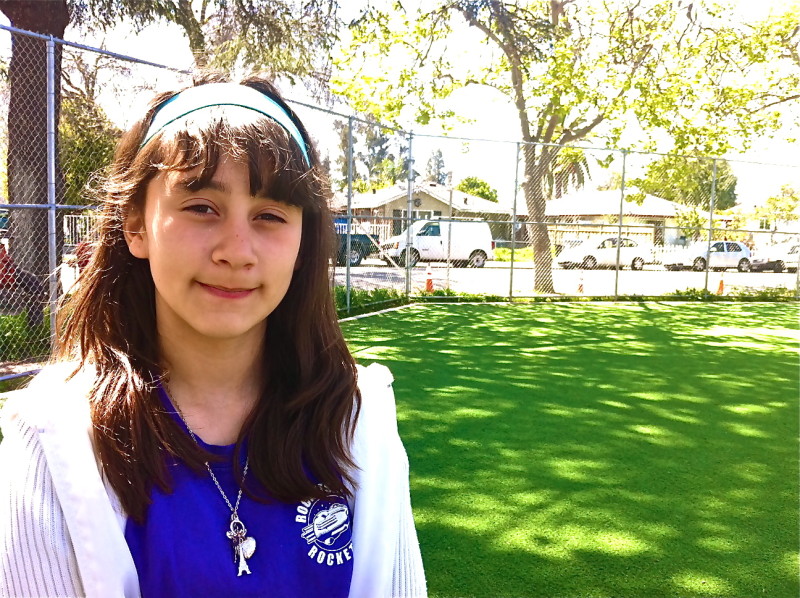
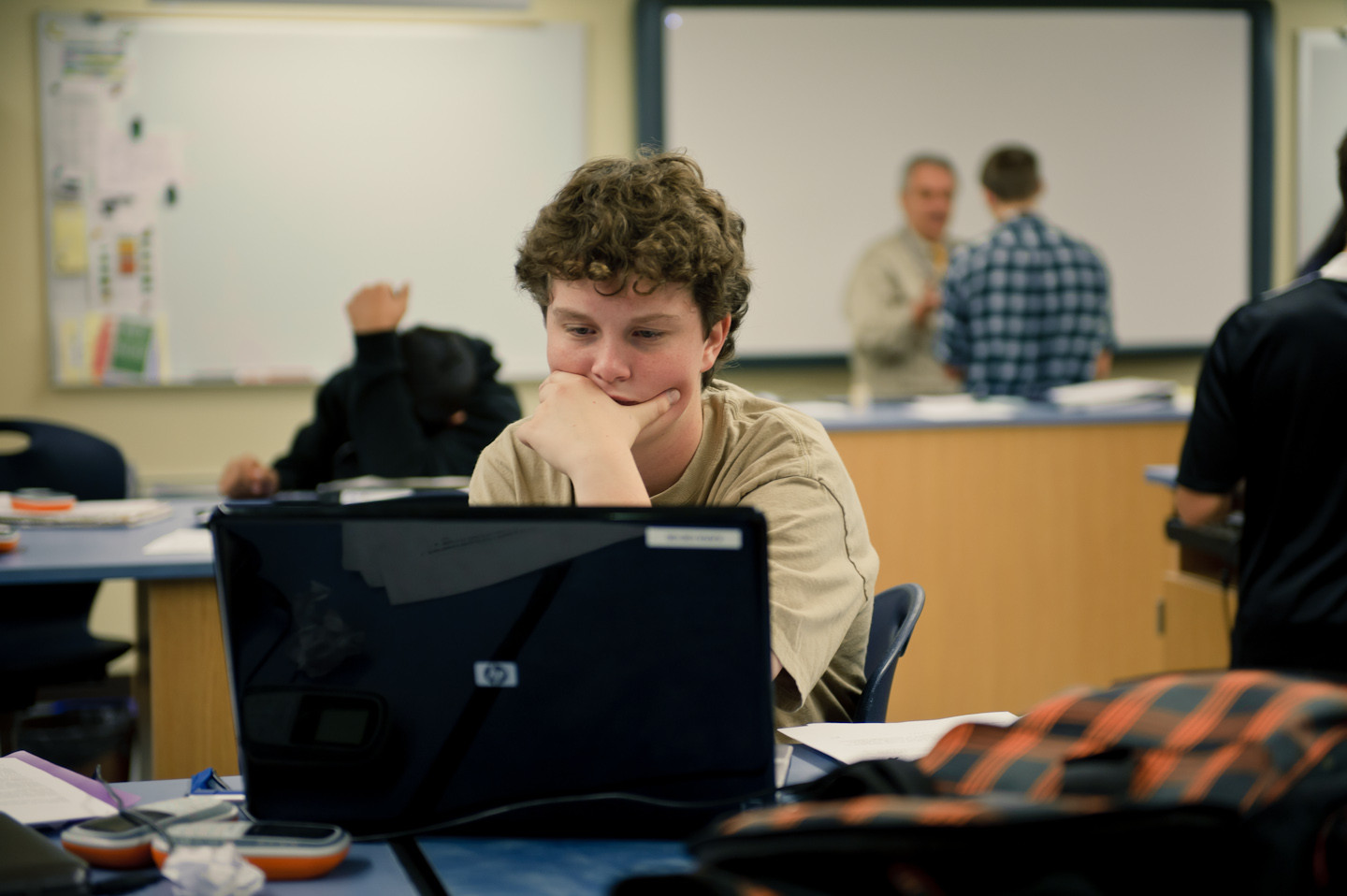
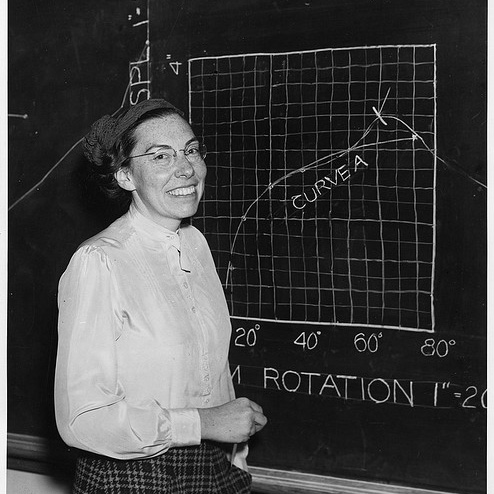
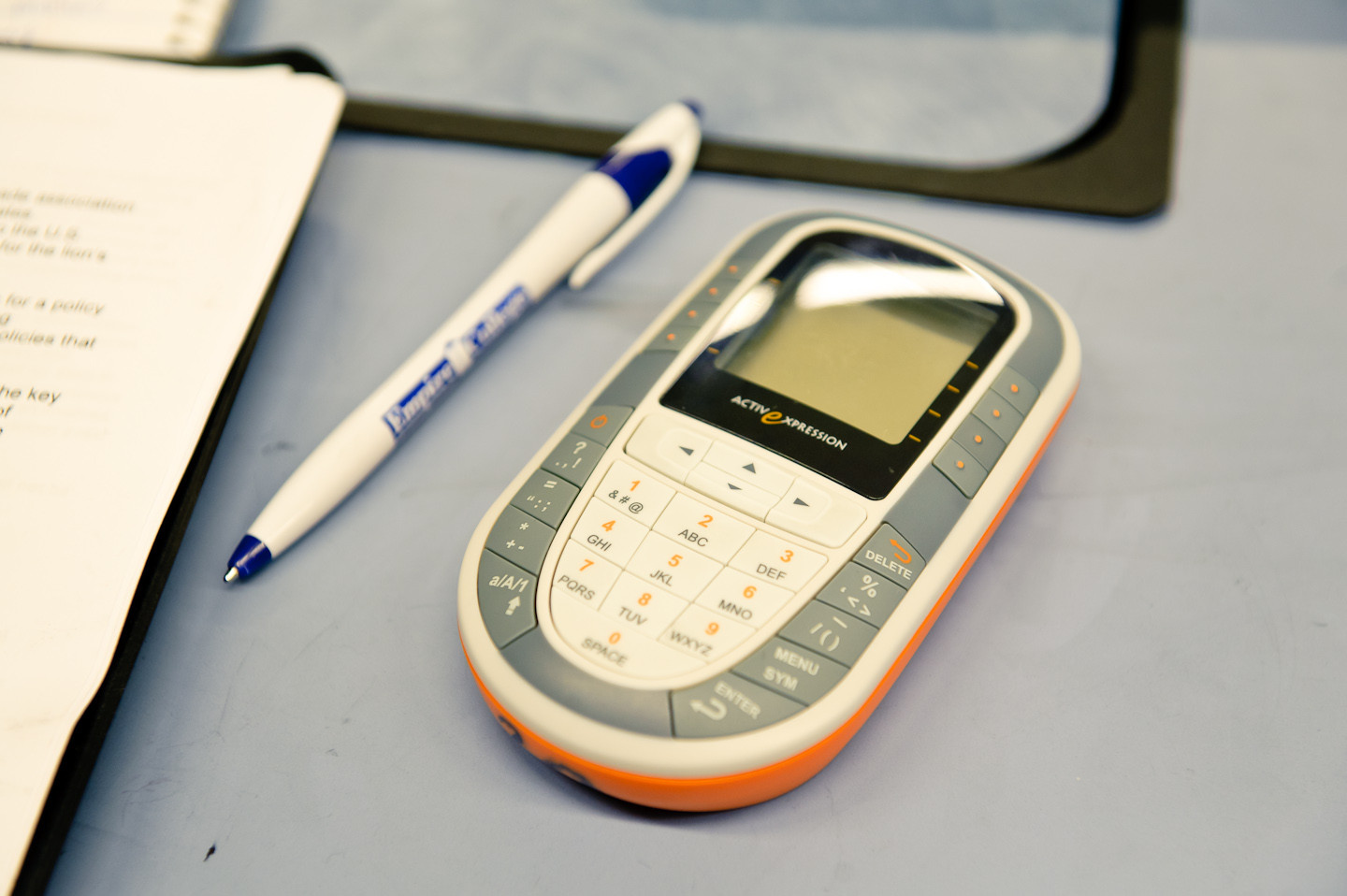
window.__IS_SSR__=true
window.__INITIAL_STATE__={
"attachmentsReducer": {
"audio_0": {
"type": "attachments",
"id": "audio_0",
"imgSizes": {
"kqedFullSize": {
"file": "https://ww2.kqed.org/news/wp-content/themes/KQED-unified/img/audio_bgs/background0.jpg"
}
}
},
"audio_1": {
"type": "attachments",
"id": "audio_1",
"imgSizes": {
"kqedFullSize": {
"file": "https://ww2.kqed.org/news/wp-content/themes/KQED-unified/img/audio_bgs/background1.jpg"
}
}
},
"audio_2": {
"type": "attachments",
"id": "audio_2",
"imgSizes": {
"kqedFullSize": {
"file": "https://ww2.kqed.org/news/wp-content/themes/KQED-unified/img/audio_bgs/background2.jpg"
}
}
},
"audio_3": {
"type": "attachments",
"id": "audio_3",
"imgSizes": {
"kqedFullSize": {
"file": "https://ww2.kqed.org/news/wp-content/themes/KQED-unified/img/audio_bgs/background3.jpg"
}
}
},
"audio_4": {
"type": "attachments",
"id": "audio_4",
"imgSizes": {
"kqedFullSize": {
"file": "https://ww2.kqed.org/news/wp-content/themes/KQED-unified/img/audio_bgs/background4.jpg"
}
}
},
"placeholder": {
"type": "attachments",
"id": "placeholder",
"imgSizes": {
"thumbnail": {
"file": "https://cdn.kqed.org/wp-content/uploads/2024/12/KQED-Default-Image-816638274-2000x1333-1-160x107.jpg",
"width": 160,
"height": 107,
"mimeType": "image/jpeg"
},
"medium": {
"file": "https://cdn.kqed.org/wp-content/uploads/2024/12/KQED-Default-Image-816638274-2000x1333-1-800x533.jpg",
"width": 800,
"height": 533,
"mimeType": "image/jpeg"
},
"medium_large": {
"file": "https://cdn.kqed.org/wp-content/uploads/2024/12/KQED-Default-Image-816638274-2000x1333-1-768x512.jpg",
"width": 768,
"height": 512,
"mimeType": "image/jpeg"
},
"large": {
"file": "https://cdn.kqed.org/wp-content/uploads/2024/12/KQED-Default-Image-816638274-2000x1333-1-1020x680.jpg",
"width": 1020,
"height": 680,
"mimeType": "image/jpeg"
},
"1536x1536": {
"file": "https://cdn.kqed.org/wp-content/uploads/2024/12/KQED-Default-Image-816638274-2000x1333-1-1536x1024.jpg",
"width": 1536,
"height": 1024,
"mimeType": "image/jpeg"
},
"fd-lrg": {
"file": "https://cdn.kqed.org/wp-content/uploads/2024/12/KQED-Default-Image-816638274-2000x1333-1-1536x1024.jpg",
"width": 1536,
"height": 1024,
"mimeType": "image/jpeg"
},
"fd-med": {
"file": "https://cdn.kqed.org/wp-content/uploads/2024/12/KQED-Default-Image-816638274-2000x1333-1-1020x680.jpg",
"width": 1020,
"height": 680,
"mimeType": "image/jpeg"
},
"fd-sm": {
"file": "https://cdn.kqed.org/wp-content/uploads/2024/12/KQED-Default-Image-816638274-2000x1333-1-800x533.jpg",
"width": 800,
"height": 533,
"mimeType": "image/jpeg"
},
"post-thumbnail": {
"file": "https://cdn.kqed.org/wp-content/uploads/2024/12/KQED-Default-Image-816638274-2000x1333-1-672x372.jpg",
"width": 672,
"height": 372,
"mimeType": "image/jpeg"
},
"twentyfourteen-full-width": {
"file": "https://cdn.kqed.org/wp-content/uploads/2024/12/KQED-Default-Image-816638274-2000x1333-1-1038x576.jpg",
"width": 1038,
"height": 576,
"mimeType": "image/jpeg"
},
"xxsmall": {
"file": "https://cdn.kqed.org/wp-content/uploads/2024/12/KQED-Default-Image-816638274-2000x1333-1-160x107.jpg",
"width": 160,
"height": 107,
"mimeType": "image/jpeg"
},
"xsmall": {
"file": "https://cdn.kqed.org/wp-content/uploads/2024/12/KQED-Default-Image-816638274-2000x1333-1-672x372.jpg",
"width": 672,
"height": 372,
"mimeType": "image/jpeg"
},
"small": {
"file": "https://cdn.kqed.org/wp-content/uploads/2024/12/KQED-Default-Image-816638274-2000x1333-1-672x372.jpg",
"width": 672,
"height": 372,
"mimeType": "image/jpeg"
},
"xlarge": {
"file": "https://cdn.kqed.org/wp-content/uploads/2024/12/KQED-Default-Image-816638274-2000x1333-1-1020x680.jpg",
"width": 1020,
"height": 680,
"mimeType": "image/jpeg"
},
"full-width": {
"file": "https://cdn.kqed.org/wp-content/uploads/2024/12/KQED-Default-Image-816638274-2000x1333-1-1920x1280.jpg",
"width": 1920,
"height": 1280,
"mimeType": "image/jpeg"
},
"guest-author-32": {
"file": "https://cdn.kqed.org/wp-content/uploads/2025/01/KQED-Default-Image-816638274-1333x1333-1-160x160.jpg",
"width": 32,
"height": 32,
"mimeType": "image/jpeg"
},
"guest-author-50": {
"file": "https://cdn.kqed.org/wp-content/uploads/2025/01/KQED-Default-Image-816638274-1333x1333-1-160x160.jpg",
"width": 50,
"height": 50,
"mimeType": "image/jpeg"
},
"guest-author-64": {
"file": "https://cdn.kqed.org/wp-content/uploads/2025/01/KQED-Default-Image-816638274-1333x1333-1-160x160.jpg",
"width": 64,
"height": 64,
"mimeType": "image/jpeg"
},
"guest-author-96": {
"file": "https://cdn.kqed.org/wp-content/uploads/2025/01/KQED-Default-Image-816638274-1333x1333-1-160x160.jpg",
"width": 96,
"height": 96,
"mimeType": "image/jpeg"
},
"guest-author-128": {
"file": "https://cdn.kqed.org/wp-content/uploads/2025/01/KQED-Default-Image-816638274-1333x1333-1-160x160.jpg",
"width": 128,
"height": 128,
"mimeType": "image/jpeg"
},
"detail": {
"file": "https://cdn.kqed.org/wp-content/uploads/2025/01/KQED-Default-Image-816638274-1333x1333-1-160x160.jpg",
"width": 160,
"height": 160,
"mimeType": "image/jpeg"
},
"kqedFullSize": {
"file": "https://cdn.kqed.org/wp-content/uploads/2024/12/KQED-Default-Image-816638274-2000x1333-1.jpg",
"width": 2000,
"height": 1333
}
}
},
"mindshift_11357": {
"type": "attachments",
"id": "mindshift_11357",
"meta": {
"index": "attachments_1716263798",
"site": "mindshift",
"id": "11357",
"found": true
},
"parent": 11300,
"imgSizes": {
"twentyfourteen-full-width": {
"file": "https://ww2.kqed.org/app/uploads/sites/23/2011/05/playground-1038x576.jpg",
"width": 1038,
"mimeType": "image/jpeg",
"height": 576
},
"thumbnail": {
"file": "https://ww2.kqed.org/app/uploads/sites/23/2011/05/playground-400x299.jpg",
"width": 400,
"mimeType": "image/jpeg",
"height": 299
},
"fd-sm": {
"file": "https://ww2.kqed.org/app/uploads/sites/23/2011/05/playground-320x239.jpg",
"width": 320,
"mimeType": "image/jpeg",
"height": 239
},
"post-thumbnail": {
"file": "https://ww2.kqed.org/app/uploads/sites/23/2011/05/playground-672x372.jpg",
"width": 672,
"mimeType": "image/jpeg",
"height": 372
},
"kqedFullSize": {
"file": "https://ww2.kqed.org/app/uploads/sites/23/2011/05/playground.jpg",
"width": 1296,
"height": 968
},
"guest-author-96": {
"file": "https://ww2.kqed.org/app/uploads/sites/23/2011/05/playground-96x96.jpg",
"width": 96,
"mimeType": "image/jpeg",
"height": 96
},
"medium": {
"file": "https://ww2.kqed.org/app/uploads/sites/23/2011/05/playground-800x598.jpg",
"width": 800,
"mimeType": "image/jpeg",
"height": 598
},
"guest-author-64": {
"file": "https://ww2.kqed.org/app/uploads/sites/23/2011/05/playground-64x64.jpg",
"width": 64,
"mimeType": "image/jpeg",
"height": 64
},
"guest-author-32": {
"file": "https://ww2.kqed.org/app/uploads/sites/23/2011/05/playground-32x32.jpg",
"width": 32,
"mimeType": "image/jpeg",
"height": 32
},
"fd-lrg": {
"file": "https://ww2.kqed.org/app/uploads/sites/23/2011/05/playground-1180x881.jpg",
"width": 1180,
"mimeType": "image/jpeg",
"height": 881
},
"fd-med": {
"file": "https://ww2.kqed.org/app/uploads/sites/23/2011/05/playground-768x574.jpg",
"width": 768,
"mimeType": "image/jpeg",
"height": 574
},
"detail": {
"file": "https://ww2.kqed.org/app/uploads/sites/23/2011/05/playground-75x75.jpg",
"width": 75,
"mimeType": "image/jpeg",
"height": 75
},
"guest-author-128": {
"file": "https://ww2.kqed.org/app/uploads/sites/23/2011/05/playground-128x128.jpg",
"width": 128,
"mimeType": "image/jpeg",
"height": 128
}
},
"publishDate": 1304703719,
"modified": 1304703719,
"caption": "Astroturf on the playground provides a spot for kids to play and congregate.",
"description": null,
"title": "Recess",
"credit": null,
"status": "inherit",
"isLoading": false,
"fetchFailed": false
},
"mindshift_11318": {
"type": "attachments",
"id": "mindshift_11318",
"meta": {
"index": "attachments_1716263798",
"site": "mindshift",
"id": "11318",
"found": true
},
"parent": 11312,
"imgSizes": {
"twentyfourteen-full-width": {
"file": "https://ww2.kqed.org/app/uploads/sites/23/2011/05/beatthetest3-1038x576.jpg",
"width": 1038,
"mimeType": "image/jpeg",
"height": 576
},
"thumbnail": {
"file": "https://ww2.kqed.org/app/uploads/sites/23/2011/05/beatthetest3-400x299.jpg",
"width": 400,
"mimeType": "image/jpeg",
"height": 299
},
"fd-sm": {
"file": "https://ww2.kqed.org/app/uploads/sites/23/2011/05/beatthetest3-320x239.jpg",
"width": 320,
"mimeType": "image/jpeg",
"height": 239
},
"post-thumbnail": {
"file": "https://ww2.kqed.org/app/uploads/sites/23/2011/05/beatthetest3-672x372.jpg",
"width": 672,
"mimeType": "image/jpeg",
"height": 372
},
"kqedFullSize": {
"file": "https://ww2.kqed.org/app/uploads/sites/23/2011/05/beatthetest3.jpg",
"width": 1296,
"height": 968
},
"guest-author-96": {
"file": "https://ww2.kqed.org/app/uploads/sites/23/2011/05/beatthetest3-96x96.jpg",
"width": 96,
"mimeType": "image/jpeg",
"height": 96
},
"medium": {
"file": "https://ww2.kqed.org/app/uploads/sites/23/2011/05/beatthetest3-800x598.jpg",
"width": 800,
"mimeType": "image/jpeg",
"height": 598
},
"guest-author-64": {
"file": "https://ww2.kqed.org/app/uploads/sites/23/2011/05/beatthetest3-64x64.jpg",
"width": 64,
"mimeType": "image/jpeg",
"height": 64
},
"guest-author-32": {
"file": "https://ww2.kqed.org/app/uploads/sites/23/2011/05/beatthetest3-32x32.jpg",
"width": 32,
"mimeType": "image/jpeg",
"height": 32
},
"fd-lrg": {
"file": "https://ww2.kqed.org/app/uploads/sites/23/2011/05/beatthetest3-1180x881.jpg",
"width": 1180,
"mimeType": "image/jpeg",
"height": 881
},
"fd-med": {
"file": "https://ww2.kqed.org/app/uploads/sites/23/2011/05/beatthetest3-768x574.jpg",
"width": 768,
"mimeType": "image/jpeg",
"height": 574
},
"detail": {
"file": "https://ww2.kqed.org/app/uploads/sites/23/2011/05/beatthetest3-75x75.jpg",
"width": 75,
"mimeType": "image/jpeg",
"height": 75
},
"guest-author-128": {
"file": "https://ww2.kqed.org/app/uploads/sites/23/2011/05/beatthetest3-128x128.jpg",
"width": 128,
"mimeType": "image/jpeg",
"height": 128
}
},
"publishDate": 1304633118,
"modified": 1304633118,
"caption": null,
"description": null,
"title": "beatthetest",
"credit": null,
"status": "inherit",
"isLoading": false,
"fetchFailed": false
},
"mindshift_11302": {
"type": "attachments",
"id": "mindshift_11302",
"meta": {
"index": "attachments_1716263798",
"site": "mindshift",
"id": "11302",
"found": true
},
"parent": 11301,
"imgSizes": {
"thumbnail": {
"file": "https://ww2.kqed.org/app/uploads/sites/23/2011/05/4268896468_9befb04ca0-400x266.jpg",
"width": 400,
"mimeType": "image/jpeg",
"height": 266
},
"fd-sm": {
"file": "https://ww2.kqed.org/app/uploads/sites/23/2011/05/4268896468_9befb04ca0-320x213.jpg",
"width": 320,
"mimeType": "image/jpeg",
"height": 213
},
"kqedFullSize": {
"file": "https://ww2.kqed.org/app/uploads/sites/23/2011/05/4268896468_9befb04ca0.jpg",
"width": 500,
"height": 333
},
"guest-author-96": {
"file": "https://ww2.kqed.org/app/uploads/sites/23/2011/05/4268896468_9befb04ca0-96x96.jpg",
"width": 96,
"mimeType": "image/jpeg",
"height": 96
},
"guest-author-64": {
"file": "https://ww2.kqed.org/app/uploads/sites/23/2011/05/4268896468_9befb04ca0-64x64.jpg",
"width": 64,
"mimeType": "image/jpeg",
"height": 64
},
"detail": {
"file": "https://ww2.kqed.org/app/uploads/sites/23/2011/05/4268896468_9befb04ca0-75x75.jpg",
"width": 75,
"mimeType": "image/jpeg",
"height": 75
},
"guest-author-32": {
"file": "https://ww2.kqed.org/app/uploads/sites/23/2011/05/4268896468_9befb04ca0-32x32.jpg",
"width": 32,
"mimeType": "image/jpeg",
"height": 32
},
"guest-author-128": {
"file": "https://ww2.kqed.org/app/uploads/sites/23/2011/05/4268896468_9befb04ca0-128x128.jpg",
"width": 128,
"mimeType": "image/jpeg",
"height": 128
}
},
"publishDate": 1304628468,
"modified": 1304628468,
"caption": null,
"description": ".",
"title": "Hardcover book gutter and pages",
"credit": null,
"status": "inherit",
"isLoading": false,
"fetchFailed": false
},
"mindshift_10965": {
"type": "attachments",
"id": "mindshift_10965",
"meta": {
"index": "attachments_1716263798",
"site": "mindshift",
"id": "10965",
"found": true
},
"parent": 10964,
"imgSizes": {
"thumbnail": {
"file": "https://ww2.kqed.org/app/uploads/sites/23/2011/04/netflix_envelope-400x266.jpg",
"width": 400,
"mimeType": "image/jpeg",
"height": 266
},
"fd-sm": {
"file": "https://ww2.kqed.org/app/uploads/sites/23/2011/04/netflix_envelope-320x213.jpg",
"width": 320,
"mimeType": "image/jpeg",
"height": 213
},
"kqedFullSize": {
"file": "https://ww2.kqed.org/app/uploads/sites/23/2011/04/netflix_envelope.jpg",
"width": 500,
"height": 333
},
"guest-author-96": {
"file": "https://ww2.kqed.org/app/uploads/sites/23/2011/04/netflix_envelope-96x96.jpg",
"width": 96,
"mimeType": "image/jpeg",
"height": 96
},
"guest-author-64": {
"file": "https://ww2.kqed.org/app/uploads/sites/23/2011/04/netflix_envelope-64x64.jpg",
"width": 64,
"mimeType": "image/jpeg",
"height": 64
},
"detail": {
"file": "https://ww2.kqed.org/app/uploads/sites/23/2011/04/netflix_envelope-75x75.jpg",
"width": 75,
"mimeType": "image/jpeg",
"height": 75
},
"guest-author-32": {
"file": "https://ww2.kqed.org/app/uploads/sites/23/2011/04/netflix_envelope-32x32.jpg",
"width": 32,
"mimeType": "image/jpeg",
"height": 32
},
"guest-author-128": {
"file": "https://ww2.kqed.org/app/uploads/sites/23/2011/04/netflix_envelope-128x128.jpg",
"width": 128,
"mimeType": "image/jpeg",
"height": 128
}
},
"publishDate": 1303863092,
"modified": 1303863092,
"caption": null,
"description": null,
"title": "netflix_envelope",
"credit": null,
"status": "inherit",
"isLoading": false,
"fetchFailed": false
},
"mindshift_11085": {
"type": "attachments",
"id": "mindshift_11085",
"meta": {
"index": "attachments_1716263798",
"site": "mindshift",
"id": "11085",
"found": true
},
"parent": 11075,
"imgSizes": {
"twentyfourteen-full-width": {
"file": "https://ww2.kqed.org/app/uploads/sites/23/2011/04/Sintia-1038x576.jpg",
"width": 1038,
"mimeType": "image/jpeg",
"height": 576
},
"thumbnail": {
"file": "https://ww2.kqed.org/app/uploads/sites/23/2011/04/Sintia-400x299.jpg",
"width": 400,
"mimeType": "image/jpeg",
"height": 299
},
"fd-sm": {
"file": "https://ww2.kqed.org/app/uploads/sites/23/2011/04/Sintia-320x239.jpg",
"width": 320,
"mimeType": "image/jpeg",
"height": 239
},
"post-thumbnail": {
"file": "https://ww2.kqed.org/app/uploads/sites/23/2011/04/Sintia-672x372.jpg",
"width": 672,
"mimeType": "image/jpeg",
"height": 372
},
"kqedFullSize": {
"file": "https://ww2.kqed.org/app/uploads/sites/23/2011/04/Sintia.jpg",
"width": 1296,
"height": 968
},
"guest-author-96": {
"file": "https://ww2.kqed.org/app/uploads/sites/23/2011/04/Sintia-96x96.jpg",
"width": 96,
"mimeType": "image/jpeg",
"height": 96
},
"medium": {
"file": "https://ww2.kqed.org/app/uploads/sites/23/2011/04/Sintia-800x598.jpg",
"width": 800,
"mimeType": "image/jpeg",
"height": 598
},
"guest-author-64": {
"file": "https://ww2.kqed.org/app/uploads/sites/23/2011/04/Sintia-64x64.jpg",
"width": 64,
"mimeType": "image/jpeg",
"height": 64
},
"guest-author-32": {
"file": "https://ww2.kqed.org/app/uploads/sites/23/2011/04/Sintia-32x32.jpg",
"width": 32,
"mimeType": "image/jpeg",
"height": 32
},
"fd-lrg": {
"file": "https://ww2.kqed.org/app/uploads/sites/23/2011/04/Sintia-1180x881.jpg",
"width": 1180,
"mimeType": "image/jpeg",
"height": 881
},
"fd-med": {
"file": "https://ww2.kqed.org/app/uploads/sites/23/2011/04/Sintia-768x574.jpg",
"width": 768,
"mimeType": "image/jpeg",
"height": 574
},
"detail": {
"file": "https://ww2.kqed.org/app/uploads/sites/23/2011/04/Sintia-75x75.jpg",
"width": 75,
"mimeType": "image/jpeg",
"height": 75
},
"guest-author-128": {
"file": "https://ww2.kqed.org/app/uploads/sites/23/2011/04/Sintia-128x128.jpg",
"width": 128,
"mimeType": "image/jpeg",
"height": 128
}
},
"publishDate": 1304102472,
"modified": 1304102472,
"caption": null,
"description": null,
"title": "Sintia",
"credit": null,
"status": "inherit",
"isLoading": false,
"fetchFailed": false
},
"mindshift_10888": {
"type": "attachments",
"id": "mindshift_10888",
"meta": {
"index": "attachments_1716263798",
"site": "mindshift",
"id": "10888",
"found": true
},
"parent": 10887,
"imgSizes": {
"thumbnail": {
"file": "https://ww2.kqed.org/app/uploads/sites/23/2011/04/vanished_ss-400x290.jpg",
"width": 400,
"mimeType": "image/jpeg",
"height": 290
},
"fd-sm": {
"file": "https://ww2.kqed.org/app/uploads/sites/23/2011/04/vanished_ss-320x232.jpg",
"width": 320,
"mimeType": "image/jpeg",
"height": 232
},
"post-thumbnail": {
"file": "https://ww2.kqed.org/app/uploads/sites/23/2011/04/vanished_ss-600x372.jpg",
"width": 600,
"mimeType": "image/jpeg",
"height": 372
},
"kqedFullSize": {
"file": "https://ww2.kqed.org/app/uploads/sites/23/2011/04/vanished_ss.jpg",
"width": 600,
"height": 435
},
"guest-author-96": {
"file": "https://ww2.kqed.org/app/uploads/sites/23/2011/04/vanished_ss-96x96.jpg",
"width": 96,
"mimeType": "image/jpeg",
"height": 96
},
"guest-author-64": {
"file": "https://ww2.kqed.org/app/uploads/sites/23/2011/04/vanished_ss-64x64.jpg",
"width": 64,
"mimeType": "image/jpeg",
"height": 64
},
"detail": {
"file": "https://ww2.kqed.org/app/uploads/sites/23/2011/04/vanished_ss-75x75.jpg",
"width": 75,
"mimeType": "image/jpeg",
"height": 75
},
"guest-author-32": {
"file": "https://ww2.kqed.org/app/uploads/sites/23/2011/04/vanished_ss-32x32.jpg",
"width": 32,
"mimeType": "image/jpeg",
"height": 32
},
"guest-author-128": {
"file": "https://ww2.kqed.org/app/uploads/sites/23/2011/04/vanished_ss-128x128.jpg",
"width": 128,
"mimeType": "image/jpeg",
"height": 128
}
},
"publishDate": 1303782770,
"modified": 1303782770,
"caption": null,
"description": null,
"title": "vanished_ss",
"credit": null,
"status": "inherit",
"isLoading": false,
"fetchFailed": false
},
"mindshift_10881": {
"type": "attachments",
"id": "mindshift_10881",
"meta": {
"index": "attachments_1716263798",
"site": "mindshift",
"id": "10881",
"found": true
},
"parent": 10880,
"imgSizes": {
"thumbnail": {
"file": "https://ww2.kqed.org/app/uploads/sites/23/2011/04/chesspieces-400x232.jpg",
"width": 400,
"mimeType": "image/jpeg",
"height": 232
},
"fd-sm": {
"file": "https://ww2.kqed.org/app/uploads/sites/23/2011/04/chesspieces-320x186.jpg",
"width": 320,
"mimeType": "image/jpeg",
"height": 186
},
"kqedFullSize": {
"file": "https://ww2.kqed.org/app/uploads/sites/23/2011/04/chesspieces.jpg",
"width": 500,
"height": 290
},
"guest-author-96": {
"file": "https://ww2.kqed.org/app/uploads/sites/23/2011/04/chesspieces-96x96.jpg",
"width": 96,
"mimeType": "image/jpeg",
"height": 96
},
"guest-author-64": {
"file": "https://ww2.kqed.org/app/uploads/sites/23/2011/04/chesspieces-64x64.jpg",
"width": 64,
"mimeType": "image/jpeg",
"height": 64
},
"detail": {
"file": "https://ww2.kqed.org/app/uploads/sites/23/2011/04/chesspieces-75x75.jpg",
"width": 75,
"mimeType": "image/jpeg",
"height": 75
},
"guest-author-32": {
"file": "https://ww2.kqed.org/app/uploads/sites/23/2011/04/chesspieces-32x32.jpg",
"width": 32,
"mimeType": "image/jpeg",
"height": 32
},
"guest-author-128": {
"file": "https://ww2.kqed.org/app/uploads/sites/23/2011/04/chesspieces-128x128.jpg",
"width": 128,
"mimeType": "image/jpeg",
"height": 128
}
},
"publishDate": 1303774280,
"modified": 1303774280,
"caption": null,
"description": null,
"title": "chesspieces",
"credit": null,
"status": "inherit",
"isLoading": false,
"fetchFailed": false
},
"mindshift_10971": {
"type": "attachments",
"id": "mindshift_10971",
"meta": {
"index": "attachments_1716263798",
"site": "mindshift",
"id": "10971",
"found": true
},
"parent": 10902,
"imgSizes": {
"twentyfourteen-full-width": {
"file": "https://ww2.kqed.org/app/uploads/sites/23/2011/04/10_11.15_newtech_06061-1038x576.jpg",
"width": 1038,
"mimeType": "image/jpeg",
"height": 576
},
"thumbnail": {
"file": "https://ww2.kqed.org/app/uploads/sites/23/2011/04/10_11.15_newtech_06061-400x266.jpg",
"width": 400,
"mimeType": "image/jpeg",
"height": 266
},
"fd-sm": {
"file": "https://ww2.kqed.org/app/uploads/sites/23/2011/04/10_11.15_newtech_06061-320x213.jpg",
"width": 320,
"mimeType": "image/jpeg",
"height": 213
},
"post-thumbnail": {
"file": "https://ww2.kqed.org/app/uploads/sites/23/2011/04/10_11.15_newtech_06061-672x372.jpg",
"width": 672,
"mimeType": "image/jpeg",
"height": 372
},
"kqedFullSize": {
"file": "https://ww2.kqed.org/app/uploads/sites/23/2011/04/10_11.15_newtech_06061.jpg",
"width": 1440,
"height": 958
},
"large": {
"file": "https://ww2.kqed.org/app/uploads/sites/23/2011/04/10_11.15_newtech_06061-1440x958.jpg",
"width": 1440,
"mimeType": "image/jpeg",
"height": 958
},
"guest-author-96": {
"file": "https://ww2.kqed.org/app/uploads/sites/23/2011/04/10_11.15_newtech_06061-96x96.jpg",
"width": 96,
"mimeType": "image/jpeg",
"height": 96
},
"medium": {
"file": "https://ww2.kqed.org/app/uploads/sites/23/2011/04/10_11.15_newtech_06061-800x532.jpg",
"width": 800,
"mimeType": "image/jpeg",
"height": 532
},
"guest-author-64": {
"file": "https://ww2.kqed.org/app/uploads/sites/23/2011/04/10_11.15_newtech_06061-64x64.jpg",
"width": 64,
"mimeType": "image/jpeg",
"height": 64
},
"guest-author-32": {
"file": "https://ww2.kqed.org/app/uploads/sites/23/2011/04/10_11.15_newtech_06061-32x32.jpg",
"width": 32,
"mimeType": "image/jpeg",
"height": 32
},
"fd-lrg": {
"file": "https://ww2.kqed.org/app/uploads/sites/23/2011/04/10_11.15_newtech_06061-1180x785.jpg",
"width": 1180,
"mimeType": "image/jpeg",
"height": 785
},
"fd-med": {
"file": "https://ww2.kqed.org/app/uploads/sites/23/2011/04/10_11.15_newtech_06061-768x511.jpg",
"width": 768,
"mimeType": "image/jpeg",
"height": 511
},
"detail": {
"file": "https://ww2.kqed.org/app/uploads/sites/23/2011/04/10_11.15_newtech_06061-75x75.jpg",
"width": 75,
"mimeType": "image/jpeg",
"height": 75
},
"guest-author-128": {
"file": "https://ww2.kqed.org/app/uploads/sites/23/2011/04/10_11.15_newtech_06061-128x128.jpg",
"width": 128,
"mimeType": "image/jpeg",
"height": 128
}
},
"publishDate": 1303864538,
"modified": 1303864538,
"caption": null,
"description": null,
"title": "10_11.15_newtech_0606",
"credit": null,
"status": "inherit",
"isLoading": false,
"fetchFailed": false
},
"mindshift_10847": {
"type": "attachments",
"id": "mindshift_10847",
"meta": {
"index": "attachments_1716263798",
"site": "mindshift",
"id": "10847",
"found": true
},
"parent": 10837,
"imgSizes": {
"thumbnail": {
"file": "https://ww2.kqed.org/app/uploads/sites/23/2011/04/smithsonian-400x400.jpg",
"width": 400,
"mimeType": "image/jpeg",
"height": 400
},
"fd-sm": {
"file": "https://ww2.kqed.org/app/uploads/sites/23/2011/04/smithsonian-320x320.jpg",
"width": 320,
"mimeType": "image/jpeg",
"height": 320
},
"post-thumbnail": {
"file": "https://ww2.kqed.org/app/uploads/sites/23/2011/04/smithsonian-494x372.jpg",
"width": 494,
"mimeType": "image/jpeg",
"height": 372
},
"kqedFullSize": {
"file": "https://ww2.kqed.org/app/uploads/sites/23/2011/04/smithsonian.jpg",
"width": 494,
"height": 494
},
"guest-author-96": {
"file": "https://ww2.kqed.org/app/uploads/sites/23/2011/04/smithsonian-96x96.jpg",
"width": 96,
"mimeType": "image/jpeg",
"height": 96
},
"guest-author-64": {
"file": "https://ww2.kqed.org/app/uploads/sites/23/2011/04/smithsonian-64x64.jpg",
"width": 64,
"mimeType": "image/jpeg",
"height": 64
},
"detail": {
"file": "https://ww2.kqed.org/app/uploads/sites/23/2011/04/smithsonian-75x75.jpg",
"width": 75,
"mimeType": "image/jpeg",
"height": 75
},
"guest-author-32": {
"file": "https://ww2.kqed.org/app/uploads/sites/23/2011/04/smithsonian-32x32.jpg",
"width": 32,
"mimeType": "image/jpeg",
"height": 32
},
"guest-author-128": {
"file": "https://ww2.kqed.org/app/uploads/sites/23/2011/04/smithsonian-128x128.jpg",
"width": 128,
"mimeType": "image/jpeg",
"height": 128
}
},
"publishDate": 1303754067,
"modified": 1303754067,
"caption": null,
"description": null,
"title": "smithsonian",
"credit": null,
"status": "inherit",
"isLoading": false,
"fetchFailed": false
},
"mindshift_10757": {
"type": "attachments",
"id": "mindshift_10757",
"meta": {
"index": "attachments_1716263798",
"site": "mindshift",
"id": "10757",
"found": true
},
"parent": 10745,
"imgSizes": {
"twentyfourteen-full-width": {
"file": "https://ww2.kqed.org/app/uploads/sites/23/2011/04/10_11.15_newtech_0573-1038x576.jpg",
"width": 1038,
"mimeType": "image/jpeg",
"height": 576
},
"thumbnail": {
"file": "https://ww2.kqed.org/app/uploads/sites/23/2011/04/10_11.15_newtech_0573-400x266.jpg",
"width": 400,
"mimeType": "image/jpeg",
"height": 266
},
"fd-sm": {
"file": "https://ww2.kqed.org/app/uploads/sites/23/2011/04/10_11.15_newtech_0573-320x213.jpg",
"width": 320,
"mimeType": "image/jpeg",
"height": 213
},
"post-thumbnail": {
"file": "https://ww2.kqed.org/app/uploads/sites/23/2011/04/10_11.15_newtech_0573-672x372.jpg",
"width": 672,
"mimeType": "image/jpeg",
"height": 372
},
"kqedFullSize": {
"file": "https://ww2.kqed.org/app/uploads/sites/23/2011/04/10_11.15_newtech_0573.jpg",
"width": 1440,
"height": 958
},
"large": {
"file": "https://ww2.kqed.org/app/uploads/sites/23/2011/04/10_11.15_newtech_0573-1440x958.jpg",
"width": 1440,
"mimeType": "image/jpeg",
"height": 958
},
"guest-author-96": {
"file": "https://ww2.kqed.org/app/uploads/sites/23/2011/04/10_11.15_newtech_0573-96x96.jpg",
"width": 96,
"mimeType": "image/jpeg",
"height": 96
},
"medium": {
"file": "https://ww2.kqed.org/app/uploads/sites/23/2011/04/10_11.15_newtech_0573-800x532.jpg",
"width": 800,
"mimeType": "image/jpeg",
"height": 532
},
"guest-author-64": {
"file": "https://ww2.kqed.org/app/uploads/sites/23/2011/04/10_11.15_newtech_0573-64x64.jpg",
"width": 64,
"mimeType": "image/jpeg",
"height": 64
},
"guest-author-32": {
"file": "https://ww2.kqed.org/app/uploads/sites/23/2011/04/10_11.15_newtech_0573-32x32.jpg",
"width": 32,
"mimeType": "image/jpeg",
"height": 32
},
"fd-lrg": {
"file": "https://ww2.kqed.org/app/uploads/sites/23/2011/04/10_11.15_newtech_0573-1180x785.jpg",
"width": 1180,
"mimeType": "image/jpeg",
"height": 785
},
"fd-med": {
"file": "https://ww2.kqed.org/app/uploads/sites/23/2011/04/10_11.15_newtech_0573-768x511.jpg",
"width": 768,
"mimeType": "image/jpeg",
"height": 511
},
"detail": {
"file": "https://ww2.kqed.org/app/uploads/sites/23/2011/04/10_11.15_newtech_0573-75x75.jpg",
"width": 75,
"mimeType": "image/jpeg",
"height": 75
},
"guest-author-128": {
"file": "https://ww2.kqed.org/app/uploads/sites/23/2011/04/10_11.15_newtech_0573-128x128.jpg",
"width": 128,
"mimeType": "image/jpeg",
"height": 128
}
},
"publishDate": 1303420574,
"modified": 1303420574,
"caption": null,
"description": null,
"title": "10_11.15_newtech_0573",
"credit": null,
"status": "inherit",
"isLoading": false,
"fetchFailed": false
}
},
"audioPlayerReducer": {
"postId": "stream_live",
"isPaused": true,
"isPlaying": false,
"pfsActive": false,
"pledgeModalIsOpen": true,
"playerDrawerIsOpen": false,
"liveAudioPlayStartedAt": 0,
"liveAudioPlayContext": ""
},
"authorsReducer": {
"tbarseghian": {
"type": "authors",
"id": "180",
"meta": {
"index": "authors_1716337520",
"id": "180",
"found": true
},
"name": "Tina Barseghian",
"firstName": "Tina",
"lastName": "Barseghian",
"slug": "tbarseghian",
"email": "tbarseghian@kqed.org",
"display_author_email": false,
"staff_mastheads": [],
"title": null,
"bio": null,
"avatar": "https://secure.gravatar.com/avatar/de7e6ced1239b7018fe4d2b61f723c90?s=600&d=blank&r=g",
"twitter": null,
"facebook": null,
"instagram": null,
"linkedin": null,
"sites": [
{
"site": "styleguide",
"roles": [
"contributor"
]
},
{
"site": "news",
"roles": [
"subscriber"
]
},
{
"site": "mindshift",
"roles": [
"subscriber"
]
},
{
"site": "bayareabites",
"roles": [
"subscriber"
]
}
],
"headData": {
"title": "Tina Barseghian | KQED",
"description": null,
"ogImgSrc": "https://secure.gravatar.com/avatar/de7e6ced1239b7018fe4d2b61f723c90?s=600&d=blank&r=g",
"twImgSrc": "https://secure.gravatar.com/avatar/de7e6ced1239b7018fe4d2b61f723c90?s=600&d=blank&r=g"
},
"isLoading": false,
"link": "/author/tbarseghian"
},
"awatters": {
"type": "authors",
"id": "4352",
"meta": {
"index": "authors_1716337520",
"id": "4352",
"found": true
},
"name": "Audrey Watters",
"firstName": "Audrey",
"lastName": "Watters",
"slug": "awatters",
"email": "awatters@kqed.org",
"display_author_email": false,
"staff_mastheads": [],
"title": null,
"bio": null,
"avatar": "https://secure.gravatar.com/avatar/fb6ac91bb93632725bfa683c1de71bee?s=600&d=blank&r=g",
"twitter": null,
"facebook": null,
"instagram": null,
"linkedin": null,
"sites": [
{
"site": "mindshift",
"roles": [
"subscriber"
]
}
],
"headData": {
"title": "Audrey Watters | KQED",
"description": null,
"ogImgSrc": "https://secure.gravatar.com/avatar/fb6ac91bb93632725bfa683c1de71bee?s=600&d=blank&r=g",
"twImgSrc": "https://secure.gravatar.com/avatar/fb6ac91bb93632725bfa683c1de71bee?s=600&d=blank&r=g"
},
"isLoading": false,
"link": "/author/awatters"
}
},
"pagesReducer": {
"mindshift_category_digital-tools": {
"type": "terms",
"id": "mindshift_195",
"meta": {
"index": "terms_1716263798",
"site": "mindshift",
"id": "195",
"score": 14.406534
},
"featImg": null,
"name": "Digital Tools",
"description": "How devices, software, and the Internet are changing the classroom dynamic.",
"taxonomy": "category",
"headData": {
"twImgId": null,
"twTitle": null,
"ogTitle": null,
"ogImgId": null,
"twDescription": null,
"description": "How devices, software, and the Internet are changing the classroom dynamic.",
"title": "Digital Tools Archives | KQED Mindshift",
"ogDescription": null
},
"ttid": 195,
"slug": "digital-tools",
"isLoading": false,
"title": "Digital Tools",
"pageMeta": {
"site": "mindshift",
"WpPageTemplate": "page-topic-editorial",
"currentPage": 55
},
"blocks": [
{
"blockName": "kqed/company-paragraph",
"content": "How devices, software, and the Internet are changing the classroom dynamic."
},
{
"blockName": "kqed/post-list",
"attrs": {
"layout": "cardArticle2",
"query": "posts/mindshift?category=digital-tools",
"seeMore": false,
"paginated": true,
"page": 55
}
},
{
"blockName": "kqed/ad"
}
]
}
},
"pfsSessionReducer": {},
"postsReducer": {
"stream_live": {
"type": "live",
"id": "stream_live",
"audioUrl": "https://streams.kqed.org/kqedradio",
"title": "Live Stream",
"excerpt": "Live Stream information currently unavailable.",
"link": "/radio",
"featImg": "",
"label": {
"name": "KQED Live",
"link": "/"
}
},
"stream_kqedNewscast": {
"type": "posts",
"id": "stream_kqedNewscast",
"audioUrl": "https://www.kqed.org/.stream/anon/radio/RDnews/newscast.mp3?_=1",
"title": "KQED Newscast",
"featImg": "",
"label": {
"name": "88.5 FM",
"link": "/"
}
},
"mindshift_11377": {
"type": "posts",
"id": "mindshift_11377",
"meta": {
"index": "posts_1716263798",
"site": "mindshift",
"id": "11377",
"score": null,
"sort": [
1304724527000
]
},
"parent": 0,
"labelTerm": {
"site": "mindshift"
},
"blocks": [],
"publishDate": 1304724527,
"format": "aside",
"disqusTitle": "Five Lessons Learned from a New Charter School ",
"title": "Five Lessons Learned from a New Charter School ",
"headTitle": "MindShift | KQED News",
"content": "\u003cdiv id=\"attachment_11357\" class=\"module image left mceTemp\" style=\"width: 300px;\">\n\u003cp>\u003ca rel=\"attachment wp-att-11357\" href=\"http://ww2.kqed.org/mindshift/2011/05/a-look-inside-rocketship/playground/\">\u003cimg class=\"size-medium wp-image-11357\" title=\"Recess\" src=\"http://ww2.kqed.org/mindshift/wp-content/uploads/sites/23/2011/05/playground-300x224.jpg\" alt=\"Tina Barseghian\" width=\"300\" height=\"224\">\u003c/a>\u003c/p>\n\u003cp class=\"credit\"> \u003c/p>\n\u003c/div>\n\u003cp>The \u003ca href=\"http://rsed.org\">Rocketship\u003c/a> network of charter Schools in San Jose is fairly new -- the first school just opened in 2007. But from an observer's perspective, a few lessons can be pulled from the way the young network has engineered the design of the school system. Can these ideas be applied to any school, whether they're charter, private, or traditional public school?\u003c/p>\n\u003col>\n\u003cli>\u003cstrong>THE CAMPUS IS ONLY THE SETTING\u003c/strong>. When it comes to school, innovation in the way a student learns lives in the circuitry of the way the day is designed. For a school that’s known as one of the pioneers of hybrid learning, the campus of Rocketship Mateo Sheedy is decidedly traditional. \u003ca href=\"http://ww2.kqed.org/mindshift/2011/05/a-look-inside-rocketship/\">Classrooms, playgrounds,\u003c/a> and the school’s office look like any other. In fact, I’d argue the campus is more modest than many I’ve seen. Students sit on the floor of the Reading Center for their individual reading times. The computers are sectioned off from the cafeteria with dividers. Students are squeezed next to each other on the only available seating in the lunch room. What makes it different is the inventive schedule that guides how and what students learn, making most of the educators’ time and effort. With all the discussions about the \u003ca href=\"http://ww2.kqed.org/mindshift/tag/school-day-of-the-future/?order=asc\">future school day\u003c/a>, it turns out that it might actually not look so different than today. \u003cstrong> \u003c/strong>\u003c/li>\n\u003cli>\u003cstrong>SMART, ADAPTIVE TECHNOLOGY IS KEY. \u003c/strong> Finding the “Holy Grail” of individualized learning when it comes to technology depends on how well the computer programs work with students’ learning levels. Rocketship administrators believe \u003ca href=\"http://ww2.kqed.org/mindshift/2011/05/hybrid-learning-comes-to-life-at-rocketship/\">the ones they’ve chosen\u003c/a> do the job. As spokesperson Judith McGarry described it, remediation happens seamlessly until each student is ready to move to the next level. Granted, these are fairly simple subjects in K-5 grades. The true test will come when or if it moves into middle school curriculum and beyond.\u003cstrong> \u003c/strong>\u003c/li>\n\u003cli>\u003cstrong>SCHOOLS CAN DO MORE WITH LESS.\u003c/strong> Because a portion of students’ day is spent in the computer Learning Lab using the adaptive technology, hiring an extra teacher for that period is not necessary. The labs are monitored by teacher aides, who mostly answer questions and try to keep students focusing on their work. \u003c!--more-->\u003cstrong> \u003c/strong>\u003c/li>\n\u003cli>\u003cstrong>TEACHERS NEED TO BE VALUED. \u003c/strong>Offer professional development ideas, time and ways for them to collaborate, training in technology tools, and most importantly, value their ideas for what they want to bring to their own classes.\u003cstrong> \u003c/strong>\u003cstrong> \u003c/strong>\u003c/li>\n\u003cli>\u003cstrong>KEEP TINKERING. \u003c/strong>Rocketship was co-founded by John Danner, a former software engineer who created the design of the school day. The team continues to iterate on the network’s system. They’re in the midst of creating a teacher’s dashboard that tracks students’ progress on the computer programs for teachers. They continue to adjust the schedule with each new idea and change and find new ways to improve depending on what works and the community’s feedback.\u003c/li>\n\u003c/ol>\n\u003cp>\u003cstrong>\u003cbr>\n\u003c/strong>\u003c/p>\n\u003cp>[module align=\"center\" width=\"half\" type=\"aside\"]\u003c/p>\n\u003ch3>Read more from the \u003ca href=\"http://ww2.kqed.org/mindshift/feature/my-education/\">MY EDUCATION series\u003c/a>:\u003c/h3>\n\u003cul>\n\u003cli>\u003cstrong>PART I:\u003c/strong> \u003ca href=\"http://ww2.kqed.org/mindshift/2011/04/how-can-an-advanced-student-move-ahead-in-public-school/\">How Can An Advanced Student Move Ahead in Public School?\u003c/a>\u003c/li>\n\u003cli>\u003cstrong>PART II: \u003c/strong>\u003ca href=\"http://ww2.kqed.org/mindshift/2011/05/hybrid-learning-comes-to-life-at-rocketship/\">Hybrid Learning Comes to Life at Rocketship\u003c/a>\u003c/li>\n\u003cli>\u003cstrong>PART III:\u003c/strong> \u003ca href=\"http://ww2.kqed.org/mindshift/2011/05/rocketships-culture-respectful-empathetic-and-college-bound/\">Rocketship's Culture - Respectful, Empathetic and College-Bound\u003c/a>\u003c/li>\n\u003cli>\u003cstrong>PART IV:\u003c/strong> \u003ca href=\"http://ww2.kqed.org/mindshift/2011/05/how-to-keep-good-teachers-in-the-game/\">How to Keep Good Teachers in the Game\u003c/a>\u003c/li>\n\u003cli>\u003cstrong>PART V:\u003c/strong> \u003ca href=\"http://ww2.kqed.org/mindshift/2011/05/focus-on-assessments-fuels-rocketships-goals/\">Focus on Assessments Fuels Rocketship's Goals\u003c/a>\u003c/li>\n\u003cli>\u003cstrong>PART VI:\u003c/strong> \u003ca href=\"http://ww2.kqed.org/mindshift/2011/05/a-look-inside-rocketship/\">A Look Inside Rocketship\u003c/a>\u003c/li>\n\u003cli>\u003cstrong>PART VII:\u003c/strong> \u003ca href=\"http://ww2.kqed.org/mindshift/2011/05/five-lessons-learned-from-a-new-charter-school/\">Five Lessons Learned from a New Charter School\u003c/a>\u003c/li>\n\u003c/ul>\n\u003cp>[/module]\u003c/p>\n\u003cp>[ad fullwidth]\u003c/p>\u003cp>\u003c/p>\n",
"disqusIdentifier": "11377 http://blogs.kqed.org/mindshift/?p=11377",
"disqusUrl": "https://ww2.kqed.org/mindshift/2011/05/06/five-lessons-learned-from-a-new-charter-school/",
"stats": {
"hasVideo": false,
"hasChartOrMap": false,
"hasAudio": false,
"hasPolis": false,
"wordCount": 579,
"hasGoogleForm": false,
"hasGallery": false,
"hasHearkenModule": false,
"iframeSrcs": [],
"paragraphCount": 7
},
"modified": 1311800217,
"excerpt": null,
"headData": {
"twImgId": "",
"twTitle": "",
"ogTitle": "",
"ogImgId": "",
"twDescription": "",
"description": " The Rocketship network of charter Schools in San Jose is fairly new -- the first school just opened in 2007. But from an observer's perspective, a few lessons can be pulled from the way the young network has engineered the design of the school system. Can these ideas be applied to any school, whether",
"title": "Five Lessons Learned from a New Charter School | KQED",
"ogDescription": "",
"schema": {
"@context": "https://schema.org",
"@type": "Article",
"headline": "Five Lessons Learned from a New Charter School ",
"datePublished": "2011-05-06T16:28:47-07:00",
"dateModified": "2011-07-27T13:56:57-07:00",
"image": "https://cdn.kqed.org/wp-content/uploads/2020/02/KQED-OG-Image@1x.png"
}
},
"guestAuthors": [],
"slug": "five-lessons-learned-from-a-new-charter-school",
"status": "publish",
"path": "/mindshift/11377/five-lessons-learned-from-a-new-charter-school",
"audioTrackLength": null,
"parsedContent": [
{
"type": "contentString",
"content": "\u003cdiv class=\"post-body\">\u003cp>\u003cdiv id=\"attachment_11357\" class=\"module image left mceTemp\" style=\"width: 300px;\">\n\u003cp>\u003ca rel=\"attachment wp-att-11357\" href=\"http://ww2.kqed.org/mindshift/2011/05/a-look-inside-rocketship/playground/\">\u003cimg class=\"size-medium wp-image-11357\" title=\"Recess\" src=\"http://ww2.kqed.org/mindshift/wp-content/uploads/sites/23/2011/05/playground-300x224.jpg\" alt=\"Tina Barseghian\" width=\"300\" height=\"224\">\u003c/a>\u003c/p>\n\u003cp class=\"credit\"> \u003c/p>\n\u003c/div>\n\u003cp>The \u003ca href=\"http://rsed.org\">Rocketship\u003c/a> network of charter Schools in San Jose is fairly new -- the first school just opened in 2007. But from an observer's perspective, a few lessons can be pulled from the way the young network has engineered the design of the school system. Can these ideas be applied to any school, whether they're charter, private, or traditional public school?\u003c/p>\n\u003col>\n\u003cli>\u003cstrong>THE CAMPUS IS ONLY THE SETTING\u003c/strong>. When it comes to school, innovation in the way a student learns lives in the circuitry of the way the day is designed. For a school that’s known as one of the pioneers of hybrid learning, the campus of Rocketship Mateo Sheedy is decidedly traditional. \u003ca href=\"http://ww2.kqed.org/mindshift/2011/05/a-look-inside-rocketship/\">Classrooms, playgrounds,\u003c/a> and the school’s office look like any other. In fact, I’d argue the campus is more modest than many I’ve seen. Students sit on the floor of the Reading Center for their individual reading times. The computers are sectioned off from the cafeteria with dividers. Students are squeezed next to each other on the only available seating in the lunch room. What makes it different is the inventive schedule that guides how and what students learn, making most of the educators’ time and effort. With all the discussions about the \u003ca href=\"http://ww2.kqed.org/mindshift/tag/school-day-of-the-future/?order=asc\">future school day\u003c/a>, it turns out that it might actually not look so different than today. \u003cstrong> \u003c/strong>\u003c/li>\n\u003cli>\u003cstrong>SMART, ADAPTIVE TECHNOLOGY IS KEY. \u003c/strong> Finding the “Holy Grail” of individualized learning when it comes to technology depends on how well the computer programs work with students’ learning levels. Rocketship administrators believe \u003ca href=\"http://ww2.kqed.org/mindshift/2011/05/hybrid-learning-comes-to-life-at-rocketship/\">the ones they’ve chosen\u003c/a> do the job. As spokesperson Judith McGarry described it, remediation happens seamlessly until each student is ready to move to the next level. Granted, these are fairly simple subjects in K-5 grades. The true test will come when or if it moves into middle school curriculum and beyond.\u003cstrong> \u003c/strong>\u003c/li>\n\u003cli>\u003cstrong>SCHOOLS CAN DO MORE WITH LESS.\u003c/strong> Because a portion of students’ day is spent in the computer Learning Lab using the adaptive technology, hiring an extra teacher for that period is not necessary. The labs are monitored by teacher aides, who mostly answer questions and try to keep students focusing on their work. \u003c!--more-->\u003cstrong> \u003c/strong>\u003c/li>\n\u003cli>\u003cstrong>TEACHERS NEED TO BE VALUED. \u003c/strong>Offer professional development ideas, time and ways for them to collaborate, training in technology tools, and most importantly, value their ideas for what they want to bring to their own classes.\u003cstrong> \u003c/strong>\u003cstrong> \u003c/strong>\u003c/li>\n\u003cli>\u003cstrong>KEEP TINKERING. \u003c/strong>Rocketship was co-founded by John Danner, a former software engineer who created the design of the school day. The team continues to iterate on the network’s system. They’re in the midst of creating a teacher’s dashboard that tracks students’ progress on the computer programs for teachers. They continue to adjust the schedule with each new idea and change and find new ways to improve depending on what works and the community’s feedback.\u003c/li>\n\u003c/ol>\n\u003cp>\u003cstrong>\u003cbr>\n\u003c/strong>\u003c/p>\n\u003cp>[module align=\"center\" width=\"half\" type=\"aside\"]\u003c/p>\n\u003ch3>Read more from the \u003ca href=\"http://ww2.kqed.org/mindshift/feature/my-education/\">MY EDUCATION series\u003c/a>:\u003c/h3>\n\u003cul>\n\u003cli>\u003cstrong>PART I:\u003c/strong> \u003ca href=\"http://ww2.kqed.org/mindshift/2011/04/how-can-an-advanced-student-move-ahead-in-public-school/\">How Can An Advanced Student Move Ahead in Public School?\u003c/a>\u003c/li>\n\u003cli>\u003cstrong>PART II: \u003c/strong>\u003ca href=\"http://ww2.kqed.org/mindshift/2011/05/hybrid-learning-comes-to-life-at-rocketship/\">Hybrid Learning Comes to Life at Rocketship\u003c/a>\u003c/li>\n\u003cli>\u003cstrong>PART III:\u003c/strong> \u003ca href=\"http://ww2.kqed.org/mindshift/2011/05/rocketships-culture-respectful-empathetic-and-college-bound/\">Rocketship's Culture - Respectful, Empathetic and College-Bound\u003c/a>\u003c/li>\n\u003cli>\u003cstrong>PART IV:\u003c/strong> \u003ca href=\"http://ww2.kqed.org/mindshift/2011/05/how-to-keep-good-teachers-in-the-game/\">How to Keep Good Teachers in the Game\u003c/a>\u003c/li>\n\u003cli>\u003cstrong>PART V:\u003c/strong> \u003ca href=\"http://ww2.kqed.org/mindshift/2011/05/focus-on-assessments-fuels-rocketships-goals/\">Focus on Assessments Fuels Rocketship's Goals\u003c/a>\u003c/li>\n\u003cli>\u003cstrong>PART VI:\u003c/strong> \u003ca href=\"http://ww2.kqed.org/mindshift/2011/05/a-look-inside-rocketship/\">A Look Inside Rocketship\u003c/a>\u003c/li>\n\u003cli>\u003cstrong>PART VII:\u003c/strong> \u003ca href=\"http://ww2.kqed.org/mindshift/2011/05/five-lessons-learned-from-a-new-charter-school/\">Five Lessons Learned from a New Charter School\u003c/a>\u003c/li>\n\u003c/ul>\n\u003cp>[/module]\u003c/p>\n\u003cp>\u003c/p>\u003c/div>",
"attributes": {
"named": {},
"numeric": []
}
},
{
"type": "component",
"content": "",
"name": "ad",
"attributes": {
"named": {
"label": "fullwidth"
},
"numeric": [
"fullwidth"
]
}
},
{
"type": "contentString",
"content": "\u003cdiv class=\"post-body\">\u003cp>\u003c/p>\u003cp>\u003c/p>\n\u003c/div>\u003c/p>",
"attributes": {
"named": {},
"numeric": []
}
}
],
"link": "/mindshift/11377/five-lessons-learned-from-a-new-charter-school",
"authors": [
"180"
],
"categories": [
"mindshift_192",
"mindshift_194",
"mindshift_195",
"mindshift_193"
],
"tags": [
"mindshift_108",
"mindshift_480",
"mindshift_96",
"mindshift_481"
],
"featImg": "mindshift_11357",
"label": "mindshift"
},
"mindshift_11312": {
"type": "posts",
"id": "mindshift_11312",
"meta": {
"index": "posts_1716263798",
"site": "mindshift",
"id": "11312",
"score": null,
"sort": [
1304637173000
]
},
"parent": 0,
"labelTerm": {
"site": "mindshift"
},
"blocks": [],
"publishDate": 1304637173,
"format": "aside",
"disqusTitle": "Focus on Assessments Fuels Rocketship's Goals",
"title": "Focus on Assessments Fuels Rocketship's Goals",
"headTitle": "MindShift | KQED News",
"content": "\u003cp>\u003ca rel=\"attachment wp-att-11318\" href=\"http://ww2.kqed.org/mindshift/2011/05/focus-on-assessments-fuels-rocketships-goals/beatthetest-4/\">\u003cimg class=\"aligncenter size-large wp-image-11318\" title=\"beatthetest\" src=\"http://ww2.kqed.org/mindshift/wp-content/uploads/sites/23/2011/05/beatthetest3-620x463.jpg\" alt=\"\" width=\"620\" height=\"463\">\u003c/a> Test scores are very important to \u003ca href=\"http://rsed.org/index.php\">Rocketship Education\u003c/a>, a cluster of three charter schools in San Jose, California.\u003c/p>\n\u003cp>One of Rocketship's biggest \u003ca href=\"http://ww2.kqed.org/mindshift/2011/04/how-can-an-advanced-student-move-ahead-in-public-school/\">points of pride\u003c/a> is the high API score at its flagship school, Rocketship Mateo Sheedy Elementary in San Jose, where 91% of students qualify for free or reduced lunch. Rocketship scored 925, the same as the average of Palo Alto School District, a much more affluent community nearby.\u003c/p>\n\u003cp>But that’s not the only score the network focuses on. Rocketship assesses students every eight weeks to make sure they’re on track. “Because we test them so frequently, we have information gradually, so we can put interventions in place to make sure they get to their big goal at the end of the year,” says Jaclyn Vargas, a literacy teacher at Rocketship. “It’s not like we only test them in September and in June, and say, ‘Why didn’t they meet that goal?’”\u003c/p>\n\u003cp>For Vargas, this kind of data-driven instruction balances long-term vision with shorter, day-to-day planning, objective-driven goals.\u003c/p>\n\u003caside class=\"pullquote alignleft\">“It’s a lot more goal oriented here. The expectations are high for our students.”\u003c/aside>\n\u003cp>“This is how will we truly know if we’re meeting standards and serving our students to the best of our ability,” she says. “It allows me to plan more strategically, we’re more invested as teachers and we invest students at a higher level because they know what they’re reaching for by end of year.”\u003c/p>\n\u003cp>[ad fullwidth]\u003c/p>\n\u003cp>The school is now in the throes of piloting a teacher’s dashboard of sorts, using software that helps teachers keep track of students’ progress in the Learning Lab, where they use adaptive computer programs to practice what they’ve learned in class.\u003c/p>\n\u003cp>Getting this information to teachers is crucial, says Judith McGarry, Rocketship’s spokesperson, because it helps them tailor each student’s individual learning plan. It might, for example, shift a student’s focus one week from spelling to multiplication, depending on where the student was stuck at any given moment.\u003c/p>\n\u003cp>Here’s what that looks like:\u003c!--more-->\u003c/p>\n\u003cdiv id=\"attachment_11313\" class=\"module image aligncenter mceTemp mceIEcenter\" style=\"width: 620px;\">\n\u003cp>\u003cimg class=\"size-large wp-image-11313\" src=\"http://ww2.kqed.org/mindshift/wp-content/uploads/sites/23/2011/05/Screen-shot-2011-05-05-at-1.21.43-PM-620x436.png\" alt=\"\" width=\"620\" height=\"436\">\u003c/p>\n\u003cp class=\"credit\">Rocketship\u003c/p>\n\u003c/div>\n\u003cp>Each student’s scores on the computer programs – whether it’s math or literacy -- is calculated across a continuum so teachers can track progress. What’s more, the software also indicates to the teacher which level to place the student for each Learning Lab program.\u003c/p>\n\u003cp>The exact impact the Learning Lab has on student achievement has not yet been measured scientifically. So Rocketship hired\u003ca href=\"http://www.sri.com\"> S.R.I. International\u003c/a> to conduct a quantitative study that demonstrates the effect of the Learning Lab on students’ mastery of basic skills.\u003c/p>\n\u003cp>“We think that the Learning Lab has a huge impact on their ability to master basic skills,” McGarry said. “But it’s not good enough for us to just say we know anecdotally it’s working.”\u003c/p>\n\u003cp>In addition to working on adaptive computer programs, it must be noted that the school also emphasizes \u003ca href=\"http://ww2.kqed.org/mindshift/2011/05/rocketships-culture-respectful-empathetic-and-college-bound/\">critical thinking skills\u003c/a>. In each class, a series of signs hangs from the ceilings and walls, asking questions like: “Why do we need to know this?” and “How can we prove it?” and “How might things have been different, if …”\u003c/p>\n\u003cp>\u003cstrong>SIGNS OF ENCOURAGEMENT\u003c/strong>\u003c/p>\n\u003cp>\u003cstrong> \u003c/strong>\u003c/p>\n\u003cp>Motivating Rocketeers to do well on tests is a priority at the Rocketship Mateo Sheedy campus, as evidenced by the signs that hang from classrooms and across the school. Hand-written and printed signs read “90% of students will score 90% (or higher)”; “Shoot for 950” in reference to current the 925 API score; and “Beat the Test.”\u003c/p>\n\u003cp>[module align=\"center\" width=\"half\" type=\"aside\"]\u003c/p>\n\u003ch3>Read more about Rocketship\u003ca href=\"http://ww2.kqed.org/mindshift/feature/my-education/\">\u003c/a>:\u003c/h3>\n\u003cul>\n\u003cli>\u003cstrong>PART I:\u003c/strong> \u003ca href=\"http://ww2.kqed.org/mindshift/2011/04/how-can-an-advanced-student-move-ahead-in-public-school/\">How Can An Advanced Student Move Ahead in Public School?\u003c/a>\u003c/li>\n\u003cli>\u003cstrong>PART II: \u003c/strong>\u003ca href=\"http://ww2.kqed.org/mindshift/2011/05/hybrid-learning-comes-to-life-at-rocketship/\">Hybrid Learning Comes to Life at Rocketship\u003c/a>\u003c/li>\n\u003cli>\u003cstrong>PART III:\u003c/strong> \u003ca href=\"http://ww2.kqed.org/mindshift/2011/05/rocketships-culture-respectful-empathetic-and-college-bound/\">Rocketship's Culture - Respectful, Empathetic and College-Bound\u003c/a>\u003c/li>\n\u003cli>\u003cstrong>PART IV:\u003c/strong> \u003ca href=\"http://ww2.kqed.org/mindshift/2011/05/how-to-keep-good-teachers-in-the-game/\">How to Keep Good Teachers in the Game\u003c/a>\u003c/li>\n\u003cli>\u003cstrong>PART V:\u003c/strong> \u003ca href=\"http://ww2.kqed.org/mindshift/2011/05/focus-on-assessments-fuels-rocketships-goals/\">Focus on Assessments Fuels Rocketship's Goals\u003c/a>\u003c/li>\n\u003cli>\u003cstrong>PART VI:\u003c/strong> \u003ca href=\"http://ww2.kqed.org/mindshift/2011/05/a-look-inside-rocketship/\">A Look Inside Rocketship\u003c/a>\u003c/li>\n\u003cli>\u003cstrong>PART VII:\u003c/strong> \u003ca href=\"http://ww2.kqed.org/mindshift/2011/05/five-lessons-learned-from-a-new-charter-school/\">Five Lessons Learned from a New Charter School\u003c/a>\u003c/li>\n\u003c/ul>\n\u003cp>[/module]\u003c/p>\n\u003cp>It’s all part of what McGarry and teachers say the school setting high expectations for students.\u003c/p>\n\u003cp>Tiffany Gee, a math teacher at Rocketship, says that’s what makes the school different from the other schools she taught.\u003c/p>\n\u003cp>\u003c/p>\n\u003cp>“It’s a lot more goal oriented here,” she says. “The expectations are high for our students.”\u003c/p>\n\n",
"disqusIdentifier": "11312 http://blogs.kqed.org/mindshift/?p=11312",
"disqusUrl": "https://ww2.kqed.org/mindshift/2011/05/05/focus-on-assessments-fuels-rocketships-goals/",
"stats": {
"hasVideo": false,
"hasChartOrMap": false,
"hasAudio": false,
"hasPolis": false,
"wordCount": 785,
"hasGoogleForm": false,
"hasGallery": false,
"hasHearkenModule": false,
"iframeSrcs": [],
"paragraphCount": 23
},
"modified": 1311800351,
"excerpt": null,
"headData": {
"twImgId": "",
"twTitle": "",
"ogTitle": "",
"ogImgId": "",
"twDescription": "",
"description": "Test scores are very important to Rocketship Education, a cluster of three charter schools in San Jose, California. One of Rocketship's biggest points of pride is the high API score at its flagship school, Rocketship Mateo Sheedy Elementary in San Jose, where 91% of students qualify for free or reduced lunch. Rocketship scored 925, the",
"title": "Focus on Assessments Fuels Rocketship's Goals | KQED",
"ogDescription": "",
"schema": {
"@context": "https://schema.org",
"@type": "Article",
"headline": "Focus on Assessments Fuels Rocketship's Goals",
"datePublished": "2011-05-05T16:12:53-07:00",
"dateModified": "2011-07-27T13:59:11-07:00",
"image": "https://cdn.kqed.org/wp-content/uploads/2020/02/KQED-OG-Image@1x.png"
}
},
"guestAuthors": [],
"slug": "focus-on-assessments-fuels-rocketships-goals",
"status": "publish",
"path": "/mindshift/11312/focus-on-assessments-fuels-rocketships-goals",
"audioTrackLength": null,
"parsedContent": [
{
"type": "contentString",
"content": "\u003cdiv class=\"post-body\">\u003cp>\u003cp>\u003ca rel=\"attachment wp-att-11318\" href=\"http://ww2.kqed.org/mindshift/2011/05/focus-on-assessments-fuels-rocketships-goals/beatthetest-4/\">\u003cimg class=\"aligncenter size-large wp-image-11318\" title=\"beatthetest\" src=\"http://ww2.kqed.org/mindshift/wp-content/uploads/sites/23/2011/05/beatthetest3-620x463.jpg\" alt=\"\" width=\"620\" height=\"463\">\u003c/a> Test scores are very important to \u003ca href=\"http://rsed.org/index.php\">Rocketship Education\u003c/a>, a cluster of three charter schools in San Jose, California.\u003c/p>\n\u003cp>One of Rocketship's biggest \u003ca href=\"http://ww2.kqed.org/mindshift/2011/04/how-can-an-advanced-student-move-ahead-in-public-school/\">points of pride\u003c/a> is the high API score at its flagship school, Rocketship Mateo Sheedy Elementary in San Jose, where 91% of students qualify for free or reduced lunch. Rocketship scored 925, the same as the average of Palo Alto School District, a much more affluent community nearby.\u003c/p>\n\u003cp>But that’s not the only score the network focuses on. Rocketship assesses students every eight weeks to make sure they’re on track. “Because we test them so frequently, we have information gradually, so we can put interventions in place to make sure they get to their big goal at the end of the year,” says Jaclyn Vargas, a literacy teacher at Rocketship. “It’s not like we only test them in September and in June, and say, ‘Why didn’t they meet that goal?’”\u003c/p>\n\u003cp>For Vargas, this kind of data-driven instruction balances long-term vision with shorter, day-to-day planning, objective-driven goals.\u003c/p>\n\u003caside class=\"pullquote alignleft\">“It’s a lot more goal oriented here. The expectations are high for our students.”\u003c/aside>\n\u003cp>“This is how will we truly know if we’re meeting standards and serving our students to the best of our ability,” she says. “It allows me to plan more strategically, we’re more invested as teachers and we invest students at a higher level because they know what they’re reaching for by end of year.”\u003c/p>\n\u003cp>\u003c/p>\u003c/div>",
"attributes": {
"named": {},
"numeric": []
}
},
{
"type": "component",
"content": "",
"name": "ad",
"attributes": {
"named": {
"label": "fullwidth"
},
"numeric": [
"fullwidth"
]
}
},
{
"type": "contentString",
"content": "\u003cdiv class=\"post-body\">\u003cp>\u003c/p>\n\u003cp>The school is now in the throes of piloting a teacher’s dashboard of sorts, using software that helps teachers keep track of students’ progress in the Learning Lab, where they use adaptive computer programs to practice what they’ve learned in class.\u003c/p>\n\u003cp>Getting this information to teachers is crucial, says Judith McGarry, Rocketship’s spokesperson, because it helps them tailor each student’s individual learning plan. It might, for example, shift a student’s focus one week from spelling to multiplication, depending on where the student was stuck at any given moment.\u003c/p>\n\u003cp>Here’s what that looks like:\u003c!--more-->\u003c/p>\n\u003cdiv id=\"attachment_11313\" class=\"module image aligncenter mceTemp mceIEcenter\" style=\"width: 620px;\">\n\u003cp>\u003cimg class=\"size-large wp-image-11313\" src=\"http://ww2.kqed.org/mindshift/wp-content/uploads/sites/23/2011/05/Screen-shot-2011-05-05-at-1.21.43-PM-620x436.png\" alt=\"\" width=\"620\" height=\"436\">\u003c/p>\n\u003cp class=\"credit\">Rocketship\u003c/p>\n\u003c/div>\n\u003cp>Each student’s scores on the computer programs – whether it’s math or literacy -- is calculated across a continuum so teachers can track progress. What’s more, the software also indicates to the teacher which level to place the student for each Learning Lab program.\u003c/p>\n\u003cp>The exact impact the Learning Lab has on student achievement has not yet been measured scientifically. So Rocketship hired\u003ca href=\"http://www.sri.com\"> S.R.I. International\u003c/a> to conduct a quantitative study that demonstrates the effect of the Learning Lab on students’ mastery of basic skills.\u003c/p>\n\u003cp>“We think that the Learning Lab has a huge impact on their ability to master basic skills,” McGarry said. “But it’s not good enough for us to just say we know anecdotally it’s working.”\u003c/p>\n\u003cp>In addition to working on adaptive computer programs, it must be noted that the school also emphasizes \u003ca href=\"http://ww2.kqed.org/mindshift/2011/05/rocketships-culture-respectful-empathetic-and-college-bound/\">critical thinking skills\u003c/a>. In each class, a series of signs hangs from the ceilings and walls, asking questions like: “Why do we need to know this?” and “How can we prove it?” and “How might things have been different, if …”\u003c/p>\n\u003cp>\u003cstrong>SIGNS OF ENCOURAGEMENT\u003c/strong>\u003c/p>\n\u003cp>\u003cstrong> \u003c/strong>\u003c/p>\n\u003cp>Motivating Rocketeers to do well on tests is a priority at the Rocketship Mateo Sheedy campus, as evidenced by the signs that hang from classrooms and across the school. Hand-written and printed signs read “90% of students will score 90% (or higher)”; “Shoot for 950” in reference to current the 925 API score; and “Beat the Test.”\u003c/p>\n\u003cp>[module align=\"center\" width=\"half\" type=\"aside\"]\u003c/p>\n\u003ch3>Read more about Rocketship\u003ca href=\"http://ww2.kqed.org/mindshift/feature/my-education/\">\u003c/a>:\u003c/h3>\n\u003cul>\n\u003cli>\u003cstrong>PART I:\u003c/strong> \u003ca href=\"http://ww2.kqed.org/mindshift/2011/04/how-can-an-advanced-student-move-ahead-in-public-school/\">How Can An Advanced Student Move Ahead in Public School?\u003c/a>\u003c/li>\n\u003cli>\u003cstrong>PART II: \u003c/strong>\u003ca href=\"http://ww2.kqed.org/mindshift/2011/05/hybrid-learning-comes-to-life-at-rocketship/\">Hybrid Learning Comes to Life at Rocketship\u003c/a>\u003c/li>\n\u003cli>\u003cstrong>PART III:\u003c/strong> \u003ca href=\"http://ww2.kqed.org/mindshift/2011/05/rocketships-culture-respectful-empathetic-and-college-bound/\">Rocketship's Culture - Respectful, Empathetic and College-Bound\u003c/a>\u003c/li>\n\u003cli>\u003cstrong>PART IV:\u003c/strong> \u003ca href=\"http://ww2.kqed.org/mindshift/2011/05/how-to-keep-good-teachers-in-the-game/\">How to Keep Good Teachers in the Game\u003c/a>\u003c/li>\n\u003cli>\u003cstrong>PART V:\u003c/strong> \u003ca href=\"http://ww2.kqed.org/mindshift/2011/05/focus-on-assessments-fuels-rocketships-goals/\">Focus on Assessments Fuels Rocketship's Goals\u003c/a>\u003c/li>\n\u003cli>\u003cstrong>PART VI:\u003c/strong> \u003ca href=\"http://ww2.kqed.org/mindshift/2011/05/a-look-inside-rocketship/\">A Look Inside Rocketship\u003c/a>\u003c/li>\n\u003cli>\u003cstrong>PART VII:\u003c/strong> \u003ca href=\"http://ww2.kqed.org/mindshift/2011/05/five-lessons-learned-from-a-new-charter-school/\">Five Lessons Learned from a New Charter School\u003c/a>\u003c/li>\n\u003c/ul>\n\u003cp>[/module]\u003c/p>\n\u003cp>It’s all part of what McGarry and teachers say the school setting high expectations for students.\u003c/p>\n\u003cp>Tiffany Gee, a math teacher at Rocketship, says that’s what makes the school different from the other schools she taught.\u003c/p>\n\u003cp>\u003c/p>\n\u003cp>“It’s a lot more goal oriented here,” she says. “The expectations are high for our students.”\u003c/p>\n\n\u003c/div>\u003c/p>",
"attributes": {
"named": {},
"numeric": []
}
}
],
"link": "/mindshift/11312/focus-on-assessments-fuels-rocketships-goals",
"authors": [
"180"
],
"categories": [
"mindshift_195",
"mindshift_193"
],
"featImg": "mindshift_11318",
"label": "mindshift"
},
"mindshift_11301": {
"type": "posts",
"id": "mindshift_11301",
"meta": {
"index": "posts_1716263798",
"site": "mindshift",
"id": "11301",
"score": null,
"sort": [
1304629878000
]
},
"parent": 0,
"labelTerm": {
"site": "mindshift"
},
"blocks": [],
"publishDate": 1304629878,
"format": "aside",
"disqusTitle": "10 Open Education Resources You May Not Know About (But Should)",
"title": "10 Open Education Resources You May Not Know About (But Should)",
"headTitle": "MindShift | KQED News",
"content": "\u003cfigure id=\"attachment_11302\" class=\"wp-caption left\" style=\"max-width: 300px\">\u003ca href=\"http://ww2.kqed.org/mindshift/2011/05/10-open-education-resources-you-may-not-know-about-but-should/hardcover-book-gutter-and-pages/\" rel=\"attachment wp-att-11302\">\u003cimg class=\"size-medium wp-image-11302\" src=\"http://ww2.kqed.org/mindshift/wp-content/uploads/sites/23/2011/05/4268896468_9befb04ca0-300x199.jpg\" alt=\"\" width=\"300\" height=\"199\">\u003c/a>\u003cfigcaption class=\"wp-caption-text\"> \u003c/figcaption>\u003c/figure>\n\u003cp>This week, the \u003ca href=\"http://www.ocwconsortium.org/\">OCW Consortium\u003c/a> is holding its annual meeting, celebrating \u003ca href=\"http://ww2.kqed.org/mindshift/2011/04/10-ways-open-courseware-has-freed-education/\">10 years of OpenCourseWare\u003c/a>. The movement to make university-level content freely and openly available online began a decade ago, when the faculty at MIT agreed to put the materials from all 2,000 of the university's courses on the Web.\u003c/p>\n\u003cp>With that gesture, \u003ca href=\"http://ocw.mit.edu\">MIT OpenCourseWare\u003c/a> helped launch an important educational movement, one that MIT President Susan Hockfield described in her opening remarks at yesterday's meeting as both the child of technology and of a far more ancient academic tradition: \"the tradition of the global intellectual commons.\"\u003c/p>\n\u003cp>We have looked here before at how \u003ca href=\"http://ww2.kqed.org/mindshift/2011/04/10-ways-open-courseware-has-freed-education/\">OCW has shaped education\u003c/a> in the last ten years, but in many ways much of the content that has been posted online remains very much \"Web 1.0.\" That is, while universities have posted their syllabi, handouts, and quizzes online, there has not been -- until recently -- much \"Web 2.0\" OCW resources -- little opportunity for interaction and engagement with the material.\u003c/p>\n\u003cp>But as open educational resources and OCW increase in popularity and usage, there are a number of new resources out there that do offer just that. You probably already know about: \u003ca href=\"http://www.khanacademy.org\">Khan Academy\u003c/a> and \u003ca href=\"http://www.wikipedia.org\">Wikipedia\u003c/a>, for example. But in the spirit of 10 years of OCW, here's a list of 10 cool OER and OCW resources that you might not know about, but should know:\u003c/p>\n\u003col>\n\u003cli>\u003cstrong>\u003ca href=\"http://p2pu.org/\">P2PU\u003c/a>:\u003c/strong> The Peer 2 Peer University is a grassroots open education project in which anyone can participate. Volunteers facilitate the courses, but the learners are in charge. P2PU leverages both open content and the open social web, with a model for lifelong learning.\u003c/li>\n\u003cli>\u003cstrong>\u003ca href=\"http://openstudy.com\">OpenStudy\u003c/a>\u003c/strong>: OpenStudy is a social learning network where independent learners and traditional students can come together in a massively-multiplayer study group. Through OpenStudy, learners can find other working in similar content areas in order to support each other and answer each others’ questions. OpenStudy supports a number of study groups, including those focused on several MIT OCW courses.\u003c/li>\n\u003cli>\u003cstrong>\u003ca href=\"http://www.nixty.com/\">NITXY\u003c/a>:\u003c/strong> NIXTY is building a learning management platform that supports open education resources. Rather than an LMS that closes off both academic resources and academic progress, NIXTY is designed to support open courses so that schools, teachers, and students' work is not necessarily closed off from the rest of the Web.\u003c/li>\n\u003cli>\u003cstrong>\u003ca href=\"http://www.oerglue.com/\">OER Glue\u003c/a>:\u003c/strong> Still under development, OER Glue will be a site to watch. The Utah-based startup is building a browser-based tool that will allow students and teachers to \"glue\" together OER resources online. Rather than having to copy-and-paste resources into a new setting, OER Glue will reuse and integrate resources.\u003c/li>\n\u003cli>\u003cstrong>\u003ca href=\"http://iuniv.tv/\">iUniv\u003c/a>:\u003c/strong> iUniv is a Japanese startup that is building web and mobile apps to support and make social video and audio OCW content. Resources can be shared to Twitter, Facebook, and Evernote so that students can actively engage in discussions around OCW content.\u003c/li>\n\u003cli>\u003cstrong>\u003ca href=\"http://www.ocwsearch.com/\">OCWSearch\u003c/a>:\u003c/strong> OCW Search is a search engine dedicated, as the name suggests, to helping learners find OCW content. The project is, unfortunately, no longer under development, but it does index ten universities' OCW content, including MIT, Notre Dame, and The Open University UK.\u003c/li>\n\u003cli>\u003cstrong>\u003ca href=\"http://smarthistory.org/\">Smarthistory\u003c/a>:\u003c/strong> Smarthistory is a free and open multimedia website that demonstrates how very heavy, pricey, and obsolete the traditional art history textbook is.\u003c/li>\n\u003cli>\u003cstrong>\u003ca href=\"http://www.ck12.org/\">CK-12\u003c/a>:\u003c/strong> The CK-12 Foundation's Flexbook platform provides free, collaboratively-built and openly-licensed digital textbooks for K-12. Much of the content is standards based.\u003c/li>\n\u003cli>\u003cstrong>\u003ca href=\"http://www.flatworldknowledge.com\">Flat World Knowledge\u003c/a>:\u003c/strong> This is a college textbook publisher whose books are published under an open license. This allows professors to customize the books they order – edit, add to, mix-up – or use as-is. Students can access the books online for free or can pay for print-on-demand and audiobook versions.\u003c/li>\n\u003cli>\u003cstrong>\u003ca href=\"http://www.cnx.org\">Connextions\u003c/a>:\u003c/strong> Connextions is a repository of educational content, containing over 17,000 openly licensed learning modules.\u003c/li>\n\u003c/ol>\n\u003cp>If you know of any other great OER and OCW resources, please let us know in the comments!\u003c/p>\n\u003cp>[ad fullwidth]\u003c/p>\u003cp>\u003c/p>\n",
"disqusIdentifier": "11301 http://blogs.kqed.org/mindshift/?p=11301",
"disqusUrl": "https://ww2.kqed.org/mindshift/2011/05/05/10-open-education-resources-you-may-not-know-about-but-should/",
"stats": {
"hasVideo": false,
"hasChartOrMap": false,
"hasAudio": false,
"hasPolis": false,
"wordCount": 668,
"hasGoogleForm": false,
"hasGallery": false,
"hasHearkenModule": false,
"iframeSrcs": [],
"paragraphCount": 7
},
"modified": 1387473328,
"excerpt": null,
"headData": {
"twImgId": "",
"twTitle": "",
"ogTitle": "",
"ogImgId": "",
"twDescription": "",
"description": "This week, the OCW Consortium is holding its annual meeting, celebrating 10 years of OpenCourseWare. The movement to make university-level content freely and openly available online began a decade ago, when the faculty at MIT agreed to put the materials from all 2,000 of the university's courses on the Web. With that gesture, MIT OpenCourseWare",
"title": "10 Open Education Resources You May Not Know About (But Should) | KQED",
"ogDescription": "",
"schema": {
"@context": "https://schema.org",
"@type": "Article",
"headline": "10 Open Education Resources You May Not Know About (But Should)",
"datePublished": "2011-05-05T14:11:18-07:00",
"dateModified": "2013-12-19T09:15:28-08:00",
"image": "https://cdn.kqed.org/wp-content/uploads/2020/02/KQED-OG-Image@1x.png"
}
},
"guestAuthors": [],
"slug": "10-open-education-resources-you-may-not-know-about-but-should",
"status": "publish",
"path": "/mindshift/11301/10-open-education-resources-you-may-not-know-about-but-should",
"audioTrackLength": null,
"parsedContent": [
{
"type": "contentString",
"content": "\u003cdiv class=\"post-body\">\u003cp>\u003cfigure id=\"attachment_11302\" class=\"wp-caption left\" style=\"max-width: 300px\">\u003ca href=\"http://ww2.kqed.org/mindshift/2011/05/10-open-education-resources-you-may-not-know-about-but-should/hardcover-book-gutter-and-pages/\" rel=\"attachment wp-att-11302\">\u003cimg class=\"size-medium wp-image-11302\" src=\"http://ww2.kqed.org/mindshift/wp-content/uploads/sites/23/2011/05/4268896468_9befb04ca0-300x199.jpg\" alt=\"\" width=\"300\" height=\"199\">\u003c/a>\u003cfigcaption class=\"wp-caption-text\"> \u003c/figcaption>\u003c/figure>\n\u003cp>This week, the \u003ca href=\"http://www.ocwconsortium.org/\">OCW Consortium\u003c/a> is holding its annual meeting, celebrating \u003ca href=\"http://ww2.kqed.org/mindshift/2011/04/10-ways-open-courseware-has-freed-education/\">10 years of OpenCourseWare\u003c/a>. The movement to make university-level content freely and openly available online began a decade ago, when the faculty at MIT agreed to put the materials from all 2,000 of the university's courses on the Web.\u003c/p>\n\u003cp>With that gesture, \u003ca href=\"http://ocw.mit.edu\">MIT OpenCourseWare\u003c/a> helped launch an important educational movement, one that MIT President Susan Hockfield described in her opening remarks at yesterday's meeting as both the child of technology and of a far more ancient academic tradition: \"the tradition of the global intellectual commons.\"\u003c/p>\n\u003cp>We have looked here before at how \u003ca href=\"http://ww2.kqed.org/mindshift/2011/04/10-ways-open-courseware-has-freed-education/\">OCW has shaped education\u003c/a> in the last ten years, but in many ways much of the content that has been posted online remains very much \"Web 1.0.\" That is, while universities have posted their syllabi, handouts, and quizzes online, there has not been -- until recently -- much \"Web 2.0\" OCW resources -- little opportunity for interaction and engagement with the material.\u003c/p>\n\u003cp>But as open educational resources and OCW increase in popularity and usage, there are a number of new resources out there that do offer just that. You probably already know about: \u003ca href=\"http://www.khanacademy.org\">Khan Academy\u003c/a> and \u003ca href=\"http://www.wikipedia.org\">Wikipedia\u003c/a>, for example. But in the spirit of 10 years of OCW, here's a list of 10 cool OER and OCW resources that you might not know about, but should know:\u003c/p>\n\u003col>\n\u003cli>\u003cstrong>\u003ca href=\"http://p2pu.org/\">P2PU\u003c/a>:\u003c/strong> The Peer 2 Peer University is a grassroots open education project in which anyone can participate. Volunteers facilitate the courses, but the learners are in charge. P2PU leverages both open content and the open social web, with a model for lifelong learning.\u003c/li>\n\u003cli>\u003cstrong>\u003ca href=\"http://openstudy.com\">OpenStudy\u003c/a>\u003c/strong>: OpenStudy is a social learning network where independent learners and traditional students can come together in a massively-multiplayer study group. Through OpenStudy, learners can find other working in similar content areas in order to support each other and answer each others’ questions. OpenStudy supports a number of study groups, including those focused on several MIT OCW courses.\u003c/li>\n\u003cli>\u003cstrong>\u003ca href=\"http://www.nixty.com/\">NITXY\u003c/a>:\u003c/strong> NIXTY is building a learning management platform that supports open education resources. Rather than an LMS that closes off both academic resources and academic progress, NIXTY is designed to support open courses so that schools, teachers, and students' work is not necessarily closed off from the rest of the Web.\u003c/li>\n\u003cli>\u003cstrong>\u003ca href=\"http://www.oerglue.com/\">OER Glue\u003c/a>:\u003c/strong> Still under development, OER Glue will be a site to watch. The Utah-based startup is building a browser-based tool that will allow students and teachers to \"glue\" together OER resources online. Rather than having to copy-and-paste resources into a new setting, OER Glue will reuse and integrate resources.\u003c/li>\n\u003cli>\u003cstrong>\u003ca href=\"http://iuniv.tv/\">iUniv\u003c/a>:\u003c/strong> iUniv is a Japanese startup that is building web and mobile apps to support and make social video and audio OCW content. Resources can be shared to Twitter, Facebook, and Evernote so that students can actively engage in discussions around OCW content.\u003c/li>\n\u003cli>\u003cstrong>\u003ca href=\"http://www.ocwsearch.com/\">OCWSearch\u003c/a>:\u003c/strong> OCW Search is a search engine dedicated, as the name suggests, to helping learners find OCW content. The project is, unfortunately, no longer under development, but it does index ten universities' OCW content, including MIT, Notre Dame, and The Open University UK.\u003c/li>\n\u003cli>\u003cstrong>\u003ca href=\"http://smarthistory.org/\">Smarthistory\u003c/a>:\u003c/strong> Smarthistory is a free and open multimedia website that demonstrates how very heavy, pricey, and obsolete the traditional art history textbook is.\u003c/li>\n\u003cli>\u003cstrong>\u003ca href=\"http://www.ck12.org/\">CK-12\u003c/a>:\u003c/strong> The CK-12 Foundation's Flexbook platform provides free, collaboratively-built and openly-licensed digital textbooks for K-12. Much of the content is standards based.\u003c/li>\n\u003cli>\u003cstrong>\u003ca href=\"http://www.flatworldknowledge.com\">Flat World Knowledge\u003c/a>:\u003c/strong> This is a college textbook publisher whose books are published under an open license. This allows professors to customize the books they order – edit, add to, mix-up – or use as-is. Students can access the books online for free or can pay for print-on-demand and audiobook versions.\u003c/li>\n\u003cli>\u003cstrong>\u003ca href=\"http://www.cnx.org\">Connextions\u003c/a>:\u003c/strong> Connextions is a repository of educational content, containing over 17,000 openly licensed learning modules.\u003c/li>\n\u003c/ol>\n\u003cp>If you know of any other great OER and OCW resources, please let us know in the comments!\u003c/p>\n\u003cp>\u003c/p>\u003c/div>",
"attributes": {
"named": {},
"numeric": []
}
},
{
"type": "component",
"content": "",
"name": "ad",
"attributes": {
"named": {
"label": "fullwidth"
},
"numeric": [
"fullwidth"
]
}
},
{
"type": "contentString",
"content": "\u003cdiv class=\"post-body\">\u003cp>\u003c/p>\u003cp>\u003c/p>\n\u003c/div>\u003c/p>",
"attributes": {
"named": {},
"numeric": []
}
}
],
"link": "/mindshift/11301/10-open-education-resources-you-may-not-know-about-but-should",
"authors": [
"4352"
],
"categories": [
"mindshift_195"
],
"tags": [
"mindshift_346",
"mindshift_488",
"mindshift_452"
],
"featImg": "mindshift_11302",
"label": "mindshift"
},
"mindshift_10964": {
"type": "posts",
"id": "mindshift_10964",
"meta": {
"index": "posts_1716263798",
"site": "mindshift",
"id": "10964",
"score": null,
"sort": [
1304441239000
]
},
"parent": 0,
"labelTerm": {
"site": "mindshift"
},
"blocks": [],
"publishDate": 1304441239,
"format": "aside",
"disqusTitle": "Netflix-Style Recommendations for College Classes",
"title": "Netflix-Style Recommendations for College Classes",
"headTitle": "MindShift | KQED News",
"content": "\u003cdiv id=\"attachment_10965\" class=\"module image left mceTemp\" style=\"width: 300px;\">\u003ca rel=\"attachment wp-att-10965\" href=\"http://ww2.kqed.org/mindshift/2011/05/netflix-style-recommendations-for-college-classes/netflix_envelope/\">\u003c/a>\n\u003cdiv id=\"attachment_10965\" class=\"module image left mceTemp\" style=\"width: 300px;\">\u003ca rel=\"attachment wp-att-10965\" href=\"http://ww2.kqed.org/mindshift/2011/05/netflix-style-recommendations-for-college-classes/netflix_envelope/\">\u003cimg class=\"size-medium wp-image-10965\" title=\"netflix_envelope\" src=\"http://ww2.kqed.org/mindshift/wp-content/uploads/sites/23/2011/04/netflix_envelope-300x199.jpg\" alt=\"\" width=\"300\" height=\"199\">\u003c/a>\n\u003cp class=\"credit\">billaday\u003c/p>\n\u003c/div>\n\u003cp class=\"caption\">\n\u003c/p>\u003c/div>\n\u003cp>Online consumers have come to expect recommendations from their favorite shopping websites. \u003ca href=\"http://www.amazon.com\">Amazon\u003c/a> recommends books, movies, and all manner of items you might like. \u003ca href=\"http://www.facebook.com\">Facebook\u003c/a> and \u003ca href=\"http://www.linkedin.com\">LinkedIn\u003c/a> recommends people you might know. \u003ca href=\"http://www.netflix.com\">Netflix\u003c/a> recommends films. These companies all have complex algorithms that assess your tastes based on your purchasing history and your reviews, and with varying degrees of accuracy they're able to gauge what you like.\u003c/p>\n\u003cp>Now, one school is testing whether the same sort of algorithm can be applied to choosing college courses. Can we look at a student's academic history and determine what subjects he or she will enjoy and do well in?\u003c/p>\n\u003cp>Students already get advice from staff and faculty advisers as to which classes they should take. But much of that advice is restricted to fulfilling degree requirements, and it's easy to imagine how advisers' own preferences or their lack of knowledge of a students' might skew the recommendations.\u003c/p>\n\u003cp>The students at \u003ca href=\"http://www.apsu.edu/\">Austin Peay State University\u003c/a> in Tennessee have a new program that allows them to zero in on their most likely preferred class, in addition to having access to face-to-face advising sessions. Tristan Denley, Austin Peay's provost and a former math professor, has designed a new course recommendation engine for the college. It uses data based on students' majors, class history, grades, as well as other similar student performance to help students decide on courses.\u003c!--more-->\u003c/p>\n\u003caside class=\"pullquote alignleft\">Can we look at a student's academic history and determine what subjects he or she will enjoy and do well in?\u003c/aside>\n\u003cp>Denley says he's tested outcomes for students who take the software-recommended classes, and he's found their GPAs were half a point higher than those who chose courses not suggested by the program, according to an article in \u003ca href=\"http://chronicle.com/article/The-Netflix-Effect-When/127059/\">The Chronicle of Higher Education\u003c/a>.\u003c/p>\n\u003cp>[ad fullwidth]\u003c/p>\n\u003cp>There are a number of reasons why students perform better in these courses, according to Denley. Students often sign up for advanced courses that they really aren't prepared for, for example, and end up struggling, failing, or dropping the class. As we've \u003ca href=\"http://ww2.kqed.org/mindshift/2011/03/can-social-networking-in-college-prevent-dropouts/\">noted here\u003c/a> before, dropping classes and dropping out happens all too frequently. Only about \u003ca href=\"http://www.thefiscaltimes.com/Articles/2010/10/28/High-College-Dropout-Rate-Threatens-US-Growth.aspx\">56%\u003c/a> of students actually complete their college degrees.\u003c/p>\n\u003cp>But telling students they'll get better grades in a less difficult class doesn't necessarily sound like great academic advice. Denley says that he doesn't believe that finding classes that are easy A's will be the primary motivation of students using the system. \"I hope the major effect will be instead to open students' eyes to courses that they were dimly aware of,\" he tells \u003ca href=\"http://chronicle.com/article/The-Netflix-Effect-When/127059/\">The Chronicle of Higher Education\u003c/a>.\u003c/p>\n\u003cp>One junior professor at Austin Peay said he's concerned that the program would push under-performing students towards less challenging classes. What happens to courses like Victorian Poetry or Baroque Architecture or Introduction to Quantum Mechanics?\u003c/p>\n\u003cp>The program can be used as a tool for decision making in addition to advice from faculty advisers, recommendations from friends and classmates and sites like \u003ca href=\"http://www.ratemyprofessors.com/\">RateMyProfessors.com\u003c/a>, where students can write and read anonymous reviews.\u003c/p>\n\u003cp>\u003c/p>\n\u003cp>It'll be interesting to see if other higher-ed institutions start taking on this data-driven course recommendation. How important is the word of a trusted adviser or a friend's recommendation compared to an algorithm? What's the ramification of using an algorithm to direct a student's academic path? Or, as with most tech tools, can this one serve as a useful compliment to human interaction?\u003c/p>\n\n",
"disqusIdentifier": "10964 http://blogs.kqed.org/mindshift/?p=10964",
"disqusUrl": "https://ww2.kqed.org/mindshift/2011/05/03/netflix-style-recommendations-for-college-classes/",
"stats": {
"hasVideo": false,
"hasChartOrMap": false,
"hasAudio": false,
"hasPolis": false,
"wordCount": 588,
"hasGoogleForm": false,
"hasGallery": false,
"hasHearkenModule": false,
"iframeSrcs": [],
"paragraphCount": 12
},
"modified": 1304463936,
"excerpt": null,
"headData": {
"twImgId": "",
"twTitle": "",
"ogTitle": "",
"ogImgId": "",
"twDescription": "",
"description": "billaday Online consumers have come to expect recommendations from their favorite shopping websites. Amazon recommends books, movies, and all manner of items you might like. Facebook and LinkedIn recommends people you might know. Netflix recommends films. These companies all have complex algorithms that assess your tastes based on your purchasing history and your reviews, and",
"title": "Netflix-Style Recommendations for College Classes | KQED",
"ogDescription": "",
"schema": {
"@context": "https://schema.org",
"@type": "Article",
"headline": "Netflix-Style Recommendations for College Classes",
"datePublished": "2011-05-03T09:47:19-07:00",
"dateModified": "2011-05-03T16:05:36-07:00",
"image": "https://cdn.kqed.org/wp-content/uploads/2020/02/KQED-OG-Image@1x.png"
}
},
"guestAuthors": [],
"slug": "netflix-style-recommendations-for-college-classes",
"status": "publish",
"path": "/mindshift/10964/netflix-style-recommendations-for-college-classes",
"audioTrackLength": null,
"parsedContent": [
{
"type": "contentString",
"content": "\u003cdiv class=\"post-body\">\u003cp>\u003cdiv id=\"attachment_10965\" class=\"module image left mceTemp\" style=\"width: 300px;\">\u003ca rel=\"attachment wp-att-10965\" href=\"http://ww2.kqed.org/mindshift/2011/05/netflix-style-recommendations-for-college-classes/netflix_envelope/\">\u003c/a>\n\u003cdiv id=\"attachment_10965\" class=\"module image left mceTemp\" style=\"width: 300px;\">\u003ca rel=\"attachment wp-att-10965\" href=\"http://ww2.kqed.org/mindshift/2011/05/netflix-style-recommendations-for-college-classes/netflix_envelope/\">\u003cimg class=\"size-medium wp-image-10965\" title=\"netflix_envelope\" src=\"http://ww2.kqed.org/mindshift/wp-content/uploads/sites/23/2011/04/netflix_envelope-300x199.jpg\" alt=\"\" width=\"300\" height=\"199\">\u003c/a>\n\u003cp class=\"credit\">billaday\u003c/p>\n\u003c/div>\n\u003cp class=\"caption\">\n\u003c/p>\u003c/div>\n\u003cp>Online consumers have come to expect recommendations from their favorite shopping websites. \u003ca href=\"http://www.amazon.com\">Amazon\u003c/a> recommends books, movies, and all manner of items you might like. \u003ca href=\"http://www.facebook.com\">Facebook\u003c/a> and \u003ca href=\"http://www.linkedin.com\">LinkedIn\u003c/a> recommends people you might know. \u003ca href=\"http://www.netflix.com\">Netflix\u003c/a> recommends films. These companies all have complex algorithms that assess your tastes based on your purchasing history and your reviews, and with varying degrees of accuracy they're able to gauge what you like.\u003c/p>\n\u003cp>Now, one school is testing whether the same sort of algorithm can be applied to choosing college courses. Can we look at a student's academic history and determine what subjects he or she will enjoy and do well in?\u003c/p>\n\u003cp>Students already get advice from staff and faculty advisers as to which classes they should take. But much of that advice is restricted to fulfilling degree requirements, and it's easy to imagine how advisers' own preferences or their lack of knowledge of a students' might skew the recommendations.\u003c/p>\n\u003cp>The students at \u003ca href=\"http://www.apsu.edu/\">Austin Peay State University\u003c/a> in Tennessee have a new program that allows them to zero in on their most likely preferred class, in addition to having access to face-to-face advising sessions. Tristan Denley, Austin Peay's provost and a former math professor, has designed a new course recommendation engine for the college. It uses data based on students' majors, class history, grades, as well as other similar student performance to help students decide on courses.\u003c!--more-->\u003c/p>\n\u003caside class=\"pullquote alignleft\">Can we look at a student's academic history and determine what subjects he or she will enjoy and do well in?\u003c/aside>\n\u003cp>Denley says he's tested outcomes for students who take the software-recommended classes, and he's found their GPAs were half a point higher than those who chose courses not suggested by the program, according to an article in \u003ca href=\"http://chronicle.com/article/The-Netflix-Effect-When/127059/\">The Chronicle of Higher Education\u003c/a>.\u003c/p>\n\u003cp>\u003c/p>\u003c/div>",
"attributes": {
"named": {},
"numeric": []
}
},
{
"type": "component",
"content": "",
"name": "ad",
"attributes": {
"named": {
"label": "fullwidth"
},
"numeric": [
"fullwidth"
]
}
},
{
"type": "contentString",
"content": "\u003cdiv class=\"post-body\">\u003cp>\u003c/p>\n\u003cp>There are a number of reasons why students perform better in these courses, according to Denley. Students often sign up for advanced courses that they really aren't prepared for, for example, and end up struggling, failing, or dropping the class. As we've \u003ca href=\"http://ww2.kqed.org/mindshift/2011/03/can-social-networking-in-college-prevent-dropouts/\">noted here\u003c/a> before, dropping classes and dropping out happens all too frequently. Only about \u003ca href=\"http://www.thefiscaltimes.com/Articles/2010/10/28/High-College-Dropout-Rate-Threatens-US-Growth.aspx\">56%\u003c/a> of students actually complete their college degrees.\u003c/p>\n\u003cp>But telling students they'll get better grades in a less difficult class doesn't necessarily sound like great academic advice. Denley says that he doesn't believe that finding classes that are easy A's will be the primary motivation of students using the system. \"I hope the major effect will be instead to open students' eyes to courses that they were dimly aware of,\" he tells \u003ca href=\"http://chronicle.com/article/The-Netflix-Effect-When/127059/\">The Chronicle of Higher Education\u003c/a>.\u003c/p>\n\u003cp>One junior professor at Austin Peay said he's concerned that the program would push under-performing students towards less challenging classes. What happens to courses like Victorian Poetry or Baroque Architecture or Introduction to Quantum Mechanics?\u003c/p>\n\u003cp>The program can be used as a tool for decision making in addition to advice from faculty advisers, recommendations from friends and classmates and sites like \u003ca href=\"http://www.ratemyprofessors.com/\">RateMyProfessors.com\u003c/a>, where students can write and read anonymous reviews.\u003c/p>\n\u003cp>\u003c/p>\n\u003cp>It'll be interesting to see if other higher-ed institutions start taking on this data-driven course recommendation. How important is the word of a trusted adviser or a friend's recommendation compared to an algorithm? What's the ramification of using an algorithm to direct a student's academic path? Or, as with most tech tools, can this one serve as a useful compliment to human interaction?\u003c/p>\n\n\u003c/div>\u003c/p>",
"attributes": {
"named": {},
"numeric": []
}
}
],
"link": "/mindshift/10964/netflix-style-recommendations-for-college-classes",
"authors": [
"4352"
],
"categories": [
"mindshift_195"
],
"featImg": "mindshift_10965",
"label": "mindshift"
},
"mindshift_11075": {
"type": "posts",
"id": "mindshift_11075",
"meta": {
"index": "posts_1716263798",
"site": "mindshift",
"id": "11075",
"score": null,
"sort": [
1304112318000
]
},
"parent": 0,
"labelTerm": {
"site": "mindshift"
},
"blocks": [],
"publishDate": 1304112318,
"format": "aside",
"disqusTitle": "How Can an Advanced Student Move Ahead in Public School?",
"title": "How Can an Advanced Student Move Ahead in Public School?",
"headTitle": "MindShift | KQED News",
"content": "\u003cp>http://youtu.be/NS2uTchaTrg?hd=1\u003c/p>\n\u003cp>\u003cstrong>As her mother saw it, Sintia Marquez\u003c/strong> was too smart for her school.\u003c/p>\n\u003cp>She'd outpaced her school's ability to keep up with her by fourth grade. So her mother moved Sintia to a new school, a charter called \u003ca href=\"http://rsed.org/index.php?page=mateo-sheedy-elementary\">Rocketship Mateo Sheedy Elementary\u003c/a>, which focuses on the concept of individualized learning.\u003c/p>\n\u003cp>What's different about Rocketship is the school's focus on allowing students to progress at their own pace. Teachers introduce new concepts in class, and students practice the material they've learned in a computer lab, a system called hybrid learning. Rocketship also has a longer school day -- from 8 a.m. to 4 p.m. -- and an intense program to motivate kids, even as young as kindergarten, to think seriously about going to college.\u003c/p>\n\u003cp>\u003ca rel=\"attachment wp-att-11085\" href=\"http://ww2.kqed.org/mindshift/2011/04/how-can-an-advanced-student-move-ahead-in-public-school/sintia/\">\u003cimg class=\"size-medium wp-image-11085\" title=\"Sintia\" src=\"http://ww2.kqed.org/mindshift/wp-content/uploads/sites/23/2011/04/Sintia-300x224.jpg\" alt=\"\" width=\"300\" height=\"224\">\u003c/a>\u003c/p>\n\u003cp>[ad fullwidth]\u003c/p>\n\u003cp>If state assessment scores determine a school's success -- and in this high-stakes testing environment they certainly do -- Rocketship's flagship school qualifies as a winner. For the past two years, the school has scored 925 on the Academic Performance Index (API) -- the same score earned by \u003ca href=\"http://www.pausd.org/\">Palo Alto School District\u003c/a>, a neighboring community with a much more affluent demographic. It bears noting that, of the 463 students at Rocketship, 91 percent qualify for free or reduced lunch program, and 71 percent are English as Second Language learners.\u003c/p>\n\u003cp>Rocketship Mateo Sheedy is one of three Rocketship charter schools in the area, but the organization has plans to expand across the state and eventually across the country. They offer open enrollment (not lottery, like many charters) and receive funding from local, state, and federal taxes, as well as from venture capital.\u003c!--more-->\u003c/p>\n\u003cp>In the first of a new series on MindShift called \u003cem>My Education\u003c/em>, we focus on how this new technique in education -- hybrid learning -- works with a high-achieving student like Sintia. In the course of the following days and weeks, we'll explore how the hybrid model works, the powerful school culture, the highly engineered block schedule, the specifics of the adaptive software used in the learning labs, the charter organization's plans for growth, their tactics for teacher retention (many of them are young Teach For America recruits and are committed to a two-year contract), and how teachers use data from the learning labs to help them guide their teaching in class.\u003c/p>\n\u003cp>\u003ca rel=\"attachment wp-att-14194\" href=\"http://ww2.kqed.org/mindshift/2011/04/how-can-an-advanced-student-move-ahead-in-public-school/myed_square-2/\">\u003cimg class=\"alignleft size-full wp-image-14194\" title=\"myEd_square\" src=\"http://ww2.kqed.org/mindshift/wp-content/uploads/sites/23/2011/04/myEd_square.png\" alt=\"\" width=\"64\" height=\"64\" srcset=\"https://ww2.kqed.org/app/uploads/sites/23/2011/04/myEd_square.png 140w, https://ww2.kqed.org/app/uploads/sites/23/2011/04/myEd_square-32x32.png 32w, https://ww2.kqed.org/app/uploads/sites/23/2011/04/myEd_square-64x64.png 64w, https://ww2.kqed.org/app/uploads/sites/23/2011/04/myEd_square-96x96.png 96w, https://ww2.kqed.org/app/uploads/sites/23/2011/04/myEd_square-128x128.png 128w, https://ww2.kqed.org/app/uploads/sites/23/2011/04/myEd_square-75x75.png 75w\" sizes=\"(max-width: 64px) 100vw, 64px\">\u003c/a>With this series, through the perspective of individual kids, we hope to discover how those from underprivileged backgrounds can strive beyond the confines of their circumstances, and to examine what tactics work (or don't work) in boosting them to a place where they might have a chance to learn the best they can.\u003c/p>\n\u003cp>[Produced by Matthew Williams and Tina Barseghian]\u003cbr>\n[module align=\"center\" width=\"half\" type=\"aside\"]\u003c/p>\n\u003ch3>Read more about Rocketship\u003ca href=\"http://ww2.kqed.org/mindshift/feature/my-education/\">\u003c/a>:\u003c/h3>\n\u003cul>\n\u003cli>\u003cstrong>PART I:\u003c/strong> \u003ca href=\"http://ww2.kqed.org/mindshift/2011/04/how-can-an-advanced-student-move-ahead-in-public-school/\">How Can An Advanced Student Move Ahead in Public School?\u003c/a>\u003c/li>\n\u003cli>\u003cstrong>PART II: \u003c/strong>\u003ca href=\"http://ww2.kqed.org/mindshift/2011/05/hybrid-learning-comes-to-life-at-rocketship/\">Hybrid Learning Comes to Life at Rocketship\u003c/a>\u003c/li>\n\u003cli>\u003cstrong>PART III:\u003c/strong> \u003ca href=\"http://ww2.kqed.org/mindshift/2011/05/rocketships-culture-respectful-empathetic-and-college-bound/\">Rocketship's Culture - Respectful, Empathetic and College-Bound\u003c/a>\u003c/li>\n\u003cli>\u003cstrong>PART IV:\u003c/strong> \u003ca href=\"http://ww2.kqed.org/mindshift/2011/05/how-to-keep-good-teachers-in-the-game/\">How to Keep Good Teachers in the Game\u003c/a>\u003c/li>\n\u003cli>\u003cstrong>PART V:\u003c/strong> \u003ca href=\"http://ww2.kqed.org/mindshift/2011/05/focus-on-assessments-fuels-rocketships-goals/\">Focus on Assessments Fuels Rocketship's Goals\u003c/a>\u003c/li>\n\u003cli>\u003cstrong>PART VI:\u003c/strong> \u003ca href=\"http://ww2.kqed.org/mindshift/2011/05/a-look-inside-rocketship/\">A Look Inside Rocketship\u003c/a>\u003c/li>\n\u003cli>\u003cstrong>PART VII:\u003c/strong> \u003ca href=\"http://ww2.kqed.org/mindshift/2011/05/five-lessons-learned-from-a-new-charter-school/\">Five Lessons Learned from a New Charter School\u003c/a>\u003c/li>\n\u003c/ul>\n\u003cp>\u003c/p>\n\u003cp>[/module]\u003cbr>\n[/module]\u003c/p>\n\n",
"disqusIdentifier": "11075 http://blogs.kqed.org/mindshift/?p=11075",
"disqusUrl": "https://ww2.kqed.org/mindshift/2011/04/29/how-can-an-advanced-student-move-ahead-in-public-school/",
"stats": {
"hasVideo": false,
"hasChartOrMap": false,
"hasAudio": false,
"hasPolis": false,
"wordCount": 532,
"hasGoogleForm": false,
"hasGallery": false,
"hasHearkenModule": false,
"iframeSrcs": [],
"paragraphCount": 12
},
"modified": 1311800716,
"excerpt": "With a combination of high-tech computer programs, high expectations from teachers, and sheer force of will, Sintia Marquez is propelling ahead.",
"headData": {
"twImgId": "",
"twTitle": "",
"ogTitle": "",
"ogImgId": "",
"twDescription": "",
"description": "With a combination of high-tech computer programs, high expectations from teachers, and sheer force of will, Sintia Marquez is propelling ahead.",
"title": "How Can an Advanced Student Move Ahead in Public School? | KQED",
"ogDescription": "",
"schema": {
"@context": "https://schema.org",
"@type": "Article",
"headline": "How Can an Advanced Student Move Ahead in Public School?",
"datePublished": "2011-04-29T14:25:18-07:00",
"dateModified": "2011-07-27T14:05:16-07:00",
"image": "https://cdn.kqed.org/wp-content/uploads/2020/02/KQED-OG-Image@1x.png"
}
},
"guestAuthors": [],
"slug": "how-can-an-advanced-student-move-ahead-in-public-school",
"status": "publish",
"path": "/mindshift/11075/how-can-an-advanced-student-move-ahead-in-public-school",
"audioTrackLength": null,
"parsedContent": [
{
"type": "contentString",
"content": "\u003cdiv class=\"post-body\">\u003cp>\u003c/p>\u003cp>\u003cspan class='utils-parseShortcode-shortcodes-__youtubeShortcode__embedYoutube'>\n \u003cspan class='utils-parseShortcode-shortcodes-__youtubeShortcode__embedYoutubeInside'>\n \u003ciframe\n loading='lazy'\n class='utils-parseShortcode-shortcodes-__youtubeShortcode__youtubePlayer'\n type='text/html'\n src='//www.youtube.com/embed/NS2uTchaTrg'\n title='//www.youtube.com/embed/NS2uTchaTrg'\n allowfullscreen='true'\n style='border:0;'>\u003c/iframe>\n \u003c/span>\n \u003c/span>\u003c/p>\u003cp>\u003cp>\u003cstrong>As her mother saw it, Sintia Marquez\u003c/strong> was too smart for her school.\u003c/p>\n\u003cp>She'd outpaced her school's ability to keep up with her by fourth grade. So her mother moved Sintia to a new school, a charter called \u003ca href=\"http://rsed.org/index.php?page=mateo-sheedy-elementary\">Rocketship Mateo Sheedy Elementary\u003c/a>, which focuses on the concept of individualized learning.\u003c/p>\n\u003cp>What's different about Rocketship is the school's focus on allowing students to progress at their own pace. Teachers introduce new concepts in class, and students practice the material they've learned in a computer lab, a system called hybrid learning. Rocketship also has a longer school day -- from 8 a.m. to 4 p.m. -- and an intense program to motivate kids, even as young as kindergarten, to think seriously about going to college.\u003c/p>\n\u003cp>\u003ca rel=\"attachment wp-att-11085\" href=\"http://ww2.kqed.org/mindshift/2011/04/how-can-an-advanced-student-move-ahead-in-public-school/sintia/\">\u003cimg class=\"size-medium wp-image-11085\" title=\"Sintia\" src=\"http://ww2.kqed.org/mindshift/wp-content/uploads/sites/23/2011/04/Sintia-300x224.jpg\" alt=\"\" width=\"300\" height=\"224\">\u003c/a>\u003c/p>\n\u003cp>\u003c/p>\u003c/div>",
"attributes": {
"named": {},
"numeric": []
}
},
{
"type": "component",
"content": "",
"name": "ad",
"attributes": {
"named": {
"label": "fullwidth"
},
"numeric": [
"fullwidth"
]
}
},
{
"type": "contentString",
"content": "\u003cdiv class=\"post-body\">\u003cp>\u003c/p>\n\u003cp>If state assessment scores determine a school's success -- and in this high-stakes testing environment they certainly do -- Rocketship's flagship school qualifies as a winner. For the past two years, the school has scored 925 on the Academic Performance Index (API) -- the same score earned by \u003ca href=\"http://www.pausd.org/\">Palo Alto School District\u003c/a>, a neighboring community with a much more affluent demographic. It bears noting that, of the 463 students at Rocketship, 91 percent qualify for free or reduced lunch program, and 71 percent are English as Second Language learners.\u003c/p>\n\u003cp>Rocketship Mateo Sheedy is one of three Rocketship charter schools in the area, but the organization has plans to expand across the state and eventually across the country. They offer open enrollment (not lottery, like many charters) and receive funding from local, state, and federal taxes, as well as from venture capital.\u003c!--more-->\u003c/p>\n\u003cp>In the first of a new series on MindShift called \u003cem>My Education\u003c/em>, we focus on how this new technique in education -- hybrid learning -- works with a high-achieving student like Sintia. In the course of the following days and weeks, we'll explore how the hybrid model works, the powerful school culture, the highly engineered block schedule, the specifics of the adaptive software used in the learning labs, the charter organization's plans for growth, their tactics for teacher retention (many of them are young Teach For America recruits and are committed to a two-year contract), and how teachers use data from the learning labs to help them guide their teaching in class.\u003c/p>\n\u003cp>\u003ca rel=\"attachment wp-att-14194\" href=\"http://ww2.kqed.org/mindshift/2011/04/how-can-an-advanced-student-move-ahead-in-public-school/myed_square-2/\">\u003cimg class=\"alignleft size-full wp-image-14194\" title=\"myEd_square\" src=\"http://ww2.kqed.org/mindshift/wp-content/uploads/sites/23/2011/04/myEd_square.png\" alt=\"\" width=\"64\" height=\"64\" srcset=\"https://ww2.kqed.org/app/uploads/sites/23/2011/04/myEd_square.png 140w, https://ww2.kqed.org/app/uploads/sites/23/2011/04/myEd_square-32x32.png 32w, https://ww2.kqed.org/app/uploads/sites/23/2011/04/myEd_square-64x64.png 64w, https://ww2.kqed.org/app/uploads/sites/23/2011/04/myEd_square-96x96.png 96w, https://ww2.kqed.org/app/uploads/sites/23/2011/04/myEd_square-128x128.png 128w, https://ww2.kqed.org/app/uploads/sites/23/2011/04/myEd_square-75x75.png 75w\" sizes=\"(max-width: 64px) 100vw, 64px\">\u003c/a>With this series, through the perspective of individual kids, we hope to discover how those from underprivileged backgrounds can strive beyond the confines of their circumstances, and to examine what tactics work (or don't work) in boosting them to a place where they might have a chance to learn the best they can.\u003c/p>\n\u003cp>[Produced by Matthew Williams and Tina Barseghian]\u003cbr>\n[module align=\"center\" width=\"half\" type=\"aside\"]\u003c/p>\n\u003ch3>Read more about Rocketship\u003ca href=\"http://ww2.kqed.org/mindshift/feature/my-education/\">\u003c/a>:\u003c/h3>\n\u003cul>\n\u003cli>\u003cstrong>PART I:\u003c/strong> \u003ca href=\"http://ww2.kqed.org/mindshift/2011/04/how-can-an-advanced-student-move-ahead-in-public-school/\">How Can An Advanced Student Move Ahead in Public School?\u003c/a>\u003c/li>\n\u003cli>\u003cstrong>PART II: \u003c/strong>\u003ca href=\"http://ww2.kqed.org/mindshift/2011/05/hybrid-learning-comes-to-life-at-rocketship/\">Hybrid Learning Comes to Life at Rocketship\u003c/a>\u003c/li>\n\u003cli>\u003cstrong>PART III:\u003c/strong> \u003ca href=\"http://ww2.kqed.org/mindshift/2011/05/rocketships-culture-respectful-empathetic-and-college-bound/\">Rocketship's Culture - Respectful, Empathetic and College-Bound\u003c/a>\u003c/li>\n\u003cli>\u003cstrong>PART IV:\u003c/strong> \u003ca href=\"http://ww2.kqed.org/mindshift/2011/05/how-to-keep-good-teachers-in-the-game/\">How to Keep Good Teachers in the Game\u003c/a>\u003c/li>\n\u003cli>\u003cstrong>PART V:\u003c/strong> \u003ca href=\"http://ww2.kqed.org/mindshift/2011/05/focus-on-assessments-fuels-rocketships-goals/\">Focus on Assessments Fuels Rocketship's Goals\u003c/a>\u003c/li>\n\u003cli>\u003cstrong>PART VI:\u003c/strong> \u003ca href=\"http://ww2.kqed.org/mindshift/2011/05/a-look-inside-rocketship/\">A Look Inside Rocketship\u003c/a>\u003c/li>\n\u003cli>\u003cstrong>PART VII:\u003c/strong> \u003ca href=\"http://ww2.kqed.org/mindshift/2011/05/five-lessons-learned-from-a-new-charter-school/\">Five Lessons Learned from a New Charter School\u003c/a>\u003c/li>\n\u003c/ul>\n\u003cp>\u003c/p>\n\u003cp>[/module]\u003cbr>\n[/module]\u003c/p>\n\n\u003c/div>\u003c/p>",
"attributes": {
"named": {},
"numeric": []
}
}
],
"link": "/mindshift/11075/how-can-an-advanced-student-move-ahead-in-public-school",
"authors": [
"180"
],
"categories": [
"mindshift_194",
"mindshift_195",
"mindshift_193"
],
"tags": [
"mindshift_480",
"mindshift_477",
"mindshift_124",
"mindshift_481"
],
"featImg": "mindshift_11085",
"label": "mindshift"
},
"mindshift_11021": {
"type": "posts",
"id": "mindshift_11021",
"meta": {
"index": "posts_1716263798",
"site": "mindshift",
"id": "11021",
"score": null,
"sort": [
1304089202000
]
},
"parent": 0,
"labelTerm": {
"site": "mindshift"
},
"blocks": [],
"publishDate": 1304089202,
"format": "aside",
"disqusTitle": "Weekly News Roundup",
"title": "Weekly News Roundup",
"headTitle": "MindShift | KQED News",
"content": "\u003cp>\u003ca href=\"http://www.flickr.com/photos/williac/626962261/sizes/m/in/photostream/\">\u003cimg class=\"size-medium wp-image-9447\" src=\"http://ww2.kqed.org/mindshift/wp-content/uploads/sites/23/2011/03/weekly_roundup1-300x199.jpg\" alt=\"\" width=\"300\" height=\"199\">\u003c/a>\u003c/p>\n\u003cul>\n\u003cli>The Gates Foundation-backed \u003ca href=\"http://nextgenlearning.org/\">Next Generation Learning Challenges\u003c/a> announced the \u003ca href=\"http://nextgenlearning.org/wave-ii-finalists\">finalists\u003c/a> for its second wave of education grants. The $10 million in grant money will go towards projects to help boost college-preparedness among middle-schoolers.\u003c/li>\n\u003cli>Google has announced the students who've been selected to participate in its \u003ca href=\"http://google-opensource.blogspot.com/2011/04/students-announced-for-2011-google.html\">2011 Summer of Code\u003c/a>. 1116 students will work on various open source projects over the summer, doing real-world development work with mentoring organizations.\u003c/li>\n\u003cli>\u003ca href=\"http://www.pearson.com\">Pearson\u003c/a>, the largest education company in the world, is \u003ca href=\"http://www.pearsoned.com/2011/04/26/pearson-acquire-schoolnet/\">acquiring\u003c/a> the data analytics company \u003ca href=\"http://www.schoolnet.com/default.aspx\">SchoolNet\u003c/a> for $230 million. The acquisition points to the increasing importance of data-driven decision-making in education.\u003c/li>\n\u003cli>Barnes & Noble's \u003ca href=\"http://www.barnesandnoble.com/nookcolor/index.asp\">Nook Color\u003c/a> e-reader has received a major upgrade: it will now run a newer version of Android and have access to wider selection of apps. The line between e-reader and tablet continues to blur.\u003c!--more-->\u003c/li>\n\u003cli>The \u003ca href=\"https://www.facebook.com/notes/facebook-fellowship-program/2011-fellowship-winners/179931282058287\">Facebook Fellowship Program\u003c/a> has 5 new scholars joining its ranks with the announcement of the 2011 winners. The program supports the research of PhD students whose work addresses issues a variety of academic topics, including Internet economics, cloud computing, social computing, data mining, machine learning, and systems and information retrieval.\u003c/li>\n\u003cli>Microsoft Partners in Learning is recognizing innovative teachers and providing them with an opportunity to come together for the \u003ca href=\"http://www.microsoft.com/education/uspil/usief/default.mspx\">2011 US Innovative Education Forum\u003c/a> to be held this summer at the Microsoft Campus in Redmond, Washington. The event will include keynote speeches from Jane McGonigal, author of \u003cem>Reality is Broken: Why Games Make Us Better and How They Can Change the World\u003c/em>, and Dr. John Medina, the author of \u003cem>Brain Rules\u003c/em>. Applications are due May 15.\u003c/li>\n\u003cli>The inventor of the CAPTCHA, the word-identification system that helps insure humans, not bots, are completing Web forms, has revealed a little bit more information about his latest project, \u003ca href=\"http://www.duolingo.com\">Duolingo\u003c/a>. Duolingo aims to be a \u003ca href=\"http://www.hackeducation.com/2011/04/26/captcha-creator-explains-his-next-project-duolingo-translate-the-web-learn-a-foreign-language/\">language learning platform\u003c/a> that simultaneously will work to translate the Web at the same time. You can watch his TEDxCMU talk \u003ca href=\"http://www.youtube.com/watch?v=cQl6jUjFjp4&feature=player_embedded\">here\u003c/a>.\u003c/li>\n\u003cli>Shakespeare's \u003cem>Much Ado About Nothing\u003c/em> is being re-enacted on Facebook. The modern interpretation of the play is being brought to the social networking site by the \u003ca href=\"http://weeklyreader.com/ado\">Weekly Reader\u003c/a>, \u003ca href=\"http://www.opheliaproject.org/\">The Ophelia Project\u003c/a>, and White Plain's High School. Shakespeare's play, if you recall, is a romantic comedy that addresses questions of reputation, lies and deception, and the play is being utilized to as an educational resource to discuss cyberbullying.\u003c/li>\n\u003cli>Good news for users of the bookmarking site \u003ca href=\"http://www.delicious.com\">Delicious\u003c/a>. News leaked last year that Yahoo was planning on \"sunsetting\" the popular site, and many panicked that their years of bookmarks might be lost. Yahoo \u003ca href=\"http://blog.delicious.com/\">announced\u003c/a> yesterday that it has sold Delicious to the co-founders of YouTube, who plan to start a new company called \u003ca href=\"http://www.avos.com\">Avos\u003c/a> which will continue and expand the bookmarking service.\u003c/li>\n\u003c/ul>\n\u003cp>[ad fullwidth]\u003c/p>\u003cp>\u003c/p>\n",
"disqusIdentifier": "11021 http://blogs.kqed.org/mindshift/?p=11021",
"disqusUrl": "https://ww2.kqed.org/mindshift/2011/04/29/weekly-news-roundup-7/",
"stats": {
"hasVideo": false,
"hasChartOrMap": false,
"hasAudio": false,
"hasPolis": false,
"wordCount": 467,
"hasGoogleForm": false,
"hasGallery": false,
"hasHearkenModule": false,
"iframeSrcs": [],
"paragraphCount": 3
},
"modified": 1304464332,
"excerpt": null,
"headData": {
"twImgId": "",
"twTitle": "",
"ogTitle": "",
"ogImgId": "",
"twDescription": "",
"description": "The Gates Foundation-backed Next Generation Learning Challenges announced the finalists for its second wave of education grants. The $10 million in grant money will go towards projects to help boost college-preparedness among middle-schoolers. Google has announced the students who've been selected to participate in its 2011 Summer of Code. 1116 students will work on various",
"title": "Weekly News Roundup | KQED",
"ogDescription": "",
"schema": {
"@context": "https://schema.org",
"@type": "Article",
"headline": "Weekly News Roundup",
"datePublished": "2011-04-29T08:00:02-07:00",
"dateModified": "2011-05-03T16:12:12-07:00",
"image": "https://cdn.kqed.org/wp-content/uploads/2020/02/KQED-OG-Image@1x.png"
}
},
"guestAuthors": [],
"slug": "weekly-news-roundup-7",
"status": "publish",
"path": "/mindshift/11021/weekly-news-roundup-7",
"audioTrackLength": null,
"parsedContent": [
{
"type": "contentString",
"content": "\u003cdiv class=\"post-body\">\u003cp>\u003cp>\u003ca href=\"http://www.flickr.com/photos/williac/626962261/sizes/m/in/photostream/\">\u003cimg class=\"size-medium wp-image-9447\" src=\"http://ww2.kqed.org/mindshift/wp-content/uploads/sites/23/2011/03/weekly_roundup1-300x199.jpg\" alt=\"\" width=\"300\" height=\"199\">\u003c/a>\u003c/p>\n\u003cul>\n\u003cli>The Gates Foundation-backed \u003ca href=\"http://nextgenlearning.org/\">Next Generation Learning Challenges\u003c/a> announced the \u003ca href=\"http://nextgenlearning.org/wave-ii-finalists\">finalists\u003c/a> for its second wave of education grants. The $10 million in grant money will go towards projects to help boost college-preparedness among middle-schoolers.\u003c/li>\n\u003cli>Google has announced the students who've been selected to participate in its \u003ca href=\"http://google-opensource.blogspot.com/2011/04/students-announced-for-2011-google.html\">2011 Summer of Code\u003c/a>. 1116 students will work on various open source projects over the summer, doing real-world development work with mentoring organizations.\u003c/li>\n\u003cli>\u003ca href=\"http://www.pearson.com\">Pearson\u003c/a>, the largest education company in the world, is \u003ca href=\"http://www.pearsoned.com/2011/04/26/pearson-acquire-schoolnet/\">acquiring\u003c/a> the data analytics company \u003ca href=\"http://www.schoolnet.com/default.aspx\">SchoolNet\u003c/a> for $230 million. The acquisition points to the increasing importance of data-driven decision-making in education.\u003c/li>\n\u003cli>Barnes & Noble's \u003ca href=\"http://www.barnesandnoble.com/nookcolor/index.asp\">Nook Color\u003c/a> e-reader has received a major upgrade: it will now run a newer version of Android and have access to wider selection of apps. The line between e-reader and tablet continues to blur.\u003c!--more-->\u003c/li>\n\u003cli>The \u003ca href=\"https://www.facebook.com/notes/facebook-fellowship-program/2011-fellowship-winners/179931282058287\">Facebook Fellowship Program\u003c/a> has 5 new scholars joining its ranks with the announcement of the 2011 winners. The program supports the research of PhD students whose work addresses issues a variety of academic topics, including Internet economics, cloud computing, social computing, data mining, machine learning, and systems and information retrieval.\u003c/li>\n\u003cli>Microsoft Partners in Learning is recognizing innovative teachers and providing them with an opportunity to come together for the \u003ca href=\"http://www.microsoft.com/education/uspil/usief/default.mspx\">2011 US Innovative Education Forum\u003c/a> to be held this summer at the Microsoft Campus in Redmond, Washington. The event will include keynote speeches from Jane McGonigal, author of \u003cem>Reality is Broken: Why Games Make Us Better and How They Can Change the World\u003c/em>, and Dr. John Medina, the author of \u003cem>Brain Rules\u003c/em>. Applications are due May 15.\u003c/li>\n\u003cli>The inventor of the CAPTCHA, the word-identification system that helps insure humans, not bots, are completing Web forms, has revealed a little bit more information about his latest project, \u003ca href=\"http://www.duolingo.com\">Duolingo\u003c/a>. Duolingo aims to be a \u003ca href=\"http://www.hackeducation.com/2011/04/26/captcha-creator-explains-his-next-project-duolingo-translate-the-web-learn-a-foreign-language/\">language learning platform\u003c/a> that simultaneously will work to translate the Web at the same time. You can watch his TEDxCMU talk \u003ca href=\"http://www.youtube.com/watch?v=cQl6jUjFjp4&feature=player_embedded\">here\u003c/a>.\u003c/li>\n\u003cli>Shakespeare's \u003cem>Much Ado About Nothing\u003c/em> is being re-enacted on Facebook. The modern interpretation of the play is being brought to the social networking site by the \u003ca href=\"http://weeklyreader.com/ado\">Weekly Reader\u003c/a>, \u003ca href=\"http://www.opheliaproject.org/\">The Ophelia Project\u003c/a>, and White Plain's High School. Shakespeare's play, if you recall, is a romantic comedy that addresses questions of reputation, lies and deception, and the play is being utilized to as an educational resource to discuss cyberbullying.\u003c/li>\n\u003cli>Good news for users of the bookmarking site \u003ca href=\"http://www.delicious.com\">Delicious\u003c/a>. News leaked last year that Yahoo was planning on \"sunsetting\" the popular site, and many panicked that their years of bookmarks might be lost. Yahoo \u003ca href=\"http://blog.delicious.com/\">announced\u003c/a> yesterday that it has sold Delicious to the co-founders of YouTube, who plan to start a new company called \u003ca href=\"http://www.avos.com\">Avos\u003c/a> which will continue and expand the bookmarking service.\u003c/li>\n\u003c/ul>\n\u003cp>\u003c/p>\u003c/div>",
"attributes": {
"named": {},
"numeric": []
}
},
{
"type": "component",
"content": "",
"name": "ad",
"attributes": {
"named": {
"label": "fullwidth"
},
"numeric": [
"fullwidth"
]
}
},
{
"type": "contentString",
"content": "\u003cdiv class=\"post-body\">\u003cp>\u003c/p>\u003cp>\u003c/p>\n\u003c/div>\u003c/p>",
"attributes": {
"named": {},
"numeric": []
}
}
],
"link": "/mindshift/11021/weekly-news-roundup-7",
"authors": [
"4352"
],
"categories": [
"mindshift_195"
],
"tags": [
"mindshift_412"
],
"label": "mindshift"
},
"mindshift_10887": {
"type": "posts",
"id": "mindshift_10887",
"meta": {
"index": "posts_1716263798",
"site": "mindshift",
"id": "10887",
"score": null,
"sort": [
1304029925000
]
},
"parent": 0,
"labelTerm": {
"site": "mindshift"
},
"blocks": [],
"publishDate": 1304029925,
"format": "aside",
"disqusTitle": "New Educational Apps of the Month",
"title": "New Educational Apps of the Month",
"headTitle": "MindShift | KQED News",
"content": "\u003cp>\u003cem>We're starting a new monthly feature here at MindShift, a round-up of new educational apps released or updated over the course of the month. This list is a combination of Android, iPhone, and Web applications that have caught our eye. If we've forgotten any of your favorites, let us know in the comments.\u003c/em>\u003c/p>\n\u003cp>\u003cspan style=\"color: #008000\">\u003cstrong>VANISHED\u003c/strong>\u003c/span>\u003c/p>\n\u003cp style=\"padding-left: 30px\">The Smithsonian Institution and MIT \u003ca href=\"http://vanished.mit.edu/\">VANISHED\u003c/a> is an 8-week online/offline environmental disaster mystery game for middle-school children, meant to inspire engagement and problem solving through science. Developed by the MIT's \u003ca href=\"http://educationarcade.org/\">Education Arcade\u003c/a> and by the Smithsonian Institution, VANISHED encourages participants to investate an environmental disaster by using real scientific methods, by visiting museums and collecting samples from their neighborhoods, and by participating in online challenges. (Free, Web, Middle School)\u003c/p>\n\u003cp>\u003ca href=\"http://ww2.kqed.org/mindshift/2011/04/new-educational-apps-of-the-month/vanished_ss/\" rel=\"attachment wp-att-10888\">\u003cimg class=\"aligncenter size-full wp-image-10888\" src=\"http://ww2.kqed.org/mindshift/wp-content/uploads/sites/23/2011/04/vanished_ss.jpg\" alt=\"\" width=\"600\" height=\"435\" srcset=\"https://ww2.kqed.org/app/uploads/sites/23/2011/04/vanished_ss.jpg 600w, https://ww2.kqed.org/app/uploads/sites/23/2011/04/vanished_ss-400x290.jpg 400w, https://ww2.kqed.org/app/uploads/sites/23/2011/04/vanished_ss-320x232.jpg 320w\" sizes=\"(max-width: 600px) 100vw, 600px\">\u003c/a>\u003c/p>\n\u003cp>\u003cstrong>\u003cspan style=\"color: #000000\">PAT THE BUNNY\u003c/span>\u003cbr>\n\u003c/strong>\u003c/p>\n\u003cp>[ad fullwidth]\u003c/p>\n\u003cp style=\"padding-left: 30px\">The perennial children's favorite book \u003ca href=\"http://itunes.apple.com/us/app/pat-the-bunny/id430902036?mt=8\">Pat the Bunny\u003c/a> is now an iPhone and iPad app. The book is well-known for its sensory experiences, and clearly those have been updated and transformed to work with a touchscreen device (and if you have a front-facing camera, the \"mirror\" page uses the camera instead). The app can be set to read aloud, with words highlighted as the text is read. Or adults can record their own voices to accompany the book. ($1.99, iOS, Pre-K)\u003c!--more-->\u003c/p>\n\u003cp>\u003cspan style=\"color: #000000\">\u003cstrong>GOODIEWORDS\u003c/strong>\u003c/span>\u003c/p>\n\u003cp style=\"padding-left: 30px\">\u003ca href=\"http://ww2.kqed.org/mindshift/2011/04/new-educational-apps-of-the-month/goodiewords_sm/\" rel=\"attachment wp-att-10889\">\u003cimg class=\"alignright size-full wp-image-10889\" src=\"http://ww2.kqed.org/mindshift/wp-content/uploads/sites/23/2011/04/GoodieWords_sm.jpg\" alt=\"\" width=\"200\" height=\"302\">\u003c/a>\u003ca href=\"http://itunes.apple.com/us/app/goodiewords/id409516388?mt=8\">GoodieWords\u003c/a> released an update to its iOS app, offering a whole new set of vocabulary words. The GoodieWords app is geared toward toddlers who are in their \"What is it?\" stage, but it explains words that parents might otherwise find difficult to define, like fingerprint, shadow, time, and dream. The app is colorful and engaging, with games and storybook narration. ($4.99, iOS, Pre-K)\u003c/p>\n\u003cp>\u003cstrong>\u003cspan style=\"color: #000000\">PBS PLAY ALONG VIDEOS\u003c/span>\u003cbr>\n\u003c/strong>\u003c/p>\n\u003cp style=\"padding-left: 30px\">The top ranked kids' site for free videos, \u003ca href=\"http://pbskids.org/\">PBS KIDS\u003c/a> launched a new series of online videos, Play-Along Videos, that combines video shorts and interactive game-play. The new feature includes two videos, \"Dinosaur Train\" and \"Super Why.\" The former focuses on dinosaur knowledge and science; the latter on literacy. PBS KIDS says it plans to launch another video featuring The Cat in the Hat in early 2012. (Free, Web, Pre-K)\u003c/p>\n\u003cp>\u003cstrong>\u003cspan style=\"color: #000000\">INTELLECTIVE: CALCULUS\u003c/span>\u003cbr>\n\u003c/strong>\u003c/p>\n\u003cp>\u003ca href=\"http://ww2.kqed.org/mindshift/2011/04/new-educational-apps-of-the-month/intellective/\" rel=\"attachment wp-att-10892\">\u003cimg class=\"alignleft size-full wp-image-10892\" src=\"http://ww2.kqed.org/mindshift/wp-content/uploads/sites/23/2011/04/Intellective.jpg\" alt=\"\" width=\"200\" height=\"266\">\u003c/a>A free app to help you study for AP Calculus and for the SATs, \u003ca href=\"http://itunes.apple.com/bw/app/intellective-calculus/id417829681?mt=8#\">Intellective: Calculus\u003c/a> offers audio/whiteboard lectures, short quizzes, and lab simulations. The app has a great design, about 20 calculus lessons, and takes full advantage of the multi-touch interface on the iPad. (Free, iOS, High School)\u003c/p>\n\u003cp>\u003cstrong>\u003cspan style=\"color: #339966\">CIVIL WAR TODAY\u003c/span>\u003cbr>\n\u003c/strong>\u003c/p>\n\u003cp>Created by History and A&E, the \u003ca href=\"http://itunes.apple.com/us/app/the-civil-war-today/id428812156?mt=8\">Civil War Today\u003c/a> iPad app offers daily updates, chronicling the events that occurred 150 years ago. The app includes newspaper headlines as well as personal letters and diaries. There are videos and maps (including period maps) and a daily count of casualities on both the North and the South. ($7.99, iOS, Middle and High School)\u003c/p>\n\u003cp>\u003cspan style=\"color: #008000\">\u003cstrong>HMH FUSE: ALGEBRA 1\u003c/strong>\u003c/span>\u003c/p>\n\u003cp style=\"padding-left: 30px;text-align: left\">Houghton Mifflin Harcourt have released \u003ca href=\"http://itunes.apple.com/us/app/hmh-fuse-algebra-1/id415533582?mt=8\">HMH Fuse: Algebra 1\u003c/a> for iPad. The app contains the core algebra curriculum, as well as instructional videos, interactive demos, vocabulary, quizzes, homework help, and a graphing calculator. There is a free trial version, but you'll need to purchase an upgrade to unlock all the content. \u003ca href=\"http://ww2.kqed.org/mindshift/2011/01/a-day-in-the-life-of-the-ipad-classroom/\">Read more \u003c/a>about the app in schools. ($59.99, iOS, High School)\u003c/p>\n\u003cp style=\"text-align: left\">\u003cstrong>\u003cspan style=\"color: #000000\">DUCK DUCK MOOSE'S PARK MATH\u003c/span>\u003cbr>\n\u003c/strong>\u003c/p>\n\u003cp style=\"padding-left: 30px\">It's actually hard to select just one of Duck Duck Moose's award-winning apps to feature here. The company recently won three Parents' Choice Awards, including a Silver Award for \u003ca href=\"http://itunes.apple.com/us/app/park-math-by-duck-duck-moose/id391407836?mt=8#\">Park Math\u003c/a>. The app contains a number of math games for preschoolers that help teach concepts like addition and subtraction and help boost counting and sorting skills. ($1.99, iOS, Pre-K)\u003c/p>\n\u003cp>\u003cstrong>\u003cspan style=\"color: #000000\">SCHOOL 26\u003c/span>\u003cbr>\n\u003c/strong>\u003c/p>\n\u003cp style=\"padding-left: 30px\">\u003ca href=\"http://ww2.kqed.org/mindshift/2011/04/new-educational-apps-of-the-month/conversation_01/\" rel=\"attachment wp-att-10897\">\u003cimg class=\"alignright size-full wp-image-10897\" src=\"http://ww2.kqed.org/mindshift/wp-content/uploads/sites/23/2011/04/Conversation_01.jpg\" alt=\"\" width=\"300\" height=\"200\">\u003c/a>The female-run video game studio \u003ca href=\"http://www.siliconsisters.ca/\">Silicon Sisters\u003c/a> has released its first game aimed at girls, \u003ca href=\"http://itunes.apple.com/ca/app/school-26-hd/id431284898?mt=8\">School 26\u003c/a>. The game is set in school and the goal is to make as many social connections as possible, navigating the sticky, awkward and sometimes awful moral dilemmas of school. These challenges range from struggles to peer pressure, romance, betrayal, alienation, acceptance - all real and relevant situations that girls face every day. The gameplay involves the player selecting the appropriate emotional responses to certain scenarios and answering quizzes that provide insights into players' personalities. The emphasis here is on empathy and networking. ($2.99, iOS/Android, Middle-School)\u003c/p>\n\u003cp>\u003cspan style=\"color: #008000\">\u003cstrong>XPLANA\u003c/strong>\u003c/span>\u003c/p>\n\u003cp style=\"padding-left: 30px\">The digital content and social learning platform \u003ca href=\"http://www.xplana.com\">Xplana\u003c/a> has released an Android app, giving students full access to Xplana’s study features (notes, videos, flashcards etc). Xplana organizes the academic experience by grouping all resources into one convenient place, focused on the needs of the learner. (Free, Android, College)\u003c/p>\n\u003cp>\u003cspan style=\"color: #008000\">\u003cstrong>COURSESMART\u003c/strong>\u003c/span>\u003c/p>\n\u003cp>\u003c/p>\n\u003cp style=\"padding-left: 30px\">Digital textbook publisher \u003ca href=\"http://www.coursesmart.com\">CourseSmart\u003c/a> launched an Android app (\u003ca href=\"https://market.android.com/details?id=com.coursesmart.android.coursesmart\">Android Market link\u003c/a>). One of the largest providers of digital content, the CourseSmart app gives Android users access to an in-app bookstore containing about 90% of all required college textbooks. (Free, Android, College)\u003c/p>\n\n",
"disqusIdentifier": "10887 http://blogs.kqed.org/mindshift/?p=10887",
"disqusUrl": "https://ww2.kqed.org/mindshift/2011/04/28/new-educational-apps-of-the-month/",
"stats": {
"hasVideo": false,
"hasChartOrMap": false,
"hasAudio": false,
"hasPolis": false,
"wordCount": 823,
"hasGoogleForm": false,
"hasGallery": false,
"hasHearkenModule": false,
"iframeSrcs": [],
"paragraphCount": 16
},
"modified": 1314826359,
"excerpt": null,
"headData": {
"twImgId": "",
"twTitle": "",
"ogTitle": "",
"ogImgId": "",
"twDescription": "",
"description": "We're starting a new monthly feature here at MindShift, a round-up of new educational apps released or updated over the course of the month. This list is a combination of Android, iPhone, and Web applications that have caught our eye. If we've forgotten any of your favorites, let us know in the comments. VANISHED The",
"title": "New Educational Apps of the Month | KQED",
"ogDescription": "",
"schema": {
"@context": "https://schema.org",
"@type": "Article",
"headline": "New Educational Apps of the Month",
"datePublished": "2011-04-28T15:32:05-07:00",
"dateModified": "2011-08-31T14:32:39-07:00",
"image": "https://cdn.kqed.org/wp-content/uploads/2020/02/KQED-OG-Image@1x.png"
}
},
"guestAuthors": [],
"slug": "new-educational-apps-of-the-month",
"status": "publish",
"path": "/mindshift/10887/new-educational-apps-of-the-month",
"audioTrackLength": null,
"parsedContent": [
{
"type": "contentString",
"content": "\u003cdiv class=\"post-body\">\u003cp>\u003cp>\u003cem>We're starting a new monthly feature here at MindShift, a round-up of new educational apps released or updated over the course of the month. This list is a combination of Android, iPhone, and Web applications that have caught our eye. If we've forgotten any of your favorites, let us know in the comments.\u003c/em>\u003c/p>\n\u003cp>\u003cspan style=\"color: #008000\">\u003cstrong>VANISHED\u003c/strong>\u003c/span>\u003c/p>\n\u003cp style=\"padding-left: 30px\">The Smithsonian Institution and MIT \u003ca href=\"http://vanished.mit.edu/\">VANISHED\u003c/a> is an 8-week online/offline environmental disaster mystery game for middle-school children, meant to inspire engagement and problem solving through science. Developed by the MIT's \u003ca href=\"http://educationarcade.org/\">Education Arcade\u003c/a> and by the Smithsonian Institution, VANISHED encourages participants to investate an environmental disaster by using real scientific methods, by visiting museums and collecting samples from their neighborhoods, and by participating in online challenges. (Free, Web, Middle School)\u003c/p>\n\u003cp>\u003ca href=\"http://ww2.kqed.org/mindshift/2011/04/new-educational-apps-of-the-month/vanished_ss/\" rel=\"attachment wp-att-10888\">\u003cimg class=\"aligncenter size-full wp-image-10888\" src=\"http://ww2.kqed.org/mindshift/wp-content/uploads/sites/23/2011/04/vanished_ss.jpg\" alt=\"\" width=\"600\" height=\"435\" srcset=\"https://ww2.kqed.org/app/uploads/sites/23/2011/04/vanished_ss.jpg 600w, https://ww2.kqed.org/app/uploads/sites/23/2011/04/vanished_ss-400x290.jpg 400w, https://ww2.kqed.org/app/uploads/sites/23/2011/04/vanished_ss-320x232.jpg 320w\" sizes=\"(max-width: 600px) 100vw, 600px\">\u003c/a>\u003c/p>\n\u003cp>\u003cstrong>\u003cspan style=\"color: #000000\">PAT THE BUNNY\u003c/span>\u003cbr>\n\u003c/strong>\u003c/p>\n\u003cp>\u003c/p>\u003c/div>",
"attributes": {
"named": {},
"numeric": []
}
},
{
"type": "component",
"content": "",
"name": "ad",
"attributes": {
"named": {
"label": "fullwidth"
},
"numeric": [
"fullwidth"
]
}
},
{
"type": "contentString",
"content": "\u003cdiv class=\"post-body\">\u003cp>\u003c/p>\n\u003cp style=\"padding-left: 30px\">The perennial children's favorite book \u003ca href=\"http://itunes.apple.com/us/app/pat-the-bunny/id430902036?mt=8\">Pat the Bunny\u003c/a> is now an iPhone and iPad app. The book is well-known for its sensory experiences, and clearly those have been updated and transformed to work with a touchscreen device (and if you have a front-facing camera, the \"mirror\" page uses the camera instead). The app can be set to read aloud, with words highlighted as the text is read. Or adults can record their own voices to accompany the book. ($1.99, iOS, Pre-K)\u003c!--more-->\u003c/p>\n\u003cp>\u003cspan style=\"color: #000000\">\u003cstrong>GOODIEWORDS\u003c/strong>\u003c/span>\u003c/p>\n\u003cp style=\"padding-left: 30px\">\u003ca href=\"http://ww2.kqed.org/mindshift/2011/04/new-educational-apps-of-the-month/goodiewords_sm/\" rel=\"attachment wp-att-10889\">\u003cimg class=\"alignright size-full wp-image-10889\" src=\"http://ww2.kqed.org/mindshift/wp-content/uploads/sites/23/2011/04/GoodieWords_sm.jpg\" alt=\"\" width=\"200\" height=\"302\">\u003c/a>\u003ca href=\"http://itunes.apple.com/us/app/goodiewords/id409516388?mt=8\">GoodieWords\u003c/a> released an update to its iOS app, offering a whole new set of vocabulary words. The GoodieWords app is geared toward toddlers who are in their \"What is it?\" stage, but it explains words that parents might otherwise find difficult to define, like fingerprint, shadow, time, and dream. The app is colorful and engaging, with games and storybook narration. ($4.99, iOS, Pre-K)\u003c/p>\n\u003cp>\u003cstrong>\u003cspan style=\"color: #000000\">PBS PLAY ALONG VIDEOS\u003c/span>\u003cbr>\n\u003c/strong>\u003c/p>\n\u003cp style=\"padding-left: 30px\">The top ranked kids' site for free videos, \u003ca href=\"http://pbskids.org/\">PBS KIDS\u003c/a> launched a new series of online videos, Play-Along Videos, that combines video shorts and interactive game-play. The new feature includes two videos, \"Dinosaur Train\" and \"Super Why.\" The former focuses on dinosaur knowledge and science; the latter on literacy. PBS KIDS says it plans to launch another video featuring The Cat in the Hat in early 2012. (Free, Web, Pre-K)\u003c/p>\n\u003cp>\u003cstrong>\u003cspan style=\"color: #000000\">INTELLECTIVE: CALCULUS\u003c/span>\u003cbr>\n\u003c/strong>\u003c/p>\n\u003cp>\u003ca href=\"http://ww2.kqed.org/mindshift/2011/04/new-educational-apps-of-the-month/intellective/\" rel=\"attachment wp-att-10892\">\u003cimg class=\"alignleft size-full wp-image-10892\" src=\"http://ww2.kqed.org/mindshift/wp-content/uploads/sites/23/2011/04/Intellective.jpg\" alt=\"\" width=\"200\" height=\"266\">\u003c/a>A free app to help you study for AP Calculus and for the SATs, \u003ca href=\"http://itunes.apple.com/bw/app/intellective-calculus/id417829681?mt=8#\">Intellective: Calculus\u003c/a> offers audio/whiteboard lectures, short quizzes, and lab simulations. The app has a great design, about 20 calculus lessons, and takes full advantage of the multi-touch interface on the iPad. (Free, iOS, High School)\u003c/p>\n\u003cp>\u003cstrong>\u003cspan style=\"color: #339966\">CIVIL WAR TODAY\u003c/span>\u003cbr>\n\u003c/strong>\u003c/p>\n\u003cp>Created by History and A&E, the \u003ca href=\"http://itunes.apple.com/us/app/the-civil-war-today/id428812156?mt=8\">Civil War Today\u003c/a> iPad app offers daily updates, chronicling the events that occurred 150 years ago. The app includes newspaper headlines as well as personal letters and diaries. There are videos and maps (including period maps) and a daily count of casualities on both the North and the South. ($7.99, iOS, Middle and High School)\u003c/p>\n\u003cp>\u003cspan style=\"color: #008000\">\u003cstrong>HMH FUSE: ALGEBRA 1\u003c/strong>\u003c/span>\u003c/p>\n\u003cp style=\"padding-left: 30px;text-align: left\">Houghton Mifflin Harcourt have released \u003ca href=\"http://itunes.apple.com/us/app/hmh-fuse-algebra-1/id415533582?mt=8\">HMH Fuse: Algebra 1\u003c/a> for iPad. The app contains the core algebra curriculum, as well as instructional videos, interactive demos, vocabulary, quizzes, homework help, and a graphing calculator. There is a free trial version, but you'll need to purchase an upgrade to unlock all the content. \u003ca href=\"http://ww2.kqed.org/mindshift/2011/01/a-day-in-the-life-of-the-ipad-classroom/\">Read more \u003c/a>about the app in schools. ($59.99, iOS, High School)\u003c/p>\n\u003cp style=\"text-align: left\">\u003cstrong>\u003cspan style=\"color: #000000\">DUCK DUCK MOOSE'S PARK MATH\u003c/span>\u003cbr>\n\u003c/strong>\u003c/p>\n\u003cp style=\"padding-left: 30px\">It's actually hard to select just one of Duck Duck Moose's award-winning apps to feature here. The company recently won three Parents' Choice Awards, including a Silver Award for \u003ca href=\"http://itunes.apple.com/us/app/park-math-by-duck-duck-moose/id391407836?mt=8#\">Park Math\u003c/a>. The app contains a number of math games for preschoolers that help teach concepts like addition and subtraction and help boost counting and sorting skills. ($1.99, iOS, Pre-K)\u003c/p>\n\u003cp>\u003cstrong>\u003cspan style=\"color: #000000\">SCHOOL 26\u003c/span>\u003cbr>\n\u003c/strong>\u003c/p>\n\u003cp style=\"padding-left: 30px\">\u003ca href=\"http://ww2.kqed.org/mindshift/2011/04/new-educational-apps-of-the-month/conversation_01/\" rel=\"attachment wp-att-10897\">\u003cimg class=\"alignright size-full wp-image-10897\" src=\"http://ww2.kqed.org/mindshift/wp-content/uploads/sites/23/2011/04/Conversation_01.jpg\" alt=\"\" width=\"300\" height=\"200\">\u003c/a>The female-run video game studio \u003ca href=\"http://www.siliconsisters.ca/\">Silicon Sisters\u003c/a> has released its first game aimed at girls, \u003ca href=\"http://itunes.apple.com/ca/app/school-26-hd/id431284898?mt=8\">School 26\u003c/a>. The game is set in school and the goal is to make as many social connections as possible, navigating the sticky, awkward and sometimes awful moral dilemmas of school. These challenges range from struggles to peer pressure, romance, betrayal, alienation, acceptance - all real and relevant situations that girls face every day. The gameplay involves the player selecting the appropriate emotional responses to certain scenarios and answering quizzes that provide insights into players' personalities. The emphasis here is on empathy and networking. ($2.99, iOS/Android, Middle-School)\u003c/p>\n\u003cp>\u003cspan style=\"color: #008000\">\u003cstrong>XPLANA\u003c/strong>\u003c/span>\u003c/p>\n\u003cp style=\"padding-left: 30px\">The digital content and social learning platform \u003ca href=\"http://www.xplana.com\">Xplana\u003c/a> has released an Android app, giving students full access to Xplana’s study features (notes, videos, flashcards etc). Xplana organizes the academic experience by grouping all resources into one convenient place, focused on the needs of the learner. (Free, Android, College)\u003c/p>\n\u003cp>\u003cspan style=\"color: #008000\">\u003cstrong>COURSESMART\u003c/strong>\u003c/span>\u003c/p>\n\u003cp>\u003c/p>\n\u003cp style=\"padding-left: 30px\">Digital textbook publisher \u003ca href=\"http://www.coursesmart.com\">CourseSmart\u003c/a> launched an Android app (\u003ca href=\"https://market.android.com/details?id=com.coursesmart.android.coursesmart\">Android Market link\u003c/a>). One of the largest providers of digital content, the CourseSmart app gives Android users access to an in-app bookstore containing about 90% of all required college textbooks. (Free, Android, College)\u003c/p>\n\n\u003c/div>\u003c/p>",
"attributes": {
"named": {},
"numeric": []
}
}
],
"link": "/mindshift/10887/new-educational-apps-of-the-month",
"authors": [
"4352"
],
"categories": [
"mindshift_195"
],
"tags": [
"mindshift_134"
],
"featImg": "mindshift_10888",
"label": "mindshift"
},
"mindshift_10880": {
"type": "posts",
"id": "mindshift_10880",
"meta": {
"index": "posts_1716263798",
"site": "mindshift",
"id": "10880",
"score": null,
"sort": [
1303925043000
]
},
"parent": 0,
"labelTerm": {
"site": "mindshift"
},
"blocks": [],
"publishDate": 1303925043,
"format": "aside",
"disqusTitle": "Can Gamification Boost Independent Learning?",
"title": "Can Gamification Boost Independent Learning?",
"headTitle": "MindShift | KQED News",
"content": "\u003cfigure id=\"attachment_10881\" class=\"wp-caption left\" style=\"max-width: 300px\">\u003ca rel=\"attachment wp-att-10881\" href=\"http://ww2.kqed.org/mindshift/2011/04/can-gamification-boost-independent-learning/chesspieces/\">\u003cimg class=\"size-medium wp-image-10881\" title=\"chesspieces\" src=\"http://ww2.kqed.org/mindshift/wp-content/uploads/sites/23/2011/04/chesspieces-300x174.jpg\" alt=\"\" width=\"300\" height=\"174\">\u003c/a>\u003cfigcaption class=\"wp-caption-text\"> \u003c/figcaption>\u003c/figure>\n\u003cp>Gamification is one of the new buzzwords in social media circles. It's the idea that by making non-gaming applications more game-like -- by adding points, badges, levels, titles and other game mechanics -- these apps become more fun and engaging.\u003c/p>\n\u003caside class=\"pullquote alignleft\">\u003cspan style=\"color: #0000ff;\">The premise behind \"gamifying\" educational applications and websites is to instigate engagement and collaboration.\u003c/span>\u003c/aside>\n\u003cp>We see gamification at work in apps like \u003ca href=\"https://foursquare.com/\">Foursquare\u003c/a>, where \"checking in\" and giving your location via the app earns you points and potentially the \"mayorship\" of venues. Even though the term may be new to some, gamification has been used for years for offline services too, such as earning points and unlocking special deals via frequent flyer programs.\u003c!--more-->\u003c/p>\n\u003cp>The question now is whether (or how) gamification can be used in education. Are there ways in which it can be used to similar ends, to help students feel more involved and engaged in their learning?\u003c/p>\n\u003cp>In some ways, education is already replete with this sort of thing. You gain points (via assignments) to level up (in grades) and eventually win with a badge (your diploma). But that's not really game-play. The premise behind \"gamifying\" educational applications and websites is to instigate engagement and collaboration.\u003c/p>\n\u003cp>To that end, the social learning network \u003ca href=\"http://openstudy.com\">OpenStudy\u003c/a> has unveiled some new rewards for active participants on the site -- namely, medals and achievements -- a first step in adding game mechanics to its site.\u003c/p>\n\u003cp>[ad fullwidth]\u003c/p>\n\u003cp>OpenStudy provides a place where learners can find others working in similar content areas in order to support each other and answer each others' questions. The site is a recipient of one of the Gates Foundation's recent \u003ca href=\"http://www.readwriteweb.com/archives/gates_foundation_distributes_10m_to_build_tech_too.php\">Next Generation Learning Challenges\u003c/a> for its work building out a global study network around opencourseware materials.\u003c/p>\n\u003cp>Those who are studying \u003ca href=\"http://ocw.mit.edu\">OpenCourseware\u003c/a> are often, but not always, independent learners. While the OCW materials contain lecture notes, assignments, quizzes, PowerPoints, and sometimes videos, what they're missing two big components: an instructor and a class. OpenStudy helps ameliorate the isolation for students by giving them a forum where they share questions and answers in real-time -- where they can study together. In a popular class like MIT's \"Introduction to Computer Science,\" there are so many learners signed up for Open Study that there are usually around 30 online at the same time.\u003c/p>\n\u003cp>The new gamification elements aim to meet a couple of OpenStudy's goals: to make education more accessible by distributing the responsibility of teaching among an online group of peers, and to make education more enjoyable by making it game-like.\u003c/p>\n\u003cp>Even without the new rewards system for helping, plenty of users on OpenStudy already offer each other help. Some of the most loyal users of the site happen to also be some of the most active with offering their assistance. The gamification elements will recognize these helpful users, and encourage the behavior to spread.\u003c/p>\n\u003cp>The new features include the following:\u003c/p>\n\u003cp style=\"padding-left: 30px;\">\u003cspan style=\"color: #0000ff;\">\u003cstrong>\u003cem>Medals\u003c/em>\u003c/strong>\u003c/span>: Students can give medals to helpful peers. Medals are tracked at the study group level, so users will be able to see how helpful they are across different subjects.\u003c/p>\n\u003cp style=\"padding-left: 30px;\">\u003cspan style=\"color: #0000ff;\">\u003cstrong>\u003cem>Achievements\u003c/em>\u003c/strong>\u003c/span>: These will reward students for asking questions, socializing, engaging in particularly elaborate dialogue, and more. These will be rewarded both within study groups (for interacting with a particular subject) and across the site as a whole.\u003c/p>\n\u003cp style=\"padding-left: 30px;\">\u003cspan style=\"color: #0000ff;\">\u003cstrong>\u003cem>Fans\u003c/em>\u003c/strong>\u003c/span>: This will be OpenStudy's version of testimonials, so users can become \"fans\" of people who've helped them. As you amass fans, you can unlock new titles and move from being a \"pupil\" to a \"hero.\"\u003c/p>\n\u003cp>After just one day in action, the site already has users who are \"Super Heroes\" with over 300 fans. OpenStudy is already a fairly active community -- but the badges and titles may help it become even more robust.\u003c/p>\n\u003cp>\u003c/p>\n\u003cp>Educators, have you used gamification tactics in class? Do points and badges make learning more engaging for students?\u003c/p>\n\n",
"disqusIdentifier": "10880 http://blogs.kqed.org/mindshift/?p=10880",
"disqusUrl": "https://ww2.kqed.org/mindshift/2011/04/27/can-gamification-boost-independent-learning/",
"stats": {
"hasVideo": false,
"hasChartOrMap": false,
"hasAudio": false,
"hasPolis": false,
"wordCount": 647,
"hasGoogleForm": false,
"hasGallery": false,
"hasHearkenModule": false,
"iframeSrcs": [],
"paragraphCount": 14
},
"modified": 1304464648,
"excerpt": null,
"headData": {
"twImgId": "",
"twTitle": "",
"ogTitle": "",
"ogImgId": "",
"twDescription": "",
"description": "Gamification is one of the new buzzwords in social media circles. It's the idea that by making non-gaming applications more game-like -- by adding points, badges, levels, titles and other game mechanics -- these apps become more fun and engaging. The premise behind "gamifying" educational applications and websites is to instigate engagement and collaboration. We",
"title": "Can Gamification Boost Independent Learning? | KQED",
"ogDescription": "",
"schema": {
"@context": "https://schema.org",
"@type": "Article",
"headline": "Can Gamification Boost Independent Learning?",
"datePublished": "2011-04-27T10:24:03-07:00",
"dateModified": "2011-05-03T16:17:28-07:00",
"image": "https://cdn.kqed.org/wp-content/uploads/2020/02/KQED-OG-Image@1x.png"
}
},
"guestAuthors": [],
"slug": "can-gamification-boost-independent-learning",
"status": "publish",
"path": "/mindshift/10880/can-gamification-boost-independent-learning",
"audioTrackLength": null,
"parsedContent": [
{
"type": "contentString",
"content": "\u003cdiv class=\"post-body\">\u003cp>\u003cfigure id=\"attachment_10881\" class=\"wp-caption left\" style=\"max-width: 300px\">\u003ca rel=\"attachment wp-att-10881\" href=\"http://ww2.kqed.org/mindshift/2011/04/can-gamification-boost-independent-learning/chesspieces/\">\u003cimg class=\"size-medium wp-image-10881\" title=\"chesspieces\" src=\"http://ww2.kqed.org/mindshift/wp-content/uploads/sites/23/2011/04/chesspieces-300x174.jpg\" alt=\"\" width=\"300\" height=\"174\">\u003c/a>\u003cfigcaption class=\"wp-caption-text\"> \u003c/figcaption>\u003c/figure>\n\u003cp>Gamification is one of the new buzzwords in social media circles. It's the idea that by making non-gaming applications more game-like -- by adding points, badges, levels, titles and other game mechanics -- these apps become more fun and engaging.\u003c/p>\n\u003caside class=\"pullquote alignleft\">\u003cspan style=\"color: #0000ff;\">The premise behind \"gamifying\" educational applications and websites is to instigate engagement and collaboration.\u003c/span>\u003c/aside>\n\u003cp>We see gamification at work in apps like \u003ca href=\"https://foursquare.com/\">Foursquare\u003c/a>, where \"checking in\" and giving your location via the app earns you points and potentially the \"mayorship\" of venues. Even though the term may be new to some, gamification has been used for years for offline services too, such as earning points and unlocking special deals via frequent flyer programs.\u003c!--more-->\u003c/p>\n\u003cp>The question now is whether (or how) gamification can be used in education. Are there ways in which it can be used to similar ends, to help students feel more involved and engaged in their learning?\u003c/p>\n\u003cp>In some ways, education is already replete with this sort of thing. You gain points (via assignments) to level up (in grades) and eventually win with a badge (your diploma). But that's not really game-play. The premise behind \"gamifying\" educational applications and websites is to instigate engagement and collaboration.\u003c/p>\n\u003cp>To that end, the social learning network \u003ca href=\"http://openstudy.com\">OpenStudy\u003c/a> has unveiled some new rewards for active participants on the site -- namely, medals and achievements -- a first step in adding game mechanics to its site.\u003c/p>\n\u003cp>\u003c/p>\u003c/div>",
"attributes": {
"named": {},
"numeric": []
}
},
{
"type": "component",
"content": "",
"name": "ad",
"attributes": {
"named": {
"label": "fullwidth"
},
"numeric": [
"fullwidth"
]
}
},
{
"type": "contentString",
"content": "\u003cdiv class=\"post-body\">\u003cp>\u003c/p>\n\u003cp>OpenStudy provides a place where learners can find others working in similar content areas in order to support each other and answer each others' questions. The site is a recipient of one of the Gates Foundation's recent \u003ca href=\"http://www.readwriteweb.com/archives/gates_foundation_distributes_10m_to_build_tech_too.php\">Next Generation Learning Challenges\u003c/a> for its work building out a global study network around opencourseware materials.\u003c/p>\n\u003cp>Those who are studying \u003ca href=\"http://ocw.mit.edu\">OpenCourseware\u003c/a> are often, but not always, independent learners. While the OCW materials contain lecture notes, assignments, quizzes, PowerPoints, and sometimes videos, what they're missing two big components: an instructor and a class. OpenStudy helps ameliorate the isolation for students by giving them a forum where they share questions and answers in real-time -- where they can study together. In a popular class like MIT's \"Introduction to Computer Science,\" there are so many learners signed up for Open Study that there are usually around 30 online at the same time.\u003c/p>\n\u003cp>The new gamification elements aim to meet a couple of OpenStudy's goals: to make education more accessible by distributing the responsibility of teaching among an online group of peers, and to make education more enjoyable by making it game-like.\u003c/p>\n\u003cp>Even without the new rewards system for helping, plenty of users on OpenStudy already offer each other help. Some of the most loyal users of the site happen to also be some of the most active with offering their assistance. The gamification elements will recognize these helpful users, and encourage the behavior to spread.\u003c/p>\n\u003cp>The new features include the following:\u003c/p>\n\u003cp style=\"padding-left: 30px;\">\u003cspan style=\"color: #0000ff;\">\u003cstrong>\u003cem>Medals\u003c/em>\u003c/strong>\u003c/span>: Students can give medals to helpful peers. Medals are tracked at the study group level, so users will be able to see how helpful they are across different subjects.\u003c/p>\n\u003cp style=\"padding-left: 30px;\">\u003cspan style=\"color: #0000ff;\">\u003cstrong>\u003cem>Achievements\u003c/em>\u003c/strong>\u003c/span>: These will reward students for asking questions, socializing, engaging in particularly elaborate dialogue, and more. These will be rewarded both within study groups (for interacting with a particular subject) and across the site as a whole.\u003c/p>\n\u003cp style=\"padding-left: 30px;\">\u003cspan style=\"color: #0000ff;\">\u003cstrong>\u003cem>Fans\u003c/em>\u003c/strong>\u003c/span>: This will be OpenStudy's version of testimonials, so users can become \"fans\" of people who've helped them. As you amass fans, you can unlock new titles and move from being a \"pupil\" to a \"hero.\"\u003c/p>\n\u003cp>After just one day in action, the site already has users who are \"Super Heroes\" with over 300 fans. OpenStudy is already a fairly active community -- but the badges and titles may help it become even more robust.\u003c/p>\n\u003cp>\u003c/p>\n\u003cp>Educators, have you used gamification tactics in class? Do points and badges make learning more engaging for students?\u003c/p>\n\n\u003c/div>\u003c/p>",
"attributes": {
"named": {},
"numeric": []
}
}
],
"link": "/mindshift/10880/can-gamification-boost-independent-learning",
"authors": [
"4352"
],
"categories": [
"mindshift_195"
],
"tags": [
"mindshift_20902",
"mindshift_478",
"mindshift_474",
"mindshift_473"
],
"featImg": "mindshift_10881",
"label": "mindshift"
},
"mindshift_10902": {
"type": "posts",
"id": "mindshift_10902",
"meta": {
"index": "posts_1716263798",
"site": "mindshift",
"id": "10902",
"score": null,
"sort": [
1303840493000
]
},
"parent": 0,
"labelTerm": {
"site": "mindshift"
},
"blocks": [],
"publishDate": 1303840493,
"format": "aside",
"disqusTitle": "Straight from the DOE: Dispelling Myths About Blocked Sites",
"title": "Straight from the DOE: Dispelling Myths About Blocked Sites",
"headTitle": "MindShift | KQED News",
"content": "\u003cp>\u003cimg class=\"size-medium wp-image-10971\" title=\"10_11.15_newtech_0606\" src=\"http://ww2.kqed.org/mindshift/wp-content/uploads/sites/23/2011/04/10_11.15_newtech_06061-300x199.jpg\" alt=\"\" width=\"300\" height=\"199\">\u003c/p>\n\u003cp>Over the past few weeks, I've been hearing from frustrated teachers about \u003ca href=\"http://ww2.kqed.org/mindshift/2011/04/eight-surprising-webites-schools-cant-access/\">surprising websites their schools block\u003c/a> -- everything from National Geographic to Skype. One even wrote in to say that \u003ca href=\"http://commoncore.org\">CommonCore.org\u003c/a> was blocked.\u003c/p>\n\u003cp>A few readers questioned the judgment of teachers who use their own mobile devices to allow their students access to blocked sites. One reader,\u003ca href=\"http://ww2.kqed.org/mindshift/2011/04/eight-surprising-webites-schools-cant-access/#comments\"> identified as Cwells67\u003c/a>, goes so far as to claim: \"If we do not block inappropriate sites 'to the extent practicable,' meaning 'if you can block inappropriate sites, you are legally bound to block them,' we will lose ALL FEDERAL FUNDING.\"\u003c/p>\n\u003cp>To clear up some of the confusion around these comments and assertions, I went straight to the top: the Department of Education's Director of Education Technology, Karen Cator.\u003c/p>\n\u003cp>Cator parsed the rules of the \u003ca href=\"http://www.fcc.gov/cgb/consumerfacts/cipa.html\">Childrens Internet Protection Act\u003c/a>, and provided guidance for teachers on how to proceed when it comes to interpreting the rules. To that end, here are six surprising rules that educators, administrators, parents and students might not know about website filtering in schools.\u003c/p>\n\u003col>\n\u003cli>\u003cspan style=\"color: #3366ff;\">\u003cstrong>Accessing YouTube is not violating CIPA rules.\u003c/strong>\u003c/span> \"Absolutely it’s not circumventing the rules,\" Cator says. \"The rule is to block inappropriate sites. All sorts of YouTube videos are helpful in explaining complex concepts or telling a story, or for hearing an expert or an authentic voice -- they present learning opportunities that are really helpful.\"\u003c/li>\n\u003cli>\u003cspan style=\"color: #3366ff;\">\u003cstrong>Websites don't have to be blocked for teachers\u003c/strong>.\u003c/span> \"Some of the comments I saw online had to do with teachers wondering why they can’t access these sites,\" she says. \"They absolutely can. There’s nothing that says that sites have to be blocked for adults.\"\u003c/li>\n\u003cli>\u003cspan style=\"color: #3366ff;\">\u003cstrong>Broad filters are not helpful\u003c/strong>.\u003c/span> \"What we have had is what I consider brute force technologies that shut down wide swaths of the Internet, like all of YouTube, for example. Or they may shut down anything that has anything to do with social media, or anything that is a game,\" she said. \"These broad filters aren’t actually very helpful, because we need much more nuanced filtering.\"\u003c/li>\n\u003cli>\u003cstrong>\u003cspan style=\"color: #3366ff;\">Schools will not lose \u003ca href=\"http://www.fcc.gov/learnnet/\">E-rate\u003c/a> funding by unblocking appropriate sites.\u003c/span> \u003c/strong>Cator said she's never heard of a school losing E-rate funding due to allowing appropriate sites blocked by filters. See the excerpt below from the \u003ca href=\"http://www.ed.gov/technology/netp-2010\">National Education Technology Plan\u003c/a>, approved by officials who dictate E-rate rules.\u003c/li>\n\u003cli>\u003cstrong>\u003cspan style=\"color: #3366ff;\">Kids need to be taught how to be responsible digital citizens.\u003c/span> \u003c/strong>\"[We need to] address the topic at school or home in the form of education,\" Cator says. \"How do we educate this generation of young people to be safe online, to be secure online, to protect their personal information, to understand privacy, and how that all plays out when they’re in an online space?\"\u003c/li>\n\u003cli>\u003cspan style=\"color: #3366ff;\">\u003cstrong>Teachers should be trusted.\u003c/strong>\u003c/span> \"If the technology fails us and filters something appropriate and useful, and if teachers in their professional judgment think it's appropriate, they should be able to show it,\" she said. \"Teachers need to impose their professional judgment on materials that are available to their students.\"\u003c/li>\n\u003c/ol>\n\u003cp>Here's the full transcript of my Q&A with Karen Cator.\u003c/p>\n\u003cp>[ad fullwidth]\u003c/p>\n\u003cp>\u003cem>\u003cstrong>Q. Please describe what CIPA does and does not mandate.\u003c/strong>\u003c/em>\u003c/p>\n\u003cp style=\"padding-left: 30px;\">A. CIPA does require that any school that funds Internet access or their internal network connections with E-rate has to implement filters to block students' access to content that could be harmful to minors.\u003c/p>\n\u003cp style=\"padding-left: 30px;\">The best way of thinking about this whole topic is in terms of \"rules, tools and schools.\"\u003cbr>\nThere are rules in place for a good reason. CIPA does require that we block or filter inappropriate sites, \u003cstrong>but if sites are found that are deemed appropriate they can be unblocked\u003c/strong>. So having the process in place for unblocking sites is definitely important.\u003c/p>\n\u003cp>\u003cem>\u003cstrong>Q. Is it illegal for teachers to access these sites, too? \u003c/strong>\u003c/em>\u003c/p>\n\u003cp style=\"padding-left: 30px;\">A. These sites don’t have to be blocked for teachers. Some of the comments I saw online had to do with teachers wondering why they can’t access these sites. They absolutely can. There’s nothing that says that sites have to be blocked for adults.\u003c/p>\n\u003cp style=\"padding-left: 30px;\">\u003cstrong>Rules are in place to attempt to protect minors form inappropriate materials.\u003c/strong> We also need school-based rules -- usually in the form of acceptable use policies that students sign that say, “I will use this computer or access the Internet, and I agree to abide by rules in my school.\" Sometimes it will say that if you come across something inappropriate that you shut it down immediately and tell an adult.\u003c/p>\n\u003cp style=\"padding-left: 30px;\">\u003c!--more-->\u003c/p>\n\u003cp style=\"padding-left: 30px;\">The second way to address this topic is by thinking about tools. These are technology tools that are put in place to filter sites that are inappropriate. These filters are getting better and better. What we have had is what I consider brute force technologies that shut down wide swaths of the Internet, like all of YouTube, for example. Or they may shut down anything that has anything to do with social media, or anything that is a game. These broad filters aren’t actually very helpful, because we need much more nuanced filtering. Better filters would be incredibly helpful.\u003c/p>\n\u003cp style=\"padding-left: 30px;\">The third way to address the topic is at school or home in the form of education.\u003cbr>\nHow do we educate this generation of young people to be safe online, to be secure online, to protect their personal information, to understand privacy, and how that all plays out when they’re in an online space. We also want students to be nice to each other, and not to engage in bullying, in an online space where their voice is amplified and persistent. We want students to grow up to be good digital citizen.\u003c/p>\n\u003cp style=\"padding-left: 30px;\">So there are rules that are in place, the technology tools in the form of more intelligent filters, and then it is an absolute necessity to provide good digital education for this generation of students. And that requires providing professional development for adults working with these students.\u003c/p>\n\u003cp>\u003cem>\u003cstrong>Q. Just to be clear, are schools or teachers circumventing rules if they show YouTube videos or other blocked sites to students?\u003c/strong>\u003c/em>\u003c/p>\n\u003cp style=\"padding-left: 30px;\">A. Absolutely it’s not circumventing the rules. The rule is to block inappropriate sites. If the technology fails us and filters something appropriate and useful, and if teachers in their professional judgment think it's appropriate, they should be able to show it. Teachers need to impose their professional judgment on materials that are available to their students.\u003c/p>\n\u003cp style=\"padding-left: 30px;\">All sorts of YouTube videos are helpful in explaining complex concepts or telling a story, or for hearing an expert or an authentic voice -- they present learning opportunities that are really helpful.\u003c/p>\n\u003cp>[ad floatright]\u003c/p>\n\u003cp style=\"padding-left: 30px;\">If a filtering system is not intelligent enough to sort sites out, then the teacher is the next best one to do so. If a site is blocked for a teacher, then the I.T. person can unblock it if that’s the way the network is set up.\u003c/p>\n\u003ch4>From the DOE's National Education Technology Plan:\u003c/h4>\n\u003ch5>\u003cem>Balancing Connectivity and Student Safety on the Internet\u003c/em>\u003c/h5>\n\u003cblockquote>\u003cp>E-Rate is a federal program that supports connectivity in elementary and secondary schools and libraries by providing discounts on Internet access, telecommunications services, internal network connections, and basic maintenance. Schools, school districts, and consortia can receive discounts on these services ranging from 20 to 90 percent depending on their level of poverty and geographic location.\u003c/p>\n\u003cp>Schools’ eligibility for E-Rate money is contingent on compliance with several federal laws designed to ensure student privacy and safety on the Internet. The Children’s Internet Protection Act (CIPA) requires any school that funds Internet access or internal network connections with E-Rate money to implement filters that block students’ access to content that may be harmful to minors, including obscenity and pornography. CIPA also requires schools receiving E-Rate discounts to teach online safety to students and to monitor their online activities.\u003c/p>\n\u003cp>\u003cstrong>Ensuring student safety on the Internet is a critical concern, but many filters designed to protect students also block access to legitimate learning content and such tools as blogs, wikis, and social networks that have the potential to support student learning and engagement. \u003c/strong>More flexible, intelligent filtering systems can give teachers (to whom CIPA restrictions do not apply) access to educationally valuable content. On the other end of the spectrum, some schools and districts filter students’ online activities with proxy servers that meet CIPA requirements but are easy to get around, minimizing their utility for managing and monitoring students’ online activity.\u003c/p>\n\u003cp>CIPA also has posed challenges to accessing school networks through students’ own cell phones, laptop computers, and other Internet access devices to support learning activities when schools cannot afford to purchase devices for each student. Applying CIPA-required network filters to a variety of student-owned devices is a technical challenge that may take schools months or years to implement. However, districts such as Florida’s Escambia County Schools have created technical solutions and accompanying acceptable use policies (AUPs) that comply with CIPA regulations, allowing Web-based learning on student devices to run on networks supported by federal E-Rate funding.\u003c/p>\n\u003cp>Source: Universal Service Administrative Company 2008.\u003c/p>\u003c/blockquote>\n\n",
"disqusIdentifier": "10902 http://blogs.kqed.org/mindshift/?p=10902",
"disqusUrl": "https://ww2.kqed.org/mindshift/2011/04/26/straight-from-the-doe-facts-about-blocking-sites-in-schools/",
"stats": {
"hasVideo": false,
"hasChartOrMap": false,
"hasAudio": false,
"hasPolis": false,
"wordCount": 1551,
"hasGoogleForm": false,
"hasGallery": false,
"hasHearkenModule": false,
"iframeSrcs": [],
"paragraphCount": 16
},
"modified": 1308769356,
"excerpt": "The Child Internet Protection Act requires that schools receiving federal funding from E-rate block inappropriate websites. But, as the D.O.E’s Karen Cator explains, that shouldn’t stop teachers from sharing rich educational resources with their students. ",
"headData": {
"twImgId": "",
"twTitle": "",
"ogTitle": "",
"ogImgId": "",
"twDescription": "",
"description": "The Child Internet Protection Act requires that schools receiving federal funding from E-rate block inappropriate websites. But, as the D.O.E’s Karen Cator explains, that shouldn’t stop teachers from sharing rich educational resources with their students. ",
"title": "Straight from the DOE: Dispelling Myths About Blocked Sites | KQED",
"ogDescription": "",
"schema": {
"@context": "https://schema.org",
"@type": "Article",
"headline": "Straight from the DOE: Dispelling Myths About Blocked Sites",
"datePublished": "2011-04-26T10:54:53-07:00",
"dateModified": "2011-06-22T12:02:36-07:00",
"image": "https://cdn.kqed.org/wp-content/uploads/2020/02/KQED-OG-Image@1x.png"
}
},
"guestAuthors": [],
"slug": "straight-from-the-doe-facts-about-blocking-sites-in-schools",
"status": "publish",
"path": "/mindshift/10902/straight-from-the-doe-facts-about-blocking-sites-in-schools",
"audioTrackLength": null,
"parsedContent": [
{
"type": "contentString",
"content": "\u003cdiv class=\"post-body\">\u003cp>\u003cp>\u003cimg class=\"size-medium wp-image-10971\" title=\"10_11.15_newtech_0606\" src=\"http://ww2.kqed.org/mindshift/wp-content/uploads/sites/23/2011/04/10_11.15_newtech_06061-300x199.jpg\" alt=\"\" width=\"300\" height=\"199\">\u003c/p>\n\u003cp>Over the past few weeks, I've been hearing from frustrated teachers about \u003ca href=\"http://ww2.kqed.org/mindshift/2011/04/eight-surprising-webites-schools-cant-access/\">surprising websites their schools block\u003c/a> -- everything from National Geographic to Skype. One even wrote in to say that \u003ca href=\"http://commoncore.org\">CommonCore.org\u003c/a> was blocked.\u003c/p>\n\u003cp>A few readers questioned the judgment of teachers who use their own mobile devices to allow their students access to blocked sites. One reader,\u003ca href=\"http://ww2.kqed.org/mindshift/2011/04/eight-surprising-webites-schools-cant-access/#comments\"> identified as Cwells67\u003c/a>, goes so far as to claim: \"If we do not block inappropriate sites 'to the extent practicable,' meaning 'if you can block inappropriate sites, you are legally bound to block them,' we will lose ALL FEDERAL FUNDING.\"\u003c/p>\n\u003cp>To clear up some of the confusion around these comments and assertions, I went straight to the top: the Department of Education's Director of Education Technology, Karen Cator.\u003c/p>\n\u003cp>Cator parsed the rules of the \u003ca href=\"http://www.fcc.gov/cgb/consumerfacts/cipa.html\">Childrens Internet Protection Act\u003c/a>, and provided guidance for teachers on how to proceed when it comes to interpreting the rules. To that end, here are six surprising rules that educators, administrators, parents and students might not know about website filtering in schools.\u003c/p>\n\u003col>\n\u003cli>\u003cspan style=\"color: #3366ff;\">\u003cstrong>Accessing YouTube is not violating CIPA rules.\u003c/strong>\u003c/span> \"Absolutely it’s not circumventing the rules,\" Cator says. \"The rule is to block inappropriate sites. All sorts of YouTube videos are helpful in explaining complex concepts or telling a story, or for hearing an expert or an authentic voice -- they present learning opportunities that are really helpful.\"\u003c/li>\n\u003cli>\u003cspan style=\"color: #3366ff;\">\u003cstrong>Websites don't have to be blocked for teachers\u003c/strong>.\u003c/span> \"Some of the comments I saw online had to do with teachers wondering why they can’t access these sites,\" she says. \"They absolutely can. There’s nothing that says that sites have to be blocked for adults.\"\u003c/li>\n\u003cli>\u003cspan style=\"color: #3366ff;\">\u003cstrong>Broad filters are not helpful\u003c/strong>.\u003c/span> \"What we have had is what I consider brute force technologies that shut down wide swaths of the Internet, like all of YouTube, for example. Or they may shut down anything that has anything to do with social media, or anything that is a game,\" she said. \"These broad filters aren’t actually very helpful, because we need much more nuanced filtering.\"\u003c/li>\n\u003cli>\u003cstrong>\u003cspan style=\"color: #3366ff;\">Schools will not lose \u003ca href=\"http://www.fcc.gov/learnnet/\">E-rate\u003c/a> funding by unblocking appropriate sites.\u003c/span> \u003c/strong>Cator said she's never heard of a school losing E-rate funding due to allowing appropriate sites blocked by filters. See the excerpt below from the \u003ca href=\"http://www.ed.gov/technology/netp-2010\">National Education Technology Plan\u003c/a>, approved by officials who dictate E-rate rules.\u003c/li>\n\u003cli>\u003cstrong>\u003cspan style=\"color: #3366ff;\">Kids need to be taught how to be responsible digital citizens.\u003c/span> \u003c/strong>\"[We need to] address the topic at school or home in the form of education,\" Cator says. \"How do we educate this generation of young people to be safe online, to be secure online, to protect their personal information, to understand privacy, and how that all plays out when they’re in an online space?\"\u003c/li>\n\u003cli>\u003cspan style=\"color: #3366ff;\">\u003cstrong>Teachers should be trusted.\u003c/strong>\u003c/span> \"If the technology fails us and filters something appropriate and useful, and if teachers in their professional judgment think it's appropriate, they should be able to show it,\" she said. \"Teachers need to impose their professional judgment on materials that are available to their students.\"\u003c/li>\n\u003c/ol>\n\u003cp>Here's the full transcript of my Q&A with Karen Cator.\u003c/p>\n\u003cp>\u003c/p>\u003c/div>",
"attributes": {
"named": {},
"numeric": []
}
},
{
"type": "component",
"content": "",
"name": "ad",
"attributes": {
"named": {
"label": "fullwidth"
},
"numeric": [
"fullwidth"
]
}
},
{
"type": "contentString",
"content": "\u003cdiv class=\"post-body\">\u003cp>\u003c/p>\n\u003cp>\u003cem>\u003cstrong>Q. Please describe what CIPA does and does not mandate.\u003c/strong>\u003c/em>\u003c/p>\n\u003cp style=\"padding-left: 30px;\">A. CIPA does require that any school that funds Internet access or their internal network connections with E-rate has to implement filters to block students' access to content that could be harmful to minors.\u003c/p>\n\u003cp style=\"padding-left: 30px;\">The best way of thinking about this whole topic is in terms of \"rules, tools and schools.\"\u003cbr>\nThere are rules in place for a good reason. CIPA does require that we block or filter inappropriate sites, \u003cstrong>but if sites are found that are deemed appropriate they can be unblocked\u003c/strong>. So having the process in place for unblocking sites is definitely important.\u003c/p>\n\u003cp>\u003cem>\u003cstrong>Q. Is it illegal for teachers to access these sites, too? \u003c/strong>\u003c/em>\u003c/p>\n\u003cp style=\"padding-left: 30px;\">A. These sites don’t have to be blocked for teachers. Some of the comments I saw online had to do with teachers wondering why they can’t access these sites. They absolutely can. There’s nothing that says that sites have to be blocked for adults.\u003c/p>\n\u003cp style=\"padding-left: 30px;\">\u003cstrong>Rules are in place to attempt to protect minors form inappropriate materials.\u003c/strong> We also need school-based rules -- usually in the form of acceptable use policies that students sign that say, “I will use this computer or access the Internet, and I agree to abide by rules in my school.\" Sometimes it will say that if you come across something inappropriate that you shut it down immediately and tell an adult.\u003c/p>\n\u003cp style=\"padding-left: 30px;\">\u003c!--more-->\u003c/p>\n\u003cp style=\"padding-left: 30px;\">The second way to address this topic is by thinking about tools. These are technology tools that are put in place to filter sites that are inappropriate. These filters are getting better and better. What we have had is what I consider brute force technologies that shut down wide swaths of the Internet, like all of YouTube, for example. Or they may shut down anything that has anything to do with social media, or anything that is a game. These broad filters aren’t actually very helpful, because we need much more nuanced filtering. Better filters would be incredibly helpful.\u003c/p>\n\u003cp style=\"padding-left: 30px;\">The third way to address the topic is at school or home in the form of education.\u003cbr>\nHow do we educate this generation of young people to be safe online, to be secure online, to protect their personal information, to understand privacy, and how that all plays out when they’re in an online space. We also want students to be nice to each other, and not to engage in bullying, in an online space where their voice is amplified and persistent. We want students to grow up to be good digital citizen.\u003c/p>\n\u003cp style=\"padding-left: 30px;\">So there are rules that are in place, the technology tools in the form of more intelligent filters, and then it is an absolute necessity to provide good digital education for this generation of students. And that requires providing professional development for adults working with these students.\u003c/p>\n\u003cp>\u003cem>\u003cstrong>Q. Just to be clear, are schools or teachers circumventing rules if they show YouTube videos or other blocked sites to students?\u003c/strong>\u003c/em>\u003c/p>\n\u003cp style=\"padding-left: 30px;\">A. Absolutely it’s not circumventing the rules. The rule is to block inappropriate sites. If the technology fails us and filters something appropriate and useful, and if teachers in their professional judgment think it's appropriate, they should be able to show it. Teachers need to impose their professional judgment on materials that are available to their students.\u003c/p>\n\u003cp style=\"padding-left: 30px;\">All sorts of YouTube videos are helpful in explaining complex concepts or telling a story, or for hearing an expert or an authentic voice -- they present learning opportunities that are really helpful.\u003c/p>\n\u003cp>\u003c/p>\u003c/div>",
"attributes": {
"named": {},
"numeric": []
}
},
{
"type": "component",
"content": "",
"name": "ad",
"attributes": {
"named": {
"label": "floatright"
},
"numeric": [
"floatright"
]
}
},
{
"type": "contentString",
"content": "\u003cdiv class=\"post-body\">\u003cp>\u003c/p>\n\u003cp style=\"padding-left: 30px;\">If a filtering system is not intelligent enough to sort sites out, then the teacher is the next best one to do so. If a site is blocked for a teacher, then the I.T. person can unblock it if that’s the way the network is set up.\u003c/p>\n\u003ch4>From the DOE's National Education Technology Plan:\u003c/h4>\n\u003ch5>\u003cem>Balancing Connectivity and Student Safety on the Internet\u003c/em>\u003c/h5>\n\u003cblockquote>\u003cp>E-Rate is a federal program that supports connectivity in elementary and secondary schools and libraries by providing discounts on Internet access, telecommunications services, internal network connections, and basic maintenance. Schools, school districts, and consortia can receive discounts on these services ranging from 20 to 90 percent depending on their level of poverty and geographic location.\u003c/p>\n\u003cp>Schools’ eligibility for E-Rate money is contingent on compliance with several federal laws designed to ensure student privacy and safety on the Internet. The Children’s Internet Protection Act (CIPA) requires any school that funds Internet access or internal network connections with E-Rate money to implement filters that block students’ access to content that may be harmful to minors, including obscenity and pornography. CIPA also requires schools receiving E-Rate discounts to teach online safety to students and to monitor their online activities.\u003c/p>\n\u003cp>\u003cstrong>Ensuring student safety on the Internet is a critical concern, but many filters designed to protect students also block access to legitimate learning content and such tools as blogs, wikis, and social networks that have the potential to support student learning and engagement. \u003c/strong>More flexible, intelligent filtering systems can give teachers (to whom CIPA restrictions do not apply) access to educationally valuable content. On the other end of the spectrum, some schools and districts filter students’ online activities with proxy servers that meet CIPA requirements but are easy to get around, minimizing their utility for managing and monitoring students’ online activity.\u003c/p>\n\u003cp>CIPA also has posed challenges to accessing school networks through students’ own cell phones, laptop computers, and other Internet access devices to support learning activities when schools cannot afford to purchase devices for each student. Applying CIPA-required network filters to a variety of student-owned devices is a technical challenge that may take schools months or years to implement. However, districts such as Florida’s Escambia County Schools have created technical solutions and accompanying acceptable use policies (AUPs) that comply with CIPA regulations, allowing Web-based learning on student devices to run on networks supported by federal E-Rate funding.\u003c/p>\n\u003cp>Source: Universal Service Administrative Company 2008.\u003c/p>\u003c/blockquote>\n\n\u003c/div>\u003c/p>",
"attributes": {
"named": {},
"numeric": []
}
}
],
"link": "/mindshift/10902/straight-from-the-doe-facts-about-blocking-sites-in-schools",
"authors": [
"180"
],
"categories": [
"mindshift_195"
],
"tags": [
"mindshift_427",
"mindshift_227",
"mindshift_221"
],
"featImg": "mindshift_10971",
"label": "mindshift"
},
"mindshift_10837": {
"type": "posts",
"id": "mindshift_10837",
"meta": {
"index": "posts_1716263798",
"site": "mindshift",
"id": "10837",
"score": null,
"sort": [
1303754642000
]
},
"parent": 0,
"labelTerm": {
"site": "mindshift"
},
"blocks": [],
"publishDate": 1303754642,
"format": "aside",
"disqusTitle": "A Call for More Engineers in Education ",
"title": "A Call for More Engineers in Education ",
"headTitle": "MindShift | KQED News",
"content": "\u003cp>\u003ca href=\"http://www.flickr.com/photos/25053835@N03/3322780400\">\u003cimg class=\"size-medium wp-image-10847\" src=\"http://ww2.kqed.org/mindshift/wp-content/uploads/sites/23/2011/04/smithsonian-300x300.jpg\" alt=\"\" width=\"300\" height=\"300\">\u003c/a>\u003c/p>\n\u003cp>Last month, the digital textbook startup \u003ca href=\"http://www.inkling.com\">Inkling\u003c/a> announced that it had secured a new \u003ca href=\"http://www.inkling.com/blog/investment/\">round of funding\u003c/a>, including investment from the two biggest educational content companies in the world, McGraw-Hill and Pearson. I \u003ca href=\"http://www.readwriteweb.com/archives/major_publisher_investment_advances_inkling_as_the.php\">spoke with\u003c/a> CEO and founder Matt MacInnis about Inkling's iPad app and the company's plan to re-imagine the textbook.\u003c/p>\n\u003cp>Textbooks on Inkling's platform aren't simply the print versions converted to the tablet screen. Content isn't bound by pages or sections or chapters in the same linear fashion. Rather, it's hierarchical, richly illustrated and augmented. It's interactive. It's social. It's not really a \"book,\" per se, but something that, due to the iPad's format, feels new and different.\u003c/p>\n\u003cp>During our interview, MacInnis said something that struck me as particularly interesting. I asked him about his team, because, unlike many other companies that are working to digitize textbooks, Inkling isn't a spinoff from a major publisher. He described his team as engineers, not publishers. Digitizing textbooks is an \"engineering problem,\" he said, not a publishing problem.\u003c/p>\n\u003caside class=\"pullquote alignleft\">Inkling's success has demonstrated that the engineers' perspective brings a new way of bridging this important intersection of education and technology.\u003c/aside>\n\u003cp>Employing engineers and not publishers has helped Inkling rethink what a digital textbook on the tablet could look like -- unfettered by the constraints of printed textbooks or by the constraints of hundreds of years of the history of what a book \"looks like.\"\u003c/p>\n\u003cp>[ad fullwidth]\u003c/p>\n\u003cp>This begs the question: does education (and education technology) need more engineers? The answer -- at least to the ed tech question -- is a loud \"yes.\"\u003c/p>\n\u003cp>The technology industry in general is suffering from a \u003ca href=\"http://techcrunch.com/2010/12/04/shortage-of-engineers-or-a-glut-no-simple-answer/\">shortage of engineering talent\u003c/a>. While unemployment remains a problem across the country, the tech sector seems to have the opposite problem: the inability to find enough skilled programmers.\u003c/p>\n\u003cp>With some of the big names in the tech world engaged in lavish recruiting efforts -- huge bonuses offered by the likes of Google, Twitter, and Facebook -- some small startups are struggling to fill job openings.\u003c/p>\n\u003cp>Add to that the relatively marginalized position of education technology, and the problem may be more pronounced. So yes, ed-tech needs more engineers.\u003c/p>\n\u003cp>But the call for more engineers is also a call for those who can bring not just skills from the technical aspect, but fresh perspectives and cutting-edge technology to the sector.\u003c/p>\n\u003cp>Though education technology companies have been criticized for not having enough educational expertise, Inkling's success has demonstrated that the engineers' perspective brings a new way of bridging this important intersection of education and technology. The same may be said for online gradebook \u003ca href=\"http://www.learnboost.com\">LearnBoost\u003c/a>, a startup with an engineer-heavy staff. LearnBoost is not simply re-imagining how a gradebook works but is a leading contributor of open source code. (LearnBoost is certainly the top education company on \u003ca href=\"http://www.github.com\">GitHub\u003c/a> as measured by project followers, and they are one of the top companies overall along with Facebook, Yahoo, and other.)\u003c/p>\n\u003cp>\"Education technology has traditionally been light on the technology side, making 'edtech' a bit of a misnomer,\" says co-founder and CEO Rafael Corrales. Unfortunately, he adds, \"when you think of innovation, you wouldn't think to look towards education technology companies.\"\u003c/p>\n\u003cp>Having more engineers in ed-tech could foster a substantive leap forward in innovation -- in both education and technology. Too often the software designed for schools lags behind consumer tech. It's clunky and it's ugly. By bringing more engineers to work on education, we can build better applications. In turn, students and teachers get to benefit from the best and most innovative technology. And when cutting edge technology evolves from the education technology sector, the status and appeal (and recruiting power) of the whole industry could be elevated.\u003c/p>\n\u003cp>\u003c/p>\n\u003cp>Re-imagining education may not be an engineering problem (though some do argue this point, too). But re-imagining education technology certainly might be. How do we recruit engineering talent and convince programmers to work in education? We'd love to hear your thoughts!\u003c/p>\n\n",
"disqusIdentifier": "10837 http://blogs.kqed.org/mindshift/?p=10837",
"disqusUrl": "https://ww2.kqed.org/mindshift/2011/04/25/a-call-for-more-engineers-in-education/",
"stats": {
"hasVideo": false,
"hasChartOrMap": false,
"hasAudio": false,
"hasPolis": false,
"wordCount": 675,
"hasGoogleForm": false,
"hasGallery": false,
"hasHearkenModule": false,
"iframeSrcs": [],
"paragraphCount": 16
},
"modified": 1303756358,
"excerpt": null,
"headData": {
"twImgId": "",
"twTitle": "",
"ogTitle": "",
"ogImgId": "",
"twDescription": "",
"description": "Last month, the digital textbook startup Inkling announced that it had secured a new round of funding, including investment from the two biggest educational content companies in the world, McGraw-Hill and Pearson. I spoke with CEO and founder Matt MacInnis about Inkling's iPad app and the company's plan to re-imagine the textbook. Textbooks on Inkling's",
"title": "A Call for More Engineers in Education | KQED",
"ogDescription": "",
"schema": {
"@context": "https://schema.org",
"@type": "Article",
"headline": "A Call for More Engineers in Education ",
"datePublished": "2011-04-25T11:04:02-07:00",
"dateModified": "2011-04-25T11:32:38-07:00",
"image": "https://cdn.kqed.org/wp-content/uploads/2020/02/KQED-OG-Image@1x.png"
}
},
"guestAuthors": [],
"slug": "a-call-for-more-engineers-in-education",
"status": "publish",
"path": "/mindshift/10837/a-call-for-more-engineers-in-education",
"audioTrackLength": null,
"parsedContent": [
{
"type": "contentString",
"content": "\u003cdiv class=\"post-body\">\u003cp>\u003cp>\u003ca href=\"http://www.flickr.com/photos/25053835@N03/3322780400\">\u003cimg class=\"size-medium wp-image-10847\" src=\"http://ww2.kqed.org/mindshift/wp-content/uploads/sites/23/2011/04/smithsonian-300x300.jpg\" alt=\"\" width=\"300\" height=\"300\">\u003c/a>\u003c/p>\n\u003cp>Last month, the digital textbook startup \u003ca href=\"http://www.inkling.com\">Inkling\u003c/a> announced that it had secured a new \u003ca href=\"http://www.inkling.com/blog/investment/\">round of funding\u003c/a>, including investment from the two biggest educational content companies in the world, McGraw-Hill and Pearson. I \u003ca href=\"http://www.readwriteweb.com/archives/major_publisher_investment_advances_inkling_as_the.php\">spoke with\u003c/a> CEO and founder Matt MacInnis about Inkling's iPad app and the company's plan to re-imagine the textbook.\u003c/p>\n\u003cp>Textbooks on Inkling's platform aren't simply the print versions converted to the tablet screen. Content isn't bound by pages or sections or chapters in the same linear fashion. Rather, it's hierarchical, richly illustrated and augmented. It's interactive. It's social. It's not really a \"book,\" per se, but something that, due to the iPad's format, feels new and different.\u003c/p>\n\u003cp>During our interview, MacInnis said something that struck me as particularly interesting. I asked him about his team, because, unlike many other companies that are working to digitize textbooks, Inkling isn't a spinoff from a major publisher. He described his team as engineers, not publishers. Digitizing textbooks is an \"engineering problem,\" he said, not a publishing problem.\u003c/p>\n\u003caside class=\"pullquote alignleft\">Inkling's success has demonstrated that the engineers' perspective brings a new way of bridging this important intersection of education and technology.\u003c/aside>\n\u003cp>Employing engineers and not publishers has helped Inkling rethink what a digital textbook on the tablet could look like -- unfettered by the constraints of printed textbooks or by the constraints of hundreds of years of the history of what a book \"looks like.\"\u003c/p>\n\u003cp>\u003c/p>\u003c/div>",
"attributes": {
"named": {},
"numeric": []
}
},
{
"type": "component",
"content": "",
"name": "ad",
"attributes": {
"named": {
"label": "fullwidth"
},
"numeric": [
"fullwidth"
]
}
},
{
"type": "contentString",
"content": "\u003cdiv class=\"post-body\">\u003cp>\u003c/p>\n\u003cp>This begs the question: does education (and education technology) need more engineers? The answer -- at least to the ed tech question -- is a loud \"yes.\"\u003c/p>\n\u003cp>The technology industry in general is suffering from a \u003ca href=\"http://techcrunch.com/2010/12/04/shortage-of-engineers-or-a-glut-no-simple-answer/\">shortage of engineering talent\u003c/a>. While unemployment remains a problem across the country, the tech sector seems to have the opposite problem: the inability to find enough skilled programmers.\u003c/p>\n\u003cp>With some of the big names in the tech world engaged in lavish recruiting efforts -- huge bonuses offered by the likes of Google, Twitter, and Facebook -- some small startups are struggling to fill job openings.\u003c/p>\n\u003cp>Add to that the relatively marginalized position of education technology, and the problem may be more pronounced. So yes, ed-tech needs more engineers.\u003c/p>\n\u003cp>But the call for more engineers is also a call for those who can bring not just skills from the technical aspect, but fresh perspectives and cutting-edge technology to the sector.\u003c/p>\n\u003cp>Though education technology companies have been criticized for not having enough educational expertise, Inkling's success has demonstrated that the engineers' perspective brings a new way of bridging this important intersection of education and technology. The same may be said for online gradebook \u003ca href=\"http://www.learnboost.com\">LearnBoost\u003c/a>, a startup with an engineer-heavy staff. LearnBoost is not simply re-imagining how a gradebook works but is a leading contributor of open source code. (LearnBoost is certainly the top education company on \u003ca href=\"http://www.github.com\">GitHub\u003c/a> as measured by project followers, and they are one of the top companies overall along with Facebook, Yahoo, and other.)\u003c/p>\n\u003cp>\"Education technology has traditionally been light on the technology side, making 'edtech' a bit of a misnomer,\" says co-founder and CEO Rafael Corrales. Unfortunately, he adds, \"when you think of innovation, you wouldn't think to look towards education technology companies.\"\u003c/p>\n\u003cp>Having more engineers in ed-tech could foster a substantive leap forward in innovation -- in both education and technology. Too often the software designed for schools lags behind consumer tech. It's clunky and it's ugly. By bringing more engineers to work on education, we can build better applications. In turn, students and teachers get to benefit from the best and most innovative technology. And when cutting edge technology evolves from the education technology sector, the status and appeal (and recruiting power) of the whole industry could be elevated.\u003c/p>\n\u003cp>\u003c/p>\n\u003cp>Re-imagining education may not be an engineering problem (though some do argue this point, too). But re-imagining education technology certainly might be. How do we recruit engineering talent and convince programmers to work in education? We'd love to hear your thoughts!\u003c/p>\n\n\u003c/div>\u003c/p>",
"attributes": {
"named": {},
"numeric": []
}
}
],
"link": "/mindshift/10837/a-call-for-more-engineers-in-education",
"authors": [
"4352"
],
"categories": [
"mindshift_195"
],
"tags": [
"mindshift_406",
"mindshift_472"
],
"featImg": "mindshift_10847",
"label": "mindshift"
},
"mindshift_10775": {
"type": "posts",
"id": "mindshift_10775",
"meta": {
"index": "posts_1716263798",
"site": "mindshift",
"id": "10775",
"score": null,
"sort": [
1303496720000
]
},
"parent": 0,
"labelTerm": {
"site": "mindshift"
},
"blocks": [],
"publishDate": 1303496720,
"format": "aside",
"disqusTitle": "Weekly News Roundup",
"title": "Weekly News Roundup",
"headTitle": "MindShift | KQED News",
"content": "\u003cp>\u003ca href=\"http://www.flickr.com/photos/williac/626962261/sizes/m/in/photostream/\">\u003cimg class=\"size-medium wp-image-9447\" src=\"http://ww2.kqed.org/mindshift/wp-content/uploads/sites/23/2011/03/weekly_roundup1-300x199.jpg\" alt=\"\" width=\"300\" height=\"199\">\u003c/a>\u003c/p>\n\u003cul>\n\u003cli>\u003ca href=\"http://www.nationalgeographic.com/\">National Geographic\u003c/a> has unveiled a new \u003ca href=\"http://education.nationalgeographic.com/education/edu/\">education section\u003c/a> of its website, with a great collection of maps, multimedia, teaching activities, and resources\u003c/li>\n\u003cli>Amazon announced this week that it would be launching a \u003ca href=\"http://phx.corporate-ir.net/phoenix.zhtml?c=176060&p=irol-newsArticle&ID=1552678&highlight=\">Lending Library\u003c/a> later this year, a deal that would let Kindle owners check out books from over 11,000 libraries. This brings Kindle to parity with other e-readers that libraries let their patrons use for e-book check-outs, and considering Kindle's market share, may be a boon to schools and libraries looking to expand their e-book adoption.\u003c/li>\n\u003cli>Open source robotics builders \u003ca href=\"http://www.willowgarage.com\">Willow Garage\u003c/a> announced this week the release of \u003ca href=\"http://www.willowgarage.com/turtlebot\">TurtleBot\u003c/a>, their first low-cost personal robot. Built with a Kinect sensor, a gyro, and a laptop, along with Willow Garage's Robots Operating System, TurtleBot is aimed at hobbyists and developers.\u003c/li>\n\u003cli>Academic publisher \u003ca href=\"http://flatworldknowledge.com\">Flat World Knowledge\u003c/a> announced the release of its MIYO (Make It Your Own) platform this week. Flat World Knowledge specializes in openly-licensed textbooks, and the MIYO platform will enable professors to build textbooks -- moving or deleting chapters or sections, adding notes, exercises, and PDFs, inserting videos, and incorporating other openly licensed materials. The books are then \"built,\" and made available for students -- either free online or in a low-cost print format.\u003c/li>\n\u003cli>Learning management system giant \u003ca href=\"http://www.blackboard.com\">Blackboard\u003c/a> revealed this week that it has received \"unsolicited, non-binding proposals\" for acquisition. No word on who that buyer might be or whether Blackboard would actually sell, but it does seem to be taking the offers seriously, announcing that it has retained \u003ca href=\"http://www.prnewswire.com/news-releases/blackboard-retains-barclays-capital-in-response-to-unsolicited-non-binding-offers-120206559.html\">Barclays Capital\u003c/a> as financial advisors to address the proposals. It's also not clear what an acquisition would mean to the thousands of colleges and universities that are now Blackboard customers.\u003c/li>\n\u003cli>\u003ca href=\"http://www.qwiki.com\">Qwiki\u003c/a>, a startup that claims to turn “information into experience” by transforming Wikipedia entries into robot narrated, photo slide-shows, launched an iPad app this week.\u003c/li>\n\u003cli>Ed-tech entrepreneurs in the Silicon Valley area: Mark your calendars for the \u003ca href=\"http://sfedu.startupweekend.org/\">San Francisco Startup Weekend Education\u003c/a>, June 3-5. Startup Weekend is a 54-hour event in which participants build a web or mobile app over the course of the weekend. The event in June will be focused specifically on building educational apps, with over $5000 in prizes for the winning teams.\u003c/li>\n\u003c/ul>\n\u003cp>[ad fullwidth]\u003c/p>\u003cp>\u003c/p>\n",
"disqusIdentifier": "10775 http://blogs.kqed.org/mindshift/?p=10775",
"disqusUrl": "https://ww2.kqed.org/mindshift/2011/04/22/weekly-news-roundup-6/",
"stats": {
"hasVideo": false,
"hasChartOrMap": false,
"hasAudio": false,
"hasPolis": false,
"wordCount": 384,
"hasGoogleForm": false,
"hasGallery": false,
"hasHearkenModule": false,
"iframeSrcs": [],
"paragraphCount": 3
},
"modified": 1303496720,
"excerpt": null,
"headData": {
"twImgId": "",
"twTitle": "",
"ogTitle": "",
"ogImgId": "",
"twDescription": "",
"description": "National Geographic has unveiled a new education section of its website, with a great collection of maps, multimedia, teaching activities, and resources Amazon announced this week that it would be launching a Lending Library later this year, a deal that would let Kindle owners check out books from over 11,000 libraries. This brings Kindle to",
"title": "Weekly News Roundup | KQED",
"ogDescription": "",
"schema": {
"@context": "https://schema.org",
"@type": "Article",
"headline": "Weekly News Roundup",
"datePublished": "2011-04-22T11:25:20-07:00",
"dateModified": "2011-04-22T11:25:20-07:00",
"image": "https://cdn.kqed.org/wp-content/uploads/2020/02/KQED-OG-Image@1x.png"
}
},
"guestAuthors": [],
"slug": "weekly-news-roundup-6",
"status": "publish",
"path": "/mindshift/10775/weekly-news-roundup-6",
"audioTrackLength": null,
"parsedContent": [
{
"type": "contentString",
"content": "\u003cdiv class=\"post-body\">\u003cp>\u003cp>\u003ca href=\"http://www.flickr.com/photos/williac/626962261/sizes/m/in/photostream/\">\u003cimg class=\"size-medium wp-image-9447\" src=\"http://ww2.kqed.org/mindshift/wp-content/uploads/sites/23/2011/03/weekly_roundup1-300x199.jpg\" alt=\"\" width=\"300\" height=\"199\">\u003c/a>\u003c/p>\n\u003cul>\n\u003cli>\u003ca href=\"http://www.nationalgeographic.com/\">National Geographic\u003c/a> has unveiled a new \u003ca href=\"http://education.nationalgeographic.com/education/edu/\">education section\u003c/a> of its website, with a great collection of maps, multimedia, teaching activities, and resources\u003c/li>\n\u003cli>Amazon announced this week that it would be launching a \u003ca href=\"http://phx.corporate-ir.net/phoenix.zhtml?c=176060&p=irol-newsArticle&ID=1552678&highlight=\">Lending Library\u003c/a> later this year, a deal that would let Kindle owners check out books from over 11,000 libraries. This brings Kindle to parity with other e-readers that libraries let their patrons use for e-book check-outs, and considering Kindle's market share, may be a boon to schools and libraries looking to expand their e-book adoption.\u003c/li>\n\u003cli>Open source robotics builders \u003ca href=\"http://www.willowgarage.com\">Willow Garage\u003c/a> announced this week the release of \u003ca href=\"http://www.willowgarage.com/turtlebot\">TurtleBot\u003c/a>, their first low-cost personal robot. Built with a Kinect sensor, a gyro, and a laptop, along with Willow Garage's Robots Operating System, TurtleBot is aimed at hobbyists and developers.\u003c/li>\n\u003cli>Academic publisher \u003ca href=\"http://flatworldknowledge.com\">Flat World Knowledge\u003c/a> announced the release of its MIYO (Make It Your Own) platform this week. Flat World Knowledge specializes in openly-licensed textbooks, and the MIYO platform will enable professors to build textbooks -- moving or deleting chapters or sections, adding notes, exercises, and PDFs, inserting videos, and incorporating other openly licensed materials. The books are then \"built,\" and made available for students -- either free online or in a low-cost print format.\u003c/li>\n\u003cli>Learning management system giant \u003ca href=\"http://www.blackboard.com\">Blackboard\u003c/a> revealed this week that it has received \"unsolicited, non-binding proposals\" for acquisition. No word on who that buyer might be or whether Blackboard would actually sell, but it does seem to be taking the offers seriously, announcing that it has retained \u003ca href=\"http://www.prnewswire.com/news-releases/blackboard-retains-barclays-capital-in-response-to-unsolicited-non-binding-offers-120206559.html\">Barclays Capital\u003c/a> as financial advisors to address the proposals. It's also not clear what an acquisition would mean to the thousands of colleges and universities that are now Blackboard customers.\u003c/li>\n\u003cli>\u003ca href=\"http://www.qwiki.com\">Qwiki\u003c/a>, a startup that claims to turn “information into experience” by transforming Wikipedia entries into robot narrated, photo slide-shows, launched an iPad app this week.\u003c/li>\n\u003cli>Ed-tech entrepreneurs in the Silicon Valley area: Mark your calendars for the \u003ca href=\"http://sfedu.startupweekend.org/\">San Francisco Startup Weekend Education\u003c/a>, June 3-5. Startup Weekend is a 54-hour event in which participants build a web or mobile app over the course of the weekend. The event in June will be focused specifically on building educational apps, with over $5000 in prizes for the winning teams.\u003c/li>\n\u003c/ul>\n\u003cp>\u003c/p>\u003c/div>",
"attributes": {
"named": {},
"numeric": []
}
},
{
"type": "component",
"content": "",
"name": "ad",
"attributes": {
"named": {
"label": "fullwidth"
},
"numeric": [
"fullwidth"
]
}
},
{
"type": "contentString",
"content": "\u003cdiv class=\"post-body\">\u003cp>\u003c/p>\u003cp>\u003c/p>\n\u003c/div>\u003c/p>",
"attributes": {
"named": {},
"numeric": []
}
}
],
"link": "/mindshift/10775/weekly-news-roundup-6",
"authors": [
"4352"
],
"categories": [
"mindshift_195"
],
"tags": [
"mindshift_469",
"mindshift_466",
"mindshift_360",
"mindshift_198",
"mindshift_467",
"mindshift_470",
"mindshift_468",
"mindshift_465",
"mindshift_434",
"mindshift_412"
],
"label": "mindshift"
},
"mindshift_10745": {
"type": "posts",
"id": "mindshift_10745",
"meta": {
"index": "posts_1716263798",
"site": "mindshift",
"id": "10745",
"score": null,
"sort": [
1303421271000
]
},
"parent": 0,
"labelTerm": {
"site": "mindshift"
},
"blocks": [],
"publishDate": 1303421271,
"format": "aside",
"disqusTitle": "Parents Weigh In On Paying for Mobile Access in Schools",
"title": "Parents Weigh In On Paying for Mobile Access in Schools",
"headTitle": "MindShift | KQED News",
"content": "\u003cp style=\"text-align: left;\">\n\u003c/p>\u003cp>\u003ca rel=\"attachment wp-att-10757\" href=\"http://ww2.kqed.org/mindshift/2011/04/parents-weigh-in-on-paying-for-mobile-access-in-schools/10_11-15_newtech_0573-2/\">\u003cimg class=\"size-medium wp-image-10757\" title=\"10_11.15_newtech_0573\" src=\"http://ww2.kqed.org/mindshift/wp-content/uploads/sites/23/2011/04/10_11.15_newtech_0573-300x199.jpg\" alt=\"\" width=\"300\" height=\"199\">\u003c/a>\u003c/p>\n\u003cp>Would parents pay for mobile phones if schools allowed them to be used as learning tools? Most would, according to the recent \u003ca href=\"http://www.tomorrow.org/speakup/speakup_congress.html\">Speak Up 2010 report\u003c/a> -- 67 percent of parents, to be exact.\u003c/p>\n\u003cp>We took this data a step further and asked MindShift readers if parents would pay for data plans, specifically to be used for Internet research and classroom projects. Most said they would, some said they’d first want to consider how student searches would be monitored, and a few grumbled about having to pay even more for services the school should provide.\u003c/p>\n\u003caside class=\"pullquote alignleft\">\"The technology is just the enabler, but we are on the brink of education reform like the U.S. has not seen in decades.\"\u003c/aside>\n\u003cp>Comments ranged from, \"Wow, the school system begging from the parents again\" to a more capitulated perspective. \"Lately we [parents] get asked to pay for so much extra stuff in schools. We pay the suggested money to feed classroom animals and more for science education materials,” said Baat Enosh, mother of a kindergartner. “If I thought that having phones in class would help kids learn, I'd be pretty positive about it. I equate it to the expensive scientific calculators that our families used to be asked to buy for us.\"\u003c/p>\n\u003cp>[ad fullwidth]\u003c/p>\n\u003cp>One reader pointed out that if schools provided wireless access, wifi-enabled phones would obviate the need for data plans.\u003c/p>\n\u003cp>Stacey Foreman, mother of two grade-school-age sons, said she wouldn’t question paying for monthly plans if they assisted learning. \"Kids are native to digital information--we're making it harder for success by pretending that media aren't evolving. Lugging around outdated textbooks and completing paper worksheets are barriers to learning in this day and age.” Lots of students feel the same way. \u003ca href=\"http://www.tomorrow.org/\">Project Tomorrow\u003c/a> report found that 53 percent of middle and high school students surveyed said that their biggest obstacle to using technology in school is the inability to use devices such as cell and smart phones.\u003c/p>\n\u003cp>For many parents, the issue of phones in classrooms is about educational gain and safety.\u003c/p>\n\u003cp>Rashmi Sinha, mother of a preschooler, said her primary concern in sending her daughter to class with phone in hand would be its educational benefit. \"How would usage be monitored? How would we be sure kids are using devices to learn? Mobile usage is a skill they need anyhow, but I'd want to know the teachers’ plans before I paid.\"\u003c/p>\n\u003cp>Therese Jilek, a Wisconsin-based parent, would request schools to provide a plan for learning, instruction and supervision practices that involve mobile devices. She’d want built-in safeguards and student instruction on safe Internet use, she said.\u003c/p>\n\u003cp>When it comes to accessing online textbooks with mobile phones, 61 percent of parents said they like the idea, according to the Project Tomorrow report.\u003c/p>\n\u003cp>\"With the\u003ca href=\"http://ww2.kqed.org/mindshift/2010/12/salman-khan-teaches-the-world-one-youtube-video-at-a-time/\"> Kahn Academy\u003c/a>, DIY University and other [resources], eventually we will deconstruct the economies built around traditional educational institutions and all that goes with them--expensive books, curricula, etcetera,” said Jean Hagan, creative director and the think tank \u003ca href=\"http://www.iftf.org\">Institute for the Future\u003c/a>. “The technology is just the enabler, but we are on the brink of education reform like the U.S. has not seen in decades.\"\u003c/p>\n\u003cp>The inevitable question looms: What happens to those families who might want to, but can't afford to pay for expensive data plans? The issue bounces back to schools providing wireless Internet access -- and how much of the\u003ca href=\"http://ww2.kqed.org/mindshift/2011/04/eight-surprising-webites-schools-cant-access/\"> Internet is blocked\u003c/a>. Goes to show how dependent schools, parents, and educators are on each other.\u003c/p>\n\u003cp>\u003c/p>\n\u003cp>\u003cem>\u003cstrong>[Additional reporting by arts and culture commentator \u003ca href=\"http://thesanfranista.com\">Emily Goligoski\u003c/a>: @emgollie]\u003c/strong>\u003c/em>\u003c/p>\n\n",
"disqusIdentifier": "10745 http://blogs.kqed.org/mindshift/?p=10745",
"disqusUrl": "https://ww2.kqed.org/mindshift/2011/04/21/parents-weigh-in-on-paying-for-mobile-access-in-schools/",
"stats": {
"hasVideo": false,
"hasChartOrMap": false,
"hasAudio": false,
"hasPolis": false,
"wordCount": 614,
"hasGoogleForm": false,
"hasGallery": false,
"hasHearkenModule": false,
"iframeSrcs": [],
"paragraphCount": 15
},
"modified": 1303424286,
"excerpt": null,
"headData": {
"twImgId": "",
"twTitle": "",
"ogTitle": "",
"ogImgId": "",
"twDescription": "",
"description": "Would parents pay for mobile phones if schools allowed them to be used as learning tools? Most would, according to the recent Speak Up 2010 report -- 67 percent of parents, to be exact. We took this data a step further and asked MindShift readers if parents would pay for data plans, specifically to be",
"title": "Parents Weigh In On Paying for Mobile Access in Schools | KQED",
"ogDescription": "",
"schema": {
"@context": "https://schema.org",
"@type": "Article",
"headline": "Parents Weigh In On Paying for Mobile Access in Schools",
"datePublished": "2011-04-21T14:27:51-07:00",
"dateModified": "2011-04-21T15:18:06-07:00",
"image": "https://cdn.kqed.org/wp-content/uploads/2020/02/KQED-OG-Image@1x.png"
}
},
"guestAuthors": [],
"slug": "parents-weigh-in-on-paying-for-mobile-access-in-schools",
"status": "publish",
"path": "/mindshift/10745/parents-weigh-in-on-paying-for-mobile-access-in-schools",
"audioTrackLength": null,
"parsedContent": [
{
"type": "contentString",
"content": "\u003cdiv class=\"post-body\">\u003cp>\u003cp style=\"text-align: left;\">\n\u003c/p>\u003cp>\u003ca rel=\"attachment wp-att-10757\" href=\"http://ww2.kqed.org/mindshift/2011/04/parents-weigh-in-on-paying-for-mobile-access-in-schools/10_11-15_newtech_0573-2/\">\u003cimg class=\"size-medium wp-image-10757\" title=\"10_11.15_newtech_0573\" src=\"http://ww2.kqed.org/mindshift/wp-content/uploads/sites/23/2011/04/10_11.15_newtech_0573-300x199.jpg\" alt=\"\" width=\"300\" height=\"199\">\u003c/a>\u003c/p>\n\u003cp>Would parents pay for mobile phones if schools allowed them to be used as learning tools? Most would, according to the recent \u003ca href=\"http://www.tomorrow.org/speakup/speakup_congress.html\">Speak Up 2010 report\u003c/a> -- 67 percent of parents, to be exact.\u003c/p>\n\u003cp>We took this data a step further and asked MindShift readers if parents would pay for data plans, specifically to be used for Internet research and classroom projects. Most said they would, some said they’d first want to consider how student searches would be monitored, and a few grumbled about having to pay even more for services the school should provide.\u003c/p>\n\u003caside class=\"pullquote alignleft\">\"The technology is just the enabler, but we are on the brink of education reform like the U.S. has not seen in decades.\"\u003c/aside>\n\u003cp>Comments ranged from, \"Wow, the school system begging from the parents again\" to a more capitulated perspective. \"Lately we [parents] get asked to pay for so much extra stuff in schools. We pay the suggested money to feed classroom animals and more for science education materials,” said Baat Enosh, mother of a kindergartner. “If I thought that having phones in class would help kids learn, I'd be pretty positive about it. I equate it to the expensive scientific calculators that our families used to be asked to buy for us.\"\u003c/p>\n\u003cp>\u003c/p>\u003c/div>",
"attributes": {
"named": {},
"numeric": []
}
},
{
"type": "component",
"content": "",
"name": "ad",
"attributes": {
"named": {
"label": "fullwidth"
},
"numeric": [
"fullwidth"
]
}
},
{
"type": "contentString",
"content": "\u003cdiv class=\"post-body\">\u003cp>\u003c/p>\n\u003cp>One reader pointed out that if schools provided wireless access, wifi-enabled phones would obviate the need for data plans.\u003c/p>\n\u003cp>Stacey Foreman, mother of two grade-school-age sons, said she wouldn’t question paying for monthly plans if they assisted learning. \"Kids are native to digital information--we're making it harder for success by pretending that media aren't evolving. Lugging around outdated textbooks and completing paper worksheets are barriers to learning in this day and age.” Lots of students feel the same way. \u003ca href=\"http://www.tomorrow.org/\">Project Tomorrow\u003c/a> report found that 53 percent of middle and high school students surveyed said that their biggest obstacle to using technology in school is the inability to use devices such as cell and smart phones.\u003c/p>\n\u003cp>For many parents, the issue of phones in classrooms is about educational gain and safety.\u003c/p>\n\u003cp>Rashmi Sinha, mother of a preschooler, said her primary concern in sending her daughter to class with phone in hand would be its educational benefit. \"How would usage be monitored? How would we be sure kids are using devices to learn? Mobile usage is a skill they need anyhow, but I'd want to know the teachers’ plans before I paid.\"\u003c/p>\n\u003cp>Therese Jilek, a Wisconsin-based parent, would request schools to provide a plan for learning, instruction and supervision practices that involve mobile devices. She’d want built-in safeguards and student instruction on safe Internet use, she said.\u003c/p>\n\u003cp>When it comes to accessing online textbooks with mobile phones, 61 percent of parents said they like the idea, according to the Project Tomorrow report.\u003c/p>\n\u003cp>\"With the\u003ca href=\"http://ww2.kqed.org/mindshift/2010/12/salman-khan-teaches-the-world-one-youtube-video-at-a-time/\"> Kahn Academy\u003c/a>, DIY University and other [resources], eventually we will deconstruct the economies built around traditional educational institutions and all that goes with them--expensive books, curricula, etcetera,” said Jean Hagan, creative director and the think tank \u003ca href=\"http://www.iftf.org\">Institute for the Future\u003c/a>. “The technology is just the enabler, but we are on the brink of education reform like the U.S. has not seen in decades.\"\u003c/p>\n\u003cp>The inevitable question looms: What happens to those families who might want to, but can't afford to pay for expensive data plans? The issue bounces back to schools providing wireless Internet access -- and how much of the\u003ca href=\"http://ww2.kqed.org/mindshift/2011/04/eight-surprising-webites-schools-cant-access/\"> Internet is blocked\u003c/a>. Goes to show how dependent schools, parents, and educators are on each other.\u003c/p>\n\u003cp>\u003c/p>\n\u003cp>\u003cem>\u003cstrong>[Additional reporting by arts and culture commentator \u003ca href=\"http://thesanfranista.com\">Emily Goligoski\u003c/a>: @emgollie]\u003c/strong>\u003c/em>\u003c/p>\n\n\u003c/div>\u003c/p>",
"attributes": {
"named": {},
"numeric": []
}
}
],
"link": "/mindshift/10745/parents-weigh-in-on-paying-for-mobile-access-in-schools",
"authors": [
"180"
],
"categories": [
"mindshift_195"
],
"tags": [
"mindshift_187",
"mindshift_429"
],
"featImg": "mindshift_10757",
"label": "mindshift"
}
},
"podcastsReducer": {
"isFetching": false,
"fetchFailed": false,
"hasFetched": false,
"podcasts": {}
},
"radioProgramsReducer": {
"isFetching": false,
"fetchFailed": false,
"hasFetched": false,
"radioPrograms": {}
},
"radioSearchSegmentsReducer": {},
"programsReducer": {
"all-things-considered": {
"id": "all-things-considered",
"title": "All Things Considered",
"info": "Every weekday, \u003cem>All Things Considered\u003c/em> hosts Robert Siegel, Audie Cornish, Ari Shapiro, and Kelly McEvers present the program's trademark mix of news, interviews, commentaries, reviews, and offbeat features. Michel Martin hosts on the weekends.",
"airtime": "MON-FRI 1pm-2pm, 4:30pm-6:30pm\u003cbr />SAT-SUN 5pm-6pm",
"imageSrc": "https://cdn.kqed.org/wp-content/uploads/2024/04/All-Things-Considered-Podcast-Tile-360x360-1.jpg",
"officialWebsiteLink": "https://www.npr.org/programs/all-things-considered/",
"meta": {
"site": "news",
"source": "npr"
},
"link": "/radio/program/all-things-considered"
},
"american-suburb-podcast": {
"id": "american-suburb-podcast",
"title": "American Suburb: The Podcast",
"tagline": "The flip side of gentrification, told through one town",
"info": "Gentrification is changing cities across America, forcing people from neighborhoods they have long called home. Call them the displaced. Now those priced out of the Bay Area are looking for a better life in an unlikely place. American Suburb follows this migration to one California town along the Delta, 45 miles from San Francisco. But is this once sleepy suburb ready for them?",
"imageSrc": "https://cdn.kqed.org/wp-content/uploads/2024/04/American-Suburb-Podcast-Tile-703x703-1.jpg",
"officialWebsiteLink": "/news/series/american-suburb-podcast",
"meta": {
"site": "news",
"source": "kqed",
"order": 19
},
"link": "/news/series/american-suburb-podcast/",
"subscribe": {
"npr": "https://rpb3r.app.goo.gl/RBrW",
"apple": "https://itunes.apple.com/WebObjects/MZStore.woa/wa/viewPodcast?mt=2&id=1287748328",
"tuneIn": "https://tunein.com/radio/American-Suburb-p1086805/",
"rss": "https://ww2.kqed.org/news/series/american-suburb-podcast/feed/podcast",
"google": "https://podcasts.google.com/feed/aHR0cHM6Ly9mZWVkcy5tZWdhcGhvbmUuZm0vS1FJTkMzMDExODgxNjA5"
}
},
"baycurious": {
"id": "baycurious",
"title": "Bay Curious",
"tagline": "Exploring the Bay Area, one question at a time",
"info": "KQED’s new podcast, Bay Curious, gets to the bottom of the mysteries — both profound and peculiar — that give the Bay Area its unique identity. And we’ll do it with your help! You ask the questions. You decide what Bay Curious investigates. And you join us on the journey to find the answers.",
"imageSrc": "https://cdn.kqed.org/wp-content/uploads/2024/04/Bay-Curious-Podcast-Tile-703x703-1.jpg",
"imageAlt": "KQED Bay Curious",
"officialWebsiteLink": "/news/series/baycurious",
"meta": {
"site": "news",
"source": "kqed",
"order": 3
},
"link": "/podcasts/baycurious",
"subscribe": {
"apple": "https://podcasts.apple.com/us/podcast/bay-curious/id1172473406",
"npr": "https://www.npr.org/podcasts/500557090/bay-curious",
"rss": "https://ww2.kqed.org/news/category/bay-curious-podcast/feed/podcast",
"amazon": "https://music.amazon.com/podcasts/9a90d476-aa04-455d-9a4c-0871ed6216d4/bay-curious",
"stitcher": "https://www.stitcher.com/podcast/kqed/bay-curious",
"spotify": "https://open.spotify.com/show/6O76IdmhixfijmhTZLIJ8k"
}
},
"bbc-world-service": {
"id": "bbc-world-service",
"title": "BBC World Service",
"info": "The day's top stories from BBC News compiled twice daily in the week, once at weekends.",
"airtime": "MON-FRI 9pm-10pm, TUE-FRI 1am-2am",
"imageSrc": "https://cdn.kqed.org/wp-content/uploads/2024/04/BBC-World-Service-Podcast-Tile-360x360-1.jpg",
"officialWebsiteLink": "https://www.bbc.co.uk/sounds/play/live:bbc_world_service",
"meta": {
"site": "news",
"source": "BBC World Service"
},
"link": "/radio/program/bbc-world-service",
"subscribe": {
"apple": "https://itunes.apple.com/us/podcast/global-news-podcast/id135067274?mt=2",
"tuneIn": "https://tunein.com/radio/BBC-World-Service-p455581/",
"rss": "https://podcasts.files.bbci.co.uk/p02nq0gn.rss"
}
},
"californiareport": {
"id": "californiareport",
"title": "The California Report",
"tagline": "California, day by day",
"info": "KQED’s statewide radio news program providing daily coverage of issues, trends and public policy decisions.",
"imageSrc": "https://cdn.kqed.org/wp-content/uploads/2024/04/The-California-Report-Podcast-Tile-703x703-1.jpg",
"imageAlt": "KQED The California Report",
"officialWebsiteLink": "/californiareport",
"meta": {
"site": "news",
"source": "kqed",
"order": 8
},
"link": "/californiareport",
"subscribe": {
"apple": "https://podcasts.apple.com/us/podcast/kqeds-the-california-report/id79681292",
"amazon": "https://music.amazon.com/podcasts/26099305-72af-4542-9dde-ac1807fe36d5/kqed-s-the-california-report",
"npr": "https://www.npr.org/podcasts/432285393/the-california-report",
"stitcher": "https://www.stitcher.com/podcast/kqedfm-kqeds-the-california-report-podcast-8838",
"rss": "https://ww2.kqed.org/news/tag/tcram/feed/podcast"
}
},
"californiareportmagazine": {
"id": "californiareportmagazine",
"title": "The California Report Magazine",
"tagline": "Your state, your stories",
"info": "Every week, The California Report Magazine takes you on a road trip for the ears: to visit the places and meet the people who make California unique. The in-depth storytelling podcast from the California Report.",
"airtime": "FRI 4:30pm-5pm, 6:30pm-7pm, 11pm-11:30pm",
"imageSrc": "https://cdn.kqed.org/wp-content/uploads/2024/04/The-California-Report-Magazine-Podcast-Tile-703x703-1.jpg",
"imageAlt": "KQED The California Report Magazine",
"officialWebsiteLink": "/californiareportmagazine",
"meta": {
"site": "news",
"source": "kqed",
"order": 10
},
"link": "/californiareportmagazine",
"subscribe": {
"apple": "https://podcasts.apple.com/us/podcast/the-california-report-magazine/id1314750545",
"google": "https://podcasts.google.com/feed/aHR0cHM6Ly9mZWVkcy5tZWdhcGhvbmUuZm0vS1FJTkM3NjkwNjk1OTAz",
"npr": "https://www.npr.org/podcasts/564733126/the-california-report-magazine",
"stitcher": "https://www.stitcher.com/podcast/kqed/the-california-report-magazine",
"rss": "https://ww2.kqed.org/news/tag/tcrmag/feed/podcast"
}
},
"city-arts": {
"id": "city-arts",
"title": "City Arts & Lectures",
"info": "A one-hour radio program to hear celebrated writers, artists and thinkers address contemporary ideas and values, often discussing the creative process. Please note: tapes or transcripts are not available",
"imageSrc": "https://ww2.kqed.org/radio/wp-content/uploads/sites/50/2018/05/cityartsandlecture-300x300.jpg",
"officialWebsiteLink": "https://www.cityarts.net/",
"airtime": "SUN 1pm-2pm, TUE 10pm, WED 1am",
"meta": {
"site": "news",
"source": "City Arts & Lectures"
},
"link": "https://www.cityarts.net",
"subscribe": {
"tuneIn": "https://tunein.com/radio/City-Arts-and-Lectures-p692/",
"rss": "https://www.cityarts.net/feed/"
}
},
"closealltabs": {
"id": "closealltabs",
"title": "Close All Tabs",
"tagline": "Your irreverent guide to the trends redefining our world",
"info": "Close All Tabs breaks down how digital culture shapes our world through thoughtful insights and irreverent humor.",
"imageSrc": "https://cdn.kqed.org/wp-content/uploads/2025/02/CAT_2_Tile-scaled.jpg",
"imageAlt": "KQED Close All Tabs",
"officialWebsiteLink": "/podcasts/closealltabs",
"meta": {
"site": "news",
"source": "kqed",
"order": 1
},
"link": "/podcasts/closealltabs",
"subscribe": {
"apple": "https://podcasts.apple.com/us/podcast/close-all-tabs/id214663465",
"rss": "https://feeds.megaphone.fm/KQINC6993880386",
"amazon": "https://music.amazon.com/podcasts/92d9d4ac-67a3-4eed-b10a-fb45d45b1ef2/close-all-tabs",
"spotify": "https://open.spotify.com/show/6LAJFHnGK1pYXYzv6SIol6?si=deb0cae19813417c"
}
},
"code-switch-life-kit": {
"id": "code-switch-life-kit",
"title": "Code Switch / Life Kit",
"info": "\u003cem>Code Switch\u003c/em>, which listeners will hear in the first part of the hour, has fearless and much-needed conversations about race. Hosted by journalists of color, the show tackles the subject of race head-on, exploring how it impacts every part of society — from politics and pop culture to history, sports and more.\u003cbr />\u003cbr />\u003cem>Life Kit\u003c/em>, which will be in the second part of the hour, guides you through spaces and feelings no one prepares you for — from finances to mental health, from workplace microaggressions to imposter syndrome, from relationships to parenting. The show features experts with real world experience and shares their knowledge. Because everyone needs a little help being human.\u003cbr />\u003cbr />\u003ca href=\"https://www.npr.org/podcasts/510312/codeswitch\">\u003cem>Code Switch\u003c/em> offical site and podcast\u003c/a>\u003cbr />\u003ca href=\"https://www.npr.org/lifekit\">\u003cem>Life Kit\u003c/em> offical site and podcast\u003c/a>\u003cbr />",
"airtime": "SUN 9pm-10pm",
"imageSrc": "https://cdn.kqed.org/wp-content/uploads/2024/04/Code-Switch-Life-Kit-Podcast-Tile-360x360-1.jpg",
"meta": {
"site": "radio",
"source": "npr"
},
"link": "/radio/program/code-switch-life-kit",
"subscribe": {
"apple": "https://podcasts.apple.com/podcast/1112190608?mt=2&at=11l79Y&ct=nprdirectory",
"google": "https://podcasts.google.com/feed/aHR0cHM6Ly93d3cubnByLm9yZy9yc3MvcG9kY2FzdC5waHA_aWQ9NTEwMzEy",
"spotify": "https://open.spotify.com/show/3bExJ9JQpkwNhoHvaIIuyV",
"rss": "https://feeds.npr.org/510312/podcast.xml"
}
},
"commonwealth-club": {
"id": "commonwealth-club",
"title": "Commonwealth Club of California Podcast",
"info": "The Commonwealth Club of California is the nation's oldest and largest public affairs forum. As a non-partisan forum, The Club brings to the public airwaves diverse viewpoints on important topics. The Club's weekly radio broadcast - the oldest in the U.S., dating back to 1924 - is carried across the nation on public radio stations and is now podcasting. Our website archive features audio of our recent programs, as well as selected speeches from our long and distinguished history. This podcast feed is usually updated twice a week and is always un-edited.",
"airtime": "THU 10pm, FRI 1am",
"imageSrc": "https://cdn.kqed.org/wp-content/uploads/2024/04/Commonwealth-Club-Podcast-Tile-360x360-1.jpg",
"officialWebsiteLink": "https://www.commonwealthclub.org/podcasts",
"meta": {
"site": "news",
"source": "Commonwealth Club of California"
},
"link": "/radio/program/commonwealth-club",
"subscribe": {
"apple": "https://itunes.apple.com/us/podcast/commonwealth-club-of-california-podcast/id976334034?mt=2",
"google": "https://podcasts.google.com/feed/aHR0cDovL3d3dy5jb21tb253ZWFsdGhjbHViLm9yZy9hdWRpby9wb2RjYXN0L3dlZWtseS54bWw",
"tuneIn": "https://tunein.com/radio/Commonwealth-Club-of-California-p1060/"
}
},
"forum": {
"id": "forum",
"title": "Forum",
"tagline": "The conversation starts here",
"info": "KQED’s live call-in program discussing local, state, national and international issues, as well as in-depth interviews.",
"airtime": "MON-FRI 9am-11am, 10pm-11pm",
"imageSrc": "https://cdn.kqed.org/wp-content/uploads/2024/04/Forum-Podcast-Tile-703x703-1.jpg",
"imageAlt": "KQED Forum with Mina Kim and Alexis Madrigal",
"officialWebsiteLink": "/forum",
"meta": {
"site": "news",
"source": "kqed",
"order": 9
},
"link": "/forum",
"subscribe": {
"apple": "https://podcasts.apple.com/us/podcast/kqeds-forum/id73329719",
"google": "https://podcasts.google.com/feed/aHR0cHM6Ly9mZWVkcy5tZWdhcGhvbmUuZm0vS1FJTkM5NTU3MzgxNjMz",
"npr": "https://www.npr.org/podcasts/432307980/forum",
"stitcher": "https://www.stitcher.com/podcast/kqedfm-kqeds-forum-podcast",
"rss": "https://feeds.megaphone.fm/KQINC9557381633"
}
},
"freakonomics-radio": {
"id": "freakonomics-radio",
"title": "Freakonomics Radio",
"info": "Freakonomics Radio is a one-hour award-winning podcast and public-radio project hosted by Stephen Dubner, with co-author Steve Levitt as a regular guest. It is produced in partnership with WNYC.",
"imageSrc": "https://ww2.kqed.org/news/wp-content/uploads/sites/10/2018/05/freakonomicsRadio.png",
"officialWebsiteLink": "http://freakonomics.com/",
"airtime": "SUN 1am-2am, SAT 3pm-4pm",
"meta": {
"site": "radio",
"source": "WNYC"
},
"link": "/radio/program/freakonomics-radio",
"subscribe": {
"npr": "https://rpb3r.app.goo.gl/4s8b",
"apple": "https://itunes.apple.com/us/podcast/freakonomics-radio/id354668519",
"tuneIn": "https://tunein.com/podcasts/WNYC-Podcasts/Freakonomics-Radio-p272293/",
"rss": "https://feeds.feedburner.com/freakonomicsradio"
}
},
"fresh-air": {
"id": "fresh-air",
"title": "Fresh Air",
"info": "Hosted by Terry Gross, \u003cem>Fresh Air from WHYY\u003c/em> is the Peabody Award-winning weekday magazine of contemporary arts and issues. One of public radio's most popular programs, Fresh Air features intimate conversations with today's biggest luminaries.",
"airtime": "MON-FRI 7pm-8pm",
"imageSrc": "https://cdn.kqed.org/wp-content/uploads/2024/04/Fresh-Air-Podcast-Tile-360x360-1.jpg",
"officialWebsiteLink": "https://www.npr.org/programs/fresh-air/",
"meta": {
"site": "radio",
"source": "npr"
},
"link": "/radio/program/fresh-air",
"subscribe": {
"npr": "https://rpb3r.app.goo.gl/4s8b",
"apple": "https://itunes.apple.com/WebObjects/MZStore.woa/wa/viewPodcast?s=143441&mt=2&id=214089682&at=11l79Y&ct=nprdirectory",
"tuneIn": "https://tunein.com/radio/Fresh-Air-p17/",
"rss": "https://feeds.npr.org/381444908/podcast.xml"
}
},
"here-and-now": {
"id": "here-and-now",
"title": "Here & Now",
"info": "A live production of NPR and WBUR Boston, in collaboration with stations across the country, Here & Now reflects the fluid world of news as it's happening in the middle of the day, with timely, in-depth news, interviews and conversation. Hosted by Robin Young, Jeremy Hobson and Tonya Mosley.",
"airtime": "MON-THU 11am-12pm",
"imageSrc": "https://cdn.kqed.org/wp-content/uploads/2024/04/Here-And-Now-Podcast-Tile-360x360-1.jpg",
"officialWebsiteLink": "http://www.wbur.org/hereandnow",
"meta": {
"site": "news",
"source": "npr"
},
"link": "/radio/program/here-and-now",
"subsdcribe": {
"apple": "https://itunes.apple.com/WebObjects/MZStore.woa/wa/viewPodcast?mt=2&id=426698661",
"tuneIn": "https://tunein.com/radio/Here--Now-p211/",
"rss": "https://feeds.npr.org/510051/podcast.xml"
}
},
"hidden-brain": {
"id": "hidden-brain",
"title": "Hidden Brain",
"info": "Shankar Vedantam uses science and storytelling to reveal the unconscious patterns that drive human behavior, shape our choices and direct our relationships.",
"imageSrc": "https://ww2.kqed.org/radio/wp-content/uploads/sites/50/2018/05/hiddenbrain.jpg",
"officialWebsiteLink": "https://www.npr.org/series/423302056/hidden-brain",
"airtime": "SUN 7pm-8pm",
"meta": {
"site": "news",
"source": "NPR"
},
"link": "/radio/program/hidden-brain",
"subscribe": {
"apple": "https://itunes.apple.com/us/podcast/hidden-brain/id1028908750?mt=2",
"tuneIn": "https://tunein.com/podcasts/Science-Podcasts/Hidden-Brain-p787503/",
"rss": "https://feeds.npr.org/510308/podcast.xml"
}
},
"how-i-built-this": {
"id": "how-i-built-this",
"title": "How I Built This with Guy Raz",
"info": "Guy Raz dives into the stories behind some of the world's best known companies. How I Built This weaves a narrative journey about innovators, entrepreneurs and idealists—and the movements they built.",
"imageSrc": "https://ww2.kqed.org/news/wp-content/uploads/sites/10/2018/05/howIBuiltThis.png",
"officialWebsiteLink": "https://www.npr.org/podcasts/510313/how-i-built-this",
"airtime": "SUN 7:30pm-8pm",
"meta": {
"site": "news",
"source": "npr"
},
"link": "/radio/program/how-i-built-this",
"subscribe": {
"npr": "https://rpb3r.app.goo.gl/3zxy",
"apple": "https://itunes.apple.com/us/podcast/how-i-built-this-with-guy-raz/id1150510297?mt=2",
"tuneIn": "https://tunein.com/podcasts/Arts--Culture-Podcasts/How-I-Built-This-p910896/",
"rss": "https://feeds.npr.org/510313/podcast.xml"
}
},
"hyphenacion": {
"id": "hyphenacion",
"title": "Hyphenación",
"tagline": "Where conversation and cultura meet",
"info": "What kind of no sabo word is Hyphenación? For us, it’s about living within a hyphenation. Like being a third-gen Mexican-American from the Texas border now living that Bay Area Chicano life. Like Xorje! Each week we bring together a couple of hyphenated Latinos to talk all about personal life choices: family, careers, relationships, belonging … everything is on the table. ",
"imageSrc": "https://cdn.kqed.org/wp-content/uploads/2025/03/Hyphenacion_FinalAssets_PodcastTile.png",
"imageAlt": "KQED Hyphenación",
"officialWebsiteLink": "/podcasts/hyphenacion",
"meta": {
"site": "news",
"source": "kqed",
"order": 15
},
"link": "/podcasts/hyphenacion",
"subscribe": {
"apple": "https://podcasts.apple.com/us/podcast/hyphenaci%C3%B3n/id1191591838",
"spotify": "https://open.spotify.com/show/2p3Fifq96nw9BPcmFdIq0o?si=39209f7b25774f38",
"youtube": "https://www.youtube.com/c/kqedarts",
"amazon": "https://music.amazon.com/podcasts/6c3dd23c-93fb-4aab-97ba-1725fa6315f1/hyphenaci%C3%B3n",
"rss": "https://feeds.megaphone.fm/KQINC2275451163"
}
},
"jerrybrown": {
"id": "jerrybrown",
"title": "The Political Mind of Jerry Brown",
"tagline": "Lessons from a lifetime in politics",
"info": "The Political Mind of Jerry Brown brings listeners the wisdom of the former Governor, Mayor, and presidential candidate. Scott Shafer interviewed Brown for more than 40 hours, covering the former governor's life and half-century in the political game – and Brown has some lessons he'd like to share. ",
"imageSrc": "https://cdn.kqed.org/wp-content/uploads/2024/04/The-Political-Mind-of-Jerry-Brown-Podcast-Tile-703x703-1.jpg",
"imageAlt": "KQED The Political Mind of Jerry Brown",
"officialWebsiteLink": "/podcasts/jerrybrown",
"meta": {
"site": "news",
"source": "kqed",
"order": 18
},
"link": "/podcasts/jerrybrown",
"subscribe": {
"npr": "https://www.npr.org/podcasts/790253322/the-political-mind-of-jerry-brown",
"apple": "https://itunes.apple.com/us/podcast/id1492194549",
"rss": "https://ww2.kqed.org/news/series/jerrybrown/feed/podcast/",
"tuneIn": "http://tun.in/pjGcK",
"stitcher": "https://www.stitcher.com/podcast/kqed/the-political-mind-of-jerry-brown",
"spotify": "https://open.spotify.com/show/54C1dmuyFyKMFttY6X2j6r?si=K8SgRCoISNK6ZbjpXrX5-w",
"amazon": "https://music.amazon.com/podcasts/44420f75-3b0e-4301-ab3b-16da6b09e543/the-political-mind-of-jerry-brown"
}
},
"latino-usa": {
"id": "latino-usa",
"title": "Latino USA",
"airtime": "MON 1am-2am, SUN 6pm-7pm",
"info": "Latino USA, the radio journal of news and culture, is the only national, English-language radio program produced from a Latino perspective.",
"imageSrc": "https://ww2.kqed.org/radio/wp-content/uploads/sites/50/2018/04/latinoUsa.jpg",
"officialWebsiteLink": "http://latinousa.org/",
"meta": {
"site": "news",
"source": "npr"
},
"link": "/radio/program/latino-usa",
"subscribe": {
"npr": "https://rpb3r.app.goo.gl/xtTd",
"apple": "https://itunes.apple.com/WebObjects/MZStore.woa/wa/viewPodcast?s=143441&mt=2&id=79681317&at=11l79Y&ct=nprdirectory",
"tuneIn": "https://tunein.com/radio/Latino-USA-p621/",
"rss": "https://feeds.npr.org/510016/podcast.xml"
}
},
"marketplace": {
"id": "marketplace",
"title": "Marketplace",
"info": "Our flagship program, helmed by Kai Ryssdal, examines what the day in money delivered, through stories, conversations, newsworthy numbers and more. Updated Monday through Friday at about 3:30 p.m. PT.",
"airtime": "MON-FRI 4pm-4:30pm, MON-WED 6:30pm-7pm",
"imageSrc": "https://cdn.kqed.org/wp-content/uploads/2024/04/Marketplace-Podcast-Tile-360x360-1.jpg",
"officialWebsiteLink": "https://www.marketplace.org/",
"meta": {
"site": "news",
"source": "American Public Media"
},
"link": "/radio/program/marketplace",
"subscribe": {
"apple": "https://itunes.apple.com/WebObjects/MZStore.woa/wa/viewPodcast?s=143441&mt=2&id=201853034&at=11l79Y&ct=nprdirectory",
"tuneIn": "https://tunein.com/radio/APM-Marketplace-p88/",
"rss": "https://feeds.publicradio.org/public_feeds/marketplace-pm/rss/rss"
}
},
"masters-of-scale": {
"id": "masters-of-scale",
"title": "Masters of Scale",
"info": "Masters of Scale is an original podcast in which LinkedIn co-founder and Greylock Partner Reid Hoffman sets out to describe and prove theories that explain how great entrepreneurs take their companies from zero to a gazillion in ingenious fashion.",
"airtime": "Every other Wednesday June 12 through October 16 at 8pm (repeats Thursdays at 2am)",
"imageSrc": "https://cdn.kqed.org/wp-content/uploads/2024/04/Masters-of-Scale-Podcast-Tile-360x360-1.jpg",
"officialWebsiteLink": "https://mastersofscale.com/",
"meta": {
"site": "radio",
"source": "WaitWhat"
},
"link": "/radio/program/masters-of-scale",
"subscribe": {
"apple": "http://mastersofscale.app.link/",
"rss": "https://rss.art19.com/masters-of-scale"
}
},
"mindshift": {
"id": "mindshift",
"title": "MindShift",
"tagline": "A podcast about the future of learning and how we raise our kids",
"info": "The MindShift podcast explores the innovations in education that are shaping how kids learn. Hosts Ki Sung and Katrina Schwartz introduce listeners to educators, researchers, parents and students who are developing effective ways to improve how kids learn. We cover topics like how fed-up administrators are developing surprising tactics to deal with classroom disruptions; how listening to podcasts are helping kids develop reading skills; the consequences of overparenting; and why interdisciplinary learning can engage students on all ends of the traditional achievement spectrum. This podcast is part of the MindShift education site, a division of KQED News. KQED is an NPR/PBS member station based in San Francisco. You can also visit the MindShift website for episodes and supplemental blog posts or tweet us \u003ca href=\"https://twitter.com/MindShiftKQED\">@MindShiftKQED\u003c/a> or visit us at \u003ca href=\"/mindshift\">MindShift.KQED.org\u003c/a>",
"imageSrc": "https://cdn.kqed.org/wp-content/uploads/2024/04/Mindshift-Podcast-Tile-703x703-1.jpg",
"imageAlt": "KQED MindShift: How We Will Learn",
"officialWebsiteLink": "/mindshift/",
"meta": {
"site": "news",
"source": "kqed",
"order": 12
},
"link": "/podcasts/mindshift",
"subscribe": {
"apple": "https://podcasts.apple.com/us/podcast/mindshift-podcast/id1078765985",
"google": "https://podcasts.google.com/feed/aHR0cHM6Ly9mZWVkcy5tZWdhcGhvbmUuZm0vS1FJTkM1NzY0NjAwNDI5",
"npr": "https://www.npr.org/podcasts/464615685/mind-shift-podcast",
"stitcher": "https://www.stitcher.com/podcast/kqed/stories-teachers-share",
"spotify": "https://open.spotify.com/show/0MxSpNYZKNprFLCl7eEtyx"
}
},
"morning-edition": {
"id": "morning-edition",
"title": "Morning Edition",
"info": "\u003cem>Morning Edition\u003c/em> takes listeners around the country and the world with multi-faceted stories and commentaries every weekday. Hosts Steve Inskeep, David Greene and Rachel Martin bring you the latest breaking news and features to prepare you for the day.",
"airtime": "MON-FRI 3am-9am",
"imageSrc": "https://cdn.kqed.org/wp-content/uploads/2024/04/Morning-Edition-Podcast-Tile-360x360-1.jpg",
"officialWebsiteLink": "https://www.npr.org/programs/morning-edition/",
"meta": {
"site": "news",
"source": "npr"
},
"link": "/radio/program/morning-edition"
},
"onourwatch": {
"id": "onourwatch",
"title": "On Our Watch",
"tagline": "Deeply-reported investigative journalism",
"info": "For decades, the process for how police police themselves has been inconsistent – if not opaque. In some states, like California, these proceedings were completely hidden. After a new police transparency law unsealed scores of internal affairs files, our reporters set out to examine these cases and the shadow world of police discipline. On Our Watch brings listeners into the rooms where officers are questioned and witnesses are interrogated to find out who this system is really protecting. Is it the officers, or the public they've sworn to serve?",
"imageSrc": "https://cdn.kqed.org/wp-content/uploads/2024/04/On-Our-Watch-Podcast-Tile-703x703-1.jpg",
"imageAlt": "On Our Watch from NPR and KQED",
"officialWebsiteLink": "/podcasts/onourwatch",
"meta": {
"site": "news",
"source": "kqed",
"order": 11
},
"link": "/podcasts/onourwatch",
"subscribe": {
"apple": "https://podcasts.apple.com/podcast/id1567098962",
"google": "https://podcasts.google.com/feed/aHR0cHM6Ly9mZWVkcy5ucHIub3JnLzUxMDM2MC9wb2RjYXN0LnhtbD9zYz1nb29nbGVwb2RjYXN0cw",
"npr": "https://rpb3r.app.goo.gl/onourwatch",
"spotify": "https://open.spotify.com/show/0OLWoyizopu6tY1XiuX70x",
"tuneIn": "https://tunein.com/radio/On-Our-Watch-p1436229/",
"stitcher": "https://www.stitcher.com/show/on-our-watch",
"rss": "https://feeds.npr.org/510360/podcast.xml"
}
},
"on-the-media": {
"id": "on-the-media",
"title": "On The Media",
"info": "Our weekly podcast explores how the media 'sausage' is made, casts an incisive eye on fluctuations in the marketplace of ideas, and examines threats to the freedom of information and expression in America and abroad. For one hour a week, the show tries to lift the veil from the process of \"making media,\" especially news media, because it's through that lens that we see the world and the world sees us",
"airtime": "SUN 2pm-3pm, MON 12am-1am",
"imageSrc": "https://ww2.kqed.org/radio/wp-content/uploads/sites/50/2018/04/onTheMedia.png",
"officialWebsiteLink": "https://www.wnycstudios.org/shows/otm",
"meta": {
"site": "news",
"source": "wnyc"
},
"link": "/radio/program/on-the-media",
"subscribe": {
"apple": "https://itunes.apple.com/us/podcast/on-the-media/id73330715?mt=2",
"tuneIn": "https://tunein.com/radio/On-the-Media-p69/",
"rss": "http://feeds.wnyc.org/onthemedia"
}
},
"pbs-newshour": {
"id": "pbs-newshour",
"title": "PBS NewsHour",
"info": "Analysis, background reports and updates from the PBS NewsHour putting today's news in context.",
"airtime": "MON-FRI 3pm-4pm",
"imageSrc": "https://cdn.kqed.org/wp-content/uploads/2024/04/PBS-News-Hour-Podcast-Tile-360x360-1.jpg",
"officialWebsiteLink": "https://www.pbs.org/newshour/",
"meta": {
"site": "news",
"source": "pbs"
},
"link": "/radio/program/pbs-newshour",
"subscribe": {
"apple": "https://itunes.apple.com/us/podcast/pbs-newshour-full-show/id394432287?mt=2",
"tuneIn": "https://tunein.com/radio/PBS-NewsHour---Full-Show-p425698/",
"rss": "https://www.pbs.org/newshour/feeds/rss/podcasts/show"
}
},
"perspectives": {
"id": "perspectives",
"title": "Perspectives",
"tagline": "KQED's series of daily listener commentaries since 1991",
"info": "KQED's series of daily listener commentaries since 1991.",
"imageSrc": "https://cdn.kqed.org/wp-content/uploads/2025/01/Perspectives_Tile_Final.jpg",
"imageAlt": "KQED Perspectives",
"officialWebsiteLink": "/perspectives/",
"meta": {
"site": "radio",
"source": "kqed",
"order": 14
},
"link": "/perspectives",
"subscribe": {
"apple": "https://podcasts.apple.com/us/podcast/id73801135",
"npr": "https://www.npr.org/podcasts/432309616/perspectives",
"rss": "https://ww2.kqed.org/perspectives/category/perspectives/feed/",
"google": "https://podcasts.google.com/feed/aHR0cHM6Ly93dzIua3FlZC5vcmcvcGVyc3BlY3RpdmVzL2NhdGVnb3J5L3BlcnNwZWN0aXZlcy9mZWVkLw"
}
},
"planet-money": {
"id": "planet-money",
"title": "Planet Money",
"info": "The economy explained. Imagine you could call up a friend and say, Meet me at the bar and tell me what's going on with the economy. Now imagine that's actually a fun evening.",
"airtime": "SUN 3pm-4pm",
"imageSrc": "https://ww2.kqed.org/radio/wp-content/uploads/sites/50/2018/04/planetmoney.jpg",
"officialWebsiteLink": "https://www.npr.org/sections/money/",
"meta": {
"site": "news",
"source": "npr"
},
"link": "/radio/program/planet-money",
"subscribe": {
"npr": "https://rpb3r.app.goo.gl/M4f5",
"apple": "https://itunes.apple.com/us/podcast/planet-money/id290783428?mt=2",
"tuneIn": "https://tunein.com/podcasts/Business--Economics-Podcasts/Planet-Money-p164680/",
"rss": "https://feeds.npr.org/510289/podcast.xml"
}
},
"politicalbreakdown": {
"id": "politicalbreakdown",
"title": "Political Breakdown",
"tagline": "Politics from a personal perspective",
"info": "Political Breakdown is a new series that explores the political intersection of California and the nation. Each week hosts Scott Shafer and Marisa Lagos are joined with a new special guest to unpack politics -- with personality — and offer an insider’s glimpse at how politics happens.",
"airtime": "THU 6:30pm-7pm",
"imageSrc": "https://cdn.kqed.org/wp-content/uploads/2024/04/Political-Breakdown-2024-Podcast-Tile-703x703-1.jpg",
"imageAlt": "KQED Political Breakdown",
"officialWebsiteLink": "/podcasts/politicalbreakdown",
"meta": {
"site": "radio",
"source": "kqed",
"order": 5
},
"link": "/podcasts/politicalbreakdown",
"subscribe": {
"apple": "https://podcasts.apple.com/us/podcast/political-breakdown/id1327641087",
"amazon": "https://music.amazon.com/podcasts/e0c2d153-ad36-4c8d-901d-f1da6a724824/political-breakdown",
"npr": "https://www.npr.org/podcasts/572155894/political-breakdown",
"stitcher": "https://www.stitcher.com/podcast/kqed/political-breakdown",
"spotify": "https://open.spotify.com/show/07RVyIjIdk2WDuVehvBMoN",
"rss": "https://ww2.kqed.org/news/tag/political-breakdown/feed/podcast"
}
},
"possible": {
"id": "possible",
"title": "Possible",
"info": "Possible is hosted by entrepreneur Reid Hoffman and writer Aria Finger. Together in Possible, Hoffman and Finger lead enlightening discussions about building a brighter collective future. The show features interviews with visionary guests like Trevor Noah, Sam Altman and Janette Sadik-Khan. Possible paints an optimistic portrait of the world we can create through science, policy, business, art and our shared humanity. It asks: What if everything goes right for once? How can we get there? Each episode also includes a short fiction story generated by advanced AI GPT-4, serving as a thought-provoking springboard to speculate how humanity could leverage technology for good.",
"airtime": "SUN 2pm",
"imageSrc": "https://cdn.kqed.org/wp-content/uploads/2024/04/Possible-Podcast-Tile-360x360-1.jpg",
"officialWebsiteLink": "https://www.possible.fm/",
"meta": {
"site": "news",
"source": "Possible"
},
"link": "/radio/program/possible",
"subscribe": {
"apple": "https://podcasts.apple.com/us/podcast/possible/id1677184070",
"spotify": "https://open.spotify.com/show/730YpdUSNlMyPQwNnyjp4k"
}
},
"pri-the-world": {
"id": "pri-the-world",
"title": "PRI's The World: Latest Edition",
"info": "Each weekday, host Marco Werman and his team of producers bring you the world's most interesting stories in an hour of radio that reminds us just how small our planet really is.",
"airtime": "MON-FRI 2pm-3pm",
"imageSrc": "https://cdn.kqed.org/wp-content/uploads/2024/04/The-World-Podcast-Tile-360x360-1.jpg",
"officialWebsiteLink": "https://www.pri.org/programs/the-world",
"meta": {
"site": "news",
"source": "PRI"
},
"link": "/radio/program/pri-the-world",
"subscribe": {
"apple": "https://itunes.apple.com/us/podcast/pris-the-world-latest-edition/id278196007?mt=2",
"tuneIn": "https://tunein.com/podcasts/News--Politics-Podcasts/PRIs-The-World-p24/",
"rss": "http://feeds.feedburner.com/pri/theworld"
}
},
"radiolab": {
"id": "radiolab",
"title": "Radiolab",
"info": "A two-time Peabody Award-winner, Radiolab is an investigation told through sounds and stories, and centered around one big idea. In the Radiolab world, information sounds like music and science and culture collide. Hosted by Jad Abumrad and Robert Krulwich, the show is designed for listeners who demand skepticism, but appreciate wonder. WNYC Studios is the producer of other leading podcasts including Freakonomics Radio, Death, Sex & Money, On the Media and many more.",
"airtime": "SUN 12am-1am, SAT 2pm-3pm",
"imageSrc": "https://ww2.kqed.org/radio/wp-content/uploads/sites/50/2018/04/radiolab1400.png",
"officialWebsiteLink": "https://www.wnycstudios.org/shows/radiolab/",
"meta": {
"site": "science",
"source": "WNYC"
},
"link": "/radio/program/radiolab",
"subscribe": {
"apple": "https://itunes.apple.com/us/podcast/radiolab/id152249110?mt=2",
"tuneIn": "https://tunein.com/radio/RadioLab-p68032/",
"rss": "https://feeds.wnyc.org/radiolab"
}
},
"reveal": {
"id": "reveal",
"title": "Reveal",
"info": "Created by The Center for Investigative Reporting and PRX, Reveal is public radios first one-hour weekly radio show and podcast dedicated to investigative reporting. Credible, fact based and without a partisan agenda, Reveal combines the power and artistry of driveway moment storytelling with data-rich reporting on critically important issues. The result is stories that inform and inspire, arming our listeners with information to right injustices, hold the powerful accountable and improve lives.Reveal is hosted by Al Letson and showcases the award-winning work of CIR and newsrooms large and small across the nation. In a radio and podcast market crowded with choices, Reveal focuses on important and often surprising stories that illuminate the world for our listeners.",
"airtime": "SAT 4pm-5pm",
"imageSrc": "https://ww2.kqed.org/radio/wp-content/uploads/sites/50/2018/04/reveal300px.png",
"officialWebsiteLink": "https://www.revealnews.org/episodes/",
"meta": {
"site": "news",
"source": "npr"
},
"link": "/radio/program/reveal",
"subscribe": {
"apple": "https://itunes.apple.com/us/podcast/reveal/id886009669",
"tuneIn": "https://tunein.com/radio/Reveal-p679597/",
"rss": "http://feeds.revealradio.org/revealpodcast"
}
},
"rightnowish": {
"id": "rightnowish",
"title": "Rightnowish",
"tagline": "Art is where you find it",
"info": "Rightnowish digs into life in the Bay Area right now… ish. Journalist Pendarvis Harshaw takes us to galleries painted on the sides of liquor stores in West Oakland. We'll dance in warehouses in the Bayview, make smoothies with kids in South Berkeley, and listen to classical music in a 1984 Cutlass Supreme in Richmond. Every week, Pen talks to movers and shakers about how the Bay Area shapes what they create, and how they shape the place we call home.",
"imageSrc": "https://cdn.kqed.org/wp-content/uploads/2024/04/Rightnowish-Podcast-Tile-500x500-1.jpg",
"imageAlt": "KQED Rightnowish with Pendarvis Harshaw",
"officialWebsiteLink": "/podcasts/rightnowish",
"meta": {
"site": "arts",
"source": "kqed",
"order": 16
},
"link": "/podcasts/rightnowish",
"subscribe": {
"npr": "https://www.npr.org/podcasts/721590300/rightnowish",
"rss": "https://ww2.kqed.org/arts/programs/rightnowish/feed/podcast",
"apple": "https://podcasts.apple.com/us/podcast/rightnowish/id1482187648",
"stitcher": "https://www.stitcher.com/podcast/kqed/rightnowish",
"google": "https://podcasts.google.com/feed/aHR0cHM6Ly9mZWVkcy5tZWdhcGhvbmUuZm0vS1FJTkMxMjU5MTY3NDc4",
"spotify": "https://open.spotify.com/show/7kEJuafTzTVan7B78ttz1I"
}
},
"science-friday": {
"id": "science-friday",
"title": "Science Friday",
"info": "Science Friday is a weekly science talk show, broadcast live over public radio stations nationwide. Each week, the show focuses on science topics that are in the news and tries to bring an educated, balanced discussion to bear on the scientific issues at hand. Panels of expert guests join host Ira Flatow, a veteran science journalist, to discuss science and to take questions from listeners during the call-in portion of the program.",
"airtime": "FRI 11am-1pm",
"imageSrc": "https://cdn.kqed.org/wp-content/uploads/2024/04/Science-Friday-Podcast-Tile-360x360-1.jpg",
"officialWebsiteLink": "https://www.wnycstudios.org/shows/science-friday",
"meta": {
"site": "news",
"source": "npr"
},
"link": "/radio/program/science-friday",
"subscribe": {
"apple": "https://itunes.apple.com/WebObjects/MZStore.woa/wa/viewPodcast?s=143441&mt=2&id=73329284&at=11l79Y&ct=nprdirectory",
"tuneIn": "https://tunein.com/radio/Science-Friday-p394/",
"rss": "http://feeds.wnyc.org/science-friday"
}
},
"snap-judgment": {
"id": "snap-judgment",
"title": "Snap Judgment",
"tagline": "Real stories with killer beats",
"info": "The Snap Judgment radio show and podcast mixes real stories with killer beats to produce cinematic, dramatic radio. Snap's musical brand of storytelling dares listeners to see the world through the eyes of another. This is storytelling... with a BEAT!! Snap first aired on public radio stations nationwide in July 2010. Today, Snap Judgment airs on over 450 public radio stations and is brought to the airwaves by KQED & PRX.",
"airtime": "SAT 1pm-2pm, 9pm-10pm",
"imageSrc": "https://cdn.kqed.org/wp-content/uploads/2024/05/Snap-Judgment-Podcast-Tile-703x703-1.jpg",
"imageAlt": "KQED Snap Judgment",
"officialWebsiteLink": "https://snapjudgment.org",
"meta": {
"site": "arts",
"source": "kqed",
"order": 4
},
"link": "https://snapjudgment.org",
"subscribe": {
"apple": "https://podcasts.apple.com/us/podcast/snap-judgment/id283657561",
"npr": "https://www.npr.org/podcasts/449018144/snap-judgment",
"stitcher": "https://www.pandora.com/podcast/snap-judgment/PC:241?source=stitcher-sunset",
"spotify": "https://open.spotify.com/show/3Cct7ZWmxHNAtLgBTqjC5v",
"rss": "https://snap.feed.snapjudgment.org/"
}
},
"soldout": {
"id": "soldout",
"title": "SOLD OUT: Rethinking Housing in America",
"tagline": "A new future for housing",
"info": "Sold Out: Rethinking Housing in America",
"imageSrc": "https://cdn.kqed.org/wp-content/uploads/2024/04/Sold-Out-Podcast-Tile-703x703-1.jpg",
"imageAlt": "KQED Sold Out: Rethinking Housing in America",
"officialWebsiteLink": "/podcasts/soldout",
"meta": {
"site": "news",
"source": "kqed",
"order": 13
},
"link": "/podcasts/soldout",
"subscribe": {
"npr": "https://www.npr.org/podcasts/911586047/s-o-l-d-o-u-t-a-new-future-for-housing",
"apple": "https://podcasts.apple.com/us/podcast/introducing-sold-out-rethinking-housing-in-america/id1531354937",
"rss": "https://feeds.megaphone.fm/soldout",
"spotify": "https://open.spotify.com/show/38dTBSk2ISFoPiyYNoKn1X",
"stitcher": "https://www.stitcher.com/podcast/kqed/sold-out-rethinking-housing-in-america",
"tunein": "https://tunein.com/radio/SOLD-OUT-Rethinking-Housing-in-America-p1365871/"
}
},
"spooked": {
"id": "spooked",
"title": "Spooked",
"tagline": "True-life supernatural stories",
"info": "",
"imageSrc": "https://cdn.kqed.org/wp-content/uploads/2024/10/Spooked-Podcast-Tile-703x703-1.jpg",
"imageAlt": "KQED Spooked",
"officialWebsiteLink": "https://spookedpodcast.org/",
"meta": {
"site": "news",
"source": "kqed",
"order": 7
},
"link": "https://spookedpodcast.org/",
"subscribe": {
"apple": "https://podcasts.apple.com/us/podcast/spooked/id1279361017",
"npr": "https://www.npr.org/podcasts/549547848/snap-judgment-presents-spooked",
"spotify": "https://open.spotify.com/show/76571Rfl3m7PLJQZKQIGCT",
"rss": "https://feeds.simplecast.com/TBotaapn"
}
},
"tech-nation": {
"id": "tech-nation",
"title": "Tech Nation Radio Podcast",
"info": "Tech Nation is a weekly public radio program, hosted by Dr. Moira Gunn. Founded in 1993, it has grown from a simple interview show to a multi-faceted production, featuring conversations with noted technology and science leaders, and a weekly science and technology-related commentary.",
"airtime": "FRI 10pm",
"imageSrc": "https://cdn.kqed.org/wp-content/uploads/2024/04/Tech-Nation-Radio-Podcast-Tile-360x360-1.jpg",
"officialWebsiteLink": "http://technation.podomatic.com/",
"meta": {
"site": "science",
"source": "Tech Nation Media"
},
"link": "/radio/program/tech-nation",
"subscribe": {
"rss": "https://technation.podomatic.com/rss2.xml"
}
},
"ted-radio-hour": {
"id": "ted-radio-hour",
"title": "TED Radio Hour",
"info": "The TED Radio Hour is a journey through fascinating ideas, astonishing inventions, fresh approaches to old problems, and new ways to think and create.",
"airtime": "SUN 3pm-4pm, SAT 10pm-11pm",
"imageSrc": "https://ww2.kqed.org/radio/wp-content/uploads/sites/50/2018/04/tedRadioHour.jpg",
"officialWebsiteLink": "https://www.npr.org/programs/ted-radio-hour/?showDate=2018-06-22",
"meta": {
"site": "news",
"source": "npr"
},
"link": "/radio/program/ted-radio-hour",
"subscribe": {
"npr": "https://rpb3r.app.goo.gl/8vsS",
"apple": "https://itunes.apple.com/WebObjects/MZStore.woa/wa/viewPodcast?s=143441&mt=2&id=523121474&at=11l79Y&ct=nprdirectory",
"tuneIn": "https://tunein.com/radio/TED-Radio-Hour-p418021/",
"rss": "https://feeds.npr.org/510298/podcast.xml"
}
},
"thebay": {
"id": "thebay",
"title": "The Bay",
"tagline": "Local news to keep you rooted",
"info": "Host Devin Katayama walks you through the biggest story of the day with reporters and newsmakers.",
"imageSrc": "https://cdn.kqed.org/wp-content/uploads/2024/04/The-Bay-Podcast-Tile-703x703-1.jpg",
"imageAlt": "KQED The Bay",
"officialWebsiteLink": "/podcasts/thebay",
"meta": {
"site": "radio",
"source": "kqed",
"order": 2
},
"link": "/podcasts/thebay",
"subscribe": {
"apple": "https://podcasts.apple.com/us/podcast/the-bay/id1350043452",
"amazon": "https://music.amazon.com/podcasts/d800ea4c-7a2c-42f2-b861-edaf78a5db0b/the-bay",
"npr": "https://www.npr.org/podcasts/586725995/the-bay",
"stitcher": "https://www.stitcher.com/podcast/kqed/the-bay",
"spotify": "https://open.spotify.com/show/4BIKBKIujizLHlIlBNaAqQ",
"rss": "https://feeds.megaphone.fm/KQINC8259786327"
}
},
"thelatest": {
"id": "thelatest",
"title": "The Latest",
"tagline": "Trusted local news in real time",
"info": "",
"imageSrc": "https://cdn.kqed.org/wp-content/uploads/2025/05/The-Latest-2025-Podcast-Tile-703x703-1.jpg",
"imageAlt": "KQED The Latest",
"officialWebsiteLink": "/thelatest",
"meta": {
"site": "news",
"source": "kqed",
"order": 6
},
"link": "/thelatest",
"subscribe": {
"apple": "https://podcasts.apple.com/us/podcast/the-latest-from-kqed/id1197721799",
"npr": "https://www.npr.org/podcasts/1257949365/the-latest-from-k-q-e-d",
"spotify": "https://open.spotify.com/show/5KIIXMgM9GTi5AepwOYvIZ?si=bd3053fec7244dba",
"rss": "https://feeds.megaphone.fm/KQINC9137121918"
}
},
"theleap": {
"id": "theleap",
"title": "The Leap",
"tagline": "What if you closed your eyes, and jumped?",
"info": "Stories about people making dramatic, risky changes, told by award-winning public radio reporter Judy Campbell.",
"imageSrc": "https://cdn.kqed.org/wp-content/uploads/2024/04/The-Leap-Podcast-Tile-703x703-1.jpg",
"imageAlt": "KQED The Leap",
"officialWebsiteLink": "/podcasts/theleap",
"meta": {
"site": "news",
"source": "kqed",
"order": 17
},
"link": "/podcasts/theleap",
"subscribe": {
"apple": "https://podcasts.apple.com/us/podcast/the-leap/id1046668171",
"npr": "https://www.npr.org/podcasts/447248267/the-leap",
"stitcher": "https://www.stitcher.com/podcast/kqed/the-leap",
"spotify": "https://open.spotify.com/show/3sSlVHHzU0ytLwuGs1SD1U",
"rss": "https://ww2.kqed.org/news/programs/the-leap/feed/podcast"
}
},
"the-moth-radio-hour": {
"id": "the-moth-radio-hour",
"title": "The Moth Radio Hour",
"info": "Since its launch in 1997, The Moth has presented thousands of true stories, told live and without notes, to standing-room-only crowds worldwide. Moth storytellers stand alone, under a spotlight, with only a microphone and a roomful of strangers. The storyteller and the audience embark on a high-wire act of shared experience which is both terrifying and exhilarating. Since 2008, The Moth podcast has featured many of our favorite stories told live on Moth stages around the country. For information on all of our programs and live events, visit themoth.org.",
"airtime": "SAT 8pm-9pm and SUN 11am-12pm",
"imageSrc": "https://ww2.kqed.org/radio/wp-content/uploads/sites/50/2018/04/theMoth.jpg",
"officialWebsiteLink": "https://themoth.org/",
"meta": {
"site": "arts",
"source": "prx"
},
"link": "/radio/program/the-moth-radio-hour",
"subscribe": {
"apple": "https://itunes.apple.com/us/podcast/the-moth-podcast/id275699983?mt=2",
"tuneIn": "https://tunein.com/radio/The-Moth-p273888/",
"rss": "http://feeds.themoth.org/themothpodcast"
}
},
"the-new-yorker-radio-hour": {
"id": "the-new-yorker-radio-hour",
"title": "The New Yorker Radio Hour",
"info": "The New Yorker Radio Hour is a weekly program presented by the magazine's editor, David Remnick, and produced by WNYC Studios and The New Yorker. Each episode features a diverse mix of interviews, profiles, storytelling, and an occasional burst of humor inspired by the magazine, and shaped by its writers, artists, and editors. This isn't a radio version of a magazine, but something all its own, reflecting the rich possibilities of audio storytelling and conversation. Theme music for the show was composed and performed by Merrill Garbus of tUnE-YArDs.",
"airtime": "SAT 10am-11am",
"imageSrc": "https://cdn.kqed.org/wp-content/uploads/2024/04/The-New-Yorker-Podcast-Tile-360x360-1.jpg",
"officialWebsiteLink": "https://www.wnycstudios.org/shows/tnyradiohour",
"meta": {
"site": "arts",
"source": "WNYC"
},
"link": "/radio/program/the-new-yorker-radio-hour",
"subscribe": {
"apple": "https://itunes.apple.com/us/podcast/id1050430296",
"tuneIn": "https://tunein.com/podcasts/WNYC-Podcasts/New-Yorker-Radio-Hour-p803804/",
"rss": "https://feeds.feedburner.com/newyorkerradiohour"
}
},
"the-sam-sanders-show": {
"id": "the-sam-sanders-show",
"title": "The Sam Sanders Show",
"info": "One of public radio's most dynamic voices, Sam Sanders helped launch The NPR Politics Podcast and hosted NPR's hit show It's Been A Minute. Now, the award-winning host returns with something brand new, The Sam Sanders Show. Every week, Sam Sanders and friends dig into the culture that shapes our lives: what's driving the biggest trends, how artists really think, and even the memes you can't stop scrolling past. Sam is beloved for his way of unpacking the world and bringing you up close to fresh currents and engaging conversations. The Sam Sanders Show is smart, funny and always a good time.",
"airtime": "FRI 12-1pm AND SAT 11am-12pm",
"imageSrc": "https://cdn.kqed.org/wp-content/uploads/2025/11/The-Sam-Sanders-Show-Podcast-Tile-400x400-1.jpg",
"officialWebsiteLink": "https://www.kcrw.com/shows/the-sam-sanders-show/latest",
"meta": {
"site": "arts",
"source": "KCRW"
},
"link": "https://www.kcrw.com/shows/the-sam-sanders-show/latest",
"subscribe": {
"rss": "https://feed.cdnstream1.com/zjb/feed/download/ac/28/59/ac28594c-e1d0-4231-8728-61865cdc80e8.xml"
}
},
"the-splendid-table": {
"id": "the-splendid-table",
"title": "The Splendid Table",
"info": "\u003cem>The Splendid Table\u003c/em> hosts our nation's conversations about cooking, sustainability and food culture.",
"imageSrc": "https://cdn.kqed.org/wp-content/uploads/2024/04/The-Splendid-Table-Podcast-Tile-360x360-1.jpg",
"officialWebsiteLink": "https://www.splendidtable.org/",
"airtime": "SUN 10-11 pm",
"meta": {
"site": "radio",
"source": "npr"
},
"link": "/radio/program/the-splendid-table"
},
"this-american-life": {
"id": "this-american-life",
"title": "This American Life",
"info": "This American Life is a weekly public radio show, heard by 2.2 million people on more than 500 stations. Another 2.5 million people download the weekly podcast. It is hosted by Ira Glass, produced in collaboration with Chicago Public Media, delivered to stations by PRX The Public Radio Exchange, and has won all of the major broadcasting awards.",
"airtime": "SAT 12pm-1pm, 7pm-8pm",
"imageSrc": "https://ww2.kqed.org/radio/wp-content/uploads/sites/50/2018/04/thisAmericanLife.png",
"officialWebsiteLink": "https://www.thisamericanlife.org/",
"meta": {
"site": "news",
"source": "wbez"
},
"link": "/radio/program/this-american-life",
"subscribe": {
"apple": "https://itunes.apple.com/WebObjects/MZStore.woa/wa/viewPodcast?s=143441&mt=2&id=201671138&at=11l79Y&ct=nprdirectory",
"rss": "https://www.thisamericanlife.org/podcast/rss.xml"
}
},
"tinydeskradio": {
"id": "tinydeskradio",
"title": "Tiny Desk Radio",
"info": "We're bringing the best of Tiny Desk to the airwaves, only on public radio.",
"airtime": "SUN 8pm and SAT 9pm",
"imageSrc": "https://cdn.kqed.org/wp-content/uploads/2025/04/300x300-For-Member-Station-Logo-Tiny-Desk-Radio-@2x.png",
"officialWebsiteLink": "https://www.npr.org/series/g-s1-52030/tiny-desk-radio",
"meta": {
"site": "news",
"source": "npr"
},
"link": "/radio/program/tinydeskradio",
"subscribe": {
"rss": "https://feeds.npr.org/g-s1-52030/rss.xml"
}
},
"wait-wait-dont-tell-me": {
"id": "wait-wait-dont-tell-me",
"title": "Wait Wait... Don't Tell Me!",
"info": "Peter Sagal and Bill Kurtis host the weekly NPR News quiz show alongside some of the best and brightest news and entertainment personalities.",
"airtime": "SUN 10am-11am, SAT 11am-12pm, SAT 6pm-7pm",
"imageSrc": "https://cdn.kqed.org/wp-content/uploads/2024/04/Wait-Wait-Podcast-Tile-300x300-1.jpg",
"officialWebsiteLink": "https://www.npr.org/programs/wait-wait-dont-tell-me/",
"meta": {
"site": "news",
"source": "npr"
},
"link": "/radio/program/wait-wait-dont-tell-me",
"subscribe": {
"npr": "https://rpb3r.app.goo.gl/Xogv",
"apple": "https://itunes.apple.com/WebObjects/MZStore.woa/wa/viewPodcast?s=143441&mt=2&id=121493804&at=11l79Y&ct=nprdirectory",
"tuneIn": "https://tunein.com/radio/Wait-Wait-Dont-Tell-Me-p46/",
"rss": "https://feeds.npr.org/344098539/podcast.xml"
}
},
"weekend-edition-saturday": {
"id": "weekend-edition-saturday",
"title": "Weekend Edition Saturday",
"info": "Weekend Edition Saturday wraps up the week's news and offers a mix of analysis and features on a wide range of topics, including arts, sports, entertainment, and human interest stories. The two-hour program is hosted by NPR's Peabody Award-winning Scott Simon.",
"airtime": "SAT 5am-10am",
"imageSrc": "https://cdn.kqed.org/wp-content/uploads/2024/04/Weekend-Edition-Podcast-Tile-360x360-1.jpg",
"officialWebsiteLink": "https://www.npr.org/programs/weekend-edition-saturday/",
"meta": {
"site": "news",
"source": "npr"
},
"link": "/radio/program/weekend-edition-saturday"
},
"weekend-edition-sunday": {
"id": "weekend-edition-sunday",
"title": "Weekend Edition Sunday",
"info": "Weekend Edition Sunday features interviews with newsmakers, artists, scientists, politicians, musicians, writers, theologians and historians. The program has covered news events from Nelson Mandela's 1990 release from a South African prison to the capture of Saddam Hussein.",
"airtime": "SUN 5am-10am",
"imageSrc": "https://cdn.kqed.org/wp-content/uploads/2024/04/Weekend-Edition-Podcast-Tile-360x360-1.jpg",
"officialWebsiteLink": "https://www.npr.org/programs/weekend-edition-sunday/",
"meta": {
"site": "news",
"source": "npr"
},
"link": "/radio/program/weekend-edition-sunday"
}
},
"racesReducer": {},
"racesGenElectionReducer": {},
"racesGenElection2026Reducer": {},
"racesGenElection2026PresidentialReducer": {},
"radioSchedulesReducer": {},
"listsReducer": {
"posts/mindshift?category=digital-tools": {
"isFetching": false,
"latestQuery": {
"from": 648,
"size": 12
},
"vitalsOnly": false,
"totalRequested": 12,
"isLoading": false,
"isLoadingMore": true,
"total": {
"value": 747,
"relation": "eq"
},
"items": [
"mindshift_11377",
"mindshift_11312",
"mindshift_11301",
"mindshift_10964",
"mindshift_11075",
"mindshift_11021",
"mindshift_10887",
"mindshift_10880",
"mindshift_10902",
"mindshift_10837",
"mindshift_10775",
"mindshift_10745"
],
"complete": true
}
},
"recallGuideReducer": {
"intros": {},
"policy": {},
"candidates": {}
},
"savedArticleReducer": {
"articles": [],
"status": {}
},
"newslettersReducer": {
"isFetching": false,
"fetchFailed": false,
"hasFetched": false,
"newsletters": {},
"isSubscribing": false,
"isUnsubscribing": false,
"subscribedNewsletters": {}
},
"termsReducer": {
"about": {
"name": "About",
"type": "terms",
"id": "about",
"slug": "about",
"link": "/about",
"taxonomy": "site"
},
"arts": {
"name": "Arts & Culture",
"grouping": [
"arts",
"pop",
"trulyca"
],
"description": "KQED Arts provides daily in-depth coverage of the Bay Area's music, art, film, performing arts, literature and arts news, as well as cultural commentary and criticism.",
"type": "terms",
"id": "arts",
"slug": "arts",
"link": "/arts",
"taxonomy": "site"
},
"artschool": {
"name": "Art School",
"parent": "arts",
"type": "terms",
"id": "artschool",
"slug": "artschool",
"link": "/artschool",
"taxonomy": "site"
},
"bayareabites": {
"name": "KQED food",
"grouping": [
"food",
"bayareabites",
"checkplease"
],
"parent": "food",
"type": "terms",
"id": "bayareabites",
"slug": "bayareabites",
"link": "/food",
"taxonomy": "site"
},
"bayareahiphop": {
"name": "Bay Area Hiphop",
"type": "terms",
"id": "bayareahiphop",
"slug": "bayareahiphop",
"link": "/bayareahiphop",
"taxonomy": "site"
},
"campaign21": {
"name": "Campaign 21",
"type": "terms",
"id": "campaign21",
"slug": "campaign21",
"link": "/campaign21",
"taxonomy": "site"
},
"careers": {
"name": "Careers",
"type": "terms",
"id": "careers",
"slug": "careers",
"link": "/careers",
"taxonomy": "site"
},
"checkplease": {
"name": "KQED food",
"grouping": [
"food",
"bayareabites",
"checkplease"
],
"parent": "food",
"type": "terms",
"id": "checkplease",
"slug": "checkplease",
"link": "/food",
"taxonomy": "site"
},
"education": {
"name": "Education",
"grouping": [
"education"
],
"type": "terms",
"id": "education",
"slug": "education",
"link": "/education",
"taxonomy": "site"
},
"elections": {
"name": "Elections",
"type": "terms",
"id": "elections",
"slug": "elections",
"link": "/elections",
"taxonomy": "site"
},
"events": {
"name": "Events",
"type": "terms",
"id": "events",
"slug": "events",
"link": "/events",
"taxonomy": "site"
},
"event": {
"name": "Event",
"alias": "events",
"type": "terms",
"id": "event",
"slug": "event",
"link": "/event",
"taxonomy": "site"
},
"filmschoolshorts": {
"name": "Film School Shorts",
"type": "terms",
"id": "filmschoolshorts",
"slug": "filmschoolshorts",
"link": "/filmschoolshorts",
"taxonomy": "site"
},
"food": {
"name": "KQED food",
"grouping": [
"food",
"bayareabites",
"checkplease"
],
"type": "terms",
"id": "food",
"slug": "food",
"link": "/food",
"taxonomy": "site"
},
"forum": {
"name": "Forum",
"relatedContentQuery": "posts/forum?",
"parent": "news",
"type": "terms",
"id": "forum",
"slug": "forum",
"link": "/forum",
"taxonomy": "site"
},
"futureofyou": {
"name": "Future of You",
"grouping": [
"science",
"futureofyou"
],
"parent": "science",
"type": "terms",
"id": "futureofyou",
"slug": "futureofyou",
"link": "/futureofyou",
"taxonomy": "site"
},
"jpepinheart": {
"name": "KQED food",
"relatedContentQuery": "posts/food,bayareabites,checkplease",
"parent": "food",
"type": "terms",
"id": "jpepinheart",
"slug": "jpepinheart",
"link": "/food",
"taxonomy": "site"
},
"liveblog": {
"name": "Live Blog",
"type": "terms",
"id": "liveblog",
"slug": "liveblog",
"link": "/liveblog",
"taxonomy": "site"
},
"livetv": {
"name": "Live TV",
"parent": "tv",
"type": "terms",
"id": "livetv",
"slug": "livetv",
"link": "/livetv",
"taxonomy": "site"
},
"lowdown": {
"name": "The Lowdown",
"relatedContentQuery": "posts/lowdown?",
"parent": "news",
"type": "terms",
"id": "lowdown",
"slug": "lowdown",
"link": "/lowdown",
"taxonomy": "site"
},
"mindshift": {
"name": "Mindshift",
"parent": "news",
"description": "MindShift explores the future of education by highlighting the innovative – and sometimes counterintuitive – ways educators and parents are helping all children succeed.",
"type": "terms",
"id": "mindshift",
"slug": "mindshift",
"link": "/mindshift",
"taxonomy": "site"
},
"news": {
"name": "News",
"grouping": [
"news",
"forum"
],
"type": "terms",
"id": "news",
"slug": "news",
"link": "/news",
"taxonomy": "site"
},
"newsletters": {
"name": "newsletters",
"type": "terms",
"id": "newsletters",
"slug": "newsletters",
"link": "/newsletters",
"taxonomy": "site"
},
"perspectives": {
"name": "Perspectives",
"parent": "radio",
"type": "terms",
"id": "perspectives",
"slug": "perspectives",
"link": "/perspectives",
"taxonomy": "site"
},
"podcasts": {
"name": "Podcasts",
"type": "terms",
"id": "podcasts",
"slug": "podcasts",
"link": "/podcasts",
"taxonomy": "site"
},
"pop": {
"name": "Pop",
"parent": "arts",
"type": "terms",
"id": "pop",
"slug": "pop",
"link": "/pop",
"taxonomy": "site"
},
"pressroom": {
"name": "Pressroom",
"type": "terms",
"id": "pressroom",
"slug": "pressroom",
"link": "/pressroom",
"taxonomy": "site"
},
"quest": {
"name": "Quest",
"parent": "science",
"type": "terms",
"id": "quest",
"slug": "quest",
"link": "/quest",
"taxonomy": "site"
},
"radio": {
"name": "Radio",
"grouping": [
"forum",
"perspectives"
],
"description": "Listen to KQED Public Radio – home of Forum and The California Report – on 88.5 FM in San Francisco, 89.3 FM in Sacramento, 88.3 FM in Santa Rosa and 88.1 FM in Martinez.",
"type": "terms",
"id": "radio",
"slug": "radio",
"link": "/radio",
"taxonomy": "site"
},
"root": {
"name": "KQED",
"image": "https://ww2.kqed.org/app/uploads/2020/02/KQED-OG-Image@1x.png",
"imageWidth": 1200,
"imageHeight": 630,
"headData": {
"title": "KQED | News, Radio, Podcasts, TV | Public Media for Northern California",
"description": "KQED provides public radio, television, and independent reporting on issues that matter to the Bay Area. We’re the NPR and PBS member station for Northern California."
},
"type": "terms",
"id": "root",
"slug": "root",
"link": "/root",
"taxonomy": "site"
},
"science": {
"name": "Science",
"grouping": [
"science",
"futureofyou"
],
"description": "KQED Science brings you award-winning science and environment coverage from the Bay Area and beyond.",
"type": "terms",
"id": "science",
"slug": "science",
"link": "/science",
"taxonomy": "site"
},
"stateofhealth": {
"name": "State of Health",
"parent": "science",
"type": "terms",
"id": "stateofhealth",
"slug": "stateofhealth",
"link": "/stateofhealth",
"taxonomy": "site"
},
"support": {
"name": "Support",
"type": "terms",
"id": "support",
"slug": "support",
"link": "/support",
"taxonomy": "site"
},
"thedolist": {
"name": "The Do List",
"parent": "arts",
"type": "terms",
"id": "thedolist",
"slug": "thedolist",
"link": "/thedolist",
"taxonomy": "site"
},
"trulyca": {
"name": "Truly CA",
"grouping": [
"arts",
"pop",
"trulyca"
],
"parent": "arts",
"type": "terms",
"id": "trulyca",
"slug": "trulyca",
"link": "/trulyca",
"taxonomy": "site"
},
"tv": {
"name": "TV",
"type": "terms",
"id": "tv",
"slug": "tv",
"link": "/tv",
"taxonomy": "site"
},
"voterguide": {
"name": "Voter Guide",
"parent": "elections",
"alias": "elections",
"type": "terms",
"id": "voterguide",
"slug": "voterguide",
"link": "/voterguide",
"taxonomy": "site"
},
"guiaelectoral": {
"name": "Guia Electoral",
"parent": "elections",
"alias": "elections",
"type": "terms",
"id": "guiaelectoral",
"slug": "guiaelectoral",
"link": "/guiaelectoral",
"taxonomy": "site"
},
"mindshift_category_digital-tools": {
"isLoading": true
},
"mindshift_195": {
"type": "terms",
"id": "mindshift_195",
"meta": {
"index": "terms_1716263798",
"site": "mindshift",
"id": "195",
"found": true
},
"relationships": {},
"featImg": null,
"name": "Digital Tools",
"description": "How devices, software, and the Internet are changing the classroom dynamic.",
"taxonomy": "category",
"headData": {
"twImgId": null,
"twTitle": null,
"ogTitle": null,
"ogImgId": null,
"twDescription": null,
"description": "How devices, software, and the Internet are changing the classroom dynamic.",
"title": "Digital Tools Archives | KQED Mindshift",
"ogDescription": null
},
"ttid": 195,
"slug": "digital-tools",
"isLoading": false,
"link": "/mindshift/category/digital-tools"
},
"mindshift_192": {
"type": "terms",
"id": "mindshift_192",
"meta": {
"index": "terms_1716263798",
"site": "mindshift",
"id": "192",
"found": true
},
"relationships": {},
"featImg": null,
"name": "Big Ideas",
"description": "The latest findings from experts in the field related to the future of learning.",
"taxonomy": "category",
"headData": {
"twImgId": null,
"twTitle": null,
"ogTitle": null,
"ogImgId": null,
"twDescription": null,
"description": "The latest findings from experts in the field related to the future of learning.",
"title": "Big Ideas Archives | KQED Mindshift",
"ogDescription": null
},
"ttid": 192,
"slug": "big-ideas",
"isLoading": false,
"link": "/mindshift/category/big-ideas"
},
"mindshift_194": {
"type": "terms",
"id": "mindshift_194",
"meta": {
"index": "terms_1716263798",
"site": "mindshift",
"id": "194",
"found": true
},
"relationships": {},
"featImg": null,
"name": "Culture",
"description": "How trends in technology – social networks, Internet privacy, cyberbullying – influence education.",
"taxonomy": "category",
"headData": {
"twImgId": null,
"twTitle": null,
"ogTitle": null,
"ogImgId": null,
"twDescription": null,
"description": "How trends in technology – social networks, Internet privacy, cyberbullying – influence education.",
"title": "Culture Archives | KQED Mindshift",
"ogDescription": null
},
"ttid": 194,
"slug": "culture",
"isLoading": false,
"link": "/mindshift/category/culture"
},
"mindshift_193": {
"type": "terms",
"id": "mindshift_193",
"meta": {
"index": "terms_1716263798",
"site": "mindshift",
"id": "193",
"found": true
},
"relationships": {},
"featImg": null,
"name": "Teaching Strategies",
"description": "Innovative ideas - projects, processes, curricula, and more - that are transforming how we teach and learn.",
"taxonomy": "category",
"headData": {
"twImgId": null,
"twTitle": null,
"ogTitle": null,
"ogImgId": null,
"twDescription": null,
"description": "Innovative ideas - projects, processes, curricula, and more - that are transforming how we teach and learn.",
"title": "Teaching Strategies Archives | KQED Mindshift",
"ogDescription": null
},
"ttid": 193,
"slug": "teaching-strategies",
"isLoading": false,
"link": "/mindshift/category/teaching-strategies"
},
"mindshift_108": {
"type": "terms",
"id": "mindshift_108",
"meta": {
"index": "terms_1716263798",
"site": "mindshift",
"id": "108",
"found": true
},
"relationships": {},
"featImg": null,
"name": "assessment",
"description": null,
"taxonomy": "tag",
"headData": {
"twImgId": null,
"twTitle": null,
"ogTitle": null,
"ogImgId": null,
"twDescription": null,
"description": null,
"title": "assessment Archives | KQED Mindshift",
"ogDescription": null
},
"ttid": 108,
"slug": "assessments",
"isLoading": false,
"link": "/mindshift/tag/assessments"
},
"mindshift_480": {
"type": "terms",
"id": "mindshift_480",
"meta": {
"index": "terms_1716263798",
"site": "mindshift",
"id": "480",
"found": true
},
"relationships": {},
"featImg": null,
"name": "hybrid learning",
"description": null,
"taxonomy": "tag",
"headData": {
"twImgId": null,
"twTitle": null,
"ogTitle": null,
"ogImgId": null,
"twDescription": null,
"description": null,
"title": "hybrid learning Archives | KQED Mindshift",
"ogDescription": null
},
"ttid": 482,
"slug": "hybrid-learning",
"isLoading": false,
"link": "/mindshift/tag/hybrid-learning"
},
"mindshift_96": {
"type": "terms",
"id": "mindshift_96",
"meta": {
"index": "terms_1716263798",
"site": "mindshift",
"id": "96",
"found": true
},
"relationships": {},
"featImg": null,
"name": "professional development",
"description": null,
"taxonomy": "tag",
"headData": {
"twImgId": null,
"twTitle": null,
"ogTitle": null,
"ogImgId": null,
"twDescription": null,
"description": null,
"title": "professional development Archives | KQED Mindshift",
"ogDescription": null
},
"ttid": 96,
"slug": "professional-development",
"isLoading": false,
"link": "/mindshift/tag/professional-development"
},
"mindshift_481": {
"type": "terms",
"id": "mindshift_481",
"meta": {
"index": "terms_1716263798",
"site": "mindshift",
"id": "481",
"found": true
},
"relationships": {},
"featImg": null,
"name": "Rocketship",
"description": null,
"taxonomy": "tag",
"headData": {
"twImgId": null,
"twTitle": null,
"ogTitle": null,
"ogImgId": null,
"twDescription": null,
"description": null,
"title": "Rocketship Archives | KQED Mindshift",
"ogDescription": null
},
"ttid": 483,
"slug": "rocketship",
"isLoading": false,
"link": "/mindshift/tag/rocketship"
},
"mindshift_346": {
"type": "terms",
"id": "mindshift_346",
"meta": {
"index": "terms_1716263798",
"site": "mindshift",
"id": "346",
"found": true
},
"relationships": {},
"featImg": null,
"name": "MIT OpenCourseWare",
"description": null,
"taxonomy": "tag",
"headData": {
"twImgId": null,
"twTitle": null,
"ogTitle": null,
"ogImgId": null,
"twDescription": null,
"description": null,
"title": "MIT OpenCourseWare Archives | KQED Mindshift",
"ogDescription": null
},
"ttid": 347,
"slug": "mit-opencourseware",
"isLoading": false,
"link": "/mindshift/tag/mit-opencourseware"
},
"mindshift_488": {
"type": "terms",
"id": "mindshift_488",
"meta": {
"index": "terms_1716263798",
"site": "mindshift",
"id": "488",
"found": true
},
"relationships": {},
"featImg": null,
"name": "open",
"description": null,
"taxonomy": "tag",
"headData": {
"twImgId": null,
"twTitle": null,
"ogTitle": null,
"ogImgId": null,
"twDescription": null,
"description": null,
"title": "open Archives | KQED Mindshift",
"ogDescription": null
},
"ttid": 491,
"slug": "open",
"isLoading": false,
"link": "/mindshift/tag/open"
},
"mindshift_452": {
"type": "terms",
"id": "mindshift_452",
"meta": {
"index": "terms_1716263798",
"site": "mindshift",
"id": "452",
"found": true
},
"relationships": {},
"featImg": null,
"name": "open educational resources",
"description": null,
"taxonomy": "tag",
"headData": {
"twImgId": null,
"twTitle": null,
"ogTitle": null,
"ogImgId": null,
"twDescription": null,
"description": null,
"title": "open educational resources Archives | KQED Mindshift",
"ogDescription": null
},
"ttid": 454,
"slug": "open-educational-resources",
"isLoading": false,
"link": "/mindshift/tag/open-educational-resources"
},
"mindshift_477": {
"type": "terms",
"id": "mindshift_477",
"meta": {
"index": "terms_1716263798",
"site": "mindshift",
"id": "477",
"found": true
},
"relationships": {},
"featImg": null,
"name": "individualized instruction",
"description": null,
"taxonomy": "tag",
"headData": {
"twImgId": null,
"twTitle": null,
"ogTitle": null,
"ogImgId": null,
"twDescription": null,
"description": null,
"title": "individualized instruction Archives | KQED Mindshift",
"ogDescription": null
},
"ttid": 479,
"slug": "individualized-instruction",
"isLoading": false,
"link": "/mindshift/tag/individualized-instruction"
},
"mindshift_124": {
"type": "terms",
"id": "mindshift_124",
"meta": {
"index": "terms_1716263798",
"site": "mindshift",
"id": "124",
"found": true
},
"relationships": {},
"featImg": null,
"name": "individualized learning",
"description": null,
"taxonomy": "tag",
"headData": {
"twImgId": null,
"twTitle": null,
"ogTitle": null,
"ogImgId": null,
"twDescription": null,
"description": null,
"title": "individualized learning Archives | KQED Mindshift",
"ogDescription": null
},
"ttid": 124,
"slug": "individualized-learning",
"isLoading": false,
"link": "/mindshift/tag/individualized-learning"
},
"mindshift_412": {
"type": "terms",
"id": "mindshift_412",
"meta": {
"index": "terms_1716263798",
"site": "mindshift",
"id": "412",
"found": true
},
"relationships": {},
"featImg": null,
"name": "weekly news roundup",
"description": null,
"taxonomy": "tag",
"headData": {
"twImgId": null,
"twTitle": null,
"ogTitle": null,
"ogImgId": null,
"twDescription": null,
"description": null,
"title": "weekly news roundup Archives | KQED Mindshift",
"ogDescription": null
},
"ttid": 413,
"slug": "weekly-news-roundup",
"isLoading": false,
"link": "/mindshift/tag/weekly-news-roundup"
},
"mindshift_134": {
"type": "terms",
"id": "mindshift_134",
"meta": {
"index": "terms_1716263798",
"site": "mindshift",
"id": "134",
"found": true
},
"relationships": {},
"featImg": null,
"name": "apps",
"description": null,
"taxonomy": "tag",
"headData": {
"twImgId": null,
"twTitle": null,
"ogTitle": null,
"ogImgId": null,
"twDescription": null,
"description": null,
"title": "apps Archives | KQED Mindshift",
"ogDescription": null
},
"ttid": 134,
"slug": "apps",
"isLoading": false,
"link": "/mindshift/tag/apps"
},
"mindshift_20902": {
"type": "terms",
"id": "mindshift_20902",
"meta": {
"index": "terms_1716263798",
"site": "mindshift",
"id": "20902",
"found": true
},
"relationships": {},
"featImg": null,
"name": "Games",
"description": null,
"taxonomy": "tag",
"headData": {
"twImgId": null,
"twTitle": null,
"ogTitle": null,
"ogImgId": null,
"twDescription": null,
"description": null,
"title": "Games Archives - KQED Mindshift",
"ogDescription": null
},
"ttid": 67,
"slug": "games",
"isLoading": false,
"link": "/mindshift/tag/games"
},
"mindshift_478": {
"type": "terms",
"id": "mindshift_478",
"meta": {
"index": "terms_1716263798",
"site": "mindshift",
"id": "478",
"found": true
},
"relationships": {},
"featImg": null,
"name": "gamification",
"description": null,
"taxonomy": "tag",
"headData": {
"twImgId": null,
"twTitle": null,
"ogTitle": null,
"ogImgId": null,
"twDescription": null,
"description": null,
"title": "gamification Archives | KQED Mindshift",
"ogDescription": null
},
"ttid": 480,
"slug": "gamification",
"isLoading": false,
"link": "/mindshift/tag/gamification"
},
"mindshift_474": {
"type": "terms",
"id": "mindshift_474",
"meta": {
"index": "terms_1716263798",
"site": "mindshift",
"id": "474",
"found": true
},
"relationships": {},
"featImg": null,
"name": "opencourseware",
"description": null,
"taxonomy": "tag",
"headData": {
"twImgId": null,
"twTitle": null,
"ogTitle": null,
"ogImgId": null,
"twDescription": null,
"description": null,
"title": "opencourseware Archives | KQED Mindshift",
"ogDescription": null
},
"ttid": 476,
"slug": "opencourseware",
"isLoading": false,
"link": "/mindshift/tag/opencourseware"
},
"mindshift_473": {
"type": "terms",
"id": "mindshift_473",
"meta": {
"index": "terms_1716263798",
"site": "mindshift",
"id": "473",
"found": true
},
"relationships": {},
"featImg": null,
"name": "openstudy",
"description": null,
"taxonomy": "tag",
"headData": {
"twImgId": null,
"twTitle": null,
"ogTitle": null,
"ogImgId": null,
"twDescription": null,
"description": null,
"title": "openstudy Archives | KQED Mindshift",
"ogDescription": null
},
"ttid": 475,
"slug": "openstudy",
"isLoading": false,
"link": "/mindshift/tag/openstudy"
},
"mindshift_427": {
"type": "terms",
"id": "mindshift_427",
"meta": {
"index": "terms_1716263798",
"site": "mindshift",
"id": "427",
"found": true
},
"relationships": {},
"featImg": null,
"name": "cipa",
"description": null,
"taxonomy": "tag",
"headData": {
"twImgId": null,
"twTitle": null,
"ogTitle": null,
"ogImgId": null,
"twDescription": null,
"description": null,
"title": "cipa Archives | KQED Mindshift",
"ogDescription": null
},
"ttid": 428,
"slug": "cipa",
"isLoading": false,
"link": "/mindshift/tag/cipa"
},
"mindshift_227": {
"type": "terms",
"id": "mindshift_227",
"meta": {
"index": "terms_1716263798",
"site": "mindshift",
"id": "227",
"found": true
},
"relationships": {},
"featImg": null,
"name": "Internet filtering",
"description": null,
"taxonomy": "tag",
"headData": {
"twImgId": null,
"twTitle": null,
"ogTitle": null,
"ogImgId": null,
"twDescription": null,
"description": null,
"title": "Internet filtering Archives | KQED Mindshift",
"ogDescription": null
},
"ttid": 227,
"slug": "internet-filtering",
"isLoading": false,
"link": "/mindshift/tag/internet-filtering"
},
"mindshift_221": {
"type": "terms",
"id": "mindshift_221",
"meta": {
"index": "terms_1716263798",
"site": "mindshift",
"id": "221",
"found": true
},
"relationships": {},
"featImg": null,
"name": "Karen-Cator",
"description": null,
"taxonomy": "tag",
"headData": {
"twImgId": null,
"twTitle": null,
"ogTitle": null,
"ogImgId": null,
"twDescription": null,
"description": null,
"title": "Karen-Cator Archives | KQED Mindshift",
"ogDescription": null
},
"ttid": 221,
"slug": "karen-cator",
"isLoading": false,
"link": "/mindshift/tag/karen-cator"
},
"mindshift_406": {
"type": "terms",
"id": "mindshift_406",
"meta": {
"index": "terms_1716263798",
"site": "mindshift",
"id": "406",
"found": true
},
"relationships": {},
"featImg": null,
"name": "inkling",
"description": null,
"taxonomy": "tag",
"headData": {
"twImgId": null,
"twTitle": null,
"ogTitle": null,
"ogImgId": null,
"twDescription": null,
"description": null,
"title": "inkling Archives | KQED Mindshift",
"ogDescription": null
},
"ttid": 407,
"slug": "inkling",
"isLoading": false,
"link": "/mindshift/tag/inkling"
},
"mindshift_472": {
"type": "terms",
"id": "mindshift_472",
"meta": {
"index": "terms_1716263798",
"site": "mindshift",
"id": "472",
"found": true
},
"relationships": {},
"featImg": null,
"name": "LearnBoost",
"description": null,
"taxonomy": "tag",
"headData": {
"twImgId": null,
"twTitle": null,
"ogTitle": null,
"ogImgId": null,
"twDescription": null,
"description": null,
"title": "LearnBoost Archives | KQED Mindshift",
"ogDescription": null
},
"ttid": 474,
"slug": "learnboost",
"isLoading": false,
"link": "/mindshift/tag/learnboost"
},
"mindshift_469": {
"type": "terms",
"id": "mindshift_469",
"meta": {
"index": "terms_1716263798",
"site": "mindshift",
"id": "469",
"found": true
},
"relationships": {},
"featImg": null,
"name": "amazon kindle",
"description": null,
"taxonomy": "tag",
"headData": {
"twImgId": null,
"twTitle": null,
"ogTitle": null,
"ogImgId": null,
"twDescription": null,
"description": null,
"title": "amazon kindle Archives | KQED Mindshift",
"ogDescription": null
},
"ttid": 471,
"slug": "amazon-kindle",
"isLoading": false,
"link": "/mindshift/tag/amazon-kindle"
},
"mindshift_466": {
"type": "terms",
"id": "mindshift_466",
"meta": {
"index": "terms_1716263798",
"site": "mindshift",
"id": "466",
"found": true
},
"relationships": {},
"featImg": null,
"name": "blackboard",
"description": null,
"taxonomy": "tag",
"headData": {
"twImgId": null,
"twTitle": null,
"ogTitle": null,
"ogImgId": null,
"twDescription": null,
"description": null,
"title": "blackboard Archives | KQED Mindshift",
"ogDescription": null
},
"ttid": 468,
"slug": "blackboard",
"isLoading": false,
"link": "/mindshift/tag/blackboard"
},
"mindshift_360": {
"type": "terms",
"id": "mindshift_360",
"meta": {
"index": "terms_1716263798",
"site": "mindshift",
"id": "360",
"found": true
},
"relationships": {},
"featImg": null,
"name": "e-books",
"description": null,
"taxonomy": "tag",
"headData": {
"twImgId": null,
"twTitle": null,
"ogTitle": null,
"ogImgId": null,
"twDescription": null,
"description": null,
"title": "e-books Archives | KQED Mindshift",
"ogDescription": null
},
"ttid": 361,
"slug": "e-books",
"isLoading": false,
"link": "/mindshift/tag/e-books"
},
"mindshift_198": {
"type": "terms",
"id": "mindshift_198",
"meta": {
"index": "terms_1716263798",
"site": "mindshift",
"id": "198",
"found": true
},
"relationships": {},
"featImg": null,
"name": "e-readers",
"description": null,
"taxonomy": "tag",
"headData": {
"twImgId": null,
"twTitle": null,
"ogTitle": null,
"ogImgId": null,
"twDescription": null,
"description": null,
"title": "e-readers Archives | KQED Mindshift",
"ogDescription": null
},
"ttid": 198,
"slug": "e-readers",
"isLoading": false,
"link": "/mindshift/tag/e-readers"
},
"mindshift_467": {
"type": "terms",
"id": "mindshift_467",
"meta": {
"index": "terms_1716263798",
"site": "mindshift",
"id": "467",
"found": true
},
"relationships": {},
"featImg": null,
"name": "flat world knowledge",
"description": null,
"taxonomy": "tag",
"headData": {
"twImgId": null,
"twTitle": null,
"ogTitle": null,
"ogImgId": null,
"twDescription": null,
"description": null,
"title": "flat world knowledge Archives | KQED Mindshift",
"ogDescription": null
},
"ttid": 469,
"slug": "flat-world-knowledge",
"isLoading": false,
"link": "/mindshift/tag/flat-world-knowledge"
},
"mindshift_470": {
"type": "terms",
"id": "mindshift_470",
"meta": {
"index": "terms_1716263798",
"site": "mindshift",
"id": "470",
"found": true
},
"relationships": {},
"featImg": null,
"name": "library",
"description": null,
"taxonomy": "tag",
"headData": {
"twImgId": null,
"twTitle": null,
"ogTitle": null,
"ogImgId": null,
"twDescription": null,
"description": null,
"title": "library Archives | KQED Mindshift",
"ogDescription": null
},
"ttid": 472,
"slug": "library",
"isLoading": false,
"link": "/mindshift/tag/library"
},
"mindshift_468": {
"type": "terms",
"id": "mindshift_468",
"meta": {
"index": "terms_1716263798",
"site": "mindshift",
"id": "468",
"found": true
},
"relationships": {},
"featImg": null,
"name": "national geographic",
"description": null,
"taxonomy": "tag",
"headData": {
"twImgId": null,
"twTitle": null,
"ogTitle": null,
"ogImgId": null,
"twDescription": null,
"description": null,
"title": "national geographic Archives | KQED Mindshift",
"ogDescription": null
},
"ttid": 470,
"slug": "national-geographic",
"isLoading": false,
"link": "/mindshift/tag/national-geographic"
},
"mindshift_465": {
"type": "terms",
"id": "mindshift_465",
"meta": {
"index": "terms_1716263798",
"site": "mindshift",
"id": "465",
"found": true
},
"relationships": {},
"featImg": null,
"name": "qwiki",
"description": null,
"taxonomy": "tag",
"headData": {
"twImgId": null,
"twTitle": null,
"ogTitle": null,
"ogImgId": null,
"twDescription": null,
"description": null,
"title": "qwiki Archives | KQED Mindshift",
"ogDescription": null
},
"ttid": 467,
"slug": "qwiki",
"isLoading": false,
"link": "/mindshift/tag/qwiki"
},
"mindshift_434": {
"type": "terms",
"id": "mindshift_434",
"meta": {
"index": "terms_1716263798",
"site": "mindshift",
"id": "434",
"found": true
},
"relationships": {},
"featImg": null,
"name": "robots",
"description": null,
"taxonomy": "tag",
"headData": {
"twImgId": null,
"twTitle": null,
"ogTitle": null,
"ogImgId": null,
"twDescription": null,
"description": null,
"title": "robots Archives | KQED Mindshift",
"ogDescription": null
},
"ttid": 435,
"slug": "robots",
"isLoading": false,
"link": "/mindshift/tag/robots"
},
"mindshift_187": {
"type": "terms",
"id": "mindshift_187",
"meta": {
"index": "terms_1716263798",
"site": "mindshift",
"id": "187",
"found": true
},
"relationships": {},
"featImg": null,
"name": "Mobile Learning",
"description": null,
"taxonomy": "tag",
"headData": {
"twImgId": null,
"twTitle": null,
"ogTitle": null,
"ogImgId": null,
"twDescription": null,
"description": null,
"title": "Mobile Learning Archives | KQED Mindshift",
"ogDescription": null
},
"ttid": 187,
"slug": "mobile-learning",
"isLoading": false,
"link": "/mindshift/tag/mobile-learning"
},
"mindshift_429": {
"type": "terms",
"id": "mindshift_429",
"meta": {
"index": "terms_1716263798",
"site": "mindshift",
"id": "429",
"found": true
},
"relationships": {},
"featImg": null,
"name": "project tomorrow",
"description": null,
"taxonomy": "tag",
"headData": {
"twImgId": null,
"twTitle": null,
"ogTitle": null,
"ogImgId": null,
"twDescription": null,
"description": null,
"title": "project tomorrow Archives | KQED Mindshift",
"ogDescription": null
},
"ttid": 430,
"slug": "project-tomorrow",
"isLoading": false,
"link": "/mindshift/tag/project-tomorrow"
}
},
"userPermissionsReducer": {
"wpLoggedIn": false
},
"eventsReducer": {},
"fssReducer": {},
"tvDailyScheduleReducer": {},
"tvWeeklyScheduleReducer": {},
"tvPrimetimeScheduleReducer": {},
"tvMonthlyScheduleReducer": {},
"userAccountReducer": {
"user": {
"email": null,
"emailStatus": "EMAIL_UNVALIDATED",
"loggedStatus": "LOGGED_OUT",
"loggingChecked": false,
"articles": [],
"firstName": null,
"lastName": null,
"phoneNumber": null,
"fetchingMembership": false,
"membershipError": false,
"memberships": [
{
"id": null,
"startDate": null,
"firstName": null,
"lastName": null,
"familyNumber": null,
"memberNumber": null,
"memberSince": null,
"expirationDate": null,
"pfsEligible": false,
"isSustaining": false,
"membershipLevel": "Prospect",
"membershipStatus": "Non Member",
"lastGiftDate": null,
"renewalDate": null,
"lastDonationAmount": null
}
]
},
"authModal": {
"isOpen": false,
"view": "LANDING_VIEW"
},
"error": null
},
"youthMediaReducer": {},
"checkPleaseReducer": {
"filterData": {
"region": {
"key": "Restaurant Region",
"filters": [
"Any Region"
]
},
"cuisine": {
"key": "Restaurant Cuisine",
"filters": [
"Any Cuisine"
]
}
},
"restaurantDataById": {},
"restaurantIdsSorted": [],
"error": null
},
"userAgentReducer": {
"userAgent": "Mozilla/5.0 AppleWebKit/537.36 (KHTML, like Gecko; compatible; ClaudeBot/1.0; +claudebot@anthropic.com)",
"isBot": true
},
"requestOutcomesReducer": {
"notFound": []
}
}