window.__IS_SSR__=true
window.__INITIAL_STATE__={
"attachmentsReducer": {
"audio_0": {
"type": "attachments",
"id": "audio_0",
"imgSizes": {
"kqedFullSize": {
"file": "https://ww2.kqed.org/news/wp-content/themes/KQED-unified/img/audio_bgs/background0.jpg"
}
}
},
"audio_1": {
"type": "attachments",
"id": "audio_1",
"imgSizes": {
"kqedFullSize": {
"file": "https://ww2.kqed.org/news/wp-content/themes/KQED-unified/img/audio_bgs/background1.jpg"
}
}
},
"audio_2": {
"type": "attachments",
"id": "audio_2",
"imgSizes": {
"kqedFullSize": {
"file": "https://ww2.kqed.org/news/wp-content/themes/KQED-unified/img/audio_bgs/background2.jpg"
}
}
},
"audio_3": {
"type": "attachments",
"id": "audio_3",
"imgSizes": {
"kqedFullSize": {
"file": "https://ww2.kqed.org/news/wp-content/themes/KQED-unified/img/audio_bgs/background3.jpg"
}
}
},
"audio_4": {
"type": "attachments",
"id": "audio_4",
"imgSizes": {
"kqedFullSize": {
"file": "https://ww2.kqed.org/news/wp-content/themes/KQED-unified/img/audio_bgs/background4.jpg"
}
}
},
"placeholder": {
"type": "attachments",
"id": "placeholder",
"imgSizes": {
"thumbnail": {
"file": "https://cdn.kqed.org/wp-content/uploads/2024/12/KQED-Default-Image-816638274-2000x1333-1-160x107.jpg",
"width": 160,
"height": 107,
"mimeType": "image/jpeg"
},
"medium": {
"file": "https://cdn.kqed.org/wp-content/uploads/2024/12/KQED-Default-Image-816638274-2000x1333-1-800x533.jpg",
"width": 800,
"height": 533,
"mimeType": "image/jpeg"
},
"medium_large": {
"file": "https://cdn.kqed.org/wp-content/uploads/2024/12/KQED-Default-Image-816638274-2000x1333-1-768x512.jpg",
"width": 768,
"height": 512,
"mimeType": "image/jpeg"
},
"large": {
"file": "https://cdn.kqed.org/wp-content/uploads/2024/12/KQED-Default-Image-816638274-2000x1333-1-1020x680.jpg",
"width": 1020,
"height": 680,
"mimeType": "image/jpeg"
},
"1536x1536": {
"file": "https://cdn.kqed.org/wp-content/uploads/2024/12/KQED-Default-Image-816638274-2000x1333-1-1536x1024.jpg",
"width": 1536,
"height": 1024,
"mimeType": "image/jpeg"
},
"fd-lrg": {
"file": "https://cdn.kqed.org/wp-content/uploads/2024/12/KQED-Default-Image-816638274-2000x1333-1-1536x1024.jpg",
"width": 1536,
"height": 1024,
"mimeType": "image/jpeg"
},
"fd-med": {
"file": "https://cdn.kqed.org/wp-content/uploads/2024/12/KQED-Default-Image-816638274-2000x1333-1-1020x680.jpg",
"width": 1020,
"height": 680,
"mimeType": "image/jpeg"
},
"fd-sm": {
"file": "https://cdn.kqed.org/wp-content/uploads/2024/12/KQED-Default-Image-816638274-2000x1333-1-800x533.jpg",
"width": 800,
"height": 533,
"mimeType": "image/jpeg"
},
"post-thumbnail": {
"file": "https://cdn.kqed.org/wp-content/uploads/2024/12/KQED-Default-Image-816638274-2000x1333-1-672x372.jpg",
"width": 672,
"height": 372,
"mimeType": "image/jpeg"
},
"twentyfourteen-full-width": {
"file": "https://cdn.kqed.org/wp-content/uploads/2024/12/KQED-Default-Image-816638274-2000x1333-1-1038x576.jpg",
"width": 1038,
"height": 576,
"mimeType": "image/jpeg"
},
"xxsmall": {
"file": "https://cdn.kqed.org/wp-content/uploads/2024/12/KQED-Default-Image-816638274-2000x1333-1-160x107.jpg",
"width": 160,
"height": 107,
"mimeType": "image/jpeg"
},
"xsmall": {
"file": "https://cdn.kqed.org/wp-content/uploads/2024/12/KQED-Default-Image-816638274-2000x1333-1-672x372.jpg",
"width": 672,
"height": 372,
"mimeType": "image/jpeg"
},
"small": {
"file": "https://cdn.kqed.org/wp-content/uploads/2024/12/KQED-Default-Image-816638274-2000x1333-1-672x372.jpg",
"width": 672,
"height": 372,
"mimeType": "image/jpeg"
},
"xlarge": {
"file": "https://cdn.kqed.org/wp-content/uploads/2024/12/KQED-Default-Image-816638274-2000x1333-1-1020x680.jpg",
"width": 1020,
"height": 680,
"mimeType": "image/jpeg"
},
"full-width": {
"file": "https://cdn.kqed.org/wp-content/uploads/2024/12/KQED-Default-Image-816638274-2000x1333-1-1920x1280.jpg",
"width": 1920,
"height": 1280,
"mimeType": "image/jpeg"
},
"guest-author-32": {
"file": "https://cdn.kqed.org/wp-content/uploads/2025/01/KQED-Default-Image-816638274-1333x1333-1-160x160.jpg",
"width": 32,
"height": 32,
"mimeType": "image/jpeg"
},
"guest-author-50": {
"file": "https://cdn.kqed.org/wp-content/uploads/2025/01/KQED-Default-Image-816638274-1333x1333-1-160x160.jpg",
"width": 50,
"height": 50,
"mimeType": "image/jpeg"
},
"guest-author-64": {
"file": "https://cdn.kqed.org/wp-content/uploads/2025/01/KQED-Default-Image-816638274-1333x1333-1-160x160.jpg",
"width": 64,
"height": 64,
"mimeType": "image/jpeg"
},
"guest-author-96": {
"file": "https://cdn.kqed.org/wp-content/uploads/2025/01/KQED-Default-Image-816638274-1333x1333-1-160x160.jpg",
"width": 96,
"height": 96,
"mimeType": "image/jpeg"
},
"guest-author-128": {
"file": "https://cdn.kqed.org/wp-content/uploads/2025/01/KQED-Default-Image-816638274-1333x1333-1-160x160.jpg",
"width": 128,
"height": 128,
"mimeType": "image/jpeg"
},
"detail": {
"file": "https://cdn.kqed.org/wp-content/uploads/2025/01/KQED-Default-Image-816638274-1333x1333-1-160x160.jpg",
"width": 160,
"height": 160,
"mimeType": "image/jpeg"
},
"kqedFullSize": {
"file": "https://cdn.kqed.org/wp-content/uploads/2024/12/KQED-Default-Image-816638274-2000x1333-1.jpg",
"width": 2000,
"height": 1333
}
}
},
"mindshift_9267": {
"type": "attachments",
"id": "mindshift_9267",
"meta": {
"index": "attachments_1716263798",
"site": "mindshift",
"id": "9267",
"found": true
},
"parent": 9240,
"imgSizes": {
"twentyfourteen-full-width": {
"file": "https://ww2.kqed.org/app/uploads/sites/23/2011/03/photo1-1038x576.jpg",
"width": 1038,
"mimeType": "image/jpeg",
"height": 576
},
"thumbnail": {
"file": "https://ww2.kqed.org/app/uploads/sites/23/2011/03/photo1-400x299.jpg",
"width": 400,
"mimeType": "image/jpeg",
"height": 299
},
"fd-sm": {
"file": "https://ww2.kqed.org/app/uploads/sites/23/2011/03/photo1-320x239.jpg",
"width": 320,
"mimeType": "image/jpeg",
"height": 239
},
"post-thumbnail": {
"file": "https://ww2.kqed.org/app/uploads/sites/23/2011/03/photo1-672x372.jpg",
"width": 672,
"mimeType": "image/jpeg",
"height": 372
},
"kqedFullSize": {
"file": "https://ww2.kqed.org/app/uploads/sites/23/2011/03/photo1.jpg",
"width": 1296,
"height": 968
},
"guest-author-96": {
"file": "https://ww2.kqed.org/app/uploads/sites/23/2011/03/photo1-96x96.jpg",
"width": 96,
"mimeType": "image/jpeg",
"height": 96
},
"medium": {
"file": "https://ww2.kqed.org/app/uploads/sites/23/2011/03/photo1-800x598.jpg",
"width": 800,
"mimeType": "image/jpeg",
"height": 598
},
"guest-author-64": {
"file": "https://ww2.kqed.org/app/uploads/sites/23/2011/03/photo1-64x64.jpg",
"width": 64,
"mimeType": "image/jpeg",
"height": 64
},
"guest-author-32": {
"file": "https://ww2.kqed.org/app/uploads/sites/23/2011/03/photo1-32x32.jpg",
"width": 32,
"mimeType": "image/jpeg",
"height": 32
},
"fd-lrg": {
"file": "https://ww2.kqed.org/app/uploads/sites/23/2011/03/photo1-1180x881.jpg",
"width": 1180,
"mimeType": "image/jpeg",
"height": 881
},
"fd-med": {
"file": "https://ww2.kqed.org/app/uploads/sites/23/2011/03/photo1-768x574.jpg",
"width": 768,
"mimeType": "image/jpeg",
"height": 574
},
"detail": {
"file": "https://ww2.kqed.org/app/uploads/sites/23/2011/03/photo1-75x75.jpg",
"width": 75,
"mimeType": "image/jpeg",
"height": 75
},
"guest-author-128": {
"file": "https://ww2.kqed.org/app/uploads/sites/23/2011/03/photo1-128x128.jpg",
"width": 128,
"mimeType": "image/jpeg",
"height": 128
}
},
"publishDate": 1299892166,
"modified": 1299892166,
"caption": null,
"description": null,
"title": "photo",
"credit": null,
"status": "inherit",
"isLoading": false,
"fetchFailed": false
},
"mindshift_9146": {
"type": "attachments",
"id": "mindshift_9146",
"meta": {
"index": "attachments_1716263798",
"site": "mindshift",
"id": "9146",
"found": true
},
"parent": 9126,
"imgSizes": {
"thumbnail": {
"file": "https://ww2.kqed.org/app/uploads/sites/23/2011/03/Horia-Varlan-400x266.jpg",
"width": 400,
"mimeType": "image/jpeg",
"height": 266
},
"fd-sm": {
"file": "https://ww2.kqed.org/app/uploads/sites/23/2011/03/Horia-Varlan-320x213.jpg",
"width": 320,
"mimeType": "image/jpeg",
"height": 213
},
"kqedFullSize": {
"file": "https://ww2.kqed.org/app/uploads/sites/23/2011/03/Horia-Varlan.jpg",
"width": 500,
"height": 333
},
"guest-author-96": {
"file": "https://ww2.kqed.org/app/uploads/sites/23/2011/03/Horia-Varlan-96x96.jpg",
"width": 96,
"mimeType": "image/jpeg",
"height": 96
},
"guest-author-64": {
"file": "https://ww2.kqed.org/app/uploads/sites/23/2011/03/Horia-Varlan-64x64.jpg",
"width": 64,
"mimeType": "image/jpeg",
"height": 64
},
"detail": {
"file": "https://ww2.kqed.org/app/uploads/sites/23/2011/03/Horia-Varlan-75x75.jpg",
"width": 75,
"mimeType": "image/jpeg",
"height": 75
},
"guest-author-32": {
"file": "https://ww2.kqed.org/app/uploads/sites/23/2011/03/Horia-Varlan-32x32.jpg",
"width": 32,
"mimeType": "image/jpeg",
"height": 32
},
"guest-author-128": {
"file": "https://ww2.kqed.org/app/uploads/sites/23/2011/03/Horia-Varlan-128x128.jpg",
"width": 128,
"mimeType": "image/jpeg",
"height": 128
}
},
"publishDate": 1299788574,
"modified": 1299788574,
"caption": null,
"description": null,
"title": "Scattered puzzle pieces next to solved fragment",
"credit": null,
"status": "inherit",
"isLoading": false,
"fetchFailed": false
},
"mindshift_9114": {
"type": "attachments",
"id": "mindshift_9114",
"meta": {
"index": "attachments_1716263798",
"site": "mindshift",
"id": "9114",
"found": true
},
"parent": 9104,
"imgSizes": {
"fd-sm": {
"file": "https://ww2.kqed.org/app/uploads/sites/23/2011/03/Screen-shot-2011-03-09-at-2.53.37-PM-320x308.png",
"width": 320,
"mimeType": "image/png",
"height": 308
},
"kqedFullSize": {
"file": "https://ww2.kqed.org/app/uploads/sites/23/2011/03/Screen-shot-2011-03-09-at-2.53.37-PM.png",
"width": 339,
"height": 326
},
"guest-author-96": {
"file": "https://ww2.kqed.org/app/uploads/sites/23/2011/03/Screen-shot-2011-03-09-at-2.53.37-PM-96x96.png",
"width": 96,
"mimeType": "image/png",
"height": 96
},
"guest-author-64": {
"file": "https://ww2.kqed.org/app/uploads/sites/23/2011/03/Screen-shot-2011-03-09-at-2.53.37-PM-64x64.png",
"width": 64,
"mimeType": "image/png",
"height": 64
},
"detail": {
"file": "https://ww2.kqed.org/app/uploads/sites/23/2011/03/Screen-shot-2011-03-09-at-2.53.37-PM-75x75.png",
"width": 75,
"mimeType": "image/png",
"height": 75
},
"guest-author-32": {
"file": "https://ww2.kqed.org/app/uploads/sites/23/2011/03/Screen-shot-2011-03-09-at-2.53.37-PM-32x32.png",
"width": 32,
"mimeType": "image/png",
"height": 32
},
"guest-author-128": {
"file": "https://ww2.kqed.org/app/uploads/sites/23/2011/03/Screen-shot-2011-03-09-at-2.53.37-PM-128x128.png",
"width": 128,
"mimeType": "image/png",
"height": 128
}
},
"publishDate": 1299711248,
"modified": 1299711248,
"caption": null,
"description": null,
"title": "Screen shot 2011-03-09 at 2.53.37 PM",
"credit": null,
"status": "inherit",
"isLoading": false,
"fetchFailed": false
},
"mindshift_9096": {
"type": "attachments",
"id": "mindshift_9096",
"meta": {
"index": "attachments_1716263798",
"site": "mindshift",
"id": "9096",
"found": true
},
"parent": 9081,
"imgSizes": {
"thumbnail": {
"file": "https://ww2.kqed.org/app/uploads/sites/23/2011/03/animation_1-400x300.png",
"width": 400,
"mimeType": "image/png",
"height": 300
},
"fd-sm": {
"file": "https://ww2.kqed.org/app/uploads/sites/23/2011/03/animation_1-320x240.png",
"width": 320,
"mimeType": "image/png",
"height": 240
},
"post-thumbnail": {
"file": "https://ww2.kqed.org/app/uploads/sites/23/2011/03/animation_1-600x372.png",
"width": 600,
"mimeType": "image/png",
"height": 372
},
"kqedFullSize": {
"file": "https://ww2.kqed.org/app/uploads/sites/23/2011/03/animation_1.png",
"width": 600,
"height": 450
},
"guest-author-96": {
"file": "https://ww2.kqed.org/app/uploads/sites/23/2011/03/animation_1-96x96.png",
"width": 96,
"mimeType": "image/png",
"height": 96
},
"guest-author-64": {
"file": "https://ww2.kqed.org/app/uploads/sites/23/2011/03/animation_1-64x64.png",
"width": 64,
"mimeType": "image/png",
"height": 64
},
"detail": {
"file": "https://ww2.kqed.org/app/uploads/sites/23/2011/03/animation_1-75x75.png",
"width": 75,
"mimeType": "image/png",
"height": 75
},
"guest-author-32": {
"file": "https://ww2.kqed.org/app/uploads/sites/23/2011/03/animation_1-32x32.png",
"width": 32,
"mimeType": "image/png",
"height": 32
},
"guest-author-128": {
"file": "https://ww2.kqed.org/app/uploads/sites/23/2011/03/animation_1-128x128.png",
"width": 128,
"mimeType": "image/png",
"height": 128
}
},
"publishDate": 1299632064,
"modified": 1299632064,
"caption": null,
"description": null,
"title": "animation_1",
"credit": null,
"status": "inherit",
"isLoading": false,
"fetchFailed": false
},
"mindshift_9028": {
"type": "attachments",
"id": "mindshift_9028",
"meta": {
"index": "attachments_1716263798",
"site": "mindshift",
"id": "9028",
"found": true
},
"parent": 9019,
"imgSizes": {
"thumbnail": {
"file": "https://ww2.kqed.org/app/uploads/sites/23/2011/03/oseillo-400x466.png",
"width": 400,
"mimeType": "image/png",
"height": 466
},
"fd-sm": {
"file": "https://ww2.kqed.org/app/uploads/sites/23/2011/03/oseillo-320x373.png",
"width": 320,
"mimeType": "image/png",
"height": 373
},
"post-thumbnail": {
"file": "https://ww2.kqed.org/app/uploads/sites/23/2011/03/oseillo-406x372.png",
"width": 406,
"mimeType": "image/png",
"height": 372
},
"kqedFullSize": {
"file": "https://ww2.kqed.org/app/uploads/sites/23/2011/03/oseillo.png",
"width": 406,
"height": 473
},
"guest-author-96": {
"file": "https://ww2.kqed.org/app/uploads/sites/23/2011/03/oseillo-96x96.png",
"width": 96,
"mimeType": "image/png",
"height": 96
},
"guest-author-64": {
"file": "https://ww2.kqed.org/app/uploads/sites/23/2011/03/oseillo-64x64.png",
"width": 64,
"mimeType": "image/png",
"height": 64
},
"detail": {
"file": "https://ww2.kqed.org/app/uploads/sites/23/2011/03/oseillo-75x75.png",
"width": 75,
"mimeType": "image/png",
"height": 75
},
"guest-author-32": {
"file": "https://ww2.kqed.org/app/uploads/sites/23/2011/03/oseillo-32x32.png",
"width": 32,
"mimeType": "image/png",
"height": 32
},
"guest-author-128": {
"file": "https://ww2.kqed.org/app/uploads/sites/23/2011/03/oseillo-128x128.png",
"width": 128,
"mimeType": "image/png",
"height": 128
}
},
"publishDate": 1299537448,
"modified": 1299537448,
"caption": null,
"description": null,
"title": "oseillo",
"credit": null,
"status": "inherit",
"isLoading": false,
"fetchFailed": false
},
"mindshift_8837": {
"type": "attachments",
"id": "mindshift_8837",
"meta": {
"index": "attachments_1716263798",
"site": "mindshift",
"id": "8837",
"found": true
},
"parent": 8829,
"imgSizes": {
"thumbnail": {
"file": "https://ww2.kqed.org/app/uploads/sites/23/2011/03/Katerha-400x300.jpg",
"width": 400,
"mimeType": "image/jpeg",
"height": 300
},
"fd-sm": {
"file": "https://ww2.kqed.org/app/uploads/sites/23/2011/03/Katerha-320x240.jpg",
"width": 320,
"mimeType": "image/jpeg",
"height": 240
},
"post-thumbnail": {
"file": "https://ww2.kqed.org/app/uploads/sites/23/2011/03/Katerha-500x372.jpg",
"width": 500,
"mimeType": "image/jpeg",
"height": 372
},
"kqedFullSize": {
"file": "https://ww2.kqed.org/app/uploads/sites/23/2011/03/Katerha.jpg",
"width": 500,
"height": 375
},
"guest-author-96": {
"file": "https://ww2.kqed.org/app/uploads/sites/23/2011/03/Katerha-96x96.jpg",
"width": 96,
"mimeType": "image/jpeg",
"height": 96
},
"guest-author-64": {
"file": "https://ww2.kqed.org/app/uploads/sites/23/2011/03/Katerha-64x64.jpg",
"width": 64,
"mimeType": "image/jpeg",
"height": 64
},
"detail": {
"file": "https://ww2.kqed.org/app/uploads/sites/23/2011/03/Katerha-75x75.jpg",
"width": 75,
"mimeType": "image/jpeg",
"height": 75
},
"guest-author-32": {
"file": "https://ww2.kqed.org/app/uploads/sites/23/2011/03/Katerha-32x32.jpg",
"width": 32,
"mimeType": "image/jpeg",
"height": 32
},
"guest-author-128": {
"file": "https://ww2.kqed.org/app/uploads/sites/23/2011/03/Katerha-128x128.jpg",
"width": 128,
"mimeType": "image/jpeg",
"height": 128
}
},
"publishDate": 1299005586,
"modified": 1299005586,
"caption": null,
"description": null,
"title": "Katerha",
"credit": null,
"status": "inherit",
"isLoading": false,
"fetchFailed": false
},
"mindshift_8797": {
"type": "attachments",
"id": "mindshift_8797",
"meta": {
"index": "attachments_1716263798",
"site": "mindshift",
"id": "8797",
"found": true
},
"parent": 8795,
"imgSizes": {
"twentyfourteen-full-width": {
"file": "https://ww2.kqed.org/app/uploads/sites/23/2011/02/Screen-shot-2011-02-25-at-3.26.28-PM-866x576.png",
"width": 866,
"mimeType": "image/png",
"height": 576
},
"thumbnail": {
"file": "https://ww2.kqed.org/app/uploads/sites/23/2011/02/Screen-shot-2011-02-25-at-3.26.28-PM-400x357.png",
"width": 400,
"mimeType": "image/png",
"height": 357
},
"fd-sm": {
"file": "https://ww2.kqed.org/app/uploads/sites/23/2011/02/Screen-shot-2011-02-25-at-3.26.28-PM-320x285.png",
"width": 320,
"mimeType": "image/png",
"height": 285
},
"post-thumbnail": {
"file": "https://ww2.kqed.org/app/uploads/sites/23/2011/02/Screen-shot-2011-02-25-at-3.26.28-PM-672x372.png",
"width": 672,
"mimeType": "image/png",
"height": 372
},
"kqedFullSize": {
"file": "https://ww2.kqed.org/app/uploads/sites/23/2011/02/Screen-shot-2011-02-25-at-3.26.28-PM.png",
"width": 866,
"height": 772
},
"fd-med": {
"file": "https://ww2.kqed.org/app/uploads/sites/23/2011/02/Screen-shot-2011-02-25-at-3.26.28-PM-768x685.png",
"width": 768,
"mimeType": "image/png",
"height": 685
},
"guest-author-96": {
"file": "https://ww2.kqed.org/app/uploads/sites/23/2011/02/Screen-shot-2011-02-25-at-3.26.28-PM-96x96.png",
"width": 96,
"mimeType": "image/png",
"height": 96
},
"medium": {
"file": "https://ww2.kqed.org/app/uploads/sites/23/2011/02/Screen-shot-2011-02-25-at-3.26.28-PM-800x713.png",
"width": 800,
"mimeType": "image/png",
"height": 713
},
"guest-author-64": {
"file": "https://ww2.kqed.org/app/uploads/sites/23/2011/02/Screen-shot-2011-02-25-at-3.26.28-PM-64x64.png",
"width": 64,
"mimeType": "image/png",
"height": 64
},
"detail": {
"file": "https://ww2.kqed.org/app/uploads/sites/23/2011/02/Screen-shot-2011-02-25-at-3.26.28-PM-75x75.png",
"width": 75,
"mimeType": "image/png",
"height": 75
},
"guest-author-32": {
"file": "https://ww2.kqed.org/app/uploads/sites/23/2011/02/Screen-shot-2011-02-25-at-3.26.28-PM-32x32.png",
"width": 32,
"mimeType": "image/png",
"height": 32
},
"guest-author-128": {
"file": "https://ww2.kqed.org/app/uploads/sites/23/2011/02/Screen-shot-2011-02-25-at-3.26.28-PM-128x128.png",
"width": 128,
"mimeType": "image/png",
"height": 128
}
},
"publishDate": 1298676871,
"modified": 1298676871,
"caption": null,
"description": null,
"title": "Screen shot 2011-02-25 at 3.26.28 PM",
"credit": null,
"status": "inherit",
"isLoading": false,
"fetchFailed": false
},
"mindshift_8777": {
"type": "attachments",
"id": "mindshift_8777",
"meta": {
"index": "attachments_1716263798",
"site": "mindshift",
"id": "8777",
"found": true
},
"parent": 8748,
"imgSizes": {
"thumbnail": {
"file": "https://ww2.kqed.org/app/uploads/sites/23/2011/02/tedxsfed-400x266.jpg",
"width": 400,
"mimeType": "image/jpeg",
"height": 266
},
"fd-sm": {
"file": "https://ww2.kqed.org/app/uploads/sites/23/2011/02/tedxsfed-320x213.jpg",
"width": 320,
"mimeType": "image/jpeg",
"height": 213
},
"kqedFullSize": {
"file": "https://ww2.kqed.org/app/uploads/sites/23/2011/02/tedxsfed.jpg",
"width": 500,
"height": 333
},
"guest-author-96": {
"file": "https://ww2.kqed.org/app/uploads/sites/23/2011/02/tedxsfed-96x96.jpg",
"width": 96,
"mimeType": "image/jpeg",
"height": 96
},
"guest-author-64": {
"file": "https://ww2.kqed.org/app/uploads/sites/23/2011/02/tedxsfed-64x64.jpg",
"width": 64,
"mimeType": "image/jpeg",
"height": 64
},
"detail": {
"file": "https://ww2.kqed.org/app/uploads/sites/23/2011/02/tedxsfed-75x75.jpg",
"width": 75,
"mimeType": "image/jpeg",
"height": 75
},
"guest-author-32": {
"file": "https://ww2.kqed.org/app/uploads/sites/23/2011/02/tedxsfed-32x32.jpg",
"width": 32,
"mimeType": "image/jpeg",
"height": 32
},
"guest-author-128": {
"file": "https://ww2.kqed.org/app/uploads/sites/23/2011/02/tedxsfed-128x128.jpg",
"width": 128,
"mimeType": "image/jpeg",
"height": 128
}
},
"publishDate": 1298657526,
"modified": 1298657526,
"caption": null,
"description": null,
"title": "tedxsfed",
"credit": null,
"status": "inherit",
"isLoading": false,
"fetchFailed": false
},
"mindshift_8613": {
"type": "attachments",
"id": "mindshift_8613",
"meta": {
"index": "attachments_1716263798",
"site": "mindshift",
"id": "8613",
"found": true
},
"parent": 8610,
"imgSizes": {
"twentyfourteen-full-width": {
"file": "https://ww2.kqed.org/app/uploads/sites/23/2011/02/medieval-reenactment-orange-sm-864x576.jpg",
"width": 864,
"mimeType": "image/jpeg",
"height": 576
},
"thumbnail": {
"file": "https://ww2.kqed.org/app/uploads/sites/23/2011/02/medieval-reenactment-orange-sm-400x300.jpg",
"width": 400,
"mimeType": "image/jpeg",
"height": 300
},
"fd-sm": {
"file": "https://ww2.kqed.org/app/uploads/sites/23/2011/02/medieval-reenactment-orange-sm-320x240.jpg",
"width": 320,
"mimeType": "image/jpeg",
"height": 240
},
"post-thumbnail": {
"file": "https://ww2.kqed.org/app/uploads/sites/23/2011/02/medieval-reenactment-orange-sm-672x372.jpg",
"width": 672,
"mimeType": "image/jpeg",
"height": 372
},
"kqedFullSize": {
"file": "https://ww2.kqed.org/app/uploads/sites/23/2011/02/medieval-reenactment-orange-sm.jpg",
"width": 864,
"height": 648
},
"fd-med": {
"file": "https://ww2.kqed.org/app/uploads/sites/23/2011/02/medieval-reenactment-orange-sm-768x576.jpg",
"width": 768,
"mimeType": "image/jpeg",
"height": 576
},
"guest-author-96": {
"file": "https://ww2.kqed.org/app/uploads/sites/23/2011/02/medieval-reenactment-orange-sm-96x96.jpg",
"width": 96,
"mimeType": "image/jpeg",
"height": 96
},
"medium": {
"file": "https://ww2.kqed.org/app/uploads/sites/23/2011/02/medieval-reenactment-orange-sm-800x600.jpg",
"width": 800,
"mimeType": "image/jpeg",
"height": 600
},
"guest-author-64": {
"file": "https://ww2.kqed.org/app/uploads/sites/23/2011/02/medieval-reenactment-orange-sm-64x64.jpg",
"width": 64,
"mimeType": "image/jpeg",
"height": 64
},
"detail": {
"file": "https://ww2.kqed.org/app/uploads/sites/23/2011/02/medieval-reenactment-orange-sm-75x75.jpg",
"width": 75,
"mimeType": "image/jpeg",
"height": 75
},
"guest-author-32": {
"file": "https://ww2.kqed.org/app/uploads/sites/23/2011/02/medieval-reenactment-orange-sm-32x32.jpg",
"width": 32,
"mimeType": "image/jpeg",
"height": 32
},
"guest-author-128": {
"file": "https://ww2.kqed.org/app/uploads/sites/23/2011/02/medieval-reenactment-orange-sm-128x128.jpg",
"width": 128,
"mimeType": "image/jpeg",
"height": 128
}
},
"publishDate": 1298401104,
"modified": 1298401104,
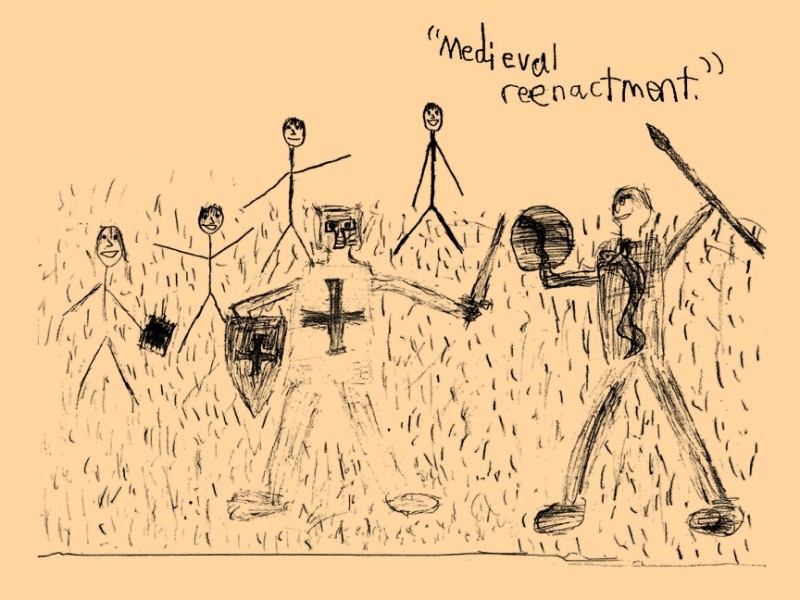
"caption": "Stoking a child's imagination: a 12-year-old's vision of a medieval war.",
"description": null,
"title": "medieval-reenactment-orange-sm",
"credit": null,
"status": "inherit",
"isLoading": false,
"fetchFailed": false
},
"mindshift_8602": {
"type": "attachments",
"id": "mindshift_8602",
"meta": {
"index": "attachments_1716263798",
"site": "mindshift",
"id": "8602",
"found": true
},
"parent": 8598,
"imgSizes": {
"thumbnail": {
"file": "https://ww2.kqed.org/app/uploads/sites/23/2011/02/johnseelybrown-400x269.jpg",
"width": 400,
"mimeType": "image/jpeg",
"height": 269
},
"fd-sm": {
"file": "https://ww2.kqed.org/app/uploads/sites/23/2011/02/johnseelybrown-320x215.jpg",
"width": 320,
"mimeType": "image/jpeg",
"height": 215
},
"kqedFullSize": {
"file": "https://ww2.kqed.org/app/uploads/sites/23/2011/02/johnseelybrown.jpg",
"width": 500,
"height": 336
},
"guest-author-96": {
"file": "https://ww2.kqed.org/app/uploads/sites/23/2011/02/johnseelybrown-96x96.jpg",
"width": 96,
"mimeType": "image/jpeg",
"height": 96
},
"guest-author-64": {
"file": "https://ww2.kqed.org/app/uploads/sites/23/2011/02/johnseelybrown-64x64.jpg",
"width": 64,
"mimeType": "image/jpeg",
"height": 64
},
"detail": {
"file": "https://ww2.kqed.org/app/uploads/sites/23/2011/02/johnseelybrown-75x75.jpg",
"width": 75,
"mimeType": "image/jpeg",
"height": 75
},
"guest-author-32": {
"file": "https://ww2.kqed.org/app/uploads/sites/23/2011/02/johnseelybrown-32x32.jpg",
"width": 32,
"mimeType": "image/jpeg",
"height": 32
},
"guest-author-128": {
"file": "https://ww2.kqed.org/app/uploads/sites/23/2011/02/johnseelybrown-128x128.jpg",
"width": 128,
"mimeType": "image/jpeg",
"height": 128
}
},
"publishDate": 1298397528,
"modified": 1298397528,
"caption": null,
"description": null,
"title": "johnseelybrown",
"credit": null,
"status": "inherit",
"isLoading": false,
"fetchFailed": false
},
"mindshift_8529": {
"type": "attachments",
"id": "mindshift_8529",
"meta": {
"index": "attachments_1716263798",
"site": "mindshift",
"id": "8529",
"found": true
},
"parent": 8514,
"imgSizes": {
"thumbnail": {
"file": "https://ww2.kqed.org/app/uploads/sites/23/2011/02/marcin-wichery3-400x266.jpg",
"width": 400,
"mimeType": "image/jpeg",
"height": 266
},
"fd-sm": {
"file": "https://ww2.kqed.org/app/uploads/sites/23/2011/02/marcin-wichery3-320x213.jpg",
"width": 320,
"mimeType": "image/jpeg",
"height": 213
},
"kqedFullSize": {
"file": "https://ww2.kqed.org/app/uploads/sites/23/2011/02/marcin-wichery3.jpg",
"width": 500,
"height": 333
},
"guest-author-96": {
"file": "https://ww2.kqed.org/app/uploads/sites/23/2011/02/marcin-wichery3-96x96.jpg",
"width": 96,
"mimeType": "image/jpeg",
"height": 96
},
"guest-author-64": {
"file": "https://ww2.kqed.org/app/uploads/sites/23/2011/02/marcin-wichery3-64x64.jpg",
"width": 64,
"mimeType": "image/jpeg",
"height": 64
},
"detail": {
"file": "https://ww2.kqed.org/app/uploads/sites/23/2011/02/marcin-wichery3-75x75.jpg",
"width": 75,
"mimeType": "image/jpeg",
"height": 75
},
"guest-author-32": {
"file": "https://ww2.kqed.org/app/uploads/sites/23/2011/02/marcin-wichery3-32x32.jpg",
"width": 32,
"mimeType": "image/jpeg",
"height": 32
},
"guest-author-128": {
"file": "https://ww2.kqed.org/app/uploads/sites/23/2011/02/marcin-wichery3-128x128.jpg",
"width": 128,
"mimeType": "image/jpeg",
"height": 128
}
},
"publishDate": 1298048975,
"modified": 1298048975,
"caption": null,
"description": null,
"title": "marcin wichery3",
"credit": null,
"status": "inherit",
"isLoading": false,
"fetchFailed": false
}
},
"audioPlayerReducer": {
"postId": "stream_live",
"isPaused": true,
"isPlaying": false,
"pfsActive": false,
"pledgeModalIsOpen": true,
"playerDrawerIsOpen": false,
"liveAudioPlayStartedAt": 0,
"liveAudioPlayContext": ""
},
"authorsReducer": {
"tbarseghian": {
"type": "authors",
"id": "180",
"meta": {
"index": "authors_1716337520",
"id": "180",
"found": true
},
"name": "Tina Barseghian",
"firstName": "Tina",
"lastName": "Barseghian",
"slug": "tbarseghian",
"email": "tbarseghian@kqed.org",
"display_author_email": false,
"staff_mastheads": [],
"title": null,
"bio": null,
"avatar": "https://secure.gravatar.com/avatar/de7e6ced1239b7018fe4d2b61f723c90?s=600&d=blank&r=g",
"twitter": null,
"facebook": null,
"instagram": null,
"linkedin": null,
"sites": [
{
"site": "styleguide",
"roles": [
"contributor"
]
},
{
"site": "news",
"roles": [
"subscriber"
]
},
{
"site": "mindshift",
"roles": [
"subscriber"
]
},
{
"site": "bayareabites",
"roles": [
"subscriber"
]
}
],
"headData": {
"title": "Tina Barseghian | KQED",
"description": null,
"ogImgSrc": "https://secure.gravatar.com/avatar/de7e6ced1239b7018fe4d2b61f723c90?s=600&d=blank&r=g",
"twImgSrc": "https://secure.gravatar.com/avatar/de7e6ced1239b7018fe4d2b61f723c90?s=600&d=blank&r=g"
},
"isLoading": false,
"link": "/author/tbarseghian"
},
"awatters": {
"type": "authors",
"id": "4352",
"meta": {
"index": "authors_1716337520",
"id": "4352",
"found": true
},
"name": "Audrey Watters",
"firstName": "Audrey",
"lastName": "Watters",
"slug": "awatters",
"email": "awatters@kqed.org",
"display_author_email": false,
"staff_mastheads": [],
"title": null,
"bio": null,
"avatar": "https://secure.gravatar.com/avatar/fb6ac91bb93632725bfa683c1de71bee?s=600&d=blank&r=g",
"twitter": null,
"facebook": null,
"instagram": null,
"linkedin": null,
"sites": [
{
"site": "mindshift",
"roles": [
"subscriber"
]
}
],
"headData": {
"title": "Audrey Watters | KQED",
"description": null,
"ogImgSrc": "https://secure.gravatar.com/avatar/fb6ac91bb93632725bfa683c1de71bee?s=600&d=blank&r=g",
"twImgSrc": "https://secure.gravatar.com/avatar/fb6ac91bb93632725bfa683c1de71bee?s=600&d=blank&r=g"
},
"isLoading": false,
"link": "/author/awatters"
}
},
"pagesReducer": {
"mindshift_category_culture": {
"type": "terms",
"id": "mindshift_194",
"meta": {
"index": "terms_1716263798",
"site": "mindshift",
"id": "194",
"score": 12.3707905
},
"featImg": null,
"name": "Culture",
"description": "How trends in technology – social networks, Internet privacy, cyberbullying – influence education.",
"taxonomy": "category",
"headData": {
"twImgId": null,
"twTitle": null,
"ogTitle": null,
"ogImgId": null,
"twDescription": null,
"description": "How trends in technology – social networks, Internet privacy, cyberbullying – influence education.",
"title": "Culture Archives | KQED Mindshift",
"ogDescription": null
},
"ttid": 194,
"slug": "culture",
"isLoading": false,
"title": "Culture",
"pageMeta": {
"site": "mindshift",
"WpPageTemplate": "page-topic-editorial",
"currentPage": 43
},
"blocks": [
{
"blockName": "kqed/company-paragraph",
"content": "How trends in technology – social networks, Internet privacy, cyberbullying – influence education."
},
{
"blockName": "kqed/post-list",
"attrs": {
"layout": "cardArticle2",
"query": "posts/mindshift?category=culture",
"seeMore": false,
"paginated": true,
"page": 43
}
},
{
"blockName": "kqed/ad"
}
]
}
},
"pfsSessionReducer": {},
"postsReducer": {
"stream_live": {
"type": "live",
"id": "stream_live",
"audioUrl": "https://streams.kqed.org/kqedradio",
"title": "Live Stream",
"excerpt": "Live Stream information currently unavailable.",
"link": "/radio",
"featImg": "",
"label": {
"name": "KQED Live",
"link": "/"
}
},
"stream_kqedNewscast": {
"type": "posts",
"id": "stream_kqedNewscast",
"audioUrl": "https://www.kqed.org/.stream/anon/radio/RDnews/newscast.mp3?_=1",
"title": "KQED Newscast",
"featImg": "",
"label": {
"name": "88.5 FM",
"link": "/"
}
},
"mindshift_9240": {
"type": "posts",
"id": "mindshift_9240",
"meta": {
"index": "posts_1716263798",
"site": "mindshift",
"id": "9240",
"score": null,
"sort": [
1299892942000
]
},
"parent": 0,
"labelTerm": {
"site": "mindshift"
},
"blocks": [],
"publishDate": 1299892942,
"format": "aside",
"disqusTitle": "Screen Time For Kids: Is it Learning or a Brain Drain?",
"title": "Screen Time For Kids: Is it Learning or a Brain Drain?",
"headTitle": "MindShift | KQED News",
"content": "\u003cp>\u003cimg class=\"size-medium wp-image-9267\" title=\"photo\" src=\"http://ww2.kqed.org/mindshift/wp-content/uploads/sites/23/2011/03/photo1-300x224.jpg\" alt=\"\" width=\"300\" height=\"224\">\u003c/p>\n\u003cp>When it comes to video games and apps, what's a parent to do? On one hand, we're bombarded with messages about the perils of letting kids play with computer games and gadgets. On the other, we're seduced by games and apps marketed to us as \"educational.\"\u003c/p>\n\u003cp>It's a tricky line to navigate. The spectrum of kids' apps ranges from \"baking\" cupcakes to crushing war demons. Most of them have some educational aspect -- at the very least kids learn what ingredients are used in cupcake baking, and the physics of launching \u003ca href=\"http://www.rovio.com/index.php?page=angry-birds\">Angry Birds\u003c/a> at just the right angle to kill the piggies. That's learning, isn't it?\u003c/p>\n\u003caside class=\"pullquote alignleft\">To clump them all into one category is to miss out on a huge treasure trove of learning opportunities.\u003c/aside>\n\u003cp>Therein lie the vague boundaries. Not all games are educational, and not all are shallow forms of entertainment. Many are marketed as educational tools, but in fact, most have some elements of both. The trick is to figure out what we want kids to learn and to experience. To clump them all into one category is to miss out on a huge treasure trove of learning opportunities. Real learning apps have a \u003ca href=\"http://ww2.kqed.org/mindshift/2011/02/ten-surprising-truths-about-video-games-and-learning/\">set of criteria \u003c/a>that qualifies them as educational, so rather than writing them all off as a waste of time, parents can figure out what their kids are exposed to.\u003c/p>\n\u003cp>\"We don’t ever want to separate engagement from the purposes of learning,\" said \u003ca href=\"http://www.cs.northwestern.edu/~edelson/\">Daniel Edelson, \u003c/a>Executive Director\u003cem> \u003c/em>and Vice President of Education and Children's Programs at the National Geographic Society at a \u003ca href=\"http://ww2.kqed.org/mindshift/2011/03/where-does-informal-learning-fit-in/\">cyberlearning conference last week\u003c/a>. \"When you’re engaged with activities that have learning goals, you can connect the dots between engagement and learning. If you use engagement in its broadest possible sense when people are paying attention because of bright lights and activity, then you don’t find that connection.\"\u003c/p>\n\u003cp>[ad fullwidth]\u003c/p>\n\u003cp>Enter the parent. A young child is not necessarily going to figure out if she's learning or having fun. And in the best cases, that line is blurred without the child even knowing it. She's collecting information about bugs and plantlife with apps like \u003ca href=\"http://www.projectnoah.org/\">Project NOAH\u003c/a>. She's creating original stories -- complete with exposition and denouement and background music -- with digital storytelling apps like \u003ca href=\"http://www.launchpadtoys.com/toontastic/\">Toontastic\u003c/a>.\u003c/p>\n\u003cp>So should parents feel guilty allowing their kids to play games on mobile gadgets?\u003c/p>\n\u003caside class=\"pullquote alignleft\">\"Most parents don’t understand the need for their participation,\" said Dr. Gwenn O'Keeffe, a pediatrician who says she specializes in children's media use. \"It’s a small population who gets it.\"\u003c/aside>\n\u003cp>Simply put: \"No,\" \u003ca href=\"http://ww2.kqed.org/mindshift/2010/12/the-future-of-mobile-learning-apps/\">says Dr. Michael Levine \u003c/a>of the Joan Ganz Cooney Center, which recently released a study called \u003ca href=\"http://www.joanganzcooneycenter.org/Reports-27.html\">Learning: Is There an App For That\u003c/a>. \"Kids see their parents using mobile phones all the time. It's only natural for them to want to use them too. And from the data in our study it looks like many parents are letting their children use them responsibly – with restrictions and in moderation. We recommend a balanced media diet that consists of content that is fun, educational, and doesn’t take up too much time in a given day.\"\u003c/p>\n\u003cp>That said, Levine cautioned parents to stay vigilant about screen time. \"We would be quite concerned if young children, especially preschoolers, began to dramatically increase their mobile screen time,\" he said.\u003c/p>\n\u003cp>A screen is not just a screen, though. The one-way interaction between TV and the couch potato is far different than an absorbing Scrabble play-off with a friend on a mobile phone.\u003c/p>\n\u003cp>\"Nobody’s saying, 'Give your kid a Gameboy, so he can be quiet and go sit in the corner,\" said Andy Russell, co-creator of Toontastic at a \u003ca href=\"http://www.dmlcentral.net/conference2011/schedule/day/2011-03-04\">digital media and learning conference\u003c/a>. \"We’re giving them tools to actually help them create content. The new devices allow us to do new things that we haven’t ever been able to do. But the world of 'edutainment' has dug us into a hole where most people think games only create a solitary experience.\"\u003c/p>\n\u003cp>In fact, many apps invite multiple players, social interaction with peers, and a call to go outdoors, either with specific instructions or with the child's own imagination. When my daughter and her friend were deciding how to spend their Saturday afternoon last week, their indoor play turned into an outdoor movie that they scripted, and that I filmed and edited for them with my iPhone.\u003c/p>\n\u003cp>\"Most parents don’t understand the need for their participation,\" said Dr. Gwenn O'Keeffe, a pediatrician who says she specializes in children's media use. \"It’s a small population who gets it.\"\u003c/p>\n\u003cp>Russell says game designers should also take responsibility in guiding parents on how to interact with the games and their kids. \"The failure is not the technology, but how we communicate to parents,\" he said.\u003c/p>\n\u003cp>\u003cstrong>BEYOND SCREENS\u003c/strong>\u003c/p>\n\u003cp>Regardless of how educational or engaging a screen can be, O'Keeffe says emotional connections are lost without face-to-face contact. \"If they're looking at a screen, they can’t see the emotional response,\" said O'Keeffe, who believes screens should be kept out of the hands of kids under five years old. \"It’s about empathy and they’re having trouble learning that. Do you really need to turn on the DVD in the car? Do kids really need the Gameboy in the grocery store? We all have to use the screen as babysitter sometimes. But to always use a screen that often is a problem.\"\u003c/p>\n\u003cp>But gaming advocates argue that \u003ca href=\"http://ww2.kqed.org/mindshift/2011/02/ten-surprising-truths-about-video-games-and-learning/\">social connections are built\u003c/a> into most games. That sharing tactics and strategies help cement the learning experience -- and connect players to each other in ways that haven't been done before.\u003c/p>\n\u003cp>\u003c/p>\n\u003cp>As researchers \u003ca href=\"http://ww2.kqed.org/mindshift/2011/02/how-technology-wires-the-learning-brain/\">dig deeper into the ramifications of games and apps\u003c/a> on young minds, parents will have to navigate the gray areas between absentminded parenting and the smart use of technology.\u003c/p>\n\u003ch5>\u003cem>Read more about \u003ca href=\"http://ww2.kqed.org/mindshift/2011/02/how-technology-wires-the-learning-brain/\">how technology wires the learning brain\u003c/a>\u003c/em> \u003cem>and\u003c/em> \u003ca href=\"http://ww2.kqed.org/mindshift/2011/02/ten-surprising-truths-about-video-games-and-learning/\">\u003cem>suprising truths about video games. \u003c/em>\u003c/a>\u003c/h5>\n\n",
"disqusIdentifier": "9240 http://blogs.kqed.org/mindshift/?p=9240",
"disqusUrl": "https://ww2.kqed.org/mindshift/2011/03/11/screen-time-for-kids-is-it-learning-or-a-brain-drain/",
"stats": {
"hasVideo": false,
"hasChartOrMap": false,
"hasAudio": false,
"hasPolis": false,
"wordCount": 1022,
"hasGoogleForm": false,
"hasGallery": false,
"hasHearkenModule": false,
"iframeSrcs": [],
"paragraphCount": 20
},
"modified": 1311434799,
"excerpt": null,
"headData": {
"twImgId": "",
"twTitle": "",
"ogTitle": "",
"ogImgId": "",
"twDescription": "",
"description": "When it comes to video games and apps, what's a parent to do? On one hand, we're bombarded with messages about the perils of letting kids play with computer games and gadgets. On the other, we're seduced by games and apps marketed to us as "educational." It's a tricky line to navigate. The spectrum of",
"title": "Screen Time For Kids: Is it Learning or a Brain Drain? | KQED",
"ogDescription": "",
"schema": {
"@context": "https://schema.org",
"@type": "Article",
"headline": "Screen Time For Kids: Is it Learning or a Brain Drain?",
"datePublished": "2011-03-11T17:22:22-08:00",
"dateModified": "2011-07-23T08:26:39-07:00",
"image": "https://cdn.kqed.org/wp-content/uploads/2020/02/KQED-OG-Image@1x.png"
}
},
"guestAuthors": [],
"slug": "screen-time-for-kids-is-it-learning-or-a-brain-drain",
"status": "publish",
"path": "/mindshift/9240/screen-time-for-kids-is-it-learning-or-a-brain-drain",
"audioTrackLength": null,
"parsedContent": [
{
"type": "contentString",
"content": "\u003cdiv class=\"post-body\">\u003cp>\u003cp>\u003cimg class=\"size-medium wp-image-9267\" title=\"photo\" src=\"http://ww2.kqed.org/mindshift/wp-content/uploads/sites/23/2011/03/photo1-300x224.jpg\" alt=\"\" width=\"300\" height=\"224\">\u003c/p>\n\u003cp>When it comes to video games and apps, what's a parent to do? On one hand, we're bombarded with messages about the perils of letting kids play with computer games and gadgets. On the other, we're seduced by games and apps marketed to us as \"educational.\"\u003c/p>\n\u003cp>It's a tricky line to navigate. The spectrum of kids' apps ranges from \"baking\" cupcakes to crushing war demons. Most of them have some educational aspect -- at the very least kids learn what ingredients are used in cupcake baking, and the physics of launching \u003ca href=\"http://www.rovio.com/index.php?page=angry-birds\">Angry Birds\u003c/a> at just the right angle to kill the piggies. That's learning, isn't it?\u003c/p>\n\u003caside class=\"pullquote alignleft\">To clump them all into one category is to miss out on a huge treasure trove of learning opportunities.\u003c/aside>\n\u003cp>Therein lie the vague boundaries. Not all games are educational, and not all are shallow forms of entertainment. Many are marketed as educational tools, but in fact, most have some elements of both. The trick is to figure out what we want kids to learn and to experience. To clump them all into one category is to miss out on a huge treasure trove of learning opportunities. Real learning apps have a \u003ca href=\"http://ww2.kqed.org/mindshift/2011/02/ten-surprising-truths-about-video-games-and-learning/\">set of criteria \u003c/a>that qualifies them as educational, so rather than writing them all off as a waste of time, parents can figure out what their kids are exposed to.\u003c/p>\n\u003cp>\"We don’t ever want to separate engagement from the purposes of learning,\" said \u003ca href=\"http://www.cs.northwestern.edu/~edelson/\">Daniel Edelson, \u003c/a>Executive Director\u003cem> \u003c/em>and Vice President of Education and Children's Programs at the National Geographic Society at a \u003ca href=\"http://ww2.kqed.org/mindshift/2011/03/where-does-informal-learning-fit-in/\">cyberlearning conference last week\u003c/a>. \"When you’re engaged with activities that have learning goals, you can connect the dots between engagement and learning. If you use engagement in its broadest possible sense when people are paying attention because of bright lights and activity, then you don’t find that connection.\"\u003c/p>\n\u003cp>\u003c/p>\u003c/div>",
"attributes": {
"named": {},
"numeric": []
}
},
{
"type": "component",
"content": "",
"name": "ad",
"attributes": {
"named": {
"label": "fullwidth"
},
"numeric": [
"fullwidth"
]
}
},
{
"type": "contentString",
"content": "\u003cdiv class=\"post-body\">\u003cp>\u003c/p>\n\u003cp>Enter the parent. A young child is not necessarily going to figure out if she's learning or having fun. And in the best cases, that line is blurred without the child even knowing it. She's collecting information about bugs and plantlife with apps like \u003ca href=\"http://www.projectnoah.org/\">Project NOAH\u003c/a>. She's creating original stories -- complete with exposition and denouement and background music -- with digital storytelling apps like \u003ca href=\"http://www.launchpadtoys.com/toontastic/\">Toontastic\u003c/a>.\u003c/p>\n\u003cp>So should parents feel guilty allowing their kids to play games on mobile gadgets?\u003c/p>\n\u003caside class=\"pullquote alignleft\">\"Most parents don’t understand the need for their participation,\" said Dr. Gwenn O'Keeffe, a pediatrician who says she specializes in children's media use. \"It’s a small population who gets it.\"\u003c/aside>\n\u003cp>Simply put: \"No,\" \u003ca href=\"http://ww2.kqed.org/mindshift/2010/12/the-future-of-mobile-learning-apps/\">says Dr. Michael Levine \u003c/a>of the Joan Ganz Cooney Center, which recently released a study called \u003ca href=\"http://www.joanganzcooneycenter.org/Reports-27.html\">Learning: Is There an App For That\u003c/a>. \"Kids see their parents using mobile phones all the time. It's only natural for them to want to use them too. And from the data in our study it looks like many parents are letting their children use them responsibly – with restrictions and in moderation. We recommend a balanced media diet that consists of content that is fun, educational, and doesn’t take up too much time in a given day.\"\u003c/p>\n\u003cp>That said, Levine cautioned parents to stay vigilant about screen time. \"We would be quite concerned if young children, especially preschoolers, began to dramatically increase their mobile screen time,\" he said.\u003c/p>\n\u003cp>A screen is not just a screen, though. The one-way interaction between TV and the couch potato is far different than an absorbing Scrabble play-off with a friend on a mobile phone.\u003c/p>\n\u003cp>\"Nobody’s saying, 'Give your kid a Gameboy, so he can be quiet and go sit in the corner,\" said Andy Russell, co-creator of Toontastic at a \u003ca href=\"http://www.dmlcentral.net/conference2011/schedule/day/2011-03-04\">digital media and learning conference\u003c/a>. \"We’re giving them tools to actually help them create content. The new devices allow us to do new things that we haven’t ever been able to do. But the world of 'edutainment' has dug us into a hole where most people think games only create a solitary experience.\"\u003c/p>\n\u003cp>In fact, many apps invite multiple players, social interaction with peers, and a call to go outdoors, either with specific instructions or with the child's own imagination. When my daughter and her friend were deciding how to spend their Saturday afternoon last week, their indoor play turned into an outdoor movie that they scripted, and that I filmed and edited for them with my iPhone.\u003c/p>\n\u003cp>\"Most parents don’t understand the need for their participation,\" said Dr. Gwenn O'Keeffe, a pediatrician who says she specializes in children's media use. \"It’s a small population who gets it.\"\u003c/p>\n\u003cp>Russell says game designers should also take responsibility in guiding parents on how to interact with the games and their kids. \"The failure is not the technology, but how we communicate to parents,\" he said.\u003c/p>\n\u003cp>\u003cstrong>BEYOND SCREENS\u003c/strong>\u003c/p>\n\u003cp>Regardless of how educational or engaging a screen can be, O'Keeffe says emotional connections are lost without face-to-face contact. \"If they're looking at a screen, they can’t see the emotional response,\" said O'Keeffe, who believes screens should be kept out of the hands of kids under five years old. \"It’s about empathy and they’re having trouble learning that. Do you really need to turn on the DVD in the car? Do kids really need the Gameboy in the grocery store? We all have to use the screen as babysitter sometimes. But to always use a screen that often is a problem.\"\u003c/p>\n\u003cp>But gaming advocates argue that \u003ca href=\"http://ww2.kqed.org/mindshift/2011/02/ten-surprising-truths-about-video-games-and-learning/\">social connections are built\u003c/a> into most games. That sharing tactics and strategies help cement the learning experience -- and connect players to each other in ways that haven't been done before.\u003c/p>\n\u003cp>\u003c/p>\n\u003cp>As researchers \u003ca href=\"http://ww2.kqed.org/mindshift/2011/02/how-technology-wires-the-learning-brain/\">dig deeper into the ramifications of games and apps\u003c/a> on young minds, parents will have to navigate the gray areas between absentminded parenting and the smart use of technology.\u003c/p>\n\u003ch5>\u003cem>Read more about \u003ca href=\"http://ww2.kqed.org/mindshift/2011/02/how-technology-wires-the-learning-brain/\">how technology wires the learning brain\u003c/a>\u003c/em> \u003cem>and\u003c/em> \u003ca href=\"http://ww2.kqed.org/mindshift/2011/02/ten-surprising-truths-about-video-games-and-learning/\">\u003cem>suprising truths about video games. \u003c/em>\u003c/a>\u003c/h5>\n\n\u003c/div>\u003c/p>",
"attributes": {
"named": {},
"numeric": []
}
}
],
"link": "/mindshift/9240/screen-time-for-kids-is-it-learning-or-a-brain-drain",
"authors": [
"180"
],
"categories": [
"mindshift_192",
"mindshift_194",
"mindshift_195",
"mindshift_193"
],
"tags": [
"mindshift_134",
"mindshift_20902",
"mindshift_114"
],
"featImg": "mindshift_9267",
"label": "mindshift"
},
"mindshift_9126": {
"type": "posts",
"id": "mindshift_9126",
"meta": {
"index": "posts_1716263798",
"site": "mindshift",
"id": "9126",
"score": null,
"sort": [
1299788693000
]
},
"parent": 0,
"labelTerm": {
"site": "mindshift"
},
"blocks": [],
"publishDate": 1299788693,
"format": "aside",
"disqusTitle": "Where Does Informal Learning Fit In?",
"title": "Where Does Informal Learning Fit In?",
"headTitle": "MindShift | KQED News",
"content": "\u003cp>\u003ca href=\"http://www.flickr.com/photos/horiavarlan/4273913228/sizes/m/in/photostream/\">\u003cimg class=\"size-medium wp-image-9146\" title=\"Scattered puzzle pieces next to solved fragment\" src=\"http://ww2.kqed.org/mindshift/wp-content/uploads/sites/23/2011/03/Horia-Varlan-300x199.jpg\" alt=\"\" width=\"300\" height=\"199\">\u003c/a>\u003c/p>\n\u003cp>With so much rich information for learners available and accessible on the Internet -- everything from \u003ca href=\"http://www.youtube.com/watch?v=Lcmb4RplClQ\">how to play the guitar\u003c/a> to \u003ca href=\"http://www.geom.uiuc.edu/~demo5337/Group3/applic.html\">applications of the Pythagorean Theorem\u003c/a> -- how can the formal education system leverage all this within schools?\u003c/p>\n\u003cp>There are tremendous obstacles in the way. A shortage of high-quality K-12 STEM teachers, dwindling interest on the part of learners, inequalities in tech-enhanced opportunities, a fragmented research-and-development community, and outmoded high school and college facilities are just a few of the obstacles, according to \u003ca href=\"http://scil.stanford.edu/about/staff/bios/pea.html\">Roy Pea,\u003c/a> co-director of the Stanford Center for Innovations in Learning at the\u003ca href=\"http://live.cyberlearningstem.org/\"> the Cyberlearning Tools for STEM Education \u003c/a>conference to figure out strategies.\u003c/p>\n\u003caside class=\"pullquote alignleft\">\"There are many people in our society who simply don’t like the 21\u003csup>st\u003c/sup> century,\" said Chris Dede.\u003c/aside>\n\u003cp>But the huge cultural shift brought about by the Internet and Web 2.0 ethos -- participatory culture, wikis, blogs, podcasts, virtual worlds, and new values around harnessing collective information -- is helping ameliorate the challenges, and can be a crucial bridge.\u003c/p>\n\u003cp>\"Every minute, 35 hours of video are uploaded to YouTube,\" Pea said. \"There are 700 billion videos up, and many of them are about learning.\"\u003c/p>\n\u003cp>[ad fullwidth]\u003c/p>\n\u003cp>It's all part of the engagement question. How do you engage learners best? It shouldn't just be about bright lights and activity; it should have a clear learning purpose, said Daniel Edelson. \"We need to stay focused on the purpose of those activities,\" he said.\u003c/p>\n\u003cp>Which begs the question: How do you measure engagement? How does this kind of informal, out-in-the-world learning connect to formal learning in schools?\u003c/p>\n\u003cp>\"We don’t know what we need to about this,\" Pea said. \"Over 90 percent of research is done in formal environments. This area is unexplored.\"\u003c/p>\n\u003caside class=\"pullquote alignleft\">\"We can’t give up on schools. They might not change, but we can’t give up,\" Soloway said.\u003c/aside>\n\u003cp>We’re comfortable with structured and guided learning environments with designed artifacts, like after-school clubs, organized sports, field trips to museums. But we don't know anything about learning outside these confines, and the social ramifications of those learning experiences, he said.\u003c/p>\n\u003cp>\"There are many people in our society who simply don’t like the 21\u003csup>st\u003c/sup> century,\" added \u003ca href=\"http://isites.harvard.edu/icb/icb.do?keyword=chris_dede\">Chris Dede\u003c/a>, professor in learning technologies at\t\t\t\t\t\t \t\t\t\t\t\t\t\t\t\t\t\t \t\t\t\t\t\t\t\t\t\t\t\t\t\t\t\t\t\t\t\t\t\t\t\t \t\t\t\t\tHarvard University. \"The only place they can pretend the 21\u003csup>st\u003c/sup> century hasn’t happened is in the school system.\"\u003c/p>\n\u003cp>We have along history of making ingenious things that aren’t used because we haven’t been able to convince the community -- and many educators -- about new models of teaching and learning, he said.\u003c/p>\n\u003cp>There are evolutionary, transformative, and disruptive ways to get to 21\u003csup>st\u003c/sup> century school system. \"It will happen first in developing countries. They'll leapfrog the current systems, and we need to be watching them and learning from them,\" he said.\u003c/p>\n\u003cp>\u003ca href=\"http://www.goknow.com/AboutUs/People.php\">Elliot Soloway\u003c/a>, founder of GoKnow, went so far as to predict that every student will have a mobile device within four years. \"At some point, the schools are going to have to say, 'Ok, you can use it.'\"\u003c/p>\n\u003cp>\u003c/p>\n\u003cp>\"We can’t give up on schools. They might not change, but we can’t give up,\" Soloway said.\u003c/p>\n\n",
"disqusIdentifier": "9126 http://blogs.kqed.org/mindshift/?p=9126",
"disqusUrl": "https://ww2.kqed.org/mindshift/2011/03/10/where-does-informal-learning-fit-in/",
"stats": {
"hasVideo": false,
"hasChartOrMap": false,
"hasAudio": false,
"hasPolis": false,
"wordCount": 542,
"hasGoogleForm": false,
"hasGallery": false,
"hasHearkenModule": false,
"iframeSrcs": [],
"paragraphCount": 16
},
"modified": 1300836018,
"excerpt": null,
"headData": {
"twImgId": "",
"twTitle": "",
"ogTitle": "",
"ogImgId": "",
"twDescription": "",
"description": "With so much rich information for learners available and accessible on the Internet -- everything from how to play the guitar to applications of the Pythagorean Theorem -- how can the formal education system leverage all this within schools? There are tremendous obstacles in the way. A shortage of high-quality K-12 STEM teachers, dwindling interest",
"title": "Where Does Informal Learning Fit In? | KQED",
"ogDescription": "",
"schema": {
"@context": "https://schema.org",
"@type": "Article",
"headline": "Where Does Informal Learning Fit In?",
"datePublished": "2011-03-10T12:24:53-08:00",
"dateModified": "2011-03-22T16:20:18-07:00",
"image": "https://cdn.kqed.org/wp-content/uploads/2020/02/KQED-OG-Image@1x.png"
}
},
"guestAuthors": [],
"slug": "where-does-informal-learning-fit-in",
"status": "publish",
"path": "/mindshift/9126/where-does-informal-learning-fit-in",
"audioTrackLength": null,
"parsedContent": [
{
"type": "contentString",
"content": "\u003cdiv class=\"post-body\">\u003cp>\u003cp>\u003ca href=\"http://www.flickr.com/photos/horiavarlan/4273913228/sizes/m/in/photostream/\">\u003cimg class=\"size-medium wp-image-9146\" title=\"Scattered puzzle pieces next to solved fragment\" src=\"http://ww2.kqed.org/mindshift/wp-content/uploads/sites/23/2011/03/Horia-Varlan-300x199.jpg\" alt=\"\" width=\"300\" height=\"199\">\u003c/a>\u003c/p>\n\u003cp>With so much rich information for learners available and accessible on the Internet -- everything from \u003ca href=\"http://www.youtube.com/watch?v=Lcmb4RplClQ\">how to play the guitar\u003c/a> to \u003ca href=\"http://www.geom.uiuc.edu/~demo5337/Group3/applic.html\">applications of the Pythagorean Theorem\u003c/a> -- how can the formal education system leverage all this within schools?\u003c/p>\n\u003cp>There are tremendous obstacles in the way. A shortage of high-quality K-12 STEM teachers, dwindling interest on the part of learners, inequalities in tech-enhanced opportunities, a fragmented research-and-development community, and outmoded high school and college facilities are just a few of the obstacles, according to \u003ca href=\"http://scil.stanford.edu/about/staff/bios/pea.html\">Roy Pea,\u003c/a> co-director of the Stanford Center for Innovations in Learning at the\u003ca href=\"http://live.cyberlearningstem.org/\"> the Cyberlearning Tools for STEM Education \u003c/a>conference to figure out strategies.\u003c/p>\n\u003caside class=\"pullquote alignleft\">\"There are many people in our society who simply don’t like the 21\u003csup>st\u003c/sup> century,\" said Chris Dede.\u003c/aside>\n\u003cp>But the huge cultural shift brought about by the Internet and Web 2.0 ethos -- participatory culture, wikis, blogs, podcasts, virtual worlds, and new values around harnessing collective information -- is helping ameliorate the challenges, and can be a crucial bridge.\u003c/p>\n\u003cp>\"Every minute, 35 hours of video are uploaded to YouTube,\" Pea said. \"There are 700 billion videos up, and many of them are about learning.\"\u003c/p>\n\u003cp>\u003c/p>\u003c/div>",
"attributes": {
"named": {},
"numeric": []
}
},
{
"type": "component",
"content": "",
"name": "ad",
"attributes": {
"named": {
"label": "fullwidth"
},
"numeric": [
"fullwidth"
]
}
},
{
"type": "contentString",
"content": "\u003cdiv class=\"post-body\">\u003cp>\u003c/p>\n\u003cp>It's all part of the engagement question. How do you engage learners best? It shouldn't just be about bright lights and activity; it should have a clear learning purpose, said Daniel Edelson. \"We need to stay focused on the purpose of those activities,\" he said.\u003c/p>\n\u003cp>Which begs the question: How do you measure engagement? How does this kind of informal, out-in-the-world learning connect to formal learning in schools?\u003c/p>\n\u003cp>\"We don’t know what we need to about this,\" Pea said. \"Over 90 percent of research is done in formal environments. This area is unexplored.\"\u003c/p>\n\u003caside class=\"pullquote alignleft\">\"We can’t give up on schools. They might not change, but we can’t give up,\" Soloway said.\u003c/aside>\n\u003cp>We’re comfortable with structured and guided learning environments with designed artifacts, like after-school clubs, organized sports, field trips to museums. But we don't know anything about learning outside these confines, and the social ramifications of those learning experiences, he said.\u003c/p>\n\u003cp>\"There are many people in our society who simply don’t like the 21\u003csup>st\u003c/sup> century,\" added \u003ca href=\"http://isites.harvard.edu/icb/icb.do?keyword=chris_dede\">Chris Dede\u003c/a>, professor in learning technologies at\t\t\t\t\t\t \t\t\t\t\t\t\t\t\t\t\t\t \t\t\t\t\t\t\t\t\t\t\t\t\t\t\t\t\t\t\t\t\t\t\t\t \t\t\t\t\tHarvard University. \"The only place they can pretend the 21\u003csup>st\u003c/sup> century hasn’t happened is in the school system.\"\u003c/p>\n\u003cp>We have along history of making ingenious things that aren’t used because we haven’t been able to convince the community -- and many educators -- about new models of teaching and learning, he said.\u003c/p>\n\u003cp>There are evolutionary, transformative, and disruptive ways to get to 21\u003csup>st\u003c/sup> century school system. \"It will happen first in developing countries. They'll leapfrog the current systems, and we need to be watching them and learning from them,\" he said.\u003c/p>\n\u003cp>\u003ca href=\"http://www.goknow.com/AboutUs/People.php\">Elliot Soloway\u003c/a>, founder of GoKnow, went so far as to predict that every student will have a mobile device within four years. \"At some point, the schools are going to have to say, 'Ok, you can use it.'\"\u003c/p>\n\u003cp>\u003c/p>\n\u003cp>\"We can’t give up on schools. They might not change, but we can’t give up,\" Soloway said.\u003c/p>\n\n\u003c/div>\u003c/p>",
"attributes": {
"named": {},
"numeric": []
}
}
],
"link": "/mindshift/9126/where-does-informal-learning-fit-in",
"authors": [
"180"
],
"categories": [
"mindshift_194",
"mindshift_193"
],
"tags": [
"mindshift_366",
"mindshift_365",
"mindshift_65"
],
"featImg": "mindshift_9146",
"label": "mindshift"
},
"mindshift_9104": {
"type": "posts",
"id": "mindshift_9104",
"meta": {
"index": "posts_1716263798",
"site": "mindshift",
"id": "9104",
"score": null,
"sort": [
1299711482000
]
},
"parent": 0,
"labelTerm": {
"site": "mindshift"
},
"blocks": [],
"publishDate": 1299711482,
"format": "aside",
"disqusTitle": "Tech and Learning: At Odds in School, in Sync Everywhere Else",
"title": "Tech and Learning: At Odds in School, in Sync Everywhere Else",
"headTitle": "MindShift | KQED News",
"content": "\u003cp>\u003cimg class=\"size-medium wp-image-9114\" title=\"Screen shot 2011-03-09 at 2.53.37 PM\" src=\"http://ww2.kqed.org/mindshift/wp-content/uploads/sites/23/2011/03/Screen-shot-2011-03-09-at-2.53.37-PM-300x288.png\" alt=\"\" width=\"300\" height=\"288\">\u003c/p>\n\u003cp>The culture of current public school model can't be more different than the culture of technology, says Allan Collins, co-author of \u003cem>\u003ca href=\"http://www.amazon.com/Rethinking-Education-Technology-Education-Connections-Education-Connections/dp/0807750026\">Rethinking Education in the Age of Technology\u003c/a>\u003c/em>.\u003c/p>\n\u003cp>In most public schools, every student learns the same things at the same time. The teacher is the content expert and controls what students learn. Testing is standardized and students learn by absorbing information about a variety of subjects.\u003c/p>\n\u003caside class=\"pullquote alignleft\">\"The elites in our society are buying educational advantages. We need to address these equity issues.\"\u003c/aside>\n\u003cp>Compare this to the culture of technology and Web 2.0. Students learn what they want, when they want. They have total control of their learning paths. They become experts in subjects they're interested in by using a world of resources to help them learn. And rather than learning by absorbing information, they learn by doing.\u003c/p>\n\u003cp>\"There are big incompatibilities between the culture of school and the culture of technology,\" Collins said at the Cyberlearning for STEM Education\u003ca href=\"http://live.cyberlearningstem.org/\"> conference today\u003c/a>. \"School will become less important as a venue for education. They’ll be with us, but when it comes to learning, a lot of people are learning what’s important to them outside school.\"\u003c/p>\n\u003cp>[ad fullwidth]\u003c/p>\n\u003cp>Collins talked about some of the pitfalls he predicts will come about as a result of this chasm between in-school learning and informal, tech-driven learning.\u003c/p>\n\u003cp>\"There will be real losses in equity,\" he said. \"Access rates to smartphones with minorities is high, but the elites in our society are buying educational advantages like tutoring and all the technology they need. We need to address these equity issues.\"\u003c/p>\n\u003cp>The gains, however, won't be insignificant: more engagement in learners, total customization of what they learn, and more responsibility will completely change the current paradigm in education.\u003c/p>\n\u003cp>Consider all the innovations that have come about as a result of YouTube, Google, the World of Warcraft, and mobile phones -- just in the past few years. Have they had any impact on formal education, asked Richard Halverson, who co-authored \u003cem>Rethinking Education in the Age of Technology\u003c/em>.\u003c/p>\n\u003cp>\"No. They’re all banned from schools,\" he said. \"This transformative power of technology has been used for consumer technologies. Schools didn’t stop evolving with technology, they went into a different direction. No Child Left Behind completely derailed the infrastructure in public schools.\"\u003c/p>\n\u003cp>Though technology transformed the administrative end of education infrastructure, it hasn't really made any impact in school-based learning.\u003c/p>\n\u003cp>\"How malleable is the infrastructure that schools have developed to inform student learning?\" Halverson asked. \"Can we move from state standardized assessment to a formative process assessment? Is it flexible enough to support how we want to measure and support student learning?\"\u003c/p>\n\u003caside class=\"pullquote alignleft\">\"The transformative power of technology has been used for consumer technologies.\"\u003c/aside>\n\u003cp>Compare social network sites like\u003ca href=\"http://www.fanfiction.net/\"> Fan Fiction\u003c/a>, where people upload original stories and ask for reader comments and reviews. On the site, there are about 506,000 stories about Harry Potter right now. One particular story, Halverson said, received 624 reviews.\u003c/p>\n\u003cp>\"Who's the audience for a student's homework?\" Halverson asked. \"Just the teacher. And we all know how hard it is to get students to comment on each others' homework.\"\u003c/p>\n\u003cp>Halverson imagined a scenario where kids used virtual tools that constructed peer communities that accounted for all variations of high school performance. \"We need to think about how kids are organizing virtual experiences in which they do their work,\" he said.\u003c/p>\n\u003cp>We need to bring together the expertise of the game design world, which perfectly exemplifies the best practices of learning, with the expertise of assessment experts, he said.\u003c/p>\n\u003cp>\"I think the question is will [these new technologies] penetrate the parts of school that are least able to change?\" he asked.\u003c/p>\n\u003cp>\u003c/p>\n\u003cp>I interviewed both Collins and Halverson about their thoughts, and will post those videos in the next week or so. Lots of food for thought.\u003c/p>\n\n",
"disqusIdentifier": "9104 http://blogs.kqed.org/mindshift/?p=9104",
"disqusUrl": "https://ww2.kqed.org/mindshift/2011/03/09/tech-and-learning-at-odds-in-school-in-sync-everywhere-else/",
"stats": {
"hasVideo": false,
"hasChartOrMap": false,
"hasAudio": false,
"hasPolis": false,
"wordCount": 655,
"hasGoogleForm": false,
"hasGallery": false,
"hasHearkenModule": false,
"iframeSrcs": [],
"paragraphCount": 20
},
"modified": 1300835705,
"excerpt": null,
"headData": {
"twImgId": "",
"twTitle": "",
"ogTitle": "",
"ogImgId": "",
"twDescription": "",
"description": "The culture of current public school model can't be more different than the culture of technology, says Allan Collins, co-author of Rethinking Education in the Age of Technology. In most public schools, every student learns the same things at the same time. The teacher is the content expert and controls what students learn. Testing is",
"title": "Tech and Learning: At Odds in School, in Sync Everywhere Else | KQED",
"ogDescription": "",
"schema": {
"@context": "https://schema.org",
"@type": "Article",
"headline": "Tech and Learning: At Odds in School, in Sync Everywhere Else",
"datePublished": "2011-03-09T14:58:02-08:00",
"dateModified": "2011-03-22T16:15:05-07:00",
"image": "https://cdn.kqed.org/wp-content/uploads/2020/02/KQED-OG-Image@1x.png"
}
},
"guestAuthors": [],
"slug": "tech-and-learning-at-odds-in-school-in-sync-everywhere-else",
"status": "publish",
"path": "/mindshift/9104/tech-and-learning-at-odds-in-school-in-sync-everywhere-else",
"audioTrackLength": null,
"parsedContent": [
{
"type": "contentString",
"content": "\u003cdiv class=\"post-body\">\u003cp>\u003cp>\u003cimg class=\"size-medium wp-image-9114\" title=\"Screen shot 2011-03-09 at 2.53.37 PM\" src=\"http://ww2.kqed.org/mindshift/wp-content/uploads/sites/23/2011/03/Screen-shot-2011-03-09-at-2.53.37-PM-300x288.png\" alt=\"\" width=\"300\" height=\"288\">\u003c/p>\n\u003cp>The culture of current public school model can't be more different than the culture of technology, says Allan Collins, co-author of \u003cem>\u003ca href=\"http://www.amazon.com/Rethinking-Education-Technology-Education-Connections-Education-Connections/dp/0807750026\">Rethinking Education in the Age of Technology\u003c/a>\u003c/em>.\u003c/p>\n\u003cp>In most public schools, every student learns the same things at the same time. The teacher is the content expert and controls what students learn. Testing is standardized and students learn by absorbing information about a variety of subjects.\u003c/p>\n\u003caside class=\"pullquote alignleft\">\"The elites in our society are buying educational advantages. We need to address these equity issues.\"\u003c/aside>\n\u003cp>Compare this to the culture of technology and Web 2.0. Students learn what they want, when they want. They have total control of their learning paths. They become experts in subjects they're interested in by using a world of resources to help them learn. And rather than learning by absorbing information, they learn by doing.\u003c/p>\n\u003cp>\"There are big incompatibilities between the culture of school and the culture of technology,\" Collins said at the Cyberlearning for STEM Education\u003ca href=\"http://live.cyberlearningstem.org/\"> conference today\u003c/a>. \"School will become less important as a venue for education. They’ll be with us, but when it comes to learning, a lot of people are learning what’s important to them outside school.\"\u003c/p>\n\u003cp>\u003c/p>\u003c/div>",
"attributes": {
"named": {},
"numeric": []
}
},
{
"type": "component",
"content": "",
"name": "ad",
"attributes": {
"named": {
"label": "fullwidth"
},
"numeric": [
"fullwidth"
]
}
},
{
"type": "contentString",
"content": "\u003cdiv class=\"post-body\">\u003cp>\u003c/p>\n\u003cp>Collins talked about some of the pitfalls he predicts will come about as a result of this chasm between in-school learning and informal, tech-driven learning.\u003c/p>\n\u003cp>\"There will be real losses in equity,\" he said. \"Access rates to smartphones with minorities is high, but the elites in our society are buying educational advantages like tutoring and all the technology they need. We need to address these equity issues.\"\u003c/p>\n\u003cp>The gains, however, won't be insignificant: more engagement in learners, total customization of what they learn, and more responsibility will completely change the current paradigm in education.\u003c/p>\n\u003cp>Consider all the innovations that have come about as a result of YouTube, Google, the World of Warcraft, and mobile phones -- just in the past few years. Have they had any impact on formal education, asked Richard Halverson, who co-authored \u003cem>Rethinking Education in the Age of Technology\u003c/em>.\u003c/p>\n\u003cp>\"No. They’re all banned from schools,\" he said. \"This transformative power of technology has been used for consumer technologies. Schools didn’t stop evolving with technology, they went into a different direction. No Child Left Behind completely derailed the infrastructure in public schools.\"\u003c/p>\n\u003cp>Though technology transformed the administrative end of education infrastructure, it hasn't really made any impact in school-based learning.\u003c/p>\n\u003cp>\"How malleable is the infrastructure that schools have developed to inform student learning?\" Halverson asked. \"Can we move from state standardized assessment to a formative process assessment? Is it flexible enough to support how we want to measure and support student learning?\"\u003c/p>\n\u003caside class=\"pullquote alignleft\">\"The transformative power of technology has been used for consumer technologies.\"\u003c/aside>\n\u003cp>Compare social network sites like\u003ca href=\"http://www.fanfiction.net/\"> Fan Fiction\u003c/a>, where people upload original stories and ask for reader comments and reviews. On the site, there are about 506,000 stories about Harry Potter right now. One particular story, Halverson said, received 624 reviews.\u003c/p>\n\u003cp>\"Who's the audience for a student's homework?\" Halverson asked. \"Just the teacher. And we all know how hard it is to get students to comment on each others' homework.\"\u003c/p>\n\u003cp>Halverson imagined a scenario where kids used virtual tools that constructed peer communities that accounted for all variations of high school performance. \"We need to think about how kids are organizing virtual experiences in which they do their work,\" he said.\u003c/p>\n\u003cp>We need to bring together the expertise of the game design world, which perfectly exemplifies the best practices of learning, with the expertise of assessment experts, he said.\u003c/p>\n\u003cp>\"I think the question is will [these new technologies] penetrate the parts of school that are least able to change?\" he asked.\u003c/p>\n\u003cp>\u003c/p>\n\u003cp>I interviewed both Collins and Halverson about their thoughts, and will post those videos in the next week or so. Lots of food for thought.\u003c/p>\n\n\u003c/div>\u003c/p>",
"attributes": {
"named": {},
"numeric": []
}
}
],
"link": "/mindshift/9104/tech-and-learning-at-odds-in-school-in-sync-everywhere-else",
"authors": [
"180"
],
"categories": [
"mindshift_194",
"mindshift_193"
],
"tags": [
"mindshift_366",
"mindshift_65"
],
"featImg": "mindshift_9114",
"label": "mindshift"
},
"mindshift_9081": {
"type": "posts",
"id": "mindshift_9081",
"meta": {
"index": "posts_1716263798",
"site": "mindshift",
"id": "9081",
"score": null,
"sort": [
1299686440000
]
},
"parent": 0,
"labelTerm": {
"site": "mindshift"
},
"blocks": [],
"publishDate": 1299686440,
"format": "aside",
"disqusTitle": "Kids Create Their Own Plots with E-Books",
"title": "Kids Create Their Own Plots with E-Books",
"headTitle": "MindShift | KQED News",
"content": "\u003ch5>\n\u003c/h5>\u003cp>\u003ca rel=\"attachment wp-att-9096\" href=\"http://ww2.kqed.org/mindshift/2011/03/are-moving-tales-the-future-of-childrens-e-books/animation_1/\">\u003cimg class=\"size-medium wp-image-9096\" title=\"animation_1\" src=\"http://ww2.kqed.org/mindshift/wp-content/uploads/sites/23/2011/03/animation_1-300x225.png\" alt=\"\" width=\"300\" height=\"225\">\u003c/a>\u003c/p>\n\u003cp>By Audrey Watters\n\u003c/p>\u003cp>A dictionary definition of \"book\" typically emphasizes the writing and the printing, the sheets of paper, and the binding and cover -- all things that are poised to be thoroughly disrupted with the advent of the e-book. It isn't simply that the printed text is being digitized or that content is moving from paper to screen, although that is primarily what we mean when we talk about e-books. It's that we may very well have to rethink much of what it means when we say \"book.\"\u003c/p>\n\u003cp>That may be particularly true in the case of children's literature, where the demands for lively storytelling in full color already exist. E-books deliver even more: audio narration, automatic \"page\"-turning, and animation for example.\u003c/p>\n\u003cp>But e-books also promise interactivity and open-ended stories, something that authors, publishers and app developers are just beginning to explore.\u003c/p>\n\u003cp>[ad fullwidth]\u003c/p>\n\u003cp>Of course, the idea of an interactive book isn't entirely new. We've had electronic books for decades, those in which a battery operated toy would read aloud a story or respond to a child's touch. And open-ended and reader-controlled narratives aren't that novel either, as anyone who read the classic \u003ca href=\"http://www.cyoa.com/public/index.html\">Choose-Your-Own-Adventure\u003c/a> series will attest.\u003c/p>\n\u003cp>But e-books have the potential to far surpass these early examples, offering stories that respond to each reader individually, that offer truly open-ended narratives, and that really challenge what we mean when we think of a piece of writing that is \"contained\" in a book.\u003c/p>\n\u003cp>Indeed, many of the new and innovative examples of children's e-books aren't sold as books per se. They're available as websites, such as \u003ca href=\"http://www.inanimatealice.com/\">Inanimate Alice\u003c/a>, or they're sold as apps, such as \u003ca href=\"http://www.moving-tales.com/\">Moving Tales'\u003c/a> most recent e-book Unwanted Guest, available for the \u003ca href=\"http://itunes.apple.com/cr/app/unwanted-guest-iphone-edition/id416226661?mt=8#\">iPhone and iPad\u003c/a>.\u003c/p>\n\u003cp>Unwanted Guest takes a traditional folktale and updates it with charming 3D animations that accompany each page of the story. You can have the app auto-turn the pages, or flip yourself, or use the iPad's accelerometer to animate the text. The app offers a narration, but you also have the option to turn off the text and/or to add your own voice-over. You can listen and read in Spanish or French, as well as in English. And the story has randomly selected alternate views and extras so that it can be slightly different each time you read through it.\u003c/p>\n\u003cp>The app -- the e-book, or whatever it will be called -- will probably not be \u003cem>the\u003c/em> definitive future of children's literature. There's nothing that links a reader to the outside world. There's no way to share content or comments, for example, or to research the origins of the traditional folktale online. The story, although told (and retold) creatively -- is still self-contained within the app. And while there are ways to slightly shift the story, it isn't entirely new or open-ended or up for revision.\u003c/p>\n\u003cp>Still, Unwanted Guest does point towards the ways in which authors may write (and draw and animate and program) children's literature in the future.\u003c/p>\n\u003cp>\u003c/p>\n\u003cp>Check out the demo video:\u003cbr>\nhttp://www.youtube.com/watch?v=UwzSFEUeCfY&feature=player_embedded#at=77\u003c/p>\n\n",
"disqusIdentifier": "9081 http://blogs.kqed.org/mindshift/?p=9081",
"disqusUrl": "https://ww2.kqed.org/mindshift/2011/03/09/are-moving-tales-the-future-of-childrens-e-books/",
"stats": {
"hasVideo": false,
"hasChartOrMap": false,
"hasAudio": false,
"hasPolis": false,
"wordCount": 549,
"hasGoogleForm": false,
"hasGallery": false,
"hasHearkenModule": false,
"iframeSrcs": [],
"paragraphCount": 14
},
"modified": 1299632573,
"excerpt": null,
"headData": {
"twImgId": "",
"twTitle": "",
"ogTitle": "",
"ogImgId": "",
"twDescription": "",
"description": "By Audrey Watters A dictionary definition of "book" typically emphasizes the writing and the printing, the sheets of paper, and the binding and cover -- all things that are poised to be thoroughly disrupted with the advent of the e-book. It isn't simply that the printed text is being digitized or that content is moving",
"title": "Kids Create Their Own Plots with E-Books | KQED",
"ogDescription": "",
"schema": {
"@context": "https://schema.org",
"@type": "Article",
"headline": "Kids Create Their Own Plots with E-Books",
"datePublished": "2011-03-09T08:00:40-08:00",
"dateModified": "2011-03-08T17:02:53-08:00",
"image": "https://cdn.kqed.org/wp-content/uploads/2020/02/KQED-OG-Image@1x.png"
}
},
"guestAuthors": [],
"slug": "are-moving-tales-the-future-of-childrens-e-books",
"status": "publish",
"path": "/mindshift/9081/are-moving-tales-the-future-of-childrens-e-books",
"audioTrackLength": null,
"parsedContent": [
{
"type": "contentString",
"content": "\u003cdiv class=\"post-body\">\u003cp>\u003ch5>\n\u003c/h5>\u003cp>\u003ca rel=\"attachment wp-att-9096\" href=\"http://ww2.kqed.org/mindshift/2011/03/are-moving-tales-the-future-of-childrens-e-books/animation_1/\">\u003cimg class=\"size-medium wp-image-9096\" title=\"animation_1\" src=\"http://ww2.kqed.org/mindshift/wp-content/uploads/sites/23/2011/03/animation_1-300x225.png\" alt=\"\" width=\"300\" height=\"225\">\u003c/a>\u003c/p>\n\u003cp>By Audrey Watters\n\u003c/p>\u003cp>A dictionary definition of \"book\" typically emphasizes the writing and the printing, the sheets of paper, and the binding and cover -- all things that are poised to be thoroughly disrupted with the advent of the e-book. It isn't simply that the printed text is being digitized or that content is moving from paper to screen, although that is primarily what we mean when we talk about e-books. It's that we may very well have to rethink much of what it means when we say \"book.\"\u003c/p>\n\u003cp>That may be particularly true in the case of children's literature, where the demands for lively storytelling in full color already exist. E-books deliver even more: audio narration, automatic \"page\"-turning, and animation for example.\u003c/p>\n\u003cp>But e-books also promise interactivity and open-ended stories, something that authors, publishers and app developers are just beginning to explore.\u003c/p>\n\u003cp>\u003c/p>\u003c/div>",
"attributes": {
"named": {},
"numeric": []
}
},
{
"type": "component",
"content": "",
"name": "ad",
"attributes": {
"named": {
"label": "fullwidth"
},
"numeric": [
"fullwidth"
]
}
},
{
"type": "contentString",
"content": "\u003cdiv class=\"post-body\">\u003cp>\u003c/p>\n\u003cp>Of course, the idea of an interactive book isn't entirely new. We've had electronic books for decades, those in which a battery operated toy would read aloud a story or respond to a child's touch. And open-ended and reader-controlled narratives aren't that novel either, as anyone who read the classic \u003ca href=\"http://www.cyoa.com/public/index.html\">Choose-Your-Own-Adventure\u003c/a> series will attest.\u003c/p>\n\u003cp>But e-books have the potential to far surpass these early examples, offering stories that respond to each reader individually, that offer truly open-ended narratives, and that really challenge what we mean when we think of a piece of writing that is \"contained\" in a book.\u003c/p>\n\u003cp>Indeed, many of the new and innovative examples of children's e-books aren't sold as books per se. They're available as websites, such as \u003ca href=\"http://www.inanimatealice.com/\">Inanimate Alice\u003c/a>, or they're sold as apps, such as \u003ca href=\"http://www.moving-tales.com/\">Moving Tales'\u003c/a> most recent e-book Unwanted Guest, available for the \u003ca href=\"http://itunes.apple.com/cr/app/unwanted-guest-iphone-edition/id416226661?mt=8#\">iPhone and iPad\u003c/a>.\u003c/p>\n\u003cp>Unwanted Guest takes a traditional folktale and updates it with charming 3D animations that accompany each page of the story. You can have the app auto-turn the pages, or flip yourself, or use the iPad's accelerometer to animate the text. The app offers a narration, but you also have the option to turn off the text and/or to add your own voice-over. You can listen and read in Spanish or French, as well as in English. And the story has randomly selected alternate views and extras so that it can be slightly different each time you read through it.\u003c/p>\n\u003cp>The app -- the e-book, or whatever it will be called -- will probably not be \u003cem>the\u003c/em> definitive future of children's literature. There's nothing that links a reader to the outside world. There's no way to share content or comments, for example, or to research the origins of the traditional folktale online. The story, although told (and retold) creatively -- is still self-contained within the app. And while there are ways to slightly shift the story, it isn't entirely new or open-ended or up for revision.\u003c/p>\n\u003cp>Still, Unwanted Guest does point towards the ways in which authors may write (and draw and animate and program) children's literature in the future.\u003c/p>\n\u003cp>\u003c/p>\n\u003cp>Check out the demo video:\u003cbr>\nhttp://www.youtube.com/watch?v=UwzSFEUeCfY&feature=player_embedded#at=77\u003c/p>\n\n\u003c/div>\u003c/p>",
"attributes": {
"named": {},
"numeric": []
}
}
],
"link": "/mindshift/9081/are-moving-tales-the-future-of-childrens-e-books",
"authors": [
"4352"
],
"categories": [
"mindshift_194"
],
"tags": [
"mindshift_360",
"mindshift_198",
"mindshift_361",
"mindshift_362"
],
"featImg": "mindshift_9096",
"label": "mindshift"
},
"mindshift_9019": {
"type": "posts",
"id": "mindshift_9019",
"meta": {
"index": "posts_1716263798",
"site": "mindshift",
"id": "9019",
"score": null,
"sort": [
1299596458000
]
},
"parent": 0,
"labelTerm": {
"site": "mindshift"
},
"blocks": [],
"publishDate": 1299596458,
"format": "aside",
"disqusTitle": "Ten Commandments of Using Digital Media For Parents",
"title": "Ten Commandments of Using Digital Media For Parents",
"headTitle": "MindShift | KQED News",
"content": "\u003cp>\u003ca href=\"http://www.flickr.com/photos/oseillo/345879263/sizes/m/in/photostream/\">\u003cimg class=\"size-medium wp-image-9028\" title=\"oseillo\" src=\"http://ww2.kqed.org/mindshift/wp-content/uploads/sites/23/2011/03/oseillo-300x349.png\" alt=\"\" width=\"300\" height=\"349\">\u003c/a>\u003c/p>\n\u003cp>I'm still buzzing from the fantastic \u003ca href=\"http://dmlcentral.net/conference2011\">Digital Media & Learning Conference\u003c/a> in Long Beach last week. I'll report back on some of the sessions I attended over the course of the week, but I wanted to kick it off with this inspirational talk by \u003ca href=\"http://losh.ucsd.edu/\">Dr. Elizabeth Losh\u003c/a>.\u003c/p>\n\u003cp>Losh is director of academic programs at University of California, San Diego and is writing a book called \u003cem>Early Adopters: The Instructional Technology Movement and the Myth of the Digital Generation.\u003cbr>\n\u003c/em>\u003c/p>\n\u003cp>Parents are bombarded with messages from the media \u003cem>about\u003c/em> digital media, she said. They're either made to fear that strangers will turn their children turning into monsters, or feel guilty that they're not spending enough money on educational gadgets. To that, I would add that mainstream media also lumps student-related digital media into one huge time-wasting, brain-zapping nemesis that must be fought and conquered, with little exploration of how and why the medium might actually feed the learning process.\u003c/p>\n\u003cp>To that end, here are Losh's 10 principles of digital learning for parents.\u003c/p>\n\u003cp>[ad fullwidth]\u003c/p>\n\u003cp>1) \u003cstrong>Play with your child.\u003c/strong> Dr. Spock served as the wise messenger for enjoying time with your child. We need his modern-day proxy to spread the same message with digital media, too.\u003c/p>\n\u003cp>2) \u003cstrong>Go low budget.\u003c/strong> Learning with digital media doesn’t have to be expensive. Not every digital game needs controllers. There are plenty of free software and educational sites that use media tools.\u003c/p>\n\u003cp>3) \u003cstrong>Bring digital politics to dinner table\u003c/strong>. Talk about digital neutrality, the integrity of one website over another, the value of information, and the power of freedom that comes with it.\u003c/p>\n\u003cp>4) \u003cstrong>Distrust ratings\u003c/strong>. Don't believe in systems of good and evil with numbers attached to them. Define what are your own issues and values. Ratings are more than just about sex and violence -- they're about who holds power.\u003c/p>\n\u003cp>5) \u003cstrong>Talk about advertising\u003c/strong>. And the huge role that advertising plays -- overt and subtle -- in the media that surrounds us.\u003c/p>\n\u003cp>6) \u003cstrong>Find a place for your computer.\u003c/strong> Not just a physical location, but a mindset for how and where you want to incorporate a computer into your life. And don't let anybody else define that for you.\u003c/p>\n\u003cp>7) \u003cstrong>Know the limits.\u003c/strong> Not all digital media games described as educational are really educational. Figure out what's important to you and set your family's own boundaries.\u003c/p>\n\u003cp>8) \u003cstrong>Wear your heart on your sleeve\u003c/strong>. Don't think of yourself \u003cem>only\u003c/em> as a boundary keeper, but a loving, caring parent interested in your child's life.\u003c/p>\n\u003cp>9) \u003cstrong>Learn how to express yourself digitally. \u003c/strong>That's the language kids speak.\u003c/p>\n\u003cp>\u003c/p>\n\u003cp>10) \u003cstrong>Reach outside your immediate community. \u003c/strong>Show your kids the importance of including all kinds of people in your life, across different communities and borders.\u003c/p>\n\n",
"disqusIdentifier": "9019 http://blogs.kqed.org/mindshift/?p=9019",
"disqusUrl": "https://ww2.kqed.org/mindshift/2011/03/08/10-commandments-of-digital-media-for-parents/",
"stats": {
"hasVideo": false,
"hasChartOrMap": false,
"hasAudio": false,
"hasPolis": false,
"wordCount": 471,
"hasGoogleForm": false,
"hasGallery": false,
"hasHearkenModule": false,
"iframeSrcs": [],
"paragraphCount": 17
},
"modified": 1299604197,
"excerpt": null,
"headData": {
"twImgId": "",
"twTitle": "",
"ogTitle": "",
"ogImgId": "",
"twDescription": "",
"description": "I'm still buzzing from the fantastic Digital Media & Learning Conference in Long Beach last week. I'll report back on some of the sessions I attended over the course of the week, but I wanted to kick it off with this inspirational talk by Dr. Elizabeth Losh. Losh is director of academic programs at University",
"title": "Ten Commandments of Using Digital Media For Parents | KQED",
"ogDescription": "",
"schema": {
"@context": "https://schema.org",
"@type": "Article",
"headline": "Ten Commandments of Using Digital Media For Parents",
"datePublished": "2011-03-08T07:00:58-08:00",
"dateModified": "2011-03-08T09:09:57-08:00",
"image": "https://cdn.kqed.org/wp-content/uploads/2020/02/KQED-OG-Image@1x.png"
}
},
"guestAuthors": [],
"slug": "10-commandments-of-digital-media-for-parents",
"status": "publish",
"path": "/mindshift/9019/10-commandments-of-digital-media-for-parents",
"audioTrackLength": null,
"parsedContent": [
{
"type": "contentString",
"content": "\u003cdiv class=\"post-body\">\u003cp>\u003cp>\u003ca href=\"http://www.flickr.com/photos/oseillo/345879263/sizes/m/in/photostream/\">\u003cimg class=\"size-medium wp-image-9028\" title=\"oseillo\" src=\"http://ww2.kqed.org/mindshift/wp-content/uploads/sites/23/2011/03/oseillo-300x349.png\" alt=\"\" width=\"300\" height=\"349\">\u003c/a>\u003c/p>\n\u003cp>I'm still buzzing from the fantastic \u003ca href=\"http://dmlcentral.net/conference2011\">Digital Media & Learning Conference\u003c/a> in Long Beach last week. I'll report back on some of the sessions I attended over the course of the week, but I wanted to kick it off with this inspirational talk by \u003ca href=\"http://losh.ucsd.edu/\">Dr. Elizabeth Losh\u003c/a>.\u003c/p>\n\u003cp>Losh is director of academic programs at University of California, San Diego and is writing a book called \u003cem>Early Adopters: The Instructional Technology Movement and the Myth of the Digital Generation.\u003cbr>\n\u003c/em>\u003c/p>\n\u003cp>Parents are bombarded with messages from the media \u003cem>about\u003c/em> digital media, she said. They're either made to fear that strangers will turn their children turning into monsters, or feel guilty that they're not spending enough money on educational gadgets. To that, I would add that mainstream media also lumps student-related digital media into one huge time-wasting, brain-zapping nemesis that must be fought and conquered, with little exploration of how and why the medium might actually feed the learning process.\u003c/p>\n\u003cp>To that end, here are Losh's 10 principles of digital learning for parents.\u003c/p>\n\u003cp>\u003c/p>\u003c/div>",
"attributes": {
"named": {},
"numeric": []
}
},
{
"type": "component",
"content": "",
"name": "ad",
"attributes": {
"named": {
"label": "fullwidth"
},
"numeric": [
"fullwidth"
]
}
},
{
"type": "contentString",
"content": "\u003cdiv class=\"post-body\">\u003cp>\u003c/p>\n\u003cp>1) \u003cstrong>Play with your child.\u003c/strong> Dr. Spock served as the wise messenger for enjoying time with your child. We need his modern-day proxy to spread the same message with digital media, too.\u003c/p>\n\u003cp>2) \u003cstrong>Go low budget.\u003c/strong> Learning with digital media doesn’t have to be expensive. Not every digital game needs controllers. There are plenty of free software and educational sites that use media tools.\u003c/p>\n\u003cp>3) \u003cstrong>Bring digital politics to dinner table\u003c/strong>. Talk about digital neutrality, the integrity of one website over another, the value of information, and the power of freedom that comes with it.\u003c/p>\n\u003cp>4) \u003cstrong>Distrust ratings\u003c/strong>. Don't believe in systems of good and evil with numbers attached to them. Define what are your own issues and values. Ratings are more than just about sex and violence -- they're about who holds power.\u003c/p>\n\u003cp>5) \u003cstrong>Talk about advertising\u003c/strong>. And the huge role that advertising plays -- overt and subtle -- in the media that surrounds us.\u003c/p>\n\u003cp>6) \u003cstrong>Find a place for your computer.\u003c/strong> Not just a physical location, but a mindset for how and where you want to incorporate a computer into your life. And don't let anybody else define that for you.\u003c/p>\n\u003cp>7) \u003cstrong>Know the limits.\u003c/strong> Not all digital media games described as educational are really educational. Figure out what's important to you and set your family's own boundaries.\u003c/p>\n\u003cp>8) \u003cstrong>Wear your heart on your sleeve\u003c/strong>. Don't think of yourself \u003cem>only\u003c/em> as a boundary keeper, but a loving, caring parent interested in your child's life.\u003c/p>\n\u003cp>9) \u003cstrong>Learn how to express yourself digitally. \u003c/strong>That's the language kids speak.\u003c/p>\n\u003cp>\u003c/p>\n\u003cp>10) \u003cstrong>Reach outside your immediate community. \u003c/strong>Show your kids the importance of including all kinds of people in your life, across different communities and borders.\u003c/p>\n\n\u003c/div>\u003c/p>",
"attributes": {
"named": {},
"numeric": []
}
}
],
"link": "/mindshift/9019/10-commandments-of-digital-media-for-parents",
"authors": [
"180"
],
"categories": [
"mindshift_194"
],
"tags": [
"mindshift_273",
"mindshift_53"
],
"featImg": "mindshift_9028",
"label": "mindshift"
},
"mindshift_8858": {
"type": "posts",
"id": "mindshift_8858",
"meta": {
"index": "posts_1716263798",
"site": "mindshift",
"id": "8858",
"score": null,
"sort": [
1299024013000
]
},
"parent": 0,
"labelTerm": {
"site": "mindshift"
},
"blocks": [],
"publishDate": 1299024013,
"format": "aside",
"disqusTitle": "Time to Change School Internet Guidelines",
"title": "Time to Change School Internet Guidelines",
"headTitle": "MindShift | KQED News",
"content": "\u003cp>Some great quotes from Jenna Wang's \u003ca href=\"http://www.eschoolnews.com/2011/02/28/aups-shape-web-20-use-guidelines/?\">piece in eSchool News\u003c/a> on schools allowing more open access to the Internet, shifting from \"acceptable use policies\" to \"responsible use policies.\"\u003c/p>\n\u003cp>James Bosco, principal investigator for CoSN’s Participatory Learning in Schools: Leadership and Policy Initiative:\u003c/p>\n\u003cblockquote>\u003cp>“I think we’re fighting a losing battle if the effort is to control it by limiting access and attempting to more or less close the door,” said Bosco. “We have to think about this more in terms of how we work with our students, so it’s not just a matter of forbidding them, but [that] they understand how to use it both for good learning purposes and in an ethical manner.”\u003c/p>\u003c/blockquote>\n\u003cp>CoSN CEO Keith Kruege:\u003c/p>\n\u003cblockquote>\u003cp>“It’s part of owning your own education,” said Krueger. “Those districts that have provided open access to publicly available tools have actually not experienced major disciplinary problems.”\u003c/p>\u003c/blockquote>\n\u003cp>Again, the issue of\u003ca href=\"http://ww2.kqed.org/mindshift/2011/02/revolution-2-0-the-control-shift/\"> information control \u003c/a>comes up.\u003c/p>\n\u003cp>Read the \u003ca href=\"http://www.eschoolnews.com/2011/02/28/aups-shape-web-20-use-guidelines/?\">rest of the article\u003c/a>.\u003c/p>\n\u003cp>[ad fullwidth]\u003c/p>\u003cp>\u003c/p>\n",
"disqusIdentifier": "8858 http://blogs.kqed.org/mindshift/?p=8858",
"disqusUrl": "https://ww2.kqed.org/mindshift/2011/03/01/time-to-change-school-internet-guidelines/",
"stats": {
"hasVideo": false,
"hasChartOrMap": false,
"hasAudio": false,
"hasPolis": false,
"wordCount": 177,
"hasGoogleForm": false,
"hasGallery": false,
"hasHearkenModule": false,
"iframeSrcs": [],
"paragraphCount": 9
},
"modified": 1299024322,
"excerpt": null,
"headData": {
"twImgId": "",
"twTitle": "",
"ogTitle": "",
"ogImgId": "",
"twDescription": "",
"description": "Some great quotes from Jenna Wang's piece in eSchool News on schools allowing more open access to the Internet, shifting from "acceptable use policies" to "responsible use policies." James Bosco, principal investigator for CoSN’s Participatory Learning in Schools: Leadership and Policy Initiative: “I think we’re fighting a losing battle if the effort is to control",
"title": "Time to Change School Internet Guidelines | KQED",
"ogDescription": "",
"schema": {
"@context": "https://schema.org",
"@type": "Article",
"headline": "Time to Change School Internet Guidelines",
"datePublished": "2011-03-01T16:00:13-08:00",
"dateModified": "2011-03-01T16:05:22-08:00",
"image": "https://cdn.kqed.org/wp-content/uploads/2020/02/KQED-OG-Image@1x.png"
}
},
"guestAuthors": [],
"slug": "time-to-change-school-internet-guidelines",
"status": "publish",
"path": "/mindshift/8858/time-to-change-school-internet-guidelines",
"audioTrackLength": null,
"parsedContent": [
{
"type": "contentString",
"content": "\u003cdiv class=\"post-body\">\u003cp>\u003cp>Some great quotes from Jenna Wang's \u003ca href=\"http://www.eschoolnews.com/2011/02/28/aups-shape-web-20-use-guidelines/?\">piece in eSchool News\u003c/a> on schools allowing more open access to the Internet, shifting from \"acceptable use policies\" to \"responsible use policies.\"\u003c/p>\n\u003cp>James Bosco, principal investigator for CoSN’s Participatory Learning in Schools: Leadership and Policy Initiative:\u003c/p>\n\u003cblockquote>\u003cp>“I think we’re fighting a losing battle if the effort is to control it by limiting access and attempting to more or less close the door,” said Bosco. “We have to think about this more in terms of how we work with our students, so it’s not just a matter of forbidding them, but [that] they understand how to use it both for good learning purposes and in an ethical manner.”\u003c/p>\u003c/blockquote>\n\u003cp>CoSN CEO Keith Kruege:\u003c/p>\n\u003cblockquote>\u003cp>“It’s part of owning your own education,” said Krueger. “Those districts that have provided open access to publicly available tools have actually not experienced major disciplinary problems.”\u003c/p>\u003c/blockquote>\n\u003cp>Again, the issue of\u003ca href=\"http://ww2.kqed.org/mindshift/2011/02/revolution-2-0-the-control-shift/\"> information control \u003c/a>comes up.\u003c/p>\n\u003cp>Read the \u003ca href=\"http://www.eschoolnews.com/2011/02/28/aups-shape-web-20-use-guidelines/?\">rest of the article\u003c/a>.\u003c/p>\n\u003cp>\u003c/p>\u003c/div>",
"attributes": {
"named": {},
"numeric": []
}
},
{
"type": "component",
"content": "",
"name": "ad",
"attributes": {
"named": {
"label": "fullwidth"
},
"numeric": [
"fullwidth"
]
}
},
{
"type": "contentString",
"content": "\u003cdiv class=\"post-body\">\u003cp>\u003c/p>\u003cp>\u003c/p>\n\u003c/div>\u003c/p>",
"attributes": {
"named": {},
"numeric": []
}
}
],
"link": "/mindshift/8858/time-to-change-school-internet-guidelines",
"authors": [
"180"
],
"categories": [
"mindshift_194",
"mindshift_195"
],
"label": "mindshift"
},
"mindshift_8829": {
"type": "posts",
"id": "mindshift_8829",
"meta": {
"index": "posts_1716263798",
"site": "mindshift",
"id": "8829",
"score": null,
"sort": [
1299006208000
]
},
"parent": 0,
"labelTerm": {
"site": "mindshift"
},
"blocks": [],
"publishDate": 1299006208,
"format": "aside",
"disqusTitle": "All Hands on Deck: Blurring Lines Between Parent, Teacher, Learner Roles",
"title": "All Hands on Deck: Blurring Lines Between Parent, Teacher, Learner Roles",
"headTitle": "MindShift | KQED News",
"content": "\u003cp>\u003ca href=\"http://ww2.kqed.org/mindshift/?attachment_id=8837http://www.flickr.com/photos/katerha/4304679964/sizes/m/in/photostream/\">\u003cimg class=\"size-medium wp-image-8837\" title=\"Katerha\" src=\"http://ww2.kqed.org/mindshift/wp-content/uploads/sites/23/2011/03/Katerha-300x225.jpg\" alt=\"\" width=\"300\" height=\"225\">\u003c/a>\u003c/p>\n\u003cp>Educators are thought of as parental figures in school. We trust them to nurture our kids, to impart important ideas about the world and how to negotiate it -- at least during school hours.\u003c/p>\n\u003cp>The division of labor is expected from both sides. Educators want parents to be active participants in their children's learning, and parents expect teachers to engage and challenge their kids in class. When they're both involved, the setting is ripe for the best kind of learning for kids.\u003c/p>\n\u003cp>But these boundaries blur. Where does a parent's participation end and an educator's begin? Add to this the unmitigated power of the Internet, allowing kids to take charge of their own learning and define their own passions, and the \u003ca href=\"http://ww2.kqed.org/mindshift/2011/02/revolution-2-0-the-control-shift/\">control shift \u003c/a>becomes even more amorphous.\u003c/p>\n\u003cp>Two educators' blogs address this idea from their own perspectives.\u003c/p>\n\u003cp>[ad fullwidth]\u003c/p>\n\u003cp>New York-based teacher Lisa Nielson writes in \u003ca href=\"http://theinnovativeeducator.blogspot.com/2011/02/20-ideas-for-parents-sick-of-waiting.html\">The Innovative Educator\u003c/a>, as one of her 20 ideas for parent participation:\u003c/p>\n\u003cblockquote>\u003cp>Whether you want your child to have a particular learning opportunity or you don't want your child subjected to meaningless test prep, parents can push schools to stop with the one-size-fits all learning and become partners at tailoring their learning to children as individuals.\u003c/p>\n\u003cp>If a teacher had to come up with an individual learning plan for every student for every subject, it might seem overwhelming. But what if we didn't require teachers to own the learning and instead, let students and parents own the learning.\u003c/p>\u003c/blockquote>\n\u003cp>Teacher Lisa Cooley takes it further. In her comment on \u003ca href=\"http://ww2.kqed.org/mindshift/2011/02/what-students-need-from-teachers/\">\"What Students Need from Teachers,\"\u003c/a> she writes:\u003c/p>\n\u003cblockquote>\u003cp>I don't want to take issue with any of the points, above, but it is all based on the need we have as adults to decide what kids learn. I help students find their passions, and I provide the means and the guidance to help them pursue and develop them.\u003c/p>\u003c/blockquote>\n\u003cp>I'm especially fascinated with her view \u003cstrong>on authority\u003c/strong> on her blog \u003ca href=\"http://mindsofkids.blogspot.com/2011/01/guest-blogger-students-thoughts-about.html\">The Minds of Kids\u003c/a>.\u003c/p>\n\u003cblockquote>\u003cp>What it is that bestows it on one person or a group of people, and how it is used. Adults have a position of natural authority over children, and that is appropriate. Adults are the guides and protectors of children. But why does authority sometimes morph to authoritarianism? What is the difference? We as adults come by our authority over children through our age and experience, and also through the love we have for them. Why turn that into the baseball bat of authoritarianism?\u003c/p>\n\u003cp>Allowing children to pursue their passions, exposing them to new things, providing a wonderful candy store of ideas and places and people and giving them everything they need to select what makes them happy: how is that giving up our authority? You don't lose anything when you respect the wishes and needs of children. You gain their returned respect.\u003c/p>\u003c/blockquote>\n\u003cp>\u003c/p>\n\u003cp>These ideas combined make learning a three-way endeavor, divided equally between parent, educator, and learner. Boundaries fully blurred, but eyes wide open.\u003c/p>\n\n",
"disqusIdentifier": "8829 http://blogs.kqed.org/mindshift/?p=8829",
"disqusUrl": "https://ww2.kqed.org/mindshift/2011/03/01/all-hands-on-deck-blurring-lines-between-parent-teacher-learner/",
"stats": {
"hasVideo": false,
"hasChartOrMap": false,
"hasAudio": false,
"hasPolis": false,
"wordCount": 503,
"hasGoogleForm": false,
"hasGallery": false,
"hasHearkenModule": false,
"iframeSrcs": [],
"paragraphCount": 16
},
"modified": 1299006222,
"excerpt": null,
"headData": {
"twImgId": "",
"twTitle": "",
"ogTitle": "",
"ogImgId": "",
"twDescription": "",
"description": "Educators are thought of as parental figures in school. We trust them to nurture our kids, to impart important ideas about the world and how to negotiate it -- at least during school hours. The division of labor is expected from both sides. Educators want parents to be active participants in their children's learning, and",
"title": "All Hands on Deck: Blurring Lines Between Parent, Teacher, Learner Roles | KQED",
"ogDescription": "",
"schema": {
"@context": "https://schema.org",
"@type": "Article",
"headline": "All Hands on Deck: Blurring Lines Between Parent, Teacher, Learner Roles",
"datePublished": "2011-03-01T11:03:28-08:00",
"dateModified": "2011-03-01T11:03:42-08:00",
"image": "https://cdn.kqed.org/wp-content/uploads/2020/02/KQED-OG-Image@1x.png"
}
},
"guestAuthors": [],
"slug": "all-hands-on-deck-blurring-lines-between-parent-teacher-learner",
"status": "publish",
"path": "/mindshift/8829/all-hands-on-deck-blurring-lines-between-parent-teacher-learner",
"audioTrackLength": null,
"parsedContent": [
{
"type": "contentString",
"content": "\u003cdiv class=\"post-body\">\u003cp>\u003cp>\u003ca href=\"http://ww2.kqed.org/mindshift/?attachment_id=8837http://www.flickr.com/photos/katerha/4304679964/sizes/m/in/photostream/\">\u003cimg class=\"size-medium wp-image-8837\" title=\"Katerha\" src=\"http://ww2.kqed.org/mindshift/wp-content/uploads/sites/23/2011/03/Katerha-300x225.jpg\" alt=\"\" width=\"300\" height=\"225\">\u003c/a>\u003c/p>\n\u003cp>Educators are thought of as parental figures in school. We trust them to nurture our kids, to impart important ideas about the world and how to negotiate it -- at least during school hours.\u003c/p>\n\u003cp>The division of labor is expected from both sides. Educators want parents to be active participants in their children's learning, and parents expect teachers to engage and challenge their kids in class. When they're both involved, the setting is ripe for the best kind of learning for kids.\u003c/p>\n\u003cp>But these boundaries blur. Where does a parent's participation end and an educator's begin? Add to this the unmitigated power of the Internet, allowing kids to take charge of their own learning and define their own passions, and the \u003ca href=\"http://ww2.kqed.org/mindshift/2011/02/revolution-2-0-the-control-shift/\">control shift \u003c/a>becomes even more amorphous.\u003c/p>\n\u003cp>Two educators' blogs address this idea from their own perspectives.\u003c/p>\n\u003cp>\u003c/p>\u003c/div>",
"attributes": {
"named": {},
"numeric": []
}
},
{
"type": "component",
"content": "",
"name": "ad",
"attributes": {
"named": {
"label": "fullwidth"
},
"numeric": [
"fullwidth"
]
}
},
{
"type": "contentString",
"content": "\u003cdiv class=\"post-body\">\u003cp>\u003c/p>\n\u003cp>New York-based teacher Lisa Nielson writes in \u003ca href=\"http://theinnovativeeducator.blogspot.com/2011/02/20-ideas-for-parents-sick-of-waiting.html\">The Innovative Educator\u003c/a>, as one of her 20 ideas for parent participation:\u003c/p>\n\u003cblockquote>\u003cp>Whether you want your child to have a particular learning opportunity or you don't want your child subjected to meaningless test prep, parents can push schools to stop with the one-size-fits all learning and become partners at tailoring their learning to children as individuals.\u003c/p>\n\u003cp>If a teacher had to come up with an individual learning plan for every student for every subject, it might seem overwhelming. But what if we didn't require teachers to own the learning and instead, let students and parents own the learning.\u003c/p>\u003c/blockquote>\n\u003cp>Teacher Lisa Cooley takes it further. In her comment on \u003ca href=\"http://ww2.kqed.org/mindshift/2011/02/what-students-need-from-teachers/\">\"What Students Need from Teachers,\"\u003c/a> she writes:\u003c/p>\n\u003cblockquote>\u003cp>I don't want to take issue with any of the points, above, but it is all based on the need we have as adults to decide what kids learn. I help students find their passions, and I provide the means and the guidance to help them pursue and develop them.\u003c/p>\u003c/blockquote>\n\u003cp>I'm especially fascinated with her view \u003cstrong>on authority\u003c/strong> on her blog \u003ca href=\"http://mindsofkids.blogspot.com/2011/01/guest-blogger-students-thoughts-about.html\">The Minds of Kids\u003c/a>.\u003c/p>\n\u003cblockquote>\u003cp>What it is that bestows it on one person or a group of people, and how it is used. Adults have a position of natural authority over children, and that is appropriate. Adults are the guides and protectors of children. But why does authority sometimes morph to authoritarianism? What is the difference? We as adults come by our authority over children through our age and experience, and also through the love we have for them. Why turn that into the baseball bat of authoritarianism?\u003c/p>\n\u003cp>Allowing children to pursue their passions, exposing them to new things, providing a wonderful candy store of ideas and places and people and giving them everything they need to select what makes them happy: how is that giving up our authority? You don't lose anything when you respect the wishes and needs of children. You gain their returned respect.\u003c/p>\u003c/blockquote>\n\u003cp>\u003c/p>\n\u003cp>These ideas combined make learning a three-way endeavor, divided equally between parent, educator, and learner. Boundaries fully blurred, but eyes wide open.\u003c/p>\n\n\u003c/div>\u003c/p>",
"attributes": {
"named": {},
"numeric": []
}
}
],
"link": "/mindshift/8829/all-hands-on-deck-blurring-lines-between-parent-teacher-learner",
"authors": [
"180"
],
"categories": [
"mindshift_194",
"mindshift_193"
],
"tags": [
"mindshift_322",
"mindshift_347"
],
"featImg": "mindshift_8837",
"label": "mindshift"
},
"mindshift_8795": {
"type": "posts",
"id": "mindshift_8795",
"meta": {
"index": "posts_1716263798",
"site": "mindshift",
"id": "8795",
"score": null,
"sort": [
1298678419000
]
},
"parent": 0,
"labelTerm": {
"site": "mindshift"
},
"blocks": [],
"publishDate": 1298678419,
"format": "aside",
"disqusTitle": "Keeping Up with the Digital Native",
"title": "Keeping Up with the Digital Native",
"headTitle": "MindShift | KQED News",
"content": "\u003cp>\u003ca rel=\"attachment wp-att-8797\" href=\"http://ww2.kqed.org/mindshift/2011/02/keeping-up-with-the-digital-native/screen-shot-2011-02-25-at-3-26-28-pm/\">\u003cimg class=\"alignleft size-large wp-image-8797\" title=\"Screen shot 2011-02-25 at 3.26.28 PM\" src=\"http://ww2.kqed.org/mindshift/wp-content/uploads/sites/23/2011/02/Screen-shot-2011-02-25-at-3.26.28-PM-620x552.png\" alt=\"\" width=\"620\" height=\"552\">\u003c/a>\u003c/p>\n\u003cp>Excellent infograph from \u003ca href=\"http://voxy.com/blog/2011/02/are-we-wired-for-mobile-learning/?view=infographic\">Voxy \u003c/a>that captures the conundrum of an archaic educational system trying to capture the attention of the wired digital generation, complete with quotes from author Marc Prensky (Digital Natives are \"no longer the people our educational system was designed to teach.\")\u003c/p>\n\u003cp>This is just one part of the graphic. See the rest \u003ca href=\"http://voxy.com/blog/2011/02/are-we-wired-for-mobile-learning/?view=infographic\">here\u003c/a>.\u003c/p>\n\u003cp>[ad fullwidth]\u003c/p>\u003cp>\u003c/p>\n",
"disqusIdentifier": "8795 http://blogs.kqed.org/mindshift/?p=8795",
"disqusUrl": "https://ww2.kqed.org/mindshift/2011/02/25/keeping-up-with-the-digital-native/",
"stats": {
"hasVideo": false,
"hasChartOrMap": false,
"hasAudio": false,
"hasPolis": false,
"wordCount": 58,
"hasGoogleForm": false,
"hasGallery": false,
"hasHearkenModule": false,
"iframeSrcs": [],
"paragraphCount": 5
},
"modified": 1298677008,
"excerpt": null,
"headData": {
"twImgId": "",
"twTitle": "",
"ogTitle": "",
"ogImgId": "",
"twDescription": "",
"description": "Excellent infograph from Voxy that captures the conundrum of an archaic educational system trying to capture the attention of the wired digital generation, complete with quotes from author Marc Prensky (Digital Natives are "no longer the people our educational system was designed to teach.") This is just one part of the graphic. See the rest",
"title": "Keeping Up with the Digital Native | KQED",
"ogDescription": "",
"schema": {
"@context": "https://schema.org",
"@type": "Article",
"headline": "Keeping Up with the Digital Native",
"datePublished": "2011-02-25T16:00:19-08:00",
"dateModified": "2011-02-25T15:36:48-08:00",
"image": "https://cdn.kqed.org/wp-content/uploads/2020/02/KQED-OG-Image@1x.png"
}
},
"guestAuthors": [],
"slug": "keeping-up-with-the-digital-native",
"status": "publish",
"path": "/mindshift/8795/keeping-up-with-the-digital-native",
"audioTrackLength": null,
"parsedContent": [
{
"type": "contentString",
"content": "\u003cdiv class=\"post-body\">\u003cp>\u003cp>\u003ca rel=\"attachment wp-att-8797\" href=\"http://ww2.kqed.org/mindshift/2011/02/keeping-up-with-the-digital-native/screen-shot-2011-02-25-at-3-26-28-pm/\">\u003cimg class=\"alignleft size-large wp-image-8797\" title=\"Screen shot 2011-02-25 at 3.26.28 PM\" src=\"http://ww2.kqed.org/mindshift/wp-content/uploads/sites/23/2011/02/Screen-shot-2011-02-25-at-3.26.28-PM-620x552.png\" alt=\"\" width=\"620\" height=\"552\">\u003c/a>\u003c/p>\n\u003cp>Excellent infograph from \u003ca href=\"http://voxy.com/blog/2011/02/are-we-wired-for-mobile-learning/?view=infographic\">Voxy \u003c/a>that captures the conundrum of an archaic educational system trying to capture the attention of the wired digital generation, complete with quotes from author Marc Prensky (Digital Natives are \"no longer the people our educational system was designed to teach.\")\u003c/p>\n\u003cp>This is just one part of the graphic. See the rest \u003ca href=\"http://voxy.com/blog/2011/02/are-we-wired-for-mobile-learning/?view=infographic\">here\u003c/a>.\u003c/p>\n\u003cp>\u003c/p>\u003c/div>",
"attributes": {
"named": {},
"numeric": []
}
},
{
"type": "component",
"content": "",
"name": "ad",
"attributes": {
"named": {
"label": "fullwidth"
},
"numeric": [
"fullwidth"
]
}
},
{
"type": "contentString",
"content": "\u003cdiv class=\"post-body\">\u003cp>\u003c/p>\u003cp>\u003c/p>\n\u003c/div>\u003c/p>",
"attributes": {
"named": {},
"numeric": []
}
}
],
"link": "/mindshift/8795/keeping-up-with-the-digital-native",
"authors": [
"180"
],
"categories": [
"mindshift_194"
],
"featImg": "mindshift_8797",
"label": "mindshift"
},
"mindshift_8748": {
"type": "posts",
"id": "mindshift_8748",
"meta": {
"index": "posts_1716263798",
"site": "mindshift",
"id": "8748",
"score": null,
"sort": [
1298658260000
]
},
"parent": 0,
"labelTerm": {
"site": "mindshift"
},
"blocks": [],
"publishDate": 1298658260,
"format": "aside",
"disqusTitle": "Re-imagining Education at TEDxSFED",
"title": "Re-imagining Education at TEDxSFED",
"headTitle": "MindShift | KQED News",
"content": "\u003cp>\u003ca href=\"http://www.flickr.com/photos/timmyo/5469924873/sizes/m/in/pool-1617538@N23/\">\u003cimg class=\"size-medium wp-image-8777\" title=\"tedxsfed\" src=\"http://ww2.kqed.org/mindshift/wp-content/uploads/sites/23/2011/02/tedxsfed-300x199.jpg\" alt=\"\" width=\"300\" height=\"199\">\u003c/a>\u003c/p>\n\u003cp>Earlier this week, I was inspired by a passionate group of people dedicated to boosting the education system, from inside and outside the system. They gathered at one of the \u003ca href=\"http://tedxsfed.org/\">TEDxSFED event \u003c/a>here at the KQED headquarters to share their ideas.\u003c/p>\n\u003cp>One conversation in particular stayed with me long after the attendees had left.\u003c/p>\n\u003cp>\"Why are you still teaching?\" asked one educator of another, after an emotional discussion about the high incidents of dropouts.\u003c/p>\n\u003cp>\"Because I believe in public schools,\" the other teacher replied, in tears. \"These kids are never going to graduate if we don't try. And it's not fair to them.\"\u003c/p>\n\u003cp>[ad fullwidth]\u003c/p>\n\u003cp>She said she uses every possible tool at her disposal to keep her kids challenged, their eyes focused, and their curiosity piqued. Most of her textbooks gather dust in the corner of her room, she said, and she hasn't touched a Scantron in years. She's broken down the barriers to learning without leaving the system -- within the boundaries of her classroom.\u003c/p>\n\u003cp>A parent chimed in: \"We can't abandon the schools,\" she said. \"There are things that are working.\"\u003c/p>\n\u003cp>But another former public school teacher said he left after three years when he was offered a job in Silicon Valley. He was frustrated by the confines of his job and those dreaded standardized bubble tests, and thought he could improve the education system from outside the fray.\u003c/p>\n\u003cp>About the changing relationship between teacher and student, adult and child: \"Teachers have fear about not knowing the answer,\" one educator said. \"But the question is far more important than the answer.\"\u003c/p>\n\u003cp>Another teacher talked about not having access to valuable tech tools because of school administrators' fears. \"They don't want to put kids at risk of being mugged, or they don't trust them with the gadgets,\" she said.\u003c/p>\n\u003cp>Beyond the use of technology, they talked about the importance of taking kids out to the natural world and conducting \"jailbreaks\" -- leaving school grounds to get outside.\u003c/p>\n\u003cp>Before these smaller group discussions, speakers presented their ideas about how they would re-imagine the education system. The ideas ranged from building story-telling time with elders in the community into the curriculum, to leveraging social media, to taking the classroom outdoors to using tactile DIY tools as a way to complement high-tech learning devices.\u003c/p>\n\u003cp>\u003c/p>\n\u003cp>Regardless of their particular vantage point, they were each there for a reason -- to listen to and convey their ideas to improve the education system. Here's to keeping that torch lit.\u003c/p>\n\n",
"disqusIdentifier": "8748 http://blogs.kqed.org/mindshift/?p=8748",
"disqusUrl": "https://ww2.kqed.org/mindshift/2011/02/25/re-imagining-education-at-tedxsfed/",
"stats": {
"hasVideo": false,
"hasChartOrMap": false,
"hasAudio": false,
"hasPolis": false,
"wordCount": 423,
"hasGoogleForm": false,
"hasGallery": false,
"hasHearkenModule": false,
"iframeSrcs": [],
"paragraphCount": 15
},
"modified": 1298658260,
"excerpt": null,
"headData": {
"twImgId": "",
"twTitle": "",
"ogTitle": "",
"ogImgId": "",
"twDescription": "",
"description": "Earlier this week, I was inspired by a passionate group of people dedicated to boosting the education system, from inside and outside the system. They gathered at one of the TEDxSFED event here at the KQED headquarters to share their ideas. One conversation in particular stayed with me long after the attendees had left. "Why",
"title": "Re-imagining Education at TEDxSFED | KQED",
"ogDescription": "",
"schema": {
"@context": "https://schema.org",
"@type": "Article",
"headline": "Re-imagining Education at TEDxSFED",
"datePublished": "2011-02-25T10:24:20-08:00",
"dateModified": "2011-02-25T10:24:20-08:00",
"image": "https://cdn.kqed.org/wp-content/uploads/2020/02/KQED-OG-Image@1x.png"
}
},
"guestAuthors": [],
"slug": "re-imagining-education-at-tedxsfed",
"status": "publish",
"path": "/mindshift/8748/re-imagining-education-at-tedxsfed",
"audioTrackLength": null,
"parsedContent": [
{
"type": "contentString",
"content": "\u003cdiv class=\"post-body\">\u003cp>\u003cp>\u003ca href=\"http://www.flickr.com/photos/timmyo/5469924873/sizes/m/in/pool-1617538@N23/\">\u003cimg class=\"size-medium wp-image-8777\" title=\"tedxsfed\" src=\"http://ww2.kqed.org/mindshift/wp-content/uploads/sites/23/2011/02/tedxsfed-300x199.jpg\" alt=\"\" width=\"300\" height=\"199\">\u003c/a>\u003c/p>\n\u003cp>Earlier this week, I was inspired by a passionate group of people dedicated to boosting the education system, from inside and outside the system. They gathered at one of the \u003ca href=\"http://tedxsfed.org/\">TEDxSFED event \u003c/a>here at the KQED headquarters to share their ideas.\u003c/p>\n\u003cp>One conversation in particular stayed with me long after the attendees had left.\u003c/p>\n\u003cp>\"Why are you still teaching?\" asked one educator of another, after an emotional discussion about the high incidents of dropouts.\u003c/p>\n\u003cp>\"Because I believe in public schools,\" the other teacher replied, in tears. \"These kids are never going to graduate if we don't try. And it's not fair to them.\"\u003c/p>\n\u003cp>\u003c/p>\u003c/div>",
"attributes": {
"named": {},
"numeric": []
}
},
{
"type": "component",
"content": "",
"name": "ad",
"attributes": {
"named": {
"label": "fullwidth"
},
"numeric": [
"fullwidth"
]
}
},
{
"type": "contentString",
"content": "\u003cdiv class=\"post-body\">\u003cp>\u003c/p>\n\u003cp>She said she uses every possible tool at her disposal to keep her kids challenged, their eyes focused, and their curiosity piqued. Most of her textbooks gather dust in the corner of her room, she said, and she hasn't touched a Scantron in years. She's broken down the barriers to learning without leaving the system -- within the boundaries of her classroom.\u003c/p>\n\u003cp>A parent chimed in: \"We can't abandon the schools,\" she said. \"There are things that are working.\"\u003c/p>\n\u003cp>But another former public school teacher said he left after three years when he was offered a job in Silicon Valley. He was frustrated by the confines of his job and those dreaded standardized bubble tests, and thought he could improve the education system from outside the fray.\u003c/p>\n\u003cp>About the changing relationship between teacher and student, adult and child: \"Teachers have fear about not knowing the answer,\" one educator said. \"But the question is far more important than the answer.\"\u003c/p>\n\u003cp>Another teacher talked about not having access to valuable tech tools because of school administrators' fears. \"They don't want to put kids at risk of being mugged, or they don't trust them with the gadgets,\" she said.\u003c/p>\n\u003cp>Beyond the use of technology, they talked about the importance of taking kids out to the natural world and conducting \"jailbreaks\" -- leaving school grounds to get outside.\u003c/p>\n\u003cp>Before these smaller group discussions, speakers presented their ideas about how they would re-imagine the education system. The ideas ranged from building story-telling time with elders in the community into the curriculum, to leveraging social media, to taking the classroom outdoors to using tactile DIY tools as a way to complement high-tech learning devices.\u003c/p>\n\u003cp>\u003c/p>\n\u003cp>Regardless of their particular vantage point, they were each there for a reason -- to listen to and convey their ideas to improve the education system. Here's to keeping that torch lit.\u003c/p>\n\n\u003c/div>\u003c/p>",
"attributes": {
"named": {},
"numeric": []
}
}
],
"link": "/mindshift/8748/re-imagining-education-at-tedxsfed",
"authors": [
"180"
],
"categories": [
"mindshift_194"
],
"tags": [
"mindshift_271"
],
"featImg": "mindshift_8777",
"label": "mindshift"
},
"mindshift_8610": {
"type": "posts",
"id": "mindshift_8610",
"meta": {
"index": "posts_1716263798",
"site": "mindshift",
"id": "8610",
"score": null,
"sort": [
1298401911000
]
},
"parent": 0,
"labelTerm": {
"site": "mindshift"
},
"blocks": [],
"publishDate": 1298401911,
"format": "aside",
"disqusTitle": "The School Day of the Future is DESIGNED",
"title": "The School Day of the Future is DESIGNED",
"headTitle": "MindShift | KQED News",
"content": "\u003cfigure id=\"attachment_8613\" class=\"wp-caption center\" style=\"max-width: 620px\">\u003ca href=\"http://ww2.kqed.org/mindshift/2011/02/the-school-day-of-the-future-is-designed/medieval-reenactment-orange-sm/\" rel=\"attachment wp-att-8613\">\u003cimg class=\"size-large wp-image-8613\" title=\"medieval-reenactment-orange-sm\" src=\"http://ww2.kqed.org/mindshift/wp-content/uploads/sites/23/2011/02/medieval-reenactment-orange-sm-620x465.jpg\" alt=\"\" width=\"620\" height=\"465\">\u003c/a>\u003cfigcaption class=\"wp-caption-text\">Stoking a child's imagination: a 12-year-old's vision of a medieval war.\u003c/figcaption>\u003c/figure>\n\u003ch4>Unpredictable, inconsistent, and designed to be wildly relevant for learners, their engagement, and their development.\u003c/h4>\n\u003cp>\u003cem>Sandy Speicher leads IDEO’s \u003ca href=\"http://www.ideo.com/expertise/education/\">Design for Learning domain\u003c/a>, which brings human-centered thinking to systemic challenges in education. Her work helps educators use design tools and methods to work in new ways, to prepare for future challenges, and to transform their organizations and communities.\u003c/em>\u003c/p>\n\u003cp>\u003cstrong>By Sandy Speicher\u003c/strong>\u003c/p>\n\u003cp>Some children will be reading in comfortable chairs. Some will be digging into a scientific research question by conducting readings on a nearby pond. Some will be working on computers refining their skills in math while others are sequencing DNA. Some will be collaborating around a design challenge with new friends across the globe. One group will reenact a battle from medieval times, while others are learning on site, at jobs. Building, making, imagining, interacting, investigating, reflecting, connecting, shaping, participating. There will be challenge. There will be high expectations. And there will be tons of variation. With all of its possibility, the school day of the future will be one thing: it will be \u003cem>designed\u003c/em>.\u003c/p>\n\u003cp>Elliot Eisner, one of my favorite education professors, often asked the question, “If aliens landed on our planet and walked into our schools, what would they think the school is meant for?” We’d brainstorm: Learning to sit in rows? Learning to get up and move en masse at the sound of a bell? Learning to stay in place for 40-minute increments? Learning to override your bodily functions? Learning to answer the questions that the person standing in front of the room already knows the answer to? It’s hard not to realize that a school, upon pure observation, looks like a training ground for behavioral management.\u003c/p>\n\u003caside class=\"pullquote alignleft\">Designing the day around discovery of information, connections to real world challenges, discussions digging into our experiences with the world.\u003c/aside>\n\u003cp>In the end, it’s not that much different than the design of most of our industrial work environments – time, constraints, structures, tasks, a consistent and organized system. It’s what we adults tend to design without really thinking.\u003c/p>\n\u003cp>[ad fullwidth]\u003c/p>\n\u003cp>But when you watch children – undeniable natural learners – they create different solutions: play, discovery, interaction. They observe the world, they stick things in their mouth, they touch things. They connect with the world to learn it. They experience it through their senses. And in discussions with the people around them, they create language and meaning and amazing new ideas and interpretations that the rest of us get the benefit of learning from.\u003c/p>\n\u003cp>It’s not too big of a leap to want the school day designed around these notions of how we naturally, and individually, \u003cem>learn\u003c/em>. Designing the day around discovery of information, connections to real world challenges, discussions digging into our experiences with the world.\u003c/p>\n\u003cp>One thing to keep in mind, of course, is that not every child is starting in the same place, and not every child is headed toward the same place. Some need freedom in order to learn. Some need structure. Some need a mix. But all need respect for their individuality, trust in their abilities to succeed, and adults who have the foresight to design experience to bring out individual greatness.\u003c/p>\n\u003cfigure id=\"attachment_8628\" class=\"wp-caption alignright\" style=\"max-width: 300px\">\u003ca href=\"http://ww2.kqed.org/mindshift/2011/02/the-school-day-of-the-future-is-designed/genetical-engineering-blue-sm/\" rel=\"attachment wp-att-8628\">\u003cimg class=\"size-medium wp-image-8628\" title=\"genetical-engineering-blue-sm\" src=\"http://ww2.kqed.org/mindshift/wp-content/uploads/sites/23/2011/02/genetical-engineering-blue-sm-300x225.jpg\" alt=\"\" width=\"300\" height=\"225\">\u003c/a>\u003cfigcaption class=\"wp-caption-text\">A 10-year-old illustrates \"genetical engineering.\"\u003c/figcaption>\u003c/figure>\n\u003cp>The School of One in New York City, for instance, is creating an exciting model of individualized learning that integrates technology and personal attention. Their school day revolves around formative assessments which technology helps capture, so that the teachers can look at the data at the end of the day. The teachers discuss – together – how each student is doing, and develop a strategy for the following day which can include any number of formats for what the student needs – teacher-led instruction, one-on-one tutoring, self-learning, or virtual tutoring. They’ve broken the model of one class with one teacher and created a network of learning toward specific goals.\u003c/p>\n\u003cp>Then there are \u003ca href=\"http://www.leadps.org/\">Leadership Public Schools\u003c/a>, whose students have unique needs of their own. The majority of their students are performing at an elementary level when they enter in the ninth grade. They have created a portfolio of adaptive learning technologies which allow students to access ninth-grade content while learning basic skills. It’s not \"Drill and Kill\" -- they’ve integrated technology into the daily experience by helping students learn to create with it. This is putting them on the track not just for incredible academic gains, but also for immediate relevance in the job market – an important need for their students.\u003c/p>\n\u003cp>Students at schools in the \u003ca href=\"http://ww2.kqed.org/mindshift/2011/01/napa-new-tech-school-of-the-future-is-here/\">New Tech Network\u003c/a> are learning in related ways, but with a different design. They use projects to inspire new understandings. They’re also using technology to capture learnings – building videos and slideshow presentations – and they’re most often working in teams, learning different subject-matter content through real world challenges.\u003c/p>\n\u003cp>Teachers at \u003ca href=\"http://www.pvsd.net/22711072172842493/site/default.asp\">Ormondale Elementary School\u003c/a> in California build their curriculum from student passions. They have a range of approaches – inspiring children through teacher-defined projects, allowing them to define the end goals of any given exploration, capturing a student's passion toward a particular topic and using that as the vehicle for exploration through teacher- or student-defined assignments. Their school day allows for this range of experience, and the “investigations” happening throughout the day vary greatly class by class, child by child.\u003c/p>\n\u003cp>All of these innovative models are showing us that incredible results, and experiences are possible when we design the school day with the needs of the student in mind. The historic “one-size-fits-all” model of set periods of time with groups of somewhere between 20-30 kids lined up in rows and one teacher in the front of the room orchestrating the conversation…. well, Sage on Stage, Chalk and Talk, and Spray and Pray might just have met their match.\u003c/p>\n\u003cp>The school day of the future will be unpredictable, inconsistent, and designed to be wildly relevant for the learner, their engagement, and their development.\u003c/p>\n\u003cp>[ad floatright]\u003c/p>\n\u003cp>\u003ca href=\"http://ww2.kqed.org/mindshift/2011/02/the-school-day-of-the-future-is-designed/ms_school_future_th1342f08-8/\" rel=\"attachment wp-att-8631\">\u003cimg class=\"alignleft size-full wp-image-8631\" title=\"MS_school_future_th#1342F08\" src=\"http://ww2.kqed.org/mindshift/wp-content/uploads/sites/23/2011/02/MS_school_future_th1342F082.jpg\" alt=\"\" width=\"60\" height=\"60\" srcset=\"https://ww2.kqed.org/app/uploads/sites/23/2011/02/MS_school_future_th1342F082.jpg 60w, https://ww2.kqed.org/app/uploads/sites/23/2011/02/MS_school_future_th1342F082-32x32.jpg 32w\" sizes=\"(max-width: 60px) 100vw, 60px\">\u003c/a>\u003c/p>\n\u003ch5>Read more in the \u003ca href=\"http://ww2.kqed.org/mindshift/tag/school-day-of-the-future/?order=asc\">School Day of the Future series\u003c/a>.\u003c/h5>\n\n",
"disqusIdentifier": "8610 http://blogs.kqed.org/mindshift/?p=8610",
"disqusUrl": "https://ww2.kqed.org/mindshift/2011/02/22/the-school-day-of-the-future-is-designed/",
"stats": {
"hasVideo": false,
"hasChartOrMap": false,
"hasAudio": false,
"hasPolis": false,
"wordCount": 1054,
"hasGoogleForm": false,
"hasGallery": false,
"hasHearkenModule": false,
"iframeSrcs": [],
"paragraphCount": 17
},
"modified": 1349117402,
"excerpt": null,
"headData": {
"twImgId": "",
"twTitle": "",
"ogTitle": "",
"ogImgId": "",
"twDescription": "",
"description": "Unpredictable, inconsistent, and designed to be wildly relevant for learners, their engagement, and their development. Sandy Speicher leads IDEO’s Design for Learning domain, which brings human-centered thinking to systemic challenges in education. Her work helps educators use design tools and methods to work in new ways, to prepare for future challenges, and to transform their",
"title": "The School Day of the Future is DESIGNED | KQED",
"ogDescription": "",
"schema": {
"@context": "https://schema.org",
"@type": "Article",
"headline": "The School Day of the Future is DESIGNED",
"datePublished": "2011-02-22T11:11:51-08:00",
"dateModified": "2012-10-01T11:50:02-07:00",
"image": "https://cdn.kqed.org/wp-content/uploads/2020/02/KQED-OG-Image@1x.png"
}
},
"guestAuthors": [],
"slug": "the-school-day-of-the-future-is-designed",
"status": "publish",
"path": "/mindshift/8610/the-school-day-of-the-future-is-designed",
"audioTrackLength": null,
"parsedContent": [
{
"type": "contentString",
"content": "\u003cdiv class=\"post-body\">\u003cp>\u003cfigure id=\"attachment_8613\" class=\"wp-caption center\" style=\"max-width: 620px\">\u003ca href=\"http://ww2.kqed.org/mindshift/2011/02/the-school-day-of-the-future-is-designed/medieval-reenactment-orange-sm/\" rel=\"attachment wp-att-8613\">\u003cimg class=\"size-large wp-image-8613\" title=\"medieval-reenactment-orange-sm\" src=\"http://ww2.kqed.org/mindshift/wp-content/uploads/sites/23/2011/02/medieval-reenactment-orange-sm-620x465.jpg\" alt=\"\" width=\"620\" height=\"465\">\u003c/a>\u003cfigcaption class=\"wp-caption-text\">Stoking a child's imagination: a 12-year-old's vision of a medieval war.\u003c/figcaption>\u003c/figure>\n\u003ch4>Unpredictable, inconsistent, and designed to be wildly relevant for learners, their engagement, and their development.\u003c/h4>\n\u003cp>\u003cem>Sandy Speicher leads IDEO’s \u003ca href=\"http://www.ideo.com/expertise/education/\">Design for Learning domain\u003c/a>, which brings human-centered thinking to systemic challenges in education. Her work helps educators use design tools and methods to work in new ways, to prepare for future challenges, and to transform their organizations and communities.\u003c/em>\u003c/p>\n\u003cp>\u003cstrong>By Sandy Speicher\u003c/strong>\u003c/p>\n\u003cp>Some children will be reading in comfortable chairs. Some will be digging into a scientific research question by conducting readings on a nearby pond. Some will be working on computers refining their skills in math while others are sequencing DNA. Some will be collaborating around a design challenge with new friends across the globe. One group will reenact a battle from medieval times, while others are learning on site, at jobs. Building, making, imagining, interacting, investigating, reflecting, connecting, shaping, participating. There will be challenge. There will be high expectations. And there will be tons of variation. With all of its possibility, the school day of the future will be one thing: it will be \u003cem>designed\u003c/em>.\u003c/p>\n\u003cp>Elliot Eisner, one of my favorite education professors, often asked the question, “If aliens landed on our planet and walked into our schools, what would they think the school is meant for?” We’d brainstorm: Learning to sit in rows? Learning to get up and move en masse at the sound of a bell? Learning to stay in place for 40-minute increments? Learning to override your bodily functions? Learning to answer the questions that the person standing in front of the room already knows the answer to? It’s hard not to realize that a school, upon pure observation, looks like a training ground for behavioral management.\u003c/p>\n\u003caside class=\"pullquote alignleft\">Designing the day around discovery of information, connections to real world challenges, discussions digging into our experiences with the world.\u003c/aside>\n\u003cp>In the end, it’s not that much different than the design of most of our industrial work environments – time, constraints, structures, tasks, a consistent and organized system. It’s what we adults tend to design without really thinking.\u003c/p>\n\u003cp>\u003c/p>\u003c/div>",
"attributes": {
"named": {},
"numeric": []
}
},
{
"type": "component",
"content": "",
"name": "ad",
"attributes": {
"named": {
"label": "fullwidth"
},
"numeric": [
"fullwidth"
]
}
},
{
"type": "contentString",
"content": "\u003cdiv class=\"post-body\">\u003cp>\u003c/p>\n\u003cp>But when you watch children – undeniable natural learners – they create different solutions: play, discovery, interaction. They observe the world, they stick things in their mouth, they touch things. They connect with the world to learn it. They experience it through their senses. And in discussions with the people around them, they create language and meaning and amazing new ideas and interpretations that the rest of us get the benefit of learning from.\u003c/p>\n\u003cp>It’s not too big of a leap to want the school day designed around these notions of how we naturally, and individually, \u003cem>learn\u003c/em>. Designing the day around discovery of information, connections to real world challenges, discussions digging into our experiences with the world.\u003c/p>\n\u003cp>One thing to keep in mind, of course, is that not every child is starting in the same place, and not every child is headed toward the same place. Some need freedom in order to learn. Some need structure. Some need a mix. But all need respect for their individuality, trust in their abilities to succeed, and adults who have the foresight to design experience to bring out individual greatness.\u003c/p>\n\u003cfigure id=\"attachment_8628\" class=\"wp-caption alignright\" style=\"max-width: 300px\">\u003ca href=\"http://ww2.kqed.org/mindshift/2011/02/the-school-day-of-the-future-is-designed/genetical-engineering-blue-sm/\" rel=\"attachment wp-att-8628\">\u003cimg class=\"size-medium wp-image-8628\" title=\"genetical-engineering-blue-sm\" src=\"http://ww2.kqed.org/mindshift/wp-content/uploads/sites/23/2011/02/genetical-engineering-blue-sm-300x225.jpg\" alt=\"\" width=\"300\" height=\"225\">\u003c/a>\u003cfigcaption class=\"wp-caption-text\">A 10-year-old illustrates \"genetical engineering.\"\u003c/figcaption>\u003c/figure>\n\u003cp>The School of One in New York City, for instance, is creating an exciting model of individualized learning that integrates technology and personal attention. Their school day revolves around formative assessments which technology helps capture, so that the teachers can look at the data at the end of the day. The teachers discuss – together – how each student is doing, and develop a strategy for the following day which can include any number of formats for what the student needs – teacher-led instruction, one-on-one tutoring, self-learning, or virtual tutoring. They’ve broken the model of one class with one teacher and created a network of learning toward specific goals.\u003c/p>\n\u003cp>Then there are \u003ca href=\"http://www.leadps.org/\">Leadership Public Schools\u003c/a>, whose students have unique needs of their own. The majority of their students are performing at an elementary level when they enter in the ninth grade. They have created a portfolio of adaptive learning technologies which allow students to access ninth-grade content while learning basic skills. It’s not \"Drill and Kill\" -- they’ve integrated technology into the daily experience by helping students learn to create with it. This is putting them on the track not just for incredible academic gains, but also for immediate relevance in the job market – an important need for their students.\u003c/p>\n\u003cp>Students at schools in the \u003ca href=\"http://ww2.kqed.org/mindshift/2011/01/napa-new-tech-school-of-the-future-is-here/\">New Tech Network\u003c/a> are learning in related ways, but with a different design. They use projects to inspire new understandings. They’re also using technology to capture learnings – building videos and slideshow presentations – and they’re most often working in teams, learning different subject-matter content through real world challenges.\u003c/p>\n\u003cp>Teachers at \u003ca href=\"http://www.pvsd.net/22711072172842493/site/default.asp\">Ormondale Elementary School\u003c/a> in California build their curriculum from student passions. They have a range of approaches – inspiring children through teacher-defined projects, allowing them to define the end goals of any given exploration, capturing a student's passion toward a particular topic and using that as the vehicle for exploration through teacher- or student-defined assignments. Their school day allows for this range of experience, and the “investigations” happening throughout the day vary greatly class by class, child by child.\u003c/p>\n\u003cp>All of these innovative models are showing us that incredible results, and experiences are possible when we design the school day with the needs of the student in mind. The historic “one-size-fits-all” model of set periods of time with groups of somewhere between 20-30 kids lined up in rows and one teacher in the front of the room orchestrating the conversation…. well, Sage on Stage, Chalk and Talk, and Spray and Pray might just have met their match.\u003c/p>\n\u003cp>The school day of the future will be unpredictable, inconsistent, and designed to be wildly relevant for the learner, their engagement, and their development.\u003c/p>\n\u003cp>\u003c/p>\u003c/div>",
"attributes": {
"named": {},
"numeric": []
}
},
{
"type": "component",
"content": "",
"name": "ad",
"attributes": {
"named": {
"label": "floatright"
},
"numeric": [
"floatright"
]
}
},
{
"type": "contentString",
"content": "\u003cdiv class=\"post-body\">\u003cp>\u003c/p>\n\u003cp>\u003ca href=\"http://ww2.kqed.org/mindshift/2011/02/the-school-day-of-the-future-is-designed/ms_school_future_th1342f08-8/\" rel=\"attachment wp-att-8631\">\u003cimg class=\"alignleft size-full wp-image-8631\" title=\"MS_school_future_th#1342F08\" src=\"http://ww2.kqed.org/mindshift/wp-content/uploads/sites/23/2011/02/MS_school_future_th1342F082.jpg\" alt=\"\" width=\"60\" height=\"60\" srcset=\"https://ww2.kqed.org/app/uploads/sites/23/2011/02/MS_school_future_th1342F082.jpg 60w, https://ww2.kqed.org/app/uploads/sites/23/2011/02/MS_school_future_th1342F082-32x32.jpg 32w\" sizes=\"(max-width: 60px) 100vw, 60px\">\u003c/a>\u003c/p>\n\u003ch5>Read more in the \u003ca href=\"http://ww2.kqed.org/mindshift/tag/school-day-of-the-future/?order=asc\">School Day of the Future series\u003c/a>.\u003c/h5>\n\n\u003c/div>\u003c/p>",
"attributes": {
"named": {},
"numeric": []
}
}
],
"link": "/mindshift/8610/the-school-day-of-the-future-is-designed",
"authors": [
"180"
],
"categories": [
"mindshift_194",
"mindshift_193"
],
"tags": [
"mindshift_167",
"mindshift_124",
"mindshift_20903"
],
"featImg": "mindshift_8613",
"label": "mindshift"
},
"mindshift_8598": {
"type": "posts",
"id": "mindshift_8598",
"meta": {
"index": "posts_1716263798",
"site": "mindshift",
"id": "8598",
"score": null,
"sort": [
1298397715000
]
},
"parent": 0,
"labelTerm": {
"site": "mindshift"
},
"blocks": [],
"publishDate": 1298397715,
"format": "aside",
"disqusTitle": "Live Interview Tonight with Author of \"A New Culture of Learning\"",
"title": "Live Interview Tonight with Author of \"A New Culture of Learning\"",
"headTitle": "MindShift | KQED News",
"content": "\u003cp>\u003ca href=\"http://www.flickr.com/photos/joi/2253804907/sizes/m/in/photostream/\">\u003cimg class=\"size-medium wp-image-8602\" title=\"johnseelybrown\" src=\"http://ww2.kqed.org/mindshift/wp-content/uploads/sites/23/2011/02/johnseelybrown-300x201.jpg\" alt=\"\" width=\"300\" height=\"201\">\u003c/a>\u003c/p>\n\u003cp>Tonight, listen to a live interview with John Seely Brown, the co-author of \u003ca href=\"http://www.amazon.com/New-Culture-Learning-Cultivating-Imagination/dp/1456458884?ie=UTF8&tag=technologyr04-20&link_code=btl&camp=213689&creative=392969\">A New Culture of Learning\u003c/a>on the \u003ca href=\"http://www.stevehargadon.com/2011/02/live-interview-on-tuesday-february-22nd.html\">Future of Education website\u003c/a>, 8 p.m. ET.\u003c/p>\n\u003cp>The book describes how learning has organically spread beyond the perimeter of schools, and enumerates the challenges that the education community faces in light of this huge cultural change.\u003c/p>\n\u003cp>From the book:\u003c/p>\n\u003cblockquote>\u003cp>\"The primary difference between the teaching-based approach to education and the learning-based approach is that in the first case the culture is the environment, while in the second case, the culture emerges from the environment -- and grows along with it. In the new culture of learning, the classroom as a model is replaced by learning environments in which digital media provide access to a rich source of information and play, and the processes that occur within those environments are integral to the results.\"\u003c/p>\u003c/blockquote>\n\u003cp>From the book's website:\u003c/p>\n\u003cblockquote>\u003cp>\u003cspan style=\"color: #888888;\">\u003cstrong>By exploring play, innovation, and the cultivation of the imagination as cornerstones of learning, the authors create a vision of learning for the future that is achievable, scalable and one that grows along with the technology that fosters it and the people who engage with it.\u003c/strong>\u003c/span>\u003c/p>\u003c/blockquote>\n\u003cp>Be sure to \u003ca href=\"http://www.learncentral.org/event/136783\">register first\u003c/a>. If you can't listen to the interview live, it will be recorded. Either way, it should be a fascinating conversation.\u003c/p>\n\u003cp>[ad fullwidth]\u003c/p>\u003cp>\u003c/p>\n",
"disqusIdentifier": "8598 http://blogs.kqed.org/mindshift/?p=8598",
"disqusUrl": "https://ww2.kqed.org/mindshift/2011/02/22/live-interview-tonight-with-author-of-a-new-culture-of-learning/",
"stats": {
"hasVideo": false,
"hasChartOrMap": false,
"hasAudio": false,
"hasPolis": false,
"wordCount": 224,
"hasGoogleForm": false,
"hasGallery": false,
"hasHearkenModule": false,
"iframeSrcs": [],
"paragraphCount": 10
},
"modified": 1298397715,
"excerpt": null,
"headData": {
"twImgId": "",
"twTitle": "",
"ogTitle": "",
"ogImgId": "",
"twDescription": "",
"description": "Tonight, listen to a live interview with John Seely Brown, the co-author of A New Culture of Learningon the Future of Education website, 8 p.m. ET. The book describes how learning has organically spread beyond the perimeter of schools, and enumerates the challenges that the education community faces in light of this huge cultural change.",
"title": "Live Interview Tonight with Author of \"A New Culture of Learning\" | KQED",
"ogDescription": "",
"schema": {
"@context": "https://schema.org",
"@type": "Article",
"headline": "Live Interview Tonight with Author of \"A New Culture of Learning\"",
"datePublished": "2011-02-22T10:01:55-08:00",
"dateModified": "2011-02-22T10:01:55-08:00",
"image": "https://cdn.kqed.org/wp-content/uploads/2020/02/KQED-OG-Image@1x.png"
}
},
"guestAuthors": [],
"slug": "live-interview-tonight-with-author-of-a-new-culture-of-learning",
"status": "publish",
"path": "/mindshift/8598/live-interview-tonight-with-author-of-a-new-culture-of-learning",
"audioTrackLength": null,
"parsedContent": [
{
"type": "contentString",
"content": "\u003cdiv class=\"post-body\">\u003cp>\u003cp>\u003ca href=\"http://www.flickr.com/photos/joi/2253804907/sizes/m/in/photostream/\">\u003cimg class=\"size-medium wp-image-8602\" title=\"johnseelybrown\" src=\"http://ww2.kqed.org/mindshift/wp-content/uploads/sites/23/2011/02/johnseelybrown-300x201.jpg\" alt=\"\" width=\"300\" height=\"201\">\u003c/a>\u003c/p>\n\u003cp>Tonight, listen to a live interview with John Seely Brown, the co-author of \u003ca href=\"http://www.amazon.com/New-Culture-Learning-Cultivating-Imagination/dp/1456458884?ie=UTF8&tag=technologyr04-20&link_code=btl&camp=213689&creative=392969\">A New Culture of Learning\u003c/a>on the \u003ca href=\"http://www.stevehargadon.com/2011/02/live-interview-on-tuesday-february-22nd.html\">Future of Education website\u003c/a>, 8 p.m. ET.\u003c/p>\n\u003cp>The book describes how learning has organically spread beyond the perimeter of schools, and enumerates the challenges that the education community faces in light of this huge cultural change.\u003c/p>\n\u003cp>From the book:\u003c/p>\n\u003cblockquote>\u003cp>\"The primary difference between the teaching-based approach to education and the learning-based approach is that in the first case the culture is the environment, while in the second case, the culture emerges from the environment -- and grows along with it. In the new culture of learning, the classroom as a model is replaced by learning environments in which digital media provide access to a rich source of information and play, and the processes that occur within those environments are integral to the results.\"\u003c/p>\u003c/blockquote>\n\u003cp>From the book's website:\u003c/p>\n\u003cblockquote>\u003cp>\u003cspan style=\"color: #888888;\">\u003cstrong>By exploring play, innovation, and the cultivation of the imagination as cornerstones of learning, the authors create a vision of learning for the future that is achievable, scalable and one that grows along with the technology that fosters it and the people who engage with it.\u003c/strong>\u003c/span>\u003c/p>\u003c/blockquote>\n\u003cp>Be sure to \u003ca href=\"http://www.learncentral.org/event/136783\">register first\u003c/a>. If you can't listen to the interview live, it will be recorded. Either way, it should be a fascinating conversation.\u003c/p>\n\u003cp>\u003c/p>\u003c/div>",
"attributes": {
"named": {},
"numeric": []
}
},
{
"type": "component",
"content": "",
"name": "ad",
"attributes": {
"named": {
"label": "fullwidth"
},
"numeric": [
"fullwidth"
]
}
},
{
"type": "contentString",
"content": "\u003cdiv class=\"post-body\">\u003cp>\u003c/p>\u003cp>\u003c/p>\n\u003c/div>\u003c/p>",
"attributes": {
"named": {},
"numeric": []
}
}
],
"link": "/mindshift/8598/live-interview-tonight-with-author-of-a-new-culture-of-learning",
"authors": [
"180"
],
"categories": [
"mindshift_194"
],
"tags": [
"mindshift_343",
"mindshift_344"
],
"featImg": "mindshift_8602",
"label": "mindshift"
},
"mindshift_8514": {
"type": "posts",
"id": "mindshift_8514",
"meta": {
"index": "posts_1716263798",
"site": "mindshift",
"id": "8514",
"score": null,
"sort": [
1298059242000
]
},
"parent": 0,
"labelTerm": {
"site": "mindshift"
},
"blocks": [],
"publishDate": 1298059242,
"format": "aside",
"disqusTitle": "Can We \"Out-Innovate\" and \"Out-Educate\"?",
"title": "Can We \"Out-Innovate\" and \"Out-Educate\"?",
"headTitle": "MindShift | KQED News",
"content": "\u003cp>\u003cimg class=\"size-medium wp-image-8529\" title=\"marcin wichery3\" src=\"http://ww2.kqed.org/mindshift/wp-content/uploads/sites/23/2011/02/marcin-wichery3-300x199.jpg\" alt=\"\" width=\"300\" height=\"199\">\u003c/p>\n\u003cp>President Barack Obama \u003ca href=\"http://www.sfgate.com/cgi-bin/article.cgi?f=/c/a/2011/02/18/MNDJ1HPCHC.DTL&feed=rss.news\">visited bold-named Silicon Valley\u003c/a> companies yesterday with a big goal in mind:\u003c/p>\n\u003cp>\u003cstrong> \u003c/strong>\"Very clear in his call to invest in new industries, to innovate and to focus on the education of our children -- precisely in order to grow the economy and create the jobs,\" \u003ca href=\"http://marketplace.publicradio.org//display/web/2011/02/17/pm-obama-pushes-innovation-in-silicon-valley/?refid=0&utm_source=feedburner&utm_medium=feed&utm_campaign=Feed%3A+APM_Marketplace+%28APM%3A+Marketplace%29\">said White House press secretary Jay Carney\u003c/a>.\u003c/p>\n\u003cp>In his on words, \u003ca href=\"http://www.examiner.com/liberal-in-national/president-obama-urges-america-to-out-educate-out-innovate-and-out-build\">Obama said recently\u003c/a>: \"\u003cem>To win the future, America needs to out-educate, out-innovate, and out-build the rest of the world.\"\u003c/em>\u003c/p>\n\u003cp>A couple of months ago, I spoke to Obama's Department of Education's Director of Technology, \u003ca href=\"http://ww2.kqed.org/mindshift/2010/12/the-does-guide-to-allowing-online-access-in-schools/#more-5387\">Karen Cator\u003c/a>, about the \u003ca href=\"http://www.ed.gov/technology/netp-2010\">Nation Educational Technology Plan\u003c/a>, and how schools can innovate given the vast budget cuts and lack of access to basic Internet sites. Here's part of our conversation.\u003c/p>\n\u003cp>[ad fullwidth]\u003c/p>\n\u003cp>\u003cem>\u003cstrong>Q. What advice do you have for states and districts that may want to provide unfiltered broadband access in schools (to allow YouTube, Facebook, etc.) as teaching tools, but must comply with Children's Internet Protection Act? \u003c/strong>\u003c/em>\u003c/p>\n\u003cp>The bottom line is that we do need to figure out how kids can be safe and out of harm’s way and not exposed to inappropriate materials online.\u003c/p>\n\u003cp>But the filtering programs we have are fairly rudimentary. We need more intelligent filtering programs, safer search environments, smarter technologies so that people aren’t just shutting down large swaths of the Internet. There’s a lot on YouTube, for example, that could be safe and really instructive, but since it’s just in one bucket, a lot of schools just shut down YouTube.\u003c/p>\n\u003cp>\u003cimg title=\"More...\" src=\"http://ww2.kqed.org/mindshift/wp-includes/js/tinymce/plugins/wordpress/img/trans.gif\" alt=\"\">The other thing we need are rules that keep up with the times. And that’s hard to know, for example, whether we should we allow teachers to be friends online with students in a social network. It depends on what the purpose is, is it homework assignment, are they purposely engaged in appropriate roles of teacher and students. So we need better rules.\u003c/p>\n\u003cp>But overall, we need an ever-better education framework for teachers and students to understand these technologies. When new technology comes out, students may be the first to understand how it’s used. And in schools we tend towards being risk averse -- for very good reasons -- but we tend to shut them down.\u003c/p>\n\u003caside class=\"pullquote alignleft\">Our students are going to grow up in a globally networked society and we want to teach them the rules of the road.\u003c/aside>\n\u003cp>What we’re finding now is that social networking in particular, poses pretty significant problems with cyberbullying. So the question is, can we create closed social networks so students in a safe environment can learn how to collaborate online, be social online, how to behave well online, and understand that their voices are amplified.\u003c/p>\n\u003cp>\u003ca href=\"http://theschool.columbia.edu/\">The School at Columbia University\u003c/a> in New York City, for example, has their own internal social network that they’re all a part of that’s not open to the outside world. It’s an environment for elementary school students to learn how to work with each other online.\u003c/p>\n\u003cp>Our students are going to grow up in a globally networked society and we want to teach them the rules of the road, to stay safe, to keep their information secure, how to maintain privacy, and how to behave appropriately online. And how these closed social networks manage themselves might be an interesting place to do this.\u003c!--more-->\u003c/p>\n\u003cp>\u003cem>\u003cstrong>Q. The NETP specifically points out schools that use cell phones as teaching tools. How do you respond to those who view cell phones as distractions?\u003c/strong>\u003c/em>\u003c/p>\n\u003cp>We need to basically admit that we live in a world of distractions. The ability to engage students becomes maybe more difficult, but also more important. Getting students involved in interesting learning projects, things that will keep their attention, their engagement, those are the kinds of things that need to be developed still.\u003c/p>\n\u003cp>Cell phones have some of those tools that can be helpful during the course of the day. They have the whole Internet (or some do), they do have calculators, and a variety of tools and resources that could be helpful throughout the school day. So we’re balancing the question of, if we let cell phones into class, are they going to be so distracted texting and doing other things rather than doing what teachers want them to do. That’s a classroom management issue that we have to continue to stay on top of.\u003c/p>\n\u003cp>\u003cem>\u003cstrong>Q. Just like any other classroom management issue.\u003c/strong>\u003c/em>\u003c/p>\n\u003cp>Right, it really is. A lot of this is the same behavior and a new opportunity to do it.\u003c/p>\n\u003cp>\u003cstrong>\u003cem>Q. What's your position on creative reallocation of funds in order to pull schools and districts into the 21st century?\u003c/em>\u003cbr>\n\u003c/strong>\u003c/p>\n\u003cp>We’re going to have to figure out how to reallocate funds. It’s not like we’ll have more money to add on the side. We have to think of our core mission: What are the required elements of building a high-quality, productive education environment? I think that’s the only way to be successful. We have to think of the ways we’re spending money now, and ways we can be more productive.\u003c/p>\n\u003cp>The productivity section of the \u003ca href=\"http://www.ed.gov/technology/netp-2010\">National Education Technology Plan\u003c/a> gets at the essence of how we can do more, better, even faster with the same amount of resources.\u003c/p>\n\u003cp>There are some great examples of reallocation of funds. Morrisville School District in North Carolina went through their entire budget and found where they can save money, \u003cem>if\u003c/em> in fact, every student had a digital device. Think about what’s on a digital device – you can have a calculator, research materials, maps, writing tools, school binder, calendar, books and content, you can have your assessment.\u003c/p>\n\u003cp>We can’t think of it as whether we can we buy a device with content instead of a single textbook. It’s more like whether we can we provide a device with all of the tools and resources that students need every single day. And there is a creative way to reallocate funds. For example, we should be able to save on paper doing that, the paper budgets in schools could be used.\u003cimg title=\"More...\" src=\"http://ww2.kqed.org/mindshift/wp-includes/js/tinymce/plugins/wordpress/img/trans.gif\" alt=\"\">\u003c/p>\n\u003caside class=\"pullquote alignleft\">One of our problems right now is that we’re funding two systems: a paper-based system and we’re beginning to fund a technology-based system. That’s not sustainable.\u003c/aside>\n\u003cp>One of our problems right now is that we’re funding two systems: a paper-based system and we’re beginning to fund a technology-based system. That’s not sustainable. We have to make the leap to a digital learning environment from predominantly print-based classroom to see both increased improvements in productivity and learning, and to see cost savings that would fund the digital environment.\u003c/p>\n\u003cp>And to do this, we have to think of it as a system. There are a variety of funding pots that can fund different parts of the infrastructure. There are community-based grants, Department of Commerce grants and agriculture programs that fund broadband build-out. And we have to think of it as a system, with the focus of improving productivity and opportunity for everyone to learn.\u003c/p>\n\u003cp>\u003cstrong>\u003cem>Q. How can decision-makers figure out when to invest in a new technology, knowing that it'll change again quickly, whether it's an iPod Touch, or an iPad, or another e-reader? How can they know it's worth the investment?\u003c/em>\u003cbr>\n\u003c/strong>\u003c/p>\n\u003cp>I totally understand that. It’s a risk whenever you move into new environment, and in education we’re pretty risk averse. But I do understand the sentiment.\u003c/p>\n\u003cdiv id=\"attachment_5458\">\u003ca rel=\"attachment wp-att-5458\" href=\"http://ww2.kqed.org/mindshift/2010/12/karen-cator-schools-should-get-creative-with-spending/cator-400-2/\">\u003cimg class=\"alignright\" title=\"cator-400\" src=\"http://ww2.kqed.org/mindshift/wp-content/uploads/sites/23/2010/12/cator-4001-140x140.jpg\" alt=\"\" width=\"140\" height=\"140\">\u003c/a>But we can’t focus on devices, then we get attached to something that’s fleeting. Whether it's going to last for four or five years, or whether there will be something better, it’s just the way technology evolves. We need to focus and clearly articulate on what we want students to be able to do.\u003c/div>\n\u003cp>We want them to write and to write better, and be able to edit, and have the tools of writing. We want them to read, to leverage tools of the text that the screen can provide, which is much more enabled than text on a page. We want students to do research, to find data sets online, the tools, the stimulation, the assessments. If we focus on those things, the actual device becomes less daunting. Because today, it’s one device, and it might be another one tomorrow. But whatever devices we have are going to enable students and teachers to do those things that we clearly say we want them to be able to do. And that's when we’ll feel better about our decisions.\u003c/p>\n\u003cp>And if we focus on \u003cem>what\u003c/em> we want them to be able to do, that actually doesn’t change as frequently, and that isn’t like technology. It just becomes a more enabled environment.\u003c/p>\n\u003cp>I think we’ll see some people experimenting with a variety of other strategies as well, potentially welcoming devices that students can bring from home. If we can begin to have that kind of mine/theirs/ours types of devices, then a couple things might happen. One, the support is more distributed, because students are empowered and responsible to support their devices, and second, the funds that school districts have can go further. And bottom line, you can get closer to having a more productive environment and increase opportunity for all students.\u003c/p>\n\u003cp>\u003cem>\u003cstrong>Q. How is the achievement gap addressed in the National Education Technology Plan? How can technology bring the best education for students of all races and cultures?\u003c/strong>\u003c/em>\u003c/p>\n\u003cp>I believe learning technologies can be designed and developed to increase the opportunity for every student to learn. We can create a much more productive system so that every student is doing what’s much more productive for them on any given day. There’s a lot of research about learning that has to do with ensuring that content is personalized, that it takes into consideration prior experience and development of languages, for example. There are a lot of things we can do if we’re able to leverage digital technologies to personalize the learning environment.\u003c/p>\n\u003cp>Also, there is an overwhelming need to make sure that we do fully believe that all students can learn and deserve the best possible opportunity. We’ve been focusing on that opportunity for people of all ages. There are something like 93 million under-educated adults. So if we think of building out that opportunity to learn for people of all ages, some of the tools and resources might be the same for a 33 year-old wanting to be retrained to be a medical technician, some of those tools might be the same as what they missed in high school, so they can be available to students of all ages to learn.\u003c/p>\n\u003cdiv>We have a tremendous need to create a more productive education system and to improve the opportunity for people of all ages.\u003c/div>\n\u003cp>And we must also understand the importance of early learning. The Department of Education just funded the \u003ca href=\"http://www2.ed.gov/about/offices/list/os/technology/edgrants.html\">Ready to Learn\u003c/a> grant, focused on taking to scale the use of media and trans-media and providing scaled opportunities for young children to develop language, a sense of story, skills of early literacy and early math. We know early learning is really important for addressing that achievement gap as well.\u003c/p>\n\u003cp>We need to leverage learning technologies that will help us leapfrog where we are today to vastly improve the opportunity to learn.\u003c/p>\n\u003cp>\u003cstrong>\u003cem>Q. Do the guidelines that go along with Race to the Top align with the NETP?\u003c/em>\u003cbr>\n\u003c/strong>\u003c/p>\n\u003cp>Bottom-line priorities for Race to the Top are to improve opportunities to learn for teachers and for students. So they’re very aligned. Race to the Top talks about highly effective teachers and highly effective leaders, and the technology plan has an entire chapter on how technology can improve opportunities for teachers to be highly effective by making sure they have all the resources they need, the data they need, access to experts and expertise.\u003c/p>\n\u003cp>The best example of how they fit together is the allocation of funds set aside for assessment. There’s a whole section in the Technology Plan on assessments. And there’s $350 million that Race to the Top awarded to two consortia to develop new assessments that will be entirely technology-based. So they have the opportunity to leverage technology to make sure they’re using the best of adaptive tools, best embedded assessment, best ways of making sure that assessment turns into really good information to help students, teachers, schools, and systems get better and better.\u003c/p>\n\u003cp>And that’s totally aligned with the plan. Though they weren’t done in tandem, these two things definitely come together, and the NETP definitely supports Race to the Top.\u003c/p>\n\u003cp>\u003cem>\u003cstrong>Q. With all the work that’s been done on the grassroots level to push for many of the guidelines in the NETP, why do you think now is the time for it to come to pass?\u003c/strong>\u003c/em>\u003c/p>\n\u003cp>I’m not a historian, but I really do think that now is the time. The new data about how we’re doing, the new PISA data, the assessment data that gets published, the growing understanding that we have an economic crisis in our country … Secretary Duncan likes to say we need to educate our way out of the economic crisis. It’s a matter of social justice, of national security. The importance of education is one part of it.\u003c/p>\n\u003cp>The second part of it is the convergence of technologies. For one, it’s better, faster, cheaper, more mobile. The second thing is the proliferation of digital content, like the \u003ca href=\"../2010/12/salman-khan-teaches-the-world-one-youtube-video-at-a-time/\">Khan Academy\u003c/a>, very low-tech lessons, as well as the highly produced digital content that’s freely available online. And the third is the proliferation of social networks, people learning from each other online. Plus, you have the opportunity for new assessments.\u003c/p>\n\u003cp>[ad floatright]\u003c/p>\n\u003cp>These are the kinds of things, you put all this together and you have a huge opportunity. We have a tremendous need to create a more productive education system and to improve the opportunity for people of all ages, starting from early learning all the way to job and career training, for everyone. And the only way to scale is going digital.\u003c/p>\n\n",
"disqusIdentifier": "8514 http://blogs.kqed.org/mindshift/?p=8514",
"disqusUrl": "https://ww2.kqed.org/mindshift/2011/02/18/can-we-out-innovate-and-out-educate/",
"stats": {
"hasVideo": false,
"hasChartOrMap": false,
"hasAudio": false,
"hasPolis": false,
"wordCount": 2450,
"hasGoogleForm": false,
"hasGallery": false,
"hasHearkenModule": false,
"iframeSrcs": [],
"paragraphCount": 45
},
"modified": 1298051772,
"excerpt": null,
"headData": {
"twImgId": "",
"twTitle": "",
"ogTitle": "",
"ogImgId": "",
"twDescription": "",
"description": "President Barack Obama visited bold-named Silicon Valley companies yesterday with a big goal in mind: "Very clear in his call to invest in new industries, to innovate and to focus on the education of our children -- precisely in order to grow the economy and create the jobs," said White House press secretary Jay Carney.",
"title": "Can We \"Out-Innovate\" and \"Out-Educate\"? | KQED",
"ogDescription": "",
"schema": {
"@context": "https://schema.org",
"@type": "Article",
"headline": "Can We \"Out-Innovate\" and \"Out-Educate\"?",
"datePublished": "2011-02-18T12:00:42-08:00",
"dateModified": "2011-02-18T09:56:12-08:00",
"image": "https://cdn.kqed.org/wp-content/uploads/2020/02/KQED-OG-Image@1x.png"
}
},
"guestAuthors": [],
"slug": "can-we-out-innovate-and-out-educate",
"status": "publish",
"path": "/mindshift/8514/can-we-out-innovate-and-out-educate",
"audioTrackLength": null,
"parsedContent": [
{
"type": "contentString",
"content": "\u003cdiv class=\"post-body\">\u003cp>\u003cp>\u003cimg class=\"size-medium wp-image-8529\" title=\"marcin wichery3\" src=\"http://ww2.kqed.org/mindshift/wp-content/uploads/sites/23/2011/02/marcin-wichery3-300x199.jpg\" alt=\"\" width=\"300\" height=\"199\">\u003c/p>\n\u003cp>President Barack Obama \u003ca href=\"http://www.sfgate.com/cgi-bin/article.cgi?f=/c/a/2011/02/18/MNDJ1HPCHC.DTL&feed=rss.news\">visited bold-named Silicon Valley\u003c/a> companies yesterday with a big goal in mind:\u003c/p>\n\u003cp>\u003cstrong> \u003c/strong>\"Very clear in his call to invest in new industries, to innovate and to focus on the education of our children -- precisely in order to grow the economy and create the jobs,\" \u003ca href=\"http://marketplace.publicradio.org//display/web/2011/02/17/pm-obama-pushes-innovation-in-silicon-valley/?refid=0&utm_source=feedburner&utm_medium=feed&utm_campaign=Feed%3A+APM_Marketplace+%28APM%3A+Marketplace%29\">said White House press secretary Jay Carney\u003c/a>.\u003c/p>\n\u003cp>In his on words, \u003ca href=\"http://www.examiner.com/liberal-in-national/president-obama-urges-america-to-out-educate-out-innovate-and-out-build\">Obama said recently\u003c/a>: \"\u003cem>To win the future, America needs to out-educate, out-innovate, and out-build the rest of the world.\"\u003c/em>\u003c/p>\n\u003cp>A couple of months ago, I spoke to Obama's Department of Education's Director of Technology, \u003ca href=\"http://ww2.kqed.org/mindshift/2010/12/the-does-guide-to-allowing-online-access-in-schools/#more-5387\">Karen Cator\u003c/a>, about the \u003ca href=\"http://www.ed.gov/technology/netp-2010\">Nation Educational Technology Plan\u003c/a>, and how schools can innovate given the vast budget cuts and lack of access to basic Internet sites. Here's part of our conversation.\u003c/p>\n\u003cp>\u003c/p>\u003c/div>",
"attributes": {
"named": {},
"numeric": []
}
},
{
"type": "component",
"content": "",
"name": "ad",
"attributes": {
"named": {
"label": "fullwidth"
},
"numeric": [
"fullwidth"
]
}
},
{
"type": "contentString",
"content": "\u003cdiv class=\"post-body\">\u003cp>\u003c/p>\n\u003cp>\u003cem>\u003cstrong>Q. What advice do you have for states and districts that may want to provide unfiltered broadband access in schools (to allow YouTube, Facebook, etc.) as teaching tools, but must comply with Children's Internet Protection Act? \u003c/strong>\u003c/em>\u003c/p>\n\u003cp>The bottom line is that we do need to figure out how kids can be safe and out of harm’s way and not exposed to inappropriate materials online.\u003c/p>\n\u003cp>But the filtering programs we have are fairly rudimentary. We need more intelligent filtering programs, safer search environments, smarter technologies so that people aren’t just shutting down large swaths of the Internet. There’s a lot on YouTube, for example, that could be safe and really instructive, but since it’s just in one bucket, a lot of schools just shut down YouTube.\u003c/p>\n\u003cp>\u003cimg title=\"More...\" src=\"http://ww2.kqed.org/mindshift/wp-includes/js/tinymce/plugins/wordpress/img/trans.gif\" alt=\"\">The other thing we need are rules that keep up with the times. And that’s hard to know, for example, whether we should we allow teachers to be friends online with students in a social network. It depends on what the purpose is, is it homework assignment, are they purposely engaged in appropriate roles of teacher and students. So we need better rules.\u003c/p>\n\u003cp>But overall, we need an ever-better education framework for teachers and students to understand these technologies. When new technology comes out, students may be the first to understand how it’s used. And in schools we tend towards being risk averse -- for very good reasons -- but we tend to shut them down.\u003c/p>\n\u003caside class=\"pullquote alignleft\">Our students are going to grow up in a globally networked society and we want to teach them the rules of the road.\u003c/aside>\n\u003cp>What we’re finding now is that social networking in particular, poses pretty significant problems with cyberbullying. So the question is, can we create closed social networks so students in a safe environment can learn how to collaborate online, be social online, how to behave well online, and understand that their voices are amplified.\u003c/p>\n\u003cp>\u003ca href=\"http://theschool.columbia.edu/\">The School at Columbia University\u003c/a> in New York City, for example, has their own internal social network that they’re all a part of that’s not open to the outside world. It’s an environment for elementary school students to learn how to work with each other online.\u003c/p>\n\u003cp>Our students are going to grow up in a globally networked society and we want to teach them the rules of the road, to stay safe, to keep their information secure, how to maintain privacy, and how to behave appropriately online. And how these closed social networks manage themselves might be an interesting place to do this.\u003c!--more-->\u003c/p>\n\u003cp>\u003cem>\u003cstrong>Q. The NETP specifically points out schools that use cell phones as teaching tools. How do you respond to those who view cell phones as distractions?\u003c/strong>\u003c/em>\u003c/p>\n\u003cp>We need to basically admit that we live in a world of distractions. The ability to engage students becomes maybe more difficult, but also more important. Getting students involved in interesting learning projects, things that will keep their attention, their engagement, those are the kinds of things that need to be developed still.\u003c/p>\n\u003cp>Cell phones have some of those tools that can be helpful during the course of the day. They have the whole Internet (or some do), they do have calculators, and a variety of tools and resources that could be helpful throughout the school day. So we’re balancing the question of, if we let cell phones into class, are they going to be so distracted texting and doing other things rather than doing what teachers want them to do. That’s a classroom management issue that we have to continue to stay on top of.\u003c/p>\n\u003cp>\u003cem>\u003cstrong>Q. Just like any other classroom management issue.\u003c/strong>\u003c/em>\u003c/p>\n\u003cp>Right, it really is. A lot of this is the same behavior and a new opportunity to do it.\u003c/p>\n\u003cp>\u003cstrong>\u003cem>Q. What's your position on creative reallocation of funds in order to pull schools and districts into the 21st century?\u003c/em>\u003cbr>\n\u003c/strong>\u003c/p>\n\u003cp>We’re going to have to figure out how to reallocate funds. It’s not like we’ll have more money to add on the side. We have to think of our core mission: What are the required elements of building a high-quality, productive education environment? I think that’s the only way to be successful. We have to think of the ways we’re spending money now, and ways we can be more productive.\u003c/p>\n\u003cp>The productivity section of the \u003ca href=\"http://www.ed.gov/technology/netp-2010\">National Education Technology Plan\u003c/a> gets at the essence of how we can do more, better, even faster with the same amount of resources.\u003c/p>\n\u003cp>There are some great examples of reallocation of funds. Morrisville School District in North Carolina went through their entire budget and found where they can save money, \u003cem>if\u003c/em> in fact, every student had a digital device. Think about what’s on a digital device – you can have a calculator, research materials, maps, writing tools, school binder, calendar, books and content, you can have your assessment.\u003c/p>\n\u003cp>We can’t think of it as whether we can we buy a device with content instead of a single textbook. It’s more like whether we can we provide a device with all of the tools and resources that students need every single day. And there is a creative way to reallocate funds. For example, we should be able to save on paper doing that, the paper budgets in schools could be used.\u003cimg title=\"More...\" src=\"http://ww2.kqed.org/mindshift/wp-includes/js/tinymce/plugins/wordpress/img/trans.gif\" alt=\"\">\u003c/p>\n\u003caside class=\"pullquote alignleft\">One of our problems right now is that we’re funding two systems: a paper-based system and we’re beginning to fund a technology-based system. That’s not sustainable.\u003c/aside>\n\u003cp>One of our problems right now is that we’re funding two systems: a paper-based system and we’re beginning to fund a technology-based system. That’s not sustainable. We have to make the leap to a digital learning environment from predominantly print-based classroom to see both increased improvements in productivity and learning, and to see cost savings that would fund the digital environment.\u003c/p>\n\u003cp>And to do this, we have to think of it as a system. There are a variety of funding pots that can fund different parts of the infrastructure. There are community-based grants, Department of Commerce grants and agriculture programs that fund broadband build-out. And we have to think of it as a system, with the focus of improving productivity and opportunity for everyone to learn.\u003c/p>\n\u003cp>\u003cstrong>\u003cem>Q. How can decision-makers figure out when to invest in a new technology, knowing that it'll change again quickly, whether it's an iPod Touch, or an iPad, or another e-reader? How can they know it's worth the investment?\u003c/em>\u003cbr>\n\u003c/strong>\u003c/p>\n\u003cp>I totally understand that. It’s a risk whenever you move into new environment, and in education we’re pretty risk averse. But I do understand the sentiment.\u003c/p>\n\u003cdiv id=\"attachment_5458\">\u003ca rel=\"attachment wp-att-5458\" href=\"http://ww2.kqed.org/mindshift/2010/12/karen-cator-schools-should-get-creative-with-spending/cator-400-2/\">\u003cimg class=\"alignright\" title=\"cator-400\" src=\"http://ww2.kqed.org/mindshift/wp-content/uploads/sites/23/2010/12/cator-4001-140x140.jpg\" alt=\"\" width=\"140\" height=\"140\">\u003c/a>But we can’t focus on devices, then we get attached to something that’s fleeting. Whether it's going to last for four or five years, or whether there will be something better, it’s just the way technology evolves. We need to focus and clearly articulate on what we want students to be able to do.\u003c/div>\n\u003cp>We want them to write and to write better, and be able to edit, and have the tools of writing. We want them to read, to leverage tools of the text that the screen can provide, which is much more enabled than text on a page. We want students to do research, to find data sets online, the tools, the stimulation, the assessments. If we focus on those things, the actual device becomes less daunting. Because today, it’s one device, and it might be another one tomorrow. But whatever devices we have are going to enable students and teachers to do those things that we clearly say we want them to be able to do. And that's when we’ll feel better about our decisions.\u003c/p>\n\u003cp>And if we focus on \u003cem>what\u003c/em> we want them to be able to do, that actually doesn’t change as frequently, and that isn’t like technology. It just becomes a more enabled environment.\u003c/p>\n\u003cp>I think we’ll see some people experimenting with a variety of other strategies as well, potentially welcoming devices that students can bring from home. If we can begin to have that kind of mine/theirs/ours types of devices, then a couple things might happen. One, the support is more distributed, because students are empowered and responsible to support their devices, and second, the funds that school districts have can go further. And bottom line, you can get closer to having a more productive environment and increase opportunity for all students.\u003c/p>\n\u003cp>\u003cem>\u003cstrong>Q. How is the achievement gap addressed in the National Education Technology Plan? How can technology bring the best education for students of all races and cultures?\u003c/strong>\u003c/em>\u003c/p>\n\u003cp>I believe learning technologies can be designed and developed to increase the opportunity for every student to learn. We can create a much more productive system so that every student is doing what’s much more productive for them on any given day. There’s a lot of research about learning that has to do with ensuring that content is personalized, that it takes into consideration prior experience and development of languages, for example. There are a lot of things we can do if we’re able to leverage digital technologies to personalize the learning environment.\u003c/p>\n\u003cp>Also, there is an overwhelming need to make sure that we do fully believe that all students can learn and deserve the best possible opportunity. We’ve been focusing on that opportunity for people of all ages. There are something like 93 million under-educated adults. So if we think of building out that opportunity to learn for people of all ages, some of the tools and resources might be the same for a 33 year-old wanting to be retrained to be a medical technician, some of those tools might be the same as what they missed in high school, so they can be available to students of all ages to learn.\u003c/p>\n\u003cdiv>We have a tremendous need to create a more productive education system and to improve the opportunity for people of all ages.\u003c/div>\n\u003cp>And we must also understand the importance of early learning. The Department of Education just funded the \u003ca href=\"http://www2.ed.gov/about/offices/list/os/technology/edgrants.html\">Ready to Learn\u003c/a> grant, focused on taking to scale the use of media and trans-media and providing scaled opportunities for young children to develop language, a sense of story, skills of early literacy and early math. We know early learning is really important for addressing that achievement gap as well.\u003c/p>\n\u003cp>We need to leverage learning technologies that will help us leapfrog where we are today to vastly improve the opportunity to learn.\u003c/p>\n\u003cp>\u003cstrong>\u003cem>Q. Do the guidelines that go along with Race to the Top align with the NETP?\u003c/em>\u003cbr>\n\u003c/strong>\u003c/p>\n\u003cp>Bottom-line priorities for Race to the Top are to improve opportunities to learn for teachers and for students. So they’re very aligned. Race to the Top talks about highly effective teachers and highly effective leaders, and the technology plan has an entire chapter on how technology can improve opportunities for teachers to be highly effective by making sure they have all the resources they need, the data they need, access to experts and expertise.\u003c/p>\n\u003cp>The best example of how they fit together is the allocation of funds set aside for assessment. There’s a whole section in the Technology Plan on assessments. And there’s $350 million that Race to the Top awarded to two consortia to develop new assessments that will be entirely technology-based. So they have the opportunity to leverage technology to make sure they’re using the best of adaptive tools, best embedded assessment, best ways of making sure that assessment turns into really good information to help students, teachers, schools, and systems get better and better.\u003c/p>\n\u003cp>And that’s totally aligned with the plan. Though they weren’t done in tandem, these two things definitely come together, and the NETP definitely supports Race to the Top.\u003c/p>\n\u003cp>\u003cem>\u003cstrong>Q. With all the work that’s been done on the grassroots level to push for many of the guidelines in the NETP, why do you think now is the time for it to come to pass?\u003c/strong>\u003c/em>\u003c/p>\n\u003cp>I’m not a historian, but I really do think that now is the time. The new data about how we’re doing, the new PISA data, the assessment data that gets published, the growing understanding that we have an economic crisis in our country … Secretary Duncan likes to say we need to educate our way out of the economic crisis. It’s a matter of social justice, of national security. The importance of education is one part of it.\u003c/p>\n\u003cp>The second part of it is the convergence of technologies. For one, it’s better, faster, cheaper, more mobile. The second thing is the proliferation of digital content, like the \u003ca href=\"../2010/12/salman-khan-teaches-the-world-one-youtube-video-at-a-time/\">Khan Academy\u003c/a>, very low-tech lessons, as well as the highly produced digital content that’s freely available online. And the third is the proliferation of social networks, people learning from each other online. Plus, you have the opportunity for new assessments.\u003c/p>\n\u003cp>\u003c/p>\u003c/div>",
"attributes": {
"named": {},
"numeric": []
}
},
{
"type": "component",
"content": "",
"name": "ad",
"attributes": {
"named": {
"label": "floatright"
},
"numeric": [
"floatright"
]
}
},
{
"type": "contentString",
"content": "\u003cdiv class=\"post-body\">\u003cp>\u003c/p>\n\u003cp>These are the kinds of things, you put all this together and you have a huge opportunity. We have a tremendous need to create a more productive education system and to improve the opportunity for people of all ages, starting from early learning all the way to job and career training, for everyone. And the only way to scale is going digital.\u003c/p>\n\n\u003c/div>\u003c/p>",
"attributes": {
"named": {},
"numeric": []
}
}
],
"link": "/mindshift/8514/can-we-out-innovate-and-out-educate",
"authors": [
"180"
],
"categories": [
"mindshift_194",
"mindshift_195",
"mindshift_193"
],
"featImg": "mindshift_8529",
"label": "mindshift"
}
},
"podcastsReducer": {
"isFetching": false,
"fetchFailed": false,
"hasFetched": false,
"podcasts": {}
},
"radioProgramsReducer": {
"isFetching": false,
"fetchFailed": false,
"hasFetched": false,
"radioPrograms": {}
},
"radioSearchSegmentsReducer": {},
"programsReducer": {
"all-things-considered": {
"id": "all-things-considered",
"title": "All Things Considered",
"info": "Every weekday, \u003cem>All Things Considered\u003c/em> hosts Robert Siegel, Audie Cornish, Ari Shapiro, and Kelly McEvers present the program's trademark mix of news, interviews, commentaries, reviews, and offbeat features. Michel Martin hosts on the weekends.",
"airtime": "MON-FRI 1pm-2pm, 4:30pm-6:30pm\u003cbr />SAT-SUN 5pm-6pm",
"imageSrc": "https://cdn.kqed.org/wp-content/uploads/2024/04/All-Things-Considered-Podcast-Tile-360x360-1.jpg",
"officialWebsiteLink": "https://www.npr.org/programs/all-things-considered/",
"meta": {
"site": "news",
"source": "npr"
},
"link": "/radio/program/all-things-considered"
},
"american-suburb-podcast": {
"id": "american-suburb-podcast",
"title": "American Suburb: The Podcast",
"tagline": "The flip side of gentrification, told through one town",
"info": "Gentrification is changing cities across America, forcing people from neighborhoods they have long called home. Call them the displaced. Now those priced out of the Bay Area are looking for a better life in an unlikely place. American Suburb follows this migration to one California town along the Delta, 45 miles from San Francisco. But is this once sleepy suburb ready for them?",
"imageSrc": "https://cdn.kqed.org/wp-content/uploads/2024/04/American-Suburb-Podcast-Tile-703x703-1.jpg",
"officialWebsiteLink": "/news/series/american-suburb-podcast",
"meta": {
"site": "news",
"source": "kqed",
"order": 19
},
"link": "/news/series/american-suburb-podcast/",
"subscribe": {
"npr": "https://rpb3r.app.goo.gl/RBrW",
"apple": "https://itunes.apple.com/WebObjects/MZStore.woa/wa/viewPodcast?mt=2&id=1287748328",
"tuneIn": "https://tunein.com/radio/American-Suburb-p1086805/",
"rss": "https://ww2.kqed.org/news/series/american-suburb-podcast/feed/podcast",
"google": "https://podcasts.google.com/feed/aHR0cHM6Ly9mZWVkcy5tZWdhcGhvbmUuZm0vS1FJTkMzMDExODgxNjA5"
}
},
"baycurious": {
"id": "baycurious",
"title": "Bay Curious",
"tagline": "Exploring the Bay Area, one question at a time",
"info": "KQED’s new podcast, Bay Curious, gets to the bottom of the mysteries — both profound and peculiar — that give the Bay Area its unique identity. And we’ll do it with your help! You ask the questions. You decide what Bay Curious investigates. And you join us on the journey to find the answers.",
"imageSrc": "https://cdn.kqed.org/wp-content/uploads/2024/04/Bay-Curious-Podcast-Tile-703x703-1.jpg",
"imageAlt": "KQED Bay Curious",
"officialWebsiteLink": "/news/series/baycurious",
"meta": {
"site": "news",
"source": "kqed",
"order": 3
},
"link": "/podcasts/baycurious",
"subscribe": {
"apple": "https://podcasts.apple.com/us/podcast/bay-curious/id1172473406",
"npr": "https://www.npr.org/podcasts/500557090/bay-curious",
"rss": "https://ww2.kqed.org/news/category/bay-curious-podcast/feed/podcast",
"amazon": "https://music.amazon.com/podcasts/9a90d476-aa04-455d-9a4c-0871ed6216d4/bay-curious",
"stitcher": "https://www.stitcher.com/podcast/kqed/bay-curious",
"spotify": "https://open.spotify.com/show/6O76IdmhixfijmhTZLIJ8k"
}
},
"bbc-world-service": {
"id": "bbc-world-service",
"title": "BBC World Service",
"info": "The day's top stories from BBC News compiled twice daily in the week, once at weekends.",
"airtime": "MON-FRI 9pm-10pm, TUE-FRI 1am-2am",
"imageSrc": "https://cdn.kqed.org/wp-content/uploads/2024/04/BBC-World-Service-Podcast-Tile-360x360-1.jpg",
"officialWebsiteLink": "https://www.bbc.co.uk/sounds/play/live:bbc_world_service",
"meta": {
"site": "news",
"source": "BBC World Service"
},
"link": "/radio/program/bbc-world-service",
"subscribe": {
"apple": "https://itunes.apple.com/us/podcast/global-news-podcast/id135067274?mt=2",
"tuneIn": "https://tunein.com/radio/BBC-World-Service-p455581/",
"rss": "https://podcasts.files.bbci.co.uk/p02nq0gn.rss"
}
},
"californiareport": {
"id": "californiareport",
"title": "The California Report",
"tagline": "California, day by day",
"info": "KQED’s statewide radio news program providing daily coverage of issues, trends and public policy decisions.",
"imageSrc": "https://cdn.kqed.org/wp-content/uploads/2024/04/The-California-Report-Podcast-Tile-703x703-1.jpg",
"imageAlt": "KQED The California Report",
"officialWebsiteLink": "/californiareport",
"meta": {
"site": "news",
"source": "kqed",
"order": 8
},
"link": "/californiareport",
"subscribe": {
"apple": "https://podcasts.apple.com/us/podcast/kqeds-the-california-report/id79681292",
"amazon": "https://music.amazon.com/podcasts/26099305-72af-4542-9dde-ac1807fe36d5/kqed-s-the-california-report",
"npr": "https://www.npr.org/podcasts/432285393/the-california-report",
"stitcher": "https://www.stitcher.com/podcast/kqedfm-kqeds-the-california-report-podcast-8838",
"rss": "https://ww2.kqed.org/news/tag/tcram/feed/podcast"
}
},
"californiareportmagazine": {
"id": "californiareportmagazine",
"title": "The California Report Magazine",
"tagline": "Your state, your stories",
"info": "Every week, The California Report Magazine takes you on a road trip for the ears: to visit the places and meet the people who make California unique. The in-depth storytelling podcast from the California Report.",
"airtime": "FRI 4:30pm-5pm, 6:30pm-7pm, 11pm-11:30pm",
"imageSrc": "https://cdn.kqed.org/wp-content/uploads/2024/04/The-California-Report-Magazine-Podcast-Tile-703x703-1.jpg",
"imageAlt": "KQED The California Report Magazine",
"officialWebsiteLink": "/californiareportmagazine",
"meta": {
"site": "news",
"source": "kqed",
"order": 10
},
"link": "/californiareportmagazine",
"subscribe": {
"apple": "https://podcasts.apple.com/us/podcast/the-california-report-magazine/id1314750545",
"google": "https://podcasts.google.com/feed/aHR0cHM6Ly9mZWVkcy5tZWdhcGhvbmUuZm0vS1FJTkM3NjkwNjk1OTAz",
"npr": "https://www.npr.org/podcasts/564733126/the-california-report-magazine",
"stitcher": "https://www.stitcher.com/podcast/kqed/the-california-report-magazine",
"rss": "https://ww2.kqed.org/news/tag/tcrmag/feed/podcast"
}
},
"city-arts": {
"id": "city-arts",
"title": "City Arts & Lectures",
"info": "A one-hour radio program to hear celebrated writers, artists and thinkers address contemporary ideas and values, often discussing the creative process. Please note: tapes or transcripts are not available",
"imageSrc": "https://ww2.kqed.org/radio/wp-content/uploads/sites/50/2018/05/cityartsandlecture-300x300.jpg",
"officialWebsiteLink": "https://www.cityarts.net/",
"airtime": "SUN 1pm-2pm, TUE 10pm, WED 1am",
"meta": {
"site": "news",
"source": "City Arts & Lectures"
},
"link": "https://www.cityarts.net",
"subscribe": {
"tuneIn": "https://tunein.com/radio/City-Arts-and-Lectures-p692/",
"rss": "https://www.cityarts.net/feed/"
}
},
"closealltabs": {
"id": "closealltabs",
"title": "Close All Tabs",
"tagline": "Your irreverent guide to the trends redefining our world",
"info": "Close All Tabs breaks down how digital culture shapes our world through thoughtful insights and irreverent humor.",
"imageSrc": "https://cdn.kqed.org/wp-content/uploads/2025/02/CAT_2_Tile-scaled.jpg",
"imageAlt": "KQED Close All Tabs",
"officialWebsiteLink": "/podcasts/closealltabs",
"meta": {
"site": "news",
"source": "kqed",
"order": 1
},
"link": "/podcasts/closealltabs",
"subscribe": {
"apple": "https://podcasts.apple.com/us/podcast/close-all-tabs/id214663465",
"rss": "https://feeds.megaphone.fm/KQINC6993880386",
"amazon": "https://music.amazon.com/podcasts/92d9d4ac-67a3-4eed-b10a-fb45d45b1ef2/close-all-tabs",
"spotify": "https://open.spotify.com/show/6LAJFHnGK1pYXYzv6SIol6?si=deb0cae19813417c"
}
},
"code-switch-life-kit": {
"id": "code-switch-life-kit",
"title": "Code Switch / Life Kit",
"info": "\u003cem>Code Switch\u003c/em>, which listeners will hear in the first part of the hour, has fearless and much-needed conversations about race. Hosted by journalists of color, the show tackles the subject of race head-on, exploring how it impacts every part of society — from politics and pop culture to history, sports and more.\u003cbr />\u003cbr />\u003cem>Life Kit\u003c/em>, which will be in the second part of the hour, guides you through spaces and feelings no one prepares you for — from finances to mental health, from workplace microaggressions to imposter syndrome, from relationships to parenting. The show features experts with real world experience and shares their knowledge. Because everyone needs a little help being human.\u003cbr />\u003cbr />\u003ca href=\"https://www.npr.org/podcasts/510312/codeswitch\">\u003cem>Code Switch\u003c/em> offical site and podcast\u003c/a>\u003cbr />\u003ca href=\"https://www.npr.org/lifekit\">\u003cem>Life Kit\u003c/em> offical site and podcast\u003c/a>\u003cbr />",
"airtime": "SUN 9pm-10pm",
"imageSrc": "https://cdn.kqed.org/wp-content/uploads/2024/04/Code-Switch-Life-Kit-Podcast-Tile-360x360-1.jpg",
"meta": {
"site": "radio",
"source": "npr"
},
"link": "/radio/program/code-switch-life-kit",
"subscribe": {
"apple": "https://podcasts.apple.com/podcast/1112190608?mt=2&at=11l79Y&ct=nprdirectory",
"google": "https://podcasts.google.com/feed/aHR0cHM6Ly93d3cubnByLm9yZy9yc3MvcG9kY2FzdC5waHA_aWQ9NTEwMzEy",
"spotify": "https://open.spotify.com/show/3bExJ9JQpkwNhoHvaIIuyV",
"rss": "https://feeds.npr.org/510312/podcast.xml"
}
},
"commonwealth-club": {
"id": "commonwealth-club",
"title": "Commonwealth Club of California Podcast",
"info": "The Commonwealth Club of California is the nation's oldest and largest public affairs forum. As a non-partisan forum, The Club brings to the public airwaves diverse viewpoints on important topics. The Club's weekly radio broadcast - the oldest in the U.S., dating back to 1924 - is carried across the nation on public radio stations and is now podcasting. Our website archive features audio of our recent programs, as well as selected speeches from our long and distinguished history. This podcast feed is usually updated twice a week and is always un-edited.",
"airtime": "THU 10pm, FRI 1am",
"imageSrc": "https://cdn.kqed.org/wp-content/uploads/2024/04/Commonwealth-Club-Podcast-Tile-360x360-1.jpg",
"officialWebsiteLink": "https://www.commonwealthclub.org/podcasts",
"meta": {
"site": "news",
"source": "Commonwealth Club of California"
},
"link": "/radio/program/commonwealth-club",
"subscribe": {
"apple": "https://itunes.apple.com/us/podcast/commonwealth-club-of-california-podcast/id976334034?mt=2",
"google": "https://podcasts.google.com/feed/aHR0cDovL3d3dy5jb21tb253ZWFsdGhjbHViLm9yZy9hdWRpby9wb2RjYXN0L3dlZWtseS54bWw",
"tuneIn": "https://tunein.com/radio/Commonwealth-Club-of-California-p1060/"
}
},
"forum": {
"id": "forum",
"title": "Forum",
"tagline": "The conversation starts here",
"info": "KQED’s live call-in program discussing local, state, national and international issues, as well as in-depth interviews.",
"airtime": "MON-FRI 9am-11am, 10pm-11pm",
"imageSrc": "https://cdn.kqed.org/wp-content/uploads/2024/04/Forum-Podcast-Tile-703x703-1.jpg",
"imageAlt": "KQED Forum with Mina Kim and Alexis Madrigal",
"officialWebsiteLink": "/forum",
"meta": {
"site": "news",
"source": "kqed",
"order": 9
},
"link": "/forum",
"subscribe": {
"apple": "https://podcasts.apple.com/us/podcast/kqeds-forum/id73329719",
"google": "https://podcasts.google.com/feed/aHR0cHM6Ly9mZWVkcy5tZWdhcGhvbmUuZm0vS1FJTkM5NTU3MzgxNjMz",
"npr": "https://www.npr.org/podcasts/432307980/forum",
"stitcher": "https://www.stitcher.com/podcast/kqedfm-kqeds-forum-podcast",
"rss": "https://feeds.megaphone.fm/KQINC9557381633"
}
},
"freakonomics-radio": {
"id": "freakonomics-radio",
"title": "Freakonomics Radio",
"info": "Freakonomics Radio is a one-hour award-winning podcast and public-radio project hosted by Stephen Dubner, with co-author Steve Levitt as a regular guest. It is produced in partnership with WNYC.",
"imageSrc": "https://ww2.kqed.org/news/wp-content/uploads/sites/10/2018/05/freakonomicsRadio.png",
"officialWebsiteLink": "http://freakonomics.com/",
"airtime": "SUN 1am-2am, SAT 3pm-4pm",
"meta": {
"site": "radio",
"source": "WNYC"
},
"link": "/radio/program/freakonomics-radio",
"subscribe": {
"npr": "https://rpb3r.app.goo.gl/4s8b",
"apple": "https://itunes.apple.com/us/podcast/freakonomics-radio/id354668519",
"tuneIn": "https://tunein.com/podcasts/WNYC-Podcasts/Freakonomics-Radio-p272293/",
"rss": "https://feeds.feedburner.com/freakonomicsradio"
}
},
"fresh-air": {
"id": "fresh-air",
"title": "Fresh Air",
"info": "Hosted by Terry Gross, \u003cem>Fresh Air from WHYY\u003c/em> is the Peabody Award-winning weekday magazine of contemporary arts and issues. One of public radio's most popular programs, Fresh Air features intimate conversations with today's biggest luminaries.",
"airtime": "MON-FRI 7pm-8pm",
"imageSrc": "https://cdn.kqed.org/wp-content/uploads/2024/04/Fresh-Air-Podcast-Tile-360x360-1.jpg",
"officialWebsiteLink": "https://www.npr.org/programs/fresh-air/",
"meta": {
"site": "radio",
"source": "npr"
},
"link": "/radio/program/fresh-air",
"subscribe": {
"npr": "https://rpb3r.app.goo.gl/4s8b",
"apple": "https://itunes.apple.com/WebObjects/MZStore.woa/wa/viewPodcast?s=143441&mt=2&id=214089682&at=11l79Y&ct=nprdirectory",
"tuneIn": "https://tunein.com/radio/Fresh-Air-p17/",
"rss": "https://feeds.npr.org/381444908/podcast.xml"
}
},
"here-and-now": {
"id": "here-and-now",
"title": "Here & Now",
"info": "A live production of NPR and WBUR Boston, in collaboration with stations across the country, Here & Now reflects the fluid world of news as it's happening in the middle of the day, with timely, in-depth news, interviews and conversation. Hosted by Robin Young, Jeremy Hobson and Tonya Mosley.",
"airtime": "MON-THU 11am-12pm",
"imageSrc": "https://cdn.kqed.org/wp-content/uploads/2024/04/Here-And-Now-Podcast-Tile-360x360-1.jpg",
"officialWebsiteLink": "http://www.wbur.org/hereandnow",
"meta": {
"site": "news",
"source": "npr"
},
"link": "/radio/program/here-and-now",
"subsdcribe": {
"apple": "https://itunes.apple.com/WebObjects/MZStore.woa/wa/viewPodcast?mt=2&id=426698661",
"tuneIn": "https://tunein.com/radio/Here--Now-p211/",
"rss": "https://feeds.npr.org/510051/podcast.xml"
}
},
"hidden-brain": {
"id": "hidden-brain",
"title": "Hidden Brain",
"info": "Shankar Vedantam uses science and storytelling to reveal the unconscious patterns that drive human behavior, shape our choices and direct our relationships.",
"imageSrc": "https://ww2.kqed.org/radio/wp-content/uploads/sites/50/2018/05/hiddenbrain.jpg",
"officialWebsiteLink": "https://www.npr.org/series/423302056/hidden-brain",
"airtime": "SUN 7pm-8pm",
"meta": {
"site": "news",
"source": "NPR"
},
"link": "/radio/program/hidden-brain",
"subscribe": {
"apple": "https://itunes.apple.com/us/podcast/hidden-brain/id1028908750?mt=2",
"tuneIn": "https://tunein.com/podcasts/Science-Podcasts/Hidden-Brain-p787503/",
"rss": "https://feeds.npr.org/510308/podcast.xml"
}
},
"how-i-built-this": {
"id": "how-i-built-this",
"title": "How I Built This with Guy Raz",
"info": "Guy Raz dives into the stories behind some of the world's best known companies. How I Built This weaves a narrative journey about innovators, entrepreneurs and idealists—and the movements they built.",
"imageSrc": "https://ww2.kqed.org/news/wp-content/uploads/sites/10/2018/05/howIBuiltThis.png",
"officialWebsiteLink": "https://www.npr.org/podcasts/510313/how-i-built-this",
"airtime": "SUN 7:30pm-8pm",
"meta": {
"site": "news",
"source": "npr"
},
"link": "/radio/program/how-i-built-this",
"subscribe": {
"npr": "https://rpb3r.app.goo.gl/3zxy",
"apple": "https://itunes.apple.com/us/podcast/how-i-built-this-with-guy-raz/id1150510297?mt=2",
"tuneIn": "https://tunein.com/podcasts/Arts--Culture-Podcasts/How-I-Built-This-p910896/",
"rss": "https://feeds.npr.org/510313/podcast.xml"
}
},
"hyphenacion": {
"id": "hyphenacion",
"title": "Hyphenación",
"tagline": "Where conversation and cultura meet",
"info": "What kind of no sabo word is Hyphenación? For us, it’s about living within a hyphenation. Like being a third-gen Mexican-American from the Texas border now living that Bay Area Chicano life. Like Xorje! Each week we bring together a couple of hyphenated Latinos to talk all about personal life choices: family, careers, relationships, belonging … everything is on the table. ",
"imageSrc": "https://cdn.kqed.org/wp-content/uploads/2025/03/Hyphenacion_FinalAssets_PodcastTile.png",
"imageAlt": "KQED Hyphenación",
"officialWebsiteLink": "/podcasts/hyphenacion",
"meta": {
"site": "news",
"source": "kqed",
"order": 15
},
"link": "/podcasts/hyphenacion",
"subscribe": {
"apple": "https://podcasts.apple.com/us/podcast/hyphenaci%C3%B3n/id1191591838",
"spotify": "https://open.spotify.com/show/2p3Fifq96nw9BPcmFdIq0o?si=39209f7b25774f38",
"youtube": "https://www.youtube.com/c/kqedarts",
"amazon": "https://music.amazon.com/podcasts/6c3dd23c-93fb-4aab-97ba-1725fa6315f1/hyphenaci%C3%B3n",
"rss": "https://feeds.megaphone.fm/KQINC2275451163"
}
},
"jerrybrown": {
"id": "jerrybrown",
"title": "The Political Mind of Jerry Brown",
"tagline": "Lessons from a lifetime in politics",
"info": "The Political Mind of Jerry Brown brings listeners the wisdom of the former Governor, Mayor, and presidential candidate. Scott Shafer interviewed Brown for more than 40 hours, covering the former governor's life and half-century in the political game – and Brown has some lessons he'd like to share. ",
"imageSrc": "https://cdn.kqed.org/wp-content/uploads/2024/04/The-Political-Mind-of-Jerry-Brown-Podcast-Tile-703x703-1.jpg",
"imageAlt": "KQED The Political Mind of Jerry Brown",
"officialWebsiteLink": "/podcasts/jerrybrown",
"meta": {
"site": "news",
"source": "kqed",
"order": 18
},
"link": "/podcasts/jerrybrown",
"subscribe": {
"npr": "https://www.npr.org/podcasts/790253322/the-political-mind-of-jerry-brown",
"apple": "https://itunes.apple.com/us/podcast/id1492194549",
"rss": "https://ww2.kqed.org/news/series/jerrybrown/feed/podcast/",
"tuneIn": "http://tun.in/pjGcK",
"stitcher": "https://www.stitcher.com/podcast/kqed/the-political-mind-of-jerry-brown",
"spotify": "https://open.spotify.com/show/54C1dmuyFyKMFttY6X2j6r?si=K8SgRCoISNK6ZbjpXrX5-w",
"amazon": "https://music.amazon.com/podcasts/44420f75-3b0e-4301-ab3b-16da6b09e543/the-political-mind-of-jerry-brown"
}
},
"latino-usa": {
"id": "latino-usa",
"title": "Latino USA",
"airtime": "MON 1am-2am, SUN 6pm-7pm",
"info": "Latino USA, the radio journal of news and culture, is the only national, English-language radio program produced from a Latino perspective.",
"imageSrc": "https://ww2.kqed.org/radio/wp-content/uploads/sites/50/2018/04/latinoUsa.jpg",
"officialWebsiteLink": "http://latinousa.org/",
"meta": {
"site": "news",
"source": "npr"
},
"link": "/radio/program/latino-usa",
"subscribe": {
"npr": "https://rpb3r.app.goo.gl/xtTd",
"apple": "https://itunes.apple.com/WebObjects/MZStore.woa/wa/viewPodcast?s=143441&mt=2&id=79681317&at=11l79Y&ct=nprdirectory",
"tuneIn": "https://tunein.com/radio/Latino-USA-p621/",
"rss": "https://feeds.npr.org/510016/podcast.xml"
}
},
"marketplace": {
"id": "marketplace",
"title": "Marketplace",
"info": "Our flagship program, helmed by Kai Ryssdal, examines what the day in money delivered, through stories, conversations, newsworthy numbers and more. Updated Monday through Friday at about 3:30 p.m. PT.",
"airtime": "MON-FRI 4pm-4:30pm, MON-WED 6:30pm-7pm",
"imageSrc": "https://cdn.kqed.org/wp-content/uploads/2024/04/Marketplace-Podcast-Tile-360x360-1.jpg",
"officialWebsiteLink": "https://www.marketplace.org/",
"meta": {
"site": "news",
"source": "American Public Media"
},
"link": "/radio/program/marketplace",
"subscribe": {
"apple": "https://itunes.apple.com/WebObjects/MZStore.woa/wa/viewPodcast?s=143441&mt=2&id=201853034&at=11l79Y&ct=nprdirectory",
"tuneIn": "https://tunein.com/radio/APM-Marketplace-p88/",
"rss": "https://feeds.publicradio.org/public_feeds/marketplace-pm/rss/rss"
}
},
"masters-of-scale": {
"id": "masters-of-scale",
"title": "Masters of Scale",
"info": "Masters of Scale is an original podcast in which LinkedIn co-founder and Greylock Partner Reid Hoffman sets out to describe and prove theories that explain how great entrepreneurs take their companies from zero to a gazillion in ingenious fashion.",
"airtime": "Every other Wednesday June 12 through October 16 at 8pm (repeats Thursdays at 2am)",
"imageSrc": "https://cdn.kqed.org/wp-content/uploads/2024/04/Masters-of-Scale-Podcast-Tile-360x360-1.jpg",
"officialWebsiteLink": "https://mastersofscale.com/",
"meta": {
"site": "radio",
"source": "WaitWhat"
},
"link": "/radio/program/masters-of-scale",
"subscribe": {
"apple": "http://mastersofscale.app.link/",
"rss": "https://rss.art19.com/masters-of-scale"
}
},
"mindshift": {
"id": "mindshift",
"title": "MindShift",
"tagline": "A podcast about the future of learning and how we raise our kids",
"info": "The MindShift podcast explores the innovations in education that are shaping how kids learn. Hosts Ki Sung and Katrina Schwartz introduce listeners to educators, researchers, parents and students who are developing effective ways to improve how kids learn. We cover topics like how fed-up administrators are developing surprising tactics to deal with classroom disruptions; how listening to podcasts are helping kids develop reading skills; the consequences of overparenting; and why interdisciplinary learning can engage students on all ends of the traditional achievement spectrum. This podcast is part of the MindShift education site, a division of KQED News. KQED is an NPR/PBS member station based in San Francisco. You can also visit the MindShift website for episodes and supplemental blog posts or tweet us \u003ca href=\"https://twitter.com/MindShiftKQED\">@MindShiftKQED\u003c/a> or visit us at \u003ca href=\"/mindshift\">MindShift.KQED.org\u003c/a>",
"imageSrc": "https://cdn.kqed.org/wp-content/uploads/2024/04/Mindshift-Podcast-Tile-703x703-1.jpg",
"imageAlt": "KQED MindShift: How We Will Learn",
"officialWebsiteLink": "/mindshift/",
"meta": {
"site": "news",
"source": "kqed",
"order": 12
},
"link": "/podcasts/mindshift",
"subscribe": {
"apple": "https://podcasts.apple.com/us/podcast/mindshift-podcast/id1078765985",
"google": "https://podcasts.google.com/feed/aHR0cHM6Ly9mZWVkcy5tZWdhcGhvbmUuZm0vS1FJTkM1NzY0NjAwNDI5",
"npr": "https://www.npr.org/podcasts/464615685/mind-shift-podcast",
"stitcher": "https://www.stitcher.com/podcast/kqed/stories-teachers-share",
"spotify": "https://open.spotify.com/show/0MxSpNYZKNprFLCl7eEtyx"
}
},
"morning-edition": {
"id": "morning-edition",
"title": "Morning Edition",
"info": "\u003cem>Morning Edition\u003c/em> takes listeners around the country and the world with multi-faceted stories and commentaries every weekday. Hosts Steve Inskeep, David Greene and Rachel Martin bring you the latest breaking news and features to prepare you for the day.",
"airtime": "MON-FRI 3am-9am",
"imageSrc": "https://cdn.kqed.org/wp-content/uploads/2024/04/Morning-Edition-Podcast-Tile-360x360-1.jpg",
"officialWebsiteLink": "https://www.npr.org/programs/morning-edition/",
"meta": {
"site": "news",
"source": "npr"
},
"link": "/radio/program/morning-edition"
},
"onourwatch": {
"id": "onourwatch",
"title": "On Our Watch",
"tagline": "Deeply-reported investigative journalism",
"info": "For decades, the process for how police police themselves has been inconsistent – if not opaque. In some states, like California, these proceedings were completely hidden. After a new police transparency law unsealed scores of internal affairs files, our reporters set out to examine these cases and the shadow world of police discipline. On Our Watch brings listeners into the rooms where officers are questioned and witnesses are interrogated to find out who this system is really protecting. Is it the officers, or the public they've sworn to serve?",
"imageSrc": "https://cdn.kqed.org/wp-content/uploads/2024/04/On-Our-Watch-Podcast-Tile-703x703-1.jpg",
"imageAlt": "On Our Watch from NPR and KQED",
"officialWebsiteLink": "/podcasts/onourwatch",
"meta": {
"site": "news",
"source": "kqed",
"order": 11
},
"link": "/podcasts/onourwatch",
"subscribe": {
"apple": "https://podcasts.apple.com/podcast/id1567098962",
"google": "https://podcasts.google.com/feed/aHR0cHM6Ly9mZWVkcy5ucHIub3JnLzUxMDM2MC9wb2RjYXN0LnhtbD9zYz1nb29nbGVwb2RjYXN0cw",
"npr": "https://rpb3r.app.goo.gl/onourwatch",
"spotify": "https://open.spotify.com/show/0OLWoyizopu6tY1XiuX70x",
"tuneIn": "https://tunein.com/radio/On-Our-Watch-p1436229/",
"stitcher": "https://www.stitcher.com/show/on-our-watch",
"rss": "https://feeds.npr.org/510360/podcast.xml"
}
},
"on-the-media": {
"id": "on-the-media",
"title": "On The Media",
"info": "Our weekly podcast explores how the media 'sausage' is made, casts an incisive eye on fluctuations in the marketplace of ideas, and examines threats to the freedom of information and expression in America and abroad. For one hour a week, the show tries to lift the veil from the process of \"making media,\" especially news media, because it's through that lens that we see the world and the world sees us",
"airtime": "SUN 2pm-3pm, MON 12am-1am",
"imageSrc": "https://ww2.kqed.org/radio/wp-content/uploads/sites/50/2018/04/onTheMedia.png",
"officialWebsiteLink": "https://www.wnycstudios.org/shows/otm",
"meta": {
"site": "news",
"source": "wnyc"
},
"link": "/radio/program/on-the-media",
"subscribe": {
"apple": "https://itunes.apple.com/us/podcast/on-the-media/id73330715?mt=2",
"tuneIn": "https://tunein.com/radio/On-the-Media-p69/",
"rss": "http://feeds.wnyc.org/onthemedia"
}
},
"pbs-newshour": {
"id": "pbs-newshour",
"title": "PBS NewsHour",
"info": "Analysis, background reports and updates from the PBS NewsHour putting today's news in context.",
"airtime": "MON-FRI 3pm-4pm",
"imageSrc": "https://cdn.kqed.org/wp-content/uploads/2024/04/PBS-News-Hour-Podcast-Tile-360x360-1.jpg",
"officialWebsiteLink": "https://www.pbs.org/newshour/",
"meta": {
"site": "news",
"source": "pbs"
},
"link": "/radio/program/pbs-newshour",
"subscribe": {
"apple": "https://itunes.apple.com/us/podcast/pbs-newshour-full-show/id394432287?mt=2",
"tuneIn": "https://tunein.com/radio/PBS-NewsHour---Full-Show-p425698/",
"rss": "https://www.pbs.org/newshour/feeds/rss/podcasts/show"
}
},
"perspectives": {
"id": "perspectives",
"title": "Perspectives",
"tagline": "KQED's series of daily listener commentaries since 1991",
"info": "KQED's series of daily listener commentaries since 1991.",
"imageSrc": "https://cdn.kqed.org/wp-content/uploads/2025/01/Perspectives_Tile_Final.jpg",
"imageAlt": "KQED Perspectives",
"officialWebsiteLink": "/perspectives/",
"meta": {
"site": "radio",
"source": "kqed",
"order": 14
},
"link": "/perspectives",
"subscribe": {
"apple": "https://podcasts.apple.com/us/podcast/id73801135",
"npr": "https://www.npr.org/podcasts/432309616/perspectives",
"rss": "https://ww2.kqed.org/perspectives/category/perspectives/feed/",
"google": "https://podcasts.google.com/feed/aHR0cHM6Ly93dzIua3FlZC5vcmcvcGVyc3BlY3RpdmVzL2NhdGVnb3J5L3BlcnNwZWN0aXZlcy9mZWVkLw"
}
},
"planet-money": {
"id": "planet-money",
"title": "Planet Money",
"info": "The economy explained. Imagine you could call up a friend and say, Meet me at the bar and tell me what's going on with the economy. Now imagine that's actually a fun evening.",
"airtime": "SUN 3pm-4pm",
"imageSrc": "https://ww2.kqed.org/radio/wp-content/uploads/sites/50/2018/04/planetmoney.jpg",
"officialWebsiteLink": "https://www.npr.org/sections/money/",
"meta": {
"site": "news",
"source": "npr"
},
"link": "/radio/program/planet-money",
"subscribe": {
"npr": "https://rpb3r.app.goo.gl/M4f5",
"apple": "https://itunes.apple.com/us/podcast/planet-money/id290783428?mt=2",
"tuneIn": "https://tunein.com/podcasts/Business--Economics-Podcasts/Planet-Money-p164680/",
"rss": "https://feeds.npr.org/510289/podcast.xml"
}
},
"politicalbreakdown": {
"id": "politicalbreakdown",
"title": "Political Breakdown",
"tagline": "Politics from a personal perspective",
"info": "Political Breakdown is a new series that explores the political intersection of California and the nation. Each week hosts Scott Shafer and Marisa Lagos are joined with a new special guest to unpack politics -- with personality — and offer an insider’s glimpse at how politics happens.",
"airtime": "THU 6:30pm-7pm",
"imageSrc": "https://cdn.kqed.org/wp-content/uploads/2024/04/Political-Breakdown-2024-Podcast-Tile-703x703-1.jpg",
"imageAlt": "KQED Political Breakdown",
"officialWebsiteLink": "/podcasts/politicalbreakdown",
"meta": {
"site": "radio",
"source": "kqed",
"order": 5
},
"link": "/podcasts/politicalbreakdown",
"subscribe": {
"apple": "https://podcasts.apple.com/us/podcast/political-breakdown/id1327641087",
"amazon": "https://music.amazon.com/podcasts/e0c2d153-ad36-4c8d-901d-f1da6a724824/political-breakdown",
"npr": "https://www.npr.org/podcasts/572155894/political-breakdown",
"stitcher": "https://www.stitcher.com/podcast/kqed/political-breakdown",
"spotify": "https://open.spotify.com/show/07RVyIjIdk2WDuVehvBMoN",
"rss": "https://ww2.kqed.org/news/tag/political-breakdown/feed/podcast"
}
},
"possible": {
"id": "possible",
"title": "Possible",
"info": "Possible is hosted by entrepreneur Reid Hoffman and writer Aria Finger. Together in Possible, Hoffman and Finger lead enlightening discussions about building a brighter collective future. The show features interviews with visionary guests like Trevor Noah, Sam Altman and Janette Sadik-Khan. Possible paints an optimistic portrait of the world we can create through science, policy, business, art and our shared humanity. It asks: What if everything goes right for once? How can we get there? Each episode also includes a short fiction story generated by advanced AI GPT-4, serving as a thought-provoking springboard to speculate how humanity could leverage technology for good.",
"airtime": "SUN 2pm",
"imageSrc": "https://cdn.kqed.org/wp-content/uploads/2024/04/Possible-Podcast-Tile-360x360-1.jpg",
"officialWebsiteLink": "https://www.possible.fm/",
"meta": {
"site": "news",
"source": "Possible"
},
"link": "/radio/program/possible",
"subscribe": {
"apple": "https://podcasts.apple.com/us/podcast/possible/id1677184070",
"spotify": "https://open.spotify.com/show/730YpdUSNlMyPQwNnyjp4k"
}
},
"pri-the-world": {
"id": "pri-the-world",
"title": "PRI's The World: Latest Edition",
"info": "Each weekday, host Marco Werman and his team of producers bring you the world's most interesting stories in an hour of radio that reminds us just how small our planet really is.",
"airtime": "MON-FRI 2pm-3pm",
"imageSrc": "https://cdn.kqed.org/wp-content/uploads/2024/04/The-World-Podcast-Tile-360x360-1.jpg",
"officialWebsiteLink": "https://www.pri.org/programs/the-world",
"meta": {
"site": "news",
"source": "PRI"
},
"link": "/radio/program/pri-the-world",
"subscribe": {
"apple": "https://itunes.apple.com/us/podcast/pris-the-world-latest-edition/id278196007?mt=2",
"tuneIn": "https://tunein.com/podcasts/News--Politics-Podcasts/PRIs-The-World-p24/",
"rss": "http://feeds.feedburner.com/pri/theworld"
}
},
"radiolab": {
"id": "radiolab",
"title": "Radiolab",
"info": "A two-time Peabody Award-winner, Radiolab is an investigation told through sounds and stories, and centered around one big idea. In the Radiolab world, information sounds like music and science and culture collide. Hosted by Jad Abumrad and Robert Krulwich, the show is designed for listeners who demand skepticism, but appreciate wonder. WNYC Studios is the producer of other leading podcasts including Freakonomics Radio, Death, Sex & Money, On the Media and many more.",
"airtime": "SUN 12am-1am, SAT 2pm-3pm",
"imageSrc": "https://ww2.kqed.org/radio/wp-content/uploads/sites/50/2018/04/radiolab1400.png",
"officialWebsiteLink": "https://www.wnycstudios.org/shows/radiolab/",
"meta": {
"site": "science",
"source": "WNYC"
},
"link": "/radio/program/radiolab",
"subscribe": {
"apple": "https://itunes.apple.com/us/podcast/radiolab/id152249110?mt=2",
"tuneIn": "https://tunein.com/radio/RadioLab-p68032/",
"rss": "https://feeds.wnyc.org/radiolab"
}
},
"reveal": {
"id": "reveal",
"title": "Reveal",
"info": "Created by The Center for Investigative Reporting and PRX, Reveal is public radios first one-hour weekly radio show and podcast dedicated to investigative reporting. Credible, fact based and without a partisan agenda, Reveal combines the power and artistry of driveway moment storytelling with data-rich reporting on critically important issues. The result is stories that inform and inspire, arming our listeners with information to right injustices, hold the powerful accountable and improve lives.Reveal is hosted by Al Letson and showcases the award-winning work of CIR and newsrooms large and small across the nation. In a radio and podcast market crowded with choices, Reveal focuses on important and often surprising stories that illuminate the world for our listeners.",
"airtime": "SAT 4pm-5pm",
"imageSrc": "https://ww2.kqed.org/radio/wp-content/uploads/sites/50/2018/04/reveal300px.png",
"officialWebsiteLink": "https://www.revealnews.org/episodes/",
"meta": {
"site": "news",
"source": "npr"
},
"link": "/radio/program/reveal",
"subscribe": {
"apple": "https://itunes.apple.com/us/podcast/reveal/id886009669",
"tuneIn": "https://tunein.com/radio/Reveal-p679597/",
"rss": "http://feeds.revealradio.org/revealpodcast"
}
},
"rightnowish": {
"id": "rightnowish",
"title": "Rightnowish",
"tagline": "Art is where you find it",
"info": "Rightnowish digs into life in the Bay Area right now… ish. Journalist Pendarvis Harshaw takes us to galleries painted on the sides of liquor stores in West Oakland. We'll dance in warehouses in the Bayview, make smoothies with kids in South Berkeley, and listen to classical music in a 1984 Cutlass Supreme in Richmond. Every week, Pen talks to movers and shakers about how the Bay Area shapes what they create, and how they shape the place we call home.",
"imageSrc": "https://cdn.kqed.org/wp-content/uploads/2024/04/Rightnowish-Podcast-Tile-500x500-1.jpg",
"imageAlt": "KQED Rightnowish with Pendarvis Harshaw",
"officialWebsiteLink": "/podcasts/rightnowish",
"meta": {
"site": "arts",
"source": "kqed",
"order": 16
},
"link": "/podcasts/rightnowish",
"subscribe": {
"npr": "https://www.npr.org/podcasts/721590300/rightnowish",
"rss": "https://ww2.kqed.org/arts/programs/rightnowish/feed/podcast",
"apple": "https://podcasts.apple.com/us/podcast/rightnowish/id1482187648",
"stitcher": "https://www.stitcher.com/podcast/kqed/rightnowish",
"google": "https://podcasts.google.com/feed/aHR0cHM6Ly9mZWVkcy5tZWdhcGhvbmUuZm0vS1FJTkMxMjU5MTY3NDc4",
"spotify": "https://open.spotify.com/show/7kEJuafTzTVan7B78ttz1I"
}
},
"science-friday": {
"id": "science-friday",
"title": "Science Friday",
"info": "Science Friday is a weekly science talk show, broadcast live over public radio stations nationwide. Each week, the show focuses on science topics that are in the news and tries to bring an educated, balanced discussion to bear on the scientific issues at hand. Panels of expert guests join host Ira Flatow, a veteran science journalist, to discuss science and to take questions from listeners during the call-in portion of the program.",
"airtime": "FRI 11am-1pm",
"imageSrc": "https://cdn.kqed.org/wp-content/uploads/2024/04/Science-Friday-Podcast-Tile-360x360-1.jpg",
"officialWebsiteLink": "https://www.wnycstudios.org/shows/science-friday",
"meta": {
"site": "news",
"source": "npr"
},
"link": "/radio/program/science-friday",
"subscribe": {
"apple": "https://itunes.apple.com/WebObjects/MZStore.woa/wa/viewPodcast?s=143441&mt=2&id=73329284&at=11l79Y&ct=nprdirectory",
"tuneIn": "https://tunein.com/radio/Science-Friday-p394/",
"rss": "http://feeds.wnyc.org/science-friday"
}
},
"snap-judgment": {
"id": "snap-judgment",
"title": "Snap Judgment",
"tagline": "Real stories with killer beats",
"info": "The Snap Judgment radio show and podcast mixes real stories with killer beats to produce cinematic, dramatic radio. Snap's musical brand of storytelling dares listeners to see the world through the eyes of another. This is storytelling... with a BEAT!! Snap first aired on public radio stations nationwide in July 2010. Today, Snap Judgment airs on over 450 public radio stations and is brought to the airwaves by KQED & PRX.",
"airtime": "SAT 1pm-2pm, 9pm-10pm",
"imageSrc": "https://cdn.kqed.org/wp-content/uploads/2024/05/Snap-Judgment-Podcast-Tile-703x703-1.jpg",
"imageAlt": "KQED Snap Judgment",
"officialWebsiteLink": "https://snapjudgment.org",
"meta": {
"site": "arts",
"source": "kqed",
"order": 4
},
"link": "https://snapjudgment.org",
"subscribe": {
"apple": "https://podcasts.apple.com/us/podcast/snap-judgment/id283657561",
"npr": "https://www.npr.org/podcasts/449018144/snap-judgment",
"stitcher": "https://www.pandora.com/podcast/snap-judgment/PC:241?source=stitcher-sunset",
"spotify": "https://open.spotify.com/show/3Cct7ZWmxHNAtLgBTqjC5v",
"rss": "https://snap.feed.snapjudgment.org/"
}
},
"soldout": {
"id": "soldout",
"title": "SOLD OUT: Rethinking Housing in America",
"tagline": "A new future for housing",
"info": "Sold Out: Rethinking Housing in America",
"imageSrc": "https://cdn.kqed.org/wp-content/uploads/2024/04/Sold-Out-Podcast-Tile-703x703-1.jpg",
"imageAlt": "KQED Sold Out: Rethinking Housing in America",
"officialWebsiteLink": "/podcasts/soldout",
"meta": {
"site": "news",
"source": "kqed",
"order": 13
},
"link": "/podcasts/soldout",
"subscribe": {
"npr": "https://www.npr.org/podcasts/911586047/s-o-l-d-o-u-t-a-new-future-for-housing",
"apple": "https://podcasts.apple.com/us/podcast/introducing-sold-out-rethinking-housing-in-america/id1531354937",
"rss": "https://feeds.megaphone.fm/soldout",
"spotify": "https://open.spotify.com/show/38dTBSk2ISFoPiyYNoKn1X",
"stitcher": "https://www.stitcher.com/podcast/kqed/sold-out-rethinking-housing-in-america",
"tunein": "https://tunein.com/radio/SOLD-OUT-Rethinking-Housing-in-America-p1365871/"
}
},
"spooked": {
"id": "spooked",
"title": "Spooked",
"tagline": "True-life supernatural stories",
"info": "",
"imageSrc": "https://cdn.kqed.org/wp-content/uploads/2024/10/Spooked-Podcast-Tile-703x703-1.jpg",
"imageAlt": "KQED Spooked",
"officialWebsiteLink": "https://spookedpodcast.org/",
"meta": {
"site": "news",
"source": "kqed",
"order": 7
},
"link": "https://spookedpodcast.org/",
"subscribe": {
"apple": "https://podcasts.apple.com/us/podcast/spooked/id1279361017",
"npr": "https://www.npr.org/podcasts/549547848/snap-judgment-presents-spooked",
"spotify": "https://open.spotify.com/show/76571Rfl3m7PLJQZKQIGCT",
"rss": "https://feeds.simplecast.com/TBotaapn"
}
},
"tech-nation": {
"id": "tech-nation",
"title": "Tech Nation Radio Podcast",
"info": "Tech Nation is a weekly public radio program, hosted by Dr. Moira Gunn. Founded in 1993, it has grown from a simple interview show to a multi-faceted production, featuring conversations with noted technology and science leaders, and a weekly science and technology-related commentary.",
"airtime": "FRI 10pm",
"imageSrc": "https://cdn.kqed.org/wp-content/uploads/2024/04/Tech-Nation-Radio-Podcast-Tile-360x360-1.jpg",
"officialWebsiteLink": "http://technation.podomatic.com/",
"meta": {
"site": "science",
"source": "Tech Nation Media"
},
"link": "/radio/program/tech-nation",
"subscribe": {
"rss": "https://technation.podomatic.com/rss2.xml"
}
},
"ted-radio-hour": {
"id": "ted-radio-hour",
"title": "TED Radio Hour",
"info": "The TED Radio Hour is a journey through fascinating ideas, astonishing inventions, fresh approaches to old problems, and new ways to think and create.",
"airtime": "SUN 3pm-4pm, SAT 10pm-11pm",
"imageSrc": "https://ww2.kqed.org/radio/wp-content/uploads/sites/50/2018/04/tedRadioHour.jpg",
"officialWebsiteLink": "https://www.npr.org/programs/ted-radio-hour/?showDate=2018-06-22",
"meta": {
"site": "news",
"source": "npr"
},
"link": "/radio/program/ted-radio-hour",
"subscribe": {
"npr": "https://rpb3r.app.goo.gl/8vsS",
"apple": "https://itunes.apple.com/WebObjects/MZStore.woa/wa/viewPodcast?s=143441&mt=2&id=523121474&at=11l79Y&ct=nprdirectory",
"tuneIn": "https://tunein.com/radio/TED-Radio-Hour-p418021/",
"rss": "https://feeds.npr.org/510298/podcast.xml"
}
},
"thebay": {
"id": "thebay",
"title": "The Bay",
"tagline": "Local news to keep you rooted",
"info": "Host Devin Katayama walks you through the biggest story of the day with reporters and newsmakers.",
"imageSrc": "https://cdn.kqed.org/wp-content/uploads/2024/04/The-Bay-Podcast-Tile-703x703-1.jpg",
"imageAlt": "KQED The Bay",
"officialWebsiteLink": "/podcasts/thebay",
"meta": {
"site": "radio",
"source": "kqed",
"order": 2
},
"link": "/podcasts/thebay",
"subscribe": {
"apple": "https://podcasts.apple.com/us/podcast/the-bay/id1350043452",
"amazon": "https://music.amazon.com/podcasts/d800ea4c-7a2c-42f2-b861-edaf78a5db0b/the-bay",
"npr": "https://www.npr.org/podcasts/586725995/the-bay",
"stitcher": "https://www.stitcher.com/podcast/kqed/the-bay",
"spotify": "https://open.spotify.com/show/4BIKBKIujizLHlIlBNaAqQ",
"rss": "https://feeds.megaphone.fm/KQINC8259786327"
}
},
"thelatest": {
"id": "thelatest",
"title": "The Latest",
"tagline": "Trusted local news in real time",
"info": "",
"imageSrc": "https://cdn.kqed.org/wp-content/uploads/2025/05/The-Latest-2025-Podcast-Tile-703x703-1.jpg",
"imageAlt": "KQED The Latest",
"officialWebsiteLink": "/thelatest",
"meta": {
"site": "news",
"source": "kqed",
"order": 6
},
"link": "/thelatest",
"subscribe": {
"apple": "https://podcasts.apple.com/us/podcast/the-latest-from-kqed/id1197721799",
"npr": "https://www.npr.org/podcasts/1257949365/the-latest-from-k-q-e-d",
"spotify": "https://open.spotify.com/show/5KIIXMgM9GTi5AepwOYvIZ?si=bd3053fec7244dba",
"rss": "https://feeds.megaphone.fm/KQINC9137121918"
}
},
"theleap": {
"id": "theleap",
"title": "The Leap",
"tagline": "What if you closed your eyes, and jumped?",
"info": "Stories about people making dramatic, risky changes, told by award-winning public radio reporter Judy Campbell.",
"imageSrc": "https://cdn.kqed.org/wp-content/uploads/2024/04/The-Leap-Podcast-Tile-703x703-1.jpg",
"imageAlt": "KQED The Leap",
"officialWebsiteLink": "/podcasts/theleap",
"meta": {
"site": "news",
"source": "kqed",
"order": 17
},
"link": "/podcasts/theleap",
"subscribe": {
"apple": "https://podcasts.apple.com/us/podcast/the-leap/id1046668171",
"npr": "https://www.npr.org/podcasts/447248267/the-leap",
"stitcher": "https://www.stitcher.com/podcast/kqed/the-leap",
"spotify": "https://open.spotify.com/show/3sSlVHHzU0ytLwuGs1SD1U",
"rss": "https://ww2.kqed.org/news/programs/the-leap/feed/podcast"
}
},
"the-moth-radio-hour": {
"id": "the-moth-radio-hour",
"title": "The Moth Radio Hour",
"info": "Since its launch in 1997, The Moth has presented thousands of true stories, told live and without notes, to standing-room-only crowds worldwide. Moth storytellers stand alone, under a spotlight, with only a microphone and a roomful of strangers. The storyteller and the audience embark on a high-wire act of shared experience which is both terrifying and exhilarating. Since 2008, The Moth podcast has featured many of our favorite stories told live on Moth stages around the country. For information on all of our programs and live events, visit themoth.org.",
"airtime": "SAT 8pm-9pm and SUN 11am-12pm",
"imageSrc": "https://ww2.kqed.org/radio/wp-content/uploads/sites/50/2018/04/theMoth.jpg",
"officialWebsiteLink": "https://themoth.org/",
"meta": {
"site": "arts",
"source": "prx"
},
"link": "/radio/program/the-moth-radio-hour",
"subscribe": {
"apple": "https://itunes.apple.com/us/podcast/the-moth-podcast/id275699983?mt=2",
"tuneIn": "https://tunein.com/radio/The-Moth-p273888/",
"rss": "http://feeds.themoth.org/themothpodcast"
}
},
"the-new-yorker-radio-hour": {
"id": "the-new-yorker-radio-hour",
"title": "The New Yorker Radio Hour",
"info": "The New Yorker Radio Hour is a weekly program presented by the magazine's editor, David Remnick, and produced by WNYC Studios and The New Yorker. Each episode features a diverse mix of interviews, profiles, storytelling, and an occasional burst of humor inspired by the magazine, and shaped by its writers, artists, and editors. This isn't a radio version of a magazine, but something all its own, reflecting the rich possibilities of audio storytelling and conversation. Theme music for the show was composed and performed by Merrill Garbus of tUnE-YArDs.",
"airtime": "SAT 10am-11am",
"imageSrc": "https://cdn.kqed.org/wp-content/uploads/2024/04/The-New-Yorker-Podcast-Tile-360x360-1.jpg",
"officialWebsiteLink": "https://www.wnycstudios.org/shows/tnyradiohour",
"meta": {
"site": "arts",
"source": "WNYC"
},
"link": "/radio/program/the-new-yorker-radio-hour",
"subscribe": {
"apple": "https://itunes.apple.com/us/podcast/id1050430296",
"tuneIn": "https://tunein.com/podcasts/WNYC-Podcasts/New-Yorker-Radio-Hour-p803804/",
"rss": "https://feeds.feedburner.com/newyorkerradiohour"
}
},
"the-sam-sanders-show": {
"id": "the-sam-sanders-show",
"title": "The Sam Sanders Show",
"info": "One of public radio's most dynamic voices, Sam Sanders helped launch The NPR Politics Podcast and hosted NPR's hit show It's Been A Minute. Now, the award-winning host returns with something brand new, The Sam Sanders Show. Every week, Sam Sanders and friends dig into the culture that shapes our lives: what's driving the biggest trends, how artists really think, and even the memes you can't stop scrolling past. Sam is beloved for his way of unpacking the world and bringing you up close to fresh currents and engaging conversations. The Sam Sanders Show is smart, funny and always a good time.",
"airtime": "FRI 12-1pm AND SAT 11am-12pm",
"imageSrc": "https://cdn.kqed.org/wp-content/uploads/2025/11/The-Sam-Sanders-Show-Podcast-Tile-400x400-1.jpg",
"officialWebsiteLink": "https://www.kcrw.com/shows/the-sam-sanders-show/latest",
"meta": {
"site": "arts",
"source": "KCRW"
},
"link": "https://www.kcrw.com/shows/the-sam-sanders-show/latest",
"subscribe": {
"rss": "https://feed.cdnstream1.com/zjb/feed/download/ac/28/59/ac28594c-e1d0-4231-8728-61865cdc80e8.xml"
}
},
"the-splendid-table": {
"id": "the-splendid-table",
"title": "The Splendid Table",
"info": "\u003cem>The Splendid Table\u003c/em> hosts our nation's conversations about cooking, sustainability and food culture.",
"imageSrc": "https://cdn.kqed.org/wp-content/uploads/2024/04/The-Splendid-Table-Podcast-Tile-360x360-1.jpg",
"officialWebsiteLink": "https://www.splendidtable.org/",
"airtime": "SUN 10-11 pm",
"meta": {
"site": "radio",
"source": "npr"
},
"link": "/radio/program/the-splendid-table"
},
"this-american-life": {
"id": "this-american-life",
"title": "This American Life",
"info": "This American Life is a weekly public radio show, heard by 2.2 million people on more than 500 stations. Another 2.5 million people download the weekly podcast. It is hosted by Ira Glass, produced in collaboration with Chicago Public Media, delivered to stations by PRX The Public Radio Exchange, and has won all of the major broadcasting awards.",
"airtime": "SAT 12pm-1pm, 7pm-8pm",
"imageSrc": "https://ww2.kqed.org/radio/wp-content/uploads/sites/50/2018/04/thisAmericanLife.png",
"officialWebsiteLink": "https://www.thisamericanlife.org/",
"meta": {
"site": "news",
"source": "wbez"
},
"link": "/radio/program/this-american-life",
"subscribe": {
"apple": "https://itunes.apple.com/WebObjects/MZStore.woa/wa/viewPodcast?s=143441&mt=2&id=201671138&at=11l79Y&ct=nprdirectory",
"rss": "https://www.thisamericanlife.org/podcast/rss.xml"
}
},
"tinydeskradio": {
"id": "tinydeskradio",
"title": "Tiny Desk Radio",
"info": "We're bringing the best of Tiny Desk to the airwaves, only on public radio.",
"airtime": "SUN 8pm and SAT 9pm",
"imageSrc": "https://cdn.kqed.org/wp-content/uploads/2025/04/300x300-For-Member-Station-Logo-Tiny-Desk-Radio-@2x.png",
"officialWebsiteLink": "https://www.npr.org/series/g-s1-52030/tiny-desk-radio",
"meta": {
"site": "news",
"source": "npr"
},
"link": "/radio/program/tinydeskradio",
"subscribe": {
"rss": "https://feeds.npr.org/g-s1-52030/rss.xml"
}
},
"wait-wait-dont-tell-me": {
"id": "wait-wait-dont-tell-me",
"title": "Wait Wait... Don't Tell Me!",
"info": "Peter Sagal and Bill Kurtis host the weekly NPR News quiz show alongside some of the best and brightest news and entertainment personalities.",
"airtime": "SUN 10am-11am, SAT 11am-12pm, SAT 6pm-7pm",
"imageSrc": "https://cdn.kqed.org/wp-content/uploads/2024/04/Wait-Wait-Podcast-Tile-300x300-1.jpg",
"officialWebsiteLink": "https://www.npr.org/programs/wait-wait-dont-tell-me/",
"meta": {
"site": "news",
"source": "npr"
},
"link": "/radio/program/wait-wait-dont-tell-me",
"subscribe": {
"npr": "https://rpb3r.app.goo.gl/Xogv",
"apple": "https://itunes.apple.com/WebObjects/MZStore.woa/wa/viewPodcast?s=143441&mt=2&id=121493804&at=11l79Y&ct=nprdirectory",
"tuneIn": "https://tunein.com/radio/Wait-Wait-Dont-Tell-Me-p46/",
"rss": "https://feeds.npr.org/344098539/podcast.xml"
}
},
"weekend-edition-saturday": {
"id": "weekend-edition-saturday",
"title": "Weekend Edition Saturday",
"info": "Weekend Edition Saturday wraps up the week's news and offers a mix of analysis and features on a wide range of topics, including arts, sports, entertainment, and human interest stories. The two-hour program is hosted by NPR's Peabody Award-winning Scott Simon.",
"airtime": "SAT 5am-10am",
"imageSrc": "https://cdn.kqed.org/wp-content/uploads/2024/04/Weekend-Edition-Podcast-Tile-360x360-1.jpg",
"officialWebsiteLink": "https://www.npr.org/programs/weekend-edition-saturday/",
"meta": {
"site": "news",
"source": "npr"
},
"link": "/radio/program/weekend-edition-saturday"
},
"weekend-edition-sunday": {
"id": "weekend-edition-sunday",
"title": "Weekend Edition Sunday",
"info": "Weekend Edition Sunday features interviews with newsmakers, artists, scientists, politicians, musicians, writers, theologians and historians. The program has covered news events from Nelson Mandela's 1990 release from a South African prison to the capture of Saddam Hussein.",
"airtime": "SUN 5am-10am",
"imageSrc": "https://cdn.kqed.org/wp-content/uploads/2024/04/Weekend-Edition-Podcast-Tile-360x360-1.jpg",
"officialWebsiteLink": "https://www.npr.org/programs/weekend-edition-sunday/",
"meta": {
"site": "news",
"source": "npr"
},
"link": "/radio/program/weekend-edition-sunday"
}
},
"racesReducer": {},
"racesGenElectionReducer": {},
"racesGenElection2026Reducer": {},
"racesGenElection2026PresidentialReducer": {},
"radioSchedulesReducer": {},
"listsReducer": {
"posts/mindshift?category=culture": {
"isFetching": false,
"latestQuery": {
"from": 504,
"size": 12
},
"vitalsOnly": false,
"totalRequested": 12,
"isLoading": false,
"isLoadingMore": true,
"total": {
"value": 550,
"relation": "eq"
},
"items": [
"mindshift_9240",
"mindshift_9126",
"mindshift_9104",
"mindshift_9081",
"mindshift_9019",
"mindshift_8858",
"mindshift_8829",
"mindshift_8795",
"mindshift_8748",
"mindshift_8610",
"mindshift_8598",
"mindshift_8514"
],
"complete": true
}
},
"recallGuideReducer": {
"intros": {},
"policy": {},
"candidates": {}
},
"savedArticleReducer": {
"articles": [],
"status": {}
},
"newslettersReducer": {
"isFetching": false,
"fetchFailed": false,
"hasFetched": false,
"newsletters": {},
"isSubscribing": false,
"isUnsubscribing": false,
"subscribedNewsletters": {}
},
"termsReducer": {
"about": {
"name": "About",
"type": "terms",
"id": "about",
"slug": "about",
"link": "/about",
"taxonomy": "site"
},
"arts": {
"name": "Arts & Culture",
"grouping": [
"arts",
"pop",
"trulyca"
],
"description": "KQED Arts provides daily in-depth coverage of the Bay Area's music, art, film, performing arts, literature and arts news, as well as cultural commentary and criticism.",
"type": "terms",
"id": "arts",
"slug": "arts",
"link": "/arts",
"taxonomy": "site"
},
"artschool": {
"name": "Art School",
"parent": "arts",
"type": "terms",
"id": "artschool",
"slug": "artschool",
"link": "/artschool",
"taxonomy": "site"
},
"bayareabites": {
"name": "KQED food",
"grouping": [
"food",
"bayareabites",
"checkplease"
],
"parent": "food",
"type": "terms",
"id": "bayareabites",
"slug": "bayareabites",
"link": "/food",
"taxonomy": "site"
},
"bayareahiphop": {
"name": "Bay Area Hiphop",
"type": "terms",
"id": "bayareahiphop",
"slug": "bayareahiphop",
"link": "/bayareahiphop",
"taxonomy": "site"
},
"campaign21": {
"name": "Campaign 21",
"type": "terms",
"id": "campaign21",
"slug": "campaign21",
"link": "/campaign21",
"taxonomy": "site"
},
"careers": {
"name": "Careers",
"type": "terms",
"id": "careers",
"slug": "careers",
"link": "/careers",
"taxonomy": "site"
},
"checkplease": {
"name": "KQED food",
"grouping": [
"food",
"bayareabites",
"checkplease"
],
"parent": "food",
"type": "terms",
"id": "checkplease",
"slug": "checkplease",
"link": "/food",
"taxonomy": "site"
},
"education": {
"name": "Education",
"grouping": [
"education"
],
"type": "terms",
"id": "education",
"slug": "education",
"link": "/education",
"taxonomy": "site"
},
"elections": {
"name": "Elections",
"type": "terms",
"id": "elections",
"slug": "elections",
"link": "/elections",
"taxonomy": "site"
},
"events": {
"name": "Events",
"type": "terms",
"id": "events",
"slug": "events",
"link": "/events",
"taxonomy": "site"
},
"event": {
"name": "Event",
"alias": "events",
"type": "terms",
"id": "event",
"slug": "event",
"link": "/event",
"taxonomy": "site"
},
"filmschoolshorts": {
"name": "Film School Shorts",
"type": "terms",
"id": "filmschoolshorts",
"slug": "filmschoolshorts",
"link": "/filmschoolshorts",
"taxonomy": "site"
},
"food": {
"name": "KQED food",
"grouping": [
"food",
"bayareabites",
"checkplease"
],
"type": "terms",
"id": "food",
"slug": "food",
"link": "/food",
"taxonomy": "site"
},
"forum": {
"name": "Forum",
"relatedContentQuery": "posts/forum?",
"parent": "news",
"type": "terms",
"id": "forum",
"slug": "forum",
"link": "/forum",
"taxonomy": "site"
},
"futureofyou": {
"name": "Future of You",
"grouping": [
"science",
"futureofyou"
],
"parent": "science",
"type": "terms",
"id": "futureofyou",
"slug": "futureofyou",
"link": "/futureofyou",
"taxonomy": "site"
},
"jpepinheart": {
"name": "KQED food",
"relatedContentQuery": "posts/food,bayareabites,checkplease",
"parent": "food",
"type": "terms",
"id": "jpepinheart",
"slug": "jpepinheart",
"link": "/food",
"taxonomy": "site"
},
"liveblog": {
"name": "Live Blog",
"type": "terms",
"id": "liveblog",
"slug": "liveblog",
"link": "/liveblog",
"taxonomy": "site"
},
"livetv": {
"name": "Live TV",
"parent": "tv",
"type": "terms",
"id": "livetv",
"slug": "livetv",
"link": "/livetv",
"taxonomy": "site"
},
"lowdown": {
"name": "The Lowdown",
"relatedContentQuery": "posts/lowdown?",
"parent": "news",
"type": "terms",
"id": "lowdown",
"slug": "lowdown",
"link": "/lowdown",
"taxonomy": "site"
},
"mindshift": {
"name": "Mindshift",
"parent": "news",
"description": "MindShift explores the future of education by highlighting the innovative – and sometimes counterintuitive – ways educators and parents are helping all children succeed.",
"type": "terms",
"id": "mindshift",
"slug": "mindshift",
"link": "/mindshift",
"taxonomy": "site"
},
"news": {
"name": "News",
"grouping": [
"news",
"forum"
],
"type": "terms",
"id": "news",
"slug": "news",
"link": "/news",
"taxonomy": "site"
},
"newsletters": {
"name": "newsletters",
"type": "terms",
"id": "newsletters",
"slug": "newsletters",
"link": "/newsletters",
"taxonomy": "site"
},
"perspectives": {
"name": "Perspectives",
"parent": "radio",
"type": "terms",
"id": "perspectives",
"slug": "perspectives",
"link": "/perspectives",
"taxonomy": "site"
},
"podcasts": {
"name": "Podcasts",
"type": "terms",
"id": "podcasts",
"slug": "podcasts",
"link": "/podcasts",
"taxonomy": "site"
},
"pop": {
"name": "Pop",
"parent": "arts",
"type": "terms",
"id": "pop",
"slug": "pop",
"link": "/pop",
"taxonomy": "site"
},
"pressroom": {
"name": "Pressroom",
"type": "terms",
"id": "pressroom",
"slug": "pressroom",
"link": "/pressroom",
"taxonomy": "site"
},
"quest": {
"name": "Quest",
"parent": "science",
"type": "terms",
"id": "quest",
"slug": "quest",
"link": "/quest",
"taxonomy": "site"
},
"radio": {
"name": "Radio",
"grouping": [
"forum",
"perspectives"
],
"description": "Listen to KQED Public Radio – home of Forum and The California Report – on 88.5 FM in San Francisco, 89.3 FM in Sacramento, 88.3 FM in Santa Rosa and 88.1 FM in Martinez.",
"type": "terms",
"id": "radio",
"slug": "radio",
"link": "/radio",
"taxonomy": "site"
},
"root": {
"name": "KQED",
"image": "https://ww2.kqed.org/app/uploads/2020/02/KQED-OG-Image@1x.png",
"imageWidth": 1200,
"imageHeight": 630,
"headData": {
"title": "KQED | News, Radio, Podcasts, TV | Public Media for Northern California",
"description": "KQED provides public radio, television, and independent reporting on issues that matter to the Bay Area. We’re the NPR and PBS member station for Northern California."
},
"type": "terms",
"id": "root",
"slug": "root",
"link": "/root",
"taxonomy": "site"
},
"science": {
"name": "Science",
"grouping": [
"science",
"futureofyou"
],
"description": "KQED Science brings you award-winning science and environment coverage from the Bay Area and beyond.",
"type": "terms",
"id": "science",
"slug": "science",
"link": "/science",
"taxonomy": "site"
},
"stateofhealth": {
"name": "State of Health",
"parent": "science",
"type": "terms",
"id": "stateofhealth",
"slug": "stateofhealth",
"link": "/stateofhealth",
"taxonomy": "site"
},
"support": {
"name": "Support",
"type": "terms",
"id": "support",
"slug": "support",
"link": "/support",
"taxonomy": "site"
},
"thedolist": {
"name": "The Do List",
"parent": "arts",
"type": "terms",
"id": "thedolist",
"slug": "thedolist",
"link": "/thedolist",
"taxonomy": "site"
},
"trulyca": {
"name": "Truly CA",
"grouping": [
"arts",
"pop",
"trulyca"
],
"parent": "arts",
"type": "terms",
"id": "trulyca",
"slug": "trulyca",
"link": "/trulyca",
"taxonomy": "site"
},
"tv": {
"name": "TV",
"type": "terms",
"id": "tv",
"slug": "tv",
"link": "/tv",
"taxonomy": "site"
},
"voterguide": {
"name": "Voter Guide",
"parent": "elections",
"alias": "elections",
"type": "terms",
"id": "voterguide",
"slug": "voterguide",
"link": "/voterguide",
"taxonomy": "site"
},
"guiaelectoral": {
"name": "Guia Electoral",
"parent": "elections",
"alias": "elections",
"type": "terms",
"id": "guiaelectoral",
"slug": "guiaelectoral",
"link": "/guiaelectoral",
"taxonomy": "site"
},
"mindshift_category_culture": {
"isLoading": true
},
"mindshift_194": {
"type": "terms",
"id": "mindshift_194",
"meta": {
"index": "terms_1716263798",
"site": "mindshift",
"id": "194",
"found": true
},
"relationships": {},
"featImg": null,
"name": "Culture",
"description": "How trends in technology – social networks, Internet privacy, cyberbullying – influence education.",
"taxonomy": "category",
"headData": {
"twImgId": null,
"twTitle": null,
"ogTitle": null,
"ogImgId": null,
"twDescription": null,
"description": "How trends in technology – social networks, Internet privacy, cyberbullying – influence education.",
"title": "Culture Archives | KQED Mindshift",
"ogDescription": null
},
"ttid": 194,
"slug": "culture",
"isLoading": false,
"link": "/mindshift/category/culture"
},
"mindshift_192": {
"type": "terms",
"id": "mindshift_192",
"meta": {
"index": "terms_1716263798",
"site": "mindshift",
"id": "192",
"found": true
},
"relationships": {},
"featImg": null,
"name": "Big Ideas",
"description": "The latest findings from experts in the field related to the future of learning.",
"taxonomy": "category",
"headData": {
"twImgId": null,
"twTitle": null,
"ogTitle": null,
"ogImgId": null,
"twDescription": null,
"description": "The latest findings from experts in the field related to the future of learning.",
"title": "Big Ideas Archives | KQED Mindshift",
"ogDescription": null
},
"ttid": 192,
"slug": "big-ideas",
"isLoading": false,
"link": "/mindshift/category/big-ideas"
},
"mindshift_195": {
"type": "terms",
"id": "mindshift_195",
"meta": {
"index": "terms_1716263798",
"site": "mindshift",
"id": "195",
"found": true
},
"relationships": {},
"featImg": null,
"name": "Digital Tools",
"description": "How devices, software, and the Internet are changing the classroom dynamic.",
"taxonomy": "category",
"headData": {
"twImgId": null,
"twTitle": null,
"ogTitle": null,
"ogImgId": null,
"twDescription": null,
"description": "How devices, software, and the Internet are changing the classroom dynamic.",
"title": "Digital Tools Archives | KQED Mindshift",
"ogDescription": null
},
"ttid": 195,
"slug": "digital-tools",
"isLoading": false,
"link": "/mindshift/category/digital-tools"
},
"mindshift_193": {
"type": "terms",
"id": "mindshift_193",
"meta": {
"index": "terms_1716263798",
"site": "mindshift",
"id": "193",
"found": true
},
"relationships": {},
"featImg": null,
"name": "Teaching Strategies",
"description": "Innovative ideas - projects, processes, curricula, and more - that are transforming how we teach and learn.",
"taxonomy": "category",
"headData": {
"twImgId": null,
"twTitle": null,
"ogTitle": null,
"ogImgId": null,
"twDescription": null,
"description": "Innovative ideas - projects, processes, curricula, and more - that are transforming how we teach and learn.",
"title": "Teaching Strategies Archives | KQED Mindshift",
"ogDescription": null
},
"ttid": 193,
"slug": "teaching-strategies",
"isLoading": false,
"link": "/mindshift/category/teaching-strategies"
},
"mindshift_134": {
"type": "terms",
"id": "mindshift_134",
"meta": {
"index": "terms_1716263798",
"site": "mindshift",
"id": "134",
"found": true
},
"relationships": {},
"featImg": null,
"name": "apps",
"description": null,
"taxonomy": "tag",
"headData": {
"twImgId": null,
"twTitle": null,
"ogTitle": null,
"ogImgId": null,
"twDescription": null,
"description": null,
"title": "apps Archives | KQED Mindshift",
"ogDescription": null
},
"ttid": 134,
"slug": "apps",
"isLoading": false,
"link": "/mindshift/tag/apps"
},
"mindshift_20902": {
"type": "terms",
"id": "mindshift_20902",
"meta": {
"index": "terms_1716263798",
"site": "mindshift",
"id": "20902",
"found": true
},
"relationships": {},
"featImg": null,
"name": "Games",
"description": null,
"taxonomy": "tag",
"headData": {
"twImgId": null,
"twTitle": null,
"ogTitle": null,
"ogImgId": null,
"twDescription": null,
"description": null,
"title": "Games Archives - KQED Mindshift",
"ogDescription": null
},
"ttid": 67,
"slug": "games",
"isLoading": false,
"link": "/mindshift/tag/games"
},
"mindshift_114": {
"type": "terms",
"id": "mindshift_114",
"meta": {
"index": "terms_1716263798",
"site": "mindshift",
"id": "114",
"found": true
},
"relationships": {},
"featImg": null,
"name": "video games",
"description": null,
"taxonomy": "tag",
"headData": {
"twImgId": null,
"twTitle": null,
"ogTitle": null,
"ogImgId": null,
"twDescription": null,
"description": null,
"title": "video games Archives | KQED Mindshift",
"ogDescription": null
},
"ttid": 114,
"slug": "video-games",
"isLoading": false,
"link": "/mindshift/tag/video-games"
},
"mindshift_366": {
"type": "terms",
"id": "mindshift_366",
"meta": {
"index": "terms_1716263798",
"site": "mindshift",
"id": "366",
"found": true
},
"relationships": {},
"featImg": null,
"name": "cytse",
"description": null,
"taxonomy": "tag",
"headData": {
"twImgId": null,
"twTitle": null,
"ogTitle": null,
"ogImgId": null,
"twDescription": null,
"description": null,
"title": "cytse Archives | KQED Mindshift",
"ogDescription": null
},
"ttid": 367,
"slug": "cytse",
"isLoading": false,
"link": "/mindshift/tag/cytse"
},
"mindshift_365": {
"type": "terms",
"id": "mindshift_365",
"meta": {
"index": "terms_1716263798",
"site": "mindshift",
"id": "365",
"found": true
},
"relationships": {},
"featImg": null,
"name": "informal learning",
"description": null,
"taxonomy": "tag",
"headData": {
"twImgId": null,
"twTitle": null,
"ogTitle": null,
"ogImgId": null,
"twDescription": null,
"description": null,
"title": "informal learning Archives | KQED Mindshift",
"ogDescription": null
},
"ttid": 366,
"slug": "informal-learning",
"isLoading": false,
"link": "/mindshift/tag/informal-learning"
},
"mindshift_65": {
"type": "terms",
"id": "mindshift_65",
"meta": {
"index": "terms_1716263798",
"site": "mindshift",
"id": "65",
"found": true
},
"relationships": {},
"featImg": null,
"name": "Technology in Schools",
"description": null,
"taxonomy": "tag",
"headData": {
"twImgId": null,
"twTitle": null,
"ogTitle": null,
"ogImgId": null,
"twDescription": null,
"description": null,
"title": "Technology in Schools Archives - KQED Mindshift",
"ogDescription": null
},
"ttid": 65,
"slug": "technology-in-schools",
"isLoading": false,
"link": "/mindshift/tag/technology-in-schools"
},
"mindshift_360": {
"type": "terms",
"id": "mindshift_360",
"meta": {
"index": "terms_1716263798",
"site": "mindshift",
"id": "360",
"found": true
},
"relationships": {},
"featImg": null,
"name": "e-books",
"description": null,
"taxonomy": "tag",
"headData": {
"twImgId": null,
"twTitle": null,
"ogTitle": null,
"ogImgId": null,
"twDescription": null,
"description": null,
"title": "e-books Archives | KQED Mindshift",
"ogDescription": null
},
"ttid": 361,
"slug": "e-books",
"isLoading": false,
"link": "/mindshift/tag/e-books"
},
"mindshift_198": {
"type": "terms",
"id": "mindshift_198",
"meta": {
"index": "terms_1716263798",
"site": "mindshift",
"id": "198",
"found": true
},
"relationships": {},
"featImg": null,
"name": "e-readers",
"description": null,
"taxonomy": "tag",
"headData": {
"twImgId": null,
"twTitle": null,
"ogTitle": null,
"ogImgId": null,
"twDescription": null,
"description": null,
"title": "e-readers Archives | KQED Mindshift",
"ogDescription": null
},
"ttid": 198,
"slug": "e-readers",
"isLoading": false,
"link": "/mindshift/tag/e-readers"
},
"mindshift_361": {
"type": "terms",
"id": "mindshift_361",
"meta": {
"index": "terms_1716263798",
"site": "mindshift",
"id": "361",
"found": true
},
"relationships": {},
"featImg": null,
"name": "moving tales",
"description": null,
"taxonomy": "tag",
"headData": {
"twImgId": null,
"twTitle": null,
"ogTitle": null,
"ogImgId": null,
"twDescription": null,
"description": null,
"title": "moving tales Archives | KQED Mindshift",
"ogDescription": null
},
"ttid": 362,
"slug": "moving-tales",
"isLoading": false,
"link": "/mindshift/tag/moving-tales"
},
"mindshift_362": {
"type": "terms",
"id": "mindshift_362",
"meta": {
"index": "terms_1716263798",
"site": "mindshift",
"id": "362",
"found": true
},
"relationships": {},
"featImg": null,
"name": "unwanted guest",
"description": null,
"taxonomy": "tag",
"headData": {
"twImgId": null,
"twTitle": null,
"ogTitle": null,
"ogImgId": null,
"twDescription": null,
"description": null,
"title": "unwanted guest Archives | KQED Mindshift",
"ogDescription": null
},
"ttid": 363,
"slug": "unwanted-guest",
"isLoading": false,
"link": "/mindshift/tag/unwanted-guest"
},
"mindshift_273": {
"type": "terms",
"id": "mindshift_273",
"meta": {
"index": "terms_1716263798",
"site": "mindshift",
"id": "273",
"found": true
},
"relationships": {},
"featImg": null,
"name": "digital media",
"description": null,
"taxonomy": "tag",
"headData": {
"twImgId": null,
"twTitle": null,
"ogTitle": null,
"ogImgId": null,
"twDescription": null,
"description": null,
"title": "digital media Archives | KQED Mindshift",
"ogDescription": null
},
"ttid": 274,
"slug": "digital-media",
"isLoading": false,
"link": "/mindshift/tag/digital-media"
},
"mindshift_53": {
"type": "terms",
"id": "mindshift_53",
"meta": {
"index": "terms_1716263798",
"site": "mindshift",
"id": "53",
"found": true
},
"relationships": {},
"featImg": null,
"name": "Parent perspective",
"description": null,
"taxonomy": "tag",
"headData": {
"twImgId": null,
"twTitle": null,
"ogTitle": null,
"ogImgId": null,
"twDescription": null,
"description": null,
"title": "Parent perspective Archives | KQED Mindshift",
"ogDescription": null
},
"ttid": 53,
"slug": "parent-perspective",
"isLoading": false,
"link": "/mindshift/tag/parent-perspective"
},
"mindshift_322": {
"type": "terms",
"id": "mindshift_322",
"meta": {
"index": "terms_1716263798",
"site": "mindshift",
"id": "322",
"found": true
},
"relationships": {},
"featImg": null,
"name": "Control Shift",
"description": null,
"taxonomy": "tag",
"headData": {
"twImgId": null,
"twTitle": null,
"ogTitle": null,
"ogImgId": null,
"twDescription": null,
"description": null,
"title": "Control Shift Archives | KQED Mindshift",
"ogDescription": null
},
"ttid": 323,
"slug": "control-shift",
"isLoading": false,
"link": "/mindshift/tag/control-shift"
},
"mindshift_347": {
"type": "terms",
"id": "mindshift_347",
"meta": {
"index": "terms_1716263798",
"site": "mindshift",
"id": "347",
"found": true
},
"relationships": {},
"featImg": null,
"name": "roles",
"description": null,
"taxonomy": "tag",
"headData": {
"twImgId": null,
"twTitle": null,
"ogTitle": null,
"ogImgId": null,
"twDescription": null,
"description": null,
"title": "roles Archives | KQED Mindshift",
"ogDescription": null
},
"ttid": 348,
"slug": "roles",
"isLoading": false,
"link": "/mindshift/tag/roles"
},
"mindshift_271": {
"type": "terms",
"id": "mindshift_271",
"meta": {
"index": "terms_1716263798",
"site": "mindshift",
"id": "271",
"found": true
},
"relationships": {},
"featImg": null,
"name": "TEDxSFED",
"description": null,
"taxonomy": "tag",
"headData": {
"twImgId": null,
"twTitle": null,
"ogTitle": null,
"ogImgId": null,
"twDescription": null,
"description": null,
"title": "TEDxSFED Archives | KQED Mindshift",
"ogDescription": null
},
"ttid": 272,
"slug": "tedxsfed",
"isLoading": false,
"link": "/mindshift/tag/tedxsfed"
},
"mindshift_167": {
"type": "terms",
"id": "mindshift_167",
"meta": {
"index": "terms_1716263798",
"site": "mindshift",
"id": "167",
"found": true
},
"relationships": {},
"featImg": null,
"name": "design thinking",
"description": null,
"taxonomy": "tag",
"headData": {
"twImgId": null,
"twTitle": null,
"ogTitle": null,
"ogImgId": null,
"twDescription": null,
"description": null,
"title": "design thinking Archives | KQED Mindshift",
"ogDescription": null
},
"ttid": 167,
"slug": "design-thinking",
"isLoading": false,
"link": "/mindshift/tag/design-thinking"
},
"mindshift_124": {
"type": "terms",
"id": "mindshift_124",
"meta": {
"index": "terms_1716263798",
"site": "mindshift",
"id": "124",
"found": true
},
"relationships": {},
"featImg": null,
"name": "individualized learning",
"description": null,
"taxonomy": "tag",
"headData": {
"twImgId": null,
"twTitle": null,
"ogTitle": null,
"ogImgId": null,
"twDescription": null,
"description": null,
"title": "individualized learning Archives | KQED Mindshift",
"ogDescription": null
},
"ttid": 124,
"slug": "individualized-learning",
"isLoading": false,
"link": "/mindshift/tag/individualized-learning"
},
"mindshift_20903": {
"type": "terms",
"id": "mindshift_20903",
"meta": {
"index": "terms_1716263798",
"site": "mindshift",
"id": "20903",
"found": true
},
"relationships": {},
"featImg": null,
"name": "School Day of the Future",
"description": null,
"taxonomy": "tag",
"headData": {
"twImgId": null,
"twTitle": null,
"ogTitle": null,
"ogImgId": null,
"twDescription": null,
"description": null,
"title": "School Day of the Future Archives | KQED Mindshift",
"ogDescription": null
},
"ttid": 264,
"slug": "school-day-of-the-future",
"isLoading": false,
"link": "/mindshift/tag/school-day-of-the-future"
},
"mindshift_343": {
"type": "terms",
"id": "mindshift_343",
"meta": {
"index": "terms_1716263798",
"site": "mindshift",
"id": "343",
"found": true
},
"relationships": {},
"featImg": null,
"name": "A New Culture of Learning",
"description": null,
"taxonomy": "tag",
"headData": {
"twImgId": null,
"twTitle": null,
"ogTitle": null,
"ogImgId": null,
"twDescription": null,
"description": null,
"title": "A New Culture of Learning Archives | KQED Mindshift",
"ogDescription": null
},
"ttid": 344,
"slug": "a-new-culture-of-learning",
"isLoading": false,
"link": "/mindshift/tag/a-new-culture-of-learning"
},
"mindshift_344": {
"type": "terms",
"id": "mindshift_344",
"meta": {
"index": "terms_1716263798",
"site": "mindshift",
"id": "344",
"found": true
},
"relationships": {},
"featImg": null,
"name": "John Seely Brown",
"description": null,
"taxonomy": "tag",
"headData": {
"twImgId": null,
"twTitle": null,
"ogTitle": null,
"ogImgId": null,
"twDescription": null,
"description": null,
"title": "John Seely Brown Archives | KQED Mindshift",
"ogDescription": null
},
"ttid": 345,
"slug": "john-seely-brown",
"isLoading": false,
"link": "/mindshift/tag/john-seely-brown"
}
},
"userPermissionsReducer": {
"wpLoggedIn": false
},
"eventsReducer": {},
"fssReducer": {},
"tvDailyScheduleReducer": {},
"tvWeeklyScheduleReducer": {},
"tvPrimetimeScheduleReducer": {},
"tvMonthlyScheduleReducer": {},
"userAccountReducer": {
"user": {
"email": null,
"emailStatus": "EMAIL_UNVALIDATED",
"loggedStatus": "LOGGED_OUT",
"loggingChecked": false,
"articles": [],
"firstName": null,
"lastName": null,
"phoneNumber": null,
"fetchingMembership": false,
"membershipError": false,
"memberships": [
{
"id": null,
"startDate": null,
"firstName": null,
"lastName": null,
"familyNumber": null,
"memberNumber": null,
"memberSince": null,
"expirationDate": null,
"pfsEligible": false,
"isSustaining": false,
"membershipLevel": "Prospect",
"membershipStatus": "Non Member",
"lastGiftDate": null,
"renewalDate": null,
"lastDonationAmount": null
}
]
},
"authModal": {
"isOpen": false,
"view": "LANDING_VIEW"
},
"error": null
},
"youthMediaReducer": {},
"checkPleaseReducer": {
"filterData": {
"region": {
"key": "Restaurant Region",
"filters": [
"Any Region"
]
},
"cuisine": {
"key": "Restaurant Cuisine",
"filters": [
"Any Cuisine"
]
}
},
"restaurantDataById": {},
"restaurantIdsSorted": [],
"error": null
},
"userAgentReducer": {
"userAgent": "Mozilla/5.0 AppleWebKit/537.36 (KHTML, like Gecko; compatible; ClaudeBot/1.0; +claudebot@anthropic.com)",
"isBot": true
},
"requestOutcomesReducer": {
"notFound": []
}
}