window.__IS_SSR__=true
window.__INITIAL_STATE__={
"attachmentsReducer": {
"audio_0": {
"type": "attachments",
"id": "audio_0",
"imgSizes": {
"kqedFullSize": {
"file": "https://ww2.kqed.org/news/wp-content/themes/KQED-unified/img/audio_bgs/background0.jpg"
}
}
},
"audio_1": {
"type": "attachments",
"id": "audio_1",
"imgSizes": {
"kqedFullSize": {
"file": "https://ww2.kqed.org/news/wp-content/themes/KQED-unified/img/audio_bgs/background1.jpg"
}
}
},
"audio_2": {
"type": "attachments",
"id": "audio_2",
"imgSizes": {
"kqedFullSize": {
"file": "https://ww2.kqed.org/news/wp-content/themes/KQED-unified/img/audio_bgs/background2.jpg"
}
}
},
"audio_3": {
"type": "attachments",
"id": "audio_3",
"imgSizes": {
"kqedFullSize": {
"file": "https://ww2.kqed.org/news/wp-content/themes/KQED-unified/img/audio_bgs/background3.jpg"
}
}
},
"audio_4": {
"type": "attachments",
"id": "audio_4",
"imgSizes": {
"kqedFullSize": {
"file": "https://ww2.kqed.org/news/wp-content/themes/KQED-unified/img/audio_bgs/background4.jpg"
}
}
},
"placeholder": {
"type": "attachments",
"id": "placeholder",
"imgSizes": {
"thumbnail": {
"file": "https://cdn.kqed.org/wp-content/uploads/2024/12/KQED-Default-Image-816638274-2000x1333-1-160x107.jpg",
"width": 160,
"height": 107,
"mimeType": "image/jpeg"
},
"medium": {
"file": "https://cdn.kqed.org/wp-content/uploads/2024/12/KQED-Default-Image-816638274-2000x1333-1-800x533.jpg",
"width": 800,
"height": 533,
"mimeType": "image/jpeg"
},
"medium_large": {
"file": "https://cdn.kqed.org/wp-content/uploads/2024/12/KQED-Default-Image-816638274-2000x1333-1-768x512.jpg",
"width": 768,
"height": 512,
"mimeType": "image/jpeg"
},
"large": {
"file": "https://cdn.kqed.org/wp-content/uploads/2024/12/KQED-Default-Image-816638274-2000x1333-1-1020x680.jpg",
"width": 1020,
"height": 680,
"mimeType": "image/jpeg"
},
"1536x1536": {
"file": "https://cdn.kqed.org/wp-content/uploads/2024/12/KQED-Default-Image-816638274-2000x1333-1-1536x1024.jpg",
"width": 1536,
"height": 1024,
"mimeType": "image/jpeg"
},
"fd-lrg": {
"file": "https://cdn.kqed.org/wp-content/uploads/2024/12/KQED-Default-Image-816638274-2000x1333-1-1536x1024.jpg",
"width": 1536,
"height": 1024,
"mimeType": "image/jpeg"
},
"fd-med": {
"file": "https://cdn.kqed.org/wp-content/uploads/2024/12/KQED-Default-Image-816638274-2000x1333-1-1020x680.jpg",
"width": 1020,
"height": 680,
"mimeType": "image/jpeg"
},
"fd-sm": {
"file": "https://cdn.kqed.org/wp-content/uploads/2024/12/KQED-Default-Image-816638274-2000x1333-1-800x533.jpg",
"width": 800,
"height": 533,
"mimeType": "image/jpeg"
},
"post-thumbnail": {
"file": "https://cdn.kqed.org/wp-content/uploads/2024/12/KQED-Default-Image-816638274-2000x1333-1-672x372.jpg",
"width": 672,
"height": 372,
"mimeType": "image/jpeg"
},
"twentyfourteen-full-width": {
"file": "https://cdn.kqed.org/wp-content/uploads/2024/12/KQED-Default-Image-816638274-2000x1333-1-1038x576.jpg",
"width": 1038,
"height": 576,
"mimeType": "image/jpeg"
},
"xxsmall": {
"file": "https://cdn.kqed.org/wp-content/uploads/2024/12/KQED-Default-Image-816638274-2000x1333-1-160x107.jpg",
"width": 160,
"height": 107,
"mimeType": "image/jpeg"
},
"xsmall": {
"file": "https://cdn.kqed.org/wp-content/uploads/2024/12/KQED-Default-Image-816638274-2000x1333-1-672x372.jpg",
"width": 672,
"height": 372,
"mimeType": "image/jpeg"
},
"small": {
"file": "https://cdn.kqed.org/wp-content/uploads/2024/12/KQED-Default-Image-816638274-2000x1333-1-672x372.jpg",
"width": 672,
"height": 372,
"mimeType": "image/jpeg"
},
"xlarge": {
"file": "https://cdn.kqed.org/wp-content/uploads/2024/12/KQED-Default-Image-816638274-2000x1333-1-1020x680.jpg",
"width": 1020,
"height": 680,
"mimeType": "image/jpeg"
},
"full-width": {
"file": "https://cdn.kqed.org/wp-content/uploads/2024/12/KQED-Default-Image-816638274-2000x1333-1-1920x1280.jpg",
"width": 1920,
"height": 1280,
"mimeType": "image/jpeg"
},
"guest-author-32": {
"file": "https://cdn.kqed.org/wp-content/uploads/2025/01/KQED-Default-Image-816638274-1333x1333-1-160x160.jpg",
"width": 32,
"height": 32,
"mimeType": "image/jpeg"
},
"guest-author-50": {
"file": "https://cdn.kqed.org/wp-content/uploads/2025/01/KQED-Default-Image-816638274-1333x1333-1-160x160.jpg",
"width": 50,
"height": 50,
"mimeType": "image/jpeg"
},
"guest-author-64": {
"file": "https://cdn.kqed.org/wp-content/uploads/2025/01/KQED-Default-Image-816638274-1333x1333-1-160x160.jpg",
"width": 64,
"height": 64,
"mimeType": "image/jpeg"
},
"guest-author-96": {
"file": "https://cdn.kqed.org/wp-content/uploads/2025/01/KQED-Default-Image-816638274-1333x1333-1-160x160.jpg",
"width": 96,
"height": 96,
"mimeType": "image/jpeg"
},
"guest-author-128": {
"file": "https://cdn.kqed.org/wp-content/uploads/2025/01/KQED-Default-Image-816638274-1333x1333-1-160x160.jpg",
"width": 128,
"height": 128,
"mimeType": "image/jpeg"
},
"detail": {
"file": "https://cdn.kqed.org/wp-content/uploads/2025/01/KQED-Default-Image-816638274-1333x1333-1-160x160.jpg",
"width": 160,
"height": 160,
"mimeType": "image/jpeg"
},
"kqedFullSize": {
"file": "https://cdn.kqed.org/wp-content/uploads/2024/12/KQED-Default-Image-816638274-2000x1333-1.jpg",
"width": 2000,
"height": 1333
}
}
},
"education_475692": {
"type": "attachments",
"id": "education_475692",
"meta": {
"index": "attachments_1716263798",
"site": "education",
"id": "475692",
"found": true
},
"parent": 475423,
"imgSizes": {
"small": {
"file": "https://ww2.kqed.org/app/uploads/sites/38/2017/04/ADAM-SAVAGE-THUMBNAIL_large-520x293.png",
"width": 520,
"mimeType": "image/png",
"height": 293
},
"thumbnail": {
"file": "https://ww2.kqed.org/app/uploads/sites/38/2017/04/ADAM-SAVAGE-THUMBNAIL_large-160x90.png",
"width": 160,
"mimeType": "image/png",
"height": 90
},
"xsmall": {
"file": "https://ww2.kqed.org/app/uploads/sites/38/2017/04/ADAM-SAVAGE-THUMBNAIL_large-375x211.png",
"width": 375,
"mimeType": "image/png",
"height": 211
},
"kqedFullSize": {
"file": "https://ww2.kqed.org/app/uploads/sites/38/2017/04/ADAM-SAVAGE-THUMBNAIL_large.png",
"width": 640,
"height": 360
},
"guest-author-50": {
"file": "https://ww2.kqed.org/app/uploads/sites/38/2017/04/ADAM-SAVAGE-THUMBNAIL_large-50x50.png",
"width": 50,
"mimeType": "image/png",
"height": 50
},
"guest-author-96": {
"file": "https://ww2.kqed.org/app/uploads/sites/38/2017/04/ADAM-SAVAGE-THUMBNAIL_large-96x96.png",
"width": 96,
"mimeType": "image/png",
"height": 96
},
"guest-author-64": {
"file": "https://ww2.kqed.org/app/uploads/sites/38/2017/04/ADAM-SAVAGE-THUMBNAIL_large-64x64.png",
"width": 64,
"mimeType": "image/png",
"height": 64
},
"detail": {
"file": "https://ww2.kqed.org/app/uploads/sites/38/2017/04/ADAM-SAVAGE-THUMBNAIL_large-150x150.png",
"width": 150,
"mimeType": "image/png",
"height": 150
},
"guest-author-32": {
"file": "https://ww2.kqed.org/app/uploads/sites/38/2017/04/ADAM-SAVAGE-THUMBNAIL_large-32x32.png",
"width": 32,
"mimeType": "image/png",
"height": 32
},
"guest-author-128": {
"file": "https://ww2.kqed.org/app/uploads/sites/38/2017/04/ADAM-SAVAGE-THUMBNAIL_large-128x128.png",
"width": 128,
"mimeType": "image/png",
"height": 128
},
"xxsmall": {
"file": "https://ww2.kqed.org/app/uploads/sites/38/2017/04/ADAM-SAVAGE-THUMBNAIL_large-240x135.png",
"width": 240,
"mimeType": "image/png",
"height": 135
}
},
"publishDate": 1493248897,
"modified": 1493248941,
"caption": null,
"description": "Adam Savage talks to Shirin Ghaffary, co-host of Above the Noise, about why science matters.",
"title": "ADAM SAVAGE THUMBNAIL_large",
"credit": "Derek Lartaud/KQED",
"status": "inherit",
"isLoading": false,
"fetchFailed": false
},
"lowdown_26716": {
"type": "attachments",
"id": "lowdown_26716",
"meta": {
"index": "attachments_1716263798",
"site": "lowdown",
"id": "26716",
"found": true
},
"parent": 26701,
"imgSizes": {
"small": {
"file": "https://ww2.kqed.org/app/uploads/sites/26/2017/04/Mansudae-Monument-Bow-2014-520x367.jpeg",
"width": 520,
"mimeType": "image/jpeg",
"height": 367
},
"twentyfourteen-full-width": {
"file": "https://ww2.kqed.org/app/uploads/sites/26/2017/04/Mansudae-Monument-Bow-2014-1038x576.jpeg",
"width": 1038,
"mimeType": "image/jpeg",
"height": 576
},
"thumbnail": {
"file": "https://ww2.kqed.org/app/uploads/sites/26/2017/04/Mansudae-Monument-Bow-2014-160x113.jpeg",
"width": 160,
"mimeType": "image/jpeg",
"height": 113
},
"fd-sm": {
"file": "https://ww2.kqed.org/app/uploads/sites/26/2017/04/Mansudae-Monument-Bow-2014-960x678.jpeg",
"width": 960,
"mimeType": "image/jpeg",
"height": 678
},
"post-thumbnail": {
"file": "https://ww2.kqed.org/app/uploads/sites/26/2017/04/Mansudae-Monument-Bow-2014-672x372.jpeg",
"width": 672,
"mimeType": "image/jpeg",
"height": 372
},
"xsmall": {
"file": "https://ww2.kqed.org/app/uploads/sites/26/2017/04/Mansudae-Monument-Bow-2014-375x265.jpeg",
"width": 375,
"mimeType": "image/jpeg",
"height": 265
},
"kqedFullSize": {
"file": "https://ww2.kqed.org/app/uploads/sites/26/2017/04/Mansudae-Monument-Bow-2014.jpeg",
"width": 4176,
"height": 2951
},
"large": {
"file": "https://ww2.kqed.org/app/uploads/sites/26/2017/04/Mansudae-Monument-Bow-2014-1020x721.jpeg",
"width": 1020,
"mimeType": "image/jpeg",
"height": 721
},
"xlarge": {
"file": "https://ww2.kqed.org/app/uploads/sites/26/2017/04/Mansudae-Monument-Bow-2014-1180x834.jpeg",
"width": 1180,
"mimeType": "image/jpeg",
"height": 834
},
"guest-author-50": {
"file": "https://ww2.kqed.org/app/uploads/sites/26/2017/04/Mansudae-Monument-Bow-2014-50x50.jpeg",
"width": 50,
"mimeType": "image/jpeg",
"height": 50
},
"guest-author-96": {
"file": "https://ww2.kqed.org/app/uploads/sites/26/2017/04/Mansudae-Monument-Bow-2014-96x96.jpeg",
"width": 96,
"mimeType": "image/jpeg",
"height": 96
},
"medium": {
"file": "https://ww2.kqed.org/app/uploads/sites/26/2017/04/Mansudae-Monument-Bow-2014-800x565.jpeg",
"width": 800,
"mimeType": "image/jpeg",
"height": 565
},
"guest-author-64": {
"file": "https://ww2.kqed.org/app/uploads/sites/26/2017/04/Mansudae-Monument-Bow-2014-64x64.jpeg",
"width": 64,
"mimeType": "image/jpeg",
"height": 64
},
"guest-author-32": {
"file": "https://ww2.kqed.org/app/uploads/sites/26/2017/04/Mansudae-Monument-Bow-2014-32x32.jpeg",
"width": 32,
"mimeType": "image/jpeg",
"height": 32
},
"fd-lrg": {
"file": "https://ww2.kqed.org/app/uploads/sites/26/2017/04/Mansudae-Monument-Bow-2014-1920x1357.jpeg",
"width": 1920,
"mimeType": "image/jpeg",
"height": 1357
},
"fd-med": {
"file": "https://ww2.kqed.org/app/uploads/sites/26/2017/04/Mansudae-Monument-Bow-2014-1180x834.jpeg",
"width": 1180,
"mimeType": "image/jpeg",
"height": 834
},
"full-width": {
"file": "https://ww2.kqed.org/app/uploads/sites/26/2017/04/Mansudae-Monument-Bow-2014-1920x1357.jpeg",
"width": 1920,
"mimeType": "image/jpeg",
"height": 1357
},
"detail": {
"file": "https://ww2.kqed.org/app/uploads/sites/26/2017/04/Mansudae-Monument-Bow-2014-150x150.jpeg",
"width": 150,
"mimeType": "image/jpeg",
"height": 150
},
"medium_large": {
"file": "https://ww2.kqed.org/app/uploads/sites/26/2017/04/Mansudae-Monument-Bow-2014-768x543.jpeg",
"width": 768,
"mimeType": "image/jpeg",
"height": 543
},
"guest-author-128": {
"file": "https://ww2.kqed.org/app/uploads/sites/26/2017/04/Mansudae-Monument-Bow-2014-128x128.jpeg",
"width": 128,
"mimeType": "image/jpeg",
"height": 128
},
"xxsmall": {
"file": "https://ww2.kqed.org/app/uploads/sites/26/2017/04/Mansudae-Monument-Bow-2014-240x170.jpeg",
"width": 240,
"mimeType": "image/jpeg",
"height": 170
}
},
"publishDate": 1493191157,
"modified": 1493191176,
"caption": null,
"description": null,
"title": "Mansudae-Monument-Bow-2014",
"credit": "Wikipedia",
"status": "inherit",
"isLoading": false,
"fetchFailed": false
},
"lowdown_26662": {
"type": "attachments",
"id": "lowdown_26662",
"meta": {
"index": "attachments_1716263798",
"site": "lowdown",
"id": "26662",
"found": true
},
"parent": 26657,
"imgSizes": {
"small": {
"file": "https://ww2.kqed.org/app/uploads/sites/26/2017/04/609068main_earth-temperatureFull-520x292.jpeg",
"width": 520,
"mimeType": "image/jpeg",
"height": 292
},
"twentyfourteen-full-width": {
"file": "https://ww2.kqed.org/app/uploads/sites/26/2017/04/609068main_earth-temperatureFull-1038x576.jpeg",
"width": 1038,
"mimeType": "image/jpeg",
"height": 576
},
"thumbnail": {
"file": "https://ww2.kqed.org/app/uploads/sites/26/2017/04/609068main_earth-temperatureFull-160x90.jpeg",
"width": 160,
"mimeType": "image/jpeg",
"height": 90
},
"fd-sm": {
"file": "https://ww2.kqed.org/app/uploads/sites/26/2017/04/609068main_earth-temperatureFull-960x539.jpeg",
"width": 960,
"mimeType": "image/jpeg",
"height": 539
},
"post-thumbnail": {
"file": "https://ww2.kqed.org/app/uploads/sites/26/2017/04/609068main_earth-temperatureFull-672x372.jpeg",
"width": 672,
"mimeType": "image/jpeg",
"height": 372
},
"xsmall": {
"file": "https://ww2.kqed.org/app/uploads/sites/26/2017/04/609068main_earth-temperatureFull-375x211.jpeg",
"width": 375,
"mimeType": "image/jpeg",
"height": 211
},
"kqedFullSize": {
"file": "https://ww2.kqed.org/app/uploads/sites/26/2017/04/609068main_earth-temperatureFull.jpeg",
"width": 1134,
"height": 637
},
"large": {
"file": "https://ww2.kqed.org/app/uploads/sites/26/2017/04/609068main_earth-temperatureFull-1020x573.jpeg",
"width": 1020,
"mimeType": "image/jpeg",
"height": 573
},
"guest-author-50": {
"file": "https://ww2.kqed.org/app/uploads/sites/26/2017/04/609068main_earth-temperatureFull-50x50.jpeg",
"width": 50,
"mimeType": "image/jpeg",
"height": 50
},
"guest-author-96": {
"file": "https://ww2.kqed.org/app/uploads/sites/26/2017/04/609068main_earth-temperatureFull-96x96.jpeg",
"width": 96,
"mimeType": "image/jpeg",
"height": 96
},
"medium": {
"file": "https://ww2.kqed.org/app/uploads/sites/26/2017/04/609068main_earth-temperatureFull-800x449.jpeg",
"width": 800,
"mimeType": "image/jpeg",
"height": 449
},
"guest-author-64": {
"file": "https://ww2.kqed.org/app/uploads/sites/26/2017/04/609068main_earth-temperatureFull-64x64.jpeg",
"width": 64,
"mimeType": "image/jpeg",
"height": 64
},
"guest-author-32": {
"file": "https://ww2.kqed.org/app/uploads/sites/26/2017/04/609068main_earth-temperatureFull-32x32.jpeg",
"width": 32,
"mimeType": "image/jpeg",
"height": 32
},
"detail": {
"file": "https://ww2.kqed.org/app/uploads/sites/26/2017/04/609068main_earth-temperatureFull-150x150.jpeg",
"width": 150,
"mimeType": "image/jpeg",
"height": 150
},
"medium_large": {
"file": "https://ww2.kqed.org/app/uploads/sites/26/2017/04/609068main_earth-temperatureFull-768x431.jpeg",
"width": 768,
"mimeType": "image/jpeg",
"height": 431
},
"guest-author-128": {
"file": "https://ww2.kqed.org/app/uploads/sites/26/2017/04/609068main_earth-temperatureFull-128x128.jpeg",
"width": 128,
"mimeType": "image/jpeg",
"height": 128
},
"xxsmall": {
"file": "https://ww2.kqed.org/app/uploads/sites/26/2017/04/609068main_earth-temperatureFull-240x135.jpeg",
"width": 240,
"mimeType": "image/jpeg",
"height": 135
}
},
"publishDate": 1492754063,
"modified": 1492754087,
"caption": null,
"description": null,
"title": "609068main_earth-temperatureFull",
"credit": "NASA",
"status": "inherit",
"isLoading": false,
"fetchFailed": false
},
"education_488660": {
"type": "attachments",
"id": "education_488660",
"meta": {
"index": "attachments_1716263798",
"site": "education",
"id": "488660",
"found": true
},
"parent": 468976,
"imgSizes": {
"thumbnail": {
"file": "https://ww2.kqed.org/app/uploads/sites/38/2017/04/Earth-Day-tree-planting-160x114.jpg",
"width": 160,
"mimeType": "image/jpeg",
"height": 114
},
"xsmall": {
"file": "https://ww2.kqed.org/app/uploads/sites/38/2017/04/Earth-Day-tree-planting-375x268.jpg",
"width": 375,
"mimeType": "image/jpeg",
"height": 268
},
"kqedFullSize": {
"file": "https://ww2.kqed.org/app/uploads/sites/38/2017/04/Earth-Day-tree-planting.jpg",
"width": 512,
"height": 366
},
"guest-author-50": {
"file": "https://ww2.kqed.org/app/uploads/sites/38/2017/04/Earth-Day-tree-planting-50x50.jpg",
"width": 50,
"mimeType": "image/jpeg",
"height": 50
},
"guest-author-96": {
"file": "https://ww2.kqed.org/app/uploads/sites/38/2017/04/Earth-Day-tree-planting-96x96.jpg",
"width": 96,
"mimeType": "image/jpeg",
"height": 96
},
"guest-author-64": {
"file": "https://ww2.kqed.org/app/uploads/sites/38/2017/04/Earth-Day-tree-planting-64x64.jpg",
"width": 64,
"mimeType": "image/jpeg",
"height": 64
},
"detail": {
"file": "https://ww2.kqed.org/app/uploads/sites/38/2017/04/Earth-Day-tree-planting-150x150.jpg",
"width": 150,
"mimeType": "image/jpeg",
"height": 150
},
"guest-author-32": {
"file": "https://ww2.kqed.org/app/uploads/sites/38/2017/04/Earth-Day-tree-planting-32x32.jpg",
"width": 32,
"mimeType": "image/jpeg",
"height": 32
},
"guest-author-128": {
"file": "https://ww2.kqed.org/app/uploads/sites/38/2017/04/Earth-Day-tree-planting-128x128.jpg",
"width": 128,
"mimeType": "image/jpeg",
"height": 128
},
"xxsmall": {
"file": "https://ww2.kqed.org/app/uploads/sites/38/2017/04/Earth-Day-tree-planting-240x172.jpg",
"width": 240,
"mimeType": "image/jpeg",
"height": 172
}
},
"publishDate": 1494519680,
"modified": 1494519680,
"caption": null,
"description": null,
"title": "Earth Day tree planting",
"credit": null,
"status": "inherit",
"isLoading": false,
"fetchFailed": false
},
"lowdown_26559": {
"type": "attachments",
"id": "lowdown_26559",
"meta": {
"index": "attachments_1716263798",
"site": "lowdown",
"id": "26559",
"found": true
},
"parent": 26549,
"imgSizes": {
"small": {
"file": "https://ww2.kqed.org/app/uploads/sites/26/2017/04/iStock-507839992-520x369.jpg",
"width": 520,
"mimeType": "image/jpeg",
"height": 369
},
"twentyfourteen-full-width": {
"file": "https://ww2.kqed.org/app/uploads/sites/26/2017/04/iStock-507839992-1038x576.jpg",
"width": 1038,
"mimeType": "image/jpeg",
"height": 576
},
"thumbnail": {
"file": "https://ww2.kqed.org/app/uploads/sites/26/2017/04/iStock-507839992-160x113.jpg",
"width": 160,
"mimeType": "image/jpeg",
"height": 113
},
"fd-sm": {
"file": "https://ww2.kqed.org/app/uploads/sites/26/2017/04/iStock-507839992-960x681.jpg",
"width": 960,
"mimeType": "image/jpeg",
"height": 681
},
"post-thumbnail": {
"file": "https://ww2.kqed.org/app/uploads/sites/26/2017/04/iStock-507839992-672x372.jpg",
"width": 672,
"mimeType": "image/jpeg",
"height": 372
},
"xsmall": {
"file": "https://ww2.kqed.org/app/uploads/sites/26/2017/04/iStock-507839992-375x266.jpg",
"width": 375,
"mimeType": "image/jpeg",
"height": 266
},
"kqedFullSize": {
"file": "https://ww2.kqed.org/app/uploads/sites/26/2017/04/iStock-507839992.jpg",
"width": 2056,
"height": 1458
},
"large": {
"file": "https://ww2.kqed.org/app/uploads/sites/26/2017/04/iStock-507839992-1020x723.jpg",
"width": 1020,
"mimeType": "image/jpeg",
"height": 723
},
"xlarge": {
"file": "https://ww2.kqed.org/app/uploads/sites/26/2017/04/iStock-507839992-1180x837.jpg",
"width": 1180,
"mimeType": "image/jpeg",
"height": 837
},
"guest-author-50": {
"file": "https://ww2.kqed.org/app/uploads/sites/26/2017/04/iStock-507839992-50x50.jpg",
"width": 50,
"mimeType": "image/jpeg",
"height": 50
},
"guest-author-96": {
"file": "https://ww2.kqed.org/app/uploads/sites/26/2017/04/iStock-507839992-96x96.jpg",
"width": 96,
"mimeType": "image/jpeg",
"height": 96
},
"medium": {
"file": "https://ww2.kqed.org/app/uploads/sites/26/2017/04/iStock-507839992-800x567.jpg",
"width": 800,
"mimeType": "image/jpeg",
"height": 567
},
"guest-author-64": {
"file": "https://ww2.kqed.org/app/uploads/sites/26/2017/04/iStock-507839992-64x64.jpg",
"width": 64,
"mimeType": "image/jpeg",
"height": 64
},
"guest-author-32": {
"file": "https://ww2.kqed.org/app/uploads/sites/26/2017/04/iStock-507839992-32x32.jpg",
"width": 32,
"mimeType": "image/jpeg",
"height": 32
},
"fd-lrg": {
"file": "https://ww2.kqed.org/app/uploads/sites/26/2017/04/iStock-507839992-1920x1362.jpg",
"width": 1920,
"mimeType": "image/jpeg",
"height": 1362
},
"fd-med": {
"file": "https://ww2.kqed.org/app/uploads/sites/26/2017/04/iStock-507839992-1180x837.jpg",
"width": 1180,
"mimeType": "image/jpeg",
"height": 837
},
"full-width": {
"file": "https://ww2.kqed.org/app/uploads/sites/26/2017/04/iStock-507839992-1920x1362.jpg",
"width": 1920,
"mimeType": "image/jpeg",
"height": 1362
},
"detail": {
"file": "https://ww2.kqed.org/app/uploads/sites/26/2017/04/iStock-507839992-150x150.jpg",
"width": 150,
"mimeType": "image/jpeg",
"height": 150
},
"medium_large": {
"file": "https://ww2.kqed.org/app/uploads/sites/26/2017/04/iStock-507839992-768x545.jpg",
"width": 768,
"mimeType": "image/jpeg",
"height": 545
},
"guest-author-128": {
"file": "https://ww2.kqed.org/app/uploads/sites/26/2017/04/iStock-507839992-128x128.jpg",
"width": 128,
"mimeType": "image/jpeg",
"height": 128
},
"xxsmall": {
"file": "https://ww2.kqed.org/app/uploads/sites/26/2017/04/iStock-507839992-240x170.jpg",
"width": 240,
"mimeType": "image/jpeg",
"height": 170
}
},
"publishDate": 1492118820,
"modified": 1492118863,
"caption": null,
"description": null,
"title": "Pencil with tax form on US dollarbills background",
"credit": "LIgorko/iStock",
"status": "inherit",
"isLoading": false,
"fetchFailed": false
},
"education_462781": {
"type": "attachments",
"id": "education_462781",
"meta": {
"index": "attachments_1716263798",
"site": "education",
"id": "462781",
"found": true
},
"parent": 461750,
"imgSizes": {
"small": {
"file": "https://ww2.kqed.org/app/uploads/sites/38/2017/04/SnapchatDepression_YT_thumbnail1-520x293.png",
"width": 520,
"mimeType": "image/png",
"height": 293
},
"twentyfourteen-full-width": {
"file": "https://ww2.kqed.org/app/uploads/sites/38/2017/04/SnapchatDepression_YT_thumbnail1-1038x576.png",
"width": 1038,
"mimeType": "image/png",
"height": 576
},
"thumbnail": {
"file": "https://ww2.kqed.org/app/uploads/sites/38/2017/04/SnapchatDepression_YT_thumbnail1-160x90.png",
"width": 160,
"mimeType": "image/png",
"height": 90
},
"fd-sm": {
"file": "https://ww2.kqed.org/app/uploads/sites/38/2017/04/SnapchatDepression_YT_thumbnail1-960x540.png",
"width": 960,
"mimeType": "image/png",
"height": 540
},
"post-thumbnail": {
"file": "https://ww2.kqed.org/app/uploads/sites/38/2017/04/SnapchatDepression_YT_thumbnail1-672x372.png",
"width": 672,
"mimeType": "image/png",
"height": 372
},
"xsmall": {
"file": "https://ww2.kqed.org/app/uploads/sites/38/2017/04/SnapchatDepression_YT_thumbnail1-375x211.png",
"width": 375,
"mimeType": "image/png",
"height": 211
},
"kqedFullSize": {
"file": "https://ww2.kqed.org/app/uploads/sites/38/2017/04/SnapchatDepression_YT_thumbnail1.png",
"width": 1920,
"height": 1080
},
"large": {
"file": "https://ww2.kqed.org/app/uploads/sites/38/2017/04/SnapchatDepression_YT_thumbnail1-1020x574.png",
"width": 1020,
"mimeType": "image/png",
"height": 574
},
"xlarge": {
"file": "https://ww2.kqed.org/app/uploads/sites/38/2017/04/SnapchatDepression_YT_thumbnail1-1180x664.png",
"width": 1180,
"mimeType": "image/png",
"height": 664
},
"guest-author-50": {
"file": "https://ww2.kqed.org/app/uploads/sites/38/2017/04/SnapchatDepression_YT_thumbnail1-50x50.png",
"width": 50,
"mimeType": "image/png",
"height": 50
},
"guest-author-96": {
"file": "https://ww2.kqed.org/app/uploads/sites/38/2017/04/SnapchatDepression_YT_thumbnail1-96x96.png",
"width": 96,
"mimeType": "image/png",
"height": 96
},
"medium": {
"file": "https://ww2.kqed.org/app/uploads/sites/38/2017/04/SnapchatDepression_YT_thumbnail1-800x450.png",
"width": 800,
"mimeType": "image/png",
"height": 450
},
"guest-author-64": {
"file": "https://ww2.kqed.org/app/uploads/sites/38/2017/04/SnapchatDepression_YT_thumbnail1-64x64.png",
"width": 64,
"mimeType": "image/png",
"height": 64
},
"guest-author-32": {
"file": "https://ww2.kqed.org/app/uploads/sites/38/2017/04/SnapchatDepression_YT_thumbnail1-32x32.png",
"width": 32,
"mimeType": "image/png",
"height": 32
},
"fd-lrg": {
"file": "https://ww2.kqed.org/app/uploads/sites/38/2017/04/SnapchatDepression_YT_thumbnail1-1920x1080.png",
"width": 1920,
"mimeType": "image/png",
"height": 1080
},
"fd-med": {
"file": "https://ww2.kqed.org/app/uploads/sites/38/2017/04/SnapchatDepression_YT_thumbnail1-1180x664.png",
"width": 1180,
"mimeType": "image/png",
"height": 664
},
"full-width": {
"file": "https://ww2.kqed.org/app/uploads/sites/38/2017/04/SnapchatDepression_YT_thumbnail1-1920x1080.png",
"width": 1920,
"mimeType": "image/png",
"height": 1080
},
"detail": {
"file": "https://ww2.kqed.org/app/uploads/sites/38/2017/04/SnapchatDepression_YT_thumbnail1-150x150.png",
"width": 150,
"mimeType": "image/png",
"height": 150
},
"medium_large": {
"file": "https://ww2.kqed.org/app/uploads/sites/38/2017/04/SnapchatDepression_YT_thumbnail1-768x432.png",
"width": 768,
"mimeType": "image/png",
"height": 432
},
"guest-author-128": {
"file": "https://ww2.kqed.org/app/uploads/sites/38/2017/04/SnapchatDepression_YT_thumbnail1-128x128.png",
"width": 128,
"mimeType": "image/png",
"height": 128
},
"xxsmall": {
"file": "https://ww2.kqed.org/app/uploads/sites/38/2017/04/SnapchatDepression_YT_thumbnail1-240x135.png",
"width": 240,
"mimeType": "image/png",
"height": 135
}
},
"publishDate": 1491957897,
"modified": 1491957897,
"caption": null,
"description": null,
"title": "SnapchatDepression_YT_thumbnail1",
"credit": null,
"status": "inherit",
"isLoading": false,
"fetchFailed": false
},
"lowdown_9631": {
"type": "attachments",
"id": "lowdown_9631",
"meta": {
"index": "attachments_1716263798",
"site": "lowdown",
"id": "9631",
"found": true
},
"parent": 9399,
"imgSizes": {
"twentyfourteen-full-width": {
"file": "https://ww2.kqed.org/app/uploads/sites/26/2013/09/fdr-991x576.jpg",
"width": 991,
"mimeType": "image/jpeg",
"height": 576
},
"thumbnail": {
"file": "https://ww2.kqed.org/app/uploads/sites/26/2013/09/fdr-400x296.jpg",
"width": 400,
"mimeType": "image/jpeg",
"height": 296
},
"fd-sm": {
"file": "https://ww2.kqed.org/app/uploads/sites/26/2013/09/fdr-320x237.jpg",
"width": 320,
"mimeType": "image/jpeg",
"height": 237
},
"post-thumbnail": {
"file": "https://ww2.kqed.org/app/uploads/sites/26/2013/09/fdr-672x372.jpg",
"width": 672,
"mimeType": "image/jpeg",
"height": 372
},
"kqedFullSize": {
"file": "https://ww2.kqed.org/app/uploads/sites/26/2013/09/fdr.jpg",
"width": 991,
"height": 734
},
"fd-med": {
"file": "https://ww2.kqed.org/app/uploads/sites/26/2013/09/fdr-768x569.jpg",
"width": 768,
"mimeType": "image/jpeg",
"height": 569
},
"guest-author-96": {
"file": "https://ww2.kqed.org/app/uploads/sites/26/2013/09/fdr-96x96.jpg",
"width": 96,
"mimeType": "image/jpeg",
"height": 96
},
"medium": {
"file": "https://ww2.kqed.org/app/uploads/sites/26/2013/09/fdr-800x593.jpg",
"width": 800,
"mimeType": "image/jpeg",
"height": 593
},
"guest-author-64": {
"file": "https://ww2.kqed.org/app/uploads/sites/26/2013/09/fdr-64x64.jpg",
"width": 64,
"mimeType": "image/jpeg",
"height": 64
},
"detail": {
"file": "https://ww2.kqed.org/app/uploads/sites/26/2013/09/fdr-75x75.jpg",
"width": 75,
"mimeType": "image/jpeg",
"height": 75
},
"guest-author-32": {
"file": "https://ww2.kqed.org/app/uploads/sites/26/2013/09/fdr-32x32.jpg",
"width": 32,
"mimeType": "image/jpeg",
"height": 32
},
"guest-author-128": {
"file": "https://ww2.kqed.org/app/uploads/sites/26/2013/09/fdr-128x128.jpg",
"width": 128,
"mimeType": "image/jpeg",
"height": 128
}
},
"publishDate": 1380318097,
"modified": 1380318097,
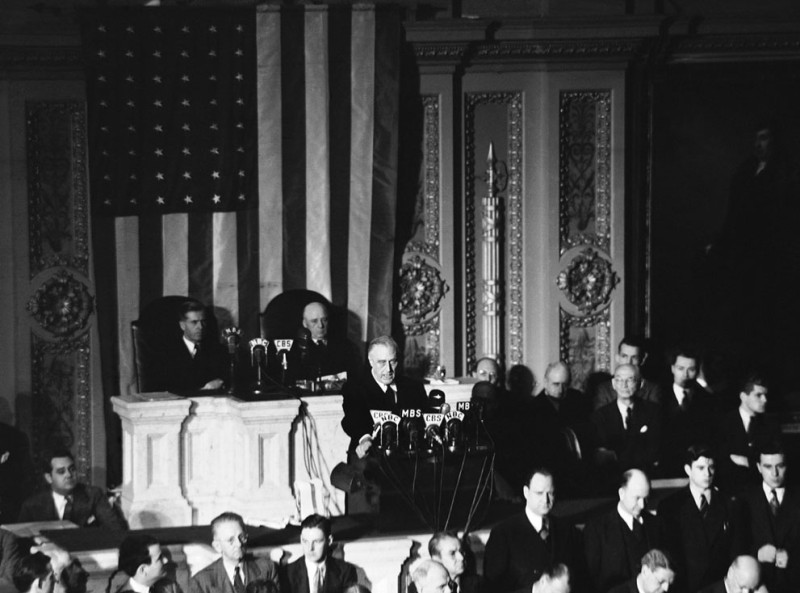
"caption": "President Franklin Delano Roosevelt declares war on Japan, 1941. (AP photo)",
"description": null,
"title": "fdr",
"credit": null,
"status": "inherit",
"isLoading": false,
"fetchFailed": false
},
"education_451263": {
"type": "attachments",
"id": "education_451263",
"meta": {
"index": "attachments_1716263798",
"site": "education",
"id": "451263",
"found": true
},
"parent": 451262,
"imgSizes": {
"small": {
"file": "https://ww2.kqed.org/app/uploads/sites/38/2017/03/Capitol-building-pre-Inauguration-520x390.jpg",
"width": 520,
"mimeType": "image/jpeg",
"height": 390
},
"twentyfourteen-full-width": {
"file": "https://ww2.kqed.org/app/uploads/sites/38/2017/03/Capitol-building-pre-Inauguration-1024x576.jpg",
"width": 1024,
"mimeType": "image/jpeg",
"height": 576
},
"thumbnail": {
"file": "https://ww2.kqed.org/app/uploads/sites/38/2017/03/Capitol-building-pre-Inauguration-160x120.jpg",
"width": 160,
"mimeType": "image/jpeg",
"height": 120
},
"fd-sm": {
"file": "https://ww2.kqed.org/app/uploads/sites/38/2017/03/Capitol-building-pre-Inauguration-960x720.jpg",
"width": 960,
"mimeType": "image/jpeg",
"height": 720
},
"post-thumbnail": {
"file": "https://ww2.kqed.org/app/uploads/sites/38/2017/03/Capitol-building-pre-Inauguration-672x372.jpg",
"width": 672,
"mimeType": "image/jpeg",
"height": 372
},
"xsmall": {
"file": "https://ww2.kqed.org/app/uploads/sites/38/2017/03/Capitol-building-pre-Inauguration-375x281.jpg",
"width": 375,
"mimeType": "image/jpeg",
"height": 281
},
"kqedFullSize": {
"file": "https://ww2.kqed.org/app/uploads/sites/38/2017/03/Capitol-building-pre-Inauguration.jpg",
"width": 1024,
"height": 768
},
"large": {
"file": "https://ww2.kqed.org/app/uploads/sites/38/2017/03/Capitol-building-pre-Inauguration-1020x765.jpg",
"width": 1020,
"mimeType": "image/jpeg",
"height": 765
},
"guest-author-50": {
"file": "https://ww2.kqed.org/app/uploads/sites/38/2017/03/Capitol-building-pre-Inauguration-50x50.jpg",
"width": 50,
"mimeType": "image/jpeg",
"height": 50
},
"guest-author-96": {
"file": "https://ww2.kqed.org/app/uploads/sites/38/2017/03/Capitol-building-pre-Inauguration-96x96.jpg",
"width": 96,
"mimeType": "image/jpeg",
"height": 96
},
"medium": {
"file": "https://ww2.kqed.org/app/uploads/sites/38/2017/03/Capitol-building-pre-Inauguration-800x600.jpg",
"width": 800,
"mimeType": "image/jpeg",
"height": 600
},
"guest-author-64": {
"file": "https://ww2.kqed.org/app/uploads/sites/38/2017/03/Capitol-building-pre-Inauguration-64x64.jpg",
"width": 64,
"mimeType": "image/jpeg",
"height": 64
},
"guest-author-32": {
"file": "https://ww2.kqed.org/app/uploads/sites/38/2017/03/Capitol-building-pre-Inauguration-32x32.jpg",
"width": 32,
"mimeType": "image/jpeg",
"height": 32
},
"detail": {
"file": "https://ww2.kqed.org/app/uploads/sites/38/2017/03/Capitol-building-pre-Inauguration-150x150.jpg",
"width": 150,
"mimeType": "image/jpeg",
"height": 150
},
"medium_large": {
"file": "https://ww2.kqed.org/app/uploads/sites/38/2017/03/Capitol-building-pre-Inauguration-768x576.jpg",
"width": 768,
"mimeType": "image/jpeg",
"height": 576
},
"guest-author-128": {
"file": "https://ww2.kqed.org/app/uploads/sites/38/2017/03/Capitol-building-pre-Inauguration-128x128.jpg",
"width": 128,
"mimeType": "image/jpeg",
"height": 128
},
"xxsmall": {
"file": "https://ww2.kqed.org/app/uploads/sites/38/2017/03/Capitol-building-pre-Inauguration-240x180.jpg",
"width": 240,
"mimeType": "image/jpeg",
"height": 180
}
},
"publishDate": 1490813650,
"modified": 1490813650,
"caption": null,
"description": null,
"title": "Capitol building pre-Inauguration",
"credit": null,
"status": "inherit",
"isLoading": false,
"fetchFailed": false
},
"lowdown_26485": {
"type": "attachments",
"id": "lowdown_26485",
"meta": {
"index": "attachments_1716263798",
"site": "lowdown",
"id": "26485",
"found": true
},
"parent": 26460,
"imgSizes": {
"small": {
"file": "https://ww2.kqed.org/app/uploads/sites/26/2017/04/K.-Henthorn-Iwane-4-520x372.gif",
"width": 520,
"mimeType": "image/gif",
"height": 372
},
"twentyfourteen-full-width": {
"file": "https://ww2.kqed.org/app/uploads/sites/26/2017/04/K.-Henthorn-Iwane-4-1024x576.gif",
"width": 1024,
"mimeType": "image/gif",
"height": 576
},
"thumbnail": {
"file": "https://ww2.kqed.org/app/uploads/sites/26/2017/04/K.-Henthorn-Iwane-4-160x114.gif",
"width": 160,
"mimeType": "image/gif",
"height": 114
},
"fd-sm": {
"file": "https://ww2.kqed.org/app/uploads/sites/26/2017/04/K.-Henthorn-Iwane-4-960x686.gif",
"width": 960,
"mimeType": "image/gif",
"height": 686
},
"post-thumbnail": {
"file": "https://ww2.kqed.org/app/uploads/sites/26/2017/04/K.-Henthorn-Iwane-4-672x372.gif",
"width": 672,
"mimeType": "image/gif",
"height": 372
},
"xsmall": {
"file": "https://ww2.kqed.org/app/uploads/sites/26/2017/04/K.-Henthorn-Iwane-4-375x268.gif",
"width": 375,
"mimeType": "image/gif",
"height": 268
},
"kqedFullSize": {
"file": "https://ww2.kqed.org/app/uploads/sites/26/2017/04/K.-Henthorn-Iwane-4.gif",
"width": 1024,
"height": 732
},
"large": {
"file": "https://ww2.kqed.org/app/uploads/sites/26/2017/04/K.-Henthorn-Iwane-4-1020x729.gif",
"width": 1020,
"mimeType": "image/gif",
"height": 729
},
"guest-author-50": {
"file": "https://ww2.kqed.org/app/uploads/sites/26/2017/04/K.-Henthorn-Iwane-4-50x50.gif",
"width": 50,
"mimeType": "image/gif",
"height": 50
},
"guest-author-96": {
"file": "https://ww2.kqed.org/app/uploads/sites/26/2017/04/K.-Henthorn-Iwane-4-96x96.gif",
"width": 96,
"mimeType": "image/gif",
"height": 96
},
"medium": {
"file": "https://ww2.kqed.org/app/uploads/sites/26/2017/04/K.-Henthorn-Iwane-4-800x572.gif",
"width": 800,
"mimeType": "image/gif",
"height": 572
},
"guest-author-64": {
"file": "https://ww2.kqed.org/app/uploads/sites/26/2017/04/K.-Henthorn-Iwane-4-64x64.gif",
"width": 64,
"mimeType": "image/gif",
"height": 64
},
"guest-author-32": {
"file": "https://ww2.kqed.org/app/uploads/sites/26/2017/04/K.-Henthorn-Iwane-4-32x32.gif",
"width": 32,
"mimeType": "image/gif",
"height": 32
},
"detail": {
"file": "https://ww2.kqed.org/app/uploads/sites/26/2017/04/K.-Henthorn-Iwane-4-150x150.gif",
"width": 150,
"mimeType": "image/gif",
"height": 150
},
"medium_large": {
"file": "https://ww2.kqed.org/app/uploads/sites/26/2017/04/K.-Henthorn-Iwane-4-768x549.gif",
"width": 768,
"mimeType": "image/gif",
"height": 549
},
"guest-author-128": {
"file": "https://ww2.kqed.org/app/uploads/sites/26/2017/04/K.-Henthorn-Iwane-4-128x128.gif",
"width": 128,
"mimeType": "image/gif",
"height": 128
},
"xxsmall": {
"file": "https://ww2.kqed.org/app/uploads/sites/26/2017/04/K.-Henthorn-Iwane-4-240x172.gif",
"width": 240,
"mimeType": "image/gif",
"height": 172
}
},
"publishDate": 1491520593,
"modified": 1491520593,
"caption": null,
"description": null,
"title": "K.-Henthorn-Iwane-(4)",
"credit": null,
"status": "inherit",
"isLoading": false,
"fetchFailed": false
}
},
"audioPlayerReducer": {
"postId": "stream_live",
"isPaused": true,
"isPlaying": false,
"pfsActive": false,
"pledgeModalIsOpen": true,
"playerDrawerIsOpen": false,
"liveAudioPlayStartedAt": 0,
"liveAudioPlayContext": ""
},
"authorsReducer": {
"matthewgreen": {
"type": "authors",
"id": "1263",
"meta": {
"index": "authors_1716337520",
"id": "1263",
"found": true
},
"name": "Matthew Green",
"firstName": "Matthew",
"lastName": "Green",
"slug": "matthewgreen",
"email": "mgreen@kqed.org",
"display_author_email": false,
"staff_mastheads": [],
"title": "KQED Editor/Reporter",
"bio": "Matthew Green is a digital media producer for KQED News. He previously produced \u003ca href=\"http://www.kqed.org/lowdown\">The Lowdown\u003c/a>, KQED’s multimedia news education blog. Matthew's written for numerous Bay Area publications, including the Oakland Tribune and San Francisco Chronicle. He also taught journalism classes at Fremont High School in East Oakland.\r\n\r\nEmail: mgreen@kqed.org; Twitter: @MGreenKQED",
"avatar": "https://secure.gravatar.com/avatar/3bf498d1267ca02c8494f33d8cfc575e?s=600&d=blank&r=g",
"twitter": "MGreenKQED",
"facebook": null,
"instagram": null,
"linkedin": null,
"sites": [
{
"site": "news",
"roles": []
},
{
"site": "lowdown",
"roles": []
},
{
"site": "science",
"roles": []
},
{
"site": "education",
"roles": []
},
{
"site": "quest",
"roles": []
},
{
"site": "liveblog",
"roles": []
}
],
"headData": {
"title": "Matthew Green | KQED",
"description": "KQED Editor/Reporter",
"ogImgSrc": "https://secure.gravatar.com/avatar/3bf498d1267ca02c8494f33d8cfc575e?s=600&d=blank&r=g",
"twImgSrc": "https://secure.gravatar.com/avatar/3bf498d1267ca02c8494f33d8cfc575e?s=600&d=blank&r=g"
},
"isLoading": false,
"link": "/author/matthewgreen"
},
"awunderlich": {
"type": "authors",
"id": "9619",
"meta": {
"index": "authors_1716337520",
"id": "9619",
"found": true
},
"name": "Annelise Wunderlich",
"firstName": "Annelise",
"lastName": "Wunderlich",
"slug": "awunderlich",
"email": "awunderlich@kqed.org",
"display_author_email": false,
"staff_mastheads": [],
"title": "KQED Contributor",
"bio": "Annelise is a documentary filmmaker, educator, and Youth Participation Manager at KQED. Her films have aired on national and regional public television outlets, and she teaches film studies at Diablo Valley College. She loves very spicy food, and traveling to places where people make it.",
"avatar": "https://secure.gravatar.com/avatar/73c6b37759848abd644aaa064ec0fb95?s=600&d=mm&r=g",
"twitter": "Annelise_KQED",
"facebook": null,
"instagram": null,
"linkedin": null,
"sites": [
{
"site": "education",
"roles": []
},
{
"site": "quest",
"roles": [
"editor"
]
}
],
"headData": {
"title": "Annelise Wunderlich | KQED",
"description": "KQED Contributor",
"ogImgSrc": "https://secure.gravatar.com/avatar/73c6b37759848abd644aaa064ec0fb95?s=600&d=mm&r=g",
"twImgSrc": "https://secure.gravatar.com/avatar/73c6b37759848abd644aaa064ec0fb95?s=600&d=mm&r=g"
},
"isLoading": false,
"link": "/author/awunderlich"
},
"dlartaud": {
"type": "authors",
"id": "10621",
"meta": {
"index": "authors_1716337520",
"id": "10621",
"found": true
},
"name": "Derek Lartaud",
"firstName": "Derek",
"lastName": "Lartaud",
"slug": "dlartaud",
"email": "dlartaud@kqed.org",
"display_author_email": true,
"staff_mastheads": [],
"title": "KQED Contributor",
"bio": "Derek Lartaud came to the Bay Area after nearly five years of researching schizophrenia and diabetes at Yale University. Determined to tell visual stories, he’s worked for the BBC, Al Jazeera America, TIME, PBS, and the Center for Investigative Reporting. He has a bachelor’s degree in neuroscience and a master’s degree in journalism. When not holding a camera or editing a story, he’s trying to rebuild his 1969 Honda CL350.",
"avatar": "https://secure.gravatar.com/avatar/e03912790b9252d0f67d68120966e449?s=600&d=mm&r=g",
"twitter": null,
"facebook": null,
"instagram": null,
"linkedin": null,
"sites": [
{
"site": "education",
"roles": [
"contributor"
]
},
{
"site": "quest",
"roles": [
"contributor"
]
},
{
"site": "food",
"roles": [
"editor"
]
}
],
"headData": {
"title": "Derek Lartaud | KQED",
"description": "KQED Contributor",
"ogImgSrc": "https://secure.gravatar.com/avatar/e03912790b9252d0f67d68120966e449?s=600&d=mm&r=g",
"twImgSrc": "https://secure.gravatar.com/avatar/e03912790b9252d0f67d68120966e449?s=600&d=mm&r=g"
},
"isLoading": false,
"link": "/author/dlartaud"
},
"rroberson": {
"type": "authors",
"id": "11274",
"meta": {
"index": "authors_1716337520",
"id": "11274",
"found": true
},
"name": "Rachel Roberson",
"firstName": "Rachel",
"lastName": "Roberson",
"slug": "rroberson",
"email": "rroberson@kqed.org",
"display_author_email": false,
"staff_mastheads": [],
"title": null,
"bio": "Rachel Roberson is KQED's news education manager. Previously, she was a reading, writing and social studies teacher leader on three continents, having served on the founding staff of KIPP Bayview Academy in San Francisco before moving to schools in Abu Dhabi and Austin, Texas. She started her teaching career as a Peace Corps volunteer in Cameroon. Before she was a teacher, Rachel was a journalist in the East Bay.",
"avatar": "https://secure.gravatar.com/avatar/d0516373a400e4059f65bd29bc026a20?s=600&d=mm&r=g",
"twitter": null,
"facebook": null,
"instagram": null,
"linkedin": null,
"sites": [
{
"site": "news",
"roles": [
"editor"
]
},
{
"site": "lowdown",
"roles": [
"editor"
]
},
{
"site": "stateofhealth",
"roles": [
"editor"
]
},
{
"site": "science",
"roles": [
"editor"
]
},
{
"site": "education",
"roles": [
"editor"
]
},
{
"site": "perspectives",
"roles": [
"editor"
]
},
{
"site": "youthmedia",
"roles": [
"editor"
]
}
],
"headData": {
"title": "Rachel Roberson | KQED",
"description": null,
"ogImgSrc": "https://secure.gravatar.com/avatar/d0516373a400e4059f65bd29bc026a20?s=600&d=mm&r=g",
"twImgSrc": "https://secure.gravatar.com/avatar/d0516373a400e4059f65bd29bc026a20?s=600&d=mm&r=g"
},
"isLoading": false,
"link": "/author/rroberson"
}
},
"pagesReducer": {
"education_category_news-and-civics": {
"type": "terms",
"id": "education_50",
"meta": {
"index": "terms_1716263798",
"site": "education",
"id": "50",
"score": 13.896183
},
"featImg": null,
"name": "News & Civics",
"description": "Find civics lesson plans and teaching resources for high school and middle school, including lesson plan ideas on the latest news topics.",
"taxonomy": "category",
"headData": {
"twImgId": null,
"twTitle": null,
"ogTitle": null,
"ogImgId": null,
"twDescription": null,
"description": "Find civics lesson plans and teaching resources for high school and middle school, including lesson plan ideas on the latest news topics.",
"title": "News & Civics | KQED Education",
"ogDescription": null
},
"ttid": 58,
"slug": "news-and-civics",
"isLoading": false,
"title": "News & Civics",
"pageMeta": {
"site": "education",
"WpPageTemplate": "page-topic-company",
"currentPage": 14
},
"blocks": [
{
"blockName": "kqed/company-paragraph",
"content": "Find civics lesson plans and teaching resources for high school and middle school, including lesson plan ideas on the latest news topics."
},
{
"blockName": "kqed/post-list",
"attrs": {
"layout": "cardCompany2",
"query": "posts/education?category=news-and-civics",
"seeMore": false,
"paginated": true,
"page": 14
}
},
{
"blockName": "kqed/ad"
}
]
}
},
"pfsSessionReducer": {},
"postsReducer": {
"stream_live": {
"type": "live",
"id": "stream_live",
"audioUrl": "https://streams.kqed.org/kqedradio",
"title": "Live Stream",
"excerpt": "Live Stream information currently unavailable.",
"link": "/radio",
"featImg": "",
"label": {
"name": "KQED Live",
"link": "/"
}
},
"stream_kqedNewscast": {
"type": "posts",
"id": "stream_kqedNewscast",
"audioUrl": "https://www.kqed.org/.stream/anon/radio/RDnews/newscast.mp3?_=1",
"title": "KQED Newscast",
"featImg": "",
"label": {
"name": "88.5 FM",
"link": "/"
}
},
"education_475423": {
"type": "posts",
"id": "education_475423",
"meta": {
"index": "posts_1716263798",
"site": "education",
"id": "475423",
"score": null,
"sort": [
1493229012000
]
},
"parent": 0,
"labelTerm": {
"site": "education",
"term": 2838
},
"blocks": [],
"publishDate": 1493229012,
"format": "video",
"title": "Adam Savage of Myth Busters on Why Science Matters",
"headTitle": "Adam Savage of Myth Busters on Why Science Matters | KQED",
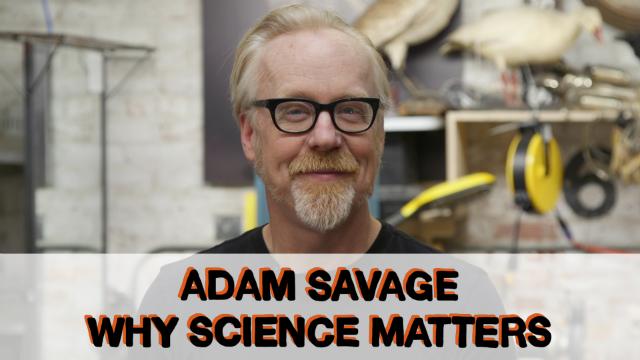
"content": "\u003cp>In a special episode of \u003ca href=\"https://www.youtube.com/channel/UC4K10PNjqgGLKA3lo5V8KdQ\">Above the Noise\u003c/a>, host Shirin Ghaffary asked the host of the popular TV show \u003ca href=\"http://www.discovery.com/tv-shows/mythbusters/\">MythBusters\u003c/a>, Adam Savage, about why he participated in the \u003ca href=\"https://marchforsciencesf.com/\">March for Science in San Francisco\u003c/a> on April 22.\u003c/p>\n\u003caside class=\"alignright\">\n\u003ch3>Classroom Resources\u003c/h3>\n\u003cp>Use the Above the Noise discussion guide and student worksheet to start a conversation in your classroom!\u003c/p>\n\u003cul>\n\u003cli>\u003ca href=\"https://ww2.kqed.org/education/wp-content/uploads/sites/38/2017/07/Above-the-Noise-Classroom-Guide.pdf\" target=\"new\" rel=\"noopener\">Classroom Discussion Guide\u003c/a>\u003c/li>\n\u003cli>\u003ca href=\"https://ww2.kqed.org/education/wp-content/uploads/sites/38/2017/07/Above-the-Noise-Student-Viewing-Notes.pdf\" target=\"new\" rel=\"noopener\">Student Viewing Notes Handout\u003c/a>\u003c/li>\n\u003c/ul>\n\u003c/aside>\n\u003cp>Savage, who considers himself a scientist despite having only a high school diploma, is a passionate advocate for science. He says that much of the current opposition to science in this country comes from the belief that it’s an “elitist, provocative way of looking at the world. When in fact, it’s just an attempt to look at the world clearly.”\u003c/p>\n\u003cp>He chose to speak at the march last Saturday because “it feels like science is in trouble, ” he said. “That’s terrifying to me. The hostility to facts is super dangerous not just in the short-term of how we listen to our leaders, but in the long-term in the ways in which we treat each other moving forward.”\u003c/p>\n\u003cp>In addition to supporting scientists, Savage says it’s also crucial to teach media literacy so that young people learn how to separate fact from fiction in the media. “One of the sad things about all of this fake news and the bombardment of stories that have come down the pike over the last year is that it exploits this uncritical reading that so many of us do on the web,” he says. “But it’s really vital as citizens, as good citizens of both our world, our country, our culture and our families, that we don’t read things or absorb things uncritically.”\u003c/p>\n\u003cp>Savage feels that the scientific method is “what makes us the most successful species that have ever existed.” Gathering empirical data, testing results and asking good questions, he says, is what keeps us learning and improving — “it isn’t some mystery.”\u003c/p>\n\u003cp>[ad fullwidth]\u003c/p>\n\u003cp>Watch \u003ca href=\"https://www.youtube.com/watch?v=pU52T1HFy6k\">our coverage of youth voices\u003c/a> at the march in San Francisco:\u003c/p>\n\u003cp>https://www.youtube.com/watch?v=pU52T1HFy6k&t=66s\u003c/p>\n\u003cp>\u003c/p>\n\u003cp>And \u003ca href=\"https://www.youtube.com/channel/UC4K10PNjqgGLKA3lo5V8KdQ\">subscribe to \u003cem>Above the Noise\u003c/em>\u003c/a> for new episodes every other Wednesday!\u003c/p>\n\n",
"stats": {
"hasVideo": true,
"hasChartOrMap": false,
"hasAudio": false,
"hasPolis": false,
"wordCount": 391,
"hasGoogleForm": false,
"hasGallery": false,
"hasHearkenModule": false,
"iframeSrcs": [],
"paragraphCount": 10
},
"modified": 1704761751,
"excerpt": "In a special episode of \u003ca href=\"https://www.youtube.com/channel/UC4K10PNjqgGLKA3lo5V8KdQ\">\u003cem>Above the Noise\u003c/em>\u003c/a>, host Shirin Ghaffary spoke with the host of the popular TV show \u003ca href=\"http://www.discovery.com/tv-shows/mythbusters/\">\u003cem>MythBusters\u003c/em>\u003c/a>, Adam Savage, about why he participated in the \u003ca href=\"https://marchforsciencesf.com/\">the March for Science in San Francisco\u003c/a> on April 22",
"headData": {
"twImgId": "",
"twTitle": "",
"ogTitle": "",
"ogImgId": "",
"twDescription": "",
"description": "In a special episode of Above the Noise, host Shirin Ghaffary spoke with the host of the popular TV show MythBusters, Adam Savage, about why he participated in the the March for Science in San Francisco on April 22",
"title": "Adam Savage of Myth Busters on Why Science Matters | KQED",
"ogDescription": "",
"schema": {
"@context": "https://schema.org",
"@type": "Article",
"headline": "Adam Savage of Myth Busters on Why Science Matters",
"datePublished": "2017-04-26T10:50:12-07:00",
"dateModified": "2024-01-08T16:55:51-08:00",
"image": "https://cdn.kqed.org/wp-content/uploads/2020/02/KQED-OG-Image@1x.png"
}
},
"guestAuthors": [],
"slug": "adam-savage-of-myth-busters-on-why-science-matters",
"status": "publish",
"videoEmbed": "https://www.youtube.com/watch?v=V_EnaKkMVhA&t=7s",
"sticky": false,
"path": "/education/475423/adam-savage-of-myth-busters-on-why-science-matters",
"audioTrackLength": null,
"parsedContent": [
{
"type": "contentString",
"content": "\u003cdiv class=\"post-body\">\u003cp>\u003cp>In a special episode of \u003ca href=\"https://www.youtube.com/channel/UC4K10PNjqgGLKA3lo5V8KdQ\">Above the Noise\u003c/a>, host Shirin Ghaffary asked the host of the popular TV show \u003ca href=\"http://www.discovery.com/tv-shows/mythbusters/\">MythBusters\u003c/a>, Adam Savage, about why he participated in the \u003ca href=\"https://marchforsciencesf.com/\">March for Science in San Francisco\u003c/a> on April 22.\u003c/p>\n\u003caside class=\"alignright\">\n\u003ch3>Classroom Resources\u003c/h3>\n\u003cp>Use the Above the Noise discussion guide and student worksheet to start a conversation in your classroom!\u003c/p>\n\u003cul>\n\u003cli>\u003ca href=\"https://ww2.kqed.org/education/wp-content/uploads/sites/38/2017/07/Above-the-Noise-Classroom-Guide.pdf\" target=\"new\" rel=\"noopener\">Classroom Discussion Guide\u003c/a>\u003c/li>\n\u003cli>\u003ca href=\"https://ww2.kqed.org/education/wp-content/uploads/sites/38/2017/07/Above-the-Noise-Student-Viewing-Notes.pdf\" target=\"new\" rel=\"noopener\">Student Viewing Notes Handout\u003c/a>\u003c/li>\n\u003c/ul>\n\u003c/aside>\n\u003cp>Savage, who considers himself a scientist despite having only a high school diploma, is a passionate advocate for science. He says that much of the current opposition to science in this country comes from the belief that it’s an “elitist, provocative way of looking at the world. When in fact, it’s just an attempt to look at the world clearly.”\u003c/p>\n\u003cp>He chose to speak at the march last Saturday because “it feels like science is in trouble, ” he said. “That’s terrifying to me. The hostility to facts is super dangerous not just in the short-term of how we listen to our leaders, but in the long-term in the ways in which we treat each other moving forward.”\u003c/p>\n\u003cp>In addition to supporting scientists, Savage says it’s also crucial to teach media literacy so that young people learn how to separate fact from fiction in the media. “One of the sad things about all of this fake news and the bombardment of stories that have come down the pike over the last year is that it exploits this uncritical reading that so many of us do on the web,” he says. “But it’s really vital as citizens, as good citizens of both our world, our country, our culture and our families, that we don’t read things or absorb things uncritically.”\u003c/p>\n\u003cp>Savage feels that the scientific method is “what makes us the most successful species that have ever existed.” Gathering empirical data, testing results and asking good questions, he says, is what keeps us learning and improving — “it isn’t some mystery.”\u003c/p>\n\u003cp>\u003c/p>\u003c/div>",
"attributes": {
"named": {},
"numeric": []
}
},
{
"type": "component",
"content": "",
"name": "ad",
"attributes": {
"named": {
"label": "fullwidth"
},
"numeric": [
"fullwidth"
]
}
},
{
"type": "contentString",
"content": "\u003cdiv class=\"post-body\">\u003cp>\u003c/p>\n\u003cp>Watch \u003ca href=\"https://www.youtube.com/watch?v=pU52T1HFy6k\">our coverage of youth voices\u003c/a> at the march in San Francisco:\u003c/p>\u003c/p>\u003cp>\u003cspan class='utils-parseShortcode-shortcodes-__youtubeShortcode__embedYoutube'>\n \u003cspan class='utils-parseShortcode-shortcodes-__youtubeShortcode__embedYoutubeInside'>\n \u003ciframe\n loading='lazy'\n class='utils-parseShortcode-shortcodes-__youtubeShortcode__youtubePlayer'\n type='text/html'\n src='//www.youtube.com/embed/pU52T1HFy6k'\n title='//www.youtube.com/embed/pU52T1HFy6k'\n allowfullscreen='true'\n style='border:0;'>\u003c/iframe>\n \u003c/span>\n \u003c/span>\u003c/p>\u003cp>\u003cp>\u003c/p>\n\u003cp>And \u003ca href=\"https://www.youtube.com/channel/UC4K10PNjqgGLKA3lo5V8KdQ\">subscribe to \u003cem>Above the Noise\u003c/em>\u003c/a> for new episodes every other Wednesday!\u003c/p>\n\n\u003c/div>\u003c/p>",
"attributes": {
"named": {},
"numeric": []
}
}
],
"link": "/education/475423/adam-savage-of-myth-busters-on-why-science-matters",
"authors": [
"9619"
],
"series": [
"education_2838"
],
"categories": [
"education_50",
"education_49"
],
"tags": [
"education_2852",
"education_5",
"education_1320",
"education_745",
"education_3381",
"education_1240",
"education_1242"
],
"collections": [
"education_2813"
],
"featImg": "education_475692",
"label": "education_2838"
},
"lowdown_26701": {
"type": "posts",
"id": "lowdown_26701",
"meta": {
"index": "posts_1716263798",
"site": "lowdown",
"id": "26701",
"score": null,
"sort": [
1493189822000
]
},
"parent": 0,
"labelTerm": {
"site": "lowdown"
},
"blocks": [],
"publishDate": 1493189822,
"format": "aside",
"disqusTitle": "A Brief History of North Korea and How it Became One of America's Biggest Threats (with Lesson Plan)",
"title": "A Brief History of North Korea and How it Became One of America's Biggest Threats (with Lesson Plan)",
"headTitle": "The Lowdown | KQED News",
"content": "\u003cp>\u003c!--more-->\u003cbr>\nhttps://youtu.be/1g9j_ZkuJig\u003c/p>\n\u003cdiv>\n\u003caside class=\"alignright\">\n\u003cdiv>\u003cspan style=\"font-size: x-large;\">\u003cspan style=\"color: #993300;\">Teach with the Lowdown\u003c/span>\u003c/span>\u003c/div>\n\u003cp>\u003cimg class=\"alignnone wp-image-22868\" src=\"http://ww2.kqed.org/lowdown/wp-content/uploads/sites/26/2016/07/hands-e1469568663680-400x143.jpg\" width=\"340\" height=\"122\" srcset=\"https://ww2.kqed.org/app/uploads/sites/26/2016/07/hands-e1469568663680-400x143.jpg 400w, https://ww2.kqed.org/app/uploads/sites/26/2016/07/hands-e1469568663680-800x286.jpg 800w, https://ww2.kqed.org/app/uploads/sites/26/2016/07/hands-e1469568663680-768x274.jpg 768w, https://ww2.kqed.org/app/uploads/sites/26/2016/07/hands-e1469568663680.jpg 957w\" sizes=\"(max-width: 340px) 100vw, 340px\">Suggestions for nonfiction analysis, writing/discussion prompts and multimedia projects. Browse our lesson plan collection \u003ca href=\"https://ww2.kqed.org/lowdown/category/lesson-plans-and-guides/\" target=\"_blank\" rel=\"noopener noreferrer\">here\u003c/a>.\u003c/p>\n\u003cul>\n\u003cli>\u003ca href=\"https://ww2.kqed.org/lowdown/wp-content/uploads/sites/26/2017/04/North-Korea-in-Context-lesson-plan1.pdf\" target=\"_blank\" rel=\"noopener noreferrer\">Lesson Plan: History of North Korea (PDF)\u003c/a>\u003c/li>\n\u003c/ul>\n\u003c/aside>\n\u003c/div>\n\u003cp>In late July, the North Korean government is reported to \u003ca href=\"http://www.reuters.com/article/us-northkorea-missiles-idUSKBN1AD1ZB\" target=\"_blank\" rel=\"noopener noreferrer\">have tested\u003c/a> an intercontinental ballistic missile that experts say could be capable of reaching Los Angeles and other West Coast cities. It's the second long range missile launched in the last month, elevating the threat level and prompting the U.S. and South Korea to stage a joint missile exercise.\u003c/p>\n\u003cp>Among the most repressive, isolated and impoverished nations on earth, North Korea has nonetheless managed to successfully develop a huge army with an arsenal of nuclear weapons and ballistic missiles that pose a direct threat to the U.S. and its Asian allies. And under the notoriously erratic direction of its young leader, Kim Jong-un, the nation has repeatedly threatened to strike U.S. allies in the region, including South Korea and Japan, where thousands of American troops are stationed.\u003c/p>\n\u003cp>In response to rising tensions, Vice President Mike Pence in April visited South Korean and warned North Korea that the \"era of strategic patience is over.\" And later that month, top Trump administration officials \u003ca href=\"https://www.washingtonpost.com/politics/white-house-briefs-senators-on-very-grave-threat-from-north-korea/2017/04/26/12a5c21a-2a9e-11e7-be51-b3fc6ff7faee_story.html?utm_term=.67c9a1b64aff\" target=\"_blank\" rel=\"noopener noreferrer\">held a rare meeting\u003c/a> at the White House to brief the entire U.S. Senate on what one senior aide called \"a very grave threat\" posed by North Korea. The administration, though, offered few details on how it planned to address the situation.\u003c/p>\n\u003cp>Several days later, in an \u003ca href=\"http://www.reuters.com/article/us-usa-trump-exclusive-idUSKBN17U04E\" target=\"_blank\" rel=\"noopener noreferrer\">interview with Reuters\u003c/a>, Trump said: \"There is a chance that we could end up having a major, major conflict with North Korea.\"\u003c/p>\n\u003cp>[ad fullwidth]\u003c/p>\n\u003cp>He added, however that he'd prefer to peacefully resolve the crisis.\u003c/p>\n\u003cp>Bordering South Korea, one of Asia's most robust economies, North Korea has been walled for decades, a nation of roughly 25 million that's existed under the brutal totalitarian rule of the Kim family for three generations. Although reports of massive prison camps, food shortages, grinding poverty and shocking human rights violations elicit horror from outside observers, North Korea has also become a source of international intrigue as one of the world's last hermit kingdoms, a secretive society that few outsiders have ever set foot in.\u003c/p>\n\u003cp>So how did it get like this?\u003c/p>\n\u003cp>https://youtu.be/v70-fi6PPU0\u003c/p>\n\u003ch4>\u003cstrong>1910-1945:\u003c/strong> Japanese colonization\u003c/h4>\n\u003cp>Japan colonizes Korea (north and south), beginning a 35-year period of often brutal military rule that include efforts to wipe out Korea’s language and cultural identity. The Japanese also introduce modern industrial development, especially in the north where coal and hydroelectric power resources are plentiful, prompting a mass exodus from the countryside to cities. Japanese rule ends in 1945, when U.S. and Russian forces capture the peninsula at the conclusion of World War II. By then, Korea is the second-most industrialized nation in Asia (after Japan). During this period, Kim Il-sung, the future leader of North Korea, emerges as a prominent guerrilla fighter in the colonial resistance movement.\u003c/p>\n\u003ch4>\u003cstrong>1945-1948:\u003c/strong> The 38th parallel\u003c/h4>\n\u003cfigure id=\"attachment_27737\" class=\"wp-caption alignright\" style=\"max-width: 281px\">\u003ca href=\"https://ww2.kqed.org/lowdown/wp-content/uploads/sites/26/2017/04/38th-our-time.jpg\">\u003cimg class=\"wp-image-27737 \" src=\"https://ww2.kqed.org/lowdown/wp-content/uploads/sites/26/2017/04/38th-our-time-e1501282787808.jpg\" alt=\"\" width=\"281\" height=\"288\" srcset=\"https://ww2.kqed.org/app/uploads/sites/26/2017/04/38th-our-time-e1501282787808.jpg 456w, https://ww2.kqed.org/app/uploads/sites/26/2017/04/38th-our-time-e1501282787808-160x164.jpg 160w, https://ww2.kqed.org/app/uploads/sites/26/2017/04/38th-our-time-e1501282787808-240x246.jpg 240w, https://ww2.kqed.org/app/uploads/sites/26/2017/04/38th-our-time-e1501282787808-375x385.jpg 375w, https://ww2.kqed.org/app/uploads/sites/26/2017/04/38th-our-time-e1501282787808-32x32.jpg 32w, https://ww2.kqed.org/app/uploads/sites/26/2017/04/38th-our-time-e1501282787808-50x50.jpg 50w\" sizes=\"(max-width: 281px) 100vw, 281px\">\u003c/a>\u003cfigcaption class=\"wp-caption-text\">Split at the 38th parallel \u003ccite>(ourtimebd.com)\u003c/cite>\u003c/figcaption>\u003c/figure>\n\u003cp>At the end of World War II, Japan surrenders to the Allies and relinquishes its control of Korea. The Soviet Union and United States agree to temporarily split postwar control of the peninsula until an independent and unified Korean government can be established. The Soviets occupy everything north of the 38th parallel. But as tensions grow between the two nations, efforts to forge a unified Korean government fall apart.\u003c/p>\n\u003ch4>\u003cstrong>1948: \u003c/strong>North and South Korea form distinct states\u003c/h4>\n\u003cp>By August 1948, the pro-U.S. Republic of Korea (South Korea) is established in Seoul, led by Syngman Rhee, a staunch anti-communist. Just three weeks later, the Soviet-backed Democratic People’s Republic of Korea (North Korea) emerges in Pyongyang, with communist guerrilla leader Kim Il-sung assuming power. Both leaders assert jurisdiction over the entire Korean peninsula and its people.\u003c/p>\n\u003ch4>\u003cstrong>1950-1953:\u003c/strong> The Korean War\u003c/h4>\n\u003cp>On June 25, 1950, North Korean military forces, supported by the Soviet Union and China, invade the South in an effort to unify Korea under the leadership of Kim Il-sung. The U.S. comes to the aid of the South. Three years of intense fighting result in vast physical destruction and as many as 3 million casualties, including roughly 35,000 Americans.\u003c/p>\n\u003cfigure id=\"attachment_27738\" class=\"wp-caption alignnone\" style=\"max-width: 600px\">\u003ca href=\"https://ww2.kqed.org/lowdown/wp-content/uploads/sites/26/2017/04/South_Korean_refugees_mid-1950.jpg\">\u003cimg class=\"size-full wp-image-27738\" src=\"https://ww2.kqed.org/lowdown/wp-content/uploads/sites/26/2017/04/South_Korean_refugees_mid-1950.jpg\" alt=\"\" width=\"600\" height=\"434\" srcset=\"https://ww2.kqed.org/app/uploads/sites/26/2017/04/South_Korean_refugees_mid-1950.jpg 600w, https://ww2.kqed.org/app/uploads/sites/26/2017/04/South_Korean_refugees_mid-1950-160x116.jpg 160w, https://ww2.kqed.org/app/uploads/sites/26/2017/04/South_Korean_refugees_mid-1950-240x174.jpg 240w, https://ww2.kqed.org/app/uploads/sites/26/2017/04/South_Korean_refugees_mid-1950-375x271.jpg 375w, https://ww2.kqed.org/app/uploads/sites/26/2017/04/South_Korean_refugees_mid-1950-520x376.jpg 520w\" sizes=\"(max-width: 600px) 100vw, 600px\">\u003c/a>\u003cfigcaption class=\"wp-caption-text\">Hundreds of thousands of Koreans flee to the south during the war after the North Korean army crosses the 38th Parallel. \u003ccite>(U.S. Defense Department)\u003c/cite>\u003c/figcaption>\u003c/figure>\n\u003cp>In 1953, both sides sign an armistice with a cease-fire line -- the demilitarized zone (DMZ) – into approximately equal-sized territories. The now-heavily fortified border is in roughly the same position -- on the 38\u003csup>th\u003c/sup> parallel -- almost exactly where it was before the war started. The armistice is intended as a temporary measure, but a formal peace treaty ending the war is never actually signed (which means the war never technically ended).\u003c/p>\n\u003ch4>\u003cstrong>1953–1970s:\u003c/strong> Building a Stalinist state\u003c/h4>\n\u003cp>Under Kim Il-sung’s leadership, North Korea becomes a self-defined workers' state. It implements Juche, an ideology of self-reliance promoting Korean autonomy. The country institutes a command economy, a system in which the government, rather than the free market, determines production. The state seizes control of all private property and organizations, officially taking ownership of everything, including people’s homes, businesses, and even the clothes on their back.\u003c/p>\n\u003cfigure id=\"attachment_27741\" class=\"wp-caption alignright\" style=\"max-width: 640px\">\u003ca href=\"https://ww2.kqed.org/lowdown/wp-content/uploads/sites/26/2017/04/1024px-The_statues_of_Kim_Il_Sung_and_Kim_Jong_Il_on_Mansu_Hill_in_Pyongyang_april_2012.jpg\">\u003cimg class=\"size-large wp-image-27741\" src=\"https://ww2.kqed.org/lowdown/wp-content/uploads/sites/26/2017/04/1024px-The_statues_of_Kim_Il_Sung_and_Kim_Jong_Il_on_Mansu_Hill_in_Pyongyang_april_2012-1020x680.jpg\" alt=\"\" width=\"640\" height=\"427\" srcset=\"https://ww2.kqed.org/app/uploads/sites/26/2017/04/1024px-The_statues_of_Kim_Il_Sung_and_Kim_Jong_Il_on_Mansu_Hill_in_Pyongyang_april_2012-1020x680.jpg 1020w, https://ww2.kqed.org/app/uploads/sites/26/2017/04/1024px-The_statues_of_Kim_Il_Sung_and_Kim_Jong_Il_on_Mansu_Hill_in_Pyongyang_april_2012-160x107.jpg 160w, https://ww2.kqed.org/app/uploads/sites/26/2017/04/1024px-The_statues_of_Kim_Il_Sung_and_Kim_Jong_Il_on_Mansu_Hill_in_Pyongyang_april_2012-800x534.jpg 800w, https://ww2.kqed.org/app/uploads/sites/26/2017/04/1024px-The_statues_of_Kim_Il_Sung_and_Kim_Jong_Il_on_Mansu_Hill_in_Pyongyang_april_2012-768x512.jpg 768w, https://ww2.kqed.org/app/uploads/sites/26/2017/04/1024px-The_statues_of_Kim_Il_Sung_and_Kim_Jong_Il_on_Mansu_Hill_in_Pyongyang_april_2012-960x640.jpg 960w, https://ww2.kqed.org/app/uploads/sites/26/2017/04/1024px-The_statues_of_Kim_Il_Sung_and_Kim_Jong_Il_on_Mansu_Hill_in_Pyongyang_april_2012-240x160.jpg 240w, https://ww2.kqed.org/app/uploads/sites/26/2017/04/1024px-The_statues_of_Kim_Il_Sung_and_Kim_Jong_Il_on_Mansu_Hill_in_Pyongyang_april_2012-375x250.jpg 375w, https://ww2.kqed.org/app/uploads/sites/26/2017/04/1024px-The_statues_of_Kim_Il_Sung_and_Kim_Jong_Il_on_Mansu_Hill_in_Pyongyang_april_2012-520x347.jpg 520w, https://ww2.kqed.org/app/uploads/sites/26/2017/04/1024px-The_statues_of_Kim_Il_Sung_and_Kim_Jong_Il_on_Mansu_Hill_in_Pyongyang_april_2012.jpg 1024w\" sizes=\"(max-width: 640px) 100vw, 640px\">\u003c/a>\u003cfigcaption class=\"wp-caption-text\">North Koreans bowing in front of the statues of Kim Il-sung (left) and Kim Jong-il at the Mansudae Grand Monument in Pyongyang. \u003ccite>(J.A. de Roo/Wikipedia)\u003c/cite>\u003c/figcaption>\u003c/figure>\n\u003cp>Land and agriculture are collectivized under state control. The regime rebuilds Pyongyang as a socialist capital, erecting numerous monuments to Kim Il-sung as part of a sweeping effort to build a cult of personality. It also takes over control of the media, restricts international travel and squashes any form of opposition, forcing dissenters into harsh prison camps.\u003c/p>\n\u003cp>With major backing from the Soviet Union during the postwar reconstruction period, North Korea invests in mineral extraction and other heavy industries, rapidly developing its civilian and military economy at a rate that initially appears to outpace its rival to the south. For a time, urbanization continues to increase, as does school enrollment and infrastructure development. North Korea is billed a “workers’ paradise” by the state.\u003c/p>\n\u003cp>It’s also during this period that the Soviet Union helps North Korea build nuclear reactors for energy production.\u003c/p>\n\u003cp>But huge inequalities begin to surface, as the regime implements the songbun system that divides the population is divided into different social classes according to perceived loyalty. The new order dictates where people can live, what jobs they can have and where children can attend school.\u003c/p>\n\u003ch4>\u003cstrong>Late 1970s–1990s: Isolation\u003cbr>\n\u003c/strong>\u003c/h4>\n\u003cp>By the 1980s, though, as the South Korean economy begins to boom, North Korea stagnates; it continues to focus heavily on mining and steel production and fails to sufficiently innovate and diversify its industries.\u003c/p>\n\u003cfigure id=\"attachment_27742\" class=\"wp-caption alignright\" style=\"max-width: 640px\">\u003ca href=\"https://ww2.kqed.org/lowdown/wp-content/uploads/sites/26/2017/04/Korean_Peninsula_at_night_from_space.jpg\">\u003cimg class=\"wp-image-27742 size-large\" src=\"https://ww2.kqed.org/lowdown/wp-content/uploads/sites/26/2017/04/Korean_Peninsula_at_night_from_space-1020x1101.jpg\" alt=\"\" width=\"640\" height=\"691\" srcset=\"https://ww2.kqed.org/app/uploads/sites/26/2017/04/Korean_Peninsula_at_night_from_space-1020x1101.jpg 1020w, https://ww2.kqed.org/app/uploads/sites/26/2017/04/Korean_Peninsula_at_night_from_space-160x173.jpg 160w, https://ww2.kqed.org/app/uploads/sites/26/2017/04/Korean_Peninsula_at_night_from_space-800x864.jpg 800w, https://ww2.kqed.org/app/uploads/sites/26/2017/04/Korean_Peninsula_at_night_from_space-768x829.jpg 768w, https://ww2.kqed.org/app/uploads/sites/26/2017/04/Korean_Peninsula_at_night_from_space-1180x1274.jpg 1180w, https://ww2.kqed.org/app/uploads/sites/26/2017/04/Korean_Peninsula_at_night_from_space-960x1036.jpg 960w, https://ww2.kqed.org/app/uploads/sites/26/2017/04/Korean_Peninsula_at_night_from_space-240x259.jpg 240w, https://ww2.kqed.org/app/uploads/sites/26/2017/04/Korean_Peninsula_at_night_from_space-375x405.jpg 375w, https://ww2.kqed.org/app/uploads/sites/26/2017/04/Korean_Peninsula_at_night_from_space-520x561.jpg 520w, https://ww2.kqed.org/app/uploads/sites/26/2017/04/Korean_Peninsula_at_night_from_space.jpg 1345w\" sizes=\"(max-width: 640px) 100vw, 640px\">\u003c/a>\u003cfigcaption class=\"wp-caption-text\">Satellite image of the Korean Peninsula at night, showing North Korea in almost complete darkness. The one small bright spot is Pyongyang, the capital. \u003ccite>(NASA)\u003c/cite>\u003c/figcaption>\u003c/figure>\n\u003cp>The economy is also dramatically impacted by the economic decline of the Soviet Union and Eastern bloc, its primary source of aid and trade. The collapse of the Soviet Union in 1991 leaves North Korea politically, economically and militarily isolated, with China as its only major remaining ally.\u003c/p>\n\u003cp>In July 1994, amid this steep decline, Kim Il-sung dies of a sudden heart attack and is succeeded by his son, Kim Jong-il. The following year, widespread flooding destroys crops and infrastructure, prompting a three-year famine when the state-run economy fails to produce enough food. Hundreds of thousands of people die of starvation, while scores of survivors, particularly children, suffer severe malnutrition.\u003c/p>\n\u003cp>As the state rationing system crumbles, a major \u003ca href=\"http://www.reuters.com/article/us-northkorea-change-insight-idUSKCN0SN00320151029http:/www.reuters.com/article/us-northkorea-change-insight-idUSKCN0SN00320151029\">black market economy\u003c/a> emerges, with millions of North Koreans making or smuggling whatever they can sell or barter to survive. This underground economy takes root, and eventually forces the government to take marginal steps toward economic liberalization.\u003c/p>\n\u003ch4>1994 – 2016: The nuclear era\u003c/h4>\n\u003cp>Increasingly isolated, and with the loss of protection from the Soviet Union, Kim Jong-il’s government announces a new policy called “Songun,\" or \"Military First.” It makes the Korean People’s Army the state’s most powerful political and economic force in the nation, and the largest recipient of resources.\u003c/p>\n\u003cp>Under this new system, North Korea uses its nuclear reactors to begin developing a nuclear weapons program. By 2003, it withdraws from the 1995 Nuclear Proliferation Treaty. Three years later, North Korea claims to have successfully tested its first nuclear weapon, prompting the U.N. Security Council to impose a \u003ca href=\"http://www.cnn.com/2006/WORLD/asiapcf/10/14/nkorea.sanctions/\">broad array\u003c/a> of trade and travel sanctions. Despite U.S. and international efforts to halt its nuclear ambitions, North Korea continues to develop its arsenal and conducts subsequent tests.\u003c/p>\n\u003cp>After the death of Kim Jong-il in 2011, his son Kim Jong-un, still in his mid-20s, takes over as North Korea’s third supreme leader. Portraying himself as a modern version of his grandfather, Jong-il purges, demotes and, in several instances, executes regime officials to further secure his power base. The new regime cracks down on border crossings and further limits access to foreign media and internet.\u003c/p>\n\u003cfigure id=\"attachment_27743\" class=\"wp-caption alignright\" style=\"max-width: 640px\">\u003ca href=\"https://ww2.kqed.org/lowdown/wp-content/uploads/sites/26/2017/04/jong-il.jpg\">\u003cimg class=\"size-large wp-image-27743\" src=\"https://ww2.kqed.org/lowdown/wp-content/uploads/sites/26/2017/04/jong-il-1020x680.jpg\" alt=\"\" width=\"640\" height=\"427\" srcset=\"https://ww2.kqed.org/app/uploads/sites/26/2017/04/jong-il-1020x680.jpg 1020w, https://ww2.kqed.org/app/uploads/sites/26/2017/04/jong-il-160x107.jpg 160w, https://ww2.kqed.org/app/uploads/sites/26/2017/04/jong-il-800x534.jpg 800w, https://ww2.kqed.org/app/uploads/sites/26/2017/04/jong-il-768x512.jpg 768w, https://ww2.kqed.org/app/uploads/sites/26/2017/04/jong-il-960x640.jpg 960w, https://ww2.kqed.org/app/uploads/sites/26/2017/04/jong-il-240x160.jpg 240w, https://ww2.kqed.org/app/uploads/sites/26/2017/04/jong-il-375x250.jpg 375w, https://ww2.kqed.org/app/uploads/sites/26/2017/04/jong-il-520x347.jpg 520w, https://ww2.kqed.org/app/uploads/sites/26/2017/04/jong-il.jpg 1024w\" sizes=\"(max-width: 640px) 100vw, 640px\">\u003c/a>\u003cfigcaption class=\"wp-caption-text\">North Korea’s leader Kim Jong Un watches a military drill in this handout photo by North Korea’s Korean Central News Agency. \u003ccite>(KNCN via Reuters)\u003c/cite>\u003c/figcaption>\u003c/figure>\n\u003cp>Despite initial hopes from outside observers that Jong-un will take steps to mend his nation’s frayed relations with the West, he continues to consolidate power threaten other nations – most notably South Korea and the U.S. – and accelerates the development and testing of nuclear weapons.\u003c/p>\n\u003cp>\u003cstrong>Sources\u003c/strong>\u003c/p>\n\u003cp>\u003ca href=\"http://asiasociety.org/education/korean-history-and-political-geography\">http://asiasociety.org/education/korean-history-and-political-geography\u003c/a>\u003c/p>\n\u003cp>[ad floatright]\u003c/p>\n\u003cp>\u003ca href=\"http://www.libertyinnorthkorea.org/learn-north-korea-history/\">http://www.libertyinnorthkorea.org/learn-north-korea-history/\u003c/a>\u003c/p>\n\n",
"disqusIdentifier": "26701 https://ww2.kqed.org/lowdown/?p=26701",
"disqusUrl": "https://ww2.kqed.org/lowdown/2017/04/25/how-north-korea-became-a-rogue-state-a-brief-history-with-lesson-plan/",
"stats": {
"hasVideo": false,
"hasChartOrMap": false,
"hasAudio": false,
"hasPolis": false,
"wordCount": 1683,
"hasGoogleForm": false,
"hasGallery": false,
"hasHearkenModule": false,
"iframeSrcs": [],
"paragraphCount": 30
},
"modified": 1502389039,
"excerpt": null,
"headData": {
"twImgId": "",
"twTitle": "",
"ogTitle": "",
"ogImgId": "",
"twDescription": "",
"description": "",
"title": "A Brief History of North Korea and How it Became One of America's Biggest Threats (with Lesson Plan) | KQED",
"ogDescription": "",
"schema": {
"@context": "https://schema.org",
"@type": "Article",
"headline": "A Brief History of North Korea and How it Became One of America's Biggest Threats (with Lesson Plan)",
"datePublished": "2017-04-25T23:57:02-07:00",
"dateModified": "2017-08-10T11:17:19-07:00",
"image": "https://cdn.kqed.org/wp-content/uploads/2020/02/KQED-OG-Image@1x.png"
}
},
"guestAuthors": [],
"slug": "how-north-korea-became-a-rogue-state-a-brief-history-with-lesson-plan",
"status": "publish",
"path": "/lowdown/26701/how-north-korea-became-a-rogue-state-a-brief-history-with-lesson-plan",
"audioTrackLength": null,
"parsedContent": [
{
"type": "contentString",
"content": "\u003cdiv class=\"post-body\">\u003cp>\u003cp>\u003c!--more-->\u003cbr>\u003c/p>\u003cp>\u003cspan class='utils-parseShortcode-shortcodes-__youtubeShortcode__embedYoutube'>\n \u003cspan class='utils-parseShortcode-shortcodes-__youtubeShortcode__embedYoutubeInside'>\n \u003ciframe\n loading='lazy'\n class='utils-parseShortcode-shortcodes-__youtubeShortcode__youtubePlayer'\n type='text/html'\n src='//www.youtube.com/embed/1g9j_ZkuJig'\n title='//www.youtube.com/embed/1g9j_ZkuJig'\n allowfullscreen='true'\n style='border:0;'>\u003c/iframe>\n \u003c/span>\n \u003c/span>\u003c/p>\u003cp>\u003cdiv>\n\u003caside class=\"alignright\">\n\u003cdiv>\u003cspan style=\"font-size: x-large;\">\u003cspan style=\"color: #993300;\">Teach with the Lowdown\u003c/span>\u003c/span>\u003c/div>\n\u003cp>\u003cimg class=\"alignnone wp-image-22868\" src=\"http://ww2.kqed.org/lowdown/wp-content/uploads/sites/26/2016/07/hands-e1469568663680-400x143.jpg\" width=\"340\" height=\"122\" srcset=\"https://ww2.kqed.org/app/uploads/sites/26/2016/07/hands-e1469568663680-400x143.jpg 400w, https://ww2.kqed.org/app/uploads/sites/26/2016/07/hands-e1469568663680-800x286.jpg 800w, https://ww2.kqed.org/app/uploads/sites/26/2016/07/hands-e1469568663680-768x274.jpg 768w, https://ww2.kqed.org/app/uploads/sites/26/2016/07/hands-e1469568663680.jpg 957w\" sizes=\"(max-width: 340px) 100vw, 340px\">Suggestions for nonfiction analysis, writing/discussion prompts and multimedia projects. Browse our lesson plan collection \u003ca href=\"https://ww2.kqed.org/lowdown/category/lesson-plans-and-guides/\" target=\"_blank\" rel=\"noopener noreferrer\">here\u003c/a>.\u003c/p>\n\u003cul>\n\u003cli>\u003ca href=\"https://ww2.kqed.org/lowdown/wp-content/uploads/sites/26/2017/04/North-Korea-in-Context-lesson-plan1.pdf\" target=\"_blank\" rel=\"noopener noreferrer\">Lesson Plan: History of North Korea (PDF)\u003c/a>\u003c/li>\n\u003c/ul>\n\u003c/aside>\n\u003c/div>\n\u003cp>In late July, the North Korean government is reported to \u003ca href=\"http://www.reuters.com/article/us-northkorea-missiles-idUSKBN1AD1ZB\" target=\"_blank\" rel=\"noopener noreferrer\">have tested\u003c/a> an intercontinental ballistic missile that experts say could be capable of reaching Los Angeles and other West Coast cities. It's the second long range missile launched in the last month, elevating the threat level and prompting the U.S. and South Korea to stage a joint missile exercise.\u003c/p>\n\u003cp>Among the most repressive, isolated and impoverished nations on earth, North Korea has nonetheless managed to successfully develop a huge army with an arsenal of nuclear weapons and ballistic missiles that pose a direct threat to the U.S. and its Asian allies. And under the notoriously erratic direction of its young leader, Kim Jong-un, the nation has repeatedly threatened to strike U.S. allies in the region, including South Korea and Japan, where thousands of American troops are stationed.\u003c/p>\n\u003cp>In response to rising tensions, Vice President Mike Pence in April visited South Korean and warned North Korea that the \"era of strategic patience is over.\" And later that month, top Trump administration officials \u003ca href=\"https://www.washingtonpost.com/politics/white-house-briefs-senators-on-very-grave-threat-from-north-korea/2017/04/26/12a5c21a-2a9e-11e7-be51-b3fc6ff7faee_story.html?utm_term=.67c9a1b64aff\" target=\"_blank\" rel=\"noopener noreferrer\">held a rare meeting\u003c/a> at the White House to brief the entire U.S. Senate on what one senior aide called \"a very grave threat\" posed by North Korea. The administration, though, offered few details on how it planned to address the situation.\u003c/p>\n\u003cp>Several days later, in an \u003ca href=\"http://www.reuters.com/article/us-usa-trump-exclusive-idUSKBN17U04E\" target=\"_blank\" rel=\"noopener noreferrer\">interview with Reuters\u003c/a>, Trump said: \"There is a chance that we could end up having a major, major conflict with North Korea.\"\u003c/p>\n\u003cp>\u003c/p>\u003c/div>",
"attributes": {
"named": {},
"numeric": []
}
},
{
"type": "component",
"content": "",
"name": "ad",
"attributes": {
"named": {
"label": "fullwidth"
},
"numeric": [
"fullwidth"
]
}
},
{
"type": "contentString",
"content": "\u003cdiv class=\"post-body\">\u003cp>\u003c/p>\n\u003cp>He added, however that he'd prefer to peacefully resolve the crisis.\u003c/p>\n\u003cp>Bordering South Korea, one of Asia's most robust economies, North Korea has been walled for decades, a nation of roughly 25 million that's existed under the brutal totalitarian rule of the Kim family for three generations. Although reports of massive prison camps, food shortages, grinding poverty and shocking human rights violations elicit horror from outside observers, North Korea has also become a source of international intrigue as one of the world's last hermit kingdoms, a secretive society that few outsiders have ever set foot in.\u003c/p>\n\u003cp>So how did it get like this?\u003c/p>\u003c/p>\u003cp>\u003cspan class='utils-parseShortcode-shortcodes-__youtubeShortcode__embedYoutube'>\n \u003cspan class='utils-parseShortcode-shortcodes-__youtubeShortcode__embedYoutubeInside'>\n \u003ciframe\n loading='lazy'\n class='utils-parseShortcode-shortcodes-__youtubeShortcode__youtubePlayer'\n type='text/html'\n src='//www.youtube.com/embed/v70-fi6PPU0'\n title='//www.youtube.com/embed/v70-fi6PPU0'\n allowfullscreen='true'\n style='border:0;'>\u003c/iframe>\n \u003c/span>\n \u003c/span>\u003c/p>\u003cp>\u003ch4>\u003cstrong>1910-1945:\u003c/strong> Japanese colonization\u003c/h4>\n\u003cp>Japan colonizes Korea (north and south), beginning a 35-year period of often brutal military rule that include efforts to wipe out Korea’s language and cultural identity. The Japanese also introduce modern industrial development, especially in the north where coal and hydroelectric power resources are plentiful, prompting a mass exodus from the countryside to cities. Japanese rule ends in 1945, when U.S. and Russian forces capture the peninsula at the conclusion of World War II. By then, Korea is the second-most industrialized nation in Asia (after Japan). During this period, Kim Il-sung, the future leader of North Korea, emerges as a prominent guerrilla fighter in the colonial resistance movement.\u003c/p>\n\u003ch4>\u003cstrong>1945-1948:\u003c/strong> The 38th parallel\u003c/h4>\n\u003cfigure id=\"attachment_27737\" class=\"wp-caption alignright\" style=\"max-width: 281px\">\u003ca href=\"https://ww2.kqed.org/lowdown/wp-content/uploads/sites/26/2017/04/38th-our-time.jpg\">\u003cimg class=\"wp-image-27737 \" src=\"https://ww2.kqed.org/lowdown/wp-content/uploads/sites/26/2017/04/38th-our-time-e1501282787808.jpg\" alt=\"\" width=\"281\" height=\"288\" srcset=\"https://ww2.kqed.org/app/uploads/sites/26/2017/04/38th-our-time-e1501282787808.jpg 456w, https://ww2.kqed.org/app/uploads/sites/26/2017/04/38th-our-time-e1501282787808-160x164.jpg 160w, https://ww2.kqed.org/app/uploads/sites/26/2017/04/38th-our-time-e1501282787808-240x246.jpg 240w, https://ww2.kqed.org/app/uploads/sites/26/2017/04/38th-our-time-e1501282787808-375x385.jpg 375w, https://ww2.kqed.org/app/uploads/sites/26/2017/04/38th-our-time-e1501282787808-32x32.jpg 32w, https://ww2.kqed.org/app/uploads/sites/26/2017/04/38th-our-time-e1501282787808-50x50.jpg 50w\" sizes=\"(max-width: 281px) 100vw, 281px\">\u003c/a>\u003cfigcaption class=\"wp-caption-text\">Split at the 38th parallel \u003ccite>(ourtimebd.com)\u003c/cite>\u003c/figcaption>\u003c/figure>\n\u003cp>At the end of World War II, Japan surrenders to the Allies and relinquishes its control of Korea. The Soviet Union and United States agree to temporarily split postwar control of the peninsula until an independent and unified Korean government can be established. The Soviets occupy everything north of the 38th parallel. But as tensions grow between the two nations, efforts to forge a unified Korean government fall apart.\u003c/p>\n\u003ch4>\u003cstrong>1948: \u003c/strong>North and South Korea form distinct states\u003c/h4>\n\u003cp>By August 1948, the pro-U.S. Republic of Korea (South Korea) is established in Seoul, led by Syngman Rhee, a staunch anti-communist. Just three weeks later, the Soviet-backed Democratic People’s Republic of Korea (North Korea) emerges in Pyongyang, with communist guerrilla leader Kim Il-sung assuming power. Both leaders assert jurisdiction over the entire Korean peninsula and its people.\u003c/p>\n\u003ch4>\u003cstrong>1950-1953:\u003c/strong> The Korean War\u003c/h4>\n\u003cp>On June 25, 1950, North Korean military forces, supported by the Soviet Union and China, invade the South in an effort to unify Korea under the leadership of Kim Il-sung. The U.S. comes to the aid of the South. Three years of intense fighting result in vast physical destruction and as many as 3 million casualties, including roughly 35,000 Americans.\u003c/p>\n\u003cfigure id=\"attachment_27738\" class=\"wp-caption alignnone\" style=\"max-width: 600px\">\u003ca href=\"https://ww2.kqed.org/lowdown/wp-content/uploads/sites/26/2017/04/South_Korean_refugees_mid-1950.jpg\">\u003cimg class=\"size-full wp-image-27738\" src=\"https://ww2.kqed.org/lowdown/wp-content/uploads/sites/26/2017/04/South_Korean_refugees_mid-1950.jpg\" alt=\"\" width=\"600\" height=\"434\" srcset=\"https://ww2.kqed.org/app/uploads/sites/26/2017/04/South_Korean_refugees_mid-1950.jpg 600w, https://ww2.kqed.org/app/uploads/sites/26/2017/04/South_Korean_refugees_mid-1950-160x116.jpg 160w, https://ww2.kqed.org/app/uploads/sites/26/2017/04/South_Korean_refugees_mid-1950-240x174.jpg 240w, https://ww2.kqed.org/app/uploads/sites/26/2017/04/South_Korean_refugees_mid-1950-375x271.jpg 375w, https://ww2.kqed.org/app/uploads/sites/26/2017/04/South_Korean_refugees_mid-1950-520x376.jpg 520w\" sizes=\"(max-width: 600px) 100vw, 600px\">\u003c/a>\u003cfigcaption class=\"wp-caption-text\">Hundreds of thousands of Koreans flee to the south during the war after the North Korean army crosses the 38th Parallel. \u003ccite>(U.S. Defense Department)\u003c/cite>\u003c/figcaption>\u003c/figure>\n\u003cp>In 1953, both sides sign an armistice with a cease-fire line -- the demilitarized zone (DMZ) – into approximately equal-sized territories. The now-heavily fortified border is in roughly the same position -- on the 38\u003csup>th\u003c/sup> parallel -- almost exactly where it was before the war started. The armistice is intended as a temporary measure, but a formal peace treaty ending the war is never actually signed (which means the war never technically ended).\u003c/p>\n\u003ch4>\u003cstrong>1953–1970s:\u003c/strong> Building a Stalinist state\u003c/h4>\n\u003cp>Under Kim Il-sung’s leadership, North Korea becomes a self-defined workers' state. It implements Juche, an ideology of self-reliance promoting Korean autonomy. The country institutes a command economy, a system in which the government, rather than the free market, determines production. The state seizes control of all private property and organizations, officially taking ownership of everything, including people’s homes, businesses, and even the clothes on their back.\u003c/p>\n\u003cfigure id=\"attachment_27741\" class=\"wp-caption alignright\" style=\"max-width: 640px\">\u003ca href=\"https://ww2.kqed.org/lowdown/wp-content/uploads/sites/26/2017/04/1024px-The_statues_of_Kim_Il_Sung_and_Kim_Jong_Il_on_Mansu_Hill_in_Pyongyang_april_2012.jpg\">\u003cimg class=\"size-large wp-image-27741\" src=\"https://ww2.kqed.org/lowdown/wp-content/uploads/sites/26/2017/04/1024px-The_statues_of_Kim_Il_Sung_and_Kim_Jong_Il_on_Mansu_Hill_in_Pyongyang_april_2012-1020x680.jpg\" alt=\"\" width=\"640\" height=\"427\" srcset=\"https://ww2.kqed.org/app/uploads/sites/26/2017/04/1024px-The_statues_of_Kim_Il_Sung_and_Kim_Jong_Il_on_Mansu_Hill_in_Pyongyang_april_2012-1020x680.jpg 1020w, https://ww2.kqed.org/app/uploads/sites/26/2017/04/1024px-The_statues_of_Kim_Il_Sung_and_Kim_Jong_Il_on_Mansu_Hill_in_Pyongyang_april_2012-160x107.jpg 160w, https://ww2.kqed.org/app/uploads/sites/26/2017/04/1024px-The_statues_of_Kim_Il_Sung_and_Kim_Jong_Il_on_Mansu_Hill_in_Pyongyang_april_2012-800x534.jpg 800w, https://ww2.kqed.org/app/uploads/sites/26/2017/04/1024px-The_statues_of_Kim_Il_Sung_and_Kim_Jong_Il_on_Mansu_Hill_in_Pyongyang_april_2012-768x512.jpg 768w, https://ww2.kqed.org/app/uploads/sites/26/2017/04/1024px-The_statues_of_Kim_Il_Sung_and_Kim_Jong_Il_on_Mansu_Hill_in_Pyongyang_april_2012-960x640.jpg 960w, https://ww2.kqed.org/app/uploads/sites/26/2017/04/1024px-The_statues_of_Kim_Il_Sung_and_Kim_Jong_Il_on_Mansu_Hill_in_Pyongyang_april_2012-240x160.jpg 240w, https://ww2.kqed.org/app/uploads/sites/26/2017/04/1024px-The_statues_of_Kim_Il_Sung_and_Kim_Jong_Il_on_Mansu_Hill_in_Pyongyang_april_2012-375x250.jpg 375w, https://ww2.kqed.org/app/uploads/sites/26/2017/04/1024px-The_statues_of_Kim_Il_Sung_and_Kim_Jong_Il_on_Mansu_Hill_in_Pyongyang_april_2012-520x347.jpg 520w, https://ww2.kqed.org/app/uploads/sites/26/2017/04/1024px-The_statues_of_Kim_Il_Sung_and_Kim_Jong_Il_on_Mansu_Hill_in_Pyongyang_april_2012.jpg 1024w\" sizes=\"(max-width: 640px) 100vw, 640px\">\u003c/a>\u003cfigcaption class=\"wp-caption-text\">North Koreans bowing in front of the statues of Kim Il-sung (left) and Kim Jong-il at the Mansudae Grand Monument in Pyongyang. \u003ccite>(J.A. de Roo/Wikipedia)\u003c/cite>\u003c/figcaption>\u003c/figure>\n\u003cp>Land and agriculture are collectivized under state control. The regime rebuilds Pyongyang as a socialist capital, erecting numerous monuments to Kim Il-sung as part of a sweeping effort to build a cult of personality. It also takes over control of the media, restricts international travel and squashes any form of opposition, forcing dissenters into harsh prison camps.\u003c/p>\n\u003cp>With major backing from the Soviet Union during the postwar reconstruction period, North Korea invests in mineral extraction and other heavy industries, rapidly developing its civilian and military economy at a rate that initially appears to outpace its rival to the south. For a time, urbanization continues to increase, as does school enrollment and infrastructure development. North Korea is billed a “workers’ paradise” by the state.\u003c/p>\n\u003cp>It’s also during this period that the Soviet Union helps North Korea build nuclear reactors for energy production.\u003c/p>\n\u003cp>But huge inequalities begin to surface, as the regime implements the songbun system that divides the population is divided into different social classes according to perceived loyalty. The new order dictates where people can live, what jobs they can have and where children can attend school.\u003c/p>\n\u003ch4>\u003cstrong>Late 1970s–1990s: Isolation\u003cbr>\n\u003c/strong>\u003c/h4>\n\u003cp>By the 1980s, though, as the South Korean economy begins to boom, North Korea stagnates; it continues to focus heavily on mining and steel production and fails to sufficiently innovate and diversify its industries.\u003c/p>\n\u003cfigure id=\"attachment_27742\" class=\"wp-caption alignright\" style=\"max-width: 640px\">\u003ca href=\"https://ww2.kqed.org/lowdown/wp-content/uploads/sites/26/2017/04/Korean_Peninsula_at_night_from_space.jpg\">\u003cimg class=\"wp-image-27742 size-large\" src=\"https://ww2.kqed.org/lowdown/wp-content/uploads/sites/26/2017/04/Korean_Peninsula_at_night_from_space-1020x1101.jpg\" alt=\"\" width=\"640\" height=\"691\" srcset=\"https://ww2.kqed.org/app/uploads/sites/26/2017/04/Korean_Peninsula_at_night_from_space-1020x1101.jpg 1020w, https://ww2.kqed.org/app/uploads/sites/26/2017/04/Korean_Peninsula_at_night_from_space-160x173.jpg 160w, https://ww2.kqed.org/app/uploads/sites/26/2017/04/Korean_Peninsula_at_night_from_space-800x864.jpg 800w, https://ww2.kqed.org/app/uploads/sites/26/2017/04/Korean_Peninsula_at_night_from_space-768x829.jpg 768w, https://ww2.kqed.org/app/uploads/sites/26/2017/04/Korean_Peninsula_at_night_from_space-1180x1274.jpg 1180w, https://ww2.kqed.org/app/uploads/sites/26/2017/04/Korean_Peninsula_at_night_from_space-960x1036.jpg 960w, https://ww2.kqed.org/app/uploads/sites/26/2017/04/Korean_Peninsula_at_night_from_space-240x259.jpg 240w, https://ww2.kqed.org/app/uploads/sites/26/2017/04/Korean_Peninsula_at_night_from_space-375x405.jpg 375w, https://ww2.kqed.org/app/uploads/sites/26/2017/04/Korean_Peninsula_at_night_from_space-520x561.jpg 520w, https://ww2.kqed.org/app/uploads/sites/26/2017/04/Korean_Peninsula_at_night_from_space.jpg 1345w\" sizes=\"(max-width: 640px) 100vw, 640px\">\u003c/a>\u003cfigcaption class=\"wp-caption-text\">Satellite image of the Korean Peninsula at night, showing North Korea in almost complete darkness. The one small bright spot is Pyongyang, the capital. \u003ccite>(NASA)\u003c/cite>\u003c/figcaption>\u003c/figure>\n\u003cp>The economy is also dramatically impacted by the economic decline of the Soviet Union and Eastern bloc, its primary source of aid and trade. The collapse of the Soviet Union in 1991 leaves North Korea politically, economically and militarily isolated, with China as its only major remaining ally.\u003c/p>\n\u003cp>In July 1994, amid this steep decline, Kim Il-sung dies of a sudden heart attack and is succeeded by his son, Kim Jong-il. The following year, widespread flooding destroys crops and infrastructure, prompting a three-year famine when the state-run economy fails to produce enough food. Hundreds of thousands of people die of starvation, while scores of survivors, particularly children, suffer severe malnutrition.\u003c/p>\n\u003cp>As the state rationing system crumbles, a major \u003ca href=\"http://www.reuters.com/article/us-northkorea-change-insight-idUSKCN0SN00320151029http:/www.reuters.com/article/us-northkorea-change-insight-idUSKCN0SN00320151029\">black market economy\u003c/a> emerges, with millions of North Koreans making or smuggling whatever they can sell or barter to survive. This underground economy takes root, and eventually forces the government to take marginal steps toward economic liberalization.\u003c/p>\n\u003ch4>1994 – 2016: The nuclear era\u003c/h4>\n\u003cp>Increasingly isolated, and with the loss of protection from the Soviet Union, Kim Jong-il’s government announces a new policy called “Songun,\" or \"Military First.” It makes the Korean People’s Army the state’s most powerful political and economic force in the nation, and the largest recipient of resources.\u003c/p>\n\u003cp>Under this new system, North Korea uses its nuclear reactors to begin developing a nuclear weapons program. By 2003, it withdraws from the 1995 Nuclear Proliferation Treaty. Three years later, North Korea claims to have successfully tested its first nuclear weapon, prompting the U.N. Security Council to impose a \u003ca href=\"http://www.cnn.com/2006/WORLD/asiapcf/10/14/nkorea.sanctions/\">broad array\u003c/a> of trade and travel sanctions. Despite U.S. and international efforts to halt its nuclear ambitions, North Korea continues to develop its arsenal and conducts subsequent tests.\u003c/p>\n\u003cp>After the death of Kim Jong-il in 2011, his son Kim Jong-un, still in his mid-20s, takes over as North Korea’s third supreme leader. Portraying himself as a modern version of his grandfather, Jong-il purges, demotes and, in several instances, executes regime officials to further secure his power base. The new regime cracks down on border crossings and further limits access to foreign media and internet.\u003c/p>\n\u003cfigure id=\"attachment_27743\" class=\"wp-caption alignright\" style=\"max-width: 640px\">\u003ca href=\"https://ww2.kqed.org/lowdown/wp-content/uploads/sites/26/2017/04/jong-il.jpg\">\u003cimg class=\"size-large wp-image-27743\" src=\"https://ww2.kqed.org/lowdown/wp-content/uploads/sites/26/2017/04/jong-il-1020x680.jpg\" alt=\"\" width=\"640\" height=\"427\" srcset=\"https://ww2.kqed.org/app/uploads/sites/26/2017/04/jong-il-1020x680.jpg 1020w, https://ww2.kqed.org/app/uploads/sites/26/2017/04/jong-il-160x107.jpg 160w, https://ww2.kqed.org/app/uploads/sites/26/2017/04/jong-il-800x534.jpg 800w, https://ww2.kqed.org/app/uploads/sites/26/2017/04/jong-il-768x512.jpg 768w, https://ww2.kqed.org/app/uploads/sites/26/2017/04/jong-il-960x640.jpg 960w, https://ww2.kqed.org/app/uploads/sites/26/2017/04/jong-il-240x160.jpg 240w, https://ww2.kqed.org/app/uploads/sites/26/2017/04/jong-il-375x250.jpg 375w, https://ww2.kqed.org/app/uploads/sites/26/2017/04/jong-il-520x347.jpg 520w, https://ww2.kqed.org/app/uploads/sites/26/2017/04/jong-il.jpg 1024w\" sizes=\"(max-width: 640px) 100vw, 640px\">\u003c/a>\u003cfigcaption class=\"wp-caption-text\">North Korea’s leader Kim Jong Un watches a military drill in this handout photo by North Korea’s Korean Central News Agency. \u003ccite>(KNCN via Reuters)\u003c/cite>\u003c/figcaption>\u003c/figure>\n\u003cp>Despite initial hopes from outside observers that Jong-un will take steps to mend his nation’s frayed relations with the West, he continues to consolidate power threaten other nations – most notably South Korea and the U.S. – and accelerates the development and testing of nuclear weapons.\u003c/p>\n\u003cp>\u003cstrong>Sources\u003c/strong>\u003c/p>\n\u003cp>\u003ca href=\"http://asiasociety.org/education/korean-history-and-political-geography\">http://asiasociety.org/education/korean-history-and-political-geography\u003c/a>\u003c/p>\n\u003cp>\u003c/p>\u003c/div>",
"attributes": {
"named": {},
"numeric": []
}
},
{
"type": "component",
"content": "",
"name": "ad",
"attributes": {
"named": {
"label": "floatright"
},
"numeric": [
"floatright"
]
}
},
{
"type": "contentString",
"content": "\u003cdiv class=\"post-body\">\u003cp>\u003c/p>\n\u003cp>\u003ca href=\"http://www.libertyinnorthkorea.org/learn-north-korea-history/\">http://www.libertyinnorthkorea.org/learn-north-korea-history/\u003c/a>\u003c/p>\n\n\u003c/div>\u003c/p>",
"attributes": {
"named": {},
"numeric": []
}
}
],
"link": "/lowdown/26701/how-north-korea-became-a-rogue-state-a-brief-history-with-lesson-plan",
"authors": [
"1263"
],
"categories": [
"lowdown_509",
"lowdown_2399"
],
"tags": [
"lowdown_2337",
"lowdown_2601"
],
"featImg": "lowdown_26716",
"label": "lowdown"
},
"lowdown_26657": {
"type": "posts",
"id": "lowdown_26657",
"meta": {
"index": "posts_1716263798",
"site": "lowdown",
"id": "26657",
"score": null,
"sort": [
1492757407000
]
},
"parent": 0,
"labelTerm": {
"site": "lowdown"
},
"blocks": [],
"publishDate": 1492757407,
"format": "standard",
"disqusTitle": "INTERACTIVE: The Paris Climate Accord, Explained?",
"title": "INTERACTIVE: The Paris Climate Accord, Explained?",
"headTitle": "The Lowdown | KQED News",
"content": "\u003cp>[http_redir]\u003c!--more-->On the campaign trail last May, then-candidate Donald Trump declared: \"We're going to cancel the Paris climate agreement ... and stop all payments of the United States tax dollars to U.N. global warming programs.\"\u003c/p>\n\u003cp>As president, however, Trump now appears less determined to pull the U.S. out of the landmark 2015 international agreement that committed nearly every nation in the world to reduce planet-warming emissions. Contrary to his earlier statement, he doesn't have the power to \"cancel\" the multilateral U.N. accord, but could substantially weaken it by withdrawing the U.S., which is the world's largest economy and one of the biggest greenhouse gas emitters.)\u003c/p>\n\u003cp>As part of the deal, the U.S. promised to reduce its greenhouse gas emissions by at least 26 percent of 2005 levels within a decade.\u003c/p>\n\u003cp>Some of the most conservative members of his administration -- namely Steve Bannon and Scott Pruitt, head of the Environmental Protection Agency, still advocate walking away from the deal. But Trump's hesitation has \u003ca href=\"https://www.nytimes.com/2017/04/18/us/politics/trump-advisers-paris-climate-accord.html\" target=\"_blank\">grown recently\u003c/a> as a number of his closest advisors, including son-in-law Jared Kushner and Secretary of State Rex Tillerson (the former head of Exxon Mobil), have urged him to stay the course in order to avoid diplomatic blowback. A host of major corporations, including several oil giants, have also endorsed the pact. The administration is expected to make a final decision at the end of May.\u003c/p>\n\u003cp>But even if Trump chooses to remain in the accord, it's highly unlikely his administration would adhere to the ambitious emission-reduction goals set by his predecessor; Trump has already made an aggressive push to peel back many of the \u003ca href=\"https://www.nytimes.com/2017/03/21/climate/trump-climate-change.html\" target=\"_blank\">energy regulations\u003c/a> put in place by President Obama that would have helped achieve those goals.\u003c/p>\n\u003cdiv>\n\u003c!-- iframe plugin v.4.3 wordpress.org/plugins/iframe/ -->\u003cbr>\n\u003ciframe src=\"https://www.carbonmap.org/\" height=\"700\" frameborder=\"0\" scrolling=\"no\" width=\"100%\" class=\"iframe-class\">\u003c/iframe>\n\u003c/div>\n\u003cdiv>\u003c/div>\n\u003cp>In December 2015, representatives of 195 nations agreed to the \u003ca href=\"http://www.nytimes.com/interactive/2015/12/12/world/paris-climate-change-deal-explainer.html\" target=\"_blank\">landmark climate accord\u003c/a>, which required each participating nation to significantly lower its greenhouse gas emissions as part of an urgent international effort to stave off the worst consequences of climate change.\u003c/p>\n\u003cp>[ad fullwidth]\u003c/p>\n\u003cp>The agreement was the culmination of two intense weeks of negotiations between delegates from every corner of the globe, who gathered in a huge tent-city compound on the outskirts of Paris to iron out the countless details involved in one of the most complex international deals ever attempted.\u003c/p>\n\u003cdiv>\n\u003caside class=\"alignright\">\u003cstrong>Key goals of the deal\u003c/strong> (from the \u003ca href=\"http://www.bbc.com/news/science-environment-35084374\">BBC\u003c/a>)\n\u003cul>\n\u003cli>Curb the rise (\"peak\") in global greenhouse gas emissions (GHGs) as soon as possible and by the second half of this century establish a balance between GHG sources and \u003ca href=\"http://www.livescience.com/32354-what-is-a-carbon-sink.html\" target=\"_blank\">sinks\u003c/a> (natural systems that suck up GHGs in the atmosphere and and store them).\u003c/li>\n\u003cli>Keep global temperature increase \"well below\" 2 degrees Celsius (about 3.6 degrees Fahrenheit) and continue to pursue efforts to limit it to 1.5 degrees Celsius. Review progress every five years.\u003c/li>\n\u003cli>Wealthy nations commit to spending $100 billion a year, by 2020, to finance climate initiatives in developing nations, with a commitment to continue financing in the future.\u003c/li>\n\u003c/ul>\n\u003c/aside>\n\u003c/div>\n\u003cp>The United Nations conference on climate change, or \u003ca href=\"http://www.cop21paris.org/\" target=\"_blank\">COP21\u003c/a> (Conference of Parties), followed nearly 20 years of largely failed efforts to forge a meaningful international agreement to lower GHGs. Many world leaders, including President Obama, considered these negotiations the last, best chance to prevent global temperatures from rising to catastrophic levels.\u003c/p>\n\u003cp>The goal: to stop global average surface temperatures from rising above 2 degrees Celsius (about 3.6 degrees Fahrenheit) above pre-Industrial Revolution temperatures (when we started burning large amounts of fossil fuels). Temperatures rising above that 2 degree threshold would likely result in irreversible, catastrophic environmental consequences around the world, according to broad scientific consensus. That could include rapid sea level rise and devastating flooding and drought.\u003c/p>\n\u003cp>To keep global average temperatures a bay, each of the participating nations -- which are collectively responsible for almost 98 percent of global emissions -- have to dramatically reduce their own \u003ca href=\"http://www3.epa.gov/climatechange/ghgemissions/global.html\" target=\"_blank\">greenhouse gas (GHG)\u003c/a> emissions (including carbon dioxide, nitrous oxide and methane). But that's a tricky proposition: Some countries have been emitting GHGs for decades, even centuries, and reaping huge economic benefits, while many other \"developing nations\" are just beginning that process.\u003c/p>\n\u003cdiv align=\"center\">\n\u003c!-- iframe plugin v.4.3 wordpress.org/plugins/iframe/ -->\u003cbr>\n\u003ciframe width=\"1000\" height=\"750\" frameborder=\"0\" src=\"https://mgreen.cartodb.com/viz/5a27f02a-9f9b-11e5-922c-0e3a376473ab/embed_map\" scrolling=\"yes\" class=\"iframe-class\">\u003c/iframe>\n\u003c/div>\n\u003cp>The deal, therefore, not only requires rich countries to significantly cut their emissions, it also mandates that they pay poorer countries to also cut emissions and \u003ca href=\"http://www.unep.org/climatechange/adaptation/\" target=\"_blank\">adapt\u003c/a> to the impacts of a changing climate.\u003c/p>\n\u003cp>As the \u003ca href=\"http://www.nytimes.com/2015/12/13/world/europe/climate-change-accord-paris.html\" target=\"_blank\">New York Times\u003c/a> noted:\u003c/p>\n\u003cblockquote>\u003cp>\"The new deal will not, on its own, solve global warming. At best, scientists who have analyzed it say, it will cut global greenhouse gas emissions by about half what is necessary to stave off an increase in atmospheric temperatures of 2 degrees Celsius, or 3.6 degrees Fahrenheit. That is the point at which scientific studies have concluded the world will be locked into a future of devastating consequences, including rising sea levels, severe droughts and flooding, widespread food and water shortages, and more destructive storms.\"\u003c/p>\u003c/blockquote>\n\u003cp>The deal also came under fire by some environmental activist groups who argue it's too weak to effectively prevent environmental disaster. They deal, they note is largely \u003ca href=\"http://www.vox.com/2015/12/14/10105422/paris-climate-deal-history\" target=\"_blank\">voluntary\u003c/a>, lacking the necessary legally binding emissions reduction requirements.\u003c/p>\n\u003cp>Although the U.S. pledge to reduce emissions by 26 percent of 2005 levels is more ambitious than some large carbon emitting nations like Russia, it pales in comparison to many other developed countries, including the 28 European Union nations, who have all committed to at least a 40 percent GHG reduction below 1990 levels by 2030.\u003c/p>\n\u003cp>\u003c/p>\n\u003cp>Signatories are legally required to meet every five years -- beginning in 2020 -- with updated emissions goals, but the goals themselves are not legally binding.\u003c/p>\n\n",
"disqusIdentifier": "26657 https://ww2.kqed.org/lowdown/?p=26657",
"disqusUrl": "https://ww2.kqed.org/lowdown/2017/04/20/trump-and-the-paris-climate-deal-should-we-stay-or-should-we-go/",
"stats": {
"hasVideo": false,
"hasChartOrMap": true,
"hasAudio": false,
"hasPolis": false,
"wordCount": 938,
"hasGoogleForm": false,
"hasGallery": false,
"hasHearkenModule": false,
"iframeSrcs": [
"https://www.carbonmap.org/",
"https://mgreen.cartodb.com/viz/5a27f02a-9f9b-11e5-922c-0e3a376473ab/embed_map"
],
"paragraphCount": 18
},
"modified": 1523465501,
"excerpt": null,
"headData": {
"twImgId": "",
"twTitle": "",
"ogTitle": "",
"ogImgId": "",
"twDescription": "",
"description": "",
"title": "INTERACTIVE: The Paris Climate Accord, Explained? | KQED",
"ogDescription": "",
"schema": {
"@context": "https://schema.org",
"@type": "Article",
"headline": "INTERACTIVE: The Paris Climate Accord, Explained?",
"datePublished": "2017-04-20T23:50:07-07:00",
"dateModified": "2018-04-11T09:51:41-07:00",
"image": "https://cdn.kqed.org/wp-content/uploads/2020/02/KQED-OG-Image@1x.png"
}
},
"guestAuthors": [],
"slug": "trump-and-the-paris-climate-deal-should-we-stay-or-should-we-go",
"status": "publish",
"path": "/lowdown/26657/trump-and-the-paris-climate-deal-should-we-stay-or-should-we-go",
"audioTrackLength": null,
"parsedContent": [
{
"type": "contentString",
"content": "\u003cdiv class=\"post-body\">\u003cp>\u003cp>[http_redir]\u003c!--more-->On the campaign trail last May, then-candidate Donald Trump declared: \"We're going to cancel the Paris climate agreement ... and stop all payments of the United States tax dollars to U.N. global warming programs.\"\u003c/p>\n\u003cp>As president, however, Trump now appears less determined to pull the U.S. out of the landmark 2015 international agreement that committed nearly every nation in the world to reduce planet-warming emissions. Contrary to his earlier statement, he doesn't have the power to \"cancel\" the multilateral U.N. accord, but could substantially weaken it by withdrawing the U.S., which is the world's largest economy and one of the biggest greenhouse gas emitters.)\u003c/p>\n\u003cp>As part of the deal, the U.S. promised to reduce its greenhouse gas emissions by at least 26 percent of 2005 levels within a decade.\u003c/p>\n\u003cp>Some of the most conservative members of his administration -- namely Steve Bannon and Scott Pruitt, head of the Environmental Protection Agency, still advocate walking away from the deal. But Trump's hesitation has \u003ca href=\"https://www.nytimes.com/2017/04/18/us/politics/trump-advisers-paris-climate-accord.html\" target=\"_blank\">grown recently\u003c/a> as a number of his closest advisors, including son-in-law Jared Kushner and Secretary of State Rex Tillerson (the former head of Exxon Mobil), have urged him to stay the course in order to avoid diplomatic blowback. A host of major corporations, including several oil giants, have also endorsed the pact. The administration is expected to make a final decision at the end of May.\u003c/p>\n\u003cp>But even if Trump chooses to remain in the accord, it's highly unlikely his administration would adhere to the ambitious emission-reduction goals set by his predecessor; Trump has already made an aggressive push to peel back many of the \u003ca href=\"https://www.nytimes.com/2017/03/21/climate/trump-climate-change.html\" target=\"_blank\">energy regulations\u003c/a> put in place by President Obama that would have helped achieve those goals.\u003c/p>\n\u003cdiv>\n\u003c!-- iframe plugin v.4.3 wordpress.org/plugins/iframe/ -->\u003cbr>\n\u003ciframe src=\"https://www.carbonmap.org/\" height=\"700\" frameborder=\"0\" scrolling=\"no\" width=\"100%\" class=\"iframe-class\">\u003c/iframe>\n\u003c/div>\n\u003cdiv>\u003c/div>\n\u003cp>In December 2015, representatives of 195 nations agreed to the \u003ca href=\"http://www.nytimes.com/interactive/2015/12/12/world/paris-climate-change-deal-explainer.html\" target=\"_blank\">landmark climate accord\u003c/a>, which required each participating nation to significantly lower its greenhouse gas emissions as part of an urgent international effort to stave off the worst consequences of climate change.\u003c/p>\n\u003cp>\u003c/p>\u003c/div>",
"attributes": {
"named": {},
"numeric": []
}
},
{
"type": "component",
"content": "",
"name": "ad",
"attributes": {
"named": {
"label": "fullwidth"
},
"numeric": [
"fullwidth"
]
}
},
{
"type": "contentString",
"content": "\u003cdiv class=\"post-body\">\u003cp>\u003c/p>\n\u003cp>The agreement was the culmination of two intense weeks of negotiations between delegates from every corner of the globe, who gathered in a huge tent-city compound on the outskirts of Paris to iron out the countless details involved in one of the most complex international deals ever attempted.\u003c/p>\n\u003cdiv>\n\u003caside class=\"alignright\">\u003cstrong>Key goals of the deal\u003c/strong> (from the \u003ca href=\"http://www.bbc.com/news/science-environment-35084374\">BBC\u003c/a>)\n\u003cul>\n\u003cli>Curb the rise (\"peak\") in global greenhouse gas emissions (GHGs) as soon as possible and by the second half of this century establish a balance between GHG sources and \u003ca href=\"http://www.livescience.com/32354-what-is-a-carbon-sink.html\" target=\"_blank\">sinks\u003c/a> (natural systems that suck up GHGs in the atmosphere and and store them).\u003c/li>\n\u003cli>Keep global temperature increase \"well below\" 2 degrees Celsius (about 3.6 degrees Fahrenheit) and continue to pursue efforts to limit it to 1.5 degrees Celsius. Review progress every five years.\u003c/li>\n\u003cli>Wealthy nations commit to spending $100 billion a year, by 2020, to finance climate initiatives in developing nations, with a commitment to continue financing in the future.\u003c/li>\n\u003c/ul>\n\u003c/aside>\n\u003c/div>\n\u003cp>The United Nations conference on climate change, or \u003ca href=\"http://www.cop21paris.org/\" target=\"_blank\">COP21\u003c/a> (Conference of Parties), followed nearly 20 years of largely failed efforts to forge a meaningful international agreement to lower GHGs. Many world leaders, including President Obama, considered these negotiations the last, best chance to prevent global temperatures from rising to catastrophic levels.\u003c/p>\n\u003cp>The goal: to stop global average surface temperatures from rising above 2 degrees Celsius (about 3.6 degrees Fahrenheit) above pre-Industrial Revolution temperatures (when we started burning large amounts of fossil fuels). Temperatures rising above that 2 degree threshold would likely result in irreversible, catastrophic environmental consequences around the world, according to broad scientific consensus. That could include rapid sea level rise and devastating flooding and drought.\u003c/p>\n\u003cp>To keep global average temperatures a bay, each of the participating nations -- which are collectively responsible for almost 98 percent of global emissions -- have to dramatically reduce their own \u003ca href=\"http://www3.epa.gov/climatechange/ghgemissions/global.html\" target=\"_blank\">greenhouse gas (GHG)\u003c/a> emissions (including carbon dioxide, nitrous oxide and methane). But that's a tricky proposition: Some countries have been emitting GHGs for decades, even centuries, and reaping huge economic benefits, while many other \"developing nations\" are just beginning that process.\u003c/p>\n\u003cdiv align=\"center\">\n\u003c!-- iframe plugin v.4.3 wordpress.org/plugins/iframe/ -->\u003cbr>\n\u003ciframe width=\"1000\" height=\"750\" frameborder=\"0\" src=\"https://mgreen.cartodb.com/viz/5a27f02a-9f9b-11e5-922c-0e3a376473ab/embed_map\" scrolling=\"yes\" class=\"iframe-class\">\u003c/iframe>\n\u003c/div>\n\u003cp>The deal, therefore, not only requires rich countries to significantly cut their emissions, it also mandates that they pay poorer countries to also cut emissions and \u003ca href=\"http://www.unep.org/climatechange/adaptation/\" target=\"_blank\">adapt\u003c/a> to the impacts of a changing climate.\u003c/p>\n\u003cp>As the \u003ca href=\"http://www.nytimes.com/2015/12/13/world/europe/climate-change-accord-paris.html\" target=\"_blank\">New York Times\u003c/a> noted:\u003c/p>\n\u003cblockquote>\u003cp>\"The new deal will not, on its own, solve global warming. At best, scientists who have analyzed it say, it will cut global greenhouse gas emissions by about half what is necessary to stave off an increase in atmospheric temperatures of 2 degrees Celsius, or 3.6 degrees Fahrenheit. That is the point at which scientific studies have concluded the world will be locked into a future of devastating consequences, including rising sea levels, severe droughts and flooding, widespread food and water shortages, and more destructive storms.\"\u003c/p>\u003c/blockquote>\n\u003cp>The deal also came under fire by some environmental activist groups who argue it's too weak to effectively prevent environmental disaster. They deal, they note is largely \u003ca href=\"http://www.vox.com/2015/12/14/10105422/paris-climate-deal-history\" target=\"_blank\">voluntary\u003c/a>, lacking the necessary legally binding emissions reduction requirements.\u003c/p>\n\u003cp>Although the U.S. pledge to reduce emissions by 26 percent of 2005 levels is more ambitious than some large carbon emitting nations like Russia, it pales in comparison to many other developed countries, including the 28 European Union nations, who have all committed to at least a 40 percent GHG reduction below 1990 levels by 2030.\u003c/p>\n\u003cp>\u003c/p>\n\u003cp>Signatories are legally required to meet every five years -- beginning in 2020 -- with updated emissions goals, but the goals themselves are not legally binding.\u003c/p>\n\n\u003c/div>\u003c/p>",
"attributes": {
"named": {},
"numeric": []
}
}
],
"link": "/lowdown/26657/trump-and-the-paris-climate-deal-should-we-stay-or-should-we-go",
"authors": [
"1263"
],
"categories": [
"lowdown_509",
"lowdown_242",
"lowdown_457",
"lowdown_572",
"lowdown_243"
],
"tags": [
"lowdown_394",
"lowdown_2337"
],
"featImg": "lowdown_26662",
"label": "lowdown"
},
"education_468976": {
"type": "posts",
"id": "education_468976",
"meta": {
"index": "posts_1716263798",
"site": "education",
"id": "468976",
"score": null,
"sort": [
1492545656000
]
},
"parent": 0,
"labelTerm": {
"site": "lowdown"
},
"blocks": [],
"publishDate": 1492545656,
"format": "standard",
"title": "A Brief History of Earth Day (with lesson plan)",
"headTitle": "A Brief History of Earth Day (with lesson plan) | KQED",
"content": "\u003cp> \u003c/p>\n\u003cdiv>\n\u003caside>\n\u003cdiv>Teach with the Lowdown\u003c/div>\n\u003cp>Suggestions for nonfiction analysis, writing/discussion prompts and multimedia projects. Browse our lesson plan collection \u003ca href=\"https://ww2.kqed.org/lowdown/category/lesson-plans-and-guides/\" target=\"_self\" rel=\"noopener\">here\u003c/a>.\u003c/p>\n\u003cul>\n\u003cli>\u003ca href=\"https://ww2.kqed.org/lowdown/wp-content/uploads/sites/26/2017/04/A-Brief-History-of-Earth-Day-lesson-plan.pdf\" target=\"_self\" rel=\"noopener\">Lesson Plan: Earth Day History (PDF)\u003c/a>\u003c/li>\n\u003c/ul>\n\u003c/aside>\n\u003c/div>\n\u003cp>To start, a quick quiz:\u003c/p>\n\u003cp>1. Which labor group helped fund and organize the first Earth Day celebration?\u003c/p>\n\u003cp>2. Who made the following statement:\u003c/p>\n\u003cp>\u003cem>“Restoring nature to \u003c/em>\u003c/p>\n\u003cp>[ad fullwidth]\u003c/p>\n\u003cp>\u003c/p>\n\u003cp>Source:: \u003ca title=\"When Rivers Caught Fire: A Brief History of Earth Day\" href=\"https://ww2.kqed.org/lowdown/2014/04/18/earth-day-a-brief-history/\" target=\"_self\" rel=\"noopener\">The Lowdown\u003c/a>\u003c/p>\n\n",
"stats": {
"hasVideo": false,
"hasChartOrMap": false,
"hasAudio": false,
"hasPolis": false,
"wordCount": 60,
"hasGoogleForm": false,
"hasGallery": false,
"hasHearkenModule": false,
"iframeSrcs": [],
"paragraphCount": 8
},
"modified": 1704761768,
"excerpt": "\u003cp>\u003cspan>\u003c/span>\u003c/p>\r\n\u003cdiv>\r\n\u003caside>\u003cdiv>\u003cspan>\u003cspan>Teach with the Lowdown\u003c/span>\u003c/span>\u003c/div>\r\n\u003cp>Suggestions for nonfiction analysis, writing/discussion prompts and multimedia projects. Browse our lesson plan collection \u003ca target=\"_self\" href=\"https://ww2.kqed.org/lowdown/category/lesson-plans-and-guides/\" rel=\"noopener\">here\u003c/a>.\u003c/p>\r\n\u003cul>\u003cli>\u003ca target=\"_self\" href=\"https://ww2.kqed.org/lowdown/wp-content/uploads/sites/26/2017/04/A-Brief-History-of-Earth-Day-lesson-plan.pdf\" rel=\"noopener\">Lesson Plan: Earth Day History (PDF)\u003c/a>\u003c/li>\r\n\u003c/ul>\u003c/aside>\u003c/div>\r\n\u003cp>To start, a quick quiz:\u003c/p>\r\n\u003cp>1. Which labor group helped fund and organize the first Earth Day celebration?\u003c/p>\r\n\u003cp>2. Who made the following statement:\u003c/p>\r\n\u003cp>\u003cem>“Restoring nature to",
"headData": {
"twImgId": "",
"twTitle": "",
"ogTitle": "",
"ogImgId": "",
"twDescription": "",
"description": "\r\n\r\nTeach with the Lowdown\r\nSuggestions for nonfiction analysis, writing/discussion prompts and multimedia projects. Browse our lesson plan collection here.\r\nLesson Plan: Earth Day History (PDF)\r\n\r\nTo start, a quick quiz:\r\n1. Which labor group helped fund and organize the first Earth Day celebration?\r\n2. Who made the following statement:\r\n“Restoring nature to",
"title": "A Brief History of Earth Day (with lesson plan) | KQED",
"ogDescription": "",
"schema": {
"@context": "https://schema.org",
"@type": "Article",
"headline": "A Brief History of Earth Day (with lesson plan)",
"datePublished": "2017-04-18T13:00:56-07:00",
"dateModified": "2024-01-08T16:56:08-08:00",
"image": "https://cdn.kqed.org/wp-content/uploads/2020/02/KQED-OG-Image@1x.png"
}
},
"guestAuthors": [],
"slug": "when-rivers-caught-fire-a-brief-history-of-earth-day-2",
"status": "publish",
"redirect": {
"type": "external",
"url": "https://ww2.kqed.org/lowdown/2014/04/18/earth-day-a-brief-history/"
},
"rssmiSourceLink": "https://ww2.kqed.org/lowdown/2014/04/18/earth-day-a-brief-history/",
"sticky": false,
"path": "/education/468976/when-rivers-caught-fire-a-brief-history-of-earth-day-2",
"audioTrackLength": null,
"parsedContent": [
{
"type": "contentString",
"content": "\u003cdiv class=\"post-body\">\u003cp>\u003cp> \u003c/p>\n\u003cdiv>\n\u003caside>\n\u003cdiv>Teach with the Lowdown\u003c/div>\n\u003cp>Suggestions for nonfiction analysis, writing/discussion prompts and multimedia projects. Browse our lesson plan collection \u003ca href=\"https://ww2.kqed.org/lowdown/category/lesson-plans-and-guides/\" target=\"_self\" rel=\"noopener\">here\u003c/a>.\u003c/p>\n\u003cul>\n\u003cli>\u003ca href=\"https://ww2.kqed.org/lowdown/wp-content/uploads/sites/26/2017/04/A-Brief-History-of-Earth-Day-lesson-plan.pdf\" target=\"_self\" rel=\"noopener\">Lesson Plan: Earth Day History (PDF)\u003c/a>\u003c/li>\n\u003c/ul>\n\u003c/aside>\n\u003c/div>\n\u003cp>To start, a quick quiz:\u003c/p>\n\u003cp>1. Which labor group helped fund and organize the first Earth Day celebration?\u003c/p>\n\u003cp>2. Who made the following statement:\u003c/p>\n\u003cp>\u003cem>“Restoring nature to \u003c/em>\u003c/p>\n\u003cp>\u003c/p>\u003c/div>",
"attributes": {
"named": {},
"numeric": []
}
},
{
"type": "component",
"content": "",
"name": "ad",
"attributes": {
"named": {
"label": "fullwidth"
},
"numeric": [
"fullwidth"
]
}
},
{
"type": "contentString",
"content": "\u003cdiv class=\"post-body\">\u003cp>\u003c/p>\n\u003cp>\u003c/p>\n\u003cp>Source:: \u003ca title=\"When Rivers Caught Fire: A Brief History of Earth Day\" href=\"https://ww2.kqed.org/lowdown/2014/04/18/earth-day-a-brief-history/\" target=\"_self\" rel=\"noopener\">The Lowdown\u003c/a>\u003c/p>\n\n\u003c/div>\u003c/p>",
"attributes": {
"named": {},
"numeric": []
}
}
],
"link": "https://ww2.kqed.org/lowdown/2014/04/18/earth-day-a-brief-history/",
"authors": [
"1263"
],
"series": [
"education_2837"
],
"categories": [
"education_50"
],
"tags": [
"education_3378"
],
"featImg": "education_488660",
"label": "education"
},
"lowdown_26549": {
"type": "posts",
"id": "lowdown_26549",
"meta": {
"index": "posts_1716263798",
"site": "lowdown",
"id": "26549",
"score": null,
"sort": [
1523588415000
]
},
"parent": 0,
"labelTerm": {
"site": "lowdown"
},
"blocks": [],
"publishDate": 1523588415,
"format": "aside",
"disqusTitle": "It's Almost Tax Day. This Is How the Government Spends Your Hard-Earned Cash",
"title": "It's Almost Tax Day. This Is How the Government Spends Your Hard-Earned Cash",
"headTitle": "The Lowdown | KQED News",
"content": "\u003cp>\u003cimg class=\"size-full wp-image-30632 alignnone\" src=\"https://ww2.kqed.org/lowdown/wp-content/uploads/sites/26/2017/04/taxes-green-1.png\" alt=\"\" width=\"860\" height=\"663\" srcset=\"https://ww2.kqed.org/app/uploads/sites/26/2017/04/taxes-green-1.png 860w, https://ww2.kqed.org/app/uploads/sites/26/2017/04/taxes-green-1-160x123.png 160w, https://ww2.kqed.org/app/uploads/sites/26/2017/04/taxes-green-1-800x617.png 800w, https://ww2.kqed.org/app/uploads/sites/26/2017/04/taxes-green-1-768x592.png 768w, https://ww2.kqed.org/app/uploads/sites/26/2017/04/taxes-green-1-240x185.png 240w, https://ww2.kqed.org/app/uploads/sites/26/2017/04/taxes-green-1-375x289.png 375w, https://ww2.kqed.org/app/uploads/sites/26/2017/04/taxes-green-1-520x401.png 520w\" sizes=\"(max-width: 860px) 100vw, 860px\">\u003c/p>\n\u003cp>\"In this world,\" wrote Benjamin Franklin, \"nothing can be said to be certain except death and taxes.\"\u003c/p>\n\u003cp>With the April 17 federal income tax filing deadline creeping up, millions of Americans are frantically confronting that latter (but hopefully not former) inevitability.\u003c/p>\n\u003cp>Tax day is the deadline to settle up with the government by handing over the federal and state income taxes you still owe (or that, in some cases, are owed to you). This includes taxes from all your work income, your investments and any other earnings made throughout the year.\u003c/p>\n\u003cp>Let's be honest: There's nothing particularly pleasant about paying taxes. This is your hard-earned cash siphoned from your income -- money that could go into your pocket but is instead getting snatched up by the government. Add local and state taxes to the mix, and your long-awaited paycheck starts looking more like fish sticks than lobster.\u003c/p>\n\u003cp>[ad fullwidth]\u003c/p>\n\u003cp>And for what, exactly? Where does it all go? And what do you get for it?\u003c/p>\n\u003cp>It's not like the IRS gives you a detailed receipt of how your dollars are being spent.\u003c/p>\n\u003cp>Fortunately, you can create your own\u003ca href=\"https://www.nationalpriorities.org/interactive-data/taxday/\" target=\"_blank\" rel=\"noopener\"> customized tax receipt here\u003c/a>, courtesy of the National Priorities Project, a left-leaning educational group that tracks federal spending. Enter the amount you paid in taxes in 2017 and it spits out an itemized estimate of how that money was and will be spent. The estimate is for income tax only, not payroll and excise (sales) taxes.\u003c/p>\n\u003cp>\u003cscript id=\"infogram_0_e4553bff-b8c6-4f69-9626-d04cec5f17fb\" title=\"Taxes 2017\" src=\"https://e.infogram.com/js/dist/embed.js?qN2\" type=\"text/javascript\">\u003c/script>\u003c/p>\n\u003cp>Despite the pain of giving away money, some degree of taxation is necessary for any society to function. Without taxes, a lot of basic stuff we all need on a daily basis -- things like roads and schools and fire departments -- simply wouldn't be available for everyone. Many of these services come from local taxes, but a surprising number of essential services are also dependent on some level of federal funding.\u003c/p>\n\u003cp>Federal income taxes are considered to be \"progressive,\" which means the more you earn, the higher your tax rate. They collectively make up \u003ca href=\"http://www.taxpolicycenter.org/taxvox/federal-taxes-are-very-progressive\" target=\"_blank\" rel=\"noopener\">nearly half\u003c/a> of all federal revenue, and pay for everything from education programs to highways to airport security.\u003c/p>\n\u003cp>\u003ca href=\"https://www.cbpp.org/research/federal-budget/policy-basics-where-do-our-federal-tax-dollars-go\">\u003cimg class=\"alignright wp-image-30641 size-full\" src=\"https://ww2.kqed.org/lowdown/wp-content/uploads/sites/26/2018/04/10-4-17bud-f1.png\" alt=\"\" width=\"440\" height=\"750\" srcset=\"https://ww2.kqed.org/app/uploads/sites/26/2018/04/10-4-17bud-f1.png 440w, https://ww2.kqed.org/app/uploads/sites/26/2018/04/10-4-17bud-f1-160x273.png 160w, https://ww2.kqed.org/app/uploads/sites/26/2018/04/10-4-17bud-f1-240x409.png 240w, https://ww2.kqed.org/app/uploads/sites/26/2018/04/10-4-17bud-f1-375x639.png 375w\" sizes=\"(max-width: 440px) 100vw, 440px\">\u003c/a>Keep in mind that the humongous pot of funding for trust fund programs like Social Security and Medicare comes largely from payroll taxes, \u003cem>not\u003c/em> income taxes (which is why we're not talking about those programs here). In fiscal year 2016, the federal government spent just under $4 trillion (that's with 12 zeros!) according to the \u003ca href=\"http://www.pewresearch.org/fact-tank/2017/04/04/what-does-the-federal-government-spend-your-tax-dollars-on-social-insurance-programs-mostly/\" target=\"_blank\" rel=\"noopener\">Pew Research Center\u003c/a>. And nearly 40 percent of that -- almost $1.6 trillion -- went just towards Social Security and Medicare alone.\u003c/p>\n\u003cp>But for now we're just focusing on the other 60 percent that income taxes help pay for.\u003c/p>\n\u003cp>Also, remember that huge, controversial \u003ca href=\"https://www.kqed.org/lowdown/28919\" target=\"_blank\" rel=\"noopener\">Republican tax bill\u003c/a> that President Trump signed in December? Well, that's going to change things quite a bit as well. BUT, it doesn't go into effect until next year. So you'll notice those changes when you fill out your 2018 taxes (in 2019). This time around, though, we're still sticking with the old rules.\u003c/p>\n\u003cp>In addition to federal taxes, residents in all but \u003ca href=\"https://www.usatoday.com/story/money/personalfinance/2014/04/26/these-states-have-no-income-tax/8116161/\" target=\"_blank\" rel=\"noopener\">nine states\u003c/a> also have to pay state income taxes, which vary pretty dramatically by state. \u003ca href=\"https://www.ftb.ca.gov/individuals/taxReceipt/\" target=\"_blank\" rel=\"noopener\">Click here\u003c/a> for specific details on what services your state income taxes pay for California, home of the \u003ca href=\"https://turbotax.intuit.com/tax-tools/tax-tips/Taxes-101/States-with-the-Highest-and-Lowest-Taxes/INF23232.html\" target=\"_blank\" rel=\"noopener\">highest personal income tax rate\u003c/a> in nation.\u003c/p>\n\u003cp>The average single U.S. worker without kids -- let's call him Bob -- earned about $52,543 in 2016, according to an \u003ca href=\"http://www.oecd.org/ctp/tax-policy/taxing-wages-20725124.htm\" target=\"_blank\" rel=\"noopener\">extensive analysis\u003c/a> by the Organization for Economic Co-operation and Development. The report found that Bob paid a combined $13,649 in taxes -- including payroll, federal income, state and local government -- or roughly 31.7 percent of his total earnings. Ouch.\u003c/p>\n\u003cp>Although that may sound like a lot, it's actually a good deal less than what workers in most other wealthy nations pay (despite claims to the contrary by certain tax-bashing politicians). In fact, in its comparative analysis of 35 mostly high-income nations, the OECD report found that the the average U.S. tax burden was actually \u003ca href=\"https://www.bloomberg.com/news/articles/2017-04-11/sorry-america-your-taxes-aren-t-high\" target=\"_blank\" rel=\"noopener\">in the bottom third of the pack\u003c/a> -- 25th out of 35 -- for both single workers and workers with children.\u003c/p>\n\u003cp>Even so, President Trump, backed by Republican leaders in Congress, pushed hard to overhaul America's exceedingly complex system of taxation by cutting rates and slashing the budgets \"massively\" of nearly every federal program except defense-related spending.\u003c/p>\n\u003cp>“With lower taxes on America’s middle class and businesses, we will see a new surge of economic growth and development,” insisted Trump, a billionaire who has consistently refused to publicly release his own returns and has repeatedly boasted of \u003ca href=\"https://www.washingtonpost.com/news/the-fix/wp/2016/09/28/donald-trumps-defense-of-not-paying-taxes-is-remarkable/?utm_term=.714539afe2e1\" target=\"_blank\" rel=\"noopener\">not paying any income taxes\u003c/a>.\u003c/p>\n\u003cp>It's the first major overhaul of the tax code in \u003ca href=\"https://www.nytimes.com/2017/04/11/upshot/can-trump-and-congress-solve-the-rubiks-cube-of-tax-reform.html\" target=\"_blank\" rel=\"noopener\">more than 30 years\u003c/a>.\u003c/p>\n\u003cp>\u003c/p>\n\u003cp> \u003c/p>\n\n",
"disqusIdentifier": "26549 https://ww2.kqed.org/lowdown/?p=26549",
"disqusUrl": "https://ww2.kqed.org/lowdown/2018/04/12/its-almost-tax-day-this-is-what-your-hard-earned-cash-actually-pays-for/",
"stats": {
"hasVideo": false,
"hasChartOrMap": false,
"hasAudio": false,
"hasPolis": false,
"wordCount": 816,
"hasGoogleForm": false,
"hasGallery": false,
"hasHearkenModule": false,
"iframeSrcs": [],
"paragraphCount": 22
},
"modified": 1523660622,
"excerpt": null,
"headData": {
"twImgId": "",
"twTitle": "",
"ogTitle": "",
"ogImgId": "",
"twDescription": "",
"description": ""In this world," wrote Benjamin Franklin, "nothing can be said to be certain except death and taxes." With the April 17 federal income tax filing deadline creeping up, millions of Americans are frantically confronting that latter (but hopefully not former) inevitability. Tax day is the deadline to settle up with the government by handing over",
"title": "It's Almost Tax Day. This Is How the Government Spends Your Hard-Earned Cash | KQED",
"ogDescription": "",
"schema": {
"@context": "https://schema.org",
"@type": "Article",
"headline": "It's Almost Tax Day. This Is How the Government Spends Your Hard-Earned Cash",
"datePublished": "2018-04-12T20:00:15-07:00",
"dateModified": "2018-04-13T16:03:42-07:00",
"image": "https://cdn.kqed.org/wp-content/uploads/2020/02/KQED-OG-Image@1x.png"
}
},
"guestAuthors": [],
"slug": "its-almost-tax-day-this-is-what-your-hard-earned-cash-actually-pays-for",
"status": "publish",
"path": "/lowdown/26549/its-almost-tax-day-this-is-what-your-hard-earned-cash-actually-pays-for",
"audioTrackLength": null,
"parsedContent": [
{
"type": "contentString",
"content": "\u003cdiv class=\"post-body\">\u003cp>\u003cp>\u003cimg class=\"size-full wp-image-30632 alignnone\" src=\"https://ww2.kqed.org/lowdown/wp-content/uploads/sites/26/2017/04/taxes-green-1.png\" alt=\"\" width=\"860\" height=\"663\" srcset=\"https://ww2.kqed.org/app/uploads/sites/26/2017/04/taxes-green-1.png 860w, https://ww2.kqed.org/app/uploads/sites/26/2017/04/taxes-green-1-160x123.png 160w, https://ww2.kqed.org/app/uploads/sites/26/2017/04/taxes-green-1-800x617.png 800w, https://ww2.kqed.org/app/uploads/sites/26/2017/04/taxes-green-1-768x592.png 768w, https://ww2.kqed.org/app/uploads/sites/26/2017/04/taxes-green-1-240x185.png 240w, https://ww2.kqed.org/app/uploads/sites/26/2017/04/taxes-green-1-375x289.png 375w, https://ww2.kqed.org/app/uploads/sites/26/2017/04/taxes-green-1-520x401.png 520w\" sizes=\"(max-width: 860px) 100vw, 860px\">\u003c/p>\n\u003cp>\"In this world,\" wrote Benjamin Franklin, \"nothing can be said to be certain except death and taxes.\"\u003c/p>\n\u003cp>With the April 17 federal income tax filing deadline creeping up, millions of Americans are frantically confronting that latter (but hopefully not former) inevitability.\u003c/p>\n\u003cp>Tax day is the deadline to settle up with the government by handing over the federal and state income taxes you still owe (or that, in some cases, are owed to you). This includes taxes from all your work income, your investments and any other earnings made throughout the year.\u003c/p>\n\u003cp>Let's be honest: There's nothing particularly pleasant about paying taxes. This is your hard-earned cash siphoned from your income -- money that could go into your pocket but is instead getting snatched up by the government. Add local and state taxes to the mix, and your long-awaited paycheck starts looking more like fish sticks than lobster.\u003c/p>\n\u003cp>\u003c/p>\u003c/div>",
"attributes": {
"named": {},
"numeric": []
}
},
{
"type": "component",
"content": "",
"name": "ad",
"attributes": {
"named": {
"label": "fullwidth"
},
"numeric": [
"fullwidth"
]
}
},
{
"type": "contentString",
"content": "\u003cdiv class=\"post-body\">\u003cp>\u003c/p>\n\u003cp>And for what, exactly? Where does it all go? And what do you get for it?\u003c/p>\n\u003cp>It's not like the IRS gives you a detailed receipt of how your dollars are being spent.\u003c/p>\n\u003cp>Fortunately, you can create your own\u003ca href=\"https://www.nationalpriorities.org/interactive-data/taxday/\" target=\"_blank\" rel=\"noopener\"> customized tax receipt here\u003c/a>, courtesy of the National Priorities Project, a left-leaning educational group that tracks federal spending. Enter the amount you paid in taxes in 2017 and it spits out an itemized estimate of how that money was and will be spent. The estimate is for income tax only, not payroll and excise (sales) taxes.\u003c/p>\n\u003cp>\u003cscript id=\"infogram_0_e4553bff-b8c6-4f69-9626-d04cec5f17fb\" title=\"Taxes 2017\" src=\"https://e.infogram.com/js/dist/embed.js?qN2\" type=\"text/javascript\">\u003c/script>\u003c/p>\n\u003cp>Despite the pain of giving away money, some degree of taxation is necessary for any society to function. Without taxes, a lot of basic stuff we all need on a daily basis -- things like roads and schools and fire departments -- simply wouldn't be available for everyone. Many of these services come from local taxes, but a surprising number of essential services are also dependent on some level of federal funding.\u003c/p>\n\u003cp>Federal income taxes are considered to be \"progressive,\" which means the more you earn, the higher your tax rate. They collectively make up \u003ca href=\"http://www.taxpolicycenter.org/taxvox/federal-taxes-are-very-progressive\" target=\"_blank\" rel=\"noopener\">nearly half\u003c/a> of all federal revenue, and pay for everything from education programs to highways to airport security.\u003c/p>\n\u003cp>\u003ca href=\"https://www.cbpp.org/research/federal-budget/policy-basics-where-do-our-federal-tax-dollars-go\">\u003cimg class=\"alignright wp-image-30641 size-full\" src=\"https://ww2.kqed.org/lowdown/wp-content/uploads/sites/26/2018/04/10-4-17bud-f1.png\" alt=\"\" width=\"440\" height=\"750\" srcset=\"https://ww2.kqed.org/app/uploads/sites/26/2018/04/10-4-17bud-f1.png 440w, https://ww2.kqed.org/app/uploads/sites/26/2018/04/10-4-17bud-f1-160x273.png 160w, https://ww2.kqed.org/app/uploads/sites/26/2018/04/10-4-17bud-f1-240x409.png 240w, https://ww2.kqed.org/app/uploads/sites/26/2018/04/10-4-17bud-f1-375x639.png 375w\" sizes=\"(max-width: 440px) 100vw, 440px\">\u003c/a>Keep in mind that the humongous pot of funding for trust fund programs like Social Security and Medicare comes largely from payroll taxes, \u003cem>not\u003c/em> income taxes (which is why we're not talking about those programs here). In fiscal year 2016, the federal government spent just under $4 trillion (that's with 12 zeros!) according to the \u003ca href=\"http://www.pewresearch.org/fact-tank/2017/04/04/what-does-the-federal-government-spend-your-tax-dollars-on-social-insurance-programs-mostly/\" target=\"_blank\" rel=\"noopener\">Pew Research Center\u003c/a>. And nearly 40 percent of that -- almost $1.6 trillion -- went just towards Social Security and Medicare alone.\u003c/p>\n\u003cp>But for now we're just focusing on the other 60 percent that income taxes help pay for.\u003c/p>\n\u003cp>Also, remember that huge, controversial \u003ca href=\"https://www.kqed.org/lowdown/28919\" target=\"_blank\" rel=\"noopener\">Republican tax bill\u003c/a> that President Trump signed in December? Well, that's going to change things quite a bit as well. BUT, it doesn't go into effect until next year. So you'll notice those changes when you fill out your 2018 taxes (in 2019). This time around, though, we're still sticking with the old rules.\u003c/p>\n\u003cp>In addition to federal taxes, residents in all but \u003ca href=\"https://www.usatoday.com/story/money/personalfinance/2014/04/26/these-states-have-no-income-tax/8116161/\" target=\"_blank\" rel=\"noopener\">nine states\u003c/a> also have to pay state income taxes, which vary pretty dramatically by state. \u003ca href=\"https://www.ftb.ca.gov/individuals/taxReceipt/\" target=\"_blank\" rel=\"noopener\">Click here\u003c/a> for specific details on what services your state income taxes pay for California, home of the \u003ca href=\"https://turbotax.intuit.com/tax-tools/tax-tips/Taxes-101/States-with-the-Highest-and-Lowest-Taxes/INF23232.html\" target=\"_blank\" rel=\"noopener\">highest personal income tax rate\u003c/a> in nation.\u003c/p>\n\u003cp>The average single U.S. worker without kids -- let's call him Bob -- earned about $52,543 in 2016, according to an \u003ca href=\"http://www.oecd.org/ctp/tax-policy/taxing-wages-20725124.htm\" target=\"_blank\" rel=\"noopener\">extensive analysis\u003c/a> by the Organization for Economic Co-operation and Development. The report found that Bob paid a combined $13,649 in taxes -- including payroll, federal income, state and local government -- or roughly 31.7 percent of his total earnings. Ouch.\u003c/p>\n\u003cp>Although that may sound like a lot, it's actually a good deal less than what workers in most other wealthy nations pay (despite claims to the contrary by certain tax-bashing politicians). In fact, in its comparative analysis of 35 mostly high-income nations, the OECD report found that the the average U.S. tax burden was actually \u003ca href=\"https://www.bloomberg.com/news/articles/2017-04-11/sorry-america-your-taxes-aren-t-high\" target=\"_blank\" rel=\"noopener\">in the bottom third of the pack\u003c/a> -- 25th out of 35 -- for both single workers and workers with children.\u003c/p>\n\u003cp>Even so, President Trump, backed by Republican leaders in Congress, pushed hard to overhaul America's exceedingly complex system of taxation by cutting rates and slashing the budgets \"massively\" of nearly every federal program except defense-related spending.\u003c/p>\n\u003cp>“With lower taxes on America’s middle class and businesses, we will see a new surge of economic growth and development,” insisted Trump, a billionaire who has consistently refused to publicly release his own returns and has repeatedly boasted of \u003ca href=\"https://www.washingtonpost.com/news/the-fix/wp/2016/09/28/donald-trumps-defense-of-not-paying-taxes-is-remarkable/?utm_term=.714539afe2e1\" target=\"_blank\" rel=\"noopener\">not paying any income taxes\u003c/a>.\u003c/p>\n\u003cp>It's the first major overhaul of the tax code in \u003ca href=\"https://www.nytimes.com/2017/04/11/upshot/can-trump-and-congress-solve-the-rubiks-cube-of-tax-reform.html\" target=\"_blank\" rel=\"noopener\">more than 30 years\u003c/a>.\u003c/p>\n\u003cp>\u003c/p>\n\u003cp> \u003c/p>\n\n\u003c/div>\u003c/p>",
"attributes": {
"named": {},
"numeric": []
}
}
],
"link": "/lowdown/26549/its-almost-tax-day-this-is-what-your-hard-earned-cash-actually-pays-for",
"authors": [
"1263"
],
"categories": [
"lowdown_2370"
],
"tags": [
"lowdown_2337",
"lowdown_338",
"lowdown_600"
],
"featImg": "lowdown_26559",
"label": "lowdown"
},
"education_461750": {
"type": "posts",
"id": "education_461750",
"meta": {
"index": "posts_1716263798",
"site": "education",
"id": "461750",
"score": null,
"sort": [
1492012048000
]
},
"parent": 0,
"labelTerm": {
"site": "education",
"term": 2813
},
"blocks": [],
"publishDate": 1492012048,
"format": "video",
"title": "Is Social Media Making You Sick?",
"headTitle": "Is Social Media Making You Sick? | KQED",
"content": "\u003ch2>\u003cstrong>Social Media and Your Brain\u003c/strong>\u003c/h2>\n\u003cp>Do a quick Google search on how social media affects your mood, and the results make it seem like all the social media platforms will plunge you into depression. Facebook shows everyone’s perfect life and exotic vacations. Expertly curated selfies abound on Instagram. But, if you look at the actual research, the results aren’t that simple.\u003c/p>\n\u003cp>\u003cspan style=\"font-weight: 400;\">All social media platforms are not created equal. The relationship between \u003c/span>\u003ca href=\"https://scienmag.com/taking-a-closer-look-at-online-social-networking-and-depression/\">\u003cspan style=\"font-weight: 400;\">social media use and depression is complex\u003c/span>\u003c/a>\u003cspan style=\"font-weight: 400;\">, depending on what platform you use and how you use it — it can make you feel lonely and down, or it can make you feel more connected and supported. This is especially true with Snapchat. It’s pretty new to the research world, so it hasn’t been studied for that long. But, it may be that Snapchat affects your brain in a fundamentally different way.\u003c/span>\u003c/p>\n\u003cblockquote>\u003cp>TEACHERS: Guide your students to practice civil discourse about current topics and get practice writing CER (claim, evidence, reasoning) responses. \u003ca href=\"https://ca.pbslearningmedia.org/resource/f2a28812-fef9-4783-a683-ba2ea5ec88c8/is-your-social-status-making-you-sick-above-the-noise/\">Explore lesson supports.\u003c/a>\u003c/p>\u003c/blockquote>\n\u003chr>\n\u003ch2>\u003cstrong>Learn More…\u003c/strong>\u003c/h2>\n\u003cp>\u003cstrong>ARTICLE:\u003ca href=\"https://ww2.kqed.org/futureofyou/2016/07/06/does-facebook-really-make-you-depressed/\"> Facebook Blues: How You Use the Site Can Make You Depressed, Say Research\u003c/a> (KQED Science)\u003c/strong>\u003c/p>\n\u003cp>\u003cstrong>GUIDELINES: \u003ca href=\"http://www.npr.org/sections/health-shots/2017/03/06/518362255/feeling-lonely-too-much-time-on-social-media-may-be-why\">Feeling Lonely? Too Much Time On Social Media May Be Why\u003c/a>\u003ca href=\"https://www.ncbi.nlm.nih.gov/pmc/articles/PMC3538401/\"> \u003c/a>(NPR)\u003c/strong>\u003c/p>\n\u003chr>\n\u003cp>\u003cem>\u003cstrong>ABOVE THE NOISE\u003c/strong>, a new YouTube series from KQED, follows young journalists as they investigate real world issues that impact young people’s lives. These short videos prompt critical thinking with middle and high school students to spark civic engagement. \u003cspan style=\"font-weight: 400;\">Join hosts Myles Bess and Shirin Ghaffary for \u003ca href=\"https://www.youtube.com/abovethenoise\">new episodes published every Wednesday\u003c/a> on YouTube.\u003c/span>\u003c/em>\u003c/p>\n\u003cp>[ad fullwidth]\u003c/p>\u003cp>\u003c/p>\n",
"stats": {
"hasVideo": false,
"hasChartOrMap": false,
"hasAudio": false,
"hasPolis": false,
"wordCount": 268,
"hasGoogleForm": false,
"hasGallery": false,
"hasHearkenModule": false,
"iframeSrcs": [],
"paragraphCount": 8
},
"modified": 1704761796,
"excerpt": "Because social media could be good OR bad for you, should parents or teachers have a say in what social media you use and how you use it? #DoNowSnapchat",
"headData": {
"twImgId": "",
"twTitle": "",
"ogTitle": "",
"ogImgId": "",
"twDescription": "",
"description": "Because social media could be good OR bad for you, should parents or teachers have a say in what social media you use and how you use it? #DoNowSnapchat",
"title": "Is Social Media Making You Sick? | KQED",
"ogDescription": "",
"schema": {
"@context": "https://schema.org",
"@type": "Article",
"headline": "Is Social Media Making You Sick?",
"datePublished": "2017-04-12T08:47:28-07:00",
"dateModified": "2024-01-08T16:56:36-08:00",
"image": "https://cdn.kqed.org/wp-content/uploads/2020/02/KQED-OG-Image@1x.png"
}
},
"guestAuthors": [],
"slug": "is-social-media-making-you-sick",
"status": "publish",
"videoEmbed": "https://www.youtube.com/watch?v=9K-HyaAR2sk",
"excludeFromSiteSearch": "Include",
"sticky": false,
"WpOldSlug": "can-you-spot-faulty-science-reporting",
"articleAge": "0",
"path": "/education/461750/is-social-media-making-you-sick",
"audioTrackLength": null,
"parsedContent": [
{
"type": "contentString",
"content": "\u003cdiv class=\"post-body\">\u003cp>\u003ch2>\u003cstrong>Social Media and Your Brain\u003c/strong>\u003c/h2>\n\u003cp>Do a quick Google search on how social media affects your mood, and the results make it seem like all the social media platforms will plunge you into depression. Facebook shows everyone’s perfect life and exotic vacations. Expertly curated selfies abound on Instagram. But, if you look at the actual research, the results aren’t that simple.\u003c/p>\n\u003cp>\u003cspan style=\"font-weight: 400;\">All social media platforms are not created equal. The relationship between \u003c/span>\u003ca href=\"https://scienmag.com/taking-a-closer-look-at-online-social-networking-and-depression/\">\u003cspan style=\"font-weight: 400;\">social media use and depression is complex\u003c/span>\u003c/a>\u003cspan style=\"font-weight: 400;\">, depending on what platform you use and how you use it — it can make you feel lonely and down, or it can make you feel more connected and supported. This is especially true with Snapchat. It’s pretty new to the research world, so it hasn’t been studied for that long. But, it may be that Snapchat affects your brain in a fundamentally different way.\u003c/span>\u003c/p>\n\u003cblockquote>\u003cp>TEACHERS: Guide your students to practice civil discourse about current topics and get practice writing CER (claim, evidence, reasoning) responses. \u003ca href=\"https://ca.pbslearningmedia.org/resource/f2a28812-fef9-4783-a683-ba2ea5ec88c8/is-your-social-status-making-you-sick-above-the-noise/\">Explore lesson supports.\u003c/a>\u003c/p>\u003c/blockquote>\n\u003chr>\n\u003ch2>\u003cstrong>Learn More…\u003c/strong>\u003c/h2>\n\u003cp>\u003cstrong>ARTICLE:\u003ca href=\"https://ww2.kqed.org/futureofyou/2016/07/06/does-facebook-really-make-you-depressed/\"> Facebook Blues: How You Use the Site Can Make You Depressed, Say Research\u003c/a> (KQED Science)\u003c/strong>\u003c/p>\n\u003cp>\u003cstrong>GUIDELINES: \u003ca href=\"http://www.npr.org/sections/health-shots/2017/03/06/518362255/feeling-lonely-too-much-time-on-social-media-may-be-why\">Feeling Lonely? Too Much Time On Social Media May Be Why\u003c/a>\u003ca href=\"https://www.ncbi.nlm.nih.gov/pmc/articles/PMC3538401/\"> \u003c/a>(NPR)\u003c/strong>\u003c/p>\n\u003chr>\n\u003cp>\u003cem>\u003cstrong>ABOVE THE NOISE\u003c/strong>, a new YouTube series from KQED, follows young journalists as they investigate real world issues that impact young people’s lives. These short videos prompt critical thinking with middle and high school students to spark civic engagement. \u003cspan style=\"font-weight: 400;\">Join hosts Myles Bess and Shirin Ghaffary for \u003ca href=\"https://www.youtube.com/abovethenoise\">new episodes published every Wednesday\u003c/a> on YouTube.\u003c/span>\u003c/em>\u003c/p>\n\u003cp>\u003c/p>\u003c/div>",
"attributes": {
"named": {},
"numeric": []
}
},
{
"type": "component",
"content": "",
"name": "ad",
"attributes": {
"named": {
"label": "fullwidth"
},
"numeric": [
"fullwidth"
]
}
},
{
"type": "contentString",
"content": "\u003cdiv class=\"post-body\">\u003cp>\u003c/p>\u003cp>\u003c/p>\n\u003c/div>\u003c/p>",
"attributes": {
"named": {},
"numeric": []
}
}
],
"link": "/education/461750/is-social-media-making-you-sick",
"authors": [
"10621"
],
"categories": [
"education_50",
"education_49"
],
"tags": [
"education_2852",
"education_5",
"education_573",
"education_1050"
],
"collections": [
"education_2813"
],
"featImg": "education_462781",
"label": "education_2813"
},
"lowdown_26506": {
"type": "posts",
"id": "lowdown_26506",
"meta": {
"index": "posts_1716263798",
"site": "lowdown",
"id": "26506",
"score": null,
"sort": [
1491974003000
]
},
"parent": 0,
"labelTerm": {
"site": "lowdown"
},
"blocks": [],
"publishDate": 1491974003,
"format": "aside",
"disqusTitle": "Fighting Words: How Presidents -- from FDR to Trump -- Make the Case for Military Intervention (with Lesson Plan)",
"title": "Fighting Words: How Presidents -- from FDR to Trump -- Make the Case for Military Intervention (with Lesson Plan)",
"headTitle": "The Lowdown | KQED News",
"content": "\u003cp>\u003c!--more-->\u003cbr>\nhttps://youtu.be/JFpanWNgfQY\u003c/p>\n\u003cdiv>\n\u003caside class=\"alignright\">\n\u003cdiv>\u003cspan style=\"font-size: x-la<p data-wpview-marker=;\">\u003cspan style=\"color: #993300;\">Teach with the Lowdown\u003c/span>\u003c/span>\u003c/div>\n\u003cp>\u003cimg class=\"alignnone wp-image-22868\" src=\"http://ww2.kqed.org/lowdown/wp-content/uploads/sites/26/2016/07/hands-e1469568663680-400x143.jpg\" width=\"340\" height=\"122\" srcset=\"https://ww2.kqed.org/app/uploads/sites/26/2016/07/hands-e1469568663680-400x143.jpg 400w, https://ww2.kqed.org/app/uploads/sites/26/2016/07/hands-e1469568663680-800x286.jpg 800w, https://ww2.kqed.org/app/uploads/sites/26/2016/07/hands-e1469568663680-768x274.jpg 768w, https://ww2.kqed.org/app/uploads/sites/26/2016/07/hands-e1469568663680.jpg 957w\" sizes=\"(max-width: 340px) 100vw, 340px\">Suggestions for nonfiction analysis, writing/discussion prompts and multimedia projects. Browse our lesson plan collection \u003ca href=\"https://ww2.kqed.org/lowdown/category/lesson-plans-and-guides/\" target=\"_blank\">here\u003c/a>.\u003c/p>\n\u003cul>\n\u003cli>\u003ca href=\"https://ww2.kqed.org/lowdown/wp-content/uploads/sites/26/2017/04/Syria-and-the-language-of-going-to-war-lesson-plan.pdf\" target=\"_blank\">Lesson Plan: Presidents and Military Action (PDF)\u003c/a>\u003c/li>\n\u003cli>\u003ca href=\"https://ww2.kqed.org/lowdown/wp-content/uploads/sites/26/2017/04/Words-of-Warcraft-graphic-organizer.pdf\" target=\"_blank\">Graphic Organizer\u003c/a>\u003c/li>\n\u003cli>\u003cb>Next Tuesday (4/18/17): Earth Day\u003c/b>\u003c/li>\n\u003c/ul>\n\u003c/aside>\n\u003c/div>\n\u003cp>President Trump announced on Thursday (April 6) that the United States had conducted a missile strike on an airfield in Syria in response to a deadly chemical attack carried out earlier in the week by Syrian government forces.\u003c/p>\n\u003cp>“Tonight, I ordered a targeted military strike on the air base in Syria from where the chemical attack was launched,” Trump said in a televised address from his Mar-a-Lago estate in Florida. “It is in this vital national security interest of the United States to prevent and deter the spread and use of deadly chemical weapons.”\u003c/p>\n\u003cp>Since 2014, the U.S. has led an air campaign against ISIS targets in Syria, where civil war has raged since 2011. But, despite Trump's \u003ca href=\"https://www.nytimes.com/2017/04/07/us/politics/donald-trump-syria-twitter.html?_r=0\" target=\"_blank\">once-adamant opposition\u003c/a> to steering clear of Syria, this is the first U.S. military attack directed against the government of President Bashar al-Assad.\u003c/p>\n\u003cp>Trump's short address was a sobering reminder of the immense power the commander-in-chief has to single-handedly order military action, even without congressional authorization. It is the latest in a long history of solemn presidential declarations of war and authorizations of lesser military action.\u003c/p>\n\u003cp>[ad fullwidth]\u003c/p>\n\u003cp>The United States' increasingly large and powerful military has been very busy since World War II, consistently involved in conflicts around the world. In little over half a century, American forces have fought in five all-out wars (Korea, Vietnam, the first war in Iraq, Afghanistan and the second war in Iraq) and been involved in many additional smaller military invasions.\u003c/p>\n\u003cp>Among the abundant collection of scrupulously crafted calls to arms delivered by generations of presidents, many share these five stylistic and rhetorical elements:\u003c/p>\n\u003cul>\n\u003cli>A strong justification of action, emphasizing a deep sense of urgency\u003c/li>\n\u003cli>Clear-cut dichotomies between forces of good and evil\u003c/li>\n\u003cli>An emphasis on American benevolence and exceptionalism\u003c/li>\n\u003cli>A clearly articulated statement about the weightiness of the decision, one made only as a last resort\u003c/li>\n\u003cli>An assurance that America's military involvement is grounded in humanitarian intent and will ultimately lead to a lasting peace\u003c/li>\n\u003c/ul>\n\u003cp>Presidents are also often careful in these addresses to proactively repudiate notions of American imperialism, self-interest and aggression, and to make clear that, far than policing the world, the United States is exercising its military might as a force for good.\u003c/p>\n\u003cp>Below are excerpts from nine memorable addresses made by a succession of presidents who have ordered U.S. military action. (This is by no means an exclusive list -- there have been many more military actions and addresses not included below.)\u003c/p>\n\u003ch4>\u003cstrong>December 1941: President Franklin Delano Roosevelt declares war on Japan\u003c/strong>\u003c/h4>\n\u003cblockquote>\u003cp>\"A date which will live in infamy ... As Commander-in-chief of the Army and Navy, I have directed that all measures by taken for our defense. But always will our full nation remember the character of the onslaught against us.\"\u003c/p>\u003c/blockquote>\n\u003cp>http://www.youtube.com/embed/lK8gYGg0dkE\u003c/p>\n\u003ch4>December 1950: President Harry S. Truman declares war on Korea\u003c/h4>\n\u003cblockquote>\u003cp>\"All the things we believe in are in great danger ... The future of civilization depends on what we do. On what we do now. And in the months ahead.\"\u003c/p>\u003c/blockquote>\n\u003cp>https://youtu.be/R3Hx2RMZsfs\u003c/p>\n\u003ch4>October 1962: President John F. Kennedy announcing a military blockade of Cuba during the Cuban Missile Crisis\u003c/h4>\n\u003cblockquote>\u003cp>\"The path we have chosen for the present is full of hazards, as all paths are; but it is the one most consistent with our character and courage as a nation and our commitments around the world. The cost of freedom is always high, but Americans have always paid it. And one path we shall never choose, and that is the path of surrender or submission.\u003c/p>\n\u003cp>\"Our goal is not the victory of might, but the vindication of right; not peace at the expense of freedom, but both peace and freedom, here in this hemisphere, and, we hope, around the world. God willing, that goal will be achieved.\"\u003c/p>\u003c/blockquote>\n\u003cp>https://youtu.be/rmA9CZqAWO4\u003c/p>\n\u003cp> \u003c/p>\n\u003ch4>August 1964: President Lyndon Johnson announcing U.S. military involvement in Vietnam following the Gulf of Tonkin incident\u003c/h4>\n\u003cblockquote>\u003cp>\"We still seek no wider war ... I shall immediately request Congress to pass a resolution making it clear that our government is united in its determination to take all necessary measures in support of freedom and in defense of peace in Southeast Asia. It is a solemn responsibility to have to order even limited military action by forces whose overall strength is as vast and as awesome as those of the United States of America. But it is my considered conviction shared throughout your government that firmness in the right is indispensable today for peace. That firmness will always be measured. Its mission is peace.\"\u003c/p>\u003c/blockquote>\n\u003cp>http://www.youtube.com/embed/Dx8-ffiYyzA\u003c/p>\n\u003ch4>October 1983: President Ronald Reagan announcing the beginning of Operation Urgent Fury in Grenada\u003c/h4>\n\u003cblockquote>\u003cp>\"We have taken this decisive action for three reasons. First, and of overriding importance, to protect innocent lives, including up to 1,000 Americans, whose personal safety is of course my paramount concern. Second, to forestall further chaos. And third, to assist in the restoration of conditions of law and order and of governmental institutions ... Let there be no misunderstanding, this collective action has been forced on us by events that have no precedent in the Eastern Caribbean and no place in any civilized society.\"\u003c/p>\u003c/blockquote>\n\u003cp>\u003c!-- iframe plugin v.4.3 wordpress.org/plugins/iframe/ -->\u003cbr>\n\u003ciframe src=\"https://www.c-span.org/video/standalone/?c4466398\" width=\"650\" height=\"415\" frameborder=\"0\" scrolling=\"yes\" class=\"iframe-class\">\u003c/iframe>\u003c/p>\n\u003ch4>January 1991: President George H. W. Bush announces the launch of Operation Desert Storm against Iraq\u003c/h4>\n\u003cblockquote>\u003cp>\"Yesterday after conferring with my senior national security advisers, and following extensive consultations with our coalition partners, Saddam Hussein was given one last chance, set forth in very explicit terms, to do what he should have done more than six months ago ... Once again, this was a decision made only after extensive consultations within our coalition partnership.\"\u003c/p>\u003c/blockquote>\n\u003cp>http://www.youtube.com/embed/HUBO1dCMqmg\u003c/p>\n\u003ch4>March 1999: President Bill Clinton announces U.S. military intervention in Kosovo\u003c/h4>\n\u003cblockquote>\u003cp>\"By acting now, we are upholding our values, protecting our interests and advancing the cause of peace.\"\u003c/p>\u003c/blockquote>\n\u003cp>http://www.youtube.com/embed/rusF4OJzGbo\u003c/p>\n\u003ch4>March 2003: George W. Bush announces the beginning of another war with Iraq\u003c/h4>\n\u003cblockquote>\u003cp>\"To all the men and women in the United States Armed Forces now in the Middle East, the peace of a troubled world and the hopes of an oppressed people now depend on you. That trust is well placed ... The people you liberate will witness the honorable and decent spirit of the American military.\"\u003c/p>\u003c/blockquote>\n\u003cp>http://www.youtube.com/embed/yEHuek0w5e4\u003c/p>\n\u003ch4>September 2013: President Barack Obama makes a case for military action against the Syrian government\u003c/h4>\n\u003cblockquote>\u003cp>\"My fellow Americans, for nearly seven decades, the United States has been the anchor of global security. This has meant doing more than forging international agreements. It has meant enforcing them. The burdens of leadership are often heavy. But the world's a better place because we have borne them.\"\u003c/p>\u003c/blockquote>\n\u003cp>http://www.youtube.com/embed/y52LeaK6tHA\u003c/p>\n\u003ch4>April 2017: President Donald Trump announces a missile strike on Syria.\u003c/h4>\n\u003cblockquote>\u003cp>\"It is in this vital national security interest of the United States to prevent and deter the spread and use of deadly chemical weapons. There can be no dispute that Syria used banned chemical weapons, violated its obligations under the Chemical Weapons Convention and ignored the urging of the U.N. Security Council ...\u003c/p>\n\u003cp>Tonight I call on all civilized nations to join us in seeking to end the slaughter and bloodshed in Syria and also to end terrorism of all kinds and all types. We ask for God's wisdom as we face the challenge of our very troubled world. We pray for the lives of the wounded and for the souls of those who have passed and we hope that as long as America stands for justice, that peace and harmony will in the end prevail.\"\u003c/p>\u003c/blockquote>\n\u003cp>[ad floatright]\u003c/p>\n\u003cp>https://youtu.be/4sVp3yFNEYQ\u003c/p>\n\n",
"disqusIdentifier": "26506 https://ww2.kqed.org/lowdown/?p=26506",
"disqusUrl": "https://ww2.kqed.org/lowdown/2017/04/11/fighting-words-how-u-s-presidents-since-fdr-have-made-the-case-for-military-action-with-lesson-plan/",
"stats": {
"hasVideo": true,
"hasChartOrMap": true,
"hasAudio": false,
"hasPolis": false,
"wordCount": 1343,
"hasGoogleForm": false,
"hasGallery": false,
"hasHearkenModule": false,
"iframeSrcs": [
"https://www.c-span.org/video/standalone/"
],
"paragraphCount": 25
},
"modified": 1492107261,
"excerpt": null,
"headData": {
"twImgId": "",
"twTitle": "",
"ogTitle": "",
"ogImgId": "",
"twDescription": "",
"description": "",
"title": "Fighting Words: How Presidents -- from FDR to Trump -- Make the Case for Military Intervention (with Lesson Plan) | KQED",
"ogDescription": "",
"schema": {
"@context": "https://schema.org",
"@type": "Article",
"headline": "Fighting Words: How Presidents -- from FDR to Trump -- Make the Case for Military Intervention (with Lesson Plan)",
"datePublished": "2017-04-11T22:13:23-07:00",
"dateModified": "2017-04-13T11:14:21-07:00",
"image": "https://cdn.kqed.org/wp-content/uploads/2020/02/KQED-OG-Image@1x.png"
}
},
"guestAuthors": [],
"slug": "fighting-words-how-u-s-presidents-since-fdr-have-made-the-case-for-military-action-with-lesson-plan",
"status": "publish",
"path": "/lowdown/26506/fighting-words-how-u-s-presidents-since-fdr-have-made-the-case-for-military-action-with-lesson-plan",
"audioTrackLength": null,
"parsedContent": [
{
"type": "contentString",
"content": "\u003cdiv class=\"post-body\">\u003cp>\u003cp>\u003c!--more-->\u003cbr>\u003c/p>\u003cp>\u003cspan class='utils-parseShortcode-shortcodes-__youtubeShortcode__embedYoutube'>\n \u003cspan class='utils-parseShortcode-shortcodes-__youtubeShortcode__embedYoutubeInside'>\n \u003ciframe\n loading='lazy'\n class='utils-parseShortcode-shortcodes-__youtubeShortcode__youtubePlayer'\n type='text/html'\n src='//www.youtube.com/embed/JFpanWNgfQY'\n title='//www.youtube.com/embed/JFpanWNgfQY'\n allowfullscreen='true'\n style='border:0;'>\u003c/iframe>\n \u003c/span>\n \u003c/span>\u003c/p>\u003cp>\u003cdiv>\n\u003caside class=\"alignright\">\n\u003cdiv>\u003cspan style=\"font-size: x-la<p data-wpview-marker=;\">\u003cspan style=\"color: #993300;\">Teach with the Lowdown\u003c/span>\u003c/span>\u003c/div>\n\u003cp>\u003cimg class=\"alignnone wp-image-22868\" src=\"http://ww2.kqed.org/lowdown/wp-content/uploads/sites/26/2016/07/hands-e1469568663680-400x143.jpg\" width=\"340\" height=\"122\" srcset=\"https://ww2.kqed.org/app/uploads/sites/26/2016/07/hands-e1469568663680-400x143.jpg 400w, https://ww2.kqed.org/app/uploads/sites/26/2016/07/hands-e1469568663680-800x286.jpg 800w, https://ww2.kqed.org/app/uploads/sites/26/2016/07/hands-e1469568663680-768x274.jpg 768w, https://ww2.kqed.org/app/uploads/sites/26/2016/07/hands-e1469568663680.jpg 957w\" sizes=\"(max-width: 340px) 100vw, 340px\">Suggestions for nonfiction analysis, writing/discussion prompts and multimedia projects. Browse our lesson plan collection \u003ca href=\"https://ww2.kqed.org/lowdown/category/lesson-plans-and-guides/\" target=\"_blank\">here\u003c/a>.\u003c/p>\n\u003cul>\n\u003cli>\u003ca href=\"https://ww2.kqed.org/lowdown/wp-content/uploads/sites/26/2017/04/Syria-and-the-language-of-going-to-war-lesson-plan.pdf\" target=\"_blank\">Lesson Plan: Presidents and Military Action (PDF)\u003c/a>\u003c/li>\n\u003cli>\u003ca href=\"https://ww2.kqed.org/lowdown/wp-content/uploads/sites/26/2017/04/Words-of-Warcraft-graphic-organizer.pdf\" target=\"_blank\">Graphic Organizer\u003c/a>\u003c/li>\n\u003cli>\u003cb>Next Tuesday (4/18/17): Earth Day\u003c/b>\u003c/li>\n\u003c/ul>\n\u003c/aside>\n\u003c/div>\n\u003cp>President Trump announced on Thursday (April 6) that the United States had conducted a missile strike on an airfield in Syria in response to a deadly chemical attack carried out earlier in the week by Syrian government forces.\u003c/p>\n\u003cp>“Tonight, I ordered a targeted military strike on the air base in Syria from where the chemical attack was launched,” Trump said in a televised address from his Mar-a-Lago estate in Florida. “It is in this vital national security interest of the United States to prevent and deter the spread and use of deadly chemical weapons.”\u003c/p>\n\u003cp>Since 2014, the U.S. has led an air campaign against ISIS targets in Syria, where civil war has raged since 2011. But, despite Trump's \u003ca href=\"https://www.nytimes.com/2017/04/07/us/politics/donald-trump-syria-twitter.html?_r=0\" target=\"_blank\">once-adamant opposition\u003c/a> to steering clear of Syria, this is the first U.S. military attack directed against the government of President Bashar al-Assad.\u003c/p>\n\u003cp>Trump's short address was a sobering reminder of the immense power the commander-in-chief has to single-handedly order military action, even without congressional authorization. It is the latest in a long history of solemn presidential declarations of war and authorizations of lesser military action.\u003c/p>\n\u003cp>\u003c/p>\u003c/div>",
"attributes": {
"named": {},
"numeric": []
}
},
{
"type": "component",
"content": "",
"name": "ad",
"attributes": {
"named": {
"label": "fullwidth"
},
"numeric": [
"fullwidth"
]
}
},
{
"type": "contentString",
"content": "\u003cdiv class=\"post-body\">\u003cp>\u003c/p>\n\u003cp>The United States' increasingly large and powerful military has been very busy since World War II, consistently involved in conflicts around the world. In little over half a century, American forces have fought in five all-out wars (Korea, Vietnam, the first war in Iraq, Afghanistan and the second war in Iraq) and been involved in many additional smaller military invasions.\u003c/p>\n\u003cp>Among the abundant collection of scrupulously crafted calls to arms delivered by generations of presidents, many share these five stylistic and rhetorical elements:\u003c/p>\n\u003cul>\n\u003cli>A strong justification of action, emphasizing a deep sense of urgency\u003c/li>\n\u003cli>Clear-cut dichotomies between forces of good and evil\u003c/li>\n\u003cli>An emphasis on American benevolence and exceptionalism\u003c/li>\n\u003cli>A clearly articulated statement about the weightiness of the decision, one made only as a last resort\u003c/li>\n\u003cli>An assurance that America's military involvement is grounded in humanitarian intent and will ultimately lead to a lasting peace\u003c/li>\n\u003c/ul>\n\u003cp>Presidents are also often careful in these addresses to proactively repudiate notions of American imperialism, self-interest and aggression, and to make clear that, far than policing the world, the United States is exercising its military might as a force for good.\u003c/p>\n\u003cp>Below are excerpts from nine memorable addresses made by a succession of presidents who have ordered U.S. military action. (This is by no means an exclusive list -- there have been many more military actions and addresses not included below.)\u003c/p>\n\u003ch4>\u003cstrong>December 1941: President Franklin Delano Roosevelt declares war on Japan\u003c/strong>\u003c/h4>\n\u003cblockquote>\u003cp>\"A date which will live in infamy ... As Commander-in-chief of the Army and Navy, I have directed that all measures by taken for our defense. But always will our full nation remember the character of the onslaught against us.\"\u003c/p>\u003c/blockquote>\u003c/p>\u003cp>\u003cspan class='utils-parseShortcode-shortcodes-__youtubeShortcode__embedYoutube'>\n \u003cspan class='utils-parseShortcode-shortcodes-__youtubeShortcode__embedYoutubeInside'>\n \u003ciframe\n loading='lazy'\n class='utils-parseShortcode-shortcodes-__youtubeShortcode__youtubePlayer'\n type='text/html'\n src='//www.youtube.com/embed/lK8gYGg0dkE'\n title='//www.youtube.com/embed/lK8gYGg0dkE'\n allowfullscreen='true'\n style='border:0;'>\u003c/iframe>\n \u003c/span>\n \u003c/span>\u003c/p>\u003cp>\u003ch4>December 1950: President Harry S. Truman declares war on Korea\u003c/h4>\n\u003cblockquote>\u003cp>\"All the things we believe in are in great danger ... The future of civilization depends on what we do. On what we do now. And in the months ahead.\"\u003c/p>\u003c/blockquote>\u003c/p>\u003cp>\u003cspan class='utils-parseShortcode-shortcodes-__youtubeShortcode__embedYoutube'>\n \u003cspan class='utils-parseShortcode-shortcodes-__youtubeShortcode__embedYoutubeInside'>\n \u003ciframe\n loading='lazy'\n class='utils-parseShortcode-shortcodes-__youtubeShortcode__youtubePlayer'\n type='text/html'\n src='//www.youtube.com/embed/R3Hx2RMZsfs'\n title='//www.youtube.com/embed/R3Hx2RMZsfs'\n allowfullscreen='true'\n style='border:0;'>\u003c/iframe>\n \u003c/span>\n \u003c/span>\u003c/p>\u003cp>\u003ch4>October 1962: President John F. Kennedy announcing a military blockade of Cuba during the Cuban Missile Crisis\u003c/h4>\n\u003cblockquote>\u003cp>\"The path we have chosen for the present is full of hazards, as all paths are; but it is the one most consistent with our character and courage as a nation and our commitments around the world. The cost of freedom is always high, but Americans have always paid it. And one path we shall never choose, and that is the path of surrender or submission.\u003c/p>\n\u003cp>\"Our goal is not the victory of might, but the vindication of right; not peace at the expense of freedom, but both peace and freedom, here in this hemisphere, and, we hope, around the world. God willing, that goal will be achieved.\"\u003c/p>\u003c/blockquote>\u003c/p>\u003cp>\u003cspan class='utils-parseShortcode-shortcodes-__youtubeShortcode__embedYoutube'>\n \u003cspan class='utils-parseShortcode-shortcodes-__youtubeShortcode__embedYoutubeInside'>\n \u003ciframe\n loading='lazy'\n class='utils-parseShortcode-shortcodes-__youtubeShortcode__youtubePlayer'\n type='text/html'\n src='//www.youtube.com/embed/rmA9CZqAWO4'\n title='//www.youtube.com/embed/rmA9CZqAWO4'\n allowfullscreen='true'\n style='border:0;'>\u003c/iframe>\n \u003c/span>\n \u003c/span>\u003c/p>\u003cp>\u003cp> \u003c/p>\n\u003ch4>August 1964: President Lyndon Johnson announcing U.S. military involvement in Vietnam following the Gulf of Tonkin incident\u003c/h4>\n\u003cblockquote>\u003cp>\"We still seek no wider war ... I shall immediately request Congress to pass a resolution making it clear that our government is united in its determination to take all necessary measures in support of freedom and in defense of peace in Southeast Asia. It is a solemn responsibility to have to order even limited military action by forces whose overall strength is as vast and as awesome as those of the United States of America. But it is my considered conviction shared throughout your government that firmness in the right is indispensable today for peace. That firmness will always be measured. Its mission is peace.\"\u003c/p>\u003c/blockquote>\u003c/p>\u003cp>\u003cspan class='utils-parseShortcode-shortcodes-__youtubeShortcode__embedYoutube'>\n \u003cspan class='utils-parseShortcode-shortcodes-__youtubeShortcode__embedYoutubeInside'>\n \u003ciframe\n loading='lazy'\n class='utils-parseShortcode-shortcodes-__youtubeShortcode__youtubePlayer'\n type='text/html'\n src='//www.youtube.com/embed/Dx8-ffiYyzA'\n title='//www.youtube.com/embed/Dx8-ffiYyzA'\n allowfullscreen='true'\n style='border:0;'>\u003c/iframe>\n \u003c/span>\n \u003c/span>\u003c/p>\u003cp>\u003ch4>October 1983: President Ronald Reagan announcing the beginning of Operation Urgent Fury in Grenada\u003c/h4>\n\u003cblockquote>\u003cp>\"We have taken this decisive action for three reasons. First, and of overriding importance, to protect innocent lives, including up to 1,000 Americans, whose personal safety is of course my paramount concern. Second, to forestall further chaos. And third, to assist in the restoration of conditions of law and order and of governmental institutions ... Let there be no misunderstanding, this collective action has been forced on us by events that have no precedent in the Eastern Caribbean and no place in any civilized society.\"\u003c/p>\u003c/blockquote>\n\u003cp>\u003c!-- iframe plugin v.4.3 wordpress.org/plugins/iframe/ -->\u003cbr>\n\u003ciframe src=\"https://www.c-span.org/video/standalone/?c4466398\" width=\"650\" height=\"415\" frameborder=\"0\" scrolling=\"yes\" class=\"iframe-class\">\u003c/iframe>\u003c/p>\n\u003ch4>January 1991: President George H. W. Bush announces the launch of Operation Desert Storm against Iraq\u003c/h4>\n\u003cblockquote>\u003cp>\"Yesterday after conferring with my senior national security advisers, and following extensive consultations with our coalition partners, Saddam Hussein was given one last chance, set forth in very explicit terms, to do what he should have done more than six months ago ... Once again, this was a decision made only after extensive consultations within our coalition partnership.\"\u003c/p>\u003c/blockquote>\u003c/p>\u003cp>\u003cspan class='utils-parseShortcode-shortcodes-__youtubeShortcode__embedYoutube'>\n \u003cspan class='utils-parseShortcode-shortcodes-__youtubeShortcode__embedYoutubeInside'>\n \u003ciframe\n loading='lazy'\n class='utils-parseShortcode-shortcodes-__youtubeShortcode__youtubePlayer'\n type='text/html'\n src='//www.youtube.com/embed/HUBO1dCMqmg'\n title='//www.youtube.com/embed/HUBO1dCMqmg'\n allowfullscreen='true'\n style='border:0;'>\u003c/iframe>\n \u003c/span>\n \u003c/span>\u003c/p>\u003cp>\u003ch4>March 1999: President Bill Clinton announces U.S. military intervention in Kosovo\u003c/h4>\n\u003cblockquote>\u003cp>\"By acting now, we are upholding our values, protecting our interests and advancing the cause of peace.\"\u003c/p>\u003c/blockquote>\u003c/p>\u003cp>\u003cspan class='utils-parseShortcode-shortcodes-__youtubeShortcode__embedYoutube'>\n \u003cspan class='utils-parseShortcode-shortcodes-__youtubeShortcode__embedYoutubeInside'>\n \u003ciframe\n loading='lazy'\n class='utils-parseShortcode-shortcodes-__youtubeShortcode__youtubePlayer'\n type='text/html'\n src='//www.youtube.com/embed/rusF4OJzGbo'\n title='//www.youtube.com/embed/rusF4OJzGbo'\n allowfullscreen='true'\n style='border:0;'>\u003c/iframe>\n \u003c/span>\n \u003c/span>\u003c/p>\u003cp>\u003ch4>March 2003: George W. Bush announces the beginning of another war with Iraq\u003c/h4>\n\u003cblockquote>\u003cp>\"To all the men and women in the United States Armed Forces now in the Middle East, the peace of a troubled world and the hopes of an oppressed people now depend on you. That trust is well placed ... The people you liberate will witness the honorable and decent spirit of the American military.\"\u003c/p>\u003c/blockquote>\u003c/p>\u003cp>\u003cspan class='utils-parseShortcode-shortcodes-__youtubeShortcode__embedYoutube'>\n \u003cspan class='utils-parseShortcode-shortcodes-__youtubeShortcode__embedYoutubeInside'>\n \u003ciframe\n loading='lazy'\n class='utils-parseShortcode-shortcodes-__youtubeShortcode__youtubePlayer'\n type='text/html'\n src='//www.youtube.com/embed/yEHuek0w5e4'\n title='//www.youtube.com/embed/yEHuek0w5e4'\n allowfullscreen='true'\n style='border:0;'>\u003c/iframe>\n \u003c/span>\n \u003c/span>\u003c/p>\u003cp>\u003ch4>September 2013: President Barack Obama makes a case for military action against the Syrian government\u003c/h4>\n\u003cblockquote>\u003cp>\"My fellow Americans, for nearly seven decades, the United States has been the anchor of global security. This has meant doing more than forging international agreements. It has meant enforcing them. The burdens of leadership are often heavy. But the world's a better place because we have borne them.\"\u003c/p>\u003c/blockquote>\u003c/p>\u003cp>\u003cspan class='utils-parseShortcode-shortcodes-__youtubeShortcode__embedYoutube'>\n \u003cspan class='utils-parseShortcode-shortcodes-__youtubeShortcode__embedYoutubeInside'>\n \u003ciframe\n loading='lazy'\n class='utils-parseShortcode-shortcodes-__youtubeShortcode__youtubePlayer'\n type='text/html'\n src='//www.youtube.com/embed/y52LeaK6tHA'\n title='//www.youtube.com/embed/y52LeaK6tHA'\n allowfullscreen='true'\n style='border:0;'>\u003c/iframe>\n \u003c/span>\n \u003c/span>\u003c/p>\u003cp>\u003ch4>April 2017: President Donald Trump announces a missile strike on Syria.\u003c/h4>\n\u003cblockquote>\u003cp>\"It is in this vital national security interest of the United States to prevent and deter the spread and use of deadly chemical weapons. There can be no dispute that Syria used banned chemical weapons, violated its obligations under the Chemical Weapons Convention and ignored the urging of the U.N. Security Council ...\u003c/p>\n\u003cp>Tonight I call on all civilized nations to join us in seeking to end the slaughter and bloodshed in Syria and also to end terrorism of all kinds and all types. We ask for God's wisdom as we face the challenge of our very troubled world. We pray for the lives of the wounded and for the souls of those who have passed and we hope that as long as America stands for justice, that peace and harmony will in the end prevail.\"\u003c/p>\u003c/blockquote>\n\u003cp>\u003c/p>\u003c/div>",
"attributes": {
"named": {},
"numeric": []
}
},
{
"type": "component",
"content": "",
"name": "ad",
"attributes": {
"named": {
"label": "floatright"
},
"numeric": [
"floatright"
]
}
},
{
"type": "contentString",
"content": "\u003cdiv class=\"post-body\">\u003cp>\u003c/p>\u003c/p>\u003cp>\u003cspan class='utils-parseShortcode-shortcodes-__youtubeShortcode__embedYoutube'>\n \u003cspan class='utils-parseShortcode-shortcodes-__youtubeShortcode__embedYoutubeInside'>\n \u003ciframe\n loading='lazy'\n class='utils-parseShortcode-shortcodes-__youtubeShortcode__youtubePlayer'\n type='text/html'\n src='//www.youtube.com/embed/4sVp3yFNEYQ'\n title='//www.youtube.com/embed/4sVp3yFNEYQ'\n allowfullscreen='true'\n style='border:0;'>\u003c/iframe>\n \u003c/span>\n \u003c/span>\u003c/p>\u003cp>\n\u003c/div>\u003c/p>",
"attributes": {
"named": {},
"numeric": []
}
}
],
"link": "/lowdown/26506/fighting-words-how-u-s-presidents-since-fdr-have-made-the-case-for-military-action-with-lesson-plan",
"authors": [
"1263"
],
"categories": [
"lowdown_245",
"lowdown_457",
"lowdown_2397"
],
"tags": [
"lowdown_2337",
"lowdown_397"
],
"featImg": "lowdown_9631",
"label": "lowdown"
},
"education_451262": {
"type": "posts",
"id": "education_451262",
"meta": {
"index": "posts_1716263798",
"site": "education",
"id": "451262",
"score": null,
"sort": [
1491495253000
]
},
"parent": 0,
"labelTerm": {
"site": "education"
},
"blocks": [],
"publishDate": 1491495253,
"format": "standard",
"title": "Beyond the First 100 Days",
"headTitle": "Beyond the First 100 Days | KQED",
"content": "\u003cp>The first 100 days of the Trump administration will come to a close at the end of April. The opening months of a new president’s tenure have long been viewed as a time to set a policy agenda, fulfill high-profile campaign promises and ride the wave of goodwill an election often brings.\u003c/p>\n\u003cp>But the first 100 days aren’t always smooth sailing, as President Trump and others have discovered. We won’t know until the end of April how Trump’s first 100 days compare with other recent presidents, but there’s no doubt it’s been unusually rocky so far. It has involved an ongoing Senate investigation into possible Russian interference in the 2016 election, the battle in the courts over both drafts of a \u003ca href=\"http://www.npr.org/sections/thetwo-way/2017/03/15/520171478/trump-travel-ban-faces-court-hearings-by-challengers-today\">controversial immigration ban \u003c/a>and Congress’s failure to repeal the Affordable Care Act. Trump’s approval rating \u003ca href=\"http://www.newsweek.com/donald-trump-latest-approval-rating-plunged-republican-fled-president-579151\">dipped to 34%\u003c/a> in the first week of April, the lowest of any president in his first 100 days. In contrast, President Obama’s overall approval rating was 69% at the end of his first 100 days. President George W. Bush’s was 58% and President Bill Clinton’s was 55%.\u003c/p>\n\u003cp>On the flip side, all of Trump’s initial nominees for cabinet posts with the exception of labor secretary nominee Andrew Puzder were confirmed by the Senate despite stiff opposition from Democrats.\u003c/p>\n\u003cp>Though the first 100 days will wrap up soon, the issues students care about won’t be going anywhere. Here are resources to put Trump’s first 100 days in context and help your students stay engaged through April and beyond:\u003c/p>\n\u003cp>\u003ca href=\"http://ww2.kqed.org/education/2017/02/07/local-election-toolkit/\">KQED’s Local Election Toolkit:\u003c/a> The next presidential election is years away, but local and state elections happen every year. Encourage students to contact their local representatives with these resources and civic engagement how-to guides.\u003c/p>\n\u003cp>[ad fullwidth]\u003c/p>\n\u003cp>\u003ca href=\"http://www.reuters.com/news/picture/first-100-days-of-trump?articleId=USRTX2Z3AQ\">First 100 Days of Trump\u003c/a>: This interactive and easy-to-read slideshow from Reuters zooms in on a key news item for each of the 100 days.\u003c/p>\n\u003cp>\u003ca href=\"https://www.washingtonpost.com/graphics/politics/trump-claims/?utm_term=.6065453d022a\">100 Days of Trump Claims:\u003c/a> The Washington Post’s FactChecker team regularly update this post, which is packed with interactive graphics that focus on the veracity of Trump’s tweets and other claims.\u003c/p>\n\u003cp>\u003ca href=\"http://www.wsj.com/livecoverage/donald-trumps-first-100-days\">President Donald Trump’s First 100 Days\u003c/a>: The Wall Street Journal continues to collect daily coverage of the new administration.\u003c/p>\n\u003cp>\u003ca href=\"https://www.washingtonpost.com/news/powerpost/wp/2017/03/26/trumps-first-100-days-whats-next-for-trump-and-congress/?utm_term=.3dff61d8e63a\">Trump’s First 100 Days, What’s Next for Trump and Congress: \u003c/a>The Washington Post is tracking the first 100 days with daily updates.\u003c/p>\n\u003cp>\u003ca href=\"https://ww2.kqed.org/lowdown/2017/02/28/whos-in-the-presidents-cabinet-and-what-do-they-do-with-lesson-plan/\">Trump’s Cabinet, What Do They Do and What Does it Matter?\u003c/a> KQED’s The Lowdown post and lesson plan explore the roles of a presidential cabinet and introduces students to Trump’s picks.\u003c/p>\n\u003cp>\u003ca href=\"https://fivethirtyeight.com/features/a-presidents-first-100-days-really-do-matter/\">A President’s First 100 Days Really Do Matter\u003c/a>: Historical context from FiveThirtyEight takes a data dive into the first 100 days of every administration from Roosevelt to Obama, and in some cases as far back as the McKinley administration.\u003c/p>\n\u003cp>\u003ca href=\"https://www.icivics.org/node/2499860\">First 100 Days\u003c/a>: This upper elementary curriculum from iCivics explains the history of the first 100 days and how the president is evaluated during this time.\u003c/p>\n\u003cp>\u003c/p>\n\u003cp> \u003c/p>\n\n",
"stats": {
"hasVideo": false,
"hasChartOrMap": false,
"hasAudio": false,
"hasPolis": false,
"wordCount": 538,
"hasGoogleForm": false,
"hasGallery": false,
"hasHearkenModule": false,
"iframeSrcs": [],
"paragraphCount": 14
},
"modified": 1704761814,
"excerpt": null,
"headData": {
"twImgId": "",
"twTitle": "",
"ogTitle": "",
"ogImgId": "",
"twDescription": "",
"description": "The first 100 days of the Trump administration will come to a close at the end of April. The opening months of a new president’s tenure have long been viewed as a time to set a policy agenda, fulfill high-profile campaign promises and ride the wave of goodwill an election often brings. But the first",
"title": "Beyond the First 100 Days | KQED",
"ogDescription": "",
"schema": {
"@context": "https://schema.org",
"@type": "Article",
"headline": "Beyond the First 100 Days",
"datePublished": "2017-04-06T09:14:13-07:00",
"dateModified": "2024-01-08T16:56:54-08:00",
"image": "https://cdn.kqed.org/wp-content/uploads/2020/02/KQED-OG-Image@1x.png"
}
},
"guestAuthors": [],
"slug": "beyond-the-first-100-days",
"status": "publish",
"sticky": false,
"path": "/education/451262/beyond-the-first-100-days",
"audioTrackLength": null,
"parsedContent": [
{
"type": "contentString",
"content": "\u003cdiv class=\"post-body\">\u003cp>\u003cp>The first 100 days of the Trump administration will come to a close at the end of April. The opening months of a new president’s tenure have long been viewed as a time to set a policy agenda, fulfill high-profile campaign promises and ride the wave of goodwill an election often brings.\u003c/p>\n\u003cp>But the first 100 days aren’t always smooth sailing, as President Trump and others have discovered. We won’t know until the end of April how Trump’s first 100 days compare with other recent presidents, but there’s no doubt it’s been unusually rocky so far. It has involved an ongoing Senate investigation into possible Russian interference in the 2016 election, the battle in the courts over both drafts of a \u003ca href=\"http://www.npr.org/sections/thetwo-way/2017/03/15/520171478/trump-travel-ban-faces-court-hearings-by-challengers-today\">controversial immigration ban \u003c/a>and Congress’s failure to repeal the Affordable Care Act. Trump’s approval rating \u003ca href=\"http://www.newsweek.com/donald-trump-latest-approval-rating-plunged-republican-fled-president-579151\">dipped to 34%\u003c/a> in the first week of April, the lowest of any president in his first 100 days. In contrast, President Obama’s overall approval rating was 69% at the end of his first 100 days. President George W. Bush’s was 58% and President Bill Clinton’s was 55%.\u003c/p>\n\u003cp>On the flip side, all of Trump’s initial nominees for cabinet posts with the exception of labor secretary nominee Andrew Puzder were confirmed by the Senate despite stiff opposition from Democrats.\u003c/p>\n\u003cp>Though the first 100 days will wrap up soon, the issues students care about won’t be going anywhere. Here are resources to put Trump’s first 100 days in context and help your students stay engaged through April and beyond:\u003c/p>\n\u003cp>\u003ca href=\"http://ww2.kqed.org/education/2017/02/07/local-election-toolkit/\">KQED’s Local Election Toolkit:\u003c/a> The next presidential election is years away, but local and state elections happen every year. Encourage students to contact their local representatives with these resources and civic engagement how-to guides.\u003c/p>\n\u003cp>\u003c/p>\u003c/div>",
"attributes": {
"named": {},
"numeric": []
}
},
{
"type": "component",
"content": "",
"name": "ad",
"attributes": {
"named": {
"label": "fullwidth"
},
"numeric": [
"fullwidth"
]
}
},
{
"type": "contentString",
"content": "\u003cdiv class=\"post-body\">\u003cp>\u003c/p>\n\u003cp>\u003ca href=\"http://www.reuters.com/news/picture/first-100-days-of-trump?articleId=USRTX2Z3AQ\">First 100 Days of Trump\u003c/a>: This interactive and easy-to-read slideshow from Reuters zooms in on a key news item for each of the 100 days.\u003c/p>\n\u003cp>\u003ca href=\"https://www.washingtonpost.com/graphics/politics/trump-claims/?utm_term=.6065453d022a\">100 Days of Trump Claims:\u003c/a> The Washington Post’s FactChecker team regularly update this post, which is packed with interactive graphics that focus on the veracity of Trump’s tweets and other claims.\u003c/p>\n\u003cp>\u003ca href=\"http://www.wsj.com/livecoverage/donald-trumps-first-100-days\">President Donald Trump’s First 100 Days\u003c/a>: The Wall Street Journal continues to collect daily coverage of the new administration.\u003c/p>\n\u003cp>\u003ca href=\"https://www.washingtonpost.com/news/powerpost/wp/2017/03/26/trumps-first-100-days-whats-next-for-trump-and-congress/?utm_term=.3dff61d8e63a\">Trump’s First 100 Days, What’s Next for Trump and Congress: \u003c/a>The Washington Post is tracking the first 100 days with daily updates.\u003c/p>\n\u003cp>\u003ca href=\"https://ww2.kqed.org/lowdown/2017/02/28/whos-in-the-presidents-cabinet-and-what-do-they-do-with-lesson-plan/\">Trump’s Cabinet, What Do They Do and What Does it Matter?\u003c/a> KQED’s The Lowdown post and lesson plan explore the roles of a presidential cabinet and introduces students to Trump’s picks.\u003c/p>\n\u003cp>\u003ca href=\"https://fivethirtyeight.com/features/a-presidents-first-100-days-really-do-matter/\">A President’s First 100 Days Really Do Matter\u003c/a>: Historical context from FiveThirtyEight takes a data dive into the first 100 days of every administration from Roosevelt to Obama, and in some cases as far back as the McKinley administration.\u003c/p>\n\u003cp>\u003ca href=\"https://www.icivics.org/node/2499860\">First 100 Days\u003c/a>: This upper elementary curriculum from iCivics explains the history of the first 100 days and how the president is evaluated during this time.\u003c/p>\n\u003cp>\u003c/p>\n\u003cp> \u003c/p>\n\n\u003c/div>\u003c/p>",
"attributes": {
"named": {},
"numeric": []
}
}
],
"link": "/education/451262/beyond-the-first-100-days",
"authors": [
"11274"
],
"categories": [
"education_1",
"education_2840",
"education_50"
],
"featImg": "education_451263",
"label": "education"
},
"lowdown_26460": {
"type": "posts",
"id": "lowdown_26460",
"meta": {
"index": "posts_1716263798",
"site": "lowdown",
"id": "26460",
"score": null,
"sort": [
1491519769000
]
},
"parent": 0,
"labelTerm": {
"site": "lowdown"
},
"blocks": [],
"publishDate": 1491519769,
"format": "aside",
"disqusTitle": "Winners of 2017 California High School Political Cartoon Contest",
"title": "Winners of 2017 California High School Political Cartoon Contest",
"headTitle": "The Lowdown | KQED News",
"content": "\u003cp>\u003c!--more-->\u003c/p>\n\u003cp>High school students across California recently submitted entries to the 2017 editorial cartoon contest held by the \u003ca href=\"https://legischool.wordpress.com/category/editorial-cartoon-contest/\" target=\"_blank\">LegiSchool Project\u003c/a>, a state-funded civic education initiative in Sacramento.\u003c/p>\n\u003cp>In collaboration with The Lowdown, contestants were tasked with drawing single-panel cartoons related to California or national issues. Roughly 100 students from 22 high schools participated. The judges included \u003ca href=\"http://www.markfiore.com/\" target=\"_blank\">Mark Fiore\u003c/a>, a Pulitzer Prize-winning political cartoonist, LegiSchool Director Elisia Hoffman, and yours truly. This is the third year The Lowdown has published the contest winners - see the finalists' entries from previous years \u003ca href=\"https://ww2.kqed.org/lowdown/tag/editorial-cartoon-contest/\" target=\"_blank\">here\u003c/a>.\u003c/p>\n\u003cp>And without further ado, the winning entries ...\u003c/p>\n\u003ch4>First Prize\u003c/h4>\n\u003cp>\u003cstrong>Kai Henthorn-Iwane\u003c/strong>\u003cbr>\n\u003cem>11th grade; Berkeley High School\u003c/em>\u003c/p>\n\u003cp>[ad fullwidth]\u003c/p>\n\u003cp>\u003ca href=\"https://ww2.kqed.org/lowdown/wp-content/uploads/sites/26/2017/04/K.-Henthorn-Iwane-4-1.gif\">\u003cimg class=\"alignnone size-full wp-image-26497\" src=\"https://ww2.kqed.org/lowdown/wp-content/uploads/sites/26/2017/04/K.-Henthorn-Iwane-4-1.gif\" alt=\"K.-Henthorn-Iwane-4\" width=\"1024\" height=\"732\">\u003c/a>\u003c/p>\n\u003cp> \u003c/p>\n\u003ch4>Runners-Up\u003c/h4>\n\u003cp>\u003cstrong>Brittany Almanza \u003c/strong>\u003cbr>\n\u003cem>10th grade; Poway High School\u003c/em>\u003cbr>\n\u003cbr>\n\u003ca href=\"https://ww2.kqed.org/lowdown/wp-content/uploads/sites/26/2017/04/B.-Almanza.gif\">\u003cimg class=\"alignright size-full wp-image-26474\" src=\"https://ww2.kqed.org/lowdown/wp-content/uploads/sites/26/2017/04/B.-Almanza.gif\" alt=\"B.-Almanza\" width=\"3147\" height=\"2247\">\u003c/a>\u003c/p>\n\u003cp> \u003c/p>\n\u003cp>\u003cstrong>Immanoelle Espiritu\u003c/strong>\u003cbr>\n\u003cem> 9th grade; Granada Hills Charter High School (Northridge)\u003c/em>\u003c/p>\n\u003cp>\u003ca href=\"https://ww2.kqed.org/lowdown/wp-content/uploads/sites/26/2017/04/I.-Espiritu-1-1.jpg\">\u003cimg class=\"alignnone size-full wp-image-26496\" src=\"https://ww2.kqed.org/lowdown/wp-content/uploads/sites/26/2017/04/I.-Espiritu-1-1.jpg\" alt=\"I.-Espiritu-1\" width=\"1024\" height=\"745\" srcset=\"https://ww2.kqed.org/app/uploads/sites/26/2017/04/I.-Espiritu-1-1.jpg 1024w, https://ww2.kqed.org/app/uploads/sites/26/2017/04/I.-Espiritu-1-1-160x116.jpg 160w, https://ww2.kqed.org/app/uploads/sites/26/2017/04/I.-Espiritu-1-1-800x582.jpg 800w, https://ww2.kqed.org/app/uploads/sites/26/2017/04/I.-Espiritu-1-1-768x559.jpg 768w, https://ww2.kqed.org/app/uploads/sites/26/2017/04/I.-Espiritu-1-1-1020x742.jpg 1020w, https://ww2.kqed.org/app/uploads/sites/26/2017/04/I.-Espiritu-1-1-960x698.jpg 960w, https://ww2.kqed.org/app/uploads/sites/26/2017/04/I.-Espiritu-1-1-240x175.jpg 240w, https://ww2.kqed.org/app/uploads/sites/26/2017/04/I.-Espiritu-1-1-375x273.jpg 375w, https://ww2.kqed.org/app/uploads/sites/26/2017/04/I.-Espiritu-1-1-520x378.jpg 520w\" sizes=\"(max-width: 1024px) 100vw, 1024px\">\u003c/a>\u003c/p>\n\u003cp> \u003c/p>\n\u003cp>\u003cstrong>Kayla Kressin\u003c/strong>\u003cbr>\n\u003cem> 10th grade; Poway High School\u003c/em>\u003c/p>\n\u003cp>\u003ca href=\"https://ww2.kqed.org/lowdown/wp-content/uploads/sites/26/2017/04/K.-Kressin.gif\">\u003cimg class=\"alignright size-full wp-image-26478\" src=\"https://ww2.kqed.org/lowdown/wp-content/uploads/sites/26/2017/04/K.-Kressin.gif\" alt=\"K.-Kressin\" width=\"3236\" height=\"2501\">\u003c/a>\u003c/p>\n\u003cp> \u003c/p>\n\u003cp>\u003cstrong>Brandan Wong\u003c/strong>\u003cbr>\n\u003cem>11th grade; John F. Kennedy High School (Sacramento)\u003c/em>\u003c/p>\n\u003cp>\u003ca href=\"https://ww2.kqed.org/lowdown/wp-content/uploads/sites/26/2017/04/B.-Wong-1.gif\">\u003cimg class=\"alignnone size-full wp-image-26498\" src=\"https://ww2.kqed.org/lowdown/wp-content/uploads/sites/26/2017/04/B.-Wong-1.gif\" alt=\"B.-Wong\" width=\"2550\" height=\"3300\">\u003c/a>\u003c/p>\n\u003cp> \u003c/p>\n\u003ch4>Honorable Mentions\u003c/h4>\n\u003cp> \u003c/p>\n\u003cp>\u003cstrong>Ana Belcher\u003c/strong>\u003cbr>\n\u003cem>10th grade; Culver City High School\u003c/em>\u003c/p>\n\u003cp>\u003ca href=\"https://ww2.kqed.org/lowdown/wp-content/uploads/sites/26/2017/04/A.-Belcher.gif\">\u003cimg class=\"alignright size-full wp-image-26472\" src=\"https://ww2.kqed.org/lowdown/wp-content/uploads/sites/26/2017/04/A.-Belcher.gif\" alt=\"A.-Belcher\" width=\"3300\" height=\"2550\">\u003c/a>\u003c/p>\n\u003cp> \u003c/p>\n\u003cp>\u003cstrong>Stephen Carag\u003c/strong>\u003cbr>\n\u003cem> 11th grade; Richard Gahr High School (Cerritos)\u003c/em>\u003c/p>\n\u003cp>\u003ca href=\"https://ww2.kqed.org/lowdown/wp-content/uploads/sites/26/2017/04/S.-Carag-1.jpg\">\u003cimg class=\"alignnone size-full wp-image-26486\" src=\"https://ww2.kqed.org/lowdown/wp-content/uploads/sites/26/2017/04/S.-Carag-1.jpg\" alt=\"S. Carag\" width=\"2493\" height=\"2744\" srcset=\"https://ww2.kqed.org/app/uploads/sites/26/2017/04/S.-Carag-1.jpg 2493w, https://ww2.kqed.org/app/uploads/sites/26/2017/04/S.-Carag-1-160x176.jpg 160w, https://ww2.kqed.org/app/uploads/sites/26/2017/04/S.-Carag-1-800x881.jpg 800w, https://ww2.kqed.org/app/uploads/sites/26/2017/04/S.-Carag-1-768x845.jpg 768w, https://ww2.kqed.org/app/uploads/sites/26/2017/04/S.-Carag-1-1020x1123.jpg 1020w, https://ww2.kqed.org/app/uploads/sites/26/2017/04/S.-Carag-1-1180x1299.jpg 1180w, https://ww2.kqed.org/app/uploads/sites/26/2017/04/S.-Carag-1-960x1057.jpg 960w, https://ww2.kqed.org/app/uploads/sites/26/2017/04/S.-Carag-1-240x264.jpg 240w, https://ww2.kqed.org/app/uploads/sites/26/2017/04/S.-Carag-1-375x413.jpg 375w, https://ww2.kqed.org/app/uploads/sites/26/2017/04/S.-Carag-1-520x572.jpg 520w\" sizes=\"(max-width: 2493px) 100vw, 2493px\">\u003c/a>\u003c/p>\n\u003cp> \u003c/p>\n\u003cp>\u003cstrong>Brenda Nguyen\u003c/strong>\u003cbr>\n\u003cem> 12th grade; Irvine High School\u003c/em>\u003c/p>\n\u003cp>\u003c/p>\n\u003cp>\u003ca href=\"https://ww2.kqed.org/lowdown/wp-content/uploads/sites/26/2017/04/B.-Nguyen-1.gif\">\u003cimg class=\"alignnone size-full wp-image-26487\" src=\"https://ww2.kqed.org/lowdown/wp-content/uploads/sites/26/2017/04/B.-Nguyen-1.gif\" alt=\"B.-Nguyen\" width=\"1269\" height=\"1773\">\u003c/a>\u003c/p>\n\n",
"disqusIdentifier": "26460 https://ww2.kqed.org/lowdown/?p=26460",
"disqusUrl": "https://ww2.kqed.org/lowdown/2017/04/06/winners-of-the-2017-california-high-school-political-cartoon-contest/",
"stats": {
"hasVideo": false,
"hasChartOrMap": false,
"hasAudio": false,
"hasPolis": false,
"wordCount": 181,
"hasGoogleForm": false,
"hasGallery": false,
"hasHearkenModule": false,
"iframeSrcs": [],
"paragraphCount": 21
},
"modified": 1492463577,
"excerpt": null,
"headData": {
"twImgId": "",
"twTitle": "",
"ogTitle": "",
"ogImgId": "",
"twDescription": "",
"description": "",
"title": "Winners of 2017 California High School Political Cartoon Contest | KQED",
"ogDescription": "",
"schema": {
"@context": "https://schema.org",
"@type": "Article",
"headline": "Winners of 2017 California High School Political Cartoon Contest",
"datePublished": "2017-04-06T16:02:49-07:00",
"dateModified": "2017-04-17T14:12:57-07:00",
"image": "https://cdn.kqed.org/wp-content/uploads/2020/02/KQED-OG-Image@1x.png"
}
},
"guestAuthors": [],
"slug": "winners-of-the-2017-california-high-school-political-cartoon-contest",
"status": "publish",
"WpOldSlug": "winners-of-the-2017-california-high-school-political-cartoon-contest__trashed",
"path": "/lowdown/26460/winners-of-the-2017-california-high-school-political-cartoon-contest",
"audioTrackLength": null,
"parsedContent": [
{
"type": "contentString",
"content": "\u003cdiv class=\"post-body\">\u003cp>\u003cp>\u003c!--more-->\u003c/p>\n\u003cp>High school students across California recently submitted entries to the 2017 editorial cartoon contest held by the \u003ca href=\"https://legischool.wordpress.com/category/editorial-cartoon-contest/\" target=\"_blank\">LegiSchool Project\u003c/a>, a state-funded civic education initiative in Sacramento.\u003c/p>\n\u003cp>In collaboration with The Lowdown, contestants were tasked with drawing single-panel cartoons related to California or national issues. Roughly 100 students from 22 high schools participated. The judges included \u003ca href=\"http://www.markfiore.com/\" target=\"_blank\">Mark Fiore\u003c/a>, a Pulitzer Prize-winning political cartoonist, LegiSchool Director Elisia Hoffman, and yours truly. This is the third year The Lowdown has published the contest winners - see the finalists' entries from previous years \u003ca href=\"https://ww2.kqed.org/lowdown/tag/editorial-cartoon-contest/\" target=\"_blank\">here\u003c/a>.\u003c/p>\n\u003cp>And without further ado, the winning entries ...\u003c/p>\n\u003ch4>First Prize\u003c/h4>\n\u003cp>\u003cstrong>Kai Henthorn-Iwane\u003c/strong>\u003cbr>\n\u003cem>11th grade; Berkeley High School\u003c/em>\u003c/p>\n\u003cp>\u003c/p>\u003c/div>",
"attributes": {
"named": {},
"numeric": []
}
},
{
"type": "component",
"content": "",
"name": "ad",
"attributes": {
"named": {
"label": "fullwidth"
},
"numeric": [
"fullwidth"
]
}
},
{
"type": "contentString",
"content": "\u003cdiv class=\"post-body\">\u003cp>\u003c/p>\n\u003cp>\u003ca href=\"https://ww2.kqed.org/lowdown/wp-content/uploads/sites/26/2017/04/K.-Henthorn-Iwane-4-1.gif\">\u003cimg class=\"alignnone size-full wp-image-26497\" src=\"https://ww2.kqed.org/lowdown/wp-content/uploads/sites/26/2017/04/K.-Henthorn-Iwane-4-1.gif\" alt=\"K.-Henthorn-Iwane-4\" width=\"1024\" height=\"732\">\u003c/a>\u003c/p>\n\u003cp> \u003c/p>\n\u003ch4>Runners-Up\u003c/h4>\n\u003cp>\u003cstrong>Brittany Almanza \u003c/strong>\u003cbr>\n\u003cem>10th grade; Poway High School\u003c/em>\u003cbr>\n\u003cbr>\n\u003ca href=\"https://ww2.kqed.org/lowdown/wp-content/uploads/sites/26/2017/04/B.-Almanza.gif\">\u003cimg class=\"alignright size-full wp-image-26474\" src=\"https://ww2.kqed.org/lowdown/wp-content/uploads/sites/26/2017/04/B.-Almanza.gif\" alt=\"B.-Almanza\" width=\"3147\" height=\"2247\">\u003c/a>\u003c/p>\n\u003cp> \u003c/p>\n\u003cp>\u003cstrong>Immanoelle Espiritu\u003c/strong>\u003cbr>\n\u003cem> 9th grade; Granada Hills Charter High School (Northridge)\u003c/em>\u003c/p>\n\u003cp>\u003ca href=\"https://ww2.kqed.org/lowdown/wp-content/uploads/sites/26/2017/04/I.-Espiritu-1-1.jpg\">\u003cimg class=\"alignnone size-full wp-image-26496\" src=\"https://ww2.kqed.org/lowdown/wp-content/uploads/sites/26/2017/04/I.-Espiritu-1-1.jpg\" alt=\"I.-Espiritu-1\" width=\"1024\" height=\"745\" srcset=\"https://ww2.kqed.org/app/uploads/sites/26/2017/04/I.-Espiritu-1-1.jpg 1024w, https://ww2.kqed.org/app/uploads/sites/26/2017/04/I.-Espiritu-1-1-160x116.jpg 160w, https://ww2.kqed.org/app/uploads/sites/26/2017/04/I.-Espiritu-1-1-800x582.jpg 800w, https://ww2.kqed.org/app/uploads/sites/26/2017/04/I.-Espiritu-1-1-768x559.jpg 768w, https://ww2.kqed.org/app/uploads/sites/26/2017/04/I.-Espiritu-1-1-1020x742.jpg 1020w, https://ww2.kqed.org/app/uploads/sites/26/2017/04/I.-Espiritu-1-1-960x698.jpg 960w, https://ww2.kqed.org/app/uploads/sites/26/2017/04/I.-Espiritu-1-1-240x175.jpg 240w, https://ww2.kqed.org/app/uploads/sites/26/2017/04/I.-Espiritu-1-1-375x273.jpg 375w, https://ww2.kqed.org/app/uploads/sites/26/2017/04/I.-Espiritu-1-1-520x378.jpg 520w\" sizes=\"(max-width: 1024px) 100vw, 1024px\">\u003c/a>\u003c/p>\n\u003cp> \u003c/p>\n\u003cp>\u003cstrong>Kayla Kressin\u003c/strong>\u003cbr>\n\u003cem> 10th grade; Poway High School\u003c/em>\u003c/p>\n\u003cp>\u003ca href=\"https://ww2.kqed.org/lowdown/wp-content/uploads/sites/26/2017/04/K.-Kressin.gif\">\u003cimg class=\"alignright size-full wp-image-26478\" src=\"https://ww2.kqed.org/lowdown/wp-content/uploads/sites/26/2017/04/K.-Kressin.gif\" alt=\"K.-Kressin\" width=\"3236\" height=\"2501\">\u003c/a>\u003c/p>\n\u003cp> \u003c/p>\n\u003cp>\u003cstrong>Brandan Wong\u003c/strong>\u003cbr>\n\u003cem>11th grade; John F. Kennedy High School (Sacramento)\u003c/em>\u003c/p>\n\u003cp>\u003ca href=\"https://ww2.kqed.org/lowdown/wp-content/uploads/sites/26/2017/04/B.-Wong-1.gif\">\u003cimg class=\"alignnone size-full wp-image-26498\" src=\"https://ww2.kqed.org/lowdown/wp-content/uploads/sites/26/2017/04/B.-Wong-1.gif\" alt=\"B.-Wong\" width=\"2550\" height=\"3300\">\u003c/a>\u003c/p>\n\u003cp> \u003c/p>\n\u003ch4>Honorable Mentions\u003c/h4>\n\u003cp> \u003c/p>\n\u003cp>\u003cstrong>Ana Belcher\u003c/strong>\u003cbr>\n\u003cem>10th grade; Culver City High School\u003c/em>\u003c/p>\n\u003cp>\u003ca href=\"https://ww2.kqed.org/lowdown/wp-content/uploads/sites/26/2017/04/A.-Belcher.gif\">\u003cimg class=\"alignright size-full wp-image-26472\" src=\"https://ww2.kqed.org/lowdown/wp-content/uploads/sites/26/2017/04/A.-Belcher.gif\" alt=\"A.-Belcher\" width=\"3300\" height=\"2550\">\u003c/a>\u003c/p>\n\u003cp> \u003c/p>\n\u003cp>\u003cstrong>Stephen Carag\u003c/strong>\u003cbr>\n\u003cem> 11th grade; Richard Gahr High School (Cerritos)\u003c/em>\u003c/p>\n\u003cp>\u003ca href=\"https://ww2.kqed.org/lowdown/wp-content/uploads/sites/26/2017/04/S.-Carag-1.jpg\">\u003cimg class=\"alignnone size-full wp-image-26486\" src=\"https://ww2.kqed.org/lowdown/wp-content/uploads/sites/26/2017/04/S.-Carag-1.jpg\" alt=\"S. Carag\" width=\"2493\" height=\"2744\" srcset=\"https://ww2.kqed.org/app/uploads/sites/26/2017/04/S.-Carag-1.jpg 2493w, https://ww2.kqed.org/app/uploads/sites/26/2017/04/S.-Carag-1-160x176.jpg 160w, https://ww2.kqed.org/app/uploads/sites/26/2017/04/S.-Carag-1-800x881.jpg 800w, https://ww2.kqed.org/app/uploads/sites/26/2017/04/S.-Carag-1-768x845.jpg 768w, https://ww2.kqed.org/app/uploads/sites/26/2017/04/S.-Carag-1-1020x1123.jpg 1020w, https://ww2.kqed.org/app/uploads/sites/26/2017/04/S.-Carag-1-1180x1299.jpg 1180w, https://ww2.kqed.org/app/uploads/sites/26/2017/04/S.-Carag-1-960x1057.jpg 960w, https://ww2.kqed.org/app/uploads/sites/26/2017/04/S.-Carag-1-240x264.jpg 240w, https://ww2.kqed.org/app/uploads/sites/26/2017/04/S.-Carag-1-375x413.jpg 375w, https://ww2.kqed.org/app/uploads/sites/26/2017/04/S.-Carag-1-520x572.jpg 520w\" sizes=\"(max-width: 2493px) 100vw, 2493px\">\u003c/a>\u003c/p>\n\u003cp> \u003c/p>\n\u003cp>\u003cstrong>Brenda Nguyen\u003c/strong>\u003cbr>\n\u003cem> 12th grade; Irvine High School\u003c/em>\u003c/p>\n\u003cp>\u003c/p>\n\u003cp>\u003ca href=\"https://ww2.kqed.org/lowdown/wp-content/uploads/sites/26/2017/04/B.-Nguyen-1.gif\">\u003cimg class=\"alignnone size-full wp-image-26487\" src=\"https://ww2.kqed.org/lowdown/wp-content/uploads/sites/26/2017/04/B.-Nguyen-1.gif\" alt=\"B.-Nguyen\" width=\"1269\" height=\"1773\">\u003c/a>\u003c/p>\n\n\u003c/div>\u003c/p>",
"attributes": {
"named": {},
"numeric": []
}
}
],
"link": "/lowdown/26460/winners-of-the-2017-california-high-school-political-cartoon-contest",
"authors": [
"1263"
],
"categories": [
"lowdown_588",
"lowdown_2363"
],
"tags": [
"lowdown_555",
"lowdown_2337",
"lowdown_2510"
],
"featImg": "lowdown_26485",
"label": "lowdown"
}
},
"podcastsReducer": {
"isFetching": false,
"fetchFailed": false,
"hasFetched": false,
"podcasts": {}
},
"radioProgramsReducer": {
"isFetching": false,
"fetchFailed": false,
"hasFetched": false,
"radioPrograms": {}
},
"radioSearchSegmentsReducer": {},
"programsReducer": {
"all-things-considered": {
"id": "all-things-considered",
"title": "All Things Considered",
"info": "Every weekday, \u003cem>All Things Considered\u003c/em> hosts Robert Siegel, Audie Cornish, Ari Shapiro, and Kelly McEvers present the program's trademark mix of news, interviews, commentaries, reviews, and offbeat features. Michel Martin hosts on the weekends.",
"airtime": "MON-FRI 1pm-2pm, 4:30pm-6:30pm\u003cbr />SAT-SUN 5pm-6pm",
"imageSrc": "https://cdn.kqed.org/wp-content/uploads/2024/04/All-Things-Considered-Podcast-Tile-360x360-1.jpg",
"officialWebsiteLink": "https://www.npr.org/programs/all-things-considered/",
"meta": {
"site": "news",
"source": "npr"
},
"link": "/radio/program/all-things-considered"
},
"american-suburb-podcast": {
"id": "american-suburb-podcast",
"title": "American Suburb: The Podcast",
"tagline": "The flip side of gentrification, told through one town",
"info": "Gentrification is changing cities across America, forcing people from neighborhoods they have long called home. Call them the displaced. Now those priced out of the Bay Area are looking for a better life in an unlikely place. American Suburb follows this migration to one California town along the Delta, 45 miles from San Francisco. But is this once sleepy suburb ready for them?",
"imageSrc": "https://cdn.kqed.org/wp-content/uploads/2024/04/American-Suburb-Podcast-Tile-703x703-1.jpg",
"officialWebsiteLink": "/news/series/american-suburb-podcast",
"meta": {
"site": "news",
"source": "kqed",
"order": 19
},
"link": "/news/series/american-suburb-podcast/",
"subscribe": {
"npr": "https://rpb3r.app.goo.gl/RBrW",
"apple": "https://itunes.apple.com/WebObjects/MZStore.woa/wa/viewPodcast?mt=2&id=1287748328",
"tuneIn": "https://tunein.com/radio/American-Suburb-p1086805/",
"rss": "https://ww2.kqed.org/news/series/american-suburb-podcast/feed/podcast",
"google": "https://podcasts.google.com/feed/aHR0cHM6Ly9mZWVkcy5tZWdhcGhvbmUuZm0vS1FJTkMzMDExODgxNjA5"
}
},
"baycurious": {
"id": "baycurious",
"title": "Bay Curious",
"tagline": "Exploring the Bay Area, one question at a time",
"info": "KQED’s new podcast, Bay Curious, gets to the bottom of the mysteries — both profound and peculiar — that give the Bay Area its unique identity. And we’ll do it with your help! You ask the questions. You decide what Bay Curious investigates. And you join us on the journey to find the answers.",
"imageSrc": "https://cdn.kqed.org/wp-content/uploads/2024/04/Bay-Curious-Podcast-Tile-703x703-1.jpg",
"imageAlt": "KQED Bay Curious",
"officialWebsiteLink": "/news/series/baycurious",
"meta": {
"site": "news",
"source": "kqed",
"order": 3
},
"link": "/podcasts/baycurious",
"subscribe": {
"apple": "https://podcasts.apple.com/us/podcast/bay-curious/id1172473406",
"npr": "https://www.npr.org/podcasts/500557090/bay-curious",
"rss": "https://ww2.kqed.org/news/category/bay-curious-podcast/feed/podcast",
"amazon": "https://music.amazon.com/podcasts/9a90d476-aa04-455d-9a4c-0871ed6216d4/bay-curious",
"stitcher": "https://www.stitcher.com/podcast/kqed/bay-curious",
"spotify": "https://open.spotify.com/show/6O76IdmhixfijmhTZLIJ8k"
}
},
"bbc-world-service": {
"id": "bbc-world-service",
"title": "BBC World Service",
"info": "The day's top stories from BBC News compiled twice daily in the week, once at weekends.",
"airtime": "MON-FRI 9pm-10pm, TUE-FRI 1am-2am",
"imageSrc": "https://cdn.kqed.org/wp-content/uploads/2024/04/BBC-World-Service-Podcast-Tile-360x360-1.jpg",
"officialWebsiteLink": "https://www.bbc.co.uk/sounds/play/live:bbc_world_service",
"meta": {
"site": "news",
"source": "BBC World Service"
},
"link": "/radio/program/bbc-world-service",
"subscribe": {
"apple": "https://itunes.apple.com/us/podcast/global-news-podcast/id135067274?mt=2",
"tuneIn": "https://tunein.com/radio/BBC-World-Service-p455581/",
"rss": "https://podcasts.files.bbci.co.uk/p02nq0gn.rss"
}
},
"californiareport": {
"id": "californiareport",
"title": "The California Report",
"tagline": "California, day by day",
"info": "KQED’s statewide radio news program providing daily coverage of issues, trends and public policy decisions.",
"imageSrc": "https://cdn.kqed.org/wp-content/uploads/2024/04/The-California-Report-Podcast-Tile-703x703-1.jpg",
"imageAlt": "KQED The California Report",
"officialWebsiteLink": "/californiareport",
"meta": {
"site": "news",
"source": "kqed",
"order": 8
},
"link": "/californiareport",
"subscribe": {
"apple": "https://podcasts.apple.com/us/podcast/kqeds-the-california-report/id79681292",
"amazon": "https://music.amazon.com/podcasts/26099305-72af-4542-9dde-ac1807fe36d5/kqed-s-the-california-report",
"npr": "https://www.npr.org/podcasts/432285393/the-california-report",
"stitcher": "https://www.stitcher.com/podcast/kqedfm-kqeds-the-california-report-podcast-8838",
"rss": "https://ww2.kqed.org/news/tag/tcram/feed/podcast"
}
},
"californiareportmagazine": {
"id": "californiareportmagazine",
"title": "The California Report Magazine",
"tagline": "Your state, your stories",
"info": "Every week, The California Report Magazine takes you on a road trip for the ears: to visit the places and meet the people who make California unique. The in-depth storytelling podcast from the California Report.",
"airtime": "FRI 4:30pm-5pm, 6:30pm-7pm, 11pm-11:30pm",
"imageSrc": "https://cdn.kqed.org/wp-content/uploads/2024/04/The-California-Report-Magazine-Podcast-Tile-703x703-1.jpg",
"imageAlt": "KQED The California Report Magazine",
"officialWebsiteLink": "/californiareportmagazine",
"meta": {
"site": "news",
"source": "kqed",
"order": 10
},
"link": "/californiareportmagazine",
"subscribe": {
"apple": "https://podcasts.apple.com/us/podcast/the-california-report-magazine/id1314750545",
"google": "https://podcasts.google.com/feed/aHR0cHM6Ly9mZWVkcy5tZWdhcGhvbmUuZm0vS1FJTkM3NjkwNjk1OTAz",
"npr": "https://www.npr.org/podcasts/564733126/the-california-report-magazine",
"stitcher": "https://www.stitcher.com/podcast/kqed/the-california-report-magazine",
"rss": "https://ww2.kqed.org/news/tag/tcrmag/feed/podcast"
}
},
"city-arts": {
"id": "city-arts",
"title": "City Arts & Lectures",
"info": "A one-hour radio program to hear celebrated writers, artists and thinkers address contemporary ideas and values, often discussing the creative process. Please note: tapes or transcripts are not available",
"imageSrc": "https://ww2.kqed.org/radio/wp-content/uploads/sites/50/2018/05/cityartsandlecture-300x300.jpg",
"officialWebsiteLink": "https://www.cityarts.net/",
"airtime": "SUN 1pm-2pm, TUE 10pm, WED 1am",
"meta": {
"site": "news",
"source": "City Arts & Lectures"
},
"link": "https://www.cityarts.net",
"subscribe": {
"tuneIn": "https://tunein.com/radio/City-Arts-and-Lectures-p692/",
"rss": "https://www.cityarts.net/feed/"
}
},
"closealltabs": {
"id": "closealltabs",
"title": "Close All Tabs",
"tagline": "Your irreverent guide to the trends redefining our world",
"info": "Close All Tabs breaks down how digital culture shapes our world through thoughtful insights and irreverent humor.",
"imageSrc": "https://cdn.kqed.org/wp-content/uploads/2025/02/CAT_2_Tile-scaled.jpg",
"imageAlt": "KQED Close All Tabs",
"officialWebsiteLink": "/podcasts/closealltabs",
"meta": {
"site": "news",
"source": "kqed",
"order": 1
},
"link": "/podcasts/closealltabs",
"subscribe": {
"apple": "https://podcasts.apple.com/us/podcast/close-all-tabs/id214663465",
"rss": "https://feeds.megaphone.fm/KQINC6993880386",
"amazon": "https://music.amazon.com/podcasts/92d9d4ac-67a3-4eed-b10a-fb45d45b1ef2/close-all-tabs",
"spotify": "https://open.spotify.com/show/6LAJFHnGK1pYXYzv6SIol6?si=deb0cae19813417c"
}
},
"code-switch-life-kit": {
"id": "code-switch-life-kit",
"title": "Code Switch / Life Kit",
"info": "\u003cem>Code Switch\u003c/em>, which listeners will hear in the first part of the hour, has fearless and much-needed conversations about race. Hosted by journalists of color, the show tackles the subject of race head-on, exploring how it impacts every part of society — from politics and pop culture to history, sports and more.\u003cbr />\u003cbr />\u003cem>Life Kit\u003c/em>, which will be in the second part of the hour, guides you through spaces and feelings no one prepares you for — from finances to mental health, from workplace microaggressions to imposter syndrome, from relationships to parenting. The show features experts with real world experience and shares their knowledge. Because everyone needs a little help being human.\u003cbr />\u003cbr />\u003ca href=\"https://www.npr.org/podcasts/510312/codeswitch\">\u003cem>Code Switch\u003c/em> offical site and podcast\u003c/a>\u003cbr />\u003ca href=\"https://www.npr.org/lifekit\">\u003cem>Life Kit\u003c/em> offical site and podcast\u003c/a>\u003cbr />",
"airtime": "SUN 9pm-10pm",
"imageSrc": "https://cdn.kqed.org/wp-content/uploads/2024/04/Code-Switch-Life-Kit-Podcast-Tile-360x360-1.jpg",
"meta": {
"site": "radio",
"source": "npr"
},
"link": "/radio/program/code-switch-life-kit",
"subscribe": {
"apple": "https://podcasts.apple.com/podcast/1112190608?mt=2&at=11l79Y&ct=nprdirectory",
"google": "https://podcasts.google.com/feed/aHR0cHM6Ly93d3cubnByLm9yZy9yc3MvcG9kY2FzdC5waHA_aWQ9NTEwMzEy",
"spotify": "https://open.spotify.com/show/3bExJ9JQpkwNhoHvaIIuyV",
"rss": "https://feeds.npr.org/510312/podcast.xml"
}
},
"commonwealth-club": {
"id": "commonwealth-club",
"title": "Commonwealth Club of California Podcast",
"info": "The Commonwealth Club of California is the nation's oldest and largest public affairs forum. As a non-partisan forum, The Club brings to the public airwaves diverse viewpoints on important topics. The Club's weekly radio broadcast - the oldest in the U.S., dating back to 1924 - is carried across the nation on public radio stations and is now podcasting. Our website archive features audio of our recent programs, as well as selected speeches from our long and distinguished history. This podcast feed is usually updated twice a week and is always un-edited.",
"airtime": "THU 10pm, FRI 1am",
"imageSrc": "https://cdn.kqed.org/wp-content/uploads/2024/04/Commonwealth-Club-Podcast-Tile-360x360-1.jpg",
"officialWebsiteLink": "https://www.commonwealthclub.org/podcasts",
"meta": {
"site": "news",
"source": "Commonwealth Club of California"
},
"link": "/radio/program/commonwealth-club",
"subscribe": {
"apple": "https://itunes.apple.com/us/podcast/commonwealth-club-of-california-podcast/id976334034?mt=2",
"google": "https://podcasts.google.com/feed/aHR0cDovL3d3dy5jb21tb253ZWFsdGhjbHViLm9yZy9hdWRpby9wb2RjYXN0L3dlZWtseS54bWw",
"tuneIn": "https://tunein.com/radio/Commonwealth-Club-of-California-p1060/"
}
},
"forum": {
"id": "forum",
"title": "Forum",
"tagline": "The conversation starts here",
"info": "KQED’s live call-in program discussing local, state, national and international issues, as well as in-depth interviews.",
"airtime": "MON-FRI 9am-11am, 10pm-11pm",
"imageSrc": "https://cdn.kqed.org/wp-content/uploads/2024/04/Forum-Podcast-Tile-703x703-1.jpg",
"imageAlt": "KQED Forum with Mina Kim and Alexis Madrigal",
"officialWebsiteLink": "/forum",
"meta": {
"site": "news",
"source": "kqed",
"order": 9
},
"link": "/forum",
"subscribe": {
"apple": "https://podcasts.apple.com/us/podcast/kqeds-forum/id73329719",
"google": "https://podcasts.google.com/feed/aHR0cHM6Ly9mZWVkcy5tZWdhcGhvbmUuZm0vS1FJTkM5NTU3MzgxNjMz",
"npr": "https://www.npr.org/podcasts/432307980/forum",
"stitcher": "https://www.stitcher.com/podcast/kqedfm-kqeds-forum-podcast",
"rss": "https://feeds.megaphone.fm/KQINC9557381633"
}
},
"freakonomics-radio": {
"id": "freakonomics-radio",
"title": "Freakonomics Radio",
"info": "Freakonomics Radio is a one-hour award-winning podcast and public-radio project hosted by Stephen Dubner, with co-author Steve Levitt as a regular guest. It is produced in partnership with WNYC.",
"imageSrc": "https://ww2.kqed.org/news/wp-content/uploads/sites/10/2018/05/freakonomicsRadio.png",
"officialWebsiteLink": "http://freakonomics.com/",
"airtime": "SUN 1am-2am, SAT 3pm-4pm",
"meta": {
"site": "radio",
"source": "WNYC"
},
"link": "/radio/program/freakonomics-radio",
"subscribe": {
"npr": "https://rpb3r.app.goo.gl/4s8b",
"apple": "https://itunes.apple.com/us/podcast/freakonomics-radio/id354668519",
"tuneIn": "https://tunein.com/podcasts/WNYC-Podcasts/Freakonomics-Radio-p272293/",
"rss": "https://feeds.feedburner.com/freakonomicsradio"
}
},
"fresh-air": {
"id": "fresh-air",
"title": "Fresh Air",
"info": "Hosted by Terry Gross, \u003cem>Fresh Air from WHYY\u003c/em> is the Peabody Award-winning weekday magazine of contemporary arts and issues. One of public radio's most popular programs, Fresh Air features intimate conversations with today's biggest luminaries.",
"airtime": "MON-FRI 7pm-8pm",
"imageSrc": "https://cdn.kqed.org/wp-content/uploads/2024/04/Fresh-Air-Podcast-Tile-360x360-1.jpg",
"officialWebsiteLink": "https://www.npr.org/programs/fresh-air/",
"meta": {
"site": "radio",
"source": "npr"
},
"link": "/radio/program/fresh-air",
"subscribe": {
"npr": "https://rpb3r.app.goo.gl/4s8b",
"apple": "https://itunes.apple.com/WebObjects/MZStore.woa/wa/viewPodcast?s=143441&mt=2&id=214089682&at=11l79Y&ct=nprdirectory",
"tuneIn": "https://tunein.com/radio/Fresh-Air-p17/",
"rss": "https://feeds.npr.org/381444908/podcast.xml"
}
},
"here-and-now": {
"id": "here-and-now",
"title": "Here & Now",
"info": "A live production of NPR and WBUR Boston, in collaboration with stations across the country, Here & Now reflects the fluid world of news as it's happening in the middle of the day, with timely, in-depth news, interviews and conversation. Hosted by Robin Young, Jeremy Hobson and Tonya Mosley.",
"airtime": "MON-THU 11am-12pm",
"imageSrc": "https://cdn.kqed.org/wp-content/uploads/2024/04/Here-And-Now-Podcast-Tile-360x360-1.jpg",
"officialWebsiteLink": "http://www.wbur.org/hereandnow",
"meta": {
"site": "news",
"source": "npr"
},
"link": "/radio/program/here-and-now",
"subsdcribe": {
"apple": "https://itunes.apple.com/WebObjects/MZStore.woa/wa/viewPodcast?mt=2&id=426698661",
"tuneIn": "https://tunein.com/radio/Here--Now-p211/",
"rss": "https://feeds.npr.org/510051/podcast.xml"
}
},
"hidden-brain": {
"id": "hidden-brain",
"title": "Hidden Brain",
"info": "Shankar Vedantam uses science and storytelling to reveal the unconscious patterns that drive human behavior, shape our choices and direct our relationships.",
"imageSrc": "https://ww2.kqed.org/radio/wp-content/uploads/sites/50/2018/05/hiddenbrain.jpg",
"officialWebsiteLink": "https://www.npr.org/series/423302056/hidden-brain",
"airtime": "SUN 7pm-8pm",
"meta": {
"site": "news",
"source": "NPR"
},
"link": "/radio/program/hidden-brain",
"subscribe": {
"apple": "https://itunes.apple.com/us/podcast/hidden-brain/id1028908750?mt=2",
"tuneIn": "https://tunein.com/podcasts/Science-Podcasts/Hidden-Brain-p787503/",
"rss": "https://feeds.npr.org/510308/podcast.xml"
}
},
"how-i-built-this": {
"id": "how-i-built-this",
"title": "How I Built This with Guy Raz",
"info": "Guy Raz dives into the stories behind some of the world's best known companies. How I Built This weaves a narrative journey about innovators, entrepreneurs and idealists—and the movements they built.",
"imageSrc": "https://ww2.kqed.org/news/wp-content/uploads/sites/10/2018/05/howIBuiltThis.png",
"officialWebsiteLink": "https://www.npr.org/podcasts/510313/how-i-built-this",
"airtime": "SUN 7:30pm-8pm",
"meta": {
"site": "news",
"source": "npr"
},
"link": "/radio/program/how-i-built-this",
"subscribe": {
"npr": "https://rpb3r.app.goo.gl/3zxy",
"apple": "https://itunes.apple.com/us/podcast/how-i-built-this-with-guy-raz/id1150510297?mt=2",
"tuneIn": "https://tunein.com/podcasts/Arts--Culture-Podcasts/How-I-Built-This-p910896/",
"rss": "https://feeds.npr.org/510313/podcast.xml"
}
},
"hyphenacion": {
"id": "hyphenacion",
"title": "Hyphenación",
"tagline": "Where conversation and cultura meet",
"info": "What kind of no sabo word is Hyphenación? For us, it’s about living within a hyphenation. Like being a third-gen Mexican-American from the Texas border now living that Bay Area Chicano life. Like Xorje! Each week we bring together a couple of hyphenated Latinos to talk all about personal life choices: family, careers, relationships, belonging … everything is on the table. ",
"imageSrc": "https://cdn.kqed.org/wp-content/uploads/2025/03/Hyphenacion_FinalAssets_PodcastTile.png",
"imageAlt": "KQED Hyphenación",
"officialWebsiteLink": "/podcasts/hyphenacion",
"meta": {
"site": "news",
"source": "kqed",
"order": 15
},
"link": "/podcasts/hyphenacion",
"subscribe": {
"apple": "https://podcasts.apple.com/us/podcast/hyphenaci%C3%B3n/id1191591838",
"spotify": "https://open.spotify.com/show/2p3Fifq96nw9BPcmFdIq0o?si=39209f7b25774f38",
"youtube": "https://www.youtube.com/c/kqedarts",
"amazon": "https://music.amazon.com/podcasts/6c3dd23c-93fb-4aab-97ba-1725fa6315f1/hyphenaci%C3%B3n",
"rss": "https://feeds.megaphone.fm/KQINC2275451163"
}
},
"jerrybrown": {
"id": "jerrybrown",
"title": "The Political Mind of Jerry Brown",
"tagline": "Lessons from a lifetime in politics",
"info": "The Political Mind of Jerry Brown brings listeners the wisdom of the former Governor, Mayor, and presidential candidate. Scott Shafer interviewed Brown for more than 40 hours, covering the former governor's life and half-century in the political game – and Brown has some lessons he'd like to share. ",
"imageSrc": "https://cdn.kqed.org/wp-content/uploads/2024/04/The-Political-Mind-of-Jerry-Brown-Podcast-Tile-703x703-1.jpg",
"imageAlt": "KQED The Political Mind of Jerry Brown",
"officialWebsiteLink": "/podcasts/jerrybrown",
"meta": {
"site": "news",
"source": "kqed",
"order": 18
},
"link": "/podcasts/jerrybrown",
"subscribe": {
"npr": "https://www.npr.org/podcasts/790253322/the-political-mind-of-jerry-brown",
"apple": "https://itunes.apple.com/us/podcast/id1492194549",
"rss": "https://ww2.kqed.org/news/series/jerrybrown/feed/podcast/",
"tuneIn": "http://tun.in/pjGcK",
"stitcher": "https://www.stitcher.com/podcast/kqed/the-political-mind-of-jerry-brown",
"spotify": "https://open.spotify.com/show/54C1dmuyFyKMFttY6X2j6r?si=K8SgRCoISNK6ZbjpXrX5-w",
"amazon": "https://music.amazon.com/podcasts/44420f75-3b0e-4301-ab3b-16da6b09e543/the-political-mind-of-jerry-brown"
}
},
"latino-usa": {
"id": "latino-usa",
"title": "Latino USA",
"airtime": "MON 1am-2am, SUN 6pm-7pm",
"info": "Latino USA, the radio journal of news and culture, is the only national, English-language radio program produced from a Latino perspective.",
"imageSrc": "https://ww2.kqed.org/radio/wp-content/uploads/sites/50/2018/04/latinoUsa.jpg",
"officialWebsiteLink": "http://latinousa.org/",
"meta": {
"site": "news",
"source": "npr"
},
"link": "/radio/program/latino-usa",
"subscribe": {
"npr": "https://rpb3r.app.goo.gl/xtTd",
"apple": "https://itunes.apple.com/WebObjects/MZStore.woa/wa/viewPodcast?s=143441&mt=2&id=79681317&at=11l79Y&ct=nprdirectory",
"tuneIn": "https://tunein.com/radio/Latino-USA-p621/",
"rss": "https://feeds.npr.org/510016/podcast.xml"
}
},
"marketplace": {
"id": "marketplace",
"title": "Marketplace",
"info": "Our flagship program, helmed by Kai Ryssdal, examines what the day in money delivered, through stories, conversations, newsworthy numbers and more. Updated Monday through Friday at about 3:30 p.m. PT.",
"airtime": "MON-FRI 4pm-4:30pm, MON-WED 6:30pm-7pm",
"imageSrc": "https://cdn.kqed.org/wp-content/uploads/2024/04/Marketplace-Podcast-Tile-360x360-1.jpg",
"officialWebsiteLink": "https://www.marketplace.org/",
"meta": {
"site": "news",
"source": "American Public Media"
},
"link": "/radio/program/marketplace",
"subscribe": {
"apple": "https://itunes.apple.com/WebObjects/MZStore.woa/wa/viewPodcast?s=143441&mt=2&id=201853034&at=11l79Y&ct=nprdirectory",
"tuneIn": "https://tunein.com/radio/APM-Marketplace-p88/",
"rss": "https://feeds.publicradio.org/public_feeds/marketplace-pm/rss/rss"
}
},
"masters-of-scale": {
"id": "masters-of-scale",
"title": "Masters of Scale",
"info": "Masters of Scale is an original podcast in which LinkedIn co-founder and Greylock Partner Reid Hoffman sets out to describe and prove theories that explain how great entrepreneurs take their companies from zero to a gazillion in ingenious fashion.",
"airtime": "Every other Wednesday June 12 through October 16 at 8pm (repeats Thursdays at 2am)",
"imageSrc": "https://cdn.kqed.org/wp-content/uploads/2024/04/Masters-of-Scale-Podcast-Tile-360x360-1.jpg",
"officialWebsiteLink": "https://mastersofscale.com/",
"meta": {
"site": "radio",
"source": "WaitWhat"
},
"link": "/radio/program/masters-of-scale",
"subscribe": {
"apple": "http://mastersofscale.app.link/",
"rss": "https://rss.art19.com/masters-of-scale"
}
},
"mindshift": {
"id": "mindshift",
"title": "MindShift",
"tagline": "A podcast about the future of learning and how we raise our kids",
"info": "The MindShift podcast explores the innovations in education that are shaping how kids learn. Hosts Ki Sung and Katrina Schwartz introduce listeners to educators, researchers, parents and students who are developing effective ways to improve how kids learn. We cover topics like how fed-up administrators are developing surprising tactics to deal with classroom disruptions; how listening to podcasts are helping kids develop reading skills; the consequences of overparenting; and why interdisciplinary learning can engage students on all ends of the traditional achievement spectrum. This podcast is part of the MindShift education site, a division of KQED News. KQED is an NPR/PBS member station based in San Francisco. You can also visit the MindShift website for episodes and supplemental blog posts or tweet us \u003ca href=\"https://twitter.com/MindShiftKQED\">@MindShiftKQED\u003c/a> or visit us at \u003ca href=\"/mindshift\">MindShift.KQED.org\u003c/a>",
"imageSrc": "https://cdn.kqed.org/wp-content/uploads/2024/04/Mindshift-Podcast-Tile-703x703-1.jpg",
"imageAlt": "KQED MindShift: How We Will Learn",
"officialWebsiteLink": "/mindshift/",
"meta": {
"site": "news",
"source": "kqed",
"order": 12
},
"link": "/podcasts/mindshift",
"subscribe": {
"apple": "https://podcasts.apple.com/us/podcast/mindshift-podcast/id1078765985",
"google": "https://podcasts.google.com/feed/aHR0cHM6Ly9mZWVkcy5tZWdhcGhvbmUuZm0vS1FJTkM1NzY0NjAwNDI5",
"npr": "https://www.npr.org/podcasts/464615685/mind-shift-podcast",
"stitcher": "https://www.stitcher.com/podcast/kqed/stories-teachers-share",
"spotify": "https://open.spotify.com/show/0MxSpNYZKNprFLCl7eEtyx"
}
},
"morning-edition": {
"id": "morning-edition",
"title": "Morning Edition",
"info": "\u003cem>Morning Edition\u003c/em> takes listeners around the country and the world with multi-faceted stories and commentaries every weekday. Hosts Steve Inskeep, David Greene and Rachel Martin bring you the latest breaking news and features to prepare you for the day.",
"airtime": "MON-FRI 3am-9am",
"imageSrc": "https://cdn.kqed.org/wp-content/uploads/2024/04/Morning-Edition-Podcast-Tile-360x360-1.jpg",
"officialWebsiteLink": "https://www.npr.org/programs/morning-edition/",
"meta": {
"site": "news",
"source": "npr"
},
"link": "/radio/program/morning-edition"
},
"onourwatch": {
"id": "onourwatch",
"title": "On Our Watch",
"tagline": "Deeply-reported investigative journalism",
"info": "For decades, the process for how police police themselves has been inconsistent – if not opaque. In some states, like California, these proceedings were completely hidden. After a new police transparency law unsealed scores of internal affairs files, our reporters set out to examine these cases and the shadow world of police discipline. On Our Watch brings listeners into the rooms where officers are questioned and witnesses are interrogated to find out who this system is really protecting. Is it the officers, or the public they've sworn to serve?",
"imageSrc": "https://cdn.kqed.org/wp-content/uploads/2024/04/On-Our-Watch-Podcast-Tile-703x703-1.jpg",
"imageAlt": "On Our Watch from NPR and KQED",
"officialWebsiteLink": "/podcasts/onourwatch",
"meta": {
"site": "news",
"source": "kqed",
"order": 11
},
"link": "/podcasts/onourwatch",
"subscribe": {
"apple": "https://podcasts.apple.com/podcast/id1567098962",
"google": "https://podcasts.google.com/feed/aHR0cHM6Ly9mZWVkcy5ucHIub3JnLzUxMDM2MC9wb2RjYXN0LnhtbD9zYz1nb29nbGVwb2RjYXN0cw",
"npr": "https://rpb3r.app.goo.gl/onourwatch",
"spotify": "https://open.spotify.com/show/0OLWoyizopu6tY1XiuX70x",
"tuneIn": "https://tunein.com/radio/On-Our-Watch-p1436229/",
"stitcher": "https://www.stitcher.com/show/on-our-watch",
"rss": "https://feeds.npr.org/510360/podcast.xml"
}
},
"on-the-media": {
"id": "on-the-media",
"title": "On The Media",
"info": "Our weekly podcast explores how the media 'sausage' is made, casts an incisive eye on fluctuations in the marketplace of ideas, and examines threats to the freedom of information and expression in America and abroad. For one hour a week, the show tries to lift the veil from the process of \"making media,\" especially news media, because it's through that lens that we see the world and the world sees us",
"airtime": "SUN 2pm-3pm, MON 12am-1am",
"imageSrc": "https://ww2.kqed.org/radio/wp-content/uploads/sites/50/2018/04/onTheMedia.png",
"officialWebsiteLink": "https://www.wnycstudios.org/shows/otm",
"meta": {
"site": "news",
"source": "wnyc"
},
"link": "/radio/program/on-the-media",
"subscribe": {
"apple": "https://itunes.apple.com/us/podcast/on-the-media/id73330715?mt=2",
"tuneIn": "https://tunein.com/radio/On-the-Media-p69/",
"rss": "http://feeds.wnyc.org/onthemedia"
}
},
"pbs-newshour": {
"id": "pbs-newshour",
"title": "PBS NewsHour",
"info": "Analysis, background reports and updates from the PBS NewsHour putting today's news in context.",
"airtime": "MON-FRI 3pm-4pm",
"imageSrc": "https://cdn.kqed.org/wp-content/uploads/2024/04/PBS-News-Hour-Podcast-Tile-360x360-1.jpg",
"officialWebsiteLink": "https://www.pbs.org/newshour/",
"meta": {
"site": "news",
"source": "pbs"
},
"link": "/radio/program/pbs-newshour",
"subscribe": {
"apple": "https://itunes.apple.com/us/podcast/pbs-newshour-full-show/id394432287?mt=2",
"tuneIn": "https://tunein.com/radio/PBS-NewsHour---Full-Show-p425698/",
"rss": "https://www.pbs.org/newshour/feeds/rss/podcasts/show"
}
},
"perspectives": {
"id": "perspectives",
"title": "Perspectives",
"tagline": "KQED's series of daily listener commentaries since 1991",
"info": "KQED's series of daily listener commentaries since 1991.",
"imageSrc": "https://cdn.kqed.org/wp-content/uploads/2025/01/Perspectives_Tile_Final.jpg",
"imageAlt": "KQED Perspectives",
"officialWebsiteLink": "/perspectives/",
"meta": {
"site": "radio",
"source": "kqed",
"order": 14
},
"link": "/perspectives",
"subscribe": {
"apple": "https://podcasts.apple.com/us/podcast/id73801135",
"npr": "https://www.npr.org/podcasts/432309616/perspectives",
"rss": "https://ww2.kqed.org/perspectives/category/perspectives/feed/",
"google": "https://podcasts.google.com/feed/aHR0cHM6Ly93dzIua3FlZC5vcmcvcGVyc3BlY3RpdmVzL2NhdGVnb3J5L3BlcnNwZWN0aXZlcy9mZWVkLw"
}
},
"planet-money": {
"id": "planet-money",
"title": "Planet Money",
"info": "The economy explained. Imagine you could call up a friend and say, Meet me at the bar and tell me what's going on with the economy. Now imagine that's actually a fun evening.",
"airtime": "SUN 3pm-4pm",
"imageSrc": "https://ww2.kqed.org/radio/wp-content/uploads/sites/50/2018/04/planetmoney.jpg",
"officialWebsiteLink": "https://www.npr.org/sections/money/",
"meta": {
"site": "news",
"source": "npr"
},
"link": "/radio/program/planet-money",
"subscribe": {
"npr": "https://rpb3r.app.goo.gl/M4f5",
"apple": "https://itunes.apple.com/us/podcast/planet-money/id290783428?mt=2",
"tuneIn": "https://tunein.com/podcasts/Business--Economics-Podcasts/Planet-Money-p164680/",
"rss": "https://feeds.npr.org/510289/podcast.xml"
}
},
"politicalbreakdown": {
"id": "politicalbreakdown",
"title": "Political Breakdown",
"tagline": "Politics from a personal perspective",
"info": "Political Breakdown is a new series that explores the political intersection of California and the nation. Each week hosts Scott Shafer and Marisa Lagos are joined with a new special guest to unpack politics -- with personality — and offer an insider’s glimpse at how politics happens.",
"airtime": "THU 6:30pm-7pm",
"imageSrc": "https://cdn.kqed.org/wp-content/uploads/2024/04/Political-Breakdown-2024-Podcast-Tile-703x703-1.jpg",
"imageAlt": "KQED Political Breakdown",
"officialWebsiteLink": "/podcasts/politicalbreakdown",
"meta": {
"site": "radio",
"source": "kqed",
"order": 5
},
"link": "/podcasts/politicalbreakdown",
"subscribe": {
"apple": "https://podcasts.apple.com/us/podcast/political-breakdown/id1327641087",
"amazon": "https://music.amazon.com/podcasts/e0c2d153-ad36-4c8d-901d-f1da6a724824/political-breakdown",
"npr": "https://www.npr.org/podcasts/572155894/political-breakdown",
"stitcher": "https://www.stitcher.com/podcast/kqed/political-breakdown",
"spotify": "https://open.spotify.com/show/07RVyIjIdk2WDuVehvBMoN",
"rss": "https://ww2.kqed.org/news/tag/political-breakdown/feed/podcast"
}
},
"possible": {
"id": "possible",
"title": "Possible",
"info": "Possible is hosted by entrepreneur Reid Hoffman and writer Aria Finger. Together in Possible, Hoffman and Finger lead enlightening discussions about building a brighter collective future. The show features interviews with visionary guests like Trevor Noah, Sam Altman and Janette Sadik-Khan. Possible paints an optimistic portrait of the world we can create through science, policy, business, art and our shared humanity. It asks: What if everything goes right for once? How can we get there? Each episode also includes a short fiction story generated by advanced AI GPT-4, serving as a thought-provoking springboard to speculate how humanity could leverage technology for good.",
"airtime": "SUN 2pm",
"imageSrc": "https://cdn.kqed.org/wp-content/uploads/2024/04/Possible-Podcast-Tile-360x360-1.jpg",
"officialWebsiteLink": "https://www.possible.fm/",
"meta": {
"site": "news",
"source": "Possible"
},
"link": "/radio/program/possible",
"subscribe": {
"apple": "https://podcasts.apple.com/us/podcast/possible/id1677184070",
"spotify": "https://open.spotify.com/show/730YpdUSNlMyPQwNnyjp4k"
}
},
"pri-the-world": {
"id": "pri-the-world",
"title": "PRI's The World: Latest Edition",
"info": "Each weekday, host Marco Werman and his team of producers bring you the world's most interesting stories in an hour of radio that reminds us just how small our planet really is.",
"airtime": "MON-FRI 2pm-3pm",
"imageSrc": "https://cdn.kqed.org/wp-content/uploads/2024/04/The-World-Podcast-Tile-360x360-1.jpg",
"officialWebsiteLink": "https://www.pri.org/programs/the-world",
"meta": {
"site": "news",
"source": "PRI"
},
"link": "/radio/program/pri-the-world",
"subscribe": {
"apple": "https://itunes.apple.com/us/podcast/pris-the-world-latest-edition/id278196007?mt=2",
"tuneIn": "https://tunein.com/podcasts/News--Politics-Podcasts/PRIs-The-World-p24/",
"rss": "http://feeds.feedburner.com/pri/theworld"
}
},
"radiolab": {
"id": "radiolab",
"title": "Radiolab",
"info": "A two-time Peabody Award-winner, Radiolab is an investigation told through sounds and stories, and centered around one big idea. In the Radiolab world, information sounds like music and science and culture collide. Hosted by Jad Abumrad and Robert Krulwich, the show is designed for listeners who demand skepticism, but appreciate wonder. WNYC Studios is the producer of other leading podcasts including Freakonomics Radio, Death, Sex & Money, On the Media and many more.",
"airtime": "SUN 12am-1am, SAT 2pm-3pm",
"imageSrc": "https://ww2.kqed.org/radio/wp-content/uploads/sites/50/2018/04/radiolab1400.png",
"officialWebsiteLink": "https://www.wnycstudios.org/shows/radiolab/",
"meta": {
"site": "science",
"source": "WNYC"
},
"link": "/radio/program/radiolab",
"subscribe": {
"apple": "https://itunes.apple.com/us/podcast/radiolab/id152249110?mt=2",
"tuneIn": "https://tunein.com/radio/RadioLab-p68032/",
"rss": "https://feeds.wnyc.org/radiolab"
}
},
"reveal": {
"id": "reveal",
"title": "Reveal",
"info": "Created by The Center for Investigative Reporting and PRX, Reveal is public radios first one-hour weekly radio show and podcast dedicated to investigative reporting. Credible, fact based and without a partisan agenda, Reveal combines the power and artistry of driveway moment storytelling with data-rich reporting on critically important issues. The result is stories that inform and inspire, arming our listeners with information to right injustices, hold the powerful accountable and improve lives.Reveal is hosted by Al Letson and showcases the award-winning work of CIR and newsrooms large and small across the nation. In a radio and podcast market crowded with choices, Reveal focuses on important and often surprising stories that illuminate the world for our listeners.",
"airtime": "SAT 4pm-5pm",
"imageSrc": "https://ww2.kqed.org/radio/wp-content/uploads/sites/50/2018/04/reveal300px.png",
"officialWebsiteLink": "https://www.revealnews.org/episodes/",
"meta": {
"site": "news",
"source": "npr"
},
"link": "/radio/program/reveal",
"subscribe": {
"apple": "https://itunes.apple.com/us/podcast/reveal/id886009669",
"tuneIn": "https://tunein.com/radio/Reveal-p679597/",
"rss": "http://feeds.revealradio.org/revealpodcast"
}
},
"rightnowish": {
"id": "rightnowish",
"title": "Rightnowish",
"tagline": "Art is where you find it",
"info": "Rightnowish digs into life in the Bay Area right now… ish. Journalist Pendarvis Harshaw takes us to galleries painted on the sides of liquor stores in West Oakland. We'll dance in warehouses in the Bayview, make smoothies with kids in South Berkeley, and listen to classical music in a 1984 Cutlass Supreme in Richmond. Every week, Pen talks to movers and shakers about how the Bay Area shapes what they create, and how they shape the place we call home.",
"imageSrc": "https://cdn.kqed.org/wp-content/uploads/2024/04/Rightnowish-Podcast-Tile-500x500-1.jpg",
"imageAlt": "KQED Rightnowish with Pendarvis Harshaw",
"officialWebsiteLink": "/podcasts/rightnowish",
"meta": {
"site": "arts",
"source": "kqed",
"order": 16
},
"link": "/podcasts/rightnowish",
"subscribe": {
"npr": "https://www.npr.org/podcasts/721590300/rightnowish",
"rss": "https://ww2.kqed.org/arts/programs/rightnowish/feed/podcast",
"apple": "https://podcasts.apple.com/us/podcast/rightnowish/id1482187648",
"stitcher": "https://www.stitcher.com/podcast/kqed/rightnowish",
"google": "https://podcasts.google.com/feed/aHR0cHM6Ly9mZWVkcy5tZWdhcGhvbmUuZm0vS1FJTkMxMjU5MTY3NDc4",
"spotify": "https://open.spotify.com/show/7kEJuafTzTVan7B78ttz1I"
}
},
"science-friday": {
"id": "science-friday",
"title": "Science Friday",
"info": "Science Friday is a weekly science talk show, broadcast live over public radio stations nationwide. Each week, the show focuses on science topics that are in the news and tries to bring an educated, balanced discussion to bear on the scientific issues at hand. Panels of expert guests join host Ira Flatow, a veteran science journalist, to discuss science and to take questions from listeners during the call-in portion of the program.",
"airtime": "FRI 11am-1pm",
"imageSrc": "https://cdn.kqed.org/wp-content/uploads/2024/04/Science-Friday-Podcast-Tile-360x360-1.jpg",
"officialWebsiteLink": "https://www.wnycstudios.org/shows/science-friday",
"meta": {
"site": "news",
"source": "npr"
},
"link": "/radio/program/science-friday",
"subscribe": {
"apple": "https://itunes.apple.com/WebObjects/MZStore.woa/wa/viewPodcast?s=143441&mt=2&id=73329284&at=11l79Y&ct=nprdirectory",
"tuneIn": "https://tunein.com/radio/Science-Friday-p394/",
"rss": "http://feeds.wnyc.org/science-friday"
}
},
"snap-judgment": {
"id": "snap-judgment",
"title": "Snap Judgment",
"tagline": "Real stories with killer beats",
"info": "The Snap Judgment radio show and podcast mixes real stories with killer beats to produce cinematic, dramatic radio. Snap's musical brand of storytelling dares listeners to see the world through the eyes of another. This is storytelling... with a BEAT!! Snap first aired on public radio stations nationwide in July 2010. Today, Snap Judgment airs on over 450 public radio stations and is brought to the airwaves by KQED & PRX.",
"airtime": "SAT 1pm-2pm, 9pm-10pm",
"imageSrc": "https://cdn.kqed.org/wp-content/uploads/2024/05/Snap-Judgment-Podcast-Tile-703x703-1.jpg",
"imageAlt": "KQED Snap Judgment",
"officialWebsiteLink": "https://snapjudgment.org",
"meta": {
"site": "arts",
"source": "kqed",
"order": 4
},
"link": "https://snapjudgment.org",
"subscribe": {
"apple": "https://podcasts.apple.com/us/podcast/snap-judgment/id283657561",
"npr": "https://www.npr.org/podcasts/449018144/snap-judgment",
"stitcher": "https://www.pandora.com/podcast/snap-judgment/PC:241?source=stitcher-sunset",
"spotify": "https://open.spotify.com/show/3Cct7ZWmxHNAtLgBTqjC5v",
"rss": "https://snap.feed.snapjudgment.org/"
}
},
"soldout": {
"id": "soldout",
"title": "SOLD OUT: Rethinking Housing in America",
"tagline": "A new future for housing",
"info": "Sold Out: Rethinking Housing in America",
"imageSrc": "https://cdn.kqed.org/wp-content/uploads/2024/04/Sold-Out-Podcast-Tile-703x703-1.jpg",
"imageAlt": "KQED Sold Out: Rethinking Housing in America",
"officialWebsiteLink": "/podcasts/soldout",
"meta": {
"site": "news",
"source": "kqed",
"order": 13
},
"link": "/podcasts/soldout",
"subscribe": {
"npr": "https://www.npr.org/podcasts/911586047/s-o-l-d-o-u-t-a-new-future-for-housing",
"apple": "https://podcasts.apple.com/us/podcast/introducing-sold-out-rethinking-housing-in-america/id1531354937",
"rss": "https://feeds.megaphone.fm/soldout",
"spotify": "https://open.spotify.com/show/38dTBSk2ISFoPiyYNoKn1X",
"stitcher": "https://www.stitcher.com/podcast/kqed/sold-out-rethinking-housing-in-america",
"tunein": "https://tunein.com/radio/SOLD-OUT-Rethinking-Housing-in-America-p1365871/"
}
},
"spooked": {
"id": "spooked",
"title": "Spooked",
"tagline": "True-life supernatural stories",
"info": "",
"imageSrc": "https://cdn.kqed.org/wp-content/uploads/2024/10/Spooked-Podcast-Tile-703x703-1.jpg",
"imageAlt": "KQED Spooked",
"officialWebsiteLink": "https://spookedpodcast.org/",
"meta": {
"site": "news",
"source": "kqed",
"order": 7
},
"link": "https://spookedpodcast.org/",
"subscribe": {
"apple": "https://podcasts.apple.com/us/podcast/spooked/id1279361017",
"npr": "https://www.npr.org/podcasts/549547848/snap-judgment-presents-spooked",
"spotify": "https://open.spotify.com/show/76571Rfl3m7PLJQZKQIGCT",
"rss": "https://feeds.simplecast.com/TBotaapn"
}
},
"tech-nation": {
"id": "tech-nation",
"title": "Tech Nation Radio Podcast",
"info": "Tech Nation is a weekly public radio program, hosted by Dr. Moira Gunn. Founded in 1993, it has grown from a simple interview show to a multi-faceted production, featuring conversations with noted technology and science leaders, and a weekly science and technology-related commentary.",
"airtime": "FRI 10pm",
"imageSrc": "https://cdn.kqed.org/wp-content/uploads/2024/04/Tech-Nation-Radio-Podcast-Tile-360x360-1.jpg",
"officialWebsiteLink": "http://technation.podomatic.com/",
"meta": {
"site": "science",
"source": "Tech Nation Media"
},
"link": "/radio/program/tech-nation",
"subscribe": {
"rss": "https://technation.podomatic.com/rss2.xml"
}
},
"ted-radio-hour": {
"id": "ted-radio-hour",
"title": "TED Radio Hour",
"info": "The TED Radio Hour is a journey through fascinating ideas, astonishing inventions, fresh approaches to old problems, and new ways to think and create.",
"airtime": "SUN 3pm-4pm, SAT 10pm-11pm",
"imageSrc": "https://ww2.kqed.org/radio/wp-content/uploads/sites/50/2018/04/tedRadioHour.jpg",
"officialWebsiteLink": "https://www.npr.org/programs/ted-radio-hour/?showDate=2018-06-22",
"meta": {
"site": "news",
"source": "npr"
},
"link": "/radio/program/ted-radio-hour",
"subscribe": {
"npr": "https://rpb3r.app.goo.gl/8vsS",
"apple": "https://itunes.apple.com/WebObjects/MZStore.woa/wa/viewPodcast?s=143441&mt=2&id=523121474&at=11l79Y&ct=nprdirectory",
"tuneIn": "https://tunein.com/radio/TED-Radio-Hour-p418021/",
"rss": "https://feeds.npr.org/510298/podcast.xml"
}
},
"thebay": {
"id": "thebay",
"title": "The Bay",
"tagline": "Local news to keep you rooted",
"info": "Host Devin Katayama walks you through the biggest story of the day with reporters and newsmakers.",
"imageSrc": "https://cdn.kqed.org/wp-content/uploads/2024/04/The-Bay-Podcast-Tile-703x703-1.jpg",
"imageAlt": "KQED The Bay",
"officialWebsiteLink": "/podcasts/thebay",
"meta": {
"site": "radio",
"source": "kqed",
"order": 2
},
"link": "/podcasts/thebay",
"subscribe": {
"apple": "https://podcasts.apple.com/us/podcast/the-bay/id1350043452",
"amazon": "https://music.amazon.com/podcasts/d800ea4c-7a2c-42f2-b861-edaf78a5db0b/the-bay",
"npr": "https://www.npr.org/podcasts/586725995/the-bay",
"stitcher": "https://www.stitcher.com/podcast/kqed/the-bay",
"spotify": "https://open.spotify.com/show/4BIKBKIujizLHlIlBNaAqQ",
"rss": "https://feeds.megaphone.fm/KQINC8259786327"
}
},
"thelatest": {
"id": "thelatest",
"title": "The Latest",
"tagline": "Trusted local news in real time",
"info": "",
"imageSrc": "https://cdn.kqed.org/wp-content/uploads/2025/05/The-Latest-2025-Podcast-Tile-703x703-1.jpg",
"imageAlt": "KQED The Latest",
"officialWebsiteLink": "/thelatest",
"meta": {
"site": "news",
"source": "kqed",
"order": 6
},
"link": "/thelatest",
"subscribe": {
"apple": "https://podcasts.apple.com/us/podcast/the-latest-from-kqed/id1197721799",
"npr": "https://www.npr.org/podcasts/1257949365/the-latest-from-k-q-e-d",
"spotify": "https://open.spotify.com/show/5KIIXMgM9GTi5AepwOYvIZ?si=bd3053fec7244dba",
"rss": "https://feeds.megaphone.fm/KQINC9137121918"
}
},
"theleap": {
"id": "theleap",
"title": "The Leap",
"tagline": "What if you closed your eyes, and jumped?",
"info": "Stories about people making dramatic, risky changes, told by award-winning public radio reporter Judy Campbell.",
"imageSrc": "https://cdn.kqed.org/wp-content/uploads/2024/04/The-Leap-Podcast-Tile-703x703-1.jpg",
"imageAlt": "KQED The Leap",
"officialWebsiteLink": "/podcasts/theleap",
"meta": {
"site": "news",
"source": "kqed",
"order": 17
},
"link": "/podcasts/theleap",
"subscribe": {
"apple": "https://podcasts.apple.com/us/podcast/the-leap/id1046668171",
"npr": "https://www.npr.org/podcasts/447248267/the-leap",
"stitcher": "https://www.stitcher.com/podcast/kqed/the-leap",
"spotify": "https://open.spotify.com/show/3sSlVHHzU0ytLwuGs1SD1U",
"rss": "https://ww2.kqed.org/news/programs/the-leap/feed/podcast"
}
},
"the-moth-radio-hour": {
"id": "the-moth-radio-hour",
"title": "The Moth Radio Hour",
"info": "Since its launch in 1997, The Moth has presented thousands of true stories, told live and without notes, to standing-room-only crowds worldwide. Moth storytellers stand alone, under a spotlight, with only a microphone and a roomful of strangers. The storyteller and the audience embark on a high-wire act of shared experience which is both terrifying and exhilarating. Since 2008, The Moth podcast has featured many of our favorite stories told live on Moth stages around the country. For information on all of our programs and live events, visit themoth.org.",
"airtime": "SAT 8pm-9pm and SUN 11am-12pm",
"imageSrc": "https://ww2.kqed.org/radio/wp-content/uploads/sites/50/2018/04/theMoth.jpg",
"officialWebsiteLink": "https://themoth.org/",
"meta": {
"site": "arts",
"source": "prx"
},
"link": "/radio/program/the-moth-radio-hour",
"subscribe": {
"apple": "https://itunes.apple.com/us/podcast/the-moth-podcast/id275699983?mt=2",
"tuneIn": "https://tunein.com/radio/The-Moth-p273888/",
"rss": "http://feeds.themoth.org/themothpodcast"
}
},
"the-new-yorker-radio-hour": {
"id": "the-new-yorker-radio-hour",
"title": "The New Yorker Radio Hour",
"info": "The New Yorker Radio Hour is a weekly program presented by the magazine's editor, David Remnick, and produced by WNYC Studios and The New Yorker. Each episode features a diverse mix of interviews, profiles, storytelling, and an occasional burst of humor inspired by the magazine, and shaped by its writers, artists, and editors. This isn't a radio version of a magazine, but something all its own, reflecting the rich possibilities of audio storytelling and conversation. Theme music for the show was composed and performed by Merrill Garbus of tUnE-YArDs.",
"airtime": "SAT 10am-11am",
"imageSrc": "https://cdn.kqed.org/wp-content/uploads/2024/04/The-New-Yorker-Podcast-Tile-360x360-1.jpg",
"officialWebsiteLink": "https://www.wnycstudios.org/shows/tnyradiohour",
"meta": {
"site": "arts",
"source": "WNYC"
},
"link": "/radio/program/the-new-yorker-radio-hour",
"subscribe": {
"apple": "https://itunes.apple.com/us/podcast/id1050430296",
"tuneIn": "https://tunein.com/podcasts/WNYC-Podcasts/New-Yorker-Radio-Hour-p803804/",
"rss": "https://feeds.feedburner.com/newyorkerradiohour"
}
},
"the-sam-sanders-show": {
"id": "the-sam-sanders-show",
"title": "The Sam Sanders Show",
"info": "One of public radio's most dynamic voices, Sam Sanders helped launch The NPR Politics Podcast and hosted NPR's hit show It's Been A Minute. Now, the award-winning host returns with something brand new, The Sam Sanders Show. Every week, Sam Sanders and friends dig into the culture that shapes our lives: what's driving the biggest trends, how artists really think, and even the memes you can't stop scrolling past. Sam is beloved for his way of unpacking the world and bringing you up close to fresh currents and engaging conversations. The Sam Sanders Show is smart, funny and always a good time.",
"airtime": "FRI 12-1pm AND SAT 11am-12pm",
"imageSrc": "https://cdn.kqed.org/wp-content/uploads/2025/11/The-Sam-Sanders-Show-Podcast-Tile-400x400-1.jpg",
"officialWebsiteLink": "https://www.kcrw.com/shows/the-sam-sanders-show/latest",
"meta": {
"site": "arts",
"source": "KCRW"
},
"link": "https://www.kcrw.com/shows/the-sam-sanders-show/latest",
"subscribe": {
"rss": "https://feed.cdnstream1.com/zjb/feed/download/ac/28/59/ac28594c-e1d0-4231-8728-61865cdc80e8.xml"
}
},
"the-splendid-table": {
"id": "the-splendid-table",
"title": "The Splendid Table",
"info": "\u003cem>The Splendid Table\u003c/em> hosts our nation's conversations about cooking, sustainability and food culture.",
"imageSrc": "https://cdn.kqed.org/wp-content/uploads/2024/04/The-Splendid-Table-Podcast-Tile-360x360-1.jpg",
"officialWebsiteLink": "https://www.splendidtable.org/",
"airtime": "SUN 10-11 pm",
"meta": {
"site": "radio",
"source": "npr"
},
"link": "/radio/program/the-splendid-table"
},
"this-american-life": {
"id": "this-american-life",
"title": "This American Life",
"info": "This American Life is a weekly public radio show, heard by 2.2 million people on more than 500 stations. Another 2.5 million people download the weekly podcast. It is hosted by Ira Glass, produced in collaboration with Chicago Public Media, delivered to stations by PRX The Public Radio Exchange, and has won all of the major broadcasting awards.",
"airtime": "SAT 12pm-1pm, 7pm-8pm",
"imageSrc": "https://ww2.kqed.org/radio/wp-content/uploads/sites/50/2018/04/thisAmericanLife.png",
"officialWebsiteLink": "https://www.thisamericanlife.org/",
"meta": {
"site": "news",
"source": "wbez"
},
"link": "/radio/program/this-american-life",
"subscribe": {
"apple": "https://itunes.apple.com/WebObjects/MZStore.woa/wa/viewPodcast?s=143441&mt=2&id=201671138&at=11l79Y&ct=nprdirectory",
"rss": "https://www.thisamericanlife.org/podcast/rss.xml"
}
},
"tinydeskradio": {
"id": "tinydeskradio",
"title": "Tiny Desk Radio",
"info": "We're bringing the best of Tiny Desk to the airwaves, only on public radio.",
"airtime": "SUN 8pm and SAT 9pm",
"imageSrc": "https://cdn.kqed.org/wp-content/uploads/2025/04/300x300-For-Member-Station-Logo-Tiny-Desk-Radio-@2x.png",
"officialWebsiteLink": "https://www.npr.org/series/g-s1-52030/tiny-desk-radio",
"meta": {
"site": "news",
"source": "npr"
},
"link": "/radio/program/tinydeskradio",
"subscribe": {
"rss": "https://feeds.npr.org/g-s1-52030/rss.xml"
}
},
"wait-wait-dont-tell-me": {
"id": "wait-wait-dont-tell-me",
"title": "Wait Wait... Don't Tell Me!",
"info": "Peter Sagal and Bill Kurtis host the weekly NPR News quiz show alongside some of the best and brightest news and entertainment personalities.",
"airtime": "SUN 10am-11am, SAT 11am-12pm, SAT 6pm-7pm",
"imageSrc": "https://cdn.kqed.org/wp-content/uploads/2024/04/Wait-Wait-Podcast-Tile-300x300-1.jpg",
"officialWebsiteLink": "https://www.npr.org/programs/wait-wait-dont-tell-me/",
"meta": {
"site": "news",
"source": "npr"
},
"link": "/radio/program/wait-wait-dont-tell-me",
"subscribe": {
"npr": "https://rpb3r.app.goo.gl/Xogv",
"apple": "https://itunes.apple.com/WebObjects/MZStore.woa/wa/viewPodcast?s=143441&mt=2&id=121493804&at=11l79Y&ct=nprdirectory",
"tuneIn": "https://tunein.com/radio/Wait-Wait-Dont-Tell-Me-p46/",
"rss": "https://feeds.npr.org/344098539/podcast.xml"
}
},
"weekend-edition-saturday": {
"id": "weekend-edition-saturday",
"title": "Weekend Edition Saturday",
"info": "Weekend Edition Saturday wraps up the week's news and offers a mix of analysis and features on a wide range of topics, including arts, sports, entertainment, and human interest stories. The two-hour program is hosted by NPR's Peabody Award-winning Scott Simon.",
"airtime": "SAT 5am-10am",
"imageSrc": "https://cdn.kqed.org/wp-content/uploads/2024/04/Weekend-Edition-Podcast-Tile-360x360-1.jpg",
"officialWebsiteLink": "https://www.npr.org/programs/weekend-edition-saturday/",
"meta": {
"site": "news",
"source": "npr"
},
"link": "/radio/program/weekend-edition-saturday"
},
"weekend-edition-sunday": {
"id": "weekend-edition-sunday",
"title": "Weekend Edition Sunday",
"info": "Weekend Edition Sunday features interviews with newsmakers, artists, scientists, politicians, musicians, writers, theologians and historians. The program has covered news events from Nelson Mandela's 1990 release from a South African prison to the capture of Saddam Hussein.",
"airtime": "SUN 5am-10am",
"imageSrc": "https://cdn.kqed.org/wp-content/uploads/2024/04/Weekend-Edition-Podcast-Tile-360x360-1.jpg",
"officialWebsiteLink": "https://www.npr.org/programs/weekend-edition-sunday/",
"meta": {
"site": "news",
"source": "npr"
},
"link": "/radio/program/weekend-edition-sunday"
}
},
"racesReducer": {},
"racesGenElectionReducer": {},
"racesGenElection2026Reducer": {},
"racesGenElection2026PresidentialReducer": {},
"radioSchedulesReducer": {},
"listsReducer": {
"posts/education?category=news-and-civics": {
"isFetching": false,
"latestQuery": {
"from": 117,
"size": 9
},
"vitalsOnly": false,
"totalRequested": 9,
"isLoading": false,
"isLoadingMore": true,
"total": {
"value": 511,
"relation": "eq"
},
"items": [
"education_475423",
"lowdown_26701",
"lowdown_26657",
"education_468976",
"lowdown_26549",
"education_461750",
"lowdown_26506",
"education_451262",
"lowdown_26460"
],
"complete": true
}
},
"recallGuideReducer": {
"intros": {},
"policy": {},
"candidates": {}
},
"savedArticleReducer": {
"articles": [],
"status": {}
},
"newslettersReducer": {
"isFetching": false,
"fetchFailed": false,
"hasFetched": false,
"newsletters": {},
"isSubscribing": false,
"isUnsubscribing": false,
"subscribedNewsletters": {}
},
"termsReducer": {
"about": {
"name": "About",
"type": "terms",
"id": "about",
"slug": "about",
"link": "/about",
"taxonomy": "site"
},
"arts": {
"name": "Arts & Culture",
"grouping": [
"arts",
"pop",
"trulyca"
],
"description": "KQED Arts provides daily in-depth coverage of the Bay Area's music, art, film, performing arts, literature and arts news, as well as cultural commentary and criticism.",
"type": "terms",
"id": "arts",
"slug": "arts",
"link": "/arts",
"taxonomy": "site"
},
"artschool": {
"name": "Art School",
"parent": "arts",
"type": "terms",
"id": "artschool",
"slug": "artschool",
"link": "/artschool",
"taxonomy": "site"
},
"bayareabites": {
"name": "KQED food",
"grouping": [
"food",
"bayareabites",
"checkplease"
],
"parent": "food",
"type": "terms",
"id": "bayareabites",
"slug": "bayareabites",
"link": "/food",
"taxonomy": "site"
},
"bayareahiphop": {
"name": "Bay Area Hiphop",
"type": "terms",
"id": "bayareahiphop",
"slug": "bayareahiphop",
"link": "/bayareahiphop",
"taxonomy": "site"
},
"campaign21": {
"name": "Campaign 21",
"type": "terms",
"id": "campaign21",
"slug": "campaign21",
"link": "/campaign21",
"taxonomy": "site"
},
"careers": {
"name": "Careers",
"type": "terms",
"id": "careers",
"slug": "careers",
"link": "/careers",
"taxonomy": "site"
},
"checkplease": {
"name": "KQED food",
"grouping": [
"food",
"bayareabites",
"checkplease"
],
"parent": "food",
"type": "terms",
"id": "checkplease",
"slug": "checkplease",
"link": "/food",
"taxonomy": "site"
},
"education": {
"name": "Education",
"grouping": [
"education"
],
"type": "terms",
"id": "education",
"slug": "education",
"link": "/education",
"taxonomy": "site"
},
"elections": {
"name": "Elections",
"type": "terms",
"id": "elections",
"slug": "elections",
"link": "/elections",
"taxonomy": "site"
},
"events": {
"name": "Events",
"type": "terms",
"id": "events",
"slug": "events",
"link": "/events",
"taxonomy": "site"
},
"event": {
"name": "Event",
"alias": "events",
"type": "terms",
"id": "event",
"slug": "event",
"link": "/event",
"taxonomy": "site"
},
"filmschoolshorts": {
"name": "Film School Shorts",
"type": "terms",
"id": "filmschoolshorts",
"slug": "filmschoolshorts",
"link": "/filmschoolshorts",
"taxonomy": "site"
},
"food": {
"name": "KQED food",
"grouping": [
"food",
"bayareabites",
"checkplease"
],
"type": "terms",
"id": "food",
"slug": "food",
"link": "/food",
"taxonomy": "site"
},
"forum": {
"name": "Forum",
"relatedContentQuery": "posts/forum?",
"parent": "news",
"type": "terms",
"id": "forum",
"slug": "forum",
"link": "/forum",
"taxonomy": "site"
},
"futureofyou": {
"name": "Future of You",
"grouping": [
"science",
"futureofyou"
],
"parent": "science",
"type": "terms",
"id": "futureofyou",
"slug": "futureofyou",
"link": "/futureofyou",
"taxonomy": "site"
},
"jpepinheart": {
"name": "KQED food",
"relatedContentQuery": "posts/food,bayareabites,checkplease",
"parent": "food",
"type": "terms",
"id": "jpepinheart",
"slug": "jpepinheart",
"link": "/food",
"taxonomy": "site"
},
"liveblog": {
"name": "Live Blog",
"type": "terms",
"id": "liveblog",
"slug": "liveblog",
"link": "/liveblog",
"taxonomy": "site"
},
"livetv": {
"name": "Live TV",
"parent": "tv",
"type": "terms",
"id": "livetv",
"slug": "livetv",
"link": "/livetv",
"taxonomy": "site"
},
"lowdown": {
"name": "The Lowdown",
"relatedContentQuery": "posts/lowdown?",
"parent": "news",
"type": "terms",
"id": "lowdown",
"slug": "lowdown",
"link": "/lowdown",
"taxonomy": "site"
},
"mindshift": {
"name": "Mindshift",
"parent": "news",
"description": "MindShift explores the future of education by highlighting the innovative – and sometimes counterintuitive – ways educators and parents are helping all children succeed.",
"type": "terms",
"id": "mindshift",
"slug": "mindshift",
"link": "/mindshift",
"taxonomy": "site"
},
"news": {
"name": "News",
"grouping": [
"news",
"forum"
],
"type": "terms",
"id": "news",
"slug": "news",
"link": "/news",
"taxonomy": "site"
},
"newsletters": {
"name": "newsletters",
"type": "terms",
"id": "newsletters",
"slug": "newsletters",
"link": "/newsletters",
"taxonomy": "site"
},
"perspectives": {
"name": "Perspectives",
"parent": "radio",
"type": "terms",
"id": "perspectives",
"slug": "perspectives",
"link": "/perspectives",
"taxonomy": "site"
},
"podcasts": {
"name": "Podcasts",
"type": "terms",
"id": "podcasts",
"slug": "podcasts",
"link": "/podcasts",
"taxonomy": "site"
},
"pop": {
"name": "Pop",
"parent": "arts",
"type": "terms",
"id": "pop",
"slug": "pop",
"link": "/pop",
"taxonomy": "site"
},
"pressroom": {
"name": "Pressroom",
"type": "terms",
"id": "pressroom",
"slug": "pressroom",
"link": "/pressroom",
"taxonomy": "site"
},
"quest": {
"name": "Quest",
"parent": "science",
"type": "terms",
"id": "quest",
"slug": "quest",
"link": "/quest",
"taxonomy": "site"
},
"radio": {
"name": "Radio",
"grouping": [
"forum",
"perspectives"
],
"description": "Listen to KQED Public Radio – home of Forum and The California Report – on 88.5 FM in San Francisco, 89.3 FM in Sacramento, 88.3 FM in Santa Rosa and 88.1 FM in Martinez.",
"type": "terms",
"id": "radio",
"slug": "radio",
"link": "/radio",
"taxonomy": "site"
},
"root": {
"name": "KQED",
"image": "https://ww2.kqed.org/app/uploads/2020/02/KQED-OG-Image@1x.png",
"imageWidth": 1200,
"imageHeight": 630,
"headData": {
"title": "KQED | News, Radio, Podcasts, TV | Public Media for Northern California",
"description": "KQED provides public radio, television, and independent reporting on issues that matter to the Bay Area. We’re the NPR and PBS member station for Northern California."
},
"type": "terms",
"id": "root",
"slug": "root",
"link": "/root",
"taxonomy": "site"
},
"science": {
"name": "Science",
"grouping": [
"science",
"futureofyou"
],
"description": "KQED Science brings you award-winning science and environment coverage from the Bay Area and beyond.",
"type": "terms",
"id": "science",
"slug": "science",
"link": "/science",
"taxonomy": "site"
},
"stateofhealth": {
"name": "State of Health",
"parent": "science",
"type": "terms",
"id": "stateofhealth",
"slug": "stateofhealth",
"link": "/stateofhealth",
"taxonomy": "site"
},
"support": {
"name": "Support",
"type": "terms",
"id": "support",
"slug": "support",
"link": "/support",
"taxonomy": "site"
},
"thedolist": {
"name": "The Do List",
"parent": "arts",
"type": "terms",
"id": "thedolist",
"slug": "thedolist",
"link": "/thedolist",
"taxonomy": "site"
},
"trulyca": {
"name": "Truly CA",
"grouping": [
"arts",
"pop",
"trulyca"
],
"parent": "arts",
"type": "terms",
"id": "trulyca",
"slug": "trulyca",
"link": "/trulyca",
"taxonomy": "site"
},
"tv": {
"name": "TV",
"type": "terms",
"id": "tv",
"slug": "tv",
"link": "/tv",
"taxonomy": "site"
},
"voterguide": {
"name": "Voter Guide",
"parent": "elections",
"alias": "elections",
"type": "terms",
"id": "voterguide",
"slug": "voterguide",
"link": "/voterguide",
"taxonomy": "site"
},
"guiaelectoral": {
"name": "Guia Electoral",
"parent": "elections",
"alias": "elections",
"type": "terms",
"id": "guiaelectoral",
"slug": "guiaelectoral",
"link": "/guiaelectoral",
"taxonomy": "site"
},
"education_category_news-and-civics": {
"isLoading": true
},
"education_50": {
"type": "terms",
"id": "education_50",
"meta": {
"index": "terms_1716263798",
"site": "education",
"id": "50",
"found": true
},
"relationships": {},
"featImg": null,
"name": "News & Civics",
"description": "Find civics lesson plans and teaching resources for high school and middle school, including lesson plan ideas on the latest news topics.",
"taxonomy": "category",
"headData": {
"twImgId": null,
"twTitle": null,
"ogTitle": null,
"ogImgId": null,
"twDescription": null,
"description": "Find civics lesson plans and teaching resources for high school and middle school, including lesson plan ideas on the latest news topics.",
"title": "News & Civics | KQED Education",
"ogDescription": null
},
"ttid": 58,
"slug": "news-and-civics",
"isLoading": false,
"link": "/education/category/news-and-civics"
},
"education_2838": {
"type": "terms",
"id": "education_2838",
"meta": {
"index": "terms_1716263798",
"site": "education",
"id": "2838",
"found": true
},
"relationships": {},
"featImg": null,
"name": "Videos & Interactives",
"description": null,
"taxonomy": "series",
"headData": {
"twImgId": null,
"twTitle": null,
"ogTitle": null,
"ogImgId": null,
"twDescription": null,
"description": null,
"title": "Videos & Interactives | KQED Education",
"ogDescription": null
},
"ttid": 2827,
"slug": "videos-and-interactives",
"isLoading": false,
"link": "/education/series/videos-and-interactives"
},
"education_49": {
"type": "terms",
"id": "education_49",
"meta": {
"index": "terms_1716263798",
"site": "education",
"id": "49",
"found": true
},
"relationships": {},
"featImg": null,
"name": "Science",
"description": "Find science lesson plans and teaching resources for high school and middle school on topics like engineering, climate change, pollution, and more.",
"taxonomy": "category",
"headData": {
"twImgId": null,
"twTitle": null,
"ogTitle": null,
"ogImgId": null,
"twDescription": null,
"description": "Find science lesson plans and teaching resources for high school and middle school on topics like engineering, climate change, pollution, and more.",
"title": "Science | KQED Education",
"ogDescription": null
},
"ttid": 57,
"slug": "science-education",
"isLoading": false,
"link": "/education/category/science-education"
},
"education_2852": {
"type": "terms",
"id": "education_2852",
"meta": {
"index": "terms_1716263798",
"site": "education",
"id": "2852",
"found": true
},
"relationships": {},
"featImg": null,
"name": "Above the Noise",
"description": null,
"taxonomy": "tag",
"headData": {
"twImgId": null,
"twTitle": null,
"ogTitle": null,
"ogImgId": null,
"twDescription": null,
"description": null,
"title": "Above the Noise | KQED Education",
"ogDescription": null
},
"ttid": 2841,
"slug": "above-the-noise",
"isLoading": false,
"link": "/education/tag/above-the-noise"
},
"education_5": {
"type": "terms",
"id": "education_5",
"meta": {
"index": "terms_1716263798",
"site": "education",
"id": "5",
"found": true
},
"relationships": {},
"featImg": null,
"name": "featured",
"description": null,
"taxonomy": "tag",
"headData": {
"twImgId": null,
"twTitle": null,
"ogTitle": null,
"ogImgId": null,
"twDescription": null,
"description": null,
"title": "featured | KQED Education",
"ogDescription": null
},
"ttid": 6,
"slug": "featured",
"isLoading": false,
"link": "/education/tag/featured"
},
"education_1320": {
"type": "terms",
"id": "education_1320",
"meta": {
"index": "terms_1716263798",
"site": "education",
"id": "1320",
"found": true
},
"relationships": {},
"featImg": null,
"name": "full-image",
"description": null,
"taxonomy": "tag",
"headData": {
"twImgId": null,
"twTitle": null,
"ogTitle": null,
"ogImgId": null,
"twDescription": null,
"description": null,
"title": "full-image | KQED Education",
"ogDescription": null
},
"ttid": 1334,
"slug": "full-image",
"isLoading": false,
"link": "/education/tag/full-image"
},
"education_745": {
"type": "terms",
"id": "education_745",
"meta": {
"index": "terms_1716263798",
"site": "education",
"id": "745",
"found": true
},
"relationships": {},
"featImg": null,
"name": "media literacy",
"description": null,
"taxonomy": "tag",
"headData": {
"twImgId": null,
"twTitle": null,
"ogTitle": null,
"ogImgId": null,
"twDescription": null,
"description": null,
"title": "media literacy | KQED Education",
"ogDescription": null
},
"ttid": 756,
"slug": "media-literacy",
"isLoading": false,
"link": "/education/tag/media-literacy"
},
"education_3381": {
"type": "terms",
"id": "education_3381",
"meta": {
"index": "terms_1716263798",
"site": "education",
"id": "3381",
"found": true
},
"relationships": {},
"featImg": null,
"name": "science",
"description": null,
"taxonomy": "tag",
"headData": {
"twImgId": null,
"twTitle": null,
"ogTitle": null,
"ogImgId": null,
"twDescription": null,
"description": null,
"title": "science | KQED Education",
"ogDescription": null
},
"ttid": 3370,
"slug": "science",
"isLoading": false,
"link": "/education/tag/science"
},
"education_1240": {
"type": "terms",
"id": "education_1240",
"meta": {
"index": "terms_1716263798",
"site": "education",
"id": "1240",
"found": true
},
"relationships": {},
"featImg": null,
"name": "youth",
"description": null,
"taxonomy": "tag",
"headData": {
"twImgId": null,
"twTitle": null,
"ogTitle": null,
"ogImgId": null,
"twDescription": null,
"description": null,
"title": "youth | KQED Education",
"ogDescription": null
},
"ttid": 1254,
"slug": "youth",
"isLoading": false,
"link": "/education/tag/youth"
},
"education_1242": {
"type": "terms",
"id": "education_1242",
"meta": {
"index": "terms_1716263798",
"site": "education",
"id": "1242",
"found": true
},
"relationships": {},
"featImg": null,
"name": "youth media",
"description": null,
"taxonomy": "tag",
"headData": {
"twImgId": null,
"twTitle": null,
"ogTitle": null,
"ogImgId": null,
"twDescription": null,
"description": null,
"title": "youth media | KQED Education",
"ogDescription": null
},
"ttid": 1256,
"slug": "youth-media",
"isLoading": false,
"link": "/education/tag/youth-media"
},
"education_2813": {
"type": "terms",
"id": "education_2813",
"meta": {
"index": "terms_1716263798",
"site": "education",
"id": "2813",
"found": true
},
"relationships": {
"ogImgId": {
"data": {
"type": "attachments",
"id": "education_536446"
}
},
"twImgId": {
"data": {
"type": "attachments",
"id": "education_536446"
}
}
},
"featImg": null,
"name": "Above the Noise",
"description": "\u003cimg style=\"float: right;margin: 0 5px 5px 5px\" src=\"https://ww2.kqed.org/app/uploads/sites/38/2023/03/ATN2021_blk_lg-160x83.png\" alt=\"\" width=\"160\" height=\"83\" />\r\n\u003ci>Above the Noise\u003c/i>, a YouTube series for teens, cuts through the hype and dives deep into the research behind the issues affecting their daily lives. The series investigates controversial subject matter to help young viewers draw their own informed conclusions while inspiring media literacy and civic engagement.\r\n\r\nFOR EDUCATORS: Join us on \u003ca href=\"https://ca.pbslearningmedia.org/collection/above-the-noise-collection/\">PBS Learning Media\u003c/a> where you'll find standards-aligned free lesson plans, viewing guides, transcripts, and more for each episode.\r\n\r\nLearn more about our \u003ca href=\"https://www.kqed.org/education/partnerships-and-funders\">partnerships and funders\u003c/a>.",
"taxonomy": "collection",
"headData": {
"twImgId": "education_536446",
"twTitle": null,
"ogTitle": null,
"ogImgId": "education_536446",
"twDescription": null,
"description": "Discover \"Above the Noise\" - a KQED education series aimed at helping teens understand the research behind controversial topics affecting their lives.",
"title": "Above the Noise - YouTube Series for Teens | KQED",
"ogDescription": null
},
"ttid": 2802,
"slug": "above-the-noise",
"isLoading": false,
"link": "/education/collection/above-the-noise"
},
"lowdown_509": {
"type": "terms",
"id": "lowdown_509",
"meta": {
"index": "terms_1716263798",
"site": "lowdown",
"id": "509",
"found": true
},
"relationships": {},
"featImg": null,
"name": "Foreign Affairs",
"description": null,
"taxonomy": "category",
"headData": {
"twImgId": null,
"twTitle": null,
"ogTitle": null,
"ogImgId": null,
"twDescription": null,
"description": null,
"title": "Foreign Affairs Archives | KQED Arts",
"ogDescription": null
},
"ttid": 514,
"slug": "foreign-affairs",
"isLoading": false,
"link": "/lowdown/category/foreign-affairs"
},
"lowdown_2399": {
"type": "terms",
"id": "lowdown_2399",
"meta": {
"index": "terms_1716263798",
"site": "lowdown",
"id": "2399",
"found": true
},
"relationships": {},
"featImg": null,
"name": "Lesson Plans and Educator Guides",
"description": null,
"taxonomy": "category",
"headData": {
"twImgId": null,
"twTitle": null,
"ogTitle": null,
"ogImgId": null,
"twDescription": null,
"description": null,
"title": "Lesson Plans and Educator Guides Archives | KQED Arts",
"ogDescription": null
},
"ttid": 2409,
"slug": "lesson-plans-and-guides",
"isLoading": false,
"link": "/lowdown/category/lesson-plans-and-guides"
},
"lowdown_2337": {
"type": "terms",
"id": "lowdown_2337",
"meta": {
"index": "terms_1716263798",
"site": "lowdown",
"id": "2337",
"found": true
},
"relationships": {},
"featImg": null,
"name": "featured",
"description": null,
"taxonomy": "tag",
"headData": {
"twImgId": null,
"twTitle": null,
"ogTitle": null,
"ogImgId": null,
"twDescription": null,
"description": null,
"title": "featured Archives | KQED Arts",
"ogDescription": null
},
"ttid": 2349,
"slug": "featured",
"isLoading": false,
"link": "/lowdown/tag/featured"
},
"lowdown_2601": {
"type": "terms",
"id": "lowdown_2601",
"meta": {
"index": "terms_1716263798",
"site": "lowdown",
"id": "2601",
"found": true
},
"relationships": {},
"featImg": null,
"name": "north korea",
"description": null,
"taxonomy": "tag",
"headData": {
"twImgId": null,
"twTitle": null,
"ogTitle": null,
"ogImgId": null,
"twDescription": null,
"description": null,
"title": "north korea Archives | KQED Arts",
"ogDescription": null
},
"ttid": 2611,
"slug": "north-korea",
"isLoading": false,
"link": "/lowdown/tag/north-korea"
},
"lowdown_242": {
"type": "terms",
"id": "lowdown_242",
"meta": {
"index": "terms_1716263798",
"site": "lowdown",
"id": "242",
"found": true
},
"relationships": {},
"featImg": null,
"name": "Interactive Maps",
"description": "Interactive maps ",
"taxonomy": "category",
"headData": {
"twImgId": null,
"twTitle": null,
"ogTitle": null,
"ogImgId": null,
"twDescription": null,
"description": "Interactive maps",
"title": "Interactive Maps Archives | KQED Arts",
"ogDescription": null
},
"ttid": 244,
"slug": "maps",
"isLoading": false,
"link": "/lowdown/category/maps"
},
"lowdown_457": {
"type": "terms",
"id": "lowdown_457",
"meta": {
"index": "terms_1716263798",
"site": "lowdown",
"id": "457",
"found": true
},
"relationships": {},
"featImg": null,
"name": "Multimedia",
"description": "A collection of original and featured multimedia resources ",
"taxonomy": "category",
"headData": {
"twImgId": null,
"twTitle": null,
"ogTitle": null,
"ogImgId": null,
"twDescription": null,
"description": "A collection of original and featured multimedia resources",
"title": "Multimedia Archives | KQED Arts",
"ogDescription": null
},
"ttid": 462,
"slug": "multimedia",
"isLoading": false,
"link": "/lowdown/category/multimedia"
},
"lowdown_572": {
"type": "terms",
"id": "lowdown_572",
"meta": {
"index": "terms_1716263798",
"site": "lowdown",
"id": "572",
"found": true
},
"relationships": {},
"featImg": null,
"name": "Science and Environment",
"description": null,
"taxonomy": "category",
"headData": {
"twImgId": null,
"twTitle": null,
"ogTitle": null,
"ogImgId": null,
"twDescription": null,
"description": null,
"title": "Science and Environment Archives | KQED Arts",
"ogDescription": null
},
"ttid": 577,
"slug": "climate-change-2",
"isLoading": false,
"link": "/lowdown/category/climate-change-2"
},
"lowdown_243": {
"type": "terms",
"id": "lowdown_243",
"meta": {
"index": "terms_1716263798",
"site": "lowdown",
"id": "243",
"found": true
},
"relationships": {},
"featImg": null,
"name": "Timelines & Visualizations",
"description": "Includes multimedia timelines, Prezis, and additional exploratory presentation formats",
"taxonomy": "category",
"headData": {
"twImgId": null,
"twTitle": null,
"ogTitle": null,
"ogImgId": null,
"twDescription": null,
"description": "Includes multimedia timelines, Prezis, and additional exploratory presentation formats",
"title": "Timelines & Visualizations Archives | KQED Arts",
"ogDescription": null
},
"ttid": 245,
"slug": "multimedia-presentations",
"isLoading": false,
"link": "/lowdown/category/multimedia-presentations"
},
"lowdown_394": {
"type": "terms",
"id": "lowdown_394",
"meta": {
"index": "terms_1716263798",
"site": "lowdown",
"id": "394",
"found": true
},
"relationships": {},
"featImg": null,
"name": "climate change",
"description": null,
"taxonomy": "tag",
"headData": {
"twImgId": null,
"twTitle": null,
"ogTitle": null,
"ogImgId": null,
"twDescription": null,
"description": null,
"title": "climate change Archives | KQED Arts",
"ogDescription": null
},
"ttid": 397,
"slug": "climate-change",
"isLoading": false,
"link": "/lowdown/tag/climate-change"
},
"education_2837": {
"type": "terms",
"id": "education_2837",
"meta": {
"index": "terms_1716263798",
"site": "education",
"id": "2837",
"found": true
},
"relationships": {},
"featImg": null,
"name": "Lesson Plans",
"description": "Find lesson plans for high school and middle school that encourage critical thinking and are relevant to current events in social studies, science, and arts.",
"taxonomy": "series",
"headData": {
"twImgId": null,
"twTitle": null,
"ogTitle": null,
"ogImgId": null,
"twDescription": null,
"description": "Find lesson plans for high school and middle school that encourage critical thinking and are relevant to current events in social studies, science, and arts.",
"title": "Lesson Plans | KQED Education",
"ogDescription": null
},
"ttid": 2826,
"slug": "lesson-plans",
"isLoading": false,
"link": "/education/series/lesson-plans"
},
"education_3378": {
"type": "terms",
"id": "education_3378",
"meta": {
"index": "terms_1716263798",
"site": "education",
"id": "3378",
"found": true
},
"relationships": {},
"featImg": null,
"name": "news and civics",
"description": null,
"taxonomy": "tag",
"headData": {
"twImgId": null,
"twTitle": null,
"ogTitle": null,
"ogImgId": null,
"twDescription": null,
"description": null,
"title": "news and civics | KQED Education",
"ogDescription": null
},
"ttid": 3367,
"slug": "news-and-civics",
"isLoading": false,
"link": "/education/tag/news-and-civics"
},
"lowdown_2370": {
"type": "terms",
"id": "lowdown_2370",
"meta": {
"index": "terms_1716263798",
"site": "lowdown",
"id": "2370",
"found": true
},
"relationships": {},
"featImg": null,
"name": "Money & Taxes",
"description": null,
"taxonomy": "category",
"headData": {
"twImgId": null,
"twTitle": null,
"ogTitle": null,
"ogImgId": null,
"twDescription": null,
"description": null,
"title": "Money & Taxes Archives | KQED Arts",
"ogDescription": null
},
"ttid": 2381,
"slug": "money-and-taxes",
"isLoading": false,
"link": "/lowdown/category/money-and-taxes"
},
"lowdown_338": {
"type": "terms",
"id": "lowdown_338",
"meta": {
"index": "terms_1716263798",
"site": "lowdown",
"id": "338",
"found": true
},
"relationships": {},
"featImg": null,
"name": "income tax",
"description": null,
"taxonomy": "tag",
"headData": {
"twImgId": null,
"twTitle": null,
"ogTitle": null,
"ogImgId": null,
"twDescription": null,
"description": null,
"title": "income tax Archives | KQED Arts",
"ogDescription": null
},
"ttid": 341,
"slug": "income-tax",
"isLoading": false,
"link": "/lowdown/tag/income-tax"
},
"lowdown_600": {
"type": "terms",
"id": "lowdown_600",
"meta": {
"index": "terms_1716263798",
"site": "lowdown",
"id": "600",
"found": true
},
"relationships": {},
"featImg": null,
"name": "Tax Day",
"description": null,
"taxonomy": "tag",
"headData": {
"twImgId": null,
"twTitle": null,
"ogTitle": null,
"ogImgId": null,
"twDescription": null,
"description": null,
"title": "Tax Day Archives | KQED Arts",
"ogDescription": null
},
"ttid": 605,
"slug": "tax-day",
"isLoading": false,
"link": "/lowdown/tag/tax-day"
},
"education_573": {
"type": "terms",
"id": "education_573",
"meta": {
"index": "terms_1716263798",
"site": "education",
"id": "573",
"found": true
},
"relationships": {},
"featImg": null,
"name": "Health",
"description": null,
"taxonomy": "tag",
"headData": {
"twImgId": null,
"twTitle": null,
"ogTitle": null,
"ogImgId": null,
"twDescription": null,
"description": null,
"title": "Health | KQED Education",
"ogDescription": null
},
"ttid": 583,
"slug": "health",
"isLoading": false,
"link": "/education/tag/health"
},
"education_1050": {
"type": "terms",
"id": "education_1050",
"meta": {
"index": "terms_1716263798",
"site": "education",
"id": "1050",
"found": true
},
"relationships": {},
"featImg": null,
"name": "social media",
"description": null,
"taxonomy": "tag",
"headData": {
"twImgId": null,
"twTitle": null,
"ogTitle": null,
"ogImgId": null,
"twDescription": null,
"description": null,
"title": "social media | KQED Education",
"ogDescription": null
},
"ttid": 1063,
"slug": "social-media",
"isLoading": false,
"link": "/education/tag/social-media"
},
"lowdown_245": {
"type": "terms",
"id": "lowdown_245",
"meta": {
"index": "terms_1716263798",
"site": "lowdown",
"id": "245",
"found": true
},
"relationships": {},
"featImg": null,
"name": "All Videos",
"description": "A collection of embedded short news clips, animations, commentary and originally-produced videos ",
"taxonomy": "category",
"headData": {
"twImgId": null,
"twTitle": null,
"ogTitle": null,
"ogImgId": null,
"twDescription": null,
"description": "A collection of embedded short news clips, animations, commentary and originally-produced videos",
"title": "All Videos Archives | KQED Arts",
"ogDescription": null
},
"ttid": 247,
"slug": "video",
"isLoading": false,
"link": "/lowdown/category/video"
},
"lowdown_2397": {
"type": "terms",
"id": "lowdown_2397",
"meta": {
"index": "terms_1716263798",
"site": "lowdown",
"id": "2397",
"found": true
},
"relationships": {},
"featImg": null,
"name": "U.S. Foreign Policy",
"description": null,
"taxonomy": "category",
"headData": {
"twImgId": null,
"twTitle": null,
"ogTitle": null,
"ogImgId": null,
"twDescription": null,
"description": null,
"title": "U.S. Foreign Policy Archives | KQED Arts",
"ogDescription": null
},
"ttid": 2407,
"slug": "u-s-foreign-policy",
"isLoading": false,
"link": "/lowdown/category/u-s-foreign-policy"
},
"lowdown_397": {
"type": "terms",
"id": "lowdown_397",
"meta": {
"index": "terms_1716263798",
"site": "lowdown",
"id": "397",
"found": true
},
"relationships": {},
"featImg": null,
"name": "syria",
"description": null,
"taxonomy": "tag",
"headData": {
"twImgId": null,
"twTitle": null,
"ogTitle": null,
"ogImgId": null,
"twDescription": null,
"description": null,
"title": "syria Archives | KQED Arts",
"ogDescription": null
},
"ttid": 400,
"slug": "syria",
"isLoading": false,
"link": "/lowdown/tag/syria"
},
"education_1": {
"type": "terms",
"id": "education_1",
"meta": {
"index": "terms_1716263798",
"site": "education",
"id": "1",
"found": true
},
"relationships": {},
"name": "Education Blog",
"slug": "blog",
"taxonomy": "category",
"description": "Sign up for the \u003ca href=\"https://www.kqed.org/newsletters/kqed-education\" target=\"_blank\" rel=\"noopener noreferrer\">KQED Education newsletter\u003c/a>.",
"featImg": null,
"headData": {
"title": "Bay Area Education Insights: Stories & Resources from KQED's Blog",
"description": "Discover insightful articles, captivating stories, and practical resources for educators, parents, and learners of all ages.",
"ogTitle": null,
"ogDescription": null,
"ogImgId": null,
"twTitle": null,
"twDescription": null,
"twImgId": null,
"socialTitle": "Bay Area Education Insights: Stories & Resources from KQED's Blog"
},
"ttid": 1,
"isLoading": false,
"link": "/education/category/blog"
},
"education_2840": {
"type": "terms",
"id": "education_2840",
"meta": {
"index": "terms_1716263798",
"site": "education",
"id": "2840",
"found": true
},
"relationships": {},
"featImg": null,
"name": "English Language Arts",
"description": null,
"taxonomy": "category",
"headData": {
"twImgId": null,
"twTitle": null,
"ogTitle": null,
"ogImgId": null,
"twDescription": null,
"description": null,
"title": "English Language Arts | KQED Education",
"ogDescription": null
},
"ttid": 2829,
"slug": "english-language-arts",
"isLoading": false,
"link": "/education/category/english-language-arts"
},
"lowdown_588": {
"type": "terms",
"id": "lowdown_588",
"meta": {
"index": "terms_1716263798",
"site": "lowdown",
"id": "588",
"found": true
},
"relationships": {},
"featImg": null,
"name": "Comics",
"description": "A collection of comic journalism pieces by illustrator Andy Warner. ",
"taxonomy": "category",
"headData": {
"twImgId": null,
"twTitle": null,
"ogTitle": null,
"ogImgId": null,
"twDescription": null,
"description": "A collection of comic journalism pieces by illustrator Andy Warner.",
"title": "Comics Archives | KQED Arts",
"ogDescription": null
},
"ttid": 593,
"slug": "comic-journalism",
"isLoading": false,
"link": "/lowdown/category/comic-journalism"
},
"lowdown_2363": {
"type": "terms",
"id": "lowdown_2363",
"meta": {
"index": "terms_1716263798",
"site": "lowdown",
"id": "2363",
"found": true
},
"relationships": {},
"featImg": null,
"name": "Golden State of Mind",
"description": null,
"taxonomy": "category",
"headData": {
"twImgId": null,
"twTitle": null,
"ogTitle": null,
"ogImgId": null,
"twDescription": null,
"description": null,
"title": "Golden State of Mind Archives | KQED Arts",
"ogDescription": null
},
"ttid": 2374,
"slug": "california-dreamin",
"isLoading": false,
"link": "/lowdown/category/california-dreamin"
},
"lowdown_555": {
"type": "terms",
"id": "lowdown_555",
"meta": {
"index": "terms_1716263798",
"site": "lowdown",
"id": "555",
"found": true
},
"relationships": {},
"featImg": null,
"name": "editorial cartoon contest",
"description": null,
"taxonomy": "tag",
"headData": {
"twImgId": null,
"twTitle": null,
"ogTitle": null,
"ogImgId": null,
"twDescription": null,
"description": null,
"title": "editorial cartoon contest Archives | KQED Arts",
"ogDescription": null
},
"ttid": 560,
"slug": "editorial-cartoon-contest",
"isLoading": false,
"link": "/lowdown/tag/editorial-cartoon-contest"
},
"lowdown_2510": {
"type": "terms",
"id": "lowdown_2510",
"meta": {
"index": "terms_1716263798",
"site": "lowdown",
"id": "2510",
"found": true
},
"relationships": {},
"featImg": null,
"name": "student political cartoons",
"description": null,
"taxonomy": "tag",
"headData": {
"twImgId": null,
"twTitle": null,
"ogTitle": null,
"ogImgId": null,
"twDescription": null,
"description": null,
"title": "student political cartoons Archives | KQED Arts",
"ogDescription": null
},
"ttid": 2520,
"slug": "student-political-cartoons",
"isLoading": false,
"link": "/lowdown/tag/student-political-cartoons"
}
},
"userPermissionsReducer": {
"wpLoggedIn": false
},
"eventsReducer": {},
"fssReducer": {},
"tvDailyScheduleReducer": {},
"tvWeeklyScheduleReducer": {},
"tvPrimetimeScheduleReducer": {},
"tvMonthlyScheduleReducer": {},
"userAccountReducer": {
"user": {
"email": null,
"emailStatus": "EMAIL_UNVALIDATED",
"loggedStatus": "LOGGED_OUT",
"loggingChecked": false,
"articles": [],
"firstName": null,
"lastName": null,
"phoneNumber": null,
"fetchingMembership": false,
"membershipError": false,
"memberships": [
{
"id": null,
"startDate": null,
"firstName": null,
"lastName": null,
"familyNumber": null,
"memberNumber": null,
"memberSince": null,
"expirationDate": null,
"pfsEligible": false,
"isSustaining": false,
"membershipLevel": "Prospect",
"membershipStatus": "Non Member",
"lastGiftDate": null,
"renewalDate": null,
"lastDonationAmount": null
}
]
},
"authModal": {
"isOpen": false,
"view": "LANDING_VIEW"
},
"error": null
},
"youthMediaReducer": {},
"checkPleaseReducer": {
"filterData": {
"region": {
"key": "Restaurant Region",
"filters": [
"Any Region"
]
},
"cuisine": {
"key": "Restaurant Cuisine",
"filters": [
"Any Cuisine"
]
}
},
"restaurantDataById": {},
"restaurantIdsSorted": [],
"error": null
},
"userAgentReducer": {
"userAgent": "Mozilla/5.0 AppleWebKit/537.36 (KHTML, like Gecko; compatible; ClaudeBot/1.0; +claudebot@anthropic.com)",
"isBot": true
},
"requestOutcomesReducer": {
"notFound": []
},
"navPromosReducer": {
"isFetching": false,
"fetchFailed": false,
"hasFetched": true,
"promos": {
"news": {
"name": "2026 Voter Guide",
"link": "/voterguide",
"imageURL": "https://cdn.kqed.org/wp-content/uploads/2026/10/Nav-News-Nov2026ElectionCoverage@2x-7bd4aad4.png",
"description": "Get informed in minutes with our Voter Guide for California’s November 3 election."
},
"podcasts-radio": {},
"video-tv": {},
"events": {},
"support": {}
}
}
}