window.__IS_SSR__=true
window.__INITIAL_STATE__={
"attachmentsReducer": {
"audio_0": {
"type": "attachments",
"id": "audio_0",
"imgSizes": {
"kqedFullSize": {
"file": "https://ww2.kqed.org/news/wp-content/themes/KQED-unified/img/audio_bgs/background0.jpg"
}
}
},
"audio_1": {
"type": "attachments",
"id": "audio_1",
"imgSizes": {
"kqedFullSize": {
"file": "https://ww2.kqed.org/news/wp-content/themes/KQED-unified/img/audio_bgs/background1.jpg"
}
}
},
"audio_2": {
"type": "attachments",
"id": "audio_2",
"imgSizes": {
"kqedFullSize": {
"file": "https://ww2.kqed.org/news/wp-content/themes/KQED-unified/img/audio_bgs/background2.jpg"
}
}
},
"audio_3": {
"type": "attachments",
"id": "audio_3",
"imgSizes": {
"kqedFullSize": {
"file": "https://ww2.kqed.org/news/wp-content/themes/KQED-unified/img/audio_bgs/background3.jpg"
}
}
},
"audio_4": {
"type": "attachments",
"id": "audio_4",
"imgSizes": {
"kqedFullSize": {
"file": "https://ww2.kqed.org/news/wp-content/themes/KQED-unified/img/audio_bgs/background4.jpg"
}
}
},
"placeholder": {
"type": "attachments",
"id": "placeholder",
"imgSizes": {
"thumbnail": {
"file": "https://cdn.kqed.org/wp-content/uploads/2024/12/KQED-Default-Image-816638274-2000x1333-1-160x107.jpg",
"width": 160,
"height": 107,
"mimeType": "image/jpeg"
},
"medium": {
"file": "https://cdn.kqed.org/wp-content/uploads/2024/12/KQED-Default-Image-816638274-2000x1333-1-800x533.jpg",
"width": 800,
"height": 533,
"mimeType": "image/jpeg"
},
"medium_large": {
"file": "https://cdn.kqed.org/wp-content/uploads/2024/12/KQED-Default-Image-816638274-2000x1333-1-768x512.jpg",
"width": 768,
"height": 512,
"mimeType": "image/jpeg"
},
"large": {
"file": "https://cdn.kqed.org/wp-content/uploads/2024/12/KQED-Default-Image-816638274-2000x1333-1-1020x680.jpg",
"width": 1020,
"height": 680,
"mimeType": "image/jpeg"
},
"1536x1536": {
"file": "https://cdn.kqed.org/wp-content/uploads/2024/12/KQED-Default-Image-816638274-2000x1333-1-1536x1024.jpg",
"width": 1536,
"height": 1024,
"mimeType": "image/jpeg"
},
"fd-lrg": {
"file": "https://cdn.kqed.org/wp-content/uploads/2024/12/KQED-Default-Image-816638274-2000x1333-1-1536x1024.jpg",
"width": 1536,
"height": 1024,
"mimeType": "image/jpeg"
},
"fd-med": {
"file": "https://cdn.kqed.org/wp-content/uploads/2024/12/KQED-Default-Image-816638274-2000x1333-1-1020x680.jpg",
"width": 1020,
"height": 680,
"mimeType": "image/jpeg"
},
"fd-sm": {
"file": "https://cdn.kqed.org/wp-content/uploads/2024/12/KQED-Default-Image-816638274-2000x1333-1-800x533.jpg",
"width": 800,
"height": 533,
"mimeType": "image/jpeg"
},
"post-thumbnail": {
"file": "https://cdn.kqed.org/wp-content/uploads/2024/12/KQED-Default-Image-816638274-2000x1333-1-672x372.jpg",
"width": 672,
"height": 372,
"mimeType": "image/jpeg"
},
"twentyfourteen-full-width": {
"file": "https://cdn.kqed.org/wp-content/uploads/2024/12/KQED-Default-Image-816638274-2000x1333-1-1038x576.jpg",
"width": 1038,
"height": 576,
"mimeType": "image/jpeg"
},
"xxsmall": {
"file": "https://cdn.kqed.org/wp-content/uploads/2024/12/KQED-Default-Image-816638274-2000x1333-1-160x107.jpg",
"width": 160,
"height": 107,
"mimeType": "image/jpeg"
},
"xsmall": {
"file": "https://cdn.kqed.org/wp-content/uploads/2024/12/KQED-Default-Image-816638274-2000x1333-1-672x372.jpg",
"width": 672,
"height": 372,
"mimeType": "image/jpeg"
},
"small": {
"file": "https://cdn.kqed.org/wp-content/uploads/2024/12/KQED-Default-Image-816638274-2000x1333-1-672x372.jpg",
"width": 672,
"height": 372,
"mimeType": "image/jpeg"
},
"xlarge": {
"file": "https://cdn.kqed.org/wp-content/uploads/2024/12/KQED-Default-Image-816638274-2000x1333-1-1020x680.jpg",
"width": 1020,
"height": 680,
"mimeType": "image/jpeg"
},
"full-width": {
"file": "https://cdn.kqed.org/wp-content/uploads/2024/12/KQED-Default-Image-816638274-2000x1333-1-1920x1280.jpg",
"width": 1920,
"height": 1280,
"mimeType": "image/jpeg"
},
"guest-author-32": {
"file": "https://cdn.kqed.org/wp-content/uploads/2025/01/KQED-Default-Image-816638274-1333x1333-1-160x160.jpg",
"width": 32,
"height": 32,
"mimeType": "image/jpeg"
},
"guest-author-50": {
"file": "https://cdn.kqed.org/wp-content/uploads/2025/01/KQED-Default-Image-816638274-1333x1333-1-160x160.jpg",
"width": 50,
"height": 50,
"mimeType": "image/jpeg"
},
"guest-author-64": {
"file": "https://cdn.kqed.org/wp-content/uploads/2025/01/KQED-Default-Image-816638274-1333x1333-1-160x160.jpg",
"width": 64,
"height": 64,
"mimeType": "image/jpeg"
},
"guest-author-96": {
"file": "https://cdn.kqed.org/wp-content/uploads/2025/01/KQED-Default-Image-816638274-1333x1333-1-160x160.jpg",
"width": 96,
"height": 96,
"mimeType": "image/jpeg"
},
"guest-author-128": {
"file": "https://cdn.kqed.org/wp-content/uploads/2025/01/KQED-Default-Image-816638274-1333x1333-1-160x160.jpg",
"width": 128,
"height": 128,
"mimeType": "image/jpeg"
},
"detail": {
"file": "https://cdn.kqed.org/wp-content/uploads/2025/01/KQED-Default-Image-816638274-1333x1333-1-160x160.jpg",
"width": 160,
"height": 160,
"mimeType": "image/jpeg"
},
"kqedFullSize": {
"file": "https://cdn.kqed.org/wp-content/uploads/2024/12/KQED-Default-Image-816638274-2000x1333-1.jpg",
"width": 2000,
"height": 1333
}
}
},
"lowdown_26444": {
"type": "attachments",
"id": "lowdown_26444",
"meta": {
"index": "attachments_1716263798",
"site": "lowdown",
"id": "26444",
"found": true
},
"parent": 26431,
"imgSizes": {
"small": {
"file": "https://ww2.kqed.org/app/uploads/sites/26/2017/04/Camden_NJ_poverty-520x390.jpeg",
"width": 520,
"mimeType": "image/jpeg",
"height": 390
},
"thumbnail": {
"file": "https://ww2.kqed.org/app/uploads/sites/26/2017/04/Camden_NJ_poverty-160x120.jpeg",
"width": 160,
"mimeType": "image/jpeg",
"height": 120
},
"post-thumbnail": {
"file": "https://ww2.kqed.org/app/uploads/sites/26/2017/04/Camden_NJ_poverty-600x372.jpeg",
"width": 600,
"mimeType": "image/jpeg",
"height": 372
},
"xsmall": {
"file": "https://ww2.kqed.org/app/uploads/sites/26/2017/04/Camden_NJ_poverty-375x281.jpeg",
"width": 375,
"mimeType": "image/jpeg",
"height": 281
},
"kqedFullSize": {
"file": "https://ww2.kqed.org/app/uploads/sites/26/2017/04/Camden_NJ_poverty.jpeg",
"width": 600,
"height": 450
},
"guest-author-50": {
"file": "https://ww2.kqed.org/app/uploads/sites/26/2017/04/Camden_NJ_poverty-50x50.jpeg",
"width": 50,
"mimeType": "image/jpeg",
"height": 50
},
"guest-author-96": {
"file": "https://ww2.kqed.org/app/uploads/sites/26/2017/04/Camden_NJ_poverty-96x96.jpeg",
"width": 96,
"mimeType": "image/jpeg",
"height": 96
},
"guest-author-64": {
"file": "https://ww2.kqed.org/app/uploads/sites/26/2017/04/Camden_NJ_poverty-64x64.jpeg",
"width": 64,
"mimeType": "image/jpeg",
"height": 64
},
"detail": {
"file": "https://ww2.kqed.org/app/uploads/sites/26/2017/04/Camden_NJ_poverty-150x150.jpeg",
"width": 150,
"mimeType": "image/jpeg",
"height": 150
},
"guest-author-32": {
"file": "https://ww2.kqed.org/app/uploads/sites/26/2017/04/Camden_NJ_poverty-32x32.jpeg",
"width": 32,
"mimeType": "image/jpeg",
"height": 32
},
"guest-author-128": {
"file": "https://ww2.kqed.org/app/uploads/sites/26/2017/04/Camden_NJ_poverty-128x128.jpeg",
"width": 128,
"mimeType": "image/jpeg",
"height": 128
},
"xxsmall": {
"file": "https://ww2.kqed.org/app/uploads/sites/26/2017/04/Camden_NJ_poverty-240x180.jpeg",
"width": 240,
"mimeType": "image/jpeg",
"height": 180
}
},
"publishDate": 1491367178,
"modified": 1491368106,
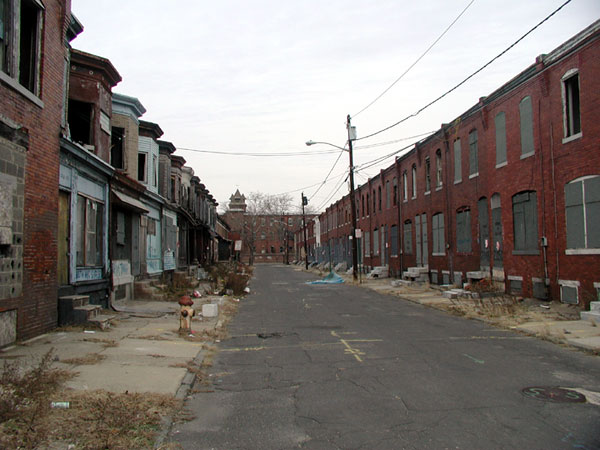
"caption": "A street in Camden, NJ, one of the poorest cities in the United States.",
"description": null,
"title": "Camden_NJ_poverty",
"credit": "\u003ca href=\"https://commons.wikimedia.org/wiki/File:Camden_NJ_poverty.jpg\" target=\"_blank\">Wikimedia Commons\u003c/a>",
"status": "inherit",
"isLoading": false,
"fetchFailed": false
},
"education_456584": {
"type": "attachments",
"id": "education_456584",
"meta": {
"index": "attachments_1716263798",
"site": "education",
"id": "456584",
"found": true
},
"parent": 456583,
"imgSizes": {
"small": {
"file": "https://ww2.kqed.org/app/uploads/sites/38/2017/04/456583-thumb-520x322.jpg",
"width": 520,
"mimeType": "image/jpeg",
"height": 322
},
"thumbnail": {
"file": "https://ww2.kqed.org/app/uploads/sites/38/2017/04/456583-thumb-160x99.jpg",
"width": 160,
"mimeType": "image/jpeg",
"height": 99
},
"xsmall": {
"file": "https://ww2.kqed.org/app/uploads/sites/38/2017/04/456583-thumb-375x232.jpg",
"width": 375,
"mimeType": "image/jpeg",
"height": 232
},
"kqedFullSize": {
"file": "https://ww2.kqed.org/app/uploads/sites/38/2017/04/456583-thumb.jpg",
"width": 600,
"height": 371
},
"guest-author-50": {
"file": "https://ww2.kqed.org/app/uploads/sites/38/2017/04/456583-thumb-50x50.jpg",
"width": 50,
"mimeType": "image/jpeg",
"height": 50
},
"guest-author-96": {
"file": "https://ww2.kqed.org/app/uploads/sites/38/2017/04/456583-thumb-96x96.jpg",
"width": 96,
"mimeType": "image/jpeg",
"height": 96
},
"guest-author-64": {
"file": "https://ww2.kqed.org/app/uploads/sites/38/2017/04/456583-thumb-64x64.jpg",
"width": 64,
"mimeType": "image/jpeg",
"height": 64
},
"detail": {
"file": "https://ww2.kqed.org/app/uploads/sites/38/2017/04/456583-thumb-150x150.jpg",
"width": 150,
"mimeType": "image/jpeg",
"height": 150
},
"guest-author-32": {
"file": "https://ww2.kqed.org/app/uploads/sites/38/2017/04/456583-thumb-32x32.jpg",
"width": 32,
"mimeType": "image/jpeg",
"height": 32
},
"guest-author-128": {
"file": "https://ww2.kqed.org/app/uploads/sites/38/2017/04/456583-thumb-128x128.jpg",
"width": 128,
"mimeType": "image/jpeg",
"height": 128
},
"xxsmall": {
"file": "https://ww2.kqed.org/app/uploads/sites/38/2017/04/456583-thumb-240x148.jpg",
"width": 240,
"mimeType": "image/jpeg",
"height": 148
}
},
"publishDate": 1491336855,
"modified": 1491336855,
"caption": null,
"description": null,
"title": "Thumbnail for 456583",
"credit": null,
"status": "inherit",
"isLoading": false,
"fetchFailed": false
},
"lowdown_26420": {
"type": "attachments",
"id": "lowdown_26420",
"meta": {
"index": "attachments_1716263798",
"site": "lowdown",
"id": "26420",
"found": true
},
"parent": 16782,
"imgSizes": {
"small": {
"file": "https://ww2.kqed.org/app/uploads/sites/26/2017/03/2353429145_9385c4dd9b_o-520x345.jpg",
"width": 520,
"mimeType": "image/jpeg",
"height": 345
},
"twentyfourteen-full-width": {
"file": "https://ww2.kqed.org/app/uploads/sites/26/2017/03/2353429145_9385c4dd9b_o-1038x576.jpg",
"width": 1038,
"mimeType": "image/jpeg",
"height": 576
},
"thumbnail": {
"file": "https://ww2.kqed.org/app/uploads/sites/26/2017/03/2353429145_9385c4dd9b_o-160x106.jpg",
"width": 160,
"mimeType": "image/jpeg",
"height": 106
},
"fd-sm": {
"file": "https://ww2.kqed.org/app/uploads/sites/26/2017/03/2353429145_9385c4dd9b_o-960x638.jpg",
"width": 960,
"mimeType": "image/jpeg",
"height": 638
},
"post-thumbnail": {
"file": "https://ww2.kqed.org/app/uploads/sites/26/2017/03/2353429145_9385c4dd9b_o-672x372.jpg",
"width": 672,
"mimeType": "image/jpeg",
"height": 372
},
"xsmall": {
"file": "https://ww2.kqed.org/app/uploads/sites/26/2017/03/2353429145_9385c4dd9b_o-375x249.jpg",
"width": 375,
"mimeType": "image/jpeg",
"height": 249
},
"kqedFullSize": {
"file": "https://ww2.kqed.org/app/uploads/sites/26/2017/03/2353429145_9385c4dd9b_o.jpg",
"width": 1280,
"height": 850
},
"large": {
"file": "https://ww2.kqed.org/app/uploads/sites/26/2017/03/2353429145_9385c4dd9b_o-1020x677.jpg",
"width": 1020,
"mimeType": "image/jpeg",
"height": 677
},
"xlarge": {
"file": "https://ww2.kqed.org/app/uploads/sites/26/2017/03/2353429145_9385c4dd9b_o-1180x784.jpg",
"width": 1180,
"mimeType": "image/jpeg",
"height": 784
},
"guest-author-50": {
"file": "https://ww2.kqed.org/app/uploads/sites/26/2017/03/2353429145_9385c4dd9b_o-50x50.jpg",
"width": 50,
"mimeType": "image/jpeg",
"height": 50
},
"guest-author-96": {
"file": "https://ww2.kqed.org/app/uploads/sites/26/2017/03/2353429145_9385c4dd9b_o-96x96.jpg",
"width": 96,
"mimeType": "image/jpeg",
"height": 96
},
"medium": {
"file": "https://ww2.kqed.org/app/uploads/sites/26/2017/03/2353429145_9385c4dd9b_o-800x531.jpg",
"width": 800,
"mimeType": "image/jpeg",
"height": 531
},
"guest-author-64": {
"file": "https://ww2.kqed.org/app/uploads/sites/26/2017/03/2353429145_9385c4dd9b_o-64x64.jpg",
"width": 64,
"mimeType": "image/jpeg",
"height": 64
},
"guest-author-32": {
"file": "https://ww2.kqed.org/app/uploads/sites/26/2017/03/2353429145_9385c4dd9b_o-32x32.jpg",
"width": 32,
"mimeType": "image/jpeg",
"height": 32
},
"fd-med": {
"file": "https://ww2.kqed.org/app/uploads/sites/26/2017/03/2353429145_9385c4dd9b_o-1180x784.jpg",
"width": 1180,
"mimeType": "image/jpeg",
"height": 784
},
"detail": {
"file": "https://ww2.kqed.org/app/uploads/sites/26/2017/03/2353429145_9385c4dd9b_o-150x150.jpg",
"width": 150,
"mimeType": "image/jpeg",
"height": 150
},
"medium_large": {
"file": "https://ww2.kqed.org/app/uploads/sites/26/2017/03/2353429145_9385c4dd9b_o-768x510.jpg",
"width": 768,
"mimeType": "image/jpeg",
"height": 510
},
"guest-author-128": {
"file": "https://ww2.kqed.org/app/uploads/sites/26/2017/03/2353429145_9385c4dd9b_o-128x128.jpg",
"width": 128,
"mimeType": "image/jpeg",
"height": 128
},
"xxsmall": {
"file": "https://ww2.kqed.org/app/uploads/sites/26/2017/03/2353429145_9385c4dd9b_o-240x159.jpg",
"width": 240,
"mimeType": "image/jpeg",
"height": 159
}
},
"publishDate": 1490935162,
"modified": 1490935702,
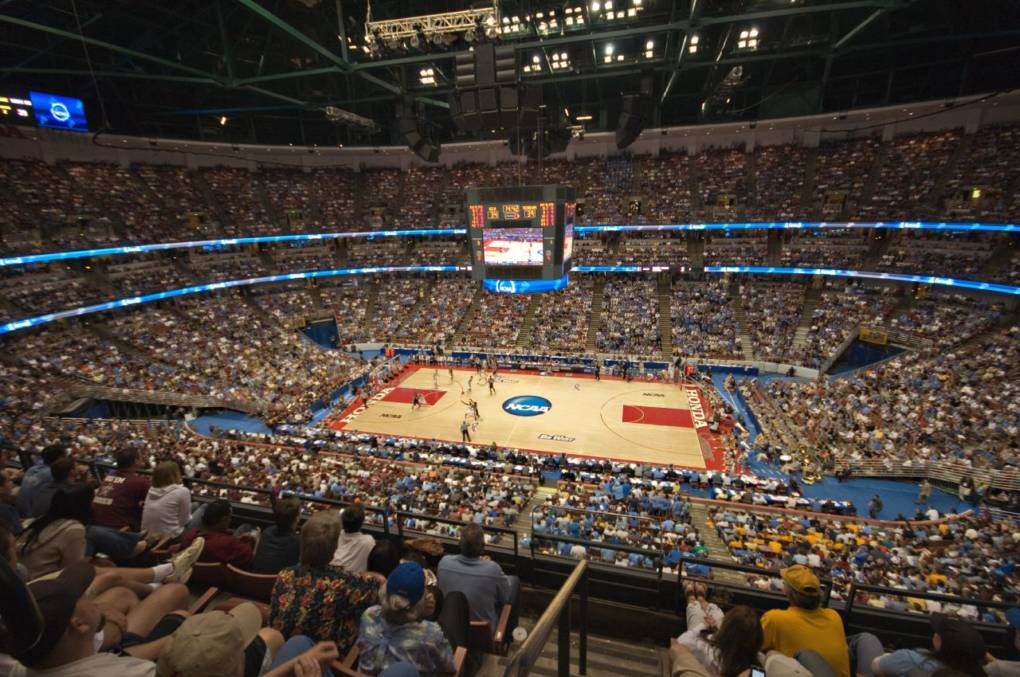
"caption": "UCLA battles Texas A&M in 2008.",
"description": null,
"title": "2353429145_9385c4dd9b_o",
"credit": "\u003ca href=\"https://www.flickr.com/photos/dirkhansen/2353429145\">SD Dirk/Flickr\u003c/a>",
"status": "inherit",
"isLoading": false,
"fetchFailed": false
},
"lowdown_26370": {
"type": "attachments",
"id": "lowdown_26370",
"meta": {
"index": "attachments_1716263798",
"site": "lowdown",
"id": "26370",
"found": true
},
"parent": 26358,
"imgSizes": {
"small": {
"file": "https://ww2.kqed.org/app/uploads/sites/26/2017/03/5046106632_8363d3384b_b-520x347.jpg",
"width": 520,
"mimeType": "image/jpeg",
"height": 347
},
"twentyfourteen-full-width": {
"file": "https://ww2.kqed.org/app/uploads/sites/26/2017/03/5046106632_8363d3384b_b-1024x576.jpg",
"width": 1024,
"mimeType": "image/jpeg",
"height": 576
},
"thumbnail": {
"file": "https://ww2.kqed.org/app/uploads/sites/26/2017/03/5046106632_8363d3384b_b-160x107.jpg",
"width": 160,
"mimeType": "image/jpeg",
"height": 107
},
"fd-sm": {
"file": "https://ww2.kqed.org/app/uploads/sites/26/2017/03/5046106632_8363d3384b_b-960x640.jpg",
"width": 960,
"mimeType": "image/jpeg",
"height": 640
},
"post-thumbnail": {
"file": "https://ww2.kqed.org/app/uploads/sites/26/2017/03/5046106632_8363d3384b_b-672x372.jpg",
"width": 672,
"mimeType": "image/jpeg",
"height": 372
},
"xsmall": {
"file": "https://ww2.kqed.org/app/uploads/sites/26/2017/03/5046106632_8363d3384b_b-375x250.jpg",
"width": 375,
"mimeType": "image/jpeg",
"height": 250
},
"kqedFullSize": {
"file": "https://ww2.kqed.org/app/uploads/sites/26/2017/03/5046106632_8363d3384b_b.jpg",
"width": 1024,
"height": 683
},
"large": {
"file": "https://ww2.kqed.org/app/uploads/sites/26/2017/03/5046106632_8363d3384b_b-1020x680.jpg",
"width": 1020,
"mimeType": "image/jpeg",
"height": 680
},
"guest-author-50": {
"file": "https://ww2.kqed.org/app/uploads/sites/26/2017/03/5046106632_8363d3384b_b-50x50.jpg",
"width": 50,
"mimeType": "image/jpeg",
"height": 50
},
"guest-author-96": {
"file": "https://ww2.kqed.org/app/uploads/sites/26/2017/03/5046106632_8363d3384b_b-96x96.jpg",
"width": 96,
"mimeType": "image/jpeg",
"height": 96
},
"medium": {
"file": "https://ww2.kqed.org/app/uploads/sites/26/2017/03/5046106632_8363d3384b_b-800x534.jpg",
"width": 800,
"mimeType": "image/jpeg",
"height": 534
},
"guest-author-64": {
"file": "https://ww2.kqed.org/app/uploads/sites/26/2017/03/5046106632_8363d3384b_b-64x64.jpg",
"width": 64,
"mimeType": "image/jpeg",
"height": 64
},
"guest-author-32": {
"file": "https://ww2.kqed.org/app/uploads/sites/26/2017/03/5046106632_8363d3384b_b-32x32.jpg",
"width": 32,
"mimeType": "image/jpeg",
"height": 32
},
"detail": {
"file": "https://ww2.kqed.org/app/uploads/sites/26/2017/03/5046106632_8363d3384b_b-150x150.jpg",
"width": 150,
"mimeType": "image/jpeg",
"height": 150
},
"medium_large": {
"file": "https://ww2.kqed.org/app/uploads/sites/26/2017/03/5046106632_8363d3384b_b-768x512.jpg",
"width": 768,
"mimeType": "image/jpeg",
"height": 512
},
"guest-author-128": {
"file": "https://ww2.kqed.org/app/uploads/sites/26/2017/03/5046106632_8363d3384b_b-128x128.jpg",
"width": 128,
"mimeType": "image/jpeg",
"height": 128
},
"xxsmall": {
"file": "https://ww2.kqed.org/app/uploads/sites/26/2017/03/5046106632_8363d3384b_b-240x160.jpg",
"width": 240,
"mimeType": "image/jpeg",
"height": 160
}
},
"publishDate": 1490735395,
"modified": 1490735498,
"caption": "Demonstrators at a 2010 march in Washington, D.C. in support of immigrant rights.",
"description": null,
"title": "Immigrant Rights",
"credit": " ep_jhu /Flickr",
"status": "inherit",
"isLoading": false,
"fetchFailed": false
},
"lowdown_19242": {
"type": "attachments",
"id": "lowdown_19242",
"meta": {
"index": "attachments_1716263798",
"site": "lowdown",
"id": "19242",
"found": true
},
"parent": 19169,
"imgSizes": {
"twentyfourteen-full-width": {
"file": "https://ww2.kqed.org/app/uploads/sites/26/2015/08/4b9145355-130924-reagan-medicare-cover-240p.nbcnews-fp-1200-800-1038x576.jpg",
"width": 1038,
"mimeType": "image/jpeg",
"height": 576
},
"thumbnail": {
"file": "https://ww2.kqed.org/app/uploads/sites/26/2015/08/4b9145355-130924-reagan-medicare-cover-240p.nbcnews-fp-1200-800-400x267.jpg",
"width": 400,
"mimeType": "image/jpeg",
"height": 267
},
"fd-sm": {
"file": "https://ww2.kqed.org/app/uploads/sites/26/2015/08/4b9145355-130924-reagan-medicare-cover-240p.nbcnews-fp-1200-800-960x640.jpg",
"width": 960,
"mimeType": "image/jpeg",
"height": 640
},
"post-thumbnail": {
"file": "https://ww2.kqed.org/app/uploads/sites/26/2015/08/4b9145355-130924-reagan-medicare-cover-240p.nbcnews-fp-1200-800-672x372.jpg",
"width": 672,
"mimeType": "image/jpeg",
"height": 372
},
"kqedFullSize": {
"file": "https://ww2.kqed.org/app/uploads/sites/26/2015/08/4b9145355-130924-reagan-medicare-cover-240p.nbcnews-fp-1200-800.jpg",
"width": 1200,
"height": 800
},
"fd-med": {
"file": "https://ww2.kqed.org/app/uploads/sites/26/2015/08/4b9145355-130924-reagan-medicare-cover-240p.nbcnews-fp-1200-800-1180x787.jpg",
"width": 1180,
"mimeType": "image/jpeg",
"height": 787
},
"guest-author-96": {
"file": "https://ww2.kqed.org/app/uploads/sites/26/2015/08/4b9145355-130924-reagan-medicare-cover-240p.nbcnews-fp-1200-800-96x96.jpg",
"width": 96,
"mimeType": "image/jpeg",
"height": 96
},
"medium": {
"file": "https://ww2.kqed.org/app/uploads/sites/26/2015/08/4b9145355-130924-reagan-medicare-cover-240p.nbcnews-fp-1200-800-800x533.jpg",
"width": 800,
"mimeType": "image/jpeg",
"height": 533
},
"guest-author-64": {
"file": "https://ww2.kqed.org/app/uploads/sites/26/2015/08/4b9145355-130924-reagan-medicare-cover-240p.nbcnews-fp-1200-800-64x64.jpg",
"width": 64,
"mimeType": "image/jpeg",
"height": 64
},
"detail": {
"file": "https://ww2.kqed.org/app/uploads/sites/26/2015/08/4b9145355-130924-reagan-medicare-cover-240p.nbcnews-fp-1200-800-75x75.jpg",
"width": 75,
"mimeType": "image/jpeg",
"height": 75
},
"guest-author-32": {
"file": "https://ww2.kqed.org/app/uploads/sites/26/2015/08/4b9145355-130924-reagan-medicare-cover-240p.nbcnews-fp-1200-800-32x32.jpg",
"width": 32,
"mimeType": "image/jpeg",
"height": 32
},
"guest-author-128": {
"file": "https://ww2.kqed.org/app/uploads/sites/26/2015/08/4b9145355-130924-reagan-medicare-cover-240p.nbcnews-fp-1200-800-128x128.jpg",
"width": 128,
"mimeType": "image/jpeg",
"height": 128
}
},
"publishDate": 1438483939,
"modified": 1490336394,
"caption": null,
"description": "Reagan",
"title": "4b9145355-130924-reagan-medicare-cover-240p.nbcnews-fp-1200-800",
"credit": null,
"status": "inherit",
"isLoading": false,
"fetchFailed": false
},
"lowdown_26285": {
"type": "attachments",
"id": "lowdown_26285",
"meta": {
"index": "attachments_1716263798",
"site": "lowdown",
"id": "26285",
"found": true
},
"parent": 26269,
"imgSizes": {
"small": {
"file": "https://ww2.kqed.org/app/uploads/sites/26/2017/03/RS8147_011-sfi-520x347.jpg",
"width": 520,
"mimeType": "image/jpeg",
"height": 347
},
"thumbnail": {
"file": "https://ww2.kqed.org/app/uploads/sites/26/2017/03/RS8147_011-sfi-160x107.jpg",
"width": 160,
"mimeType": "image/jpeg",
"height": 107
},
"xsmall": {
"file": "https://ww2.kqed.org/app/uploads/sites/26/2017/03/RS8147_011-sfi-375x250.jpg",
"width": 375,
"mimeType": "image/jpeg",
"height": 250
},
"kqedFullSize": {
"file": "https://ww2.kqed.org/app/uploads/sites/26/2017/03/RS8147_011-sfi.jpg",
"width": 540,
"height": 360
},
"guest-author-50": {
"file": "https://ww2.kqed.org/app/uploads/sites/26/2017/03/RS8147_011-sfi-50x50.jpg",
"width": 50,
"mimeType": "image/jpeg",
"height": 50
},
"guest-author-96": {
"file": "https://ww2.kqed.org/app/uploads/sites/26/2017/03/RS8147_011-sfi-96x96.jpg",
"width": 96,
"mimeType": "image/jpeg",
"height": 96
},
"guest-author-64": {
"file": "https://ww2.kqed.org/app/uploads/sites/26/2017/03/RS8147_011-sfi-64x64.jpg",
"width": 64,
"mimeType": "image/jpeg",
"height": 64
},
"detail": {
"file": "https://ww2.kqed.org/app/uploads/sites/26/2017/03/RS8147_011-sfi-150x150.jpg",
"width": 150,
"mimeType": "image/jpeg",
"height": 150
},
"guest-author-32": {
"file": "https://ww2.kqed.org/app/uploads/sites/26/2017/03/RS8147_011-sfi-32x32.jpg",
"width": 32,
"mimeType": "image/jpeg",
"height": 32
},
"guest-author-128": {
"file": "https://ww2.kqed.org/app/uploads/sites/26/2017/03/RS8147_011-sfi-128x128.jpg",
"width": 128,
"mimeType": "image/jpeg",
"height": 128
},
"xxsmall": {
"file": "https://ww2.kqed.org/app/uploads/sites/26/2017/03/RS8147_011-sfi-240x160.jpg",
"width": 240,
"mimeType": "image/jpeg",
"height": 160
}
},
"publishDate": 1490132215,
"modified": 1490226881,
"caption": "Anti-gentrification demonstrators in San Francisco show their anger toward a new condo development.",
"description": null,
"title": "RS8147_011-sfi",
"credit": "Deborah Svoboda/KQED",
"status": "inherit",
"isLoading": false,
"fetchFailed": false
},
"lowdown_26256": {
"type": "attachments",
"id": "lowdown_26256",
"meta": {
"index": "attachments_1716263798",
"site": "lowdown",
"id": "26256",
"found": true
},
"parent": 24867,
"imgSizes": {
"small": {
"file": "https://ww2.kqed.org/app/uploads/sites/26/2017/03/IMG_20140827_132206-e1489779007796-520x311.jpg",
"width": 520,
"mimeType": "image/jpeg",
"height": 311
},
"twentyfourteen-full-width": {
"file": "https://ww2.kqed.org/app/uploads/sites/26/2017/03/IMG_20140827_132206-e1489779007796-1038x576.jpg",
"width": 1038,
"mimeType": "image/jpeg",
"height": 576
},
"thumbnail": {
"file": "https://ww2.kqed.org/app/uploads/sites/26/2017/03/IMG_20140827_132206-e1489779007796-160x96.jpg",
"width": 160,
"mimeType": "image/jpeg",
"height": 96
},
"fd-sm": {
"file": "https://ww2.kqed.org/app/uploads/sites/26/2017/03/IMG_20140827_132206-e1489779007796-960x574.jpg",
"width": 960,
"mimeType": "image/jpeg",
"height": 574
},
"post-thumbnail": {
"file": "https://ww2.kqed.org/app/uploads/sites/26/2017/03/IMG_20140827_132206-e1489779007796-672x372.jpg",
"width": 672,
"mimeType": "image/jpeg",
"height": 372
},
"xsmall": {
"file": "https://ww2.kqed.org/app/uploads/sites/26/2017/03/IMG_20140827_132206-e1489779007796-375x224.jpg",
"width": 375,
"mimeType": "image/jpeg",
"height": 224
},
"kqedFullSize": {
"file": "https://ww2.kqed.org/app/uploads/sites/26/2017/03/IMG_20140827_132206-e1489779007796.jpg",
"width": 3008,
"height": 1800
},
"large": {
"file": "https://ww2.kqed.org/app/uploads/sites/26/2017/03/IMG_20140827_132206-e1489779007796-1020x610.jpg",
"width": 1020,
"mimeType": "image/jpeg",
"height": 610
},
"xlarge": {
"file": "https://ww2.kqed.org/app/uploads/sites/26/2017/03/IMG_20140827_132206-e1489779007796-1180x706.jpg",
"width": 1180,
"mimeType": "image/jpeg",
"height": 706
},
"guest-author-50": {
"file": "https://ww2.kqed.org/app/uploads/sites/26/2017/03/IMG_20140827_132206-e1489779007796-50x50.jpg",
"width": 50,
"mimeType": "image/jpeg",
"height": 50
},
"guest-author-96": {
"file": "https://ww2.kqed.org/app/uploads/sites/26/2017/03/IMG_20140827_132206-e1489779007796-96x96.jpg",
"width": 96,
"mimeType": "image/jpeg",
"height": 96
},
"medium": {
"file": "https://ww2.kqed.org/app/uploads/sites/26/2017/03/IMG_20140827_132206-e1489779007796-800x479.jpg",
"width": 800,
"mimeType": "image/jpeg",
"height": 479
},
"guest-author-64": {
"file": "https://ww2.kqed.org/app/uploads/sites/26/2017/03/IMG_20140827_132206-e1489779007796-64x64.jpg",
"width": 64,
"mimeType": "image/jpeg",
"height": 64
},
"guest-author-32": {
"file": "https://ww2.kqed.org/app/uploads/sites/26/2017/03/IMG_20140827_132206-e1489779007796-32x32.jpg",
"width": 32,
"mimeType": "image/jpeg",
"height": 32
},
"fd-lrg": {
"file": "https://ww2.kqed.org/app/uploads/sites/26/2017/03/IMG_20140827_132206-e1489779007796-1920x1149.jpg",
"width": 1920,
"mimeType": "image/jpeg",
"height": 1149
},
"fd-med": {
"file": "https://ww2.kqed.org/app/uploads/sites/26/2017/03/IMG_20140827_132206-e1489779007796-1180x706.jpg",
"width": 1180,
"mimeType": "image/jpeg",
"height": 706
},
"full-width": {
"file": "https://ww2.kqed.org/app/uploads/sites/26/2017/03/IMG_20140827_132206-e1489779007796-1920x1149.jpg",
"width": 1920,
"mimeType": "image/jpeg",
"height": 1149
},
"detail": {
"file": "https://ww2.kqed.org/app/uploads/sites/26/2017/03/IMG_20140827_132206-e1489779007796-150x150.jpg",
"width": 150,
"mimeType": "image/jpeg",
"height": 150
},
"medium_large": {
"file": "https://ww2.kqed.org/app/uploads/sites/26/2017/03/IMG_20140827_132206-e1489779007796-768x460.jpg",
"width": 768,
"mimeType": "image/jpeg",
"height": 460
},
"guest-author-128": {
"file": "https://ww2.kqed.org/app/uploads/sites/26/2017/03/IMG_20140827_132206-e1489779007796-128x128.jpg",
"width": 128,
"mimeType": "image/jpeg",
"height": 128
},
"xxsmall": {
"file": "https://ww2.kqed.org/app/uploads/sites/26/2017/03/IMG_20140827_132206-e1489779007796-240x144.jpg",
"width": 240,
"mimeType": "image/jpeg",
"height": 144
}
},
"publishDate": 1489778426,
"modified": 1489779089,
"caption": "A billboard above a homeless encampment in Mumbai, India advertises a new Trump Tower development. Taken by Paul Needham in 2014, the photo was shared extensively on social media during the 2016 election. The fact-checking site \u003ca href=\"http://www.snopes.com/trump-tower-billboard-in-mumbai/\" target=\"_blank\"> Snopes\u003c/a> initially claimed that the image was fabricated, but later recanted after receiving additional evidence proving its authenticity.\n\n\u003cbr>\u003cbr>\n\"The juxtaposition of wealth and poverty, hubris and humility is so shocking,\" wrote Needham. \"Perhaps that is why so many people couldn't bring themselves to believe that the photo is real.\" ",
"description": null,
"title": "IMG_20140827_132206",
"credit": "Paul Needham",
"status": "inherit",
"isLoading": false,
"fetchFailed": false
},
"education_439001": {
"type": "attachments",
"id": "education_439001",
"meta": {
"index": "attachments_1716263798",
"site": "education",
"id": "439001",
"found": true
},
"parent": 439000,
"imgSizes": {
"small": {
"file": "https://ww2.kqed.org/app/uploads/sites/38/2017/03/439000-thumb-520x850.png",
"width": 520,
"mimeType": "image/png",
"height": 850
},
"twentyfourteen-full-width": {
"file": "https://ww2.kqed.org/app/uploads/sites/38/2017/03/439000-thumb-1020x576.png",
"width": 1020,
"mimeType": "image/png",
"height": 576
},
"thumbnail": {
"file": "https://ww2.kqed.org/app/uploads/sites/38/2017/03/439000-thumb-160x262.png",
"width": 160,
"mimeType": "image/png",
"height": 262
},
"fd-sm": {
"file": "https://ww2.kqed.org/app/uploads/sites/38/2017/03/439000-thumb-960x1570.png",
"width": 960,
"mimeType": "image/png",
"height": 1570
},
"post-thumbnail": {
"file": "https://ww2.kqed.org/app/uploads/sites/38/2017/03/439000-thumb-672x372.png",
"width": 672,
"mimeType": "image/png",
"height": 372
},
"xsmall": {
"file": "https://ww2.kqed.org/app/uploads/sites/38/2017/03/439000-thumb-375x613.png",
"width": 375,
"mimeType": "image/png",
"height": 613
},
"kqedFullSize": {
"file": "https://ww2.kqed.org/app/uploads/sites/38/2017/03/439000-thumb.png",
"width": 1020,
"height": 1668
},
"large": {
"file": "https://ww2.kqed.org/app/uploads/sites/38/2017/03/439000-thumb-1020x1668.png",
"width": 1020,
"mimeType": "image/png",
"height": 1668
},
"guest-author-50": {
"file": "https://ww2.kqed.org/app/uploads/sites/38/2017/03/439000-thumb-50x50.png",
"width": 50,
"mimeType": "image/png",
"height": 50
},
"guest-author-96": {
"file": "https://ww2.kqed.org/app/uploads/sites/38/2017/03/439000-thumb-96x96.png",
"width": 96,
"mimeType": "image/png",
"height": 96
},
"medium": {
"file": "https://ww2.kqed.org/app/uploads/sites/38/2017/03/439000-thumb-800x1308.png",
"width": 800,
"mimeType": "image/png",
"height": 1308
},
"guest-author-64": {
"file": "https://ww2.kqed.org/app/uploads/sites/38/2017/03/439000-thumb-64x64.png",
"width": 64,
"mimeType": "image/png",
"height": 64
},
"guest-author-32": {
"file": "https://ww2.kqed.org/app/uploads/sites/38/2017/03/439000-thumb-32x32.png",
"width": 32,
"mimeType": "image/png",
"height": 32
},
"detail": {
"file": "https://ww2.kqed.org/app/uploads/sites/38/2017/03/439000-thumb-150x150.png",
"width": 150,
"mimeType": "image/png",
"height": 150
},
"medium_large": {
"file": "https://ww2.kqed.org/app/uploads/sites/38/2017/03/439000-thumb-768x1256.png",
"width": 768,
"mimeType": "image/png",
"height": 1256
},
"guest-author-128": {
"file": "https://ww2.kqed.org/app/uploads/sites/38/2017/03/439000-thumb-128x128.png",
"width": 128,
"mimeType": "image/png",
"height": 128
},
"xxsmall": {
"file": "https://ww2.kqed.org/app/uploads/sites/38/2017/03/439000-thumb-240x392.png",
"width": 240,
"mimeType": "image/png",
"height": 392
}
},
"publishDate": 1489518848,
"modified": 1489518848,
"caption": null,
"description": null,
"title": "Thumbnail for 439000",
"credit": null,
"status": "inherit",
"isLoading": false,
"fetchFailed": false
},
"lowdown_26188": {
"type": "attachments",
"id": "lowdown_26188",
"meta": {
"index": "attachments_1716263798",
"site": "lowdown",
"id": "26188",
"found": true
},
"parent": 26077,
"imgSizes": {
"small": {
"file": "https://ww2.kqed.org/app/uploads/sites/26/2017/03/stevenson-1-520x378.jpeg",
"width": 520,
"mimeType": "image/jpeg",
"height": 378
},
"thumbnail": {
"file": "https://ww2.kqed.org/app/uploads/sites/26/2017/03/stevenson-1-160x116.jpeg",
"width": 160,
"mimeType": "image/jpeg",
"height": 116
},
"post-thumbnail": {
"file": "https://ww2.kqed.org/app/uploads/sites/26/2017/03/stevenson-1-646x372.jpeg",
"width": 646,
"mimeType": "image/jpeg",
"height": 372
},
"xsmall": {
"file": "https://ww2.kqed.org/app/uploads/sites/26/2017/03/stevenson-1-375x272.jpeg",
"width": 375,
"mimeType": "image/jpeg",
"height": 272
},
"kqedFullSize": {
"file": "https://ww2.kqed.org/app/uploads/sites/26/2017/03/stevenson-1.jpeg",
"width": 646,
"height": 469
},
"guest-author-50": {
"file": "https://ww2.kqed.org/app/uploads/sites/26/2017/03/stevenson-1-50x50.jpeg",
"width": 50,
"mimeType": "image/jpeg",
"height": 50
},
"guest-author-96": {
"file": "https://ww2.kqed.org/app/uploads/sites/26/2017/03/stevenson-1-96x96.jpeg",
"width": 96,
"mimeType": "image/jpeg",
"height": 96
},
"guest-author-64": {
"file": "https://ww2.kqed.org/app/uploads/sites/26/2017/03/stevenson-1-64x64.jpeg",
"width": 64,
"mimeType": "image/jpeg",
"height": 64
},
"detail": {
"file": "https://ww2.kqed.org/app/uploads/sites/26/2017/03/stevenson-1-150x150.jpeg",
"width": 150,
"mimeType": "image/jpeg",
"height": 150
},
"guest-author-32": {
"file": "https://ww2.kqed.org/app/uploads/sites/26/2017/03/stevenson-1-32x32.jpeg",
"width": 32,
"mimeType": "image/jpeg",
"height": 32
},
"guest-author-128": {
"file": "https://ww2.kqed.org/app/uploads/sites/26/2017/03/stevenson-1-128x128.jpeg",
"width": 128,
"mimeType": "image/jpeg",
"height": 128
},
"xxsmall": {
"file": "https://ww2.kqed.org/app/uploads/sites/26/2017/03/stevenson-1-240x174.jpeg",
"width": 240,
"mimeType": "image/jpeg",
"height": 174
}
},
"publishDate": 1488757026,
"modified": 1488757056,
"caption": "Bryan Stevenson at the U.S. Supreme Court.",
"description": null,
"title": "stevenson",
"credit": "Courtesy of the Equal Justice Initiative",
"status": "inherit",
"isLoading": false,
"fetchFailed": false
}
},
"audioPlayerReducer": {
"postId": "stream_live",
"isPaused": true,
"isPlaying": false,
"pfsActive": false,
"pledgeModalIsOpen": true,
"playerDrawerIsOpen": false,
"liveAudioPlayStartedAt": 0,
"liveAudioPlayContext": ""
},
"authorsReducer": {
"matthewgreen": {
"type": "authors",
"id": "1263",
"meta": {
"index": "authors_1716337520",
"id": "1263",
"found": true
},
"name": "Matthew Green",
"firstName": "Matthew",
"lastName": "Green",
"slug": "matthewgreen",
"email": "mgreen@kqed.org",
"display_author_email": false,
"staff_mastheads": [],
"title": "KQED Editor/Reporter",
"bio": "Matthew Green is a digital media producer for KQED News. He previously produced \u003ca href=\"http://www.kqed.org/lowdown\">The Lowdown\u003c/a>, KQED’s multimedia news education blog. Matthew's written for numerous Bay Area publications, including the Oakland Tribune and San Francisco Chronicle. He also taught journalism classes at Fremont High School in East Oakland.\r\n\r\nEmail: mgreen@kqed.org; Twitter: @MGreenKQED",
"avatar": "https://secure.gravatar.com/avatar/3bf498d1267ca02c8494f33d8cfc575e?s=600&d=blank&r=g",
"twitter": "MGreenKQED",
"facebook": null,
"instagram": null,
"linkedin": null,
"sites": [
{
"site": "news",
"roles": []
},
{
"site": "lowdown",
"roles": []
},
{
"site": "science",
"roles": []
},
{
"site": "education",
"roles": []
},
{
"site": "quest",
"roles": []
},
{
"site": "liveblog",
"roles": []
}
],
"headData": {
"title": "Matthew Green | KQED",
"description": "KQED Editor/Reporter",
"ogImgSrc": "https://secure.gravatar.com/avatar/3bf498d1267ca02c8494f33d8cfc575e?s=600&d=blank&r=g",
"twImgSrc": "https://secure.gravatar.com/avatar/3bf498d1267ca02c8494f33d8cfc575e?s=600&d=blank&r=g"
},
"isLoading": false,
"link": "/author/matthewgreen"
},
"andywarner": {
"type": "authors",
"id": "7506",
"meta": {
"index": "authors_1716337520",
"id": "7506",
"found": true
},
"name": "Andy Warner",
"firstName": "Andy",
"lastName": "Warner",
"slug": "andywarner",
"email": "eridisc@gmail.com",
"display_author_email": false,
"staff_mastheads": [],
"title": null,
"bio": "Andy Warner's comic journalism has been published by Symbolia, Slate, \u003ca href=\"http://popsci.com/\">popsci.com\u003c/a>, American Public Media, Campus Progress and more. You can see more of his work at: \u003ca href=\"http://andywarnercomics.com/\">andywarnercomics.com\u003c/a>.",
"avatar": "https://secure.gravatar.com/avatar/2983c68805617a24b2c98bc90911aa2b?s=600&d=blank&r=g",
"twitter": null,
"facebook": null,
"instagram": null,
"linkedin": null,
"sites": [
{
"site": "lowdown",
"roles": [
"author"
]
}
],
"headData": {
"title": "Andy Warner | KQED",
"description": null,
"ogImgSrc": "https://secure.gravatar.com/avatar/2983c68805617a24b2c98bc90911aa2b?s=600&d=blank&r=g",
"twImgSrc": "https://secure.gravatar.com/avatar/2983c68805617a24b2c98bc90911aa2b?s=600&d=blank&r=g"
},
"isLoading": false,
"link": "/author/andywarner"
},
"jessengebretson": {
"type": "authors",
"id": "8628",
"meta": {
"index": "authors_1716337520",
"id": "8628",
"found": true
},
"name": "Jess Engebretson",
"firstName": "Jess",
"lastName": "Engebretson",
"slug": "jessengebretson",
"email": "jess.engebretson@gmail.com",
"display_author_email": false,
"staff_mastheads": [],
"title": null,
"bio": "Jess Engebretson is a radio producer from Virginia.",
"avatar": "https://secure.gravatar.com/avatar/82da81d5865f1a046c91ee925e616266?s=600&d=blank&r=g",
"twitter": null,
"facebook": null,
"instagram": null,
"linkedin": null,
"sites": [
{
"site": "lowdown",
"roles": [
"contributor"
]
}
],
"headData": {
"title": "Jess Engebretson | KQED",
"description": null,
"ogImgSrc": "https://secure.gravatar.com/avatar/82da81d5865f1a046c91ee925e616266?s=600&d=blank&r=g",
"twImgSrc": "https://secure.gravatar.com/avatar/82da81d5865f1a046c91ee925e616266?s=600&d=blank&r=g"
},
"isLoading": false,
"link": "/author/jessengebretson"
}
},
"pagesReducer": {
"education_category_news-and-civics": {
"type": "terms",
"id": "education_50",
"meta": {
"index": "terms_1716263798",
"site": "education",
"id": "50",
"score": 13.896183
},
"featImg": null,
"name": "News & Civics",
"description": "Find civics lesson plans and teaching resources for high school and middle school, including lesson plan ideas on the latest news topics.",
"taxonomy": "category",
"headData": {
"twImgId": null,
"twTitle": null,
"ogTitle": null,
"ogImgId": null,
"twDescription": null,
"description": "Find civics lesson plans and teaching resources for high school and middle school, including lesson plan ideas on the latest news topics.",
"title": "News & Civics | KQED Education",
"ogDescription": null
},
"ttid": 58,
"slug": "news-and-civics",
"isLoading": false,
"title": "News & Civics",
"pageMeta": {
"site": "education",
"WpPageTemplate": "page-topic-company",
"currentPage": 15
},
"blocks": [
{
"blockName": "kqed/company-paragraph",
"content": "Find civics lesson plans and teaching resources for high school and middle school, including lesson plan ideas on the latest news topics."
},
{
"blockName": "kqed/post-list",
"attrs": {
"layout": "cardCompany2",
"query": "posts/education?category=news-and-civics",
"seeMore": false,
"paginated": true,
"page": 15
}
},
{
"blockName": "kqed/ad"
}
]
}
},
"pfsSessionReducer": {},
"postsReducer": {
"stream_live": {
"type": "live",
"id": "stream_live",
"audioUrl": "https://streams.kqed.org/kqedradio",
"title": "Live Stream",
"excerpt": "Live Stream information currently unavailable.",
"link": "/radio",
"featImg": "",
"label": {
"name": "KQED Live",
"link": "/"
}
},
"stream_kqedNewscast": {
"type": "posts",
"id": "stream_kqedNewscast",
"audioUrl": "https://www.kqed.org/.stream/anon/radio/RDnews/newscast.mp3?_=1",
"title": "KQED Newscast",
"featImg": "",
"label": {
"name": "88.5 FM",
"link": "/"
}
},
"lowdown_26431": {
"type": "posts",
"id": "lowdown_26431",
"meta": {
"index": "posts_1716263798",
"site": "lowdown",
"id": "26431",
"score": null,
"sort": [
1491369169000
]
},
"parent": 0,
"labelTerm": {
"site": "lowdown"
},
"blocks": [],
"publishDate": 1491369169,
"format": "standard",
"disqusTitle": "How Many Americans Live in Poverty, and What Does That Actually Mean? (with Lesson Plan)",
"title": "How Many Americans Live in Poverty, and What Does That Actually Mean? (with Lesson Plan)",
"headTitle": "The Lowdown | KQED News",
"content": "\u003cp>\u003c!--more-->\u003c/p>\n\u003cdiv>\n\u003caside class=\"alignright\">\n\u003cdiv>\u003cspan style=\"font-size: x-la<p data-wpview-marker=;\">\u003cspan style=\"color: #993300;\">Teach with the Lowdown\u003c/span>\u003c/span>\u003c/div>\n\u003cp>\u003cimg class=\"alignnone wp-image-22868\" src=\"http://ww2.kqed.org/lowdown/wp-content/uploads/sites/26/2016/07/hands-e1469568663680-400x143.jpg\" width=\"340\" height=\"122\" srcset=\"https://ww2.kqed.org/app/uploads/sites/26/2016/07/hands-e1469568663680-400x143.jpg 400w, https://ww2.kqed.org/app/uploads/sites/26/2016/07/hands-e1469568663680-800x286.jpg 800w, https://ww2.kqed.org/app/uploads/sites/26/2016/07/hands-e1469568663680-768x274.jpg 768w, https://ww2.kqed.org/app/uploads/sites/26/2016/07/hands-e1469568663680.jpg 957w\" sizes=\"(max-width: 340px) 100vw, 340px\">Suggestions for nonfiction analysis, writing/discussion prompts and multimedia projects. Browse our lesson plan collection \u003ca href=\"https://ww2.kqed.org/lowdown/category/lesson-plans-and-guides/\" target=\"_blank\">here\u003c/a>.\u003c/p>\n\u003cul>\n\u003cli>\u003ca href=\"https://ww2.kqed.org/lowdown/wp-content/uploads/sites/26/2017/04/Poverty-in-America-lesson-plan-1.pdf\" target=\"_blank\">Lesson Plan: Poverty in the U.S. (PDF)\u003c/a>\u003c/li>\n\u003cli>\u003cb>Next Tuesday (4/11/17): War rhetoric\u003c/b>\u003c/li>\n\u003c/ul>\n\u003c/aside>\n\u003c/div>\n\u003cp>More than 43 million Americans -- roughly 13.5 percent of the entire population -- were living in poverty in 2015, according to the \u003ca href=\"https://www.census.gov/topics/income-poverty/poverty.html\" target=\"_blank\">U.S. Census Bureau\u003c/a>. That's actually a noticeable decline from recent years, when the rate hovered at around 15 percent, but it still amounts to a shockingly large number of people in the richest nation on earth who live in dire circumstances.\u003c/p>\n\u003cp>Comic journalist \u003ca href=\"http://andysaurus.com\" target=\"_blank\">Andy Warner \u003c/a>explains how \"poverty\" is officially defined and what factors have caused those rates to change so widely over time.\u003c/p>\n\u003cp>\u003ca href=\"https://ww2.kqed.org/lowdown/wp-content/uploads/sites/26/2017/04/Poverty_Trend_2017Revision-1-1.png\">\u003cimg src=\"https://ww2.kqed.org/lowdown/wp-content/uploads/sites/26/2017/04/Poverty_Trend_2017Revision-1-1.png\" alt=\"\" width=\"620\" height=\"3902\" class=\"alignnone size-full wp-image-30700\" srcset=\"https://ww2.kqed.org/app/uploads/sites/26/2017/04/Poverty_Trend_2017Revision-1-1.png 620w, https://ww2.kqed.org/app/uploads/sites/26/2017/04/Poverty_Trend_2017Revision-1-1-160x1007.png 160w, https://ww2.kqed.org/app/uploads/sites/26/2017/04/Poverty_Trend_2017Revision-1-1-240x1510.png 240w, https://ww2.kqed.org/app/uploads/sites/26/2017/04/Poverty_Trend_2017Revision-1-1-375x2360.png 375w, https://ww2.kqed.org/app/uploads/sites/26/2017/04/Poverty_Trend_2017Revision-1-1-520x3273.png 520w\" sizes=\"(max-width: 620px) 100vw, 620px\">\u003c/a>\u003cbr>\nAnd to learn more about how the federal government determines poverty rates, \u003ca href=\"https://ww2.kqed.org/lowdown/poverty_line/\" target=\"_blank\">see part two\u003c/a>.\u003c/p>\n\u003cp>[ad fullwidth]\u003c/p>\u003cp>\u003c/p>\n",
"disqusIdentifier": "26431 https://ww2.kqed.org/lowdown/?p=26431",
"disqusUrl": "https://ww2.kqed.org/lowdown/2017/04/04/how-many-americans-live-in-poverty-and-what-does-that-actually-mean-with-lesson-plan/",
"stats": {
"hasVideo": false,
"hasChartOrMap": false,
"hasAudio": false,
"hasPolis": false,
"wordCount": 141,
"hasGoogleForm": false,
"hasGallery": false,
"hasHearkenModule": false,
"iframeSrcs": [],
"paragraphCount": 7
},
"modified": 1524505251,
"excerpt": null,
"headData": {
"twImgId": "",
"twTitle": "",
"ogTitle": "",
"ogImgId": "",
"twDescription": "",
"description": "",
"title": "How Many Americans Live in Poverty, and What Does That Actually Mean? (with Lesson Plan) | KQED",
"ogDescription": "",
"schema": {
"@context": "https://schema.org",
"@type": "Article",
"headline": "How Many Americans Live in Poverty, and What Does That Actually Mean? (with Lesson Plan)",
"datePublished": "2017-04-04T22:12:49-07:00",
"dateModified": "2018-04-23T10:40:51-07:00",
"image": "https://cdn.kqed.org/wp-content/uploads/2020/02/KQED-OG-Image@1x.png"
}
},
"guestAuthors": [],
"slug": "how-many-americans-live-in-poverty-and-what-does-that-actually-mean-with-lesson-plan",
"status": "publish",
"path": "/lowdown/26431/how-many-americans-live-in-poverty-and-what-does-that-actually-mean-with-lesson-plan",
"audioTrackLength": null,
"parsedContent": [
{
"type": "contentString",
"content": "\u003cdiv class=\"post-body\">\u003cp>\u003cp>\u003c!--more-->\u003c/p>\n\u003cdiv>\n\u003caside class=\"alignright\">\n\u003cdiv>\u003cspan style=\"font-size: x-la<p data-wpview-marker=;\">\u003cspan style=\"color: #993300;\">Teach with the Lowdown\u003c/span>\u003c/span>\u003c/div>\n\u003cp>\u003cimg class=\"alignnone wp-image-22868\" src=\"http://ww2.kqed.org/lowdown/wp-content/uploads/sites/26/2016/07/hands-e1469568663680-400x143.jpg\" width=\"340\" height=\"122\" srcset=\"https://ww2.kqed.org/app/uploads/sites/26/2016/07/hands-e1469568663680-400x143.jpg 400w, https://ww2.kqed.org/app/uploads/sites/26/2016/07/hands-e1469568663680-800x286.jpg 800w, https://ww2.kqed.org/app/uploads/sites/26/2016/07/hands-e1469568663680-768x274.jpg 768w, https://ww2.kqed.org/app/uploads/sites/26/2016/07/hands-e1469568663680.jpg 957w\" sizes=\"(max-width: 340px) 100vw, 340px\">Suggestions for nonfiction analysis, writing/discussion prompts and multimedia projects. Browse our lesson plan collection \u003ca href=\"https://ww2.kqed.org/lowdown/category/lesson-plans-and-guides/\" target=\"_blank\">here\u003c/a>.\u003c/p>\n\u003cul>\n\u003cli>\u003ca href=\"https://ww2.kqed.org/lowdown/wp-content/uploads/sites/26/2017/04/Poverty-in-America-lesson-plan-1.pdf\" target=\"_blank\">Lesson Plan: Poverty in the U.S. (PDF)\u003c/a>\u003c/li>\n\u003cli>\u003cb>Next Tuesday (4/11/17): War rhetoric\u003c/b>\u003c/li>\n\u003c/ul>\n\u003c/aside>\n\u003c/div>\n\u003cp>More than 43 million Americans -- roughly 13.5 percent of the entire population -- were living in poverty in 2015, according to the \u003ca href=\"https://www.census.gov/topics/income-poverty/poverty.html\" target=\"_blank\">U.S. Census Bureau\u003c/a>. That's actually a noticeable decline from recent years, when the rate hovered at around 15 percent, but it still amounts to a shockingly large number of people in the richest nation on earth who live in dire circumstances.\u003c/p>\n\u003cp>Comic journalist \u003ca href=\"http://andysaurus.com\" target=\"_blank\">Andy Warner \u003c/a>explains how \"poverty\" is officially defined and what factors have caused those rates to change so widely over time.\u003c/p>\n\u003cp>\u003ca href=\"https://ww2.kqed.org/lowdown/wp-content/uploads/sites/26/2017/04/Poverty_Trend_2017Revision-1-1.png\">\u003cimg src=\"https://ww2.kqed.org/lowdown/wp-content/uploads/sites/26/2017/04/Poverty_Trend_2017Revision-1-1.png\" alt=\"\" width=\"620\" height=\"3902\" class=\"alignnone size-full wp-image-30700\" srcset=\"https://ww2.kqed.org/app/uploads/sites/26/2017/04/Poverty_Trend_2017Revision-1-1.png 620w, https://ww2.kqed.org/app/uploads/sites/26/2017/04/Poverty_Trend_2017Revision-1-1-160x1007.png 160w, https://ww2.kqed.org/app/uploads/sites/26/2017/04/Poverty_Trend_2017Revision-1-1-240x1510.png 240w, https://ww2.kqed.org/app/uploads/sites/26/2017/04/Poverty_Trend_2017Revision-1-1-375x2360.png 375w, https://ww2.kqed.org/app/uploads/sites/26/2017/04/Poverty_Trend_2017Revision-1-1-520x3273.png 520w\" sizes=\"(max-width: 620px) 100vw, 620px\">\u003c/a>\u003cbr>\nAnd to learn more about how the federal government determines poverty rates, \u003ca href=\"https://ww2.kqed.org/lowdown/poverty_line/\" target=\"_blank\">see part two\u003c/a>.\u003c/p>\n\u003cp>\u003c/p>\u003c/div>",
"attributes": {
"named": {},
"numeric": []
}
},
{
"type": "component",
"content": "",
"name": "ad",
"attributes": {
"named": {
"label": "fullwidth"
},
"numeric": [
"fullwidth"
]
}
},
{
"type": "contentString",
"content": "\u003cdiv class=\"post-body\">\u003cp>\u003c/p>\u003cp>\u003c/p>\n\u003c/div>\u003c/p>",
"attributes": {
"named": {},
"numeric": []
}
}
],
"link": "/lowdown/26431/how-many-americans-live-in-poverty-and-what-does-that-actually-mean-with-lesson-plan",
"authors": [
"7506"
],
"categories": [
"lowdown_256",
"lowdown_588",
"lowdown_2399",
"lowdown_457"
],
"tags": [
"lowdown_2337",
"lowdown_414"
],
"featImg": "lowdown_26444",
"label": "lowdown"
},
"education_456583": {
"type": "posts",
"id": "education_456583",
"meta": {
"index": "posts_1716263798",
"site": "education",
"id": "456583",
"score": null,
"sort": [
1491307227000
]
},
"parent": 0,
"labelTerm": {
"site": "lowdown"
},
"blocks": [],
"publishDate": 1491307227,
"format": "standard",
"title": "MAP: It’s Equal Pay Day! How Big Is the Gender Wage Gap Where You Live?",
"headTitle": "MAP: It’s Equal Pay Day! How Big Is the Gender Wage Gap Where You Live? | KQED",
"content": "\u003cp>\u003cspan>\u003c/span>\u003cbr>[youtube https://www.youtube.com/watch?v=YtPt2BNWin0?version=3&rel=1&fs=1&autohide=2&showsearch=0&showinfo=1&iv_load_policy=1&wmode=transparent&w=640&h=390]\u003cbr>\nToday — April 4 — is “Equal Pay Day.” It marks the number of days into 2017 (plus all of 2016) that an average American woman would need to work in order to make the same amount that an average man made in 2016.\u003c/p>\n\u003cp>Although the \u003c/p>\n\u003cp>Source:: \u003ca href=\"https://ww2.kqed.org/lowdown/2014/04/gender-wage-gap/\" target=\"_self\" title=\"MAP: It’s Equal Pay Day! How Big Is the Gender Wage Gap Where You Live?\" rel=\"noopener\">The Lowdown\u003c/a>\u003c/p>\n\u003cp>[ad fullwidth]\u003c/p>\u003cp>\u003c/p>\n",
"stats": {
"hasVideo": true,
"hasChartOrMap": false,
"hasAudio": false,
"hasPolis": false,
"wordCount": 89,
"hasGoogleForm": false,
"hasGallery": false,
"hasHearkenModule": false,
"iframeSrcs": [],
"paragraphCount": 5
},
"modified": 1704761827,
"excerpt": "\u003cp>\u003cspan>\u003c/span>\u003cbr>[youtube https://www.youtube.com/watch?v=YtPt2BNWin0?version=3&rel=1&fs=1&autohide=2&showsearch=0&showinfo=1&iv_load_policy=1&wmode=transparent&w=640&h=390]\u003cbr>\nToday — April 4 — is “Equal Pay Day.” It marks the number of days into 2017 (plus all of 2016) that an average American woman would need to work in order to make the same amount that an average man made in 2016.\u003c/p>\n\u003cp>Although the",
"headData": {
"twImgId": "",
"twTitle": "",
"ogTitle": "",
"ogImgId": "",
"twDescription": "",
"description": "\nToday — April 4 — is “Equal Pay Day.” It marks the number of days into 2017 (plus all of 2016) that an average American woman would need to work in order to make the same amount that an average man made in 2016.\nAlthough the",
"title": "MAP: It’s Equal Pay Day! How Big Is the Gender Wage Gap Where You Live? | KQED",
"ogDescription": "",
"schema": {
"@context": "https://schema.org",
"@type": "Article",
"headline": "MAP: It’s Equal Pay Day! How Big Is the Gender Wage Gap Where You Live?",
"datePublished": "2017-04-04T05:00:27-07:00",
"dateModified": "2024-01-08T16:57:07-08:00",
"image": "https://cdn.kqed.org/wp-content/uploads/2020/02/KQED-OG-Image@1x.png"
}
},
"guestAuthors": [],
"slug": "map-its-equal-pay-day-how-big-is-the-gender-wage-gap-where-you-live-2",
"status": "publish",
"redirect": {
"type": "external",
"url": "https://ww2.kqed.org/lowdown/2014/04/gender-wage-gap/"
},
"rssmiSourceLink": "https://ww2.kqed.org/lowdown/2014/04/gender-wage-gap/",
"sticky": false,
"path": "/education/456583/map-its-equal-pay-day-how-big-is-the-gender-wage-gap-where-you-live-2",
"audioTrackLength": null,
"parsedContent": [
{
"type": "contentString",
"content": "\u003cdiv class=\"post-body\">\u003cp>\u003cp>\u003cspan>\u003c/span>\u003cbr>\u003c/p>\u003cp>\u003cspan class='utils-parseShortcode-shortcodes-__youtubeShortcode__embedYoutube'>\n \u003cspan class='utils-parseShortcode-shortcodes-__youtubeShortcode__embedYoutubeInside'>\n \u003ciframe\n loading='lazy'\n class='utils-parseShortcode-shortcodes-__youtubeShortcode__youtubePlayer'\n type='text/html'\n src='//www.youtube.com/embed/YtPt2BNWin0?version=3'\n title='//www.youtube.com/embed/YtPt2BNWin0?version=3'\n allowfullscreen='true'\n style='border:0;'>\u003c/iframe>\n \u003c/span>\n \u003c/span>\u003c/p>\u003cp>\u003cbr>\nToday — April 4 — is “Equal Pay Day.” It marks the number of days into 2017 (plus all of 2016) that an average American woman would need to work in order to make the same amount that an average man made in 2016.\u003c/p>\n\u003cp>Although the \u003c/p>\n\u003cp>Source:: \u003ca href=\"https://ww2.kqed.org/lowdown/2014/04/gender-wage-gap/\" target=\"_self\" title=\"MAP: It’s Equal Pay Day! How Big Is the Gender Wage Gap Where You Live?\" rel=\"noopener\">The Lowdown\u003c/a>\u003c/p>\n\u003cp>\u003c/p>\u003c/div>",
"attributes": {
"named": {},
"numeric": []
}
},
{
"type": "component",
"content": "",
"name": "ad",
"attributes": {
"named": {
"label": "fullwidth"
},
"numeric": [
"fullwidth"
]
}
},
{
"type": "contentString",
"content": "\u003cdiv class=\"post-body\">\u003cp>\u003c/p>\u003cp>\u003c/p>\n\u003c/div>\u003c/p>",
"attributes": {
"named": {},
"numeric": []
}
}
],
"link": "https://ww2.kqed.org/lowdown/2014/04/gender-wage-gap/",
"authors": [
"1263"
],
"categories": [
"education_50"
],
"tags": [
"education_3378"
],
"featImg": "education_456584",
"label": "education"
},
"lowdown_16782": {
"type": "posts",
"id": "lowdown_16782",
"meta": {
"index": "posts_1716263798",
"site": "lowdown",
"id": "16782",
"score": null,
"sort": [
1522364432000
]
},
"parent": 0,
"labelTerm": {
"site": "lowdown"
},
"blocks": [],
"publishDate": 1522364432,
"format": "standard",
"disqusTitle": "March Madness and the Money: Should College Athletes Get Paid?",
"title": "March Madness and the Money: Should College Athletes Get Paid?",
"headTitle": "The Lowdown | KQED News",
"content": "\u003cp>\u003c!--more-->\u003c/p>\n\u003cp>Of the original \u003ca href=\"http://www.ncaa.com/interactive-bracket/basketball-men/d1\" target=\"_blank\" rel=\"noopener\">68 men's teams\u003c/a> that entered the NCAA's March Madness basketball tournament, only four remain. The Final Four games take place Saturday in San Antonio, with Michigan (#3) vs. Loyola-Chicago (#11) followed by Villanova (#1) vs. Kansas (#1); the winners battle it out for the championship on Monday night.\u003c/p>\n\u003cp>The \u003ca href=\"https://www.ncaa.com/interactive-bracket/basketball-women/d1\" target=\"_blank\" rel=\"noopener\">women's semifinals\u003c/a>, on Friday in Columbus, OH, will be packed with all number one seeds: Louisville vs. Mississippi State followed by Notre Dame vs. Connecticut. The championship game is scheduled for Sunday night.\u003c/p>\n\u003cp>In case you weren't aware, college basketball is pretty popular. Nearly 17 million TV viewers tuned in for last year's men's Final Four games,\u003ca href=\"https://www.ncaa.com/news/basketball-men/article/2017-04-02/2017-ncaa-final-four-second-most-watched-19-years\" target=\"_blank\" rel=\"noopener\"> according to the NCAA\u003c/a>, and that's not including the millions who watched online.\u003c/p>\n\u003cp>We're talking serious national obsession here: millions of high stakes office pools, major couch and bar time and suspiciously long lunch breaks, all to witness talented young blood battling it out for intercollegiate glory.\u003c/p>\n\u003cp>[ad fullwidth]\u003c/p>\n\u003cp>And that, of course, means there's also a huge amount of money being made. But the players at the center of it all, banging it out on the court, don't get a dime of it.\u003c/p>\n\u003cp>College athletes are considered \"amateurs\" by the NCAA. That means they're prohibited from collecting any kind of monetary compensation (including sponsorship money), even though the tournament they play in has become big business, generating multi-million dollar profits for the NCAA and many of the coaches and schools involved.\u003c/p>\n\u003cp>As profits grow each year, a growing contingent of former players and advocates are calling on the NCAA to start allowing student athletes earn their fair share. The league, they say, is exploiting students by profiting from their skill and celebrity status without providing appropriate compensation.\u003c/p>\n\u003cp>Meanwhile, many big-name schools provide few guarantees for student athletes, many of whom practice upwards of 60 hours a week and risk losing scholarships if they get injured and can't play.\u003c/p>\n\u003cp>\u003ca href=\"https://www.insidehighered.com/news/2015/01/27/college-athletes-greatly-overestimate-their-chances-playing-professionally\" target=\"_blank\" rel=\"noopener\">A 2015 survey\u003c/a> found that just over 1 percent of all men's college basketball players actually get drafted by the NBA, even though about three-quarters of Division I players said they believed playing professionally was at least “somewhat likely.\"\u003c/p>\n\u003cp>But the NCAA remains adamant in its stance against student athletes receiving direct financial compensation, insisting that paying players would corrupt the very spirit and nature of intercollegiate sports. The organization emphasizes that the robust scholarships most top student athletes receive, that typically cover tuition and some living expenses, provide access to a top-notch education at some of the best schools in the country, not to mention the opportunity to play on nationally-recognized teams.\u003c/p>\n\u003cp>Additionally, the NCAA notes that profits from men's basketball and football -- the big intercollegiate revenue generators -- help fund less lucrative sports (because someone's gotta pay for the squash team, right?).\u003c/p>\n\u003cp>The situation, however, almost changed dramatically in 2014, when a \u003ca href=\"https://www.insidehighered.com/news/2014/08/11/federal-judge-ncaa-violates-antitrust-law\" target=\"_blank\" rel=\"noopener\">federal judge \u003c/a>ruled that the NCAA’s policy of barring payment to college athletes violated antitrust laws. Former UCLA basketball star Ed O’Bannon, now a car salesman in Las Vegas, was the lead plaintiff in the class-action lawsuit. Years after graduating, he discovered that his avatar had been included in a popular college basketball video game, which he had never consented to, and for which he received no royalties.\u003c/p>\n\u003cp>The judge ruled that athletes in top men’s football and basketball programs should be allowed to receive at least $5,000 per year in licensing revenues (essentially, back-pay), which they could collect at the end of their college sports careers.\u003c/p>\n\u003cp>The NCAA appealed the decision to the 9th U.S. Circuit Court of Appeals, which agreed that the amateurism rules did violate antitrust laws. But \u003ca href=\"https://www.si.com/college-basketball/2015/09/30/ed-obannon-ncaa-lawsuit-appeals-court-ruling\" target=\"_blank\" rel=\"noopener\">in its ruling\u003c/a>, the court fell short of requiring schools to compensate student athletes beyond paying the cost of attendance.\u003c/p>\n\u003ch2>By the numbers:\u003c/h2>\n\u003ch1>\u003cspan style=\"color: #ff0000;\">$0\u003c/span>\u003c/h1>\n\u003cp style=\"text-align: left;\">Amount of compensation college players are allowed to receive (excluding the value of academic scholarships).\u003c/p>\n\u003ch1>\u003cspan style=\"color: #ff0000;\">$24.2 million \u003c/span>\u003c/h1>\n\u003cp>Profits made in 2014 by the Louisville Cardinals, NCAA basketball's top-earning team for that year. The team that year generated about $40 million in revenue. The University of Arizona Wildcats ranked second most profitable, with $17.7 million in earnings (based on $27.5 million in revenue). However, about a third of the 68 teams in men's tournament said they made no profit, including five in 2015 that actually reported losses.\u003c/p>\n\u003cp>\u003cem>Source: \u003ca href=\"http://espn.go.com/mens-college-basketball/tournament/2015/story/_/id/12495302/many-ncaa-tournament-did-not-turn-profit\" target=\"_blank\" rel=\"noopener\">ESPN\u003c/a> analysis of U.S. Department of Ed \u003ca href=\"http://ope.ed.gov/athletics/\" target=\"_blank\" rel=\"noopener\">Equity in Athletics\u003c/a> data\u003c/em>\u003c/p>\n\u003ch1>\u003cspan style=\"color: #ff0000;\">$10.8 billion\u003c/span>\u003c/h1>\n\u003cp>Amount CBS and Turner Sports paid the NCAA for the rights to broadcast the March Madness tournament for a 14-year period ending in 2024.\u003c/p>\n\u003cp>\u003cem>Source: \u003ca href=\"http://www.ncaa.com/news/basketball-men/2010-04-21/cbs-sports-turner-broadcasting-ncaa-reach-14-year-agreement\" target=\"_blank\" rel=\"noopener\">NCAA\u003c/a>\u003c/em>\u003c/p>\n\u003ch1>\u003cspan style=\"color: #ff0000;\">$9.6 million \u003c/span>\u003c/h1>\n\u003cp>Salary of Duke Blue Devils head coach Mike Kryzyzewski in 2014 (it's gone down since then). That year, he was NCAA's top-earning basketball coach and one of roughly 35 coaches who make over a $1 million a year.\u003c/p>\n\u003cp>\u003cem>Source: \u003ca href=\"http://sports.usatoday.com/ncaa/salaries/mens-basketball/coach\" target=\"_blank\" rel=\"noopener\">USA Today\u003c/a>\u003c/em>\u003c/p>\n\u003ch1>\u003cspan style=\"color: #ff0000;\">$1.24 billion\u003cbr>\n\u003c/span>\u003c/h1>\n\u003cp>Estimated TV ad spending during the 2016 March Madness tournament, a record-setting amount. That makes the tournament one of the most valuable franchises in televised sports, second only to NFL as the most lucrative post-season playoff franchise.\u003c/p>\n\u003cp>\u003cem>Source: \u003ca href=\"http://www.kantarmedia.com/us/newsroom/press-releases/march-madness-tv-ads-have-generated-8-billion-in-revenue-since-2006\" target=\"_blank\" rel=\"noopener\">Kantar Media\u003c/a>\u003c/em>\u003c/p>\n\u003ch1>\u003cspan style=\"color: #ff0000;\">$10.4 billion\u003c/span>\u003c/h1>\n\u003cp>The American Gaming Association's estimate of the amount that will be wagered on the tournament in 2017, including cash from the estimated 70 million office brackets.\u003c/p>\n\u003cp>\u003cem>Source: \u003ca href=\"http://www.americangaming.org/newsroom/press-releases/americans-to-bet-2-billion-on-70-million-march-madness-brackets-this-year\" target=\"_blank\" rel=\"noopener\">American Gaming Association\u003c/a>\u003c/em>\u003c/p>\n\u003ch1>\u003cspan style=\"color: #ff0000;\">1.2\u003cbr>\n\u003c/span>\u003c/h1>\n\u003cp>The percentage of of men's Division I basketball players who make it to the NBA, a sharp contrast from the roughly 75 percent who say they expect to play professionally.\u003c/p>\n\u003cp>\u003cem>Source: \u003ca href=\"https://www.insidehighered.com/news/2015/01/27/college-athletes-greatly-overestimate-their-chances-playing-professionally\" target=\"_blank\" rel=\"noopener\">Inside Higher Ed\u003c/a>\u003c/em>\u003c/p>\n\u003cp>\u003c/p>\n\u003cp>For more on the issue, check out the PBS Frontline's 2011 investigation, \"\u003ca href=\"http://www.pbs.org/wgbh/pages/frontline/money-and-march-madness/\" target=\"_blank\" rel=\"noopener\">Money and March Madness.\u003c/a>\"\u003c/p>\n\n",
"disqusIdentifier": "16782 http://blogs.kqed.org/lowdown/?p=16782",
"disqusUrl": "https://ww2.kqed.org/lowdown/2018/03/29/six-figures-on-the-mad-money-of-march-madness/",
"stats": {
"hasVideo": false,
"hasChartOrMap": false,
"hasAudio": false,
"hasPolis": false,
"wordCount": 983,
"hasGoogleForm": false,
"hasGallery": false,
"hasHearkenModule": false,
"iframeSrcs": [],
"paragraphCount": 30
},
"modified": 1522368829,
"excerpt": null,
"headData": {
"twImgId": "",
"twTitle": "",
"ogTitle": "",
"ogImgId": "",
"twDescription": "",
"description": "",
"title": "March Madness and the Money: Should College Athletes Get Paid? | KQED",
"ogDescription": "",
"schema": {
"@context": "https://schema.org",
"@type": "Article",
"headline": "March Madness and the Money: Should College Athletes Get Paid?",
"datePublished": "2018-03-29T16:00:32-07:00",
"dateModified": "2018-03-29T17:13:49-07:00",
"image": "https://cdn.kqed.org/wp-content/uploads/2020/02/KQED-OG-Image@1x.png"
}
},
"guestAuthors": [],
"slug": "six-figures-on-the-mad-money-of-march-madness",
"status": "publish",
"path": "/lowdown/16782/six-figures-on-the-mad-money-of-march-madness",
"audioTrackLength": null,
"parsedContent": [
{
"type": "contentString",
"content": "\u003cdiv class=\"post-body\">\u003cp>\u003cp>\u003c!--more-->\u003c/p>\n\u003cp>Of the original \u003ca href=\"http://www.ncaa.com/interactive-bracket/basketball-men/d1\" target=\"_blank\" rel=\"noopener\">68 men's teams\u003c/a> that entered the NCAA's March Madness basketball tournament, only four remain. The Final Four games take place Saturday in San Antonio, with Michigan (#3) vs. Loyola-Chicago (#11) followed by Villanova (#1) vs. Kansas (#1); the winners battle it out for the championship on Monday night.\u003c/p>\n\u003cp>The \u003ca href=\"https://www.ncaa.com/interactive-bracket/basketball-women/d1\" target=\"_blank\" rel=\"noopener\">women's semifinals\u003c/a>, on Friday in Columbus, OH, will be packed with all number one seeds: Louisville vs. Mississippi State followed by Notre Dame vs. Connecticut. The championship game is scheduled for Sunday night.\u003c/p>\n\u003cp>In case you weren't aware, college basketball is pretty popular. Nearly 17 million TV viewers tuned in for last year's men's Final Four games,\u003ca href=\"https://www.ncaa.com/news/basketball-men/article/2017-04-02/2017-ncaa-final-four-second-most-watched-19-years\" target=\"_blank\" rel=\"noopener\"> according to the NCAA\u003c/a>, and that's not including the millions who watched online.\u003c/p>\n\u003cp>We're talking serious national obsession here: millions of high stakes office pools, major couch and bar time and suspiciously long lunch breaks, all to witness talented young blood battling it out for intercollegiate glory.\u003c/p>\n\u003cp>\u003c/p>\u003c/div>",
"attributes": {
"named": {},
"numeric": []
}
},
{
"type": "component",
"content": "",
"name": "ad",
"attributes": {
"named": {
"label": "fullwidth"
},
"numeric": [
"fullwidth"
]
}
},
{
"type": "contentString",
"content": "\u003cdiv class=\"post-body\">\u003cp>\u003c/p>\n\u003cp>And that, of course, means there's also a huge amount of money being made. But the players at the center of it all, banging it out on the court, don't get a dime of it.\u003c/p>\n\u003cp>College athletes are considered \"amateurs\" by the NCAA. That means they're prohibited from collecting any kind of monetary compensation (including sponsorship money), even though the tournament they play in has become big business, generating multi-million dollar profits for the NCAA and many of the coaches and schools involved.\u003c/p>\n\u003cp>As profits grow each year, a growing contingent of former players and advocates are calling on the NCAA to start allowing student athletes earn their fair share. The league, they say, is exploiting students by profiting from their skill and celebrity status without providing appropriate compensation.\u003c/p>\n\u003cp>Meanwhile, many big-name schools provide few guarantees for student athletes, many of whom practice upwards of 60 hours a week and risk losing scholarships if they get injured and can't play.\u003c/p>\n\u003cp>\u003ca href=\"https://www.insidehighered.com/news/2015/01/27/college-athletes-greatly-overestimate-their-chances-playing-professionally\" target=\"_blank\" rel=\"noopener\">A 2015 survey\u003c/a> found that just over 1 percent of all men's college basketball players actually get drafted by the NBA, even though about three-quarters of Division I players said they believed playing professionally was at least “somewhat likely.\"\u003c/p>\n\u003cp>But the NCAA remains adamant in its stance against student athletes receiving direct financial compensation, insisting that paying players would corrupt the very spirit and nature of intercollegiate sports. The organization emphasizes that the robust scholarships most top student athletes receive, that typically cover tuition and some living expenses, provide access to a top-notch education at some of the best schools in the country, not to mention the opportunity to play on nationally-recognized teams.\u003c/p>\n\u003cp>Additionally, the NCAA notes that profits from men's basketball and football -- the big intercollegiate revenue generators -- help fund less lucrative sports (because someone's gotta pay for the squash team, right?).\u003c/p>\n\u003cp>The situation, however, almost changed dramatically in 2014, when a \u003ca href=\"https://www.insidehighered.com/news/2014/08/11/federal-judge-ncaa-violates-antitrust-law\" target=\"_blank\" rel=\"noopener\">federal judge \u003c/a>ruled that the NCAA’s policy of barring payment to college athletes violated antitrust laws. Former UCLA basketball star Ed O’Bannon, now a car salesman in Las Vegas, was the lead plaintiff in the class-action lawsuit. Years after graduating, he discovered that his avatar had been included in a popular college basketball video game, which he had never consented to, and for which he received no royalties.\u003c/p>\n\u003cp>The judge ruled that athletes in top men’s football and basketball programs should be allowed to receive at least $5,000 per year in licensing revenues (essentially, back-pay), which they could collect at the end of their college sports careers.\u003c/p>\n\u003cp>The NCAA appealed the decision to the 9th U.S. Circuit Court of Appeals, which agreed that the amateurism rules did violate antitrust laws. But \u003ca href=\"https://www.si.com/college-basketball/2015/09/30/ed-obannon-ncaa-lawsuit-appeals-court-ruling\" target=\"_blank\" rel=\"noopener\">in its ruling\u003c/a>, the court fell short of requiring schools to compensate student athletes beyond paying the cost of attendance.\u003c/p>\n\u003ch2>By the numbers:\u003c/h2>\n\u003ch1>\u003cspan style=\"color: #ff0000;\">$0\u003c/span>\u003c/h1>\n\u003cp style=\"text-align: left;\">Amount of compensation college players are allowed to receive (excluding the value of academic scholarships).\u003c/p>\n\u003ch1>\u003cspan style=\"color: #ff0000;\">$24.2 million \u003c/span>\u003c/h1>\n\u003cp>Profits made in 2014 by the Louisville Cardinals, NCAA basketball's top-earning team for that year. The team that year generated about $40 million in revenue. The University of Arizona Wildcats ranked second most profitable, with $17.7 million in earnings (based on $27.5 million in revenue). However, about a third of the 68 teams in men's tournament said they made no profit, including five in 2015 that actually reported losses.\u003c/p>\n\u003cp>\u003cem>Source: \u003ca href=\"http://espn.go.com/mens-college-basketball/tournament/2015/story/_/id/12495302/many-ncaa-tournament-did-not-turn-profit\" target=\"_blank\" rel=\"noopener\">ESPN\u003c/a> analysis of U.S. Department of Ed \u003ca href=\"http://ope.ed.gov/athletics/\" target=\"_blank\" rel=\"noopener\">Equity in Athletics\u003c/a> data\u003c/em>\u003c/p>\n\u003ch1>\u003cspan style=\"color: #ff0000;\">$10.8 billion\u003c/span>\u003c/h1>\n\u003cp>Amount CBS and Turner Sports paid the NCAA for the rights to broadcast the March Madness tournament for a 14-year period ending in 2024.\u003c/p>\n\u003cp>\u003cem>Source: \u003ca href=\"http://www.ncaa.com/news/basketball-men/2010-04-21/cbs-sports-turner-broadcasting-ncaa-reach-14-year-agreement\" target=\"_blank\" rel=\"noopener\">NCAA\u003c/a>\u003c/em>\u003c/p>\n\u003ch1>\u003cspan style=\"color: #ff0000;\">$9.6 million \u003c/span>\u003c/h1>\n\u003cp>Salary of Duke Blue Devils head coach Mike Kryzyzewski in 2014 (it's gone down since then). That year, he was NCAA's top-earning basketball coach and one of roughly 35 coaches who make over a $1 million a year.\u003c/p>\n\u003cp>\u003cem>Source: \u003ca href=\"http://sports.usatoday.com/ncaa/salaries/mens-basketball/coach\" target=\"_blank\" rel=\"noopener\">USA Today\u003c/a>\u003c/em>\u003c/p>\n\u003ch1>\u003cspan style=\"color: #ff0000;\">$1.24 billion\u003cbr>\n\u003c/span>\u003c/h1>\n\u003cp>Estimated TV ad spending during the 2016 March Madness tournament, a record-setting amount. That makes the tournament one of the most valuable franchises in televised sports, second only to NFL as the most lucrative post-season playoff franchise.\u003c/p>\n\u003cp>\u003cem>Source: \u003ca href=\"http://www.kantarmedia.com/us/newsroom/press-releases/march-madness-tv-ads-have-generated-8-billion-in-revenue-since-2006\" target=\"_blank\" rel=\"noopener\">Kantar Media\u003c/a>\u003c/em>\u003c/p>\n\u003ch1>\u003cspan style=\"color: #ff0000;\">$10.4 billion\u003c/span>\u003c/h1>\n\u003cp>The American Gaming Association's estimate of the amount that will be wagered on the tournament in 2017, including cash from the estimated 70 million office brackets.\u003c/p>\n\u003cp>\u003cem>Source: \u003ca href=\"http://www.americangaming.org/newsroom/press-releases/americans-to-bet-2-billion-on-70-million-march-madness-brackets-this-year\" target=\"_blank\" rel=\"noopener\">American Gaming Association\u003c/a>\u003c/em>\u003c/p>\n\u003ch1>\u003cspan style=\"color: #ff0000;\">1.2\u003cbr>\n\u003c/span>\u003c/h1>\n\u003cp>The percentage of of men's Division I basketball players who make it to the NBA, a sharp contrast from the roughly 75 percent who say they expect to play professionally.\u003c/p>\n\u003cp>\u003cem>Source: \u003ca href=\"https://www.insidehighered.com/news/2015/01/27/college-athletes-greatly-overestimate-their-chances-playing-professionally\" target=\"_blank\" rel=\"noopener\">Inside Higher Ed\u003c/a>\u003c/em>\u003c/p>\n\u003cp>\u003c/p>\n\u003cp>For more on the issue, check out the PBS Frontline's 2011 investigation, \"\u003ca href=\"http://www.pbs.org/wgbh/pages/frontline/money-and-march-madness/\" target=\"_blank\" rel=\"noopener\">Money and March Madness.\u003c/a>\"\u003c/p>\n\n\u003c/div>\u003c/p>",
"attributes": {
"named": {},
"numeric": []
}
}
],
"link": "/lowdown/16782/six-figures-on-the-mad-money-of-march-madness",
"authors": [
"1263"
],
"categories": [
"lowdown_391",
"lowdown_2375",
"lowdown_2365"
],
"tags": [
"lowdown_2337",
"lowdown_593"
],
"featImg": "lowdown_26420",
"label": "lowdown"
},
"lowdown_26358": {
"type": "posts",
"id": "lowdown_26358",
"meta": {
"index": "posts_1716263798",
"site": "lowdown",
"id": "26358",
"score": null,
"sort": [
1490758747000
]
},
"parent": 0,
"labelTerm": {
"site": "lowdown"
},
"blocks": [],
"publishDate": 1490758747,
"format": "aside",
"disqusTitle": "What Legal Rights Do Undocumented Immigrants Have? (With Lesson Plan)",
"title": "What Legal Rights Do Undocumented Immigrants Have? (With Lesson Plan)",
"headTitle": "The Lowdown | KQED News",
"content": "\u003cp>\u003c!--more-->\u003c/p>\n\u003cp>https://youtu.be/rE1pC5HVUjQ\u003c/p>\n\u003cdiv>\n\u003caside class=\"alignright\">\n\u003cdiv>\u003cspan style=\"font-size: x-large\">\u003cspan style=\"color: #993300\">Teach with the Lowdown\u003c/span>\u003c/span>\u003c/div>\n\u003cp>\u003cimg class=\"alignnone wp-image-22868\" src=\"http://ww2.kqed.org/lowdown/wp-content/uploads/sites/26/2016/07/hands-e1469568663680-400x143.jpg\" width=\"340\" height=\"122\" srcset=\"https://ww2.kqed.org/app/uploads/sites/26/2016/07/hands-e1469568663680-400x143.jpg 400w, https://ww2.kqed.org/app/uploads/sites/26/2016/07/hands-e1469568663680-800x286.jpg 800w, https://ww2.kqed.org/app/uploads/sites/26/2016/07/hands-e1469568663680-768x274.jpg 768w, https://ww2.kqed.org/app/uploads/sites/26/2016/07/hands-e1469568663680.jpg 957w\" sizes=\"(max-width: 340px) 100vw, 340px\">Suggestions for nonfiction analysis, writing/discussion prompts and multimedia projects. Browse our lesson plan collection \u003ca href=\"https://ww2.kqed.org/lowdown/category/lesson-plans-and-guides/\" target=\"_blank\">here\u003c/a>.\u003c/p>\n\u003cul>\n\u003cli>\u003ca href=\"https://ww2.kqed.org/lowdown/wp-content/uploads/sites/26/2017/03/Legal-Rights-of-Immigrants-lesson-plan.pdf\" target=\"_blank\">Lesson Plan: Immigrant rights (PDF)\u003c/a>\u003c/li>\n\u003cli>\u003cb>Next Tuesday (4/4/17): Poverty\u003c/b>\u003c/li>\n\u003c/ul>\n\u003c/aside>\n\u003c/div>\n\u003cp>Glenn Beck, the controversial conservative political commentator, once infamously \u003ca href=\"https://www.youtube.com/watch?v=QBLQqoT7MbA\" target=\"_blank\">declared\u003c/a>:\u003c/p>\n\u003cp>\"Let me get something straight here for those illegal aliens that might be watching the program. You have human rights. You do not have legal rights.\"\u003c/p>\n\u003cp>Beck's pronouncement represents a pretty commonly held assertion: If you're in this country illegally, you don't have constitutional rights.\u003c/p>\n\u003cp>[ad fullwidth]\u003c/p>\n\u003cp>But it's completely false.\u003c/p>\n\u003cp>With the exception of voting, traveling between states and running for president or Congress, the U.S. Constitution actually guarantees most of the same fundamental civil rights and liberties to everyone within the United States, citizens and non-citizens alike, including the estimated 11 million people living here unlawfully. That's at least how the Supreme Court has interpreted the Constitution for more than a century.\u003c/p>\n\u003cp>Immigration advocates have long tried to make this clear to undocumented residents, many of whom are unaware that they have any legal protections at all. \u003ca href=\"https://ww2.kqed.org/news/2017/02/27/know-your-rights-immigrants-prepare-for-increased-enforcement/\" target=\"_blank\">This education effort\u003c/a> ramped up noticeably after the election of President Trump, whose \u003ca href=\"https://www.nytimes.com/2017/02/21/us/politics/dhs-immigration-trump.html?_r=0\">tough-on-immigration stance \u003c/a>has heightened fears among communities wary of being targeted for deportation.\u003c/p>\n\u003cp>Attorneys and immigration rights advocates from organizations like the American Civil Liberties Union have been busy hosting \"\u003ca href=\"https://ww2.kqed.org/news/2016/12/02/know-your-rights-events-tackle-fears-among-californias-undocumented/\">Know Your Rights\u003c/a>” workshops around the country, an effort give immigrants advice on what to do if confronted by immigration enforcement officials.\u003c/p>\n\u003cp>[soundcloud url=\"https://api.soundcloud.com/tracks/295711401\" params=\"color=ff5500&auto_play=false&hide_related=false&show_comments=true&show_user=true&show_reposts=false\" width=\"100%\" height=\"166\" iframe=\"true\" /]\u003c/p>\n\u003ch4>Equal Protection\u003c/h4>\n\u003cp>The legal rights of undocumented immigrants are largely grounded in the \u003ca href=\"https://www.law.cornell.edu/wex/equal_protection\" target=\"_blank\">Equal Protection Clause of the Fourteenth Amendment\u003c/a>, which explicitly guarantees equal protection of the law, not only to any U.S. \"citizen,\" but also any \"person\" living within \"its jurisdiction.\"\u003c/p>\n\u003cp>As far back as 1896, the Supreme Court \u003ca href=\"https://supreme.justia.com/cases/federal/us/163/228/case.html\" target=\"_blank\">reinforced\u003c/a> this concept. “The Fourteenth Amendment to the Constitution is not confined to the protection of citizens,\" it ruled in \u003cem>Wong Wing v. United States\u003c/em>. \"These provisions are universal in their application to all persons within the territorial jurisdiction, without regard to any differences of race, of color, or nationality; and the equal protection of the laws is a pledge of the protection of equal laws.”\u003c/p>\n\u003cp>In other words, anyone living in the U.S. -- legally or not -- has constitutional rights, including the right to equal protection of the law and that of due process (fair treatment in the judicial system).\u003c/p>\n\u003cp>This principle was furthered by the High Court's \u003ca href=\"https://supreme.justia.com/cases/federal/us/413/266/\" target=\"_blank\">1973 decision in \u003cem>Almeida-Sanchez v. United States\u003c/em>,\u003c/a> which stated that non-citizens, regardless of legal status, are protected by the Constitution's criminal charge-related amendments, including search and seizure, self-incrimination, freedom of expression and trial by jury.\u003c/p>\n\u003cp>Under the \u003ca href=\"https://www.law.cornell.edu/constitution/fourth_amendment\" target=\"_blank\">Fourth Amendment,\u003c/a> which protects against unreasonable searches and seizures, undocumented immigrants can deny law enforcement officers entry into their homes unless they have a valid search warrant or have been given explicit consent.\u003c/p>\n\u003cp>In the landmark 1982 \u003ca href=\"http://caselaw.findlaw.com/us-supreme-court/457/202.html%22%20target=%22_blank\">\u003cem>Plyler v. Doe\u003c/em> decision\u003c/a>, the court further expanded this umbrella of equal protection, striking down a Texas statute that denied free public education to undocumented residents. The court ruled that Texas' law violated the Equal Protection Clause. All children, it concluded, regardless of immigration status, are therefore entitled to a free public education.\u003c/p>\n\u003cp>[audio src=\"http://www.kqed.org/.stream/anon/radio/tcrmag/2017/02/2017-02-24a-tcrmag.mp3\" Image=\"https://ww2.kqed.org/news/wp-content/uploads/sites/10/2017/02/RS24364_Angelica-2-qut-800x533.jpg\" Title=\"'Know Your Rights': California Immigrants Prepare for Increased Enforcement\" program=\"The California Report\"]\u003c/p>\n\u003cp>These are just some of the rights that the Constitution and federal law grant to everyone in the U.S.\u003c/p>\n\u003cp>Federal law, for instance, requires publicly funded hospitals to \u003ca href=\"http://www.cms.hhs.gov/EMTALA/\" target=\"_blank\">provide emergency medical services to all patients, \u003c/a>regardless of immigration status. It also protects against workplace discrimination and unfair labor practices.\u003c/p>\n\u003cp>Of course, there's a pretty big difference between understanding your rights and feeling the confidence to actually exercise them, especially when an ICE agent is banging on the door.\u003c/p>\n\u003cp>\"That's why I say there are three really important things for folks to do in immigrant communities, and only the first one is knowing your rights,\" says Thomas Saenz, president and general counsel of the \u003ca href=\"http://www.maldef.org\" target=\"_blank\">Mexican American Legal Defense and Educational Fund\u003c/a>, a Los Angeles-based civil rights organization.\u003c/p>\n\u003cp>\"The second is that folks need to know to never waive their rights. Never sign waivers.\" If you give consent or voluntarily waive your rights, Saenz cautions, you essentially lose those legal protections.\u003c/p>\n\u003cp>\u003c/p>\n\u003cp>\"And the third is that people really need to get the message and understand that if they exercise their rights, they will not be alone -- they will find support and resources,\" Saenz adds. \"People really need to be emboldened, especially when a screaming uniformed agent is asking your to sign a piece of paper.\"\u003c/p>\n\n",
"disqusIdentifier": "26358 https://ww2.kqed.org/lowdown/?p=26358",
"disqusUrl": "https://ww2.kqed.org/lowdown/2017/03/28/what-legal-rights-do-undocumented-immigrants-have-with-lesson-plan/",
"stats": {
"hasVideo": false,
"hasChartOrMap": false,
"hasAudio": true,
"hasPolis": false,
"wordCount": 858,
"hasGoogleForm": false,
"hasGallery": false,
"hasHearkenModule": false,
"iframeSrcs": [],
"paragraphCount": 24
},
"modified": 1490820536,
"excerpt": null,
"headData": {
"twImgId": "",
"twTitle": "",
"ogTitle": "",
"ogImgId": "",
"twDescription": "",
"description": "",
"title": "What Legal Rights Do Undocumented Immigrants Have? (With Lesson Plan) | KQED",
"ogDescription": "",
"schema": {
"@context": "https://schema.org",
"@type": "Article",
"headline": "What Legal Rights Do Undocumented Immigrants Have? (With Lesson Plan)",
"datePublished": "2017-03-28T20:39:07-07:00",
"dateModified": "2017-03-29T13:48:56-07:00",
"image": "https://cdn.kqed.org/wp-content/uploads/2020/02/KQED-OG-Image@1x.png"
}
},
"guestAuthors": [],
"slug": "what-legal-rights-do-undocumented-immigrants-have-with-lesson-plan",
"status": "publish",
"path": "/lowdown/26358/what-legal-rights-do-undocumented-immigrants-have-with-lesson-plan",
"audioTrackLength": null,
"parsedContent": [
{
"type": "contentString",
"content": "\u003cdiv class=\"post-body\">\u003cp>\u003cp>\u003c!--more-->\u003c/p>\u003c/p>\u003cp>\u003cspan class='utils-parseShortcode-shortcodes-__youtubeShortcode__embedYoutube'>\n \u003cspan class='utils-parseShortcode-shortcodes-__youtubeShortcode__embedYoutubeInside'>\n \u003ciframe\n loading='lazy'\n class='utils-parseShortcode-shortcodes-__youtubeShortcode__youtubePlayer'\n type='text/html'\n src='//www.youtube.com/embed/rE1pC5HVUjQ'\n title='//www.youtube.com/embed/rE1pC5HVUjQ'\n allowfullscreen='true'\n style='border:0;'>\u003c/iframe>\n \u003c/span>\n \u003c/span>\u003c/p>\u003cp>\u003cdiv>\n\u003caside class=\"alignright\">\n\u003cdiv>\u003cspan style=\"font-size: x-large\">\u003cspan style=\"color: #993300\">Teach with the Lowdown\u003c/span>\u003c/span>\u003c/div>\n\u003cp>\u003cimg class=\"alignnone wp-image-22868\" src=\"http://ww2.kqed.org/lowdown/wp-content/uploads/sites/26/2016/07/hands-e1469568663680-400x143.jpg\" width=\"340\" height=\"122\" srcset=\"https://ww2.kqed.org/app/uploads/sites/26/2016/07/hands-e1469568663680-400x143.jpg 400w, https://ww2.kqed.org/app/uploads/sites/26/2016/07/hands-e1469568663680-800x286.jpg 800w, https://ww2.kqed.org/app/uploads/sites/26/2016/07/hands-e1469568663680-768x274.jpg 768w, https://ww2.kqed.org/app/uploads/sites/26/2016/07/hands-e1469568663680.jpg 957w\" sizes=\"(max-width: 340px) 100vw, 340px\">Suggestions for nonfiction analysis, writing/discussion prompts and multimedia projects. Browse our lesson plan collection \u003ca href=\"https://ww2.kqed.org/lowdown/category/lesson-plans-and-guides/\" target=\"_blank\">here\u003c/a>.\u003c/p>\n\u003cul>\n\u003cli>\u003ca href=\"https://ww2.kqed.org/lowdown/wp-content/uploads/sites/26/2017/03/Legal-Rights-of-Immigrants-lesson-plan.pdf\" target=\"_blank\">Lesson Plan: Immigrant rights (PDF)\u003c/a>\u003c/li>\n\u003cli>\u003cb>Next Tuesday (4/4/17): Poverty\u003c/b>\u003c/li>\n\u003c/ul>\n\u003c/aside>\n\u003c/div>\n\u003cp>Glenn Beck, the controversial conservative political commentator, once infamously \u003ca href=\"https://www.youtube.com/watch?v=QBLQqoT7MbA\" target=\"_blank\">declared\u003c/a>:\u003c/p>\n\u003cp>\"Let me get something straight here for those illegal aliens that might be watching the program. You have human rights. You do not have legal rights.\"\u003c/p>\n\u003cp>Beck's pronouncement represents a pretty commonly held assertion: If you're in this country illegally, you don't have constitutional rights.\u003c/p>\n\u003cp>\u003c/p>\u003c/div>",
"attributes": {
"named": {},
"numeric": []
}
},
{
"type": "component",
"content": "",
"name": "ad",
"attributes": {
"named": {
"label": "fullwidth"
},
"numeric": [
"fullwidth"
]
}
},
{
"type": "contentString",
"content": "\u003cdiv class=\"post-body\">\u003cp>\u003c/p>\n\u003cp>But it's completely false.\u003c/p>\n\u003cp>With the exception of voting, traveling between states and running for president or Congress, the U.S. Constitution actually guarantees most of the same fundamental civil rights and liberties to everyone within the United States, citizens and non-citizens alike, including the estimated 11 million people living here unlawfully. That's at least how the Supreme Court has interpreted the Constitution for more than a century.\u003c/p>\n\u003cp>Immigration advocates have long tried to make this clear to undocumented residents, many of whom are unaware that they have any legal protections at all. \u003ca href=\"https://ww2.kqed.org/news/2017/02/27/know-your-rights-immigrants-prepare-for-increased-enforcement/\" target=\"_blank\">This education effort\u003c/a> ramped up noticeably after the election of President Trump, whose \u003ca href=\"https://www.nytimes.com/2017/02/21/us/politics/dhs-immigration-trump.html?_r=0\">tough-on-immigration stance \u003c/a>has heightened fears among communities wary of being targeted for deportation.\u003c/p>\n\u003cp>Attorneys and immigration rights advocates from organizations like the American Civil Liberties Union have been busy hosting \"\u003ca href=\"https://ww2.kqed.org/news/2016/12/02/know-your-rights-events-tackle-fears-among-californias-undocumented/\">Know Your Rights\u003c/a>” workshops around the country, an effort give immigrants advice on what to do if confronted by immigration enforcement officials.\u003c/p>\n\u003cp>\u003c/p>\u003cp>\u003cdiv class='utils-parseShortcode-shortcodes-__shortcodes__shortcodeWrapper'>\n \u003ciframe width='100%' height='166'\n scrolling='no' frameborder='no'\n src='https://w.soundcloud.com/player/?url=https://api.soundcloud.com/tracks/295711401&visual=true&color=ff5500&auto_play=false&hide_related=false&show_comments=true&show_user=true&show_reposts=false'\n title='https://api.soundcloud.com/tracks/295711401'>\n \u003c/iframe>\n \u003c/div>\u003c/p>\u003cp>\u003c/p>\n\u003ch4>Equal Protection\u003c/h4>\n\u003cp>The legal rights of undocumented immigrants are largely grounded in the \u003ca href=\"https://www.law.cornell.edu/wex/equal_protection\" target=\"_blank\">Equal Protection Clause of the Fourteenth Amendment\u003c/a>, which explicitly guarantees equal protection of the law, not only to any U.S. \"citizen,\" but also any \"person\" living within \"its jurisdiction.\"\u003c/p>\n\u003cp>As far back as 1896, the Supreme Court \u003ca href=\"https://supreme.justia.com/cases/federal/us/163/228/case.html\" target=\"_blank\">reinforced\u003c/a> this concept. “The Fourteenth Amendment to the Constitution is not confined to the protection of citizens,\" it ruled in \u003cem>Wong Wing v. United States\u003c/em>. \"These provisions are universal in their application to all persons within the territorial jurisdiction, without regard to any differences of race, of color, or nationality; and the equal protection of the laws is a pledge of the protection of equal laws.”\u003c/p>\n\u003cp>In other words, anyone living in the U.S. -- legally or not -- has constitutional rights, including the right to equal protection of the law and that of due process (fair treatment in the judicial system).\u003c/p>\n\u003cp>This principle was furthered by the High Court's \u003ca href=\"https://supreme.justia.com/cases/federal/us/413/266/\" target=\"_blank\">1973 decision in \u003cem>Almeida-Sanchez v. United States\u003c/em>,\u003c/a> which stated that non-citizens, regardless of legal status, are protected by the Constitution's criminal charge-related amendments, including search and seizure, self-incrimination, freedom of expression and trial by jury.\u003c/p>\n\u003cp>Under the \u003ca href=\"https://www.law.cornell.edu/constitution/fourth_amendment\" target=\"_blank\">Fourth Amendment,\u003c/a> which protects against unreasonable searches and seizures, undocumented immigrants can deny law enforcement officers entry into their homes unless they have a valid search warrant or have been given explicit consent.\u003c/p>\n\u003cp>In the landmark 1982 \u003ca href=\"http://caselaw.findlaw.com/us-supreme-court/457/202.html%22%20target=%22_blank\">\u003cem>Plyler v. Doe\u003c/em> decision\u003c/a>, the court further expanded this umbrella of equal protection, striking down a Texas statute that denied free public education to undocumented residents. The court ruled that Texas' law violated the Equal Protection Clause. All children, it concluded, regardless of immigration status, are therefore entitled to a free public education.\u003c/p>\n\u003cp>\u003c/p>\u003c/div>",
"attributes": {
"named": {},
"numeric": []
}
},
{
"type": "component",
"content": "",
"name": "audio",
"attributes": {
"named": {
"src": "http://www.kqed.org/.stream/anon/radio/tcrmag/2017/02/2017-02-24a-tcrmag.mp3",
"image": "https://ww2.kqed.org/news/wp-content/uploads/sites/10/2017/02/RS24364_Angelica-2-qut-800x533.jpg",
"title": "'Know Your Rights': California Immigrants Prepare for Increased Enforcement",
"program": "The California Report",
"label": ""
},
"numeric": []
}
},
{
"type": "contentString",
"content": "\u003cdiv class=\"post-body\">\u003cp>\u003c/p>\n\u003cp>These are just some of the rights that the Constitution and federal law grant to everyone in the U.S.\u003c/p>\n\u003cp>Federal law, for instance, requires publicly funded hospitals to \u003ca href=\"http://www.cms.hhs.gov/EMTALA/\" target=\"_blank\">provide emergency medical services to all patients, \u003c/a>regardless of immigration status. It also protects against workplace discrimination and unfair labor practices.\u003c/p>\n\u003cp>Of course, there's a pretty big difference between understanding your rights and feeling the confidence to actually exercise them, especially when an ICE agent is banging on the door.\u003c/p>\n\u003cp>\"That's why I say there are three really important things for folks to do in immigrant communities, and only the first one is knowing your rights,\" says Thomas Saenz, president and general counsel of the \u003ca href=\"http://www.maldef.org\" target=\"_blank\">Mexican American Legal Defense and Educational Fund\u003c/a>, a Los Angeles-based civil rights organization.\u003c/p>\n\u003cp>\"The second is that folks need to know to never waive their rights. Never sign waivers.\" If you give consent or voluntarily waive your rights, Saenz cautions, you essentially lose those legal protections.\u003c/p>\n\u003cp>\u003c/p>\n\u003cp>\"And the third is that people really need to get the message and understand that if they exercise their rights, they will not be alone -- they will find support and resources,\" Saenz adds. \"People really need to be emboldened, especially when a screaming uniformed agent is asking your to sign a piece of paper.\"\u003c/p>\n\n\u003c/div>\u003c/p>",
"attributes": {
"named": {},
"numeric": []
}
}
],
"link": "/lowdown/26358/what-legal-rights-do-undocumented-immigrants-have-with-lesson-plan",
"authors": [
"1263"
],
"categories": [
"lowdown_2362",
"lowdown_2399"
],
"tags": [
"lowdown_2337",
"lowdown_136"
],
"featImg": "lowdown_26370",
"label": "lowdown"
},
"lowdown_26324": {
"type": "posts",
"id": "lowdown_26324",
"meta": {
"index": "posts_1716263798",
"site": "lowdown",
"id": "26324",
"score": null,
"sort": [
1490336548000
]
},
"parent": 0,
"labelTerm": {
"site": "lowdown"
},
"blocks": [],
"publishDate": 1490336548,
"format": "aside",
"disqusTitle": "Why Do Americans Have Such A Hard Time Agreeing on Health Care Reform?",
"title": "Why Do Americans Have Such A Hard Time Agreeing on Health Care Reform?",
"headTitle": "The Lowdown | KQED News",
"content": "\u003cp>\u003c!--more-->\u003c/p>\n\u003cp>https://youtu.be/aa0XPCHksFk\u003c/p>\n\u003cp>Despite seven years or relentless attacks, two Supreme Court challenges and dozens of congressional efforts to kill it, the Affordable Care Act -- aka Obamacare -- has again lived to see another day.\u003c/p>\n\u003cp>After the 2016 election with Republicans in control of both the White House and Congress, President Obama's signature health care reform seemed all but doomed.\u003c/p>\n\u003cp>As a candidate, President Trump repeatedly pledged to dismantle the law, promising an alternative plan that would offer \"\u003ca href=\"http://www.cbsnews.com/news/donald-trump-promises-health-insurance-for-everybody/\">insurance for everybody\u003c/a>” all while dramatically cutting costs (although he stopped short of providing any firm details).\u003c/p>\n\u003ch4>Messy business\u003c/h4>\n\u003cp>Things got a good deal messier after that. Repealing the ACA without a reasonable replacement would cause millions of Americans to lose their health coverage, a prospect that, as it turns out, a lot of people aren't too thrilled about. That was made abundantly clear when scores of irate constituents recently packed into Republican congressional town hall meetings across the country to air their grievances.\u003c/p>\n\u003cp>[ad fullwidth]\u003c/p>\n\u003cp>In fact, despite the ongoing, high profile barrage of attacks against the ACA, and the striking number of former Obama backers who voted for Trump -- a candidate who vowed to dismantle it -- support for the law is actually at \u003ca href=\"http://kff.org/interactive/kaiser-health-tracking-poll-the-publics-views-on-the-aca/#?response=Favorable--Unfavorable&aRange=all\">the highest level it's been in years\u003c/a>.\u003c/p>\n\u003cp>Meanwhile, Republicans have struggled mightily to figure out what an overhaul would actually look like. It’s a tall order, after all: guaranteeing health coverage for everyone doesn't exactly jive with the party's agenda to slash federal spending and dramatically reduce government’s role in managing the health care market.\u003c/p>\n\u003cp>The result, the American Health Care Act, introduced by Republicans earlier this month, would have gotten rid of the individual mandate and replaced federal insurance subsidies with tax credits and block grants to states, among other major changes. In its \u003ca href=\"https://www.cbo.gov/publication/52486\">analysis of the bill\u003c/a>, the Congressional Budget Office projected that while the proposal would indeed save billions of federal dollars, it would also result in 24 million more Americans without health insurance over the next decade.\u003c/p>\n\u003cp>Even after big changes to the legislation, and a major push by President Trump and House Speaker Paul Ryan, the bill still failed to get enough Republican support in Congress to guarantee its passage (it was uniformly opposed by Democrats). Some moderates remained concerned it would cause too many of their constituents to lose health coverage, while a group of hardline conservatives opposed to big government argued that the bill was still too much like Obamacare.\u003c/p>\n\u003cp>A House vote scheduled for Thursday -- on the ACA's seven year anniversary -- was postponed at the last minute. And by Friday, just before the vote was finally set to happen, Republican leaders \u003ca href=\"https://www.washingtonpost.com/powerpost/house-leaders-prepare-to-vote-friday-on-health-care-reform/2017/03/24/736f1cd6-1081-11e7-9d5a-a83e627dc120_story.html?hpid=hp_hp-top-table-main_desktop-tab-ledeblurb%3Ahomepage%2Fstory\" target=\"_blank\" rel=\"noopener noreferrer\">scrapped the whole deal\u003c/a>, a major defeat for Trump and Ryan.\u003c/p>\n\u003cp>“Obamacare is the law of the land,” Ryan conceded. “We’re going to be living with Obamacare for the foreseeable future.\"\u003c/p>\n\u003cp>He added: \"Doing big things is hard.\"\u003c/p>\n\u003ch4>Uphill battle\u003c/h4>\n\u003cp>But why so hard? Why can't Americans agree on a good national health care fix?\u003c/p>\n\u003cp>It’s safe to assume that just about everyone wants affordable health care. Yet, finding consensus on a plan we can all live always seems out of reach.\u003c/p>\n\u003cp>Nearly every other high-income nation in the world has figured out a way to spend a lot less money than the U.S. does on health care, yet deliver high quality universal health care to their citizens. Countries can do this in a lot of different ways. In some systems, the government provides for all health care; others include a mix of government funding and private insurance.\u003c/p>\n\u003cp>In 2000, when the World Health Organization \u003ca href=\"http://www.who.int/whr/2000/media_centre/press_release/en/\" target=\"_blank\" rel=\"noopener noreferrer\">ranked different countries' health care systems\u003c/a>, the U.S. landed in dismal 31\u003csup>st\u003c/sup> place -- despite spending more per capita than any country. \u003ca href=\"https://www.bloomberg.com/news/articles/2016-09-29/u-s-health-care-system-ranks-as-one-of-the-least-efficient\">Other\u003c/a> \u003ca href=\"http://www.commonwealthfund.org/publications/issue-briefs/2015/oct/us-health-care-from-a-global-perspective\">studies\u003c/a> paint a similar picture of inefficiency.\u003c/p>\n\u003cp>https://youtu.be/09RvU9_m30Q\u003c/p>\n\u003cp>But in the U.S., citizens have long been wary of government involvement in health care. Some of the skepticism is cultural, related to the American emphasis on individualism and self-sufficiency.\u003c/p>\n\u003cp>Some of it has to do with support for organized labor, which has historically been much stronger in Europe than in the U.S., and health care is typically a key perk of union membership. Some of it is also a remnant of the Cold War, when many Americans began to worry that government involvement in health care was a big step toward socialism.\u003c/p>\n\u003ch4>Truman's big push\u003c/h4>\n\u003cp>To begin to understand why the U.S. is such an outlier on the health care front, we need to go back to November 1945. That’s when President Harry Truman \u003ca href=\"https://www.trumanlibrary.org/publicpapers/index.php?pid=483&st=&st1=\" target=\"_blank\" rel=\"noopener noreferrer\">proposed \u003c/a>a new health insurance program that would cover all Americans. His plan would have made the government centrally involved in the provision of health care – a far more radical approach than that of the ACA, which for the most part just expands access to private insurance.\u003c/p>\n\u003cfigure id=\"attachment_26342\" class=\"wp-caption alignright\" style=\"max-width: 450px\">\u003ca href=\"https://ww2.kqed.org/lowdown/wp-content/uploads/sites/26/2017/03/Truman_HealthInsurancePlan_450px.jpg\" target=\"_blank\" rel=\"noopener noreferrer\">\u003cimg class=\"wp-image-26342 size-full\" src=\"https://ww2.kqed.org/lowdown/wp-content/uploads/sites/26/2017/03/Truman_HealthInsurancePlan_450px.jpg\" alt=\"Truman_HealthInsurancePlan_450px\" width=\"450\" height=\"336\" srcset=\"https://ww2.kqed.org/app/uploads/sites/26/2017/03/Truman_HealthInsurancePlan_450px.jpg 450w, https://ww2.kqed.org/app/uploads/sites/26/2017/03/Truman_HealthInsurancePlan_450px-160x119.jpg 160w, https://ww2.kqed.org/app/uploads/sites/26/2017/03/Truman_HealthInsurancePlan_450px-240x179.jpg 240w, https://ww2.kqed.org/app/uploads/sites/26/2017/03/Truman_HealthInsurancePlan_450px-375x280.jpg 375w\" sizes=\"(max-width: 450px) 100vw, 450px\">\u003c/a>\u003cfigcaption class=\"wp-caption-text\">In the late 1940s, President Harry S. Truman tried to pass a robust health care reform bill. Here, he's speaking to the 1949 Convention of the American Federation of Labor. (Courtesy of Free Speech Radio News Archive)\u003c/figcaption>\u003c/figure>\n\u003cp>Most Americans were initially receptive to Truman’s proposal, with nearly 60 percent in support, according to a Gallup Poll conducted after the president's address.\u003c/p>\n\u003cp>The immediate enthusiasm, though, worried the American Medical Association, which was then one of the country's richest and most influential lobbies, representing the business interests of doctors. A nationwide plan to make health care more affordable for patients would also make it less profitable for many private-practice doctors.\u003c/p>\n\u003ch4>\"Socialized medicine\"\u003c/h4>\n\u003cp>And so the group quickly got to work on an ingenious ad campaign centered on two magic words: \"socialized medicine.\"\u003c/p>\n\u003cp>Over the next few years, as Congress worked to craft a universal health care bill, the AMA invested in what was then the largest ad campaign in U.S. history, all aimed at convincing Americans to reject Truman's plan.\u003c/p>\n\u003cp>\"Would socialized medicine lead to socialization of other phases of American life?\" one pamphlet posited. \"Lenin thought so.He declared, 'Socialized medicine is the keystone to the arch of the socialist state.' \"\u003c/p>\n\u003cp>(The quote, by the way, was completely made up, but it stuck nonetheless.)\u003c/p>\n\u003cp>When the plan was introduced in Congress, Sen. Robert Taft, a conservative Republican from Ohio, interrupted his Democratic colleague, stating that the bill was \"the most socialistic measure this Congress has ever had before it.\" National health insurance, Taft suggested, came directly from the Soviet constitution. He then announced that Republicans would boycott the hearings, and promptly marched out of the Senate chamber.\u003c/p>\n\u003cp>The AMA continued to push the \"socialized medicine\" angle. In one editorial, the group warned that national health insurance would turn doctors into \"slaves.\" In a Tallahassee, Florida, hospital, doctors slipped political ads onto patients' breakfast trays.\u003c/p>\n\u003cp>Ahead of the 1950 midterm elections, the AMA spent more than $1 million on radio and TV ads -- far more than the government could spend to defend it. As one Truman ally ruefully noted, countering the AMA's ads was like \"trying to put out a forest fire with a sprinkling can.\" When the election results rolled in, Democrats lost nearly 30 seats in the House and five in the Senate. Public support for the proposal had also plummeted, dropping from 60 to 24 percent in just five years.\u003c/p>\n\u003cp>And so the prospect of national health insurance was dead, for the time being at least. Over the following decades, the AMA would go on to fight many more nationwide government health-related reform proposals, including Medicare – a battle it did not win, even with the star power of Ronald Reagan as its main spokesman.\u003c/p>\n\u003cp>https://youtu.be/Bejdhs3jGyw\u003c/p>\n\u003cp>The 1961 recording of then-actor Ronald Reagan was part of Operation Coffee Cup, part of an elaborate AMA effort to prevent Social Security funding going to health insurance for the elderly and the poor.\u003c/p>\n\u003cp>The effort, of course, ultimately failed. In 1965, President Lyndon Johnson signed into law the bill that created the Medicare and Medicaid federal health insurance programs for Americans ages 65 and up, regardless of income (and later expanded to include younger people with permanent disabilities) and low-income Americans. To this day, Medicare — that harbinger of “socialism” and destroyer of freedom that Reagan warned about— remains one of the most popular federal programs, approved by an overwhelming majority of Democrats \u003cem>and\u003c/em> Republicans..\u003c/p>\n\u003cp>But in 2010, the AMA did an about-face and decided to support federal health reform -- thanks in part to a lot of \u003ca href=\"https://www.nationalreview.com/nrd/articles/312377/who-gave-us-obamacare\">behind-the-scenes horse-trading\u003c/a>. Today, the AMA's \u003ca href=\"https://www.ama-assn.org/content/understanding-affordable-care-act\">website\u003c/a> refers to Obamacare as \"a tremendous step forward on the path toward meaningful health system reform.\" The group has implored Republicans not to repeal the ACA without offering an adequate replacement plan, and has come out against the Republicans' bill.\u003c/p>\n\u003cp>[ad floatright]\u003c/p>\n\u003cp>The AMA, though, couldn't put the \"socialized medicine\" genie back in the bottle. The majority of Americans today might not know how the phrase originated, but many automatically consider anything linked to it \u003ca href=\"http://thefederalist.com/2016/07/15/obama-obamacare-didnt-work-so-lets-completely-socialize-medicine/\" target=\"_blank\" rel=\"noopener noreferrer\">an infringement of their rights.\u003c/a>\u003c/p>\n\n",
"disqusIdentifier": "26324 https://ww2.kqed.org/lowdown/?p=26324",
"disqusUrl": "https://ww2.kqed.org/lowdown/2017/03/23/why-is-american-health-care-reform-so-dang-controversial/",
"stats": {
"hasVideo": false,
"hasChartOrMap": false,
"hasAudio": false,
"hasPolis": false,
"wordCount": 1541,
"hasGoogleForm": false,
"hasGallery": false,
"hasHearkenModule": false,
"iframeSrcs": [],
"paragraphCount": 35
},
"modified": 1498093679,
"excerpt": null,
"headData": {
"twImgId": "",
"twTitle": "",
"ogTitle": "",
"ogImgId": "",
"twDescription": "",
"description": "",
"title": "Why Do Americans Have Such A Hard Time Agreeing on Health Care Reform? | KQED",
"ogDescription": "",
"schema": {
"@context": "https://schema.org",
"@type": "Article",
"headline": "Why Do Americans Have Such A Hard Time Agreeing on Health Care Reform?",
"datePublished": "2017-03-23T23:22:28-07:00",
"dateModified": "2017-06-21T18:07:59-07:00",
"image": "https://cdn.kqed.org/wp-content/uploads/2020/02/KQED-OG-Image@1x.png"
}
},
"guestAuthors": [],
"slug": "why-is-american-health-care-reform-so-dang-controversial",
"status": "publish",
"path": "/lowdown/26324/why-is-american-health-care-reform-so-dang-controversial",
"audioTrackLength": null,
"parsedContent": [
{
"type": "contentString",
"content": "\u003cdiv class=\"post-body\">\u003cp>\u003cp>\u003c!--more-->\u003c/p>\u003c/p>\u003cp>\u003cspan class='utils-parseShortcode-shortcodes-__youtubeShortcode__embedYoutube'>\n \u003cspan class='utils-parseShortcode-shortcodes-__youtubeShortcode__embedYoutubeInside'>\n \u003ciframe\n loading='lazy'\n class='utils-parseShortcode-shortcodes-__youtubeShortcode__youtubePlayer'\n type='text/html'\n src='//www.youtube.com/embed/aa0XPCHksFk'\n title='//www.youtube.com/embed/aa0XPCHksFk'\n allowfullscreen='true'\n style='border:0;'>\u003c/iframe>\n \u003c/span>\n \u003c/span>\u003c/p>\u003cp>\u003cp>Despite seven years or relentless attacks, two Supreme Court challenges and dozens of congressional efforts to kill it, the Affordable Care Act -- aka Obamacare -- has again lived to see another day.\u003c/p>\n\u003cp>After the 2016 election with Republicans in control of both the White House and Congress, President Obama's signature health care reform seemed all but doomed.\u003c/p>\n\u003cp>As a candidate, President Trump repeatedly pledged to dismantle the law, promising an alternative plan that would offer \"\u003ca href=\"http://www.cbsnews.com/news/donald-trump-promises-health-insurance-for-everybody/\">insurance for everybody\u003c/a>” all while dramatically cutting costs (although he stopped short of providing any firm details).\u003c/p>\n\u003ch4>Messy business\u003c/h4>\n\u003cp>Things got a good deal messier after that. Repealing the ACA without a reasonable replacement would cause millions of Americans to lose their health coverage, a prospect that, as it turns out, a lot of people aren't too thrilled about. That was made abundantly clear when scores of irate constituents recently packed into Republican congressional town hall meetings across the country to air their grievances.\u003c/p>\n\u003cp>\u003c/p>\u003c/div>",
"attributes": {
"named": {},
"numeric": []
}
},
{
"type": "component",
"content": "",
"name": "ad",
"attributes": {
"named": {
"label": "fullwidth"
},
"numeric": [
"fullwidth"
]
}
},
{
"type": "contentString",
"content": "\u003cdiv class=\"post-body\">\u003cp>\u003c/p>\n\u003cp>In fact, despite the ongoing, high profile barrage of attacks against the ACA, and the striking number of former Obama backers who voted for Trump -- a candidate who vowed to dismantle it -- support for the law is actually at \u003ca href=\"http://kff.org/interactive/kaiser-health-tracking-poll-the-publics-views-on-the-aca/#?response=Favorable--Unfavorable&aRange=all\">the highest level it's been in years\u003c/a>.\u003c/p>\n\u003cp>Meanwhile, Republicans have struggled mightily to figure out what an overhaul would actually look like. It’s a tall order, after all: guaranteeing health coverage for everyone doesn't exactly jive with the party's agenda to slash federal spending and dramatically reduce government’s role in managing the health care market.\u003c/p>\n\u003cp>The result, the American Health Care Act, introduced by Republicans earlier this month, would have gotten rid of the individual mandate and replaced federal insurance subsidies with tax credits and block grants to states, among other major changes. In its \u003ca href=\"https://www.cbo.gov/publication/52486\">analysis of the bill\u003c/a>, the Congressional Budget Office projected that while the proposal would indeed save billions of federal dollars, it would also result in 24 million more Americans without health insurance over the next decade.\u003c/p>\n\u003cp>Even after big changes to the legislation, and a major push by President Trump and House Speaker Paul Ryan, the bill still failed to get enough Republican support in Congress to guarantee its passage (it was uniformly opposed by Democrats). Some moderates remained concerned it would cause too many of their constituents to lose health coverage, while a group of hardline conservatives opposed to big government argued that the bill was still too much like Obamacare.\u003c/p>\n\u003cp>A House vote scheduled for Thursday -- on the ACA's seven year anniversary -- was postponed at the last minute. And by Friday, just before the vote was finally set to happen, Republican leaders \u003ca href=\"https://www.washingtonpost.com/powerpost/house-leaders-prepare-to-vote-friday-on-health-care-reform/2017/03/24/736f1cd6-1081-11e7-9d5a-a83e627dc120_story.html?hpid=hp_hp-top-table-main_desktop-tab-ledeblurb%3Ahomepage%2Fstory\" target=\"_blank\" rel=\"noopener noreferrer\">scrapped the whole deal\u003c/a>, a major defeat for Trump and Ryan.\u003c/p>\n\u003cp>“Obamacare is the law of the land,” Ryan conceded. “We’re going to be living with Obamacare for the foreseeable future.\"\u003c/p>\n\u003cp>He added: \"Doing big things is hard.\"\u003c/p>\n\u003ch4>Uphill battle\u003c/h4>\n\u003cp>But why so hard? Why can't Americans agree on a good national health care fix?\u003c/p>\n\u003cp>It’s safe to assume that just about everyone wants affordable health care. Yet, finding consensus on a plan we can all live always seems out of reach.\u003c/p>\n\u003cp>Nearly every other high-income nation in the world has figured out a way to spend a lot less money than the U.S. does on health care, yet deliver high quality universal health care to their citizens. Countries can do this in a lot of different ways. In some systems, the government provides for all health care; others include a mix of government funding and private insurance.\u003c/p>\n\u003cp>In 2000, when the World Health Organization \u003ca href=\"http://www.who.int/whr/2000/media_centre/press_release/en/\" target=\"_blank\" rel=\"noopener noreferrer\">ranked different countries' health care systems\u003c/a>, the U.S. landed in dismal 31\u003csup>st\u003c/sup> place -- despite spending more per capita than any country. \u003ca href=\"https://www.bloomberg.com/news/articles/2016-09-29/u-s-health-care-system-ranks-as-one-of-the-least-efficient\">Other\u003c/a> \u003ca href=\"http://www.commonwealthfund.org/publications/issue-briefs/2015/oct/us-health-care-from-a-global-perspective\">studies\u003c/a> paint a similar picture of inefficiency.\u003c/p>\u003c/p>\u003cp>\u003cspan class='utils-parseShortcode-shortcodes-__youtubeShortcode__embedYoutube'>\n \u003cspan class='utils-parseShortcode-shortcodes-__youtubeShortcode__embedYoutubeInside'>\n \u003ciframe\n loading='lazy'\n class='utils-parseShortcode-shortcodes-__youtubeShortcode__youtubePlayer'\n type='text/html'\n src='//www.youtube.com/embed/09RvU9_m30Q'\n title='//www.youtube.com/embed/09RvU9_m30Q'\n allowfullscreen='true'\n style='border:0;'>\u003c/iframe>\n \u003c/span>\n \u003c/span>\u003c/p>\u003cp>\u003cp>But in the U.S., citizens have long been wary of government involvement in health care. Some of the skepticism is cultural, related to the American emphasis on individualism and self-sufficiency.\u003c/p>\n\u003cp>Some of it has to do with support for organized labor, which has historically been much stronger in Europe than in the U.S., and health care is typically a key perk of union membership. Some of it is also a remnant of the Cold War, when many Americans began to worry that government involvement in health care was a big step toward socialism.\u003c/p>\n\u003ch4>Truman's big push\u003c/h4>\n\u003cp>To begin to understand why the U.S. is such an outlier on the health care front, we need to go back to November 1945. That’s when President Harry Truman \u003ca href=\"https://www.trumanlibrary.org/publicpapers/index.php?pid=483&st=&st1=\" target=\"_blank\" rel=\"noopener noreferrer\">proposed \u003c/a>a new health insurance program that would cover all Americans. His plan would have made the government centrally involved in the provision of health care – a far more radical approach than that of the ACA, which for the most part just expands access to private insurance.\u003c/p>\n\u003cfigure id=\"attachment_26342\" class=\"wp-caption alignright\" style=\"max-width: 450px\">\u003ca href=\"https://ww2.kqed.org/lowdown/wp-content/uploads/sites/26/2017/03/Truman_HealthInsurancePlan_450px.jpg\" target=\"_blank\" rel=\"noopener noreferrer\">\u003cimg class=\"wp-image-26342 size-full\" src=\"https://ww2.kqed.org/lowdown/wp-content/uploads/sites/26/2017/03/Truman_HealthInsurancePlan_450px.jpg\" alt=\"Truman_HealthInsurancePlan_450px\" width=\"450\" height=\"336\" srcset=\"https://ww2.kqed.org/app/uploads/sites/26/2017/03/Truman_HealthInsurancePlan_450px.jpg 450w, https://ww2.kqed.org/app/uploads/sites/26/2017/03/Truman_HealthInsurancePlan_450px-160x119.jpg 160w, https://ww2.kqed.org/app/uploads/sites/26/2017/03/Truman_HealthInsurancePlan_450px-240x179.jpg 240w, https://ww2.kqed.org/app/uploads/sites/26/2017/03/Truman_HealthInsurancePlan_450px-375x280.jpg 375w\" sizes=\"(max-width: 450px) 100vw, 450px\">\u003c/a>\u003cfigcaption class=\"wp-caption-text\">In the late 1940s, President Harry S. Truman tried to pass a robust health care reform bill. Here, he's speaking to the 1949 Convention of the American Federation of Labor. (Courtesy of Free Speech Radio News Archive)\u003c/figcaption>\u003c/figure>\n\u003cp>Most Americans were initially receptive to Truman’s proposal, with nearly 60 percent in support, according to a Gallup Poll conducted after the president's address.\u003c/p>\n\u003cp>The immediate enthusiasm, though, worried the American Medical Association, which was then one of the country's richest and most influential lobbies, representing the business interests of doctors. A nationwide plan to make health care more affordable for patients would also make it less profitable for many private-practice doctors.\u003c/p>\n\u003ch4>\"Socialized medicine\"\u003c/h4>\n\u003cp>And so the group quickly got to work on an ingenious ad campaign centered on two magic words: \"socialized medicine.\"\u003c/p>\n\u003cp>Over the next few years, as Congress worked to craft a universal health care bill, the AMA invested in what was then the largest ad campaign in U.S. history, all aimed at convincing Americans to reject Truman's plan.\u003c/p>\n\u003cp>\"Would socialized medicine lead to socialization of other phases of American life?\" one pamphlet posited. \"Lenin thought so.He declared, 'Socialized medicine is the keystone to the arch of the socialist state.' \"\u003c/p>\n\u003cp>(The quote, by the way, was completely made up, but it stuck nonetheless.)\u003c/p>\n\u003cp>When the plan was introduced in Congress, Sen. Robert Taft, a conservative Republican from Ohio, interrupted his Democratic colleague, stating that the bill was \"the most socialistic measure this Congress has ever had before it.\" National health insurance, Taft suggested, came directly from the Soviet constitution. He then announced that Republicans would boycott the hearings, and promptly marched out of the Senate chamber.\u003c/p>\n\u003cp>The AMA continued to push the \"socialized medicine\" angle. In one editorial, the group warned that national health insurance would turn doctors into \"slaves.\" In a Tallahassee, Florida, hospital, doctors slipped political ads onto patients' breakfast trays.\u003c/p>\n\u003cp>Ahead of the 1950 midterm elections, the AMA spent more than $1 million on radio and TV ads -- far more than the government could spend to defend it. As one Truman ally ruefully noted, countering the AMA's ads was like \"trying to put out a forest fire with a sprinkling can.\" When the election results rolled in, Democrats lost nearly 30 seats in the House and five in the Senate. Public support for the proposal had also plummeted, dropping from 60 to 24 percent in just five years.\u003c/p>\n\u003cp>And so the prospect of national health insurance was dead, for the time being at least. Over the following decades, the AMA would go on to fight many more nationwide government health-related reform proposals, including Medicare – a battle it did not win, even with the star power of Ronald Reagan as its main spokesman.\u003c/p>\u003c/p>\u003cp>\u003cspan class='utils-parseShortcode-shortcodes-__youtubeShortcode__embedYoutube'>\n \u003cspan class='utils-parseShortcode-shortcodes-__youtubeShortcode__embedYoutubeInside'>\n \u003ciframe\n loading='lazy'\n class='utils-parseShortcode-shortcodes-__youtubeShortcode__youtubePlayer'\n type='text/html'\n src='//www.youtube.com/embed/Bejdhs3jGyw'\n title='//www.youtube.com/embed/Bejdhs3jGyw'\n allowfullscreen='true'\n style='border:0;'>\u003c/iframe>\n \u003c/span>\n \u003c/span>\u003c/p>\u003cp>\u003cp>The 1961 recording of then-actor Ronald Reagan was part of Operation Coffee Cup, part of an elaborate AMA effort to prevent Social Security funding going to health insurance for the elderly and the poor.\u003c/p>\n\u003cp>The effort, of course, ultimately failed. In 1965, President Lyndon Johnson signed into law the bill that created the Medicare and Medicaid federal health insurance programs for Americans ages 65 and up, regardless of income (and later expanded to include younger people with permanent disabilities) and low-income Americans. To this day, Medicare — that harbinger of “socialism” and destroyer of freedom that Reagan warned about— remains one of the most popular federal programs, approved by an overwhelming majority of Democrats \u003cem>and\u003c/em> Republicans..\u003c/p>\n\u003cp>But in 2010, the AMA did an about-face and decided to support federal health reform -- thanks in part to a lot of \u003ca href=\"https://www.nationalreview.com/nrd/articles/312377/who-gave-us-obamacare\">behind-the-scenes horse-trading\u003c/a>. Today, the AMA's \u003ca href=\"https://www.ama-assn.org/content/understanding-affordable-care-act\">website\u003c/a> refers to Obamacare as \"a tremendous step forward on the path toward meaningful health system reform.\" The group has implored Republicans not to repeal the ACA without offering an adequate replacement plan, and has come out against the Republicans' bill.\u003c/p>\n\u003cp>\u003c/p>\u003c/div>",
"attributes": {
"named": {},
"numeric": []
}
},
{
"type": "component",
"content": "",
"name": "ad",
"attributes": {
"named": {
"label": "floatright"
},
"numeric": [
"floatright"
]
}
},
{
"type": "contentString",
"content": "\u003cdiv class=\"post-body\">\u003cp>\u003c/p>\n\u003cp>The AMA, though, couldn't put the \"socialized medicine\" genie back in the bottle. The majority of Americans today might not know how the phrase originated, but many automatically consider anything linked to it \u003ca href=\"http://thefederalist.com/2016/07/15/obama-obamacare-didnt-work-so-lets-completely-socialize-medicine/\" target=\"_blank\" rel=\"noopener noreferrer\">an infringement of their rights.\u003c/a>\u003c/p>\n\n\u003c/div>\u003c/p>",
"attributes": {
"named": {},
"numeric": []
}
}
],
"link": "/lowdown/26324/why-is-american-health-care-reform-so-dang-controversial",
"authors": [
"8628",
"1263"
],
"categories": [
"lowdown_2409",
"lowdown_1",
"lowdown_2593"
],
"tags": [
"lowdown_145",
"lowdown_2337",
"lowdown_144",
"lowdown_142"
],
"featImg": "lowdown_19242",
"label": "lowdown"
},
"lowdown_26269": {
"type": "posts",
"id": "lowdown_26269",
"meta": {
"index": "posts_1716263798",
"site": "lowdown",
"id": "26269",
"score": null,
"sort": [
1490164298000
]
},
"parent": 0,
"labelTerm": {
"site": "lowdown"
},
"blocks": [],
"publishDate": 1490164298,
"format": "aside",
"disqusTitle": "What You Need to Know about Gentrification (with Lesson Plan)",
"title": "What You Need to Know about Gentrification (with Lesson Plan)",
"headTitle": "The Lowdown | KQED News",
"content": "\u003cp>\u003c!--more-->\u003c/p>\n\u003cp>https://youtu.be/5nyDbHi1YQE\u003c/p>\n\u003cdiv>\n\u003caside class=\"alignright\">\n\u003cdiv>\u003cspan style=\"font-size: x-large;\">\u003cspan style=\"color: #993300;\">Teach with the Lowdown\u003c/span>\u003c/span>\u003c/div>\n\u003cp>\u003cimg class=\"alignnone wp-image-22868\" src=\"http://ww2.kqed.org/lowdown/wp-content/uploads/sites/26/2016/07/hands-e1469568663680-400x143.jpg\" width=\"340\" height=\"122\" srcset=\"https://ww2.kqed.org/app/uploads/sites/26/2016/07/hands-e1469568663680-400x143.jpg 400w, https://ww2.kqed.org/app/uploads/sites/26/2016/07/hands-e1469568663680-800x286.jpg 800w, https://ww2.kqed.org/app/uploads/sites/26/2016/07/hands-e1469568663680-768x274.jpg 768w, https://ww2.kqed.org/app/uploads/sites/26/2016/07/hands-e1469568663680.jpg 957w\" sizes=\"(max-width: 340px) 100vw, 340px\">Suggestions for nonfiction analysis, writing/discussion prompts and multimedia projects. Browse our lesson plan collection \u003ca href=\"https://ww2.kqed.org/lowdown/category/lesson-plans-and-guides/\" target=\"_blank\">here\u003c/a>.\u003c/p>\n\u003cul>\n\u003cli>\u003ca href=\"https://ww2.kqed.org/lowdown/wp-content/uploads/sites/26/2017/03/Gentrification-lesson-plan1.pdf\">Lesson Plan: Gentrification (PDF)\u003c/a>\u003c/li>\n\u003cli>\u003cb>Next Tuesday (3/28/17): Immigrant rights\u003c/b>\u003c/li>\n\u003c/ul>\n\u003c/aside>\n\u003c/div>\n\u003cp>Cold-pressed juice bar where the laundromat used to be? Check. Dog grooming service where a corner store once stood? Check.\u003c/p>\n\u003cp>OK, so maybe those aren't definitive indications of gentrification. But they are some pretty telltale signs that your neighborhood is changing.\u003c/p>\n\u003cp>Gentrification -- derived from the word gentry, or people of high social class -- describes the economic and cultural transition that often occurs when wealthier people begin to move into predominantly poor inner-city neighborhoods.\u003c/p>\n\u003cp>[ad fullwidth]\u003c/p>\n\u003cp>The term ‘gentrification’ was coined in 1964 by British sociologist \u003ca href=\"http://www.ucl.ac.uk/urbanlab/news/ruth-glass-seminar\" target=\"_blank\">Ruth Glass\u003c/a>, in reference to changes she observed in certain areas of inner London. \"One by one, many of the working class quarters have been invaded by the middle class,\" Glass said. \"Once this process of 'gentrification' starts in a district it goes on rapidly until all or most of the working class occupiers are displaced and the whole social social character of the district is changed.\"\u003c/p>\n\u003cp>This shift typically pumps economic investment into the neighborhood, spurring new development and services that cater to higher-earning residents, while prompting rapid increases in rents and property values.\u003c/p>\n\u003cp>While this boost in resources can result in improved safety and services, it also invariably alters the character and culture of an established community. In many instances, long-term residents in the neighborhood are priced out and forced to move to more affordable communities farther afield.\u003c/p>\n\u003cp>Gentrification can also heighten racial tensions in many neighborhoods, as the arrival of wealthier, mostly white newcomers can indirectly result in the eventual displacement of lower-income communities of color that have lived there for generations.\u003c/p>\n\u003cp>\"To me it’s primarily a racial justice story,\" said Rebecca Carroll, a WNYC producer and reporter for a podcast about gentrification in Brooklyn called “\u003ca href=\"http://www.wnyc.org/shows/neighborhood\" target=\"_blank\">There Goes the Neighborhood\u003c/a>.\" \"It’s a cycle of migration for black and brown people,\" she said in an interview with WNYC's \u003cem>The Takeaway\u003c/em>. \"Always moving according to when white people -- who are largely the people with money -- decide that they want to reclaim a neighborhood or a space.”\u003c/p>\n\u003cp>Welcome to the hot-button topic of gentrification, a process that has swept through neighborhoods in cities across the country in recent decades, as interest in urban living has grown. It's a loaded term, generally used negatively to connote displacement and \"yuppification.\"\u003c/p>\n\u003cp>But as with all demographic shifts, gentrification is complicated, and produces a host of changes -- some negative, some positive -- depending on who you ask.\u003c/p>\n\u003cp>Many impacts of gentrification actually appear quite desirable. The process can result in reduced crime and blight in neighborhoods that have long been under-resourced and overlooked. And it often yields new investment in buildings and infrastructure and a boost in local economic activity.\u003c/p>\n\u003cp>However, equity issues arise when the positive changes disproportionately benefit the newest arrivals and remain largely inaccessible to established community members, who find themselves socially and economically marginalized in their own neighborhoods. It can be particularly detrimental to lower-income renters, who are most vulnerable to rent hikes and are often the first to be forced out.\u003c/p>\n\u003cp>In his \u003ca href=\"http://www.pbs.org/pov/flagwars/what-is-gentrification/\" target=\"_blank\">excellent description\u003c/a> of gentrification, part of POV's 2003 documentary project \u003ca href=\"http://www.pbs.org/pov/flagwars/\" target=\"_blank\">Flag Wars\u003c/a>,\u003ca href=\"http://www.pbs.org/pov/flagwars/\" target=\"_blank\"> \u003c/a>urban designer Benjamin Grant notes that the gentrification process in many neighborhoods is generally slow to catch on, but then reaches a tipping point and snowballs.\u003c/p>\n\u003cp>\"Few people are willing to move into an unfamiliar neighborhood across class and racial lines,\" he writes. But \"once a few familiar faces are present, more people are willing to make the move. Word travels that an attractive neighborhood has been 'discovered' and the pace of change accelerates rapidly.\"\u003c/p>\n\u003cp>While there's no technical definition of gentrification, Grant notes, the process is generally characterized by specific changes:\u003c/p>\n\u003cblockquote>\u003cp>Demographics: An increase in median income, a decline in the proportion of racial minorities, and a reduction in household size, as low-income families are replaced by young singles and couples.\u003c/p>\n\u003cp>Real Estate Markets: Large increases in rents and home prices, increases in the number of evictions, conversion of rental units to ownership (condos) and new development of luxury housing.\u003c/p>\n\u003cp>Land Use: A decline in industrial uses, an increase in office or multimedia uses, the development of live-work “lofts” and high-end housing, retail, and restaurants.\u003c/p>\n\u003cp>Culture and Character: New ideas about what is desirable and attractive, including standards (either informal or legal) for architecture, landscaping, public behavior, noise, and nuisance.\u003c/p>\u003c/blockquote>\n\u003cp>Grant goes on to note that a gentrified neighborhood often becomes a “victim of its own success.\" The rapid increase in desirability that spurs a spike in rents and property values can erode the qualities that attracted newcomers in the first place. As affordability decreases and lower-income residents are displaced -- often people of color and artists -- the neighborhood becomes noticeably less racially and culturally diverse.\u003c/p>\n\u003cp>\u003ca href=\"https://www.theguardian.com/cities/2016/sep/19/city-resist-gentrification-displacement\" target=\"_blank\">Some cities\u003c/a> have made strides than others to slow the pace of gentrification, namely by safeguarding the supply of affordable housing and enforcing rent control laws. But it's proven a tricky balance to maintain, and anti-gentrification activists commonly accuse city governments of falling short in these efforts.\u003c/p>\n\u003cp>It should come as little surprise then, that the San Francisco Bay Area -- one of the most expensive regions in the country with a rapidly growing population and a major dearth of affordable housing -- has long been a gentrification hotbed. Particularly during economic booms, like the current tech boom, the cost of living skyrockets.\u003c/p>\n\u003cp>As once lower-income neighborhoods in San Francisco, Oakland, San Jose and other major Bay Area cities become increasingly desirable and expensive, populations have shifted, in some cases dramatically. The resulting exodus of long-established, low-income communities of color to the region's cheaper peripheries has literally changed the face of many communities.\u003c/p>\n\u003cp>An oft-cited example is San Francisco's Mission District. Long known as an artistic enclave and hub of Latino culture and community, the neighborhood has undergone an accelerated level of gentrification during this latest economic boom. Rents and home prices have skyrocketed. New condominium developments dot the landscape. And scores of older businesses and galleries have been replaced by high-end restaurants and shops. Without an adequate affordable housing supply, low-income residents, many of them Latino, have been increasingly pushed out of a neighborhood they've lived in for generations.\u003c/p>\n\u003cp>The Bay Area's African-American population has been more impacted by gentrification than perhaps any other group. Consider these figures:\u003c/p>\n\u003cp>In 1970, African-Americans made up 13.4 percent of San Francisco's population, according to \u003ca href=\"http://www.bayareacensus.ca.gov/\" target=\"_blank\">census data\u003c/a>. By 2010, that population had shrunk to just 6.1 percent. Meanwhile, African-Americans in 1970 made up just .1 percent of the total population in the small city of Antioch, on the far northeastern edge of the Bay Area. By 2010, Antioch was 17.3 percent African-American.\u003c/p>\n\u003cp>See the map below, which shows changes in the region's black population, by census tract, since 1970.\u003c/p>\n\u003cp>The new KQED podcast \u003ca href=\"https://itunes.apple.com/us/podcast/id1197721799\" target=\"_blank\">American Suburb\u003c/a> explores this outward migration. It tells the story of modern Antioch, where entire communities of African-Americans, many from Oakland and San Francisco, have relocated in recent decades.\u003c/p>\n\u003cul>\n\u003cli>\u003ca href=\"https://ww2.kqed.org/news/programs/qedup/\" target=\"_blank\">Listen to the \"American Suburb\" Series\u003c/a>\u003c/li>\n\u003cli>\u003ca href=\"https://itunes.apple.com/us/podcast/id1197721799\" target=\"_blank\">Subscribe to the Podcast\u003c/a>\u003c/li>\n\u003c/ul>\n\u003cp>[ad floatright]\u003c/p>\n\u003cp>\u003ciframe src=\"https://w.soundcloud.com/player/?url=https%3A//api.soundcloud.com/tracks/309045884&color=ff5500&auto_play=false&hide_related=false&show_comments=true&show_user=true&show_reposts=false\" width=\"100%\" height=\"166\" frameborder=\"no\" scrolling=\"no\">\u003c/iframe>\u003c/p>\n\u003cdiv align=\"center\">\u003ciframe src=\"https://www.socialexplorer.com/463000e967/embed\" width=\"960\" height=\"720\" frameborder=\"0\" marginwidth=\"0\" marginheight=\"0\" scrolling=\"no\" allowfullscreen=\"allowfullscreen\">\u003c/iframe>\u003c/div>\n\n",
"disqusIdentifier": "26269 https://ww2.kqed.org/lowdown/?p=26269",
"disqusUrl": "https://ww2.kqed.org/lowdown/2017/03/21/what-you-need-to-know-about-gentrification/",
"stats": {
"hasVideo": false,
"hasChartOrMap": true,
"hasAudio": true,
"hasPolis": false,
"wordCount": 1246,
"hasGoogleForm": false,
"hasGallery": false,
"hasHearkenModule": false,
"iframeSrcs": [
"https://w.soundcloud.com/player/",
"https://www.socialexplorer.com/463000e967/embed"
],
"paragraphCount": 33
},
"modified": 1490830570,
"excerpt": null,
"headData": {
"twImgId": "",
"twTitle": "",
"ogTitle": "",
"ogImgId": "",
"twDescription": "",
"description": "",
"title": "What You Need to Know about Gentrification (with Lesson Plan) | KQED",
"ogDescription": "",
"schema": {
"@context": "https://schema.org",
"@type": "Article",
"headline": "What You Need to Know about Gentrification (with Lesson Plan)",
"datePublished": "2017-03-21T23:31:38-07:00",
"dateModified": "2017-03-29T16:36:10-07:00",
"image": "https://cdn.kqed.org/wp-content/uploads/2020/02/KQED-OG-Image@1x.png"
}
},
"guestAuthors": [],
"slug": "what-you-need-to-know-about-gentrification",
"status": "publish",
"path": "/lowdown/26269/what-you-need-to-know-about-gentrification",
"audioTrackLength": null,
"parsedContent": [
{
"type": "contentString",
"content": "\u003cdiv class=\"post-body\">\u003cp>\u003cp>\u003c!--more-->\u003c/p>\u003c/p>\u003cp>\u003cspan class='utils-parseShortcode-shortcodes-__youtubeShortcode__embedYoutube'>\n \u003cspan class='utils-parseShortcode-shortcodes-__youtubeShortcode__embedYoutubeInside'>\n \u003ciframe\n loading='lazy'\n class='utils-parseShortcode-shortcodes-__youtubeShortcode__youtubePlayer'\n type='text/html'\n src='//www.youtube.com/embed/5nyDbHi1YQE'\n title='//www.youtube.com/embed/5nyDbHi1YQE'\n allowfullscreen='true'\n style='border:0;'>\u003c/iframe>\n \u003c/span>\n \u003c/span>\u003c/p>\u003cp>\u003cdiv>\n\u003caside class=\"alignright\">\n\u003cdiv>\u003cspan style=\"font-size: x-large;\">\u003cspan style=\"color: #993300;\">Teach with the Lowdown\u003c/span>\u003c/span>\u003c/div>\n\u003cp>\u003cimg class=\"alignnone wp-image-22868\" src=\"http://ww2.kqed.org/lowdown/wp-content/uploads/sites/26/2016/07/hands-e1469568663680-400x143.jpg\" width=\"340\" height=\"122\" srcset=\"https://ww2.kqed.org/app/uploads/sites/26/2016/07/hands-e1469568663680-400x143.jpg 400w, https://ww2.kqed.org/app/uploads/sites/26/2016/07/hands-e1469568663680-800x286.jpg 800w, https://ww2.kqed.org/app/uploads/sites/26/2016/07/hands-e1469568663680-768x274.jpg 768w, https://ww2.kqed.org/app/uploads/sites/26/2016/07/hands-e1469568663680.jpg 957w\" sizes=\"(max-width: 340px) 100vw, 340px\">Suggestions for nonfiction analysis, writing/discussion prompts and multimedia projects. Browse our lesson plan collection \u003ca href=\"https://ww2.kqed.org/lowdown/category/lesson-plans-and-guides/\" target=\"_blank\">here\u003c/a>.\u003c/p>\n\u003cul>\n\u003cli>\u003ca href=\"https://ww2.kqed.org/lowdown/wp-content/uploads/sites/26/2017/03/Gentrification-lesson-plan1.pdf\">Lesson Plan: Gentrification (PDF)\u003c/a>\u003c/li>\n\u003cli>\u003cb>Next Tuesday (3/28/17): Immigrant rights\u003c/b>\u003c/li>\n\u003c/ul>\n\u003c/aside>\n\u003c/div>\n\u003cp>Cold-pressed juice bar where the laundromat used to be? Check. Dog grooming service where a corner store once stood? Check.\u003c/p>\n\u003cp>OK, so maybe those aren't definitive indications of gentrification. But they are some pretty telltale signs that your neighborhood is changing.\u003c/p>\n\u003cp>Gentrification -- derived from the word gentry, or people of high social class -- describes the economic and cultural transition that often occurs when wealthier people begin to move into predominantly poor inner-city neighborhoods.\u003c/p>\n\u003cp>\u003c/p>\u003c/div>",
"attributes": {
"named": {},
"numeric": []
}
},
{
"type": "component",
"content": "",
"name": "ad",
"attributes": {
"named": {
"label": "fullwidth"
},
"numeric": [
"fullwidth"
]
}
},
{
"type": "contentString",
"content": "\u003cdiv class=\"post-body\">\u003cp>\u003c/p>\n\u003cp>The term ‘gentrification’ was coined in 1964 by British sociologist \u003ca href=\"http://www.ucl.ac.uk/urbanlab/news/ruth-glass-seminar\" target=\"_blank\">Ruth Glass\u003c/a>, in reference to changes she observed in certain areas of inner London. \"One by one, many of the working class quarters have been invaded by the middle class,\" Glass said. \"Once this process of 'gentrification' starts in a district it goes on rapidly until all or most of the working class occupiers are displaced and the whole social social character of the district is changed.\"\u003c/p>\n\u003cp>This shift typically pumps economic investment into the neighborhood, spurring new development and services that cater to higher-earning residents, while prompting rapid increases in rents and property values.\u003c/p>\n\u003cp>While this boost in resources can result in improved safety and services, it also invariably alters the character and culture of an established community. In many instances, long-term residents in the neighborhood are priced out and forced to move to more affordable communities farther afield.\u003c/p>\n\u003cp>Gentrification can also heighten racial tensions in many neighborhoods, as the arrival of wealthier, mostly white newcomers can indirectly result in the eventual displacement of lower-income communities of color that have lived there for generations.\u003c/p>\n\u003cp>\"To me it’s primarily a racial justice story,\" said Rebecca Carroll, a WNYC producer and reporter for a podcast about gentrification in Brooklyn called “\u003ca href=\"http://www.wnyc.org/shows/neighborhood\" target=\"_blank\">There Goes the Neighborhood\u003c/a>.\" \"It’s a cycle of migration for black and brown people,\" she said in an interview with WNYC's \u003cem>The Takeaway\u003c/em>. \"Always moving according to when white people -- who are largely the people with money -- decide that they want to reclaim a neighborhood or a space.”\u003c/p>\n\u003cp>Welcome to the hot-button topic of gentrification, a process that has swept through neighborhoods in cities across the country in recent decades, as interest in urban living has grown. It's a loaded term, generally used negatively to connote displacement and \"yuppification.\"\u003c/p>\n\u003cp>But as with all demographic shifts, gentrification is complicated, and produces a host of changes -- some negative, some positive -- depending on who you ask.\u003c/p>\n\u003cp>Many impacts of gentrification actually appear quite desirable. The process can result in reduced crime and blight in neighborhoods that have long been under-resourced and overlooked. And it often yields new investment in buildings and infrastructure and a boost in local economic activity.\u003c/p>\n\u003cp>However, equity issues arise when the positive changes disproportionately benefit the newest arrivals and remain largely inaccessible to established community members, who find themselves socially and economically marginalized in their own neighborhoods. It can be particularly detrimental to lower-income renters, who are most vulnerable to rent hikes and are often the first to be forced out.\u003c/p>\n\u003cp>In his \u003ca href=\"http://www.pbs.org/pov/flagwars/what-is-gentrification/\" target=\"_blank\">excellent description\u003c/a> of gentrification, part of POV's 2003 documentary project \u003ca href=\"http://www.pbs.org/pov/flagwars/\" target=\"_blank\">Flag Wars\u003c/a>,\u003ca href=\"http://www.pbs.org/pov/flagwars/\" target=\"_blank\"> \u003c/a>urban designer Benjamin Grant notes that the gentrification process in many neighborhoods is generally slow to catch on, but then reaches a tipping point and snowballs.\u003c/p>\n\u003cp>\"Few people are willing to move into an unfamiliar neighborhood across class and racial lines,\" he writes. But \"once a few familiar faces are present, more people are willing to make the move. Word travels that an attractive neighborhood has been 'discovered' and the pace of change accelerates rapidly.\"\u003c/p>\n\u003cp>While there's no technical definition of gentrification, Grant notes, the process is generally characterized by specific changes:\u003c/p>\n\u003cblockquote>\u003cp>Demographics: An increase in median income, a decline in the proportion of racial minorities, and a reduction in household size, as low-income families are replaced by young singles and couples.\u003c/p>\n\u003cp>Real Estate Markets: Large increases in rents and home prices, increases in the number of evictions, conversion of rental units to ownership (condos) and new development of luxury housing.\u003c/p>\n\u003cp>Land Use: A decline in industrial uses, an increase in office or multimedia uses, the development of live-work “lofts” and high-end housing, retail, and restaurants.\u003c/p>\n\u003cp>Culture and Character: New ideas about what is desirable and attractive, including standards (either informal or legal) for architecture, landscaping, public behavior, noise, and nuisance.\u003c/p>\u003c/blockquote>\n\u003cp>Grant goes on to note that a gentrified neighborhood often becomes a “victim of its own success.\" The rapid increase in desirability that spurs a spike in rents and property values can erode the qualities that attracted newcomers in the first place. As affordability decreases and lower-income residents are displaced -- often people of color and artists -- the neighborhood becomes noticeably less racially and culturally diverse.\u003c/p>\n\u003cp>\u003ca href=\"https://www.theguardian.com/cities/2016/sep/19/city-resist-gentrification-displacement\" target=\"_blank\">Some cities\u003c/a> have made strides than others to slow the pace of gentrification, namely by safeguarding the supply of affordable housing and enforcing rent control laws. But it's proven a tricky balance to maintain, and anti-gentrification activists commonly accuse city governments of falling short in these efforts.\u003c/p>\n\u003cp>It should come as little surprise then, that the San Francisco Bay Area -- one of the most expensive regions in the country with a rapidly growing population and a major dearth of affordable housing -- has long been a gentrification hotbed. Particularly during economic booms, like the current tech boom, the cost of living skyrockets.\u003c/p>\n\u003cp>As once lower-income neighborhoods in San Francisco, Oakland, San Jose and other major Bay Area cities become increasingly desirable and expensive, populations have shifted, in some cases dramatically. The resulting exodus of long-established, low-income communities of color to the region's cheaper peripheries has literally changed the face of many communities.\u003c/p>\n\u003cp>An oft-cited example is San Francisco's Mission District. Long known as an artistic enclave and hub of Latino culture and community, the neighborhood has undergone an accelerated level of gentrification during this latest economic boom. Rents and home prices have skyrocketed. New condominium developments dot the landscape. And scores of older businesses and galleries have been replaced by high-end restaurants and shops. Without an adequate affordable housing supply, low-income residents, many of them Latino, have been increasingly pushed out of a neighborhood they've lived in for generations.\u003c/p>\n\u003cp>The Bay Area's African-American population has been more impacted by gentrification than perhaps any other group. Consider these figures:\u003c/p>\n\u003cp>In 1970, African-Americans made up 13.4 percent of San Francisco's population, according to \u003ca href=\"http://www.bayareacensus.ca.gov/\" target=\"_blank\">census data\u003c/a>. By 2010, that population had shrunk to just 6.1 percent. Meanwhile, African-Americans in 1970 made up just .1 percent of the total population in the small city of Antioch, on the far northeastern edge of the Bay Area. By 2010, Antioch was 17.3 percent African-American.\u003c/p>\n\u003cp>See the map below, which shows changes in the region's black population, by census tract, since 1970.\u003c/p>\n\u003cp>The new KQED podcast \u003ca href=\"https://itunes.apple.com/us/podcast/id1197721799\" target=\"_blank\">American Suburb\u003c/a> explores this outward migration. It tells the story of modern Antioch, where entire communities of African-Americans, many from Oakland and San Francisco, have relocated in recent decades.\u003c/p>\n\u003cul>\n\u003cli>\u003ca href=\"https://ww2.kqed.org/news/programs/qedup/\" target=\"_blank\">Listen to the \"American Suburb\" Series\u003c/a>\u003c/li>\n\u003cli>\u003ca href=\"https://itunes.apple.com/us/podcast/id1197721799\" target=\"_blank\">Subscribe to the Podcast\u003c/a>\u003c/li>\n\u003c/ul>\n\u003cp>\u003c/p>\u003c/div>",
"attributes": {
"named": {},
"numeric": []
}
},
{
"type": "component",
"content": "",
"name": "ad",
"attributes": {
"named": {
"label": "floatright"
},
"numeric": [
"floatright"
]
}
},
{
"type": "contentString",
"content": "\u003cdiv class=\"post-body\">\u003cp>\u003c/p>\n\u003cp>\u003ciframe src=\"https://w.soundcloud.com/player/?url=https%3A//api.soundcloud.com/tracks/309045884&color=ff5500&auto_play=false&hide_related=false&show_comments=true&show_user=true&show_reposts=false\" width=\"100%\" height=\"166\" frameborder=\"no\" scrolling=\"no\">\u003c/iframe>\u003c/p>\n\u003cdiv align=\"center\">\u003ciframe src=\"https://www.socialexplorer.com/463000e967/embed\" width=\"960\" height=\"720\" frameborder=\"0\" marginwidth=\"0\" marginheight=\"0\" scrolling=\"no\" allowfullscreen=\"allowfullscreen\">\u003c/iframe>\u003c/div>\n\n\u003c/div>\u003c/p>",
"attributes": {
"named": {},
"numeric": []
}
}
],
"link": "/lowdown/26269/what-you-need-to-know-about-gentrification",
"authors": [
"1263"
],
"categories": [
"lowdown_2378",
"lowdown_2363"
],
"tags": [
"lowdown_2337",
"lowdown_2599"
],
"featImg": "lowdown_26285",
"label": "lowdown"
},
"lowdown_24867": {
"type": "posts",
"id": "lowdown_24867",
"meta": {
"index": "posts_1716263798",
"site": "lowdown",
"id": "24867",
"score": null,
"sort": [
1489705220000
]
},
"parent": 0,
"labelTerm": {
"site": "lowdown"
},
"blocks": [],
"publishDate": 1489705220,
"format": "standard",
"disqusTitle": "MAP: Trump's Global Conflicts of Interest",
"title": "MAP: Trump's Global Conflicts of Interest",
"headTitle": "The Lowdown | KQED News",
"content": "\u003cp>\u003c!--more-->\u003c/p>\n\u003cp>\u003cem>This is an updated version of an article originally published Feb. 16.\u003c/em>\u003c/p>\n\u003cp>The map below shows many (but not all) of President Trump's business ventures around the world that could create potential conflicts of interest. The information is based directly on data gathered by Bloomberg in their excellent \u003ca href=\"https://www.bloomberg.com/graphics/tracking-trumps-web-of-conflicts/\" target=\"_blank\">investigation\u003c/a> tracking Trump's \"web of conflicts.\" Click on each property or highlighted country for more on the specific business ties and problems they could present. Where there are several properties in close proximity (as with New York and Washington, D.C.), it may be nexessary to zoom in on that region to see each one.\u003c/p>\n\u003cdiv>\u003ciframe src=\"https://mgreen.carto.com/builder/71248550-f49e-11e6-896e-0e3ebc282e83/embed\" width=\"1000\" height=\"800\" frameborder=\"0\" allowfullscreen=\"allowfullscreen\">\u003c/iframe>\u003c/div>\n\u003cp>\u003cb>Source: \u003ca href=\"https://www.bloomberg.com/graphics/tracking-trumps-web-of-conflicts/\" target=\"_blank\">Bloomberg Politics; \"Tracking Trump's Web of Conflicts\"\u003c/a>\u003c/b>\u003c/p>\n\u003cp>As a real estate tycoon, President Trump amassed a huge fortune by slapping his name on a multitude of hotels, condominiums and golf courses scattered across five continents.\u003c/p>\n\u003cp>[ad fullwidth]\u003c/p>\n\u003cp>Trump's vast international business ties -- which include joint investments, licensing agreements and large outstanding debts -- have the potential to create serious conflicts of interest if they in any way influence the decisions he makes as president, especially in his dealings with foreign governments.\u003c/p>\n\u003cp>Although Trump officially stepped down from his role as the head of his company, he's refused to fall in line with his predecessors and \u003ca href=\"http://www.investopedia.com/terms/d/divestiture.asp\" target=\"_blank\">divest\u003c/a> from his signature properties and brands. Instead, Trump announced at a Jan. 11 \u003ca href=\"https://www.nytimes.com/2017/01/11/us/politics/trump-press-conference-transcript.html\" target=\"_blank\">news conference \u003c/a>that he would hand over management to his two sons and his chief financial officer, giving them \"complete and total\" control, insisting that \"they’re not going to discuss it with me.\" He also said he would take a series of steps to avoid potential ethical conflicts, such as terminating all pending deals and not entering into any new international agreements.\u003c/p>\n\u003cp>https://youtu.be/TSDC7CCyeGY\u003c/p>\n\u003cp>But a growing number of government watchdogs, including the head of the Office of Government Ethics, insist that this loose arrangement raises serious ethical concerns. Trump’s plan is “meaningless from a conflicts-of-interest perspective,” OGE director Walter Shaub \u003ca href=\"https://www.youtube.com/watch?v=CRizeOS2zx8&feature=youtu.be&t=24m4s\" target=\"_blank\">said in January\u003c/a>. \"Nothing short of divestiture will resolve these conflicts.\"\u003c/p>\n\u003cp>Shaub noted that all presidents since Jimmy Carter in 1978 had either established a blind trust run by independent trustees or invested only in non-conflicting assets, such diversified mutual funds.\u003c/p>\n\u003cp>Trump \u003ca href=\"https://www.washingtonpost.com/politics/2017/live-updates/trump-white-house/confirmation-hearings-trump-speaks-and-vote-a-rama-analysis-and-updates/fact-check-trumps-claim-that-the-president-cant-have-a-conflict-of-interest/?utm_term=.f77b8ed57fcf\" target=\"_blank\">counters that he's\u003c/a> not required to do any of this, arguing that presidents are not subject to the same financial rules as members of Congress or even members of their own Cabinet.\u003c/p>\n\u003cp>\u003ca href=\"https://www.nytimes.com/interactive/2017/01/11/us/politics/fact-check-trump-press-conference.html\" target=\"_blank\">This claim is technically true\u003c/a>. The president and vice president are exempt from conflict-of-interest provisions that apply to other federal employees.\u003c/p>\n\u003cp>“The law’s totally on my side, meaning, the president can’t have a conflict of interest,\" he \u003ca href=\"https://www.nytimes.com/2016/11/23/us/politics/trump-new-york-times-interview-transcript.html?hp&action=click&pgtype=Homepage&clickSource=story-heading&module=b-lede-package-region&region=top-news&WT.nav=top-news&_r=0\" target=\"_blank\">told the New York Times\u003c/a> shortly after his election victory in November.\u003c/p>\n\u003cp>Some legal experts, however, argue that the loose business arrangement he's set up with his sons could very well create a situation that violates the \"\u003ca href=\"http://www.annenbergclassroom.org/page/article-i-section-9\" target=\"_blank\">Emoluments Clause\u003c/a>\" of the Constitution, which bars U.S. officials from receiving gifts from foreign governments. The extent of this provision is debatable, but it could potentially apply if, for instance, foreign officials paid to stay at his hotels.\u003c/p>\n\u003cp>\u003ca href=\"https://www.nytimes.com/interactive/2016/12/01/us/politics/trump-conflict-of-interests.html\" target=\"_blank\">This New York Times graphic\u003c/a> illustrates what some of these potential conflicts would look like.\u003c/p>\n\u003cp class=\"summary-text\">Trump has also refused to release his tax returns, breaking decades-old presidential protocol dating back to Richard Nixon. The lack of transparency leaves many questions about how much money he actually has, what he owes and who he owes it to.\u003c/p>\n\u003cp>\u003c/p>\n\u003cp>Most of what is known about Trump's finances comes from the \u003ca href=\"http://www.nytimes.com/interactive/2016/05/18/us/politics/trump-financial-disclosure.html\" target=\"_blank\">financial disclosure form \u003c/a>that all presidential candidates are required to file. But that reveals far less information than his tax returns would. On March 14, MSNBC's Rachel Maddow detailed -- \u003ca href=\"http://www.msnbc.com/rachel-maddow/watch/exclusive-look-at-trump-s-2005-tax-return-898054723694\" target=\"_blank\">with great fanfare\u003c/a> -- two pages of Trump's 2005 returns that had been leaked anonymously. But while the limited documentation did show that Trump had indeed paid income taxes that year, they revealed little else of much significance. \u003c/p>\n\n",
"disqusIdentifier": "24867 http://ww2.kqed.org/lowdown/?p=24867",
"disqusUrl": "https://ww2.kqed.org/lowdown/2017/03/16/map-trumps-potential-conflicts-of-interest-around-the-world/",
"stats": {
"hasVideo": false,
"hasChartOrMap": true,
"hasAudio": false,
"hasPolis": false,
"wordCount": 672,
"hasGoogleForm": false,
"hasGallery": false,
"hasHearkenModule": false,
"iframeSrcs": [
"https://mgreen.carto.com/builder/71248550-f49e-11e6-896e-0e3ebc282e83/embed"
],
"paragraphCount": 17
},
"modified": 1493061733,
"excerpt": null,
"headData": {
"twImgId": "",
"twTitle": "",
"ogTitle": "",
"ogImgId": "",
"twDescription": "",
"description": "",
"title": "MAP: Trump's Global Conflicts of Interest | KQED",
"ogDescription": "",
"schema": {
"@context": "https://schema.org",
"@type": "Article",
"headline": "MAP: Trump's Global Conflicts of Interest",
"datePublished": "2017-03-16T16:00:20-07:00",
"dateModified": "2017-04-24T12:22:13-07:00",
"image": "https://cdn.kqed.org/wp-content/uploads/2020/02/KQED-OG-Image@1x.png"
}
},
"guestAuthors": [],
"slug": "map-trumps-potential-conflicts-of-interest-around-the-world",
"status": "publish",
"path": "/lowdown/24867/map-trumps-potential-conflicts-of-interest-around-the-world",
"audioTrackLength": null,
"parsedContent": [
{
"type": "contentString",
"content": "\u003cdiv class=\"post-body\">\u003cp>\u003cp>\u003c!--more-->\u003c/p>\n\u003cp>\u003cem>This is an updated version of an article originally published Feb. 16.\u003c/em>\u003c/p>\n\u003cp>The map below shows many (but not all) of President Trump's business ventures around the world that could create potential conflicts of interest. The information is based directly on data gathered by Bloomberg in their excellent \u003ca href=\"https://www.bloomberg.com/graphics/tracking-trumps-web-of-conflicts/\" target=\"_blank\">investigation\u003c/a> tracking Trump's \"web of conflicts.\" Click on each property or highlighted country for more on the specific business ties and problems they could present. Where there are several properties in close proximity (as with New York and Washington, D.C.), it may be nexessary to zoom in on that region to see each one.\u003c/p>\n\u003cdiv>\u003ciframe src=\"https://mgreen.carto.com/builder/71248550-f49e-11e6-896e-0e3ebc282e83/embed\" width=\"1000\" height=\"800\" frameborder=\"0\" allowfullscreen=\"allowfullscreen\">\u003c/iframe>\u003c/div>\n\u003cp>\u003cb>Source: \u003ca href=\"https://www.bloomberg.com/graphics/tracking-trumps-web-of-conflicts/\" target=\"_blank\">Bloomberg Politics; \"Tracking Trump's Web of Conflicts\"\u003c/a>\u003c/b>\u003c/p>\n\u003cp>As a real estate tycoon, President Trump amassed a huge fortune by slapping his name on a multitude of hotels, condominiums and golf courses scattered across five continents.\u003c/p>\n\u003cp>\u003c/p>\u003c/div>",
"attributes": {
"named": {},
"numeric": []
}
},
{
"type": "component",
"content": "",
"name": "ad",
"attributes": {
"named": {
"label": "fullwidth"
},
"numeric": [
"fullwidth"
]
}
},
{
"type": "contentString",
"content": "\u003cdiv class=\"post-body\">\u003cp>\u003c/p>\n\u003cp>Trump's vast international business ties -- which include joint investments, licensing agreements and large outstanding debts -- have the potential to create serious conflicts of interest if they in any way influence the decisions he makes as president, especially in his dealings with foreign governments.\u003c/p>\n\u003cp>Although Trump officially stepped down from his role as the head of his company, he's refused to fall in line with his predecessors and \u003ca href=\"http://www.investopedia.com/terms/d/divestiture.asp\" target=\"_blank\">divest\u003c/a> from his signature properties and brands. Instead, Trump announced at a Jan. 11 \u003ca href=\"https://www.nytimes.com/2017/01/11/us/politics/trump-press-conference-transcript.html\" target=\"_blank\">news conference \u003c/a>that he would hand over management to his two sons and his chief financial officer, giving them \"complete and total\" control, insisting that \"they’re not going to discuss it with me.\" He also said he would take a series of steps to avoid potential ethical conflicts, such as terminating all pending deals and not entering into any new international agreements.\u003c/p>\u003c/p>\u003cp>\u003cspan class='utils-parseShortcode-shortcodes-__youtubeShortcode__embedYoutube'>\n \u003cspan class='utils-parseShortcode-shortcodes-__youtubeShortcode__embedYoutubeInside'>\n \u003ciframe\n loading='lazy'\n class='utils-parseShortcode-shortcodes-__youtubeShortcode__youtubePlayer'\n type='text/html'\n src='//www.youtube.com/embed/TSDC7CCyeGY'\n title='//www.youtube.com/embed/TSDC7CCyeGY'\n allowfullscreen='true'\n style='border:0;'>\u003c/iframe>\n \u003c/span>\n \u003c/span>\u003c/p>\u003cp>\u003cp>But a growing number of government watchdogs, including the head of the Office of Government Ethics, insist that this loose arrangement raises serious ethical concerns. Trump’s plan is “meaningless from a conflicts-of-interest perspective,” OGE director Walter Shaub \u003ca href=\"https://www.youtube.com/watch?v=CRizeOS2zx8&feature=youtu.be&t=24m4s\" target=\"_blank\">said in January\u003c/a>. \"Nothing short of divestiture will resolve these conflicts.\"\u003c/p>\n\u003cp>Shaub noted that all presidents since Jimmy Carter in 1978 had either established a blind trust run by independent trustees or invested only in non-conflicting assets, such diversified mutual funds.\u003c/p>\n\u003cp>Trump \u003ca href=\"https://www.washingtonpost.com/politics/2017/live-updates/trump-white-house/confirmation-hearings-trump-speaks-and-vote-a-rama-analysis-and-updates/fact-check-trumps-claim-that-the-president-cant-have-a-conflict-of-interest/?utm_term=.f77b8ed57fcf\" target=\"_blank\">counters that he's\u003c/a> not required to do any of this, arguing that presidents are not subject to the same financial rules as members of Congress or even members of their own Cabinet.\u003c/p>\n\u003cp>\u003ca href=\"https://www.nytimes.com/interactive/2017/01/11/us/politics/fact-check-trump-press-conference.html\" target=\"_blank\">This claim is technically true\u003c/a>. The president and vice president are exempt from conflict-of-interest provisions that apply to other federal employees.\u003c/p>\n\u003cp>“The law’s totally on my side, meaning, the president can’t have a conflict of interest,\" he \u003ca href=\"https://www.nytimes.com/2016/11/23/us/politics/trump-new-york-times-interview-transcript.html?hp&action=click&pgtype=Homepage&clickSource=story-heading&module=b-lede-package-region&region=top-news&WT.nav=top-news&_r=0\" target=\"_blank\">told the New York Times\u003c/a> shortly after his election victory in November.\u003c/p>\n\u003cp>Some legal experts, however, argue that the loose business arrangement he's set up with his sons could very well create a situation that violates the \"\u003ca href=\"http://www.annenbergclassroom.org/page/article-i-section-9\" target=\"_blank\">Emoluments Clause\u003c/a>\" of the Constitution, which bars U.S. officials from receiving gifts from foreign governments. The extent of this provision is debatable, but it could potentially apply if, for instance, foreign officials paid to stay at his hotels.\u003c/p>\n\u003cp>\u003ca href=\"https://www.nytimes.com/interactive/2016/12/01/us/politics/trump-conflict-of-interests.html\" target=\"_blank\">This New York Times graphic\u003c/a> illustrates what some of these potential conflicts would look like.\u003c/p>\n\u003cp class=\"summary-text\">Trump has also refused to release his tax returns, breaking decades-old presidential protocol dating back to Richard Nixon. The lack of transparency leaves many questions about how much money he actually has, what he owes and who he owes it to.\u003c/p>\n\u003cp>\u003c/p>\n\u003cp>Most of what is known about Trump's finances comes from the \u003ca href=\"http://www.nytimes.com/interactive/2016/05/18/us/politics/trump-financial-disclosure.html\" target=\"_blank\">financial disclosure form \u003c/a>that all presidential candidates are required to file. But that reveals far less information than his tax returns would. On March 14, MSNBC's Rachel Maddow detailed -- \u003ca href=\"http://www.msnbc.com/rachel-maddow/watch/exclusive-look-at-trump-s-2005-tax-return-898054723694\" target=\"_blank\">with great fanfare\u003c/a> -- two pages of Trump's 2005 returns that had been leaked anonymously. But while the limited documentation did show that Trump had indeed paid income taxes that year, they revealed little else of much significance. \u003c/p>\n\n\u003c/div>\u003c/p>",
"attributes": {
"named": {},
"numeric": []
}
}
],
"link": "/lowdown/24867/map-trumps-potential-conflicts-of-interest-around-the-world",
"authors": [
"1263"
],
"categories": [
"lowdown_2593"
],
"tags": [
"lowdown_2592",
"lowdown_2337",
"lowdown_2555"
],
"featImg": "lowdown_26256",
"label": "lowdown"
},
"education_439000": {
"type": "posts",
"id": "education_439000",
"meta": {
"index": "posts_1716263798",
"site": "education",
"id": "439000",
"score": null,
"sort": [
1489492368000
]
},
"parent": 0,
"labelTerm": {
"site": "lowdown"
},
"blocks": [],
"publishDate": 1489492368,
"format": "standard",
"title": "How Big Is the Federal Budget and Where Does All That Money Go? (with Lesson Plan)",
"headTitle": "How Big Is the Federal Budget and Where Does All That Money Go? (with Lesson Plan) | KQED",
"content": "\u003cp> \u003c/p>\n\u003cp>[youtube https://www.youtube.com/watch?v=bk9-NJBJ1G8?version=3&rel=1&fs=1&autohide=2&showsearch=0&showinfo=1&iv_load_policy=1&wmode=transparent&w=640&h=390]\u003c/p>\n\u003cdiv>\n\u003caside>\n\u003cdiv>Teach with the Lowdown\u003c/div>\n\u003cp>Suggestions for nonfiction analysis, writing/discussion prompts and multimedia projects. Browse our lesson plan collection \u003ca href=\"https://ww2.kqed.org/lowdown/category/lesson-plans-and-guides/\" target=\"_self\" rel=\"noopener\">here\u003c/a>.\u003c/p>\n\u003cul>\n\u003cli>\u003ca href=\"https://ww2.kqed.org/lowdown/wp-content/uploads/sites/26/2017/03/Federal-budget-lesson-plan.pdf\" target=\"_self\" rel=\"noopener\">Lesson Plan: Federal Budget (PDF)\u003c/a>\u003c/li>\n\u003cli>\u003cb>Next Tuesday (3/21/17): Gentrification\u003c/b>\u003c/li>\n\u003c/ul>\n\u003c/aside>\n\u003c/div>\n\u003cp>It’s almost spring, and that means … time for another federal budget showdown.\u003c/p>\n\u003cp>Yay!\u003c/p>\n\u003cp>President Trump has already proposed a\u003c/p>\n\u003cp>[ad fullwidth]\u003c/p>\n\u003cp>\u003c/p>\n\u003cp>Source:: \u003ca title=\"How Big Is the Federal Budget and Where Does All That Money Go? (with Lesson Plan)\" href=\"https://ww2.kqed.org/lowdown/2017/03/04/the-federal-budget-process-explained-in-plain-english/\" target=\"_self\" rel=\"noopener\">The Lowdown\u003c/a>\u003c/p>\n\n",
"stats": {
"hasVideo": true,
"hasChartOrMap": false,
"hasAudio": false,
"hasPolis": false,
"wordCount": 96,
"hasGoogleForm": false,
"hasGallery": false,
"hasHearkenModule": false,
"iframeSrcs": [],
"paragraphCount": 8
},
"modified": 1704761878,
"excerpt": "\u003cp>\u003cspan>\u003c/span>\u003c/p>\r\n\u003cp>[youtube https://www.youtube.com/watch?v=bk9-NJBJ1G8?version=3&rel=1&fs=1&autohide=2&showsearch=0&showinfo=1&iv_load_policy=1&wmode=transparent&w=640&h=390]\u003c/p>\r\n\u003cdiv>\r\n\u003caside>\u003cdiv>\u003cspan>\u003cspan>Teach with the Lowdown\u003c/span>\u003c/span>\u003c/div>\r\n\u003cp>Suggestions for nonfiction analysis, writing/discussion prompts and multimedia projects. Browse our lesson plan collection \u003ca target=\"_self\" href=\"https://ww2.kqed.org/lowdown/category/lesson-plans-and-guides/\" rel=\"noopener\">here\u003c/a>.\u003c/p>\r\n\u003cul>\u003cli>\u003ca target=\"_self\" href=\"https://ww2.kqed.org/lowdown/wp-content/uploads/sites/26/2017/03/Federal-budget-lesson-plan.pdf\" rel=\"noopener\">Lesson Plan: Federal Budget (PDF)\u003c/a>\u003c/li>\r\n\u003cli>\u003cb>Next Tuesday (3/21/17): Gentrification\u003c/b>\u003c/li>\r\n\u003c/ul>\u003c/aside>\u003c/div>\r\n\u003cp>It's almost spring, and that means … time for another federal budget showdown.\u003c/p>\r\n\u003cp>Yay!\u003c/p>\r\n\u003cp>President Trump has already proposed a",
"headData": {
"twImgId": "",
"twTitle": "",
"ogTitle": "",
"ogImgId": "",
"twDescription": "",
"description": "\r\n\r\n\r\nTeach with the Lowdown\r\nSuggestions for nonfiction analysis, writing/discussion prompts and multimedia projects. Browse our lesson plan collection here.\r\nLesson Plan: Federal Budget (PDF)\r\nNext Tuesday (3/21/17): Gentrification\r\n\r\nIt's almost spring, and that means … time for another federal budget showdown.\r\nYay!\r\nPresident Trump has already proposed a",
"title": "How Big Is the Federal Budget and Where Does All That Money Go? (with Lesson Plan) | KQED",
"ogDescription": "",
"schema": {
"@context": "https://schema.org",
"@type": "Article",
"headline": "How Big Is the Federal Budget and Where Does All That Money Go? (with Lesson Plan)",
"datePublished": "2017-03-14T04:52:48-07:00",
"dateModified": "2024-01-08T16:57:58-08:00",
"image": "https://cdn.kqed.org/wp-content/uploads/2020/02/KQED-OG-Image@1x.png"
}
},
"guestAuthors": [],
"slug": "how-big-is-the-federal-budget-and-where-does-all-that-money-go-with-lesson-plan",
"status": "publish",
"redirect": {
"type": "external",
"url": "https://ww2.kqed.org/lowdown/2017/03/04/the-federal-budget-process-explained-in-plain-english/"
},
"rssmiSourceLink": "https://ww2.kqed.org/lowdown/2017/03/04/the-federal-budget-process-explained-in-plain-english/",
"sticky": false,
"path": "/education/439000/how-big-is-the-federal-budget-and-where-does-all-that-money-go-with-lesson-plan",
"audioTrackLength": null,
"parsedContent": [
{
"type": "contentString",
"content": "\u003cdiv class=\"post-body\">\u003cp>\u003cp> \u003c/p>\n\u003cp>\u003c/p>\u003cp>\u003cspan class='utils-parseShortcode-shortcodes-__youtubeShortcode__embedYoutube'>\n \u003cspan class='utils-parseShortcode-shortcodes-__youtubeShortcode__embedYoutubeInside'>\n \u003ciframe\n loading='lazy'\n class='utils-parseShortcode-shortcodes-__youtubeShortcode__youtubePlayer'\n type='text/html'\n src='//www.youtube.com/embed/bk9-NJBJ1G8?version=3'\n title='//www.youtube.com/embed/bk9-NJBJ1G8?version=3'\n allowfullscreen='true'\n style='border:0;'>\u003c/iframe>\n \u003c/span>\n \u003c/span>\u003c/p>\u003cp>\u003c/p>\n\u003cdiv>\n\u003caside>\n\u003cdiv>Teach with the Lowdown\u003c/div>\n\u003cp>Suggestions for nonfiction analysis, writing/discussion prompts and multimedia projects. Browse our lesson plan collection \u003ca href=\"https://ww2.kqed.org/lowdown/category/lesson-plans-and-guides/\" target=\"_self\" rel=\"noopener\">here\u003c/a>.\u003c/p>\n\u003cul>\n\u003cli>\u003ca href=\"https://ww2.kqed.org/lowdown/wp-content/uploads/sites/26/2017/03/Federal-budget-lesson-plan.pdf\" target=\"_self\" rel=\"noopener\">Lesson Plan: Federal Budget (PDF)\u003c/a>\u003c/li>\n\u003cli>\u003cb>Next Tuesday (3/21/17): Gentrification\u003c/b>\u003c/li>\n\u003c/ul>\n\u003c/aside>\n\u003c/div>\n\u003cp>It’s almost spring, and that means … time for another federal budget showdown.\u003c/p>\n\u003cp>Yay!\u003c/p>\n\u003cp>President Trump has already proposed a\u003c/p>\n\u003cp>\u003c/p>\u003c/div>",
"attributes": {
"named": {},
"numeric": []
}
},
{
"type": "component",
"content": "",
"name": "ad",
"attributes": {
"named": {
"label": "fullwidth"
},
"numeric": [
"fullwidth"
]
}
},
{
"type": "contentString",
"content": "\u003cdiv class=\"post-body\">\u003cp>\u003c/p>\n\u003cp>\u003c/p>\n\u003cp>Source:: \u003ca title=\"How Big Is the Federal Budget and Where Does All That Money Go? (with Lesson Plan)\" href=\"https://ww2.kqed.org/lowdown/2017/03/04/the-federal-budget-process-explained-in-plain-english/\" target=\"_self\" rel=\"noopener\">The Lowdown\u003c/a>\u003c/p>\n\n\u003c/div>\u003c/p>",
"attributes": {
"named": {},
"numeric": []
}
}
],
"link": "https://ww2.kqed.org/lowdown/2017/03/04/the-federal-budget-process-explained-in-plain-english/",
"authors": [
"1263"
],
"series": [
"education_2837"
],
"categories": [
"education_50"
],
"tags": [
"education_3378"
],
"featImg": "education_439001",
"label": "education"
},
"lowdown_26077": {
"type": "posts",
"id": "lowdown_26077",
"meta": {
"index": "posts_1716263798",
"site": "lowdown",
"id": "26077",
"score": null,
"sort": [
1489078821000
]
},
"parent": 0,
"labelTerm": {
"site": "lowdown"
},
"blocks": [],
"publishDate": 1489078821,
"format": "standard",
"disqusTitle": "Bryan Stevenson: On Teaching America's Long History of Racial Injustice",
"title": "Bryan Stevenson: On Teaching America's Long History of Racial Injustice",
"headTitle": "The Lowdown | KQED News",
"content": "\u003cp>\u003c!--more-->America's long legacy of racial oppression is not a history to be proud of, but it's one that Bryan Stevenson insists needs to be acknowledged and preserved.\u003c/p>\n\u003cp>A civil rights lawyer and social justice activist, Stevenson is founder and director of the \u003ca href=\"http://eji.org/bryan-stevenson\" target=\"_blank\">Equal Justice Initiative\u003c/a>, a nonprofit human rights law organization in Montgomery, Alabama, that provides legal services to the poor, incarcerated and condemned. For more than 20 years, his group has challenged racial bias in the justice system, waging court battles for retrials, death-sentence reversals and exoneration.\u003c/p>\n\u003cp>In addition to its litigation work, Stevenson's group has more recently developed community education projects on race and poverty, specifically confronting the nation's dark history of slavery, lynchings and other forms of racial inequality. From 1877 -- when federal troops left the South at the end of Reconstruction -- to roughly 1950, more than 4,000 black people were lynched in the United States, according to EJI's recent research. It marked a period of domestic terrorism that's been largely left out of America's collective historical narrative.\u003c/p>\n\u003cp>To try to change that, EJI produced a \u003ca href=\"http://eji.org/reports/lynching-in-america\" target=\"_blank\">report\u003c/a> on these widespread incidents and continues to identify and mark lynching sites throughout the South. It will also soon open a \u003ca href=\"https://www.nytimes.com/2016/08/16/us/memorial-alabama-victims-lynching.html?_r=0\" target=\"_blank\">lynching memorial museum\u003c/a> in Alabama.\u003c/p>\n\u003cp>These efforts are all part of Stevenson's focus on \"confronting the legacy of racial terror,\" a history that has profoundly shaped modern American society, he says, and that remains apparent in the \u003ca href=\"https://www.theguardian.com/us-news/2016/jun/18/mass-incarceration-black-americans-higher-rates-disparities-report\" target=\"_blank\">hugely disproportionate numbers\u003c/a> of incarcerated black men in America's prison system today.\u003c/p>\n\u003cp>[ad fullwidth]\u003c/p>\n\u003cp>To that end, the organization is also producing a series of short animated videos, including this most recent piece recounting the 1898 lynching of Private James Neely, an African-American veteran who had recently returned to Georgia after fighting in the Spanish-American War.\u003c/p>\n\u003cp>https://youtu.be/OY88OkjnPQ0\u003c/p>\n\u003cp>I recently interviewed Stevenson about EJI's educational initiatives. Below is a transcript from part of our conversation. Listen to the full interview here.\u003c/p>\n\u003cp>\u003ciframe width=\"100%\" height=\"166\" scrolling=\"no\" frameborder=\"no\" src=\"https://w.soundcloud.com/player/?url=https%3A//api.soundcloud.com/tracks/310857323&color=ff5500&auto_play=false&hide_related=false&show_comments=true&show_user=true&show_reposts=false\">\u003c/iframe>\u003c/p>\n\u003cp>\u003cstrong>MG: Describe the goal of this project.\u003c/strong>\u003c/p>\n\u003cp>I don’t think we’ve done a very good job in this country of educating people about our history of racial inequality. We lived through an era in America of racial terrorism, where thousands of African-Americans were burned alive and hung and murdered and beaten and mutilated, sometimes in the public square in front of thousands of people, who had the comfort of committing this terror with no risk of prosecution, no threat of arrest or adverse consequences. This period of violence and terror really shaped America’s development.\u003c/p>\n\u003cp>And we don’t talk about it, we haven’t acknowledged it, we haven’t really explored the implications of it. And so we’re trying to change that. We have projects that are trying to educate people about the terrorism that took place in their communities. We’re trying to put markers at every lynching site in America. I think the landscape is silent about the violence and the terror that shaped our development as a nation in the 20th century, and that has to change.\u003c/p>\n\u003cp>In other countries, like Germany or Rwanda, you’ll see markers and monuments that identify the spaces where Jewish families were abducted during the Holocaust. Germans want you to go to the Holocaust Memorial and reflect soberly on that history. They’re trying to change their identity. They don’t want to be a nation remembered only for the Holocaust and Nazism and Fascism. They’re trying to create a new identity.\u003c/p>\n\u003cp>We haven’t really done that in America, particularly in the American South, where we romanticize the past, we glorify the past. So we think that has to change. And one of the ways we’re trying to change that is developing short pieces that teachers and schools can use to educate students about the horrors of lynching. And we’ve put together a report called “Lynching in America,” which documents over 4,000 lynchings, and tries to explain why racial terror lynchings developed, what they involved, who was targeted and why this era is so significant.\u003c/p>\n\u003cp>If you live in Oakland or San Francisco or Los Angeles, or if you live in Chicago or Detroit or Minneapolis or Boston, you need to understand that the black community in your city came to your community not as immigrants looking for new economic opportunities, but they came to these cities as refugees and exiles from terror in the American South. The legacy of lynching is very directly connected to communities in Oakland and L.A. and San Francisco and others places in the North and West. And I don’t think we’ve made that connection.\u003c/p>\n\u003cp>For me, the era of terror has profound implications for our continuing struggles, ranging from racial bias in the public sector to police violence. All of it, I think, cannot be understood without understanding this history.\u003c/p>\n\u003cp>\u003cstrong>MG: How would you respond to an educator who's hesitant to teach students such an upsetting narrative? Why is it so important for young people to learn that these tragic events occurred?\u003c/strong>\u003c/p>\n\u003cp>If I had to characterize the biggest problem we have in this country, I think we suffer profoundly from the absence of shame. I believe we have acculturated a nation into believing that they can do terrible things to other people and you don’t ever have to say I’m sorry, you don’t ever have to learn from it, you don’t actually have to reflect on it.\u003c/p>\n\u003cp>And I believe many on the challenges we’re facing today in our country are rooted in our failure to acknowledge the mistakes of our past. So I think we’re not going to be a nation that evolves and matures and becomes truly great until we become a nation with the confidence to say (what) slavery was and it burdened us and it haunts us. And I think that our country has been indifferent to a narrative of racial difference that has created a lot of victimization and violence.\u003c/p>\n\u003cp>I think we’re a post-genocide country. What happened to native people, in my judgment, was a genocide. We killed millions of people and we didn’t own up to that because we said, no, those natives are savages. And we used that narrative of racial difference to justify that violence. And we kept their names for rivers and counties and streams and buildings, but we made the people go.\u003c/p>\n\u003cp>I think that same narrative is the true evil of American slavery, which we never addressed in the 13th Amendment. I think the great evil of American slavery was the ideology of white supremacy. And if you read the 13th Amendment, it doesn’t talk about narratives of racial difference or white supremacy. It only talks about involuntary servitude. And to me that means that slavery didn’t end in 1865, it evolved. And that’s what gave rise to this terrorism and lynching. And that was followed by segregation and codification of racial hierarchy and Jim Crow. And while we passed civil rights laws, we never confronted the damage that this narrative of racial difference did and continues to do.\u003c/p>\n\u003cp>And now, the reason why teachers need to teach this history to students is because the black and brown children in their classrooms are going to be burdened with a presumption of dangerousness and guilt. And that presumption will exist for the rest of their lives until we confront this narrative.\u003c/p>\n\u003cp>And you can’t understand the power of it unless you understand the history of slavery and lynching and segregation. I also think that non-minorities in this country will not create a kind of freedom for themselves until they acknowledge this history. I don’t think any of us are free, to be honest. So rather than thinking that there’s something discretionary about the teaching of this history. I think it’s essential. I think you do a disservice to children of all colors and races and ethnicities by allowing them to be ignorant of the ways in which our country has yet to deal with the history of racial injustice.\u003c/p>\n\u003cp>\u003cstrong>MG: How can students walk away from these lessons feeling hopeful and empowered instead of just upset and depressed?\u003c/strong>\u003c/p>\n\u003cp>Well, I think that there’s so much evidence that despite the horrors of this history, that we have an incredible capacity to overcome, to survive, to succeed.\u003c/p>\n\u003cp>I started my education in a colored school, because in my county black children were not allowed to go to the public schools. My great-grandparents were enslaved. My grandmother was in my ear all the time about this history of slavery. So despite the fact that my generational connection to slavery is very short, and that I started my education in a racially segregated school, and that there were no high schools for kids of color when my dad was a teenager, so he couldn’t go to high school.\u003c/p>\n\u003cp>And despite all of that, I had the great privilege to go to college, and to go to law school and to argue cases at the U.S. Supreme Court and to talk to lots and lots of people. And I am standing on the shoulders of those enslaved people who did not give up. Who learned to read despite the violence and degradation of slavery. And chose to have children and raise those children with hope and belief that if they worked hard they could achieve something. I’m standing on the shoulders of people who fled the terror in the American South and found ways to raise families and to create hope for their children.\u003c/p>\n\u003cp>My parents were humiliated every day by Jim Crow segregation, and yet they persevered. Standing on the shoulders of these people means that I can do so much more. I do civil rights work, I’ve had a lot of challenges. But I’ve never had to say, like the people who came before me, “my head is bloody but not bowed.”\u003c/p>\n\u003cp>And what that means to me is that I have every reason to believe that we can succeed, that we can prevail. That as they used to sing: “We shall overcome.” And that’s the hope, that’s the conviction. And if you understand its history, and really understand it, with the stories of violence and despair and pain and agony, there’s an unmatched story of perseverance, of hope, of strength, of resiliency.\u003c/p>\n\u003cp>That story is what ultimately ought to persuade all of us that we should not accept the status quo. We should not accept the presumption of dangerousness and guilt that continues to burden black and brown people in this country. We should not accept the silence that has accompanied our history of racial inequality and racial injustice. That we should demand more because we want more, we expect more.\u003c/p>\n\u003cp>And that’s ultimately a view that’s rooted in hope. To achieve these things, you’re going to have to be willing to stand up when other people say sit down, you’re going to have to be willing to speak when other people say be quiet, and you do that when you have enough hope to believe that act, that moment, is worthwhile.\u003c/p>\n\u003cp>[ad floatright]\u003c/p>\n\u003cp>I don’t think anybody should despair in response to this history. I think they should get involved and do the things that need to be done to create a more just society.\u003c/p>\n\n",
"disqusIdentifier": "26077 https://ww2.kqed.org/lowdown/?p=26077",
"disqusUrl": "https://ww2.kqed.org/lowdown/2017/03/09/bryan-stevenson-on-why-we-cant-forget-americas-troubled-racial-history/",
"stats": {
"hasVideo": false,
"hasChartOrMap": true,
"hasAudio": true,
"hasPolis": false,
"wordCount": 1985,
"hasGoogleForm": false,
"hasGallery": false,
"hasHearkenModule": false,
"iframeSrcs": [
"https://w.soundcloud.com/player/"
],
"paragraphCount": 33
},
"modified": 1489777025,
"excerpt": null,
"headData": {
"twImgId": "",
"twTitle": "",
"ogTitle": "",
"ogImgId": "",
"twDescription": "",
"description": "",
"title": "Bryan Stevenson: On Teaching America's Long History of Racial Injustice | KQED",
"ogDescription": "",
"schema": {
"@context": "https://schema.org",
"@type": "Article",
"headline": "Bryan Stevenson: On Teaching America's Long History of Racial Injustice",
"datePublished": "2017-03-09T09:00:21-08:00",
"dateModified": "2017-03-17T11:57:05-07:00",
"image": "https://cdn.kqed.org/wp-content/uploads/2020/02/KQED-OG-Image@1x.png"
}
},
"guestAuthors": [],
"slug": "bryan-stevenson-on-why-we-cant-forget-americas-troubled-racial-history",
"status": "publish",
"path": "/lowdown/26077/bryan-stevenson-on-why-we-cant-forget-americas-troubled-racial-history",
"audioTrackLength": null,
"parsedContent": [
{
"type": "contentString",
"content": "\u003cdiv class=\"post-body\">\u003cp>\u003cp>\u003c!--more-->America's long legacy of racial oppression is not a history to be proud of, but it's one that Bryan Stevenson insists needs to be acknowledged and preserved.\u003c/p>\n\u003cp>A civil rights lawyer and social justice activist, Stevenson is founder and director of the \u003ca href=\"http://eji.org/bryan-stevenson\" target=\"_blank\">Equal Justice Initiative\u003c/a>, a nonprofit human rights law organization in Montgomery, Alabama, that provides legal services to the poor, incarcerated and condemned. For more than 20 years, his group has challenged racial bias in the justice system, waging court battles for retrials, death-sentence reversals and exoneration.\u003c/p>\n\u003cp>In addition to its litigation work, Stevenson's group has more recently developed community education projects on race and poverty, specifically confronting the nation's dark history of slavery, lynchings and other forms of racial inequality. From 1877 -- when federal troops left the South at the end of Reconstruction -- to roughly 1950, more than 4,000 black people were lynched in the United States, according to EJI's recent research. It marked a period of domestic terrorism that's been largely left out of America's collective historical narrative.\u003c/p>\n\u003cp>To try to change that, EJI produced a \u003ca href=\"http://eji.org/reports/lynching-in-america\" target=\"_blank\">report\u003c/a> on these widespread incidents and continues to identify and mark lynching sites throughout the South. It will also soon open a \u003ca href=\"https://www.nytimes.com/2016/08/16/us/memorial-alabama-victims-lynching.html?_r=0\" target=\"_blank\">lynching memorial museum\u003c/a> in Alabama.\u003c/p>\n\u003cp>These efforts are all part of Stevenson's focus on \"confronting the legacy of racial terror,\" a history that has profoundly shaped modern American society, he says, and that remains apparent in the \u003ca href=\"https://www.theguardian.com/us-news/2016/jun/18/mass-incarceration-black-americans-higher-rates-disparities-report\" target=\"_blank\">hugely disproportionate numbers\u003c/a> of incarcerated black men in America's prison system today.\u003c/p>\n\u003cp>\u003c/p>\u003c/div>",
"attributes": {
"named": {},
"numeric": []
}
},
{
"type": "component",
"content": "",
"name": "ad",
"attributes": {
"named": {
"label": "fullwidth"
},
"numeric": [
"fullwidth"
]
}
},
{
"type": "contentString",
"content": "\u003cdiv class=\"post-body\">\u003cp>\u003c/p>\n\u003cp>To that end, the organization is also producing a series of short animated videos, including this most recent piece recounting the 1898 lynching of Private James Neely, an African-American veteran who had recently returned to Georgia after fighting in the Spanish-American War.\u003c/p>\u003c/p>\u003cp>\u003cspan class='utils-parseShortcode-shortcodes-__youtubeShortcode__embedYoutube'>\n \u003cspan class='utils-parseShortcode-shortcodes-__youtubeShortcode__embedYoutubeInside'>\n \u003ciframe\n loading='lazy'\n class='utils-parseShortcode-shortcodes-__youtubeShortcode__youtubePlayer'\n type='text/html'\n src='//www.youtube.com/embed/OY88OkjnPQ0'\n title='//www.youtube.com/embed/OY88OkjnPQ0'\n allowfullscreen='true'\n style='border:0;'>\u003c/iframe>\n \u003c/span>\n \u003c/span>\u003c/p>\u003cp>\u003cp>I recently interviewed Stevenson about EJI's educational initiatives. Below is a transcript from part of our conversation. Listen to the full interview here.\u003c/p>\n\u003cp>\u003ciframe width=\"100%\" height=\"166\" scrolling=\"no\" frameborder=\"no\" src=\"https://w.soundcloud.com/player/?url=https%3A//api.soundcloud.com/tracks/310857323&color=ff5500&auto_play=false&hide_related=false&show_comments=true&show_user=true&show_reposts=false\">\u003c/iframe>\u003c/p>\n\u003cp>\u003cstrong>MG: Describe the goal of this project.\u003c/strong>\u003c/p>\n\u003cp>I don’t think we’ve done a very good job in this country of educating people about our history of racial inequality. We lived through an era in America of racial terrorism, where thousands of African-Americans were burned alive and hung and murdered and beaten and mutilated, sometimes in the public square in front of thousands of people, who had the comfort of committing this terror with no risk of prosecution, no threat of arrest or adverse consequences. This period of violence and terror really shaped America’s development.\u003c/p>\n\u003cp>And we don’t talk about it, we haven’t acknowledged it, we haven’t really explored the implications of it. And so we’re trying to change that. We have projects that are trying to educate people about the terrorism that took place in their communities. We’re trying to put markers at every lynching site in America. I think the landscape is silent about the violence and the terror that shaped our development as a nation in the 20th century, and that has to change.\u003c/p>\n\u003cp>In other countries, like Germany or Rwanda, you’ll see markers and monuments that identify the spaces where Jewish families were abducted during the Holocaust. Germans want you to go to the Holocaust Memorial and reflect soberly on that history. They’re trying to change their identity. They don’t want to be a nation remembered only for the Holocaust and Nazism and Fascism. They’re trying to create a new identity.\u003c/p>\n\u003cp>We haven’t really done that in America, particularly in the American South, where we romanticize the past, we glorify the past. So we think that has to change. And one of the ways we’re trying to change that is developing short pieces that teachers and schools can use to educate students about the horrors of lynching. And we’ve put together a report called “Lynching in America,” which documents over 4,000 lynchings, and tries to explain why racial terror lynchings developed, what they involved, who was targeted and why this era is so significant.\u003c/p>\n\u003cp>If you live in Oakland or San Francisco or Los Angeles, or if you live in Chicago or Detroit or Minneapolis or Boston, you need to understand that the black community in your city came to your community not as immigrants looking for new economic opportunities, but they came to these cities as refugees and exiles from terror in the American South. The legacy of lynching is very directly connected to communities in Oakland and L.A. and San Francisco and others places in the North and West. And I don’t think we’ve made that connection.\u003c/p>\n\u003cp>For me, the era of terror has profound implications for our continuing struggles, ranging from racial bias in the public sector to police violence. All of it, I think, cannot be understood without understanding this history.\u003c/p>\n\u003cp>\u003cstrong>MG: How would you respond to an educator who's hesitant to teach students such an upsetting narrative? Why is it so important for young people to learn that these tragic events occurred?\u003c/strong>\u003c/p>\n\u003cp>If I had to characterize the biggest problem we have in this country, I think we suffer profoundly from the absence of shame. I believe we have acculturated a nation into believing that they can do terrible things to other people and you don’t ever have to say I’m sorry, you don’t ever have to learn from it, you don’t actually have to reflect on it.\u003c/p>\n\u003cp>And I believe many on the challenges we’re facing today in our country are rooted in our failure to acknowledge the mistakes of our past. So I think we’re not going to be a nation that evolves and matures and becomes truly great until we become a nation with the confidence to say (what) slavery was and it burdened us and it haunts us. And I think that our country has been indifferent to a narrative of racial difference that has created a lot of victimization and violence.\u003c/p>\n\u003cp>I think we’re a post-genocide country. What happened to native people, in my judgment, was a genocide. We killed millions of people and we didn’t own up to that because we said, no, those natives are savages. And we used that narrative of racial difference to justify that violence. And we kept their names for rivers and counties and streams and buildings, but we made the people go.\u003c/p>\n\u003cp>I think that same narrative is the true evil of American slavery, which we never addressed in the 13th Amendment. I think the great evil of American slavery was the ideology of white supremacy. And if you read the 13th Amendment, it doesn’t talk about narratives of racial difference or white supremacy. It only talks about involuntary servitude. And to me that means that slavery didn’t end in 1865, it evolved. And that’s what gave rise to this terrorism and lynching. And that was followed by segregation and codification of racial hierarchy and Jim Crow. And while we passed civil rights laws, we never confronted the damage that this narrative of racial difference did and continues to do.\u003c/p>\n\u003cp>And now, the reason why teachers need to teach this history to students is because the black and brown children in their classrooms are going to be burdened with a presumption of dangerousness and guilt. And that presumption will exist for the rest of their lives until we confront this narrative.\u003c/p>\n\u003cp>And you can’t understand the power of it unless you understand the history of slavery and lynching and segregation. I also think that non-minorities in this country will not create a kind of freedom for themselves until they acknowledge this history. I don’t think any of us are free, to be honest. So rather than thinking that there’s something discretionary about the teaching of this history. I think it’s essential. I think you do a disservice to children of all colors and races and ethnicities by allowing them to be ignorant of the ways in which our country has yet to deal with the history of racial injustice.\u003c/p>\n\u003cp>\u003cstrong>MG: How can students walk away from these lessons feeling hopeful and empowered instead of just upset and depressed?\u003c/strong>\u003c/p>\n\u003cp>Well, I think that there’s so much evidence that despite the horrors of this history, that we have an incredible capacity to overcome, to survive, to succeed.\u003c/p>\n\u003cp>I started my education in a colored school, because in my county black children were not allowed to go to the public schools. My great-grandparents were enslaved. My grandmother was in my ear all the time about this history of slavery. So despite the fact that my generational connection to slavery is very short, and that I started my education in a racially segregated school, and that there were no high schools for kids of color when my dad was a teenager, so he couldn’t go to high school.\u003c/p>\n\u003cp>And despite all of that, I had the great privilege to go to college, and to go to law school and to argue cases at the U.S. Supreme Court and to talk to lots and lots of people. And I am standing on the shoulders of those enslaved people who did not give up. Who learned to read despite the violence and degradation of slavery. And chose to have children and raise those children with hope and belief that if they worked hard they could achieve something. I’m standing on the shoulders of people who fled the terror in the American South and found ways to raise families and to create hope for their children.\u003c/p>\n\u003cp>My parents were humiliated every day by Jim Crow segregation, and yet they persevered. Standing on the shoulders of these people means that I can do so much more. I do civil rights work, I’ve had a lot of challenges. But I’ve never had to say, like the people who came before me, “my head is bloody but not bowed.”\u003c/p>\n\u003cp>And what that means to me is that I have every reason to believe that we can succeed, that we can prevail. That as they used to sing: “We shall overcome.” And that’s the hope, that’s the conviction. And if you understand its history, and really understand it, with the stories of violence and despair and pain and agony, there’s an unmatched story of perseverance, of hope, of strength, of resiliency.\u003c/p>\n\u003cp>That story is what ultimately ought to persuade all of us that we should not accept the status quo. We should not accept the presumption of dangerousness and guilt that continues to burden black and brown people in this country. We should not accept the silence that has accompanied our history of racial inequality and racial injustice. That we should demand more because we want more, we expect more.\u003c/p>\n\u003cp>And that’s ultimately a view that’s rooted in hope. To achieve these things, you’re going to have to be willing to stand up when other people say sit down, you’re going to have to be willing to speak when other people say be quiet, and you do that when you have enough hope to believe that act, that moment, is worthwhile.\u003c/p>\n\u003cp>\u003c/p>\u003c/div>",
"attributes": {
"named": {},
"numeric": []
}
},
{
"type": "component",
"content": "",
"name": "ad",
"attributes": {
"named": {
"label": "floatright"
},
"numeric": [
"floatright"
]
}
},
{
"type": "contentString",
"content": "\u003cdiv class=\"post-body\">\u003cp>\u003c/p>\n\u003cp>I don’t think anybody should despair in response to this history. I think they should get involved and do the things that need to be done to create a more just society.\u003c/p>\n\n\u003c/div>\u003c/p>",
"attributes": {
"named": {},
"numeric": []
}
}
],
"link": "/lowdown/26077/bryan-stevenson-on-why-we-cant-forget-americas-troubled-racial-history",
"authors": [
"1263"
],
"categories": [
"lowdown_2390",
"lowdown_2402"
],
"tags": [
"lowdown_2337",
"lowdown_2597"
],
"featImg": "lowdown_26188",
"label": "lowdown"
}
},
"podcastsReducer": {
"isFetching": false,
"fetchFailed": false,
"hasFetched": false,
"podcasts": {}
},
"radioProgramsReducer": {
"isFetching": false,
"fetchFailed": false,
"hasFetched": false,
"radioPrograms": {}
},
"radioSearchSegmentsReducer": {},
"programsReducer": {
"all-things-considered": {
"id": "all-things-considered",
"title": "All Things Considered",
"info": "Every weekday, \u003cem>All Things Considered\u003c/em> hosts Robert Siegel, Audie Cornish, Ari Shapiro, and Kelly McEvers present the program's trademark mix of news, interviews, commentaries, reviews, and offbeat features. Michel Martin hosts on the weekends.",
"airtime": "MON-FRI 1pm-2pm, 4:30pm-6:30pm\u003cbr />SAT-SUN 5pm-6pm",
"imageSrc": "https://cdn.kqed.org/wp-content/uploads/2024/04/All-Things-Considered-Podcast-Tile-360x360-1.jpg",
"officialWebsiteLink": "https://www.npr.org/programs/all-things-considered/",
"meta": {
"site": "news",
"source": "npr"
},
"link": "/radio/program/all-things-considered"
},
"american-suburb-podcast": {
"id": "american-suburb-podcast",
"title": "American Suburb: The Podcast",
"tagline": "The flip side of gentrification, told through one town",
"info": "Gentrification is changing cities across America, forcing people from neighborhoods they have long called home. Call them the displaced. Now those priced out of the Bay Area are looking for a better life in an unlikely place. American Suburb follows this migration to one California town along the Delta, 45 miles from San Francisco. But is this once sleepy suburb ready for them?",
"imageSrc": "https://cdn.kqed.org/wp-content/uploads/2024/04/American-Suburb-Podcast-Tile-703x703-1.jpg",
"officialWebsiteLink": "/news/series/american-suburb-podcast",
"meta": {
"site": "news",
"source": "kqed",
"order": 19
},
"link": "/news/series/american-suburb-podcast/",
"subscribe": {
"npr": "https://rpb3r.app.goo.gl/RBrW",
"apple": "https://itunes.apple.com/WebObjects/MZStore.woa/wa/viewPodcast?mt=2&id=1287748328",
"tuneIn": "https://tunein.com/radio/American-Suburb-p1086805/",
"rss": "https://ww2.kqed.org/news/series/american-suburb-podcast/feed/podcast",
"google": "https://podcasts.google.com/feed/aHR0cHM6Ly9mZWVkcy5tZWdhcGhvbmUuZm0vS1FJTkMzMDExODgxNjA5"
}
},
"baycurious": {
"id": "baycurious",
"title": "Bay Curious",
"tagline": "Exploring the Bay Area, one question at a time",
"info": "KQED’s new podcast, Bay Curious, gets to the bottom of the mysteries — both profound and peculiar — that give the Bay Area its unique identity. And we’ll do it with your help! You ask the questions. You decide what Bay Curious investigates. And you join us on the journey to find the answers.",
"imageSrc": "https://cdn.kqed.org/wp-content/uploads/2024/04/Bay-Curious-Podcast-Tile-703x703-1.jpg",
"imageAlt": "KQED Bay Curious",
"officialWebsiteLink": "/news/series/baycurious",
"meta": {
"site": "news",
"source": "kqed",
"order": 3
},
"link": "/podcasts/baycurious",
"subscribe": {
"apple": "https://podcasts.apple.com/us/podcast/bay-curious/id1172473406",
"npr": "https://www.npr.org/podcasts/500557090/bay-curious",
"rss": "https://ww2.kqed.org/news/category/bay-curious-podcast/feed/podcast",
"amazon": "https://music.amazon.com/podcasts/9a90d476-aa04-455d-9a4c-0871ed6216d4/bay-curious",
"stitcher": "https://www.stitcher.com/podcast/kqed/bay-curious",
"spotify": "https://open.spotify.com/show/6O76IdmhixfijmhTZLIJ8k"
}
},
"bbc-world-service": {
"id": "bbc-world-service",
"title": "BBC World Service",
"info": "The day's top stories from BBC News compiled twice daily in the week, once at weekends.",
"airtime": "MON-FRI 9pm-10pm, TUE-FRI 1am-2am",
"imageSrc": "https://cdn.kqed.org/wp-content/uploads/2024/04/BBC-World-Service-Podcast-Tile-360x360-1.jpg",
"officialWebsiteLink": "https://www.bbc.co.uk/sounds/play/live:bbc_world_service",
"meta": {
"site": "news",
"source": "BBC World Service"
},
"link": "/radio/program/bbc-world-service",
"subscribe": {
"apple": "https://itunes.apple.com/us/podcast/global-news-podcast/id135067274?mt=2",
"tuneIn": "https://tunein.com/radio/BBC-World-Service-p455581/",
"rss": "https://podcasts.files.bbci.co.uk/p02nq0gn.rss"
}
},
"californiareport": {
"id": "californiareport",
"title": "The California Report",
"tagline": "California, day by day",
"info": "KQED’s statewide radio news program providing daily coverage of issues, trends and public policy decisions.",
"imageSrc": "https://cdn.kqed.org/wp-content/uploads/2024/04/The-California-Report-Podcast-Tile-703x703-1.jpg",
"imageAlt": "KQED The California Report",
"officialWebsiteLink": "/californiareport",
"meta": {
"site": "news",
"source": "kqed",
"order": 8
},
"link": "/californiareport",
"subscribe": {
"apple": "https://podcasts.apple.com/us/podcast/kqeds-the-california-report/id79681292",
"amazon": "https://music.amazon.com/podcasts/26099305-72af-4542-9dde-ac1807fe36d5/kqed-s-the-california-report",
"npr": "https://www.npr.org/podcasts/432285393/the-california-report",
"stitcher": "https://www.stitcher.com/podcast/kqedfm-kqeds-the-california-report-podcast-8838",
"rss": "https://ww2.kqed.org/news/tag/tcram/feed/podcast"
}
},
"californiareportmagazine": {
"id": "californiareportmagazine",
"title": "The California Report Magazine",
"tagline": "Your state, your stories",
"info": "Every week, The California Report Magazine takes you on a road trip for the ears: to visit the places and meet the people who make California unique. The in-depth storytelling podcast from the California Report.",
"airtime": "FRI 4:30pm-5pm, 6:30pm-7pm, 11pm-11:30pm",
"imageSrc": "https://cdn.kqed.org/wp-content/uploads/2024/04/The-California-Report-Magazine-Podcast-Tile-703x703-1.jpg",
"imageAlt": "KQED The California Report Magazine",
"officialWebsiteLink": "/californiareportmagazine",
"meta": {
"site": "news",
"source": "kqed",
"order": 10
},
"link": "/californiareportmagazine",
"subscribe": {
"apple": "https://podcasts.apple.com/us/podcast/the-california-report-magazine/id1314750545",
"google": "https://podcasts.google.com/feed/aHR0cHM6Ly9mZWVkcy5tZWdhcGhvbmUuZm0vS1FJTkM3NjkwNjk1OTAz",
"npr": "https://www.npr.org/podcasts/564733126/the-california-report-magazine",
"stitcher": "https://www.stitcher.com/podcast/kqed/the-california-report-magazine",
"rss": "https://ww2.kqed.org/news/tag/tcrmag/feed/podcast"
}
},
"city-arts": {
"id": "city-arts",
"title": "City Arts & Lectures",
"info": "A one-hour radio program to hear celebrated writers, artists and thinkers address contemporary ideas and values, often discussing the creative process. Please note: tapes or transcripts are not available",
"imageSrc": "https://ww2.kqed.org/radio/wp-content/uploads/sites/50/2018/05/cityartsandlecture-300x300.jpg",
"officialWebsiteLink": "https://www.cityarts.net/",
"airtime": "SUN 1pm-2pm, TUE 10pm, WED 1am",
"meta": {
"site": "news",
"source": "City Arts & Lectures"
},
"link": "https://www.cityarts.net",
"subscribe": {
"tuneIn": "https://tunein.com/radio/City-Arts-and-Lectures-p692/",
"rss": "https://www.cityarts.net/feed/"
}
},
"closealltabs": {
"id": "closealltabs",
"title": "Close All Tabs",
"tagline": "Your irreverent guide to the trends redefining our world",
"info": "Close All Tabs breaks down how digital culture shapes our world through thoughtful insights and irreverent humor.",
"imageSrc": "https://cdn.kqed.org/wp-content/uploads/2025/02/CAT_2_Tile-scaled.jpg",
"imageAlt": "KQED Close All Tabs",
"officialWebsiteLink": "/podcasts/closealltabs",
"meta": {
"site": "news",
"source": "kqed",
"order": 1
},
"link": "/podcasts/closealltabs",
"subscribe": {
"apple": "https://podcasts.apple.com/us/podcast/close-all-tabs/id214663465",
"rss": "https://feeds.megaphone.fm/KQINC6993880386",
"amazon": "https://music.amazon.com/podcasts/92d9d4ac-67a3-4eed-b10a-fb45d45b1ef2/close-all-tabs",
"spotify": "https://open.spotify.com/show/6LAJFHnGK1pYXYzv6SIol6?si=deb0cae19813417c"
}
},
"code-switch-life-kit": {
"id": "code-switch-life-kit",
"title": "Code Switch / Life Kit",
"info": "\u003cem>Code Switch\u003c/em>, which listeners will hear in the first part of the hour, has fearless and much-needed conversations about race. Hosted by journalists of color, the show tackles the subject of race head-on, exploring how it impacts every part of society — from politics and pop culture to history, sports and more.\u003cbr />\u003cbr />\u003cem>Life Kit\u003c/em>, which will be in the second part of the hour, guides you through spaces and feelings no one prepares you for — from finances to mental health, from workplace microaggressions to imposter syndrome, from relationships to parenting. The show features experts with real world experience and shares their knowledge. Because everyone needs a little help being human.\u003cbr />\u003cbr />\u003ca href=\"https://www.npr.org/podcasts/510312/codeswitch\">\u003cem>Code Switch\u003c/em> offical site and podcast\u003c/a>\u003cbr />\u003ca href=\"https://www.npr.org/lifekit\">\u003cem>Life Kit\u003c/em> offical site and podcast\u003c/a>\u003cbr />",
"airtime": "SUN 9pm-10pm",
"imageSrc": "https://cdn.kqed.org/wp-content/uploads/2024/04/Code-Switch-Life-Kit-Podcast-Tile-360x360-1.jpg",
"meta": {
"site": "radio",
"source": "npr"
},
"link": "/radio/program/code-switch-life-kit",
"subscribe": {
"apple": "https://podcasts.apple.com/podcast/1112190608?mt=2&at=11l79Y&ct=nprdirectory",
"google": "https://podcasts.google.com/feed/aHR0cHM6Ly93d3cubnByLm9yZy9yc3MvcG9kY2FzdC5waHA_aWQ9NTEwMzEy",
"spotify": "https://open.spotify.com/show/3bExJ9JQpkwNhoHvaIIuyV",
"rss": "https://feeds.npr.org/510312/podcast.xml"
}
},
"commonwealth-club": {
"id": "commonwealth-club",
"title": "Commonwealth Club of California Podcast",
"info": "The Commonwealth Club of California is the nation's oldest and largest public affairs forum. As a non-partisan forum, The Club brings to the public airwaves diverse viewpoints on important topics. The Club's weekly radio broadcast - the oldest in the U.S., dating back to 1924 - is carried across the nation on public radio stations and is now podcasting. Our website archive features audio of our recent programs, as well as selected speeches from our long and distinguished history. This podcast feed is usually updated twice a week and is always un-edited.",
"airtime": "THU 10pm, FRI 1am",
"imageSrc": "https://cdn.kqed.org/wp-content/uploads/2024/04/Commonwealth-Club-Podcast-Tile-360x360-1.jpg",
"officialWebsiteLink": "https://www.commonwealthclub.org/podcasts",
"meta": {
"site": "news",
"source": "Commonwealth Club of California"
},
"link": "/radio/program/commonwealth-club",
"subscribe": {
"apple": "https://itunes.apple.com/us/podcast/commonwealth-club-of-california-podcast/id976334034?mt=2",
"google": "https://podcasts.google.com/feed/aHR0cDovL3d3dy5jb21tb253ZWFsdGhjbHViLm9yZy9hdWRpby9wb2RjYXN0L3dlZWtseS54bWw",
"tuneIn": "https://tunein.com/radio/Commonwealth-Club-of-California-p1060/"
}
},
"forum": {
"id": "forum",
"title": "Forum",
"tagline": "The conversation starts here",
"info": "KQED’s live call-in program discussing local, state, national and international issues, as well as in-depth interviews.",
"airtime": "MON-FRI 9am-11am, 10pm-11pm",
"imageSrc": "https://cdn.kqed.org/wp-content/uploads/2024/04/Forum-Podcast-Tile-703x703-1.jpg",
"imageAlt": "KQED Forum with Mina Kim and Alexis Madrigal",
"officialWebsiteLink": "/forum",
"meta": {
"site": "news",
"source": "kqed",
"order": 9
},
"link": "/forum",
"subscribe": {
"apple": "https://podcasts.apple.com/us/podcast/kqeds-forum/id73329719",
"google": "https://podcasts.google.com/feed/aHR0cHM6Ly9mZWVkcy5tZWdhcGhvbmUuZm0vS1FJTkM5NTU3MzgxNjMz",
"npr": "https://www.npr.org/podcasts/432307980/forum",
"stitcher": "https://www.stitcher.com/podcast/kqedfm-kqeds-forum-podcast",
"rss": "https://feeds.megaphone.fm/KQINC9557381633"
}
},
"freakonomics-radio": {
"id": "freakonomics-radio",
"title": "Freakonomics Radio",
"info": "Freakonomics Radio is a one-hour award-winning podcast and public-radio project hosted by Stephen Dubner, with co-author Steve Levitt as a regular guest. It is produced in partnership with WNYC.",
"imageSrc": "https://ww2.kqed.org/news/wp-content/uploads/sites/10/2018/05/freakonomicsRadio.png",
"officialWebsiteLink": "http://freakonomics.com/",
"airtime": "SUN 1am-2am, SAT 3pm-4pm",
"meta": {
"site": "radio",
"source": "WNYC"
},
"link": "/radio/program/freakonomics-radio",
"subscribe": {
"npr": "https://rpb3r.app.goo.gl/4s8b",
"apple": "https://itunes.apple.com/us/podcast/freakonomics-radio/id354668519",
"tuneIn": "https://tunein.com/podcasts/WNYC-Podcasts/Freakonomics-Radio-p272293/",
"rss": "https://feeds.feedburner.com/freakonomicsradio"
}
},
"fresh-air": {
"id": "fresh-air",
"title": "Fresh Air",
"info": "Hosted by Terry Gross, \u003cem>Fresh Air from WHYY\u003c/em> is the Peabody Award-winning weekday magazine of contemporary arts and issues. One of public radio's most popular programs, Fresh Air features intimate conversations with today's biggest luminaries.",
"airtime": "MON-FRI 7pm-8pm",
"imageSrc": "https://cdn.kqed.org/wp-content/uploads/2024/04/Fresh-Air-Podcast-Tile-360x360-1.jpg",
"officialWebsiteLink": "https://www.npr.org/programs/fresh-air/",
"meta": {
"site": "radio",
"source": "npr"
},
"link": "/radio/program/fresh-air",
"subscribe": {
"npr": "https://rpb3r.app.goo.gl/4s8b",
"apple": "https://itunes.apple.com/WebObjects/MZStore.woa/wa/viewPodcast?s=143441&mt=2&id=214089682&at=11l79Y&ct=nprdirectory",
"tuneIn": "https://tunein.com/radio/Fresh-Air-p17/",
"rss": "https://feeds.npr.org/381444908/podcast.xml"
}
},
"here-and-now": {
"id": "here-and-now",
"title": "Here & Now",
"info": "A live production of NPR and WBUR Boston, in collaboration with stations across the country, Here & Now reflects the fluid world of news as it's happening in the middle of the day, with timely, in-depth news, interviews and conversation. Hosted by Robin Young, Jeremy Hobson and Tonya Mosley.",
"airtime": "MON-THU 11am-12pm",
"imageSrc": "https://cdn.kqed.org/wp-content/uploads/2024/04/Here-And-Now-Podcast-Tile-360x360-1.jpg",
"officialWebsiteLink": "http://www.wbur.org/hereandnow",
"meta": {
"site": "news",
"source": "npr"
},
"link": "/radio/program/here-and-now",
"subsdcribe": {
"apple": "https://itunes.apple.com/WebObjects/MZStore.woa/wa/viewPodcast?mt=2&id=426698661",
"tuneIn": "https://tunein.com/radio/Here--Now-p211/",
"rss": "https://feeds.npr.org/510051/podcast.xml"
}
},
"hidden-brain": {
"id": "hidden-brain",
"title": "Hidden Brain",
"info": "Shankar Vedantam uses science and storytelling to reveal the unconscious patterns that drive human behavior, shape our choices and direct our relationships.",
"imageSrc": "https://ww2.kqed.org/radio/wp-content/uploads/sites/50/2018/05/hiddenbrain.jpg",
"officialWebsiteLink": "https://www.npr.org/series/423302056/hidden-brain",
"airtime": "SUN 7pm-8pm",
"meta": {
"site": "news",
"source": "NPR"
},
"link": "/radio/program/hidden-brain",
"subscribe": {
"apple": "https://itunes.apple.com/us/podcast/hidden-brain/id1028908750?mt=2",
"tuneIn": "https://tunein.com/podcasts/Science-Podcasts/Hidden-Brain-p787503/",
"rss": "https://feeds.npr.org/510308/podcast.xml"
}
},
"how-i-built-this": {
"id": "how-i-built-this",
"title": "How I Built This with Guy Raz",
"info": "Guy Raz dives into the stories behind some of the world's best known companies. How I Built This weaves a narrative journey about innovators, entrepreneurs and idealists—and the movements they built.",
"imageSrc": "https://ww2.kqed.org/news/wp-content/uploads/sites/10/2018/05/howIBuiltThis.png",
"officialWebsiteLink": "https://www.npr.org/podcasts/510313/how-i-built-this",
"airtime": "SUN 7:30pm-8pm",
"meta": {
"site": "news",
"source": "npr"
},
"link": "/radio/program/how-i-built-this",
"subscribe": {
"npr": "https://rpb3r.app.goo.gl/3zxy",
"apple": "https://itunes.apple.com/us/podcast/how-i-built-this-with-guy-raz/id1150510297?mt=2",
"tuneIn": "https://tunein.com/podcasts/Arts--Culture-Podcasts/How-I-Built-This-p910896/",
"rss": "https://feeds.npr.org/510313/podcast.xml"
}
},
"hyphenacion": {
"id": "hyphenacion",
"title": "Hyphenación",
"tagline": "Where conversation and cultura meet",
"info": "What kind of no sabo word is Hyphenación? For us, it’s about living within a hyphenation. Like being a third-gen Mexican-American from the Texas border now living that Bay Area Chicano life. Like Xorje! Each week we bring together a couple of hyphenated Latinos to talk all about personal life choices: family, careers, relationships, belonging … everything is on the table. ",
"imageSrc": "https://cdn.kqed.org/wp-content/uploads/2025/03/Hyphenacion_FinalAssets_PodcastTile.png",
"imageAlt": "KQED Hyphenación",
"officialWebsiteLink": "/podcasts/hyphenacion",
"meta": {
"site": "news",
"source": "kqed",
"order": 15
},
"link": "/podcasts/hyphenacion",
"subscribe": {
"apple": "https://podcasts.apple.com/us/podcast/hyphenaci%C3%B3n/id1191591838",
"spotify": "https://open.spotify.com/show/2p3Fifq96nw9BPcmFdIq0o?si=39209f7b25774f38",
"youtube": "https://www.youtube.com/c/kqedarts",
"amazon": "https://music.amazon.com/podcasts/6c3dd23c-93fb-4aab-97ba-1725fa6315f1/hyphenaci%C3%B3n",
"rss": "https://feeds.megaphone.fm/KQINC2275451163"
}
},
"jerrybrown": {
"id": "jerrybrown",
"title": "The Political Mind of Jerry Brown",
"tagline": "Lessons from a lifetime in politics",
"info": "The Political Mind of Jerry Brown brings listeners the wisdom of the former Governor, Mayor, and presidential candidate. Scott Shafer interviewed Brown for more than 40 hours, covering the former governor's life and half-century in the political game – and Brown has some lessons he'd like to share. ",
"imageSrc": "https://cdn.kqed.org/wp-content/uploads/2024/04/The-Political-Mind-of-Jerry-Brown-Podcast-Tile-703x703-1.jpg",
"imageAlt": "KQED The Political Mind of Jerry Brown",
"officialWebsiteLink": "/podcasts/jerrybrown",
"meta": {
"site": "news",
"source": "kqed",
"order": 18
},
"link": "/podcasts/jerrybrown",
"subscribe": {
"npr": "https://www.npr.org/podcasts/790253322/the-political-mind-of-jerry-brown",
"apple": "https://itunes.apple.com/us/podcast/id1492194549",
"rss": "https://ww2.kqed.org/news/series/jerrybrown/feed/podcast/",
"tuneIn": "http://tun.in/pjGcK",
"stitcher": "https://www.stitcher.com/podcast/kqed/the-political-mind-of-jerry-brown",
"spotify": "https://open.spotify.com/show/54C1dmuyFyKMFttY6X2j6r?si=K8SgRCoISNK6ZbjpXrX5-w",
"amazon": "https://music.amazon.com/podcasts/44420f75-3b0e-4301-ab3b-16da6b09e543/the-political-mind-of-jerry-brown"
}
},
"latino-usa": {
"id": "latino-usa",
"title": "Latino USA",
"airtime": "MON 1am-2am, SUN 6pm-7pm",
"info": "Latino USA, the radio journal of news and culture, is the only national, English-language radio program produced from a Latino perspective.",
"imageSrc": "https://ww2.kqed.org/radio/wp-content/uploads/sites/50/2018/04/latinoUsa.jpg",
"officialWebsiteLink": "http://latinousa.org/",
"meta": {
"site": "news",
"source": "npr"
},
"link": "/radio/program/latino-usa",
"subscribe": {
"npr": "https://rpb3r.app.goo.gl/xtTd",
"apple": "https://itunes.apple.com/WebObjects/MZStore.woa/wa/viewPodcast?s=143441&mt=2&id=79681317&at=11l79Y&ct=nprdirectory",
"tuneIn": "https://tunein.com/radio/Latino-USA-p621/",
"rss": "https://feeds.npr.org/510016/podcast.xml"
}
},
"marketplace": {
"id": "marketplace",
"title": "Marketplace",
"info": "Our flagship program, helmed by Kai Ryssdal, examines what the day in money delivered, through stories, conversations, newsworthy numbers and more. Updated Monday through Friday at about 3:30 p.m. PT.",
"airtime": "MON-FRI 4pm-4:30pm, MON-WED 6:30pm-7pm",
"imageSrc": "https://cdn.kqed.org/wp-content/uploads/2024/04/Marketplace-Podcast-Tile-360x360-1.jpg",
"officialWebsiteLink": "https://www.marketplace.org/",
"meta": {
"site": "news",
"source": "American Public Media"
},
"link": "/radio/program/marketplace",
"subscribe": {
"apple": "https://itunes.apple.com/WebObjects/MZStore.woa/wa/viewPodcast?s=143441&mt=2&id=201853034&at=11l79Y&ct=nprdirectory",
"tuneIn": "https://tunein.com/radio/APM-Marketplace-p88/",
"rss": "https://feeds.publicradio.org/public_feeds/marketplace-pm/rss/rss"
}
},
"masters-of-scale": {
"id": "masters-of-scale",
"title": "Masters of Scale",
"info": "Masters of Scale is an original podcast in which LinkedIn co-founder and Greylock Partner Reid Hoffman sets out to describe and prove theories that explain how great entrepreneurs take their companies from zero to a gazillion in ingenious fashion.",
"airtime": "Every other Wednesday June 12 through October 16 at 8pm (repeats Thursdays at 2am)",
"imageSrc": "https://cdn.kqed.org/wp-content/uploads/2024/04/Masters-of-Scale-Podcast-Tile-360x360-1.jpg",
"officialWebsiteLink": "https://mastersofscale.com/",
"meta": {
"site": "radio",
"source": "WaitWhat"
},
"link": "/radio/program/masters-of-scale",
"subscribe": {
"apple": "http://mastersofscale.app.link/",
"rss": "https://rss.art19.com/masters-of-scale"
}
},
"mindshift": {
"id": "mindshift",
"title": "MindShift",
"tagline": "A podcast about the future of learning and how we raise our kids",
"info": "The MindShift podcast explores the innovations in education that are shaping how kids learn. Hosts Ki Sung and Katrina Schwartz introduce listeners to educators, researchers, parents and students who are developing effective ways to improve how kids learn. We cover topics like how fed-up administrators are developing surprising tactics to deal with classroom disruptions; how listening to podcasts are helping kids develop reading skills; the consequences of overparenting; and why interdisciplinary learning can engage students on all ends of the traditional achievement spectrum. This podcast is part of the MindShift education site, a division of KQED News. KQED is an NPR/PBS member station based in San Francisco. You can also visit the MindShift website for episodes and supplemental blog posts or tweet us \u003ca href=\"https://twitter.com/MindShiftKQED\">@MindShiftKQED\u003c/a> or visit us at \u003ca href=\"/mindshift\">MindShift.KQED.org\u003c/a>",
"imageSrc": "https://cdn.kqed.org/wp-content/uploads/2024/04/Mindshift-Podcast-Tile-703x703-1.jpg",
"imageAlt": "KQED MindShift: How We Will Learn",
"officialWebsiteLink": "/mindshift/",
"meta": {
"site": "news",
"source": "kqed",
"order": 12
},
"link": "/podcasts/mindshift",
"subscribe": {
"apple": "https://podcasts.apple.com/us/podcast/mindshift-podcast/id1078765985",
"google": "https://podcasts.google.com/feed/aHR0cHM6Ly9mZWVkcy5tZWdhcGhvbmUuZm0vS1FJTkM1NzY0NjAwNDI5",
"npr": "https://www.npr.org/podcasts/464615685/mind-shift-podcast",
"stitcher": "https://www.stitcher.com/podcast/kqed/stories-teachers-share",
"spotify": "https://open.spotify.com/show/0MxSpNYZKNprFLCl7eEtyx"
}
},
"morning-edition": {
"id": "morning-edition",
"title": "Morning Edition",
"info": "\u003cem>Morning Edition\u003c/em> takes listeners around the country and the world with multi-faceted stories and commentaries every weekday. Hosts Steve Inskeep, David Greene and Rachel Martin bring you the latest breaking news and features to prepare you for the day.",
"airtime": "MON-FRI 3am-9am",
"imageSrc": "https://cdn.kqed.org/wp-content/uploads/2024/04/Morning-Edition-Podcast-Tile-360x360-1.jpg",
"officialWebsiteLink": "https://www.npr.org/programs/morning-edition/",
"meta": {
"site": "news",
"source": "npr"
},
"link": "/radio/program/morning-edition"
},
"onourwatch": {
"id": "onourwatch",
"title": "On Our Watch",
"tagline": "Deeply-reported investigative journalism",
"info": "For decades, the process for how police police themselves has been inconsistent – if not opaque. In some states, like California, these proceedings were completely hidden. After a new police transparency law unsealed scores of internal affairs files, our reporters set out to examine these cases and the shadow world of police discipline. On Our Watch brings listeners into the rooms where officers are questioned and witnesses are interrogated to find out who this system is really protecting. Is it the officers, or the public they've sworn to serve?",
"imageSrc": "https://cdn.kqed.org/wp-content/uploads/2024/04/On-Our-Watch-Podcast-Tile-703x703-1.jpg",
"imageAlt": "On Our Watch from NPR and KQED",
"officialWebsiteLink": "/podcasts/onourwatch",
"meta": {
"site": "news",
"source": "kqed",
"order": 11
},
"link": "/podcasts/onourwatch",
"subscribe": {
"apple": "https://podcasts.apple.com/podcast/id1567098962",
"google": "https://podcasts.google.com/feed/aHR0cHM6Ly9mZWVkcy5ucHIub3JnLzUxMDM2MC9wb2RjYXN0LnhtbD9zYz1nb29nbGVwb2RjYXN0cw",
"npr": "https://rpb3r.app.goo.gl/onourwatch",
"spotify": "https://open.spotify.com/show/0OLWoyizopu6tY1XiuX70x",
"tuneIn": "https://tunein.com/radio/On-Our-Watch-p1436229/",
"stitcher": "https://www.stitcher.com/show/on-our-watch",
"rss": "https://feeds.npr.org/510360/podcast.xml"
}
},
"on-the-media": {
"id": "on-the-media",
"title": "On The Media",
"info": "Our weekly podcast explores how the media 'sausage' is made, casts an incisive eye on fluctuations in the marketplace of ideas, and examines threats to the freedom of information and expression in America and abroad. For one hour a week, the show tries to lift the veil from the process of \"making media,\" especially news media, because it's through that lens that we see the world and the world sees us",
"airtime": "SUN 2pm-3pm, MON 12am-1am",
"imageSrc": "https://ww2.kqed.org/radio/wp-content/uploads/sites/50/2018/04/onTheMedia.png",
"officialWebsiteLink": "https://www.wnycstudios.org/shows/otm",
"meta": {
"site": "news",
"source": "wnyc"
},
"link": "/radio/program/on-the-media",
"subscribe": {
"apple": "https://itunes.apple.com/us/podcast/on-the-media/id73330715?mt=2",
"tuneIn": "https://tunein.com/radio/On-the-Media-p69/",
"rss": "http://feeds.wnyc.org/onthemedia"
}
},
"pbs-newshour": {
"id": "pbs-newshour",
"title": "PBS NewsHour",
"info": "Analysis, background reports and updates from the PBS NewsHour putting today's news in context.",
"airtime": "MON-FRI 3pm-4pm",
"imageSrc": "https://cdn.kqed.org/wp-content/uploads/2024/04/PBS-News-Hour-Podcast-Tile-360x360-1.jpg",
"officialWebsiteLink": "https://www.pbs.org/newshour/",
"meta": {
"site": "news",
"source": "pbs"
},
"link": "/radio/program/pbs-newshour",
"subscribe": {
"apple": "https://itunes.apple.com/us/podcast/pbs-newshour-full-show/id394432287?mt=2",
"tuneIn": "https://tunein.com/radio/PBS-NewsHour---Full-Show-p425698/",
"rss": "https://www.pbs.org/newshour/feeds/rss/podcasts/show"
}
},
"perspectives": {
"id": "perspectives",
"title": "Perspectives",
"tagline": "KQED's series of daily listener commentaries since 1991",
"info": "KQED's series of daily listener commentaries since 1991.",
"imageSrc": "https://cdn.kqed.org/wp-content/uploads/2025/01/Perspectives_Tile_Final.jpg",
"imageAlt": "KQED Perspectives",
"officialWebsiteLink": "/perspectives/",
"meta": {
"site": "radio",
"source": "kqed",
"order": 14
},
"link": "/perspectives",
"subscribe": {
"apple": "https://podcasts.apple.com/us/podcast/id73801135",
"npr": "https://www.npr.org/podcasts/432309616/perspectives",
"rss": "https://ww2.kqed.org/perspectives/category/perspectives/feed/",
"google": "https://podcasts.google.com/feed/aHR0cHM6Ly93dzIua3FlZC5vcmcvcGVyc3BlY3RpdmVzL2NhdGVnb3J5L3BlcnNwZWN0aXZlcy9mZWVkLw"
}
},
"planet-money": {
"id": "planet-money",
"title": "Planet Money",
"info": "The economy explained. Imagine you could call up a friend and say, Meet me at the bar and tell me what's going on with the economy. Now imagine that's actually a fun evening.",
"airtime": "SUN 3pm-4pm",
"imageSrc": "https://ww2.kqed.org/radio/wp-content/uploads/sites/50/2018/04/planetmoney.jpg",
"officialWebsiteLink": "https://www.npr.org/sections/money/",
"meta": {
"site": "news",
"source": "npr"
},
"link": "/radio/program/planet-money",
"subscribe": {
"npr": "https://rpb3r.app.goo.gl/M4f5",
"apple": "https://itunes.apple.com/us/podcast/planet-money/id290783428?mt=2",
"tuneIn": "https://tunein.com/podcasts/Business--Economics-Podcasts/Planet-Money-p164680/",
"rss": "https://feeds.npr.org/510289/podcast.xml"
}
},
"politicalbreakdown": {
"id": "politicalbreakdown",
"title": "Political Breakdown",
"tagline": "Politics from a personal perspective",
"info": "Political Breakdown is a new series that explores the political intersection of California and the nation. Each week hosts Scott Shafer and Marisa Lagos are joined with a new special guest to unpack politics -- with personality — and offer an insider’s glimpse at how politics happens.",
"airtime": "THU 6:30pm-7pm",
"imageSrc": "https://cdn.kqed.org/wp-content/uploads/2024/04/Political-Breakdown-2024-Podcast-Tile-703x703-1.jpg",
"imageAlt": "KQED Political Breakdown",
"officialWebsiteLink": "/podcasts/politicalbreakdown",
"meta": {
"site": "radio",
"source": "kqed",
"order": 5
},
"link": "/podcasts/politicalbreakdown",
"subscribe": {
"apple": "https://podcasts.apple.com/us/podcast/political-breakdown/id1327641087",
"amazon": "https://music.amazon.com/podcasts/e0c2d153-ad36-4c8d-901d-f1da6a724824/political-breakdown",
"npr": "https://www.npr.org/podcasts/572155894/political-breakdown",
"stitcher": "https://www.stitcher.com/podcast/kqed/political-breakdown",
"spotify": "https://open.spotify.com/show/07RVyIjIdk2WDuVehvBMoN",
"rss": "https://ww2.kqed.org/news/tag/political-breakdown/feed/podcast"
}
},
"possible": {
"id": "possible",
"title": "Possible",
"info": "Possible is hosted by entrepreneur Reid Hoffman and writer Aria Finger. Together in Possible, Hoffman and Finger lead enlightening discussions about building a brighter collective future. The show features interviews with visionary guests like Trevor Noah, Sam Altman and Janette Sadik-Khan. Possible paints an optimistic portrait of the world we can create through science, policy, business, art and our shared humanity. It asks: What if everything goes right for once? How can we get there? Each episode also includes a short fiction story generated by advanced AI GPT-4, serving as a thought-provoking springboard to speculate how humanity could leverage technology for good.",
"airtime": "SUN 2pm",
"imageSrc": "https://cdn.kqed.org/wp-content/uploads/2024/04/Possible-Podcast-Tile-360x360-1.jpg",
"officialWebsiteLink": "https://www.possible.fm/",
"meta": {
"site": "news",
"source": "Possible"
},
"link": "/radio/program/possible",
"subscribe": {
"apple": "https://podcasts.apple.com/us/podcast/possible/id1677184070",
"spotify": "https://open.spotify.com/show/730YpdUSNlMyPQwNnyjp4k"
}
},
"pri-the-world": {
"id": "pri-the-world",
"title": "PRI's The World: Latest Edition",
"info": "Each weekday, host Marco Werman and his team of producers bring you the world's most interesting stories in an hour of radio that reminds us just how small our planet really is.",
"airtime": "MON-FRI 2pm-3pm",
"imageSrc": "https://cdn.kqed.org/wp-content/uploads/2024/04/The-World-Podcast-Tile-360x360-1.jpg",
"officialWebsiteLink": "https://www.pri.org/programs/the-world",
"meta": {
"site": "news",
"source": "PRI"
},
"link": "/radio/program/pri-the-world",
"subscribe": {
"apple": "https://itunes.apple.com/us/podcast/pris-the-world-latest-edition/id278196007?mt=2",
"tuneIn": "https://tunein.com/podcasts/News--Politics-Podcasts/PRIs-The-World-p24/",
"rss": "http://feeds.feedburner.com/pri/theworld"
}
},
"radiolab": {
"id": "radiolab",
"title": "Radiolab",
"info": "A two-time Peabody Award-winner, Radiolab is an investigation told through sounds and stories, and centered around one big idea. In the Radiolab world, information sounds like music and science and culture collide. Hosted by Jad Abumrad and Robert Krulwich, the show is designed for listeners who demand skepticism, but appreciate wonder. WNYC Studios is the producer of other leading podcasts including Freakonomics Radio, Death, Sex & Money, On the Media and many more.",
"airtime": "SUN 12am-1am, SAT 2pm-3pm",
"imageSrc": "https://ww2.kqed.org/radio/wp-content/uploads/sites/50/2018/04/radiolab1400.png",
"officialWebsiteLink": "https://www.wnycstudios.org/shows/radiolab/",
"meta": {
"site": "science",
"source": "WNYC"
},
"link": "/radio/program/radiolab",
"subscribe": {
"apple": "https://itunes.apple.com/us/podcast/radiolab/id152249110?mt=2",
"tuneIn": "https://tunein.com/radio/RadioLab-p68032/",
"rss": "https://feeds.wnyc.org/radiolab"
}
},
"reveal": {
"id": "reveal",
"title": "Reveal",
"info": "Created by The Center for Investigative Reporting and PRX, Reveal is public radios first one-hour weekly radio show and podcast dedicated to investigative reporting. Credible, fact based and without a partisan agenda, Reveal combines the power and artistry of driveway moment storytelling with data-rich reporting on critically important issues. The result is stories that inform and inspire, arming our listeners with information to right injustices, hold the powerful accountable and improve lives.Reveal is hosted by Al Letson and showcases the award-winning work of CIR and newsrooms large and small across the nation. In a radio and podcast market crowded with choices, Reveal focuses on important and often surprising stories that illuminate the world for our listeners.",
"airtime": "SAT 4pm-5pm",
"imageSrc": "https://ww2.kqed.org/radio/wp-content/uploads/sites/50/2018/04/reveal300px.png",
"officialWebsiteLink": "https://www.revealnews.org/episodes/",
"meta": {
"site": "news",
"source": "npr"
},
"link": "/radio/program/reveal",
"subscribe": {
"apple": "https://itunes.apple.com/us/podcast/reveal/id886009669",
"tuneIn": "https://tunein.com/radio/Reveal-p679597/",
"rss": "http://feeds.revealradio.org/revealpodcast"
}
},
"rightnowish": {
"id": "rightnowish",
"title": "Rightnowish",
"tagline": "Art is where you find it",
"info": "Rightnowish digs into life in the Bay Area right now… ish. Journalist Pendarvis Harshaw takes us to galleries painted on the sides of liquor stores in West Oakland. We'll dance in warehouses in the Bayview, make smoothies with kids in South Berkeley, and listen to classical music in a 1984 Cutlass Supreme in Richmond. Every week, Pen talks to movers and shakers about how the Bay Area shapes what they create, and how they shape the place we call home.",
"imageSrc": "https://cdn.kqed.org/wp-content/uploads/2024/04/Rightnowish-Podcast-Tile-500x500-1.jpg",
"imageAlt": "KQED Rightnowish with Pendarvis Harshaw",
"officialWebsiteLink": "/podcasts/rightnowish",
"meta": {
"site": "arts",
"source": "kqed",
"order": 16
},
"link": "/podcasts/rightnowish",
"subscribe": {
"npr": "https://www.npr.org/podcasts/721590300/rightnowish",
"rss": "https://ww2.kqed.org/arts/programs/rightnowish/feed/podcast",
"apple": "https://podcasts.apple.com/us/podcast/rightnowish/id1482187648",
"stitcher": "https://www.stitcher.com/podcast/kqed/rightnowish",
"google": "https://podcasts.google.com/feed/aHR0cHM6Ly9mZWVkcy5tZWdhcGhvbmUuZm0vS1FJTkMxMjU5MTY3NDc4",
"spotify": "https://open.spotify.com/show/7kEJuafTzTVan7B78ttz1I"
}
},
"science-friday": {
"id": "science-friday",
"title": "Science Friday",
"info": "Science Friday is a weekly science talk show, broadcast live over public radio stations nationwide. Each week, the show focuses on science topics that are in the news and tries to bring an educated, balanced discussion to bear on the scientific issues at hand. Panels of expert guests join host Ira Flatow, a veteran science journalist, to discuss science and to take questions from listeners during the call-in portion of the program.",
"airtime": "FRI 11am-1pm",
"imageSrc": "https://cdn.kqed.org/wp-content/uploads/2024/04/Science-Friday-Podcast-Tile-360x360-1.jpg",
"officialWebsiteLink": "https://www.wnycstudios.org/shows/science-friday",
"meta": {
"site": "news",
"source": "npr"
},
"link": "/radio/program/science-friday",
"subscribe": {
"apple": "https://itunes.apple.com/WebObjects/MZStore.woa/wa/viewPodcast?s=143441&mt=2&id=73329284&at=11l79Y&ct=nprdirectory",
"tuneIn": "https://tunein.com/radio/Science-Friday-p394/",
"rss": "http://feeds.wnyc.org/science-friday"
}
},
"snap-judgment": {
"id": "snap-judgment",
"title": "Snap Judgment",
"tagline": "Real stories with killer beats",
"info": "The Snap Judgment radio show and podcast mixes real stories with killer beats to produce cinematic, dramatic radio. Snap's musical brand of storytelling dares listeners to see the world through the eyes of another. This is storytelling... with a BEAT!! Snap first aired on public radio stations nationwide in July 2010. Today, Snap Judgment airs on over 450 public radio stations and is brought to the airwaves by KQED & PRX.",
"airtime": "SAT 1pm-2pm, 9pm-10pm",
"imageSrc": "https://cdn.kqed.org/wp-content/uploads/2024/05/Snap-Judgment-Podcast-Tile-703x703-1.jpg",
"imageAlt": "KQED Snap Judgment",
"officialWebsiteLink": "https://snapjudgment.org",
"meta": {
"site": "arts",
"source": "kqed",
"order": 4
},
"link": "https://snapjudgment.org",
"subscribe": {
"apple": "https://podcasts.apple.com/us/podcast/snap-judgment/id283657561",
"npr": "https://www.npr.org/podcasts/449018144/snap-judgment",
"stitcher": "https://www.pandora.com/podcast/snap-judgment/PC:241?source=stitcher-sunset",
"spotify": "https://open.spotify.com/show/3Cct7ZWmxHNAtLgBTqjC5v",
"rss": "https://snap.feed.snapjudgment.org/"
}
},
"soldout": {
"id": "soldout",
"title": "SOLD OUT: Rethinking Housing in America",
"tagline": "A new future for housing",
"info": "Sold Out: Rethinking Housing in America",
"imageSrc": "https://cdn.kqed.org/wp-content/uploads/2024/04/Sold-Out-Podcast-Tile-703x703-1.jpg",
"imageAlt": "KQED Sold Out: Rethinking Housing in America",
"officialWebsiteLink": "/podcasts/soldout",
"meta": {
"site": "news",
"source": "kqed",
"order": 13
},
"link": "/podcasts/soldout",
"subscribe": {
"npr": "https://www.npr.org/podcasts/911586047/s-o-l-d-o-u-t-a-new-future-for-housing",
"apple": "https://podcasts.apple.com/us/podcast/introducing-sold-out-rethinking-housing-in-america/id1531354937",
"rss": "https://feeds.megaphone.fm/soldout",
"spotify": "https://open.spotify.com/show/38dTBSk2ISFoPiyYNoKn1X",
"stitcher": "https://www.stitcher.com/podcast/kqed/sold-out-rethinking-housing-in-america",
"tunein": "https://tunein.com/radio/SOLD-OUT-Rethinking-Housing-in-America-p1365871/"
}
},
"spooked": {
"id": "spooked",
"title": "Spooked",
"tagline": "True-life supernatural stories",
"info": "",
"imageSrc": "https://cdn.kqed.org/wp-content/uploads/2024/10/Spooked-Podcast-Tile-703x703-1.jpg",
"imageAlt": "KQED Spooked",
"officialWebsiteLink": "https://spookedpodcast.org/",
"meta": {
"site": "news",
"source": "kqed",
"order": 7
},
"link": "https://spookedpodcast.org/",
"subscribe": {
"apple": "https://podcasts.apple.com/us/podcast/spooked/id1279361017",
"npr": "https://www.npr.org/podcasts/549547848/snap-judgment-presents-spooked",
"spotify": "https://open.spotify.com/show/76571Rfl3m7PLJQZKQIGCT",
"rss": "https://feeds.simplecast.com/TBotaapn"
}
},
"tech-nation": {
"id": "tech-nation",
"title": "Tech Nation Radio Podcast",
"info": "Tech Nation is a weekly public radio program, hosted by Dr. Moira Gunn. Founded in 1993, it has grown from a simple interview show to a multi-faceted production, featuring conversations with noted technology and science leaders, and a weekly science and technology-related commentary.",
"airtime": "FRI 10pm",
"imageSrc": "https://cdn.kqed.org/wp-content/uploads/2024/04/Tech-Nation-Radio-Podcast-Tile-360x360-1.jpg",
"officialWebsiteLink": "http://technation.podomatic.com/",
"meta": {
"site": "science",
"source": "Tech Nation Media"
},
"link": "/radio/program/tech-nation",
"subscribe": {
"rss": "https://technation.podomatic.com/rss2.xml"
}
},
"ted-radio-hour": {
"id": "ted-radio-hour",
"title": "TED Radio Hour",
"info": "The TED Radio Hour is a journey through fascinating ideas, astonishing inventions, fresh approaches to old problems, and new ways to think and create.",
"airtime": "SUN 3pm-4pm, SAT 10pm-11pm",
"imageSrc": "https://ww2.kqed.org/radio/wp-content/uploads/sites/50/2018/04/tedRadioHour.jpg",
"officialWebsiteLink": "https://www.npr.org/programs/ted-radio-hour/?showDate=2018-06-22",
"meta": {
"site": "news",
"source": "npr"
},
"link": "/radio/program/ted-radio-hour",
"subscribe": {
"npr": "https://rpb3r.app.goo.gl/8vsS",
"apple": "https://itunes.apple.com/WebObjects/MZStore.woa/wa/viewPodcast?s=143441&mt=2&id=523121474&at=11l79Y&ct=nprdirectory",
"tuneIn": "https://tunein.com/radio/TED-Radio-Hour-p418021/",
"rss": "https://feeds.npr.org/510298/podcast.xml"
}
},
"thebay": {
"id": "thebay",
"title": "The Bay",
"tagline": "Local news to keep you rooted",
"info": "Host Devin Katayama walks you through the biggest story of the day with reporters and newsmakers.",
"imageSrc": "https://cdn.kqed.org/wp-content/uploads/2024/04/The-Bay-Podcast-Tile-703x703-1.jpg",
"imageAlt": "KQED The Bay",
"officialWebsiteLink": "/podcasts/thebay",
"meta": {
"site": "radio",
"source": "kqed",
"order": 2
},
"link": "/podcasts/thebay",
"subscribe": {
"apple": "https://podcasts.apple.com/us/podcast/the-bay/id1350043452",
"amazon": "https://music.amazon.com/podcasts/d800ea4c-7a2c-42f2-b861-edaf78a5db0b/the-bay",
"npr": "https://www.npr.org/podcasts/586725995/the-bay",
"stitcher": "https://www.stitcher.com/podcast/kqed/the-bay",
"spotify": "https://open.spotify.com/show/4BIKBKIujizLHlIlBNaAqQ",
"rss": "https://feeds.megaphone.fm/KQINC8259786327"
}
},
"thelatest": {
"id": "thelatest",
"title": "The Latest",
"tagline": "Trusted local news in real time",
"info": "",
"imageSrc": "https://cdn.kqed.org/wp-content/uploads/2025/05/The-Latest-2025-Podcast-Tile-703x703-1.jpg",
"imageAlt": "KQED The Latest",
"officialWebsiteLink": "/thelatest",
"meta": {
"site": "news",
"source": "kqed",
"order": 6
},
"link": "/thelatest",
"subscribe": {
"apple": "https://podcasts.apple.com/us/podcast/the-latest-from-kqed/id1197721799",
"npr": "https://www.npr.org/podcasts/1257949365/the-latest-from-k-q-e-d",
"spotify": "https://open.spotify.com/show/5KIIXMgM9GTi5AepwOYvIZ?si=bd3053fec7244dba",
"rss": "https://feeds.megaphone.fm/KQINC9137121918"
}
},
"theleap": {
"id": "theleap",
"title": "The Leap",
"tagline": "What if you closed your eyes, and jumped?",
"info": "Stories about people making dramatic, risky changes, told by award-winning public radio reporter Judy Campbell.",
"imageSrc": "https://cdn.kqed.org/wp-content/uploads/2024/04/The-Leap-Podcast-Tile-703x703-1.jpg",
"imageAlt": "KQED The Leap",
"officialWebsiteLink": "/podcasts/theleap",
"meta": {
"site": "news",
"source": "kqed",
"order": 17
},
"link": "/podcasts/theleap",
"subscribe": {
"apple": "https://podcasts.apple.com/us/podcast/the-leap/id1046668171",
"npr": "https://www.npr.org/podcasts/447248267/the-leap",
"stitcher": "https://www.stitcher.com/podcast/kqed/the-leap",
"spotify": "https://open.spotify.com/show/3sSlVHHzU0ytLwuGs1SD1U",
"rss": "https://ww2.kqed.org/news/programs/the-leap/feed/podcast"
}
},
"the-moth-radio-hour": {
"id": "the-moth-radio-hour",
"title": "The Moth Radio Hour",
"info": "Since its launch in 1997, The Moth has presented thousands of true stories, told live and without notes, to standing-room-only crowds worldwide. Moth storytellers stand alone, under a spotlight, with only a microphone and a roomful of strangers. The storyteller and the audience embark on a high-wire act of shared experience which is both terrifying and exhilarating. Since 2008, The Moth podcast has featured many of our favorite stories told live on Moth stages around the country. For information on all of our programs and live events, visit themoth.org.",
"airtime": "SAT 8pm-9pm and SUN 11am-12pm",
"imageSrc": "https://ww2.kqed.org/radio/wp-content/uploads/sites/50/2018/04/theMoth.jpg",
"officialWebsiteLink": "https://themoth.org/",
"meta": {
"site": "arts",
"source": "prx"
},
"link": "/radio/program/the-moth-radio-hour",
"subscribe": {
"apple": "https://itunes.apple.com/us/podcast/the-moth-podcast/id275699983?mt=2",
"tuneIn": "https://tunein.com/radio/The-Moth-p273888/",
"rss": "http://feeds.themoth.org/themothpodcast"
}
},
"the-new-yorker-radio-hour": {
"id": "the-new-yorker-radio-hour",
"title": "The New Yorker Radio Hour",
"info": "The New Yorker Radio Hour is a weekly program presented by the magazine's editor, David Remnick, and produced by WNYC Studios and The New Yorker. Each episode features a diverse mix of interviews, profiles, storytelling, and an occasional burst of humor inspired by the magazine, and shaped by its writers, artists, and editors. This isn't a radio version of a magazine, but something all its own, reflecting the rich possibilities of audio storytelling and conversation. Theme music for the show was composed and performed by Merrill Garbus of tUnE-YArDs.",
"airtime": "SAT 10am-11am",
"imageSrc": "https://cdn.kqed.org/wp-content/uploads/2024/04/The-New-Yorker-Podcast-Tile-360x360-1.jpg",
"officialWebsiteLink": "https://www.wnycstudios.org/shows/tnyradiohour",
"meta": {
"site": "arts",
"source": "WNYC"
},
"link": "/radio/program/the-new-yorker-radio-hour",
"subscribe": {
"apple": "https://itunes.apple.com/us/podcast/id1050430296",
"tuneIn": "https://tunein.com/podcasts/WNYC-Podcasts/New-Yorker-Radio-Hour-p803804/",
"rss": "https://feeds.feedburner.com/newyorkerradiohour"
}
},
"the-sam-sanders-show": {
"id": "the-sam-sanders-show",
"title": "The Sam Sanders Show",
"info": "One of public radio's most dynamic voices, Sam Sanders helped launch The NPR Politics Podcast and hosted NPR's hit show It's Been A Minute. Now, the award-winning host returns with something brand new, The Sam Sanders Show. Every week, Sam Sanders and friends dig into the culture that shapes our lives: what's driving the biggest trends, how artists really think, and even the memes you can't stop scrolling past. Sam is beloved for his way of unpacking the world and bringing you up close to fresh currents and engaging conversations. The Sam Sanders Show is smart, funny and always a good time.",
"airtime": "FRI 12-1pm AND SAT 11am-12pm",
"imageSrc": "https://cdn.kqed.org/wp-content/uploads/2025/11/The-Sam-Sanders-Show-Podcast-Tile-400x400-1.jpg",
"officialWebsiteLink": "https://www.kcrw.com/shows/the-sam-sanders-show/latest",
"meta": {
"site": "arts",
"source": "KCRW"
},
"link": "https://www.kcrw.com/shows/the-sam-sanders-show/latest",
"subscribe": {
"rss": "https://feed.cdnstream1.com/zjb/feed/download/ac/28/59/ac28594c-e1d0-4231-8728-61865cdc80e8.xml"
}
},
"the-splendid-table": {
"id": "the-splendid-table",
"title": "The Splendid Table",
"info": "\u003cem>The Splendid Table\u003c/em> hosts our nation's conversations about cooking, sustainability and food culture.",
"imageSrc": "https://cdn.kqed.org/wp-content/uploads/2024/04/The-Splendid-Table-Podcast-Tile-360x360-1.jpg",
"officialWebsiteLink": "https://www.splendidtable.org/",
"airtime": "SUN 10-11 pm",
"meta": {
"site": "radio",
"source": "npr"
},
"link": "/radio/program/the-splendid-table"
},
"this-american-life": {
"id": "this-american-life",
"title": "This American Life",
"info": "This American Life is a weekly public radio show, heard by 2.2 million people on more than 500 stations. Another 2.5 million people download the weekly podcast. It is hosted by Ira Glass, produced in collaboration with Chicago Public Media, delivered to stations by PRX The Public Radio Exchange, and has won all of the major broadcasting awards.",
"airtime": "SAT 12pm-1pm, 7pm-8pm",
"imageSrc": "https://ww2.kqed.org/radio/wp-content/uploads/sites/50/2018/04/thisAmericanLife.png",
"officialWebsiteLink": "https://www.thisamericanlife.org/",
"meta": {
"site": "news",
"source": "wbez"
},
"link": "/radio/program/this-american-life",
"subscribe": {
"apple": "https://itunes.apple.com/WebObjects/MZStore.woa/wa/viewPodcast?s=143441&mt=2&id=201671138&at=11l79Y&ct=nprdirectory",
"rss": "https://www.thisamericanlife.org/podcast/rss.xml"
}
},
"tinydeskradio": {
"id": "tinydeskradio",
"title": "Tiny Desk Radio",
"info": "We're bringing the best of Tiny Desk to the airwaves, only on public radio.",
"airtime": "SUN 8pm and SAT 9pm",
"imageSrc": "https://cdn.kqed.org/wp-content/uploads/2025/04/300x300-For-Member-Station-Logo-Tiny-Desk-Radio-@2x.png",
"officialWebsiteLink": "https://www.npr.org/series/g-s1-52030/tiny-desk-radio",
"meta": {
"site": "news",
"source": "npr"
},
"link": "/radio/program/tinydeskradio",
"subscribe": {
"rss": "https://feeds.npr.org/g-s1-52030/rss.xml"
}
},
"wait-wait-dont-tell-me": {
"id": "wait-wait-dont-tell-me",
"title": "Wait Wait... Don't Tell Me!",
"info": "Peter Sagal and Bill Kurtis host the weekly NPR News quiz show alongside some of the best and brightest news and entertainment personalities.",
"airtime": "SUN 10am-11am, SAT 11am-12pm, SAT 6pm-7pm",
"imageSrc": "https://cdn.kqed.org/wp-content/uploads/2024/04/Wait-Wait-Podcast-Tile-300x300-1.jpg",
"officialWebsiteLink": "https://www.npr.org/programs/wait-wait-dont-tell-me/",
"meta": {
"site": "news",
"source": "npr"
},
"link": "/radio/program/wait-wait-dont-tell-me",
"subscribe": {
"npr": "https://rpb3r.app.goo.gl/Xogv",
"apple": "https://itunes.apple.com/WebObjects/MZStore.woa/wa/viewPodcast?s=143441&mt=2&id=121493804&at=11l79Y&ct=nprdirectory",
"tuneIn": "https://tunein.com/radio/Wait-Wait-Dont-Tell-Me-p46/",
"rss": "https://feeds.npr.org/344098539/podcast.xml"
}
},
"weekend-edition-saturday": {
"id": "weekend-edition-saturday",
"title": "Weekend Edition Saturday",
"info": "Weekend Edition Saturday wraps up the week's news and offers a mix of analysis and features on a wide range of topics, including arts, sports, entertainment, and human interest stories. The two-hour program is hosted by NPR's Peabody Award-winning Scott Simon.",
"airtime": "SAT 5am-10am",
"imageSrc": "https://cdn.kqed.org/wp-content/uploads/2024/04/Weekend-Edition-Podcast-Tile-360x360-1.jpg",
"officialWebsiteLink": "https://www.npr.org/programs/weekend-edition-saturday/",
"meta": {
"site": "news",
"source": "npr"
},
"link": "/radio/program/weekend-edition-saturday"
},
"weekend-edition-sunday": {
"id": "weekend-edition-sunday",
"title": "Weekend Edition Sunday",
"info": "Weekend Edition Sunday features interviews with newsmakers, artists, scientists, politicians, musicians, writers, theologians and historians. The program has covered news events from Nelson Mandela's 1990 release from a South African prison to the capture of Saddam Hussein.",
"airtime": "SUN 5am-10am",
"imageSrc": "https://cdn.kqed.org/wp-content/uploads/2024/04/Weekend-Edition-Podcast-Tile-360x360-1.jpg",
"officialWebsiteLink": "https://www.npr.org/programs/weekend-edition-sunday/",
"meta": {
"site": "news",
"source": "npr"
},
"link": "/radio/program/weekend-edition-sunday"
}
},
"racesReducer": {},
"racesGenElectionReducer": {},
"racesGenElection2026Reducer": {},
"racesGenElection2026PresidentialReducer": {},
"radioSchedulesReducer": {},
"listsReducer": {
"posts/education?category=news-and-civics": {
"isFetching": false,
"latestQuery": {
"from": 126,
"size": 9
},
"vitalsOnly": false,
"totalRequested": 9,
"isLoading": false,
"isLoadingMore": true,
"total": {
"value": 511,
"relation": "eq"
},
"items": [
"lowdown_26431",
"education_456583",
"lowdown_16782",
"lowdown_26358",
"lowdown_26324",
"lowdown_26269",
"lowdown_24867",
"education_439000",
"lowdown_26077"
],
"complete": true
}
},
"recallGuideReducer": {
"intros": {},
"policy": {},
"candidates": {}
},
"savedArticleReducer": {
"articles": [],
"status": {}
},
"newslettersReducer": {
"isFetching": false,
"fetchFailed": false,
"hasFetched": false,
"newsletters": {},
"isSubscribing": false,
"isUnsubscribing": false,
"subscribedNewsletters": {}
},
"termsReducer": {
"about": {
"name": "About",
"type": "terms",
"id": "about",
"slug": "about",
"link": "/about",
"taxonomy": "site"
},
"arts": {
"name": "Arts & Culture",
"grouping": [
"arts",
"pop",
"trulyca"
],
"description": "KQED Arts provides daily in-depth coverage of the Bay Area's music, art, film, performing arts, literature and arts news, as well as cultural commentary and criticism.",
"type": "terms",
"id": "arts",
"slug": "arts",
"link": "/arts",
"taxonomy": "site"
},
"artschool": {
"name": "Art School",
"parent": "arts",
"type": "terms",
"id": "artschool",
"slug": "artschool",
"link": "/artschool",
"taxonomy": "site"
},
"bayareabites": {
"name": "KQED food",
"grouping": [
"food",
"bayareabites",
"checkplease"
],
"parent": "food",
"type": "terms",
"id": "bayareabites",
"slug": "bayareabites",
"link": "/food",
"taxonomy": "site"
},
"bayareahiphop": {
"name": "Bay Area Hiphop",
"type": "terms",
"id": "bayareahiphop",
"slug": "bayareahiphop",
"link": "/bayareahiphop",
"taxonomy": "site"
},
"campaign21": {
"name": "Campaign 21",
"type": "terms",
"id": "campaign21",
"slug": "campaign21",
"link": "/campaign21",
"taxonomy": "site"
},
"careers": {
"name": "Careers",
"type": "terms",
"id": "careers",
"slug": "careers",
"link": "/careers",
"taxonomy": "site"
},
"checkplease": {
"name": "KQED food",
"grouping": [
"food",
"bayareabites",
"checkplease"
],
"parent": "food",
"type": "terms",
"id": "checkplease",
"slug": "checkplease",
"link": "/food",
"taxonomy": "site"
},
"education": {
"name": "Education",
"grouping": [
"education"
],
"type": "terms",
"id": "education",
"slug": "education",
"link": "/education",
"taxonomy": "site"
},
"elections": {
"name": "Elections",
"type": "terms",
"id": "elections",
"slug": "elections",
"link": "/elections",
"taxonomy": "site"
},
"events": {
"name": "Events",
"type": "terms",
"id": "events",
"slug": "events",
"link": "/events",
"taxonomy": "site"
},
"event": {
"name": "Event",
"alias": "events",
"type": "terms",
"id": "event",
"slug": "event",
"link": "/event",
"taxonomy": "site"
},
"filmschoolshorts": {
"name": "Film School Shorts",
"type": "terms",
"id": "filmschoolshorts",
"slug": "filmschoolshorts",
"link": "/filmschoolshorts",
"taxonomy": "site"
},
"food": {
"name": "KQED food",
"grouping": [
"food",
"bayareabites",
"checkplease"
],
"type": "terms",
"id": "food",
"slug": "food",
"link": "/food",
"taxonomy": "site"
},
"forum": {
"name": "Forum",
"relatedContentQuery": "posts/forum?",
"parent": "news",
"type": "terms",
"id": "forum",
"slug": "forum",
"link": "/forum",
"taxonomy": "site"
},
"futureofyou": {
"name": "Future of You",
"grouping": [
"science",
"futureofyou"
],
"parent": "science",
"type": "terms",
"id": "futureofyou",
"slug": "futureofyou",
"link": "/futureofyou",
"taxonomy": "site"
},
"jpepinheart": {
"name": "KQED food",
"relatedContentQuery": "posts/food,bayareabites,checkplease",
"parent": "food",
"type": "terms",
"id": "jpepinheart",
"slug": "jpepinheart",
"link": "/food",
"taxonomy": "site"
},
"liveblog": {
"name": "Live Blog",
"type": "terms",
"id": "liveblog",
"slug": "liveblog",
"link": "/liveblog",
"taxonomy": "site"
},
"livetv": {
"name": "Live TV",
"parent": "tv",
"type": "terms",
"id": "livetv",
"slug": "livetv",
"link": "/livetv",
"taxonomy": "site"
},
"lowdown": {
"name": "The Lowdown",
"relatedContentQuery": "posts/lowdown?",
"parent": "news",
"type": "terms",
"id": "lowdown",
"slug": "lowdown",
"link": "/lowdown",
"taxonomy": "site"
},
"mindshift": {
"name": "Mindshift",
"parent": "news",
"description": "MindShift explores the future of education by highlighting the innovative – and sometimes counterintuitive – ways educators and parents are helping all children succeed.",
"type": "terms",
"id": "mindshift",
"slug": "mindshift",
"link": "/mindshift",
"taxonomy": "site"
},
"news": {
"name": "News",
"grouping": [
"news",
"forum"
],
"type": "terms",
"id": "news",
"slug": "news",
"link": "/news",
"taxonomy": "site"
},
"newsletters": {
"name": "newsletters",
"type": "terms",
"id": "newsletters",
"slug": "newsletters",
"link": "/newsletters",
"taxonomy": "site"
},
"perspectives": {
"name": "Perspectives",
"parent": "radio",
"type": "terms",
"id": "perspectives",
"slug": "perspectives",
"link": "/perspectives",
"taxonomy": "site"
},
"podcasts": {
"name": "Podcasts",
"type": "terms",
"id": "podcasts",
"slug": "podcasts",
"link": "/podcasts",
"taxonomy": "site"
},
"pop": {
"name": "Pop",
"parent": "arts",
"type": "terms",
"id": "pop",
"slug": "pop",
"link": "/pop",
"taxonomy": "site"
},
"pressroom": {
"name": "Pressroom",
"type": "terms",
"id": "pressroom",
"slug": "pressroom",
"link": "/pressroom",
"taxonomy": "site"
},
"quest": {
"name": "Quest",
"parent": "science",
"type": "terms",
"id": "quest",
"slug": "quest",
"link": "/quest",
"taxonomy": "site"
},
"radio": {
"name": "Radio",
"grouping": [
"forum",
"perspectives"
],
"description": "Listen to KQED Public Radio – home of Forum and The California Report – on 88.5 FM in San Francisco, 89.3 FM in Sacramento, 88.3 FM in Santa Rosa and 88.1 FM in Martinez.",
"type": "terms",
"id": "radio",
"slug": "radio",
"link": "/radio",
"taxonomy": "site"
},
"root": {
"name": "KQED",
"image": "https://ww2.kqed.org/app/uploads/2020/02/KQED-OG-Image@1x.png",
"imageWidth": 1200,
"imageHeight": 630,
"headData": {
"title": "KQED | News, Radio, Podcasts, TV | Public Media for Northern California",
"description": "KQED provides public radio, television, and independent reporting on issues that matter to the Bay Area. We’re the NPR and PBS member station for Northern California."
},
"type": "terms",
"id": "root",
"slug": "root",
"link": "/root",
"taxonomy": "site"
},
"science": {
"name": "Science",
"grouping": [
"science",
"futureofyou"
],
"description": "KQED Science brings you award-winning science and environment coverage from the Bay Area and beyond.",
"type": "terms",
"id": "science",
"slug": "science",
"link": "/science",
"taxonomy": "site"
},
"stateofhealth": {
"name": "State of Health",
"parent": "science",
"type": "terms",
"id": "stateofhealth",
"slug": "stateofhealth",
"link": "/stateofhealth",
"taxonomy": "site"
},
"support": {
"name": "Support",
"type": "terms",
"id": "support",
"slug": "support",
"link": "/support",
"taxonomy": "site"
},
"thedolist": {
"name": "The Do List",
"parent": "arts",
"type": "terms",
"id": "thedolist",
"slug": "thedolist",
"link": "/thedolist",
"taxonomy": "site"
},
"trulyca": {
"name": "Truly CA",
"grouping": [
"arts",
"pop",
"trulyca"
],
"parent": "arts",
"type": "terms",
"id": "trulyca",
"slug": "trulyca",
"link": "/trulyca",
"taxonomy": "site"
},
"tv": {
"name": "TV",
"type": "terms",
"id": "tv",
"slug": "tv",
"link": "/tv",
"taxonomy": "site"
},
"voterguide": {
"name": "Voter Guide",
"parent": "elections",
"alias": "elections",
"type": "terms",
"id": "voterguide",
"slug": "voterguide",
"link": "/voterguide",
"taxonomy": "site"
},
"guiaelectoral": {
"name": "Guia Electoral",
"parent": "elections",
"alias": "elections",
"type": "terms",
"id": "guiaelectoral",
"slug": "guiaelectoral",
"link": "/guiaelectoral",
"taxonomy": "site"
},
"education_category_news-and-civics": {
"isLoading": true
},
"education_50": {
"type": "terms",
"id": "education_50",
"meta": {
"index": "terms_1716263798",
"site": "education",
"id": "50",
"found": true
},
"relationships": {},
"featImg": null,
"name": "News & Civics",
"description": "Find civics lesson plans and teaching resources for high school and middle school, including lesson plan ideas on the latest news topics.",
"taxonomy": "category",
"headData": {
"twImgId": null,
"twTitle": null,
"ogTitle": null,
"ogImgId": null,
"twDescription": null,
"description": "Find civics lesson plans and teaching resources for high school and middle school, including lesson plan ideas on the latest news topics.",
"title": "News & Civics | KQED Education",
"ogDescription": null
},
"ttid": 58,
"slug": "news-and-civics",
"isLoading": false,
"link": "/education/category/news-and-civics"
},
"lowdown_256": {
"type": "terms",
"id": "lowdown_256",
"meta": {
"index": "terms_1716263798",
"site": "lowdown",
"id": "256",
"found": true
},
"relationships": {},
"featImg": null,
"name": "Charts & Infographics",
"description": "Charts and infographics illustrating key statistics",
"taxonomy": "category",
"headData": {
"twImgId": null,
"twTitle": null,
"ogTitle": null,
"ogImgId": null,
"twDescription": null,
"description": "Charts and infographics illustrating key statistics",
"title": "Charts & Infographics Archives | KQED Arts",
"ogDescription": null
},
"ttid": 258,
"slug": "charts",
"isLoading": false,
"link": "/lowdown/category/charts"
},
"lowdown_588": {
"type": "terms",
"id": "lowdown_588",
"meta": {
"index": "terms_1716263798",
"site": "lowdown",
"id": "588",
"found": true
},
"relationships": {},
"featImg": null,
"name": "Comics",
"description": "A collection of comic journalism pieces by illustrator Andy Warner. ",
"taxonomy": "category",
"headData": {
"twImgId": null,
"twTitle": null,
"ogTitle": null,
"ogImgId": null,
"twDescription": null,
"description": "A collection of comic journalism pieces by illustrator Andy Warner.",
"title": "Comics Archives | KQED Arts",
"ogDescription": null
},
"ttid": 593,
"slug": "comic-journalism",
"isLoading": false,
"link": "/lowdown/category/comic-journalism"
},
"lowdown_2399": {
"type": "terms",
"id": "lowdown_2399",
"meta": {
"index": "terms_1716263798",
"site": "lowdown",
"id": "2399",
"found": true
},
"relationships": {},
"featImg": null,
"name": "Lesson Plans and Educator Guides",
"description": null,
"taxonomy": "category",
"headData": {
"twImgId": null,
"twTitle": null,
"ogTitle": null,
"ogImgId": null,
"twDescription": null,
"description": null,
"title": "Lesson Plans and Educator Guides Archives | KQED Arts",
"ogDescription": null
},
"ttid": 2409,
"slug": "lesson-plans-and-guides",
"isLoading": false,
"link": "/lowdown/category/lesson-plans-and-guides"
},
"lowdown_457": {
"type": "terms",
"id": "lowdown_457",
"meta": {
"index": "terms_1716263798",
"site": "lowdown",
"id": "457",
"found": true
},
"relationships": {},
"featImg": null,
"name": "Multimedia",
"description": "A collection of original and featured multimedia resources ",
"taxonomy": "category",
"headData": {
"twImgId": null,
"twTitle": null,
"ogTitle": null,
"ogImgId": null,
"twDescription": null,
"description": "A collection of original and featured multimedia resources",
"title": "Multimedia Archives | KQED Arts",
"ogDescription": null
},
"ttid": 462,
"slug": "multimedia",
"isLoading": false,
"link": "/lowdown/category/multimedia"
},
"lowdown_2337": {
"type": "terms",
"id": "lowdown_2337",
"meta": {
"index": "terms_1716263798",
"site": "lowdown",
"id": "2337",
"found": true
},
"relationships": {},
"featImg": null,
"name": "featured",
"description": null,
"taxonomy": "tag",
"headData": {
"twImgId": null,
"twTitle": null,
"ogTitle": null,
"ogImgId": null,
"twDescription": null,
"description": null,
"title": "featured Archives | KQED Arts",
"ogDescription": null
},
"ttid": 2349,
"slug": "featured",
"isLoading": false,
"link": "/lowdown/tag/featured"
},
"lowdown_414": {
"type": "terms",
"id": "lowdown_414",
"meta": {
"index": "terms_1716263798",
"site": "lowdown",
"id": "414",
"found": true
},
"relationships": {},
"featImg": null,
"name": "poverty",
"description": null,
"taxonomy": "tag",
"headData": {
"twImgId": null,
"twTitle": null,
"ogTitle": null,
"ogImgId": null,
"twDescription": null,
"description": null,
"title": "poverty Archives | KQED Arts",
"ogDescription": null
},
"ttid": 417,
"slug": "poverty",
"isLoading": false,
"link": "/lowdown/tag/poverty"
},
"education_3378": {
"type": "terms",
"id": "education_3378",
"meta": {
"index": "terms_1716263798",
"site": "education",
"id": "3378",
"found": true
},
"relationships": {},
"featImg": null,
"name": "news and civics",
"description": null,
"taxonomy": "tag",
"headData": {
"twImgId": null,
"twTitle": null,
"ogTitle": null,
"ogImgId": null,
"twDescription": null,
"description": null,
"title": "news and civics | KQED Education",
"ogDescription": null
},
"ttid": 3367,
"slug": "news-and-civics",
"isLoading": false,
"link": "/education/tag/news-and-civics"
},
"lowdown_391": {
"type": "terms",
"id": "lowdown_391",
"meta": {
"index": "terms_1716263798",
"site": "lowdown",
"id": "391",
"found": true
},
"relationships": {},
"featImg": null,
"name": "By the Numbers",
"description": "Interactive charts and videos explaining the math of news",
"taxonomy": "category",
"headData": {
"twImgId": null,
"twTitle": null,
"ogTitle": null,
"ogImgId": null,
"twDescription": null,
"description": "Interactive charts and videos explaining the math of news",
"title": "By the Numbers Archives | KQED Arts",
"ogDescription": null
},
"ttid": 394,
"slug": "math-assets",
"isLoading": false,
"link": "/lowdown/category/math-assets"
},
"lowdown_2375": {
"type": "terms",
"id": "lowdown_2375",
"meta": {
"index": "terms_1716263798",
"site": "lowdown",
"id": "2375",
"found": true
},
"relationships": {},
"featImg": null,
"name": "Higher Ed",
"description": null,
"taxonomy": "category",
"headData": {
"twImgId": null,
"twTitle": null,
"ogTitle": null,
"ogImgId": null,
"twDescription": null,
"description": null,
"title": "Higher Ed Archives | KQED Arts",
"ogDescription": null
},
"ttid": 2386,
"slug": "college",
"isLoading": false,
"link": "/lowdown/category/college"
},
"lowdown_2365": {
"type": "terms",
"id": "lowdown_2365",
"meta": {
"index": "terms_1716263798",
"site": "lowdown",
"id": "2365",
"found": true
},
"relationships": {},
"featImg": null,
"name": "National Policy",
"description": null,
"taxonomy": "category",
"headData": {
"twImgId": null,
"twTitle": null,
"ogTitle": null,
"ogImgId": null,
"twDescription": null,
"description": null,
"title": "National Policy Archives | KQED Arts",
"ogDescription": null
},
"ttid": 2376,
"slug": "domestic-policy",
"isLoading": false,
"link": "/lowdown/category/domestic-policy"
},
"lowdown_593": {
"type": "terms",
"id": "lowdown_593",
"meta": {
"index": "terms_1716263798",
"site": "lowdown",
"id": "593",
"found": true
},
"relationships": {},
"featImg": null,
"name": "NCAA",
"description": null,
"taxonomy": "tag",
"headData": {
"twImgId": null,
"twTitle": null,
"ogTitle": null,
"ogImgId": null,
"twDescription": null,
"description": null,
"title": "NCAA Archives | KQED Arts",
"ogDescription": null
},
"ttid": 598,
"slug": "ncaa",
"isLoading": false,
"link": "/lowdown/tag/ncaa"
},
"lowdown_2362": {
"type": "terms",
"id": "lowdown_2362",
"meta": {
"index": "terms_1716263798",
"site": "lowdown",
"id": "2362",
"found": true
},
"relationships": {},
"featImg": null,
"name": "Immigration",
"description": "America's complicated, ever-changing relationship with its most recent residents.",
"taxonomy": "category",
"headData": {
"twImgId": null,
"twTitle": null,
"ogTitle": null,
"ogImgId": null,
"twDescription": null,
"description": "America's complicated, ever-changing relationship with its most recent residents.",
"title": "Immigration Archives | KQED Arts",
"ogDescription": null
},
"ttid": 459,
"slug": "immigration",
"isLoading": false,
"link": "/lowdown/category/immigration"
},
"lowdown_136": {
"type": "terms",
"id": "lowdown_136",
"meta": {
"index": "terms_1716263798",
"site": "lowdown",
"id": "136",
"found": true
},
"relationships": {},
"featImg": null,
"name": "Undocumented Immigrants",
"description": null,
"taxonomy": "tag",
"headData": {
"twImgId": null,
"twTitle": null,
"ogTitle": null,
"ogImgId": null,
"twDescription": null,
"description": null,
"title": "Undocumented Immigrants Archives | KQED Arts",
"ogDescription": null
},
"ttid": 137,
"slug": "undocumented-immigrants",
"isLoading": false,
"link": "/lowdown/tag/undocumented-immigrants"
},
"lowdown_2409": {
"type": "terms",
"id": "lowdown_2409",
"meta": {
"index": "terms_1716263798",
"site": "lowdown",
"id": "2409",
"found": true
},
"relationships": {},
"featImg": null,
"name": "Health & Population",
"description": null,
"taxonomy": "category",
"headData": {
"twImgId": null,
"twTitle": null,
"ogTitle": null,
"ogImgId": null,
"twDescription": null,
"description": null,
"title": "Health & Population Archives | KQED Arts",
"ogDescription": null
},
"ttid": 2419,
"slug": "our-population",
"isLoading": false,
"link": "/lowdown/category/our-population"
},
"lowdown_1": {
"type": "terms",
"id": "lowdown_1",
"meta": {
"index": "terms_1716263798",
"site": "lowdown",
"id": "1",
"found": true
},
"relationships": {},
"featImg": null,
"name": "Lowdown",
"description": null,
"taxonomy": "category",
"headData": {
"twImgId": null,
"twTitle": null,
"ogTitle": null,
"ogImgId": null,
"twDescription": null,
"description": null,
"title": "Lowdown Archives | KQED Arts",
"ogDescription": null
},
"ttid": 1,
"slug": "lowdown",
"isLoading": false,
"link": "/lowdown/category/lowdown"
},
"lowdown_2593": {
"type": "terms",
"id": "lowdown_2593",
"meta": {
"index": "terms_1716263798",
"site": "lowdown",
"id": "2593",
"found": true
},
"relationships": {},
"featImg": null,
"name": "The Age of Trump",
"description": null,
"taxonomy": "category",
"headData": {
"twImgId": null,
"twTitle": null,
"ogTitle": null,
"ogImgId": null,
"twDescription": null,
"description": null,
"title": "The Age of Trump Archives | KQED Arts",
"ogDescription": null
},
"ttid": 2603,
"slug": "the-age-of-trump",
"isLoading": false,
"link": "/lowdown/category/the-age-of-trump"
},
"lowdown_145": {
"type": "terms",
"id": "lowdown_145",
"meta": {
"index": "terms_1716263798",
"site": "lowdown",
"id": "145",
"found": true
},
"relationships": {},
"featImg": null,
"name": "Affordable Care Act",
"description": null,
"taxonomy": "tag",
"headData": {
"twImgId": null,
"twTitle": null,
"ogTitle": null,
"ogImgId": null,
"twDescription": null,
"description": null,
"title": "Affordable Care Act Archives | KQED Arts",
"ogDescription": null
},
"ttid": 146,
"slug": "affordable-care-act",
"isLoading": false,
"link": "/lowdown/tag/affordable-care-act"
},
"lowdown_144": {
"type": "terms",
"id": "lowdown_144",
"meta": {
"index": "terms_1716263798",
"site": "lowdown",
"id": "144",
"found": true
},
"relationships": {},
"featImg": null,
"name": "Health care",
"description": null,
"taxonomy": "tag",
"headData": {
"twImgId": null,
"twTitle": null,
"ogTitle": null,
"ogImgId": null,
"twDescription": null,
"description": null,
"title": "Health care Archives | KQED Arts",
"ogDescription": null
},
"ttid": 145,
"slug": "health-care",
"isLoading": false,
"link": "/lowdown/tag/health-care"
},
"lowdown_142": {
"type": "terms",
"id": "lowdown_142",
"meta": {
"index": "terms_1716263798",
"site": "lowdown",
"id": "142",
"found": true
},
"relationships": {},
"featImg": null,
"name": "Obamacare",
"description": null,
"taxonomy": "tag",
"headData": {
"twImgId": null,
"twTitle": null,
"ogTitle": null,
"ogImgId": null,
"twDescription": null,
"description": null,
"title": "Obamacare Archives | KQED Arts",
"ogDescription": null
},
"ttid": 143,
"slug": "obamacare",
"isLoading": false,
"link": "/lowdown/tag/obamacare"
},
"lowdown_2378": {
"type": "terms",
"id": "lowdown_2378",
"meta": {
"index": "terms_1716263798",
"site": "lowdown",
"id": "2378",
"found": true
},
"relationships": {},
"featImg": null,
"name": "Cost of Living Here",
"description": null,
"taxonomy": "category",
"headData": {
"twImgId": null,
"twTitle": null,
"ogTitle": null,
"ogImgId": null,
"twDescription": null,
"description": null,
"title": "Cost of Living Here Archives | KQED Arts",
"ogDescription": null
},
"ttid": 2388,
"slug": "cost-of-living",
"isLoading": false,
"link": "/lowdown/category/cost-of-living"
},
"lowdown_2363": {
"type": "terms",
"id": "lowdown_2363",
"meta": {
"index": "terms_1716263798",
"site": "lowdown",
"id": "2363",
"found": true
},
"relationships": {},
"featImg": null,
"name": "Golden State of Mind",
"description": null,
"taxonomy": "category",
"headData": {
"twImgId": null,
"twTitle": null,
"ogTitle": null,
"ogImgId": null,
"twDescription": null,
"description": null,
"title": "Golden State of Mind Archives | KQED Arts",
"ogDescription": null
},
"ttid": 2374,
"slug": "california-dreamin",
"isLoading": false,
"link": "/lowdown/category/california-dreamin"
},
"lowdown_2599": {
"type": "terms",
"id": "lowdown_2599",
"meta": {
"index": "terms_1716263798",
"site": "lowdown",
"id": "2599",
"found": true
},
"relationships": {},
"featImg": null,
"name": "gentrification",
"description": null,
"taxonomy": "tag",
"headData": {
"twImgId": null,
"twTitle": null,
"ogTitle": null,
"ogImgId": null,
"twDescription": null,
"description": null,
"title": "gentrification Archives | KQED Arts",
"ogDescription": null
},
"ttid": 2609,
"slug": "gentrification",
"isLoading": false,
"link": "/lowdown/tag/gentrification"
},
"lowdown_2592": {
"type": "terms",
"id": "lowdown_2592",
"meta": {
"index": "terms_1716263798",
"site": "lowdown",
"id": "2592",
"found": true
},
"relationships": {},
"featImg": null,
"name": "conflict of interest",
"description": null,
"taxonomy": "tag",
"headData": {
"twImgId": null,
"twTitle": null,
"ogTitle": null,
"ogImgId": null,
"twDescription": null,
"description": null,
"title": "conflict of interest Archives | KQED Arts",
"ogDescription": null
},
"ttid": 2602,
"slug": "conflict-of-interest",
"isLoading": false,
"link": "/lowdown/tag/conflict-of-interest"
},
"lowdown_2555": {
"type": "terms",
"id": "lowdown_2555",
"meta": {
"index": "terms_1716263798",
"site": "lowdown",
"id": "2555",
"found": true
},
"relationships": {},
"featImg": null,
"name": "trump",
"description": null,
"taxonomy": "tag",
"headData": {
"twImgId": null,
"twTitle": null,
"ogTitle": null,
"ogImgId": null,
"twDescription": null,
"description": null,
"title": "trump Archives | KQED Arts",
"ogDescription": null
},
"ttid": 2565,
"slug": "trump",
"isLoading": false,
"link": "/lowdown/tag/trump"
},
"education_2837": {
"type": "terms",
"id": "education_2837",
"meta": {
"index": "terms_1716263798",
"site": "education",
"id": "2837",
"found": true
},
"relationships": {},
"featImg": null,
"name": "Lesson Plans",
"description": "Find lesson plans for high school and middle school that encourage critical thinking and are relevant to current events in social studies, science, and arts.",
"taxonomy": "series",
"headData": {
"twImgId": null,
"twTitle": null,
"ogTitle": null,
"ogImgId": null,
"twDescription": null,
"description": "Find lesson plans for high school and middle school that encourage critical thinking and are relevant to current events in social studies, science, and arts.",
"title": "Lesson Plans | KQED Education",
"ogDescription": null
},
"ttid": 2826,
"slug": "lesson-plans",
"isLoading": false,
"link": "/education/series/lesson-plans"
},
"lowdown_2390": {
"type": "terms",
"id": "lowdown_2390",
"meta": {
"index": "terms_1716263798",
"site": "lowdown",
"id": "2390",
"found": true
},
"relationships": {},
"featImg": null,
"name": "Civil Rights Struggles",
"description": null,
"taxonomy": "category",
"headData": {
"twImgId": null,
"twTitle": null,
"ogTitle": null,
"ogImgId": null,
"twDescription": null,
"description": null,
"title": "Civil Rights Struggles Archives | KQED Arts",
"ogDescription": null
},
"ttid": 2400,
"slug": "civil-rights-struggles",
"isLoading": false,
"link": "/lowdown/category/civil-rights-struggles"
},
"lowdown_2402": {
"type": "terms",
"id": "lowdown_2402",
"meta": {
"index": "terms_1716263798",
"site": "lowdown",
"id": "2402",
"found": true
},
"relationships": {},
"featImg": null,
"name": "Human Rights",
"description": null,
"taxonomy": "category",
"headData": {
"twImgId": null,
"twTitle": null,
"ogTitle": null,
"ogImgId": null,
"twDescription": null,
"description": null,
"title": "Human Rights Archives | KQED Arts",
"ogDescription": null
},
"ttid": 2412,
"slug": "human-rights",
"isLoading": false,
"link": "/lowdown/category/human-rights"
},
"lowdown_2597": {
"type": "terms",
"id": "lowdown_2597",
"meta": {
"index": "terms_1716263798",
"site": "lowdown",
"id": "2597",
"found": true
},
"relationships": {},
"featImg": null,
"name": "racial oppression",
"description": null,
"taxonomy": "tag",
"headData": {
"twImgId": null,
"twTitle": null,
"ogTitle": null,
"ogImgId": null,
"twDescription": null,
"description": null,
"title": "racial oppression Archives | KQED Arts",
"ogDescription": null
},
"ttid": 2607,
"slug": "racial-oppression",
"isLoading": false,
"link": "/lowdown/tag/racial-oppression"
}
},
"userPermissionsReducer": {
"wpLoggedIn": false
},
"eventsReducer": {},
"fssReducer": {},
"tvDailyScheduleReducer": {},
"tvWeeklyScheduleReducer": {},
"tvPrimetimeScheduleReducer": {},
"tvMonthlyScheduleReducer": {},
"userAccountReducer": {
"user": {
"email": null,
"emailStatus": "EMAIL_UNVALIDATED",
"loggedStatus": "LOGGED_OUT",
"loggingChecked": false,
"articles": [],
"firstName": null,
"lastName": null,
"phoneNumber": null,
"fetchingMembership": false,
"membershipError": false,
"memberships": [
{
"id": null,
"startDate": null,
"firstName": null,
"lastName": null,
"familyNumber": null,
"memberNumber": null,
"memberSince": null,
"expirationDate": null,
"pfsEligible": false,
"isSustaining": false,
"membershipLevel": "Prospect",
"membershipStatus": "Non Member",
"lastGiftDate": null,
"renewalDate": null,
"lastDonationAmount": null
}
]
},
"authModal": {
"isOpen": false,
"view": "LANDING_VIEW"
},
"error": null
},
"youthMediaReducer": {},
"checkPleaseReducer": {
"filterData": {
"region": {
"key": "Restaurant Region",
"filters": [
"Any Region"
]
},
"cuisine": {
"key": "Restaurant Cuisine",
"filters": [
"Any Cuisine"
]
}
},
"restaurantDataById": {},
"restaurantIdsSorted": [],
"error": null
},
"userAgentReducer": {
"userAgent": "Mozilla/5.0 AppleWebKit/537.36 (KHTML, like Gecko; compatible; ClaudeBot/1.0; +claudebot@anthropic.com)",
"isBot": true
},
"requestOutcomesReducer": {
"notFound": []
},
"navPromosReducer": {
"isFetching": false,
"fetchFailed": false,
"hasFetched": true,
"promos": {
"news": {
"name": "2026 Voter Guide",
"link": "/voterguide",
"imageURL": "https://cdn.kqed.org/wp-content/uploads/2026/10/Nav-News-Nov2026ElectionCoverage@2x-7bd4aad4.png",
"description": "Get informed in minutes with our Voter Guide for California’s November 3 election."
},
"podcasts-radio": {},
"video-tv": {},
"events": {},
"support": {}
}
}
}