window.__IS_SSR__=true
window.__INITIAL_STATE__={
"attachmentsReducer": {
"audio_0": {
"type": "attachments",
"id": "audio_0",
"imgSizes": {
"kqedFullSize": {
"file": "https://ww2.kqed.org/news/wp-content/themes/KQED-unified/img/audio_bgs/background0.jpg"
}
}
},
"audio_1": {
"type": "attachments",
"id": "audio_1",
"imgSizes": {
"kqedFullSize": {
"file": "https://ww2.kqed.org/news/wp-content/themes/KQED-unified/img/audio_bgs/background1.jpg"
}
}
},
"audio_2": {
"type": "attachments",
"id": "audio_2",
"imgSizes": {
"kqedFullSize": {
"file": "https://ww2.kqed.org/news/wp-content/themes/KQED-unified/img/audio_bgs/background2.jpg"
}
}
},
"audio_3": {
"type": "attachments",
"id": "audio_3",
"imgSizes": {
"kqedFullSize": {
"file": "https://ww2.kqed.org/news/wp-content/themes/KQED-unified/img/audio_bgs/background3.jpg"
}
}
},
"audio_4": {
"type": "attachments",
"id": "audio_4",
"imgSizes": {
"kqedFullSize": {
"file": "https://ww2.kqed.org/news/wp-content/themes/KQED-unified/img/audio_bgs/background4.jpg"
}
}
},
"placeholder": {
"type": "attachments",
"id": "placeholder",
"imgSizes": {
"thumbnail": {
"file": "https://cdn.kqed.org/wp-content/uploads/2024/12/KQED-Default-Image-816638274-2000x1333-1-160x107.jpg",
"width": 160,
"height": 107,
"mimeType": "image/jpeg"
},
"medium": {
"file": "https://cdn.kqed.org/wp-content/uploads/2024/12/KQED-Default-Image-816638274-2000x1333-1-800x533.jpg",
"width": 800,
"height": 533,
"mimeType": "image/jpeg"
},
"medium_large": {
"file": "https://cdn.kqed.org/wp-content/uploads/2024/12/KQED-Default-Image-816638274-2000x1333-1-768x512.jpg",
"width": 768,
"height": 512,
"mimeType": "image/jpeg"
},
"large": {
"file": "https://cdn.kqed.org/wp-content/uploads/2024/12/KQED-Default-Image-816638274-2000x1333-1-1020x680.jpg",
"width": 1020,
"height": 680,
"mimeType": "image/jpeg"
},
"1536x1536": {
"file": "https://cdn.kqed.org/wp-content/uploads/2024/12/KQED-Default-Image-816638274-2000x1333-1-1536x1024.jpg",
"width": 1536,
"height": 1024,
"mimeType": "image/jpeg"
},
"fd-lrg": {
"file": "https://cdn.kqed.org/wp-content/uploads/2024/12/KQED-Default-Image-816638274-2000x1333-1-1536x1024.jpg",
"width": 1536,
"height": 1024,
"mimeType": "image/jpeg"
},
"fd-med": {
"file": "https://cdn.kqed.org/wp-content/uploads/2024/12/KQED-Default-Image-816638274-2000x1333-1-1020x680.jpg",
"width": 1020,
"height": 680,
"mimeType": "image/jpeg"
},
"fd-sm": {
"file": "https://cdn.kqed.org/wp-content/uploads/2024/12/KQED-Default-Image-816638274-2000x1333-1-800x533.jpg",
"width": 800,
"height": 533,
"mimeType": "image/jpeg"
},
"post-thumbnail": {
"file": "https://cdn.kqed.org/wp-content/uploads/2024/12/KQED-Default-Image-816638274-2000x1333-1-672x372.jpg",
"width": 672,
"height": 372,
"mimeType": "image/jpeg"
},
"twentyfourteen-full-width": {
"file": "https://cdn.kqed.org/wp-content/uploads/2024/12/KQED-Default-Image-816638274-2000x1333-1-1038x576.jpg",
"width": 1038,
"height": 576,
"mimeType": "image/jpeg"
},
"xxsmall": {
"file": "https://cdn.kqed.org/wp-content/uploads/2024/12/KQED-Default-Image-816638274-2000x1333-1-160x107.jpg",
"width": 160,
"height": 107,
"mimeType": "image/jpeg"
},
"xsmall": {
"file": "https://cdn.kqed.org/wp-content/uploads/2024/12/KQED-Default-Image-816638274-2000x1333-1-672x372.jpg",
"width": 672,
"height": 372,
"mimeType": "image/jpeg"
},
"small": {
"file": "https://cdn.kqed.org/wp-content/uploads/2024/12/KQED-Default-Image-816638274-2000x1333-1-672x372.jpg",
"width": 672,
"height": 372,
"mimeType": "image/jpeg"
},
"xlarge": {
"file": "https://cdn.kqed.org/wp-content/uploads/2024/12/KQED-Default-Image-816638274-2000x1333-1-1020x680.jpg",
"width": 1020,
"height": 680,
"mimeType": "image/jpeg"
},
"full-width": {
"file": "https://cdn.kqed.org/wp-content/uploads/2024/12/KQED-Default-Image-816638274-2000x1333-1-1920x1280.jpg",
"width": 1920,
"height": 1280,
"mimeType": "image/jpeg"
},
"guest-author-32": {
"file": "https://cdn.kqed.org/wp-content/uploads/2025/01/KQED-Default-Image-816638274-1333x1333-1-160x160.jpg",
"width": 32,
"height": 32,
"mimeType": "image/jpeg"
},
"guest-author-50": {
"file": "https://cdn.kqed.org/wp-content/uploads/2025/01/KQED-Default-Image-816638274-1333x1333-1-160x160.jpg",
"width": 50,
"height": 50,
"mimeType": "image/jpeg"
},
"guest-author-64": {
"file": "https://cdn.kqed.org/wp-content/uploads/2025/01/KQED-Default-Image-816638274-1333x1333-1-160x160.jpg",
"width": 64,
"height": 64,
"mimeType": "image/jpeg"
},
"guest-author-96": {
"file": "https://cdn.kqed.org/wp-content/uploads/2025/01/KQED-Default-Image-816638274-1333x1333-1-160x160.jpg",
"width": 96,
"height": 96,
"mimeType": "image/jpeg"
},
"guest-author-128": {
"file": "https://cdn.kqed.org/wp-content/uploads/2025/01/KQED-Default-Image-816638274-1333x1333-1-160x160.jpg",
"width": 128,
"height": 128,
"mimeType": "image/jpeg"
},
"detail": {
"file": "https://cdn.kqed.org/wp-content/uploads/2025/01/KQED-Default-Image-816638274-1333x1333-1-160x160.jpg",
"width": 160,
"height": 160,
"mimeType": "image/jpeg"
},
"kqedFullSize": {
"file": "https://cdn.kqed.org/wp-content/uploads/2024/12/KQED-Default-Image-816638274-2000x1333-1.jpg",
"width": 2000,
"height": 1333
}
}
},
"bayareabites_96345": {
"type": "attachments",
"id": "bayareabites_96345",
"meta": {
"index": "attachments_1716263798",
"site": "bayareabites",
"id": "96345",
"found": true
},
"parent": 96343,
"imgSizes": {
"twentyfourteen-full-width": {
"file": "https://ww2.kqed.org/app/uploads/sites/24/2015/05/ap404973559026_custom-7a1476eabc15e15ad9a00474e74a69a663bb5b29-1038x576.jpg",
"width": 1038,
"mimeType": "image/jpeg",
"height": 576
},
"thumbnail": {
"file": "https://ww2.kqed.org/app/uploads/sites/24/2015/05/ap404973559026_custom-7a1476eabc15e15ad9a00474e74a69a663bb5b29-400x179.jpg",
"width": 400,
"mimeType": "image/jpeg",
"height": 179
},
"fd-sm": {
"file": "https://ww2.kqed.org/app/uploads/sites/24/2015/05/ap404973559026_custom-7a1476eabc15e15ad9a00474e74a69a663bb5b29-960x429.jpg",
"width": 960,
"mimeType": "image/jpeg",
"height": 429
},
"post-thumbnail": {
"file": "https://ww2.kqed.org/app/uploads/sites/24/2015/05/ap404973559026_custom-7a1476eabc15e15ad9a00474e74a69a663bb5b29-672x372.jpg",
"width": 672,
"mimeType": "image/jpeg",
"height": 372
},
"kqedFullSize": {
"file": "https://ww2.kqed.org/app/uploads/sites/24/2015/05/ap404973559026_custom-7a1476eabc15e15ad9a00474e74a69a663bb5b29-e1432320280701.jpg",
"width": 1920,
"height": 857
},
"large": {
"file": "https://ww2.kqed.org/app/uploads/sites/24/2015/05/ap404973559026_custom-7a1476eabc15e15ad9a00474e74a69a663bb5b29-1440x643.jpg",
"width": 1440,
"mimeType": "image/jpeg",
"height": 643
},
"guest-author-96": {
"file": "https://ww2.kqed.org/app/uploads/sites/24/2015/05/ap404973559026_custom-7a1476eabc15e15ad9a00474e74a69a663bb5b29-96x96.jpg",
"width": 96,
"mimeType": "image/jpeg",
"height": 96
},
"medium": {
"file": "https://ww2.kqed.org/app/uploads/sites/24/2015/05/ap404973559026_custom-7a1476eabc15e15ad9a00474e74a69a663bb5b29-800x357.jpg",
"width": 800,
"mimeType": "image/jpeg",
"height": 357
},
"guest-author-64": {
"file": "https://ww2.kqed.org/app/uploads/sites/24/2015/05/ap404973559026_custom-7a1476eabc15e15ad9a00474e74a69a663bb5b29-64x64.jpg",
"width": 64,
"mimeType": "image/jpeg",
"height": 64
},
"guest-author-32": {
"file": "https://ww2.kqed.org/app/uploads/sites/24/2015/05/ap404973559026_custom-7a1476eabc15e15ad9a00474e74a69a663bb5b29-32x32.jpg",
"width": 32,
"mimeType": "image/jpeg",
"height": 32
},
"cat_post_thumb_sizecategory-posts-2": {
"file": "https://ww2.kqed.org/app/uploads/sites/24/2015/05/ap404973559026_custom-7a1476eabc15e15ad9a00474e74a69a663bb5b29-150x150.jpg",
"width": 150,
"mimeType": "image/jpeg",
"height": 150
},
"fd-med": {
"file": "https://ww2.kqed.org/app/uploads/sites/24/2015/05/ap404973559026_custom-7a1476eabc15e15ad9a00474e74a69a663bb5b29-1180x527.jpg",
"width": 1180,
"mimeType": "image/jpeg",
"height": 527
},
"detail": {
"file": "https://ww2.kqed.org/app/uploads/sites/24/2015/05/ap404973559026_custom-7a1476eabc15e15ad9a00474e74a69a663bb5b29-75x75.jpg",
"width": 75,
"mimeType": "image/jpeg",
"height": 75
},
"guest-author-128": {
"file": "https://ww2.kqed.org/app/uploads/sites/24/2015/05/ap404973559026_custom-7a1476eabc15e15ad9a00474e74a69a663bb5b29-128x128.jpg",
"width": 128,
"mimeType": "image/jpeg",
"height": 128
}
},
"publishDate": 1432319668,
"modified": 1432320317,
"caption": "Men in hazardous materials suits load dead poultry to be buried at Rose Acre Farms Inc., just west of Winterset, Iowa, on May 11.",
"description": "Men in hazardous materials suits load dead poultry to be buried at Rose Acre Farms Inc., just west of Winterset, Iowa, on May 11.",
"title": "Men in hazardous materials suits load dead poultry to be buried at Rose Acre Farms Inc., just west of Winterset, Iowa, on May 11.",
"credit": "John Gaps III/AP ",
"status": "inherit",
"isLoading": false,
"fetchFailed": false
},
"bayareabites_96288": {
"type": "attachments",
"id": "bayareabites_96288",
"meta": {
"index": "attachments_1716263798",
"site": "bayareabites",
"id": "96288",
"found": true
},
"parent": 96287,
"imgSizes": {
"twentyfourteen-full-width": {
"file": "https://ww2.kqed.org/app/uploads/sites/24/2015/05/dsc_0326_slide-588d0a7db2c7c613a3fd027ed9ee0c48e76e6312-1038x576.jpg",
"width": 1038,
"mimeType": "image/jpeg",
"height": 576
},
"thumbnail": {
"file": "https://ww2.kqed.org/app/uploads/sites/24/2015/05/dsc_0326_slide-588d0a7db2c7c613a3fd027ed9ee0c48e76e6312-400x267.jpg",
"width": 400,
"mimeType": "image/jpeg",
"height": 267
},
"fd-sm": {
"file": "https://ww2.kqed.org/app/uploads/sites/24/2015/05/dsc_0326_slide-588d0a7db2c7c613a3fd027ed9ee0c48e76e6312-960x640.jpg",
"width": 960,
"mimeType": "image/jpeg",
"height": 640
},
"post-thumbnail": {
"file": "https://ww2.kqed.org/app/uploads/sites/24/2015/05/dsc_0326_slide-588d0a7db2c7c613a3fd027ed9ee0c48e76e6312-672x372.jpg",
"width": 672,
"mimeType": "image/jpeg",
"height": 372
},
"kqedFullSize": {
"file": "https://ww2.kqed.org/app/uploads/sites/24/2015/05/dsc_0326_slide-588d0a7db2c7c613a3fd027ed9ee0c48e76e6312-e1432056413864.jpg",
"width": 1920,
"height": 1280
},
"large": {
"file": "https://ww2.kqed.org/app/uploads/sites/24/2015/05/dsc_0326_slide-588d0a7db2c7c613a3fd027ed9ee0c48e76e6312-1440x960.jpg",
"width": 1440,
"mimeType": "image/jpeg",
"height": 960
},
"guest-author-96": {
"file": "https://ww2.kqed.org/app/uploads/sites/24/2015/05/dsc_0326_slide-588d0a7db2c7c613a3fd027ed9ee0c48e76e6312-96x96.jpg",
"width": 96,
"mimeType": "image/jpeg",
"height": 96
},
"medium": {
"file": "https://ww2.kqed.org/app/uploads/sites/24/2015/05/dsc_0326_slide-588d0a7db2c7c613a3fd027ed9ee0c48e76e6312-800x533.jpg",
"width": 800,
"mimeType": "image/jpeg",
"height": 533
},
"guest-author-64": {
"file": "https://ww2.kqed.org/app/uploads/sites/24/2015/05/dsc_0326_slide-588d0a7db2c7c613a3fd027ed9ee0c48e76e6312-64x64.jpg",
"width": 64,
"mimeType": "image/jpeg",
"height": 64
},
"guest-author-32": {
"file": "https://ww2.kqed.org/app/uploads/sites/24/2015/05/dsc_0326_slide-588d0a7db2c7c613a3fd027ed9ee0c48e76e6312-32x32.jpg",
"width": 32,
"mimeType": "image/jpeg",
"height": 32
},
"cat_post_thumb_sizecategory-posts-2": {
"file": "https://ww2.kqed.org/app/uploads/sites/24/2015/05/dsc_0326_slide-588d0a7db2c7c613a3fd027ed9ee0c48e76e6312-150x150.jpg",
"width": 150,
"mimeType": "image/jpeg",
"height": 150
},
"fd-med": {
"file": "https://ww2.kqed.org/app/uploads/sites/24/2015/05/dsc_0326_slide-588d0a7db2c7c613a3fd027ed9ee0c48e76e6312-1180x787.jpg",
"width": 1180,
"mimeType": "image/jpeg",
"height": 787
},
"detail": {
"file": "https://ww2.kqed.org/app/uploads/sites/24/2015/05/dsc_0326_slide-588d0a7db2c7c613a3fd027ed9ee0c48e76e6312-75x75.jpg",
"width": 75,
"mimeType": "image/jpeg",
"height": 75
},
"guest-author-128": {
"file": "https://ww2.kqed.org/app/uploads/sites/24/2015/05/dsc_0326_slide-588d0a7db2c7c613a3fd027ed9ee0c48e76e6312-128x128.jpg",
"width": 128,
"mimeType": "image/jpeg",
"height": 128
}
},
"publishDate": 1432055605,
"modified": 1432056461,
"caption": "Mchezaji \"Che\" Axum stands in a hoop house at the University of the District of Columbia's Muirkirk Research Farm, a resource for urban farmers in the city.",
"description": "Mchezaji \"Che\" Axum stands in a hoop house at the University of the District of Columbia's Muirkirk Research Farm, a resource for urban farmers in the city.",
"title": "Mchezaji \"Che\" Axum stands in a hoop house at the University of the District of Columbia's Muirkirk Research Farm, a resource for urban farmers in the city.",
"credit": "Whitney Pipkin for NPR ",
"status": "inherit",
"isLoading": false,
"fetchFailed": false
},
"bayareabites_96244": {
"type": "attachments",
"id": "bayareabites_96244",
"meta": {
"index": "attachments_1716263798",
"site": "bayareabites",
"id": "96244",
"found": true
},
"parent": 96243,
"imgSizes": {
"twentyfourteen-full-width": {
"file": "https://ww2.kqed.org/app/uploads/sites/24/2015/05/mg_9793_edit_slide-0017c91d4d2e5ec35e8b3bc7f7889ef795b4d081-1038x576.jpg",
"width": 1038,
"mimeType": "image/jpeg",
"height": 576
},
"thumbnail": {
"file": "https://ww2.kqed.org/app/uploads/sites/24/2015/05/mg_9793_edit_slide-0017c91d4d2e5ec35e8b3bc7f7889ef795b4d081-400x267.jpg",
"width": 400,
"mimeType": "image/jpeg",
"height": 267
},
"fd-sm": {
"file": "https://ww2.kqed.org/app/uploads/sites/24/2015/05/mg_9793_edit_slide-0017c91d4d2e5ec35e8b3bc7f7889ef795b4d081-960x640.jpg",
"width": 960,
"mimeType": "image/jpeg",
"height": 640
},
"post-thumbnail": {
"file": "https://ww2.kqed.org/app/uploads/sites/24/2015/05/mg_9793_edit_slide-0017c91d4d2e5ec35e8b3bc7f7889ef795b4d081-672x372.jpg",
"width": 672,
"mimeType": "image/jpeg",
"height": 372
},
"kqedFullSize": {
"file": "https://ww2.kqed.org/app/uploads/sites/24/2015/05/mg_9793_edit_slide-0017c91d4d2e5ec35e8b3bc7f7889ef795b4d081-e1431971152141.jpg",
"width": 1920,
"height": 1280
},
"large": {
"file": "https://ww2.kqed.org/app/uploads/sites/24/2015/05/mg_9793_edit_slide-0017c91d4d2e5ec35e8b3bc7f7889ef795b4d081-1440x960.jpg",
"width": 1440,
"mimeType": "image/jpeg",
"height": 960
},
"guest-author-96": {
"file": "https://ww2.kqed.org/app/uploads/sites/24/2015/05/mg_9793_edit_slide-0017c91d4d2e5ec35e8b3bc7f7889ef795b4d081-96x96.jpg",
"width": 96,
"mimeType": "image/jpeg",
"height": 96
},
"medium": {
"file": "https://ww2.kqed.org/app/uploads/sites/24/2015/05/mg_9793_edit_slide-0017c91d4d2e5ec35e8b3bc7f7889ef795b4d081-800x533.jpg",
"width": 800,
"mimeType": "image/jpeg",
"height": 533
},
"guest-author-64": {
"file": "https://ww2.kqed.org/app/uploads/sites/24/2015/05/mg_9793_edit_slide-0017c91d4d2e5ec35e8b3bc7f7889ef795b4d081-64x64.jpg",
"width": 64,
"mimeType": "image/jpeg",
"height": 64
},
"guest-author-32": {
"file": "https://ww2.kqed.org/app/uploads/sites/24/2015/05/mg_9793_edit_slide-0017c91d4d2e5ec35e8b3bc7f7889ef795b4d081-32x32.jpg",
"width": 32,
"mimeType": "image/jpeg",
"height": 32
},
"cat_post_thumb_sizecategory-posts-2": {
"file": "https://ww2.kqed.org/app/uploads/sites/24/2015/05/mg_9793_edit_slide-0017c91d4d2e5ec35e8b3bc7f7889ef795b4d081-150x150.jpg",
"width": 150,
"mimeType": "image/jpeg",
"height": 150
},
"fd-med": {
"file": "https://ww2.kqed.org/app/uploads/sites/24/2015/05/mg_9793_edit_slide-0017c91d4d2e5ec35e8b3bc7f7889ef795b4d081-1180x787.jpg",
"width": 1180,
"mimeType": "image/jpeg",
"height": 787
},
"detail": {
"file": "https://ww2.kqed.org/app/uploads/sites/24/2015/05/mg_9793_edit_slide-0017c91d4d2e5ec35e8b3bc7f7889ef795b4d081-75x75.jpg",
"width": 75,
"mimeType": "image/jpeg",
"height": 75
},
"guest-author-128": {
"file": "https://ww2.kqed.org/app/uploads/sites/24/2015/05/mg_9793_edit_slide-0017c91d4d2e5ec35e8b3bc7f7889ef795b4d081-128x128.jpg",
"width": 128,
"mimeType": "image/jpeg",
"height": 128
}
},
"publishDate": 1431970561,
"modified": 1431971231,
"caption": "Do food-laden environments really contribute to obesity or is it the other way around?",
"description": "Do food-laden environments really contribute to obesity or is it the other way around",
"title": "Do food-laden environments really contribute to obesity or is it the other way around?",
"credit": " Photo illustration/Ryan Kellman/NPR ",
"status": "inherit",
"isLoading": false,
"fetchFailed": false
},
"bayareabites_96189": {
"type": "attachments",
"id": "bayareabites_96189",
"meta": {
"index": "attachments_1716263798",
"site": "bayareabites",
"id": "96189",
"found": true
},
"parent": 96187,
"imgSizes": {
"thumbnail": {
"file": "https://ww2.kqed.org/app/uploads/sites/24/2015/05/RT2U1xQ7shZs-GjaUPR-ZFemHQqo4RBIsfQDOOEEFUU5bhmxyqcgNSB-8w99WZDTSsudeg3cXikClO_viH9AMs-400x267.jpeg",
"width": 400,
"mimeType": "image/jpeg",
"height": 267
},
"post-thumbnail": {
"file": "https://ww2.kqed.org/app/uploads/sites/24/2015/05/RT2U1xQ7shZs-GjaUPR-ZFemHQqo4RBIsfQDOOEEFUU5bhmxyqcgNSB-8w99WZDTSsudeg3cXikClO_viH9AMs-672x372.jpeg",
"width": 672,
"mimeType": "image/jpeg",
"height": 372
},
"kqedFullSize": {
"file": "https://ww2.kqed.org/app/uploads/sites/24/2015/05/RT2U1xQ7shZs-GjaUPR-ZFemHQqo4RBIsfQDOOEEFUU5bhmxyqcgNSB-8w99WZDTSsudeg3cXikClO_viH9AMs.jpeg",
"width": 800,
"height": 533
},
"cat_post_thumb_sizecategory-posts-2": {
"file": "https://ww2.kqed.org/app/uploads/sites/24/2015/05/RT2U1xQ7shZs-GjaUPR-ZFemHQqo4RBIsfQDOOEEFUU5bhmxyqcgNSB-8w99WZDTSsudeg3cXikClO_viH9AMs-150x150.jpeg",
"width": 150,
"mimeType": "image/jpeg",
"height": 150
},
"guest-author-96": {
"file": "https://ww2.kqed.org/app/uploads/sites/24/2015/05/RT2U1xQ7shZs-GjaUPR-ZFemHQqo4RBIsfQDOOEEFUU5bhmxyqcgNSB-8w99WZDTSsudeg3cXikClO_viH9AMs-96x96.jpeg",
"width": 96,
"mimeType": "image/jpeg",
"height": 96
},
"medium": {
"file": "https://ww2.kqed.org/app/uploads/sites/24/2015/05/RT2U1xQ7shZs-GjaUPR-ZFemHQqo4RBIsfQDOOEEFUU5bhmxyqcgNSB-8w99WZDTSsudeg3cXikClO_viH9AMs-800x533.jpeg",
"width": 800,
"mimeType": "image/jpeg",
"height": 533
},
"guest-author-64": {
"file": "https://ww2.kqed.org/app/uploads/sites/24/2015/05/RT2U1xQ7shZs-GjaUPR-ZFemHQqo4RBIsfQDOOEEFUU5bhmxyqcgNSB-8w99WZDTSsudeg3cXikClO_viH9AMs-64x64.jpeg",
"width": 64,
"mimeType": "image/jpeg",
"height": 64
},
"detail": {
"file": "https://ww2.kqed.org/app/uploads/sites/24/2015/05/RT2U1xQ7shZs-GjaUPR-ZFemHQqo4RBIsfQDOOEEFUU5bhmxyqcgNSB-8w99WZDTSsudeg3cXikClO_viH9AMs-75x75.jpeg",
"width": 75,
"mimeType": "image/jpeg",
"height": 75
},
"guest-author-32": {
"file": "https://ww2.kqed.org/app/uploads/sites/24/2015/05/RT2U1xQ7shZs-GjaUPR-ZFemHQqo4RBIsfQDOOEEFUU5bhmxyqcgNSB-8w99WZDTSsudeg3cXikClO_viH9AMs-32x32.jpeg",
"width": 32,
"mimeType": "image/jpeg",
"height": 32
},
"guest-author-128": {
"file": "https://ww2.kqed.org/app/uploads/sites/24/2015/05/RT2U1xQ7shZs-GjaUPR-ZFemHQqo4RBIsfQDOOEEFUU5bhmxyqcgNSB-8w99WZDTSsudeg3cXikClO_viH9AMs-128x128.jpeg",
"width": 128,
"mimeType": "image/jpeg",
"height": 128
}
},
"publishDate": 1431712001,
"modified": 1431712028,
"caption": null,
"description": null,
"title": "RT2U1xQ7shZs-GjaUPR-ZFemHQqo4RBIsfQDOOEEFUU5bhmxyqcgNSB-8w99WZDTSsudeg3cXikClO_viH9AMs",
"credit": "Alison Yin",
"status": "inherit",
"isLoading": false,
"fetchFailed": false
},
"bayareabites_95775": {
"type": "attachments",
"id": "bayareabites_95775",
"meta": {
"index": "attachments_1716263798",
"site": "bayareabites",
"id": "95775",
"found": true
},
"parent": 95774,
"imgSizes": {
"twentyfourteen-full-width": {
"file": "https://ww2.kqed.org/app/uploads/sites/24/2015/04/471371488_slide-54628d19b1154ffd884c72b4ccd359af3666ca6f-1038x576.jpg",
"width": 1038,
"mimeType": "image/jpeg",
"height": 576
},
"thumbnail": {
"file": "https://ww2.kqed.org/app/uploads/sites/24/2015/04/471371488_slide-54628d19b1154ffd884c72b4ccd359af3666ca6f-400x267.jpg",
"width": 400,
"mimeType": "image/jpeg",
"height": 267
},
"fd-sm": {
"file": "https://ww2.kqed.org/app/uploads/sites/24/2015/04/471371488_slide-54628d19b1154ffd884c72b4ccd359af3666ca6f-960x640.jpg",
"width": 960,
"mimeType": "image/jpeg",
"height": 640
},
"post-thumbnail": {
"file": "https://ww2.kqed.org/app/uploads/sites/24/2015/04/471371488_slide-54628d19b1154ffd884c72b4ccd359af3666ca6f-672x372.jpg",
"width": 672,
"mimeType": "image/jpeg",
"height": 372
},
"kqedFullSize": {
"file": "https://ww2.kqed.org/app/uploads/sites/24/2015/04/471371488_slide-54628d19b1154ffd884c72b4ccd359af3666ca6f-e1430427289858.jpg",
"width": 1920,
"height": 1280
},
"large": {
"file": "https://ww2.kqed.org/app/uploads/sites/24/2015/04/471371488_slide-54628d19b1154ffd884c72b4ccd359af3666ca6f-1440x960.jpg",
"width": 1440,
"mimeType": "image/jpeg",
"height": 960
},
"guest-author-96": {
"file": "https://ww2.kqed.org/app/uploads/sites/24/2015/04/471371488_slide-54628d19b1154ffd884c72b4ccd359af3666ca6f-96x96.jpg",
"width": 96,
"mimeType": "image/jpeg",
"height": 96
},
"medium": {
"file": "https://ww2.kqed.org/app/uploads/sites/24/2015/04/471371488_slide-54628d19b1154ffd884c72b4ccd359af3666ca6f-800x533.jpg",
"width": 800,
"mimeType": "image/jpeg",
"height": 533
},
"guest-author-64": {
"file": "https://ww2.kqed.org/app/uploads/sites/24/2015/04/471371488_slide-54628d19b1154ffd884c72b4ccd359af3666ca6f-64x64.jpg",
"width": 64,
"mimeType": "image/jpeg",
"height": 64
},
"guest-author-32": {
"file": "https://ww2.kqed.org/app/uploads/sites/24/2015/04/471371488_slide-54628d19b1154ffd884c72b4ccd359af3666ca6f-32x32.jpg",
"width": 32,
"mimeType": "image/jpeg",
"height": 32
},
"cat_post_thumb_sizecategory-posts-2": {
"file": "https://ww2.kqed.org/app/uploads/sites/24/2015/04/471371488_slide-54628d19b1154ffd884c72b4ccd359af3666ca6f-150x150.jpg",
"width": 150,
"mimeType": "image/jpeg",
"height": 150
},
"fd-med": {
"file": "https://ww2.kqed.org/app/uploads/sites/24/2015/04/471371488_slide-54628d19b1154ffd884c72b4ccd359af3666ca6f-1180x787.jpg",
"width": 1180,
"mimeType": "image/jpeg",
"height": 787
},
"detail": {
"file": "https://ww2.kqed.org/app/uploads/sites/24/2015/04/471371488_slide-54628d19b1154ffd884c72b4ccd359af3666ca6f-75x75.jpg",
"width": 75,
"mimeType": "image/jpeg",
"height": 75
},
"guest-author-128": {
"file": "https://ww2.kqed.org/app/uploads/sites/24/2015/04/471371488_slide-54628d19b1154ffd884c72b4ccd359af3666ca6f-128x128.jpg",
"width": 128,
"mimeType": "image/jpeg",
"height": 128
}
},
"publishDate": 1430426619,
"modified": 1430426722,
"caption": "Chipotle restaurant workers in Miami, Fla., fill orders on Apr. 27, the day that the company claimed it would only use non-GMO ingredients in its food. ",
"description": "Chipotle restaurant workers in Miami, Fla., fill orders on Apr. 27, the day that the company claimed it would only use non-GMO ingredients in its food. ",
"title": "Chipotle restaurant workers in Miami, Fla., fill orders on Apr. 27, the day that the company claimed it would only use non-GMO ingredients in its food.",
"credit": "Joe Raedle/Getty Images",
"status": "inherit",
"isLoading": false,
"fetchFailed": false
},
"bayareabites_95351": {
"type": "attachments",
"id": "bayareabites_95351",
"meta": {
"index": "attachments_1716263798",
"site": "bayareabites",
"id": "95351",
"found": true
},
"parent": 95350,
"imgSizes": {
"twentyfourteen-full-width": {
"file": "https://ww2.kqed.org/app/uploads/sites/24/2015/04/13_apis_mellifera_albinandersson_slide-0b76a21c72a9a13a793cca4eee4bdbeaefea4ab5-1038x576.jpg",
"width": 1038,
"mimeType": "image/jpeg",
"height": 576
},
"thumbnail": {
"file": "https://ww2.kqed.org/app/uploads/sites/24/2015/04/13_apis_mellifera_albinandersson_slide-0b76a21c72a9a13a793cca4eee4bdbeaefea4ab5-400x267.jpg",
"width": 400,
"mimeType": "image/jpeg",
"height": 267
},
"fd-sm": {
"file": "https://ww2.kqed.org/app/uploads/sites/24/2015/04/13_apis_mellifera_albinandersson_slide-0b76a21c72a9a13a793cca4eee4bdbeaefea4ab5-960x640.jpg",
"width": 960,
"mimeType": "image/jpeg",
"height": 640
},
"post-thumbnail": {
"file": "https://ww2.kqed.org/app/uploads/sites/24/2015/04/13_apis_mellifera_albinandersson_slide-0b76a21c72a9a13a793cca4eee4bdbeaefea4ab5-672x372.jpg",
"width": 672,
"mimeType": "image/jpeg",
"height": 372
},
"kqedFullSize": {
"file": "https://ww2.kqed.org/app/uploads/sites/24/2015/04/13_apis_mellifera_albinandersson_slide-0b76a21c72a9a13a793cca4eee4bdbeaefea4ab5-e1429817966451.jpg",
"width": 1920,
"height": 1280
},
"large": {
"file": "https://ww2.kqed.org/app/uploads/sites/24/2015/04/13_apis_mellifera_albinandersson_slide-0b76a21c72a9a13a793cca4eee4bdbeaefea4ab5-1440x960.jpg",
"width": 1440,
"mimeType": "image/jpeg",
"height": 960
},
"guest-author-96": {
"file": "https://ww2.kqed.org/app/uploads/sites/24/2015/04/13_apis_mellifera_albinandersson_slide-0b76a21c72a9a13a793cca4eee4bdbeaefea4ab5-96x96.jpg",
"width": 96,
"mimeType": "image/jpeg",
"height": 96
},
"medium": {
"file": "https://ww2.kqed.org/app/uploads/sites/24/2015/04/13_apis_mellifera_albinandersson_slide-0b76a21c72a9a13a793cca4eee4bdbeaefea4ab5-800x533.jpg",
"width": 800,
"mimeType": "image/jpeg",
"height": 533
},
"guest-author-64": {
"file": "https://ww2.kqed.org/app/uploads/sites/24/2015/04/13_apis_mellifera_albinandersson_slide-0b76a21c72a9a13a793cca4eee4bdbeaefea4ab5-64x64.jpg",
"width": 64,
"mimeType": "image/jpeg",
"height": 64
},
"guest-author-32": {
"file": "https://ww2.kqed.org/app/uploads/sites/24/2015/04/13_apis_mellifera_albinandersson_slide-0b76a21c72a9a13a793cca4eee4bdbeaefea4ab5-32x32.jpg",
"width": 32,
"mimeType": "image/jpeg",
"height": 32
},
"cat_post_thumb_sizecategory-posts-2": {
"file": "https://ww2.kqed.org/app/uploads/sites/24/2015/04/13_apis_mellifera_albinandersson_slide-0b76a21c72a9a13a793cca4eee4bdbeaefea4ab5-150x150.jpg",
"width": 150,
"mimeType": "image/jpeg",
"height": 150
},
"fd-med": {
"file": "https://ww2.kqed.org/app/uploads/sites/24/2015/04/13_apis_mellifera_albinandersson_slide-0b76a21c72a9a13a793cca4eee4bdbeaefea4ab5-1180x787.jpg",
"width": 1180,
"mimeType": "image/jpeg",
"height": 787
},
"detail": {
"file": "https://ww2.kqed.org/app/uploads/sites/24/2015/04/13_apis_mellifera_albinandersson_slide-0b76a21c72a9a13a793cca4eee4bdbeaefea4ab5-75x75.jpg",
"width": 75,
"mimeType": "image/jpeg",
"height": 75
},
"guest-author-128": {
"file": "https://ww2.kqed.org/app/uploads/sites/24/2015/04/13_apis_mellifera_albinandersson_slide-0b76a21c72a9a13a793cca4eee4bdbeaefea4ab5-128x128.jpg",
"width": 128,
"mimeType": "image/jpeg",
"height": 128
}
},
"publishDate": 1429817330,
"modified": 1429818124,
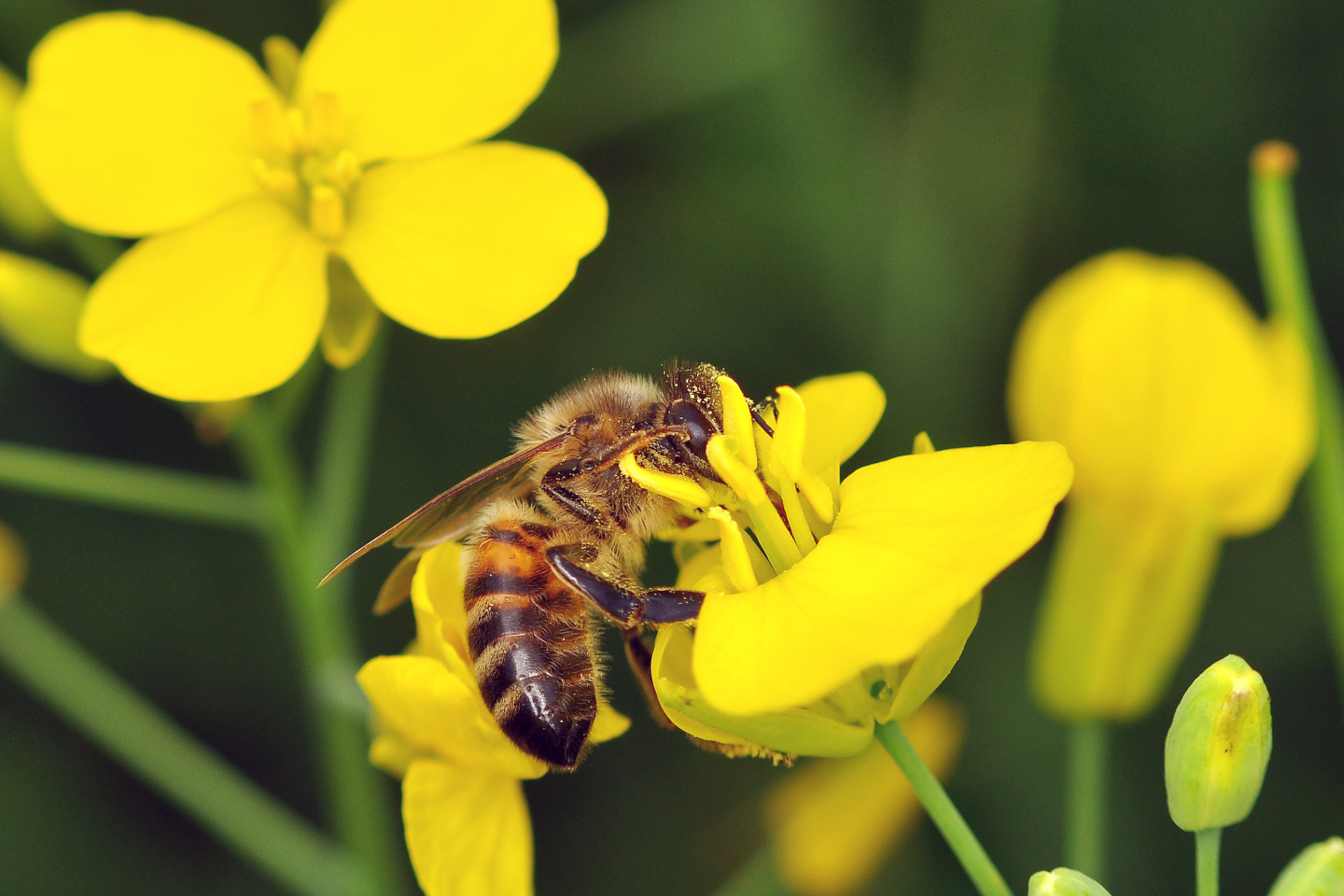
"caption": "A honeybee forages for nectar and pollen from an oilseed rape flower",
"description": "A honeybee forages for nectar and pollen from an oilseed rape flower",
"title": "A honeybee forages for nectar and pollen from an oilseed rape flower.",
"credit": "Albin Andersson/Nature ",
"status": "inherit",
"isLoading": false,
"fetchFailed": false
},
"bayareabites_95317": {
"type": "attachments",
"id": "bayareabites_95317",
"meta": {
"index": "attachments_1716263798",
"site": "bayareabites",
"id": "95317",
"found": true
},
"parent": 95316,
"imgSizes": {
"twentyfourteen-full-width": {
"file": "https://ww2.kqed.org/app/uploads/sites/24/2015/04/ap736191657327_custom-404a72ed760da86a84f0173f0ec1c432acfe472e-1038x576.jpg",
"width": 1038,
"mimeType": "image/jpeg",
"height": 576
},
"thumbnail": {
"file": "https://ww2.kqed.org/app/uploads/sites/24/2015/04/ap736191657327_custom-404a72ed760da86a84f0173f0ec1c432acfe472e-400x271.jpg",
"width": 400,
"mimeType": "image/jpeg",
"height": 271
},
"fd-sm": {
"file": "https://ww2.kqed.org/app/uploads/sites/24/2015/04/ap736191657327_custom-404a72ed760da86a84f0173f0ec1c432acfe472e-960x651.jpg",
"width": 960,
"mimeType": "image/jpeg",
"height": 651
},
"post-thumbnail": {
"file": "https://ww2.kqed.org/app/uploads/sites/24/2015/04/ap736191657327_custom-404a72ed760da86a84f0173f0ec1c432acfe472e-672x372.jpg",
"width": 672,
"mimeType": "image/jpeg",
"height": 372
},
"kqedFullSize": {
"file": "https://ww2.kqed.org/app/uploads/sites/24/2015/04/ap736191657327_custom-404a72ed760da86a84f0173f0ec1c432acfe472e-e1429734443477.jpg",
"width": 1920,
"height": 1302
},
"large": {
"file": "https://ww2.kqed.org/app/uploads/sites/24/2015/04/ap736191657327_custom-404a72ed760da86a84f0173f0ec1c432acfe472e-1440x976.jpg",
"width": 1440,
"mimeType": "image/jpeg",
"height": 976
},
"guest-author-96": {
"file": "https://ww2.kqed.org/app/uploads/sites/24/2015/04/ap736191657327_custom-404a72ed760da86a84f0173f0ec1c432acfe472e-96x96.jpg",
"width": 96,
"mimeType": "image/jpeg",
"height": 96
},
"medium": {
"file": "https://ww2.kqed.org/app/uploads/sites/24/2015/04/ap736191657327_custom-404a72ed760da86a84f0173f0ec1c432acfe472e-800x542.jpg",
"width": 800,
"mimeType": "image/jpeg",
"height": 542
},
"guest-author-64": {
"file": "https://ww2.kqed.org/app/uploads/sites/24/2015/04/ap736191657327_custom-404a72ed760da86a84f0173f0ec1c432acfe472e-64x64.jpg",
"width": 64,
"mimeType": "image/jpeg",
"height": 64
},
"guest-author-32": {
"file": "https://ww2.kqed.org/app/uploads/sites/24/2015/04/ap736191657327_custom-404a72ed760da86a84f0173f0ec1c432acfe472e-32x32.jpg",
"width": 32,
"mimeType": "image/jpeg",
"height": 32
},
"cat_post_thumb_sizecategory-posts-2": {
"file": "https://ww2.kqed.org/app/uploads/sites/24/2015/04/ap736191657327_custom-404a72ed760da86a84f0173f0ec1c432acfe472e-150x150.jpg",
"width": 150,
"mimeType": "image/jpeg",
"height": 150
},
"fd-med": {
"file": "https://ww2.kqed.org/app/uploads/sites/24/2015/04/ap736191657327_custom-404a72ed760da86a84f0173f0ec1c432acfe472e-1180x800.jpg",
"width": 1180,
"mimeType": "image/jpeg",
"height": 800
},
"detail": {
"file": "https://ww2.kqed.org/app/uploads/sites/24/2015/04/ap736191657327_custom-404a72ed760da86a84f0173f0ec1c432acfe472e-75x75.jpg",
"width": 75,
"mimeType": "image/jpeg",
"height": 75
},
"guest-author-128": {
"file": "https://ww2.kqed.org/app/uploads/sites/24/2015/04/ap736191657327_custom-404a72ed760da86a84f0173f0ec1c432acfe472e-128x128.jpg",
"width": 128,
"mimeType": "image/jpeg",
"height": 128
}
},
"publishDate": 1429734033,
"modified": 1429734662,
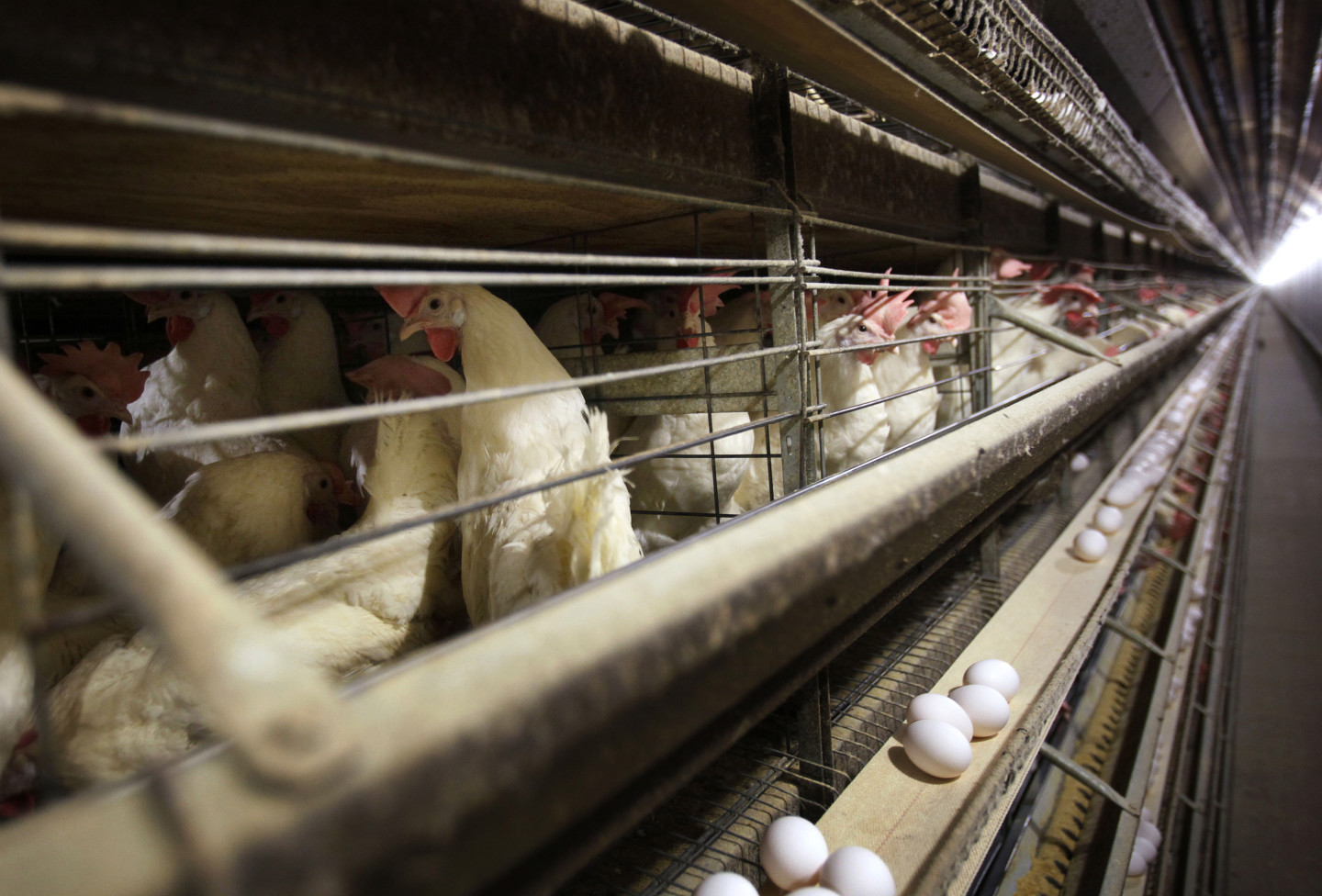
"caption": "Chickens stand in their cages at a farm near Stuart, Iowa, in 2009. This week, bird flu hit a large poultry facility in Iowa. It's not clear how the virus is evading the industry's biosecurity efforts.",
"description": "Chickens stand in their cages at a farm near Stuart, Iowa, in 2009. This week, bird flu hit a large poultry facility in Iowa. It's not clear how the virus is evading the industry's biosecurity efforts",
"title": "Chickens stand in their cages at a farm near Stuart, Iowa, in 2009. This week, bird flu hit a large poultry facility in Iowa. It's not clear how the virus is evading the industry's biosecurity efforts.",
"credit": "Charlie Neibergall/AP",
"status": "inherit",
"isLoading": false,
"fetchFailed": false
},
"bayareabites_95195": {
"type": "attachments",
"id": "bayareabites_95195",
"meta": {
"index": "attachments_1716263798",
"site": "bayareabites",
"id": "95195",
"found": true
},
"parent": 95193,
"imgSizes": {
"thumbnail": {
"file": "https://ww2.kqed.org/app/uploads/sites/24/2015/04/food-companies-investigate-400x225.jpg",
"width": 400,
"mimeType": "image/jpeg",
"height": 225
},
"fd-sm": {
"file": "https://ww2.kqed.org/app/uploads/sites/24/2015/04/food-companies-investigate-320x180.jpg",
"width": 320,
"mimeType": "image/jpeg",
"height": 180
},
"post-thumbnail": {
"file": "https://ww2.kqed.org/app/uploads/sites/24/2015/04/food-companies-investigate-672x372.jpg",
"width": 672,
"mimeType": "image/jpeg",
"height": 372
},
"kqedFullSize": {
"file": "https://ww2.kqed.org/app/uploads/sites/24/2015/04/food-companies-investigate.jpg",
"width": 800,
"height": 449
},
"cat_post_thumb_sizecategory-posts-2": {
"file": "https://ww2.kqed.org/app/uploads/sites/24/2015/04/food-companies-investigate-150x150.jpg",
"width": 150,
"mimeType": "image/jpeg",
"height": 150
},
"fd-med": {
"file": "https://ww2.kqed.org/app/uploads/sites/24/2015/04/food-companies-investigate-768x431.jpg",
"width": 768,
"mimeType": "image/jpeg",
"height": 431
},
"guest-author-96": {
"file": "https://ww2.kqed.org/app/uploads/sites/24/2015/04/food-companies-investigate-96x96.jpg",
"width": 96,
"mimeType": "image/jpeg",
"height": 96
},
"medium": {
"file": "https://ww2.kqed.org/app/uploads/sites/24/2015/04/food-companies-investigate-800x449.jpg",
"width": 800,
"mimeType": "image/jpeg",
"height": 449
},
"guest-author-64": {
"file": "https://ww2.kqed.org/app/uploads/sites/24/2015/04/food-companies-investigate-64x64.jpg",
"width": 64,
"mimeType": "image/jpeg",
"height": 64
},
"detail": {
"file": "https://ww2.kqed.org/app/uploads/sites/24/2015/04/food-companies-investigate-75x75.jpg",
"width": 75,
"mimeType": "image/jpeg",
"height": 75
},
"guest-author-32": {
"file": "https://ww2.kqed.org/app/uploads/sites/24/2015/04/food-companies-investigate-32x32.jpg",
"width": 32,
"mimeType": "image/jpeg",
"height": 32
},
"guest-author-128": {
"file": "https://ww2.kqed.org/app/uploads/sites/24/2015/04/food-companies-investigate-128x128.jpg",
"width": 128,
"mimeType": "image/jpeg",
"height": 128
}
},
"publishDate": 1429339027,
"modified": 1429339060,
"caption": "Food companies can make safety evaluations of their products in secret without ever telling the Food and Drug Administration. ",
"description": null,
"title": "food-companies-investigate",
"credit": "Luciano Lozano/Ikon Images/Corbis ",
"status": "inherit",
"isLoading": false,
"fetchFailed": false
},
"bayareabites_94977": {
"type": "attachments",
"id": "bayareabites_94977",
"meta": {
"index": "attachments_1716263798",
"site": "bayareabites",
"id": "94977",
"found": true
},
"parent": 94734,
"imgSizes": {
"twentyfourteen-full-width": {
"file": "https://ww2.kqed.org/app/uploads/sites/24/2015/04/Sonoma1920-1038x576.jpg",
"width": 1038,
"mimeType": "image/jpeg",
"height": 576
},
"thumbnail": {
"file": "https://ww2.kqed.org/app/uploads/sites/24/2015/04/Sonoma1920-400x300.jpg",
"width": 400,
"mimeType": "image/jpeg",
"height": 300
},
"fd-sm": {
"file": "https://ww2.kqed.org/app/uploads/sites/24/2015/04/Sonoma1920-320x240.jpg",
"width": 320,
"mimeType": "image/jpeg",
"height": 240
},
"post-thumbnail": {
"file": "https://ww2.kqed.org/app/uploads/sites/24/2015/04/Sonoma1920-672x372.jpg",
"width": 672,
"mimeType": "image/jpeg",
"height": 372
},
"kqedFullSize": {
"file": "https://ww2.kqed.org/app/uploads/sites/24/2015/04/Sonoma1920.jpg",
"width": 1920,
"height": 1440
},
"large": {
"file": "https://ww2.kqed.org/app/uploads/sites/24/2015/04/Sonoma1920-1440x1080.jpg",
"width": 1440,
"mimeType": "image/jpeg",
"height": 1080
},
"guest-author-96": {
"file": "https://ww2.kqed.org/app/uploads/sites/24/2015/04/Sonoma1920-96x96.jpg",
"width": 96,
"mimeType": "image/jpeg",
"height": 96
},
"medium": {
"file": "https://ww2.kqed.org/app/uploads/sites/24/2015/04/Sonoma1920-800x600.jpg",
"width": 800,
"mimeType": "image/jpeg",
"height": 600
},
"guest-author-64": {
"file": "https://ww2.kqed.org/app/uploads/sites/24/2015/04/Sonoma1920-64x64.jpg",
"width": 64,
"mimeType": "image/jpeg",
"height": 64
},
"guest-author-32": {
"file": "https://ww2.kqed.org/app/uploads/sites/24/2015/04/Sonoma1920-32x32.jpg",
"width": 32,
"mimeType": "image/jpeg",
"height": 32
},
"cat_post_thumb_sizecategory-posts-2": {
"file": "https://ww2.kqed.org/app/uploads/sites/24/2015/04/Sonoma1920-150x150.jpg",
"width": 150,
"mimeType": "image/jpeg",
"height": 150
},
"fd-lrg": {
"file": "https://ww2.kqed.org/app/uploads/sites/24/2015/04/Sonoma1920-1180x885.jpg",
"width": 1180,
"mimeType": "image/jpeg",
"height": 885
},
"fd-med": {
"file": "https://ww2.kqed.org/app/uploads/sites/24/2015/04/Sonoma1920-768x576.jpg",
"width": 768,
"mimeType": "image/jpeg",
"height": 576
},
"detail": {
"file": "https://ww2.kqed.org/app/uploads/sites/24/2015/04/Sonoma1920-75x75.jpg",
"width": 75,
"mimeType": "image/jpeg",
"height": 75
},
"guest-author-128": {
"file": "https://ww2.kqed.org/app/uploads/sites/24/2015/04/Sonoma1920-128x128.jpg",
"width": 128,
"mimeType": "image/jpeg",
"height": 128
}
},
"publishDate": 1428634072,
"modified": 1428634450,
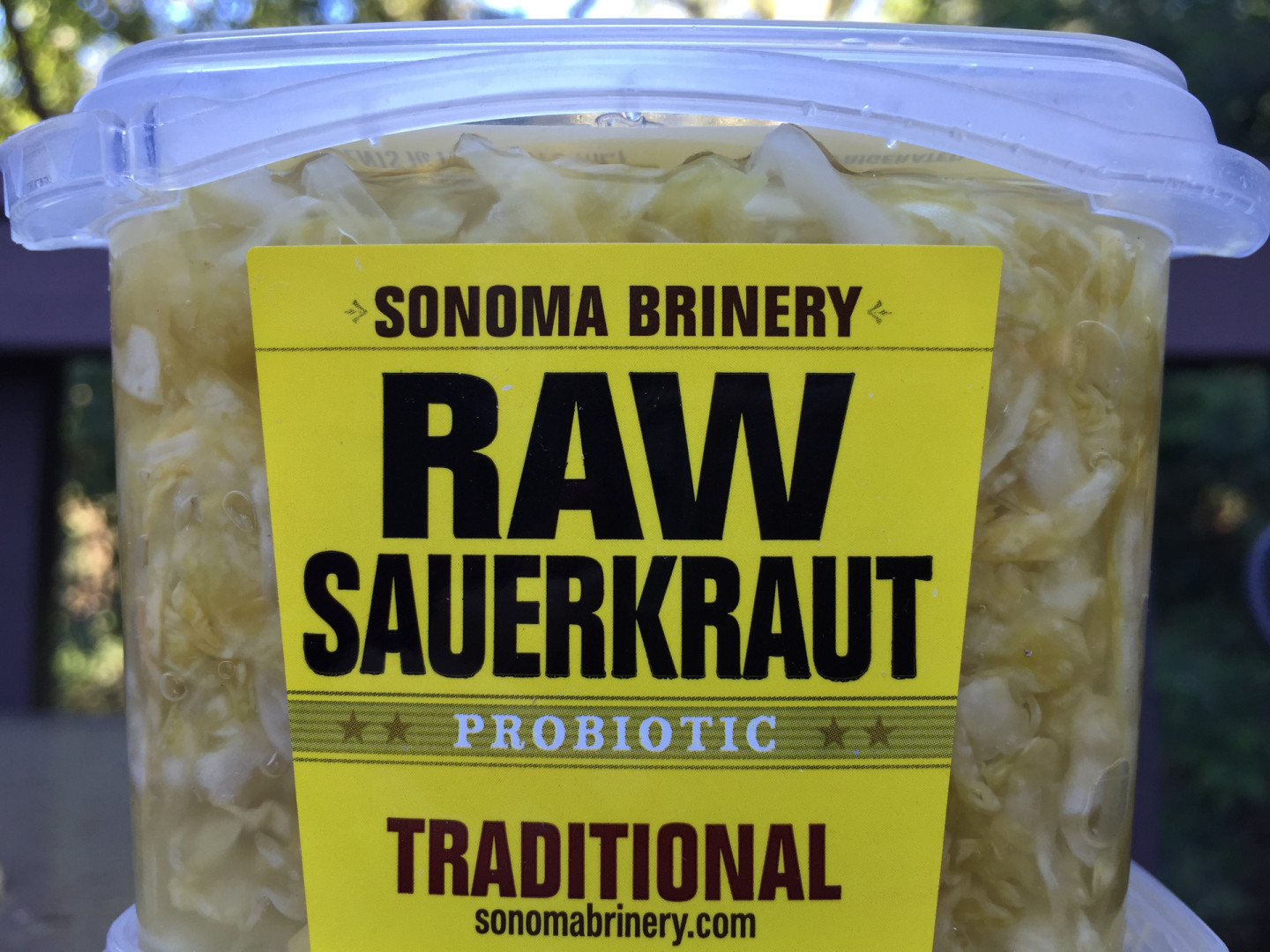
"caption": "Sonoma Brinery’s Raw Sauerkraut. ",
"description": null,
"title": "Sonoma1920",
"credit": "Lisa Landers",
"status": "inherit",
"isLoading": false,
"fetchFailed": false
},
"bayareabites_94287": {
"type": "attachments",
"id": "bayareabites_94287",
"meta": {
"index": "attachments_1716263798",
"site": "bayareabites",
"id": "94287",
"found": true
},
"parent": 94286,
"imgSizes": {
"twentyfourteen-full-width": {
"file": "https://ww2.kqed.org/app/uploads/sites/24/2015/03/5445528297_0abd5e3fdb_o_wide-d464b5b67ee4f334ba4d73bfb7271faac73d2c92-e1427316561790-1038x576.jpg",
"width": 1038,
"mimeType": "image/jpeg",
"height": 576
},
"thumbnail": {
"file": "https://ww2.kqed.org/app/uploads/sites/24/2015/03/5445528297_0abd5e3fdb_o_wide-d464b5b67ee4f334ba4d73bfb7271faac73d2c92-e1427316561790-400x225.jpg",
"width": 400,
"mimeType": "image/jpeg",
"height": 225
},
"fd-sm": {
"file": "https://ww2.kqed.org/app/uploads/sites/24/2015/03/5445528297_0abd5e3fdb_o_wide-d464b5b67ee4f334ba4d73bfb7271faac73d2c92-e1427316561790-320x180.jpg",
"width": 320,
"mimeType": "image/jpeg",
"height": 180
},
"post-thumbnail": {
"file": "https://ww2.kqed.org/app/uploads/sites/24/2015/03/5445528297_0abd5e3fdb_o_wide-d464b5b67ee4f334ba4d73bfb7271faac73d2c92-e1427316561790-672x372.jpg",
"width": 672,
"mimeType": "image/jpeg",
"height": 372
},
"kqedFullSize": {
"file": "https://ww2.kqed.org/app/uploads/sites/24/2015/03/5445528297_0abd5e3fdb_o_wide-d464b5b67ee4f334ba4d73bfb7271faac73d2c92-e1427316561790.jpg",
"width": 1920,
"height": 1080
},
"large": {
"file": "https://ww2.kqed.org/app/uploads/sites/24/2015/03/5445528297_0abd5e3fdb_o_wide-d464b5b67ee4f334ba4d73bfb7271faac73d2c92-e1427316561790-1440x810.jpg",
"width": 1440,
"mimeType": "image/jpeg",
"height": 810
},
"guest-author-96": {
"file": "https://ww2.kqed.org/app/uploads/sites/24/2015/03/5445528297_0abd5e3fdb_o_wide-d464b5b67ee4f334ba4d73bfb7271faac73d2c92-e1427316561790-96x96.jpg",
"width": 96,
"mimeType": "image/jpeg",
"height": 96
},
"medium": {
"file": "https://ww2.kqed.org/app/uploads/sites/24/2015/03/5445528297_0abd5e3fdb_o_wide-d464b5b67ee4f334ba4d73bfb7271faac73d2c92-e1427316561790-800x450.jpg",
"width": 800,
"mimeType": "image/jpeg",
"height": 450
},
"guest-author-64": {
"file": "https://ww2.kqed.org/app/uploads/sites/24/2015/03/5445528297_0abd5e3fdb_o_wide-d464b5b67ee4f334ba4d73bfb7271faac73d2c92-e1427316561790-64x64.jpg",
"width": 64,
"mimeType": "image/jpeg",
"height": 64
},
"guest-author-32": {
"file": "https://ww2.kqed.org/app/uploads/sites/24/2015/03/5445528297_0abd5e3fdb_o_wide-d464b5b67ee4f334ba4d73bfb7271faac73d2c92-e1427316561790-32x32.jpg",
"width": 32,
"mimeType": "image/jpeg",
"height": 32
},
"cat_post_thumb_sizecategory-posts-2": {
"file": "https://ww2.kqed.org/app/uploads/sites/24/2015/03/5445528297_0abd5e3fdb_o_wide-d464b5b67ee4f334ba4d73bfb7271faac73d2c92-e1427316561790-50x50.jpg",
"width": 50,
"mimeType": "image/jpeg",
"height": 50
},
"fd-lrg": {
"file": "https://ww2.kqed.org/app/uploads/sites/24/2015/03/5445528297_0abd5e3fdb_o_wide-d464b5b67ee4f334ba4d73bfb7271faac73d2c92-e1427316561790-1180x664.jpg",
"width": 1180,
"mimeType": "image/jpeg",
"height": 664
},
"fd-med": {
"file": "https://ww2.kqed.org/app/uploads/sites/24/2015/03/5445528297_0abd5e3fdb_o_wide-d464b5b67ee4f334ba4d73bfb7271faac73d2c92-e1427316561790-768x432.jpg",
"width": 768,
"mimeType": "image/jpeg",
"height": 432
},
"detail": {
"file": "https://ww2.kqed.org/app/uploads/sites/24/2015/03/5445528297_0abd5e3fdb_o_wide-d464b5b67ee4f334ba4d73bfb7271faac73d2c92-e1427316561790-75x75.jpg",
"width": 75,
"mimeType": "image/jpeg",
"height": 75
},
"guest-author-128": {
"file": "https://ww2.kqed.org/app/uploads/sites/24/2015/03/5445528297_0abd5e3fdb_o_wide-d464b5b67ee4f334ba4d73bfb7271faac73d2c92-e1427316561790-128x128.jpg",
"width": 128,
"mimeType": "image/jpeg",
"height": 128
}
},
"publishDate": 1427316257,
"modified": 1427316574,
"caption": "These beans, grown on test plots at the International Center for Tropical Agriculture in Colombia, can thrive in temperatures that cripple most conventional beans. Photo: Courtesy of CIAT/Neil Palmer",
"description": "These beans, grown on test plots at the International Center for Tropical Agriculture in Colombia, can thrive in temperatures that cripple most conventional beans.",
"title": "These beans, grown on test plots at the International Center for Tropical Agriculture in Colombia, can thrive in temperatures that cripple most conventional beans.",
"credit": null,
"status": "inherit",
"isLoading": false,
"fetchFailed": false
},
"bayareabites_94281": {
"type": "attachments",
"id": "bayareabites_94281",
"meta": {
"index": "attachments_1716263798",
"site": "bayareabites",
"id": "94281",
"found": true
},
"parent": 94280,
"imgSizes": {
"twentyfourteen-full-width": {
"file": "https://ww2.kqed.org/app/uploads/sites/24/2015/03/wine-82a3b16519b410e7f9d0089c1ed37d66922ba544-1038x576.jpg",
"width": 1038,
"mimeType": "image/jpeg",
"height": 576
},
"fd-sm": {
"file": "https://ww2.kqed.org/app/uploads/sites/24/2015/03/wine-82a3b16519b410e7f9d0089c1ed37d66922ba544-320x240.jpg",
"width": 320,
"mimeType": "image/jpeg",
"height": 240
},
"post-thumbnail": {
"file": "https://ww2.kqed.org/app/uploads/sites/24/2015/03/wine-82a3b16519b410e7f9d0089c1ed37d66922ba544-672x372.jpg",
"width": 672,
"mimeType": "image/jpeg",
"height": 372
},
"kqedFullSize": {
"file": "https://ww2.kqed.org/app/uploads/sites/24/2015/03/wine-82a3b16519b410e7f9d0089c1ed37d66922ba544.jpg",
"width": 1776,
"height": 1332
},
"large": {
"file": "https://ww2.kqed.org/app/uploads/sites/24/2015/03/wine-82a3b16519b410e7f9d0089c1ed37d66922ba544-1440x1080.jpg",
"width": 1440,
"mimeType": "image/jpeg",
"height": 1080
},
"guest-author-96": {
"file": "https://ww2.kqed.org/app/uploads/sites/24/2015/03/wine-82a3b16519b410e7f9d0089c1ed37d66922ba544-96x96.jpg",
"width": 96,
"mimeType": "image/jpeg",
"height": 96
},
"medium": {
"file": "https://ww2.kqed.org/app/uploads/sites/24/2015/03/wine-82a3b16519b410e7f9d0089c1ed37d66922ba544-800x600.jpg",
"width": 800,
"mimeType": "image/jpeg",
"height": 600
},
"guest-author-64": {
"file": "https://ww2.kqed.org/app/uploads/sites/24/2015/03/wine-82a3b16519b410e7f9d0089c1ed37d66922ba544-64x64.jpg",
"width": 64,
"mimeType": "image/jpeg",
"height": 64
},
"guest-author-32": {
"file": "https://ww2.kqed.org/app/uploads/sites/24/2015/03/wine-82a3b16519b410e7f9d0089c1ed37d66922ba544-32x32.jpg",
"width": 32,
"mimeType": "image/jpeg",
"height": 32
},
"cat_post_thumb_sizecategory-posts-2": {
"file": "https://ww2.kqed.org/app/uploads/sites/24/2015/03/wine-82a3b16519b410e7f9d0089c1ed37d66922ba544-50x50.jpg",
"width": 50,
"mimeType": "image/jpeg",
"height": 50
},
"fd-lrg": {
"file": "https://ww2.kqed.org/app/uploads/sites/24/2015/03/wine-82a3b16519b410e7f9d0089c1ed37d66922ba544-1180x885.jpg",
"width": 1180,
"mimeType": "image/jpeg",
"height": 885
},
"fd-med": {
"file": "https://ww2.kqed.org/app/uploads/sites/24/2015/03/wine-82a3b16519b410e7f9d0089c1ed37d66922ba544-768x576.jpg",
"width": 768,
"mimeType": "image/jpeg",
"height": 576
},
"detail": {
"file": "https://ww2.kqed.org/app/uploads/sites/24/2015/03/wine-82a3b16519b410e7f9d0089c1ed37d66922ba544-75x75.jpg",
"width": 75,
"mimeType": "image/jpeg",
"height": 75
},
"guest-author-128": {
"file": "https://ww2.kqed.org/app/uploads/sites/24/2015/03/wine-82a3b16519b410e7f9d0089c1ed37d66922ba544-128x128.jpg",
"width": 128,
"mimeType": "image/jpeg",
"height": 128
}
},
"publishDate": 1427315293,
"modified": 1427315494,
"caption": "A customer walks by bottles of wine for sale at J. Barleycorn's Liquor Barn in Nashville, Tenn., in 2012. Photo: Erik Schelzig/ASSOCIATED PRESS",
"description": "A customer walks by bottles of wine for sale at J. Barleycorn's Liquor Barn in Nashville, Tenn., in 2012.",
"title": "A customer walks by bottles of wine for sale at J. Barleycorn's Liquor Barn in Nashville, Tenn., in 2012.",
"credit": null,
"status": "inherit",
"isLoading": false,
"fetchFailed": false
},
"bayareabites_94262": {
"type": "attachments",
"id": "bayareabites_94262",
"meta": {
"index": "attachments_1716263798",
"site": "bayareabites",
"id": "94262",
"found": true
},
"parent": 94261,
"imgSizes": {
"twentyfourteen-full-width": {
"file": "https://ww2.kqed.org/app/uploads/sites/24/2015/03/ap100609081813_edit_wide-447af7a53033bf625415fd0d9f6c2572313361ba-e1427233141127-1038x576.jpg",
"width": 1038,
"mimeType": "image/jpeg",
"height": 576
},
"thumbnail": {
"file": "https://ww2.kqed.org/app/uploads/sites/24/2015/03/ap100609081813_edit_wide-447af7a53033bf625415fd0d9f6c2572313361ba-e1427233141127-400x225.jpg",
"width": 400,
"mimeType": "image/jpeg",
"height": 225
},
"fd-sm": {
"file": "https://ww2.kqed.org/app/uploads/sites/24/2015/03/ap100609081813_edit_wide-447af7a53033bf625415fd0d9f6c2572313361ba-e1427233141127-320x180.jpg",
"width": 320,
"mimeType": "image/jpeg",
"height": 180
},
"post-thumbnail": {
"file": "https://ww2.kqed.org/app/uploads/sites/24/2015/03/ap100609081813_edit_wide-447af7a53033bf625415fd0d9f6c2572313361ba-e1427233141127-672x372.jpg",
"width": 672,
"mimeType": "image/jpeg",
"height": 372
},
"kqedFullSize": {
"file": "https://ww2.kqed.org/app/uploads/sites/24/2015/03/ap100609081813_edit_wide-447af7a53033bf625415fd0d9f6c2572313361ba-e1427233141127.jpg",
"width": 1920,
"height": 1080
},
"large": {
"file": "https://ww2.kqed.org/app/uploads/sites/24/2015/03/ap100609081813_edit_wide-447af7a53033bf625415fd0d9f6c2572313361ba-e1427233141127-1440x810.jpg",
"width": 1440,
"mimeType": "image/jpeg",
"height": 810
},
"guest-author-96": {
"file": "https://ww2.kqed.org/app/uploads/sites/24/2015/03/ap100609081813_edit_wide-447af7a53033bf625415fd0d9f6c2572313361ba-e1427233141127-96x96.jpg",
"width": 96,
"mimeType": "image/jpeg",
"height": 96
},
"medium": {
"file": "https://ww2.kqed.org/app/uploads/sites/24/2015/03/ap100609081813_edit_wide-447af7a53033bf625415fd0d9f6c2572313361ba-e1427233141127-800x450.jpg",
"width": 800,
"mimeType": "image/jpeg",
"height": 450
},
"guest-author-64": {
"file": "https://ww2.kqed.org/app/uploads/sites/24/2015/03/ap100609081813_edit_wide-447af7a53033bf625415fd0d9f6c2572313361ba-e1427233141127-64x64.jpg",
"width": 64,
"mimeType": "image/jpeg",
"height": 64
},
"guest-author-32": {
"file": "https://ww2.kqed.org/app/uploads/sites/24/2015/03/ap100609081813_edit_wide-447af7a53033bf625415fd0d9f6c2572313361ba-e1427233141127-32x32.jpg",
"width": 32,
"mimeType": "image/jpeg",
"height": 32
},
"cat_post_thumb_sizecategory-posts-2": {
"file": "https://ww2.kqed.org/app/uploads/sites/24/2015/03/ap100609081813_edit_wide-447af7a53033bf625415fd0d9f6c2572313361ba-e1427233141127-50x50.jpg",
"width": 50,
"mimeType": "image/jpeg",
"height": 50
},
"fd-lrg": {
"file": "https://ww2.kqed.org/app/uploads/sites/24/2015/03/ap100609081813_edit_wide-447af7a53033bf625415fd0d9f6c2572313361ba-e1427233141127-1180x664.jpg",
"width": 1180,
"mimeType": "image/jpeg",
"height": 664
},
"fd-med": {
"file": "https://ww2.kqed.org/app/uploads/sites/24/2015/03/ap100609081813_edit_wide-447af7a53033bf625415fd0d9f6c2572313361ba-e1427233141127-768x432.jpg",
"width": 768,
"mimeType": "image/jpeg",
"height": 432
},
"detail": {
"file": "https://ww2.kqed.org/app/uploads/sites/24/2015/03/ap100609081813_edit_wide-447af7a53033bf625415fd0d9f6c2572313361ba-e1427233141127-75x75.jpg",
"width": 75,
"mimeType": "image/jpeg",
"height": 75
},
"guest-author-128": {
"file": "https://ww2.kqed.org/app/uploads/sites/24/2015/03/ap100609081813_edit_wide-447af7a53033bf625415fd0d9f6c2572313361ba-e1427233141127-128x128.jpg",
"width": 128,
"mimeType": "image/jpeg",
"height": 128
}
},
"publishDate": 1427232519,
"modified": 1427233133,
"caption": "Central Illinois corn farmer Jerry McCulley refills his sprayer with the weedkiller glyphosate on a farm near Auburn, Ill. A new assessment of the chemical finds that the (uncertain) risks mainly affect the people who work with it or who come in direct contact with areas where it's applied. Photo: Seth Perlman/AP",
"description": "Central Illinois corn farmer Jerry McCulley refills his sprayer with the weedkiller glyphosate on a farm near Auburn, Ill. A new assessment of the chemical finds that the (uncertain) risks mainly affect the people who work with it or who come in direct contact with areas where it's applied.",
"title": "Central Illinois corn farmer Jerry McCulley refills his sprayer with the weedkiller glyphosate on a farm near Auburn, Ill. A new assessment of the chemical finds that the (uncertain) risks mainly affect the people who work with it or who come in direct contact with areas where it's applied.",
"credit": null,
"status": "inherit",
"isLoading": false,
"fetchFailed": false
}
},
"audioPlayerReducer": {
"postId": "stream_live",
"isPaused": true,
"isPlaying": false,
"pfsActive": false,
"pledgeModalIsOpen": true,
"playerDrawerIsOpen": false,
"liveAudioPlayStartedAt": 0,
"liveAudioPlayContext": ""
},
"authorsReducer": {
"byline_bayareabites_96343": {
"type": "authors",
"id": "byline_bayareabites_96343",
"meta": {
"override": true
},
"slug": "byline_bayareabites_96343",
"name": "Peggy Lowe and Sarah Boden, \u003ca href=\"http://ww2.kqed.org/bayareabites/author/nprfood/\">NPR Food\u003c/a>",
"isLoading": false
},
"byline_bayareabites_96287": {
"type": "authors",
"id": "byline_bayareabites_96287",
"meta": {
"override": true
},
"slug": "byline_bayareabites_96287",
"name": "Whitney Pipkin -- \u003ca href=\"http://ww2.kqed.org/bayareabites/author/nprfood/\">NPR Food\u003c/a>",
"isLoading": false
},
"byline_bayareabites_96243": {
"type": "authors",
"id": "byline_bayareabites_96243",
"meta": {
"override": true
},
"slug": "byline_bayareabites_96243",
"name": "Angus Chen - \u003ca href=\"http://ww2.kqed.org/bayareabites/author/nprfood/\">NPR Food\u003c/a>",
"isLoading": false
},
"byline_bayareabites_96187": {
"type": "authors",
"id": "byline_bayareabites_96187",
"meta": {
"override": true
},
"slug": "byline_bayareabites_96187",
"name": "Grace Hwang Lynch, \u003ca href=\"http://ww2.kqed.org/bayareabites/author/caamedia/\">CAAM\u003c/a>",
"isLoading": false
},
"byline_bayareabites_95774": {
"type": "authors",
"id": "byline_bayareabites_95774",
"meta": {
"override": true
},
"slug": "byline_bayareabites_95774",
"name": "Dan Charles, \u003ca href=\"http://ww2.kqed.org/bayareabites/author/nprfood/\">NPR Food\u003c/a> ",
"isLoading": false
},
"byline_bayareabites_95350": {
"type": "authors",
"id": "byline_bayareabites_95350",
"meta": {
"override": true
},
"slug": "byline_bayareabites_95350",
"name": "Allison Aubrey, \u003ca href=\"http://ww2.kqed.org/bayareabites/author/nprfood/\">NPR Food\u003c/a>",
"isLoading": false
},
"byline_bayareabites_95316": {
"type": "authors",
"id": "byline_bayareabites_95316",
"meta": {
"override": true
},
"slug": "byline_bayareabites_95316",
"name": "Dan Charles, \u003ca href=\"http://ww2.kqed.org/bayareabites/author/nprfood/\">NPR Food\u003c/a>",
"isLoading": false
},
"byline_bayareabites_94286": {
"type": "authors",
"id": "byline_bayareabites_94286",
"meta": {
"override": true
},
"slug": "byline_bayareabites_94286",
"name": "Dan Charles",
"isLoading": false
},
"byline_bayareabites_94280": {
"type": "authors",
"id": "byline_bayareabites_94280",
"meta": {
"override": true
},
"slug": "byline_bayareabites_94280",
"name": "Allison Aubrey",
"isLoading": false
},
"byline_bayareabites_94261": {
"type": "authors",
"id": "byline_bayareabites_94261",
"meta": {
"override": true
},
"slug": "byline_bayareabites_94261",
"name": "Dan Charles",
"isLoading": false
},
"nprfood": {
"type": "authors",
"id": "5403",
"meta": {
"index": "authors_1716337520",
"id": "5403",
"found": true
},
"name": "NPR Food",
"firstName": "NPR Food",
"lastName": null,
"slug": "nprfood",
"email": "nprfood@kqed.org",
"display_author_email": false,
"staff_mastheads": [],
"title": null,
"bio": "Food and Health-related stories from NPR including NPR Radio; NPR's food blog, \"The Salt\"; NPR's Health News blog, \"Shots\"; NPR's Breaking News blog \"The Two-Way\"; NPR's global stories blog \"Goats and Soda,\" NPR's economy explainer \"Planet Money\"; food-related technology news from NPR's \"All Tech Considered\"; and food series \"Kitchen Window.\"",
"avatar": "https://secure.gravatar.com/avatar/c4b735bb26404fa18ce2447d32e64291?s=600&d=blank&r=g",
"twitter": "nprfood",
"facebook": null,
"instagram": null,
"linkedin": null,
"sites": [
{
"site": "bayareabites",
"roles": [
"contributor"
]
},
{
"site": "food",
"roles": [
"contributor"
]
}
],
"headData": {
"title": "NPR Food | KQED",
"description": null,
"ogImgSrc": "https://secure.gravatar.com/avatar/c4b735bb26404fa18ce2447d32e64291?s=600&d=blank&r=g",
"twImgSrc": "https://secure.gravatar.com/avatar/c4b735bb26404fa18ce2447d32e64291?s=600&d=blank&r=g"
},
"isLoading": false,
"link": "/author/nprfood"
},
"lisalanders": {
"type": "authors",
"id": "5412",
"meta": {
"index": "authors_1716337520",
"id": "5412",
"found": true
},
"name": "Lisa Landers",
"firstName": "Lisa",
"lastName": "Landers",
"slug": "lisalanders",
"email": "llanders@KQED.org",
"display_author_email": false,
"staff_mastheads": [],
"title": "KQED Contributor",
"bio": "Lisa Landers is a producer and writer whose work includes documentaries, museum exhibitions, and educational multimedia. Her work has covered a diversity of subject matter including natural history, ecological and social issues, cultural exploration, food, music, and architecture. She’s developed and produced films for broadcasters such as National Geographic, Smithsonian Channel, and the Discovery Channel. Her work as an exhibition developer and multimedia producer has been featured at institutions including the American Museum of Natural History, the National Building Museum, and The Tech Museum. Her writing has also appeared in a wide variety of print and online publications.",
"avatar": "https://secure.gravatar.com/avatar/1e4aa08f6f0a92ea11a2779a453cb36d?s=600&d=blank&r=g",
"twitter": null,
"bluesky": null,
"facebook": null,
"instagram": null,
"linkedin": null,
"sites": [
{
"site": "bayareabites",
"roles": [
"contributor"
]
},
{
"site": "quest",
"roles": [
"leadcoordinator",
"edit_theme_options",
"subscriber"
]
},
{
"site": "food",
"roles": []
}
],
"headData": {
"title": "Lisa Landers | KQED",
"description": "KQED Contributor",
"ogImgSrc": "https://secure.gravatar.com/avatar/1e4aa08f6f0a92ea11a2779a453cb36d?s=600&d=blank&r=g",
"twImgSrc": "https://secure.gravatar.com/avatar/1e4aa08f6f0a92ea11a2779a453cb36d?s=600&d=blank&r=g"
},
"isLoading": false,
"link": "/author/lisalanders"
}
},
"pagesReducer": {
"bayareabites_category_science": {
"type": "terms",
"id": "bayareabites_358",
"meta": {
"index": "terms_1716263798",
"site": "bayareabites",
"id": "358",
"score": 10.851818
},
"featImg": null,
"name": "science",
"description": null,
"taxonomy": "category",
"headData": {
"twImgId": null,
"twTitle": null,
"ogTitle": null,
"ogImgId": null,
"twDescription": null,
"description": null,
"title": "science Archives | KQED Bay Area Bites",
"ogDescription": null
},
"ttid": 7943,
"slug": "science",
"isLoading": false,
"title": "science",
"pageMeta": {
"site": "bayareabites",
"WpPageTemplate": "page-topic-editorial",
"currentPage": 31
},
"blocks": [
{
"blockName": "kqed/post-list",
"attrs": {
"layout": "cardArticle2",
"query": "posts/bayareabites?category=science",
"seeMore": false,
"paginated": true,
"page": 31
}
},
{
"blockName": "kqed/ad"
}
]
}
},
"pfsSessionReducer": {},
"postsReducer": {
"stream_live": {
"type": "live",
"id": "stream_live",
"audioUrl": "https://streams.kqed.org/kqedradio",
"title": "Live Stream",
"excerpt": "Live Stream information currently unavailable.",
"link": "/radio",
"featImg": "",
"label": {
"name": "KQED Live",
"link": "/"
}
},
"stream_kqedNewscast": {
"type": "posts",
"id": "stream_kqedNewscast",
"audioUrl": "https://www.kqed.org/.stream/anon/radio/RDnews/newscast.mp3?_=1",
"title": "KQED Newscast",
"featImg": "",
"label": {
"name": "88.5 FM",
"link": "/"
}
},
"bayareabites_96343": {
"type": "posts",
"id": "bayareabites_96343",
"meta": {
"index": "posts_1716263798",
"site": "bayareabites",
"id": "96343",
"score": null,
"sort": [
1432321210000
]
},
"parent": 0,
"labelTerm": {
"site": "bayareabites"
},
"blocks": [],
"publishDate": 1432321210,
"format": "standard",
"disqusTitle": "Avian Flu Outbreak Takes Poultry Producers Into Uncharted Territory",
"title": "Avian Flu Outbreak Takes Poultry Producers Into Uncharted Territory",
"headTitle": "Bay Area Bites | KQED Food",
"content": "\u003cp>\u003cstrong>Listen to the Story on \u003cem>Morning Edition\u003c/em>:\u003c/strong>\u003cbr>\nhttp://pd.npr.org/anon.npr-mp3/npr/me/2015/05/20150521_me_avian_flu_outbreak_takes_poultry_producers_into_uncharted_territory.mp3 \u003c/p>\n\u003cp>An avian flu outbreak is sweeping across the Midwest at a frightening pace, ravaging chicken and turkey farms and leaving officials stumped about the virus's seemingly unstoppable spread.\u003c/p>\n\u003cp>Now reaching to 15 states, the outbreak has been detected at 174 farms, according to the U.S. Department of Agriculture. Because there's no vaccine, infected and even healthy birds must be killed to try to stop the virus, forcing the killing of 38.9 million birds and counting, the USDA \u003ca href=\"http://www.aphis.usda.gov/wps/portal/aphis/ourfocus/animalhealth/sa_animal_disease_information/sa_avian_health/ct_avian_influenza_disease/!ut/p/a1/lVJNU4MwEP0tHnqkSYEC9db6VdS2akdbuDBLCJAREiaEMvrrDVgdnbFVc9vd93b3vQ0K0RaFHHYsA8UEh6KLQye6Xs3N0Qyb_tV6coH95dPlwrt1rdXc1oBAA_CBN8Xf-asb3-n4D3g2Px_htYU2KEQh4apSOQqgylkdEcEV5SoqWCxBvgxwDZFoZJQK0tR9BJyVUEQ5hULlXzMJqynUNGI8FbLsRbyXdwz4J56ofULDiobyV_ggdstUhCUoiM1Jih2TGpY3AsMmsWXAGMaGOU7SJCHEtSx3L_6Iul_M68VryNnVdG67t9ow2zOxf67p7mSBse_sAUf8DfQO7sEhExut_ynq-g8nN-XibJHptqByozMbbY8e4b385Qhoe-QImxkKnZZt_PtumawQcf8TgymPLU9PlTSlksphI3U6V6o6HeABbtt2yEQLkElGmkI1kg4zsRvgfsznlCHU1U_NclErtD3QBFXlY-lZL8ZzulwaYXB3V268enpy8gaLBRxS/?1dmy&urile=wcm%3apath%3a%2Faphis_content_library%2Fsa_our_focus%2Fsa_animal_health%2Fsa_animal_disease_information%2Fsa_avian_health%2Fsa_detections_by_states%2Fct_ai_pacific_flyway\">says\u003c/a>.\u003c/p>\n\u003cp>The particular strain of avian flu, highly pathogenic H5N2, \u003ca href=\"http://www.nwhc.usgs.gov/publications/wildlife_health_bulletins/WHB_2014-05_H5N8.pdf\">was first confirmed\u003c/a> in a backyard flock in Washington state. While chickens and turkeys are highly susceptible to it, it is considered a \u003ca href=\"http://www.cdc.gov/flu/avianflu/h5/index.htm\">low risk\u003c/a> for transmission to humans, according to the Centers for Disease Control and Prevention.\u003c/p>\n\u003cp>Now officials are scrambling, trying to figure out how to dispose of millions of dead birds. Most of them are in Iowa, the largest egg producer in the U.S. and the one hardest hit by the outbreak. At one farm alone, Rembrandt Enterprises, some 5.5 million birds had to be destroyed.\u003c/p>\n\u003cp>[ad fullwidth]\u003c/p>\n\u003cp>\"I've been in the landfill business probably 26 years, and I've never ever seen this kind of volume,\" said Randy Oldenkamp, director of the Northwest Iowa Area Solid Waste Agency. \"And I hope I never do again.\"\u003c/p>\n\u003cp>Oldenkamp is accepting 100 loads of the birds for disposal at 15 tons a load. But other landfill managers are turning away the birds, fearing contamination and neighbors' complaints.\u003c/p>\n\u003cp>\"It is a catastrophe,\" said Billy Duplechein, who works with Clean Harbors, the contractor hired by the federal government to do the cleanup. \"Nobody wants to see this kind of stuff, but something has to be done.\"\u003c/p>\n\u003cp>The USDA believes the virus was brought to the Midwest by migratory water fowl via the Mississippi Flyway. But Agriculture Secretary Tom Vilsack has admitted that the ongoing and quick spread could be \"laterally spread\" by people.\u003c/p>\n\u003cp>\"We've had circumstances recently where folks have been using pond water, for example, to feed and to water their birds. Well, that's a problem because the pond water could be contaminated,\" Vilsack said. \"We've had situations where folks are supposed to shower before they go into the facility, but the shower doesn't work, so they go in anyway.\"\u003c/p>\n\u003cfigure id=\"attachment_96344\" class=\"wp-caption aligncenter\" style=\"max-width: 1920px\">\u003cimg src=\"http://ww2.kqed.org/bayareabites/wp-content/uploads/sites/24/2015/05/473783936_custom-cf418fa0ddddc1e6faef966d98505d77062e0bcd-e1432320525776.jpg\" alt='\"No trespassing\" signs are posted on the edge of a field at a farm operated by Daybreak Foods near Eagle Grove, Iowa, which has been designated \"bio security area,\" on May 17.' width=\"1920\" height=\"1279\" class=\"size-full wp-image-96344\">\u003cfigcaption class=\"wp-caption-text\">\"No trespassing\" signs are posted on the edge of a field at a farm operated by Daybreak Foods near Eagle Grove, Iowa, which has been designated \"bio security area,\" on May 17. \u003ccite>(Scott Olson/Getty Images )\u003c/cite>\u003c/figcaption>\u003c/figure>\n\u003cp>\u003ca href=\"http://www.cidrap.umn.edu/about-us/cidrap-staff/michael-t-osterholm-phd-mph\">Michael Osterholm\u003c/a>, director of the Center for Infectious Disease Research and Policy at the University of Minnesota, said the poultry industry is in uncharted territory. The virus is \"doing things we've never seen it do before,\" so scientists' understanding is very limited, he says.\u003c/p>\n\u003cp>\"Influenza viruses have thought in the past to be transmitted by birds to birds in close contact and that it was only through that kind of transmission that we need to be concerned,\" Osterholm says. \"Now we surely have a very dynamic situation in the Midwest. It's also a situation where we no longer can assume it's just migratory birds.\"\u003c/p>\n\u003cp>Other theories on the virus's rapid transmission include small rodents infiltrating facilities, contaminated feed and water or that the virus could even be airborne.\u003c/p>\n\u003cp>Vilsack and Iowa Gov. Terry Branstad took to the media this week, begging landfills to take the birds before any more can be exposed. Farms are also burying the birds, composting them with wood chips and corn stover and burning them in five large mobile incinerators brought in by Clean Harbors. Officials are also considering taking mobile incinerators from farm to farm.\u003c/p>\n\u003cp>Northwest Iowa is hardest hit, thanks to its large egg-laying operations, and workers in white and yellow Tyvek suits, protective gear with a respirator, could be seen discarding the birds from barns.\u003c/p>\n\u003cp>Neighbors in the remote rural communities say they have noticed more trucks at the farms. And they've certainly noticed the putrid smell.\u003c/p>\n\u003cp>Dawn Cronk lives just a mile and a half south of Sunrise Farms, near Harris, Iowa, and drives home at midnight from her job working the late shift at a nursing home.\u003c/p>\n\u003cp>\"I have the window down and all of a sudden there's just that distinct dead animal smell,\" she says. \"And it's not just one dead animal, it's like you walked into a ... a decomposing lot. It's just that strong.\"\u003c/p>\n\u003cp>A huge incinerator is being set up at the Cherokee County landfill, and officials there plan to fire it up this week and have it burning for 24 hours a day. Although some hold out hope that the outbreak will die down this summer, when its harder for the virus to live in hot temperatures, others guess that states could be cleaning up for months or even years to come.\u003c/p>\n\u003cp>\"That's the million-dollar question,\" Duplechein says. \"We really don't know.\"\u003c/p>\n\u003cp>\u003cem>This \u003c/em>story \u003cem>comes to us via \u003ca href=\"http://harvestpublicmedia.org/\">Harvest Public Media\u003c/a>.\u003c/em> \u003c/p>\n\u003cp>\u003c/p>\n\u003cp>Copyright 2015 \u003ca href=\"http://www.npr.org/\" target=\"_blank\">NPR\u003c/a>.\u003c/p>\n\n",
"disqusIdentifier": "96343 http://ww2.kqed.org/bayareabites/?p=96343",
"disqusUrl": "https://ww2.kqed.org/bayareabites/2015/05/22/avian-flu-outbreak-takes-poultry-producers-into-uncharted-territory/",
"stats": {
"hasVideo": false,
"hasChartOrMap": false,
"hasAudio": false,
"hasPolis": false,
"wordCount": 864,
"hasGoogleForm": false,
"hasGallery": false,
"hasHearkenModule": false,
"iframeSrcs": [],
"paragraphCount": 24
},
"modified": 1432321197,
"excerpt": "Avian influenza is ravaging poultry flocks across the Upper Midwest. The virus is \"doing things we've never seen it do before,\" and understanding about transmission is very limited, a scientist says.",
"headData": {
"twImgId": "",
"twTitle": "",
"ogTitle": "",
"ogImgId": "",
"twDescription": "",
"description": "Avian influenza is ravaging poultry flocks across the Upper Midwest. The virus is "doing things we've never seen it do before," and understanding about transmission is very limited, a scientist says.",
"title": "Avian Flu Outbreak Takes Poultry Producers Into Uncharted Territory | KQED",
"ogDescription": "",
"schema": {
"@context": "https://schema.org",
"@type": "Article",
"headline": "Avian Flu Outbreak Takes Poultry Producers Into Uncharted Territory",
"datePublished": "2015-05-22T12:00:10-07:00",
"dateModified": "2015-05-22T11:59:57-07:00",
"image": "https://cdn.kqed.org/wp-content/uploads/2020/02/KQED-OG-Image@1x.png"
}
},
"guestAuthors": [],
"slug": "avian-flu-outbreak-takes-poultry-producers-into-uncharted-territory",
"status": "publish",
"nprApiLink": "http://api.npr.org/query?id=408306843&apiKey=MDAxOTAwOTE4MDEyMTkxMDAzNjczZDljZA004",
"nprByline": "Peggy Lowe and Sarah Boden, \u003ca href=\"http://ww2.kqed.org/bayareabites/author/nprfood/\">NPR Food\u003c/a>",
"nprStoryDate": "Thu, 21 May 2015 03:40:00 -0400",
"nprLastModifiedDate": "Thu, 21 May 2015 16:25:34 -0400",
"nprHtmlLink": "http://www.npr.org/sections/thesalt/2015/05/21/408306843/avian-flu-outbreak-takes-poultry-producers-into-uncharted-territory?ft=nprml&f=408306843",
"nprAudio": "http://pd.npr.org/anon.npr-mp3/npr/me/2015/05/20150521_me_avian_flu_outbreak_takes_poultry_producers_into_uncharted_territory.mp3?orgId=1&topicId=1053&d=274&p=3&story=408306843&t=progseg&e=408405005&seg=1&ft=nprml&f=408306843",
"nprAudioM3u": "http://api.npr.org/m3u/1408407224-97f56b.m3u?orgId=1&topicId=1053&d=274&p=3&story=408306843&t=progseg&e=408405005&seg=1&ft=nprml&f=408306843",
"nprStoryId": "408306843",
"nprRetrievedStory": "1",
"nprPubDate": "Thu, 21 May 2015 16:25:00 -0400",
"path": "/bayareabites/96343/avian-flu-outbreak-takes-poultry-producers-into-uncharted-territory",
"audioUrl": "http://pd.npr.org/anon.npr-mp3/npr/me/2015/05/20150521_me_avian_flu_outbreak_takes_poultry_producers_into_uncharted_territory.mp3?orgId=1&topicId=1053&d=274&p=3&story=408306843&t=progseg&e=408405005&seg=1&ft=nprml&f=408306843",
"audioTrackLength": null,
"parsedContent": [
{
"type": "contentString",
"content": "\u003cdiv class=\"post-body\">\u003cp>\u003cp>\u003cstrong>Listen to the Story on \u003cem>Morning Edition\u003c/em>:\u003c/strong>\u003cbr>\nhttp://pd.npr.org/anon.npr-mp3/npr/me/2015/05/20150521_me_avian_flu_outbreak_takes_poultry_producers_into_uncharted_territory.mp3 \u003c/p>\n\u003cp>An avian flu outbreak is sweeping across the Midwest at a frightening pace, ravaging chicken and turkey farms and leaving officials stumped about the virus's seemingly unstoppable spread.\u003c/p>\n\u003cp>Now reaching to 15 states, the outbreak has been detected at 174 farms, according to the U.S. Department of Agriculture. Because there's no vaccine, infected and even healthy birds must be killed to try to stop the virus, forcing the killing of 38.9 million birds and counting, the USDA \u003ca href=\"http://www.aphis.usda.gov/wps/portal/aphis/ourfocus/animalhealth/sa_animal_disease_information/sa_avian_health/ct_avian_influenza_disease/!ut/p/a1/lVJNU4MwEP0tHnqkSYEC9db6VdS2akdbuDBLCJAREiaEMvrrDVgdnbFVc9vd93b3vQ0K0RaFHHYsA8UEh6KLQye6Xs3N0Qyb_tV6coH95dPlwrt1rdXc1oBAA_CBN8Xf-asb3-n4D3g2Px_htYU2KEQh4apSOQqgylkdEcEV5SoqWCxBvgxwDZFoZJQK0tR9BJyVUEQ5hULlXzMJqynUNGI8FbLsRbyXdwz4J56ofULDiobyV_ggdstUhCUoiM1Jih2TGpY3AsMmsWXAGMaGOU7SJCHEtSx3L_6Iul_M68VryNnVdG67t9ow2zOxf67p7mSBse_sAUf8DfQO7sEhExut_ynq-g8nN-XibJHptqByozMbbY8e4b385Qhoe-QImxkKnZZt_PtumawQcf8TgymPLU9PlTSlksphI3U6V6o6HeABbtt2yEQLkElGmkI1kg4zsRvgfsznlCHU1U_NclErtD3QBFXlY-lZL8ZzulwaYXB3V268enpy8gaLBRxS/?1dmy&urile=wcm%3apath%3a%2Faphis_content_library%2Fsa_our_focus%2Fsa_animal_health%2Fsa_animal_disease_information%2Fsa_avian_health%2Fsa_detections_by_states%2Fct_ai_pacific_flyway\">says\u003c/a>.\u003c/p>\n\u003cp>The particular strain of avian flu, highly pathogenic H5N2, \u003ca href=\"http://www.nwhc.usgs.gov/publications/wildlife_health_bulletins/WHB_2014-05_H5N8.pdf\">was first confirmed\u003c/a> in a backyard flock in Washington state. While chickens and turkeys are highly susceptible to it, it is considered a \u003ca href=\"http://www.cdc.gov/flu/avianflu/h5/index.htm\">low risk\u003c/a> for transmission to humans, according to the Centers for Disease Control and Prevention.\u003c/p>\n\u003cp>Now officials are scrambling, trying to figure out how to dispose of millions of dead birds. Most of them are in Iowa, the largest egg producer in the U.S. and the one hardest hit by the outbreak. At one farm alone, Rembrandt Enterprises, some 5.5 million birds had to be destroyed.\u003c/p>\n\u003cp>\u003c/p>\u003c/div>",
"attributes": {
"named": {},
"numeric": []
}
},
{
"type": "component",
"content": "",
"name": "ad",
"attributes": {
"named": {
"label": "fullwidth"
},
"numeric": [
"fullwidth"
]
}
},
{
"type": "contentString",
"content": "\u003cdiv class=\"post-body\">\u003cp>\u003c/p>\n\u003cp>\"I've been in the landfill business probably 26 years, and I've never ever seen this kind of volume,\" said Randy Oldenkamp, director of the Northwest Iowa Area Solid Waste Agency. \"And I hope I never do again.\"\u003c/p>\n\u003cp>Oldenkamp is accepting 100 loads of the birds for disposal at 15 tons a load. But other landfill managers are turning away the birds, fearing contamination and neighbors' complaints.\u003c/p>\n\u003cp>\"It is a catastrophe,\" said Billy Duplechein, who works with Clean Harbors, the contractor hired by the federal government to do the cleanup. \"Nobody wants to see this kind of stuff, but something has to be done.\"\u003c/p>\n\u003cp>The USDA believes the virus was brought to the Midwest by migratory water fowl via the Mississippi Flyway. But Agriculture Secretary Tom Vilsack has admitted that the ongoing and quick spread could be \"laterally spread\" by people.\u003c/p>\n\u003cp>\"We've had circumstances recently where folks have been using pond water, for example, to feed and to water their birds. Well, that's a problem because the pond water could be contaminated,\" Vilsack said. \"We've had situations where folks are supposed to shower before they go into the facility, but the shower doesn't work, so they go in anyway.\"\u003c/p>\n\u003cfigure id=\"attachment_96344\" class=\"wp-caption aligncenter\" style=\"max-width: 1920px\">\u003cimg src=\"http://ww2.kqed.org/bayareabites/wp-content/uploads/sites/24/2015/05/473783936_custom-cf418fa0ddddc1e6faef966d98505d77062e0bcd-e1432320525776.jpg\" alt='\"No trespassing\" signs are posted on the edge of a field at a farm operated by Daybreak Foods near Eagle Grove, Iowa, which has been designated \"bio security area,\" on May 17.' width=\"1920\" height=\"1279\" class=\"size-full wp-image-96344\">\u003cfigcaption class=\"wp-caption-text\">\"No trespassing\" signs are posted on the edge of a field at a farm operated by Daybreak Foods near Eagle Grove, Iowa, which has been designated \"bio security area,\" on May 17. \u003ccite>(Scott Olson/Getty Images )\u003c/cite>\u003c/figcaption>\u003c/figure>\n\u003cp>\u003ca href=\"http://www.cidrap.umn.edu/about-us/cidrap-staff/michael-t-osterholm-phd-mph\">Michael Osterholm\u003c/a>, director of the Center for Infectious Disease Research and Policy at the University of Minnesota, said the poultry industry is in uncharted territory. The virus is \"doing things we've never seen it do before,\" so scientists' understanding is very limited, he says.\u003c/p>\n\u003cp>\"Influenza viruses have thought in the past to be transmitted by birds to birds in close contact and that it was only through that kind of transmission that we need to be concerned,\" Osterholm says. \"Now we surely have a very dynamic situation in the Midwest. It's also a situation where we no longer can assume it's just migratory birds.\"\u003c/p>\n\u003cp>Other theories on the virus's rapid transmission include small rodents infiltrating facilities, contaminated feed and water or that the virus could even be airborne.\u003c/p>\n\u003cp>Vilsack and Iowa Gov. Terry Branstad took to the media this week, begging landfills to take the birds before any more can be exposed. Farms are also burying the birds, composting them with wood chips and corn stover and burning them in five large mobile incinerators brought in by Clean Harbors. Officials are also considering taking mobile incinerators from farm to farm.\u003c/p>\n\u003cp>Northwest Iowa is hardest hit, thanks to its large egg-laying operations, and workers in white and yellow Tyvek suits, protective gear with a respirator, could be seen discarding the birds from barns.\u003c/p>\n\u003cp>Neighbors in the remote rural communities say they have noticed more trucks at the farms. And they've certainly noticed the putrid smell.\u003c/p>\n\u003cp>Dawn Cronk lives just a mile and a half south of Sunrise Farms, near Harris, Iowa, and drives home at midnight from her job working the late shift at a nursing home.\u003c/p>\n\u003cp>\"I have the window down and all of a sudden there's just that distinct dead animal smell,\" she says. \"And it's not just one dead animal, it's like you walked into a ... a decomposing lot. It's just that strong.\"\u003c/p>\n\u003cp>A huge incinerator is being set up at the Cherokee County landfill, and officials there plan to fire it up this week and have it burning for 24 hours a day. Although some hold out hope that the outbreak will die down this summer, when its harder for the virus to live in hot temperatures, others guess that states could be cleaning up for months or even years to come.\u003c/p>\n\u003cp>\"That's the million-dollar question,\" Duplechein says. \"We really don't know.\"\u003c/p>\n\u003cp>\u003cem>This \u003c/em>story \u003cem>comes to us via \u003ca href=\"http://harvestpublicmedia.org/\">Harvest Public Media\u003c/a>.\u003c/em> \u003c/p>\n\u003cp>\u003c/p>\n\u003cp>Copyright 2015 \u003ca href=\"http://www.npr.org/\" target=\"_blank\">NPR\u003c/a>.\u003c/p>\n\n\u003c/div>\u003c/p>",
"attributes": {
"named": {},
"numeric": []
}
}
],
"link": "/bayareabites/96343/avian-flu-outbreak-takes-poultry-producers-into-uncharted-territory",
"authors": [
"byline_bayareabites_96343"
],
"categories": [
"bayareabites_10028",
"bayareabites_10916",
"bayareabites_2035",
"bayareabites_358"
],
"tags": [
"bayareabites_14489",
"bayareabites_14491",
"bayareabites_14490"
],
"featImg": "bayareabites_96345",
"label": "bayareabites"
},
"bayareabites_96287": {
"type": "posts",
"id": "bayareabites_96287",
"meta": {
"index": "posts_1716263798",
"site": "bayareabites",
"id": "96287",
"score": null,
"sort": [
1432065628000
]
},
"parent": 0,
"labelTerm": {
"site": "bayareabites"
},
"blocks": [],
"publishDate": 1432065628,
"format": "standard",
"disqusTitle": "Urban Farmers Say It's Time They Got Their Own Research Farms",
"title": "Urban Farmers Say It's Time They Got Their Own Research Farms",
"headTitle": "Bay Area Bites | KQED Food",
"content": "\u003cp>About 80 percent of Americans now live in urban areas, and more and more of us are growing food in cities as well.\u003c/p>\n\u003cp>But where's an urban farmer to turn for \u003ca href=\"http://www.npr.org/blogs/thesalt/2015/04/28/402556821/how-newbie-gardeners-can-safely-grow-food-on-urban-land\" target=\"_blank\" rel=\"noopener\">a soil test\u003c/a> or when pests infiltrate the fruit orchard?\u003c/p>\n\u003cp>Increasingly, they can turn to institutions that have been serving farmers in rural areas for more than 150 years: \u003ca href=\"http://www.npr.org/2012/07/05/156301146/land-grant-universities-and-future-of-agriculture\" target=\"_blank\" rel=\"noopener\">land-grant colleges and universities\u003c/a>. From Cornell University to the University of Florida to Texas A&M, land grants dispense practical advice to farmers and hobby gardeners across the country.\u003c/p>\n\u003cp>The agricultural arms of these universities have historically focused on regions far from cities where the majority of our food is still grown. But their research on crop varieties, soil quality and pest resistance is just as relevant — and now in high demand — inside the city.\u003c/p>\n\u003cp>Just ask Mchezaji \"Che\" Axum, who runs \u003ca href=\"http://udc-causes.blogspot.com/2014/06/all-about-muirkirk-farm.html\" target=\"_blank\" rel=\"noopener\">a research farm\u003c/a> for the University of the District of Columbia, the only land-grant university in the country with an exclusively urban focus.\u003c/p>\n\u003cp>[ad fullwidth]\u003c/p>\n\u003cp>One of the central questions of urban agriculture is how to grow more food in less space. And so, instead of vast fields testing dozens of varieties of wheat, Axum's research farm has raised beds, narrow hoop houses and even a shipping container. He gives growers advice on where to buy decent soil or how to compost their own, in case the land they plan to grow on has a seedy industrial past.\u003c/p>\n\u003cp>He says urban farmers aren't looking to grow one crop for a commodity market, but enough crops to replace a trip to the grocery store or to fill a small farm box for customers. They need to know a little about a lot of varieties in order to make the most of small growing spaces. And, often, it's been a generation or two since anyone in their family has lived on a farm.\u003c/p>\n\u003cfigure id=\"attachment_96289\" class=\"wp-caption aligncenter\" style=\"max-width: 1920px\">\u003cimg class=\"size-full wp-image-96289\" src=\"http://ww2.kqed.org/bayareabites/wp-content/uploads/sites/24/2015/05/dsc_0343_slide-a1893d1b422dbe02026b4d8041276ee49ff644b7-e1432056514157.jpg\" alt=\"The remnants of several projects wait for spring in a hoop house at the farm this past winter. The blue pools at the end have grown fish in the past and beds are being transitioned from fall plants to spring.\" width=\"1920\" height=\"1280\">\u003cfigcaption class=\"wp-caption-text\">The remnants of several projects wait for spring in a hoop house at the farm this past winter. The blue pools at the end have grown fish in the past and beds are being transitioned from fall plants to spring. \u003ccite>(Whitney Pipkin for NPR )\u003c/cite>\u003c/figcaption>\u003c/figure>\n\u003cp>As interest in farming in the nation's capital has evolved, so has the 143-acre farm in Beltsville, MD. And it's serving as an example to other land-grants looking to cater to city farms.\u003c/p>\n\u003cp>\"It's clear that urban settings, given how many people live there, still have an important role to play in food security and production,\" says Sabine O'Hara, director of UDC's land-grant programs. \"So that's how we've positioned the farm.\"\u003c/p>\n\u003cp>The UDC farm serves as kind of a demonstration of the different ways agriculture can serve urban communities. There are apple orchards that supply area food pantries and a shipping container filled with fish that makes food and fertilizer. The farm also has greenhouses filled with seedlings of specialty crops such as African eggplant and an omega-3-rich South American plant called waterleaf cultivated with immigrant communities in mind.\u003c/p>\n\u003cp>Axum, a trained agronomist, also has all kinds of research projects underway — looking at the nutrient density of crops and increasing their yield.\u003c/p>\n\u003cp>\"They focus on some of the vital challenges of the urban setting: climate change, food security, hunger, obesity prevention,\" says Ahlishia Shipley, social science specialist with the U.S. Department of Agriculture's \u003ca href=\"http://nifa.usda.gov/\" target=\"_blank\" rel=\"noopener\">National Institute of Food and Agriculture\u003c/a>, which helps fund land-grant programs.\u003c/p>\n\u003cp>But, she says, the urban extension's biggest challenge is getting the word out \"that you're there to help.\"\u003c/p>\n\u003cp>In New York City, for example, \u003ca href=\"http://www.cce.cornell.edu/Pages/Default.aspx\" target=\"_blank\" rel=\"noopener\">Cornell University's Cooperative Extension\u003c/a> has one staff member for every 160,000 residents and tries to \"make sure that all New York residents benefit from Cornell's research,\" says Jennifer Tiffany, executive director of the college's city-based outreach.\u003c/p>\n\u003cp>In New York, the Cornell extension office works alongside dozens of other organizations that add to its work by writing prescriptions for fruits and vegetables that can then be used at nearby farmers markets. Instead of visiting individual farms to offer growers advice, as staff might in a rural setting, Tiffany says her program leads instructional tours that take almost 100 people through an indoor hydroponics facility, showing them just how many calories of food can be grown inside the city buildings.\u003c/p>\n\u003cp>Though her university has been catering extension programs to the city's nearly 8.5 million residents for some time, other states are just beginning to see urban agriculture reach a critical mass. Texas A&M University is gearing more of its land-grant programs toward the booming Dallas-Fort Worth region, where a farming workshop can draw as many as 4,000 people, Shipley says.\u003c/p>\n\u003cp>As other universities consider their urban audiences, they could take cues from the only land grant with an entirely urban charter.\u003c/p>\n\u003cp>Axum currently is experimenting with crops that specifically meet nutritional needs of D.C. residents with HIV and AIDS. He works alongside local farmers to help them troubleshoot issues throughout the growing season, demonstrating nearly every growing practice they can imagine on the farm.\u003c/p>\n\u003cp>The farm also serves as home base to the land grant's chapter of the iconic \u003ca href=\"http://www.udc.edu/college_of_urban_agriculture_and_environmental_studies/master_gardening\" target=\"_blank\" rel=\"noopener\">Master Gardener Program\u003c/a>, a national program that trains gardeners in all 50 states.\u003c/p>\n\u003cp>D.C. participants, Axum says, \"have homes and yards and balconies and they want to learn to grow food. Then they become available as resources for other growers.\"\u003c/p>\n\u003cp>The Master Gardener Program has trained more than 400 D.C. residents since it was revitalized in 2002. Along with Axum, those urban gardening pros are ready and willing to share their expertise with beginners.\u003c/p>\n\u003chr>\n\u003cp>\u003cem>Whitney Pipkin is a freelance journalist writing about food, farms and the environment from Alexandria, Va. She also is staff writer for the \u003ca href=\"http://bayjournal.com\">Chesapeake Bay Journal\u003c/a> and blogs at \u003ca href=\"http://ThinkAboutEat.com\">ThinkAboutEat.com\u003c/a>.\u003c/em>\u003c/p>\n\u003cp>\u003c/p>\n\u003cp>Copyright 2015 \u003ca href=\"http://www.npr.org/\" target=\"_blank\" rel=\"noopener\">NPR\u003c/a>.\u003c/p>\n\n",
"disqusIdentifier": "96287 http://ww2.kqed.org/bayareabites/?p=96287",
"disqusUrl": "https://ww2.kqed.org/bayareabites/2015/05/19/urban-farmers-say-its-time-they-got-their-own-research-farms/",
"stats": {
"hasVideo": false,
"hasChartOrMap": false,
"hasAudio": false,
"hasPolis": false,
"wordCount": 993,
"hasGoogleForm": false,
"hasGallery": false,
"hasHearkenModule": false,
"iframeSrcs": [],
"paragraphCount": 25
},
"modified": 1556744790,
"excerpt": "The University of the District of Columbia is the one land-grant university in the U.S. with an urban focus. It's fostering studies on growing food in raised beds, hoop houses and shipping containers.",
"headData": {
"twImgId": "",
"twTitle": "",
"ogTitle": "",
"ogImgId": "",
"twDescription": "",
"description": "The University of the District of Columbia is the one land-grant university in the U.S. with an urban focus. It's fostering studies on growing food in raised beds, hoop houses and shipping containers.",
"title": "Urban Farmers Say It's Time They Got Their Own Research Farms | KQED",
"ogDescription": "",
"schema": {
"@context": "https://schema.org",
"@type": "Article",
"headline": "Urban Farmers Say It's Time They Got Their Own Research Farms",
"datePublished": "2015-05-19T13:00:28-07:00",
"dateModified": "2019-05-01T14:06:30-07:00",
"image": "https://cdn.kqed.org/wp-content/uploads/2020/02/KQED-OG-Image@1x.png"
}
},
"guestAuthors": [],
"slug": "urban-farmers-say-its-time-they-got-their-own-research-farms",
"status": "publish",
"nprApiLink": "http://api.npr.org/query?id=407732692&apiKey=MDAxOTAwOTE4MDEyMTkxMDAzNjczZDljZA004",
"nprByline": "Whitney Pipkin -- \u003ca href=\"http://ww2.kqed.org/bayareabites/author/nprfood/\">NPR Food\u003c/a>",
"nprStoryDate": "Mon, 18 May 2015 18:07:00 -0400",
"nprLastModifiedDate": "Tue, 19 May 2015 12:27:18 -0400",
"nprHtmlLink": "http://www.npr.org/sections/thesalt/2015/05/18/407732692/urban-farmers-say-its-time-they-got-their-own-research-farms?ft=nprml&f=407732692",
"nprStoryId": "407732692",
"nprRetrievedStory": "1",
"nprPubDate": "Tue, 19 May 2015 12:27:00 -0400",
"path": "/bayareabites/96287/urban-farmers-say-its-time-they-got-their-own-research-farms",
"audioTrackLength": null,
"parsedContent": [
{
"type": "contentString",
"content": "\u003cdiv class=\"post-body\">\u003cp>\u003cp>About 80 percent of Americans now live in urban areas, and more and more of us are growing food in cities as well.\u003c/p>\n\u003cp>But where's an urban farmer to turn for \u003ca href=\"http://www.npr.org/blogs/thesalt/2015/04/28/402556821/how-newbie-gardeners-can-safely-grow-food-on-urban-land\" target=\"_blank\" rel=\"noopener\">a soil test\u003c/a> or when pests infiltrate the fruit orchard?\u003c/p>\n\u003cp>Increasingly, they can turn to institutions that have been serving farmers in rural areas for more than 150 years: \u003ca href=\"http://www.npr.org/2012/07/05/156301146/land-grant-universities-and-future-of-agriculture\" target=\"_blank\" rel=\"noopener\">land-grant colleges and universities\u003c/a>. From Cornell University to the University of Florida to Texas A&M, land grants dispense practical advice to farmers and hobby gardeners across the country.\u003c/p>\n\u003cp>The agricultural arms of these universities have historically focused on regions far from cities where the majority of our food is still grown. But their research on crop varieties, soil quality and pest resistance is just as relevant — and now in high demand — inside the city.\u003c/p>\n\u003cp>Just ask Mchezaji \"Che\" Axum, who runs \u003ca href=\"http://udc-causes.blogspot.com/2014/06/all-about-muirkirk-farm.html\" target=\"_blank\" rel=\"noopener\">a research farm\u003c/a> for the University of the District of Columbia, the only land-grant university in the country with an exclusively urban focus.\u003c/p>\n\u003cp>\u003c/p>\u003c/div>",
"attributes": {
"named": {},
"numeric": []
}
},
{
"type": "component",
"content": "",
"name": "ad",
"attributes": {
"named": {
"label": "fullwidth"
},
"numeric": [
"fullwidth"
]
}
},
{
"type": "contentString",
"content": "\u003cdiv class=\"post-body\">\u003cp>\u003c/p>\n\u003cp>One of the central questions of urban agriculture is how to grow more food in less space. And so, instead of vast fields testing dozens of varieties of wheat, Axum's research farm has raised beds, narrow hoop houses and even a shipping container. He gives growers advice on where to buy decent soil or how to compost their own, in case the land they plan to grow on has a seedy industrial past.\u003c/p>\n\u003cp>He says urban farmers aren't looking to grow one crop for a commodity market, but enough crops to replace a trip to the grocery store or to fill a small farm box for customers. They need to know a little about a lot of varieties in order to make the most of small growing spaces. And, often, it's been a generation or two since anyone in their family has lived on a farm.\u003c/p>\n\u003cfigure id=\"attachment_96289\" class=\"wp-caption aligncenter\" style=\"max-width: 1920px\">\u003cimg class=\"size-full wp-image-96289\" src=\"http://ww2.kqed.org/bayareabites/wp-content/uploads/sites/24/2015/05/dsc_0343_slide-a1893d1b422dbe02026b4d8041276ee49ff644b7-e1432056514157.jpg\" alt=\"The remnants of several projects wait for spring in a hoop house at the farm this past winter. The blue pools at the end have grown fish in the past and beds are being transitioned from fall plants to spring.\" width=\"1920\" height=\"1280\">\u003cfigcaption class=\"wp-caption-text\">The remnants of several projects wait for spring in a hoop house at the farm this past winter. The blue pools at the end have grown fish in the past and beds are being transitioned from fall plants to spring. \u003ccite>(Whitney Pipkin for NPR )\u003c/cite>\u003c/figcaption>\u003c/figure>\n\u003cp>As interest in farming in the nation's capital has evolved, so has the 143-acre farm in Beltsville, MD. And it's serving as an example to other land-grants looking to cater to city farms.\u003c/p>\n\u003cp>\"It's clear that urban settings, given how many people live there, still have an important role to play in food security and production,\" says Sabine O'Hara, director of UDC's land-grant programs. \"So that's how we've positioned the farm.\"\u003c/p>\n\u003cp>The UDC farm serves as kind of a demonstration of the different ways agriculture can serve urban communities. There are apple orchards that supply area food pantries and a shipping container filled with fish that makes food and fertilizer. The farm also has greenhouses filled with seedlings of specialty crops such as African eggplant and an omega-3-rich South American plant called waterleaf cultivated with immigrant communities in mind.\u003c/p>\n\u003cp>Axum, a trained agronomist, also has all kinds of research projects underway — looking at the nutrient density of crops and increasing their yield.\u003c/p>\n\u003cp>\"They focus on some of the vital challenges of the urban setting: climate change, food security, hunger, obesity prevention,\" says Ahlishia Shipley, social science specialist with the U.S. Department of Agriculture's \u003ca href=\"http://nifa.usda.gov/\" target=\"_blank\" rel=\"noopener\">National Institute of Food and Agriculture\u003c/a>, which helps fund land-grant programs.\u003c/p>\n\u003cp>But, she says, the urban extension's biggest challenge is getting the word out \"that you're there to help.\"\u003c/p>\n\u003cp>In New York City, for example, \u003ca href=\"http://www.cce.cornell.edu/Pages/Default.aspx\" target=\"_blank\" rel=\"noopener\">Cornell University's Cooperative Extension\u003c/a> has one staff member for every 160,000 residents and tries to \"make sure that all New York residents benefit from Cornell's research,\" says Jennifer Tiffany, executive director of the college's city-based outreach.\u003c/p>\n\u003cp>In New York, the Cornell extension office works alongside dozens of other organizations that add to its work by writing prescriptions for fruits and vegetables that can then be used at nearby farmers markets. Instead of visiting individual farms to offer growers advice, as staff might in a rural setting, Tiffany says her program leads instructional tours that take almost 100 people through an indoor hydroponics facility, showing them just how many calories of food can be grown inside the city buildings.\u003c/p>\n\u003cp>Though her university has been catering extension programs to the city's nearly 8.5 million residents for some time, other states are just beginning to see urban agriculture reach a critical mass. Texas A&M University is gearing more of its land-grant programs toward the booming Dallas-Fort Worth region, where a farming workshop can draw as many as 4,000 people, Shipley says.\u003c/p>\n\u003cp>As other universities consider their urban audiences, they could take cues from the only land grant with an entirely urban charter.\u003c/p>\n\u003cp>Axum currently is experimenting with crops that specifically meet nutritional needs of D.C. residents with HIV and AIDS. He works alongside local farmers to help them troubleshoot issues throughout the growing season, demonstrating nearly every growing practice they can imagine on the farm.\u003c/p>\n\u003cp>The farm also serves as home base to the land grant's chapter of the iconic \u003ca href=\"http://www.udc.edu/college_of_urban_agriculture_and_environmental_studies/master_gardening\" target=\"_blank\" rel=\"noopener\">Master Gardener Program\u003c/a>, a national program that trains gardeners in all 50 states.\u003c/p>\n\u003cp>D.C. participants, Axum says, \"have homes and yards and balconies and they want to learn to grow food. Then they become available as resources for other growers.\"\u003c/p>\n\u003cp>The Master Gardener Program has trained more than 400 D.C. residents since it was revitalized in 2002. Along with Axum, those urban gardening pros are ready and willing to share their expertise with beginners.\u003c/p>\n\u003chr>\n\u003cp>\u003cem>Whitney Pipkin is a freelance journalist writing about food, farms and the environment from Alexandria, Va. She also is staff writer for the \u003ca href=\"http://bayjournal.com\">Chesapeake Bay Journal\u003c/a> and blogs at \u003ca href=\"http://ThinkAboutEat.com\">ThinkAboutEat.com\u003c/a>.\u003c/em>\u003c/p>\n\u003cp>\u003c/p>\n\u003cp>Copyright 2015 \u003ca href=\"http://www.npr.org/\" target=\"_blank\" rel=\"noopener\">NPR\u003c/a>.\u003c/p>\n\n\u003c/div>\u003c/p>",
"attributes": {
"named": {},
"numeric": []
}
}
],
"link": "/bayareabites/96287/urban-farmers-say-its-time-they-got-their-own-research-farms",
"authors": [
"byline_bayareabites_96287"
],
"categories": [
"bayareabites_2554",
"bayareabites_10916",
"bayareabites_358",
"bayareabites_60"
],
"tags": [
"bayareabites_14775",
"bayareabites_11497",
"bayareabites_2055"
],
"featImg": "bayareabites_96288",
"label": "bayareabites"
},
"bayareabites_96243": {
"type": "posts",
"id": "bayareabites_96243",
"meta": {
"index": "posts_1716263798",
"site": "bayareabites",
"id": "96243",
"score": null,
"sort": [
1431975604000
]
},
"parent": 0,
"labelTerm": {
"site": "bayareabites"
},
"blocks": [],
"publishDate": 1431975604,
"format": "standard",
"disqusTitle": "How We Store Food At Home Could Be Linked To How Much We Eat",
"title": "How We Store Food At Home Could Be Linked To How Much We Eat",
"headTitle": "Bay Area Bites | KQED Food",
"content": "\u003cp>Keeping food out of sight could be a way to keep it out of your mouth. That's the hunch of \u003ca href=\"http://faculty.psy.ohio-state.edu/emery/\">Charles Emery\u003c/a>, a psychologist at Ohio State University, anyway. His latest research suggests that how food is set up around the house could be influencing how much people eat and, ultimately, how heavy they might be.\u003c/p>\n\u003cp>There are a lot of factors that scientists say explain obesity — defined as a body-mass index over 30 — from genetics to lifestyle changes to socio-economic status.\u003c/p>\n\u003cp>But Emery says the home environment and how it may influence eating behaviors has largely been left unexamined. So his team decided to \"look at every aspect of the home environment related to food,\" he says.\u003c/p>\n\u003cp>Starting in 2013, Emery and his colleagues went into the homes of 100 people, half of whom were medically obese. They took notes on what kind of food people had in their homes, how much they had and where they kept it.\u003c/p>\n\u003cp>In their \u003ca href=\"http://www.nature.com/ijo/journal/vaop/naam/abs/ijo201570a.html\">findings\u003c/a>, published in April in the \u003cem>International Journal of Obesity\u003c/em>, the researchers note that the people who were not obese were inclined to have less cold storage like refrigerator space and less food in the home.\u003c/p>\n\u003cp>[ad fullwidth]\u003c/p>\n\u003cp>But they also found obese participants tended to keep more food visible in the places they spent the most time compared to non-obese people. If the bedroom was one of their favorite places at home, then snacks were also usually there in plain sight. In other words, food was almost always close at hand for the obese individuals. \"It doesn't take a big leap of faith to say if you're spending most of your time where there's more food sitting out to see, that's going to make it harder not to eat,\" Emery says.\u003c/p>\n\u003cp>Emery thinks depression might be one reason people keep snacks close-by. And he says obese people are more likely to be depressed than non-obese people, maybe because of the stigma attached to obesity. He saw this in his study participants, too, and his obese volunteers also worried about food more.\u003c/p>\n\u003cp>Put all that distress together, he says, \"the picture you see is that the obese individuals thinking about food more, not feeling good about themselves.\" And that might lead some people to keep more food around to comfort or reassure themselves.\u003c/p>\n\u003cp>This isn't the first time researchers have noticed that your environment may, in some part, shape your weight. \"It's really supportive of a line of research out there that finds eating behaviors are really influenced by environment,\" says \u003ca href=\"http://dyson.cornell.edu/people/profiles/just.php\">David Just\u003c/a>, a behavioral economist at Cornell University who was not involved in the study. In other research, scientists have found that people who kept cereal out in the open were often about 20 pounds heavier than people who kept cereal behind closed doors.\u003c/p>\n\u003cp>But studies like these are just associations and don't prove causation, says \u003ca href=\"http://www.ucdenver.edu/academics/colleges/medicalschool/departments/medicine/EndocrinologyMetabolismDiabetes/faculty_staff/Pages/Hill.aspx\">James Hill\u003c/a>, a physiological psychologist at the University of Colorado who was not part of the study. \"[Emery's study] doesn't tell us much about why people are obese or how to help them lose weight.\" All it does is point out a few things that seem to be different among people who are overweight and people who aren't, he says. Leaving a bag of chips by your favorite armchair doesn't necessarily mean that habit will lead to obesity, just as being obese might not lead you to have chips by your side. Hill says until we know more, doling out medical advice based on these correlations \"would be a mistake.\"\u003c/p>\n\u003cp>Emery agrees that's a big limitation of the study. It's just observational and can't say whether having certain food habits leads to weight gain or if it's some other thing, like depression or perhaps obesity itself, which leads to these habits.\u003c/p>\n\u003cp>\"Potentially, it can go both ways,\" Emery says. But he says the work has steered him towards answering a very basic question: \"Can we influence our behavior by changing environmental features?\" He wants to see if people will eat less or eat healthier just by reorganizing their spaces so they aren't outfitting their favorite spots with their favorite snacks.\u003c/p>\n\u003cp>\"If we're able to pull off those types of studies ... and find the causal link it might suggest, you know, we redesign home layouts so people end up eating less often and eating healthier foods more often,\" Just says. \"But this is a basic first step.\"\u003c/p>\n\u003cp>They haven't done any experiments yet, but Just thinks Emery's observations create a useful roadmap for the kind of investigations that could tell if food-laden environments really do contribute to obesity or if it's the other way around. Until then, he says it might be a little hasty to start dishing out medical or even home remodeling advice based on this study. Although, he admits, \"My own house... we had cereal sitting out sometimes, and we sorta stopped.\"\u003c/p>\n\u003chr>\n\u003cp>\u003cem>Angus Chen is a journalist and radio producer based in New York City. He's on Twitter: @angrchen\u003c/em>\u003c/p>\n\u003cp>\u003c/p>\n\u003cp>Copyright 2015 \u003ca href=\"http://www.npr.org/\">NPR\u003c/a>.\u003c/p>\n\n",
"disqusIdentifier": "96243 http://ww2.kqed.org/bayareabites/?p=96243",
"disqusUrl": "https://ww2.kqed.org/bayareabites/2015/05/18/how-we-store-food-at-home-could-be-linked-to-how-much-we-eat/",
"stats": {
"hasVideo": false,
"hasChartOrMap": false,
"hasAudio": false,
"hasPolis": false,
"wordCount": 863,
"hasGoogleForm": false,
"hasGallery": false,
"hasHearkenModule": false,
"iframeSrcs": [],
"paragraphCount": 18
},
"modified": 1556745007,
"excerpt": "Could keeping food out of sight be a way to keep it out of your mouth? A new study points to a possible tie between how food is stored, how visible it is in the home and obesity.",
"headData": {
"twImgId": "",
"twTitle": "",
"ogTitle": "",
"ogImgId": "",
"twDescription": "",
"description": "Could keeping food out of sight be a way to keep it out of your mouth? A new study points to a possible tie between how food is stored, how visible it is in the home and obesity.",
"title": "How We Store Food At Home Could Be Linked To How Much We Eat | KQED",
"ogDescription": "",
"schema": {
"@context": "https://schema.org",
"@type": "Article",
"headline": "How We Store Food At Home Could Be Linked To How Much We Eat",
"datePublished": "2015-05-18T12:00:04-07:00",
"dateModified": "2019-05-01T14:10:07-07:00",
"image": "https://cdn.kqed.org/wp-content/uploads/2020/02/KQED-OG-Image@1x.png"
}
},
"guestAuthors": [],
"slug": "how-we-store-food-at-home-could-be-linked-to-how-much-we-eat",
"status": "publish",
"nprApiLink": "http://api.npr.org/query?id=403364557&apiKey=MDAxOTAwOTE4MDEyMTkxMDAzNjczZDljZA004",
"nprByline": "Angus Chen - \u003ca href=\"http://ww2.kqed.org/bayareabites/author/nprfood/\">NPR Food\u003c/a>",
"nprStoryDate": "Mon, 18 May 2015 11:33:00 -0400",
"nprLastModifiedDate": "Mon, 18 May 2015 12:33:12 -0400",
"nprHtmlLink": "http://www.npr.org/sections/thesalt/2015/05/18/403364557/how-we-store-food-at-home-could-be-linked-to-how-much-we-eat?ft=nprml&f=403364557",
"nprStoryId": "403364557",
"nprRetrievedStory": "1",
"nprPubDate": "Mon, 18 May 2015 12:33:00 -0400",
"path": "/bayareabites/96243/how-we-store-food-at-home-could-be-linked-to-how-much-we-eat",
"audioTrackLength": null,
"parsedContent": [
{
"type": "contentString",
"content": "\u003cdiv class=\"post-body\">\u003cp>\u003cp>Keeping food out of sight could be a way to keep it out of your mouth. That's the hunch of \u003ca href=\"http://faculty.psy.ohio-state.edu/emery/\">Charles Emery\u003c/a>, a psychologist at Ohio State University, anyway. His latest research suggests that how food is set up around the house could be influencing how much people eat and, ultimately, how heavy they might be.\u003c/p>\n\u003cp>There are a lot of factors that scientists say explain obesity — defined as a body-mass index over 30 — from genetics to lifestyle changes to socio-economic status.\u003c/p>\n\u003cp>But Emery says the home environment and how it may influence eating behaviors has largely been left unexamined. So his team decided to \"look at every aspect of the home environment related to food,\" he says.\u003c/p>\n\u003cp>Starting in 2013, Emery and his colleagues went into the homes of 100 people, half of whom were medically obese. They took notes on what kind of food people had in their homes, how much they had and where they kept it.\u003c/p>\n\u003cp>In their \u003ca href=\"http://www.nature.com/ijo/journal/vaop/naam/abs/ijo201570a.html\">findings\u003c/a>, published in April in the \u003cem>International Journal of Obesity\u003c/em>, the researchers note that the people who were not obese were inclined to have less cold storage like refrigerator space and less food in the home.\u003c/p>\n\u003cp>\u003c/p>\u003c/div>",
"attributes": {
"named": {},
"numeric": []
}
},
{
"type": "component",
"content": "",
"name": "ad",
"attributes": {
"named": {
"label": "fullwidth"
},
"numeric": [
"fullwidth"
]
}
},
{
"type": "contentString",
"content": "\u003cdiv class=\"post-body\">\u003cp>\u003c/p>\n\u003cp>But they also found obese participants tended to keep more food visible in the places they spent the most time compared to non-obese people. If the bedroom was one of their favorite places at home, then snacks were also usually there in plain sight. In other words, food was almost always close at hand for the obese individuals. \"It doesn't take a big leap of faith to say if you're spending most of your time where there's more food sitting out to see, that's going to make it harder not to eat,\" Emery says.\u003c/p>\n\u003cp>Emery thinks depression might be one reason people keep snacks close-by. And he says obese people are more likely to be depressed than non-obese people, maybe because of the stigma attached to obesity. He saw this in his study participants, too, and his obese volunteers also worried about food more.\u003c/p>\n\u003cp>Put all that distress together, he says, \"the picture you see is that the obese individuals thinking about food more, not feeling good about themselves.\" And that might lead some people to keep more food around to comfort or reassure themselves.\u003c/p>\n\u003cp>This isn't the first time researchers have noticed that your environment may, in some part, shape your weight. \"It's really supportive of a line of research out there that finds eating behaviors are really influenced by environment,\" says \u003ca href=\"http://dyson.cornell.edu/people/profiles/just.php\">David Just\u003c/a>, a behavioral economist at Cornell University who was not involved in the study. In other research, scientists have found that people who kept cereal out in the open were often about 20 pounds heavier than people who kept cereal behind closed doors.\u003c/p>\n\u003cp>But studies like these are just associations and don't prove causation, says \u003ca href=\"http://www.ucdenver.edu/academics/colleges/medicalschool/departments/medicine/EndocrinologyMetabolismDiabetes/faculty_staff/Pages/Hill.aspx\">James Hill\u003c/a>, a physiological psychologist at the University of Colorado who was not part of the study. \"[Emery's study] doesn't tell us much about why people are obese or how to help them lose weight.\" All it does is point out a few things that seem to be different among people who are overweight and people who aren't, he says. Leaving a bag of chips by your favorite armchair doesn't necessarily mean that habit will lead to obesity, just as being obese might not lead you to have chips by your side. Hill says until we know more, doling out medical advice based on these correlations \"would be a mistake.\"\u003c/p>\n\u003cp>Emery agrees that's a big limitation of the study. It's just observational and can't say whether having certain food habits leads to weight gain or if it's some other thing, like depression or perhaps obesity itself, which leads to these habits.\u003c/p>\n\u003cp>\"Potentially, it can go both ways,\" Emery says. But he says the work has steered him towards answering a very basic question: \"Can we influence our behavior by changing environmental features?\" He wants to see if people will eat less or eat healthier just by reorganizing their spaces so they aren't outfitting their favorite spots with their favorite snacks.\u003c/p>\n\u003cp>\"If we're able to pull off those types of studies ... and find the causal link it might suggest, you know, we redesign home layouts so people end up eating less often and eating healthier foods more often,\" Just says. \"But this is a basic first step.\"\u003c/p>\n\u003cp>They haven't done any experiments yet, but Just thinks Emery's observations create a useful roadmap for the kind of investigations that could tell if food-laden environments really do contribute to obesity or if it's the other way around. Until then, he says it might be a little hasty to start dishing out medical or even home remodeling advice based on this study. Although, he admits, \"My own house... we had cereal sitting out sometimes, and we sorta stopped.\"\u003c/p>\n\u003chr>\n\u003cp>\u003cem>Angus Chen is a journalist and radio producer based in New York City. He's on Twitter: @angrchen\u003c/em>\u003c/p>\n\u003cp>\u003c/p>\n\u003cp>Copyright 2015 \u003ca href=\"http://www.npr.org/\">NPR\u003c/a>.\u003c/p>\n\n\u003c/div>\u003c/p>",
"attributes": {
"named": {},
"numeric": []
}
}
],
"link": "/bayareabites/96243/how-we-store-food-at-home-could-be-linked-to-how-much-we-eat",
"authors": [
"byline_bayareabites_96243"
],
"categories": [
"bayareabites_2254",
"bayareabites_10028",
"bayareabites_1245",
"bayareabites_358"
],
"tags": [
"bayareabites_14775",
"bayareabites_449"
],
"featImg": "bayareabites_96244",
"label": "bayareabites"
},
"bayareabites_96187": {
"type": "posts",
"id": "bayareabites_96187",
"meta": {
"index": "posts_1716263798",
"site": "bayareabites",
"id": "96187",
"score": null,
"sort": [
1431715516000
]
},
"parent": 0,
"labelTerm": {
"site": "bayareabites"
},
"blocks": [],
"publishDate": 1431715516,
"format": "standard",
"disqusTitle": "Food Allergies: A Hidden Danger for Many Asian-American Kids",
"title": "Food Allergies: A Hidden Danger for Many Asian-American Kids",
"headTitle": "Bay Area Bites | KQED Food",
"content": "\u003cp>What better symbol of a Chinese mother’s love than a steaming bowl of homemade soup? Nine years ago, Sharon Wong was trying a magazine recipe for a Southeast Asian-inspired peanut soup in her San Mateo, California kitchen when her two-year-old son walked in the room and started gagging.\u003c/p>\n\u003cp>“I gave him soup to help him feel better,” says Wong. “He ate it and then threw up, and I saw that he was scratching his belly.” She didn’t realize at the time that even before his first sip of the soup, her son was having an anaphylactic reaction: the microscopic particles of peanut proteins released in the air during cooking were causing his throat to swell and close. Fortunately, she called her doctor, who urged her to take her son to an allergist right away.\u003c/p>\n\u003cp>Wong’s son, who is now 11 years old, is one of the 6 million American children affected by food allergies. Asian-American children are 40 percent more likely to suffer from food allergies than the U.S population at large, according to a 2011 report published in the journal Pediatrics, the only American food allergy study which offers statistics specifically on Asian-Americans. On top of that, treating food allergies can present very unique challenges within the Asian-American community.\u003c/p>\n\u003cp>Occasionally, allergic reactions take place so swiftly that they are deadly. Eighteen-year-old BJ Hom of San Jose was the victim of such a reaction in 2008. The Hom family was vacationing in Mexico to celebrate both BJ’s birthday and his high school graduation. But after their first dinner at the resort, something went wrong.\u003c/p>\n\u003cp>“Dad, my throat hurts,” BJ’s father, Brian Hom, recounts his son saying. “Can you get me some cough drops?” While the elder Hom went to the hotel gift shop to buy lozenges, BJ passed out in the lobby. By the time paramedics arrived the teen had died of anaphylactic shock.\u003c/p>\n\u003cfigure id=\"attachment_96190\" class=\"wp-caption aligncenter\" style=\"max-width: 800px\">\u003cimg class=\"size-full wp-image-96190\" src=\"http://ww2.kqed.org/bayareabites/wp-content/uploads/sites/24/2015/05/rt3dGNlh4sB_ocxeyrEnNaPdsgulGQ8Qwuc6BfiIm4M.jpeg\" alt=\"Brian Hom holds a photo of his son BJ Hom, who died from anaphylactic shock. \" width=\"800\" height=\"533\" srcset=\"https://ww2.kqed.org/app/uploads/sites/24/2015/05/rt3dGNlh4sB_ocxeyrEnNaPdsgulGQ8Qwuc6BfiIm4M.jpeg 800w, https://ww2.kqed.org/app/uploads/sites/24/2015/05/rt3dGNlh4sB_ocxeyrEnNaPdsgulGQ8Qwuc6BfiIm4M-400x267.jpeg 400w\" sizes=\"(max-width: 800px) 100vw, 800px\">\u003cfigcaption class=\"wp-caption-text\">Brian Hom holds a photo of his son BJ Hom, who died from anaphylactic shock. \u003ccite>(Alison Yin.)\u003c/cite>\u003c/figcaption>\u003c/figure>\n\u003cp>The Homs knew BJ was allergic to peanuts, but nothing in their meal gave them any indication that traces of the protein might be present. Later conversations with the restaurant’s cook revealed that BJ’s dessert of chocolate mousse contained small amounts of peanuts.\u003c/p>\n\u003cp>[ad fullwidth]\u003c/p>\n\u003cp>“I have a personal vendetta against food allergy,” says Brian Hom. In the seven years since his oldest son’s death, the San Jose father has made a mission of educating people about this commonly misunderstood condition.\u003c/p>\n\u003cp>Hom is especially worried that food allergies are not on the radar in communities of color.\u003c/p>\n\u003cp>“It’s a stereotype that it’s a rich white family thing, that it doesn’t happen to blacks, it doesn’t happen to Asians,” Hom explains. “It doesn’t matter if you’re rich or if you’re poor. The rich might just have more awareness.” Outreach to Asian-Americans is important to Hom, who has appeared on Chinese-language TV to talk about his son’s death.\u003c/p>\n\u003cp>Complicating the education efforts among Asian-Americans is the lack of food allergy data specifically for minorities.\u003c/p>\n\u003cp>“There’s so little done looking at these kids and how they show up with food allergies,” says Dr. Ruchi Gupta, MD, associate professor of pediatrics at Northwestern Medical and the lead researcher for the 2011 Pediatrics study. “Are they allergic to different kinds of foods?”\u003c/p>\n\u003cp>According to Gupta, Asian participants in the survey were 30 percent less likely to be diagnosed for their allergies.\u003c/p>\n\u003cp>“Asian children may have food allergy, but their parents may feel that there’s not anything a doctor can do,” says Gupta, explaining that patients may just avoid an ingredient after a mild reaction, such as a rash or discomfort, instead of seeking medical testing to find out how severe the allergy is or if they are also allergic to other foods.\u003c/p>\n\u003cp>Why are so many Asian-American kids developing food allergies when many of their parents and grandparents never heard of the concept? Studies in the Journal of Allergy and Clinical Immunology report that food allergies have doubled in the United States and the United Kingdom during the past two decades, but historical data from Asia is spottier. A 2013 study published in Asia Pacific Allergy reports that allergy rates in Asia during the most recent decade are increasing, albeit still lower than in Western nations.\u003c/p>\n\u003cp>“It doesn’t seem to have any proclivity towards one ethnicity versus another or one child versus another,” says Kari Nadeau MD ,Ph.D., who is director of the Sean N. Parker Center for Allergy Research at Stanford University (formerly the Stanford Food Allergy Center).\u003c/p>\n\u003cfigure id=\"attachment_96191\" class=\"wp-caption aligncenter\" style=\"max-width: 800px\">\u003cimg class=\"size-full wp-image-96191\" src=\"http://ww2.kqed.org/bayareabites/wp-content/uploads/sites/24/2015/05/f6PyNYubhhtk2tGssgQt84pLGnhRJnBsC7ZHMfFVSbMfejQ9VPiZJGQ1XZ662oRjfyxuMtGcheVd3QjrYsAXkc.jpeg\" alt=\"Brian Hom with son Steven at El Camino Hospital in Mountain View, California.\" width=\"800\" height=\"533\" srcset=\"https://ww2.kqed.org/app/uploads/sites/24/2015/05/f6PyNYubhhtk2tGssgQt84pLGnhRJnBsC7ZHMfFVSbMfejQ9VPiZJGQ1XZ662oRjfyxuMtGcheVd3QjrYsAXkc.jpeg 800w, https://ww2.kqed.org/app/uploads/sites/24/2015/05/f6PyNYubhhtk2tGssgQt84pLGnhRJnBsC7ZHMfFVSbMfejQ9VPiZJGQ1XZ662oRjfyxuMtGcheVd3QjrYsAXkc-400x267.jpeg 400w\" sizes=\"(max-width: 800px) 100vw, 800px\">\u003cfigcaption class=\"wp-caption-text\">Brian Hom with son Steven at El Camino Hospital in Mountain View, California. \u003ccite>(Alison Yin)\u003c/cite>\u003c/figcaption>\u003c/figure>\n\u003cp>A further breakdown of findings published in 2011 Pediatrics reveal that peanuts are the most common allergen among Asian-Americans, as they are among the all American children, although peanut allergies are 30 percent more common among Asian kids. But Asian-American kids are also frequently allergic to foods that are not considered common triggers in the United States. As a result, Asian-American parents may need to be vigilant about accidental exposure to foods that are not generally thought of as allergens.\u003c/p>\n\u003cp>Jeannie Tsai of Mountain View, California has a 4-year-old daughter who is allergic to multiple foods, including shellfish. Seafood stocks or dried shrimp may often be an ingredient in Asian meals, even though they are not visible in the finished dish or noted on the menu.\u003c/p>\n\u003cp>“We went to a Japanese restaurant and my daughter developed hives around her lips after accidentally drinking some miso soup that was cooked with fish bones,” says Tsai.\u003c/p>\n\u003cp>Shellfish allergy is much more common in Asian-Americans than the general population. Breakout data from the 2011 Pediatrics study reveals that Asian-Americans are almost twice as likely to be allergic to shellfish than other Americans, not surprising since the 2013 Asia Pacific Allergy report showed shellfish to be most common food allergen in many of the countries studied, including China, Taiwan and Thailand.\u003c/p>\n\u003cp>Most allergy sufferers, or their parents, have learned to be vigilant about avoiding exposure -- checking labels, packing lunches and avoiding restaurants. Brian Hom has been especially careful about food allergies since BJ’s death, but in 2013, Hom’s youngest son Steven was rushed to the emergency room after eating at a pho shop they’d frequented in the past without problems.\u003c/p>\n\u003cp>“He ate the same thing for years, noodle soup with seafood,” explain Hom. “They changed the recipe, boiling it with peanuts.”\u003c/p>\n\u003cfigure id=\"attachment_96192\" class=\"wp-caption aligncenter\" style=\"max-width: 1024px\">\u003cimg class=\"size-full wp-image-96192\" src=\"http://ww2.kqed.org/bayareabites/wp-content/uploads/sites/24/2015/05/Sharon_Wong_05-1024x682.jpg\" alt=\"Sharon Wong shops for ingredients that won’t set off her kids’ food allergies at Nijiya Market in San Mateo, California.\" width=\"1024\" height=\"682\" srcset=\"https://ww2.kqed.org/app/uploads/sites/24/2015/05/Sharon_Wong_05-1024x682.jpg 1024w, https://ww2.kqed.org/app/uploads/sites/24/2015/05/Sharon_Wong_05-1024x682-400x266.jpg 400w, https://ww2.kqed.org/app/uploads/sites/24/2015/05/Sharon_Wong_05-1024x682-800x533.jpg 800w, https://ww2.kqed.org/app/uploads/sites/24/2015/05/Sharon_Wong_05-1024x682-960x639.jpg 960w\" sizes=\"(max-width: 1024px) 100vw, 1024px\">\u003cfigcaption class=\"wp-caption-text\">Sharon Wong shops for ingredients that won’t set off her kids’ food allergies at Nijiya Market in San Mateo, California. \u003ccite>(Alison Yin)\u003c/cite>\u003c/figcaption>\u003c/figure>\n\u003cp>Food allergies seem especially cruel when people react to beloved traditional foods, causing them to avoid potlucks or family dinners for fear of unknown ingredients or cross-contamination. Cooking at home can even be a challenge. Wong has learned to prepare many Chinese foods that people typically eat at restaurants -- such dan tot egg tarts or leaf-wrapped zhong common to dim sum carts -- because of the danger that a steamer or pot of water may have also been used to cook foods that include peanuts. She reads labels and has even called distributors of packaged foods to inquire about ingredients, which is made difficult because of language barriers.\u003c/p>\n\u003cp>“I speak Cantonese pretty well,” says Wong, a second-generation Chinese-American. “But I don’t know how to read and write. I don’t have the words ‘anaphalaxis’ or ‘cross-contact’ in my vocabulary.”\u003c/p>\n\u003cp>Dr. Jae Rin Park, of West Point, New York, is a nutritional biochemist who is raising three young boys, each with multiple food allergies. Six-year-old Nathan is allergic to soy sauce, making it nearly impossible for his mother to prepare many traditional Korean dishes which she believes are important to maintaining optimal health.\u003c/p>\n\u003cp>“I’ve tried to substitute coconut aminos and Bragg’s liquid aminos, both of which taste bad and nothing like soy sauce and also seem to elicit some kind of reaction in my son,” Park says. “I miss cooking certain dishes like bulgogi or kalbi.”\u003c/p>\n\u003cp>Dietary restrictions can even interfere with religious practices. Chicago resident Sharmila Rao Thakkar’s 7-year-old son is allergic to tree nuts and peanuts, preventing him from participating in the Hindu tradition of prasad, in which worshippers eat a bit of blessed food, usually fruit or the Indian sweet halwah, both which are often combined with nuts.\u003c/p>\n\u003cp>“The priests pass it around and just expect all to take it, like communion,” says Thakkar. Since the prasad often contains allergens, Thakkar does not allow her son to partake, unless she or her mother have prepared it, and she is certain it is free of nuts.\u003c/p>\n\u003cp>\u003cstrong>Avoiding Foods is Not Enough\u003c/strong>\u003c/p>\n\u003cp>“Food allergy is different from lactose intolerance, which is very easy to treat, or celiac disease in which people cannot tolerate wheat,” explains Gupta.\u003c/p>\n\u003cp>For example, The Centers for Disease Control and Prevention reports that 90 percent of East Asians are lactose intolerant; their bodies don’t produce the enzymes to digest milk. The condition may cause discomfort, but can be easily managed by avoiding dairy products or by taking supplements. But for a person who is allergic to dairy, exposure to milk proteins triggers a potentially life-threatening response from the immune system. Stephanie Lau-Chen of Mountain View, California discovered her daughter’s severe allergy when the day care center called to report the 1-year-old looked a little blue after taking a bottle. She rushed the toddler to the emergency room, where doctors gave her a shot of epinephrine, a drug that stops anaphylactic reaction.\u003c/p>\n\u003cp>Lau-Chen has had two other close calls with her daughter, who is now 9 years old.\u003c/p>\n\u003cp>“They’re always accidents,” Lau-Chen says, explaining that along with the incident at day care, her daughter has had two anaphylactic reactions under her own watch. “One time there was a Jamba Juice that we thought was fruit based. Another time was at a friends house and we were passing around drinks to the kids.”\u003c/p>\n\u003cp>While Lau-Chen rushed her daughter to the emergency room after those incidents, she says in hindsight, she should have immediate used an epi-pen, a device that injects epinephrine into the bloodstream to stop the reaction.\u003c/p>\n\u003cp>\u003cstrong>“We’ve Been Eating This for Generations”\u003c/strong>\u003c/p>\n\u003cfigure id=\"attachment_96193\" class=\"wp-caption aligncenter\" style=\"max-width: 800px\">\u003cimg class=\"size-full wp-image-96193\" src=\"http://ww2.kqed.org/bayareabites/wp-content/uploads/sites/24/2015/05/oW2vGg4bOfywvdfLQ4GjAGgfwiGd25BINVBZK_bUfJEHCZb4dgbFaoxnmGL7IQ9edsxRGolomvNldogTkh_BDk.jpeg\" alt=\"Sharon Wong prepares a peanut, tree nut, egg, dairy, and shellfish-free meal for her family.\" width=\"800\" height=\"533\" srcset=\"https://ww2.kqed.org/app/uploads/sites/24/2015/05/oW2vGg4bOfywvdfLQ4GjAGgfwiGd25BINVBZK_bUfJEHCZb4dgbFaoxnmGL7IQ9edsxRGolomvNldogTkh_BDk.jpeg 800w, https://ww2.kqed.org/app/uploads/sites/24/2015/05/oW2vGg4bOfywvdfLQ4GjAGgfwiGd25BINVBZK_bUfJEHCZb4dgbFaoxnmGL7IQ9edsxRGolomvNldogTkh_BDk-400x267.jpeg 400w\" sizes=\"(max-width: 800px) 100vw, 800px\">\u003cfigcaption class=\"wp-caption-text\">Sharon Wong prepares a peanut, tree nut, egg, dairy, and shellfish-free meal for her family. \u003ccite>(Alison Yin)\u003c/cite>\u003c/figcaption>\u003c/figure>\n\u003cp>For many Asian-American parents, one of the most formidable challenges is explaining the dietary restrictions to grandparents, who may be first-generation Americans or never heard of food allergies in their native countries. For immigrant families, in which generations may be separated by language and cultural differences, mealtime plays an especially important role.\u003c/p>\n\u003cp>“There are some unique challenges for Asian American children with food allergies,” says Grace Peace Yu M.D. M.Sc., “Parents and grandparents sometimes show their love through food.”\u003c/p>\n\u003cp>In Dublin, California, Dr. Yu treats many East Asian and South Asian patients in her allergy and immunology practice. She has seen a dangerous trend of patients’ families attempting to ‘cure’ food allergies on their own.\u003c/p>\n\u003cp>“What I’ve seen people do is bring their child back to India and bring them to Ayurvedic treatments,” says Yu. “Some of these treatments involve giving the child allergenic foods, and then have allergic reactions.” Because of the Asian high population in the Bay Area, her employer, the Palo Alto Medical Foundation, provides cultural awareness training for physicians.\u003c/p>\n\u003cp>Doctor’s children are not immune to food allergies, nor to the family tensions they can cause. Dr. Gupta’s research hit home when her own daughter was diagnosed as allergic to nuts, a common ingredient in her family’s Indian foods.\u003c/p>\n\u003cp>“We’ve been eating this for generations and generations,” Gupta’s relatives told her. The co-author of The Food Allergy Experience, Gupta suggests defusing the tension by inviting skeptical grandparents to tag along on doctor’s visits.\u003c/p>\n\u003cp>“Have the physician describe how serious it is to the family member,” advises Gupta. “Don’t put it on yourself. Put it on your doctor.”\u003c/p>\n\u003cp>\u003cstrong>If BJ’s Story Can Help Save a Life\u003c/strong>\u003c/p>\n\u003cp>Like Hom, Wong is also outspoken about food allergy safety, and notes that many of California’s leading food allergy advocates are also Asian-American. In 2014, Wong testified before the California State Senate in favor of SB1266, a bill requiring epi-pens in all public schools. The California measure went even further than the federal law signed by President Obama in 2013, which gave school staff permission to administer epi-pens. While health care groups and allergy advocates backed the bill, teachers unions fought it on the grounds that educators might be forced into administering medication against their will. California lawmakers passed the bill in September 2014, joining five other states in mandating all public schools to carry epinephrine, which can be used on any child having an analphylactic reaction.\u003c/p>\n\u003cfigure id=\"attachment_96194\" class=\"wp-caption aligncenter\" style=\"max-width: 800px\">\u003cimg class=\"size-full wp-image-96194\" src=\"http://ww2.kqed.org/bayareabites/wp-content/uploads/sites/24/2015/05/ABxULt3BrBDkq6cEAUypR_IiBwfunGhf-LgsiYEZFTA56Bz6UANcd2mLoPYC1RlwAewzsQQOkiXDofF-Tbw6r8.jpeg\" alt=\"Steven Hom hold his EpiPen. California lawmakers passed a bill in September 2014, mandating all public schools to carry epinephrine. \" width=\"800\" height=\"533\" srcset=\"https://ww2.kqed.org/app/uploads/sites/24/2015/05/ABxULt3BrBDkq6cEAUypR_IiBwfunGhf-LgsiYEZFTA56Bz6UANcd2mLoPYC1RlwAewzsQQOkiXDofF-Tbw6r8.jpeg 800w, https://ww2.kqed.org/app/uploads/sites/24/2015/05/ABxULt3BrBDkq6cEAUypR_IiBwfunGhf-LgsiYEZFTA56Bz6UANcd2mLoPYC1RlwAewzsQQOkiXDofF-Tbw6r8-400x267.jpeg 400w\" sizes=\"(max-width: 800px) 100vw, 800px\">\u003cfigcaption class=\"wp-caption-text\">Steven Hom hold his EpiPen. California lawmakers passed a bill in September 2014, mandating all public schools to carry epinephrine. \u003ccite>(Alison Yin)\u003c/cite>\u003c/figcaption>\u003c/figure>\n\u003cp>After Wong, a former school teacher, spoke in favor of the bill on a San Francisco TV station, an older relative became concerned about her future job prospects.\u003c/p>\n\u003cp>“In Asian-American culture, there’s a tendency to avoid causing trouble,” says Wong, “But I think when we keep quiet is when we put ourselves at risk.”\u003c/p>\n\u003cp>\u003cstrong>Could a Cure for Food Allergies Be Near?\u003c/strong>\u003c/p>\n\u003cfigure id=\"attachment_96195\" class=\"wp-caption aligncenter\" style=\"max-width: 900px\">\u003cimg class=\"size-full wp-image-96195\" src=\"http://ww2.kqed.org/bayareabites/wp-content/uploads/sites/24/2015/05/Steven_Hom_24.jpg\" alt=\"Physician assistant and clinical manager Tina Dominguez, left, administers a skin test on Steven Hom, 18, for his peanut allergy at El Camino Hospital in Mountain View, Calif., Tuesday, May 20, 2014. Steven has been participating in this study for the last year that is designed to desensitize his immune system to peanuts with an immunotherapy patch.\" width=\"900\" height=\"600\" srcset=\"https://ww2.kqed.org/app/uploads/sites/24/2015/05/Steven_Hom_24.jpg 900w, https://ww2.kqed.org/app/uploads/sites/24/2015/05/Steven_Hom_24-400x267.jpg 400w, https://ww2.kqed.org/app/uploads/sites/24/2015/05/Steven_Hom_24-800x533.jpg 800w\" sizes=\"(max-width: 900px) 100vw, 900px\">\u003cfigcaption class=\"wp-caption-text\">Physician assistant and clinical manager Tina Dominguez, left, administers a skin test on Steven Hom, 18, for his peanut allergy at El Camino Hospital in Mountain View, Calif., Tuesday, May 20, 2014. Steven has been participating in this study for the last year that is designed to desensitize his immune system to peanuts with an immunotherapy patch. \u003ccite>(Alison Yin)\u003c/cite>\u003c/figcaption>\u003c/figure>\n\u003cp>At Stanford University, Kari Nadeau M.D. Ph.D has spent over a decade researching a cure for food allergies. Nadeau’s group, the Sean N. Parker Center for Allergy Research at Stanford University, currently has 13 different clinical trials designed to desensitize the immune system by administering microscopic amounts of allergens through a skin patch.\u003c/p>\n\u003cp>While the treatment may sound similar to Ayurvedic or Chinese medicine practices, Nadeau warns against attempts to treat food allergies outside of a medical environment.\u003c/p>\n\u003cp>“The amount that you have to start with to get someone desensitized is miniscule and safety needs to be carefully watched by trained personnel.” Dr. Nadeau is optimistic about the treatment, although it may be years away from being available to the public. “At the end of the day, there is hope and promise for patients and families with food allergies,” says Nadeau.\u003c/p>\n\u003cp>To date, over 200 people have had their food allergies successfully reversed through the Stanford program.\u003c/p>\n\u003cfigure id=\"attachment_96196\" class=\"wp-caption aligncenter\" style=\"max-width: 900px\">\u003cimg class=\"size-full wp-image-96196\" src=\"http://ww2.kqed.org/bayareabites/wp-content/uploads/sites/24/2015/05/Steven_Hom_18.jpg\" alt=\"Steven Hom, 18, endures a skin test as part of a clinical trial that is designed to desensitize his immune system to his severe peanut allergy with an immunotherapy patch at El Camino Hospital in Mountain View, California on Tuesday, May 20, 2014. \" width=\"900\" height=\"600\" srcset=\"https://ww2.kqed.org/app/uploads/sites/24/2015/05/Steven_Hom_18.jpg 900w, https://ww2.kqed.org/app/uploads/sites/24/2015/05/Steven_Hom_18-400x267.jpg 400w, https://ww2.kqed.org/app/uploads/sites/24/2015/05/Steven_Hom_18-800x533.jpg 800w\" sizes=\"(max-width: 900px) 100vw, 900px\">\u003cfigcaption class=\"wp-caption-text\">Steven Hom, 18, endures a skin test as part of a clinical trial that is designed to desensitize his immune system to his severe peanut allergy with an immunotherapy patch at El Camino Hospital in Mountain View, California on Tuesday, May 20, 2014. \u003ccite>(Alison Yin)\u003c/cite>\u003c/figcaption>\u003c/figure>\n\u003cp>The trial group includes patients of various ethnicities and socio-economic levels, including Sharon Wong’s son, who is beginning to show signs desensitizing to peanuts. Brian Hom’s youngest son Steven also tested the patch for one year, but dropped out of the study due to potential interference from his asthma medication. Hom hopes his son can benefit from immunotherapy in the future, especially since the technology is on the fast track to FDA approval. In the meantime, he continues to advocate, speaking at food allergy conferences and organizing the annual Food Allergy Research and Education (FARE) walk in San Jose. He hopes his story will show other Asian Americans that they are not immune to food allergies.\u003c/p>\n\u003cp>“You know how death is in the Asian community, it’s sacred,” says Hom. “Losing a child is even worse. Take it seriously. Go get checked.”\u003c/p>\n\u003cp>\u003cem>—Grace Hwang Lynch\u003c/em>\u003c/p>\n\u003cp>\u003cem>Grace Hwang Lynch is a San Francisco Bay Area freelance writer specializing in culture and parenting. Her writing has appeared in PBS Parents, Salon, BlogHer, and Library Journal. She also writes the award-winning blog HapaMama: Asian Fusion Family and Food.\u003c/em>\u003c/p>\n\u003cp>This story is a part of \u003ca href=\"http://caamedia.org/offthemenu/\" target=\"_blank\" rel=\"noopener\">Off the Menu: Asian America\u003c/a>, a multimedia project between the \u003ca href=\"https://caamedia.org/\" target=\"_blank\" rel=\"noopener\">Center for Asian American Media\u003c/a> and KQED, featuring a one-hour PBS primetime special by award-winning filmmaker Grace Lee (American Revolutionary: The Evolution of Grace Lee Boggs), original stories and web content.\u003c/p>\n\u003cp>\u003cstrong>Participate in Indian American Food Allergy Survey\u003c/strong>\u003c/p>\n\u003cp>[ad floatright]\u003c/p>\n\u003cp>Dr. Ruchi Gupta is currently leading a pilot project to gather information about food allergies within the Indian American population. The survey aims to gather information about the most common allergens and symptoms within this community. Since the beginning of the year, over 70 participants have taken part in the survey. Gupta hopes the successful completion of this survey will lead to similar surveys within other demographic groups. If you are interested in participating in an online survey about food allergies, email Gupta at RUGupta@luriechildrens.org.\u003c/p>\n\n",
"disqusIdentifier": "96187 http://ww2.kqed.org/bayareabites/?p=96187",
"disqusUrl": "https://ww2.kqed.org/bayareabites/2015/05/15/dangerous-bites-cultural-implications-of-food-allergies/",
"stats": {
"hasVideo": false,
"hasChartOrMap": false,
"hasAudio": false,
"hasPolis": false,
"wordCount": 3006,
"hasGoogleForm": false,
"hasGallery": false,
"hasHearkenModule": false,
"iframeSrcs": [],
"paragraphCount": 59
},
"modified": 1556745407,
"excerpt": "Why are so many Asian-American kids developing food allergies when many of their parents and grandparents never heard of the concept?",
"headData": {
"twImgId": "",
"twTitle": "",
"ogTitle": "",
"ogImgId": "",
"twDescription": "",
"description": "Why are so many Asian-American kids developing food allergies when many of their parents and grandparents never heard of the concept?",
"title": "Food Allergies: A Hidden Danger for Many Asian-American Kids | KQED",
"ogDescription": "",
"schema": {
"@context": "https://schema.org",
"@type": "Article",
"headline": "Food Allergies: A Hidden Danger for Many Asian-American Kids",
"datePublished": "2015-05-15T11:45:16-07:00",
"dateModified": "2019-05-01T14:16:47-07:00",
"image": "https://cdn.kqed.org/wp-content/uploads/2020/02/KQED-OG-Image@1x.png"
}
},
"guestAuthors": [],
"slug": "dangerous-bites-cultural-implications-of-food-allergies",
"status": "publish",
"nprByline": "Grace Hwang Lynch, \u003ca href=\"http://ww2.kqed.org/bayareabites/author/caamedia/\">CAAM\u003c/a>",
"path": "/bayareabites/96187/dangerous-bites-cultural-implications-of-food-allergies",
"audioTrackLength": null,
"parsedContent": [
{
"type": "contentString",
"content": "\u003cdiv class=\"post-body\">\u003cp>\u003cp>What better symbol of a Chinese mother’s love than a steaming bowl of homemade soup? Nine years ago, Sharon Wong was trying a magazine recipe for a Southeast Asian-inspired peanut soup in her San Mateo, California kitchen when her two-year-old son walked in the room and started gagging.\u003c/p>\n\u003cp>“I gave him soup to help him feel better,” says Wong. “He ate it and then threw up, and I saw that he was scratching his belly.” She didn’t realize at the time that even before his first sip of the soup, her son was having an anaphylactic reaction: the microscopic particles of peanut proteins released in the air during cooking were causing his throat to swell and close. Fortunately, she called her doctor, who urged her to take her son to an allergist right away.\u003c/p>\n\u003cp>Wong’s son, who is now 11 years old, is one of the 6 million American children affected by food allergies. Asian-American children are 40 percent more likely to suffer from food allergies than the U.S population at large, according to a 2011 report published in the journal Pediatrics, the only American food allergy study which offers statistics specifically on Asian-Americans. On top of that, treating food allergies can present very unique challenges within the Asian-American community.\u003c/p>\n\u003cp>Occasionally, allergic reactions take place so swiftly that they are deadly. Eighteen-year-old BJ Hom of San Jose was the victim of such a reaction in 2008. The Hom family was vacationing in Mexico to celebrate both BJ’s birthday and his high school graduation. But after their first dinner at the resort, something went wrong.\u003c/p>\n\u003cp>“Dad, my throat hurts,” BJ’s father, Brian Hom, recounts his son saying. “Can you get me some cough drops?” While the elder Hom went to the hotel gift shop to buy lozenges, BJ passed out in the lobby. By the time paramedics arrived the teen had died of anaphylactic shock.\u003c/p>\n\u003cfigure id=\"attachment_96190\" class=\"wp-caption aligncenter\" style=\"max-width: 800px\">\u003cimg class=\"size-full wp-image-96190\" src=\"http://ww2.kqed.org/bayareabites/wp-content/uploads/sites/24/2015/05/rt3dGNlh4sB_ocxeyrEnNaPdsgulGQ8Qwuc6BfiIm4M.jpeg\" alt=\"Brian Hom holds a photo of his son BJ Hom, who died from anaphylactic shock. \" width=\"800\" height=\"533\" srcset=\"https://ww2.kqed.org/app/uploads/sites/24/2015/05/rt3dGNlh4sB_ocxeyrEnNaPdsgulGQ8Qwuc6BfiIm4M.jpeg 800w, https://ww2.kqed.org/app/uploads/sites/24/2015/05/rt3dGNlh4sB_ocxeyrEnNaPdsgulGQ8Qwuc6BfiIm4M-400x267.jpeg 400w\" sizes=\"(max-width: 800px) 100vw, 800px\">\u003cfigcaption class=\"wp-caption-text\">Brian Hom holds a photo of his son BJ Hom, who died from anaphylactic shock. \u003ccite>(Alison Yin.)\u003c/cite>\u003c/figcaption>\u003c/figure>\n\u003cp>The Homs knew BJ was allergic to peanuts, but nothing in their meal gave them any indication that traces of the protein might be present. Later conversations with the restaurant’s cook revealed that BJ’s dessert of chocolate mousse contained small amounts of peanuts.\u003c/p>\n\u003cp>\u003c/p>\u003c/div>",
"attributes": {
"named": {},
"numeric": []
}
},
{
"type": "component",
"content": "",
"name": "ad",
"attributes": {
"named": {
"label": "fullwidth"
},
"numeric": [
"fullwidth"
]
}
},
{
"type": "contentString",
"content": "\u003cdiv class=\"post-body\">\u003cp>\u003c/p>\n\u003cp>“I have a personal vendetta against food allergy,” says Brian Hom. In the seven years since his oldest son’s death, the San Jose father has made a mission of educating people about this commonly misunderstood condition.\u003c/p>\n\u003cp>Hom is especially worried that food allergies are not on the radar in communities of color.\u003c/p>\n\u003cp>“It’s a stereotype that it’s a rich white family thing, that it doesn’t happen to blacks, it doesn’t happen to Asians,” Hom explains. “It doesn’t matter if you’re rich or if you’re poor. The rich might just have more awareness.” Outreach to Asian-Americans is important to Hom, who has appeared on Chinese-language TV to talk about his son’s death.\u003c/p>\n\u003cp>Complicating the education efforts among Asian-Americans is the lack of food allergy data specifically for minorities.\u003c/p>\n\u003cp>“There’s so little done looking at these kids and how they show up with food allergies,” says Dr. Ruchi Gupta, MD, associate professor of pediatrics at Northwestern Medical and the lead researcher for the 2011 Pediatrics study. “Are they allergic to different kinds of foods?”\u003c/p>\n\u003cp>According to Gupta, Asian participants in the survey were 30 percent less likely to be diagnosed for their allergies.\u003c/p>\n\u003cp>“Asian children may have food allergy, but their parents may feel that there’s not anything a doctor can do,” says Gupta, explaining that patients may just avoid an ingredient after a mild reaction, such as a rash or discomfort, instead of seeking medical testing to find out how severe the allergy is or if they are also allergic to other foods.\u003c/p>\n\u003cp>Why are so many Asian-American kids developing food allergies when many of their parents and grandparents never heard of the concept? Studies in the Journal of Allergy and Clinical Immunology report that food allergies have doubled in the United States and the United Kingdom during the past two decades, but historical data from Asia is spottier. A 2013 study published in Asia Pacific Allergy reports that allergy rates in Asia during the most recent decade are increasing, albeit still lower than in Western nations.\u003c/p>\n\u003cp>“It doesn’t seem to have any proclivity towards one ethnicity versus another or one child versus another,” says Kari Nadeau MD ,Ph.D., who is director of the Sean N. Parker Center for Allergy Research at Stanford University (formerly the Stanford Food Allergy Center).\u003c/p>\n\u003cfigure id=\"attachment_96191\" class=\"wp-caption aligncenter\" style=\"max-width: 800px\">\u003cimg class=\"size-full wp-image-96191\" src=\"http://ww2.kqed.org/bayareabites/wp-content/uploads/sites/24/2015/05/f6PyNYubhhtk2tGssgQt84pLGnhRJnBsC7ZHMfFVSbMfejQ9VPiZJGQ1XZ662oRjfyxuMtGcheVd3QjrYsAXkc.jpeg\" alt=\"Brian Hom with son Steven at El Camino Hospital in Mountain View, California.\" width=\"800\" height=\"533\" srcset=\"https://ww2.kqed.org/app/uploads/sites/24/2015/05/f6PyNYubhhtk2tGssgQt84pLGnhRJnBsC7ZHMfFVSbMfejQ9VPiZJGQ1XZ662oRjfyxuMtGcheVd3QjrYsAXkc.jpeg 800w, https://ww2.kqed.org/app/uploads/sites/24/2015/05/f6PyNYubhhtk2tGssgQt84pLGnhRJnBsC7ZHMfFVSbMfejQ9VPiZJGQ1XZ662oRjfyxuMtGcheVd3QjrYsAXkc-400x267.jpeg 400w\" sizes=\"(max-width: 800px) 100vw, 800px\">\u003cfigcaption class=\"wp-caption-text\">Brian Hom with son Steven at El Camino Hospital in Mountain View, California. \u003ccite>(Alison Yin)\u003c/cite>\u003c/figcaption>\u003c/figure>\n\u003cp>A further breakdown of findings published in 2011 Pediatrics reveal that peanuts are the most common allergen among Asian-Americans, as they are among the all American children, although peanut allergies are 30 percent more common among Asian kids. But Asian-American kids are also frequently allergic to foods that are not considered common triggers in the United States. As a result, Asian-American parents may need to be vigilant about accidental exposure to foods that are not generally thought of as allergens.\u003c/p>\n\u003cp>Jeannie Tsai of Mountain View, California has a 4-year-old daughter who is allergic to multiple foods, including shellfish. Seafood stocks or dried shrimp may often be an ingredient in Asian meals, even though they are not visible in the finished dish or noted on the menu.\u003c/p>\n\u003cp>“We went to a Japanese restaurant and my daughter developed hives around her lips after accidentally drinking some miso soup that was cooked with fish bones,” says Tsai.\u003c/p>\n\u003cp>Shellfish allergy is much more common in Asian-Americans than the general population. Breakout data from the 2011 Pediatrics study reveals that Asian-Americans are almost twice as likely to be allergic to shellfish than other Americans, not surprising since the 2013 Asia Pacific Allergy report showed shellfish to be most common food allergen in many of the countries studied, including China, Taiwan and Thailand.\u003c/p>\n\u003cp>Most allergy sufferers, or their parents, have learned to be vigilant about avoiding exposure -- checking labels, packing lunches and avoiding restaurants. Brian Hom has been especially careful about food allergies since BJ’s death, but in 2013, Hom’s youngest son Steven was rushed to the emergency room after eating at a pho shop they’d frequented in the past without problems.\u003c/p>\n\u003cp>“He ate the same thing for years, noodle soup with seafood,” explain Hom. “They changed the recipe, boiling it with peanuts.”\u003c/p>\n\u003cfigure id=\"attachment_96192\" class=\"wp-caption aligncenter\" style=\"max-width: 1024px\">\u003cimg class=\"size-full wp-image-96192\" src=\"http://ww2.kqed.org/bayareabites/wp-content/uploads/sites/24/2015/05/Sharon_Wong_05-1024x682.jpg\" alt=\"Sharon Wong shops for ingredients that won’t set off her kids’ food allergies at Nijiya Market in San Mateo, California.\" width=\"1024\" height=\"682\" srcset=\"https://ww2.kqed.org/app/uploads/sites/24/2015/05/Sharon_Wong_05-1024x682.jpg 1024w, https://ww2.kqed.org/app/uploads/sites/24/2015/05/Sharon_Wong_05-1024x682-400x266.jpg 400w, https://ww2.kqed.org/app/uploads/sites/24/2015/05/Sharon_Wong_05-1024x682-800x533.jpg 800w, https://ww2.kqed.org/app/uploads/sites/24/2015/05/Sharon_Wong_05-1024x682-960x639.jpg 960w\" sizes=\"(max-width: 1024px) 100vw, 1024px\">\u003cfigcaption class=\"wp-caption-text\">Sharon Wong shops for ingredients that won’t set off her kids’ food allergies at Nijiya Market in San Mateo, California. \u003ccite>(Alison Yin)\u003c/cite>\u003c/figcaption>\u003c/figure>\n\u003cp>Food allergies seem especially cruel when people react to beloved traditional foods, causing them to avoid potlucks or family dinners for fear of unknown ingredients or cross-contamination. Cooking at home can even be a challenge. Wong has learned to prepare many Chinese foods that people typically eat at restaurants -- such dan tot egg tarts or leaf-wrapped zhong common to dim sum carts -- because of the danger that a steamer or pot of water may have also been used to cook foods that include peanuts. She reads labels and has even called distributors of packaged foods to inquire about ingredients, which is made difficult because of language barriers.\u003c/p>\n\u003cp>“I speak Cantonese pretty well,” says Wong, a second-generation Chinese-American. “But I don’t know how to read and write. I don’t have the words ‘anaphalaxis’ or ‘cross-contact’ in my vocabulary.”\u003c/p>\n\u003cp>Dr. Jae Rin Park, of West Point, New York, is a nutritional biochemist who is raising three young boys, each with multiple food allergies. Six-year-old Nathan is allergic to soy sauce, making it nearly impossible for his mother to prepare many traditional Korean dishes which she believes are important to maintaining optimal health.\u003c/p>\n\u003cp>“I’ve tried to substitute coconut aminos and Bragg’s liquid aminos, both of which taste bad and nothing like soy sauce and also seem to elicit some kind of reaction in my son,” Park says. “I miss cooking certain dishes like bulgogi or kalbi.”\u003c/p>\n\u003cp>Dietary restrictions can even interfere with religious practices. Chicago resident Sharmila Rao Thakkar’s 7-year-old son is allergic to tree nuts and peanuts, preventing him from participating in the Hindu tradition of prasad, in which worshippers eat a bit of blessed food, usually fruit or the Indian sweet halwah, both which are often combined with nuts.\u003c/p>\n\u003cp>“The priests pass it around and just expect all to take it, like communion,” says Thakkar. Since the prasad often contains allergens, Thakkar does not allow her son to partake, unless she or her mother have prepared it, and she is certain it is free of nuts.\u003c/p>\n\u003cp>\u003cstrong>Avoiding Foods is Not Enough\u003c/strong>\u003c/p>\n\u003cp>“Food allergy is different from lactose intolerance, which is very easy to treat, or celiac disease in which people cannot tolerate wheat,” explains Gupta.\u003c/p>\n\u003cp>For example, The Centers for Disease Control and Prevention reports that 90 percent of East Asians are lactose intolerant; their bodies don’t produce the enzymes to digest milk. The condition may cause discomfort, but can be easily managed by avoiding dairy products or by taking supplements. But for a person who is allergic to dairy, exposure to milk proteins triggers a potentially life-threatening response from the immune system. Stephanie Lau-Chen of Mountain View, California discovered her daughter’s severe allergy when the day care center called to report the 1-year-old looked a little blue after taking a bottle. She rushed the toddler to the emergency room, where doctors gave her a shot of epinephrine, a drug that stops anaphylactic reaction.\u003c/p>\n\u003cp>Lau-Chen has had two other close calls with her daughter, who is now 9 years old.\u003c/p>\n\u003cp>“They’re always accidents,” Lau-Chen says, explaining that along with the incident at day care, her daughter has had two anaphylactic reactions under her own watch. “One time there was a Jamba Juice that we thought was fruit based. Another time was at a friends house and we were passing around drinks to the kids.”\u003c/p>\n\u003cp>While Lau-Chen rushed her daughter to the emergency room after those incidents, she says in hindsight, she should have immediate used an epi-pen, a device that injects epinephrine into the bloodstream to stop the reaction.\u003c/p>\n\u003cp>\u003cstrong>“We’ve Been Eating This for Generations”\u003c/strong>\u003c/p>\n\u003cfigure id=\"attachment_96193\" class=\"wp-caption aligncenter\" style=\"max-width: 800px\">\u003cimg class=\"size-full wp-image-96193\" src=\"http://ww2.kqed.org/bayareabites/wp-content/uploads/sites/24/2015/05/oW2vGg4bOfywvdfLQ4GjAGgfwiGd25BINVBZK_bUfJEHCZb4dgbFaoxnmGL7IQ9edsxRGolomvNldogTkh_BDk.jpeg\" alt=\"Sharon Wong prepares a peanut, tree nut, egg, dairy, and shellfish-free meal for her family.\" width=\"800\" height=\"533\" srcset=\"https://ww2.kqed.org/app/uploads/sites/24/2015/05/oW2vGg4bOfywvdfLQ4GjAGgfwiGd25BINVBZK_bUfJEHCZb4dgbFaoxnmGL7IQ9edsxRGolomvNldogTkh_BDk.jpeg 800w, https://ww2.kqed.org/app/uploads/sites/24/2015/05/oW2vGg4bOfywvdfLQ4GjAGgfwiGd25BINVBZK_bUfJEHCZb4dgbFaoxnmGL7IQ9edsxRGolomvNldogTkh_BDk-400x267.jpeg 400w\" sizes=\"(max-width: 800px) 100vw, 800px\">\u003cfigcaption class=\"wp-caption-text\">Sharon Wong prepares a peanut, tree nut, egg, dairy, and shellfish-free meal for her family. \u003ccite>(Alison Yin)\u003c/cite>\u003c/figcaption>\u003c/figure>\n\u003cp>For many Asian-American parents, one of the most formidable challenges is explaining the dietary restrictions to grandparents, who may be first-generation Americans or never heard of food allergies in their native countries. For immigrant families, in which generations may be separated by language and cultural differences, mealtime plays an especially important role.\u003c/p>\n\u003cp>“There are some unique challenges for Asian American children with food allergies,” says Grace Peace Yu M.D. M.Sc., “Parents and grandparents sometimes show their love through food.”\u003c/p>\n\u003cp>In Dublin, California, Dr. Yu treats many East Asian and South Asian patients in her allergy and immunology practice. She has seen a dangerous trend of patients’ families attempting to ‘cure’ food allergies on their own.\u003c/p>\n\u003cp>“What I’ve seen people do is bring their child back to India and bring them to Ayurvedic treatments,” says Yu. “Some of these treatments involve giving the child allergenic foods, and then have allergic reactions.” Because of the Asian high population in the Bay Area, her employer, the Palo Alto Medical Foundation, provides cultural awareness training for physicians.\u003c/p>\n\u003cp>Doctor’s children are not immune to food allergies, nor to the family tensions they can cause. Dr. Gupta’s research hit home when her own daughter was diagnosed as allergic to nuts, a common ingredient in her family’s Indian foods.\u003c/p>\n\u003cp>“We’ve been eating this for generations and generations,” Gupta’s relatives told her. The co-author of The Food Allergy Experience, Gupta suggests defusing the tension by inviting skeptical grandparents to tag along on doctor’s visits.\u003c/p>\n\u003cp>“Have the physician describe how serious it is to the family member,” advises Gupta. “Don’t put it on yourself. Put it on your doctor.”\u003c/p>\n\u003cp>\u003cstrong>If BJ’s Story Can Help Save a Life\u003c/strong>\u003c/p>\n\u003cp>Like Hom, Wong is also outspoken about food allergy safety, and notes that many of California’s leading food allergy advocates are also Asian-American. In 2014, Wong testified before the California State Senate in favor of SB1266, a bill requiring epi-pens in all public schools. The California measure went even further than the federal law signed by President Obama in 2013, which gave school staff permission to administer epi-pens. While health care groups and allergy advocates backed the bill, teachers unions fought it on the grounds that educators might be forced into administering medication against their will. California lawmakers passed the bill in September 2014, joining five other states in mandating all public schools to carry epinephrine, which can be used on any child having an analphylactic reaction.\u003c/p>\n\u003cfigure id=\"attachment_96194\" class=\"wp-caption aligncenter\" style=\"max-width: 800px\">\u003cimg class=\"size-full wp-image-96194\" src=\"http://ww2.kqed.org/bayareabites/wp-content/uploads/sites/24/2015/05/ABxULt3BrBDkq6cEAUypR_IiBwfunGhf-LgsiYEZFTA56Bz6UANcd2mLoPYC1RlwAewzsQQOkiXDofF-Tbw6r8.jpeg\" alt=\"Steven Hom hold his EpiPen. California lawmakers passed a bill in September 2014, mandating all public schools to carry epinephrine. \" width=\"800\" height=\"533\" srcset=\"https://ww2.kqed.org/app/uploads/sites/24/2015/05/ABxULt3BrBDkq6cEAUypR_IiBwfunGhf-LgsiYEZFTA56Bz6UANcd2mLoPYC1RlwAewzsQQOkiXDofF-Tbw6r8.jpeg 800w, https://ww2.kqed.org/app/uploads/sites/24/2015/05/ABxULt3BrBDkq6cEAUypR_IiBwfunGhf-LgsiYEZFTA56Bz6UANcd2mLoPYC1RlwAewzsQQOkiXDofF-Tbw6r8-400x267.jpeg 400w\" sizes=\"(max-width: 800px) 100vw, 800px\">\u003cfigcaption class=\"wp-caption-text\">Steven Hom hold his EpiPen. California lawmakers passed a bill in September 2014, mandating all public schools to carry epinephrine. \u003ccite>(Alison Yin)\u003c/cite>\u003c/figcaption>\u003c/figure>\n\u003cp>After Wong, a former school teacher, spoke in favor of the bill on a San Francisco TV station, an older relative became concerned about her future job prospects.\u003c/p>\n\u003cp>“In Asian-American culture, there’s a tendency to avoid causing trouble,” says Wong, “But I think when we keep quiet is when we put ourselves at risk.”\u003c/p>\n\u003cp>\u003cstrong>Could a Cure for Food Allergies Be Near?\u003c/strong>\u003c/p>\n\u003cfigure id=\"attachment_96195\" class=\"wp-caption aligncenter\" style=\"max-width: 900px\">\u003cimg class=\"size-full wp-image-96195\" src=\"http://ww2.kqed.org/bayareabites/wp-content/uploads/sites/24/2015/05/Steven_Hom_24.jpg\" alt=\"Physician assistant and clinical manager Tina Dominguez, left, administers a skin test on Steven Hom, 18, for his peanut allergy at El Camino Hospital in Mountain View, Calif., Tuesday, May 20, 2014. Steven has been participating in this study for the last year that is designed to desensitize his immune system to peanuts with an immunotherapy patch.\" width=\"900\" height=\"600\" srcset=\"https://ww2.kqed.org/app/uploads/sites/24/2015/05/Steven_Hom_24.jpg 900w, https://ww2.kqed.org/app/uploads/sites/24/2015/05/Steven_Hom_24-400x267.jpg 400w, https://ww2.kqed.org/app/uploads/sites/24/2015/05/Steven_Hom_24-800x533.jpg 800w\" sizes=\"(max-width: 900px) 100vw, 900px\">\u003cfigcaption class=\"wp-caption-text\">Physician assistant and clinical manager Tina Dominguez, left, administers a skin test on Steven Hom, 18, for his peanut allergy at El Camino Hospital in Mountain View, Calif., Tuesday, May 20, 2014. Steven has been participating in this study for the last year that is designed to desensitize his immune system to peanuts with an immunotherapy patch. \u003ccite>(Alison Yin)\u003c/cite>\u003c/figcaption>\u003c/figure>\n\u003cp>At Stanford University, Kari Nadeau M.D. Ph.D has spent over a decade researching a cure for food allergies. Nadeau’s group, the Sean N. Parker Center for Allergy Research at Stanford University, currently has 13 different clinical trials designed to desensitize the immune system by administering microscopic amounts of allergens through a skin patch.\u003c/p>\n\u003cp>While the treatment may sound similar to Ayurvedic or Chinese medicine practices, Nadeau warns against attempts to treat food allergies outside of a medical environment.\u003c/p>\n\u003cp>“The amount that you have to start with to get someone desensitized is miniscule and safety needs to be carefully watched by trained personnel.” Dr. Nadeau is optimistic about the treatment, although it may be years away from being available to the public. “At the end of the day, there is hope and promise for patients and families with food allergies,” says Nadeau.\u003c/p>\n\u003cp>To date, over 200 people have had their food allergies successfully reversed through the Stanford program.\u003c/p>\n\u003cfigure id=\"attachment_96196\" class=\"wp-caption aligncenter\" style=\"max-width: 900px\">\u003cimg class=\"size-full wp-image-96196\" src=\"http://ww2.kqed.org/bayareabites/wp-content/uploads/sites/24/2015/05/Steven_Hom_18.jpg\" alt=\"Steven Hom, 18, endures a skin test as part of a clinical trial that is designed to desensitize his immune system to his severe peanut allergy with an immunotherapy patch at El Camino Hospital in Mountain View, California on Tuesday, May 20, 2014. \" width=\"900\" height=\"600\" srcset=\"https://ww2.kqed.org/app/uploads/sites/24/2015/05/Steven_Hom_18.jpg 900w, https://ww2.kqed.org/app/uploads/sites/24/2015/05/Steven_Hom_18-400x267.jpg 400w, https://ww2.kqed.org/app/uploads/sites/24/2015/05/Steven_Hom_18-800x533.jpg 800w\" sizes=\"(max-width: 900px) 100vw, 900px\">\u003cfigcaption class=\"wp-caption-text\">Steven Hom, 18, endures a skin test as part of a clinical trial that is designed to desensitize his immune system to his severe peanut allergy with an immunotherapy patch at El Camino Hospital in Mountain View, California on Tuesday, May 20, 2014. \u003ccite>(Alison Yin)\u003c/cite>\u003c/figcaption>\u003c/figure>\n\u003cp>The trial group includes patients of various ethnicities and socio-economic levels, including Sharon Wong’s son, who is beginning to show signs desensitizing to peanuts. Brian Hom’s youngest son Steven also tested the patch for one year, but dropped out of the study due to potential interference from his asthma medication. Hom hopes his son can benefit from immunotherapy in the future, especially since the technology is on the fast track to FDA approval. In the meantime, he continues to advocate, speaking at food allergy conferences and organizing the annual Food Allergy Research and Education (FARE) walk in San Jose. He hopes his story will show other Asian Americans that they are not immune to food allergies.\u003c/p>\n\u003cp>“You know how death is in the Asian community, it’s sacred,” says Hom. “Losing a child is even worse. Take it seriously. Go get checked.”\u003c/p>\n\u003cp>\u003cem>—Grace Hwang Lynch\u003c/em>\u003c/p>\n\u003cp>\u003cem>Grace Hwang Lynch is a San Francisco Bay Area freelance writer specializing in culture and parenting. Her writing has appeared in PBS Parents, Salon, BlogHer, and Library Journal. She also writes the award-winning blog HapaMama: Asian Fusion Family and Food.\u003c/em>\u003c/p>\n\u003cp>This story is a part of \u003ca href=\"http://caamedia.org/offthemenu/\" target=\"_blank\" rel=\"noopener\">Off the Menu: Asian America\u003c/a>, a multimedia project between the \u003ca href=\"https://caamedia.org/\" target=\"_blank\" rel=\"noopener\">Center for Asian American Media\u003c/a> and KQED, featuring a one-hour PBS primetime special by award-winning filmmaker Grace Lee (American Revolutionary: The Evolution of Grace Lee Boggs), original stories and web content.\u003c/p>\n\u003cp>\u003cstrong>Participate in Indian American Food Allergy Survey\u003c/strong>\u003c/p>\n\u003cp>\u003c/p>\u003c/div>",
"attributes": {
"named": {},
"numeric": []
}
},
{
"type": "component",
"content": "",
"name": "ad",
"attributes": {
"named": {
"label": "floatright"
},
"numeric": [
"floatright"
]
}
},
{
"type": "contentString",
"content": "\u003cdiv class=\"post-body\">\u003cp>\u003c/p>\n\u003cp>Dr. Ruchi Gupta is currently leading a pilot project to gather information about food allergies within the Indian American population. The survey aims to gather information about the most common allergens and symptoms within this community. Since the beginning of the year, over 70 participants have taken part in the survey. Gupta hopes the successful completion of this survey will lead to similar surveys within other demographic groups. If you are interested in participating in an online survey about food allergies, email Gupta at RUGupta@luriechildrens.org.\u003c/p>\n\n\u003c/div>\u003c/p>",
"attributes": {
"named": {},
"numeric": []
}
}
],
"link": "/bayareabites/96187/dangerous-bites-cultural-implications-of-food-allergies",
"authors": [
"byline_bayareabites_96187"
],
"categories": [
"bayareabites_2998",
"bayareabites_10028",
"bayareabites_1245",
"bayareabites_1246",
"bayareabites_2035",
"bayareabites_358"
],
"tags": [
"bayareabites_14775"
],
"featImg": "bayareabites_96189",
"label": "bayareabites"
},
"bayareabites_95774": {
"type": "posts",
"id": "bayareabites_95774",
"meta": {
"index": "posts_1716263798",
"site": "bayareabites",
"id": "95774",
"score": null,
"sort": [
1430427768000
]
},
"parent": 0,
"labelTerm": {
"site": "bayareabites"
},
"blocks": [],
"publishDate": 1430427768,
"format": "standard",
"disqusTitle": "Why We Can't Take Chipotle's GMO Announcement All That Seriously",
"title": "Why We Can't Take Chipotle's GMO Announcement All That Seriously",
"headTitle": "Bay Area Bites | KQED Food",
"content": "\u003cp>Chipotle is \u003ca href=\"http://www.npr.org/blogs/thesalt/2015/04/27/402632212/chipotle-says-adios-to-gmos-as-food-industry-strips-away-ingredients\" target=\"_blank\">trumpeting\u003c/a> its renunciation of ingredients derived from genetically modified organisms, or GMOs. The company \u003ca href=\"https://chipotle.com/gmo\" target=\"_blank\">says\u003c/a> that using GMOs — mainly corn in its tortillas and soybean oil for cooking — \"doesn't align\" with its vision of \"food with integrity.\" According to Chipotle spokesman Chris Arnold, it represents \"our commitment to serving our customers the very best ingredients we can find.\"\u003c/p>\n\u003cp>Here at The Salt, though, we've been hearing from people who think Chipotle's stance shows little integrity at all. Rather, it shows a double helping of marketing hype, they say. \u003ca href=\"http://www.cspinet.org/about/cspi_staff.html\" target=\"_blank\">Greg Jaffe\u003c/a>, the expert on GMOs at the Center for Science in the Public Interest, calls it \"hypocritical\" and based on \"smoke and mirrors.\" The \u003cem>Washington Post\u003c/em>, meanwhile, \u003ca href=\"http://www.washingtonpost.com/opinions/burrito-bunkum/2015/04/29/a4cd8382-ed18-11e4-8666-a1d756d0218e_story.html?postshare=5061430360346655\" target=\"_blank\">accused\u003c/a> the company of joining a \"global propaganda campaign.\"\u003c/p>\n\u003cp>Why? Here are five reasons.\u003c/p>\n\u003cp>1. Soda\u003c/p>\n\u003cp>Way, way down at the bottom of the \u003ca href=\"https://chipotle.com/gmo\" target=\"_blank\">page\u003c/a> that announces Chipotle's new policy, far below the headline that says \"Food With Integrity; G-M-Over It,\" you'll find this sentence: \"Many of the beverages sold in our restaurants contain genetically modified ingredients, including those containing corn syrup, which is almost always made from GMO corn.\"\u003c/p>\n\u003cp>[ad fullwidth]\u003c/p>\n\u003cp>Well. It appears that Chipotle is making a massive exception to its GMO-free policy when it comes to selling sugary drinks.\u003c/p>\n\u003cp>2. The \"superweed\" double standard\u003c/p>\n\u003cp>As an example of the ways that GMOs can damage the environment, Chipotle points to the problems caused by herbicide-tolerant GMO crops and how they encourage farmers to use a single herbicide, usually \u003ca href=\"http://www.npr.org/blogs/thesalt/2015/03/24/394912399/a-top-weedkiiller-probably-causes-cancer-should-we-be-scared\" target=\"_blank\">glyphosate\u003c/a>, or Roundup. This, in turn, has led to the emergence of herbicide-resistant weeds, which Chipotle calls \"superweeds.\"\u003c/p>\n\u003cfigure id=\"attachment_95778\" class=\"wp-caption alignright\" style=\"max-width: 400px\">\u003ca href=\"http://ww2.kqed.org/bayareabites/wp-content/uploads/sites/24/2015/04/img_9520_10006322-82ec07240f3f0180ed731fda1d3c42b0f060daa0-s400-c85.jpg\">\u003cimg src=\"http://ww2.kqed.org/bayareabites/wp-content/uploads/sites/24/2015/04/img_9520_10006322-82ec07240f3f0180ed731fda1d3c42b0f060daa0-s400-c85.jpg\" alt=\"A sunflower greenhouse in Fargo, N.D., where Brent Hulke is breeding plants that produce oil that's dramatically lower in saturated fat.\" width=\"400\" height=\"300\" class=\"size-full wp-image-95778\">\u003c/a>\u003cfigcaption class=\"wp-caption-text\">A sunflower greenhouse in Fargo, N.D., where Brent Hulke is breeding plants that produce oil that's dramatically lower in saturated fat. \u003ccite>(Dan Charles/NPR )\u003c/cite>\u003c/figcaption>\u003c/figure>\n\u003cp>Chipotle's answer to this, per its new non-GMO policy, is to switch from soybean oil to sunflower oil.\u003c/p>\n\u003cp>The problem is, many sunflower varieties, while not genetically modified, also are herbicide-tolerant. They were \u003ca href=\"http://www.npr.org/blogs/thesalt/2012/03/12/148312077/how-a-sunflower-gene-crossed-the-line-from-weed-to-crop\" target=\"_blank\">bred\u003c/a> to tolerate a class of herbicides called ALS inhibitors. And since farmers started relying on them, many weeds have evolved resistance to those herbicides. In fact, many more weeds have become resistant to ALS inhibitors than to glyphosate.\u003c/p>\n\u003cp>Why should Chipotle bemoan the emergence of weeds that are resistant to glyphosate, yet not to other weedkillers?\u003c/p>\n\u003cp>3. Salt\u003c/p>\n\u003cp>The top reason to back away from GMOs, according to Chipotle's web site, is uncertainty about the long-term safety of growing and consuming this food. Yet the company apparently has no problem with salt, a substance that poses risks that are far more clearly documented, Jaffe points out. A recent \u003ca href=\"http://www.nytimes.com/interactive/2015/02/17/upshot/what-do-people-actually-order-at-chipotle.html?_r=0&abt=0002&abg=0\" target=\"_blank\">survey\u003c/a> by the \u003cem>New York Times\u003c/em> showed that the typical meal consumed at Chipotle contains close to a full day's recommended allowance of sodium, along with 1,070 calories.\u003c/p>\n\u003cp>For CSPI's Jaffe, the company's highly publicized move away from GMOs serves merely to distract consumers from \"the real problem with Chipotle food, which is that it's just not healthy.\"\u003c/p>\n\u003cp>4. Science\u003c/p>\n\u003cp>Chipotle can't quite make up its mind what to say about the safety of GMOs. In an email, Chipotle spokesman Arnold told The Salt that \"we didn't say we were doing this because we think GMO foods are not healthy.\" Yet the company's \u003ca href=\"https://chipotle.com/gmo\">website\u003c/a> casts doubt: \"While some studies have shown GMOs to be safe, most of this research was funded by companies that sell GMO seeds and did not evaluate long-term effects. More independent studies are needed,\" it says.\u003c/p>\n\u003cp>The fact is, scientific studies have shown ill effects from eating lots of things on the Chipotle menu, if you eat them to excess. At the top of the list, of course, are \u003ca href=\"http://www.npr.org/blogs/thesalt/2015/01/19/377780329/from-detox-to-elimination-diets-skipping-sugar-may-be-the-best-bet\" target=\"_blank\">sugar\u003c/a> in those sodas, the \u003ca href=\"http://www.npr.org/blogs/thesalt/2014/03/28/295332576/why-we-got-fatter-during-the-fat-free-food-boom\">refined carbohydrates\u003c/a> in the white rice and flour tortillas, and salt. There's no such evidence about GMOs.\u003c/p>\n\u003cp>5. Meat\u003c/p>\n\u003cp>Chipotle says it wasn't too difficult or expensive to remove GMO ingredients from its burritos. It simply had to find new suppliers for corn flour and cooking oil.\u003c/p>\n\u003cp>It would be much harder, and presumably more expensive, to use only meat from pigs or chickens that consumed a non-GMO diet. That's because the amount of corn or soybeans required to feed Chipotle's animals is vastly larger than what's needed for its tortillas or cooking oil. Finding a new supply of animal feed would raise costs, so Chipotle isn't doing it. \u003c/p>\n\u003cp>\u003c/p>\n\u003cp>\u003cem>Copyright 2015 \u003ca href=\"http://www.npr.org/\" target=\"_blank\">NPR\u003c/a>.\u003c/em>\u003c/p>\n\n",
"disqusIdentifier": "95774 http://ww2.kqed.org/bayareabites/?p=95774",
"disqusUrl": "https://ww2.kqed.org/bayareabites/2015/04/30/why-we-cant-take-chipotles-gmo-announcement-all-that-seriously/",
"stats": {
"hasVideo": false,
"hasChartOrMap": false,
"hasAudio": false,
"hasPolis": false,
"wordCount": 758,
"hasGoogleForm": false,
"hasGallery": false,
"hasHearkenModule": false,
"iframeSrcs": [],
"paragraphCount": 23
},
"modified": 1430427768,
"excerpt": "Chipotle says providing \"food with integrity\" means dropping genetically modified ingredients. But critics say the company's new policy is inconsistent and even dishonest.",
"headData": {
"twImgId": "",
"twTitle": "",
"ogTitle": "",
"ogImgId": "",
"twDescription": "",
"description": "Chipotle says providing "food with integrity" means dropping genetically modified ingredients. But critics say the company's new policy is inconsistent and even dishonest.",
"title": "Why We Can't Take Chipotle's GMO Announcement All That Seriously | KQED",
"ogDescription": "",
"schema": {
"@context": "https://schema.org",
"@type": "Article",
"headline": "Why We Can't Take Chipotle's GMO Announcement All That Seriously",
"datePublished": "2015-04-30T14:02:48-07:00",
"dateModified": "2015-04-30T14:02:48-07:00",
"image": "https://cdn.kqed.org/wp-content/uploads/2020/02/KQED-OG-Image@1x.png"
}
},
"guestAuthors": [],
"slug": "why-we-cant-take-chipotles-gmo-announcement-all-that-seriously",
"status": "publish",
"nprApiLink": "http://api.npr.org/query?id=403249551&apiKey=MDAxOTAwOTE4MDEyMTkxMDAzNjczZDljZA004",
"nprByline": "Dan Charles, \u003ca href=\"http://ww2.kqed.org/bayareabites/author/nprfood/\">NPR Food\u003c/a> ",
"nprStoryDate": "Thu, 30 Apr 2015 15:09:00 -0400",
"nprLastModifiedDate": "Thu, 30 Apr 2015 15:42:23 -0400",
"nprHtmlLink": "http://www.npr.org/blogs/thesalt/2015/04/30/403249551/why-we-cant-take-chipotles-gmo-announcement-all-that-seriously?ft=nprml&f=403249551",
"nprStoryId": "403249551",
"nprRetrievedStory": "1",
"nprPubDate": "Thu, 30 Apr 2015 15:42:00 -0400",
"path": "/bayareabites/95774/why-we-cant-take-chipotles-gmo-announcement-all-that-seriously",
"audioTrackLength": null,
"parsedContent": [
{
"type": "contentString",
"content": "\u003cdiv class=\"post-body\">\u003cp>\u003cp>Chipotle is \u003ca href=\"http://www.npr.org/blogs/thesalt/2015/04/27/402632212/chipotle-says-adios-to-gmos-as-food-industry-strips-away-ingredients\" target=\"_blank\">trumpeting\u003c/a> its renunciation of ingredients derived from genetically modified organisms, or GMOs. The company \u003ca href=\"https://chipotle.com/gmo\" target=\"_blank\">says\u003c/a> that using GMOs — mainly corn in its tortillas and soybean oil for cooking — \"doesn't align\" with its vision of \"food with integrity.\" According to Chipotle spokesman Chris Arnold, it represents \"our commitment to serving our customers the very best ingredients we can find.\"\u003c/p>\n\u003cp>Here at The Salt, though, we've been hearing from people who think Chipotle's stance shows little integrity at all. Rather, it shows a double helping of marketing hype, they say. \u003ca href=\"http://www.cspinet.org/about/cspi_staff.html\" target=\"_blank\">Greg Jaffe\u003c/a>, the expert on GMOs at the Center for Science in the Public Interest, calls it \"hypocritical\" and based on \"smoke and mirrors.\" The \u003cem>Washington Post\u003c/em>, meanwhile, \u003ca href=\"http://www.washingtonpost.com/opinions/burrito-bunkum/2015/04/29/a4cd8382-ed18-11e4-8666-a1d756d0218e_story.html?postshare=5061430360346655\" target=\"_blank\">accused\u003c/a> the company of joining a \"global propaganda campaign.\"\u003c/p>\n\u003cp>Why? Here are five reasons.\u003c/p>\n\u003cp>1. Soda\u003c/p>\n\u003cp>Way, way down at the bottom of the \u003ca href=\"https://chipotle.com/gmo\" target=\"_blank\">page\u003c/a> that announces Chipotle's new policy, far below the headline that says \"Food With Integrity; G-M-Over It,\" you'll find this sentence: \"Many of the beverages sold in our restaurants contain genetically modified ingredients, including those containing corn syrup, which is almost always made from GMO corn.\"\u003c/p>\n\u003cp>\u003c/p>\u003c/div>",
"attributes": {
"named": {},
"numeric": []
}
},
{
"type": "component",
"content": "",
"name": "ad",
"attributes": {
"named": {
"label": "fullwidth"
},
"numeric": [
"fullwidth"
]
}
},
{
"type": "contentString",
"content": "\u003cdiv class=\"post-body\">\u003cp>\u003c/p>\n\u003cp>Well. It appears that Chipotle is making a massive exception to its GMO-free policy when it comes to selling sugary drinks.\u003c/p>\n\u003cp>2. The \"superweed\" double standard\u003c/p>\n\u003cp>As an example of the ways that GMOs can damage the environment, Chipotle points to the problems caused by herbicide-tolerant GMO crops and how they encourage farmers to use a single herbicide, usually \u003ca href=\"http://www.npr.org/blogs/thesalt/2015/03/24/394912399/a-top-weedkiiller-probably-causes-cancer-should-we-be-scared\" target=\"_blank\">glyphosate\u003c/a>, or Roundup. This, in turn, has led to the emergence of herbicide-resistant weeds, which Chipotle calls \"superweeds.\"\u003c/p>\n\u003cfigure id=\"attachment_95778\" class=\"wp-caption alignright\" style=\"max-width: 400px\">\u003ca href=\"http://ww2.kqed.org/bayareabites/wp-content/uploads/sites/24/2015/04/img_9520_10006322-82ec07240f3f0180ed731fda1d3c42b0f060daa0-s400-c85.jpg\">\u003cimg src=\"http://ww2.kqed.org/bayareabites/wp-content/uploads/sites/24/2015/04/img_9520_10006322-82ec07240f3f0180ed731fda1d3c42b0f060daa0-s400-c85.jpg\" alt=\"A sunflower greenhouse in Fargo, N.D., where Brent Hulke is breeding plants that produce oil that's dramatically lower in saturated fat.\" width=\"400\" height=\"300\" class=\"size-full wp-image-95778\">\u003c/a>\u003cfigcaption class=\"wp-caption-text\">A sunflower greenhouse in Fargo, N.D., where Brent Hulke is breeding plants that produce oil that's dramatically lower in saturated fat. \u003ccite>(Dan Charles/NPR )\u003c/cite>\u003c/figcaption>\u003c/figure>\n\u003cp>Chipotle's answer to this, per its new non-GMO policy, is to switch from soybean oil to sunflower oil.\u003c/p>\n\u003cp>The problem is, many sunflower varieties, while not genetically modified, also are herbicide-tolerant. They were \u003ca href=\"http://www.npr.org/blogs/thesalt/2012/03/12/148312077/how-a-sunflower-gene-crossed-the-line-from-weed-to-crop\" target=\"_blank\">bred\u003c/a> to tolerate a class of herbicides called ALS inhibitors. And since farmers started relying on them, many weeds have evolved resistance to those herbicides. In fact, many more weeds have become resistant to ALS inhibitors than to glyphosate.\u003c/p>\n\u003cp>Why should Chipotle bemoan the emergence of weeds that are resistant to glyphosate, yet not to other weedkillers?\u003c/p>\n\u003cp>3. Salt\u003c/p>\n\u003cp>The top reason to back away from GMOs, according to Chipotle's web site, is uncertainty about the long-term safety of growing and consuming this food. Yet the company apparently has no problem with salt, a substance that poses risks that are far more clearly documented, Jaffe points out. A recent \u003ca href=\"http://www.nytimes.com/interactive/2015/02/17/upshot/what-do-people-actually-order-at-chipotle.html?_r=0&abt=0002&abg=0\" target=\"_blank\">survey\u003c/a> by the \u003cem>New York Times\u003c/em> showed that the typical meal consumed at Chipotle contains close to a full day's recommended allowance of sodium, along with 1,070 calories.\u003c/p>\n\u003cp>For CSPI's Jaffe, the company's highly publicized move away from GMOs serves merely to distract consumers from \"the real problem with Chipotle food, which is that it's just not healthy.\"\u003c/p>\n\u003cp>4. Science\u003c/p>\n\u003cp>Chipotle can't quite make up its mind what to say about the safety of GMOs. In an email, Chipotle spokesman Arnold told The Salt that \"we didn't say we were doing this because we think GMO foods are not healthy.\" Yet the company's \u003ca href=\"https://chipotle.com/gmo\">website\u003c/a> casts doubt: \"While some studies have shown GMOs to be safe, most of this research was funded by companies that sell GMO seeds and did not evaluate long-term effects. More independent studies are needed,\" it says.\u003c/p>\n\u003cp>The fact is, scientific studies have shown ill effects from eating lots of things on the Chipotle menu, if you eat them to excess. At the top of the list, of course, are \u003ca href=\"http://www.npr.org/blogs/thesalt/2015/01/19/377780329/from-detox-to-elimination-diets-skipping-sugar-may-be-the-best-bet\" target=\"_blank\">sugar\u003c/a> in those sodas, the \u003ca href=\"http://www.npr.org/blogs/thesalt/2014/03/28/295332576/why-we-got-fatter-during-the-fat-free-food-boom\">refined carbohydrates\u003c/a> in the white rice and flour tortillas, and salt. There's no such evidence about GMOs.\u003c/p>\n\u003cp>5. Meat\u003c/p>\n\u003cp>Chipotle says it wasn't too difficult or expensive to remove GMO ingredients from its burritos. It simply had to find new suppliers for corn flour and cooking oil.\u003c/p>\n\u003cp>It would be much harder, and presumably more expensive, to use only meat from pigs or chickens that consumed a non-GMO diet. That's because the amount of corn or soybeans required to feed Chipotle's animals is vastly larger than what's needed for its tortillas or cooking oil. Finding a new supply of animal feed would raise costs, so Chipotle isn't doing it. \u003c/p>\n\u003cp>\u003c/p>\n\u003cp>\u003cem>Copyright 2015 \u003ca href=\"http://www.npr.org/\" target=\"_blank\">NPR\u003c/a>.\u003c/em>\u003c/p>\n\n\u003c/div>\u003c/p>",
"attributes": {
"named": {},
"numeric": []
}
}
],
"link": "/bayareabites/95774/why-we-cant-take-chipotles-gmo-announcement-all-that-seriously",
"authors": [
"byline_bayareabites_95774"
],
"categories": [
"bayareabites_10028",
"bayareabites_1245",
"bayareabites_12555",
"bayareabites_10916",
"bayareabites_2035",
"bayareabites_358"
],
"tags": [
"bayareabites_12211",
"bayareabites_10787"
],
"featImg": "bayareabites_95775",
"label": "bayareabites"
},
"bayareabites_95350": {
"type": "posts",
"id": "bayareabites_95350",
"meta": {
"index": "posts_1716263798",
"site": "bayareabites",
"id": "95350",
"score": null,
"sort": [
1429819301000
]
},
"parent": 0,
"labelTerm": {
"site": "bayareabites"
},
"blocks": [],
"publishDate": 1429819301,
"format": "audio",
"disqusTitle": "Buzz Over Bee Health: New Pesticide Studies Rev Up Controversy",
"title": "Buzz Over Bee Health: New Pesticide Studies Rev Up Controversy",
"headTitle": "Bay Area Bites | KQED Food",
"content": "\u003cp>\u003cstrong>Listen to the Story on All Things Considered: \u003c/strong>\u003cbr>\nhttp://pd.npr.org/anon.npr-mp3/npr/atc/2015/04/20150422_atc_bee_colony_collapse_and_insecticides_aubrey_post.mp3\u003c/p>\n\u003cp>It has been about a decade since beekeepers and scientists began documenting a decline in honeybee populations and other important pollinators.\u003c/p>\n\u003cp>Even if you're not a lover of bees or honey, you should know that bees are critically important to our food supply. They help pollinate billions of dollars of crops each year, from apples and carrots to blueberries and almonds.\u003c/p>\n\u003cp>So if bees are threatened, ultimately, the production of these crops will be threatened, too.\u003c/p>\n\u003cp>Scientists have shown that a range of factors — from climate change to viruses to loss of habitat — are contributing to the global decline in bee health.\u003c/p>\n\u003cp>[ad fullwidth]\u003c/p>\n\u003cp>And two new studies published in the journal \u003cem>Nature\u003c/em> add to the evidence that overuse of neonicotinoid pesticides may also be contributing to the decline of bees.\u003c/p>\n\u003cp>Neonics, as they're known for short, have become among the most widely used insecticides in the world. The pesticide is coated onto the seeds that farmers plant to grow their crops. These pretreated seeds are used extensively in corn, soy and canola crops. In fact, it's estimated that treated seeds are used in more than 95 percent of the U.S. corn crop.\u003c/p>\n\u003cp>Part of the appeal for farmers is that neonics are simple to use. Farmers plant the seeds in the spring. \"The neonicotinoid [which is water soluble] is then absorbed as the plant grows ... and protects the tissues,\" explains scientist \u003ca href=\"http://pure.rhul.ac.uk/portal/en/persons/nigel-raine_b25f3a4a-fcda-4f53-874d-b58577f60b83.html\">Nigel Raine\u003c/a>, who authored a \u003ca href=\"http://www.nature.com/articles/nature14391.epdf?referrer_access_token=bflxoBTpQ78aw0ew2EuY-NRgN0jAjWel9jnR3ZoTv0OeZS9B-qNJPtIKWScyD6fOBt_ORnPUst73s12l39VyBG31LTCIVzkOZINOtL7yQ9lZelyyrplUQ9Ao_E8WPA7-Jw8C6Ut7yUJIzkAw2W6gZEsrLlm5Qwnkdtt5Zhc00MlK5nZPYjH7czBEY9N3P4L23t8Ih_2Td_RWBPI5AxSdCA%3D%3D&tracking_referrer=www.nature.com\">News & Views piece\u003c/a> that accompanies the new \u003cem>Nature\u003c/em> studies.\u003c/p>\n\u003cp>This is effective at protecting farmers' crops from pests. But it may be risky for the bees, because \"you get [neonicotinoid] residues in the nectar and pollen, even when the plant is flowering months later, potentially,\" Raine says.\u003c/p>\n\u003cp>And this means that when bees feed on the nectar of these flowering crops, they can be exposed to the pesticide.\u003c/p>\n\u003cfigure id=\"attachment_95352\" class=\"wp-caption aligncenter\" style=\"max-width: 1920px\">\u003cimg src=\"http://ww2.kqed.org/bayareabites/wp-content/uploads/sites/24/2015/04/11_honeybee_frame_majrundlof_custom-4f3c0c4e8d5c6e4bac36ccd8a73745a364014c12-e1429818339617.jpg\" alt=\"Researchers estimate the strength of a honeybee colony filled with busy bees tending their brood and food storage\" width=\"1920\" height=\"1439\" class=\"size-full wp-image-95352\">\u003cfigcaption class=\"wp-caption-text\">Researchers estimate the strength of a honeybee colony filled with busy bees tending their brood and food storage. \u003ccite>(Maj Rundlöf/Nature )\u003c/cite>\u003c/figcaption>\u003c/figure>\n\u003cp>Now, neonicotinoids, as the name suggests, are derived from nicotine and act as a poison to the nervous system. There's been a theory that bees might actually be repelled by it and avoid plants grown from treated seed. But one of the new studies published Wednesday suggests this is not the case.\u003c/p>\n\u003cp>Researchers in the United Kingdom conducted a lab experiment to see which kind of food sources bees are drawn to. They offered bees a choice between a plain, sugary solution and one laced with neonics. They \u003ca href=\"http://www.nature.com/articles/nature14414.epdf?referrer_access_token=RTNAGJ0r7txW1VMgB2OwctRgN0jAjWel9jnR3ZoTv0MduC3nHCOl2J2ECXCmE9hd2x8RlCnEGmk8ywijoGHvRvePt5iOSRTu235EXr9Vo8M8UVsrY8ZiC61C-wfCSm5PlFg-e2VHR9keu0RBYfVXXCZWjcNaB0dIeD8HpIAZLYvwCs_FLBwVTHSFfhh8qQp1V2SImHnv-2MCHZRpm-LH1A%3D%3D&tracking_referrer=www.nature.com\">found\u003c/a> the bees preferred the pesticide solution.\u003c/p>\n\u003cp>\"I think it's a surprising result,\" Raine says, \"because the data suggest that they can't taste the [pesticides], but they are still preferring them.\"\u003c/p>\n\u003cp>It's possible that they're getting a little buzz from the neonics, similar to the way a human may get a buzz from nicotine.\u003c/p>\n\u003cp>\"It might be a similar pathway,\" says Raine. \"They're getting some kind of positive reinforcement.\"\u003c/p>\n\u003cp>And the upshot is that bees could be opting for the food source that may harm them.\u003c/p>\n\u003cp>In a \u003ca href=\"http://www.nature.com/nature/journal/vaop/ncurrent/full/nature14420.html\">second study\u003c/a> published in \u003cem>Nature\u003c/em>, researcher Maj Rundlof and colleagues document the negative effects on the growth and reproduction of commercial bumblebee colonies feeding on flowering canola plants that were grown from seeds coated with neonicotinoids.\u003c/p>\n\u003cp>The study also documents a negative effect on populations of wild bees — both in seed-treated fields and in adjacent meadows.\u003c/p>\n\u003cp>Interestingly, the researchers did not observe a negative effect on honeybee colonies.\u003c/p>\n\u003cp>Scientists for Bayer CropScience, a leading producer of neonics, wrote in a statement emailed to The Salt that the research \"demonstrates yet again there is no effect of neonicotinoids on honeybee colonies in realistic field conditions, consistent with previous published field studies.\" The statement goes on to question the methodology and the \"overall robustness\" of the data on wild bees.\u003c/p>\n\u003cp>But given the accumulating body of evidence on the potential risk of neonics, there's a growing movement to restrict their use.\u003c/p>\n\u003cp>The European Union already has a temporary, partial ban in place restricting the use of some neonics.\u003c/p>\n\u003cp>And the Ontario government in Canada has \u003ca href=\"http://news.ontario.ca/ene/en/2015/03/reducing-neonicotinoid-pesticide-use-by-80-per-cent.html\">proposed a regulation\u003c/a> aimed at reducing the number of acres planted with neonic-treated corn and soybean seed by 80 percent by 2017. The proposal, which is currently open for a public comment period, would take effect in July.\u003c/p>\n\u003cp>In the U.S., the Environmental Protection Agency \u003ca href=\"http://www.epa.gov/oppfead1/cb/csb_page/updates/2015/neonic-outdooruse.html\">announced\u003c/a> this month that it is unlikely to approve new neonicotinoid pesticide uses.\u003c/p>\n\u003cp>\"I definitely think we are overusing neonicotinoids,\" \u003ca href=\"https://ag.purdue.edu/entm/Pages/Profile.aspx?strAlias=ckrupke&intDirDeptID=13The\">Christian Krupke\u003c/a>, an associate professor in the department of entomology at Purdue University, tells us.\u003c/p>\n\u003cp>\"We're simply using too many of these compounds, in such an indiscriminate way,\" he says. He \u003ca href=\"http://www2.epa.gov/sites/production/files/2014-10/documents/benefits_of_neonicotinoid_seed_treatments_to_soybean_production_2.pdf\">points to a recent EPA review\u003c/a> that concludes that using neonic-coated seeds offers little, if any, economic benefit to soybean farmers' economic bottom lines. In other words, some farmers are using pesticide-treated seeds they don't need.\u003c/p>\n\u003cp>And around the globe, there's concern that this may be undermining the health of bees.\u003c/p>\n\u003cp>\u003c/p>\n\u003cp>\u003cem>Copyright 2015 \u003ca href=\"http://www.npr.org/\" target=\"_blank\">NPR\u003c/a>. \u003c/em>\u003c/p>\n\n",
"disqusIdentifier": "95350 http://ww2.kqed.org/bayareabites/?p=95350",
"disqusUrl": "https://ww2.kqed.org/bayareabites/2015/04/23/buzz-over-bee-health-new-pesticide-studies-rev-up-controversy/",
"stats": {
"hasVideo": false,
"hasChartOrMap": false,
"hasAudio": false,
"hasPolis": false,
"wordCount": 871,
"hasGoogleForm": false,
"hasGallery": false,
"hasHearkenModule": false,
"iframeSrcs": [],
"paragraphCount": 30
},
"modified": 1429820277,
"excerpt": "Two new studies published in the journal \u003cem>Nature\u003c/em> point to a connection between a class of insecticides known as neonicotinoids and a decline in bee health. What's bad for bees is bad for crops, too.",
"headData": {
"twImgId": "",
"twTitle": "",
"ogTitle": "",
"ogImgId": "",
"twDescription": "",
"description": "Two new studies published in the journal Nature point to a connection between a class of insecticides known as neonicotinoids and a decline in bee health. What's bad for bees is bad for crops, too.",
"title": "Buzz Over Bee Health: New Pesticide Studies Rev Up Controversy | KQED",
"ogDescription": "",
"schema": {
"@context": "https://schema.org",
"@type": "Article",
"headline": "Buzz Over Bee Health: New Pesticide Studies Rev Up Controversy",
"datePublished": "2015-04-23T13:01:41-07:00",
"dateModified": "2015-04-23T13:17:57-07:00",
"image": "https://cdn.kqed.org/wp-content/uploads/2020/02/KQED-OG-Image@1x.png"
}
},
"guestAuthors": [],
"slug": "buzz-over-bee-health-new-pesticide-studies-rev-up-controversy",
"status": "publish",
"nprApiLink": "http://api.npr.org/query?id=401536105&apiKey=MDAxOTAwOTE4MDEyMTkxMDAzNjczZDljZA004",
"nprByline": "Allison Aubrey, \u003ca href=\"http://ww2.kqed.org/bayareabites/author/nprfood/\">NPR Food\u003c/a>",
"nprStoryDate": "Wed, 22 Apr 2015 18:36:00 -0400",
"nprLastModifiedDate": "Thu, 23 Apr 2015 11:58:36 -0400",
"nprHtmlLink": "http://www.npr.org/blogs/thesalt/2015/04/22/401536105/buzz-over-bee-health-new-pesticide-studies-rev-up-controversy?ft=nprml&f=401536105",
"nprAudio": "http://pd.npr.org/anon.npr-mp3/npr/atc/2015/04/20150422_atc_bee_colony_collapse_and_insecticides_aubrey_post.mp3?orgId=1&topicId=1024&e=401536105&d=227&ft=nprml&f=401536105",
"nprAudioM3u": "http://api.npr.org/m3u/1401540582-7a0a12.m3u?orgId=1&topicId=1024&e=401536105&d=227&ft=nprml&f=401536105",
"nprStoryId": "401536105",
"nprRetrievedStory": "1",
"nprPubDate": "Thu, 23 Apr 2015 11:58:00 -0400",
"path": "/bayareabites/95350/buzz-over-bee-health-new-pesticide-studies-rev-up-controversy",
"audioUrl": "http://pd.npr.org/anon.npr-mp3/npr/atc/2015/04/20150422_atc_bee_colony_collapse_and_insecticides_aubrey_post.mp3?orgId=1&topicId=1024&e=401536105&d=227&ft=nprml&f=401536105",
"audioTrackLength": null,
"parsedContent": [
{
"type": "contentString",
"content": "\u003cdiv class=\"post-body\">\u003cp>\u003cp>\u003cstrong>Listen to the Story on All Things Considered: \u003c/strong>\u003cbr>\nhttp://pd.npr.org/anon.npr-mp3/npr/atc/2015/04/20150422_atc_bee_colony_collapse_and_insecticides_aubrey_post.mp3\u003c/p>\n\u003cp>It has been about a decade since beekeepers and scientists began documenting a decline in honeybee populations and other important pollinators.\u003c/p>\n\u003cp>Even if you're not a lover of bees or honey, you should know that bees are critically important to our food supply. They help pollinate billions of dollars of crops each year, from apples and carrots to blueberries and almonds.\u003c/p>\n\u003cp>So if bees are threatened, ultimately, the production of these crops will be threatened, too.\u003c/p>\n\u003cp>Scientists have shown that a range of factors — from climate change to viruses to loss of habitat — are contributing to the global decline in bee health.\u003c/p>\n\u003cp>\u003c/p>\u003c/div>",
"attributes": {
"named": {},
"numeric": []
}
},
{
"type": "component",
"content": "",
"name": "ad",
"attributes": {
"named": {
"label": "fullwidth"
},
"numeric": [
"fullwidth"
]
}
},
{
"type": "contentString",
"content": "\u003cdiv class=\"post-body\">\u003cp>\u003c/p>\n\u003cp>And two new studies published in the journal \u003cem>Nature\u003c/em> add to the evidence that overuse of neonicotinoid pesticides may also be contributing to the decline of bees.\u003c/p>\n\u003cp>Neonics, as they're known for short, have become among the most widely used insecticides in the world. The pesticide is coated onto the seeds that farmers plant to grow their crops. These pretreated seeds are used extensively in corn, soy and canola crops. In fact, it's estimated that treated seeds are used in more than 95 percent of the U.S. corn crop.\u003c/p>\n\u003cp>Part of the appeal for farmers is that neonics are simple to use. Farmers plant the seeds in the spring. \"The neonicotinoid [which is water soluble] is then absorbed as the plant grows ... and protects the tissues,\" explains scientist \u003ca href=\"http://pure.rhul.ac.uk/portal/en/persons/nigel-raine_b25f3a4a-fcda-4f53-874d-b58577f60b83.html\">Nigel Raine\u003c/a>, who authored a \u003ca href=\"http://www.nature.com/articles/nature14391.epdf?referrer_access_token=bflxoBTpQ78aw0ew2EuY-NRgN0jAjWel9jnR3ZoTv0OeZS9B-qNJPtIKWScyD6fOBt_ORnPUst73s12l39VyBG31LTCIVzkOZINOtL7yQ9lZelyyrplUQ9Ao_E8WPA7-Jw8C6Ut7yUJIzkAw2W6gZEsrLlm5Qwnkdtt5Zhc00MlK5nZPYjH7czBEY9N3P4L23t8Ih_2Td_RWBPI5AxSdCA%3D%3D&tracking_referrer=www.nature.com\">News & Views piece\u003c/a> that accompanies the new \u003cem>Nature\u003c/em> studies.\u003c/p>\n\u003cp>This is effective at protecting farmers' crops from pests. But it may be risky for the bees, because \"you get [neonicotinoid] residues in the nectar and pollen, even when the plant is flowering months later, potentially,\" Raine says.\u003c/p>\n\u003cp>And this means that when bees feed on the nectar of these flowering crops, they can be exposed to the pesticide.\u003c/p>\n\u003cfigure id=\"attachment_95352\" class=\"wp-caption aligncenter\" style=\"max-width: 1920px\">\u003cimg src=\"http://ww2.kqed.org/bayareabites/wp-content/uploads/sites/24/2015/04/11_honeybee_frame_majrundlof_custom-4f3c0c4e8d5c6e4bac36ccd8a73745a364014c12-e1429818339617.jpg\" alt=\"Researchers estimate the strength of a honeybee colony filled with busy bees tending their brood and food storage\" width=\"1920\" height=\"1439\" class=\"size-full wp-image-95352\">\u003cfigcaption class=\"wp-caption-text\">Researchers estimate the strength of a honeybee colony filled with busy bees tending their brood and food storage. \u003ccite>(Maj Rundlöf/Nature )\u003c/cite>\u003c/figcaption>\u003c/figure>\n\u003cp>Now, neonicotinoids, as the name suggests, are derived from nicotine and act as a poison to the nervous system. There's been a theory that bees might actually be repelled by it and avoid plants grown from treated seed. But one of the new studies published Wednesday suggests this is not the case.\u003c/p>\n\u003cp>Researchers in the United Kingdom conducted a lab experiment to see which kind of food sources bees are drawn to. They offered bees a choice between a plain, sugary solution and one laced with neonics. They \u003ca href=\"http://www.nature.com/articles/nature14414.epdf?referrer_access_token=RTNAGJ0r7txW1VMgB2OwctRgN0jAjWel9jnR3ZoTv0MduC3nHCOl2J2ECXCmE9hd2x8RlCnEGmk8ywijoGHvRvePt5iOSRTu235EXr9Vo8M8UVsrY8ZiC61C-wfCSm5PlFg-e2VHR9keu0RBYfVXXCZWjcNaB0dIeD8HpIAZLYvwCs_FLBwVTHSFfhh8qQp1V2SImHnv-2MCHZRpm-LH1A%3D%3D&tracking_referrer=www.nature.com\">found\u003c/a> the bees preferred the pesticide solution.\u003c/p>\n\u003cp>\"I think it's a surprising result,\" Raine says, \"because the data suggest that they can't taste the [pesticides], but they are still preferring them.\"\u003c/p>\n\u003cp>It's possible that they're getting a little buzz from the neonics, similar to the way a human may get a buzz from nicotine.\u003c/p>\n\u003cp>\"It might be a similar pathway,\" says Raine. \"They're getting some kind of positive reinforcement.\"\u003c/p>\n\u003cp>And the upshot is that bees could be opting for the food source that may harm them.\u003c/p>\n\u003cp>In a \u003ca href=\"http://www.nature.com/nature/journal/vaop/ncurrent/full/nature14420.html\">second study\u003c/a> published in \u003cem>Nature\u003c/em>, researcher Maj Rundlof and colleagues document the negative effects on the growth and reproduction of commercial bumblebee colonies feeding on flowering canola plants that were grown from seeds coated with neonicotinoids.\u003c/p>\n\u003cp>The study also documents a negative effect on populations of wild bees — both in seed-treated fields and in adjacent meadows.\u003c/p>\n\u003cp>Interestingly, the researchers did not observe a negative effect on honeybee colonies.\u003c/p>\n\u003cp>Scientists for Bayer CropScience, a leading producer of neonics, wrote in a statement emailed to The Salt that the research \"demonstrates yet again there is no effect of neonicotinoids on honeybee colonies in realistic field conditions, consistent with previous published field studies.\" The statement goes on to question the methodology and the \"overall robustness\" of the data on wild bees.\u003c/p>\n\u003cp>But given the accumulating body of evidence on the potential risk of neonics, there's a growing movement to restrict their use.\u003c/p>\n\u003cp>The European Union already has a temporary, partial ban in place restricting the use of some neonics.\u003c/p>\n\u003cp>And the Ontario government in Canada has \u003ca href=\"http://news.ontario.ca/ene/en/2015/03/reducing-neonicotinoid-pesticide-use-by-80-per-cent.html\">proposed a regulation\u003c/a> aimed at reducing the number of acres planted with neonic-treated corn and soybean seed by 80 percent by 2017. The proposal, which is currently open for a public comment period, would take effect in July.\u003c/p>\n\u003cp>In the U.S., the Environmental Protection Agency \u003ca href=\"http://www.epa.gov/oppfead1/cb/csb_page/updates/2015/neonic-outdooruse.html\">announced\u003c/a> this month that it is unlikely to approve new neonicotinoid pesticide uses.\u003c/p>\n\u003cp>\"I definitely think we are overusing neonicotinoids,\" \u003ca href=\"https://ag.purdue.edu/entm/Pages/Profile.aspx?strAlias=ckrupke&intDirDeptID=13The\">Christian Krupke\u003c/a>, an associate professor in the department of entomology at Purdue University, tells us.\u003c/p>\n\u003cp>\"We're simply using too many of these compounds, in such an indiscriminate way,\" he says. He \u003ca href=\"http://www2.epa.gov/sites/production/files/2014-10/documents/benefits_of_neonicotinoid_seed_treatments_to_soybean_production_2.pdf\">points to a recent EPA review\u003c/a> that concludes that using neonic-coated seeds offers little, if any, economic benefit to soybean farmers' economic bottom lines. In other words, some farmers are using pesticide-treated seeds they don't need.\u003c/p>\n\u003cp>And around the globe, there's concern that this may be undermining the health of bees.\u003c/p>\n\u003cp>\u003c/p>\n\u003cp>\u003cem>Copyright 2015 \u003ca href=\"http://www.npr.org/\" target=\"_blank\">NPR\u003c/a>. \u003c/em>\u003c/p>\n\n\u003c/div>\u003c/p>",
"attributes": {
"named": {},
"numeric": []
}
}
],
"link": "/bayareabites/95350/buzz-over-bee-health-new-pesticide-studies-rev-up-controversy",
"authors": [
"byline_bayareabites_95350"
],
"categories": [
"bayareabites_10028",
"bayareabites_1245",
"bayareabites_10916",
"bayareabites_2035",
"bayareabites_34",
"bayareabites_358",
"bayareabites_60"
],
"tags": [
"bayareabites_875",
"bayareabites_14400",
"bayareabites_11446"
],
"featImg": "bayareabites_95351",
"label": "bayareabites"
},
"bayareabites_95316": {
"type": "posts",
"id": "bayareabites_95316",
"meta": {
"index": "posts_1716263798",
"site": "bayareabites",
"id": "95316",
"score": null,
"sort": [
1429735319000
]
},
"parent": 0,
"labelTerm": {
"site": "bayareabites"
},
"blocks": [],
"publishDate": 1429735319,
"format": "audio",
"disqusTitle": "Millions Of Chickens To Be Killed As Bird Flu Outbreak Puzzles Industry",
"title": "Millions Of Chickens To Be Killed As Bird Flu Outbreak Puzzles Industry",
"headTitle": "Bay Area Bites | KQED Food",
"content": "\u003cp>\u003cstrong>Listen to the story on All Things Considered:\u003c/strong>\u003cbr>\nhttp://pd.npr.org/anon.npr-mp3/npr/atc/2015/04/20150421_atc_five_million_iowa_hens_to_be_killed_to_combat_bird_flu_outbreak.mp3\u003c/p>\n\u003cp>Bird flu has been striking chicken and turkey farms in parts of the West and Midwest. This past week, it hit a flock of millions egg-laying chickens in northeastern Iowa. \u003cstrong>Update 4/22/2015:\u003c/strong> The USDA now says that around 3 million birds were affected in the Iowa facility — down from a previous estimate of 5 million.\u003c/p>\n\u003cp>\u003cem>Our original post continues below.\u003c/em>\u003c/p>\n\u003cp>The disease has a devastating impact. Entire flocks have been destroyed in an effort to keep the virus from spreading. To make matters even more frustrating, farmers aren't really sure what they can do to protect their flocks.\u003c/p>\n\u003cp>Some strains of bird flu have been known to infect humans, but this one apparently does not. According to the Centers for Disease Control and Prevention, it poses little threat to humans.\u003c/p>\n\u003cp>[ad fullwidth]\u003c/p>\n\u003cp>It's carried by wild birds, especially ducks and geese. They spread virus on the ground in their droppings.\u003c/p>\n\u003cp>Last fall, for the first time in years, this strain of flu — formally known as highly pathogenic avian influenza type H5 — was detected among ducks in the Pacific Northwest. For Kim Halvorson, who raises turkeys on a farm in southeastern Minnesota, the news was like an alarm. \"It's similar to that tornado siren going off, and you try to prepare yourself for that tornado, for the worst,\" she says.\u003c/p>\n\u003cp>She, along with other poultry farmers across the country, took extra precautions to keep the virus out of the houses where their birds live. They made sure everyone stepped through disinfectant before entering.\u003c/p>\n\u003cp>Trucks that deliver feed don't just drive up to those turkey houses anymore. \"The truck will now stop just outside the site, disinfect itself, and drive onto the site,\" she explains.\u003c/p>\n\u003cp>And despite all that, the virus has managed to infect \u003ca href=\"http://www.aphis.usda.gov/wps/portal/aphis/ourfocus/animalhealth/sa_animal_disease_information/sa_avian_health/ct_avian_influenza_disease/!ut/p/a1/lZNNb-IwEIZ_Sw_sLdjNBwmVqlUolIQC3ZZSSC7RJHGIpcSOHAcEv34daCsqtWzXB0sz845n5rGNQrRGIYMt3YCknEHR2mEvmjx6-vUA6_540R9hf_56P3OmtvHomUoQKMHd2PVMe4oxNh0d-8OBN7T7M4z93s_y8TfLxf_KX6EQhQmTlcxRAFVO6yjhTBImo4LGAsS-g2uIeCOijCdNfbSA0RKKKCdQyPzck9KaQE0iyjIuyiOEU3hLgX3oE_nmULKiIewA74ltM1VCUxTEej_DPZ1ohnMNmpnEhgYWWJpupVmaJoltGPap-U_zjUcDNd_99I_9MNHxg_UmuMT3KLgAMFCE7W8R9k20-M-uJz-4U13M7mYbdSzIXGtpovVFyqfwGWW0vkB5NUAh31vUfWqb2RQ8Pj7VwGWx4aiqgmREENFthHLnUlY3HdzBu92u29QpdDd8q6xKvYWKCwlFB7fu057zkvxWX0DuK3K7WP5qf0N667767jxqL2Y5mofuV7VyXku0Pq-BqnK5LB2j9-wdXrJyNTxYxXbqXl39BbEyFd4!/?1dmy&urile=wcm%3apath%3a%2Faphis_content_library%2Fsa_our_focus%2Fsa_animal_health%2Fsa_animal_disease_information%2Fsa_avian_health%2Fsa_detections_by_states%2Fct_ai_pacific_flyway\" target=\"_blank\">flock after flock\u003c/a>, more than 40 in all, mostly in Minnesota. Wherever the virus is detected, those flocks are killed with a suffocating foam. The carcasses usually are composted in the barns where the birds had been living. It can be months before the farms are back in operation.\u003c/p>\n\u003cp>The biggest infected flock, by far, were the 3 million egg-laying chickens \u003ca href=\"http://www.iowaagriculture.gov/press/2015press/press04202015.asp\">identified\u003c/a> this week in Iowa. A spokesman for the Iowa Department of Agriculture tells \u003cem>The Salt\u003c/em> that the birds will be euthanized later this week. In this case, the birds may not all be composted. Some could also be buried, or sent to rendering plants.\u003c/p>\n\u003cp>Robert O'Connor, a veterinarian and senior vice president of Foster Farms, a large producer of chickens and turkeys on the West Coast, says no one is quite sure how the virus is evading the industry's careful biosecurity efforts. \"We're all trying to answer that. There's a lot of speculation about how it might be getting into enclosed houses,\" he says.\u003c/p>\n\u003cp>\u003ca href=\"http://blogs.usda.gov/tag/john-clifford/\">John Clifford\u003c/a>, chief veterinary officer for the U.S. Department of Agriculture, ticked off several theories. Perhaps wild ducks are getting into stored poultry feed. Or maybe strong winds are blowing dirt and debris into the houses. \"We've had some strong winds in Minnesota, 20 mile-an-hour winds to 40 mile-an-hour winds,\" he says.\u003c/p>\n\u003cp>The weather soon may come to the industry's aid: Hot summer temperatures usually kill off this virus.\u003c/p>\n\u003cp>It probably will resurface in the fall, though. By that time, Clifford says, he wants to have a better idea how this virus is spreading — and how to stop it. \u003c/p>\n\u003cp>\u003c/p>\n\u003cp>\u003cem>Copyright 2015 \u003ca href=\"http://www.npr.org/\" target=\"_blank\">NPR\u003c/a>.\u003c/em>\u003c/p>\n\n",
"disqusIdentifier": "95316 http://ww2.kqed.org/bayareabites/?p=95316",
"disqusUrl": "https://ww2.kqed.org/bayareabites/2015/04/22/millions-of-chickens-to-be-killed-as-bird-flu-outbreak-puzzles-industry/",
"stats": {
"hasVideo": false,
"hasChartOrMap": false,
"hasAudio": false,
"hasPolis": false,
"wordCount": 605,
"hasGoogleForm": false,
"hasGallery": false,
"hasHearkenModule": false,
"iframeSrcs": [],
"paragraphCount": 18
},
"modified": 1430244164,
"excerpt": "A flu strain deadly to chickens and turkeys is striking farms in the West and Midwest. This week, it hit an Iowa facility with millions of egg-laying hens. No one knows how it's entering houses.",
"headData": {
"twImgId": "",
"twTitle": "",
"ogTitle": "",
"ogImgId": "",
"twDescription": "",
"description": "A flu strain deadly to chickens and turkeys is striking farms in the West and Midwest. This week, it hit an Iowa facility with millions of egg-laying hens. No one knows how it's entering houses.",
"title": "Millions Of Chickens To Be Killed As Bird Flu Outbreak Puzzles Industry | KQED",
"ogDescription": "",
"schema": {
"@context": "https://schema.org",
"@type": "Article",
"headline": "Millions Of Chickens To Be Killed As Bird Flu Outbreak Puzzles Industry",
"datePublished": "2015-04-22T13:41:59-07:00",
"dateModified": "2015-04-28T11:02:44-07:00",
"image": "https://cdn.kqed.org/wp-content/uploads/2020/02/KQED-OG-Image@1x.png"
}
},
"guestAuthors": [],
"slug": "millions-of-chickens-to-be-killed-as-bird-flu-outbreak-puzzles-industry",
"status": "publish",
"nprApiLink": "http://api.npr.org/query?id=401319019&apiKey=MDAxOTAwOTE4MDEyMTkxMDAzNjczZDljZA004",
"nprByline": "Dan Charles, \u003ca href=\"http://ww2.kqed.org/bayareabites/author/nprfood/\">NPR Food\u003c/a>",
"nprStoryDate": "Tue, 21 Apr 2015 17:09:00 -0400",
"nprLastModifiedDate": "Wed, 22 Apr 2015 13:08:26 -0400",
"nprHtmlLink": "http://www.npr.org/blogs/thesalt/2015/04/21/401319019/5-million-chickens-to-be-killed-as-bird-flu-outbreak-puzzles-industry?ft=nprml&f=401319019",
"nprAudio": "http://pd.npr.org/anon.npr-mp3/npr/atc/2015/04/20150421_atc_five_million_iowa_hens_to_be_killed_to_combat_bird_flu_outbreak.mp3?orgId=1&topicId=1132&e=401319019&d=144&ft=nprml&f=401319019",
"nprAudioM3u": "http://api.npr.org/m3u/1401319023-164a69.m3u?orgId=1&topicId=1132&e=401319019&d=144&ft=nprml&f=401319019",
"nprStoryId": "401319019",
"nprRetrievedStory": "1",
"nprPubDate": "Wed, 22 Apr 2015 13:08:00 -0400",
"path": "/bayareabites/95316/millions-of-chickens-to-be-killed-as-bird-flu-outbreak-puzzles-industry",
"audioUrl": "http://pd.npr.org/anon.npr-mp3/npr/atc/2015/04/20150421_atc_five_million_iowa_hens_to_be_killed_to_combat_bird_flu_outbreak.mp3?orgId=1&topicId=1132&e=401319019&d=144&ft=nprml&f=401319019",
"audioTrackLength": null,
"parsedContent": [
{
"type": "contentString",
"content": "\u003cdiv class=\"post-body\">\u003cp>\u003cp>\u003cstrong>Listen to the story on All Things Considered:\u003c/strong>\u003cbr>\nhttp://pd.npr.org/anon.npr-mp3/npr/atc/2015/04/20150421_atc_five_million_iowa_hens_to_be_killed_to_combat_bird_flu_outbreak.mp3\u003c/p>\n\u003cp>Bird flu has been striking chicken and turkey farms in parts of the West and Midwest. This past week, it hit a flock of millions egg-laying chickens in northeastern Iowa. \u003cstrong>Update 4/22/2015:\u003c/strong> The USDA now says that around 3 million birds were affected in the Iowa facility — down from a previous estimate of 5 million.\u003c/p>\n\u003cp>\u003cem>Our original post continues below.\u003c/em>\u003c/p>\n\u003cp>The disease has a devastating impact. Entire flocks have been destroyed in an effort to keep the virus from spreading. To make matters even more frustrating, farmers aren't really sure what they can do to protect their flocks.\u003c/p>\n\u003cp>Some strains of bird flu have been known to infect humans, but this one apparently does not. According to the Centers for Disease Control and Prevention, it poses little threat to humans.\u003c/p>\n\u003cp>\u003c/p>\u003c/div>",
"attributes": {
"named": {},
"numeric": []
}
},
{
"type": "component",
"content": "",
"name": "ad",
"attributes": {
"named": {
"label": "fullwidth"
},
"numeric": [
"fullwidth"
]
}
},
{
"type": "contentString",
"content": "\u003cdiv class=\"post-body\">\u003cp>\u003c/p>\n\u003cp>It's carried by wild birds, especially ducks and geese. They spread virus on the ground in their droppings.\u003c/p>\n\u003cp>Last fall, for the first time in years, this strain of flu — formally known as highly pathogenic avian influenza type H5 — was detected among ducks in the Pacific Northwest. For Kim Halvorson, who raises turkeys on a farm in southeastern Minnesota, the news was like an alarm. \"It's similar to that tornado siren going off, and you try to prepare yourself for that tornado, for the worst,\" she says.\u003c/p>\n\u003cp>She, along with other poultry farmers across the country, took extra precautions to keep the virus out of the houses where their birds live. They made sure everyone stepped through disinfectant before entering.\u003c/p>\n\u003cp>Trucks that deliver feed don't just drive up to those turkey houses anymore. \"The truck will now stop just outside the site, disinfect itself, and drive onto the site,\" she explains.\u003c/p>\n\u003cp>And despite all that, the virus has managed to infect \u003ca href=\"http://www.aphis.usda.gov/wps/portal/aphis/ourfocus/animalhealth/sa_animal_disease_information/sa_avian_health/ct_avian_influenza_disease/!ut/p/a1/lZNNb-IwEIZ_Sw_sLdjNBwmVqlUolIQC3ZZSSC7RJHGIpcSOHAcEv34daCsqtWzXB0sz845n5rGNQrRGIYMt3YCknEHR2mEvmjx6-vUA6_540R9hf_56P3OmtvHomUoQKMHd2PVMe4oxNh0d-8OBN7T7M4z93s_y8TfLxf_KX6EQhQmTlcxRAFVO6yjhTBImo4LGAsS-g2uIeCOijCdNfbSA0RKKKCdQyPzck9KaQE0iyjIuyiOEU3hLgX3oE_nmULKiIewA74ltM1VCUxTEej_DPZ1ohnMNmpnEhgYWWJpupVmaJoltGPap-U_zjUcDNd_99I_9MNHxg_UmuMT3KLgAMFCE7W8R9k20-M-uJz-4U13M7mYbdSzIXGtpovVFyqfwGWW0vkB5NUAh31vUfWqb2RQ8Pj7VwGWx4aiqgmREENFthHLnUlY3HdzBu92u29QpdDd8q6xKvYWKCwlFB7fu057zkvxWX0DuK3K7WP5qf0N667767jxqL2Y5mofuV7VyXku0Pq-BqnK5LB2j9-wdXrJyNTxYxXbqXl39BbEyFd4!/?1dmy&urile=wcm%3apath%3a%2Faphis_content_library%2Fsa_our_focus%2Fsa_animal_health%2Fsa_animal_disease_information%2Fsa_avian_health%2Fsa_detections_by_states%2Fct_ai_pacific_flyway\" target=\"_blank\">flock after flock\u003c/a>, more than 40 in all, mostly in Minnesota. Wherever the virus is detected, those flocks are killed with a suffocating foam. The carcasses usually are composted in the barns where the birds had been living. It can be months before the farms are back in operation.\u003c/p>\n\u003cp>The biggest infected flock, by far, were the 3 million egg-laying chickens \u003ca href=\"http://www.iowaagriculture.gov/press/2015press/press04202015.asp\">identified\u003c/a> this week in Iowa. A spokesman for the Iowa Department of Agriculture tells \u003cem>The Salt\u003c/em> that the birds will be euthanized later this week. In this case, the birds may not all be composted. Some could also be buried, or sent to rendering plants.\u003c/p>\n\u003cp>Robert O'Connor, a veterinarian and senior vice president of Foster Farms, a large producer of chickens and turkeys on the West Coast, says no one is quite sure how the virus is evading the industry's careful biosecurity efforts. \"We're all trying to answer that. There's a lot of speculation about how it might be getting into enclosed houses,\" he says.\u003c/p>\n\u003cp>\u003ca href=\"http://blogs.usda.gov/tag/john-clifford/\">John Clifford\u003c/a>, chief veterinary officer for the U.S. Department of Agriculture, ticked off several theories. Perhaps wild ducks are getting into stored poultry feed. Or maybe strong winds are blowing dirt and debris into the houses. \"We've had some strong winds in Minnesota, 20 mile-an-hour winds to 40 mile-an-hour winds,\" he says.\u003c/p>\n\u003cp>The weather soon may come to the industry's aid: Hot summer temperatures usually kill off this virus.\u003c/p>\n\u003cp>It probably will resurface in the fall, though. By that time, Clifford says, he wants to have a better idea how this virus is spreading — and how to stop it. \u003c/p>\n\u003cp>\u003c/p>\n\u003cp>\u003cem>Copyright 2015 \u003ca href=\"http://www.npr.org/\" target=\"_blank\">NPR\u003c/a>.\u003c/em>\u003c/p>\n\n\u003c/div>\u003c/p>",
"attributes": {
"named": {},
"numeric": []
}
}
],
"link": "/bayareabites/95316/millions-of-chickens-to-be-killed-as-bird-flu-outbreak-puzzles-industry",
"authors": [
"byline_bayareabites_95316"
],
"categories": [
"bayareabites_10028",
"bayareabites_10916",
"bayareabites_34",
"bayareabites_358"
],
"tags": [
"bayareabites_14394",
"bayareabites_14393",
"bayareabites_8249"
],
"featImg": "bayareabites_95317",
"label": "bayareabites"
},
"bayareabites_95193": {
"type": "posts",
"id": "bayareabites_95193",
"meta": {
"index": "posts_1716263798",
"site": "bayareabites",
"id": "95193",
"score": null,
"sort": [
1429339375000
]
},
"parent": 0,
"labelTerm": {
"site": "bayareabites"
},
"blocks": [],
"publishDate": 1429339375,
"format": "standard",
"disqusTitle": "How The Food Industry Relies On Scientists With Big Tobacco Ties",
"title": "How The Food Industry Relies On Scientists With Big Tobacco Ties",
"headTitle": "Bay Area Bites | KQED Food",
"content": "\u003cp>\u003cem>This story is excerpted from an investigation by the \u003ca href=\"http://www.publicintegrity.org/\">Center for Public Integrity\u003c/a>, a nonpartisan, nonprofit investigative news organization.\u003c/em>\u003c/p>\n\u003cp>The food industry regularly turns to a small group of scientists — including several with ties to Big Tobacco — to determine whether additives it is adding to food products are safe. And these relationships often allow food companies to avoid a rigorous pre-market government safety review, according to a Center for Public Integrity review of \u003ca href=\"http://www.accessdata.fda.gov/scripts/fdcc/index.cfm?set=GRASNotices&sort=GRN_No&order=DESC&showAll=true&type=basic&search=\">publicly available\u003c/a> data.\u003c/p>\n\u003cp>Critics of the system that ushers new food products to market say it is rife with conflicts of interest. When scientists depend on the food industry for income, they may be less likely to contest the safety of ingredients companies hope to market.\u003c/p>\n\u003cp>\"These are standing [scientific] panels of industry-hired guns,\" says Laura MacCleery, an attorney for the Center for Science in the Public Interest. \"It is funding bias on steroids.\"\u003c/p>\n\u003cp>A 1958 law allows companies seeking to market new ingredients to avoid an extensive safety review led by the U.S. Food and Drug Administration if they can establish that their additives are \"generally recognized as safe,\" or GRAS. In practice, that means companies must demonstrate that there is a consensus among scientific experts that their ingredients are safe.\u003c/p>\n\u003cp>[ad fullwidth]\u003c/p>\n\u003cp>To do so, they usually convene a panel of scientists to review published and unpublished safety data. Of 562 publicly available GRAS determinations voluntarily submitted to the FDA since 1998, the center analysis found that companies used such panels two-thirds of the time.\u003c/p>\n\u003cp>These panels, typically composed of three members, are meant to represent the scientific community at large. And they have great power because their decision is the final word on the use of the ingredient. Once the panel deems a new additive as GRAS, it can go into an array of foods that end up on supermarket shelves, with no notice to or review by the FDA.\u003c/p>\n\u003cp>Critics say that gives food companies an incentive to turn to experts they believe will look kindly upon their ingredients and gives scientists incentive to do so.\u003c/p>\n\u003cp>\"If I know that my paycheck is coming from a specific source, and I've been doing that for years and years, and that is what feeds me and my family, it becomes really difficult for me to be totally independent of the hand that is feeding me,\" says \u003ca href=\"http://www.nrdc.org/about/staff/erik-olson\">Erik Olson\u003c/a>, senior strategic director for health and food at the Natural Resources Defense Council.\u003c/p>\n\u003cp>Many scientific consultants dispute accusations that they are conflicted, arguing instead that they are the most qualified and most experienced scientists for the job.\u003c/p>\n\u003cp>\"If you're good at something, of course you're going to be in demand,\" says Joseph Borzelleca, who has appeared on 41 percent of the panels convened in the past 17 years — three times as many as the next most hired expert.\u003c/p>\n\u003cp>Borzelleca and other scientists say their reviews are thorough and that the GRAS process ensures the safety of food additives.\u003c/p>\n\u003cp>\"As long as you adhere to science-based review,\" says John Thomas, a scientific consultant, \"then I don't think there's a better peer-reviewed process in place.\"\u003c/p>\n\u003cp>The world of GRAS panelists is a small one. A Center for Public Integrity analysis found that the top 10 most frequently hired panelists have each sat on two dozen or more panels. Oftentimes, the same team of experts serves on panels together.\u003c/p>\n\u003cp>\"There's a reason you keep going back to the same people, and that's because these are people with sterling reputations, impeccable credentials and they know what they're doing,\" says \u003ca href=\"http://www.jheimbach.com/about.html\">James Heimbach\u003c/a>, who has convened GRAS panels for decades.\u003c/p>\n\u003cp>But \"the fact that there's ... repetition and there's familiarity ... could potentially breed a conflict,\" adds \u003ca href=\"http://www.gao.gov/key_issues/food_safety/issue_summary#t=4\">Steve Morris,\u003c/a> acting director of natural resources and environment for the Government Accountability Office, which published a \u003ca href=\"http://www.gao.gov/new.items/d10246.pdf\">report\u003c/a> in 2010 that cited financial conflicts of interest in the GRAS system as a concern.\u003c/p>\n\u003cp>The center's analysis very likely captures only a fraction of all expert panels convened to establish the GRAS status of additives. That's because companies can make safety evaluations in secret without ever telling the FDA.\u003c/p>\n\u003cp>Companies are allowed to hire a single consultant to sign off on safety determinations or rely on the judgment of their own experts — and did so about a third of the time.\u003c/p>\n\u003cp>The center identified at least 10 GRAS panelists — including four of the most frequently hired experts — who have in the past had ties to the tobacco industry, according to a \u003ca href=\"http://www.library.ucsf.edu/tobacco\">review\u003c/a> of tobacco industry documents archived by the University of California, San Francisco. Two of the 10 scientists were once full-time employees of big tobacco companies.\u003c/p>\n\u003cp>Some of these panelists said that their work for the tobacco industry was limited to evaluating the safety of cigarette additives or newly developed cigarette products that tobacco companies thought would be less dangerous. They stressed that they did not defend the safety of cigarettes in general.\u003c/p>\n\u003cp>Borzelleca's work for the tobacco industry dates at least to the early 1980s.\u003c/p>\n\u003cp>An RJ Reynolds \u003ca href=\"http://legacy.library.ucsf.edu/tid/xym39d00/pdf?search=%22borzelleca%22\">memo from 1984 notes\u003c/a> that Borzelleca \"has been secured by the tobacco industry to represent our position\" during discussions with the Department of Health and Human Services about cigarette additives.\u003c/p>\n\u003cp>Two years later, the company envisioned Borzelleca as its \"main spokesman\" if a list of cigarette additives submitted to HHS were to be leaked to the press and \"there is sustained and intense media coverage of ingredients issues,\" according to a \u003ca href=\"http://legacy.library.ucsf.edu/tid/lmq12a00/pdf?search=%22borzelleca%22\">confidential memo\u003c/a> regarding the tobacco industry's \"public relations strategy.\"\u003c/p>\n\u003cp>\"My advice to the tobacco industry was that the GRAS substances they were using are safe when ingested,\" Borzelleca wrote in an emailed response to center questions, \"but I could not comment on their effects when they were subjected to the high temperatures of a lighted cigarette, a position that I still have.\"\u003c/p>\n\u003cp>\u003cem>\u003cem>\u003cem>For the full investigation, head to the Center for Public Integrity's \u003c/em>\u003c/em>\u003c/em>\u003ca href=\"http://www.publicintegrity.org/2015/04/13/17112/why-fda-doesnt-really-know-whats-your-food\">site\u003c/a>.\u003cem>\u003cem>\u003cem> Follow the center on Twitter \u003c/em>\u003c/em>\u003c/em>\u003ca href=\"https://twitter.com/Publici\">@Publici\u003c/a> \u003cem>\u003cem>\u003cem>or sign up for its \u003c/em>\u003c/em>\u003c/em>\u003ca href=\"http://www.publicintegrity.org/email-subscribe\">newsletter\u003c/a>. \u003c/p>\n\u003cp>\u003c/p>\n\u003cp> \u003cem>Copyright 2015 \u003ca href=\"http://www.npr.org/\" target=\"_blank\">NPR\u003c/a>.\u003c/em> \u003c/p>\n\n",
"disqusIdentifier": "95193 http://ww2.kqed.org/bayareabites/?p=95193",
"disqusUrl": "https://ww2.kqed.org/bayareabites/2015/04/17/how-the-food-industry-relies-on-scientists-with-big-tobacco-ties/",
"stats": {
"hasVideo": false,
"hasChartOrMap": false,
"hasAudio": false,
"hasPolis": false,
"wordCount": 1019,
"hasGoogleForm": false,
"hasGallery": false,
"hasHearkenModule": false,
"iframeSrcs": [],
"paragraphCount": 28
},
"modified": 1429339375,
"excerpt": "Critics of the system that ushers food products to market say it is rife with conflicts of interest. When scientists depend on food companies for work, they may be less likely to contest food safety.",
"headData": {
"twImgId": "",
"twTitle": "",
"ogTitle": "",
"ogImgId": "",
"twDescription": "",
"description": "Critics of the system that ushers food products to market say it is rife with conflicts of interest. When scientists depend on food companies for work, they may be less likely to contest food safety.",
"title": "How The Food Industry Relies On Scientists With Big Tobacco Ties | KQED",
"ogDescription": "",
"schema": {
"@context": "https://schema.org",
"@type": "Article",
"headline": "How The Food Industry Relies On Scientists With Big Tobacco Ties",
"datePublished": "2015-04-17T23:42:55-07:00",
"dateModified": "2015-04-17T23:42:55-07:00",
"image": "https://cdn.kqed.org/wp-content/uploads/2020/02/KQED-OG-Image@1x.png"
}
},
"guestAuthors": [],
"slug": "how-the-food-industry-relies-on-scientists-with-big-tobacco-ties",
"status": "publish",
"nprApiLink": "http://api.npr.org/query?id=400391693&apiKey=MDAxOTAwOTE4MDEyMTkxMDAzNjczZDljZA004",
"nprStoryDate": "Fri, 17 Apr 2015 18:38:00 -0400",
"nprLastModifiedDate": "Fri, 17 Apr 2015 20:30:20 -0400",
"nprHtmlLink": "http://www.npr.org/blogs/thesalt/2015/04/17/400391693/how-the-food-industry-relies-on-scientists-with-big-tobacco-ties?ft=nprml&f=400391693",
"nprStoryId": "400391693",
"nprRetrievedStory": "1",
"nprPubDate": "Fri, 17 Apr 2015 20:30:00 -0400",
"path": "/bayareabites/95193/how-the-food-industry-relies-on-scientists-with-big-tobacco-ties",
"audioTrackLength": null,
"parsedContent": [
{
"type": "contentString",
"content": "\u003cdiv class=\"post-body\">\u003cp>\u003cp>\u003cem>This story is excerpted from an investigation by the \u003ca href=\"http://www.publicintegrity.org/\">Center for Public Integrity\u003c/a>, a nonpartisan, nonprofit investigative news organization.\u003c/em>\u003c/p>\n\u003cp>The food industry regularly turns to a small group of scientists — including several with ties to Big Tobacco — to determine whether additives it is adding to food products are safe. And these relationships often allow food companies to avoid a rigorous pre-market government safety review, according to a Center for Public Integrity review of \u003ca href=\"http://www.accessdata.fda.gov/scripts/fdcc/index.cfm?set=GRASNotices&sort=GRN_No&order=DESC&showAll=true&type=basic&search=\">publicly available\u003c/a> data.\u003c/p>\n\u003cp>Critics of the system that ushers new food products to market say it is rife with conflicts of interest. When scientists depend on the food industry for income, they may be less likely to contest the safety of ingredients companies hope to market.\u003c/p>\n\u003cp>\"These are standing [scientific] panels of industry-hired guns,\" says Laura MacCleery, an attorney for the Center for Science in the Public Interest. \"It is funding bias on steroids.\"\u003c/p>\n\u003cp>A 1958 law allows companies seeking to market new ingredients to avoid an extensive safety review led by the U.S. Food and Drug Administration if they can establish that their additives are \"generally recognized as safe,\" or GRAS. In practice, that means companies must demonstrate that there is a consensus among scientific experts that their ingredients are safe.\u003c/p>\n\u003cp>\u003c/p>\u003c/div>",
"attributes": {
"named": {},
"numeric": []
}
},
{
"type": "component",
"content": "",
"name": "ad",
"attributes": {
"named": {
"label": "fullwidth"
},
"numeric": [
"fullwidth"
]
}
},
{
"type": "contentString",
"content": "\u003cdiv class=\"post-body\">\u003cp>\u003c/p>\n\u003cp>To do so, they usually convene a panel of scientists to review published and unpublished safety data. Of 562 publicly available GRAS determinations voluntarily submitted to the FDA since 1998, the center analysis found that companies used such panels two-thirds of the time.\u003c/p>\n\u003cp>These panels, typically composed of three members, are meant to represent the scientific community at large. And they have great power because their decision is the final word on the use of the ingredient. Once the panel deems a new additive as GRAS, it can go into an array of foods that end up on supermarket shelves, with no notice to or review by the FDA.\u003c/p>\n\u003cp>Critics say that gives food companies an incentive to turn to experts they believe will look kindly upon their ingredients and gives scientists incentive to do so.\u003c/p>\n\u003cp>\"If I know that my paycheck is coming from a specific source, and I've been doing that for years and years, and that is what feeds me and my family, it becomes really difficult for me to be totally independent of the hand that is feeding me,\" says \u003ca href=\"http://www.nrdc.org/about/staff/erik-olson\">Erik Olson\u003c/a>, senior strategic director for health and food at the Natural Resources Defense Council.\u003c/p>\n\u003cp>Many scientific consultants dispute accusations that they are conflicted, arguing instead that they are the most qualified and most experienced scientists for the job.\u003c/p>\n\u003cp>\"If you're good at something, of course you're going to be in demand,\" says Joseph Borzelleca, who has appeared on 41 percent of the panels convened in the past 17 years — three times as many as the next most hired expert.\u003c/p>\n\u003cp>Borzelleca and other scientists say their reviews are thorough and that the GRAS process ensures the safety of food additives.\u003c/p>\n\u003cp>\"As long as you adhere to science-based review,\" says John Thomas, a scientific consultant, \"then I don't think there's a better peer-reviewed process in place.\"\u003c/p>\n\u003cp>The world of GRAS panelists is a small one. A Center for Public Integrity analysis found that the top 10 most frequently hired panelists have each sat on two dozen or more panels. Oftentimes, the same team of experts serves on panels together.\u003c/p>\n\u003cp>\"There's a reason you keep going back to the same people, and that's because these are people with sterling reputations, impeccable credentials and they know what they're doing,\" says \u003ca href=\"http://www.jheimbach.com/about.html\">James Heimbach\u003c/a>, who has convened GRAS panels for decades.\u003c/p>\n\u003cp>But \"the fact that there's ... repetition and there's familiarity ... could potentially breed a conflict,\" adds \u003ca href=\"http://www.gao.gov/key_issues/food_safety/issue_summary#t=4\">Steve Morris,\u003c/a> acting director of natural resources and environment for the Government Accountability Office, which published a \u003ca href=\"http://www.gao.gov/new.items/d10246.pdf\">report\u003c/a> in 2010 that cited financial conflicts of interest in the GRAS system as a concern.\u003c/p>\n\u003cp>The center's analysis very likely captures only a fraction of all expert panels convened to establish the GRAS status of additives. That's because companies can make safety evaluations in secret without ever telling the FDA.\u003c/p>\n\u003cp>Companies are allowed to hire a single consultant to sign off on safety determinations or rely on the judgment of their own experts — and did so about a third of the time.\u003c/p>\n\u003cp>The center identified at least 10 GRAS panelists — including four of the most frequently hired experts — who have in the past had ties to the tobacco industry, according to a \u003ca href=\"http://www.library.ucsf.edu/tobacco\">review\u003c/a> of tobacco industry documents archived by the University of California, San Francisco. Two of the 10 scientists were once full-time employees of big tobacco companies.\u003c/p>\n\u003cp>Some of these panelists said that their work for the tobacco industry was limited to evaluating the safety of cigarette additives or newly developed cigarette products that tobacco companies thought would be less dangerous. They stressed that they did not defend the safety of cigarettes in general.\u003c/p>\n\u003cp>Borzelleca's work for the tobacco industry dates at least to the early 1980s.\u003c/p>\n\u003cp>An RJ Reynolds \u003ca href=\"http://legacy.library.ucsf.edu/tid/xym39d00/pdf?search=%22borzelleca%22\">memo from 1984 notes\u003c/a> that Borzelleca \"has been secured by the tobacco industry to represent our position\" during discussions with the Department of Health and Human Services about cigarette additives.\u003c/p>\n\u003cp>Two years later, the company envisioned Borzelleca as its \"main spokesman\" if a list of cigarette additives submitted to HHS were to be leaked to the press and \"there is sustained and intense media coverage of ingredients issues,\" according to a \u003ca href=\"http://legacy.library.ucsf.edu/tid/lmq12a00/pdf?search=%22borzelleca%22\">confidential memo\u003c/a> regarding the tobacco industry's \"public relations strategy.\"\u003c/p>\n\u003cp>\"My advice to the tobacco industry was that the GRAS substances they were using are safe when ingested,\" Borzelleca wrote in an emailed response to center questions, \"but I could not comment on their effects when they were subjected to the high temperatures of a lighted cigarette, a position that I still have.\"\u003c/p>\n\u003cp>\u003cem>\u003cem>\u003cem>For the full investigation, head to the Center for Public Integrity's \u003c/em>\u003c/em>\u003c/em>\u003ca href=\"http://www.publicintegrity.org/2015/04/13/17112/why-fda-doesnt-really-know-whats-your-food\">site\u003c/a>.\u003cem>\u003cem>\u003cem> Follow the center on Twitter \u003c/em>\u003c/em>\u003c/em>\u003ca href=\"https://twitter.com/Publici\">@Publici\u003c/a> \u003cem>\u003cem>\u003cem>or sign up for its \u003c/em>\u003c/em>\u003c/em>\u003ca href=\"http://www.publicintegrity.org/email-subscribe\">newsletter\u003c/a>. \u003c/p>\n\u003cp>\u003c/p>\n\u003cp> \u003cem>Copyright 2015 \u003ca href=\"http://www.npr.org/\" target=\"_blank\">NPR\u003c/a>.\u003c/em> \u003c/p>\n\n\u003c/div>\u003c/p>",
"attributes": {
"named": {},
"numeric": []
}
}
],
"link": "/bayareabites/95193/how-the-food-industry-relies-on-scientists-with-big-tobacco-ties",
"authors": [
"5403"
],
"categories": [
"bayareabites_1245",
"bayareabites_10916",
"bayareabites_2035",
"bayareabites_358"
],
"tags": [
"bayareabites_14363",
"bayareabites_2608",
"bayareabites_14364",
"bayareabites_14365",
"bayareabites_14375"
],
"featImg": "bayareabites_95195",
"label": "bayareabites"
},
"bayareabites_94734": {
"type": "posts",
"id": "bayareabites_94734",
"meta": {
"index": "posts_1716263798",
"site": "bayareabites",
"id": "94734",
"score": null,
"sort": [
1429032406000
]
},
"parent": 0,
"labelTerm": {
"site": "bayareabites"
},
"blocks": [],
"publishDate": 1429032406,
"format": "standard",
"disqusTitle": "Rediscovering Sauerkraut as a Versatile Health Food",
"title": "Rediscovering Sauerkraut as a Versatile Health Food",
"headTitle": "Bay Area Bites | KQED Food",
"content": "\u003cp>Remember when sauerkraut was just something you slopped on top of your hot dog? These days, people are spooning mounds of it straight onto their plates with hope of reaping the benefits of the “good bugs” found in fermented foods. I knew things had really turned the corner when I saw two women have a veritable showdown at Whole Foods over the last container of \u003ca href=\"http://www.sonomabrinery.com/\" target=\"_blank\" rel=\"noopener\">Sonoma Brinery’s Raw Sauerkraut.\u003c/a>\u003c/p>\n\u003cp>Sauerkraut has recently appeared on my shopping list too (and I don’t eat hotdogs). I’ve even contemplated fermenting my own at home. But I’ve been wondering if these salty-sour cabbage shreds truly merit their re-designation as a health-bestowing food. What exactly are the benefits of eating sauerkraut, and is it any better than eating other kinds of fermented foods? Do all forms of sauerkraut pack the same microbial punch?\u003c/p>\n\u003cp>I’ve also been wondering about how to pair sauerkraut with my meals in more interesting ways, as opposed to sitting like a sad lump on the side of my sandwich.\u003c/p>\n\u003cp>For answers to all of my scientific and culinary questions, I turned to the experts.\u003c/p>\n\u003ch3>Fermentation: Cultivating Bugs with Benefits\u003c/h3>\n\u003cp>At her lab at the University of California, Davis, \u003ca href=\"http://www.marcolab.net/\" target=\"_blank\" rel=\"noopener\">microbiologist Dr. Maria Marco\u003c/a> studies how bacteria and other live organisms can play a role in human health, as well as food quality and safety. She also teaches her students about sauerkraut as a prime example of how the fermentation process works.\u003c/p>\n\u003cfigure id=\"attachment_95052\" class=\"wp-caption aligncenter\" style=\"max-width: 1920px\">\u003cimg class=\"size-full wp-image-95052\" src=\"http://ww2.kqed.org/bayareabites/wp-content/uploads/sites/24/2015/04/BAB-homemade1.jpg\" alt=\"The ferment-your-own sauerkraut trend is on the rise, spurred by the promise of good health.\" width=\"1920\" height=\"1440\" srcset=\"https://ww2.kqed.org/app/uploads/sites/24/2015/04/BAB-homemade1.jpg 1920w, https://ww2.kqed.org/app/uploads/sites/24/2015/04/BAB-homemade1-400x300.jpg 400w, https://ww2.kqed.org/app/uploads/sites/24/2015/04/BAB-homemade1-800x600.jpg 800w, https://ww2.kqed.org/app/uploads/sites/24/2015/04/BAB-homemade1-1440x1080.jpg 1440w, https://ww2.kqed.org/app/uploads/sites/24/2015/04/BAB-homemade1-1180x885.jpg 1180w, https://ww2.kqed.org/app/uploads/sites/24/2015/04/BAB-homemade1-768x576.jpg 768w, https://ww2.kqed.org/app/uploads/sites/24/2015/04/BAB-homemade1-320x240.jpg 320w\" sizes=\"(max-width: 1920px) 100vw, 1920px\">\u003cfigcaption class=\"wp-caption-text\">The ferment-your-own sauerkraut trend is on the rise, spurred by the promise of good health. \u003ccite>(Lisa Landers)\u003c/cite>\u003c/figcaption>\u003c/figure>\n\u003cp>A German word that simply means “sour cabbage,” sauerkraut is traditionally made with just two ingredients: finely shredded cabbage and salt. Fermentation occurs when these ingredients are placed in an airtight container, where the lack of oxygen spawns the growth of lactic acid bacteria. This kind of bacteria causes the natural sugars in the cabbage to convert into lactic acid through a process called “lacto-fermentation, which gives sauerkraut its sour flavor. Both the lactic acid and the added salt help to preserve the cabbage and prevent rotting.\u003c/p>\n\u003cp>[ad fullwidth]\u003c/p>\n\u003cp>After the cabbage has fermented for a few weeks, it’s ready to eat. Brands like Sonoma Brinery package the sauerkraut in its raw form, brimming with life. Live ‘kraut is also sold by other northern California companies like \u003ca href=\"http://www.bubbies.com/\" target=\"_blank\" rel=\"noopener\">Bubbie’s\u003c/a> of San Francisco, \u003ca href=\"http://www.culturedpickleshop.com/index.html\" target=\"_blank\" rel=\"noopener\">Cultured\u003c/a> of Berkeley and \u003ca href=\"http://farmhouseculture.com/\" target=\"_blank\" rel=\"noopener\">Farmhouse Culture\u003c/a> of Santa Cruz, whose sauerkraut comes in a variety of flavors such as ginger beet and horseradish leek. But these are all boutique brands that haven’t quite made the leap into the mainstream yet. The bulk of the sauerkraut sold in American supermarkets and offered at ballparks is not raw; it’s pasteurized to reduce the risk of pathogens. “The problem,” explains Marco, “is that this destroys virtually all of the ‘good’ bacteria along with the bad.”\u003c/p>\n\u003cfigure id=\"attachment_95050\" class=\"wp-caption aligncenter\" style=\"max-width: 1920px\">\u003cimg class=\"size-full wp-image-95050\" src=\"http://ww2.kqed.org/bayareabites/wp-content/uploads/sites/24/2015/04/farmhouse-culture-wendygoodfriend.jpg\" alt=\"Farmhouse Culture of Santa Cruz at the Temescal Farmers' Market in Oakland\" width=\"1920\" height=\"1440\" srcset=\"https://ww2.kqed.org/app/uploads/sites/24/2015/04/farmhouse-culture-wendygoodfriend.jpg 1920w, https://ww2.kqed.org/app/uploads/sites/24/2015/04/farmhouse-culture-wendygoodfriend-400x300.jpg 400w, https://ww2.kqed.org/app/uploads/sites/24/2015/04/farmhouse-culture-wendygoodfriend-800x600.jpg 800w, https://ww2.kqed.org/app/uploads/sites/24/2015/04/farmhouse-culture-wendygoodfriend-1440x1080.jpg 1440w, https://ww2.kqed.org/app/uploads/sites/24/2015/04/farmhouse-culture-wendygoodfriend-1180x885.jpg 1180w, https://ww2.kqed.org/app/uploads/sites/24/2015/04/farmhouse-culture-wendygoodfriend-768x576.jpg 768w, https://ww2.kqed.org/app/uploads/sites/24/2015/04/farmhouse-culture-wendygoodfriend-320x240.jpg 320w\" sizes=\"(max-width: 1920px) 100vw, 1920px\">\u003cfigcaption class=\"wp-caption-text\">Farmhouse Culture of Santa Cruz at the Temescal Farmers' Market in Oakland \u003ccite>(Wendy Goodfriend)\u003c/cite>\u003c/figcaption>\u003c/figure>\n\u003cp>Live bacteria strains like those found in raw sauerkraut are sometimes classified as “probiotic,” a term that’s often stamped on food products to indicate that it contains live bacteria. But according to the World health Organization’s definition, a food should only be classified as probiotic if it contains living microorganisms that are proven to confer health benefits when consumed.\u003c/p>\n\u003cfigure id=\"attachment_95049\" class=\"wp-caption aligncenter\" style=\"max-width: 1920px\">\u003cimg class=\"size-full wp-image-95049\" src=\"http://ww2.kqed.org/bayareabites/wp-content/uploads/sites/24/2015/04/BAB-cultured.jpg\" alt=\"Cultured of Berkeley sells a variety of sauerkraut blends that include more than just cabbage.\" width=\"1920\" height=\"1440\" srcset=\"https://ww2.kqed.org/app/uploads/sites/24/2015/04/BAB-cultured.jpg 1920w, https://ww2.kqed.org/app/uploads/sites/24/2015/04/BAB-cultured-400x300.jpg 400w, https://ww2.kqed.org/app/uploads/sites/24/2015/04/BAB-cultured-800x600.jpg 800w, https://ww2.kqed.org/app/uploads/sites/24/2015/04/BAB-cultured-1440x1080.jpg 1440w, https://ww2.kqed.org/app/uploads/sites/24/2015/04/BAB-cultured-1180x885.jpg 1180w, https://ww2.kqed.org/app/uploads/sites/24/2015/04/BAB-cultured-768x576.jpg 768w, https://ww2.kqed.org/app/uploads/sites/24/2015/04/BAB-cultured-320x240.jpg 320w\" sizes=\"(max-width: 1920px) 100vw, 1920px\">\u003cfigcaption class=\"wp-caption-text\">Cultured of Berkeley sells a variety of sauerkraut blends that include more than just cabbage. \u003ccite>(Lisa Landers)\u003c/cite>\u003c/figcaption>\u003c/figure>\n\u003cp>Semantics aside, eating foods with probiotics is touted as a way to replenish essential microbial communities in our guts that have been diminished by things like antibiotic use. Marco explains that these microbes have little chance of being replaced simply by diet -- especially typical American diets that are loaded with processed and pasteurized foods that are nearly bacteria-free.\u003c/p>\n\u003cp>\u003ca href=\"http://gut.bmj.com/content/62/5/787.full?sid=88412753-52b4-455e-aa7d-abf85121bb87\" target=\"_blank\" rel=\"noopener\">Studies\u003c/a> have shown certain types of lactic acid bacteria can enhance digestion and boost overall immunity, and it’s those bacteria that are responsible for the probiotic buzz. But as Marco points out, most non-toxic bacteria -- including those found in fermented foods -- have not actually been studied enough to warrant a probiotic classification.\u003c/p>\n\u003cp>Another eye-opening fact is that different fermented foods contain different amounts and strains of lactic acid bacteria. So the potential benefits of eating yogurt, for example, may be very different from any benefits associated with eating sauerkraut.\u003c/p>\n\u003ch3>Sauerkraut’s Probiotic Promise\u003c/h3>\n\u003cp>This strain of \u003cem>L. plantarum\u003c/em> that Marco studies is very similar to the one found in the drink product, \u003ca href=\"http://www.goodbelly.com\" target=\"_blank\" rel=\"noopener\">GoodBelly\u003c/a>. But the bacteria in the GoodBelly drinks don’t occur naturally; they are added. Every serving contains billions of these \u003cem>L.\u003c/em> \u003cem>plantarum\u003c/em> cells, as opposed to the million or so in each serving of fermented sauerkraut (and olives). And you never quite know which strains will naturally evolve in your sauerkraut unless each batch is tested, which would be very costly and time consuming for purveyors.\u003c/p>\n\u003cp>\u003ca href=\"http://www.livestrong.com/article/495907-what-are-the-benefits-of-lacto-fermented-sauerkraut/\" target=\"_blank\" rel=\"noopener\">What is known\u003c/a> is that eating lacto-fermented foods generally helps create a healthier environment in your gut, which in turn can help ward-off pathogens and support our bodies’ ability to digest and metabolize nutrients. So while you may never know the full microbial make-up of your sauerkraut, it’s likely that it will offer some benefits. We also know that eating cabbage – whether fermented or not – offers a good dose of vitamins, minerals and other \u003ca href=\"http://www.whfoods.com/genpage.php?tname=foodspice&dbid=19\" target=\"_blank\" rel=\"noopener\">health-promoting phytonutrients\u003c/a>.\u003c/p>\n\u003cfigure id=\"attachment_94985\" class=\"wp-caption aligncenter\" style=\"max-width: 1920px\">\u003cimg class=\"size-full wp-image-94985\" src=\"http://ww2.kqed.org/bayareabites/wp-content/uploads/sites/24/2015/04/raw1920a.jpg\" alt=\"Sonoma Brinery's Raw Sauerkraut.\" width=\"1920\" height=\"1440\" srcset=\"https://ww2.kqed.org/app/uploads/sites/24/2015/04/raw1920a.jpg 1920w, https://ww2.kqed.org/app/uploads/sites/24/2015/04/raw1920a-400x300.jpg 400w, https://ww2.kqed.org/app/uploads/sites/24/2015/04/raw1920a-800x600.jpg 800w, https://ww2.kqed.org/app/uploads/sites/24/2015/04/raw1920a-1440x1080.jpg 1440w, https://ww2.kqed.org/app/uploads/sites/24/2015/04/raw1920a-1180x885.jpg 1180w, https://ww2.kqed.org/app/uploads/sites/24/2015/04/raw1920a-768x576.jpg 768w, https://ww2.kqed.org/app/uploads/sites/24/2015/04/raw1920a-320x240.jpg 320w\" sizes=\"(max-width: 1920px) 100vw, 1920px\">\u003cfigcaption class=\"wp-caption-text\">Sonoma Brinery's Raw Sauerkraut. \u003ccite>(Lisa Landers)\u003c/cite>\u003c/figcaption>\u003c/figure>\n\u003ch3>Coaxing Bugs to Tickle Your Taste Buds\u003c/h3>\n\u003cp>Sonoma Brinery’s founder Dave Ehreth doesn’t know exactly what strains of bacteria are in each vat of his popular sauerkraut. What he does know is how to manipulate the microbial magic so that his brew tastes just right.\u003c/p>\n\u003cp>“We halt the process just before a third stage of fermentation so that it doesn’t have that acerbic bite that many other sauerkrauts have.”\u003c/p>\n\u003cp>An electrical engineer with a 28-year tech industry career under his belt, Ehreth decided to apply his self-described “nerd” know-how to making and marketing New York style kosher pickles and raw sauerkraut on the west coast.\u003c/p>\n\u003cp>Since he sold his first batch some 10 years ago, he’s been conferring with scientists and poring over scholarly articles to stay up-to-date on the latest developments in fermentation and probiotic research. He’s also spent time conducting his own culinary research in the kitchen.\u003c/p>\n\u003cblockquote>\u003cp>“Take a dollop of our smoky chipotle sauerkraut and put it on top of a fresh made batch of mac-n-cheese and it will blow your mind.”\u003c/p>\u003c/blockquote>\n\u003cp>Ehreth also suggests using it as a topping for a sauteed onion and swiss cheese egg-scramble. “Add the sauerkraut just at the very end as the cheese starts to melt and you’ll have the perfect breakfast.” Ehreth says the bacteria remain in tact until they hit about 130 degrees, so while you don’t want to cook your sauerkraut -- you do have a little leeway.\u003c/p>\n\u003cp>I haven’t tried either of his suggested sauerkraut combos yet, but my mouth is watering just writing about them. I did try tossing it in with some miso-glazed cod and sautéed veggies, which added a nice contrast to the sweet glaze. These dishes might tempt microbiologist Maria Marco too, who is also a fan of Sonoma Brinery’s sauerkraut.\u003c/p>\n\u003cp>When I asked her if she ate if for the health benefits or the taste, her answer was “both.”\u003c/p>\n\u003cp>[ad floatright]\u003c/p>\n\u003cp>“I love anything sour. The potential health benefits are a bonus.”\u003c/p>\n\n",
"disqusIdentifier": "94734 http://ww2.kqed.org/bayareabites/?p=94734",
"disqusUrl": "https://ww2.kqed.org/bayareabites/2015/04/14/rediscovering-sauerkraut-as-a-versatile-health-food/",
"stats": {
"hasVideo": false,
"hasChartOrMap": false,
"hasAudio": false,
"hasPolis": false,
"wordCount": 1307,
"hasGoogleForm": false,
"hasGallery": false,
"hasHearkenModule": false,
"iframeSrcs": [],
"paragraphCount": 24
},
"modified": 1554328979,
"excerpt": "Raw sauerkraut is flying off the shelves as more studies emerge about the health benefits of consuming probiotics, but does this fermented food live up to the promise? And what’s the tastiest way to eat it without a hot dog on hand?",
"headData": {
"twImgId": "",
"twTitle": "",
"ogTitle": "",
"ogImgId": "",
"twDescription": "",
"description": "Raw sauerkraut is flying off the shelves as more studies emerge about the health benefits of consuming probiotics, but does this fermented food live up to the promise? And what’s the tastiest way to eat it without a hot dog on hand?",
"title": "Rediscovering Sauerkraut as a Versatile Health Food | KQED",
"ogDescription": "",
"schema": {
"@context": "https://schema.org",
"@type": "Article",
"headline": "Rediscovering Sauerkraut as a Versatile Health Food",
"datePublished": "2015-04-14T10:26:46-07:00",
"dateModified": "2019-04-03T15:02:59-07:00",
"image": "https://cdn.kqed.org/wp-content/uploads/2020/02/KQED-OG-Image@1x.png"
}
},
"guestAuthors": [],
"slug": "rediscovering-sauerkraut-as-a-versatile-health-food",
"status": "publish",
"path": "/bayareabites/94734/rediscovering-sauerkraut-as-a-versatile-health-food",
"audioTrackLength": null,
"parsedContent": [
{
"type": "contentString",
"content": "\u003cdiv class=\"post-body\">\u003cp>\u003cp>Remember when sauerkraut was just something you slopped on top of your hot dog? These days, people are spooning mounds of it straight onto their plates with hope of reaping the benefits of the “good bugs” found in fermented foods. I knew things had really turned the corner when I saw two women have a veritable showdown at Whole Foods over the last container of \u003ca href=\"http://www.sonomabrinery.com/\" target=\"_blank\" rel=\"noopener\">Sonoma Brinery’s Raw Sauerkraut.\u003c/a>\u003c/p>\n\u003cp>Sauerkraut has recently appeared on my shopping list too (and I don’t eat hotdogs). I’ve even contemplated fermenting my own at home. But I’ve been wondering if these salty-sour cabbage shreds truly merit their re-designation as a health-bestowing food. What exactly are the benefits of eating sauerkraut, and is it any better than eating other kinds of fermented foods? Do all forms of sauerkraut pack the same microbial punch?\u003c/p>\n\u003cp>I’ve also been wondering about how to pair sauerkraut with my meals in more interesting ways, as opposed to sitting like a sad lump on the side of my sandwich.\u003c/p>\n\u003cp>For answers to all of my scientific and culinary questions, I turned to the experts.\u003c/p>\n\u003ch3>Fermentation: Cultivating Bugs with Benefits\u003c/h3>\n\u003cp>At her lab at the University of California, Davis, \u003ca href=\"http://www.marcolab.net/\" target=\"_blank\" rel=\"noopener\">microbiologist Dr. Maria Marco\u003c/a> studies how bacteria and other live organisms can play a role in human health, as well as food quality and safety. She also teaches her students about sauerkraut as a prime example of how the fermentation process works.\u003c/p>\n\u003cfigure id=\"attachment_95052\" class=\"wp-caption aligncenter\" style=\"max-width: 1920px\">\u003cimg class=\"size-full wp-image-95052\" src=\"http://ww2.kqed.org/bayareabites/wp-content/uploads/sites/24/2015/04/BAB-homemade1.jpg\" alt=\"The ferment-your-own sauerkraut trend is on the rise, spurred by the promise of good health.\" width=\"1920\" height=\"1440\" srcset=\"https://ww2.kqed.org/app/uploads/sites/24/2015/04/BAB-homemade1.jpg 1920w, https://ww2.kqed.org/app/uploads/sites/24/2015/04/BAB-homemade1-400x300.jpg 400w, https://ww2.kqed.org/app/uploads/sites/24/2015/04/BAB-homemade1-800x600.jpg 800w, https://ww2.kqed.org/app/uploads/sites/24/2015/04/BAB-homemade1-1440x1080.jpg 1440w, https://ww2.kqed.org/app/uploads/sites/24/2015/04/BAB-homemade1-1180x885.jpg 1180w, https://ww2.kqed.org/app/uploads/sites/24/2015/04/BAB-homemade1-768x576.jpg 768w, https://ww2.kqed.org/app/uploads/sites/24/2015/04/BAB-homemade1-320x240.jpg 320w\" sizes=\"(max-width: 1920px) 100vw, 1920px\">\u003cfigcaption class=\"wp-caption-text\">The ferment-your-own sauerkraut trend is on the rise, spurred by the promise of good health. \u003ccite>(Lisa Landers)\u003c/cite>\u003c/figcaption>\u003c/figure>\n\u003cp>A German word that simply means “sour cabbage,” sauerkraut is traditionally made with just two ingredients: finely shredded cabbage and salt. Fermentation occurs when these ingredients are placed in an airtight container, where the lack of oxygen spawns the growth of lactic acid bacteria. This kind of bacteria causes the natural sugars in the cabbage to convert into lactic acid through a process called “lacto-fermentation, which gives sauerkraut its sour flavor. Both the lactic acid and the added salt help to preserve the cabbage and prevent rotting.\u003c/p>\n\u003cp>\u003c/p>\u003c/div>",
"attributes": {
"named": {},
"numeric": []
}
},
{
"type": "component",
"content": "",
"name": "ad",
"attributes": {
"named": {
"label": "fullwidth"
},
"numeric": [
"fullwidth"
]
}
},
{
"type": "contentString",
"content": "\u003cdiv class=\"post-body\">\u003cp>\u003c/p>\n\u003cp>After the cabbage has fermented for a few weeks, it’s ready to eat. Brands like Sonoma Brinery package the sauerkraut in its raw form, brimming with life. Live ‘kraut is also sold by other northern California companies like \u003ca href=\"http://www.bubbies.com/\" target=\"_blank\" rel=\"noopener\">Bubbie’s\u003c/a> of San Francisco, \u003ca href=\"http://www.culturedpickleshop.com/index.html\" target=\"_blank\" rel=\"noopener\">Cultured\u003c/a> of Berkeley and \u003ca href=\"http://farmhouseculture.com/\" target=\"_blank\" rel=\"noopener\">Farmhouse Culture\u003c/a> of Santa Cruz, whose sauerkraut comes in a variety of flavors such as ginger beet and horseradish leek. But these are all boutique brands that haven’t quite made the leap into the mainstream yet. The bulk of the sauerkraut sold in American supermarkets and offered at ballparks is not raw; it’s pasteurized to reduce the risk of pathogens. “The problem,” explains Marco, “is that this destroys virtually all of the ‘good’ bacteria along with the bad.”\u003c/p>\n\u003cfigure id=\"attachment_95050\" class=\"wp-caption aligncenter\" style=\"max-width: 1920px\">\u003cimg class=\"size-full wp-image-95050\" src=\"http://ww2.kqed.org/bayareabites/wp-content/uploads/sites/24/2015/04/farmhouse-culture-wendygoodfriend.jpg\" alt=\"Farmhouse Culture of Santa Cruz at the Temescal Farmers' Market in Oakland\" width=\"1920\" height=\"1440\" srcset=\"https://ww2.kqed.org/app/uploads/sites/24/2015/04/farmhouse-culture-wendygoodfriend.jpg 1920w, https://ww2.kqed.org/app/uploads/sites/24/2015/04/farmhouse-culture-wendygoodfriend-400x300.jpg 400w, https://ww2.kqed.org/app/uploads/sites/24/2015/04/farmhouse-culture-wendygoodfriend-800x600.jpg 800w, https://ww2.kqed.org/app/uploads/sites/24/2015/04/farmhouse-culture-wendygoodfriend-1440x1080.jpg 1440w, https://ww2.kqed.org/app/uploads/sites/24/2015/04/farmhouse-culture-wendygoodfriend-1180x885.jpg 1180w, https://ww2.kqed.org/app/uploads/sites/24/2015/04/farmhouse-culture-wendygoodfriend-768x576.jpg 768w, https://ww2.kqed.org/app/uploads/sites/24/2015/04/farmhouse-culture-wendygoodfriend-320x240.jpg 320w\" sizes=\"(max-width: 1920px) 100vw, 1920px\">\u003cfigcaption class=\"wp-caption-text\">Farmhouse Culture of Santa Cruz at the Temescal Farmers' Market in Oakland \u003ccite>(Wendy Goodfriend)\u003c/cite>\u003c/figcaption>\u003c/figure>\n\u003cp>Live bacteria strains like those found in raw sauerkraut are sometimes classified as “probiotic,” a term that’s often stamped on food products to indicate that it contains live bacteria. But according to the World health Organization’s definition, a food should only be classified as probiotic if it contains living microorganisms that are proven to confer health benefits when consumed.\u003c/p>\n\u003cfigure id=\"attachment_95049\" class=\"wp-caption aligncenter\" style=\"max-width: 1920px\">\u003cimg class=\"size-full wp-image-95049\" src=\"http://ww2.kqed.org/bayareabites/wp-content/uploads/sites/24/2015/04/BAB-cultured.jpg\" alt=\"Cultured of Berkeley sells a variety of sauerkraut blends that include more than just cabbage.\" width=\"1920\" height=\"1440\" srcset=\"https://ww2.kqed.org/app/uploads/sites/24/2015/04/BAB-cultured.jpg 1920w, https://ww2.kqed.org/app/uploads/sites/24/2015/04/BAB-cultured-400x300.jpg 400w, https://ww2.kqed.org/app/uploads/sites/24/2015/04/BAB-cultured-800x600.jpg 800w, https://ww2.kqed.org/app/uploads/sites/24/2015/04/BAB-cultured-1440x1080.jpg 1440w, https://ww2.kqed.org/app/uploads/sites/24/2015/04/BAB-cultured-1180x885.jpg 1180w, https://ww2.kqed.org/app/uploads/sites/24/2015/04/BAB-cultured-768x576.jpg 768w, https://ww2.kqed.org/app/uploads/sites/24/2015/04/BAB-cultured-320x240.jpg 320w\" sizes=\"(max-width: 1920px) 100vw, 1920px\">\u003cfigcaption class=\"wp-caption-text\">Cultured of Berkeley sells a variety of sauerkraut blends that include more than just cabbage. \u003ccite>(Lisa Landers)\u003c/cite>\u003c/figcaption>\u003c/figure>\n\u003cp>Semantics aside, eating foods with probiotics is touted as a way to replenish essential microbial communities in our guts that have been diminished by things like antibiotic use. Marco explains that these microbes have little chance of being replaced simply by diet -- especially typical American diets that are loaded with processed and pasteurized foods that are nearly bacteria-free.\u003c/p>\n\u003cp>\u003ca href=\"http://gut.bmj.com/content/62/5/787.full?sid=88412753-52b4-455e-aa7d-abf85121bb87\" target=\"_blank\" rel=\"noopener\">Studies\u003c/a> have shown certain types of lactic acid bacteria can enhance digestion and boost overall immunity, and it’s those bacteria that are responsible for the probiotic buzz. But as Marco points out, most non-toxic bacteria -- including those found in fermented foods -- have not actually been studied enough to warrant a probiotic classification.\u003c/p>\n\u003cp>Another eye-opening fact is that different fermented foods contain different amounts and strains of lactic acid bacteria. So the potential benefits of eating yogurt, for example, may be very different from any benefits associated with eating sauerkraut.\u003c/p>\n\u003ch3>Sauerkraut’s Probiotic Promise\u003c/h3>\n\u003cp>This strain of \u003cem>L. plantarum\u003c/em> that Marco studies is very similar to the one found in the drink product, \u003ca href=\"http://www.goodbelly.com\" target=\"_blank\" rel=\"noopener\">GoodBelly\u003c/a>. But the bacteria in the GoodBelly drinks don’t occur naturally; they are added. Every serving contains billions of these \u003cem>L.\u003c/em> \u003cem>plantarum\u003c/em> cells, as opposed to the million or so in each serving of fermented sauerkraut (and olives). And you never quite know which strains will naturally evolve in your sauerkraut unless each batch is tested, which would be very costly and time consuming for purveyors.\u003c/p>\n\u003cp>\u003ca href=\"http://www.livestrong.com/article/495907-what-are-the-benefits-of-lacto-fermented-sauerkraut/\" target=\"_blank\" rel=\"noopener\">What is known\u003c/a> is that eating lacto-fermented foods generally helps create a healthier environment in your gut, which in turn can help ward-off pathogens and support our bodies’ ability to digest and metabolize nutrients. So while you may never know the full microbial make-up of your sauerkraut, it’s likely that it will offer some benefits. We also know that eating cabbage – whether fermented or not – offers a good dose of vitamins, minerals and other \u003ca href=\"http://www.whfoods.com/genpage.php?tname=foodspice&dbid=19\" target=\"_blank\" rel=\"noopener\">health-promoting phytonutrients\u003c/a>.\u003c/p>\n\u003cfigure id=\"attachment_94985\" class=\"wp-caption aligncenter\" style=\"max-width: 1920px\">\u003cimg class=\"size-full wp-image-94985\" src=\"http://ww2.kqed.org/bayareabites/wp-content/uploads/sites/24/2015/04/raw1920a.jpg\" alt=\"Sonoma Brinery's Raw Sauerkraut.\" width=\"1920\" height=\"1440\" srcset=\"https://ww2.kqed.org/app/uploads/sites/24/2015/04/raw1920a.jpg 1920w, https://ww2.kqed.org/app/uploads/sites/24/2015/04/raw1920a-400x300.jpg 400w, https://ww2.kqed.org/app/uploads/sites/24/2015/04/raw1920a-800x600.jpg 800w, https://ww2.kqed.org/app/uploads/sites/24/2015/04/raw1920a-1440x1080.jpg 1440w, https://ww2.kqed.org/app/uploads/sites/24/2015/04/raw1920a-1180x885.jpg 1180w, https://ww2.kqed.org/app/uploads/sites/24/2015/04/raw1920a-768x576.jpg 768w, https://ww2.kqed.org/app/uploads/sites/24/2015/04/raw1920a-320x240.jpg 320w\" sizes=\"(max-width: 1920px) 100vw, 1920px\">\u003cfigcaption class=\"wp-caption-text\">Sonoma Brinery's Raw Sauerkraut. \u003ccite>(Lisa Landers)\u003c/cite>\u003c/figcaption>\u003c/figure>\n\u003ch3>Coaxing Bugs to Tickle Your Taste Buds\u003c/h3>\n\u003cp>Sonoma Brinery’s founder Dave Ehreth doesn’t know exactly what strains of bacteria are in each vat of his popular sauerkraut. What he does know is how to manipulate the microbial magic so that his brew tastes just right.\u003c/p>\n\u003cp>“We halt the process just before a third stage of fermentation so that it doesn’t have that acerbic bite that many other sauerkrauts have.”\u003c/p>\n\u003cp>An electrical engineer with a 28-year tech industry career under his belt, Ehreth decided to apply his self-described “nerd” know-how to making and marketing New York style kosher pickles and raw sauerkraut on the west coast.\u003c/p>\n\u003cp>Since he sold his first batch some 10 years ago, he’s been conferring with scientists and poring over scholarly articles to stay up-to-date on the latest developments in fermentation and probiotic research. He’s also spent time conducting his own culinary research in the kitchen.\u003c/p>\n\u003cblockquote>\u003cp>“Take a dollop of our smoky chipotle sauerkraut and put it on top of a fresh made batch of mac-n-cheese and it will blow your mind.”\u003c/p>\u003c/blockquote>\n\u003cp>Ehreth also suggests using it as a topping for a sauteed onion and swiss cheese egg-scramble. “Add the sauerkraut just at the very end as the cheese starts to melt and you’ll have the perfect breakfast.” Ehreth says the bacteria remain in tact until they hit about 130 degrees, so while you don’t want to cook your sauerkraut -- you do have a little leeway.\u003c/p>\n\u003cp>I haven’t tried either of his suggested sauerkraut combos yet, but my mouth is watering just writing about them. I did try tossing it in with some miso-glazed cod and sautéed veggies, which added a nice contrast to the sweet glaze. These dishes might tempt microbiologist Maria Marco too, who is also a fan of Sonoma Brinery’s sauerkraut.\u003c/p>\n\u003cp>When I asked her if she ate if for the health benefits or the taste, her answer was “both.”\u003c/p>\n\u003cp>\u003c/p>\u003c/div>",
"attributes": {
"named": {},
"numeric": []
}
},
{
"type": "component",
"content": "",
"name": "ad",
"attributes": {
"named": {
"label": "floatright"
},
"numeric": [
"floatright"
]
}
},
{
"type": "contentString",
"content": "\u003cdiv class=\"post-body\">\u003cp>\u003c/p>\n\u003cp>“I love anything sour. The potential health benefits are a bonus.”\u003c/p>\n\n\u003c/div>\u003c/p>",
"attributes": {
"named": {},
"numeric": []
}
}
],
"link": "/bayareabites/94734/rediscovering-sauerkraut-as-a-versatile-health-food",
"authors": [
"5412"
],
"categories": [
"bayareabites_109",
"bayareabites_4084",
"bayareabites_1245",
"bayareabites_1875",
"bayareabites_358"
],
"tags": [
"bayareabites_740",
"bayareabites_449",
"bayareabites_16382",
"bayareabites_10079"
],
"featImg": "bayareabites_94977",
"label": "bayareabites"
},
"bayareabites_94286": {
"type": "posts",
"id": "bayareabites_94286",
"meta": {
"index": "posts_1716263798",
"site": "bayareabites",
"id": "94286",
"score": null,
"sort": [
1427316936000
]
},
"parent": 0,
"labelTerm": {
"site": "bayareabites"
},
"blocks": [],
"publishDate": 1427316936,
"format": "aside",
"disqusTitle": "Meet The Cool Beans Designed To Beat Climate Change",
"title": "Meet The Cool Beans Designed To Beat Climate Change",
"headTitle": "Bay Area Bites | KQED Food",
"content": "\u003cfigure id=\"attachment_94287\" class=\"wp-caption aligncenter\" style=\"max-width: 1920px\">\u003ca href=\"http://ww2.kqed.org/bayareabites/wp-content/uploads/sites/24/2015/03/5445528297_0abd5e3fdb_o_wide-d464b5b67ee4f334ba4d73bfb7271faac73d2c92-e1427316561790.jpg\">\u003cimg class=\"size-full wp-image-94287\" src=\"http://ww2.kqed.org/bayareabites/wp-content/uploads/sites/24/2015/03/5445528297_0abd5e3fdb_o_wide-d464b5b67ee4f334ba4d73bfb7271faac73d2c92-e1427316561790.jpg\" alt=\"These beans, grown on test plots at the International Center for Tropical Agriculture in Colombia, can thrive in temperatures that cripple most conventional beans. Photo: Courtesy of CIAT/Neil Palmer\" width=\"1920\" height=\"1080\" srcset=\"https://ww2.kqed.org/app/uploads/sites/24/2015/03/5445528297_0abd5e3fdb_o_wide-d464b5b67ee4f334ba4d73bfb7271faac73d2c92-e1427316561790.jpg 1920w, https://ww2.kqed.org/app/uploads/sites/24/2015/03/5445528297_0abd5e3fdb_o_wide-d464b5b67ee4f334ba4d73bfb7271faac73d2c92-e1427316561790-400x225.jpg 400w, https://ww2.kqed.org/app/uploads/sites/24/2015/03/5445528297_0abd5e3fdb_o_wide-d464b5b67ee4f334ba4d73bfb7271faac73d2c92-e1427316561790-800x450.jpg 800w, https://ww2.kqed.org/app/uploads/sites/24/2015/03/5445528297_0abd5e3fdb_o_wide-d464b5b67ee4f334ba4d73bfb7271faac73d2c92-e1427316561790-1440x810.jpg 1440w, https://ww2.kqed.org/app/uploads/sites/24/2015/03/5445528297_0abd5e3fdb_o_wide-d464b5b67ee4f334ba4d73bfb7271faac73d2c92-e1427316561790-1180x664.jpg 1180w, https://ww2.kqed.org/app/uploads/sites/24/2015/03/5445528297_0abd5e3fdb_o_wide-d464b5b67ee4f334ba4d73bfb7271faac73d2c92-e1427316561790-768x432.jpg 768w, https://ww2.kqed.org/app/uploads/sites/24/2015/03/5445528297_0abd5e3fdb_o_wide-d464b5b67ee4f334ba4d73bfb7271faac73d2c92-e1427316561790-320x180.jpg 320w\" sizes=\"(max-width: 1920px) 100vw, 1920px\">\u003c/a>\u003cfigcaption class=\"wp-caption-text\">These beans, grown on test plots at the International Center for Tropical Agriculture in Colombia, can thrive in temperatures that cripple most conventional beans. Photo: Courtesy of CIAT/Neil Palmer\u003c/figcaption>\u003c/figure>\n\u003cp>By \u003ca href=\"http://www.npr.org/people/143160021/daniel-charles\" target=\"_blank\" rel=\"noopener\">Dan Charles\u003c/a>, \u003ca href=\"http://www.npr.org/blogs/thesalt/2015/03/25/395096885/meet-the-cool-beans-designed-to-beat-climate-change\" target=\"_blank\" rel=\"noopener\">The Salt at NPR Food\u003c/a> (3/25/15)\u003c/p>\n\u003cp>A planet that is warming at extraordinary speed may require extraordinary new food crops. The latest great agricultural hope is beans that can thrive in temperatures that cripple most conventional beans. They're now growing in test plots of the \u003ca href=\"http://ciat.cgiar.org/\">International Center for Tropical Agriculture\u003c/a>, or CIAT, in Colombia.\u003c/p>\n\u003cp>Many of these \"heat-beater\" beans resulted from a unique marriage, 20 years ago, of tradition and technology. The matchmaker was a Colombian scientist named Alvaro Mejia-Jimenez. But for almost two decades, his innovation sat on the shelf, unused.\u003c/p>\n\u003cfigure id=\"attachment_94289\" class=\"wp-caption aligncenter\" style=\"max-width: 1920px\">\u003ca href=\"http://ww2.kqed.org/bayareabites/wp-content/uploads/sites/24/2015/03/5912179483_089d69b3ce_o_custom-a1bf76128a672df27a077bd15fc17e1802e08483-e1427316636348.jpg\">\u003cimg class=\"size-full wp-image-94289\" src=\"http://ww2.kqed.org/bayareabites/wp-content/uploads/sites/24/2015/03/5912179483_089d69b3ce_o_custom-a1bf76128a672df27a077bd15fc17e1802e08483-e1427316636348.jpg\" alt=\"Steve Beebe, leader of CIAT's Bean Program, in a field of experimental bush beans at CIAT's headquarters in Colombia. Photo: Courtesy of CIAT/Neil Palmer\" width=\"1920\" height=\"1276\" srcset=\"https://ww2.kqed.org/app/uploads/sites/24/2015/03/5912179483_089d69b3ce_o_custom-a1bf76128a672df27a077bd15fc17e1802e08483-e1427316636348.jpg 1920w, https://ww2.kqed.org/app/uploads/sites/24/2015/03/5912179483_089d69b3ce_o_custom-a1bf76128a672df27a077bd15fc17e1802e08483-e1427316636348-400x266.jpg 400w, https://ww2.kqed.org/app/uploads/sites/24/2015/03/5912179483_089d69b3ce_o_custom-a1bf76128a672df27a077bd15fc17e1802e08483-e1427316636348-800x532.jpg 800w, https://ww2.kqed.org/app/uploads/sites/24/2015/03/5912179483_089d69b3ce_o_custom-a1bf76128a672df27a077bd15fc17e1802e08483-e1427316636348-1440x957.jpg 1440w, https://ww2.kqed.org/app/uploads/sites/24/2015/03/5912179483_089d69b3ce_o_custom-a1bf76128a672df27a077bd15fc17e1802e08483-e1427316636348-1180x784.jpg 1180w, https://ww2.kqed.org/app/uploads/sites/24/2015/03/5912179483_089d69b3ce_o_custom-a1bf76128a672df27a077bd15fc17e1802e08483-e1427316636348-768x510.jpg 768w, https://ww2.kqed.org/app/uploads/sites/24/2015/03/5912179483_089d69b3ce_o_custom-a1bf76128a672df27a077bd15fc17e1802e08483-e1427316636348-320x213.jpg 320w\" sizes=\"(max-width: 1920px) 100vw, 1920px\">\u003c/a>\u003cfigcaption class=\"wp-caption-text\">Steve Beebe, leader of CIAT's Bean Program, in a field of experimental bush beans at CIAT's headquarters in Colombia. Photo: Courtesy of CIAT/Neil Palmer\u003c/figcaption>\u003c/figure>\n\u003cp>Mejia-Jimenez was determined to cross-breed two different types of beans that normally are sexually incompatible: the common bean — a species that includes pinto, black and kidney beans — and the tepary bean, a little-known crop traditionally grown by indigenous communities in the American Southwest.\u003c/p>\n\u003cp>The tepary bean is no longer widely planted. The beans are small, and the plant doesn't produce very many of them.\u003c/p>\n\u003cp>[ad fullwidth]\u003c/p>\n\u003cp>\"As a crop, it doesn't have a great future,\" says \u003ca href=\"http://ciat.cgiar.org/?mtt_page=beebe-stephen\">Stephen Beebe\u003c/a>, who leads CIAT's bean breeding program. Beebe spoke to us via Skype from Addis Ababa, Ethiopia.\u003c/p>\n\u003cp>But this bean does have its defenders. Writer, social scientist and food activist \u003ca href=\"http://garynabhan.com/i/\">Gary Nabhan\u003c/a> has \u003ca href=\"http://archive.azcentral.com/arizonarepublic/arizonaliving/articles/2011/10/01/20111001food-archaeologist-storyteller.html\">championed\u003c/a> it as a vital piece of Southwestern cuisine and culture. (Nabhan wrote his master's thesis on the tepary bean way back in 1978.)\u003c/p>\n\u003cp>Mejia-Jimenez, meanwhile, was drawn to the small bean's ability to tolerate harsh conditions, such as heat and drought. He wanted to transfer these genetic traits into the common bean.\u003c/p>\n\u003cp>With persistence and a little help from technology, he \u003ca href=\"http://link.springer.com/article/10.1007/BF00223640#page-1\">succeeded\u003c/a>. First, he used pollen from a tepary bean plant to fertilize the flower of a common bean. An embryo formed. In nature, that hybrid embryo would not survive to form a seed, but Mejia-Jimenez stepped in to rescue it. He carefully cut the immature embryo from the plant and placed it in a laboratory dish filled with nutrients, where it grew into a new plant. After several generations of such cross-breeding, he ended up with viable seeds that combined genetic traits from both the tepary bean and the common bean.\u003c/p>\n\u003cfigure id=\"attachment_94288\" class=\"wp-caption alignright\" style=\"max-width: 250px\">\u003ca href=\"http://ww2.kqed.org/bayareabites/wp-content/uploads/sites/24/2015/03/3887300760_9a54617d5f_o_custom-6d8d5d28990779db3be5f48f0ddb44f70f2397c5.jpg\">\u003cimg class=\"size-full wp-image-94288\" src=\"http://ww2.kqed.org/bayareabites/wp-content/uploads/sites/24/2015/03/3887300760_9a54617d5f_o_custom-6d8d5d28990779db3be5f48f0ddb44f70f2397c5.jpg\" alt=\"Recently harvested beans from experimental CIAT plots in Colombia. Photo: Courtesy of CIAT /Neil Palmer\" width=\"250\" srcset=\"https://ww2.kqed.org/app/uploads/sites/24/2015/03/3887300760_9a54617d5f_o_custom-6d8d5d28990779db3be5f48f0ddb44f70f2397c5.jpg 664w, https://ww2.kqed.org/app/uploads/sites/24/2015/03/3887300760_9a54617d5f_o_custom-6d8d5d28990779db3be5f48f0ddb44f70f2397c5-400x602.jpg 400w, https://ww2.kqed.org/app/uploads/sites/24/2015/03/3887300760_9a54617d5f_o_custom-6d8d5d28990779db3be5f48f0ddb44f70f2397c5-320x482.jpg 320w\" sizes=\"(max-width: 664px) 100vw, 664px\">\u003c/a>\u003cfigcaption class=\"wp-caption-text\">Recently harvested beans from experimental CIAT plots in Colombia. Photo: Courtesy of CIAT /Neil Palmer\u003c/figcaption>\u003c/figure>\n\u003cp>Recently harvested beans from experimental CIAT plots in Colombia. Photo: Courtesy of CIAT /Neil Palmer[/caption]\u003c/p>\n\u003cp>But that, it seemed, was the end of his project. No one saw any particular value in these new genetic combinations until about five years ago, when crop breeders around the world started focusing on the challenge of coping with a changing climate.\u003c/p>\n\u003cp>Beans, for instance, don't do well when the temperature stays above 66 degrees at night.\u003c/p>\n\u003cp>CIAT carried out a study of the potential effect of rising temperatures on bean production, and its experts were shocked. \"It looked like we could lose 50 percent of our cropping area in one generation, by mid-century,\" says Beebe. This could be a disaster for the estimated 400 million people around the world who rely heavily on beans for nourishment.\u003c/p>\n\u003cp>CIAT's breeders went through their storage banks of seeds, looking for beans that might do better under such conditions. It tested 1,000 different samples at special hot-weather \"screening sites.\" Many of the best-performing varieties were the novel beans that Mejia-Jimenez had created years earlier. He had succeeded in incorporating the tepary bean's heat hardiness into common beans.\u003c/p>\n\u003cp>\"Thank heavens that we had this crazy guy, years ago, who was doing this,\" Beebe says.\u003c/p>\n\u003cp>CIAT has identified 30 specific genetic lines that are able to tolerate night-time temperatures above 72 degrees. This is about seven degrees higher than what's usually tolerated by commonly grown beans today.\u003c/p>\n\u003cp>According to Beebe, it has been surprisingly easy to move this genetic trait, via cross-pollination, from one variety of common bean to another.\u003c/p>\n\u003cp>CIAT's researchers discovered that a few of its existing varieties also can tolerate high temperatures. Beebe says in those cases, breeders didn't realize what they had, until they looked. \"Sometimes we don't know what we're doing,\" he says. \"We're mixing genes helter skelter. Something combined to produce that heat tolerance, but I can't explain where it came from.\"\u003c/p>\n\u003cp>Planting those new varieties has revealed that heat already may be seriously cutting into bean production. Farmers in Nicaragua recently started culitvating one of these black bean varieties — and it produced harvests twice as large as other beans that farmers had been planting. Similar results were observed in Costa Rica. \"You put two and two together; they must have some heat stress out there,\" Beebe says.\u003c/p>\n\u003cp>CIAT plans to make additional heat-tolerant bean varieties available to farmers in countries around the world, from Latin America to East Africa. A small red bean is almost ready to go; others will take a few more generations of breeding.\u003c/p>\n\u003cp>\u003c/p>\n\u003cp>\u003cem>Copyright 2015 \u003ca href=\"http://www.npr.org/\" target=\"_blank\" rel=\"noopener\">NPR\u003c/a>.\u003c/em>\u003c/p>\n\n",
"disqusIdentifier": "94286 http://blogs.kqed.org/bayareabites/?p=94286",
"disqusUrl": "https://ww2.kqed.org/bayareabites/2015/03/25/meet-the-cool-beans-designed-to-beat-climate-change/",
"stats": {
"hasVideo": false,
"hasChartOrMap": false,
"hasAudio": false,
"hasPolis": false,
"wordCount": 896,
"hasGoogleForm": false,
"hasGallery": false,
"hasHearkenModule": false,
"iframeSrcs": [],
"paragraphCount": 23
},
"modified": 1554323625,
"excerpt": "Researchers in Colombia have created new types of beans that can withstand high heat. Many of these \"heat-beater\" beans resulted from a unique marriage, 20 years ago, of tradition and technology.",
"headData": {
"twImgId": "",
"twTitle": "",
"ogTitle": "",
"ogImgId": "",
"twDescription": "",
"description": "Researchers in Colombia have created new types of beans that can withstand high heat. Many of these "heat-beater" beans resulted from a unique marriage, 20 years ago, of tradition and technology.",
"title": "Meet The Cool Beans Designed To Beat Climate Change | KQED",
"ogDescription": "",
"schema": {
"@context": "https://schema.org",
"@type": "Article",
"headline": "Meet The Cool Beans Designed To Beat Climate Change",
"datePublished": "2015-03-25T13:55:36-07:00",
"dateModified": "2019-04-03T13:33:45-07:00",
"image": "https://cdn.kqed.org/wp-content/uploads/2020/02/KQED-OG-Image@1x.png"
}
},
"guestAuthors": [],
"slug": "meet-the-cool-beans-designed-to-beat-climate-change",
"status": "publish",
"nprApiLink": "http://api.npr.org/query?id=395096885&apiKey=MDAxOTAwOTE4MDEyMTkxMDAzNjczZDljZA004",
"nprByline": "Dan Charles",
"nprStoryDate": "Wed, 25 Mar 2015 13:04:00 -0400",
"nprLastModifiedDate": "Wed, 25 Mar 2015 14:06:45 -0400",
"nprHtmlLink": "http://www.npr.org/blogs/thesalt/2015/03/25/395096885/meet-the-cool-beans-designed-to-beat-climate-change?ft=nprml&f=395096885",
"nprStoryId": "395096885",
"nprRetrievedStory": "1",
"nprPubDate": "Wed, 25 Mar 2015 14:06:00 -0400",
"path": "/bayareabites/94286/meet-the-cool-beans-designed-to-beat-climate-change",
"audioTrackLength": null,
"parsedContent": [
{
"type": "contentString",
"content": "\u003cdiv class=\"post-body\">\u003cp>\u003cfigure id=\"attachment_94287\" class=\"wp-caption aligncenter\" style=\"max-width: 1920px\">\u003ca href=\"http://ww2.kqed.org/bayareabites/wp-content/uploads/sites/24/2015/03/5445528297_0abd5e3fdb_o_wide-d464b5b67ee4f334ba4d73bfb7271faac73d2c92-e1427316561790.jpg\">\u003cimg class=\"size-full wp-image-94287\" src=\"http://ww2.kqed.org/bayareabites/wp-content/uploads/sites/24/2015/03/5445528297_0abd5e3fdb_o_wide-d464b5b67ee4f334ba4d73bfb7271faac73d2c92-e1427316561790.jpg\" alt=\"These beans, grown on test plots at the International Center for Tropical Agriculture in Colombia, can thrive in temperatures that cripple most conventional beans. Photo: Courtesy of CIAT/Neil Palmer\" width=\"1920\" height=\"1080\" srcset=\"https://ww2.kqed.org/app/uploads/sites/24/2015/03/5445528297_0abd5e3fdb_o_wide-d464b5b67ee4f334ba4d73bfb7271faac73d2c92-e1427316561790.jpg 1920w, https://ww2.kqed.org/app/uploads/sites/24/2015/03/5445528297_0abd5e3fdb_o_wide-d464b5b67ee4f334ba4d73bfb7271faac73d2c92-e1427316561790-400x225.jpg 400w, https://ww2.kqed.org/app/uploads/sites/24/2015/03/5445528297_0abd5e3fdb_o_wide-d464b5b67ee4f334ba4d73bfb7271faac73d2c92-e1427316561790-800x450.jpg 800w, https://ww2.kqed.org/app/uploads/sites/24/2015/03/5445528297_0abd5e3fdb_o_wide-d464b5b67ee4f334ba4d73bfb7271faac73d2c92-e1427316561790-1440x810.jpg 1440w, https://ww2.kqed.org/app/uploads/sites/24/2015/03/5445528297_0abd5e3fdb_o_wide-d464b5b67ee4f334ba4d73bfb7271faac73d2c92-e1427316561790-1180x664.jpg 1180w, https://ww2.kqed.org/app/uploads/sites/24/2015/03/5445528297_0abd5e3fdb_o_wide-d464b5b67ee4f334ba4d73bfb7271faac73d2c92-e1427316561790-768x432.jpg 768w, https://ww2.kqed.org/app/uploads/sites/24/2015/03/5445528297_0abd5e3fdb_o_wide-d464b5b67ee4f334ba4d73bfb7271faac73d2c92-e1427316561790-320x180.jpg 320w\" sizes=\"(max-width: 1920px) 100vw, 1920px\">\u003c/a>\u003cfigcaption class=\"wp-caption-text\">These beans, grown on test plots at the International Center for Tropical Agriculture in Colombia, can thrive in temperatures that cripple most conventional beans. Photo: Courtesy of CIAT/Neil Palmer\u003c/figcaption>\u003c/figure>\n\u003cp>By \u003ca href=\"http://www.npr.org/people/143160021/daniel-charles\" target=\"_blank\" rel=\"noopener\">Dan Charles\u003c/a>, \u003ca href=\"http://www.npr.org/blogs/thesalt/2015/03/25/395096885/meet-the-cool-beans-designed-to-beat-climate-change\" target=\"_blank\" rel=\"noopener\">The Salt at NPR Food\u003c/a> (3/25/15)\u003c/p>\n\u003cp>A planet that is warming at extraordinary speed may require extraordinary new food crops. The latest great agricultural hope is beans that can thrive in temperatures that cripple most conventional beans. They're now growing in test plots of the \u003ca href=\"http://ciat.cgiar.org/\">International Center for Tropical Agriculture\u003c/a>, or CIAT, in Colombia.\u003c/p>\n\u003cp>Many of these \"heat-beater\" beans resulted from a unique marriage, 20 years ago, of tradition and technology. The matchmaker was a Colombian scientist named Alvaro Mejia-Jimenez. But for almost two decades, his innovation sat on the shelf, unused.\u003c/p>\n\u003cfigure id=\"attachment_94289\" class=\"wp-caption aligncenter\" style=\"max-width: 1920px\">\u003ca href=\"http://ww2.kqed.org/bayareabites/wp-content/uploads/sites/24/2015/03/5912179483_089d69b3ce_o_custom-a1bf76128a672df27a077bd15fc17e1802e08483-e1427316636348.jpg\">\u003cimg class=\"size-full wp-image-94289\" src=\"http://ww2.kqed.org/bayareabites/wp-content/uploads/sites/24/2015/03/5912179483_089d69b3ce_o_custom-a1bf76128a672df27a077bd15fc17e1802e08483-e1427316636348.jpg\" alt=\"Steve Beebe, leader of CIAT's Bean Program, in a field of experimental bush beans at CIAT's headquarters in Colombia. Photo: Courtesy of CIAT/Neil Palmer\" width=\"1920\" height=\"1276\" srcset=\"https://ww2.kqed.org/app/uploads/sites/24/2015/03/5912179483_089d69b3ce_o_custom-a1bf76128a672df27a077bd15fc17e1802e08483-e1427316636348.jpg 1920w, https://ww2.kqed.org/app/uploads/sites/24/2015/03/5912179483_089d69b3ce_o_custom-a1bf76128a672df27a077bd15fc17e1802e08483-e1427316636348-400x266.jpg 400w, https://ww2.kqed.org/app/uploads/sites/24/2015/03/5912179483_089d69b3ce_o_custom-a1bf76128a672df27a077bd15fc17e1802e08483-e1427316636348-800x532.jpg 800w, https://ww2.kqed.org/app/uploads/sites/24/2015/03/5912179483_089d69b3ce_o_custom-a1bf76128a672df27a077bd15fc17e1802e08483-e1427316636348-1440x957.jpg 1440w, https://ww2.kqed.org/app/uploads/sites/24/2015/03/5912179483_089d69b3ce_o_custom-a1bf76128a672df27a077bd15fc17e1802e08483-e1427316636348-1180x784.jpg 1180w, https://ww2.kqed.org/app/uploads/sites/24/2015/03/5912179483_089d69b3ce_o_custom-a1bf76128a672df27a077bd15fc17e1802e08483-e1427316636348-768x510.jpg 768w, https://ww2.kqed.org/app/uploads/sites/24/2015/03/5912179483_089d69b3ce_o_custom-a1bf76128a672df27a077bd15fc17e1802e08483-e1427316636348-320x213.jpg 320w\" sizes=\"(max-width: 1920px) 100vw, 1920px\">\u003c/a>\u003cfigcaption class=\"wp-caption-text\">Steve Beebe, leader of CIAT's Bean Program, in a field of experimental bush beans at CIAT's headquarters in Colombia. Photo: Courtesy of CIAT/Neil Palmer\u003c/figcaption>\u003c/figure>\n\u003cp>Mejia-Jimenez was determined to cross-breed two different types of beans that normally are sexually incompatible: the common bean — a species that includes pinto, black and kidney beans — and the tepary bean, a little-known crop traditionally grown by indigenous communities in the American Southwest.\u003c/p>\n\u003cp>The tepary bean is no longer widely planted. The beans are small, and the plant doesn't produce very many of them.\u003c/p>\n\u003cp>\u003c/p>\u003c/div>",
"attributes": {
"named": {},
"numeric": []
}
},
{
"type": "component",
"content": "",
"name": "ad",
"attributes": {
"named": {
"label": "fullwidth"
},
"numeric": [
"fullwidth"
]
}
},
{
"type": "contentString",
"content": "\u003cdiv class=\"post-body\">\u003cp>\u003c/p>\n\u003cp>\"As a crop, it doesn't have a great future,\" says \u003ca href=\"http://ciat.cgiar.org/?mtt_page=beebe-stephen\">Stephen Beebe\u003c/a>, who leads CIAT's bean breeding program. Beebe spoke to us via Skype from Addis Ababa, Ethiopia.\u003c/p>\n\u003cp>But this bean does have its defenders. Writer, social scientist and food activist \u003ca href=\"http://garynabhan.com/i/\">Gary Nabhan\u003c/a> has \u003ca href=\"http://archive.azcentral.com/arizonarepublic/arizonaliving/articles/2011/10/01/20111001food-archaeologist-storyteller.html\">championed\u003c/a> it as a vital piece of Southwestern cuisine and culture. (Nabhan wrote his master's thesis on the tepary bean way back in 1978.)\u003c/p>\n\u003cp>Mejia-Jimenez, meanwhile, was drawn to the small bean's ability to tolerate harsh conditions, such as heat and drought. He wanted to transfer these genetic traits into the common bean.\u003c/p>\n\u003cp>With persistence and a little help from technology, he \u003ca href=\"http://link.springer.com/article/10.1007/BF00223640#page-1\">succeeded\u003c/a>. First, he used pollen from a tepary bean plant to fertilize the flower of a common bean. An embryo formed. In nature, that hybrid embryo would not survive to form a seed, but Mejia-Jimenez stepped in to rescue it. He carefully cut the immature embryo from the plant and placed it in a laboratory dish filled with nutrients, where it grew into a new plant. After several generations of such cross-breeding, he ended up with viable seeds that combined genetic traits from both the tepary bean and the common bean.\u003c/p>\n\u003cfigure id=\"attachment_94288\" class=\"wp-caption alignright\" style=\"max-width: 250px\">\u003ca href=\"http://ww2.kqed.org/bayareabites/wp-content/uploads/sites/24/2015/03/3887300760_9a54617d5f_o_custom-6d8d5d28990779db3be5f48f0ddb44f70f2397c5.jpg\">\u003cimg class=\"size-full wp-image-94288\" src=\"http://ww2.kqed.org/bayareabites/wp-content/uploads/sites/24/2015/03/3887300760_9a54617d5f_o_custom-6d8d5d28990779db3be5f48f0ddb44f70f2397c5.jpg\" alt=\"Recently harvested beans from experimental CIAT plots in Colombia. Photo: Courtesy of CIAT /Neil Palmer\" width=\"250\" srcset=\"https://ww2.kqed.org/app/uploads/sites/24/2015/03/3887300760_9a54617d5f_o_custom-6d8d5d28990779db3be5f48f0ddb44f70f2397c5.jpg 664w, https://ww2.kqed.org/app/uploads/sites/24/2015/03/3887300760_9a54617d5f_o_custom-6d8d5d28990779db3be5f48f0ddb44f70f2397c5-400x602.jpg 400w, https://ww2.kqed.org/app/uploads/sites/24/2015/03/3887300760_9a54617d5f_o_custom-6d8d5d28990779db3be5f48f0ddb44f70f2397c5-320x482.jpg 320w\" sizes=\"(max-width: 664px) 100vw, 664px\">\u003c/a>\u003cfigcaption class=\"wp-caption-text\">Recently harvested beans from experimental CIAT plots in Colombia. Photo: Courtesy of CIAT /Neil Palmer\u003c/figcaption>\u003c/figure>\n\u003cp>Recently harvested beans from experimental CIAT plots in Colombia. Photo: Courtesy of CIAT /Neil Palmer[/caption]\u003c/p>\n\u003cp>But that, it seemed, was the end of his project. No one saw any particular value in these new genetic combinations until about five years ago, when crop breeders around the world started focusing on the challenge of coping with a changing climate.\u003c/p>\n\u003cp>Beans, for instance, don't do well when the temperature stays above 66 degrees at night.\u003c/p>\n\u003cp>CIAT carried out a study of the potential effect of rising temperatures on bean production, and its experts were shocked. \"It looked like we could lose 50 percent of our cropping area in one generation, by mid-century,\" says Beebe. This could be a disaster for the estimated 400 million people around the world who rely heavily on beans for nourishment.\u003c/p>\n\u003cp>CIAT's breeders went through their storage banks of seeds, looking for beans that might do better under such conditions. It tested 1,000 different samples at special hot-weather \"screening sites.\" Many of the best-performing varieties were the novel beans that Mejia-Jimenez had created years earlier. He had succeeded in incorporating the tepary bean's heat hardiness into common beans.\u003c/p>\n\u003cp>\"Thank heavens that we had this crazy guy, years ago, who was doing this,\" Beebe says.\u003c/p>\n\u003cp>CIAT has identified 30 specific genetic lines that are able to tolerate night-time temperatures above 72 degrees. This is about seven degrees higher than what's usually tolerated by commonly grown beans today.\u003c/p>\n\u003cp>According to Beebe, it has been surprisingly easy to move this genetic trait, via cross-pollination, from one variety of common bean to another.\u003c/p>\n\u003cp>CIAT's researchers discovered that a few of its existing varieties also can tolerate high temperatures. Beebe says in those cases, breeders didn't realize what they had, until they looked. \"Sometimes we don't know what we're doing,\" he says. \"We're mixing genes helter skelter. Something combined to produce that heat tolerance, but I can't explain where it came from.\"\u003c/p>\n\u003cp>Planting those new varieties has revealed that heat already may be seriously cutting into bean production. Farmers in Nicaragua recently started culitvating one of these black bean varieties — and it produced harvests twice as large as other beans that farmers had been planting. Similar results were observed in Costa Rica. \"You put two and two together; they must have some heat stress out there,\" Beebe says.\u003c/p>\n\u003cp>CIAT plans to make additional heat-tolerant bean varieties available to farmers in countries around the world, from Latin America to East Africa. A small red bean is almost ready to go; others will take a few more generations of breeding.\u003c/p>\n\u003cp>\u003c/p>\n\u003cp>\u003cem>Copyright 2015 \u003ca href=\"http://www.npr.org/\" target=\"_blank\" rel=\"noopener\">NPR\u003c/a>.\u003c/em>\u003c/p>\n\n\u003c/div>\u003c/p>",
"attributes": {
"named": {},
"numeric": []
}
}
],
"link": "/bayareabites/94286/meet-the-cool-beans-designed-to-beat-climate-change",
"authors": [
"byline_bayareabites_94286"
],
"categories": [
"bayareabites_1874",
"bayareabites_4084",
"bayareabites_10916",
"bayareabites_358",
"bayareabites_60"
],
"tags": [
"bayareabites_1931",
"bayareabites_836",
"bayareabites_14775"
],
"featImg": "bayareabites_94287",
"label": "bayareabites"
},
"bayareabites_94280": {
"type": "posts",
"id": "bayareabites_94280",
"meta": {
"index": "posts_1716263798",
"site": "bayareabites",
"id": "94280",
"score": null,
"sort": [
1427315630000
]
},
"parent": 0,
"labelTerm": {
"site": "bayareabites"
},
"blocks": [],
"publishDate": 1427315630,
"format": "aside",
"disqusTitle": "Arsenic In California Wines: Should Drinkers Be Concerned?",
"title": "Arsenic In California Wines: Should Drinkers Be Concerned?",
"headTitle": "Bay Area Bites | KQED Food",
"content": "\u003cp>By \u003ca href=\"http://www.npr.org/people/2100208/allison-aubrey\" target=\"_blank\" rel=\"noopener\">Allison Aubrey\u003c/a>, \u003ca href=\"http://www.npr.org/blogs/thesalt/2015/03/25/395091550/arsenic-in-california-wines-should-drinkers-be-concerned\" target=\"_blank\" rel=\"noopener\">The Salt at NPR Food\u003c/a> (3/25/15)\u003c/p>\n\u003cfigure id=\"attachment_94281\" class=\"wp-caption aligncenter\" style=\"max-width: 800px\">\u003ca href=\"http://ww2.kqed.org/bayareabites/wp-content/uploads/sites/24/2015/03/wine-82a3b16519b410e7f9d0089c1ed37d66922ba544.jpg\">\u003cimg class=\"size-medium wp-image-94281\" src=\"http://ww2.kqed.org/bayareabites/wp-content/uploads/sites/24/2015/03/wine-82a3b16519b410e7f9d0089c1ed37d66922ba544-800x600.jpg\" alt=\"A customer walks by bottles of wine for sale at J. Barleycorn's Liquor Barn in Nashville, Tenn., in 2012. Photo: Erik Schelzig/ASSOCIATED PRESS\" width=\"800\" height=\"600\" srcset=\"https://ww2.kqed.org/app/uploads/sites/24/2015/03/wine-82a3b16519b410e7f9d0089c1ed37d66922ba544-800x600.jpg 800w, https://ww2.kqed.org/app/uploads/sites/24/2015/03/wine-82a3b16519b410e7f9d0089c1ed37d66922ba544-1440x1080.jpg 1440w, https://ww2.kqed.org/app/uploads/sites/24/2015/03/wine-82a3b16519b410e7f9d0089c1ed37d66922ba544-1180x885.jpg 1180w, https://ww2.kqed.org/app/uploads/sites/24/2015/03/wine-82a3b16519b410e7f9d0089c1ed37d66922ba544-768x576.jpg 768w, https://ww2.kqed.org/app/uploads/sites/24/2015/03/wine-82a3b16519b410e7f9d0089c1ed37d66922ba544-320x240.jpg 320w\" sizes=\"(max-width: 800px) 100vw, 800px\">\u003c/a>\u003cfigcaption class=\"wp-caption-text\">A customer walks by bottles of wine for sale at J. Barleycorn's Liquor Barn in Nashville, Tenn., in 2012. Photo: Erik Schelzig/ASSOCIATED PRESS\u003c/figcaption>\u003c/figure>\n\u003cp>There's been a lot of buzz around the \u003ca href=\"http://www.cbsnews.com/news/lawsuit-claims-high-levels-arsenic-found-some-california-made-wines/\">story\u003c/a> that some inexpensive California wines, including a \u003ca href=\"http://www.traderjoes.com/fearless-flyer/article/433\">Charles Shaw\u003c/a> (aka two-buck Chuck) white Zinfandel sold at Trader Joe's, have been found to contain traces of arsenic.\u003c/p>\n\u003cp>The wines were tested by a commercial laboratory called BeverageGrades. And a \u003ca href=\"https://irp-cdn.multiscreensite.com/f0533877/files/uploaded/Summons_Complaint.pdf\">lawsuit\u003c/a> filed in Los Angeles County Superior Court against a group of wine producers claims two other labs confirmed tests that found arsenic levels in some wines that exceeded what is allowed in drinking water.\u003c/p>\n\u003cp>With headlines like\u003cem> \"\u003c/em>\u003ca href=\"http://www.cbsnews.com/news/lawsuit-claims-high-levels-arsenic-found-some-california-made-wines/\">Very High Levels of Arsenic\" In Top-Selling Wines\u003c/a> (from CBS's website), it's not a surprise that some wine drinkers are mystified. Since more than a few burning questions crossed \u003cem>our\u003c/em> minds here at The Salt, we went looking for answers.\u003c/p>\n\u003cp>\u003cstrong>How does arsenic end up in food and wine?\u003c/strong>\u003c/p>\n\u003cp>[ad fullwidth]\u003c/p>\n\u003cp>Lots of foods and drinks contain trace levels of arsenic. As chemists \u003ca href=\"http://cen.acs.org/articles/91/i18/Eating-Arsenic.html\">explain\u003c/a> it, arsenic is a natural element which is abundant in the Earth's crust, so it ends up in our soil and water.\u003c/p>\n\u003cp>And, as plants — including grapes — grow in the soil, they can take up, or absorb, the arsenic there. So, it's no surprise to chemists, or the wine industry, that there are trace levels detectable in wines.\u003c/p>\n\u003cp>\"Wines from throughout the world contain trace amounts of arsenic as do juices, vegetables, grains and other alcohol beverages,\" according to a \u003ca href=\"http://www.wineinstitute.org/resources/pressroom/03192015\">statement\u003c/a> from the Wine Institute. And research, such as this \u003ca href=\"http://www.efsa.europa.eu/efsajournal\">analysis\u003c/a> from the European Food Safety Authority, confirms this is true.\u003c/p>\n\u003cp>\u003cstrong>Were there dangerous levels of arsenic in some of the California wines tested by BeverageGrades?\u003c/strong>\u003c/p>\n\u003cp>The U.S. government does not set an allowable limit for arsenic in wine. But Canada's government does.\u003c/p>\n\u003cp>The upper threshold, set by \u003ca href=\"http://www.hc-sc.gc.ca/fn-an/consult/2014-beverages-lead-arsenic-plomb-boissons/document-consultation-eng.php\">Health Canada,\u003c/a> is 100 parts per billion, or ppb. And the limit set by \u003ca href=\"http://www.oiv.int/oiv/cms/index?lang=en\">OIV\u003c/a>, a European intergovernmental wine organization, is even higher at 200 ppb.\u003c/p>\n\u003cp>None of the California wines that were tested by \u003ca href=\"http://www.beveragegrades.com/contact-us/\">BeverageGrades\u003c/a> tested higher than 50 ppb, according to news reports. (Neither the company nor the lawyers have released the lab results.)\u003c/p>\n\u003cp>And three-quarters of the bottles of the roughly 1,300 bottles of wine reportedly tested below 10 ppb, which is the EPA's allowable limit for arsenic in drinking water.\u003c/p>\n\u003cp>So, by Canadian standards, the levels of arsenic in the California wines that were tested are acceptable.\u003c/p>\n\u003cp>In addition, the \u003ca href=\"http://www.lcbo.com/content/lcbo/en/corporate-pages/about.html\">Liquor Control Board of Ontario\u003c/a>, a government enterprise in Canada, has performed its own testing on arsenic in wines. The LCBO's spokesperson tells The Salt by email that last year, its laboratory tested 2,247 wines from California.\u003c/p>\n\u003cp>All of them tested below the maximum allowable limit for arsenic. In fact, 90 percent of the California wines tested below 10 parts per billion, and 99 percent had levels of 25 ppb or lower.\u003c/p>\n\u003cp>There are experts who've raised a red flag about the concentrations of arsenic detected in some California wines. \"Arsenic is highly toxic,\" \u003ca href=\"http://asrg.berkeley.edu/Index_files/Page351.htm\">Allan Smith\u003c/a>, director of the Arsenic Health Effects research program at the University of California, Berkeley, told CBS News. And, over time, that can be be deadly.\u003c/p>\n\u003cp>But, as many scientists point out, it's the overall exposure that determines the potential health effects.\u003c/p>\n\u003cp>\"Whenever you're talking about toxicity, it's the dose that makes the poison,\" \u003ca href=\"http://ffhi.ucdavis.edu/people/old/quality/susan-ebeler\">Susan Ebeler\u003c/a>, a professor and chemist in the Foods For Health Institute at the University of California, Davis, says.\u003c/p>\n\u003cp>As Health Canada \u003ca href=\"http://www.hc-sc.gc.ca/fn-an/consult/2014-beverages-lead-arsenic-plomb-boissons/document-consultation-eng.php\">notes\u003c/a>, \"Studies of populations in Asia have associated the development of skin lesions, various cancers and neurotoxicity ... with chronic ingestion of drinking water containing elevated concentrations of arsenic ranging from 10 to 100 times greater than the current Canadian Drinking Water Quality Guideline for arsenic,\" or 10 ppb.\u003c/p>\n\u003cp>These exposures are also typically much higher than what Americans are exposed to through water, food or wine.\u003c/p>\n\u003cp>And, some experts say a drinking water standard shouldn't be used to determine how much trace arsenic should be tolerable in wine in part because people drink much less wine than water.\u003c/p>\n\u003cp>Also, the safety thresholds in drinking water must take into consideration the toxicity to young children, who are more vulnerable.\u003c/p>\n\u003cp>\u003cstrong>What about adults who drink wine or consume foods with trace levels of arsenic in the U.S.?\u003c/strong>\u003c/p>\n\u003cp>\"There's no reason to believe that exposure to arsenic in food and wine is above levels that are considered to be safe,\" Ebeler says.\u003c/p>\n\u003cp>But, there are differences of opinion. The lawsuit filed in Los Angeles County Superior Court alleges that some California wineries produce and market wines that are \"dangerously high levels\" of arsenic.\u003c/p>\n\u003cp>\u003cstrong>Is there anything wine makers or food producers can do to lower the amount of arsenic in their products?\u003c/strong>\u003c/p>\n\u003cp>One strategy is to be aware of the geographic hot spots where concentrations of arsenic in surface soil are highest.\u003c/p>\n\u003cp>This \u003ca href=\"http://cen.acs.org/articles/91/i18/Eating-Arsenic.html\">map\u003c/a> by the U.S. Geological Survey shows that some areas of the country have much higher levels than others — states like Nevada, Montana and Pennsylvania, among others.\u003c/p>\n\u003cp>The higher concentrations of arsenic can be explained by a number of factors. For instance, bedrock or glacial deposits that contain high levels of arsenic can influence the ground soil above them. In addition, mining and coal-burning activities release arsenic.\u003c/p>\n\u003cp>In other cases, there are residues from arsenic-based pesticides used decades ago to \u003ca href=\"http://www.npr.org/blogs/thesalt/2013/07/12/201489247/how-much-arsenic-is-safe-in-apple-juice-fda-proposes-new-rule\">grow apples,\u003c/a> \u003ca href=\"http://www.npr.org/blogs/thesalt/2012/02/16/146994249/yes-theres-arsenic-in-your-rice-but-is-that-bad\">rice\u003c/a> and other crops.\u003c/p>\n\u003cp>And another possibility: As we've \u003ca href=\"http://www.npr.org/blogs/thesalt/2013/04/08/176587506/arsenic-in-beer-may-come-from-widely-used-filtering-process\">reported\u003c/a>, traces of arsenic in some alcoholic beverages may come from a filtering process.\u003c/p>\n\u003cp>Some brewers or winemakers use natural materials such as diatomaceous earth or, in the case of wine, bentonite clay to filter out small bits of plant matter or anything that might make the liquid cloudy. So it's possible that the arsenic in these natural materials can leach into the beverage.\u003c/p>\n\u003cp>The lead attorney in the lawsuit against the winemakers \u003ca href=\"http://hosted.ap.org/dynamic/stories/U/US_ARSENIC_WINE?SITE=AP&SECTION=HOME&TEMPLATE=DEFAULT\">told\u003c/a> the AP that arsenic in wines might have been introduced in the wine-making process.\u003c/p>\n\u003cp>Ebeler has \u003ca href=\"http://www.ncbi.nlm.nih.gov/pubmed/25442583\">published\u003c/a> a study that assesses how soils and processing and storage techniques can influence trace metal concentrations in wines.\u003c/p>\n\u003cp>But it's not clear whether a filtering process — or another processing or storage technique — influenced the levels of trace arsenic found in the California wines that were tested by BeverageGrades.\u003c/p>\n\u003cp>[ad floatright]\u003c/p>\n\u003cp>\u003cem>Copyright 2015 \u003ca href=\"http://www.npr.org/\" target=\"_blank\" rel=\"noopener\">NPR\u003c/a>.\u003c/em>\u003c/p>\n\n",
"disqusIdentifier": "94280 http://blogs.kqed.org/bayareabites/?p=94280",
"disqusUrl": "https://ww2.kqed.org/bayareabites/2015/03/25/arsenic-in-california-wines-should-drinkers-be-concerned/",
"stats": {
"hasVideo": false,
"hasChartOrMap": false,
"hasAudio": false,
"hasPolis": false,
"wordCount": 1097,
"hasGoogleForm": false,
"hasGallery": false,
"hasHearkenModule": false,
"iframeSrcs": [],
"paragraphCount": 39
},
"modified": 1554322894,
"excerpt": "A recent lawsuit raised a red flag about traces of arsenic in some lower-cost California wines. But, by European and Canadian standards, the trace levels are acceptable.",
"headData": {
"twImgId": "",
"twTitle": "",
"ogTitle": "",
"ogImgId": "",
"twDescription": "",
"description": "A recent lawsuit raised a red flag about traces of arsenic in some lower-cost California wines. But, by European and Canadian standards, the trace levels are acceptable.",
"title": "Arsenic In California Wines: Should Drinkers Be Concerned? | KQED",
"ogDescription": "",
"schema": {
"@context": "https://schema.org",
"@type": "Article",
"headline": "Arsenic In California Wines: Should Drinkers Be Concerned?",
"datePublished": "2015-03-25T13:33:50-07:00",
"dateModified": "2019-04-03T13:21:34-07:00",
"image": "https://cdn.kqed.org/wp-content/uploads/2020/02/KQED-OG-Image@1x.png"
}
},
"guestAuthors": [],
"slug": "arsenic-in-california-wines-should-drinkers-be-concerned",
"status": "publish",
"nprApiLink": "http://api.npr.org/query?id=395091550&apiKey=MDAxOTAwOTE4MDEyMTkxMDAzNjczZDljZA004",
"nprByline": "Allison Aubrey",
"nprStoryDate": "Wed, 25 Mar 2015 16:12:00 -0400",
"nprLastModifiedDate": "Wed, 25 Mar 2015 16:25:58 -0400",
"nprHtmlLink": "http://www.npr.org/blogs/thesalt/2015/03/25/395091550/arsenic-in-california-wines-should-drinkers-be-concerned?ft=nprml&f=395091550",
"nprStoryId": "395091550",
"nprRetrievedStory": "1",
"nprPubDate": "Wed, 25 Mar 2015 16:25:00 -0400",
"path": "/bayareabites/94280/arsenic-in-california-wines-should-drinkers-be-concerned",
"audioTrackLength": null,
"parsedContent": [
{
"type": "contentString",
"content": "\u003cdiv class=\"post-body\">\u003cp>\u003cp>By \u003ca href=\"http://www.npr.org/people/2100208/allison-aubrey\" target=\"_blank\" rel=\"noopener\">Allison Aubrey\u003c/a>, \u003ca href=\"http://www.npr.org/blogs/thesalt/2015/03/25/395091550/arsenic-in-california-wines-should-drinkers-be-concerned\" target=\"_blank\" rel=\"noopener\">The Salt at NPR Food\u003c/a> (3/25/15)\u003c/p>\n\u003cfigure id=\"attachment_94281\" class=\"wp-caption aligncenter\" style=\"max-width: 800px\">\u003ca href=\"http://ww2.kqed.org/bayareabites/wp-content/uploads/sites/24/2015/03/wine-82a3b16519b410e7f9d0089c1ed37d66922ba544.jpg\">\u003cimg class=\"size-medium wp-image-94281\" src=\"http://ww2.kqed.org/bayareabites/wp-content/uploads/sites/24/2015/03/wine-82a3b16519b410e7f9d0089c1ed37d66922ba544-800x600.jpg\" alt=\"A customer walks by bottles of wine for sale at J. Barleycorn's Liquor Barn in Nashville, Tenn., in 2012. Photo: Erik Schelzig/ASSOCIATED PRESS\" width=\"800\" height=\"600\" srcset=\"https://ww2.kqed.org/app/uploads/sites/24/2015/03/wine-82a3b16519b410e7f9d0089c1ed37d66922ba544-800x600.jpg 800w, https://ww2.kqed.org/app/uploads/sites/24/2015/03/wine-82a3b16519b410e7f9d0089c1ed37d66922ba544-1440x1080.jpg 1440w, https://ww2.kqed.org/app/uploads/sites/24/2015/03/wine-82a3b16519b410e7f9d0089c1ed37d66922ba544-1180x885.jpg 1180w, https://ww2.kqed.org/app/uploads/sites/24/2015/03/wine-82a3b16519b410e7f9d0089c1ed37d66922ba544-768x576.jpg 768w, https://ww2.kqed.org/app/uploads/sites/24/2015/03/wine-82a3b16519b410e7f9d0089c1ed37d66922ba544-320x240.jpg 320w\" sizes=\"(max-width: 800px) 100vw, 800px\">\u003c/a>\u003cfigcaption class=\"wp-caption-text\">A customer walks by bottles of wine for sale at J. Barleycorn's Liquor Barn in Nashville, Tenn., in 2012. Photo: Erik Schelzig/ASSOCIATED PRESS\u003c/figcaption>\u003c/figure>\n\u003cp>There's been a lot of buzz around the \u003ca href=\"http://www.cbsnews.com/news/lawsuit-claims-high-levels-arsenic-found-some-california-made-wines/\">story\u003c/a> that some inexpensive California wines, including a \u003ca href=\"http://www.traderjoes.com/fearless-flyer/article/433\">Charles Shaw\u003c/a> (aka two-buck Chuck) white Zinfandel sold at Trader Joe's, have been found to contain traces of arsenic.\u003c/p>\n\u003cp>The wines were tested by a commercial laboratory called BeverageGrades. And a \u003ca href=\"https://irp-cdn.multiscreensite.com/f0533877/files/uploaded/Summons_Complaint.pdf\">lawsuit\u003c/a> filed in Los Angeles County Superior Court against a group of wine producers claims two other labs confirmed tests that found arsenic levels in some wines that exceeded what is allowed in drinking water.\u003c/p>\n\u003cp>With headlines like\u003cem> \"\u003c/em>\u003ca href=\"http://www.cbsnews.com/news/lawsuit-claims-high-levels-arsenic-found-some-california-made-wines/\">Very High Levels of Arsenic\" In Top-Selling Wines\u003c/a> (from CBS's website), it's not a surprise that some wine drinkers are mystified. Since more than a few burning questions crossed \u003cem>our\u003c/em> minds here at The Salt, we went looking for answers.\u003c/p>\n\u003cp>\u003cstrong>How does arsenic end up in food and wine?\u003c/strong>\u003c/p>\n\u003cp>\u003c/p>\u003c/div>",
"attributes": {
"named": {},
"numeric": []
}
},
{
"type": "component",
"content": "",
"name": "ad",
"attributes": {
"named": {
"label": "fullwidth"
},
"numeric": [
"fullwidth"
]
}
},
{
"type": "contentString",
"content": "\u003cdiv class=\"post-body\">\u003cp>\u003c/p>\n\u003cp>Lots of foods and drinks contain trace levels of arsenic. As chemists \u003ca href=\"http://cen.acs.org/articles/91/i18/Eating-Arsenic.html\">explain\u003c/a> it, arsenic is a natural element which is abundant in the Earth's crust, so it ends up in our soil and water.\u003c/p>\n\u003cp>And, as plants — including grapes — grow in the soil, they can take up, or absorb, the arsenic there. So, it's no surprise to chemists, or the wine industry, that there are trace levels detectable in wines.\u003c/p>\n\u003cp>\"Wines from throughout the world contain trace amounts of arsenic as do juices, vegetables, grains and other alcohol beverages,\" according to a \u003ca href=\"http://www.wineinstitute.org/resources/pressroom/03192015\">statement\u003c/a> from the Wine Institute. And research, such as this \u003ca href=\"http://www.efsa.europa.eu/efsajournal\">analysis\u003c/a> from the European Food Safety Authority, confirms this is true.\u003c/p>\n\u003cp>\u003cstrong>Were there dangerous levels of arsenic in some of the California wines tested by BeverageGrades?\u003c/strong>\u003c/p>\n\u003cp>The U.S. government does not set an allowable limit for arsenic in wine. But Canada's government does.\u003c/p>\n\u003cp>The upper threshold, set by \u003ca href=\"http://www.hc-sc.gc.ca/fn-an/consult/2014-beverages-lead-arsenic-plomb-boissons/document-consultation-eng.php\">Health Canada,\u003c/a> is 100 parts per billion, or ppb. And the limit set by \u003ca href=\"http://www.oiv.int/oiv/cms/index?lang=en\">OIV\u003c/a>, a European intergovernmental wine organization, is even higher at 200 ppb.\u003c/p>\n\u003cp>None of the California wines that were tested by \u003ca href=\"http://www.beveragegrades.com/contact-us/\">BeverageGrades\u003c/a> tested higher than 50 ppb, according to news reports. (Neither the company nor the lawyers have released the lab results.)\u003c/p>\n\u003cp>And three-quarters of the bottles of the roughly 1,300 bottles of wine reportedly tested below 10 ppb, which is the EPA's allowable limit for arsenic in drinking water.\u003c/p>\n\u003cp>So, by Canadian standards, the levels of arsenic in the California wines that were tested are acceptable.\u003c/p>\n\u003cp>In addition, the \u003ca href=\"http://www.lcbo.com/content/lcbo/en/corporate-pages/about.html\">Liquor Control Board of Ontario\u003c/a>, a government enterprise in Canada, has performed its own testing on arsenic in wines. The LCBO's spokesperson tells The Salt by email that last year, its laboratory tested 2,247 wines from California.\u003c/p>\n\u003cp>All of them tested below the maximum allowable limit for arsenic. In fact, 90 percent of the California wines tested below 10 parts per billion, and 99 percent had levels of 25 ppb or lower.\u003c/p>\n\u003cp>There are experts who've raised a red flag about the concentrations of arsenic detected in some California wines. \"Arsenic is highly toxic,\" \u003ca href=\"http://asrg.berkeley.edu/Index_files/Page351.htm\">Allan Smith\u003c/a>, director of the Arsenic Health Effects research program at the University of California, Berkeley, told CBS News. And, over time, that can be be deadly.\u003c/p>\n\u003cp>But, as many scientists point out, it's the overall exposure that determines the potential health effects.\u003c/p>\n\u003cp>\"Whenever you're talking about toxicity, it's the dose that makes the poison,\" \u003ca href=\"http://ffhi.ucdavis.edu/people/old/quality/susan-ebeler\">Susan Ebeler\u003c/a>, a professor and chemist in the Foods For Health Institute at the University of California, Davis, says.\u003c/p>\n\u003cp>As Health Canada \u003ca href=\"http://www.hc-sc.gc.ca/fn-an/consult/2014-beverages-lead-arsenic-plomb-boissons/document-consultation-eng.php\">notes\u003c/a>, \"Studies of populations in Asia have associated the development of skin lesions, various cancers and neurotoxicity ... with chronic ingestion of drinking water containing elevated concentrations of arsenic ranging from 10 to 100 times greater than the current Canadian Drinking Water Quality Guideline for arsenic,\" or 10 ppb.\u003c/p>\n\u003cp>These exposures are also typically much higher than what Americans are exposed to through water, food or wine.\u003c/p>\n\u003cp>And, some experts say a drinking water standard shouldn't be used to determine how much trace arsenic should be tolerable in wine in part because people drink much less wine than water.\u003c/p>\n\u003cp>Also, the safety thresholds in drinking water must take into consideration the toxicity to young children, who are more vulnerable.\u003c/p>\n\u003cp>\u003cstrong>What about adults who drink wine or consume foods with trace levels of arsenic in the U.S.?\u003c/strong>\u003c/p>\n\u003cp>\"There's no reason to believe that exposure to arsenic in food and wine is above levels that are considered to be safe,\" Ebeler says.\u003c/p>\n\u003cp>But, there are differences of opinion. The lawsuit filed in Los Angeles County Superior Court alleges that some California wineries produce and market wines that are \"dangerously high levels\" of arsenic.\u003c/p>\n\u003cp>\u003cstrong>Is there anything wine makers or food producers can do to lower the amount of arsenic in their products?\u003c/strong>\u003c/p>\n\u003cp>One strategy is to be aware of the geographic hot spots where concentrations of arsenic in surface soil are highest.\u003c/p>\n\u003cp>This \u003ca href=\"http://cen.acs.org/articles/91/i18/Eating-Arsenic.html\">map\u003c/a> by the U.S. Geological Survey shows that some areas of the country have much higher levels than others — states like Nevada, Montana and Pennsylvania, among others.\u003c/p>\n\u003cp>The higher concentrations of arsenic can be explained by a number of factors. For instance, bedrock or glacial deposits that contain high levels of arsenic can influence the ground soil above them. In addition, mining and coal-burning activities release arsenic.\u003c/p>\n\u003cp>In other cases, there are residues from arsenic-based pesticides used decades ago to \u003ca href=\"http://www.npr.org/blogs/thesalt/2013/07/12/201489247/how-much-arsenic-is-safe-in-apple-juice-fda-proposes-new-rule\">grow apples,\u003c/a> \u003ca href=\"http://www.npr.org/blogs/thesalt/2012/02/16/146994249/yes-theres-arsenic-in-your-rice-but-is-that-bad\">rice\u003c/a> and other crops.\u003c/p>\n\u003cp>And another possibility: As we've \u003ca href=\"http://www.npr.org/blogs/thesalt/2013/04/08/176587506/arsenic-in-beer-may-come-from-widely-used-filtering-process\">reported\u003c/a>, traces of arsenic in some alcoholic beverages may come from a filtering process.\u003c/p>\n\u003cp>Some brewers or winemakers use natural materials such as diatomaceous earth or, in the case of wine, bentonite clay to filter out small bits of plant matter or anything that might make the liquid cloudy. So it's possible that the arsenic in these natural materials can leach into the beverage.\u003c/p>\n\u003cp>The lead attorney in the lawsuit against the winemakers \u003ca href=\"http://hosted.ap.org/dynamic/stories/U/US_ARSENIC_WINE?SITE=AP&SECTION=HOME&TEMPLATE=DEFAULT\">told\u003c/a> the AP that arsenic in wines might have been introduced in the wine-making process.\u003c/p>\n\u003cp>Ebeler has \u003ca href=\"http://www.ncbi.nlm.nih.gov/pubmed/25442583\">published\u003c/a> a study that assesses how soils and processing and storage techniques can influence trace metal concentrations in wines.\u003c/p>\n\u003cp>But it's not clear whether a filtering process — or another processing or storage technique — influenced the levels of trace arsenic found in the California wines that were tested by BeverageGrades.\u003c/p>\n\u003cp>\u003c/p>\u003c/div>",
"attributes": {
"named": {},
"numeric": []
}
},
{
"type": "component",
"content": "",
"name": "ad",
"attributes": {
"named": {
"label": "floatright"
},
"numeric": [
"floatright"
]
}
},
{
"type": "contentString",
"content": "\u003cdiv class=\"post-body\">\u003cp>\u003c/p>\n\u003cp>\u003cem>Copyright 2015 \u003ca href=\"http://www.npr.org/\" target=\"_blank\" rel=\"noopener\">NPR\u003c/a>.\u003c/em>\u003c/p>\n\n\u003c/div>\u003c/p>",
"attributes": {
"named": {},
"numeric": []
}
}
],
"link": "/bayareabites/94280/arsenic-in-california-wines-should-drinkers-be-concerned",
"authors": [
"byline_bayareabites_94280"
],
"categories": [
"bayareabites_13306",
"bayareabites_10028",
"bayareabites_1245",
"bayareabites_10916",
"bayareabites_2035",
"bayareabites_358",
"bayareabites_119"
],
"tags": [
"bayareabites_14775",
"bayareabites_11497"
],
"featImg": "bayareabites_94281",
"label": "bayareabites"
},
"bayareabites_94261": {
"type": "posts",
"id": "bayareabites_94261",
"meta": {
"index": "posts_1716263798",
"site": "bayareabites",
"id": "94261",
"score": null,
"sort": [
1427233257000
]
},
"parent": 0,
"labelTerm": {
"site": "bayareabites"
},
"blocks": [],
"publishDate": 1427233257,
"format": "aside",
"disqusTitle": "A Top Weedkiller Could Cause Cancer. Should We Be Scared?",
"title": "A Top Weedkiller Could Cause Cancer. Should We Be Scared?",
"headTitle": "Bay Area Bites | KQED Food",
"content": "\u003cfigure id=\"attachment_94262\" class=\"wp-caption aligncenter\" style=\"max-width: 1920px\">\u003ca href=\"http://ww2.kqed.org/bayareabites/wp-content/uploads/sites/24/2015/03/ap100609081813_edit_wide-447af7a53033bf625415fd0d9f6c2572313361ba-e1427233141127.jpg\">\u003cimg class=\"size-full wp-image-94262\" src=\"http://ww2.kqed.org/bayareabites/wp-content/uploads/sites/24/2015/03/ap100609081813_edit_wide-447af7a53033bf625415fd0d9f6c2572313361ba-e1427233141127.jpg\" alt=\"Central Illinois corn farmer Jerry McCulley refills his sprayer with the weedkiller glyphosate on a farm near Auburn, Ill. A new assessment of the chemical finds that the (uncertain) risks mainly affect the people who work with it or who come in direct contact with areas where it's applied. Photo: Seth Perlman/AP\" width=\"1920\" height=\"1080\" srcset=\"https://ww2.kqed.org/app/uploads/sites/24/2015/03/ap100609081813_edit_wide-447af7a53033bf625415fd0d9f6c2572313361ba-e1427233141127.jpg 1920w, https://ww2.kqed.org/app/uploads/sites/24/2015/03/ap100609081813_edit_wide-447af7a53033bf625415fd0d9f6c2572313361ba-e1427233141127-400x225.jpg 400w, https://ww2.kqed.org/app/uploads/sites/24/2015/03/ap100609081813_edit_wide-447af7a53033bf625415fd0d9f6c2572313361ba-e1427233141127-800x450.jpg 800w, https://ww2.kqed.org/app/uploads/sites/24/2015/03/ap100609081813_edit_wide-447af7a53033bf625415fd0d9f6c2572313361ba-e1427233141127-1440x810.jpg 1440w, https://ww2.kqed.org/app/uploads/sites/24/2015/03/ap100609081813_edit_wide-447af7a53033bf625415fd0d9f6c2572313361ba-e1427233141127-1180x664.jpg 1180w, https://ww2.kqed.org/app/uploads/sites/24/2015/03/ap100609081813_edit_wide-447af7a53033bf625415fd0d9f6c2572313361ba-e1427233141127-768x432.jpg 768w, https://ww2.kqed.org/app/uploads/sites/24/2015/03/ap100609081813_edit_wide-447af7a53033bf625415fd0d9f6c2572313361ba-e1427233141127-320x180.jpg 320w\" sizes=\"(max-width: 1920px) 100vw, 1920px\">\u003c/a>\u003cfigcaption class=\"wp-caption-text\">Central Illinois corn farmer Jerry McCulley refills his sprayer with the weedkiller glyphosate on a farm near Auburn, Ill. A new assessment of the chemical finds that the (uncertain) risks mainly affect the people who work with it or who come in direct contact with areas where it's applied. Photo: Seth Perlman/AP\u003c/figcaption>\u003c/figure>\n\u003cp>By \u003ca href=\"http://www.npr.org/people/143160021/daniel-charles\" target=\"_blank\" rel=\"noopener\">Dan Charles\u003c/a>, \u003ca href=\"http://www.npr.org/blogs/thesalt/2015/03/24/394912399/a-top-weedkiiller-probably-causes-cancer-should-we-be-scared\" target=\"_blank\" rel=\"noopener\">The Salt at NPR Food\u003c/a> (3/24/15)\u003c/p>\n\u003cp>An international committee of cancer experts shocked the agribusiness world a few days ago when it \u003ca href=\"http://www.iarc.fr/en/media-centre/iarcnews/pdf/MonographVolume112.pdf\">announced\u003c/a> that two widely used pesticides are \"probably carcinogenic to humans.\" The well-respected International Agency for Research on Cancer published a brief explanation of its conclusions in \u003cem>The Lancet\u003c/em> and plans to issue a book-length version later this year.\u003c/p>\n\u003cp>The announcement set off a wave of feverish reaction, because one of these chemicals, glyphosate, is a pillar of large-scale farming. Better known by its trade name, Roundup, glyphosate is the most popular weedkiller in the world.\u003c/p>\n\u003cp>Farmers like it because many crops, including corn, soybeans and cotton, have been genetically modified to tolerate the chemical. Farmers can spray it across entire fields, killing weeds while their crops survive.\u003c/p>\n\u003cp>The IARC also classified the insecticide malathion as a probable human carcinogen. Malathion is often used to control mosquitoes. In the 1980s, it was sprayed across parts of California, including entire suburban communities, in an effort to eradicate the Mediterranean fruit fly.\u003c/p>\n\u003cp>[ad fullwidth]\u003c/p>\n\u003cp>Monsanto, the company that invented both glyphosate and \"Roundup Ready\" crops, was indignant, calling the IARC's assessment \"junk science.\" Monsanto's chief technology officer, Robb Fraley, said in a \u003ca href=\"http://news.monsanto.com/press-release/research-and-development/monsanto-reinforces-decades-data-and-regulatory-review-clearl\">statement\u003c/a> that \"this result was reached by selective 'cherry picking' of data and is a clear example of agenda-driven bias.\" Fraley pointed out that the IARC assessment did not result from any new scientific data, and that regulatory authorities in many countries have repeatedly evaluated these studies and concluded that glyphosate is safe.\u003c/p>\n\u003cp>In fact, glyphosate has been widely considered among the safest pesticides. Compared to other agricultural chemicals, it causes \u003ca href=\"http://npic.orst.edu/factsheets/glyphotech.html\">little harm\u003c/a> to birds, fish and mammals, and it breaks down relatively quickly in the environment.\u003c/p>\n\u003cp>Opponents of genetic engineering, meanwhile, greeted the announcement as long-awaited vindication of their skepticism regarding GMOs. In a \u003ca href=\"http://www.justlabelit.org/press-room/cancer-risk-from-farm-chemicals-highlights-need-for-gmo-labeling/\">statement\u003c/a>, Gary Hirshberg, chairman of the Just Label It campaign, said that \"our worst fears are now confirmed,\" and argued that it confirmed the need for GMO labeling.\u003c/p>\n\u003cp>In fact, the IARC's assessment leaves many questions unanswered, including how much risk glyphosate poses.\u003c/p>\n\u003cp>\"What the IARC performs is hazard assessment,\" says \u003ca href=\"http://dceg.cancer.gov/about/staff-directory/biographies/A-J/blair-aaron\">Aaron Blair\u003c/a>, who chaired the group of scientists that prepared the IARC's assessment of glyphosate. Blair is a scientist emeritus at the National Cancer Institute. Hazard assessment, he explains, is concerned with a simple question: Could a substance cause damage \"in some circumstance, at some level of exposure?\" How commonly such circumstances or exposures actually occur in the real world, he says, is an entirely different question, and not one that IARC tries to answer.\u003c/p>\n\u003cp>In other words, the IARC is saying that glyphosate probably \u003cem>could\u003c/em> cause cancer in humans, but not that it probably \u003cem>does.\u003c/em>\u003c/p>\n\u003cp>Blair says that two types of evidence convinced the committee that the glyphosate has the potential to cause cancer. First, there were laboratory studies showing that the chemical can damage DNA and chromosomes in human cells. This type of damage can lead to the emergence of cancer. Second, Blair says, some studies showed increased rates of cancerous tumors in mice and rats that were exposed to glyphosate. These were rare forms of cancer that are unlikely to occur by themselves, adding to the evidence that glyphosate caused them.\u003c/p>\n\u003cp>On the other hand, studies of human health records did not turn up convincing evidence of glyphosate's cancer-causing potential. A long-running study of farm workers, for instance, did not show higher rates of cancer among those exposed to the chemical.\u003c/p>\n\u003cp>As for the impact of the IARC's assessment, the agency does not have any regulatory authority. The job of calculating the actual danger of glyphosate, taking into account real-world exposure levels, and of regulating its use in the U.S., falls to the Environmental Protection Agency. The EPA is currently reviewing the legal status of a host of pesticides, including glyphosate.\u003c/p>\n\u003cp>Blair points out that society often chooses simply to accept certain hazards. Among the other things that the IARC says probably cause cancer are burning wood in home fireplaces, disruption of circadian rhythms by working overnight shifts and working as a hairdresser.\u003c/p>\n\u003cp>The glyphosate assessment \"will be controversial\" even among scientists, says \u003ca href=\"http://cbns.ucr.edu/faculty/eastmond.html\">David Eastmond\u003c/a>, a professor at the University of California, Riverside, and a specialist on the risks posed by agricultural chemicals. \"It's conceivable that another group of experts might come to a different conclusion.\"\u003c/p>\n\u003cp>Both Eastmond and \u003ca href=\"http://workthatmatters.ncsu.edu/newhires/hoppin.php\">Jane Hoppin\u003c/a>, an environmental epidemiologist at North Carolina State University, say that they'll be interested in perusing the IARC committee's full report on glyphosate and the other four pesticides that it evaluated. That report, which runs some 400 pages, will be published later.\u003c/p>\n\u003cp>Hoppin says the IARC report should remind people that \"they should be careful and thoughtful about how they use these chemicals,\" because some of their biological effects remain uncertain. The risks, whatever they may be, mainly affect the people who work with them or who come in direct contact with areas where they are applied. This includes farmers, gardeners or children who play on lawns where pesticides were used.\u003c/p>\n\u003cp>Glyphosate residues on food, however, are not of great concern. The chemical is used in the early stages of growing crops like soybeans, corn, and canola. Those crops, if they even reach human consumers at all, are heavily processed first, destroying any glyphosate residues.\u003c/p>\n\u003cp>\u003c/p>\n\u003cp>\u003cem>Copyright 2015 \u003ca href=\"http://www.npr.org/\" target=\"_blank\" rel=\"noopener\">NPR\u003c/a>.\u003c/em>\u003c/p>\n\n",
"disqusIdentifier": "94261 http://blogs.kqed.org/bayareabites/?p=94261",
"disqusUrl": "https://ww2.kqed.org/bayareabites/2015/03/24/a-top-weedkiller-could-cause-cancer-should-we-be-scared/",
"stats": {
"hasVideo": false,
"hasChartOrMap": false,
"hasAudio": false,
"hasPolis": false,
"wordCount": 966,
"hasGoogleForm": false,
"hasGallery": false,
"hasHearkenModule": false,
"iframeSrcs": [],
"paragraphCount": 22
},
"modified": 1554322769,
"excerpt": "A respected scientific group says that glyphosate, also known as Roundup, is \"probably carcinogenic to humans.\" Yet the actual risks — which are mainly to farmers, not consumers — remain uncertain.",
"headData": {
"twImgId": "",
"twTitle": "",
"ogTitle": "",
"ogImgId": "",
"twDescription": "",
"description": "A respected scientific group says that glyphosate, also known as Roundup, is "probably carcinogenic to humans." Yet the actual risks — which are mainly to farmers, not consumers — remain uncertain.",
"title": "A Top Weedkiller Could Cause Cancer. Should We Be Scared? | KQED",
"ogDescription": "",
"schema": {
"@context": "https://schema.org",
"@type": "Article",
"headline": "A Top Weedkiller Could Cause Cancer. Should We Be Scared?",
"datePublished": "2015-03-24T14:40:57-07:00",
"dateModified": "2019-04-03T13:19:29-07:00",
"image": "https://cdn.kqed.org/wp-content/uploads/2020/02/KQED-OG-Image@1x.png"
}
},
"guestAuthors": [],
"slug": "a-top-weedkiller-could-cause-cancer-should-we-be-scared",
"status": "publish",
"nprApiLink": "http://api.npr.org/query?id=394912399&apiKey=MDAxOTAwOTE4MDEyMTkxMDAzNjczZDljZA004",
"nprByline": "Dan Charles",
"nprStoryDate": "Tue, 24 Mar 2015 15:48:00 -0400",
"nprLastModifiedDate": "Tue, 24 Mar 2015 16:00:35 -0400",
"nprHtmlLink": "http://www.npr.org/blogs/thesalt/2015/03/24/394912399/a-top-weedkiiller-probably-causes-cancer-should-we-be-scared?ft=nprml&f=394912399",
"nprStoryId": "394912399",
"nprRetrievedStory": "1",
"nprPubDate": "Tue, 24 Mar 2015 16:00:00 -0400",
"path": "/bayareabites/94261/a-top-weedkiller-could-cause-cancer-should-we-be-scared",
"audioTrackLength": null,
"parsedContent": [
{
"type": "contentString",
"content": "\u003cdiv class=\"post-body\">\u003cp>\u003cfigure id=\"attachment_94262\" class=\"wp-caption aligncenter\" style=\"max-width: 1920px\">\u003ca href=\"http://ww2.kqed.org/bayareabites/wp-content/uploads/sites/24/2015/03/ap100609081813_edit_wide-447af7a53033bf625415fd0d9f6c2572313361ba-e1427233141127.jpg\">\u003cimg class=\"size-full wp-image-94262\" src=\"http://ww2.kqed.org/bayareabites/wp-content/uploads/sites/24/2015/03/ap100609081813_edit_wide-447af7a53033bf625415fd0d9f6c2572313361ba-e1427233141127.jpg\" alt=\"Central Illinois corn farmer Jerry McCulley refills his sprayer with the weedkiller glyphosate on a farm near Auburn, Ill. A new assessment of the chemical finds that the (uncertain) risks mainly affect the people who work with it or who come in direct contact with areas where it's applied. Photo: Seth Perlman/AP\" width=\"1920\" height=\"1080\" srcset=\"https://ww2.kqed.org/app/uploads/sites/24/2015/03/ap100609081813_edit_wide-447af7a53033bf625415fd0d9f6c2572313361ba-e1427233141127.jpg 1920w, https://ww2.kqed.org/app/uploads/sites/24/2015/03/ap100609081813_edit_wide-447af7a53033bf625415fd0d9f6c2572313361ba-e1427233141127-400x225.jpg 400w, https://ww2.kqed.org/app/uploads/sites/24/2015/03/ap100609081813_edit_wide-447af7a53033bf625415fd0d9f6c2572313361ba-e1427233141127-800x450.jpg 800w, https://ww2.kqed.org/app/uploads/sites/24/2015/03/ap100609081813_edit_wide-447af7a53033bf625415fd0d9f6c2572313361ba-e1427233141127-1440x810.jpg 1440w, https://ww2.kqed.org/app/uploads/sites/24/2015/03/ap100609081813_edit_wide-447af7a53033bf625415fd0d9f6c2572313361ba-e1427233141127-1180x664.jpg 1180w, https://ww2.kqed.org/app/uploads/sites/24/2015/03/ap100609081813_edit_wide-447af7a53033bf625415fd0d9f6c2572313361ba-e1427233141127-768x432.jpg 768w, https://ww2.kqed.org/app/uploads/sites/24/2015/03/ap100609081813_edit_wide-447af7a53033bf625415fd0d9f6c2572313361ba-e1427233141127-320x180.jpg 320w\" sizes=\"(max-width: 1920px) 100vw, 1920px\">\u003c/a>\u003cfigcaption class=\"wp-caption-text\">Central Illinois corn farmer Jerry McCulley refills his sprayer with the weedkiller glyphosate on a farm near Auburn, Ill. A new assessment of the chemical finds that the (uncertain) risks mainly affect the people who work with it or who come in direct contact with areas where it's applied. Photo: Seth Perlman/AP\u003c/figcaption>\u003c/figure>\n\u003cp>By \u003ca href=\"http://www.npr.org/people/143160021/daniel-charles\" target=\"_blank\" rel=\"noopener\">Dan Charles\u003c/a>, \u003ca href=\"http://www.npr.org/blogs/thesalt/2015/03/24/394912399/a-top-weedkiiller-probably-causes-cancer-should-we-be-scared\" target=\"_blank\" rel=\"noopener\">The Salt at NPR Food\u003c/a> (3/24/15)\u003c/p>\n\u003cp>An international committee of cancer experts shocked the agribusiness world a few days ago when it \u003ca href=\"http://www.iarc.fr/en/media-centre/iarcnews/pdf/MonographVolume112.pdf\">announced\u003c/a> that two widely used pesticides are \"probably carcinogenic to humans.\" The well-respected International Agency for Research on Cancer published a brief explanation of its conclusions in \u003cem>The Lancet\u003c/em> and plans to issue a book-length version later this year.\u003c/p>\n\u003cp>The announcement set off a wave of feverish reaction, because one of these chemicals, glyphosate, is a pillar of large-scale farming. Better known by its trade name, Roundup, glyphosate is the most popular weedkiller in the world.\u003c/p>\n\u003cp>Farmers like it because many crops, including corn, soybeans and cotton, have been genetically modified to tolerate the chemical. Farmers can spray it across entire fields, killing weeds while their crops survive.\u003c/p>\n\u003cp>The IARC also classified the insecticide malathion as a probable human carcinogen. Malathion is often used to control mosquitoes. In the 1980s, it was sprayed across parts of California, including entire suburban communities, in an effort to eradicate the Mediterranean fruit fly.\u003c/p>\n\u003cp>\u003c/p>\u003c/div>",
"attributes": {
"named": {},
"numeric": []
}
},
{
"type": "component",
"content": "",
"name": "ad",
"attributes": {
"named": {
"label": "fullwidth"
},
"numeric": [
"fullwidth"
]
}
},
{
"type": "contentString",
"content": "\u003cdiv class=\"post-body\">\u003cp>\u003c/p>\n\u003cp>Monsanto, the company that invented both glyphosate and \"Roundup Ready\" crops, was indignant, calling the IARC's assessment \"junk science.\" Monsanto's chief technology officer, Robb Fraley, said in a \u003ca href=\"http://news.monsanto.com/press-release/research-and-development/monsanto-reinforces-decades-data-and-regulatory-review-clearl\">statement\u003c/a> that \"this result was reached by selective 'cherry picking' of data and is a clear example of agenda-driven bias.\" Fraley pointed out that the IARC assessment did not result from any new scientific data, and that regulatory authorities in many countries have repeatedly evaluated these studies and concluded that glyphosate is safe.\u003c/p>\n\u003cp>In fact, glyphosate has been widely considered among the safest pesticides. Compared to other agricultural chemicals, it causes \u003ca href=\"http://npic.orst.edu/factsheets/glyphotech.html\">little harm\u003c/a> to birds, fish and mammals, and it breaks down relatively quickly in the environment.\u003c/p>\n\u003cp>Opponents of genetic engineering, meanwhile, greeted the announcement as long-awaited vindication of their skepticism regarding GMOs. In a \u003ca href=\"http://www.justlabelit.org/press-room/cancer-risk-from-farm-chemicals-highlights-need-for-gmo-labeling/\">statement\u003c/a>, Gary Hirshberg, chairman of the Just Label It campaign, said that \"our worst fears are now confirmed,\" and argued that it confirmed the need for GMO labeling.\u003c/p>\n\u003cp>In fact, the IARC's assessment leaves many questions unanswered, including how much risk glyphosate poses.\u003c/p>\n\u003cp>\"What the IARC performs is hazard assessment,\" says \u003ca href=\"http://dceg.cancer.gov/about/staff-directory/biographies/A-J/blair-aaron\">Aaron Blair\u003c/a>, who chaired the group of scientists that prepared the IARC's assessment of glyphosate. Blair is a scientist emeritus at the National Cancer Institute. Hazard assessment, he explains, is concerned with a simple question: Could a substance cause damage \"in some circumstance, at some level of exposure?\" How commonly such circumstances or exposures actually occur in the real world, he says, is an entirely different question, and not one that IARC tries to answer.\u003c/p>\n\u003cp>In other words, the IARC is saying that glyphosate probably \u003cem>could\u003c/em> cause cancer in humans, but not that it probably \u003cem>does.\u003c/em>\u003c/p>\n\u003cp>Blair says that two types of evidence convinced the committee that the glyphosate has the potential to cause cancer. First, there were laboratory studies showing that the chemical can damage DNA and chromosomes in human cells. This type of damage can lead to the emergence of cancer. Second, Blair says, some studies showed increased rates of cancerous tumors in mice and rats that were exposed to glyphosate. These were rare forms of cancer that are unlikely to occur by themselves, adding to the evidence that glyphosate caused them.\u003c/p>\n\u003cp>On the other hand, studies of human health records did not turn up convincing evidence of glyphosate's cancer-causing potential. A long-running study of farm workers, for instance, did not show higher rates of cancer among those exposed to the chemical.\u003c/p>\n\u003cp>As for the impact of the IARC's assessment, the agency does not have any regulatory authority. The job of calculating the actual danger of glyphosate, taking into account real-world exposure levels, and of regulating its use in the U.S., falls to the Environmental Protection Agency. The EPA is currently reviewing the legal status of a host of pesticides, including glyphosate.\u003c/p>\n\u003cp>Blair points out that society often chooses simply to accept certain hazards. Among the other things that the IARC says probably cause cancer are burning wood in home fireplaces, disruption of circadian rhythms by working overnight shifts and working as a hairdresser.\u003c/p>\n\u003cp>The glyphosate assessment \"will be controversial\" even among scientists, says \u003ca href=\"http://cbns.ucr.edu/faculty/eastmond.html\">David Eastmond\u003c/a>, a professor at the University of California, Riverside, and a specialist on the risks posed by agricultural chemicals. \"It's conceivable that another group of experts might come to a different conclusion.\"\u003c/p>\n\u003cp>Both Eastmond and \u003ca href=\"http://workthatmatters.ncsu.edu/newhires/hoppin.php\">Jane Hoppin\u003c/a>, an environmental epidemiologist at North Carolina State University, say that they'll be interested in perusing the IARC committee's full report on glyphosate and the other four pesticides that it evaluated. That report, which runs some 400 pages, will be published later.\u003c/p>\n\u003cp>Hoppin says the IARC report should remind people that \"they should be careful and thoughtful about how they use these chemicals,\" because some of their biological effects remain uncertain. The risks, whatever they may be, mainly affect the people who work with them or who come in direct contact with areas where they are applied. This includes farmers, gardeners or children who play on lawns where pesticides were used.\u003c/p>\n\u003cp>Glyphosate residues on food, however, are not of great concern. The chemical is used in the early stages of growing crops like soybeans, corn, and canola. Those crops, if they even reach human consumers at all, are heavily processed first, destroying any glyphosate residues.\u003c/p>\n\u003cp>\u003c/p>\n\u003cp>\u003cem>Copyright 2015 \u003ca href=\"http://www.npr.org/\" target=\"_blank\" rel=\"noopener\">NPR\u003c/a>.\u003c/em>\u003c/p>\n\n\u003c/div>\u003c/p>",
"attributes": {
"named": {},
"numeric": []
}
}
],
"link": "/bayareabites/94261/a-top-weedkiller-could-cause-cancer-should-we-be-scared",
"authors": [
"byline_bayareabites_94261"
],
"categories": [
"bayareabites_95",
"bayareabites_10028",
"bayareabites_10916",
"bayareabites_2035",
"bayareabites_358"
],
"tags": [
"bayareabites_14775",
"bayareabites_11497"
],
"featImg": "bayareabites_94262",
"label": "bayareabites"
}
},
"podcastsReducer": {
"isFetching": false,
"fetchFailed": false,
"hasFetched": false,
"podcasts": {}
},
"radioProgramsReducer": {
"isFetching": false,
"fetchFailed": false,
"hasFetched": false,
"radioPrograms": {}
},
"radioSearchSegmentsReducer": {},
"programsReducer": {
"all-things-considered": {
"id": "all-things-considered",
"title": "All Things Considered",
"info": "Every weekday, \u003cem>All Things Considered\u003c/em> hosts Robert Siegel, Audie Cornish, Ari Shapiro, and Kelly McEvers present the program's trademark mix of news, interviews, commentaries, reviews, and offbeat features. Michel Martin hosts on the weekends.",
"airtime": "MON-FRI 1pm-2pm, 4:30pm-6:30pm\u003cbr />SAT-SUN 5pm-6pm",
"imageSrc": "https://cdn.kqed.org/wp-content/uploads/2024/04/All-Things-Considered-Podcast-Tile-360x360-1.jpg",
"officialWebsiteLink": "https://www.npr.org/programs/all-things-considered/",
"meta": {
"site": "news",
"source": "npr"
},
"link": "/radio/program/all-things-considered"
},
"american-suburb-podcast": {
"id": "american-suburb-podcast",
"title": "American Suburb: The Podcast",
"tagline": "The flip side of gentrification, told through one town",
"info": "Gentrification is changing cities across America, forcing people from neighborhoods they have long called home. Call them the displaced. Now those priced out of the Bay Area are looking for a better life in an unlikely place. American Suburb follows this migration to one California town along the Delta, 45 miles from San Francisco. But is this once sleepy suburb ready for them?",
"imageSrc": "https://cdn.kqed.org/wp-content/uploads/2024/04/American-Suburb-Podcast-Tile-703x703-1.jpg",
"officialWebsiteLink": "/news/series/american-suburb-podcast",
"meta": {
"site": "news",
"source": "kqed",
"order": 19
},
"link": "/news/series/american-suburb-podcast/",
"subscribe": {
"npr": "https://rpb3r.app.goo.gl/RBrW",
"apple": "https://itunes.apple.com/WebObjects/MZStore.woa/wa/viewPodcast?mt=2&id=1287748328",
"tuneIn": "https://tunein.com/radio/American-Suburb-p1086805/",
"rss": "https://ww2.kqed.org/news/series/american-suburb-podcast/feed/podcast",
"google": "https://podcasts.google.com/feed/aHR0cHM6Ly9mZWVkcy5tZWdhcGhvbmUuZm0vS1FJTkMzMDExODgxNjA5"
}
},
"baycurious": {
"id": "baycurious",
"title": "Bay Curious",
"tagline": "Exploring the Bay Area, one question at a time",
"info": "KQED’s new podcast, Bay Curious, gets to the bottom of the mysteries — both profound and peculiar — that give the Bay Area its unique identity. And we’ll do it with your help! You ask the questions. You decide what Bay Curious investigates. And you join us on the journey to find the answers.",
"imageSrc": "https://cdn.kqed.org/wp-content/uploads/2024/04/Bay-Curious-Podcast-Tile-703x703-1.jpg",
"imageAlt": "KQED Bay Curious",
"officialWebsiteLink": "/news/series/baycurious",
"meta": {
"site": "news",
"source": "kqed",
"order": 3
},
"link": "/podcasts/baycurious",
"subscribe": {
"apple": "https://podcasts.apple.com/us/podcast/bay-curious/id1172473406",
"npr": "https://www.npr.org/podcasts/500557090/bay-curious",
"rss": "https://ww2.kqed.org/news/category/bay-curious-podcast/feed/podcast",
"amazon": "https://music.amazon.com/podcasts/9a90d476-aa04-455d-9a4c-0871ed6216d4/bay-curious",
"stitcher": "https://www.stitcher.com/podcast/kqed/bay-curious",
"spotify": "https://open.spotify.com/show/6O76IdmhixfijmhTZLIJ8k"
}
},
"bbc-world-service": {
"id": "bbc-world-service",
"title": "BBC World Service",
"info": "The day's top stories from BBC News compiled twice daily in the week, once at weekends.",
"airtime": "MON-FRI 9pm-10pm, TUE-FRI 1am-2am",
"imageSrc": "https://cdn.kqed.org/wp-content/uploads/2024/04/BBC-World-Service-Podcast-Tile-360x360-1.jpg",
"officialWebsiteLink": "https://www.bbc.co.uk/sounds/play/live:bbc_world_service",
"meta": {
"site": "news",
"source": "BBC World Service"
},
"link": "/radio/program/bbc-world-service",
"subscribe": {
"apple": "https://itunes.apple.com/us/podcast/global-news-podcast/id135067274?mt=2",
"tuneIn": "https://tunein.com/radio/BBC-World-Service-p455581/",
"rss": "https://podcasts.files.bbci.co.uk/p02nq0gn.rss"
}
},
"californiareport": {
"id": "californiareport",
"title": "The California Report",
"tagline": "California, day by day",
"info": "KQED’s statewide radio news program providing daily coverage of issues, trends and public policy decisions.",
"imageSrc": "https://cdn.kqed.org/wp-content/uploads/2024/04/The-California-Report-Podcast-Tile-703x703-1.jpg",
"imageAlt": "KQED The California Report",
"officialWebsiteLink": "/californiareport",
"meta": {
"site": "news",
"source": "kqed",
"order": 8
},
"link": "/californiareport",
"subscribe": {
"apple": "https://podcasts.apple.com/us/podcast/kqeds-the-california-report/id79681292",
"amazon": "https://music.amazon.com/podcasts/26099305-72af-4542-9dde-ac1807fe36d5/kqed-s-the-california-report",
"npr": "https://www.npr.org/podcasts/432285393/the-california-report",
"stitcher": "https://www.stitcher.com/podcast/kqedfm-kqeds-the-california-report-podcast-8838",
"rss": "https://ww2.kqed.org/news/tag/tcram/feed/podcast"
}
},
"californiareportmagazine": {
"id": "californiareportmagazine",
"title": "The California Report Magazine",
"tagline": "Your state, your stories",
"info": "Every week, The California Report Magazine takes you on a road trip for the ears: to visit the places and meet the people who make California unique. The in-depth storytelling podcast from the California Report.",
"airtime": "FRI 4:30pm-5pm, 6:30pm-7pm, 11pm-11:30pm",
"imageSrc": "https://cdn.kqed.org/wp-content/uploads/2024/04/The-California-Report-Magazine-Podcast-Tile-703x703-1.jpg",
"imageAlt": "KQED The California Report Magazine",
"officialWebsiteLink": "/californiareportmagazine",
"meta": {
"site": "news",
"source": "kqed",
"order": 10
},
"link": "/californiareportmagazine",
"subscribe": {
"apple": "https://podcasts.apple.com/us/podcast/the-california-report-magazine/id1314750545",
"google": "https://podcasts.google.com/feed/aHR0cHM6Ly9mZWVkcy5tZWdhcGhvbmUuZm0vS1FJTkM3NjkwNjk1OTAz",
"npr": "https://www.npr.org/podcasts/564733126/the-california-report-magazine",
"stitcher": "https://www.stitcher.com/podcast/kqed/the-california-report-magazine",
"rss": "https://ww2.kqed.org/news/tag/tcrmag/feed/podcast"
}
},
"city-arts": {
"id": "city-arts",
"title": "City Arts & Lectures",
"info": "A one-hour radio program to hear celebrated writers, artists and thinkers address contemporary ideas and values, often discussing the creative process. Please note: tapes or transcripts are not available",
"imageSrc": "https://ww2.kqed.org/radio/wp-content/uploads/sites/50/2018/05/cityartsandlecture-300x300.jpg",
"officialWebsiteLink": "https://www.cityarts.net/",
"airtime": "SUN 1pm-2pm, TUE 10pm, WED 1am",
"meta": {
"site": "news",
"source": "City Arts & Lectures"
},
"link": "https://www.cityarts.net",
"subscribe": {
"tuneIn": "https://tunein.com/radio/City-Arts-and-Lectures-p692/",
"rss": "https://www.cityarts.net/feed/"
}
},
"closealltabs": {
"id": "closealltabs",
"title": "Close All Tabs",
"tagline": "Your irreverent guide to the trends redefining our world",
"info": "Close All Tabs breaks down how digital culture shapes our world through thoughtful insights and irreverent humor.",
"imageSrc": "https://cdn.kqed.org/wp-content/uploads/2025/02/CAT_2_Tile-scaled.jpg",
"imageAlt": "KQED Close All Tabs",
"officialWebsiteLink": "/podcasts/closealltabs",
"meta": {
"site": "news",
"source": "kqed",
"order": 1
},
"link": "/podcasts/closealltabs",
"subscribe": {
"apple": "https://podcasts.apple.com/us/podcast/close-all-tabs/id214663465",
"rss": "https://feeds.megaphone.fm/KQINC6993880386",
"amazon": "https://music.amazon.com/podcasts/92d9d4ac-67a3-4eed-b10a-fb45d45b1ef2/close-all-tabs",
"spotify": "https://open.spotify.com/show/6LAJFHnGK1pYXYzv6SIol6?si=deb0cae19813417c"
}
},
"code-switch-life-kit": {
"id": "code-switch-life-kit",
"title": "Code Switch / Life Kit",
"info": "\u003cem>Code Switch\u003c/em>, which listeners will hear in the first part of the hour, has fearless and much-needed conversations about race. Hosted by journalists of color, the show tackles the subject of race head-on, exploring how it impacts every part of society — from politics and pop culture to history, sports and more.\u003cbr />\u003cbr />\u003cem>Life Kit\u003c/em>, which will be in the second part of the hour, guides you through spaces and feelings no one prepares you for — from finances to mental health, from workplace microaggressions to imposter syndrome, from relationships to parenting. The show features experts with real world experience and shares their knowledge. Because everyone needs a little help being human.\u003cbr />\u003cbr />\u003ca href=\"https://www.npr.org/podcasts/510312/codeswitch\">\u003cem>Code Switch\u003c/em> offical site and podcast\u003c/a>\u003cbr />\u003ca href=\"https://www.npr.org/lifekit\">\u003cem>Life Kit\u003c/em> offical site and podcast\u003c/a>\u003cbr />",
"airtime": "SUN 9pm-10pm",
"imageSrc": "https://cdn.kqed.org/wp-content/uploads/2024/04/Code-Switch-Life-Kit-Podcast-Tile-360x360-1.jpg",
"meta": {
"site": "radio",
"source": "npr"
},
"link": "/radio/program/code-switch-life-kit",
"subscribe": {
"apple": "https://podcasts.apple.com/podcast/1112190608?mt=2&at=11l79Y&ct=nprdirectory",
"google": "https://podcasts.google.com/feed/aHR0cHM6Ly93d3cubnByLm9yZy9yc3MvcG9kY2FzdC5waHA_aWQ9NTEwMzEy",
"spotify": "https://open.spotify.com/show/3bExJ9JQpkwNhoHvaIIuyV",
"rss": "https://feeds.npr.org/510312/podcast.xml"
}
},
"commonwealth-club": {
"id": "commonwealth-club",
"title": "Commonwealth Club of California Podcast",
"info": "The Commonwealth Club of California is the nation's oldest and largest public affairs forum. As a non-partisan forum, The Club brings to the public airwaves diverse viewpoints on important topics. The Club's weekly radio broadcast - the oldest in the U.S., dating back to 1924 - is carried across the nation on public radio stations and is now podcasting. Our website archive features audio of our recent programs, as well as selected speeches from our long and distinguished history. This podcast feed is usually updated twice a week and is always un-edited.",
"airtime": "THU 10pm, FRI 1am",
"imageSrc": "https://cdn.kqed.org/wp-content/uploads/2024/04/Commonwealth-Club-Podcast-Tile-360x360-1.jpg",
"officialWebsiteLink": "https://www.commonwealthclub.org/podcasts",
"meta": {
"site": "news",
"source": "Commonwealth Club of California"
},
"link": "/radio/program/commonwealth-club",
"subscribe": {
"apple": "https://itunes.apple.com/us/podcast/commonwealth-club-of-california-podcast/id976334034?mt=2",
"google": "https://podcasts.google.com/feed/aHR0cDovL3d3dy5jb21tb253ZWFsdGhjbHViLm9yZy9hdWRpby9wb2RjYXN0L3dlZWtseS54bWw",
"tuneIn": "https://tunein.com/radio/Commonwealth-Club-of-California-p1060/"
}
},
"forum": {
"id": "forum",
"title": "Forum",
"tagline": "The conversation starts here",
"info": "KQED’s live call-in program discussing local, state, national and international issues, as well as in-depth interviews.",
"airtime": "MON-FRI 9am-11am, 10pm-11pm",
"imageSrc": "https://cdn.kqed.org/wp-content/uploads/2024/04/Forum-Podcast-Tile-703x703-1.jpg",
"imageAlt": "KQED Forum with Mina Kim and Alexis Madrigal",
"officialWebsiteLink": "/forum",
"meta": {
"site": "news",
"source": "kqed",
"order": 9
},
"link": "/forum",
"subscribe": {
"apple": "https://podcasts.apple.com/us/podcast/kqeds-forum/id73329719",
"google": "https://podcasts.google.com/feed/aHR0cHM6Ly9mZWVkcy5tZWdhcGhvbmUuZm0vS1FJTkM5NTU3MzgxNjMz",
"npr": "https://www.npr.org/podcasts/432307980/forum",
"stitcher": "https://www.stitcher.com/podcast/kqedfm-kqeds-forum-podcast",
"rss": "https://feeds.megaphone.fm/KQINC9557381633"
}
},
"freakonomics-radio": {
"id": "freakonomics-radio",
"title": "Freakonomics Radio",
"info": "Freakonomics Radio is a one-hour award-winning podcast and public-radio project hosted by Stephen Dubner, with co-author Steve Levitt as a regular guest. It is produced in partnership with WNYC.",
"imageSrc": "https://ww2.kqed.org/news/wp-content/uploads/sites/10/2018/05/freakonomicsRadio.png",
"officialWebsiteLink": "http://freakonomics.com/",
"airtime": "SUN 1am-2am, SAT 3pm-4pm",
"meta": {
"site": "radio",
"source": "WNYC"
},
"link": "/radio/program/freakonomics-radio",
"subscribe": {
"npr": "https://rpb3r.app.goo.gl/4s8b",
"apple": "https://itunes.apple.com/us/podcast/freakonomics-radio/id354668519",
"tuneIn": "https://tunein.com/podcasts/WNYC-Podcasts/Freakonomics-Radio-p272293/",
"rss": "https://feeds.feedburner.com/freakonomicsradio"
}
},
"fresh-air": {
"id": "fresh-air",
"title": "Fresh Air",
"info": "Hosted by Terry Gross, \u003cem>Fresh Air from WHYY\u003c/em> is the Peabody Award-winning weekday magazine of contemporary arts and issues. One of public radio's most popular programs, Fresh Air features intimate conversations with today's biggest luminaries.",
"airtime": "MON-FRI 7pm-8pm",
"imageSrc": "https://cdn.kqed.org/wp-content/uploads/2024/04/Fresh-Air-Podcast-Tile-360x360-1.jpg",
"officialWebsiteLink": "https://www.npr.org/programs/fresh-air/",
"meta": {
"site": "radio",
"source": "npr"
},
"link": "/radio/program/fresh-air",
"subscribe": {
"npr": "https://rpb3r.app.goo.gl/4s8b",
"apple": "https://itunes.apple.com/WebObjects/MZStore.woa/wa/viewPodcast?s=143441&mt=2&id=214089682&at=11l79Y&ct=nprdirectory",
"tuneIn": "https://tunein.com/radio/Fresh-Air-p17/",
"rss": "https://feeds.npr.org/381444908/podcast.xml"
}
},
"here-and-now": {
"id": "here-and-now",
"title": "Here & Now",
"info": "A live production of NPR and WBUR Boston, in collaboration with stations across the country, Here & Now reflects the fluid world of news as it's happening in the middle of the day, with timely, in-depth news, interviews and conversation. Hosted by Robin Young, Jeremy Hobson and Tonya Mosley.",
"airtime": "MON-THU 11am-12pm",
"imageSrc": "https://cdn.kqed.org/wp-content/uploads/2024/04/Here-And-Now-Podcast-Tile-360x360-1.jpg",
"officialWebsiteLink": "http://www.wbur.org/hereandnow",
"meta": {
"site": "news",
"source": "npr"
},
"link": "/radio/program/here-and-now",
"subsdcribe": {
"apple": "https://itunes.apple.com/WebObjects/MZStore.woa/wa/viewPodcast?mt=2&id=426698661",
"tuneIn": "https://tunein.com/radio/Here--Now-p211/",
"rss": "https://feeds.npr.org/510051/podcast.xml"
}
},
"hidden-brain": {
"id": "hidden-brain",
"title": "Hidden Brain",
"info": "Shankar Vedantam uses science and storytelling to reveal the unconscious patterns that drive human behavior, shape our choices and direct our relationships.",
"imageSrc": "https://ww2.kqed.org/radio/wp-content/uploads/sites/50/2018/05/hiddenbrain.jpg",
"officialWebsiteLink": "https://www.npr.org/series/423302056/hidden-brain",
"airtime": "SUN 7pm-8pm",
"meta": {
"site": "news",
"source": "NPR"
},
"link": "/radio/program/hidden-brain",
"subscribe": {
"apple": "https://itunes.apple.com/us/podcast/hidden-brain/id1028908750?mt=2",
"tuneIn": "https://tunein.com/podcasts/Science-Podcasts/Hidden-Brain-p787503/",
"rss": "https://feeds.npr.org/510308/podcast.xml"
}
},
"how-i-built-this": {
"id": "how-i-built-this",
"title": "How I Built This with Guy Raz",
"info": "Guy Raz dives into the stories behind some of the world's best known companies. How I Built This weaves a narrative journey about innovators, entrepreneurs and idealists—and the movements they built.",
"imageSrc": "https://ww2.kqed.org/news/wp-content/uploads/sites/10/2018/05/howIBuiltThis.png",
"officialWebsiteLink": "https://www.npr.org/podcasts/510313/how-i-built-this",
"airtime": "SUN 7:30pm-8pm",
"meta": {
"site": "news",
"source": "npr"
},
"link": "/radio/program/how-i-built-this",
"subscribe": {
"npr": "https://rpb3r.app.goo.gl/3zxy",
"apple": "https://itunes.apple.com/us/podcast/how-i-built-this-with-guy-raz/id1150510297?mt=2",
"tuneIn": "https://tunein.com/podcasts/Arts--Culture-Podcasts/How-I-Built-This-p910896/",
"rss": "https://feeds.npr.org/510313/podcast.xml"
}
},
"hyphenacion": {
"id": "hyphenacion",
"title": "Hyphenación",
"tagline": "Where conversation and cultura meet",
"info": "What kind of no sabo word is Hyphenación? For us, it’s about living within a hyphenation. Like being a third-gen Mexican-American from the Texas border now living that Bay Area Chicano life. Like Xorje! Each week we bring together a couple of hyphenated Latinos to talk all about personal life choices: family, careers, relationships, belonging … everything is on the table. ",
"imageSrc": "https://cdn.kqed.org/wp-content/uploads/2025/03/Hyphenacion_FinalAssets_PodcastTile.png",
"imageAlt": "KQED Hyphenación",
"officialWebsiteLink": "/podcasts/hyphenacion",
"meta": {
"site": "news",
"source": "kqed",
"order": 15
},
"link": "/podcasts/hyphenacion",
"subscribe": {
"apple": "https://podcasts.apple.com/us/podcast/hyphenaci%C3%B3n/id1191591838",
"spotify": "https://open.spotify.com/show/2p3Fifq96nw9BPcmFdIq0o?si=39209f7b25774f38",
"youtube": "https://www.youtube.com/c/kqedarts",
"amazon": "https://music.amazon.com/podcasts/6c3dd23c-93fb-4aab-97ba-1725fa6315f1/hyphenaci%C3%B3n",
"rss": "https://feeds.megaphone.fm/KQINC2275451163"
}
},
"jerrybrown": {
"id": "jerrybrown",
"title": "The Political Mind of Jerry Brown",
"tagline": "Lessons from a lifetime in politics",
"info": "The Political Mind of Jerry Brown brings listeners the wisdom of the former Governor, Mayor, and presidential candidate. Scott Shafer interviewed Brown for more than 40 hours, covering the former governor's life and half-century in the political game – and Brown has some lessons he'd like to share. ",
"imageSrc": "https://cdn.kqed.org/wp-content/uploads/2024/04/The-Political-Mind-of-Jerry-Brown-Podcast-Tile-703x703-1.jpg",
"imageAlt": "KQED The Political Mind of Jerry Brown",
"officialWebsiteLink": "/podcasts/jerrybrown",
"meta": {
"site": "news",
"source": "kqed",
"order": 18
},
"link": "/podcasts/jerrybrown",
"subscribe": {
"npr": "https://www.npr.org/podcasts/790253322/the-political-mind-of-jerry-brown",
"apple": "https://itunes.apple.com/us/podcast/id1492194549",
"rss": "https://ww2.kqed.org/news/series/jerrybrown/feed/podcast/",
"tuneIn": "http://tun.in/pjGcK",
"stitcher": "https://www.stitcher.com/podcast/kqed/the-political-mind-of-jerry-brown",
"spotify": "https://open.spotify.com/show/54C1dmuyFyKMFttY6X2j6r?si=K8SgRCoISNK6ZbjpXrX5-w",
"amazon": "https://music.amazon.com/podcasts/44420f75-3b0e-4301-ab3b-16da6b09e543/the-political-mind-of-jerry-brown"
}
},
"latino-usa": {
"id": "latino-usa",
"title": "Latino USA",
"airtime": "MON 1am-2am, SUN 6pm-7pm",
"info": "Latino USA, the radio journal of news and culture, is the only national, English-language radio program produced from a Latino perspective.",
"imageSrc": "https://ww2.kqed.org/radio/wp-content/uploads/sites/50/2018/04/latinoUsa.jpg",
"officialWebsiteLink": "http://latinousa.org/",
"meta": {
"site": "news",
"source": "npr"
},
"link": "/radio/program/latino-usa",
"subscribe": {
"npr": "https://rpb3r.app.goo.gl/xtTd",
"apple": "https://itunes.apple.com/WebObjects/MZStore.woa/wa/viewPodcast?s=143441&mt=2&id=79681317&at=11l79Y&ct=nprdirectory",
"tuneIn": "https://tunein.com/radio/Latino-USA-p621/",
"rss": "https://feeds.npr.org/510016/podcast.xml"
}
},
"marketplace": {
"id": "marketplace",
"title": "Marketplace",
"info": "Our flagship program, helmed by Kai Ryssdal, examines what the day in money delivered, through stories, conversations, newsworthy numbers and more. Updated Monday through Friday at about 3:30 p.m. PT.",
"airtime": "MON-FRI 4pm-4:30pm, MON-WED 6:30pm-7pm",
"imageSrc": "https://cdn.kqed.org/wp-content/uploads/2024/04/Marketplace-Podcast-Tile-360x360-1.jpg",
"officialWebsiteLink": "https://www.marketplace.org/",
"meta": {
"site": "news",
"source": "American Public Media"
},
"link": "/radio/program/marketplace",
"subscribe": {
"apple": "https://itunes.apple.com/WebObjects/MZStore.woa/wa/viewPodcast?s=143441&mt=2&id=201853034&at=11l79Y&ct=nprdirectory",
"tuneIn": "https://tunein.com/radio/APM-Marketplace-p88/",
"rss": "https://feeds.publicradio.org/public_feeds/marketplace-pm/rss/rss"
}
},
"masters-of-scale": {
"id": "masters-of-scale",
"title": "Masters of Scale",
"info": "Masters of Scale is an original podcast in which LinkedIn co-founder and Greylock Partner Reid Hoffman sets out to describe and prove theories that explain how great entrepreneurs take their companies from zero to a gazillion in ingenious fashion.",
"airtime": "Every other Wednesday June 12 through October 16 at 8pm (repeats Thursdays at 2am)",
"imageSrc": "https://cdn.kqed.org/wp-content/uploads/2024/04/Masters-of-Scale-Podcast-Tile-360x360-1.jpg",
"officialWebsiteLink": "https://mastersofscale.com/",
"meta": {
"site": "radio",
"source": "WaitWhat"
},
"link": "/radio/program/masters-of-scale",
"subscribe": {
"apple": "http://mastersofscale.app.link/",
"rss": "https://rss.art19.com/masters-of-scale"
}
},
"mindshift": {
"id": "mindshift",
"title": "MindShift",
"tagline": "A podcast about the future of learning and how we raise our kids",
"info": "The MindShift podcast explores the innovations in education that are shaping how kids learn. Hosts Ki Sung and Katrina Schwartz introduce listeners to educators, researchers, parents and students who are developing effective ways to improve how kids learn. We cover topics like how fed-up administrators are developing surprising tactics to deal with classroom disruptions; how listening to podcasts are helping kids develop reading skills; the consequences of overparenting; and why interdisciplinary learning can engage students on all ends of the traditional achievement spectrum. This podcast is part of the MindShift education site, a division of KQED News. KQED is an NPR/PBS member station based in San Francisco. You can also visit the MindShift website for episodes and supplemental blog posts or tweet us \u003ca href=\"https://twitter.com/MindShiftKQED\">@MindShiftKQED\u003c/a> or visit us at \u003ca href=\"/mindshift\">MindShift.KQED.org\u003c/a>",
"imageSrc": "https://cdn.kqed.org/wp-content/uploads/2024/04/Mindshift-Podcast-Tile-703x703-1.jpg",
"imageAlt": "KQED MindShift: How We Will Learn",
"officialWebsiteLink": "/mindshift/",
"meta": {
"site": "news",
"source": "kqed",
"order": 12
},
"link": "/podcasts/mindshift",
"subscribe": {
"apple": "https://podcasts.apple.com/us/podcast/mindshift-podcast/id1078765985",
"google": "https://podcasts.google.com/feed/aHR0cHM6Ly9mZWVkcy5tZWdhcGhvbmUuZm0vS1FJTkM1NzY0NjAwNDI5",
"npr": "https://www.npr.org/podcasts/464615685/mind-shift-podcast",
"stitcher": "https://www.stitcher.com/podcast/kqed/stories-teachers-share",
"spotify": "https://open.spotify.com/show/0MxSpNYZKNprFLCl7eEtyx"
}
},
"morning-edition": {
"id": "morning-edition",
"title": "Morning Edition",
"info": "\u003cem>Morning Edition\u003c/em> takes listeners around the country and the world with multi-faceted stories and commentaries every weekday. Hosts Steve Inskeep, David Greene and Rachel Martin bring you the latest breaking news and features to prepare you for the day.",
"airtime": "MON-FRI 3am-9am",
"imageSrc": "https://cdn.kqed.org/wp-content/uploads/2024/04/Morning-Edition-Podcast-Tile-360x360-1.jpg",
"officialWebsiteLink": "https://www.npr.org/programs/morning-edition/",
"meta": {
"site": "news",
"source": "npr"
},
"link": "/radio/program/morning-edition"
},
"onourwatch": {
"id": "onourwatch",
"title": "On Our Watch",
"tagline": "Deeply-reported investigative journalism",
"info": "For decades, the process for how police police themselves has been inconsistent – if not opaque. In some states, like California, these proceedings were completely hidden. After a new police transparency law unsealed scores of internal affairs files, our reporters set out to examine these cases and the shadow world of police discipline. On Our Watch brings listeners into the rooms where officers are questioned and witnesses are interrogated to find out who this system is really protecting. Is it the officers, or the public they've sworn to serve?",
"imageSrc": "https://cdn.kqed.org/wp-content/uploads/2024/04/On-Our-Watch-Podcast-Tile-703x703-1.jpg",
"imageAlt": "On Our Watch from NPR and KQED",
"officialWebsiteLink": "/podcasts/onourwatch",
"meta": {
"site": "news",
"source": "kqed",
"order": 11
},
"link": "/podcasts/onourwatch",
"subscribe": {
"apple": "https://podcasts.apple.com/podcast/id1567098962",
"google": "https://podcasts.google.com/feed/aHR0cHM6Ly9mZWVkcy5ucHIub3JnLzUxMDM2MC9wb2RjYXN0LnhtbD9zYz1nb29nbGVwb2RjYXN0cw",
"npr": "https://rpb3r.app.goo.gl/onourwatch",
"spotify": "https://open.spotify.com/show/0OLWoyizopu6tY1XiuX70x",
"tuneIn": "https://tunein.com/radio/On-Our-Watch-p1436229/",
"stitcher": "https://www.stitcher.com/show/on-our-watch",
"rss": "https://feeds.npr.org/510360/podcast.xml"
}
},
"on-the-media": {
"id": "on-the-media",
"title": "On The Media",
"info": "Our weekly podcast explores how the media 'sausage' is made, casts an incisive eye on fluctuations in the marketplace of ideas, and examines threats to the freedom of information and expression in America and abroad. For one hour a week, the show tries to lift the veil from the process of \"making media,\" especially news media, because it's through that lens that we see the world and the world sees us",
"airtime": "SUN 2pm-3pm, MON 12am-1am",
"imageSrc": "https://ww2.kqed.org/radio/wp-content/uploads/sites/50/2018/04/onTheMedia.png",
"officialWebsiteLink": "https://www.wnycstudios.org/shows/otm",
"meta": {
"site": "news",
"source": "wnyc"
},
"link": "/radio/program/on-the-media",
"subscribe": {
"apple": "https://itunes.apple.com/us/podcast/on-the-media/id73330715?mt=2",
"tuneIn": "https://tunein.com/radio/On-the-Media-p69/",
"rss": "http://feeds.wnyc.org/onthemedia"
}
},
"pbs-newshour": {
"id": "pbs-newshour",
"title": "PBS NewsHour",
"info": "Analysis, background reports and updates from the PBS NewsHour putting today's news in context.",
"airtime": "MON-FRI 3pm-4pm",
"imageSrc": "https://cdn.kqed.org/wp-content/uploads/2024/04/PBS-News-Hour-Podcast-Tile-360x360-1.jpg",
"officialWebsiteLink": "https://www.pbs.org/newshour/",
"meta": {
"site": "news",
"source": "pbs"
},
"link": "/radio/program/pbs-newshour",
"subscribe": {
"apple": "https://itunes.apple.com/us/podcast/pbs-newshour-full-show/id394432287?mt=2",
"tuneIn": "https://tunein.com/radio/PBS-NewsHour---Full-Show-p425698/",
"rss": "https://www.pbs.org/newshour/feeds/rss/podcasts/show"
}
},
"perspectives": {
"id": "perspectives",
"title": "Perspectives",
"tagline": "KQED's series of daily listener commentaries since 1991",
"info": "KQED's series of daily listener commentaries since 1991.",
"imageSrc": "https://cdn.kqed.org/wp-content/uploads/2025/01/Perspectives_Tile_Final.jpg",
"imageAlt": "KQED Perspectives",
"officialWebsiteLink": "/perspectives/",
"meta": {
"site": "radio",
"source": "kqed",
"order": 14
},
"link": "/perspectives",
"subscribe": {
"apple": "https://podcasts.apple.com/us/podcast/id73801135",
"npr": "https://www.npr.org/podcasts/432309616/perspectives",
"rss": "https://ww2.kqed.org/perspectives/category/perspectives/feed/",
"google": "https://podcasts.google.com/feed/aHR0cHM6Ly93dzIua3FlZC5vcmcvcGVyc3BlY3RpdmVzL2NhdGVnb3J5L3BlcnNwZWN0aXZlcy9mZWVkLw"
}
},
"planet-money": {
"id": "planet-money",
"title": "Planet Money",
"info": "The economy explained. Imagine you could call up a friend and say, Meet me at the bar and tell me what's going on with the economy. Now imagine that's actually a fun evening.",
"airtime": "SUN 3pm-4pm",
"imageSrc": "https://ww2.kqed.org/radio/wp-content/uploads/sites/50/2018/04/planetmoney.jpg",
"officialWebsiteLink": "https://www.npr.org/sections/money/",
"meta": {
"site": "news",
"source": "npr"
},
"link": "/radio/program/planet-money",
"subscribe": {
"npr": "https://rpb3r.app.goo.gl/M4f5",
"apple": "https://itunes.apple.com/us/podcast/planet-money/id290783428?mt=2",
"tuneIn": "https://tunein.com/podcasts/Business--Economics-Podcasts/Planet-Money-p164680/",
"rss": "https://feeds.npr.org/510289/podcast.xml"
}
},
"politicalbreakdown": {
"id": "politicalbreakdown",
"title": "Political Breakdown",
"tagline": "Politics from a personal perspective",
"info": "Political Breakdown is a new series that explores the political intersection of California and the nation. Each week hosts Scott Shafer and Marisa Lagos are joined with a new special guest to unpack politics -- with personality — and offer an insider’s glimpse at how politics happens.",
"airtime": "THU 6:30pm-7pm",
"imageSrc": "https://cdn.kqed.org/wp-content/uploads/2024/04/Political-Breakdown-2024-Podcast-Tile-703x703-1.jpg",
"imageAlt": "KQED Political Breakdown",
"officialWebsiteLink": "/podcasts/politicalbreakdown",
"meta": {
"site": "radio",
"source": "kqed",
"order": 5
},
"link": "/podcasts/politicalbreakdown",
"subscribe": {
"apple": "https://podcasts.apple.com/us/podcast/political-breakdown/id1327641087",
"amazon": "https://music.amazon.com/podcasts/e0c2d153-ad36-4c8d-901d-f1da6a724824/political-breakdown",
"npr": "https://www.npr.org/podcasts/572155894/political-breakdown",
"stitcher": "https://www.stitcher.com/podcast/kqed/political-breakdown",
"spotify": "https://open.spotify.com/show/07RVyIjIdk2WDuVehvBMoN",
"rss": "https://ww2.kqed.org/news/tag/political-breakdown/feed/podcast"
}
},
"possible": {
"id": "possible",
"title": "Possible",
"info": "Possible is hosted by entrepreneur Reid Hoffman and writer Aria Finger. Together in Possible, Hoffman and Finger lead enlightening discussions about building a brighter collective future. The show features interviews with visionary guests like Trevor Noah, Sam Altman and Janette Sadik-Khan. Possible paints an optimistic portrait of the world we can create through science, policy, business, art and our shared humanity. It asks: What if everything goes right for once? How can we get there? Each episode also includes a short fiction story generated by advanced AI GPT-4, serving as a thought-provoking springboard to speculate how humanity could leverage technology for good.",
"airtime": "SUN 2pm",
"imageSrc": "https://cdn.kqed.org/wp-content/uploads/2024/04/Possible-Podcast-Tile-360x360-1.jpg",
"officialWebsiteLink": "https://www.possible.fm/",
"meta": {
"site": "news",
"source": "Possible"
},
"link": "/radio/program/possible",
"subscribe": {
"apple": "https://podcasts.apple.com/us/podcast/possible/id1677184070",
"spotify": "https://open.spotify.com/show/730YpdUSNlMyPQwNnyjp4k"
}
},
"pri-the-world": {
"id": "pri-the-world",
"title": "PRI's The World: Latest Edition",
"info": "Each weekday, host Marco Werman and his team of producers bring you the world's most interesting stories in an hour of radio that reminds us just how small our planet really is.",
"airtime": "MON-FRI 2pm-3pm",
"imageSrc": "https://cdn.kqed.org/wp-content/uploads/2024/04/The-World-Podcast-Tile-360x360-1.jpg",
"officialWebsiteLink": "https://www.pri.org/programs/the-world",
"meta": {
"site": "news",
"source": "PRI"
},
"link": "/radio/program/pri-the-world",
"subscribe": {
"apple": "https://itunes.apple.com/us/podcast/pris-the-world-latest-edition/id278196007?mt=2",
"tuneIn": "https://tunein.com/podcasts/News--Politics-Podcasts/PRIs-The-World-p24/",
"rss": "http://feeds.feedburner.com/pri/theworld"
}
},
"radiolab": {
"id": "radiolab",
"title": "Radiolab",
"info": "A two-time Peabody Award-winner, Radiolab is an investigation told through sounds and stories, and centered around one big idea. In the Radiolab world, information sounds like music and science and culture collide. Hosted by Jad Abumrad and Robert Krulwich, the show is designed for listeners who demand skepticism, but appreciate wonder. WNYC Studios is the producer of other leading podcasts including Freakonomics Radio, Death, Sex & Money, On the Media and many more.",
"airtime": "SUN 12am-1am, SAT 2pm-3pm",
"imageSrc": "https://ww2.kqed.org/radio/wp-content/uploads/sites/50/2018/04/radiolab1400.png",
"officialWebsiteLink": "https://www.wnycstudios.org/shows/radiolab/",
"meta": {
"site": "science",
"source": "WNYC"
},
"link": "/radio/program/radiolab",
"subscribe": {
"apple": "https://itunes.apple.com/us/podcast/radiolab/id152249110?mt=2",
"tuneIn": "https://tunein.com/radio/RadioLab-p68032/",
"rss": "https://feeds.wnyc.org/radiolab"
}
},
"reveal": {
"id": "reveal",
"title": "Reveal",
"info": "Created by The Center for Investigative Reporting and PRX, Reveal is public radios first one-hour weekly radio show and podcast dedicated to investigative reporting. Credible, fact based and without a partisan agenda, Reveal combines the power and artistry of driveway moment storytelling with data-rich reporting on critically important issues. The result is stories that inform and inspire, arming our listeners with information to right injustices, hold the powerful accountable and improve lives.Reveal is hosted by Al Letson and showcases the award-winning work of CIR and newsrooms large and small across the nation. In a radio and podcast market crowded with choices, Reveal focuses on important and often surprising stories that illuminate the world for our listeners.",
"airtime": "SAT 4pm-5pm",
"imageSrc": "https://ww2.kqed.org/radio/wp-content/uploads/sites/50/2018/04/reveal300px.png",
"officialWebsiteLink": "https://www.revealnews.org/episodes/",
"meta": {
"site": "news",
"source": "npr"
},
"link": "/radio/program/reveal",
"subscribe": {
"apple": "https://itunes.apple.com/us/podcast/reveal/id886009669",
"tuneIn": "https://tunein.com/radio/Reveal-p679597/",
"rss": "http://feeds.revealradio.org/revealpodcast"
}
},
"rightnowish": {
"id": "rightnowish",
"title": "Rightnowish",
"tagline": "Art is where you find it",
"info": "Rightnowish digs into life in the Bay Area right now… ish. Journalist Pendarvis Harshaw takes us to galleries painted on the sides of liquor stores in West Oakland. We'll dance in warehouses in the Bayview, make smoothies with kids in South Berkeley, and listen to classical music in a 1984 Cutlass Supreme in Richmond. Every week, Pen talks to movers and shakers about how the Bay Area shapes what they create, and how they shape the place we call home.",
"imageSrc": "https://cdn.kqed.org/wp-content/uploads/2024/04/Rightnowish-Podcast-Tile-500x500-1.jpg",
"imageAlt": "KQED Rightnowish with Pendarvis Harshaw",
"officialWebsiteLink": "/podcasts/rightnowish",
"meta": {
"site": "arts",
"source": "kqed",
"order": 16
},
"link": "/podcasts/rightnowish",
"subscribe": {
"npr": "https://www.npr.org/podcasts/721590300/rightnowish",
"rss": "https://ww2.kqed.org/arts/programs/rightnowish/feed/podcast",
"apple": "https://podcasts.apple.com/us/podcast/rightnowish/id1482187648",
"stitcher": "https://www.stitcher.com/podcast/kqed/rightnowish",
"google": "https://podcasts.google.com/feed/aHR0cHM6Ly9mZWVkcy5tZWdhcGhvbmUuZm0vS1FJTkMxMjU5MTY3NDc4",
"spotify": "https://open.spotify.com/show/7kEJuafTzTVan7B78ttz1I"
}
},
"science-friday": {
"id": "science-friday",
"title": "Science Friday",
"info": "Science Friday is a weekly science talk show, broadcast live over public radio stations nationwide. Each week, the show focuses on science topics that are in the news and tries to bring an educated, balanced discussion to bear on the scientific issues at hand. Panels of expert guests join host Ira Flatow, a veteran science journalist, to discuss science and to take questions from listeners during the call-in portion of the program.",
"airtime": "FRI 11am-1pm",
"imageSrc": "https://cdn.kqed.org/wp-content/uploads/2024/04/Science-Friday-Podcast-Tile-360x360-1.jpg",
"officialWebsiteLink": "https://www.wnycstudios.org/shows/science-friday",
"meta": {
"site": "news",
"source": "npr"
},
"link": "/radio/program/science-friday",
"subscribe": {
"apple": "https://itunes.apple.com/WebObjects/MZStore.woa/wa/viewPodcast?s=143441&mt=2&id=73329284&at=11l79Y&ct=nprdirectory",
"tuneIn": "https://tunein.com/radio/Science-Friday-p394/",
"rss": "http://feeds.wnyc.org/science-friday"
}
},
"snap-judgment": {
"id": "snap-judgment",
"title": "Snap Judgment",
"tagline": "Real stories with killer beats",
"info": "The Snap Judgment radio show and podcast mixes real stories with killer beats to produce cinematic, dramatic radio. Snap's musical brand of storytelling dares listeners to see the world through the eyes of another. This is storytelling... with a BEAT!! Snap first aired on public radio stations nationwide in July 2010. Today, Snap Judgment airs on over 450 public radio stations and is brought to the airwaves by KQED & PRX.",
"airtime": "SAT 1pm-2pm, 9pm-10pm",
"imageSrc": "https://cdn.kqed.org/wp-content/uploads/2024/05/Snap-Judgment-Podcast-Tile-703x703-1.jpg",
"imageAlt": "KQED Snap Judgment",
"officialWebsiteLink": "https://snapjudgment.org",
"meta": {
"site": "arts",
"source": "kqed",
"order": 4
},
"link": "https://snapjudgment.org",
"subscribe": {
"apple": "https://podcasts.apple.com/us/podcast/snap-judgment/id283657561",
"npr": "https://www.npr.org/podcasts/449018144/snap-judgment",
"stitcher": "https://www.pandora.com/podcast/snap-judgment/PC:241?source=stitcher-sunset",
"spotify": "https://open.spotify.com/show/3Cct7ZWmxHNAtLgBTqjC5v",
"rss": "https://snap.feed.snapjudgment.org/"
}
},
"soldout": {
"id": "soldout",
"title": "SOLD OUT: Rethinking Housing in America",
"tagline": "A new future for housing",
"info": "Sold Out: Rethinking Housing in America",
"imageSrc": "https://cdn.kqed.org/wp-content/uploads/2024/04/Sold-Out-Podcast-Tile-703x703-1.jpg",
"imageAlt": "KQED Sold Out: Rethinking Housing in America",
"officialWebsiteLink": "/podcasts/soldout",
"meta": {
"site": "news",
"source": "kqed",
"order": 13
},
"link": "/podcasts/soldout",
"subscribe": {
"npr": "https://www.npr.org/podcasts/911586047/s-o-l-d-o-u-t-a-new-future-for-housing",
"apple": "https://podcasts.apple.com/us/podcast/introducing-sold-out-rethinking-housing-in-america/id1531354937",
"rss": "https://feeds.megaphone.fm/soldout",
"spotify": "https://open.spotify.com/show/38dTBSk2ISFoPiyYNoKn1X",
"stitcher": "https://www.stitcher.com/podcast/kqed/sold-out-rethinking-housing-in-america",
"tunein": "https://tunein.com/radio/SOLD-OUT-Rethinking-Housing-in-America-p1365871/"
}
},
"spooked": {
"id": "spooked",
"title": "Spooked",
"tagline": "True-life supernatural stories",
"info": "",
"imageSrc": "https://cdn.kqed.org/wp-content/uploads/2024/10/Spooked-Podcast-Tile-703x703-1.jpg",
"imageAlt": "KQED Spooked",
"officialWebsiteLink": "https://spookedpodcast.org/",
"meta": {
"site": "news",
"source": "kqed",
"order": 7
},
"link": "https://spookedpodcast.org/",
"subscribe": {
"apple": "https://podcasts.apple.com/us/podcast/spooked/id1279361017",
"npr": "https://www.npr.org/podcasts/549547848/snap-judgment-presents-spooked",
"spotify": "https://open.spotify.com/show/76571Rfl3m7PLJQZKQIGCT",
"rss": "https://feeds.simplecast.com/TBotaapn"
}
},
"tech-nation": {
"id": "tech-nation",
"title": "Tech Nation Radio Podcast",
"info": "Tech Nation is a weekly public radio program, hosted by Dr. Moira Gunn. Founded in 1993, it has grown from a simple interview show to a multi-faceted production, featuring conversations with noted technology and science leaders, and a weekly science and technology-related commentary.",
"airtime": "FRI 10pm",
"imageSrc": "https://cdn.kqed.org/wp-content/uploads/2024/04/Tech-Nation-Radio-Podcast-Tile-360x360-1.jpg",
"officialWebsiteLink": "http://technation.podomatic.com/",
"meta": {
"site": "science",
"source": "Tech Nation Media"
},
"link": "/radio/program/tech-nation",
"subscribe": {
"rss": "https://technation.podomatic.com/rss2.xml"
}
},
"ted-radio-hour": {
"id": "ted-radio-hour",
"title": "TED Radio Hour",
"info": "The TED Radio Hour is a journey through fascinating ideas, astonishing inventions, fresh approaches to old problems, and new ways to think and create.",
"airtime": "SUN 3pm-4pm, SAT 10pm-11pm",
"imageSrc": "https://ww2.kqed.org/radio/wp-content/uploads/sites/50/2018/04/tedRadioHour.jpg",
"officialWebsiteLink": "https://www.npr.org/programs/ted-radio-hour/?showDate=2018-06-22",
"meta": {
"site": "news",
"source": "npr"
},
"link": "/radio/program/ted-radio-hour",
"subscribe": {
"npr": "https://rpb3r.app.goo.gl/8vsS",
"apple": "https://itunes.apple.com/WebObjects/MZStore.woa/wa/viewPodcast?s=143441&mt=2&id=523121474&at=11l79Y&ct=nprdirectory",
"tuneIn": "https://tunein.com/radio/TED-Radio-Hour-p418021/",
"rss": "https://feeds.npr.org/510298/podcast.xml"
}
},
"thebay": {
"id": "thebay",
"title": "The Bay",
"tagline": "Local news to keep you rooted",
"info": "Host Devin Katayama walks you through the biggest story of the day with reporters and newsmakers.",
"imageSrc": "https://cdn.kqed.org/wp-content/uploads/2024/04/The-Bay-Podcast-Tile-703x703-1.jpg",
"imageAlt": "KQED The Bay",
"officialWebsiteLink": "/podcasts/thebay",
"meta": {
"site": "radio",
"source": "kqed",
"order": 2
},
"link": "/podcasts/thebay",
"subscribe": {
"apple": "https://podcasts.apple.com/us/podcast/the-bay/id1350043452",
"amazon": "https://music.amazon.com/podcasts/d800ea4c-7a2c-42f2-b861-edaf78a5db0b/the-bay",
"npr": "https://www.npr.org/podcasts/586725995/the-bay",
"stitcher": "https://www.stitcher.com/podcast/kqed/the-bay",
"spotify": "https://open.spotify.com/show/4BIKBKIujizLHlIlBNaAqQ",
"rss": "https://feeds.megaphone.fm/KQINC8259786327"
}
},
"thelatest": {
"id": "thelatest",
"title": "The Latest",
"tagline": "Trusted local news in real time",
"info": "",
"imageSrc": "https://cdn.kqed.org/wp-content/uploads/2025/05/The-Latest-2025-Podcast-Tile-703x703-1.jpg",
"imageAlt": "KQED The Latest",
"officialWebsiteLink": "/thelatest",
"meta": {
"site": "news",
"source": "kqed",
"order": 6
},
"link": "/thelatest",
"subscribe": {
"apple": "https://podcasts.apple.com/us/podcast/the-latest-from-kqed/id1197721799",
"npr": "https://www.npr.org/podcasts/1257949365/the-latest-from-k-q-e-d",
"spotify": "https://open.spotify.com/show/5KIIXMgM9GTi5AepwOYvIZ?si=bd3053fec7244dba",
"rss": "https://feeds.megaphone.fm/KQINC9137121918"
}
},
"theleap": {
"id": "theleap",
"title": "The Leap",
"tagline": "What if you closed your eyes, and jumped?",
"info": "Stories about people making dramatic, risky changes, told by award-winning public radio reporter Judy Campbell.",
"imageSrc": "https://cdn.kqed.org/wp-content/uploads/2024/04/The-Leap-Podcast-Tile-703x703-1.jpg",
"imageAlt": "KQED The Leap",
"officialWebsiteLink": "/podcasts/theleap",
"meta": {
"site": "news",
"source": "kqed",
"order": 17
},
"link": "/podcasts/theleap",
"subscribe": {
"apple": "https://podcasts.apple.com/us/podcast/the-leap/id1046668171",
"npr": "https://www.npr.org/podcasts/447248267/the-leap",
"stitcher": "https://www.stitcher.com/podcast/kqed/the-leap",
"spotify": "https://open.spotify.com/show/3sSlVHHzU0ytLwuGs1SD1U",
"rss": "https://ww2.kqed.org/news/programs/the-leap/feed/podcast"
}
},
"the-moth-radio-hour": {
"id": "the-moth-radio-hour",
"title": "The Moth Radio Hour",
"info": "Since its launch in 1997, The Moth has presented thousands of true stories, told live and without notes, to standing-room-only crowds worldwide. Moth storytellers stand alone, under a spotlight, with only a microphone and a roomful of strangers. The storyteller and the audience embark on a high-wire act of shared experience which is both terrifying and exhilarating. Since 2008, The Moth podcast has featured many of our favorite stories told live on Moth stages around the country. For information on all of our programs and live events, visit themoth.org.",
"airtime": "SAT 8pm-9pm and SUN 11am-12pm",
"imageSrc": "https://ww2.kqed.org/radio/wp-content/uploads/sites/50/2018/04/theMoth.jpg",
"officialWebsiteLink": "https://themoth.org/",
"meta": {
"site": "arts",
"source": "prx"
},
"link": "/radio/program/the-moth-radio-hour",
"subscribe": {
"apple": "https://itunes.apple.com/us/podcast/the-moth-podcast/id275699983?mt=2",
"tuneIn": "https://tunein.com/radio/The-Moth-p273888/",
"rss": "http://feeds.themoth.org/themothpodcast"
}
},
"the-new-yorker-radio-hour": {
"id": "the-new-yorker-radio-hour",
"title": "The New Yorker Radio Hour",
"info": "The New Yorker Radio Hour is a weekly program presented by the magazine's editor, David Remnick, and produced by WNYC Studios and The New Yorker. Each episode features a diverse mix of interviews, profiles, storytelling, and an occasional burst of humor inspired by the magazine, and shaped by its writers, artists, and editors. This isn't a radio version of a magazine, but something all its own, reflecting the rich possibilities of audio storytelling and conversation. Theme music for the show was composed and performed by Merrill Garbus of tUnE-YArDs.",
"airtime": "SAT 10am-11am",
"imageSrc": "https://cdn.kqed.org/wp-content/uploads/2024/04/The-New-Yorker-Podcast-Tile-360x360-1.jpg",
"officialWebsiteLink": "https://www.wnycstudios.org/shows/tnyradiohour",
"meta": {
"site": "arts",
"source": "WNYC"
},
"link": "/radio/program/the-new-yorker-radio-hour",
"subscribe": {
"apple": "https://itunes.apple.com/us/podcast/id1050430296",
"tuneIn": "https://tunein.com/podcasts/WNYC-Podcasts/New-Yorker-Radio-Hour-p803804/",
"rss": "https://feeds.feedburner.com/newyorkerradiohour"
}
},
"the-sam-sanders-show": {
"id": "the-sam-sanders-show",
"title": "The Sam Sanders Show",
"info": "One of public radio's most dynamic voices, Sam Sanders helped launch The NPR Politics Podcast and hosted NPR's hit show It's Been A Minute. Now, the award-winning host returns with something brand new, The Sam Sanders Show. Every week, Sam Sanders and friends dig into the culture that shapes our lives: what's driving the biggest trends, how artists really think, and even the memes you can't stop scrolling past. Sam is beloved for his way of unpacking the world and bringing you up close to fresh currents and engaging conversations. The Sam Sanders Show is smart, funny and always a good time.",
"airtime": "FRI 12-1pm AND SAT 11am-12pm",
"imageSrc": "https://cdn.kqed.org/wp-content/uploads/2025/11/The-Sam-Sanders-Show-Podcast-Tile-400x400-1.jpg",
"officialWebsiteLink": "https://www.kcrw.com/shows/the-sam-sanders-show/latest",
"meta": {
"site": "arts",
"source": "KCRW"
},
"link": "https://www.kcrw.com/shows/the-sam-sanders-show/latest",
"subscribe": {
"rss": "https://feed.cdnstream1.com/zjb/feed/download/ac/28/59/ac28594c-e1d0-4231-8728-61865cdc80e8.xml"
}
},
"the-splendid-table": {
"id": "the-splendid-table",
"title": "The Splendid Table",
"info": "\u003cem>The Splendid Table\u003c/em> hosts our nation's conversations about cooking, sustainability and food culture.",
"imageSrc": "https://cdn.kqed.org/wp-content/uploads/2024/04/The-Splendid-Table-Podcast-Tile-360x360-1.jpg",
"officialWebsiteLink": "https://www.splendidtable.org/",
"airtime": "SUN 10-11 pm",
"meta": {
"site": "radio",
"source": "npr"
},
"link": "/radio/program/the-splendid-table"
},
"this-american-life": {
"id": "this-american-life",
"title": "This American Life",
"info": "This American Life is a weekly public radio show, heard by 2.2 million people on more than 500 stations. Another 2.5 million people download the weekly podcast. It is hosted by Ira Glass, produced in collaboration with Chicago Public Media, delivered to stations by PRX The Public Radio Exchange, and has won all of the major broadcasting awards.",
"airtime": "SAT 12pm-1pm, 7pm-8pm",
"imageSrc": "https://ww2.kqed.org/radio/wp-content/uploads/sites/50/2018/04/thisAmericanLife.png",
"officialWebsiteLink": "https://www.thisamericanlife.org/",
"meta": {
"site": "news",
"source": "wbez"
},
"link": "/radio/program/this-american-life",
"subscribe": {
"apple": "https://itunes.apple.com/WebObjects/MZStore.woa/wa/viewPodcast?s=143441&mt=2&id=201671138&at=11l79Y&ct=nprdirectory",
"rss": "https://www.thisamericanlife.org/podcast/rss.xml"
}
},
"tinydeskradio": {
"id": "tinydeskradio",
"title": "Tiny Desk Radio",
"info": "We're bringing the best of Tiny Desk to the airwaves, only on public radio.",
"airtime": "SUN 8pm and SAT 9pm",
"imageSrc": "https://cdn.kqed.org/wp-content/uploads/2025/04/300x300-For-Member-Station-Logo-Tiny-Desk-Radio-@2x.png",
"officialWebsiteLink": "https://www.npr.org/series/g-s1-52030/tiny-desk-radio",
"meta": {
"site": "news",
"source": "npr"
},
"link": "/radio/program/tinydeskradio",
"subscribe": {
"rss": "https://feeds.npr.org/g-s1-52030/rss.xml"
}
},
"wait-wait-dont-tell-me": {
"id": "wait-wait-dont-tell-me",
"title": "Wait Wait... Don't Tell Me!",
"info": "Peter Sagal and Bill Kurtis host the weekly NPR News quiz show alongside some of the best and brightest news and entertainment personalities.",
"airtime": "SUN 10am-11am, SAT 11am-12pm, SAT 6pm-7pm",
"imageSrc": "https://cdn.kqed.org/wp-content/uploads/2024/04/Wait-Wait-Podcast-Tile-300x300-1.jpg",
"officialWebsiteLink": "https://www.npr.org/programs/wait-wait-dont-tell-me/",
"meta": {
"site": "news",
"source": "npr"
},
"link": "/radio/program/wait-wait-dont-tell-me",
"subscribe": {
"npr": "https://rpb3r.app.goo.gl/Xogv",
"apple": "https://itunes.apple.com/WebObjects/MZStore.woa/wa/viewPodcast?s=143441&mt=2&id=121493804&at=11l79Y&ct=nprdirectory",
"tuneIn": "https://tunein.com/radio/Wait-Wait-Dont-Tell-Me-p46/",
"rss": "https://feeds.npr.org/344098539/podcast.xml"
}
},
"weekend-edition-saturday": {
"id": "weekend-edition-saturday",
"title": "Weekend Edition Saturday",
"info": "Weekend Edition Saturday wraps up the week's news and offers a mix of analysis and features on a wide range of topics, including arts, sports, entertainment, and human interest stories. The two-hour program is hosted by NPR's Peabody Award-winning Scott Simon.",
"airtime": "SAT 5am-10am",
"imageSrc": "https://cdn.kqed.org/wp-content/uploads/2024/04/Weekend-Edition-Podcast-Tile-360x360-1.jpg",
"officialWebsiteLink": "https://www.npr.org/programs/weekend-edition-saturday/",
"meta": {
"site": "news",
"source": "npr"
},
"link": "/radio/program/weekend-edition-saturday"
},
"weekend-edition-sunday": {
"id": "weekend-edition-sunday",
"title": "Weekend Edition Sunday",
"info": "Weekend Edition Sunday features interviews with newsmakers, artists, scientists, politicians, musicians, writers, theologians and historians. The program has covered news events from Nelson Mandela's 1990 release from a South African prison to the capture of Saddam Hussein.",
"airtime": "SUN 5am-10am",
"imageSrc": "https://cdn.kqed.org/wp-content/uploads/2024/04/Weekend-Edition-Podcast-Tile-360x360-1.jpg",
"officialWebsiteLink": "https://www.npr.org/programs/weekend-edition-sunday/",
"meta": {
"site": "news",
"source": "npr"
},
"link": "/radio/program/weekend-edition-sunday"
}
},
"racesReducer": {},
"racesGenElectionReducer": {},
"racesGenElection2026Reducer": {},
"racesGenElection2026PresidentialReducer": {},
"radioSchedulesReducer": {},
"listsReducer": {
"posts/bayareabites?category=science": {
"isFetching": false,
"latestQuery": {
"from": 360,
"size": 12
},
"vitalsOnly": false,
"totalRequested": 12,
"isLoading": false,
"isLoadingMore": true,
"total": {
"value": 418,
"relation": "eq"
},
"items": [
"bayareabites_96343",
"bayareabites_96287",
"bayareabites_96243",
"bayareabites_96187",
"bayareabites_95774",
"bayareabites_95350",
"bayareabites_95316",
"bayareabites_95193",
"bayareabites_94734",
"bayareabites_94286",
"bayareabites_94280",
"bayareabites_94261"
],
"complete": true
}
},
"recallGuideReducer": {
"intros": {},
"policy": {},
"candidates": {}
},
"savedArticleReducer": {
"articles": [],
"status": {}
},
"newslettersReducer": {
"isFetching": false,
"fetchFailed": false,
"hasFetched": false,
"newsletters": {},
"isSubscribing": false,
"isUnsubscribing": false,
"subscribedNewsletters": {}
},
"termsReducer": {
"about": {
"name": "About",
"type": "terms",
"id": "about",
"slug": "about",
"link": "/about",
"taxonomy": "site"
},
"arts": {
"name": "Arts & Culture",
"grouping": [
"arts",
"pop",
"trulyca"
],
"description": "KQED Arts provides daily in-depth coverage of the Bay Area's music, art, film, performing arts, literature and arts news, as well as cultural commentary and criticism.",
"type": "terms",
"id": "arts",
"slug": "arts",
"link": "/arts",
"taxonomy": "site"
},
"artschool": {
"name": "Art School",
"parent": "arts",
"type": "terms",
"id": "artschool",
"slug": "artschool",
"link": "/artschool",
"taxonomy": "site"
},
"bayareabites": {
"name": "KQED food",
"grouping": [
"food",
"bayareabites",
"checkplease"
],
"parent": "food",
"type": "terms",
"id": "bayareabites",
"slug": "bayareabites",
"link": "/food",
"taxonomy": "site"
},
"bayareahiphop": {
"name": "Bay Area Hiphop",
"type": "terms",
"id": "bayareahiphop",
"slug": "bayareahiphop",
"link": "/bayareahiphop",
"taxonomy": "site"
},
"campaign21": {
"name": "Campaign 21",
"type": "terms",
"id": "campaign21",
"slug": "campaign21",
"link": "/campaign21",
"taxonomy": "site"
},
"careers": {
"name": "Careers",
"type": "terms",
"id": "careers",
"slug": "careers",
"link": "/careers",
"taxonomy": "site"
},
"checkplease": {
"name": "KQED food",
"grouping": [
"food",
"bayareabites",
"checkplease"
],
"parent": "food",
"type": "terms",
"id": "checkplease",
"slug": "checkplease",
"link": "/food",
"taxonomy": "site"
},
"education": {
"name": "Education",
"grouping": [
"education"
],
"type": "terms",
"id": "education",
"slug": "education",
"link": "/education",
"taxonomy": "site"
},
"elections": {
"name": "Elections",
"type": "terms",
"id": "elections",
"slug": "elections",
"link": "/elections",
"taxonomy": "site"
},
"events": {
"name": "Events",
"type": "terms",
"id": "events",
"slug": "events",
"link": "/events",
"taxonomy": "site"
},
"event": {
"name": "Event",
"alias": "events",
"type": "terms",
"id": "event",
"slug": "event",
"link": "/event",
"taxonomy": "site"
},
"filmschoolshorts": {
"name": "Film School Shorts",
"type": "terms",
"id": "filmschoolshorts",
"slug": "filmschoolshorts",
"link": "/filmschoolshorts",
"taxonomy": "site"
},
"food": {
"name": "KQED food",
"grouping": [
"food",
"bayareabites",
"checkplease"
],
"type": "terms",
"id": "food",
"slug": "food",
"link": "/food",
"taxonomy": "site"
},
"forum": {
"name": "Forum",
"relatedContentQuery": "posts/forum?",
"parent": "news",
"type": "terms",
"id": "forum",
"slug": "forum",
"link": "/forum",
"taxonomy": "site"
},
"futureofyou": {
"name": "Future of You",
"grouping": [
"science",
"futureofyou"
],
"parent": "science",
"type": "terms",
"id": "futureofyou",
"slug": "futureofyou",
"link": "/futureofyou",
"taxonomy": "site"
},
"jpepinheart": {
"name": "KQED food",
"relatedContentQuery": "posts/food,bayareabites,checkplease",
"parent": "food",
"type": "terms",
"id": "jpepinheart",
"slug": "jpepinheart",
"link": "/food",
"taxonomy": "site"
},
"liveblog": {
"name": "Live Blog",
"type": "terms",
"id": "liveblog",
"slug": "liveblog",
"link": "/liveblog",
"taxonomy": "site"
},
"livetv": {
"name": "Live TV",
"parent": "tv",
"type": "terms",
"id": "livetv",
"slug": "livetv",
"link": "/livetv",
"taxonomy": "site"
},
"lowdown": {
"name": "The Lowdown",
"relatedContentQuery": "posts/lowdown?",
"parent": "news",
"type": "terms",
"id": "lowdown",
"slug": "lowdown",
"link": "/lowdown",
"taxonomy": "site"
},
"mindshift": {
"name": "Mindshift",
"parent": "news",
"description": "MindShift explores the future of education by highlighting the innovative – and sometimes counterintuitive – ways educators and parents are helping all children succeed.",
"type": "terms",
"id": "mindshift",
"slug": "mindshift",
"link": "/mindshift",
"taxonomy": "site"
},
"news": {
"name": "News",
"grouping": [
"news",
"forum"
],
"type": "terms",
"id": "news",
"slug": "news",
"link": "/news",
"taxonomy": "site"
},
"newsletters": {
"name": "newsletters",
"type": "terms",
"id": "newsletters",
"slug": "newsletters",
"link": "/newsletters",
"taxonomy": "site"
},
"perspectives": {
"name": "Perspectives",
"parent": "radio",
"type": "terms",
"id": "perspectives",
"slug": "perspectives",
"link": "/perspectives",
"taxonomy": "site"
},
"podcasts": {
"name": "Podcasts",
"type": "terms",
"id": "podcasts",
"slug": "podcasts",
"link": "/podcasts",
"taxonomy": "site"
},
"pop": {
"name": "Pop",
"parent": "arts",
"type": "terms",
"id": "pop",
"slug": "pop",
"link": "/pop",
"taxonomy": "site"
},
"pressroom": {
"name": "Pressroom",
"type": "terms",
"id": "pressroom",
"slug": "pressroom",
"link": "/pressroom",
"taxonomy": "site"
},
"quest": {
"name": "Quest",
"parent": "science",
"type": "terms",
"id": "quest",
"slug": "quest",
"link": "/quest",
"taxonomy": "site"
},
"radio": {
"name": "Radio",
"grouping": [
"forum",
"perspectives"
],
"description": "Listen to KQED Public Radio – home of Forum and The California Report – on 88.5 FM in San Francisco, 89.3 FM in Sacramento, 88.3 FM in Santa Rosa and 88.1 FM in Martinez.",
"type": "terms",
"id": "radio",
"slug": "radio",
"link": "/radio",
"taxonomy": "site"
},
"root": {
"name": "KQED",
"image": "https://ww2.kqed.org/app/uploads/2020/02/KQED-OG-Image@1x.png",
"imageWidth": 1200,
"imageHeight": 630,
"headData": {
"title": "KQED | News, Radio, Podcasts, TV | Public Media for Northern California",
"description": "KQED provides public radio, television, and independent reporting on issues that matter to the Bay Area. We’re the NPR and PBS member station for Northern California."
},
"type": "terms",
"id": "root",
"slug": "root",
"link": "/root",
"taxonomy": "site"
},
"science": {
"name": "Science",
"grouping": [
"science",
"futureofyou"
],
"description": "KQED Science brings you award-winning science and environment coverage from the Bay Area and beyond.",
"type": "terms",
"id": "science",
"slug": "science",
"link": "/science",
"taxonomy": "site"
},
"stateofhealth": {
"name": "State of Health",
"parent": "science",
"type": "terms",
"id": "stateofhealth",
"slug": "stateofhealth",
"link": "/stateofhealth",
"taxonomy": "site"
},
"support": {
"name": "Support",
"type": "terms",
"id": "support",
"slug": "support",
"link": "/support",
"taxonomy": "site"
},
"thedolist": {
"name": "The Do List",
"parent": "arts",
"type": "terms",
"id": "thedolist",
"slug": "thedolist",
"link": "/thedolist",
"taxonomy": "site"
},
"trulyca": {
"name": "Truly CA",
"grouping": [
"arts",
"pop",
"trulyca"
],
"parent": "arts",
"type": "terms",
"id": "trulyca",
"slug": "trulyca",
"link": "/trulyca",
"taxonomy": "site"
},
"tv": {
"name": "TV",
"type": "terms",
"id": "tv",
"slug": "tv",
"link": "/tv",
"taxonomy": "site"
},
"voterguide": {
"name": "Voter Guide",
"parent": "elections",
"alias": "elections",
"type": "terms",
"id": "voterguide",
"slug": "voterguide",
"link": "/voterguide",
"taxonomy": "site"
},
"guiaelectoral": {
"name": "Guia Electoral",
"parent": "elections",
"alias": "elections",
"type": "terms",
"id": "guiaelectoral",
"slug": "guiaelectoral",
"link": "/guiaelectoral",
"taxonomy": "site"
},
"bayareabites_category_science": {
"isLoading": true
},
"bayareabites_358": {
"type": "terms",
"id": "bayareabites_358",
"meta": {
"index": "terms_1716263798",
"site": "bayareabites",
"id": "358",
"found": true
},
"relationships": {},
"featImg": null,
"name": "science",
"description": null,
"taxonomy": "category",
"headData": {
"twImgId": null,
"twTitle": null,
"ogTitle": null,
"ogImgId": null,
"twDescription": null,
"description": null,
"title": "science Archives | KQED Bay Area Bites",
"ogDescription": null
},
"ttid": 7943,
"slug": "science",
"isLoading": false,
"link": "/bayareabites/category/science"
},
"bayareabites_10028": {
"type": "terms",
"id": "bayareabites_10028",
"meta": {
"index": "terms_1716263798",
"site": "bayareabites",
"id": "10028",
"found": true
},
"relationships": {},
"featImg": null,
"name": "food news",
"description": null,
"taxonomy": "category",
"headData": {
"twImgId": null,
"twTitle": null,
"ogTitle": null,
"ogImgId": null,
"twDescription": null,
"description": null,
"title": "food news Archives | KQED Bay Area Bites",
"ogDescription": null
},
"ttid": 8301,
"slug": "food-news",
"isLoading": false,
"link": "/bayareabites/category/food-news"
},
"bayareabites_10916": {
"type": "terms",
"id": "bayareabites_10916",
"meta": {
"index": "terms_1716263798",
"site": "bayareabites",
"id": "10916",
"found": true
},
"relationships": {},
"featImg": null,
"name": "NPR food",
"description": null,
"taxonomy": "category",
"headData": {
"twImgId": null,
"twTitle": null,
"ogTitle": null,
"ogImgId": null,
"twDescription": null,
"description": null,
"title": "NPR food Archives | KQED Bay Area Bites",
"ogDescription": null
},
"ttid": 5375,
"slug": "npr-food",
"isLoading": false,
"link": "/bayareabites/category/npr-food"
},
"bayareabites_2035": {
"type": "terms",
"id": "bayareabites_2035",
"meta": {
"index": "terms_1716263798",
"site": "bayareabites",
"id": "2035",
"found": true
},
"relationships": {},
"featImg": null,
"name": "politics, activism, food safety",
"description": null,
"taxonomy": "category",
"headData": {
"twImgId": null,
"twTitle": null,
"ogTitle": null,
"ogImgId": null,
"twDescription": null,
"description": null,
"title": "politics, activism, food safety Archives | KQED Bay Area Bites",
"ogDescription": null
},
"ttid": 943,
"slug": "politics-activism-food-safety",
"isLoading": false,
"link": "/bayareabites/category/politics-activism-food-safety"
},
"bayareabites_14489": {
"type": "terms",
"id": "bayareabites_14489",
"meta": {
"index": "terms_1716263798",
"site": "bayareabites",
"id": "14489",
"found": true
},
"relationships": {},
"featImg": null,
"name": "avian flu",
"description": null,
"taxonomy": "tag",
"headData": {
"twImgId": null,
"twTitle": null,
"ogTitle": null,
"ogImgId": null,
"twDescription": null,
"description": null,
"title": "avian flu Archives | KQED Bay Area Bites",
"ogDescription": null
},
"ttid": 98865,
"slug": "avian-flu",
"isLoading": false,
"link": "/bayareabites/tag/avian-flu"
},
"bayareabites_14491": {
"type": "terms",
"id": "bayareabites_14491",
"meta": {
"index": "terms_1716263798",
"site": "bayareabites",
"id": "14491",
"found": true
},
"relationships": {},
"featImg": null,
"name": "egg production",
"description": null,
"taxonomy": "tag",
"headData": {
"twImgId": null,
"twTitle": null,
"ogTitle": null,
"ogImgId": null,
"twDescription": null,
"description": null,
"title": "egg production Archives | KQED Bay Area Bites",
"ogDescription": null
},
"ttid": 98867,
"slug": "egg-production",
"isLoading": false,
"link": "/bayareabites/tag/egg-production"
},
"bayareabites_14490": {
"type": "terms",
"id": "bayareabites_14490",
"meta": {
"index": "terms_1716263798",
"site": "bayareabites",
"id": "14490",
"found": true
},
"relationships": {},
"featImg": null,
"name": "poultry farming",
"description": null,
"taxonomy": "tag",
"headData": {
"twImgId": null,
"twTitle": null,
"ogTitle": null,
"ogImgId": null,
"twDescription": null,
"description": null,
"title": "poultry farming Archives | KQED Bay Area Bites",
"ogDescription": null
},
"ttid": 98866,
"slug": "poultry-farming",
"isLoading": false,
"link": "/bayareabites/tag/poultry-farming"
},
"bayareabites_2554": {
"type": "terms",
"id": "bayareabites_2554",
"meta": {
"index": "terms_1716263798",
"site": "bayareabites",
"id": "2554",
"found": true
},
"relationships": {},
"featImg": null,
"name": "gardening and urban farming",
"description": null,
"taxonomy": "category",
"headData": {
"twImgId": null,
"twTitle": null,
"ogTitle": null,
"ogImgId": null,
"twDescription": null,
"description": null,
"title": "gardening and urban farming Archives | KQED Bay Area Bites",
"ogDescription": null
},
"ttid": 1016,
"slug": "gardening-and-urban-farming",
"isLoading": false,
"link": "/bayareabites/category/gardening-and-urban-farming"
},
"bayareabites_60": {
"type": "terms",
"id": "bayareabites_60",
"meta": {
"index": "terms_1716263798",
"site": "bayareabites",
"id": "60",
"found": true
},
"relationships": {},
"featImg": null,
"name": "sustainability, environment, climate change",
"description": null,
"taxonomy": "category",
"headData": {
"twImgId": null,
"twTitle": null,
"ogTitle": null,
"ogImgId": null,
"twDescription": null,
"description": null,
"title": "sustainability, environment, climate change Archives | KQED Bay Area Bites",
"ogDescription": null
},
"ttid": 23,
"slug": "sustainability",
"isLoading": false,
"link": "/bayareabites/category/sustainability"
},
"bayareabites_14775": {
"type": "terms",
"id": "bayareabites_14775",
"meta": {
"index": "terms_1716263798",
"site": "bayareabites",
"id": "14775",
"found": true
},
"relationships": {},
"featImg": null,
"name": "food news",
"description": null,
"taxonomy": "tag",
"headData": {
"twImgId": null,
"twTitle": null,
"ogTitle": null,
"ogImgId": null,
"twDescription": null,
"description": null,
"title": "food news Archives | KQED Bay Area Bites",
"ogDescription": null
},
"ttid": 4482,
"slug": "food-news",
"isLoading": false,
"link": "/bayareabites/tag/food-news"
},
"bayareabites_11497": {
"type": "terms",
"id": "bayareabites_11497",
"meta": {
"index": "terms_1716263798",
"site": "bayareabites",
"id": "11497",
"found": true
},
"relationships": {},
"featImg": null,
"name": "food policy",
"description": null,
"taxonomy": "tag",
"headData": {
"twImgId": null,
"twTitle": null,
"ogTitle": null,
"ogImgId": null,
"twDescription": null,
"description": null,
"title": "food policy Archives | KQED Bay Area Bites",
"ogDescription": null
},
"ttid": 5958,
"slug": "food-policy",
"isLoading": false,
"link": "/bayareabites/tag/food-policy"
},
"bayareabites_2055": {
"type": "terms",
"id": "bayareabites_2055",
"meta": {
"index": "terms_1716263798",
"site": "bayareabites",
"id": "2055",
"found": true
},
"relationships": {},
"featImg": null,
"name": "urban farming",
"description": null,
"taxonomy": "tag",
"headData": {
"twImgId": null,
"twTitle": null,
"ogTitle": null,
"ogImgId": null,
"twDescription": null,
"description": null,
"title": "urban farming Archives | KQED Bay Area Bites",
"ogDescription": null
},
"ttid": 1546,
"slug": "urban-farming",
"isLoading": false,
"link": "/bayareabites/tag/urban-farming"
},
"bayareabites_2254": {
"type": "terms",
"id": "bayareabites_2254",
"meta": {
"index": "terms_1716263798",
"site": "bayareabites",
"id": "2254",
"found": true
},
"relationships": {},
"featImg": null,
"name": "books, magazines, newspapers",
"description": null,
"taxonomy": "category",
"headData": {
"twImgId": null,
"twTitle": null,
"ogTitle": null,
"ogImgId": null,
"twDescription": null,
"description": null,
"title": "books, magazines, newspapers Archives | KQED Bay Area Bites",
"ogDescription": null
},
"ttid": 11,
"slug": "books-and-magazines",
"isLoading": false,
"link": "/bayareabites/category/books-and-magazines"
},
"bayareabites_1245": {
"type": "terms",
"id": "bayareabites_1245",
"meta": {
"index": "terms_1716263798",
"site": "bayareabites",
"id": "1245",
"found": true
},
"relationships": {},
"featImg": null,
"name": "health and nutrition",
"description": null,
"taxonomy": "category",
"headData": {
"twImgId": null,
"twTitle": null,
"ogTitle": null,
"ogImgId": null,
"twDescription": null,
"description": null,
"title": "health and nutrition Archives | KQED Bay Area Bites",
"ogDescription": null
},
"ttid": 1078,
"slug": "health-and-nutrition",
"isLoading": false,
"link": "/bayareabites/category/health-and-nutrition"
},
"bayareabites_449": {
"type": "terms",
"id": "bayareabites_449",
"meta": {
"index": "terms_1716263798",
"site": "bayareabites",
"id": "449",
"found": true
},
"relationships": {},
"featImg": null,
"name": "nutrition",
"description": null,
"taxonomy": "tag",
"headData": {
"twImgId": null,
"twTitle": null,
"ogTitle": null,
"ogImgId": null,
"twDescription": null,
"description": null,
"title": "nutrition Archives | KQED Bay Area Bites",
"ogDescription": null
},
"ttid": 414,
"slug": "nutrition",
"isLoading": false,
"link": "/bayareabites/tag/nutrition"
},
"bayareabites_2998": {
"type": "terms",
"id": "bayareabites_2998",
"meta": {
"index": "terms_1716263798",
"site": "bayareabites",
"id": "2998",
"found": true
},
"relationships": {},
"featImg": null,
"name": "asian food and drink",
"description": null,
"taxonomy": "category",
"headData": {
"twImgId": null,
"twTitle": null,
"ogTitle": null,
"ogImgId": null,
"twDescription": null,
"description": null,
"title": "asian food and drink Archives | KQED Bay Area Bites",
"ogDescription": null
},
"ttid": 58,
"slug": "asian-food-and-drink",
"isLoading": false,
"link": "/bayareabites/category/asian-food-and-drink"
},
"bayareabites_1246": {
"type": "terms",
"id": "bayareabites_1246",
"meta": {
"index": "terms_1716263798",
"site": "bayareabites",
"id": "1246",
"found": true
},
"relationships": {},
"featImg": null,
"name": "kids and family",
"description": null,
"taxonomy": "category",
"headData": {
"twImgId": null,
"twTitle": null,
"ogTitle": null,
"ogImgId": null,
"twDescription": null,
"description": null,
"title": "kids and family Archives | KQED Bay Area Bites",
"ogDescription": null
},
"ttid": 1085,
"slug": "kids-and-family",
"isLoading": false,
"link": "/bayareabites/category/kids-and-family"
},
"bayareabites_12555": {
"type": "terms",
"id": "bayareabites_12555",
"meta": {
"index": "terms_1716263798",
"site": "bayareabites",
"id": "12555",
"found": true
},
"relationships": {},
"featImg": null,
"name": "marketing, advertising & labeling",
"description": null,
"taxonomy": "category",
"headData": {
"twImgId": null,
"twTitle": null,
"ogTitle": null,
"ogImgId": null,
"twDescription": null,
"description": null,
"title": "marketing, advertising & labeling Archives | KQED Bay Area Bites",
"ogDescription": null
},
"ttid": 7018,
"slug": "marketing-and-advertising",
"isLoading": false,
"link": "/bayareabites/category/marketing-and-advertising"
},
"bayareabites_12211": {
"type": "terms",
"id": "bayareabites_12211",
"meta": {
"index": "terms_1716263798",
"site": "bayareabites",
"id": "12211",
"found": true
},
"relationships": {},
"featImg": null,
"name": "Chipotle",
"description": null,
"taxonomy": "tag",
"headData": {
"twImgId": null,
"twTitle": null,
"ogTitle": null,
"ogImgId": null,
"twDescription": null,
"description": null,
"title": "Chipotle Archives | KQED Bay Area Bites",
"ogDescription": null
},
"ttid": 6673,
"slug": "chipotle",
"isLoading": false,
"link": "/bayareabites/tag/chipotle"
},
"bayareabites_10787": {
"type": "terms",
"id": "bayareabites_10787",
"meta": {
"index": "terms_1716263798",
"site": "bayareabites",
"id": "10787",
"found": true
},
"relationships": {},
"featImg": null,
"name": "GMOs",
"description": null,
"taxonomy": "tag",
"headData": {
"twImgId": null,
"twTitle": null,
"ogTitle": null,
"ogImgId": null,
"twDescription": null,
"description": null,
"title": "GMOs Archives | KQED Bay Area Bites",
"ogDescription": null
},
"ttid": 5241,
"slug": "gmos",
"isLoading": false,
"link": "/bayareabites/tag/gmos"
},
"bayareabites_34": {
"type": "terms",
"id": "bayareabites_34",
"meta": {
"index": "terms_1716263798",
"site": "bayareabites",
"id": "34",
"found": true
},
"relationships": {},
"featImg": null,
"name": "radio",
"description": null,
"taxonomy": "category",
"headData": {
"twImgId": null,
"twTitle": null,
"ogTitle": null,
"ogImgId": null,
"twDescription": null,
"description": null,
"title": "radio Archives | KQED Bay Area Bites",
"ogDescription": null
},
"ttid": 1158,
"slug": "radio",
"isLoading": false,
"link": "/bayareabites/category/radio"
},
"bayareabites_875": {
"type": "terms",
"id": "bayareabites_875",
"meta": {
"index": "terms_1716263798",
"site": "bayareabites",
"id": "875",
"found": true
},
"relationships": {},
"featImg": null,
"name": "bees",
"description": null,
"taxonomy": "tag",
"headData": {
"twImgId": null,
"twTitle": null,
"ogTitle": null,
"ogImgId": null,
"twDescription": null,
"description": null,
"title": "bees Archives | KQED Bay Area Bites",
"ogDescription": null
},
"ttid": 852,
"slug": "bees",
"isLoading": false,
"link": "/bayareabites/tag/bees"
},
"bayareabites_14400": {
"type": "terms",
"id": "bayareabites_14400",
"meta": {
"index": "terms_1716263798",
"site": "bayareabites",
"id": "14400",
"found": true
},
"relationships": {},
"featImg": null,
"name": "insecticides",
"description": null,
"taxonomy": "tag",
"headData": {
"twImgId": null,
"twTitle": null,
"ogTitle": null,
"ogImgId": null,
"twDescription": null,
"description": null,
"title": "insecticides Archives | KQED Bay Area Bites",
"ogDescription": null
},
"ttid": 98776,
"slug": "insecticides",
"isLoading": false,
"link": "/bayareabites/tag/insecticides"
},
"bayareabites_11446": {
"type": "terms",
"id": "bayareabites_11446",
"meta": {
"index": "terms_1716263798",
"site": "bayareabites",
"id": "11446",
"found": true
},
"relationships": {},
"featImg": null,
"name": "neonicotinoids",
"description": null,
"taxonomy": "tag",
"headData": {
"twImgId": null,
"twTitle": null,
"ogTitle": null,
"ogImgId": null,
"twDescription": null,
"description": null,
"title": "neonicotinoids Archives | KQED Bay Area Bites",
"ogDescription": null
},
"ttid": 5906,
"slug": "neonicotinoids",
"isLoading": false,
"link": "/bayareabites/tag/neonicotinoids"
},
"bayareabites_14394": {
"type": "terms",
"id": "bayareabites_14394",
"meta": {
"index": "terms_1716263798",
"site": "bayareabites",
"id": "14394",
"found": true
},
"relationships": {},
"featImg": null,
"name": "avian influenza type H5",
"description": null,
"taxonomy": "tag",
"headData": {
"twImgId": null,
"twTitle": null,
"ogTitle": null,
"ogImgId": null,
"twDescription": null,
"description": null,
"title": "avian influenza type H5 Archives | KQED Bay Area Bites",
"ogDescription": null
},
"ttid": 98770,
"slug": "avian-influenza-type-h5",
"isLoading": false,
"link": "/bayareabites/tag/avian-influenza-type-h5"
},
"bayareabites_14393": {
"type": "terms",
"id": "bayareabites_14393",
"meta": {
"index": "terms_1716263798",
"site": "bayareabites",
"id": "14393",
"found": true
},
"relationships": {},
"featImg": null,
"name": "Bird Flu",
"description": null,
"taxonomy": "tag",
"headData": {
"twImgId": null,
"twTitle": null,
"ogTitle": null,
"ogImgId": null,
"twDescription": null,
"description": null,
"title": "Bird Flu Archives | KQED Bay Area Bites",
"ogDescription": null
},
"ttid": 98769,
"slug": "bird-flu",
"isLoading": false,
"link": "/bayareabites/tag/bird-flu"
},
"bayareabites_8249": {
"type": "terms",
"id": "bayareabites_8249",
"meta": {
"index": "terms_1716263798",
"site": "bayareabites",
"id": "8249",
"found": true
},
"relationships": {},
"featImg": null,
"name": "chickens",
"description": null,
"taxonomy": "tag",
"headData": {
"twImgId": null,
"twTitle": null,
"ogTitle": null,
"ogImgId": null,
"twDescription": null,
"description": null,
"title": "chickens Archives | KQED Bay Area Bites",
"ogDescription": null
},
"ttid": 2702,
"slug": "chickens",
"isLoading": false,
"link": "/bayareabites/tag/chickens"
},
"bayareabites_14363": {
"type": "terms",
"id": "bayareabites_14363",
"meta": {
"index": "terms_1716263798",
"site": "bayareabites",
"id": "14363",
"found": true
},
"relationships": {},
"featImg": null,
"name": "Center for Public Integrity",
"description": null,
"taxonomy": "tag",
"headData": {
"twImgId": null,
"twTitle": null,
"ogTitle": null,
"ogImgId": null,
"twDescription": null,
"description": null,
"title": "Center for Public Integrity Archives | KQED Bay Area Bites",
"ogDescription": null
},
"ttid": 98739,
"slug": "center-for-public-integrity",
"isLoading": false,
"link": "/bayareabites/tag/center-for-public-integrity"
},
"bayareabites_2608": {
"type": "terms",
"id": "bayareabites_2608",
"meta": {
"index": "terms_1716263798",
"site": "bayareabites",
"id": "2608",
"found": true
},
"relationships": {},
"featImg": null,
"name": "FDA",
"description": null,
"taxonomy": "tag",
"headData": {
"twImgId": null,
"twTitle": null,
"ogTitle": null,
"ogImgId": null,
"twDescription": null,
"description": null,
"title": "FDA Archives | KQED Bay Area Bites",
"ogDescription": null
},
"ttid": 1862,
"slug": "fda",
"isLoading": false,
"link": "/bayareabites/tag/fda"
},
"bayareabites_14364": {
"type": "terms",
"id": "bayareabites_14364",
"meta": {
"index": "terms_1716263798",
"site": "bayareabites",
"id": "14364",
"found": true
},
"relationships": {},
"featImg": null,
"name": "food additives",
"description": null,
"taxonomy": "tag",
"headData": {
"twImgId": null,
"twTitle": null,
"ogTitle": null,
"ogImgId": null,
"twDescription": null,
"description": null,
"title": "food additives Archives | KQED Bay Area Bites",
"ogDescription": null
},
"ttid": 98740,
"slug": "food-additives",
"isLoading": false,
"link": "/bayareabites/tag/food-additives"
},
"bayareabites_14365": {
"type": "terms",
"id": "bayareabites_14365",
"meta": {
"index": "terms_1716263798",
"site": "bayareabites",
"id": "14365",
"found": true
},
"relationships": {},
"featImg": null,
"name": "GRAS",
"description": null,
"taxonomy": "tag",
"headData": {
"twImgId": null,
"twTitle": null,
"ogTitle": null,
"ogImgId": null,
"twDescription": null,
"description": null,
"title": "GRAS Archives | KQED Bay Area Bites",
"ogDescription": null
},
"ttid": 98741,
"slug": "gras",
"isLoading": false,
"link": "/bayareabites/tag/gras"
},
"bayareabites_14375": {
"type": "terms",
"id": "bayareabites_14375",
"meta": {
"index": "terms_1716263798",
"site": "bayareabites",
"id": "14375",
"found": true
},
"relationships": {},
"featImg": null,
"name": "tobacco",
"description": null,
"taxonomy": "tag",
"headData": {
"twImgId": null,
"twTitle": null,
"ogTitle": null,
"ogImgId": null,
"twDescription": null,
"description": null,
"title": "tobacco Archives | KQED Bay Area Bites",
"ogDescription": null
},
"ttid": 98751,
"slug": "tobacco",
"isLoading": false,
"link": "/bayareabites/tag/tobacco"
},
"bayareabites_109": {
"type": "terms",
"id": "bayareabites_109",
"meta": {
"index": "terms_1716263798",
"site": "bayareabites",
"id": "109",
"found": true
},
"relationships": {},
"featImg": null,
"name": "bay area",
"description": null,
"taxonomy": "category",
"headData": {
"twImgId": null,
"twTitle": null,
"ogTitle": null,
"ogImgId": null,
"twDescription": null,
"description": null,
"title": "bay area Archives | KQED Bay Area Bites",
"ogDescription": null
},
"ttid": 73,
"slug": "bay-area",
"isLoading": false,
"link": "/bayareabites/category/bay-area"
},
"bayareabites_4084": {
"type": "terms",
"id": "bayareabites_4084",
"meta": {
"index": "terms_1716263798",
"site": "bayareabites",
"id": "4084",
"found": true
},
"relationships": {},
"featImg": null,
"name": "food trends and technology",
"description": null,
"taxonomy": "category",
"headData": {
"twImgId": null,
"twTitle": null,
"ogTitle": null,
"ogImgId": null,
"twDescription": null,
"description": null,
"title": "food trends and technology Archives | KQED Bay Area Bites",
"ogDescription": null
},
"ttid": 2573,
"slug": "food-and-technology",
"isLoading": false,
"link": "/bayareabites/category/food-and-technology"
},
"bayareabites_1875": {
"type": "terms",
"id": "bayareabites_1875",
"meta": {
"index": "terms_1716263798",
"site": "bayareabites",
"id": "1875",
"found": true
},
"relationships": {},
"featImg": null,
"name": "local food businesses",
"description": null,
"taxonomy": "category",
"headData": {
"twImgId": null,
"twTitle": null,
"ogTitle": null,
"ogImgId": null,
"twDescription": null,
"description": null,
"title": "local food businesses Archives | KQED Bay Area Bites",
"ogDescription": null
},
"ttid": 1453,
"slug": "local-food-businesses",
"isLoading": false,
"link": "/bayareabites/category/local-food-businesses"
},
"bayareabites_740": {
"type": "terms",
"id": "bayareabites_740",
"meta": {
"index": "terms_1716263798",
"site": "bayareabites",
"id": "740",
"found": true
},
"relationships": {},
"featImg": null,
"name": "cabbage",
"description": null,
"taxonomy": "tag",
"headData": {
"twImgId": null,
"twTitle": null,
"ogTitle": null,
"ogImgId": null,
"twDescription": null,
"description": null,
"title": "cabbage Archives | KQED Bay Area Bites",
"ogDescription": null
},
"ttid": 705,
"slug": "cabbage",
"isLoading": false,
"link": "/bayareabites/tag/cabbage"
},
"bayareabites_16382": {
"type": "terms",
"id": "bayareabites_16382",
"meta": {
"index": "terms_1716263798",
"site": "bayareabites",
"id": "16382",
"found": true
},
"relationships": {},
"featImg": null,
"name": "probiotic",
"description": null,
"taxonomy": "tag",
"headData": {
"twImgId": null,
"twTitle": null,
"ogTitle": null,
"ogImgId": null,
"twDescription": null,
"description": null,
"title": "probiotic Archives | KQED Bay Area Bites",
"ogDescription": null
},
"ttid": 100712,
"slug": "probiotic",
"isLoading": false,
"link": "/bayareabites/tag/probiotic"
},
"bayareabites_10079": {
"type": "terms",
"id": "bayareabites_10079",
"meta": {
"index": "terms_1716263798",
"site": "bayareabites",
"id": "10079",
"found": true
},
"relationships": {},
"featImg": null,
"name": "sauerkraut",
"description": null,
"taxonomy": "tag",
"headData": {
"twImgId": null,
"twTitle": null,
"ogTitle": null,
"ogImgId": null,
"twDescription": null,
"description": null,
"title": "sauerkraut Archives | KQED Bay Area Bites",
"ogDescription": null
},
"ttid": 4533,
"slug": "sauerkraut",
"isLoading": false,
"link": "/bayareabites/tag/sauerkraut"
},
"bayareabites_1874": {
"type": "terms",
"id": "bayareabites_1874",
"meta": {
"index": "terms_1716263798",
"site": "bayareabites",
"id": "1874",
"found": true
},
"relationships": {},
"featImg": null,
"name": "farmers and farms",
"description": null,
"taxonomy": "category",
"headData": {
"twImgId": null,
"twTitle": null,
"ogTitle": null,
"ogImgId": null,
"twDescription": null,
"description": null,
"title": "farmers and farms Archives | KQED Bay Area Bites",
"ogDescription": null
},
"ttid": 1452,
"slug": "farmers-farmers-markets",
"isLoading": false,
"link": "/bayareabites/category/farmers-farmers-markets"
},
"bayareabites_1931": {
"type": "terms",
"id": "bayareabites_1931",
"meta": {
"index": "terms_1716263798",
"site": "bayareabites",
"id": "1931",
"found": true
},
"relationships": {},
"featImg": null,
"name": "beans",
"description": null,
"taxonomy": "tag",
"headData": {
"twImgId": null,
"twTitle": null,
"ogTitle": null,
"ogImgId": null,
"twDescription": null,
"description": null,
"title": "beans Archives | KQED Bay Area Bites",
"ogDescription": null
},
"ttid": 1473,
"slug": "beans",
"isLoading": false,
"link": "/bayareabites/tag/beans"
},
"bayareabites_836": {
"type": "terms",
"id": "bayareabites_836",
"meta": {
"index": "terms_1716263798",
"site": "bayareabites",
"id": "836",
"found": true
},
"relationships": {},
"featImg": null,
"name": "climate change",
"description": null,
"taxonomy": "tag",
"headData": {
"twImgId": null,
"twTitle": null,
"ogTitle": null,
"ogImgId": null,
"twDescription": null,
"description": null,
"title": "climate change Archives | KQED Bay Area Bites",
"ogDescription": null
},
"ttid": 834,
"slug": "climate-change",
"isLoading": false,
"link": "/bayareabites/tag/climate-change"
},
"bayareabites_13306": {
"type": "terms",
"id": "bayareabites_13306",
"meta": {
"index": "terms_1716263798",
"site": "bayareabites",
"id": "13306",
"found": true
},
"relationships": {},
"featImg": null,
"name": "beverages",
"description": null,
"taxonomy": "category",
"headData": {
"twImgId": null,
"twTitle": null,
"ogTitle": null,
"ogImgId": null,
"twDescription": null,
"description": null,
"title": "beverages Archives | KQED Bay Area Bites",
"ogDescription": null
},
"ttid": 7773,
"slug": "beverages",
"isLoading": false,
"link": "/bayareabites/category/beverages"
},
"bayareabites_119": {
"type": "terms",
"id": "bayareabites_119",
"meta": {
"index": "terms_1716263798",
"site": "bayareabites",
"id": "119",
"found": true
},
"relationships": {},
"featImg": null,
"name": "wine",
"description": null,
"taxonomy": "category",
"headData": {
"twImgId": null,
"twTitle": null,
"ogTitle": null,
"ogImgId": null,
"twDescription": null,
"description": null,
"title": "wine Archives | KQED Bay Area Bites",
"ogDescription": null
},
"ttid": 83,
"slug": "wine",
"isLoading": false,
"link": "/bayareabites/category/wine"
},
"bayareabites_95": {
"type": "terms",
"id": "bayareabites_95",
"meta": {
"index": "terms_1716263798",
"site": "bayareabites",
"id": "95",
"found": true
},
"relationships": {},
"featImg": null,
"name": "farmers markets",
"description": null,
"taxonomy": "category",
"headData": {
"twImgId": null,
"twTitle": null,
"ogTitle": null,
"ogImgId": null,
"twDescription": null,
"description": null,
"title": "farmers markets Archives | KQED Bay Area Bites",
"ogDescription": null
},
"ttid": 59,
"slug": "farmers-markets",
"isLoading": false,
"link": "/bayareabites/category/farmers-markets"
}
},
"userPermissionsReducer": {
"wpLoggedIn": false
},
"eventsReducer": {},
"fssReducer": {},
"tvDailyScheduleReducer": {},
"tvWeeklyScheduleReducer": {},
"tvPrimetimeScheduleReducer": {},
"tvMonthlyScheduleReducer": {},
"userAccountReducer": {
"user": {
"email": null,
"emailStatus": "EMAIL_UNVALIDATED",
"loggedStatus": "LOGGED_OUT",
"loggingChecked": false,
"articles": [],
"firstName": null,
"lastName": null,
"phoneNumber": null,
"fetchingMembership": false,
"membershipError": false,
"memberships": [
{
"id": null,
"startDate": null,
"firstName": null,
"lastName": null,
"familyNumber": null,
"memberNumber": null,
"memberSince": null,
"expirationDate": null,
"pfsEligible": false,
"isSustaining": false,
"membershipLevel": "Prospect",
"membershipStatus": "Non Member",
"lastGiftDate": null,
"renewalDate": null,
"lastDonationAmount": null
}
]
},
"authModal": {
"isOpen": false,
"view": "LANDING_VIEW"
},
"error": null
},
"youthMediaReducer": {},
"checkPleaseReducer": {
"filterData": {
"region": {
"key": "Restaurant Region",
"filters": [
"Any Region"
]
},
"cuisine": {
"key": "Restaurant Cuisine",
"filters": [
"Any Cuisine"
]
}
},
"restaurantDataById": {},
"restaurantIdsSorted": [],
"error": null
},
"userAgentReducer": {
"userAgent": "Mozilla/5.0 AppleWebKit/537.36 (KHTML, like Gecko; compatible; ClaudeBot/1.0; +claudebot@anthropic.com)",
"isBot": true
},
"requestOutcomesReducer": {
"notFound": []
}
}