window.__IS_SSR__=true
window.__INITIAL_STATE__={
"attachmentsReducer": {
"audio_0": {
"type": "attachments",
"id": "audio_0",
"imgSizes": {
"kqedFullSize": {
"file": "https://ww2.kqed.org/news/wp-content/themes/KQED-unified/img/audio_bgs/background0.jpg"
}
}
},
"audio_1": {
"type": "attachments",
"id": "audio_1",
"imgSizes": {
"kqedFullSize": {
"file": "https://ww2.kqed.org/news/wp-content/themes/KQED-unified/img/audio_bgs/background1.jpg"
}
}
},
"audio_2": {
"type": "attachments",
"id": "audio_2",
"imgSizes": {
"kqedFullSize": {
"file": "https://ww2.kqed.org/news/wp-content/themes/KQED-unified/img/audio_bgs/background2.jpg"
}
}
},
"audio_3": {
"type": "attachments",
"id": "audio_3",
"imgSizes": {
"kqedFullSize": {
"file": "https://ww2.kqed.org/news/wp-content/themes/KQED-unified/img/audio_bgs/background3.jpg"
}
}
},
"audio_4": {
"type": "attachments",
"id": "audio_4",
"imgSizes": {
"kqedFullSize": {
"file": "https://ww2.kqed.org/news/wp-content/themes/KQED-unified/img/audio_bgs/background4.jpg"
}
}
},
"placeholder": {
"type": "attachments",
"id": "placeholder",
"imgSizes": {
"thumbnail": {
"file": "https://cdn.kqed.org/wp-content/uploads/2024/12/KQED-Default-Image-816638274-2000x1333-1-160x107.jpg",
"width": 160,
"height": 107,
"mimeType": "image/jpeg"
},
"medium": {
"file": "https://cdn.kqed.org/wp-content/uploads/2024/12/KQED-Default-Image-816638274-2000x1333-1-800x533.jpg",
"width": 800,
"height": 533,
"mimeType": "image/jpeg"
},
"medium_large": {
"file": "https://cdn.kqed.org/wp-content/uploads/2024/12/KQED-Default-Image-816638274-2000x1333-1-768x512.jpg",
"width": 768,
"height": 512,
"mimeType": "image/jpeg"
},
"large": {
"file": "https://cdn.kqed.org/wp-content/uploads/2024/12/KQED-Default-Image-816638274-2000x1333-1-1020x680.jpg",
"width": 1020,
"height": 680,
"mimeType": "image/jpeg"
},
"1536x1536": {
"file": "https://cdn.kqed.org/wp-content/uploads/2024/12/KQED-Default-Image-816638274-2000x1333-1-1536x1024.jpg",
"width": 1536,
"height": 1024,
"mimeType": "image/jpeg"
},
"fd-lrg": {
"file": "https://cdn.kqed.org/wp-content/uploads/2024/12/KQED-Default-Image-816638274-2000x1333-1-1536x1024.jpg",
"width": 1536,
"height": 1024,
"mimeType": "image/jpeg"
},
"fd-med": {
"file": "https://cdn.kqed.org/wp-content/uploads/2024/12/KQED-Default-Image-816638274-2000x1333-1-1020x680.jpg",
"width": 1020,
"height": 680,
"mimeType": "image/jpeg"
},
"fd-sm": {
"file": "https://cdn.kqed.org/wp-content/uploads/2024/12/KQED-Default-Image-816638274-2000x1333-1-800x533.jpg",
"width": 800,
"height": 533,
"mimeType": "image/jpeg"
},
"post-thumbnail": {
"file": "https://cdn.kqed.org/wp-content/uploads/2024/12/KQED-Default-Image-816638274-2000x1333-1-672x372.jpg",
"width": 672,
"height": 372,
"mimeType": "image/jpeg"
},
"twentyfourteen-full-width": {
"file": "https://cdn.kqed.org/wp-content/uploads/2024/12/KQED-Default-Image-816638274-2000x1333-1-1038x576.jpg",
"width": 1038,
"height": 576,
"mimeType": "image/jpeg"
},
"xxsmall": {
"file": "https://cdn.kqed.org/wp-content/uploads/2024/12/KQED-Default-Image-816638274-2000x1333-1-160x107.jpg",
"width": 160,
"height": 107,
"mimeType": "image/jpeg"
},
"xsmall": {
"file": "https://cdn.kqed.org/wp-content/uploads/2024/12/KQED-Default-Image-816638274-2000x1333-1-672x372.jpg",
"width": 672,
"height": 372,
"mimeType": "image/jpeg"
},
"small": {
"file": "https://cdn.kqed.org/wp-content/uploads/2024/12/KQED-Default-Image-816638274-2000x1333-1-672x372.jpg",
"width": 672,
"height": 372,
"mimeType": "image/jpeg"
},
"xlarge": {
"file": "https://cdn.kqed.org/wp-content/uploads/2024/12/KQED-Default-Image-816638274-2000x1333-1-1020x680.jpg",
"width": 1020,
"height": 680,
"mimeType": "image/jpeg"
},
"full-width": {
"file": "https://cdn.kqed.org/wp-content/uploads/2024/12/KQED-Default-Image-816638274-2000x1333-1-1920x1280.jpg",
"width": 1920,
"height": 1280,
"mimeType": "image/jpeg"
},
"guest-author-32": {
"file": "https://cdn.kqed.org/wp-content/uploads/2025/01/KQED-Default-Image-816638274-1333x1333-1-160x160.jpg",
"width": 32,
"height": 32,
"mimeType": "image/jpeg"
},
"guest-author-50": {
"file": "https://cdn.kqed.org/wp-content/uploads/2025/01/KQED-Default-Image-816638274-1333x1333-1-160x160.jpg",
"width": 50,
"height": 50,
"mimeType": "image/jpeg"
},
"guest-author-64": {
"file": "https://cdn.kqed.org/wp-content/uploads/2025/01/KQED-Default-Image-816638274-1333x1333-1-160x160.jpg",
"width": 64,
"height": 64,
"mimeType": "image/jpeg"
},
"guest-author-96": {
"file": "https://cdn.kqed.org/wp-content/uploads/2025/01/KQED-Default-Image-816638274-1333x1333-1-160x160.jpg",
"width": 96,
"height": 96,
"mimeType": "image/jpeg"
},
"guest-author-128": {
"file": "https://cdn.kqed.org/wp-content/uploads/2025/01/KQED-Default-Image-816638274-1333x1333-1-160x160.jpg",
"width": 128,
"height": 128,
"mimeType": "image/jpeg"
},
"detail": {
"file": "https://cdn.kqed.org/wp-content/uploads/2025/01/KQED-Default-Image-816638274-1333x1333-1-160x160.jpg",
"width": 160,
"height": 160,
"mimeType": "image/jpeg"
},
"kqedFullSize": {
"file": "https://cdn.kqed.org/wp-content/uploads/2024/12/KQED-Default-Image-816638274-2000x1333-1.jpg",
"width": 2000,
"height": 1333
}
}
},
"bayareabites_111067": {
"type": "attachments",
"id": "bayareabites_111067",
"meta": {
"index": "attachments_1716263798",
"site": "bayareabites",
"id": "111067",
"found": true
},
"parent": 111066,
"imgSizes": {
"twentyfourteen-full-width": {
"file": "https://ww2.kqed.org/app/uploads/sites/24/2016/07/cookiedough_enl-de1f0984e15bf1ad58ec9dc7accf474030d09a7d-1038x576.jpg",
"width": 1038,
"mimeType": "image/jpeg",
"height": 576
},
"thumbnail": {
"file": "https://ww2.kqed.org/app/uploads/sites/24/2016/07/cookiedough_enl-de1f0984e15bf1ad58ec9dc7accf474030d09a7d-400x266.jpg",
"width": 400,
"mimeType": "image/jpeg",
"height": 266
},
"fd-sm": {
"file": "https://ww2.kqed.org/app/uploads/sites/24/2016/07/cookiedough_enl-de1f0984e15bf1ad58ec9dc7accf474030d09a7d-960x639.jpg",
"width": 960,
"mimeType": "image/jpeg",
"height": 639
},
"post-thumbnail": {
"file": "https://ww2.kqed.org/app/uploads/sites/24/2016/07/cookiedough_enl-de1f0984e15bf1ad58ec9dc7accf474030d09a7d-672x372.jpg",
"width": 672,
"mimeType": "image/jpeg",
"height": 372
},
"kqedFullSize": {
"file": "https://ww2.kqed.org/app/uploads/sites/24/2016/07/cookiedough_enl-de1f0984e15bf1ad58ec9dc7accf474030d09a7d.jpg",
"width": 2000,
"height": 1332
},
"large": {
"file": "https://ww2.kqed.org/app/uploads/sites/24/2016/07/cookiedough_enl-de1f0984e15bf1ad58ec9dc7accf474030d09a7d-1440x959.jpg",
"width": 1440,
"mimeType": "image/jpeg",
"height": 959
},
"guest-author-50": {
"file": "https://ww2.kqed.org/app/uploads/sites/24/2016/07/cookiedough_enl-de1f0984e15bf1ad58ec9dc7accf474030d09a7d-50x50.jpg",
"width": 50,
"mimeType": "image/jpeg",
"height": 50
},
"guest-author-96": {
"file": "https://ww2.kqed.org/app/uploads/sites/24/2016/07/cookiedough_enl-de1f0984e15bf1ad58ec9dc7accf474030d09a7d-96x96.jpg",
"width": 96,
"mimeType": "image/jpeg",
"height": 96
},
"medium": {
"file": "https://ww2.kqed.org/app/uploads/sites/24/2016/07/cookiedough_enl-de1f0984e15bf1ad58ec9dc7accf474030d09a7d-800x533.jpg",
"width": 800,
"mimeType": "image/jpeg",
"height": 533
},
"guest-author-64": {
"file": "https://ww2.kqed.org/app/uploads/sites/24/2016/07/cookiedough_enl-de1f0984e15bf1ad58ec9dc7accf474030d09a7d-64x64.jpg",
"width": 64,
"mimeType": "image/jpeg",
"height": 64
},
"guest-author-32": {
"file": "https://ww2.kqed.org/app/uploads/sites/24/2016/07/cookiedough_enl-de1f0984e15bf1ad58ec9dc7accf474030d09a7d-32x32.jpg",
"width": 32,
"mimeType": "image/jpeg",
"height": 32
},
"cat_post_thumb_sizecategory-posts-2": {
"file": "https://ww2.kqed.org/app/uploads/sites/24/2016/07/cookiedough_enl-de1f0984e15bf1ad58ec9dc7accf474030d09a7d-150x150.jpg",
"width": 150,
"mimeType": "image/jpeg",
"height": 150
},
"fd-lrg": {
"file": "https://ww2.kqed.org/app/uploads/sites/24/2016/07/cookiedough_enl-de1f0984e15bf1ad58ec9dc7accf474030d09a7d-1920x1279.jpg",
"width": 1920,
"mimeType": "image/jpeg",
"height": 1279
},
"fd-med": {
"file": "https://ww2.kqed.org/app/uploads/sites/24/2016/07/cookiedough_enl-de1f0984e15bf1ad58ec9dc7accf474030d09a7d-1180x786.jpg",
"width": 1180,
"mimeType": "image/jpeg",
"height": 786
},
"detail": {
"file": "https://ww2.kqed.org/app/uploads/sites/24/2016/07/cookiedough_enl-de1f0984e15bf1ad58ec9dc7accf474030d09a7d-150x150.jpg",
"width": 150,
"mimeType": "image/jpeg",
"height": 150
},
"medium_large": {
"file": "https://ww2.kqed.org/app/uploads/sites/24/2016/07/cookiedough_enl-de1f0984e15bf1ad58ec9dc7accf474030d09a7d-768x511.jpg",
"width": 768,
"mimeType": "image/jpeg",
"height": 511
},
"guest-author-128": {
"file": "https://ww2.kqed.org/app/uploads/sites/24/2016/07/cookiedough_enl-de1f0984e15bf1ad58ec9dc7accf474030d09a7d-128x128.jpg",
"width": 128,
"mimeType": "image/jpeg",
"height": 128
}
},
"publishDate": 1469736106,
"modified": 1469736484,
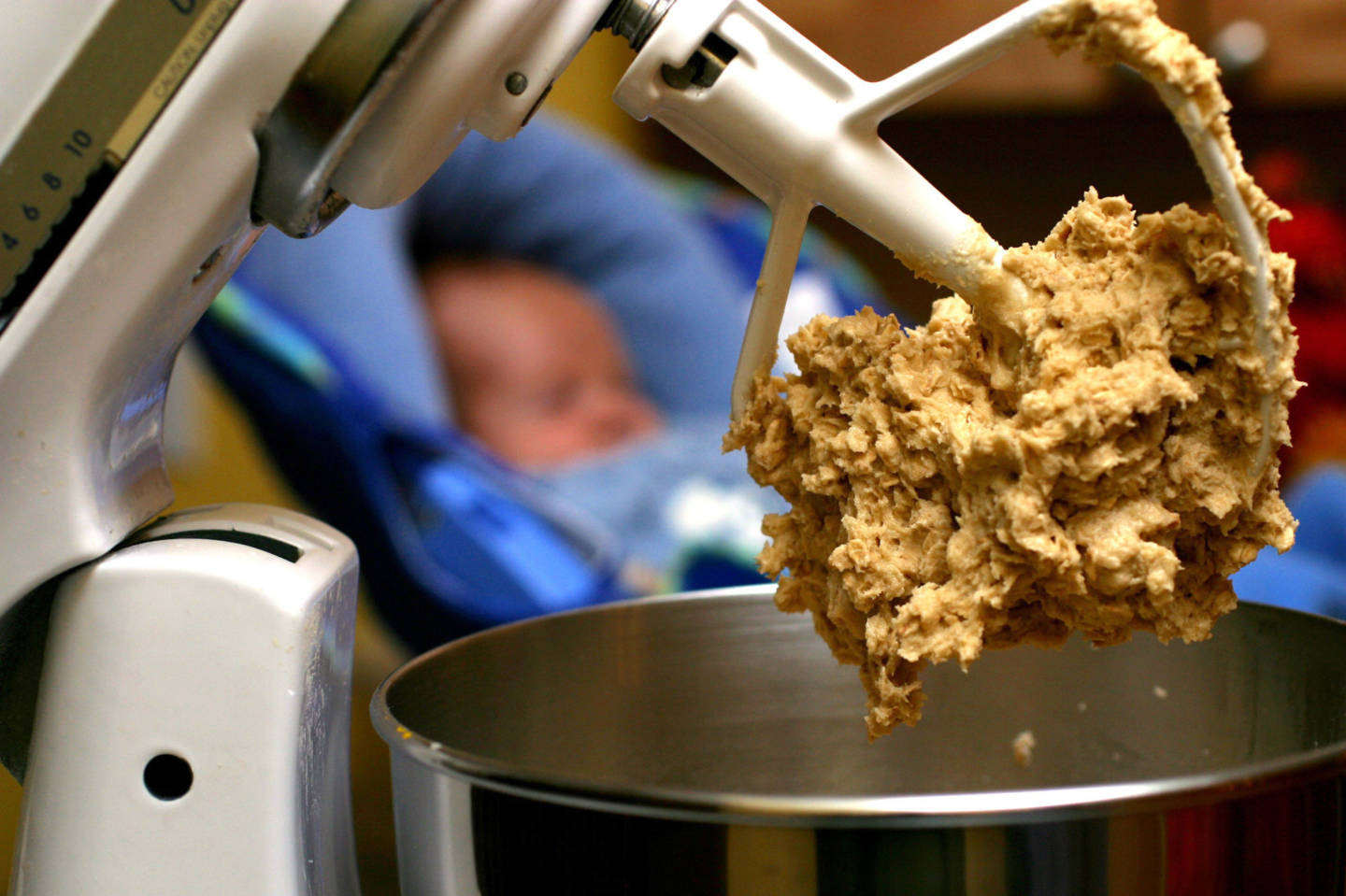
"caption": "Cookie dough clings to the beaters of a standing mixer. The Food and Drug Administration is warning people not to eat raw dough due to an ongoing outbreak of illnesses linked to flour tainted with E. coli.",
"description": "Cookie dough clings to the beaters of a standing mixer. The Food and Drug Administration is warning people not to eat raw dough due to an ongoing outbreak of illnesses linked to flour tainted with E. col",
"title": "Cookie dough clings to the beaters of a standing mixer. The Food and Drug Administration is warning people not to eat raw dough due to an ongoing outbreak of illnesses linked to flour tainted with E. coli.",
"credit": "Larry Crowe/AP",
"status": "inherit",
"isLoading": false,
"fetchFailed": false
},
"bayareabites_110818": {
"type": "attachments",
"id": "bayareabites_110818",
"meta": {
"index": "attachments_1716263798",
"site": "bayareabites",
"id": "110818",
"found": true
},
"parent": 110817,
"imgSizes": {
"twentyfourteen-full-width": {
"file": "https://ww2.kqed.org/app/uploads/sites/24/2016/07/hummus_enl-5cfabe18300e1f1c636d7d31f52abb79dff2ad1d-1038x576.jpg",
"width": 1038,
"mimeType": "image/jpeg",
"height": 576
},
"thumbnail": {
"file": "https://ww2.kqed.org/app/uploads/sites/24/2016/07/hummus_enl-5cfabe18300e1f1c636d7d31f52abb79dff2ad1d-400x268.jpg",
"width": 400,
"mimeType": "image/jpeg",
"height": 268
},
"fd-sm": {
"file": "https://ww2.kqed.org/app/uploads/sites/24/2016/07/hummus_enl-5cfabe18300e1f1c636d7d31f52abb79dff2ad1d-960x644.jpg",
"width": 960,
"mimeType": "image/jpeg",
"height": 644
},
"post-thumbnail": {
"file": "https://ww2.kqed.org/app/uploads/sites/24/2016/07/hummus_enl-5cfabe18300e1f1c636d7d31f52abb79dff2ad1d-672x372.jpg",
"width": 672,
"mimeType": "image/jpeg",
"height": 372
},
"kqedFullSize": {
"file": "https://ww2.kqed.org/app/uploads/sites/24/2016/07/hummus_enl-5cfabe18300e1f1c636d7d31f52abb79dff2ad1d.jpg",
"width": 2000,
"height": 1341
},
"large": {
"file": "https://ww2.kqed.org/app/uploads/sites/24/2016/07/hummus_enl-5cfabe18300e1f1c636d7d31f52abb79dff2ad1d-1440x966.jpg",
"width": 1440,
"mimeType": "image/jpeg",
"height": 966
},
"guest-author-50": {
"file": "https://ww2.kqed.org/app/uploads/sites/24/2016/07/hummus_enl-5cfabe18300e1f1c636d7d31f52abb79dff2ad1d-50x50.jpg",
"width": 50,
"mimeType": "image/jpeg",
"height": 50
},
"guest-author-96": {
"file": "https://ww2.kqed.org/app/uploads/sites/24/2016/07/hummus_enl-5cfabe18300e1f1c636d7d31f52abb79dff2ad1d-96x96.jpg",
"width": 96,
"mimeType": "image/jpeg",
"height": 96
},
"medium": {
"file": "https://ww2.kqed.org/app/uploads/sites/24/2016/07/hummus_enl-5cfabe18300e1f1c636d7d31f52abb79dff2ad1d-800x536.jpg",
"width": 800,
"mimeType": "image/jpeg",
"height": 536
},
"guest-author-64": {
"file": "https://ww2.kqed.org/app/uploads/sites/24/2016/07/hummus_enl-5cfabe18300e1f1c636d7d31f52abb79dff2ad1d-64x64.jpg",
"width": 64,
"mimeType": "image/jpeg",
"height": 64
},
"guest-author-32": {
"file": "https://ww2.kqed.org/app/uploads/sites/24/2016/07/hummus_enl-5cfabe18300e1f1c636d7d31f52abb79dff2ad1d-32x32.jpg",
"width": 32,
"mimeType": "image/jpeg",
"height": 32
},
"cat_post_thumb_sizecategory-posts-2": {
"file": "https://ww2.kqed.org/app/uploads/sites/24/2016/07/hummus_enl-5cfabe18300e1f1c636d7d31f52abb79dff2ad1d-150x150.jpg",
"width": 150,
"mimeType": "image/jpeg",
"height": 150
},
"fd-lrg": {
"file": "https://ww2.kqed.org/app/uploads/sites/24/2016/07/hummus_enl-5cfabe18300e1f1c636d7d31f52abb79dff2ad1d-1920x1287.jpg",
"width": 1920,
"mimeType": "image/jpeg",
"height": 1287
},
"fd-med": {
"file": "https://ww2.kqed.org/app/uploads/sites/24/2016/07/hummus_enl-5cfabe18300e1f1c636d7d31f52abb79dff2ad1d-1180x791.jpg",
"width": 1180,
"mimeType": "image/jpeg",
"height": 791
},
"detail": {
"file": "https://ww2.kqed.org/app/uploads/sites/24/2016/07/hummus_enl-5cfabe18300e1f1c636d7d31f52abb79dff2ad1d-150x150.jpg",
"width": 150,
"mimeType": "image/jpeg",
"height": 150
},
"medium_large": {
"file": "https://ww2.kqed.org/app/uploads/sites/24/2016/07/hummus_enl-5cfabe18300e1f1c636d7d31f52abb79dff2ad1d-768x515.jpg",
"width": 768,
"mimeType": "image/jpeg",
"height": 515
},
"guest-author-128": {
"file": "https://ww2.kqed.org/app/uploads/sites/24/2016/07/hummus_enl-5cfabe18300e1f1c636d7d31f52abb79dff2ad1d-128x128.jpg",
"width": 128,
"mimeType": "image/jpeg",
"height": 128
}
},
"publishDate": 1468862411,
"modified": 1468862867,
"caption": "Lebanese chefs celebrate in Beirut after setting a new Guinness record for what was then the biggest tub of hummus in the world — weighing over 2 tons — in October 2009. The world record effort was part of Lebanon's bid to claim hummus as its own.",
"description": "Lebanese chefs celebrate in Beirut after setting a new Guinness record for what was then the biggest tub of hummus in the world — weighing over 2 tons — in October 2009. The world record effort was part of Lebanon's bid to claim hummus as its",
"title": "Lebanese chefs celebrate in Beirut after setting a new Guinness record for what was then the biggest tub of hummus in the world — weighing over 2 tons — in October 2009. The world record effort was part of Lebanon's bid to claim hummus as its own.",
"credit": " Ramzi Haidar/AFP/Getty Images",
"status": "inherit",
"isLoading": false,
"fetchFailed": false
},
"bayareabites_110757": {
"type": "attachments",
"id": "bayareabites_110757",
"meta": {
"index": "attachments_1716263798",
"site": "bayareabites",
"id": "110757",
"found": true
},
"parent": 110756,
"imgSizes": {
"twentyfourteen-full-width": {
"file": "https://ww2.kqed.org/app/uploads/sites/24/2016/07/ap_16183653665165_wide-36399eb037f4e796a168ce2606c99d18dd5d97a8-1038x576.jpg",
"width": 1038,
"mimeType": "image/jpeg",
"height": 576
},
"thumbnail": {
"file": "https://ww2.kqed.org/app/uploads/sites/24/2016/07/ap_16183653665165_wide-36399eb037f4e796a168ce2606c99d18dd5d97a8-400x225.jpg",
"width": 400,
"mimeType": "image/jpeg",
"height": 225
},
"fd-sm": {
"file": "https://ww2.kqed.org/app/uploads/sites/24/2016/07/ap_16183653665165_wide-36399eb037f4e796a168ce2606c99d18dd5d97a8-960x540.jpg",
"width": 960,
"mimeType": "image/jpeg",
"height": 540
},
"post-thumbnail": {
"file": "https://ww2.kqed.org/app/uploads/sites/24/2016/07/ap_16183653665165_wide-36399eb037f4e796a168ce2606c99d18dd5d97a8-672x372.jpg",
"width": 672,
"mimeType": "image/jpeg",
"height": 372
},
"kqedFullSize": {
"file": "https://ww2.kqed.org/app/uploads/sites/24/2016/07/ap_16183653665165_wide-36399eb037f4e796a168ce2606c99d18dd5d97a8.jpg",
"width": 3121,
"height": 1755
},
"large": {
"file": "https://ww2.kqed.org/app/uploads/sites/24/2016/07/ap_16183653665165_wide-36399eb037f4e796a168ce2606c99d18dd5d97a8-1440x810.jpg",
"width": 1440,
"mimeType": "image/jpeg",
"height": 810
},
"guest-author-50": {
"file": "https://ww2.kqed.org/app/uploads/sites/24/2016/07/ap_16183653665165_wide-36399eb037f4e796a168ce2606c99d18dd5d97a8-50x50.jpg",
"width": 50,
"mimeType": "image/jpeg",
"height": 50
},
"guest-author-96": {
"file": "https://ww2.kqed.org/app/uploads/sites/24/2016/07/ap_16183653665165_wide-36399eb037f4e796a168ce2606c99d18dd5d97a8-96x96.jpg",
"width": 96,
"mimeType": "image/jpeg",
"height": 96
},
"medium": {
"file": "https://ww2.kqed.org/app/uploads/sites/24/2016/07/ap_16183653665165_wide-36399eb037f4e796a168ce2606c99d18dd5d97a8-800x450.jpg",
"width": 800,
"mimeType": "image/jpeg",
"height": 450
},
"guest-author-64": {
"file": "https://ww2.kqed.org/app/uploads/sites/24/2016/07/ap_16183653665165_wide-36399eb037f4e796a168ce2606c99d18dd5d97a8-64x64.jpg",
"width": 64,
"mimeType": "image/jpeg",
"height": 64
},
"guest-author-32": {
"file": "https://ww2.kqed.org/app/uploads/sites/24/2016/07/ap_16183653665165_wide-36399eb037f4e796a168ce2606c99d18dd5d97a8-32x32.jpg",
"width": 32,
"mimeType": "image/jpeg",
"height": 32
},
"cat_post_thumb_sizecategory-posts-2": {
"file": "https://ww2.kqed.org/app/uploads/sites/24/2016/07/ap_16183653665165_wide-36399eb037f4e796a168ce2606c99d18dd5d97a8-150x150.jpg",
"width": 150,
"mimeType": "image/jpeg",
"height": 150
},
"fd-lrg": {
"file": "https://ww2.kqed.org/app/uploads/sites/24/2016/07/ap_16183653665165_wide-36399eb037f4e796a168ce2606c99d18dd5d97a8-1920x1080.jpg",
"width": 1920,
"mimeType": "image/jpeg",
"height": 1080
},
"fd-med": {
"file": "https://ww2.kqed.org/app/uploads/sites/24/2016/07/ap_16183653665165_wide-36399eb037f4e796a168ce2606c99d18dd5d97a8-1180x664.jpg",
"width": 1180,
"mimeType": "image/jpeg",
"height": 664
},
"detail": {
"file": "https://ww2.kqed.org/app/uploads/sites/24/2016/07/ap_16183653665165_wide-36399eb037f4e796a168ce2606c99d18dd5d97a8-150x150.jpg",
"width": 150,
"mimeType": "image/jpeg",
"height": 150
},
"medium_large": {
"file": "https://ww2.kqed.org/app/uploads/sites/24/2016/07/ap_16183653665165_wide-36399eb037f4e796a168ce2606c99d18dd5d97a8-768x432.jpg",
"width": 768,
"mimeType": "image/jpeg",
"height": 432
},
"guest-author-128": {
"file": "https://ww2.kqed.org/app/uploads/sites/24/2016/07/ap_16183653665165_wide-36399eb037f4e796a168ce2606c99d18dd5d97a8-128x128.jpg",
"width": 128,
"mimeType": "image/jpeg",
"height": 128
}
},
"publishDate": 1468535281,
"modified": 1468537228,
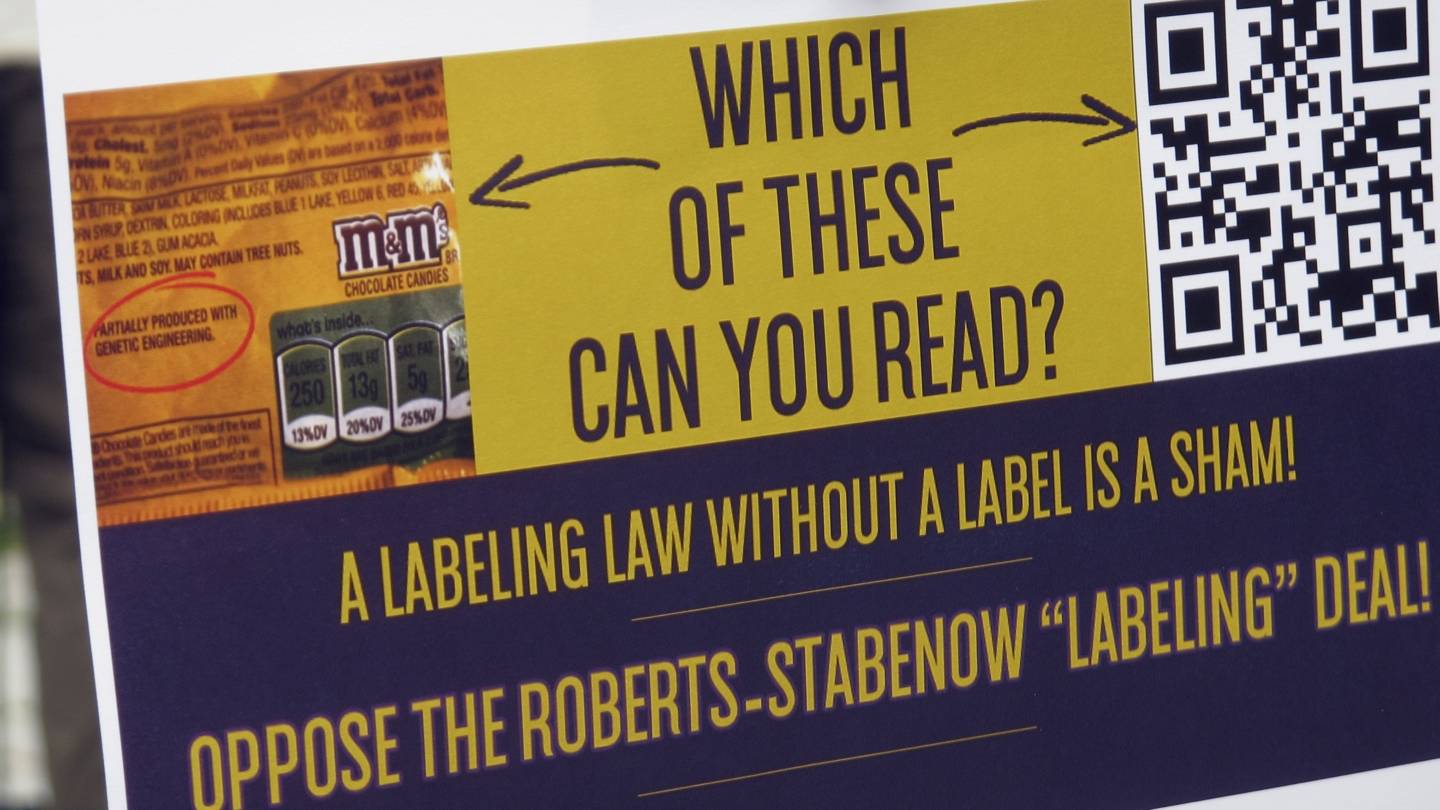
"caption": "Congress has passed a bill that will require food companies to disclose GMOs — but without necessarily using a GMO label on packaging. Companies would have several disclosure options, including using a QR code on packaging that customers could then scan with a smartphone to learn more. (Above) A sign at a July 1 rally in Montpelier, Vt., protests the bill.",
"description": "Congress has passed a bill that will require food companies to disclose GMOs — but without necessarily using a GMO label on packaging. Companies would have several disclosure options, including using a QR code on packaging that customers could then scan with a smartphone to learn more. (Above) A sign at a July 1 rally in Montpelier, Vt., protests the bi",
"title": "Congress has passed a bill that will require food companies to disclose GMOs — but without necessarily using a GMO label on packaging. Companies would have several disclosure options, including using a QR code on packaging that customers could then scan with a smartphone to learn more. (Above) A sign at a July 1 rally in Montpelier, Vt., protests the bill.",
"credit": "Wilson Ring/AP",
"status": "inherit",
"isLoading": false,
"fetchFailed": false
},
"bayareabites_110693": {
"type": "attachments",
"id": "bayareabites_110693",
"meta": {
"index": "attachments_1716263798",
"site": "bayareabites",
"id": "110693",
"found": true
},
"parent": 110692,
"imgSizes": {
"twentyfourteen-full-width": {
"file": "https://ww2.kqed.org/app/uploads/sites/24/2016/07/baggedsalad_enl-4aa3444ff6f5fdd257eb12d2b9584281880d5d53-1038x576.jpg",
"width": 1038,
"mimeType": "image/jpeg",
"height": 576
},
"thumbnail": {
"file": "https://ww2.kqed.org/app/uploads/sites/24/2016/07/baggedsalad_enl-4aa3444ff6f5fdd257eb12d2b9584281880d5d53-400x266.jpg",
"width": 400,
"mimeType": "image/jpeg",
"height": 266
},
"fd-sm": {
"file": "https://ww2.kqed.org/app/uploads/sites/24/2016/07/baggedsalad_enl-4aa3444ff6f5fdd257eb12d2b9584281880d5d53-960x639.jpg",
"width": 960,
"mimeType": "image/jpeg",
"height": 639
},
"post-thumbnail": {
"file": "https://ww2.kqed.org/app/uploads/sites/24/2016/07/baggedsalad_enl-4aa3444ff6f5fdd257eb12d2b9584281880d5d53-672x372.jpg",
"width": 672,
"mimeType": "image/jpeg",
"height": 372
},
"kqedFullSize": {
"file": "https://ww2.kqed.org/app/uploads/sites/24/2016/07/baggedsalad_enl-4aa3444ff6f5fdd257eb12d2b9584281880d5d53.jpg",
"width": 2000,
"height": 1332
},
"large": {
"file": "https://ww2.kqed.org/app/uploads/sites/24/2016/07/baggedsalad_enl-4aa3444ff6f5fdd257eb12d2b9584281880d5d53-1440x959.jpg",
"width": 1440,
"mimeType": "image/jpeg",
"height": 959
},
"guest-author-50": {
"file": "https://ww2.kqed.org/app/uploads/sites/24/2016/07/baggedsalad_enl-4aa3444ff6f5fdd257eb12d2b9584281880d5d53-50x50.jpg",
"width": 50,
"mimeType": "image/jpeg",
"height": 50
},
"guest-author-96": {
"file": "https://ww2.kqed.org/app/uploads/sites/24/2016/07/baggedsalad_enl-4aa3444ff6f5fdd257eb12d2b9584281880d5d53-96x96.jpg",
"width": 96,
"mimeType": "image/jpeg",
"height": 96
},
"medium": {
"file": "https://ww2.kqed.org/app/uploads/sites/24/2016/07/baggedsalad_enl-4aa3444ff6f5fdd257eb12d2b9584281880d5d53-800x533.jpg",
"width": 800,
"mimeType": "image/jpeg",
"height": 533
},
"guest-author-64": {
"file": "https://ww2.kqed.org/app/uploads/sites/24/2016/07/baggedsalad_enl-4aa3444ff6f5fdd257eb12d2b9584281880d5d53-64x64.jpg",
"width": 64,
"mimeType": "image/jpeg",
"height": 64
},
"guest-author-32": {
"file": "https://ww2.kqed.org/app/uploads/sites/24/2016/07/baggedsalad_enl-4aa3444ff6f5fdd257eb12d2b9584281880d5d53-32x32.jpg",
"width": 32,
"mimeType": "image/jpeg",
"height": 32
},
"cat_post_thumb_sizecategory-posts-2": {
"file": "https://ww2.kqed.org/app/uploads/sites/24/2016/07/baggedsalad_enl-4aa3444ff6f5fdd257eb12d2b9584281880d5d53-150x150.jpg",
"width": 150,
"mimeType": "image/jpeg",
"height": 150
},
"fd-lrg": {
"file": "https://ww2.kqed.org/app/uploads/sites/24/2016/07/baggedsalad_enl-4aa3444ff6f5fdd257eb12d2b9584281880d5d53-1920x1279.jpg",
"width": 1920,
"mimeType": "image/jpeg",
"height": 1279
},
"fd-med": {
"file": "https://ww2.kqed.org/app/uploads/sites/24/2016/07/baggedsalad_enl-4aa3444ff6f5fdd257eb12d2b9584281880d5d53-1180x786.jpg",
"width": 1180,
"mimeType": "image/jpeg",
"height": 786
},
"detail": {
"file": "https://ww2.kqed.org/app/uploads/sites/24/2016/07/baggedsalad_enl-4aa3444ff6f5fdd257eb12d2b9584281880d5d53-150x150.jpg",
"width": 150,
"mimeType": "image/jpeg",
"height": 150
},
"medium_large": {
"file": "https://ww2.kqed.org/app/uploads/sites/24/2016/07/baggedsalad_enl-4aa3444ff6f5fdd257eb12d2b9584281880d5d53-768x511.jpg",
"width": 768,
"mimeType": "image/jpeg",
"height": 511
},
"guest-author-128": {
"file": "https://ww2.kqed.org/app/uploads/sites/24/2016/07/baggedsalad_enl-4aa3444ff6f5fdd257eb12d2b9584281880d5d53-128x128.jpg",
"width": 128,
"mimeType": "image/jpeg",
"height": 128
}
},
"publishDate": 1468353637,
"modified": 1468354418,
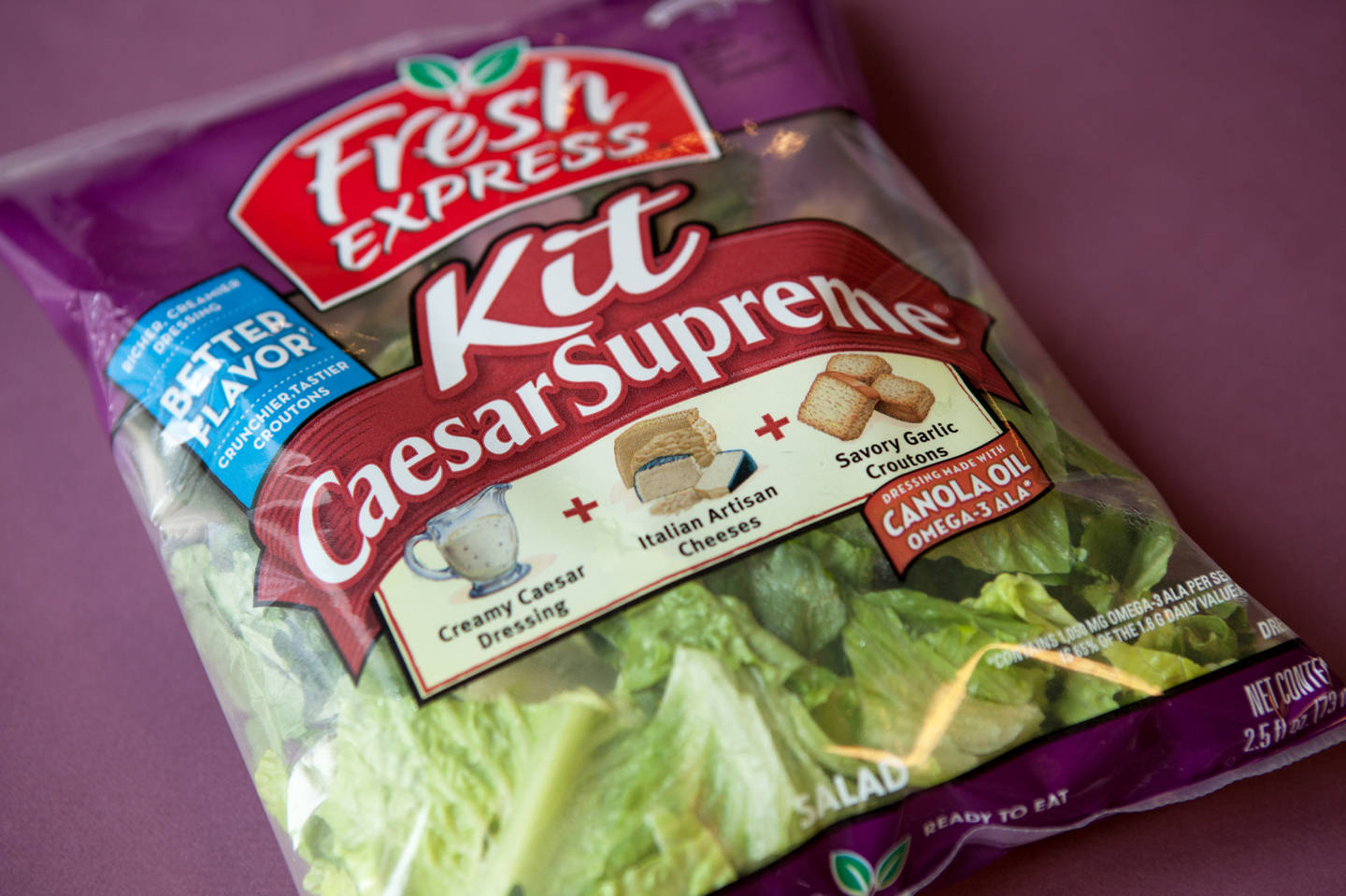
"caption": "A Caesar salad kit. Americans buy twice as many packages of bagged salad greens as heads of lettuce these days. Is the bagged stuff just as good? If it gets you to eat more leafy greens, yes.",
"description": "A Caesar salad kit. Americans buy twice as many packages of bagged salad greens as heads of lettuce these days. Is the bagged stuff just as good? If it gets you to eat more leafy greens, yes.",
"title": "A Caesar salad kit. Americans buy twice as many packages of bagged salad greens as heads of lettuce these days. Is the bagged stuff just as good? If it gets you to eat more leafy greens, yes.",
"credit": "Morgan McCloy/NPR",
"status": "inherit",
"isLoading": false,
"fetchFailed": false
},
"bayareabites_110589": {
"type": "attachments",
"id": "bayareabites_110589",
"meta": {
"index": "attachments_1716263798",
"site": "bayareabites",
"id": "110589",
"found": true
},
"parent": 110588,
"imgSizes": {
"twentyfourteen-full-width": {
"file": "https://ww2.kqed.org/app/uploads/sites/24/2016/07/ap_16183653665165_wide-ea7d6a144dd233ab6508ce816087145f43b2c4c1-1038x576.jpg",
"width": 1038,
"mimeType": "image/jpeg",
"height": 576
},
"thumbnail": {
"file": "https://ww2.kqed.org/app/uploads/sites/24/2016/07/ap_16183653665165_wide-ea7d6a144dd233ab6508ce816087145f43b2c4c1-400x225.jpg",
"width": 400,
"mimeType": "image/jpeg",
"height": 225
},
"fd-sm": {
"file": "https://ww2.kqed.org/app/uploads/sites/24/2016/07/ap_16183653665165_wide-ea7d6a144dd233ab6508ce816087145f43b2c4c1-960x540.jpg",
"width": 960,
"mimeType": "image/jpeg",
"height": 540
},
"post-thumbnail": {
"file": "https://ww2.kqed.org/app/uploads/sites/24/2016/07/ap_16183653665165_wide-ea7d6a144dd233ab6508ce816087145f43b2c4c1-672x372.jpg",
"width": 672,
"mimeType": "image/jpeg",
"height": 372
},
"kqedFullSize": {
"file": "https://ww2.kqed.org/app/uploads/sites/24/2016/07/ap_16183653665165_wide-ea7d6a144dd233ab6508ce816087145f43b2c4c1.jpg",
"width": 3121,
"height": 1755
},
"large": {
"file": "https://ww2.kqed.org/app/uploads/sites/24/2016/07/ap_16183653665165_wide-ea7d6a144dd233ab6508ce816087145f43b2c4c1-1440x810.jpg",
"width": 1440,
"mimeType": "image/jpeg",
"height": 810
},
"guest-author-50": {
"file": "https://ww2.kqed.org/app/uploads/sites/24/2016/07/ap_16183653665165_wide-ea7d6a144dd233ab6508ce816087145f43b2c4c1-50x50.jpg",
"width": 50,
"mimeType": "image/jpeg",
"height": 50
},
"guest-author-96": {
"file": "https://ww2.kqed.org/app/uploads/sites/24/2016/07/ap_16183653665165_wide-ea7d6a144dd233ab6508ce816087145f43b2c4c1-96x96.jpg",
"width": 96,
"mimeType": "image/jpeg",
"height": 96
},
"medium": {
"file": "https://ww2.kqed.org/app/uploads/sites/24/2016/07/ap_16183653665165_wide-ea7d6a144dd233ab6508ce816087145f43b2c4c1-800x450.jpg",
"width": 800,
"mimeType": "image/jpeg",
"height": 450
},
"guest-author-64": {
"file": "https://ww2.kqed.org/app/uploads/sites/24/2016/07/ap_16183653665165_wide-ea7d6a144dd233ab6508ce816087145f43b2c4c1-64x64.jpg",
"width": 64,
"mimeType": "image/jpeg",
"height": 64
},
"guest-author-32": {
"file": "https://ww2.kqed.org/app/uploads/sites/24/2016/07/ap_16183653665165_wide-ea7d6a144dd233ab6508ce816087145f43b2c4c1-32x32.jpg",
"width": 32,
"mimeType": "image/jpeg",
"height": 32
},
"cat_post_thumb_sizecategory-posts-2": {
"file": "https://ww2.kqed.org/app/uploads/sites/24/2016/07/ap_16183653665165_wide-ea7d6a144dd233ab6508ce816087145f43b2c4c1-150x150.jpg",
"width": 150,
"mimeType": "image/jpeg",
"height": 150
},
"fd-lrg": {
"file": "https://ww2.kqed.org/app/uploads/sites/24/2016/07/ap_16183653665165_wide-ea7d6a144dd233ab6508ce816087145f43b2c4c1-1920x1080.jpg",
"width": 1920,
"mimeType": "image/jpeg",
"height": 1080
},
"fd-med": {
"file": "https://ww2.kqed.org/app/uploads/sites/24/2016/07/ap_16183653665165_wide-ea7d6a144dd233ab6508ce816087145f43b2c4c1-1180x664.jpg",
"width": 1180,
"mimeType": "image/jpeg",
"height": 664
},
"detail": {
"file": "https://ww2.kqed.org/app/uploads/sites/24/2016/07/ap_16183653665165_wide-ea7d6a144dd233ab6508ce816087145f43b2c4c1-150x150.jpg",
"width": 150,
"mimeType": "image/jpeg",
"height": 150
},
"medium_large": {
"file": "https://ww2.kqed.org/app/uploads/sites/24/2016/07/ap_16183653665165_wide-ea7d6a144dd233ab6508ce816087145f43b2c4c1-768x432.jpg",
"width": 768,
"mimeType": "image/jpeg",
"height": 432
},
"guest-author-128": {
"file": "https://ww2.kqed.org/app/uploads/sites/24/2016/07/ap_16183653665165_wide-ea7d6a144dd233ab6508ce816087145f43b2c4c1-128x128.jpg",
"width": 128,
"mimeType": "image/jpeg",
"height": 128
}
},
"publishDate": 1467993242,
"modified": 1467993400,
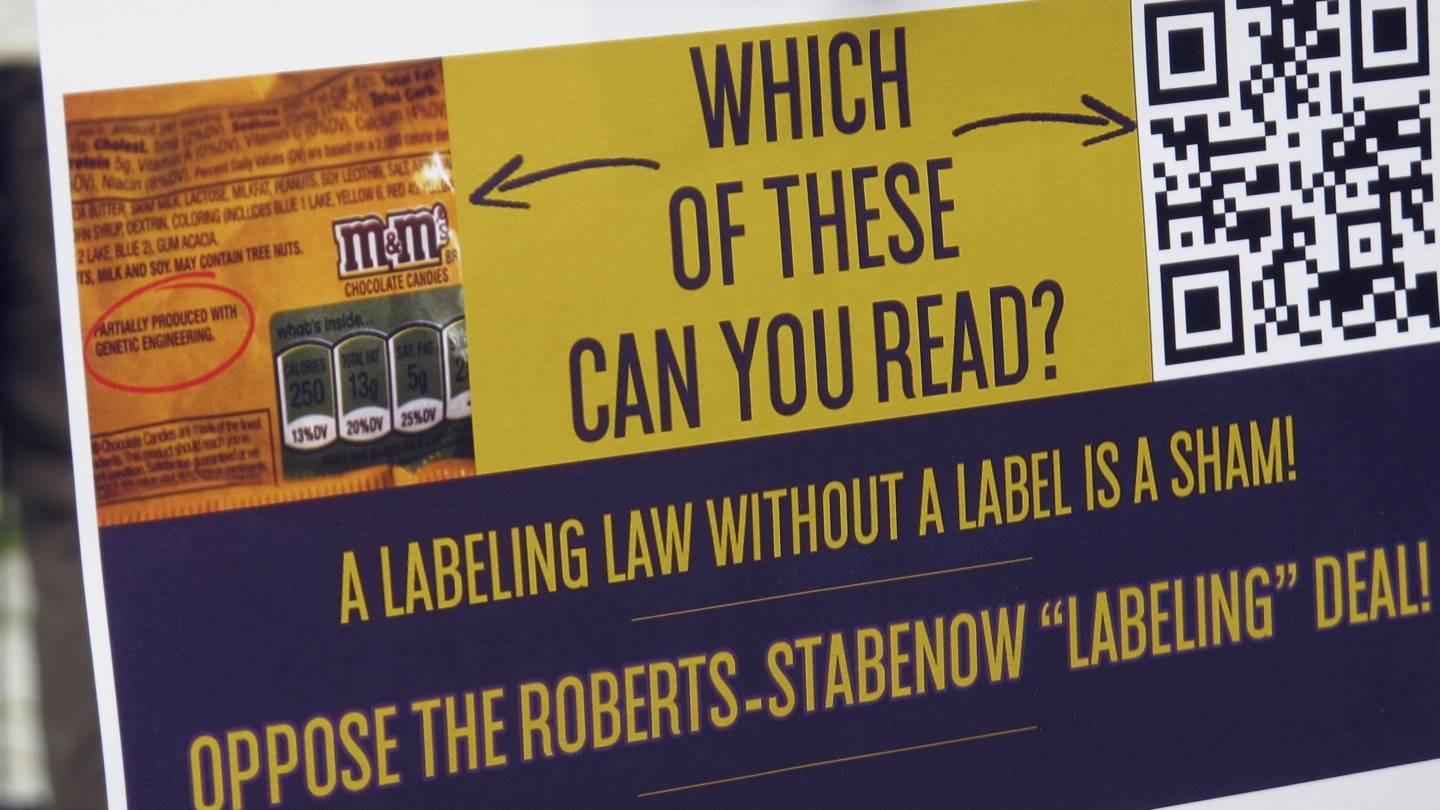
"caption": "The Senate on Thursday approved a measure that would require food companies to disclose GMOs — but without necessarily using a GMO label on packaging. Companies would have several disclosure options, including using a QR code on packaging that customers could then scan with a smartphone to learn more. Above, a sign at a July 1 rally in Montpelier, Vt., protesting the Senate bill.",
"description": "The Senate on Thursday approved a measure that would require food companies to disclose GMOs — but without necessarily using a GMO label on packaging. Companies would have several disclosure options, including using a QR code on packaging that customers could then scan with a smartphone to learn more. Above, a sign at a July 1 rally in Montpelier, Vt., protesting the Senate bil",
"title": "The Senate on Thursday approved a measure that would require food companies to disclose GMOs — but without necessarily using a GMO label on packaging. Companies would have several disclosure options, including using a QR code on packaging that customers could then scan with a smartphone to learn more. Above, a sign at a July 1 rally in Montpelier, Vt., protesting the Senate bill.",
"credit": "Wilson Ring/AP",
"status": "inherit",
"isLoading": false,
"fetchFailed": false
},
"bayareabites_110332": {
"type": "attachments",
"id": "bayareabites_110332",
"meta": {
"index": "attachments_1716263798",
"site": "bayareabites",
"id": "110332",
"found": true
},
"parent": 110331,
"imgSizes": {
"twentyfourteen-full-width": {
"file": "https://ww2.kqed.org/app/uploads/sites/24/2016/06/gmolabelbill_enl-46bd1ad501cdee90a9a3b87506c719c1ef35eecc-1038x576.jpg",
"width": 1038,
"mimeType": "image/jpeg",
"height": 576
},
"thumbnail": {
"file": "https://ww2.kqed.org/app/uploads/sites/24/2016/06/gmolabelbill_enl-46bd1ad501cdee90a9a3b87506c719c1ef35eecc-400x248.jpg",
"width": 400,
"mimeType": "image/jpeg",
"height": 248
},
"fd-sm": {
"file": "https://ww2.kqed.org/app/uploads/sites/24/2016/06/gmolabelbill_enl-46bd1ad501cdee90a9a3b87506c719c1ef35eecc-960x596.jpg",
"width": 960,
"mimeType": "image/jpeg",
"height": 596
},
"post-thumbnail": {
"file": "https://ww2.kqed.org/app/uploads/sites/24/2016/06/gmolabelbill_enl-46bd1ad501cdee90a9a3b87506c719c1ef35eecc-672x372.jpg",
"width": 672,
"mimeType": "image/jpeg",
"height": 372
},
"kqedFullSize": {
"file": "https://ww2.kqed.org/app/uploads/sites/24/2016/06/gmolabelbill_enl-46bd1ad501cdee90a9a3b87506c719c1ef35eecc.jpg",
"width": 2000,
"height": 1241
},
"large": {
"file": "https://ww2.kqed.org/app/uploads/sites/24/2016/06/gmolabelbill_enl-46bd1ad501cdee90a9a3b87506c719c1ef35eecc-1440x894.jpg",
"width": 1440,
"mimeType": "image/jpeg",
"height": 894
},
"guest-author-50": {
"file": "https://ww2.kqed.org/app/uploads/sites/24/2016/06/gmolabelbill_enl-46bd1ad501cdee90a9a3b87506c719c1ef35eecc-50x50.jpg",
"width": 50,
"mimeType": "image/jpeg",
"height": 50
},
"guest-author-96": {
"file": "https://ww2.kqed.org/app/uploads/sites/24/2016/06/gmolabelbill_enl-46bd1ad501cdee90a9a3b87506c719c1ef35eecc-96x96.jpg",
"width": 96,
"mimeType": "image/jpeg",
"height": 96
},
"medium": {
"file": "https://ww2.kqed.org/app/uploads/sites/24/2016/06/gmolabelbill_enl-46bd1ad501cdee90a9a3b87506c719c1ef35eecc-800x496.jpg",
"width": 800,
"mimeType": "image/jpeg",
"height": 496
},
"guest-author-64": {
"file": "https://ww2.kqed.org/app/uploads/sites/24/2016/06/gmolabelbill_enl-46bd1ad501cdee90a9a3b87506c719c1ef35eecc-64x64.jpg",
"width": 64,
"mimeType": "image/jpeg",
"height": 64
},
"guest-author-32": {
"file": "https://ww2.kqed.org/app/uploads/sites/24/2016/06/gmolabelbill_enl-46bd1ad501cdee90a9a3b87506c719c1ef35eecc-32x32.jpg",
"width": 32,
"mimeType": "image/jpeg",
"height": 32
},
"cat_post_thumb_sizecategory-posts-2": {
"file": "https://ww2.kqed.org/app/uploads/sites/24/2016/06/gmolabelbill_enl-46bd1ad501cdee90a9a3b87506c719c1ef35eecc-150x150.jpg",
"width": 150,
"mimeType": "image/jpeg",
"height": 150
},
"fd-lrg": {
"file": "https://ww2.kqed.org/app/uploads/sites/24/2016/06/gmolabelbill_enl-46bd1ad501cdee90a9a3b87506c719c1ef35eecc-1920x1191.jpg",
"width": 1920,
"mimeType": "image/jpeg",
"height": 1191
},
"fd-med": {
"file": "https://ww2.kqed.org/app/uploads/sites/24/2016/06/gmolabelbill_enl-46bd1ad501cdee90a9a3b87506c719c1ef35eecc-1180x732.jpg",
"width": 1180,
"mimeType": "image/jpeg",
"height": 732
},
"detail": {
"file": "https://ww2.kqed.org/app/uploads/sites/24/2016/06/gmolabelbill_enl-46bd1ad501cdee90a9a3b87506c719c1ef35eecc-150x150.jpg",
"width": 150,
"mimeType": "image/jpeg",
"height": 150
},
"medium_large": {
"file": "https://ww2.kqed.org/app/uploads/sites/24/2016/06/gmolabelbill_enl-46bd1ad501cdee90a9a3b87506c719c1ef35eecc-768x477.jpg",
"width": 768,
"mimeType": "image/jpeg",
"height": 477
},
"guest-author-128": {
"file": "https://ww2.kqed.org/app/uploads/sites/24/2016/06/gmolabelbill_enl-46bd1ad501cdee90a9a3b87506c719c1ef35eecc-128x128.jpg",
"width": 128,
"mimeType": "image/jpeg",
"height": 128
}
},
"publishDate": 1466735108,
"modified": 1466735350,
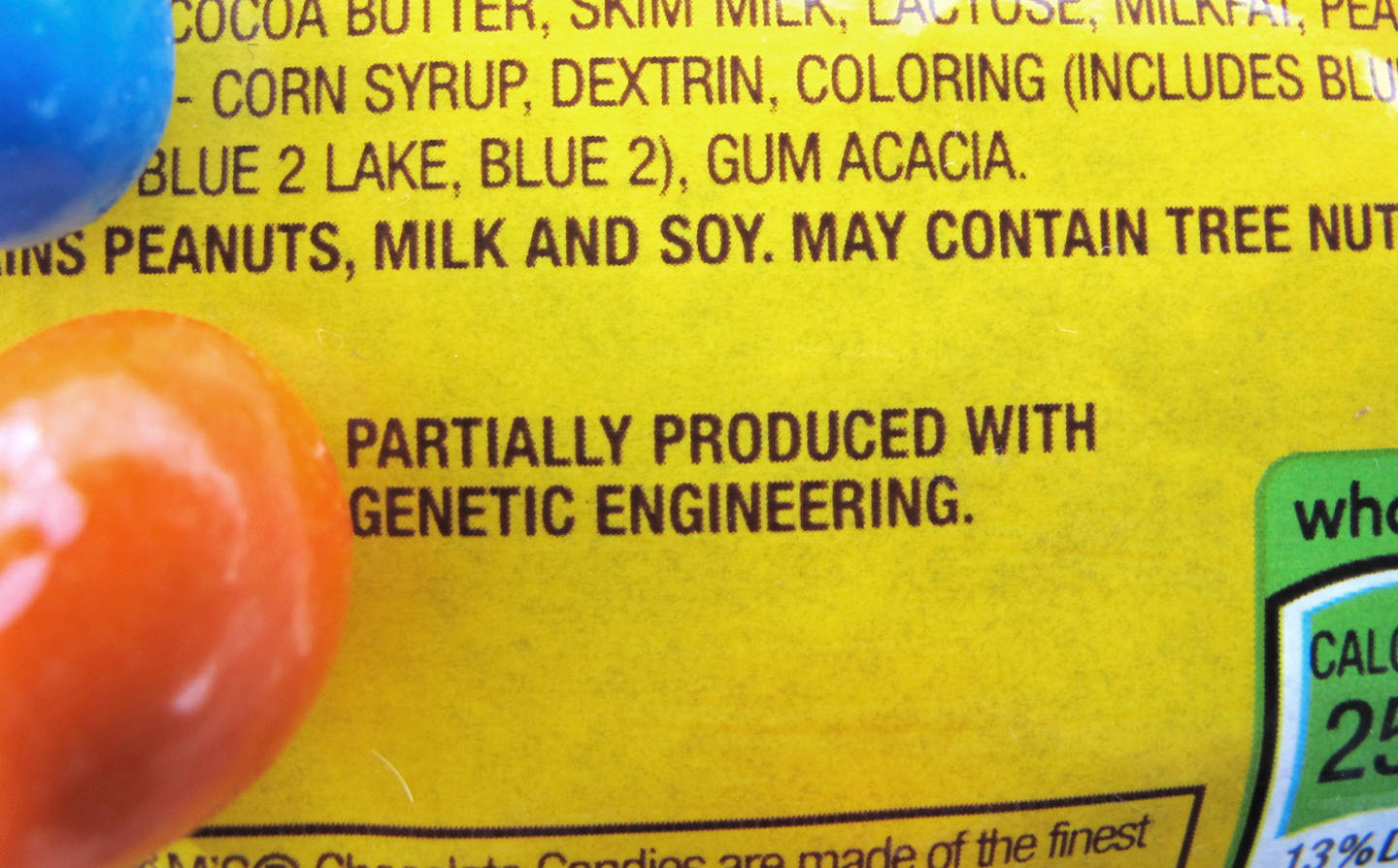
"caption": "A new disclosure statement on a package of peanut M&Ms candy notes they are \"partially produced with genetic engineering.\"",
"description": "A new disclosure statement on a package of peanut",
"title": "A new disclosure statement on a package of peanut M&Ms candy notes they are \"partially produced with genetic engineering.\"",
"credit": "Lisa Rathke/AP",
"status": "inherit",
"isLoading": false,
"fetchFailed": false
},
"bayareabites_109791": {
"type": "attachments",
"id": "bayareabites_109791",
"meta": {
"index": "attachments_1716263798",
"site": "bayareabites",
"id": "109791",
"found": true
},
"parent": 109789,
"imgSizes": {
"thumbnail": {
"file": "https://ww2.kqed.org/app/uploads/sites/24/2016/05/SamEmilioGFMercantile-680x449-400x264.jpg",
"width": 400,
"mimeType": "image/jpeg",
"height": 264
},
"post-thumbnail": {
"file": "https://ww2.kqed.org/app/uploads/sites/24/2016/05/SamEmilioGFMercantile-680x449-672x372.jpg",
"width": 672,
"mimeType": "image/jpeg",
"height": 372
},
"kqedFullSize": {
"file": "https://ww2.kqed.org/app/uploads/sites/24/2016/05/SamEmilioGFMercantile-680x449.jpg",
"width": 680,
"height": 449
},
"cat_post_thumb_sizecategory-posts-2": {
"file": "https://ww2.kqed.org/app/uploads/sites/24/2016/05/SamEmilioGFMercantile-680x449-150x150.jpg",
"width": 150,
"mimeType": "image/jpeg",
"height": 150
},
"guest-author-50": {
"file": "https://ww2.kqed.org/app/uploads/sites/24/2016/05/SamEmilioGFMercantile-680x449-50x50.jpg",
"width": 50,
"mimeType": "image/jpeg",
"height": 50
},
"guest-author-96": {
"file": "https://ww2.kqed.org/app/uploads/sites/24/2016/05/SamEmilioGFMercantile-680x449-96x96.jpg",
"width": 96,
"mimeType": "image/jpeg",
"height": 96
},
"guest-author-64": {
"file": "https://ww2.kqed.org/app/uploads/sites/24/2016/05/SamEmilioGFMercantile-680x449-64x64.jpg",
"width": 64,
"mimeType": "image/jpeg",
"height": 64
},
"detail": {
"file": "https://ww2.kqed.org/app/uploads/sites/24/2016/05/SamEmilioGFMercantile-680x449-150x150.jpg",
"width": 150,
"mimeType": "image/jpeg",
"height": 150
},
"guest-author-32": {
"file": "https://ww2.kqed.org/app/uploads/sites/24/2016/05/SamEmilioGFMercantile-680x449-32x32.jpg",
"width": 32,
"mimeType": "image/jpeg",
"height": 32
},
"guest-author-128": {
"file": "https://ww2.kqed.org/app/uploads/sites/24/2016/05/SamEmilioGFMercantile-680x449-128x128.jpg",
"width": 128,
"mimeType": "image/jpeg",
"height": 128
}
},
"publishDate": 1464739921,
"modified": 1464740068,
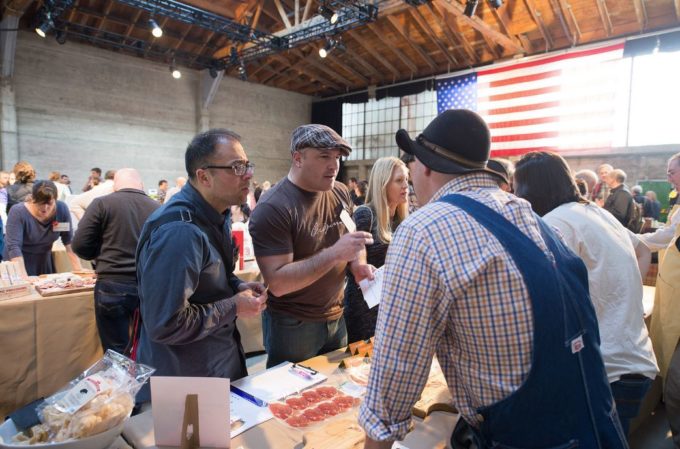
"caption": "Sam Mogannam, founder of San Francisco’s Bi-Rite (far left)",
"description": null,
"title": "SamEmilioGFMercantile-680x449",
"credit": "Gamma 9",
"status": "inherit",
"isLoading": false,
"fetchFailed": false
},
"bayareabites_109749": {
"type": "attachments",
"id": "bayareabites_109749",
"meta": {
"index": "attachments_1716263798",
"site": "bayareabites",
"id": "109749",
"found": true
},
"parent": 109748,
"imgSizes": {
"twentyfourteen-full-width": {
"file": "https://ww2.kqed.org/app/uploads/sites/24/2016/05/canesugarmountain_enl-e72a5cb243e49ad4ea69cde3fefd98217f5e6ea4-1038x576.jpg",
"width": 1038,
"mimeType": "image/jpeg",
"height": 576
},
"thumbnail": {
"file": "https://ww2.kqed.org/app/uploads/sites/24/2016/05/canesugarmountain_enl-e72a5cb243e49ad4ea69cde3fefd98217f5e6ea4-400x267.jpg",
"width": 400,
"mimeType": "image/jpeg",
"height": 267
},
"fd-sm": {
"file": "https://ww2.kqed.org/app/uploads/sites/24/2016/05/canesugarmountain_enl-e72a5cb243e49ad4ea69cde3fefd98217f5e6ea4-960x640.jpg",
"width": 960,
"mimeType": "image/jpeg",
"height": 640
},
"post-thumbnail": {
"file": "https://ww2.kqed.org/app/uploads/sites/24/2016/05/canesugarmountain_enl-e72a5cb243e49ad4ea69cde3fefd98217f5e6ea4-672x372.jpg",
"width": 672,
"mimeType": "image/jpeg",
"height": 372
},
"kqedFullSize": {
"file": "https://ww2.kqed.org/app/uploads/sites/24/2016/05/canesugarmountain_enl-e72a5cb243e49ad4ea69cde3fefd98217f5e6ea4.jpg",
"width": 2000,
"height": 1334
},
"large": {
"file": "https://ww2.kqed.org/app/uploads/sites/24/2016/05/canesugarmountain_enl-e72a5cb243e49ad4ea69cde3fefd98217f5e6ea4-1440x960.jpg",
"width": 1440,
"mimeType": "image/jpeg",
"height": 960
},
"guest-author-50": {
"file": "https://ww2.kqed.org/app/uploads/sites/24/2016/05/canesugarmountain_enl-e72a5cb243e49ad4ea69cde3fefd98217f5e6ea4-50x50.jpg",
"width": 50,
"mimeType": "image/jpeg",
"height": 50
},
"guest-author-96": {
"file": "https://ww2.kqed.org/app/uploads/sites/24/2016/05/canesugarmountain_enl-e72a5cb243e49ad4ea69cde3fefd98217f5e6ea4-96x96.jpg",
"width": 96,
"mimeType": "image/jpeg",
"height": 96
},
"medium": {
"file": "https://ww2.kqed.org/app/uploads/sites/24/2016/05/canesugarmountain_enl-e72a5cb243e49ad4ea69cde3fefd98217f5e6ea4-800x534.jpg",
"width": 800,
"mimeType": "image/jpeg",
"height": 534
},
"guest-author-64": {
"file": "https://ww2.kqed.org/app/uploads/sites/24/2016/05/canesugarmountain_enl-e72a5cb243e49ad4ea69cde3fefd98217f5e6ea4-64x64.jpg",
"width": 64,
"mimeType": "image/jpeg",
"height": 64
},
"guest-author-32": {
"file": "https://ww2.kqed.org/app/uploads/sites/24/2016/05/canesugarmountain_enl-e72a5cb243e49ad4ea69cde3fefd98217f5e6ea4-32x32.jpg",
"width": 32,
"mimeType": "image/jpeg",
"height": 32
},
"cat_post_thumb_sizecategory-posts-2": {
"file": "https://ww2.kqed.org/app/uploads/sites/24/2016/05/canesugarmountain_enl-e72a5cb243e49ad4ea69cde3fefd98217f5e6ea4-150x150.jpg",
"width": 150,
"mimeType": "image/jpeg",
"height": 150
},
"fd-lrg": {
"file": "https://ww2.kqed.org/app/uploads/sites/24/2016/05/canesugarmountain_enl-e72a5cb243e49ad4ea69cde3fefd98217f5e6ea4-1920x1281.jpg",
"width": 1920,
"mimeType": "image/jpeg",
"height": 1281
},
"fd-med": {
"file": "https://ww2.kqed.org/app/uploads/sites/24/2016/05/canesugarmountain_enl-e72a5cb243e49ad4ea69cde3fefd98217f5e6ea4-1180x787.jpg",
"width": 1180,
"mimeType": "image/jpeg",
"height": 787
},
"detail": {
"file": "https://ww2.kqed.org/app/uploads/sites/24/2016/05/canesugarmountain_enl-e72a5cb243e49ad4ea69cde3fefd98217f5e6ea4-150x150.jpg",
"width": 150,
"mimeType": "image/jpeg",
"height": 150
},
"medium_large": {
"file": "https://ww2.kqed.org/app/uploads/sites/24/2016/05/canesugarmountain_enl-e72a5cb243e49ad4ea69cde3fefd98217f5e6ea4-768x512.jpg",
"width": 768,
"mimeType": "image/jpeg",
"height": 512
},
"guest-author-128": {
"file": "https://ww2.kqed.org/app/uploads/sites/24/2016/05/canesugarmountain_enl-e72a5cb243e49ad4ea69cde3fefd98217f5e6ea4-128x128.jpg",
"width": 128,
"mimeType": "image/jpeg",
"height": 128
}
},
"publishDate": 1464296294,
"modified": 1464296571,
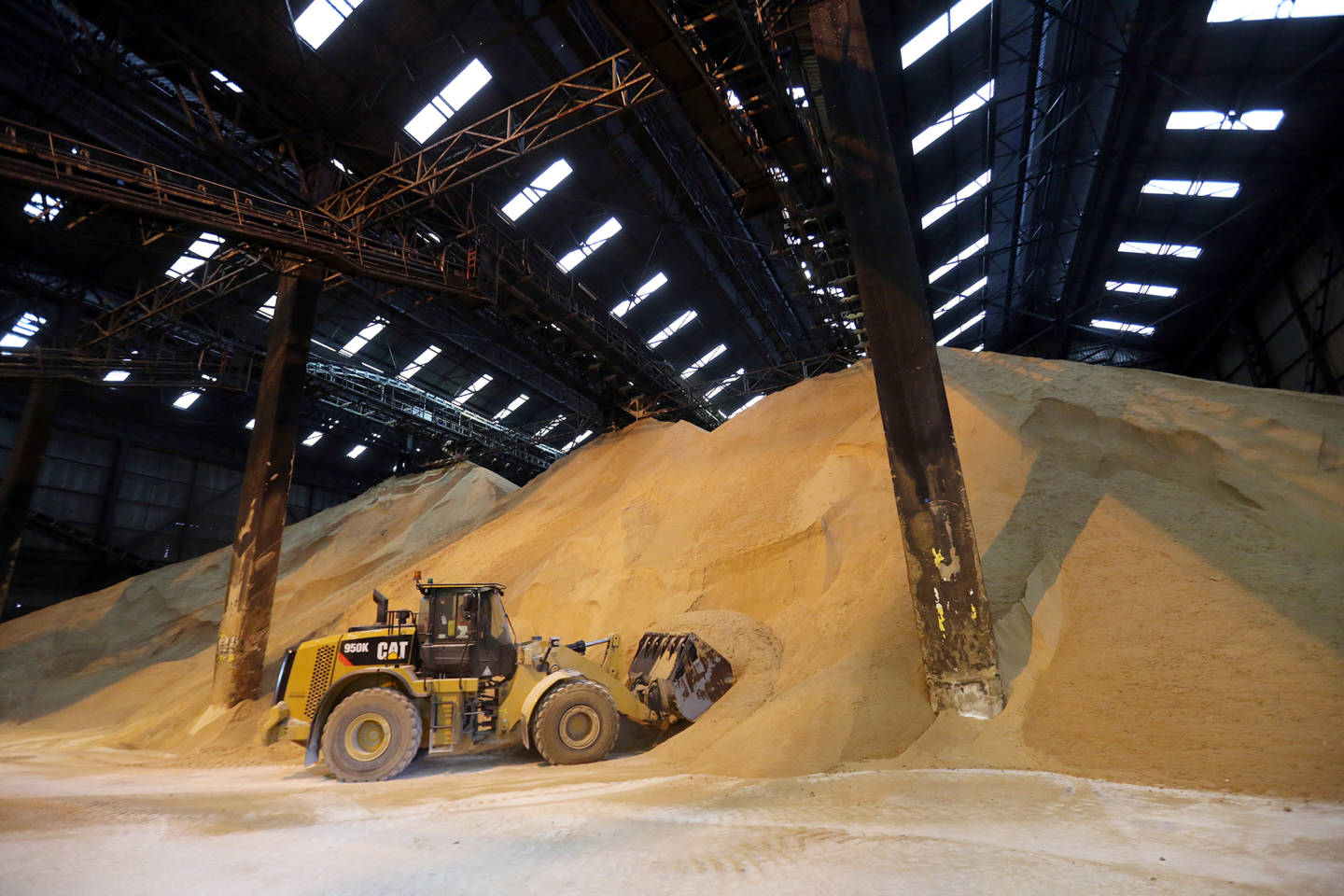
"caption": "Is it sugar, or \"evaporated cane juice\"? The FDA says they're the same thing, folks.",
"description": "Is it sugar, or \"evaporated cane juice\"? The FDA says they're the same thing, folks.",
"title": "Is it sugar, or \"evaporated cane juice\"? The FDA says they're the same thing, folks.",
"credit": "Chris Ratcliffe/Bloomberg via Getty Images",
"status": "inherit",
"isLoading": false,
"fetchFailed": false
},
"bayareabites_109734": {
"type": "attachments",
"id": "bayareabites_109734",
"meta": {
"index": "attachments_1716263798",
"site": "bayareabites",
"id": "109734",
"found": true
},
"parent": 109733,
"imgSizes": {
"twentyfourteen-full-width": {
"file": "https://ww2.kqed.org/app/uploads/sites/24/2016/05/ap_00060702309_wide-5353c71b266dd15cdf053d5044da4a5c1602333d-1038x576.jpg",
"width": 1038,
"mimeType": "image/jpeg",
"height": 576
},
"thumbnail": {
"file": "https://ww2.kqed.org/app/uploads/sites/24/2016/05/ap_00060702309_wide-5353c71b266dd15cdf053d5044da4a5c1602333d-400x225.jpg",
"width": 400,
"mimeType": "image/jpeg",
"height": 225
},
"fd-sm": {
"file": "https://ww2.kqed.org/app/uploads/sites/24/2016/05/ap_00060702309_wide-5353c71b266dd15cdf053d5044da4a5c1602333d-960x540.jpg",
"width": 960,
"mimeType": "image/jpeg",
"height": 540
},
"post-thumbnail": {
"file": "https://ww2.kqed.org/app/uploads/sites/24/2016/05/ap_00060702309_wide-5353c71b266dd15cdf053d5044da4a5c1602333d-672x372.jpg",
"width": 672,
"mimeType": "image/jpeg",
"height": 372
},
"kqedFullSize": {
"file": "https://ww2.kqed.org/app/uploads/sites/24/2016/05/ap_00060702309_wide-5353c71b266dd15cdf053d5044da4a5c1602333d.jpg",
"width": 2000,
"height": 1125
},
"large": {
"file": "https://ww2.kqed.org/app/uploads/sites/24/2016/05/ap_00060702309_wide-5353c71b266dd15cdf053d5044da4a5c1602333d-1440x810.jpg",
"width": 1440,
"mimeType": "image/jpeg",
"height": 810
},
"guest-author-50": {
"file": "https://ww2.kqed.org/app/uploads/sites/24/2016/05/ap_00060702309_wide-5353c71b266dd15cdf053d5044da4a5c1602333d-50x50.jpg",
"width": 50,
"mimeType": "image/jpeg",
"height": 50
},
"guest-author-96": {
"file": "https://ww2.kqed.org/app/uploads/sites/24/2016/05/ap_00060702309_wide-5353c71b266dd15cdf053d5044da4a5c1602333d-96x96.jpg",
"width": 96,
"mimeType": "image/jpeg",
"height": 96
},
"medium": {
"file": "https://ww2.kqed.org/app/uploads/sites/24/2016/05/ap_00060702309_wide-5353c71b266dd15cdf053d5044da4a5c1602333d-800x450.jpg",
"width": 800,
"mimeType": "image/jpeg",
"height": 450
},
"guest-author-64": {
"file": "https://ww2.kqed.org/app/uploads/sites/24/2016/05/ap_00060702309_wide-5353c71b266dd15cdf053d5044da4a5c1602333d-64x64.jpg",
"width": 64,
"mimeType": "image/jpeg",
"height": 64
},
"guest-author-32": {
"file": "https://ww2.kqed.org/app/uploads/sites/24/2016/05/ap_00060702309_wide-5353c71b266dd15cdf053d5044da4a5c1602333d-32x32.jpg",
"width": 32,
"mimeType": "image/jpeg",
"height": 32
},
"cat_post_thumb_sizecategory-posts-2": {
"file": "https://ww2.kqed.org/app/uploads/sites/24/2016/05/ap_00060702309_wide-5353c71b266dd15cdf053d5044da4a5c1602333d-150x150.jpg",
"width": 150,
"mimeType": "image/jpeg",
"height": 150
},
"fd-lrg": {
"file": "https://ww2.kqed.org/app/uploads/sites/24/2016/05/ap_00060702309_wide-5353c71b266dd15cdf053d5044da4a5c1602333d-1920x1080.jpg",
"width": 1920,
"mimeType": "image/jpeg",
"height": 1080
},
"fd-med": {
"file": "https://ww2.kqed.org/app/uploads/sites/24/2016/05/ap_00060702309_wide-5353c71b266dd15cdf053d5044da4a5c1602333d-1180x664.jpg",
"width": 1180,
"mimeType": "image/jpeg",
"height": 664
},
"detail": {
"file": "https://ww2.kqed.org/app/uploads/sites/24/2016/05/ap_00060702309_wide-5353c71b266dd15cdf053d5044da4a5c1602333d-150x150.jpg",
"width": 150,
"mimeType": "image/jpeg",
"height": 150
},
"medium_large": {
"file": "https://ww2.kqed.org/app/uploads/sites/24/2016/05/ap_00060702309_wide-5353c71b266dd15cdf053d5044da4a5c1602333d-768x432.jpg",
"width": 768,
"mimeType": "image/jpeg",
"height": 432
},
"guest-author-128": {
"file": "https://ww2.kqed.org/app/uploads/sites/24/2016/05/ap_00060702309_wide-5353c71b266dd15cdf053d5044da4a5c1602333d-128x128.jpg",
"width": 128,
"mimeType": "image/jpeg",
"height": 128
}
},
"publishDate": 1464279909,
"modified": 1464280175,
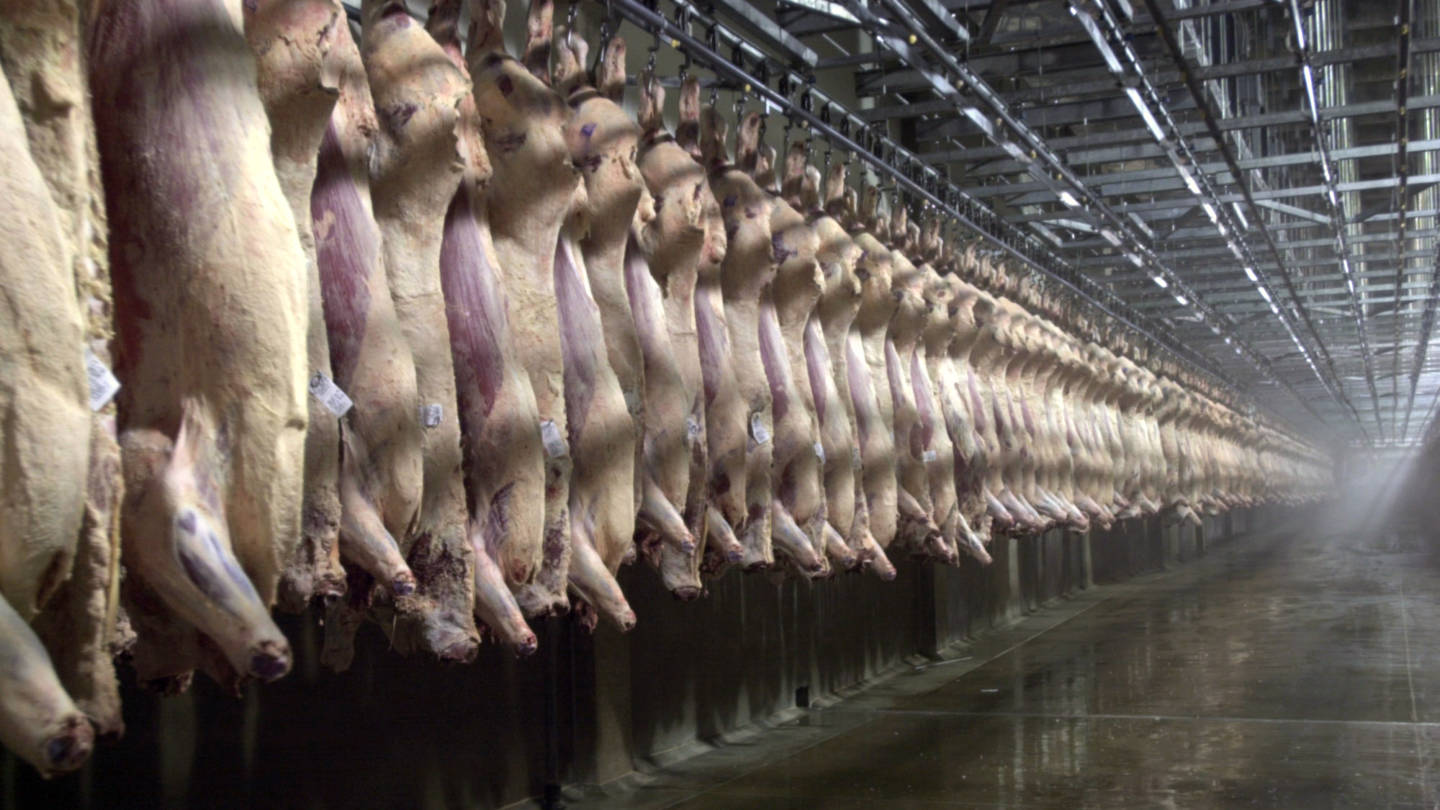
"caption": "Beef sides hang in a chilling room at a slaughterhouse in Nebraska.",
"description": "Beef sides hang in a chilling room at a slaughterhouse in Nebraska",
"title": "Beef sides hang in a chilling room at a slaughterhouse in Nebraska.",
"credit": "Nati Harnik/AP",
"status": "inherit",
"isLoading": false,
"fetchFailed": false
},
"bayareabites_109672": {
"type": "attachments",
"id": "bayareabites_109672",
"meta": {
"index": "attachments_1716263798",
"site": "bayareabites",
"id": "109672",
"found": true
},
"parent": 109671,
"imgSizes": {
"twentyfourteen-full-width": {
"file": "https://ww2.kqed.org/app/uploads/sites/24/2016/05/tenderizedmeat2_enl-d1e01b48e2ae63ac11c989a1a868bd5cb9aca3eb-1038x576.jpg",
"width": 1038,
"mimeType": "image/jpeg",
"height": 576
},
"thumbnail": {
"file": "https://ww2.kqed.org/app/uploads/sites/24/2016/05/tenderizedmeat2_enl-d1e01b48e2ae63ac11c989a1a868bd5cb9aca3eb-400x240.jpg",
"width": 400,
"mimeType": "image/jpeg",
"height": 240
},
"fd-sm": {
"file": "https://ww2.kqed.org/app/uploads/sites/24/2016/05/tenderizedmeat2_enl-d1e01b48e2ae63ac11c989a1a868bd5cb9aca3eb-960x576.jpg",
"width": 960,
"mimeType": "image/jpeg",
"height": 576
},
"post-thumbnail": {
"file": "https://ww2.kqed.org/app/uploads/sites/24/2016/05/tenderizedmeat2_enl-d1e01b48e2ae63ac11c989a1a868bd5cb9aca3eb-672x372.jpg",
"width": 672,
"mimeType": "image/jpeg",
"height": 372
},
"kqedFullSize": {
"file": "https://ww2.kqed.org/app/uploads/sites/24/2016/05/tenderizedmeat2_enl-d1e01b48e2ae63ac11c989a1a868bd5cb9aca3eb.jpg",
"width": 2000,
"height": 1200
},
"large": {
"file": "https://ww2.kqed.org/app/uploads/sites/24/2016/05/tenderizedmeat2_enl-d1e01b48e2ae63ac11c989a1a868bd5cb9aca3eb-1440x864.jpg",
"width": 1440,
"mimeType": "image/jpeg",
"height": 864
},
"guest-author-50": {
"file": "https://ww2.kqed.org/app/uploads/sites/24/2016/05/tenderizedmeat2_enl-d1e01b48e2ae63ac11c989a1a868bd5cb9aca3eb-50x50.jpg",
"width": 50,
"mimeType": "image/jpeg",
"height": 50
},
"guest-author-96": {
"file": "https://ww2.kqed.org/app/uploads/sites/24/2016/05/tenderizedmeat2_enl-d1e01b48e2ae63ac11c989a1a868bd5cb9aca3eb-96x96.jpg",
"width": 96,
"mimeType": "image/jpeg",
"height": 96
},
"medium": {
"file": "https://ww2.kqed.org/app/uploads/sites/24/2016/05/tenderizedmeat2_enl-d1e01b48e2ae63ac11c989a1a868bd5cb9aca3eb-800x480.jpg",
"width": 800,
"mimeType": "image/jpeg",
"height": 480
},
"guest-author-64": {
"file": "https://ww2.kqed.org/app/uploads/sites/24/2016/05/tenderizedmeat2_enl-d1e01b48e2ae63ac11c989a1a868bd5cb9aca3eb-64x64.jpg",
"width": 64,
"mimeType": "image/jpeg",
"height": 64
},
"guest-author-32": {
"file": "https://ww2.kqed.org/app/uploads/sites/24/2016/05/tenderizedmeat2_enl-d1e01b48e2ae63ac11c989a1a868bd5cb9aca3eb-32x32.jpg",
"width": 32,
"mimeType": "image/jpeg",
"height": 32
},
"cat_post_thumb_sizecategory-posts-2": {
"file": "https://ww2.kqed.org/app/uploads/sites/24/2016/05/tenderizedmeat2_enl-d1e01b48e2ae63ac11c989a1a868bd5cb9aca3eb-150x150.jpg",
"width": 150,
"mimeType": "image/jpeg",
"height": 150
},
"fd-lrg": {
"file": "https://ww2.kqed.org/app/uploads/sites/24/2016/05/tenderizedmeat2_enl-d1e01b48e2ae63ac11c989a1a868bd5cb9aca3eb-1920x1152.jpg",
"width": 1920,
"mimeType": "image/jpeg",
"height": 1152
},
"fd-med": {
"file": "https://ww2.kqed.org/app/uploads/sites/24/2016/05/tenderizedmeat2_enl-d1e01b48e2ae63ac11c989a1a868bd5cb9aca3eb-1180x708.jpg",
"width": 1180,
"mimeType": "image/jpeg",
"height": 708
},
"detail": {
"file": "https://ww2.kqed.org/app/uploads/sites/24/2016/05/tenderizedmeat2_enl-d1e01b48e2ae63ac11c989a1a868bd5cb9aca3eb-150x150.jpg",
"width": 150,
"mimeType": "image/jpeg",
"height": 150
},
"medium_large": {
"file": "https://ww2.kqed.org/app/uploads/sites/24/2016/05/tenderizedmeat2_enl-d1e01b48e2ae63ac11c989a1a868bd5cb9aca3eb-768x461.jpg",
"width": 768,
"mimeType": "image/jpeg",
"height": 461
},
"guest-author-128": {
"file": "https://ww2.kqed.org/app/uploads/sites/24/2016/05/tenderizedmeat2_enl-d1e01b48e2ae63ac11c989a1a868bd5cb9aca3eb-128x128.jpg",
"width": 128,
"mimeType": "image/jpeg",
"height": 128
}
},
"publishDate": 1463839638,
"modified": 1463839884,
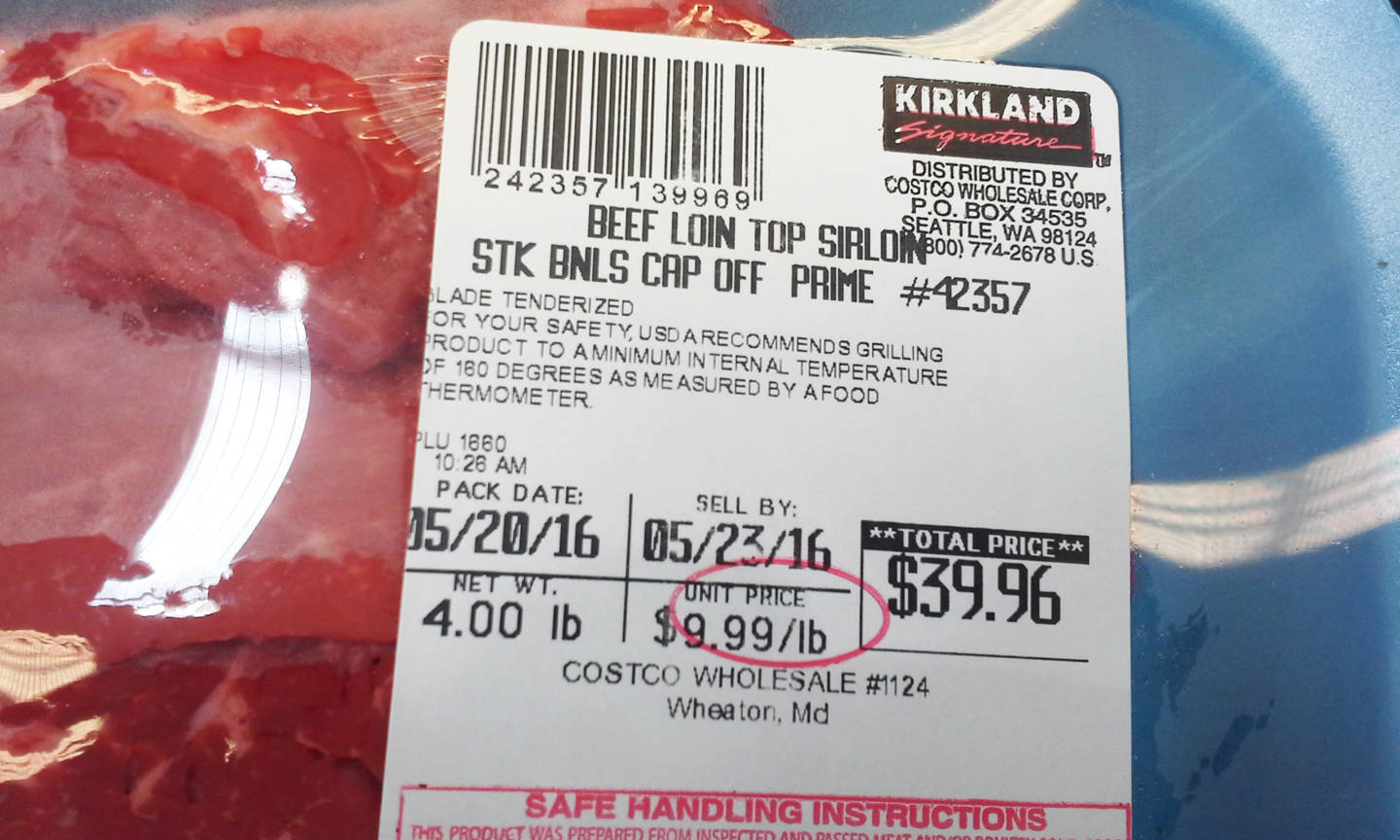
"caption": "A typical label includes safe cooking instructions. This label on blade-tenderized beef sold at Costco recommends 160 degrees as the minimum internal temperature, which doesn't require a three-minute rest time.",
"description": "A typical label includes \u003ca href=\"http://www.fsis.usda.gov/wps/wcm/connect/606919b6-5192-40bd-a32b-99a41c75eeb6/Comp_Guide_MTB.pdf?MOD=AJPERES\">safe cooking instructions\u003c/a>. This label on blade-tenderized beef sold at Costco recommends 160 degrees as the minimum internal temperature, which doesn't require a three-minute rest time.",
"title": "A typical label includes safe cooking instructions. This label on blade-tenderized beef sold at Costco recommends 160 degrees as the minimum internal temperature, which doesn't require a three-minute rest time.",
"credit": "Lydia Zuraw/KHN for NPR ",
"status": "inherit",
"isLoading": false,
"fetchFailed": false
},
"bayareabites_109611": {
"type": "attachments",
"id": "bayareabites_109611",
"meta": {
"index": "attachments_1716263798",
"site": "bayareabites",
"id": "109611",
"found": true
},
"parent": 109610,
"imgSizes": {
"twentyfourteen-full-width": {
"file": "https://ww2.kqed.org/app/uploads/sites/24/2016/05/nutritionlabeledited_enl-beb4ae535f5fd5a3395b1586dff2d12a38fd5b33-1038x576.jpg",
"width": 1038,
"mimeType": "image/jpeg",
"height": 576
},
"thumbnail": {
"file": "https://ww2.kqed.org/app/uploads/sites/24/2016/05/nutritionlabeledited_enl-beb4ae535f5fd5a3395b1586dff2d12a38fd5b33-400x556.jpg",
"width": 400,
"mimeType": "image/jpeg",
"height": 556
},
"fd-sm": {
"file": "https://ww2.kqed.org/app/uploads/sites/24/2016/05/nutritionlabeledited_enl-beb4ae535f5fd5a3395b1586dff2d12a38fd5b33-960x1335.jpg",
"width": 960,
"mimeType": "image/jpeg",
"height": 1335
},
"post-thumbnail": {
"file": "https://ww2.kqed.org/app/uploads/sites/24/2016/05/nutritionlabeledited_enl-beb4ae535f5fd5a3395b1586dff2d12a38fd5b33-672x372.jpg",
"width": 672,
"mimeType": "image/jpeg",
"height": 372
},
"kqedFullSize": {
"file": "https://ww2.kqed.org/app/uploads/sites/24/2016/05/nutritionlabeledited_enl-beb4ae535f5fd5a3395b1586dff2d12a38fd5b33.jpg",
"width": 1400,
"height": 1947
},
"guest-author-50": {
"file": "https://ww2.kqed.org/app/uploads/sites/24/2016/05/nutritionlabeledited_enl-beb4ae535f5fd5a3395b1586dff2d12a38fd5b33-50x50.jpg",
"width": 50,
"mimeType": "image/jpeg",
"height": 50
},
"guest-author-96": {
"file": "https://ww2.kqed.org/app/uploads/sites/24/2016/05/nutritionlabeledited_enl-beb4ae535f5fd5a3395b1586dff2d12a38fd5b33-96x96.jpg",
"width": 96,
"mimeType": "image/jpeg",
"height": 96
},
"medium": {
"file": "https://ww2.kqed.org/app/uploads/sites/24/2016/05/nutritionlabeledited_enl-beb4ae535f5fd5a3395b1586dff2d12a38fd5b33-800x1113.jpg",
"width": 800,
"mimeType": "image/jpeg",
"height": 1113
},
"guest-author-64": {
"file": "https://ww2.kqed.org/app/uploads/sites/24/2016/05/nutritionlabeledited_enl-beb4ae535f5fd5a3395b1586dff2d12a38fd5b33-64x64.jpg",
"width": 64,
"mimeType": "image/jpeg",
"height": 64
},
"guest-author-32": {
"file": "https://ww2.kqed.org/app/uploads/sites/24/2016/05/nutritionlabeledited_enl-beb4ae535f5fd5a3395b1586dff2d12a38fd5b33-32x32.jpg",
"width": 32,
"mimeType": "image/jpeg",
"height": 32
},
"cat_post_thumb_sizecategory-posts-2": {
"file": "https://ww2.kqed.org/app/uploads/sites/24/2016/05/nutritionlabeledited_enl-beb4ae535f5fd5a3395b1586dff2d12a38fd5b33-150x150.jpg",
"width": 150,
"mimeType": "image/jpeg",
"height": 150
},
"fd-med": {
"file": "https://ww2.kqed.org/app/uploads/sites/24/2016/05/nutritionlabeledited_enl-beb4ae535f5fd5a3395b1586dff2d12a38fd5b33-1180x1641.jpg",
"width": 1180,
"mimeType": "image/jpeg",
"height": 1641
},
"detail": {
"file": "https://ww2.kqed.org/app/uploads/sites/24/2016/05/nutritionlabeledited_enl-beb4ae535f5fd5a3395b1586dff2d12a38fd5b33-150x150.jpg",
"width": 150,
"mimeType": "image/jpeg",
"height": 150
},
"medium_large": {
"file": "https://ww2.kqed.org/app/uploads/sites/24/2016/05/nutritionlabeledited_enl-beb4ae535f5fd5a3395b1586dff2d12a38fd5b33-768x1068.jpg",
"width": 768,
"mimeType": "image/jpeg",
"height": 1068
},
"guest-author-128": {
"file": "https://ww2.kqed.org/app/uploads/sites/24/2016/05/nutritionlabeledited_enl-beb4ae535f5fd5a3395b1586dff2d12a38fd5b33-128x128.jpg",
"width": 128,
"mimeType": "image/jpeg",
"height": 128
}
},
"publishDate": 1463776882,
"modified": 1463777007,
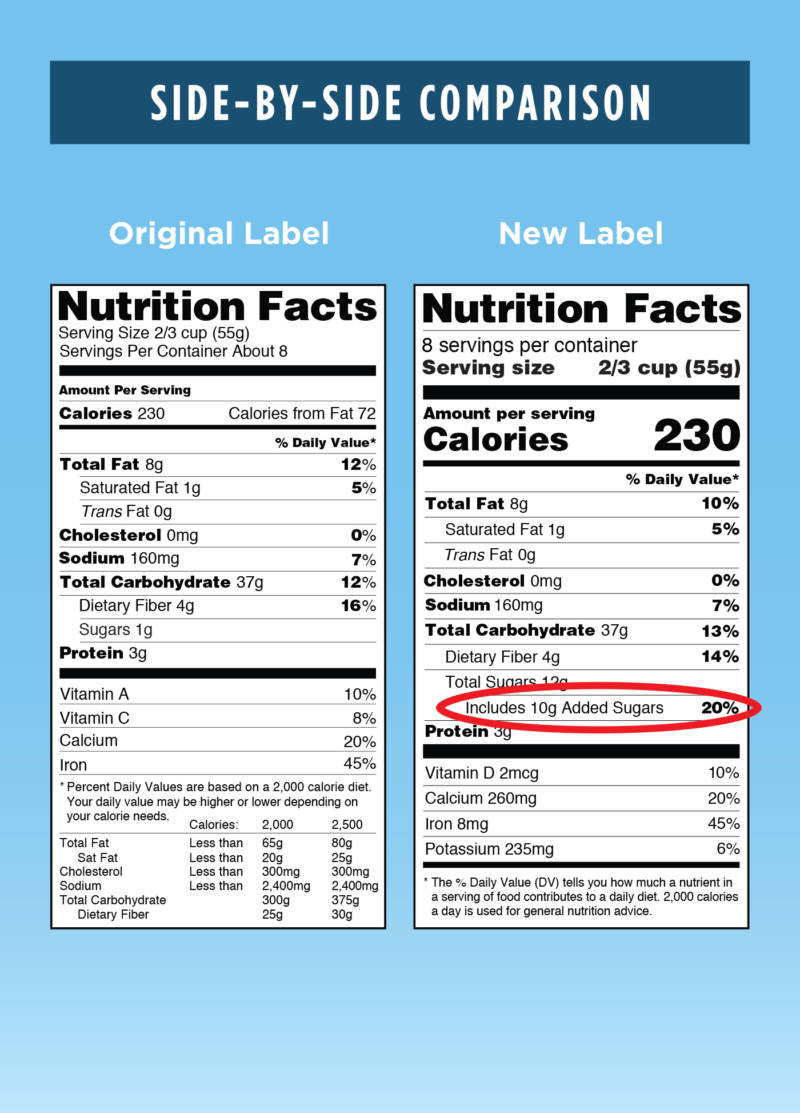
"caption": "Coming soon: The redesigned nutrition facts label will highlight added sugars in food. The label also will display calories per serving, and serving size, more prominently.",
"description": "Coming soon: The redesigned nutrition facts label will highlight added sugars in food. The label also will display calories per serving, and serving size, more prominently",
"title": "Coming soon: The redesigned nutrition facts label will highlight added sugars in food. The label also will display calories per serving, and serving size, more prominently.",
"credit": "U.S. Food and Drug Administration",
"status": "inherit",
"isLoading": false,
"fetchFailed": false
},
"bayareabites_109551": {
"type": "attachments",
"id": "bayareabites_109551",
"meta": {
"index": "attachments_1716263798",
"site": "bayareabites",
"id": "109551",
"found": true
},
"parent": 109550,
"imgSizes": {
"twentyfourteen-full-width": {
"file": "https://ww2.kqed.org/app/uploads/sites/24/2016/05/ap_16140267545475_wide-b3dea204940f205ae259d9ac602345b201fbb026-1038x576.jpg",
"width": 1038,
"mimeType": "image/jpeg",
"height": 576
},
"thumbnail": {
"file": "https://ww2.kqed.org/app/uploads/sites/24/2016/05/ap_16140267545475_wide-b3dea204940f205ae259d9ac602345b201fbb026-400x225.jpg",
"width": 400,
"mimeType": "image/jpeg",
"height": 225
},
"fd-sm": {
"file": "https://ww2.kqed.org/app/uploads/sites/24/2016/05/ap_16140267545475_wide-b3dea204940f205ae259d9ac602345b201fbb026-960x540.jpg",
"width": 960,
"mimeType": "image/jpeg",
"height": 540
},
"post-thumbnail": {
"file": "https://ww2.kqed.org/app/uploads/sites/24/2016/05/ap_16140267545475_wide-b3dea204940f205ae259d9ac602345b201fbb026-672x372.jpg",
"width": 672,
"mimeType": "image/jpeg",
"height": 372
},
"kqedFullSize": {
"file": "https://ww2.kqed.org/app/uploads/sites/24/2016/05/ap_16140267545475_wide-b3dea204940f205ae259d9ac602345b201fbb026.jpg",
"width": 2577,
"height": 1449
},
"large": {
"file": "https://ww2.kqed.org/app/uploads/sites/24/2016/05/ap_16140267545475_wide-b3dea204940f205ae259d9ac602345b201fbb026-1440x810.jpg",
"width": 1440,
"mimeType": "image/jpeg",
"height": 810
},
"guest-author-50": {
"file": "https://ww2.kqed.org/app/uploads/sites/24/2016/05/ap_16140267545475_wide-b3dea204940f205ae259d9ac602345b201fbb026-50x50.jpg",
"width": 50,
"mimeType": "image/jpeg",
"height": 50
},
"guest-author-96": {
"file": "https://ww2.kqed.org/app/uploads/sites/24/2016/05/ap_16140267545475_wide-b3dea204940f205ae259d9ac602345b201fbb026-96x96.jpg",
"width": 96,
"mimeType": "image/jpeg",
"height": 96
},
"medium": {
"file": "https://ww2.kqed.org/app/uploads/sites/24/2016/05/ap_16140267545475_wide-b3dea204940f205ae259d9ac602345b201fbb026-800x450.jpg",
"width": 800,
"mimeType": "image/jpeg",
"height": 450
},
"guest-author-64": {
"file": "https://ww2.kqed.org/app/uploads/sites/24/2016/05/ap_16140267545475_wide-b3dea204940f205ae259d9ac602345b201fbb026-64x64.jpg",
"width": 64,
"mimeType": "image/jpeg",
"height": 64
},
"guest-author-32": {
"file": "https://ww2.kqed.org/app/uploads/sites/24/2016/05/ap_16140267545475_wide-b3dea204940f205ae259d9ac602345b201fbb026-32x32.jpg",
"width": 32,
"mimeType": "image/jpeg",
"height": 32
},
"cat_post_thumb_sizecategory-posts-2": {
"file": "https://ww2.kqed.org/app/uploads/sites/24/2016/05/ap_16140267545475_wide-b3dea204940f205ae259d9ac602345b201fbb026-150x150.jpg",
"width": 150,
"mimeType": "image/jpeg",
"height": 150
},
"fd-lrg": {
"file": "https://ww2.kqed.org/app/uploads/sites/24/2016/05/ap_16140267545475_wide-b3dea204940f205ae259d9ac602345b201fbb026-1920x1080.jpg",
"width": 1920,
"mimeType": "image/jpeg",
"height": 1080
},
"fd-med": {
"file": "https://ww2.kqed.org/app/uploads/sites/24/2016/05/ap_16140267545475_wide-b3dea204940f205ae259d9ac602345b201fbb026-1180x663.jpg",
"width": 1180,
"mimeType": "image/jpeg",
"height": 663
},
"detail": {
"file": "https://ww2.kqed.org/app/uploads/sites/24/2016/05/ap_16140267545475_wide-b3dea204940f205ae259d9ac602345b201fbb026-150x150.jpg",
"width": 150,
"mimeType": "image/jpeg",
"height": 150
},
"medium_large": {
"file": "https://ww2.kqed.org/app/uploads/sites/24/2016/05/ap_16140267545475_wide-b3dea204940f205ae259d9ac602345b201fbb026-768x432.jpg",
"width": 768,
"mimeType": "image/jpeg",
"height": 432
},
"guest-author-128": {
"file": "https://ww2.kqed.org/app/uploads/sites/24/2016/05/ap_16140267545475_wide-b3dea204940f205ae259d9ac602345b201fbb026-128x128.jpg",
"width": 128,
"mimeType": "image/jpeg",
"height": 128
}
},
"publishDate": 1463699489,
"modified": 1463700063,
"caption": "The Monsanto logo is seen at the Farm Progress Show in Decatur, Ill., last year. German drug and chemicals company Bayer AG confirmed Thursday that it has entered talks to buy Monsanto.",
"description": "The Monsanto logo is seen at the Farm Progress Show in Decatur, Ill., last year. German drug and chemicals company Bayer AG confirmed Thursday that it has entered talks to buy Monsant",
"title": "The Monsanto logo is seen at the Farm Progress Show in Decatur, Ill., last year. German drug and chemicals company Bayer AG confirmed Thursday that it has entered talks to buy Monsanto.",
"credit": "Seth Perlman/AP",
"status": "inherit",
"isLoading": false,
"fetchFailed": false
}
},
"audioPlayerReducer": {
"postId": "stream_live",
"isPaused": true,
"isPlaying": false,
"pfsActive": false,
"pledgeModalIsOpen": true,
"playerDrawerIsOpen": false,
"liveAudioPlayStartedAt": 0,
"liveAudioPlayContext": ""
},
"authorsReducer": {
"byline_bayareabites_111066": {
"type": "authors",
"id": "byline_bayareabites_111066",
"meta": {
"override": true
},
"slug": "byline_bayareabites_111066",
"name": "Dan Charles, NPR Food",
"isLoading": false
},
"byline_bayareabites_110817": {
"type": "authors",
"id": "byline_bayareabites_110817",
"meta": {
"override": true
},
"slug": "byline_bayareabites_110817",
"name": "The Kitchen Sisters, NPR Food",
"isLoading": false
},
"byline_bayareabites_110756": {
"type": "authors",
"id": "byline_bayareabites_110756",
"meta": {
"override": true
},
"slug": "byline_bayareabites_110756",
"name": "Dan Charles, NPR Food",
"isLoading": false
},
"byline_bayareabites_110692": {
"type": "authors",
"id": "byline_bayareabites_110692",
"meta": {
"override": true
},
"slug": "byline_bayareabites_110692",
"name": "Allison Aubrey and Dan Charles, NPR Food",
"isLoading": false
},
"byline_bayareabites_110588": {
"type": "authors",
"id": "byline_bayareabites_110588",
"meta": {
"override": true
},
"slug": "byline_bayareabites_110588",
"name": "Dan Charles, \u003cahref=\"https://ww2.kqed.org/bayareabites/author/nprfood/\">NPR Food\u003c/a>",
"isLoading": false
},
"byline_bayareabites_110331": {
"type": "authors",
"id": "byline_bayareabites_110331",
"meta": {
"override": true
},
"slug": "byline_bayareabites_110331",
"name": "Peggy Lowe, NPR Food",
"isLoading": false
},
"byline_bayareabites_109789": {
"type": "authors",
"id": "byline_bayareabites_109789",
"meta": {
"override": true
},
"slug": "byline_bayareabites_109789",
"name": "\u003ca href=\"http://civileats.com/author/dreiss/\">Dawn Reiss\u003c/a>, \u003ca href=\"https://ww2.kqed.org/bayareabites/author/civileat/\">Civil Eats\u003c/a>",
"isLoading": false
},
"byline_bayareabites_109748": {
"type": "authors",
"id": "byline_bayareabites_109748",
"meta": {
"override": true
},
"slug": "byline_bayareabites_109748",
"name": "Dan Charles, \u003ca href=\"http://ww2.kqed.org/bayareabites/author/nprfood/\">NPR Food\u003c/a>",
"isLoading": false
},
"byline_bayareabites_109733": {
"type": "authors",
"id": "byline_bayareabites_109733",
"meta": {
"override": true
},
"slug": "byline_bayareabites_109733",
"name": "Grant Gerlock, \u003ca href=\"http://ww2.kqed.org/bayareabites/author/nprfood/\">NPR Food\u003c/a>",
"isLoading": false
},
"byline_bayareabites_109671": {
"type": "authors",
"id": "byline_bayareabites_109671",
"meta": {
"override": true
},
"slug": "byline_bayareabites_109671",
"name": "Lydia Zuraw, Kaiser Health News at NPR Food",
"isLoading": false
},
"byline_bayareabites_109610": {
"type": "authors",
"id": "byline_bayareabites_109610",
"meta": {
"override": true
},
"slug": "byline_bayareabites_109610",
"name": "Dan Charles, NPR Food",
"isLoading": false
},
"byline_bayareabites_109550": {
"type": "authors",
"id": "byline_bayareabites_109550",
"meta": {
"override": true
},
"slug": "byline_bayareabites_109550",
"name": "Dan Charles, NPR Food",
"isLoading": false
}
},
"pagesReducer": {
"bayareabites_category_politics-activism-food-safety": {
"type": "terms",
"id": "bayareabites_2035",
"meta": {
"index": "terms_1716263798",
"site": "bayareabites",
"id": "2035",
"score": 13.896381
},
"featImg": null,
"name": "politics, activism, food safety",
"description": null,
"taxonomy": "category",
"headData": {
"twImgId": null,
"twTitle": null,
"ogTitle": null,
"ogImgId": null,
"twDescription": null,
"description": null,
"title": "politics, activism, food safety Archives | KQED Bay Area Bites",
"ogDescription": null
},
"ttid": 943,
"slug": "politics-activism-food-safety",
"isLoading": false,
"title": "politics, activism, food safety",
"pageMeta": {
"site": "bayareabites",
"WpPageTemplate": "page-topic-editorial",
"currentPage": 21
},
"blocks": [
{
"blockName": "kqed/post-list",
"attrs": {
"layout": "cardArticle2",
"query": "posts/bayareabites?category=politics-activism-food-safety",
"seeMore": false,
"paginated": true,
"page": 21
}
},
{
"blockName": "kqed/ad"
}
]
}
},
"pfsSessionReducer": {},
"postsReducer": {
"stream_live": {
"type": "live",
"id": "stream_live",
"audioUrl": "https://streams.kqed.org/kqedradio",
"title": "Live Stream",
"excerpt": "Live Stream information currently unavailable.",
"link": "/radio",
"featImg": "",
"label": {
"name": "KQED Live",
"link": "/"
}
},
"stream_kqedNewscast": {
"type": "posts",
"id": "stream_kqedNewscast",
"audioUrl": "https://www.kqed.org/.stream/anon/radio/RDnews/newscast.mp3?_=1",
"title": "KQED Newscast",
"featImg": "",
"label": {
"name": "88.5 FM",
"link": "/"
}
},
"bayareabites_111066": {
"type": "posts",
"id": "bayareabites_111066",
"meta": {
"index": "posts_1716263798",
"site": "bayareabites",
"id": "111066",
"score": null,
"sort": [
1469736584000
]
},
"parent": 0,
"labelTerm": {
"site": "bayareabites"
},
"blocks": [],
"publishDate": 1469736584,
"format": "standard",
"disqusTitle": "Cookie Dough Blues: How E. Coli Is Sneaking Into Our Forbidden Snack",
"title": "Cookie Dough Blues: How E. Coli Is Sneaking Into Our Forbidden Snack",
"headTitle": "Bay Area Bites | KQED Food",
"content": "\u003cp>Flour seems innocuous. We've long been warned to wash our hands after handling chicken, and to cook our hamburgers well. We wash lettuce that came straight from the field. But really, flour?\u003c/p>\n\u003cp>This week, the Centers for Disease Control and Prevention reminded everyone that flour is, in fact, a raw, uncooked food, just like those fresh greens. Yes, it can make you sick.\u003c/p>\n\u003cp>The agency \u003ca href=\"http://www.cdc.gov/ecoli/2016/o121-06-16/index.html\">announced\u003c/a> that 46 people, so far, have been sickened by E. coli that apparently contaminated flour sold by General Mills. The first case was reported seven months ago, and the outbreak continues. Tests haven't actually detected disease-causing E. coli in the company's products, but General Mills has recalled the batches of flour that included packages sold to people who got sick.\u003c/p>\n\u003cp>But how does flour become contaminated in the first place?\u003c/p>\n\u003cfigure id=\"attachment_111068\" class=\"wp-caption aligncenter\" style=\"max-width: 3430px\">\u003cimg src=\"http://ww2.kqed.org/bayareabites/wp-content/uploads/sites/24/2016/07/hairnet_wide-2dfdb1fbbd54d80c4448951a4509d7dc9fac071a.jpg\" alt=\"A researcher at AIB International inserts thermometers into cookie dough to monitor the baking temperature. The goal is to make sure the dough reaches the temperature needed to kill any bacteria inside.\" width=\"3430\" height=\"1929\" class=\"size-full wp-image-111068\" srcset=\"https://ww2.kqed.org/app/uploads/sites/24/2016/07/hairnet_wide-2dfdb1fbbd54d80c4448951a4509d7dc9fac071a.jpg 3430w, https://ww2.kqed.org/app/uploads/sites/24/2016/07/hairnet_wide-2dfdb1fbbd54d80c4448951a4509d7dc9fac071a-400x225.jpg 400w, https://ww2.kqed.org/app/uploads/sites/24/2016/07/hairnet_wide-2dfdb1fbbd54d80c4448951a4509d7dc9fac071a-800x450.jpg 800w, https://ww2.kqed.org/app/uploads/sites/24/2016/07/hairnet_wide-2dfdb1fbbd54d80c4448951a4509d7dc9fac071a-768x432.jpg 768w, https://ww2.kqed.org/app/uploads/sites/24/2016/07/hairnet_wide-2dfdb1fbbd54d80c4448951a4509d7dc9fac071a-1440x810.jpg 1440w, https://ww2.kqed.org/app/uploads/sites/24/2016/07/hairnet_wide-2dfdb1fbbd54d80c4448951a4509d7dc9fac071a-1180x664.jpg 1180w, https://ww2.kqed.org/app/uploads/sites/24/2016/07/hairnet_wide-2dfdb1fbbd54d80c4448951a4509d7dc9fac071a-960x540.jpg 960w\" sizes=\"(max-width: 3430px) 100vw, 3430px\">\u003cfigcaption class=\"wp-caption-text\">A researcher at AIB International inserts thermometers into cookie dough to monitor the baking temperature. The goal is to make sure the dough reaches the temperature needed to kill any bacteria inside. \u003ccite>(Courtesy of AIB International)\u003c/cite>\u003c/figcaption>\u003c/figure>\n\u003cp>\u003ca href=\"https://www.ndsu.edu/vetandmicro/people/faculty/research-faculty/charlene-wolf-hall\">Charlene Wolf-Hall\u003c/a>, a food microbiologist who is currently vice provost at North Dakota State University, says it could happen almost anywhere from wheat field to flour mill. The prime suspects are wild creatures that carry E. coli or salmonella. \"It could be bugs, it could be birds, it could be rodents, it could be people with their hands — you just don't really know what the source is,\" she says.\u003c/p>\n\u003cp>[ad fullwidth]\u003c/p>\n\u003cp>Scientists have \u003ca href=\"http://aem.asm.org/content/81/3/1101\">found\u003c/a> that the wind can carry disease-causing bacteria from cattle feedlots to fields nearby.\u003c/p>\n\u003cp>\u003ca href=\"https://www.ag.ndsu.edu/plantsciences/people/faculty/manthey\">Frank Manthey\u003c/a>, a specialist on wheat at North Dakota State University, says wheat is especially vulnerable after harvest. \"All animals want to eat it. It's good food,\" he says. Wheat is usually stored in animal-proof bins, but during busy harvest times, it may end up sitting outside for a while, where animals can more easily get to it.\u003c/p>\n\u003cp>Wheat is cleaned before milling, but that doesn't kill bacteria. In fact, according to Wolf-Hall, bacteria that might have been on just a few contaminated kernels of grain can spread more widely when they're ground up into flour. And \"the wheat bran is actually going to have a lot more than the flour,\" Wolf-Hall says, because the outer surface of the wheat kernels are more likely to be contaminated.\u003c/p>\n\u003cp>Applying heat could kill the bacteria, but doing so would be \"challenging and expensive,\" says Wolf-Hall. According to Stephanie Lopez, vice president of Food Safety Services for AIB International, using heat also can \"impact the functionality of the flour, which affects end-product quality for baked goods.\" Irradiation would also eliminate bacteria, but companies have been unwilling to adopt it for fear of consumer resistance.\u003c/p>\n\u003cp>One small flour producer, Ardent Mills, sells a special \u003ca href=\"http://www.ardentmills.com/uploads/Ardent_Mills_SafeGuard.pdf\">version\u003c/a> of flour that's been treated using a \"proprietary, all-natural\" process to get rid of bacteria, but the company isn't revealing how that process works. In a statement, Ardent Mills told The Salt that its \"SafeGuard\" flour is only a small part of its business. It's primarily intended for companies that use flour in ready-to-use products such as cookie dough ice cream or refrigerated cookie dough.\u003c/p>\n\u003cp>All of which means that you should think of raw flour more like unwashed raw vegetables than, say, pasteurized milk. It needs to be cooked before you eat it.\u003c/p>\n\u003cp>That's how we normally consume flour, of course. Which is why disease outbreaks linked to flour are relatively uncommon. The one that attracted the most attention \u003ca href=\"http://www.cdc.gov/ecoli/2009/cookie-dough-6-30-2009.html\">occurred\u003c/a> in 2009, when raw, prepackaged cookie dough sickened 72 people. Most of the people who got sick were teenagers or children and 71 percent were female, perhaps reflecting the demographic composition of America's cookie-makers — or cookie dough tasters. \u003c/p>\n\u003cp>\u003c/p>\n\u003cp>\u003cem>Copyright 2016 \u003ca href=\"http://www.npr.org/\" target=\"_blank\">NPR\u003c/a>.\u003c/em> \u003c/p>\n\n",
"disqusIdentifier": "111066 http://ww2.kqed.org/bayareabites/?p=111066",
"disqusUrl": "https://ww2.kqed.org/bayareabites/2016/07/28/cookie-dough-blues-how-e-coli-is-sneaking-into-our-forbidden-snack/",
"stats": {
"hasVideo": false,
"hasChartOrMap": false,
"hasAudio": false,
"hasPolis": false,
"wordCount": 648,
"hasGoogleForm": false,
"hasGallery": false,
"hasHearkenModule": false,
"iframeSrcs": [],
"paragraphCount": 15
},
"modified": 1469736584,
"excerpt": "Most people know not to eat raw cookie dough. But now it's serious: 46 people have now been sickened with E. coli-tainted flour. Here's how contamination might be occurring.",
"headData": {
"twImgId": "",
"twTitle": "",
"ogTitle": "",
"ogImgId": "",
"twDescription": "",
"description": "Most people know not to eat raw cookie dough. But now it's serious: 46 people have now been sickened with E. coli-tainted flour. Here's how contamination might be occurring.",
"title": "Cookie Dough Blues: How E. Coli Is Sneaking Into Our Forbidden Snack | KQED",
"ogDescription": "",
"schema": {
"@context": "https://schema.org",
"@type": "Article",
"headline": "Cookie Dough Blues: How E. Coli Is Sneaking Into Our Forbidden Snack",
"datePublished": "2016-07-28T13:09:44-07:00",
"dateModified": "2016-07-28T13:09:44-07:00",
"image": "https://cdn.kqed.org/wp-content/uploads/2020/02/KQED-OG-Image@1x.png"
}
},
"guestAuthors": [],
"slug": "cookie-dough-blues-how-e-coli-is-sneaking-into-our-forbidden-snack",
"status": "publish",
"nprApiLink": "http://api.npr.org/query?id=487640358&apiKey=MDAxOTAwOTE4MDEyMTkxMDAzNjczZDljZA004",
"nprByline": "Dan Charles, NPR Food",
"nprStoryDate": "Thu, 28 Jul 2016 13:45:00 -0400",
"nprLastModifiedDate": "Thu, 28 Jul 2016 13:53:44 -0400",
"nprHtmlLink": "http://www.npr.org/sections/thesalt/2016/07/28/487640358/cookie-dough-blues-how-e-coli-is-sneaking-into-our-forbidden-snack?ft=nprml&f=487640358",
"nprImageAgency": "AP",
"nprImageCredit": "Larry Crowe",
"nprStoryId": "487640358",
"nprRetrievedStory": "1",
"nprPubDate": "Thu, 28 Jul 2016 13:53:00 -0400",
"path": "/bayareabites/111066/cookie-dough-blues-how-e-coli-is-sneaking-into-our-forbidden-snack",
"audioTrackLength": null,
"parsedContent": [
{
"type": "contentString",
"content": "\u003cdiv class=\"post-body\">\u003cp>\u003cp>Flour seems innocuous. We've long been warned to wash our hands after handling chicken, and to cook our hamburgers well. We wash lettuce that came straight from the field. But really, flour?\u003c/p>\n\u003cp>This week, the Centers for Disease Control and Prevention reminded everyone that flour is, in fact, a raw, uncooked food, just like those fresh greens. Yes, it can make you sick.\u003c/p>\n\u003cp>The agency \u003ca href=\"http://www.cdc.gov/ecoli/2016/o121-06-16/index.html\">announced\u003c/a> that 46 people, so far, have been sickened by E. coli that apparently contaminated flour sold by General Mills. The first case was reported seven months ago, and the outbreak continues. Tests haven't actually detected disease-causing E. coli in the company's products, but General Mills has recalled the batches of flour that included packages sold to people who got sick.\u003c/p>\n\u003cp>But how does flour become contaminated in the first place?\u003c/p>\n\u003cfigure id=\"attachment_111068\" class=\"wp-caption aligncenter\" style=\"max-width: 3430px\">\u003cimg src=\"http://ww2.kqed.org/bayareabites/wp-content/uploads/sites/24/2016/07/hairnet_wide-2dfdb1fbbd54d80c4448951a4509d7dc9fac071a.jpg\" alt=\"A researcher at AIB International inserts thermometers into cookie dough to monitor the baking temperature. The goal is to make sure the dough reaches the temperature needed to kill any bacteria inside.\" width=\"3430\" height=\"1929\" class=\"size-full wp-image-111068\" srcset=\"https://ww2.kqed.org/app/uploads/sites/24/2016/07/hairnet_wide-2dfdb1fbbd54d80c4448951a4509d7dc9fac071a.jpg 3430w, https://ww2.kqed.org/app/uploads/sites/24/2016/07/hairnet_wide-2dfdb1fbbd54d80c4448951a4509d7dc9fac071a-400x225.jpg 400w, https://ww2.kqed.org/app/uploads/sites/24/2016/07/hairnet_wide-2dfdb1fbbd54d80c4448951a4509d7dc9fac071a-800x450.jpg 800w, https://ww2.kqed.org/app/uploads/sites/24/2016/07/hairnet_wide-2dfdb1fbbd54d80c4448951a4509d7dc9fac071a-768x432.jpg 768w, https://ww2.kqed.org/app/uploads/sites/24/2016/07/hairnet_wide-2dfdb1fbbd54d80c4448951a4509d7dc9fac071a-1440x810.jpg 1440w, https://ww2.kqed.org/app/uploads/sites/24/2016/07/hairnet_wide-2dfdb1fbbd54d80c4448951a4509d7dc9fac071a-1180x664.jpg 1180w, https://ww2.kqed.org/app/uploads/sites/24/2016/07/hairnet_wide-2dfdb1fbbd54d80c4448951a4509d7dc9fac071a-960x540.jpg 960w\" sizes=\"(max-width: 3430px) 100vw, 3430px\">\u003cfigcaption class=\"wp-caption-text\">A researcher at AIB International inserts thermometers into cookie dough to monitor the baking temperature. The goal is to make sure the dough reaches the temperature needed to kill any bacteria inside. \u003ccite>(Courtesy of AIB International)\u003c/cite>\u003c/figcaption>\u003c/figure>\n\u003cp>\u003ca href=\"https://www.ndsu.edu/vetandmicro/people/faculty/research-faculty/charlene-wolf-hall\">Charlene Wolf-Hall\u003c/a>, a food microbiologist who is currently vice provost at North Dakota State University, says it could happen almost anywhere from wheat field to flour mill. The prime suspects are wild creatures that carry E. coli or salmonella. \"It could be bugs, it could be birds, it could be rodents, it could be people with their hands — you just don't really know what the source is,\" she says.\u003c/p>\n\u003cp>\u003c/p>\u003c/div>",
"attributes": {
"named": {},
"numeric": []
}
},
{
"type": "component",
"content": "",
"name": "ad",
"attributes": {
"named": {
"label": "fullwidth"
},
"numeric": [
"fullwidth"
]
}
},
{
"type": "contentString",
"content": "\u003cdiv class=\"post-body\">\u003cp>\u003c/p>\n\u003cp>Scientists have \u003ca href=\"http://aem.asm.org/content/81/3/1101\">found\u003c/a> that the wind can carry disease-causing bacteria from cattle feedlots to fields nearby.\u003c/p>\n\u003cp>\u003ca href=\"https://www.ag.ndsu.edu/plantsciences/people/faculty/manthey\">Frank Manthey\u003c/a>, a specialist on wheat at North Dakota State University, says wheat is especially vulnerable after harvest. \"All animals want to eat it. It's good food,\" he says. Wheat is usually stored in animal-proof bins, but during busy harvest times, it may end up sitting outside for a while, where animals can more easily get to it.\u003c/p>\n\u003cp>Wheat is cleaned before milling, but that doesn't kill bacteria. In fact, according to Wolf-Hall, bacteria that might have been on just a few contaminated kernels of grain can spread more widely when they're ground up into flour. And \"the wheat bran is actually going to have a lot more than the flour,\" Wolf-Hall says, because the outer surface of the wheat kernels are more likely to be contaminated.\u003c/p>\n\u003cp>Applying heat could kill the bacteria, but doing so would be \"challenging and expensive,\" says Wolf-Hall. According to Stephanie Lopez, vice president of Food Safety Services for AIB International, using heat also can \"impact the functionality of the flour, which affects end-product quality for baked goods.\" Irradiation would also eliminate bacteria, but companies have been unwilling to adopt it for fear of consumer resistance.\u003c/p>\n\u003cp>One small flour producer, Ardent Mills, sells a special \u003ca href=\"http://www.ardentmills.com/uploads/Ardent_Mills_SafeGuard.pdf\">version\u003c/a> of flour that's been treated using a \"proprietary, all-natural\" process to get rid of bacteria, but the company isn't revealing how that process works. In a statement, Ardent Mills told The Salt that its \"SafeGuard\" flour is only a small part of its business. It's primarily intended for companies that use flour in ready-to-use products such as cookie dough ice cream or refrigerated cookie dough.\u003c/p>\n\u003cp>All of which means that you should think of raw flour more like unwashed raw vegetables than, say, pasteurized milk. It needs to be cooked before you eat it.\u003c/p>\n\u003cp>That's how we normally consume flour, of course. Which is why disease outbreaks linked to flour are relatively uncommon. The one that attracted the most attention \u003ca href=\"http://www.cdc.gov/ecoli/2009/cookie-dough-6-30-2009.html\">occurred\u003c/a> in 2009, when raw, prepackaged cookie dough sickened 72 people. Most of the people who got sick were teenagers or children and 71 percent were female, perhaps reflecting the demographic composition of America's cookie-makers — or cookie dough tasters. \u003c/p>\n\u003cp>\u003c/p>\n\u003cp>\u003cem>Copyright 2016 \u003ca href=\"http://www.npr.org/\" target=\"_blank\">NPR\u003c/a>.\u003c/em> \u003c/p>\n\n\u003c/div>\u003c/p>",
"attributes": {
"named": {},
"numeric": []
}
}
],
"link": "/bayareabites/111066/cookie-dough-blues-how-e-coli-is-sneaking-into-our-forbidden-snack",
"authors": [
"byline_bayareabites_111066"
],
"categories": [
"bayareabites_10028",
"bayareabites_1245",
"bayareabites_2035"
],
"tags": [
"bayareabites_4289",
"bayareabites_11544",
"bayareabites_15545"
],
"featImg": "bayareabites_111067",
"label": "bayareabites"
},
"bayareabites_110817": {
"type": "posts",
"id": "bayareabites_110817",
"meta": {
"index": "posts_1716263798",
"site": "bayareabites",
"id": "110817",
"score": null,
"sort": [
1468863297000
]
},
"parent": 0,
"labelTerm": {
"site": "bayareabites"
},
"blocks": [],
"publishDate": 1468863297,
"format": "audio",
"disqusTitle": "Give Chickpeas A Chance: Why Hummus Unites, And Divides, The Mideast",
"title": "Give Chickpeas A Chance: Why Hummus Unites, And Divides, The Mideast",
"headTitle": "Bay Area Bites | KQED Food",
"content": "\u003cp>\u003cstrong>Listen to the story on Morning Edition:\u003c/strong>\u003cbr>\nhttp://pd.npr.org/anon.npr-mp3/npr/me/2016/07/20160718_me_give_chickpeas_a_chance_why_hummus_unites_and_divides_the_mideast.mp3\u003cbr>\nThey call it \"The Hummus Wars.\"\u003c/p>\n\u003cp>Lebanon accused the Israeli people of trying to steal hummus and make it their national dish, explains Ronit Vered, a food journalist with the newspaper \u003cem>Haaretz\u003c/em> in Tel Aviv. And so hummus became a symbol, she tells us, \"a symbol of all the tension in the Middle East.\"\u003c/p>\n\u003cp>The war began over a 4,532-pound plate of hummus.\u003c/p>\n\u003cp>In 2009, Fadi Abboud — the minister of tourism -- led Lebanon to break the world record for making the largest tub of hummus in the world. At the time, Abboud was also chairman of the Lebanese Industrialists Association. \"A group of us just came from a food exhibition in France. There they were telling us that hummus is an Israeli traditional dish,\" he says. \"I mean, the world now thinks that Israel invented hummus.\"\u003c/p>\n\u003cp>Abboud could not let that stand. \"I thought the best way to tell the world that the hummus is Lebanese is to break the Guinness Book of Records.\"\u003c/p>\n\u003cp>[ad fullwidth]\u003c/p>\n\u003cp>At the ceremony, when Guinness awarded Lebanon the prize for its epic plate of hummus, Abboud announced, \"We want the whole world to know that hummus and tabouli are Lebanese, and by breaking [into] the Guinness Book of World Records, the world should know our cuisine, our culture.\"\u003c/p>\n\u003cp>The event was big news all over the Mideast region. \"It was [a] big issue that hummus was Lebanese,\" says Jawdat Ibrahim, an Arab-Israeli entrepreneur and owner of the popular Abu Gosh restaurant in an Arab village of the same name near Jerusalem. \"I said, 'No, hummus is for everybody.' \"\u003c/p>\n\u003cp>And so, \"I hold a meeting in the village and I say, 'We are going to break Guinness Book of World Record.' Not the Israeli government, the people of Abu Gosh.\"\u003c/p>\n\u003cp>When they did just that, in January 2010, the news was broadcast around the world. \"In the town of Abu Gosh this morning, Israel retook the title for the world's largest hummus dish, weighing 4 tons and served in a satellite dish,\" one news announcer intoned.\u003c/p>\n\u003cp>\"Yes,\" Ibrahim recalls, \"a satellite dish. It's a dish, no?\"\u003c/p>\n\u003cfigure id=\"attachment_110819\" class=\"wp-caption aligncenter\" style=\"max-width: 2000px\">\u003cimg src=\"http://ww2.kqed.org/bayareabites/wp-content/uploads/sites/24/2016/07/hummusworldrecord_enl-3f5fe29471dcd0d8df71396c3c3951c04080a193.jpg\" alt=\"Counterattack: On Jan. 8, 2010, the Arab Israeli village of Abu Gosh served up this giant satellite dish full of hummus, weighing over 4 tons — about twice as much as the previous record set by Lebanon just months earlier.\" width=\"2000\" height=\"1332\" class=\"size-full wp-image-110819\" srcset=\"https://ww2.kqed.org/app/uploads/sites/24/2016/07/hummusworldrecord_enl-3f5fe29471dcd0d8df71396c3c3951c04080a193.jpg 2000w, https://ww2.kqed.org/app/uploads/sites/24/2016/07/hummusworldrecord_enl-3f5fe29471dcd0d8df71396c3c3951c04080a193-400x266.jpg 400w, https://ww2.kqed.org/app/uploads/sites/24/2016/07/hummusworldrecord_enl-3f5fe29471dcd0d8df71396c3c3951c04080a193-800x533.jpg 800w, https://ww2.kqed.org/app/uploads/sites/24/2016/07/hummusworldrecord_enl-3f5fe29471dcd0d8df71396c3c3951c04080a193-768x511.jpg 768w, https://ww2.kqed.org/app/uploads/sites/24/2016/07/hummusworldrecord_enl-3f5fe29471dcd0d8df71396c3c3951c04080a193-1440x959.jpg 1440w, https://ww2.kqed.org/app/uploads/sites/24/2016/07/hummusworldrecord_enl-3f5fe29471dcd0d8df71396c3c3951c04080a193-1180x786.jpg 1180w, https://ww2.kqed.org/app/uploads/sites/24/2016/07/hummusworldrecord_enl-3f5fe29471dcd0d8df71396c3c3951c04080a193-960x639.jpg 960w\" sizes=\"(max-width: 2000px) 100vw, 2000px\">\u003cfigcaption class=\"wp-caption-text\">Counterattack: On Jan. 8, 2010, the Arab Israeli village of Abu Gosh served up this giant satellite dish full of hummus, weighing over 4 tons — about twice as much as the previous record set by Lebanon just months earlier. \u003ccite>( Alessio Romenzi/AFP/Getty Images)\u003c/cite>\u003c/figcaption>\u003c/figure>\n\u003cp>It drew more cameras than when Obama visited the country, Ibrahim says.\u003c/p>\n\u003cp>Within hours, the Lebanese planned a counterattack -- and within months, they presented the world with a vat filled with 23,042 pounds of hummus.\u003c/p>\n\u003cp>At the time, Abboud says, Lebanon was also trying to register the word \"hummus\" with the European Union, with a protective designation of origin — in the same way Champagne is registered by France, Parmigiano Reggiano by the Italians, and the Greeks lay claim to feta cheese. Abboud was asking the EU to ban any country other than Lebanon from calling their product hummus. The Lebanese Industrialists Association called its campaign \"Hands Off Our Dishes.\"\u003c/p>\n\u003cp>\"The word for chickpea in Arabic is hummus,\" says Abboud, who has been studying the history of hummus for some time now. \"So the actual name comes from the Arabic for chickpea.\"\u003c/p>\n\u003cp>But in the end, the EU did not allow Lebanon to register hummus as its own, because it is the food of an entire region.\u003c/p>\n\u003ch3>\u003cstrong>'The Hummus Is Our Tradition'\u003c/strong>\u003c/h3>\n\u003cp>That region includes Israel.\u003c/p>\n\u003cp>Vered, the food journalist with \u003cem>Haaretz,\u003c/em> has been chronicling the arc of Israeli food and cooking for years.\u003c/p>\n\u003cp>Since the country is only 68 years old, and its citizens came from all over the world, it lacked a unifying food tradition. So hummus became a common ground for Israelis.\u003c/p>\n\u003cp>\"Palestinians also made hummus a symbol,\" Vered notes — a symbol \"that we didn't only take their land, we took their food as well and made it ours.\"\u003c/p>\n\u003cp>Palestinian Nuha Musleh agrees. \"The hummus is our tradition. Tabouli is our tradition,\" says Musleh, who works as a fixer with international journalists and owns a rug and antiques store in Ramallah.\u003c/p>\n\u003cfigure id=\"attachment_110820\" class=\"wp-caption alignright\" style=\"max-width: 400px\">\u003cimg src=\"http://ww2.kqed.org/bayareabites/wp-content/uploads/sites/24/2016/07/hummusstoryphoto_enl-c78a653f289ca17ca12f8b785f65f76f5044b2ca-400x533.jpg\" alt='\"The hummus is our tradition,\" says Palestinian Nuha Musleh, seen here in her kitchen.' width=\"400\" height=\"533\" class=\"size-thumbnail wp-image-110820\" srcset=\"https://ww2.kqed.org/app/uploads/sites/24/2016/07/hummusstoryphoto_enl-c78a653f289ca17ca12f8b785f65f76f5044b2ca-400x533.jpg 400w, https://ww2.kqed.org/app/uploads/sites/24/2016/07/hummusstoryphoto_enl-c78a653f289ca17ca12f8b785f65f76f5044b2ca-800x1067.jpg 800w, https://ww2.kqed.org/app/uploads/sites/24/2016/07/hummusstoryphoto_enl-c78a653f289ca17ca12f8b785f65f76f5044b2ca-768x1024.jpg 768w, https://ww2.kqed.org/app/uploads/sites/24/2016/07/hummusstoryphoto_enl-c78a653f289ca17ca12f8b785f65f76f5044b2ca-1440x1920.jpg 1440w, https://ww2.kqed.org/app/uploads/sites/24/2016/07/hummusstoryphoto_enl-c78a653f289ca17ca12f8b785f65f76f5044b2ca-1180x1573.jpg 1180w, https://ww2.kqed.org/app/uploads/sites/24/2016/07/hummusstoryphoto_enl-c78a653f289ca17ca12f8b785f65f76f5044b2ca-960x1280.jpg 960w, https://ww2.kqed.org/app/uploads/sites/24/2016/07/hummusstoryphoto_enl-c78a653f289ca17ca12f8b785f65f76f5044b2ca.jpg 1500w\" sizes=\"(max-width: 400px) 100vw, 400px\">\u003cfigcaption class=\"wp-caption-text\">\"The hummus is our tradition,\" says Palestinian Nuha Musleh, seen here in her kitchen. \u003ccite>(Davia Nelson for NPR)\u003c/cite>\u003c/figcaption>\u003c/figure>\n\u003cp>We travel with Musleh from Jerusalem to the West Bank and Ramallah. After a long wait at a checkpoint while making the crossing, Musleh stops her SUV at one of her favorite restaurants in Ramallah so we can taste Palestinian hummus. \"People run to get hummus when they are in Ramallah,\" she says. \"It's like getting a good pizza in downtown Rome. Or getting a good T-bone steak in Texas, I imagine — I haven't been.\"\u003c/p>\n\u003cp>The restaurant owner, Ali Abu Anas, leads us into his kitchen, where plates of hummus piled with radishes, pickles and sumac are being made. \"What distinguishes any hummus from another is \u003cem>nafs\u003c/em> — which is 'soul' in Arabic,\" he says. Here, they pound the hummus by hand.\u003c/p>\n\u003cp>\"They pound it, they pound it, they pound it. They don't use a machine,\" he says, as Musleh translates for us. \"They use good tahini, sesame seeds crushed, sumac, lemons from Jericho, olive oil from the Hebron hills.\" He tells us that Palestinians don't mind that Lebanon is proud of its hummus, or that Egypt makes hummus as well. This is a dish that brings Arabs together.\u003c/p>\n\u003cp>But this same dish that unites Arabs doesn't always have the same effect between Palestinians and Israel.\u003c/p>\n\u003cp>\"In the first two decades of the state, the Israeli people didn't really eat local food. They stuck to their old habits,\" Vered explains. \"It's also a political issue. If I eat Palestinian food, in a way, I acknowledge that they exist, that there are other people here who have food of their own.\"\u003c/p>\n\u003cp>By the late 1950s, the Israeli army started serving hummus in mess halls, and soon the average Israeli came to know hummus as an everyday food.\u003c/p>\n\u003cp>As the local fare became more familiar to the Israeli immigrants from Europe, hummus became hip, something young people began to eat, says Dafna Hirsch, a sociologist at the Open University of Israel in Tel Aviv and author of the article \"\u003ca href=\"http://onlinelibrary.wiley.com/doi/10.1111/j.1548-1425.2011.01326.x/abstract\">Hummus is best when it is fresh and made by Arabs.\"\u003c/a>\u003c/p>\n\u003cp>\"Hummus became appropriated as the food of the new\u003cem> sabra\u003c/em>,\" she says, using the term for an Israeli Jew born in Israeli territory, someone rooted in the land. \"In Israel, hummus is considered a masculine dish,\" says Hirsch. \"It's a kind of masculine ritual to go with a group of men to the \u003cem>hummusiya\u003c/em> and eat hummus, wiping with these large circular gestures.\"\u003c/p>\n\u003cp>These days hummus isn't merely a dish -- it's a subculture, says Shooky Galili, a young Tel Aviv entrepreneur who runs \u003ca href=\"http://humus101.com/EN/\">hummus101.com\u003c/a>. The blog features recipes, reviews and recommendations for \u003cem>hummusiya\u003c/em>, or hummus joints. There's a community around hummus, he says.\u003c/p>\n\u003cp>But Musleh -- the Palestinian woman who has been showing us around Ramallah — is far from taken with the subculture that Galili and many Israelis are feeding.\u003c/p>\n\u003cp>\"Hummus, unfortunately, has become in the category of fast foods,\" Musleh says. \"But actually in [the Arab world] and all of Palestine, hummus is a Friday honorable breakfast. The father wakes up in the morning, makes hummus, makes food, invites all his daughters and daughters-in-law and sons. It's a way to get together in the morning of a Friday, when the family wants to throw all their worries and problems away.\"\u003c/p>\n\u003ch3>\u003cstrong>'Food Is Maybe The Only Thing That Gets People To Sit Together'\u003c/strong>\u003c/h3>\n\u003cp>As Musleh drives us back to Jerusalem, back toward the checkpoint, she explains, \"there's usually congestion, because there's the refugee camp on left, a village called Qalandia on the right, and there's \u003ca href=\"http://www.npr.org/templates/story/story.php?storyId=126000690\">no man's land, Kufr Aqab\u003c/a>. You have 130,000 people using one road.\"\u003c/p>\n\u003cp>As we get closer, we notice the rug merchants and food vendors who have set up makeshift businesses along the crawling route. \"I never think of eating breakfast on days when I have to go through the checkpoint,\" Musleh says, \"because, look, there's a kebab stand and there's vendors selling \u003cem>ka'ak,\u003c/em> the bread with sesame and \u003ca href=\"http://www.npr.org/sections/thesalt/2013/06/11/190672515/zaatar-a-spice-mix-with-biblical-roots-and-brain-food-reputation\">za'atar\u003c/a>.\" These vendors do a big business. \"Because you're stressed, you need something. You could get shot. The checkpoint could close. You could get a gas bomb. Suddenly you're not a human being. The kitchen of the checkpoint is really crucial to connect people together as human beings,\" Musah says.\u003c/p>\n\u003cp>Back in a cab in Tel Aviv, we notice the tattoo on our taxi driver, David Varon, and ask, \"What does it say?\"\u003c/p>\n\u003cp>\" 'No fear,' \" he says. \"Some people are afraid to live in a country where there is so much blood and wars and conflict over thousands of years. You cannot live in fear in Israel.\" Because, he adds, \"this conflict is about religion, and it will not be over until religion is over.\" He drives, and continues, \"Hummus and falafel — food is maybe the only thing that gets people to sit together.\"\u003c/p>\n\u003cp>Most of the hummus makers at the \u003cem>hummusiyat\u003c/em> we visited in Israel -- Lena's in Jerusalem, Abu Hassam in Tel Aviv, Hummus Said in Akko -- echoed Varon's thoughts.\u003c/p>\n\u003cp>But Dafna Hirsh from the Open University of Israel isn't buying it. \"This kind of approach says, 'Oh, if we eat together, peace will come through the stomach.' But no. As long as colonization continues, as long as occupation continues, then hummus is not going to solve it.\" Many of the Palestinian hummus makers we spoke with expressed similar sentiments.\u003c/p>\n\u003cp>Still, Jawdat Ibrahim has a vision -- a kitchen vision.\u003c/p>\n\u003cp>Ibrahim grew up in poverty in Abu Gosh, an Arab living in an Arab village in Israel. He came to America in his early 20s with just a quarter in his pocket, then won a $23 million lottery in 1973 in Chicago and returned to his village in Israel to open his hummus restaurant. \"We broke the Guinness world record, but to make hummus is not the issue. To put people together, that is the main thing. People talk about blood and killing, and I want to take it to a different way,\" he says. \"People can talk about the Middle East about nice things, not killing and shooting.\"\u003c/p>\n\u003cp>The Hummus Wars continue. But, Ibrahim says, \"Nobody gets hurt with this war.\"\u003c/p>\n\u003chr>\n\u003ch3>\u003cstrong>Recipe: Basic Hummus\u003c/strong>\u003c/h3>\n\u003cp>\u003ca href=\"http://www.npr.org/sections/thesalt/2012/10/15/162805706/jerusalem-a-love-letter-to-food-and-memories-of-home\">This recipe\u003c/a> comes courtesy of British-Israeli chef and restaurateur \u003ca href=\"http://www.ottolenghi.co.uk/\">Yotam Ottolenghi\u003c/a>, who grew up in Jewish West Jerusalem, and his business partner and co-chef Sami Tamimi, who grew up in the Muslim neighborhoods of East Jerusalem. It is excerpted from \u003cem>Jerusalem: A Cookbook.\u003c/em>\u003c/p>\n\u003cp>\u003cem>This hummus is smooth and rich in tahini (sesame paste), just the way we like it.\u003c/em>\u003c/p>\n\u003cp>\u003cem>Makes 6 servings\u003cbr>\u003c/em>\u003c/p>\n\u003cp>1 1/4 cups dried chickpeas\u003c/p>\n\u003cp>1 teaspoon baking soda\u003c/p>\n\u003cp>6 1/2 cups water\u003c/p>\n\u003cp>1 cup plus 2 tablespoons light tahini paste\u003c/p>\n\u003cp>4 tablespoons freshly squeezed lemon juice\u003c/p>\n\u003cp>4 cloves garlic, crushed\u003c/p>\n\u003cp>6 1/2 tablespoons ice cold water\u003c/p>\n\u003cp>Salt\u003c/p>\n\u003cp>The night before, put the chickpeas in a large bowl and cover them with cold water at least twice their volume. Leave to soak overnight.\u003c/p>\n\u003cp>The next day, drain the chickpeas. Place a medium saucepan over high heat and add the drained chickpeas and baking soda. Cook for about three minutes, stirring constantly. Add the water and bring to a boil. Cook, skimming off any foam and any skins that float to the surface. The chickpeas will need to cook for 20 to 40 minutes, depending on the type and freshness, sometimes even longer. Once done, they should be very tender, breaking up easily when pressed between your thumb and finger, almost but not quite mushy.\u003c/p>\n\u003cp>Drain the chickpeas. You should have roughly 3 2/3 cups now. Place the chickpeas in a food processor and process until you get a stiff paste. Then, with the machine sill running, add the tahini paste, lemon juice, garlic, and 1 1/2 teaspoons salt. Finally, slowly drizzle in the ice water and allow it to mix for about five minutes, until you get a very smooth and creamy paste.\u003c/p>\n\u003cp>Transfer the hummus to a bowl, cover the surface with plastic wrap, and let it rest for at least 30 minutes. If not using straightaway, refrigerate.\u003c/p>\n\u003cp>[ad floatright]\u003c/p>\n\u003cp>\u003cem>Copyright 2016 \u003ca href=\"http://www.npr.org/\" target=\"_blank\">NPR\u003c/a>.\u003c/em> \u003c/p>\n\n",
"disqusIdentifier": "110817 http://ww2.kqed.org/bayareabites/?p=110817",
"disqusUrl": "https://ww2.kqed.org/bayareabites/2016/07/18/give-chickpeas-a-chance-why-hummus-unites-and-divides-the-mideast/",
"stats": {
"hasVideo": false,
"hasChartOrMap": false,
"hasAudio": false,
"hasPolis": false,
"wordCount": 2126,
"hasGoogleForm": false,
"hasGallery": false,
"hasHearkenModule": false,
"iframeSrcs": [],
"paragraphCount": 58
},
"modified": 1468863632,
"excerpt": "Nothing is simple in Mideast relations. Not even hummus. Lebanon, Israel and Palestinians are entangled over who owns the dish. Not even the title of world's largest hummus platter settled the matter.",
"headData": {
"twImgId": "",
"twTitle": "",
"ogTitle": "",
"ogImgId": "",
"twDescription": "",
"description": "Nothing is simple in Mideast relations. Not even hummus. Lebanon, Israel and Palestinians are entangled over who owns the dish. Not even the title of world's largest hummus platter settled the matter.",
"title": "Give Chickpeas A Chance: Why Hummus Unites, And Divides, The Mideast | KQED",
"ogDescription": "",
"schema": {
"@context": "https://schema.org",
"@type": "Article",
"headline": "Give Chickpeas A Chance: Why Hummus Unites, And Divides, The Mideast",
"datePublished": "2016-07-18T10:34:57-07:00",
"dateModified": "2016-07-18T10:40:32-07:00",
"image": "https://cdn.kqed.org/wp-content/uploads/2020/02/KQED-OG-Image@1x.png"
}
},
"guestAuthors": [],
"slug": "give-chickpeas-a-chance-why-hummus-unites-and-divides-the-mideast",
"status": "publish",
"nprApiLink": "http://api.npr.org/query?id=483715410&apiKey=MDAxOTAwOTE4MDEyMTkxMDAzNjczZDljZA004",
"nprStoryDate": "Mon, 18 Jul 2016 04:51:00 -0400",
"nprLastModifiedDate": "Mon, 18 Jul 2016 11:07:40 -0400",
"nprHtmlLink": "http://www.npr.org/sections/thesalt/2016/07/18/483715410/give-chickpeas-a-chance-why-hummus-unites-and-divides-the-mideast?ft=nprml&f=483715410",
"nprAudio": "http://pd.npr.org/anon.npr-mp3/npr/me/2016/07/20160718_me_give_chickpeas_a_chance_why_hummus_unites_and_divides_the_mideast.mp3?orgId=1&topicId=1053&aggIds=91851784&d=420&p=3&story=483715410&t=progseg&e=486423783&seg=8&ft=nprml&f=483715410",
"nprImageAgency": "AFP/Getty Images",
"nprAudioM3u": "http://api.npr.org/m3u/1486432965-035be2.m3u?orgId=1&topicId=1053&aggIds=91851784&d=420&p=3&story=483715410&t=progseg&e=486423783&seg=8&ft=nprml&f=483715410",
"nprStoryId": "483715410",
"nprByline": "The Kitchen Sisters, NPR Food",
"nprImageCredit": "Ramzi Haidar",
"nprRetrievedStory": "1",
"nprPubDate": "Mon, 18 Jul 2016 11:07:00 -0400",
"path": "/bayareabites/110817/give-chickpeas-a-chance-why-hummus-unites-and-divides-the-mideast",
"audioUrl": "http://pd.npr.org/anon.npr-mp3/npr/me/2016/07/20160718_me_give_chickpeas_a_chance_why_hummus_unites_and_divides_the_mideast.mp3",
"audioDuration": null,
"audioTrackLength": null,
"parsedContent": [
{
"type": "contentString",
"content": "\u003cdiv class=\"post-body\">\u003cp>\u003cp>\u003cstrong>Listen to the story on Morning Edition:\u003c/strong>\u003cbr>\nhttp://pd.npr.org/anon.npr-mp3/npr/me/2016/07/20160718_me_give_chickpeas_a_chance_why_hummus_unites_and_divides_the_mideast.mp3\u003cbr>\nThey call it \"The Hummus Wars.\"\u003c/p>\n\u003cp>Lebanon accused the Israeli people of trying to steal hummus and make it their national dish, explains Ronit Vered, a food journalist with the newspaper \u003cem>Haaretz\u003c/em> in Tel Aviv. And so hummus became a symbol, she tells us, \"a symbol of all the tension in the Middle East.\"\u003c/p>\n\u003cp>The war began over a 4,532-pound plate of hummus.\u003c/p>\n\u003cp>In 2009, Fadi Abboud — the minister of tourism -- led Lebanon to break the world record for making the largest tub of hummus in the world. At the time, Abboud was also chairman of the Lebanese Industrialists Association. \"A group of us just came from a food exhibition in France. There they were telling us that hummus is an Israeli traditional dish,\" he says. \"I mean, the world now thinks that Israel invented hummus.\"\u003c/p>\n\u003cp>Abboud could not let that stand. \"I thought the best way to tell the world that the hummus is Lebanese is to break the Guinness Book of Records.\"\u003c/p>\n\u003cp>\u003c/p>\u003c/div>",
"attributes": {
"named": {},
"numeric": []
}
},
{
"type": "component",
"content": "",
"name": "ad",
"attributes": {
"named": {
"label": "fullwidth"
},
"numeric": [
"fullwidth"
]
}
},
{
"type": "contentString",
"content": "\u003cdiv class=\"post-body\">\u003cp>\u003c/p>\n\u003cp>At the ceremony, when Guinness awarded Lebanon the prize for its epic plate of hummus, Abboud announced, \"We want the whole world to know that hummus and tabouli are Lebanese, and by breaking [into] the Guinness Book of World Records, the world should know our cuisine, our culture.\"\u003c/p>\n\u003cp>The event was big news all over the Mideast region. \"It was [a] big issue that hummus was Lebanese,\" says Jawdat Ibrahim, an Arab-Israeli entrepreneur and owner of the popular Abu Gosh restaurant in an Arab village of the same name near Jerusalem. \"I said, 'No, hummus is for everybody.' \"\u003c/p>\n\u003cp>And so, \"I hold a meeting in the village and I say, 'We are going to break Guinness Book of World Record.' Not the Israeli government, the people of Abu Gosh.\"\u003c/p>\n\u003cp>When they did just that, in January 2010, the news was broadcast around the world. \"In the town of Abu Gosh this morning, Israel retook the title for the world's largest hummus dish, weighing 4 tons and served in a satellite dish,\" one news announcer intoned.\u003c/p>\n\u003cp>\"Yes,\" Ibrahim recalls, \"a satellite dish. It's a dish, no?\"\u003c/p>\n\u003cfigure id=\"attachment_110819\" class=\"wp-caption aligncenter\" style=\"max-width: 2000px\">\u003cimg src=\"http://ww2.kqed.org/bayareabites/wp-content/uploads/sites/24/2016/07/hummusworldrecord_enl-3f5fe29471dcd0d8df71396c3c3951c04080a193.jpg\" alt=\"Counterattack: On Jan. 8, 2010, the Arab Israeli village of Abu Gosh served up this giant satellite dish full of hummus, weighing over 4 tons — about twice as much as the previous record set by Lebanon just months earlier.\" width=\"2000\" height=\"1332\" class=\"size-full wp-image-110819\" srcset=\"https://ww2.kqed.org/app/uploads/sites/24/2016/07/hummusworldrecord_enl-3f5fe29471dcd0d8df71396c3c3951c04080a193.jpg 2000w, https://ww2.kqed.org/app/uploads/sites/24/2016/07/hummusworldrecord_enl-3f5fe29471dcd0d8df71396c3c3951c04080a193-400x266.jpg 400w, https://ww2.kqed.org/app/uploads/sites/24/2016/07/hummusworldrecord_enl-3f5fe29471dcd0d8df71396c3c3951c04080a193-800x533.jpg 800w, https://ww2.kqed.org/app/uploads/sites/24/2016/07/hummusworldrecord_enl-3f5fe29471dcd0d8df71396c3c3951c04080a193-768x511.jpg 768w, https://ww2.kqed.org/app/uploads/sites/24/2016/07/hummusworldrecord_enl-3f5fe29471dcd0d8df71396c3c3951c04080a193-1440x959.jpg 1440w, https://ww2.kqed.org/app/uploads/sites/24/2016/07/hummusworldrecord_enl-3f5fe29471dcd0d8df71396c3c3951c04080a193-1180x786.jpg 1180w, https://ww2.kqed.org/app/uploads/sites/24/2016/07/hummusworldrecord_enl-3f5fe29471dcd0d8df71396c3c3951c04080a193-960x639.jpg 960w\" sizes=\"(max-width: 2000px) 100vw, 2000px\">\u003cfigcaption class=\"wp-caption-text\">Counterattack: On Jan. 8, 2010, the Arab Israeli village of Abu Gosh served up this giant satellite dish full of hummus, weighing over 4 tons — about twice as much as the previous record set by Lebanon just months earlier. \u003ccite>( Alessio Romenzi/AFP/Getty Images)\u003c/cite>\u003c/figcaption>\u003c/figure>\n\u003cp>It drew more cameras than when Obama visited the country, Ibrahim says.\u003c/p>\n\u003cp>Within hours, the Lebanese planned a counterattack -- and within months, they presented the world with a vat filled with 23,042 pounds of hummus.\u003c/p>\n\u003cp>At the time, Abboud says, Lebanon was also trying to register the word \"hummus\" with the European Union, with a protective designation of origin — in the same way Champagne is registered by France, Parmigiano Reggiano by the Italians, and the Greeks lay claim to feta cheese. Abboud was asking the EU to ban any country other than Lebanon from calling their product hummus. The Lebanese Industrialists Association called its campaign \"Hands Off Our Dishes.\"\u003c/p>\n\u003cp>\"The word for chickpea in Arabic is hummus,\" says Abboud, who has been studying the history of hummus for some time now. \"So the actual name comes from the Arabic for chickpea.\"\u003c/p>\n\u003cp>But in the end, the EU did not allow Lebanon to register hummus as its own, because it is the food of an entire region.\u003c/p>\n\u003ch3>\u003cstrong>'The Hummus Is Our Tradition'\u003c/strong>\u003c/h3>\n\u003cp>That region includes Israel.\u003c/p>\n\u003cp>Vered, the food journalist with \u003cem>Haaretz,\u003c/em> has been chronicling the arc of Israeli food and cooking for years.\u003c/p>\n\u003cp>Since the country is only 68 years old, and its citizens came from all over the world, it lacked a unifying food tradition. So hummus became a common ground for Israelis.\u003c/p>\n\u003cp>\"Palestinians also made hummus a symbol,\" Vered notes — a symbol \"that we didn't only take their land, we took their food as well and made it ours.\"\u003c/p>\n\u003cp>Palestinian Nuha Musleh agrees. \"The hummus is our tradition. Tabouli is our tradition,\" says Musleh, who works as a fixer with international journalists and owns a rug and antiques store in Ramallah.\u003c/p>\n\u003cfigure id=\"attachment_110820\" class=\"wp-caption alignright\" style=\"max-width: 400px\">\u003cimg src=\"http://ww2.kqed.org/bayareabites/wp-content/uploads/sites/24/2016/07/hummusstoryphoto_enl-c78a653f289ca17ca12f8b785f65f76f5044b2ca-400x533.jpg\" alt='\"The hummus is our tradition,\" says Palestinian Nuha Musleh, seen here in her kitchen.' width=\"400\" height=\"533\" class=\"size-thumbnail wp-image-110820\" srcset=\"https://ww2.kqed.org/app/uploads/sites/24/2016/07/hummusstoryphoto_enl-c78a653f289ca17ca12f8b785f65f76f5044b2ca-400x533.jpg 400w, https://ww2.kqed.org/app/uploads/sites/24/2016/07/hummusstoryphoto_enl-c78a653f289ca17ca12f8b785f65f76f5044b2ca-800x1067.jpg 800w, https://ww2.kqed.org/app/uploads/sites/24/2016/07/hummusstoryphoto_enl-c78a653f289ca17ca12f8b785f65f76f5044b2ca-768x1024.jpg 768w, https://ww2.kqed.org/app/uploads/sites/24/2016/07/hummusstoryphoto_enl-c78a653f289ca17ca12f8b785f65f76f5044b2ca-1440x1920.jpg 1440w, https://ww2.kqed.org/app/uploads/sites/24/2016/07/hummusstoryphoto_enl-c78a653f289ca17ca12f8b785f65f76f5044b2ca-1180x1573.jpg 1180w, https://ww2.kqed.org/app/uploads/sites/24/2016/07/hummusstoryphoto_enl-c78a653f289ca17ca12f8b785f65f76f5044b2ca-960x1280.jpg 960w, https://ww2.kqed.org/app/uploads/sites/24/2016/07/hummusstoryphoto_enl-c78a653f289ca17ca12f8b785f65f76f5044b2ca.jpg 1500w\" sizes=\"(max-width: 400px) 100vw, 400px\">\u003cfigcaption class=\"wp-caption-text\">\"The hummus is our tradition,\" says Palestinian Nuha Musleh, seen here in her kitchen. \u003ccite>(Davia Nelson for NPR)\u003c/cite>\u003c/figcaption>\u003c/figure>\n\u003cp>We travel with Musleh from Jerusalem to the West Bank and Ramallah. After a long wait at a checkpoint while making the crossing, Musleh stops her SUV at one of her favorite restaurants in Ramallah so we can taste Palestinian hummus. \"People run to get hummus when they are in Ramallah,\" she says. \"It's like getting a good pizza in downtown Rome. Or getting a good T-bone steak in Texas, I imagine — I haven't been.\"\u003c/p>\n\u003cp>The restaurant owner, Ali Abu Anas, leads us into his kitchen, where plates of hummus piled with radishes, pickles and sumac are being made. \"What distinguishes any hummus from another is \u003cem>nafs\u003c/em> — which is 'soul' in Arabic,\" he says. Here, they pound the hummus by hand.\u003c/p>\n\u003cp>\"They pound it, they pound it, they pound it. They don't use a machine,\" he says, as Musleh translates for us. \"They use good tahini, sesame seeds crushed, sumac, lemons from Jericho, olive oil from the Hebron hills.\" He tells us that Palestinians don't mind that Lebanon is proud of its hummus, or that Egypt makes hummus as well. This is a dish that brings Arabs together.\u003c/p>\n\u003cp>But this same dish that unites Arabs doesn't always have the same effect between Palestinians and Israel.\u003c/p>\n\u003cp>\"In the first two decades of the state, the Israeli people didn't really eat local food. They stuck to their old habits,\" Vered explains. \"It's also a political issue. If I eat Palestinian food, in a way, I acknowledge that they exist, that there are other people here who have food of their own.\"\u003c/p>\n\u003cp>By the late 1950s, the Israeli army started serving hummus in mess halls, and soon the average Israeli came to know hummus as an everyday food.\u003c/p>\n\u003cp>As the local fare became more familiar to the Israeli immigrants from Europe, hummus became hip, something young people began to eat, says Dafna Hirsch, a sociologist at the Open University of Israel in Tel Aviv and author of the article \"\u003ca href=\"http://onlinelibrary.wiley.com/doi/10.1111/j.1548-1425.2011.01326.x/abstract\">Hummus is best when it is fresh and made by Arabs.\"\u003c/a>\u003c/p>\n\u003cp>\"Hummus became appropriated as the food of the new\u003cem> sabra\u003c/em>,\" she says, using the term for an Israeli Jew born in Israeli territory, someone rooted in the land. \"In Israel, hummus is considered a masculine dish,\" says Hirsch. \"It's a kind of masculine ritual to go with a group of men to the \u003cem>hummusiya\u003c/em> and eat hummus, wiping with these large circular gestures.\"\u003c/p>\n\u003cp>These days hummus isn't merely a dish -- it's a subculture, says Shooky Galili, a young Tel Aviv entrepreneur who runs \u003ca href=\"http://humus101.com/EN/\">hummus101.com\u003c/a>. The blog features recipes, reviews and recommendations for \u003cem>hummusiya\u003c/em>, or hummus joints. There's a community around hummus, he says.\u003c/p>\n\u003cp>But Musleh -- the Palestinian woman who has been showing us around Ramallah — is far from taken with the subculture that Galili and many Israelis are feeding.\u003c/p>\n\u003cp>\"Hummus, unfortunately, has become in the category of fast foods,\" Musleh says. \"But actually in [the Arab world] and all of Palestine, hummus is a Friday honorable breakfast. The father wakes up in the morning, makes hummus, makes food, invites all his daughters and daughters-in-law and sons. It's a way to get together in the morning of a Friday, when the family wants to throw all their worries and problems away.\"\u003c/p>\n\u003ch3>\u003cstrong>'Food Is Maybe The Only Thing That Gets People To Sit Together'\u003c/strong>\u003c/h3>\n\u003cp>As Musleh drives us back to Jerusalem, back toward the checkpoint, she explains, \"there's usually congestion, because there's the refugee camp on left, a village called Qalandia on the right, and there's \u003ca href=\"http://www.npr.org/templates/story/story.php?storyId=126000690\">no man's land, Kufr Aqab\u003c/a>. You have 130,000 people using one road.\"\u003c/p>\n\u003cp>As we get closer, we notice the rug merchants and food vendors who have set up makeshift businesses along the crawling route. \"I never think of eating breakfast on days when I have to go through the checkpoint,\" Musleh says, \"because, look, there's a kebab stand and there's vendors selling \u003cem>ka'ak,\u003c/em> the bread with sesame and \u003ca href=\"http://www.npr.org/sections/thesalt/2013/06/11/190672515/zaatar-a-spice-mix-with-biblical-roots-and-brain-food-reputation\">za'atar\u003c/a>.\" These vendors do a big business. \"Because you're stressed, you need something. You could get shot. The checkpoint could close. You could get a gas bomb. Suddenly you're not a human being. The kitchen of the checkpoint is really crucial to connect people together as human beings,\" Musah says.\u003c/p>\n\u003cp>Back in a cab in Tel Aviv, we notice the tattoo on our taxi driver, David Varon, and ask, \"What does it say?\"\u003c/p>\n\u003cp>\" 'No fear,' \" he says. \"Some people are afraid to live in a country where there is so much blood and wars and conflict over thousands of years. You cannot live in fear in Israel.\" Because, he adds, \"this conflict is about religion, and it will not be over until religion is over.\" He drives, and continues, \"Hummus and falafel — food is maybe the only thing that gets people to sit together.\"\u003c/p>\n\u003cp>Most of the hummus makers at the \u003cem>hummusiyat\u003c/em> we visited in Israel -- Lena's in Jerusalem, Abu Hassam in Tel Aviv, Hummus Said in Akko -- echoed Varon's thoughts.\u003c/p>\n\u003cp>But Dafna Hirsh from the Open University of Israel isn't buying it. \"This kind of approach says, 'Oh, if we eat together, peace will come through the stomach.' But no. As long as colonization continues, as long as occupation continues, then hummus is not going to solve it.\" Many of the Palestinian hummus makers we spoke with expressed similar sentiments.\u003c/p>\n\u003cp>Still, Jawdat Ibrahim has a vision -- a kitchen vision.\u003c/p>\n\u003cp>Ibrahim grew up in poverty in Abu Gosh, an Arab living in an Arab village in Israel. He came to America in his early 20s with just a quarter in his pocket, then won a $23 million lottery in 1973 in Chicago and returned to his village in Israel to open his hummus restaurant. \"We broke the Guinness world record, but to make hummus is not the issue. To put people together, that is the main thing. People talk about blood and killing, and I want to take it to a different way,\" he says. \"People can talk about the Middle East about nice things, not killing and shooting.\"\u003c/p>\n\u003cp>The Hummus Wars continue. But, Ibrahim says, \"Nobody gets hurt with this war.\"\u003c/p>\n\u003chr>\n\u003ch3>\u003cstrong>Recipe: Basic Hummus\u003c/strong>\u003c/h3>\n\u003cp>\u003ca href=\"http://www.npr.org/sections/thesalt/2012/10/15/162805706/jerusalem-a-love-letter-to-food-and-memories-of-home\">This recipe\u003c/a> comes courtesy of British-Israeli chef and restaurateur \u003ca href=\"http://www.ottolenghi.co.uk/\">Yotam Ottolenghi\u003c/a>, who grew up in Jewish West Jerusalem, and his business partner and co-chef Sami Tamimi, who grew up in the Muslim neighborhoods of East Jerusalem. It is excerpted from \u003cem>Jerusalem: A Cookbook.\u003c/em>\u003c/p>\n\u003cp>\u003cem>This hummus is smooth and rich in tahini (sesame paste), just the way we like it.\u003c/em>\u003c/p>\n\u003cp>\u003cem>Makes 6 servings\u003cbr>\u003c/em>\u003c/p>\n\u003cp>1 1/4 cups dried chickpeas\u003c/p>\n\u003cp>1 teaspoon baking soda\u003c/p>\n\u003cp>6 1/2 cups water\u003c/p>\n\u003cp>1 cup plus 2 tablespoons light tahini paste\u003c/p>\n\u003cp>4 tablespoons freshly squeezed lemon juice\u003c/p>\n\u003cp>4 cloves garlic, crushed\u003c/p>\n\u003cp>6 1/2 tablespoons ice cold water\u003c/p>\n\u003cp>Salt\u003c/p>\n\u003cp>The night before, put the chickpeas in a large bowl and cover them with cold water at least twice their volume. Leave to soak overnight.\u003c/p>\n\u003cp>The next day, drain the chickpeas. Place a medium saucepan over high heat and add the drained chickpeas and baking soda. Cook for about three minutes, stirring constantly. Add the water and bring to a boil. Cook, skimming off any foam and any skins that float to the surface. The chickpeas will need to cook for 20 to 40 minutes, depending on the type and freshness, sometimes even longer. Once done, they should be very tender, breaking up easily when pressed between your thumb and finger, almost but not quite mushy.\u003c/p>\n\u003cp>Drain the chickpeas. You should have roughly 3 2/3 cups now. Place the chickpeas in a food processor and process until you get a stiff paste. Then, with the machine sill running, add the tahini paste, lemon juice, garlic, and 1 1/2 teaspoons salt. Finally, slowly drizzle in the ice water and allow it to mix for about five minutes, until you get a very smooth and creamy paste.\u003c/p>\n\u003cp>Transfer the hummus to a bowl, cover the surface with plastic wrap, and let it rest for at least 30 minutes. If not using straightaway, refrigerate.\u003c/p>\n\u003cp>\u003c/p>\u003c/div>",
"attributes": {
"named": {},
"numeric": []
}
},
{
"type": "component",
"content": "",
"name": "ad",
"attributes": {
"named": {
"label": "floatright"
},
"numeric": [
"floatright"
]
}
},
{
"type": "contentString",
"content": "\u003cdiv class=\"post-body\">\u003cp>\u003c/p>\n\u003cp>\u003cem>Copyright 2016 \u003ca href=\"http://www.npr.org/\" target=\"_blank\">NPR\u003c/a>.\u003c/em> \u003c/p>\n\n\u003c/div>\u003c/p>",
"attributes": {
"named": {},
"numeric": []
}
}
],
"link": "/bayareabites/110817/give-chickpeas-a-chance-why-hummus-unites-and-divides-the-mideast",
"authors": [
"byline_bayareabites_110817"
],
"categories": [
"bayareabites_12869",
"bayareabites_2035",
"bayareabites_12"
],
"tags": [
"bayareabites_11123",
"bayareabites_2658",
"bayareabites_12203",
"bayareabites_15537",
"bayareabites_13334",
"bayareabites_15539",
"bayareabites_9983",
"bayareabites_15538"
],
"featImg": "bayareabites_110818",
"label": "bayareabites"
},
"bayareabites_110756": {
"type": "posts",
"id": "bayareabites_110756",
"meta": {
"index": "posts_1716263798",
"site": "bayareabites",
"id": "110756",
"score": null,
"sort": [
1468537398000
]
},
"parent": 0,
"labelTerm": {
"site": "bayareabites"
},
"blocks": [],
"publishDate": 1468537398,
"format": "standard",
"disqusTitle": "Congress Just Passed A GMO Labeling Bill. Nobody's Super Happy About It",
"title": "Congress Just Passed A GMO Labeling Bill. Nobody's Super Happy About It",
"headTitle": "Bay Area Bites | KQED Food",
"content": "\u003cp>\u003cstrong>Listen to the Story on All Things Considered:\u003c/strong>\u003cbr>\nhttp://pd.npr.org/anon.npr-mp3/npr/atc/2016/07/20160714_atc_gmo_labels.mp3\u003c/p>\n\u003cp>After years of bitter debate and legislative stalemate over the labeling of genetically modified ingredients, a compromise proposal sailed through Congress in breathtaking speed over the past three weeks.\u003c/p>\n\u003cp>The House of Representative passed the \u003ca href=\"http://www.agriculture.senate.gov/imo/media/doc/Mandatory%20Labeling%20Bill.pdf\">measure\u003c/a> on Thursday with solid support from both Democrats and Republicans. It now goes to the White House, where President Obama is expected to sign it.\u003c/p>\n\u003cp>Within a few years, consumers will be able to find out whether any food in the supermarket contains GMO ingredients. But they won't necessarily see that information on the package. Instead, consumers may have to scan a \"QR code\" — those little square codes that you see on airline boarding passes — to get that information.\u003c/p>\n\u003cp>Neither side in the labeling battle sounded completely satisfied. \"I don't think that it's the best bill that we could have, but it's the best bill we could pass,\" says Richard Wilkins, a Delaware farmer who is president of the American Soybean Association, which opposes mandatory GMO labels.\u003c/p>\n\u003cp>[ad fullwidth]\u003c/p>\n\u003cp>\"We're not supporting the final bill, because it does allow companies to use the option of a QR code,\" says Scott Faber, from the Environmental Working Group, which supports mandatory labels.\u003c/p>\n\u003cp>Congress was forced into this compromise by Vermont, which passed its own GMO labeling law. It went into effect this month.\u003c/p>\n\u003cp>Faber says mandatory labeling is necessary in order to provide consumers the information they need to ensure \"that their values are reflected in their food dollar.\"\u003c/p>\n\u003cp>Food companies and farm groups, meanwhile, are convinced that pro-labeling groups are simply trying to use labels to drive consumers away from GMOs — a tactic that worked in Europe.\u003c/p>\n\u003cp>\"Their first step was to require a mandatory label, and their second step was to force those products out of the marketplace,\" Wilkins says.\u003c/p>\n\u003cp>Wilkins also says mandatory labeling of GMOs suggests that those foods are inferior or unsafe, which is simply not true. The U.S. Food and Drug Administration has said labeling isn't necessary because GMO foods aren't any different than regular ones.\u003c/p>\n\u003cp>This is why food companies and farm groups lobbied Congress to ban mandatory GMO labeling laws, including the one in Vermont. That previous proposal passed in the House, but not the Senate, where Michigan Sen. Debbie Stabenow — the ranking Democrat on the agriculture committee — dug in her heels against it.\u003c/p>\n\u003cp>In the end, the two sides settled on a compromise that does nullify Vermont's law, but still requires a form of GMO labeling.\u003c/p>\n\u003cp>Under this compromise, food companies will have to reveal whether products contain GMO ingredients, but they won't have to print it on the package label. Instead, they can make that information available through a QR code. Shoppers would have to scan it with their smartphones. Small food companies also have the option of printing a website URL or a phone number that customers can call for more information.\u003c/p>\n\u003cp>The proposal opened up sharp divisions among groups that had previously presented a united front in favor of GMO labeling. Some critics condemned the compromise as a \"\u003ca href=\"http://www.fooddemocracynow.org/blog/2016/jul/8\">betrayal\u003c/a>,\" a \"\u003ca href=\"http://consumersunion.org/news/three-reasons-the-senate-gmo-labeling-bill-is-a-sham/\">sham\u003c/a>\" and \"\u003ca href=\"https://www.organicconsumers.org/press/oca-statement-passage-bill-denying-consumers-clear-package-labeling-gmos\">inexcusable\u003c/a>.\"\u003c/p>\n\u003cp>Yet the Organic Trade Association, which supports GMO labeling, decided to \u003ca href=\"https://www.ota.com/advocacy/gmos/gmo-labeling\">support\u003c/a> the compromise, in part because the law includes some special benefits for the organic industry. It includes, for instance, a provision that allows organic food companies to label their products as non-GMO.\u003c/p>\n\u003cp>The \u003ca href=\"http://www.justlabelit.org/\">Just Label It\u003c/a> coalition, which includes the Environmental Working Group and a long list of food companies, declared the bill a victory of sorts, even while refusing to support it. \"It's not an insignificant achievement that a Republican Congress has decided to mandate a national GMO disclosure on every food package that contains genetically engineered ingredients,\" says Scott Faber.\u003c/p>\n\u003cp>At the same time, the GMO labeling battle isn't over. For one thing, the law leaves many details of the new labeling scheme to be worked out by the U.S. Department of Agriculture. These include, for instance, whether refined products like soy oil or sugar from beets will need to be labeled. While they are made from GMO crops, the final product doesn't contain any genetically modified material, such as proteins or DNA.\u003c/p>\n\u003cp>Gary Hirshberg, chairman of the Just Label It coalition, released a statement sayin that \"the fight for national mandatory GMO transparency now shifts to USDA and to the marketplace, where companies should think twice before they remove GMO labels from their packages.\" \u003c/p>\n\u003cp>\u003c/p>\n\u003cp>\u003cem>Copyright 2016 \u003ca href=\"http://www.npr.org/\" target=\"_blank\">NPR\u003c/a>.\u003c/em> \u003c/p>\n\n",
"disqusIdentifier": "110756 http://ww2.kqed.org/bayareabites/?p=110756",
"disqusUrl": "https://ww2.kqed.org/bayareabites/2016/07/14/congress-just-passed-a-gmo-labeling-bill-nobodys-super-happy-about-it/",
"stats": {
"hasVideo": false,
"hasChartOrMap": false,
"hasAudio": false,
"hasPolis": false,
"wordCount": 773,
"hasGoogleForm": false,
"hasGallery": false,
"hasHearkenModule": false,
"iframeSrcs": [],
"paragraphCount": 22
},
"modified": 1468537398,
"excerpt": "The proposal will require food companies to disclose their GMO ingredients, but that information doesn't have to be on the packaging. It's a compromise, and neither side is all that enthused.",
"headData": {
"twImgId": "",
"twTitle": "",
"ogTitle": "",
"ogImgId": "",
"twDescription": "",
"description": "The proposal will require food companies to disclose their GMO ingredients, but that information doesn't have to be on the packaging. It's a compromise, and neither side is all that enthused.",
"title": "Congress Just Passed A GMO Labeling Bill. Nobody's Super Happy About It | KQED",
"ogDescription": "",
"schema": {
"@context": "https://schema.org",
"@type": "Article",
"headline": "Congress Just Passed A GMO Labeling Bill. Nobody's Super Happy About It",
"datePublished": "2016-07-14T16:03:18-07:00",
"dateModified": "2016-07-14T16:03:18-07:00",
"image": "https://cdn.kqed.org/wp-content/uploads/2020/02/KQED-OG-Image@1x.png"
}
},
"guestAuthors": [],
"slug": "congress-just-passed-a-gmo-labeling-bill-nobodys-super-happy-about-it",
"status": "publish",
"nprApiLink": "http://api.npr.org/query?id=486060866&apiKey=MDAxOTAwOTE4MDEyMTkxMDAzNjczZDljZA004",
"nprStoryDate": "Thu, 14 Jul 2016 17:34:00 -0400",
"nprLastModifiedDate": "Thu, 14 Jul 2016 17:34:42 -0400",
"nprHtmlLink": "http://www.npr.org/sections/thesalt/2016/07/14/486060866/congress-just-passed-a-gmo-labeling-bill-nobodys-super-happy-about-it?ft=nprml&f=486060866",
"nprAudio": "http://pd.npr.org/anon.npr-mp3/npr/atc/2016/07/20160714_atc_gmo_labels.mp3?orgId=1&topicId=1053&d=148&p=2&story=486060866&t=progseg&e=485990833&seg=7&ft=nprml&f=486060866",
"nprImageAgency": "AP",
"nprAudioM3u": "http://api.npr.org/m3u/1486064365-1615a9.m3u?orgId=1&topicId=1053&d=148&p=2&story=486060866&t=progseg&e=485990833&seg=7&ft=nprml&f=486060866",
"nprStoryId": "486060866",
"nprByline": "Dan Charles, NPR Food",
"nprImageCredit": "Wilson Ring",
"nprRetrievedStory": "1",
"nprPubDate": "Thu, 14 Jul 2016 17:34:00 -0400",
"path": "/bayareabites/110756/congress-just-passed-a-gmo-labeling-bill-nobodys-super-happy-about-it",
"audioUrl": "http://pd.npr.org/anon.npr-mp3/npr/atc/2016/07/20160714_atc_gmo_labels.mp3",
"audioDuration": null,
"audioTrackLength": null,
"parsedContent": [
{
"type": "contentString",
"content": "\u003cdiv class=\"post-body\">\u003cp>\u003cp>\u003cstrong>Listen to the Story on All Things Considered:\u003c/strong>\u003cbr>\nhttp://pd.npr.org/anon.npr-mp3/npr/atc/2016/07/20160714_atc_gmo_labels.mp3\u003c/p>\n\u003cp>After years of bitter debate and legislative stalemate over the labeling of genetically modified ingredients, a compromise proposal sailed through Congress in breathtaking speed over the past three weeks.\u003c/p>\n\u003cp>The House of Representative passed the \u003ca href=\"http://www.agriculture.senate.gov/imo/media/doc/Mandatory%20Labeling%20Bill.pdf\">measure\u003c/a> on Thursday with solid support from both Democrats and Republicans. It now goes to the White House, where President Obama is expected to sign it.\u003c/p>\n\u003cp>Within a few years, consumers will be able to find out whether any food in the supermarket contains GMO ingredients. But they won't necessarily see that information on the package. Instead, consumers may have to scan a \"QR code\" — those little square codes that you see on airline boarding passes — to get that information.\u003c/p>\n\u003cp>Neither side in the labeling battle sounded completely satisfied. \"I don't think that it's the best bill that we could have, but it's the best bill we could pass,\" says Richard Wilkins, a Delaware farmer who is president of the American Soybean Association, which opposes mandatory GMO labels.\u003c/p>\n\u003cp>\u003c/p>\u003c/div>",
"attributes": {
"named": {},
"numeric": []
}
},
{
"type": "component",
"content": "",
"name": "ad",
"attributes": {
"named": {
"label": "fullwidth"
},
"numeric": [
"fullwidth"
]
}
},
{
"type": "contentString",
"content": "\u003cdiv class=\"post-body\">\u003cp>\u003c/p>\n\u003cp>\"We're not supporting the final bill, because it does allow companies to use the option of a QR code,\" says Scott Faber, from the Environmental Working Group, which supports mandatory labels.\u003c/p>\n\u003cp>Congress was forced into this compromise by Vermont, which passed its own GMO labeling law. It went into effect this month.\u003c/p>\n\u003cp>Faber says mandatory labeling is necessary in order to provide consumers the information they need to ensure \"that their values are reflected in their food dollar.\"\u003c/p>\n\u003cp>Food companies and farm groups, meanwhile, are convinced that pro-labeling groups are simply trying to use labels to drive consumers away from GMOs — a tactic that worked in Europe.\u003c/p>\n\u003cp>\"Their first step was to require a mandatory label, and their second step was to force those products out of the marketplace,\" Wilkins says.\u003c/p>\n\u003cp>Wilkins also says mandatory labeling of GMOs suggests that those foods are inferior or unsafe, which is simply not true. The U.S. Food and Drug Administration has said labeling isn't necessary because GMO foods aren't any different than regular ones.\u003c/p>\n\u003cp>This is why food companies and farm groups lobbied Congress to ban mandatory GMO labeling laws, including the one in Vermont. That previous proposal passed in the House, but not the Senate, where Michigan Sen. Debbie Stabenow — the ranking Democrat on the agriculture committee — dug in her heels against it.\u003c/p>\n\u003cp>In the end, the two sides settled on a compromise that does nullify Vermont's law, but still requires a form of GMO labeling.\u003c/p>\n\u003cp>Under this compromise, food companies will have to reveal whether products contain GMO ingredients, but they won't have to print it on the package label. Instead, they can make that information available through a QR code. Shoppers would have to scan it with their smartphones. Small food companies also have the option of printing a website URL or a phone number that customers can call for more information.\u003c/p>\n\u003cp>The proposal opened up sharp divisions among groups that had previously presented a united front in favor of GMO labeling. Some critics condemned the compromise as a \"\u003ca href=\"http://www.fooddemocracynow.org/blog/2016/jul/8\">betrayal\u003c/a>,\" a \"\u003ca href=\"http://consumersunion.org/news/three-reasons-the-senate-gmo-labeling-bill-is-a-sham/\">sham\u003c/a>\" and \"\u003ca href=\"https://www.organicconsumers.org/press/oca-statement-passage-bill-denying-consumers-clear-package-labeling-gmos\">inexcusable\u003c/a>.\"\u003c/p>\n\u003cp>Yet the Organic Trade Association, which supports GMO labeling, decided to \u003ca href=\"https://www.ota.com/advocacy/gmos/gmo-labeling\">support\u003c/a> the compromise, in part because the law includes some special benefits for the organic industry. It includes, for instance, a provision that allows organic food companies to label their products as non-GMO.\u003c/p>\n\u003cp>The \u003ca href=\"http://www.justlabelit.org/\">Just Label It\u003c/a> coalition, which includes the Environmental Working Group and a long list of food companies, declared the bill a victory of sorts, even while refusing to support it. \"It's not an insignificant achievement that a Republican Congress has decided to mandate a national GMO disclosure on every food package that contains genetically engineered ingredients,\" says Scott Faber.\u003c/p>\n\u003cp>At the same time, the GMO labeling battle isn't over. For one thing, the law leaves many details of the new labeling scheme to be worked out by the U.S. Department of Agriculture. These include, for instance, whether refined products like soy oil or sugar from beets will need to be labeled. While they are made from GMO crops, the final product doesn't contain any genetically modified material, such as proteins or DNA.\u003c/p>\n\u003cp>Gary Hirshberg, chairman of the Just Label It coalition, released a statement sayin that \"the fight for national mandatory GMO transparency now shifts to USDA and to the marketplace, where companies should think twice before they remove GMO labels from their packages.\" \u003c/p>\n\u003cp>\u003c/p>\n\u003cp>\u003cem>Copyright 2016 \u003ca href=\"http://www.npr.org/\" target=\"_blank\">NPR\u003c/a>.\u003c/em> \u003c/p>\n\n\u003c/div>\u003c/p>",
"attributes": {
"named": {},
"numeric": []
}
}
],
"link": "/bayareabites/110756/congress-just-passed-a-gmo-labeling-bill-nobodys-super-happy-about-it",
"authors": [
"byline_bayareabites_110756"
],
"categories": [
"bayareabites_1245",
"bayareabites_12555",
"bayareabites_2035",
"bayareabites_60"
],
"tags": [
"bayareabites_11722",
"bayareabites_10787",
"bayareabites_10774"
],
"featImg": "bayareabites_110757",
"label": "bayareabites"
},
"bayareabites_110692": {
"type": "posts",
"id": "bayareabites_110692",
"meta": {
"index": "posts_1716263798",
"site": "bayareabites",
"id": "110692",
"score": null,
"sort": [
1468354738000
]
},
"parent": 0,
"labelTerm": {
"site": "bayareabites"
},
"blocks": [],
"publishDate": 1468354738,
"format": "standard",
"disqusTitle": "As Bagged Salad Kits Boom, Americans Eat More Greens",
"title": "As Bagged Salad Kits Boom, Americans Eat More Greens",
"headTitle": "Bay Area Bites | KQED Food",
"content": "\u003cp>\u003cstrong>Listen to the Story on Morning Edition:\u003c/strong>\u003cbr>\nhttp://pd.npr.org/anon.npr-mp3/npr/me/2016/07/20160712_me_as_bagged_salad_kits_boom_americans_eat_more_greens.mp3\u003c/p>\n\u003cp>Cleaning a freshly picked head of lettuce \u003cem>can\u003c/em> be an act of mindfulness, your worries melting away as you wash and tear each leaf. And the payoff, along with the beautiful summer salad, is a feeling of virtuous accomplishment.\u003c/p>\n\u003cp>But if you're a busy working parent, the rip-and-release salad kit in a bag can take some hassle out of dinner prep.\u003c/p>\n\u003cp>As a culture, it's clear which direction we're headed. Per capita sales of fresh iceberg lettuce have fallen by half over the past 25 years, but there's been a boom in bagged greens and salad kits, sales of which are\u003ca href=\"http://www.reportlinker.com/p02234073-summary/Branded-Packaged-Produce-and-Salads-U-S-Market-Trends.html\"> projected\u003c/a> to reach $7 billion a year.\u003c/p>\n\u003cp>According to the Nielsen Perishables Group, which tracks such things, Americans bought twice as many bags of packaged salads as heads of lettuce last year. And over the past five years, sales of bagged lettuce have been increasing by 6.5 percent every year. Sales of intact lettuce heads have remained flat.\u003c/p>\n\u003cp>[ad fullwidth]\u003c/p>\n\u003cp>Now, if you're like us, you may have some hesitation about grab-and-go salads. Do bagged greens lose freshness? Are they less nutritious or less safe? Or are these suspicions simply the result of old-fashioned prejudice?\u003c/p>\n\u003cp>We decided to find some answers.\u003c/p>\n\u003cp>Let's start with safety. Though you may remember food-borne illness \u003ca href=\"http://www.npr.org/sections/thesalt/2016/01/25/464310352/the-mystery-of-the-listeria-that-lurked-in-bags-of-dole-salad\">outbreaks\u003c/a> linked to bagged greens, the risk is actually quite low, and apparently no higher than from traditional wash-at-home lettuce heads.\u003c/p>\n\u003cp>Big processors triple wash their greens and have taken aggressive steps to reduce the risk of pathogens on their farms, testing irrigation water and trying to \u003ca href=\"http://www.npr.org/sections/thesalt/2012/04/23/151047957/how-making-food-safe-can-harm-wildlife-and-water\">prevent wildlife\u003c/a> from entering fields, since birds and rodents can carry disease-causing microbes. Some of these measures were put into place following an \u003cem>E. coli\u003c/em> outbreak linked to bagged \u003ca href=\"http://www.fda.gov/NewsEvents/Newsroom/PressAnnouncements/2007/ucm108873.htm\">spinach\u003c/a> a decade ago.\u003c/p>\n\u003cp>Food safety expert \u003ca href=\"http://postharvest.ucdavis.edu/about/specialists/?uid=35&ds=183\">Trevor Suslow\u003c/a>, from the University of California, Davis, told us in an email that \"detectable contamination in both whole head lettuce and mixed salad greens categories are very very low, typically less than 0.1% positives [for pathogen detection],\" and that there's little evidence that bagged lettuces carry any more or less pathogen risk compared with heads.\u003c/p>\n\u003cp>In terms of freshness, it's fair to say that chopping and shredding can lead to browning and wilting.\u003c/p>\n\u003cp>But large producers — such as Fresh Express, Taylor Farms and Earthbound Farms — process and ship their products to retail grocery chains and food service outlets with pretty impressive efficiency.\u003c/p>\n\u003cp>\"For major supply chains, lettuce and leafy greens are harvested, cooled, and shipped within 24 [hours] or only slightly longer,\" explains Suslow.\u003c/p>\n\u003cp>The bagged greens also benefit from a crucial technological innovation, called \"modified atmosphere packaging.\" Essentially, the plastic packaging is engineered in such a way that it \"breathes\" but also maintains an atmosphere inside the package that will minimize browning and spoilage. Typically, that means a lower level of oxygen, and more carbon dioxide, than the natural atmosphere.\u003c/p>\n\u003cp>Now, when it comes to nutrition, opinions are easier to come by than facts. Intuitively, it seems there must be\u003cem> something\u003c/em> lost in an industrial-scale packaging facility. After all, the greens are typically rinsed in chlorinated water.\u003c/p>\n\u003cp>But one published study we found concluded that bagged, fresh-cut spinach in those modified-atmosphere packages maintained lots of its nutrients, including concentrations of vitamin C and other beneficial compounds known as flavonoids. The researchers did, however, point to a decline in antioxidants during storage.\u003c/p>\n\u003cp>Decades ago, head lettuce — widely recognized as iceberg — and Romaine were the most common options. But these two greens are not nearly as nutrient-dense as the mixes of dark, leafy greens that are now widely available — yes, in bags.\u003c/p>\n\u003cp>Just yesterday, we picked up a $5 clamshell of Earthbound Farm's Herb Blend, which includes varieties of lettuces such as Lolla Rosa and Asian Mizuna that we might otherwise never eat.\u003c/p>\n\u003cp>The clamshells also pack in arugula, spinach, chard and other dark greens that can serve up a whole day's worth of vitamins A and K in a big salad. (There's also lots of vitamin C, as well as dietary minerals such as magnesium and potassium that we're told to consume more of.)\u003c/p>\n\u003cp>And here's the kicker. It's reasonable to conclude that the convenience and availability of bagged salad kits has nudged Americans to consume more.\u003c/p>\n\u003cp>Consider this: Since 1985, our consumption of leaf and Romaine lettuce has more than tripled (from about 3 pounds per person per year, to more than 11 pounds per person), according to data from the U.S. Department of Agriculture.\u003c/p>\n\u003cp>Considering that eight in 10 Americans don't currently eat the \u003ca href=\"http://www.cdc.gov/mmwr/preview/mmwrhtml/mm6426a1.htm\">recommended levels\u003c/a> of vegetables, this has to be a good thing.\u003c/p>\n\u003cp>\u003c/p>\n\u003cp>\u003cem>Copyright 2016 \u003ca href=\"http://www.npr.org/\" target=\"_blank\">NPR\u003c/a>.\u003c/em> \u003c/p>\n\n",
"disqusIdentifier": "110692 http://ww2.kqed.org/bayareabites/?p=110692",
"disqusUrl": "https://ww2.kqed.org/bayareabites/2016/07/12/as-bagged-salad-kits-boom-americans-eat-more-greens/",
"stats": {
"hasVideo": false,
"hasChartOrMap": false,
"hasAudio": false,
"hasPolis": false,
"wordCount": 821,
"hasGoogleForm": false,
"hasGallery": false,
"hasHearkenModule": false,
"iframeSrcs": [],
"paragraphCount": 25
},
"modified": 1468354738,
"excerpt": "Americans buy twice as many packages of bagged salad greens as heads of lettuce these days. Is the bagged stuff just as good? If it gets you to eat more leafy greens, yes.",
"headData": {
"twImgId": "",
"twTitle": "",
"ogTitle": "",
"ogImgId": "",
"twDescription": "",
"description": "Americans buy twice as many packages of bagged salad greens as heads of lettuce these days. Is the bagged stuff just as good? If it gets you to eat more leafy greens, yes.",
"title": "As Bagged Salad Kits Boom, Americans Eat More Greens | KQED",
"ogDescription": "",
"schema": {
"@context": "https://schema.org",
"@type": "Article",
"headline": "As Bagged Salad Kits Boom, Americans Eat More Greens",
"datePublished": "2016-07-12T13:18:58-07:00",
"dateModified": "2016-07-12T13:18:58-07:00",
"image": "https://cdn.kqed.org/wp-content/uploads/2020/02/KQED-OG-Image@1x.png"
}
},
"guestAuthors": [],
"slug": "as-bagged-salad-kits-boom-americans-eat-more-greens",
"status": "publish",
"nprApiLink": "http://api.npr.org/query?id=485098252&apiKey=MDAxOTAwOTE4MDEyMTkxMDAzNjczZDljZA004",
"nprByline": "Allison Aubrey and Dan Charles, NPR Food",
"nprStoryDate": "Tue, 12 Jul 2016 05:03:00 -0400",
"nprLastModifiedDate": "Tue, 12 Jul 2016 13:41:46 -0400",
"nprHtmlLink": "http://www.npr.org/sections/thesalt/2016/07/12/485098252/as-bagged-salad-kits-boom-americans-eat-more-greens?ft=nprml&f=485098252",
"nprAudio": "http://pd.npr.org/anon.npr-mp3/npr/me/2016/07/20160712_me_as_bagged_salad_kits_boom_americans_eat_more_greens.mp3?orgId=1&topicId=1053&d=412&p=3&story=485098252&t=progseg&e=485661644&seg=9&ft=nprml&f=485098252",
"nprImageAgency": "Morgan McCloy/NPR",
"nprAudioM3u": "http://api.npr.org/m3u/1485661762-93c284.m3u?orgId=1&topicId=1053&d=412&p=3&story=485098252&t=progseg&e=485661644&seg=9&ft=nprml&f=485098252",
"nprStoryId": "485098252",
"nprRetrievedStory": "1",
"nprPubDate": "Tue, 12 Jul 2016 13:41:00 -0400",
"path": "/bayareabites/110692/as-bagged-salad-kits-boom-americans-eat-more-greens",
"audioUrl": "http://pd.npr.org/anon.npr-mp3/npr/me/2016/07/20160712_me_as_bagged_salad_kits_boom_americans_eat_more_greens.mp3",
"audioDuration": null,
"audioTrackLength": null,
"parsedContent": [
{
"type": "contentString",
"content": "\u003cdiv class=\"post-body\">\u003cp>\u003cp>\u003cstrong>Listen to the Story on Morning Edition:\u003c/strong>\u003cbr>\nhttp://pd.npr.org/anon.npr-mp3/npr/me/2016/07/20160712_me_as_bagged_salad_kits_boom_americans_eat_more_greens.mp3\u003c/p>\n\u003cp>Cleaning a freshly picked head of lettuce \u003cem>can\u003c/em> be an act of mindfulness, your worries melting away as you wash and tear each leaf. And the payoff, along with the beautiful summer salad, is a feeling of virtuous accomplishment.\u003c/p>\n\u003cp>But if you're a busy working parent, the rip-and-release salad kit in a bag can take some hassle out of dinner prep.\u003c/p>\n\u003cp>As a culture, it's clear which direction we're headed. Per capita sales of fresh iceberg lettuce have fallen by half over the past 25 years, but there's been a boom in bagged greens and salad kits, sales of which are\u003ca href=\"http://www.reportlinker.com/p02234073-summary/Branded-Packaged-Produce-and-Salads-U-S-Market-Trends.html\"> projected\u003c/a> to reach $7 billion a year.\u003c/p>\n\u003cp>According to the Nielsen Perishables Group, which tracks such things, Americans bought twice as many bags of packaged salads as heads of lettuce last year. And over the past five years, sales of bagged lettuce have been increasing by 6.5 percent every year. Sales of intact lettuce heads have remained flat.\u003c/p>\n\u003cp>\u003c/p>\u003c/div>",
"attributes": {
"named": {},
"numeric": []
}
},
{
"type": "component",
"content": "",
"name": "ad",
"attributes": {
"named": {
"label": "fullwidth"
},
"numeric": [
"fullwidth"
]
}
},
{
"type": "contentString",
"content": "\u003cdiv class=\"post-body\">\u003cp>\u003c/p>\n\u003cp>Now, if you're like us, you may have some hesitation about grab-and-go salads. Do bagged greens lose freshness? Are they less nutritious or less safe? Or are these suspicions simply the result of old-fashioned prejudice?\u003c/p>\n\u003cp>We decided to find some answers.\u003c/p>\n\u003cp>Let's start with safety. Though you may remember food-borne illness \u003ca href=\"http://www.npr.org/sections/thesalt/2016/01/25/464310352/the-mystery-of-the-listeria-that-lurked-in-bags-of-dole-salad\">outbreaks\u003c/a> linked to bagged greens, the risk is actually quite low, and apparently no higher than from traditional wash-at-home lettuce heads.\u003c/p>\n\u003cp>Big processors triple wash their greens and have taken aggressive steps to reduce the risk of pathogens on their farms, testing irrigation water and trying to \u003ca href=\"http://www.npr.org/sections/thesalt/2012/04/23/151047957/how-making-food-safe-can-harm-wildlife-and-water\">prevent wildlife\u003c/a> from entering fields, since birds and rodents can carry disease-causing microbes. Some of these measures were put into place following an \u003cem>E. coli\u003c/em> outbreak linked to bagged \u003ca href=\"http://www.fda.gov/NewsEvents/Newsroom/PressAnnouncements/2007/ucm108873.htm\">spinach\u003c/a> a decade ago.\u003c/p>\n\u003cp>Food safety expert \u003ca href=\"http://postharvest.ucdavis.edu/about/specialists/?uid=35&ds=183\">Trevor Suslow\u003c/a>, from the University of California, Davis, told us in an email that \"detectable contamination in both whole head lettuce and mixed salad greens categories are very very low, typically less than 0.1% positives [for pathogen detection],\" and that there's little evidence that bagged lettuces carry any more or less pathogen risk compared with heads.\u003c/p>\n\u003cp>In terms of freshness, it's fair to say that chopping and shredding can lead to browning and wilting.\u003c/p>\n\u003cp>But large producers — such as Fresh Express, Taylor Farms and Earthbound Farms — process and ship their products to retail grocery chains and food service outlets with pretty impressive efficiency.\u003c/p>\n\u003cp>\"For major supply chains, lettuce and leafy greens are harvested, cooled, and shipped within 24 [hours] or only slightly longer,\" explains Suslow.\u003c/p>\n\u003cp>The bagged greens also benefit from a crucial technological innovation, called \"modified atmosphere packaging.\" Essentially, the plastic packaging is engineered in such a way that it \"breathes\" but also maintains an atmosphere inside the package that will minimize browning and spoilage. Typically, that means a lower level of oxygen, and more carbon dioxide, than the natural atmosphere.\u003c/p>\n\u003cp>Now, when it comes to nutrition, opinions are easier to come by than facts. Intuitively, it seems there must be\u003cem> something\u003c/em> lost in an industrial-scale packaging facility. After all, the greens are typically rinsed in chlorinated water.\u003c/p>\n\u003cp>But one published study we found concluded that bagged, fresh-cut spinach in those modified-atmosphere packages maintained lots of its nutrients, including concentrations of vitamin C and other beneficial compounds known as flavonoids. The researchers did, however, point to a decline in antioxidants during storage.\u003c/p>\n\u003cp>Decades ago, head lettuce — widely recognized as iceberg — and Romaine were the most common options. But these two greens are not nearly as nutrient-dense as the mixes of dark, leafy greens that are now widely available — yes, in bags.\u003c/p>\n\u003cp>Just yesterday, we picked up a $5 clamshell of Earthbound Farm's Herb Blend, which includes varieties of lettuces such as Lolla Rosa and Asian Mizuna that we might otherwise never eat.\u003c/p>\n\u003cp>The clamshells also pack in arugula, spinach, chard and other dark greens that can serve up a whole day's worth of vitamins A and K in a big salad. (There's also lots of vitamin C, as well as dietary minerals such as magnesium and potassium that we're told to consume more of.)\u003c/p>\n\u003cp>And here's the kicker. It's reasonable to conclude that the convenience and availability of bagged salad kits has nudged Americans to consume more.\u003c/p>\n\u003cp>Consider this: Since 1985, our consumption of leaf and Romaine lettuce has more than tripled (from about 3 pounds per person per year, to more than 11 pounds per person), according to data from the U.S. Department of Agriculture.\u003c/p>\n\u003cp>Considering that eight in 10 Americans don't currently eat the \u003ca href=\"http://www.cdc.gov/mmwr/preview/mmwrhtml/mm6426a1.htm\">recommended levels\u003c/a> of vegetables, this has to be a good thing.\u003c/p>\n\u003cp>\u003c/p>\n\u003cp>\u003cem>Copyright 2016 \u003ca href=\"http://www.npr.org/\" target=\"_blank\">NPR\u003c/a>.\u003c/em> \u003c/p>\n\n\u003c/div>\u003c/p>",
"attributes": {
"named": {},
"numeric": []
}
}
],
"link": "/bayareabites/110692/as-bagged-salad-kits-boom-americans-eat-more-greens",
"authors": [
"byline_bayareabites_110692"
],
"categories": [
"bayareabites_1245",
"bayareabites_12555",
"bayareabites_2035",
"bayareabites_1873"
],
"tags": [
"bayareabites_15531",
"bayareabites_15533",
"bayareabites_15534",
"bayareabites_1815",
"bayareabites_15532"
],
"featImg": "bayareabites_110693",
"label": "bayareabites"
},
"bayareabites_110588": {
"type": "posts",
"id": "bayareabites_110588",
"meta": {
"index": "posts_1716263798",
"site": "bayareabites",
"id": "110588",
"score": null,
"sort": [
1467993599000
]
},
"parent": 0,
"labelTerm": {},
"blocks": [],
"publishDate": 1467993599,
"format": "standard",
"disqusTitle": "Senate Passes A GMO Labeling Bill That The Food Industry Likes",
"title": "Senate Passes A GMO Labeling Bill That The Food Industry Likes",
"headTitle": "Bay Area Bites | KQED Food",
"content": "\u003cp>After months of bargaining and backroom arguments, the Senate has voted in favor of a new national standard for labeling food that contains ingredients from genetically modified crops. The essence of the deal: Companies will have to \u003cem>disclose\u003c/em> their GMO ingredients, but they won't have to put that information right on the label.\u003c/p>\n\u003cp>Many food companies are fiercely opposed to such GMO labels because they believe consumers will perceive them — incorrectly — as a warning that those products are nutritionally inferior or even unsafe to eat.\u003c/p>\n\u003cp>If this bill becomes law, companies will be allowed instead to disclose their GMO ingredients through a QR code on the package. That's the kind of square bar code that you've seen on airline boarding passes. Consumers could scan that code with their smartphones to retrieve the information. Small companies could just print a phone number or a web address where consumers could find out whether a particular product contains GMOs.\u003c/p>\n\u003cp>Many advocates of GMO labeling attacked the bill. Wenonah Hauter, executive director of Food and Water Watch, released a statement calling it \"a slap in the face for all of the activists\" who have worked to pass mandatory GMO labels. Senators from Vermont opposed the bill because it strikes down Vermont's own law that required GMO labels right on the package.\u003c/p>\n\u003cp>But the Senate proposal won support from the Organic Trade Association, which represents major organic food companies and has long supported labeling of GMOs. On June 27, the leaders of the OTA sent a long and occasionally anguished-sounding \u003ca href=\"https://www.ota.com/GMO-labeling-letter-from-leadership\">message\u003c/a> to the OTA membership, explaining why they supported the Senate bill. They argued that Congress was inevitably going to pass some sort of bill to preempt Vermont's labeling law, and that this proposal contained key advantages for the organic industry.\u003c/p>\n\u003cp>[ad fullwidth]\u003c/p>\n\u003cp>The Senate bill, for instance, says that any organic product can automatically be labeled \"non-GMO.\" Currently, some organic manufacturers pay substantial fees to organizations such as The Non-GMO Project in order to get their products certified as non-GMO.\u003c/p>\n\u003cp>The OTA letter also revealed deep concern in the organic industry about the rise of conventional, but non-GMO, food products, such as eggs or milk. These products are typically much cheaper to produce than organic products. The OTA letter called such non-GMO claims \"bogus, misleading and meaningless.\"\u003c/p>\n\u003cp>The Senate bill has not yet been considered in the House. \u003c/p>\n\u003cp>\u003c/p>\n\u003cp>\u003cem>Copyright 2016 \u003ca href=\"http://www.npr.org/\" target=\"_blank\">NPR\u003c/a>.\u003c/em> \u003c/p>\n\n",
"disqusIdentifier": "110588 http://ww2.kqed.org/bayareabites/?p=110588",
"disqusUrl": "https://ww2.kqed.org/bayareabites/2016/07/08/senate-passes-a-gmo-labeling-bill-that-the-food-industry-likes/",
"stats": {
"hasVideo": false,
"hasChartOrMap": false,
"hasAudio": false,
"hasPolis": false,
"wordCount": 410,
"hasGoogleForm": false,
"hasGallery": false,
"hasHearkenModule": false,
"iframeSrcs": [],
"paragraphCount": 11
},
"modified": 1467993599,
"excerpt": "The Senate has passed a bill that requires food companies to reveal whether their products contain GMOs. But those companies are pleased, because they won't have to print \"GMO\" on food packages.",
"headData": {
"twImgId": "",
"twTitle": "",
"ogTitle": "",
"ogImgId": "",
"twDescription": "",
"description": "The Senate has passed a bill that requires food companies to reveal whether their products contain GMOs. But those companies are pleased, because they won't have to print "GMO" on food packages.",
"title": "Senate Passes A GMO Labeling Bill That The Food Industry Likes | KQED",
"ogDescription": "",
"schema": {
"@context": "https://schema.org",
"@type": "Article",
"headline": "Senate Passes A GMO Labeling Bill That The Food Industry Likes",
"datePublished": "2016-07-08T08:59:59-07:00",
"dateModified": "2016-07-08T08:59:59-07:00",
"image": "https://cdn.kqed.org/wp-content/uploads/2020/02/KQED-OG-Image@1x.png"
}
},
"guestAuthors": [],
"slug": "senate-passes-a-gmo-labeling-bill-that-the-food-industry-likes",
"status": "publish",
"sourceUrl": "https://ww2.kqed.org/bayareabites/category/politics-activism-food-safety/",
"nprApiLink": "http://api.npr.org/query?id=485145450&apiKey=MDAxOTAwOTE4MDEyMTkxMDAzNjczZDljZA004",
"nprByline": "Dan Charles, \u003cahref=\"https://ww2.kqed.org/bayareabites/author/nprfood/\">NPR Food\u003c/a>",
"nprStoryDate": "Fri, 08 Jul 2016 09:43:00 -0400",
"nprLastModifiedDate": "Fri, 08 Jul 2016 09:43:22 -0400",
"nprHtmlLink": "http://www.npr.org/sections/thesalt/2016/07/08/485145450/senate-passes-a-gmo-labeling-bill-that-the-food-industry-likes?ft=nprml&f=485145450",
"nprImageAgency": "AP",
"nprImageCredit": "Wilson Ring",
"source": "Politics, Activism & Food Safety",
"nprStoryId": "485145450",
"nprRetrievedStory": "1",
"nprPubDate": "Fri, 08 Jul 2016 09:43:00 -0400",
"path": "/bayareabites/110588/senate-passes-a-gmo-labeling-bill-that-the-food-industry-likes",
"audioTrackLength": null,
"parsedContent": [
{
"type": "contentString",
"content": "\u003cdiv class=\"post-body\">\u003cp>\u003cp>After months of bargaining and backroom arguments, the Senate has voted in favor of a new national standard for labeling food that contains ingredients from genetically modified crops. The essence of the deal: Companies will have to \u003cem>disclose\u003c/em> their GMO ingredients, but they won't have to put that information right on the label.\u003c/p>\n\u003cp>Many food companies are fiercely opposed to such GMO labels because they believe consumers will perceive them — incorrectly — as a warning that those products are nutritionally inferior or even unsafe to eat.\u003c/p>\n\u003cp>If this bill becomes law, companies will be allowed instead to disclose their GMO ingredients through a QR code on the package. That's the kind of square bar code that you've seen on airline boarding passes. Consumers could scan that code with their smartphones to retrieve the information. Small companies could just print a phone number or a web address where consumers could find out whether a particular product contains GMOs.\u003c/p>\n\u003cp>Many advocates of GMO labeling attacked the bill. Wenonah Hauter, executive director of Food and Water Watch, released a statement calling it \"a slap in the face for all of the activists\" who have worked to pass mandatory GMO labels. Senators from Vermont opposed the bill because it strikes down Vermont's own law that required GMO labels right on the package.\u003c/p>\n\u003cp>But the Senate proposal won support from the Organic Trade Association, which represents major organic food companies and has long supported labeling of GMOs. On June 27, the leaders of the OTA sent a long and occasionally anguished-sounding \u003ca href=\"https://www.ota.com/GMO-labeling-letter-from-leadership\">message\u003c/a> to the OTA membership, explaining why they supported the Senate bill. They argued that Congress was inevitably going to pass some sort of bill to preempt Vermont's labeling law, and that this proposal contained key advantages for the organic industry.\u003c/p>\n\u003cp>\u003c/p>\u003c/div>",
"attributes": {
"named": {},
"numeric": []
}
},
{
"type": "component",
"content": "",
"name": "ad",
"attributes": {
"named": {
"label": "fullwidth"
},
"numeric": [
"fullwidth"
]
}
},
{
"type": "contentString",
"content": "\u003cdiv class=\"post-body\">\u003cp>\u003c/p>\n\u003cp>The Senate bill, for instance, says that any organic product can automatically be labeled \"non-GMO.\" Currently, some organic manufacturers pay substantial fees to organizations such as The Non-GMO Project in order to get their products certified as non-GMO.\u003c/p>\n\u003cp>The OTA letter also revealed deep concern in the organic industry about the rise of conventional, but non-GMO, food products, such as eggs or milk. These products are typically much cheaper to produce than organic products. The OTA letter called such non-GMO claims \"bogus, misleading and meaningless.\"\u003c/p>\n\u003cp>The Senate bill has not yet been considered in the House. \u003c/p>\n\u003cp>\u003c/p>\n\u003cp>\u003cem>Copyright 2016 \u003ca href=\"http://www.npr.org/\" target=\"_blank\">NPR\u003c/a>.\u003c/em> \u003c/p>\n\n\u003c/div>\u003c/p>",
"attributes": {
"named": {},
"numeric": []
}
}
],
"link": "/bayareabites/110588/senate-passes-a-gmo-labeling-bill-that-the-food-industry-likes",
"authors": [
"byline_bayareabites_110588"
],
"categories": [
"bayareabites_10028",
"bayareabites_1245",
"bayareabites_12555",
"bayareabites_2035",
"bayareabites_358",
"bayareabites_60"
],
"tags": [
"bayareabites_10787",
"bayareabites_10774",
"bayareabites_11802"
],
"featImg": "bayareabites_110589",
"label": "source_bayareabites_110588"
},
"bayareabites_110331": {
"type": "posts",
"id": "bayareabites_110331",
"meta": {
"index": "posts_1716263798",
"site": "bayareabites",
"id": "110331",
"score": null,
"sort": [
1466735458000
]
},
"parent": 0,
"labelTerm": {
"site": "bayareabites"
},
"blocks": [],
"publishDate": 1466735458,
"format": "standard",
"disqusTitle": "Senators Reach Deal On National GMO Labeling Bill",
"title": "Senators Reach Deal On National GMO Labeling Bill",
"headTitle": "Bay Area Bites | KQED Food",
"content": "\u003cp>Just a week before a Vermont law kicks in requiring labels on food containing genetically modified ingredients, U.S. Senate agriculture leaders announced a deal Thursday that takes the power out of states' hands — and sets a mandatory national system for GM disclosures on food products.\u003c/p>\n\u003cp>Sen. Pat Roberts, R-Kansas, the chairman of the U.S. Senate Committee on Agriculture, Nutrition, and Forestry, unveiled the plan that had been negotiated for weeks with U.S. Sen. Debbie Stabenow, D-Michigan.\u003c/p>\n\u003cp>Senate Democrats from farm country called it a win for consumers and families, while Roberts said it would end \"denigrating biotechnology and causing confusion in the marketplace\" brought on by Vermont's state law.\u003c/p>\n\u003cp>But it was clearly an uneasy compromise, with critics of the plan making for strange bedfellows on opposite ends of the political spectrum. Both Sen. Bernie Sanders, the Vermont Democrat who supports his state's mandatory law, and the American Farm Bureau Federation, which wants a voluntary GMO labeling standard, announced their opposition to the Roberts-Stabenow deal.\u003c/p>\n\u003cp>Under the plan, food companies would be required to disclose which products contain genetically modified ingredients. But companies would have a range of options in just \u003cem>how\u003c/em> they make that disclosure: They could place text on food packaging, provide a QR (Quick Response) code, or direct consumers to a phone number or a website with more information.\u003c/p>\n\u003cp>[ad fullwidth]\u003c/p>\n\u003cp>News of the deal comes as many large food companies, including Campbell Soup Co., Kellogg's and General Mills, have already begun labeling some of their products in anticipation of the Vermont law. Roughly 75 percent of processed foods in the U.S. contain genetically modified ingredients, according to estimates from the \u003ca href=\"http://www.centerforfoodsafety.org/issues/311/ge-foods/about-ge-foods\">Center for Food Safety\u003c/a>.\u003c/p>\n\u003cp>The deal falls short for those who wanted a national standard much like Vermont's.\u003c/p>\n\u003cp>Gary Hirshberg of Stonyfield Farm, the maker of organic yogurt, and chairman of the Just Label It campaign, \u003ca href=\"http://www.justlabelit.org/press-room/7109-2/\">released an announcement\u003c/a> saying he was pleased that the new plan will create a national, mandatory labeling system and even cover more products than the Vermont law. But, he said he's disappointed that consumers will now have to rely on smartphones to learn about their food.\u003c/p>\n\u003cp>\"This proposal falls short of what consumers rightly expect — a simple at-a-glance disclosure on the package,\" Hirshberg said.\u003c/p>\n\u003cp>The deal also was a tough sell for U.S. Sen. Chuck Grassley, an Iowa Republican, who said he was glad it would solve the problem of a patchwork of state labeling laws. But, while he will support the plan, he said he hopes lawmakers would move away from \"a non-science based agenda driving law and rules.\"\u003c/p>\n\u003cp>\"The science has proven that GMO foods are safe and equivalent to non-GMO foods from a safety perspective,\" Grassley said. \"Giving consumers a choice is a good thing, and it's time to realize that there's a place for all types of food in our consumer-driven economy without stigmatizing another scientifically safe alternative.\"\u003c/p>\n\u003cp>Pamela Bailey, president and CEO of the Grocery Manufacturers Association, \u003ca href=\"http://www.gmaonline.org/news-events/newsroom/gma-praises-bipartisan-agreement-on-national-food-labeling-legislation/\">said she was pleased\u003c/a> with the bill and hopes the Senate passes it quickly.\u003c/p>\n\u003cp>\"This bipartisan agreement ensures consumers across the nation can get clear, consistent information about their food and beverage ingredients and prevents a patchwork of confusing and costly state labeling laws,\" she said.\u003c/p>\n\u003cp>Zippy Duvall, president of the American Farm Bureau Federation, said his group will take some time to review the plan as it opposes mandatory food labels.\u003c/p>\n\u003cp>\"There are no – and never have been any – documented health risks from genetically engineered food in the marketplace,\" he said.\u003c/p>\n\u003cp>Meanwhile, the Vermont law will go into effect on July 1 but would presumably be nullified when Congress finalizes a bill. Just how long that will take is uncertain. Roberts and Stabenow are working on the bill and haven't yet set a time to bring it to a vote, said Sarah Little, a Roberts spokeswoman.\u003c/p>\n\u003cp>Should it pass the Agriculture Committee and the full Senate, the plan will also have to be run through the U.S. House, which \u003ca href=\"http://harvestpublicmedia.org/content/four-reasons-care-about-bill-blocking-state-gmo-laws#.V2xIvOK1Veg\">passed a bill last July\u003c/a> that barred states from creating such laws but established a voluntary labeling system. \u003c/p>\n\u003cp>\u003c/p>\n\u003cp>\u003cem>Copyright 2016 \u003ca href=\"http://www.npr.org/\" target=\"_blank\">NPR\u003c/a>.\u003c/em> \u003c/p>\n\n",
"disqusIdentifier": "110331 http://ww2.kqed.org/bayareabites/?p=110331",
"disqusUrl": "https://ww2.kqed.org/bayareabites/2016/06/23/senators-reach-deal-on-national-gmo-labeling-bill/",
"stats": {
"hasVideo": false,
"hasChartOrMap": false,
"hasAudio": false,
"hasPolis": false,
"wordCount": 709,
"hasGoogleForm": false,
"hasGallery": false,
"hasHearkenModule": false,
"iframeSrcs": [],
"paragraphCount": 20
},
"modified": 1466735458,
"excerpt": "The new bill would require companies to disclose genetically modified ingredients in food products. But critics dislike that this information does not have to appear directly on the food label.",
"headData": {
"twImgId": "",
"twTitle": "",
"ogTitle": "",
"ogImgId": "",
"twDescription": "",
"description": "The new bill would require companies to disclose genetically modified ingredients in food products. But critics dislike that this information does not have to appear directly on the food label.",
"title": "Senators Reach Deal On National GMO Labeling Bill | KQED",
"ogDescription": "",
"schema": {
"@context": "https://schema.org",
"@type": "Article",
"headline": "Senators Reach Deal On National GMO Labeling Bill",
"datePublished": "2016-06-23T19:30:58-07:00",
"dateModified": "2016-06-23T19:30:58-07:00",
"image": "https://cdn.kqed.org/wp-content/uploads/2020/02/KQED-OG-Image@1x.png"
}
},
"guestAuthors": [],
"slug": "senators-reach-deal-on-national-gmo-labeling-bill",
"status": "publish",
"nprApiLink": "http://api.npr.org/query?id=483290269&apiKey=MDAxOTAwOTE4MDEyMTkxMDAzNjczZDljZA004",
"nprByline": "Peggy Lowe, NPR Food",
"nprStoryDate": "Thu, 23 Jun 2016 18:39:00 -0400",
"nprLastModifiedDate": "Thu, 23 Jun 2016 18:45:45 -0400",
"nprHtmlLink": "http://www.npr.org/sections/thesalt/2016/06/23/483290269/senate-unveils-a-national-gmo-labeling-bill?ft=nprml&f=483290269",
"nprImageAgency": "AP",
"nprImageCredit": "Lisa Rathke",
"nprStoryId": "483290269",
"nprRetrievedStory": "1",
"nprPubDate": "Thu, 23 Jun 2016 18:45:00 -0400",
"path": "/bayareabites/110331/senators-reach-deal-on-national-gmo-labeling-bill",
"audioTrackLength": null,
"parsedContent": [
{
"type": "contentString",
"content": "\u003cdiv class=\"post-body\">\u003cp>\u003cp>Just a week before a Vermont law kicks in requiring labels on food containing genetically modified ingredients, U.S. Senate agriculture leaders announced a deal Thursday that takes the power out of states' hands — and sets a mandatory national system for GM disclosures on food products.\u003c/p>\n\u003cp>Sen. Pat Roberts, R-Kansas, the chairman of the U.S. Senate Committee on Agriculture, Nutrition, and Forestry, unveiled the plan that had been negotiated for weeks with U.S. Sen. Debbie Stabenow, D-Michigan.\u003c/p>\n\u003cp>Senate Democrats from farm country called it a win for consumers and families, while Roberts said it would end \"denigrating biotechnology and causing confusion in the marketplace\" brought on by Vermont's state law.\u003c/p>\n\u003cp>But it was clearly an uneasy compromise, with critics of the plan making for strange bedfellows on opposite ends of the political spectrum. Both Sen. Bernie Sanders, the Vermont Democrat who supports his state's mandatory law, and the American Farm Bureau Federation, which wants a voluntary GMO labeling standard, announced their opposition to the Roberts-Stabenow deal.\u003c/p>\n\u003cp>Under the plan, food companies would be required to disclose which products contain genetically modified ingredients. But companies would have a range of options in just \u003cem>how\u003c/em> they make that disclosure: They could place text on food packaging, provide a QR (Quick Response) code, or direct consumers to a phone number or a website with more information.\u003c/p>\n\u003cp>\u003c/p>\u003c/div>",
"attributes": {
"named": {},
"numeric": []
}
},
{
"type": "component",
"content": "",
"name": "ad",
"attributes": {
"named": {
"label": "fullwidth"
},
"numeric": [
"fullwidth"
]
}
},
{
"type": "contentString",
"content": "\u003cdiv class=\"post-body\">\u003cp>\u003c/p>\n\u003cp>News of the deal comes as many large food companies, including Campbell Soup Co., Kellogg's and General Mills, have already begun labeling some of their products in anticipation of the Vermont law. Roughly 75 percent of processed foods in the U.S. contain genetically modified ingredients, according to estimates from the \u003ca href=\"http://www.centerforfoodsafety.org/issues/311/ge-foods/about-ge-foods\">Center for Food Safety\u003c/a>.\u003c/p>\n\u003cp>The deal falls short for those who wanted a national standard much like Vermont's.\u003c/p>\n\u003cp>Gary Hirshberg of Stonyfield Farm, the maker of organic yogurt, and chairman of the Just Label It campaign, \u003ca href=\"http://www.justlabelit.org/press-room/7109-2/\">released an announcement\u003c/a> saying he was pleased that the new plan will create a national, mandatory labeling system and even cover more products than the Vermont law. But, he said he's disappointed that consumers will now have to rely on smartphones to learn about their food.\u003c/p>\n\u003cp>\"This proposal falls short of what consumers rightly expect — a simple at-a-glance disclosure on the package,\" Hirshberg said.\u003c/p>\n\u003cp>The deal also was a tough sell for U.S. Sen. Chuck Grassley, an Iowa Republican, who said he was glad it would solve the problem of a patchwork of state labeling laws. But, while he will support the plan, he said he hopes lawmakers would move away from \"a non-science based agenda driving law and rules.\"\u003c/p>\n\u003cp>\"The science has proven that GMO foods are safe and equivalent to non-GMO foods from a safety perspective,\" Grassley said. \"Giving consumers a choice is a good thing, and it's time to realize that there's a place for all types of food in our consumer-driven economy without stigmatizing another scientifically safe alternative.\"\u003c/p>\n\u003cp>Pamela Bailey, president and CEO of the Grocery Manufacturers Association, \u003ca href=\"http://www.gmaonline.org/news-events/newsroom/gma-praises-bipartisan-agreement-on-national-food-labeling-legislation/\">said she was pleased\u003c/a> with the bill and hopes the Senate passes it quickly.\u003c/p>\n\u003cp>\"This bipartisan agreement ensures consumers across the nation can get clear, consistent information about their food and beverage ingredients and prevents a patchwork of confusing and costly state labeling laws,\" she said.\u003c/p>\n\u003cp>Zippy Duvall, president of the American Farm Bureau Federation, said his group will take some time to review the plan as it opposes mandatory food labels.\u003c/p>\n\u003cp>\"There are no – and never have been any – documented health risks from genetically engineered food in the marketplace,\" he said.\u003c/p>\n\u003cp>Meanwhile, the Vermont law will go into effect on July 1 but would presumably be nullified when Congress finalizes a bill. Just how long that will take is uncertain. Roberts and Stabenow are working on the bill and haven't yet set a time to bring it to a vote, said Sarah Little, a Roberts spokeswoman.\u003c/p>\n\u003cp>Should it pass the Agriculture Committee and the full Senate, the plan will also have to be run through the U.S. House, which \u003ca href=\"http://harvestpublicmedia.org/content/four-reasons-care-about-bill-blocking-state-gmo-laws#.V2xIvOK1Veg\">passed a bill last July\u003c/a> that barred states from creating such laws but established a voluntary labeling system. \u003c/p>\n\u003cp>\u003c/p>\n\u003cp>\u003cem>Copyright 2016 \u003ca href=\"http://www.npr.org/\" target=\"_blank\">NPR\u003c/a>.\u003c/em> \u003c/p>\n\n\u003c/div>\u003c/p>",
"attributes": {
"named": {},
"numeric": []
}
}
],
"link": "/bayareabites/110331/senators-reach-deal-on-national-gmo-labeling-bill",
"authors": [
"byline_bayareabites_110331"
],
"categories": [
"bayareabites_12555",
"bayareabites_2035"
],
"tags": [
"bayareabites_10802",
"bayareabites_10787",
"bayareabites_10774",
"bayareabites_560"
],
"featImg": "bayareabites_110332",
"label": "bayareabites"
},
"bayareabites_109789": {
"type": "posts",
"id": "bayareabites_109789",
"meta": {
"index": "posts_1716263798",
"site": "bayareabites",
"id": "109789",
"score": null,
"sort": [
1464884523000
]
},
"parent": 0,
"labelTerm": {},
"blocks": [],
"publishDate": 1464884523,
"format": "standard",
"disqusTitle": "How Small Grocers are Banding Together to Change Food Retail For the Good",
"title": "How Small Grocers are Banding Together to Change Food Retail For the Good",
"headTitle": "Bay Area Bites | KQED Food",
"content": "\u003cp>At a time when the food retail business is \u003ca href=\"http://www.foodandwaterwatch.org/sites/default/files/consolidation_buyer_power_grocery_fs_dec_2010.pdf\">controlled by a handful a large chains\u003c/a>, independent grocers are few and far between. But that’s only part of what makes Sam Mogannam, founder of San Francisco’s Bi-Rite, a unicorn.\u003c/p>\n\u003cp>The restaurateur-turned-grocer sources local products grown and made by small producers and does about \u003ca href=\"http://www.forbes.com/companies/bi-rite-market/\">$44 million in revenue\u003c/a> out of two retail locations, catering operations, and a creamery (run with his wife Anne Walker) that serves ice cream and baked goods. Despite having more than 300 employees, Mogannam said he pays 100 percent of his staffers’ medical benefits—including part-timers who work 20 or more hours a week. He also offers a 401(k) program that he matches at 4 percent and profit-sharing that ranges from 2 to 6 percent, as well as a host of other benefits including feeding his staff every day and giving them 25 percent off all in-store purchases. Additionally, he hosts training workshops and community cooking classes at a nonprofit called \u003ca href=\"https://18reasons.org/\">18 Reasons\u003c/a>.\u003c/p>\n\u003cp>Still, he said the number one complaint Bi-Rite receives is about how expensive it is to shop there. “There’s always someone out there whose willing to sell it for less, and often times it makes us look like assholes,” Mogannam said. “It’s really hard.”\u003c/p>\n\u003cp>That’s the type of uphill climb many independent grocers face these days as they try to provide a livable wage and adequate benefits to employees while selling food made by small-scale farms and artisans. According to the U.S. Department of Agriculture, Americans now spend less of their budget, only 9.9 percent in 2013 compared to 17.5 percent in 1960, on food. As food has gotten cheaper, many independent grocers have found it difficult to compete.\u003c/p>\n\u003cp>That’s part of the reason Mogannam opted to make Bi-Rite a co-sponsor of \u003ca href=\"http://www.goodfoodawards.org/\">The Good Food Awards\u003c/a>, an annual event that champions producers who are creating and growing responsibly and sustainably made, artisan food and drinks, since its inception in 2010.\u003c/p>\n\u003cp>[ad fullwidth]\u003c/p>\n\u003cp>For several years, the company shared the sponsorship stage with Whole Foods and Williams-Sonoma. But, Mogannam said, “At one point I was getting sick of seeing these two corporate behemoths being the champion of the food movement.”\u003c/p>\n\u003cp>So he told Sarah Weiner, who co-founded and runs the awards via the \u003ca href=\"http://seedlingprojects.org/\">Seedling Projects\u003c/a>, that he thought stores like his and other independents needed to pool together as the presenting sponsor of the Good Food Awards. “Through the process of talking through it and testing the idea out with a few people, the idea of the collaborative was born,” Mogannam said.\u003c/p>\n\u003cp>\u003cimg src=\"http://ww2.kqed.org/bayareabites/wp-content/uploads/sites/24/2016/05/Screen-Shot-2016-05-25-at-6.19.39-PM-300x300.png\" alt=\"Screen-Shot-2016-05-25-at-6.19.39-PM-300x300\" width=\"300\" height=\"300\" class=\"alignright size-full wp-image-109792\" srcset=\"https://ww2.kqed.org/app/uploads/sites/24/2016/05/Screen-Shot-2016-05-25-at-6.19.39-PM-300x300.png 300w, https://ww2.kqed.org/app/uploads/sites/24/2016/05/Screen-Shot-2016-05-25-at-6.19.39-PM-300x300-150x150.png 150w, https://ww2.kqed.org/app/uploads/sites/24/2016/05/Screen-Shot-2016-05-25-at-6.19.39-PM-300x300-32x32.png 32w, https://ww2.kqed.org/app/uploads/sites/24/2016/05/Screen-Shot-2016-05-25-at-6.19.39-PM-300x300-50x50.png 50w, https://ww2.kqed.org/app/uploads/sites/24/2016/05/Screen-Shot-2016-05-25-at-6.19.39-PM-300x300-64x64.png 64w, https://ww2.kqed.org/app/uploads/sites/24/2016/05/Screen-Shot-2016-05-25-at-6.19.39-PM-300x300-96x96.png 96w, https://ww2.kqed.org/app/uploads/sites/24/2016/05/Screen-Shot-2016-05-25-at-6.19.39-PM-300x300-128x128.png 128w\" sizes=\"(max-width: 300px) 100vw, 300px\">\u003c/p>\n\u003cp>The initial idea was two-fold. They would create a network of independent retailers who could sponsor the Good Food Awards collectively as an entity. They would also help to grow the sale of organic and sustainable products by championing the producers and pushing sales in their stores.\u003c/p>\n\u003cp>That was September 2014, and Mogannam and Weiner rounded up 11 retailers to start the collaborative with a three-year vision to grow it to 25. “It was all on paper. It was nothing,” Mogannam recalled. “The founding members of the collaborative took this huge leap of faith. That put a lot of pressure on me to come up with something that was going to actually work and deliver on that promise.”\u003c/p>\n\u003cp>Later that year, Whole Foods coincidentally backed out of their sponsorship. “If we hadn’t pulled together the group, the funding for the Good Food Awards might not have happened,” said Mogannam, adding that the awards were being operated on a “shoestring budget” of $30,000 at that time. “Instead we were able to step in and bring in more money and more legitimacy because all of a sudden there was a natural presence of independents, a retail version of these producers.”\u003c/p>\n\u003cp>In January 2015, the retailers collaborative began and has continued financially backing the Good Food Awards, which had 1,927 entries from 48 states and the District of Columbia in 2016—its sixth year of honoring local and artisan producers.\u003c/p>\n\u003cp>The \u003ca href=\"http://www.goodfoodawards.org/sponsors/\">Good Food Retailers Collaborative\u003c/a> now includes 17 retailers from across the nation. Besides Bi-Rite and Canyon Market in San Francisco, the list includes: The \u003ca href=\"http://www.thebrooklynkitchen.com/\">Brooklyn Kitchen\u003c/a>, \u003ca href=\"http://www.greenegrape.com/\">The Greene Grape\u003c/a>, and \u003ca href=\"https://foragersmarket.com/\">Foragers Market\u003c/a> in New York City, \u003ca href=\"https://www.glensgardenmarket.com/\">Glen’s Garden Market\u003c/a> in Washington, D.C., \u003ca href=\"http://www.pastoralartisan.com/\">Pastoral Artisan Cheese Bread & Wine\u003c/a> in Chicago,\u003ca href=\"https://www.zingermans.com/\">Zingerman’s\u003c/a> in Ann Arbor, \u003ca href=\"http://markethallfoods.com/\">Market Hall Foods\u003c/a> in Oakland, and \u003ca href=\"http://healdsburgshed.com/\">SHED\u003c/a> in Healdsburg, California, among others.\u003c/p>\n\u003cp>The collaborative has the potential to highlight the many things that set this type of retailers apart. “I had no idea independent retailers worked differently with producers than bigger retailers,” said Weiner.\u003c/p>\n\u003cp>For example, independent retailers are often willing to take smaller profit margins with products from small producers like organic jam and GMO-free pasta than most larger retailers are. The ordering and processing system is also typically more streamlined and easier with an independent retailer. “A lot of producers need that kind of step in order to scale up and make it,” Weiner said. These things make independent grocers an ideal match for the kinds of foods that were being promoted by the awards.\u003c/p>\n\u003cp>\u003cstrong>Incubating a More Sustainable System\u003c/strong>\u003c/p>\n\u003cp>These days, there’s a lot of talk about tech incubators, but Mogannam believes that every good retailer can be an incubator too. When a grocer gives prime shelf space to new products made by sustainable makers, it helps increase sales to a producer who is creating non-GMO mayonnaise, organic shallot oil, or a mustard made with sustainably-sourced jalapeños and honey. In turn those producers are often supporting small, independent farmers for another year. “We are trying to drive business to the small retailers so we can continue to support these producers, so there’s more product and more land being farmed well,” Mogannam said.\u003c/p>\n\u003cp>\u003cimg src=\"http://ww2.kqed.org/bayareabites/wp-content/uploads/sites/24/2016/05/Screen-Shot-2016-05-25-at-6.20.28-PM-300x297.png\" alt=\"Screen-Shot-2016-05-25-at-6.20.28-PM-300x297\" width=\"300\" height=\"297\" class=\"alignright size-full wp-image-109793\" srcset=\"https://ww2.kqed.org/app/uploads/sites/24/2016/05/Screen-Shot-2016-05-25-at-6.20.28-PM-300x297.png 300w, https://ww2.kqed.org/app/uploads/sites/24/2016/05/Screen-Shot-2016-05-25-at-6.20.28-PM-300x297-150x150.png 150w, https://ww2.kqed.org/app/uploads/sites/24/2016/05/Screen-Shot-2016-05-25-at-6.20.28-PM-300x297-32x32.png 32w, https://ww2.kqed.org/app/uploads/sites/24/2016/05/Screen-Shot-2016-05-25-at-6.20.28-PM-300x297-50x50.png 50w, https://ww2.kqed.org/app/uploads/sites/24/2016/05/Screen-Shot-2016-05-25-at-6.20.28-PM-300x297-64x64.png 64w, https://ww2.kqed.org/app/uploads/sites/24/2016/05/Screen-Shot-2016-05-25-at-6.20.28-PM-300x297-96x96.png 96w, https://ww2.kqed.org/app/uploads/sites/24/2016/05/Screen-Shot-2016-05-25-at-6.20.28-PM-300x297-128x128.png 128w\" sizes=\"(max-width: 300px) 100vw, 300px\">\u003c/p>\n\u003cp>That’s exactly why lawyer-turned-grocer Danielle Vogel of \u003ca href=\"https://www.glensgardenmarket.com/\">Glen’s Garden Market\u003c/a> in Washington, D.C. says one of her company’s core values is growing small businesses along with their own. In the three years since they’ve opened, Vogel says, they’ve helped launch 56 food businesses on their shelves. “In our store we give prime slotting to brands we are trying to incubate and accelerate,” she said.\u003c/p>\n\u003cp>Employees are also encouraged to share the names of three businesses the market has launched during their daily pre-shift meetings that include a “daily recitation” of company values. “Much of our inventory walks through the doors in the arms of the person that made it,” she said.\u003c/p>\n\u003cp>But sometimes the small food producers they work with grow too fast and can’t keep up with the demand without an infusion of cash—a problem that is all too common for small businesses who struggle to get funding from banks. Instead Glen’s Garden Market will barter with a small producer, like \u003ca href=\"http://www.milkcultdc.com/\">Milk Cult\u003c/a>, which makes ice cream and ice cream sandwiches, by purchasing equipment so the company can scale up and repay the grocer with inventory of the same value.\u003c/p>\n\u003cp>“When you’re making the cookie, making the ice cream, and cutting these things by hand, you can’t make that many in an operation of two people,” said Vogel. “So we were consuming their entire production inventory every single week. But that doesn’t help them grow as a business.”\u003c/p>\n\u003cp>After Milk Cult identified an ice cream sandwich cutter they’d like to have made for them, Vogel says her company wrote an $8,000 check—the price of the machine—and Glen’s received ice cream sandwiches in return. This allowed Milk Cult to take on Whole Foods accounts, she says, “and now they are growing their business throughout the city, and that’s good for all of us.”\u003c/p>\n\u003cp>\u003cstrong>Small Giants\u003c/strong>\u003c/p>\n\u003cp>The Good Food Retailers Collaborative came together earlier this month for the \u003ca href=\"http://www.goodfoodawards.org/mercantile/2016-good-food-mercantile-chicago-retailers/\">Good Food Mercantile\u003c/a>—a retail event held in Chicago after this year’s awards, featuring 80 food crafters and a number of the area’s chefs and other food community members. The day after the event, 13 members of the collaborative and a few others huddled up in a four-story Airbnb rental in the city’s West Loop and discussed how they could collectively grow their independent businesses.\u003c/p>\n\u003cp>Positioned on pillows on the floor and sofas, retailers spent the day talking about rising minimum wage trends, GMO labeling (a shift they all support), attracting and retaining talent, and best business practices. “We don’t have the same problems,” said Richard Tarlov of \u003ca href=\"http://www.canyonmarket.com/\">Canyon Market\u003c/a>. But he added, “we certainly want to learn from each other and bounce ideas around. It’s like a brotherhood of really serious merchants.”\u003c/p>\n\u003cp>Danielle Vogel shared that Glen’s Garden Market has an “extensive training process” and couples that with a “robust and quirky set of benefits that are specifically tailored to Millennials.” The laundry list includes sponsoring a women’s racing cycling team and offering a CSA through the company to hourly staff. For $10 a week, staff can receive a two-person share of vegetables or add a pound of locally ranched meat for another $10. “For $20 a week, they are eating like kings, and they are really participating in the best of what we offer, which also makes them brand advocates,” she said.\u003c/p>\n\u003cp>The astronomical housing costs in markets like San Francisco and New York coupled with the business impact of raising the minimum wage have impacted many of the retailers’ ability to retain talent. Greg O’Neill, co-owner and COO of Chicago’s \u003ca href=\"http://www.pastoralartisan.com/\">Pastoral Enterprises\u003c/a>, says being a specialty store requires extra training, which translates into higher labor costs that can’t usually be passed on to consumers.\u003c/p>\n\u003cp>“It’s one of the biggest struggles; you have to make the numbers work,” said O’Neill, who suggests that stores his size give performance-based feedback more frequently and tie an increase in wages to training and knowledge milestones with a “passport approach” and various hurdles to jump along the way.\u003c/p>\n\u003cp>That’s why Hunter Hopcroft of \u003ca href=\"http://www.stockprovisions.com/\">JM Stock Provisions\u003c/a> in Richmond, Virginia, said Mogannam sets “the gold standard” by including five extra paid vacation days, career development classes, bonuses for referring new hires, and even personalized birthday cards to every employee.\u003c/p>\n\u003cp>In all these efforts, the collaborative of retailers is trying to compete against convention grocers, and it’s an uphill battle to remain profitable. But Mogannam thinks that small can be mighty, especially when small grocers band together.\u003c/p>\n\u003cp>“Is this about creating small giants,” Mogannam said. “Everybody who is in the collaborative is a small giant. We take care of our people, we take care of [those] we do business with, we take care of our community, and, in the process, take care of our resources.”\u003c/p>\n\u003cp>\u003cem>Photo credits, from top: Gamma 9, Samantha Putman, Kassie Borreson.\u003c/em>\u003c/p>\n\u003cp>[ad floatright]\u003c/p>\n\u003cp>\u003cstrong>About the Writer\u003c/strong>\u003cbr>\nDawn Reiss is an award-winning Chicago-based journalist and a member of the American Society of Journalists and Authors. Her work has appeared in a variety of publications including TIME, U.S. News & World Report, \u003ca href=\"http://time.com/\">Time.com\u003c/a>, USA Today, The Atlantic, Reuters, Travel + Leisure, Plate magazine and Chicago Tribune. Find her on Twitter @dawnreiss or\u003ca href=\"http://www.dawnreiss.com/\">www.dawnreiss.com\u003c/a>.\u003c/p>\n\n",
"disqusIdentifier": "109789 http://ww2.kqed.org/bayareabites/?p=109789",
"disqusUrl": "https://ww2.kqed.org/bayareabites/2016/06/02/how-small-grocers-are-banding-together-to-change-food-retail-for-the-good/",
"stats": {
"hasVideo": false,
"hasChartOrMap": false,
"hasAudio": false,
"hasPolis": false,
"wordCount": 2015,
"hasGoogleForm": false,
"hasGallery": false,
"hasHearkenModule": false,
"iframeSrcs": [],
"paragraphCount": 36
},
"modified": 1464884523,
"excerpt": "Cultivating an independent grocery space can be challenging, but a group of retailers are building a collaborative to change the conversation.",
"headData": {
"twImgId": "",
"twTitle": "",
"ogTitle": "",
"ogImgId": "",
"twDescription": "",
"description": "Cultivating an independent grocery space can be challenging, but a group of retailers are building a collaborative to change the conversation.",
"title": "How Small Grocers are Banding Together to Change Food Retail For the Good | KQED",
"ogDescription": "",
"schema": {
"@context": "https://schema.org",
"@type": "Article",
"headline": "How Small Grocers are Banding Together to Change Food Retail For the Good",
"datePublished": "2016-06-02T09:22:03-07:00",
"dateModified": "2016-06-02T09:22:03-07:00",
"image": "https://cdn.kqed.org/wp-content/uploads/2020/02/KQED-OG-Image@1x.png"
}
},
"guestAuthors": [],
"slug": "how-small-grocers-are-banding-together-to-change-food-retail-for-the-good",
"status": "publish",
"sourceUrl": "https://ww2.kqed.org/bayareabites/category/food-and-technology/",
"nprByline": "\u003ca href=\"http://civileats.com/author/dreiss/\">Dawn Reiss\u003c/a>, \u003ca href=\"https://ww2.kqed.org/bayareabites/author/civileat/\">Civil Eats\u003c/a>",
"source": "Food Trends",
"path": "/bayareabites/109789/how-small-grocers-are-banding-together-to-change-food-retail-for-the-good",
"audioTrackLength": null,
"parsedContent": [
{
"type": "contentString",
"content": "\u003cdiv class=\"post-body\">\u003cp>\u003cp>At a time when the food retail business is \u003ca href=\"http://www.foodandwaterwatch.org/sites/default/files/consolidation_buyer_power_grocery_fs_dec_2010.pdf\">controlled by a handful a large chains\u003c/a>, independent grocers are few and far between. But that’s only part of what makes Sam Mogannam, founder of San Francisco’s Bi-Rite, a unicorn.\u003c/p>\n\u003cp>The restaurateur-turned-grocer sources local products grown and made by small producers and does about \u003ca href=\"http://www.forbes.com/companies/bi-rite-market/\">$44 million in revenue\u003c/a> out of two retail locations, catering operations, and a creamery (run with his wife Anne Walker) that serves ice cream and baked goods. Despite having more than 300 employees, Mogannam said he pays 100 percent of his staffers’ medical benefits—including part-timers who work 20 or more hours a week. He also offers a 401(k) program that he matches at 4 percent and profit-sharing that ranges from 2 to 6 percent, as well as a host of other benefits including feeding his staff every day and giving them 25 percent off all in-store purchases. Additionally, he hosts training workshops and community cooking classes at a nonprofit called \u003ca href=\"https://18reasons.org/\">18 Reasons\u003c/a>.\u003c/p>\n\u003cp>Still, he said the number one complaint Bi-Rite receives is about how expensive it is to shop there. “There’s always someone out there whose willing to sell it for less, and often times it makes us look like assholes,” Mogannam said. “It’s really hard.”\u003c/p>\n\u003cp>That’s the type of uphill climb many independent grocers face these days as they try to provide a livable wage and adequate benefits to employees while selling food made by small-scale farms and artisans. According to the U.S. Department of Agriculture, Americans now spend less of their budget, only 9.9 percent in 2013 compared to 17.5 percent in 1960, on food. As food has gotten cheaper, many independent grocers have found it difficult to compete.\u003c/p>\n\u003cp>That’s part of the reason Mogannam opted to make Bi-Rite a co-sponsor of \u003ca href=\"http://www.goodfoodawards.org/\">The Good Food Awards\u003c/a>, an annual event that champions producers who are creating and growing responsibly and sustainably made, artisan food and drinks, since its inception in 2010.\u003c/p>\n\u003cp>\u003c/p>\u003c/div>",
"attributes": {
"named": {},
"numeric": []
}
},
{
"type": "component",
"content": "",
"name": "ad",
"attributes": {
"named": {
"label": "fullwidth"
},
"numeric": [
"fullwidth"
]
}
},
{
"type": "contentString",
"content": "\u003cdiv class=\"post-body\">\u003cp>\u003c/p>\n\u003cp>For several years, the company shared the sponsorship stage with Whole Foods and Williams-Sonoma. But, Mogannam said, “At one point I was getting sick of seeing these two corporate behemoths being the champion of the food movement.”\u003c/p>\n\u003cp>So he told Sarah Weiner, who co-founded and runs the awards via the \u003ca href=\"http://seedlingprojects.org/\">Seedling Projects\u003c/a>, that he thought stores like his and other independents needed to pool together as the presenting sponsor of the Good Food Awards. “Through the process of talking through it and testing the idea out with a few people, the idea of the collaborative was born,” Mogannam said.\u003c/p>\n\u003cp>\u003cimg src=\"http://ww2.kqed.org/bayareabites/wp-content/uploads/sites/24/2016/05/Screen-Shot-2016-05-25-at-6.19.39-PM-300x300.png\" alt=\"Screen-Shot-2016-05-25-at-6.19.39-PM-300x300\" width=\"300\" height=\"300\" class=\"alignright size-full wp-image-109792\" srcset=\"https://ww2.kqed.org/app/uploads/sites/24/2016/05/Screen-Shot-2016-05-25-at-6.19.39-PM-300x300.png 300w, https://ww2.kqed.org/app/uploads/sites/24/2016/05/Screen-Shot-2016-05-25-at-6.19.39-PM-300x300-150x150.png 150w, https://ww2.kqed.org/app/uploads/sites/24/2016/05/Screen-Shot-2016-05-25-at-6.19.39-PM-300x300-32x32.png 32w, https://ww2.kqed.org/app/uploads/sites/24/2016/05/Screen-Shot-2016-05-25-at-6.19.39-PM-300x300-50x50.png 50w, https://ww2.kqed.org/app/uploads/sites/24/2016/05/Screen-Shot-2016-05-25-at-6.19.39-PM-300x300-64x64.png 64w, https://ww2.kqed.org/app/uploads/sites/24/2016/05/Screen-Shot-2016-05-25-at-6.19.39-PM-300x300-96x96.png 96w, https://ww2.kqed.org/app/uploads/sites/24/2016/05/Screen-Shot-2016-05-25-at-6.19.39-PM-300x300-128x128.png 128w\" sizes=\"(max-width: 300px) 100vw, 300px\">\u003c/p>\n\u003cp>The initial idea was two-fold. They would create a network of independent retailers who could sponsor the Good Food Awards collectively as an entity. They would also help to grow the sale of organic and sustainable products by championing the producers and pushing sales in their stores.\u003c/p>\n\u003cp>That was September 2014, and Mogannam and Weiner rounded up 11 retailers to start the collaborative with a three-year vision to grow it to 25. “It was all on paper. It was nothing,” Mogannam recalled. “The founding members of the collaborative took this huge leap of faith. That put a lot of pressure on me to come up with something that was going to actually work and deliver on that promise.”\u003c/p>\n\u003cp>Later that year, Whole Foods coincidentally backed out of their sponsorship. “If we hadn’t pulled together the group, the funding for the Good Food Awards might not have happened,” said Mogannam, adding that the awards were being operated on a “shoestring budget” of $30,000 at that time. “Instead we were able to step in and bring in more money and more legitimacy because all of a sudden there was a natural presence of independents, a retail version of these producers.”\u003c/p>\n\u003cp>In January 2015, the retailers collaborative began and has continued financially backing the Good Food Awards, which had 1,927 entries from 48 states and the District of Columbia in 2016—its sixth year of honoring local and artisan producers.\u003c/p>\n\u003cp>The \u003ca href=\"http://www.goodfoodawards.org/sponsors/\">Good Food Retailers Collaborative\u003c/a> now includes 17 retailers from across the nation. Besides Bi-Rite and Canyon Market in San Francisco, the list includes: The \u003ca href=\"http://www.thebrooklynkitchen.com/\">Brooklyn Kitchen\u003c/a>, \u003ca href=\"http://www.greenegrape.com/\">The Greene Grape\u003c/a>, and \u003ca href=\"https://foragersmarket.com/\">Foragers Market\u003c/a> in New York City, \u003ca href=\"https://www.glensgardenmarket.com/\">Glen’s Garden Market\u003c/a> in Washington, D.C., \u003ca href=\"http://www.pastoralartisan.com/\">Pastoral Artisan Cheese Bread & Wine\u003c/a> in Chicago,\u003ca href=\"https://www.zingermans.com/\">Zingerman’s\u003c/a> in Ann Arbor, \u003ca href=\"http://markethallfoods.com/\">Market Hall Foods\u003c/a> in Oakland, and \u003ca href=\"http://healdsburgshed.com/\">SHED\u003c/a> in Healdsburg, California, among others.\u003c/p>\n\u003cp>The collaborative has the potential to highlight the many things that set this type of retailers apart. “I had no idea independent retailers worked differently with producers than bigger retailers,” said Weiner.\u003c/p>\n\u003cp>For example, independent retailers are often willing to take smaller profit margins with products from small producers like organic jam and GMO-free pasta than most larger retailers are. The ordering and processing system is also typically more streamlined and easier with an independent retailer. “A lot of producers need that kind of step in order to scale up and make it,” Weiner said. These things make independent grocers an ideal match for the kinds of foods that were being promoted by the awards.\u003c/p>\n\u003cp>\u003cstrong>Incubating a More Sustainable System\u003c/strong>\u003c/p>\n\u003cp>These days, there’s a lot of talk about tech incubators, but Mogannam believes that every good retailer can be an incubator too. When a grocer gives prime shelf space to new products made by sustainable makers, it helps increase sales to a producer who is creating non-GMO mayonnaise, organic shallot oil, or a mustard made with sustainably-sourced jalapeños and honey. In turn those producers are often supporting small, independent farmers for another year. “We are trying to drive business to the small retailers so we can continue to support these producers, so there’s more product and more land being farmed well,” Mogannam said.\u003c/p>\n\u003cp>\u003cimg src=\"http://ww2.kqed.org/bayareabites/wp-content/uploads/sites/24/2016/05/Screen-Shot-2016-05-25-at-6.20.28-PM-300x297.png\" alt=\"Screen-Shot-2016-05-25-at-6.20.28-PM-300x297\" width=\"300\" height=\"297\" class=\"alignright size-full wp-image-109793\" srcset=\"https://ww2.kqed.org/app/uploads/sites/24/2016/05/Screen-Shot-2016-05-25-at-6.20.28-PM-300x297.png 300w, https://ww2.kqed.org/app/uploads/sites/24/2016/05/Screen-Shot-2016-05-25-at-6.20.28-PM-300x297-150x150.png 150w, https://ww2.kqed.org/app/uploads/sites/24/2016/05/Screen-Shot-2016-05-25-at-6.20.28-PM-300x297-32x32.png 32w, https://ww2.kqed.org/app/uploads/sites/24/2016/05/Screen-Shot-2016-05-25-at-6.20.28-PM-300x297-50x50.png 50w, https://ww2.kqed.org/app/uploads/sites/24/2016/05/Screen-Shot-2016-05-25-at-6.20.28-PM-300x297-64x64.png 64w, https://ww2.kqed.org/app/uploads/sites/24/2016/05/Screen-Shot-2016-05-25-at-6.20.28-PM-300x297-96x96.png 96w, https://ww2.kqed.org/app/uploads/sites/24/2016/05/Screen-Shot-2016-05-25-at-6.20.28-PM-300x297-128x128.png 128w\" sizes=\"(max-width: 300px) 100vw, 300px\">\u003c/p>\n\u003cp>That’s exactly why lawyer-turned-grocer Danielle Vogel of \u003ca href=\"https://www.glensgardenmarket.com/\">Glen’s Garden Market\u003c/a> in Washington, D.C. says one of her company’s core values is growing small businesses along with their own. In the three years since they’ve opened, Vogel says, they’ve helped launch 56 food businesses on their shelves. “In our store we give prime slotting to brands we are trying to incubate and accelerate,” she said.\u003c/p>\n\u003cp>Employees are also encouraged to share the names of three businesses the market has launched during their daily pre-shift meetings that include a “daily recitation” of company values. “Much of our inventory walks through the doors in the arms of the person that made it,” she said.\u003c/p>\n\u003cp>But sometimes the small food producers they work with grow too fast and can’t keep up with the demand without an infusion of cash—a problem that is all too common for small businesses who struggle to get funding from banks. Instead Glen’s Garden Market will barter with a small producer, like \u003ca href=\"http://www.milkcultdc.com/\">Milk Cult\u003c/a>, which makes ice cream and ice cream sandwiches, by purchasing equipment so the company can scale up and repay the grocer with inventory of the same value.\u003c/p>\n\u003cp>“When you’re making the cookie, making the ice cream, and cutting these things by hand, you can’t make that many in an operation of two people,” said Vogel. “So we were consuming their entire production inventory every single week. But that doesn’t help them grow as a business.”\u003c/p>\n\u003cp>After Milk Cult identified an ice cream sandwich cutter they’d like to have made for them, Vogel says her company wrote an $8,000 check—the price of the machine—and Glen’s received ice cream sandwiches in return. This allowed Milk Cult to take on Whole Foods accounts, she says, “and now they are growing their business throughout the city, and that’s good for all of us.”\u003c/p>\n\u003cp>\u003cstrong>Small Giants\u003c/strong>\u003c/p>\n\u003cp>The Good Food Retailers Collaborative came together earlier this month for the \u003ca href=\"http://www.goodfoodawards.org/mercantile/2016-good-food-mercantile-chicago-retailers/\">Good Food Mercantile\u003c/a>—a retail event held in Chicago after this year’s awards, featuring 80 food crafters and a number of the area’s chefs and other food community members. The day after the event, 13 members of the collaborative and a few others huddled up in a four-story Airbnb rental in the city’s West Loop and discussed how they could collectively grow their independent businesses.\u003c/p>\n\u003cp>Positioned on pillows on the floor and sofas, retailers spent the day talking about rising minimum wage trends, GMO labeling (a shift they all support), attracting and retaining talent, and best business practices. “We don’t have the same problems,” said Richard Tarlov of \u003ca href=\"http://www.canyonmarket.com/\">Canyon Market\u003c/a>. But he added, “we certainly want to learn from each other and bounce ideas around. It’s like a brotherhood of really serious merchants.”\u003c/p>\n\u003cp>Danielle Vogel shared that Glen’s Garden Market has an “extensive training process” and couples that with a “robust and quirky set of benefits that are specifically tailored to Millennials.” The laundry list includes sponsoring a women’s racing cycling team and offering a CSA through the company to hourly staff. For $10 a week, staff can receive a two-person share of vegetables or add a pound of locally ranched meat for another $10. “For $20 a week, they are eating like kings, and they are really participating in the best of what we offer, which also makes them brand advocates,” she said.\u003c/p>\n\u003cp>The astronomical housing costs in markets like San Francisco and New York coupled with the business impact of raising the minimum wage have impacted many of the retailers’ ability to retain talent. Greg O’Neill, co-owner and COO of Chicago’s \u003ca href=\"http://www.pastoralartisan.com/\">Pastoral Enterprises\u003c/a>, says being a specialty store requires extra training, which translates into higher labor costs that can’t usually be passed on to consumers.\u003c/p>\n\u003cp>“It’s one of the biggest struggles; you have to make the numbers work,” said O’Neill, who suggests that stores his size give performance-based feedback more frequently and tie an increase in wages to training and knowledge milestones with a “passport approach” and various hurdles to jump along the way.\u003c/p>\n\u003cp>That’s why Hunter Hopcroft of \u003ca href=\"http://www.stockprovisions.com/\">JM Stock Provisions\u003c/a> in Richmond, Virginia, said Mogannam sets “the gold standard” by including five extra paid vacation days, career development classes, bonuses for referring new hires, and even personalized birthday cards to every employee.\u003c/p>\n\u003cp>In all these efforts, the collaborative of retailers is trying to compete against convention grocers, and it’s an uphill battle to remain profitable. But Mogannam thinks that small can be mighty, especially when small grocers band together.\u003c/p>\n\u003cp>“Is this about creating small giants,” Mogannam said. “Everybody who is in the collaborative is a small giant. We take care of our people, we take care of [those] we do business with, we take care of our community, and, in the process, take care of our resources.”\u003c/p>\n\u003cp>\u003cem>Photo credits, from top: Gamma 9, Samantha Putman, Kassie Borreson.\u003c/em>\u003c/p>\n\u003cp>\u003c/p>\u003c/div>",
"attributes": {
"named": {},
"numeric": []
}
},
{
"type": "component",
"content": "",
"name": "ad",
"attributes": {
"named": {
"label": "floatright"
},
"numeric": [
"floatright"
]
}
},
{
"type": "contentString",
"content": "\u003cdiv class=\"post-body\">\u003cp>\u003c/p>\n\u003cp>\u003cstrong>About the Writer\u003c/strong>\u003cbr>\nDawn Reiss is an award-winning Chicago-based journalist and a member of the American Society of Journalists and Authors. Her work has appeared in a variety of publications including TIME, U.S. News & World Report, \u003ca href=\"http://time.com/\">Time.com\u003c/a>, USA Today, The Atlantic, Reuters, Travel + Leisure, Plate magazine and Chicago Tribune. Find her on Twitter @dawnreiss or\u003ca href=\"http://www.dawnreiss.com/\">www.dawnreiss.com\u003c/a>.\u003c/p>\n\n\u003c/div>\u003c/p>",
"attributes": {
"named": {},
"numeric": []
}
}
],
"link": "/bayareabites/109789/how-small-grocers-are-banding-together-to-change-food-retail-for-the-good",
"authors": [
"byline_bayareabites_109789"
],
"categories": [
"bayareabites_1962",
"bayareabites_4084",
"bayareabites_1875",
"bayareabites_2035",
"bayareabites_60"
],
"tags": [
"bayareabites_2345",
"bayareabites_8828",
"bayareabites_9574",
"bayareabites_15488"
],
"featImg": "bayareabites_109791",
"label": "source_bayareabites_109789"
},
"bayareabites_109748": {
"type": "posts",
"id": "bayareabites_109748",
"meta": {
"index": "posts_1716263798",
"site": "bayareabites",
"id": "109748",
"score": null,
"sort": [
1464296577000
]
},
"parent": 0,
"labelTerm": {
"site": "bayareabites"
},
"blocks": [],
"publishDate": 1464296577,
"format": "standard",
"disqusTitle": "Evaporated Cane Juice? Puh-leeze. Just Call It Sugar, FDA Says",
"title": "Evaporated Cane Juice? Puh-leeze. Just Call It Sugar, FDA Says",
"headTitle": "Bay Area Bites | KQED Food",
"content": "\u003cp>The Food and Drug Administration seems intent on bringing sugar out of the shadows.\u003c/p>\n\u003cp>Not only will food companies have to \u003ca href=\"http://ww2.kqed.org/bayareabites/2016/05/20/the-added-sugar-label-is-coming-to-a-packaged-food-near-you/\">reveal\u003c/a>, right on the package, how much sugar they've added to food; they also will have to call it by its real name.\u003c/p>\n\u003cp>The FDA is taking \u003ca href=\"http://www.fda.gov/Food/GuidanceRegulation/GuidanceDocumentsRegulatoryInformation/ucm181491.htm?source=govdelivery&utm_medium=email&utm_source=govdelivery\">aim\u003c/a> at one of sugar's cover identities: evaporated cane juice. This ingredient made its appearance about 25 years ago and has been especially popular among companies that have cultivated a healthful image, including Amy's Kitchen, Kind and Chobani.\u003c/p>\n\u003cp>Just like sugar, this ingredient is created by crushing sugar cane to extract the juice, then purifying that juice, getting rid of the water and turning it into fine crystals. However, it still contains a bit of molasses, which is completely removed from the cane sugar you find in the store.\u003c/p>\n\u003cp>Food companies that use this ingredient maintain that it's different from sugar and that \"evaporated cane juice\" is its proper name. Others disagree.\u003c/p>\n\u003cp>[ad fullwidth]\u003c/p>\n\u003cp>\"Evaporated cane juice is the food industry's latest attempt to convince you that crystallizing sugar by this particular method will make you think it is natural and healthy,\" \u003ca href=\"http://www.foodpolitics.com/2014/04/evaporated-cane-juice-sugar-by-any-other-name/\">wrote\u003c/a> Marion Nestle, author of \u003cem>Food Politics,\u003c/em> in her blog in 2014.\u003c/p>\n\u003cp>The FDA didn't make up its mind on the matter until this week. Back in 2009, the agency released a proposed \"guidance\" document that advised companies not to use the term \"evaporated cane juice.\" The FDA proposed instead that companies call it \"dried cane syrup.\"\u003c/p>\n\u003cp>Now, after years of listening to critical comments on that proposal, the FDA has changed its mind. Its new and final \"Guidance for Industry,\" just \u003ca href=\"http://www.fda.gov/Food/GuidanceRegulation/GuidanceDocumentsRegulatoryInformation/ucm181491.htm\">released\u003c/a>, instructs food companies to call this ingredient \"sugar.\" Companies can add modifying adjectives, perhaps calling it \"organic cane sugar,\" but the word \"sugar\" should be included.\u003c/p>\n\u003cp>Such \"guidance\" from the FDA is not legally binding but can be powerful nonetheless. Several companies, \u003ca href=\"http://www.npr.org/sections/thesalt/2012/10/18/163098211/evaporated-cane-juice-sugar-in-disguise\">most prominently Chobani\u003c/a>, have been sued by consumers who consider the use of \"evaporated cane juice\" misleading. Some of the judges presiding over these cases have been \u003ca href=\"http://www.foodnavigator-usa.com/Regulation/Judge-to-FDA-Make-a-decision-on-evaporated-cane-juice-labeling\">waiting\u003c/a> for the FDA to weigh in.\u003c/p>\n\u003cp>Florida Crystals Corp., a producer and defender of the product, said in a statement it is reviewing the FDA's guidance but is \"not yet in a position to fully comment on it.\"\u003c/p>\n\u003cp>Nestle, in an email to The Salt, wrote: \"At last. A sensible decision. Sugar is sugar, no matter what it is called. Now the FDA needs to do this with all the other euphemisms.\"\u003c/p>\n\u003cp>Other ingredients that are nearly equivalent to sugar include rice syrup, sorghum syrup, malt and corn sweetener. \u003c/p>\n\u003cp>\u003c/p>\n\u003cp>\u003cem>Copyright 2016 \u003ca href=\"http://www.npr.org/\" target=\"_blank\">NPR\u003c/a>. \u003c/em>\u003c/p>\n\n",
"disqusIdentifier": "109748 http://ww2.kqed.org/bayareabites/?p=109748",
"disqusUrl": "https://ww2.kqed.org/bayareabites/2016/05/26/evaporated-cane-juice-puh-leeze-just-call-it-sugar-fda-says/",
"stats": {
"hasVideo": false,
"hasChartOrMap": false,
"hasAudio": false,
"hasPolis": false,
"wordCount": 442,
"hasGoogleForm": false,
"hasGallery": false,
"hasHearkenModule": false,
"iframeSrcs": [],
"paragraphCount": 15
},
"modified": 1464314457,
"excerpt": "Companies cultivating a healthful image often list \"evaporated cane juice\" in their products' ingredients. But the FDA says it's really just sugar, and that's what food labels should call it.",
"headData": {
"twImgId": "",
"twTitle": "",
"ogTitle": "",
"ogImgId": "",
"twDescription": "",
"description": "Companies cultivating a healthful image often list "evaporated cane juice" in their products' ingredients. But the FDA says it's really just sugar, and that's what food labels should call it.",
"title": "Evaporated Cane Juice? Puh-leeze. Just Call It Sugar, FDA Says | KQED",
"ogDescription": "",
"schema": {
"@context": "https://schema.org",
"@type": "Article",
"headline": "Evaporated Cane Juice? Puh-leeze. Just Call It Sugar, FDA Says",
"datePublished": "2016-05-26T14:02:57-07:00",
"dateModified": "2016-05-26T19:00:57-07:00",
"image": "https://cdn.kqed.org/wp-content/uploads/2020/02/KQED-OG-Image@1x.png"
}
},
"guestAuthors": [],
"slug": "evaporated-cane-juice-puh-leeze-just-call-it-sugar-fda-says",
"status": "publish",
"nprApiLink": "http://api.npr.org/query?id=479494486&apiKey=MDAxOTAwOTE4MDEyMTkxMDAzNjczZDljZA004",
"nprByline": "Dan Charles, \u003ca href=\"http://ww2.kqed.org/bayareabites/author/nprfood/\">NPR Food\u003c/a>",
"nprStoryDate": "Thu, 26 May 2016 14:16:00 -0400",
"nprLastModifiedDate": "Thu, 26 May 2016 14:24:44 -0400",
"nprHtmlLink": "http://www.npr.org/sections/thesalt/2016/05/26/479494486/evaporated-cane-juice-puh-leeze-just-call-it-sugar-fda-says?ft=nprml&f=479494486",
"nprImageAgency": "Bloomberg via Getty Images",
"nprImageCredit": "Chris Ratcliffe",
"nprStoryId": "479494486",
"nprRetrievedStory": "1",
"nprPubDate": "Thu, 26 May 2016 14:24:00 -0400",
"path": "/bayareabites/109748/evaporated-cane-juice-puh-leeze-just-call-it-sugar-fda-says",
"audioTrackLength": null,
"parsedContent": [
{
"type": "contentString",
"content": "\u003cdiv class=\"post-body\">\u003cp>\u003cp>The Food and Drug Administration seems intent on bringing sugar out of the shadows.\u003c/p>\n\u003cp>Not only will food companies have to \u003ca href=\"http://ww2.kqed.org/bayareabites/2016/05/20/the-added-sugar-label-is-coming-to-a-packaged-food-near-you/\">reveal\u003c/a>, right on the package, how much sugar they've added to food; they also will have to call it by its real name.\u003c/p>\n\u003cp>The FDA is taking \u003ca href=\"http://www.fda.gov/Food/GuidanceRegulation/GuidanceDocumentsRegulatoryInformation/ucm181491.htm?source=govdelivery&utm_medium=email&utm_source=govdelivery\">aim\u003c/a> at one of sugar's cover identities: evaporated cane juice. This ingredient made its appearance about 25 years ago and has been especially popular among companies that have cultivated a healthful image, including Amy's Kitchen, Kind and Chobani.\u003c/p>\n\u003cp>Just like sugar, this ingredient is created by crushing sugar cane to extract the juice, then purifying that juice, getting rid of the water and turning it into fine crystals. However, it still contains a bit of molasses, which is completely removed from the cane sugar you find in the store.\u003c/p>\n\u003cp>Food companies that use this ingredient maintain that it's different from sugar and that \"evaporated cane juice\" is its proper name. Others disagree.\u003c/p>\n\u003cp>\u003c/p>\u003c/div>",
"attributes": {
"named": {},
"numeric": []
}
},
{
"type": "component",
"content": "",
"name": "ad",
"attributes": {
"named": {
"label": "fullwidth"
},
"numeric": [
"fullwidth"
]
}
},
{
"type": "contentString",
"content": "\u003cdiv class=\"post-body\">\u003cp>\u003c/p>\n\u003cp>\"Evaporated cane juice is the food industry's latest attempt to convince you that crystallizing sugar by this particular method will make you think it is natural and healthy,\" \u003ca href=\"http://www.foodpolitics.com/2014/04/evaporated-cane-juice-sugar-by-any-other-name/\">wrote\u003c/a> Marion Nestle, author of \u003cem>Food Politics,\u003c/em> in her blog in 2014.\u003c/p>\n\u003cp>The FDA didn't make up its mind on the matter until this week. Back in 2009, the agency released a proposed \"guidance\" document that advised companies not to use the term \"evaporated cane juice.\" The FDA proposed instead that companies call it \"dried cane syrup.\"\u003c/p>\n\u003cp>Now, after years of listening to critical comments on that proposal, the FDA has changed its mind. Its new and final \"Guidance for Industry,\" just \u003ca href=\"http://www.fda.gov/Food/GuidanceRegulation/GuidanceDocumentsRegulatoryInformation/ucm181491.htm\">released\u003c/a>, instructs food companies to call this ingredient \"sugar.\" Companies can add modifying adjectives, perhaps calling it \"organic cane sugar,\" but the word \"sugar\" should be included.\u003c/p>\n\u003cp>Such \"guidance\" from the FDA is not legally binding but can be powerful nonetheless. Several companies, \u003ca href=\"http://www.npr.org/sections/thesalt/2012/10/18/163098211/evaporated-cane-juice-sugar-in-disguise\">most prominently Chobani\u003c/a>, have been sued by consumers who consider the use of \"evaporated cane juice\" misleading. Some of the judges presiding over these cases have been \u003ca href=\"http://www.foodnavigator-usa.com/Regulation/Judge-to-FDA-Make-a-decision-on-evaporated-cane-juice-labeling\">waiting\u003c/a> for the FDA to weigh in.\u003c/p>\n\u003cp>Florida Crystals Corp., a producer and defender of the product, said in a statement it is reviewing the FDA's guidance but is \"not yet in a position to fully comment on it.\"\u003c/p>\n\u003cp>Nestle, in an email to The Salt, wrote: \"At last. A sensible decision. Sugar is sugar, no matter what it is called. Now the FDA needs to do this with all the other euphemisms.\"\u003c/p>\n\u003cp>Other ingredients that are nearly equivalent to sugar include rice syrup, sorghum syrup, malt and corn sweetener. \u003c/p>\n\u003cp>\u003c/p>\n\u003cp>\u003cem>Copyright 2016 \u003ca href=\"http://www.npr.org/\" target=\"_blank\">NPR\u003c/a>. \u003c/em>\u003c/p>\n\n\u003c/div>\u003c/p>",
"attributes": {
"named": {},
"numeric": []
}
}
],
"link": "/bayareabites/109748/evaporated-cane-juice-puh-leeze-just-call-it-sugar-fda-says",
"authors": [
"byline_bayareabites_109748"
],
"categories": [
"bayareabites_1245",
"bayareabites_12555",
"bayareabites_2035"
],
"tags": [
"bayareabites_15481",
"bayareabites_2608",
"bayareabites_511"
],
"featImg": "bayareabites_109749",
"label": "bayareabites"
},
"bayareabites_109733": {
"type": "posts",
"id": "bayareabites_109733",
"meta": {
"index": "posts_1716263798",
"site": "bayareabites",
"id": "109733",
"score": null,
"sort": [
1464280239000
]
},
"parent": 0,
"labelTerm": {
"site": "bayareabites"
},
"blocks": [],
"publishDate": 1464280239,
"format": "standard",
"disqusTitle": "We Don't Know How Many Workers Are Injured At Slaughterhouses. Here's Why",
"title": "We Don't Know How Many Workers Are Injured At Slaughterhouses. Here's Why",
"headTitle": "Bay Area Bites | KQED Food",
"content": "\u003cp>A slaughterhouse is a safer place to work than it used to be, \u003ca href=\"http://www.gao.gov/products/GAO-16-337\">according to a new government report\u003c/a>. But data gathered by federal regulators doesn't likely capture all the risks faced by meat and poultry workers.\u003c/p>\n\u003cp>In an update to a \u003ca href=\"http://www.gao.gov/products/GAO-05-96\">2005 report criticizing safety conditions\u003c/a> for workers in the meat industry, the Government Accountability Office says injuries and illnesses are still common. From 2004 to 2013, 151 meat and poultry workers died from injuries sustained at work. The injury rate for meat workers is higher than the rest of the manufacturing industry.\u003c/p>\n\u003cp>But injuries in the meat industry are also likely to be underreported.\u003c/p>\n\u003cp>The GAO found several situations that may keep reported numbers from packing plants lower than reality. Here are some examples:\u003c/p>\n\u003cul>\n\u003cli>Sanitary workers who clean machinery in meat plants have suffered amputated limbs and severed fingers. Some have died on the job. But their cases are not always counted with meat and poultry industry data because many work for third-party contractors.\u003c/li>\n\u003cli>Medical staff at on-site clinics have encouraged workers to return to the line without seeing a doctor for pain. GAO cited a case where a worker made 90 visits to a nursing station before being referred to a physician.\u003c/li>\n\u003cli>Meat and poultry workers are often immigrants or refugees. They may downplay or not report injuries to protect their jobs and livelihoods. Language barriers can also prevent workers from receiving proper safety training.\u003c/li>\n\u003c/ul>\n\u003cp>\"These limitations in [the Department of Labor's] data collection raise questions about whether the federal government is doing all it can to collect the data it needs to support worker protection and workplace safety,\" the GAO report said.\u003c/p>\n\u003cp>[ad fullwidth]\u003c/p>\n\u003cp>The GAO says safety researchers at the Centers for Disease Control and Prevention should do more to study sanitation worker injuries and regulators should count those injuries alongside those sustained by other meat workers.\u003c/p>\n\u003cp>Worker advocates say they have long been suspicious of the injury rates reported by meat companies. For instance, \u003ca href=\"https://www.cdc.gov/niosh/hhe/reports/pdfs/2014-0040-3232.pdf\">a recent study at a Maryland poultry\u003c/a> plant by the National Institute for Occupational Safety and Health (NIOSH) found that one-third of workers had injuries that meet the definition of carpal tunnel, but only a handful of injuries had been reported to OSHA.\u003c/p>\n\u003cp>When injuries aren't reported and treated, advocates say, they get worse.\u003c/p>\n\u003cp>\"It has profound consequences for the workers,\" says Celeste Monforton, an occupational health researcher at George Washington University. \"Their injuries are exacerbated, some beyond repair.\"\u003c/p>\n\u003cp>In recent years, groups like Nebraska Appleseed and the Southern Poverty Law Center have highlighted working conditions that they say continue to put people at risk, such as \u003ca href=\"https://neappleseed.org/download/17886/\">fast line speeds\u003c/a> that can cause repetitive motion injuries. And Oxfam found that poultry workers are often \u003ca href=\"https://www.oxfamamerica.org/explore/research-publications/no-relief/\">denied mandatory bathroom breaks\u003c/a> during the workday. Workers said they ended up wearing adult diapers.\u003c/p>\n\u003cp>The \u003ca href=\"https://www.meatinstitute.org/\">North American Meat Institute\u003c/a>, a trade group, issued a statement defending the meat industry's record on worker safety record. It said that OSHA has reviewed injury recordkeeping and did not find underreporting to be a regular problem at meatpacking facilities. NAMI also said that the rate of reported injuries is at an all-time low.\u003c/p>\n\u003cp>In an interview before the report was released, NAMI safety director Dan McCausland said the meat industry has made strides in safety over the last few decades.\u003c/p>\n\u003cp>\"If you go back to the late 80s, early 90s - particularly in slaughtering facilities - it was not uncommon to have a third of the employees have an injury significant enough to wind up on the OSHA 300 log every year,\" McCausland said, referring to the OSHA form used to report workplace injuries. \"Now it's down in the 10 percent and below [range]. We have many facilities running 3 percent or less.\"\u003c/p>\n\u003cp>McCausland says the industry continues to look for ways to automate packing plants to take some of the load off of workers' shoulders.\u003c/p>\n\u003cp>\u003cem>This\u003c/em>\u003cem> story comes to us from Harvest Public Media, a reporting collaboration focused on food and agriculture. \u003c/em> \u003c/p>\n\u003cp>\u003c/p>\n\u003cp>\u003cem>Copyright 2016 \u003ca href=\"http://netnebraska.org/basic-page/radio/radio\">Nebraska Public Radio Network\u003c/a>.\u003c/em>\u003c/p>\n\n",
"disqusIdentifier": "109733 http://ww2.kqed.org/bayareabites/?p=109733",
"disqusUrl": "https://ww2.kqed.org/bayareabites/2016/05/26/we-dont-know-how-many-workers-are-injured-at-slaughterhouses-heres-why/",
"stats": {
"hasVideo": false,
"hasChartOrMap": false,
"hasAudio": false,
"hasPolis": false,
"wordCount": 677,
"hasGoogleForm": false,
"hasGallery": false,
"hasHearkenModule": false,
"iframeSrcs": [],
"paragraphCount": 18
},
"modified": 1464280239,
"excerpt": "Injuries in the meat industry are likely to be under-reported, a new GAO report finds. Workers may be sent back to the line without seeing a doctor, or may not report out of fear of losing their jobs.",
"headData": {
"twImgId": "",
"twTitle": "",
"ogTitle": "",
"ogImgId": "",
"twDescription": "",
"description": "Injuries in the meat industry are likely to be under-reported, a new GAO report finds. Workers may be sent back to the line without seeing a doctor, or may not report out of fear of losing their jobs.",
"title": "We Don't Know How Many Workers Are Injured At Slaughterhouses. Here's Why | KQED",
"ogDescription": "",
"schema": {
"@context": "https://schema.org",
"@type": "Article",
"headline": "We Don't Know How Many Workers Are Injured At Slaughterhouses. Here's Why",
"datePublished": "2016-05-26T09:30:39-07:00",
"dateModified": "2016-05-26T09:30:39-07:00",
"image": "https://cdn.kqed.org/wp-content/uploads/2020/02/KQED-OG-Image@1x.png"
}
},
"guestAuthors": [],
"slug": "we-dont-know-how-many-workers-are-injured-at-slaughterhouses-heres-why",
"status": "publish",
"nprApiLink": "http://api.npr.org/query?id=479509221&apiKey=MDAxOTAwOTE4MDEyMTkxMDAzNjczZDljZA004",
"nprByline": "Grant Gerlock, \u003ca href=\"http://ww2.kqed.org/bayareabites/author/nprfood/\">NPR Food\u003c/a>",
"nprStoryDate": "Wed, 25 May 2016 17:11:00 -0400",
"nprLastModifiedDate": "Wed, 25 May 2016 17:12:13 -0400",
"nprHtmlLink": "http://www.npr.org/sections/thesalt/2016/05/25/479509221/we-dont-know-how-many-workers-are-injured-at-slaughterhouses-heres-why?ft=nprml&f=479509221",
"nprImageAgency": "AP",
"nprImageCredit": "Nati Harnik",
"nprStoryId": "479509221",
"nprRetrievedStory": "1",
"nprPubDate": "Wed, 25 May 2016 17:12:00 -0400",
"path": "/bayareabites/109733/we-dont-know-how-many-workers-are-injured-at-slaughterhouses-heres-why",
"audioTrackLength": null,
"parsedContent": [
{
"type": "contentString",
"content": "\u003cdiv class=\"post-body\">\u003cp>\u003cp>A slaughterhouse is a safer place to work than it used to be, \u003ca href=\"http://www.gao.gov/products/GAO-16-337\">according to a new government report\u003c/a>. But data gathered by federal regulators doesn't likely capture all the risks faced by meat and poultry workers.\u003c/p>\n\u003cp>In an update to a \u003ca href=\"http://www.gao.gov/products/GAO-05-96\">2005 report criticizing safety conditions\u003c/a> for workers in the meat industry, the Government Accountability Office says injuries and illnesses are still common. From 2004 to 2013, 151 meat and poultry workers died from injuries sustained at work. The injury rate for meat workers is higher than the rest of the manufacturing industry.\u003c/p>\n\u003cp>But injuries in the meat industry are also likely to be underreported.\u003c/p>\n\u003cp>The GAO found several situations that may keep reported numbers from packing plants lower than reality. Here are some examples:\u003c/p>\n\u003cul>\n\u003cli>Sanitary workers who clean machinery in meat plants have suffered amputated limbs and severed fingers. Some have died on the job. But their cases are not always counted with meat and poultry industry data because many work for third-party contractors.\u003c/li>\n\u003cli>Medical staff at on-site clinics have encouraged workers to return to the line without seeing a doctor for pain. GAO cited a case where a worker made 90 visits to a nursing station before being referred to a physician.\u003c/li>\n\u003cli>Meat and poultry workers are often immigrants or refugees. They may downplay or not report injuries to protect their jobs and livelihoods. Language barriers can also prevent workers from receiving proper safety training.\u003c/li>\n\u003c/ul>\n\u003cp>\"These limitations in [the Department of Labor's] data collection raise questions about whether the federal government is doing all it can to collect the data it needs to support worker protection and workplace safety,\" the GAO report said.\u003c/p>\n\u003cp>\u003c/p>\u003c/div>",
"attributes": {
"named": {},
"numeric": []
}
},
{
"type": "component",
"content": "",
"name": "ad",
"attributes": {
"named": {
"label": "fullwidth"
},
"numeric": [
"fullwidth"
]
}
},
{
"type": "contentString",
"content": "\u003cdiv class=\"post-body\">\u003cp>\u003c/p>\n\u003cp>The GAO says safety researchers at the Centers for Disease Control and Prevention should do more to study sanitation worker injuries and regulators should count those injuries alongside those sustained by other meat workers.\u003c/p>\n\u003cp>Worker advocates say they have long been suspicious of the injury rates reported by meat companies. For instance, \u003ca href=\"https://www.cdc.gov/niosh/hhe/reports/pdfs/2014-0040-3232.pdf\">a recent study at a Maryland poultry\u003c/a> plant by the National Institute for Occupational Safety and Health (NIOSH) found that one-third of workers had injuries that meet the definition of carpal tunnel, but only a handful of injuries had been reported to OSHA.\u003c/p>\n\u003cp>When injuries aren't reported and treated, advocates say, they get worse.\u003c/p>\n\u003cp>\"It has profound consequences for the workers,\" says Celeste Monforton, an occupational health researcher at George Washington University. \"Their injuries are exacerbated, some beyond repair.\"\u003c/p>\n\u003cp>In recent years, groups like Nebraska Appleseed and the Southern Poverty Law Center have highlighted working conditions that they say continue to put people at risk, such as \u003ca href=\"https://neappleseed.org/download/17886/\">fast line speeds\u003c/a> that can cause repetitive motion injuries. And Oxfam found that poultry workers are often \u003ca href=\"https://www.oxfamamerica.org/explore/research-publications/no-relief/\">denied mandatory bathroom breaks\u003c/a> during the workday. Workers said they ended up wearing adult diapers.\u003c/p>\n\u003cp>The \u003ca href=\"https://www.meatinstitute.org/\">North American Meat Institute\u003c/a>, a trade group, issued a statement defending the meat industry's record on worker safety record. It said that OSHA has reviewed injury recordkeeping and did not find underreporting to be a regular problem at meatpacking facilities. NAMI also said that the rate of reported injuries is at an all-time low.\u003c/p>\n\u003cp>In an interview before the report was released, NAMI safety director Dan McCausland said the meat industry has made strides in safety over the last few decades.\u003c/p>\n\u003cp>\"If you go back to the late 80s, early 90s - particularly in slaughtering facilities - it was not uncommon to have a third of the employees have an injury significant enough to wind up on the OSHA 300 log every year,\" McCausland said, referring to the OSHA form used to report workplace injuries. \"Now it's down in the 10 percent and below [range]. We have many facilities running 3 percent or less.\"\u003c/p>\n\u003cp>McCausland says the industry continues to look for ways to automate packing plants to take some of the load off of workers' shoulders.\u003c/p>\n\u003cp>\u003cem>This\u003c/em>\u003cem> story comes to us from Harvest Public Media, a reporting collaboration focused on food and agriculture. \u003c/em> \u003c/p>\n\u003cp>\u003c/p>\n\u003cp>\u003cem>Copyright 2016 \u003ca href=\"http://netnebraska.org/basic-page/radio/radio\">Nebraska Public Radio Network\u003c/a>.\u003c/em>\u003c/p>\n\n\u003c/div>\u003c/p>",
"attributes": {
"named": {},
"numeric": []
}
}
],
"link": "/bayareabites/109733/we-dont-know-how-many-workers-are-injured-at-slaughterhouses-heres-why",
"authors": [
"byline_bayareabites_109733"
],
"categories": [
"bayareabites_10028",
"bayareabites_2035"
],
"tags": [
"bayareabites_8967"
],
"featImg": "bayareabites_109734",
"label": "bayareabites"
},
"bayareabites_109671": {
"type": "posts",
"id": "bayareabites_109671",
"meta": {
"index": "posts_1716263798",
"site": "bayareabites",
"id": "109671",
"score": null,
"sort": [
1463841087000
]
},
"parent": 0,
"labelTerm": {},
"blocks": [],
"publishDate": 1463841087,
"format": "standard",
"disqusTitle": "New Labels Warn That Mechanically Tenderized Meat Needs Extra Precautions",
"title": "New Labels Warn That Mechanically Tenderized Meat Needs Extra Precautions",
"headTitle": "Bay Area Bites | KQED Food",
"content": "\u003cp>A new label on some of the steaks in your grocery store highlights a production process you may never have heard of: mechanical tenderizing.\u003c/p>\n\u003cp>This means the beef has been punctured with blades or needles to break down the muscle fibers and make it easier to chew. But it also means the meat has a greater chance of being contaminated and making you sick.\u003c/p>\n\u003cp>The labels are a requirement from the U.S. Department of Agriculture that went into effect this week.\u003c/p>\n\u003cp>\"Blade tenderized,\" that label might read, followed by \u003ca href=\"http://www.fsis.usda.gov/wps/wcm/connect/606919b6-5192-40bd-a32b-99a41c75eeb6/Comp_Guide_MTB.pdf?MOD=AJPERES\">safe cooking instructions\u003c/a>: \"Cook until steak reaches an internal temperature of 145 F as measured by a food thermometer and allow to rest for three minutes.\" (Other labels might simply recommend cooking to 160 degrees, which doesn't require a three-minute rest time.)\u003c/p>\n\u003cp>Why do you need to be so careful about how you cook tenderized meat?\u003c/p>\n\u003cp>[ad fullwidth]\u003c/p>\n\u003cp>If pathogens like \u003cem>E. coli\u003c/em> or salmonella happen to be on the surface of the steak, tenderizing can transfer those bacteria from the surface to the inside. Since the inside takes longer to cook and is more likely to be undercooked, bacteria have a higher chance for survival there.\u003c/p>\n\u003cp>And without a label, you can't tell if you need to be especially careful with your steak.\u003c/p>\n\u003cfigure id=\"attachment_109673\" class=\"wp-caption aligncenter\" style=\"max-width: 2000px\">\u003cimg src=\"http://ww2.kqed.org/bayareabites/wp-content/uploads/sites/24/2016/05/tenderizedmeat_enl-20065f8473d9a2e207c306f820755b56d206be91.jpg\" alt=\"Before labeling became a requirement, the grocery giant Costco voluntarily began labeling its mechanically tenderized beef in 2012, after an E. coli outbreak in Canada was linked to its blade-tenderized steaks.\" width=\"2000\" height=\"1200\" class=\"size-full wp-image-109673\" srcset=\"https://ww2.kqed.org/app/uploads/sites/24/2016/05/tenderizedmeat_enl-20065f8473d9a2e207c306f820755b56d206be91.jpg 2000w, https://ww2.kqed.org/app/uploads/sites/24/2016/05/tenderizedmeat_enl-20065f8473d9a2e207c306f820755b56d206be91-400x240.jpg 400w, https://ww2.kqed.org/app/uploads/sites/24/2016/05/tenderizedmeat_enl-20065f8473d9a2e207c306f820755b56d206be91-800x480.jpg 800w, https://ww2.kqed.org/app/uploads/sites/24/2016/05/tenderizedmeat_enl-20065f8473d9a2e207c306f820755b56d206be91-768x461.jpg 768w, https://ww2.kqed.org/app/uploads/sites/24/2016/05/tenderizedmeat_enl-20065f8473d9a2e207c306f820755b56d206be91-1440x864.jpg 1440w, https://ww2.kqed.org/app/uploads/sites/24/2016/05/tenderizedmeat_enl-20065f8473d9a2e207c306f820755b56d206be91-1180x708.jpg 1180w, https://ww2.kqed.org/app/uploads/sites/24/2016/05/tenderizedmeat_enl-20065f8473d9a2e207c306f820755b56d206be91-960x576.jpg 960w\" sizes=\"(max-width: 2000px) 100vw, 2000px\">\u003cfigcaption class=\"wp-caption-text\">Before labeling became a requirement, the grocery giant Costco voluntarily began labeling its mechanically tenderized beef in 2012, after an E. coli outbreak in Canada was linked to its blade-tenderized steaks. \u003ccite>(Lydia Zuraw/KHN for NPR )\u003c/cite>\u003c/figcaption>\u003c/figure>\n\u003cp>\"It doesn't look any different,\" says a spokesman for USDA's Food Safety and Inspection Service. \"It's not filled with [visible] holes from the needle piercings.\"\u003c/p>\n\u003cp>Mechanical tenderizing is not uncommon: Approximately 2.7 billion pounds, or about 11 percent, of the beef labeled for sale has been mechanically tenderized, according to FSIS. The new labels will affect an estimated 6.2 billion servings of steaks and roasts every year.\u003c/p>\n\u003cp>And it's not unheard of for tenderized beef to be linked to food poisoning: The U.S. Centers for Disease Control and Prevention has tracked six outbreaks of foodborne illness since 2000 that were linked to mechanically tenderized beef products prepared in restaurants and consumers' homes.\u003c/p>\n\u003cp>In 2009, 21 people in 16 states were infected with the most common strain of dangerous \u003cem>E. coli,\u003c/em> called O157. Nine had to be hospitalized, and one victim developed \u003ca href=\"https://www.nlm.nih.gov/medlineplus/ency/article/000510.htm\">hemolytic uremic syndrome\u003c/a>, a potentially fatal kidney disease. USDA food safety officials connected the illnesses to blade-tenderized steaks from \u003ca href=\"http://www.cdc.gov/ecoli/2010/national-steak-poultry-1-6-10.html\">National Steak and Poultry\u003c/a>, and the company \u003ca href=\"http://1.usa.gov/1WC2pR5\">recalled\u003c/a> 248,000 pounds of beef products.\u003c/p>\n\u003cp>\"We need to improve how we tell consumers and the food service workers about the particular risks that would be involved in cooking it so that they can reduce the risk of illness,\" says Patricia Buck, co-founder and executive director of the \u003ca href=\"http://foodborneillness.org/who-we-are.html\">Center for Foodborne Illness Research & Prevention\u003c/a>, a nonprofit advocacy group.\u003c/p>\n\u003cp>Buck, who has been pushing for the labeling rule since 2009, says she's \"very excited\" to see it happening. \"I think it's an important step in the direction we need to go.\"\u003c/p>\n\u003cp>Even before the label became a requirement, Costco had been voluntarily labeling its meat. According to \u003ca href=\"http://www.consumerreports.org/cro/magazine/2013/06/has-your-steak-been-mechanically-tenderized/index.htm\" target=\"_blank\">Consumer Reports\u003c/a>, the grocery giant began labeling its mechanically tenderized beef in 2012 after an \u003cem>E. coli\u003c/em> outbreak in Canada was linked to its blade-tenderized steaks.\u003c/p>\n\u003cp>Consumer advocate Buck lost her toddler grandson to an \u003cem>E. coli\u003c/em> O157 infection in 2001. \"I don't like scaring people,\" she says, \"but on the other hand, people don't really know that these can be really deadly pathogens.\"\u003c/p>\n\u003chr>\n\u003cp>\u003cem>Kaiser Health News is an editorially independent news service that is part of the nonpartisan Henry J. Kaiser Family Foundation.\u003c/em> \u003c/p>\n\u003cp>\u003c/p>\n\u003cp>\u003cem> Copyright 2016 \u003ca href=\"http://www.kaiserhealthnews.org/\">Kaiser Health News\u003c/a>.\u003c/em> \u003c/p>\n\n",
"disqusIdentifier": "109671 http://ww2.kqed.org/bayareabites/?p=109671",
"disqusUrl": "https://ww2.kqed.org/bayareabites/2016/05/21/new-labels-warn-that-mechanically-tenderized-meat-needs-extra-precautions/",
"stats": {
"hasVideo": false,
"hasChartOrMap": false,
"hasAudio": false,
"hasPolis": false,
"wordCount": 632,
"hasGoogleForm": false,
"hasGallery": false,
"hasHearkenModule": false,
"iframeSrcs": [],
"paragraphCount": 19
},
"modified": 1463841199,
"excerpt": "Mechanically tenderized meat — which has been punctured with needles to break down the muscle fibers and make it easier to chew — has a greater chance of being contaminated and making you sick.",
"headData": {
"twImgId": "",
"twTitle": "",
"ogTitle": "",
"ogImgId": "",
"twDescription": "",
"description": "Mechanically tenderized meat — which has been punctured with needles to break down the muscle fibers and make it easier to chew — has a greater chance of being contaminated and making you sick.",
"title": "New Labels Warn That Mechanically Tenderized Meat Needs Extra Precautions | KQED",
"ogDescription": "",
"schema": {
"@context": "https://schema.org",
"@type": "Article",
"headline": "New Labels Warn That Mechanically Tenderized Meat Needs Extra Precautions",
"datePublished": "2016-05-21T07:31:27-07:00",
"dateModified": "2016-05-21T07:33:19-07:00",
"image": "https://cdn.kqed.org/wp-content/uploads/2020/02/KQED-OG-Image@1x.png"
}
},
"guestAuthors": [],
"slug": "new-labels-warn-that-mechanically-tenderized-meat-needs-extra-precautions",
"status": "publish",
"sourceUrl": "https://ww2.kqed.org/bayareabites/category/politics-activism-food-safety/",
"nprApiLink": "http://api.npr.org/query?id=478859242&apiKey=MDAxOTAwOTE4MDEyMTkxMDAzNjczZDljZA004",
"nprByline": "Lydia Zuraw, Kaiser Health News at NPR Food",
"nprStoryDate": "Fri, 20 May 2016 15:25:00 -0400",
"nprLastModifiedDate": "Fri, 20 May 2016 16:39:50 -0400",
"nprHtmlLink": "http://www.npr.org/sections/thesalt/2016/05/20/478859242/new-labels-warn-that-a-tender-steak-could-be-a-little-dangerous?ft=nprml&f=478859242",
"nprImageAgency": "Lydia Zuraw/KHN for NPR",
"source": "Labeling and Food Safety",
"nprStoryId": "478859242",
"nprRetrievedStory": "1",
"nprPubDate": "Fri, 20 May 2016 16:39:00 -0400",
"path": "/bayareabites/109671/new-labels-warn-that-mechanically-tenderized-meat-needs-extra-precautions",
"audioTrackLength": null,
"parsedContent": [
{
"type": "contentString",
"content": "\u003cdiv class=\"post-body\">\u003cp>\u003cp>A new label on some of the steaks in your grocery store highlights a production process you may never have heard of: mechanical tenderizing.\u003c/p>\n\u003cp>This means the beef has been punctured with blades or needles to break down the muscle fibers and make it easier to chew. But it also means the meat has a greater chance of being contaminated and making you sick.\u003c/p>\n\u003cp>The labels are a requirement from the U.S. Department of Agriculture that went into effect this week.\u003c/p>\n\u003cp>\"Blade tenderized,\" that label might read, followed by \u003ca href=\"http://www.fsis.usda.gov/wps/wcm/connect/606919b6-5192-40bd-a32b-99a41c75eeb6/Comp_Guide_MTB.pdf?MOD=AJPERES\">safe cooking instructions\u003c/a>: \"Cook until steak reaches an internal temperature of 145 F as measured by a food thermometer and allow to rest for three minutes.\" (Other labels might simply recommend cooking to 160 degrees, which doesn't require a three-minute rest time.)\u003c/p>\n\u003cp>Why do you need to be so careful about how you cook tenderized meat?\u003c/p>\n\u003cp>\u003c/p>\u003c/div>",
"attributes": {
"named": {},
"numeric": []
}
},
{
"type": "component",
"content": "",
"name": "ad",
"attributes": {
"named": {
"label": "fullwidth"
},
"numeric": [
"fullwidth"
]
}
},
{
"type": "contentString",
"content": "\u003cdiv class=\"post-body\">\u003cp>\u003c/p>\n\u003cp>If pathogens like \u003cem>E. coli\u003c/em> or salmonella happen to be on the surface of the steak, tenderizing can transfer those bacteria from the surface to the inside. Since the inside takes longer to cook and is more likely to be undercooked, bacteria have a higher chance for survival there.\u003c/p>\n\u003cp>And without a label, you can't tell if you need to be especially careful with your steak.\u003c/p>\n\u003cfigure id=\"attachment_109673\" class=\"wp-caption aligncenter\" style=\"max-width: 2000px\">\u003cimg src=\"http://ww2.kqed.org/bayareabites/wp-content/uploads/sites/24/2016/05/tenderizedmeat_enl-20065f8473d9a2e207c306f820755b56d206be91.jpg\" alt=\"Before labeling became a requirement, the grocery giant Costco voluntarily began labeling its mechanically tenderized beef in 2012, after an E. coli outbreak in Canada was linked to its blade-tenderized steaks.\" width=\"2000\" height=\"1200\" class=\"size-full wp-image-109673\" srcset=\"https://ww2.kqed.org/app/uploads/sites/24/2016/05/tenderizedmeat_enl-20065f8473d9a2e207c306f820755b56d206be91.jpg 2000w, https://ww2.kqed.org/app/uploads/sites/24/2016/05/tenderizedmeat_enl-20065f8473d9a2e207c306f820755b56d206be91-400x240.jpg 400w, https://ww2.kqed.org/app/uploads/sites/24/2016/05/tenderizedmeat_enl-20065f8473d9a2e207c306f820755b56d206be91-800x480.jpg 800w, https://ww2.kqed.org/app/uploads/sites/24/2016/05/tenderizedmeat_enl-20065f8473d9a2e207c306f820755b56d206be91-768x461.jpg 768w, https://ww2.kqed.org/app/uploads/sites/24/2016/05/tenderizedmeat_enl-20065f8473d9a2e207c306f820755b56d206be91-1440x864.jpg 1440w, https://ww2.kqed.org/app/uploads/sites/24/2016/05/tenderizedmeat_enl-20065f8473d9a2e207c306f820755b56d206be91-1180x708.jpg 1180w, https://ww2.kqed.org/app/uploads/sites/24/2016/05/tenderizedmeat_enl-20065f8473d9a2e207c306f820755b56d206be91-960x576.jpg 960w\" sizes=\"(max-width: 2000px) 100vw, 2000px\">\u003cfigcaption class=\"wp-caption-text\">Before labeling became a requirement, the grocery giant Costco voluntarily began labeling its mechanically tenderized beef in 2012, after an E. coli outbreak in Canada was linked to its blade-tenderized steaks. \u003ccite>(Lydia Zuraw/KHN for NPR )\u003c/cite>\u003c/figcaption>\u003c/figure>\n\u003cp>\"It doesn't look any different,\" says a spokesman for USDA's Food Safety and Inspection Service. \"It's not filled with [visible] holes from the needle piercings.\"\u003c/p>\n\u003cp>Mechanical tenderizing is not uncommon: Approximately 2.7 billion pounds, or about 11 percent, of the beef labeled for sale has been mechanically tenderized, according to FSIS. The new labels will affect an estimated 6.2 billion servings of steaks and roasts every year.\u003c/p>\n\u003cp>And it's not unheard of for tenderized beef to be linked to food poisoning: The U.S. Centers for Disease Control and Prevention has tracked six outbreaks of foodborne illness since 2000 that were linked to mechanically tenderized beef products prepared in restaurants and consumers' homes.\u003c/p>\n\u003cp>In 2009, 21 people in 16 states were infected with the most common strain of dangerous \u003cem>E. coli,\u003c/em> called O157. Nine had to be hospitalized, and one victim developed \u003ca href=\"https://www.nlm.nih.gov/medlineplus/ency/article/000510.htm\">hemolytic uremic syndrome\u003c/a>, a potentially fatal kidney disease. USDA food safety officials connected the illnesses to blade-tenderized steaks from \u003ca href=\"http://www.cdc.gov/ecoli/2010/national-steak-poultry-1-6-10.html\">National Steak and Poultry\u003c/a>, and the company \u003ca href=\"http://1.usa.gov/1WC2pR5\">recalled\u003c/a> 248,000 pounds of beef products.\u003c/p>\n\u003cp>\"We need to improve how we tell consumers and the food service workers about the particular risks that would be involved in cooking it so that they can reduce the risk of illness,\" says Patricia Buck, co-founder and executive director of the \u003ca href=\"http://foodborneillness.org/who-we-are.html\">Center for Foodborne Illness Research & Prevention\u003c/a>, a nonprofit advocacy group.\u003c/p>\n\u003cp>Buck, who has been pushing for the labeling rule since 2009, says she's \"very excited\" to see it happening. \"I think it's an important step in the direction we need to go.\"\u003c/p>\n\u003cp>Even before the label became a requirement, Costco had been voluntarily labeling its meat. According to \u003ca href=\"http://www.consumerreports.org/cro/magazine/2013/06/has-your-steak-been-mechanically-tenderized/index.htm\" target=\"_blank\">Consumer Reports\u003c/a>, the grocery giant began labeling its mechanically tenderized beef in 2012 after an \u003cem>E. coli\u003c/em> outbreak in Canada was linked to its blade-tenderized steaks.\u003c/p>\n\u003cp>Consumer advocate Buck lost her toddler grandson to an \u003cem>E. coli\u003c/em> O157 infection in 2001. \"I don't like scaring people,\" she says, \"but on the other hand, people don't really know that these can be really deadly pathogens.\"\u003c/p>\n\u003chr>\n\u003cp>\u003cem>Kaiser Health News is an editorially independent news service that is part of the nonpartisan Henry J. Kaiser Family Foundation.\u003c/em> \u003c/p>\n\u003cp>\u003c/p>\n\u003cp>\u003cem> Copyright 2016 \u003ca href=\"http://www.kaiserhealthnews.org/\">Kaiser Health News\u003c/a>.\u003c/em> \u003c/p>\n\n\u003c/div>\u003c/p>",
"attributes": {
"named": {},
"numeric": []
}
}
],
"link": "/bayareabites/109671/new-labels-warn-that-mechanically-tenderized-meat-needs-extra-precautions",
"authors": [
"byline_bayareabites_109671"
],
"categories": [
"bayareabites_10028",
"bayareabites_1245",
"bayareabites_12555",
"bayareabites_2035",
"bayareabites_358"
],
"tags": [
"bayareabites_4289",
"bayareabites_11544",
"bayareabites_10774",
"bayareabites_243",
"bayareabites_753",
"bayareabites_15472",
"bayareabites_11808"
],
"featImg": "bayareabites_109672",
"label": "source_bayareabites_109671"
},
"bayareabites_109610": {
"type": "posts",
"id": "bayareabites_109610",
"meta": {
"index": "posts_1716263798",
"site": "bayareabites",
"id": "109610",
"score": null,
"sort": [
1463777257000
]
},
"parent": 0,
"labelTerm": {},
"blocks": [],
"publishDate": 1463777257,
"format": "aside",
"disqusTitle": "The 'Added Sugar' Label Is Coming To A Packaged Food Near You",
"title": "The 'Added Sugar' Label Is Coming To A Packaged Food Near You",
"headTitle": "Bay Area Bites | KQED Food",
"content": "\u003cfigure id=\"attachment_109611\" class=\"wp-caption alignleft\" style=\"max-width: 400px\">\u003cimg src=\"http://ww2.kqed.org/bayareabites/wp-content/uploads/sites/24/2016/05/nutritionlabeledited_enl-beb4ae535f5fd5a3395b1586dff2d12a38fd5b33-400x556.jpg\" alt=\"Coming soon: The redesigned nutrition facts label will highlight added sugars in food. The label also will display calories per serving, and serving size, more prominently.\" width=\"400\" height=\"556\" class=\"size-thumbnail wp-image-109611\" srcset=\"https://ww2.kqed.org/app/uploads/sites/24/2016/05/nutritionlabeledited_enl-beb4ae535f5fd5a3395b1586dff2d12a38fd5b33-400x556.jpg 400w, https://ww2.kqed.org/app/uploads/sites/24/2016/05/nutritionlabeledited_enl-beb4ae535f5fd5a3395b1586dff2d12a38fd5b33-800x1113.jpg 800w, https://ww2.kqed.org/app/uploads/sites/24/2016/05/nutritionlabeledited_enl-beb4ae535f5fd5a3395b1586dff2d12a38fd5b33-768x1068.jpg 768w, https://ww2.kqed.org/app/uploads/sites/24/2016/05/nutritionlabeledited_enl-beb4ae535f5fd5a3395b1586dff2d12a38fd5b33-1180x1641.jpg 1180w, https://ww2.kqed.org/app/uploads/sites/24/2016/05/nutritionlabeledited_enl-beb4ae535f5fd5a3395b1586dff2d12a38fd5b33-960x1335.jpg 960w, https://ww2.kqed.org/app/uploads/sites/24/2016/05/nutritionlabeledited_enl-beb4ae535f5fd5a3395b1586dff2d12a38fd5b33.jpg 1400w\" sizes=\"(max-width: 400px) 100vw, 400px\">\u003cfigcaption class=\"wp-caption-text\">Coming soon: The redesigned nutrition facts label will highlight added sugars in food. The label also will display calories per serving, and serving size, more prominently. \u003ccite>(U.S. Food and Drug Administration)\u003c/cite>\u003c/figcaption>\u003c/figure>\n\u003cp>The new, redesigned \"Nutrition Facts\" label is coming. The Food and Drug Administration has \u003ca href=\"http://blogs.fda.gov/fdavoice/index.php/2016/05/unveiling-the-new-nutrition-facts-label/\">announced\u003c/a> that the new label will be required on most packaged food by July.\u003c/p>\n\u003cp>The big change: The label will have a separate line showing how much sugar has been added to each food. The amount of \"added sugar\" will be expressed in grams and as a percentage of a \"Daily Value\" — an amount of sugar consumption that nutritionists think would be reasonable as part of a daily 2,000-calorie diet. The label also will display calories per serving, and serving size, more prominently.\u003c/p>\n\u003cp>As one example, a 20-ounce bottle of Coke could show 65 grams of added sugar, representing 130 percent of a recommended daily intake.\u003c/p>\n\u003cp>The change reflects increasing concern about the amount of sugar that Americans consume, and the amount of sugar that's added to common foods.\u003c/p>\n\u003cp>Several advocacy groups cheered the FDA's move. Michael Jacobson, founder of the Center for Science in the Public Interest, released a \u003ca href=\"http://www.cspinet.org/new/201605201.html\">statement\u003c/a> saying that the new labels will allow consumers to make more informed choices and \"should also spur food manufacturers to add less sugar to their products.\"\u003c/p>\n\u003cp>[ad fullwidth]\u003c/p>\n\u003cp>The FDA \u003ca href=\"http://www.npr.org/sections/thesalt/2015/07/24/425908798/no-more-hidden-sugar-fda-proposes-new-label-rule\">proposed\u003c/a> including \"added sugar\" on the label last summer, and many food companies, such as \u003ca href=\"https://assets.documentcloud.org/documents/1692004/general-mills-nutrition-labeling-comments.pdf\">General Mills\u003c/a>, opposed it. The companies argued that from a health point of view, it doesn't matter whether sugar is added or is already present naturally in ingredients such as fruit. The existing labels already show the amount of total sugars in packaged food, and food manufacturers argued that this already tells consumers what they need to know.\u003c/p>\n\u003cp>Now that the FDA has made its decision, however, the Grocery Manufacturers Association does not seem interested in continuing the fight. The GMA released a \u003ca href=\"http://www.gmaonline.org/news-events/newsroom/gma-statement-on-nutrition-facts-panel-revision/\">statement\u003c/a> welcoming the FDA's revised food label and calling for a \"robust consumer education effort\" to help explain it.\u003c/p>\n\u003cp>The Sugar Association, on the other hand, was outraged, \u003ca href=\"https://www.sugar.org/the-sugar-association-statement-on-fdas-added-sugars-declaration/\">calling\u003c/a> the FDA's decision a \"dangerous precedent that is not grounded in science.\" \u003c/p>\n\u003cp>\u003c/p>\n\u003cp>\u003cem>Copyright 2016 \u003ca href=\"http://www.npr.org/\" target=\"_blank\">NPR\u003c/a>. \u003c/em>\u003c/p>\n\n",
"disqusIdentifier": "109610 http://ww2.kqed.org/bayareabites/?p=109610",
"disqusUrl": "https://ww2.kqed.org/bayareabites/2016/05/20/the-added-sugar-label-is-coming-to-a-packaged-food-near-you/",
"stats": {
"hasVideo": false,
"hasChartOrMap": false,
"hasAudio": false,
"hasPolis": false,
"wordCount": 378,
"hasGoogleForm": false,
"hasGallery": false,
"hasHearkenModule": false,
"iframeSrcs": [],
"paragraphCount": 11
},
"modified": 1463777257,
"excerpt": "The Food and Drug Administration has brushed aside industry objections and will require food labels to disclose how much sugar has been added to packaged food.",
"headData": {
"twImgId": "",
"twTitle": "",
"ogTitle": "",
"ogImgId": "",
"twDescription": "",
"description": "The Food and Drug Administration has brushed aside industry objections and will require food labels to disclose how much sugar has been added to packaged food.",
"title": "The 'Added Sugar' Label Is Coming To A Packaged Food Near You | KQED",
"ogDescription": "",
"schema": {
"@context": "https://schema.org",
"@type": "Article",
"headline": "The 'Added Sugar' Label Is Coming To A Packaged Food Near You",
"datePublished": "2016-05-20T13:47:37-07:00",
"dateModified": "2016-05-20T13:47:37-07:00",
"image": "https://cdn.kqed.org/wp-content/uploads/2020/02/KQED-OG-Image@1x.png"
}
},
"guestAuthors": [],
"slug": "the-added-sugar-label-is-coming-to-a-packaged-food-near-you",
"status": "publish",
"sourceUrl": "https://ww2.kqed.org/bayareabites/category/health-and-nutrition/",
"nprApiLink": "http://api.npr.org/query?id=478837157&apiKey=MDAxOTAwOTE4MDEyMTkxMDAzNjczZDljZA004",
"nprByline": "Dan Charles, NPR Food",
"nprStoryDate": "Fri, 20 May 2016 13:19:00 -0400",
"nprLastModifiedDate": "Fri, 20 May 2016 13:44:41 -0400",
"nprHtmlLink": "http://www.npr.org/sections/thesalt/2016/05/20/478837157/the-added-sugar-label-is-coming-to-a-packaged-food-near-you?ft=nprml&f=478837157",
"nprImageAgency": "U.S. Food and Drug Administration",
"source": "Health & Nutrition",
"nprStoryId": "478837157",
"nprRetrievedStory": "1",
"nprPubDate": "Fri, 20 May 2016 13:44:00 -0400",
"path": "/bayareabites/109610/the-added-sugar-label-is-coming-to-a-packaged-food-near-you",
"audioTrackLength": null,
"parsedContent": [
{
"type": "contentString",
"content": "\u003cdiv class=\"post-body\">\u003cp>\u003cfigure id=\"attachment_109611\" class=\"wp-caption alignleft\" style=\"max-width: 400px\">\u003cimg src=\"http://ww2.kqed.org/bayareabites/wp-content/uploads/sites/24/2016/05/nutritionlabeledited_enl-beb4ae535f5fd5a3395b1586dff2d12a38fd5b33-400x556.jpg\" alt=\"Coming soon: The redesigned nutrition facts label will highlight added sugars in food. The label also will display calories per serving, and serving size, more prominently.\" width=\"400\" height=\"556\" class=\"size-thumbnail wp-image-109611\" srcset=\"https://ww2.kqed.org/app/uploads/sites/24/2016/05/nutritionlabeledited_enl-beb4ae535f5fd5a3395b1586dff2d12a38fd5b33-400x556.jpg 400w, https://ww2.kqed.org/app/uploads/sites/24/2016/05/nutritionlabeledited_enl-beb4ae535f5fd5a3395b1586dff2d12a38fd5b33-800x1113.jpg 800w, https://ww2.kqed.org/app/uploads/sites/24/2016/05/nutritionlabeledited_enl-beb4ae535f5fd5a3395b1586dff2d12a38fd5b33-768x1068.jpg 768w, https://ww2.kqed.org/app/uploads/sites/24/2016/05/nutritionlabeledited_enl-beb4ae535f5fd5a3395b1586dff2d12a38fd5b33-1180x1641.jpg 1180w, https://ww2.kqed.org/app/uploads/sites/24/2016/05/nutritionlabeledited_enl-beb4ae535f5fd5a3395b1586dff2d12a38fd5b33-960x1335.jpg 960w, https://ww2.kqed.org/app/uploads/sites/24/2016/05/nutritionlabeledited_enl-beb4ae535f5fd5a3395b1586dff2d12a38fd5b33.jpg 1400w\" sizes=\"(max-width: 400px) 100vw, 400px\">\u003cfigcaption class=\"wp-caption-text\">Coming soon: The redesigned nutrition facts label will highlight added sugars in food. The label also will display calories per serving, and serving size, more prominently. \u003ccite>(U.S. Food and Drug Administration)\u003c/cite>\u003c/figcaption>\u003c/figure>\n\u003cp>The new, redesigned \"Nutrition Facts\" label is coming. The Food and Drug Administration has \u003ca href=\"http://blogs.fda.gov/fdavoice/index.php/2016/05/unveiling-the-new-nutrition-facts-label/\">announced\u003c/a> that the new label will be required on most packaged food by July.\u003c/p>\n\u003cp>The big change: The label will have a separate line showing how much sugar has been added to each food. The amount of \"added sugar\" will be expressed in grams and as a percentage of a \"Daily Value\" — an amount of sugar consumption that nutritionists think would be reasonable as part of a daily 2,000-calorie diet. The label also will display calories per serving, and serving size, more prominently.\u003c/p>\n\u003cp>As one example, a 20-ounce bottle of Coke could show 65 grams of added sugar, representing 130 percent of a recommended daily intake.\u003c/p>\n\u003cp>The change reflects increasing concern about the amount of sugar that Americans consume, and the amount of sugar that's added to common foods.\u003c/p>\n\u003cp>Several advocacy groups cheered the FDA's move. Michael Jacobson, founder of the Center for Science in the Public Interest, released a \u003ca href=\"http://www.cspinet.org/new/201605201.html\">statement\u003c/a> saying that the new labels will allow consumers to make more informed choices and \"should also spur food manufacturers to add less sugar to their products.\"\u003c/p>\n\u003cp>\u003c/p>\u003c/div>",
"attributes": {
"named": {},
"numeric": []
}
},
{
"type": "component",
"content": "",
"name": "ad",
"attributes": {
"named": {
"label": "fullwidth"
},
"numeric": [
"fullwidth"
]
}
},
{
"type": "contentString",
"content": "\u003cdiv class=\"post-body\">\u003cp>\u003c/p>\n\u003cp>The FDA \u003ca href=\"http://www.npr.org/sections/thesalt/2015/07/24/425908798/no-more-hidden-sugar-fda-proposes-new-label-rule\">proposed\u003c/a> including \"added sugar\" on the label last summer, and many food companies, such as \u003ca href=\"https://assets.documentcloud.org/documents/1692004/general-mills-nutrition-labeling-comments.pdf\">General Mills\u003c/a>, opposed it. The companies argued that from a health point of view, it doesn't matter whether sugar is added or is already present naturally in ingredients such as fruit. The existing labels already show the amount of total sugars in packaged food, and food manufacturers argued that this already tells consumers what they need to know.\u003c/p>\n\u003cp>Now that the FDA has made its decision, however, the Grocery Manufacturers Association does not seem interested in continuing the fight. The GMA released a \u003ca href=\"http://www.gmaonline.org/news-events/newsroom/gma-statement-on-nutrition-facts-panel-revision/\">statement\u003c/a> welcoming the FDA's revised food label and calling for a \"robust consumer education effort\" to help explain it.\u003c/p>\n\u003cp>The Sugar Association, on the other hand, was outraged, \u003ca href=\"https://www.sugar.org/the-sugar-association-statement-on-fdas-added-sugars-declaration/\">calling\u003c/a> the FDA's decision a \"dangerous precedent that is not grounded in science.\" \u003c/p>\n\u003cp>\u003c/p>\n\u003cp>\u003cem>Copyright 2016 \u003ca href=\"http://www.npr.org/\" target=\"_blank\">NPR\u003c/a>. \u003c/em>\u003c/p>\n\n\u003c/div>\u003c/p>",
"attributes": {
"named": {},
"numeric": []
}
}
],
"link": "/bayareabites/109610/the-added-sugar-label-is-coming-to-a-packaged-food-near-you",
"authors": [
"byline_bayareabites_109610"
],
"categories": [
"bayareabites_10028",
"bayareabites_1245",
"bayareabites_12555",
"bayareabites_2035",
"bayareabites_358"
],
"tags": [
"bayareabites_2608",
"bayareabites_10774",
"bayareabites_511"
],
"featImg": "bayareabites_109611",
"label": "source_bayareabites_109610"
},
"bayareabites_109550": {
"type": "posts",
"id": "bayareabites_109550",
"meta": {
"index": "posts_1716263798",
"site": "bayareabites",
"id": "109550",
"score": null,
"sort": [
1463700185000
]
},
"parent": 0,
"labelTerm": {
"site": "bayareabites"
},
"blocks": [],
"publishDate": 1463700185,
"format": "standard",
"disqusTitle": "If Monsanto Disappears, Will It Matter?",
"title": "If Monsanto Disappears, Will It Matter?",
"headTitle": "Bay Area Bites | KQED Food",
"content": "\u003cp>Later this week, in hundreds of cities around the globe, from Ouagadougou, Burkino Faso, to Lancaster, Pa., protesters will \"\u003ca href=\"http://www.march-against-monsanto.com/may21/\">March Against Monsanto\u003c/a>.\" Will they still march if there's no Monsanto?\u003c/p>\n\u003cp>This company, which invented genetically engineered crops and turned itself into the world's biggest seller of seeds, has come to represent, in a shorthand way, lots of things that some people love to hate: genetically modified food; patents on seeds; lawsuits against farmers for saving and replanting those seeds; and corporate influence over government food policy.\u003c/p>\n\u003cp>Monsanto has swallowed many other companies — especially seed companies — over the years, which helped build its fearsome reputation.\u003c/p>\n\u003cp>Now, however, comes news that Monsanto might go from swallower to swallowee. Bayer, a German-based company that's probably best known as the inventor of aspirin, has \u003ca href=\"http://www.news.bayer.com/baynews/baynews.nsf/id/Bayer-Confirms-Preliminary-Discussion-Regarding-Acquisition-of-Monsanto\">offered\u003c/a> to buy Monsanto for $42 billion. Bayer is a much bigger company than Monsanto because it also owns large divisions that make pharmaceuticals and industrial chemicals.\u003c/p>\n\u003cp>The proposed deal faces big \u003ca href=\"http://www.bloomberg.com/news/articles/2016-05-19/bayer-s-pursuit-of-45-billion-monsanto-greeted-with-skepticism\">obstacles\u003c/a>. Bayer's stock dropped by 8 percent on the news. Shareholders evidently weren't happy about the idea of taking on a load of debt to finance the deal. Monsanto may also be unhappy. One analyst called Bayer's offer \"\u003ca href=\"http://www.fool.com/investing/general/2016/05/18/bayer-offered-40-billion-for-monsanto-why-investor.aspx\">insulting\u003c/a>\" and predicted that Monsanto's owners would demand a much higher price.\u003c/p>\n\u003cp>[ad fullwidth]\u003c/p>\n\u003cp>Still, it's interesting to contemplate the potential impact, if the deal went through. In raw business terms, it would continue a dramatic wave of \u003ca href=\"http://www.npr.org/sections/thesalt/2016/04/06/472960018/big-seed-consolidation-is-shrinking-the-industry-even-further\">consolidation\u003c/a> among the companies that sell seeds and pesticides to farmers. Two other such deals are currently in the works. DuPont is merging with Dow, and the China National Chemical Corporation is buying Syngenta, which is currently the world's biggest seller of agricultural chemicals.\u003c/p>\n\u003cp>Bayer is a much bigger player in the pesticide business, which has landed it in controversy of its own. It is the biggest seller of \u003ca href=\"http://www.npr.org/sections/thesalt/2013/03/27/175278607/are-agricultures-most-popular-insecticides-killing-our-bees\">neonicotinoid\u003c/a> insecticides, which are applied as seed treatments on corn and soybeans, and have been \u003ca href=\"http://www.pbs.org/newshour/bb/are-pesticides-to-blame-for-the-massive-bee-die-off/\">blamed\u003c/a> for harming bees.\u003c/p>\n\u003cp>But the most fascinating aspect of the deal might be its political and social impact. The name Monsanto would probably disappear. Suddenly, the leading seller of GMOs would be European, rather than American. Would that matter? It's hard to say, but it seems possible.\u003c/p>\n\u003cp>Years ago, when I was doing research for my book about the origins of GMOs, some Monsanto executives told me their theory for why so many Europeans opposed GMOs. The resistance to Monsanto's technology, they told me, was secretly supported by Europe's big pesticide companies, who felt threatened by biotechnology's potential to replace pesticides in agriculture.\u003c/p>\n\u003cp>\u003c/p>\n\u003cp>I never believed that theory. But there certainly was plenty of animosity, over the years, between Monsanto and its European competitors. It would be a striking twist of fate if Bayer, one of those European chemical giants, ended up buying Monsanto.\u003cbr>\n\u003cem>\u003cbr>\nCopyright 2016 \u003ca href=\"http://www.npr.org/\" target=\"_blank\">NPR\u003c/a>.\u003c/em> \u003c/p>\n\n",
"disqusIdentifier": "109550 http://ww2.kqed.org/bayareabites/?p=109550",
"disqusUrl": "https://ww2.kqed.org/bayareabites/2016/05/19/if-monsanto-disappears-will-it-matter/",
"stats": {
"hasVideo": false,
"hasChartOrMap": false,
"hasAudio": false,
"hasPolis": false,
"wordCount": 486,
"hasGoogleForm": false,
"hasGallery": false,
"hasHearkenModule": false,
"iframeSrcs": [],
"paragraphCount": 12
},
"modified": 1463700185,
"excerpt": "The German-based company Bayer wants to buy Monsanto. It would be the latest in a wave of consolidation among companies that sell seeds and pesticides to farmers.",
"headData": {
"twImgId": "",
"twTitle": "",
"ogTitle": "",
"ogImgId": "",
"twDescription": "",
"description": "The German-based company Bayer wants to buy Monsanto. It would be the latest in a wave of consolidation among companies that sell seeds and pesticides to farmers.",
"title": "If Monsanto Disappears, Will It Matter? | KQED",
"ogDescription": "",
"schema": {
"@context": "https://schema.org",
"@type": "Article",
"headline": "If Monsanto Disappears, Will It Matter?",
"datePublished": "2016-05-19T16:23:05-07:00",
"dateModified": "2016-05-19T16:23:05-07:00",
"image": "https://cdn.kqed.org/wp-content/uploads/2020/02/KQED-OG-Image@1x.png"
}
},
"guestAuthors": [],
"slug": "if-monsanto-disappears-will-it-matter",
"status": "publish",
"nprApiLink": "http://api.npr.org/query?id=478678011&apiKey=MDAxOTAwOTE4MDEyMTkxMDAzNjczZDljZA004",
"nprByline": "Dan Charles, NPR Food",
"nprStoryDate": "Thu, 19 May 2016 15:57:00 -0400",
"nprLastModifiedDate": "Thu, 19 May 2016 15:58:07 -0400",
"nprHtmlLink": "http://www.npr.org/sections/thesalt/2016/05/19/478678011/if-monsanto-disappears-will-it-matter?ft=nprml&f=478678011",
"nprImageAgency": "AP",
"nprImageCredit": "Seth Perlman",
"nprStoryId": "478678011",
"nprRetrievedStory": "1",
"nprPubDate": "Thu, 19 May 2016 15:58:00 -0400",
"path": "/bayareabites/109550/if-monsanto-disappears-will-it-matter",
"audioTrackLength": null,
"parsedContent": [
{
"type": "contentString",
"content": "\u003cdiv class=\"post-body\">\u003cp>\u003cp>Later this week, in hundreds of cities around the globe, from Ouagadougou, Burkino Faso, to Lancaster, Pa., protesters will \"\u003ca href=\"http://www.march-against-monsanto.com/may21/\">March Against Monsanto\u003c/a>.\" Will they still march if there's no Monsanto?\u003c/p>\n\u003cp>This company, which invented genetically engineered crops and turned itself into the world's biggest seller of seeds, has come to represent, in a shorthand way, lots of things that some people love to hate: genetically modified food; patents on seeds; lawsuits against farmers for saving and replanting those seeds; and corporate influence over government food policy.\u003c/p>\n\u003cp>Monsanto has swallowed many other companies — especially seed companies — over the years, which helped build its fearsome reputation.\u003c/p>\n\u003cp>Now, however, comes news that Monsanto might go from swallower to swallowee. Bayer, a German-based company that's probably best known as the inventor of aspirin, has \u003ca href=\"http://www.news.bayer.com/baynews/baynews.nsf/id/Bayer-Confirms-Preliminary-Discussion-Regarding-Acquisition-of-Monsanto\">offered\u003c/a> to buy Monsanto for $42 billion. Bayer is a much bigger company than Monsanto because it also owns large divisions that make pharmaceuticals and industrial chemicals.\u003c/p>\n\u003cp>The proposed deal faces big \u003ca href=\"http://www.bloomberg.com/news/articles/2016-05-19/bayer-s-pursuit-of-45-billion-monsanto-greeted-with-skepticism\">obstacles\u003c/a>. Bayer's stock dropped by 8 percent on the news. Shareholders evidently weren't happy about the idea of taking on a load of debt to finance the deal. Monsanto may also be unhappy. One analyst called Bayer's offer \"\u003ca href=\"http://www.fool.com/investing/general/2016/05/18/bayer-offered-40-billion-for-monsanto-why-investor.aspx\">insulting\u003c/a>\" and predicted that Monsanto's owners would demand a much higher price.\u003c/p>\n\u003cp>\u003c/p>\u003c/div>",
"attributes": {
"named": {},
"numeric": []
}
},
{
"type": "component",
"content": "",
"name": "ad",
"attributes": {
"named": {
"label": "fullwidth"
},
"numeric": [
"fullwidth"
]
}
},
{
"type": "contentString",
"content": "\u003cdiv class=\"post-body\">\u003cp>\u003c/p>\n\u003cp>Still, it's interesting to contemplate the potential impact, if the deal went through. In raw business terms, it would continue a dramatic wave of \u003ca href=\"http://www.npr.org/sections/thesalt/2016/04/06/472960018/big-seed-consolidation-is-shrinking-the-industry-even-further\">consolidation\u003c/a> among the companies that sell seeds and pesticides to farmers. Two other such deals are currently in the works. DuPont is merging with Dow, and the China National Chemical Corporation is buying Syngenta, which is currently the world's biggest seller of agricultural chemicals.\u003c/p>\n\u003cp>Bayer is a much bigger player in the pesticide business, which has landed it in controversy of its own. It is the biggest seller of \u003ca href=\"http://www.npr.org/sections/thesalt/2013/03/27/175278607/are-agricultures-most-popular-insecticides-killing-our-bees\">neonicotinoid\u003c/a> insecticides, which are applied as seed treatments on corn and soybeans, and have been \u003ca href=\"http://www.pbs.org/newshour/bb/are-pesticides-to-blame-for-the-massive-bee-die-off/\">blamed\u003c/a> for harming bees.\u003c/p>\n\u003cp>But the most fascinating aspect of the deal might be its political and social impact. The name Monsanto would probably disappear. Suddenly, the leading seller of GMOs would be European, rather than American. Would that matter? It's hard to say, but it seems possible.\u003c/p>\n\u003cp>Years ago, when I was doing research for my book about the origins of GMOs, some Monsanto executives told me their theory for why so many Europeans opposed GMOs. The resistance to Monsanto's technology, they told me, was secretly supported by Europe's big pesticide companies, who felt threatened by biotechnology's potential to replace pesticides in agriculture.\u003c/p>\n\u003cp>\u003c/p>\n\u003cp>I never believed that theory. But there certainly was plenty of animosity, over the years, between Monsanto and its European competitors. It would be a striking twist of fate if Bayer, one of those European chemical giants, ended up buying Monsanto.\u003cbr>\n\u003cem>\u003cbr>\nCopyright 2016 \u003ca href=\"http://www.npr.org/\" target=\"_blank\">NPR\u003c/a>.\u003c/em> \u003c/p>\n\n\u003c/div>\u003c/p>",
"attributes": {
"named": {},
"numeric": []
}
}
],
"link": "/bayareabites/109550/if-monsanto-disappears-will-it-matter",
"authors": [
"byline_bayareabites_109550"
],
"categories": [
"bayareabites_10028",
"bayareabites_4084",
"bayareabites_2035"
],
"tags": [
"bayareabites_15466",
"bayareabites_15467",
"bayareabites_10787",
"bayareabites_10773"
],
"featImg": "bayareabites_109551",
"label": "bayareabites"
}
},
"podcastsReducer": {
"isFetching": false,
"fetchFailed": false,
"hasFetched": false,
"podcasts": {}
},
"radioProgramsReducer": {
"isFetching": false,
"fetchFailed": false,
"hasFetched": false,
"radioPrograms": {}
},
"radioSearchSegmentsReducer": {},
"programsReducer": {
"all-things-considered": {
"id": "all-things-considered",
"title": "All Things Considered",
"info": "Every weekday, \u003cem>All Things Considered\u003c/em> hosts Robert Siegel, Audie Cornish, Ari Shapiro, and Kelly McEvers present the program's trademark mix of news, interviews, commentaries, reviews, and offbeat features. Michel Martin hosts on the weekends.",
"airtime": "MON-FRI 1pm-2pm, 4:30pm-6:30pm\u003cbr />SAT-SUN 5pm-6pm",
"imageSrc": "https://cdn.kqed.org/wp-content/uploads/2024/04/All-Things-Considered-Podcast-Tile-360x360-1.jpg",
"officialWebsiteLink": "https://www.npr.org/programs/all-things-considered/",
"meta": {
"site": "news",
"source": "npr"
},
"link": "/radio/program/all-things-considered"
},
"american-suburb-podcast": {
"id": "american-suburb-podcast",
"title": "American Suburb: The Podcast",
"tagline": "The flip side of gentrification, told through one town",
"info": "Gentrification is changing cities across America, forcing people from neighborhoods they have long called home. Call them the displaced. Now those priced out of the Bay Area are looking for a better life in an unlikely place. American Suburb follows this migration to one California town along the Delta, 45 miles from San Francisco. But is this once sleepy suburb ready for them?",
"imageSrc": "https://cdn.kqed.org/wp-content/uploads/2024/04/American-Suburb-Podcast-Tile-703x703-1.jpg",
"officialWebsiteLink": "/news/series/american-suburb-podcast",
"meta": {
"site": "news",
"source": "kqed",
"order": 19
},
"link": "/news/series/american-suburb-podcast/",
"subscribe": {
"npr": "https://rpb3r.app.goo.gl/RBrW",
"apple": "https://itunes.apple.com/WebObjects/MZStore.woa/wa/viewPodcast?mt=2&id=1287748328",
"tuneIn": "https://tunein.com/radio/American-Suburb-p1086805/",
"rss": "https://ww2.kqed.org/news/series/american-suburb-podcast/feed/podcast",
"google": "https://podcasts.google.com/feed/aHR0cHM6Ly9mZWVkcy5tZWdhcGhvbmUuZm0vS1FJTkMzMDExODgxNjA5"
}
},
"baycurious": {
"id": "baycurious",
"title": "Bay Curious",
"tagline": "Exploring the Bay Area, one question at a time",
"info": "KQED’s new podcast, Bay Curious, gets to the bottom of the mysteries — both profound and peculiar — that give the Bay Area its unique identity. And we’ll do it with your help! You ask the questions. You decide what Bay Curious investigates. And you join us on the journey to find the answers.",
"imageSrc": "https://cdn.kqed.org/wp-content/uploads/2024/04/Bay-Curious-Podcast-Tile-703x703-1.jpg",
"imageAlt": "KQED Bay Curious",
"officialWebsiteLink": "/news/series/baycurious",
"meta": {
"site": "news",
"source": "kqed",
"order": 3
},
"link": "/podcasts/baycurious",
"subscribe": {
"apple": "https://podcasts.apple.com/us/podcast/bay-curious/id1172473406",
"npr": "https://www.npr.org/podcasts/500557090/bay-curious",
"rss": "https://ww2.kqed.org/news/category/bay-curious-podcast/feed/podcast",
"amazon": "https://music.amazon.com/podcasts/9a90d476-aa04-455d-9a4c-0871ed6216d4/bay-curious",
"stitcher": "https://www.stitcher.com/podcast/kqed/bay-curious",
"spotify": "https://open.spotify.com/show/6O76IdmhixfijmhTZLIJ8k"
}
},
"bbc-world-service": {
"id": "bbc-world-service",
"title": "BBC World Service",
"info": "The day's top stories from BBC News compiled twice daily in the week, once at weekends.",
"airtime": "MON-FRI 9pm-10pm, TUE-FRI 1am-2am",
"imageSrc": "https://cdn.kqed.org/wp-content/uploads/2024/04/BBC-World-Service-Podcast-Tile-360x360-1.jpg",
"officialWebsiteLink": "https://www.bbc.co.uk/sounds/play/live:bbc_world_service",
"meta": {
"site": "news",
"source": "BBC World Service"
},
"link": "/radio/program/bbc-world-service",
"subscribe": {
"apple": "https://itunes.apple.com/us/podcast/global-news-podcast/id135067274?mt=2",
"tuneIn": "https://tunein.com/radio/BBC-World-Service-p455581/",
"rss": "https://podcasts.files.bbci.co.uk/p02nq0gn.rss"
}
},
"californiareport": {
"id": "californiareport",
"title": "The California Report",
"tagline": "California, day by day",
"info": "KQED’s statewide radio news program providing daily coverage of issues, trends and public policy decisions.",
"imageSrc": "https://cdn.kqed.org/wp-content/uploads/2024/04/The-California-Report-Podcast-Tile-703x703-1.jpg",
"imageAlt": "KQED The California Report",
"officialWebsiteLink": "/californiareport",
"meta": {
"site": "news",
"source": "kqed",
"order": 8
},
"link": "/californiareport",
"subscribe": {
"apple": "https://podcasts.apple.com/us/podcast/kqeds-the-california-report/id79681292",
"amazon": "https://music.amazon.com/podcasts/26099305-72af-4542-9dde-ac1807fe36d5/kqed-s-the-california-report",
"npr": "https://www.npr.org/podcasts/432285393/the-california-report",
"stitcher": "https://www.stitcher.com/podcast/kqedfm-kqeds-the-california-report-podcast-8838",
"rss": "https://ww2.kqed.org/news/tag/tcram/feed/podcast"
}
},
"californiareportmagazine": {
"id": "californiareportmagazine",
"title": "The California Report Magazine",
"tagline": "Your state, your stories",
"info": "Every week, The California Report Magazine takes you on a road trip for the ears: to visit the places and meet the people who make California unique. The in-depth storytelling podcast from the California Report.",
"airtime": "FRI 4:30pm-5pm, 6:30pm-7pm, 11pm-11:30pm",
"imageSrc": "https://cdn.kqed.org/wp-content/uploads/2024/04/The-California-Report-Magazine-Podcast-Tile-703x703-1.jpg",
"imageAlt": "KQED The California Report Magazine",
"officialWebsiteLink": "/californiareportmagazine",
"meta": {
"site": "news",
"source": "kqed",
"order": 10
},
"link": "/californiareportmagazine",
"subscribe": {
"apple": "https://podcasts.apple.com/us/podcast/the-california-report-magazine/id1314750545",
"google": "https://podcasts.google.com/feed/aHR0cHM6Ly9mZWVkcy5tZWdhcGhvbmUuZm0vS1FJTkM3NjkwNjk1OTAz",
"npr": "https://www.npr.org/podcasts/564733126/the-california-report-magazine",
"stitcher": "https://www.stitcher.com/podcast/kqed/the-california-report-magazine",
"rss": "https://ww2.kqed.org/news/tag/tcrmag/feed/podcast"
}
},
"city-arts": {
"id": "city-arts",
"title": "City Arts & Lectures",
"info": "A one-hour radio program to hear celebrated writers, artists and thinkers address contemporary ideas and values, often discussing the creative process. Please note: tapes or transcripts are not available",
"imageSrc": "https://ww2.kqed.org/radio/wp-content/uploads/sites/50/2018/05/cityartsandlecture-300x300.jpg",
"officialWebsiteLink": "https://www.cityarts.net/",
"airtime": "SUN 1pm-2pm, TUE 10pm, WED 1am",
"meta": {
"site": "news",
"source": "City Arts & Lectures"
},
"link": "https://www.cityarts.net",
"subscribe": {
"tuneIn": "https://tunein.com/radio/City-Arts-and-Lectures-p692/",
"rss": "https://www.cityarts.net/feed/"
}
},
"closealltabs": {
"id": "closealltabs",
"title": "Close All Tabs",
"tagline": "Your irreverent guide to the trends redefining our world",
"info": "Close All Tabs breaks down how digital culture shapes our world through thoughtful insights and irreverent humor.",
"imageSrc": "https://cdn.kqed.org/wp-content/uploads/2025/02/CAT_2_Tile-scaled.jpg",
"imageAlt": "KQED Close All Tabs",
"officialWebsiteLink": "/podcasts/closealltabs",
"meta": {
"site": "news",
"source": "kqed",
"order": 1
},
"link": "/podcasts/closealltabs",
"subscribe": {
"apple": "https://podcasts.apple.com/us/podcast/close-all-tabs/id214663465",
"rss": "https://feeds.megaphone.fm/KQINC6993880386",
"amazon": "https://music.amazon.com/podcasts/92d9d4ac-67a3-4eed-b10a-fb45d45b1ef2/close-all-tabs",
"spotify": "https://open.spotify.com/show/6LAJFHnGK1pYXYzv6SIol6?si=deb0cae19813417c"
}
},
"code-switch-life-kit": {
"id": "code-switch-life-kit",
"title": "Code Switch / Life Kit",
"info": "\u003cem>Code Switch\u003c/em>, which listeners will hear in the first part of the hour, has fearless and much-needed conversations about race. Hosted by journalists of color, the show tackles the subject of race head-on, exploring how it impacts every part of society — from politics and pop culture to history, sports and more.\u003cbr />\u003cbr />\u003cem>Life Kit\u003c/em>, which will be in the second part of the hour, guides you through spaces and feelings no one prepares you for — from finances to mental health, from workplace microaggressions to imposter syndrome, from relationships to parenting. The show features experts with real world experience and shares their knowledge. Because everyone needs a little help being human.\u003cbr />\u003cbr />\u003ca href=\"https://www.npr.org/podcasts/510312/codeswitch\">\u003cem>Code Switch\u003c/em> offical site and podcast\u003c/a>\u003cbr />\u003ca href=\"https://www.npr.org/lifekit\">\u003cem>Life Kit\u003c/em> offical site and podcast\u003c/a>\u003cbr />",
"airtime": "SUN 9pm-10pm",
"imageSrc": "https://cdn.kqed.org/wp-content/uploads/2024/04/Code-Switch-Life-Kit-Podcast-Tile-360x360-1.jpg",
"meta": {
"site": "radio",
"source": "npr"
},
"link": "/radio/program/code-switch-life-kit",
"subscribe": {
"apple": "https://podcasts.apple.com/podcast/1112190608?mt=2&at=11l79Y&ct=nprdirectory",
"google": "https://podcasts.google.com/feed/aHR0cHM6Ly93d3cubnByLm9yZy9yc3MvcG9kY2FzdC5waHA_aWQ9NTEwMzEy",
"spotify": "https://open.spotify.com/show/3bExJ9JQpkwNhoHvaIIuyV",
"rss": "https://feeds.npr.org/510312/podcast.xml"
}
},
"commonwealth-club": {
"id": "commonwealth-club",
"title": "Commonwealth Club of California Podcast",
"info": "The Commonwealth Club of California is the nation's oldest and largest public affairs forum. As a non-partisan forum, The Club brings to the public airwaves diverse viewpoints on important topics. The Club's weekly radio broadcast - the oldest in the U.S., dating back to 1924 - is carried across the nation on public radio stations and is now podcasting. Our website archive features audio of our recent programs, as well as selected speeches from our long and distinguished history. This podcast feed is usually updated twice a week and is always un-edited.",
"airtime": "THU 10pm, FRI 1am",
"imageSrc": "https://cdn.kqed.org/wp-content/uploads/2024/04/Commonwealth-Club-Podcast-Tile-360x360-1.jpg",
"officialWebsiteLink": "https://www.commonwealthclub.org/podcasts",
"meta": {
"site": "news",
"source": "Commonwealth Club of California"
},
"link": "/radio/program/commonwealth-club",
"subscribe": {
"apple": "https://itunes.apple.com/us/podcast/commonwealth-club-of-california-podcast/id976334034?mt=2",
"google": "https://podcasts.google.com/feed/aHR0cDovL3d3dy5jb21tb253ZWFsdGhjbHViLm9yZy9hdWRpby9wb2RjYXN0L3dlZWtseS54bWw",
"tuneIn": "https://tunein.com/radio/Commonwealth-Club-of-California-p1060/"
}
},
"forum": {
"id": "forum",
"title": "Forum",
"tagline": "The conversation starts here",
"info": "KQED’s live call-in program discussing local, state, national and international issues, as well as in-depth interviews.",
"airtime": "MON-FRI 9am-11am, 10pm-11pm",
"imageSrc": "https://cdn.kqed.org/wp-content/uploads/2024/04/Forum-Podcast-Tile-703x703-1.jpg",
"imageAlt": "KQED Forum with Mina Kim and Alexis Madrigal",
"officialWebsiteLink": "/forum",
"meta": {
"site": "news",
"source": "kqed",
"order": 9
},
"link": "/forum",
"subscribe": {
"apple": "https://podcasts.apple.com/us/podcast/kqeds-forum/id73329719",
"google": "https://podcasts.google.com/feed/aHR0cHM6Ly9mZWVkcy5tZWdhcGhvbmUuZm0vS1FJTkM5NTU3MzgxNjMz",
"npr": "https://www.npr.org/podcasts/432307980/forum",
"stitcher": "https://www.stitcher.com/podcast/kqedfm-kqeds-forum-podcast",
"rss": "https://feeds.megaphone.fm/KQINC9557381633"
}
},
"freakonomics-radio": {
"id": "freakonomics-radio",
"title": "Freakonomics Radio",
"info": "Freakonomics Radio is a one-hour award-winning podcast and public-radio project hosted by Stephen Dubner, with co-author Steve Levitt as a regular guest. It is produced in partnership with WNYC.",
"imageSrc": "https://ww2.kqed.org/news/wp-content/uploads/sites/10/2018/05/freakonomicsRadio.png",
"officialWebsiteLink": "http://freakonomics.com/",
"airtime": "SUN 1am-2am, SAT 3pm-4pm",
"meta": {
"site": "radio",
"source": "WNYC"
},
"link": "/radio/program/freakonomics-radio",
"subscribe": {
"npr": "https://rpb3r.app.goo.gl/4s8b",
"apple": "https://itunes.apple.com/us/podcast/freakonomics-radio/id354668519",
"tuneIn": "https://tunein.com/podcasts/WNYC-Podcasts/Freakonomics-Radio-p272293/",
"rss": "https://feeds.feedburner.com/freakonomicsradio"
}
},
"fresh-air": {
"id": "fresh-air",
"title": "Fresh Air",
"info": "Hosted by Terry Gross, \u003cem>Fresh Air from WHYY\u003c/em> is the Peabody Award-winning weekday magazine of contemporary arts and issues. One of public radio's most popular programs, Fresh Air features intimate conversations with today's biggest luminaries.",
"airtime": "MON-FRI 7pm-8pm",
"imageSrc": "https://cdn.kqed.org/wp-content/uploads/2024/04/Fresh-Air-Podcast-Tile-360x360-1.jpg",
"officialWebsiteLink": "https://www.npr.org/programs/fresh-air/",
"meta": {
"site": "radio",
"source": "npr"
},
"link": "/radio/program/fresh-air",
"subscribe": {
"npr": "https://rpb3r.app.goo.gl/4s8b",
"apple": "https://itunes.apple.com/WebObjects/MZStore.woa/wa/viewPodcast?s=143441&mt=2&id=214089682&at=11l79Y&ct=nprdirectory",
"tuneIn": "https://tunein.com/radio/Fresh-Air-p17/",
"rss": "https://feeds.npr.org/381444908/podcast.xml"
}
},
"here-and-now": {
"id": "here-and-now",
"title": "Here & Now",
"info": "A live production of NPR and WBUR Boston, in collaboration with stations across the country, Here & Now reflects the fluid world of news as it's happening in the middle of the day, with timely, in-depth news, interviews and conversation. Hosted by Robin Young, Jeremy Hobson and Tonya Mosley.",
"airtime": "MON-THU 11am-12pm",
"imageSrc": "https://cdn.kqed.org/wp-content/uploads/2024/04/Here-And-Now-Podcast-Tile-360x360-1.jpg",
"officialWebsiteLink": "http://www.wbur.org/hereandnow",
"meta": {
"site": "news",
"source": "npr"
},
"link": "/radio/program/here-and-now",
"subsdcribe": {
"apple": "https://itunes.apple.com/WebObjects/MZStore.woa/wa/viewPodcast?mt=2&id=426698661",
"tuneIn": "https://tunein.com/radio/Here--Now-p211/",
"rss": "https://feeds.npr.org/510051/podcast.xml"
}
},
"hidden-brain": {
"id": "hidden-brain",
"title": "Hidden Brain",
"info": "Shankar Vedantam uses science and storytelling to reveal the unconscious patterns that drive human behavior, shape our choices and direct our relationships.",
"imageSrc": "https://ww2.kqed.org/radio/wp-content/uploads/sites/50/2018/05/hiddenbrain.jpg",
"officialWebsiteLink": "https://www.npr.org/series/423302056/hidden-brain",
"airtime": "SUN 7pm-8pm",
"meta": {
"site": "news",
"source": "NPR"
},
"link": "/radio/program/hidden-brain",
"subscribe": {
"apple": "https://itunes.apple.com/us/podcast/hidden-brain/id1028908750?mt=2",
"tuneIn": "https://tunein.com/podcasts/Science-Podcasts/Hidden-Brain-p787503/",
"rss": "https://feeds.npr.org/510308/podcast.xml"
}
},
"how-i-built-this": {
"id": "how-i-built-this",
"title": "How I Built This with Guy Raz",
"info": "Guy Raz dives into the stories behind some of the world's best known companies. How I Built This weaves a narrative journey about innovators, entrepreneurs and idealists—and the movements they built.",
"imageSrc": "https://ww2.kqed.org/news/wp-content/uploads/sites/10/2018/05/howIBuiltThis.png",
"officialWebsiteLink": "https://www.npr.org/podcasts/510313/how-i-built-this",
"airtime": "SUN 7:30pm-8pm",
"meta": {
"site": "news",
"source": "npr"
},
"link": "/radio/program/how-i-built-this",
"subscribe": {
"npr": "https://rpb3r.app.goo.gl/3zxy",
"apple": "https://itunes.apple.com/us/podcast/how-i-built-this-with-guy-raz/id1150510297?mt=2",
"tuneIn": "https://tunein.com/podcasts/Arts--Culture-Podcasts/How-I-Built-This-p910896/",
"rss": "https://feeds.npr.org/510313/podcast.xml"
}
},
"hyphenacion": {
"id": "hyphenacion",
"title": "Hyphenación",
"tagline": "Where conversation and cultura meet",
"info": "What kind of no sabo word is Hyphenación? For us, it’s about living within a hyphenation. Like being a third-gen Mexican-American from the Texas border now living that Bay Area Chicano life. Like Xorje! Each week we bring together a couple of hyphenated Latinos to talk all about personal life choices: family, careers, relationships, belonging … everything is on the table. ",
"imageSrc": "https://cdn.kqed.org/wp-content/uploads/2025/03/Hyphenacion_FinalAssets_PodcastTile.png",
"imageAlt": "KQED Hyphenación",
"officialWebsiteLink": "/podcasts/hyphenacion",
"meta": {
"site": "news",
"source": "kqed",
"order": 15
},
"link": "/podcasts/hyphenacion",
"subscribe": {
"apple": "https://podcasts.apple.com/us/podcast/hyphenaci%C3%B3n/id1191591838",
"spotify": "https://open.spotify.com/show/2p3Fifq96nw9BPcmFdIq0o?si=39209f7b25774f38",
"youtube": "https://www.youtube.com/c/kqedarts",
"amazon": "https://music.amazon.com/podcasts/6c3dd23c-93fb-4aab-97ba-1725fa6315f1/hyphenaci%C3%B3n",
"rss": "https://feeds.megaphone.fm/KQINC2275451163"
}
},
"jerrybrown": {
"id": "jerrybrown",
"title": "The Political Mind of Jerry Brown",
"tagline": "Lessons from a lifetime in politics",
"info": "The Political Mind of Jerry Brown brings listeners the wisdom of the former Governor, Mayor, and presidential candidate. Scott Shafer interviewed Brown for more than 40 hours, covering the former governor's life and half-century in the political game – and Brown has some lessons he'd like to share. ",
"imageSrc": "https://cdn.kqed.org/wp-content/uploads/2024/04/The-Political-Mind-of-Jerry-Brown-Podcast-Tile-703x703-1.jpg",
"imageAlt": "KQED The Political Mind of Jerry Brown",
"officialWebsiteLink": "/podcasts/jerrybrown",
"meta": {
"site": "news",
"source": "kqed",
"order": 18
},
"link": "/podcasts/jerrybrown",
"subscribe": {
"npr": "https://www.npr.org/podcasts/790253322/the-political-mind-of-jerry-brown",
"apple": "https://itunes.apple.com/us/podcast/id1492194549",
"rss": "https://ww2.kqed.org/news/series/jerrybrown/feed/podcast/",
"tuneIn": "http://tun.in/pjGcK",
"stitcher": "https://www.stitcher.com/podcast/kqed/the-political-mind-of-jerry-brown",
"spotify": "https://open.spotify.com/show/54C1dmuyFyKMFttY6X2j6r?si=K8SgRCoISNK6ZbjpXrX5-w",
"amazon": "https://music.amazon.com/podcasts/44420f75-3b0e-4301-ab3b-16da6b09e543/the-political-mind-of-jerry-brown"
}
},
"latino-usa": {
"id": "latino-usa",
"title": "Latino USA",
"airtime": "MON 1am-2am, SUN 6pm-7pm",
"info": "Latino USA, the radio journal of news and culture, is the only national, English-language radio program produced from a Latino perspective.",
"imageSrc": "https://ww2.kqed.org/radio/wp-content/uploads/sites/50/2018/04/latinoUsa.jpg",
"officialWebsiteLink": "http://latinousa.org/",
"meta": {
"site": "news",
"source": "npr"
},
"link": "/radio/program/latino-usa",
"subscribe": {
"npr": "https://rpb3r.app.goo.gl/xtTd",
"apple": "https://itunes.apple.com/WebObjects/MZStore.woa/wa/viewPodcast?s=143441&mt=2&id=79681317&at=11l79Y&ct=nprdirectory",
"tuneIn": "https://tunein.com/radio/Latino-USA-p621/",
"rss": "https://feeds.npr.org/510016/podcast.xml"
}
},
"marketplace": {
"id": "marketplace",
"title": "Marketplace",
"info": "Our flagship program, helmed by Kai Ryssdal, examines what the day in money delivered, through stories, conversations, newsworthy numbers and more. Updated Monday through Friday at about 3:30 p.m. PT.",
"airtime": "MON-FRI 4pm-4:30pm, MON-WED 6:30pm-7pm",
"imageSrc": "https://cdn.kqed.org/wp-content/uploads/2024/04/Marketplace-Podcast-Tile-360x360-1.jpg",
"officialWebsiteLink": "https://www.marketplace.org/",
"meta": {
"site": "news",
"source": "American Public Media"
},
"link": "/radio/program/marketplace",
"subscribe": {
"apple": "https://itunes.apple.com/WebObjects/MZStore.woa/wa/viewPodcast?s=143441&mt=2&id=201853034&at=11l79Y&ct=nprdirectory",
"tuneIn": "https://tunein.com/radio/APM-Marketplace-p88/",
"rss": "https://feeds.publicradio.org/public_feeds/marketplace-pm/rss/rss"
}
},
"masters-of-scale": {
"id": "masters-of-scale",
"title": "Masters of Scale",
"info": "Masters of Scale is an original podcast in which LinkedIn co-founder and Greylock Partner Reid Hoffman sets out to describe and prove theories that explain how great entrepreneurs take their companies from zero to a gazillion in ingenious fashion.",
"airtime": "Every other Wednesday June 12 through October 16 at 8pm (repeats Thursdays at 2am)",
"imageSrc": "https://cdn.kqed.org/wp-content/uploads/2024/04/Masters-of-Scale-Podcast-Tile-360x360-1.jpg",
"officialWebsiteLink": "https://mastersofscale.com/",
"meta": {
"site": "radio",
"source": "WaitWhat"
},
"link": "/radio/program/masters-of-scale",
"subscribe": {
"apple": "http://mastersofscale.app.link/",
"rss": "https://rss.art19.com/masters-of-scale"
}
},
"mindshift": {
"id": "mindshift",
"title": "MindShift",
"tagline": "A podcast about the future of learning and how we raise our kids",
"info": "The MindShift podcast explores the innovations in education that are shaping how kids learn. Hosts Ki Sung and Katrina Schwartz introduce listeners to educators, researchers, parents and students who are developing effective ways to improve how kids learn. We cover topics like how fed-up administrators are developing surprising tactics to deal with classroom disruptions; how listening to podcasts are helping kids develop reading skills; the consequences of overparenting; and why interdisciplinary learning can engage students on all ends of the traditional achievement spectrum. This podcast is part of the MindShift education site, a division of KQED News. KQED is an NPR/PBS member station based in San Francisco. You can also visit the MindShift website for episodes and supplemental blog posts or tweet us \u003ca href=\"https://twitter.com/MindShiftKQED\">@MindShiftKQED\u003c/a> or visit us at \u003ca href=\"/mindshift\">MindShift.KQED.org\u003c/a>",
"imageSrc": "https://cdn.kqed.org/wp-content/uploads/2024/04/Mindshift-Podcast-Tile-703x703-1.jpg",
"imageAlt": "KQED MindShift: How We Will Learn",
"officialWebsiteLink": "/mindshift/",
"meta": {
"site": "news",
"source": "kqed",
"order": 12
},
"link": "/podcasts/mindshift",
"subscribe": {
"apple": "https://podcasts.apple.com/us/podcast/mindshift-podcast/id1078765985",
"google": "https://podcasts.google.com/feed/aHR0cHM6Ly9mZWVkcy5tZWdhcGhvbmUuZm0vS1FJTkM1NzY0NjAwNDI5",
"npr": "https://www.npr.org/podcasts/464615685/mind-shift-podcast",
"stitcher": "https://www.stitcher.com/podcast/kqed/stories-teachers-share",
"spotify": "https://open.spotify.com/show/0MxSpNYZKNprFLCl7eEtyx"
}
},
"morning-edition": {
"id": "morning-edition",
"title": "Morning Edition",
"info": "\u003cem>Morning Edition\u003c/em> takes listeners around the country and the world with multi-faceted stories and commentaries every weekday. Hosts Steve Inskeep, David Greene and Rachel Martin bring you the latest breaking news and features to prepare you for the day.",
"airtime": "MON-FRI 3am-9am",
"imageSrc": "https://cdn.kqed.org/wp-content/uploads/2024/04/Morning-Edition-Podcast-Tile-360x360-1.jpg",
"officialWebsiteLink": "https://www.npr.org/programs/morning-edition/",
"meta": {
"site": "news",
"source": "npr"
},
"link": "/radio/program/morning-edition"
},
"onourwatch": {
"id": "onourwatch",
"title": "On Our Watch",
"tagline": "Deeply-reported investigative journalism",
"info": "For decades, the process for how police police themselves has been inconsistent – if not opaque. In some states, like California, these proceedings were completely hidden. After a new police transparency law unsealed scores of internal affairs files, our reporters set out to examine these cases and the shadow world of police discipline. On Our Watch brings listeners into the rooms where officers are questioned and witnesses are interrogated to find out who this system is really protecting. Is it the officers, or the public they've sworn to serve?",
"imageSrc": "https://cdn.kqed.org/wp-content/uploads/2024/04/On-Our-Watch-Podcast-Tile-703x703-1.jpg",
"imageAlt": "On Our Watch from NPR and KQED",
"officialWebsiteLink": "/podcasts/onourwatch",
"meta": {
"site": "news",
"source": "kqed",
"order": 11
},
"link": "/podcasts/onourwatch",
"subscribe": {
"apple": "https://podcasts.apple.com/podcast/id1567098962",
"google": "https://podcasts.google.com/feed/aHR0cHM6Ly9mZWVkcy5ucHIub3JnLzUxMDM2MC9wb2RjYXN0LnhtbD9zYz1nb29nbGVwb2RjYXN0cw",
"npr": "https://rpb3r.app.goo.gl/onourwatch",
"spotify": "https://open.spotify.com/show/0OLWoyizopu6tY1XiuX70x",
"tuneIn": "https://tunein.com/radio/On-Our-Watch-p1436229/",
"stitcher": "https://www.stitcher.com/show/on-our-watch",
"rss": "https://feeds.npr.org/510360/podcast.xml"
}
},
"on-the-media": {
"id": "on-the-media",
"title": "On The Media",
"info": "Our weekly podcast explores how the media 'sausage' is made, casts an incisive eye on fluctuations in the marketplace of ideas, and examines threats to the freedom of information and expression in America and abroad. For one hour a week, the show tries to lift the veil from the process of \"making media,\" especially news media, because it's through that lens that we see the world and the world sees us",
"airtime": "SUN 2pm-3pm, MON 12am-1am",
"imageSrc": "https://ww2.kqed.org/radio/wp-content/uploads/sites/50/2018/04/onTheMedia.png",
"officialWebsiteLink": "https://www.wnycstudios.org/shows/otm",
"meta": {
"site": "news",
"source": "wnyc"
},
"link": "/radio/program/on-the-media",
"subscribe": {
"apple": "https://itunes.apple.com/us/podcast/on-the-media/id73330715?mt=2",
"tuneIn": "https://tunein.com/radio/On-the-Media-p69/",
"rss": "http://feeds.wnyc.org/onthemedia"
}
},
"pbs-newshour": {
"id": "pbs-newshour",
"title": "PBS NewsHour",
"info": "Analysis, background reports and updates from the PBS NewsHour putting today's news in context.",
"airtime": "MON-FRI 3pm-4pm",
"imageSrc": "https://cdn.kqed.org/wp-content/uploads/2024/04/PBS-News-Hour-Podcast-Tile-360x360-1.jpg",
"officialWebsiteLink": "https://www.pbs.org/newshour/",
"meta": {
"site": "news",
"source": "pbs"
},
"link": "/radio/program/pbs-newshour",
"subscribe": {
"apple": "https://itunes.apple.com/us/podcast/pbs-newshour-full-show/id394432287?mt=2",
"tuneIn": "https://tunein.com/radio/PBS-NewsHour---Full-Show-p425698/",
"rss": "https://www.pbs.org/newshour/feeds/rss/podcasts/show"
}
},
"perspectives": {
"id": "perspectives",
"title": "Perspectives",
"tagline": "KQED's series of daily listener commentaries since 1991",
"info": "KQED's series of daily listener commentaries since 1991.",
"imageSrc": "https://cdn.kqed.org/wp-content/uploads/2025/01/Perspectives_Tile_Final.jpg",
"imageAlt": "KQED Perspectives",
"officialWebsiteLink": "/perspectives/",
"meta": {
"site": "radio",
"source": "kqed",
"order": 14
},
"link": "/perspectives",
"subscribe": {
"apple": "https://podcasts.apple.com/us/podcast/id73801135",
"npr": "https://www.npr.org/podcasts/432309616/perspectives",
"rss": "https://ww2.kqed.org/perspectives/category/perspectives/feed/",
"google": "https://podcasts.google.com/feed/aHR0cHM6Ly93dzIua3FlZC5vcmcvcGVyc3BlY3RpdmVzL2NhdGVnb3J5L3BlcnNwZWN0aXZlcy9mZWVkLw"
}
},
"planet-money": {
"id": "planet-money",
"title": "Planet Money",
"info": "The economy explained. Imagine you could call up a friend and say, Meet me at the bar and tell me what's going on with the economy. Now imagine that's actually a fun evening.",
"airtime": "SUN 3pm-4pm",
"imageSrc": "https://ww2.kqed.org/radio/wp-content/uploads/sites/50/2018/04/planetmoney.jpg",
"officialWebsiteLink": "https://www.npr.org/sections/money/",
"meta": {
"site": "news",
"source": "npr"
},
"link": "/radio/program/planet-money",
"subscribe": {
"npr": "https://rpb3r.app.goo.gl/M4f5",
"apple": "https://itunes.apple.com/us/podcast/planet-money/id290783428?mt=2",
"tuneIn": "https://tunein.com/podcasts/Business--Economics-Podcasts/Planet-Money-p164680/",
"rss": "https://feeds.npr.org/510289/podcast.xml"
}
},
"politicalbreakdown": {
"id": "politicalbreakdown",
"title": "Political Breakdown",
"tagline": "Politics from a personal perspective",
"info": "Political Breakdown is a new series that explores the political intersection of California and the nation. Each week hosts Scott Shafer and Marisa Lagos are joined with a new special guest to unpack politics -- with personality — and offer an insider’s glimpse at how politics happens.",
"airtime": "THU 6:30pm-7pm",
"imageSrc": "https://cdn.kqed.org/wp-content/uploads/2024/04/Political-Breakdown-2024-Podcast-Tile-703x703-1.jpg",
"imageAlt": "KQED Political Breakdown",
"officialWebsiteLink": "/podcasts/politicalbreakdown",
"meta": {
"site": "radio",
"source": "kqed",
"order": 5
},
"link": "/podcasts/politicalbreakdown",
"subscribe": {
"apple": "https://podcasts.apple.com/us/podcast/political-breakdown/id1327641087",
"amazon": "https://music.amazon.com/podcasts/e0c2d153-ad36-4c8d-901d-f1da6a724824/political-breakdown",
"npr": "https://www.npr.org/podcasts/572155894/political-breakdown",
"stitcher": "https://www.stitcher.com/podcast/kqed/political-breakdown",
"spotify": "https://open.spotify.com/show/07RVyIjIdk2WDuVehvBMoN",
"rss": "https://ww2.kqed.org/news/tag/political-breakdown/feed/podcast"
}
},
"possible": {
"id": "possible",
"title": "Possible",
"info": "Possible is hosted by entrepreneur Reid Hoffman and writer Aria Finger. Together in Possible, Hoffman and Finger lead enlightening discussions about building a brighter collective future. The show features interviews with visionary guests like Trevor Noah, Sam Altman and Janette Sadik-Khan. Possible paints an optimistic portrait of the world we can create through science, policy, business, art and our shared humanity. It asks: What if everything goes right for once? How can we get there? Each episode also includes a short fiction story generated by advanced AI GPT-4, serving as a thought-provoking springboard to speculate how humanity could leverage technology for good.",
"airtime": "SUN 2pm",
"imageSrc": "https://cdn.kqed.org/wp-content/uploads/2024/04/Possible-Podcast-Tile-360x360-1.jpg",
"officialWebsiteLink": "https://www.possible.fm/",
"meta": {
"site": "news",
"source": "Possible"
},
"link": "/radio/program/possible",
"subscribe": {
"apple": "https://podcasts.apple.com/us/podcast/possible/id1677184070",
"spotify": "https://open.spotify.com/show/730YpdUSNlMyPQwNnyjp4k"
}
},
"pri-the-world": {
"id": "pri-the-world",
"title": "PRI's The World: Latest Edition",
"info": "Each weekday, host Marco Werman and his team of producers bring you the world's most interesting stories in an hour of radio that reminds us just how small our planet really is.",
"airtime": "MON-FRI 2pm-3pm",
"imageSrc": "https://cdn.kqed.org/wp-content/uploads/2024/04/The-World-Podcast-Tile-360x360-1.jpg",
"officialWebsiteLink": "https://www.pri.org/programs/the-world",
"meta": {
"site": "news",
"source": "PRI"
},
"link": "/radio/program/pri-the-world",
"subscribe": {
"apple": "https://itunes.apple.com/us/podcast/pris-the-world-latest-edition/id278196007?mt=2",
"tuneIn": "https://tunein.com/podcasts/News--Politics-Podcasts/PRIs-The-World-p24/",
"rss": "http://feeds.feedburner.com/pri/theworld"
}
},
"radiolab": {
"id": "radiolab",
"title": "Radiolab",
"info": "A two-time Peabody Award-winner, Radiolab is an investigation told through sounds and stories, and centered around one big idea. In the Radiolab world, information sounds like music and science and culture collide. Hosted by Jad Abumrad and Robert Krulwich, the show is designed for listeners who demand skepticism, but appreciate wonder. WNYC Studios is the producer of other leading podcasts including Freakonomics Radio, Death, Sex & Money, On the Media and many more.",
"airtime": "SUN 12am-1am, SAT 2pm-3pm",
"imageSrc": "https://ww2.kqed.org/radio/wp-content/uploads/sites/50/2018/04/radiolab1400.png",
"officialWebsiteLink": "https://www.wnycstudios.org/shows/radiolab/",
"meta": {
"site": "science",
"source": "WNYC"
},
"link": "/radio/program/radiolab",
"subscribe": {
"apple": "https://itunes.apple.com/us/podcast/radiolab/id152249110?mt=2",
"tuneIn": "https://tunein.com/radio/RadioLab-p68032/",
"rss": "https://feeds.wnyc.org/radiolab"
}
},
"reveal": {
"id": "reveal",
"title": "Reveal",
"info": "Created by The Center for Investigative Reporting and PRX, Reveal is public radios first one-hour weekly radio show and podcast dedicated to investigative reporting. Credible, fact based and without a partisan agenda, Reveal combines the power and artistry of driveway moment storytelling with data-rich reporting on critically important issues. The result is stories that inform and inspire, arming our listeners with information to right injustices, hold the powerful accountable and improve lives.Reveal is hosted by Al Letson and showcases the award-winning work of CIR and newsrooms large and small across the nation. In a radio and podcast market crowded with choices, Reveal focuses on important and often surprising stories that illuminate the world for our listeners.",
"airtime": "SAT 4pm-5pm",
"imageSrc": "https://ww2.kqed.org/radio/wp-content/uploads/sites/50/2018/04/reveal300px.png",
"officialWebsiteLink": "https://www.revealnews.org/episodes/",
"meta": {
"site": "news",
"source": "npr"
},
"link": "/radio/program/reveal",
"subscribe": {
"apple": "https://itunes.apple.com/us/podcast/reveal/id886009669",
"tuneIn": "https://tunein.com/radio/Reveal-p679597/",
"rss": "http://feeds.revealradio.org/revealpodcast"
}
},
"rightnowish": {
"id": "rightnowish",
"title": "Rightnowish",
"tagline": "Art is where you find it",
"info": "Rightnowish digs into life in the Bay Area right now… ish. Journalist Pendarvis Harshaw takes us to galleries painted on the sides of liquor stores in West Oakland. We'll dance in warehouses in the Bayview, make smoothies with kids in South Berkeley, and listen to classical music in a 1984 Cutlass Supreme in Richmond. Every week, Pen talks to movers and shakers about how the Bay Area shapes what they create, and how they shape the place we call home.",
"imageSrc": "https://cdn.kqed.org/wp-content/uploads/2024/04/Rightnowish-Podcast-Tile-500x500-1.jpg",
"imageAlt": "KQED Rightnowish with Pendarvis Harshaw",
"officialWebsiteLink": "/podcasts/rightnowish",
"meta": {
"site": "arts",
"source": "kqed",
"order": 16
},
"link": "/podcasts/rightnowish",
"subscribe": {
"npr": "https://www.npr.org/podcasts/721590300/rightnowish",
"rss": "https://ww2.kqed.org/arts/programs/rightnowish/feed/podcast",
"apple": "https://podcasts.apple.com/us/podcast/rightnowish/id1482187648",
"stitcher": "https://www.stitcher.com/podcast/kqed/rightnowish",
"google": "https://podcasts.google.com/feed/aHR0cHM6Ly9mZWVkcy5tZWdhcGhvbmUuZm0vS1FJTkMxMjU5MTY3NDc4",
"spotify": "https://open.spotify.com/show/7kEJuafTzTVan7B78ttz1I"
}
},
"science-friday": {
"id": "science-friday",
"title": "Science Friday",
"info": "Science Friday is a weekly science talk show, broadcast live over public radio stations nationwide. Each week, the show focuses on science topics that are in the news and tries to bring an educated, balanced discussion to bear on the scientific issues at hand. Panels of expert guests join host Ira Flatow, a veteran science journalist, to discuss science and to take questions from listeners during the call-in portion of the program.",
"airtime": "FRI 11am-1pm",
"imageSrc": "https://cdn.kqed.org/wp-content/uploads/2024/04/Science-Friday-Podcast-Tile-360x360-1.jpg",
"officialWebsiteLink": "https://www.wnycstudios.org/shows/science-friday",
"meta": {
"site": "news",
"source": "npr"
},
"link": "/radio/program/science-friday",
"subscribe": {
"apple": "https://itunes.apple.com/WebObjects/MZStore.woa/wa/viewPodcast?s=143441&mt=2&id=73329284&at=11l79Y&ct=nprdirectory",
"tuneIn": "https://tunein.com/radio/Science-Friday-p394/",
"rss": "http://feeds.wnyc.org/science-friday"
}
},
"snap-judgment": {
"id": "snap-judgment",
"title": "Snap Judgment",
"tagline": "Real stories with killer beats",
"info": "The Snap Judgment radio show and podcast mixes real stories with killer beats to produce cinematic, dramatic radio. Snap's musical brand of storytelling dares listeners to see the world through the eyes of another. This is storytelling... with a BEAT!! Snap first aired on public radio stations nationwide in July 2010. Today, Snap Judgment airs on over 450 public radio stations and is brought to the airwaves by KQED & PRX.",
"airtime": "SAT 1pm-2pm, 9pm-10pm",
"imageSrc": "https://cdn.kqed.org/wp-content/uploads/2024/05/Snap-Judgment-Podcast-Tile-703x703-1.jpg",
"imageAlt": "KQED Snap Judgment",
"officialWebsiteLink": "https://snapjudgment.org",
"meta": {
"site": "arts",
"source": "kqed",
"order": 4
},
"link": "https://snapjudgment.org",
"subscribe": {
"apple": "https://podcasts.apple.com/us/podcast/snap-judgment/id283657561",
"npr": "https://www.npr.org/podcasts/449018144/snap-judgment",
"stitcher": "https://www.pandora.com/podcast/snap-judgment/PC:241?source=stitcher-sunset",
"spotify": "https://open.spotify.com/show/3Cct7ZWmxHNAtLgBTqjC5v",
"rss": "https://snap.feed.snapjudgment.org/"
}
},
"soldout": {
"id": "soldout",
"title": "SOLD OUT: Rethinking Housing in America",
"tagline": "A new future for housing",
"info": "Sold Out: Rethinking Housing in America",
"imageSrc": "https://cdn.kqed.org/wp-content/uploads/2024/04/Sold-Out-Podcast-Tile-703x703-1.jpg",
"imageAlt": "KQED Sold Out: Rethinking Housing in America",
"officialWebsiteLink": "/podcasts/soldout",
"meta": {
"site": "news",
"source": "kqed",
"order": 13
},
"link": "/podcasts/soldout",
"subscribe": {
"npr": "https://www.npr.org/podcasts/911586047/s-o-l-d-o-u-t-a-new-future-for-housing",
"apple": "https://podcasts.apple.com/us/podcast/introducing-sold-out-rethinking-housing-in-america/id1531354937",
"rss": "https://feeds.megaphone.fm/soldout",
"spotify": "https://open.spotify.com/show/38dTBSk2ISFoPiyYNoKn1X",
"stitcher": "https://www.stitcher.com/podcast/kqed/sold-out-rethinking-housing-in-america",
"tunein": "https://tunein.com/radio/SOLD-OUT-Rethinking-Housing-in-America-p1365871/"
}
},
"spooked": {
"id": "spooked",
"title": "Spooked",
"tagline": "True-life supernatural stories",
"info": "",
"imageSrc": "https://cdn.kqed.org/wp-content/uploads/2024/10/Spooked-Podcast-Tile-703x703-1.jpg",
"imageAlt": "KQED Spooked",
"officialWebsiteLink": "https://spookedpodcast.org/",
"meta": {
"site": "news",
"source": "kqed",
"order": 7
},
"link": "https://spookedpodcast.org/",
"subscribe": {
"apple": "https://podcasts.apple.com/us/podcast/spooked/id1279361017",
"npr": "https://www.npr.org/podcasts/549547848/snap-judgment-presents-spooked",
"spotify": "https://open.spotify.com/show/76571Rfl3m7PLJQZKQIGCT",
"rss": "https://feeds.simplecast.com/TBotaapn"
}
},
"tech-nation": {
"id": "tech-nation",
"title": "Tech Nation Radio Podcast",
"info": "Tech Nation is a weekly public radio program, hosted by Dr. Moira Gunn. Founded in 1993, it has grown from a simple interview show to a multi-faceted production, featuring conversations with noted technology and science leaders, and a weekly science and technology-related commentary.",
"airtime": "FRI 10pm",
"imageSrc": "https://cdn.kqed.org/wp-content/uploads/2024/04/Tech-Nation-Radio-Podcast-Tile-360x360-1.jpg",
"officialWebsiteLink": "http://technation.podomatic.com/",
"meta": {
"site": "science",
"source": "Tech Nation Media"
},
"link": "/radio/program/tech-nation",
"subscribe": {
"rss": "https://technation.podomatic.com/rss2.xml"
}
},
"ted-radio-hour": {
"id": "ted-radio-hour",
"title": "TED Radio Hour",
"info": "The TED Radio Hour is a journey through fascinating ideas, astonishing inventions, fresh approaches to old problems, and new ways to think and create.",
"airtime": "SUN 3pm-4pm, SAT 10pm-11pm",
"imageSrc": "https://ww2.kqed.org/radio/wp-content/uploads/sites/50/2018/04/tedRadioHour.jpg",
"officialWebsiteLink": "https://www.npr.org/programs/ted-radio-hour/?showDate=2018-06-22",
"meta": {
"site": "news",
"source": "npr"
},
"link": "/radio/program/ted-radio-hour",
"subscribe": {
"npr": "https://rpb3r.app.goo.gl/8vsS",
"apple": "https://itunes.apple.com/WebObjects/MZStore.woa/wa/viewPodcast?s=143441&mt=2&id=523121474&at=11l79Y&ct=nprdirectory",
"tuneIn": "https://tunein.com/radio/TED-Radio-Hour-p418021/",
"rss": "https://feeds.npr.org/510298/podcast.xml"
}
},
"thebay": {
"id": "thebay",
"title": "The Bay",
"tagline": "Local news to keep you rooted",
"info": "Host Devin Katayama walks you through the biggest story of the day with reporters and newsmakers.",
"imageSrc": "https://cdn.kqed.org/wp-content/uploads/2024/04/The-Bay-Podcast-Tile-703x703-1.jpg",
"imageAlt": "KQED The Bay",
"officialWebsiteLink": "/podcasts/thebay",
"meta": {
"site": "radio",
"source": "kqed",
"order": 2
},
"link": "/podcasts/thebay",
"subscribe": {
"apple": "https://podcasts.apple.com/us/podcast/the-bay/id1350043452",
"amazon": "https://music.amazon.com/podcasts/d800ea4c-7a2c-42f2-b861-edaf78a5db0b/the-bay",
"npr": "https://www.npr.org/podcasts/586725995/the-bay",
"stitcher": "https://www.stitcher.com/podcast/kqed/the-bay",
"spotify": "https://open.spotify.com/show/4BIKBKIujizLHlIlBNaAqQ",
"rss": "https://feeds.megaphone.fm/KQINC8259786327"
}
},
"thelatest": {
"id": "thelatest",
"title": "The Latest",
"tagline": "Trusted local news in real time",
"info": "",
"imageSrc": "https://cdn.kqed.org/wp-content/uploads/2025/05/The-Latest-2025-Podcast-Tile-703x703-1.jpg",
"imageAlt": "KQED The Latest",
"officialWebsiteLink": "/thelatest",
"meta": {
"site": "news",
"source": "kqed",
"order": 6
},
"link": "/thelatest",
"subscribe": {
"apple": "https://podcasts.apple.com/us/podcast/the-latest-from-kqed/id1197721799",
"npr": "https://www.npr.org/podcasts/1257949365/the-latest-from-k-q-e-d",
"spotify": "https://open.spotify.com/show/5KIIXMgM9GTi5AepwOYvIZ?si=bd3053fec7244dba",
"rss": "https://feeds.megaphone.fm/KQINC9137121918"
}
},
"theleap": {
"id": "theleap",
"title": "The Leap",
"tagline": "What if you closed your eyes, and jumped?",
"info": "Stories about people making dramatic, risky changes, told by award-winning public radio reporter Judy Campbell.",
"imageSrc": "https://cdn.kqed.org/wp-content/uploads/2024/04/The-Leap-Podcast-Tile-703x703-1.jpg",
"imageAlt": "KQED The Leap",
"officialWebsiteLink": "/podcasts/theleap",
"meta": {
"site": "news",
"source": "kqed",
"order": 17
},
"link": "/podcasts/theleap",
"subscribe": {
"apple": "https://podcasts.apple.com/us/podcast/the-leap/id1046668171",
"npr": "https://www.npr.org/podcasts/447248267/the-leap",
"stitcher": "https://www.stitcher.com/podcast/kqed/the-leap",
"spotify": "https://open.spotify.com/show/3sSlVHHzU0ytLwuGs1SD1U",
"rss": "https://ww2.kqed.org/news/programs/the-leap/feed/podcast"
}
},
"the-moth-radio-hour": {
"id": "the-moth-radio-hour",
"title": "The Moth Radio Hour",
"info": "Since its launch in 1997, The Moth has presented thousands of true stories, told live and without notes, to standing-room-only crowds worldwide. Moth storytellers stand alone, under a spotlight, with only a microphone and a roomful of strangers. The storyteller and the audience embark on a high-wire act of shared experience which is both terrifying and exhilarating. Since 2008, The Moth podcast has featured many of our favorite stories told live on Moth stages around the country. For information on all of our programs and live events, visit themoth.org.",
"airtime": "SAT 8pm-9pm and SUN 11am-12pm",
"imageSrc": "https://ww2.kqed.org/radio/wp-content/uploads/sites/50/2018/04/theMoth.jpg",
"officialWebsiteLink": "https://themoth.org/",
"meta": {
"site": "arts",
"source": "prx"
},
"link": "/radio/program/the-moth-radio-hour",
"subscribe": {
"apple": "https://itunes.apple.com/us/podcast/the-moth-podcast/id275699983?mt=2",
"tuneIn": "https://tunein.com/radio/The-Moth-p273888/",
"rss": "http://feeds.themoth.org/themothpodcast"
}
},
"the-new-yorker-radio-hour": {
"id": "the-new-yorker-radio-hour",
"title": "The New Yorker Radio Hour",
"info": "The New Yorker Radio Hour is a weekly program presented by the magazine's editor, David Remnick, and produced by WNYC Studios and The New Yorker. Each episode features a diverse mix of interviews, profiles, storytelling, and an occasional burst of humor inspired by the magazine, and shaped by its writers, artists, and editors. This isn't a radio version of a magazine, but something all its own, reflecting the rich possibilities of audio storytelling and conversation. Theme music for the show was composed and performed by Merrill Garbus of tUnE-YArDs.",
"airtime": "SAT 10am-11am",
"imageSrc": "https://cdn.kqed.org/wp-content/uploads/2024/04/The-New-Yorker-Podcast-Tile-360x360-1.jpg",
"officialWebsiteLink": "https://www.wnycstudios.org/shows/tnyradiohour",
"meta": {
"site": "arts",
"source": "WNYC"
},
"link": "/radio/program/the-new-yorker-radio-hour",
"subscribe": {
"apple": "https://itunes.apple.com/us/podcast/id1050430296",
"tuneIn": "https://tunein.com/podcasts/WNYC-Podcasts/New-Yorker-Radio-Hour-p803804/",
"rss": "https://feeds.feedburner.com/newyorkerradiohour"
}
},
"the-sam-sanders-show": {
"id": "the-sam-sanders-show",
"title": "The Sam Sanders Show",
"info": "One of public radio's most dynamic voices, Sam Sanders helped launch The NPR Politics Podcast and hosted NPR's hit show It's Been A Minute. Now, the award-winning host returns with something brand new, The Sam Sanders Show. Every week, Sam Sanders and friends dig into the culture that shapes our lives: what's driving the biggest trends, how artists really think, and even the memes you can't stop scrolling past. Sam is beloved for his way of unpacking the world and bringing you up close to fresh currents and engaging conversations. The Sam Sanders Show is smart, funny and always a good time.",
"airtime": "FRI 12-1pm AND SAT 11am-12pm",
"imageSrc": "https://cdn.kqed.org/wp-content/uploads/2025/11/The-Sam-Sanders-Show-Podcast-Tile-400x400-1.jpg",
"officialWebsiteLink": "https://www.kcrw.com/shows/the-sam-sanders-show/latest",
"meta": {
"site": "arts",
"source": "KCRW"
},
"link": "https://www.kcrw.com/shows/the-sam-sanders-show/latest",
"subscribe": {
"rss": "https://feed.cdnstream1.com/zjb/feed/download/ac/28/59/ac28594c-e1d0-4231-8728-61865cdc80e8.xml"
}
},
"the-splendid-table": {
"id": "the-splendid-table",
"title": "The Splendid Table",
"info": "\u003cem>The Splendid Table\u003c/em> hosts our nation's conversations about cooking, sustainability and food culture.",
"imageSrc": "https://cdn.kqed.org/wp-content/uploads/2024/04/The-Splendid-Table-Podcast-Tile-360x360-1.jpg",
"officialWebsiteLink": "https://www.splendidtable.org/",
"airtime": "SUN 10-11 pm",
"meta": {
"site": "radio",
"source": "npr"
},
"link": "/radio/program/the-splendid-table"
},
"this-american-life": {
"id": "this-american-life",
"title": "This American Life",
"info": "This American Life is a weekly public radio show, heard by 2.2 million people on more than 500 stations. Another 2.5 million people download the weekly podcast. It is hosted by Ira Glass, produced in collaboration with Chicago Public Media, delivered to stations by PRX The Public Radio Exchange, and has won all of the major broadcasting awards.",
"airtime": "SAT 12pm-1pm, 7pm-8pm",
"imageSrc": "https://ww2.kqed.org/radio/wp-content/uploads/sites/50/2018/04/thisAmericanLife.png",
"officialWebsiteLink": "https://www.thisamericanlife.org/",
"meta": {
"site": "news",
"source": "wbez"
},
"link": "/radio/program/this-american-life",
"subscribe": {
"apple": "https://itunes.apple.com/WebObjects/MZStore.woa/wa/viewPodcast?s=143441&mt=2&id=201671138&at=11l79Y&ct=nprdirectory",
"rss": "https://www.thisamericanlife.org/podcast/rss.xml"
}
},
"tinydeskradio": {
"id": "tinydeskradio",
"title": "Tiny Desk Radio",
"info": "We're bringing the best of Tiny Desk to the airwaves, only on public radio.",
"airtime": "SUN 8pm and SAT 9pm",
"imageSrc": "https://cdn.kqed.org/wp-content/uploads/2025/04/300x300-For-Member-Station-Logo-Tiny-Desk-Radio-@2x.png",
"officialWebsiteLink": "https://www.npr.org/series/g-s1-52030/tiny-desk-radio",
"meta": {
"site": "news",
"source": "npr"
},
"link": "/radio/program/tinydeskradio",
"subscribe": {
"rss": "https://feeds.npr.org/g-s1-52030/rss.xml"
}
},
"wait-wait-dont-tell-me": {
"id": "wait-wait-dont-tell-me",
"title": "Wait Wait... Don't Tell Me!",
"info": "Peter Sagal and Bill Kurtis host the weekly NPR News quiz show alongside some of the best and brightest news and entertainment personalities.",
"airtime": "SUN 10am-11am, SAT 11am-12pm, SAT 6pm-7pm",
"imageSrc": "https://cdn.kqed.org/wp-content/uploads/2024/04/Wait-Wait-Podcast-Tile-300x300-1.jpg",
"officialWebsiteLink": "https://www.npr.org/programs/wait-wait-dont-tell-me/",
"meta": {
"site": "news",
"source": "npr"
},
"link": "/radio/program/wait-wait-dont-tell-me",
"subscribe": {
"npr": "https://rpb3r.app.goo.gl/Xogv",
"apple": "https://itunes.apple.com/WebObjects/MZStore.woa/wa/viewPodcast?s=143441&mt=2&id=121493804&at=11l79Y&ct=nprdirectory",
"tuneIn": "https://tunein.com/radio/Wait-Wait-Dont-Tell-Me-p46/",
"rss": "https://feeds.npr.org/344098539/podcast.xml"
}
},
"weekend-edition-saturday": {
"id": "weekend-edition-saturday",
"title": "Weekend Edition Saturday",
"info": "Weekend Edition Saturday wraps up the week's news and offers a mix of analysis and features on a wide range of topics, including arts, sports, entertainment, and human interest stories. The two-hour program is hosted by NPR's Peabody Award-winning Scott Simon.",
"airtime": "SAT 5am-10am",
"imageSrc": "https://cdn.kqed.org/wp-content/uploads/2024/04/Weekend-Edition-Podcast-Tile-360x360-1.jpg",
"officialWebsiteLink": "https://www.npr.org/programs/weekend-edition-saturday/",
"meta": {
"site": "news",
"source": "npr"
},
"link": "/radio/program/weekend-edition-saturday"
},
"weekend-edition-sunday": {
"id": "weekend-edition-sunday",
"title": "Weekend Edition Sunday",
"info": "Weekend Edition Sunday features interviews with newsmakers, artists, scientists, politicians, musicians, writers, theologians and historians. The program has covered news events from Nelson Mandela's 1990 release from a South African prison to the capture of Saddam Hussein.",
"airtime": "SUN 5am-10am",
"imageSrc": "https://cdn.kqed.org/wp-content/uploads/2024/04/Weekend-Edition-Podcast-Tile-360x360-1.jpg",
"officialWebsiteLink": "https://www.npr.org/programs/weekend-edition-sunday/",
"meta": {
"site": "news",
"source": "npr"
},
"link": "/radio/program/weekend-edition-sunday"
}
},
"racesReducer": {},
"racesGenElectionReducer": {},
"racesGenElection2026Reducer": {},
"racesGenElection2026PresidentialReducer": {},
"radioSchedulesReducer": {},
"listsReducer": {
"posts/bayareabites?category=politics-activism-food-safety": {
"isFetching": false,
"latestQuery": {
"from": 240,
"size": 12
},
"vitalsOnly": false,
"totalRequested": 12,
"isLoading": false,
"isLoadingMore": true,
"total": {
"value": 832,
"relation": "eq"
},
"items": [
"bayareabites_111066",
"bayareabites_110817",
"bayareabites_110756",
"bayareabites_110692",
"bayareabites_110588",
"bayareabites_110331",
"bayareabites_109789",
"bayareabites_109748",
"bayareabites_109733",
"bayareabites_109671",
"bayareabites_109610",
"bayareabites_109550"
],
"complete": true
}
},
"recallGuideReducer": {
"intros": {},
"policy": {},
"candidates": {}
},
"savedArticleReducer": {
"articles": [],
"status": {}
},
"newslettersReducer": {
"isFetching": false,
"fetchFailed": false,
"hasFetched": false,
"newsletters": {},
"isSubscribing": false,
"isUnsubscribing": false,
"subscribedNewsletters": {}
},
"termsReducer": {
"about": {
"name": "About",
"type": "terms",
"id": "about",
"slug": "about",
"link": "/about",
"taxonomy": "site"
},
"arts": {
"name": "Arts & Culture",
"grouping": [
"arts",
"pop",
"trulyca"
],
"description": "KQED Arts provides daily in-depth coverage of the Bay Area's music, art, film, performing arts, literature and arts news, as well as cultural commentary and criticism.",
"type": "terms",
"id": "arts",
"slug": "arts",
"link": "/arts",
"taxonomy": "site"
},
"artschool": {
"name": "Art School",
"parent": "arts",
"type": "terms",
"id": "artschool",
"slug": "artschool",
"link": "/artschool",
"taxonomy": "site"
},
"bayareabites": {
"name": "KQED food",
"grouping": [
"food",
"bayareabites",
"checkplease"
],
"parent": "food",
"type": "terms",
"id": "bayareabites",
"slug": "bayareabites",
"link": "/food",
"taxonomy": "site"
},
"bayareahiphop": {
"name": "Bay Area Hiphop",
"type": "terms",
"id": "bayareahiphop",
"slug": "bayareahiphop",
"link": "/bayareahiphop",
"taxonomy": "site"
},
"campaign21": {
"name": "Campaign 21",
"type": "terms",
"id": "campaign21",
"slug": "campaign21",
"link": "/campaign21",
"taxonomy": "site"
},
"careers": {
"name": "Careers",
"type": "terms",
"id": "careers",
"slug": "careers",
"link": "/careers",
"taxonomy": "site"
},
"checkplease": {
"name": "KQED food",
"grouping": [
"food",
"bayareabites",
"checkplease"
],
"parent": "food",
"type": "terms",
"id": "checkplease",
"slug": "checkplease",
"link": "/food",
"taxonomy": "site"
},
"education": {
"name": "Education",
"grouping": [
"education"
],
"type": "terms",
"id": "education",
"slug": "education",
"link": "/education",
"taxonomy": "site"
},
"elections": {
"name": "Elections",
"type": "terms",
"id": "elections",
"slug": "elections",
"link": "/elections",
"taxonomy": "site"
},
"events": {
"name": "Events",
"type": "terms",
"id": "events",
"slug": "events",
"link": "/events",
"taxonomy": "site"
},
"event": {
"name": "Event",
"alias": "events",
"type": "terms",
"id": "event",
"slug": "event",
"link": "/event",
"taxonomy": "site"
},
"filmschoolshorts": {
"name": "Film School Shorts",
"type": "terms",
"id": "filmschoolshorts",
"slug": "filmschoolshorts",
"link": "/filmschoolshorts",
"taxonomy": "site"
},
"food": {
"name": "KQED food",
"grouping": [
"food",
"bayareabites",
"checkplease"
],
"type": "terms",
"id": "food",
"slug": "food",
"link": "/food",
"taxonomy": "site"
},
"forum": {
"name": "Forum",
"relatedContentQuery": "posts/forum?",
"parent": "news",
"type": "terms",
"id": "forum",
"slug": "forum",
"link": "/forum",
"taxonomy": "site"
},
"futureofyou": {
"name": "Future of You",
"grouping": [
"science",
"futureofyou"
],
"parent": "science",
"type": "terms",
"id": "futureofyou",
"slug": "futureofyou",
"link": "/futureofyou",
"taxonomy": "site"
},
"jpepinheart": {
"name": "KQED food",
"relatedContentQuery": "posts/food,bayareabites,checkplease",
"parent": "food",
"type": "terms",
"id": "jpepinheart",
"slug": "jpepinheart",
"link": "/food",
"taxonomy": "site"
},
"liveblog": {
"name": "Live Blog",
"type": "terms",
"id": "liveblog",
"slug": "liveblog",
"link": "/liveblog",
"taxonomy": "site"
},
"livetv": {
"name": "Live TV",
"parent": "tv",
"type": "terms",
"id": "livetv",
"slug": "livetv",
"link": "/livetv",
"taxonomy": "site"
},
"lowdown": {
"name": "The Lowdown",
"relatedContentQuery": "posts/lowdown?",
"parent": "news",
"type": "terms",
"id": "lowdown",
"slug": "lowdown",
"link": "/lowdown",
"taxonomy": "site"
},
"mindshift": {
"name": "Mindshift",
"parent": "news",
"description": "MindShift explores the future of education by highlighting the innovative – and sometimes counterintuitive – ways educators and parents are helping all children succeed.",
"type": "terms",
"id": "mindshift",
"slug": "mindshift",
"link": "/mindshift",
"taxonomy": "site"
},
"news": {
"name": "News",
"grouping": [
"news",
"forum"
],
"type": "terms",
"id": "news",
"slug": "news",
"link": "/news",
"taxonomy": "site"
},
"newsletters": {
"name": "newsletters",
"type": "terms",
"id": "newsletters",
"slug": "newsletters",
"link": "/newsletters",
"taxonomy": "site"
},
"perspectives": {
"name": "Perspectives",
"parent": "radio",
"type": "terms",
"id": "perspectives",
"slug": "perspectives",
"link": "/perspectives",
"taxonomy": "site"
},
"podcasts": {
"name": "Podcasts",
"type": "terms",
"id": "podcasts",
"slug": "podcasts",
"link": "/podcasts",
"taxonomy": "site"
},
"pop": {
"name": "Pop",
"parent": "arts",
"type": "terms",
"id": "pop",
"slug": "pop",
"link": "/pop",
"taxonomy": "site"
},
"pressroom": {
"name": "Pressroom",
"type": "terms",
"id": "pressroom",
"slug": "pressroom",
"link": "/pressroom",
"taxonomy": "site"
},
"quest": {
"name": "Quest",
"parent": "science",
"type": "terms",
"id": "quest",
"slug": "quest",
"link": "/quest",
"taxonomy": "site"
},
"radio": {
"name": "Radio",
"grouping": [
"forum",
"perspectives"
],
"description": "Listen to KQED Public Radio – home of Forum and The California Report – on 88.5 FM in San Francisco, 89.3 FM in Sacramento, 88.3 FM in Santa Rosa and 88.1 FM in Martinez.",
"type": "terms",
"id": "radio",
"slug": "radio",
"link": "/radio",
"taxonomy": "site"
},
"root": {
"name": "KQED",
"image": "https://ww2.kqed.org/app/uploads/2020/02/KQED-OG-Image@1x.png",
"imageWidth": 1200,
"imageHeight": 630,
"headData": {
"title": "KQED | News, Radio, Podcasts, TV | Public Media for Northern California",
"description": "KQED provides public radio, television, and independent reporting on issues that matter to the Bay Area. We’re the NPR and PBS member station for Northern California."
},
"type": "terms",
"id": "root",
"slug": "root",
"link": "/root",
"taxonomy": "site"
},
"science": {
"name": "Science",
"grouping": [
"science",
"futureofyou"
],
"description": "KQED Science brings you award-winning science and environment coverage from the Bay Area and beyond.",
"type": "terms",
"id": "science",
"slug": "science",
"link": "/science",
"taxonomy": "site"
},
"stateofhealth": {
"name": "State of Health",
"parent": "science",
"type": "terms",
"id": "stateofhealth",
"slug": "stateofhealth",
"link": "/stateofhealth",
"taxonomy": "site"
},
"support": {
"name": "Support",
"type": "terms",
"id": "support",
"slug": "support",
"link": "/support",
"taxonomy": "site"
},
"thedolist": {
"name": "The Do List",
"parent": "arts",
"type": "terms",
"id": "thedolist",
"slug": "thedolist",
"link": "/thedolist",
"taxonomy": "site"
},
"trulyca": {
"name": "Truly CA",
"grouping": [
"arts",
"pop",
"trulyca"
],
"parent": "arts",
"type": "terms",
"id": "trulyca",
"slug": "trulyca",
"link": "/trulyca",
"taxonomy": "site"
},
"tv": {
"name": "TV",
"type": "terms",
"id": "tv",
"slug": "tv",
"link": "/tv",
"taxonomy": "site"
},
"voterguide": {
"name": "Voter Guide",
"parent": "elections",
"alias": "elections",
"type": "terms",
"id": "voterguide",
"slug": "voterguide",
"link": "/voterguide",
"taxonomy": "site"
},
"guiaelectoral": {
"name": "Guia Electoral",
"parent": "elections",
"alias": "elections",
"type": "terms",
"id": "guiaelectoral",
"slug": "guiaelectoral",
"link": "/guiaelectoral",
"taxonomy": "site"
},
"bayareabites_category_politics-activism-food-safety": {
"isLoading": true
},
"bayareabites_2035": {
"type": "terms",
"id": "bayareabites_2035",
"meta": {
"index": "terms_1716263798",
"site": "bayareabites",
"id": "2035",
"found": true
},
"relationships": {},
"featImg": null,
"name": "politics, activism, food safety",
"description": null,
"taxonomy": "category",
"headData": {
"twImgId": null,
"twTitle": null,
"ogTitle": null,
"ogImgId": null,
"twDescription": null,
"description": null,
"title": "politics, activism, food safety Archives | KQED Bay Area Bites",
"ogDescription": null
},
"ttid": 943,
"slug": "politics-activism-food-safety",
"isLoading": false,
"link": "/bayareabites/category/politics-activism-food-safety"
},
"source_bayareabites_110588": {
"type": "terms",
"id": "source_bayareabites_110588",
"meta": {
"override": true
},
"name": "Politics, Activism & Food Safety",
"link": "https://ww2.kqed.org/bayareabites/category/politics-activism-food-safety/",
"isLoading": false
},
"source_bayareabites_109789": {
"type": "terms",
"id": "source_bayareabites_109789",
"meta": {
"override": true
},
"name": "Food Trends",
"link": "https://ww2.kqed.org/bayareabites/category/food-and-technology/",
"isLoading": false
},
"source_bayareabites_109671": {
"type": "terms",
"id": "source_bayareabites_109671",
"meta": {
"override": true
},
"name": "Labeling and Food Safety",
"link": "https://ww2.kqed.org/bayareabites/category/politics-activism-food-safety/",
"isLoading": false
},
"source_bayareabites_109610": {
"type": "terms",
"id": "source_bayareabites_109610",
"meta": {
"override": true
},
"name": "Health & Nutrition",
"link": "https://ww2.kqed.org/bayareabites/category/health-and-nutrition/",
"isLoading": false
},
"bayareabites_10028": {
"type": "terms",
"id": "bayareabites_10028",
"meta": {
"index": "terms_1716263798",
"site": "bayareabites",
"id": "10028",
"found": true
},
"relationships": {},
"featImg": null,
"name": "food news",
"description": null,
"taxonomy": "category",
"headData": {
"twImgId": null,
"twTitle": null,
"ogTitle": null,
"ogImgId": null,
"twDescription": null,
"description": null,
"title": "food news Archives | KQED Bay Area Bites",
"ogDescription": null
},
"ttid": 8301,
"slug": "food-news",
"isLoading": false,
"link": "/bayareabites/category/food-news"
},
"bayareabites_1245": {
"type": "terms",
"id": "bayareabites_1245",
"meta": {
"index": "terms_1716263798",
"site": "bayareabites",
"id": "1245",
"found": true
},
"relationships": {},
"featImg": null,
"name": "health and nutrition",
"description": null,
"taxonomy": "category",
"headData": {
"twImgId": null,
"twTitle": null,
"ogTitle": null,
"ogImgId": null,
"twDescription": null,
"description": null,
"title": "health and nutrition Archives | KQED Bay Area Bites",
"ogDescription": null
},
"ttid": 1078,
"slug": "health-and-nutrition",
"isLoading": false,
"link": "/bayareabites/category/health-and-nutrition"
},
"bayareabites_4289": {
"type": "terms",
"id": "bayareabites_4289",
"meta": {
"index": "terms_1716263798",
"site": "bayareabites",
"id": "4289",
"found": true
},
"relationships": {},
"featImg": null,
"name": "e. coli",
"description": null,
"taxonomy": "tag",
"headData": {
"twImgId": null,
"twTitle": null,
"ogTitle": null,
"ogImgId": null,
"twDescription": null,
"description": null,
"title": "e. coli Archives | KQED Bay Area Bites",
"ogDescription": null
},
"ttid": 2669,
"slug": "e-coli",
"isLoading": false,
"link": "/bayareabites/tag/e-coli"
},
"bayareabites_11544": {
"type": "terms",
"id": "bayareabites_11544",
"meta": {
"index": "terms_1716263798",
"site": "bayareabites",
"id": "11544",
"found": true
},
"relationships": {},
"featImg": null,
"name": "foodborne illness",
"description": null,
"taxonomy": "tag",
"headData": {
"twImgId": null,
"twTitle": null,
"ogTitle": null,
"ogImgId": null,
"twDescription": null,
"description": null,
"title": "foodborne illness Archives | KQED Bay Area Bites",
"ogDescription": null
},
"ttid": 6006,
"slug": "foodborne-illness",
"isLoading": false,
"link": "/bayareabites/tag/foodborne-illness"
},
"bayareabites_15545": {
"type": "terms",
"id": "bayareabites_15545",
"meta": {
"index": "terms_1716263798",
"site": "bayareabites",
"id": "15545",
"found": true
},
"relationships": {},
"featImg": null,
"name": "raw cookie dough",
"description": null,
"taxonomy": "tag",
"headData": {
"twImgId": null,
"twTitle": null,
"ogTitle": null,
"ogImgId": null,
"twDescription": null,
"description": null,
"title": "raw cookie dough Archives | KQED Bay Area Bites",
"ogDescription": null
},
"ttid": 99875,
"slug": "raw-cookie-dough",
"isLoading": false,
"link": "/bayareabites/tag/raw-cookie-dough"
},
"bayareabites_12869": {
"type": "terms",
"id": "bayareabites_12869",
"meta": {
"index": "terms_1716263798",
"site": "bayareabites",
"id": "12869",
"found": true
},
"relationships": {},
"featImg": null,
"name": "healthy recipes and guides",
"description": null,
"taxonomy": "category",
"headData": {
"twImgId": null,
"twTitle": null,
"ogTitle": null,
"ogImgId": null,
"twDescription": null,
"description": null,
"title": "healthy recipes and guides Archives | KQED Bay Area Bites",
"ogDescription": null
},
"ttid": 7332,
"slug": "healthy-recipes",
"isLoading": false,
"link": "/bayareabites/category/healthy-recipes"
},
"bayareabites_12": {
"type": "terms",
"id": "bayareabites_12",
"meta": {
"index": "terms_1716263798",
"site": "bayareabites",
"id": "12",
"found": true
},
"relationships": {},
"featImg": null,
"name": "recipes",
"description": null,
"taxonomy": "category",
"headData": {
"twImgId": null,
"twTitle": null,
"ogTitle": null,
"ogImgId": null,
"twDescription": null,
"description": null,
"title": "recipes Archives | KQED Bay Area Bites",
"ogDescription": null
},
"ttid": 10,
"slug": "recipes",
"isLoading": false,
"link": "/bayareabites/category/recipes"
},
"bayareabites_11123": {
"type": "terms",
"id": "bayareabites_11123",
"meta": {
"index": "terms_1716263798",
"site": "bayareabites",
"id": "11123",
"found": true
},
"relationships": {},
"featImg": null,
"name": "chickpeas",
"description": null,
"taxonomy": "tag",
"headData": {
"twImgId": null,
"twTitle": null,
"ogTitle": null,
"ogImgId": null,
"twDescription": null,
"description": null,
"title": "chickpeas Archives | KQED Bay Area Bites",
"ogDescription": null
},
"ttid": 5582,
"slug": "chickpeas",
"isLoading": false,
"link": "/bayareabites/tag/chickpeas"
},
"bayareabites_2658": {
"type": "terms",
"id": "bayareabites_2658",
"meta": {
"index": "terms_1716263798",
"site": "bayareabites",
"id": "2658",
"found": true
},
"relationships": {},
"featImg": null,
"name": "hummus",
"description": null,
"taxonomy": "tag",
"headData": {
"twImgId": null,
"twTitle": null,
"ogTitle": null,
"ogImgId": null,
"twDescription": null,
"description": null,
"title": "hummus Archives | KQED Bay Area Bites",
"ogDescription": null
},
"ttid": 1886,
"slug": "hummus",
"isLoading": false,
"link": "/bayareabites/tag/hummus"
},
"bayareabites_12203": {
"type": "terms",
"id": "bayareabites_12203",
"meta": {
"index": "terms_1716263798",
"site": "bayareabites",
"id": "12203",
"found": true
},
"relationships": {},
"featImg": null,
"name": "Israel",
"description": null,
"taxonomy": "tag",
"headData": {
"twImgId": null,
"twTitle": null,
"ogTitle": null,
"ogImgId": null,
"twDescription": null,
"description": null,
"title": "Israel Archives | KQED Bay Area Bites",
"ogDescription": null
},
"ttid": 6665,
"slug": "israel",
"isLoading": false,
"link": "/bayareabites/tag/israel"
},
"bayareabites_15537": {
"type": "terms",
"id": "bayareabites_15537",
"meta": {
"index": "terms_1716263798",
"site": "bayareabites",
"id": "15537",
"found": true
},
"relationships": {},
"featImg": null,
"name": "Jerusalem",
"description": null,
"taxonomy": "tag",
"headData": {
"twImgId": null,
"twTitle": null,
"ogTitle": null,
"ogImgId": null,
"twDescription": null,
"description": null,
"title": "Jerusalem Archives | KQED Bay Area Bites",
"ogDescription": null
},
"ttid": 99867,
"slug": "jerusalem",
"isLoading": false,
"link": "/bayareabites/tag/jerusalem"
},
"bayareabites_13334": {
"type": "terms",
"id": "bayareabites_13334",
"meta": {
"index": "terms_1716263798",
"site": "bayareabites",
"id": "13334",
"found": true
},
"relationships": {},
"featImg": null,
"name": "kitchen sisters",
"description": null,
"taxonomy": "tag",
"headData": {
"twImgId": null,
"twTitle": null,
"ogTitle": null,
"ogImgId": null,
"twDescription": null,
"description": null,
"title": "kitchen sisters Archives | KQED Bay Area Bites",
"ogDescription": null
},
"ttid": 7802,
"slug": "kitchen-sisters",
"isLoading": false,
"link": "/bayareabites/tag/kitchen-sisters"
},
"bayareabites_15539": {
"type": "terms",
"id": "bayareabites_15539",
"meta": {
"index": "terms_1716263798",
"site": "bayareabites",
"id": "15539",
"found": true
},
"relationships": {},
"featImg": null,
"name": "Lebanon",
"description": null,
"taxonomy": "tag",
"headData": {
"twImgId": null,
"twTitle": null,
"ogTitle": null,
"ogImgId": null,
"twDescription": null,
"description": null,
"title": "Lebanon Archives | KQED Bay Area Bites",
"ogDescription": null
},
"ttid": 99869,
"slug": "lebanon",
"isLoading": false,
"link": "/bayareabites/tag/lebanon"
},
"bayareabites_9983": {
"type": "terms",
"id": "bayareabites_9983",
"meta": {
"index": "terms_1716263798",
"site": "bayareabites",
"id": "9983",
"found": true
},
"relationships": {},
"featImg": null,
"name": "middle east",
"description": null,
"taxonomy": "tag",
"headData": {
"twImgId": null,
"twTitle": null,
"ogTitle": null,
"ogImgId": null,
"twDescription": null,
"description": null,
"title": "middle east Archives | KQED Bay Area Bites",
"ogDescription": null
},
"ttid": 4437,
"slug": "middle-east",
"isLoading": false,
"link": "/bayareabites/tag/middle-east"
},
"bayareabites_15538": {
"type": "terms",
"id": "bayareabites_15538",
"meta": {
"index": "terms_1716263798",
"site": "bayareabites",
"id": "15538",
"found": true
},
"relationships": {},
"featImg": null,
"name": "Yoram Ottolenghi",
"description": null,
"taxonomy": "tag",
"headData": {
"twImgId": null,
"twTitle": null,
"ogTitle": null,
"ogImgId": null,
"twDescription": null,
"description": null,
"title": "Yoram Ottolenghi Archives | KQED Bay Area Bites",
"ogDescription": null
},
"ttid": 99868,
"slug": "yoram-ottolenghi",
"isLoading": false,
"link": "/bayareabites/tag/yoram-ottolenghi"
},
"bayareabites_12555": {
"type": "terms",
"id": "bayareabites_12555",
"meta": {
"index": "terms_1716263798",
"site": "bayareabites",
"id": "12555",
"found": true
},
"relationships": {},
"featImg": null,
"name": "marketing, advertising & labeling",
"description": null,
"taxonomy": "category",
"headData": {
"twImgId": null,
"twTitle": null,
"ogTitle": null,
"ogImgId": null,
"twDescription": null,
"description": null,
"title": "marketing, advertising & labeling Archives | KQED Bay Area Bites",
"ogDescription": null
},
"ttid": 7018,
"slug": "marketing-and-advertising",
"isLoading": false,
"link": "/bayareabites/category/marketing-and-advertising"
},
"bayareabites_60": {
"type": "terms",
"id": "bayareabites_60",
"meta": {
"index": "terms_1716263798",
"site": "bayareabites",
"id": "60",
"found": true
},
"relationships": {},
"featImg": null,
"name": "sustainability, environment, climate change",
"description": null,
"taxonomy": "category",
"headData": {
"twImgId": null,
"twTitle": null,
"ogTitle": null,
"ogImgId": null,
"twDescription": null,
"description": null,
"title": "sustainability, environment, climate change Archives | KQED Bay Area Bites",
"ogDescription": null
},
"ttid": 23,
"slug": "sustainability",
"isLoading": false,
"link": "/bayareabites/category/sustainability"
},
"bayareabites_11722": {
"type": "terms",
"id": "bayareabites_11722",
"meta": {
"index": "terms_1716263798",
"site": "bayareabites",
"id": "11722",
"found": true
},
"relationships": {},
"featImg": null,
"name": "congress",
"description": null,
"taxonomy": "tag",
"headData": {
"twImgId": null,
"twTitle": null,
"ogTitle": null,
"ogImgId": null,
"twDescription": null,
"description": null,
"title": "congress Archives | KQED Bay Area Bites",
"ogDescription": null
},
"ttid": 6184,
"slug": "congress",
"isLoading": false,
"link": "/bayareabites/tag/congress"
},
"bayareabites_10787": {
"type": "terms",
"id": "bayareabites_10787",
"meta": {
"index": "terms_1716263798",
"site": "bayareabites",
"id": "10787",
"found": true
},
"relationships": {},
"featImg": null,
"name": "GMOs",
"description": null,
"taxonomy": "tag",
"headData": {
"twImgId": null,
"twTitle": null,
"ogTitle": null,
"ogImgId": null,
"twDescription": null,
"description": null,
"title": "GMOs Archives | KQED Bay Area Bites",
"ogDescription": null
},
"ttid": 5241,
"slug": "gmos",
"isLoading": false,
"link": "/bayareabites/tag/gmos"
},
"bayareabites_10774": {
"type": "terms",
"id": "bayareabites_10774",
"meta": {
"index": "terms_1716263798",
"site": "bayareabites",
"id": "10774",
"found": true
},
"relationships": {},
"featImg": null,
"name": "labeling",
"description": null,
"taxonomy": "tag",
"headData": {
"twImgId": null,
"twTitle": null,
"ogTitle": null,
"ogImgId": null,
"twDescription": null,
"description": null,
"title": "labeling Archives | KQED Bay Area Bites",
"ogDescription": null
},
"ttid": 5228,
"slug": "labeling",
"isLoading": false,
"link": "/bayareabites/tag/labeling"
},
"bayareabites_1873": {
"type": "terms",
"id": "bayareabites_1873",
"meta": {
"index": "terms_1716263798",
"site": "bayareabites",
"id": "1873",
"found": true
},
"relationships": {},
"featImg": null,
"name": "vegetarian and vegan",
"description": null,
"taxonomy": "category",
"headData": {
"twImgId": null,
"twTitle": null,
"ogTitle": null,
"ogImgId": null,
"twDescription": null,
"description": null,
"title": "vegetarian and vegan Archives | KQED Bay Area Bites",
"ogDescription": null
},
"ttid": 1451,
"slug": "vegetarian-and-vegan",
"isLoading": false,
"link": "/bayareabites/category/vegetarian-and-vegan"
},
"bayareabites_15531": {
"type": "terms",
"id": "bayareabites_15531",
"meta": {
"index": "terms_1716263798",
"site": "bayareabites",
"id": "15531",
"found": true
},
"relationships": {},
"featImg": null,
"name": "bagged salad",
"description": null,
"taxonomy": "tag",
"headData": {
"twImgId": null,
"twTitle": null,
"ogTitle": null,
"ogImgId": null,
"twDescription": null,
"description": null,
"title": "bagged salad Archives | KQED Bay Area Bites",
"ogDescription": null
},
"ttid": 99861,
"slug": "bagged-salad",
"isLoading": false,
"link": "/bayareabites/tag/bagged-salad"
},
"bayareabites_15533": {
"type": "terms",
"id": "bayareabites_15533",
"meta": {
"index": "terms_1716263798",
"site": "bayareabites",
"id": "15533",
"found": true
},
"relationships": {},
"featImg": null,
"name": "bagged salad greens",
"description": null,
"taxonomy": "tag",
"headData": {
"twImgId": null,
"twTitle": null,
"ogTitle": null,
"ogImgId": null,
"twDescription": null,
"description": null,
"title": "bagged salad greens Archives | KQED Bay Area Bites",
"ogDescription": null
},
"ttid": 99863,
"slug": "bagged-salad-greens",
"isLoading": false,
"link": "/bayareabites/tag/bagged-salad-greens"
},
"bayareabites_15534": {
"type": "terms",
"id": "bayareabites_15534",
"meta": {
"index": "terms_1716263798",
"site": "bayareabites",
"id": "15534",
"found": true
},
"relationships": {},
"featImg": null,
"name": "leafy greens",
"description": null,
"taxonomy": "tag",
"headData": {
"twImgId": null,
"twTitle": null,
"ogTitle": null,
"ogImgId": null,
"twDescription": null,
"description": null,
"title": "leafy greens Archives | KQED Bay Area Bites",
"ogDescription": null
},
"ttid": 99864,
"slug": "leafy-greens",
"isLoading": false,
"link": "/bayareabites/tag/leafy-greens"
},
"bayareabites_1815": {
"type": "terms",
"id": "bayareabites_1815",
"meta": {
"index": "terms_1716263798",
"site": "bayareabites",
"id": "1815",
"found": true
},
"relationships": {},
"featImg": null,
"name": "salad",
"description": null,
"taxonomy": "tag",
"headData": {
"twImgId": null,
"twTitle": null,
"ogTitle": null,
"ogImgId": null,
"twDescription": null,
"description": null,
"title": "salad Archives | KQED Bay Area Bites",
"ogDescription": null
},
"ttid": 1418,
"slug": "salad",
"isLoading": false,
"link": "/bayareabites/tag/salad"
},
"bayareabites_15532": {
"type": "terms",
"id": "bayareabites_15532",
"meta": {
"index": "terms_1716263798",
"site": "bayareabites",
"id": "15532",
"found": true
},
"relationships": {},
"featImg": null,
"name": "salad greens",
"description": null,
"taxonomy": "tag",
"headData": {
"twImgId": null,
"twTitle": null,
"ogTitle": null,
"ogImgId": null,
"twDescription": null,
"description": null,
"title": "salad greens Archives | KQED Bay Area Bites",
"ogDescription": null
},
"ttid": 99862,
"slug": "salad-greens",
"isLoading": false,
"link": "/bayareabites/tag/salad-greens"
},
"bayareabites_358": {
"type": "terms",
"id": "bayareabites_358",
"meta": {
"index": "terms_1716263798",
"site": "bayareabites",
"id": "358",
"found": true
},
"relationships": {},
"featImg": null,
"name": "science",
"description": null,
"taxonomy": "category",
"headData": {
"twImgId": null,
"twTitle": null,
"ogTitle": null,
"ogImgId": null,
"twDescription": null,
"description": null,
"title": "science Archives | KQED Bay Area Bites",
"ogDescription": null
},
"ttid": 7943,
"slug": "science",
"isLoading": false,
"link": "/bayareabites/category/science"
},
"bayareabites_11802": {
"type": "terms",
"id": "bayareabites_11802",
"meta": {
"index": "terms_1716263798",
"site": "bayareabites",
"id": "11802",
"found": true
},
"relationships": {},
"featImg": null,
"name": "senate",
"description": null,
"taxonomy": "tag",
"headData": {
"twImgId": null,
"twTitle": null,
"ogTitle": null,
"ogImgId": null,
"twDescription": null,
"description": null,
"title": "senate Archives | KQED Bay Area Bites",
"ogDescription": null
},
"ttid": 6264,
"slug": "senate",
"isLoading": false,
"link": "/bayareabites/tag/senate"
},
"bayareabites_10802": {
"type": "terms",
"id": "bayareabites_10802",
"meta": {
"index": "terms_1716263798",
"site": "bayareabites",
"id": "10802",
"found": true
},
"relationships": {},
"featImg": null,
"name": "Food Labeling",
"description": null,
"taxonomy": "tag",
"headData": {
"twImgId": null,
"twTitle": null,
"ogTitle": null,
"ogImgId": null,
"twDescription": null,
"description": null,
"title": "Food Labeling Archives | KQED Bay Area Bites",
"ogDescription": null
},
"ttid": 5256,
"slug": "food-labeling",
"isLoading": false,
"link": "/bayareabites/tag/food-labeling"
},
"bayareabites_560": {
"type": "terms",
"id": "bayareabites_560",
"meta": {
"index": "terms_1716263798",
"site": "bayareabites",
"id": "560",
"found": true
},
"relationships": {},
"featImg": null,
"name": "vermont",
"description": null,
"taxonomy": "tag",
"headData": {
"twImgId": null,
"twTitle": null,
"ogTitle": null,
"ogImgId": null,
"twDescription": null,
"description": null,
"title": "vermont Archives | KQED Bay Area Bites",
"ogDescription": null
},
"ttid": 525,
"slug": "vermont",
"isLoading": false,
"link": "/bayareabites/tag/vermont"
},
"bayareabites_1962": {
"type": "terms",
"id": "bayareabites_1962",
"meta": {
"index": "terms_1716263798",
"site": "bayareabites",
"id": "1962",
"found": true
},
"relationships": {},
"featImg": null,
"name": "economy and food costs",
"description": null,
"taxonomy": "category",
"headData": {
"twImgId": null,
"twTitle": null,
"ogTitle": null,
"ogImgId": null,
"twDescription": null,
"description": null,
"title": "economy and food costs Archives | KQED Bay Area Bites",
"ogDescription": null
},
"ttid": 1488,
"slug": "economy-and-food-costs",
"isLoading": false,
"link": "/bayareabites/category/economy-and-food-costs"
},
"bayareabites_4084": {
"type": "terms",
"id": "bayareabites_4084",
"meta": {
"index": "terms_1716263798",
"site": "bayareabites",
"id": "4084",
"found": true
},
"relationships": {},
"featImg": null,
"name": "food trends and technology",
"description": null,
"taxonomy": "category",
"headData": {
"twImgId": null,
"twTitle": null,
"ogTitle": null,
"ogImgId": null,
"twDescription": null,
"description": null,
"title": "food trends and technology Archives | KQED Bay Area Bites",
"ogDescription": null
},
"ttid": 2573,
"slug": "food-and-technology",
"isLoading": false,
"link": "/bayareabites/category/food-and-technology"
},
"bayareabites_1875": {
"type": "terms",
"id": "bayareabites_1875",
"meta": {
"index": "terms_1716263798",
"site": "bayareabites",
"id": "1875",
"found": true
},
"relationships": {},
"featImg": null,
"name": "local food businesses",
"description": null,
"taxonomy": "category",
"headData": {
"twImgId": null,
"twTitle": null,
"ogTitle": null,
"ogImgId": null,
"twDescription": null,
"description": null,
"title": "local food businesses Archives | KQED Bay Area Bites",
"ogDescription": null
},
"ttid": 1453,
"slug": "local-food-businesses",
"isLoading": false,
"link": "/bayareabites/category/local-food-businesses"
},
"bayareabites_2345": {
"type": "terms",
"id": "bayareabites_2345",
"meta": {
"index": "terms_1716263798",
"site": "bayareabites",
"id": "2345",
"found": true
},
"relationships": {},
"featImg": null,
"name": "Bi Rite",
"description": null,
"taxonomy": "tag",
"headData": {
"twImgId": null,
"twTitle": null,
"ogTitle": null,
"ogImgId": null,
"twDescription": null,
"description": null,
"title": "Bi Rite Archives | KQED Bay Area Bites",
"ogDescription": null
},
"ttid": 1742,
"slug": "bi-rite",
"isLoading": false,
"link": "/bayareabites/tag/bi-rite"
},
"bayareabites_8828": {
"type": "terms",
"id": "bayareabites_8828",
"meta": {
"index": "terms_1716263798",
"site": "bayareabites",
"id": "8828",
"found": true
},
"relationships": {},
"featImg": null,
"name": "Good Food Awards",
"description": null,
"taxonomy": "tag",
"headData": {
"twImgId": null,
"twTitle": null,
"ogTitle": null,
"ogImgId": null,
"twDescription": null,
"description": null,
"title": "Good Food Awards Archives | KQED Bay Area Bites",
"ogDescription": null
},
"ttid": 3281,
"slug": "good-food-awards",
"isLoading": false,
"link": "/bayareabites/tag/good-food-awards"
},
"bayareabites_9574": {
"type": "terms",
"id": "bayareabites_9574",
"meta": {
"index": "terms_1716263798",
"site": "bayareabites",
"id": "9574",
"found": true
},
"relationships": {},
"featImg": null,
"name": "Sam Mogannam",
"description": null,
"taxonomy": "tag",
"headData": {
"twImgId": null,
"twTitle": null,
"ogTitle": null,
"ogImgId": null,
"twDescription": null,
"description": null,
"title": "Sam Mogannam Archives | KQED Bay Area Bites",
"ogDescription": null
},
"ttid": 4028,
"slug": "sam-mogannam",
"isLoading": false,
"link": "/bayareabites/tag/sam-mogannam"
},
"bayareabites_15488": {
"type": "terms",
"id": "bayareabites_15488",
"meta": {
"index": "terms_1716263798",
"site": "bayareabites",
"id": "15488",
"found": true
},
"relationships": {},
"featImg": null,
"name": "The Good Food Retailers Collaborative",
"description": null,
"taxonomy": "tag",
"headData": {
"twImgId": null,
"twTitle": null,
"ogTitle": null,
"ogImgId": null,
"twDescription": null,
"description": null,
"title": "The Good Food Retailers Collaborative Archives | KQED Bay Area Bites",
"ogDescription": null
},
"ttid": 99818,
"slug": "the-good-food-retailers-collaborative",
"isLoading": false,
"link": "/bayareabites/tag/the-good-food-retailers-collaborative"
},
"bayareabites_15481": {
"type": "terms",
"id": "bayareabites_15481",
"meta": {
"index": "terms_1716263798",
"site": "bayareabites",
"id": "15481",
"found": true
},
"relationships": {},
"featImg": null,
"name": "evaporated cane juice",
"description": null,
"taxonomy": "tag",
"headData": {
"twImgId": null,
"twTitle": null,
"ogTitle": null,
"ogImgId": null,
"twDescription": null,
"description": null,
"title": "evaporated cane juice Archives | KQED Bay Area Bites",
"ogDescription": null
},
"ttid": 99811,
"slug": "evaporated-cane-juice",
"isLoading": false,
"link": "/bayareabites/tag/evaporated-cane-juice"
},
"bayareabites_2608": {
"type": "terms",
"id": "bayareabites_2608",
"meta": {
"index": "terms_1716263798",
"site": "bayareabites",
"id": "2608",
"found": true
},
"relationships": {},
"featImg": null,
"name": "FDA",
"description": null,
"taxonomy": "tag",
"headData": {
"twImgId": null,
"twTitle": null,
"ogTitle": null,
"ogImgId": null,
"twDescription": null,
"description": null,
"title": "FDA Archives | KQED Bay Area Bites",
"ogDescription": null
},
"ttid": 1862,
"slug": "fda",
"isLoading": false,
"link": "/bayareabites/tag/fda"
},
"bayareabites_511": {
"type": "terms",
"id": "bayareabites_511",
"meta": {
"index": "terms_1716263798",
"site": "bayareabites",
"id": "511",
"found": true
},
"relationships": {},
"featImg": null,
"name": "sugar",
"description": null,
"taxonomy": "tag",
"headData": {
"twImgId": null,
"twTitle": null,
"ogTitle": null,
"ogImgId": null,
"twDescription": null,
"description": null,
"title": "sugar Archives | KQED Bay Area Bites",
"ogDescription": null
},
"ttid": 476,
"slug": "sugar",
"isLoading": false,
"link": "/bayareabites/tag/sugar"
},
"bayareabites_8967": {
"type": "terms",
"id": "bayareabites_8967",
"meta": {
"index": "terms_1716263798",
"site": "bayareabites",
"id": "8967",
"found": true
},
"relationships": {},
"featImg": null,
"name": "slaughterhouse",
"description": null,
"taxonomy": "tag",
"headData": {
"twImgId": null,
"twTitle": null,
"ogTitle": null,
"ogImgId": null,
"twDescription": null,
"description": null,
"title": "slaughterhouse Archives | KQED Bay Area Bites",
"ogDescription": null
},
"ttid": 3420,
"slug": "slaughterhouse",
"isLoading": false,
"link": "/bayareabites/tag/slaughterhouse"
},
"bayareabites_243": {
"type": "terms",
"id": "bayareabites_243",
"meta": {
"index": "terms_1716263798",
"site": "bayareabites",
"id": "243",
"found": true
},
"relationships": {},
"featImg": null,
"name": "meat",
"description": null,
"taxonomy": "tag",
"headData": {
"twImgId": null,
"twTitle": null,
"ogTitle": null,
"ogImgId": null,
"twDescription": null,
"description": null,
"title": "meat Archives | KQED Bay Area Bites",
"ogDescription": null
},
"ttid": 208,
"slug": "meat",
"isLoading": false,
"link": "/bayareabites/tag/meat"
},
"bayareabites_753": {
"type": "terms",
"id": "bayareabites_753",
"meta": {
"index": "terms_1716263798",
"site": "bayareabites",
"id": "753",
"found": true
},
"relationships": {},
"featImg": null,
"name": "steak",
"description": null,
"taxonomy": "tag",
"headData": {
"twImgId": null,
"twTitle": null,
"ogTitle": null,
"ogImgId": null,
"twDescription": null,
"description": null,
"title": "steak Archives | KQED Bay Area Bites",
"ogDescription": null
},
"ttid": 771,
"slug": "steak",
"isLoading": false,
"link": "/bayareabites/tag/steak"
},
"bayareabites_15472": {
"type": "terms",
"id": "bayareabites_15472",
"meta": {
"index": "terms_1716263798",
"site": "bayareabites",
"id": "15472",
"found": true
},
"relationships": {},
"featImg": null,
"name": "tenderized",
"description": null,
"taxonomy": "tag",
"headData": {
"twImgId": null,
"twTitle": null,
"ogTitle": null,
"ogImgId": null,
"twDescription": null,
"description": null,
"title": "tenderized Archives | KQED Bay Area Bites",
"ogDescription": null
},
"ttid": 99802,
"slug": "tenderized",
"isLoading": false,
"link": "/bayareabites/tag/tenderized"
},
"bayareabites_11808": {
"type": "terms",
"id": "bayareabites_11808",
"meta": {
"index": "terms_1716263798",
"site": "bayareabites",
"id": "11808",
"found": true
},
"relationships": {},
"featImg": null,
"name": "tenderized meat",
"description": null,
"taxonomy": "tag",
"headData": {
"twImgId": null,
"twTitle": null,
"ogTitle": null,
"ogImgId": null,
"twDescription": null,
"description": null,
"title": "tenderized meat Archives | KQED Bay Area Bites",
"ogDescription": null
},
"ttid": 6270,
"slug": "tenderized-meat",
"isLoading": false,
"link": "/bayareabites/tag/tenderized-meat"
},
"bayareabites_15466": {
"type": "terms",
"id": "bayareabites_15466",
"meta": {
"index": "terms_1716263798",
"site": "bayareabites",
"id": "15466",
"found": true
},
"relationships": {},
"featImg": null,
"name": "bayer",
"description": null,
"taxonomy": "tag",
"headData": {
"twImgId": null,
"twTitle": null,
"ogTitle": null,
"ogImgId": null,
"twDescription": null,
"description": null,
"title": "bayer Archives | KQED Bay Area Bites",
"ogDescription": null
},
"ttid": 99796,
"slug": "bayer",
"isLoading": false,
"link": "/bayareabites/tag/bayer"
},
"bayareabites_15467": {
"type": "terms",
"id": "bayareabites_15467",
"meta": {
"index": "terms_1716263798",
"site": "bayareabites",
"id": "15467",
"found": true
},
"relationships": {},
"featImg": null,
"name": "Dow",
"description": null,
"taxonomy": "tag",
"headData": {
"twImgId": null,
"twTitle": null,
"ogTitle": null,
"ogImgId": null,
"twDescription": null,
"description": null,
"title": "Dow Archives | KQED Bay Area Bites",
"ogDescription": null
},
"ttid": 99797,
"slug": "dow",
"isLoading": false,
"link": "/bayareabites/tag/dow"
},
"bayareabites_10773": {
"type": "terms",
"id": "bayareabites_10773",
"meta": {
"index": "terms_1716263798",
"site": "bayareabites",
"id": "10773",
"found": true
},
"relationships": {},
"featImg": null,
"name": "Monsanto",
"description": null,
"taxonomy": "tag",
"headData": {
"twImgId": null,
"twTitle": null,
"ogTitle": null,
"ogImgId": null,
"twDescription": null,
"description": null,
"title": "Monsanto Archives | KQED Bay Area Bites",
"ogDescription": null
},
"ttid": 5227,
"slug": "monsanto",
"isLoading": false,
"link": "/bayareabites/tag/monsanto"
}
},
"userPermissionsReducer": {
"wpLoggedIn": false
},
"eventsReducer": {},
"fssReducer": {},
"tvDailyScheduleReducer": {},
"tvWeeklyScheduleReducer": {},
"tvPrimetimeScheduleReducer": {},
"tvMonthlyScheduleReducer": {},
"userAccountReducer": {
"user": {
"email": null,
"emailStatus": "EMAIL_UNVALIDATED",
"loggedStatus": "LOGGED_OUT",
"loggingChecked": false,
"articles": [],
"firstName": null,
"lastName": null,
"phoneNumber": null,
"fetchingMembership": false,
"membershipError": false,
"memberships": [
{
"id": null,
"startDate": null,
"firstName": null,
"lastName": null,
"familyNumber": null,
"memberNumber": null,
"memberSince": null,
"expirationDate": null,
"pfsEligible": false,
"isSustaining": false,
"membershipLevel": "Prospect",
"membershipStatus": "Non Member",
"lastGiftDate": null,
"renewalDate": null,
"lastDonationAmount": null
}
]
},
"authModal": {
"isOpen": false,
"view": "LANDING_VIEW"
},
"error": null
},
"youthMediaReducer": {},
"checkPleaseReducer": {
"filterData": {
"region": {
"key": "Restaurant Region",
"filters": [
"Any Region"
]
},
"cuisine": {
"key": "Restaurant Cuisine",
"filters": [
"Any Cuisine"
]
}
},
"restaurantDataById": {},
"restaurantIdsSorted": [],
"error": null
},
"userAgentReducer": {
"userAgent": "Mozilla/5.0 AppleWebKit/537.36 (KHTML, like Gecko; compatible; ClaudeBot/1.0; +claudebot@anthropic.com)",
"isBot": true
},
"requestOutcomesReducer": {
"notFound": []
}
}