window.__IS_SSR__=true
window.__INITIAL_STATE__={
"attachmentsReducer": {
"audio_0": {
"type": "attachments",
"id": "audio_0",
"imgSizes": {
"kqedFullSize": {
"file": "https://ww2.kqed.org/news/wp-content/themes/KQED-unified/img/audio_bgs/background0.jpg"
}
}
},
"audio_1": {
"type": "attachments",
"id": "audio_1",
"imgSizes": {
"kqedFullSize": {
"file": "https://ww2.kqed.org/news/wp-content/themes/KQED-unified/img/audio_bgs/background1.jpg"
}
}
},
"audio_2": {
"type": "attachments",
"id": "audio_2",
"imgSizes": {
"kqedFullSize": {
"file": "https://ww2.kqed.org/news/wp-content/themes/KQED-unified/img/audio_bgs/background2.jpg"
}
}
},
"audio_3": {
"type": "attachments",
"id": "audio_3",
"imgSizes": {
"kqedFullSize": {
"file": "https://ww2.kqed.org/news/wp-content/themes/KQED-unified/img/audio_bgs/background3.jpg"
}
}
},
"audio_4": {
"type": "attachments",
"id": "audio_4",
"imgSizes": {
"kqedFullSize": {
"file": "https://ww2.kqed.org/news/wp-content/themes/KQED-unified/img/audio_bgs/background4.jpg"
}
}
},
"placeholder": {
"type": "attachments",
"id": "placeholder",
"imgSizes": {
"thumbnail": {
"file": "https://cdn.kqed.org/wp-content/uploads/2024/12/KQED-Default-Image-816638274-2000x1333-1-160x107.jpg",
"width": 160,
"height": 107,
"mimeType": "image/jpeg"
},
"medium": {
"file": "https://cdn.kqed.org/wp-content/uploads/2024/12/KQED-Default-Image-816638274-2000x1333-1-800x533.jpg",
"width": 800,
"height": 533,
"mimeType": "image/jpeg"
},
"medium_large": {
"file": "https://cdn.kqed.org/wp-content/uploads/2024/12/KQED-Default-Image-816638274-2000x1333-1-768x512.jpg",
"width": 768,
"height": 512,
"mimeType": "image/jpeg"
},
"large": {
"file": "https://cdn.kqed.org/wp-content/uploads/2024/12/KQED-Default-Image-816638274-2000x1333-1-1020x680.jpg",
"width": 1020,
"height": 680,
"mimeType": "image/jpeg"
},
"1536x1536": {
"file": "https://cdn.kqed.org/wp-content/uploads/2024/12/KQED-Default-Image-816638274-2000x1333-1-1536x1024.jpg",
"width": 1536,
"height": 1024,
"mimeType": "image/jpeg"
},
"fd-lrg": {
"file": "https://cdn.kqed.org/wp-content/uploads/2024/12/KQED-Default-Image-816638274-2000x1333-1-1536x1024.jpg",
"width": 1536,
"height": 1024,
"mimeType": "image/jpeg"
},
"fd-med": {
"file": "https://cdn.kqed.org/wp-content/uploads/2024/12/KQED-Default-Image-816638274-2000x1333-1-1020x680.jpg",
"width": 1020,
"height": 680,
"mimeType": "image/jpeg"
},
"fd-sm": {
"file": "https://cdn.kqed.org/wp-content/uploads/2024/12/KQED-Default-Image-816638274-2000x1333-1-800x533.jpg",
"width": 800,
"height": 533,
"mimeType": "image/jpeg"
},
"post-thumbnail": {
"file": "https://cdn.kqed.org/wp-content/uploads/2024/12/KQED-Default-Image-816638274-2000x1333-1-672x372.jpg",
"width": 672,
"height": 372,
"mimeType": "image/jpeg"
},
"twentyfourteen-full-width": {
"file": "https://cdn.kqed.org/wp-content/uploads/2024/12/KQED-Default-Image-816638274-2000x1333-1-1038x576.jpg",
"width": 1038,
"height": 576,
"mimeType": "image/jpeg"
},
"xxsmall": {
"file": "https://cdn.kqed.org/wp-content/uploads/2024/12/KQED-Default-Image-816638274-2000x1333-1-160x107.jpg",
"width": 160,
"height": 107,
"mimeType": "image/jpeg"
},
"xsmall": {
"file": "https://cdn.kqed.org/wp-content/uploads/2024/12/KQED-Default-Image-816638274-2000x1333-1-672x372.jpg",
"width": 672,
"height": 372,
"mimeType": "image/jpeg"
},
"small": {
"file": "https://cdn.kqed.org/wp-content/uploads/2024/12/KQED-Default-Image-816638274-2000x1333-1-672x372.jpg",
"width": 672,
"height": 372,
"mimeType": "image/jpeg"
},
"xlarge": {
"file": "https://cdn.kqed.org/wp-content/uploads/2024/12/KQED-Default-Image-816638274-2000x1333-1-1020x680.jpg",
"width": 1020,
"height": 680,
"mimeType": "image/jpeg"
},
"full-width": {
"file": "https://cdn.kqed.org/wp-content/uploads/2024/12/KQED-Default-Image-816638274-2000x1333-1-1920x1280.jpg",
"width": 1920,
"height": 1280,
"mimeType": "image/jpeg"
},
"guest-author-32": {
"file": "https://cdn.kqed.org/wp-content/uploads/2025/01/KQED-Default-Image-816638274-1333x1333-1-160x160.jpg",
"width": 32,
"height": 32,
"mimeType": "image/jpeg"
},
"guest-author-50": {
"file": "https://cdn.kqed.org/wp-content/uploads/2025/01/KQED-Default-Image-816638274-1333x1333-1-160x160.jpg",
"width": 50,
"height": 50,
"mimeType": "image/jpeg"
},
"guest-author-64": {
"file": "https://cdn.kqed.org/wp-content/uploads/2025/01/KQED-Default-Image-816638274-1333x1333-1-160x160.jpg",
"width": 64,
"height": 64,
"mimeType": "image/jpeg"
},
"guest-author-96": {
"file": "https://cdn.kqed.org/wp-content/uploads/2025/01/KQED-Default-Image-816638274-1333x1333-1-160x160.jpg",
"width": 96,
"height": 96,
"mimeType": "image/jpeg"
},
"guest-author-128": {
"file": "https://cdn.kqed.org/wp-content/uploads/2025/01/KQED-Default-Image-816638274-1333x1333-1-160x160.jpg",
"width": 128,
"height": 128,
"mimeType": "image/jpeg"
},
"detail": {
"file": "https://cdn.kqed.org/wp-content/uploads/2025/01/KQED-Default-Image-816638274-1333x1333-1-160x160.jpg",
"width": 160,
"height": 160,
"mimeType": "image/jpeg"
},
"kqedFullSize": {
"file": "https://cdn.kqed.org/wp-content/uploads/2024/12/KQED-Default-Image-816638274-2000x1333-1.jpg",
"width": 2000,
"height": 1333
}
}
},
"bayareabites_93467": {
"type": "attachments",
"id": "bayareabites_93467",
"meta": {
"index": "attachments_1716263798",
"site": "bayareabites",
"id": "93467",
"found": true
},
"parent": 93464,
"imgSizes": {
"thumbnail": {
"file": "https://ww2.kqed.org/app/uploads/sites/24/2015/02/peanut-butter-400x266.jpg",
"width": 400,
"mimeType": "image/jpeg",
"height": 266
},
"fd-sm": {
"file": "https://ww2.kqed.org/app/uploads/sites/24/2015/02/peanut-butter-320x212.jpg",
"width": 320,
"mimeType": "image/jpeg",
"height": 212
},
"post-thumbnail": {
"file": "https://ww2.kqed.org/app/uploads/sites/24/2015/02/peanut-butter-672x372.jpg",
"width": 672,
"mimeType": "image/jpeg",
"height": 372
},
"kqedFullSize": {
"file": "https://ww2.kqed.org/app/uploads/sites/24/2015/02/peanut-butter.jpg",
"width": 800,
"height": 531
},
"cat_post_thumb_sizecategory-posts-2": {
"file": "https://ww2.kqed.org/app/uploads/sites/24/2015/02/peanut-butter-50x50.jpg",
"width": 50,
"mimeType": "image/jpeg",
"height": 50
},
"fd-med": {
"file": "https://ww2.kqed.org/app/uploads/sites/24/2015/02/peanut-butter-768x510.jpg",
"width": 768,
"mimeType": "image/jpeg",
"height": 510
},
"guest-author-96": {
"file": "https://ww2.kqed.org/app/uploads/sites/24/2015/02/peanut-butter-96x96.jpg",
"width": 96,
"mimeType": "image/jpeg",
"height": 96
},
"medium": {
"file": "https://ww2.kqed.org/app/uploads/sites/24/2015/02/peanut-butter-800x531.jpg",
"width": 800,
"mimeType": "image/jpeg",
"height": 531
},
"guest-author-64": {
"file": "https://ww2.kqed.org/app/uploads/sites/24/2015/02/peanut-butter-64x64.jpg",
"width": 64,
"mimeType": "image/jpeg",
"height": 64
},
"detail": {
"file": "https://ww2.kqed.org/app/uploads/sites/24/2015/02/peanut-butter-75x75.jpg",
"width": 75,
"mimeType": "image/jpeg",
"height": 75
},
"guest-author-32": {
"file": "https://ww2.kqed.org/app/uploads/sites/24/2015/02/peanut-butter-32x32.jpg",
"width": 32,
"mimeType": "image/jpeg",
"height": 32
},
"guest-author-128": {
"file": "https://ww2.kqed.org/app/uploads/sites/24/2015/02/peanut-butter-128x128.jpg",
"width": 128,
"mimeType": "image/jpeg",
"height": 128
}
},
"publishDate": 1424733852,
"modified": 1424733873,
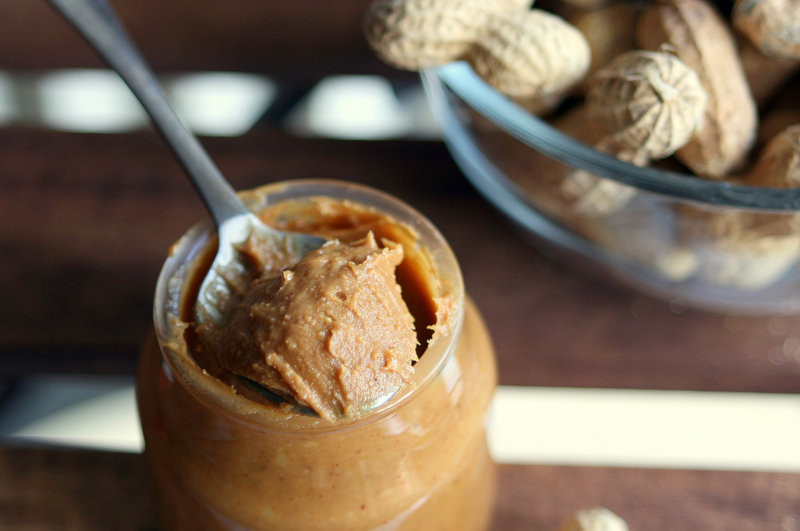
"caption": "In a landmark new study, researchers found that babies who consumed the equivalent of about four heaping teaspoons of peanut butter each week, starting when they were between 4 and 11 months old, were about 80 percent less likely to develop a peanut allergy by their fifth birthday. Photo: Anna/Flickr",
"description": null,
"title": "peanut-butter",
"credit": null,
"status": "inherit",
"isLoading": false,
"fetchFailed": false
},
"bayareabites_93441": {
"type": "attachments",
"id": "bayareabites_93441",
"meta": {
"index": "attachments_1716263798",
"site": "bayareabites",
"id": "93441",
"found": true
},
"parent": 93440,
"imgSizes": {
"twentyfourteen-full-width": {
"file": "https://ww2.kqed.org/app/uploads/sites/24/2015/02/costco_enl-90d3a4bc4261c10b14c238b264083371cfc61211-1038x576.jpg",
"width": 1038,
"mimeType": "image/jpeg",
"height": 576
},
"thumbnail": {
"file": "https://ww2.kqed.org/app/uploads/sites/24/2015/02/costco_enl-90d3a4bc4261c10b14c238b264083371cfc61211-400x266.jpg",
"width": 400,
"mimeType": "image/jpeg",
"height": 266
},
"fd-sm": {
"file": "https://ww2.kqed.org/app/uploads/sites/24/2015/02/costco_enl-90d3a4bc4261c10b14c238b264083371cfc61211-320x212.jpg",
"width": 320,
"mimeType": "image/jpeg",
"height": 212
},
"post-thumbnail": {
"file": "https://ww2.kqed.org/app/uploads/sites/24/2015/02/costco_enl-90d3a4bc4261c10b14c238b264083371cfc61211-672x372.jpg",
"width": 672,
"mimeType": "image/jpeg",
"height": 372
},
"kqedFullSize": {
"file": "https://ww2.kqed.org/app/uploads/sites/24/2015/02/costco_enl-90d3a4bc4261c10b14c238b264083371cfc61211.jpg",
"width": 2000,
"height": 1328
},
"large": {
"file": "https://ww2.kqed.org/app/uploads/sites/24/2015/02/costco_enl-90d3a4bc4261c10b14c238b264083371cfc61211-1440x956.jpg",
"width": 1440,
"mimeType": "image/jpeg",
"height": 956
},
"guest-author-96": {
"file": "https://ww2.kqed.org/app/uploads/sites/24/2015/02/costco_enl-90d3a4bc4261c10b14c238b264083371cfc61211-96x96.jpg",
"width": 96,
"mimeType": "image/jpeg",
"height": 96
},
"medium": {
"file": "https://ww2.kqed.org/app/uploads/sites/24/2015/02/costco_enl-90d3a4bc4261c10b14c238b264083371cfc61211-800x531.jpg",
"width": 800,
"mimeType": "image/jpeg",
"height": 531
},
"guest-author-64": {
"file": "https://ww2.kqed.org/app/uploads/sites/24/2015/02/costco_enl-90d3a4bc4261c10b14c238b264083371cfc61211-64x64.jpg",
"width": 64,
"mimeType": "image/jpeg",
"height": 64
},
"guest-author-32": {
"file": "https://ww2.kqed.org/app/uploads/sites/24/2015/02/costco_enl-90d3a4bc4261c10b14c238b264083371cfc61211-32x32.jpg",
"width": 32,
"mimeType": "image/jpeg",
"height": 32
},
"cat_post_thumb_sizecategory-posts-2": {
"file": "https://ww2.kqed.org/app/uploads/sites/24/2015/02/costco_enl-90d3a4bc4261c10b14c238b264083371cfc61211-50x50.jpg",
"width": 50,
"mimeType": "image/jpeg",
"height": 50
},
"fd-lrg": {
"file": "https://ww2.kqed.org/app/uploads/sites/24/2015/02/costco_enl-90d3a4bc4261c10b14c238b264083371cfc61211-1180x784.jpg",
"width": 1180,
"mimeType": "image/jpeg",
"height": 784
},
"fd-med": {
"file": "https://ww2.kqed.org/app/uploads/sites/24/2015/02/costco_enl-90d3a4bc4261c10b14c238b264083371cfc61211-768x510.jpg",
"width": 768,
"mimeType": "image/jpeg",
"height": 510
},
"detail": {
"file": "https://ww2.kqed.org/app/uploads/sites/24/2015/02/costco_enl-90d3a4bc4261c10b14c238b264083371cfc61211-75x75.jpg",
"width": 75,
"mimeType": "image/jpeg",
"height": 75
},
"guest-author-128": {
"file": "https://ww2.kqed.org/app/uploads/sites/24/2015/02/costco_enl-90d3a4bc4261c10b14c238b264083371cfc61211-128x128.jpg",
"width": 128,
"mimeType": "image/jpeg",
"height": 128
}
},
"publishDate": 1424474503,
"modified": 1424710977,
"caption": "Photo: Ron Antonelli/Bloomberg via Getty Images ",
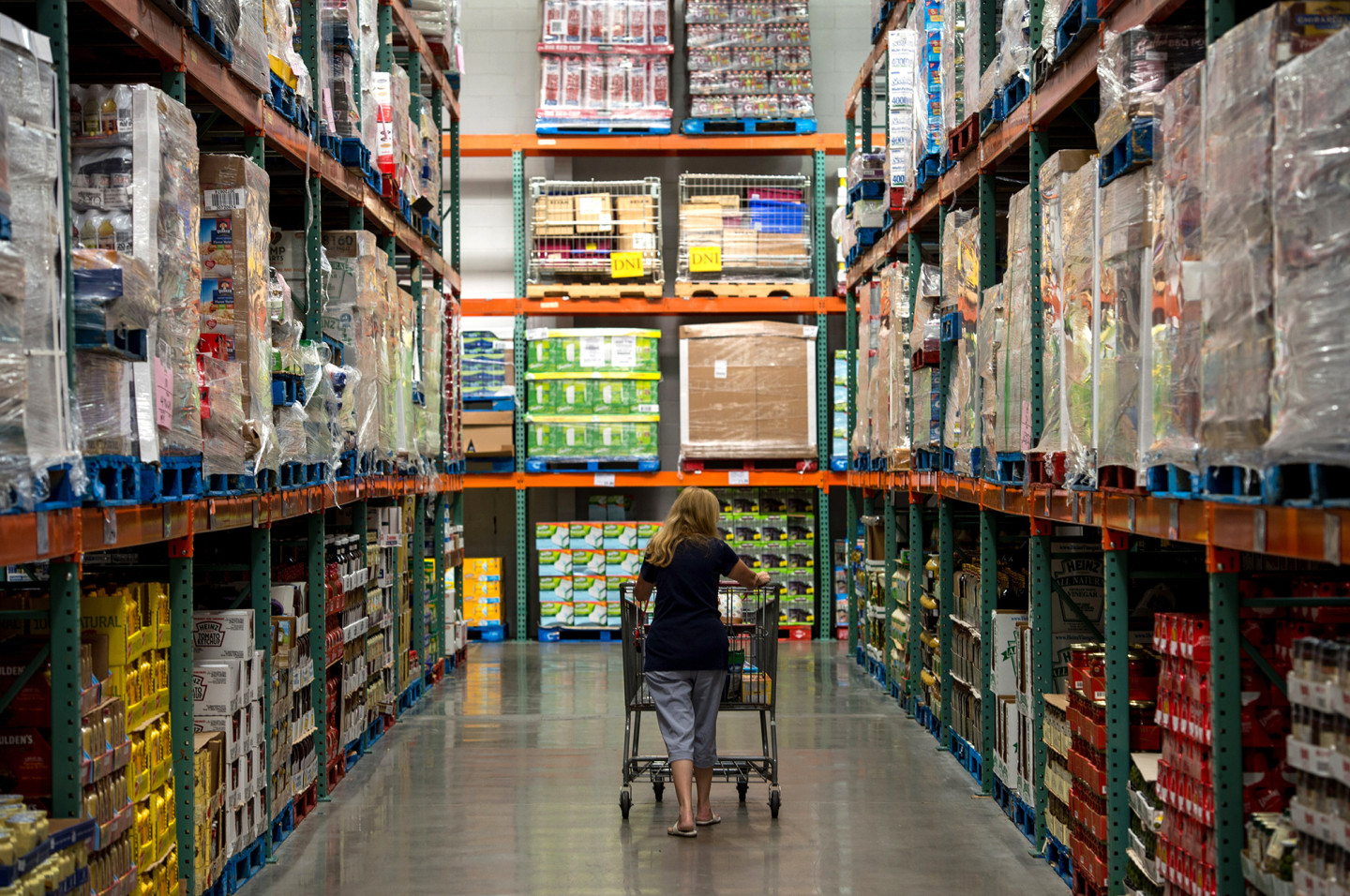
"description": "A woman pushes a cart at a Costco store in Hackensack, N.J., in 2013. Big-box stores are effective delivery devices for fattening foods, economists argue in a new study.",
"title": "A woman pushes a cart at a Costco store in Hackensack, N.J., in 2013. Big-box stores are effective delivery devices for fattening foods, economists argue in a new study.",
"credit": null,
"status": "inherit",
"isLoading": false,
"fetchFailed": false
},
"bayareabites_93425": {
"type": "attachments",
"id": "bayareabites_93425",
"meta": {
"index": "attachments_1716263798",
"site": "bayareabites",
"id": "93425",
"found": true
},
"parent": 93424,
"imgSizes": {
"twentyfourteen-full-width": {
"file": "https://ww2.kqed.org/app/uploads/sites/24/2015/02/raw-milk-1_enl-636f8d1ed04d096d7f5b88cb5a16b7824d821769-e1424471371747-1038x576.jpg",
"width": 1038,
"mimeType": "image/jpeg",
"height": 576
},
"thumbnail": {
"file": "https://ww2.kqed.org/app/uploads/sites/24/2015/02/raw-milk-1_enl-636f8d1ed04d096d7f5b88cb5a16b7824d821769-e1424471371747-400x266.jpg",
"width": 400,
"mimeType": "image/jpeg",
"height": 266
},
"fd-sm": {
"file": "https://ww2.kqed.org/app/uploads/sites/24/2015/02/raw-milk-1_enl-636f8d1ed04d096d7f5b88cb5a16b7824d821769-e1424471371747-320x213.jpg",
"width": 320,
"mimeType": "image/jpeg",
"height": 213
},
"post-thumbnail": {
"file": "https://ww2.kqed.org/app/uploads/sites/24/2015/02/raw-milk-1_enl-636f8d1ed04d096d7f5b88cb5a16b7824d821769-e1424471371747-672x372.jpg",
"width": 672,
"mimeType": "image/jpeg",
"height": 372
},
"kqedFullSize": {
"file": "https://ww2.kqed.org/app/uploads/sites/24/2015/02/raw-milk-1_enl-636f8d1ed04d096d7f5b88cb5a16b7824d821769-e1424471371747.jpg",
"width": 1920,
"height": 1279
},
"large": {
"file": "https://ww2.kqed.org/app/uploads/sites/24/2015/02/raw-milk-1_enl-636f8d1ed04d096d7f5b88cb5a16b7824d821769-e1424471371747-1440x959.jpg",
"width": 1440,
"mimeType": "image/jpeg",
"height": 959
},
"guest-author-96": {
"file": "https://ww2.kqed.org/app/uploads/sites/24/2015/02/raw-milk-1_enl-636f8d1ed04d096d7f5b88cb5a16b7824d821769-e1424471371747-96x96.jpg",
"width": 96,
"mimeType": "image/jpeg",
"height": 96
},
"medium": {
"file": "https://ww2.kqed.org/app/uploads/sites/24/2015/02/raw-milk-1_enl-636f8d1ed04d096d7f5b88cb5a16b7824d821769-e1424471371747-800x533.jpg",
"width": 800,
"mimeType": "image/jpeg",
"height": 533
},
"guest-author-64": {
"file": "https://ww2.kqed.org/app/uploads/sites/24/2015/02/raw-milk-1_enl-636f8d1ed04d096d7f5b88cb5a16b7824d821769-e1424471371747-64x64.jpg",
"width": 64,
"mimeType": "image/jpeg",
"height": 64
},
"guest-author-32": {
"file": "https://ww2.kqed.org/app/uploads/sites/24/2015/02/raw-milk-1_enl-636f8d1ed04d096d7f5b88cb5a16b7824d821769-e1424471371747-32x32.jpg",
"width": 32,
"mimeType": "image/jpeg",
"height": 32
},
"cat_post_thumb_sizecategory-posts-2": {
"file": "https://ww2.kqed.org/app/uploads/sites/24/2015/02/raw-milk-1_enl-636f8d1ed04d096d7f5b88cb5a16b7824d821769-e1424471371747-50x50.jpg",
"width": 50,
"mimeType": "image/jpeg",
"height": 50
},
"fd-lrg": {
"file": "https://ww2.kqed.org/app/uploads/sites/24/2015/02/raw-milk-1_enl-636f8d1ed04d096d7f5b88cb5a16b7824d821769-e1424471371747-1180x786.jpg",
"width": 1180,
"mimeType": "image/jpeg",
"height": 786
},
"fd-med": {
"file": "https://ww2.kqed.org/app/uploads/sites/24/2015/02/raw-milk-1_enl-636f8d1ed04d096d7f5b88cb5a16b7824d821769-e1424471371747-768x512.jpg",
"width": 768,
"mimeType": "image/jpeg",
"height": 512
},
"detail": {
"file": "https://ww2.kqed.org/app/uploads/sites/24/2015/02/raw-milk-1_enl-636f8d1ed04d096d7f5b88cb5a16b7824d821769-e1424471371747-75x75.jpg",
"width": 75,
"mimeType": "image/jpeg",
"height": 75
},
"guest-author-128": {
"file": "https://ww2.kqed.org/app/uploads/sites/24/2015/02/raw-milk-1_enl-636f8d1ed04d096d7f5b88cb5a16b7824d821769-e1424471371747-128x128.jpg",
"width": 128,
"mimeType": "image/jpeg",
"height": 128
}
},
"publishDate": 1424463563,
"modified": 1424471339,
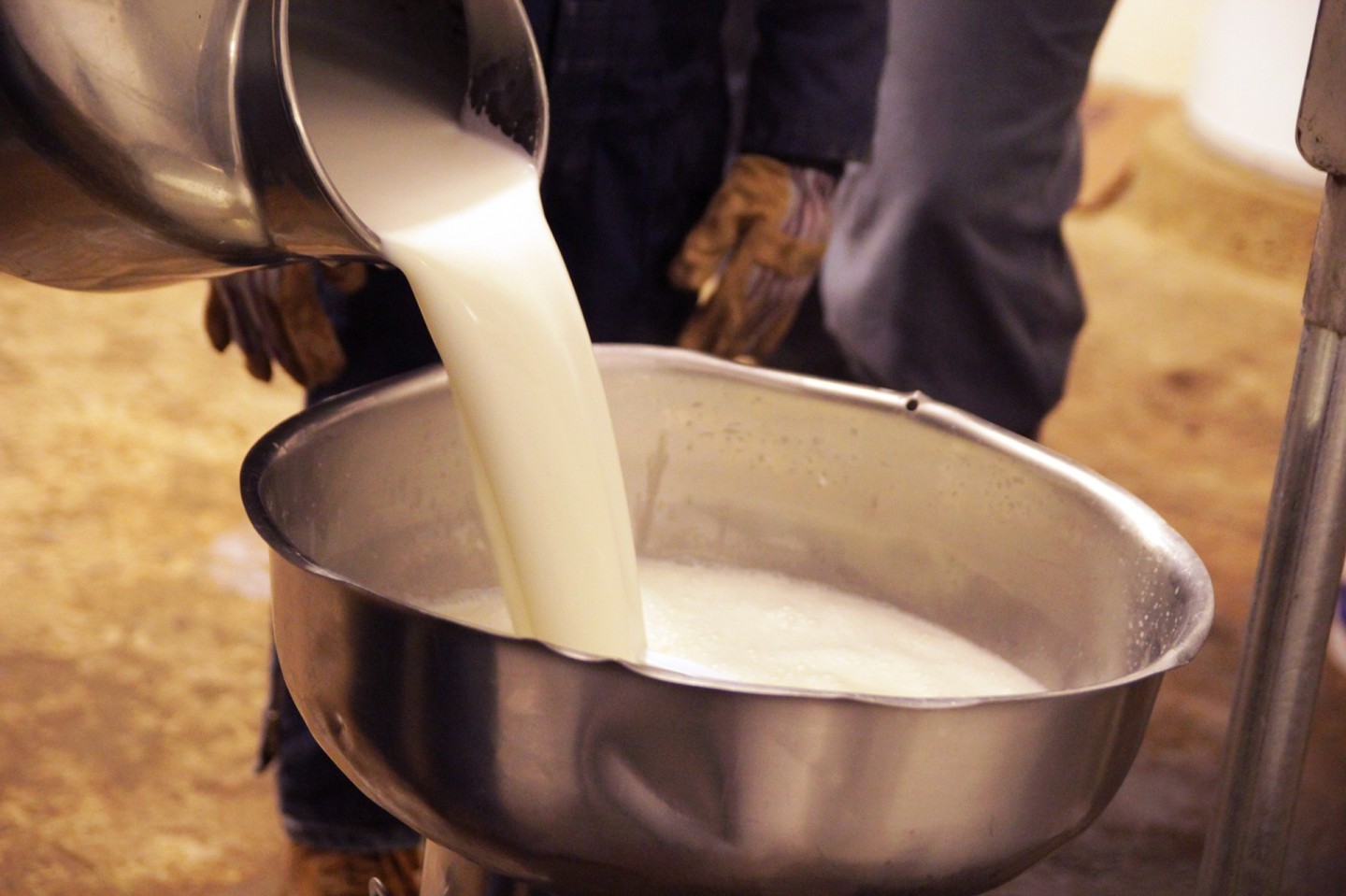
"caption": "The U.S. Centers for Disease Control and Prevention cautions that unpasteurized milk can cause serious illness, because it's a fertile breeding ground for harmful germs like salmonella and E. coli. But such warnings haven't deterred raw milk enthusiasts. Photo: Abby Wendle/Harvest Public Media",
"description": "The U.S. Centers for Disease Control and Prevention cautions that unpasteurized milk can cause serious illness, because it's a fertile breeding ground for harmful germs like salmonella and E. coli. But such warnings haven't deterred raw milk enthusiasts.",
"title": "The U.S. Centers for Disease Control and Prevention cautions that unpasteurized milk can cause serious illness, because it's a fertile breeding ground for harmful germs like salmonella and E. coli. But such warnings haven't deterred raw milk enthusiasts.",
"credit": null,
"status": "inherit",
"isLoading": false,
"fetchFailed": false
},
"bayareabites_93246": {
"type": "attachments",
"id": "bayareabites_93246",
"meta": {
"index": "attachments_1716263798",
"site": "bayareabites",
"id": "93246",
"found": true
},
"parent": 93245,
"imgSizes": {
"thumbnail": {
"file": "https://ww2.kqed.org/app/uploads/sites/24/2015/02/arctic-apple-1_wide-aa0a0356dfd08dd18d2624b903e17d06f55f88a7-e1423873954542-400x225.jpg",
"width": 400,
"mimeType": "image/jpeg",
"height": 225
},
"fd-sm": {
"file": "https://ww2.kqed.org/app/uploads/sites/24/2015/02/arctic-apple-1_wide-aa0a0356dfd08dd18d2624b903e17d06f55f88a7-e1423873954542-320x180.jpg",
"width": 320,
"mimeType": "image/jpeg",
"height": 180
},
"post-thumbnail": {
"file": "https://ww2.kqed.org/app/uploads/sites/24/2015/02/arctic-apple-1_wide-aa0a0356dfd08dd18d2624b903e17d06f55f88a7-e1423873954542-672x372.jpg",
"width": 672,
"mimeType": "image/jpeg",
"height": 372
},
"kqedFullSize": {
"file": "https://ww2.kqed.org/app/uploads/sites/24/2015/02/arctic-apple-1_wide-aa0a0356dfd08dd18d2624b903e17d06f55f88a7-e1423873954542.jpg",
"width": 1000,
"height": 563
},
"cat_post_thumb_sizecategory-posts-2": {
"file": "https://ww2.kqed.org/app/uploads/sites/24/2015/02/arctic-apple-1_wide-aa0a0356dfd08dd18d2624b903e17d06f55f88a7-e1423873954542-50x50.jpg",
"width": 50,
"mimeType": "image/jpeg",
"height": 50
},
"fd-med": {
"file": "https://ww2.kqed.org/app/uploads/sites/24/2015/02/arctic-apple-1_wide-aa0a0356dfd08dd18d2624b903e17d06f55f88a7-e1423873954542-768x432.jpg",
"width": 768,
"mimeType": "image/jpeg",
"height": 432
},
"guest-author-96": {
"file": "https://ww2.kqed.org/app/uploads/sites/24/2015/02/arctic-apple-1_wide-aa0a0356dfd08dd18d2624b903e17d06f55f88a7-e1423873954542-96x96.jpg",
"width": 96,
"mimeType": "image/jpeg",
"height": 96
},
"medium": {
"file": "https://ww2.kqed.org/app/uploads/sites/24/2015/02/arctic-apple-1_wide-aa0a0356dfd08dd18d2624b903e17d06f55f88a7-e1423873954542-800x450.jpg",
"width": 800,
"mimeType": "image/jpeg",
"height": 450
},
"guest-author-64": {
"file": "https://ww2.kqed.org/app/uploads/sites/24/2015/02/arctic-apple-1_wide-aa0a0356dfd08dd18d2624b903e17d06f55f88a7-e1423873954542-64x64.jpg",
"width": 64,
"mimeType": "image/jpeg",
"height": 64
},
"detail": {
"file": "https://ww2.kqed.org/app/uploads/sites/24/2015/02/arctic-apple-1_wide-aa0a0356dfd08dd18d2624b903e17d06f55f88a7-e1423873954542-75x75.jpg",
"width": 75,
"mimeType": "image/jpeg",
"height": 75
},
"guest-author-32": {
"file": "https://ww2.kqed.org/app/uploads/sites/24/2015/02/arctic-apple-1_wide-aa0a0356dfd08dd18d2624b903e17d06f55f88a7-e1423873954542-32x32.jpg",
"width": 32,
"mimeType": "image/jpeg",
"height": 32
},
"guest-author-128": {
"file": "https://ww2.kqed.org/app/uploads/sites/24/2015/02/arctic-apple-1_wide-aa0a0356dfd08dd18d2624b903e17d06f55f88a7-e1423873954542-128x128.jpg",
"width": 128,
"mimeType": "image/jpeg",
"height": 128
}
},
"publishDate": 1423873643,
"modified": 1423873949,
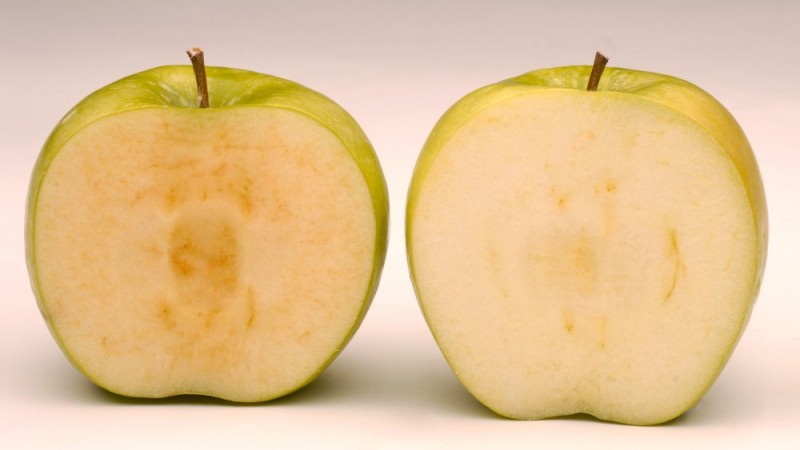
"caption": "Arctic Granny (right), a GMO variety created by Okanagan Specialty Fruits, got the gren light from federal regulators Friday. The apple doesn't turn brown like a conventional Granny Smith apple (left). Photo: Okanagan Specialty Fruits ",
"description": "Arctic Granny (right), a GMO variety created by Okanagan Specialty Fruits, got the gren light from federal regulators Friday. The apple doesn't turn brown like a conventional Granny Smith apple (left).",
"title": "Arctic Granny (right), a GMO variety created by Okanagan Specialty Fruits, got the gren light from federal regulators Friday. The apple doesn't turn brown like a conventional Granny Smith apple (left).",
"credit": null,
"status": "inherit",
"isLoading": false,
"fetchFailed": false
},
"bayareabites_93148": {
"type": "attachments",
"id": "bayareabites_93148",
"meta": {
"index": "attachments_1716263798",
"site": "bayareabites",
"id": "93148",
"found": true
},
"parent": 93147,
"imgSizes": {
"twentyfourteen-full-width": {
"file": "https://ww2.kqed.org/app/uploads/sites/24/2015/02/bone-soup-1_enl-ca01b26a8d00ac4e75fc38978e52102a0e63ed94-e1423685438544-1000x576.jpg",
"width": 1000,
"mimeType": "image/jpeg",
"height": 576
},
"thumbnail": {
"file": "https://ww2.kqed.org/app/uploads/sites/24/2015/02/bone-soup-1_enl-ca01b26a8d00ac4e75fc38978e52102a0e63ed94-e1423685438544-400x300.jpg",
"width": 400,
"mimeType": "image/jpeg",
"height": 300
},
"fd-sm": {
"file": "https://ww2.kqed.org/app/uploads/sites/24/2015/02/bone-soup-1_enl-ca01b26a8d00ac4e75fc38978e52102a0e63ed94-e1423685438544-320x240.jpg",
"width": 320,
"mimeType": "image/jpeg",
"height": 240
},
"post-thumbnail": {
"file": "https://ww2.kqed.org/app/uploads/sites/24/2015/02/bone-soup-1_enl-ca01b26a8d00ac4e75fc38978e52102a0e63ed94-e1423685438544-672x372.jpg",
"width": 672,
"mimeType": "image/jpeg",
"height": 372
},
"kqedFullSize": {
"file": "https://ww2.kqed.org/app/uploads/sites/24/2015/02/bone-soup-1_enl-ca01b26a8d00ac4e75fc38978e52102a0e63ed94-e1423685438544.jpg",
"width": 1000,
"height": 750
},
"guest-author-96": {
"file": "https://ww2.kqed.org/app/uploads/sites/24/2015/02/bone-soup-1_enl-ca01b26a8d00ac4e75fc38978e52102a0e63ed94-e1423685438544-96x96.jpg",
"width": 96,
"mimeType": "image/jpeg",
"height": 96
},
"medium": {
"file": "https://ww2.kqed.org/app/uploads/sites/24/2015/02/bone-soup-1_enl-ca01b26a8d00ac4e75fc38978e52102a0e63ed94-e1423685438544-800x600.jpg",
"width": 800,
"mimeType": "image/jpeg",
"height": 600
},
"guest-author-64": {
"file": "https://ww2.kqed.org/app/uploads/sites/24/2015/02/bone-soup-1_enl-ca01b26a8d00ac4e75fc38978e52102a0e63ed94-e1423685438544-64x64.jpg",
"width": 64,
"mimeType": "image/jpeg",
"height": 64
},
"guest-author-32": {
"file": "https://ww2.kqed.org/app/uploads/sites/24/2015/02/bone-soup-1_enl-ca01b26a8d00ac4e75fc38978e52102a0e63ed94-e1423685438544-32x32.jpg",
"width": 32,
"mimeType": "image/jpeg",
"height": 32
},
"cat_post_thumb_sizecategory-posts-2": {
"file": "https://ww2.kqed.org/app/uploads/sites/24/2015/02/bone-soup-1_enl-ca01b26a8d00ac4e75fc38978e52102a0e63ed94-e1423685438544-50x50.jpg",
"width": 50,
"mimeType": "image/jpeg",
"height": 50
},
"fd-med": {
"file": "https://ww2.kqed.org/app/uploads/sites/24/2015/02/bone-soup-1_enl-ca01b26a8d00ac4e75fc38978e52102a0e63ed94-e1423685438544-768x576.jpg",
"width": 768,
"mimeType": "image/jpeg",
"height": 576
},
"detail": {
"file": "https://ww2.kqed.org/app/uploads/sites/24/2015/02/bone-soup-1_enl-ca01b26a8d00ac4e75fc38978e52102a0e63ed94-e1423685438544-75x75.jpg",
"width": 75,
"mimeType": "image/jpeg",
"height": 75
},
"guest-author-128": {
"file": "https://ww2.kqed.org/app/uploads/sites/24/2015/02/bone-soup-1_enl-ca01b26a8d00ac4e75fc38978e52102a0e63ed94-e1423685438544-128x128.jpg",
"width": 128,
"mimeType": "image/jpeg",
"height": 128
}
},
"publishDate": 1423634779,
"modified": 1423685431,
"caption": "Poultry bone broth is typically simmered for 24 hours or more. It can be consumed as a hot beverage, or incorporated into gravies, sauces or soups. Photo: Amy Blaszyk for NPR",
"description": "Poultry bone broth is typically simmered for 24 hours or more. It can be consumed as a hot beverage, or incorporated into gravies, sauces or soups.",
"title": "Poultry bone broth is typically simmered for 24 hours or more. It can be consumed as a hot beverage, or incorporated into gravies, sauces or soups.",
"credit": null,
"status": "inherit",
"isLoading": false,
"fetchFailed": false
},
"bayareabites_93040": {
"type": "attachments",
"id": "bayareabites_93040",
"meta": {
"index": "attachments_1716263798",
"site": "bayareabites",
"id": "93040",
"found": true
},
"parent": 92960,
"imgSizes": {
"twentyfourteen-full-width": {
"file": "https://ww2.kqed.org/app/uploads/sites/24/2015/02/The-Healthy-Mind-Cookbook-CVR1000-1000x576.jpg",
"width": 1000,
"mimeType": "image/jpeg",
"height": 576
},
"thumbnail": {
"file": "https://ww2.kqed.org/app/uploads/sites/24/2015/02/The-Healthy-Mind-Cookbook-CVR1000-400x538.jpg",
"width": 400,
"mimeType": "image/jpeg",
"height": 538
},
"fd-sm": {
"file": "https://ww2.kqed.org/app/uploads/sites/24/2015/02/The-Healthy-Mind-Cookbook-CVR1000-320x430.jpg",
"width": 320,
"mimeType": "image/jpeg",
"height": 430
},
"post-thumbnail": {
"file": "https://ww2.kqed.org/app/uploads/sites/24/2015/02/The-Healthy-Mind-Cookbook-CVR1000-672x372.jpg",
"width": 672,
"mimeType": "image/jpeg",
"height": 372
},
"kqedFullSize": {
"file": "https://ww2.kqed.org/app/uploads/sites/24/2015/02/The-Healthy-Mind-Cookbook-CVR1000.jpg",
"width": 1000,
"height": 1345
},
"guest-author-96": {
"file": "https://ww2.kqed.org/app/uploads/sites/24/2015/02/The-Healthy-Mind-Cookbook-CVR1000-96x96.jpg",
"width": 96,
"mimeType": "image/jpeg",
"height": 96
},
"medium": {
"file": "https://ww2.kqed.org/app/uploads/sites/24/2015/02/The-Healthy-Mind-Cookbook-CVR1000-800x1076.jpg",
"width": 800,
"mimeType": "image/jpeg",
"height": 1076
},
"guest-author-64": {
"file": "https://ww2.kqed.org/app/uploads/sites/24/2015/02/The-Healthy-Mind-Cookbook-CVR1000-64x64.jpg",
"width": 64,
"mimeType": "image/jpeg",
"height": 64
},
"guest-author-32": {
"file": "https://ww2.kqed.org/app/uploads/sites/24/2015/02/The-Healthy-Mind-Cookbook-CVR1000-32x32.jpg",
"width": 32,
"mimeType": "image/jpeg",
"height": 32
},
"cat_post_thumb_sizecategory-posts-2": {
"file": "https://ww2.kqed.org/app/uploads/sites/24/2015/02/The-Healthy-Mind-Cookbook-CVR1000-50x50.jpg",
"width": 50,
"mimeType": "image/jpeg",
"height": 50
},
"fd-med": {
"file": "https://ww2.kqed.org/app/uploads/sites/24/2015/02/The-Healthy-Mind-Cookbook-CVR1000-768x1033.jpg",
"width": 768,
"mimeType": "image/jpeg",
"height": 1033
},
"detail": {
"file": "https://ww2.kqed.org/app/uploads/sites/24/2015/02/The-Healthy-Mind-Cookbook-CVR1000-75x75.jpg",
"width": 75,
"mimeType": "image/jpeg",
"height": 75
},
"guest-author-128": {
"file": "https://ww2.kqed.org/app/uploads/sites/24/2015/02/The-Healthy-Mind-Cookbook-CVR1000-128x128.jpg",
"width": 128,
"mimeType": "image/jpeg",
"height": 128
}
},
"publishDate": 1423522008,
"modified": 1423522173,
"caption": null,
"description": null,
"title": "The-Healthy-Mind-Cookbook-CVR1000",
"credit": null,
"status": "inherit",
"isLoading": false,
"fetchFailed": false
},
"bayareabites_92672": {
"type": "attachments",
"id": "bayareabites_92672",
"meta": {
"index": "attachments_1716263798",
"site": "bayareabites",
"id": "92672",
"found": true
},
"parent": 92668,
"imgSizes": {
"kqedFullSize": {
"file": "https://ww2.kqed.org/app/uploads/sites/24/2015/01/A-sampling-of-findings-from-Stark-and-Carlsons-website-.jpg",
"width": 1000,
"height": 662
}
},
"publishDate": 1422680064,
"modified": 1423011096,
"caption": "A sampling of photos and findings from Stark and Carlson’s project. Photo: Philip Stark",
"description": null,
"title": "A sampling of findings from Stark and Carlson's website",
"credit": null,
"status": "inherit",
"isLoading": false,
"fetchFailed": false
},
"bayareabites_92835": {
"type": "attachments",
"id": "bayareabites_92835",
"meta": {
"index": "attachments_1716263798",
"site": "bayareabites",
"id": "92835",
"found": true
},
"parent": 92834,
"imgSizes": {
"twentyfourteen-full-width": {
"file": "https://ww2.kqed.org/app/uploads/sites/24/2015/02/the-teaching-kitchen-stanford-14_enl-48a0ebb9ba852c75b73fe67bfa7d5ddb1b833567-e1423101347490-1000x576.jpg",
"width": 1000,
"mimeType": "image/jpeg",
"height": 576
},
"thumbnail": {
"file": "https://ww2.kqed.org/app/uploads/sites/24/2015/02/the-teaching-kitchen-stanford-14_enl-48a0ebb9ba852c75b73fe67bfa7d5ddb1b833567-e1423101347490-400x266.jpg",
"width": 400,
"mimeType": "image/jpeg",
"height": 266
},
"fd-sm": {
"file": "https://ww2.kqed.org/app/uploads/sites/24/2015/02/the-teaching-kitchen-stanford-14_enl-48a0ebb9ba852c75b73fe67bfa7d5ddb1b833567-e1423101347490-320x212.jpg",
"width": 320,
"mimeType": "image/jpeg",
"height": 212
},
"post-thumbnail": {
"file": "https://ww2.kqed.org/app/uploads/sites/24/2015/02/the-teaching-kitchen-stanford-14_enl-48a0ebb9ba852c75b73fe67bfa7d5ddb1b833567-e1423101347490-672x372.jpg",
"width": 672,
"mimeType": "image/jpeg",
"height": 372
},
"kqedFullSize": {
"file": "https://ww2.kqed.org/app/uploads/sites/24/2015/02/the-teaching-kitchen-stanford-14_enl-48a0ebb9ba852c75b73fe67bfa7d5ddb1b833567-e1423101347490.jpg",
"width": 1000,
"height": 664
},
"guest-author-96": {
"file": "https://ww2.kqed.org/app/uploads/sites/24/2015/02/the-teaching-kitchen-stanford-14_enl-48a0ebb9ba852c75b73fe67bfa7d5ddb1b833567-e1423101347490-96x96.jpg",
"width": 96,
"mimeType": "image/jpeg",
"height": 96
},
"medium": {
"file": "https://ww2.kqed.org/app/uploads/sites/24/2015/02/the-teaching-kitchen-stanford-14_enl-48a0ebb9ba852c75b73fe67bfa7d5ddb1b833567-e1423101347490-800x531.jpg",
"width": 800,
"mimeType": "image/jpeg",
"height": 531
},
"guest-author-64": {
"file": "https://ww2.kqed.org/app/uploads/sites/24/2015/02/the-teaching-kitchen-stanford-14_enl-48a0ebb9ba852c75b73fe67bfa7d5ddb1b833567-e1423101347490-64x64.jpg",
"width": 64,
"mimeType": "image/jpeg",
"height": 64
},
"guest-author-32": {
"file": "https://ww2.kqed.org/app/uploads/sites/24/2015/02/the-teaching-kitchen-stanford-14_enl-48a0ebb9ba852c75b73fe67bfa7d5ddb1b833567-e1423101347490-32x32.jpg",
"width": 32,
"mimeType": "image/jpeg",
"height": 32
},
"cat_post_thumb_sizecategory-posts-2": {
"file": "https://ww2.kqed.org/app/uploads/sites/24/2015/02/the-teaching-kitchen-stanford-14_enl-48a0ebb9ba852c75b73fe67bfa7d5ddb1b833567-e1423101347490-50x50.jpg",
"width": 50,
"mimeType": "image/jpeg",
"height": 50
},
"fd-med": {
"file": "https://ww2.kqed.org/app/uploads/sites/24/2015/02/the-teaching-kitchen-stanford-14_enl-48a0ebb9ba852c75b73fe67bfa7d5ddb1b833567-e1423101347490-768x510.jpg",
"width": 768,
"mimeType": "image/jpeg",
"height": 510
},
"detail": {
"file": "https://ww2.kqed.org/app/uploads/sites/24/2015/02/the-teaching-kitchen-stanford-14_enl-48a0ebb9ba852c75b73fe67bfa7d5ddb1b833567-e1423101347490-75x75.jpg",
"width": 75,
"mimeType": "image/jpeg",
"height": 75
},
"guest-author-128": {
"file": "https://ww2.kqed.org/app/uploads/sites/24/2015/02/the-teaching-kitchen-stanford-14_enl-48a0ebb9ba852c75b73fe67bfa7d5ddb1b833567-e1423101347490-128x128.jpg",
"width": 128,
"mimeType": "image/jpeg",
"height": 128
}
},
"publishDate": 1423088872,
"modified": 1423101341,
"caption": "Chef David Iott explains the perfect way to prepare risotto to Stanford students. Photo: Courtesy of Stanford's Residential and Dining Enterprises",
"description": "Chef David Iott explains the perfect way to prepare risotto to Stanford students.",
"title": "Chef David Iott explains the perfect way to prepare risotto to Stanford students.",
"credit": null,
"status": "inherit",
"isLoading": false,
"fetchFailed": false
},
"bayareabites_92800": {
"type": "attachments",
"id": "bayareabites_92800",
"meta": {
"index": "attachments_1716263798",
"site": "bayareabites",
"id": "92800",
"found": true
},
"parent": 92798,
"imgSizes": {
"thumbnail": {
"file": "https://ww2.kqed.org/app/uploads/sites/24/2015/02/Naturespath-400x145.jpg",
"width": 400,
"mimeType": "image/jpeg",
"height": 145
},
"fd-sm": {
"file": "https://ww2.kqed.org/app/uploads/sites/24/2015/02/Naturespath-320x116.jpg",
"width": 320,
"mimeType": "image/jpeg",
"height": 116
},
"post-thumbnail": {
"file": "https://ww2.kqed.org/app/uploads/sites/24/2015/02/Naturespath-672x247.jpg",
"width": 672,
"mimeType": "image/jpeg",
"height": 247
},
"kqedFullSize": {
"file": "https://ww2.kqed.org/app/uploads/sites/24/2015/02/Naturespath.jpg",
"width": 680,
"height": 247
},
"cat_post_thumb_sizecategory-posts-2": {
"file": "https://ww2.kqed.org/app/uploads/sites/24/2015/02/Naturespath-50x50.jpg",
"width": 50,
"mimeType": "image/jpeg",
"height": 50
},
"guest-author-96": {
"file": "https://ww2.kqed.org/app/uploads/sites/24/2015/02/Naturespath-96x96.jpg",
"width": 96,
"mimeType": "image/jpeg",
"height": 96
},
"guest-author-64": {
"file": "https://ww2.kqed.org/app/uploads/sites/24/2015/02/Naturespath-64x64.jpg",
"width": 64,
"mimeType": "image/jpeg",
"height": 64
},
"detail": {
"file": "https://ww2.kqed.org/app/uploads/sites/24/2015/02/Naturespath-75x75.jpg",
"width": 75,
"mimeType": "image/jpeg",
"height": 75
},
"guest-author-32": {
"file": "https://ww2.kqed.org/app/uploads/sites/24/2015/02/Naturespath-32x32.jpg",
"width": 32,
"mimeType": "image/jpeg",
"height": 32
},
"guest-author-128": {
"file": "https://ww2.kqed.org/app/uploads/sites/24/2015/02/Naturespath-128x128.jpg",
"width": 128,
"mimeType": "image/jpeg",
"height": 128
}
},
"publishDate": 1423007174,
"modified": 1423007205,
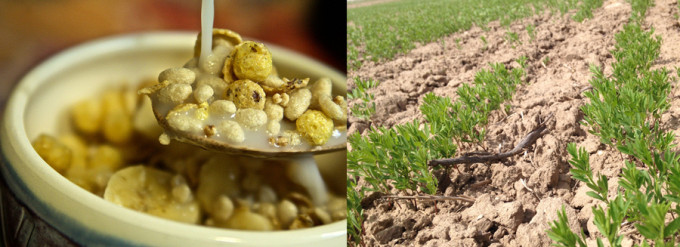
"caption": "Photo of Nature's Path cereal Nora Kuby. Photo of farm fields courtesy of Nature's Path.",
"description": null,
"title": "Naturespath",
"credit": null,
"status": "inherit",
"isLoading": false,
"fetchFailed": false
},
"bayareabites_92779": {
"type": "attachments",
"id": "bayareabites_92779",
"meta": {
"index": "attachments_1716263798",
"site": "bayareabites",
"id": "92779",
"found": true
},
"parent": 92778,
"imgSizes": {
"twentyfourteen-full-width": {
"file": "https://ww2.kqed.org/app/uploads/sites/24/2015/02/organic-fish-1_slide-d90e97cffd8bb585ea33ceaa3fd8049a460041fe-999x576.jpg",
"width": 999,
"mimeType": "image/jpeg",
"height": 576
},
"thumbnail": {
"file": "https://ww2.kqed.org/app/uploads/sites/24/2015/02/organic-fish-1_slide-d90e97cffd8bb585ea33ceaa3fd8049a460041fe-400x267.jpg",
"width": 400,
"mimeType": "image/jpeg",
"height": 267
},
"fd-sm": {
"file": "https://ww2.kqed.org/app/uploads/sites/24/2015/02/organic-fish-1_slide-d90e97cffd8bb585ea33ceaa3fd8049a460041fe-320x213.jpg",
"width": 320,
"mimeType": "image/jpeg",
"height": 213
},
"post-thumbnail": {
"file": "https://ww2.kqed.org/app/uploads/sites/24/2015/02/organic-fish-1_slide-d90e97cffd8bb585ea33ceaa3fd8049a460041fe-672x372.jpg",
"width": 672,
"mimeType": "image/jpeg",
"height": 372
},
"kqedFullSize": {
"file": "https://ww2.kqed.org/app/uploads/sites/24/2015/02/organic-fish-1_slide-d90e97cffd8bb585ea33ceaa3fd8049a460041fe.jpg",
"width": 999,
"height": 666
},
"guest-author-96": {
"file": "https://ww2.kqed.org/app/uploads/sites/24/2015/02/organic-fish-1_slide-d90e97cffd8bb585ea33ceaa3fd8049a460041fe-96x96.jpg",
"width": 96,
"mimeType": "image/jpeg",
"height": 96
},
"medium": {
"file": "https://ww2.kqed.org/app/uploads/sites/24/2015/02/organic-fish-1_slide-d90e97cffd8bb585ea33ceaa3fd8049a460041fe-800x533.jpg",
"width": 800,
"mimeType": "image/jpeg",
"height": 533
},
"guest-author-64": {
"file": "https://ww2.kqed.org/app/uploads/sites/24/2015/02/organic-fish-1_slide-d90e97cffd8bb585ea33ceaa3fd8049a460041fe-64x64.jpg",
"width": 64,
"mimeType": "image/jpeg",
"height": 64
},
"guest-author-32": {
"file": "https://ww2.kqed.org/app/uploads/sites/24/2015/02/organic-fish-1_slide-d90e97cffd8bb585ea33ceaa3fd8049a460041fe-32x32.jpg",
"width": 32,
"mimeType": "image/jpeg",
"height": 32
},
"cat_post_thumb_sizecategory-posts-2": {
"file": "https://ww2.kqed.org/app/uploads/sites/24/2015/02/organic-fish-1_slide-d90e97cffd8bb585ea33ceaa3fd8049a460041fe-50x50.jpg",
"width": 50,
"mimeType": "image/jpeg",
"height": 50
},
"fd-med": {
"file": "https://ww2.kqed.org/app/uploads/sites/24/2015/02/organic-fish-1_slide-d90e97cffd8bb585ea33ceaa3fd8049a460041fe-768x512.jpg",
"width": 768,
"mimeType": "image/jpeg",
"height": 512
},
"detail": {
"file": "https://ww2.kqed.org/app/uploads/sites/24/2015/02/organic-fish-1_slide-d90e97cffd8bb585ea33ceaa3fd8049a460041fe-75x75.jpg",
"width": 75,
"mimeType": "image/jpeg",
"height": 75
},
"guest-author-128": {
"file": "https://ww2.kqed.org/app/uploads/sites/24/2015/02/organic-fish-1_slide-d90e97cffd8bb585ea33ceaa3fd8049a460041fe-128x128.jpg",
"width": 128,
"mimeType": "image/jpeg",
"height": 128
}
},
"publishDate": 1423002004,
"modified": 1423002408,
"caption": "At Troutdale Farm in Missouri, farmhand Vince Orcutt pulls out rainbow trout ready to harvest. Photo: Kristofor Husted/Harvest Public Media",
"description": "At Troutdale Farm in Missouri, farmhand Vince Orcutt pulls out rainbow trout ready to harvest.",
"title": "At Troutdale Farm in Missouri, farmhand Vince Orcutt pulls out rainbow trout ready to harvest.",
"credit": null,
"status": "inherit",
"isLoading": false,
"fetchFailed": false
},
"bayareabites_92570": {
"type": "attachments",
"id": "bayareabites_92570",
"meta": {
"index": "attachments_1716263798",
"site": "bayareabites",
"id": "92570",
"found": true
},
"parent": 92567,
"imgSizes": {
"kqedFullSize": {
"file": "https://ww2.kqed.org/app/uploads/sites/24/2015/01/juicing-blender.jpg",
"width": 800,
"height": 450
}
},
"publishDate": 1422640491,
"modified": 1422640530,
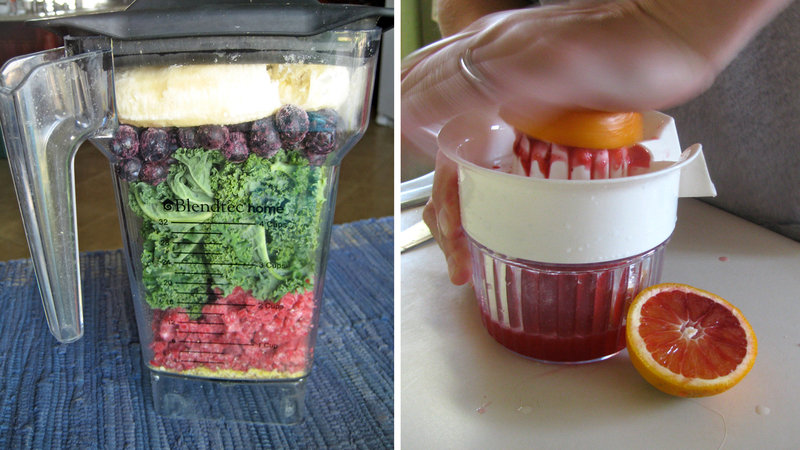
"caption": "To get the most nutritional bang for your buck, scientists say blending may beat juicing. Photo: Aimee Ray/Flickr; Liz/Flickr ",
"description": null,
"title": "juicing-blender",
"credit": null,
"status": "inherit",
"isLoading": false,
"fetchFailed": false
},
"bayareabites_92301": {
"type": "attachments",
"id": "bayareabites_92301",
"meta": {
"index": "attachments_1716263798",
"site": "bayareabites",
"id": "92301",
"found": true
},
"parent": 92300,
"imgSizes": {
"kqedFullSize": {
"file": "https://ww2.kqed.org/app/uploads/sites/24/2015/01/fake-fish-1_enl-343634ca9006377c3959be435b37e2e660488d94-e1422085910838.jpg",
"width": 1000,
"height": 667
}
},
"publishDate": 1422085775,
"modified": 1422085904,
"caption": "Chef James Corwell's nigiri sushi rolls made with Tomato Sushi, a plant-based tuna alternative, in San Francisco. Photo: Alastair Bland for NPR ",
"description": "Chef James Corwell's nigiri sushi rolls made with Tomato Sushi, a plant-based tuna alternative, in San Francisco.",
"title": "Chef James Corwell's nigiri sushi rolls made with Tomato Sushi, a plant-based tuna alternative, in San Francisco.",
"credit": null,
"status": "inherit",
"isLoading": false,
"fetchFailed": false
}
},
"audioPlayerReducer": {
"postId": "stream_live",
"isPaused": true,
"isPlaying": false,
"pfsActive": false,
"pledgeModalIsOpen": true,
"playerDrawerIsOpen": false,
"liveAudioPlayStartedAt": 0,
"liveAudioPlayContext": ""
},
"authorsReducer": {
"byline_bayareabites_93464": {
"type": "authors",
"id": "byline_bayareabites_93464",
"meta": {
"override": true
},
"slug": "byline_bayareabites_93464",
"name": "Rob Stein",
"isLoading": false
},
"byline_bayareabites_93440": {
"type": "authors",
"id": "byline_bayareabites_93440",
"meta": {
"override": true
},
"slug": "byline_bayareabites_93440",
"name": "Alan Greenblatt",
"isLoading": false
},
"byline_bayareabites_93424": {
"type": "authors",
"id": "byline_bayareabites_93424",
"meta": {
"override": true
},
"slug": "byline_bayareabites_93424",
"name": "Abby Wendle",
"isLoading": false
},
"byline_bayareabites_93245": {
"type": "authors",
"id": "byline_bayareabites_93245",
"meta": {
"override": true
},
"slug": "byline_bayareabites_93245",
"name": "Dan Charles",
"isLoading": false
},
"byline_bayareabites_93147": {
"type": "authors",
"id": "byline_bayareabites_93147",
"meta": {
"override": true
},
"slug": "byline_bayareabites_93147",
"name": "Amy Blaszyk",
"isLoading": false
},
"byline_bayareabites_92834": {
"type": "authors",
"id": "byline_bayareabites_92834",
"meta": {
"override": true
},
"slug": "byline_bayareabites_92834",
"name": "Maanvi Singh",
"isLoading": false
},
"byline_bayareabites_92778": {
"type": "authors",
"id": "byline_bayareabites_92778",
"meta": {
"override": true
},
"slug": "byline_bayareabites_92778",
"name": "Kristofor Husted",
"isLoading": false
},
"byline_bayareabites_92567": {
"type": "authors",
"id": "byline_bayareabites_92567",
"meta": {
"override": true
},
"slug": "byline_bayareabites_92567",
"name": "Allison Aubrey",
"isLoading": false
},
"byline_bayareabites_92300": {
"type": "authors",
"id": "byline_bayareabites_92300",
"meta": {
"override": true
},
"slug": "byline_bayareabites_92300",
"name": "Alastair Bland",
"isLoading": false
},
"alexandrawall": {
"type": "authors",
"id": "5567",
"meta": {
"index": "authors_1716337520",
"id": "5567",
"found": true
},
"name": "Alix Wall",
"firstName": "Alix",
"lastName": "Wall",
"slug": "alexandrawall",
"email": "alixwall@sbcglobal.net",
"display_author_email": false,
"staff_mastheads": [],
"title": null,
"bio": "Alix Wall appeared in her hometown paper in Riverside, California as “Chef of the Week” when she was 15 years old, and in high school, she founded “The Bon Appetit Club.” After working as a journalist for many years, Alix became a certified natural foods chef from Bauman College in Berkeley. While she cooks part-time healthy, organic meals for busy families, she is also a contributing editor of j. weekly, the Bay Area’s Jewish newspaper, in which she has a monthly food column. Her food writing can also be found on Berkeleyside’s NOSH and in Edible East Bay. In addition to food, she loves writing about how couples met and fell in love, which she does for The San Francisco Chronicle’s Style section and j. weekly. In 2016, she founded The Illuminoshi: The Not-So-Secret Society of Bay Area Jewish Food Professionals. She is also writer/producer for a documentary-in-progress called \u003ca href=\"https://www.lonelychildmovie.com/\">The Lonely Child\u003c/a>. Follow Alix on Twitter \u003ca href=\"https://twitter.com/WallAlix\">@WallAlix\u003c/a>.",
"avatar": "https://secure.gravatar.com/avatar/421a27f26a185be932f8d567b499b1f1?s=600&d=blank&r=g",
"twitter": null,
"facebook": null,
"instagram": null,
"linkedin": null,
"sites": [
{
"site": "bayareabites",
"roles": [
"contributor"
]
},
{
"site": "food",
"roles": [
"contributor"
]
}
],
"headData": {
"title": "Alix Wall | KQED",
"description": null,
"ogImgSrc": "https://secure.gravatar.com/avatar/421a27f26a185be932f8d567b499b1f1?s=600&d=blank&r=g",
"twImgSrc": "https://secure.gravatar.com/avatar/421a27f26a185be932f8d567b499b1f1?s=600&d=blank&r=g"
},
"isLoading": false,
"link": "/author/alexandrawall"
},
"angelajohnston": {
"type": "authors",
"id": "5568",
"meta": {
"index": "authors_1716337520",
"id": "5568",
"found": true
},
"name": "Angela Johnston",
"firstName": "Angela",
"lastName": "Johnston",
"slug": "angelajohnston",
"email": "anj618@gmail.com",
"display_author_email": false,
"staff_mastheads": [],
"title": null,
"bio": "Angela Johnston is an independent radio reporter and producer who recently moved back home to the Bay Area after spending the past six years on the east coast of Canada. She has a Master’s Degree in broadcast journalism and is currently making radio stories for KALW's daily news magazine, Crosscurrents. When she's not writing and reporting, she's surfing surf small waves on her longboard or perfecting her paella recipe.",
"avatar": "https://secure.gravatar.com/avatar/29104f87db909d4901d06df73b9db604?s=600&d=blank&r=g",
"twitter": "ang_johnston",
"facebook": null,
"instagram": null,
"linkedin": null,
"sites": [
{
"site": "bayareabites",
"roles": [
"contributor"
]
}
],
"headData": {
"title": "Angela Johnston | KQED",
"description": null,
"ogImgSrc": "https://secure.gravatar.com/avatar/29104f87db909d4901d06df73b9db604?s=600&d=blank&r=g",
"twImgSrc": "https://secure.gravatar.com/avatar/29104f87db909d4901d06df73b9db604?s=600&d=blank&r=g"
},
"isLoading": false,
"link": "/author/angelajohnston"
},
"civileat": {
"type": "authors",
"id": "5583",
"meta": {
"index": "authors_1716337520",
"id": "5583",
"found": true
},
"name": "Civil Eats",
"firstName": "Civil",
"lastName": "Eats",
"slug": "civileat",
"email": "twilight@civileats.com",
"display_author_email": false,
"staff_mastheads": [],
"title": null,
"bio": "\u003ca href=\"http://civileats.com/\">Civil Eats\u003c/a> is a daily news source for critical thought about the American food system. We publish stories that shift the conversation around sustainable agriculture in an effort to build economically and socially just communities. Follow Civil Eats on Twitter \u003ca href=\"https://twitter.com/CivilEats\">@civileats\u003c/a> and on \u003ca href=\"https://www.facebook.com/pages/Civil-Eats/56766540637\">Facebook\u003c/a>.",
"avatar": "https://secure.gravatar.com/avatar/8f6f50bfb6403afe7cbc194b66cc1d4d?s=600&d=blank&r=g",
"twitter": "CivilEats",
"facebook": "/pages/Civil-Eats/56766540637?ref=hl",
"instagram": null,
"linkedin": null,
"sites": [
{
"site": "bayareabites",
"roles": [
"contributor"
]
},
{
"site": "food",
"roles": [
"contributor"
]
}
],
"headData": {
"title": "Civil Eats | KQED",
"description": null,
"ogImgSrc": "https://secure.gravatar.com/avatar/8f6f50bfb6403afe7cbc194b66cc1d4d?s=600&d=blank&r=g",
"twImgSrc": "https://secure.gravatar.com/avatar/8f6f50bfb6403afe7cbc194b66cc1d4d?s=600&d=blank&r=g"
},
"isLoading": false,
"link": "/author/civileat"
}
},
"pagesReducer": {
"bayareabites_category_health-and-nutrition": {
"type": "terms",
"id": "bayareabites_1245",
"meta": {
"index": "terms_1716263798",
"site": "bayareabites",
"id": "1245",
"score": 14.4079685
},
"featImg": null,
"name": "health and nutrition",
"description": null,
"taxonomy": "category",
"headData": {
"twImgId": null,
"twTitle": null,
"ogTitle": null,
"ogImgId": null,
"twDescription": null,
"description": null,
"title": "health and nutrition Archives | KQED Bay Area Bites",
"ogDescription": null
},
"ttid": 1078,
"slug": "health-and-nutrition",
"isLoading": false,
"title": "health and nutrition",
"pageMeta": {
"site": "bayareabites",
"WpPageTemplate": "page-topic-editorial",
"currentPage": 27
},
"blocks": [
{
"blockName": "kqed/post-list",
"attrs": {
"layout": "cardArticle2",
"query": "posts/bayareabites?category=health-and-nutrition",
"seeMore": false,
"paginated": true,
"page": 27
}
},
{
"blockName": "kqed/ad"
}
]
}
},
"pfsSessionReducer": {},
"postsReducer": {
"stream_live": {
"type": "live",
"id": "stream_live",
"audioUrl": "https://streams.kqed.org/kqedradio",
"title": "Live Stream",
"excerpt": "Live Stream information currently unavailable.",
"link": "/radio",
"featImg": "",
"label": {
"name": "KQED Live",
"link": "/"
}
},
"stream_kqedNewscast": {
"type": "posts",
"id": "stream_kqedNewscast",
"audioUrl": "https://www.kqed.org/.stream/anon/radio/RDnews/newscast.mp3?_=1",
"title": "KQED Newscast",
"featImg": "",
"label": {
"name": "88.5 FM",
"link": "/"
}
},
"bayareabites_93464": {
"type": "posts",
"id": "bayareabites_93464",
"meta": {
"index": "posts_1716263798",
"site": "bayareabites",
"id": "93464",
"score": null,
"sort": [
1424733984000
]
},
"parent": 0,
"labelTerm": {
"site": "bayareabites"
},
"blocks": [],
"publishDate": 1424733984,
"format": "aside",
"disqusTitle": "Feeding Babies Foods With Peanuts Appears To Prevent Allergies",
"title": "Feeding Babies Foods With Peanuts Appears To Prevent Allergies",
"headTitle": "Bay Area Bites | KQED Food",
"content": "\u003cfigure id=\"attachment_93467\" class=\"wp-caption aligncenter\" style=\"max-width: 800px\">\u003ca href=\"http://ww2.kqed.org/bayareabites/wp-content/uploads/sites/24/2015/02/peanut-butter.jpg\">\u003cimg src=\"http://ww2.kqed.org/bayareabites/wp-content/uploads/sites/24/2015/02/peanut-butter.jpg\" alt=\"In a landmark new study, researchers found that babies who consumed the equivalent of about four heaping teaspoons of peanut butter each week, starting when they were between 4 and 11 months old, were about 80 percent less likely to develop a peanut allergy by their fifth birthday. Photo: Anna/Flickr\" width=\"800\" height=\"531\" class=\"size-full wp-image-93467\" srcset=\"https://ww2.kqed.org/app/uploads/sites/24/2015/02/peanut-butter.jpg 800w, https://ww2.kqed.org/app/uploads/sites/24/2015/02/peanut-butter-400x266.jpg 400w, https://ww2.kqed.org/app/uploads/sites/24/2015/02/peanut-butter-768x510.jpg 768w, https://ww2.kqed.org/app/uploads/sites/24/2015/02/peanut-butter-320x212.jpg 320w\" sizes=\"(max-width: 800px) 100vw, 800px\">\u003c/a>\u003cfigcaption class=\"wp-caption-text\">In a landmark new study, researchers found that babies who consumed the equivalent of about four heaping teaspoons of peanut butter each week, starting when they were between 4 and 11 months old, were about 80 percent less likely to develop a peanut allergy by their fifth birthday. Photo: \u003ca href=\"https://www.flickr.com/photos/clada74/2363869595\" target=\"_blank\">Anna/Flickr\u003c/a>\u003c/figcaption>\u003c/figure>\n\u003cp>\u003cstrong>Listen to the Story on All Things Considered:\u003c/strong>\u003cbr>\nhttp://pd.npr.org/anon.npr-mp3/npr/atc/2015/02/20150223_atc_feeding_babies_foods_with_peanuts_appears_to_prevent_allergies_.mp3\u003c/p>\n\u003cp>By \u003ca href=\"http://www.npr.org/people/146944972/rob-stein\" target=\"_blank\">Rob Stein\u003c/a>, \u003ca href=\"http://www.npr.org/blogs/thesalt/2015/02/23/388450621/feeding-babies-foods-with-peanuts-appears-to-prevent-allergies\" target=\"_blank\">The Salt at NPR Food\u003c/a> (2/23/15)\u003c/p>\n\u003cp>Babies at high risk for becoming allergic to peanuts are much less likely to develop the allergy if they are regularly fed foods containing the legumes starting in their first year of life.\u003c/p>\n\u003cp>That's according to a big new study released Monday involving hundreds of British babies. The researchers found that those who consumed the equivalent of about four heaping teaspoons of peanut butter each week, starting when they were between 4 and 11 months old, were about 80 percent less likely to develop a peanut allergy by their fifth birthday.\u003c/p>\n\u003cp>\"This is certainly good news,\" says \u003ca href=\"http://www.kcl.ac.uk/lsm/research/divisions/aalb/about/people/profiles/lackg.aspx\">Gideon Lack\u003c/a> of King's College London, who led the study. He presented the research at the annual meeting of the \u003ca href=\"http://www.aaaai.org/home.aspx\">American Academy of Allergy, Asthma and Immunology\u003c/a>. It was also \u003ca href=\"http://www.nejm.org/doi/full/10.1056/NEJMoa1414850\">published\u003c/a> in \u003cem>The New England Journal of Medicine\u003c/em>.\u003c/p>\n\u003cp>[ad fullwidth]\u003c/p>\n\u003cp>As many as 2 million U.S. children are estimated to be allergic to peanuts — an allergy that has been increasing rapidly in the United States, Britain and other countries in recent years. While most children who are allergic to peanuts only experience relatively mild symptoms, such as hives, some have life-threatening reactions that can include trouble breathing and heart problems.\u003c/p>\n\u003cp>\"Peanut allergy can be extremely serious,\" Lack says.\u003c/p>\n\u003cp>Lack's study was launched after he noticed that Israeli kids are much less likely to have peanut allergies than are Jewish kids in Britain and the United States.\u003c/p>\n\u003cp>\"My Israeli colleagues and friends and young parents were telling me, 'Look, we give peanuts to these children very early. Not whole peanuts, but peanut snacks,' \" Lack says.\u003c/p>\n\u003cp>Peanut snacks called Bamba, which are made of peanut butter and corn, are wildly popular in Israel, where parents give them to their kids when they're very young. That's very different from what parents do in Britain and the United States, where fears about food allergies have prompted many parents to keep their children away from peanuts, even though the American Academy of Pediatrics revised a recommendation to do so in 2008.\u003c/p>\n\u003cp>\"That raised the question whether early exposure would prevent these allergies\" by training babies' immune systems not to overreact to peanuts, Lack says. \"It's really a very fundamental change in the way we're approaching these children.\"\u003c/p>\n\u003cp>To try to find out, Lack and his colleagues got funding from the U.S. National Institutes of Health to launch a study. They found 640 babies who were at high risk for developing peanut allergies because they already had eczema or egg allergy. They asked half of the infants' parents to start feeding them Bamba, peanut butter, peanut soup or peanut in some other form before their first birthday and followed them for about five years.\u003c/p>\n\u003cp>\"What we found was a very great reduction in the rate of peanut allergy,\" Lack says. About 17 percent of the kids who avoided peanuts developed peanut allergies, compared to only 3.2 percent of the kids who ate peanuts, the researchers reported.\u003c/p>\n\u003cp>Based on the findings, Lack thinks most parents should start feeding their babies peanuts in one form or another as early as possible.\u003c/p>\n\u003cp>\"We've moved, really, 180 degrees from complete avoidance to we should give peanuts to young children actively,\" Lack says.\u003c/p>\n\u003cp>Other allergy experts hailed the results as an important advance.\u003c/p>\n\u003cp>\"This is a major study — really what we would call a landmark study,\" says \u003ca href=\"http://www.mountsinai.org/profiles/scott-h-sicherer\">Scott Sicherer\u003c/a>, who advises the \u003ca href=\"http://www.aap.org/en-us/Pages/Default.aspx\">American Academy of Pediatrics\u003c/a> on allergies. \"There's been a huge question about why there's an increase in peanut allergy and what we can do to try to stem that increase. And this is a study that directly addresses that issue.\"\u003c/p>\n\u003cp>But Sicherer says we have to be careful, since some kids are really sensitive to peanuts.\u003c/p>\n\u003cp>\"If you're a parent sitting at home with your child looking at them saying, 'Well, gee, they didn't eat peanut yet. Maybe I should run to the cupboard and get some peanut butter for them.' It could be a little bit dangerous because if you do that and the child has a bad allergic reaction, you would be at home and have a problem,\" Sicherer says.\u003c/p>\n\u003cp>So Sicherer says parents who have some reason to think their kids might be allergic to peanuts should get them tested first and then only try feeding them peanuts with a doctor in the room.\u003c/p>\n\u003cp>But other specialists say for most parents, the new findings should encourage them to start feeding their kids peanuts as early as possible.\u003c/p>\n\u003cp>\"This is a question we get asked constantly in our clinic. When parents come in, they often have young children. They want to know what should they do. This really provides us with the answer,\" says \u003ca href=\"http://www.mountsinai.org/profiles/hugh-a-sampson\">Hugh Sampson\u003c/a>, who heads the Jaffe Food Allergy Institute at Mount Sinai in New York. Sampson co-authored an \u003ca href=\"http://www.nejm.org/doi/full/10.1056/NEJMe1500186\">editorial\u003c/a> being published with the study.\u003c/p>\n\u003cp>\"So now I think we're on firm ground, and we can go forward and look the parents in the eye and say, 'This is something that will be beneficial,'\" Sampson says\u003c/p>\n\u003cp> A key question is whether kids will have to keep eating peanuts to keep any allergy at bay. Lack is following the kids in his study to find out what happened to them after they stopped eating peanuts regularly.\u003c/p>\n\u003cp>\u003c/p>\n\u003cp>\u003cem>Copyright 2015 \u003ca href=\"http://www.npr.org/\" target=\"_blank\">NPR\u003c/a>.\u003c/em> \u003c/p>\n\n",
"disqusIdentifier": "93464 http://blogs.kqed.org/bayareabites/?p=93464",
"disqusUrl": "https://ww2.kqed.org/bayareabites/2015/02/23/feeding-babies-foods-with-peanuts-appears-to-prevent-allergies/",
"stats": {
"hasVideo": false,
"hasChartOrMap": false,
"hasAudio": false,
"hasPolis": false,
"wordCount": 974,
"hasGoogleForm": false,
"hasGallery": false,
"hasHearkenModule": false,
"iframeSrcs": [],
"paragraphCount": 27
},
"modified": 1424734059,
"excerpt": "Babies who ate the equivalent of about 4 heaping teaspoons of peanut butter weekly were about 80 percent less likely to develop a peanut allergy by their fifth birthday. So finds a landmark new study.",
"headData": {
"twImgId": "",
"twTitle": "",
"ogTitle": "",
"ogImgId": "",
"twDescription": "",
"description": "Babies who ate the equivalent of about 4 heaping teaspoons of peanut butter weekly were about 80 percent less likely to develop a peanut allergy by their fifth birthday. So finds a landmark new study.",
"title": "Feeding Babies Foods With Peanuts Appears To Prevent Allergies | KQED",
"ogDescription": "",
"schema": {
"@context": "https://schema.org",
"@type": "Article",
"headline": "Feeding Babies Foods With Peanuts Appears To Prevent Allergies",
"datePublished": "2015-02-23T15:26:24-08:00",
"dateModified": "2015-02-23T15:27:39-08:00",
"image": "https://cdn.kqed.org/wp-content/uploads/2020/02/KQED-OG-Image@1x.png"
}
},
"guestAuthors": [],
"slug": "feeding-babies-foods-with-peanuts-appears-to-prevent-allergies",
"status": "publish",
"nprApiLink": "http://api.npr.org/query?id=388450621&apiKey=MDAxOTAwOTE4MDEyMTkxMDAzNjczZDljZA004",
"nprByline": "Rob Stein",
"nprStoryDate": "Mon, 23 Feb 2015 16:38:00 -0500",
"nprLastModifiedDate": "Mon, 23 Feb 2015 18:01:12 -0500",
"nprHtmlLink": "http://www.npr.org/blogs/thesalt/2015/02/23/388450621/feeding-babies-foods-with-peanuts-appears-to-prevent-allergies?ft=nprml&f=388450621",
"nprAudio": "http://pd.npr.org/anon.npr-mp3/npr/atc/2015/02/20150223_atc_feeding_babies_foods_with_peanuts_appears_to_prevent_allergies_.mp3?orgId=1&topicId=1024&e=388450621&d=268&ft=nprml&f=388450621",
"nprAudioM3u": "http://api.npr.org/m3u/1388520671-2e6c39.m3u?orgId=1&topicId=1024&e=388450621&d=268&ft=nprml&f=388450621",
"nprStoryId": "388450621",
"nprRetrievedStory": "1",
"nprPubDate": "Mon, 23 Feb 2015 18:11:00 -0500",
"path": "/bayareabites/93464/feeding-babies-foods-with-peanuts-appears-to-prevent-allergies",
"audioUrl": "http://pd.npr.org/anon.npr-mp3/npr/atc/2015/02/20150223_atc_feeding_babies_foods_with_peanuts_appears_to_prevent_allergies_.mp3",
"audioDuration": null,
"audioTrackLength": null,
"parsedContent": [
{
"type": "contentString",
"content": "\u003cdiv class=\"post-body\">\u003cp>\u003cfigure id=\"attachment_93467\" class=\"wp-caption aligncenter\" style=\"max-width: 800px\">\u003ca href=\"http://ww2.kqed.org/bayareabites/wp-content/uploads/sites/24/2015/02/peanut-butter.jpg\">\u003cimg src=\"http://ww2.kqed.org/bayareabites/wp-content/uploads/sites/24/2015/02/peanut-butter.jpg\" alt=\"In a landmark new study, researchers found that babies who consumed the equivalent of about four heaping teaspoons of peanut butter each week, starting when they were between 4 and 11 months old, were about 80 percent less likely to develop a peanut allergy by their fifth birthday. Photo: Anna/Flickr\" width=\"800\" height=\"531\" class=\"size-full wp-image-93467\" srcset=\"https://ww2.kqed.org/app/uploads/sites/24/2015/02/peanut-butter.jpg 800w, https://ww2.kqed.org/app/uploads/sites/24/2015/02/peanut-butter-400x266.jpg 400w, https://ww2.kqed.org/app/uploads/sites/24/2015/02/peanut-butter-768x510.jpg 768w, https://ww2.kqed.org/app/uploads/sites/24/2015/02/peanut-butter-320x212.jpg 320w\" sizes=\"(max-width: 800px) 100vw, 800px\">\u003c/a>\u003cfigcaption class=\"wp-caption-text\">In a landmark new study, researchers found that babies who consumed the equivalent of about four heaping teaspoons of peanut butter each week, starting when they were between 4 and 11 months old, were about 80 percent less likely to develop a peanut allergy by their fifth birthday. Photo: \u003ca href=\"https://www.flickr.com/photos/clada74/2363869595\" target=\"_blank\">Anna/Flickr\u003c/a>\u003c/figcaption>\u003c/figure>\n\u003cp>\u003cstrong>Listen to the Story on All Things Considered:\u003c/strong>\u003cbr>\nhttp://pd.npr.org/anon.npr-mp3/npr/atc/2015/02/20150223_atc_feeding_babies_foods_with_peanuts_appears_to_prevent_allergies_.mp3\u003c/p>\n\u003cp>By \u003ca href=\"http://www.npr.org/people/146944972/rob-stein\" target=\"_blank\">Rob Stein\u003c/a>, \u003ca href=\"http://www.npr.org/blogs/thesalt/2015/02/23/388450621/feeding-babies-foods-with-peanuts-appears-to-prevent-allergies\" target=\"_blank\">The Salt at NPR Food\u003c/a> (2/23/15)\u003c/p>\n\u003cp>Babies at high risk for becoming allergic to peanuts are much less likely to develop the allergy if they are regularly fed foods containing the legumes starting in their first year of life.\u003c/p>\n\u003cp>That's according to a big new study released Monday involving hundreds of British babies. The researchers found that those who consumed the equivalent of about four heaping teaspoons of peanut butter each week, starting when they were between 4 and 11 months old, were about 80 percent less likely to develop a peanut allergy by their fifth birthday.\u003c/p>\n\u003cp>\"This is certainly good news,\" says \u003ca href=\"http://www.kcl.ac.uk/lsm/research/divisions/aalb/about/people/profiles/lackg.aspx\">Gideon Lack\u003c/a> of King's College London, who led the study. He presented the research at the annual meeting of the \u003ca href=\"http://www.aaaai.org/home.aspx\">American Academy of Allergy, Asthma and Immunology\u003c/a>. It was also \u003ca href=\"http://www.nejm.org/doi/full/10.1056/NEJMoa1414850\">published\u003c/a> in \u003cem>The New England Journal of Medicine\u003c/em>.\u003c/p>\n\u003cp>\u003c/p>\u003c/div>",
"attributes": {
"named": {},
"numeric": []
}
},
{
"type": "component",
"content": "",
"name": "ad",
"attributes": {
"named": {
"label": "fullwidth"
},
"numeric": [
"fullwidth"
]
}
},
{
"type": "contentString",
"content": "\u003cdiv class=\"post-body\">\u003cp>\u003c/p>\n\u003cp>As many as 2 million U.S. children are estimated to be allergic to peanuts — an allergy that has been increasing rapidly in the United States, Britain and other countries in recent years. While most children who are allergic to peanuts only experience relatively mild symptoms, such as hives, some have life-threatening reactions that can include trouble breathing and heart problems.\u003c/p>\n\u003cp>\"Peanut allergy can be extremely serious,\" Lack says.\u003c/p>\n\u003cp>Lack's study was launched after he noticed that Israeli kids are much less likely to have peanut allergies than are Jewish kids in Britain and the United States.\u003c/p>\n\u003cp>\"My Israeli colleagues and friends and young parents were telling me, 'Look, we give peanuts to these children very early. Not whole peanuts, but peanut snacks,' \" Lack says.\u003c/p>\n\u003cp>Peanut snacks called Bamba, which are made of peanut butter and corn, are wildly popular in Israel, where parents give them to their kids when they're very young. That's very different from what parents do in Britain and the United States, where fears about food allergies have prompted many parents to keep their children away from peanuts, even though the American Academy of Pediatrics revised a recommendation to do so in 2008.\u003c/p>\n\u003cp>\"That raised the question whether early exposure would prevent these allergies\" by training babies' immune systems not to overreact to peanuts, Lack says. \"It's really a very fundamental change in the way we're approaching these children.\"\u003c/p>\n\u003cp>To try to find out, Lack and his colleagues got funding from the U.S. National Institutes of Health to launch a study. They found 640 babies who were at high risk for developing peanut allergies because they already had eczema or egg allergy. They asked half of the infants' parents to start feeding them Bamba, peanut butter, peanut soup or peanut in some other form before their first birthday and followed them for about five years.\u003c/p>\n\u003cp>\"What we found was a very great reduction in the rate of peanut allergy,\" Lack says. About 17 percent of the kids who avoided peanuts developed peanut allergies, compared to only 3.2 percent of the kids who ate peanuts, the researchers reported.\u003c/p>\n\u003cp>Based on the findings, Lack thinks most parents should start feeding their babies peanuts in one form or another as early as possible.\u003c/p>\n\u003cp>\"We've moved, really, 180 degrees from complete avoidance to we should give peanuts to young children actively,\" Lack says.\u003c/p>\n\u003cp>Other allergy experts hailed the results as an important advance.\u003c/p>\n\u003cp>\"This is a major study — really what we would call a landmark study,\" says \u003ca href=\"http://www.mountsinai.org/profiles/scott-h-sicherer\">Scott Sicherer\u003c/a>, who advises the \u003ca href=\"http://www.aap.org/en-us/Pages/Default.aspx\">American Academy of Pediatrics\u003c/a> on allergies. \"There's been a huge question about why there's an increase in peanut allergy and what we can do to try to stem that increase. And this is a study that directly addresses that issue.\"\u003c/p>\n\u003cp>But Sicherer says we have to be careful, since some kids are really sensitive to peanuts.\u003c/p>\n\u003cp>\"If you're a parent sitting at home with your child looking at them saying, 'Well, gee, they didn't eat peanut yet. Maybe I should run to the cupboard and get some peanut butter for them.' It could be a little bit dangerous because if you do that and the child has a bad allergic reaction, you would be at home and have a problem,\" Sicherer says.\u003c/p>\n\u003cp>So Sicherer says parents who have some reason to think their kids might be allergic to peanuts should get them tested first and then only try feeding them peanuts with a doctor in the room.\u003c/p>\n\u003cp>But other specialists say for most parents, the new findings should encourage them to start feeding their kids peanuts as early as possible.\u003c/p>\n\u003cp>\"This is a question we get asked constantly in our clinic. When parents come in, they often have young children. They want to know what should they do. This really provides us with the answer,\" says \u003ca href=\"http://www.mountsinai.org/profiles/hugh-a-sampson\">Hugh Sampson\u003c/a>, who heads the Jaffe Food Allergy Institute at Mount Sinai in New York. Sampson co-authored an \u003ca href=\"http://www.nejm.org/doi/full/10.1056/NEJMe1500186\">editorial\u003c/a> being published with the study.\u003c/p>\n\u003cp>\"So now I think we're on firm ground, and we can go forward and look the parents in the eye and say, 'This is something that will be beneficial,'\" Sampson says\u003c/p>\n\u003cp> A key question is whether kids will have to keep eating peanuts to keep any allergy at bay. Lack is following the kids in his study to find out what happened to them after they stopped eating peanuts regularly.\u003c/p>\n\u003cp>\u003c/p>\n\u003cp>\u003cem>Copyright 2015 \u003ca href=\"http://www.npr.org/\" target=\"_blank\">NPR\u003c/a>.\u003c/em> \u003c/p>\n\n\u003c/div>\u003c/p>",
"attributes": {
"named": {},
"numeric": []
}
}
],
"link": "/bayareabites/93464/feeding-babies-foods-with-peanuts-appears-to-prevent-allergies",
"authors": [
"byline_bayareabites_93464"
],
"categories": [
"bayareabites_1245",
"bayareabites_10916",
"bayareabites_34"
],
"tags": [
"bayareabites_10625",
"bayareabites_14169",
"bayareabites_2826",
"bayareabites_11925",
"bayareabites_10921"
],
"featImg": "bayareabites_93467",
"label": "bayareabites"
},
"bayareabites_93440": {
"type": "posts",
"id": "bayareabites_93440",
"meta": {
"index": "posts_1716263798",
"site": "bayareabites",
"id": "93440",
"score": null,
"sort": [
1424711171000
]
},
"parent": 0,
"labelTerm": {
"site": "bayareabites"
},
"blocks": [],
"publishDate": 1424711171,
"format": "aside",
"disqusTitle": "Have Big-Box Superstores Helped To Make Us Fat?",
"title": "Have Big-Box Superstores Helped To Make Us Fat?",
"headTitle": "Bay Area Bites | KQED Food",
"content": "\u003cfigure id=\"attachment_93441\" class=\"wp-caption aligncenter\" style=\"max-width: 2000px\">\u003ca href=\"http://ww2.kqed.org/bayareabites/wp-content/uploads/sites/24/2015/02/costco_enl-90d3a4bc4261c10b14c238b264083371cfc61211.jpg\">\u003cimg src=\"http://ww2.kqed.org/bayareabites/wp-content/uploads/sites/24/2015/02/costco_enl-90d3a4bc4261c10b14c238b264083371cfc61211.jpg\" alt=\"Photo: Ron Antonelli/Bloomberg via Getty Images \" width=\"2000\" height=\"1328\" class=\"size-full wp-image-93441\" srcset=\"https://ww2.kqed.org/app/uploads/sites/24/2015/02/costco_enl-90d3a4bc4261c10b14c238b264083371cfc61211.jpg 2000w, https://ww2.kqed.org/app/uploads/sites/24/2015/02/costco_enl-90d3a4bc4261c10b14c238b264083371cfc61211-400x266.jpg 400w, https://ww2.kqed.org/app/uploads/sites/24/2015/02/costco_enl-90d3a4bc4261c10b14c238b264083371cfc61211-800x531.jpg 800w, https://ww2.kqed.org/app/uploads/sites/24/2015/02/costco_enl-90d3a4bc4261c10b14c238b264083371cfc61211-1440x956.jpg 1440w, https://ww2.kqed.org/app/uploads/sites/24/2015/02/costco_enl-90d3a4bc4261c10b14c238b264083371cfc61211-1180x784.jpg 1180w, https://ww2.kqed.org/app/uploads/sites/24/2015/02/costco_enl-90d3a4bc4261c10b14c238b264083371cfc61211-768x510.jpg 768w, https://ww2.kqed.org/app/uploads/sites/24/2015/02/costco_enl-90d3a4bc4261c10b14c238b264083371cfc61211-320x212.jpg 320w\" sizes=\"(max-width: 2000px) 100vw, 2000px\">\u003c/a>\u003cfigcaption class=\"wp-caption-text\">Photo: Ron Antonelli/Bloomberg via Getty Images\u003c/figcaption>\u003c/figure>\n\u003cp>By Alan Greenblatt, \u003ca href=\"http://www.npr.org/blogs/thesalt/2015/02/20/387761011/have-big-box-superstores-helped-to-make-us-fat\" target=\"_blank\">The Salt at NPR Food\u003c/a> (2/20/15)\u003c/p>\n\u003cp>The humorist Bill Bryson once \u003ca href=\"http://www.newyorker.com/magazine/2001/04/09/the-baseball-writer\">wrote\u003c/a> that \"the purpose of the modern American suburb is to make sure that no citizen is ever more than 500 yards from a food product featuring melted cheese.\"\u003c/p>\n\u003cp>That's an exaggeration, but health officials have long worried that our environment of plentiful, cheap and easily accessible calories is contributing to obesity.\u003c/p>\n\u003cp>A group of economists argues in a new \u003ca href=\"http://www.nber.org/papers/w20892\">paper\u003c/a> published by the National Bureau of Economic Research that the prevalence of restaurants and big-box grocers and warehouse clubs contributes mightily to weight gain. \"Food's gotten cheaper and more readily available, so we eat more of it. It's really simple,\" says study coauthor \u003ca href=\"http://aysps.gsu.edu/profile/charles-courtemanche/\">Charles Courtemanche\u003c/a>, a health economist at Georgia State University. \"At least a sizable portion of the rise in obesity can be characterized as responses to economic incentives.\"\u003c/p>\n\u003cp>A major \u003ca href=\"http://www.npr.org/2015/02/20/387685044/panel-recommends-more-fruits-and-vegetables-less-meat-and-sugar\">report\u003c/a> from a group of government-appointed nutrition experts released Thursday noted that about two-thirds of American adults are overweight or obese and nearly half suffer from chronic conditions related to poor diet and exercise. Many studies have shown that additional caloric intake rather than reduced exercise is driving the trend.\u003c/p>\n\u003cp>[ad fullwidth]\u003c/p>\n\u003cp>A big part of the problem of overeating, Courtemanche and his colleagues argue, is that restaurants and big-box stores are such effective delivery devices for loads of fattening foods.\u003c/p>\n\u003cp>\"With 20 years of data, you can really identify the exact moment when a new Wal-Mart or new restaurants came in and you saw the rise in BMI,\" Courtemanche says.\u003c/p>\n\u003cp>The study, coauthored by researchers at the universities of Iowa, Virginia and Louisville, looks at the nation as a whole, rather than focusing in on specific locales (although Courtemanche says there are clear regional differences). The authors compared information they had compiled about restaurant and big-box-store locations with survey data looking at individual health, as well as state-level data examining more than two dozen economic and demographic factors.\u003c/p>\n\u003cp>What they found was that the density of restaurants and large-scale food retailers in particular areas was a major factor between 1990 and 2010\u003cstrong> \u003c/strong>in the nationwide rise of obesity and \u003ca href=\"http://www.npr.org/blogs/health/2010/12/01/131735271/how-dangerous-is-being-fat-new-data-on-the-meaning-of-body-mass-index\">BMI, or body mass index\u003c/a>, which measures weight against an individual's height. They attribute nearly half the rise in severe obesity — referring to people who are more than 50 percent above their ideal weight — to such businesses.\u003c/p>\n\u003cp>Courtemanche concedes that it would be impossible to prove to a certainty that big-box stores and restaurants cause increases in obesity, \"unless you're able to randomize which counties get a Wal-Mart and which ones don't.\" But he says even after controlling for other factors, such businesses have a measurable effect.\u003c/p>\n\u003cp>But others focused on the obesity problem are skeptical. Health officials have long debated how much our evolving environment, such as a \u003ca href=\"http://www.npr.org/blogs/thetwo-way/2012/04/16/150586667/americans-do-not-walk-the-walk-and-thats-a-growing-problem\">lack of sidewalks\u003c/a> and the \u003ca href=\"http://www.npr.org/blogs/thesalt/2014/03/14/290122911/see-more-eat-more-the-geography-of-fast-food\">prevalence of fast-food restaurants\u003c/a>, has contributed to the obesity epidemic. And there's a potential \"chicken and egg\" problem with the big-box analysis, says Ted Kyle, advocacy adviser to the \u003ca href=\"http://www.obesity.org/about-us/about-us.htm\">Obesity Society\u003c/a>, a Maryland-based group that promotes obesity research.\u003c/p>\n\u003cp>\"What they did find is an association between areas with high numbers of big-box stores and people with high rates of obesity,\" Kyle says. \"It could be that the consumers who have high rates of obesity make very good customers for big-box stores.\"\u003c/p>\n\u003cp>Kyle emphasizes that he doesn't mean retailers go looking for areas with large numbers of obese residents, but that they do naturally seek customers who will purchase large quantities of packaged goods.\u003c/p>\n\u003cp>So, do the big-box stores cause obesity, or simply serve people with a propensity to buy in big amounts?\u003c/p>\n\u003cp>\"They're not going to put big-box stores in a place where there aren't people who are going to shop there,\" says \u003ca href=\"http://www.yaleruddcenter.org/who_we_are.aspx?id=330\">Marlene Schwartz\u003c/a>, director of the Rudd Center for Food Policy and Obesity at the University of Connecticut. (The center was formerly at Yale University.)\u003c/p>\n\u003cp>Still, Schwartz notes that the study is careful to filter for other possible explanations, such as income levels and population density and age. Big-box stores and restaurants, she says, are part of the perils of abundance in the American diet.\u003c/p>\n\u003cp>Our brains respond greedily to a surfeit of food, she suggests. \"Historically, food didn't last forever,\" Schwartz says. \"You had to eat food when you had it [so] the idea of eating more when you have so much available makes sense to me.\"\u003c/p>\n\u003cp>Wal-Mart and other retailers say the study does not take into account their efforts to offer more healthful choices and reduce the number of calories consumers take home with them. They also cite their involvement with first lady Michelle Obama on her \u003ca href=\"http://www.npr.org/2011/01/20/133085573/first-lady-lauds-walmarts-healthy-food-plan\">\"Let's Move\" initiative\u003c/a> and the \u003ca href=\"http://www.healthyweightcommit.org/\">Healthy Weight Commitment Foundation\u003c/a>.\u003c/p>\n\u003cp>Still, they haven't stopped selling foodstuffs in mass quantities. Yet the problem may not be that food retailers are seemingly everywhere, selling chocolate pretzels in 3.5-gallon containers, but how people react to such goodies, suggests \u003ca href=\"http://dyson.cornell.edu/people/profiles/wansink.php\">Brian Wansink\u003c/a>, a former federal nutrition official who is a professor of consumer behavior at Cornell University.\u003c/p>\n\u003cp>When people \"stockpile\" bulk foods, they're likely to eat a lot of it in a short time, he says. Like, half of it within a few days.\u003c/p>\n\u003cp>A couple of simple steps can drastically reduce such overconsumption, Wansink says. Put that 36-bag package of chips in a cupboard that's just a little bit out of the way, such as in a pantry in the basement. Also, breaking up the packages — by dividing chips, for instance, into smaller bags — helps people to slow their eating down appreciably.\u003c/p>\n\u003cp>\"If we broke the food into smaller units, like 150 or 200 calories, it reduced how much people ate to about 10 percent more than they typically would, instead of it being a whole lot more,\" says Wansink, who recently published a book, \u003cem>Slim by Design: Mindless Eating Solutions for Everyday Life\u003c/em>. \"Repackaging that huge, money-saving item into smaller subitems and putting them into a cupboard that's out of sight are very simple steps and don't involve willpower or keeping a food diary.\"\u003c/p>\n\u003cp>The conclusion is thus the same as always with dietary information. Chips, cookies and melted cheese are all around us. It's OK to buy all you want, Wansink suggests, and enjoy. Just don't overdo it at any given time.\u003c/p>\n\u003cp>[ad floatright]\u003c/p>\n\u003cp> \u003cem>Copyright 2015\u003ca href=\"http://www.npr.org/\" target=\"_blank\"> NPR\u003c/a>.\u003c/em>\u003c/p>\n\n",
"disqusIdentifier": "93440 http://blogs.kqed.org/bayareabites/?p=93440",
"disqusUrl": "https://ww2.kqed.org/bayareabites/2015/02/23/have-big-box-superstores-helped-to-make-us-fat/",
"stats": {
"hasVideo": false,
"hasChartOrMap": false,
"hasAudio": false,
"hasPolis": false,
"wordCount": 1103,
"hasGoogleForm": false,
"hasGallery": false,
"hasHearkenModule": false,
"iframeSrcs": [],
"paragraphCount": 26
},
"modified": 1424711171,
"excerpt": "A study argues that the density of restaurants and large-scale food retailers in parts of the U.S. has been a major factor in the rise of obesity. But some see it as a \"chicken and egg\" problem.",
"headData": {
"twImgId": "",
"twTitle": "",
"ogTitle": "",
"ogImgId": "",
"twDescription": "",
"description": "A study argues that the density of restaurants and large-scale food retailers in parts of the U.S. has been a major factor in the rise of obesity. But some see it as a "chicken and egg" problem.",
"title": "Have Big-Box Superstores Helped To Make Us Fat? | KQED",
"ogDescription": "",
"schema": {
"@context": "https://schema.org",
"@type": "Article",
"headline": "Have Big-Box Superstores Helped To Make Us Fat?",
"datePublished": "2015-02-23T09:06:11-08:00",
"dateModified": "2015-02-23T09:06:11-08:00",
"image": "https://cdn.kqed.org/wp-content/uploads/2020/02/KQED-OG-Image@1x.png"
}
},
"guestAuthors": [],
"slug": "have-big-box-superstores-helped-to-make-us-fat",
"status": "publish",
"nprApiLink": "http://api.npr.org/query?id=387761011&apiKey=MDAxOTAwOTE4MDEyMTkxMDAzNjczZDljZA004",
"nprByline": "Alan Greenblatt",
"nprStoryDate": "Fri, 20 Feb 2015 15:10:00 -0500",
"nprLastModifiedDate": "Fri, 20 Feb 2015 17:27:41 -0500",
"nprHtmlLink": "http://www.npr.org/blogs/thesalt/2015/02/20/387761011/have-big-box-superstores-helped-to-make-us-fat?ft=nprml&f=387761011",
"nprStoryId": "387761011",
"nprRetrievedStory": "1",
"nprPubDate": "Fri, 20 Feb 2015 17:27:00 -0500",
"path": "/bayareabites/93440/have-big-box-superstores-helped-to-make-us-fat",
"audioTrackLength": null,
"parsedContent": [
{
"type": "contentString",
"content": "\u003cdiv class=\"post-body\">\u003cp>\u003cfigure id=\"attachment_93441\" class=\"wp-caption aligncenter\" style=\"max-width: 2000px\">\u003ca href=\"http://ww2.kqed.org/bayareabites/wp-content/uploads/sites/24/2015/02/costco_enl-90d3a4bc4261c10b14c238b264083371cfc61211.jpg\">\u003cimg src=\"http://ww2.kqed.org/bayareabites/wp-content/uploads/sites/24/2015/02/costco_enl-90d3a4bc4261c10b14c238b264083371cfc61211.jpg\" alt=\"Photo: Ron Antonelli/Bloomberg via Getty Images \" width=\"2000\" height=\"1328\" class=\"size-full wp-image-93441\" srcset=\"https://ww2.kqed.org/app/uploads/sites/24/2015/02/costco_enl-90d3a4bc4261c10b14c238b264083371cfc61211.jpg 2000w, https://ww2.kqed.org/app/uploads/sites/24/2015/02/costco_enl-90d3a4bc4261c10b14c238b264083371cfc61211-400x266.jpg 400w, https://ww2.kqed.org/app/uploads/sites/24/2015/02/costco_enl-90d3a4bc4261c10b14c238b264083371cfc61211-800x531.jpg 800w, https://ww2.kqed.org/app/uploads/sites/24/2015/02/costco_enl-90d3a4bc4261c10b14c238b264083371cfc61211-1440x956.jpg 1440w, https://ww2.kqed.org/app/uploads/sites/24/2015/02/costco_enl-90d3a4bc4261c10b14c238b264083371cfc61211-1180x784.jpg 1180w, https://ww2.kqed.org/app/uploads/sites/24/2015/02/costco_enl-90d3a4bc4261c10b14c238b264083371cfc61211-768x510.jpg 768w, https://ww2.kqed.org/app/uploads/sites/24/2015/02/costco_enl-90d3a4bc4261c10b14c238b264083371cfc61211-320x212.jpg 320w\" sizes=\"(max-width: 2000px) 100vw, 2000px\">\u003c/a>\u003cfigcaption class=\"wp-caption-text\">Photo: Ron Antonelli/Bloomberg via Getty Images\u003c/figcaption>\u003c/figure>\n\u003cp>By Alan Greenblatt, \u003ca href=\"http://www.npr.org/blogs/thesalt/2015/02/20/387761011/have-big-box-superstores-helped-to-make-us-fat\" target=\"_blank\">The Salt at NPR Food\u003c/a> (2/20/15)\u003c/p>\n\u003cp>The humorist Bill Bryson once \u003ca href=\"http://www.newyorker.com/magazine/2001/04/09/the-baseball-writer\">wrote\u003c/a> that \"the purpose of the modern American suburb is to make sure that no citizen is ever more than 500 yards from a food product featuring melted cheese.\"\u003c/p>\n\u003cp>That's an exaggeration, but health officials have long worried that our environment of plentiful, cheap and easily accessible calories is contributing to obesity.\u003c/p>\n\u003cp>A group of economists argues in a new \u003ca href=\"http://www.nber.org/papers/w20892\">paper\u003c/a> published by the National Bureau of Economic Research that the prevalence of restaurants and big-box grocers and warehouse clubs contributes mightily to weight gain. \"Food's gotten cheaper and more readily available, so we eat more of it. It's really simple,\" says study coauthor \u003ca href=\"http://aysps.gsu.edu/profile/charles-courtemanche/\">Charles Courtemanche\u003c/a>, a health economist at Georgia State University. \"At least a sizable portion of the rise in obesity can be characterized as responses to economic incentives.\"\u003c/p>\n\u003cp>A major \u003ca href=\"http://www.npr.org/2015/02/20/387685044/panel-recommends-more-fruits-and-vegetables-less-meat-and-sugar\">report\u003c/a> from a group of government-appointed nutrition experts released Thursday noted that about two-thirds of American adults are overweight or obese and nearly half suffer from chronic conditions related to poor diet and exercise. Many studies have shown that additional caloric intake rather than reduced exercise is driving the trend.\u003c/p>\n\u003cp>\u003c/p>\u003c/div>",
"attributes": {
"named": {},
"numeric": []
}
},
{
"type": "component",
"content": "",
"name": "ad",
"attributes": {
"named": {
"label": "fullwidth"
},
"numeric": [
"fullwidth"
]
}
},
{
"type": "contentString",
"content": "\u003cdiv class=\"post-body\">\u003cp>\u003c/p>\n\u003cp>A big part of the problem of overeating, Courtemanche and his colleagues argue, is that restaurants and big-box stores are such effective delivery devices for loads of fattening foods.\u003c/p>\n\u003cp>\"With 20 years of data, you can really identify the exact moment when a new Wal-Mart or new restaurants came in and you saw the rise in BMI,\" Courtemanche says.\u003c/p>\n\u003cp>The study, coauthored by researchers at the universities of Iowa, Virginia and Louisville, looks at the nation as a whole, rather than focusing in on specific locales (although Courtemanche says there are clear regional differences). The authors compared information they had compiled about restaurant and big-box-store locations with survey data looking at individual health, as well as state-level data examining more than two dozen economic and demographic factors.\u003c/p>\n\u003cp>What they found was that the density of restaurants and large-scale food retailers in particular areas was a major factor between 1990 and 2010\u003cstrong> \u003c/strong>in the nationwide rise of obesity and \u003ca href=\"http://www.npr.org/blogs/health/2010/12/01/131735271/how-dangerous-is-being-fat-new-data-on-the-meaning-of-body-mass-index\">BMI, or body mass index\u003c/a>, which measures weight against an individual's height. They attribute nearly half the rise in severe obesity — referring to people who are more than 50 percent above their ideal weight — to such businesses.\u003c/p>\n\u003cp>Courtemanche concedes that it would be impossible to prove to a certainty that big-box stores and restaurants cause increases in obesity, \"unless you're able to randomize which counties get a Wal-Mart and which ones don't.\" But he says even after controlling for other factors, such businesses have a measurable effect.\u003c/p>\n\u003cp>But others focused on the obesity problem are skeptical. Health officials have long debated how much our evolving environment, such as a \u003ca href=\"http://www.npr.org/blogs/thetwo-way/2012/04/16/150586667/americans-do-not-walk-the-walk-and-thats-a-growing-problem\">lack of sidewalks\u003c/a> and the \u003ca href=\"http://www.npr.org/blogs/thesalt/2014/03/14/290122911/see-more-eat-more-the-geography-of-fast-food\">prevalence of fast-food restaurants\u003c/a>, has contributed to the obesity epidemic. And there's a potential \"chicken and egg\" problem with the big-box analysis, says Ted Kyle, advocacy adviser to the \u003ca href=\"http://www.obesity.org/about-us/about-us.htm\">Obesity Society\u003c/a>, a Maryland-based group that promotes obesity research.\u003c/p>\n\u003cp>\"What they did find is an association between areas with high numbers of big-box stores and people with high rates of obesity,\" Kyle says. \"It could be that the consumers who have high rates of obesity make very good customers for big-box stores.\"\u003c/p>\n\u003cp>Kyle emphasizes that he doesn't mean retailers go looking for areas with large numbers of obese residents, but that they do naturally seek customers who will purchase large quantities of packaged goods.\u003c/p>\n\u003cp>So, do the big-box stores cause obesity, or simply serve people with a propensity to buy in big amounts?\u003c/p>\n\u003cp>\"They're not going to put big-box stores in a place where there aren't people who are going to shop there,\" says \u003ca href=\"http://www.yaleruddcenter.org/who_we_are.aspx?id=330\">Marlene Schwartz\u003c/a>, director of the Rudd Center for Food Policy and Obesity at the University of Connecticut. (The center was formerly at Yale University.)\u003c/p>\n\u003cp>Still, Schwartz notes that the study is careful to filter for other possible explanations, such as income levels and population density and age. Big-box stores and restaurants, she says, are part of the perils of abundance in the American diet.\u003c/p>\n\u003cp>Our brains respond greedily to a surfeit of food, she suggests. \"Historically, food didn't last forever,\" Schwartz says. \"You had to eat food when you had it [so] the idea of eating more when you have so much available makes sense to me.\"\u003c/p>\n\u003cp>Wal-Mart and other retailers say the study does not take into account their efforts to offer more healthful choices and reduce the number of calories consumers take home with them. They also cite their involvement with first lady Michelle Obama on her \u003ca href=\"http://www.npr.org/2011/01/20/133085573/first-lady-lauds-walmarts-healthy-food-plan\">\"Let's Move\" initiative\u003c/a> and the \u003ca href=\"http://www.healthyweightcommit.org/\">Healthy Weight Commitment Foundation\u003c/a>.\u003c/p>\n\u003cp>Still, they haven't stopped selling foodstuffs in mass quantities. Yet the problem may not be that food retailers are seemingly everywhere, selling chocolate pretzels in 3.5-gallon containers, but how people react to such goodies, suggests \u003ca href=\"http://dyson.cornell.edu/people/profiles/wansink.php\">Brian Wansink\u003c/a>, a former federal nutrition official who is a professor of consumer behavior at Cornell University.\u003c/p>\n\u003cp>When people \"stockpile\" bulk foods, they're likely to eat a lot of it in a short time, he says. Like, half of it within a few days.\u003c/p>\n\u003cp>A couple of simple steps can drastically reduce such overconsumption, Wansink says. Put that 36-bag package of chips in a cupboard that's just a little bit out of the way, such as in a pantry in the basement. Also, breaking up the packages — by dividing chips, for instance, into smaller bags — helps people to slow their eating down appreciably.\u003c/p>\n\u003cp>\"If we broke the food into smaller units, like 150 or 200 calories, it reduced how much people ate to about 10 percent more than they typically would, instead of it being a whole lot more,\" says Wansink, who recently published a book, \u003cem>Slim by Design: Mindless Eating Solutions for Everyday Life\u003c/em>. \"Repackaging that huge, money-saving item into smaller subitems and putting them into a cupboard that's out of sight are very simple steps and don't involve willpower or keeping a food diary.\"\u003c/p>\n\u003cp>The conclusion is thus the same as always with dietary information. Chips, cookies and melted cheese are all around us. It's OK to buy all you want, Wansink suggests, and enjoy. Just don't overdo it at any given time.\u003c/p>\n\u003cp>\u003c/p>\u003c/div>",
"attributes": {
"named": {},
"numeric": []
}
},
{
"type": "component",
"content": "",
"name": "ad",
"attributes": {
"named": {
"label": "floatright"
},
"numeric": [
"floatright"
]
}
},
{
"type": "contentString",
"content": "\u003cdiv class=\"post-body\">\u003cp>\u003c/p>\n\u003cp> \u003cem>Copyright 2015\u003ca href=\"http://www.npr.org/\" target=\"_blank\"> NPR\u003c/a>.\u003c/em>\u003c/p>\n\n\u003c/div>\u003c/p>",
"attributes": {
"named": {},
"numeric": []
}
}
],
"link": "/bayareabites/93440/have-big-box-superstores-helped-to-make-us-fat",
"authors": [
"byline_bayareabites_93440"
],
"categories": [
"bayareabites_4084",
"bayareabites_1245",
"bayareabites_10916"
],
"tags": [
"bayareabites_509",
"bayareabites_2613",
"bayareabites_10921",
"bayareabites_11141"
],
"featImg": "bayareabites_93441",
"label": "bayareabites"
},
"bayareabites_93424": {
"type": "posts",
"id": "bayareabites_93424",
"meta": {
"index": "posts_1716263798",
"site": "bayareabites",
"id": "93424",
"score": null,
"sort": [
1424472481000
]
},
"parent": 0,
"labelTerm": {
"site": "bayareabites"
},
"blocks": [],
"publishDate": 1424472481,
"format": "aside",
"disqusTitle": "Why Some States Want To Legalize Raw Milk Sales",
"title": "Why Some States Want To Legalize Raw Milk Sales",
"headTitle": "Bay Area Bites | KQED Food",
"content": "\u003cfigure id=\"attachment_93425\" class=\"wp-caption aligncenter\" style=\"max-width: 1920px\">\u003ca href=\"http://ww2.kqed.org/bayareabites/wp-content/uploads/sites/24/2015/02/raw-milk-1_enl-636f8d1ed04d096d7f5b88cb5a16b7824d821769-e1424471371747.jpg\">\u003cimg src=\"http://ww2.kqed.org/bayareabites/wp-content/uploads/sites/24/2015/02/raw-milk-1_enl-636f8d1ed04d096d7f5b88cb5a16b7824d821769-e1424471371747.jpg\" alt=\"The U.S. Centers for Disease Control and Prevention cautions that unpasteurized milk can cause serious illness, because it's a fertile breeding ground for harmful germs like salmonella and E. coli. But such warnings haven't deterred raw milk enthusiasts. Photo: Abby Wendle/Harvest Public Media\" width=\"1920\" height=\"1279\" class=\"size-full wp-image-93425\" srcset=\"https://ww2.kqed.org/app/uploads/sites/24/2015/02/raw-milk-1_enl-636f8d1ed04d096d7f5b88cb5a16b7824d821769-e1424471371747.jpg 1920w, https://ww2.kqed.org/app/uploads/sites/24/2015/02/raw-milk-1_enl-636f8d1ed04d096d7f5b88cb5a16b7824d821769-e1424471371747-400x266.jpg 400w, https://ww2.kqed.org/app/uploads/sites/24/2015/02/raw-milk-1_enl-636f8d1ed04d096d7f5b88cb5a16b7824d821769-e1424471371747-800x533.jpg 800w, https://ww2.kqed.org/app/uploads/sites/24/2015/02/raw-milk-1_enl-636f8d1ed04d096d7f5b88cb5a16b7824d821769-e1424471371747-1440x959.jpg 1440w, https://ww2.kqed.org/app/uploads/sites/24/2015/02/raw-milk-1_enl-636f8d1ed04d096d7f5b88cb5a16b7824d821769-e1424471371747-1180x786.jpg 1180w, https://ww2.kqed.org/app/uploads/sites/24/2015/02/raw-milk-1_enl-636f8d1ed04d096d7f5b88cb5a16b7824d821769-e1424471371747-768x512.jpg 768w, https://ww2.kqed.org/app/uploads/sites/24/2015/02/raw-milk-1_enl-636f8d1ed04d096d7f5b88cb5a16b7824d821769-e1424471371747-320x213.jpg 320w\" sizes=\"(max-width: 1920px) 100vw, 1920px\">\u003c/a>\u003cfigcaption class=\"wp-caption-text\">The U.S. Centers for Disease Control and Prevention cautions that unpasteurized milk can cause serious illness, because it's a fertile breeding ground for harmful germs like salmonella and E. coli. But such warnings haven't deterred raw milk enthusiasts. Photo: Abby Wendle/Harvest Public Media\u003c/figcaption>\u003c/figure>\n\u003cp>By Abby Wendle, \u003ca href=\"http://tspr.org/\" target=\"_blank\">Tri States Public Radio\u003c/a>, \u003ca href=\"http://www.npr.org/blogs/thesalt/2015/02/20/387558373/why-some-states-want-to-legalize-raw-milk-sales\" target=\"_blank\">The Salt at NPR Food\u003c/a> (2/20/15)\u003c/p>\n\u003cp>The federal government banned the sale of raw milk across state lines nearly three decades ago because it poses a threat to public health. The Centers for Disease Control and Prevention, the American Academy of Pediatrics and the American Medical Association all \u003ca href=\"http://www.cdc.gov/foodsafety/rawmilk/raw-milk-index.html\">strongly advise\u003c/a> people not to drink it.\u003c/p>\n\u003cp>But individual states still control raw milk sales within their borders. And despite the health warnings, some Midwestern states have recently proposed legalizing raw milk sales in order to impose strict regulations on the risky — and growing — market.\u003c/p>\n\u003cp>Raw milk has become popular in recent years as part of the local food movement: An estimated \u003ca href=\"http://www.cdc.gov/foodnet/surveys/foodnetexposureatlas0607_508.pdf\">3 percent of the population\u003c/a> drinks at least one glass a week. Many of its fans are fiercely passionate about what they see as its benefits. They say they buy raw milk because it doesn't contain the growth hormone rGBH, they like the taste, and they enjoy having a direct connection to the food they eat.\u003c/p>\n\u003cp>\"I like having a relationship with the people who are producing the food I put in my body,\" says Holly Stovall, a raw milk consumer and advocate from Macomb, Ill.\u003c/p>\n\u003cfigure id=\"attachment_93426\" class=\"wp-caption alignright\" style=\"max-width: 290px\">\u003ca href=\"http://ww2.kqed.org/bayareabites/wp-content/uploads/sites/24/2015/02/raw-milk-3_enl-754aea6e6352b2533c7d50264601e1c9e1f36612-e1424471955699.jpg\">\u003cimg src=\"http://ww2.kqed.org/bayareabites/wp-content/uploads/sites/24/2015/02/raw-milk-3_enl-754aea6e6352b2533c7d50264601e1c9e1f36612-290x194.jpg\" alt=\"Joel Gruver is the milkman for a group of raw milk drinkers in Macomb, Ill. Photo: Abby Wendle/Harvest Public Media\" width=\"290\" height=\"194\" class=\"size-medium wp-image-93426\">\u003c/a>\u003cfigcaption class=\"wp-caption-text\">Joel Gruver is the milkman for a group of raw milk drinkers in Macomb, Ill. Photo: Abby Wendle/Harvest Public Media\u003c/figcaption>\u003c/figure>\n\u003cp>But raw milk is particularly fertile for germs. By definition, raw milk is not pasteurized — the process of heating milk to 161 degrees Fahrenheit for 15 seconds to kill harmful bacteria like salmonella, E. coli and campylobacter. Milk contaminated with these bacteria does not look, smell or taste different from milk that's safe to drink, but it can lead to severe illness.\u003c/p>\n\u003cp>[ad fullwidth]\u003c/p>\n\u003cp>\u003ca href=\"http://www.cdc.gov/media/spokesperson/sme-bios/tauxe.pdf\">Dr. Robert Tauxe\u003c/a>, the deputy director of the foodborne, waterborne and environmental disease division at the CDC, says that children, the elderly and pregnant women are most at risk. And no one is immune.\u003c/p>\n\u003cp>\"Healthy people of any age can get very sick, or even possibly die, if they drink contaminated raw milk,\" he says.\u003c/p>\n\u003cp>But warnings from federal health regulators haven't dissuaded those determined to drink it.\u003c/p>\n\u003cp>\u003ca href=\"http://www.nasda.org/About/Staff/4436.aspx\">Bob Ehart\u003c/a>, senior policy and science adviser at the National Association of State Departments of Agriculture (NASDA), has been tracking raw milk policy in all 50 states for the past decade. He says more and more states are legalizing its sale.\u003c/p>\n\u003cp>According to NASDA's \u003ca href=\"http://www.nasda.org/file.aspx?id=3916\">most recent survey\u003c/a>, conducted in 2011, raw milk sales are legal in 30 states, with a variety of restrictions on how it can be sold. Twelve, including California, Pennsylvania and Utah, allow raw milk sales in retail stores. In Missouri, Kansas and Nebraska, customers have to go to the farm to buy it. And in Colorado, consumers enter into a legal contract with the farmer in what's called a \u003ca href=\"http://www.realmilk.com/wp-content/uploads/2000/01/CowShareTrifold.pdf\">cow-share\u003c/a> — a CSA-style operation in which consumers buy a share of a cow in exchange for raw milk.\u003cstrong>\u003c/strong>\u003c/p>\n\u003cp>The CDC has been monitoring this move towards broader legalization and recently reported a corresponding increase in the number of illnesses attributed to raw milk: \u003ca href=\"http://www.cdc.gov/foodsafety/rawmilk/nonpasteurized-outbreaks-2012.html\">up four fold\u003c/a> from years past. From 2007 to 2012, there were 81 outbreaks reported — an average of 13 per year that led to nearly 1,000 \u003ca href=\"http://www.cdc.gov/foodsafety/rawmilk/nonpasteurized-outbreaks-2012.html\">illnesses and 73 hospitalizations\u003c/a>. That's compared to just three outbreaks a year, on average, from 1993 to 2006.\u003cstrong>\u003c/strong>\u003c/p>\n\u003cp>The greatest jump was in outbreaks of severe diarrhea, often the result of drinking raw milk tainted with campylobacter-infected feces. Tauxe says that spike should serve as a reminder that no amount of regulation can make raw milk safe.\u003c/p>\n\u003cp>But NASDA's Ehart suggests some states may not be legalizing raw milk sales to condone it. Rather, he says legalization may give public health agencies the power to regulate a market that might otherwise exist underground.\u003c/p>\n\u003cp>\"Some would say that it would be worse if there's nothing on the books that allows the agency to do anything,\" Ehart says. \"This at least allows them to do something if there's an exposure level that affects public health.\"\u003c/p>\n\u003cp>The battle over raw milk regulation is raging in Illinois. Despite being illegal, raw milk sales in the state have grown. Dozens of dairies now supply nearly a half-million customers.\u003c/p>\n\u003cp>Joe Zanger's three Guernsey cows produce up to 30 gallons of raw milk a day. For the past few years, he's been selling the unpasteurized stuff by the gallon, in glass jars, to a growing number of customers living in Quincy, Ill., the city down the road from his dairy.\u003c/p>\n\u003cfigure id=\"attachment_93427\" class=\"wp-caption aligncenter\" style=\"max-width: 1920px\">\u003ca href=\"http://ww2.kqed.org/bayareabites/wp-content/uploads/sites/24/2015/02/raw-milk-2_enl-0a4f2db61565e012ed02b69be8eea265e2b5a8e1-e1424472036593.jpg\">\u003cimg src=\"http://ww2.kqed.org/bayareabites/wp-content/uploads/sites/24/2015/02/raw-milk-2_enl-0a4f2db61565e012ed02b69be8eea265e2b5a8e1-e1424472036593.jpg\" alt=\"Joe Zanger and his son, Abram, clean out the cow barn. For the past few years, Zanger has been selling raw milk by the gallon to a growing number of customers living in Quincy, Ill., the city down the road from his dairy. Photo: Abby Wendle/Harvest Public Media\" width=\"1920\" height=\"1275\" class=\"size-full wp-image-93427\" srcset=\"https://ww2.kqed.org/app/uploads/sites/24/2015/02/raw-milk-2_enl-0a4f2db61565e012ed02b69be8eea265e2b5a8e1-e1424472036593.jpg 1920w, https://ww2.kqed.org/app/uploads/sites/24/2015/02/raw-milk-2_enl-0a4f2db61565e012ed02b69be8eea265e2b5a8e1-e1424472036593-400x266.jpg 400w, https://ww2.kqed.org/app/uploads/sites/24/2015/02/raw-milk-2_enl-0a4f2db61565e012ed02b69be8eea265e2b5a8e1-e1424472036593-800x531.jpg 800w, https://ww2.kqed.org/app/uploads/sites/24/2015/02/raw-milk-2_enl-0a4f2db61565e012ed02b69be8eea265e2b5a8e1-e1424472036593-1440x956.jpg 1440w, https://ww2.kqed.org/app/uploads/sites/24/2015/02/raw-milk-2_enl-0a4f2db61565e012ed02b69be8eea265e2b5a8e1-e1424472036593-1180x784.jpg 1180w, https://ww2.kqed.org/app/uploads/sites/24/2015/02/raw-milk-2_enl-0a4f2db61565e012ed02b69be8eea265e2b5a8e1-e1424472036593-768x510.jpg 768w, https://ww2.kqed.org/app/uploads/sites/24/2015/02/raw-milk-2_enl-0a4f2db61565e012ed02b69be8eea265e2b5a8e1-e1424472036593-320x213.jpg 320w\" sizes=\"(max-width: 1920px) 100vw, 1920px\">\u003c/a>\u003cfigcaption class=\"wp-caption-text\">Joe Zanger and his son, Abram, clean out the cow barn. For the past few years, Zanger has been selling raw milk by the gallon to a growing number of customers living in Quincy, Ill., the city down the road from his dairy. Photo: Abby Wendle/Harvest Public Media\u003c/figcaption>\u003c/figure>\n\u003cp>Zanger says he earns a few hundred dollars a week from this side business — enough to pay for animal feed, vet bills and milking barn maintenance. He believes that one day, it could turn into a profitable venture.\u003c/p>\n\u003cp>\"This is something that I can maybe grow a little bit, if I pick up more customers and buy more cows and just keep recycling that money\" into the business, he says.\u003c/p>\n\u003cp>When Illinois became aware of the growing market, the health department proposed rules that would technically legalize raw milk, but \u003ca href=\"http://www.wbez.org/news/culture/illinois-regulators-put-squeeze-raw-milk-rules-110769\">impose strict regulations\u003c/a> on the industry. Similar to other states in the region, sales would be limited to the farm.\u003c/p>\n\u003cp>Farmers would also be required to place a warning label on the product, sell it within five days of milking, and keep records of whom they sell to. By keeping track of where raw milk flows, public health officials say they'll be able to more effectively respond to outbreaks, if they happen. But farmers complain it's an unnecessary headache.\u003c/p>\n\u003cp>When it comes to the milking operation, the proposed rules mandate that all farmers keep their dairy cows \"free from dirt\" and routinely have their milk tested for harmful bacteria. Farmers would also have to upgrade their infrastructure to have an easily cleanable milking barn, proper plumbing, and a separate milk house to store the product in a refrigerated, stainless-steel tank.\u003c/p>\n\u003cp>The Illinois proposal is currently on indefinite hold. Legislation to open the market in both \u003ca href=\"http://www.foodsafetynews.com/2013/03/sale-and-delivery-of-raw-milk-goes-down-the-funnel-in-iowa/#.VND4xGTF-iE\">Iowa\u003c/a> and \u003ca href=\"http://www.foodsafetynews.com/2013/03/indiana-follows/#.VND6MGTF-iE\">Indiana\u003c/a> was proposed in 2013, but stalled in committee.\u003c/p>\n\u003cp>The proposed regulations in Illinois have garnered fierce resistance from raw milk consumers and producers, who see them as an attack on small businesses and personal freedom.\u003c/p>\n\u003cp>\"The free market has taken us so far already. Why not just keep letting it go?\" asks dairyman Zanger. \"If you come out to my farm and you see something you don't like that makes you not want to buy my milk, you have every right to say, 'No, thanks.' If everything looks appropriate, why can't you buy it?\"\u003c/p>\n\u003cp>In the absence of legislation in Illinois, producers like Zanger are left wondering whether they'll have to pay for expensive upgrades in the near future — or worse, be shut down by regulators.\u003c/p>\n\u003cp>For now, Zanger continues to sell raw milk and cream to his customers. Even though it's illegal, the thirst is there, and Zanger says so is his commitment to quenching it.\u003c/p>\n\u003chr>\n\u003cp>\u003cem>\u003cem>Abby Wendle is a reporter for Tri States Public Radio. A version of this story appeared on the site of \u003ca href=\"http://www.harvestpublicmedia.org/\">Harvest Public Media\u003c/a>,\u003c/em> \u003cem>a public radio reporting collaboration that focuses on agriculture and food production.\u003c/em>\u003c/em> \u003c/p>\n\u003cp>[ad floatright]\u003c/p>\n\u003cp> \u003cem>Copyright 2015 \u003ca href=\"http://www.tristatesradio.com\" target=\"_blank\">Tri States Public Radio\u003c/a>.\u003c/em> \u003c/p>\n\n",
"disqusIdentifier": "93424 http://blogs.kqed.org/bayareabites/?p=93424",
"disqusUrl": "https://ww2.kqed.org/bayareabites/2015/02/20/why-some-states-want-to-legalize-raw-milk-sales/",
"stats": {
"hasVideo": false,
"hasChartOrMap": false,
"hasAudio": false,
"hasPolis": false,
"wordCount": 1327,
"hasGoogleForm": false,
"hasGallery": false,
"hasHearkenModule": false,
"iframeSrcs": [],
"paragraphCount": 31
},
"modified": 1424472481,
"excerpt": "Selling unpasteurized milk across state lines is illegal because it poses a threat to public health. But raw milk sales are growing nonetheless. Legalization would let states regulate a risky market.",
"headData": {
"twImgId": "",
"twTitle": "",
"ogTitle": "",
"ogImgId": "",
"twDescription": "",
"description": "Selling unpasteurized milk across state lines is illegal because it poses a threat to public health. But raw milk sales are growing nonetheless. Legalization would let states regulate a risky market.",
"title": "Why Some States Want To Legalize Raw Milk Sales | KQED",
"ogDescription": "",
"schema": {
"@context": "https://schema.org",
"@type": "Article",
"headline": "Why Some States Want To Legalize Raw Milk Sales",
"datePublished": "2015-02-20T14:48:01-08:00",
"dateModified": "2015-02-20T14:48:01-08:00",
"image": "https://cdn.kqed.org/wp-content/uploads/2020/02/KQED-OG-Image@1x.png"
}
},
"guestAuthors": [],
"slug": "why-some-states-want-to-legalize-raw-milk-sales",
"status": "publish",
"nprApiLink": "http://api.npr.org/query?id=387558373&apiKey=MDAxOTAwOTE4MDEyMTkxMDAzNjczZDljZA004",
"nprByline": "Abby Wendle",
"nprStoryDate": "Fri, 20 Feb 2015 12:21:04 -0500",
"nprLastModifiedDate": "Fri, 20 Feb 2015 12:21:04 -0500",
"nprHtmlLink": "http://www.npr.org/blogs/thesalt/2015/02/20/387558373/why-some-states-want-to-legalize-raw-milk-sales?ft=nprml&f=387558373",
"nprStoryId": "387558373",
"nprRetrievedStory": "1",
"nprPubDate": "Fri, 20 Feb 2015 12:21:00 -0500",
"path": "/bayareabites/93424/why-some-states-want-to-legalize-raw-milk-sales",
"audioTrackLength": null,
"parsedContent": [
{
"type": "contentString",
"content": "\u003cdiv class=\"post-body\">\u003cp>\u003cfigure id=\"attachment_93425\" class=\"wp-caption aligncenter\" style=\"max-width: 1920px\">\u003ca href=\"http://ww2.kqed.org/bayareabites/wp-content/uploads/sites/24/2015/02/raw-milk-1_enl-636f8d1ed04d096d7f5b88cb5a16b7824d821769-e1424471371747.jpg\">\u003cimg src=\"http://ww2.kqed.org/bayareabites/wp-content/uploads/sites/24/2015/02/raw-milk-1_enl-636f8d1ed04d096d7f5b88cb5a16b7824d821769-e1424471371747.jpg\" alt=\"The U.S. Centers for Disease Control and Prevention cautions that unpasteurized milk can cause serious illness, because it's a fertile breeding ground for harmful germs like salmonella and E. coli. But such warnings haven't deterred raw milk enthusiasts. Photo: Abby Wendle/Harvest Public Media\" width=\"1920\" height=\"1279\" class=\"size-full wp-image-93425\" srcset=\"https://ww2.kqed.org/app/uploads/sites/24/2015/02/raw-milk-1_enl-636f8d1ed04d096d7f5b88cb5a16b7824d821769-e1424471371747.jpg 1920w, https://ww2.kqed.org/app/uploads/sites/24/2015/02/raw-milk-1_enl-636f8d1ed04d096d7f5b88cb5a16b7824d821769-e1424471371747-400x266.jpg 400w, https://ww2.kqed.org/app/uploads/sites/24/2015/02/raw-milk-1_enl-636f8d1ed04d096d7f5b88cb5a16b7824d821769-e1424471371747-800x533.jpg 800w, https://ww2.kqed.org/app/uploads/sites/24/2015/02/raw-milk-1_enl-636f8d1ed04d096d7f5b88cb5a16b7824d821769-e1424471371747-1440x959.jpg 1440w, https://ww2.kqed.org/app/uploads/sites/24/2015/02/raw-milk-1_enl-636f8d1ed04d096d7f5b88cb5a16b7824d821769-e1424471371747-1180x786.jpg 1180w, https://ww2.kqed.org/app/uploads/sites/24/2015/02/raw-milk-1_enl-636f8d1ed04d096d7f5b88cb5a16b7824d821769-e1424471371747-768x512.jpg 768w, https://ww2.kqed.org/app/uploads/sites/24/2015/02/raw-milk-1_enl-636f8d1ed04d096d7f5b88cb5a16b7824d821769-e1424471371747-320x213.jpg 320w\" sizes=\"(max-width: 1920px) 100vw, 1920px\">\u003c/a>\u003cfigcaption class=\"wp-caption-text\">The U.S. Centers for Disease Control and Prevention cautions that unpasteurized milk can cause serious illness, because it's a fertile breeding ground for harmful germs like salmonella and E. coli. But such warnings haven't deterred raw milk enthusiasts. Photo: Abby Wendle/Harvest Public Media\u003c/figcaption>\u003c/figure>\n\u003cp>By Abby Wendle, \u003ca href=\"http://tspr.org/\" target=\"_blank\">Tri States Public Radio\u003c/a>, \u003ca href=\"http://www.npr.org/blogs/thesalt/2015/02/20/387558373/why-some-states-want-to-legalize-raw-milk-sales\" target=\"_blank\">The Salt at NPR Food\u003c/a> (2/20/15)\u003c/p>\n\u003cp>The federal government banned the sale of raw milk across state lines nearly three decades ago because it poses a threat to public health. The Centers for Disease Control and Prevention, the American Academy of Pediatrics and the American Medical Association all \u003ca href=\"http://www.cdc.gov/foodsafety/rawmilk/raw-milk-index.html\">strongly advise\u003c/a> people not to drink it.\u003c/p>\n\u003cp>But individual states still control raw milk sales within their borders. And despite the health warnings, some Midwestern states have recently proposed legalizing raw milk sales in order to impose strict regulations on the risky — and growing — market.\u003c/p>\n\u003cp>Raw milk has become popular in recent years as part of the local food movement: An estimated \u003ca href=\"http://www.cdc.gov/foodnet/surveys/foodnetexposureatlas0607_508.pdf\">3 percent of the population\u003c/a> drinks at least one glass a week. Many of its fans are fiercely passionate about what they see as its benefits. They say they buy raw milk because it doesn't contain the growth hormone rGBH, they like the taste, and they enjoy having a direct connection to the food they eat.\u003c/p>\n\u003cp>\"I like having a relationship with the people who are producing the food I put in my body,\" says Holly Stovall, a raw milk consumer and advocate from Macomb, Ill.\u003c/p>\n\u003cfigure id=\"attachment_93426\" class=\"wp-caption alignright\" style=\"max-width: 290px\">\u003ca href=\"http://ww2.kqed.org/bayareabites/wp-content/uploads/sites/24/2015/02/raw-milk-3_enl-754aea6e6352b2533c7d50264601e1c9e1f36612-e1424471955699.jpg\">\u003cimg src=\"http://ww2.kqed.org/bayareabites/wp-content/uploads/sites/24/2015/02/raw-milk-3_enl-754aea6e6352b2533c7d50264601e1c9e1f36612-290x194.jpg\" alt=\"Joel Gruver is the milkman for a group of raw milk drinkers in Macomb, Ill. Photo: Abby Wendle/Harvest Public Media\" width=\"290\" height=\"194\" class=\"size-medium wp-image-93426\">\u003c/a>\u003cfigcaption class=\"wp-caption-text\">Joel Gruver is the milkman for a group of raw milk drinkers in Macomb, Ill. Photo: Abby Wendle/Harvest Public Media\u003c/figcaption>\u003c/figure>\n\u003cp>But raw milk is particularly fertile for germs. By definition, raw milk is not pasteurized — the process of heating milk to 161 degrees Fahrenheit for 15 seconds to kill harmful bacteria like salmonella, E. coli and campylobacter. Milk contaminated with these bacteria does not look, smell or taste different from milk that's safe to drink, but it can lead to severe illness.\u003c/p>\n\u003cp>\u003c/p>\u003c/div>",
"attributes": {
"named": {},
"numeric": []
}
},
{
"type": "component",
"content": "",
"name": "ad",
"attributes": {
"named": {
"label": "fullwidth"
},
"numeric": [
"fullwidth"
]
}
},
{
"type": "contentString",
"content": "\u003cdiv class=\"post-body\">\u003cp>\u003c/p>\n\u003cp>\u003ca href=\"http://www.cdc.gov/media/spokesperson/sme-bios/tauxe.pdf\">Dr. Robert Tauxe\u003c/a>, the deputy director of the foodborne, waterborne and environmental disease division at the CDC, says that children, the elderly and pregnant women are most at risk. And no one is immune.\u003c/p>\n\u003cp>\"Healthy people of any age can get very sick, or even possibly die, if they drink contaminated raw milk,\" he says.\u003c/p>\n\u003cp>But warnings from federal health regulators haven't dissuaded those determined to drink it.\u003c/p>\n\u003cp>\u003ca href=\"http://www.nasda.org/About/Staff/4436.aspx\">Bob Ehart\u003c/a>, senior policy and science adviser at the National Association of State Departments of Agriculture (NASDA), has been tracking raw milk policy in all 50 states for the past decade. He says more and more states are legalizing its sale.\u003c/p>\n\u003cp>According to NASDA's \u003ca href=\"http://www.nasda.org/file.aspx?id=3916\">most recent survey\u003c/a>, conducted in 2011, raw milk sales are legal in 30 states, with a variety of restrictions on how it can be sold. Twelve, including California, Pennsylvania and Utah, allow raw milk sales in retail stores. In Missouri, Kansas and Nebraska, customers have to go to the farm to buy it. And in Colorado, consumers enter into a legal contract with the farmer in what's called a \u003ca href=\"http://www.realmilk.com/wp-content/uploads/2000/01/CowShareTrifold.pdf\">cow-share\u003c/a> — a CSA-style operation in which consumers buy a share of a cow in exchange for raw milk.\u003cstrong>\u003c/strong>\u003c/p>\n\u003cp>The CDC has been monitoring this move towards broader legalization and recently reported a corresponding increase in the number of illnesses attributed to raw milk: \u003ca href=\"http://www.cdc.gov/foodsafety/rawmilk/nonpasteurized-outbreaks-2012.html\">up four fold\u003c/a> from years past. From 2007 to 2012, there were 81 outbreaks reported — an average of 13 per year that led to nearly 1,000 \u003ca href=\"http://www.cdc.gov/foodsafety/rawmilk/nonpasteurized-outbreaks-2012.html\">illnesses and 73 hospitalizations\u003c/a>. That's compared to just three outbreaks a year, on average, from 1993 to 2006.\u003cstrong>\u003c/strong>\u003c/p>\n\u003cp>The greatest jump was in outbreaks of severe diarrhea, often the result of drinking raw milk tainted with campylobacter-infected feces. Tauxe says that spike should serve as a reminder that no amount of regulation can make raw milk safe.\u003c/p>\n\u003cp>But NASDA's Ehart suggests some states may not be legalizing raw milk sales to condone it. Rather, he says legalization may give public health agencies the power to regulate a market that might otherwise exist underground.\u003c/p>\n\u003cp>\"Some would say that it would be worse if there's nothing on the books that allows the agency to do anything,\" Ehart says. \"This at least allows them to do something if there's an exposure level that affects public health.\"\u003c/p>\n\u003cp>The battle over raw milk regulation is raging in Illinois. Despite being illegal, raw milk sales in the state have grown. Dozens of dairies now supply nearly a half-million customers.\u003c/p>\n\u003cp>Joe Zanger's three Guernsey cows produce up to 30 gallons of raw milk a day. For the past few years, he's been selling the unpasteurized stuff by the gallon, in glass jars, to a growing number of customers living in Quincy, Ill., the city down the road from his dairy.\u003c/p>\n\u003cfigure id=\"attachment_93427\" class=\"wp-caption aligncenter\" style=\"max-width: 1920px\">\u003ca href=\"http://ww2.kqed.org/bayareabites/wp-content/uploads/sites/24/2015/02/raw-milk-2_enl-0a4f2db61565e012ed02b69be8eea265e2b5a8e1-e1424472036593.jpg\">\u003cimg src=\"http://ww2.kqed.org/bayareabites/wp-content/uploads/sites/24/2015/02/raw-milk-2_enl-0a4f2db61565e012ed02b69be8eea265e2b5a8e1-e1424472036593.jpg\" alt=\"Joe Zanger and his son, Abram, clean out the cow barn. For the past few years, Zanger has been selling raw milk by the gallon to a growing number of customers living in Quincy, Ill., the city down the road from his dairy. Photo: Abby Wendle/Harvest Public Media\" width=\"1920\" height=\"1275\" class=\"size-full wp-image-93427\" srcset=\"https://ww2.kqed.org/app/uploads/sites/24/2015/02/raw-milk-2_enl-0a4f2db61565e012ed02b69be8eea265e2b5a8e1-e1424472036593.jpg 1920w, https://ww2.kqed.org/app/uploads/sites/24/2015/02/raw-milk-2_enl-0a4f2db61565e012ed02b69be8eea265e2b5a8e1-e1424472036593-400x266.jpg 400w, https://ww2.kqed.org/app/uploads/sites/24/2015/02/raw-milk-2_enl-0a4f2db61565e012ed02b69be8eea265e2b5a8e1-e1424472036593-800x531.jpg 800w, https://ww2.kqed.org/app/uploads/sites/24/2015/02/raw-milk-2_enl-0a4f2db61565e012ed02b69be8eea265e2b5a8e1-e1424472036593-1440x956.jpg 1440w, https://ww2.kqed.org/app/uploads/sites/24/2015/02/raw-milk-2_enl-0a4f2db61565e012ed02b69be8eea265e2b5a8e1-e1424472036593-1180x784.jpg 1180w, https://ww2.kqed.org/app/uploads/sites/24/2015/02/raw-milk-2_enl-0a4f2db61565e012ed02b69be8eea265e2b5a8e1-e1424472036593-768x510.jpg 768w, https://ww2.kqed.org/app/uploads/sites/24/2015/02/raw-milk-2_enl-0a4f2db61565e012ed02b69be8eea265e2b5a8e1-e1424472036593-320x213.jpg 320w\" sizes=\"(max-width: 1920px) 100vw, 1920px\">\u003c/a>\u003cfigcaption class=\"wp-caption-text\">Joe Zanger and his son, Abram, clean out the cow barn. For the past few years, Zanger has been selling raw milk by the gallon to a growing number of customers living in Quincy, Ill., the city down the road from his dairy. Photo: Abby Wendle/Harvest Public Media\u003c/figcaption>\u003c/figure>\n\u003cp>Zanger says he earns a few hundred dollars a week from this side business — enough to pay for animal feed, vet bills and milking barn maintenance. He believes that one day, it could turn into a profitable venture.\u003c/p>\n\u003cp>\"This is something that I can maybe grow a little bit, if I pick up more customers and buy more cows and just keep recycling that money\" into the business, he says.\u003c/p>\n\u003cp>When Illinois became aware of the growing market, the health department proposed rules that would technically legalize raw milk, but \u003ca href=\"http://www.wbez.org/news/culture/illinois-regulators-put-squeeze-raw-milk-rules-110769\">impose strict regulations\u003c/a> on the industry. Similar to other states in the region, sales would be limited to the farm.\u003c/p>\n\u003cp>Farmers would also be required to place a warning label on the product, sell it within five days of milking, and keep records of whom they sell to. By keeping track of where raw milk flows, public health officials say they'll be able to more effectively respond to outbreaks, if they happen. But farmers complain it's an unnecessary headache.\u003c/p>\n\u003cp>When it comes to the milking operation, the proposed rules mandate that all farmers keep their dairy cows \"free from dirt\" and routinely have their milk tested for harmful bacteria. Farmers would also have to upgrade their infrastructure to have an easily cleanable milking barn, proper plumbing, and a separate milk house to store the product in a refrigerated, stainless-steel tank.\u003c/p>\n\u003cp>The Illinois proposal is currently on indefinite hold. Legislation to open the market in both \u003ca href=\"http://www.foodsafetynews.com/2013/03/sale-and-delivery-of-raw-milk-goes-down-the-funnel-in-iowa/#.VND4xGTF-iE\">Iowa\u003c/a> and \u003ca href=\"http://www.foodsafetynews.com/2013/03/indiana-follows/#.VND6MGTF-iE\">Indiana\u003c/a> was proposed in 2013, but stalled in committee.\u003c/p>\n\u003cp>The proposed regulations in Illinois have garnered fierce resistance from raw milk consumers and producers, who see them as an attack on small businesses and personal freedom.\u003c/p>\n\u003cp>\"The free market has taken us so far already. Why not just keep letting it go?\" asks dairyman Zanger. \"If you come out to my farm and you see something you don't like that makes you not want to buy my milk, you have every right to say, 'No, thanks.' If everything looks appropriate, why can't you buy it?\"\u003c/p>\n\u003cp>In the absence of legislation in Illinois, producers like Zanger are left wondering whether they'll have to pay for expensive upgrades in the near future — or worse, be shut down by regulators.\u003c/p>\n\u003cp>For now, Zanger continues to sell raw milk and cream to his customers. Even though it's illegal, the thirst is there, and Zanger says so is his commitment to quenching it.\u003c/p>\n\u003chr>\n\u003cp>\u003cem>\u003cem>Abby Wendle is a reporter for Tri States Public Radio. A version of this story appeared on the site of \u003ca href=\"http://www.harvestpublicmedia.org/\">Harvest Public Media\u003c/a>,\u003c/em> \u003cem>a public radio reporting collaboration that focuses on agriculture and food production.\u003c/em>\u003c/em> \u003c/p>\n\u003cp>\u003c/p>\u003c/div>",
"attributes": {
"named": {},
"numeric": []
}
},
{
"type": "component",
"content": "",
"name": "ad",
"attributes": {
"named": {
"label": "floatright"
},
"numeric": [
"floatright"
]
}
},
{
"type": "contentString",
"content": "\u003cdiv class=\"post-body\">\u003cp>\u003c/p>\n\u003cp> \u003cem>Copyright 2015 \u003ca href=\"http://www.tristatesradio.com\" target=\"_blank\">Tri States Public Radio\u003c/a>.\u003c/em> \u003c/p>\n\n\u003c/div>\u003c/p>",
"attributes": {
"named": {},
"numeric": []
}
}
],
"link": "/bayareabites/93424/why-some-states-want-to-legalize-raw-milk-sales",
"authors": [
"byline_bayareabites_93424"
],
"categories": [
"bayareabites_13306",
"bayareabites_10028",
"bayareabites_4084",
"bayareabites_1245",
"bayareabites_10916",
"bayareabites_2035"
],
"tags": [
"bayareabites_11815",
"bayareabites_1621",
"bayareabites_13549",
"bayareabites_10921"
],
"featImg": "bayareabites_93425",
"label": "bayareabites"
},
"bayareabites_93245": {
"type": "posts",
"id": "bayareabites_93245",
"meta": {
"index": "posts_1716263798",
"site": "bayareabites",
"id": "93245",
"score": null,
"sort": [
1423874068000
]
},
"parent": 0,
"labelTerm": {
"site": "bayareabites"
},
"blocks": [],
"publishDate": 1423874068,
"format": "aside",
"disqusTitle": "GMO Apples Get The Nod, But Not Much Of A Welcoming Party",
"title": "GMO Apples Get The Nod, But Not Much Of A Welcoming Party",
"headTitle": "Bay Area Bites | KQED Food",
"content": "\u003cfigure id=\"attachment_93246\" class=\"wp-caption aligncenter\" style=\"max-width: 1000px\">\u003ca href=\"http://ww2.kqed.org/bayareabites/wp-content/uploads/sites/24/2015/02/arctic-apple-1_wide-aa0a0356dfd08dd18d2624b903e17d06f55f88a7-e1423873954542.jpg\">\u003cimg src=\"http://ww2.kqed.org/bayareabites/wp-content/uploads/sites/24/2015/02/arctic-apple-1_wide-aa0a0356dfd08dd18d2624b903e17d06f55f88a7-e1423873954542.jpg\" alt=\"Arctic Granny (right), a GMO variety created by Okanagan Specialty Fruits, got the gren light from federal regulators Friday. The apple doesn't turn brown like a conventional Granny Smith apple (left). Photo: Okanagan Specialty Fruits\" width=\"1000\" height=\"563\" class=\"size-full wp-image-93246\" srcset=\"https://ww2.kqed.org/app/uploads/sites/24/2015/02/arctic-apple-1_wide-aa0a0356dfd08dd18d2624b903e17d06f55f88a7-e1423873954542.jpg 1000w, https://ww2.kqed.org/app/uploads/sites/24/2015/02/arctic-apple-1_wide-aa0a0356dfd08dd18d2624b903e17d06f55f88a7-e1423873954542-400x225.jpg 400w, https://ww2.kqed.org/app/uploads/sites/24/2015/02/arctic-apple-1_wide-aa0a0356dfd08dd18d2624b903e17d06f55f88a7-e1423873954542-800x450.jpg 800w, https://ww2.kqed.org/app/uploads/sites/24/2015/02/arctic-apple-1_wide-aa0a0356dfd08dd18d2624b903e17d06f55f88a7-e1423873954542-768x432.jpg 768w, https://ww2.kqed.org/app/uploads/sites/24/2015/02/arctic-apple-1_wide-aa0a0356dfd08dd18d2624b903e17d06f55f88a7-e1423873954542-320x180.jpg 320w\" sizes=\"(max-width: 1000px) 100vw, 1000px\">\u003c/a>\u003cfigcaption class=\"wp-caption-text\">Arctic Granny (right), a GMO variety created by Okanagan Specialty Fruits, got the gren light from federal regulators Friday. The apple doesn't turn brown like a conventional Granny Smith apple (left). Photo: Okanagan Specialty Fruits\u003c/figcaption>\u003c/figure>\n\u003cp>By Dan Charles, \u003ca href=\"http://www.npr.org/blogs/thesalt/2015/02/13/386029863/gmo-apples-get-the-nod-but-not-much-of-a-welcoming-party\" target=\"_blank\">The Salt at NPR Food\u003c/a> (2/13/15)\u003c/p>\n\u003cp>\u003cstrong>Listen to the Story on All Things Considered:\u003c/strong>\u003cbr>\nhttp://pd.npr.org/anon.npr-mp3/npr/atc/2015/02/20150213_atc_here_come_the_gmo_apples.mp3\u003c/p>\n\u003cp>We have good news for all of you who find browned apple slices unappetizing. It's bad news, though, if you don't like scientists fiddling with your food. The U.S. Department of Agriculture has given a green light to apples that have been genetically modified so that they don't turn brown when you cut them open.\u003c/p>\n\u003cp>The \u003ca href=\"http://www.npr.org/blogs/thesalt/2014/01/08/260782518/this-gmo-apple-wont-brown-will-that-sour-the-fruits-image\">apples\u003c/a> in question are modified versions of Golden Delicious and Granny Smith apples. They're called Arctic Golden and Arctic Granny, and they were created by Okanagan Specialty Fruits, a small company in British Columbia, Canada.\u003c/p>\n\u003cp>The company inserted some extra genes into these apples. The genes are actually extra copies of genes that apples already possess, and as a result, the genes are \"silenced:\" They no longer produce the enzyme that's responsible for apple flesh turning brown when it's exposed to air.\u003c/p>\n\u003cp>[ad fullwidth]\u003c/p>\n\u003cp>According to \u003ca href=\"http://www.arcticapples.com/blog/osf-staff/meet-osf-founders-neal-and-louisa-carter#.UIG6Tm_A_ng\">Neal Carter\u003c/a>, the president of Okanagan Specialty Fruits, the main market for these apples will be food service companies that serve sliced apples. Currently, they prevent the apple slices from getting brown through some other method, usually a preservative similar to the lemon juice in your kitchen.\u003c/p>\n\u003cp>Regulators at the U.S. Department of Agriculture \u003ca href=\"http://www.aphis.usda.gov/stakeholders/downloads/2015/SA_arctic_apples.pdf\">said\u003c/a> Friday they'd decided that the new apples pose no additional dangers. This means that farmers are now legally free to plant and sell them.\u003c/p>\n\u003cp>Okanagan Specialty Fruits, however, is also waiting for a letter of approval from the Food and Drug Administration, which is evaluating the fruit's safety for consumers. The FDA has already approved \u003ca href=\"http://www.npr.org/blogs/thesalt/2015/01/13/376184710/gmo-potatoes-have-arrived-but-will-anyone-buy-them\">potatoes\u003c/a> that were modified in a similar manner, and most observers expect the FDA to approve these apples as well.\u003c/p>\n\u003cp>Yet other hurdles remain. Critics of genetically modified food, including Consumers Union, Food and Water Watch and Friends of the Earth, unleashed a barrage of protest Friday against the USDA's decision.\u003c/p>\n\u003cp>\"It's interesting that USDA chose to approve this GMO apple on Friday the 13\u003csup>th \u003c/sup>-- it's certainly an unlucky day for the apple growers, consumers and food companies that don't want this unnecessary new GMO,\" Lisa Archer, food and technology program director at Friends of the Earth, said in a statement.\u003c/p>\n\u003cp>The groups say the technology needs more critical scrutiny, and believe that the government's system for approving such crops relies too heavily on tests carried out by the companies themselves. The Environmental Working Group noted in a \u003ca href=\"http://www.ewg.org/release/arctic-apples-will-thaw-congressional-action-gmo-labeling\">statement\u003c/a> that the new apples may \"thaw Congressional action on GMO labeling,\" fueling efforts to pass legislation that would require food manufacturers to label foods containing GMOs.\u003c/p>\n\u003cp>Some important players in the apple business, such as the \u003ca href=\"http://www.nwhort.org/\">Northwest Horticultural Council\u003c/a>, also are opposed to the new apples. They are worried the advent of GMO apples will ruin the wholesome image of the entire apple section in supermarkets. There also are concerns that foreign markets, where the new apples are not yet approved for sale, might turn away from American apple exports.\u003c/p>\n\u003cp>Such uncertainties could convince many apple growers to shun the new apples, at least until major customers have decided whether or not to buy them. \"I think it's going to be a very minor market,\" says Christian Schlect, president of the Northwest Horticultural Council, which represents fruit producers in Oregon and Washington. \"It's hard to believe that there will be mass plantings of this.\" \u003c/p>\n\u003cp>\u003c/p>\n\u003cp> \u003cem>Copyright 2015 \u003ca href=\"http://www.npr.org/\" target=\"_blank\">NPR\u003c/a>.\u003c/em>\u003c/p>\n\n",
"disqusIdentifier": "93245 http://blogs.kqed.org/bayareabites/?p=93245",
"disqusUrl": "https://ww2.kqed.org/bayareabites/2015/02/13/gmo-apples-get-the-nod-but-not-much-of-a-welcoming-party/",
"stats": {
"hasVideo": false,
"hasChartOrMap": false,
"hasAudio": false,
"hasPolis": false,
"wordCount": 633,
"hasGoogleForm": false,
"hasGallery": false,
"hasHearkenModule": false,
"iframeSrcs": [],
"paragraphCount": 16
},
"modified": 1423874068,
"excerpt": "Government regulators have approved the first genetically modified apples, which don't turn brown when you cut them open. But planting these trees will be a gamble since consumers may not want them.",
"headData": {
"twImgId": "",
"twTitle": "",
"ogTitle": "",
"ogImgId": "",
"twDescription": "",
"description": "Government regulators have approved the first genetically modified apples, which don't turn brown when you cut them open. But planting these trees will be a gamble since consumers may not want them.",
"title": "GMO Apples Get The Nod, But Not Much Of A Welcoming Party | KQED",
"ogDescription": "",
"schema": {
"@context": "https://schema.org",
"@type": "Article",
"headline": "GMO Apples Get The Nod, But Not Much Of A Welcoming Party",
"datePublished": "2015-02-13T16:34:28-08:00",
"dateModified": "2015-02-13T16:34:28-08:00",
"image": "https://cdn.kqed.org/wp-content/uploads/2020/02/KQED-OG-Image@1x.png"
}
},
"guestAuthors": [],
"slug": "gmo-apples-get-the-nod-but-not-much-of-a-welcoming-party",
"status": "publish",
"nprApiLink": "http://api.npr.org/query?id=386029863&apiKey=MDAxOTAwOTE4MDEyMTkxMDAzNjczZDljZA004",
"nprByline": "Dan Charles",
"nprStoryDate": "Fri, 13 Feb 2015 17:38:00 -0500",
"nprLastModifiedDate": "Fri, 13 Feb 2015 17:59:57 -0500",
"nprHtmlLink": "http://www.npr.org/blogs/thesalt/2015/02/13/386029863/gmo-apples-get-the-nod-but-not-much-of-a-welcoming-party?ft=nprml&f=386029863",
"nprAudio": "http://pd.npr.org/anon.npr-mp3/npr/atc/2015/02/20150213_atc_here_come_the_gmo_apples.mp3?orgId=1&topicId=1053&e=386029863&d=191&ft=nprml&f=386029863",
"nprAudioM3u": "http://api.npr.org/m3u/1386085380-7711b4.m3u?orgId=1&topicId=1053&e=386029863&d=191&ft=nprml&f=386029863",
"nprStoryId": "386029863",
"nprRetrievedStory": "1",
"nprPubDate": "Fri, 13 Feb 2015 18:29:00 -0500",
"path": "/bayareabites/93245/gmo-apples-get-the-nod-but-not-much-of-a-welcoming-party",
"audioUrl": "http://pd.npr.org/anon.npr-mp3/npr/atc/2015/02/20150213_atc_here_come_the_gmo_apples.mp3",
"audioDuration": null,
"audioTrackLength": null,
"parsedContent": [
{
"type": "contentString",
"content": "\u003cdiv class=\"post-body\">\u003cp>\u003cfigure id=\"attachment_93246\" class=\"wp-caption aligncenter\" style=\"max-width: 1000px\">\u003ca href=\"http://ww2.kqed.org/bayareabites/wp-content/uploads/sites/24/2015/02/arctic-apple-1_wide-aa0a0356dfd08dd18d2624b903e17d06f55f88a7-e1423873954542.jpg\">\u003cimg src=\"http://ww2.kqed.org/bayareabites/wp-content/uploads/sites/24/2015/02/arctic-apple-1_wide-aa0a0356dfd08dd18d2624b903e17d06f55f88a7-e1423873954542.jpg\" alt=\"Arctic Granny (right), a GMO variety created by Okanagan Specialty Fruits, got the gren light from federal regulators Friday. The apple doesn't turn brown like a conventional Granny Smith apple (left). Photo: Okanagan Specialty Fruits\" width=\"1000\" height=\"563\" class=\"size-full wp-image-93246\" srcset=\"https://ww2.kqed.org/app/uploads/sites/24/2015/02/arctic-apple-1_wide-aa0a0356dfd08dd18d2624b903e17d06f55f88a7-e1423873954542.jpg 1000w, https://ww2.kqed.org/app/uploads/sites/24/2015/02/arctic-apple-1_wide-aa0a0356dfd08dd18d2624b903e17d06f55f88a7-e1423873954542-400x225.jpg 400w, https://ww2.kqed.org/app/uploads/sites/24/2015/02/arctic-apple-1_wide-aa0a0356dfd08dd18d2624b903e17d06f55f88a7-e1423873954542-800x450.jpg 800w, https://ww2.kqed.org/app/uploads/sites/24/2015/02/arctic-apple-1_wide-aa0a0356dfd08dd18d2624b903e17d06f55f88a7-e1423873954542-768x432.jpg 768w, https://ww2.kqed.org/app/uploads/sites/24/2015/02/arctic-apple-1_wide-aa0a0356dfd08dd18d2624b903e17d06f55f88a7-e1423873954542-320x180.jpg 320w\" sizes=\"(max-width: 1000px) 100vw, 1000px\">\u003c/a>\u003cfigcaption class=\"wp-caption-text\">Arctic Granny (right), a GMO variety created by Okanagan Specialty Fruits, got the gren light from federal regulators Friday. The apple doesn't turn brown like a conventional Granny Smith apple (left). Photo: Okanagan Specialty Fruits\u003c/figcaption>\u003c/figure>\n\u003cp>By Dan Charles, \u003ca href=\"http://www.npr.org/blogs/thesalt/2015/02/13/386029863/gmo-apples-get-the-nod-but-not-much-of-a-welcoming-party\" target=\"_blank\">The Salt at NPR Food\u003c/a> (2/13/15)\u003c/p>\n\u003cp>\u003cstrong>Listen to the Story on All Things Considered:\u003c/strong>\u003cbr>\nhttp://pd.npr.org/anon.npr-mp3/npr/atc/2015/02/20150213_atc_here_come_the_gmo_apples.mp3\u003c/p>\n\u003cp>We have good news for all of you who find browned apple slices unappetizing. It's bad news, though, if you don't like scientists fiddling with your food. The U.S. Department of Agriculture has given a green light to apples that have been genetically modified so that they don't turn brown when you cut them open.\u003c/p>\n\u003cp>The \u003ca href=\"http://www.npr.org/blogs/thesalt/2014/01/08/260782518/this-gmo-apple-wont-brown-will-that-sour-the-fruits-image\">apples\u003c/a> in question are modified versions of Golden Delicious and Granny Smith apples. They're called Arctic Golden and Arctic Granny, and they were created by Okanagan Specialty Fruits, a small company in British Columbia, Canada.\u003c/p>\n\u003cp>The company inserted some extra genes into these apples. The genes are actually extra copies of genes that apples already possess, and as a result, the genes are \"silenced:\" They no longer produce the enzyme that's responsible for apple flesh turning brown when it's exposed to air.\u003c/p>\n\u003cp>\u003c/p>\u003c/div>",
"attributes": {
"named": {},
"numeric": []
}
},
{
"type": "component",
"content": "",
"name": "ad",
"attributes": {
"named": {
"label": "fullwidth"
},
"numeric": [
"fullwidth"
]
}
},
{
"type": "contentString",
"content": "\u003cdiv class=\"post-body\">\u003cp>\u003c/p>\n\u003cp>According to \u003ca href=\"http://www.arcticapples.com/blog/osf-staff/meet-osf-founders-neal-and-louisa-carter#.UIG6Tm_A_ng\">Neal Carter\u003c/a>, the president of Okanagan Specialty Fruits, the main market for these apples will be food service companies that serve sliced apples. Currently, they prevent the apple slices from getting brown through some other method, usually a preservative similar to the lemon juice in your kitchen.\u003c/p>\n\u003cp>Regulators at the U.S. Department of Agriculture \u003ca href=\"http://www.aphis.usda.gov/stakeholders/downloads/2015/SA_arctic_apples.pdf\">said\u003c/a> Friday they'd decided that the new apples pose no additional dangers. This means that farmers are now legally free to plant and sell them.\u003c/p>\n\u003cp>Okanagan Specialty Fruits, however, is also waiting for a letter of approval from the Food and Drug Administration, which is evaluating the fruit's safety for consumers. The FDA has already approved \u003ca href=\"http://www.npr.org/blogs/thesalt/2015/01/13/376184710/gmo-potatoes-have-arrived-but-will-anyone-buy-them\">potatoes\u003c/a> that were modified in a similar manner, and most observers expect the FDA to approve these apples as well.\u003c/p>\n\u003cp>Yet other hurdles remain. Critics of genetically modified food, including Consumers Union, Food and Water Watch and Friends of the Earth, unleashed a barrage of protest Friday against the USDA's decision.\u003c/p>\n\u003cp>\"It's interesting that USDA chose to approve this GMO apple on Friday the 13\u003csup>th \u003c/sup>-- it's certainly an unlucky day for the apple growers, consumers and food companies that don't want this unnecessary new GMO,\" Lisa Archer, food and technology program director at Friends of the Earth, said in a statement.\u003c/p>\n\u003cp>The groups say the technology needs more critical scrutiny, and believe that the government's system for approving such crops relies too heavily on tests carried out by the companies themselves. The Environmental Working Group noted in a \u003ca href=\"http://www.ewg.org/release/arctic-apples-will-thaw-congressional-action-gmo-labeling\">statement\u003c/a> that the new apples may \"thaw Congressional action on GMO labeling,\" fueling efforts to pass legislation that would require food manufacturers to label foods containing GMOs.\u003c/p>\n\u003cp>Some important players in the apple business, such as the \u003ca href=\"http://www.nwhort.org/\">Northwest Horticultural Council\u003c/a>, also are opposed to the new apples. They are worried the advent of GMO apples will ruin the wholesome image of the entire apple section in supermarkets. There also are concerns that foreign markets, where the new apples are not yet approved for sale, might turn away from American apple exports.\u003c/p>\n\u003cp>Such uncertainties could convince many apple growers to shun the new apples, at least until major customers have decided whether or not to buy them. \"I think it's going to be a very minor market,\" says Christian Schlect, president of the Northwest Horticultural Council, which represents fruit producers in Oregon and Washington. \"It's hard to believe that there will be mass plantings of this.\" \u003c/p>\n\u003cp>\u003c/p>\n\u003cp> \u003cem>Copyright 2015 \u003ca href=\"http://www.npr.org/\" target=\"_blank\">NPR\u003c/a>.\u003c/em>\u003c/p>\n\n\u003c/div>\u003c/p>",
"attributes": {
"named": {},
"numeric": []
}
}
],
"link": "/bayareabites/93245/gmo-apples-get-the-nod-but-not-much-of-a-welcoming-party",
"authors": [
"byline_bayareabites_93245"
],
"categories": [
"bayareabites_1874",
"bayareabites_4084",
"bayareabites_1245",
"bayareabites_10916",
"bayareabites_2035",
"bayareabites_34"
],
"tags": [
"bayareabites_469",
"bayareabites_11270",
"bayareabites_10771",
"bayareabites_10787",
"bayareabites_10921",
"bayareabites_8913"
],
"featImg": "bayareabites_93246",
"label": "bayareabites"
},
"bayareabites_93147": {
"type": "posts",
"id": "bayareabites_93147",
"meta": {
"index": "posts_1716263798",
"site": "bayareabites",
"id": "93147",
"score": null,
"sort": [
1423685701000
]
},
"parent": 0,
"labelTerm": {
"site": "bayareabites"
},
"blocks": [],
"publishDate": 1423685701,
"format": "aside",
"disqusTitle": "Taking Stock Of Bone Broth: Sorry, No Cure-All Here",
"title": "Taking Stock Of Bone Broth: Sorry, No Cure-All Here",
"headTitle": "Bay Area Bites | KQED Food",
"content": "\u003cfigure id=\"attachment_93148\" class=\"wp-caption aligncenter\" style=\"max-width: 1000px\">\u003ca href=\"http://ww2.kqed.org/bayareabites/wp-content/uploads/sites/24/2015/02/bone-soup-1_enl-ca01b26a8d00ac4e75fc38978e52102a0e63ed94-e1423685438544.jpg\">\u003cimg src=\"http://ww2.kqed.org/bayareabites/wp-content/uploads/sites/24/2015/02/bone-soup-1_enl-ca01b26a8d00ac4e75fc38978e52102a0e63ed94-e1423685438544.jpg\" alt=\"Poultry bone broth is typically simmered for 24 hours or more. It can be consumed as a hot beverage, or incorporated into gravies, sauces or soups. Photo: Amy Blaszyk for NPR\" width=\"1000\" height=\"750\" class=\"size-full wp-image-93148\" srcset=\"https://ww2.kqed.org/app/uploads/sites/24/2015/02/bone-soup-1_enl-ca01b26a8d00ac4e75fc38978e52102a0e63ed94-e1423685438544.jpg 1000w, https://ww2.kqed.org/app/uploads/sites/24/2015/02/bone-soup-1_enl-ca01b26a8d00ac4e75fc38978e52102a0e63ed94-e1423685438544-400x300.jpg 400w, https://ww2.kqed.org/app/uploads/sites/24/2015/02/bone-soup-1_enl-ca01b26a8d00ac4e75fc38978e52102a0e63ed94-e1423685438544-800x600.jpg 800w, https://ww2.kqed.org/app/uploads/sites/24/2015/02/bone-soup-1_enl-ca01b26a8d00ac4e75fc38978e52102a0e63ed94-e1423685438544-768x576.jpg 768w, https://ww2.kqed.org/app/uploads/sites/24/2015/02/bone-soup-1_enl-ca01b26a8d00ac4e75fc38978e52102a0e63ed94-e1423685438544-320x240.jpg 320w\" sizes=\"(max-width: 1000px) 100vw, 1000px\">\u003c/a>\u003cfigcaption class=\"wp-caption-text\">Poultry bone broth is typically simmered for 24 hours or more. It can be consumed as a hot beverage, or incorporated into gravies, sauces or soups. Photo: \u003ca href=\"http://www.wetheeaters.com/\" target=\"_blank\">Amy Blaszyk\u003c/a> for NPR\u003c/figcaption>\u003c/figure>\n\u003cp>by Amy Blaszyk, \u003ca href=\"http://www.npr.org/blogs/thesalt/2015/02/10/384948585/taking-stock-of-bone-broth-sorry-no-cure-all-here\" target=\"_blank\">The Salt at NPR Food\u003c/a> (2/10/15)\u003c/p>\n\u003cp>How did bone broth become the magic elixir \u003cem>du jour?\u003c/em>\u003c/p>\n\u003cp>We're not sure, but in the last three months, breathless stories about its umami depth and super nutrition have ricocheted through food media. Meanwhile, restaurants like New York's Brodo, Portland's JoLa Café and Red Apron in Washington, D.C., have begun selling it, to much \u003ca href=\"http://news.instyle.com/2015/01/24/talking-broth-with-chef-marco-canora-of-nycs-brodo\">fanfare\u003c/a>.\u003c/p>\n\u003cp>To be clear, there's nothing all that new about bone broth (sometimes called stock). Around the world, chefs and home cooks have been using the feet, knuckles, tendons and bones of all sizes from poultry, beef, pig and fish to make rich, nourishing broths practically forever. There's \u003ca href=\"http://www.koreanbapsang.com/2013/02/seolleongtang-beef-bone-soup.html\">seolleongtang\u003c/a> in Korea, \u003cem>sopa de lima\u003c/em> in the Yucatán and \"Jewish penicillin\" (chicken soup with matzo balls), to name a few.\u003c/p>\n\u003cp>\"Broth has always been considered a healing food, especially if you consider the tradition of eating chicken soup when you're sick with a cold,\" says Jennifer McGruther, author of \u003cem>The Nourished Kitchen.\u003c/em>\u003c/p>\n\u003cp>[ad fullwidth]\u003c/p>\n\u003cp>But lately, the list of bone broth's rumored healing and restorative properties seems to be getting longer and longer.\u003c/p>\n\u003cp>In their book \u003cem>Nourishing Broth\u003c/em>, authors Sally Fallon Morell and Kaayla T. Daniel assert that bone broth can help with a variety of ailments — from improving joint function and helping wounds heal faster, to modulating the immune system and rebuilding bones with collagen.\u003c/p>\n\u003cp>The problem is that there are precious few scientific studies of the specific healthful properties of bone broth. What's more, there is no one bone broth recipe. It can be made with different animal bones (some with fatty marrow, some without), with different added flavors (like onions and herbs) and with different cooking methods (five hours of simmering versus 24 hours or more). All of those variables impact the nutritional properties and will give you a different broth.\u003c/p>\n\u003cp>Still, Daniel and Fallon Morell suggest that by boiling down animal and fish bones, skin, cartilage, tendons and ligaments, we create gelatin-rich liquid that provides the amino acids necessary to make collagen, or \"the glue that holds the body together.\" And, they add, \"We need collagen to build the structure for a bone.\"\u003c/p>\n\u003cp>Scientists agree that bone broth's so-called ability to heal and restore collagen is probably overblown.\u003c/p>\n\u003cp>\u003ca href=\"http://www.usd.edu/medical-school/biomedical-sciences/william-percy.cfm\">William Percy\u003c/a>, an associate professor at the University of South Dakota's Sanford School of Medicine, isn't convinced that the collagen in the bones and joints that go into bone broth will do much for your skeletal system.\u003c/p>\n\u003cfigure id=\"attachment_93149\" class=\"wp-caption aligncenter\" style=\"max-width: 1000px\">\u003ca href=\"http://ww2.kqed.org/bayareabites/wp-content/uploads/sites/24/2015/02/bone-broth-1_enl-d6ff3c91c328aaa147b9ed8d842e5a6e8fdeaa1c-e1423685625441.jpg\">\u003cimg src=\"http://ww2.kqed.org/bayareabites/wp-content/uploads/sites/24/2015/02/bone-broth-1_enl-d6ff3c91c328aaa147b9ed8d842e5a6e8fdeaa1c-e1423685625441.jpg\" alt=\"A pot of bone broth with aromatic vegetables about to be boiled. Poultry bone broth like this typically contains chicken feet and wings, which are rich in collagen and help to give the finished product its gelatinous consistency. Photo: Amy Blaszyk for NPR\" width=\"1000\" height=\"750\" class=\"size-full wp-image-93149\" srcset=\"https://ww2.kqed.org/app/uploads/sites/24/2015/02/bone-broth-1_enl-d6ff3c91c328aaa147b9ed8d842e5a6e8fdeaa1c-e1423685625441.jpg 1000w, https://ww2.kqed.org/app/uploads/sites/24/2015/02/bone-broth-1_enl-d6ff3c91c328aaa147b9ed8d842e5a6e8fdeaa1c-e1423685625441-400x300.jpg 400w, https://ww2.kqed.org/app/uploads/sites/24/2015/02/bone-broth-1_enl-d6ff3c91c328aaa147b9ed8d842e5a6e8fdeaa1c-e1423685625441-800x600.jpg 800w, https://ww2.kqed.org/app/uploads/sites/24/2015/02/bone-broth-1_enl-d6ff3c91c328aaa147b9ed8d842e5a6e8fdeaa1c-e1423685625441-768x576.jpg 768w, https://ww2.kqed.org/app/uploads/sites/24/2015/02/bone-broth-1_enl-d6ff3c91c328aaa147b9ed8d842e5a6e8fdeaa1c-e1423685625441-320x240.jpg 320w\" sizes=\"(max-width: 1000px) 100vw, 1000px\">\u003c/a>\u003cfigcaption class=\"wp-caption-text\">A pot of bone broth with aromatic vegetables about to be boiled. Poultry bone broth like this typically contains chicken feet and wings, which are rich in collagen and help to give the finished product its gelatinous consistency. Photo: \u003ca href=\"http://www.wetheeaters.com/\" target=\"_blank\">Amy Blaszyk\u003c/a> for NPR\u003c/figcaption>\u003c/figure>\n\u003cp>\"Since we don't absorb collagen whole, the idea that eating collagen somehow promotes bone growth is just wishful thinking,\" Percy says. Instead, he says, the digestive system will break down the collagen into amino acids, and the body will use these building blocks wherever they're needed.\u003c/p>\n\u003cp>\u003ca href=\"http://people2014.chicagoreader.com/kantha-shelke/\">Kantha Shelke\u003c/a> has a different take. She's a food scientist and spokesperson for the Institute of Food Technologists, and a principal with the food science and research firm, Corvus Blue LLC.\u003c/p>\n\u003cp>She says that if you want to build collagen, you'll need more than bone broth.\u003c/p>\n\u003cp>\"Eating a diet rich in leafy green vegetables is ideal,\" she says. \"Plants offer richer sources in collagen building blocks and, in addition, provide nutrients not found in sufficient quantities in meats or broth.\"\u003c/p>\n\u003cp>What's more, bone broth may provide vitamins and enzymes, but they get denatured from heat as the broth cooks, rendering them less useful to the body, according to Shelke.\u003c/p>\n\u003cp>But there are two health claims about bone broth that do seem to have a little more science behind them. This first is that bone broth may bolster the immune system — at least if it's made from chicken bones.\u003c/p>\n\u003cp>According to a \u003ca href=\"http://journal.publications.chestnet.org/article.aspx?articleid=1079188\">study\u003c/a> published in 2000 in the medical journal \u003cem>Chest\u003c/em>, \"chicken soup may contain a number of substances with beneficial medicinal activity.\" The researchers observed that people eating chicken soup seemed to experience a mild reduction in inflammation that helped reduce symptoms of an upper respiratory tract infection.\u003c/p>\n\u003cp>The second is bone broth's use as a sports recovery drink, which \u003ca href=\"http://www.washingtonpost.com/news/morning-mix/wp/2015/01/22/how-bone-broth-became-kobe-bryants-secret-stone-age-weapon/\">Kobe Bryant and members of the Los Angeles Lakers\u003c/a> have been hyping lately.\u003c/p>\n\u003cp>\u003ca href=\"http://www.expertnutrition.net/\">Rebecca Mohning\u003c/a>, a registered dietician and certified sports dietician, works with endurance athletes though her Washington, D.C.-based practice, Expert Nutrition.\u003c/p>\n\u003cp>Mohning says bone broth or soups made with it could help replace electrolytes after intense exercise and aid in post-workout recovery.\u003c/p>\n\u003cp>\"It's a nice way to rehydrate the body, because of the liquid, and then replenish the sodium — that electrolyte — that was lost through sweat during exercise,\" she said. The amino acids may also provide the body with the building blocks it needs to rebuild muscle.\u003c/p>\n\u003cp>But, she adds, \"There's a little too much focus on one aspect of a person's diet. There's not that one magic food or that one magic ingredient that is going to do everything.\"\u003c/p>\n\u003cp>Percy concurs.\u003c/p>\n\u003cp>\"Bone broth as part of a well-balanced and nutritionally sound diet is probably harmless, but it is not some type of 'miracle food source' with the ability to cure a multitude of aches, pains and diseases all by itself,\" he says.\u003c/p>\n\u003cp>Both McGruther and Sally Fallon Morell say bone broth may help lead people to being more thoughtful about what they put in their bodies.\u003c/p>\n\u003cp>\"I think the real benefit of bone broth is that people are returning to the kitchen, to prepare homemade, whole foods from scratch,\" McGruther says. \"There's always benefits to cooking foods from home, and that's exactly what we're seeing with bone broth.\"\u003c/p>\n\u003cp>\u003cem>Amy Blaszyk is a journalist and social media guru based in Washington, D.C. She spends days writing, editing and planning foodie events through her blog, \u003ca href=\"http://www.wetheeaters.com/\">We The Eaters\u003c/a>, and nights playing Scrabble in a quaint carriage house with her husband and Pomeranian, Sake.\u003c/em>\u003c/p>\n\u003cp>[ad floatright]\u003c/p>\n\u003cp>\u003cem>Copyright 2015 \u003ca href=\"http://www.npr.org/\" target=\"_blank\">NPR\u003c/a>.\u003c/em> \u003c/p>\n\n",
"disqusIdentifier": "93147 http://blogs.kqed.org/bayareabites/?p=93147",
"disqusUrl": "https://ww2.kqed.org/bayareabites/2015/02/11/taking-stock-of-bone-broth-sorry-no-cure-all-here/",
"stats": {
"hasVideo": false,
"hasChartOrMap": false,
"hasAudio": false,
"hasPolis": false,
"wordCount": 1072,
"hasGoogleForm": false,
"hasGallery": false,
"hasHearkenModule": false,
"iframeSrcs": [],
"paragraphCount": 31
},
"modified": 1423685701,
"excerpt": "There's an outbreak of bone broth fever in the U.S., with proponents raving about its nourishing and healing properties. But there isn't much in the way of science to back up some of the claims.",
"headData": {
"twImgId": "",
"twTitle": "",
"ogTitle": "",
"ogImgId": "",
"twDescription": "",
"description": "There's an outbreak of bone broth fever in the U.S., with proponents raving about its nourishing and healing properties. But there isn't much in the way of science to back up some of the claims.",
"title": "Taking Stock Of Bone Broth: Sorry, No Cure-All Here | KQED",
"ogDescription": "",
"schema": {
"@context": "https://schema.org",
"@type": "Article",
"headline": "Taking Stock Of Bone Broth: Sorry, No Cure-All Here",
"datePublished": "2015-02-11T12:15:01-08:00",
"dateModified": "2015-02-11T12:15:01-08:00",
"image": "https://cdn.kqed.org/wp-content/uploads/2020/02/KQED-OG-Image@1x.png"
}
},
"guestAuthors": [],
"slug": "taking-stock-of-bone-broth-sorry-no-cure-all-here",
"status": "publish",
"nprApiLink": "http://api.npr.org/query?id=384948585&apiKey=MDAxOTAwOTE4MDEyMTkxMDAzNjczZDljZA004",
"nprByline": "Amy Blaszyk",
"nprStoryDate": "Tue, 10 Feb 2015 15:05:00 -0500",
"nprLastModifiedDate": "Tue, 10 Feb 2015 16:04:56 -0500",
"nprHtmlLink": "http://www.npr.org/blogs/thesalt/2015/02/10/384948585/taking-stock-of-bone-broth-sorry-no-cure-all-here?ft=nprml&f=384948585",
"nprStoryId": "384948585",
"nprRetrievedStory": "1",
"nprPubDate": "Tue, 10 Feb 2015 16:04:00 -0500",
"path": "/bayareabites/93147/taking-stock-of-bone-broth-sorry-no-cure-all-here",
"audioTrackLength": null,
"parsedContent": [
{
"type": "contentString",
"content": "\u003cdiv class=\"post-body\">\u003cp>\u003cfigure id=\"attachment_93148\" class=\"wp-caption aligncenter\" style=\"max-width: 1000px\">\u003ca href=\"http://ww2.kqed.org/bayareabites/wp-content/uploads/sites/24/2015/02/bone-soup-1_enl-ca01b26a8d00ac4e75fc38978e52102a0e63ed94-e1423685438544.jpg\">\u003cimg src=\"http://ww2.kqed.org/bayareabites/wp-content/uploads/sites/24/2015/02/bone-soup-1_enl-ca01b26a8d00ac4e75fc38978e52102a0e63ed94-e1423685438544.jpg\" alt=\"Poultry bone broth is typically simmered for 24 hours or more. It can be consumed as a hot beverage, or incorporated into gravies, sauces or soups. Photo: Amy Blaszyk for NPR\" width=\"1000\" height=\"750\" class=\"size-full wp-image-93148\" srcset=\"https://ww2.kqed.org/app/uploads/sites/24/2015/02/bone-soup-1_enl-ca01b26a8d00ac4e75fc38978e52102a0e63ed94-e1423685438544.jpg 1000w, https://ww2.kqed.org/app/uploads/sites/24/2015/02/bone-soup-1_enl-ca01b26a8d00ac4e75fc38978e52102a0e63ed94-e1423685438544-400x300.jpg 400w, https://ww2.kqed.org/app/uploads/sites/24/2015/02/bone-soup-1_enl-ca01b26a8d00ac4e75fc38978e52102a0e63ed94-e1423685438544-800x600.jpg 800w, https://ww2.kqed.org/app/uploads/sites/24/2015/02/bone-soup-1_enl-ca01b26a8d00ac4e75fc38978e52102a0e63ed94-e1423685438544-768x576.jpg 768w, https://ww2.kqed.org/app/uploads/sites/24/2015/02/bone-soup-1_enl-ca01b26a8d00ac4e75fc38978e52102a0e63ed94-e1423685438544-320x240.jpg 320w\" sizes=\"(max-width: 1000px) 100vw, 1000px\">\u003c/a>\u003cfigcaption class=\"wp-caption-text\">Poultry bone broth is typically simmered for 24 hours or more. It can be consumed as a hot beverage, or incorporated into gravies, sauces or soups. Photo: \u003ca href=\"http://www.wetheeaters.com/\" target=\"_blank\">Amy Blaszyk\u003c/a> for NPR\u003c/figcaption>\u003c/figure>\n\u003cp>by Amy Blaszyk, \u003ca href=\"http://www.npr.org/blogs/thesalt/2015/02/10/384948585/taking-stock-of-bone-broth-sorry-no-cure-all-here\" target=\"_blank\">The Salt at NPR Food\u003c/a> (2/10/15)\u003c/p>\n\u003cp>How did bone broth become the magic elixir \u003cem>du jour?\u003c/em>\u003c/p>\n\u003cp>We're not sure, but in the last three months, breathless stories about its umami depth and super nutrition have ricocheted through food media. Meanwhile, restaurants like New York's Brodo, Portland's JoLa Café and Red Apron in Washington, D.C., have begun selling it, to much \u003ca href=\"http://news.instyle.com/2015/01/24/talking-broth-with-chef-marco-canora-of-nycs-brodo\">fanfare\u003c/a>.\u003c/p>\n\u003cp>To be clear, there's nothing all that new about bone broth (sometimes called stock). Around the world, chefs and home cooks have been using the feet, knuckles, tendons and bones of all sizes from poultry, beef, pig and fish to make rich, nourishing broths practically forever. There's \u003ca href=\"http://www.koreanbapsang.com/2013/02/seolleongtang-beef-bone-soup.html\">seolleongtang\u003c/a> in Korea, \u003cem>sopa de lima\u003c/em> in the Yucatán and \"Jewish penicillin\" (chicken soup with matzo balls), to name a few.\u003c/p>\n\u003cp>\"Broth has always been considered a healing food, especially if you consider the tradition of eating chicken soup when you're sick with a cold,\" says Jennifer McGruther, author of \u003cem>The Nourished Kitchen.\u003c/em>\u003c/p>\n\u003cp>\u003c/p>\u003c/div>",
"attributes": {
"named": {},
"numeric": []
}
},
{
"type": "component",
"content": "",
"name": "ad",
"attributes": {
"named": {
"label": "fullwidth"
},
"numeric": [
"fullwidth"
]
}
},
{
"type": "contentString",
"content": "\u003cdiv class=\"post-body\">\u003cp>\u003c/p>\n\u003cp>But lately, the list of bone broth's rumored healing and restorative properties seems to be getting longer and longer.\u003c/p>\n\u003cp>In their book \u003cem>Nourishing Broth\u003c/em>, authors Sally Fallon Morell and Kaayla T. Daniel assert that bone broth can help with a variety of ailments — from improving joint function and helping wounds heal faster, to modulating the immune system and rebuilding bones with collagen.\u003c/p>\n\u003cp>The problem is that there are precious few scientific studies of the specific healthful properties of bone broth. What's more, there is no one bone broth recipe. It can be made with different animal bones (some with fatty marrow, some without), with different added flavors (like onions and herbs) and with different cooking methods (five hours of simmering versus 24 hours or more). All of those variables impact the nutritional properties and will give you a different broth.\u003c/p>\n\u003cp>Still, Daniel and Fallon Morell suggest that by boiling down animal and fish bones, skin, cartilage, tendons and ligaments, we create gelatin-rich liquid that provides the amino acids necessary to make collagen, or \"the glue that holds the body together.\" And, they add, \"We need collagen to build the structure for a bone.\"\u003c/p>\n\u003cp>Scientists agree that bone broth's so-called ability to heal and restore collagen is probably overblown.\u003c/p>\n\u003cp>\u003ca href=\"http://www.usd.edu/medical-school/biomedical-sciences/william-percy.cfm\">William Percy\u003c/a>, an associate professor at the University of South Dakota's Sanford School of Medicine, isn't convinced that the collagen in the bones and joints that go into bone broth will do much for your skeletal system.\u003c/p>\n\u003cfigure id=\"attachment_93149\" class=\"wp-caption aligncenter\" style=\"max-width: 1000px\">\u003ca href=\"http://ww2.kqed.org/bayareabites/wp-content/uploads/sites/24/2015/02/bone-broth-1_enl-d6ff3c91c328aaa147b9ed8d842e5a6e8fdeaa1c-e1423685625441.jpg\">\u003cimg src=\"http://ww2.kqed.org/bayareabites/wp-content/uploads/sites/24/2015/02/bone-broth-1_enl-d6ff3c91c328aaa147b9ed8d842e5a6e8fdeaa1c-e1423685625441.jpg\" alt=\"A pot of bone broth with aromatic vegetables about to be boiled. Poultry bone broth like this typically contains chicken feet and wings, which are rich in collagen and help to give the finished product its gelatinous consistency. Photo: Amy Blaszyk for NPR\" width=\"1000\" height=\"750\" class=\"size-full wp-image-93149\" srcset=\"https://ww2.kqed.org/app/uploads/sites/24/2015/02/bone-broth-1_enl-d6ff3c91c328aaa147b9ed8d842e5a6e8fdeaa1c-e1423685625441.jpg 1000w, https://ww2.kqed.org/app/uploads/sites/24/2015/02/bone-broth-1_enl-d6ff3c91c328aaa147b9ed8d842e5a6e8fdeaa1c-e1423685625441-400x300.jpg 400w, https://ww2.kqed.org/app/uploads/sites/24/2015/02/bone-broth-1_enl-d6ff3c91c328aaa147b9ed8d842e5a6e8fdeaa1c-e1423685625441-800x600.jpg 800w, https://ww2.kqed.org/app/uploads/sites/24/2015/02/bone-broth-1_enl-d6ff3c91c328aaa147b9ed8d842e5a6e8fdeaa1c-e1423685625441-768x576.jpg 768w, https://ww2.kqed.org/app/uploads/sites/24/2015/02/bone-broth-1_enl-d6ff3c91c328aaa147b9ed8d842e5a6e8fdeaa1c-e1423685625441-320x240.jpg 320w\" sizes=\"(max-width: 1000px) 100vw, 1000px\">\u003c/a>\u003cfigcaption class=\"wp-caption-text\">A pot of bone broth with aromatic vegetables about to be boiled. Poultry bone broth like this typically contains chicken feet and wings, which are rich in collagen and help to give the finished product its gelatinous consistency. Photo: \u003ca href=\"http://www.wetheeaters.com/\" target=\"_blank\">Amy Blaszyk\u003c/a> for NPR\u003c/figcaption>\u003c/figure>\n\u003cp>\"Since we don't absorb collagen whole, the idea that eating collagen somehow promotes bone growth is just wishful thinking,\" Percy says. Instead, he says, the digestive system will break down the collagen into amino acids, and the body will use these building blocks wherever they're needed.\u003c/p>\n\u003cp>\u003ca href=\"http://people2014.chicagoreader.com/kantha-shelke/\">Kantha Shelke\u003c/a> has a different take. She's a food scientist and spokesperson for the Institute of Food Technologists, and a principal with the food science and research firm, Corvus Blue LLC.\u003c/p>\n\u003cp>She says that if you want to build collagen, you'll need more than bone broth.\u003c/p>\n\u003cp>\"Eating a diet rich in leafy green vegetables is ideal,\" she says. \"Plants offer richer sources in collagen building blocks and, in addition, provide nutrients not found in sufficient quantities in meats or broth.\"\u003c/p>\n\u003cp>What's more, bone broth may provide vitamins and enzymes, but they get denatured from heat as the broth cooks, rendering them less useful to the body, according to Shelke.\u003c/p>\n\u003cp>But there are two health claims about bone broth that do seem to have a little more science behind them. This first is that bone broth may bolster the immune system — at least if it's made from chicken bones.\u003c/p>\n\u003cp>According to a \u003ca href=\"http://journal.publications.chestnet.org/article.aspx?articleid=1079188\">study\u003c/a> published in 2000 in the medical journal \u003cem>Chest\u003c/em>, \"chicken soup may contain a number of substances with beneficial medicinal activity.\" The researchers observed that people eating chicken soup seemed to experience a mild reduction in inflammation that helped reduce symptoms of an upper respiratory tract infection.\u003c/p>\n\u003cp>The second is bone broth's use as a sports recovery drink, which \u003ca href=\"http://www.washingtonpost.com/news/morning-mix/wp/2015/01/22/how-bone-broth-became-kobe-bryants-secret-stone-age-weapon/\">Kobe Bryant and members of the Los Angeles Lakers\u003c/a> have been hyping lately.\u003c/p>\n\u003cp>\u003ca href=\"http://www.expertnutrition.net/\">Rebecca Mohning\u003c/a>, a registered dietician and certified sports dietician, works with endurance athletes though her Washington, D.C.-based practice, Expert Nutrition.\u003c/p>\n\u003cp>Mohning says bone broth or soups made with it could help replace electrolytes after intense exercise and aid in post-workout recovery.\u003c/p>\n\u003cp>\"It's a nice way to rehydrate the body, because of the liquid, and then replenish the sodium — that electrolyte — that was lost through sweat during exercise,\" she said. The amino acids may also provide the body with the building blocks it needs to rebuild muscle.\u003c/p>\n\u003cp>But, she adds, \"There's a little too much focus on one aspect of a person's diet. There's not that one magic food or that one magic ingredient that is going to do everything.\"\u003c/p>\n\u003cp>Percy concurs.\u003c/p>\n\u003cp>\"Bone broth as part of a well-balanced and nutritionally sound diet is probably harmless, but it is not some type of 'miracle food source' with the ability to cure a multitude of aches, pains and diseases all by itself,\" he says.\u003c/p>\n\u003cp>Both McGruther and Sally Fallon Morell say bone broth may help lead people to being more thoughtful about what they put in their bodies.\u003c/p>\n\u003cp>\"I think the real benefit of bone broth is that people are returning to the kitchen, to prepare homemade, whole foods from scratch,\" McGruther says. \"There's always benefits to cooking foods from home, and that's exactly what we're seeing with bone broth.\"\u003c/p>\n\u003cp>\u003cem>Amy Blaszyk is a journalist and social media guru based in Washington, D.C. She spends days writing, editing and planning foodie events through her blog, \u003ca href=\"http://www.wetheeaters.com/\">We The Eaters\u003c/a>, and nights playing Scrabble in a quaint carriage house with her husband and Pomeranian, Sake.\u003c/em>\u003c/p>\n\u003cp>\u003c/p>\u003c/div>",
"attributes": {
"named": {},
"numeric": []
}
},
{
"type": "component",
"content": "",
"name": "ad",
"attributes": {
"named": {
"label": "floatright"
},
"numeric": [
"floatright"
]
}
},
{
"type": "contentString",
"content": "\u003cdiv class=\"post-body\">\u003cp>\u003c/p>\n\u003cp>\u003cem>Copyright 2015 \u003ca href=\"http://www.npr.org/\" target=\"_blank\">NPR\u003c/a>.\u003c/em> \u003c/p>\n\n\u003c/div>\u003c/p>",
"attributes": {
"named": {},
"numeric": []
}
}
],
"link": "/bayareabites/93147/taking-stock-of-bone-broth-sorry-no-cure-all-here",
"authors": [
"byline_bayareabites_93147"
],
"categories": [
"bayareabites_1245",
"bayareabites_10916"
],
"tags": [
"bayareabites_14140",
"bayareabites_439",
"bayareabites_10921"
],
"featImg": "bayareabites_93148",
"label": "bayareabites"
},
"bayareabites_92960": {
"type": "posts",
"id": "bayareabites_92960",
"meta": {
"index": "posts_1716263798",
"site": "bayareabites",
"id": "92960",
"score": null,
"sort": [
1423536292000
]
},
"parent": 0,
"labelTerm": {
"site": "bayareabites"
},
"blocks": [],
"publishDate": 1423536292,
"format": "aside",
"disqusTitle": "'This is Your Brain on Food': Cancer-Fighting Cookbook Author Investigates Foods That Help Brain Function",
"title": "'This is Your Brain on Food': Cancer-Fighting Cookbook Author Investigates Foods That Help Brain Function",
"headTitle": "Bay Area Bites | KQED Food",
"content": "\u003cp>\u003ca href=\"http://ww2.kqed.org/bayareabites/wp-content/uploads/sites/24/2015/02/The-Healthy-Mind-Cookbook-CVR1000.jpg\">\u003cimg src=\"http://ww2.kqed.org/bayareabites/wp-content/uploads/sites/24/2015/02/The-Healthy-Mind-Cookbook-CVR1000.jpg\" alt=\"The Healthy Mind Cookbook. by Rebecca Katz\" width=\"400\" class=\"aligncenter size-full wp-image-93040\" srcset=\"https://ww2.kqed.org/app/uploads/sites/24/2015/02/The-Healthy-Mind-Cookbook-CVR1000.jpg 1000w, https://ww2.kqed.org/app/uploads/sites/24/2015/02/The-Healthy-Mind-Cookbook-CVR1000-400x538.jpg 400w, https://ww2.kqed.org/app/uploads/sites/24/2015/02/The-Healthy-Mind-Cookbook-CVR1000-800x1076.jpg 800w, https://ww2.kqed.org/app/uploads/sites/24/2015/02/The-Healthy-Mind-Cookbook-CVR1000-768x1033.jpg 768w, https://ww2.kqed.org/app/uploads/sites/24/2015/02/The-Healthy-Mind-Cookbook-CVR1000-320x430.jpg 320w\" sizes=\"(max-width: 1000px) 100vw, 1000px\">\u003c/a>\u003c/p>\n\u003cp>At first glance, a lentil is just a lentil, right? Looking somewhat like a pebble, a lentil is a cheap source of protein, sure. But how about viewing the legume as a teeny microprocessor for the brain?\u003c/p>\n\u003cp>That’s how \u003ca href=\"http://rebeccakatz.com/\" target=\"_blank\">Rebecca Katz\u003c/a>, author of the newly published \u003ca href=\"http://www.amazon.com/The-Healthy-Mind-Cookbook-Big-Flavor/dp/1607742977\" target=\"_blank\">\u003cem>The Healthy Mind Cookbook\u003c/em>\u003c/a> with co-author Mat Edelson (Ten Speed Press) sees the lowly legume. After talking to Katz, it’s impossible to look at foods like lentils in the same light.\u003c/p>\n\u003cblockquote>\u003cp>“Lentils are teeny little nano-bots that get no respect, yet they are so important for focus and memory and learning,” Katz told Bay Area Bites. “They’re full of B vitamins like folate and B9, which keep our mind sharp and B6, which gives us focus and energy. They’re also a great source of iron and zinc, which is great for memory boosting, and from a culinary perspective, they’re the easiest of legumes to prepare, since you don’t have to soak them. You just rinse and shake them in strainer like maracas.”\u003c/p>\u003c/blockquote>\n\u003cp>Such enthusiasm about the healing properties of food is a given for Katz, author of two cookbooks for cancer patients, \u003ca href=\"http://www.amazon.com/One-Bite-Time-Nourishing-Survivors/dp/1587612194/ref=la_B001JRZ5QC_1_4?s=books&ie=UTF8&qid=1423295060&sr=1-4\" target=\"_blank\">\u003cem>One Bite at a Time\u003c/em>\u003c/a> and \u003ca href=\"http://www.amazon.com/Cancer-Fighting-Kitchen-Nourishing-Big-Flavor-Treatment/dp/1587613441/ref=la_B001JRZ5QC_1_1?s=books&ie=UTF8&qid=1423295015&sr=1-1\" target=\"_blank\">\u003cem>The Cancer Fighting Kitchen\u003c/em>\u003c/a>, as well as her last one, \u003ca href=\"http://www.amazon.com/Longevity-Kitchen-Satisfying-Big-Flavor-Age-Busting/dp/1607742942/ref=la_B001JRZ5QC_1_3?s=books&ie=UTF8&qid=1423295116&sr=1-3\" target=\"_blank\">\u003cem>The Longevity Kitchen\u003c/em>\u003c/a>.\u003c/p>\n\u003cfigure id=\"attachment_93037\" class=\"wp-caption aligncenter\" style=\"max-width: 300px\">\u003ca href=\"http://ww2.kqed.org/bayareabites/wp-content/uploads/sites/24/2015/02/AUTHOR-PHOTO-Rebecca-Katz.jpg\">\u003cimg src=\"http://ww2.kqed.org/bayareabites/wp-content/uploads/sites/24/2015/02/AUTHOR-PHOTO-Rebecca-Katz.jpg\" alt=\"Author Rebecca Katz\" width=\"300\" class=\"size-full wp-image-93037\" srcset=\"https://ww2.kqed.org/app/uploads/sites/24/2015/02/AUTHOR-PHOTO-Rebecca-Katz.jpg 720w, https://ww2.kqed.org/app/uploads/sites/24/2015/02/AUTHOR-PHOTO-Rebecca-Katz-400x602.jpg 400w, https://ww2.kqed.org/app/uploads/sites/24/2015/02/AUTHOR-PHOTO-Rebecca-Katz-320x482.jpg 320w\" sizes=\"(max-width: 720px) 100vw, 720px\">\u003c/a>\u003cfigcaption class=\"wp-caption-text\">Author Rebecca Katz\u003c/figcaption>\u003c/figure>\n\u003cp>Katz, who lives in San Rafael, is founding director of the \u003ca href=\"http://www.commonweal.org/program/healing-kitchens-institute/\" target=\"_blank\">Healing Kitchens Institute\u003c/a> at Commonweal in Bolinas, and executive chef of the annual Food as Medicine training program sponsored by \u003ca href=\"http://cmbm.org/\" target=\"_blank\">The Center for Mind-Body Medicine\u003c/a> at Georgetown Medical School. \u003c/p>\n\u003cp>[ad fullwidth]\u003c/p>\n\u003cp>Already a graduate of New York’s \u003ca href=\"http://www.naturalgourmetinstitute.com/\" target=\"_blank\">Natural Gourmet Institute\u003c/a>, her interest in the healing properties of food began when she was cooking for her father when he was undergoing cancer treatment. She realized there was no guidance as to how to cook for people whose taste buds might be compromised, or might otherwise not feel like eating.\u003c/p>\n\u003cp>While she touched on science about the brain in her last book, she discovered the research in this field is so new, that there was much more to explore, especially in light of the fact that her father died recently of dementia.\u003c/p>\n\u003cp>“It was hard for me, knowing what I know about the world of epigenetics, and that genetics are not necessarily our destiny,” said Katz. “But what am I going to do, knowing what I know, to possibly prevent the same thing from happening to me? Of course, there are no guarantees, but I felt that I couldn’t ignore it.”\u003c/p>\n\u003cp>But in addition to that, there was another reason the brain interested her. “We’re living in a crazy world, where on a day-to-day basis, our brain is being tapped to the max,” she said. “Our brains are being asked to do a lot more than ever before.”\u003c/p>\n\u003cp>While \u003cem>The Healthy Mind Cookbook\u003c/em> is chock-full of healthy yet delicious sounding, mostly gluten-free recipes made from whole foods just as we’ve come to expect from Katz, the introduction offers a lot of the scientific information about how certain foods affect the brain.\u003c/p>\n\u003cp>Some of it may already sound familiar, especially to those of us who take fish oil to ensure we get our Omega-3 fatty acids.\u003c/p>\n\u003cblockquote>\u003cp>“For decades, scientists believed that the adult brain was incapable of adding new brain cells or neurons,” she said. “But now they’ve learned not only that new cells can be produced, but where they’re being produced. The hippocampus is connected with learning, and one thing we can do to supercharge that process is consume Omega-3s.”\u003c/p>\u003c/blockquote>\n\u003cp>Eating a diet high in Omega-3s is like doing “yoga for the brain,” said Katz.\u003c/p>\n\u003cp>Besides taking supplements to get those fatty acids, Katz recommends nuts and seeds, broccoli and citrus. \u003c/p>\n\u003cp>And as if we needed another reason to eat dark leafy greens, Katz had one at the ready: \u003ca href=\"http://en.wikipedia.org/wiki/Methylation\" target=\"_blank\">\u003cstrong>methylation\u003c/strong>\u003c/a>.\u003c/p>\n\u003cblockquote>\u003cp>“When you have a deficiency in B vitamins, that can break down the methylation pathway, which means you don’t have the proper tools to express or repair DNA, which can manifest in a whole host of mental issues like depression, pediatric cognitive dysfunction, dementia or stroke,” she said.\u003c/p>\u003c/blockquote>\n\u003cp>So if they’re not your favorite vegetable, picture them as Katz does: like “little vacuum cleaners, going in and getting rid of the debris.”\u003c/p>\n\u003cp>And you may want to try eating them in her \u003cstrong>Triple Greens Frittata\u003c/strong> \u003cem>(see recipe below)\u003c/em>, which I tried and found to be an excellent way to get probably more than one serving of greens.\u003c/p>\n\u003cp>Katz also talks about the mind-gut connection, going as far as to call the intestines a “second brain.” By that, she says that if one is stressed out while eating, it can cause digestive problems, which then affects the brain.\u003c/p>\n\u003cp>To prevent that? “Before you eat, take a moment and a few deep breaths,” she said, “It’s as simple as that. Also, everyone should be mindful before they eat, to be able to engage in proper digestion which leads to proper absorption of the vitamins and minerals, meaning they will then get to the brain.”\u003c/p>\n\u003cp>As she did in \u003ca href=\"http://www.amazon.com/gp/product/1607742942/ref=pd_lpo_sbs_dp_ss_1?pf_rd_p=1944687502&pf_rd_s=lpo-top-stripe-1&pf_rd_t=201&pf_rd_i=1607742977&pf_rd_m=ATVPDKIKX0DER&pf_rd_r=1K6T3P06ATP2MWTYY8FE\" target=\"_blank\">\u003cem>The Longevity Kitchen\u003c/em>\u003c/a>, Katz includes a chapter called “The Culinary Pharmacy,” which lists in easily readable form, all of her favorite ingredients and how they boost brain activity. A few of her favorites:\u003c/p>\n\u003cul>\n\u003cli>\u003cstrong>Lentils:\u003c/strong> She’s still pushing the lentils, especially as they appear in her \u003cstrong>Cozy Lentil Soup\u003c/strong> \u003cem>(see recipe below)\u003c/em>, a lentil, kale and squash soup with warming spices (that I already tried and found delicious).\n\u003c/li>\n\u003cli>\n\u003cstrong>Mint and Parsley:\u003c/strong> “It’s like eating oxygen, they’re loaded with this really powerful flavonoid called \u003ca href=\"http://en.wikipedia.org/wiki/Luteolin\" target=\"_blank\">luteolin\u003c/a>, which is linked with improvements in memory and learning skills,” she said. “Plus when you smell mint and parsley, it has this smell, almost like the blinds going up. They boost your alertness.” She says to not think of them only as garnishes.\u003c/li>\n\u003cli>\n\u003cstrong>Pumpkin Seeds:\u003c/strong> Calling them “mini anti-depressants,” Katz says they are loaded with zinc, especially good since there’s a lot of zinc deficiency in a Western diet. “They not only increase memory but they keep depression at bay. They’re a good source of iron and also have what I call the trifecta: zinc, potassium and magnesium, so if you’re having a bad day and your boss is screaming at you, and your kids are screaming at you, or you fall in a mud puddle, you want pumpkin seeds in your pocket, in your desk drawer, or in your purse, because they really are calming.” Katz recommends toasting them, and adding them to salads for extra crunch.\u003c/li>\n\u003cli>\u003cstrong>Avocados:\u003c/strong> A good fat, avocados are high in \u003ca href=\"http://en.wikipedia.org/wiki/Glutathione\" target=\"_blank\">glutathione\u003c/a>, which help improve brain performance, prevent cognitive decline and ward off depression. “They’re one of the healthiest fats out there,” says Katz. “And because they have that fabulous texture, it’s another food that you don’t have to be a culinary genius to know what to do with. Slice it in half, put lemon or lime juice on it and a sprinkling of salt.” Katz also loves it for its versatility; it can go in salads, on sandwiches, be blended for a salad dressing, or turned into a spread. “It’s also a satiating food because it’s a fat,” she says.\u003c/li>\n\u003cli>\u003cstrong>The Cruciferous Family:\u003c/strong> cauliflower, broccoli, Brussels sprouts, cabbage. Katz says, “They are all “fabulous brain foods because they aid in methylation.”\u003c/li>\n\u003cli>\u003cstrong>Cinnamon:\u003c/strong> Not only does this spice help with blood sugar regularization, but it helps with focus and memory. “Cinnamon delivers so much anti-inflammatory benefits and you don’t need a lot, so it’s worth incorporating at least 1/2 teaspoon a day,” she says. Try sprinkling it into your coffee, or on your porridge.\u003c/li>\n\u003cli>\u003cstrong>Chocolate:\u003c/strong> And perhaps to the relief of many, chocolate is on the list, too. “It’s a mood enhancer,” said Katz. “I recommend seventy percent cacao and above, the darker the better, as it’s higher in antioxidants. Let’s face it, you need something sweet in your life and chocolate is definitely on my list.” While Katz often mixes chocolate with fruit for the book’s desserts, she recommends that everyone keep some around, because “everyone needs their mood to be enhanced sometimes.”\u003c/li>\n\u003c/ul>\n\u003cp>\u003cstrong>Event:\u003c/strong>\u003cbr>\nRebecca Katz will be speaking about \u003cem>The Healthy Mind Cookbook\u003c/em> at \u003ca href=\"http://www.omnivorebooks.com/events.html\" target=\"_blank\">Omnivore Books\u003c/a> in S.F. Wed, February 11 at 6:30-7:30pm.\u003c/p>\n\u003ch3>Recipes\u003c/h3>\n\u003cp>\u003cem>Recipes reprinted with permission from The Healthy Mind Cookbook by Rebecca Katz, copyright (c) 2015. Published by Ten Speed Press, a division of Penguin Random House, Inc. Photography (c) 2015 by Maren Caruso.\u003c/em>\u003c/p>\n\u003cfigure id=\"attachment_93038\" class=\"wp-caption aligncenter\" style=\"max-width: 400px\">\u003ca href=\"http://ww2.kqed.org/bayareabites/wp-content/uploads/sites/24/2015/02/Cozy-Lentil-Soup1000.jpg\">\u003cimg src=\"http://ww2.kqed.org/bayareabites/wp-content/uploads/sites/24/2015/02/Cozy-Lentil-Soup1000.jpg\" alt=\"Cozy Lentil Soup with Delicata Squash. Photo: Maren Caruso\" width=\"400\" class=\"size-full wp-image-93038\" srcset=\"https://ww2.kqed.org/app/uploads/sites/24/2015/02/Cozy-Lentil-Soup1000.jpg 1000w, https://ww2.kqed.org/app/uploads/sites/24/2015/02/Cozy-Lentil-Soup1000-400x534.jpg 400w, https://ww2.kqed.org/app/uploads/sites/24/2015/02/Cozy-Lentil-Soup1000-800x1068.jpg 800w, https://ww2.kqed.org/app/uploads/sites/24/2015/02/Cozy-Lentil-Soup1000-768x1025.jpg 768w, https://ww2.kqed.org/app/uploads/sites/24/2015/02/Cozy-Lentil-Soup1000-320x427.jpg 320w\" sizes=\"(max-width: 1000px) 100vw, 1000px\">\u003c/a>\u003cfigcaption class=\"wp-caption-text\">Cozy Lentil Soup with Delicata Squash. Photo: Maren Caruso\u003c/figcaption>\u003c/figure>\n\u003ch3>Cozy Lentil Soup with Delicata Squash\u003c/h3>\n\u003cp>\u003cem>MAKES 6 SERVINGS • PREP TIME: 20 minutes • COOK TIME: 35 minutes\u003c/em>\u003c/p>\n\u003cp>Silicon Valley has promised us that, someday, little nanobots will act like tiny microprocessors in our brains, helping to make us smarter. I say, Why wait? We already have a teensy food that does that. It’s the lentil, the vegetable kingdom’s version of a Lilliputian flying saucer. Lentils, ounce for ounce, pack an amazing amount of brain boosters, such as iron (essential to the function of myelin, which is involved in quick information gathering). From a culinary viewpoint, it’s a myth that you have to soak lentils overnight; just a quick rinse will do. With a host of spices, cubed delicata squash, and thinly sliced kale, this is my go-to soup when I’m working hard and need to process a lot of information.\u003c/p>\n\u003cul>\n\u003cstrong>Ingredients:\u003c/strong>\n\u003cli>2 tablespoons extra-virgin olive oil\u003c/li>\n\u003cli>1 yellow onion, diced small\u003c/li>\n\u003cli>Sea salt\u003c/li>\n\u003cli>2 carrots, peeled and diced small\u003c/li>\n\u003cli>2 celery stalks, diced small\u003c/li>\n\u003cli>1 medium delicata squash, peeled, seeded, and cut into 1/2-inch cubes\u003c/li>\n\u003cli>1 teaspoon curry powder\u003c/li>\n\u003cli>1/2 teaspoon ground cumin\u003c/li>\n\u003cli>1/2 teaspoon ground turmeric\u003c/li>\n\u003cli>1/4 teaspoon ground coriander\u003c/li>\n\u003cli>1/4 teaspoon ground cinnamon\u003c/li>\n\u003cli>Pinch of red pepper flakes\u003c/li>\n\u003cli>1 cup dried green lentils, rinsed well\u003c/li>\n\u003cli>8 cups store-bought organic vegetable broth\u003c/li>\n\u003cli>1 cup tightly packed, stemmed, and thinly sliced kale\u003c/li>\n\u003c/ul>\n\u003col>\n\u003cstrong>Instructions:\u003c/strong>\n\u003cli>Heat the olive oil in a Dutch oven or heavy soup pot over medium heat. Add the onion and a pinch of salt and sauté until translucent, about 4 minutes. Add the carrots, celery, delicata squash, and another pinch of salt and sauté until all of the vegetables are just tender, about 5 minutes.\u003c/li>\n\u003cli>Add the curry powder, cumin, turmeric, coriander, cinnamon, 1/4 teaspoon of salt, and red pepper flakes and give a stir. Add the lentils and stir to coat. Pour in 1/2 cup of the broth to deglaze the pot, stirring to loosen any bits stuck to the pot, and cook until the liquid is reduced by half. Add the rest of the broth. Increase the heat to high and bring to a boil. Decrease the heat to low, cover, and simmer until the lentils are tender, about 20 to 25 minutes. Taste; you may want to add a pinch of salt. Stir in the kale and cook until it’s tender, about 3 minutes.\u003c/li>\n\u003c/ol>\n\u003cp>\u003cstrong>VARIATION:\u003c/strong> Substitute fennel, which is a good digestive aid, for the celery to add more depth to the flavor.\u003c/p>\n\u003cp>\u003cstrong>COOK’S NOTE:\u003c/strong> If you have trouble finding delicata squash, use its cousin, butternut squash.\u003c/p>\n\u003cp>\u003cstrong>PER SERVING:\u003c/strong> Calories: 224; Total Fat: 6 g (1 g saturated, 4 g monoun-saturated); Carbohydrates: 37 g; Protein: 9 g; Fiber: 10 g; Sodium: 329 mg\u003c/p>\n\u003cp>\u003cstrong>STORAGE:\u003c/strong> Store in an airtight container in the refrigerator for up to 5 days or in the freezer for up to 2 months.\u003c/p>\n\u003cfigure id=\"attachment_93039\" class=\"wp-caption aligncenter\" style=\"max-width: 400px\">\u003ca href=\"http://ww2.kqed.org/bayareabites/wp-content/uploads/sites/24/2015/02/HMC_Triple-Green-Frittata1000.jpg\">\u003cimg src=\"http://ww2.kqed.org/bayareabites/wp-content/uploads/sites/24/2015/02/HMC_Triple-Green-Frittata1000.jpg\" alt=\"Triple Greens Frittata. Photo: Maren Caruso\" width=\"400\" class=\"size-full wp-image-93039\" srcset=\"https://ww2.kqed.org/app/uploads/sites/24/2015/02/HMC_Triple-Green-Frittata1000.jpg 1000w, https://ww2.kqed.org/app/uploads/sites/24/2015/02/HMC_Triple-Green-Frittata1000-400x534.jpg 400w, https://ww2.kqed.org/app/uploads/sites/24/2015/02/HMC_Triple-Green-Frittata1000-800x1067.jpg 800w, https://ww2.kqed.org/app/uploads/sites/24/2015/02/HMC_Triple-Green-Frittata1000-768x1025.jpg 768w, https://ww2.kqed.org/app/uploads/sites/24/2015/02/HMC_Triple-Green-Frittata1000-320x427.jpg 320w\" sizes=\"(max-width: 1000px) 100vw, 1000px\">\u003c/a>\u003cfigcaption class=\"wp-caption-text\">Triple Greens Frittata. Photo: Maren Caruso\u003c/figcaption>\u003c/figure>\n\u003ch3>Triple Greens Frittata \u003c/h3>\n\u003cp>\u003cem>MAKES 6 SERVINGS • PREP TIME: 15 minutes • COOK TIME: 40 minutes\u003c/em>\u003c/p>\n\u003cp>A frittata is an Italian omelet but, unlike the French version, you don’t have to figure out how to do that funky half-flip with the eggs in the pan. Frittatas bake, and in Italy they’re often eaten at room temperature: they really are a good on-the-go food. The eggs are also a great binder for the greens, which include kale, chard, and spinach. Add some red bell pepper, marjoram, thyme, and feta, and you’ve got a super protein hit for lunch on the go—just the thing to keep your brain working optimally throughout the day.\u003c/p>\n\u003cul>\n\u003cstrong>Ingredients:\u003c/strong>\n\u003cli>2 tablespoons extra-virgin olive oil\u003c/li>\n\u003cli>1/2 cup diced red bell pepper Sea salt\u003c/li>\n\u003cli>2 cloves garlic, minced Pinch of red pepper flakes\u003c/li>\n\u003cli>1 cup tightly packed, finely chopped kale\u003c/li>\n\u003cli>2 cups tightly packed, finely chopped chard\u003c/li>\n\u003cli>2 cups tightly packed, finely chopped spinach\u003c/li>\n\u003cli>Freshly grated nutmeg\u003c/li>\n\u003cli>10 organic eggs\u003c/li>\n\u003cli>2 scallions, minced\u003c/li>\n\u003cli>2 tablespoons chopped fresh marjoram\u003c/li>\n\u003cli>1 tablespoon chopped fresh thyme\u003c/li>\n\u003cli>1/4 teaspoon freshly ground black pepper\u003c/li>\n\u003cli>2 ounces crumbled feta\u003c/li>\n\u003c/ul>\n\u003col>\n\u003cstrong>Instructions:\u003c/strong>\n\u003cli>Preheat the oven to 375°F. Lightly oil a 6 by 8-inch baking dish.\u003c/li>\n\u003cli>Heat the oil in a large skillet over medium heat. When it’s shimmering, add the bell pepper and a pinch of salt and sauté for 3 minutes. Add the garlic and red pepper flakes and sauté until fragrant, another 30 seconds or so. Stir in the kale and another pinch of salt and continue to sauté for 5 minutes. Add the chard and spinach, and one more pinch of salt, sautéing until the greens are wilted and tender, about 5 minutes more. Remove from the heat and add a few gratings of nutmeg, stirring to combine.\u003c/li>\n\u003cli>Whisk the eggs, scallions, marjoram, thyme, 1/2 teaspoon of salt, and the pepper together in a large bowl. Lay the cooked greens along the bottom of the prepared dish and top them with the crumbled feta. Pour the egg mixture over and bake until the eggs are just set, 25 to 30 minutes.\u003c/li>\n\u003c/ol>\n\u003cp>\u003cstrong>PER SERVING:\u003c/strong> Calories: 169; Total Fat: 12 g (3.5 g saturated, 6.5 g monounsaturated); Carbohydrates: 6.5 g; Protein: 8g; Fiber: 1 g; Sodium: 388 mg\u003c/p>\n\u003cp>[ad floatright]\u003c/p>\n\u003cp>\u003cstrong>STORAGE:\u003c/strong> Store, tightly wrapped, in the refrigerator for up to 2 days.\u003c/p>\n\n",
"disqusIdentifier": "92960 http://blogs.kqed.org/bayareabites/?p=92960",
"disqusUrl": "https://ww2.kqed.org/bayareabites/2015/02/09/this-is-your-brain-on-food-cancer-fighting-cookbook-author-investigates-foods-that-help-brain-function/",
"stats": {
"hasVideo": false,
"hasChartOrMap": false,
"hasAudio": false,
"hasPolis": false,
"wordCount": 2459,
"hasGoogleForm": false,
"hasGallery": false,
"hasHearkenModule": false,
"iframeSrcs": [],
"paragraphCount": 36
},
"modified": 1423537482,
"excerpt": "Commonweal's Rebecca Katz is back with another cookbook, this time delving into what foods help keep our brain healthy and functioning in \"The Healthy Mind Cookbook.\"",
"headData": {
"twImgId": "",
"twTitle": "",
"ogTitle": "",
"ogImgId": "",
"twDescription": "",
"description": "Commonweal's Rebecca Katz is back with another cookbook, this time delving into what foods help keep our brain healthy and functioning in "The Healthy Mind Cookbook."",
"title": "'This is Your Brain on Food': Cancer-Fighting Cookbook Author Investigates Foods That Help Brain Function | KQED",
"ogDescription": "",
"schema": {
"@context": "https://schema.org",
"@type": "Article",
"headline": "'This is Your Brain on Food': Cancer-Fighting Cookbook Author Investigates Foods That Help Brain Function",
"datePublished": "2015-02-09T18:44:52-08:00",
"dateModified": "2015-02-09T19:04:42-08:00",
"image": "https://cdn.kqed.org/wp-content/uploads/2020/02/KQED-OG-Image@1x.png"
}
},
"guestAuthors": [],
"slug": "this-is-your-brain-on-food-cancer-fighting-cookbook-author-investigates-foods-that-help-brain-function",
"status": "publish",
"path": "/bayareabites/92960/this-is-your-brain-on-food-cancer-fighting-cookbook-author-investigates-foods-that-help-brain-function",
"audioTrackLength": null,
"parsedContent": [
{
"type": "contentString",
"content": "\u003cdiv class=\"post-body\">\u003cp>\u003cp>\u003ca href=\"http://ww2.kqed.org/bayareabites/wp-content/uploads/sites/24/2015/02/The-Healthy-Mind-Cookbook-CVR1000.jpg\">\u003cimg src=\"http://ww2.kqed.org/bayareabites/wp-content/uploads/sites/24/2015/02/The-Healthy-Mind-Cookbook-CVR1000.jpg\" alt=\"The Healthy Mind Cookbook. by Rebecca Katz\" width=\"400\" class=\"aligncenter size-full wp-image-93040\" srcset=\"https://ww2.kqed.org/app/uploads/sites/24/2015/02/The-Healthy-Mind-Cookbook-CVR1000.jpg 1000w, https://ww2.kqed.org/app/uploads/sites/24/2015/02/The-Healthy-Mind-Cookbook-CVR1000-400x538.jpg 400w, https://ww2.kqed.org/app/uploads/sites/24/2015/02/The-Healthy-Mind-Cookbook-CVR1000-800x1076.jpg 800w, https://ww2.kqed.org/app/uploads/sites/24/2015/02/The-Healthy-Mind-Cookbook-CVR1000-768x1033.jpg 768w, https://ww2.kqed.org/app/uploads/sites/24/2015/02/The-Healthy-Mind-Cookbook-CVR1000-320x430.jpg 320w\" sizes=\"(max-width: 1000px) 100vw, 1000px\">\u003c/a>\u003c/p>\n\u003cp>At first glance, a lentil is just a lentil, right? Looking somewhat like a pebble, a lentil is a cheap source of protein, sure. But how about viewing the legume as a teeny microprocessor for the brain?\u003c/p>\n\u003cp>That’s how \u003ca href=\"http://rebeccakatz.com/\" target=\"_blank\">Rebecca Katz\u003c/a>, author of the newly published \u003ca href=\"http://www.amazon.com/The-Healthy-Mind-Cookbook-Big-Flavor/dp/1607742977\" target=\"_blank\">\u003cem>The Healthy Mind Cookbook\u003c/em>\u003c/a> with co-author Mat Edelson (Ten Speed Press) sees the lowly legume. After talking to Katz, it’s impossible to look at foods like lentils in the same light.\u003c/p>\n\u003cblockquote>\u003cp>“Lentils are teeny little nano-bots that get no respect, yet they are so important for focus and memory and learning,” Katz told Bay Area Bites. “They’re full of B vitamins like folate and B9, which keep our mind sharp and B6, which gives us focus and energy. They’re also a great source of iron and zinc, which is great for memory boosting, and from a culinary perspective, they’re the easiest of legumes to prepare, since you don’t have to soak them. You just rinse and shake them in strainer like maracas.”\u003c/p>\u003c/blockquote>\n\u003cp>Such enthusiasm about the healing properties of food is a given for Katz, author of two cookbooks for cancer patients, \u003ca href=\"http://www.amazon.com/One-Bite-Time-Nourishing-Survivors/dp/1587612194/ref=la_B001JRZ5QC_1_4?s=books&ie=UTF8&qid=1423295060&sr=1-4\" target=\"_blank\">\u003cem>One Bite at a Time\u003c/em>\u003c/a> and \u003ca href=\"http://www.amazon.com/Cancer-Fighting-Kitchen-Nourishing-Big-Flavor-Treatment/dp/1587613441/ref=la_B001JRZ5QC_1_1?s=books&ie=UTF8&qid=1423295015&sr=1-1\" target=\"_blank\">\u003cem>The Cancer Fighting Kitchen\u003c/em>\u003c/a>, as well as her last one, \u003ca href=\"http://www.amazon.com/Longevity-Kitchen-Satisfying-Big-Flavor-Age-Busting/dp/1607742942/ref=la_B001JRZ5QC_1_3?s=books&ie=UTF8&qid=1423295116&sr=1-3\" target=\"_blank\">\u003cem>The Longevity Kitchen\u003c/em>\u003c/a>.\u003c/p>\n\u003cfigure id=\"attachment_93037\" class=\"wp-caption aligncenter\" style=\"max-width: 300px\">\u003ca href=\"http://ww2.kqed.org/bayareabites/wp-content/uploads/sites/24/2015/02/AUTHOR-PHOTO-Rebecca-Katz.jpg\">\u003cimg src=\"http://ww2.kqed.org/bayareabites/wp-content/uploads/sites/24/2015/02/AUTHOR-PHOTO-Rebecca-Katz.jpg\" alt=\"Author Rebecca Katz\" width=\"300\" class=\"size-full wp-image-93037\" srcset=\"https://ww2.kqed.org/app/uploads/sites/24/2015/02/AUTHOR-PHOTO-Rebecca-Katz.jpg 720w, https://ww2.kqed.org/app/uploads/sites/24/2015/02/AUTHOR-PHOTO-Rebecca-Katz-400x602.jpg 400w, https://ww2.kqed.org/app/uploads/sites/24/2015/02/AUTHOR-PHOTO-Rebecca-Katz-320x482.jpg 320w\" sizes=\"(max-width: 720px) 100vw, 720px\">\u003c/a>\u003cfigcaption class=\"wp-caption-text\">Author Rebecca Katz\u003c/figcaption>\u003c/figure>\n\u003cp>Katz, who lives in San Rafael, is founding director of the \u003ca href=\"http://www.commonweal.org/program/healing-kitchens-institute/\" target=\"_blank\">Healing Kitchens Institute\u003c/a> at Commonweal in Bolinas, and executive chef of the annual Food as Medicine training program sponsored by \u003ca href=\"http://cmbm.org/\" target=\"_blank\">The Center for Mind-Body Medicine\u003c/a> at Georgetown Medical School. \u003c/p>\n\u003cp>\u003c/p>\u003c/div>",
"attributes": {
"named": {},
"numeric": []
}
},
{
"type": "component",
"content": "",
"name": "ad",
"attributes": {
"named": {
"label": "fullwidth"
},
"numeric": [
"fullwidth"
]
}
},
{
"type": "contentString",
"content": "\u003cdiv class=\"post-body\">\u003cp>\u003c/p>\n\u003cp>Already a graduate of New York’s \u003ca href=\"http://www.naturalgourmetinstitute.com/\" target=\"_blank\">Natural Gourmet Institute\u003c/a>, her interest in the healing properties of food began when she was cooking for her father when he was undergoing cancer treatment. She realized there was no guidance as to how to cook for people whose taste buds might be compromised, or might otherwise not feel like eating.\u003c/p>\n\u003cp>While she touched on science about the brain in her last book, she discovered the research in this field is so new, that there was much more to explore, especially in light of the fact that her father died recently of dementia.\u003c/p>\n\u003cp>“It was hard for me, knowing what I know about the world of epigenetics, and that genetics are not necessarily our destiny,” said Katz. “But what am I going to do, knowing what I know, to possibly prevent the same thing from happening to me? Of course, there are no guarantees, but I felt that I couldn’t ignore it.”\u003c/p>\n\u003cp>But in addition to that, there was another reason the brain interested her. “We’re living in a crazy world, where on a day-to-day basis, our brain is being tapped to the max,” she said. “Our brains are being asked to do a lot more than ever before.”\u003c/p>\n\u003cp>While \u003cem>The Healthy Mind Cookbook\u003c/em> is chock-full of healthy yet delicious sounding, mostly gluten-free recipes made from whole foods just as we’ve come to expect from Katz, the introduction offers a lot of the scientific information about how certain foods affect the brain.\u003c/p>\n\u003cp>Some of it may already sound familiar, especially to those of us who take fish oil to ensure we get our Omega-3 fatty acids.\u003c/p>\n\u003cblockquote>\u003cp>“For decades, scientists believed that the adult brain was incapable of adding new brain cells or neurons,” she said. “But now they’ve learned not only that new cells can be produced, but where they’re being produced. The hippocampus is connected with learning, and one thing we can do to supercharge that process is consume Omega-3s.”\u003c/p>\u003c/blockquote>\n\u003cp>Eating a diet high in Omega-3s is like doing “yoga for the brain,” said Katz.\u003c/p>\n\u003cp>Besides taking supplements to get those fatty acids, Katz recommends nuts and seeds, broccoli and citrus. \u003c/p>\n\u003cp>And as if we needed another reason to eat dark leafy greens, Katz had one at the ready: \u003ca href=\"http://en.wikipedia.org/wiki/Methylation\" target=\"_blank\">\u003cstrong>methylation\u003c/strong>\u003c/a>.\u003c/p>\n\u003cblockquote>\u003cp>“When you have a deficiency in B vitamins, that can break down the methylation pathway, which means you don’t have the proper tools to express or repair DNA, which can manifest in a whole host of mental issues like depression, pediatric cognitive dysfunction, dementia or stroke,” she said.\u003c/p>\u003c/blockquote>\n\u003cp>So if they’re not your favorite vegetable, picture them as Katz does: like “little vacuum cleaners, going in and getting rid of the debris.”\u003c/p>\n\u003cp>And you may want to try eating them in her \u003cstrong>Triple Greens Frittata\u003c/strong> \u003cem>(see recipe below)\u003c/em>, which I tried and found to be an excellent way to get probably more than one serving of greens.\u003c/p>\n\u003cp>Katz also talks about the mind-gut connection, going as far as to call the intestines a “second brain.” By that, she says that if one is stressed out while eating, it can cause digestive problems, which then affects the brain.\u003c/p>\n\u003cp>To prevent that? “Before you eat, take a moment and a few deep breaths,” she said, “It’s as simple as that. Also, everyone should be mindful before they eat, to be able to engage in proper digestion which leads to proper absorption of the vitamins and minerals, meaning they will then get to the brain.”\u003c/p>\n\u003cp>As she did in \u003ca href=\"http://www.amazon.com/gp/product/1607742942/ref=pd_lpo_sbs_dp_ss_1?pf_rd_p=1944687502&pf_rd_s=lpo-top-stripe-1&pf_rd_t=201&pf_rd_i=1607742977&pf_rd_m=ATVPDKIKX0DER&pf_rd_r=1K6T3P06ATP2MWTYY8FE\" target=\"_blank\">\u003cem>The Longevity Kitchen\u003c/em>\u003c/a>, Katz includes a chapter called “The Culinary Pharmacy,” which lists in easily readable form, all of her favorite ingredients and how they boost brain activity. A few of her favorites:\u003c/p>\n\u003cul>\n\u003cli>\u003cstrong>Lentils:\u003c/strong> She’s still pushing the lentils, especially as they appear in her \u003cstrong>Cozy Lentil Soup\u003c/strong> \u003cem>(see recipe below)\u003c/em>, a lentil, kale and squash soup with warming spices (that I already tried and found delicious).\n\u003c/li>\n\u003cli>\n\u003cstrong>Mint and Parsley:\u003c/strong> “It’s like eating oxygen, they’re loaded with this really powerful flavonoid called \u003ca href=\"http://en.wikipedia.org/wiki/Luteolin\" target=\"_blank\">luteolin\u003c/a>, which is linked with improvements in memory and learning skills,” she said. “Plus when you smell mint and parsley, it has this smell, almost like the blinds going up. They boost your alertness.” She says to not think of them only as garnishes.\u003c/li>\n\u003cli>\n\u003cstrong>Pumpkin Seeds:\u003c/strong> Calling them “mini anti-depressants,” Katz says they are loaded with zinc, especially good since there’s a lot of zinc deficiency in a Western diet. “They not only increase memory but they keep depression at bay. They’re a good source of iron and also have what I call the trifecta: zinc, potassium and magnesium, so if you’re having a bad day and your boss is screaming at you, and your kids are screaming at you, or you fall in a mud puddle, you want pumpkin seeds in your pocket, in your desk drawer, or in your purse, because they really are calming.” Katz recommends toasting them, and adding them to salads for extra crunch.\u003c/li>\n\u003cli>\u003cstrong>Avocados:\u003c/strong> A good fat, avocados are high in \u003ca href=\"http://en.wikipedia.org/wiki/Glutathione\" target=\"_blank\">glutathione\u003c/a>, which help improve brain performance, prevent cognitive decline and ward off depression. “They’re one of the healthiest fats out there,” says Katz. “And because they have that fabulous texture, it’s another food that you don’t have to be a culinary genius to know what to do with. Slice it in half, put lemon or lime juice on it and a sprinkling of salt.” Katz also loves it for its versatility; it can go in salads, on sandwiches, be blended for a salad dressing, or turned into a spread. “It’s also a satiating food because it’s a fat,” she says.\u003c/li>\n\u003cli>\u003cstrong>The Cruciferous Family:\u003c/strong> cauliflower, broccoli, Brussels sprouts, cabbage. Katz says, “They are all “fabulous brain foods because they aid in methylation.”\u003c/li>\n\u003cli>\u003cstrong>Cinnamon:\u003c/strong> Not only does this spice help with blood sugar regularization, but it helps with focus and memory. “Cinnamon delivers so much anti-inflammatory benefits and you don’t need a lot, so it’s worth incorporating at least 1/2 teaspoon a day,” she says. Try sprinkling it into your coffee, or on your porridge.\u003c/li>\n\u003cli>\u003cstrong>Chocolate:\u003c/strong> And perhaps to the relief of many, chocolate is on the list, too. “It’s a mood enhancer,” said Katz. “I recommend seventy percent cacao and above, the darker the better, as it’s higher in antioxidants. Let’s face it, you need something sweet in your life and chocolate is definitely on my list.” While Katz often mixes chocolate with fruit for the book’s desserts, she recommends that everyone keep some around, because “everyone needs their mood to be enhanced sometimes.”\u003c/li>\n\u003c/ul>\n\u003cp>\u003cstrong>Event:\u003c/strong>\u003cbr>\nRebecca Katz will be speaking about \u003cem>The Healthy Mind Cookbook\u003c/em> at \u003ca href=\"http://www.omnivorebooks.com/events.html\" target=\"_blank\">Omnivore Books\u003c/a> in S.F. Wed, February 11 at 6:30-7:30pm.\u003c/p>\n\u003ch3>Recipes\u003c/h3>\n\u003cp>\u003cem>Recipes reprinted with permission from The Healthy Mind Cookbook by Rebecca Katz, copyright (c) 2015. Published by Ten Speed Press, a division of Penguin Random House, Inc. Photography (c) 2015 by Maren Caruso.\u003c/em>\u003c/p>\n\u003cfigure id=\"attachment_93038\" class=\"wp-caption aligncenter\" style=\"max-width: 400px\">\u003ca href=\"http://ww2.kqed.org/bayareabites/wp-content/uploads/sites/24/2015/02/Cozy-Lentil-Soup1000.jpg\">\u003cimg src=\"http://ww2.kqed.org/bayareabites/wp-content/uploads/sites/24/2015/02/Cozy-Lentil-Soup1000.jpg\" alt=\"Cozy Lentil Soup with Delicata Squash. Photo: Maren Caruso\" width=\"400\" class=\"size-full wp-image-93038\" srcset=\"https://ww2.kqed.org/app/uploads/sites/24/2015/02/Cozy-Lentil-Soup1000.jpg 1000w, https://ww2.kqed.org/app/uploads/sites/24/2015/02/Cozy-Lentil-Soup1000-400x534.jpg 400w, https://ww2.kqed.org/app/uploads/sites/24/2015/02/Cozy-Lentil-Soup1000-800x1068.jpg 800w, https://ww2.kqed.org/app/uploads/sites/24/2015/02/Cozy-Lentil-Soup1000-768x1025.jpg 768w, https://ww2.kqed.org/app/uploads/sites/24/2015/02/Cozy-Lentil-Soup1000-320x427.jpg 320w\" sizes=\"(max-width: 1000px) 100vw, 1000px\">\u003c/a>\u003cfigcaption class=\"wp-caption-text\">Cozy Lentil Soup with Delicata Squash. Photo: Maren Caruso\u003c/figcaption>\u003c/figure>\n\u003ch3>Cozy Lentil Soup with Delicata Squash\u003c/h3>\n\u003cp>\u003cem>MAKES 6 SERVINGS • PREP TIME: 20 minutes • COOK TIME: 35 minutes\u003c/em>\u003c/p>\n\u003cp>Silicon Valley has promised us that, someday, little nanobots will act like tiny microprocessors in our brains, helping to make us smarter. I say, Why wait? We already have a teensy food that does that. It’s the lentil, the vegetable kingdom’s version of a Lilliputian flying saucer. Lentils, ounce for ounce, pack an amazing amount of brain boosters, such as iron (essential to the function of myelin, which is involved in quick information gathering). From a culinary viewpoint, it’s a myth that you have to soak lentils overnight; just a quick rinse will do. With a host of spices, cubed delicata squash, and thinly sliced kale, this is my go-to soup when I’m working hard and need to process a lot of information.\u003c/p>\n\u003cul>\n\u003cstrong>Ingredients:\u003c/strong>\n\u003cli>2 tablespoons extra-virgin olive oil\u003c/li>\n\u003cli>1 yellow onion, diced small\u003c/li>\n\u003cli>Sea salt\u003c/li>\n\u003cli>2 carrots, peeled and diced small\u003c/li>\n\u003cli>2 celery stalks, diced small\u003c/li>\n\u003cli>1 medium delicata squash, peeled, seeded, and cut into 1/2-inch cubes\u003c/li>\n\u003cli>1 teaspoon curry powder\u003c/li>\n\u003cli>1/2 teaspoon ground cumin\u003c/li>\n\u003cli>1/2 teaspoon ground turmeric\u003c/li>\n\u003cli>1/4 teaspoon ground coriander\u003c/li>\n\u003cli>1/4 teaspoon ground cinnamon\u003c/li>\n\u003cli>Pinch of red pepper flakes\u003c/li>\n\u003cli>1 cup dried green lentils, rinsed well\u003c/li>\n\u003cli>8 cups store-bought organic vegetable broth\u003c/li>\n\u003cli>1 cup tightly packed, stemmed, and thinly sliced kale\u003c/li>\n\u003c/ul>\n\u003col>\n\u003cstrong>Instructions:\u003c/strong>\n\u003cli>Heat the olive oil in a Dutch oven or heavy soup pot over medium heat. Add the onion and a pinch of salt and sauté until translucent, about 4 minutes. Add the carrots, celery, delicata squash, and another pinch of salt and sauté until all of the vegetables are just tender, about 5 minutes.\u003c/li>\n\u003cli>Add the curry powder, cumin, turmeric, coriander, cinnamon, 1/4 teaspoon of salt, and red pepper flakes and give a stir. Add the lentils and stir to coat. Pour in 1/2 cup of the broth to deglaze the pot, stirring to loosen any bits stuck to the pot, and cook until the liquid is reduced by half. Add the rest of the broth. Increase the heat to high and bring to a boil. Decrease the heat to low, cover, and simmer until the lentils are tender, about 20 to 25 minutes. Taste; you may want to add a pinch of salt. Stir in the kale and cook until it’s tender, about 3 minutes.\u003c/li>\n\u003c/ol>\n\u003cp>\u003cstrong>VARIATION:\u003c/strong> Substitute fennel, which is a good digestive aid, for the celery to add more depth to the flavor.\u003c/p>\n\u003cp>\u003cstrong>COOK’S NOTE:\u003c/strong> If you have trouble finding delicata squash, use its cousin, butternut squash.\u003c/p>\n\u003cp>\u003cstrong>PER SERVING:\u003c/strong> Calories: 224; Total Fat: 6 g (1 g saturated, 4 g monoun-saturated); Carbohydrates: 37 g; Protein: 9 g; Fiber: 10 g; Sodium: 329 mg\u003c/p>\n\u003cp>\u003cstrong>STORAGE:\u003c/strong> Store in an airtight container in the refrigerator for up to 5 days or in the freezer for up to 2 months.\u003c/p>\n\u003cfigure id=\"attachment_93039\" class=\"wp-caption aligncenter\" style=\"max-width: 400px\">\u003ca href=\"http://ww2.kqed.org/bayareabites/wp-content/uploads/sites/24/2015/02/HMC_Triple-Green-Frittata1000.jpg\">\u003cimg src=\"http://ww2.kqed.org/bayareabites/wp-content/uploads/sites/24/2015/02/HMC_Triple-Green-Frittata1000.jpg\" alt=\"Triple Greens Frittata. Photo: Maren Caruso\" width=\"400\" class=\"size-full wp-image-93039\" srcset=\"https://ww2.kqed.org/app/uploads/sites/24/2015/02/HMC_Triple-Green-Frittata1000.jpg 1000w, https://ww2.kqed.org/app/uploads/sites/24/2015/02/HMC_Triple-Green-Frittata1000-400x534.jpg 400w, https://ww2.kqed.org/app/uploads/sites/24/2015/02/HMC_Triple-Green-Frittata1000-800x1067.jpg 800w, https://ww2.kqed.org/app/uploads/sites/24/2015/02/HMC_Triple-Green-Frittata1000-768x1025.jpg 768w, https://ww2.kqed.org/app/uploads/sites/24/2015/02/HMC_Triple-Green-Frittata1000-320x427.jpg 320w\" sizes=\"(max-width: 1000px) 100vw, 1000px\">\u003c/a>\u003cfigcaption class=\"wp-caption-text\">Triple Greens Frittata. Photo: Maren Caruso\u003c/figcaption>\u003c/figure>\n\u003ch3>Triple Greens Frittata \u003c/h3>\n\u003cp>\u003cem>MAKES 6 SERVINGS • PREP TIME: 15 minutes • COOK TIME: 40 minutes\u003c/em>\u003c/p>\n\u003cp>A frittata is an Italian omelet but, unlike the French version, you don’t have to figure out how to do that funky half-flip with the eggs in the pan. Frittatas bake, and in Italy they’re often eaten at room temperature: they really are a good on-the-go food. The eggs are also a great binder for the greens, which include kale, chard, and spinach. Add some red bell pepper, marjoram, thyme, and feta, and you’ve got a super protein hit for lunch on the go—just the thing to keep your brain working optimally throughout the day.\u003c/p>\n\u003cul>\n\u003cstrong>Ingredients:\u003c/strong>\n\u003cli>2 tablespoons extra-virgin olive oil\u003c/li>\n\u003cli>1/2 cup diced red bell pepper Sea salt\u003c/li>\n\u003cli>2 cloves garlic, minced Pinch of red pepper flakes\u003c/li>\n\u003cli>1 cup tightly packed, finely chopped kale\u003c/li>\n\u003cli>2 cups tightly packed, finely chopped chard\u003c/li>\n\u003cli>2 cups tightly packed, finely chopped spinach\u003c/li>\n\u003cli>Freshly grated nutmeg\u003c/li>\n\u003cli>10 organic eggs\u003c/li>\n\u003cli>2 scallions, minced\u003c/li>\n\u003cli>2 tablespoons chopped fresh marjoram\u003c/li>\n\u003cli>1 tablespoon chopped fresh thyme\u003c/li>\n\u003cli>1/4 teaspoon freshly ground black pepper\u003c/li>\n\u003cli>2 ounces crumbled feta\u003c/li>\n\u003c/ul>\n\u003col>\n\u003cstrong>Instructions:\u003c/strong>\n\u003cli>Preheat the oven to 375°F. Lightly oil a 6 by 8-inch baking dish.\u003c/li>\n\u003cli>Heat the oil in a large skillet over medium heat. When it’s shimmering, add the bell pepper and a pinch of salt and sauté for 3 minutes. Add the garlic and red pepper flakes and sauté until fragrant, another 30 seconds or so. Stir in the kale and another pinch of salt and continue to sauté for 5 minutes. Add the chard and spinach, and one more pinch of salt, sautéing until the greens are wilted and tender, about 5 minutes more. Remove from the heat and add a few gratings of nutmeg, stirring to combine.\u003c/li>\n\u003cli>Whisk the eggs, scallions, marjoram, thyme, 1/2 teaspoon of salt, and the pepper together in a large bowl. Lay the cooked greens along the bottom of the prepared dish and top them with the crumbled feta. Pour the egg mixture over and bake until the eggs are just set, 25 to 30 minutes.\u003c/li>\n\u003c/ol>\n\u003cp>\u003cstrong>PER SERVING:\u003c/strong> Calories: 169; Total Fat: 12 g (3.5 g saturated, 6.5 g monounsaturated); Carbohydrates: 6.5 g; Protein: 8g; Fiber: 1 g; Sodium: 388 mg\u003c/p>\n\u003cp>\u003c/p>\u003c/div>",
"attributes": {
"named": {},
"numeric": []
}
},
{
"type": "component",
"content": "",
"name": "ad",
"attributes": {
"named": {
"label": "floatright"
},
"numeric": [
"floatright"
]
}
},
{
"type": "contentString",
"content": "\u003cdiv class=\"post-body\">\u003cp>\u003c/p>\n\u003cp>\u003cstrong>STORAGE:\u003c/strong> Store, tightly wrapped, in the refrigerator for up to 2 days.\u003c/p>\n\n\u003c/div>\u003c/p>",
"attributes": {
"named": {},
"numeric": []
}
}
],
"link": "/bayareabites/92960/this-is-your-brain-on-food-cancer-fighting-cookbook-author-investigates-foods-that-help-brain-function",
"authors": [
"5567"
],
"categories": [
"bayareabites_109",
"bayareabites_2254",
"bayareabites_588",
"bayareabites_1245",
"bayareabites_12869",
"bayareabites_12"
],
"tags": [
"bayareabites_12709",
"bayareabites_14136",
"bayareabites_11103",
"bayareabites_11345",
"bayareabites_11069"
],
"featImg": "bayareabites_93040",
"label": "bayareabites"
},
"bayareabites_92668": {
"type": "posts",
"id": "bayareabites_92668",
"meta": {
"index": "posts_1716263798",
"site": "bayareabites",
"id": "92668",
"score": null,
"sort": [
1423158115000
]
},
"parent": 0,
"labelTerm": {
"site": "bayareabites"
},
"blocks": [],
"publishDate": 1423158115,
"format": "aside",
"disqusTitle": "Snacking In-Between Sidewalks: Mapping Abundance of Wild Edibles in the Bay Area’s Food Deserts",
"title": "Snacking In-Between Sidewalks: Mapping Abundance of Wild Edibles in the Bay Area’s Food Deserts",
"headTitle": "Bay Area Bites | KQED Food",
"content": "\u003cfigure id=\"attachment_92672\" class=\"wp-caption aligncenter\" style=\"max-width: 1000px\">\u003ca href=\"http://ww2.kqed.org/bayareabites/wp-content/uploads/sites/24/2015/01/A-sampling-of-findings-from-Stark-and-Carlsons-website-.jpg\">\u003cimg src=\"http://ww2.kqed.org/bayareabites/wp-content/uploads/sites/24/2015/01/A-sampling-of-findings-from-Stark-and-Carlsons-website-.jpg\" alt=\"A sampling of photos and findings from Stark and Carlson’s project. Photo: Philip Stark\" width=\"1000\" height=\"662\" class=\"size-full wp-image-92672\">\u003c/a>\u003cfigcaption class=\"wp-caption-text\">A sampling of photos and findings from Stark and Carlson’s project. Photo: \u003ca href=\"http://forage.berkeley.edu/\" target=\"_blank\">Philip Stark\u003c/a>\u003c/figcaption>\u003c/figure>\n\u003cp>UC Berkeley professors Philip Stark and Tom Carlson are self-proclaimed botanical rubberneckers. When both of them walk their daily route to campus, it’s rare that they’ll take a few steps without stopping in their tracks, bending down, and finding some food to snack on. Their wild snacks are what most people would call weeds. \u003c/p>\n\u003cp>Weeds, they say, get a really bad rap. Instead Stark and Carlson want people to think of them as wild edibles, underprivileged plants, or forgotten foods. “They’re just an incredible resource and we're not using them,” Stark says.\u003c/p>\n\u003cp>Carlson and Stark are researchers funded by the \u003ca href=\"http://food.berkeley.edu/\" target=\"_blank\">Berkeley Food Institute\u003c/a> studying the abundance, nutritional value, and potential toxicity of these wild edibles, or weeds, in the \u003ca href=\"http://www.ers.usda.gov/data-products/food-access-research-atlas/go-to-the-atlas.aspx\" target=\"_blank\">East Bay’s food deserts\u003c/a>. A food desert is typically a place in a low-income urban neighborhood at least half a mile from a supermarket. They’re also creating an \u003ca href=\"http://www.inaturalist.org/projects/berkeley-open-source-food\" target=\"_blank\">interactive map\u003c/a>, so the public can log on and see exactly where they’ve identified a patch of edible weeds. Already their project, called “Reaping without Sowing,” has confirmed that there are “mountains” of wild edible plants growing in the Bay Area’s urban food deserts, even at the end of 2014’s record drought.\u003c/p>\n\u003cfigure id=\"attachment_92676\" class=\"wp-caption aligncenter\" style=\"max-width: 1000px\">\u003ca href=\"http://ww2.kqed.org/bayareabites/wp-content/uploads/sites/24/2015/01/Phillip-Stark-and-Tom-Carlson.jpg\">\u003cimg src=\"http://ww2.kqed.org/bayareabites/wp-content/uploads/sites/24/2015/01/Phillip-Stark-and-Tom-Carlson.jpg\" alt=\"Philip Stark and Tom Carlson call themselves botanical rubberneckers. Photo: Angela Johnston\" width=\"1000\" height=\"750\" class=\"size-full wp-image-92676\">\u003c/a>\u003cfigcaption class=\"wp-caption-text\">Philip Stark and Tom Carlson call themselves botanical rubberneckers. Photo: Angela Johnston\u003c/figcaption>\u003c/figure>\n\u003cp>These edibles are actually most abundant in places where grocery stores are not, where fresh produce is difficult to buy, and where people don’t weed. Stark and Carlson explain that because people in wealthier neighborhoods tend to spray their lawns with pesticides and fertilizers, or hire gardeners to trim back any unwanted plants growing in their gardens, there are actually fewer sources of edible food in these places. The food deserts, the places where lower income families live, actually have more food growing between the concrete.\u003c/p>\n\u003cp>Take for example the blocks between \u003ca href=\"http://www.inaturalist.org/observations/project/1659?page=1\" target=\"_blank\">13th and 19th Avenue\u003c/a> in West Oakland. In this small section of the neighborhood, Stark and Carlson identified over 10 different species of edible plants. Zooming in even further, at one \u003ca href=\"http://www.inaturalist.org/observations/1111920\" target=\"_blank\">spot\u003c/a> near the corner of 15th and Campbell in Oakland, Stark notes there are 15-20 servings of dandelion. As well as recording the type of edible plant and its location on the map, Stark, Carlson and their students also identify things like how many people it would serve and how many servings are accessible.\u003c/p>\n\u003cfigure id=\"attachment_92671\" class=\"wp-caption aligncenter\" style=\"max-width: 1000px\">\u003ca href=\"http://ww2.kqed.org/bayareabites/wp-content/uploads/sites/24/2015/01/A-sample-of-the-map-of-wild-edibles-.jpg\">\u003cimg src=\"http://ww2.kqed.org/bayareabites/wp-content/uploads/sites/24/2015/01/A-sample-of-the-map-of-wild-edibles-.jpg\" alt=\"A sample of the map of wild edibles. Photo: Philip Stark\" width=\"1000\" height=\"565\" class=\"size-full wp-image-92671\">\u003c/a>\u003cfigcaption class=\"wp-caption-text\">A sample of the map of wild edibles. Photo: \u003ca href=\"http://forage.berkeley.edu/\" target=\"_blank\">Philip Stark\u003c/a>\u003c/figcaption>\u003c/figure>\n\u003cfigure id=\"attachment_92674\" class=\"wp-caption aligncenter\" style=\"max-width: 1000px\">\u003ca href=\"http://ww2.kqed.org/bayareabites/wp-content/uploads/sites/24/2015/01/Carlson-picks-some-chickweed.jpg\">\u003cimg src=\"http://ww2.kqed.org/bayareabites/wp-content/uploads/sites/24/2015/01/Carlson-picks-some-chickweed.jpg\" alt=\"Carlson picks some chickweed on the side of the road. Photo: Angela Johnston\" width=\"1000\" height=\"750\" class=\"size-full wp-image-92674\">\u003c/a>\u003cfigcaption class=\"wp-caption-text\">Carlson picks some chickweed on the side of the road. Photo: Angela Johnston\u003c/figcaption>\u003c/figure>\n\u003cp>Since they started, Stark and Carlson have identified over 90 different edible species in the East Bay’s food deserts. However, low-income residents in food deserts are less likely to be exposed to urban foraging trends. The challenge, they explain, is changing the perception of eating things from the ground.\u003c/p>\n\u003cp>[ad fullwidth]\u003c/p>\n\u003cp>“Eating anything that comes from the ground, comes from the dirt, gets a bad rap,” Stark says. He says the most common question people ask is, “what about dog pee?” Quite harmless even without a quick rinse, he tells me. After all, organic foods are grown in cow manure. Their project is also testing the \u003ca href=\"http://forage.berkeley.edu/#soil\" target=\"_blank\">soil toxicity\u003c/a> where these plants are growing. So far, they’ve found nothing out of the ordinary.\u003c/p>\n\u003cp>“People respond to eating so-called weeds with a big “ick!,” Stark says. They would much rather buy their dandelion greens from the produce section at Whole Foods, rather than pick them out of sidewalk. \u003c/p>\n\u003cfigure id=\"attachment_92677\" class=\"wp-caption aligncenter\" style=\"max-width: 1000px\">\u003ca href=\"http://ww2.kqed.org/bayareabites/wp-content/uploads/sites/24/2015/01/Stark-and-Carlson-find-some-wild-onions.jpg\">\u003cimg src=\"http://ww2.kqed.org/bayareabites/wp-content/uploads/sites/24/2015/01/Stark-and-Carlson-find-some-wild-onions.jpg\" alt=\"Stark and Carlson find some wild onions on the side of the road. Photo: Angela Johnston\" width=\"1000\" height=\"1333\" class=\"size-full wp-image-92677\">\u003c/a>\u003cfigcaption class=\"wp-caption-text\">Stark and Carlson find some wild onions on the side of the road. Photo: Angela Johnston\u003c/figcaption>\u003c/figure>\n\u003cp>“That’s because we blindly trust the food clergy (grocery stores, food corporations, restaurants) to tell us what is safe to eat or not. But, we know very little about the days-old produce sitting on the shelves. Not only does it also come from the dirt, it’s been sprayed with who knows what, handled by many different processors, and picked over by people looking for the perfect bunch,” Stark says. \u003c/p>\n\u003cp>Even urban farms around the Bay Area are throwing away edible weeds, Stark and Carlson say. 11 of the top 15 “pest” plants identified by urban farmers are actually edible. \u003c/p>\n\u003cp>“These nutritious, delicious, self-propagating, sustainable, and drought tolerant foods are watered, fertilized, picked, and then discarded as “weeds,” Stark and Carlson write in their project proposal.\u003c/p>\n\u003cp>They want to get these weeds on people’s plates by working with the food clergy. They hope to teach urban farmers at places like \u003ca href=\"http://www.sayhayfarms.com/\" target=\"_blank\">Say Hay Farms\u003c/a> in Woodland, CA, and \u003ca href=\"https://gilltractfarm.wordpress.com\" target=\"_blank\">Gill Tract Community Farm\u003c/a> in Albany, to identify these edible weeds and properly harvest them. After they are harvested, Stark and Carlson want to make sure they are sold at farmers markets. Finally, they are partnering with restaurants like \u003ca href=\"http://www.chezpanisse.com/intro.php\" target=\"_blank\">Chez Panisse\u003c/a> and \u003ca href=\"http://cesarberkeley.com/\" target=\"_blank\">César\u003c/a> to develop recipes that highlight and showcase these wild edibles. \u003c/p>\n\u003cfigure id=\"attachment_92673\" class=\"wp-caption aligncenter\" style=\"max-width: 1000px\">\u003ca href=\"http://ww2.kqed.org/bayareabites/wp-content/uploads/sites/24/2015/01/Carlson-displays-baynuts-he-foraged-and-roasted-from-a-nearby-tree.jpg\">\u003cimg src=\"http://ww2.kqed.org/bayareabites/wp-content/uploads/sites/24/2015/01/Carlson-displays-baynuts-he-foraged-and-roasted-from-a-nearby-tree.jpg\" alt=\"Carlson displays bay laurel nuts he foraged and roasted from a nearby tree. Photo: Angela Johnston\" width=\"1000\" height=\"1333\" class=\"size-full wp-image-92673\">\u003c/a>\u003cfigcaption class=\"wp-caption-text\">Carlson displays bay laurel nuts he foraged and roasted from a nearby tree. Photo: Angela Johnston\u003c/figcaption>\u003c/figure>\n\u003cp>Stark and Carlson say if they introduce these plants to people’s palates at high-end restaurants and farmers' markets, their acceptability will trickle down to all different types of communities. \u003c/p>\n\u003cp>“We hope people will go to the farmers' market and say, ‘Oh, there’s that stuff I was served the other day!” Stark says.\u003c/p>\n\u003cp>“All we want is for people to experience the flavors of these foods, and then they can decide for themselves. I think the majority of people when they experience these wild edibles they’re going to think ‘Oh, I like that,’” Carlson adds.\u003c/p>\n\u003cfigure id=\"attachment_92678\" class=\"wp-caption aligncenter\" style=\"max-width: 1000px\">\u003ca href=\"http://ww2.kqed.org/bayareabites/wp-content/uploads/sites/24/2015/01/Stark-holds-a-tasty-leaf-of-a-wild-edible-he-just-picked-from-the-side-of-the-road.jpg\">\u003cimg src=\"http://ww2.kqed.org/bayareabites/wp-content/uploads/sites/24/2015/01/Stark-holds-a-tasty-leaf-of-a-wild-edible-he-just-picked-from-the-side-of-the-road.jpg\" alt=\"Stark holds a tasty leaf of a wild edible he just picked from the side of the road. Photo: Angela Johnston\" width=\"1000\" height=\"1333\" class=\"size-full wp-image-92678\">\u003c/a>\u003cfigcaption class=\"wp-caption-text\">Stark holds a tasty leaf of a wild edible he just picked from the side of the road. Photo: Angela Johnston\u003c/figcaption>\u003c/figure>\n\u003cp>I admit, I was hesitant at first to bite into some of these plants when I met Carlson and Stark on a wild edible tour through their neighborhood. The piece of bristly ox-tongue that Carlson handed me and encouraged me to start eating, felt, and looked, like sandpaper. Its spiny, tongue-shaped leaves are not something you usually find in a salad. But, when I bit into it, it really wasn’t that bad -- juicy, milky, with just enough bitter flavor.\u003c/p>\n\u003cp>My favorite weed of the afternoon is called chickweed. The bright green plant with stemmy leaves is mild, and taste like spinach or mache lettuce.\u003c/p>\n\u003cp>We found “well-known” types of edible weeds, too. Fennel, purple sage, rosemary -- all in a public space. On one small street corner, we found over 10 species of wild edibles.\u003c/p>\n\u003cfigure id=\"attachment_92675\" class=\"wp-caption aligncenter\" style=\"max-width: 1000px\">\u003ca href=\"http://ww2.kqed.org/bayareabites/wp-content/uploads/sites/24/2015/01/One-persons-weeds-another-persons-food.jpg\">\u003cimg src=\"http://ww2.kqed.org/bayareabites/wp-content/uploads/sites/24/2015/01/One-persons-weeds-another-persons-food.jpg\" alt=\"One person's weeds, another person's food. Photo: Angela Johnston\" width=\"1000\" height=\"860\" class=\"size-full wp-image-92675\">\u003c/a>\u003cfigcaption class=\"wp-caption-text\">One person's weeds, another person's food. Photo: Angela Johnston\u003c/figcaption>\u003c/figure>\n\u003cfigure id=\"attachment_92679\" class=\"wp-caption aligncenter\" style=\"max-width: 1000px\">\u003ca href=\"http://ww2.kqed.org/bayareabites/wp-content/uploads/sites/24/2015/01/Tom-Carlson-stands-in-front-of-a-wild-sage-bush-near-Tilden-Park.jpg\">\u003cimg src=\"http://ww2.kqed.org/bayareabites/wp-content/uploads/sites/24/2015/01/Tom-Carlson-stands-in-front-of-a-wild-sage-bush-near-Tilden-Park.jpg\" alt=\"Tom Carlson stands in front of a wild sage bush near Tilden Park. Photo: Angela Johnston\" width=\"1000\" height=\"750\" class=\"size-full wp-image-92679\">\u003c/a>\u003cfigcaption class=\"wp-caption-text\">Tom Carlson stands in front of a wild sage bush near Tilden Park. Photo: Angela Johnston\u003c/figcaption>\u003c/figure>\n\u003cp>Not only are these plant species abundant, they are also healthy, Stark and Carlson say. Tom Carlson works as a pediatrician part-time and says he has seen firsthand the effects “food desert” diets have on people’s bodies. \u003c/p>\n\u003cp>“There's evidence that people on Western diets, the diversity of the gut microbiome is lower than it is in third world countries, substantially lower than hunter gatherer societies, and its hypothesized that it is largely due to the diversity of plants they consume,” Stark adds. He guesses that adding foraged plants to someone’s diet will be much better than just eating domesticated leafy greens. \u003c/p>\n\u003cp>“There’s a lot of mounting evidence that the health of your microbiome determines your general health to a great extent, including your mental health.”\u003c/p>\n\u003cp>An extension of their original project will look at the impact of eating these types of edible weeds on the gut microbiome by scientifically measuring the changes in a sample of about 50 people.\u003c/p>\n\u003cp>Stark, Carlson and their team are also working on a field guide to the top dozen edible plants in the East Bay. They want to include things that are abundant enough to be interesting, but also least likely to be confused with something toxic. The list includes fennel, dandelion, dock, sow thistle, chickweed, oxalis, mallow, plantago, and others. They specifically decided to not include wild berries, which you can find growing wild in almost every season in the area. A record of what and how much they’ve found so far can be found on their \u003ca href=\"http://forage.berkeley.edu/\" target=\"_blank\">website\u003c/a>.\u003c/p>\n\u003cfigure id=\"attachment_92670\" class=\"wp-caption aligncenter\" style=\"max-width: 1000px\">\u003ca href=\"http://ww2.kqed.org/bayareabites/wp-content/uploads/sites/24/2015/01/A-display-of-a-single-walks-picking-on-Starks-kitchen-table.jpg\">\u003cimg src=\"http://ww2.kqed.org/bayareabites/wp-content/uploads/sites/24/2015/01/A-display-of-a-single-walks-picking-on-Starks-kitchen-table.jpg\" alt=\"A display of a single walk's picking on Stark's kitchen counter. Photo: Angela Johnston\" width=\"1000\" height=\"750\" class=\"size-full wp-image-92670\">\u003c/a>\u003cfigcaption class=\"wp-caption-text\">A display of a single walk's picking on Stark's kitchen counter. Photo: Angela Johnston\u003c/figcaption>\u003c/figure>\n\u003cp>Carlson says another future plan is possibly going into some of the local schools in the food deserts and integrating this knowledge into the classroom.\u003c/p>\n\u003cp>They also want to work to change public policy regarding weed maintenance. On their second day in the field in West Oakland near Nelson Mandela Parkway, Stark and Carlson saw two city workers in hazmat suits spraying pesticides in the weeds that would otherwise be food for people living in the area.“I really think we need to let the city know that parks should be habitat or food or both,” Stark says.\u003c/p>\n\u003cp>[ad floatright]\u003c/p>\n\u003cp>“People do everything they can to get rid of them, and they keep coming back. If you can’t beat them why not eat them?”\u003c/p>\n\n",
"disqusIdentifier": "92668 http://blogs.kqed.org/bayareabites/?p=92668",
"disqusUrl": "https://ww2.kqed.org/bayareabites/2015/02/05/snacking-in-between-sidewalks-mapping-abundance-of-wild-edibles-in-the-bay-areas-food-deserts/",
"stats": {
"hasVideo": false,
"hasChartOrMap": false,
"hasAudio": false,
"hasPolis": false,
"wordCount": 1599,
"hasGoogleForm": false,
"hasGallery": false,
"hasHearkenModule": false,
"iframeSrcs": [],
"paragraphCount": 28
},
"modified": 1423272103,
"excerpt": "Two UC Berkeley professors think weeds get a bad rap. In fact, they believe the “mountains” of wild edible plants growing between the Bay Area’s sidewalks can help solve food access problems in food deserts. ",
"headData": {
"twImgId": "",
"twTitle": "",
"ogTitle": "",
"ogImgId": "",
"twDescription": "",
"description": "Two UC Berkeley professors think weeds get a bad rap. In fact, they believe the “mountains” of wild edible plants growing between the Bay Area’s sidewalks can help solve food access problems in food deserts. ",
"title": "Snacking In-Between Sidewalks: Mapping Abundance of Wild Edibles in the Bay Area’s Food Deserts | KQED",
"ogDescription": "",
"schema": {
"@context": "https://schema.org",
"@type": "Article",
"headline": "Snacking In-Between Sidewalks: Mapping Abundance of Wild Edibles in the Bay Area’s Food Deserts",
"datePublished": "2015-02-05T09:41:55-08:00",
"dateModified": "2015-02-06T17:21:43-08:00",
"image": "https://cdn.kqed.org/wp-content/uploads/2020/02/KQED-OG-Image@1x.png"
}
},
"guestAuthors": [],
"slug": "snacking-in-between-sidewalks-mapping-abundance-of-wild-edibles-in-the-bay-areas-food-deserts",
"status": "publish",
"path": "/bayareabites/92668/snacking-in-between-sidewalks-mapping-abundance-of-wild-edibles-in-the-bay-areas-food-deserts",
"audioTrackLength": null,
"parsedContent": [
{
"type": "contentString",
"content": "\u003cdiv class=\"post-body\">\u003cp>\u003cfigure id=\"attachment_92672\" class=\"wp-caption aligncenter\" style=\"max-width: 1000px\">\u003ca href=\"http://ww2.kqed.org/bayareabites/wp-content/uploads/sites/24/2015/01/A-sampling-of-findings-from-Stark-and-Carlsons-website-.jpg\">\u003cimg src=\"http://ww2.kqed.org/bayareabites/wp-content/uploads/sites/24/2015/01/A-sampling-of-findings-from-Stark-and-Carlsons-website-.jpg\" alt=\"A sampling of photos and findings from Stark and Carlson’s project. Photo: Philip Stark\" width=\"1000\" height=\"662\" class=\"size-full wp-image-92672\">\u003c/a>\u003cfigcaption class=\"wp-caption-text\">A sampling of photos and findings from Stark and Carlson’s project. Photo: \u003ca href=\"http://forage.berkeley.edu/\" target=\"_blank\">Philip Stark\u003c/a>\u003c/figcaption>\u003c/figure>\n\u003cp>UC Berkeley professors Philip Stark and Tom Carlson are self-proclaimed botanical rubberneckers. When both of them walk their daily route to campus, it’s rare that they’ll take a few steps without stopping in their tracks, bending down, and finding some food to snack on. Their wild snacks are what most people would call weeds. \u003c/p>\n\u003cp>Weeds, they say, get a really bad rap. Instead Stark and Carlson want people to think of them as wild edibles, underprivileged plants, or forgotten foods. “They’re just an incredible resource and we're not using them,” Stark says.\u003c/p>\n\u003cp>Carlson and Stark are researchers funded by the \u003ca href=\"http://food.berkeley.edu/\" target=\"_blank\">Berkeley Food Institute\u003c/a> studying the abundance, nutritional value, and potential toxicity of these wild edibles, or weeds, in the \u003ca href=\"http://www.ers.usda.gov/data-products/food-access-research-atlas/go-to-the-atlas.aspx\" target=\"_blank\">East Bay’s food deserts\u003c/a>. A food desert is typically a place in a low-income urban neighborhood at least half a mile from a supermarket. They’re also creating an \u003ca href=\"http://www.inaturalist.org/projects/berkeley-open-source-food\" target=\"_blank\">interactive map\u003c/a>, so the public can log on and see exactly where they’ve identified a patch of edible weeds. Already their project, called “Reaping without Sowing,” has confirmed that there are “mountains” of wild edible plants growing in the Bay Area’s urban food deserts, even at the end of 2014’s record drought.\u003c/p>\n\u003cfigure id=\"attachment_92676\" class=\"wp-caption aligncenter\" style=\"max-width: 1000px\">\u003ca href=\"http://ww2.kqed.org/bayareabites/wp-content/uploads/sites/24/2015/01/Phillip-Stark-and-Tom-Carlson.jpg\">\u003cimg src=\"http://ww2.kqed.org/bayareabites/wp-content/uploads/sites/24/2015/01/Phillip-Stark-and-Tom-Carlson.jpg\" alt=\"Philip Stark and Tom Carlson call themselves botanical rubberneckers. Photo: Angela Johnston\" width=\"1000\" height=\"750\" class=\"size-full wp-image-92676\">\u003c/a>\u003cfigcaption class=\"wp-caption-text\">Philip Stark and Tom Carlson call themselves botanical rubberneckers. Photo: Angela Johnston\u003c/figcaption>\u003c/figure>\n\u003cp>These edibles are actually most abundant in places where grocery stores are not, where fresh produce is difficult to buy, and where people don’t weed. Stark and Carlson explain that because people in wealthier neighborhoods tend to spray their lawns with pesticides and fertilizers, or hire gardeners to trim back any unwanted plants growing in their gardens, there are actually fewer sources of edible food in these places. The food deserts, the places where lower income families live, actually have more food growing between the concrete.\u003c/p>\n\u003cp>Take for example the blocks between \u003ca href=\"http://www.inaturalist.org/observations/project/1659?page=1\" target=\"_blank\">13th and 19th Avenue\u003c/a> in West Oakland. In this small section of the neighborhood, Stark and Carlson identified over 10 different species of edible plants. Zooming in even further, at one \u003ca href=\"http://www.inaturalist.org/observations/1111920\" target=\"_blank\">spot\u003c/a> near the corner of 15th and Campbell in Oakland, Stark notes there are 15-20 servings of dandelion. As well as recording the type of edible plant and its location on the map, Stark, Carlson and their students also identify things like how many people it would serve and how many servings are accessible.\u003c/p>\n\u003cfigure id=\"attachment_92671\" class=\"wp-caption aligncenter\" style=\"max-width: 1000px\">\u003ca href=\"http://ww2.kqed.org/bayareabites/wp-content/uploads/sites/24/2015/01/A-sample-of-the-map-of-wild-edibles-.jpg\">\u003cimg src=\"http://ww2.kqed.org/bayareabites/wp-content/uploads/sites/24/2015/01/A-sample-of-the-map-of-wild-edibles-.jpg\" alt=\"A sample of the map of wild edibles. Photo: Philip Stark\" width=\"1000\" height=\"565\" class=\"size-full wp-image-92671\">\u003c/a>\u003cfigcaption class=\"wp-caption-text\">A sample of the map of wild edibles. Photo: \u003ca href=\"http://forage.berkeley.edu/\" target=\"_blank\">Philip Stark\u003c/a>\u003c/figcaption>\u003c/figure>\n\u003cfigure id=\"attachment_92674\" class=\"wp-caption aligncenter\" style=\"max-width: 1000px\">\u003ca href=\"http://ww2.kqed.org/bayareabites/wp-content/uploads/sites/24/2015/01/Carlson-picks-some-chickweed.jpg\">\u003cimg src=\"http://ww2.kqed.org/bayareabites/wp-content/uploads/sites/24/2015/01/Carlson-picks-some-chickweed.jpg\" alt=\"Carlson picks some chickweed on the side of the road. Photo: Angela Johnston\" width=\"1000\" height=\"750\" class=\"size-full wp-image-92674\">\u003c/a>\u003cfigcaption class=\"wp-caption-text\">Carlson picks some chickweed on the side of the road. Photo: Angela Johnston\u003c/figcaption>\u003c/figure>\n\u003cp>Since they started, Stark and Carlson have identified over 90 different edible species in the East Bay’s food deserts. However, low-income residents in food deserts are less likely to be exposed to urban foraging trends. The challenge, they explain, is changing the perception of eating things from the ground.\u003c/p>\n\u003cp>\u003c/p>\u003c/div>",
"attributes": {
"named": {},
"numeric": []
}
},
{
"type": "component",
"content": "",
"name": "ad",
"attributes": {
"named": {
"label": "fullwidth"
},
"numeric": [
"fullwidth"
]
}
},
{
"type": "contentString",
"content": "\u003cdiv class=\"post-body\">\u003cp>\u003c/p>\n\u003cp>“Eating anything that comes from the ground, comes from the dirt, gets a bad rap,” Stark says. He says the most common question people ask is, “what about dog pee?” Quite harmless even without a quick rinse, he tells me. After all, organic foods are grown in cow manure. Their project is also testing the \u003ca href=\"http://forage.berkeley.edu/#soil\" target=\"_blank\">soil toxicity\u003c/a> where these plants are growing. So far, they’ve found nothing out of the ordinary.\u003c/p>\n\u003cp>“People respond to eating so-called weeds with a big “ick!,” Stark says. They would much rather buy their dandelion greens from the produce section at Whole Foods, rather than pick them out of sidewalk. \u003c/p>\n\u003cfigure id=\"attachment_92677\" class=\"wp-caption aligncenter\" style=\"max-width: 1000px\">\u003ca href=\"http://ww2.kqed.org/bayareabites/wp-content/uploads/sites/24/2015/01/Stark-and-Carlson-find-some-wild-onions.jpg\">\u003cimg src=\"http://ww2.kqed.org/bayareabites/wp-content/uploads/sites/24/2015/01/Stark-and-Carlson-find-some-wild-onions.jpg\" alt=\"Stark and Carlson find some wild onions on the side of the road. Photo: Angela Johnston\" width=\"1000\" height=\"1333\" class=\"size-full wp-image-92677\">\u003c/a>\u003cfigcaption class=\"wp-caption-text\">Stark and Carlson find some wild onions on the side of the road. Photo: Angela Johnston\u003c/figcaption>\u003c/figure>\n\u003cp>“That’s because we blindly trust the food clergy (grocery stores, food corporations, restaurants) to tell us what is safe to eat or not. But, we know very little about the days-old produce sitting on the shelves. Not only does it also come from the dirt, it’s been sprayed with who knows what, handled by many different processors, and picked over by people looking for the perfect bunch,” Stark says. \u003c/p>\n\u003cp>Even urban farms around the Bay Area are throwing away edible weeds, Stark and Carlson say. 11 of the top 15 “pest” plants identified by urban farmers are actually edible. \u003c/p>\n\u003cp>“These nutritious, delicious, self-propagating, sustainable, and drought tolerant foods are watered, fertilized, picked, and then discarded as “weeds,” Stark and Carlson write in their project proposal.\u003c/p>\n\u003cp>They want to get these weeds on people’s plates by working with the food clergy. They hope to teach urban farmers at places like \u003ca href=\"http://www.sayhayfarms.com/\" target=\"_blank\">Say Hay Farms\u003c/a> in Woodland, CA, and \u003ca href=\"https://gilltractfarm.wordpress.com\" target=\"_blank\">Gill Tract Community Farm\u003c/a> in Albany, to identify these edible weeds and properly harvest them. After they are harvested, Stark and Carlson want to make sure they are sold at farmers markets. Finally, they are partnering with restaurants like \u003ca href=\"http://www.chezpanisse.com/intro.php\" target=\"_blank\">Chez Panisse\u003c/a> and \u003ca href=\"http://cesarberkeley.com/\" target=\"_blank\">César\u003c/a> to develop recipes that highlight and showcase these wild edibles. \u003c/p>\n\u003cfigure id=\"attachment_92673\" class=\"wp-caption aligncenter\" style=\"max-width: 1000px\">\u003ca href=\"http://ww2.kqed.org/bayareabites/wp-content/uploads/sites/24/2015/01/Carlson-displays-baynuts-he-foraged-and-roasted-from-a-nearby-tree.jpg\">\u003cimg src=\"http://ww2.kqed.org/bayareabites/wp-content/uploads/sites/24/2015/01/Carlson-displays-baynuts-he-foraged-and-roasted-from-a-nearby-tree.jpg\" alt=\"Carlson displays bay laurel nuts he foraged and roasted from a nearby tree. Photo: Angela Johnston\" width=\"1000\" height=\"1333\" class=\"size-full wp-image-92673\">\u003c/a>\u003cfigcaption class=\"wp-caption-text\">Carlson displays bay laurel nuts he foraged and roasted from a nearby tree. Photo: Angela Johnston\u003c/figcaption>\u003c/figure>\n\u003cp>Stark and Carlson say if they introduce these plants to people’s palates at high-end restaurants and farmers' markets, their acceptability will trickle down to all different types of communities. \u003c/p>\n\u003cp>“We hope people will go to the farmers' market and say, ‘Oh, there’s that stuff I was served the other day!” Stark says.\u003c/p>\n\u003cp>“All we want is for people to experience the flavors of these foods, and then they can decide for themselves. I think the majority of people when they experience these wild edibles they’re going to think ‘Oh, I like that,’” Carlson adds.\u003c/p>\n\u003cfigure id=\"attachment_92678\" class=\"wp-caption aligncenter\" style=\"max-width: 1000px\">\u003ca href=\"http://ww2.kqed.org/bayareabites/wp-content/uploads/sites/24/2015/01/Stark-holds-a-tasty-leaf-of-a-wild-edible-he-just-picked-from-the-side-of-the-road.jpg\">\u003cimg src=\"http://ww2.kqed.org/bayareabites/wp-content/uploads/sites/24/2015/01/Stark-holds-a-tasty-leaf-of-a-wild-edible-he-just-picked-from-the-side-of-the-road.jpg\" alt=\"Stark holds a tasty leaf of a wild edible he just picked from the side of the road. Photo: Angela Johnston\" width=\"1000\" height=\"1333\" class=\"size-full wp-image-92678\">\u003c/a>\u003cfigcaption class=\"wp-caption-text\">Stark holds a tasty leaf of a wild edible he just picked from the side of the road. Photo: Angela Johnston\u003c/figcaption>\u003c/figure>\n\u003cp>I admit, I was hesitant at first to bite into some of these plants when I met Carlson and Stark on a wild edible tour through their neighborhood. The piece of bristly ox-tongue that Carlson handed me and encouraged me to start eating, felt, and looked, like sandpaper. Its spiny, tongue-shaped leaves are not something you usually find in a salad. But, when I bit into it, it really wasn’t that bad -- juicy, milky, with just enough bitter flavor.\u003c/p>\n\u003cp>My favorite weed of the afternoon is called chickweed. The bright green plant with stemmy leaves is mild, and taste like spinach or mache lettuce.\u003c/p>\n\u003cp>We found “well-known” types of edible weeds, too. Fennel, purple sage, rosemary -- all in a public space. On one small street corner, we found over 10 species of wild edibles.\u003c/p>\n\u003cfigure id=\"attachment_92675\" class=\"wp-caption aligncenter\" style=\"max-width: 1000px\">\u003ca href=\"http://ww2.kqed.org/bayareabites/wp-content/uploads/sites/24/2015/01/One-persons-weeds-another-persons-food.jpg\">\u003cimg src=\"http://ww2.kqed.org/bayareabites/wp-content/uploads/sites/24/2015/01/One-persons-weeds-another-persons-food.jpg\" alt=\"One person's weeds, another person's food. Photo: Angela Johnston\" width=\"1000\" height=\"860\" class=\"size-full wp-image-92675\">\u003c/a>\u003cfigcaption class=\"wp-caption-text\">One person's weeds, another person's food. Photo: Angela Johnston\u003c/figcaption>\u003c/figure>\n\u003cfigure id=\"attachment_92679\" class=\"wp-caption aligncenter\" style=\"max-width: 1000px\">\u003ca href=\"http://ww2.kqed.org/bayareabites/wp-content/uploads/sites/24/2015/01/Tom-Carlson-stands-in-front-of-a-wild-sage-bush-near-Tilden-Park.jpg\">\u003cimg src=\"http://ww2.kqed.org/bayareabites/wp-content/uploads/sites/24/2015/01/Tom-Carlson-stands-in-front-of-a-wild-sage-bush-near-Tilden-Park.jpg\" alt=\"Tom Carlson stands in front of a wild sage bush near Tilden Park. Photo: Angela Johnston\" width=\"1000\" height=\"750\" class=\"size-full wp-image-92679\">\u003c/a>\u003cfigcaption class=\"wp-caption-text\">Tom Carlson stands in front of a wild sage bush near Tilden Park. Photo: Angela Johnston\u003c/figcaption>\u003c/figure>\n\u003cp>Not only are these plant species abundant, they are also healthy, Stark and Carlson say. Tom Carlson works as a pediatrician part-time and says he has seen firsthand the effects “food desert” diets have on people’s bodies. \u003c/p>\n\u003cp>“There's evidence that people on Western diets, the diversity of the gut microbiome is lower than it is in third world countries, substantially lower than hunter gatherer societies, and its hypothesized that it is largely due to the diversity of plants they consume,” Stark adds. He guesses that adding foraged plants to someone’s diet will be much better than just eating domesticated leafy greens. \u003c/p>\n\u003cp>“There’s a lot of mounting evidence that the health of your microbiome determines your general health to a great extent, including your mental health.”\u003c/p>\n\u003cp>An extension of their original project will look at the impact of eating these types of edible weeds on the gut microbiome by scientifically measuring the changes in a sample of about 50 people.\u003c/p>\n\u003cp>Stark, Carlson and their team are also working on a field guide to the top dozen edible plants in the East Bay. They want to include things that are abundant enough to be interesting, but also least likely to be confused with something toxic. The list includes fennel, dandelion, dock, sow thistle, chickweed, oxalis, mallow, plantago, and others. They specifically decided to not include wild berries, which you can find growing wild in almost every season in the area. A record of what and how much they’ve found so far can be found on their \u003ca href=\"http://forage.berkeley.edu/\" target=\"_blank\">website\u003c/a>.\u003c/p>\n\u003cfigure id=\"attachment_92670\" class=\"wp-caption aligncenter\" style=\"max-width: 1000px\">\u003ca href=\"http://ww2.kqed.org/bayareabites/wp-content/uploads/sites/24/2015/01/A-display-of-a-single-walks-picking-on-Starks-kitchen-table.jpg\">\u003cimg src=\"http://ww2.kqed.org/bayareabites/wp-content/uploads/sites/24/2015/01/A-display-of-a-single-walks-picking-on-Starks-kitchen-table.jpg\" alt=\"A display of a single walk's picking on Stark's kitchen counter. Photo: Angela Johnston\" width=\"1000\" height=\"750\" class=\"size-full wp-image-92670\">\u003c/a>\u003cfigcaption class=\"wp-caption-text\">A display of a single walk's picking on Stark's kitchen counter. Photo: Angela Johnston\u003c/figcaption>\u003c/figure>\n\u003cp>Carlson says another future plan is possibly going into some of the local schools in the food deserts and integrating this knowledge into the classroom.\u003c/p>\n\u003cp>They also want to work to change public policy regarding weed maintenance. On their second day in the field in West Oakland near Nelson Mandela Parkway, Stark and Carlson saw two city workers in hazmat suits spraying pesticides in the weeds that would otherwise be food for people living in the area.“I really think we need to let the city know that parks should be habitat or food or both,” Stark says.\u003c/p>\n\u003cp>\u003c/p>\u003c/div>",
"attributes": {
"named": {},
"numeric": []
}
},
{
"type": "component",
"content": "",
"name": "ad",
"attributes": {
"named": {
"label": "floatright"
},
"numeric": [
"floatright"
]
}
},
{
"type": "contentString",
"content": "\u003cdiv class=\"post-body\">\u003cp>\u003c/p>\n\u003cp>“People do everything they can to get rid of them, and they keep coming back. If you can’t beat them why not eat them?”\u003c/p>\n\n\u003c/div>\u003c/p>",
"attributes": {
"named": {},
"numeric": []
}
}
],
"link": "/bayareabites/92668/snacking-in-between-sidewalks-mapping-abundance-of-wild-edibles-in-the-bay-areas-food-deserts",
"authors": [
"5568"
],
"categories": [
"bayareabites_109",
"bayareabites_752",
"bayareabites_264",
"bayareabites_2638",
"bayareabites_8770",
"bayareabites_4084",
"bayareabites_2554",
"bayareabites_1245",
"bayareabites_60",
"bayareabites_1873"
],
"tags": [
"bayareabites_14124",
"bayareabites_9531",
"bayareabites_13169",
"bayareabites_14128",
"bayareabites_14125",
"bayareabites_14123"
],
"featImg": "bayareabites_92672",
"label": "bayareabites"
},
"bayareabites_92834": {
"type": "posts",
"id": "bayareabites_92834",
"meta": {
"index": "posts_1716263798",
"site": "bayareabites",
"id": "92834",
"score": null,
"sort": [
1423101537000
]
},
"parent": 0,
"labelTerm": {
"site": "bayareabites"
},
"blocks": [],
"publishDate": 1423101537,
"format": "aside",
"disqusTitle": "Cooking 101: Stanford Adds Healthy Eating Skills To The Curriculum",
"title": "Cooking 101: Stanford Adds Healthy Eating Skills To The Curriculum",
"headTitle": "Bay Area Bites | KQED Food",
"content": "\u003cfigure id=\"attachment_92835\" class=\"wp-caption aligncenter\" style=\"max-width: 1000px\">\u003ca href=\"http://ww2.kqed.org/bayareabites/wp-content/uploads/sites/24/2015/02/the-teaching-kitchen-stanford-14_enl-48a0ebb9ba852c75b73fe67bfa7d5ddb1b833567-e1423101347490.jpg\">\u003cimg src=\"http://ww2.kqed.org/bayareabites/wp-content/uploads/sites/24/2015/02/the-teaching-kitchen-stanford-14_enl-48a0ebb9ba852c75b73fe67bfa7d5ddb1b833567-e1423101347490.jpg\" alt=\"Chef David Iott explains the perfect way to prepare risotto to Stanford students. Photo: Courtesy of Stanford's Residential and Dining Enterprises\" width=\"1000\" height=\"664\" class=\"size-full wp-image-92835\" srcset=\"https://ww2.kqed.org/app/uploads/sites/24/2015/02/the-teaching-kitchen-stanford-14_enl-48a0ebb9ba852c75b73fe67bfa7d5ddb1b833567-e1423101347490.jpg 1000w, https://ww2.kqed.org/app/uploads/sites/24/2015/02/the-teaching-kitchen-stanford-14_enl-48a0ebb9ba852c75b73fe67bfa7d5ddb1b833567-e1423101347490-400x266.jpg 400w, https://ww2.kqed.org/app/uploads/sites/24/2015/02/the-teaching-kitchen-stanford-14_enl-48a0ebb9ba852c75b73fe67bfa7d5ddb1b833567-e1423101347490-800x531.jpg 800w, https://ww2.kqed.org/app/uploads/sites/24/2015/02/the-teaching-kitchen-stanford-14_enl-48a0ebb9ba852c75b73fe67bfa7d5ddb1b833567-e1423101347490-768x510.jpg 768w, https://ww2.kqed.org/app/uploads/sites/24/2015/02/the-teaching-kitchen-stanford-14_enl-48a0ebb9ba852c75b73fe67bfa7d5ddb1b833567-e1423101347490-320x212.jpg 320w\" sizes=\"(max-width: 1000px) 100vw, 1000px\">\u003c/a>\u003cfigcaption class=\"wp-caption-text\">Chef David Iott explains the perfect way to prepare risotto to Stanford students. Photo: Courtesy of Stanford's Residential and Dining Enterprises\u003c/figcaption>\u003c/figure>\n\u003cp>by \u003ca href=\"http://www.npr.org/people/348776169/maanvi-singh\" target=\"_blank\">Maanvi Singh\u003c/a>, \u003ca href=\"http://www.npr.org/blogs/thesalt/2015/02/04/383570113/cooking-101-stanford-adds-healthy-eating-skills-to-the-curriculum\" target=\"_blank\">The Salt at NPR Food\u003c/a> (2/4/15) \u003c/p>\n\u003cp>College is in many ways a time to learn life skills. But students often get so bogged down building up their resumes and studying for that Rocket Science 101 midterm that they've got no time left for the basics — like cooking.\u003c/p>\n\u003cp>\"I've had a student say to me, 'I don't even know how to fry an egg,' \" says \u003ca href=\"https://web.stanford.edu/dept/rde/cgi-bin/drupal/dining/executive-directors-message\">Eric Montell\u003c/a>, who runs the dining program at Stanford University. \"You know, they have such a rich academic program here at Stanford. But students sometimes forget the practical part of, 'Wait a minute. I'm going to graduate and I'm going to have to cook for myself.' \"\u003c/p>\n\u003cp>All that may change soon.\u003c/p>\n\u003cp>Last month, with the help of celebrity chef \u003ca href=\"http://www.npr.org/books/authors/137940577/jamie-oliver\">Jamie Oliver\u003c/a>, the university launched the \u003ca href=\"https://web.stanford.edu/dept/rde/cgi-bin/drupal/dining/teaching-kitchen\">Teaching Kitchen @ Stanford\u003c/a>, a program designed to teach students the basics of choosing groceries, cooking and eating healthfully.\u003c/p>\n\u003cp>[ad fullwidth]\u003c/p>\n\u003cp>The goal is to help young people with limited time and limited budgets maintain healthful diets — both while they're at school, and after they graduate, Montell says. \"And also to inspire them, and get them excited about food.\"\u003c/p>\n\u003cp>For the program's inaugural class, Oliver himself came down to teach a small group of students how to make risotto. Upcoming classes include Healthy Cooking on a Budget, Hosting Your First Dinner Party and, for Valentine's Day, a class all about chocolate, taught in conjunction with the Culinary Institute of America.\u003c/p>\n\u003cp>The chefs at Stanford's dining program are working with Oliver's nonprofit \u003ca href=\"http://www.jamieoliverfoodfoundation.org/\">Food Foundation\u003c/a> to create a full curriculum by the start of the new school year this fall. The Teaching Kitchen is also working with Stanford researchers to develop a set of parameters to track the eating habits of students enrolled in the program, to see if the cooking classes can change the way people think about food.\u003c/p>\n\u003cp>Teaching college kids how to cook is more important now than ever, Montell tells The Salt, especially with obesity rates on the rise.\u003c/p>\n\u003cp>\"If you look at the restaurants they have in most towns across the country, there's not just healthy food that's out there,\" he says. \"And from a global climate [change] perspective, making sustainable food choices can have a bigger impact than even driving a Prius.\"\u003c/p>\n\u003cfigure id=\"attachment_92836\" class=\"wp-caption aligncenter\" style=\"max-width: 1000px\">\u003ca href=\"http://ww2.kqed.org/bayareabites/wp-content/uploads/sites/24/2015/02/teaching-kitchen-2_slide-da5780cde2a5e40fdacf0de0ff262b8842a3c72f-e1423101480613.jpg\">\u003cimg src=\"http://ww2.kqed.org/bayareabites/wp-content/uploads/sites/24/2015/02/teaching-kitchen-2_slide-da5780cde2a5e40fdacf0de0ff262b8842a3c72f-e1423101480613.jpg\" alt=\"Stanford Teaching Kitchen's culinary team checks on ingredients for the program's various cooking classes. Photo: Courtesy of Stanford's Residential and Dining Enterprises\" width=\"1000\" height=\"667\" class=\"size-full wp-image-92836\" srcset=\"https://ww2.kqed.org/app/uploads/sites/24/2015/02/teaching-kitchen-2_slide-da5780cde2a5e40fdacf0de0ff262b8842a3c72f-e1423101480613.jpg 1000w, https://ww2.kqed.org/app/uploads/sites/24/2015/02/teaching-kitchen-2_slide-da5780cde2a5e40fdacf0de0ff262b8842a3c72f-e1423101480613-400x267.jpg 400w, https://ww2.kqed.org/app/uploads/sites/24/2015/02/teaching-kitchen-2_slide-da5780cde2a5e40fdacf0de0ff262b8842a3c72f-e1423101480613-800x534.jpg 800w, https://ww2.kqed.org/app/uploads/sites/24/2015/02/teaching-kitchen-2_slide-da5780cde2a5e40fdacf0de0ff262b8842a3c72f-e1423101480613-768x512.jpg 768w, https://ww2.kqed.org/app/uploads/sites/24/2015/02/teaching-kitchen-2_slide-da5780cde2a5e40fdacf0de0ff262b8842a3c72f-e1423101480613-320x213.jpg 320w\" sizes=\"(max-width: 1000px) 100vw, 1000px\">\u003c/a>\u003cfigcaption class=\"wp-caption-text\">Stanford Teaching Kitchen's culinary team checks on ingredients for the program's various cooking classes. Photo: Courtesy of Stanford's Residential and Dining Enterprises\u003c/figcaption>\u003c/figure>\n\u003cp>Several universities around the country have started offering one-off cooking courses. And groups like Oliver's international Food Foundation, chef Alice Waters' \u003ca href=\"http://edibleschoolyard.org/our-story\">Edible Schoolyard Project\u003c/a> in Berkeley, Calif., and the \u003ca href=\"http://www.urbannutrition.org/\">Urban Nutrition Initiative\u003c/a> in Philadelphia are working to teach young kids about growing food and eating healthfully. But Stanford's program is one of the first comprehensive cooking programs designed specifically for young adults.\u003c/p>\n\u003cp>Kathleen Howell, a freshman at Stanford who attended Oliver's risotto class, admits she didn't really know who the TV chef was at first. \"When I told my friends I was doing a class with Jamie Oliver, they were really excited, so I had to figure out why,\" she says.\u003c/p>\n\u003cp>Howell says her cooking skills are fairly basic at this point. \"I think it's definitely a skill lacking in a lot of students,\" she says. \"So when I told my dorm mates that Stanford would be offering classes, they were all really excited about it.\"\u003c/p>\n\u003cp>Like all freshmen who live in Stanford's dorms, Howell eats at the school's dining halls, and she doesn't have access to a full kitchen. Older students do, she says — but they don't always know how to use them effectively.\u003c/p>\n\u003cp>\"I really think it's a confidence issue,\" says \u003ca href=\"http://web.stanford.edu/dept/rde/cgi-bin/drupal/dining/meet-our-chefs-david-iott\">David Iott\u003c/a>, a chef and instructor at the Teaching Kitchen. Iott has been helping to feed Stanford students since 2004, and he says he has fielded lots of cooking-related questions from students over the years.\u003c/p>\n\u003cp>\"'They'll ask me, 'How do you roast correctly?' or 'Which knife do I use for which task?' \" Iott says. \"What we're trying to do with the Teaching Kitchen is demystify the kitchen a little bit.\"\u003c/p>\n\u003cp>The explosion of food blogs and YouTube tutorials means it's easy for \u003ca href=\"http://www.npr.org/blogs/thesalt/2015/01/30/382714469/college-life-doesnt-have-to-mean-crummy-cuisine-says-dorm-room-chef\">students to teach themselves\u003c/a> how to cook these days, Iott notes, but working with students face to face can help build confidence. \"Once you take a few classes, you can start building a repertoire of easy, go-to meals,\" he says.\u003c/p>\n\u003cp>For students who don't have access to cooking classes, Iott does have a few pointers. The whole process starts at the grocery store, he says. \"My No. 1 tip would be eat local and seasonal. That's when your produce is the best and least expensive.\"\u003c/p>\n\u003cp>Eating mostly vegetarian meals is another good way to bring down that grocery bill, he adds. \"And never go to the grocery store hungry, or you'll buy too much.\"\u003c/p>\n\u003cp>Back at the kitchen, staples like eggs and salmon are not only healthy but also easy to cook in lots of different ways, he suggests. Or time-crunched students could try making a big pot of something to eat for the rest of the week.\u003c/p>\n\u003cp>\"But the biggest thing,\" he says, \"is if students aren't completely successful their first time cooking, we want them to be confident trying again.\" \u003c/p>\n\u003cp>\u003c/p>\n\u003cp>\u003cem>Copyright 2015 \u003ca href=\"http://www.npr.org/\" target=\"_blank\">NPR\u003c/a>.\u003c/em>\u003c/p>\n\n",
"disqusIdentifier": "92834 http://blogs.kqed.org/bayareabites/?p=92834",
"disqusUrl": "https://ww2.kqed.org/bayareabites/2015/02/04/cooking-101-stanford-adds-healthy-eating-skills-to-the-curriculum/",
"stats": {
"hasVideo": false,
"hasChartOrMap": false,
"hasAudio": false,
"hasPolis": false,
"wordCount": 932,
"hasGoogleForm": false,
"hasGallery": false,
"hasHearkenModule": false,
"iframeSrcs": [],
"paragraphCount": 24
},
"modified": 1423101537,
"excerpt": "With help from celebrity chef Jamie Oliver, Stanford University is launching a cooking program to teach students the basics of choosing groceries, cooking and eating healthy.",
"headData": {
"twImgId": "",
"twTitle": "",
"ogTitle": "",
"ogImgId": "",
"twDescription": "",
"description": "With help from celebrity chef Jamie Oliver, Stanford University is launching a cooking program to teach students the basics of choosing groceries, cooking and eating healthy.",
"title": "Cooking 101: Stanford Adds Healthy Eating Skills To The Curriculum | KQED",
"ogDescription": "",
"schema": {
"@context": "https://schema.org",
"@type": "Article",
"headline": "Cooking 101: Stanford Adds Healthy Eating Skills To The Curriculum",
"datePublished": "2015-02-04T17:58:57-08:00",
"dateModified": "2015-02-04T17:58:57-08:00",
"image": "https://cdn.kqed.org/wp-content/uploads/2020/02/KQED-OG-Image@1x.png"
}
},
"guestAuthors": [],
"slug": "cooking-101-stanford-adds-healthy-eating-skills-to-the-curriculum",
"status": "publish",
"nprApiLink": "http://api.npr.org/query?id=383570113&apiKey=MDAxOTAwOTE4MDEyMTkxMDAzNjczZDljZA004",
"nprByline": "Maanvi Singh",
"nprStoryDate": "Wed, 04 Feb 2015 12:19:00 -0500",
"nprLastModifiedDate": "Wed, 04 Feb 2015 13:58:11 -0500",
"nprHtmlLink": "http://www.npr.org/blogs/thesalt/2015/02/04/383570113/cooking-101-stanford-adds-healthy-eating-skills-to-the-curriculum?ft=nprml&f=383570113",
"nprStoryId": "383570113",
"nprRetrievedStory": "1",
"nprPubDate": "Wed, 04 Feb 2015 13:58:00 -0500",
"path": "/bayareabites/92834/cooking-101-stanford-adds-healthy-eating-skills-to-the-curriculum",
"audioTrackLength": null,
"parsedContent": [
{
"type": "contentString",
"content": "\u003cdiv class=\"post-body\">\u003cp>\u003cfigure id=\"attachment_92835\" class=\"wp-caption aligncenter\" style=\"max-width: 1000px\">\u003ca href=\"http://ww2.kqed.org/bayareabites/wp-content/uploads/sites/24/2015/02/the-teaching-kitchen-stanford-14_enl-48a0ebb9ba852c75b73fe67bfa7d5ddb1b833567-e1423101347490.jpg\">\u003cimg src=\"http://ww2.kqed.org/bayareabites/wp-content/uploads/sites/24/2015/02/the-teaching-kitchen-stanford-14_enl-48a0ebb9ba852c75b73fe67bfa7d5ddb1b833567-e1423101347490.jpg\" alt=\"Chef David Iott explains the perfect way to prepare risotto to Stanford students. Photo: Courtesy of Stanford's Residential and Dining Enterprises\" width=\"1000\" height=\"664\" class=\"size-full wp-image-92835\" srcset=\"https://ww2.kqed.org/app/uploads/sites/24/2015/02/the-teaching-kitchen-stanford-14_enl-48a0ebb9ba852c75b73fe67bfa7d5ddb1b833567-e1423101347490.jpg 1000w, https://ww2.kqed.org/app/uploads/sites/24/2015/02/the-teaching-kitchen-stanford-14_enl-48a0ebb9ba852c75b73fe67bfa7d5ddb1b833567-e1423101347490-400x266.jpg 400w, https://ww2.kqed.org/app/uploads/sites/24/2015/02/the-teaching-kitchen-stanford-14_enl-48a0ebb9ba852c75b73fe67bfa7d5ddb1b833567-e1423101347490-800x531.jpg 800w, https://ww2.kqed.org/app/uploads/sites/24/2015/02/the-teaching-kitchen-stanford-14_enl-48a0ebb9ba852c75b73fe67bfa7d5ddb1b833567-e1423101347490-768x510.jpg 768w, https://ww2.kqed.org/app/uploads/sites/24/2015/02/the-teaching-kitchen-stanford-14_enl-48a0ebb9ba852c75b73fe67bfa7d5ddb1b833567-e1423101347490-320x212.jpg 320w\" sizes=\"(max-width: 1000px) 100vw, 1000px\">\u003c/a>\u003cfigcaption class=\"wp-caption-text\">Chef David Iott explains the perfect way to prepare risotto to Stanford students. Photo: Courtesy of Stanford's Residential and Dining Enterprises\u003c/figcaption>\u003c/figure>\n\u003cp>by \u003ca href=\"http://www.npr.org/people/348776169/maanvi-singh\" target=\"_blank\">Maanvi Singh\u003c/a>, \u003ca href=\"http://www.npr.org/blogs/thesalt/2015/02/04/383570113/cooking-101-stanford-adds-healthy-eating-skills-to-the-curriculum\" target=\"_blank\">The Salt at NPR Food\u003c/a> (2/4/15) \u003c/p>\n\u003cp>College is in many ways a time to learn life skills. But students often get so bogged down building up their resumes and studying for that Rocket Science 101 midterm that they've got no time left for the basics — like cooking.\u003c/p>\n\u003cp>\"I've had a student say to me, 'I don't even know how to fry an egg,' \" says \u003ca href=\"https://web.stanford.edu/dept/rde/cgi-bin/drupal/dining/executive-directors-message\">Eric Montell\u003c/a>, who runs the dining program at Stanford University. \"You know, they have such a rich academic program here at Stanford. But students sometimes forget the practical part of, 'Wait a minute. I'm going to graduate and I'm going to have to cook for myself.' \"\u003c/p>\n\u003cp>All that may change soon.\u003c/p>\n\u003cp>Last month, with the help of celebrity chef \u003ca href=\"http://www.npr.org/books/authors/137940577/jamie-oliver\">Jamie Oliver\u003c/a>, the university launched the \u003ca href=\"https://web.stanford.edu/dept/rde/cgi-bin/drupal/dining/teaching-kitchen\">Teaching Kitchen @ Stanford\u003c/a>, a program designed to teach students the basics of choosing groceries, cooking and eating healthfully.\u003c/p>\n\u003cp>\u003c/p>\u003c/div>",
"attributes": {
"named": {},
"numeric": []
}
},
{
"type": "component",
"content": "",
"name": "ad",
"attributes": {
"named": {
"label": "fullwidth"
},
"numeric": [
"fullwidth"
]
}
},
{
"type": "contentString",
"content": "\u003cdiv class=\"post-body\">\u003cp>\u003c/p>\n\u003cp>The goal is to help young people with limited time and limited budgets maintain healthful diets — both while they're at school, and after they graduate, Montell says. \"And also to inspire them, and get them excited about food.\"\u003c/p>\n\u003cp>For the program's inaugural class, Oliver himself came down to teach a small group of students how to make risotto. Upcoming classes include Healthy Cooking on a Budget, Hosting Your First Dinner Party and, for Valentine's Day, a class all about chocolate, taught in conjunction with the Culinary Institute of America.\u003c/p>\n\u003cp>The chefs at Stanford's dining program are working with Oliver's nonprofit \u003ca href=\"http://www.jamieoliverfoodfoundation.org/\">Food Foundation\u003c/a> to create a full curriculum by the start of the new school year this fall. The Teaching Kitchen is also working with Stanford researchers to develop a set of parameters to track the eating habits of students enrolled in the program, to see if the cooking classes can change the way people think about food.\u003c/p>\n\u003cp>Teaching college kids how to cook is more important now than ever, Montell tells The Salt, especially with obesity rates on the rise.\u003c/p>\n\u003cp>\"If you look at the restaurants they have in most towns across the country, there's not just healthy food that's out there,\" he says. \"And from a global climate [change] perspective, making sustainable food choices can have a bigger impact than even driving a Prius.\"\u003c/p>\n\u003cfigure id=\"attachment_92836\" class=\"wp-caption aligncenter\" style=\"max-width: 1000px\">\u003ca href=\"http://ww2.kqed.org/bayareabites/wp-content/uploads/sites/24/2015/02/teaching-kitchen-2_slide-da5780cde2a5e40fdacf0de0ff262b8842a3c72f-e1423101480613.jpg\">\u003cimg src=\"http://ww2.kqed.org/bayareabites/wp-content/uploads/sites/24/2015/02/teaching-kitchen-2_slide-da5780cde2a5e40fdacf0de0ff262b8842a3c72f-e1423101480613.jpg\" alt=\"Stanford Teaching Kitchen's culinary team checks on ingredients for the program's various cooking classes. Photo: Courtesy of Stanford's Residential and Dining Enterprises\" width=\"1000\" height=\"667\" class=\"size-full wp-image-92836\" srcset=\"https://ww2.kqed.org/app/uploads/sites/24/2015/02/teaching-kitchen-2_slide-da5780cde2a5e40fdacf0de0ff262b8842a3c72f-e1423101480613.jpg 1000w, https://ww2.kqed.org/app/uploads/sites/24/2015/02/teaching-kitchen-2_slide-da5780cde2a5e40fdacf0de0ff262b8842a3c72f-e1423101480613-400x267.jpg 400w, https://ww2.kqed.org/app/uploads/sites/24/2015/02/teaching-kitchen-2_slide-da5780cde2a5e40fdacf0de0ff262b8842a3c72f-e1423101480613-800x534.jpg 800w, https://ww2.kqed.org/app/uploads/sites/24/2015/02/teaching-kitchen-2_slide-da5780cde2a5e40fdacf0de0ff262b8842a3c72f-e1423101480613-768x512.jpg 768w, https://ww2.kqed.org/app/uploads/sites/24/2015/02/teaching-kitchen-2_slide-da5780cde2a5e40fdacf0de0ff262b8842a3c72f-e1423101480613-320x213.jpg 320w\" sizes=\"(max-width: 1000px) 100vw, 1000px\">\u003c/a>\u003cfigcaption class=\"wp-caption-text\">Stanford Teaching Kitchen's culinary team checks on ingredients for the program's various cooking classes. Photo: Courtesy of Stanford's Residential and Dining Enterprises\u003c/figcaption>\u003c/figure>\n\u003cp>Several universities around the country have started offering one-off cooking courses. And groups like Oliver's international Food Foundation, chef Alice Waters' \u003ca href=\"http://edibleschoolyard.org/our-story\">Edible Schoolyard Project\u003c/a> in Berkeley, Calif., and the \u003ca href=\"http://www.urbannutrition.org/\">Urban Nutrition Initiative\u003c/a> in Philadelphia are working to teach young kids about growing food and eating healthfully. But Stanford's program is one of the first comprehensive cooking programs designed specifically for young adults.\u003c/p>\n\u003cp>Kathleen Howell, a freshman at Stanford who attended Oliver's risotto class, admits she didn't really know who the TV chef was at first. \"When I told my friends I was doing a class with Jamie Oliver, they were really excited, so I had to figure out why,\" she says.\u003c/p>\n\u003cp>Howell says her cooking skills are fairly basic at this point. \"I think it's definitely a skill lacking in a lot of students,\" she says. \"So when I told my dorm mates that Stanford would be offering classes, they were all really excited about it.\"\u003c/p>\n\u003cp>Like all freshmen who live in Stanford's dorms, Howell eats at the school's dining halls, and she doesn't have access to a full kitchen. Older students do, she says — but they don't always know how to use them effectively.\u003c/p>\n\u003cp>\"I really think it's a confidence issue,\" says \u003ca href=\"http://web.stanford.edu/dept/rde/cgi-bin/drupal/dining/meet-our-chefs-david-iott\">David Iott\u003c/a>, a chef and instructor at the Teaching Kitchen. Iott has been helping to feed Stanford students since 2004, and he says he has fielded lots of cooking-related questions from students over the years.\u003c/p>\n\u003cp>\"'They'll ask me, 'How do you roast correctly?' or 'Which knife do I use for which task?' \" Iott says. \"What we're trying to do with the Teaching Kitchen is demystify the kitchen a little bit.\"\u003c/p>\n\u003cp>The explosion of food blogs and YouTube tutorials means it's easy for \u003ca href=\"http://www.npr.org/blogs/thesalt/2015/01/30/382714469/college-life-doesnt-have-to-mean-crummy-cuisine-says-dorm-room-chef\">students to teach themselves\u003c/a> how to cook these days, Iott notes, but working with students face to face can help build confidence. \"Once you take a few classes, you can start building a repertoire of easy, go-to meals,\" he says.\u003c/p>\n\u003cp>For students who don't have access to cooking classes, Iott does have a few pointers. The whole process starts at the grocery store, he says. \"My No. 1 tip would be eat local and seasonal. That's when your produce is the best and least expensive.\"\u003c/p>\n\u003cp>Eating mostly vegetarian meals is another good way to bring down that grocery bill, he adds. \"And never go to the grocery store hungry, or you'll buy too much.\"\u003c/p>\n\u003cp>Back at the kitchen, staples like eggs and salmon are not only healthy but also easy to cook in lots of different ways, he suggests. Or time-crunched students could try making a big pot of something to eat for the rest of the week.\u003c/p>\n\u003cp>\"But the biggest thing,\" he says, \"is if students aren't completely successful their first time cooking, we want them to be confident trying again.\" \u003c/p>\n\u003cp>\u003c/p>\n\u003cp>\u003cem>Copyright 2015 \u003ca href=\"http://www.npr.org/\" target=\"_blank\">NPR\u003c/a>.\u003c/em>\u003c/p>\n\n\u003c/div>\u003c/p>",
"attributes": {
"named": {},
"numeric": []
}
}
],
"link": "/bayareabites/92834/cooking-101-stanford-adds-healthy-eating-skills-to-the-curriculum",
"authors": [
"byline_bayareabites_92834"
],
"categories": [
"bayareabites_109",
"bayareabites_64",
"bayareabites_2090",
"bayareabites_10028",
"bayareabites_4084",
"bayareabites_1245",
"bayareabites_10916",
"bayareabites_91"
],
"tags": [
"bayareabites_14127",
"bayareabites_495",
"bayareabites_14126",
"bayareabites_10921"
],
"featImg": "bayareabites_92835",
"label": "bayareabites"
},
"bayareabites_92798": {
"type": "posts",
"id": "bayareabites_92798",
"meta": {
"index": "posts_1716263798",
"site": "bayareabites",
"id": "92798",
"score": null,
"sort": [
1423008679000
]
},
"parent": 0,
"labelTerm": {
"site": "bayareabites"
},
"blocks": [],
"publishDate": 1423008679,
"format": "aside",
"disqusTitle": "Organic Cereal Manufacturer Nature's Path is Going Against the Grain by Investing in Organic Farmland",
"title": "Organic Cereal Manufacturer Nature's Path is Going Against the Grain by Investing in Organic Farmland",
"headTitle": "Bay Area Bites | KQED Food",
"content": "\u003cfigure id=\"attachment_92800\" class=\"wp-caption aligncenter\" style=\"max-width: 680px\">\u003ca href=\"http://ww2.kqed.org/bayareabites/wp-content/uploads/sites/24/2015/02/Naturespath.jpg\">\u003cimg src=\"http://ww2.kqed.org/bayareabites/wp-content/uploads/sites/24/2015/02/Naturespath.jpg\" alt=\"Photo of Nature's Path cereal Nora Kuby. Photo of farm fields courtesy of Nature's Path.\" width=\"680\" height=\"247\" class=\"size-full wp-image-92800\" srcset=\"https://ww2.kqed.org/app/uploads/sites/24/2015/02/Naturespath.jpg 680w, https://ww2.kqed.org/app/uploads/sites/24/2015/02/Naturespath-400x145.jpg 400w, https://ww2.kqed.org/app/uploads/sites/24/2015/02/Naturespath-320x116.jpg 320w\" sizes=\"(max-width: 680px) 100vw, 680px\">\u003c/a>\u003cfigcaption class=\"wp-caption-text\">Photo of Nature's Path cereal Nora Kuby. Photo of farm fields courtesy of Nature's Path.\u003c/figcaption>\u003c/figure>\n\u003cp>by Leilani Clark, \u003ca href=\"http://civileats.com/2015/01/28/growing-organic-cereal-from-the-ground-up/\" target=\"_blank\">Civil Eats\u003c/a> (1/28/15)\u003c/p>\n\u003cp>These days, consumers expect organic food manufacturers to pay close attention to how ingredients are sourced. But, one company has taken the process a step further. Nature’s Path, the British Columbia-based organic cereal manufacturer, has kicked off an innovative crop-sharing model with local farmers by purchasing 5,640 combined acres of farmland in Canada and northern Montana.\u003c/p>\n\u003cp>Why would a company that sells over $300 million worth of boxed organic cereal in outlets like Whole Foods and Trader Joe’s dive into the organic farmland business?\u003c/p>\n\u003cp>Look to the market, says Dag Falck, organic farm manager at Nature’s Path Foods. Even as \u003ca href=\"http://www.researchandmarkets.com/research/ssjjd6/united_states\" target=\"_blank\">consumer demand for organic products is projected to grow 14 percent per year\u003c/a> through 2018, organic farming in the U.S. isn’t nearly keeping up the pace. Organic agriculture \u003ca href=\"http://orgprints.org/19517/1/Paull2011DecadeJSDS.pdf\" target=\"_blank\">increased worldwide 8.9 percent per year from 2001 to 2011\u003c/a>, but the U.S. has \u003ca href=\"http://www.worldwatch.org/achieving-sustainable-food-system-organic-farming\" target=\"_blank\">lagged behind other countries in adopting sustainable farming methods\u003c/a>.\u003c/p>\n\u003cp>“We wanted to be a helpful factor in transitioning more land to organic,” says Falck.\u003c/p>\n\u003cp>[ad fullwidth]\u003c/p>\n\u003cp>In a press statement, CEO and founder Arran Stephens put it this way: “By purchasing fertile land and working with organic family farmers, we ensure the purity of our foods, increase organic acreage to sustain growth, prevent poisoning the environment, and provide for future generations.”\u003c/p>\n\u003cp>In 2008, Nature’s Path bought two farms in Saskatchewan. Most of the wheat, oats, Kamut, and spelt cultivated on the farms is used in the company’s products. Anything left over, mainly lentils and peas, is sold on the commodity market. The farmers choose the grains and legumes they’ll grow each year, depending on rainfall patterns and other factors.\u003c/p>\n\u003cp>In lieu of charging rent, Nature’s Path agrees to a crop share with the farmers—meaning they give up a percentage of each year’s harvest when it’s time to sell their crops, rather than paying rent on land ahead of the season when they might not have the cash-flow. The risk is lessened for farmers, who get a nice cushion in bad years when their crops are plagued by pests, bad weather or natural disasters.\u003c/p>\n\u003cp>“On the other hand, if there is a bumper crop, we all share the bounty,” adds Falck.\u003c/p>\n\u003cp>Not all of the ingredients grown on the land they lease in Saskatchewan and Montana, actually end up in Nature’s Path products. In fact, the amount of grains its own farmers produce varies quite a lot each year. Without monoculture’s automation, tracking patterns and finding consistency in the output of diversified organic crops is a challenge.\u003c/p>\n\u003cp>“We’ve experienced hail storms where 200 acres of Kamut were decimated,” Falck says.\u003c/p>\n\u003cp>Doug Crabtree and Anna Jones-Crabtree own and operate Vilicus Farms, an organic operation in northern Montana. In 2009, they bought 1,280 acres, most of which was farmed conventionally before it was set aside and given a rest through the \u003ca href=\"http://www.fsa.usda.gov/FSA/webapp?area=home&subject=copr&topic=crp\" target=\"_blank\">Conservation Reserve Program\u003c/a> (CRP). Now, because it has been left to go wild, it won’t require a \u003ca href=\"http://en.wikipedia.org/wiki/Organic_certification\" target=\"_blank\">three-year transition period\u003c/a> before it can be certified organic.\u003c/p>\n\u003cp>The Crabtrees entered into a partnership with Nature’s Path in 2014, after years of networking culminated in a face-to-face meeting with Stephens at Natural Products Expo West.\u003c/p>\n\u003cp>“We had a conversation about our farming philosophy and our desire to expand on it,” says Doug Crabtree. “We fit [with] their goals and they fit [with] ours; we signed the lease and it’s all going forward.”\u003c/p>\n\u003cp>The deal finalized in May 2014, when Nature’s Path bought 2,700 acres of land near the Crabtrees. The couple are considered the land’s stewards. They practice dryland farming, with an emphasis on soil-building, conservation strips, native pollinator habitats, and crop rotation. Last year, they harvested 15 different crops and seeded six additional covercrops for soil health. This year, they’ll grow spring peas, lentils, red winter wheat, oats and a few other grains as part of a six-year rotation. Since 80 percent of the cropland in northern Montana is wheat, and farmed on a fallow system, Vilicus Farms “looks a little different,” says Doug Crabtree.\u003c/p>\n\u003cp>To further their mission of expanding organic farming in the Northern Plains, the couple launched the \u003ca href=\"http://www.vilicusfarms.com/2015VilicusApprenticeApplication.pdf\" target=\"_blank\">Vilicus Farms Organic Farming Apprenticeship\u003c/a> last year. The program trains young grain farmers, especially first-generation farmers, on the nuts and bolts of the business. They hope the program will inspire a new generation to embrace organic grain farming—and keep the supply chain strong in the U.S.\u003c/p>\n\u003cp>“Companies whose product line is dependent on organic grain may end up going overseas to import some of the supply if we don’t have adequate farmland to meet the growing demand,” says Jones-Crabtree.\u003c/p>\n\u003cp>Ultimately, the company’s leaders would like nothing less than to effect a “wholesale change in farming communities, where organic becomes known as a real opportunity,” says Falck. Take it one step further and they’d like to see non-organic farmers open to the financial, environmental, and health benefits of organic farming and make the switch.\u003c/p>\n\u003cp>For now, Nature’s Path is enjoying the ride. “Not only are we making cereal, we are seeing crops growing in the field,” says Falck. “It’s exciting to be involved in the process from the ground up.”\u003c/p>\n\u003cp>\u003cem>Nature’s Path founder Arran Stephens and his son Arjan Stephens will both be \u003ca href=\"http://www.organicology.org/speakers/\" target=\"_blank\">keynote speakers\u003c/a> at the \u003ca href=\"http://www.organicology.org/\" target=\"_blank\">Organicology conference\u003c/a> February 5-7 in Portland, Oregon. Civil Eats is an official media sponsor of the conference.\u003c/em>\u003c/p>\n\u003cp>\u003cstrong>About the Writer\u003c/strong>\u003c/p>\n\u003cp>\u003c/p>\n\u003cp>Leilani Clark is a freelance writer based in Santa Rosa, California. Her work has appeared in \u003cem>The North Bay Bohemian\u003c/em>, \u003cem>Made Local\u003c/em>, \u003cem>Shareable\u003c/em>, \u003cem>Yes, The Orlando Weekly\u003c/em>, and \u003cem>The Sacramento News and Review\u003c/em>. She is a 2014 California Endowment Health Journalism Fellow through the USC Annenberg School of Communication. \u003c/p>\n\n",
"disqusIdentifier": "92798 http://blogs.kqed.org/bayareabites/?p=92798",
"disqusUrl": "https://ww2.kqed.org/bayareabites/2015/02/03/organic-cereal-manufacturer-natures-path-is-going-against-the-grain-by-investing-in-organic-farmland/",
"stats": {
"hasVideo": false,
"hasChartOrMap": false,
"hasAudio": false,
"hasPolis": false,
"wordCount": 1056,
"hasGoogleForm": false,
"hasGallery": false,
"hasHearkenModule": false,
"iframeSrcs": [],
"paragraphCount": 24
},
"modified": 1423008679,
"excerpt": "Why would a company that sells over $300 million worth of boxed organic cereal in outlets like Whole Foods and Trader Joe’s dive into the organic farmland business?",
"headData": {
"twImgId": "",
"twTitle": "",
"ogTitle": "",
"ogImgId": "",
"twDescription": "",
"description": "Why would a company that sells over $300 million worth of boxed organic cereal in outlets like Whole Foods and Trader Joe’s dive into the organic farmland business?",
"title": "Organic Cereal Manufacturer Nature's Path is Going Against the Grain by Investing in Organic Farmland | KQED",
"ogDescription": "",
"schema": {
"@context": "https://schema.org",
"@type": "Article",
"headline": "Organic Cereal Manufacturer Nature's Path is Going Against the Grain by Investing in Organic Farmland",
"datePublished": "2015-02-03T16:11:19-08:00",
"dateModified": "2015-02-03T16:11:19-08:00",
"image": "https://cdn.kqed.org/wp-content/uploads/2020/02/KQED-OG-Image@1x.png"
}
},
"guestAuthors": [],
"slug": "organic-cereal-manufacturer-natures-path-is-going-against-the-grain-by-investing-in-organic-farmland",
"status": "publish",
"path": "/bayareabites/92798/organic-cereal-manufacturer-natures-path-is-going-against-the-grain-by-investing-in-organic-farmland",
"audioTrackLength": null,
"parsedContent": [
{
"type": "contentString",
"content": "\u003cdiv class=\"post-body\">\u003cp>\u003cfigure id=\"attachment_92800\" class=\"wp-caption aligncenter\" style=\"max-width: 680px\">\u003ca href=\"http://ww2.kqed.org/bayareabites/wp-content/uploads/sites/24/2015/02/Naturespath.jpg\">\u003cimg src=\"http://ww2.kqed.org/bayareabites/wp-content/uploads/sites/24/2015/02/Naturespath.jpg\" alt=\"Photo of Nature's Path cereal Nora Kuby. Photo of farm fields courtesy of Nature's Path.\" width=\"680\" height=\"247\" class=\"size-full wp-image-92800\" srcset=\"https://ww2.kqed.org/app/uploads/sites/24/2015/02/Naturespath.jpg 680w, https://ww2.kqed.org/app/uploads/sites/24/2015/02/Naturespath-400x145.jpg 400w, https://ww2.kqed.org/app/uploads/sites/24/2015/02/Naturespath-320x116.jpg 320w\" sizes=\"(max-width: 680px) 100vw, 680px\">\u003c/a>\u003cfigcaption class=\"wp-caption-text\">Photo of Nature's Path cereal Nora Kuby. Photo of farm fields courtesy of Nature's Path.\u003c/figcaption>\u003c/figure>\n\u003cp>by Leilani Clark, \u003ca href=\"http://civileats.com/2015/01/28/growing-organic-cereal-from-the-ground-up/\" target=\"_blank\">Civil Eats\u003c/a> (1/28/15)\u003c/p>\n\u003cp>These days, consumers expect organic food manufacturers to pay close attention to how ingredients are sourced. But, one company has taken the process a step further. Nature’s Path, the British Columbia-based organic cereal manufacturer, has kicked off an innovative crop-sharing model with local farmers by purchasing 5,640 combined acres of farmland in Canada and northern Montana.\u003c/p>\n\u003cp>Why would a company that sells over $300 million worth of boxed organic cereal in outlets like Whole Foods and Trader Joe’s dive into the organic farmland business?\u003c/p>\n\u003cp>Look to the market, says Dag Falck, organic farm manager at Nature’s Path Foods. Even as \u003ca href=\"http://www.researchandmarkets.com/research/ssjjd6/united_states\" target=\"_blank\">consumer demand for organic products is projected to grow 14 percent per year\u003c/a> through 2018, organic farming in the U.S. isn’t nearly keeping up the pace. Organic agriculture \u003ca href=\"http://orgprints.org/19517/1/Paull2011DecadeJSDS.pdf\" target=\"_blank\">increased worldwide 8.9 percent per year from 2001 to 2011\u003c/a>, but the U.S. has \u003ca href=\"http://www.worldwatch.org/achieving-sustainable-food-system-organic-farming\" target=\"_blank\">lagged behind other countries in adopting sustainable farming methods\u003c/a>.\u003c/p>\n\u003cp>“We wanted to be a helpful factor in transitioning more land to organic,” says Falck.\u003c/p>\n\u003cp>\u003c/p>\u003c/div>",
"attributes": {
"named": {},
"numeric": []
}
},
{
"type": "component",
"content": "",
"name": "ad",
"attributes": {
"named": {
"label": "fullwidth"
},
"numeric": [
"fullwidth"
]
}
},
{
"type": "contentString",
"content": "\u003cdiv class=\"post-body\">\u003cp>\u003c/p>\n\u003cp>In a press statement, CEO and founder Arran Stephens put it this way: “By purchasing fertile land and working with organic family farmers, we ensure the purity of our foods, increase organic acreage to sustain growth, prevent poisoning the environment, and provide for future generations.”\u003c/p>\n\u003cp>In 2008, Nature’s Path bought two farms in Saskatchewan. Most of the wheat, oats, Kamut, and spelt cultivated on the farms is used in the company’s products. Anything left over, mainly lentils and peas, is sold on the commodity market. The farmers choose the grains and legumes they’ll grow each year, depending on rainfall patterns and other factors.\u003c/p>\n\u003cp>In lieu of charging rent, Nature’s Path agrees to a crop share with the farmers—meaning they give up a percentage of each year’s harvest when it’s time to sell their crops, rather than paying rent on land ahead of the season when they might not have the cash-flow. The risk is lessened for farmers, who get a nice cushion in bad years when their crops are plagued by pests, bad weather or natural disasters.\u003c/p>\n\u003cp>“On the other hand, if there is a bumper crop, we all share the bounty,” adds Falck.\u003c/p>\n\u003cp>Not all of the ingredients grown on the land they lease in Saskatchewan and Montana, actually end up in Nature’s Path products. In fact, the amount of grains its own farmers produce varies quite a lot each year. Without monoculture’s automation, tracking patterns and finding consistency in the output of diversified organic crops is a challenge.\u003c/p>\n\u003cp>“We’ve experienced hail storms where 200 acres of Kamut were decimated,” Falck says.\u003c/p>\n\u003cp>Doug Crabtree and Anna Jones-Crabtree own and operate Vilicus Farms, an organic operation in northern Montana. In 2009, they bought 1,280 acres, most of which was farmed conventionally before it was set aside and given a rest through the \u003ca href=\"http://www.fsa.usda.gov/FSA/webapp?area=home&subject=copr&topic=crp\" target=\"_blank\">Conservation Reserve Program\u003c/a> (CRP). Now, because it has been left to go wild, it won’t require a \u003ca href=\"http://en.wikipedia.org/wiki/Organic_certification\" target=\"_blank\">three-year transition period\u003c/a> before it can be certified organic.\u003c/p>\n\u003cp>The Crabtrees entered into a partnership with Nature’s Path in 2014, after years of networking culminated in a face-to-face meeting with Stephens at Natural Products Expo West.\u003c/p>\n\u003cp>“We had a conversation about our farming philosophy and our desire to expand on it,” says Doug Crabtree. “We fit [with] their goals and they fit [with] ours; we signed the lease and it’s all going forward.”\u003c/p>\n\u003cp>The deal finalized in May 2014, when Nature’s Path bought 2,700 acres of land near the Crabtrees. The couple are considered the land’s stewards. They practice dryland farming, with an emphasis on soil-building, conservation strips, native pollinator habitats, and crop rotation. Last year, they harvested 15 different crops and seeded six additional covercrops for soil health. This year, they’ll grow spring peas, lentils, red winter wheat, oats and a few other grains as part of a six-year rotation. Since 80 percent of the cropland in northern Montana is wheat, and farmed on a fallow system, Vilicus Farms “looks a little different,” says Doug Crabtree.\u003c/p>\n\u003cp>To further their mission of expanding organic farming in the Northern Plains, the couple launched the \u003ca href=\"http://www.vilicusfarms.com/2015VilicusApprenticeApplication.pdf\" target=\"_blank\">Vilicus Farms Organic Farming Apprenticeship\u003c/a> last year. The program trains young grain farmers, especially first-generation farmers, on the nuts and bolts of the business. They hope the program will inspire a new generation to embrace organic grain farming—and keep the supply chain strong in the U.S.\u003c/p>\n\u003cp>“Companies whose product line is dependent on organic grain may end up going overseas to import some of the supply if we don’t have adequate farmland to meet the growing demand,” says Jones-Crabtree.\u003c/p>\n\u003cp>Ultimately, the company’s leaders would like nothing less than to effect a “wholesale change in farming communities, where organic becomes known as a real opportunity,” says Falck. Take it one step further and they’d like to see non-organic farmers open to the financial, environmental, and health benefits of organic farming and make the switch.\u003c/p>\n\u003cp>For now, Nature’s Path is enjoying the ride. “Not only are we making cereal, we are seeing crops growing in the field,” says Falck. “It’s exciting to be involved in the process from the ground up.”\u003c/p>\n\u003cp>\u003cem>Nature’s Path founder Arran Stephens and his son Arjan Stephens will both be \u003ca href=\"http://www.organicology.org/speakers/\" target=\"_blank\">keynote speakers\u003c/a> at the \u003ca href=\"http://www.organicology.org/\" target=\"_blank\">Organicology conference\u003c/a> February 5-7 in Portland, Oregon. Civil Eats is an official media sponsor of the conference.\u003c/em>\u003c/p>\n\u003cp>\u003cstrong>About the Writer\u003c/strong>\u003c/p>\n\u003cp>\u003c/p>\n\u003cp>Leilani Clark is a freelance writer based in Santa Rosa, California. Her work has appeared in \u003cem>The North Bay Bohemian\u003c/em>, \u003cem>Made Local\u003c/em>, \u003cem>Shareable\u003c/em>, \u003cem>Yes, The Orlando Weekly\u003c/em>, and \u003cem>The Sacramento News and Review\u003c/em>. She is a 2014 California Endowment Health Journalism Fellow through the USC Annenberg School of Communication. \u003c/p>\n\n\u003c/div>\u003c/p>",
"attributes": {
"named": {},
"numeric": []
}
}
],
"link": "/bayareabites/92798/organic-cereal-manufacturer-natures-path-is-going-against-the-grain-by-investing-in-organic-farmland",
"authors": [
"5583"
],
"categories": [
"bayareabites_13718",
"bayareabites_1874",
"bayareabites_10028",
"bayareabites_4084",
"bayareabites_1245",
"bayareabites_2035"
],
"tags": [
"bayareabites_11198",
"bayareabites_4214",
"bayareabites_14122",
"bayareabites_65",
"bayareabites_8872"
],
"featImg": "bayareabites_92800",
"label": "bayareabites"
},
"bayareabites_92778": {
"type": "posts",
"id": "bayareabites_92778",
"meta": {
"index": "posts_1716263798",
"site": "bayareabites",
"id": "92778",
"score": null,
"sort": [
1423002727000
]
},
"parent": 0,
"labelTerm": {
"site": "bayareabites"
},
"blocks": [],
"publishDate": 1423002727,
"format": "aside",
"disqusTitle": "How Fish Could Change What It Means For Food To Be Organic",
"title": "How Fish Could Change What It Means For Food To Be Organic",
"headTitle": "Bay Area Bites | KQED Food",
"content": "\u003cfigure id=\"attachment_92779\" class=\"wp-caption aligncenter\" style=\"max-width: 999px\">\u003ca href=\"http://ww2.kqed.org/bayareabites/wp-content/uploads/sites/24/2015/02/organic-fish-1_slide-d90e97cffd8bb585ea33ceaa3fd8049a460041fe.jpg\">\u003cimg src=\"http://ww2.kqed.org/bayareabites/wp-content/uploads/sites/24/2015/02/organic-fish-1_slide-d90e97cffd8bb585ea33ceaa3fd8049a460041fe.jpg\" alt=\"At Troutdale Farm in Missouri, farmhand Vince Orcutt pulls out rainbow trout ready to harvest. Photo: Kristofor Husted/Harvest Public Media\" width=\"999\" height=\"666\" class=\"size-full wp-image-92779\" srcset=\"https://ww2.kqed.org/app/uploads/sites/24/2015/02/organic-fish-1_slide-d90e97cffd8bb585ea33ceaa3fd8049a460041fe.jpg 999w, https://ww2.kqed.org/app/uploads/sites/24/2015/02/organic-fish-1_slide-d90e97cffd8bb585ea33ceaa3fd8049a460041fe-400x267.jpg 400w, https://ww2.kqed.org/app/uploads/sites/24/2015/02/organic-fish-1_slide-d90e97cffd8bb585ea33ceaa3fd8049a460041fe-800x533.jpg 800w, https://ww2.kqed.org/app/uploads/sites/24/2015/02/organic-fish-1_slide-d90e97cffd8bb585ea33ceaa3fd8049a460041fe-768x512.jpg 768w, https://ww2.kqed.org/app/uploads/sites/24/2015/02/organic-fish-1_slide-d90e97cffd8bb585ea33ceaa3fd8049a460041fe-320x213.jpg 320w\" sizes=\"(max-width: 999px) 100vw, 999px\">\u003c/a>\u003cfigcaption class=\"wp-caption-text\">At Troutdale Farm in Missouri, farmhand Vince Orcutt pulls out rainbow trout ready to harvest. Photo: Kristofor Husted/Harvest Public Media\u003c/figcaption>\u003c/figure>\n\u003cp>by Kristofor Husted, \u003ca href=\"http://kbia.org/\" target=\"_blank\">KBIA\u003c/a>, \u003ca href=\"http://www.npr.org/blogs/thesalt/2015/02/03/383360748/how-fish-could-change-what-it-means-for-food-to-be-organic\" target=\"_blank\">The Salt at NPR Food\u003c/a> (2/3/15) \u003c/p>\n\u003cp>When it comes to organic certification, food producers must follow strict guidelines.\u003c/p>\n\u003cp>For an organic steak, for instance, the cow it came from has to be raised on organic feed, and the feed mix can't be produced with pesticides, chemical fertilizers or genetic engineering.\u003c/p>\n\u003cp>Now, the U.S. Department of Agriculture is considering a set of rules for organic farmed fish. Several consumer groups, though, say the recommended rules don't go far enough to meet the strict standards of other organic foods.\u003c/p>\n\u003cp>The \u003ca href=\"http://www.npr.org/blogs/thesalt/2013/11/19/246161040/can-a-fish-farm-be-organic-thats-up-for-debate\">feed\u003c/a> that the fish eat is at the center of the debate.\u003c/p>\n\u003cp>[ad fullwidth]\u003c/p>\n\u003cp>On one side of the issue: the \u003ca href=\"http://www.ams.usda.gov/AMSv1.0/nosb\">National Organic Standards Board\u003c/a>, a federal advisory board whose members are appointed by the secretary of agriculture. NOSB recommended guidelines for how fish can be grown organically in pens in the ocean and how much wild-caught fish can be ground up as fish meal to feed the fish.\u003c/p>\n\u003cp>\"What the National Organic Standards Board recommended was that there would be some allowance for nonorganic fish feed that would be phased out after a 12-year period of time,\" says Miles McEvoy, the deputy administrator of the USDA's National Organic Program.\u003c/p>\n\u003cfigure id=\"attachment_92780\" class=\"wp-caption aligncenter\" style=\"max-width: 999px\">\u003ca href=\"http://ww2.kqed.org/bayareabites/wp-content/uploads/sites/24/2015/02/organic-fish-2_slide-454180044fbad7f955aee336eaa65cb818c40f4a.jpg\">\u003cimg src=\"http://ww2.kqed.org/bayareabites/wp-content/uploads/sites/24/2015/02/organic-fish-2_slide-454180044fbad7f955aee336eaa65cb818c40f4a.jpg\" alt=\"Farmed fish, like these rainbow trout, are at the center of a debate within the organic industry. Photo: Kristofor Husted/Harvest Public Media\" width=\"999\" height=\"666\" class=\"size-full wp-image-92780\" srcset=\"https://ww2.kqed.org/app/uploads/sites/24/2015/02/organic-fish-2_slide-454180044fbad7f955aee336eaa65cb818c40f4a.jpg 999w, https://ww2.kqed.org/app/uploads/sites/24/2015/02/organic-fish-2_slide-454180044fbad7f955aee336eaa65cb818c40f4a-400x267.jpg 400w, https://ww2.kqed.org/app/uploads/sites/24/2015/02/organic-fish-2_slide-454180044fbad7f955aee336eaa65cb818c40f4a-800x533.jpg 800w, https://ww2.kqed.org/app/uploads/sites/24/2015/02/organic-fish-2_slide-454180044fbad7f955aee336eaa65cb818c40f4a-768x512.jpg 768w, https://ww2.kqed.org/app/uploads/sites/24/2015/02/organic-fish-2_slide-454180044fbad7f955aee336eaa65cb818c40f4a-320x213.jpg 320w\" sizes=\"(max-width: 999px) 100vw, 999px\">\u003c/a>\u003cfigcaption class=\"wp-caption-text\">Farmed fish, like these rainbow trout, are at the center of a debate within the organic industry. Photo: Kristofor Husted/Harvest Public Media\u003c/figcaption>\u003c/figure>\n\u003cp>Many organic stakeholders, however, say an organic diet is important for organic livestock and fish.\u003c/p>\n\u003cp>Lisa Bunin, the organic policy director at the \u003ca href=\"http://www.centerforfoodsafety.org/reports/3552/like-water-and-oil-ocean-based-fish-farming-and-organic-dont-mix\">Center for Food Safety\u003c/a>, says fish farmed under the recommended standards shouldn't be certified as organic, because the wild fish used in the fish meal can't be certified as organic.\u003c/p>\n\u003cp>\"It's not 100 percent organic — and organic requires all animals to have an organic diet,\" she says.\u003c/p>\n\u003cp>Bunin is also concerned about raising farmed fish in pens in the open ocean, as farmers can't control the toxins the fish are exposed to. Ocean-based fish farms could also be a source of pollution. Diseases can pass between populations of wild and farmed fish.\u003c/p>\n\u003cp>\"The particles from these facilities eventually settle on the ocean floor and can dramatically alter the oxygen [available] and reduce the population of bottom-dwelling animals,\" Bunin says.\u003c/p>\n\u003cp>Consumer groups like \u003ca href=\"http://www.foodandwaterwatch.org/common-resources/fish/seafood/labeling/organic-seafood-fact-or-fiction/\">Food and Water Watch\u003c/a> and Consumers Union have also opposed the recommended standards for organically farmed fish.\u003c/p>\n\u003cp>The labeling question has big monetary implications: The organic food market is exploding — it's currently worth about $35 billion a year — and many fish farmers and retailers want in.\u003c/p>\n\u003cp>But some in the organic industry worry that certifying farmed fish as organic would mark a watering down of organic standards.\u003c/p>\n\u003cp>\"There will be a significant consumer education piece involved in what is the difference between a conventionally farmed fish and an organically farmed one,\" says Nathaniel Lewis with the Organic Trade Association. \"And how does that relate to the difference between a conventional egg and an organic egg?\"\u003c/p>\n\u003cp>With so many labels on food products at the grocery store, some worry that an organic label might lose its power.\u003c/p>\n\u003cp>Fish farmers and scientists are working to create more sustainable aquaculture. Some farms are using closed loop systems that recycle water. And researchers are \u003ca href=\"http://www.npr.org/blogs/thesalt/2011/10/14/141273483/scientists-seek-a-break-in-aquacultures-fish-eat-fish-chain\">experimenting with fish feed\u003c/a> made from ingredients like soybeans and animal byproducts, which could possibly make up certified organic feed.\u003c/p>\n\u003cp>The organic debate is an important one for fish farmers like Merritt Van Landuyt. She and her husband, Dennis, run Troutdale Farm, which sits at the end of a dirt road near the edge of Missouri's Lake of the Ozarks. An upwelling spring feeds about a dozen cement raceways filled with rainbow trout. Workers use nets to pull out basketfuls of fully grown fish.\u003c/p>\n\u003cfigure id=\"attachment_92781\" class=\"wp-caption alignright\" style=\"max-width: 290px\">\u003ca href=\"http://ww2.kqed.org/bayareabites/wp-content/uploads/sites/24/2015/02/organic-fish-3_slide-8a2c825aff3c26c033f0c52be69cc062f11a52d3.jpg\">\u003cimg src=\"http://ww2.kqed.org/bayareabites/wp-content/uploads/sites/24/2015/02/organic-fish-3_slide-8a2c825aff3c26c033f0c52be69cc062f11a52d3-290x193.jpg\" alt=\"Troutdale Farm owner Merritt Van Landuyt doesn't use any growth hormones, synthetic chemicals or antibiotics in raising rainbow trout. Photo: Kristofor Husted/Harvest Public Media\" width=\"290\" height=\"193\" class=\"size-medium wp-image-92781\">\u003c/a>\u003cfigcaption class=\"wp-caption-text\">Troutdale Farm owner Merritt Van Landuyt doesn't use any growth hormones, synthetic chemicals or antibiotics in raising rainbow trout. Photo: Kristofor Husted/Harvest Public Media\u003c/figcaption>\u003c/figure>\n\u003cp>The Van Landuyts took over the farm in 2002 and revamped it with a new water system. They also decided against the use of any chemical additives, growth hormones or antibiotics. It's a minimalist approach that Merritt Van Landuyt says she's proud of.\u003c/p>\n\u003cp>\"We just decided to build a system that seemed like it could actually be more sustainable into the future,\" she says.\u003c/p>\n\u003cp>The Troutdale fish aren't technically organic, but Van Landuyt says she'll consider seeking that certification if regulations are passed. Ultimately, she says, it will depend on what her customers want — and on what the added cost will be to her farm.\u003c/p>\n\u003cp>\"It's really fun to go out and play with the fish,\" she says. \"And it's really nice to see those little eggs grow. But darn it, you're still a business.\"\u003c/p>\n\u003cp>The USDA plans to publish its organic standard proposal for farmed fish by summer. That will open a public comment period of at least 60 days.\u003c/p>\n\u003chr>\n\u003cp>\u003cem>Kristofor Husted is a reporter with member station KBIA in Columbia, Mo. This \u003ca href=\"http://harvestpublicmedia.org/article/how-fish-could-change-what-it-means-food-be-organic\">story\u003c/a> comes to us via Harvest Public Media.\u003c/em> \u003c/p>\n\u003cp>\u003c/p>\n\u003cp>\u003cem>Copyright 2015 \u003ca href=\"http://www.kbia.org\" target=\"_blank\">KBIA-FM\u003c/a>.\u003c/em> \u003c/p>\n\n",
"disqusIdentifier": "92778 http://blogs.kqed.org/bayareabites/?p=92778",
"disqusUrl": "https://ww2.kqed.org/bayareabites/2015/02/03/how-fish-could-change-what-it-means-for-food-to-be-organic/",
"stats": {
"hasVideo": false,
"hasChartOrMap": false,
"hasAudio": false,
"hasPolis": false,
"wordCount": 874,
"hasGoogleForm": false,
"hasGallery": false,
"hasHearkenModule": false,
"iframeSrcs": [],
"paragraphCount": 28
},
"modified": 1423002727,
"excerpt": "The USDA is considering a set of rules for certifying farmed fish as organic. But some consumer groups say the recommendations don't go far enough to meet the strict standards of other organic foods.",
"headData": {
"twImgId": "",
"twTitle": "",
"ogTitle": "",
"ogImgId": "",
"twDescription": "",
"description": "The USDA is considering a set of rules for certifying farmed fish as organic. But some consumer groups say the recommendations don't go far enough to meet the strict standards of other organic foods.",
"title": "How Fish Could Change What It Means For Food To Be Organic | KQED",
"ogDescription": "",
"schema": {
"@context": "https://schema.org",
"@type": "Article",
"headline": "How Fish Could Change What It Means For Food To Be Organic",
"datePublished": "2015-02-03T14:32:07-08:00",
"dateModified": "2015-02-03T14:32:07-08:00",
"image": "https://cdn.kqed.org/wp-content/uploads/2020/02/KQED-OG-Image@1x.png"
}
},
"guestAuthors": [],
"slug": "how-fish-could-change-what-it-means-for-food-to-be-organic",
"status": "publish",
"nprApiLink": "http://api.npr.org/query?id=383360748&apiKey=MDAxOTAwOTE4MDEyMTkxMDAzNjczZDljZA004",
"nprByline": "Kristofor Husted",
"nprStoryDate": "Tue, 03 Feb 2015 13:37:00 -0500",
"nprLastModifiedDate": "Tue, 03 Feb 2015 14:58:51 -0500",
"nprHtmlLink": "http://www.npr.org/blogs/thesalt/2015/02/03/383360748/how-fish-could-change-what-it-means-for-food-to-be-organic?ft=nprml&f=383360748",
"nprStoryId": "383360748",
"nprRetrievedStory": "1",
"nprPubDate": "Tue, 03 Feb 2015 14:58:00 -0500",
"path": "/bayareabites/92778/how-fish-could-change-what-it-means-for-food-to-be-organic",
"audioTrackLength": null,
"parsedContent": [
{
"type": "contentString",
"content": "\u003cdiv class=\"post-body\">\u003cp>\u003cfigure id=\"attachment_92779\" class=\"wp-caption aligncenter\" style=\"max-width: 999px\">\u003ca href=\"http://ww2.kqed.org/bayareabites/wp-content/uploads/sites/24/2015/02/organic-fish-1_slide-d90e97cffd8bb585ea33ceaa3fd8049a460041fe.jpg\">\u003cimg src=\"http://ww2.kqed.org/bayareabites/wp-content/uploads/sites/24/2015/02/organic-fish-1_slide-d90e97cffd8bb585ea33ceaa3fd8049a460041fe.jpg\" alt=\"At Troutdale Farm in Missouri, farmhand Vince Orcutt pulls out rainbow trout ready to harvest. Photo: Kristofor Husted/Harvest Public Media\" width=\"999\" height=\"666\" class=\"size-full wp-image-92779\" srcset=\"https://ww2.kqed.org/app/uploads/sites/24/2015/02/organic-fish-1_slide-d90e97cffd8bb585ea33ceaa3fd8049a460041fe.jpg 999w, https://ww2.kqed.org/app/uploads/sites/24/2015/02/organic-fish-1_slide-d90e97cffd8bb585ea33ceaa3fd8049a460041fe-400x267.jpg 400w, https://ww2.kqed.org/app/uploads/sites/24/2015/02/organic-fish-1_slide-d90e97cffd8bb585ea33ceaa3fd8049a460041fe-800x533.jpg 800w, https://ww2.kqed.org/app/uploads/sites/24/2015/02/organic-fish-1_slide-d90e97cffd8bb585ea33ceaa3fd8049a460041fe-768x512.jpg 768w, https://ww2.kqed.org/app/uploads/sites/24/2015/02/organic-fish-1_slide-d90e97cffd8bb585ea33ceaa3fd8049a460041fe-320x213.jpg 320w\" sizes=\"(max-width: 999px) 100vw, 999px\">\u003c/a>\u003cfigcaption class=\"wp-caption-text\">At Troutdale Farm in Missouri, farmhand Vince Orcutt pulls out rainbow trout ready to harvest. Photo: Kristofor Husted/Harvest Public Media\u003c/figcaption>\u003c/figure>\n\u003cp>by Kristofor Husted, \u003ca href=\"http://kbia.org/\" target=\"_blank\">KBIA\u003c/a>, \u003ca href=\"http://www.npr.org/blogs/thesalt/2015/02/03/383360748/how-fish-could-change-what-it-means-for-food-to-be-organic\" target=\"_blank\">The Salt at NPR Food\u003c/a> (2/3/15) \u003c/p>\n\u003cp>When it comes to organic certification, food producers must follow strict guidelines.\u003c/p>\n\u003cp>For an organic steak, for instance, the cow it came from has to be raised on organic feed, and the feed mix can't be produced with pesticides, chemical fertilizers or genetic engineering.\u003c/p>\n\u003cp>Now, the U.S. Department of Agriculture is considering a set of rules for organic farmed fish. Several consumer groups, though, say the recommended rules don't go far enough to meet the strict standards of other organic foods.\u003c/p>\n\u003cp>The \u003ca href=\"http://www.npr.org/blogs/thesalt/2013/11/19/246161040/can-a-fish-farm-be-organic-thats-up-for-debate\">feed\u003c/a> that the fish eat is at the center of the debate.\u003c/p>\n\u003cp>\u003c/p>\u003c/div>",
"attributes": {
"named": {},
"numeric": []
}
},
{
"type": "component",
"content": "",
"name": "ad",
"attributes": {
"named": {
"label": "fullwidth"
},
"numeric": [
"fullwidth"
]
}
},
{
"type": "contentString",
"content": "\u003cdiv class=\"post-body\">\u003cp>\u003c/p>\n\u003cp>On one side of the issue: the \u003ca href=\"http://www.ams.usda.gov/AMSv1.0/nosb\">National Organic Standards Board\u003c/a>, a federal advisory board whose members are appointed by the secretary of agriculture. NOSB recommended guidelines for how fish can be grown organically in pens in the ocean and how much wild-caught fish can be ground up as fish meal to feed the fish.\u003c/p>\n\u003cp>\"What the National Organic Standards Board recommended was that there would be some allowance for nonorganic fish feed that would be phased out after a 12-year period of time,\" says Miles McEvoy, the deputy administrator of the USDA's National Organic Program.\u003c/p>\n\u003cfigure id=\"attachment_92780\" class=\"wp-caption aligncenter\" style=\"max-width: 999px\">\u003ca href=\"http://ww2.kqed.org/bayareabites/wp-content/uploads/sites/24/2015/02/organic-fish-2_slide-454180044fbad7f955aee336eaa65cb818c40f4a.jpg\">\u003cimg src=\"http://ww2.kqed.org/bayareabites/wp-content/uploads/sites/24/2015/02/organic-fish-2_slide-454180044fbad7f955aee336eaa65cb818c40f4a.jpg\" alt=\"Farmed fish, like these rainbow trout, are at the center of a debate within the organic industry. Photo: Kristofor Husted/Harvest Public Media\" width=\"999\" height=\"666\" class=\"size-full wp-image-92780\" srcset=\"https://ww2.kqed.org/app/uploads/sites/24/2015/02/organic-fish-2_slide-454180044fbad7f955aee336eaa65cb818c40f4a.jpg 999w, https://ww2.kqed.org/app/uploads/sites/24/2015/02/organic-fish-2_slide-454180044fbad7f955aee336eaa65cb818c40f4a-400x267.jpg 400w, https://ww2.kqed.org/app/uploads/sites/24/2015/02/organic-fish-2_slide-454180044fbad7f955aee336eaa65cb818c40f4a-800x533.jpg 800w, https://ww2.kqed.org/app/uploads/sites/24/2015/02/organic-fish-2_slide-454180044fbad7f955aee336eaa65cb818c40f4a-768x512.jpg 768w, https://ww2.kqed.org/app/uploads/sites/24/2015/02/organic-fish-2_slide-454180044fbad7f955aee336eaa65cb818c40f4a-320x213.jpg 320w\" sizes=\"(max-width: 999px) 100vw, 999px\">\u003c/a>\u003cfigcaption class=\"wp-caption-text\">Farmed fish, like these rainbow trout, are at the center of a debate within the organic industry. Photo: Kristofor Husted/Harvest Public Media\u003c/figcaption>\u003c/figure>\n\u003cp>Many organic stakeholders, however, say an organic diet is important for organic livestock and fish.\u003c/p>\n\u003cp>Lisa Bunin, the organic policy director at the \u003ca href=\"http://www.centerforfoodsafety.org/reports/3552/like-water-and-oil-ocean-based-fish-farming-and-organic-dont-mix\">Center for Food Safety\u003c/a>, says fish farmed under the recommended standards shouldn't be certified as organic, because the wild fish used in the fish meal can't be certified as organic.\u003c/p>\n\u003cp>\"It's not 100 percent organic — and organic requires all animals to have an organic diet,\" she says.\u003c/p>\n\u003cp>Bunin is also concerned about raising farmed fish in pens in the open ocean, as farmers can't control the toxins the fish are exposed to. Ocean-based fish farms could also be a source of pollution. Diseases can pass between populations of wild and farmed fish.\u003c/p>\n\u003cp>\"The particles from these facilities eventually settle on the ocean floor and can dramatically alter the oxygen [available] and reduce the population of bottom-dwelling animals,\" Bunin says.\u003c/p>\n\u003cp>Consumer groups like \u003ca href=\"http://www.foodandwaterwatch.org/common-resources/fish/seafood/labeling/organic-seafood-fact-or-fiction/\">Food and Water Watch\u003c/a> and Consumers Union have also opposed the recommended standards for organically farmed fish.\u003c/p>\n\u003cp>The labeling question has big monetary implications: The organic food market is exploding — it's currently worth about $35 billion a year — and many fish farmers and retailers want in.\u003c/p>\n\u003cp>But some in the organic industry worry that certifying farmed fish as organic would mark a watering down of organic standards.\u003c/p>\n\u003cp>\"There will be a significant consumer education piece involved in what is the difference between a conventionally farmed fish and an organically farmed one,\" says Nathaniel Lewis with the Organic Trade Association. \"And how does that relate to the difference between a conventional egg and an organic egg?\"\u003c/p>\n\u003cp>With so many labels on food products at the grocery store, some worry that an organic label might lose its power.\u003c/p>\n\u003cp>Fish farmers and scientists are working to create more sustainable aquaculture. Some farms are using closed loop systems that recycle water. And researchers are \u003ca href=\"http://www.npr.org/blogs/thesalt/2011/10/14/141273483/scientists-seek-a-break-in-aquacultures-fish-eat-fish-chain\">experimenting with fish feed\u003c/a> made from ingredients like soybeans and animal byproducts, which could possibly make up certified organic feed.\u003c/p>\n\u003cp>The organic debate is an important one for fish farmers like Merritt Van Landuyt. She and her husband, Dennis, run Troutdale Farm, which sits at the end of a dirt road near the edge of Missouri's Lake of the Ozarks. An upwelling spring feeds about a dozen cement raceways filled with rainbow trout. Workers use nets to pull out basketfuls of fully grown fish.\u003c/p>\n\u003cfigure id=\"attachment_92781\" class=\"wp-caption alignright\" style=\"max-width: 290px\">\u003ca href=\"http://ww2.kqed.org/bayareabites/wp-content/uploads/sites/24/2015/02/organic-fish-3_slide-8a2c825aff3c26c033f0c52be69cc062f11a52d3.jpg\">\u003cimg src=\"http://ww2.kqed.org/bayareabites/wp-content/uploads/sites/24/2015/02/organic-fish-3_slide-8a2c825aff3c26c033f0c52be69cc062f11a52d3-290x193.jpg\" alt=\"Troutdale Farm owner Merritt Van Landuyt doesn't use any growth hormones, synthetic chemicals or antibiotics in raising rainbow trout. Photo: Kristofor Husted/Harvest Public Media\" width=\"290\" height=\"193\" class=\"size-medium wp-image-92781\">\u003c/a>\u003cfigcaption class=\"wp-caption-text\">Troutdale Farm owner Merritt Van Landuyt doesn't use any growth hormones, synthetic chemicals or antibiotics in raising rainbow trout. Photo: Kristofor Husted/Harvest Public Media\u003c/figcaption>\u003c/figure>\n\u003cp>The Van Landuyts took over the farm in 2002 and revamped it with a new water system. They also decided against the use of any chemical additives, growth hormones or antibiotics. It's a minimalist approach that Merritt Van Landuyt says she's proud of.\u003c/p>\n\u003cp>\"We just decided to build a system that seemed like it could actually be more sustainable into the future,\" she says.\u003c/p>\n\u003cp>The Troutdale fish aren't technically organic, but Van Landuyt says she'll consider seeking that certification if regulations are passed. Ultimately, she says, it will depend on what her customers want — and on what the added cost will be to her farm.\u003c/p>\n\u003cp>\"It's really fun to go out and play with the fish,\" she says. \"And it's really nice to see those little eggs grow. But darn it, you're still a business.\"\u003c/p>\n\u003cp>The USDA plans to publish its organic standard proposal for farmed fish by summer. That will open a public comment period of at least 60 days.\u003c/p>\n\u003chr>\n\u003cp>\u003cem>Kristofor Husted is a reporter with member station KBIA in Columbia, Mo. This \u003ca href=\"http://harvestpublicmedia.org/article/how-fish-could-change-what-it-means-food-be-organic\">story\u003c/a> comes to us via Harvest Public Media.\u003c/em> \u003c/p>\n\u003cp>\u003c/p>\n\u003cp>\u003cem>Copyright 2015 \u003ca href=\"http://www.kbia.org\" target=\"_blank\">KBIA-FM\u003c/a>.\u003c/em> \u003c/p>\n\n\u003c/div>\u003c/p>",
"attributes": {
"named": {},
"numeric": []
}
}
],
"link": "/bayareabites/92778/how-fish-could-change-what-it-means-for-food-to-be-organic",
"authors": [
"byline_bayareabites_92778"
],
"categories": [
"bayareabites_10028",
"bayareabites_4084",
"bayareabites_1245",
"bayareabites_12555",
"bayareabites_10916",
"bayareabites_2035"
],
"tags": [
"bayareabites_376",
"bayareabites_14120",
"bayareabites_10774",
"bayareabites_65",
"bayareabites_8913"
],
"featImg": "bayareabites_92779",
"label": "bayareabites"
},
"bayareabites_92567": {
"type": "posts",
"id": "bayareabites_92567",
"meta": {
"index": "posts_1716263798",
"site": "bayareabites",
"id": "92567",
"score": null,
"sort": [
1422640703000
]
},
"parent": 0,
"labelTerm": {
"site": "bayareabites"
},
"blocks": [],
"publishDate": 1422640703,
"format": "aside",
"disqusTitle": "Blending Vs. Juicing? How To Get The Most Nutrition From Your Fruit",
"title": "Blending Vs. Juicing? How To Get The Most Nutrition From Your Fruit",
"headTitle": "Bay Area Bites | KQED Food",
"content": "\u003cfigure id=\"attachment_92570\" class=\"wp-caption aligncenter\" style=\"max-width: 800px\">\u003ca href=\"http://ww2.kqed.org/bayareabites/wp-content/uploads/sites/24/2015/01/juicing-blender.jpg\">\u003cimg src=\"http://ww2.kqed.org/bayareabites/wp-content/uploads/sites/24/2015/01/juicing-blender.jpg\" alt=\"To get the most nutritional bang for your buck, scientists say blending may beat juicing. Photo: Aimee Ray/Flickr; Liz/Flickr \" width=\"800\" height=\"450\" class=\"size-full wp-image-92570\">\u003c/a>\u003cfigcaption class=\"wp-caption-text\">To get the most nutritional bang for your buck, scientists say blending may beat juicing. Photo: Aimee Ray/Flickr; Liz/Flickr\u003c/figcaption>\u003c/figure>\n\u003cp>by \u003ca href=\"http://www.npr.org/people/2100208/allison-aubrey\" target=\"_blank\">Allison Aubre\u003c/a>y, \u003ca href=\"http://www.npr.org/blogs/thesalt/2015/01/29/382422706/blending-vs-juicing-how-to-get-the-most-nutrition-from-your-fruit\" target=\"_blank\">The Salt at NPR Food\u003c/a> (1/29/15)\u003c/p>\n\u003cp>\u003cstrong>Listen to the Story on All Things Considered:\u003c/strong>\u003cbr>\nhttp://pd.npr.org/anon.npr-mp3/npr/atc/2015/01/20150129_atc_the_health_case_for_blending_over_juicing.mp3\u003c/p>\n\u003cp>At a time when Americans consume, on average, only about one serving of fruit and one serving of vegetables a day when we're supposed to consume five to 13 servings, the appeal of juice and smoothies is pretty obvious.\u003c/p>\n\u003cp>Juice can be a convenient way to get more servings of fruit and veggies. And, hey, making your own juice concoctions at home can be fun.\u003c/p>\n\u003cp>So, here's the question: What's the better gadget, a juicer or a blender? Does one do a better job of boosting the nutrients in the fruit (and veggies)?\u003c/p>\n\u003cp>[ad fullwidth]\u003c/p>\n\u003cp>We dug up a \u003ca href=\"http://www.ncbi.nlm.nih.gov/pubmed/22957912\">study\u003c/a> from 2012 in which food scientists at Texas A&M University evaluated both techniques.\u003c/p>\n\u003cp>They decided to make grapefruit juice using three different gadgets: a Vitaprep blender, a hand squeezer and a White-Westing electric juicer.\u003c/p>\n\u003cp>What they found is the blended juice had significantly higher levels of beneficial phytonutrients compared to the juice made with a juicer (the electric juicer and hand juicer had about the same levels).\u003c/p>\n\u003cp>In particular, the blended juice had about a seven-fold higher content of a compound called naringin.\u003c/p>\n\u003cp>Naringin is a flavonoid that has been \u003ca href=\"http://www.ncbi.nlm.nih.gov/pubmed/25174821\">shown\u003c/a> to have cancer-fighting properties as well as strong anti-inflammatory and \u003ca href=\"http://www.ncbi.nlm.nih.gov/pubmed/25022990\">antioxidant activities\u003c/a> that may be beneficial for the treatment of diabetes and other metabolic disorder.\u003c/p>\n\u003cp>None of this is to say that blending your grapefruit will have a measurable impact on your health.\u003c/p>\n\u003cp>But, if you're looking to boost nutrients, this study does show that how you process juice can have a big impact on the levels of flavonoids.\u003c/p>\n\u003cp>The authors of the paper tell The Salt they did not expect such a significant difference.\u003c/p>\n\u003cp>\"Yes, I was indeed surprised and so was everyone in the lab,\" \u003ca href=\"http://vfic.tamu.edu/rammohan-uckoo-ph-d/\">Rammohan Uckoo\u003c/a>, a researcher at the Vegetable and Fruit Improvement Center at Texas A&M, tells us by email.\u003c/p>\n\u003cp>So, what explains the difference? \"The blended juice had the highest pulp content, which corresponds to the maximum levels of naringin,\" Uckoo says.\u003c/p>\n\u003cp>In addition, the blended juice contained more of the fruit's segment membranes — those white layers of papery fiber that line the outside of each segments — which have higher concentrations of flavonoids.\u003c/p>\n\u003cp>It's long been known that how we process or cook our foods can influence nutrient levels. For instance, just last week we \u003ca href=\"http://www.npr.org/blogs/thesalt/2015/01/22/378920980/for-more-nutrients-drink-oj-or-eat-an-orange-it-s-not-so-clear-cut\">reported\u003c/a> on a study that suggested orange juice might unlock more beneficial phytonutrients, compared to an equivalent amount of fruit.\u003c/p>\n\u003cp>And when it comes to absorbing nutrients, we're sometimes better off cooking and adding a little fat. As we've \u003ca href=\"http://www.npr.org/templates/story/story.php?storyId=106968683\">noted\u003c/a>, to get the most of fat-soluble carotenoids found in carrots and tomatoes, adding a little olive olive can help our body absorb the beneficial antioxidants.\u003c/p>\n\u003cp>The bottom line, according to nutrition researchers, is that a diverse diet that includes a broad range of vegetables and fruits — both juice and whole fruits — is likely the best strategy for health. \"It's really about your dietary pattern,\" says \u003ca href=\"http://hnrca.tufts.edu/people/scientists/a-j/jeffrey-b-blumberg-ph-d/\">Jeffrey Blumberg\u003c/a>, a nutrition scientist at the Antioxidant Research Laboratory at Tufts University who has long studied these issues.\u003c/p>\n\u003cp>\u003c/p>\n\u003cp>\u003cem>Copyright 2015 \u003ca href=\"http://www.npr.org/\" target=\"_blank\">NPR\u003c/a>.\u003c/em>\u003c/p>\n\n",
"disqusIdentifier": "92567 http://blogs.kqed.org/bayareabites/?p=92567",
"disqusUrl": "https://ww2.kqed.org/bayareabites/2015/01/30/blending-vs-juicing-how-to-get-the-most-nutrition-from-your-fruit/",
"stats": {
"hasVideo": false,
"hasChartOrMap": false,
"hasAudio": false,
"hasPolis": false,
"wordCount": 584,
"hasGoogleForm": false,
"hasGallery": false,
"hasHearkenModule": false,
"iframeSrcs": [],
"paragraphCount": 22
},
"modified": 1539806538,
"excerpt": "Juice and smoothies can be a convenient way to get more servings of fruits and vegetables. So what's the better gadget between a blender and juicer if you want to get more beneficial nutrients?",
"headData": {
"twImgId": "",
"twTitle": "",
"ogTitle": "",
"ogImgId": "",
"twDescription": "",
"description": "Juice and smoothies can be a convenient way to get more servings of fruits and vegetables. So what's the better gadget between a blender and juicer if you want to get more beneficial nutrients?",
"title": "Blending Vs. Juicing? How To Get The Most Nutrition From Your Fruit | KQED",
"ogDescription": "",
"schema": {
"@context": "https://schema.org",
"@type": "Article",
"headline": "Blending Vs. Juicing? How To Get The Most Nutrition From Your Fruit",
"datePublished": "2015-01-30T09:58:23-08:00",
"dateModified": "2018-10-17T13:02:18-07:00",
"image": "https://cdn.kqed.org/wp-content/uploads/2020/02/KQED-OG-Image@1x.png"
}
},
"guestAuthors": [],
"slug": "blending-vs-juicing-how-to-get-the-most-nutrition-from-your-fruit",
"status": "publish",
"nprApiLink": "http://api.npr.org/query?id=382422706&apiKey=MDAxOTAwOTE4MDEyMTkxMDAzNjczZDljZA004",
"nprByline": "Allison Aubrey",
"nprStoryDate": "Thu, 29 Jan 2015 17:57:00 -0500",
"nprLastModifiedDate": "Thu, 29 Jan 2015 18:44:40 -0500",
"nprHtmlLink": "http://www.npr.org/blogs/thesalt/2015/01/29/382422706/blending-vs-juicing-how-to-get-the-most-nutrition-from-your-fruit?ft=nprml&f=382422706",
"nprAudio": "http://pd.npr.org/anon.npr-mp3/npr/atc/2015/01/20150129_atc_the_health_case_for_blending_over_juicing.mp3?orgId=1&e=382422706&d=187&ft=nprml&f=382422706",
"audioTrackLength": 187,
"nprAudioM3u": "http://api.npr.org/m3u/1382463575-1a295f.m3u?orgId=1&e=382422706&d=187&ft=nprml&f=382422706",
"nprStoryId": "382422706",
"nprRetrievedStory": "1",
"nprPubDate": "Fri, 30 Jan 2015 10:07:00 -0500",
"path": "/bayareabites/92567/blending-vs-juicing-how-to-get-the-most-nutrition-from-your-fruit",
"audioUrl": "http://pd.npr.org/anon.npr-mp3/npr/atc/2015/01/20150129_atc_the_health_case_for_blending_over_juicing.mp3",
"audioDuration": null,
"parsedContent": [
{
"type": "contentString",
"content": "\u003cdiv class=\"post-body\">\u003cp>\u003cfigure id=\"attachment_92570\" class=\"wp-caption aligncenter\" style=\"max-width: 800px\">\u003ca href=\"http://ww2.kqed.org/bayareabites/wp-content/uploads/sites/24/2015/01/juicing-blender.jpg\">\u003cimg src=\"http://ww2.kqed.org/bayareabites/wp-content/uploads/sites/24/2015/01/juicing-blender.jpg\" alt=\"To get the most nutritional bang for your buck, scientists say blending may beat juicing. Photo: Aimee Ray/Flickr; Liz/Flickr \" width=\"800\" height=\"450\" class=\"size-full wp-image-92570\">\u003c/a>\u003cfigcaption class=\"wp-caption-text\">To get the most nutritional bang for your buck, scientists say blending may beat juicing. Photo: Aimee Ray/Flickr; Liz/Flickr\u003c/figcaption>\u003c/figure>\n\u003cp>by \u003ca href=\"http://www.npr.org/people/2100208/allison-aubrey\" target=\"_blank\">Allison Aubre\u003c/a>y, \u003ca href=\"http://www.npr.org/blogs/thesalt/2015/01/29/382422706/blending-vs-juicing-how-to-get-the-most-nutrition-from-your-fruit\" target=\"_blank\">The Salt at NPR Food\u003c/a> (1/29/15)\u003c/p>\n\u003cp>\u003cstrong>Listen to the Story on All Things Considered:\u003c/strong>\u003cbr>\nhttp://pd.npr.org/anon.npr-mp3/npr/atc/2015/01/20150129_atc_the_health_case_for_blending_over_juicing.mp3\u003c/p>\n\u003cp>At a time when Americans consume, on average, only about one serving of fruit and one serving of vegetables a day when we're supposed to consume five to 13 servings, the appeal of juice and smoothies is pretty obvious.\u003c/p>\n\u003cp>Juice can be a convenient way to get more servings of fruit and veggies. And, hey, making your own juice concoctions at home can be fun.\u003c/p>\n\u003cp>So, here's the question: What's the better gadget, a juicer or a blender? Does one do a better job of boosting the nutrients in the fruit (and veggies)?\u003c/p>\n\u003cp>\u003c/p>\u003c/div>",
"attributes": {
"named": {},
"numeric": []
}
},
{
"type": "component",
"content": "",
"name": "ad",
"attributes": {
"named": {
"label": "fullwidth"
},
"numeric": [
"fullwidth"
]
}
},
{
"type": "contentString",
"content": "\u003cdiv class=\"post-body\">\u003cp>\u003c/p>\n\u003cp>We dug up a \u003ca href=\"http://www.ncbi.nlm.nih.gov/pubmed/22957912\">study\u003c/a> from 2012 in which food scientists at Texas A&M University evaluated both techniques.\u003c/p>\n\u003cp>They decided to make grapefruit juice using three different gadgets: a Vitaprep blender, a hand squeezer and a White-Westing electric juicer.\u003c/p>\n\u003cp>What they found is the blended juice had significantly higher levels of beneficial phytonutrients compared to the juice made with a juicer (the electric juicer and hand juicer had about the same levels).\u003c/p>\n\u003cp>In particular, the blended juice had about a seven-fold higher content of a compound called naringin.\u003c/p>\n\u003cp>Naringin is a flavonoid that has been \u003ca href=\"http://www.ncbi.nlm.nih.gov/pubmed/25174821\">shown\u003c/a> to have cancer-fighting properties as well as strong anti-inflammatory and \u003ca href=\"http://www.ncbi.nlm.nih.gov/pubmed/25022990\">antioxidant activities\u003c/a> that may be beneficial for the treatment of diabetes and other metabolic disorder.\u003c/p>\n\u003cp>None of this is to say that blending your grapefruit will have a measurable impact on your health.\u003c/p>\n\u003cp>But, if you're looking to boost nutrients, this study does show that how you process juice can have a big impact on the levels of flavonoids.\u003c/p>\n\u003cp>The authors of the paper tell The Salt they did not expect such a significant difference.\u003c/p>\n\u003cp>\"Yes, I was indeed surprised and so was everyone in the lab,\" \u003ca href=\"http://vfic.tamu.edu/rammohan-uckoo-ph-d/\">Rammohan Uckoo\u003c/a>, a researcher at the Vegetable and Fruit Improvement Center at Texas A&M, tells us by email.\u003c/p>\n\u003cp>So, what explains the difference? \"The blended juice had the highest pulp content, which corresponds to the maximum levels of naringin,\" Uckoo says.\u003c/p>\n\u003cp>In addition, the blended juice contained more of the fruit's segment membranes — those white layers of papery fiber that line the outside of each segments — which have higher concentrations of flavonoids.\u003c/p>\n\u003cp>It's long been known that how we process or cook our foods can influence nutrient levels. For instance, just last week we \u003ca href=\"http://www.npr.org/blogs/thesalt/2015/01/22/378920980/for-more-nutrients-drink-oj-or-eat-an-orange-it-s-not-so-clear-cut\">reported\u003c/a> on a study that suggested orange juice might unlock more beneficial phytonutrients, compared to an equivalent amount of fruit.\u003c/p>\n\u003cp>And when it comes to absorbing nutrients, we're sometimes better off cooking and adding a little fat. As we've \u003ca href=\"http://www.npr.org/templates/story/story.php?storyId=106968683\">noted\u003c/a>, to get the most of fat-soluble carotenoids found in carrots and tomatoes, adding a little olive olive can help our body absorb the beneficial antioxidants.\u003c/p>\n\u003cp>The bottom line, according to nutrition researchers, is that a diverse diet that includes a broad range of vegetables and fruits — both juice and whole fruits — is likely the best strategy for health. \"It's really about your dietary pattern,\" says \u003ca href=\"http://hnrca.tufts.edu/people/scientists/a-j/jeffrey-b-blumberg-ph-d/\">Jeffrey Blumberg\u003c/a>, a nutrition scientist at the Antioxidant Research Laboratory at Tufts University who has long studied these issues.\u003c/p>\n\u003cp>\u003c/p>\n\u003cp>\u003cem>Copyright 2015 \u003ca href=\"http://www.npr.org/\" target=\"_blank\">NPR\u003c/a>.\u003c/em>\u003c/p>\n\n\u003c/div>\u003c/p>",
"attributes": {
"named": {},
"numeric": []
}
}
],
"link": "/bayareabites/92567/blending-vs-juicing-how-to-get-the-most-nutrition-from-your-fruit",
"authors": [
"byline_bayareabites_92567"
],
"categories": [
"bayareabites_13306",
"bayareabites_4084",
"bayareabites_1245",
"bayareabites_9283",
"bayareabites_10916",
"bayareabites_34",
"bayareabites_1873"
],
"tags": [
"bayareabites_10395",
"bayareabites_449"
],
"featImg": "bayareabites_92570",
"label": "bayareabites"
},
"bayareabites_92300": {
"type": "posts",
"id": "bayareabites_92300",
"meta": {
"index": "posts_1716263798",
"site": "bayareabites",
"id": "92300",
"score": null,
"sort": [
1422086869000
]
},
"parent": 0,
"labelTerm": {
"site": "bayareabites"
},
"blocks": [],
"publishDate": 1422086869,
"format": "aside",
"disqusTitle": "Will Environmentalists Fall For Faux Fish Made From Plants?",
"title": "Will Environmentalists Fall For Faux Fish Made From Plants?",
"headTitle": "Bay Area Bites | KQED Food",
"content": "\u003cfigure id=\"attachment_92301\" class=\"wp-caption aligncenter\" style=\"max-width: 1000px\">\u003ca href=\"http://ww2.kqed.org/bayareabites/wp-content/uploads/sites/24/2015/01/fake-fish-1_enl-343634ca9006377c3959be435b37e2e660488d94-e1422085910838.jpg\">\u003cimg src=\"http://ww2.kqed.org/bayareabites/wp-content/uploads/sites/24/2015/01/fake-fish-1_enl-343634ca9006377c3959be435b37e2e660488d94-e1422085910838.jpg\" alt=\"Chef James Corwell's nigiri sushi rolls made with Tomato Sushi, a plant-based tuna alternative, in San Francisco. Photo: Alastair Bland for NPR\" width=\"1000\" height=\"667\" class=\"size-full wp-image-92301\">\u003c/a>\u003cfigcaption class=\"wp-caption-text\">Chef James Corwell's nigiri sushi rolls made with Tomato Sushi, a plant-based tuna alternative, in San Francisco. Photo: Alastair Bland for NPR\u003c/figcaption>\u003c/figure>\n\u003cp>by Alastair Bland, \u003ca href=\"http://www.npr.org/blogs/thesalt/2015/01/23/379124798/will-environmentalists-fall-for-faux-fish-made-from-plants\" target=\"_blank\">The Salt at NPR Food\u003c/a> (1/23/15)\u003c/p>\n\u003cp>It's a dead ringer for Ahi tuna sashimi. It cuts into glistening slivers that are firm and juicy. And it's got a savory bite.\u003c/p>\n\u003cp>But this flesh-like food is not fish. It's made of tomato, and it's what San Francisco chef James Corwell hopes could be one small step toward saving \u003ca href=\"http://ww2.kqed.org/bayareabites/2015/01/07/why-some-chefs-just-cant-quit-serving-bluefin-tuna/\">imperiled species of fish, like bluefin tuna\u003c/a>.\u003c/p>\n\u003cp>\"What I want is to create a great sushi experience without the tuna,\" Corwell tells The Salt.\u003c/p>\n\u003cp>To make this \u003ca href=\"http://www.tomatosushi.com/\" target=\"_blank\">Tomato Sushi\u003c/a>, he skins and removes the seeds from fresh Roma tomatoes. Then he vacuum seals them in sturdy plastic bags and cooks them in hot water for about an hour — a technique called \u003cem>sous-vide\u003c/em>.\u003c/p>\n\u003cp>[ad fullwidth]\u003c/p>\n\u003cp>The process firms up the tomatoes and creates a texture similar to tuna. Corwell throws in a few more ingredients (he won't divulge what they are), and slices them up. When eaten with sushi rice, nori, ginger, soy sauce and wasabi, they're delicious.\u003c/p>\n\u003cp>Corwell is not the only entrepreneur experimenting with fish-like alternatives to seafood. (His product is so far available at one retail market in San Francisco and via mail order.) But with issues like overfishing, \u003ca href=\"http://ww2.kqed.org/bayareabites/2014/03/21/why-500-million-u-s-seafood-meals-get-dumped-in-the-sea/\" target=\"_blank\">bycatch\u003c/a> and high mercury levels gaining traction with consumers, it may only be a matter of time before demand kickstarts a faux-fish movement on the heels of the plant-based protein revolution already underway.\u003c/p>\n\u003cp>So far, a handful of sushi chefs and food manufacturers are testing the waters. \u003ca href=\"http://sophieskitchen.net/html/home.html\" target=\"_blank\">Sophie's Kitchen\u003c/a> makes vegan calamari, scallops and fish fillets, with most products breaded and ready to bake or fry. Their VeganToona actually comes in a can; it's made from pea protein, potato starch, seaweed powder and olive oil.\u003c/p>\n\u003cfigure id=\"attachment_92302\" class=\"wp-caption aligncenter\" style=\"max-width: 1000px\">\u003ca href=\"http://ww2.kqed.org/bayareabites/wp-content/uploads/sites/24/2015/01/fake-fish-2_enl-f6131a84cb3fa370b636d91da03aed3c57fe7193-e1422086003468.jpg\">\u003cimg src=\"http://ww2.kqed.org/bayareabites/wp-content/uploads/sites/24/2015/01/fake-fish-2_enl-f6131a84cb3fa370b636d91da03aed3c57fe7193-e1422086003468.jpg\" alt='\"What I want is to create a great sushi experience without the tuna,\" Chef James Corwell says. Photo: Alastair Bland for NPR' width=\"1000\" height=\"667\" class=\"size-full wp-image-92302\">\u003c/a>\u003cfigcaption class=\"wp-caption-text\">\"What I want is to create a great sushi experience without the tuna,\" Chef James Corwell says. Photo: Alastair Bland for NPR\u003c/figcaption>\u003c/figure>\n\u003cp>\u003ca href=\"http://gardein.com/product-type/fishless\" target=\"_blank\">Garden Protein International\u003c/a> uses soybeans and other plant material to make a line of vegan meat substitutes, including a \"Fishless Fillet.\"\u003c/p>\n\u003cp>But in spite of these trailblazers, the alt-seafood market is still a few steps behind plant-based alternatives to meat, egg and dairy products.\u003c/p>\n\u003cp>\u003ca href=\"http://beyondmeat.com/\" target=\"_blank\">Beyond Meat\u003c/a>, a company based in Los Angeles, makes vegan ground beef and chicken strips with soy and pea protein. \"We take [amino acids, fats, carbohydrates and minerals] and, with heat and pressure, stitch them together in the architecture of meat protein,\" he says. \"We do what it takes a cow two years to do in three minutes.\"\u003c/p>\n\u003cp>\u003ca href=\"Impossible%20Foods\">Impossible Foods\u003c/a> is making plant-based beef, complete with bioengineered plant-based blood, and cheese. Hampton Creek Foods makes a \u003ca href=\"http://www.npr.org/blogs/thesalt/2013/06/13/191029875/why-bill-gates-is-investing-in-chicken-less-eggs\" target=\"_blank\">vegan mayonnaise\u003c/a> with pea protein in place of eggs.\u003c/p>\n\u003cp>\u003ca href=\"http://muufri.com/\" target=\"_blank\">Muufri\u003c/a> is a small firm still in the research-and-development stages of creating milk — without the cow. The production process, explains one of the company's \u003ca href=\"http://blog.muufri.com/\" target=\"_blank\">founders\u003c/a>, Isha Datar, involves genetically modified yeast cells, which reassemble amino acids into milk-like form.\u003c/p>\n\u003cp>Datar says that her company is not inventing new versions of dairy products. \"We're just learning new ways to make the same product,\" Datar says.\u003c/p>\n\u003cp>So far, Brown of Beyond Meat, who has been a vegan for about 15 years, has not seriously attempted making vegan fish. But he says he is thinking about it.\u003c/p>\n\u003cp>\"I'm not interested in making [plant protein] behave like meat,\" he says — a reference to tofu burgers, Tofurkey and myriad other meat alternatives made primarily with soybeans and other legumes. He wants to make real fish, and he believes tuna flesh will not be hard to approximate with his meat-making machinery. \"Tuna has a similar architecture to the proteins we're already working on.\"\u003c/p>\n\u003cp>He says he was once approached by a canned tuna distributor interested in an odor-free albacore. But overall, Brown says, the demand for manufactured fish is not great enough yet. He says most vegan food tech is aimed for now at using plants to replicate meat products because of negative media portrayals of factory farming.\u003c/p>\n\u003cp>San Franciscans, it seems, have a few options for vegan alternatives to seafood. Earlier this month, \u003ca href=\"http://www.tatakisushibar.com/#%21services3/c14ii\" target=\"_blank\">restaurateur\u003c/a> and sustainable fisheries advocate Casson Trenor opened a restaurant there called \u003ca href=\"https://www.facebook.com/ShizenSF\" target=\"_blank\">Shizen Vegan Sushi Bar and Izakaya\u003c/a>.\u003c/p>\n\u003cfigure id=\"attachment_92303\" class=\"wp-caption aligncenter\" style=\"max-width: 500px\">\u003ca href=\"http://ww2.kqed.org/bayareabites/wp-content/uploads/sites/24/2015/01/nigiri-dishes_enl-c7880541a4b2e390f1242dcf5b1cc72eb5ad4dbc.jpg\">\u003cimg src=\"http://ww2.kqed.org/bayareabites/wp-content/uploads/sites/24/2015/01/nigiri-dishes_enl-c7880541a4b2e390f1242dcf5b1cc72eb5ad4dbc.jpg\" alt=\"Nigiri dishes from Shizen restaurant in San Francisco, California. Photo: Courtesy of Shizen \" width=\"500\" class=\"size-full wp-image-92303\">\u003c/a>\u003cfigcaption class=\"wp-caption-text\">Nigiri dishes from Shizen restaurant in San Francisco, California. Photo: Courtesy of Shizen\u003c/figcaption>\u003c/figure>\n\u003cp>\"So much of sushi is visual, and using vegetables gives us the opportunity to use so many beautiful colors,\" Trenor says. \"We have some dishes that feature the bright color of tuna meat. Are we trying to mimic maguro? No. Are we trying to put purple and red into the menu? Yes.\"\u003c/p>\n\u003cp>Corwell of Tomato Sushi was first convinced of the need to shift away from eating the bigger tuna species after visiting Tokyo's celebrated Tsukiji fish market in 2007. He was stunned by the hundreds of frozen bluefin carcasses sprawled across the warehouse floor.\u003c/p>\n\u003cp>\"The way I learned to cook with big slabs of meat [and fish] isn't going to be possible in the future, and that's nothing to be scared of,\" Corwell says.\u003c/p>\n\u003cp>Tuna isn't his only focus. Corwell has created an eggplant-based rendition of unagi and a granular seasoning blend meant to taste like dried, salted bonito flakes. Through the use of fermented ingredients and yeast, caramelization and lots of stovetop test runs, Corwell says he hopes to develop many more vegan sushi products.\u003c/p>\n\u003cp>\"[Tomato Sushi] is the just the tip of the iceberg,\" he says.\u003c/p>\n\u003cp>\u003cem>Alastair Bland is a freelance writer based in San Francisco who covers food, agriculture and the environment.\u003c/em> \u003c/p>\n\u003cp>\u003c/p>\n\u003cp>\u003cem>Copyright 2015 \u003ca href=\"http://www.npr.org/\" target=\"_blank\">NPR\u003c/a>.\u003c/em>\u003c/p>\n\n",
"disqusIdentifier": "92300 http://blogs.kqed.org/bayareabites/?p=92300",
"disqusUrl": "https://ww2.kqed.org/bayareabites/2015/01/24/will-environmentalists-fall-for-faux-fish-made-from-plants/",
"stats": {
"hasVideo": false,
"hasChartOrMap": false,
"hasAudio": false,
"hasPolis": false,
"wordCount": 965,
"hasGoogleForm": false,
"hasGallery": false,
"hasHearkenModule": false,
"iframeSrcs": [],
"paragraphCount": 27
},
"modified": 1422086869,
"excerpt": "A handful of chefs and food companies are experimenting with fish-like alternatives to seafood. But the market is still a few steps behind plant-based products for meat and dairy.",
"headData": {
"twImgId": "",
"twTitle": "",
"ogTitle": "",
"ogImgId": "",
"twDescription": "",
"description": "A handful of chefs and food companies are experimenting with fish-like alternatives to seafood. But the market is still a few steps behind plant-based products for meat and dairy.",
"title": "Will Environmentalists Fall For Faux Fish Made From Plants? | KQED",
"ogDescription": "",
"schema": {
"@context": "https://schema.org",
"@type": "Article",
"headline": "Will Environmentalists Fall For Faux Fish Made From Plants?",
"datePublished": "2015-01-24T00:07:49-08:00",
"dateModified": "2015-01-24T00:07:49-08:00",
"image": "https://cdn.kqed.org/wp-content/uploads/2020/02/KQED-OG-Image@1x.png"
}
},
"guestAuthors": [],
"slug": "will-environmentalists-fall-for-faux-fish-made-from-plants",
"status": "publish",
"nprApiLink": "http://api.npr.org/query?id=379124798&apiKey=MDAxOTAwOTE4MDEyMTkxMDAzNjczZDljZA004",
"nprByline": "Alastair Bland",
"nprStoryDate": "Fri, 23 Jan 2015 19:17:00 -0500",
"nprLastModifiedDate": "Fri, 23 Jan 2015 19:39:31 -0500",
"nprHtmlLink": "http://www.npr.org/blogs/thesalt/2015/01/23/379124798/will-environmentalists-fall-for-faux-fish-made-from-plants?ft=3&f=379124798",
"nprStoryId": "379124798",
"nprRetrievedStory": "1",
"nprPubDate": "Fri, 23 Jan 2015 19:39:00 -0500",
"path": "/bayareabites/92300/will-environmentalists-fall-for-faux-fish-made-from-plants",
"audioTrackLength": null,
"parsedContent": [
{
"type": "contentString",
"content": "\u003cdiv class=\"post-body\">\u003cp>\u003cfigure id=\"attachment_92301\" class=\"wp-caption aligncenter\" style=\"max-width: 1000px\">\u003ca href=\"http://ww2.kqed.org/bayareabites/wp-content/uploads/sites/24/2015/01/fake-fish-1_enl-343634ca9006377c3959be435b37e2e660488d94-e1422085910838.jpg\">\u003cimg src=\"http://ww2.kqed.org/bayareabites/wp-content/uploads/sites/24/2015/01/fake-fish-1_enl-343634ca9006377c3959be435b37e2e660488d94-e1422085910838.jpg\" alt=\"Chef James Corwell's nigiri sushi rolls made with Tomato Sushi, a plant-based tuna alternative, in San Francisco. Photo: Alastair Bland for NPR\" width=\"1000\" height=\"667\" class=\"size-full wp-image-92301\">\u003c/a>\u003cfigcaption class=\"wp-caption-text\">Chef James Corwell's nigiri sushi rolls made with Tomato Sushi, a plant-based tuna alternative, in San Francisco. Photo: Alastair Bland for NPR\u003c/figcaption>\u003c/figure>\n\u003cp>by Alastair Bland, \u003ca href=\"http://www.npr.org/blogs/thesalt/2015/01/23/379124798/will-environmentalists-fall-for-faux-fish-made-from-plants\" target=\"_blank\">The Salt at NPR Food\u003c/a> (1/23/15)\u003c/p>\n\u003cp>It's a dead ringer for Ahi tuna sashimi. It cuts into glistening slivers that are firm and juicy. And it's got a savory bite.\u003c/p>\n\u003cp>But this flesh-like food is not fish. It's made of tomato, and it's what San Francisco chef James Corwell hopes could be one small step toward saving \u003ca href=\"http://ww2.kqed.org/bayareabites/2015/01/07/why-some-chefs-just-cant-quit-serving-bluefin-tuna/\">imperiled species of fish, like bluefin tuna\u003c/a>.\u003c/p>\n\u003cp>\"What I want is to create a great sushi experience without the tuna,\" Corwell tells The Salt.\u003c/p>\n\u003cp>To make this \u003ca href=\"http://www.tomatosushi.com/\" target=\"_blank\">Tomato Sushi\u003c/a>, he skins and removes the seeds from fresh Roma tomatoes. Then he vacuum seals them in sturdy plastic bags and cooks them in hot water for about an hour — a technique called \u003cem>sous-vide\u003c/em>.\u003c/p>\n\u003cp>\u003c/p>\u003c/div>",
"attributes": {
"named": {},
"numeric": []
}
},
{
"type": "component",
"content": "",
"name": "ad",
"attributes": {
"named": {
"label": "fullwidth"
},
"numeric": [
"fullwidth"
]
}
},
{
"type": "contentString",
"content": "\u003cdiv class=\"post-body\">\u003cp>\u003c/p>\n\u003cp>The process firms up the tomatoes and creates a texture similar to tuna. Corwell throws in a few more ingredients (he won't divulge what they are), and slices them up. When eaten with sushi rice, nori, ginger, soy sauce and wasabi, they're delicious.\u003c/p>\n\u003cp>Corwell is not the only entrepreneur experimenting with fish-like alternatives to seafood. (His product is so far available at one retail market in San Francisco and via mail order.) But with issues like overfishing, \u003ca href=\"http://ww2.kqed.org/bayareabites/2014/03/21/why-500-million-u-s-seafood-meals-get-dumped-in-the-sea/\" target=\"_blank\">bycatch\u003c/a> and high mercury levels gaining traction with consumers, it may only be a matter of time before demand kickstarts a faux-fish movement on the heels of the plant-based protein revolution already underway.\u003c/p>\n\u003cp>So far, a handful of sushi chefs and food manufacturers are testing the waters. \u003ca href=\"http://sophieskitchen.net/html/home.html\" target=\"_blank\">Sophie's Kitchen\u003c/a> makes vegan calamari, scallops and fish fillets, with most products breaded and ready to bake or fry. Their VeganToona actually comes in a can; it's made from pea protein, potato starch, seaweed powder and olive oil.\u003c/p>\n\u003cfigure id=\"attachment_92302\" class=\"wp-caption aligncenter\" style=\"max-width: 1000px\">\u003ca href=\"http://ww2.kqed.org/bayareabites/wp-content/uploads/sites/24/2015/01/fake-fish-2_enl-f6131a84cb3fa370b636d91da03aed3c57fe7193-e1422086003468.jpg\">\u003cimg src=\"http://ww2.kqed.org/bayareabites/wp-content/uploads/sites/24/2015/01/fake-fish-2_enl-f6131a84cb3fa370b636d91da03aed3c57fe7193-e1422086003468.jpg\" alt='\"What I want is to create a great sushi experience without the tuna,\" Chef James Corwell says. Photo: Alastair Bland for NPR' width=\"1000\" height=\"667\" class=\"size-full wp-image-92302\">\u003c/a>\u003cfigcaption class=\"wp-caption-text\">\"What I want is to create a great sushi experience without the tuna,\" Chef James Corwell says. Photo: Alastair Bland for NPR\u003c/figcaption>\u003c/figure>\n\u003cp>\u003ca href=\"http://gardein.com/product-type/fishless\" target=\"_blank\">Garden Protein International\u003c/a> uses soybeans and other plant material to make a line of vegan meat substitutes, including a \"Fishless Fillet.\"\u003c/p>\n\u003cp>But in spite of these trailblazers, the alt-seafood market is still a few steps behind plant-based alternatives to meat, egg and dairy products.\u003c/p>\n\u003cp>\u003ca href=\"http://beyondmeat.com/\" target=\"_blank\">Beyond Meat\u003c/a>, a company based in Los Angeles, makes vegan ground beef and chicken strips with soy and pea protein. \"We take [amino acids, fats, carbohydrates and minerals] and, with heat and pressure, stitch them together in the architecture of meat protein,\" he says. \"We do what it takes a cow two years to do in three minutes.\"\u003c/p>\n\u003cp>\u003ca href=\"Impossible%20Foods\">Impossible Foods\u003c/a> is making plant-based beef, complete with bioengineered plant-based blood, and cheese. Hampton Creek Foods makes a \u003ca href=\"http://www.npr.org/blogs/thesalt/2013/06/13/191029875/why-bill-gates-is-investing-in-chicken-less-eggs\" target=\"_blank\">vegan mayonnaise\u003c/a> with pea protein in place of eggs.\u003c/p>\n\u003cp>\u003ca href=\"http://muufri.com/\" target=\"_blank\">Muufri\u003c/a> is a small firm still in the research-and-development stages of creating milk — without the cow. The production process, explains one of the company's \u003ca href=\"http://blog.muufri.com/\" target=\"_blank\">founders\u003c/a>, Isha Datar, involves genetically modified yeast cells, which reassemble amino acids into milk-like form.\u003c/p>\n\u003cp>Datar says that her company is not inventing new versions of dairy products. \"We're just learning new ways to make the same product,\" Datar says.\u003c/p>\n\u003cp>So far, Brown of Beyond Meat, who has been a vegan for about 15 years, has not seriously attempted making vegan fish. But he says he is thinking about it.\u003c/p>\n\u003cp>\"I'm not interested in making [plant protein] behave like meat,\" he says — a reference to tofu burgers, Tofurkey and myriad other meat alternatives made primarily with soybeans and other legumes. He wants to make real fish, and he believes tuna flesh will not be hard to approximate with his meat-making machinery. \"Tuna has a similar architecture to the proteins we're already working on.\"\u003c/p>\n\u003cp>He says he was once approached by a canned tuna distributor interested in an odor-free albacore. But overall, Brown says, the demand for manufactured fish is not great enough yet. He says most vegan food tech is aimed for now at using plants to replicate meat products because of negative media portrayals of factory farming.\u003c/p>\n\u003cp>San Franciscans, it seems, have a few options for vegan alternatives to seafood. Earlier this month, \u003ca href=\"http://www.tatakisushibar.com/#%21services3/c14ii\" target=\"_blank\">restaurateur\u003c/a> and sustainable fisheries advocate Casson Trenor opened a restaurant there called \u003ca href=\"https://www.facebook.com/ShizenSF\" target=\"_blank\">Shizen Vegan Sushi Bar and Izakaya\u003c/a>.\u003c/p>\n\u003cfigure id=\"attachment_92303\" class=\"wp-caption aligncenter\" style=\"max-width: 500px\">\u003ca href=\"http://ww2.kqed.org/bayareabites/wp-content/uploads/sites/24/2015/01/nigiri-dishes_enl-c7880541a4b2e390f1242dcf5b1cc72eb5ad4dbc.jpg\">\u003cimg src=\"http://ww2.kqed.org/bayareabites/wp-content/uploads/sites/24/2015/01/nigiri-dishes_enl-c7880541a4b2e390f1242dcf5b1cc72eb5ad4dbc.jpg\" alt=\"Nigiri dishes from Shizen restaurant in San Francisco, California. Photo: Courtesy of Shizen \" width=\"500\" class=\"size-full wp-image-92303\">\u003c/a>\u003cfigcaption class=\"wp-caption-text\">Nigiri dishes from Shizen restaurant in San Francisco, California. Photo: Courtesy of Shizen\u003c/figcaption>\u003c/figure>\n\u003cp>\"So much of sushi is visual, and using vegetables gives us the opportunity to use so many beautiful colors,\" Trenor says. \"We have some dishes that feature the bright color of tuna meat. Are we trying to mimic maguro? No. Are we trying to put purple and red into the menu? Yes.\"\u003c/p>\n\u003cp>Corwell of Tomato Sushi was first convinced of the need to shift away from eating the bigger tuna species after visiting Tokyo's celebrated Tsukiji fish market in 2007. He was stunned by the hundreds of frozen bluefin carcasses sprawled across the warehouse floor.\u003c/p>\n\u003cp>\"The way I learned to cook with big slabs of meat [and fish] isn't going to be possible in the future, and that's nothing to be scared of,\" Corwell says.\u003c/p>\n\u003cp>Tuna isn't his only focus. Corwell has created an eggplant-based rendition of unagi and a granular seasoning blend meant to taste like dried, salted bonito flakes. Through the use of fermented ingredients and yeast, caramelization and lots of stovetop test runs, Corwell says he hopes to develop many more vegan sushi products.\u003c/p>\n\u003cp>\"[Tomato Sushi] is the just the tip of the iceberg,\" he says.\u003c/p>\n\u003cp>\u003cem>Alastair Bland is a freelance writer based in San Francisco who covers food, agriculture and the environment.\u003c/em> \u003c/p>\n\u003cp>\u003c/p>\n\u003cp>\u003cem>Copyright 2015 \u003ca href=\"http://www.npr.org/\" target=\"_blank\">NPR\u003c/a>.\u003c/em>\u003c/p>\n\n\u003c/div>\u003c/p>",
"attributes": {
"named": {},
"numeric": []
}
}
],
"link": "/bayareabites/92300/will-environmentalists-fall-for-faux-fish-made-from-plants",
"authors": [
"byline_bayareabites_92300"
],
"categories": [
"bayareabites_109",
"bayareabites_4084",
"bayareabites_1245",
"bayareabites_1875",
"bayareabites_10916",
"bayareabites_1807",
"bayareabites_90",
"bayareabites_60",
"bayareabites_1873"
],
"tags": [
"bayareabites_14092",
"bayareabites_14091",
"bayareabites_336",
"bayareabites_10921",
"bayareabites_1871"
],
"featImg": "bayareabites_92301",
"label": "bayareabites"
}
},
"podcastsReducer": {
"isFetching": false,
"fetchFailed": false,
"hasFetched": false,
"podcasts": {}
},
"radioProgramsReducer": {
"isFetching": false,
"fetchFailed": false,
"hasFetched": false,
"radioPrograms": {}
},
"radioSearchSegmentsReducer": {},
"programsReducer": {
"all-things-considered": {
"id": "all-things-considered",
"title": "All Things Considered",
"info": "Every weekday, \u003cem>All Things Considered\u003c/em> hosts Robert Siegel, Audie Cornish, Ari Shapiro, and Kelly McEvers present the program's trademark mix of news, interviews, commentaries, reviews, and offbeat features. Michel Martin hosts on the weekends.",
"airtime": "MON-FRI 1pm-2pm, 4:30pm-6:30pm\u003cbr />SAT-SUN 5pm-6pm",
"imageSrc": "https://cdn.kqed.org/wp-content/uploads/2024/04/All-Things-Considered-Podcast-Tile-360x360-1.jpg",
"officialWebsiteLink": "https://www.npr.org/programs/all-things-considered/",
"meta": {
"site": "news",
"source": "npr"
},
"link": "/radio/program/all-things-considered"
},
"american-suburb-podcast": {
"id": "american-suburb-podcast",
"title": "American Suburb: The Podcast",
"tagline": "The flip side of gentrification, told through one town",
"info": "Gentrification is changing cities across America, forcing people from neighborhoods they have long called home. Call them the displaced. Now those priced out of the Bay Area are looking for a better life in an unlikely place. American Suburb follows this migration to one California town along the Delta, 45 miles from San Francisco. But is this once sleepy suburb ready for them?",
"imageSrc": "https://cdn.kqed.org/wp-content/uploads/2024/04/American-Suburb-Podcast-Tile-703x703-1.jpg",
"officialWebsiteLink": "/news/series/american-suburb-podcast",
"meta": {
"site": "news",
"source": "kqed",
"order": 19
},
"link": "/news/series/american-suburb-podcast/",
"subscribe": {
"npr": "https://rpb3r.app.goo.gl/RBrW",
"apple": "https://itunes.apple.com/WebObjects/MZStore.woa/wa/viewPodcast?mt=2&id=1287748328",
"tuneIn": "https://tunein.com/radio/American-Suburb-p1086805/",
"rss": "https://ww2.kqed.org/news/series/american-suburb-podcast/feed/podcast",
"google": "https://podcasts.google.com/feed/aHR0cHM6Ly9mZWVkcy5tZWdhcGhvbmUuZm0vS1FJTkMzMDExODgxNjA5"
}
},
"baycurious": {
"id": "baycurious",
"title": "Bay Curious",
"tagline": "Exploring the Bay Area, one question at a time",
"info": "KQED’s new podcast, Bay Curious, gets to the bottom of the mysteries — both profound and peculiar — that give the Bay Area its unique identity. And we’ll do it with your help! You ask the questions. You decide what Bay Curious investigates. And you join us on the journey to find the answers.",
"imageSrc": "https://cdn.kqed.org/wp-content/uploads/2024/04/Bay-Curious-Podcast-Tile-703x703-1.jpg",
"imageAlt": "KQED Bay Curious",
"officialWebsiteLink": "/news/series/baycurious",
"meta": {
"site": "news",
"source": "kqed",
"order": 3
},
"link": "/podcasts/baycurious",
"subscribe": {
"apple": "https://podcasts.apple.com/us/podcast/bay-curious/id1172473406",
"npr": "https://www.npr.org/podcasts/500557090/bay-curious",
"rss": "https://ww2.kqed.org/news/category/bay-curious-podcast/feed/podcast",
"amazon": "https://music.amazon.com/podcasts/9a90d476-aa04-455d-9a4c-0871ed6216d4/bay-curious",
"stitcher": "https://www.stitcher.com/podcast/kqed/bay-curious",
"spotify": "https://open.spotify.com/show/6O76IdmhixfijmhTZLIJ8k"
}
},
"bbc-world-service": {
"id": "bbc-world-service",
"title": "BBC World Service",
"info": "The day's top stories from BBC News compiled twice daily in the week, once at weekends.",
"airtime": "MON-FRI 9pm-10pm, TUE-FRI 1am-2am",
"imageSrc": "https://cdn.kqed.org/wp-content/uploads/2024/04/BBC-World-Service-Podcast-Tile-360x360-1.jpg",
"officialWebsiteLink": "https://www.bbc.co.uk/sounds/play/live:bbc_world_service",
"meta": {
"site": "news",
"source": "BBC World Service"
},
"link": "/radio/program/bbc-world-service",
"subscribe": {
"apple": "https://itunes.apple.com/us/podcast/global-news-podcast/id135067274?mt=2",
"tuneIn": "https://tunein.com/radio/BBC-World-Service-p455581/",
"rss": "https://podcasts.files.bbci.co.uk/p02nq0gn.rss"
}
},
"californiareport": {
"id": "californiareport",
"title": "The California Report",
"tagline": "California, day by day",
"info": "KQED’s statewide radio news program providing daily coverage of issues, trends and public policy decisions.",
"imageSrc": "https://cdn.kqed.org/wp-content/uploads/2024/04/The-California-Report-Podcast-Tile-703x703-1.jpg",
"imageAlt": "KQED The California Report",
"officialWebsiteLink": "/californiareport",
"meta": {
"site": "news",
"source": "kqed",
"order": 8
},
"link": "/californiareport",
"subscribe": {
"apple": "https://podcasts.apple.com/us/podcast/kqeds-the-california-report/id79681292",
"amazon": "https://music.amazon.com/podcasts/26099305-72af-4542-9dde-ac1807fe36d5/kqed-s-the-california-report",
"npr": "https://www.npr.org/podcasts/432285393/the-california-report",
"stitcher": "https://www.stitcher.com/podcast/kqedfm-kqeds-the-california-report-podcast-8838",
"rss": "https://ww2.kqed.org/news/tag/tcram/feed/podcast"
}
},
"californiareportmagazine": {
"id": "californiareportmagazine",
"title": "The California Report Magazine",
"tagline": "Your state, your stories",
"info": "Every week, The California Report Magazine takes you on a road trip for the ears: to visit the places and meet the people who make California unique. The in-depth storytelling podcast from the California Report.",
"airtime": "FRI 4:30pm-5pm, 6:30pm-7pm, 11pm-11:30pm",
"imageSrc": "https://cdn.kqed.org/wp-content/uploads/2024/04/The-California-Report-Magazine-Podcast-Tile-703x703-1.jpg",
"imageAlt": "KQED The California Report Magazine",
"officialWebsiteLink": "/californiareportmagazine",
"meta": {
"site": "news",
"source": "kqed",
"order": 10
},
"link": "/californiareportmagazine",
"subscribe": {
"apple": "https://podcasts.apple.com/us/podcast/the-california-report-magazine/id1314750545",
"google": "https://podcasts.google.com/feed/aHR0cHM6Ly9mZWVkcy5tZWdhcGhvbmUuZm0vS1FJTkM3NjkwNjk1OTAz",
"npr": "https://www.npr.org/podcasts/564733126/the-california-report-magazine",
"stitcher": "https://www.stitcher.com/podcast/kqed/the-california-report-magazine",
"rss": "https://ww2.kqed.org/news/tag/tcrmag/feed/podcast"
}
},
"city-arts": {
"id": "city-arts",
"title": "City Arts & Lectures",
"info": "A one-hour radio program to hear celebrated writers, artists and thinkers address contemporary ideas and values, often discussing the creative process. Please note: tapes or transcripts are not available",
"imageSrc": "https://ww2.kqed.org/radio/wp-content/uploads/sites/50/2018/05/cityartsandlecture-300x300.jpg",
"officialWebsiteLink": "https://www.cityarts.net/",
"airtime": "SUN 1pm-2pm, TUE 10pm, WED 1am",
"meta": {
"site": "news",
"source": "City Arts & Lectures"
},
"link": "https://www.cityarts.net",
"subscribe": {
"tuneIn": "https://tunein.com/radio/City-Arts-and-Lectures-p692/",
"rss": "https://www.cityarts.net/feed/"
}
},
"closealltabs": {
"id": "closealltabs",
"title": "Close All Tabs",
"tagline": "Your irreverent guide to the trends redefining our world",
"info": "Close All Tabs breaks down how digital culture shapes our world through thoughtful insights and irreverent humor.",
"imageSrc": "https://cdn.kqed.org/wp-content/uploads/2025/02/CAT_2_Tile-scaled.jpg",
"imageAlt": "KQED Close All Tabs",
"officialWebsiteLink": "/podcasts/closealltabs",
"meta": {
"site": "news",
"source": "kqed",
"order": 1
},
"link": "/podcasts/closealltabs",
"subscribe": {
"apple": "https://podcasts.apple.com/us/podcast/close-all-tabs/id214663465",
"rss": "https://feeds.megaphone.fm/KQINC6993880386",
"amazon": "https://music.amazon.com/podcasts/92d9d4ac-67a3-4eed-b10a-fb45d45b1ef2/close-all-tabs",
"spotify": "https://open.spotify.com/show/6LAJFHnGK1pYXYzv6SIol6?si=deb0cae19813417c"
}
},
"code-switch-life-kit": {
"id": "code-switch-life-kit",
"title": "Code Switch / Life Kit",
"info": "\u003cem>Code Switch\u003c/em>, which listeners will hear in the first part of the hour, has fearless and much-needed conversations about race. Hosted by journalists of color, the show tackles the subject of race head-on, exploring how it impacts every part of society — from politics and pop culture to history, sports and more.\u003cbr />\u003cbr />\u003cem>Life Kit\u003c/em>, which will be in the second part of the hour, guides you through spaces and feelings no one prepares you for — from finances to mental health, from workplace microaggressions to imposter syndrome, from relationships to parenting. The show features experts with real world experience and shares their knowledge. Because everyone needs a little help being human.\u003cbr />\u003cbr />\u003ca href=\"https://www.npr.org/podcasts/510312/codeswitch\">\u003cem>Code Switch\u003c/em> offical site and podcast\u003c/a>\u003cbr />\u003ca href=\"https://www.npr.org/lifekit\">\u003cem>Life Kit\u003c/em> offical site and podcast\u003c/a>\u003cbr />",
"airtime": "SUN 9pm-10pm",
"imageSrc": "https://cdn.kqed.org/wp-content/uploads/2024/04/Code-Switch-Life-Kit-Podcast-Tile-360x360-1.jpg",
"meta": {
"site": "radio",
"source": "npr"
},
"link": "/radio/program/code-switch-life-kit",
"subscribe": {
"apple": "https://podcasts.apple.com/podcast/1112190608?mt=2&at=11l79Y&ct=nprdirectory",
"google": "https://podcasts.google.com/feed/aHR0cHM6Ly93d3cubnByLm9yZy9yc3MvcG9kY2FzdC5waHA_aWQ9NTEwMzEy",
"spotify": "https://open.spotify.com/show/3bExJ9JQpkwNhoHvaIIuyV",
"rss": "https://feeds.npr.org/510312/podcast.xml"
}
},
"commonwealth-club": {
"id": "commonwealth-club",
"title": "Commonwealth Club of California Podcast",
"info": "The Commonwealth Club of California is the nation's oldest and largest public affairs forum. As a non-partisan forum, The Club brings to the public airwaves diverse viewpoints on important topics. The Club's weekly radio broadcast - the oldest in the U.S., dating back to 1924 - is carried across the nation on public radio stations and is now podcasting. Our website archive features audio of our recent programs, as well as selected speeches from our long and distinguished history. This podcast feed is usually updated twice a week and is always un-edited.",
"airtime": "THU 10pm, FRI 1am",
"imageSrc": "https://cdn.kqed.org/wp-content/uploads/2024/04/Commonwealth-Club-Podcast-Tile-360x360-1.jpg",
"officialWebsiteLink": "https://www.commonwealthclub.org/podcasts",
"meta": {
"site": "news",
"source": "Commonwealth Club of California"
},
"link": "/radio/program/commonwealth-club",
"subscribe": {
"apple": "https://itunes.apple.com/us/podcast/commonwealth-club-of-california-podcast/id976334034?mt=2",
"google": "https://podcasts.google.com/feed/aHR0cDovL3d3dy5jb21tb253ZWFsdGhjbHViLm9yZy9hdWRpby9wb2RjYXN0L3dlZWtseS54bWw",
"tuneIn": "https://tunein.com/radio/Commonwealth-Club-of-California-p1060/"
}
},
"forum": {
"id": "forum",
"title": "Forum",
"tagline": "The conversation starts here",
"info": "KQED’s live call-in program discussing local, state, national and international issues, as well as in-depth interviews.",
"airtime": "MON-FRI 9am-11am, 10pm-11pm",
"imageSrc": "https://cdn.kqed.org/wp-content/uploads/2024/04/Forum-Podcast-Tile-703x703-1.jpg",
"imageAlt": "KQED Forum with Mina Kim and Alexis Madrigal",
"officialWebsiteLink": "/forum",
"meta": {
"site": "news",
"source": "kqed",
"order": 9
},
"link": "/forum",
"subscribe": {
"apple": "https://podcasts.apple.com/us/podcast/kqeds-forum/id73329719",
"google": "https://podcasts.google.com/feed/aHR0cHM6Ly9mZWVkcy5tZWdhcGhvbmUuZm0vS1FJTkM5NTU3MzgxNjMz",
"npr": "https://www.npr.org/podcasts/432307980/forum",
"stitcher": "https://www.stitcher.com/podcast/kqedfm-kqeds-forum-podcast",
"rss": "https://feeds.megaphone.fm/KQINC9557381633"
}
},
"freakonomics-radio": {
"id": "freakonomics-radio",
"title": "Freakonomics Radio",
"info": "Freakonomics Radio is a one-hour award-winning podcast and public-radio project hosted by Stephen Dubner, with co-author Steve Levitt as a regular guest. It is produced in partnership with WNYC.",
"imageSrc": "https://ww2.kqed.org/news/wp-content/uploads/sites/10/2018/05/freakonomicsRadio.png",
"officialWebsiteLink": "http://freakonomics.com/",
"airtime": "SUN 1am-2am, SAT 3pm-4pm",
"meta": {
"site": "radio",
"source": "WNYC"
},
"link": "/radio/program/freakonomics-radio",
"subscribe": {
"npr": "https://rpb3r.app.goo.gl/4s8b",
"apple": "https://itunes.apple.com/us/podcast/freakonomics-radio/id354668519",
"tuneIn": "https://tunein.com/podcasts/WNYC-Podcasts/Freakonomics-Radio-p272293/",
"rss": "https://feeds.feedburner.com/freakonomicsradio"
}
},
"fresh-air": {
"id": "fresh-air",
"title": "Fresh Air",
"info": "Hosted by Terry Gross, \u003cem>Fresh Air from WHYY\u003c/em> is the Peabody Award-winning weekday magazine of contemporary arts and issues. One of public radio's most popular programs, Fresh Air features intimate conversations with today's biggest luminaries.",
"airtime": "MON-FRI 7pm-8pm",
"imageSrc": "https://cdn.kqed.org/wp-content/uploads/2024/04/Fresh-Air-Podcast-Tile-360x360-1.jpg",
"officialWebsiteLink": "https://www.npr.org/programs/fresh-air/",
"meta": {
"site": "radio",
"source": "npr"
},
"link": "/radio/program/fresh-air",
"subscribe": {
"npr": "https://rpb3r.app.goo.gl/4s8b",
"apple": "https://itunes.apple.com/WebObjects/MZStore.woa/wa/viewPodcast?s=143441&mt=2&id=214089682&at=11l79Y&ct=nprdirectory",
"tuneIn": "https://tunein.com/radio/Fresh-Air-p17/",
"rss": "https://feeds.npr.org/381444908/podcast.xml"
}
},
"here-and-now": {
"id": "here-and-now",
"title": "Here & Now",
"info": "A live production of NPR and WBUR Boston, in collaboration with stations across the country, Here & Now reflects the fluid world of news as it's happening in the middle of the day, with timely, in-depth news, interviews and conversation. Hosted by Robin Young, Jeremy Hobson and Tonya Mosley.",
"airtime": "MON-THU 11am-12pm",
"imageSrc": "https://cdn.kqed.org/wp-content/uploads/2024/04/Here-And-Now-Podcast-Tile-360x360-1.jpg",
"officialWebsiteLink": "http://www.wbur.org/hereandnow",
"meta": {
"site": "news",
"source": "npr"
},
"link": "/radio/program/here-and-now",
"subsdcribe": {
"apple": "https://itunes.apple.com/WebObjects/MZStore.woa/wa/viewPodcast?mt=2&id=426698661",
"tuneIn": "https://tunein.com/radio/Here--Now-p211/",
"rss": "https://feeds.npr.org/510051/podcast.xml"
}
},
"hidden-brain": {
"id": "hidden-brain",
"title": "Hidden Brain",
"info": "Shankar Vedantam uses science and storytelling to reveal the unconscious patterns that drive human behavior, shape our choices and direct our relationships.",
"imageSrc": "https://ww2.kqed.org/radio/wp-content/uploads/sites/50/2018/05/hiddenbrain.jpg",
"officialWebsiteLink": "https://www.npr.org/series/423302056/hidden-brain",
"airtime": "SUN 7pm-8pm",
"meta": {
"site": "news",
"source": "NPR"
},
"link": "/radio/program/hidden-brain",
"subscribe": {
"apple": "https://itunes.apple.com/us/podcast/hidden-brain/id1028908750?mt=2",
"tuneIn": "https://tunein.com/podcasts/Science-Podcasts/Hidden-Brain-p787503/",
"rss": "https://feeds.npr.org/510308/podcast.xml"
}
},
"how-i-built-this": {
"id": "how-i-built-this",
"title": "How I Built This with Guy Raz",
"info": "Guy Raz dives into the stories behind some of the world's best known companies. How I Built This weaves a narrative journey about innovators, entrepreneurs and idealists—and the movements they built.",
"imageSrc": "https://ww2.kqed.org/news/wp-content/uploads/sites/10/2018/05/howIBuiltThis.png",
"officialWebsiteLink": "https://www.npr.org/podcasts/510313/how-i-built-this",
"airtime": "SUN 7:30pm-8pm",
"meta": {
"site": "news",
"source": "npr"
},
"link": "/radio/program/how-i-built-this",
"subscribe": {
"npr": "https://rpb3r.app.goo.gl/3zxy",
"apple": "https://itunes.apple.com/us/podcast/how-i-built-this-with-guy-raz/id1150510297?mt=2",
"tuneIn": "https://tunein.com/podcasts/Arts--Culture-Podcasts/How-I-Built-This-p910896/",
"rss": "https://feeds.npr.org/510313/podcast.xml"
}
},
"hyphenacion": {
"id": "hyphenacion",
"title": "Hyphenación",
"tagline": "Where conversation and cultura meet",
"info": "What kind of no sabo word is Hyphenación? For us, it’s about living within a hyphenation. Like being a third-gen Mexican-American from the Texas border now living that Bay Area Chicano life. Like Xorje! Each week we bring together a couple of hyphenated Latinos to talk all about personal life choices: family, careers, relationships, belonging … everything is on the table. ",
"imageSrc": "https://cdn.kqed.org/wp-content/uploads/2025/03/Hyphenacion_FinalAssets_PodcastTile.png",
"imageAlt": "KQED Hyphenación",
"officialWebsiteLink": "/podcasts/hyphenacion",
"meta": {
"site": "news",
"source": "kqed",
"order": 15
},
"link": "/podcasts/hyphenacion",
"subscribe": {
"apple": "https://podcasts.apple.com/us/podcast/hyphenaci%C3%B3n/id1191591838",
"spotify": "https://open.spotify.com/show/2p3Fifq96nw9BPcmFdIq0o?si=39209f7b25774f38",
"youtube": "https://www.youtube.com/c/kqedarts",
"amazon": "https://music.amazon.com/podcasts/6c3dd23c-93fb-4aab-97ba-1725fa6315f1/hyphenaci%C3%B3n",
"rss": "https://feeds.megaphone.fm/KQINC2275451163"
}
},
"jerrybrown": {
"id": "jerrybrown",
"title": "The Political Mind of Jerry Brown",
"tagline": "Lessons from a lifetime in politics",
"info": "The Political Mind of Jerry Brown brings listeners the wisdom of the former Governor, Mayor, and presidential candidate. Scott Shafer interviewed Brown for more than 40 hours, covering the former governor's life and half-century in the political game – and Brown has some lessons he'd like to share. ",
"imageSrc": "https://cdn.kqed.org/wp-content/uploads/2024/04/The-Political-Mind-of-Jerry-Brown-Podcast-Tile-703x703-1.jpg",
"imageAlt": "KQED The Political Mind of Jerry Brown",
"officialWebsiteLink": "/podcasts/jerrybrown",
"meta": {
"site": "news",
"source": "kqed",
"order": 18
},
"link": "/podcasts/jerrybrown",
"subscribe": {
"npr": "https://www.npr.org/podcasts/790253322/the-political-mind-of-jerry-brown",
"apple": "https://itunes.apple.com/us/podcast/id1492194549",
"rss": "https://ww2.kqed.org/news/series/jerrybrown/feed/podcast/",
"tuneIn": "http://tun.in/pjGcK",
"stitcher": "https://www.stitcher.com/podcast/kqed/the-political-mind-of-jerry-brown",
"spotify": "https://open.spotify.com/show/54C1dmuyFyKMFttY6X2j6r?si=K8SgRCoISNK6ZbjpXrX5-w",
"amazon": "https://music.amazon.com/podcasts/44420f75-3b0e-4301-ab3b-16da6b09e543/the-political-mind-of-jerry-brown"
}
},
"latino-usa": {
"id": "latino-usa",
"title": "Latino USA",
"airtime": "MON 1am-2am, SUN 6pm-7pm",
"info": "Latino USA, the radio journal of news and culture, is the only national, English-language radio program produced from a Latino perspective.",
"imageSrc": "https://ww2.kqed.org/radio/wp-content/uploads/sites/50/2018/04/latinoUsa.jpg",
"officialWebsiteLink": "http://latinousa.org/",
"meta": {
"site": "news",
"source": "npr"
},
"link": "/radio/program/latino-usa",
"subscribe": {
"npr": "https://rpb3r.app.goo.gl/xtTd",
"apple": "https://itunes.apple.com/WebObjects/MZStore.woa/wa/viewPodcast?s=143441&mt=2&id=79681317&at=11l79Y&ct=nprdirectory",
"tuneIn": "https://tunein.com/radio/Latino-USA-p621/",
"rss": "https://feeds.npr.org/510016/podcast.xml"
}
},
"marketplace": {
"id": "marketplace",
"title": "Marketplace",
"info": "Our flagship program, helmed by Kai Ryssdal, examines what the day in money delivered, through stories, conversations, newsworthy numbers and more. Updated Monday through Friday at about 3:30 p.m. PT.",
"airtime": "MON-FRI 4pm-4:30pm, MON-WED 6:30pm-7pm",
"imageSrc": "https://cdn.kqed.org/wp-content/uploads/2024/04/Marketplace-Podcast-Tile-360x360-1.jpg",
"officialWebsiteLink": "https://www.marketplace.org/",
"meta": {
"site": "news",
"source": "American Public Media"
},
"link": "/radio/program/marketplace",
"subscribe": {
"apple": "https://itunes.apple.com/WebObjects/MZStore.woa/wa/viewPodcast?s=143441&mt=2&id=201853034&at=11l79Y&ct=nprdirectory",
"tuneIn": "https://tunein.com/radio/APM-Marketplace-p88/",
"rss": "https://feeds.publicradio.org/public_feeds/marketplace-pm/rss/rss"
}
},
"masters-of-scale": {
"id": "masters-of-scale",
"title": "Masters of Scale",
"info": "Masters of Scale is an original podcast in which LinkedIn co-founder and Greylock Partner Reid Hoffman sets out to describe and prove theories that explain how great entrepreneurs take their companies from zero to a gazillion in ingenious fashion.",
"airtime": "Every other Wednesday June 12 through October 16 at 8pm (repeats Thursdays at 2am)",
"imageSrc": "https://cdn.kqed.org/wp-content/uploads/2024/04/Masters-of-Scale-Podcast-Tile-360x360-1.jpg",
"officialWebsiteLink": "https://mastersofscale.com/",
"meta": {
"site": "radio",
"source": "WaitWhat"
},
"link": "/radio/program/masters-of-scale",
"subscribe": {
"apple": "http://mastersofscale.app.link/",
"rss": "https://rss.art19.com/masters-of-scale"
}
},
"mindshift": {
"id": "mindshift",
"title": "MindShift",
"tagline": "A podcast about the future of learning and how we raise our kids",
"info": "The MindShift podcast explores the innovations in education that are shaping how kids learn. Hosts Ki Sung and Katrina Schwartz introduce listeners to educators, researchers, parents and students who are developing effective ways to improve how kids learn. We cover topics like how fed-up administrators are developing surprising tactics to deal with classroom disruptions; how listening to podcasts are helping kids develop reading skills; the consequences of overparenting; and why interdisciplinary learning can engage students on all ends of the traditional achievement spectrum. This podcast is part of the MindShift education site, a division of KQED News. KQED is an NPR/PBS member station based in San Francisco. You can also visit the MindShift website for episodes and supplemental blog posts or tweet us \u003ca href=\"https://twitter.com/MindShiftKQED\">@MindShiftKQED\u003c/a> or visit us at \u003ca href=\"/mindshift\">MindShift.KQED.org\u003c/a>",
"imageSrc": "https://cdn.kqed.org/wp-content/uploads/2024/04/Mindshift-Podcast-Tile-703x703-1.jpg",
"imageAlt": "KQED MindShift: How We Will Learn",
"officialWebsiteLink": "/mindshift/",
"meta": {
"site": "news",
"source": "kqed",
"order": 12
},
"link": "/podcasts/mindshift",
"subscribe": {
"apple": "https://podcasts.apple.com/us/podcast/mindshift-podcast/id1078765985",
"google": "https://podcasts.google.com/feed/aHR0cHM6Ly9mZWVkcy5tZWdhcGhvbmUuZm0vS1FJTkM1NzY0NjAwNDI5",
"npr": "https://www.npr.org/podcasts/464615685/mind-shift-podcast",
"stitcher": "https://www.stitcher.com/podcast/kqed/stories-teachers-share",
"spotify": "https://open.spotify.com/show/0MxSpNYZKNprFLCl7eEtyx"
}
},
"morning-edition": {
"id": "morning-edition",
"title": "Morning Edition",
"info": "\u003cem>Morning Edition\u003c/em> takes listeners around the country and the world with multi-faceted stories and commentaries every weekday. Hosts Steve Inskeep, David Greene and Rachel Martin bring you the latest breaking news and features to prepare you for the day.",
"airtime": "MON-FRI 3am-9am",
"imageSrc": "https://cdn.kqed.org/wp-content/uploads/2024/04/Morning-Edition-Podcast-Tile-360x360-1.jpg",
"officialWebsiteLink": "https://www.npr.org/programs/morning-edition/",
"meta": {
"site": "news",
"source": "npr"
},
"link": "/radio/program/morning-edition"
},
"onourwatch": {
"id": "onourwatch",
"title": "On Our Watch",
"tagline": "Deeply-reported investigative journalism",
"info": "For decades, the process for how police police themselves has been inconsistent – if not opaque. In some states, like California, these proceedings were completely hidden. After a new police transparency law unsealed scores of internal affairs files, our reporters set out to examine these cases and the shadow world of police discipline. On Our Watch brings listeners into the rooms where officers are questioned and witnesses are interrogated to find out who this system is really protecting. Is it the officers, or the public they've sworn to serve?",
"imageSrc": "https://cdn.kqed.org/wp-content/uploads/2024/04/On-Our-Watch-Podcast-Tile-703x703-1.jpg",
"imageAlt": "On Our Watch from NPR and KQED",
"officialWebsiteLink": "/podcasts/onourwatch",
"meta": {
"site": "news",
"source": "kqed",
"order": 11
},
"link": "/podcasts/onourwatch",
"subscribe": {
"apple": "https://podcasts.apple.com/podcast/id1567098962",
"google": "https://podcasts.google.com/feed/aHR0cHM6Ly9mZWVkcy5ucHIub3JnLzUxMDM2MC9wb2RjYXN0LnhtbD9zYz1nb29nbGVwb2RjYXN0cw",
"npr": "https://rpb3r.app.goo.gl/onourwatch",
"spotify": "https://open.spotify.com/show/0OLWoyizopu6tY1XiuX70x",
"tuneIn": "https://tunein.com/radio/On-Our-Watch-p1436229/",
"stitcher": "https://www.stitcher.com/show/on-our-watch",
"rss": "https://feeds.npr.org/510360/podcast.xml"
}
},
"on-the-media": {
"id": "on-the-media",
"title": "On The Media",
"info": "Our weekly podcast explores how the media 'sausage' is made, casts an incisive eye on fluctuations in the marketplace of ideas, and examines threats to the freedom of information and expression in America and abroad. For one hour a week, the show tries to lift the veil from the process of \"making media,\" especially news media, because it's through that lens that we see the world and the world sees us",
"airtime": "SUN 2pm-3pm, MON 12am-1am",
"imageSrc": "https://ww2.kqed.org/radio/wp-content/uploads/sites/50/2018/04/onTheMedia.png",
"officialWebsiteLink": "https://www.wnycstudios.org/shows/otm",
"meta": {
"site": "news",
"source": "wnyc"
},
"link": "/radio/program/on-the-media",
"subscribe": {
"apple": "https://itunes.apple.com/us/podcast/on-the-media/id73330715?mt=2",
"tuneIn": "https://tunein.com/radio/On-the-Media-p69/",
"rss": "http://feeds.wnyc.org/onthemedia"
}
},
"pbs-newshour": {
"id": "pbs-newshour",
"title": "PBS NewsHour",
"info": "Analysis, background reports and updates from the PBS NewsHour putting today's news in context.",
"airtime": "MON-FRI 3pm-4pm",
"imageSrc": "https://cdn.kqed.org/wp-content/uploads/2024/04/PBS-News-Hour-Podcast-Tile-360x360-1.jpg",
"officialWebsiteLink": "https://www.pbs.org/newshour/",
"meta": {
"site": "news",
"source": "pbs"
},
"link": "/radio/program/pbs-newshour",
"subscribe": {
"apple": "https://itunes.apple.com/us/podcast/pbs-newshour-full-show/id394432287?mt=2",
"tuneIn": "https://tunein.com/radio/PBS-NewsHour---Full-Show-p425698/",
"rss": "https://www.pbs.org/newshour/feeds/rss/podcasts/show"
}
},
"perspectives": {
"id": "perspectives",
"title": "Perspectives",
"tagline": "KQED's series of daily listener commentaries since 1991",
"info": "KQED's series of daily listener commentaries since 1991.",
"imageSrc": "https://cdn.kqed.org/wp-content/uploads/2025/01/Perspectives_Tile_Final.jpg",
"imageAlt": "KQED Perspectives",
"officialWebsiteLink": "/perspectives/",
"meta": {
"site": "radio",
"source": "kqed",
"order": 14
},
"link": "/perspectives",
"subscribe": {
"apple": "https://podcasts.apple.com/us/podcast/id73801135",
"npr": "https://www.npr.org/podcasts/432309616/perspectives",
"rss": "https://ww2.kqed.org/perspectives/category/perspectives/feed/",
"google": "https://podcasts.google.com/feed/aHR0cHM6Ly93dzIua3FlZC5vcmcvcGVyc3BlY3RpdmVzL2NhdGVnb3J5L3BlcnNwZWN0aXZlcy9mZWVkLw"
}
},
"planet-money": {
"id": "planet-money",
"title": "Planet Money",
"info": "The economy explained. Imagine you could call up a friend and say, Meet me at the bar and tell me what's going on with the economy. Now imagine that's actually a fun evening.",
"airtime": "SUN 3pm-4pm",
"imageSrc": "https://ww2.kqed.org/radio/wp-content/uploads/sites/50/2018/04/planetmoney.jpg",
"officialWebsiteLink": "https://www.npr.org/sections/money/",
"meta": {
"site": "news",
"source": "npr"
},
"link": "/radio/program/planet-money",
"subscribe": {
"npr": "https://rpb3r.app.goo.gl/M4f5",
"apple": "https://itunes.apple.com/us/podcast/planet-money/id290783428?mt=2",
"tuneIn": "https://tunein.com/podcasts/Business--Economics-Podcasts/Planet-Money-p164680/",
"rss": "https://feeds.npr.org/510289/podcast.xml"
}
},
"politicalbreakdown": {
"id": "politicalbreakdown",
"title": "Political Breakdown",
"tagline": "Politics from a personal perspective",
"info": "Political Breakdown is a new series that explores the political intersection of California and the nation. Each week hosts Scott Shafer and Marisa Lagos are joined with a new special guest to unpack politics -- with personality — and offer an insider’s glimpse at how politics happens.",
"airtime": "THU 6:30pm-7pm",
"imageSrc": "https://cdn.kqed.org/wp-content/uploads/2024/04/Political-Breakdown-2024-Podcast-Tile-703x703-1.jpg",
"imageAlt": "KQED Political Breakdown",
"officialWebsiteLink": "/podcasts/politicalbreakdown",
"meta": {
"site": "radio",
"source": "kqed",
"order": 5
},
"link": "/podcasts/politicalbreakdown",
"subscribe": {
"apple": "https://podcasts.apple.com/us/podcast/political-breakdown/id1327641087",
"amazon": "https://music.amazon.com/podcasts/e0c2d153-ad36-4c8d-901d-f1da6a724824/political-breakdown",
"npr": "https://www.npr.org/podcasts/572155894/political-breakdown",
"stitcher": "https://www.stitcher.com/podcast/kqed/political-breakdown",
"spotify": "https://open.spotify.com/show/07RVyIjIdk2WDuVehvBMoN",
"rss": "https://ww2.kqed.org/news/tag/political-breakdown/feed/podcast"
}
},
"possible": {
"id": "possible",
"title": "Possible",
"info": "Possible is hosted by entrepreneur Reid Hoffman and writer Aria Finger. Together in Possible, Hoffman and Finger lead enlightening discussions about building a brighter collective future. The show features interviews with visionary guests like Trevor Noah, Sam Altman and Janette Sadik-Khan. Possible paints an optimistic portrait of the world we can create through science, policy, business, art and our shared humanity. It asks: What if everything goes right for once? How can we get there? Each episode also includes a short fiction story generated by advanced AI GPT-4, serving as a thought-provoking springboard to speculate how humanity could leverage technology for good.",
"airtime": "SUN 2pm",
"imageSrc": "https://cdn.kqed.org/wp-content/uploads/2024/04/Possible-Podcast-Tile-360x360-1.jpg",
"officialWebsiteLink": "https://www.possible.fm/",
"meta": {
"site": "news",
"source": "Possible"
},
"link": "/radio/program/possible",
"subscribe": {
"apple": "https://podcasts.apple.com/us/podcast/possible/id1677184070",
"spotify": "https://open.spotify.com/show/730YpdUSNlMyPQwNnyjp4k"
}
},
"pri-the-world": {
"id": "pri-the-world",
"title": "PRI's The World: Latest Edition",
"info": "Each weekday, host Marco Werman and his team of producers bring you the world's most interesting stories in an hour of radio that reminds us just how small our planet really is.",
"airtime": "MON-FRI 2pm-3pm",
"imageSrc": "https://cdn.kqed.org/wp-content/uploads/2024/04/The-World-Podcast-Tile-360x360-1.jpg",
"officialWebsiteLink": "https://www.pri.org/programs/the-world",
"meta": {
"site": "news",
"source": "PRI"
},
"link": "/radio/program/pri-the-world",
"subscribe": {
"apple": "https://itunes.apple.com/us/podcast/pris-the-world-latest-edition/id278196007?mt=2",
"tuneIn": "https://tunein.com/podcasts/News--Politics-Podcasts/PRIs-The-World-p24/",
"rss": "http://feeds.feedburner.com/pri/theworld"
}
},
"radiolab": {
"id": "radiolab",
"title": "Radiolab",
"info": "A two-time Peabody Award-winner, Radiolab is an investigation told through sounds and stories, and centered around one big idea. In the Radiolab world, information sounds like music and science and culture collide. Hosted by Jad Abumrad and Robert Krulwich, the show is designed for listeners who demand skepticism, but appreciate wonder. WNYC Studios is the producer of other leading podcasts including Freakonomics Radio, Death, Sex & Money, On the Media and many more.",
"airtime": "SUN 12am-1am, SAT 2pm-3pm",
"imageSrc": "https://ww2.kqed.org/radio/wp-content/uploads/sites/50/2018/04/radiolab1400.png",
"officialWebsiteLink": "https://www.wnycstudios.org/shows/radiolab/",
"meta": {
"site": "science",
"source": "WNYC"
},
"link": "/radio/program/radiolab",
"subscribe": {
"apple": "https://itunes.apple.com/us/podcast/radiolab/id152249110?mt=2",
"tuneIn": "https://tunein.com/radio/RadioLab-p68032/",
"rss": "https://feeds.wnyc.org/radiolab"
}
},
"reveal": {
"id": "reveal",
"title": "Reveal",
"info": "Created by The Center for Investigative Reporting and PRX, Reveal is public radios first one-hour weekly radio show and podcast dedicated to investigative reporting. Credible, fact based and without a partisan agenda, Reveal combines the power and artistry of driveway moment storytelling with data-rich reporting on critically important issues. The result is stories that inform and inspire, arming our listeners with information to right injustices, hold the powerful accountable and improve lives.Reveal is hosted by Al Letson and showcases the award-winning work of CIR and newsrooms large and small across the nation. In a radio and podcast market crowded with choices, Reveal focuses on important and often surprising stories that illuminate the world for our listeners.",
"airtime": "SAT 4pm-5pm",
"imageSrc": "https://ww2.kqed.org/radio/wp-content/uploads/sites/50/2018/04/reveal300px.png",
"officialWebsiteLink": "https://www.revealnews.org/episodes/",
"meta": {
"site": "news",
"source": "npr"
},
"link": "/radio/program/reveal",
"subscribe": {
"apple": "https://itunes.apple.com/us/podcast/reveal/id886009669",
"tuneIn": "https://tunein.com/radio/Reveal-p679597/",
"rss": "http://feeds.revealradio.org/revealpodcast"
}
},
"rightnowish": {
"id": "rightnowish",
"title": "Rightnowish",
"tagline": "Art is where you find it",
"info": "Rightnowish digs into life in the Bay Area right now… ish. Journalist Pendarvis Harshaw takes us to galleries painted on the sides of liquor stores in West Oakland. We'll dance in warehouses in the Bayview, make smoothies with kids in South Berkeley, and listen to classical music in a 1984 Cutlass Supreme in Richmond. Every week, Pen talks to movers and shakers about how the Bay Area shapes what they create, and how they shape the place we call home.",
"imageSrc": "https://cdn.kqed.org/wp-content/uploads/2024/04/Rightnowish-Podcast-Tile-500x500-1.jpg",
"imageAlt": "KQED Rightnowish with Pendarvis Harshaw",
"officialWebsiteLink": "/podcasts/rightnowish",
"meta": {
"site": "arts",
"source": "kqed",
"order": 16
},
"link": "/podcasts/rightnowish",
"subscribe": {
"npr": "https://www.npr.org/podcasts/721590300/rightnowish",
"rss": "https://ww2.kqed.org/arts/programs/rightnowish/feed/podcast",
"apple": "https://podcasts.apple.com/us/podcast/rightnowish/id1482187648",
"stitcher": "https://www.stitcher.com/podcast/kqed/rightnowish",
"google": "https://podcasts.google.com/feed/aHR0cHM6Ly9mZWVkcy5tZWdhcGhvbmUuZm0vS1FJTkMxMjU5MTY3NDc4",
"spotify": "https://open.spotify.com/show/7kEJuafTzTVan7B78ttz1I"
}
},
"science-friday": {
"id": "science-friday",
"title": "Science Friday",
"info": "Science Friday is a weekly science talk show, broadcast live over public radio stations nationwide. Each week, the show focuses on science topics that are in the news and tries to bring an educated, balanced discussion to bear on the scientific issues at hand. Panels of expert guests join host Ira Flatow, a veteran science journalist, to discuss science and to take questions from listeners during the call-in portion of the program.",
"airtime": "FRI 11am-1pm",
"imageSrc": "https://cdn.kqed.org/wp-content/uploads/2024/04/Science-Friday-Podcast-Tile-360x360-1.jpg",
"officialWebsiteLink": "https://www.wnycstudios.org/shows/science-friday",
"meta": {
"site": "news",
"source": "npr"
},
"link": "/radio/program/science-friday",
"subscribe": {
"apple": "https://itunes.apple.com/WebObjects/MZStore.woa/wa/viewPodcast?s=143441&mt=2&id=73329284&at=11l79Y&ct=nprdirectory",
"tuneIn": "https://tunein.com/radio/Science-Friday-p394/",
"rss": "http://feeds.wnyc.org/science-friday"
}
},
"snap-judgment": {
"id": "snap-judgment",
"title": "Snap Judgment",
"tagline": "Real stories with killer beats",
"info": "The Snap Judgment radio show and podcast mixes real stories with killer beats to produce cinematic, dramatic radio. Snap's musical brand of storytelling dares listeners to see the world through the eyes of another. This is storytelling... with a BEAT!! Snap first aired on public radio stations nationwide in July 2010. Today, Snap Judgment airs on over 450 public radio stations and is brought to the airwaves by KQED & PRX.",
"airtime": "SAT 1pm-2pm, 9pm-10pm",
"imageSrc": "https://cdn.kqed.org/wp-content/uploads/2024/05/Snap-Judgment-Podcast-Tile-703x703-1.jpg",
"imageAlt": "KQED Snap Judgment",
"officialWebsiteLink": "https://snapjudgment.org",
"meta": {
"site": "arts",
"source": "kqed",
"order": 4
},
"link": "https://snapjudgment.org",
"subscribe": {
"apple": "https://podcasts.apple.com/us/podcast/snap-judgment/id283657561",
"npr": "https://www.npr.org/podcasts/449018144/snap-judgment",
"stitcher": "https://www.pandora.com/podcast/snap-judgment/PC:241?source=stitcher-sunset",
"spotify": "https://open.spotify.com/show/3Cct7ZWmxHNAtLgBTqjC5v",
"rss": "https://snap.feed.snapjudgment.org/"
}
},
"soldout": {
"id": "soldout",
"title": "SOLD OUT: Rethinking Housing in America",
"tagline": "A new future for housing",
"info": "Sold Out: Rethinking Housing in America",
"imageSrc": "https://cdn.kqed.org/wp-content/uploads/2024/04/Sold-Out-Podcast-Tile-703x703-1.jpg",
"imageAlt": "KQED Sold Out: Rethinking Housing in America",
"officialWebsiteLink": "/podcasts/soldout",
"meta": {
"site": "news",
"source": "kqed",
"order": 13
},
"link": "/podcasts/soldout",
"subscribe": {
"npr": "https://www.npr.org/podcasts/911586047/s-o-l-d-o-u-t-a-new-future-for-housing",
"apple": "https://podcasts.apple.com/us/podcast/introducing-sold-out-rethinking-housing-in-america/id1531354937",
"rss": "https://feeds.megaphone.fm/soldout",
"spotify": "https://open.spotify.com/show/38dTBSk2ISFoPiyYNoKn1X",
"stitcher": "https://www.stitcher.com/podcast/kqed/sold-out-rethinking-housing-in-america",
"tunein": "https://tunein.com/radio/SOLD-OUT-Rethinking-Housing-in-America-p1365871/"
}
},
"spooked": {
"id": "spooked",
"title": "Spooked",
"tagline": "True-life supernatural stories",
"info": "",
"imageSrc": "https://cdn.kqed.org/wp-content/uploads/2024/10/Spooked-Podcast-Tile-703x703-1.jpg",
"imageAlt": "KQED Spooked",
"officialWebsiteLink": "https://spookedpodcast.org/",
"meta": {
"site": "news",
"source": "kqed",
"order": 7
},
"link": "https://spookedpodcast.org/",
"subscribe": {
"apple": "https://podcasts.apple.com/us/podcast/spooked/id1279361017",
"npr": "https://www.npr.org/podcasts/549547848/snap-judgment-presents-spooked",
"spotify": "https://open.spotify.com/show/76571Rfl3m7PLJQZKQIGCT",
"rss": "https://feeds.simplecast.com/TBotaapn"
}
},
"tech-nation": {
"id": "tech-nation",
"title": "Tech Nation Radio Podcast",
"info": "Tech Nation is a weekly public radio program, hosted by Dr. Moira Gunn. Founded in 1993, it has grown from a simple interview show to a multi-faceted production, featuring conversations with noted technology and science leaders, and a weekly science and technology-related commentary.",
"airtime": "FRI 10pm",
"imageSrc": "https://cdn.kqed.org/wp-content/uploads/2024/04/Tech-Nation-Radio-Podcast-Tile-360x360-1.jpg",
"officialWebsiteLink": "http://technation.podomatic.com/",
"meta": {
"site": "science",
"source": "Tech Nation Media"
},
"link": "/radio/program/tech-nation",
"subscribe": {
"rss": "https://technation.podomatic.com/rss2.xml"
}
},
"ted-radio-hour": {
"id": "ted-radio-hour",
"title": "TED Radio Hour",
"info": "The TED Radio Hour is a journey through fascinating ideas, astonishing inventions, fresh approaches to old problems, and new ways to think and create.",
"airtime": "SUN 3pm-4pm, SAT 10pm-11pm",
"imageSrc": "https://ww2.kqed.org/radio/wp-content/uploads/sites/50/2018/04/tedRadioHour.jpg",
"officialWebsiteLink": "https://www.npr.org/programs/ted-radio-hour/?showDate=2018-06-22",
"meta": {
"site": "news",
"source": "npr"
},
"link": "/radio/program/ted-radio-hour",
"subscribe": {
"npr": "https://rpb3r.app.goo.gl/8vsS",
"apple": "https://itunes.apple.com/WebObjects/MZStore.woa/wa/viewPodcast?s=143441&mt=2&id=523121474&at=11l79Y&ct=nprdirectory",
"tuneIn": "https://tunein.com/radio/TED-Radio-Hour-p418021/",
"rss": "https://feeds.npr.org/510298/podcast.xml"
}
},
"thebay": {
"id": "thebay",
"title": "The Bay",
"tagline": "Local news to keep you rooted",
"info": "Host Devin Katayama walks you through the biggest story of the day with reporters and newsmakers.",
"imageSrc": "https://cdn.kqed.org/wp-content/uploads/2024/04/The-Bay-Podcast-Tile-703x703-1.jpg",
"imageAlt": "KQED The Bay",
"officialWebsiteLink": "/podcasts/thebay",
"meta": {
"site": "radio",
"source": "kqed",
"order": 2
},
"link": "/podcasts/thebay",
"subscribe": {
"apple": "https://podcasts.apple.com/us/podcast/the-bay/id1350043452",
"amazon": "https://music.amazon.com/podcasts/d800ea4c-7a2c-42f2-b861-edaf78a5db0b/the-bay",
"npr": "https://www.npr.org/podcasts/586725995/the-bay",
"stitcher": "https://www.stitcher.com/podcast/kqed/the-bay",
"spotify": "https://open.spotify.com/show/4BIKBKIujizLHlIlBNaAqQ",
"rss": "https://feeds.megaphone.fm/KQINC8259786327"
}
},
"thelatest": {
"id": "thelatest",
"title": "The Latest",
"tagline": "Trusted local news in real time",
"info": "",
"imageSrc": "https://cdn.kqed.org/wp-content/uploads/2025/05/The-Latest-2025-Podcast-Tile-703x703-1.jpg",
"imageAlt": "KQED The Latest",
"officialWebsiteLink": "/thelatest",
"meta": {
"site": "news",
"source": "kqed",
"order": 6
},
"link": "/thelatest",
"subscribe": {
"apple": "https://podcasts.apple.com/us/podcast/the-latest-from-kqed/id1197721799",
"npr": "https://www.npr.org/podcasts/1257949365/the-latest-from-k-q-e-d",
"spotify": "https://open.spotify.com/show/5KIIXMgM9GTi5AepwOYvIZ?si=bd3053fec7244dba",
"rss": "https://feeds.megaphone.fm/KQINC9137121918"
}
},
"theleap": {
"id": "theleap",
"title": "The Leap",
"tagline": "What if you closed your eyes, and jumped?",
"info": "Stories about people making dramatic, risky changes, told by award-winning public radio reporter Judy Campbell.",
"imageSrc": "https://cdn.kqed.org/wp-content/uploads/2024/04/The-Leap-Podcast-Tile-703x703-1.jpg",
"imageAlt": "KQED The Leap",
"officialWebsiteLink": "/podcasts/theleap",
"meta": {
"site": "news",
"source": "kqed",
"order": 17
},
"link": "/podcasts/theleap",
"subscribe": {
"apple": "https://podcasts.apple.com/us/podcast/the-leap/id1046668171",
"npr": "https://www.npr.org/podcasts/447248267/the-leap",
"stitcher": "https://www.stitcher.com/podcast/kqed/the-leap",
"spotify": "https://open.spotify.com/show/3sSlVHHzU0ytLwuGs1SD1U",
"rss": "https://ww2.kqed.org/news/programs/the-leap/feed/podcast"
}
},
"the-moth-radio-hour": {
"id": "the-moth-radio-hour",
"title": "The Moth Radio Hour",
"info": "Since its launch in 1997, The Moth has presented thousands of true stories, told live and without notes, to standing-room-only crowds worldwide. Moth storytellers stand alone, under a spotlight, with only a microphone and a roomful of strangers. The storyteller and the audience embark on a high-wire act of shared experience which is both terrifying and exhilarating. Since 2008, The Moth podcast has featured many of our favorite stories told live on Moth stages around the country. For information on all of our programs and live events, visit themoth.org.",
"airtime": "SAT 8pm-9pm and SUN 11am-12pm",
"imageSrc": "https://ww2.kqed.org/radio/wp-content/uploads/sites/50/2018/04/theMoth.jpg",
"officialWebsiteLink": "https://themoth.org/",
"meta": {
"site": "arts",
"source": "prx"
},
"link": "/radio/program/the-moth-radio-hour",
"subscribe": {
"apple": "https://itunes.apple.com/us/podcast/the-moth-podcast/id275699983?mt=2",
"tuneIn": "https://tunein.com/radio/The-Moth-p273888/",
"rss": "http://feeds.themoth.org/themothpodcast"
}
},
"the-new-yorker-radio-hour": {
"id": "the-new-yorker-radio-hour",
"title": "The New Yorker Radio Hour",
"info": "The New Yorker Radio Hour is a weekly program presented by the magazine's editor, David Remnick, and produced by WNYC Studios and The New Yorker. Each episode features a diverse mix of interviews, profiles, storytelling, and an occasional burst of humor inspired by the magazine, and shaped by its writers, artists, and editors. This isn't a radio version of a magazine, but something all its own, reflecting the rich possibilities of audio storytelling and conversation. Theme music for the show was composed and performed by Merrill Garbus of tUnE-YArDs.",
"airtime": "SAT 10am-11am",
"imageSrc": "https://cdn.kqed.org/wp-content/uploads/2024/04/The-New-Yorker-Podcast-Tile-360x360-1.jpg",
"officialWebsiteLink": "https://www.wnycstudios.org/shows/tnyradiohour",
"meta": {
"site": "arts",
"source": "WNYC"
},
"link": "/radio/program/the-new-yorker-radio-hour",
"subscribe": {
"apple": "https://itunes.apple.com/us/podcast/id1050430296",
"tuneIn": "https://tunein.com/podcasts/WNYC-Podcasts/New-Yorker-Radio-Hour-p803804/",
"rss": "https://feeds.feedburner.com/newyorkerradiohour"
}
},
"the-sam-sanders-show": {
"id": "the-sam-sanders-show",
"title": "The Sam Sanders Show",
"info": "One of public radio's most dynamic voices, Sam Sanders helped launch The NPR Politics Podcast and hosted NPR's hit show It's Been A Minute. Now, the award-winning host returns with something brand new, The Sam Sanders Show. Every week, Sam Sanders and friends dig into the culture that shapes our lives: what's driving the biggest trends, how artists really think, and even the memes you can't stop scrolling past. Sam is beloved for his way of unpacking the world and bringing you up close to fresh currents and engaging conversations. The Sam Sanders Show is smart, funny and always a good time.",
"airtime": "FRI 12-1pm AND SAT 11am-12pm",
"imageSrc": "https://cdn.kqed.org/wp-content/uploads/2025/11/The-Sam-Sanders-Show-Podcast-Tile-400x400-1.jpg",
"officialWebsiteLink": "https://www.kcrw.com/shows/the-sam-sanders-show/latest",
"meta": {
"site": "arts",
"source": "KCRW"
},
"link": "https://www.kcrw.com/shows/the-sam-sanders-show/latest",
"subscribe": {
"rss": "https://feed.cdnstream1.com/zjb/feed/download/ac/28/59/ac28594c-e1d0-4231-8728-61865cdc80e8.xml"
}
},
"the-splendid-table": {
"id": "the-splendid-table",
"title": "The Splendid Table",
"info": "\u003cem>The Splendid Table\u003c/em> hosts our nation's conversations about cooking, sustainability and food culture.",
"imageSrc": "https://cdn.kqed.org/wp-content/uploads/2024/04/The-Splendid-Table-Podcast-Tile-360x360-1.jpg",
"officialWebsiteLink": "https://www.splendidtable.org/",
"airtime": "SUN 10-11 pm",
"meta": {
"site": "radio",
"source": "npr"
},
"link": "/radio/program/the-splendid-table"
},
"this-american-life": {
"id": "this-american-life",
"title": "This American Life",
"info": "This American Life is a weekly public radio show, heard by 2.2 million people on more than 500 stations. Another 2.5 million people download the weekly podcast. It is hosted by Ira Glass, produced in collaboration with Chicago Public Media, delivered to stations by PRX The Public Radio Exchange, and has won all of the major broadcasting awards.",
"airtime": "SAT 12pm-1pm, 7pm-8pm",
"imageSrc": "https://ww2.kqed.org/radio/wp-content/uploads/sites/50/2018/04/thisAmericanLife.png",
"officialWebsiteLink": "https://www.thisamericanlife.org/",
"meta": {
"site": "news",
"source": "wbez"
},
"link": "/radio/program/this-american-life",
"subscribe": {
"apple": "https://itunes.apple.com/WebObjects/MZStore.woa/wa/viewPodcast?s=143441&mt=2&id=201671138&at=11l79Y&ct=nprdirectory",
"rss": "https://www.thisamericanlife.org/podcast/rss.xml"
}
},
"tinydeskradio": {
"id": "tinydeskradio",
"title": "Tiny Desk Radio",
"info": "We're bringing the best of Tiny Desk to the airwaves, only on public radio.",
"airtime": "SUN 8pm and SAT 9pm",
"imageSrc": "https://cdn.kqed.org/wp-content/uploads/2025/04/300x300-For-Member-Station-Logo-Tiny-Desk-Radio-@2x.png",
"officialWebsiteLink": "https://www.npr.org/series/g-s1-52030/tiny-desk-radio",
"meta": {
"site": "news",
"source": "npr"
},
"link": "/radio/program/tinydeskradio",
"subscribe": {
"rss": "https://feeds.npr.org/g-s1-52030/rss.xml"
}
},
"wait-wait-dont-tell-me": {
"id": "wait-wait-dont-tell-me",
"title": "Wait Wait... Don't Tell Me!",
"info": "Peter Sagal and Bill Kurtis host the weekly NPR News quiz show alongside some of the best and brightest news and entertainment personalities.",
"airtime": "SUN 10am-11am, SAT 11am-12pm, SAT 6pm-7pm",
"imageSrc": "https://cdn.kqed.org/wp-content/uploads/2024/04/Wait-Wait-Podcast-Tile-300x300-1.jpg",
"officialWebsiteLink": "https://www.npr.org/programs/wait-wait-dont-tell-me/",
"meta": {
"site": "news",
"source": "npr"
},
"link": "/radio/program/wait-wait-dont-tell-me",
"subscribe": {
"npr": "https://rpb3r.app.goo.gl/Xogv",
"apple": "https://itunes.apple.com/WebObjects/MZStore.woa/wa/viewPodcast?s=143441&mt=2&id=121493804&at=11l79Y&ct=nprdirectory",
"tuneIn": "https://tunein.com/radio/Wait-Wait-Dont-Tell-Me-p46/",
"rss": "https://feeds.npr.org/344098539/podcast.xml"
}
},
"weekend-edition-saturday": {
"id": "weekend-edition-saturday",
"title": "Weekend Edition Saturday",
"info": "Weekend Edition Saturday wraps up the week's news and offers a mix of analysis and features on a wide range of topics, including arts, sports, entertainment, and human interest stories. The two-hour program is hosted by NPR's Peabody Award-winning Scott Simon.",
"airtime": "SAT 5am-10am",
"imageSrc": "https://cdn.kqed.org/wp-content/uploads/2024/04/Weekend-Edition-Podcast-Tile-360x360-1.jpg",
"officialWebsiteLink": "https://www.npr.org/programs/weekend-edition-saturday/",
"meta": {
"site": "news",
"source": "npr"
},
"link": "/radio/program/weekend-edition-saturday"
},
"weekend-edition-sunday": {
"id": "weekend-edition-sunday",
"title": "Weekend Edition Sunday",
"info": "Weekend Edition Sunday features interviews with newsmakers, artists, scientists, politicians, musicians, writers, theologians and historians. The program has covered news events from Nelson Mandela's 1990 release from a South African prison to the capture of Saddam Hussein.",
"airtime": "SUN 5am-10am",
"imageSrc": "https://cdn.kqed.org/wp-content/uploads/2024/04/Weekend-Edition-Podcast-Tile-360x360-1.jpg",
"officialWebsiteLink": "https://www.npr.org/programs/weekend-edition-sunday/",
"meta": {
"site": "news",
"source": "npr"
},
"link": "/radio/program/weekend-edition-sunday"
}
},
"racesReducer": {},
"racesGenElectionReducer": {},
"racesGenElection2026Reducer": {},
"racesGenElection2026PresidentialReducer": {},
"radioSchedulesReducer": {},
"listsReducer": {
"posts/bayareabites?category=health-and-nutrition": {
"isFetching": false,
"latestQuery": {
"from": 312,
"size": 12
},
"vitalsOnly": false,
"totalRequested": 12,
"isLoading": false,
"isLoadingMore": true,
"total": {
"value": 759,
"relation": "eq"
},
"items": [
"bayareabites_93464",
"bayareabites_93440",
"bayareabites_93424",
"bayareabites_93245",
"bayareabites_93147",
"bayareabites_92960",
"bayareabites_92668",
"bayareabites_92834",
"bayareabites_92798",
"bayareabites_92778",
"bayareabites_92567",
"bayareabites_92300"
],
"complete": true
}
},
"recallGuideReducer": {
"intros": {},
"policy": {},
"candidates": {}
},
"savedArticleReducer": {
"articles": [],
"status": {}
},
"newslettersReducer": {
"isFetching": false,
"fetchFailed": false,
"hasFetched": false,
"newsletters": {},
"isSubscribing": false,
"isUnsubscribing": false,
"subscribedNewsletters": {}
},
"termsReducer": {
"about": {
"name": "About",
"type": "terms",
"id": "about",
"slug": "about",
"link": "/about",
"taxonomy": "site"
},
"arts": {
"name": "Arts & Culture",
"grouping": [
"arts",
"pop",
"trulyca"
],
"description": "KQED Arts provides daily in-depth coverage of the Bay Area's music, art, film, performing arts, literature and arts news, as well as cultural commentary and criticism.",
"type": "terms",
"id": "arts",
"slug": "arts",
"link": "/arts",
"taxonomy": "site"
},
"artschool": {
"name": "Art School",
"parent": "arts",
"type": "terms",
"id": "artschool",
"slug": "artschool",
"link": "/artschool",
"taxonomy": "site"
},
"bayareabites": {
"name": "KQED food",
"grouping": [
"food",
"bayareabites",
"checkplease"
],
"parent": "food",
"type": "terms",
"id": "bayareabites",
"slug": "bayareabites",
"link": "/food",
"taxonomy": "site"
},
"bayareahiphop": {
"name": "Bay Area Hiphop",
"type": "terms",
"id": "bayareahiphop",
"slug": "bayareahiphop",
"link": "/bayareahiphop",
"taxonomy": "site"
},
"campaign21": {
"name": "Campaign 21",
"type": "terms",
"id": "campaign21",
"slug": "campaign21",
"link": "/campaign21",
"taxonomy": "site"
},
"careers": {
"name": "Careers",
"type": "terms",
"id": "careers",
"slug": "careers",
"link": "/careers",
"taxonomy": "site"
},
"checkplease": {
"name": "KQED food",
"grouping": [
"food",
"bayareabites",
"checkplease"
],
"parent": "food",
"type": "terms",
"id": "checkplease",
"slug": "checkplease",
"link": "/food",
"taxonomy": "site"
},
"education": {
"name": "Education",
"grouping": [
"education"
],
"type": "terms",
"id": "education",
"slug": "education",
"link": "/education",
"taxonomy": "site"
},
"elections": {
"name": "Elections",
"type": "terms",
"id": "elections",
"slug": "elections",
"link": "/elections",
"taxonomy": "site"
},
"events": {
"name": "Events",
"type": "terms",
"id": "events",
"slug": "events",
"link": "/events",
"taxonomy": "site"
},
"event": {
"name": "Event",
"alias": "events",
"type": "terms",
"id": "event",
"slug": "event",
"link": "/event",
"taxonomy": "site"
},
"filmschoolshorts": {
"name": "Film School Shorts",
"type": "terms",
"id": "filmschoolshorts",
"slug": "filmschoolshorts",
"link": "/filmschoolshorts",
"taxonomy": "site"
},
"food": {
"name": "KQED food",
"grouping": [
"food",
"bayareabites",
"checkplease"
],
"type": "terms",
"id": "food",
"slug": "food",
"link": "/food",
"taxonomy": "site"
},
"forum": {
"name": "Forum",
"relatedContentQuery": "posts/forum?",
"parent": "news",
"type": "terms",
"id": "forum",
"slug": "forum",
"link": "/forum",
"taxonomy": "site"
},
"futureofyou": {
"name": "Future of You",
"grouping": [
"science",
"futureofyou"
],
"parent": "science",
"type": "terms",
"id": "futureofyou",
"slug": "futureofyou",
"link": "/futureofyou",
"taxonomy": "site"
},
"jpepinheart": {
"name": "KQED food",
"relatedContentQuery": "posts/food,bayareabites,checkplease",
"parent": "food",
"type": "terms",
"id": "jpepinheart",
"slug": "jpepinheart",
"link": "/food",
"taxonomy": "site"
},
"liveblog": {
"name": "Live Blog",
"type": "terms",
"id": "liveblog",
"slug": "liveblog",
"link": "/liveblog",
"taxonomy": "site"
},
"livetv": {
"name": "Live TV",
"parent": "tv",
"type": "terms",
"id": "livetv",
"slug": "livetv",
"link": "/livetv",
"taxonomy": "site"
},
"lowdown": {
"name": "The Lowdown",
"relatedContentQuery": "posts/lowdown?",
"parent": "news",
"type": "terms",
"id": "lowdown",
"slug": "lowdown",
"link": "/lowdown",
"taxonomy": "site"
},
"mindshift": {
"name": "Mindshift",
"parent": "news",
"description": "MindShift explores the future of education by highlighting the innovative – and sometimes counterintuitive – ways educators and parents are helping all children succeed.",
"type": "terms",
"id": "mindshift",
"slug": "mindshift",
"link": "/mindshift",
"taxonomy": "site"
},
"news": {
"name": "News",
"grouping": [
"news",
"forum"
],
"type": "terms",
"id": "news",
"slug": "news",
"link": "/news",
"taxonomy": "site"
},
"newsletters": {
"name": "newsletters",
"type": "terms",
"id": "newsletters",
"slug": "newsletters",
"link": "/newsletters",
"taxonomy": "site"
},
"perspectives": {
"name": "Perspectives",
"parent": "radio",
"type": "terms",
"id": "perspectives",
"slug": "perspectives",
"link": "/perspectives",
"taxonomy": "site"
},
"podcasts": {
"name": "Podcasts",
"type": "terms",
"id": "podcasts",
"slug": "podcasts",
"link": "/podcasts",
"taxonomy": "site"
},
"pop": {
"name": "Pop",
"parent": "arts",
"type": "terms",
"id": "pop",
"slug": "pop",
"link": "/pop",
"taxonomy": "site"
},
"pressroom": {
"name": "Pressroom",
"type": "terms",
"id": "pressroom",
"slug": "pressroom",
"link": "/pressroom",
"taxonomy": "site"
},
"quest": {
"name": "Quest",
"parent": "science",
"type": "terms",
"id": "quest",
"slug": "quest",
"link": "/quest",
"taxonomy": "site"
},
"radio": {
"name": "Radio",
"grouping": [
"forum",
"perspectives"
],
"description": "Listen to KQED Public Radio – home of Forum and The California Report – on 88.5 FM in San Francisco, 89.3 FM in Sacramento, 88.3 FM in Santa Rosa and 88.1 FM in Martinez.",
"type": "terms",
"id": "radio",
"slug": "radio",
"link": "/radio",
"taxonomy": "site"
},
"root": {
"name": "KQED",
"image": "https://ww2.kqed.org/app/uploads/2020/02/KQED-OG-Image@1x.png",
"imageWidth": 1200,
"imageHeight": 630,
"headData": {
"title": "KQED | News, Radio, Podcasts, TV | Public Media for Northern California",
"description": "KQED provides public radio, television, and independent reporting on issues that matter to the Bay Area. We’re the NPR and PBS member station for Northern California."
},
"type": "terms",
"id": "root",
"slug": "root",
"link": "/root",
"taxonomy": "site"
},
"science": {
"name": "Science",
"grouping": [
"science",
"futureofyou"
],
"description": "KQED Science brings you award-winning science and environment coverage from the Bay Area and beyond.",
"type": "terms",
"id": "science",
"slug": "science",
"link": "/science",
"taxonomy": "site"
},
"stateofhealth": {
"name": "State of Health",
"parent": "science",
"type": "terms",
"id": "stateofhealth",
"slug": "stateofhealth",
"link": "/stateofhealth",
"taxonomy": "site"
},
"support": {
"name": "Support",
"type": "terms",
"id": "support",
"slug": "support",
"link": "/support",
"taxonomy": "site"
},
"thedolist": {
"name": "The Do List",
"parent": "arts",
"type": "terms",
"id": "thedolist",
"slug": "thedolist",
"link": "/thedolist",
"taxonomy": "site"
},
"trulyca": {
"name": "Truly CA",
"grouping": [
"arts",
"pop",
"trulyca"
],
"parent": "arts",
"type": "terms",
"id": "trulyca",
"slug": "trulyca",
"link": "/trulyca",
"taxonomy": "site"
},
"tv": {
"name": "TV",
"type": "terms",
"id": "tv",
"slug": "tv",
"link": "/tv",
"taxonomy": "site"
},
"voterguide": {
"name": "Voter Guide",
"parent": "elections",
"alias": "elections",
"type": "terms",
"id": "voterguide",
"slug": "voterguide",
"link": "/voterguide",
"taxonomy": "site"
},
"guiaelectoral": {
"name": "Guia Electoral",
"parent": "elections",
"alias": "elections",
"type": "terms",
"id": "guiaelectoral",
"slug": "guiaelectoral",
"link": "/guiaelectoral",
"taxonomy": "site"
},
"bayareabites_category_health-and-nutrition": {
"isLoading": true
},
"bayareabites_1245": {
"type": "terms",
"id": "bayareabites_1245",
"meta": {
"index": "terms_1716263798",
"site": "bayareabites",
"id": "1245",
"found": true
},
"relationships": {},
"featImg": null,
"name": "health and nutrition",
"description": null,
"taxonomy": "category",
"headData": {
"twImgId": null,
"twTitle": null,
"ogTitle": null,
"ogImgId": null,
"twDescription": null,
"description": null,
"title": "health and nutrition Archives | KQED Bay Area Bites",
"ogDescription": null
},
"ttid": 1078,
"slug": "health-and-nutrition",
"isLoading": false,
"link": "/bayareabites/category/health-and-nutrition"
},
"bayareabites_10916": {
"type": "terms",
"id": "bayareabites_10916",
"meta": {
"index": "terms_1716263798",
"site": "bayareabites",
"id": "10916",
"found": true
},
"relationships": {},
"featImg": null,
"name": "NPR food",
"description": null,
"taxonomy": "category",
"headData": {
"twImgId": null,
"twTitle": null,
"ogTitle": null,
"ogImgId": null,
"twDescription": null,
"description": null,
"title": "NPR food Archives | KQED Bay Area Bites",
"ogDescription": null
},
"ttid": 5375,
"slug": "npr-food",
"isLoading": false,
"link": "/bayareabites/category/npr-food"
},
"bayareabites_34": {
"type": "terms",
"id": "bayareabites_34",
"meta": {
"index": "terms_1716263798",
"site": "bayareabites",
"id": "34",
"found": true
},
"relationships": {},
"featImg": null,
"name": "radio",
"description": null,
"taxonomy": "category",
"headData": {
"twImgId": null,
"twTitle": null,
"ogTitle": null,
"ogImgId": null,
"twDescription": null,
"description": null,
"title": "radio Archives | KQED Bay Area Bites",
"ogDescription": null
},
"ttid": 1158,
"slug": "radio",
"isLoading": false,
"link": "/bayareabites/category/radio"
},
"bayareabites_10625": {
"type": "terms",
"id": "bayareabites_10625",
"meta": {
"index": "terms_1716263798",
"site": "bayareabites",
"id": "10625",
"found": true
},
"relationships": {},
"featImg": null,
"name": "allergies",
"description": null,
"taxonomy": "tag",
"headData": {
"twImgId": null,
"twTitle": null,
"ogTitle": null,
"ogImgId": null,
"twDescription": null,
"description": null,
"title": "allergies Archives | KQED Bay Area Bites",
"ogDescription": null
},
"ttid": 5079,
"slug": "allergies",
"isLoading": false,
"link": "/bayareabites/tag/allergies"
},
"bayareabites_14169": {
"type": "terms",
"id": "bayareabites_14169",
"meta": {
"index": "terms_1716263798",
"site": "bayareabites",
"id": "14169",
"found": true
},
"relationships": {},
"featImg": null,
"name": "peanut allergy",
"description": null,
"taxonomy": "tag",
"headData": {
"twImgId": null,
"twTitle": null,
"ogTitle": null,
"ogImgId": null,
"twDescription": null,
"description": null,
"title": "peanut allergy Archives | KQED Bay Area Bites",
"ogDescription": null
},
"ttid": 8645,
"slug": "peanut-allergy",
"isLoading": false,
"link": "/bayareabites/tag/peanut-allergy"
},
"bayareabites_2826": {
"type": "terms",
"id": "bayareabites_2826",
"meta": {
"index": "terms_1716263798",
"site": "bayareabites",
"id": "2826",
"found": true
},
"relationships": {},
"featImg": null,
"name": "peanut butter",
"description": null,
"taxonomy": "tag",
"headData": {
"twImgId": null,
"twTitle": null,
"ogTitle": null,
"ogImgId": null,
"twDescription": null,
"description": null,
"title": "peanut butter Archives | KQED Bay Area Bites",
"ogDescription": null
},
"ttid": 1982,
"slug": "peanut-butter",
"isLoading": false,
"link": "/bayareabites/tag/peanut-butter"
},
"bayareabites_11925": {
"type": "terms",
"id": "bayareabites_11925",
"meta": {
"index": "terms_1716263798",
"site": "bayareabites",
"id": "11925",
"found": true
},
"relationships": {},
"featImg": null,
"name": "peanuts",
"description": null,
"taxonomy": "tag",
"headData": {
"twImgId": null,
"twTitle": null,
"ogTitle": null,
"ogImgId": null,
"twDescription": null,
"description": null,
"title": "peanuts Archives | KQED Bay Area Bites",
"ogDescription": null
},
"ttid": 6387,
"slug": "peanuts",
"isLoading": false,
"link": "/bayareabites/tag/peanuts"
},
"bayareabites_10921": {
"type": "terms",
"id": "bayareabites_10921",
"meta": {
"index": "terms_1716263798",
"site": "bayareabites",
"id": "10921",
"found": true
},
"relationships": {},
"featImg": null,
"name": "the salt",
"description": null,
"taxonomy": "tag",
"headData": {
"twImgId": null,
"twTitle": null,
"ogTitle": null,
"ogImgId": null,
"twDescription": null,
"description": null,
"title": "the salt Archives | KQED Bay Area Bites",
"ogDescription": null
},
"ttid": 5380,
"slug": "the-salt",
"isLoading": false,
"link": "/bayareabites/tag/the-salt"
},
"bayareabites_4084": {
"type": "terms",
"id": "bayareabites_4084",
"meta": {
"index": "terms_1716263798",
"site": "bayareabites",
"id": "4084",
"found": true
},
"relationships": {},
"featImg": null,
"name": "food trends and technology",
"description": null,
"taxonomy": "category",
"headData": {
"twImgId": null,
"twTitle": null,
"ogTitle": null,
"ogImgId": null,
"twDescription": null,
"description": null,
"title": "food trends and technology Archives | KQED Bay Area Bites",
"ogDescription": null
},
"ttid": 2573,
"slug": "food-and-technology",
"isLoading": false,
"link": "/bayareabites/category/food-and-technology"
},
"bayareabites_509": {
"type": "terms",
"id": "bayareabites_509",
"meta": {
"index": "terms_1716263798",
"site": "bayareabites",
"id": "509",
"found": true
},
"relationships": {},
"featImg": null,
"name": "grocery",
"description": null,
"taxonomy": "tag",
"headData": {
"twImgId": null,
"twTitle": null,
"ogTitle": null,
"ogImgId": null,
"twDescription": null,
"description": null,
"title": "grocery Archives | KQED Bay Area Bites",
"ogDescription": null
},
"ttid": 474,
"slug": "grocery",
"isLoading": false,
"link": "/bayareabites/tag/grocery"
},
"bayareabites_2613": {
"type": "terms",
"id": "bayareabites_2613",
"meta": {
"index": "terms_1716263798",
"site": "bayareabites",
"id": "2613",
"found": true
},
"relationships": {},
"featImg": null,
"name": "obesity",
"description": null,
"taxonomy": "tag",
"headData": {
"twImgId": null,
"twTitle": null,
"ogTitle": null,
"ogImgId": null,
"twDescription": null,
"description": null,
"title": "obesity Archives | KQED Bay Area Bites",
"ogDescription": null
},
"ttid": 1907,
"slug": "obesity",
"isLoading": false,
"link": "/bayareabites/tag/obesity"
},
"bayareabites_11141": {
"type": "terms",
"id": "bayareabites_11141",
"meta": {
"index": "terms_1716263798",
"site": "bayareabites",
"id": "11141",
"found": true
},
"relationships": {},
"featImg": null,
"name": "Wal-Mart",
"description": null,
"taxonomy": "tag",
"headData": {
"twImgId": null,
"twTitle": null,
"ogTitle": null,
"ogImgId": null,
"twDescription": null,
"description": null,
"title": "Wal-Mart Archives | KQED Bay Area Bites",
"ogDescription": null
},
"ttid": 5600,
"slug": "wal-mart",
"isLoading": false,
"link": "/bayareabites/tag/wal-mart"
},
"bayareabites_13306": {
"type": "terms",
"id": "bayareabites_13306",
"meta": {
"index": "terms_1716263798",
"site": "bayareabites",
"id": "13306",
"found": true
},
"relationships": {},
"featImg": null,
"name": "beverages",
"description": null,
"taxonomy": "category",
"headData": {
"twImgId": null,
"twTitle": null,
"ogTitle": null,
"ogImgId": null,
"twDescription": null,
"description": null,
"title": "beverages Archives | KQED Bay Area Bites",
"ogDescription": null
},
"ttid": 7773,
"slug": "beverages",
"isLoading": false,
"link": "/bayareabites/category/beverages"
},
"bayareabites_10028": {
"type": "terms",
"id": "bayareabites_10028",
"meta": {
"index": "terms_1716263798",
"site": "bayareabites",
"id": "10028",
"found": true
},
"relationships": {},
"featImg": null,
"name": "food news",
"description": null,
"taxonomy": "category",
"headData": {
"twImgId": null,
"twTitle": null,
"ogTitle": null,
"ogImgId": null,
"twDescription": null,
"description": null,
"title": "food news Archives | KQED Bay Area Bites",
"ogDescription": null
},
"ttid": 8301,
"slug": "food-news",
"isLoading": false,
"link": "/bayareabites/category/food-news"
},
"bayareabites_2035": {
"type": "terms",
"id": "bayareabites_2035",
"meta": {
"index": "terms_1716263798",
"site": "bayareabites",
"id": "2035",
"found": true
},
"relationships": {},
"featImg": null,
"name": "politics, activism, food safety",
"description": null,
"taxonomy": "category",
"headData": {
"twImgId": null,
"twTitle": null,
"ogTitle": null,
"ogImgId": null,
"twDescription": null,
"description": null,
"title": "politics, activism, food safety Archives | KQED Bay Area Bites",
"ogDescription": null
},
"ttid": 943,
"slug": "politics-activism-food-safety",
"isLoading": false,
"link": "/bayareabites/category/politics-activism-food-safety"
},
"bayareabites_11815": {
"type": "terms",
"id": "bayareabites_11815",
"meta": {
"index": "terms_1716263798",
"site": "bayareabites",
"id": "11815",
"found": true
},
"relationships": {},
"featImg": null,
"name": "Harvest Public Media",
"description": null,
"taxonomy": "tag",
"headData": {
"twImgId": null,
"twTitle": null,
"ogTitle": null,
"ogImgId": null,
"twDescription": null,
"description": null,
"title": "Harvest Public Media Archives | KQED Bay Area Bites",
"ogDescription": null
},
"ttid": 6277,
"slug": "harvest-public-media",
"isLoading": false,
"link": "/bayareabites/tag/harvest-public-media"
},
"bayareabites_1621": {
"type": "terms",
"id": "bayareabites_1621",
"meta": {
"index": "terms_1716263798",
"site": "bayareabites",
"id": "1621",
"found": true
},
"relationships": {},
"featImg": null,
"name": "milk",
"description": null,
"taxonomy": "tag",
"headData": {
"twImgId": null,
"twTitle": null,
"ogTitle": null,
"ogImgId": null,
"twDescription": null,
"description": null,
"title": "milk Archives | KQED Bay Area Bites",
"ogDescription": null
},
"ttid": 1320,
"slug": "milk",
"isLoading": false,
"link": "/bayareabites/tag/milk"
},
"bayareabites_13549": {
"type": "terms",
"id": "bayareabites_13549",
"meta": {
"index": "terms_1716263798",
"site": "bayareabites",
"id": "13549",
"found": true
},
"relationships": {},
"featImg": null,
"name": "raw milk",
"description": null,
"taxonomy": "tag",
"headData": {
"twImgId": null,
"twTitle": null,
"ogTitle": null,
"ogImgId": null,
"twDescription": null,
"description": null,
"title": "raw milk Archives | KQED Bay Area Bites",
"ogDescription": null
},
"ttid": 8019,
"slug": "raw-milk",
"isLoading": false,
"link": "/bayareabites/tag/raw-milk"
},
"bayareabites_1874": {
"type": "terms",
"id": "bayareabites_1874",
"meta": {
"index": "terms_1716263798",
"site": "bayareabites",
"id": "1874",
"found": true
},
"relationships": {},
"featImg": null,
"name": "farmers and farms",
"description": null,
"taxonomy": "category",
"headData": {
"twImgId": null,
"twTitle": null,
"ogTitle": null,
"ogImgId": null,
"twDescription": null,
"description": null,
"title": "farmers and farms Archives | KQED Bay Area Bites",
"ogDescription": null
},
"ttid": 1452,
"slug": "farmers-farmers-markets",
"isLoading": false,
"link": "/bayareabites/category/farmers-farmers-markets"
},
"bayareabites_469": {
"type": "terms",
"id": "bayareabites_469",
"meta": {
"index": "terms_1716263798",
"site": "bayareabites",
"id": "469",
"found": true
},
"relationships": {},
"featImg": null,
"name": "apples",
"description": null,
"taxonomy": "tag",
"headData": {
"twImgId": null,
"twTitle": null,
"ogTitle": null,
"ogImgId": null,
"twDescription": null,
"description": null,
"title": "apples Archives | KQED Bay Area Bites",
"ogDescription": null
},
"ttid": 434,
"slug": "apples",
"isLoading": false,
"link": "/bayareabites/tag/apples"
},
"bayareabites_11270": {
"type": "terms",
"id": "bayareabites_11270",
"meta": {
"index": "terms_1716263798",
"site": "bayareabites",
"id": "11270",
"found": true
},
"relationships": {},
"featImg": null,
"name": "dan charles",
"description": null,
"taxonomy": "tag",
"headData": {
"twImgId": null,
"twTitle": null,
"ogTitle": null,
"ogImgId": null,
"twDescription": null,
"description": null,
"title": "dan charles Archives | KQED Bay Area Bites",
"ogDescription": null
},
"ttid": 5729,
"slug": "dan-charles",
"isLoading": false,
"link": "/bayareabites/tag/dan-charles"
},
"bayareabites_10771": {
"type": "terms",
"id": "bayareabites_10771",
"meta": {
"index": "terms_1716263798",
"site": "bayareabites",
"id": "10771",
"found": true
},
"relationships": {},
"featImg": null,
"name": "GMO",
"description": null,
"taxonomy": "tag",
"headData": {
"twImgId": null,
"twTitle": null,
"ogTitle": null,
"ogImgId": null,
"twDescription": null,
"description": null,
"title": "GMO Archives | KQED Bay Area Bites",
"ogDescription": null
},
"ttid": 5225,
"slug": "gmo",
"isLoading": false,
"link": "/bayareabites/tag/gmo"
},
"bayareabites_10787": {
"type": "terms",
"id": "bayareabites_10787",
"meta": {
"index": "terms_1716263798",
"site": "bayareabites",
"id": "10787",
"found": true
},
"relationships": {},
"featImg": null,
"name": "GMOs",
"description": null,
"taxonomy": "tag",
"headData": {
"twImgId": null,
"twTitle": null,
"ogTitle": null,
"ogImgId": null,
"twDescription": null,
"description": null,
"title": "GMOs Archives | KQED Bay Area Bites",
"ogDescription": null
},
"ttid": 5241,
"slug": "gmos",
"isLoading": false,
"link": "/bayareabites/tag/gmos"
},
"bayareabites_8913": {
"type": "terms",
"id": "bayareabites_8913",
"meta": {
"index": "terms_1716263798",
"site": "bayareabites",
"id": "8913",
"found": true
},
"relationships": {},
"featImg": null,
"name": "usda",
"description": null,
"taxonomy": "tag",
"headData": {
"twImgId": null,
"twTitle": null,
"ogTitle": null,
"ogImgId": null,
"twDescription": null,
"description": null,
"title": "usda Archives | KQED Bay Area Bites",
"ogDescription": null
},
"ttid": 3366,
"slug": "usda",
"isLoading": false,
"link": "/bayareabites/tag/usda"
},
"bayareabites_14140": {
"type": "terms",
"id": "bayareabites_14140",
"meta": {
"index": "terms_1716263798",
"site": "bayareabites",
"id": "14140",
"found": true
},
"relationships": {},
"featImg": null,
"name": "bone broth",
"description": null,
"taxonomy": "tag",
"headData": {
"twImgId": null,
"twTitle": null,
"ogTitle": null,
"ogImgId": null,
"twDescription": null,
"description": null,
"title": "bone broth Archives | KQED Bay Area Bites",
"ogDescription": null
},
"ttid": 8616,
"slug": "bone-broth",
"isLoading": false,
"link": "/bayareabites/tag/bone-broth"
},
"bayareabites_439": {
"type": "terms",
"id": "bayareabites_439",
"meta": {
"index": "terms_1716263798",
"site": "bayareabites",
"id": "439",
"found": true
},
"relationships": {},
"featImg": null,
"name": "soup",
"description": null,
"taxonomy": "tag",
"headData": {
"twImgId": null,
"twTitle": null,
"ogTitle": null,
"ogImgId": null,
"twDescription": null,
"description": null,
"title": "soup Archives | KQED Bay Area Bites",
"ogDescription": null
},
"ttid": 404,
"slug": "soup",
"isLoading": false,
"link": "/bayareabites/tag/soup"
},
"bayareabites_109": {
"type": "terms",
"id": "bayareabites_109",
"meta": {
"index": "terms_1716263798",
"site": "bayareabites",
"id": "109",
"found": true
},
"relationships": {},
"featImg": null,
"name": "bay area",
"description": null,
"taxonomy": "category",
"headData": {
"twImgId": null,
"twTitle": null,
"ogTitle": null,
"ogImgId": null,
"twDescription": null,
"description": null,
"title": "bay area Archives | KQED Bay Area Bites",
"ogDescription": null
},
"ttid": 73,
"slug": "bay-area",
"isLoading": false,
"link": "/bayareabites/category/bay-area"
},
"bayareabites_2254": {
"type": "terms",
"id": "bayareabites_2254",
"meta": {
"index": "terms_1716263798",
"site": "bayareabites",
"id": "2254",
"found": true
},
"relationships": {},
"featImg": null,
"name": "books, magazines, newspapers",
"description": null,
"taxonomy": "category",
"headData": {
"twImgId": null,
"twTitle": null,
"ogTitle": null,
"ogImgId": null,
"twDescription": null,
"description": null,
"title": "books, magazines, newspapers Archives | KQED Bay Area Bites",
"ogDescription": null
},
"ttid": 11,
"slug": "books-and-magazines",
"isLoading": false,
"link": "/bayareabites/category/books-and-magazines"
},
"bayareabites_588": {
"type": "terms",
"id": "bayareabites_588",
"meta": {
"index": "terms_1716263798",
"site": "bayareabites",
"id": "588",
"found": true
},
"relationships": {},
"featImg": null,
"name": "cookbooks",
"description": null,
"taxonomy": "category",
"headData": {
"twImgId": null,
"twTitle": null,
"ogTitle": null,
"ogImgId": null,
"twDescription": null,
"description": null,
"title": "cookbooks Archives | KQED Bay Area Bites",
"ogDescription": null
},
"ttid": 76,
"slug": "cookbooks",
"isLoading": false,
"link": "/bayareabites/category/cookbooks"
},
"bayareabites_12869": {
"type": "terms",
"id": "bayareabites_12869",
"meta": {
"index": "terms_1716263798",
"site": "bayareabites",
"id": "12869",
"found": true
},
"relationships": {},
"featImg": null,
"name": "healthy recipes and guides",
"description": null,
"taxonomy": "category",
"headData": {
"twImgId": null,
"twTitle": null,
"ogTitle": null,
"ogImgId": null,
"twDescription": null,
"description": null,
"title": "healthy recipes and guides Archives | KQED Bay Area Bites",
"ogDescription": null
},
"ttid": 7332,
"slug": "healthy-recipes",
"isLoading": false,
"link": "/bayareabites/category/healthy-recipes"
},
"bayareabites_12": {
"type": "terms",
"id": "bayareabites_12",
"meta": {
"index": "terms_1716263798",
"site": "bayareabites",
"id": "12",
"found": true
},
"relationships": {},
"featImg": null,
"name": "recipes",
"description": null,
"taxonomy": "category",
"headData": {
"twImgId": null,
"twTitle": null,
"ogTitle": null,
"ogImgId": null,
"twDescription": null,
"description": null,
"title": "recipes Archives | KQED Bay Area Bites",
"ogDescription": null
},
"ttid": 10,
"slug": "recipes",
"isLoading": false,
"link": "/bayareabites/category/recipes"
},
"bayareabites_12709": {
"type": "terms",
"id": "bayareabites_12709",
"meta": {
"index": "terms_1716263798",
"site": "bayareabites",
"id": "12709",
"found": true
},
"relationships": {},
"featImg": null,
"name": "brain",
"description": null,
"taxonomy": "tag",
"headData": {
"twImgId": null,
"twTitle": null,
"ogTitle": null,
"ogImgId": null,
"twDescription": null,
"description": null,
"title": "brain Archives | KQED Bay Area Bites",
"ogDescription": null
},
"ttid": 7172,
"slug": "brain",
"isLoading": false,
"link": "/bayareabites/tag/brain"
},
"bayareabites_14136": {
"type": "terms",
"id": "bayareabites_14136",
"meta": {
"index": "terms_1716263798",
"site": "bayareabites",
"id": "14136",
"found": true
},
"relationships": {},
"featImg": null,
"name": "Commonweal",
"description": null,
"taxonomy": "tag",
"headData": {
"twImgId": null,
"twTitle": null,
"ogTitle": null,
"ogImgId": null,
"twDescription": null,
"description": null,
"title": "Commonweal Archives | KQED Bay Area Bites",
"ogDescription": null
},
"ttid": 8612,
"slug": "commonweal",
"isLoading": false,
"link": "/bayareabites/tag/commonweal"
},
"bayareabites_11103": {
"type": "terms",
"id": "bayareabites_11103",
"meta": {
"index": "terms_1716263798",
"site": "bayareabites",
"id": "11103",
"found": true
},
"relationships": {},
"featImg": null,
"name": "omega-3s",
"description": null,
"taxonomy": "tag",
"headData": {
"twImgId": null,
"twTitle": null,
"ogTitle": null,
"ogImgId": null,
"twDescription": null,
"description": null,
"title": "omega-3s Archives | KQED Bay Area Bites",
"ogDescription": null
},
"ttid": 5562,
"slug": "omega-3s",
"isLoading": false,
"link": "/bayareabites/tag/omega-3s"
},
"bayareabites_11345": {
"type": "terms",
"id": "bayareabites_11345",
"meta": {
"index": "terms_1716263798",
"site": "bayareabites",
"id": "11345",
"found": true
},
"relationships": {},
"featImg": null,
"name": "Rebecca Katz",
"description": null,
"taxonomy": "tag",
"headData": {
"twImgId": null,
"twTitle": null,
"ogTitle": null,
"ogImgId": null,
"twDescription": null,
"description": null,
"title": "Rebecca Katz Archives | KQED Bay Area Bites",
"ogDescription": null
},
"ttid": 5804,
"slug": "rebecca-katz",
"isLoading": false,
"link": "/bayareabites/tag/rebecca-katz"
},
"bayareabites_11069": {
"type": "terms",
"id": "bayareabites_11069",
"meta": {
"index": "terms_1716263798",
"site": "bayareabites",
"id": "11069",
"found": true
},
"relationships": {},
"featImg": null,
"name": "superfoods",
"description": null,
"taxonomy": "tag",
"headData": {
"twImgId": null,
"twTitle": null,
"ogTitle": null,
"ogImgId": null,
"twDescription": null,
"description": null,
"title": "superfoods Archives | KQED Bay Area Bites",
"ogDescription": null
},
"ttid": 5528,
"slug": "superfoods",
"isLoading": false,
"link": "/bayareabites/tag/superfoods"
},
"bayareabites_752": {
"type": "terms",
"id": "bayareabites_752",
"meta": {
"index": "terms_1716263798",
"site": "bayareabites",
"id": "752",
"found": true
},
"relationships": {},
"featImg": null,
"name": "Bay Area Bites Food + Drink",
"description": null,
"taxonomy": "category",
"headData": {
"twImgId": null,
"twTitle": null,
"ogTitle": null,
"ogImgId": null,
"twDescription": null,
"description": null,
"title": "Bay Area Bites Food + Drink Archives | KQED Bay Area Bites",
"ogDescription": null
},
"ttid": 1,
"slug": "food-and-drink",
"isLoading": false,
"link": "/bayareabites/category/food-and-drink"
},
"bayareabites_264": {
"type": "terms",
"id": "bayareabites_264",
"meta": {
"index": "terms_1716263798",
"site": "bayareabites",
"id": "264",
"found": true
},
"relationships": {},
"featImg": null,
"name": "berkeley",
"description": null,
"taxonomy": "category",
"headData": {
"twImgId": null,
"twTitle": null,
"ogTitle": null,
"ogImgId": null,
"twDescription": null,
"description": null,
"title": "berkeley Archives | KQED Bay Area Bites",
"ogDescription": null
},
"ttid": 7636,
"slug": "berkeley",
"isLoading": false,
"link": "/bayareabites/category/berkeley"
},
"bayareabites_2638": {
"type": "terms",
"id": "bayareabites_2638",
"meta": {
"index": "terms_1716263798",
"site": "bayareabites",
"id": "2638",
"found": true
},
"relationships": {},
"featImg": null,
"name": "DIY, foraging, urban homesteading",
"description": null,
"taxonomy": "category",
"headData": {
"twImgId": null,
"twTitle": null,
"ogTitle": null,
"ogImgId": null,
"twDescription": null,
"description": null,
"title": "DIY, foraging, urban homesteading Archives | KQED Bay Area Bites",
"ogDescription": null
},
"ttid": 1880,
"slug": "diy-and-urban-homesteading",
"isLoading": false,
"link": "/bayareabites/category/diy-and-urban-homesteading"
},
"bayareabites_8770": {
"type": "terms",
"id": "bayareabites_8770",
"meta": {
"index": "terms_1716263798",
"site": "bayareabites",
"id": "8770",
"found": true
},
"relationships": {},
"featImg": null,
"name": "east bay",
"description": null,
"taxonomy": "category",
"headData": {
"twImgId": null,
"twTitle": null,
"ogTitle": null,
"ogImgId": null,
"twDescription": null,
"description": null,
"title": "east bay Archives | KQED Bay Area Bites",
"ogDescription": null
},
"ttid": 7634,
"slug": "east-bay",
"isLoading": false,
"link": "/bayareabites/category/east-bay"
},
"bayareabites_2554": {
"type": "terms",
"id": "bayareabites_2554",
"meta": {
"index": "terms_1716263798",
"site": "bayareabites",
"id": "2554",
"found": true
},
"relationships": {},
"featImg": null,
"name": "gardening and urban farming",
"description": null,
"taxonomy": "category",
"headData": {
"twImgId": null,
"twTitle": null,
"ogTitle": null,
"ogImgId": null,
"twDescription": null,
"description": null,
"title": "gardening and urban farming Archives | KQED Bay Area Bites",
"ogDescription": null
},
"ttid": 1016,
"slug": "gardening-and-urban-farming",
"isLoading": false,
"link": "/bayareabites/category/gardening-and-urban-farming"
},
"bayareabites_60": {
"type": "terms",
"id": "bayareabites_60",
"meta": {
"index": "terms_1716263798",
"site": "bayareabites",
"id": "60",
"found": true
},
"relationships": {},
"featImg": null,
"name": "sustainability, environment, climate change",
"description": null,
"taxonomy": "category",
"headData": {
"twImgId": null,
"twTitle": null,
"ogTitle": null,
"ogImgId": null,
"twDescription": null,
"description": null,
"title": "sustainability, environment, climate change Archives | KQED Bay Area Bites",
"ogDescription": null
},
"ttid": 23,
"slug": "sustainability",
"isLoading": false,
"link": "/bayareabites/category/sustainability"
},
"bayareabites_1873": {
"type": "terms",
"id": "bayareabites_1873",
"meta": {
"index": "terms_1716263798",
"site": "bayareabites",
"id": "1873",
"found": true
},
"relationships": {},
"featImg": null,
"name": "vegetarian and vegan",
"description": null,
"taxonomy": "category",
"headData": {
"twImgId": null,
"twTitle": null,
"ogTitle": null,
"ogImgId": null,
"twDescription": null,
"description": null,
"title": "vegetarian and vegan Archives | KQED Bay Area Bites",
"ogDescription": null
},
"ttid": 1451,
"slug": "vegetarian-and-vegan",
"isLoading": false,
"link": "/bayareabites/category/vegetarian-and-vegan"
},
"bayareabites_14124": {
"type": "terms",
"id": "bayareabites_14124",
"meta": {
"index": "terms_1716263798",
"site": "bayareabites",
"id": "14124",
"found": true
},
"relationships": {},
"featImg": null,
"name": "Berkeley Food Institute",
"description": null,
"taxonomy": "tag",
"headData": {
"twImgId": null,
"twTitle": null,
"ogTitle": null,
"ogImgId": null,
"twDescription": null,
"description": null,
"title": "Berkeley Food Institute Archives | KQED Bay Area Bites",
"ogDescription": null
},
"ttid": 8600,
"slug": "berkeley-food-institute",
"isLoading": false,
"link": "/bayareabites/tag/berkeley-food-institute"
},
"bayareabites_9531": {
"type": "terms",
"id": "bayareabites_9531",
"meta": {
"index": "terms_1716263798",
"site": "bayareabites",
"id": "9531",
"found": true
},
"relationships": {},
"featImg": null,
"name": "food deserts",
"description": null,
"taxonomy": "tag",
"headData": {
"twImgId": null,
"twTitle": null,
"ogTitle": null,
"ogImgId": null,
"twDescription": null,
"description": null,
"title": "food deserts Archives | KQED Bay Area Bites",
"ogDescription": null
},
"ttid": 3985,
"slug": "food-deserts",
"isLoading": false,
"link": "/bayareabites/tag/food-deserts"
},
"bayareabites_13169": {
"type": "terms",
"id": "bayareabites_13169",
"meta": {
"index": "terms_1716263798",
"site": "bayareabites",
"id": "13169",
"found": true
},
"relationships": {},
"featImg": null,
"name": "gut",
"description": null,
"taxonomy": "tag",
"headData": {
"twImgId": null,
"twTitle": null,
"ogTitle": null,
"ogImgId": null,
"twDescription": null,
"description": null,
"title": "gut Archives | KQED Bay Area Bites",
"ogDescription": null
},
"ttid": 7632,
"slug": "gut",
"isLoading": false,
"link": "/bayareabites/tag/gut"
},
"bayareabites_14128": {
"type": "terms",
"id": "bayareabites_14128",
"meta": {
"index": "terms_1716263798",
"site": "bayareabites",
"id": "14128",
"found": true
},
"relationships": {},
"featImg": null,
"name": "microbiome",
"description": null,
"taxonomy": "tag",
"headData": {
"twImgId": null,
"twTitle": null,
"ogTitle": null,
"ogImgId": null,
"twDescription": null,
"description": null,
"title": "microbiome Archives | KQED Bay Area Bites",
"ogDescription": null
},
"ttid": 8604,
"slug": "microbiome",
"isLoading": false,
"link": "/bayareabites/tag/microbiome"
},
"bayareabites_14125": {
"type": "terms",
"id": "bayareabites_14125",
"meta": {
"index": "terms_1716263798",
"site": "bayareabites",
"id": "14125",
"found": true
},
"relationships": {},
"featImg": null,
"name": "weeds",
"description": null,
"taxonomy": "tag",
"headData": {
"twImgId": null,
"twTitle": null,
"ogTitle": null,
"ogImgId": null,
"twDescription": null,
"description": null,
"title": "weeds Archives | KQED Bay Area Bites",
"ogDescription": null
},
"ttid": 8601,
"slug": "weeds",
"isLoading": false,
"link": "/bayareabites/tag/weeds"
},
"bayareabites_14123": {
"type": "terms",
"id": "bayareabites_14123",
"meta": {
"index": "terms_1716263798",
"site": "bayareabites",
"id": "14123",
"found": true
},
"relationships": {},
"featImg": null,
"name": "wild edibles",
"description": null,
"taxonomy": "tag",
"headData": {
"twImgId": null,
"twTitle": null,
"ogTitle": null,
"ogImgId": null,
"twDescription": null,
"description": null,
"title": "wild edibles Archives | KQED Bay Area Bites",
"ogDescription": null
},
"ttid": 8599,
"slug": "wild-edibles",
"isLoading": false,
"link": "/bayareabites/tag/wild-edibles"
},
"bayareabites_64": {
"type": "terms",
"id": "bayareabites_64",
"meta": {
"index": "terms_1716263798",
"site": "bayareabites",
"id": "64",
"found": true
},
"relationships": {},
"featImg": null,
"name": "culinary education and classes",
"description": null,
"taxonomy": "category",
"headData": {
"twImgId": null,
"twTitle": null,
"ogTitle": null,
"ogImgId": null,
"twDescription": null,
"description": null,
"title": "culinary education and classes Archives | KQED Bay Area Bites",
"ogDescription": null
},
"ttid": 28,
"slug": "culinary-education",
"isLoading": false,
"link": "/bayareabites/category/culinary-education"
},
"bayareabites_2090": {
"type": "terms",
"id": "bayareabites_2090",
"meta": {
"index": "terms_1716263798",
"site": "bayareabites",
"id": "2090",
"found": true
},
"relationships": {},
"featImg": null,
"name": "food history and celebrities",
"description": null,
"taxonomy": "category",
"headData": {
"twImgId": null,
"twTitle": null,
"ogTitle": null,
"ogImgId": null,
"twDescription": null,
"description": null,
"title": "food history and celebrities Archives | KQED Bay Area Bites",
"ogDescription": null
},
"ttid": 1561,
"slug": "food-history-and-celebrities",
"isLoading": false,
"link": "/bayareabites/category/food-history-and-celebrities"
},
"bayareabites_91": {
"type": "terms",
"id": "bayareabites_91",
"meta": {
"index": "terms_1716263798",
"site": "bayareabites",
"id": "91",
"found": true
},
"relationships": {},
"featImg": null,
"name": "south bay",
"description": null,
"taxonomy": "category",
"headData": {
"twImgId": null,
"twTitle": null,
"ogTitle": null,
"ogImgId": null,
"twDescription": null,
"description": null,
"title": "south bay Archives | KQED Bay Area Bites",
"ogDescription": null
},
"ttid": 8157,
"slug": "south-bay",
"isLoading": false,
"link": "/bayareabites/category/south-bay"
},
"bayareabites_14127": {
"type": "terms",
"id": "bayareabites_14127",
"meta": {
"index": "terms_1716263798",
"site": "bayareabites",
"id": "14127",
"found": true
},
"relationships": {},
"featImg": null,
"name": "cooking program",
"description": null,
"taxonomy": "tag",
"headData": {
"twImgId": null,
"twTitle": null,
"ogTitle": null,
"ogImgId": null,
"twDescription": null,
"description": null,
"title": "cooking program Archives | KQED Bay Area Bites",
"ogDescription": null
},
"ttid": 8603,
"slug": "cooking-program",
"isLoading": false,
"link": "/bayareabites/tag/cooking-program"
},
"bayareabites_495": {
"type": "terms",
"id": "bayareabites_495",
"meta": {
"index": "terms_1716263798",
"site": "bayareabites",
"id": "495",
"found": true
},
"relationships": {},
"featImg": null,
"name": "jamie oliver",
"description": null,
"taxonomy": "tag",
"headData": {
"twImgId": null,
"twTitle": null,
"ogTitle": null,
"ogImgId": null,
"twDescription": null,
"description": null,
"title": "jamie oliver Archives | KQED Bay Area Bites",
"ogDescription": null
},
"ttid": 460,
"slug": "jamie-oliver",
"isLoading": false,
"link": "/bayareabites/tag/jamie-oliver"
},
"bayareabites_14126": {
"type": "terms",
"id": "bayareabites_14126",
"meta": {
"index": "terms_1716263798",
"site": "bayareabites",
"id": "14126",
"found": true
},
"relationships": {},
"featImg": null,
"name": "Stanford University",
"description": null,
"taxonomy": "tag",
"headData": {
"twImgId": null,
"twTitle": null,
"ogTitle": null,
"ogImgId": null,
"twDescription": null,
"description": null,
"title": "Stanford University Archives | KQED Bay Area Bites",
"ogDescription": null
},
"ttid": 8602,
"slug": "stanford-university",
"isLoading": false,
"link": "/bayareabites/tag/stanford-university"
},
"bayareabites_13718": {
"type": "terms",
"id": "bayareabites_13718",
"meta": {
"index": "terms_1716263798",
"site": "bayareabites",
"id": "13718",
"found": true
},
"relationships": {},
"featImg": null,
"name": "Civil Eats",
"description": null,
"taxonomy": "category",
"headData": {
"twImgId": null,
"twTitle": null,
"ogTitle": null,
"ogImgId": null,
"twDescription": null,
"description": null,
"title": "Civil Eats Archives | KQED Bay Area Bites",
"ogDescription": null
},
"ttid": 8190,
"slug": "civil-eats",
"isLoading": false,
"link": "/bayareabites/category/civil-eats"
},
"bayareabites_11198": {
"type": "terms",
"id": "bayareabites_11198",
"meta": {
"index": "terms_1716263798",
"site": "bayareabites",
"id": "11198",
"found": true
},
"relationships": {},
"featImg": null,
"name": "cereal",
"description": null,
"taxonomy": "tag",
"headData": {
"twImgId": null,
"twTitle": null,
"ogTitle": null,
"ogImgId": null,
"twDescription": null,
"description": null,
"title": "cereal Archives | KQED Bay Area Bites",
"ogDescription": null
},
"ttid": 5657,
"slug": "cereal",
"isLoading": false,
"link": "/bayareabites/tag/cereal"
},
"bayareabites_4214": {
"type": "terms",
"id": "bayareabites_4214",
"meta": {
"index": "terms_1716263798",
"site": "bayareabites",
"id": "4214",
"found": true
},
"relationships": {},
"featImg": null,
"name": "grain",
"description": null,
"taxonomy": "tag",
"headData": {
"twImgId": null,
"twTitle": null,
"ogTitle": null,
"ogImgId": null,
"twDescription": null,
"description": null,
"title": "grain Archives | KQED Bay Area Bites",
"ogDescription": null
},
"ttid": 2641,
"slug": "grain",
"isLoading": false,
"link": "/bayareabites/tag/grain"
},
"bayareabites_14122": {
"type": "terms",
"id": "bayareabites_14122",
"meta": {
"index": "terms_1716263798",
"site": "bayareabites",
"id": "14122",
"found": true
},
"relationships": {},
"featImg": null,
"name": "Nature's Path",
"description": null,
"taxonomy": "tag",
"headData": {
"twImgId": null,
"twTitle": null,
"ogTitle": null,
"ogImgId": null,
"twDescription": null,
"description": null,
"title": "Nature's Path Archives | KQED Bay Area Bites",
"ogDescription": null
},
"ttid": 8598,
"slug": "natures-path",
"isLoading": false,
"link": "/bayareabites/tag/natures-path"
},
"bayareabites_65": {
"type": "terms",
"id": "bayareabites_65",
"meta": {
"index": "terms_1716263798",
"site": "bayareabites",
"id": "65",
"found": true
},
"relationships": {},
"featImg": null,
"name": "organic",
"description": null,
"taxonomy": "tag",
"headData": {
"twImgId": null,
"twTitle": null,
"ogTitle": null,
"ogImgId": null,
"twDescription": null,
"description": null,
"title": "organic Archives | KQED Bay Area Bites",
"ogDescription": null
},
"ttid": 29,
"slug": "organic",
"isLoading": false,
"link": "/bayareabites/tag/organic"
},
"bayareabites_8872": {
"type": "terms",
"id": "bayareabites_8872",
"meta": {
"index": "terms_1716263798",
"site": "bayareabites",
"id": "8872",
"found": true
},
"relationships": {},
"featImg": null,
"name": "organic farming",
"description": null,
"taxonomy": "tag",
"headData": {
"twImgId": null,
"twTitle": null,
"ogTitle": null,
"ogImgId": null,
"twDescription": null,
"description": null,
"title": "organic farming Archives | KQED Bay Area Bites",
"ogDescription": null
},
"ttid": 3325,
"slug": "organic-farming",
"isLoading": false,
"link": "/bayareabites/tag/organic-farming"
},
"bayareabites_12555": {
"type": "terms",
"id": "bayareabites_12555",
"meta": {
"index": "terms_1716263798",
"site": "bayareabites",
"id": "12555",
"found": true
},
"relationships": {},
"featImg": null,
"name": "marketing, advertising & labeling",
"description": null,
"taxonomy": "category",
"headData": {
"twImgId": null,
"twTitle": null,
"ogTitle": null,
"ogImgId": null,
"twDescription": null,
"description": null,
"title": "marketing, advertising & labeling Archives | KQED Bay Area Bites",
"ogDescription": null
},
"ttid": 7018,
"slug": "marketing-and-advertising",
"isLoading": false,
"link": "/bayareabites/category/marketing-and-advertising"
},
"bayareabites_376": {
"type": "terms",
"id": "bayareabites_376",
"meta": {
"index": "terms_1716263798",
"site": "bayareabites",
"id": "376",
"found": true
},
"relationships": {},
"featImg": null,
"name": "fish",
"description": null,
"taxonomy": "tag",
"headData": {
"twImgId": null,
"twTitle": null,
"ogTitle": null,
"ogImgId": null,
"twDescription": null,
"description": null,
"title": "fish Archives | KQED Bay Area Bites",
"ogDescription": null
},
"ttid": 341,
"slug": "fish",
"isLoading": false,
"link": "/bayareabites/tag/fish"
},
"bayareabites_14120": {
"type": "terms",
"id": "bayareabites_14120",
"meta": {
"index": "terms_1716263798",
"site": "bayareabites",
"id": "14120",
"found": true
},
"relationships": {},
"featImg": null,
"name": "KBIA",
"description": null,
"taxonomy": "tag",
"headData": {
"twImgId": null,
"twTitle": null,
"ogTitle": null,
"ogImgId": null,
"twDescription": null,
"description": null,
"title": "KBIA Archives | KQED Bay Area Bites",
"ogDescription": null
},
"ttid": 8596,
"slug": "kbia",
"isLoading": false,
"link": "/bayareabites/tag/kbia"
},
"bayareabites_10774": {
"type": "terms",
"id": "bayareabites_10774",
"meta": {
"index": "terms_1716263798",
"site": "bayareabites",
"id": "10774",
"found": true
},
"relationships": {},
"featImg": null,
"name": "labeling",
"description": null,
"taxonomy": "tag",
"headData": {
"twImgId": null,
"twTitle": null,
"ogTitle": null,
"ogImgId": null,
"twDescription": null,
"description": null,
"title": "labeling Archives | KQED Bay Area Bites",
"ogDescription": null
},
"ttid": 5228,
"slug": "labeling",
"isLoading": false,
"link": "/bayareabites/tag/labeling"
},
"bayareabites_9283": {
"type": "terms",
"id": "bayareabites_9283",
"meta": {
"index": "terms_1716263798",
"site": "bayareabites",
"id": "9283",
"found": true
},
"relationships": {},
"featImg": null,
"name": "juice",
"description": null,
"taxonomy": "category",
"headData": {
"twImgId": null,
"twTitle": null,
"ogTitle": null,
"ogImgId": null,
"twDescription": null,
"description": null,
"title": "juice Archives | KQED Bay Area Bites",
"ogDescription": null
},
"ttid": 8217,
"slug": "juice",
"isLoading": false,
"link": "/bayareabites/category/juice"
},
"bayareabites_10395": {
"type": "terms",
"id": "bayareabites_10395",
"meta": {
"index": "terms_1716263798",
"site": "bayareabites",
"id": "10395",
"found": true
},
"relationships": {},
"featImg": null,
"name": "juicing",
"description": null,
"taxonomy": "tag",
"headData": {
"twImgId": null,
"twTitle": null,
"ogTitle": null,
"ogImgId": null,
"twDescription": null,
"description": null,
"title": "juicing Archives | KQED Bay Area Bites",
"ogDescription": null
},
"ttid": 4849,
"slug": "juicing",
"isLoading": false,
"link": "/bayareabites/tag/juicing"
},
"bayareabites_449": {
"type": "terms",
"id": "bayareabites_449",
"meta": {
"index": "terms_1716263798",
"site": "bayareabites",
"id": "449",
"found": true
},
"relationships": {},
"featImg": null,
"name": "nutrition",
"description": null,
"taxonomy": "tag",
"headData": {
"twImgId": null,
"twTitle": null,
"ogTitle": null,
"ogImgId": null,
"twDescription": null,
"description": null,
"title": "nutrition Archives | KQED Bay Area Bites",
"ogDescription": null
},
"ttid": 414,
"slug": "nutrition",
"isLoading": false,
"link": "/bayareabites/tag/nutrition"
},
"bayareabites_1875": {
"type": "terms",
"id": "bayareabites_1875",
"meta": {
"index": "terms_1716263798",
"site": "bayareabites",
"id": "1875",
"found": true
},
"relationships": {},
"featImg": null,
"name": "local food businesses",
"description": null,
"taxonomy": "category",
"headData": {
"twImgId": null,
"twTitle": null,
"ogTitle": null,
"ogImgId": null,
"twDescription": null,
"description": null,
"title": "local food businesses Archives | KQED Bay Area Bites",
"ogDescription": null
},
"ttid": 1453,
"slug": "local-food-businesses",
"isLoading": false,
"link": "/bayareabites/category/local-food-businesses"
},
"bayareabites_1807": {
"type": "terms",
"id": "bayareabites_1807",
"meta": {
"index": "terms_1716263798",
"site": "bayareabites",
"id": "1807",
"found": true
},
"relationships": {},
"featImg": null,
"name": "restaurants, bars, cafes, pop-ups",
"description": null,
"taxonomy": "category",
"headData": {
"twImgId": null,
"twTitle": null,
"ogTitle": null,
"ogImgId": null,
"twDescription": null,
"description": null,
"title": "restaurants, bars, cafes, pop-ups Archives | KQED Bay Area Bites",
"ogDescription": null
},
"ttid": 56,
"slug": "restaurants-and-bars",
"isLoading": false,
"link": "/bayareabites/category/restaurants-and-bars"
},
"bayareabites_90": {
"type": "terms",
"id": "bayareabites_90",
"meta": {
"index": "terms_1716263798",
"site": "bayareabites",
"id": "90",
"found": true
},
"relationships": {},
"featImg": null,
"name": "san francisco",
"description": null,
"taxonomy": "category",
"headData": {
"twImgId": null,
"twTitle": null,
"ogTitle": null,
"ogImgId": null,
"twDescription": null,
"description": null,
"title": "san francisco Archives | KQED Bay Area Bites",
"ogDescription": null
},
"ttid": 54,
"slug": "san-francisco",
"isLoading": false,
"link": "/bayareabites/category/san-francisco"
},
"bayareabites_14092": {
"type": "terms",
"id": "bayareabites_14092",
"meta": {
"index": "terms_1716263798",
"site": "bayareabites",
"id": "14092",
"found": true
},
"relationships": {},
"featImg": null,
"name": "plant-based fish",
"description": null,
"taxonomy": "tag",
"headData": {
"twImgId": null,
"twTitle": null,
"ogTitle": null,
"ogImgId": null,
"twDescription": null,
"description": null,
"title": "plant-based fish Archives | KQED Bay Area Bites",
"ogDescription": null
},
"ttid": 8567,
"slug": "plant-based-fish",
"isLoading": false,
"link": "/bayareabites/tag/plant-based-fish"
},
"bayareabites_14091": {
"type": "terms",
"id": "bayareabites_14091",
"meta": {
"index": "terms_1716263798",
"site": "bayareabites",
"id": "14091",
"found": true
},
"relationships": {},
"featImg": null,
"name": "plant-based meat",
"description": null,
"taxonomy": "tag",
"headData": {
"twImgId": null,
"twTitle": null,
"ogTitle": null,
"ogImgId": null,
"twDescription": null,
"description": null,
"title": "plant-based meat Archives | KQED Bay Area Bites",
"ogDescription": null
},
"ttid": 8566,
"slug": "plant-based-meat",
"isLoading": false,
"link": "/bayareabites/tag/plant-based-meat"
},
"bayareabites_336": {
"type": "terms",
"id": "bayareabites_336",
"meta": {
"index": "terms_1716263798",
"site": "bayareabites",
"id": "336",
"found": true
},
"relationships": {},
"featImg": null,
"name": "sushi",
"description": null,
"taxonomy": "tag",
"headData": {
"twImgId": null,
"twTitle": null,
"ogTitle": null,
"ogImgId": null,
"twDescription": null,
"description": null,
"title": "sushi Archives | KQED Bay Area Bites",
"ogDescription": null
},
"ttid": 301,
"slug": "sushi",
"isLoading": false,
"link": "/bayareabites/tag/sushi"
},
"bayareabites_1871": {
"type": "terms",
"id": "bayareabites_1871",
"meta": {
"index": "terms_1716263798",
"site": "bayareabites",
"id": "1871",
"found": true
},
"relationships": {},
"featImg": null,
"name": "vegan",
"description": null,
"taxonomy": "tag",
"headData": {
"twImgId": null,
"twTitle": null,
"ogTitle": null,
"ogImgId": null,
"twDescription": null,
"description": null,
"title": "vegan Archives | KQED Bay Area Bites",
"ogDescription": null
},
"ttid": 1450,
"slug": "vegan",
"isLoading": false,
"link": "/bayareabites/tag/vegan"
}
},
"userPermissionsReducer": {
"wpLoggedIn": false
},
"eventsReducer": {},
"fssReducer": {},
"tvDailyScheduleReducer": {},
"tvWeeklyScheduleReducer": {},
"tvPrimetimeScheduleReducer": {},
"tvMonthlyScheduleReducer": {},
"userAccountReducer": {
"user": {
"email": null,
"emailStatus": "EMAIL_UNVALIDATED",
"loggedStatus": "LOGGED_OUT",
"loggingChecked": false,
"articles": [],
"firstName": null,
"lastName": null,
"phoneNumber": null,
"fetchingMembership": false,
"membershipError": false,
"memberships": [
{
"id": null,
"startDate": null,
"firstName": null,
"lastName": null,
"familyNumber": null,
"memberNumber": null,
"memberSince": null,
"expirationDate": null,
"pfsEligible": false,
"isSustaining": false,
"membershipLevel": "Prospect",
"membershipStatus": "Non Member",
"lastGiftDate": null,
"renewalDate": null,
"lastDonationAmount": null
}
]
},
"authModal": {
"isOpen": false,
"view": "LANDING_VIEW"
},
"error": null
},
"youthMediaReducer": {},
"checkPleaseReducer": {
"filterData": {
"region": {
"key": "Restaurant Region",
"filters": [
"Any Region"
]
},
"cuisine": {
"key": "Restaurant Cuisine",
"filters": [
"Any Cuisine"
]
}
},
"restaurantDataById": {},
"restaurantIdsSorted": [],
"error": null
},
"userAgentReducer": {
"userAgent": "Mozilla/5.0 AppleWebKit/537.36 (KHTML, like Gecko; compatible; ClaudeBot/1.0; +claudebot@anthropic.com)",
"isBot": true
},
"requestOutcomesReducer": {
"notFound": []
}
}