window.__IS_SSR__=true
window.__INITIAL_STATE__={
"attachmentsReducer": {
"audio_0": {
"type": "attachments",
"id": "audio_0",
"imgSizes": {
"kqedFullSize": {
"file": "https://ww2.kqed.org/news/wp-content/themes/KQED-unified/img/audio_bgs/background0.jpg"
}
}
},
"audio_1": {
"type": "attachments",
"id": "audio_1",
"imgSizes": {
"kqedFullSize": {
"file": "https://ww2.kqed.org/news/wp-content/themes/KQED-unified/img/audio_bgs/background1.jpg"
}
}
},
"audio_2": {
"type": "attachments",
"id": "audio_2",
"imgSizes": {
"kqedFullSize": {
"file": "https://ww2.kqed.org/news/wp-content/themes/KQED-unified/img/audio_bgs/background2.jpg"
}
}
},
"audio_3": {
"type": "attachments",
"id": "audio_3",
"imgSizes": {
"kqedFullSize": {
"file": "https://ww2.kqed.org/news/wp-content/themes/KQED-unified/img/audio_bgs/background3.jpg"
}
}
},
"audio_4": {
"type": "attachments",
"id": "audio_4",
"imgSizes": {
"kqedFullSize": {
"file": "https://ww2.kqed.org/news/wp-content/themes/KQED-unified/img/audio_bgs/background4.jpg"
}
}
},
"placeholder": {
"type": "attachments",
"id": "placeholder",
"imgSizes": {
"thumbnail": {
"file": "https://cdn.kqed.org/wp-content/uploads/2024/12/KQED-Default-Image-816638274-2000x1333-1-160x107.jpg",
"width": 160,
"height": 107,
"mimeType": "image/jpeg"
},
"medium": {
"file": "https://cdn.kqed.org/wp-content/uploads/2024/12/KQED-Default-Image-816638274-2000x1333-1-800x533.jpg",
"width": 800,
"height": 533,
"mimeType": "image/jpeg"
},
"medium_large": {
"file": "https://cdn.kqed.org/wp-content/uploads/2024/12/KQED-Default-Image-816638274-2000x1333-1-768x512.jpg",
"width": 768,
"height": 512,
"mimeType": "image/jpeg"
},
"large": {
"file": "https://cdn.kqed.org/wp-content/uploads/2024/12/KQED-Default-Image-816638274-2000x1333-1-1020x680.jpg",
"width": 1020,
"height": 680,
"mimeType": "image/jpeg"
},
"1536x1536": {
"file": "https://cdn.kqed.org/wp-content/uploads/2024/12/KQED-Default-Image-816638274-2000x1333-1-1536x1024.jpg",
"width": 1536,
"height": 1024,
"mimeType": "image/jpeg"
},
"fd-lrg": {
"file": "https://cdn.kqed.org/wp-content/uploads/2024/12/KQED-Default-Image-816638274-2000x1333-1-1536x1024.jpg",
"width": 1536,
"height": 1024,
"mimeType": "image/jpeg"
},
"fd-med": {
"file": "https://cdn.kqed.org/wp-content/uploads/2024/12/KQED-Default-Image-816638274-2000x1333-1-1020x680.jpg",
"width": 1020,
"height": 680,
"mimeType": "image/jpeg"
},
"fd-sm": {
"file": "https://cdn.kqed.org/wp-content/uploads/2024/12/KQED-Default-Image-816638274-2000x1333-1-800x533.jpg",
"width": 800,
"height": 533,
"mimeType": "image/jpeg"
},
"post-thumbnail": {
"file": "https://cdn.kqed.org/wp-content/uploads/2024/12/KQED-Default-Image-816638274-2000x1333-1-672x372.jpg",
"width": 672,
"height": 372,
"mimeType": "image/jpeg"
},
"twentyfourteen-full-width": {
"file": "https://cdn.kqed.org/wp-content/uploads/2024/12/KQED-Default-Image-816638274-2000x1333-1-1038x576.jpg",
"width": 1038,
"height": 576,
"mimeType": "image/jpeg"
},
"xxsmall": {
"file": "https://cdn.kqed.org/wp-content/uploads/2024/12/KQED-Default-Image-816638274-2000x1333-1-160x107.jpg",
"width": 160,
"height": 107,
"mimeType": "image/jpeg"
},
"xsmall": {
"file": "https://cdn.kqed.org/wp-content/uploads/2024/12/KQED-Default-Image-816638274-2000x1333-1-672x372.jpg",
"width": 672,
"height": 372,
"mimeType": "image/jpeg"
},
"small": {
"file": "https://cdn.kqed.org/wp-content/uploads/2024/12/KQED-Default-Image-816638274-2000x1333-1-672x372.jpg",
"width": 672,
"height": 372,
"mimeType": "image/jpeg"
},
"xlarge": {
"file": "https://cdn.kqed.org/wp-content/uploads/2024/12/KQED-Default-Image-816638274-2000x1333-1-1020x680.jpg",
"width": 1020,
"height": 680,
"mimeType": "image/jpeg"
},
"full-width": {
"file": "https://cdn.kqed.org/wp-content/uploads/2024/12/KQED-Default-Image-816638274-2000x1333-1-1920x1280.jpg",
"width": 1920,
"height": 1280,
"mimeType": "image/jpeg"
},
"guest-author-32": {
"file": "https://cdn.kqed.org/wp-content/uploads/2025/01/KQED-Default-Image-816638274-1333x1333-1-160x160.jpg",
"width": 32,
"height": 32,
"mimeType": "image/jpeg"
},
"guest-author-50": {
"file": "https://cdn.kqed.org/wp-content/uploads/2025/01/KQED-Default-Image-816638274-1333x1333-1-160x160.jpg",
"width": 50,
"height": 50,
"mimeType": "image/jpeg"
},
"guest-author-64": {
"file": "https://cdn.kqed.org/wp-content/uploads/2025/01/KQED-Default-Image-816638274-1333x1333-1-160x160.jpg",
"width": 64,
"height": 64,
"mimeType": "image/jpeg"
},
"guest-author-96": {
"file": "https://cdn.kqed.org/wp-content/uploads/2025/01/KQED-Default-Image-816638274-1333x1333-1-160x160.jpg",
"width": 96,
"height": 96,
"mimeType": "image/jpeg"
},
"guest-author-128": {
"file": "https://cdn.kqed.org/wp-content/uploads/2025/01/KQED-Default-Image-816638274-1333x1333-1-160x160.jpg",
"width": 128,
"height": 128,
"mimeType": "image/jpeg"
},
"detail": {
"file": "https://cdn.kqed.org/wp-content/uploads/2025/01/KQED-Default-Image-816638274-1333x1333-1-160x160.jpg",
"width": 160,
"height": 160,
"mimeType": "image/jpeg"
},
"kqedFullSize": {
"file": "https://cdn.kqed.org/wp-content/uploads/2024/12/KQED-Default-Image-816638274-2000x1333-1.jpg",
"width": 2000,
"height": 1333
}
}
},
"bayareabites_95066": {
"type": "attachments",
"id": "bayareabites_95066",
"meta": {
"index": "attachments_1716263798",
"site": "bayareabites",
"id": "95066",
"found": true
},
"parent": 95065,
"imgSizes": {
"twentyfourteen-full-width": {
"file": "https://ww2.kqed.org/app/uploads/sites/24/2015/04/supermarket-7fc6fbdf105a5ac76089e7bda05eb74fdf06bbb5-1038x576.jpg",
"width": 1038,
"mimeType": "image/jpeg",
"height": 576
},
"thumbnail": {
"file": "https://ww2.kqed.org/app/uploads/sites/24/2015/04/supermarket-7fc6fbdf105a5ac76089e7bda05eb74fdf06bbb5-400x300.jpg",
"width": 400,
"mimeType": "image/jpeg",
"height": 300
},
"fd-sm": {
"file": "https://ww2.kqed.org/app/uploads/sites/24/2015/04/supermarket-7fc6fbdf105a5ac76089e7bda05eb74fdf06bbb5-320x240.jpg",
"width": 320,
"mimeType": "image/jpeg",
"height": 240
},
"post-thumbnail": {
"file": "https://ww2.kqed.org/app/uploads/sites/24/2015/04/supermarket-7fc6fbdf105a5ac76089e7bda05eb74fdf06bbb5-672x372.jpg",
"width": 672,
"mimeType": "image/jpeg",
"height": 372
},
"kqedFullSize": {
"file": "https://ww2.kqed.org/app/uploads/sites/24/2015/04/supermarket-7fc6fbdf105a5ac76089e7bda05eb74fdf06bbb5.jpg",
"width": 4348,
"height": 3261
},
"large": {
"file": "https://ww2.kqed.org/app/uploads/sites/24/2015/04/supermarket-7fc6fbdf105a5ac76089e7bda05eb74fdf06bbb5-1440x1080.jpg",
"width": 1440,
"mimeType": "image/jpeg",
"height": 1080
},
"guest-author-96": {
"file": "https://ww2.kqed.org/app/uploads/sites/24/2015/04/supermarket-7fc6fbdf105a5ac76089e7bda05eb74fdf06bbb5-96x96.jpg",
"width": 96,
"mimeType": "image/jpeg",
"height": 96
},
"medium": {
"file": "https://ww2.kqed.org/app/uploads/sites/24/2015/04/supermarket-7fc6fbdf105a5ac76089e7bda05eb74fdf06bbb5-800x600.jpg",
"width": 800,
"mimeType": "image/jpeg",
"height": 600
},
"guest-author-64": {
"file": "https://ww2.kqed.org/app/uploads/sites/24/2015/04/supermarket-7fc6fbdf105a5ac76089e7bda05eb74fdf06bbb5-64x64.jpg",
"width": 64,
"mimeType": "image/jpeg",
"height": 64
},
"guest-author-32": {
"file": "https://ww2.kqed.org/app/uploads/sites/24/2015/04/supermarket-7fc6fbdf105a5ac76089e7bda05eb74fdf06bbb5-32x32.jpg",
"width": 32,
"mimeType": "image/jpeg",
"height": 32
},
"cat_post_thumb_sizecategory-posts-2": {
"file": "https://ww2.kqed.org/app/uploads/sites/24/2015/04/supermarket-7fc6fbdf105a5ac76089e7bda05eb74fdf06bbb5-150x150.jpg",
"width": 150,
"mimeType": "image/jpeg",
"height": 150
},
"fd-lrg": {
"file": "https://ww2.kqed.org/app/uploads/sites/24/2015/04/supermarket-7fc6fbdf105a5ac76089e7bda05eb74fdf06bbb5-1180x885.jpg",
"width": 1180,
"mimeType": "image/jpeg",
"height": 885
},
"fd-med": {
"file": "https://ww2.kqed.org/app/uploads/sites/24/2015/04/supermarket-7fc6fbdf105a5ac76089e7bda05eb74fdf06bbb5-768x576.jpg",
"width": 768,
"mimeType": "image/jpeg",
"height": 576
},
"detail": {
"file": "https://ww2.kqed.org/app/uploads/sites/24/2015/04/supermarket-7fc6fbdf105a5ac76089e7bda05eb74fdf06bbb5-75x75.jpg",
"width": 75,
"mimeType": "image/jpeg",
"height": 75
},
"guest-author-128": {
"file": "https://ww2.kqed.org/app/uploads/sites/24/2015/04/supermarket-7fc6fbdf105a5ac76089e7bda05eb74fdf06bbb5-128x128.jpg",
"width": 128,
"mimeType": "image/jpeg",
"height": 128
}
},
"publishDate": 1429055422,
"modified": 1429055469,
"caption": "Food is displayed on shelves at a grocery store in 2014 in Miami, Fla. Advocacy groups say they're concerned that Americans are consuming foods with added flavors, preservatives and other ingredients that have never been reviewed by regulators for immediate dangers or long-term health effects.",
"description": "Food is displayed on shelves at a grocery store in 2014 in Miami, Fla. Advocacy groups say they're concerned that Americans are consuming foods with added flavors, preservatives and other ingredients that have never been reviewed by regulators for immediate dangers or long-term health effec",
"title": "Food is displayed on shelves at a grocery store in 2014 in Miami, Fla. Advocacy groups say they're concerned that Americans are consuming foods with added flavors, preservatives and other ingredients that have never been reviewed by regulators for immediate dangers or long-term health effects.",
"credit": "Joe Raedle/Getty Images",
"status": "inherit",
"isLoading": false,
"fetchFailed": false
},
"bayareabites_94977": {
"type": "attachments",
"id": "bayareabites_94977",
"meta": {
"index": "attachments_1716263798",
"site": "bayareabites",
"id": "94977",
"found": true
},
"parent": 94734,
"imgSizes": {
"twentyfourteen-full-width": {
"file": "https://ww2.kqed.org/app/uploads/sites/24/2015/04/Sonoma1920-1038x576.jpg",
"width": 1038,
"mimeType": "image/jpeg",
"height": 576
},
"thumbnail": {
"file": "https://ww2.kqed.org/app/uploads/sites/24/2015/04/Sonoma1920-400x300.jpg",
"width": 400,
"mimeType": "image/jpeg",
"height": 300
},
"fd-sm": {
"file": "https://ww2.kqed.org/app/uploads/sites/24/2015/04/Sonoma1920-320x240.jpg",
"width": 320,
"mimeType": "image/jpeg",
"height": 240
},
"post-thumbnail": {
"file": "https://ww2.kqed.org/app/uploads/sites/24/2015/04/Sonoma1920-672x372.jpg",
"width": 672,
"mimeType": "image/jpeg",
"height": 372
},
"kqedFullSize": {
"file": "https://ww2.kqed.org/app/uploads/sites/24/2015/04/Sonoma1920.jpg",
"width": 1920,
"height": 1440
},
"large": {
"file": "https://ww2.kqed.org/app/uploads/sites/24/2015/04/Sonoma1920-1440x1080.jpg",
"width": 1440,
"mimeType": "image/jpeg",
"height": 1080
},
"guest-author-96": {
"file": "https://ww2.kqed.org/app/uploads/sites/24/2015/04/Sonoma1920-96x96.jpg",
"width": 96,
"mimeType": "image/jpeg",
"height": 96
},
"medium": {
"file": "https://ww2.kqed.org/app/uploads/sites/24/2015/04/Sonoma1920-800x600.jpg",
"width": 800,
"mimeType": "image/jpeg",
"height": 600
},
"guest-author-64": {
"file": "https://ww2.kqed.org/app/uploads/sites/24/2015/04/Sonoma1920-64x64.jpg",
"width": 64,
"mimeType": "image/jpeg",
"height": 64
},
"guest-author-32": {
"file": "https://ww2.kqed.org/app/uploads/sites/24/2015/04/Sonoma1920-32x32.jpg",
"width": 32,
"mimeType": "image/jpeg",
"height": 32
},
"cat_post_thumb_sizecategory-posts-2": {
"file": "https://ww2.kqed.org/app/uploads/sites/24/2015/04/Sonoma1920-150x150.jpg",
"width": 150,
"mimeType": "image/jpeg",
"height": 150
},
"fd-lrg": {
"file": "https://ww2.kqed.org/app/uploads/sites/24/2015/04/Sonoma1920-1180x885.jpg",
"width": 1180,
"mimeType": "image/jpeg",
"height": 885
},
"fd-med": {
"file": "https://ww2.kqed.org/app/uploads/sites/24/2015/04/Sonoma1920-768x576.jpg",
"width": 768,
"mimeType": "image/jpeg",
"height": 576
},
"detail": {
"file": "https://ww2.kqed.org/app/uploads/sites/24/2015/04/Sonoma1920-75x75.jpg",
"width": 75,
"mimeType": "image/jpeg",
"height": 75
},
"guest-author-128": {
"file": "https://ww2.kqed.org/app/uploads/sites/24/2015/04/Sonoma1920-128x128.jpg",
"width": 128,
"mimeType": "image/jpeg",
"height": 128
}
},
"publishDate": 1428634072,
"modified": 1428634450,
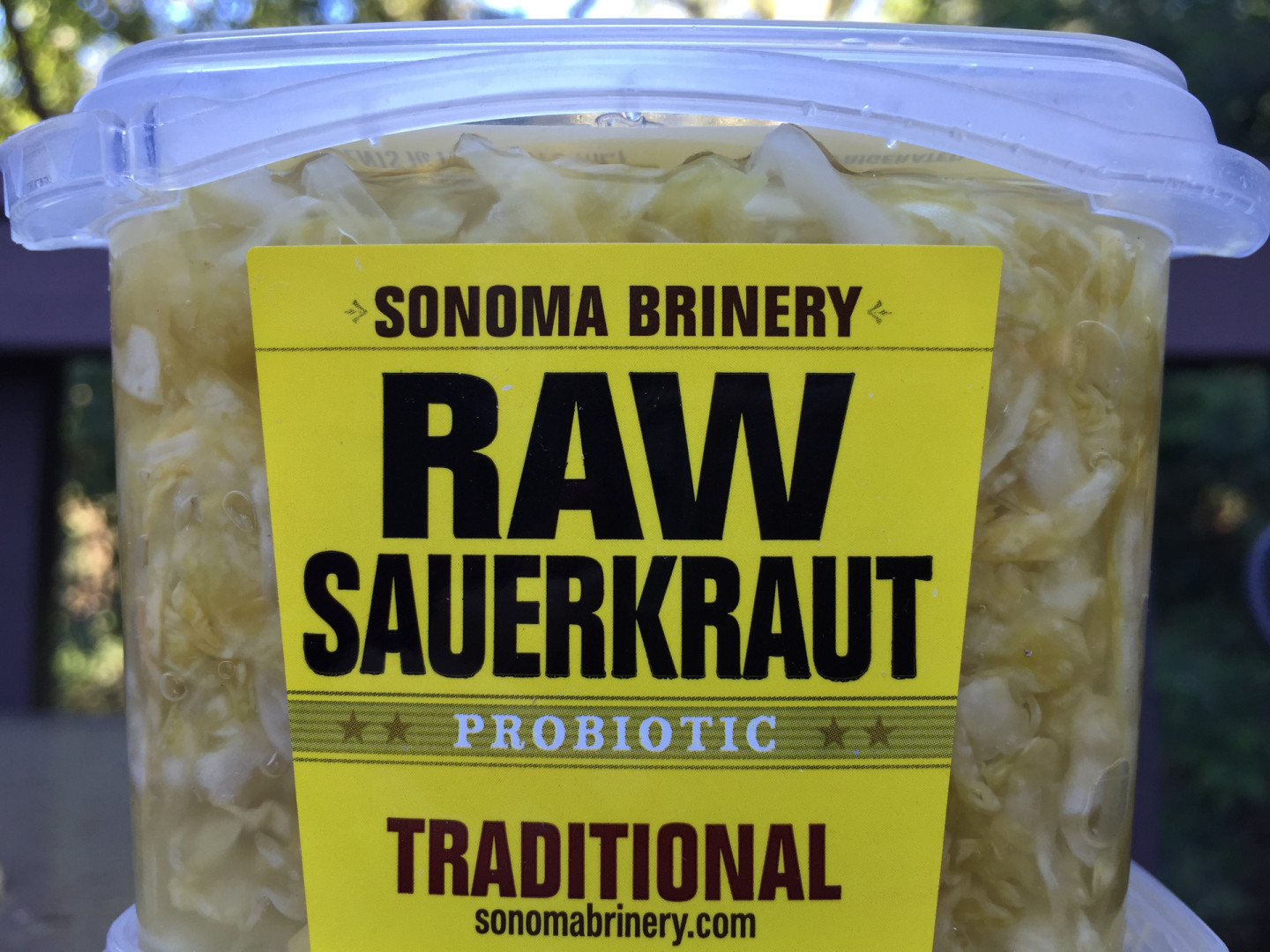
"caption": "Sonoma Brinery’s Raw Sauerkraut. ",
"description": null,
"title": "Sonoma1920",
"credit": "Lisa Landers",
"status": "inherit",
"isLoading": false,
"fetchFailed": false
},
"bayareabites_94896": {
"type": "attachments",
"id": "bayareabites_94896",
"meta": {
"index": "attachments_1716263798",
"site": "bayareabites",
"id": "94896",
"found": true
},
"parent": 94894,
"imgSizes": {
"thumbnail": {
"file": "https://ww2.kqed.org/app/uploads/sites/24/2015/04/sodawarninglabel_text_custom-cb5e17ac9624526a3d89d7d670997ed79ee367e6-400x114.jpg",
"width": 400,
"mimeType": "image/jpeg",
"height": 114
},
"fd-sm": {
"file": "https://ww2.kqed.org/app/uploads/sites/24/2015/04/sodawarninglabel_text_custom-cb5e17ac9624526a3d89d7d670997ed79ee367e6-320x91.jpg",
"width": 320,
"mimeType": "image/jpeg",
"height": 91
},
"post-thumbnail": {
"file": "https://ww2.kqed.org/app/uploads/sites/24/2015/04/sodawarninglabel_text_custom-cb5e17ac9624526a3d89d7d670997ed79ee367e6-672x279.jpg",
"width": 672,
"mimeType": "image/jpeg",
"height": 279
},
"kqedFullSize": {
"file": "https://ww2.kqed.org/app/uploads/sites/24/2015/04/sodawarninglabel_text_custom-cb5e17ac9624526a3d89d7d670997ed79ee367e6.jpg",
"width": 978,
"height": 279
},
"cat_post_thumb_sizecategory-posts-2": {
"file": "https://ww2.kqed.org/app/uploads/sites/24/2015/04/sodawarninglabel_text_custom-cb5e17ac9624526a3d89d7d670997ed79ee367e6-150x150.jpg",
"width": 150,
"mimeType": "image/jpeg",
"height": 150
},
"fd-med": {
"file": "https://ww2.kqed.org/app/uploads/sites/24/2015/04/sodawarninglabel_text_custom-cb5e17ac9624526a3d89d7d670997ed79ee367e6-768x219.jpg",
"width": 768,
"mimeType": "image/jpeg",
"height": 219
},
"guest-author-96": {
"file": "https://ww2.kqed.org/app/uploads/sites/24/2015/04/sodawarninglabel_text_custom-cb5e17ac9624526a3d89d7d670997ed79ee367e6-96x96.jpg",
"width": 96,
"mimeType": "image/jpeg",
"height": 96
},
"medium": {
"file": "https://ww2.kqed.org/app/uploads/sites/24/2015/04/sodawarninglabel_text_custom-cb5e17ac9624526a3d89d7d670997ed79ee367e6-800x228.jpg",
"width": 800,
"mimeType": "image/jpeg",
"height": 228
},
"guest-author-64": {
"file": "https://ww2.kqed.org/app/uploads/sites/24/2015/04/sodawarninglabel_text_custom-cb5e17ac9624526a3d89d7d670997ed79ee367e6-64x64.jpg",
"width": 64,
"mimeType": "image/jpeg",
"height": 64
},
"detail": {
"file": "https://ww2.kqed.org/app/uploads/sites/24/2015/04/sodawarninglabel_text_custom-cb5e17ac9624526a3d89d7d670997ed79ee367e6-75x75.jpg",
"width": 75,
"mimeType": "image/jpeg",
"height": 75
},
"guest-author-32": {
"file": "https://ww2.kqed.org/app/uploads/sites/24/2015/04/sodawarninglabel_text_custom-cb5e17ac9624526a3d89d7d670997ed79ee367e6-32x32.jpg",
"width": 32,
"mimeType": "image/jpeg",
"height": 32
},
"guest-author-128": {
"file": "https://ww2.kqed.org/app/uploads/sites/24/2015/04/sodawarninglabel_text_custom-cb5e17ac9624526a3d89d7d670997ed79ee367e6-128x128.jpg",
"width": 128,
"mimeType": "image/jpeg",
"height": 128
}
},
"publishDate": 1428631766,
"modified": 1428632890,
"caption": "STATE OF CALIFORNIA SAFETY WARNING: Drinking beverages with added sugar(s) contributes to obesity, diabetes, and tooth decay.",
"description": "STATE OF CALIFORNIA SAFETY WARNING: Drinking beverages with added sugar(s) contributes to obesity, diabetes, and tooth decay.",
"title": "STATE OF CALIFORNIA SAFETY WARNING: Drinking beverages with added sugar(s) contributes to obesity, diabetes, and tooth decay.",
"credit": "California Center For Public Health Advocacy",
"status": "inherit",
"isLoading": false,
"fetchFailed": false
},
"bayareabites_94740": {
"type": "attachments",
"id": "bayareabites_94740",
"meta": {
"index": "attachments_1716263798",
"site": "bayareabites",
"id": "94740",
"found": true
},
"parent": 93744,
"imgSizes": {
"twentyfourteen-full-width": {
"file": "https://ww2.kqed.org/app/uploads/sites/24/2015/03/Baiaboys1920-1038x576.jpg",
"width": 1038,
"mimeType": "image/jpeg",
"height": 576
},
"thumbnail": {
"file": "https://ww2.kqed.org/app/uploads/sites/24/2015/03/Baiaboys1920-400x266.jpg",
"width": 400,
"mimeType": "image/jpeg",
"height": 266
},
"fd-sm": {
"file": "https://ww2.kqed.org/app/uploads/sites/24/2015/03/Baiaboys1920-320x213.jpg",
"width": 320,
"mimeType": "image/jpeg",
"height": 213
},
"post-thumbnail": {
"file": "https://ww2.kqed.org/app/uploads/sites/24/2015/03/Baiaboys1920-672x372.jpg",
"width": 672,
"mimeType": "image/jpeg",
"height": 372
},
"kqedFullSize": {
"file": "https://ww2.kqed.org/app/uploads/sites/24/2015/03/Baiaboys1920.jpg",
"width": 1920,
"height": 1277
},
"large": {
"file": "https://ww2.kqed.org/app/uploads/sites/24/2015/03/Baiaboys1920-1440x958.jpg",
"width": 1440,
"mimeType": "image/jpeg",
"height": 958
},
"guest-author-96": {
"file": "https://ww2.kqed.org/app/uploads/sites/24/2015/03/Baiaboys1920-96x96.jpg",
"width": 96,
"mimeType": "image/jpeg",
"height": 96
},
"medium": {
"file": "https://ww2.kqed.org/app/uploads/sites/24/2015/03/Baiaboys1920-800x532.jpg",
"width": 800,
"mimeType": "image/jpeg",
"height": 532
},
"guest-author-64": {
"file": "https://ww2.kqed.org/app/uploads/sites/24/2015/03/Baiaboys1920-64x64.jpg",
"width": 64,
"mimeType": "image/jpeg",
"height": 64
},
"guest-author-32": {
"file": "https://ww2.kqed.org/app/uploads/sites/24/2015/03/Baiaboys1920-32x32.jpg",
"width": 32,
"mimeType": "image/jpeg",
"height": 32
},
"cat_post_thumb_sizecategory-posts-2": {
"file": "https://ww2.kqed.org/app/uploads/sites/24/2015/03/Baiaboys1920-150x150.jpg",
"width": 150,
"mimeType": "image/jpeg",
"height": 150
},
"fd-lrg": {
"file": "https://ww2.kqed.org/app/uploads/sites/24/2015/03/Baiaboys1920-1180x785.jpg",
"width": 1180,
"mimeType": "image/jpeg",
"height": 785
},
"fd-med": {
"file": "https://ww2.kqed.org/app/uploads/sites/24/2015/03/Baiaboys1920-768x511.jpg",
"width": 768,
"mimeType": "image/jpeg",
"height": 511
},
"detail": {
"file": "https://ww2.kqed.org/app/uploads/sites/24/2015/03/Baiaboys1920-75x75.jpg",
"width": 75,
"mimeType": "image/jpeg",
"height": 75
},
"guest-author-128": {
"file": "https://ww2.kqed.org/app/uploads/sites/24/2015/03/Baiaboys1920-128x128.jpg",
"width": 128,
"mimeType": "image/jpeg",
"height": 128
}
},
"publishDate": 1428378840,
"modified": 1428515516,
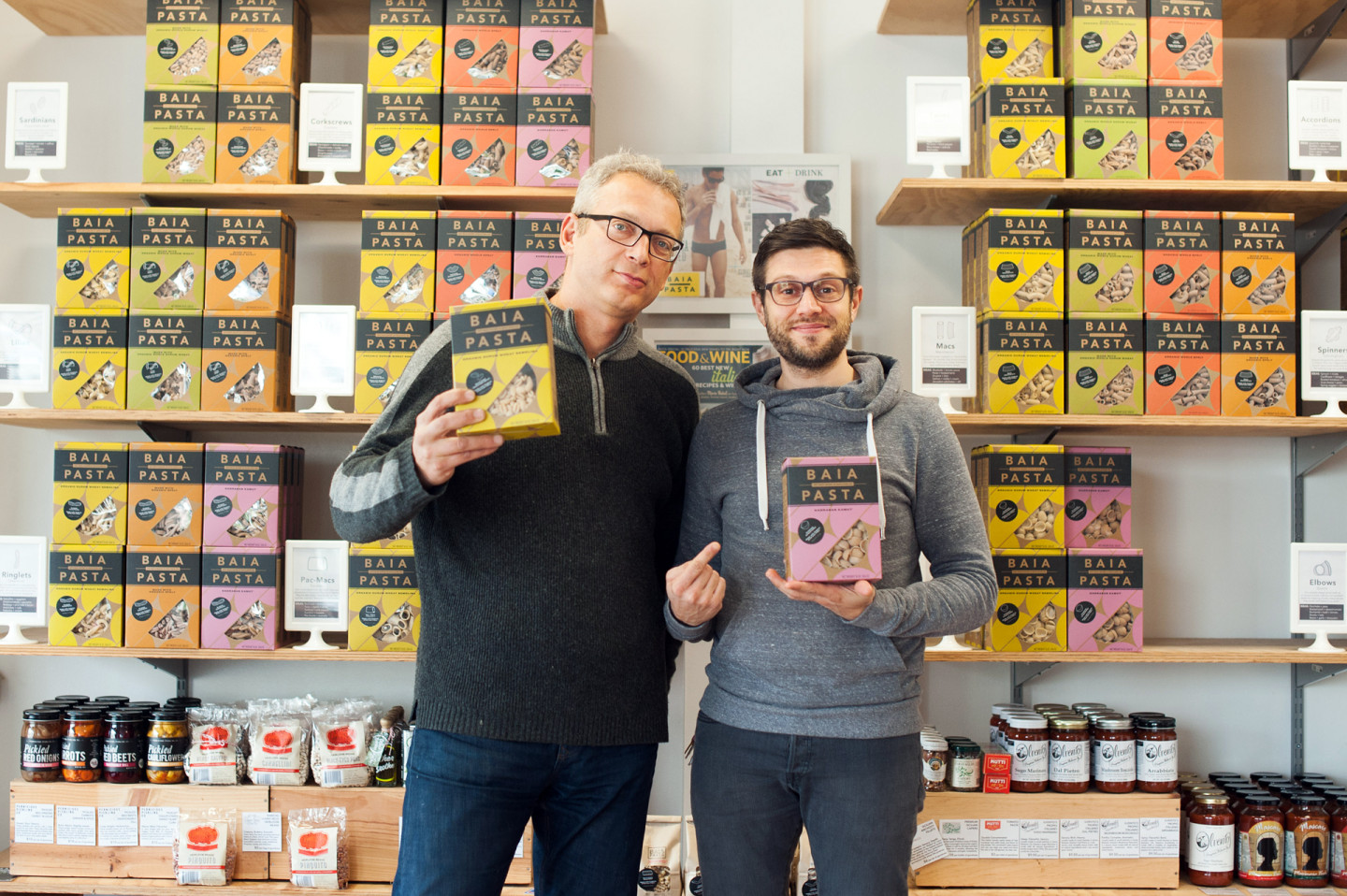
"caption": "Renato Sardo, left, and Dario Barbone started Baia Pasta, which is one of several Bay Area companies started within the last few years making dried pasta. ",
"description": null,
"title": "Baiaboys1920",
"credit": "Meaghin Kennedy/These Salty Oats",
"status": "inherit",
"isLoading": false,
"fetchFailed": false
},
"bayareabites_94784": {
"type": "attachments",
"id": "bayareabites_94784",
"meta": {
"index": "attachments_1716263798",
"site": "bayareabites",
"id": "94784",
"found": true
},
"parent": 94763,
"imgSizes": {
"twentyfourteen-full-width": {
"file": "https://ww2.kqed.org/app/uploads/sites/24/2015/04/tea-hindu-servant-800x576.jpg",
"width": 800,
"mimeType": "image/jpeg",
"height": 576
},
"thumbnail": {
"file": "https://ww2.kqed.org/app/uploads/sites/24/2015/04/tea-hindu-servant-400x298.jpg",
"width": 400,
"mimeType": "image/jpeg",
"height": 298
},
"fd-sm": {
"file": "https://ww2.kqed.org/app/uploads/sites/24/2015/04/tea-hindu-servant-320x238.jpg",
"width": 320,
"mimeType": "image/jpeg",
"height": 238
},
"post-thumbnail": {
"file": "https://ww2.kqed.org/app/uploads/sites/24/2015/04/tea-hindu-servant-672x372.jpg",
"width": 672,
"mimeType": "image/jpeg",
"height": 372
},
"kqedFullSize": {
"file": "https://ww2.kqed.org/app/uploads/sites/24/2015/04/tea-hindu-servant.jpg",
"width": 800,
"height": 596
},
"guest-author-96": {
"file": "https://ww2.kqed.org/app/uploads/sites/24/2015/04/tea-hindu-servant-96x96.jpg",
"width": 96,
"mimeType": "image/jpeg",
"height": 96
},
"medium": {
"file": "https://ww2.kqed.org/app/uploads/sites/24/2015/04/tea-hindu-servant-800x596.jpg",
"width": 800,
"mimeType": "image/jpeg",
"height": 596
},
"guest-author-64": {
"file": "https://ww2.kqed.org/app/uploads/sites/24/2015/04/tea-hindu-servant-64x64.jpg",
"width": 64,
"mimeType": "image/jpeg",
"height": 64
},
"guest-author-32": {
"file": "https://ww2.kqed.org/app/uploads/sites/24/2015/04/tea-hindu-servant-32x32.jpg",
"width": 32,
"mimeType": "image/jpeg",
"height": 32
},
"cat_post_thumb_sizecategory-posts-2": {
"file": "https://ww2.kqed.org/app/uploads/sites/24/2015/04/tea-hindu-servant-150x150.jpg",
"width": 150,
"mimeType": "image/jpeg",
"height": 150
},
"fd-med": {
"file": "https://ww2.kqed.org/app/uploads/sites/24/2015/04/tea-hindu-servant-768x572.jpg",
"width": 768,
"mimeType": "image/jpeg",
"height": 572
},
"detail": {
"file": "https://ww2.kqed.org/app/uploads/sites/24/2015/04/tea-hindu-servant-75x75.jpg",
"width": 75,
"mimeType": "image/jpeg",
"height": 75
},
"guest-author-128": {
"file": "https://ww2.kqed.org/app/uploads/sites/24/2015/04/tea-hindu-servant-128x128.jpg",
"width": 128,
"mimeType": "image/jpeg",
"height": 128
}
},
"publishDate": 1428463968,
"modified": 1428463987,
"caption": "A Hindu servant serves tea to a European colonial woman in the early 20th century. The British habit of adding tea to sugar wasn't merely a matter of taste: It also helped steer the course of history.",
"description": null,
"title": "tea-hindu-servant",
"credit": "Corbis/Underwood & Underwood",
"status": "inherit",
"isLoading": false,
"fetchFailed": false
},
"bayareabites_94662": {
"type": "attachments",
"id": "bayareabites_94662",
"meta": {
"index": "attachments_1716263798",
"site": "bayareabites",
"id": "94662",
"found": true
},
"parent": 94654,
"imgSizes": {
"twentyfourteen-full-width": {
"file": "https://ww2.kqed.org/app/uploads/sites/24/2015/04/dairy-free-yogurt-lineup-4-1038x576.jpg",
"width": 1038,
"mimeType": "image/jpeg",
"height": 576
},
"thumbnail": {
"file": "https://ww2.kqed.org/app/uploads/sites/24/2015/04/dairy-free-yogurt-lineup-4-400x240.jpg",
"width": 400,
"mimeType": "image/jpeg",
"height": 240
},
"fd-sm": {
"file": "https://ww2.kqed.org/app/uploads/sites/24/2015/04/dairy-free-yogurt-lineup-4-320x192.jpg",
"width": 320,
"mimeType": "image/jpeg",
"height": 192
},
"post-thumbnail": {
"file": "https://ww2.kqed.org/app/uploads/sites/24/2015/04/dairy-free-yogurt-lineup-4-672x372.jpg",
"width": 672,
"mimeType": "image/jpeg",
"height": 372
},
"kqedFullSize": {
"file": "https://ww2.kqed.org/app/uploads/sites/24/2015/04/dairy-free-yogurt-lineup-4.jpg",
"width": 1920,
"height": 1150
},
"large": {
"file": "https://ww2.kqed.org/app/uploads/sites/24/2015/04/dairy-free-yogurt-lineup-4-1440x863.jpg",
"width": 1440,
"mimeType": "image/jpeg",
"height": 863
},
"guest-author-96": {
"file": "https://ww2.kqed.org/app/uploads/sites/24/2015/04/dairy-free-yogurt-lineup-4-96x96.jpg",
"width": 96,
"mimeType": "image/jpeg",
"height": 96
},
"medium": {
"file": "https://ww2.kqed.org/app/uploads/sites/24/2015/04/dairy-free-yogurt-lineup-4-800x479.jpg",
"width": 800,
"mimeType": "image/jpeg",
"height": 479
},
"guest-author-64": {
"file": "https://ww2.kqed.org/app/uploads/sites/24/2015/04/dairy-free-yogurt-lineup-4-64x64.jpg",
"width": 64,
"mimeType": "image/jpeg",
"height": 64
},
"guest-author-32": {
"file": "https://ww2.kqed.org/app/uploads/sites/24/2015/04/dairy-free-yogurt-lineup-4-32x32.jpg",
"width": 32,
"mimeType": "image/jpeg",
"height": 32
},
"cat_post_thumb_sizecategory-posts-2": {
"file": "https://ww2.kqed.org/app/uploads/sites/24/2015/04/dairy-free-yogurt-lineup-4-150x150.jpg",
"width": 150,
"mimeType": "image/jpeg",
"height": 150
},
"fd-lrg": {
"file": "https://ww2.kqed.org/app/uploads/sites/24/2015/04/dairy-free-yogurt-lineup-4-1180x707.jpg",
"width": 1180,
"mimeType": "image/jpeg",
"height": 707
},
"fd-med": {
"file": "https://ww2.kqed.org/app/uploads/sites/24/2015/04/dairy-free-yogurt-lineup-4-768x460.jpg",
"width": 768,
"mimeType": "image/jpeg",
"height": 460
},
"detail": {
"file": "https://ww2.kqed.org/app/uploads/sites/24/2015/04/dairy-free-yogurt-lineup-4-75x75.jpg",
"width": 75,
"mimeType": "image/jpeg",
"height": 75
},
"guest-author-128": {
"file": "https://ww2.kqed.org/app/uploads/sites/24/2015/04/dairy-free-yogurt-lineup-4-128x128.jpg",
"width": 128,
"mimeType": "image/jpeg",
"height": 128
}
},
"publishDate": 1428119118,
"modified": 1428368250,
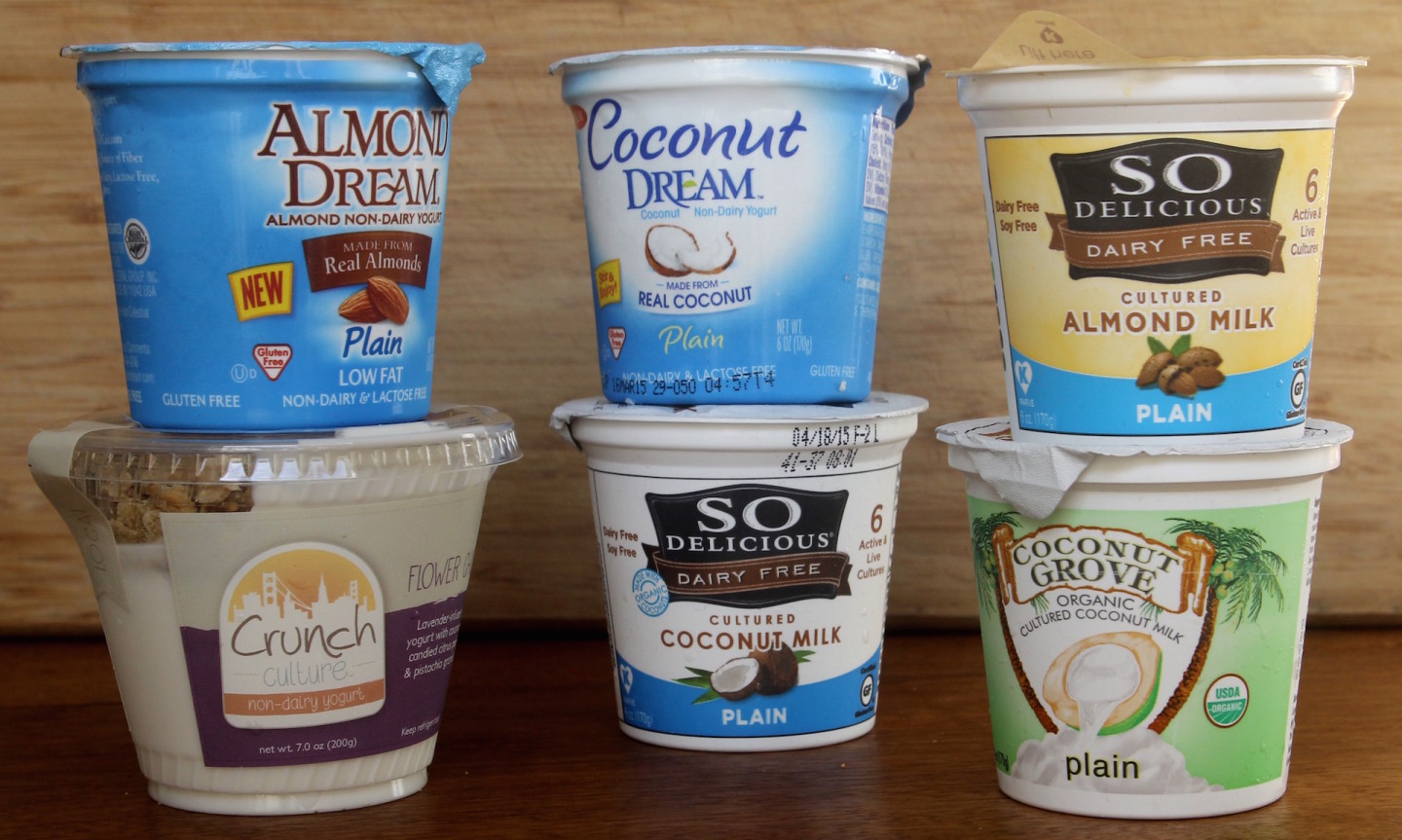
"caption": "Six almond and coconut milk yogurts are now available in the Bay Area. ",
"description": null,
"title": "dairy free yogurt lineup 4",
"credit": "Kate Williams",
"status": "inherit",
"isLoading": false,
"fetchFailed": false
},
"bayareabites_94281": {
"type": "attachments",
"id": "bayareabites_94281",
"meta": {
"index": "attachments_1716263798",
"site": "bayareabites",
"id": "94281",
"found": true
},
"parent": 94280,
"imgSizes": {
"twentyfourteen-full-width": {
"file": "https://ww2.kqed.org/app/uploads/sites/24/2015/03/wine-82a3b16519b410e7f9d0089c1ed37d66922ba544-1038x576.jpg",
"width": 1038,
"mimeType": "image/jpeg",
"height": 576
},
"fd-sm": {
"file": "https://ww2.kqed.org/app/uploads/sites/24/2015/03/wine-82a3b16519b410e7f9d0089c1ed37d66922ba544-320x240.jpg",
"width": 320,
"mimeType": "image/jpeg",
"height": 240
},
"post-thumbnail": {
"file": "https://ww2.kqed.org/app/uploads/sites/24/2015/03/wine-82a3b16519b410e7f9d0089c1ed37d66922ba544-672x372.jpg",
"width": 672,
"mimeType": "image/jpeg",
"height": 372
},
"kqedFullSize": {
"file": "https://ww2.kqed.org/app/uploads/sites/24/2015/03/wine-82a3b16519b410e7f9d0089c1ed37d66922ba544.jpg",
"width": 1776,
"height": 1332
},
"large": {
"file": "https://ww2.kqed.org/app/uploads/sites/24/2015/03/wine-82a3b16519b410e7f9d0089c1ed37d66922ba544-1440x1080.jpg",
"width": 1440,
"mimeType": "image/jpeg",
"height": 1080
},
"guest-author-96": {
"file": "https://ww2.kqed.org/app/uploads/sites/24/2015/03/wine-82a3b16519b410e7f9d0089c1ed37d66922ba544-96x96.jpg",
"width": 96,
"mimeType": "image/jpeg",
"height": 96
},
"medium": {
"file": "https://ww2.kqed.org/app/uploads/sites/24/2015/03/wine-82a3b16519b410e7f9d0089c1ed37d66922ba544-800x600.jpg",
"width": 800,
"mimeType": "image/jpeg",
"height": 600
},
"guest-author-64": {
"file": "https://ww2.kqed.org/app/uploads/sites/24/2015/03/wine-82a3b16519b410e7f9d0089c1ed37d66922ba544-64x64.jpg",
"width": 64,
"mimeType": "image/jpeg",
"height": 64
},
"guest-author-32": {
"file": "https://ww2.kqed.org/app/uploads/sites/24/2015/03/wine-82a3b16519b410e7f9d0089c1ed37d66922ba544-32x32.jpg",
"width": 32,
"mimeType": "image/jpeg",
"height": 32
},
"cat_post_thumb_sizecategory-posts-2": {
"file": "https://ww2.kqed.org/app/uploads/sites/24/2015/03/wine-82a3b16519b410e7f9d0089c1ed37d66922ba544-50x50.jpg",
"width": 50,
"mimeType": "image/jpeg",
"height": 50
},
"fd-lrg": {
"file": "https://ww2.kqed.org/app/uploads/sites/24/2015/03/wine-82a3b16519b410e7f9d0089c1ed37d66922ba544-1180x885.jpg",
"width": 1180,
"mimeType": "image/jpeg",
"height": 885
},
"fd-med": {
"file": "https://ww2.kqed.org/app/uploads/sites/24/2015/03/wine-82a3b16519b410e7f9d0089c1ed37d66922ba544-768x576.jpg",
"width": 768,
"mimeType": "image/jpeg",
"height": 576
},
"detail": {
"file": "https://ww2.kqed.org/app/uploads/sites/24/2015/03/wine-82a3b16519b410e7f9d0089c1ed37d66922ba544-75x75.jpg",
"width": 75,
"mimeType": "image/jpeg",
"height": 75
},
"guest-author-128": {
"file": "https://ww2.kqed.org/app/uploads/sites/24/2015/03/wine-82a3b16519b410e7f9d0089c1ed37d66922ba544-128x128.jpg",
"width": 128,
"mimeType": "image/jpeg",
"height": 128
}
},
"publishDate": 1427315293,
"modified": 1427315494,
"caption": "A customer walks by bottles of wine for sale at J. Barleycorn's Liquor Barn in Nashville, Tenn., in 2012. Photo: Erik Schelzig/ASSOCIATED PRESS",
"description": "A customer walks by bottles of wine for sale at J. Barleycorn's Liquor Barn in Nashville, Tenn., in 2012.",
"title": "A customer walks by bottles of wine for sale at J. Barleycorn's Liquor Barn in Nashville, Tenn., in 2012.",
"credit": null,
"status": "inherit",
"isLoading": false,
"fetchFailed": false
},
"bayareabites_94074": {
"type": "attachments",
"id": "bayareabites_94074",
"meta": {
"index": "attachments_1716263798",
"site": "bayareabites",
"id": "94074",
"found": true
},
"parent": 94046,
"imgSizes": {
"twentyfourteen-full-width": {
"file": "https://ww2.kqed.org/app/uploads/sites/24/2015/03/seed_feature1920-1038x576.jpg",
"width": 1038,
"mimeType": "image/jpeg",
"height": 576
},
"fd-sm": {
"file": "https://ww2.kqed.org/app/uploads/sites/24/2015/03/seed_feature1920-320x240.jpg",
"width": 320,
"mimeType": "image/jpeg",
"height": 240
},
"post-thumbnail": {
"file": "https://ww2.kqed.org/app/uploads/sites/24/2015/03/seed_feature1920-672x372.jpg",
"width": 672,
"mimeType": "image/jpeg",
"height": 372
},
"kqedFullSize": {
"file": "https://ww2.kqed.org/app/uploads/sites/24/2015/03/seed_feature1920.jpg",
"width": 1920,
"height": 1440
},
"large": {
"file": "https://ww2.kqed.org/app/uploads/sites/24/2015/03/seed_feature1920-1440x1080.jpg",
"width": 1440,
"mimeType": "image/jpeg",
"height": 1080
},
"guest-author-96": {
"file": "https://ww2.kqed.org/app/uploads/sites/24/2015/03/seed_feature1920-96x96.jpg",
"width": 96,
"mimeType": "image/jpeg",
"height": 96
},
"medium": {
"file": "https://ww2.kqed.org/app/uploads/sites/24/2015/03/seed_feature1920-800x600.jpg",
"width": 800,
"mimeType": "image/jpeg",
"height": 600
},
"guest-author-64": {
"file": "https://ww2.kqed.org/app/uploads/sites/24/2015/03/seed_feature1920-64x64.jpg",
"width": 64,
"mimeType": "image/jpeg",
"height": 64
},
"guest-author-32": {
"file": "https://ww2.kqed.org/app/uploads/sites/24/2015/03/seed_feature1920-32x32.jpg",
"width": 32,
"mimeType": "image/jpeg",
"height": 32
},
"cat_post_thumb_sizecategory-posts-2": {
"file": "https://ww2.kqed.org/app/uploads/sites/24/2015/03/seed_feature1920-50x50.jpg",
"width": 50,
"mimeType": "image/jpeg",
"height": 50
},
"fd-lrg": {
"file": "https://ww2.kqed.org/app/uploads/sites/24/2015/03/seed_feature1920-1180x885.jpg",
"width": 1180,
"mimeType": "image/jpeg",
"height": 885
},
"fd-med": {
"file": "https://ww2.kqed.org/app/uploads/sites/24/2015/03/seed_feature1920-768x576.jpg",
"width": 768,
"mimeType": "image/jpeg",
"height": 576
},
"detail": {
"file": "https://ww2.kqed.org/app/uploads/sites/24/2015/03/seed_feature1920-75x75.jpg",
"width": 75,
"mimeType": "image/jpeg",
"height": 75
},
"guest-author-128": {
"file": "https://ww2.kqed.org/app/uploads/sites/24/2015/03/seed_feature1920-128x128.jpg",
"width": 128,
"mimeType": "image/jpeg",
"height": 128
}
},
"publishDate": 1426630982,
"modified": 1426633938,
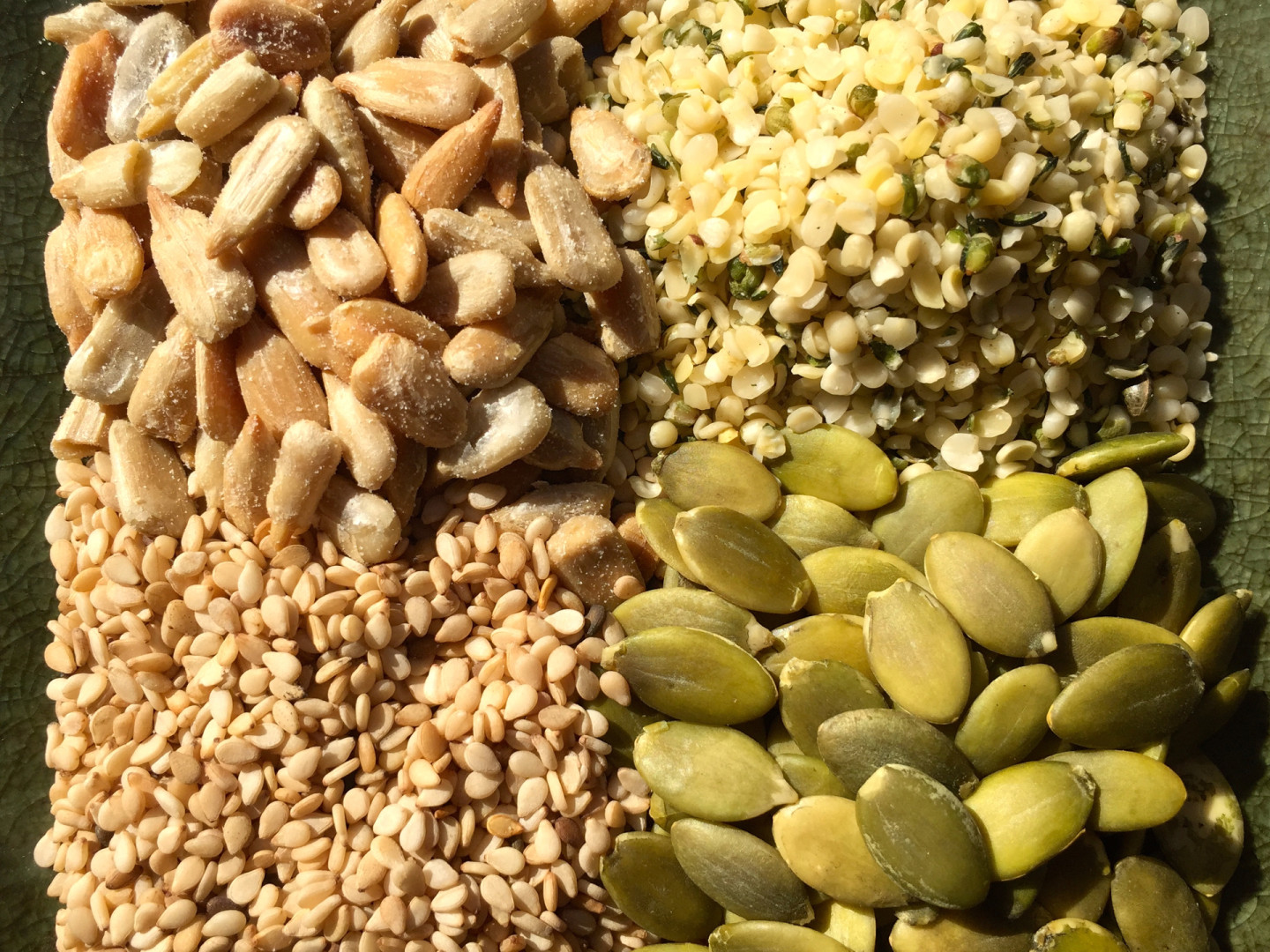
"caption": "Four types of seeds: hemp, sunflower, pumpkin, sesame. Photo: Lisa Landers",
"description": null,
"title": "seed_feature1920",
"credit": null,
"status": "inherit",
"isLoading": false,
"fetchFailed": false
},
"bayareabites_94092": {
"type": "attachments",
"id": "bayareabites_94092",
"meta": {
"index": "attachments_1716263798",
"site": "bayareabites",
"id": "94092",
"found": true
},
"parent": 94091,
"imgSizes": {
"twentyfourteen-full-width": {
"file": "https://ww2.kqed.org/app/uploads/sites/24/2015/03/457283146_slide-43a84b9fa50496406611aa099b5aef82d0b4e96a-e1426705461968-1038x576.jpg",
"width": 1038,
"mimeType": "image/jpeg",
"height": 576
},
"thumbnail": {
"file": "https://ww2.kqed.org/app/uploads/sites/24/2015/03/457283146_slide-43a84b9fa50496406611aa099b5aef82d0b4e96a-e1426705461968-400x267.jpg",
"width": 400,
"mimeType": "image/jpeg",
"height": 267
},
"fd-sm": {
"file": "https://ww2.kqed.org/app/uploads/sites/24/2015/03/457283146_slide-43a84b9fa50496406611aa099b5aef82d0b4e96a-e1426705461968-320x213.jpg",
"width": 320,
"mimeType": "image/jpeg",
"height": 213
},
"post-thumbnail": {
"file": "https://ww2.kqed.org/app/uploads/sites/24/2015/03/457283146_slide-43a84b9fa50496406611aa099b5aef82d0b4e96a-e1426705461968-672x372.jpg",
"width": 672,
"mimeType": "image/jpeg",
"height": 372
},
"kqedFullSize": {
"file": "https://ww2.kqed.org/app/uploads/sites/24/2015/03/457283146_slide-43a84b9fa50496406611aa099b5aef82d0b4e96a-e1426705461968.jpg",
"width": 1920,
"height": 1280
},
"large": {
"file": "https://ww2.kqed.org/app/uploads/sites/24/2015/03/457283146_slide-43a84b9fa50496406611aa099b5aef82d0b4e96a-e1426705461968-1440x960.jpg",
"width": 1440,
"mimeType": "image/jpeg",
"height": 960
},
"guest-author-96": {
"file": "https://ww2.kqed.org/app/uploads/sites/24/2015/03/457283146_slide-43a84b9fa50496406611aa099b5aef82d0b4e96a-e1426705461968-96x96.jpg",
"width": 96,
"mimeType": "image/jpeg",
"height": 96
},
"medium": {
"file": "https://ww2.kqed.org/app/uploads/sites/24/2015/03/457283146_slide-43a84b9fa50496406611aa099b5aef82d0b4e96a-e1426705461968-800x533.jpg",
"width": 800,
"mimeType": "image/jpeg",
"height": 533
},
"guest-author-64": {
"file": "https://ww2.kqed.org/app/uploads/sites/24/2015/03/457283146_slide-43a84b9fa50496406611aa099b5aef82d0b4e96a-e1426705461968-64x64.jpg",
"width": 64,
"mimeType": "image/jpeg",
"height": 64
},
"guest-author-32": {
"file": "https://ww2.kqed.org/app/uploads/sites/24/2015/03/457283146_slide-43a84b9fa50496406611aa099b5aef82d0b4e96a-e1426705461968-32x32.jpg",
"width": 32,
"mimeType": "image/jpeg",
"height": 32
},
"cat_post_thumb_sizecategory-posts-2": {
"file": "https://ww2.kqed.org/app/uploads/sites/24/2015/03/457283146_slide-43a84b9fa50496406611aa099b5aef82d0b4e96a-e1426705461968-50x50.jpg",
"width": 50,
"mimeType": "image/jpeg",
"height": 50
},
"fd-lrg": {
"file": "https://ww2.kqed.org/app/uploads/sites/24/2015/03/457283146_slide-43a84b9fa50496406611aa099b5aef82d0b4e96a-e1426705461968-1180x787.jpg",
"width": 1180,
"mimeType": "image/jpeg",
"height": 787
},
"fd-med": {
"file": "https://ww2.kqed.org/app/uploads/sites/24/2015/03/457283146_slide-43a84b9fa50496406611aa099b5aef82d0b4e96a-e1426705461968-768x512.jpg",
"width": 768,
"mimeType": "image/jpeg",
"height": 512
},
"detail": {
"file": "https://ww2.kqed.org/app/uploads/sites/24/2015/03/457283146_slide-43a84b9fa50496406611aa099b5aef82d0b4e96a-e1426705461968-75x75.jpg",
"width": 75,
"mimeType": "image/jpeg",
"height": 75
},
"guest-author-128": {
"file": "https://ww2.kqed.org/app/uploads/sites/24/2015/03/457283146_slide-43a84b9fa50496406611aa099b5aef82d0b4e96a-e1426705461968-128x128.jpg",
"width": 128,
"mimeType": "image/jpeg",
"height": 128
}
},
"publishDate": 1426704312,
"modified": 1426705453,
"caption": "Celebrity chef Giada De Laurentiis during a guest appearance on ABC's The Chew last fall. She can cook rich foods and keep her trim figure, but new research suggests that's a difficult feat for amateur cooks watching along at home. Photo: Lou Rocco/ABC/Getty Images",
"description": "Celebrity chef Giada De Laurentiis during a guest appearance on ABC's \u003cem>The Chew \u003c/em>last fall. She can cook rich foods and keep her trim figure, but new research suggests that's a difficult feat for amateur cooks watching along at home.",
"title": "Celebrity chef Giada De Laurentiis during a guest appearance on ABC's The Chew last fall. She can cook rich foods and keep her trim figure, but new research suggests that's a difficult feat for amateur cooks watching along at home.",
"credit": null,
"status": "inherit",
"isLoading": false,
"fetchFailed": false
},
"bayareabites_93728": {
"type": "attachments",
"id": "bayareabites_93728",
"meta": {
"index": "attachments_1716263798",
"site": "bayareabites",
"id": "93728",
"found": true
},
"parent": 93727,
"imgSizes": {
"twentyfourteen-full-width": {
"file": "https://ww2.kqed.org/app/uploads/sites/24/2015/03/tictocstill3_wide-f31b3d2a3e8ecc3e0bb68c6885d5899d7b09ca76-1038x576.jpe",
"width": 1038,
"mimeType": "image/jpeg",
"height": 576
},
"thumbnail": {
"file": "https://ww2.kqed.org/app/uploads/sites/24/2015/03/tictocstill3_wide-f31b3d2a3e8ecc3e0bb68c6885d5899d7b09ca76-400x225.jpe",
"width": 400,
"mimeType": "image/jpeg",
"height": 225
},
"fd-sm": {
"file": "https://ww2.kqed.org/app/uploads/sites/24/2015/03/tictocstill3_wide-f31b3d2a3e8ecc3e0bb68c6885d5899d7b09ca76-320x180.jpe",
"width": 320,
"mimeType": "image/jpeg",
"height": 180
},
"post-thumbnail": {
"file": "https://ww2.kqed.org/app/uploads/sites/24/2015/03/tictocstill3_wide-f31b3d2a3e8ecc3e0bb68c6885d5899d7b09ca76-672x372.jpe",
"width": 672,
"mimeType": "image/jpeg",
"height": 372
},
"kqedFullSize": {
"file": "https://ww2.kqed.org/app/uploads/sites/24/2015/03/tictocstill3_wide-f31b3d2a3e8ecc3e0bb68c6885d5899d7b09ca76.jpe",
"width": 1997,
"height": 1123
},
"large": {
"file": "https://ww2.kqed.org/app/uploads/sites/24/2015/03/tictocstill3_wide-f31b3d2a3e8ecc3e0bb68c6885d5899d7b09ca76-1440x810.jpe",
"width": 1440,
"mimeType": "image/jpeg",
"height": 810
},
"guest-author-96": {
"file": "https://ww2.kqed.org/app/uploads/sites/24/2015/03/tictocstill3_wide-f31b3d2a3e8ecc3e0bb68c6885d5899d7b09ca76-96x96.jpe",
"width": 96,
"mimeType": "image/jpeg",
"height": 96
},
"medium": {
"file": "https://ww2.kqed.org/app/uploads/sites/24/2015/03/tictocstill3_wide-f31b3d2a3e8ecc3e0bb68c6885d5899d7b09ca76-800x450.jpe",
"width": 800,
"mimeType": "image/jpeg",
"height": 450
},
"guest-author-64": {
"file": "https://ww2.kqed.org/app/uploads/sites/24/2015/03/tictocstill3_wide-f31b3d2a3e8ecc3e0bb68c6885d5899d7b09ca76-64x64.jpe",
"width": 64,
"mimeType": "image/jpeg",
"height": 64
},
"guest-author-32": {
"file": "https://ww2.kqed.org/app/uploads/sites/24/2015/03/tictocstill3_wide-f31b3d2a3e8ecc3e0bb68c6885d5899d7b09ca76-32x32.jpe",
"width": 32,
"mimeType": "image/jpeg",
"height": 32
},
"cat_post_thumb_sizecategory-posts-2": {
"file": "https://ww2.kqed.org/app/uploads/sites/24/2015/03/tictocstill3_wide-f31b3d2a3e8ecc3e0bb68c6885d5899d7b09ca76-50x50.jpe",
"width": 50,
"mimeType": "image/jpeg",
"height": 50
},
"fd-lrg": {
"file": "https://ww2.kqed.org/app/uploads/sites/24/2015/03/tictocstill3_wide-f31b3d2a3e8ecc3e0bb68c6885d5899d7b09ca76-1180x664.jpe",
"width": 1180,
"mimeType": "image/jpeg",
"height": 664
},
"fd-med": {
"file": "https://ww2.kqed.org/app/uploads/sites/24/2015/03/tictocstill3_wide-f31b3d2a3e8ecc3e0bb68c6885d5899d7b09ca76-768x432.jpe",
"width": 768,
"mimeType": "image/jpeg",
"height": 432
},
"detail": {
"file": "https://ww2.kqed.org/app/uploads/sites/24/2015/03/tictocstill3_wide-f31b3d2a3e8ecc3e0bb68c6885d5899d7b09ca76-75x75.jpe",
"width": 75,
"mimeType": "image/jpeg",
"height": 75
},
"guest-author-128": {
"file": "https://ww2.kqed.org/app/uploads/sites/24/2015/03/tictocstill3_wide-f31b3d2a3e8ecc3e0bb68c6885d5899d7b09ca76-128x128.jpe",
"width": 128,
"mimeType": "image/jpeg",
"height": 128
}
},
"publishDate": 1425983989,
"modified": 1425983989,
"caption": null,
"description": "Katherine Streeter for NPR",
"title": "Katherine Streeter for NPR",
"credit": null,
"status": "inherit",
"isLoading": false,
"fetchFailed": false
},
"bayareabites_93723": {
"type": "attachments",
"id": "bayareabites_93723",
"meta": {
"index": "attachments_1716263798",
"site": "bayareabites",
"id": "93723",
"found": true
},
"parent": 93722,
"imgSizes": {
"twentyfourteen-full-width": {
"file": "https://ww2.kqed.org/app/uploads/sites/24/2015/03/istock_000019322566xlarge_edit_custom-9d4c4a33422ae3c4775983ae0de71646537c78c4-e1425847073871-1038x576.jpg",
"width": 1038,
"mimeType": "image/jpeg",
"height": 576
},
"thumbnail": {
"file": "https://ww2.kqed.org/app/uploads/sites/24/2015/03/istock_000019322566xlarge_edit_custom-9d4c4a33422ae3c4775983ae0de71646537c78c4-e1425847073871-400x266.jpg",
"width": 400,
"mimeType": "image/jpeg",
"height": 266
},
"fd-sm": {
"file": "https://ww2.kqed.org/app/uploads/sites/24/2015/03/istock_000019322566xlarge_edit_custom-9d4c4a33422ae3c4775983ae0de71646537c78c4-e1425847073871-320x213.jpg",
"width": 320,
"mimeType": "image/jpeg",
"height": 213
},
"post-thumbnail": {
"file": "https://ww2.kqed.org/app/uploads/sites/24/2015/03/istock_000019322566xlarge_edit_custom-9d4c4a33422ae3c4775983ae0de71646537c78c4-e1425847073871-672x372.jpg",
"width": 672,
"mimeType": "image/jpeg",
"height": 372
},
"kqedFullSize": {
"file": "https://ww2.kqed.org/app/uploads/sites/24/2015/03/istock_000019322566xlarge_edit_custom-9d4c4a33422ae3c4775983ae0de71646537c78c4-e1425847073871.jpg",
"width": 1920,
"height": 1276
},
"large": {
"file": "https://ww2.kqed.org/app/uploads/sites/24/2015/03/istock_000019322566xlarge_edit_custom-9d4c4a33422ae3c4775983ae0de71646537c78c4-e1425847073871-1440x957.jpg",
"width": 1440,
"mimeType": "image/jpeg",
"height": 957
},
"guest-author-96": {
"file": "https://ww2.kqed.org/app/uploads/sites/24/2015/03/istock_000019322566xlarge_edit_custom-9d4c4a33422ae3c4775983ae0de71646537c78c4-e1425847073871-96x96.jpg",
"width": 96,
"mimeType": "image/jpeg",
"height": 96
},
"medium": {
"file": "https://ww2.kqed.org/app/uploads/sites/24/2015/03/istock_000019322566xlarge_edit_custom-9d4c4a33422ae3c4775983ae0de71646537c78c4-e1425847073871-800x532.jpg",
"width": 800,
"mimeType": "image/jpeg",
"height": 532
},
"guest-author-64": {
"file": "https://ww2.kqed.org/app/uploads/sites/24/2015/03/istock_000019322566xlarge_edit_custom-9d4c4a33422ae3c4775983ae0de71646537c78c4-e1425847073871-64x64.jpg",
"width": 64,
"mimeType": "image/jpeg",
"height": 64
},
"guest-author-32": {
"file": "https://ww2.kqed.org/app/uploads/sites/24/2015/03/istock_000019322566xlarge_edit_custom-9d4c4a33422ae3c4775983ae0de71646537c78c4-e1425847073871-32x32.jpg",
"width": 32,
"mimeType": "image/jpeg",
"height": 32
},
"cat_post_thumb_sizecategory-posts-2": {
"file": "https://ww2.kqed.org/app/uploads/sites/24/2015/03/istock_000019322566xlarge_edit_custom-9d4c4a33422ae3c4775983ae0de71646537c78c4-e1425847073871-50x50.jpg",
"width": 50,
"mimeType": "image/jpeg",
"height": 50
},
"fd-lrg": {
"file": "https://ww2.kqed.org/app/uploads/sites/24/2015/03/istock_000019322566xlarge_edit_custom-9d4c4a33422ae3c4775983ae0de71646537c78c4-e1425847073871-1180x784.jpg",
"width": 1180,
"mimeType": "image/jpeg",
"height": 784
},
"fd-med": {
"file": "https://ww2.kqed.org/app/uploads/sites/24/2015/03/istock_000019322566xlarge_edit_custom-9d4c4a33422ae3c4775983ae0de71646537c78c4-e1425847073871-768x510.jpg",
"width": 768,
"mimeType": "image/jpeg",
"height": 510
},
"detail": {
"file": "https://ww2.kqed.org/app/uploads/sites/24/2015/03/istock_000019322566xlarge_edit_custom-9d4c4a33422ae3c4775983ae0de71646537c78c4-e1425847073871-75x75.jpg",
"width": 75,
"mimeType": "image/jpeg",
"height": 75
},
"guest-author-128": {
"file": "https://ww2.kqed.org/app/uploads/sites/24/2015/03/istock_000019322566xlarge_edit_custom-9d4c4a33422ae3c4775983ae0de71646537c78c4-e1425847073871-128x128.jpg",
"width": 128,
"mimeType": "image/jpeg",
"height": 128
}
},
"publishDate": 1425846958,
"modified": 1425847078,
"caption": "FDA tests have turned up residues suggesting a few dairy farmers are illegally using antibiotics. Photo: iStockphoto ",
"description": "FDA tests have turned up residues suggesting a few dairy farmers are illegally using antibiotics",
"title": "FDA tests have turned up residues suggesting a few dairy farmers are illegally using antibiotics.",
"credit": null,
"status": "inherit",
"isLoading": false,
"fetchFailed": false
},
"bayareabites_93657": {
"type": "attachments",
"id": "bayareabites_93657",
"meta": {
"index": "attachments_1716263798",
"site": "bayareabites",
"id": "93657",
"found": true
},
"parent": 93656,
"imgSizes": {
"twentyfourteen-full-width": {
"file": "https://ww2.kqed.org/app/uploads/sites/24/2015/03/sugar-wide1_wide-87c022a8365b9b7099774588e7b7c8483d0b8c3f-e1425518723758-1038x576.jpg",
"width": 1038,
"mimeType": "image/jpeg",
"height": 576
},
"thumbnail": {
"file": "https://ww2.kqed.org/app/uploads/sites/24/2015/03/sugar-wide1_wide-87c022a8365b9b7099774588e7b7c8483d0b8c3f-e1425518723758-400x225.jpg",
"width": 400,
"mimeType": "image/jpeg",
"height": 225
},
"fd-sm": {
"file": "https://ww2.kqed.org/app/uploads/sites/24/2015/03/sugar-wide1_wide-87c022a8365b9b7099774588e7b7c8483d0b8c3f-e1425518723758-320x180.jpg",
"width": 320,
"mimeType": "image/jpeg",
"height": 180
},
"post-thumbnail": {
"file": "https://ww2.kqed.org/app/uploads/sites/24/2015/03/sugar-wide1_wide-87c022a8365b9b7099774588e7b7c8483d0b8c3f-e1425518723758-672x372.jpg",
"width": 672,
"mimeType": "image/jpeg",
"height": 372
},
"kqedFullSize": {
"file": "https://ww2.kqed.org/app/uploads/sites/24/2015/03/sugar-wide1_wide-87c022a8365b9b7099774588e7b7c8483d0b8c3f-e1425518723758.jpg",
"width": 1920,
"height": 1080
},
"large": {
"file": "https://ww2.kqed.org/app/uploads/sites/24/2015/03/sugar-wide1_wide-87c022a8365b9b7099774588e7b7c8483d0b8c3f-e1425518723758-1440x810.jpg",
"width": 1440,
"mimeType": "image/jpeg",
"height": 810
},
"guest-author-96": {
"file": "https://ww2.kqed.org/app/uploads/sites/24/2015/03/sugar-wide1_wide-87c022a8365b9b7099774588e7b7c8483d0b8c3f-e1425518723758-96x96.jpg",
"width": 96,
"mimeType": "image/jpeg",
"height": 96
},
"medium": {
"file": "https://ww2.kqed.org/app/uploads/sites/24/2015/03/sugar-wide1_wide-87c022a8365b9b7099774588e7b7c8483d0b8c3f-e1425518723758-800x450.jpg",
"width": 800,
"mimeType": "image/jpeg",
"height": 450
},
"guest-author-64": {
"file": "https://ww2.kqed.org/app/uploads/sites/24/2015/03/sugar-wide1_wide-87c022a8365b9b7099774588e7b7c8483d0b8c3f-e1425518723758-64x64.jpg",
"width": 64,
"mimeType": "image/jpeg",
"height": 64
},
"guest-author-32": {
"file": "https://ww2.kqed.org/app/uploads/sites/24/2015/03/sugar-wide1_wide-87c022a8365b9b7099774588e7b7c8483d0b8c3f-e1425518723758-32x32.jpg",
"width": 32,
"mimeType": "image/jpeg",
"height": 32
},
"cat_post_thumb_sizecategory-posts-2": {
"file": "https://ww2.kqed.org/app/uploads/sites/24/2015/03/sugar-wide1_wide-87c022a8365b9b7099774588e7b7c8483d0b8c3f-e1425518723758-50x50.jpg",
"width": 50,
"mimeType": "image/jpeg",
"height": 50
},
"fd-lrg": {
"file": "https://ww2.kqed.org/app/uploads/sites/24/2015/03/sugar-wide1_wide-87c022a8365b9b7099774588e7b7c8483d0b8c3f-e1425518723758-1180x664.jpg",
"width": 1180,
"mimeType": "image/jpeg",
"height": 664
},
"fd-med": {
"file": "https://ww2.kqed.org/app/uploads/sites/24/2015/03/sugar-wide1_wide-87c022a8365b9b7099774588e7b7c8483d0b8c3f-e1425518723758-768x432.jpg",
"width": 768,
"mimeType": "image/jpeg",
"height": 432
},
"detail": {
"file": "https://ww2.kqed.org/app/uploads/sites/24/2015/03/sugar-wide1_wide-87c022a8365b9b7099774588e7b7c8483d0b8c3f-e1425518723758-75x75.jpg",
"width": 75,
"mimeType": "image/jpeg",
"height": 75
},
"guest-author-128": {
"file": "https://ww2.kqed.org/app/uploads/sites/24/2015/03/sugar-wide1_wide-87c022a8365b9b7099774588e7b7c8483d0b8c3f-e1425518723758-128x128.jpg",
"width": 128,
"mimeType": "image/jpeg",
"height": 128
}
},
"publishDate": 1425518472,
"modified": 1425518732,
"caption": "The World Health Organization recommends cutting sugar intake. Photo: Meredith Rizzo/NPR",
"description": "The World Health Organization recommends cutting sugar intake.",
"title": "The World Health Organization recommends cutting sugar intake.",
"credit": null,
"status": "inherit",
"isLoading": false,
"fetchFailed": false
}
},
"audioPlayerReducer": {
"postId": "stream_live",
"isPaused": true,
"isPlaying": false,
"pfsActive": false,
"pledgeModalIsOpen": true,
"playerDrawerIsOpen": false,
"liveAudioPlayStartedAt": 0,
"liveAudioPlayContext": ""
},
"authorsReducer": {
"byline_bayareabites_94894": {
"type": "authors",
"id": "byline_bayareabites_94894",
"meta": {
"override": true
},
"slug": "byline_bayareabites_94894",
"name": "Poncie Rutsch",
"isLoading": false
},
"byline_bayareabites_94763": {
"type": "authors",
"id": "byline_bayareabites_94763",
"meta": {
"override": true
},
"slug": "byline_bayareabites_94763",
"name": "Maria Godoy",
"isLoading": false
},
"byline_bayareabites_94280": {
"type": "authors",
"id": "byline_bayareabites_94280",
"meta": {
"override": true
},
"slug": "byline_bayareabites_94280",
"name": "Allison Aubrey",
"isLoading": false
},
"byline_bayareabites_94091": {
"type": "authors",
"id": "byline_bayareabites_94091",
"meta": {
"override": true
},
"slug": "byline_bayareabites_94091",
"name": "Allison Aubrey",
"isLoading": false
},
"byline_bayareabites_93727": {
"type": "authors",
"id": "byline_bayareabites_93727",
"meta": {
"override": true
},
"slug": "byline_bayareabites_93727",
"name": "Allison Aubrey",
"isLoading": false
},
"byline_bayareabites_93722": {
"type": "authors",
"id": "byline_bayareabites_93722",
"meta": {
"override": true
},
"slug": "byline_bayareabites_93722",
"name": "Dan Charles",
"isLoading": false
},
"byline_bayareabites_93656": {
"type": "authors",
"id": "byline_bayareabites_93656",
"meta": {
"override": true
},
"slug": "byline_bayareabites_93656",
"name": "Allison Aubrey",
"isLoading": false
},
"nprfood": {
"type": "authors",
"id": "5403",
"meta": {
"index": "authors_1716337520",
"id": "5403",
"found": true
},
"name": "NPR Food",
"firstName": "NPR Food",
"lastName": null,
"slug": "nprfood",
"email": "nprfood@kqed.org",
"display_author_email": false,
"staff_mastheads": [],
"title": null,
"bio": "Food and Health-related stories from NPR including NPR Radio; NPR's food blog, \"The Salt\"; NPR's Health News blog, \"Shots\"; NPR's Breaking News blog \"The Two-Way\"; NPR's global stories blog \"Goats and Soda,\" NPR's economy explainer \"Planet Money\"; food-related technology news from NPR's \"All Tech Considered\"; and food series \"Kitchen Window.\"",
"avatar": "https://secure.gravatar.com/avatar/c4b735bb26404fa18ce2447d32e64291?s=600&d=blank&r=g",
"twitter": "nprfood",
"facebook": null,
"instagram": null,
"linkedin": null,
"sites": [
{
"site": "bayareabites",
"roles": [
"contributor"
]
},
{
"site": "food",
"roles": [
"contributor"
]
}
],
"headData": {
"title": "NPR Food | KQED",
"description": null,
"ogImgSrc": "https://secure.gravatar.com/avatar/c4b735bb26404fa18ce2447d32e64291?s=600&d=blank&r=g",
"twImgSrc": "https://secure.gravatar.com/avatar/c4b735bb26404fa18ce2447d32e64291?s=600&d=blank&r=g"
},
"isLoading": false,
"link": "/author/nprfood"
},
"lisalanders": {
"type": "authors",
"id": "5412",
"meta": {
"index": "authors_1716337520",
"id": "5412",
"found": true
},
"name": "Lisa Landers",
"firstName": "Lisa",
"lastName": "Landers",
"slug": "lisalanders",
"email": "llanders@KQED.org",
"display_author_email": false,
"staff_mastheads": [],
"title": "KQED Contributor",
"bio": "Lisa Landers is a producer and writer whose work includes documentaries, museum exhibitions, and educational multimedia. Her work has covered a diversity of subject matter including natural history, ecological and social issues, cultural exploration, food, music, and architecture. She’s developed and produced films for broadcasters such as National Geographic, Smithsonian Channel, and the Discovery Channel. Her work as an exhibition developer and multimedia producer has been featured at institutions including the American Museum of Natural History, the National Building Museum, and The Tech Museum. Her writing has also appeared in a wide variety of print and online publications.",
"avatar": "https://secure.gravatar.com/avatar/1e4aa08f6f0a92ea11a2779a453cb36d?s=600&d=blank&r=g",
"twitter": null,
"bluesky": null,
"facebook": null,
"instagram": null,
"linkedin": null,
"sites": [
{
"site": "bayareabites",
"roles": [
"contributor"
]
},
{
"site": "quest",
"roles": [
"leadcoordinator",
"edit_theme_options",
"subscriber"
]
},
{
"site": "food",
"roles": []
}
],
"headData": {
"title": "Lisa Landers | KQED",
"description": "KQED Contributor",
"ogImgSrc": "https://secure.gravatar.com/avatar/1e4aa08f6f0a92ea11a2779a453cb36d?s=600&d=blank&r=g",
"twImgSrc": "https://secure.gravatar.com/avatar/1e4aa08f6f0a92ea11a2779a453cb36d?s=600&d=blank&r=g"
},
"isLoading": false,
"link": "/author/lisalanders"
},
"katewilliams": {
"type": "authors",
"id": "5485",
"meta": {
"index": "authors_1716337520",
"id": "5485",
"found": true
},
"name": "Kate Williams",
"firstName": "Kate",
"lastName": "Williams",
"slug": "katewilliams",
"email": "williaka@gmail.com",
"display_author_email": false,
"staff_mastheads": [],
"title": null,
"bio": "Kate Williams grew up outside of Atlanta, where twenty-pound baskets of peaches were an end-of-summer tradition. After spending time in Boston developing recipes for America's Test Kitchen and pretending to be a New Englander, she moved to sunny Berkeley. Here she works as a personal chef and food writer, covering topics ranging from taco trucks to modernist cookbooks. In addition to KQED's Bay Area Bites, Kate's work appears on Serious Eats, Berkeleyside NOSH, The Oxford American, America's Test Kitchen cookbooks, and Food52.",
"avatar": "https://secure.gravatar.com/avatar/25623fe56e181fe8b6ee92fd0ea077de?s=600&d=blank&r=g",
"twitter": "KateHWilliams",
"facebook": null,
"instagram": null,
"linkedin": null,
"sites": [
{
"site": "bayareabites",
"roles": [
"contributor"
]
},
{
"site": "food",
"roles": [
"contributor"
]
}
],
"headData": {
"title": "Kate Williams | KQED",
"description": null,
"ogImgSrc": "https://secure.gravatar.com/avatar/25623fe56e181fe8b6ee92fd0ea077de?s=600&d=blank&r=g",
"twImgSrc": "https://secure.gravatar.com/avatar/25623fe56e181fe8b6ee92fd0ea077de?s=600&d=blank&r=g"
},
"isLoading": false,
"link": "/author/katewilliams"
},
"alexandrawall": {
"type": "authors",
"id": "5567",
"meta": {
"index": "authors_1716337520",
"id": "5567",
"found": true
},
"name": "Alix Wall",
"firstName": "Alix",
"lastName": "Wall",
"slug": "alexandrawall",
"email": "alixwall@sbcglobal.net",
"display_author_email": false,
"staff_mastheads": [],
"title": null,
"bio": "Alix Wall appeared in her hometown paper in Riverside, California as “Chef of the Week” when she was 15 years old, and in high school, she founded “The Bon Appetit Club.” After working as a journalist for many years, Alix became a certified natural foods chef from Bauman College in Berkeley. While she cooks part-time healthy, organic meals for busy families, she is also a contributing editor of j. weekly, the Bay Area’s Jewish newspaper, in which she has a monthly food column. Her food writing can also be found on Berkeleyside’s NOSH and in Edible East Bay. In addition to food, she loves writing about how couples met and fell in love, which she does for The San Francisco Chronicle’s Style section and j. weekly. In 2016, she founded The Illuminoshi: The Not-So-Secret Society of Bay Area Jewish Food Professionals. She is also writer/producer for a documentary-in-progress called \u003ca href=\"https://www.lonelychildmovie.com/\">The Lonely Child\u003c/a>. Follow Alix on Twitter \u003ca href=\"https://twitter.com/WallAlix\">@WallAlix\u003c/a>.",
"avatar": "https://secure.gravatar.com/avatar/421a27f26a185be932f8d567b499b1f1?s=600&d=blank&r=g",
"twitter": null,
"facebook": null,
"instagram": null,
"linkedin": null,
"sites": [
{
"site": "bayareabites",
"roles": [
"contributor"
]
},
{
"site": "food",
"roles": [
"contributor"
]
}
],
"headData": {
"title": "Alix Wall | KQED",
"description": null,
"ogImgSrc": "https://secure.gravatar.com/avatar/421a27f26a185be932f8d567b499b1f1?s=600&d=blank&r=g",
"twImgSrc": "https://secure.gravatar.com/avatar/421a27f26a185be932f8d567b499b1f1?s=600&d=blank&r=g"
},
"isLoading": false,
"link": "/author/alexandrawall"
}
},
"pagesReducer": {
"bayareabites_category_health-and-nutrition": {
"type": "terms",
"id": "bayareabites_1245",
"meta": {
"index": "terms_1716263798",
"site": "bayareabites",
"id": "1245",
"score": 14.407927
},
"featImg": null,
"name": "health and nutrition",
"description": null,
"taxonomy": "category",
"headData": {
"twImgId": null,
"twTitle": null,
"ogTitle": null,
"ogImgId": null,
"twDescription": null,
"description": null,
"title": "health and nutrition Archives | KQED Bay Area Bites",
"ogDescription": null
},
"ttid": 1078,
"slug": "health-and-nutrition",
"isLoading": false,
"title": "health and nutrition",
"pageMeta": {
"site": "bayareabites",
"WpPageTemplate": "page-topic-editorial",
"currentPage": 26
},
"blocks": [
{
"blockName": "kqed/post-list",
"attrs": {
"layout": "cardArticle2",
"query": "posts/bayareabites?category=health-and-nutrition",
"seeMore": false,
"paginated": true,
"page": 26
}
},
{
"blockName": "kqed/ad"
}
]
}
},
"pfsSessionReducer": {},
"postsReducer": {
"stream_live": {
"type": "live",
"id": "stream_live",
"audioUrl": "https://streams.kqed.org/kqedradio",
"title": "Live Stream",
"excerpt": "Live Stream information currently unavailable.",
"link": "/radio",
"featImg": "",
"label": {
"name": "KQED Live",
"link": "/"
}
},
"stream_kqedNewscast": {
"type": "posts",
"id": "stream_kqedNewscast",
"audioUrl": "https://www.kqed.org/.stream/anon/radio/RDnews/newscast.mp3?_=1",
"title": "KQED Newscast",
"featImg": "",
"label": {
"name": "88.5 FM",
"link": "/"
}
},
"bayareabites_95065": {
"type": "posts",
"id": "bayareabites_95065",
"meta": {
"index": "posts_1716263798",
"site": "bayareabites",
"id": "95065",
"score": null,
"sort": [
1429055726000
]
},
"parent": 0,
"labelTerm": {
"site": "bayareabites"
},
"blocks": [],
"publishDate": 1429055726,
"format": "standard",
"disqusTitle": "Why The FDA Has Never Looked At Some Of The Additives In Our Food",
"title": "Why The FDA Has Never Looked At Some Of The Additives In Our Food",
"headTitle": "Bay Area Bites | KQED Food",
"content": "\u003cp>\u003cem>This piece comes from the \u003ca href=\"http://www.publicintegrity.org/\">Center for Public Integrity\u003c/a>, a nonpartisan, nonprofit investigative news organization.\u003c/em>\u003c/p>\n\u003cp>Companies have added thousands of ingredients to foods with little to no government oversight. That's thanks to a loophole in a decades-old law that allows them to deem an additive to be \"generally recognized as safe\" — or GRAS — without the U.S. Food and Drug Administration's blessing, or even its knowledge.\u003c/p>\n\u003cp>The loophole was originally intended to allow manufacturers of common ingredients like vinegar and table salt — when added to processed foods — to bypass the FDA's lengthy safety-review process. But over time, companies have found that it's far more efficient to take advantage of the exemption to get their products on shelves quickly. Some of these products contain additives that the FDA has found to pose dangers. And even ingredients the agency has agreed are GRAS are now drawing scrutiny from scientists and consumer groups who dispute their safety.\u003c/p>\n\u003cp>Critics of the system say the biggest concern, however, is that companies regularly introduce new additives without ever informing the FDA. That means people are consuming foods with added flavors, preservatives and other ingredients that are not reviewed at all by regulators for immediate dangers or long-term health effects.\u003c/p>\n\u003cp>The vast majority of food additives are safe. Some, however, have proven to cause severe allergic reactions or other long-term health effects. Scientists and advocates worry about the growing number of ingredients that the FDA doesn't know about and is not tracking.\u003c/p>\n\u003cp>[ad fullwidth]\u003c/p>\n\u003cp>Rather than going through the painstaking FDA-led review process to ensure that their new ingredients are safe, food companies can determine on their own that substances are \"generally recognized as safe.\" They can then ask the FDA to review their evaluation — if they wish. Or they can take their ingredients straight to market, without ever informing the agency.\u003c/p>\n\u003cp>\"FDA doesn't know what it doesn't know,\" said Steve Morris of the Government Accountability Office, which published a \u003ca href=\"http://www.gao.gov/products/GAO-10-246\">report\u003c/a> in 2010 that found that \"FDA's oversight process does not help ensure the safety of all new GRAS determinations.\"\u003c/p>\n\u003cp>And even when a company does go through the FDA review process, safety decisions have been criticized. For example, advocacy groups and lawsuits allege that mycoprotein, a type of fungus used in vegetarian products, has caused consumers to suffer a range of reactions, including nausea and anaphylactic shock. The complaints prompted the Center for Science in the Public Interest to \u003ca href=\"http://cspinet.org/new/pdf/quorn-letter-to-fda-nov-15-2011.pdf\">urge the FDA\u003c/a> in 2011 to revoke the ingredient's GRAS status.\u003c/p>\n\u003cp>For a company to determine that an ingredient is \"generally recognized as safe,\" it must establish that the additive's safety is commonly understood by qualified scientific experts.\u003c/p>\n\u003cp>But some ingredients defy consensus, as consumers, scientific groups and sometimes even the FDA have pointed out. Even GRAS additives that have been used in food for decades are now coming under fire as their uses expand and scientific research emerges that casts doubt on their safety.\u003c/p>\n\u003cp>This is true of one of the most known — and vilified — GRAS additives: partially hydrogenated oil, a form of trans fat. Widely used in food products including fried foods and cake mixes, trans fats have been named by public health experts as a contributor to heart disease, stroke and type 2 diabetes. Despite strong pushback from industry, the FDA in November 2013 made a \u003ca href=\"https://www.federalregister.gov/articles/2013/11/08/2013-26854/tentative-determination-regarding-partially-hydrogenated-oils-request-for-comments-and-for\">tentative determination\u003c/a> that artificial trans fats should not have GRAS status, and the agency is likely to make that determination final this summer.\u003c/p>\n\u003cp>But it's the ingredients the public doesn't know about that have critics of the GRAS system most worried.\u003c/p>\n\u003cp>Researchers for the Pew Charitable Trusts and Natural Resources Defense Council say that allowing companies to make safety determinations without telling the FDA makes it nearly impossible to identify whether there are health effects caused by long-term exposure to certain ingredients.\u003c/p>\n\u003cp>Their concerns are heightened because safety decisions often rest in the hands of a small group of scientific experts selected by companies or consulting firms with a financial incentive to get new ingredients on the market. Several of these scientists, a Center for Public Integrity investigation found, previously served as scientific consultants for tobacco companies during the 1980s and 1990s, when the tobacco industry fought vigorously to defend its products.\u003c/p>\n\u003cp>The GRAS loophole was born in 1958. Americans were growing concerned about the increased use of preservatives and other additives in food, so Congress passed — and President Dwight Eisenhower signed — the first law regulating ingredients added to food.\u003c/p>\n\u003cp>To restore confidence, the law set up a system requiring companies to submit new ingredients to an extensive FDA safety review before going to market.\u003c/p>\n\u003cp>\"Congress had a clear understanding of what 'generally recognized as safe' means, but that's not the understanding that basically prevailed,\" said Scott Faber, vice president of government affairs for the Environmental Working Group, a nonprofit advocacy group seeking reforms to the GRAS system. \"There are plenty of ingredients that are receiving GRAS status, the safety of which are in dispute.\"\u003c/p>\n\u003cp>In the past five decades, the number of food additives has skyrocketed — from about 800 to more than 10,000. They are added to everything from baked goods and breakfast cereals to energy bars and carbonated drinks.\u003c/p>\n\u003cp>Meanwhile, the FDA's food additive approval system has slowed to a crawl — the average review takes two years, but some drag on for decades.\u003c/p>\n\u003cp>\"The food additive review process is a highway that is constantly gridlocked. If the food additive road doesn't go anywhere, what do I do?\" asked Stuart Pape, a Washington, D.C., attorney who consults for companies that manufacture food additives. \"GRAS is the other pathway.\"\u003c/p>\n\u003cp>The FDA has publicly acknowledged the GRAS system's shortcomings.\u003c/p>\n\u003cp>\"We simply do not have the information to vouch for the safety of many of these chemicals,\" Michael Taylor, the FDA's Deputy Commissioner for Foods, \u003ca href=\"http://www.washingtonpost.com/national/food-additives-on-the-rise-as-fda-scrutiny-wanes/2014/08/17/828e9bf8-1cb2-11e4-ab7b-696c295ddfd1_story.html\">told\u003c/a> \u003cem>The Washington Post\u003c/em> last year.\u003c/p>\n\u003cp>Meanwhile, industry scientists and lawyers contend that safety concerns are overblown, and that major reforms designed to increase government oversight would cripple the resource-depleted FDA and stifle food innovation.\u003c/p>\n\u003cp>\"It isn't the Wild West out there,\" said Stanley Tarka, a toxicologist and industry consultant. \"We have the safest food supply in the world.\"\u003c/p>\n\u003cp>\u003cem>For the full investigation, head to the Center for Public Integrity's \u003ca href=\"http://www.publicintegrity.org/2015/04/13/17112/why-fda-doesnt-really-know-whats-your-food\">site\u003c/a>. Follow the center on Twitter \u003c/em>\u003ca href=\"https://twitter.com/Publici\">\u003cem>@Publici\u003c/em>\u003c/a>\u003cem>, or sign up for its \u003c/em>\u003ca href=\"http://www.publicintegrity.org/email-subscribe\">\u003cem>newsletter\u003c/em>\u003c/a>\u003cem>.\u003c/em> \u003c/p>\n\u003cp>[ad floatright]\u003c/p>\n\u003cp>\u003cem>Copyright 2015 \u003ca href=\"http://www.npr.org/\" target=\"_blank\">NPR\u003c/a>.\u003c/em>\u003c/p>\n\n",
"disqusIdentifier": "95065 http://ww2.kqed.org/bayareabites/?p=95065",
"disqusUrl": "https://ww2.kqed.org/bayareabites/2015/04/14/why-the-fda-has-never-looked-at-some-of-the-additives-in-our-food/",
"stats": {
"hasVideo": false,
"hasChartOrMap": false,
"hasAudio": false,
"hasPolis": false,
"wordCount": 1092,
"hasGoogleForm": false,
"hasGallery": false,
"hasHearkenModule": false,
"iframeSrcs": [],
"paragraphCount": 28
},
"modified": 1429055756,
"excerpt": "In recent decades, the number of food additives has skyrocketed from about 800 to more than 10,000. A legal loophole in food safety law means companies can add them to foods with no government review.",
"headData": {
"twImgId": "",
"twTitle": "",
"ogTitle": "",
"ogImgId": "",
"twDescription": "",
"description": "In recent decades, the number of food additives has skyrocketed from about 800 to more than 10,000. A legal loophole in food safety law means companies can add them to foods with no government review.",
"title": "Why The FDA Has Never Looked At Some Of The Additives In Our Food | KQED",
"ogDescription": "",
"schema": {
"@context": "https://schema.org",
"@type": "Article",
"headline": "Why The FDA Has Never Looked At Some Of The Additives In Our Food",
"datePublished": "2015-04-14T16:55:26-07:00",
"dateModified": "2015-04-14T16:55:56-07:00",
"image": "https://cdn.kqed.org/wp-content/uploads/2020/02/KQED-OG-Image@1x.png"
}
},
"guestAuthors": [],
"slug": "why-the-fda-has-never-looked-at-some-of-the-additives-in-our-food",
"status": "publish",
"nprApiLink": "http://api.npr.org/query?id=399591292&apiKey=MDAxOTAwOTE4MDEyMTkxMDAzNjczZDljZA004",
"nprStoryDate": "Tue, 14 Apr 2015 15:28:00 -0400",
"nprLastModifiedDate": "Tue, 14 Apr 2015 15:42:20 -0400",
"nprHtmlLink": "http://www.npr.org/blogs/thesalt/2015/04/14/399591292/why-the-fda-is-clueless-about-some-of-the-additives-in-our-food?ft=nprml&f=399591292",
"nprStoryId": "399591292",
"nprRetrievedStory": "1",
"nprPubDate": "Tue, 14 Apr 2015 15:42:00 -0400",
"path": "/bayareabites/95065/why-the-fda-has-never-looked-at-some-of-the-additives-in-our-food",
"audioTrackLength": null,
"parsedContent": [
{
"type": "contentString",
"content": "\u003cdiv class=\"post-body\">\u003cp>\u003cp>\u003cem>This piece comes from the \u003ca href=\"http://www.publicintegrity.org/\">Center for Public Integrity\u003c/a>, a nonpartisan, nonprofit investigative news organization.\u003c/em>\u003c/p>\n\u003cp>Companies have added thousands of ingredients to foods with little to no government oversight. That's thanks to a loophole in a decades-old law that allows them to deem an additive to be \"generally recognized as safe\" — or GRAS — without the U.S. Food and Drug Administration's blessing, or even its knowledge.\u003c/p>\n\u003cp>The loophole was originally intended to allow manufacturers of common ingredients like vinegar and table salt — when added to processed foods — to bypass the FDA's lengthy safety-review process. But over time, companies have found that it's far more efficient to take advantage of the exemption to get their products on shelves quickly. Some of these products contain additives that the FDA has found to pose dangers. And even ingredients the agency has agreed are GRAS are now drawing scrutiny from scientists and consumer groups who dispute their safety.\u003c/p>\n\u003cp>Critics of the system say the biggest concern, however, is that companies regularly introduce new additives without ever informing the FDA. That means people are consuming foods with added flavors, preservatives and other ingredients that are not reviewed at all by regulators for immediate dangers or long-term health effects.\u003c/p>\n\u003cp>The vast majority of food additives are safe. Some, however, have proven to cause severe allergic reactions or other long-term health effects. Scientists and advocates worry about the growing number of ingredients that the FDA doesn't know about and is not tracking.\u003c/p>\n\u003cp>\u003c/p>\u003c/div>",
"attributes": {
"named": {},
"numeric": []
}
},
{
"type": "component",
"content": "",
"name": "ad",
"attributes": {
"named": {
"label": "fullwidth"
},
"numeric": [
"fullwidth"
]
}
},
{
"type": "contentString",
"content": "\u003cdiv class=\"post-body\">\u003cp>\u003c/p>\n\u003cp>Rather than going through the painstaking FDA-led review process to ensure that their new ingredients are safe, food companies can determine on their own that substances are \"generally recognized as safe.\" They can then ask the FDA to review their evaluation — if they wish. Or they can take their ingredients straight to market, without ever informing the agency.\u003c/p>\n\u003cp>\"FDA doesn't know what it doesn't know,\" said Steve Morris of the Government Accountability Office, which published a \u003ca href=\"http://www.gao.gov/products/GAO-10-246\">report\u003c/a> in 2010 that found that \"FDA's oversight process does not help ensure the safety of all new GRAS determinations.\"\u003c/p>\n\u003cp>And even when a company does go through the FDA review process, safety decisions have been criticized. For example, advocacy groups and lawsuits allege that mycoprotein, a type of fungus used in vegetarian products, has caused consumers to suffer a range of reactions, including nausea and anaphylactic shock. The complaints prompted the Center for Science in the Public Interest to \u003ca href=\"http://cspinet.org/new/pdf/quorn-letter-to-fda-nov-15-2011.pdf\">urge the FDA\u003c/a> in 2011 to revoke the ingredient's GRAS status.\u003c/p>\n\u003cp>For a company to determine that an ingredient is \"generally recognized as safe,\" it must establish that the additive's safety is commonly understood by qualified scientific experts.\u003c/p>\n\u003cp>But some ingredients defy consensus, as consumers, scientific groups and sometimes even the FDA have pointed out. Even GRAS additives that have been used in food for decades are now coming under fire as their uses expand and scientific research emerges that casts doubt on their safety.\u003c/p>\n\u003cp>This is true of one of the most known — and vilified — GRAS additives: partially hydrogenated oil, a form of trans fat. Widely used in food products including fried foods and cake mixes, trans fats have been named by public health experts as a contributor to heart disease, stroke and type 2 diabetes. Despite strong pushback from industry, the FDA in November 2013 made a \u003ca href=\"https://www.federalregister.gov/articles/2013/11/08/2013-26854/tentative-determination-regarding-partially-hydrogenated-oils-request-for-comments-and-for\">tentative determination\u003c/a> that artificial trans fats should not have GRAS status, and the agency is likely to make that determination final this summer.\u003c/p>\n\u003cp>But it's the ingredients the public doesn't know about that have critics of the GRAS system most worried.\u003c/p>\n\u003cp>Researchers for the Pew Charitable Trusts and Natural Resources Defense Council say that allowing companies to make safety determinations without telling the FDA makes it nearly impossible to identify whether there are health effects caused by long-term exposure to certain ingredients.\u003c/p>\n\u003cp>Their concerns are heightened because safety decisions often rest in the hands of a small group of scientific experts selected by companies or consulting firms with a financial incentive to get new ingredients on the market. Several of these scientists, a Center for Public Integrity investigation found, previously served as scientific consultants for tobacco companies during the 1980s and 1990s, when the tobacco industry fought vigorously to defend its products.\u003c/p>\n\u003cp>The GRAS loophole was born in 1958. Americans were growing concerned about the increased use of preservatives and other additives in food, so Congress passed — and President Dwight Eisenhower signed — the first law regulating ingredients added to food.\u003c/p>\n\u003cp>To restore confidence, the law set up a system requiring companies to submit new ingredients to an extensive FDA safety review before going to market.\u003c/p>\n\u003cp>\"Congress had a clear understanding of what 'generally recognized as safe' means, but that's not the understanding that basically prevailed,\" said Scott Faber, vice president of government affairs for the Environmental Working Group, a nonprofit advocacy group seeking reforms to the GRAS system. \"There are plenty of ingredients that are receiving GRAS status, the safety of which are in dispute.\"\u003c/p>\n\u003cp>In the past five decades, the number of food additives has skyrocketed — from about 800 to more than 10,000. They are added to everything from baked goods and breakfast cereals to energy bars and carbonated drinks.\u003c/p>\n\u003cp>Meanwhile, the FDA's food additive approval system has slowed to a crawl — the average review takes two years, but some drag on for decades.\u003c/p>\n\u003cp>\"The food additive review process is a highway that is constantly gridlocked. If the food additive road doesn't go anywhere, what do I do?\" asked Stuart Pape, a Washington, D.C., attorney who consults for companies that manufacture food additives. \"GRAS is the other pathway.\"\u003c/p>\n\u003cp>The FDA has publicly acknowledged the GRAS system's shortcomings.\u003c/p>\n\u003cp>\"We simply do not have the information to vouch for the safety of many of these chemicals,\" Michael Taylor, the FDA's Deputy Commissioner for Foods, \u003ca href=\"http://www.washingtonpost.com/national/food-additives-on-the-rise-as-fda-scrutiny-wanes/2014/08/17/828e9bf8-1cb2-11e4-ab7b-696c295ddfd1_story.html\">told\u003c/a> \u003cem>The Washington Post\u003c/em> last year.\u003c/p>\n\u003cp>Meanwhile, industry scientists and lawyers contend that safety concerns are overblown, and that major reforms designed to increase government oversight would cripple the resource-depleted FDA and stifle food innovation.\u003c/p>\n\u003cp>\"It isn't the Wild West out there,\" said Stanley Tarka, a toxicologist and industry consultant. \"We have the safest food supply in the world.\"\u003c/p>\n\u003cp>\u003cem>For the full investigation, head to the Center for Public Integrity's \u003ca href=\"http://www.publicintegrity.org/2015/04/13/17112/why-fda-doesnt-really-know-whats-your-food\">site\u003c/a>. Follow the center on Twitter \u003c/em>\u003ca href=\"https://twitter.com/Publici\">\u003cem>@Publici\u003c/em>\u003c/a>\u003cem>, or sign up for its \u003c/em>\u003ca href=\"http://www.publicintegrity.org/email-subscribe\">\u003cem>newsletter\u003c/em>\u003c/a>\u003cem>.\u003c/em> \u003c/p>\n\u003cp>\u003c/p>\u003c/div>",
"attributes": {
"named": {},
"numeric": []
}
},
{
"type": "component",
"content": "",
"name": "ad",
"attributes": {
"named": {
"label": "floatright"
},
"numeric": [
"floatright"
]
}
},
{
"type": "contentString",
"content": "\u003cdiv class=\"post-body\">\u003cp>\u003c/p>\n\u003cp>\u003cem>Copyright 2015 \u003ca href=\"http://www.npr.org/\" target=\"_blank\">NPR\u003c/a>.\u003c/em>\u003c/p>\n\n\u003c/div>\u003c/p>",
"attributes": {
"named": {},
"numeric": []
}
}
],
"link": "/bayareabites/95065/why-the-fda-has-never-looked-at-some-of-the-additives-in-our-food",
"authors": [
"5403"
],
"categories": [
"bayareabites_10028",
"bayareabites_1245",
"bayareabites_10916",
"bayareabites_2035"
],
"tags": [
"bayareabites_14363",
"bayareabites_2608",
"bayareabites_14364",
"bayareabites_14365"
],
"featImg": "bayareabites_95066",
"label": "bayareabites"
},
"bayareabites_94734": {
"type": "posts",
"id": "bayareabites_94734",
"meta": {
"index": "posts_1716263798",
"site": "bayareabites",
"id": "94734",
"score": null,
"sort": [
1429032406000
]
},
"parent": 0,
"labelTerm": {
"site": "bayareabites"
},
"blocks": [],
"publishDate": 1429032406,
"format": "standard",
"disqusTitle": "Rediscovering Sauerkraut as a Versatile Health Food",
"title": "Rediscovering Sauerkraut as a Versatile Health Food",
"headTitle": "Bay Area Bites | KQED Food",
"content": "\u003cp>Remember when sauerkraut was just something you slopped on top of your hot dog? These days, people are spooning mounds of it straight onto their plates with hope of reaping the benefits of the “good bugs” found in fermented foods. I knew things had really turned the corner when I saw two women have a veritable showdown at Whole Foods over the last container of \u003ca href=\"http://www.sonomabrinery.com/\" target=\"_blank\" rel=\"noopener\">Sonoma Brinery’s Raw Sauerkraut.\u003c/a>\u003c/p>\n\u003cp>Sauerkraut has recently appeared on my shopping list too (and I don’t eat hotdogs). I’ve even contemplated fermenting my own at home. But I’ve been wondering if these salty-sour cabbage shreds truly merit their re-designation as a health-bestowing food. What exactly are the benefits of eating sauerkraut, and is it any better than eating other kinds of fermented foods? Do all forms of sauerkraut pack the same microbial punch?\u003c/p>\n\u003cp>I’ve also been wondering about how to pair sauerkraut with my meals in more interesting ways, as opposed to sitting like a sad lump on the side of my sandwich.\u003c/p>\n\u003cp>For answers to all of my scientific and culinary questions, I turned to the experts.\u003c/p>\n\u003ch3>Fermentation: Cultivating Bugs with Benefits\u003c/h3>\n\u003cp>At her lab at the University of California, Davis, \u003ca href=\"http://www.marcolab.net/\" target=\"_blank\" rel=\"noopener\">microbiologist Dr. Maria Marco\u003c/a> studies how bacteria and other live organisms can play a role in human health, as well as food quality and safety. She also teaches her students about sauerkraut as a prime example of how the fermentation process works.\u003c/p>\n\u003cfigure id=\"attachment_95052\" class=\"wp-caption aligncenter\" style=\"max-width: 1920px\">\u003cimg class=\"size-full wp-image-95052\" src=\"http://ww2.kqed.org/bayareabites/wp-content/uploads/sites/24/2015/04/BAB-homemade1.jpg\" alt=\"The ferment-your-own sauerkraut trend is on the rise, spurred by the promise of good health.\" width=\"1920\" height=\"1440\" srcset=\"https://ww2.kqed.org/app/uploads/sites/24/2015/04/BAB-homemade1.jpg 1920w, https://ww2.kqed.org/app/uploads/sites/24/2015/04/BAB-homemade1-400x300.jpg 400w, https://ww2.kqed.org/app/uploads/sites/24/2015/04/BAB-homemade1-800x600.jpg 800w, https://ww2.kqed.org/app/uploads/sites/24/2015/04/BAB-homemade1-1440x1080.jpg 1440w, https://ww2.kqed.org/app/uploads/sites/24/2015/04/BAB-homemade1-1180x885.jpg 1180w, https://ww2.kqed.org/app/uploads/sites/24/2015/04/BAB-homemade1-768x576.jpg 768w, https://ww2.kqed.org/app/uploads/sites/24/2015/04/BAB-homemade1-320x240.jpg 320w\" sizes=\"(max-width: 1920px) 100vw, 1920px\">\u003cfigcaption class=\"wp-caption-text\">The ferment-your-own sauerkraut trend is on the rise, spurred by the promise of good health. \u003ccite>(Lisa Landers)\u003c/cite>\u003c/figcaption>\u003c/figure>\n\u003cp>A German word that simply means “sour cabbage,” sauerkraut is traditionally made with just two ingredients: finely shredded cabbage and salt. Fermentation occurs when these ingredients are placed in an airtight container, where the lack of oxygen spawns the growth of lactic acid bacteria. This kind of bacteria causes the natural sugars in the cabbage to convert into lactic acid through a process called “lacto-fermentation, which gives sauerkraut its sour flavor. Both the lactic acid and the added salt help to preserve the cabbage and prevent rotting.\u003c/p>\n\u003cp>[ad fullwidth]\u003c/p>\n\u003cp>After the cabbage has fermented for a few weeks, it’s ready to eat. Brands like Sonoma Brinery package the sauerkraut in its raw form, brimming with life. Live ‘kraut is also sold by other northern California companies like \u003ca href=\"http://www.bubbies.com/\" target=\"_blank\" rel=\"noopener\">Bubbie’s\u003c/a> of San Francisco, \u003ca href=\"http://www.culturedpickleshop.com/index.html\" target=\"_blank\" rel=\"noopener\">Cultured\u003c/a> of Berkeley and \u003ca href=\"http://farmhouseculture.com/\" target=\"_blank\" rel=\"noopener\">Farmhouse Culture\u003c/a> of Santa Cruz, whose sauerkraut comes in a variety of flavors such as ginger beet and horseradish leek. But these are all boutique brands that haven’t quite made the leap into the mainstream yet. The bulk of the sauerkraut sold in American supermarkets and offered at ballparks is not raw; it’s pasteurized to reduce the risk of pathogens. “The problem,” explains Marco, “is that this destroys virtually all of the ‘good’ bacteria along with the bad.”\u003c/p>\n\u003cfigure id=\"attachment_95050\" class=\"wp-caption aligncenter\" style=\"max-width: 1920px\">\u003cimg class=\"size-full wp-image-95050\" src=\"http://ww2.kqed.org/bayareabites/wp-content/uploads/sites/24/2015/04/farmhouse-culture-wendygoodfriend.jpg\" alt=\"Farmhouse Culture of Santa Cruz at the Temescal Farmers' Market in Oakland\" width=\"1920\" height=\"1440\" srcset=\"https://ww2.kqed.org/app/uploads/sites/24/2015/04/farmhouse-culture-wendygoodfriend.jpg 1920w, https://ww2.kqed.org/app/uploads/sites/24/2015/04/farmhouse-culture-wendygoodfriend-400x300.jpg 400w, https://ww2.kqed.org/app/uploads/sites/24/2015/04/farmhouse-culture-wendygoodfriend-800x600.jpg 800w, https://ww2.kqed.org/app/uploads/sites/24/2015/04/farmhouse-culture-wendygoodfriend-1440x1080.jpg 1440w, https://ww2.kqed.org/app/uploads/sites/24/2015/04/farmhouse-culture-wendygoodfriend-1180x885.jpg 1180w, https://ww2.kqed.org/app/uploads/sites/24/2015/04/farmhouse-culture-wendygoodfriend-768x576.jpg 768w, https://ww2.kqed.org/app/uploads/sites/24/2015/04/farmhouse-culture-wendygoodfriend-320x240.jpg 320w\" sizes=\"(max-width: 1920px) 100vw, 1920px\">\u003cfigcaption class=\"wp-caption-text\">Farmhouse Culture of Santa Cruz at the Temescal Farmers' Market in Oakland \u003ccite>(Wendy Goodfriend)\u003c/cite>\u003c/figcaption>\u003c/figure>\n\u003cp>Live bacteria strains like those found in raw sauerkraut are sometimes classified as “probiotic,” a term that’s often stamped on food products to indicate that it contains live bacteria. But according to the World health Organization’s definition, a food should only be classified as probiotic if it contains living microorganisms that are proven to confer health benefits when consumed.\u003c/p>\n\u003cfigure id=\"attachment_95049\" class=\"wp-caption aligncenter\" style=\"max-width: 1920px\">\u003cimg class=\"size-full wp-image-95049\" src=\"http://ww2.kqed.org/bayareabites/wp-content/uploads/sites/24/2015/04/BAB-cultured.jpg\" alt=\"Cultured of Berkeley sells a variety of sauerkraut blends that include more than just cabbage.\" width=\"1920\" height=\"1440\" srcset=\"https://ww2.kqed.org/app/uploads/sites/24/2015/04/BAB-cultured.jpg 1920w, https://ww2.kqed.org/app/uploads/sites/24/2015/04/BAB-cultured-400x300.jpg 400w, https://ww2.kqed.org/app/uploads/sites/24/2015/04/BAB-cultured-800x600.jpg 800w, https://ww2.kqed.org/app/uploads/sites/24/2015/04/BAB-cultured-1440x1080.jpg 1440w, https://ww2.kqed.org/app/uploads/sites/24/2015/04/BAB-cultured-1180x885.jpg 1180w, https://ww2.kqed.org/app/uploads/sites/24/2015/04/BAB-cultured-768x576.jpg 768w, https://ww2.kqed.org/app/uploads/sites/24/2015/04/BAB-cultured-320x240.jpg 320w\" sizes=\"(max-width: 1920px) 100vw, 1920px\">\u003cfigcaption class=\"wp-caption-text\">Cultured of Berkeley sells a variety of sauerkraut blends that include more than just cabbage. \u003ccite>(Lisa Landers)\u003c/cite>\u003c/figcaption>\u003c/figure>\n\u003cp>Semantics aside, eating foods with probiotics is touted as a way to replenish essential microbial communities in our guts that have been diminished by things like antibiotic use. Marco explains that these microbes have little chance of being replaced simply by diet -- especially typical American diets that are loaded with processed and pasteurized foods that are nearly bacteria-free.\u003c/p>\n\u003cp>\u003ca href=\"http://gut.bmj.com/content/62/5/787.full?sid=88412753-52b4-455e-aa7d-abf85121bb87\" target=\"_blank\" rel=\"noopener\">Studies\u003c/a> have shown certain types of lactic acid bacteria can enhance digestion and boost overall immunity, and it’s those bacteria that are responsible for the probiotic buzz. But as Marco points out, most non-toxic bacteria -- including those found in fermented foods -- have not actually been studied enough to warrant a probiotic classification.\u003c/p>\n\u003cp>Another eye-opening fact is that different fermented foods contain different amounts and strains of lactic acid bacteria. So the potential benefits of eating yogurt, for example, may be very different from any benefits associated with eating sauerkraut.\u003c/p>\n\u003ch3>Sauerkraut’s Probiotic Promise\u003c/h3>\n\u003cp>This strain of \u003cem>L. plantarum\u003c/em> that Marco studies is very similar to the one found in the drink product, \u003ca href=\"http://www.goodbelly.com\" target=\"_blank\" rel=\"noopener\">GoodBelly\u003c/a>. But the bacteria in the GoodBelly drinks don’t occur naturally; they are added. Every serving contains billions of these \u003cem>L.\u003c/em> \u003cem>plantarum\u003c/em> cells, as opposed to the million or so in each serving of fermented sauerkraut (and olives). And you never quite know which strains will naturally evolve in your sauerkraut unless each batch is tested, which would be very costly and time consuming for purveyors.\u003c/p>\n\u003cp>\u003ca href=\"http://www.livestrong.com/article/495907-what-are-the-benefits-of-lacto-fermented-sauerkraut/\" target=\"_blank\" rel=\"noopener\">What is known\u003c/a> is that eating lacto-fermented foods generally helps create a healthier environment in your gut, which in turn can help ward-off pathogens and support our bodies’ ability to digest and metabolize nutrients. So while you may never know the full microbial make-up of your sauerkraut, it’s likely that it will offer some benefits. We also know that eating cabbage – whether fermented or not – offers a good dose of vitamins, minerals and other \u003ca href=\"http://www.whfoods.com/genpage.php?tname=foodspice&dbid=19\" target=\"_blank\" rel=\"noopener\">health-promoting phytonutrients\u003c/a>.\u003c/p>\n\u003cfigure id=\"attachment_94985\" class=\"wp-caption aligncenter\" style=\"max-width: 1920px\">\u003cimg class=\"size-full wp-image-94985\" src=\"http://ww2.kqed.org/bayareabites/wp-content/uploads/sites/24/2015/04/raw1920a.jpg\" alt=\"Sonoma Brinery's Raw Sauerkraut.\" width=\"1920\" height=\"1440\" srcset=\"https://ww2.kqed.org/app/uploads/sites/24/2015/04/raw1920a.jpg 1920w, https://ww2.kqed.org/app/uploads/sites/24/2015/04/raw1920a-400x300.jpg 400w, https://ww2.kqed.org/app/uploads/sites/24/2015/04/raw1920a-800x600.jpg 800w, https://ww2.kqed.org/app/uploads/sites/24/2015/04/raw1920a-1440x1080.jpg 1440w, https://ww2.kqed.org/app/uploads/sites/24/2015/04/raw1920a-1180x885.jpg 1180w, https://ww2.kqed.org/app/uploads/sites/24/2015/04/raw1920a-768x576.jpg 768w, https://ww2.kqed.org/app/uploads/sites/24/2015/04/raw1920a-320x240.jpg 320w\" sizes=\"(max-width: 1920px) 100vw, 1920px\">\u003cfigcaption class=\"wp-caption-text\">Sonoma Brinery's Raw Sauerkraut. \u003ccite>(Lisa Landers)\u003c/cite>\u003c/figcaption>\u003c/figure>\n\u003ch3>Coaxing Bugs to Tickle Your Taste Buds\u003c/h3>\n\u003cp>Sonoma Brinery’s founder Dave Ehreth doesn’t know exactly what strains of bacteria are in each vat of his popular sauerkraut. What he does know is how to manipulate the microbial magic so that his brew tastes just right.\u003c/p>\n\u003cp>“We halt the process just before a third stage of fermentation so that it doesn’t have that acerbic bite that many other sauerkrauts have.”\u003c/p>\n\u003cp>An electrical engineer with a 28-year tech industry career under his belt, Ehreth decided to apply his self-described “nerd” know-how to making and marketing New York style kosher pickles and raw sauerkraut on the west coast.\u003c/p>\n\u003cp>Since he sold his first batch some 10 years ago, he’s been conferring with scientists and poring over scholarly articles to stay up-to-date on the latest developments in fermentation and probiotic research. He’s also spent time conducting his own culinary research in the kitchen.\u003c/p>\n\u003cblockquote>\u003cp>“Take a dollop of our smoky chipotle sauerkraut and put it on top of a fresh made batch of mac-n-cheese and it will blow your mind.”\u003c/p>\u003c/blockquote>\n\u003cp>Ehreth also suggests using it as a topping for a sauteed onion and swiss cheese egg-scramble. “Add the sauerkraut just at the very end as the cheese starts to melt and you’ll have the perfect breakfast.” Ehreth says the bacteria remain in tact until they hit about 130 degrees, so while you don’t want to cook your sauerkraut -- you do have a little leeway.\u003c/p>\n\u003cp>I haven’t tried either of his suggested sauerkraut combos yet, but my mouth is watering just writing about them. I did try tossing it in with some miso-glazed cod and sautéed veggies, which added a nice contrast to the sweet glaze. These dishes might tempt microbiologist Maria Marco too, who is also a fan of Sonoma Brinery’s sauerkraut.\u003c/p>\n\u003cp>When I asked her if she ate if for the health benefits or the taste, her answer was “both.”\u003c/p>\n\u003cp>[ad floatright]\u003c/p>\n\u003cp>“I love anything sour. The potential health benefits are a bonus.”\u003c/p>\n\n",
"disqusIdentifier": "94734 http://ww2.kqed.org/bayareabites/?p=94734",
"disqusUrl": "https://ww2.kqed.org/bayareabites/2015/04/14/rediscovering-sauerkraut-as-a-versatile-health-food/",
"stats": {
"hasVideo": false,
"hasChartOrMap": false,
"hasAudio": false,
"hasPolis": false,
"wordCount": 1307,
"hasGoogleForm": false,
"hasGallery": false,
"hasHearkenModule": false,
"iframeSrcs": [],
"paragraphCount": 24
},
"modified": 1554328979,
"excerpt": "Raw sauerkraut is flying off the shelves as more studies emerge about the health benefits of consuming probiotics, but does this fermented food live up to the promise? And what’s the tastiest way to eat it without a hot dog on hand?",
"headData": {
"twImgId": "",
"twTitle": "",
"ogTitle": "",
"ogImgId": "",
"twDescription": "",
"description": "Raw sauerkraut is flying off the shelves as more studies emerge about the health benefits of consuming probiotics, but does this fermented food live up to the promise? And what’s the tastiest way to eat it without a hot dog on hand?",
"title": "Rediscovering Sauerkraut as a Versatile Health Food | KQED",
"ogDescription": "",
"schema": {
"@context": "https://schema.org",
"@type": "Article",
"headline": "Rediscovering Sauerkraut as a Versatile Health Food",
"datePublished": "2015-04-14T10:26:46-07:00",
"dateModified": "2019-04-03T15:02:59-07:00",
"image": "https://cdn.kqed.org/wp-content/uploads/2020/02/KQED-OG-Image@1x.png"
}
},
"guestAuthors": [],
"slug": "rediscovering-sauerkraut-as-a-versatile-health-food",
"status": "publish",
"path": "/bayareabites/94734/rediscovering-sauerkraut-as-a-versatile-health-food",
"audioTrackLength": null,
"parsedContent": [
{
"type": "contentString",
"content": "\u003cdiv class=\"post-body\">\u003cp>\u003cp>Remember when sauerkraut was just something you slopped on top of your hot dog? These days, people are spooning mounds of it straight onto their plates with hope of reaping the benefits of the “good bugs” found in fermented foods. I knew things had really turned the corner when I saw two women have a veritable showdown at Whole Foods over the last container of \u003ca href=\"http://www.sonomabrinery.com/\" target=\"_blank\" rel=\"noopener\">Sonoma Brinery’s Raw Sauerkraut.\u003c/a>\u003c/p>\n\u003cp>Sauerkraut has recently appeared on my shopping list too (and I don’t eat hotdogs). I’ve even contemplated fermenting my own at home. But I’ve been wondering if these salty-sour cabbage shreds truly merit their re-designation as a health-bestowing food. What exactly are the benefits of eating sauerkraut, and is it any better than eating other kinds of fermented foods? Do all forms of sauerkraut pack the same microbial punch?\u003c/p>\n\u003cp>I’ve also been wondering about how to pair sauerkraut with my meals in more interesting ways, as opposed to sitting like a sad lump on the side of my sandwich.\u003c/p>\n\u003cp>For answers to all of my scientific and culinary questions, I turned to the experts.\u003c/p>\n\u003ch3>Fermentation: Cultivating Bugs with Benefits\u003c/h3>\n\u003cp>At her lab at the University of California, Davis, \u003ca href=\"http://www.marcolab.net/\" target=\"_blank\" rel=\"noopener\">microbiologist Dr. Maria Marco\u003c/a> studies how bacteria and other live organisms can play a role in human health, as well as food quality and safety. She also teaches her students about sauerkraut as a prime example of how the fermentation process works.\u003c/p>\n\u003cfigure id=\"attachment_95052\" class=\"wp-caption aligncenter\" style=\"max-width: 1920px\">\u003cimg class=\"size-full wp-image-95052\" src=\"http://ww2.kqed.org/bayareabites/wp-content/uploads/sites/24/2015/04/BAB-homemade1.jpg\" alt=\"The ferment-your-own sauerkraut trend is on the rise, spurred by the promise of good health.\" width=\"1920\" height=\"1440\" srcset=\"https://ww2.kqed.org/app/uploads/sites/24/2015/04/BAB-homemade1.jpg 1920w, https://ww2.kqed.org/app/uploads/sites/24/2015/04/BAB-homemade1-400x300.jpg 400w, https://ww2.kqed.org/app/uploads/sites/24/2015/04/BAB-homemade1-800x600.jpg 800w, https://ww2.kqed.org/app/uploads/sites/24/2015/04/BAB-homemade1-1440x1080.jpg 1440w, https://ww2.kqed.org/app/uploads/sites/24/2015/04/BAB-homemade1-1180x885.jpg 1180w, https://ww2.kqed.org/app/uploads/sites/24/2015/04/BAB-homemade1-768x576.jpg 768w, https://ww2.kqed.org/app/uploads/sites/24/2015/04/BAB-homemade1-320x240.jpg 320w\" sizes=\"(max-width: 1920px) 100vw, 1920px\">\u003cfigcaption class=\"wp-caption-text\">The ferment-your-own sauerkraut trend is on the rise, spurred by the promise of good health. \u003ccite>(Lisa Landers)\u003c/cite>\u003c/figcaption>\u003c/figure>\n\u003cp>A German word that simply means “sour cabbage,” sauerkraut is traditionally made with just two ingredients: finely shredded cabbage and salt. Fermentation occurs when these ingredients are placed in an airtight container, where the lack of oxygen spawns the growth of lactic acid bacteria. This kind of bacteria causes the natural sugars in the cabbage to convert into lactic acid through a process called “lacto-fermentation, which gives sauerkraut its sour flavor. Both the lactic acid and the added salt help to preserve the cabbage and prevent rotting.\u003c/p>\n\u003cp>\u003c/p>\u003c/div>",
"attributes": {
"named": {},
"numeric": []
}
},
{
"type": "component",
"content": "",
"name": "ad",
"attributes": {
"named": {
"label": "fullwidth"
},
"numeric": [
"fullwidth"
]
}
},
{
"type": "contentString",
"content": "\u003cdiv class=\"post-body\">\u003cp>\u003c/p>\n\u003cp>After the cabbage has fermented for a few weeks, it’s ready to eat. Brands like Sonoma Brinery package the sauerkraut in its raw form, brimming with life. Live ‘kraut is also sold by other northern California companies like \u003ca href=\"http://www.bubbies.com/\" target=\"_blank\" rel=\"noopener\">Bubbie’s\u003c/a> of San Francisco, \u003ca href=\"http://www.culturedpickleshop.com/index.html\" target=\"_blank\" rel=\"noopener\">Cultured\u003c/a> of Berkeley and \u003ca href=\"http://farmhouseculture.com/\" target=\"_blank\" rel=\"noopener\">Farmhouse Culture\u003c/a> of Santa Cruz, whose sauerkraut comes in a variety of flavors such as ginger beet and horseradish leek. But these are all boutique brands that haven’t quite made the leap into the mainstream yet. The bulk of the sauerkraut sold in American supermarkets and offered at ballparks is not raw; it’s pasteurized to reduce the risk of pathogens. “The problem,” explains Marco, “is that this destroys virtually all of the ‘good’ bacteria along with the bad.”\u003c/p>\n\u003cfigure id=\"attachment_95050\" class=\"wp-caption aligncenter\" style=\"max-width: 1920px\">\u003cimg class=\"size-full wp-image-95050\" src=\"http://ww2.kqed.org/bayareabites/wp-content/uploads/sites/24/2015/04/farmhouse-culture-wendygoodfriend.jpg\" alt=\"Farmhouse Culture of Santa Cruz at the Temescal Farmers' Market in Oakland\" width=\"1920\" height=\"1440\" srcset=\"https://ww2.kqed.org/app/uploads/sites/24/2015/04/farmhouse-culture-wendygoodfriend.jpg 1920w, https://ww2.kqed.org/app/uploads/sites/24/2015/04/farmhouse-culture-wendygoodfriend-400x300.jpg 400w, https://ww2.kqed.org/app/uploads/sites/24/2015/04/farmhouse-culture-wendygoodfriend-800x600.jpg 800w, https://ww2.kqed.org/app/uploads/sites/24/2015/04/farmhouse-culture-wendygoodfriend-1440x1080.jpg 1440w, https://ww2.kqed.org/app/uploads/sites/24/2015/04/farmhouse-culture-wendygoodfriend-1180x885.jpg 1180w, https://ww2.kqed.org/app/uploads/sites/24/2015/04/farmhouse-culture-wendygoodfriend-768x576.jpg 768w, https://ww2.kqed.org/app/uploads/sites/24/2015/04/farmhouse-culture-wendygoodfriend-320x240.jpg 320w\" sizes=\"(max-width: 1920px) 100vw, 1920px\">\u003cfigcaption class=\"wp-caption-text\">Farmhouse Culture of Santa Cruz at the Temescal Farmers' Market in Oakland \u003ccite>(Wendy Goodfriend)\u003c/cite>\u003c/figcaption>\u003c/figure>\n\u003cp>Live bacteria strains like those found in raw sauerkraut are sometimes classified as “probiotic,” a term that’s often stamped on food products to indicate that it contains live bacteria. But according to the World health Organization’s definition, a food should only be classified as probiotic if it contains living microorganisms that are proven to confer health benefits when consumed.\u003c/p>\n\u003cfigure id=\"attachment_95049\" class=\"wp-caption aligncenter\" style=\"max-width: 1920px\">\u003cimg class=\"size-full wp-image-95049\" src=\"http://ww2.kqed.org/bayareabites/wp-content/uploads/sites/24/2015/04/BAB-cultured.jpg\" alt=\"Cultured of Berkeley sells a variety of sauerkraut blends that include more than just cabbage.\" width=\"1920\" height=\"1440\" srcset=\"https://ww2.kqed.org/app/uploads/sites/24/2015/04/BAB-cultured.jpg 1920w, https://ww2.kqed.org/app/uploads/sites/24/2015/04/BAB-cultured-400x300.jpg 400w, https://ww2.kqed.org/app/uploads/sites/24/2015/04/BAB-cultured-800x600.jpg 800w, https://ww2.kqed.org/app/uploads/sites/24/2015/04/BAB-cultured-1440x1080.jpg 1440w, https://ww2.kqed.org/app/uploads/sites/24/2015/04/BAB-cultured-1180x885.jpg 1180w, https://ww2.kqed.org/app/uploads/sites/24/2015/04/BAB-cultured-768x576.jpg 768w, https://ww2.kqed.org/app/uploads/sites/24/2015/04/BAB-cultured-320x240.jpg 320w\" sizes=\"(max-width: 1920px) 100vw, 1920px\">\u003cfigcaption class=\"wp-caption-text\">Cultured of Berkeley sells a variety of sauerkraut blends that include more than just cabbage. \u003ccite>(Lisa Landers)\u003c/cite>\u003c/figcaption>\u003c/figure>\n\u003cp>Semantics aside, eating foods with probiotics is touted as a way to replenish essential microbial communities in our guts that have been diminished by things like antibiotic use. Marco explains that these microbes have little chance of being replaced simply by diet -- especially typical American diets that are loaded with processed and pasteurized foods that are nearly bacteria-free.\u003c/p>\n\u003cp>\u003ca href=\"http://gut.bmj.com/content/62/5/787.full?sid=88412753-52b4-455e-aa7d-abf85121bb87\" target=\"_blank\" rel=\"noopener\">Studies\u003c/a> have shown certain types of lactic acid bacteria can enhance digestion and boost overall immunity, and it’s those bacteria that are responsible for the probiotic buzz. But as Marco points out, most non-toxic bacteria -- including those found in fermented foods -- have not actually been studied enough to warrant a probiotic classification.\u003c/p>\n\u003cp>Another eye-opening fact is that different fermented foods contain different amounts and strains of lactic acid bacteria. So the potential benefits of eating yogurt, for example, may be very different from any benefits associated with eating sauerkraut.\u003c/p>\n\u003ch3>Sauerkraut’s Probiotic Promise\u003c/h3>\n\u003cp>This strain of \u003cem>L. plantarum\u003c/em> that Marco studies is very similar to the one found in the drink product, \u003ca href=\"http://www.goodbelly.com\" target=\"_blank\" rel=\"noopener\">GoodBelly\u003c/a>. But the bacteria in the GoodBelly drinks don’t occur naturally; they are added. Every serving contains billions of these \u003cem>L.\u003c/em> \u003cem>plantarum\u003c/em> cells, as opposed to the million or so in each serving of fermented sauerkraut (and olives). And you never quite know which strains will naturally evolve in your sauerkraut unless each batch is tested, which would be very costly and time consuming for purveyors.\u003c/p>\n\u003cp>\u003ca href=\"http://www.livestrong.com/article/495907-what-are-the-benefits-of-lacto-fermented-sauerkraut/\" target=\"_blank\" rel=\"noopener\">What is known\u003c/a> is that eating lacto-fermented foods generally helps create a healthier environment in your gut, which in turn can help ward-off pathogens and support our bodies’ ability to digest and metabolize nutrients. So while you may never know the full microbial make-up of your sauerkraut, it’s likely that it will offer some benefits. We also know that eating cabbage – whether fermented or not – offers a good dose of vitamins, minerals and other \u003ca href=\"http://www.whfoods.com/genpage.php?tname=foodspice&dbid=19\" target=\"_blank\" rel=\"noopener\">health-promoting phytonutrients\u003c/a>.\u003c/p>\n\u003cfigure id=\"attachment_94985\" class=\"wp-caption aligncenter\" style=\"max-width: 1920px\">\u003cimg class=\"size-full wp-image-94985\" src=\"http://ww2.kqed.org/bayareabites/wp-content/uploads/sites/24/2015/04/raw1920a.jpg\" alt=\"Sonoma Brinery's Raw Sauerkraut.\" width=\"1920\" height=\"1440\" srcset=\"https://ww2.kqed.org/app/uploads/sites/24/2015/04/raw1920a.jpg 1920w, https://ww2.kqed.org/app/uploads/sites/24/2015/04/raw1920a-400x300.jpg 400w, https://ww2.kqed.org/app/uploads/sites/24/2015/04/raw1920a-800x600.jpg 800w, https://ww2.kqed.org/app/uploads/sites/24/2015/04/raw1920a-1440x1080.jpg 1440w, https://ww2.kqed.org/app/uploads/sites/24/2015/04/raw1920a-1180x885.jpg 1180w, https://ww2.kqed.org/app/uploads/sites/24/2015/04/raw1920a-768x576.jpg 768w, https://ww2.kqed.org/app/uploads/sites/24/2015/04/raw1920a-320x240.jpg 320w\" sizes=\"(max-width: 1920px) 100vw, 1920px\">\u003cfigcaption class=\"wp-caption-text\">Sonoma Brinery's Raw Sauerkraut. \u003ccite>(Lisa Landers)\u003c/cite>\u003c/figcaption>\u003c/figure>\n\u003ch3>Coaxing Bugs to Tickle Your Taste Buds\u003c/h3>\n\u003cp>Sonoma Brinery’s founder Dave Ehreth doesn’t know exactly what strains of bacteria are in each vat of his popular sauerkraut. What he does know is how to manipulate the microbial magic so that his brew tastes just right.\u003c/p>\n\u003cp>“We halt the process just before a third stage of fermentation so that it doesn’t have that acerbic bite that many other sauerkrauts have.”\u003c/p>\n\u003cp>An electrical engineer with a 28-year tech industry career under his belt, Ehreth decided to apply his self-described “nerd” know-how to making and marketing New York style kosher pickles and raw sauerkraut on the west coast.\u003c/p>\n\u003cp>Since he sold his first batch some 10 years ago, he’s been conferring with scientists and poring over scholarly articles to stay up-to-date on the latest developments in fermentation and probiotic research. He’s also spent time conducting his own culinary research in the kitchen.\u003c/p>\n\u003cblockquote>\u003cp>“Take a dollop of our smoky chipotle sauerkraut and put it on top of a fresh made batch of mac-n-cheese and it will blow your mind.”\u003c/p>\u003c/blockquote>\n\u003cp>Ehreth also suggests using it as a topping for a sauteed onion and swiss cheese egg-scramble. “Add the sauerkraut just at the very end as the cheese starts to melt and you’ll have the perfect breakfast.” Ehreth says the bacteria remain in tact until they hit about 130 degrees, so while you don’t want to cook your sauerkraut -- you do have a little leeway.\u003c/p>\n\u003cp>I haven’t tried either of his suggested sauerkraut combos yet, but my mouth is watering just writing about them. I did try tossing it in with some miso-glazed cod and sautéed veggies, which added a nice contrast to the sweet glaze. These dishes might tempt microbiologist Maria Marco too, who is also a fan of Sonoma Brinery’s sauerkraut.\u003c/p>\n\u003cp>When I asked her if she ate if for the health benefits or the taste, her answer was “both.”\u003c/p>\n\u003cp>\u003c/p>\u003c/div>",
"attributes": {
"named": {},
"numeric": []
}
},
{
"type": "component",
"content": "",
"name": "ad",
"attributes": {
"named": {
"label": "floatright"
},
"numeric": [
"floatright"
]
}
},
{
"type": "contentString",
"content": "\u003cdiv class=\"post-body\">\u003cp>\u003c/p>\n\u003cp>“I love anything sour. The potential health benefits are a bonus.”\u003c/p>\n\n\u003c/div>\u003c/p>",
"attributes": {
"named": {},
"numeric": []
}
}
],
"link": "/bayareabites/94734/rediscovering-sauerkraut-as-a-versatile-health-food",
"authors": [
"5412"
],
"categories": [
"bayareabites_109",
"bayareabites_4084",
"bayareabites_1245",
"bayareabites_1875",
"bayareabites_358"
],
"tags": [
"bayareabites_740",
"bayareabites_449",
"bayareabites_16382",
"bayareabites_10079"
],
"featImg": "bayareabites_94977",
"label": "bayareabites"
},
"bayareabites_94894": {
"type": "posts",
"id": "bayareabites_94894",
"meta": {
"index": "posts_1716263798",
"site": "bayareabites",
"id": "94894",
"score": null,
"sort": [
1428633254000
]
},
"parent": 0,
"labelTerm": {
"site": "bayareabites"
},
"blocks": [],
"publishDate": 1428633254,
"format": "aside",
"disqusTitle": "Is It Time For A Warning Label On Sugar-Loaded Drinks?",
"title": "Is It Time For A Warning Label On Sugar-Loaded Drinks?",
"headTitle": "Bay Area Bites | KQED Food",
"content": "\u003cp>We've said it before, and we'll say it again: We consume \u003ca href=\"http://www.npr.org/blogs/thesalt/2015/01/19/377780329/from-detox-to-elimination-diets-skipping-sugar-may-be-the-best-bet\">a lot more sugar\u003c/a> than is good for our health. Because of this, the next generation of Americans will struggle with obesity and diabetes more than any other. The most obvious culprit is the added sugar in sodas and other sugary beverages, like sports drinks or teas.\u003c/p>\n\u003cp>One idea public health advocates have floated to bring sugar consumption down is to tax beverages with more than a certain amount of added sugar. (\u003ca href=\"http://www.npr.org/blogs/thesalt/2014/11/05/361793296/how-did-berkeley-pass-a-soda-tax-bloombergs-cash-didnt-hurt\">Berkeley, Calif.\u003c/a>, and the \u003ca href=\"http://www.npr.org/blogs/thesalt/2015/04/01/396607690/navajos-fight-their-food-desert-with-junk-food-and-soda-taxes\">Navajo Nation\u003c/a> have managed to pass such legislation.) Another is to shrink the size of soda cups.\u003c/p>\n\u003cp>The latest idea is a warning label. Legislators in New York and in California are trying to emblazon sodas with a message that looks very similar to one you see on cigarette packages or \u003ca href=\"http://law.justia.com/cfr/title27/27-1.0.1.1.12.html#27:1.0.1.1.12.3.45.2\">alcohol bottles\u003c/a>.\u003c/p>\n\u003cp>The proposed California label reads:\u003c/p>\n\u003cfigure id=\"attachment_94896\" class=\"wp-caption aligncenter\" style=\"max-width: 978px\">\u003cimg class=\"size-full wp-image-94896\" src=\"http://ww2.kqed.org/bayareabites/wp-content/uploads/sites/24/2015/04/sodawarninglabel_text_custom-cb5e17ac9624526a3d89d7d670997ed79ee367e6.jpg\" alt=\"STATE OF CALIFORNIA SAFETY WARNING: Drinking beverages with added sugar(s) contributes to obesity, diabetes, and tooth decay.\" width=\"978\" height=\"279\" srcset=\"https://ww2.kqed.org/app/uploads/sites/24/2015/04/sodawarninglabel_text_custom-cb5e17ac9624526a3d89d7d670997ed79ee367e6.jpg 978w, https://ww2.kqed.org/app/uploads/sites/24/2015/04/sodawarninglabel_text_custom-cb5e17ac9624526a3d89d7d670997ed79ee367e6-400x114.jpg 400w, https://ww2.kqed.org/app/uploads/sites/24/2015/04/sodawarninglabel_text_custom-cb5e17ac9624526a3d89d7d670997ed79ee367e6-800x228.jpg 800w, https://ww2.kqed.org/app/uploads/sites/24/2015/04/sodawarninglabel_text_custom-cb5e17ac9624526a3d89d7d670997ed79ee367e6-768x219.jpg 768w, https://ww2.kqed.org/app/uploads/sites/24/2015/04/sodawarninglabel_text_custom-cb5e17ac9624526a3d89d7d670997ed79ee367e6-320x91.jpg 320w\" sizes=\"(max-width: 978px) 100vw, 978px\">\u003cfigcaption class=\"wp-caption-text\">STATE OF CALIFORNIA SAFETY WARNING: Drinking beverages with added sugar(s) contributes to obesity, diabetes, and tooth decay. \u003ccite>(California Center For Public Health Advocacy)\u003c/cite>\u003c/figcaption>\u003c/figure>\n\u003cp>Its backers argue that beverages that contain added sugar and have 75 calories or more in one 12-ounce serving should have to bear the label.\u003c/p>\n\u003cp>[ad fullwidth]\u003c/p>\n\u003cp>\"We're just saying if we know about these health problems it's also good for the consumer to know,\" \u003ca href=\"http://sd17.senate.ca.gov/\">Bill Monning\u003c/a>, California's senate majority leader and author of the label bill, tells The Salt. \"It might mitigate how often [consumers] would buy these products.\"\u003c/p>\n\u003cfigure id=\"attachment_94895\" class=\"wp-caption alignright\" style=\"max-width: 400px\">\u003cimg class=\"size-thumbnail wp-image-94895\" src=\"http://ww2.kqed.org/bayareabites/wp-content/uploads/sites/24/2015/04/soda_can_label_custom-d8cd091ebf96629935165d58c9ddaf0f8952d519-400x629.jpg\" alt=\"A mock-up of a warning label for sodas and sugary drinks proposed in California by public health advocates.\" width=\"400\" height=\"629\" srcset=\"https://ww2.kqed.org/app/uploads/sites/24/2015/04/soda_can_label_custom-d8cd091ebf96629935165d58c9ddaf0f8952d519-400x629.jpg 400w, https://ww2.kqed.org/app/uploads/sites/24/2015/04/soda_can_label_custom-d8cd091ebf96629935165d58c9ddaf0f8952d519-800x1258.jpg 800w, https://ww2.kqed.org/app/uploads/sites/24/2015/04/soda_can_label_custom-d8cd091ebf96629935165d58c9ddaf0f8952d519-768x1208.jpg 768w, https://ww2.kqed.org/app/uploads/sites/24/2015/04/soda_can_label_custom-d8cd091ebf96629935165d58c9ddaf0f8952d519-320x503.jpg 320w, https://ww2.kqed.org/app/uploads/sites/24/2015/04/soda_can_label_custom-d8cd091ebf96629935165d58c9ddaf0f8952d519.jpg 1049w\" sizes=\"(max-width: 400px) 100vw, 400px\">\u003cfigcaption class=\"wp-caption-text\">A mock-up of a warning label for sodas and sugary drinks proposed in California by public health advocates. \u003ccite>(California Center for Public Health Advocacy)\u003c/cite>\u003c/figcaption>\u003c/figure>\n\u003cp>This is actually Monning's bill's second run through the California state legislature. Last year, it made it through the Senate, but got stymied in the state assembly.\u003c/p>\n\u003cp>Monning has also authored bills taxing sugary beverages in the past, but they never received the necessary two-thirds approval from each house for the soda tax bills to pass. The warning label bill, however, needs fewer votes to pass than a soda tax bill – just a majority in both the Senate and the assembly.\u003c/p>\n\u003cp>On the other side of the country, \u003ca href=\"http://assembly.state.ny.us/mem/Jeffrey-Dinowitz/\">Jeffrey Dinowitz\u003c/a> is trying to move a similar bill through the New York state assembly. He liked the idea of \u003ca href=\"http://www.npr.org/blogs/thesalt/2013/03/11/174037195/judge-overturns-new-york-city-ban-on-big-sugary-sodas\">Bloomberg's super-sized drink ban\u003c/a>, but that policy that was eventually \u003ca href=\"http://www.npr.org/blogs/thesalt/2013/03/11/174037195/judge-overturns-new-york-city-ban-on-big-sugary-sodas\">overturned\u003c/a> by a judge just before it took effect in 2013.\u003c/p>\n\u003cp>Dinowitz is more hopeful about the label bill because it seems more feasible.\u003c/p>\n\u003cp>\"We're not banning anything, we're not telling anyone you can't have cups,\" Dinowitz says. \"It's a simple warning.\"\u003c/p>\n\u003cp>Both Dinowitz and Monning say the labels they want look similar to the one that appeared on cigarette packages in 1965, the year after the Surgeon General released a warning that smoking causes lung cancer.\u003c/p>\n\u003cp>While lumping soda in the same category as cigarettes is sure to raise eyebrows, some argue that's how serious sugar-related problems like diabetes have become.\u003c/p>\n\u003cp>\"One of the questions the beverage industry asks so commonly is 'Why are you picking on us?' \" says Harold Goldstein, the executive director of the \u003ca href=\"http://www.publichealthadvocacy.org/\">California Center for Public Health Advocacy\u003c/a>, an organization focused on fighting obesity that sponsored the bill. \"It's the liquid sugar thing. It's not the same as other products.\"\u003c/p>\n\u003cp>Goldstein says the body absorbs the liquid sugar in soda and \u003ca href=\"http://www.npr.org/blogs/thesalt/2014/06/09/319230765/fruit-juice-vs-soda-both-beverages-pack-in-sugar-and-health-risk\">other drinks\u003c/a> much faster than the sugars in other foods, raising blood sugar levels in as little as 30 minutes. It's a lot \u003ca href=\"http://www.npr.org/blogs/thesalt/2013/01/16/169504113/cutting-sugar-consumption-helps-keep-extra-weight-off\">easier to drink\u003c/a> the teaspoons of sugar in a soda than it is to eat them. And the sugar doesn't make you \u003ca href=\"http://www.npr.org/blogs/thesalt/2013/10/24/240538905/almonds-for-skinny-snackers-yes-they-help-curb-your-appetite\">feel full\u003c/a>, the way that \u003ca href=\"http://www.npr.org/blogs/thesalt/2014/02/12/275376259/the-full-fat-paradox-whole-milk-may-keep-us-lean\">fat\u003c/a> or protein might. \"More and more I am thinking of these products as diabetes in a bottle,\" he says.\u003c/p>\n\u003cp>Regardless of whether sugary drinks and cigarettes deserve equal status as villains, Goldstein hopes to emulate the \u003ca href=\"http://www.npr.org/blogs/health/2014/01/07/260438987/50-years-after-landmark-warning-8-million-fewer-smoking-deaths\">anti-tobacco campaign's success\u003c/a>. The number of smokers in the U.S. has been \u003ca href=\"http://www.cdc.gov/mmwr/preview/mmwrhtml/su6001a24.htm\">declining\u003c/a> steadily since the 1965 surgeon general's label appeared on the first cigarette packages.\u003c/p>\n\u003cp>Just like the anti-tobacco campaign, the anti-soda campaign will have to overcome resistance from the beverage industry. The American Beverage Association has already spent a lot to \u003ca href=\"http://www.npr.org/blogs/thesalt/2014/10/27/359325115/soda-makers-try-to-take-fizz-out-of-bay-area-tax-campaigns\">keep soda tax bills\u003c/a> from gaining state approval.\u003c/p>\n\u003cp>And they're ready to fight the label bills.\u003c/p>\n\u003cp>\"The beverage industry already provides consumer-friendly labels on the front of every can, bottle and pack we produce,\" American Beverage Association vice president William Dermody writes in an email to The Salt. \"A misleading warning label that singles out one industry for complex health challenges will not change behaviors or educate people about healthy lifestyles.\"\u003c/p>\n\u003cp>But the bill seems to be gaining support from Democrats and Republicans alike: A California poll from fall 2014 shows that \u003ca href=\"http://www.field.com/fieldpollonline/subscribers/Rls2461.pdf\">more than 60 percent\u003c/a> of each party and non-partisan voters support the idea.\u003c/p>\n\u003cp>\"It's really a libertarian solution: Give consumers the information and let them make the choice,\" says Goldstein. And given that soda companies now advertise with slogans like \"\u003ca href=\"http://us.coca-cola.com/happiness/\">Open Happiness\u003c/a>\" and \"\u003ca href=\"https://www.youtube.com/watch?v=T40gL-o6XnY\">Live For Now\u003c/a>\", Goldstein says a mere warning label is completely justified.\u003c/p>\n\u003cp>Still, it's early days for the movement to reduce sugar consumption. Goldstein says that if you think of the anti-tobacco movement timeline, it's only about 1970 for the sugary beverage movement. It could be decades before we see a consistent decline in how much soda Americans drink.\u003c/p>\n\u003cp>\"We're really at the beginning of warning consumers about these products,\" says Goldstein.\u003c/p>\n\u003cp>\u003c/p>\n\u003cp>\u003cem>Copyright 2015 \u003ca href=\"http://www.npr.org/\" target=\"_blank\" rel=\"noopener\">NPR\u003c/a>\u003c/em>\u003c/p>\n\n",
"disqusIdentifier": "94894 http://ww2.kqed.org/bayareabites/?p=94894",
"disqusUrl": "https://ww2.kqed.org/bayareabites/2015/04/09/is-it-time-for-a-warning-label-on-sugar-loaded-drinks/",
"stats": {
"hasVideo": false,
"hasChartOrMap": false,
"hasAudio": false,
"hasPolis": false,
"wordCount": 934,
"hasGoogleForm": false,
"hasGallery": false,
"hasHearkenModule": false,
"iframeSrcs": [],
"paragraphCount": 26
},
"modified": 1554328145,
"excerpt": "New legislation in California and New York proposes a label for sugary beverages. The label looks like the warning on cigarette packages, but the beverage industry has called it \"misleading.\"",
"headData": {
"twImgId": "",
"twTitle": "",
"ogTitle": "",
"ogImgId": "",
"twDescription": "",
"description": "New legislation in California and New York proposes a label for sugary beverages. The label looks like the warning on cigarette packages, but the beverage industry has called it "misleading."",
"title": "Is It Time For A Warning Label On Sugar-Loaded Drinks? | KQED",
"ogDescription": "",
"schema": {
"@context": "https://schema.org",
"@type": "Article",
"headline": "Is It Time For A Warning Label On Sugar-Loaded Drinks?",
"datePublished": "2015-04-09T19:34:14-07:00",
"dateModified": "2019-04-03T14:49:05-07:00",
"image": "https://cdn.kqed.org/wp-content/uploads/2020/02/KQED-OG-Image@1x.png"
}
},
"guestAuthors": [],
"slug": "is-it-time-for-a-warning-label-on-sugar-loaded-drinks",
"status": "publish",
"nprApiLink": "http://api.npr.org/query?id=398526965&apiKey=MDAxOTAwOTE4MDEyMTkxMDAzNjczZDljZA004",
"nprByline": "Poncie Rutsch",
"nprStoryDate": "Thu, 09 Apr 2015 15:52:00 -0400",
"nprLastModifiedDate": "Thu, 09 Apr 2015 17:15:09 -0400",
"nprHtmlLink": "http://www.npr.org/blogs/thesalt/2015/04/09/398526965/is-it-time-for-a-warning-label-on-sugar-loaded-drinks?ft=nprml&f=398526965",
"nprStoryId": "398526965",
"nprRetrievedStory": "1",
"nprPubDate": "Thu, 09 Apr 2015 17:15:00 -0400",
"path": "/bayareabites/94894/is-it-time-for-a-warning-label-on-sugar-loaded-drinks",
"audioTrackLength": null,
"parsedContent": [
{
"type": "contentString",
"content": "\u003cdiv class=\"post-body\">\u003cp>\u003cp>We've said it before, and we'll say it again: We consume \u003ca href=\"http://www.npr.org/blogs/thesalt/2015/01/19/377780329/from-detox-to-elimination-diets-skipping-sugar-may-be-the-best-bet\">a lot more sugar\u003c/a> than is good for our health. Because of this, the next generation of Americans will struggle with obesity and diabetes more than any other. The most obvious culprit is the added sugar in sodas and other sugary beverages, like sports drinks or teas.\u003c/p>\n\u003cp>One idea public health advocates have floated to bring sugar consumption down is to tax beverages with more than a certain amount of added sugar. (\u003ca href=\"http://www.npr.org/blogs/thesalt/2014/11/05/361793296/how-did-berkeley-pass-a-soda-tax-bloombergs-cash-didnt-hurt\">Berkeley, Calif.\u003c/a>, and the \u003ca href=\"http://www.npr.org/blogs/thesalt/2015/04/01/396607690/navajos-fight-their-food-desert-with-junk-food-and-soda-taxes\">Navajo Nation\u003c/a> have managed to pass such legislation.) Another is to shrink the size of soda cups.\u003c/p>\n\u003cp>The latest idea is a warning label. Legislators in New York and in California are trying to emblazon sodas with a message that looks very similar to one you see on cigarette packages or \u003ca href=\"http://law.justia.com/cfr/title27/27-1.0.1.1.12.html#27:1.0.1.1.12.3.45.2\">alcohol bottles\u003c/a>.\u003c/p>\n\u003cp>The proposed California label reads:\u003c/p>\n\u003cfigure id=\"attachment_94896\" class=\"wp-caption aligncenter\" style=\"max-width: 978px\">\u003cimg class=\"size-full wp-image-94896\" src=\"http://ww2.kqed.org/bayareabites/wp-content/uploads/sites/24/2015/04/sodawarninglabel_text_custom-cb5e17ac9624526a3d89d7d670997ed79ee367e6.jpg\" alt=\"STATE OF CALIFORNIA SAFETY WARNING: Drinking beverages with added sugar(s) contributes to obesity, diabetes, and tooth decay.\" width=\"978\" height=\"279\" srcset=\"https://ww2.kqed.org/app/uploads/sites/24/2015/04/sodawarninglabel_text_custom-cb5e17ac9624526a3d89d7d670997ed79ee367e6.jpg 978w, https://ww2.kqed.org/app/uploads/sites/24/2015/04/sodawarninglabel_text_custom-cb5e17ac9624526a3d89d7d670997ed79ee367e6-400x114.jpg 400w, https://ww2.kqed.org/app/uploads/sites/24/2015/04/sodawarninglabel_text_custom-cb5e17ac9624526a3d89d7d670997ed79ee367e6-800x228.jpg 800w, https://ww2.kqed.org/app/uploads/sites/24/2015/04/sodawarninglabel_text_custom-cb5e17ac9624526a3d89d7d670997ed79ee367e6-768x219.jpg 768w, https://ww2.kqed.org/app/uploads/sites/24/2015/04/sodawarninglabel_text_custom-cb5e17ac9624526a3d89d7d670997ed79ee367e6-320x91.jpg 320w\" sizes=\"(max-width: 978px) 100vw, 978px\">\u003cfigcaption class=\"wp-caption-text\">STATE OF CALIFORNIA SAFETY WARNING: Drinking beverages with added sugar(s) contributes to obesity, diabetes, and tooth decay. \u003ccite>(California Center For Public Health Advocacy)\u003c/cite>\u003c/figcaption>\u003c/figure>\n\u003cp>Its backers argue that beverages that contain added sugar and have 75 calories or more in one 12-ounce serving should have to bear the label.\u003c/p>\n\u003cp>\u003c/p>\u003c/div>",
"attributes": {
"named": {},
"numeric": []
}
},
{
"type": "component",
"content": "",
"name": "ad",
"attributes": {
"named": {
"label": "fullwidth"
},
"numeric": [
"fullwidth"
]
}
},
{
"type": "contentString",
"content": "\u003cdiv class=\"post-body\">\u003cp>\u003c/p>\n\u003cp>\"We're just saying if we know about these health problems it's also good for the consumer to know,\" \u003ca href=\"http://sd17.senate.ca.gov/\">Bill Monning\u003c/a>, California's senate majority leader and author of the label bill, tells The Salt. \"It might mitigate how often [consumers] would buy these products.\"\u003c/p>\n\u003cfigure id=\"attachment_94895\" class=\"wp-caption alignright\" style=\"max-width: 400px\">\u003cimg class=\"size-thumbnail wp-image-94895\" src=\"http://ww2.kqed.org/bayareabites/wp-content/uploads/sites/24/2015/04/soda_can_label_custom-d8cd091ebf96629935165d58c9ddaf0f8952d519-400x629.jpg\" alt=\"A mock-up of a warning label for sodas and sugary drinks proposed in California by public health advocates.\" width=\"400\" height=\"629\" srcset=\"https://ww2.kqed.org/app/uploads/sites/24/2015/04/soda_can_label_custom-d8cd091ebf96629935165d58c9ddaf0f8952d519-400x629.jpg 400w, https://ww2.kqed.org/app/uploads/sites/24/2015/04/soda_can_label_custom-d8cd091ebf96629935165d58c9ddaf0f8952d519-800x1258.jpg 800w, https://ww2.kqed.org/app/uploads/sites/24/2015/04/soda_can_label_custom-d8cd091ebf96629935165d58c9ddaf0f8952d519-768x1208.jpg 768w, https://ww2.kqed.org/app/uploads/sites/24/2015/04/soda_can_label_custom-d8cd091ebf96629935165d58c9ddaf0f8952d519-320x503.jpg 320w, https://ww2.kqed.org/app/uploads/sites/24/2015/04/soda_can_label_custom-d8cd091ebf96629935165d58c9ddaf0f8952d519.jpg 1049w\" sizes=\"(max-width: 400px) 100vw, 400px\">\u003cfigcaption class=\"wp-caption-text\">A mock-up of a warning label for sodas and sugary drinks proposed in California by public health advocates. \u003ccite>(California Center for Public Health Advocacy)\u003c/cite>\u003c/figcaption>\u003c/figure>\n\u003cp>This is actually Monning's bill's second run through the California state legislature. Last year, it made it through the Senate, but got stymied in the state assembly.\u003c/p>\n\u003cp>Monning has also authored bills taxing sugary beverages in the past, but they never received the necessary two-thirds approval from each house for the soda tax bills to pass. The warning label bill, however, needs fewer votes to pass than a soda tax bill – just a majority in both the Senate and the assembly.\u003c/p>\n\u003cp>On the other side of the country, \u003ca href=\"http://assembly.state.ny.us/mem/Jeffrey-Dinowitz/\">Jeffrey Dinowitz\u003c/a> is trying to move a similar bill through the New York state assembly. He liked the idea of \u003ca href=\"http://www.npr.org/blogs/thesalt/2013/03/11/174037195/judge-overturns-new-york-city-ban-on-big-sugary-sodas\">Bloomberg's super-sized drink ban\u003c/a>, but that policy that was eventually \u003ca href=\"http://www.npr.org/blogs/thesalt/2013/03/11/174037195/judge-overturns-new-york-city-ban-on-big-sugary-sodas\">overturned\u003c/a> by a judge just before it took effect in 2013.\u003c/p>\n\u003cp>Dinowitz is more hopeful about the label bill because it seems more feasible.\u003c/p>\n\u003cp>\"We're not banning anything, we're not telling anyone you can't have cups,\" Dinowitz says. \"It's a simple warning.\"\u003c/p>\n\u003cp>Both Dinowitz and Monning say the labels they want look similar to the one that appeared on cigarette packages in 1965, the year after the Surgeon General released a warning that smoking causes lung cancer.\u003c/p>\n\u003cp>While lumping soda in the same category as cigarettes is sure to raise eyebrows, some argue that's how serious sugar-related problems like diabetes have become.\u003c/p>\n\u003cp>\"One of the questions the beverage industry asks so commonly is 'Why are you picking on us?' \" says Harold Goldstein, the executive director of the \u003ca href=\"http://www.publichealthadvocacy.org/\">California Center for Public Health Advocacy\u003c/a>, an organization focused on fighting obesity that sponsored the bill. \"It's the liquid sugar thing. It's not the same as other products.\"\u003c/p>\n\u003cp>Goldstein says the body absorbs the liquid sugar in soda and \u003ca href=\"http://www.npr.org/blogs/thesalt/2014/06/09/319230765/fruit-juice-vs-soda-both-beverages-pack-in-sugar-and-health-risk\">other drinks\u003c/a> much faster than the sugars in other foods, raising blood sugar levels in as little as 30 minutes. It's a lot \u003ca href=\"http://www.npr.org/blogs/thesalt/2013/01/16/169504113/cutting-sugar-consumption-helps-keep-extra-weight-off\">easier to drink\u003c/a> the teaspoons of sugar in a soda than it is to eat them. And the sugar doesn't make you \u003ca href=\"http://www.npr.org/blogs/thesalt/2013/10/24/240538905/almonds-for-skinny-snackers-yes-they-help-curb-your-appetite\">feel full\u003c/a>, the way that \u003ca href=\"http://www.npr.org/blogs/thesalt/2014/02/12/275376259/the-full-fat-paradox-whole-milk-may-keep-us-lean\">fat\u003c/a> or protein might. \"More and more I am thinking of these products as diabetes in a bottle,\" he says.\u003c/p>\n\u003cp>Regardless of whether sugary drinks and cigarettes deserve equal status as villains, Goldstein hopes to emulate the \u003ca href=\"http://www.npr.org/blogs/health/2014/01/07/260438987/50-years-after-landmark-warning-8-million-fewer-smoking-deaths\">anti-tobacco campaign's success\u003c/a>. The number of smokers in the U.S. has been \u003ca href=\"http://www.cdc.gov/mmwr/preview/mmwrhtml/su6001a24.htm\">declining\u003c/a> steadily since the 1965 surgeon general's label appeared on the first cigarette packages.\u003c/p>\n\u003cp>Just like the anti-tobacco campaign, the anti-soda campaign will have to overcome resistance from the beverage industry. The American Beverage Association has already spent a lot to \u003ca href=\"http://www.npr.org/blogs/thesalt/2014/10/27/359325115/soda-makers-try-to-take-fizz-out-of-bay-area-tax-campaigns\">keep soda tax bills\u003c/a> from gaining state approval.\u003c/p>\n\u003cp>And they're ready to fight the label bills.\u003c/p>\n\u003cp>\"The beverage industry already provides consumer-friendly labels on the front of every can, bottle and pack we produce,\" American Beverage Association vice president William Dermody writes in an email to The Salt. \"A misleading warning label that singles out one industry for complex health challenges will not change behaviors or educate people about healthy lifestyles.\"\u003c/p>\n\u003cp>But the bill seems to be gaining support from Democrats and Republicans alike: A California poll from fall 2014 shows that \u003ca href=\"http://www.field.com/fieldpollonline/subscribers/Rls2461.pdf\">more than 60 percent\u003c/a> of each party and non-partisan voters support the idea.\u003c/p>\n\u003cp>\"It's really a libertarian solution: Give consumers the information and let them make the choice,\" says Goldstein. And given that soda companies now advertise with slogans like \"\u003ca href=\"http://us.coca-cola.com/happiness/\">Open Happiness\u003c/a>\" and \"\u003ca href=\"https://www.youtube.com/watch?v=T40gL-o6XnY\">Live For Now\u003c/a>\", Goldstein says a mere warning label is completely justified.\u003c/p>\n\u003cp>Still, it's early days for the movement to reduce sugar consumption. Goldstein says that if you think of the anti-tobacco movement timeline, it's only about 1970 for the sugary beverage movement. It could be decades before we see a consistent decline in how much soda Americans drink.\u003c/p>\n\u003cp>\"We're really at the beginning of warning consumers about these products,\" says Goldstein.\u003c/p>\n\u003cp>\u003c/p>\n\u003cp>\u003cem>Copyright 2015 \u003ca href=\"http://www.npr.org/\" target=\"_blank\" rel=\"noopener\">NPR\u003c/a>\u003c/em>\u003c/p>\n\n\u003c/div>\u003c/p>",
"attributes": {
"named": {},
"numeric": []
}
}
],
"link": "/bayareabites/94894/is-it-time-for-a-warning-label-on-sugar-loaded-drinks",
"authors": [
"byline_bayareabites_94894"
],
"categories": [
"bayareabites_13306",
"bayareabites_10028",
"bayareabites_1245",
"bayareabites_10916",
"bayareabites_2035",
"bayareabites_11070"
],
"tags": [
"bayareabites_16381",
"bayareabites_11497",
"bayareabites_449",
"bayareabites_511"
],
"featImg": "bayareabites_94896",
"label": "bayareabites"
},
"bayareabites_93744": {
"type": "posts",
"id": "bayareabites_93744",
"meta": {
"index": "posts_1716263798",
"site": "bayareabites",
"id": "93744",
"score": null,
"sort": [
1428531821000
]
},
"parent": 0,
"labelTerm": {
"site": "bayareabites"
},
"blocks": [],
"publishDate": 1428531821,
"format": "standard",
"disqusTitle": "Bay Area Companies Want You to Get Your Whole Grains, in the Form of Dried Pasta",
"title": "Bay Area Companies Want You to Get Your Whole Grains, in the Form of Dried Pasta",
"headTitle": "Bay Area Bites | KQED Food",
"content": "\u003cp>As a food-conscious consumer, you may care deeply about the source of the fresh foods you purchase but do you give the same attention to a box of dried pasta? Do you know where the flour for that pasta came from? Can it be traced to one source? Do you know how it was milled? And if you want to be healthier and buy the whole-wheat variety, while it may say whole grain, are you sure it’s actually 100 percent whole grains?\u003c/p>\n\u003cp>Now there are four Bay Area companies offering full transparency when it comes to that ubiquitous pantry staple: dried pasta, with each company offering its unique spin.\u003c/p>\n\u003cfigure id=\"attachment_94742\" class=\"wp-caption aligncenter\" style=\"max-width: 1920px\">\u003cimg class=\"size-full wp-image-94742\" src=\"http://ww2.kqed.org/bayareabites/wp-content/uploads/sites/24/2015/03/Bob-Klein-credit-Teal-Dudziak1920.jpg\" alt=\"Bob Klein, the owner of Oakland’s Oliveto Restaurant, started Community Grains in 2010 because he wanted more transparency.\" width=\"1920\" height=\"1280\" srcset=\"https://ww2.kqed.org/app/uploads/sites/24/2015/03/Bob-Klein-credit-Teal-Dudziak1920.jpg 1920w, https://ww2.kqed.org/app/uploads/sites/24/2015/03/Bob-Klein-credit-Teal-Dudziak1920-400x267.jpg 400w, https://ww2.kqed.org/app/uploads/sites/24/2015/03/Bob-Klein-credit-Teal-Dudziak1920-800x533.jpg 800w, https://ww2.kqed.org/app/uploads/sites/24/2015/03/Bob-Klein-credit-Teal-Dudziak1920-1440x960.jpg 1440w, https://ww2.kqed.org/app/uploads/sites/24/2015/03/Bob-Klein-credit-Teal-Dudziak1920-1180x787.jpg 1180w, https://ww2.kqed.org/app/uploads/sites/24/2015/03/Bob-Klein-credit-Teal-Dudziak1920-768x512.jpg 768w, https://ww2.kqed.org/app/uploads/sites/24/2015/03/Bob-Klein-credit-Teal-Dudziak1920-320x213.jpg 320w\" sizes=\"(max-width: 1920px) 100vw, 1920px\">\u003cfigcaption class=\"wp-caption-text\">Bob Klein, the co-owner of Oakland’s Oliveto Restaurant, started Community Grains in 2010 because he wanted more transparency. \u003ccite>(Teal Dudziak)\u003c/cite>\u003c/figcaption>\u003c/figure>\n\u003cp>Bob Klein was a pioneer when he founded \u003ca href=\"http://communitygrains.com\" target=\"_blank\" rel=\"noopener\">Community Grains\u003c/a> in 2010. As the co-owner of Oakland's Oliveto Restaurant, he developed relationships with farmers he knew and trusted, and it was from them that he sourced his meat and produce for the restaurant. A self-described “ethics nut” for transparency, he wanted to apply the same strict standards to the wheat he bought, for the restaurant’s pizzas and pastas.\u003c/p>\n\u003cp>Five years later, Community Grains 100 percent whole grain pastas are sold at Whole Foods and are even served in Oakland Unified School District’s macaroni and cheese lunches. It's also sold online.\u003c/p>\n\u003cp>“The vision is immense, but the actual is teeny-weeny,” he said.\u003c/p>\n\u003cp>[ad fullwidth]\u003c/p>\n\u003cp>Klein was frustrated that numerous companies touted their products as “whole grain,” when in fact, the bran, germ and endosperm did not all end up in the final product. In many products, specifically white flour, the bran and germ are separated in the milling process and then sifted back together, and vitamins are frequently added to fortify it.\u003c/p>\n\u003cblockquote>\u003cp>“We buy California conventional wheat and mill it in a special way, so that all the bran and all the germ is in it,” he said. “It’s milled finely so that the bran is not chunky and doesn’t get stuck in your teeth. We make really good pasta out of it, pasta that can be used in many cases, with as good results as all-purpose white flour.”\u003c/p>\u003c/blockquote>\n\u003cp>In Klein’s case, he decided local was a higher priority than organic, and while much of the wheat he gets is indeed organic, there is a lack of fully organic mills and storage facilities in California to handle it, thus much of his product isn’t certified.\u003c/p>\n\u003cp>However, he started an “Identity Preserved” label, in which a box of fettucine gives the \u003cstrong>Item:\u003c/strong> Organically Grown IP Fettucine, \u003cstrong>Breed of wheat:\u003c/strong> Hard Amber Durum; \u003cstrong>Variety:\u003c/strong> Iraqi Durum-Landrace, \u003cstrong>Grown:\u003c/strong> CCOF Certified Full Belly Farm, Yolo County, CA, \u003cstrong>Harvest date:\u003c/strong> September 2013, \u003cstrong>Cleaning & storage:\u003c/strong> Fully Belly Farm, \u003cstrong>Milled:\u003c/strong> Whole Milled Dec 2014, Woodland, CA. There’s also a bar code where you can scan for more information, with the hashtag #knowyourwheat.\u003c/p>\n\u003cfigure id=\"attachment_94739\" class=\"wp-caption aligncenter\" style=\"max-width: 1920px\">\u003cimg class=\"size-full wp-image-94739\" src=\"http://ww2.kqed.org/bayareabites/wp-content/uploads/sites/24/2015/03/CommGrains1920.jpg\" alt=\"Community Grains offers a line called Identity Preserved, in which the label identifies the farm on which the wheat was grown, the date it was harvested, and where and when it was milled.\" width=\"1920\" height=\"1440\" srcset=\"https://ww2.kqed.org/app/uploads/sites/24/2015/03/CommGrains1920.jpg 1920w, https://ww2.kqed.org/app/uploads/sites/24/2015/03/CommGrains1920-400x300.jpg 400w, https://ww2.kqed.org/app/uploads/sites/24/2015/03/CommGrains1920-800x600.jpg 800w, https://ww2.kqed.org/app/uploads/sites/24/2015/03/CommGrains1920-1440x1080.jpg 1440w, https://ww2.kqed.org/app/uploads/sites/24/2015/03/CommGrains1920-1180x885.jpg 1180w, https://ww2.kqed.org/app/uploads/sites/24/2015/03/CommGrains1920-768x576.jpg 768w, https://ww2.kqed.org/app/uploads/sites/24/2015/03/CommGrains1920-320x240.jpg 320w\" sizes=\"(max-width: 1920px) 100vw, 1920px\">\u003cfigcaption class=\"wp-caption-text\">Community Grains offers a line called \"Identity Preserved,\" in which the label identifies the farm on which the wheat was grown, the date it was harvested, and where and when it was milled. \u003ccite>(Alix Wall)\u003c/cite>\u003c/figcaption>\u003c/figure>\n\u003cp>Even though many people know that eating whole grains are healthier for them, Klein says there’s no regulation on products that say “whole wheat,” and they may not actually be whole grains at all. “These companies don’t want to tell you what’s in there. Shouldn’t the government make them? They should, but they don’t.”\u003c/p>\n\u003cp>So while some might not care about that level of detail, Klein is one who does. “Whatever the information is, companies should provide that level of information,” he maintains. “You may not care but someone does care and transparency is so essential.”\u003c/p>\n\u003cp>Also based in Oakland, \u003ca href=\"http://www.baiapasta.com\" target=\"_blank\" rel=\"noopener\">Baia Pasta\u003c/a>, founded by two native Italians, Renato Sardo and Dario Barbone, came along a year later (Baia means “Bay” in Italian.)\u003c/p>\n\u003cp>Baia is available in many specialty markets and larger grocery chains around the Bay Area, as well as two Oakland farmers' markets, in its own store, and online.\u003c/p>\n\u003cp>While all of the pasta is made in the company’s facility in Jack London Square, most of the company’s flour comes neighboring states.\u003c/p>\n\u003cp>Given that Sardo worked for the Slow Food organization for many years, he made organic flour a priority over local, though he says he hopes that eventually they can source more flour from California (their kamut comes from \u003ca href=\"http://www.mooresflourmill.com\" target=\"_blank\" rel=\"noopener\">Moore’s Flour Mill\u003c/a> in Redding, but for now, that’s all that is local).\u003c/p>\n\u003cp>Most of their flour comes from \u003ca href=\"http://centralmilling.com\" target=\"_blank\" rel=\"noopener\">Central Milling\u003c/a>, in Utah, and some comes from \u003ca href=\"http://www.montanaflour.com\" target=\"_blank\" rel=\"noopener\">Montana Flour and Grains\u003c/a>.\u003c/p>\n\u003cp>While Central Milling has grown quite a bit since they began working together, Sardo went to visit its operation when starting out.\u003c/p>\n\u003cp>“You need to have a certain volume to demand customized production for you, but the fact that they have an organic facility was important to us,” said Sardo.\u003c/p>\n\u003cp>Given how difficult it is to find organically-grown durum wheat in California, they had to look further afield for it, he said.\u003c/p>\n\u003cp>While Sardo said he and his partner are happy with the flavor profiles in their pasta varieties, the one thing Central Milling does not offer is full traceability. They do, however, guarantee that all their flour is American and organic.\u003c/p>\n\u003cp>Eventually, Sardo said they hope to have their own mill. That would “allow us to have vertical integration, and direct connection with the farmers. I don’t know if we have to do it ourselves, or if someone can do it for us. There are many passionate people who are starting to get interested in these things,” he said.\u003c/p>\n\u003cfigure id=\"attachment_94741\" class=\"wp-caption aligncenter\" style=\"max-width: 1920px\">\u003cimg class=\"size-full wp-image-94741\" src=\"http://ww2.kqed.org/bayareabites/wp-content/uploads/sites/24/2015/03/Baia1920.jpg\" alt=\"Baia Pasta comes in varieties like kamut and spelt, in addition to whole wheat. \" width=\"1920\" height=\"1440\" srcset=\"https://ww2.kqed.org/app/uploads/sites/24/2015/03/Baia1920.jpg 1920w, https://ww2.kqed.org/app/uploads/sites/24/2015/03/Baia1920-400x300.jpg 400w, https://ww2.kqed.org/app/uploads/sites/24/2015/03/Baia1920-800x600.jpg 800w, https://ww2.kqed.org/app/uploads/sites/24/2015/03/Baia1920-1440x1080.jpg 1440w, https://ww2.kqed.org/app/uploads/sites/24/2015/03/Baia1920-1180x885.jpg 1180w, https://ww2.kqed.org/app/uploads/sites/24/2015/03/Baia1920-768x576.jpg 768w, https://ww2.kqed.org/app/uploads/sites/24/2015/03/Baia1920-320x240.jpg 320w\" sizes=\"(max-width: 1920px) 100vw, 1920px\">\u003cfigcaption class=\"wp-caption-text\">Baia Pasta comes in varieties like kamut and spelt, in addition to whole wheat. \u003ccite>(Alix Wall)\u003c/cite>\u003c/figcaption>\u003c/figure>\n\u003cp>Sardo explained that making dried pasta is more complicated than some other foods made from flour, since the pasta will break easily when extruded if the particles of the flour aren’t uniform.\u003c/p>\n\u003cp>“This is a complicated process,” he said. “We need more consistency than a baker that makes cakes, or even someone who makes fresh pasta and cuts it by hand.”\u003c/p>\n\u003cp>\u003ca href=\"https://www.facebook.com/TrulyGrains?fref=nf\" target=\"_blank\" rel=\"noopener\">Truly Grains\u003c/a> is the latest product to enter the market, and so far, has only one product, whole grain fusilli made with Sonora Wheat, grown organically in California. Made in Greenbrae, the pasta is available in specialty markets in Marin and San Francisco.\u003c/p>\n\u003cfigure id=\"attachment_94737\" class=\"wp-caption aligncenter\" style=\"max-width: 1540px\">\u003cimg class=\"size-full wp-image-94737\" src=\"http://ww2.kqed.org/bayareabites/wp-content/uploads/sites/24/2015/03/JFrank-DGreville.jpg\" alt=\" Jennifer Frank, left, and Daniela Greville started Truly Grains to return to the way wheat was grown and milled in ancient times.\" width=\"1540\" height=\"1350\" srcset=\"https://ww2.kqed.org/app/uploads/sites/24/2015/03/JFrank-DGreville.jpg 1540w, https://ww2.kqed.org/app/uploads/sites/24/2015/03/JFrank-DGreville-400x351.jpg 400w, https://ww2.kqed.org/app/uploads/sites/24/2015/03/JFrank-DGreville-800x701.jpg 800w, https://ww2.kqed.org/app/uploads/sites/24/2015/03/JFrank-DGreville-1440x1262.jpg 1440w, https://ww2.kqed.org/app/uploads/sites/24/2015/03/JFrank-DGreville-1180x1034.jpg 1180w, https://ww2.kqed.org/app/uploads/sites/24/2015/03/JFrank-DGreville-768x673.jpg 768w, https://ww2.kqed.org/app/uploads/sites/24/2015/03/JFrank-DGreville-320x281.jpg 320w\" sizes=\"(max-width: 1540px) 100vw, 1540px\">\u003cfigcaption class=\"wp-caption-text\">Jennifer Frank, left, and Daniela Greville started Truly Grains to return to the way wheat was grown and milled in ancient times. \u003ccite>(Kate Anderson)\u003c/cite>\u003c/figcaption>\u003c/figure>\n\u003cp>Jennifer Frank, a co-founder of Truly Grains, started noticing signs of gluten sensitivity, as did her husband. “It’s really past a tipping point,” she said. “The allergy thing is out of control, and everyone thinks they’re allergic to it.”\u003c/p>\n\u003cp>By connecting with Monica Spiller, of the Mountain View-based \u003ca href=\"http://www.sustainablegrains.org\" target=\"_blank\" rel=\"noopener\">Whole Grain Connection\u003c/a>, Frank and fellow co-founder Daniela Greville came to believe one field of thought about gluten intolerance; that it's not the gluten itself that so many people are intolerant of, it’s the way in which most wheat is processed today.\u003c/p>\n\u003cp>Truly Grains was founded on the premise of providing products that were grown and milled in the methods used before industrial agriculture.\u003c/p>\n\u003cp>They found out about \u003ca href=\"http://cokefarm.com/\" target=\"_blank\" rel=\"noopener\">Coke Farm\u003c/a>, in San Juan Batista (in Monterey County) growing organic Sonora wheat, and began there.\u003c/p>\n\u003cp>The pair are committed to using only organic wheat, only ancient varieties, and it must be stone-milled. The flour is shipped to Sonoma county, where the pasta is made.\u003c/p>\n\u003cfigure id=\"attachment_94738\" class=\"wp-caption aligncenter\" style=\"max-width: 500px\">\u003cimg class=\"size-full wp-image-94738\" src=\"http://ww2.kqed.org/bayareabites/wp-content/uploads/sites/24/2015/03/TrulyGrains-Package-_front_WEB.jpg\" alt=\"Truly Grains only has one product now, but has crackers from sourdough starter in development.\" width=\"500\" srcset=\"https://ww2.kqed.org/app/uploads/sites/24/2015/03/TrulyGrains-Package-_front_WEB.jpg 1240w, https://ww2.kqed.org/app/uploads/sites/24/2015/03/TrulyGrains-Package-_front_WEB-400x663.jpg 400w, https://ww2.kqed.org/app/uploads/sites/24/2015/03/TrulyGrains-Package-_front_WEB-800x1326.jpg 800w, https://ww2.kqed.org/app/uploads/sites/24/2015/03/TrulyGrains-Package-_front_WEB-1180x1957.jpg 1180w, https://ww2.kqed.org/app/uploads/sites/24/2015/03/TrulyGrains-Package-_front_WEB-768x1273.jpg 768w, https://ww2.kqed.org/app/uploads/sites/24/2015/03/TrulyGrains-Package-_front_WEB-320x531.jpg 320w\" sizes=\"(max-width: 1240px) 100vw, 1240px\">\u003cfigcaption class=\"wp-caption-text\">Truly Grains only has one product now, but has crackers from sourdough starter in development. \u003ccite>(courtesy of Truly Grains)\u003c/cite>\u003c/figcaption>\u003c/figure>\n\u003cp>Truly Grains is not intending to only be a pasta company; they are now looking into producing crackers and pasta from sourdough starter.\u003c/p>\n\u003cp>“Using a wild yeast or sourdough starter also makes it more easily digestible,” said Frank.\u003c/p>\n\u003cp>(And while an internet search yielded the website of a Cupertino-based company called \u003ca href=\"http://www.ancientagro.com\" target=\"_blank\" rel=\"noopener\">Ancient Agro\u003c/a> offering whole grain pastas from locally-grown varieties of ancient wheat, its founder didn’t make himself available for this article.)\u003c/p>\n\u003cp>\u003cstrong>So how do these locally-made pastas taste?\u003c/strong> Obviously, pasta is usually coated with some kind of sauce, and we didn’t want to mask the taste of the pasta itself, so we cooked each one al dente, and sprinkled it with a bit of extra virgin olive oil and sea salt.\u003c/p>\n\u003cp>Comparing them was not easy, as they all tasted like, well, whole-wheat pasta (which we eat often at home, saving the white stuff for special occasions in restaurants). Texturally, Baia’s won out, even though the Kamut variety was denser than some of the others, which we liked. All of Baia’s had a wonderful toothsome quality. Flavor-wise, we enjoyed the taste of Truly Grains, and we especially admired Community Grains’ Old World White Spaghetti, for being a whole grain product that masked itself as something made from white flour.\u003c/p>\n\u003cp>[ad floatright]\u003c/p>\n\u003cp>\u003cstrong>Conclusion:\u003c/strong> While definitely having that whole wheat pasta taste (which not all people like) there was not a significant enough difference for us to recommend one brand over the others. So, if you are inclined to support local food businesses and appreciate the commitment to using quality whole grain ingredients, try these three brands out and share your opinions in the comments.\u003c/p>\n\n",
"disqusIdentifier": "93744 http://blogs.kqed.org/bayareabites/?p=93744",
"disqusUrl": "https://ww2.kqed.org/bayareabites/2015/04/08/bay-area-companies-want-you-to-get-your-whole-grains-in-the-form-of-dried-pasta/",
"stats": {
"hasVideo": false,
"hasChartOrMap": false,
"hasAudio": false,
"hasPolis": false,
"wordCount": 1641,
"hasGoogleForm": false,
"hasGallery": false,
"hasHearkenModule": false,
"iframeSrcs": [],
"paragraphCount": 37
},
"modified": 1554327820,
"excerpt": "Dried pasta is a pantry staple in many homes. Here are some Bay Area-made whole grain products, some locally grown, some not, but each with a different niche.",
"headData": {
"twImgId": "",
"twTitle": "",
"ogTitle": "",
"ogImgId": "",
"twDescription": "",
"description": "Dried pasta is a pantry staple in many homes. Here are some Bay Area-made whole grain products, some locally grown, some not, but each with a different niche.",
"title": "Bay Area Companies Want You to Get Your Whole Grains, in the Form of Dried Pasta | KQED",
"ogDescription": "",
"schema": {
"@context": "https://schema.org",
"@type": "Article",
"headline": "Bay Area Companies Want You to Get Your Whole Grains, in the Form of Dried Pasta",
"datePublished": "2015-04-08T15:23:41-07:00",
"dateModified": "2019-04-03T14:43:40-07:00",
"image": "https://cdn.kqed.org/wp-content/uploads/2020/02/KQED-OG-Image@1x.png"
}
},
"guestAuthors": [],
"slug": "bay-area-companies-want-you-to-get-your-whole-grains-in-the-form-of-dried-pasta",
"status": "publish",
"path": "/bayareabites/93744/bay-area-companies-want-you-to-get-your-whole-grains-in-the-form-of-dried-pasta",
"audioTrackLength": null,
"parsedContent": [
{
"type": "contentString",
"content": "\u003cdiv class=\"post-body\">\u003cp>\u003cp>As a food-conscious consumer, you may care deeply about the source of the fresh foods you purchase but do you give the same attention to a box of dried pasta? Do you know where the flour for that pasta came from? Can it be traced to one source? Do you know how it was milled? And if you want to be healthier and buy the whole-wheat variety, while it may say whole grain, are you sure it’s actually 100 percent whole grains?\u003c/p>\n\u003cp>Now there are four Bay Area companies offering full transparency when it comes to that ubiquitous pantry staple: dried pasta, with each company offering its unique spin.\u003c/p>\n\u003cfigure id=\"attachment_94742\" class=\"wp-caption aligncenter\" style=\"max-width: 1920px\">\u003cimg class=\"size-full wp-image-94742\" src=\"http://ww2.kqed.org/bayareabites/wp-content/uploads/sites/24/2015/03/Bob-Klein-credit-Teal-Dudziak1920.jpg\" alt=\"Bob Klein, the owner of Oakland’s Oliveto Restaurant, started Community Grains in 2010 because he wanted more transparency.\" width=\"1920\" height=\"1280\" srcset=\"https://ww2.kqed.org/app/uploads/sites/24/2015/03/Bob-Klein-credit-Teal-Dudziak1920.jpg 1920w, https://ww2.kqed.org/app/uploads/sites/24/2015/03/Bob-Klein-credit-Teal-Dudziak1920-400x267.jpg 400w, https://ww2.kqed.org/app/uploads/sites/24/2015/03/Bob-Klein-credit-Teal-Dudziak1920-800x533.jpg 800w, https://ww2.kqed.org/app/uploads/sites/24/2015/03/Bob-Klein-credit-Teal-Dudziak1920-1440x960.jpg 1440w, https://ww2.kqed.org/app/uploads/sites/24/2015/03/Bob-Klein-credit-Teal-Dudziak1920-1180x787.jpg 1180w, https://ww2.kqed.org/app/uploads/sites/24/2015/03/Bob-Klein-credit-Teal-Dudziak1920-768x512.jpg 768w, https://ww2.kqed.org/app/uploads/sites/24/2015/03/Bob-Klein-credit-Teal-Dudziak1920-320x213.jpg 320w\" sizes=\"(max-width: 1920px) 100vw, 1920px\">\u003cfigcaption class=\"wp-caption-text\">Bob Klein, the co-owner of Oakland’s Oliveto Restaurant, started Community Grains in 2010 because he wanted more transparency. \u003ccite>(Teal Dudziak)\u003c/cite>\u003c/figcaption>\u003c/figure>\n\u003cp>Bob Klein was a pioneer when he founded \u003ca href=\"http://communitygrains.com\" target=\"_blank\" rel=\"noopener\">Community Grains\u003c/a> in 2010. As the co-owner of Oakland's Oliveto Restaurant, he developed relationships with farmers he knew and trusted, and it was from them that he sourced his meat and produce for the restaurant. A self-described “ethics nut” for transparency, he wanted to apply the same strict standards to the wheat he bought, for the restaurant’s pizzas and pastas.\u003c/p>\n\u003cp>Five years later, Community Grains 100 percent whole grain pastas are sold at Whole Foods and are even served in Oakland Unified School District’s macaroni and cheese lunches. It's also sold online.\u003c/p>\n\u003cp>“The vision is immense, but the actual is teeny-weeny,” he said.\u003c/p>\n\u003cp>\u003c/p>\u003c/div>",
"attributes": {
"named": {},
"numeric": []
}
},
{
"type": "component",
"content": "",
"name": "ad",
"attributes": {
"named": {
"label": "fullwidth"
},
"numeric": [
"fullwidth"
]
}
},
{
"type": "contentString",
"content": "\u003cdiv class=\"post-body\">\u003cp>\u003c/p>\n\u003cp>Klein was frustrated that numerous companies touted their products as “whole grain,” when in fact, the bran, germ and endosperm did not all end up in the final product. In many products, specifically white flour, the bran and germ are separated in the milling process and then sifted back together, and vitamins are frequently added to fortify it.\u003c/p>\n\u003cblockquote>\u003cp>“We buy California conventional wheat and mill it in a special way, so that all the bran and all the germ is in it,” he said. “It’s milled finely so that the bran is not chunky and doesn’t get stuck in your teeth. We make really good pasta out of it, pasta that can be used in many cases, with as good results as all-purpose white flour.”\u003c/p>\u003c/blockquote>\n\u003cp>In Klein’s case, he decided local was a higher priority than organic, and while much of the wheat he gets is indeed organic, there is a lack of fully organic mills and storage facilities in California to handle it, thus much of his product isn’t certified.\u003c/p>\n\u003cp>However, he started an “Identity Preserved” label, in which a box of fettucine gives the \u003cstrong>Item:\u003c/strong> Organically Grown IP Fettucine, \u003cstrong>Breed of wheat:\u003c/strong> Hard Amber Durum; \u003cstrong>Variety:\u003c/strong> Iraqi Durum-Landrace, \u003cstrong>Grown:\u003c/strong> CCOF Certified Full Belly Farm, Yolo County, CA, \u003cstrong>Harvest date:\u003c/strong> September 2013, \u003cstrong>Cleaning & storage:\u003c/strong> Fully Belly Farm, \u003cstrong>Milled:\u003c/strong> Whole Milled Dec 2014, Woodland, CA. There’s also a bar code where you can scan for more information, with the hashtag #knowyourwheat.\u003c/p>\n\u003cfigure id=\"attachment_94739\" class=\"wp-caption aligncenter\" style=\"max-width: 1920px\">\u003cimg class=\"size-full wp-image-94739\" src=\"http://ww2.kqed.org/bayareabites/wp-content/uploads/sites/24/2015/03/CommGrains1920.jpg\" alt=\"Community Grains offers a line called Identity Preserved, in which the label identifies the farm on which the wheat was grown, the date it was harvested, and where and when it was milled.\" width=\"1920\" height=\"1440\" srcset=\"https://ww2.kqed.org/app/uploads/sites/24/2015/03/CommGrains1920.jpg 1920w, https://ww2.kqed.org/app/uploads/sites/24/2015/03/CommGrains1920-400x300.jpg 400w, https://ww2.kqed.org/app/uploads/sites/24/2015/03/CommGrains1920-800x600.jpg 800w, https://ww2.kqed.org/app/uploads/sites/24/2015/03/CommGrains1920-1440x1080.jpg 1440w, https://ww2.kqed.org/app/uploads/sites/24/2015/03/CommGrains1920-1180x885.jpg 1180w, https://ww2.kqed.org/app/uploads/sites/24/2015/03/CommGrains1920-768x576.jpg 768w, https://ww2.kqed.org/app/uploads/sites/24/2015/03/CommGrains1920-320x240.jpg 320w\" sizes=\"(max-width: 1920px) 100vw, 1920px\">\u003cfigcaption class=\"wp-caption-text\">Community Grains offers a line called \"Identity Preserved,\" in which the label identifies the farm on which the wheat was grown, the date it was harvested, and where and when it was milled. \u003ccite>(Alix Wall)\u003c/cite>\u003c/figcaption>\u003c/figure>\n\u003cp>Even though many people know that eating whole grains are healthier for them, Klein says there’s no regulation on products that say “whole wheat,” and they may not actually be whole grains at all. “These companies don’t want to tell you what’s in there. Shouldn’t the government make them? They should, but they don’t.”\u003c/p>\n\u003cp>So while some might not care about that level of detail, Klein is one who does. “Whatever the information is, companies should provide that level of information,” he maintains. “You may not care but someone does care and transparency is so essential.”\u003c/p>\n\u003cp>Also based in Oakland, \u003ca href=\"http://www.baiapasta.com\" target=\"_blank\" rel=\"noopener\">Baia Pasta\u003c/a>, founded by two native Italians, Renato Sardo and Dario Barbone, came along a year later (Baia means “Bay” in Italian.)\u003c/p>\n\u003cp>Baia is available in many specialty markets and larger grocery chains around the Bay Area, as well as two Oakland farmers' markets, in its own store, and online.\u003c/p>\n\u003cp>While all of the pasta is made in the company’s facility in Jack London Square, most of the company’s flour comes neighboring states.\u003c/p>\n\u003cp>Given that Sardo worked for the Slow Food organization for many years, he made organic flour a priority over local, though he says he hopes that eventually they can source more flour from California (their kamut comes from \u003ca href=\"http://www.mooresflourmill.com\" target=\"_blank\" rel=\"noopener\">Moore’s Flour Mill\u003c/a> in Redding, but for now, that’s all that is local).\u003c/p>\n\u003cp>Most of their flour comes from \u003ca href=\"http://centralmilling.com\" target=\"_blank\" rel=\"noopener\">Central Milling\u003c/a>, in Utah, and some comes from \u003ca href=\"http://www.montanaflour.com\" target=\"_blank\" rel=\"noopener\">Montana Flour and Grains\u003c/a>.\u003c/p>\n\u003cp>While Central Milling has grown quite a bit since they began working together, Sardo went to visit its operation when starting out.\u003c/p>\n\u003cp>“You need to have a certain volume to demand customized production for you, but the fact that they have an organic facility was important to us,” said Sardo.\u003c/p>\n\u003cp>Given how difficult it is to find organically-grown durum wheat in California, they had to look further afield for it, he said.\u003c/p>\n\u003cp>While Sardo said he and his partner are happy with the flavor profiles in their pasta varieties, the one thing Central Milling does not offer is full traceability. They do, however, guarantee that all their flour is American and organic.\u003c/p>\n\u003cp>Eventually, Sardo said they hope to have their own mill. That would “allow us to have vertical integration, and direct connection with the farmers. I don’t know if we have to do it ourselves, or if someone can do it for us. There are many passionate people who are starting to get interested in these things,” he said.\u003c/p>\n\u003cfigure id=\"attachment_94741\" class=\"wp-caption aligncenter\" style=\"max-width: 1920px\">\u003cimg class=\"size-full wp-image-94741\" src=\"http://ww2.kqed.org/bayareabites/wp-content/uploads/sites/24/2015/03/Baia1920.jpg\" alt=\"Baia Pasta comes in varieties like kamut and spelt, in addition to whole wheat. \" width=\"1920\" height=\"1440\" srcset=\"https://ww2.kqed.org/app/uploads/sites/24/2015/03/Baia1920.jpg 1920w, https://ww2.kqed.org/app/uploads/sites/24/2015/03/Baia1920-400x300.jpg 400w, https://ww2.kqed.org/app/uploads/sites/24/2015/03/Baia1920-800x600.jpg 800w, https://ww2.kqed.org/app/uploads/sites/24/2015/03/Baia1920-1440x1080.jpg 1440w, https://ww2.kqed.org/app/uploads/sites/24/2015/03/Baia1920-1180x885.jpg 1180w, https://ww2.kqed.org/app/uploads/sites/24/2015/03/Baia1920-768x576.jpg 768w, https://ww2.kqed.org/app/uploads/sites/24/2015/03/Baia1920-320x240.jpg 320w\" sizes=\"(max-width: 1920px) 100vw, 1920px\">\u003cfigcaption class=\"wp-caption-text\">Baia Pasta comes in varieties like kamut and spelt, in addition to whole wheat. \u003ccite>(Alix Wall)\u003c/cite>\u003c/figcaption>\u003c/figure>\n\u003cp>Sardo explained that making dried pasta is more complicated than some other foods made from flour, since the pasta will break easily when extruded if the particles of the flour aren’t uniform.\u003c/p>\n\u003cp>“This is a complicated process,” he said. “We need more consistency than a baker that makes cakes, or even someone who makes fresh pasta and cuts it by hand.”\u003c/p>\n\u003cp>\u003ca href=\"https://www.facebook.com/TrulyGrains?fref=nf\" target=\"_blank\" rel=\"noopener\">Truly Grains\u003c/a> is the latest product to enter the market, and so far, has only one product, whole grain fusilli made with Sonora Wheat, grown organically in California. Made in Greenbrae, the pasta is available in specialty markets in Marin and San Francisco.\u003c/p>\n\u003cfigure id=\"attachment_94737\" class=\"wp-caption aligncenter\" style=\"max-width: 1540px\">\u003cimg class=\"size-full wp-image-94737\" src=\"http://ww2.kqed.org/bayareabites/wp-content/uploads/sites/24/2015/03/JFrank-DGreville.jpg\" alt=\" Jennifer Frank, left, and Daniela Greville started Truly Grains to return to the way wheat was grown and milled in ancient times.\" width=\"1540\" height=\"1350\" srcset=\"https://ww2.kqed.org/app/uploads/sites/24/2015/03/JFrank-DGreville.jpg 1540w, https://ww2.kqed.org/app/uploads/sites/24/2015/03/JFrank-DGreville-400x351.jpg 400w, https://ww2.kqed.org/app/uploads/sites/24/2015/03/JFrank-DGreville-800x701.jpg 800w, https://ww2.kqed.org/app/uploads/sites/24/2015/03/JFrank-DGreville-1440x1262.jpg 1440w, https://ww2.kqed.org/app/uploads/sites/24/2015/03/JFrank-DGreville-1180x1034.jpg 1180w, https://ww2.kqed.org/app/uploads/sites/24/2015/03/JFrank-DGreville-768x673.jpg 768w, https://ww2.kqed.org/app/uploads/sites/24/2015/03/JFrank-DGreville-320x281.jpg 320w\" sizes=\"(max-width: 1540px) 100vw, 1540px\">\u003cfigcaption class=\"wp-caption-text\">Jennifer Frank, left, and Daniela Greville started Truly Grains to return to the way wheat was grown and milled in ancient times. \u003ccite>(Kate Anderson)\u003c/cite>\u003c/figcaption>\u003c/figure>\n\u003cp>Jennifer Frank, a co-founder of Truly Grains, started noticing signs of gluten sensitivity, as did her husband. “It’s really past a tipping point,” she said. “The allergy thing is out of control, and everyone thinks they’re allergic to it.”\u003c/p>\n\u003cp>By connecting with Monica Spiller, of the Mountain View-based \u003ca href=\"http://www.sustainablegrains.org\" target=\"_blank\" rel=\"noopener\">Whole Grain Connection\u003c/a>, Frank and fellow co-founder Daniela Greville came to believe one field of thought about gluten intolerance; that it's not the gluten itself that so many people are intolerant of, it’s the way in which most wheat is processed today.\u003c/p>\n\u003cp>Truly Grains was founded on the premise of providing products that were grown and milled in the methods used before industrial agriculture.\u003c/p>\n\u003cp>They found out about \u003ca href=\"http://cokefarm.com/\" target=\"_blank\" rel=\"noopener\">Coke Farm\u003c/a>, in San Juan Batista (in Monterey County) growing organic Sonora wheat, and began there.\u003c/p>\n\u003cp>The pair are committed to using only organic wheat, only ancient varieties, and it must be stone-milled. The flour is shipped to Sonoma county, where the pasta is made.\u003c/p>\n\u003cfigure id=\"attachment_94738\" class=\"wp-caption aligncenter\" style=\"max-width: 500px\">\u003cimg class=\"size-full wp-image-94738\" src=\"http://ww2.kqed.org/bayareabites/wp-content/uploads/sites/24/2015/03/TrulyGrains-Package-_front_WEB.jpg\" alt=\"Truly Grains only has one product now, but has crackers from sourdough starter in development.\" width=\"500\" srcset=\"https://ww2.kqed.org/app/uploads/sites/24/2015/03/TrulyGrains-Package-_front_WEB.jpg 1240w, https://ww2.kqed.org/app/uploads/sites/24/2015/03/TrulyGrains-Package-_front_WEB-400x663.jpg 400w, https://ww2.kqed.org/app/uploads/sites/24/2015/03/TrulyGrains-Package-_front_WEB-800x1326.jpg 800w, https://ww2.kqed.org/app/uploads/sites/24/2015/03/TrulyGrains-Package-_front_WEB-1180x1957.jpg 1180w, https://ww2.kqed.org/app/uploads/sites/24/2015/03/TrulyGrains-Package-_front_WEB-768x1273.jpg 768w, https://ww2.kqed.org/app/uploads/sites/24/2015/03/TrulyGrains-Package-_front_WEB-320x531.jpg 320w\" sizes=\"(max-width: 1240px) 100vw, 1240px\">\u003cfigcaption class=\"wp-caption-text\">Truly Grains only has one product now, but has crackers from sourdough starter in development. \u003ccite>(courtesy of Truly Grains)\u003c/cite>\u003c/figcaption>\u003c/figure>\n\u003cp>Truly Grains is not intending to only be a pasta company; they are now looking into producing crackers and pasta from sourdough starter.\u003c/p>\n\u003cp>“Using a wild yeast or sourdough starter also makes it more easily digestible,” said Frank.\u003c/p>\n\u003cp>(And while an internet search yielded the website of a Cupertino-based company called \u003ca href=\"http://www.ancientagro.com\" target=\"_blank\" rel=\"noopener\">Ancient Agro\u003c/a> offering whole grain pastas from locally-grown varieties of ancient wheat, its founder didn’t make himself available for this article.)\u003c/p>\n\u003cp>\u003cstrong>So how do these locally-made pastas taste?\u003c/strong> Obviously, pasta is usually coated with some kind of sauce, and we didn’t want to mask the taste of the pasta itself, so we cooked each one al dente, and sprinkled it with a bit of extra virgin olive oil and sea salt.\u003c/p>\n\u003cp>Comparing them was not easy, as they all tasted like, well, whole-wheat pasta (which we eat often at home, saving the white stuff for special occasions in restaurants). Texturally, Baia’s won out, even though the Kamut variety was denser than some of the others, which we liked. All of Baia’s had a wonderful toothsome quality. Flavor-wise, we enjoyed the taste of Truly Grains, and we especially admired Community Grains’ Old World White Spaghetti, for being a whole grain product that masked itself as something made from white flour.\u003c/p>\n\u003cp>\u003c/p>\u003c/div>",
"attributes": {
"named": {},
"numeric": []
}
},
{
"type": "component",
"content": "",
"name": "ad",
"attributes": {
"named": {
"label": "floatright"
},
"numeric": [
"floatright"
]
}
},
{
"type": "contentString",
"content": "\u003cdiv class=\"post-body\">\u003cp>\u003c/p>\n\u003cp>\u003cstrong>Conclusion:\u003c/strong> While definitely having that whole wheat pasta taste (which not all people like) there was not a significant enough difference for us to recommend one brand over the others. So, if you are inclined to support local food businesses and appreciate the commitment to using quality whole grain ingredients, try these three brands out and share your opinions in the comments.\u003c/p>\n\n\u003c/div>\u003c/p>",
"attributes": {
"named": {},
"numeric": []
}
}
],
"link": "/bayareabites/93744/bay-area-companies-want-you-to-get-your-whole-grains-in-the-form-of-dried-pasta",
"authors": [
"5567"
],
"categories": [
"bayareabites_109",
"bayareabites_4084",
"bayareabites_1245",
"bayareabites_1875"
],
"tags": [
"bayareabites_14193",
"bayareabites_14191",
"bayareabites_755",
"bayareabites_14192",
"bayareabites_13267"
],
"featImg": "bayareabites_94740",
"label": "bayareabites"
},
"bayareabites_94763": {
"type": "posts",
"id": "bayareabites_94763",
"meta": {
"index": "posts_1716263798",
"site": "bayareabites",
"id": "94763",
"score": null,
"sort": [
1428465070000
]
},
"parent": 0,
"labelTerm": {
"site": "bayareabites"
},
"blocks": [],
"publishDate": 1428465070,
"format": "standard",
"disqusTitle": "Tea Tuesdays: How Tea + Sugar Reshaped The British Empire",
"title": "Tea Tuesdays: How Tea + Sugar Reshaped The British Empire",
"headTitle": "Bay Area Bites | KQED Food",
"content": "\u003cp>Coffee and tea both landed in the British isles in the 1600s. In fact, java even got a head start of about a decade. And yet, a century later, tea was well on its way to becoming a daily habit for millions of Britons — which it remains to this day.\u003c/p>\n\u003cp>So how did tea emerge as Britain's hot beverage of choice?\u003c/p>\n\u003cp>The short answer: Tea met sugar, forming a power couple that altered the course of history. It was a marriage shaped by fashion, health fads and global economics. And the growing taste for sweetened tea also helped fuel one of the worst blights on human history: the slave trade.\u003c/p>\n\u003cp>\u003cstrong>The Princess And The Tea\u003c/strong>\u003c/p>\n\u003cfigure id=\"attachment_94785\" class=\"wp-caption aligncenter\" style=\"max-width: 500px\">\u003cimg class=\"size-full wp-image-94785\" src=\"http://ww2.kqed.org/bayareabites/wp-content/uploads/sites/24/2015/04/tea-catherine-braganza.jpg\" alt=\"Catherine of Braganza was an early celebrity endorser of tea. After she wed Charles II, the fad for tea took off among the British nobility.\" width=\"500\" srcset=\"https://ww2.kqed.org/app/uploads/sites/24/2015/04/tea-catherine-braganza.jpg 1400w, https://ww2.kqed.org/app/uploads/sites/24/2015/04/tea-catherine-braganza-400x589.jpg 400w, https://ww2.kqed.org/app/uploads/sites/24/2015/04/tea-catherine-braganza-800x1178.jpg 800w, https://ww2.kqed.org/app/uploads/sites/24/2015/04/tea-catherine-braganza-1180x1737.jpg 1180w, https://ww2.kqed.org/app/uploads/sites/24/2015/04/tea-catherine-braganza-768x1131.jpg 768w, https://ww2.kqed.org/app/uploads/sites/24/2015/04/tea-catherine-braganza-320x471.jpg 320w\" sizes=\"(max-width: 1400px) 100vw, 1400px\">\u003cfigcaption class=\"wp-caption-text\">Catherine of Braganza was an early celebrity endorser of tea. After she wed Charles II, the fad for tea took off among the British nobility. \u003ccite>(Corbis/Lebrecht Music & Arts)\u003c/cite>\u003c/figcaption>\u003c/figure>\n\u003cp>Tea was practically unknown in Europe until the mid-1600s. But in England, it got an early PR boost from Catherine of Braganza, a celebrity who became its ambassador: The Portuguese royal favored the infusion, and when she married England's Charles II in 1662, tea became the \"it\" drink among the British upper classes. But it might have faded as a passing fad if not for another favorite nibble of the nobility: sugar.\u003c/p>\n\u003cp>[ad fullwidth]\u003c/p>\n\u003cp>In the 1500s and 1600s, sugar was the \"object of a sustained vogue in northern Europe,\" historian Woodruff Smith \u003ca href=\"http://www.jstor.org/discover/10.2307/205276?uid=3739256&uid=3&uid=60&uid=390977301&uid=2134&uid=2&uid=3739584&uid=70&uid=390977311&purchase-type=both&accessType=none&sid=21105915672651&showMyJstorPss=false&seq=1&showAccess=false\">wrote\u003c/a> in a 1992 paper.\u003c/p>\n\u003cp>Sugar was expensive and relatively rare, making it a perfect object of conspicuous consumption for status-chasing elites. Shaped into elaborate sculptures, mixed into wines, sprinkled on tarts and on glazed roasted meats — sugar was a much noted feature of upper-class life, says Smith, a professor emeritus at the University of Massachusetts, Boston who has studied the \u003ca href=\"http://www.amazon.com/Consumption-Making-Respectability-1600-1800-Woodruff/dp/0415933293\">history of consumption\u003c/a>. Cookbooks of the late 16th and early 17th century even treated sugar as a sort of drug to help balance the \"humors\" — energies that were believed to affect health and mood.\u003c/p>\n\u003cp>Then came the backlash: In the late 1600s, doctors started warning about the perils of sugar — it was blamed (correctly) for rotting teeth and (incorrectly) causing gout, among other ills — and it began to fall out of style among the rich and fabulous, Smith tells The Salt. Suddenly, sugar was the demon du jour. By around 1700, the word on sugar was no longer ostentation but moderation.\u003c/p>\n\u003cp>\u003cstrong>Clean Eating, Circa Late-1600s\u003c/strong>\u003c/p>\n\u003cfigure id=\"attachment_94764\" class=\"wp-caption aligncenter\" style=\"max-width: 1920px\">\u003cimg class=\"size-full wp-image-94764\" src=\"http://ww2.kqed.org/bayareabites/wp-content/uploads/sites/24/2015/04/the_anatomy_lesson_custom-7d24440fd034d252ba2b1af69a6dcfb3dbc0800b-e1428464129663.jpg\" alt=\"The Anatomy Lesson of Dr. Nicolaes Tulp by Rembrandt, 1632. Here, Tulp explains musculature matters. Elsewhere, the good doctor was promoting the health virtues of tea.\" width=\"1920\" height=\"1438\">\u003cfigcaption class=\"wp-caption-text\">\u003cem>The Anatomy Lesson of Dr. Nicolaes Tulp\u003c/em> by Rembrandt, 1632. Here, Tulp explains musculature matters. Elsewhere, the good doctor was promoting the health virtues of tea. \u003ccite>(Wikimedia Commons)\u003c/cite>\u003c/figcaption>\u003c/figure>\n\u003cp>Meanwhile, lots of people were writing about the health benefits of tea, Smith says — including Nicholaes Tulp, a famed, well-connected Dutch physician immortalized in Rembrandt's painting \u003cem>The Anatomy Lesson.\u003c/em> (Perhaps not coincidentally, Smith notes, Tulp \"probably served on the board of directors of the Dutch East India Company\" — which was, of course, importing tea.) Some enthusiasts suggested tea could induce the \"constant sluicing of the body by drinking tens or hundreds of cups daily,\" Woodruff writes. Tea detox, anyone?\u003c/p>\n\u003cp>It turns out that self-help books were popular back then, too, and one of the most influential practitioners of the form was an English writer named Thomas Tryon, who had lots of theories on nutrition. (His followers included a \u003ca href=\"http://pediatrics.aappublications.org/content/52/2/271.abstract\">young Benjamin Franklin\u003c/a>.)\u003c/p>\n\u003cp>Tryon had a love-hate relationship with sugar. He'd been to plantations in the West Indies and was horrified by the system of slavery under which sugar cane was grown. But he also believed that anything that made people feel as good as sugar does must have some intrinsic health value. A dollop of sugar in a nonalcoholic, herbal infusion was a good way to get a hit of sweetness without going overboard, he thought. While Tryon didn't specify which infusion to use for this healthful concoction, \"tea was the most obvious one,\" Smith says.\u003c/p>\n\u003cp>Such health notions, Smith says, help explain why, by the 1720s and 1730s, the custom of taking tea with sugar had taken hold among the British upper and middle classes.\u003c/p>\n\u003cp>\u003cstrong>The Birth Of A Global Economy\u003c/strong>\u003c/p>\n\u003cp>Interestingly, Smith notes, there's evidence that much of the same health claims were being made about coffee around the turn of the 18th century. But coffee came from countries like Yemen and Eritrea — \"places beyond European control and with little capacity to expand production,\" Smith writes. So when demand for coffee rose, prices did, too.\u003c/p>\n\u003cp>Tea, on the other hand, came from China — which had in place a sophisticated commerce system that could respond quickly to rising demand, Smith says. That demand was coming from the British and Dutch East India companies, which were already in China buying spices, silks and other goods for trade. As interest in tea grew back home, Smith says, the companies were in good position to ship large, reliable quantities at affordable prices \"and therefore make tea a popular fad — and beyond a fad.\"\u003c/p>\n\u003cp>\"What you're seeing is the global economy being constructed,\" Smith says. \"It's these two companies as the vanguard of modern capitalism.\"\u003c/p>\n\u003cp>As \u003ca href=\"http://simplify-your-vibrations.tumblr.com/post/49217897598\" target=\"_blank\" rel=\"noopener\">Lord Beckett\u003c/a>, the villainous, tea-and-sugar-sipping agent of the British East India Company in the \u003cem>Pirates of Caribbean\u003c/em> movies might have put it, \"it's just good business.\" (Such good business, of course, that, in the 19th century, the company went on to \u003ca href=\"http://www.npr.org/blogs/thesalt/2015/03/10/392116370/tea-tuesdays-the-scottish-spy-who-stole-chinas-tea-empire\">steal the secrets\u003c/a> of tea production from China to establish a tea empire in India.)\u003c/p>\n\u003cp>\u003cstrong>Fuel For The Industrial Revolution\u003c/strong>\u003c/p>\n\u003cp>Tea and sugar proved good for business in another sense: as a cheap source of calories for the working classes.\u003c/p>\n\u003cp>Beer and cider had long been the drink of choice for the working poor, notes food historian \u003ca href=\"http://www.rachellaudan.com/\">Rachel Laudan\u003c/a>. With good reason: The drinks were calorific, and the alcohol was mildly analgesic — both necessary when your days were filled with grinding labor. \"Of course, that came at the cost of alertness,\" Laudan says.\u003c/p>\n\u003cp>But as the Industrial Revolution got underway beginning in the mid-1700s, the working classes gave up the plow and headed to the factory, where showing up tipsy wasn't exactly a way to get ahead.\u003c/p>\n\u003cp>Tea sweetened with a strong dose of sugar was an affordable luxury: It gave workers a hit of caffeine to get through a long slog of a day, it provided cheap calories, and it offered the comfort of warmth during a meal that otherwise often consisted only of bread.\u003c/p>\n\u003cp>\u003cstrong>Paying For Empire In Tea And Sugar\u003c/strong>\u003c/p>\n\u003cp>The rise of tea and sugar as a power duo was a boon for British government coffers. By the mid-1700s, tea imports accounted for one-tenth of overall tax income, says Laudan, a visiting professor at the University of Texas, Austin.\u003c/p>\n\u003cfigure id=\"attachment_94765\" class=\"wp-caption aligncenter\" style=\"max-width: 1920px\">\u003cimg class=\"size-full wp-image-94765\" src=\"http://ww2.kqed.org/bayareabites/wp-content/uploads/sites/24/2015/04/east_indiaman_warley_custom-d678c1595671139b762d9751ea0e036cab58156c-e1428464451824.jpg\" alt=\"The Warley, a ship belonging to the British East India Company at the turn of the 19th century\" width=\"1920\" height=\"1205\">\u003cfigcaption class=\"wp-caption-text\">The Warley, a ship belonging to the British East India Company at the turn of the 19th century \u003ccite>(Wikimedia)\u003c/cite>\u003c/figcaption>\u003c/figure>\n\u003cp>As for sugar? According to one analysis, Laudan notes, in the 1760s, the annual duties on sugar imports were \"enough to pay to maintain all ships in the navy.\" A great deal of that sugar, historians say, was being stirred into tea.\u003c/p>\n\u003cp>Those tea-and-sugar monies helped supply the British navy with better foodstuffs, Laudan says, including vegetables when available. And that navy was key to spreading British might across the globe.\u003c/p>\n\u003cp>\"It's this dominance of the British navy that allows Britain to become the major colonial power in 19th century,\" Laudan tells The Salt.\u003c/p>\n\u003cp>But all this growth came at a terrible human price.\u003c/p>\n\u003cp>As Smith notes, the fad for tea came in just as sugar was under attack and had started to fall out of favor. By creating a new and lasting use for this sweetener, tea helped buoy demand for sugar from the West Indies. \"And indeed, it continued to support the expansion of slavery there,\" Smith says.\u003c/p>\n\u003cp>So the next time you finding yourself sipping a nice warm cup, consider how something as simple as a drink can shape events half a world away. Even today, our edibles aren't just about appetite — the palatable is political.\u003c/p>\n\u003cp>[ad floatright]\u003c/p>\n\u003cp>\u003cem>Copyright 2015 \u003ca href=\"http://www.npr.org/\" target=\"_blank\" rel=\"noopener\">NPR\u003c/a>.\u003c/em>\u003c/p>\n\n",
"disqusIdentifier": "94763 http://ww2.kqed.org/bayareabites/?p=94763",
"disqusUrl": "https://ww2.kqed.org/bayareabites/2015/04/07/tea-tuesdays-how-tea-sugar-reshaped-the-british-empire/",
"stats": {
"hasVideo": false,
"hasChartOrMap": false,
"hasAudio": false,
"hasPolis": false,
"wordCount": 1370,
"hasGoogleForm": false,
"hasGallery": false,
"hasHearkenModule": false,
"iframeSrcs": [],
"paragraphCount": 34
},
"modified": 1554327593,
"excerpt": "When tea met sugar, they formed a power couple that altered the course of history. It was a marriage shaped by fashion, health fads and global economics. And it doomed millions of Africans to slavery.",
"headData": {
"twImgId": "",
"twTitle": "",
"ogTitle": "",
"ogImgId": "",
"twDescription": "",
"description": "When tea met sugar, they formed a power couple that altered the course of history. It was a marriage shaped by fashion, health fads and global economics. And it doomed millions of Africans to slavery.",
"title": "Tea Tuesdays: How Tea + Sugar Reshaped The British Empire | KQED",
"ogDescription": "",
"schema": {
"@context": "https://schema.org",
"@type": "Article",
"headline": "Tea Tuesdays: How Tea + Sugar Reshaped The British Empire",
"datePublished": "2015-04-07T20:51:10-07:00",
"dateModified": "2019-04-03T14:39:53-07:00",
"image": "https://cdn.kqed.org/wp-content/uploads/2020/02/KQED-OG-Image@1x.png"
}
},
"guestAuthors": [],
"slug": "tea-tuesdays-how-tea-sugar-reshaped-the-british-empire",
"status": "publish",
"nprApiLink": "http://api.npr.org/query?id=396664685&apiKey=MDAxOTAwOTE4MDEyMTkxMDAzNjczZDljZA004",
"nprByline": "Maria Godoy",
"nprStoryDate": "Tue, 07 Apr 2015 18:45:00 -0400",
"nprLastModifiedDate": "Tue, 07 Apr 2015 19:45:23 -0400",
"nprHtmlLink": "http://www.npr.org/blogs/thesalt/2015/04/07/396664685/tea-tuesdays-how-tea-sugar-reshaped-the-british-empire?ft=nprml&f=396664685",
"nprStoryId": "396664685",
"nprRetrievedStory": "1",
"nprPubDate": "Tue, 07 Apr 2015 19:45:00 -0400",
"path": "/bayareabites/94763/tea-tuesdays-how-tea-sugar-reshaped-the-british-empire",
"audioTrackLength": null,
"parsedContent": [
{
"type": "contentString",
"content": "\u003cdiv class=\"post-body\">\u003cp>\u003cp>Coffee and tea both landed in the British isles in the 1600s. In fact, java even got a head start of about a decade. And yet, a century later, tea was well on its way to becoming a daily habit for millions of Britons — which it remains to this day.\u003c/p>\n\u003cp>So how did tea emerge as Britain's hot beverage of choice?\u003c/p>\n\u003cp>The short answer: Tea met sugar, forming a power couple that altered the course of history. It was a marriage shaped by fashion, health fads and global economics. And the growing taste for sweetened tea also helped fuel one of the worst blights on human history: the slave trade.\u003c/p>\n\u003cp>\u003cstrong>The Princess And The Tea\u003c/strong>\u003c/p>\n\u003cfigure id=\"attachment_94785\" class=\"wp-caption aligncenter\" style=\"max-width: 500px\">\u003cimg class=\"size-full wp-image-94785\" src=\"http://ww2.kqed.org/bayareabites/wp-content/uploads/sites/24/2015/04/tea-catherine-braganza.jpg\" alt=\"Catherine of Braganza was an early celebrity endorser of tea. After she wed Charles II, the fad for tea took off among the British nobility.\" width=\"500\" srcset=\"https://ww2.kqed.org/app/uploads/sites/24/2015/04/tea-catherine-braganza.jpg 1400w, https://ww2.kqed.org/app/uploads/sites/24/2015/04/tea-catherine-braganza-400x589.jpg 400w, https://ww2.kqed.org/app/uploads/sites/24/2015/04/tea-catherine-braganza-800x1178.jpg 800w, https://ww2.kqed.org/app/uploads/sites/24/2015/04/tea-catherine-braganza-1180x1737.jpg 1180w, https://ww2.kqed.org/app/uploads/sites/24/2015/04/tea-catherine-braganza-768x1131.jpg 768w, https://ww2.kqed.org/app/uploads/sites/24/2015/04/tea-catherine-braganza-320x471.jpg 320w\" sizes=\"(max-width: 1400px) 100vw, 1400px\">\u003cfigcaption class=\"wp-caption-text\">Catherine of Braganza was an early celebrity endorser of tea. After she wed Charles II, the fad for tea took off among the British nobility. \u003ccite>(Corbis/Lebrecht Music & Arts)\u003c/cite>\u003c/figcaption>\u003c/figure>\n\u003cp>Tea was practically unknown in Europe until the mid-1600s. But in England, it got an early PR boost from Catherine of Braganza, a celebrity who became its ambassador: The Portuguese royal favored the infusion, and when she married England's Charles II in 1662, tea became the \"it\" drink among the British upper classes. But it might have faded as a passing fad if not for another favorite nibble of the nobility: sugar.\u003c/p>\n\u003cp>\u003c/p>\u003c/div>",
"attributes": {
"named": {},
"numeric": []
}
},
{
"type": "component",
"content": "",
"name": "ad",
"attributes": {
"named": {
"label": "fullwidth"
},
"numeric": [
"fullwidth"
]
}
},
{
"type": "contentString",
"content": "\u003cdiv class=\"post-body\">\u003cp>\u003c/p>\n\u003cp>In the 1500s and 1600s, sugar was the \"object of a sustained vogue in northern Europe,\" historian Woodruff Smith \u003ca href=\"http://www.jstor.org/discover/10.2307/205276?uid=3739256&uid=3&uid=60&uid=390977301&uid=2134&uid=2&uid=3739584&uid=70&uid=390977311&purchase-type=both&accessType=none&sid=21105915672651&showMyJstorPss=false&seq=1&showAccess=false\">wrote\u003c/a> in a 1992 paper.\u003c/p>\n\u003cp>Sugar was expensive and relatively rare, making it a perfect object of conspicuous consumption for status-chasing elites. Shaped into elaborate sculptures, mixed into wines, sprinkled on tarts and on glazed roasted meats — sugar was a much noted feature of upper-class life, says Smith, a professor emeritus at the University of Massachusetts, Boston who has studied the \u003ca href=\"http://www.amazon.com/Consumption-Making-Respectability-1600-1800-Woodruff/dp/0415933293\">history of consumption\u003c/a>. Cookbooks of the late 16th and early 17th century even treated sugar as a sort of drug to help balance the \"humors\" — energies that were believed to affect health and mood.\u003c/p>\n\u003cp>Then came the backlash: In the late 1600s, doctors started warning about the perils of sugar — it was blamed (correctly) for rotting teeth and (incorrectly) causing gout, among other ills — and it began to fall out of style among the rich and fabulous, Smith tells The Salt. Suddenly, sugar was the demon du jour. By around 1700, the word on sugar was no longer ostentation but moderation.\u003c/p>\n\u003cp>\u003cstrong>Clean Eating, Circa Late-1600s\u003c/strong>\u003c/p>\n\u003cfigure id=\"attachment_94764\" class=\"wp-caption aligncenter\" style=\"max-width: 1920px\">\u003cimg class=\"size-full wp-image-94764\" src=\"http://ww2.kqed.org/bayareabites/wp-content/uploads/sites/24/2015/04/the_anatomy_lesson_custom-7d24440fd034d252ba2b1af69a6dcfb3dbc0800b-e1428464129663.jpg\" alt=\"The Anatomy Lesson of Dr. Nicolaes Tulp by Rembrandt, 1632. Here, Tulp explains musculature matters. Elsewhere, the good doctor was promoting the health virtues of tea.\" width=\"1920\" height=\"1438\">\u003cfigcaption class=\"wp-caption-text\">\u003cem>The Anatomy Lesson of Dr. Nicolaes Tulp\u003c/em> by Rembrandt, 1632. Here, Tulp explains musculature matters. Elsewhere, the good doctor was promoting the health virtues of tea. \u003ccite>(Wikimedia Commons)\u003c/cite>\u003c/figcaption>\u003c/figure>\n\u003cp>Meanwhile, lots of people were writing about the health benefits of tea, Smith says — including Nicholaes Tulp, a famed, well-connected Dutch physician immortalized in Rembrandt's painting \u003cem>The Anatomy Lesson.\u003c/em> (Perhaps not coincidentally, Smith notes, Tulp \"probably served on the board of directors of the Dutch East India Company\" — which was, of course, importing tea.) Some enthusiasts suggested tea could induce the \"constant sluicing of the body by drinking tens or hundreds of cups daily,\" Woodruff writes. Tea detox, anyone?\u003c/p>\n\u003cp>It turns out that self-help books were popular back then, too, and one of the most influential practitioners of the form was an English writer named Thomas Tryon, who had lots of theories on nutrition. (His followers included a \u003ca href=\"http://pediatrics.aappublications.org/content/52/2/271.abstract\">young Benjamin Franklin\u003c/a>.)\u003c/p>\n\u003cp>Tryon had a love-hate relationship with sugar. He'd been to plantations in the West Indies and was horrified by the system of slavery under which sugar cane was grown. But he also believed that anything that made people feel as good as sugar does must have some intrinsic health value. A dollop of sugar in a nonalcoholic, herbal infusion was a good way to get a hit of sweetness without going overboard, he thought. While Tryon didn't specify which infusion to use for this healthful concoction, \"tea was the most obvious one,\" Smith says.\u003c/p>\n\u003cp>Such health notions, Smith says, help explain why, by the 1720s and 1730s, the custom of taking tea with sugar had taken hold among the British upper and middle classes.\u003c/p>\n\u003cp>\u003cstrong>The Birth Of A Global Economy\u003c/strong>\u003c/p>\n\u003cp>Interestingly, Smith notes, there's evidence that much of the same health claims were being made about coffee around the turn of the 18th century. But coffee came from countries like Yemen and Eritrea — \"places beyond European control and with little capacity to expand production,\" Smith writes. So when demand for coffee rose, prices did, too.\u003c/p>\n\u003cp>Tea, on the other hand, came from China — which had in place a sophisticated commerce system that could respond quickly to rising demand, Smith says. That demand was coming from the British and Dutch East India companies, which were already in China buying spices, silks and other goods for trade. As interest in tea grew back home, Smith says, the companies were in good position to ship large, reliable quantities at affordable prices \"and therefore make tea a popular fad — and beyond a fad.\"\u003c/p>\n\u003cp>\"What you're seeing is the global economy being constructed,\" Smith says. \"It's these two companies as the vanguard of modern capitalism.\"\u003c/p>\n\u003cp>As \u003ca href=\"http://simplify-your-vibrations.tumblr.com/post/49217897598\" target=\"_blank\" rel=\"noopener\">Lord Beckett\u003c/a>, the villainous, tea-and-sugar-sipping agent of the British East India Company in the \u003cem>Pirates of Caribbean\u003c/em> movies might have put it, \"it's just good business.\" (Such good business, of course, that, in the 19th century, the company went on to \u003ca href=\"http://www.npr.org/blogs/thesalt/2015/03/10/392116370/tea-tuesdays-the-scottish-spy-who-stole-chinas-tea-empire\">steal the secrets\u003c/a> of tea production from China to establish a tea empire in India.)\u003c/p>\n\u003cp>\u003cstrong>Fuel For The Industrial Revolution\u003c/strong>\u003c/p>\n\u003cp>Tea and sugar proved good for business in another sense: as a cheap source of calories for the working classes.\u003c/p>\n\u003cp>Beer and cider had long been the drink of choice for the working poor, notes food historian \u003ca href=\"http://www.rachellaudan.com/\">Rachel Laudan\u003c/a>. With good reason: The drinks were calorific, and the alcohol was mildly analgesic — both necessary when your days were filled with grinding labor. \"Of course, that came at the cost of alertness,\" Laudan says.\u003c/p>\n\u003cp>But as the Industrial Revolution got underway beginning in the mid-1700s, the working classes gave up the plow and headed to the factory, where showing up tipsy wasn't exactly a way to get ahead.\u003c/p>\n\u003cp>Tea sweetened with a strong dose of sugar was an affordable luxury: It gave workers a hit of caffeine to get through a long slog of a day, it provided cheap calories, and it offered the comfort of warmth during a meal that otherwise often consisted only of bread.\u003c/p>\n\u003cp>\u003cstrong>Paying For Empire In Tea And Sugar\u003c/strong>\u003c/p>\n\u003cp>The rise of tea and sugar as a power duo was a boon for British government coffers. By the mid-1700s, tea imports accounted for one-tenth of overall tax income, says Laudan, a visiting professor at the University of Texas, Austin.\u003c/p>\n\u003cfigure id=\"attachment_94765\" class=\"wp-caption aligncenter\" style=\"max-width: 1920px\">\u003cimg class=\"size-full wp-image-94765\" src=\"http://ww2.kqed.org/bayareabites/wp-content/uploads/sites/24/2015/04/east_indiaman_warley_custom-d678c1595671139b762d9751ea0e036cab58156c-e1428464451824.jpg\" alt=\"The Warley, a ship belonging to the British East India Company at the turn of the 19th century\" width=\"1920\" height=\"1205\">\u003cfigcaption class=\"wp-caption-text\">The Warley, a ship belonging to the British East India Company at the turn of the 19th century \u003ccite>(Wikimedia)\u003c/cite>\u003c/figcaption>\u003c/figure>\n\u003cp>As for sugar? According to one analysis, Laudan notes, in the 1760s, the annual duties on sugar imports were \"enough to pay to maintain all ships in the navy.\" A great deal of that sugar, historians say, was being stirred into tea.\u003c/p>\n\u003cp>Those tea-and-sugar monies helped supply the British navy with better foodstuffs, Laudan says, including vegetables when available. And that navy was key to spreading British might across the globe.\u003c/p>\n\u003cp>\"It's this dominance of the British navy that allows Britain to become the major colonial power in 19th century,\" Laudan tells The Salt.\u003c/p>\n\u003cp>But all this growth came at a terrible human price.\u003c/p>\n\u003cp>As Smith notes, the fad for tea came in just as sugar was under attack and had started to fall out of favor. By creating a new and lasting use for this sweetener, tea helped buoy demand for sugar from the West Indies. \"And indeed, it continued to support the expansion of slavery there,\" Smith says.\u003c/p>\n\u003cp>So the next time you finding yourself sipping a nice warm cup, consider how something as simple as a drink can shape events half a world away. Even today, our edibles aren't just about appetite — the palatable is political.\u003c/p>\n\u003cp>\u003c/p>\u003c/div>",
"attributes": {
"named": {},
"numeric": []
}
},
{
"type": "component",
"content": "",
"name": "ad",
"attributes": {
"named": {
"label": "floatright"
},
"numeric": [
"floatright"
]
}
},
{
"type": "contentString",
"content": "\u003cdiv class=\"post-body\">\u003cp>\u003c/p>\n\u003cp>\u003cem>Copyright 2015 \u003ca href=\"http://www.npr.org/\" target=\"_blank\" rel=\"noopener\">NPR\u003c/a>.\u003c/em>\u003c/p>\n\n\u003c/div>\u003c/p>",
"attributes": {
"named": {},
"numeric": []
}
}
],
"link": "/bayareabites/94763/tea-tuesdays-how-tea-sugar-reshaped-the-british-empire",
"authors": [
"byline_bayareabites_94763"
],
"categories": [
"bayareabites_13306",
"bayareabites_2090",
"bayareabites_1245",
"bayareabites_10916",
"bayareabites_2035",
"bayareabites_1248"
],
"tags": [
"bayareabites_128",
"bayareabites_511",
"bayareabites_165"
],
"featImg": "bayareabites_94784",
"label": "bayareabites"
},
"bayareabites_94654": {
"type": "posts",
"id": "bayareabites_94654",
"meta": {
"index": "posts_1716263798",
"site": "bayareabites",
"id": "94654",
"score": null,
"sort": [
1428429210000
]
},
"parent": 0,
"labelTerm": {
"site": "bayareabites"
},
"blocks": [],
"publishDate": 1428429210,
"format": "standard",
"disqusTitle": "Tasting: Coconut and Almond Milk Yogurts have Room for Improvement",
"title": "Tasting: Coconut and Almond Milk Yogurts have Room for Improvement",
"headTitle": "Bay Area Bites | KQED Food",
"content": "\u003cp>A few weeks back, I published a \u003ca href=\"http://ww2.kqed.org/bayareabites/2015/03/03/homemade-greek-style-yogurt-cups-make-for-an-easy-and-healthy-diy-snack/\">recipe for homemade Greek-style yogurt\u003c/a>. The recipe is simple, and the results are healthy, as far as I’m concerned. But some readers have pointed out that dairy-free yogurt can be a healthier option, and it is the only yogurt choice for those with animal milk-related allergies.\u003c/p>\n\u003cp>Before taking a stab at making my own dairy-free yogurt, I wanted to explore the options available at Bay Area grocery stores. Soy milk yogurt has been around for quite awhile, and I’ve never found one that I’ve liked. Today, we have many more options, made primarily from coconut and/or almond milk. It is these yogurts that I set out to taste. Five out of the six options are available at large grocery stores like Whole Foods or Berkeley Bowl. The sixth, my favorite, is an artisanal yogurt made in San Francisco, and is only available at Bi-Rite, through Good Eggs, and at a couple of local coffee shops.\u003c/p>\n\u003cp>But even though I was able to pick a favorite, none of these yogurts really do the original much justice. Almost all of the yogurts had a strange texture, unappetizing color, and/or off flavor. My favorite yogurt only comes in strong floral or herbal flavors, which I also do not find particularly appealing. (Plus it is extraordinarily expensive.)\u003c/p>\n\u003cp>The moral of the story? The non-dairy yogurt market is ripe for innovation. I don’t doubt that there are creative dairy wizards in the Bay Area who could make a coconut or almond milk yogurt that would actually compete with the real stuff. I’ll try making my own, of course, but a convenient, affordable and tasty store-bought option should exist. So consider this a challenge, San Francisco.\u003c/p>\n\u003cp>\u003cstrong>The results, from best to worse, below:\u003c/strong>\u003c/p>\n\u003cfigure id=\"attachment_94661\" class=\"wp-caption aligncenter\" style=\"max-width: 1920px\">\u003cimg class=\"size-full wp-image-94661\" src=\"http://ww2.kqed.org/bayareabites/wp-content/uploads/sites/24/2015/04/crunch-culture.jpg\" alt=\"Crunch Culture “Flower Child” yogurt.\" width=\"1920\" height=\"1384\" srcset=\"https://ww2.kqed.org/app/uploads/sites/24/2015/04/crunch-culture.jpg 1920w, https://ww2.kqed.org/app/uploads/sites/24/2015/04/crunch-culture-400x288.jpg 400w, https://ww2.kqed.org/app/uploads/sites/24/2015/04/crunch-culture-800x577.jpg 800w, https://ww2.kqed.org/app/uploads/sites/24/2015/04/crunch-culture-1440x1038.jpg 1440w, https://ww2.kqed.org/app/uploads/sites/24/2015/04/crunch-culture-1180x851.jpg 1180w, https://ww2.kqed.org/app/uploads/sites/24/2015/04/crunch-culture-768x554.jpg 768w, https://ww2.kqed.org/app/uploads/sites/24/2015/04/crunch-culture-320x231.jpg 320w\" sizes=\"(max-width: 1920px) 100vw, 1920px\">\u003cfigcaption class=\"wp-caption-text\">Crunch Culture “Flower Child” yogurt. \u003ccite>(Kate Williams)\u003c/cite>\u003c/figcaption>\u003c/figure>\n\u003ch3>\u003ca href=\"http://crunchculture.com/\" target=\"_blank\" rel=\"noopener\">Crunch Culture Flower Child Non-Dairy Yogurt\u003c/a>\u003c/h3>\n\u003cp>This San Francisco-based company makes flavored yogurts, paired with flavored granola for single-serve breakfasts. Flavors are floral and herby — think lavender, basil, and lemon. Each yogurt is made with close to 100% organic ingredients and is high (14 grams per serving) in fat. But the key to this yogurt’s success is its blending of coconut and almond milk, which gives the yogurt a texture close to products made from cow’s milk. (From my limited experience, it seems that yogurts made entirely from almond milk need far too many stabilizers to thicken and coconut on its own needs to be watered down in order to cut its richness.)\u003c/p>\n\u003cp>[ad fullwidth]\u003c/p>\n\u003cp>Crunch Culture is made in the thinner, “European” style, much like Strauss dairy yogurt. It is rich, pourable and creamy. Despite the presence of a number of stabilizers and thickeners (tapioca flour and agar agar in the yogurt and gellan gum and carrageenan in the almond milk), the yogurt is smooth. Crunch Culture’s cultures themselves are on the mild side, and the yogurt lacks any distinct tang. Still, the flavor of the almond and coconut is apparent, even behind the intense lavender notes in the “Flower Child” option. I would certainly eat this yogurt again, but would be happier if Crunch Culture added a “plain” flavor to their lineup and reduced or eliminated the sugar. (Almonds and coconut are naturally sweet. Why add sugar?) The only other drawback is the price — at close to $5 for a single serve container, Crunch Culture is outrageously expensive, even for a local, organic product.\u003c/p>\n\u003cfigure id=\"attachment_94659\" class=\"wp-caption aligncenter\" style=\"max-width: 1920px\">\u003cimg class=\"size-full wp-image-94659\" src=\"http://ww2.kqed.org/bayareabites/wp-content/uploads/sites/24/2015/04/coconut-dream-2.jpg\" alt=\"Coconut Dream yogurt. \" width=\"1920\" height=\"1414\" srcset=\"https://ww2.kqed.org/app/uploads/sites/24/2015/04/coconut-dream-2.jpg 1920w, https://ww2.kqed.org/app/uploads/sites/24/2015/04/coconut-dream-2-400x295.jpg 400w, https://ww2.kqed.org/app/uploads/sites/24/2015/04/coconut-dream-2-800x589.jpg 800w, https://ww2.kqed.org/app/uploads/sites/24/2015/04/coconut-dream-2-1440x1061.jpg 1440w, https://ww2.kqed.org/app/uploads/sites/24/2015/04/coconut-dream-2-1180x869.jpg 1180w, https://ww2.kqed.org/app/uploads/sites/24/2015/04/coconut-dream-2-768x566.jpg 768w, https://ww2.kqed.org/app/uploads/sites/24/2015/04/coconut-dream-2-320x236.jpg 320w\" sizes=\"(max-width: 1920px) 100vw, 1920px\">\u003cfigcaption class=\"wp-caption-text\">Coconut Dream yogurt. \u003ccite>(Kate Williams)\u003c/cite>\u003c/figcaption>\u003c/figure>\n\u003ch3>\u003ca href=\"http://www.tastethedream.com/\" target=\"_blank\" rel=\"noopener\">Coconut Dream Plain Coconut Non-Dairy Yogurt\u003c/a>\u003c/h3>\n\u003cp>Made by the folks who brought us Almond Dream yogurt and milk (see below), Coconut Dream is a decent attempt at coconut milk yogurt. It is not exactly good, but could be serviceable in a yogurt emergency, should you find yourself in such a catastrophe. The yogurt is fairly low in fat (4 grams per serving), despite the use of coconut cream to produce the yogurt base.\u003c/p>\n\u003cp>Coconut Dream is heavy on the stabilizers; it contains a potent blend of cornstarch, tapioca maltodextrin, pectin, locust bean gum, and tapioca fiber. The result: a strange, jello-like texture. To make up for all of those additives, the yogurt also contains 14 grams of sugar (yikes!) and what appears to be a lot of water. Because of that water, Coconut Dream doesn’t taste much like coconut at all — instead, it is much more akin to gelatinous, sweetened coconut water. There’s a little tang hiding in there, too, but it tastes of lemon rather than cultures. No matter, the watery blandness makes it easy to ignore any off flavors, making Coconut Dream the only other brand that I would consider eating again.\u003c/p>\n\u003cfigure id=\"attachment_94658\" class=\"wp-caption aligncenter\" style=\"max-width: 1920px\">\u003cimg class=\"size-full wp-image-94658\" src=\"http://ww2.kqed.org/bayareabites/wp-content/uploads/sites/24/2015/04/almond-dream.jpg\" alt=\"Almond Dream yogurt. \" width=\"1920\" height=\"1396\" srcset=\"https://ww2.kqed.org/app/uploads/sites/24/2015/04/almond-dream.jpg 1920w, https://ww2.kqed.org/app/uploads/sites/24/2015/04/almond-dream-400x291.jpg 400w, https://ww2.kqed.org/app/uploads/sites/24/2015/04/almond-dream-800x582.jpg 800w, https://ww2.kqed.org/app/uploads/sites/24/2015/04/almond-dream-1440x1047.jpg 1440w, https://ww2.kqed.org/app/uploads/sites/24/2015/04/almond-dream-1180x858.jpg 1180w, https://ww2.kqed.org/app/uploads/sites/24/2015/04/almond-dream-768x558.jpg 768w, https://ww2.kqed.org/app/uploads/sites/24/2015/04/almond-dream-320x233.jpg 320w\" sizes=\"(max-width: 1920px) 100vw, 1920px\">\u003cfigcaption class=\"wp-caption-text\">Almond Dream yogurt. \u003ccite>(Kate Williams)\u003c/cite>\u003c/figcaption>\u003c/figure>\n\u003ch3>\u003ca href=\"http://www.tastethedream.com/\" target=\"_blank\" rel=\"noopener\">Almond Dream Plain Almond Non-Dairy Yogurt\u003c/a>\u003c/h3>\n\u003cp>Fans of Almond Dream almond milk are likely the key market demographic for this yogurt. It is the milk in all its sweet, artificial almond glory, rendered in a gelatinous, starchy form. Unlike the milk, however, the Almond Dream yogurt comes in an unsettling puce color. It lacks both creaminess and that distinct yogurt-y tang.\u003c/p>\n\u003cfigure id=\"attachment_94664\" class=\"wp-caption aligncenter\" style=\"max-width: 1920px\">\u003cimg class=\"size-full wp-image-94664\" src=\"http://ww2.kqed.org/bayareabites/wp-content/uploads/sites/24/2015/04/so-delicious-coconut-3.jpg\" alt=\"So Delicious coconut milk yogurt. \" width=\"1920\" height=\"1424\" srcset=\"https://ww2.kqed.org/app/uploads/sites/24/2015/04/so-delicious-coconut-3.jpg 1920w, https://ww2.kqed.org/app/uploads/sites/24/2015/04/so-delicious-coconut-3-400x297.jpg 400w, https://ww2.kqed.org/app/uploads/sites/24/2015/04/so-delicious-coconut-3-800x593.jpg 800w, https://ww2.kqed.org/app/uploads/sites/24/2015/04/so-delicious-coconut-3-1440x1068.jpg 1440w, https://ww2.kqed.org/app/uploads/sites/24/2015/04/so-delicious-coconut-3-1180x875.jpg 1180w, https://ww2.kqed.org/app/uploads/sites/24/2015/04/so-delicious-coconut-3-768x570.jpg 768w, https://ww2.kqed.org/app/uploads/sites/24/2015/04/so-delicious-coconut-3-320x237.jpg 320w\" sizes=\"(max-width: 1920px) 100vw, 1920px\">\u003cfigcaption class=\"wp-caption-text\">So Delicious coconut milk yogurt. \u003ccite>(Kate Williams)\u003c/cite>\u003c/figcaption>\u003c/figure>\n\u003ch3>\u003ca href=\"http://sodeliciousdairyfree.com/products/cultured-coconut-milk\" target=\"_blank\" rel=\"noopener\">So Delicious Plain Cultured Coconut Milk\u003c/a>\u003c/h3>\n\u003cp>Out of all of the yogurts in the line-up, So Delicious makes the most vibrantly white product. There are no funky colors here. At 7 grams of fat per serving, the yogurt is on the richer, creamier side, and has the appearance of a silky smooth texture. But appearances can be deceiving — it is impossible to get past the starchy, grainy texture in each bite. In addition to the typical stabilizers, So Delicious also fortifies its yogurt with potassium and vitamin B, only upping the graininess. The labeling touts its wholesomeness, but its abundance of sugar (organic, natch) almost completely overpowers the slightly artificial coconut flavor.\u003c/p>\n\u003cfigure id=\"attachment_94663\" class=\"wp-caption aligncenter\" style=\"max-width: 1920px\">\u003cimg class=\"size-full wp-image-94663\" src=\"http://ww2.kqed.org/bayareabites/wp-content/uploads/sites/24/2015/04/so-delicious-almond.jpg\" alt=\"So Delicious almond milk yogurt. \" width=\"1920\" height=\"1396\" srcset=\"https://ww2.kqed.org/app/uploads/sites/24/2015/04/so-delicious-almond.jpg 1920w, https://ww2.kqed.org/app/uploads/sites/24/2015/04/so-delicious-almond-400x291.jpg 400w, https://ww2.kqed.org/app/uploads/sites/24/2015/04/so-delicious-almond-800x582.jpg 800w, https://ww2.kqed.org/app/uploads/sites/24/2015/04/so-delicious-almond-1440x1047.jpg 1440w, https://ww2.kqed.org/app/uploads/sites/24/2015/04/so-delicious-almond-1180x858.jpg 1180w, https://ww2.kqed.org/app/uploads/sites/24/2015/04/so-delicious-almond-768x558.jpg 768w, https://ww2.kqed.org/app/uploads/sites/24/2015/04/so-delicious-almond-320x233.jpg 320w\" sizes=\"(max-width: 1920px) 100vw, 1920px\">\u003cfigcaption class=\"wp-caption-text\">So Delicious almond milk yogurt. \u003ccite>(Kate Williams)\u003c/cite>\u003c/figcaption>\u003c/figure>\n\u003ch3>\u003ca href=\"http://sodeliciousdairyfree.com/products/cultured-almond-milk/plain-cultured-almond-milk\" target=\"_blank\" rel=\"noopener\">So Delicious Plain Cultured Almond Milk\u003c/a>\u003c/h3>\n\u003cp>So Delicious’ almond milk yogurt is worse. Like the Almond Dream yogurt, it comes in a sad shade of brown, with a shockingly firm texture. One could pass off the firmness as a stab at Greek-style yogurt, but it still is far from appealing. And, like its So Delicious counterpart, this almond milk yogurt is overpowered by starchiness. There isn’t much almond flavor present to make up for the awful texture; instead the yogurt manages to be sweet, sour and totally bland all at the same time.\u003c/p>\n\u003cfigure id=\"attachment_94660\" class=\"wp-caption aligncenter\" style=\"max-width: 1920px\">\u003cimg class=\"size-full wp-image-94660\" src=\"http://ww2.kqed.org/bayareabites/wp-content/uploads/sites/24/2015/04/coconut-grove.jpg\" alt=\"Coconut Grove coconut milk yogurt. \" width=\"1920\" height=\"1418\" srcset=\"https://ww2.kqed.org/app/uploads/sites/24/2015/04/coconut-grove.jpg 1920w, https://ww2.kqed.org/app/uploads/sites/24/2015/04/coconut-grove-400x295.jpg 400w, https://ww2.kqed.org/app/uploads/sites/24/2015/04/coconut-grove-800x591.jpg 800w, https://ww2.kqed.org/app/uploads/sites/24/2015/04/coconut-grove-1440x1064.jpg 1440w, https://ww2.kqed.org/app/uploads/sites/24/2015/04/coconut-grove-1180x871.jpg 1180w, https://ww2.kqed.org/app/uploads/sites/24/2015/04/coconut-grove-768x567.jpg 768w, https://ww2.kqed.org/app/uploads/sites/24/2015/04/coconut-grove-320x236.jpg 320w\" sizes=\"(max-width: 1920px) 100vw, 1920px\">\u003cfigcaption class=\"wp-caption-text\">Coconut Grove coconut milk yogurt. \u003ccite>(Kate Williams)\u003c/cite>\u003c/figcaption>\u003c/figure>\n\u003ch3>\u003ca href=\"http://www.coconutgroveyogurt.com/products/\" target=\"_blank\" rel=\"noopener\">Coconut Grove Organic Cultured Coconut Milk Plain\u003c/a>\u003c/h3>\n\u003cp>Surprisingly, the yogurt with the shortest ingredient list managed to be the worst in the line-up. Coconut Grove doesn’t add too much to its yogurt — tapioca, arrowroot, guar gum, and coconut sugar — but this mix just doesn’t work. Blame the coconut sugar; it has a bizarre musty flavor that translates to a totally funky yogurt. Plus it lends the yogurt itself that same awful brown color as the almond milk varieties. And once again, the yogurt is far too sour; it tastes of lemon juice and nothing like coconut.\u003c/p>\n\u003cp>The bottom line? If you can eat it, stick to yogurts made from cow, goat or sheep milk. Or else you’ll want to come to terms with spending money on the good stuff from Crunch Culture. That, or learn how to make your own. I’ll be doing the latter. Stay tuned.\u003c/p>\n\u003cp>[ad floatright]\u003c/p>\n\u003cp>\u003cstrong>Information:\u003c/strong>\u003c/p>\n\u003cul>\n\u003cli>\u003ca href=\"http://crunchculture.com/\" target=\"_blank\" rel=\"noopener\">\u003cstrong>Crunch Culture\u003c/strong>\u003c/a> is available at \u003ca href=\"http://www.biritemarket.com/\" target=\"_blank\" rel=\"noopener\">Bi-Rite\u003c/a> and \u003ca href=\"http://www.greenlid.com/\" target=\"_blank\" rel=\"noopener\">GreenLid\u003c/a> in San Francisco, \u003ca href=\"http://www.equatorcoffees.com/find\" target=\"_blank\" rel=\"noopener\">Equator Coffee in Mill Valley\u003c/a>, \u003ca href=\"http://www.woodlandsmarket.com/\" target=\"_blank\" rel=\"noopener\">Woodland Market\u003c/a> in Kentfield, and \u003ca href=\"https://www.goodeggs.com/welcome\" target=\"_blank\" rel=\"noopener\">Good Eggs\u003c/a> in the Greater Bay Area. $4.99 for 7 ounce package with granola. $6.49 for 16 ounce jar.\u003c/li>\n\u003cli>\u003ca href=\"http://www.tastethedream.com/\" target=\"_blank\" rel=\"noopener\">\u003cstrong>Coconut Dream Yogurt\u003c/strong>\u003c/a> is available at \u003ca href=\"http://www.berkeleybowl.com/\" target=\"_blank\" rel=\"noopener\">Berkeley Bowl\u003c/a>. $1.39 for 7 ounce container.\u003c/li>\n\u003cli>\u003ca href=\"http://www.tastethedream.com/\" target=\"_blank\" rel=\"noopener\">\u003cstrong>Almond Dream Yogurt\u003c/strong>\u003c/a> is available at \u003ca href=\"http://www.wholefoodsmarket.com/\" target=\"_blank\" rel=\"noopener\">Whole Foods\u003c/a> and Berkeley Bowl. $1.69 for 7 ounce container.\u003c/li>\n\u003cli>\u003ca href=\"http://sodeliciousdairyfree.com/products/cultured-coconut-milk\" target=\"_blank\" rel=\"noopener\">\u003cstrong>So Delicious Coconut Milk\u003c/strong>\u003c/a> is available at Whole Foods, Berkeley Bowl, and Bi-Rite. $1.49 for 7 ounce container.\u003c/li>\n\u003cli>\u003ca href=\"http://sodeliciousdairyfree.com/products/cultured-almond-milk/plain-cultured-almond-milk\" target=\"_blank\" rel=\"noopener\">\u003cstrong>So Delicious Almond Milk\u003c/strong>\u003c/a> is available at Whole Foods and Bi-Rite. $1.50 for 7 ounce container.\u003c/li>\n\u003cli>\u003ca href=\"http://www.coconutgroveyogurt.com/products/\" target=\"_blank\" rel=\"noopener\">\u003cstrong>Coconut Grove\u003c/strong>\u003c/a> is available at Whole Foods and Berkeley Bowl. $1.99 for 7 ounce container.\u003c/li>\n\u003c/ul>\n\n",
"disqusIdentifier": "94654 http://ww2.kqed.org/bayareabites/?p=94654",
"disqusUrl": "https://ww2.kqed.org/bayareabites/2015/04/07/tasting-coconut-and-almond-milk-yogurts-have-room-for-improvement/",
"stats": {
"hasVideo": false,
"hasChartOrMap": false,
"hasAudio": false,
"hasPolis": false,
"wordCount": 1400,
"hasGoogleForm": false,
"hasGallery": false,
"hasHearkenModule": false,
"iframeSrcs": [],
"paragraphCount": 17
},
"modified": 1554326915,
"excerpt": "The selection of dairy-free yogurts is growing — now yogurt lovers who avoid animal products can choose from yogurts made from almond, soy, and even coconut milk. But are these yogurts very good? Kate Williams sampled the most widely available varieties in the Bay Area so you don't have to. \r\n",
"headData": {
"twImgId": "",
"twTitle": "",
"ogTitle": "",
"ogImgId": "",
"twDescription": "",
"description": "The selection of dairy-free yogurts is growing — now yogurt lovers who avoid animal products can choose from yogurts made from almond, soy, and even coconut milk. But are these yogurts very good? Kate Williams sampled the most widely available varieties in the Bay Area so you don't have to. \r\n",
"title": "Tasting: Coconut and Almond Milk Yogurts have Room for Improvement | KQED",
"ogDescription": "",
"schema": {
"@context": "https://schema.org",
"@type": "Article",
"headline": "Tasting: Coconut and Almond Milk Yogurts have Room for Improvement",
"datePublished": "2015-04-07T10:53:30-07:00",
"dateModified": "2019-04-03T14:28:35-07:00",
"image": "https://cdn.kqed.org/wp-content/uploads/2020/02/KQED-OG-Image@1x.png"
}
},
"guestAuthors": [],
"slug": "tasting-coconut-and-almond-milk-yogurts-have-room-for-improvement",
"status": "publish",
"path": "/bayareabites/94654/tasting-coconut-and-almond-milk-yogurts-have-room-for-improvement",
"audioTrackLength": null,
"parsedContent": [
{
"type": "contentString",
"content": "\u003cdiv class=\"post-body\">\u003cp>\u003cp>A few weeks back, I published a \u003ca href=\"http://ww2.kqed.org/bayareabites/2015/03/03/homemade-greek-style-yogurt-cups-make-for-an-easy-and-healthy-diy-snack/\">recipe for homemade Greek-style yogurt\u003c/a>. The recipe is simple, and the results are healthy, as far as I’m concerned. But some readers have pointed out that dairy-free yogurt can be a healthier option, and it is the only yogurt choice for those with animal milk-related allergies.\u003c/p>\n\u003cp>Before taking a stab at making my own dairy-free yogurt, I wanted to explore the options available at Bay Area grocery stores. Soy milk yogurt has been around for quite awhile, and I’ve never found one that I’ve liked. Today, we have many more options, made primarily from coconut and/or almond milk. It is these yogurts that I set out to taste. Five out of the six options are available at large grocery stores like Whole Foods or Berkeley Bowl. The sixth, my favorite, is an artisanal yogurt made in San Francisco, and is only available at Bi-Rite, through Good Eggs, and at a couple of local coffee shops.\u003c/p>\n\u003cp>But even though I was able to pick a favorite, none of these yogurts really do the original much justice. Almost all of the yogurts had a strange texture, unappetizing color, and/or off flavor. My favorite yogurt only comes in strong floral or herbal flavors, which I also do not find particularly appealing. (Plus it is extraordinarily expensive.)\u003c/p>\n\u003cp>The moral of the story? The non-dairy yogurt market is ripe for innovation. I don’t doubt that there are creative dairy wizards in the Bay Area who could make a coconut or almond milk yogurt that would actually compete with the real stuff. I’ll try making my own, of course, but a convenient, affordable and tasty store-bought option should exist. So consider this a challenge, San Francisco.\u003c/p>\n\u003cp>\u003cstrong>The results, from best to worse, below:\u003c/strong>\u003c/p>\n\u003cfigure id=\"attachment_94661\" class=\"wp-caption aligncenter\" style=\"max-width: 1920px\">\u003cimg class=\"size-full wp-image-94661\" src=\"http://ww2.kqed.org/bayareabites/wp-content/uploads/sites/24/2015/04/crunch-culture.jpg\" alt=\"Crunch Culture “Flower Child” yogurt.\" width=\"1920\" height=\"1384\" srcset=\"https://ww2.kqed.org/app/uploads/sites/24/2015/04/crunch-culture.jpg 1920w, https://ww2.kqed.org/app/uploads/sites/24/2015/04/crunch-culture-400x288.jpg 400w, https://ww2.kqed.org/app/uploads/sites/24/2015/04/crunch-culture-800x577.jpg 800w, https://ww2.kqed.org/app/uploads/sites/24/2015/04/crunch-culture-1440x1038.jpg 1440w, https://ww2.kqed.org/app/uploads/sites/24/2015/04/crunch-culture-1180x851.jpg 1180w, https://ww2.kqed.org/app/uploads/sites/24/2015/04/crunch-culture-768x554.jpg 768w, https://ww2.kqed.org/app/uploads/sites/24/2015/04/crunch-culture-320x231.jpg 320w\" sizes=\"(max-width: 1920px) 100vw, 1920px\">\u003cfigcaption class=\"wp-caption-text\">Crunch Culture “Flower Child” yogurt. \u003ccite>(Kate Williams)\u003c/cite>\u003c/figcaption>\u003c/figure>\n\u003ch3>\u003ca href=\"http://crunchculture.com/\" target=\"_blank\" rel=\"noopener\">Crunch Culture Flower Child Non-Dairy Yogurt\u003c/a>\u003c/h3>\n\u003cp>This San Francisco-based company makes flavored yogurts, paired with flavored granola for single-serve breakfasts. Flavors are floral and herby — think lavender, basil, and lemon. Each yogurt is made with close to 100% organic ingredients and is high (14 grams per serving) in fat. But the key to this yogurt’s success is its blending of coconut and almond milk, which gives the yogurt a texture close to products made from cow’s milk. (From my limited experience, it seems that yogurts made entirely from almond milk need far too many stabilizers to thicken and coconut on its own needs to be watered down in order to cut its richness.)\u003c/p>\n\u003cp>\u003c/p>\u003c/div>",
"attributes": {
"named": {},
"numeric": []
}
},
{
"type": "component",
"content": "",
"name": "ad",
"attributes": {
"named": {
"label": "fullwidth"
},
"numeric": [
"fullwidth"
]
}
},
{
"type": "contentString",
"content": "\u003cdiv class=\"post-body\">\u003cp>\u003c/p>\n\u003cp>Crunch Culture is made in the thinner, “European” style, much like Strauss dairy yogurt. It is rich, pourable and creamy. Despite the presence of a number of stabilizers and thickeners (tapioca flour and agar agar in the yogurt and gellan gum and carrageenan in the almond milk), the yogurt is smooth. Crunch Culture’s cultures themselves are on the mild side, and the yogurt lacks any distinct tang. Still, the flavor of the almond and coconut is apparent, even behind the intense lavender notes in the “Flower Child” option. I would certainly eat this yogurt again, but would be happier if Crunch Culture added a “plain” flavor to their lineup and reduced or eliminated the sugar. (Almonds and coconut are naturally sweet. Why add sugar?) The only other drawback is the price — at close to $5 for a single serve container, Crunch Culture is outrageously expensive, even for a local, organic product.\u003c/p>\n\u003cfigure id=\"attachment_94659\" class=\"wp-caption aligncenter\" style=\"max-width: 1920px\">\u003cimg class=\"size-full wp-image-94659\" src=\"http://ww2.kqed.org/bayareabites/wp-content/uploads/sites/24/2015/04/coconut-dream-2.jpg\" alt=\"Coconut Dream yogurt. \" width=\"1920\" height=\"1414\" srcset=\"https://ww2.kqed.org/app/uploads/sites/24/2015/04/coconut-dream-2.jpg 1920w, https://ww2.kqed.org/app/uploads/sites/24/2015/04/coconut-dream-2-400x295.jpg 400w, https://ww2.kqed.org/app/uploads/sites/24/2015/04/coconut-dream-2-800x589.jpg 800w, https://ww2.kqed.org/app/uploads/sites/24/2015/04/coconut-dream-2-1440x1061.jpg 1440w, https://ww2.kqed.org/app/uploads/sites/24/2015/04/coconut-dream-2-1180x869.jpg 1180w, https://ww2.kqed.org/app/uploads/sites/24/2015/04/coconut-dream-2-768x566.jpg 768w, https://ww2.kqed.org/app/uploads/sites/24/2015/04/coconut-dream-2-320x236.jpg 320w\" sizes=\"(max-width: 1920px) 100vw, 1920px\">\u003cfigcaption class=\"wp-caption-text\">Coconut Dream yogurt. \u003ccite>(Kate Williams)\u003c/cite>\u003c/figcaption>\u003c/figure>\n\u003ch3>\u003ca href=\"http://www.tastethedream.com/\" target=\"_blank\" rel=\"noopener\">Coconut Dream Plain Coconut Non-Dairy Yogurt\u003c/a>\u003c/h3>\n\u003cp>Made by the folks who brought us Almond Dream yogurt and milk (see below), Coconut Dream is a decent attempt at coconut milk yogurt. It is not exactly good, but could be serviceable in a yogurt emergency, should you find yourself in such a catastrophe. The yogurt is fairly low in fat (4 grams per serving), despite the use of coconut cream to produce the yogurt base.\u003c/p>\n\u003cp>Coconut Dream is heavy on the stabilizers; it contains a potent blend of cornstarch, tapioca maltodextrin, pectin, locust bean gum, and tapioca fiber. The result: a strange, jello-like texture. To make up for all of those additives, the yogurt also contains 14 grams of sugar (yikes!) and what appears to be a lot of water. Because of that water, Coconut Dream doesn’t taste much like coconut at all — instead, it is much more akin to gelatinous, sweetened coconut water. There’s a little tang hiding in there, too, but it tastes of lemon rather than cultures. No matter, the watery blandness makes it easy to ignore any off flavors, making Coconut Dream the only other brand that I would consider eating again.\u003c/p>\n\u003cfigure id=\"attachment_94658\" class=\"wp-caption aligncenter\" style=\"max-width: 1920px\">\u003cimg class=\"size-full wp-image-94658\" src=\"http://ww2.kqed.org/bayareabites/wp-content/uploads/sites/24/2015/04/almond-dream.jpg\" alt=\"Almond Dream yogurt. \" width=\"1920\" height=\"1396\" srcset=\"https://ww2.kqed.org/app/uploads/sites/24/2015/04/almond-dream.jpg 1920w, https://ww2.kqed.org/app/uploads/sites/24/2015/04/almond-dream-400x291.jpg 400w, https://ww2.kqed.org/app/uploads/sites/24/2015/04/almond-dream-800x582.jpg 800w, https://ww2.kqed.org/app/uploads/sites/24/2015/04/almond-dream-1440x1047.jpg 1440w, https://ww2.kqed.org/app/uploads/sites/24/2015/04/almond-dream-1180x858.jpg 1180w, https://ww2.kqed.org/app/uploads/sites/24/2015/04/almond-dream-768x558.jpg 768w, https://ww2.kqed.org/app/uploads/sites/24/2015/04/almond-dream-320x233.jpg 320w\" sizes=\"(max-width: 1920px) 100vw, 1920px\">\u003cfigcaption class=\"wp-caption-text\">Almond Dream yogurt. \u003ccite>(Kate Williams)\u003c/cite>\u003c/figcaption>\u003c/figure>\n\u003ch3>\u003ca href=\"http://www.tastethedream.com/\" target=\"_blank\" rel=\"noopener\">Almond Dream Plain Almond Non-Dairy Yogurt\u003c/a>\u003c/h3>\n\u003cp>Fans of Almond Dream almond milk are likely the key market demographic for this yogurt. It is the milk in all its sweet, artificial almond glory, rendered in a gelatinous, starchy form. Unlike the milk, however, the Almond Dream yogurt comes in an unsettling puce color. It lacks both creaminess and that distinct yogurt-y tang.\u003c/p>\n\u003cfigure id=\"attachment_94664\" class=\"wp-caption aligncenter\" style=\"max-width: 1920px\">\u003cimg class=\"size-full wp-image-94664\" src=\"http://ww2.kqed.org/bayareabites/wp-content/uploads/sites/24/2015/04/so-delicious-coconut-3.jpg\" alt=\"So Delicious coconut milk yogurt. \" width=\"1920\" height=\"1424\" srcset=\"https://ww2.kqed.org/app/uploads/sites/24/2015/04/so-delicious-coconut-3.jpg 1920w, https://ww2.kqed.org/app/uploads/sites/24/2015/04/so-delicious-coconut-3-400x297.jpg 400w, https://ww2.kqed.org/app/uploads/sites/24/2015/04/so-delicious-coconut-3-800x593.jpg 800w, https://ww2.kqed.org/app/uploads/sites/24/2015/04/so-delicious-coconut-3-1440x1068.jpg 1440w, https://ww2.kqed.org/app/uploads/sites/24/2015/04/so-delicious-coconut-3-1180x875.jpg 1180w, https://ww2.kqed.org/app/uploads/sites/24/2015/04/so-delicious-coconut-3-768x570.jpg 768w, https://ww2.kqed.org/app/uploads/sites/24/2015/04/so-delicious-coconut-3-320x237.jpg 320w\" sizes=\"(max-width: 1920px) 100vw, 1920px\">\u003cfigcaption class=\"wp-caption-text\">So Delicious coconut milk yogurt. \u003ccite>(Kate Williams)\u003c/cite>\u003c/figcaption>\u003c/figure>\n\u003ch3>\u003ca href=\"http://sodeliciousdairyfree.com/products/cultured-coconut-milk\" target=\"_blank\" rel=\"noopener\">So Delicious Plain Cultured Coconut Milk\u003c/a>\u003c/h3>\n\u003cp>Out of all of the yogurts in the line-up, So Delicious makes the most vibrantly white product. There are no funky colors here. At 7 grams of fat per serving, the yogurt is on the richer, creamier side, and has the appearance of a silky smooth texture. But appearances can be deceiving — it is impossible to get past the starchy, grainy texture in each bite. In addition to the typical stabilizers, So Delicious also fortifies its yogurt with potassium and vitamin B, only upping the graininess. The labeling touts its wholesomeness, but its abundance of sugar (organic, natch) almost completely overpowers the slightly artificial coconut flavor.\u003c/p>\n\u003cfigure id=\"attachment_94663\" class=\"wp-caption aligncenter\" style=\"max-width: 1920px\">\u003cimg class=\"size-full wp-image-94663\" src=\"http://ww2.kqed.org/bayareabites/wp-content/uploads/sites/24/2015/04/so-delicious-almond.jpg\" alt=\"So Delicious almond milk yogurt. \" width=\"1920\" height=\"1396\" srcset=\"https://ww2.kqed.org/app/uploads/sites/24/2015/04/so-delicious-almond.jpg 1920w, https://ww2.kqed.org/app/uploads/sites/24/2015/04/so-delicious-almond-400x291.jpg 400w, https://ww2.kqed.org/app/uploads/sites/24/2015/04/so-delicious-almond-800x582.jpg 800w, https://ww2.kqed.org/app/uploads/sites/24/2015/04/so-delicious-almond-1440x1047.jpg 1440w, https://ww2.kqed.org/app/uploads/sites/24/2015/04/so-delicious-almond-1180x858.jpg 1180w, https://ww2.kqed.org/app/uploads/sites/24/2015/04/so-delicious-almond-768x558.jpg 768w, https://ww2.kqed.org/app/uploads/sites/24/2015/04/so-delicious-almond-320x233.jpg 320w\" sizes=\"(max-width: 1920px) 100vw, 1920px\">\u003cfigcaption class=\"wp-caption-text\">So Delicious almond milk yogurt. \u003ccite>(Kate Williams)\u003c/cite>\u003c/figcaption>\u003c/figure>\n\u003ch3>\u003ca href=\"http://sodeliciousdairyfree.com/products/cultured-almond-milk/plain-cultured-almond-milk\" target=\"_blank\" rel=\"noopener\">So Delicious Plain Cultured Almond Milk\u003c/a>\u003c/h3>\n\u003cp>So Delicious’ almond milk yogurt is worse. Like the Almond Dream yogurt, it comes in a sad shade of brown, with a shockingly firm texture. One could pass off the firmness as a stab at Greek-style yogurt, but it still is far from appealing. And, like its So Delicious counterpart, this almond milk yogurt is overpowered by starchiness. There isn’t much almond flavor present to make up for the awful texture; instead the yogurt manages to be sweet, sour and totally bland all at the same time.\u003c/p>\n\u003cfigure id=\"attachment_94660\" class=\"wp-caption aligncenter\" style=\"max-width: 1920px\">\u003cimg class=\"size-full wp-image-94660\" src=\"http://ww2.kqed.org/bayareabites/wp-content/uploads/sites/24/2015/04/coconut-grove.jpg\" alt=\"Coconut Grove coconut milk yogurt. \" width=\"1920\" height=\"1418\" srcset=\"https://ww2.kqed.org/app/uploads/sites/24/2015/04/coconut-grove.jpg 1920w, https://ww2.kqed.org/app/uploads/sites/24/2015/04/coconut-grove-400x295.jpg 400w, https://ww2.kqed.org/app/uploads/sites/24/2015/04/coconut-grove-800x591.jpg 800w, https://ww2.kqed.org/app/uploads/sites/24/2015/04/coconut-grove-1440x1064.jpg 1440w, https://ww2.kqed.org/app/uploads/sites/24/2015/04/coconut-grove-1180x871.jpg 1180w, https://ww2.kqed.org/app/uploads/sites/24/2015/04/coconut-grove-768x567.jpg 768w, https://ww2.kqed.org/app/uploads/sites/24/2015/04/coconut-grove-320x236.jpg 320w\" sizes=\"(max-width: 1920px) 100vw, 1920px\">\u003cfigcaption class=\"wp-caption-text\">Coconut Grove coconut milk yogurt. \u003ccite>(Kate Williams)\u003c/cite>\u003c/figcaption>\u003c/figure>\n\u003ch3>\u003ca href=\"http://www.coconutgroveyogurt.com/products/\" target=\"_blank\" rel=\"noopener\">Coconut Grove Organic Cultured Coconut Milk Plain\u003c/a>\u003c/h3>\n\u003cp>Surprisingly, the yogurt with the shortest ingredient list managed to be the worst in the line-up. Coconut Grove doesn’t add too much to its yogurt — tapioca, arrowroot, guar gum, and coconut sugar — but this mix just doesn’t work. Blame the coconut sugar; it has a bizarre musty flavor that translates to a totally funky yogurt. Plus it lends the yogurt itself that same awful brown color as the almond milk varieties. And once again, the yogurt is far too sour; it tastes of lemon juice and nothing like coconut.\u003c/p>\n\u003cp>The bottom line? If you can eat it, stick to yogurts made from cow, goat or sheep milk. Or else you’ll want to come to terms with spending money on the good stuff from Crunch Culture. That, or learn how to make your own. I’ll be doing the latter. Stay tuned.\u003c/p>\n\u003cp>\u003c/p>\u003c/div>",
"attributes": {
"named": {},
"numeric": []
}
},
{
"type": "component",
"content": "",
"name": "ad",
"attributes": {
"named": {
"label": "floatright"
},
"numeric": [
"floatright"
]
}
},
{
"type": "contentString",
"content": "\u003cdiv class=\"post-body\">\u003cp>\u003c/p>\n\u003cp>\u003cstrong>Information:\u003c/strong>\u003c/p>\n\u003cul>\n\u003cli>\u003ca href=\"http://crunchculture.com/\" target=\"_blank\" rel=\"noopener\">\u003cstrong>Crunch Culture\u003c/strong>\u003c/a> is available at \u003ca href=\"http://www.biritemarket.com/\" target=\"_blank\" rel=\"noopener\">Bi-Rite\u003c/a> and \u003ca href=\"http://www.greenlid.com/\" target=\"_blank\" rel=\"noopener\">GreenLid\u003c/a> in San Francisco, \u003ca href=\"http://www.equatorcoffees.com/find\" target=\"_blank\" rel=\"noopener\">Equator Coffee in Mill Valley\u003c/a>, \u003ca href=\"http://www.woodlandsmarket.com/\" target=\"_blank\" rel=\"noopener\">Woodland Market\u003c/a> in Kentfield, and \u003ca href=\"https://www.goodeggs.com/welcome\" target=\"_blank\" rel=\"noopener\">Good Eggs\u003c/a> in the Greater Bay Area. $4.99 for 7 ounce package with granola. $6.49 for 16 ounce jar.\u003c/li>\n\u003cli>\u003ca href=\"http://www.tastethedream.com/\" target=\"_blank\" rel=\"noopener\">\u003cstrong>Coconut Dream Yogurt\u003c/strong>\u003c/a> is available at \u003ca href=\"http://www.berkeleybowl.com/\" target=\"_blank\" rel=\"noopener\">Berkeley Bowl\u003c/a>. $1.39 for 7 ounce container.\u003c/li>\n\u003cli>\u003ca href=\"http://www.tastethedream.com/\" target=\"_blank\" rel=\"noopener\">\u003cstrong>Almond Dream Yogurt\u003c/strong>\u003c/a> is available at \u003ca href=\"http://www.wholefoodsmarket.com/\" target=\"_blank\" rel=\"noopener\">Whole Foods\u003c/a> and Berkeley Bowl. $1.69 for 7 ounce container.\u003c/li>\n\u003cli>\u003ca href=\"http://sodeliciousdairyfree.com/products/cultured-coconut-milk\" target=\"_blank\" rel=\"noopener\">\u003cstrong>So Delicious Coconut Milk\u003c/strong>\u003c/a> is available at Whole Foods, Berkeley Bowl, and Bi-Rite. $1.49 for 7 ounce container.\u003c/li>\n\u003cli>\u003ca href=\"http://sodeliciousdairyfree.com/products/cultured-almond-milk/plain-cultured-almond-milk\" target=\"_blank\" rel=\"noopener\">\u003cstrong>So Delicious Almond Milk\u003c/strong>\u003c/a> is available at Whole Foods and Bi-Rite. $1.50 for 7 ounce container.\u003c/li>\n\u003cli>\u003ca href=\"http://www.coconutgroveyogurt.com/products/\" target=\"_blank\" rel=\"noopener\">\u003cstrong>Coconut Grove\u003c/strong>\u003c/a> is available at Whole Foods and Berkeley Bowl. $1.99 for 7 ounce container.\u003c/li>\n\u003c/ul>\n\n\u003c/div>\u003c/p>",
"attributes": {
"named": {},
"numeric": []
}
}
],
"link": "/bayareabites/94654/tasting-coconut-and-almond-milk-yogurts-have-room-for-improvement",
"authors": [
"5485"
],
"categories": [
"bayareabites_1245",
"bayareabites_10",
"bayareabites_1873"
],
"tags": [
"bayareabites_8841",
"bayareabites_9067",
"bayareabites_2397",
"bayareabites_3581",
"bayareabites_2890"
],
"featImg": "bayareabites_94662",
"label": "bayareabites"
},
"bayareabites_94280": {
"type": "posts",
"id": "bayareabites_94280",
"meta": {
"index": "posts_1716263798",
"site": "bayareabites",
"id": "94280",
"score": null,
"sort": [
1427315630000
]
},
"parent": 0,
"labelTerm": {
"site": "bayareabites"
},
"blocks": [],
"publishDate": 1427315630,
"format": "aside",
"disqusTitle": "Arsenic In California Wines: Should Drinkers Be Concerned?",
"title": "Arsenic In California Wines: Should Drinkers Be Concerned?",
"headTitle": "Bay Area Bites | KQED Food",
"content": "\u003cp>By \u003ca href=\"http://www.npr.org/people/2100208/allison-aubrey\" target=\"_blank\" rel=\"noopener\">Allison Aubrey\u003c/a>, \u003ca href=\"http://www.npr.org/blogs/thesalt/2015/03/25/395091550/arsenic-in-california-wines-should-drinkers-be-concerned\" target=\"_blank\" rel=\"noopener\">The Salt at NPR Food\u003c/a> (3/25/15)\u003c/p>\n\u003cfigure id=\"attachment_94281\" class=\"wp-caption aligncenter\" style=\"max-width: 800px\">\u003ca href=\"http://ww2.kqed.org/bayareabites/wp-content/uploads/sites/24/2015/03/wine-82a3b16519b410e7f9d0089c1ed37d66922ba544.jpg\">\u003cimg class=\"size-medium wp-image-94281\" src=\"http://ww2.kqed.org/bayareabites/wp-content/uploads/sites/24/2015/03/wine-82a3b16519b410e7f9d0089c1ed37d66922ba544-800x600.jpg\" alt=\"A customer walks by bottles of wine for sale at J. Barleycorn's Liquor Barn in Nashville, Tenn., in 2012. Photo: Erik Schelzig/ASSOCIATED PRESS\" width=\"800\" height=\"600\" srcset=\"https://ww2.kqed.org/app/uploads/sites/24/2015/03/wine-82a3b16519b410e7f9d0089c1ed37d66922ba544-800x600.jpg 800w, https://ww2.kqed.org/app/uploads/sites/24/2015/03/wine-82a3b16519b410e7f9d0089c1ed37d66922ba544-1440x1080.jpg 1440w, https://ww2.kqed.org/app/uploads/sites/24/2015/03/wine-82a3b16519b410e7f9d0089c1ed37d66922ba544-1180x885.jpg 1180w, https://ww2.kqed.org/app/uploads/sites/24/2015/03/wine-82a3b16519b410e7f9d0089c1ed37d66922ba544-768x576.jpg 768w, https://ww2.kqed.org/app/uploads/sites/24/2015/03/wine-82a3b16519b410e7f9d0089c1ed37d66922ba544-320x240.jpg 320w\" sizes=\"(max-width: 800px) 100vw, 800px\">\u003c/a>\u003cfigcaption class=\"wp-caption-text\">A customer walks by bottles of wine for sale at J. Barleycorn's Liquor Barn in Nashville, Tenn., in 2012. Photo: Erik Schelzig/ASSOCIATED PRESS\u003c/figcaption>\u003c/figure>\n\u003cp>There's been a lot of buzz around the \u003ca href=\"http://www.cbsnews.com/news/lawsuit-claims-high-levels-arsenic-found-some-california-made-wines/\">story\u003c/a> that some inexpensive California wines, including a \u003ca href=\"http://www.traderjoes.com/fearless-flyer/article/433\">Charles Shaw\u003c/a> (aka two-buck Chuck) white Zinfandel sold at Trader Joe's, have been found to contain traces of arsenic.\u003c/p>\n\u003cp>The wines were tested by a commercial laboratory called BeverageGrades. And a \u003ca href=\"https://irp-cdn.multiscreensite.com/f0533877/files/uploaded/Summons_Complaint.pdf\">lawsuit\u003c/a> filed in Los Angeles County Superior Court against a group of wine producers claims two other labs confirmed tests that found arsenic levels in some wines that exceeded what is allowed in drinking water.\u003c/p>\n\u003cp>With headlines like\u003cem> \"\u003c/em>\u003ca href=\"http://www.cbsnews.com/news/lawsuit-claims-high-levels-arsenic-found-some-california-made-wines/\">Very High Levels of Arsenic\" In Top-Selling Wines\u003c/a> (from CBS's website), it's not a surprise that some wine drinkers are mystified. Since more than a few burning questions crossed \u003cem>our\u003c/em> minds here at The Salt, we went looking for answers.\u003c/p>\n\u003cp>\u003cstrong>How does arsenic end up in food and wine?\u003c/strong>\u003c/p>\n\u003cp>[ad fullwidth]\u003c/p>\n\u003cp>Lots of foods and drinks contain trace levels of arsenic. As chemists \u003ca href=\"http://cen.acs.org/articles/91/i18/Eating-Arsenic.html\">explain\u003c/a> it, arsenic is a natural element which is abundant in the Earth's crust, so it ends up in our soil and water.\u003c/p>\n\u003cp>And, as plants — including grapes — grow in the soil, they can take up, or absorb, the arsenic there. So, it's no surprise to chemists, or the wine industry, that there are trace levels detectable in wines.\u003c/p>\n\u003cp>\"Wines from throughout the world contain trace amounts of arsenic as do juices, vegetables, grains and other alcohol beverages,\" according to a \u003ca href=\"http://www.wineinstitute.org/resources/pressroom/03192015\">statement\u003c/a> from the Wine Institute. And research, such as this \u003ca href=\"http://www.efsa.europa.eu/efsajournal\">analysis\u003c/a> from the European Food Safety Authority, confirms this is true.\u003c/p>\n\u003cp>\u003cstrong>Were there dangerous levels of arsenic in some of the California wines tested by BeverageGrades?\u003c/strong>\u003c/p>\n\u003cp>The U.S. government does not set an allowable limit for arsenic in wine. But Canada's government does.\u003c/p>\n\u003cp>The upper threshold, set by \u003ca href=\"http://www.hc-sc.gc.ca/fn-an/consult/2014-beverages-lead-arsenic-plomb-boissons/document-consultation-eng.php\">Health Canada,\u003c/a> is 100 parts per billion, or ppb. And the limit set by \u003ca href=\"http://www.oiv.int/oiv/cms/index?lang=en\">OIV\u003c/a>, a European intergovernmental wine organization, is even higher at 200 ppb.\u003c/p>\n\u003cp>None of the California wines that were tested by \u003ca href=\"http://www.beveragegrades.com/contact-us/\">BeverageGrades\u003c/a> tested higher than 50 ppb, according to news reports. (Neither the company nor the lawyers have released the lab results.)\u003c/p>\n\u003cp>And three-quarters of the bottles of the roughly 1,300 bottles of wine reportedly tested below 10 ppb, which is the EPA's allowable limit for arsenic in drinking water.\u003c/p>\n\u003cp>So, by Canadian standards, the levels of arsenic in the California wines that were tested are acceptable.\u003c/p>\n\u003cp>In addition, the \u003ca href=\"http://www.lcbo.com/content/lcbo/en/corporate-pages/about.html\">Liquor Control Board of Ontario\u003c/a>, a government enterprise in Canada, has performed its own testing on arsenic in wines. The LCBO's spokesperson tells The Salt by email that last year, its laboratory tested 2,247 wines from California.\u003c/p>\n\u003cp>All of them tested below the maximum allowable limit for arsenic. In fact, 90 percent of the California wines tested below 10 parts per billion, and 99 percent had levels of 25 ppb or lower.\u003c/p>\n\u003cp>There are experts who've raised a red flag about the concentrations of arsenic detected in some California wines. \"Arsenic is highly toxic,\" \u003ca href=\"http://asrg.berkeley.edu/Index_files/Page351.htm\">Allan Smith\u003c/a>, director of the Arsenic Health Effects research program at the University of California, Berkeley, told CBS News. And, over time, that can be be deadly.\u003c/p>\n\u003cp>But, as many scientists point out, it's the overall exposure that determines the potential health effects.\u003c/p>\n\u003cp>\"Whenever you're talking about toxicity, it's the dose that makes the poison,\" \u003ca href=\"http://ffhi.ucdavis.edu/people/old/quality/susan-ebeler\">Susan Ebeler\u003c/a>, a professor and chemist in the Foods For Health Institute at the University of California, Davis, says.\u003c/p>\n\u003cp>As Health Canada \u003ca href=\"http://www.hc-sc.gc.ca/fn-an/consult/2014-beverages-lead-arsenic-plomb-boissons/document-consultation-eng.php\">notes\u003c/a>, \"Studies of populations in Asia have associated the development of skin lesions, various cancers and neurotoxicity ... with chronic ingestion of drinking water containing elevated concentrations of arsenic ranging from 10 to 100 times greater than the current Canadian Drinking Water Quality Guideline for arsenic,\" or 10 ppb.\u003c/p>\n\u003cp>These exposures are also typically much higher than what Americans are exposed to through water, food or wine.\u003c/p>\n\u003cp>And, some experts say a drinking water standard shouldn't be used to determine how much trace arsenic should be tolerable in wine in part because people drink much less wine than water.\u003c/p>\n\u003cp>Also, the safety thresholds in drinking water must take into consideration the toxicity to young children, who are more vulnerable.\u003c/p>\n\u003cp>\u003cstrong>What about adults who drink wine or consume foods with trace levels of arsenic in the U.S.?\u003c/strong>\u003c/p>\n\u003cp>\"There's no reason to believe that exposure to arsenic in food and wine is above levels that are considered to be safe,\" Ebeler says.\u003c/p>\n\u003cp>But, there are differences of opinion. The lawsuit filed in Los Angeles County Superior Court alleges that some California wineries produce and market wines that are \"dangerously high levels\" of arsenic.\u003c/p>\n\u003cp>\u003cstrong>Is there anything wine makers or food producers can do to lower the amount of arsenic in their products?\u003c/strong>\u003c/p>\n\u003cp>One strategy is to be aware of the geographic hot spots where concentrations of arsenic in surface soil are highest.\u003c/p>\n\u003cp>This \u003ca href=\"http://cen.acs.org/articles/91/i18/Eating-Arsenic.html\">map\u003c/a> by the U.S. Geological Survey shows that some areas of the country have much higher levels than others — states like Nevada, Montana and Pennsylvania, among others.\u003c/p>\n\u003cp>The higher concentrations of arsenic can be explained by a number of factors. For instance, bedrock or glacial deposits that contain high levels of arsenic can influence the ground soil above them. In addition, mining and coal-burning activities release arsenic.\u003c/p>\n\u003cp>In other cases, there are residues from arsenic-based pesticides used decades ago to \u003ca href=\"http://www.npr.org/blogs/thesalt/2013/07/12/201489247/how-much-arsenic-is-safe-in-apple-juice-fda-proposes-new-rule\">grow apples,\u003c/a> \u003ca href=\"http://www.npr.org/blogs/thesalt/2012/02/16/146994249/yes-theres-arsenic-in-your-rice-but-is-that-bad\">rice\u003c/a> and other crops.\u003c/p>\n\u003cp>And another possibility: As we've \u003ca href=\"http://www.npr.org/blogs/thesalt/2013/04/08/176587506/arsenic-in-beer-may-come-from-widely-used-filtering-process\">reported\u003c/a>, traces of arsenic in some alcoholic beverages may come from a filtering process.\u003c/p>\n\u003cp>Some brewers or winemakers use natural materials such as diatomaceous earth or, in the case of wine, bentonite clay to filter out small bits of plant matter or anything that might make the liquid cloudy. So it's possible that the arsenic in these natural materials can leach into the beverage.\u003c/p>\n\u003cp>The lead attorney in the lawsuit against the winemakers \u003ca href=\"http://hosted.ap.org/dynamic/stories/U/US_ARSENIC_WINE?SITE=AP&SECTION=HOME&TEMPLATE=DEFAULT\">told\u003c/a> the AP that arsenic in wines might have been introduced in the wine-making process.\u003c/p>\n\u003cp>Ebeler has \u003ca href=\"http://www.ncbi.nlm.nih.gov/pubmed/25442583\">published\u003c/a> a study that assesses how soils and processing and storage techniques can influence trace metal concentrations in wines.\u003c/p>\n\u003cp>But it's not clear whether a filtering process — or another processing or storage technique — influenced the levels of trace arsenic found in the California wines that were tested by BeverageGrades.\u003c/p>\n\u003cp>[ad floatright]\u003c/p>\n\u003cp>\u003cem>Copyright 2015 \u003ca href=\"http://www.npr.org/\" target=\"_blank\" rel=\"noopener\">NPR\u003c/a>.\u003c/em>\u003c/p>\n\n",
"disqusIdentifier": "94280 http://blogs.kqed.org/bayareabites/?p=94280",
"disqusUrl": "https://ww2.kqed.org/bayareabites/2015/03/25/arsenic-in-california-wines-should-drinkers-be-concerned/",
"stats": {
"hasVideo": false,
"hasChartOrMap": false,
"hasAudio": false,
"hasPolis": false,
"wordCount": 1097,
"hasGoogleForm": false,
"hasGallery": false,
"hasHearkenModule": false,
"iframeSrcs": [],
"paragraphCount": 39
},
"modified": 1554322894,
"excerpt": "A recent lawsuit raised a red flag about traces of arsenic in some lower-cost California wines. But, by European and Canadian standards, the trace levels are acceptable.",
"headData": {
"twImgId": "",
"twTitle": "",
"ogTitle": "",
"ogImgId": "",
"twDescription": "",
"description": "A recent lawsuit raised a red flag about traces of arsenic in some lower-cost California wines. But, by European and Canadian standards, the trace levels are acceptable.",
"title": "Arsenic In California Wines: Should Drinkers Be Concerned? | KQED",
"ogDescription": "",
"schema": {
"@context": "https://schema.org",
"@type": "Article",
"headline": "Arsenic In California Wines: Should Drinkers Be Concerned?",
"datePublished": "2015-03-25T13:33:50-07:00",
"dateModified": "2019-04-03T13:21:34-07:00",
"image": "https://cdn.kqed.org/wp-content/uploads/2020/02/KQED-OG-Image@1x.png"
}
},
"guestAuthors": [],
"slug": "arsenic-in-california-wines-should-drinkers-be-concerned",
"status": "publish",
"nprApiLink": "http://api.npr.org/query?id=395091550&apiKey=MDAxOTAwOTE4MDEyMTkxMDAzNjczZDljZA004",
"nprByline": "Allison Aubrey",
"nprStoryDate": "Wed, 25 Mar 2015 16:12:00 -0400",
"nprLastModifiedDate": "Wed, 25 Mar 2015 16:25:58 -0400",
"nprHtmlLink": "http://www.npr.org/blogs/thesalt/2015/03/25/395091550/arsenic-in-california-wines-should-drinkers-be-concerned?ft=nprml&f=395091550",
"nprStoryId": "395091550",
"nprRetrievedStory": "1",
"nprPubDate": "Wed, 25 Mar 2015 16:25:00 -0400",
"path": "/bayareabites/94280/arsenic-in-california-wines-should-drinkers-be-concerned",
"audioTrackLength": null,
"parsedContent": [
{
"type": "contentString",
"content": "\u003cdiv class=\"post-body\">\u003cp>\u003cp>By \u003ca href=\"http://www.npr.org/people/2100208/allison-aubrey\" target=\"_blank\" rel=\"noopener\">Allison Aubrey\u003c/a>, \u003ca href=\"http://www.npr.org/blogs/thesalt/2015/03/25/395091550/arsenic-in-california-wines-should-drinkers-be-concerned\" target=\"_blank\" rel=\"noopener\">The Salt at NPR Food\u003c/a> (3/25/15)\u003c/p>\n\u003cfigure id=\"attachment_94281\" class=\"wp-caption aligncenter\" style=\"max-width: 800px\">\u003ca href=\"http://ww2.kqed.org/bayareabites/wp-content/uploads/sites/24/2015/03/wine-82a3b16519b410e7f9d0089c1ed37d66922ba544.jpg\">\u003cimg class=\"size-medium wp-image-94281\" src=\"http://ww2.kqed.org/bayareabites/wp-content/uploads/sites/24/2015/03/wine-82a3b16519b410e7f9d0089c1ed37d66922ba544-800x600.jpg\" alt=\"A customer walks by bottles of wine for sale at J. Barleycorn's Liquor Barn in Nashville, Tenn., in 2012. Photo: Erik Schelzig/ASSOCIATED PRESS\" width=\"800\" height=\"600\" srcset=\"https://ww2.kqed.org/app/uploads/sites/24/2015/03/wine-82a3b16519b410e7f9d0089c1ed37d66922ba544-800x600.jpg 800w, https://ww2.kqed.org/app/uploads/sites/24/2015/03/wine-82a3b16519b410e7f9d0089c1ed37d66922ba544-1440x1080.jpg 1440w, https://ww2.kqed.org/app/uploads/sites/24/2015/03/wine-82a3b16519b410e7f9d0089c1ed37d66922ba544-1180x885.jpg 1180w, https://ww2.kqed.org/app/uploads/sites/24/2015/03/wine-82a3b16519b410e7f9d0089c1ed37d66922ba544-768x576.jpg 768w, https://ww2.kqed.org/app/uploads/sites/24/2015/03/wine-82a3b16519b410e7f9d0089c1ed37d66922ba544-320x240.jpg 320w\" sizes=\"(max-width: 800px) 100vw, 800px\">\u003c/a>\u003cfigcaption class=\"wp-caption-text\">A customer walks by bottles of wine for sale at J. Barleycorn's Liquor Barn in Nashville, Tenn., in 2012. Photo: Erik Schelzig/ASSOCIATED PRESS\u003c/figcaption>\u003c/figure>\n\u003cp>There's been a lot of buzz around the \u003ca href=\"http://www.cbsnews.com/news/lawsuit-claims-high-levels-arsenic-found-some-california-made-wines/\">story\u003c/a> that some inexpensive California wines, including a \u003ca href=\"http://www.traderjoes.com/fearless-flyer/article/433\">Charles Shaw\u003c/a> (aka two-buck Chuck) white Zinfandel sold at Trader Joe's, have been found to contain traces of arsenic.\u003c/p>\n\u003cp>The wines were tested by a commercial laboratory called BeverageGrades. And a \u003ca href=\"https://irp-cdn.multiscreensite.com/f0533877/files/uploaded/Summons_Complaint.pdf\">lawsuit\u003c/a> filed in Los Angeles County Superior Court against a group of wine producers claims two other labs confirmed tests that found arsenic levels in some wines that exceeded what is allowed in drinking water.\u003c/p>\n\u003cp>With headlines like\u003cem> \"\u003c/em>\u003ca href=\"http://www.cbsnews.com/news/lawsuit-claims-high-levels-arsenic-found-some-california-made-wines/\">Very High Levels of Arsenic\" In Top-Selling Wines\u003c/a> (from CBS's website), it's not a surprise that some wine drinkers are mystified. Since more than a few burning questions crossed \u003cem>our\u003c/em> minds here at The Salt, we went looking for answers.\u003c/p>\n\u003cp>\u003cstrong>How does arsenic end up in food and wine?\u003c/strong>\u003c/p>\n\u003cp>\u003c/p>\u003c/div>",
"attributes": {
"named": {},
"numeric": []
}
},
{
"type": "component",
"content": "",
"name": "ad",
"attributes": {
"named": {
"label": "fullwidth"
},
"numeric": [
"fullwidth"
]
}
},
{
"type": "contentString",
"content": "\u003cdiv class=\"post-body\">\u003cp>\u003c/p>\n\u003cp>Lots of foods and drinks contain trace levels of arsenic. As chemists \u003ca href=\"http://cen.acs.org/articles/91/i18/Eating-Arsenic.html\">explain\u003c/a> it, arsenic is a natural element which is abundant in the Earth's crust, so it ends up in our soil and water.\u003c/p>\n\u003cp>And, as plants — including grapes — grow in the soil, they can take up, or absorb, the arsenic there. So, it's no surprise to chemists, or the wine industry, that there are trace levels detectable in wines.\u003c/p>\n\u003cp>\"Wines from throughout the world contain trace amounts of arsenic as do juices, vegetables, grains and other alcohol beverages,\" according to a \u003ca href=\"http://www.wineinstitute.org/resources/pressroom/03192015\">statement\u003c/a> from the Wine Institute. And research, such as this \u003ca href=\"http://www.efsa.europa.eu/efsajournal\">analysis\u003c/a> from the European Food Safety Authority, confirms this is true.\u003c/p>\n\u003cp>\u003cstrong>Were there dangerous levels of arsenic in some of the California wines tested by BeverageGrades?\u003c/strong>\u003c/p>\n\u003cp>The U.S. government does not set an allowable limit for arsenic in wine. But Canada's government does.\u003c/p>\n\u003cp>The upper threshold, set by \u003ca href=\"http://www.hc-sc.gc.ca/fn-an/consult/2014-beverages-lead-arsenic-plomb-boissons/document-consultation-eng.php\">Health Canada,\u003c/a> is 100 parts per billion, or ppb. And the limit set by \u003ca href=\"http://www.oiv.int/oiv/cms/index?lang=en\">OIV\u003c/a>, a European intergovernmental wine organization, is even higher at 200 ppb.\u003c/p>\n\u003cp>None of the California wines that were tested by \u003ca href=\"http://www.beveragegrades.com/contact-us/\">BeverageGrades\u003c/a> tested higher than 50 ppb, according to news reports. (Neither the company nor the lawyers have released the lab results.)\u003c/p>\n\u003cp>And three-quarters of the bottles of the roughly 1,300 bottles of wine reportedly tested below 10 ppb, which is the EPA's allowable limit for arsenic in drinking water.\u003c/p>\n\u003cp>So, by Canadian standards, the levels of arsenic in the California wines that were tested are acceptable.\u003c/p>\n\u003cp>In addition, the \u003ca href=\"http://www.lcbo.com/content/lcbo/en/corporate-pages/about.html\">Liquor Control Board of Ontario\u003c/a>, a government enterprise in Canada, has performed its own testing on arsenic in wines. The LCBO's spokesperson tells The Salt by email that last year, its laboratory tested 2,247 wines from California.\u003c/p>\n\u003cp>All of them tested below the maximum allowable limit for arsenic. In fact, 90 percent of the California wines tested below 10 parts per billion, and 99 percent had levels of 25 ppb or lower.\u003c/p>\n\u003cp>There are experts who've raised a red flag about the concentrations of arsenic detected in some California wines. \"Arsenic is highly toxic,\" \u003ca href=\"http://asrg.berkeley.edu/Index_files/Page351.htm\">Allan Smith\u003c/a>, director of the Arsenic Health Effects research program at the University of California, Berkeley, told CBS News. And, over time, that can be be deadly.\u003c/p>\n\u003cp>But, as many scientists point out, it's the overall exposure that determines the potential health effects.\u003c/p>\n\u003cp>\"Whenever you're talking about toxicity, it's the dose that makes the poison,\" \u003ca href=\"http://ffhi.ucdavis.edu/people/old/quality/susan-ebeler\">Susan Ebeler\u003c/a>, a professor and chemist in the Foods For Health Institute at the University of California, Davis, says.\u003c/p>\n\u003cp>As Health Canada \u003ca href=\"http://www.hc-sc.gc.ca/fn-an/consult/2014-beverages-lead-arsenic-plomb-boissons/document-consultation-eng.php\">notes\u003c/a>, \"Studies of populations in Asia have associated the development of skin lesions, various cancers and neurotoxicity ... with chronic ingestion of drinking water containing elevated concentrations of arsenic ranging from 10 to 100 times greater than the current Canadian Drinking Water Quality Guideline for arsenic,\" or 10 ppb.\u003c/p>\n\u003cp>These exposures are also typically much higher than what Americans are exposed to through water, food or wine.\u003c/p>\n\u003cp>And, some experts say a drinking water standard shouldn't be used to determine how much trace arsenic should be tolerable in wine in part because people drink much less wine than water.\u003c/p>\n\u003cp>Also, the safety thresholds in drinking water must take into consideration the toxicity to young children, who are more vulnerable.\u003c/p>\n\u003cp>\u003cstrong>What about adults who drink wine or consume foods with trace levels of arsenic in the U.S.?\u003c/strong>\u003c/p>\n\u003cp>\"There's no reason to believe that exposure to arsenic in food and wine is above levels that are considered to be safe,\" Ebeler says.\u003c/p>\n\u003cp>But, there are differences of opinion. The lawsuit filed in Los Angeles County Superior Court alleges that some California wineries produce and market wines that are \"dangerously high levels\" of arsenic.\u003c/p>\n\u003cp>\u003cstrong>Is there anything wine makers or food producers can do to lower the amount of arsenic in their products?\u003c/strong>\u003c/p>\n\u003cp>One strategy is to be aware of the geographic hot spots where concentrations of arsenic in surface soil are highest.\u003c/p>\n\u003cp>This \u003ca href=\"http://cen.acs.org/articles/91/i18/Eating-Arsenic.html\">map\u003c/a> by the U.S. Geological Survey shows that some areas of the country have much higher levels than others — states like Nevada, Montana and Pennsylvania, among others.\u003c/p>\n\u003cp>The higher concentrations of arsenic can be explained by a number of factors. For instance, bedrock or glacial deposits that contain high levels of arsenic can influence the ground soil above them. In addition, mining and coal-burning activities release arsenic.\u003c/p>\n\u003cp>In other cases, there are residues from arsenic-based pesticides used decades ago to \u003ca href=\"http://www.npr.org/blogs/thesalt/2013/07/12/201489247/how-much-arsenic-is-safe-in-apple-juice-fda-proposes-new-rule\">grow apples,\u003c/a> \u003ca href=\"http://www.npr.org/blogs/thesalt/2012/02/16/146994249/yes-theres-arsenic-in-your-rice-but-is-that-bad\">rice\u003c/a> and other crops.\u003c/p>\n\u003cp>And another possibility: As we've \u003ca href=\"http://www.npr.org/blogs/thesalt/2013/04/08/176587506/arsenic-in-beer-may-come-from-widely-used-filtering-process\">reported\u003c/a>, traces of arsenic in some alcoholic beverages may come from a filtering process.\u003c/p>\n\u003cp>Some brewers or winemakers use natural materials such as diatomaceous earth or, in the case of wine, bentonite clay to filter out small bits of plant matter or anything that might make the liquid cloudy. So it's possible that the arsenic in these natural materials can leach into the beverage.\u003c/p>\n\u003cp>The lead attorney in the lawsuit against the winemakers \u003ca href=\"http://hosted.ap.org/dynamic/stories/U/US_ARSENIC_WINE?SITE=AP&SECTION=HOME&TEMPLATE=DEFAULT\">told\u003c/a> the AP that arsenic in wines might have been introduced in the wine-making process.\u003c/p>\n\u003cp>Ebeler has \u003ca href=\"http://www.ncbi.nlm.nih.gov/pubmed/25442583\">published\u003c/a> a study that assesses how soils and processing and storage techniques can influence trace metal concentrations in wines.\u003c/p>\n\u003cp>But it's not clear whether a filtering process — or another processing or storage technique — influenced the levels of trace arsenic found in the California wines that were tested by BeverageGrades.\u003c/p>\n\u003cp>\u003c/p>\u003c/div>",
"attributes": {
"named": {},
"numeric": []
}
},
{
"type": "component",
"content": "",
"name": "ad",
"attributes": {
"named": {
"label": "floatright"
},
"numeric": [
"floatright"
]
}
},
{
"type": "contentString",
"content": "\u003cdiv class=\"post-body\">\u003cp>\u003c/p>\n\u003cp>\u003cem>Copyright 2015 \u003ca href=\"http://www.npr.org/\" target=\"_blank\" rel=\"noopener\">NPR\u003c/a>.\u003c/em>\u003c/p>\n\n\u003c/div>\u003c/p>",
"attributes": {
"named": {},
"numeric": []
}
}
],
"link": "/bayareabites/94280/arsenic-in-california-wines-should-drinkers-be-concerned",
"authors": [
"byline_bayareabites_94280"
],
"categories": [
"bayareabites_13306",
"bayareabites_10028",
"bayareabites_1245",
"bayareabites_10916",
"bayareabites_2035",
"bayareabites_358",
"bayareabites_119"
],
"tags": [
"bayareabites_14775",
"bayareabites_11497"
],
"featImg": "bayareabites_94281",
"label": "bayareabites"
},
"bayareabites_94046": {
"type": "posts",
"id": "bayareabites_94046",
"meta": {
"index": "posts_1716263798",
"site": "bayareabites",
"id": "94046",
"score": null,
"sort": [
1426708796000
]
},
"parent": 0,
"labelTerm": {
"site": "bayareabites"
},
"blocks": [],
"publishDate": 1426708796,
"format": "aside",
"disqusTitle": "4 Tasty Little Seeds with Big Nutritional Benefits",
"title": "4 Tasty Little Seeds with Big Nutritional Benefits",
"headTitle": "Bay Area Bites | KQED Food",
"content": "\u003cfigure id=\"attachment_94074\" class=\"wp-caption aligncenter\" style=\"max-width: 1920px\">\u003ca href=\"http://ww2.kqed.org/bayareabites/wp-content/uploads/sites/24/2015/03/seed_feature1920.jpg\">\u003cimg src=\"http://ww2.kqed.org/bayareabites/wp-content/uploads/sites/24/2015/03/seed_feature1920.jpg\" alt=\"Four types of seeds: hemp, sunflower, pumpkin, sesame. Photo: Lisa Landers\" width=\"1920\" height=\"1440\" class=\"size-full wp-image-94074\" srcset=\"https://ww2.kqed.org/app/uploads/sites/24/2015/03/seed_feature1920.jpg 1920w, https://ww2.kqed.org/app/uploads/sites/24/2015/03/seed_feature1920-800x600.jpg 800w, https://ww2.kqed.org/app/uploads/sites/24/2015/03/seed_feature1920-1440x1080.jpg 1440w, https://ww2.kqed.org/app/uploads/sites/24/2015/03/seed_feature1920-1180x885.jpg 1180w, https://ww2.kqed.org/app/uploads/sites/24/2015/03/seed_feature1920-768x576.jpg 768w, https://ww2.kqed.org/app/uploads/sites/24/2015/03/seed_feature1920-320x240.jpg 320w\" sizes=\"(max-width: 1920px) 100vw, 1920px\">\u003c/a>\u003cfigcaption class=\"wp-caption-text\">Four types of seeds: hemp, sunflower, pumpkin, sesame. Photo: Lisa Landers\u003c/figcaption>\u003c/figure>\n\u003cp>I started tossing seeds on my salads because it reminded me of putting sprinkles on my ice cream. Although eating seeds doesn’t trigger the jolt of joy that chocolate sprinkles do, my grown-up taste buds are delighted by the savory flavors and subtle textures that seeds add to my bowl of greens. My delight factor increased after learning that some of these seeds are jam-packed with nutrients that are often lacking in our diets.\u003c/p>\n\u003cp>“People forget that seeds are an excellent source of plant-based protein, healthy fat, fiber, vitamins, minerals and disease-fighting phytonutrients,” says Dr. Melina Jampolis, President of the National Board of Physician Nutrition Specialists.\u003c/p>\n\u003cp>Contrary to popular belief, eating seeds in their raw form is not necessarily more nutritious than eating them roasted or toasted. \"Cooking often helps to release or 'loosen' many food ingredients from their natural matrices such that they become more bioaccessible and bioavailable, explains Dr. Jeffrey Blumberg, Director of the Antioxidants Research Laboratory at Tufts University. \"If you prefer toasted seeds to raw ones, then you will consume more of these healthy foods and ultimately derive more of these nutrients -- and that is a good thing.”\u003c/p>\n\u003cp>The good fats that contribute to the seeds’ rich and nutty flavors also jack up the calorie count, so be mindful of the suggested serving size. I chose to highlight the seeds that I think are tastiest, but these are certainly not the only ones with nutritional benefits. Besides using seeds to spruce up your salads, they make a great addition to soups, stir-fries and your morning cereal.\u003c/p>\n\u003cp>They even taste good on ice cream.\u003c/p>\n\u003ch3>Pumpkin Seeds\u003c/h3>\n\u003cfigure id=\"attachment_94075\" class=\"wp-caption aligncenter\" style=\"max-width: 1920px\">\u003ca href=\"http://ww2.kqed.org/bayareabites/wp-content/uploads/sites/24/2015/03/pumpkin1920.jpg\">\u003cimg src=\"http://ww2.kqed.org/bayareabites/wp-content/uploads/sites/24/2015/03/pumpkin1920.jpg\" alt=\"Pumpkin Seeds. Photo: Lisa Landers\" width=\"1920\" height=\"1344\" class=\"size-full wp-image-94075\" srcset=\"https://ww2.kqed.org/app/uploads/sites/24/2015/03/pumpkin1920.jpg 1920w, https://ww2.kqed.org/app/uploads/sites/24/2015/03/pumpkin1920-400x280.jpg 400w, https://ww2.kqed.org/app/uploads/sites/24/2015/03/pumpkin1920-800x560.jpg 800w, https://ww2.kqed.org/app/uploads/sites/24/2015/03/pumpkin1920-1440x1008.jpg 1440w, https://ww2.kqed.org/app/uploads/sites/24/2015/03/pumpkin1920-1180x826.jpg 1180w, https://ww2.kqed.org/app/uploads/sites/24/2015/03/pumpkin1920-768x538.jpg 768w, https://ww2.kqed.org/app/uploads/sites/24/2015/03/pumpkin1920-320x224.jpg 320w\" sizes=\"(max-width: 1920px) 100vw, 1920px\">\u003c/a>\u003cfigcaption class=\"wp-caption-text\">Pumpkin Seeds. Photo: Lisa Landers\u003c/figcaption>\u003c/figure>\n\u003cp>Also known as pepitas, these little powerhouses are loaded with all sorts of essential minerals such as manganese, phosphorus and potassium. They offer a substantial dose of magnesium: almost 50% of the daily intake recommended for adults. Jampolis says this is important because the majority of Americans don’t get the RDA of magnesium that they need. Maintaining an adequate amount of magnesium in our bodies helps to control blood sugar levels and blood pressure, and build bone density. \u003ca href=\"http://ods.od.nih.gov/factsheets/Magnesium-HealthProfessional/\" target=\"_blank\">Studies\u003c/a> have shown that magnesium may even play a role in preventing migraines. Pumpkin seeds are also rich in tryptophan, an amino acid that our bodies use to make serotonin and melatonin: two hormones that promote relaxation and are key to getting a good night’s sleep.\u003c/p>\n\u003cp>[ad fullwidth]\u003c/p>\n\u003cp>The World Health Organization recommends eating pumpkin seeds as a good source of \u003ca href=\"http://www.nlm.nih.gov/medlineplus/ency/article/002416.htm\" target=\"_blank\">zinc\u003c/a>, a mineral that plays an important role in cell growth and can boost your immunity. Eating pumpkin seeds \u003ca href=\"http://www.whfoods.com/genpage.php?tname=foodspice&dbid=82\" target=\"_blank\">along with their shells\u003c/a> may offer the highest amount of zinc, but you’ll still reap benefits if you prefer them without the hulls, as I do. My vote for the tastiest raw organic pumpkin seeds is a naturally hull-less, heirloom varietal grown in Austria and sold by \u003ca href=\"http://cbsnuts.com/wp/hulless-pumpkin-seeds/\" target=\"_blank\">CBs nuts\u003c/a>.\u003c/p>\n\u003ch3>Sunflower Seeds\u003c/h3>\n\u003cfigure id=\"attachment_94072\" class=\"wp-caption aligncenter\" style=\"max-width: 1920px\">\u003ca href=\"http://ww2.kqed.org/bayareabites/wp-content/uploads/sites/24/2015/03/sunflower1920.jpeg\">\u003cimg src=\"http://ww2.kqed.org/bayareabites/wp-content/uploads/sites/24/2015/03/sunflower1920.jpeg\" alt=\"Sunflower Seeds. Photo: Lisa Landers\" width=\"1920\" height=\"1343\" class=\"size-full wp-image-94072\" srcset=\"https://ww2.kqed.org/app/uploads/sites/24/2015/03/sunflower1920.jpeg 1920w, https://ww2.kqed.org/app/uploads/sites/24/2015/03/sunflower1920-400x280.jpeg 400w, https://ww2.kqed.org/app/uploads/sites/24/2015/03/sunflower1920-800x560.jpeg 800w, https://ww2.kqed.org/app/uploads/sites/24/2015/03/sunflower1920-1440x1007.jpeg 1440w, https://ww2.kqed.org/app/uploads/sites/24/2015/03/sunflower1920-1180x825.jpeg 1180w, https://ww2.kqed.org/app/uploads/sites/24/2015/03/sunflower1920-768x537.jpeg 768w, https://ww2.kqed.org/app/uploads/sites/24/2015/03/sunflower1920-320x224.jpeg 320w\" sizes=\"(max-width: 1920px) 100vw, 1920px\">\u003c/a>\u003cfigcaption class=\"wp-caption-text\">Sunflower Seeds. Photo: Lisa Landers\u003c/figcaption>\u003c/figure>\n\u003cp>Also packed with minerals like magnesium and copper, sunflower seeds stand out for being rich in B-complex vitamins that support a healthy metabolism and help form red blood cells. Just one ounce of shelled sunflower seeds also contains two-thirds of the recommended \u003ca href=\"http://ods.od.nih.gov/factsheets/VitaminE-HealthProfessional/\" target=\"_blank\">daily dose of Vitamin E\u003c/a>, a nutrient that supports circulation and acts as an antioxidant, protecting your cells against damaging free radicals, among other \u003ca href=\"http://umm.edu/health/medical/altmed/supplement/vitamin-e\" target=\"_blank\"> potential benefits\u003c/a>.\u003c/p>\n\u003cp>I prefer my seeds shelled, roasted and lightly salted, like those sold by Trader Joe's.\u003c/p>\n\u003ch3>Hemp Seeds\u003c/h3>\n\u003cfigure id=\"attachment_94077\" class=\"wp-caption aligncenter\" style=\"max-width: 1920px\">\u003ca href=\"http://ww2.kqed.org/bayareabites/wp-content/uploads/sites/24/2015/03/hemp1920.jpg\">\u003cimg src=\"http://ww2.kqed.org/bayareabites/wp-content/uploads/sites/24/2015/03/hemp1920.jpg\" alt=\"Hemp Seeds. Photo: Lisa Landers\" width=\"1920\" height=\"1344\" class=\"size-full wp-image-94077\" srcset=\"https://ww2.kqed.org/app/uploads/sites/24/2015/03/hemp1920.jpg 1920w, https://ww2.kqed.org/app/uploads/sites/24/2015/03/hemp1920-400x280.jpg 400w, https://ww2.kqed.org/app/uploads/sites/24/2015/03/hemp1920-800x560.jpg 800w, https://ww2.kqed.org/app/uploads/sites/24/2015/03/hemp1920-1440x1008.jpg 1440w, https://ww2.kqed.org/app/uploads/sites/24/2015/03/hemp1920-1180x826.jpg 1180w, https://ww2.kqed.org/app/uploads/sites/24/2015/03/hemp1920-768x538.jpg 768w, https://ww2.kqed.org/app/uploads/sites/24/2015/03/hemp1920-320x224.jpg 320w\" sizes=\"(max-width: 1920px) 100vw, 1920px\">\u003c/a>\u003cfigcaption class=\"wp-caption-text\">Hemp Seeds. Photo: Lisa Landers\u003c/figcaption>\u003c/figure>\n\u003cp>If I had known how nutty and delicious hemp seeds were, I would have started eating them ages ago. Hemp seeds have not been widely available until recently and nutritional research has been scant, likely because of a misleading association with marijuana, it’s psychotropic cousin (hemp and marijuana are different varieties of the same species, Cannabis sativa). \u003ca href=\"http://www.ncbi.nlm.nih.gov/pmc/articles/PMC2868018/\" target=\"_blank\">What we do know\u003c/a> about hemp seeds -- other than the fact that they won’t get you high -- is that they are rich in omega-3s and a type of beneficial omega-6 fatty acid called \u003ca href=\"http://umm.edu/health/medical/altmed/supplement/gammalinolenic-acid\" target=\"_blank\">gamma linolenic acid\u003c/a> that’s not found in many foods and may help reduce inflammation (as opposed to some types of omega-6 that can actually promote inflammation). Omega-3s support heart health and brain function, and \u003ca href=\"http://www.hsph.harvard.edu/nutritionsource/omega-3/\" target=\"_blank\">new research\u003c/a> suggests they may offer benefits for people with conditions like inflammatory bowel disease and rheumatoid arthritis.\u003c/p>\n\u003cp>Hemp seeds are also high in mineral, fiber and protein content, offering almost as much protein per serving as soybeans. Jampolis points out that “unlike many plant-based proteins, hemp seeds are complete protein – meaning that they contain all of the essential amino acids.” If you want to try out a small amount, head to the bulk aisle at your local Whole Foods.\u003c/p>\n\u003ch3>Sesame Seeds\u003c/h3>\n\u003cfigure id=\"attachment_94079\" class=\"wp-caption aligncenter\" style=\"max-width: 1920px\">\u003ca href=\"http://ww2.kqed.org/bayareabites/wp-content/uploads/sites/24/2015/03/Sesame19201.jpeg\">\u003cimg src=\"http://ww2.kqed.org/bayareabites/wp-content/uploads/sites/24/2015/03/Sesame19201.jpeg\" alt=\"Sesame Seeds. Photo: Lisa Landers\" width=\"1920\" height=\"1344\" class=\"size-full wp-image-94079\" srcset=\"https://ww2.kqed.org/app/uploads/sites/24/2015/03/Sesame19201.jpeg 1920w, https://ww2.kqed.org/app/uploads/sites/24/2015/03/Sesame19201-400x280.jpeg 400w, https://ww2.kqed.org/app/uploads/sites/24/2015/03/Sesame19201-800x560.jpeg 800w, https://ww2.kqed.org/app/uploads/sites/24/2015/03/Sesame19201-1440x1008.jpeg 1440w, https://ww2.kqed.org/app/uploads/sites/24/2015/03/Sesame19201-1180x826.jpeg 1180w, https://ww2.kqed.org/app/uploads/sites/24/2015/03/Sesame19201-768x538.jpeg 768w, https://ww2.kqed.org/app/uploads/sites/24/2015/03/Sesame19201-320x224.jpeg 320w\" sizes=\"(max-width: 1920px) 100vw, 1920px\">\u003c/a>\u003cfigcaption class=\"wp-caption-text\">Sesame Seeds. Photo: Lisa Landers\u003c/figcaption>\u003c/figure>\n\u003cp>Tiny but mighty, sesame seeds are loaded with many of the same essential minerals as pepitas, but the real stand out is their copper content. Just two tablespoons provides about 80 percent of our \u003ca href=\"http://www.nlm.nih.gov/medlineplus/ency/article/002419.htm\" target=\"_blank\">daily copper needs\u003c/a>; a mineral that supports the health of our bones, blood vessels, nerves, immune system and skin. Sesame seeds also contain sesamin and sesamolin; two phytochemicals that belong to a group of beneficial compounds called lignans, which provide antioxidant and anti-inflammatory benefits. Sesamin is \u003ca href=\"http://www.ncbi.nlm.nih.gov/pubmed/24556122\" target=\"_blank\">currently being studied\u003c/a> for its potential in the prevention and treatment of certain types of cancers and other diseases.\u003c/p>\n\u003cp>I find that toasting sesame seeds enhances their flavor and fragrance. The seeds come in an array of colors including ivory, yellow, red, brown and black. Mix up a multi-colored batch to create a rainbow sprinkle effect.\u003c/p>\n\u003cfigure id=\"attachment_94076\" class=\"wp-caption aligncenter\" style=\"max-width: 1920px\">\u003ca href=\"http://ww2.kqed.org/bayareabites/wp-content/uploads/sites/24/2015/03/icecream.jpg\">\u003cimg src=\"http://ww2.kqed.org/bayareabites/wp-content/uploads/sites/24/2015/03/icecream.jpg\" alt=\"4 Seed Ice Cream. Photo: Lisa Landers\" width=\"1920\" height=\"1100\" class=\"size-full wp-image-94076\" srcset=\"https://ww2.kqed.org/app/uploads/sites/24/2015/03/icecream.jpg 1920w, https://ww2.kqed.org/app/uploads/sites/24/2015/03/icecream-400x229.jpg 400w, https://ww2.kqed.org/app/uploads/sites/24/2015/03/icecream-800x458.jpg 800w, https://ww2.kqed.org/app/uploads/sites/24/2015/03/icecream-1440x825.jpg 1440w, https://ww2.kqed.org/app/uploads/sites/24/2015/03/icecream-1180x676.jpg 1180w, https://ww2.kqed.org/app/uploads/sites/24/2015/03/icecream-768x440.jpg 768w, https://ww2.kqed.org/app/uploads/sites/24/2015/03/icecream-320x183.jpg 320w\" sizes=\"(max-width: 1920px) 100vw, 1920px\">\u003c/a>\u003cfigcaption class=\"wp-caption-text\">4 Seed Ice Cream. Photo: Lisa Landers\u003c/figcaption>\u003c/figure>\n\u003cp>\u003c/p>\n\u003cp>\u003cem>\u003cstrong>Disclaimer:\u003c/strong> The information provided here is for general education purposes. Consult a medical practitioner for any health concerns.\u003c/em>\u003c/p>\n\n",
"disqusIdentifier": "94046 http://blogs.kqed.org/bayareabites/?p=94046",
"disqusUrl": "https://ww2.kqed.org/bayareabites/2015/03/18/4-tasty-little-seeds-with-big-nutritional-benefits/",
"stats": {
"hasVideo": false,
"hasChartOrMap": false,
"hasAudio": false,
"hasPolis": false,
"wordCount": 1004,
"hasGoogleForm": false,
"hasGallery": false,
"hasHearkenModule": false,
"iframeSrcs": [],
"paragraphCount": 16
},
"modified": 1426809100,
"excerpt": "Small but mighty, seeds like pumpkin, hemp, sunflower, and sesame are loaded with essential minerals, vitamins and disease-fighting nutrients that are often lacking from our diets.",
"headData": {
"twImgId": "",
"twTitle": "",
"ogTitle": "",
"ogImgId": "",
"twDescription": "",
"description": "Small but mighty, seeds like pumpkin, hemp, sunflower, and sesame are loaded with essential minerals, vitamins and disease-fighting nutrients that are often lacking from our diets.",
"title": "4 Tasty Little Seeds with Big Nutritional Benefits | KQED",
"ogDescription": "",
"schema": {
"@context": "https://schema.org",
"@type": "Article",
"headline": "4 Tasty Little Seeds with Big Nutritional Benefits",
"datePublished": "2015-03-18T12:59:56-07:00",
"dateModified": "2015-03-19T16:51:40-07:00",
"image": "https://cdn.kqed.org/wp-content/uploads/2020/02/KQED-OG-Image@1x.png"
}
},
"guestAuthors": [],
"slug": "4-tasty-little-seeds-with-big-nutritional-benefits",
"status": "publish",
"path": "/bayareabites/94046/4-tasty-little-seeds-with-big-nutritional-benefits",
"audioTrackLength": null,
"parsedContent": [
{
"type": "contentString",
"content": "\u003cdiv class=\"post-body\">\u003cp>\u003cfigure id=\"attachment_94074\" class=\"wp-caption aligncenter\" style=\"max-width: 1920px\">\u003ca href=\"http://ww2.kqed.org/bayareabites/wp-content/uploads/sites/24/2015/03/seed_feature1920.jpg\">\u003cimg src=\"http://ww2.kqed.org/bayareabites/wp-content/uploads/sites/24/2015/03/seed_feature1920.jpg\" alt=\"Four types of seeds: hemp, sunflower, pumpkin, sesame. Photo: Lisa Landers\" width=\"1920\" height=\"1440\" class=\"size-full wp-image-94074\" srcset=\"https://ww2.kqed.org/app/uploads/sites/24/2015/03/seed_feature1920.jpg 1920w, https://ww2.kqed.org/app/uploads/sites/24/2015/03/seed_feature1920-800x600.jpg 800w, https://ww2.kqed.org/app/uploads/sites/24/2015/03/seed_feature1920-1440x1080.jpg 1440w, https://ww2.kqed.org/app/uploads/sites/24/2015/03/seed_feature1920-1180x885.jpg 1180w, https://ww2.kqed.org/app/uploads/sites/24/2015/03/seed_feature1920-768x576.jpg 768w, https://ww2.kqed.org/app/uploads/sites/24/2015/03/seed_feature1920-320x240.jpg 320w\" sizes=\"(max-width: 1920px) 100vw, 1920px\">\u003c/a>\u003cfigcaption class=\"wp-caption-text\">Four types of seeds: hemp, sunflower, pumpkin, sesame. Photo: Lisa Landers\u003c/figcaption>\u003c/figure>\n\u003cp>I started tossing seeds on my salads because it reminded me of putting sprinkles on my ice cream. Although eating seeds doesn’t trigger the jolt of joy that chocolate sprinkles do, my grown-up taste buds are delighted by the savory flavors and subtle textures that seeds add to my bowl of greens. My delight factor increased after learning that some of these seeds are jam-packed with nutrients that are often lacking in our diets.\u003c/p>\n\u003cp>“People forget that seeds are an excellent source of plant-based protein, healthy fat, fiber, vitamins, minerals and disease-fighting phytonutrients,” says Dr. Melina Jampolis, President of the National Board of Physician Nutrition Specialists.\u003c/p>\n\u003cp>Contrary to popular belief, eating seeds in their raw form is not necessarily more nutritious than eating them roasted or toasted. \"Cooking often helps to release or 'loosen' many food ingredients from their natural matrices such that they become more bioaccessible and bioavailable, explains Dr. Jeffrey Blumberg, Director of the Antioxidants Research Laboratory at Tufts University. \"If you prefer toasted seeds to raw ones, then you will consume more of these healthy foods and ultimately derive more of these nutrients -- and that is a good thing.”\u003c/p>\n\u003cp>The good fats that contribute to the seeds’ rich and nutty flavors also jack up the calorie count, so be mindful of the suggested serving size. I chose to highlight the seeds that I think are tastiest, but these are certainly not the only ones with nutritional benefits. Besides using seeds to spruce up your salads, they make a great addition to soups, stir-fries and your morning cereal.\u003c/p>\n\u003cp>They even taste good on ice cream.\u003c/p>\n\u003ch3>Pumpkin Seeds\u003c/h3>\n\u003cfigure id=\"attachment_94075\" class=\"wp-caption aligncenter\" style=\"max-width: 1920px\">\u003ca href=\"http://ww2.kqed.org/bayareabites/wp-content/uploads/sites/24/2015/03/pumpkin1920.jpg\">\u003cimg src=\"http://ww2.kqed.org/bayareabites/wp-content/uploads/sites/24/2015/03/pumpkin1920.jpg\" alt=\"Pumpkin Seeds. Photo: Lisa Landers\" width=\"1920\" height=\"1344\" class=\"size-full wp-image-94075\" srcset=\"https://ww2.kqed.org/app/uploads/sites/24/2015/03/pumpkin1920.jpg 1920w, https://ww2.kqed.org/app/uploads/sites/24/2015/03/pumpkin1920-400x280.jpg 400w, https://ww2.kqed.org/app/uploads/sites/24/2015/03/pumpkin1920-800x560.jpg 800w, https://ww2.kqed.org/app/uploads/sites/24/2015/03/pumpkin1920-1440x1008.jpg 1440w, https://ww2.kqed.org/app/uploads/sites/24/2015/03/pumpkin1920-1180x826.jpg 1180w, https://ww2.kqed.org/app/uploads/sites/24/2015/03/pumpkin1920-768x538.jpg 768w, https://ww2.kqed.org/app/uploads/sites/24/2015/03/pumpkin1920-320x224.jpg 320w\" sizes=\"(max-width: 1920px) 100vw, 1920px\">\u003c/a>\u003cfigcaption class=\"wp-caption-text\">Pumpkin Seeds. Photo: Lisa Landers\u003c/figcaption>\u003c/figure>\n\u003cp>Also known as pepitas, these little powerhouses are loaded with all sorts of essential minerals such as manganese, phosphorus and potassium. They offer a substantial dose of magnesium: almost 50% of the daily intake recommended for adults. Jampolis says this is important because the majority of Americans don’t get the RDA of magnesium that they need. Maintaining an adequate amount of magnesium in our bodies helps to control blood sugar levels and blood pressure, and build bone density. \u003ca href=\"http://ods.od.nih.gov/factsheets/Magnesium-HealthProfessional/\" target=\"_blank\">Studies\u003c/a> have shown that magnesium may even play a role in preventing migraines. Pumpkin seeds are also rich in tryptophan, an amino acid that our bodies use to make serotonin and melatonin: two hormones that promote relaxation and are key to getting a good night’s sleep.\u003c/p>\n\u003cp>\u003c/p>\u003c/div>",
"attributes": {
"named": {},
"numeric": []
}
},
{
"type": "component",
"content": "",
"name": "ad",
"attributes": {
"named": {
"label": "fullwidth"
},
"numeric": [
"fullwidth"
]
}
},
{
"type": "contentString",
"content": "\u003cdiv class=\"post-body\">\u003cp>\u003c/p>\n\u003cp>The World Health Organization recommends eating pumpkin seeds as a good source of \u003ca href=\"http://www.nlm.nih.gov/medlineplus/ency/article/002416.htm\" target=\"_blank\">zinc\u003c/a>, a mineral that plays an important role in cell growth and can boost your immunity. Eating pumpkin seeds \u003ca href=\"http://www.whfoods.com/genpage.php?tname=foodspice&dbid=82\" target=\"_blank\">along with their shells\u003c/a> may offer the highest amount of zinc, but you’ll still reap benefits if you prefer them without the hulls, as I do. My vote for the tastiest raw organic pumpkin seeds is a naturally hull-less, heirloom varietal grown in Austria and sold by \u003ca href=\"http://cbsnuts.com/wp/hulless-pumpkin-seeds/\" target=\"_blank\">CBs nuts\u003c/a>.\u003c/p>\n\u003ch3>Sunflower Seeds\u003c/h3>\n\u003cfigure id=\"attachment_94072\" class=\"wp-caption aligncenter\" style=\"max-width: 1920px\">\u003ca href=\"http://ww2.kqed.org/bayareabites/wp-content/uploads/sites/24/2015/03/sunflower1920.jpeg\">\u003cimg src=\"http://ww2.kqed.org/bayareabites/wp-content/uploads/sites/24/2015/03/sunflower1920.jpeg\" alt=\"Sunflower Seeds. Photo: Lisa Landers\" width=\"1920\" height=\"1343\" class=\"size-full wp-image-94072\" srcset=\"https://ww2.kqed.org/app/uploads/sites/24/2015/03/sunflower1920.jpeg 1920w, https://ww2.kqed.org/app/uploads/sites/24/2015/03/sunflower1920-400x280.jpeg 400w, https://ww2.kqed.org/app/uploads/sites/24/2015/03/sunflower1920-800x560.jpeg 800w, https://ww2.kqed.org/app/uploads/sites/24/2015/03/sunflower1920-1440x1007.jpeg 1440w, https://ww2.kqed.org/app/uploads/sites/24/2015/03/sunflower1920-1180x825.jpeg 1180w, https://ww2.kqed.org/app/uploads/sites/24/2015/03/sunflower1920-768x537.jpeg 768w, https://ww2.kqed.org/app/uploads/sites/24/2015/03/sunflower1920-320x224.jpeg 320w\" sizes=\"(max-width: 1920px) 100vw, 1920px\">\u003c/a>\u003cfigcaption class=\"wp-caption-text\">Sunflower Seeds. Photo: Lisa Landers\u003c/figcaption>\u003c/figure>\n\u003cp>Also packed with minerals like magnesium and copper, sunflower seeds stand out for being rich in B-complex vitamins that support a healthy metabolism and help form red blood cells. Just one ounce of shelled sunflower seeds also contains two-thirds of the recommended \u003ca href=\"http://ods.od.nih.gov/factsheets/VitaminE-HealthProfessional/\" target=\"_blank\">daily dose of Vitamin E\u003c/a>, a nutrient that supports circulation and acts as an antioxidant, protecting your cells against damaging free radicals, among other \u003ca href=\"http://umm.edu/health/medical/altmed/supplement/vitamin-e\" target=\"_blank\"> potential benefits\u003c/a>.\u003c/p>\n\u003cp>I prefer my seeds shelled, roasted and lightly salted, like those sold by Trader Joe's.\u003c/p>\n\u003ch3>Hemp Seeds\u003c/h3>\n\u003cfigure id=\"attachment_94077\" class=\"wp-caption aligncenter\" style=\"max-width: 1920px\">\u003ca href=\"http://ww2.kqed.org/bayareabites/wp-content/uploads/sites/24/2015/03/hemp1920.jpg\">\u003cimg src=\"http://ww2.kqed.org/bayareabites/wp-content/uploads/sites/24/2015/03/hemp1920.jpg\" alt=\"Hemp Seeds. Photo: Lisa Landers\" width=\"1920\" height=\"1344\" class=\"size-full wp-image-94077\" srcset=\"https://ww2.kqed.org/app/uploads/sites/24/2015/03/hemp1920.jpg 1920w, https://ww2.kqed.org/app/uploads/sites/24/2015/03/hemp1920-400x280.jpg 400w, https://ww2.kqed.org/app/uploads/sites/24/2015/03/hemp1920-800x560.jpg 800w, https://ww2.kqed.org/app/uploads/sites/24/2015/03/hemp1920-1440x1008.jpg 1440w, https://ww2.kqed.org/app/uploads/sites/24/2015/03/hemp1920-1180x826.jpg 1180w, https://ww2.kqed.org/app/uploads/sites/24/2015/03/hemp1920-768x538.jpg 768w, https://ww2.kqed.org/app/uploads/sites/24/2015/03/hemp1920-320x224.jpg 320w\" sizes=\"(max-width: 1920px) 100vw, 1920px\">\u003c/a>\u003cfigcaption class=\"wp-caption-text\">Hemp Seeds. Photo: Lisa Landers\u003c/figcaption>\u003c/figure>\n\u003cp>If I had known how nutty and delicious hemp seeds were, I would have started eating them ages ago. Hemp seeds have not been widely available until recently and nutritional research has been scant, likely because of a misleading association with marijuana, it’s psychotropic cousin (hemp and marijuana are different varieties of the same species, Cannabis sativa). \u003ca href=\"http://www.ncbi.nlm.nih.gov/pmc/articles/PMC2868018/\" target=\"_blank\">What we do know\u003c/a> about hemp seeds -- other than the fact that they won’t get you high -- is that they are rich in omega-3s and a type of beneficial omega-6 fatty acid called \u003ca href=\"http://umm.edu/health/medical/altmed/supplement/gammalinolenic-acid\" target=\"_blank\">gamma linolenic acid\u003c/a> that’s not found in many foods and may help reduce inflammation (as opposed to some types of omega-6 that can actually promote inflammation). Omega-3s support heart health and brain function, and \u003ca href=\"http://www.hsph.harvard.edu/nutritionsource/omega-3/\" target=\"_blank\">new research\u003c/a> suggests they may offer benefits for people with conditions like inflammatory bowel disease and rheumatoid arthritis.\u003c/p>\n\u003cp>Hemp seeds are also high in mineral, fiber and protein content, offering almost as much protein per serving as soybeans. Jampolis points out that “unlike many plant-based proteins, hemp seeds are complete protein – meaning that they contain all of the essential amino acids.” If you want to try out a small amount, head to the bulk aisle at your local Whole Foods.\u003c/p>\n\u003ch3>Sesame Seeds\u003c/h3>\n\u003cfigure id=\"attachment_94079\" class=\"wp-caption aligncenter\" style=\"max-width: 1920px\">\u003ca href=\"http://ww2.kqed.org/bayareabites/wp-content/uploads/sites/24/2015/03/Sesame19201.jpeg\">\u003cimg src=\"http://ww2.kqed.org/bayareabites/wp-content/uploads/sites/24/2015/03/Sesame19201.jpeg\" alt=\"Sesame Seeds. Photo: Lisa Landers\" width=\"1920\" height=\"1344\" class=\"size-full wp-image-94079\" srcset=\"https://ww2.kqed.org/app/uploads/sites/24/2015/03/Sesame19201.jpeg 1920w, https://ww2.kqed.org/app/uploads/sites/24/2015/03/Sesame19201-400x280.jpeg 400w, https://ww2.kqed.org/app/uploads/sites/24/2015/03/Sesame19201-800x560.jpeg 800w, https://ww2.kqed.org/app/uploads/sites/24/2015/03/Sesame19201-1440x1008.jpeg 1440w, https://ww2.kqed.org/app/uploads/sites/24/2015/03/Sesame19201-1180x826.jpeg 1180w, https://ww2.kqed.org/app/uploads/sites/24/2015/03/Sesame19201-768x538.jpeg 768w, https://ww2.kqed.org/app/uploads/sites/24/2015/03/Sesame19201-320x224.jpeg 320w\" sizes=\"(max-width: 1920px) 100vw, 1920px\">\u003c/a>\u003cfigcaption class=\"wp-caption-text\">Sesame Seeds. Photo: Lisa Landers\u003c/figcaption>\u003c/figure>\n\u003cp>Tiny but mighty, sesame seeds are loaded with many of the same essential minerals as pepitas, but the real stand out is their copper content. Just two tablespoons provides about 80 percent of our \u003ca href=\"http://www.nlm.nih.gov/medlineplus/ency/article/002419.htm\" target=\"_blank\">daily copper needs\u003c/a>; a mineral that supports the health of our bones, blood vessels, nerves, immune system and skin. Sesame seeds also contain sesamin and sesamolin; two phytochemicals that belong to a group of beneficial compounds called lignans, which provide antioxidant and anti-inflammatory benefits. Sesamin is \u003ca href=\"http://www.ncbi.nlm.nih.gov/pubmed/24556122\" target=\"_blank\">currently being studied\u003c/a> for its potential in the prevention and treatment of certain types of cancers and other diseases.\u003c/p>\n\u003cp>I find that toasting sesame seeds enhances their flavor and fragrance. The seeds come in an array of colors including ivory, yellow, red, brown and black. Mix up a multi-colored batch to create a rainbow sprinkle effect.\u003c/p>\n\u003cfigure id=\"attachment_94076\" class=\"wp-caption aligncenter\" style=\"max-width: 1920px\">\u003ca href=\"http://ww2.kqed.org/bayareabites/wp-content/uploads/sites/24/2015/03/icecream.jpg\">\u003cimg src=\"http://ww2.kqed.org/bayareabites/wp-content/uploads/sites/24/2015/03/icecream.jpg\" alt=\"4 Seed Ice Cream. Photo: Lisa Landers\" width=\"1920\" height=\"1100\" class=\"size-full wp-image-94076\" srcset=\"https://ww2.kqed.org/app/uploads/sites/24/2015/03/icecream.jpg 1920w, https://ww2.kqed.org/app/uploads/sites/24/2015/03/icecream-400x229.jpg 400w, https://ww2.kqed.org/app/uploads/sites/24/2015/03/icecream-800x458.jpg 800w, https://ww2.kqed.org/app/uploads/sites/24/2015/03/icecream-1440x825.jpg 1440w, https://ww2.kqed.org/app/uploads/sites/24/2015/03/icecream-1180x676.jpg 1180w, https://ww2.kqed.org/app/uploads/sites/24/2015/03/icecream-768x440.jpg 768w, https://ww2.kqed.org/app/uploads/sites/24/2015/03/icecream-320x183.jpg 320w\" sizes=\"(max-width: 1920px) 100vw, 1920px\">\u003c/a>\u003cfigcaption class=\"wp-caption-text\">4 Seed Ice Cream. Photo: Lisa Landers\u003c/figcaption>\u003c/figure>\n\u003cp>\u003c/p>\n\u003cp>\u003cem>\u003cstrong>Disclaimer:\u003c/strong> The information provided here is for general education purposes. Consult a medical practitioner for any health concerns.\u003c/em>\u003c/p>\n\n\u003c/div>\u003c/p>",
"attributes": {
"named": {},
"numeric": []
}
}
],
"link": "/bayareabites/94046/4-tasty-little-seeds-with-big-nutritional-benefits",
"authors": [
"5412"
],
"categories": [
"bayareabites_752",
"bayareabites_4084",
"bayareabites_1245",
"bayareabites_358"
],
"tags": [
"bayareabites_9310",
"bayareabites_1511",
"bayareabites_8523",
"bayareabites_9567",
"bayareabites_14221"
],
"featImg": "bayareabites_94074",
"label": "bayareabites"
},
"bayareabites_94091": {
"type": "posts",
"id": "bayareabites_94091",
"meta": {
"index": "posts_1716263798",
"site": "bayareabites",
"id": "94091",
"score": null,
"sort": [
1426705644000
]
},
"parent": 0,
"labelTerm": {
"site": "bayareabites"
},
"blocks": [],
"publishDate": 1426705644,
"format": "aside",
"disqusTitle": "Do TV Cooking Shows Make Us Fat?",
"title": "Do TV Cooking Shows Make Us Fat?",
"headTitle": "Bay Area Bites | KQED Food",
"content": "\u003cfigure id=\"attachment_94092\" class=\"wp-caption aligncenter\" style=\"max-width: 1920px\">\u003ca href=\"http://ww2.kqed.org/bayareabites/wp-content/uploads/sites/24/2015/03/457283146_slide-43a84b9fa50496406611aa099b5aef82d0b4e96a-e1426705461968.jpg\">\u003cimg src=\"http://ww2.kqed.org/bayareabites/wp-content/uploads/sites/24/2015/03/457283146_slide-43a84b9fa50496406611aa099b5aef82d0b4e96a-e1426705461968.jpg\" alt=\"Celebrity chef Giada De Laurentiis during a guest appearance on ABC's The Chew last fall. She can cook rich foods and keep her trim figure, but new research suggests that's a difficult feat for amateur cooks watching along at home. Photo: Lou Rocco/ABC/Getty Images\" width=\"1920\" height=\"1280\" class=\"size-full wp-image-94092\" srcset=\"https://ww2.kqed.org/app/uploads/sites/24/2015/03/457283146_slide-43a84b9fa50496406611aa099b5aef82d0b4e96a-e1426705461968.jpg 1920w, https://ww2.kqed.org/app/uploads/sites/24/2015/03/457283146_slide-43a84b9fa50496406611aa099b5aef82d0b4e96a-e1426705461968-400x267.jpg 400w, https://ww2.kqed.org/app/uploads/sites/24/2015/03/457283146_slide-43a84b9fa50496406611aa099b5aef82d0b4e96a-e1426705461968-800x533.jpg 800w, https://ww2.kqed.org/app/uploads/sites/24/2015/03/457283146_slide-43a84b9fa50496406611aa099b5aef82d0b4e96a-e1426705461968-1440x960.jpg 1440w, https://ww2.kqed.org/app/uploads/sites/24/2015/03/457283146_slide-43a84b9fa50496406611aa099b5aef82d0b4e96a-e1426705461968-1180x787.jpg 1180w, https://ww2.kqed.org/app/uploads/sites/24/2015/03/457283146_slide-43a84b9fa50496406611aa099b5aef82d0b4e96a-e1426705461968-768x512.jpg 768w, https://ww2.kqed.org/app/uploads/sites/24/2015/03/457283146_slide-43a84b9fa50496406611aa099b5aef82d0b4e96a-e1426705461968-320x213.jpg 320w\" sizes=\"(max-width: 1920px) 100vw, 1920px\">\u003c/a>\u003cfigcaption class=\"wp-caption-text\">Celebrity chef Giada De Laurentiis during a guest appearance on ABC's The Chew last fall. She can cook rich foods and keep her trim figure, but new research suggests that's a difficult feat for amateur cooks watching along at home. Photo: Lou Rocco/ABC/Getty Images\u003c/figcaption>\u003c/figure>\n\u003cp>\u003cstrong>Listen to the Story on Morning Edition:\u003c/strong>\u003cbr>\nhttp://pd.npr.org/anon.npr-mp3/npr/me/2015/03/20150318_me_do_tv_cooking_shows_make_us_fat.mp3\u003c/p>\n\u003cp>By \u003ca href=\"http://www.npr.org/people/2100208/allison-aubrey\" target=\"_blank\">Allison Aubrey\u003c/a>, \u003ca href=\"http://www.npr.org/blogs/thesalt/2015/03/18/393385977/do-tv-cooking-shows-make-us-fat\" target=\"_blank\">The Salt at NPR Food\u003c/a> (3/18/15)\u003c/p>\n\u003cp>If you've ever watched \u003ca href=\"http://www.giadadelaurentiis.com/\">Giada de Laurentiis\u003c/a> make \u003ca href=\"http://www.foodnetwork.com/shows/giada-at-home/videos/gh400/chocolate-heaven.0190139.html\">gooey chocolate-hazelnut spread\u003c/a> or a rich \u003ca href=\"http://blog.foodnetwork.com/fn-dish/2015/02/giada-de-laurentiis-proves-you-can-have-pasta-for-breakfast/\">carbonara \u003c/a>pasta dish, you may have wondered: How can she cook like this and maintain her slim figure?\u003c/p>\n\u003cp>Well, sorry to say, but a new study \u003ca href=\"http://www.sciencedirect.com/science/article/pii/S0195666315000902\">published\u003c/a> in the journal\u003cem> \u003c/em>\u003cem>Appetite\u003c/em> suggests that many of of us home cooks who watch cooking shows can't pull this off.\u003c/p>\n\u003cp>\"Our main finding is that it seems that if you watch food television and then actually cook the recipes that you see, you're at risk for having a higher BMI [body mass index],\" says study author \u003ca href=\"http://www.uvm.edu/nfs/?Page=pope.php&SM=peoplesubmenu.html\">Lizzy Pope\u003c/a>, who's a researcher in nutrition and food science at the University of Vermont.\u003c/p>\n\u003cp>[ad fullwidth]\u003c/p>\n\u003cp>Pope, along with colleagues at Cornell University, surveyed about 500 women in their 20s and 30s. The researchers asked a range of questions about the women's cooking habits. And they documented the women's weight and height to calculate their BMIs.\u003c/p>\n\u003cp>\"In terms of weight, those who watched cooking shows and cooked frequently from scratch had a mean weight of 164 lbs,\" according to the paper. By comparison, women who watched the shows but didn't cook much from scratch weighed, on average, about 153 pounds.\u003c/p>\n\u003cp>That's an 11-pound difference between the \"doers\" (the women watching and cooking) compared with the \"viewers\" (the women who watched but didn't cook).\u003c/p>\n\u003cp>\"Being a doer,\" Pope says, \"may put you at risk for packing on extra pounds.\"\u003c/p>\n\u003cp>This is not the first study to suggest that home cooking can potentially be bad for our waistlines — and perhaps our health.\u003c/p>\n\u003cp>As we've \u003ca href=\"http://www.npr.org/blogs/thesalt/2015/01/09/376098496/is-cook-at-home-always-good-health-advice\">reported\u003c/a>, a study published in the journal \u003cem>Preventive Medicine\u003c/em> found that the more time middle-aged women spent cooking at home, the more likely they were to develop symptoms of metabolic syndrome, which increases the risk of heart disease and diabetes.\u003c/p>\n\u003cp>And these findings challenge the going belief — put forth by advocates such at \u003ca href=\"http://michaelpollan.com/\">Michael Pollan\u003c/a> — that home cooking, compared to eating out or buying prepared foods, is best.\u003c/p>\n\u003cp>But Pope says she doesn't want to turn people off to cooking: \"As a dietitian, I want to encourage everyone to [cook at home] as often as possible.\"\u003c/p>\n\u003cp>But she says you've got to be mindful of how and what you cook. And you may not find inspiration for healthy cooking by watching TV cooking shows.\u003c/p>\n\u003cp>\"If you're just watching \u003ca href=\"http://www.foodnetwork.com/shows/the-pioneer-woman.html\">Pioneer Woman\u003c/a>, or \u003ca href=\"http://www.foodnetwork.com/shows/giada-at-home.html\">Giada at Home\u003c/a>, or \u003ca href=\"http://www.barefootcontessa.com/\">Barefoot Contessa\u003c/a> — which are great shows that I sometimes watch to relax — they're not necessarily portraying healthy recipes,\" Pope says.\u003c/p>\n\u003cp>Take, for instance, de Laurentiis' chocolate hazelnut pie, which is loaded with butter.\u003c/p>\n\u003cp>\"Butter in your kitchen is still butter,\" Pope says. \"And it has the same calories as if you ate it in a restaurant meal.\"\u003c/p>\n\u003cp>And, please, we're not trying to pick on de Laurentiis. She's been asked about her rich recipes and her own eating habits. In one i\u003ca href=\"http://pagesix.com/2014/11/20/skinny-giada-spits-out-everything-she-cooks/\">nterview\u003c/a>, she said it's the No. 1 question from fans of her show.\u003c/p>\n\u003cp>\"And the answer is,\" de Laurentiis is quoted as saying, \"I eat a little bit of everything and not a lot of anything. Everything in moderation.\" \u003c/p>\n\u003cp>\u003c/p>\n\u003cp>\u003cem>Copyright 2015 \u003ca href=\"http://www.npr.org/\" target=\"_blank\">NPR\u003c/a>.\u003c/em> \u003c/p>\n\n",
"disqusIdentifier": "94091 http://blogs.kqed.org/bayareabites/?p=94091",
"disqusUrl": "https://ww2.kqed.org/bayareabites/2015/03/18/do-tv-cooking-shows-make-us-fat/",
"stats": {
"hasVideo": false,
"hasChartOrMap": false,
"hasAudio": false,
"hasPolis": false,
"wordCount": 622,
"hasGoogleForm": false,
"hasGallery": false,
"hasHearkenModule": false,
"iframeSrcs": [],
"paragraphCount": 22
},
"modified": 1426705741,
"excerpt": "Women who cooked the meals they saw prepared on television weighed more, on average, than those who simply watched, a study shows. The findings challenge the notion that home cooking is always best.",
"headData": {
"twImgId": "",
"twTitle": "",
"ogTitle": "",
"ogImgId": "",
"twDescription": "",
"description": "Women who cooked the meals they saw prepared on television weighed more, on average, than those who simply watched, a study shows. The findings challenge the notion that home cooking is always best.",
"title": "Do TV Cooking Shows Make Us Fat? | KQED",
"ogDescription": "",
"schema": {
"@context": "https://schema.org",
"@type": "Article",
"headline": "Do TV Cooking Shows Make Us Fat?",
"datePublished": "2015-03-18T12:07:24-07:00",
"dateModified": "2015-03-18T12:09:01-07:00",
"image": "https://cdn.kqed.org/wp-content/uploads/2020/02/KQED-OG-Image@1x.png"
}
},
"guestAuthors": [],
"slug": "do-tv-cooking-shows-make-us-fat",
"status": "publish",
"nprApiLink": "http://api.npr.org/query?id=393385977&apiKey=MDAxOTAwOTE4MDEyMTkxMDAzNjczZDljZA004",
"nprByline": "Allison Aubrey",
"nprStoryDate": "Wed, 18 Mar 2015 03:12:00 -0400",
"nprLastModifiedDate": "Wed, 18 Mar 2015 13:39:58 -0400",
"nprHtmlLink": "http://www.npr.org/blogs/thesalt/2015/03/18/393385977/do-tv-cooking-shows-make-us-fat?ft=nprml&f=393385977",
"nprAudio": "http://pd.npr.org/anon.npr-mp3/npr/me/2015/03/20150318_me_do_tv_cooking_shows_make_us_fat.mp3?orgId=1&topicId=1134&e=393385977&d=129&ft=nprml&f=393385977",
"nprAudioM3u": "http://api.npr.org/m3u/1393748192-f210bd.m3u?orgId=1&topicId=1134&e=393385977&d=129&ft=nprml&f=393385977",
"nprStoryId": "393385977",
"nprRetrievedStory": "1",
"nprPubDate": "Wed, 18 Mar 2015 13:37:00 -0400",
"path": "/bayareabites/94091/do-tv-cooking-shows-make-us-fat",
"audioUrl": "http://pd.npr.org/anon.npr-mp3/npr/me/2015/03/20150318_me_do_tv_cooking_shows_make_us_fat.mp3",
"audioDuration": null,
"audioTrackLength": null,
"parsedContent": [
{
"type": "contentString",
"content": "\u003cdiv class=\"post-body\">\u003cp>\u003cfigure id=\"attachment_94092\" class=\"wp-caption aligncenter\" style=\"max-width: 1920px\">\u003ca href=\"http://ww2.kqed.org/bayareabites/wp-content/uploads/sites/24/2015/03/457283146_slide-43a84b9fa50496406611aa099b5aef82d0b4e96a-e1426705461968.jpg\">\u003cimg src=\"http://ww2.kqed.org/bayareabites/wp-content/uploads/sites/24/2015/03/457283146_slide-43a84b9fa50496406611aa099b5aef82d0b4e96a-e1426705461968.jpg\" alt=\"Celebrity chef Giada De Laurentiis during a guest appearance on ABC's The Chew last fall. She can cook rich foods and keep her trim figure, but new research suggests that's a difficult feat for amateur cooks watching along at home. Photo: Lou Rocco/ABC/Getty Images\" width=\"1920\" height=\"1280\" class=\"size-full wp-image-94092\" srcset=\"https://ww2.kqed.org/app/uploads/sites/24/2015/03/457283146_slide-43a84b9fa50496406611aa099b5aef82d0b4e96a-e1426705461968.jpg 1920w, https://ww2.kqed.org/app/uploads/sites/24/2015/03/457283146_slide-43a84b9fa50496406611aa099b5aef82d0b4e96a-e1426705461968-400x267.jpg 400w, https://ww2.kqed.org/app/uploads/sites/24/2015/03/457283146_slide-43a84b9fa50496406611aa099b5aef82d0b4e96a-e1426705461968-800x533.jpg 800w, https://ww2.kqed.org/app/uploads/sites/24/2015/03/457283146_slide-43a84b9fa50496406611aa099b5aef82d0b4e96a-e1426705461968-1440x960.jpg 1440w, https://ww2.kqed.org/app/uploads/sites/24/2015/03/457283146_slide-43a84b9fa50496406611aa099b5aef82d0b4e96a-e1426705461968-1180x787.jpg 1180w, https://ww2.kqed.org/app/uploads/sites/24/2015/03/457283146_slide-43a84b9fa50496406611aa099b5aef82d0b4e96a-e1426705461968-768x512.jpg 768w, https://ww2.kqed.org/app/uploads/sites/24/2015/03/457283146_slide-43a84b9fa50496406611aa099b5aef82d0b4e96a-e1426705461968-320x213.jpg 320w\" sizes=\"(max-width: 1920px) 100vw, 1920px\">\u003c/a>\u003cfigcaption class=\"wp-caption-text\">Celebrity chef Giada De Laurentiis during a guest appearance on ABC's The Chew last fall. She can cook rich foods and keep her trim figure, but new research suggests that's a difficult feat for amateur cooks watching along at home. Photo: Lou Rocco/ABC/Getty Images\u003c/figcaption>\u003c/figure>\n\u003cp>\u003cstrong>Listen to the Story on Morning Edition:\u003c/strong>\u003cbr>\nhttp://pd.npr.org/anon.npr-mp3/npr/me/2015/03/20150318_me_do_tv_cooking_shows_make_us_fat.mp3\u003c/p>\n\u003cp>By \u003ca href=\"http://www.npr.org/people/2100208/allison-aubrey\" target=\"_blank\">Allison Aubrey\u003c/a>, \u003ca href=\"http://www.npr.org/blogs/thesalt/2015/03/18/393385977/do-tv-cooking-shows-make-us-fat\" target=\"_blank\">The Salt at NPR Food\u003c/a> (3/18/15)\u003c/p>\n\u003cp>If you've ever watched \u003ca href=\"http://www.giadadelaurentiis.com/\">Giada de Laurentiis\u003c/a> make \u003ca href=\"http://www.foodnetwork.com/shows/giada-at-home/videos/gh400/chocolate-heaven.0190139.html\">gooey chocolate-hazelnut spread\u003c/a> or a rich \u003ca href=\"http://blog.foodnetwork.com/fn-dish/2015/02/giada-de-laurentiis-proves-you-can-have-pasta-for-breakfast/\">carbonara \u003c/a>pasta dish, you may have wondered: How can she cook like this and maintain her slim figure?\u003c/p>\n\u003cp>Well, sorry to say, but a new study \u003ca href=\"http://www.sciencedirect.com/science/article/pii/S0195666315000902\">published\u003c/a> in the journal\u003cem> \u003c/em>\u003cem>Appetite\u003c/em> suggests that many of of us home cooks who watch cooking shows can't pull this off.\u003c/p>\n\u003cp>\"Our main finding is that it seems that if you watch food television and then actually cook the recipes that you see, you're at risk for having a higher BMI [body mass index],\" says study author \u003ca href=\"http://www.uvm.edu/nfs/?Page=pope.php&SM=peoplesubmenu.html\">Lizzy Pope\u003c/a>, who's a researcher in nutrition and food science at the University of Vermont.\u003c/p>\n\u003cp>\u003c/p>\u003c/div>",
"attributes": {
"named": {},
"numeric": []
}
},
{
"type": "component",
"content": "",
"name": "ad",
"attributes": {
"named": {
"label": "fullwidth"
},
"numeric": [
"fullwidth"
]
}
},
{
"type": "contentString",
"content": "\u003cdiv class=\"post-body\">\u003cp>\u003c/p>\n\u003cp>Pope, along with colleagues at Cornell University, surveyed about 500 women in their 20s and 30s. The researchers asked a range of questions about the women's cooking habits. And they documented the women's weight and height to calculate their BMIs.\u003c/p>\n\u003cp>\"In terms of weight, those who watched cooking shows and cooked frequently from scratch had a mean weight of 164 lbs,\" according to the paper. By comparison, women who watched the shows but didn't cook much from scratch weighed, on average, about 153 pounds.\u003c/p>\n\u003cp>That's an 11-pound difference between the \"doers\" (the women watching and cooking) compared with the \"viewers\" (the women who watched but didn't cook).\u003c/p>\n\u003cp>\"Being a doer,\" Pope says, \"may put you at risk for packing on extra pounds.\"\u003c/p>\n\u003cp>This is not the first study to suggest that home cooking can potentially be bad for our waistlines — and perhaps our health.\u003c/p>\n\u003cp>As we've \u003ca href=\"http://www.npr.org/blogs/thesalt/2015/01/09/376098496/is-cook-at-home-always-good-health-advice\">reported\u003c/a>, a study published in the journal \u003cem>Preventive Medicine\u003c/em> found that the more time middle-aged women spent cooking at home, the more likely they were to develop symptoms of metabolic syndrome, which increases the risk of heart disease and diabetes.\u003c/p>\n\u003cp>And these findings challenge the going belief — put forth by advocates such at \u003ca href=\"http://michaelpollan.com/\">Michael Pollan\u003c/a> — that home cooking, compared to eating out or buying prepared foods, is best.\u003c/p>\n\u003cp>But Pope says she doesn't want to turn people off to cooking: \"As a dietitian, I want to encourage everyone to [cook at home] as often as possible.\"\u003c/p>\n\u003cp>But she says you've got to be mindful of how and what you cook. And you may not find inspiration for healthy cooking by watching TV cooking shows.\u003c/p>\n\u003cp>\"If you're just watching \u003ca href=\"http://www.foodnetwork.com/shows/the-pioneer-woman.html\">Pioneer Woman\u003c/a>, or \u003ca href=\"http://www.foodnetwork.com/shows/giada-at-home.html\">Giada at Home\u003c/a>, or \u003ca href=\"http://www.barefootcontessa.com/\">Barefoot Contessa\u003c/a> — which are great shows that I sometimes watch to relax — they're not necessarily portraying healthy recipes,\" Pope says.\u003c/p>\n\u003cp>Take, for instance, de Laurentiis' chocolate hazelnut pie, which is loaded with butter.\u003c/p>\n\u003cp>\"Butter in your kitchen is still butter,\" Pope says. \"And it has the same calories as if you ate it in a restaurant meal.\"\u003c/p>\n\u003cp>And, please, we're not trying to pick on de Laurentiis. She's been asked about her rich recipes and her own eating habits. In one i\u003ca href=\"http://pagesix.com/2014/11/20/skinny-giada-spits-out-everything-she-cooks/\">nterview\u003c/a>, she said it's the No. 1 question from fans of her show.\u003c/p>\n\u003cp>\"And the answer is,\" de Laurentiis is quoted as saying, \"I eat a little bit of everything and not a lot of anything. Everything in moderation.\" \u003c/p>\n\u003cp>\u003c/p>\n\u003cp>\u003cem>Copyright 2015 \u003ca href=\"http://www.npr.org/\" target=\"_blank\">NPR\u003c/a>.\u003c/em> \u003c/p>\n\n\u003c/div>\u003c/p>",
"attributes": {
"named": {},
"numeric": []
}
}
],
"link": "/bayareabites/94091/do-tv-cooking-shows-make-us-fat",
"authors": [
"byline_bayareabites_94091"
],
"categories": [
"bayareabites_1245",
"bayareabites_10916",
"bayareabites_34",
"bayareabites_358",
"bayareabites_1593"
],
"tags": [
"bayareabites_10655",
"bayareabites_663",
"bayareabites_11518",
"bayareabites_2613",
"bayareabites_12139",
"bayareabites_11318",
"bayareabites_10921"
],
"featImg": "bayareabites_94092",
"label": "bayareabites"
},
"bayareabites_93727": {
"type": "posts",
"id": "bayareabites_93727",
"meta": {
"index": "posts_1716263798",
"site": "bayareabites",
"id": "93727",
"score": null,
"sort": [
1425984582000
]
},
"parent": 0,
"labelTerm": {
"site": "bayareabites"
},
"blocks": [],
"publishDate": 1425984582,
"format": "aside",
"disqusTitle": "Circadian Surprise: How Our Body Clocks Help Shape Our Waistlines",
"title": "Circadian Surprise: How Our Body Clocks Help Shape Our Waistlines",
"headTitle": "Bay Area Bites | KQED Food",
"content": "\u003cfigure id=\"attachment_93734\" class=\"wp-caption aligncenter\" style=\"max-width: 800px\">\u003ca href=\"http://ww2.kqed.org/bayareabites/wp-content/uploads/sites/24/2015/03/TicToc.gif\">\u003cimg src=\"http://ww2.kqed.org/bayareabites/wp-content/uploads/sites/24/2015/03/TicToc.gif\" alt=\"Credit: Katherine Streeter for NPR\" width=\"800\" height=\"450\" class=\"size-full wp-image-93734\">\u003c/a>\u003cfigcaption class=\"wp-caption-text\">Credit: Katherine Streeter for NPR\u003c/figcaption>\u003c/figure>\n\u003cp>\u003cstrong>Listen to the Story on Morning Edition:\u003c/strong>\u003cbr>\nhttp://pd.npr.org/anon.npr-mp3/npr/me/2015/03/20150310_me_circadian_surprise_how_our_body_clocks_help_shape_our_waistlines.mp3\u003c/p>\n\u003cp>By \u003ca href=\"http://www.npr.org/people/2100208/allison-aubrey\" target=\"_blank\">Allison Aubrey\u003c/a>, \u003ca href=\"http://www.npr.org/blogs/thesalt/2015/03/10/389596946/circadian-surprise-how-our-body-clocks-help-shape-our-waistlines\" target=\"_blank\">The Salt at NPR Food\u003c/a> (3/10/15)\u003c/p>\n\u003cp>We've long known about the \u003ca href=\"https://www.hhmi.org/biointeractive/human-suprachiasmatic-nucleus\">master clock\u003c/a> in our brains that helps us maintain a 24-hour sleep-wake cycle.\u003c/p>\n\u003cp>But in recent years, scientists have made a cool discovery: We have different clocks in virtually every organ of our bodies — from our pancreas to our stomach to our fat cells.\u003c/p>\n\u003cp>\"Yes, there are clocks in all the cells of your body,\" explains \u003ca href=\"http://www.neurobiology.northwestern.edu/people/core-faculty/fred-turek.html\">Fred Turek\u003c/a>, a circadian scientist at Northwestern University. \"It was a discovery that surprised many of us.\"\u003c/p>\n\u003cp>[ad fullwidth]\u003c/p>\n\u003cp>We humans are time-keeping machines. And it seems we need regular sleeping and eating schedules to keep all of our clocks in sync.\u003c/p>\n\u003cp>Studies show that if we mess with the body's natural sleep-wake cycle — say, by working an overnight shift, taking a transatlantic flight or staying up all night with a new baby or puppy — we pay the price.\u003c/p>\n\u003cp>Our blood pressure goes up, hunger hormones get thrown off and blood sugar control goes south.\u003c/p>\n\u003cp>We can all recover from an occasional all-nighter, an episode of \u003ca href=\"http://www.npr.org/blogs/thesalt/2012/05/15/152690836/jetlagged-by-your-social-calendar-better-check-your-waistline\">jet lag\u003c/a> or short-term disruptions.\u003c/p>\n\u003cp>But over time, if living against the clock becomes a way of life, this may set the stage for weight gain and metabolic diseases such as Type 2 diabetes.\u003c/p>\n\u003cp>\"What happens is that you get a total de-synchronization of the clocks within us,\" Turek says, \"which may be underlying the chronic diseases we face in our society today.\"\u003c/p>\n\u003cp>So consider what happens, for instance, if we eat late or in the middle of the night. The master clock — which is set by the light-dark cycle — is cueing all other clocks in the body that it's night. Time to rest.\u003c/p>\n\u003cp>\"The clock in the brain is sending signals saying: Do not eat, do not eat!\" says Turek.\u003c/p>\n\u003cp>But when we override this signal and eat anyway, the clock in the pancreas, for instance, has to start releasing insulin to deal with the meal. And, research suggests, this late-night munching may start to reset the clock in the organ. The result? Competing time cues.\u003c/p>\n\u003cp>\"The pancreas is listening to signals related to food intake. But that's out of sync with what the brain is telling it to do,\" says Turek. \"So if we're sending signals to those organs at the wrong time day — such as eating at the wrong time of day — [we're] upsetting the balance.\"\u003c/p>\n\u003cp>And there's accumulating evidence that we may be more sensitive to these timing cues than scientists ever imagined.\u003c/p>\n\u003cp>Consider, for instance, the results of a weight-loss study that we \u003ca href=\"http://www.npr.org/blogs/thesalt/2013/01/30/170591028/to-maximize-weight-loss-eat-early-in-the-day-not-late\">reported\u003c/a> on, which was \u003ca href=\"http://www.nature.com/articles/ijo2012229.epdf?referrer_access_token=dfwcZDpYAoJZu6Z-jfDWKNRgN0jAjWel9jnR3ZoTv0OoXMYxeUF5K1SF8LoOyYhWHpTWbYAprLsgGQpZUO-8dRgCsqvc69Y6ybR2icWqKNZrh_6mGhPVx5UkksCfOoxHL20408_DDob5XOcvWupyp7UK9qL-EM1cBouacqb4ctvAQEttrbhdfb73szArvXfotICQ2OLQHwSxoMZuG_s0AKrTt1X14w0q94UPGaCHOdB-HeTw-VJC8ISkWpFd62jb&tracking_referrer=www.npr.org\">published\u003c/a> in the \u003cem>International Journal of Obesity\u003c/em>. Researchers found that the timing of meals can influence how much weight people lose.\u003c/p>\n\u003cp>\"The finding that we had was that people who ate their main meal earlier in the day were much more successful at losing weight,\" says study author \u003ca href=\"https://sleep.med.harvard.edu/people/faculty/242/frank+a+j+l+scheer+phd\">Frank Scheer\u003c/a>, a Harvard neuroscientist who directs the \u003ca href=\"https://sleep.med.harvard.edu/research/labs/54/Medical+Chronobiology+Program+MCP+Research+on+Circadian+Rhythms+in+Health+and+Di\">Medical Chronobiology Program\u003c/a> at Brigham and Women's Hospital.\u003c/p>\n\u003cp>In fact, early eaters lost 25 percent more weight than later eaters — \"a surprisingly large difference,\" Scheer says. Another\u003ca href=\"http://www.ncbi.nlm.nih.gov/pubmed/23512957\"> study\u003c/a> found that eating a big breakfast was more conducive to weight loss, compared with a big dinner — adding to the evidence that the timing of meals is important.\u003c/p>\n\u003cp>Beyond weight management, there's evidence that the clocks in our bodies --and the timing of our sleeping, eating and activities — play multiple roles in helping us maintain good health. And different systems in the body are programmed to do different tasks at different times.\u003c/p>\n\u003cp>For instance, doctors have long known that the time of day you take a drug can influence its potency. \"If you take a drug at one time of day, it more be more toxic than another time of day,\" Turek says. Part of this effect could be that the liver is better at detoxifying at certain times of day.\u003c/p>\n\u003cp>Turek says his hope is that, down the road, circadian science will be integrated into the practice of medicine.\u003c/p>\n\u003cp>\"We'd like to be in a position where we'd be able to monitor hundreds of different rhythms in your body and see if they're out of sync— and then try to normalize them,\" says Turek.\u003c/p>\n\u003cp>Whether — or how quickly — this may happen is hard to say. But what's clear is that the study of the biology of time is exploding.\u003c/p>\n\u003cp>\"What we're doing now in medicine is what Einstein did for physics,\" says Turek. \"He brought time to physics. We're bringing time to biology.\"\u003c/p>\n\u003cp>The irony, of course, is that this insight comes at a time when the demands of our 24/7 society means more and more of us are overriding our internal clocks. \u003c/p>\n\u003cp>\u003c/p>\n\u003cp>\u003cem>Copyright 2015 \u003ca href=\"http://www.npr.org/\" target=\"_blank\">NPR\u003c/a>.\u003c/em> \u003c/p>\n\n",
"disqusIdentifier": "93727 http://blogs.kqed.org/bayareabites/?p=93727",
"disqusUrl": "https://ww2.kqed.org/bayareabites/2015/03/10/circadian-surprise-how-our-body-clocks-help-shape-our-waistlines/",
"stats": {
"hasVideo": false,
"hasChartOrMap": false,
"hasAudio": false,
"hasPolis": false,
"wordCount": 845,
"hasGoogleForm": false,
"hasGallery": false,
"hasHearkenModule": false,
"iframeSrcs": [],
"paragraphCount": 29
},
"modified": 1425984582,
"excerpt": "We have different clocks in virtually every organ of our bodies. But living against the clock — eating late at night or working overnight — may set the stage for weight gain and chronic disease.",
"headData": {
"twImgId": "",
"twTitle": "",
"ogTitle": "",
"ogImgId": "",
"twDescription": "",
"description": "We have different clocks in virtually every organ of our bodies. But living against the clock — eating late at night or working overnight — may set the stage for weight gain and chronic disease.",
"title": "Circadian Surprise: How Our Body Clocks Help Shape Our Waistlines | KQED",
"ogDescription": "",
"schema": {
"@context": "https://schema.org",
"@type": "Article",
"headline": "Circadian Surprise: How Our Body Clocks Help Shape Our Waistlines",
"datePublished": "2015-03-10T03:49:42-07:00",
"dateModified": "2015-03-10T03:49:42-07:00",
"image": "https://cdn.kqed.org/wp-content/uploads/2020/02/KQED-OG-Image@1x.png"
}
},
"guestAuthors": [],
"slug": "circadian-surprise-how-our-body-clocks-help-shape-our-waistlines",
"status": "publish",
"nprApiLink": "http://api.npr.org/query?id=389596946&apiKey=MDAxOTAwOTE4MDEyMTkxMDAzNjczZDljZA004",
"nprByline": "Allison Aubrey",
"nprStoryDate": "Tue, 10 Mar 2015 04:18:00 -0400",
"nprLastModifiedDate": "Tue, 10 Mar 2015 04:18:48 -0400",
"nprHtmlLink": "http://www.npr.org/blogs/thesalt/2015/03/10/389596946/circadian-surprise-how-our-body-clocks-help-shape-our-waistlines?ft=nprml&f=389596946",
"nprAudio": "http://pd.npr.org/anon.npr-mp3/npr/me/2015/03/20150310_me_circadian_surprise_how_our_body_clocks_help_shape_our_waistlines.mp3?orgId=1&topicId=1066&e=389596946&d=421&ft=nprml&f=389596946",
"nprAudioM3u": "http://api.npr.org/m3u/1392014882-167e96.m3u?orgId=1&topicId=1066&e=389596946&d=421&ft=nprml&f=389596946",
"nprStoryId": "389596946",
"nprRetrievedStory": "1",
"nprPubDate": "Tue, 10 Mar 2015 05:08:00 -0400",
"path": "/bayareabites/93727/circadian-surprise-how-our-body-clocks-help-shape-our-waistlines",
"audioUrl": "http://pd.npr.org/anon.npr-mp3/npr/me/2015/03/20150310_me_circadian_surprise_how_our_body_clocks_help_shape_our_waistlines.mp3",
"audioDuration": null,
"audioTrackLength": null,
"parsedContent": [
{
"type": "contentString",
"content": "\u003cdiv class=\"post-body\">\u003cp>\u003cfigure id=\"attachment_93734\" class=\"wp-caption aligncenter\" style=\"max-width: 800px\">\u003ca href=\"http://ww2.kqed.org/bayareabites/wp-content/uploads/sites/24/2015/03/TicToc.gif\">\u003cimg src=\"http://ww2.kqed.org/bayareabites/wp-content/uploads/sites/24/2015/03/TicToc.gif\" alt=\"Credit: Katherine Streeter for NPR\" width=\"800\" height=\"450\" class=\"size-full wp-image-93734\">\u003c/a>\u003cfigcaption class=\"wp-caption-text\">Credit: Katherine Streeter for NPR\u003c/figcaption>\u003c/figure>\n\u003cp>\u003cstrong>Listen to the Story on Morning Edition:\u003c/strong>\u003cbr>\nhttp://pd.npr.org/anon.npr-mp3/npr/me/2015/03/20150310_me_circadian_surprise_how_our_body_clocks_help_shape_our_waistlines.mp3\u003c/p>\n\u003cp>By \u003ca href=\"http://www.npr.org/people/2100208/allison-aubrey\" target=\"_blank\">Allison Aubrey\u003c/a>, \u003ca href=\"http://www.npr.org/blogs/thesalt/2015/03/10/389596946/circadian-surprise-how-our-body-clocks-help-shape-our-waistlines\" target=\"_blank\">The Salt at NPR Food\u003c/a> (3/10/15)\u003c/p>\n\u003cp>We've long known about the \u003ca href=\"https://www.hhmi.org/biointeractive/human-suprachiasmatic-nucleus\">master clock\u003c/a> in our brains that helps us maintain a 24-hour sleep-wake cycle.\u003c/p>\n\u003cp>But in recent years, scientists have made a cool discovery: We have different clocks in virtually every organ of our bodies — from our pancreas to our stomach to our fat cells.\u003c/p>\n\u003cp>\"Yes, there are clocks in all the cells of your body,\" explains \u003ca href=\"http://www.neurobiology.northwestern.edu/people/core-faculty/fred-turek.html\">Fred Turek\u003c/a>, a circadian scientist at Northwestern University. \"It was a discovery that surprised many of us.\"\u003c/p>\n\u003cp>\u003c/p>\u003c/div>",
"attributes": {
"named": {},
"numeric": []
}
},
{
"type": "component",
"content": "",
"name": "ad",
"attributes": {
"named": {
"label": "fullwidth"
},
"numeric": [
"fullwidth"
]
}
},
{
"type": "contentString",
"content": "\u003cdiv class=\"post-body\">\u003cp>\u003c/p>\n\u003cp>We humans are time-keeping machines. And it seems we need regular sleeping and eating schedules to keep all of our clocks in sync.\u003c/p>\n\u003cp>Studies show that if we mess with the body's natural sleep-wake cycle — say, by working an overnight shift, taking a transatlantic flight or staying up all night with a new baby or puppy — we pay the price.\u003c/p>\n\u003cp>Our blood pressure goes up, hunger hormones get thrown off and blood sugar control goes south.\u003c/p>\n\u003cp>We can all recover from an occasional all-nighter, an episode of \u003ca href=\"http://www.npr.org/blogs/thesalt/2012/05/15/152690836/jetlagged-by-your-social-calendar-better-check-your-waistline\">jet lag\u003c/a> or short-term disruptions.\u003c/p>\n\u003cp>But over time, if living against the clock becomes a way of life, this may set the stage for weight gain and metabolic diseases such as Type 2 diabetes.\u003c/p>\n\u003cp>\"What happens is that you get a total de-synchronization of the clocks within us,\" Turek says, \"which may be underlying the chronic diseases we face in our society today.\"\u003c/p>\n\u003cp>So consider what happens, for instance, if we eat late or in the middle of the night. The master clock — which is set by the light-dark cycle — is cueing all other clocks in the body that it's night. Time to rest.\u003c/p>\n\u003cp>\"The clock in the brain is sending signals saying: Do not eat, do not eat!\" says Turek.\u003c/p>\n\u003cp>But when we override this signal and eat anyway, the clock in the pancreas, for instance, has to start releasing insulin to deal with the meal. And, research suggests, this late-night munching may start to reset the clock in the organ. The result? Competing time cues.\u003c/p>\n\u003cp>\"The pancreas is listening to signals related to food intake. But that's out of sync with what the brain is telling it to do,\" says Turek. \"So if we're sending signals to those organs at the wrong time day — such as eating at the wrong time of day — [we're] upsetting the balance.\"\u003c/p>\n\u003cp>And there's accumulating evidence that we may be more sensitive to these timing cues than scientists ever imagined.\u003c/p>\n\u003cp>Consider, for instance, the results of a weight-loss study that we \u003ca href=\"http://www.npr.org/blogs/thesalt/2013/01/30/170591028/to-maximize-weight-loss-eat-early-in-the-day-not-late\">reported\u003c/a> on, which was \u003ca href=\"http://www.nature.com/articles/ijo2012229.epdf?referrer_access_token=dfwcZDpYAoJZu6Z-jfDWKNRgN0jAjWel9jnR3ZoTv0OoXMYxeUF5K1SF8LoOyYhWHpTWbYAprLsgGQpZUO-8dRgCsqvc69Y6ybR2icWqKNZrh_6mGhPVx5UkksCfOoxHL20408_DDob5XOcvWupyp7UK9qL-EM1cBouacqb4ctvAQEttrbhdfb73szArvXfotICQ2OLQHwSxoMZuG_s0AKrTt1X14w0q94UPGaCHOdB-HeTw-VJC8ISkWpFd62jb&tracking_referrer=www.npr.org\">published\u003c/a> in the \u003cem>International Journal of Obesity\u003c/em>. Researchers found that the timing of meals can influence how much weight people lose.\u003c/p>\n\u003cp>\"The finding that we had was that people who ate their main meal earlier in the day were much more successful at losing weight,\" says study author \u003ca href=\"https://sleep.med.harvard.edu/people/faculty/242/frank+a+j+l+scheer+phd\">Frank Scheer\u003c/a>, a Harvard neuroscientist who directs the \u003ca href=\"https://sleep.med.harvard.edu/research/labs/54/Medical+Chronobiology+Program+MCP+Research+on+Circadian+Rhythms+in+Health+and+Di\">Medical Chronobiology Program\u003c/a> at Brigham and Women's Hospital.\u003c/p>\n\u003cp>In fact, early eaters lost 25 percent more weight than later eaters — \"a surprisingly large difference,\" Scheer says. Another\u003ca href=\"http://www.ncbi.nlm.nih.gov/pubmed/23512957\"> study\u003c/a> found that eating a big breakfast was more conducive to weight loss, compared with a big dinner — adding to the evidence that the timing of meals is important.\u003c/p>\n\u003cp>Beyond weight management, there's evidence that the clocks in our bodies --and the timing of our sleeping, eating and activities — play multiple roles in helping us maintain good health. And different systems in the body are programmed to do different tasks at different times.\u003c/p>\n\u003cp>For instance, doctors have long known that the time of day you take a drug can influence its potency. \"If you take a drug at one time of day, it more be more toxic than another time of day,\" Turek says. Part of this effect could be that the liver is better at detoxifying at certain times of day.\u003c/p>\n\u003cp>Turek says his hope is that, down the road, circadian science will be integrated into the practice of medicine.\u003c/p>\n\u003cp>\"We'd like to be in a position where we'd be able to monitor hundreds of different rhythms in your body and see if they're out of sync— and then try to normalize them,\" says Turek.\u003c/p>\n\u003cp>Whether — or how quickly — this may happen is hard to say. But what's clear is that the study of the biology of time is exploding.\u003c/p>\n\u003cp>\"What we're doing now in medicine is what Einstein did for physics,\" says Turek. \"He brought time to physics. We're bringing time to biology.\"\u003c/p>\n\u003cp>The irony, of course, is that this insight comes at a time when the demands of our 24/7 society means more and more of us are overriding our internal clocks. \u003c/p>\n\u003cp>\u003c/p>\n\u003cp>\u003cem>Copyright 2015 \u003ca href=\"http://www.npr.org/\" target=\"_blank\">NPR\u003c/a>.\u003c/em> \u003c/p>\n\n\u003c/div>\u003c/p>",
"attributes": {
"named": {},
"numeric": []
}
}
],
"link": "/bayareabites/93727/circadian-surprise-how-our-body-clocks-help-shape-our-waistlines",
"authors": [
"byline_bayareabites_93727"
],
"categories": [
"bayareabites_1245",
"bayareabites_10916",
"bayareabites_358"
],
"tags": [
"bayareabites_14190",
"bayareabites_663",
"bayareabites_11419",
"bayareabites_11377",
"bayareabites_11836"
],
"featImg": "bayareabites_93728",
"label": "bayareabites"
},
"bayareabites_93722": {
"type": "posts",
"id": "bayareabites_93722",
"meta": {
"index": "posts_1716263798",
"site": "bayareabites",
"id": "93722",
"score": null,
"sort": [
1425847260000
]
},
"parent": 0,
"labelTerm": {
"site": "bayareabites"
},
"blocks": [],
"publishDate": 1425847260,
"format": "aside",
"disqusTitle": "FDA Tests Turn Up Dairy Farmers Breaking The Law On Antibiotics",
"title": "FDA Tests Turn Up Dairy Farmers Breaking The Law On Antibiotics",
"headTitle": "Bay Area Bites | KQED Food",
"content": "\u003cfigure id=\"attachment_93723\" class=\"wp-caption aligncenter\" style=\"max-width: 1920px\">\u003ca href=\"http://ww2.kqed.org/bayareabites/wp-content/uploads/sites/24/2015/03/istock_000019322566xlarge_edit_custom-9d4c4a33422ae3c4775983ae0de71646537c78c4-e1425847073871.jpg\">\u003cimg src=\"http://ww2.kqed.org/bayareabites/wp-content/uploads/sites/24/2015/03/istock_000019322566xlarge_edit_custom-9d4c4a33422ae3c4775983ae0de71646537c78c4-e1425847073871.jpg\" alt=\"FDA tests have turned up residues suggesting a few dairy farmers are illegally using antibiotics. Photo: iStockphoto\" width=\"1920\" height=\"1276\" class=\"size-full wp-image-93723\" srcset=\"https://ww2.kqed.org/app/uploads/sites/24/2015/03/istock_000019322566xlarge_edit_custom-9d4c4a33422ae3c4775983ae0de71646537c78c4-e1425847073871.jpg 1920w, https://ww2.kqed.org/app/uploads/sites/24/2015/03/istock_000019322566xlarge_edit_custom-9d4c4a33422ae3c4775983ae0de71646537c78c4-e1425847073871-400x266.jpg 400w, https://ww2.kqed.org/app/uploads/sites/24/2015/03/istock_000019322566xlarge_edit_custom-9d4c4a33422ae3c4775983ae0de71646537c78c4-e1425847073871-800x532.jpg 800w, https://ww2.kqed.org/app/uploads/sites/24/2015/03/istock_000019322566xlarge_edit_custom-9d4c4a33422ae3c4775983ae0de71646537c78c4-e1425847073871-1440x957.jpg 1440w, https://ww2.kqed.org/app/uploads/sites/24/2015/03/istock_000019322566xlarge_edit_custom-9d4c4a33422ae3c4775983ae0de71646537c78c4-e1425847073871-1180x784.jpg 1180w, https://ww2.kqed.org/app/uploads/sites/24/2015/03/istock_000019322566xlarge_edit_custom-9d4c4a33422ae3c4775983ae0de71646537c78c4-e1425847073871-768x510.jpg 768w, https://ww2.kqed.org/app/uploads/sites/24/2015/03/istock_000019322566xlarge_edit_custom-9d4c4a33422ae3c4775983ae0de71646537c78c4-e1425847073871-320x213.jpg 320w\" sizes=\"(max-width: 1920px) 100vw, 1920px\">\u003c/a>\u003cfigcaption class=\"wp-caption-text\">FDA tests have turned up residues suggesting a few dairy farmers are illegally using antibiotics. Photo: iStockphoto\u003c/figcaption>\u003c/figure>\n\u003cp>By \u003ca href=\"http://www.npr.org/people/143160021/daniel-charles\" target=\"_blank\">Dan Charles\u003c/a>, \u003ca href=\"http://www.npr.org/blogs/thesalt/2015/03/08/391248045/fda-tests-turn-up-dairy-farmers-breaking-the-law-on-antibiotics\" target=\"_blank\">The Salt at NPR Food\u003c/a> (3/8/15)\u003c/p>\n\u003cp>When it comes to the current controversy over antibiotic use on farm animals, milk is in a special category.\u003c/p>\n\u003cp>Lactating cows, unlike hogs, cattle or chickens that are raised for their meat, don't receive antibiotics unless they are actually sick. That's because drug residues immediately appear in the cow's milk — a violation of food safety rules.\u003c/p>\n\u003cp>Milk shipments are tested for six of the most widely used antibiotics, and any truckload that tests positive is rejected. So when cows are treated, farmers discard their milk for several days until the residues disappear.\u003c/p>\n\u003cp>Yet a new \u003ca href=\"http://www.fda.gov/downloads/AnimalVeterinary/GuidanceComplianceEnforcement/ComplianceEnforcement/UCM435759.pdf\">report\u003c/a> from the Food and Drug Administration reveals that a few farmers are slipping through a hole in this enforcement net. These farmers are using antibiotics that the routine tests don't try to detect, because the drugs aren't supposed to be used on dairy cows at all.\u003c/p>\n\u003cp>[ad fullwidth]\u003c/p>\n\u003cp>The FDA looked for 31 different drugs in samples of milk from almost 2,000 dairy farms. About half of the farms — the \"targeted\" group — had come under suspicion for sending cows to slaughter that turned out to have drug residues in their meat. The other farms were a random sample of all milk producers.\u003c/p>\n\u003cp>Just over 1 percent of the samples from the \"targeted\" group, and 0.4 percent of the randomly collected samples, contained drug residues. An antibiotic called Florfenicol was the most common drug detected, but 11 other drugs also turned up. Perhaps most disturbing: None of the drugs that the FDA detected are approved for use in lactating dairy cows.\u003c/p>\n\u003cp>Because the survey was carried out for research purposes, the samples were collected anonymously, and the FDA cannot send investigators to the farms to find out what happened.\u003c/p>\n\u003cp>\u003ca href=\"http://www.vet.k-state.edu/education/clinical-sciences/faculty-staff/faculty/apley/\">Mike Apley\u003c/a>, a researcher at Kansas State University's College of Veterinary Medicine, says that it is \"totally illegal\" for dairy farmers to use two of the drugs that the FDA detected: Ciproflaxacin and Sulfamethazine.\u003c/p>\n\u003cp>In the case of other drugs, he says, the situation is more complicated. It's illegal for farmers to use those drugs on their own, but veterinarians are allowed to authorize their use in dairy cows under certain strict conditions. Veterinarians also are supposed to ensure that no residues enter the food supply. For whatever reason, that veterinary safeguard didn't work in these cases.\u003c/p>\n\u003cp>Dr. William Flynn, deputy director for science policy in the FDA's Center for Veterinary Medicine, chose to focus on the fact that the violations were uncommon. \"These are encouraging findings,\" Flynn tells The Salt. The low number of violations indicates that \"things are working well.\"\u003c/p>\n\u003cp>Flynn says the FDA is working on plans to stop illegal drug use by dairy farmers. This could include testing all milk for a larger number of antibiotics.\u003c/p>\n\u003cp>\u003ca href=\"http://vetmed.tamu.edu/vtpb/directorydetail?userid=346\">Morgan Scott\u003c/a>, a veterinary epidemiologist at Texas A&M University, noted that a small number of farmers, through their reckless use of drugs, may end up imposing substantial costs on all other dairy farmers.\u003c/p>\n\u003cp>\"That, to me, is tragic, that some farmers don't think that keeping the reputation of the industry intact is a priority,\" he says. \u003c/p>\n\u003cp>\u003c/p>\n\u003cp> \u003cem>Copyright 2015 \u003ca href=\"http://www.npr.org/\" target=\"_blank\">NPR\u003c/a>.\u003c/em>\u003c/p>\n\n",
"disqusIdentifier": "93722 http://blogs.kqed.org/bayareabites/?p=93722",
"disqusUrl": "https://ww2.kqed.org/bayareabites/2015/03/08/fda-tests-turn-up-dairy-farmers-breaking-the-law-on-antibiotics/",
"stats": {
"hasVideo": false,
"hasChartOrMap": false,
"hasAudio": false,
"hasPolis": false,
"wordCount": 557,
"hasGoogleForm": false,
"hasGallery": false,
"hasHearkenModule": false,
"iframeSrcs": [],
"paragraphCount": 17
},
"modified": 1425847260,
"excerpt": "Random tests of milk reveal that a few farmers are treating dairy cows with antibiotics that aren't supposed to be used on them. The FDA is now considering tighter controls to prevent such practices.",
"headData": {
"twImgId": "",
"twTitle": "",
"ogTitle": "",
"ogImgId": "",
"twDescription": "",
"description": "Random tests of milk reveal that a few farmers are treating dairy cows with antibiotics that aren't supposed to be used on them. The FDA is now considering tighter controls to prevent such practices.",
"title": "FDA Tests Turn Up Dairy Farmers Breaking The Law On Antibiotics | KQED",
"ogDescription": "",
"schema": {
"@context": "https://schema.org",
"@type": "Article",
"headline": "FDA Tests Turn Up Dairy Farmers Breaking The Law On Antibiotics",
"datePublished": "2015-03-08T13:41:00-07:00",
"dateModified": "2015-03-08T13:41:00-07:00",
"image": "https://cdn.kqed.org/wp-content/uploads/2020/02/KQED-OG-Image@1x.png"
}
},
"guestAuthors": [],
"slug": "fda-tests-turn-up-dairy-farmers-breaking-the-law-on-antibiotics",
"status": "publish",
"nprApiLink": "http://api.npr.org/query?id=391248045&apiKey=MDAxOTAwOTE4MDEyMTkxMDAzNjczZDljZA004",
"nprByline": "Dan Charles",
"nprStoryDate": "Sun, 08 Mar 2015 15:02:00 -0400",
"nprLastModifiedDate": "Sun, 08 Mar 2015 15:02:52 -0400",
"nprHtmlLink": "http://www.npr.org/blogs/thesalt/2015/03/08/391248045/fda-tests-turn-up-dairy-farmers-breaking-the-law-on-antibiotics?ft=nprml&f=391248045",
"nprStoryId": "391248045",
"nprRetrievedStory": "1",
"nprPubDate": "Sun, 08 Mar 2015 15:02:00 -0400",
"path": "/bayareabites/93722/fda-tests-turn-up-dairy-farmers-breaking-the-law-on-antibiotics",
"audioTrackLength": null,
"parsedContent": [
{
"type": "contentString",
"content": "\u003cdiv class=\"post-body\">\u003cp>\u003cfigure id=\"attachment_93723\" class=\"wp-caption aligncenter\" style=\"max-width: 1920px\">\u003ca href=\"http://ww2.kqed.org/bayareabites/wp-content/uploads/sites/24/2015/03/istock_000019322566xlarge_edit_custom-9d4c4a33422ae3c4775983ae0de71646537c78c4-e1425847073871.jpg\">\u003cimg src=\"http://ww2.kqed.org/bayareabites/wp-content/uploads/sites/24/2015/03/istock_000019322566xlarge_edit_custom-9d4c4a33422ae3c4775983ae0de71646537c78c4-e1425847073871.jpg\" alt=\"FDA tests have turned up residues suggesting a few dairy farmers are illegally using antibiotics. Photo: iStockphoto\" width=\"1920\" height=\"1276\" class=\"size-full wp-image-93723\" srcset=\"https://ww2.kqed.org/app/uploads/sites/24/2015/03/istock_000019322566xlarge_edit_custom-9d4c4a33422ae3c4775983ae0de71646537c78c4-e1425847073871.jpg 1920w, https://ww2.kqed.org/app/uploads/sites/24/2015/03/istock_000019322566xlarge_edit_custom-9d4c4a33422ae3c4775983ae0de71646537c78c4-e1425847073871-400x266.jpg 400w, https://ww2.kqed.org/app/uploads/sites/24/2015/03/istock_000019322566xlarge_edit_custom-9d4c4a33422ae3c4775983ae0de71646537c78c4-e1425847073871-800x532.jpg 800w, https://ww2.kqed.org/app/uploads/sites/24/2015/03/istock_000019322566xlarge_edit_custom-9d4c4a33422ae3c4775983ae0de71646537c78c4-e1425847073871-1440x957.jpg 1440w, https://ww2.kqed.org/app/uploads/sites/24/2015/03/istock_000019322566xlarge_edit_custom-9d4c4a33422ae3c4775983ae0de71646537c78c4-e1425847073871-1180x784.jpg 1180w, https://ww2.kqed.org/app/uploads/sites/24/2015/03/istock_000019322566xlarge_edit_custom-9d4c4a33422ae3c4775983ae0de71646537c78c4-e1425847073871-768x510.jpg 768w, https://ww2.kqed.org/app/uploads/sites/24/2015/03/istock_000019322566xlarge_edit_custom-9d4c4a33422ae3c4775983ae0de71646537c78c4-e1425847073871-320x213.jpg 320w\" sizes=\"(max-width: 1920px) 100vw, 1920px\">\u003c/a>\u003cfigcaption class=\"wp-caption-text\">FDA tests have turned up residues suggesting a few dairy farmers are illegally using antibiotics. Photo: iStockphoto\u003c/figcaption>\u003c/figure>\n\u003cp>By \u003ca href=\"http://www.npr.org/people/143160021/daniel-charles\" target=\"_blank\">Dan Charles\u003c/a>, \u003ca href=\"http://www.npr.org/blogs/thesalt/2015/03/08/391248045/fda-tests-turn-up-dairy-farmers-breaking-the-law-on-antibiotics\" target=\"_blank\">The Salt at NPR Food\u003c/a> (3/8/15)\u003c/p>\n\u003cp>When it comes to the current controversy over antibiotic use on farm animals, milk is in a special category.\u003c/p>\n\u003cp>Lactating cows, unlike hogs, cattle or chickens that are raised for their meat, don't receive antibiotics unless they are actually sick. That's because drug residues immediately appear in the cow's milk — a violation of food safety rules.\u003c/p>\n\u003cp>Milk shipments are tested for six of the most widely used antibiotics, and any truckload that tests positive is rejected. So when cows are treated, farmers discard their milk for several days until the residues disappear.\u003c/p>\n\u003cp>Yet a new \u003ca href=\"http://www.fda.gov/downloads/AnimalVeterinary/GuidanceComplianceEnforcement/ComplianceEnforcement/UCM435759.pdf\">report\u003c/a> from the Food and Drug Administration reveals that a few farmers are slipping through a hole in this enforcement net. These farmers are using antibiotics that the routine tests don't try to detect, because the drugs aren't supposed to be used on dairy cows at all.\u003c/p>\n\u003cp>\u003c/p>\u003c/div>",
"attributes": {
"named": {},
"numeric": []
}
},
{
"type": "component",
"content": "",
"name": "ad",
"attributes": {
"named": {
"label": "fullwidth"
},
"numeric": [
"fullwidth"
]
}
},
{
"type": "contentString",
"content": "\u003cdiv class=\"post-body\">\u003cp>\u003c/p>\n\u003cp>The FDA looked for 31 different drugs in samples of milk from almost 2,000 dairy farms. About half of the farms — the \"targeted\" group — had come under suspicion for sending cows to slaughter that turned out to have drug residues in their meat. The other farms were a random sample of all milk producers.\u003c/p>\n\u003cp>Just over 1 percent of the samples from the \"targeted\" group, and 0.4 percent of the randomly collected samples, contained drug residues. An antibiotic called Florfenicol was the most common drug detected, but 11 other drugs also turned up. Perhaps most disturbing: None of the drugs that the FDA detected are approved for use in lactating dairy cows.\u003c/p>\n\u003cp>Because the survey was carried out for research purposes, the samples were collected anonymously, and the FDA cannot send investigators to the farms to find out what happened.\u003c/p>\n\u003cp>\u003ca href=\"http://www.vet.k-state.edu/education/clinical-sciences/faculty-staff/faculty/apley/\">Mike Apley\u003c/a>, a researcher at Kansas State University's College of Veterinary Medicine, says that it is \"totally illegal\" for dairy farmers to use two of the drugs that the FDA detected: Ciproflaxacin and Sulfamethazine.\u003c/p>\n\u003cp>In the case of other drugs, he says, the situation is more complicated. It's illegal for farmers to use those drugs on their own, but veterinarians are allowed to authorize their use in dairy cows under certain strict conditions. Veterinarians also are supposed to ensure that no residues enter the food supply. For whatever reason, that veterinary safeguard didn't work in these cases.\u003c/p>\n\u003cp>Dr. William Flynn, deputy director for science policy in the FDA's Center for Veterinary Medicine, chose to focus on the fact that the violations were uncommon. \"These are encouraging findings,\" Flynn tells The Salt. The low number of violations indicates that \"things are working well.\"\u003c/p>\n\u003cp>Flynn says the FDA is working on plans to stop illegal drug use by dairy farmers. This could include testing all milk for a larger number of antibiotics.\u003c/p>\n\u003cp>\u003ca href=\"http://vetmed.tamu.edu/vtpb/directorydetail?userid=346\">Morgan Scott\u003c/a>, a veterinary epidemiologist at Texas A&M University, noted that a small number of farmers, through their reckless use of drugs, may end up imposing substantial costs on all other dairy farmers.\u003c/p>\n\u003cp>\"That, to me, is tragic, that some farmers don't think that keeping the reputation of the industry intact is a priority,\" he says. \u003c/p>\n\u003cp>\u003c/p>\n\u003cp> \u003cem>Copyright 2015 \u003ca href=\"http://www.npr.org/\" target=\"_blank\">NPR\u003c/a>.\u003c/em>\u003c/p>\n\n\u003c/div>\u003c/p>",
"attributes": {
"named": {},
"numeric": []
}
}
],
"link": "/bayareabites/93722/fda-tests-turn-up-dairy-farmers-breaking-the-law-on-antibiotics",
"authors": [
"byline_bayareabites_93722"
],
"categories": [
"bayareabites_1874",
"bayareabites_10028",
"bayareabites_1245",
"bayareabites_10916",
"bayareabites_2035"
],
"tags": [
"bayareabites_11521",
"bayareabites_9541",
"bayareabites_10480",
"bayareabites_11270",
"bayareabites_2608",
"bayareabites_10921"
],
"featImg": "bayareabites_93723",
"label": "bayareabites"
},
"bayareabites_93656": {
"type": "posts",
"id": "bayareabites_93656",
"meta": {
"index": "posts_1716263798",
"site": "bayareabites",
"id": "93656",
"score": null,
"sort": [
1425518829000
]
},
"parent": 0,
"labelTerm": {
"site": "bayareabites"
},
"blocks": [],
"publishDate": 1425518829,
"format": "aside",
"disqusTitle": "Dump The Lumps: The World Health Organization Says Eat Less Sugar",
"title": "Dump The Lumps: The World Health Organization Says Eat Less Sugar",
"headTitle": "Bay Area Bites | KQED Food",
"content": "\u003cp>By \u003ca href=\"http://www.npr.org/people/2100208/allison-aubrey\" target=\"_blank\">Allison Aubrey\u003c/a>, \u003ca href=\"http://www.npr.org/blogs/thesalt/2015/03/04/390726878/dump-the-lumps-the-world-health-organization-says-eat-less-sugar\" target=\"_blank\">The Salt at NPR Food\u003c/a> (3/4/15)\u003c/p>\n\u003cp>Sugar is sweet.\u003c/p>\n\u003cp>But too much of it can expand our waistlines, rot our teeth and \u003ca href=\"http://www.npr.org/blogs/thesalt/2014/02/03/271130613/sweet-tooth-gone-bad-why-22-teaspoons-of-sugar-per-day-is-deadly\">increase the risk\u003c/a> of Type 2 diabetes and heart disease.\u003c/p>\n\u003cp>So the World Health Organization has new \u003ca href=\"http://www.who.int/nutrition/publications/guidelines/sugar_intake_information_note_en.pdf?ua=1\">advice\u003c/a>: Limit sugars to less than 10 percent of total calories consumed each day. And capping your sugar intake at just 5 percent of your daily calories \"would provide additional health benefits,\" the guideline says.\u003c/p>\n\u003cblockquote>\u003cp>\u003cstrong>Easy On The Sweet Tooth\u003c/strong>\u003cbr>\nThe World Health Organization guidelines call for limiting sugars to 10 percent of your daily calories. Based on a 2,000-calorie diet, this means no more than 200 calories should come from sugar. And WHO says reducing it to 5 percent — or just 100 calories in our scenario — may be even better. These cubes may look like a lot of sugar, but remember, lots of sugar is added to the processed foods we eat, including yogurts, condiments and snacks.\u003c/p>\u003c/blockquote>\n\u003cfigure id=\"attachment_93657\" class=\"wp-caption aligncenter\" style=\"max-width: 1920px\">\u003ca href=\"http://ww2.kqed.org/bayareabites/wp-content/uploads/sites/24/2015/03/sugar-wide1_wide-87c022a8365b9b7099774588e7b7c8483d0b8c3f-e1425518723758.jpg\">\u003cimg src=\"http://ww2.kqed.org/bayareabites/wp-content/uploads/sites/24/2015/03/sugar-wide1_wide-87c022a8365b9b7099774588e7b7c8483d0b8c3f-e1425518723758.jpg\" alt=\"The World Health Organization recommends cutting sugar intake. Photo: Meredith Rizzo/NPR\" width=\"1920\" height=\"1080\" class=\"size-full wp-image-93657\" srcset=\"https://ww2.kqed.org/app/uploads/sites/24/2015/03/sugar-wide1_wide-87c022a8365b9b7099774588e7b7c8483d0b8c3f-e1425518723758.jpg 1920w, https://ww2.kqed.org/app/uploads/sites/24/2015/03/sugar-wide1_wide-87c022a8365b9b7099774588e7b7c8483d0b8c3f-e1425518723758-400x225.jpg 400w, https://ww2.kqed.org/app/uploads/sites/24/2015/03/sugar-wide1_wide-87c022a8365b9b7099774588e7b7c8483d0b8c3f-e1425518723758-800x450.jpg 800w, https://ww2.kqed.org/app/uploads/sites/24/2015/03/sugar-wide1_wide-87c022a8365b9b7099774588e7b7c8483d0b8c3f-e1425518723758-1440x810.jpg 1440w, https://ww2.kqed.org/app/uploads/sites/24/2015/03/sugar-wide1_wide-87c022a8365b9b7099774588e7b7c8483d0b8c3f-e1425518723758-1180x664.jpg 1180w, https://ww2.kqed.org/app/uploads/sites/24/2015/03/sugar-wide1_wide-87c022a8365b9b7099774588e7b7c8483d0b8c3f-e1425518723758-768x432.jpg 768w, https://ww2.kqed.org/app/uploads/sites/24/2015/03/sugar-wide1_wide-87c022a8365b9b7099774588e7b7c8483d0b8c3f-e1425518723758-320x180.jpg 320w\" sizes=\"(max-width: 1920px) 100vw, 1920px\">\u003c/a>\u003cfigcaption class=\"wp-caption-text\">The World Health Organization recommends cutting sugar intake. Photo: Meredith Rizzo/NPR\u003c/figcaption>\u003c/figure>\n\u003cp>The WHO recommendation echoes the advice of the Dietary Guidelines Advisory Committee, the panel that helps shape federal nutrition policy, which released its \u003ca href=\"http://www.npr.org/blogs/thesalt/2015/02/19/387517506/nutrition-panel-egg-with-coffee-is-a-ok-but-skip-the-side-of-bacon\">report\u003c/a> a few weeks ago.\u003c/p>\n\u003cp>[ad fullwidth]\u003c/p>\n\u003cp>And just what would it take to comply with WHO's sweet-tooth limits? Well, consider the soda-drinking habits of Warren Buffett.\u003c/p>\n\u003cp>Just this week, \u003cem>Fortune\u003c/em> quoted the Oracle of Omaha as \u003ca href=\"http://fortune.com/2015/02/25/warren-buffett-diet-coke/\">saying\u003c/a>: \"If I eat 2,700 calories a day, a quarter of that is Coca-Cola. I drink at least five 12-ounce servings. I do it every day,\" says the major Coca-Cola shareholder.\u003c/p>\n\u003cp>So that's 700 calories of soda. And, yep, that's about 25 percent of Buffett's daily calories.\u003c/p>\n\u003cp>If Buffett decided he wanted to follow the WHO guidelines, he'd need to cut out three Cokes a day. And he'd need to skip other favorite sugary treats, such as the \u003ca href=\"http://www.washingtonpost.com/blogs/on-leadership/wp/2015/03/02/the-leadership-wisdom-in-warren-buffetts-letter/\">giant root beer floats\u003c/a> served at \u003ca href=\"http://piccolopetesrestaurant.net/page2.cfm\">Piccolo Pete's\u003c/a> in Omaha — a dessert the billionaire has\u003cstrong> \u003c/strong>enthusiastically endorsed.\u003cstrong>\u003c/strong>\u003c/p>\n\u003cp>As for the rest of us, cutting back to less than 10 percent of calories from added sugar may mean rethinking our favorite snacks and beverages.\u003c/p>\n\u003cp>WHO says the types of sugars we want to cut back on include all of the sweeteners added to foods, such as sucrose (aka table sugar) and high fructose corn syrup, as well as sugars naturally present in honey, syrups, fruit juices and fruit juice concentrates.\u003c/p>\n\u003cp>The only sugars that we don't need to limit, according to WHO, are\u003cem> \u003c/em>intrinsic sugars, which are naturally present in foods such as whole fresh fruits and vegetables.\u003c/p>\n\u003cp>The WHO recommendations to cut back on sugar are not sitting well with the global beverage industry. The\u003ca href=\"http://www.icba-net.org/\"> International Council of Beverages Associations\u003c/a>, which includes the \u003ca href=\"http://www.ameribev.org/members/active-members/\">American Beverage Association\u003c/a> (whose members include The Coca-Cola Co. and PepsiCo), released the following statement:\u003c/p>\n\u003cp>\"ICBA is disappointed that the WHO has confirmed the conditional recommendation suggesting a further reduction of the intake of free sugars to below 5 percent of total energy intake, as it does not reflect scientific agreement on the totality of evidence.\"\u003c/p>\n\u003cp>The release went on to say that the industry \"will continue to offer innovative ways to help consumers to achieve calorie balance though smaller portion sizes, no- and low-calorie beverages and transparent, fact-based nutrition information.\"\u003c/p>\n\u003cp>But public health advocates say the new WHO sugar guidelines are an important tool to help push back against the food and beverage industry — which has been resistant to limits on sugar.\u003c/p>\n\u003cp>\"The guidelines are based on two meta-analyses of more than 120 scientific studies,\" \u003ca href=\"http://www.law.georgetown.edu/oneillinstitute/faculty/SarahRoache.cfm\">Sarah Roache\u003c/a>, a fellow at the O'Neill Institute for National and Global Health Law at Georgetown University Law Center, said in a statement.\u003c/p>\n\u003cp>Roache, who was not involved in the study, says, \"These guidelines are a crucial tool for developing and implementing policies to address weight-gain and obesity, such as food labeling laws, restrictions on advertising foods and beverages, and restrictions on sales of unhealthy products in regulated settings like schools and hospitals.\"\u003c/p>\n\u003cp>\u003c/p>\n\u003cp>\u003cem>Copyright 2015 \u003ca href=\"http://www.npr.org/\" target=\"_blank\">NPR\u003c/a>.\u003c/em> \u003c/p>\n\n",
"disqusIdentifier": "93656 http://blogs.kqed.org/bayareabites/?p=93656",
"disqusUrl": "https://ww2.kqed.org/bayareabites/2015/03/04/dump-the-lumps-the-world-health-organization-says-eat-less-sugar/",
"stats": {
"hasVideo": false,
"hasChartOrMap": false,
"hasAudio": false,
"hasPolis": false,
"wordCount": 693,
"hasGoogleForm": false,
"hasGallery": false,
"hasHearkenModule": false,
"iframeSrcs": [],
"paragraphCount": 22
},
"modified": 1425518963,
"excerpt": "WHO says there's strong evidence that excessive sugar is bad for us. So it's recommending that we cut back significantly.",
"headData": {
"twImgId": "",
"twTitle": "",
"ogTitle": "",
"ogImgId": "",
"twDescription": "",
"description": "WHO says there's strong evidence that excessive sugar is bad for us. So it's recommending that we cut back significantly.",
"title": "Dump The Lumps: The World Health Organization Says Eat Less Sugar | KQED",
"ogDescription": "",
"schema": {
"@context": "https://schema.org",
"@type": "Article",
"headline": "Dump The Lumps: The World Health Organization Says Eat Less Sugar",
"datePublished": "2015-03-04T17:27:09-08:00",
"dateModified": "2015-03-04T17:29:23-08:00",
"image": "https://cdn.kqed.org/wp-content/uploads/2020/02/KQED-OG-Image@1x.png"
}
},
"guestAuthors": [],
"slug": "dump-the-lumps-the-world-health-organization-says-eat-less-sugar",
"status": "publish",
"nprApiLink": "http://api.npr.org/query?id=390726878&apiKey=MDAxOTAwOTE4MDEyMTkxMDAzNjczZDljZA004",
"nprByline": "Allison Aubrey",
"nprStoryDate": "Wed, 04 Mar 2015 17:54:00 -0500",
"nprLastModifiedDate": "Wed, 04 Mar 2015 18:14:25 -0500",
"nprHtmlLink": "http://www.npr.org/blogs/thesalt/2015/03/04/390726878/dump-the-lumps-the-world-health-organization-says-eat-less-sugar?ft=nprml&f=390726878",
"nprStoryId": "390726878",
"nprRetrievedStory": "1",
"nprPubDate": "Wed, 04 Mar 2015 18:14:00 -0500",
"path": "/bayareabites/93656/dump-the-lumps-the-world-health-organization-says-eat-less-sugar",
"audioTrackLength": null,
"parsedContent": [
{
"type": "contentString",
"content": "\u003cdiv class=\"post-body\">\u003cp>\u003cp>By \u003ca href=\"http://www.npr.org/people/2100208/allison-aubrey\" target=\"_blank\">Allison Aubrey\u003c/a>, \u003ca href=\"http://www.npr.org/blogs/thesalt/2015/03/04/390726878/dump-the-lumps-the-world-health-organization-says-eat-less-sugar\" target=\"_blank\">The Salt at NPR Food\u003c/a> (3/4/15)\u003c/p>\n\u003cp>Sugar is sweet.\u003c/p>\n\u003cp>But too much of it can expand our waistlines, rot our teeth and \u003ca href=\"http://www.npr.org/blogs/thesalt/2014/02/03/271130613/sweet-tooth-gone-bad-why-22-teaspoons-of-sugar-per-day-is-deadly\">increase the risk\u003c/a> of Type 2 diabetes and heart disease.\u003c/p>\n\u003cp>So the World Health Organization has new \u003ca href=\"http://www.who.int/nutrition/publications/guidelines/sugar_intake_information_note_en.pdf?ua=1\">advice\u003c/a>: Limit sugars to less than 10 percent of total calories consumed each day. And capping your sugar intake at just 5 percent of your daily calories \"would provide additional health benefits,\" the guideline says.\u003c/p>\n\u003cblockquote>\u003cp>\u003cstrong>Easy On The Sweet Tooth\u003c/strong>\u003cbr>\nThe World Health Organization guidelines call for limiting sugars to 10 percent of your daily calories. Based on a 2,000-calorie diet, this means no more than 200 calories should come from sugar. And WHO says reducing it to 5 percent — or just 100 calories in our scenario — may be even better. These cubes may look like a lot of sugar, but remember, lots of sugar is added to the processed foods we eat, including yogurts, condiments and snacks.\u003c/p>\u003c/blockquote>\n\u003cfigure id=\"attachment_93657\" class=\"wp-caption aligncenter\" style=\"max-width: 1920px\">\u003ca href=\"http://ww2.kqed.org/bayareabites/wp-content/uploads/sites/24/2015/03/sugar-wide1_wide-87c022a8365b9b7099774588e7b7c8483d0b8c3f-e1425518723758.jpg\">\u003cimg src=\"http://ww2.kqed.org/bayareabites/wp-content/uploads/sites/24/2015/03/sugar-wide1_wide-87c022a8365b9b7099774588e7b7c8483d0b8c3f-e1425518723758.jpg\" alt=\"The World Health Organization recommends cutting sugar intake. Photo: Meredith Rizzo/NPR\" width=\"1920\" height=\"1080\" class=\"size-full wp-image-93657\" srcset=\"https://ww2.kqed.org/app/uploads/sites/24/2015/03/sugar-wide1_wide-87c022a8365b9b7099774588e7b7c8483d0b8c3f-e1425518723758.jpg 1920w, https://ww2.kqed.org/app/uploads/sites/24/2015/03/sugar-wide1_wide-87c022a8365b9b7099774588e7b7c8483d0b8c3f-e1425518723758-400x225.jpg 400w, https://ww2.kqed.org/app/uploads/sites/24/2015/03/sugar-wide1_wide-87c022a8365b9b7099774588e7b7c8483d0b8c3f-e1425518723758-800x450.jpg 800w, https://ww2.kqed.org/app/uploads/sites/24/2015/03/sugar-wide1_wide-87c022a8365b9b7099774588e7b7c8483d0b8c3f-e1425518723758-1440x810.jpg 1440w, https://ww2.kqed.org/app/uploads/sites/24/2015/03/sugar-wide1_wide-87c022a8365b9b7099774588e7b7c8483d0b8c3f-e1425518723758-1180x664.jpg 1180w, https://ww2.kqed.org/app/uploads/sites/24/2015/03/sugar-wide1_wide-87c022a8365b9b7099774588e7b7c8483d0b8c3f-e1425518723758-768x432.jpg 768w, https://ww2.kqed.org/app/uploads/sites/24/2015/03/sugar-wide1_wide-87c022a8365b9b7099774588e7b7c8483d0b8c3f-e1425518723758-320x180.jpg 320w\" sizes=\"(max-width: 1920px) 100vw, 1920px\">\u003c/a>\u003cfigcaption class=\"wp-caption-text\">The World Health Organization recommends cutting sugar intake. Photo: Meredith Rizzo/NPR\u003c/figcaption>\u003c/figure>\n\u003cp>The WHO recommendation echoes the advice of the Dietary Guidelines Advisory Committee, the panel that helps shape federal nutrition policy, which released its \u003ca href=\"http://www.npr.org/blogs/thesalt/2015/02/19/387517506/nutrition-panel-egg-with-coffee-is-a-ok-but-skip-the-side-of-bacon\">report\u003c/a> a few weeks ago.\u003c/p>\n\u003cp>\u003c/p>\u003c/div>",
"attributes": {
"named": {},
"numeric": []
}
},
{
"type": "component",
"content": "",
"name": "ad",
"attributes": {
"named": {
"label": "fullwidth"
},
"numeric": [
"fullwidth"
]
}
},
{
"type": "contentString",
"content": "\u003cdiv class=\"post-body\">\u003cp>\u003c/p>\n\u003cp>And just what would it take to comply with WHO's sweet-tooth limits? Well, consider the soda-drinking habits of Warren Buffett.\u003c/p>\n\u003cp>Just this week, \u003cem>Fortune\u003c/em> quoted the Oracle of Omaha as \u003ca href=\"http://fortune.com/2015/02/25/warren-buffett-diet-coke/\">saying\u003c/a>: \"If I eat 2,700 calories a day, a quarter of that is Coca-Cola. I drink at least five 12-ounce servings. I do it every day,\" says the major Coca-Cola shareholder.\u003c/p>\n\u003cp>So that's 700 calories of soda. And, yep, that's about 25 percent of Buffett's daily calories.\u003c/p>\n\u003cp>If Buffett decided he wanted to follow the WHO guidelines, he'd need to cut out three Cokes a day. And he'd need to skip other favorite sugary treats, such as the \u003ca href=\"http://www.washingtonpost.com/blogs/on-leadership/wp/2015/03/02/the-leadership-wisdom-in-warren-buffetts-letter/\">giant root beer floats\u003c/a> served at \u003ca href=\"http://piccolopetesrestaurant.net/page2.cfm\">Piccolo Pete's\u003c/a> in Omaha — a dessert the billionaire has\u003cstrong> \u003c/strong>enthusiastically endorsed.\u003cstrong>\u003c/strong>\u003c/p>\n\u003cp>As for the rest of us, cutting back to less than 10 percent of calories from added sugar may mean rethinking our favorite snacks and beverages.\u003c/p>\n\u003cp>WHO says the types of sugars we want to cut back on include all of the sweeteners added to foods, such as sucrose (aka table sugar) and high fructose corn syrup, as well as sugars naturally present in honey, syrups, fruit juices and fruit juice concentrates.\u003c/p>\n\u003cp>The only sugars that we don't need to limit, according to WHO, are\u003cem> \u003c/em>intrinsic sugars, which are naturally present in foods such as whole fresh fruits and vegetables.\u003c/p>\n\u003cp>The WHO recommendations to cut back on sugar are not sitting well with the global beverage industry. The\u003ca href=\"http://www.icba-net.org/\"> International Council of Beverages Associations\u003c/a>, which includes the \u003ca href=\"http://www.ameribev.org/members/active-members/\">American Beverage Association\u003c/a> (whose members include The Coca-Cola Co. and PepsiCo), released the following statement:\u003c/p>\n\u003cp>\"ICBA is disappointed that the WHO has confirmed the conditional recommendation suggesting a further reduction of the intake of free sugars to below 5 percent of total energy intake, as it does not reflect scientific agreement on the totality of evidence.\"\u003c/p>\n\u003cp>The release went on to say that the industry \"will continue to offer innovative ways to help consumers to achieve calorie balance though smaller portion sizes, no- and low-calorie beverages and transparent, fact-based nutrition information.\"\u003c/p>\n\u003cp>But public health advocates say the new WHO sugar guidelines are an important tool to help push back against the food and beverage industry — which has been resistant to limits on sugar.\u003c/p>\n\u003cp>\"The guidelines are based on two meta-analyses of more than 120 scientific studies,\" \u003ca href=\"http://www.law.georgetown.edu/oneillinstitute/faculty/SarahRoache.cfm\">Sarah Roache\u003c/a>, a fellow at the O'Neill Institute for National and Global Health Law at Georgetown University Law Center, said in a statement.\u003c/p>\n\u003cp>Roache, who was not involved in the study, says, \"These guidelines are a crucial tool for developing and implementing policies to address weight-gain and obesity, such as food labeling laws, restrictions on advertising foods and beverages, and restrictions on sales of unhealthy products in regulated settings like schools and hospitals.\"\u003c/p>\n\u003cp>\u003c/p>\n\u003cp>\u003cem>Copyright 2015 \u003ca href=\"http://www.npr.org/\" target=\"_blank\">NPR\u003c/a>.\u003c/em> \u003c/p>\n\n\u003c/div>\u003c/p>",
"attributes": {
"named": {},
"numeric": []
}
}
],
"link": "/bayareabites/93656/dump-the-lumps-the-world-health-organization-says-eat-less-sugar",
"authors": [
"byline_bayareabites_93656"
],
"categories": [
"bayareabites_10028",
"bayareabites_1245",
"bayareabites_10916"
],
"tags": [
"bayareabites_9224",
"bayareabites_511",
"bayareabites_10921",
"bayareabites_14185"
],
"featImg": "bayareabites_93657",
"label": "bayareabites"
}
},
"podcastsReducer": {
"isFetching": false,
"fetchFailed": false,
"hasFetched": false,
"podcasts": {}
},
"radioProgramsReducer": {
"isFetching": false,
"fetchFailed": false,
"hasFetched": false,
"radioPrograms": {}
},
"radioSearchSegmentsReducer": {},
"programsReducer": {
"all-things-considered": {
"id": "all-things-considered",
"title": "All Things Considered",
"info": "Every weekday, \u003cem>All Things Considered\u003c/em> hosts Robert Siegel, Audie Cornish, Ari Shapiro, and Kelly McEvers present the program's trademark mix of news, interviews, commentaries, reviews, and offbeat features. Michel Martin hosts on the weekends.",
"airtime": "MON-FRI 1pm-2pm, 4:30pm-6:30pm\u003cbr />SAT-SUN 5pm-6pm",
"imageSrc": "https://cdn.kqed.org/wp-content/uploads/2024/04/All-Things-Considered-Podcast-Tile-360x360-1.jpg",
"officialWebsiteLink": "https://www.npr.org/programs/all-things-considered/",
"meta": {
"site": "news",
"source": "npr"
},
"link": "/radio/program/all-things-considered"
},
"american-suburb-podcast": {
"id": "american-suburb-podcast",
"title": "American Suburb: The Podcast",
"tagline": "The flip side of gentrification, told through one town",
"info": "Gentrification is changing cities across America, forcing people from neighborhoods they have long called home. Call them the displaced. Now those priced out of the Bay Area are looking for a better life in an unlikely place. American Suburb follows this migration to one California town along the Delta, 45 miles from San Francisco. But is this once sleepy suburb ready for them?",
"imageSrc": "https://cdn.kqed.org/wp-content/uploads/2024/04/American-Suburb-Podcast-Tile-703x703-1.jpg",
"officialWebsiteLink": "/news/series/american-suburb-podcast",
"meta": {
"site": "news",
"source": "kqed",
"order": 19
},
"link": "/news/series/american-suburb-podcast/",
"subscribe": {
"npr": "https://rpb3r.app.goo.gl/RBrW",
"apple": "https://itunes.apple.com/WebObjects/MZStore.woa/wa/viewPodcast?mt=2&id=1287748328",
"tuneIn": "https://tunein.com/radio/American-Suburb-p1086805/",
"rss": "https://ww2.kqed.org/news/series/american-suburb-podcast/feed/podcast",
"google": "https://podcasts.google.com/feed/aHR0cHM6Ly9mZWVkcy5tZWdhcGhvbmUuZm0vS1FJTkMzMDExODgxNjA5"
}
},
"baycurious": {
"id": "baycurious",
"title": "Bay Curious",
"tagline": "Exploring the Bay Area, one question at a time",
"info": "KQED’s new podcast, Bay Curious, gets to the bottom of the mysteries — both profound and peculiar — that give the Bay Area its unique identity. And we’ll do it with your help! You ask the questions. You decide what Bay Curious investigates. And you join us on the journey to find the answers.",
"imageSrc": "https://cdn.kqed.org/wp-content/uploads/2024/04/Bay-Curious-Podcast-Tile-703x703-1.jpg",
"imageAlt": "KQED Bay Curious",
"officialWebsiteLink": "/news/series/baycurious",
"meta": {
"site": "news",
"source": "kqed",
"order": 3
},
"link": "/podcasts/baycurious",
"subscribe": {
"apple": "https://podcasts.apple.com/us/podcast/bay-curious/id1172473406",
"npr": "https://www.npr.org/podcasts/500557090/bay-curious",
"rss": "https://ww2.kqed.org/news/category/bay-curious-podcast/feed/podcast",
"amazon": "https://music.amazon.com/podcasts/9a90d476-aa04-455d-9a4c-0871ed6216d4/bay-curious",
"stitcher": "https://www.stitcher.com/podcast/kqed/bay-curious",
"spotify": "https://open.spotify.com/show/6O76IdmhixfijmhTZLIJ8k"
}
},
"bbc-world-service": {
"id": "bbc-world-service",
"title": "BBC World Service",
"info": "The day's top stories from BBC News compiled twice daily in the week, once at weekends.",
"airtime": "MON-FRI 9pm-10pm, TUE-FRI 1am-2am",
"imageSrc": "https://cdn.kqed.org/wp-content/uploads/2024/04/BBC-World-Service-Podcast-Tile-360x360-1.jpg",
"officialWebsiteLink": "https://www.bbc.co.uk/sounds/play/live:bbc_world_service",
"meta": {
"site": "news",
"source": "BBC World Service"
},
"link": "/radio/program/bbc-world-service",
"subscribe": {
"apple": "https://itunes.apple.com/us/podcast/global-news-podcast/id135067274?mt=2",
"tuneIn": "https://tunein.com/radio/BBC-World-Service-p455581/",
"rss": "https://podcasts.files.bbci.co.uk/p02nq0gn.rss"
}
},
"californiareport": {
"id": "californiareport",
"title": "The California Report",
"tagline": "California, day by day",
"info": "KQED’s statewide radio news program providing daily coverage of issues, trends and public policy decisions.",
"imageSrc": "https://cdn.kqed.org/wp-content/uploads/2024/04/The-California-Report-Podcast-Tile-703x703-1.jpg",
"imageAlt": "KQED The California Report",
"officialWebsiteLink": "/californiareport",
"meta": {
"site": "news",
"source": "kqed",
"order": 8
},
"link": "/californiareport",
"subscribe": {
"apple": "https://podcasts.apple.com/us/podcast/kqeds-the-california-report/id79681292",
"amazon": "https://music.amazon.com/podcasts/26099305-72af-4542-9dde-ac1807fe36d5/kqed-s-the-california-report",
"npr": "https://www.npr.org/podcasts/432285393/the-california-report",
"stitcher": "https://www.stitcher.com/podcast/kqedfm-kqeds-the-california-report-podcast-8838",
"rss": "https://ww2.kqed.org/news/tag/tcram/feed/podcast"
}
},
"californiareportmagazine": {
"id": "californiareportmagazine",
"title": "The California Report Magazine",
"tagline": "Your state, your stories",
"info": "Every week, The California Report Magazine takes you on a road trip for the ears: to visit the places and meet the people who make California unique. The in-depth storytelling podcast from the California Report.",
"airtime": "FRI 4:30pm-5pm, 6:30pm-7pm, 11pm-11:30pm",
"imageSrc": "https://cdn.kqed.org/wp-content/uploads/2024/04/The-California-Report-Magazine-Podcast-Tile-703x703-1.jpg",
"imageAlt": "KQED The California Report Magazine",
"officialWebsiteLink": "/californiareportmagazine",
"meta": {
"site": "news",
"source": "kqed",
"order": 10
},
"link": "/californiareportmagazine",
"subscribe": {
"apple": "https://podcasts.apple.com/us/podcast/the-california-report-magazine/id1314750545",
"google": "https://podcasts.google.com/feed/aHR0cHM6Ly9mZWVkcy5tZWdhcGhvbmUuZm0vS1FJTkM3NjkwNjk1OTAz",
"npr": "https://www.npr.org/podcasts/564733126/the-california-report-magazine",
"stitcher": "https://www.stitcher.com/podcast/kqed/the-california-report-magazine",
"rss": "https://ww2.kqed.org/news/tag/tcrmag/feed/podcast"
}
},
"city-arts": {
"id": "city-arts",
"title": "City Arts & Lectures",
"info": "A one-hour radio program to hear celebrated writers, artists and thinkers address contemporary ideas and values, often discussing the creative process. Please note: tapes or transcripts are not available",
"imageSrc": "https://ww2.kqed.org/radio/wp-content/uploads/sites/50/2018/05/cityartsandlecture-300x300.jpg",
"officialWebsiteLink": "https://www.cityarts.net/",
"airtime": "SUN 1pm-2pm, TUE 10pm, WED 1am",
"meta": {
"site": "news",
"source": "City Arts & Lectures"
},
"link": "https://www.cityarts.net",
"subscribe": {
"tuneIn": "https://tunein.com/radio/City-Arts-and-Lectures-p692/",
"rss": "https://www.cityarts.net/feed/"
}
},
"closealltabs": {
"id": "closealltabs",
"title": "Close All Tabs",
"tagline": "Your irreverent guide to the trends redefining our world",
"info": "Close All Tabs breaks down how digital culture shapes our world through thoughtful insights and irreverent humor.",
"imageSrc": "https://cdn.kqed.org/wp-content/uploads/2025/02/CAT_2_Tile-scaled.jpg",
"imageAlt": "KQED Close All Tabs",
"officialWebsiteLink": "/podcasts/closealltabs",
"meta": {
"site": "news",
"source": "kqed",
"order": 1
},
"link": "/podcasts/closealltabs",
"subscribe": {
"apple": "https://podcasts.apple.com/us/podcast/close-all-tabs/id214663465",
"rss": "https://feeds.megaphone.fm/KQINC6993880386",
"amazon": "https://music.amazon.com/podcasts/92d9d4ac-67a3-4eed-b10a-fb45d45b1ef2/close-all-tabs",
"spotify": "https://open.spotify.com/show/6LAJFHnGK1pYXYzv6SIol6?si=deb0cae19813417c"
}
},
"code-switch-life-kit": {
"id": "code-switch-life-kit",
"title": "Code Switch / Life Kit",
"info": "\u003cem>Code Switch\u003c/em>, which listeners will hear in the first part of the hour, has fearless and much-needed conversations about race. Hosted by journalists of color, the show tackles the subject of race head-on, exploring how it impacts every part of society — from politics and pop culture to history, sports and more.\u003cbr />\u003cbr />\u003cem>Life Kit\u003c/em>, which will be in the second part of the hour, guides you through spaces and feelings no one prepares you for — from finances to mental health, from workplace microaggressions to imposter syndrome, from relationships to parenting. The show features experts with real world experience and shares their knowledge. Because everyone needs a little help being human.\u003cbr />\u003cbr />\u003ca href=\"https://www.npr.org/podcasts/510312/codeswitch\">\u003cem>Code Switch\u003c/em> offical site and podcast\u003c/a>\u003cbr />\u003ca href=\"https://www.npr.org/lifekit\">\u003cem>Life Kit\u003c/em> offical site and podcast\u003c/a>\u003cbr />",
"airtime": "SUN 9pm-10pm",
"imageSrc": "https://cdn.kqed.org/wp-content/uploads/2024/04/Code-Switch-Life-Kit-Podcast-Tile-360x360-1.jpg",
"meta": {
"site": "radio",
"source": "npr"
},
"link": "/radio/program/code-switch-life-kit",
"subscribe": {
"apple": "https://podcasts.apple.com/podcast/1112190608?mt=2&at=11l79Y&ct=nprdirectory",
"google": "https://podcasts.google.com/feed/aHR0cHM6Ly93d3cubnByLm9yZy9yc3MvcG9kY2FzdC5waHA_aWQ9NTEwMzEy",
"spotify": "https://open.spotify.com/show/3bExJ9JQpkwNhoHvaIIuyV",
"rss": "https://feeds.npr.org/510312/podcast.xml"
}
},
"commonwealth-club": {
"id": "commonwealth-club",
"title": "Commonwealth Club of California Podcast",
"info": "The Commonwealth Club of California is the nation's oldest and largest public affairs forum. As a non-partisan forum, The Club brings to the public airwaves diverse viewpoints on important topics. The Club's weekly radio broadcast - the oldest in the U.S., dating back to 1924 - is carried across the nation on public radio stations and is now podcasting. Our website archive features audio of our recent programs, as well as selected speeches from our long and distinguished history. This podcast feed is usually updated twice a week and is always un-edited.",
"airtime": "THU 10pm, FRI 1am",
"imageSrc": "https://cdn.kqed.org/wp-content/uploads/2024/04/Commonwealth-Club-Podcast-Tile-360x360-1.jpg",
"officialWebsiteLink": "https://www.commonwealthclub.org/podcasts",
"meta": {
"site": "news",
"source": "Commonwealth Club of California"
},
"link": "/radio/program/commonwealth-club",
"subscribe": {
"apple": "https://itunes.apple.com/us/podcast/commonwealth-club-of-california-podcast/id976334034?mt=2",
"google": "https://podcasts.google.com/feed/aHR0cDovL3d3dy5jb21tb253ZWFsdGhjbHViLm9yZy9hdWRpby9wb2RjYXN0L3dlZWtseS54bWw",
"tuneIn": "https://tunein.com/radio/Commonwealth-Club-of-California-p1060/"
}
},
"forum": {
"id": "forum",
"title": "Forum",
"tagline": "The conversation starts here",
"info": "KQED’s live call-in program discussing local, state, national and international issues, as well as in-depth interviews.",
"airtime": "MON-FRI 9am-11am, 10pm-11pm",
"imageSrc": "https://cdn.kqed.org/wp-content/uploads/2024/04/Forum-Podcast-Tile-703x703-1.jpg",
"imageAlt": "KQED Forum with Mina Kim and Alexis Madrigal",
"officialWebsiteLink": "/forum",
"meta": {
"site": "news",
"source": "kqed",
"order": 9
},
"link": "/forum",
"subscribe": {
"apple": "https://podcasts.apple.com/us/podcast/kqeds-forum/id73329719",
"google": "https://podcasts.google.com/feed/aHR0cHM6Ly9mZWVkcy5tZWdhcGhvbmUuZm0vS1FJTkM5NTU3MzgxNjMz",
"npr": "https://www.npr.org/podcasts/432307980/forum",
"stitcher": "https://www.stitcher.com/podcast/kqedfm-kqeds-forum-podcast",
"rss": "https://feeds.megaphone.fm/KQINC9557381633"
}
},
"freakonomics-radio": {
"id": "freakonomics-radio",
"title": "Freakonomics Radio",
"info": "Freakonomics Radio is a one-hour award-winning podcast and public-radio project hosted by Stephen Dubner, with co-author Steve Levitt as a regular guest. It is produced in partnership with WNYC.",
"imageSrc": "https://ww2.kqed.org/news/wp-content/uploads/sites/10/2018/05/freakonomicsRadio.png",
"officialWebsiteLink": "http://freakonomics.com/",
"airtime": "SUN 1am-2am, SAT 3pm-4pm",
"meta": {
"site": "radio",
"source": "WNYC"
},
"link": "/radio/program/freakonomics-radio",
"subscribe": {
"npr": "https://rpb3r.app.goo.gl/4s8b",
"apple": "https://itunes.apple.com/us/podcast/freakonomics-radio/id354668519",
"tuneIn": "https://tunein.com/podcasts/WNYC-Podcasts/Freakonomics-Radio-p272293/",
"rss": "https://feeds.feedburner.com/freakonomicsradio"
}
},
"fresh-air": {
"id": "fresh-air",
"title": "Fresh Air",
"info": "Hosted by Terry Gross, \u003cem>Fresh Air from WHYY\u003c/em> is the Peabody Award-winning weekday magazine of contemporary arts and issues. One of public radio's most popular programs, Fresh Air features intimate conversations with today's biggest luminaries.",
"airtime": "MON-FRI 7pm-8pm",
"imageSrc": "https://cdn.kqed.org/wp-content/uploads/2024/04/Fresh-Air-Podcast-Tile-360x360-1.jpg",
"officialWebsiteLink": "https://www.npr.org/programs/fresh-air/",
"meta": {
"site": "radio",
"source": "npr"
},
"link": "/radio/program/fresh-air",
"subscribe": {
"npr": "https://rpb3r.app.goo.gl/4s8b",
"apple": "https://itunes.apple.com/WebObjects/MZStore.woa/wa/viewPodcast?s=143441&mt=2&id=214089682&at=11l79Y&ct=nprdirectory",
"tuneIn": "https://tunein.com/radio/Fresh-Air-p17/",
"rss": "https://feeds.npr.org/381444908/podcast.xml"
}
},
"here-and-now": {
"id": "here-and-now",
"title": "Here & Now",
"info": "A live production of NPR and WBUR Boston, in collaboration with stations across the country, Here & Now reflects the fluid world of news as it's happening in the middle of the day, with timely, in-depth news, interviews and conversation. Hosted by Robin Young, Jeremy Hobson and Tonya Mosley.",
"airtime": "MON-THU 11am-12pm",
"imageSrc": "https://cdn.kqed.org/wp-content/uploads/2024/04/Here-And-Now-Podcast-Tile-360x360-1.jpg",
"officialWebsiteLink": "http://www.wbur.org/hereandnow",
"meta": {
"site": "news",
"source": "npr"
},
"link": "/radio/program/here-and-now",
"subsdcribe": {
"apple": "https://itunes.apple.com/WebObjects/MZStore.woa/wa/viewPodcast?mt=2&id=426698661",
"tuneIn": "https://tunein.com/radio/Here--Now-p211/",
"rss": "https://feeds.npr.org/510051/podcast.xml"
}
},
"hidden-brain": {
"id": "hidden-brain",
"title": "Hidden Brain",
"info": "Shankar Vedantam uses science and storytelling to reveal the unconscious patterns that drive human behavior, shape our choices and direct our relationships.",
"imageSrc": "https://ww2.kqed.org/radio/wp-content/uploads/sites/50/2018/05/hiddenbrain.jpg",
"officialWebsiteLink": "https://www.npr.org/series/423302056/hidden-brain",
"airtime": "SUN 7pm-8pm",
"meta": {
"site": "news",
"source": "NPR"
},
"link": "/radio/program/hidden-brain",
"subscribe": {
"apple": "https://itunes.apple.com/us/podcast/hidden-brain/id1028908750?mt=2",
"tuneIn": "https://tunein.com/podcasts/Science-Podcasts/Hidden-Brain-p787503/",
"rss": "https://feeds.npr.org/510308/podcast.xml"
}
},
"how-i-built-this": {
"id": "how-i-built-this",
"title": "How I Built This with Guy Raz",
"info": "Guy Raz dives into the stories behind some of the world's best known companies. How I Built This weaves a narrative journey about innovators, entrepreneurs and idealists—and the movements they built.",
"imageSrc": "https://ww2.kqed.org/news/wp-content/uploads/sites/10/2018/05/howIBuiltThis.png",
"officialWebsiteLink": "https://www.npr.org/podcasts/510313/how-i-built-this",
"airtime": "SUN 7:30pm-8pm",
"meta": {
"site": "news",
"source": "npr"
},
"link": "/radio/program/how-i-built-this",
"subscribe": {
"npr": "https://rpb3r.app.goo.gl/3zxy",
"apple": "https://itunes.apple.com/us/podcast/how-i-built-this-with-guy-raz/id1150510297?mt=2",
"tuneIn": "https://tunein.com/podcasts/Arts--Culture-Podcasts/How-I-Built-This-p910896/",
"rss": "https://feeds.npr.org/510313/podcast.xml"
}
},
"hyphenacion": {
"id": "hyphenacion",
"title": "Hyphenación",
"tagline": "Where conversation and cultura meet",
"info": "What kind of no sabo word is Hyphenación? For us, it’s about living within a hyphenation. Like being a third-gen Mexican-American from the Texas border now living that Bay Area Chicano life. Like Xorje! Each week we bring together a couple of hyphenated Latinos to talk all about personal life choices: family, careers, relationships, belonging … everything is on the table. ",
"imageSrc": "https://cdn.kqed.org/wp-content/uploads/2025/03/Hyphenacion_FinalAssets_PodcastTile.png",
"imageAlt": "KQED Hyphenación",
"officialWebsiteLink": "/podcasts/hyphenacion",
"meta": {
"site": "news",
"source": "kqed",
"order": 15
},
"link": "/podcasts/hyphenacion",
"subscribe": {
"apple": "https://podcasts.apple.com/us/podcast/hyphenaci%C3%B3n/id1191591838",
"spotify": "https://open.spotify.com/show/2p3Fifq96nw9BPcmFdIq0o?si=39209f7b25774f38",
"youtube": "https://www.youtube.com/c/kqedarts",
"amazon": "https://music.amazon.com/podcasts/6c3dd23c-93fb-4aab-97ba-1725fa6315f1/hyphenaci%C3%B3n",
"rss": "https://feeds.megaphone.fm/KQINC2275451163"
}
},
"jerrybrown": {
"id": "jerrybrown",
"title": "The Political Mind of Jerry Brown",
"tagline": "Lessons from a lifetime in politics",
"info": "The Political Mind of Jerry Brown brings listeners the wisdom of the former Governor, Mayor, and presidential candidate. Scott Shafer interviewed Brown for more than 40 hours, covering the former governor's life and half-century in the political game – and Brown has some lessons he'd like to share. ",
"imageSrc": "https://cdn.kqed.org/wp-content/uploads/2024/04/The-Political-Mind-of-Jerry-Brown-Podcast-Tile-703x703-1.jpg",
"imageAlt": "KQED The Political Mind of Jerry Brown",
"officialWebsiteLink": "/podcasts/jerrybrown",
"meta": {
"site": "news",
"source": "kqed",
"order": 18
},
"link": "/podcasts/jerrybrown",
"subscribe": {
"npr": "https://www.npr.org/podcasts/790253322/the-political-mind-of-jerry-brown",
"apple": "https://itunes.apple.com/us/podcast/id1492194549",
"rss": "https://ww2.kqed.org/news/series/jerrybrown/feed/podcast/",
"tuneIn": "http://tun.in/pjGcK",
"stitcher": "https://www.stitcher.com/podcast/kqed/the-political-mind-of-jerry-brown",
"spotify": "https://open.spotify.com/show/54C1dmuyFyKMFttY6X2j6r?si=K8SgRCoISNK6ZbjpXrX5-w",
"amazon": "https://music.amazon.com/podcasts/44420f75-3b0e-4301-ab3b-16da6b09e543/the-political-mind-of-jerry-brown"
}
},
"latino-usa": {
"id": "latino-usa",
"title": "Latino USA",
"airtime": "MON 1am-2am, SUN 6pm-7pm",
"info": "Latino USA, the radio journal of news and culture, is the only national, English-language radio program produced from a Latino perspective.",
"imageSrc": "https://ww2.kqed.org/radio/wp-content/uploads/sites/50/2018/04/latinoUsa.jpg",
"officialWebsiteLink": "http://latinousa.org/",
"meta": {
"site": "news",
"source": "npr"
},
"link": "/radio/program/latino-usa",
"subscribe": {
"npr": "https://rpb3r.app.goo.gl/xtTd",
"apple": "https://itunes.apple.com/WebObjects/MZStore.woa/wa/viewPodcast?s=143441&mt=2&id=79681317&at=11l79Y&ct=nprdirectory",
"tuneIn": "https://tunein.com/radio/Latino-USA-p621/",
"rss": "https://feeds.npr.org/510016/podcast.xml"
}
},
"marketplace": {
"id": "marketplace",
"title": "Marketplace",
"info": "Our flagship program, helmed by Kai Ryssdal, examines what the day in money delivered, through stories, conversations, newsworthy numbers and more. Updated Monday through Friday at about 3:30 p.m. PT.",
"airtime": "MON-FRI 4pm-4:30pm, MON-WED 6:30pm-7pm",
"imageSrc": "https://cdn.kqed.org/wp-content/uploads/2024/04/Marketplace-Podcast-Tile-360x360-1.jpg",
"officialWebsiteLink": "https://www.marketplace.org/",
"meta": {
"site": "news",
"source": "American Public Media"
},
"link": "/radio/program/marketplace",
"subscribe": {
"apple": "https://itunes.apple.com/WebObjects/MZStore.woa/wa/viewPodcast?s=143441&mt=2&id=201853034&at=11l79Y&ct=nprdirectory",
"tuneIn": "https://tunein.com/radio/APM-Marketplace-p88/",
"rss": "https://feeds.publicradio.org/public_feeds/marketplace-pm/rss/rss"
}
},
"masters-of-scale": {
"id": "masters-of-scale",
"title": "Masters of Scale",
"info": "Masters of Scale is an original podcast in which LinkedIn co-founder and Greylock Partner Reid Hoffman sets out to describe and prove theories that explain how great entrepreneurs take their companies from zero to a gazillion in ingenious fashion.",
"airtime": "Every other Wednesday June 12 through October 16 at 8pm (repeats Thursdays at 2am)",
"imageSrc": "https://cdn.kqed.org/wp-content/uploads/2024/04/Masters-of-Scale-Podcast-Tile-360x360-1.jpg",
"officialWebsiteLink": "https://mastersofscale.com/",
"meta": {
"site": "radio",
"source": "WaitWhat"
},
"link": "/radio/program/masters-of-scale",
"subscribe": {
"apple": "http://mastersofscale.app.link/",
"rss": "https://rss.art19.com/masters-of-scale"
}
},
"mindshift": {
"id": "mindshift",
"title": "MindShift",
"tagline": "A podcast about the future of learning and how we raise our kids",
"info": "The MindShift podcast explores the innovations in education that are shaping how kids learn. Hosts Ki Sung and Katrina Schwartz introduce listeners to educators, researchers, parents and students who are developing effective ways to improve how kids learn. We cover topics like how fed-up administrators are developing surprising tactics to deal with classroom disruptions; how listening to podcasts are helping kids develop reading skills; the consequences of overparenting; and why interdisciplinary learning can engage students on all ends of the traditional achievement spectrum. This podcast is part of the MindShift education site, a division of KQED News. KQED is an NPR/PBS member station based in San Francisco. You can also visit the MindShift website for episodes and supplemental blog posts or tweet us \u003ca href=\"https://twitter.com/MindShiftKQED\">@MindShiftKQED\u003c/a> or visit us at \u003ca href=\"/mindshift\">MindShift.KQED.org\u003c/a>",
"imageSrc": "https://cdn.kqed.org/wp-content/uploads/2024/04/Mindshift-Podcast-Tile-703x703-1.jpg",
"imageAlt": "KQED MindShift: How We Will Learn",
"officialWebsiteLink": "/mindshift/",
"meta": {
"site": "news",
"source": "kqed",
"order": 12
},
"link": "/podcasts/mindshift",
"subscribe": {
"apple": "https://podcasts.apple.com/us/podcast/mindshift-podcast/id1078765985",
"google": "https://podcasts.google.com/feed/aHR0cHM6Ly9mZWVkcy5tZWdhcGhvbmUuZm0vS1FJTkM1NzY0NjAwNDI5",
"npr": "https://www.npr.org/podcasts/464615685/mind-shift-podcast",
"stitcher": "https://www.stitcher.com/podcast/kqed/stories-teachers-share",
"spotify": "https://open.spotify.com/show/0MxSpNYZKNprFLCl7eEtyx"
}
},
"morning-edition": {
"id": "morning-edition",
"title": "Morning Edition",
"info": "\u003cem>Morning Edition\u003c/em> takes listeners around the country and the world with multi-faceted stories and commentaries every weekday. Hosts Steve Inskeep, David Greene and Rachel Martin bring you the latest breaking news and features to prepare you for the day.",
"airtime": "MON-FRI 3am-9am",
"imageSrc": "https://cdn.kqed.org/wp-content/uploads/2024/04/Morning-Edition-Podcast-Tile-360x360-1.jpg",
"officialWebsiteLink": "https://www.npr.org/programs/morning-edition/",
"meta": {
"site": "news",
"source": "npr"
},
"link": "/radio/program/morning-edition"
},
"onourwatch": {
"id": "onourwatch",
"title": "On Our Watch",
"tagline": "Deeply-reported investigative journalism",
"info": "For decades, the process for how police police themselves has been inconsistent – if not opaque. In some states, like California, these proceedings were completely hidden. After a new police transparency law unsealed scores of internal affairs files, our reporters set out to examine these cases and the shadow world of police discipline. On Our Watch brings listeners into the rooms where officers are questioned and witnesses are interrogated to find out who this system is really protecting. Is it the officers, or the public they've sworn to serve?",
"imageSrc": "https://cdn.kqed.org/wp-content/uploads/2024/04/On-Our-Watch-Podcast-Tile-703x703-1.jpg",
"imageAlt": "On Our Watch from NPR and KQED",
"officialWebsiteLink": "/podcasts/onourwatch",
"meta": {
"site": "news",
"source": "kqed",
"order": 11
},
"link": "/podcasts/onourwatch",
"subscribe": {
"apple": "https://podcasts.apple.com/podcast/id1567098962",
"google": "https://podcasts.google.com/feed/aHR0cHM6Ly9mZWVkcy5ucHIub3JnLzUxMDM2MC9wb2RjYXN0LnhtbD9zYz1nb29nbGVwb2RjYXN0cw",
"npr": "https://rpb3r.app.goo.gl/onourwatch",
"spotify": "https://open.spotify.com/show/0OLWoyizopu6tY1XiuX70x",
"tuneIn": "https://tunein.com/radio/On-Our-Watch-p1436229/",
"stitcher": "https://www.stitcher.com/show/on-our-watch",
"rss": "https://feeds.npr.org/510360/podcast.xml"
}
},
"on-the-media": {
"id": "on-the-media",
"title": "On The Media",
"info": "Our weekly podcast explores how the media 'sausage' is made, casts an incisive eye on fluctuations in the marketplace of ideas, and examines threats to the freedom of information and expression in America and abroad. For one hour a week, the show tries to lift the veil from the process of \"making media,\" especially news media, because it's through that lens that we see the world and the world sees us",
"airtime": "SUN 2pm-3pm, MON 12am-1am",
"imageSrc": "https://ww2.kqed.org/radio/wp-content/uploads/sites/50/2018/04/onTheMedia.png",
"officialWebsiteLink": "https://www.wnycstudios.org/shows/otm",
"meta": {
"site": "news",
"source": "wnyc"
},
"link": "/radio/program/on-the-media",
"subscribe": {
"apple": "https://itunes.apple.com/us/podcast/on-the-media/id73330715?mt=2",
"tuneIn": "https://tunein.com/radio/On-the-Media-p69/",
"rss": "http://feeds.wnyc.org/onthemedia"
}
},
"pbs-newshour": {
"id": "pbs-newshour",
"title": "PBS NewsHour",
"info": "Analysis, background reports and updates from the PBS NewsHour putting today's news in context.",
"airtime": "MON-FRI 3pm-4pm",
"imageSrc": "https://cdn.kqed.org/wp-content/uploads/2024/04/PBS-News-Hour-Podcast-Tile-360x360-1.jpg",
"officialWebsiteLink": "https://www.pbs.org/newshour/",
"meta": {
"site": "news",
"source": "pbs"
},
"link": "/radio/program/pbs-newshour",
"subscribe": {
"apple": "https://itunes.apple.com/us/podcast/pbs-newshour-full-show/id394432287?mt=2",
"tuneIn": "https://tunein.com/radio/PBS-NewsHour---Full-Show-p425698/",
"rss": "https://www.pbs.org/newshour/feeds/rss/podcasts/show"
}
},
"perspectives": {
"id": "perspectives",
"title": "Perspectives",
"tagline": "KQED's series of daily listener commentaries since 1991",
"info": "KQED's series of daily listener commentaries since 1991.",
"imageSrc": "https://cdn.kqed.org/wp-content/uploads/2025/01/Perspectives_Tile_Final.jpg",
"imageAlt": "KQED Perspectives",
"officialWebsiteLink": "/perspectives/",
"meta": {
"site": "radio",
"source": "kqed",
"order": 14
},
"link": "/perspectives",
"subscribe": {
"apple": "https://podcasts.apple.com/us/podcast/id73801135",
"npr": "https://www.npr.org/podcasts/432309616/perspectives",
"rss": "https://ww2.kqed.org/perspectives/category/perspectives/feed/",
"google": "https://podcasts.google.com/feed/aHR0cHM6Ly93dzIua3FlZC5vcmcvcGVyc3BlY3RpdmVzL2NhdGVnb3J5L3BlcnNwZWN0aXZlcy9mZWVkLw"
}
},
"planet-money": {
"id": "planet-money",
"title": "Planet Money",
"info": "The economy explained. Imagine you could call up a friend and say, Meet me at the bar and tell me what's going on with the economy. Now imagine that's actually a fun evening.",
"airtime": "SUN 3pm-4pm",
"imageSrc": "https://ww2.kqed.org/radio/wp-content/uploads/sites/50/2018/04/planetmoney.jpg",
"officialWebsiteLink": "https://www.npr.org/sections/money/",
"meta": {
"site": "news",
"source": "npr"
},
"link": "/radio/program/planet-money",
"subscribe": {
"npr": "https://rpb3r.app.goo.gl/M4f5",
"apple": "https://itunes.apple.com/us/podcast/planet-money/id290783428?mt=2",
"tuneIn": "https://tunein.com/podcasts/Business--Economics-Podcasts/Planet-Money-p164680/",
"rss": "https://feeds.npr.org/510289/podcast.xml"
}
},
"politicalbreakdown": {
"id": "politicalbreakdown",
"title": "Political Breakdown",
"tagline": "Politics from a personal perspective",
"info": "Political Breakdown is a new series that explores the political intersection of California and the nation. Each week hosts Scott Shafer and Marisa Lagos are joined with a new special guest to unpack politics -- with personality — and offer an insider’s glimpse at how politics happens.",
"airtime": "THU 6:30pm-7pm",
"imageSrc": "https://cdn.kqed.org/wp-content/uploads/2024/04/Political-Breakdown-2024-Podcast-Tile-703x703-1.jpg",
"imageAlt": "KQED Political Breakdown",
"officialWebsiteLink": "/podcasts/politicalbreakdown",
"meta": {
"site": "radio",
"source": "kqed",
"order": 5
},
"link": "/podcasts/politicalbreakdown",
"subscribe": {
"apple": "https://podcasts.apple.com/us/podcast/political-breakdown/id1327641087",
"amazon": "https://music.amazon.com/podcasts/e0c2d153-ad36-4c8d-901d-f1da6a724824/political-breakdown",
"npr": "https://www.npr.org/podcasts/572155894/political-breakdown",
"stitcher": "https://www.stitcher.com/podcast/kqed/political-breakdown",
"spotify": "https://open.spotify.com/show/07RVyIjIdk2WDuVehvBMoN",
"rss": "https://ww2.kqed.org/news/tag/political-breakdown/feed/podcast"
}
},
"possible": {
"id": "possible",
"title": "Possible",
"info": "Possible is hosted by entrepreneur Reid Hoffman and writer Aria Finger. Together in Possible, Hoffman and Finger lead enlightening discussions about building a brighter collective future. The show features interviews with visionary guests like Trevor Noah, Sam Altman and Janette Sadik-Khan. Possible paints an optimistic portrait of the world we can create through science, policy, business, art and our shared humanity. It asks: What if everything goes right for once? How can we get there? Each episode also includes a short fiction story generated by advanced AI GPT-4, serving as a thought-provoking springboard to speculate how humanity could leverage technology for good.",
"airtime": "SUN 2pm",
"imageSrc": "https://cdn.kqed.org/wp-content/uploads/2024/04/Possible-Podcast-Tile-360x360-1.jpg",
"officialWebsiteLink": "https://www.possible.fm/",
"meta": {
"site": "news",
"source": "Possible"
},
"link": "/radio/program/possible",
"subscribe": {
"apple": "https://podcasts.apple.com/us/podcast/possible/id1677184070",
"spotify": "https://open.spotify.com/show/730YpdUSNlMyPQwNnyjp4k"
}
},
"pri-the-world": {
"id": "pri-the-world",
"title": "PRI's The World: Latest Edition",
"info": "Each weekday, host Marco Werman and his team of producers bring you the world's most interesting stories in an hour of radio that reminds us just how small our planet really is.",
"airtime": "MON-FRI 2pm-3pm",
"imageSrc": "https://cdn.kqed.org/wp-content/uploads/2024/04/The-World-Podcast-Tile-360x360-1.jpg",
"officialWebsiteLink": "https://www.pri.org/programs/the-world",
"meta": {
"site": "news",
"source": "PRI"
},
"link": "/radio/program/pri-the-world",
"subscribe": {
"apple": "https://itunes.apple.com/us/podcast/pris-the-world-latest-edition/id278196007?mt=2",
"tuneIn": "https://tunein.com/podcasts/News--Politics-Podcasts/PRIs-The-World-p24/",
"rss": "http://feeds.feedburner.com/pri/theworld"
}
},
"radiolab": {
"id": "radiolab",
"title": "Radiolab",
"info": "A two-time Peabody Award-winner, Radiolab is an investigation told through sounds and stories, and centered around one big idea. In the Radiolab world, information sounds like music and science and culture collide. Hosted by Jad Abumrad and Robert Krulwich, the show is designed for listeners who demand skepticism, but appreciate wonder. WNYC Studios is the producer of other leading podcasts including Freakonomics Radio, Death, Sex & Money, On the Media and many more.",
"airtime": "SUN 12am-1am, SAT 2pm-3pm",
"imageSrc": "https://ww2.kqed.org/radio/wp-content/uploads/sites/50/2018/04/radiolab1400.png",
"officialWebsiteLink": "https://www.wnycstudios.org/shows/radiolab/",
"meta": {
"site": "science",
"source": "WNYC"
},
"link": "/radio/program/radiolab",
"subscribe": {
"apple": "https://itunes.apple.com/us/podcast/radiolab/id152249110?mt=2",
"tuneIn": "https://tunein.com/radio/RadioLab-p68032/",
"rss": "https://feeds.wnyc.org/radiolab"
}
},
"reveal": {
"id": "reveal",
"title": "Reveal",
"info": "Created by The Center for Investigative Reporting and PRX, Reveal is public radios first one-hour weekly radio show and podcast dedicated to investigative reporting. Credible, fact based and without a partisan agenda, Reveal combines the power and artistry of driveway moment storytelling with data-rich reporting on critically important issues. The result is stories that inform and inspire, arming our listeners with information to right injustices, hold the powerful accountable and improve lives.Reveal is hosted by Al Letson and showcases the award-winning work of CIR and newsrooms large and small across the nation. In a radio and podcast market crowded with choices, Reveal focuses on important and often surprising stories that illuminate the world for our listeners.",
"airtime": "SAT 4pm-5pm",
"imageSrc": "https://ww2.kqed.org/radio/wp-content/uploads/sites/50/2018/04/reveal300px.png",
"officialWebsiteLink": "https://www.revealnews.org/episodes/",
"meta": {
"site": "news",
"source": "npr"
},
"link": "/radio/program/reveal",
"subscribe": {
"apple": "https://itunes.apple.com/us/podcast/reveal/id886009669",
"tuneIn": "https://tunein.com/radio/Reveal-p679597/",
"rss": "http://feeds.revealradio.org/revealpodcast"
}
},
"rightnowish": {
"id": "rightnowish",
"title": "Rightnowish",
"tagline": "Art is where you find it",
"info": "Rightnowish digs into life in the Bay Area right now… ish. Journalist Pendarvis Harshaw takes us to galleries painted on the sides of liquor stores in West Oakland. We'll dance in warehouses in the Bayview, make smoothies with kids in South Berkeley, and listen to classical music in a 1984 Cutlass Supreme in Richmond. Every week, Pen talks to movers and shakers about how the Bay Area shapes what they create, and how they shape the place we call home.",
"imageSrc": "https://cdn.kqed.org/wp-content/uploads/2024/04/Rightnowish-Podcast-Tile-500x500-1.jpg",
"imageAlt": "KQED Rightnowish with Pendarvis Harshaw",
"officialWebsiteLink": "/podcasts/rightnowish",
"meta": {
"site": "arts",
"source": "kqed",
"order": 16
},
"link": "/podcasts/rightnowish",
"subscribe": {
"npr": "https://www.npr.org/podcasts/721590300/rightnowish",
"rss": "https://ww2.kqed.org/arts/programs/rightnowish/feed/podcast",
"apple": "https://podcasts.apple.com/us/podcast/rightnowish/id1482187648",
"stitcher": "https://www.stitcher.com/podcast/kqed/rightnowish",
"google": "https://podcasts.google.com/feed/aHR0cHM6Ly9mZWVkcy5tZWdhcGhvbmUuZm0vS1FJTkMxMjU5MTY3NDc4",
"spotify": "https://open.spotify.com/show/7kEJuafTzTVan7B78ttz1I"
}
},
"science-friday": {
"id": "science-friday",
"title": "Science Friday",
"info": "Science Friday is a weekly science talk show, broadcast live over public radio stations nationwide. Each week, the show focuses on science topics that are in the news and tries to bring an educated, balanced discussion to bear on the scientific issues at hand. Panels of expert guests join host Ira Flatow, a veteran science journalist, to discuss science and to take questions from listeners during the call-in portion of the program.",
"airtime": "FRI 11am-1pm",
"imageSrc": "https://cdn.kqed.org/wp-content/uploads/2024/04/Science-Friday-Podcast-Tile-360x360-1.jpg",
"officialWebsiteLink": "https://www.wnycstudios.org/shows/science-friday",
"meta": {
"site": "news",
"source": "npr"
},
"link": "/radio/program/science-friday",
"subscribe": {
"apple": "https://itunes.apple.com/WebObjects/MZStore.woa/wa/viewPodcast?s=143441&mt=2&id=73329284&at=11l79Y&ct=nprdirectory",
"tuneIn": "https://tunein.com/radio/Science-Friday-p394/",
"rss": "http://feeds.wnyc.org/science-friday"
}
},
"snap-judgment": {
"id": "snap-judgment",
"title": "Snap Judgment",
"tagline": "Real stories with killer beats",
"info": "The Snap Judgment radio show and podcast mixes real stories with killer beats to produce cinematic, dramatic radio. Snap's musical brand of storytelling dares listeners to see the world through the eyes of another. This is storytelling... with a BEAT!! Snap first aired on public radio stations nationwide in July 2010. Today, Snap Judgment airs on over 450 public radio stations and is brought to the airwaves by KQED & PRX.",
"airtime": "SAT 1pm-2pm, 9pm-10pm",
"imageSrc": "https://cdn.kqed.org/wp-content/uploads/2024/05/Snap-Judgment-Podcast-Tile-703x703-1.jpg",
"imageAlt": "KQED Snap Judgment",
"officialWebsiteLink": "https://snapjudgment.org",
"meta": {
"site": "arts",
"source": "kqed",
"order": 4
},
"link": "https://snapjudgment.org",
"subscribe": {
"apple": "https://podcasts.apple.com/us/podcast/snap-judgment/id283657561",
"npr": "https://www.npr.org/podcasts/449018144/snap-judgment",
"stitcher": "https://www.pandora.com/podcast/snap-judgment/PC:241?source=stitcher-sunset",
"spotify": "https://open.spotify.com/show/3Cct7ZWmxHNAtLgBTqjC5v",
"rss": "https://snap.feed.snapjudgment.org/"
}
},
"soldout": {
"id": "soldout",
"title": "SOLD OUT: Rethinking Housing in America",
"tagline": "A new future for housing",
"info": "Sold Out: Rethinking Housing in America",
"imageSrc": "https://cdn.kqed.org/wp-content/uploads/2024/04/Sold-Out-Podcast-Tile-703x703-1.jpg",
"imageAlt": "KQED Sold Out: Rethinking Housing in America",
"officialWebsiteLink": "/podcasts/soldout",
"meta": {
"site": "news",
"source": "kqed",
"order": 13
},
"link": "/podcasts/soldout",
"subscribe": {
"npr": "https://www.npr.org/podcasts/911586047/s-o-l-d-o-u-t-a-new-future-for-housing",
"apple": "https://podcasts.apple.com/us/podcast/introducing-sold-out-rethinking-housing-in-america/id1531354937",
"rss": "https://feeds.megaphone.fm/soldout",
"spotify": "https://open.spotify.com/show/38dTBSk2ISFoPiyYNoKn1X",
"stitcher": "https://www.stitcher.com/podcast/kqed/sold-out-rethinking-housing-in-america",
"tunein": "https://tunein.com/radio/SOLD-OUT-Rethinking-Housing-in-America-p1365871/"
}
},
"spooked": {
"id": "spooked",
"title": "Spooked",
"tagline": "True-life supernatural stories",
"info": "",
"imageSrc": "https://cdn.kqed.org/wp-content/uploads/2024/10/Spooked-Podcast-Tile-703x703-1.jpg",
"imageAlt": "KQED Spooked",
"officialWebsiteLink": "https://spookedpodcast.org/",
"meta": {
"site": "news",
"source": "kqed",
"order": 7
},
"link": "https://spookedpodcast.org/",
"subscribe": {
"apple": "https://podcasts.apple.com/us/podcast/spooked/id1279361017",
"npr": "https://www.npr.org/podcasts/549547848/snap-judgment-presents-spooked",
"spotify": "https://open.spotify.com/show/76571Rfl3m7PLJQZKQIGCT",
"rss": "https://feeds.simplecast.com/TBotaapn"
}
},
"tech-nation": {
"id": "tech-nation",
"title": "Tech Nation Radio Podcast",
"info": "Tech Nation is a weekly public radio program, hosted by Dr. Moira Gunn. Founded in 1993, it has grown from a simple interview show to a multi-faceted production, featuring conversations with noted technology and science leaders, and a weekly science and technology-related commentary.",
"airtime": "FRI 10pm",
"imageSrc": "https://cdn.kqed.org/wp-content/uploads/2024/04/Tech-Nation-Radio-Podcast-Tile-360x360-1.jpg",
"officialWebsiteLink": "http://technation.podomatic.com/",
"meta": {
"site": "science",
"source": "Tech Nation Media"
},
"link": "/radio/program/tech-nation",
"subscribe": {
"rss": "https://technation.podomatic.com/rss2.xml"
}
},
"ted-radio-hour": {
"id": "ted-radio-hour",
"title": "TED Radio Hour",
"info": "The TED Radio Hour is a journey through fascinating ideas, astonishing inventions, fresh approaches to old problems, and new ways to think and create.",
"airtime": "SUN 3pm-4pm, SAT 10pm-11pm",
"imageSrc": "https://ww2.kqed.org/radio/wp-content/uploads/sites/50/2018/04/tedRadioHour.jpg",
"officialWebsiteLink": "https://www.npr.org/programs/ted-radio-hour/?showDate=2018-06-22",
"meta": {
"site": "news",
"source": "npr"
},
"link": "/radio/program/ted-radio-hour",
"subscribe": {
"npr": "https://rpb3r.app.goo.gl/8vsS",
"apple": "https://itunes.apple.com/WebObjects/MZStore.woa/wa/viewPodcast?s=143441&mt=2&id=523121474&at=11l79Y&ct=nprdirectory",
"tuneIn": "https://tunein.com/radio/TED-Radio-Hour-p418021/",
"rss": "https://feeds.npr.org/510298/podcast.xml"
}
},
"thebay": {
"id": "thebay",
"title": "The Bay",
"tagline": "Local news to keep you rooted",
"info": "Host Devin Katayama walks you through the biggest story of the day with reporters and newsmakers.",
"imageSrc": "https://cdn.kqed.org/wp-content/uploads/2024/04/The-Bay-Podcast-Tile-703x703-1.jpg",
"imageAlt": "KQED The Bay",
"officialWebsiteLink": "/podcasts/thebay",
"meta": {
"site": "radio",
"source": "kqed",
"order": 2
},
"link": "/podcasts/thebay",
"subscribe": {
"apple": "https://podcasts.apple.com/us/podcast/the-bay/id1350043452",
"amazon": "https://music.amazon.com/podcasts/d800ea4c-7a2c-42f2-b861-edaf78a5db0b/the-bay",
"npr": "https://www.npr.org/podcasts/586725995/the-bay",
"stitcher": "https://www.stitcher.com/podcast/kqed/the-bay",
"spotify": "https://open.spotify.com/show/4BIKBKIujizLHlIlBNaAqQ",
"rss": "https://feeds.megaphone.fm/KQINC8259786327"
}
},
"thelatest": {
"id": "thelatest",
"title": "The Latest",
"tagline": "Trusted local news in real time",
"info": "",
"imageSrc": "https://cdn.kqed.org/wp-content/uploads/2025/05/The-Latest-2025-Podcast-Tile-703x703-1.jpg",
"imageAlt": "KQED The Latest",
"officialWebsiteLink": "/thelatest",
"meta": {
"site": "news",
"source": "kqed",
"order": 6
},
"link": "/thelatest",
"subscribe": {
"apple": "https://podcasts.apple.com/us/podcast/the-latest-from-kqed/id1197721799",
"npr": "https://www.npr.org/podcasts/1257949365/the-latest-from-k-q-e-d",
"spotify": "https://open.spotify.com/show/5KIIXMgM9GTi5AepwOYvIZ?si=bd3053fec7244dba",
"rss": "https://feeds.megaphone.fm/KQINC9137121918"
}
},
"theleap": {
"id": "theleap",
"title": "The Leap",
"tagline": "What if you closed your eyes, and jumped?",
"info": "Stories about people making dramatic, risky changes, told by award-winning public radio reporter Judy Campbell.",
"imageSrc": "https://cdn.kqed.org/wp-content/uploads/2024/04/The-Leap-Podcast-Tile-703x703-1.jpg",
"imageAlt": "KQED The Leap",
"officialWebsiteLink": "/podcasts/theleap",
"meta": {
"site": "news",
"source": "kqed",
"order": 17
},
"link": "/podcasts/theleap",
"subscribe": {
"apple": "https://podcasts.apple.com/us/podcast/the-leap/id1046668171",
"npr": "https://www.npr.org/podcasts/447248267/the-leap",
"stitcher": "https://www.stitcher.com/podcast/kqed/the-leap",
"spotify": "https://open.spotify.com/show/3sSlVHHzU0ytLwuGs1SD1U",
"rss": "https://ww2.kqed.org/news/programs/the-leap/feed/podcast"
}
},
"the-moth-radio-hour": {
"id": "the-moth-radio-hour",
"title": "The Moth Radio Hour",
"info": "Since its launch in 1997, The Moth has presented thousands of true stories, told live and without notes, to standing-room-only crowds worldwide. Moth storytellers stand alone, under a spotlight, with only a microphone and a roomful of strangers. The storyteller and the audience embark on a high-wire act of shared experience which is both terrifying and exhilarating. Since 2008, The Moth podcast has featured many of our favorite stories told live on Moth stages around the country. For information on all of our programs and live events, visit themoth.org.",
"airtime": "SAT 8pm-9pm and SUN 11am-12pm",
"imageSrc": "https://ww2.kqed.org/radio/wp-content/uploads/sites/50/2018/04/theMoth.jpg",
"officialWebsiteLink": "https://themoth.org/",
"meta": {
"site": "arts",
"source": "prx"
},
"link": "/radio/program/the-moth-radio-hour",
"subscribe": {
"apple": "https://itunes.apple.com/us/podcast/the-moth-podcast/id275699983?mt=2",
"tuneIn": "https://tunein.com/radio/The-Moth-p273888/",
"rss": "http://feeds.themoth.org/themothpodcast"
}
},
"the-new-yorker-radio-hour": {
"id": "the-new-yorker-radio-hour",
"title": "The New Yorker Radio Hour",
"info": "The New Yorker Radio Hour is a weekly program presented by the magazine's editor, David Remnick, and produced by WNYC Studios and The New Yorker. Each episode features a diverse mix of interviews, profiles, storytelling, and an occasional burst of humor inspired by the magazine, and shaped by its writers, artists, and editors. This isn't a radio version of a magazine, but something all its own, reflecting the rich possibilities of audio storytelling and conversation. Theme music for the show was composed and performed by Merrill Garbus of tUnE-YArDs.",
"airtime": "SAT 10am-11am",
"imageSrc": "https://cdn.kqed.org/wp-content/uploads/2024/04/The-New-Yorker-Podcast-Tile-360x360-1.jpg",
"officialWebsiteLink": "https://www.wnycstudios.org/shows/tnyradiohour",
"meta": {
"site": "arts",
"source": "WNYC"
},
"link": "/radio/program/the-new-yorker-radio-hour",
"subscribe": {
"apple": "https://itunes.apple.com/us/podcast/id1050430296",
"tuneIn": "https://tunein.com/podcasts/WNYC-Podcasts/New-Yorker-Radio-Hour-p803804/",
"rss": "https://feeds.feedburner.com/newyorkerradiohour"
}
},
"the-sam-sanders-show": {
"id": "the-sam-sanders-show",
"title": "The Sam Sanders Show",
"info": "One of public radio's most dynamic voices, Sam Sanders helped launch The NPR Politics Podcast and hosted NPR's hit show It's Been A Minute. Now, the award-winning host returns with something brand new, The Sam Sanders Show. Every week, Sam Sanders and friends dig into the culture that shapes our lives: what's driving the biggest trends, how artists really think, and even the memes you can't stop scrolling past. Sam is beloved for his way of unpacking the world and bringing you up close to fresh currents and engaging conversations. The Sam Sanders Show is smart, funny and always a good time.",
"airtime": "FRI 12-1pm AND SAT 11am-12pm",
"imageSrc": "https://cdn.kqed.org/wp-content/uploads/2025/11/The-Sam-Sanders-Show-Podcast-Tile-400x400-1.jpg",
"officialWebsiteLink": "https://www.kcrw.com/shows/the-sam-sanders-show/latest",
"meta": {
"site": "arts",
"source": "KCRW"
},
"link": "https://www.kcrw.com/shows/the-sam-sanders-show/latest",
"subscribe": {
"rss": "https://feed.cdnstream1.com/zjb/feed/download/ac/28/59/ac28594c-e1d0-4231-8728-61865cdc80e8.xml"
}
},
"the-splendid-table": {
"id": "the-splendid-table",
"title": "The Splendid Table",
"info": "\u003cem>The Splendid Table\u003c/em> hosts our nation's conversations about cooking, sustainability and food culture.",
"imageSrc": "https://cdn.kqed.org/wp-content/uploads/2024/04/The-Splendid-Table-Podcast-Tile-360x360-1.jpg",
"officialWebsiteLink": "https://www.splendidtable.org/",
"airtime": "SUN 10-11 pm",
"meta": {
"site": "radio",
"source": "npr"
},
"link": "/radio/program/the-splendid-table"
},
"this-american-life": {
"id": "this-american-life",
"title": "This American Life",
"info": "This American Life is a weekly public radio show, heard by 2.2 million people on more than 500 stations. Another 2.5 million people download the weekly podcast. It is hosted by Ira Glass, produced in collaboration with Chicago Public Media, delivered to stations by PRX The Public Radio Exchange, and has won all of the major broadcasting awards.",
"airtime": "SAT 12pm-1pm, 7pm-8pm",
"imageSrc": "https://ww2.kqed.org/radio/wp-content/uploads/sites/50/2018/04/thisAmericanLife.png",
"officialWebsiteLink": "https://www.thisamericanlife.org/",
"meta": {
"site": "news",
"source": "wbez"
},
"link": "/radio/program/this-american-life",
"subscribe": {
"apple": "https://itunes.apple.com/WebObjects/MZStore.woa/wa/viewPodcast?s=143441&mt=2&id=201671138&at=11l79Y&ct=nprdirectory",
"rss": "https://www.thisamericanlife.org/podcast/rss.xml"
}
},
"tinydeskradio": {
"id": "tinydeskradio",
"title": "Tiny Desk Radio",
"info": "We're bringing the best of Tiny Desk to the airwaves, only on public radio.",
"airtime": "SUN 8pm and SAT 9pm",
"imageSrc": "https://cdn.kqed.org/wp-content/uploads/2025/04/300x300-For-Member-Station-Logo-Tiny-Desk-Radio-@2x.png",
"officialWebsiteLink": "https://www.npr.org/series/g-s1-52030/tiny-desk-radio",
"meta": {
"site": "news",
"source": "npr"
},
"link": "/radio/program/tinydeskradio",
"subscribe": {
"rss": "https://feeds.npr.org/g-s1-52030/rss.xml"
}
},
"wait-wait-dont-tell-me": {
"id": "wait-wait-dont-tell-me",
"title": "Wait Wait... Don't Tell Me!",
"info": "Peter Sagal and Bill Kurtis host the weekly NPR News quiz show alongside some of the best and brightest news and entertainment personalities.",
"airtime": "SUN 10am-11am, SAT 11am-12pm, SAT 6pm-7pm",
"imageSrc": "https://cdn.kqed.org/wp-content/uploads/2024/04/Wait-Wait-Podcast-Tile-300x300-1.jpg",
"officialWebsiteLink": "https://www.npr.org/programs/wait-wait-dont-tell-me/",
"meta": {
"site": "news",
"source": "npr"
},
"link": "/radio/program/wait-wait-dont-tell-me",
"subscribe": {
"npr": "https://rpb3r.app.goo.gl/Xogv",
"apple": "https://itunes.apple.com/WebObjects/MZStore.woa/wa/viewPodcast?s=143441&mt=2&id=121493804&at=11l79Y&ct=nprdirectory",
"tuneIn": "https://tunein.com/radio/Wait-Wait-Dont-Tell-Me-p46/",
"rss": "https://feeds.npr.org/344098539/podcast.xml"
}
},
"weekend-edition-saturday": {
"id": "weekend-edition-saturday",
"title": "Weekend Edition Saturday",
"info": "Weekend Edition Saturday wraps up the week's news and offers a mix of analysis and features on a wide range of topics, including arts, sports, entertainment, and human interest stories. The two-hour program is hosted by NPR's Peabody Award-winning Scott Simon.",
"airtime": "SAT 5am-10am",
"imageSrc": "https://cdn.kqed.org/wp-content/uploads/2024/04/Weekend-Edition-Podcast-Tile-360x360-1.jpg",
"officialWebsiteLink": "https://www.npr.org/programs/weekend-edition-saturday/",
"meta": {
"site": "news",
"source": "npr"
},
"link": "/radio/program/weekend-edition-saturday"
},
"weekend-edition-sunday": {
"id": "weekend-edition-sunday",
"title": "Weekend Edition Sunday",
"info": "Weekend Edition Sunday features interviews with newsmakers, artists, scientists, politicians, musicians, writers, theologians and historians. The program has covered news events from Nelson Mandela's 1990 release from a South African prison to the capture of Saddam Hussein.",
"airtime": "SUN 5am-10am",
"imageSrc": "https://cdn.kqed.org/wp-content/uploads/2024/04/Weekend-Edition-Podcast-Tile-360x360-1.jpg",
"officialWebsiteLink": "https://www.npr.org/programs/weekend-edition-sunday/",
"meta": {
"site": "news",
"source": "npr"
},
"link": "/radio/program/weekend-edition-sunday"
}
},
"racesReducer": {},
"racesGenElectionReducer": {},
"racesGenElection2026Reducer": {},
"racesGenElection2026PresidentialReducer": {},
"radioSchedulesReducer": {},
"listsReducer": {
"posts/bayareabites?category=health-and-nutrition": {
"isFetching": false,
"latestQuery": {
"from": 300,
"size": 12
},
"vitalsOnly": false,
"totalRequested": 12,
"isLoading": false,
"isLoadingMore": true,
"total": {
"value": 759,
"relation": "eq"
},
"items": [
"bayareabites_95065",
"bayareabites_94734",
"bayareabites_94894",
"bayareabites_93744",
"bayareabites_94763",
"bayareabites_94654",
"bayareabites_94280",
"bayareabites_94046",
"bayareabites_94091",
"bayareabites_93727",
"bayareabites_93722",
"bayareabites_93656"
],
"complete": true
}
},
"recallGuideReducer": {
"intros": {},
"policy": {},
"candidates": {}
},
"savedArticleReducer": {
"articles": [],
"status": {}
},
"newslettersReducer": {
"isFetching": false,
"fetchFailed": false,
"hasFetched": false,
"newsletters": {},
"isSubscribing": false,
"isUnsubscribing": false,
"subscribedNewsletters": {}
},
"termsReducer": {
"about": {
"name": "About",
"type": "terms",
"id": "about",
"slug": "about",
"link": "/about",
"taxonomy": "site"
},
"arts": {
"name": "Arts & Culture",
"grouping": [
"arts",
"pop",
"trulyca"
],
"description": "KQED Arts provides daily in-depth coverage of the Bay Area's music, art, film, performing arts, literature and arts news, as well as cultural commentary and criticism.",
"type": "terms",
"id": "arts",
"slug": "arts",
"link": "/arts",
"taxonomy": "site"
},
"artschool": {
"name": "Art School",
"parent": "arts",
"type": "terms",
"id": "artschool",
"slug": "artschool",
"link": "/artschool",
"taxonomy": "site"
},
"bayareabites": {
"name": "KQED food",
"grouping": [
"food",
"bayareabites",
"checkplease"
],
"parent": "food",
"type": "terms",
"id": "bayareabites",
"slug": "bayareabites",
"link": "/food",
"taxonomy": "site"
},
"bayareahiphop": {
"name": "Bay Area Hiphop",
"type": "terms",
"id": "bayareahiphop",
"slug": "bayareahiphop",
"link": "/bayareahiphop",
"taxonomy": "site"
},
"campaign21": {
"name": "Campaign 21",
"type": "terms",
"id": "campaign21",
"slug": "campaign21",
"link": "/campaign21",
"taxonomy": "site"
},
"careers": {
"name": "Careers",
"type": "terms",
"id": "careers",
"slug": "careers",
"link": "/careers",
"taxonomy": "site"
},
"checkplease": {
"name": "KQED food",
"grouping": [
"food",
"bayareabites",
"checkplease"
],
"parent": "food",
"type": "terms",
"id": "checkplease",
"slug": "checkplease",
"link": "/food",
"taxonomy": "site"
},
"education": {
"name": "Education",
"grouping": [
"education"
],
"type": "terms",
"id": "education",
"slug": "education",
"link": "/education",
"taxonomy": "site"
},
"elections": {
"name": "Elections",
"type": "terms",
"id": "elections",
"slug": "elections",
"link": "/elections",
"taxonomy": "site"
},
"events": {
"name": "Events",
"type": "terms",
"id": "events",
"slug": "events",
"link": "/events",
"taxonomy": "site"
},
"event": {
"name": "Event",
"alias": "events",
"type": "terms",
"id": "event",
"slug": "event",
"link": "/event",
"taxonomy": "site"
},
"filmschoolshorts": {
"name": "Film School Shorts",
"type": "terms",
"id": "filmschoolshorts",
"slug": "filmschoolshorts",
"link": "/filmschoolshorts",
"taxonomy": "site"
},
"food": {
"name": "KQED food",
"grouping": [
"food",
"bayareabites",
"checkplease"
],
"type": "terms",
"id": "food",
"slug": "food",
"link": "/food",
"taxonomy": "site"
},
"forum": {
"name": "Forum",
"relatedContentQuery": "posts/forum?",
"parent": "news",
"type": "terms",
"id": "forum",
"slug": "forum",
"link": "/forum",
"taxonomy": "site"
},
"futureofyou": {
"name": "Future of You",
"grouping": [
"science",
"futureofyou"
],
"parent": "science",
"type": "terms",
"id": "futureofyou",
"slug": "futureofyou",
"link": "/futureofyou",
"taxonomy": "site"
},
"jpepinheart": {
"name": "KQED food",
"relatedContentQuery": "posts/food,bayareabites,checkplease",
"parent": "food",
"type": "terms",
"id": "jpepinheart",
"slug": "jpepinheart",
"link": "/food",
"taxonomy": "site"
},
"liveblog": {
"name": "Live Blog",
"type": "terms",
"id": "liveblog",
"slug": "liveblog",
"link": "/liveblog",
"taxonomy": "site"
},
"livetv": {
"name": "Live TV",
"parent": "tv",
"type": "terms",
"id": "livetv",
"slug": "livetv",
"link": "/livetv",
"taxonomy": "site"
},
"lowdown": {
"name": "The Lowdown",
"relatedContentQuery": "posts/lowdown?",
"parent": "news",
"type": "terms",
"id": "lowdown",
"slug": "lowdown",
"link": "/lowdown",
"taxonomy": "site"
},
"mindshift": {
"name": "Mindshift",
"parent": "news",
"description": "MindShift explores the future of education by highlighting the innovative – and sometimes counterintuitive – ways educators and parents are helping all children succeed.",
"type": "terms",
"id": "mindshift",
"slug": "mindshift",
"link": "/mindshift",
"taxonomy": "site"
},
"news": {
"name": "News",
"grouping": [
"news",
"forum"
],
"type": "terms",
"id": "news",
"slug": "news",
"link": "/news",
"taxonomy": "site"
},
"newsletters": {
"name": "newsletters",
"type": "terms",
"id": "newsletters",
"slug": "newsletters",
"link": "/newsletters",
"taxonomy": "site"
},
"perspectives": {
"name": "Perspectives",
"parent": "radio",
"type": "terms",
"id": "perspectives",
"slug": "perspectives",
"link": "/perspectives",
"taxonomy": "site"
},
"podcasts": {
"name": "Podcasts",
"type": "terms",
"id": "podcasts",
"slug": "podcasts",
"link": "/podcasts",
"taxonomy": "site"
},
"pop": {
"name": "Pop",
"parent": "arts",
"type": "terms",
"id": "pop",
"slug": "pop",
"link": "/pop",
"taxonomy": "site"
},
"pressroom": {
"name": "Pressroom",
"type": "terms",
"id": "pressroom",
"slug": "pressroom",
"link": "/pressroom",
"taxonomy": "site"
},
"quest": {
"name": "Quest",
"parent": "science",
"type": "terms",
"id": "quest",
"slug": "quest",
"link": "/quest",
"taxonomy": "site"
},
"radio": {
"name": "Radio",
"grouping": [
"forum",
"perspectives"
],
"description": "Listen to KQED Public Radio – home of Forum and The California Report – on 88.5 FM in San Francisco, 89.3 FM in Sacramento, 88.3 FM in Santa Rosa and 88.1 FM in Martinez.",
"type": "terms",
"id": "radio",
"slug": "radio",
"link": "/radio",
"taxonomy": "site"
},
"root": {
"name": "KQED",
"image": "https://ww2.kqed.org/app/uploads/2020/02/KQED-OG-Image@1x.png",
"imageWidth": 1200,
"imageHeight": 630,
"headData": {
"title": "KQED | News, Radio, Podcasts, TV | Public Media for Northern California",
"description": "KQED provides public radio, television, and independent reporting on issues that matter to the Bay Area. We’re the NPR and PBS member station for Northern California."
},
"type": "terms",
"id": "root",
"slug": "root",
"link": "/root",
"taxonomy": "site"
},
"science": {
"name": "Science",
"grouping": [
"science",
"futureofyou"
],
"description": "KQED Science brings you award-winning science and environment coverage from the Bay Area and beyond.",
"type": "terms",
"id": "science",
"slug": "science",
"link": "/science",
"taxonomy": "site"
},
"stateofhealth": {
"name": "State of Health",
"parent": "science",
"type": "terms",
"id": "stateofhealth",
"slug": "stateofhealth",
"link": "/stateofhealth",
"taxonomy": "site"
},
"support": {
"name": "Support",
"type": "terms",
"id": "support",
"slug": "support",
"link": "/support",
"taxonomy": "site"
},
"thedolist": {
"name": "The Do List",
"parent": "arts",
"type": "terms",
"id": "thedolist",
"slug": "thedolist",
"link": "/thedolist",
"taxonomy": "site"
},
"trulyca": {
"name": "Truly CA",
"grouping": [
"arts",
"pop",
"trulyca"
],
"parent": "arts",
"type": "terms",
"id": "trulyca",
"slug": "trulyca",
"link": "/trulyca",
"taxonomy": "site"
},
"tv": {
"name": "TV",
"type": "terms",
"id": "tv",
"slug": "tv",
"link": "/tv",
"taxonomy": "site"
},
"voterguide": {
"name": "Voter Guide",
"parent": "elections",
"alias": "elections",
"type": "terms",
"id": "voterguide",
"slug": "voterguide",
"link": "/voterguide",
"taxonomy": "site"
},
"guiaelectoral": {
"name": "Guia Electoral",
"parent": "elections",
"alias": "elections",
"type": "terms",
"id": "guiaelectoral",
"slug": "guiaelectoral",
"link": "/guiaelectoral",
"taxonomy": "site"
},
"bayareabites_category_health-and-nutrition": {
"isLoading": true
},
"bayareabites_1245": {
"type": "terms",
"id": "bayareabites_1245",
"meta": {
"index": "terms_1716263798",
"site": "bayareabites",
"id": "1245",
"found": true
},
"relationships": {},
"featImg": null,
"name": "health and nutrition",
"description": null,
"taxonomy": "category",
"headData": {
"twImgId": null,
"twTitle": null,
"ogTitle": null,
"ogImgId": null,
"twDescription": null,
"description": null,
"title": "health and nutrition Archives | KQED Bay Area Bites",
"ogDescription": null
},
"ttid": 1078,
"slug": "health-and-nutrition",
"isLoading": false,
"link": "/bayareabites/category/health-and-nutrition"
},
"bayareabites_10028": {
"type": "terms",
"id": "bayareabites_10028",
"meta": {
"index": "terms_1716263798",
"site": "bayareabites",
"id": "10028",
"found": true
},
"relationships": {},
"featImg": null,
"name": "food news",
"description": null,
"taxonomy": "category",
"headData": {
"twImgId": null,
"twTitle": null,
"ogTitle": null,
"ogImgId": null,
"twDescription": null,
"description": null,
"title": "food news Archives | KQED Bay Area Bites",
"ogDescription": null
},
"ttid": 8301,
"slug": "food-news",
"isLoading": false,
"link": "/bayareabites/category/food-news"
},
"bayareabites_10916": {
"type": "terms",
"id": "bayareabites_10916",
"meta": {
"index": "terms_1716263798",
"site": "bayareabites",
"id": "10916",
"found": true
},
"relationships": {},
"featImg": null,
"name": "NPR food",
"description": null,
"taxonomy": "category",
"headData": {
"twImgId": null,
"twTitle": null,
"ogTitle": null,
"ogImgId": null,
"twDescription": null,
"description": null,
"title": "NPR food Archives | KQED Bay Area Bites",
"ogDescription": null
},
"ttid": 5375,
"slug": "npr-food",
"isLoading": false,
"link": "/bayareabites/category/npr-food"
},
"bayareabites_2035": {
"type": "terms",
"id": "bayareabites_2035",
"meta": {
"index": "terms_1716263798",
"site": "bayareabites",
"id": "2035",
"found": true
},
"relationships": {},
"featImg": null,
"name": "politics, activism, food safety",
"description": null,
"taxonomy": "category",
"headData": {
"twImgId": null,
"twTitle": null,
"ogTitle": null,
"ogImgId": null,
"twDescription": null,
"description": null,
"title": "politics, activism, food safety Archives | KQED Bay Area Bites",
"ogDescription": null
},
"ttid": 943,
"slug": "politics-activism-food-safety",
"isLoading": false,
"link": "/bayareabites/category/politics-activism-food-safety"
},
"bayareabites_14363": {
"type": "terms",
"id": "bayareabites_14363",
"meta": {
"index": "terms_1716263798",
"site": "bayareabites",
"id": "14363",
"found": true
},
"relationships": {},
"featImg": null,
"name": "Center for Public Integrity",
"description": null,
"taxonomy": "tag",
"headData": {
"twImgId": null,
"twTitle": null,
"ogTitle": null,
"ogImgId": null,
"twDescription": null,
"description": null,
"title": "Center for Public Integrity Archives | KQED Bay Area Bites",
"ogDescription": null
},
"ttid": 98739,
"slug": "center-for-public-integrity",
"isLoading": false,
"link": "/bayareabites/tag/center-for-public-integrity"
},
"bayareabites_2608": {
"type": "terms",
"id": "bayareabites_2608",
"meta": {
"index": "terms_1716263798",
"site": "bayareabites",
"id": "2608",
"found": true
},
"relationships": {},
"featImg": null,
"name": "FDA",
"description": null,
"taxonomy": "tag",
"headData": {
"twImgId": null,
"twTitle": null,
"ogTitle": null,
"ogImgId": null,
"twDescription": null,
"description": null,
"title": "FDA Archives | KQED Bay Area Bites",
"ogDescription": null
},
"ttid": 1862,
"slug": "fda",
"isLoading": false,
"link": "/bayareabites/tag/fda"
},
"bayareabites_14364": {
"type": "terms",
"id": "bayareabites_14364",
"meta": {
"index": "terms_1716263798",
"site": "bayareabites",
"id": "14364",
"found": true
},
"relationships": {},
"featImg": null,
"name": "food additives",
"description": null,
"taxonomy": "tag",
"headData": {
"twImgId": null,
"twTitle": null,
"ogTitle": null,
"ogImgId": null,
"twDescription": null,
"description": null,
"title": "food additives Archives | KQED Bay Area Bites",
"ogDescription": null
},
"ttid": 98740,
"slug": "food-additives",
"isLoading": false,
"link": "/bayareabites/tag/food-additives"
},
"bayareabites_14365": {
"type": "terms",
"id": "bayareabites_14365",
"meta": {
"index": "terms_1716263798",
"site": "bayareabites",
"id": "14365",
"found": true
},
"relationships": {},
"featImg": null,
"name": "GRAS",
"description": null,
"taxonomy": "tag",
"headData": {
"twImgId": null,
"twTitle": null,
"ogTitle": null,
"ogImgId": null,
"twDescription": null,
"description": null,
"title": "GRAS Archives | KQED Bay Area Bites",
"ogDescription": null
},
"ttid": 98741,
"slug": "gras",
"isLoading": false,
"link": "/bayareabites/tag/gras"
},
"bayareabites_109": {
"type": "terms",
"id": "bayareabites_109",
"meta": {
"index": "terms_1716263798",
"site": "bayareabites",
"id": "109",
"found": true
},
"relationships": {},
"featImg": null,
"name": "bay area",
"description": null,
"taxonomy": "category",
"headData": {
"twImgId": null,
"twTitle": null,
"ogTitle": null,
"ogImgId": null,
"twDescription": null,
"description": null,
"title": "bay area Archives | KQED Bay Area Bites",
"ogDescription": null
},
"ttid": 73,
"slug": "bay-area",
"isLoading": false,
"link": "/bayareabites/category/bay-area"
},
"bayareabites_4084": {
"type": "terms",
"id": "bayareabites_4084",
"meta": {
"index": "terms_1716263798",
"site": "bayareabites",
"id": "4084",
"found": true
},
"relationships": {},
"featImg": null,
"name": "food trends and technology",
"description": null,
"taxonomy": "category",
"headData": {
"twImgId": null,
"twTitle": null,
"ogTitle": null,
"ogImgId": null,
"twDescription": null,
"description": null,
"title": "food trends and technology Archives | KQED Bay Area Bites",
"ogDescription": null
},
"ttid": 2573,
"slug": "food-and-technology",
"isLoading": false,
"link": "/bayareabites/category/food-and-technology"
},
"bayareabites_1875": {
"type": "terms",
"id": "bayareabites_1875",
"meta": {
"index": "terms_1716263798",
"site": "bayareabites",
"id": "1875",
"found": true
},
"relationships": {},
"featImg": null,
"name": "local food businesses",
"description": null,
"taxonomy": "category",
"headData": {
"twImgId": null,
"twTitle": null,
"ogTitle": null,
"ogImgId": null,
"twDescription": null,
"description": null,
"title": "local food businesses Archives | KQED Bay Area Bites",
"ogDescription": null
},
"ttid": 1453,
"slug": "local-food-businesses",
"isLoading": false,
"link": "/bayareabites/category/local-food-businesses"
},
"bayareabites_358": {
"type": "terms",
"id": "bayareabites_358",
"meta": {
"index": "terms_1716263798",
"site": "bayareabites",
"id": "358",
"found": true
},
"relationships": {},
"featImg": null,
"name": "science",
"description": null,
"taxonomy": "category",
"headData": {
"twImgId": null,
"twTitle": null,
"ogTitle": null,
"ogImgId": null,
"twDescription": null,
"description": null,
"title": "science Archives | KQED Bay Area Bites",
"ogDescription": null
},
"ttid": 7943,
"slug": "science",
"isLoading": false,
"link": "/bayareabites/category/science"
},
"bayareabites_740": {
"type": "terms",
"id": "bayareabites_740",
"meta": {
"index": "terms_1716263798",
"site": "bayareabites",
"id": "740",
"found": true
},
"relationships": {},
"featImg": null,
"name": "cabbage",
"description": null,
"taxonomy": "tag",
"headData": {
"twImgId": null,
"twTitle": null,
"ogTitle": null,
"ogImgId": null,
"twDescription": null,
"description": null,
"title": "cabbage Archives | KQED Bay Area Bites",
"ogDescription": null
},
"ttid": 705,
"slug": "cabbage",
"isLoading": false,
"link": "/bayareabites/tag/cabbage"
},
"bayareabites_449": {
"type": "terms",
"id": "bayareabites_449",
"meta": {
"index": "terms_1716263798",
"site": "bayareabites",
"id": "449",
"found": true
},
"relationships": {},
"featImg": null,
"name": "nutrition",
"description": null,
"taxonomy": "tag",
"headData": {
"twImgId": null,
"twTitle": null,
"ogTitle": null,
"ogImgId": null,
"twDescription": null,
"description": null,
"title": "nutrition Archives | KQED Bay Area Bites",
"ogDescription": null
},
"ttid": 414,
"slug": "nutrition",
"isLoading": false,
"link": "/bayareabites/tag/nutrition"
},
"bayareabites_16382": {
"type": "terms",
"id": "bayareabites_16382",
"meta": {
"index": "terms_1716263798",
"site": "bayareabites",
"id": "16382",
"found": true
},
"relationships": {},
"featImg": null,
"name": "probiotic",
"description": null,
"taxonomy": "tag",
"headData": {
"twImgId": null,
"twTitle": null,
"ogTitle": null,
"ogImgId": null,
"twDescription": null,
"description": null,
"title": "probiotic Archives | KQED Bay Area Bites",
"ogDescription": null
},
"ttid": 100712,
"slug": "probiotic",
"isLoading": false,
"link": "/bayareabites/tag/probiotic"
},
"bayareabites_10079": {
"type": "terms",
"id": "bayareabites_10079",
"meta": {
"index": "terms_1716263798",
"site": "bayareabites",
"id": "10079",
"found": true
},
"relationships": {},
"featImg": null,
"name": "sauerkraut",
"description": null,
"taxonomy": "tag",
"headData": {
"twImgId": null,
"twTitle": null,
"ogTitle": null,
"ogImgId": null,
"twDescription": null,
"description": null,
"title": "sauerkraut Archives | KQED Bay Area Bites",
"ogDescription": null
},
"ttid": 4533,
"slug": "sauerkraut",
"isLoading": false,
"link": "/bayareabites/tag/sauerkraut"
},
"bayareabites_13306": {
"type": "terms",
"id": "bayareabites_13306",
"meta": {
"index": "terms_1716263798",
"site": "bayareabites",
"id": "13306",
"found": true
},
"relationships": {},
"featImg": null,
"name": "beverages",
"description": null,
"taxonomy": "category",
"headData": {
"twImgId": null,
"twTitle": null,
"ogTitle": null,
"ogImgId": null,
"twDescription": null,
"description": null,
"title": "beverages Archives | KQED Bay Area Bites",
"ogDescription": null
},
"ttid": 7773,
"slug": "beverages",
"isLoading": false,
"link": "/bayareabites/category/beverages"
},
"bayareabites_11070": {
"type": "terms",
"id": "bayareabites_11070",
"meta": {
"index": "terms_1716263798",
"site": "bayareabites",
"id": "11070",
"found": true
},
"relationships": {},
"featImg": null,
"name": "soda",
"description": null,
"taxonomy": "category",
"headData": {
"twImgId": null,
"twTitle": null,
"ogTitle": null,
"ogImgId": null,
"twDescription": null,
"description": null,
"title": "soda Archives | KQED Bay Area Bites",
"ogDescription": null
},
"ttid": 7810,
"slug": "soda",
"isLoading": false,
"link": "/bayareabites/category/soda"
},
"bayareabites_16381": {
"type": "terms",
"id": "bayareabites_16381",
"meta": {
"index": "terms_1716263798",
"site": "bayareabites",
"id": "16381",
"found": true
},
"relationships": {},
"featImg": null,
"name": "food law",
"description": null,
"taxonomy": "tag",
"headData": {
"twImgId": null,
"twTitle": null,
"ogTitle": null,
"ogImgId": null,
"twDescription": null,
"description": null,
"title": "food law Archives | KQED Bay Area Bites",
"ogDescription": null
},
"ttid": 100711,
"slug": "food-law",
"isLoading": false,
"link": "/bayareabites/tag/food-law"
},
"bayareabites_11497": {
"type": "terms",
"id": "bayareabites_11497",
"meta": {
"index": "terms_1716263798",
"site": "bayareabites",
"id": "11497",
"found": true
},
"relationships": {},
"featImg": null,
"name": "food policy",
"description": null,
"taxonomy": "tag",
"headData": {
"twImgId": null,
"twTitle": null,
"ogTitle": null,
"ogImgId": null,
"twDescription": null,
"description": null,
"title": "food policy Archives | KQED Bay Area Bites",
"ogDescription": null
},
"ttid": 5958,
"slug": "food-policy",
"isLoading": false,
"link": "/bayareabites/tag/food-policy"
},
"bayareabites_511": {
"type": "terms",
"id": "bayareabites_511",
"meta": {
"index": "terms_1716263798",
"site": "bayareabites",
"id": "511",
"found": true
},
"relationships": {},
"featImg": null,
"name": "sugar",
"description": null,
"taxonomy": "tag",
"headData": {
"twImgId": null,
"twTitle": null,
"ogTitle": null,
"ogImgId": null,
"twDescription": null,
"description": null,
"title": "sugar Archives | KQED Bay Area Bites",
"ogDescription": null
},
"ttid": 476,
"slug": "sugar",
"isLoading": false,
"link": "/bayareabites/tag/sugar"
},
"bayareabites_14193": {
"type": "terms",
"id": "bayareabites_14193",
"meta": {
"index": "terms_1716263798",
"site": "bayareabites",
"id": "14193",
"found": true
},
"relationships": {},
"featImg": null,
"name": "Ancient Agro",
"description": null,
"taxonomy": "tag",
"headData": {
"twImgId": null,
"twTitle": null,
"ogTitle": null,
"ogImgId": null,
"twDescription": null,
"description": null,
"title": "Ancient Agro Archives | KQED Bay Area Bites",
"ogDescription": null
},
"ttid": 8669,
"slug": "ancient-agro",
"isLoading": false,
"link": "/bayareabites/tag/ancient-agro"
},
"bayareabites_14191": {
"type": "terms",
"id": "bayareabites_14191",
"meta": {
"index": "terms_1716263798",
"site": "bayareabites",
"id": "14191",
"found": true
},
"relationships": {},
"featImg": null,
"name": "Baia Pasta",
"description": null,
"taxonomy": "tag",
"headData": {
"twImgId": null,
"twTitle": null,
"ogTitle": null,
"ogImgId": null,
"twDescription": null,
"description": null,
"title": "Baia Pasta Archives | KQED Bay Area Bites",
"ogDescription": null
},
"ttid": 8667,
"slug": "baia-pasta",
"isLoading": false,
"link": "/bayareabites/tag/baia-pasta"
},
"bayareabites_755": {
"type": "terms",
"id": "bayareabites_755",
"meta": {
"index": "terms_1716263798",
"site": "bayareabites",
"id": "755",
"found": true
},
"relationships": {},
"featImg": null,
"name": "pasta",
"description": null,
"taxonomy": "tag",
"headData": {
"twImgId": null,
"twTitle": null,
"ogTitle": null,
"ogImgId": null,
"twDescription": null,
"description": null,
"title": "pasta Archives | KQED Bay Area Bites",
"ogDescription": null
},
"ttid": 896,
"slug": "pasta",
"isLoading": false,
"link": "/bayareabites/tag/pasta"
},
"bayareabites_14192": {
"type": "terms",
"id": "bayareabites_14192",
"meta": {
"index": "terms_1716263798",
"site": "bayareabites",
"id": "14192",
"found": true
},
"relationships": {},
"featImg": null,
"name": "Truly Grains",
"description": null,
"taxonomy": "tag",
"headData": {
"twImgId": null,
"twTitle": null,
"ogTitle": null,
"ogImgId": null,
"twDescription": null,
"description": null,
"title": "Truly Grains Archives | KQED Bay Area Bites",
"ogDescription": null
},
"ttid": 8668,
"slug": "truly-grains",
"isLoading": false,
"link": "/bayareabites/tag/truly-grains"
},
"bayareabites_13267": {
"type": "terms",
"id": "bayareabites_13267",
"meta": {
"index": "terms_1716263798",
"site": "bayareabites",
"id": "13267",
"found": true
},
"relationships": {},
"featImg": null,
"name": "whole grain",
"description": null,
"taxonomy": "tag",
"headData": {
"twImgId": null,
"twTitle": null,
"ogTitle": null,
"ogImgId": null,
"twDescription": null,
"description": null,
"title": "whole grain Archives | KQED Bay Area Bites",
"ogDescription": null
},
"ttid": 7733,
"slug": "whole-grain",
"isLoading": false,
"link": "/bayareabites/tag/whole-grain"
},
"bayareabites_2090": {
"type": "terms",
"id": "bayareabites_2090",
"meta": {
"index": "terms_1716263798",
"site": "bayareabites",
"id": "2090",
"found": true
},
"relationships": {},
"featImg": null,
"name": "food history and celebrities",
"description": null,
"taxonomy": "category",
"headData": {
"twImgId": null,
"twTitle": null,
"ogTitle": null,
"ogImgId": null,
"twDescription": null,
"description": null,
"title": "food history and celebrities Archives | KQED Bay Area Bites",
"ogDescription": null
},
"ttid": 1561,
"slug": "food-history-and-celebrities",
"isLoading": false,
"link": "/bayareabites/category/food-history-and-celebrities"
},
"bayareabites_1248": {
"type": "terms",
"id": "bayareabites_1248",
"meta": {
"index": "terms_1716263798",
"site": "bayareabites",
"id": "1248",
"found": true
},
"relationships": {},
"featImg": null,
"name": "tea and coffee",
"description": null,
"taxonomy": "category",
"headData": {
"twImgId": null,
"twTitle": null,
"ogTitle": null,
"ogImgId": null,
"twDescription": null,
"description": null,
"title": "tea and coffee Archives | KQED Bay Area Bites",
"ogDescription": null
},
"ttid": 1086,
"slug": "tea-and-coffee",
"isLoading": false,
"link": "/bayareabites/category/tea-and-coffee"
},
"bayareabites_128": {
"type": "terms",
"id": "bayareabites_128",
"meta": {
"index": "terms_1716263798",
"site": "bayareabites",
"id": "128",
"found": true
},
"relationships": {},
"featImg": null,
"name": "history",
"description": null,
"taxonomy": "tag",
"headData": {
"twImgId": null,
"twTitle": null,
"ogTitle": null,
"ogImgId": null,
"twDescription": null,
"description": null,
"title": "history Archives | KQED Bay Area Bites",
"ogDescription": null
},
"ttid": 92,
"slug": "history",
"isLoading": false,
"link": "/bayareabites/tag/history"
},
"bayareabites_165": {
"type": "terms",
"id": "bayareabites_165",
"meta": {
"index": "terms_1716263798",
"site": "bayareabites",
"id": "165",
"found": true
},
"relationships": {},
"featImg": null,
"name": "tea",
"description": null,
"taxonomy": "tag",
"headData": {
"twImgId": null,
"twTitle": null,
"ogTitle": null,
"ogImgId": null,
"twDescription": null,
"description": null,
"title": "tea Archives | KQED Bay Area Bites",
"ogDescription": null
},
"ttid": 130,
"slug": "tea",
"isLoading": false,
"link": "/bayareabites/tag/tea"
},
"bayareabites_10": {
"type": "terms",
"id": "bayareabites_10",
"meta": {
"index": "terms_1716263798",
"site": "bayareabites",
"id": "10",
"found": true
},
"relationships": {},
"featImg": null,
"name": "reviews",
"description": null,
"taxonomy": "category",
"headData": {
"twImgId": null,
"twTitle": null,
"ogTitle": null,
"ogImgId": null,
"twDescription": null,
"description": null,
"title": "reviews Archives | KQED Bay Area Bites",
"ogDescription": null
},
"ttid": 24,
"slug": "reviews",
"isLoading": false,
"link": "/bayareabites/category/reviews"
},
"bayareabites_1873": {
"type": "terms",
"id": "bayareabites_1873",
"meta": {
"index": "terms_1716263798",
"site": "bayareabites",
"id": "1873",
"found": true
},
"relationships": {},
"featImg": null,
"name": "vegetarian and vegan",
"description": null,
"taxonomy": "category",
"headData": {
"twImgId": null,
"twTitle": null,
"ogTitle": null,
"ogImgId": null,
"twDescription": null,
"description": null,
"title": "vegetarian and vegan Archives | KQED Bay Area Bites",
"ogDescription": null
},
"ttid": 1451,
"slug": "vegetarian-and-vegan",
"isLoading": false,
"link": "/bayareabites/category/vegetarian-and-vegan"
},
"bayareabites_8841": {
"type": "terms",
"id": "bayareabites_8841",
"meta": {
"index": "terms_1716263798",
"site": "bayareabites",
"id": "8841",
"found": true
},
"relationships": {},
"featImg": null,
"name": "almond milk",
"description": null,
"taxonomy": "tag",
"headData": {
"twImgId": null,
"twTitle": null,
"ogTitle": null,
"ogImgId": null,
"twDescription": null,
"description": null,
"title": "almond milk Archives | KQED Bay Area Bites",
"ogDescription": null
},
"ttid": 3294,
"slug": "almond-milk",
"isLoading": false,
"link": "/bayareabites/tag/almond-milk"
},
"bayareabites_9067": {
"type": "terms",
"id": "bayareabites_9067",
"meta": {
"index": "terms_1716263798",
"site": "bayareabites",
"id": "9067",
"found": true
},
"relationships": {},
"featImg": null,
"name": "coconut milk",
"description": null,
"taxonomy": "tag",
"headData": {
"twImgId": null,
"twTitle": null,
"ogTitle": null,
"ogImgId": null,
"twDescription": null,
"description": null,
"title": "coconut milk Archives | KQED Bay Area Bites",
"ogDescription": null
},
"ttid": 3521,
"slug": "coconut-milk",
"isLoading": false,
"link": "/bayareabites/tag/coconut-milk"
},
"bayareabites_2397": {
"type": "terms",
"id": "bayareabites_2397",
"meta": {
"index": "terms_1716263798",
"site": "bayareabites",
"id": "2397",
"found": true
},
"relationships": {},
"featImg": null,
"name": "dairy free",
"description": null,
"taxonomy": "tag",
"headData": {
"twImgId": null,
"twTitle": null,
"ogTitle": null,
"ogImgId": null,
"twDescription": null,
"description": null,
"title": "dairy free Archives | KQED Bay Area Bites",
"ogDescription": null
},
"ttid": 1781,
"slug": "dairy-free",
"isLoading": false,
"link": "/bayareabites/tag/dairy-free"
},
"bayareabites_3581": {
"type": "terms",
"id": "bayareabites_3581",
"meta": {
"index": "terms_1716263798",
"site": "bayareabites",
"id": "3581",
"found": true
},
"relationships": {},
"featImg": null,
"name": "soy",
"description": null,
"taxonomy": "tag",
"headData": {
"twImgId": null,
"twTitle": null,
"ogTitle": null,
"ogImgId": null,
"twDescription": null,
"description": null,
"title": "soy Archives | KQED Bay Area Bites",
"ogDescription": null
},
"ttid": 2371,
"slug": "soy",
"isLoading": false,
"link": "/bayareabites/tag/soy"
},
"bayareabites_2890": {
"type": "terms",
"id": "bayareabites_2890",
"meta": {
"index": "terms_1716263798",
"site": "bayareabites",
"id": "2890",
"found": true
},
"relationships": {},
"featImg": null,
"name": "yogurt",
"description": null,
"taxonomy": "tag",
"headData": {
"twImgId": null,
"twTitle": null,
"ogTitle": null,
"ogImgId": null,
"twDescription": null,
"description": null,
"title": "yogurt Archives | KQED Bay Area Bites",
"ogDescription": null
},
"ttid": 2019,
"slug": "yogurt",
"isLoading": false,
"link": "/bayareabites/tag/yogurt"
},
"bayareabites_119": {
"type": "terms",
"id": "bayareabites_119",
"meta": {
"index": "terms_1716263798",
"site": "bayareabites",
"id": "119",
"found": true
},
"relationships": {},
"featImg": null,
"name": "wine",
"description": null,
"taxonomy": "category",
"headData": {
"twImgId": null,
"twTitle": null,
"ogTitle": null,
"ogImgId": null,
"twDescription": null,
"description": null,
"title": "wine Archives | KQED Bay Area Bites",
"ogDescription": null
},
"ttid": 83,
"slug": "wine",
"isLoading": false,
"link": "/bayareabites/category/wine"
},
"bayareabites_14775": {
"type": "terms",
"id": "bayareabites_14775",
"meta": {
"index": "terms_1716263798",
"site": "bayareabites",
"id": "14775",
"found": true
},
"relationships": {},
"featImg": null,
"name": "food news",
"description": null,
"taxonomy": "tag",
"headData": {
"twImgId": null,
"twTitle": null,
"ogTitle": null,
"ogImgId": null,
"twDescription": null,
"description": null,
"title": "food news Archives | KQED Bay Area Bites",
"ogDescription": null
},
"ttid": 4482,
"slug": "food-news",
"isLoading": false,
"link": "/bayareabites/tag/food-news"
},
"bayareabites_752": {
"type": "terms",
"id": "bayareabites_752",
"meta": {
"index": "terms_1716263798",
"site": "bayareabites",
"id": "752",
"found": true
},
"relationships": {},
"featImg": null,
"name": "Bay Area Bites Food + Drink",
"description": null,
"taxonomy": "category",
"headData": {
"twImgId": null,
"twTitle": null,
"ogTitle": null,
"ogImgId": null,
"twDescription": null,
"description": null,
"title": "Bay Area Bites Food + Drink Archives | KQED Bay Area Bites",
"ogDescription": null
},
"ttid": 1,
"slug": "food-and-drink",
"isLoading": false,
"link": "/bayareabites/category/food-and-drink"
},
"bayareabites_9310": {
"type": "terms",
"id": "bayareabites_9310",
"meta": {
"index": "terms_1716263798",
"site": "bayareabites",
"id": "9310",
"found": true
},
"relationships": {},
"featImg": null,
"name": "hemp",
"description": null,
"taxonomy": "tag",
"headData": {
"twImgId": null,
"twTitle": null,
"ogTitle": null,
"ogImgId": null,
"twDescription": null,
"description": null,
"title": "hemp Archives | KQED Bay Area Bites",
"ogDescription": null
},
"ttid": 3764,
"slug": "hemp",
"isLoading": false,
"link": "/bayareabites/tag/hemp"
},
"bayareabites_1511": {
"type": "terms",
"id": "bayareabites_1511",
"meta": {
"index": "terms_1716263798",
"site": "bayareabites",
"id": "1511",
"found": true
},
"relationships": {},
"featImg": null,
"name": "pumpkin",
"description": null,
"taxonomy": "tag",
"headData": {
"twImgId": null,
"twTitle": null,
"ogTitle": null,
"ogImgId": null,
"twDescription": null,
"description": null,
"title": "pumpkin Archives | KQED Bay Area Bites",
"ogDescription": null
},
"ttid": 1251,
"slug": "pumpkin",
"isLoading": false,
"link": "/bayareabites/tag/pumpkin"
},
"bayareabites_8523": {
"type": "terms",
"id": "bayareabites_8523",
"meta": {
"index": "terms_1716263798",
"site": "bayareabites",
"id": "8523",
"found": true
},
"relationships": {},
"featImg": null,
"name": "seeds",
"description": null,
"taxonomy": "tag",
"headData": {
"twImgId": null,
"twTitle": null,
"ogTitle": null,
"ogImgId": null,
"twDescription": null,
"description": null,
"title": "seeds Archives | KQED Bay Area Bites",
"ogDescription": null
},
"ttid": 2976,
"slug": "seeds",
"isLoading": false,
"link": "/bayareabites/tag/seeds"
},
"bayareabites_9567": {
"type": "terms",
"id": "bayareabites_9567",
"meta": {
"index": "terms_1716263798",
"site": "bayareabites",
"id": "9567",
"found": true
},
"relationships": {},
"featImg": null,
"name": "sesame",
"description": null,
"taxonomy": "tag",
"headData": {
"twImgId": null,
"twTitle": null,
"ogTitle": null,
"ogImgId": null,
"twDescription": null,
"description": null,
"title": "sesame Archives | KQED Bay Area Bites",
"ogDescription": null
},
"ttid": 4021,
"slug": "sesame",
"isLoading": false,
"link": "/bayareabites/tag/sesame"
},
"bayareabites_14221": {
"type": "terms",
"id": "bayareabites_14221",
"meta": {
"index": "terms_1716263798",
"site": "bayareabites",
"id": "14221",
"found": true
},
"relationships": {},
"featImg": null,
"name": "sunflower",
"description": null,
"taxonomy": "tag",
"headData": {
"twImgId": null,
"twTitle": null,
"ogTitle": null,
"ogImgId": null,
"twDescription": null,
"description": null,
"title": "sunflower Archives | KQED Bay Area Bites",
"ogDescription": null
},
"ttid": 8697,
"slug": "sunflower",
"isLoading": false,
"link": "/bayareabites/tag/sunflower"
},
"bayareabites_34": {
"type": "terms",
"id": "bayareabites_34",
"meta": {
"index": "terms_1716263798",
"site": "bayareabites",
"id": "34",
"found": true
},
"relationships": {},
"featImg": null,
"name": "radio",
"description": null,
"taxonomy": "category",
"headData": {
"twImgId": null,
"twTitle": null,
"ogTitle": null,
"ogImgId": null,
"twDescription": null,
"description": null,
"title": "radio Archives | KQED Bay Area Bites",
"ogDescription": null
},
"ttid": 1158,
"slug": "radio",
"isLoading": false,
"link": "/bayareabites/category/radio"
},
"bayareabites_1593": {
"type": "terms",
"id": "bayareabites_1593",
"meta": {
"index": "terms_1716263798",
"site": "bayareabites",
"id": "1593",
"found": true
},
"relationships": {},
"featImg": null,
"name": "tv, film, video, photography",
"description": null,
"taxonomy": "category",
"headData": {
"twImgId": null,
"twTitle": null,
"ogTitle": null,
"ogImgId": null,
"twDescription": null,
"description": null,
"title": "tv, film, video, photography Archives | KQED Bay Area Bites",
"ogDescription": null
},
"ttid": 9,
"slug": "tv-film-video",
"isLoading": false,
"link": "/bayareabites/category/tv-film-video"
},
"bayareabites_10655": {
"type": "terms",
"id": "bayareabites_10655",
"meta": {
"index": "terms_1716263798",
"site": "bayareabites",
"id": "10655",
"found": true
},
"relationships": {},
"featImg": null,
"name": "cooking shows",
"description": null,
"taxonomy": "tag",
"headData": {
"twImgId": null,
"twTitle": null,
"ogTitle": null,
"ogImgId": null,
"twDescription": null,
"description": null,
"title": "cooking shows Archives | KQED Bay Area Bites",
"ogDescription": null
},
"ttid": 5109,
"slug": "cooking-shows",
"isLoading": false,
"link": "/bayareabites/tag/cooking-shows"
},
"bayareabites_663": {
"type": "terms",
"id": "bayareabites_663",
"meta": {
"index": "terms_1716263798",
"site": "bayareabites",
"id": "663",
"found": true
},
"relationships": {},
"featImg": null,
"name": "diet",
"description": null,
"taxonomy": "tag",
"headData": {
"twImgId": null,
"twTitle": null,
"ogTitle": null,
"ogImgId": null,
"twDescription": null,
"description": null,
"title": "diet Archives | KQED Bay Area Bites",
"ogDescription": null
},
"ttid": 628,
"slug": "diet",
"isLoading": false,
"link": "/bayareabites/tag/diet"
},
"bayareabites_11518": {
"type": "terms",
"id": "bayareabites_11518",
"meta": {
"index": "terms_1716263798",
"site": "bayareabites",
"id": "11518",
"found": true
},
"relationships": {},
"featImg": null,
"name": "fat",
"description": null,
"taxonomy": "tag",
"headData": {
"twImgId": null,
"twTitle": null,
"ogTitle": null,
"ogImgId": null,
"twDescription": null,
"description": null,
"title": "fat Archives | KQED Bay Area Bites",
"ogDescription": null
},
"ttid": 5979,
"slug": "fat",
"isLoading": false,
"link": "/bayareabites/tag/fat"
},
"bayareabites_2613": {
"type": "terms",
"id": "bayareabites_2613",
"meta": {
"index": "terms_1716263798",
"site": "bayareabites",
"id": "2613",
"found": true
},
"relationships": {},
"featImg": null,
"name": "obesity",
"description": null,
"taxonomy": "tag",
"headData": {
"twImgId": null,
"twTitle": null,
"ogTitle": null,
"ogImgId": null,
"twDescription": null,
"description": null,
"title": "obesity Archives | KQED Bay Area Bites",
"ogDescription": null
},
"ttid": 1907,
"slug": "obesity",
"isLoading": false,
"link": "/bayareabites/tag/obesity"
},
"bayareabites_12139": {
"type": "terms",
"id": "bayareabites_12139",
"meta": {
"index": "terms_1716263798",
"site": "bayareabites",
"id": "12139",
"found": true
},
"relationships": {},
"featImg": null,
"name": "research",
"description": null,
"taxonomy": "tag",
"headData": {
"twImgId": null,
"twTitle": null,
"ogTitle": null,
"ogImgId": null,
"twDescription": null,
"description": null,
"title": "research Archives | KQED Bay Area Bites",
"ogDescription": null
},
"ttid": 6601,
"slug": "research",
"isLoading": false,
"link": "/bayareabites/tag/research"
},
"bayareabites_11318": {
"type": "terms",
"id": "bayareabites_11318",
"meta": {
"index": "terms_1716263798",
"site": "bayareabites",
"id": "11318",
"found": true
},
"relationships": {},
"featImg": null,
"name": "study",
"description": null,
"taxonomy": "tag",
"headData": {
"twImgId": null,
"twTitle": null,
"ogTitle": null,
"ogImgId": null,
"twDescription": null,
"description": null,
"title": "study Archives | KQED Bay Area Bites",
"ogDescription": null
},
"ttid": 5777,
"slug": "study",
"isLoading": false,
"link": "/bayareabites/tag/study"
},
"bayareabites_10921": {
"type": "terms",
"id": "bayareabites_10921",
"meta": {
"index": "terms_1716263798",
"site": "bayareabites",
"id": "10921",
"found": true
},
"relationships": {},
"featImg": null,
"name": "the salt",
"description": null,
"taxonomy": "tag",
"headData": {
"twImgId": null,
"twTitle": null,
"ogTitle": null,
"ogImgId": null,
"twDescription": null,
"description": null,
"title": "the salt Archives | KQED Bay Area Bites",
"ogDescription": null
},
"ttid": 5380,
"slug": "the-salt",
"isLoading": false,
"link": "/bayareabites/tag/the-salt"
},
"bayareabites_14190": {
"type": "terms",
"id": "bayareabites_14190",
"meta": {
"index": "terms_1716263798",
"site": "bayareabites",
"id": "14190",
"found": true
},
"relationships": {},
"featImg": null,
"name": "Circadian rhythm",
"description": null,
"taxonomy": "tag",
"headData": {
"twImgId": null,
"twTitle": null,
"ogTitle": null,
"ogImgId": null,
"twDescription": null,
"description": null,
"title": "Circadian rhythm Archives | KQED Bay Area Bites",
"ogDescription": null
},
"ttid": 8666,
"slug": "circadian-rhythm",
"isLoading": false,
"link": "/bayareabites/tag/circadian-rhythm"
},
"bayareabites_11419": {
"type": "terms",
"id": "bayareabites_11419",
"meta": {
"index": "terms_1716263798",
"site": "bayareabites",
"id": "11419",
"found": true
},
"relationships": {},
"featImg": null,
"name": "weight",
"description": null,
"taxonomy": "tag",
"headData": {
"twImgId": null,
"twTitle": null,
"ogTitle": null,
"ogImgId": null,
"twDescription": null,
"description": null,
"title": "weight Archives | KQED Bay Area Bites",
"ogDescription": null
},
"ttid": 5879,
"slug": "weight",
"isLoading": false,
"link": "/bayareabites/tag/weight"
},
"bayareabites_11377": {
"type": "terms",
"id": "bayareabites_11377",
"meta": {
"index": "terms_1716263798",
"site": "bayareabites",
"id": "11377",
"found": true
},
"relationships": {},
"featImg": null,
"name": "weight gain",
"description": null,
"taxonomy": "tag",
"headData": {
"twImgId": null,
"twTitle": null,
"ogTitle": null,
"ogImgId": null,
"twDescription": null,
"description": null,
"title": "weight gain Archives | KQED Bay Area Bites",
"ogDescription": null
},
"ttid": 5837,
"slug": "weight-gain",
"isLoading": false,
"link": "/bayareabites/tag/weight-gain"
},
"bayareabites_11836": {
"type": "terms",
"id": "bayareabites_11836",
"meta": {
"index": "terms_1716263798",
"site": "bayareabites",
"id": "11836",
"found": true
},
"relationships": {},
"featImg": null,
"name": "weight loss",
"description": null,
"taxonomy": "tag",
"headData": {
"twImgId": null,
"twTitle": null,
"ogTitle": null,
"ogImgId": null,
"twDescription": null,
"description": null,
"title": "weight loss Archives | KQED Bay Area Bites",
"ogDescription": null
},
"ttid": 6298,
"slug": "weight-loss",
"isLoading": false,
"link": "/bayareabites/tag/weight-loss"
},
"bayareabites_1874": {
"type": "terms",
"id": "bayareabites_1874",
"meta": {
"index": "terms_1716263798",
"site": "bayareabites",
"id": "1874",
"found": true
},
"relationships": {},
"featImg": null,
"name": "farmers and farms",
"description": null,
"taxonomy": "category",
"headData": {
"twImgId": null,
"twTitle": null,
"ogTitle": null,
"ogImgId": null,
"twDescription": null,
"description": null,
"title": "farmers and farms Archives | KQED Bay Area Bites",
"ogDescription": null
},
"ttid": 1452,
"slug": "farmers-farmers-markets",
"isLoading": false,
"link": "/bayareabites/category/farmers-farmers-markets"
},
"bayareabites_11521": {
"type": "terms",
"id": "bayareabites_11521",
"meta": {
"index": "terms_1716263798",
"site": "bayareabites",
"id": "11521",
"found": true
},
"relationships": {},
"featImg": null,
"name": "antibiotics",
"description": null,
"taxonomy": "tag",
"headData": {
"twImgId": null,
"twTitle": null,
"ogTitle": null,
"ogImgId": null,
"twDescription": null,
"description": null,
"title": "antibiotics Archives | KQED Bay Area Bites",
"ogDescription": null
},
"ttid": 5982,
"slug": "antibiotics",
"isLoading": false,
"link": "/bayareabites/tag/antibiotics"
},
"bayareabites_9541": {
"type": "terms",
"id": "bayareabites_9541",
"meta": {
"index": "terms_1716263798",
"site": "bayareabites",
"id": "9541",
"found": true
},
"relationships": {},
"featImg": null,
"name": "cows",
"description": null,
"taxonomy": "tag",
"headData": {
"twImgId": null,
"twTitle": null,
"ogTitle": null,
"ogImgId": null,
"twDescription": null,
"description": null,
"title": "cows Archives | KQED Bay Area Bites",
"ogDescription": null
},
"ttid": 3995,
"slug": "cows",
"isLoading": false,
"link": "/bayareabites/tag/cows"
},
"bayareabites_10480": {
"type": "terms",
"id": "bayareabites_10480",
"meta": {
"index": "terms_1716263798",
"site": "bayareabites",
"id": "10480",
"found": true
},
"relationships": {},
"featImg": null,
"name": "dairy",
"description": null,
"taxonomy": "tag",
"headData": {
"twImgId": null,
"twTitle": null,
"ogTitle": null,
"ogImgId": null,
"twDescription": null,
"description": null,
"title": "dairy Archives | KQED Bay Area Bites",
"ogDescription": null
},
"ttid": 4934,
"slug": "dairy",
"isLoading": false,
"link": "/bayareabites/tag/dairy"
},
"bayareabites_11270": {
"type": "terms",
"id": "bayareabites_11270",
"meta": {
"index": "terms_1716263798",
"site": "bayareabites",
"id": "11270",
"found": true
},
"relationships": {},
"featImg": null,
"name": "dan charles",
"description": null,
"taxonomy": "tag",
"headData": {
"twImgId": null,
"twTitle": null,
"ogTitle": null,
"ogImgId": null,
"twDescription": null,
"description": null,
"title": "dan charles Archives | KQED Bay Area Bites",
"ogDescription": null
},
"ttid": 5729,
"slug": "dan-charles",
"isLoading": false,
"link": "/bayareabites/tag/dan-charles"
},
"bayareabites_9224": {
"type": "terms",
"id": "bayareabites_9224",
"meta": {
"index": "terms_1716263798",
"site": "bayareabites",
"id": "9224",
"found": true
},
"relationships": {},
"featImg": null,
"name": "Robert Lustig",
"description": null,
"taxonomy": "tag",
"headData": {
"twImgId": null,
"twTitle": null,
"ogTitle": null,
"ogImgId": null,
"twDescription": null,
"description": null,
"title": "Robert Lustig Archives | KQED Bay Area Bites",
"ogDescription": null
},
"ttid": 3678,
"slug": "robert-lustig",
"isLoading": false,
"link": "/bayareabites/tag/robert-lustig"
},
"bayareabites_14185": {
"type": "terms",
"id": "bayareabites_14185",
"meta": {
"index": "terms_1716263798",
"site": "bayareabites",
"id": "14185",
"found": true
},
"relationships": {},
"featImg": null,
"name": "WHO",
"description": null,
"taxonomy": "tag",
"headData": {
"twImgId": null,
"twTitle": null,
"ogTitle": null,
"ogImgId": null,
"twDescription": null,
"description": null,
"title": "WHO Archives | KQED Bay Area Bites",
"ogDescription": null
},
"ttid": 8661,
"slug": "who",
"isLoading": false,
"link": "/bayareabites/tag/who"
}
},
"userPermissionsReducer": {
"wpLoggedIn": false
},
"eventsReducer": {},
"fssReducer": {},
"tvDailyScheduleReducer": {},
"tvWeeklyScheduleReducer": {},
"tvPrimetimeScheduleReducer": {},
"tvMonthlyScheduleReducer": {},
"userAccountReducer": {
"user": {
"email": null,
"emailStatus": "EMAIL_UNVALIDATED",
"loggedStatus": "LOGGED_OUT",
"loggingChecked": false,
"articles": [],
"firstName": null,
"lastName": null,
"phoneNumber": null,
"fetchingMembership": false,
"membershipError": false,
"memberships": [
{
"id": null,
"startDate": null,
"firstName": null,
"lastName": null,
"familyNumber": null,
"memberNumber": null,
"memberSince": null,
"expirationDate": null,
"pfsEligible": false,
"isSustaining": false,
"membershipLevel": "Prospect",
"membershipStatus": "Non Member",
"lastGiftDate": null,
"renewalDate": null,
"lastDonationAmount": null
}
]
},
"authModal": {
"isOpen": false,
"view": "LANDING_VIEW"
},
"error": null
},
"youthMediaReducer": {},
"checkPleaseReducer": {
"filterData": {
"region": {
"key": "Restaurant Region",
"filters": [
"Any Region"
]
},
"cuisine": {
"key": "Restaurant Cuisine",
"filters": [
"Any Cuisine"
]
}
},
"restaurantDataById": {},
"restaurantIdsSorted": [],
"error": null
},
"userAgentReducer": {
"userAgent": "Mozilla/5.0 AppleWebKit/537.36 (KHTML, like Gecko; compatible; ClaudeBot/1.0; +claudebot@anthropic.com)",
"isBot": true
},
"requestOutcomesReducer": {
"notFound": []
}
}