window.__IS_SSR__=true
window.__INITIAL_STATE__={
"attachmentsReducer": {
"audio_0": {
"type": "attachments",
"id": "audio_0",
"imgSizes": {
"kqedFullSize": {
"file": "https://ww2.kqed.org/news/wp-content/themes/KQED-unified/img/audio_bgs/background0.jpg"
}
}
},
"audio_1": {
"type": "attachments",
"id": "audio_1",
"imgSizes": {
"kqedFullSize": {
"file": "https://ww2.kqed.org/news/wp-content/themes/KQED-unified/img/audio_bgs/background1.jpg"
}
}
},
"audio_2": {
"type": "attachments",
"id": "audio_2",
"imgSizes": {
"kqedFullSize": {
"file": "https://ww2.kqed.org/news/wp-content/themes/KQED-unified/img/audio_bgs/background2.jpg"
}
}
},
"audio_3": {
"type": "attachments",
"id": "audio_3",
"imgSizes": {
"kqedFullSize": {
"file": "https://ww2.kqed.org/news/wp-content/themes/KQED-unified/img/audio_bgs/background3.jpg"
}
}
},
"audio_4": {
"type": "attachments",
"id": "audio_4",
"imgSizes": {
"kqedFullSize": {
"file": "https://ww2.kqed.org/news/wp-content/themes/KQED-unified/img/audio_bgs/background4.jpg"
}
}
},
"placeholder": {
"type": "attachments",
"id": "placeholder",
"imgSizes": {
"thumbnail": {
"file": "https://cdn.kqed.org/wp-content/uploads/2024/12/KQED-Default-Image-816638274-2000x1333-1-160x107.jpg",
"width": 160,
"height": 107,
"mimeType": "image/jpeg"
},
"medium": {
"file": "https://cdn.kqed.org/wp-content/uploads/2024/12/KQED-Default-Image-816638274-2000x1333-1-800x533.jpg",
"width": 800,
"height": 533,
"mimeType": "image/jpeg"
},
"medium_large": {
"file": "https://cdn.kqed.org/wp-content/uploads/2024/12/KQED-Default-Image-816638274-2000x1333-1-768x512.jpg",
"width": 768,
"height": 512,
"mimeType": "image/jpeg"
},
"large": {
"file": "https://cdn.kqed.org/wp-content/uploads/2024/12/KQED-Default-Image-816638274-2000x1333-1-1020x680.jpg",
"width": 1020,
"height": 680,
"mimeType": "image/jpeg"
},
"1536x1536": {
"file": "https://cdn.kqed.org/wp-content/uploads/2024/12/KQED-Default-Image-816638274-2000x1333-1-1536x1024.jpg",
"width": 1536,
"height": 1024,
"mimeType": "image/jpeg"
},
"fd-lrg": {
"file": "https://cdn.kqed.org/wp-content/uploads/2024/12/KQED-Default-Image-816638274-2000x1333-1-1536x1024.jpg",
"width": 1536,
"height": 1024,
"mimeType": "image/jpeg"
},
"fd-med": {
"file": "https://cdn.kqed.org/wp-content/uploads/2024/12/KQED-Default-Image-816638274-2000x1333-1-1020x680.jpg",
"width": 1020,
"height": 680,
"mimeType": "image/jpeg"
},
"fd-sm": {
"file": "https://cdn.kqed.org/wp-content/uploads/2024/12/KQED-Default-Image-816638274-2000x1333-1-800x533.jpg",
"width": 800,
"height": 533,
"mimeType": "image/jpeg"
},
"post-thumbnail": {
"file": "https://cdn.kqed.org/wp-content/uploads/2024/12/KQED-Default-Image-816638274-2000x1333-1-672x372.jpg",
"width": 672,
"height": 372,
"mimeType": "image/jpeg"
},
"twentyfourteen-full-width": {
"file": "https://cdn.kqed.org/wp-content/uploads/2024/12/KQED-Default-Image-816638274-2000x1333-1-1038x576.jpg",
"width": 1038,
"height": 576,
"mimeType": "image/jpeg"
},
"xxsmall": {
"file": "https://cdn.kqed.org/wp-content/uploads/2024/12/KQED-Default-Image-816638274-2000x1333-1-160x107.jpg",
"width": 160,
"height": 107,
"mimeType": "image/jpeg"
},
"xsmall": {
"file": "https://cdn.kqed.org/wp-content/uploads/2024/12/KQED-Default-Image-816638274-2000x1333-1-672x372.jpg",
"width": 672,
"height": 372,
"mimeType": "image/jpeg"
},
"small": {
"file": "https://cdn.kqed.org/wp-content/uploads/2024/12/KQED-Default-Image-816638274-2000x1333-1-672x372.jpg",
"width": 672,
"height": 372,
"mimeType": "image/jpeg"
},
"xlarge": {
"file": "https://cdn.kqed.org/wp-content/uploads/2024/12/KQED-Default-Image-816638274-2000x1333-1-1020x680.jpg",
"width": 1020,
"height": 680,
"mimeType": "image/jpeg"
},
"full-width": {
"file": "https://cdn.kqed.org/wp-content/uploads/2024/12/KQED-Default-Image-816638274-2000x1333-1-1920x1280.jpg",
"width": 1920,
"height": 1280,
"mimeType": "image/jpeg"
},
"guest-author-32": {
"file": "https://cdn.kqed.org/wp-content/uploads/2025/01/KQED-Default-Image-816638274-1333x1333-1-160x160.jpg",
"width": 32,
"height": 32,
"mimeType": "image/jpeg"
},
"guest-author-50": {
"file": "https://cdn.kqed.org/wp-content/uploads/2025/01/KQED-Default-Image-816638274-1333x1333-1-160x160.jpg",
"width": 50,
"height": 50,
"mimeType": "image/jpeg"
},
"guest-author-64": {
"file": "https://cdn.kqed.org/wp-content/uploads/2025/01/KQED-Default-Image-816638274-1333x1333-1-160x160.jpg",
"width": 64,
"height": 64,
"mimeType": "image/jpeg"
},
"guest-author-96": {
"file": "https://cdn.kqed.org/wp-content/uploads/2025/01/KQED-Default-Image-816638274-1333x1333-1-160x160.jpg",
"width": 96,
"height": 96,
"mimeType": "image/jpeg"
},
"guest-author-128": {
"file": "https://cdn.kqed.org/wp-content/uploads/2025/01/KQED-Default-Image-816638274-1333x1333-1-160x160.jpg",
"width": 128,
"height": 128,
"mimeType": "image/jpeg"
},
"detail": {
"file": "https://cdn.kqed.org/wp-content/uploads/2025/01/KQED-Default-Image-816638274-1333x1333-1-160x160.jpg",
"width": 160,
"height": 160,
"mimeType": "image/jpeg"
},
"kqedFullSize": {
"file": "https://cdn.kqed.org/wp-content/uploads/2024/12/KQED-Default-Image-816638274-2000x1333-1.jpg",
"width": 2000,
"height": 1333
}
}
},
"bayareabites_95974": {
"type": "attachments",
"id": "bayareabites_95974",
"meta": {
"index": "attachments_1716263798",
"site": "bayareabites",
"id": "95974",
"found": true
},
"parent": 95973,
"imgSizes": {
"twentyfourteen-full-width": {
"file": "https://ww2.kqed.org/app/uploads/sites/24/2015/05/istock_000044826648large_edit-28005b2b32aee7ee562c8e28f699acece3b64198-1038x576.jpg",
"width": 1038,
"mimeType": "image/jpeg",
"height": 576
},
"thumbnail": {
"file": "https://ww2.kqed.org/app/uploads/sites/24/2015/05/istock_000044826648large_edit-28005b2b32aee7ee562c8e28f699acece3b64198-400x300.jpg",
"width": 400,
"mimeType": "image/jpeg",
"height": 300
},
"fd-sm": {
"file": "https://ww2.kqed.org/app/uploads/sites/24/2015/05/istock_000044826648large_edit-28005b2b32aee7ee562c8e28f699acece3b64198-960x720.jpg",
"width": 960,
"mimeType": "image/jpeg",
"height": 720
},
"post-thumbnail": {
"file": "https://ww2.kqed.org/app/uploads/sites/24/2015/05/istock_000044826648large_edit-28005b2b32aee7ee562c8e28f699acece3b64198-672x372.jpg",
"width": 672,
"mimeType": "image/jpeg",
"height": 372
},
"kqedFullSize": {
"file": "https://ww2.kqed.org/app/uploads/sites/24/2015/05/istock_000044826648large_edit-28005b2b32aee7ee562c8e28f699acece3b64198-e1431120077108.jpg",
"width": 1920,
"height": 1440
},
"large": {
"file": "https://ww2.kqed.org/app/uploads/sites/24/2015/05/istock_000044826648large_edit-28005b2b32aee7ee562c8e28f699acece3b64198-1440x1080.jpg",
"width": 1440,
"mimeType": "image/jpeg",
"height": 1080
},
"guest-author-96": {
"file": "https://ww2.kqed.org/app/uploads/sites/24/2015/05/istock_000044826648large_edit-28005b2b32aee7ee562c8e28f699acece3b64198-96x96.jpg",
"width": 96,
"mimeType": "image/jpeg",
"height": 96
},
"medium": {
"file": "https://ww2.kqed.org/app/uploads/sites/24/2015/05/istock_000044826648large_edit-28005b2b32aee7ee562c8e28f699acece3b64198-800x600.jpg",
"width": 800,
"mimeType": "image/jpeg",
"height": 600
},
"guest-author-64": {
"file": "https://ww2.kqed.org/app/uploads/sites/24/2015/05/istock_000044826648large_edit-28005b2b32aee7ee562c8e28f699acece3b64198-64x64.jpg",
"width": 64,
"mimeType": "image/jpeg",
"height": 64
},
"guest-author-32": {
"file": "https://ww2.kqed.org/app/uploads/sites/24/2015/05/istock_000044826648large_edit-28005b2b32aee7ee562c8e28f699acece3b64198-32x32.jpg",
"width": 32,
"mimeType": "image/jpeg",
"height": 32
},
"cat_post_thumb_sizecategory-posts-2": {
"file": "https://ww2.kqed.org/app/uploads/sites/24/2015/05/istock_000044826648large_edit-28005b2b32aee7ee562c8e28f699acece3b64198-150x150.jpg",
"width": 150,
"mimeType": "image/jpeg",
"height": 150
},
"fd-med": {
"file": "https://ww2.kqed.org/app/uploads/sites/24/2015/05/istock_000044826648large_edit-28005b2b32aee7ee562c8e28f699acece3b64198-1180x885.jpg",
"width": 1180,
"mimeType": "image/jpeg",
"height": 885
},
"detail": {
"file": "https://ww2.kqed.org/app/uploads/sites/24/2015/05/istock_000044826648large_edit-28005b2b32aee7ee562c8e28f699acece3b64198-75x75.jpg",
"width": 75,
"mimeType": "image/jpeg",
"height": 75
},
"guest-author-128": {
"file": "https://ww2.kqed.org/app/uploads/sites/24/2015/05/istock_000044826648large_edit-28005b2b32aee7ee562c8e28f699acece3b64198-128x128.jpg",
"width": 128,
"mimeType": "image/jpeg",
"height": 128
}
},
"publishDate": 1431119171,
"modified": 1431120071,
"caption": "TV marketing that pushes foods high in salt, sugar and fat to children can put their long-term health at risk, according to past research. So has Big Food changed its ways?\n",
"description": "TV marketing that pushes foods high in salt, sugar and fat to children can put their long-term health at risk, according to past research. So has Big Food changed its ways?\n",
"title": "TV marketing that pushes foods high in salt, sugar and fat to children can put their long-term health at risk, according to past research. So has Big Food changed its ways?",
"credit": "iStockphoto",
"status": "inherit",
"isLoading": false,
"fetchFailed": false
},
"bayareabites_95871": {
"type": "attachments",
"id": "bayareabites_95871",
"meta": {
"index": "attachments_1716263798",
"site": "bayareabites",
"id": "95871",
"found": true
},
"parent": 95870,
"imgSizes": {
"twentyfourteen-full-width": {
"file": "https://ww2.kqed.org/app/uploads/sites/24/2015/05/495448523_custom-758872a20d9e4f4f44a2de78f0ea7a77abc3a4db-1038x576.jpg",
"width": 1038,
"mimeType": "image/jpeg",
"height": 576
},
"thumbnail": {
"file": "https://ww2.kqed.org/app/uploads/sites/24/2015/05/495448523_custom-758872a20d9e4f4f44a2de78f0ea7a77abc3a4db-400x266.jpg",
"width": 400,
"mimeType": "image/jpeg",
"height": 266
},
"fd-sm": {
"file": "https://ww2.kqed.org/app/uploads/sites/24/2015/05/495448523_custom-758872a20d9e4f4f44a2de78f0ea7a77abc3a4db-960x638.jpg",
"width": 960,
"mimeType": "image/jpeg",
"height": 638
},
"post-thumbnail": {
"file": "https://ww2.kqed.org/app/uploads/sites/24/2015/05/495448523_custom-758872a20d9e4f4f44a2de78f0ea7a77abc3a4db-672x372.jpg",
"width": 672,
"mimeType": "image/jpeg",
"height": 372
},
"kqedFullSize": {
"file": "https://ww2.kqed.org/app/uploads/sites/24/2015/05/495448523_custom-758872a20d9e4f4f44a2de78f0ea7a77abc3a4db-e1430941378678.jpg",
"width": 1920,
"height": 1276
},
"large": {
"file": "https://ww2.kqed.org/app/uploads/sites/24/2015/05/495448523_custom-758872a20d9e4f4f44a2de78f0ea7a77abc3a4db-1440x957.jpg",
"width": 1440,
"mimeType": "image/jpeg",
"height": 957
},
"guest-author-96": {
"file": "https://ww2.kqed.org/app/uploads/sites/24/2015/05/495448523_custom-758872a20d9e4f4f44a2de78f0ea7a77abc3a4db-96x96.jpg",
"width": 96,
"mimeType": "image/jpeg",
"height": 96
},
"medium": {
"file": "https://ww2.kqed.org/app/uploads/sites/24/2015/05/495448523_custom-758872a20d9e4f4f44a2de78f0ea7a77abc3a4db-800x531.jpg",
"width": 800,
"mimeType": "image/jpeg",
"height": 531
},
"guest-author-64": {
"file": "https://ww2.kqed.org/app/uploads/sites/24/2015/05/495448523_custom-758872a20d9e4f4f44a2de78f0ea7a77abc3a4db-64x64.jpg",
"width": 64,
"mimeType": "image/jpeg",
"height": 64
},
"guest-author-32": {
"file": "https://ww2.kqed.org/app/uploads/sites/24/2015/05/495448523_custom-758872a20d9e4f4f44a2de78f0ea7a77abc3a4db-32x32.jpg",
"width": 32,
"mimeType": "image/jpeg",
"height": 32
},
"cat_post_thumb_sizecategory-posts-2": {
"file": "https://ww2.kqed.org/app/uploads/sites/24/2015/05/495448523_custom-758872a20d9e4f4f44a2de78f0ea7a77abc3a4db-150x150.jpg",
"width": 150,
"mimeType": "image/jpeg",
"height": 150
},
"fd-med": {
"file": "https://ww2.kqed.org/app/uploads/sites/24/2015/05/495448523_custom-758872a20d9e4f4f44a2de78f0ea7a77abc3a4db-1180x784.jpg",
"width": 1180,
"mimeType": "image/jpeg",
"height": 784
},
"detail": {
"file": "https://ww2.kqed.org/app/uploads/sites/24/2015/05/495448523_custom-758872a20d9e4f4f44a2de78f0ea7a77abc3a4db-75x75.jpg",
"width": 75,
"mimeType": "image/jpeg",
"height": 75
},
"guest-author-128": {
"file": "https://ww2.kqed.org/app/uploads/sites/24/2015/05/495448523_custom-758872a20d9e4f4f44a2de78f0ea7a77abc3a4db-128x128.jpg",
"width": 128,
"mimeType": "image/jpeg",
"height": 128
}
},
"publishDate": 1430940778,
"modified": 1430941372,
"caption": "A pedestrian walks by a Panera Bread restaurant on June 3 in San Francisco. Panera Bread is set to remove artificial colors, flavors, sweeteners and preservatives from items on its menu by the end of 2016.",
"description": "A pedestrian walks by a Panera Bread restaurant on June 3 in San Francisco. Panera Bread is set to remove artificial colors, flavors, sweeteners and preservatives from items on its menu by the end of 2016.",
"title": "A pedestrian walks by a Panera Bread restaurant on June 3 in San Francisco. Panera Bread is set to remove artificial colors, flavors, sweeteners and preservatives from items on its menu by the end of 2016.",
"credit": " Justin Sullivan/Getty Images ",
"status": "inherit",
"isLoading": false,
"fetchFailed": false
},
"bayareabites_95835": {
"type": "attachments",
"id": "bayareabites_95835",
"meta": {
"index": "attachments_1716263798",
"site": "bayareabites",
"id": "95835",
"found": true
},
"parent": 95834,
"imgSizes": {
"twentyfourteen-full-width": {
"file": "https://ww2.kqed.org/app/uploads/sites/24/2015/05/mcdonalds-germany_wide-f1481391c27b47c3c7a83e7765a4595f06d1b529-1038x576.jpg",
"width": 1038,
"mimeType": "image/jpeg",
"height": 576
},
"thumbnail": {
"file": "https://ww2.kqed.org/app/uploads/sites/24/2015/05/mcdonalds-germany_wide-f1481391c27b47c3c7a83e7765a4595f06d1b529-400x225.jpg",
"width": 400,
"mimeType": "image/jpeg",
"height": 225
},
"fd-sm": {
"file": "https://ww2.kqed.org/app/uploads/sites/24/2015/05/mcdonalds-germany_wide-f1481391c27b47c3c7a83e7765a4595f06d1b529-960x540.jpg",
"width": 960,
"mimeType": "image/jpeg",
"height": 540
},
"post-thumbnail": {
"file": "https://ww2.kqed.org/app/uploads/sites/24/2015/05/mcdonalds-germany_wide-f1481391c27b47c3c7a83e7765a4595f06d1b529-672x372.jpg",
"width": 672,
"mimeType": "image/jpeg",
"height": 372
},
"kqedFullSize": {
"file": "https://ww2.kqed.org/app/uploads/sites/24/2015/05/mcdonalds-germany_wide-f1481391c27b47c3c7a83e7765a4595f06d1b529-e1430762391487.jpg",
"width": 1920,
"height": 1080
},
"large": {
"file": "https://ww2.kqed.org/app/uploads/sites/24/2015/05/mcdonalds-germany_wide-f1481391c27b47c3c7a83e7765a4595f06d1b529-1440x810.jpg",
"width": 1440,
"mimeType": "image/jpeg",
"height": 810
},
"guest-author-96": {
"file": "https://ww2.kqed.org/app/uploads/sites/24/2015/05/mcdonalds-germany_wide-f1481391c27b47c3c7a83e7765a4595f06d1b529-96x96.jpg",
"width": 96,
"mimeType": "image/jpeg",
"height": 96
},
"medium": {
"file": "https://ww2.kqed.org/app/uploads/sites/24/2015/05/mcdonalds-germany_wide-f1481391c27b47c3c7a83e7765a4595f06d1b529-800x450.jpg",
"width": 800,
"mimeType": "image/jpeg",
"height": 450
},
"guest-author-64": {
"file": "https://ww2.kqed.org/app/uploads/sites/24/2015/05/mcdonalds-germany_wide-f1481391c27b47c3c7a83e7765a4595f06d1b529-64x64.jpg",
"width": 64,
"mimeType": "image/jpeg",
"height": 64
},
"guest-author-32": {
"file": "https://ww2.kqed.org/app/uploads/sites/24/2015/05/mcdonalds-germany_wide-f1481391c27b47c3c7a83e7765a4595f06d1b529-32x32.jpg",
"width": 32,
"mimeType": "image/jpeg",
"height": 32
},
"cat_post_thumb_sizecategory-posts-2": {
"file": "https://ww2.kqed.org/app/uploads/sites/24/2015/05/mcdonalds-germany_wide-f1481391c27b47c3c7a83e7765a4595f06d1b529-150x150.jpg",
"width": 150,
"mimeType": "image/jpeg",
"height": 150
},
"fd-med": {
"file": "https://ww2.kqed.org/app/uploads/sites/24/2015/05/mcdonalds-germany_wide-f1481391c27b47c3c7a83e7765a4595f06d1b529-1180x664.jpg",
"width": 1180,
"mimeType": "image/jpeg",
"height": 664
},
"detail": {
"file": "https://ww2.kqed.org/app/uploads/sites/24/2015/05/mcdonalds-germany_wide-f1481391c27b47c3c7a83e7765a4595f06d1b529-75x75.jpg",
"width": 75,
"mimeType": "image/jpeg",
"height": 75
},
"guest-author-128": {
"file": "https://ww2.kqed.org/app/uploads/sites/24/2015/05/mcdonalds-germany_wide-f1481391c27b47c3c7a83e7765a4595f06d1b529-128x128.jpg",
"width": 128,
"mimeType": "image/jpeg",
"height": 128
}
},
"publishDate": 1430762304,
"modified": 1430846744,
"caption": "Under a new global structure, McDonald's is grouping markets in Germany where a new McDonald's Flagship Restaurant opened in March, with other high-performing countries such as Australia and Canada.\n",
"description": "Under a new global structure, McDonald's is grouping markets in Germany where a new McDonald's Flagship Restaurant opened in March, with other high-performing countries such as Australia and Canada.",
"title": "Under a new global structure, McDonald's is grouping markets in Germany where a new McDonald's Flagship Restaurant opened in March, with other high-performing countries such as Australia and Canada.",
"credit": " Hannelore Foerster/Getty Images ",
"status": "inherit",
"isLoading": false,
"fetchFailed": false
},
"bayareabites_95797": {
"type": "attachments",
"id": "bayareabites_95797",
"meta": {
"index": "attachments_1716263798",
"site": "bayareabites",
"id": "95797",
"found": true
},
"parent": 95791,
"imgSizes": {
"twentyfourteen-full-width": {
"file": "https://ww2.kqed.org/app/uploads/sites/24/2015/05/teapotopt-1038x576.jpg",
"width": 1038,
"mimeType": "image/jpeg",
"height": 576
},
"thumbnail": {
"file": "https://ww2.kqed.org/app/uploads/sites/24/2015/05/teapotopt-400x312.jpg",
"width": 400,
"mimeType": "image/jpeg",
"height": 312
},
"fd-sm": {
"file": "https://ww2.kqed.org/app/uploads/sites/24/2015/05/teapotopt-960x750.jpg",
"width": 960,
"mimeType": "image/jpeg",
"height": 750
},
"post-thumbnail": {
"file": "https://ww2.kqed.org/app/uploads/sites/24/2015/05/teapotopt-672x372.jpg",
"width": 672,
"mimeType": "image/jpeg",
"height": 372
},
"kqedFullSize": {
"file": "https://ww2.kqed.org/app/uploads/sites/24/2015/05/teapotopt.jpg",
"width": 1920,
"height": 1499
},
"large": {
"file": "https://ww2.kqed.org/app/uploads/sites/24/2015/05/teapotopt-1440x1124.jpg",
"width": 1440,
"mimeType": "image/jpeg",
"height": 1124
},
"guest-author-96": {
"file": "https://ww2.kqed.org/app/uploads/sites/24/2015/05/teapotopt-96x96.jpg",
"width": 96,
"mimeType": "image/jpeg",
"height": 96
},
"medium": {
"file": "https://ww2.kqed.org/app/uploads/sites/24/2015/05/teapotopt-800x625.jpg",
"width": 800,
"mimeType": "image/jpeg",
"height": 625
},
"guest-author-64": {
"file": "https://ww2.kqed.org/app/uploads/sites/24/2015/05/teapotopt-64x64.jpg",
"width": 64,
"mimeType": "image/jpeg",
"height": 64
},
"guest-author-32": {
"file": "https://ww2.kqed.org/app/uploads/sites/24/2015/05/teapotopt-32x32.jpg",
"width": 32,
"mimeType": "image/jpeg",
"height": 32
},
"cat_post_thumb_sizecategory-posts-2": {
"file": "https://ww2.kqed.org/app/uploads/sites/24/2015/05/teapotopt-150x150.jpg",
"width": 150,
"mimeType": "image/jpeg",
"height": 150
},
"fd-med": {
"file": "https://ww2.kqed.org/app/uploads/sites/24/2015/05/teapotopt-1180x921.jpg",
"width": 1180,
"mimeType": "image/jpeg",
"height": 921
},
"detail": {
"file": "https://ww2.kqed.org/app/uploads/sites/24/2015/05/teapotopt-75x75.jpg",
"width": 75,
"mimeType": "image/jpeg",
"height": 75
},
"guest-author-128": {
"file": "https://ww2.kqed.org/app/uploads/sites/24/2015/05/teapotopt-128x128.jpg",
"width": 128,
"mimeType": "image/jpeg",
"height": 128
}
},
"publishDate": 1430506875,
"modified": 1430506899,
"caption": "A rooibos chai tea blend.",
"description": "A rooibos chai tea blend.",
"title": "teapotopt",
"credit": "Lisa Landers",
"status": "inherit",
"isLoading": false,
"fetchFailed": false
},
"bayareabites_95775": {
"type": "attachments",
"id": "bayareabites_95775",
"meta": {
"index": "attachments_1716263798",
"site": "bayareabites",
"id": "95775",
"found": true
},
"parent": 95774,
"imgSizes": {
"twentyfourteen-full-width": {
"file": "https://ww2.kqed.org/app/uploads/sites/24/2015/04/471371488_slide-54628d19b1154ffd884c72b4ccd359af3666ca6f-1038x576.jpg",
"width": 1038,
"mimeType": "image/jpeg",
"height": 576
},
"thumbnail": {
"file": "https://ww2.kqed.org/app/uploads/sites/24/2015/04/471371488_slide-54628d19b1154ffd884c72b4ccd359af3666ca6f-400x267.jpg",
"width": 400,
"mimeType": "image/jpeg",
"height": 267
},
"fd-sm": {
"file": "https://ww2.kqed.org/app/uploads/sites/24/2015/04/471371488_slide-54628d19b1154ffd884c72b4ccd359af3666ca6f-960x640.jpg",
"width": 960,
"mimeType": "image/jpeg",
"height": 640
},
"post-thumbnail": {
"file": "https://ww2.kqed.org/app/uploads/sites/24/2015/04/471371488_slide-54628d19b1154ffd884c72b4ccd359af3666ca6f-672x372.jpg",
"width": 672,
"mimeType": "image/jpeg",
"height": 372
},
"kqedFullSize": {
"file": "https://ww2.kqed.org/app/uploads/sites/24/2015/04/471371488_slide-54628d19b1154ffd884c72b4ccd359af3666ca6f-e1430427289858.jpg",
"width": 1920,
"height": 1280
},
"large": {
"file": "https://ww2.kqed.org/app/uploads/sites/24/2015/04/471371488_slide-54628d19b1154ffd884c72b4ccd359af3666ca6f-1440x960.jpg",
"width": 1440,
"mimeType": "image/jpeg",
"height": 960
},
"guest-author-96": {
"file": "https://ww2.kqed.org/app/uploads/sites/24/2015/04/471371488_slide-54628d19b1154ffd884c72b4ccd359af3666ca6f-96x96.jpg",
"width": 96,
"mimeType": "image/jpeg",
"height": 96
},
"medium": {
"file": "https://ww2.kqed.org/app/uploads/sites/24/2015/04/471371488_slide-54628d19b1154ffd884c72b4ccd359af3666ca6f-800x533.jpg",
"width": 800,
"mimeType": "image/jpeg",
"height": 533
},
"guest-author-64": {
"file": "https://ww2.kqed.org/app/uploads/sites/24/2015/04/471371488_slide-54628d19b1154ffd884c72b4ccd359af3666ca6f-64x64.jpg",
"width": 64,
"mimeType": "image/jpeg",
"height": 64
},
"guest-author-32": {
"file": "https://ww2.kqed.org/app/uploads/sites/24/2015/04/471371488_slide-54628d19b1154ffd884c72b4ccd359af3666ca6f-32x32.jpg",
"width": 32,
"mimeType": "image/jpeg",
"height": 32
},
"cat_post_thumb_sizecategory-posts-2": {
"file": "https://ww2.kqed.org/app/uploads/sites/24/2015/04/471371488_slide-54628d19b1154ffd884c72b4ccd359af3666ca6f-150x150.jpg",
"width": 150,
"mimeType": "image/jpeg",
"height": 150
},
"fd-med": {
"file": "https://ww2.kqed.org/app/uploads/sites/24/2015/04/471371488_slide-54628d19b1154ffd884c72b4ccd359af3666ca6f-1180x787.jpg",
"width": 1180,
"mimeType": "image/jpeg",
"height": 787
},
"detail": {
"file": "https://ww2.kqed.org/app/uploads/sites/24/2015/04/471371488_slide-54628d19b1154ffd884c72b4ccd359af3666ca6f-75x75.jpg",
"width": 75,
"mimeType": "image/jpeg",
"height": 75
},
"guest-author-128": {
"file": "https://ww2.kqed.org/app/uploads/sites/24/2015/04/471371488_slide-54628d19b1154ffd884c72b4ccd359af3666ca6f-128x128.jpg",
"width": 128,
"mimeType": "image/jpeg",
"height": 128
}
},
"publishDate": 1430426619,
"modified": 1430426722,
"caption": "Chipotle restaurant workers in Miami, Fla., fill orders on Apr. 27, the day that the company claimed it would only use non-GMO ingredients in its food. ",
"description": "Chipotle restaurant workers in Miami, Fla., fill orders on Apr. 27, the day that the company claimed it would only use non-GMO ingredients in its food. ",
"title": "Chipotle restaurant workers in Miami, Fla., fill orders on Apr. 27, the day that the company claimed it would only use non-GMO ingredients in its food.",
"credit": "Joe Raedle/Getty Images",
"status": "inherit",
"isLoading": false,
"fetchFailed": false
},
"bayareabites_95690": {
"type": "attachments",
"id": "bayareabites_95690",
"meta": {
"index": "attachments_1716263798",
"site": "bayareabites",
"id": "95690",
"found": true
},
"parent": 95211,
"imgSizes": {
"twentyfourteen-full-width": {
"file": "https://ww2.kqed.org/app/uploads/sites/24/2015/04/kensington-beer-kid1920-1038x576.jpg",
"width": 1038,
"mimeType": "image/jpeg",
"height": 576
},
"thumbnail": {
"file": "https://ww2.kqed.org/app/uploads/sites/24/2015/04/kensington-beer-kid1920-400x300.jpg",
"width": 400,
"mimeType": "image/jpeg",
"height": 300
},
"fd-sm": {
"file": "https://ww2.kqed.org/app/uploads/sites/24/2015/04/kensington-beer-kid1920-960x720.jpg",
"width": 960,
"mimeType": "image/jpeg",
"height": 720
},
"post-thumbnail": {
"file": "https://ww2.kqed.org/app/uploads/sites/24/2015/04/kensington-beer-kid1920-672x372.jpg",
"width": 672,
"mimeType": "image/jpeg",
"height": 372
},
"kqedFullSize": {
"file": "https://ww2.kqed.org/app/uploads/sites/24/2015/04/kensington-beer-kid1920.jpg",
"width": 1920,
"height": 1440
},
"large": {
"file": "https://ww2.kqed.org/app/uploads/sites/24/2015/04/kensington-beer-kid1920-1440x1080.jpg",
"width": 1440,
"mimeType": "image/jpeg",
"height": 1080
},
"guest-author-96": {
"file": "https://ww2.kqed.org/app/uploads/sites/24/2015/04/kensington-beer-kid1920-96x96.jpg",
"width": 96,
"mimeType": "image/jpeg",
"height": 96
},
"medium": {
"file": "https://ww2.kqed.org/app/uploads/sites/24/2015/04/kensington-beer-kid1920-800x600.jpg",
"width": 800,
"mimeType": "image/jpeg",
"height": 600
},
"guest-author-64": {
"file": "https://ww2.kqed.org/app/uploads/sites/24/2015/04/kensington-beer-kid1920-64x64.jpg",
"width": 64,
"mimeType": "image/jpeg",
"height": 64
},
"guest-author-32": {
"file": "https://ww2.kqed.org/app/uploads/sites/24/2015/04/kensington-beer-kid1920-32x32.jpg",
"width": 32,
"mimeType": "image/jpeg",
"height": 32
},
"cat_post_thumb_sizecategory-posts-2": {
"file": "https://ww2.kqed.org/app/uploads/sites/24/2015/04/kensington-beer-kid1920-150x150.jpg",
"width": 150,
"mimeType": "image/jpeg",
"height": 150
},
"fd-med": {
"file": "https://ww2.kqed.org/app/uploads/sites/24/2015/04/kensington-beer-kid1920-1180x885.jpg",
"width": 1180,
"mimeType": "image/jpeg",
"height": 885
},
"detail": {
"file": "https://ww2.kqed.org/app/uploads/sites/24/2015/04/kensington-beer-kid1920-75x75.jpg",
"width": 75,
"mimeType": "image/jpeg",
"height": 75
},
"guest-author-128": {
"file": "https://ww2.kqed.org/app/uploads/sites/24/2015/04/kensington-beer-kid1920-128x128.jpg",
"width": 128,
"mimeType": "image/jpeg",
"height": 128
}
},
"publishDate": 1430171622,
"modified": 1430172243,
"caption": "The children's play area includes a bunch of toys and chalkboard with nontoxic chalk.",
"description": null,
"title": "The children's play area includes a bunch of toys and chalkboard with nontoxic chalk.",
"credit": "Shuka Kalantari",
"status": "inherit",
"isLoading": false,
"fetchFailed": false
},
"bayareabites_95749": {
"type": "attachments",
"id": "bayareabites_95749",
"meta": {
"index": "attachments_1716263798",
"site": "bayareabites",
"id": "95749",
"found": true
},
"parent": 95748,
"imgSizes": {
"twentyfourteen-full-width": {
"file": "https://ww2.kqed.org/app/uploads/sites/24/2015/04/ap100202158349_custom-5a955a60ae8ced30810946c4ce95c2399f3cab79-1038x576.jpg",
"width": 1038,
"mimeType": "image/jpeg",
"height": 576
},
"thumbnail": {
"file": "https://ww2.kqed.org/app/uploads/sites/24/2015/04/ap100202158349_custom-5a955a60ae8ced30810946c4ce95c2399f3cab79-400x229.jpg",
"width": 400,
"mimeType": "image/jpeg",
"height": 229
},
"fd-sm": {
"file": "https://ww2.kqed.org/app/uploads/sites/24/2015/04/ap100202158349_custom-5a955a60ae8ced30810946c4ce95c2399f3cab79-960x549.jpg",
"width": 960,
"mimeType": "image/jpeg",
"height": 549
},
"post-thumbnail": {
"file": "https://ww2.kqed.org/app/uploads/sites/24/2015/04/ap100202158349_custom-5a955a60ae8ced30810946c4ce95c2399f3cab79-672x372.jpg",
"width": 672,
"mimeType": "image/jpeg",
"height": 372
},
"kqedFullSize": {
"file": "https://ww2.kqed.org/app/uploads/sites/24/2015/04/ap100202158349_custom-5a955a60ae8ced30810946c4ce95c2399f3cab79-e1430243264262.jpg",
"width": 1920,
"height": 1098
},
"large": {
"file": "https://ww2.kqed.org/app/uploads/sites/24/2015/04/ap100202158349_custom-5a955a60ae8ced30810946c4ce95c2399f3cab79-1440x824.jpg",
"width": 1440,
"mimeType": "image/jpeg",
"height": 824
},
"guest-author-96": {
"file": "https://ww2.kqed.org/app/uploads/sites/24/2015/04/ap100202158349_custom-5a955a60ae8ced30810946c4ce95c2399f3cab79-96x96.jpg",
"width": 96,
"mimeType": "image/jpeg",
"height": 96
},
"medium": {
"file": "https://ww2.kqed.org/app/uploads/sites/24/2015/04/ap100202158349_custom-5a955a60ae8ced30810946c4ce95c2399f3cab79-800x458.jpg",
"width": 800,
"mimeType": "image/jpeg",
"height": 458
},
"guest-author-64": {
"file": "https://ww2.kqed.org/app/uploads/sites/24/2015/04/ap100202158349_custom-5a955a60ae8ced30810946c4ce95c2399f3cab79-64x64.jpg",
"width": 64,
"mimeType": "image/jpeg",
"height": 64
},
"guest-author-32": {
"file": "https://ww2.kqed.org/app/uploads/sites/24/2015/04/ap100202158349_custom-5a955a60ae8ced30810946c4ce95c2399f3cab79-32x32.jpg",
"width": 32,
"mimeType": "image/jpeg",
"height": 32
},
"cat_post_thumb_sizecategory-posts-2": {
"file": "https://ww2.kqed.org/app/uploads/sites/24/2015/04/ap100202158349_custom-5a955a60ae8ced30810946c4ce95c2399f3cab79-150x150.jpg",
"width": 150,
"mimeType": "image/jpeg",
"height": 150
},
"fd-med": {
"file": "https://ww2.kqed.org/app/uploads/sites/24/2015/04/ap100202158349_custom-5a955a60ae8ced30810946c4ce95c2399f3cab79-1180x675.jpg",
"width": 1180,
"mimeType": "image/jpeg",
"height": 675
},
"detail": {
"file": "https://ww2.kqed.org/app/uploads/sites/24/2015/04/ap100202158349_custom-5a955a60ae8ced30810946c4ce95c2399f3cab79-75x75.jpg",
"width": 75,
"mimeType": "image/jpeg",
"height": 75
},
"guest-author-128": {
"file": "https://ww2.kqed.org/app/uploads/sites/24/2015/04/ap100202158349_custom-5a955a60ae8ced30810946c4ce95c2399f3cab79-128x128.jpg",
"width": 128,
"mimeType": "image/jpeg",
"height": 128
}
},
"publishDate": 1430242841,
"modified": 1430243305,
"caption": "Tyson Foods says it has already reduced its use of human-use antibiotics by 80 percent over the past four years. Here, Tyson frozen chicken on display at Piazza's market in Palo Alto, Calif., in 2010. ",
"description": "Tyson Foods says it has already reduced its use of human-use antibiotics by 80 percent over the past four years. Here, Tyson frozen chicken on display at Piazza's market in Palo Alto, Calif., inÂ",
"title": "Tyson Foods says it has already reduced its use of human-use antibiotics by 80 percent over the past four years. Here, Tyson frozen chicken on display at Piazza's market in Palo Alto, Calif., in 2010.",
"credit": "Paul Sakuma/AP ",
"status": "inherit",
"isLoading": false,
"fetchFailed": false
},
"bayareabites_95701": {
"type": "attachments",
"id": "bayareabites_95701",
"meta": {
"index": "attachments_1716263798",
"site": "bayareabites",
"id": "95701",
"found": true
},
"parent": 95680,
"imgSizes": {
"twentyfourteen-full-width": {
"file": "https://ww2.kqed.org/app/uploads/sites/24/2015/04/POH14-112-2-1038x576.jpg",
"width": 1038,
"mimeType": "image/jpeg",
"height": 576
},
"thumbnail": {
"file": "https://ww2.kqed.org/app/uploads/sites/24/2015/04/POH14-112-2-400x266.jpg",
"width": 400,
"mimeType": "image/jpeg",
"height": 266
},
"fd-sm": {
"file": "https://ww2.kqed.org/app/uploads/sites/24/2015/04/POH14-112-2-960x639.jpg",
"width": 960,
"mimeType": "image/jpeg",
"height": 639
},
"post-thumbnail": {
"file": "https://ww2.kqed.org/app/uploads/sites/24/2015/04/POH14-112-2-672x372.jpg",
"width": 672,
"mimeType": "image/jpeg",
"height": 372
},
"kqedFullSize": {
"file": "https://ww2.kqed.org/app/uploads/sites/24/2015/04/POH14-112-2.jpg",
"width": 1920,
"height": 1278
},
"large": {
"file": "https://ww2.kqed.org/app/uploads/sites/24/2015/04/POH14-112-2-1440x959.jpg",
"width": 1440,
"mimeType": "image/jpeg",
"height": 959
},
"guest-author-96": {
"file": "https://ww2.kqed.org/app/uploads/sites/24/2015/04/POH14-112-2-96x96.jpg",
"width": 96,
"mimeType": "image/jpeg",
"height": 96
},
"medium": {
"file": "https://ww2.kqed.org/app/uploads/sites/24/2015/04/POH14-112-2-800x533.jpg",
"width": 800,
"mimeType": "image/jpeg",
"height": 533
},
"guest-author-64": {
"file": "https://ww2.kqed.org/app/uploads/sites/24/2015/04/POH14-112-2-64x64.jpg",
"width": 64,
"mimeType": "image/jpeg",
"height": 64
},
"guest-author-32": {
"file": "https://ww2.kqed.org/app/uploads/sites/24/2015/04/POH14-112-2-32x32.jpg",
"width": 32,
"mimeType": "image/jpeg",
"height": 32
},
"cat_post_thumb_sizecategory-posts-2": {
"file": "https://ww2.kqed.org/app/uploads/sites/24/2015/04/POH14-112-2-150x150.jpg",
"width": 150,
"mimeType": "image/jpeg",
"height": 150
},
"fd-med": {
"file": "https://ww2.kqed.org/app/uploads/sites/24/2015/04/POH14-112-2-1180x785.jpg",
"width": 1180,
"mimeType": "image/jpeg",
"height": 785
},
"detail": {
"file": "https://ww2.kqed.org/app/uploads/sites/24/2015/04/POH14-112-2-75x75.jpg",
"width": 75,
"mimeType": "image/jpeg",
"height": 75
},
"guest-author-128": {
"file": "https://ww2.kqed.org/app/uploads/sites/24/2015/04/POH14-112-2-128x128.jpg",
"width": 128,
"mimeType": "image/jpeg",
"height": 128
}
},
"publishDate": 1430172896,
"modified": 1430188214,
"caption": "A recent day in the kitchen at Open Hand. ",
"description": null,
"title": "A recent day in the kitchen at Open Hand.",
"credit": "Project Open Hand",
"status": "inherit",
"isLoading": false,
"fetchFailed": false
},
"bayareabites_95707": {
"type": "attachments",
"id": "bayareabites_95707",
"meta": {
"index": "attachments_1716263798",
"site": "bayareabites",
"id": "95707",
"found": true
},
"parent": 95706,
"imgSizes": {
"twentyfourteen-full-width": {
"file": "https://ww2.kqed.org/app/uploads/sites/24/2015/04/foodstriptease_wide-9602e49d0c73ad604eba04a2a2753856a2ca2ad9-1038x576.jpg",
"width": 1038,
"mimeType": "image/jpeg",
"height": 576
},
"thumbnail": {
"file": "https://ww2.kqed.org/app/uploads/sites/24/2015/04/foodstriptease_wide-9602e49d0c73ad604eba04a2a2753856a2ca2ad9-400x225.jpg",
"width": 400,
"mimeType": "image/jpeg",
"height": 225
},
"fd-sm": {
"file": "https://ww2.kqed.org/app/uploads/sites/24/2015/04/foodstriptease_wide-9602e49d0c73ad604eba04a2a2753856a2ca2ad9-960x540.jpg",
"width": 960,
"mimeType": "image/jpeg",
"height": 540
},
"post-thumbnail": {
"file": "https://ww2.kqed.org/app/uploads/sites/24/2015/04/foodstriptease_wide-9602e49d0c73ad604eba04a2a2753856a2ca2ad9-672x372.jpg",
"width": 672,
"mimeType": "image/jpeg",
"height": 372
},
"kqedFullSize": {
"file": "https://ww2.kqed.org/app/uploads/sites/24/2015/04/foodstriptease_wide-9602e49d0c73ad604eba04a2a2753856a2ca2ad9.jpg",
"width": 3000,
"height": 1687
},
"large": {
"file": "https://ww2.kqed.org/app/uploads/sites/24/2015/04/foodstriptease_wide-9602e49d0c73ad604eba04a2a2753856a2ca2ad9-1440x810.jpg",
"width": 1440,
"mimeType": "image/jpeg",
"height": 810
},
"guest-author-96": {
"file": "https://ww2.kqed.org/app/uploads/sites/24/2015/04/foodstriptease_wide-9602e49d0c73ad604eba04a2a2753856a2ca2ad9-96x96.jpg",
"width": 96,
"mimeType": "image/jpeg",
"height": 96
},
"medium": {
"file": "https://ww2.kqed.org/app/uploads/sites/24/2015/04/foodstriptease_wide-9602e49d0c73ad604eba04a2a2753856a2ca2ad9-800x450.jpg",
"width": 800,
"mimeType": "image/jpeg",
"height": 450
},
"guest-author-64": {
"file": "https://ww2.kqed.org/app/uploads/sites/24/2015/04/foodstriptease_wide-9602e49d0c73ad604eba04a2a2753856a2ca2ad9-64x64.jpg",
"width": 64,
"mimeType": "image/jpeg",
"height": 64
},
"guest-author-32": {
"file": "https://ww2.kqed.org/app/uploads/sites/24/2015/04/foodstriptease_wide-9602e49d0c73ad604eba04a2a2753856a2ca2ad9-32x32.jpg",
"width": 32,
"mimeType": "image/jpeg",
"height": 32
},
"cat_post_thumb_sizecategory-posts-2": {
"file": "https://ww2.kqed.org/app/uploads/sites/24/2015/04/foodstriptease_wide-9602e49d0c73ad604eba04a2a2753856a2ca2ad9-150x150.jpg",
"width": 150,
"mimeType": "image/jpeg",
"height": 150
},
"fd-med": {
"file": "https://ww2.kqed.org/app/uploads/sites/24/2015/04/foodstriptease_wide-9602e49d0c73ad604eba04a2a2753856a2ca2ad9-1180x664.jpg",
"width": 1180,
"mimeType": "image/jpeg",
"height": 664
},
"detail": {
"file": "https://ww2.kqed.org/app/uploads/sites/24/2015/04/foodstriptease_wide-9602e49d0c73ad604eba04a2a2753856a2ca2ad9-75x75.jpg",
"width": 75,
"mimeType": "image/jpeg",
"height": 75
},
"guest-author-128": {
"file": "https://ww2.kqed.org/app/uploads/sites/24/2015/04/foodstriptease_wide-9602e49d0c73ad604eba04a2a2753856a2ca2ad9-128x128.jpg",
"width": 128,
"mimeType": "image/jpeg",
"height": 128
}
},
"publishDate": 1430173650,
"modified": 1430174716,
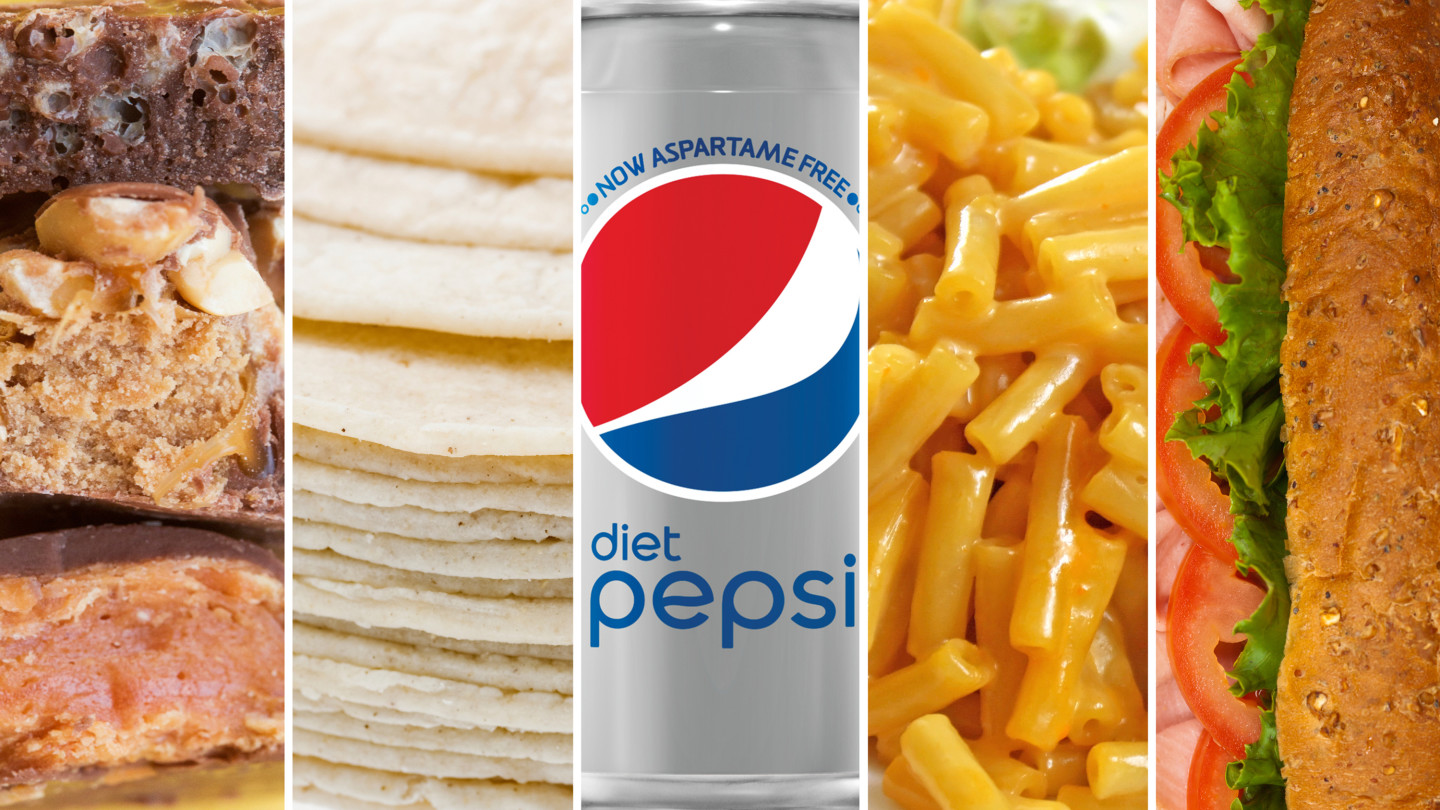
"caption": "Chipotle's announcement that it has removed all GMOs from its menu items is part of a growing food industry trend. From left: Nestle chocolates, Chipotle tortillas, Diet Pepsi, Kraft Macaroni",
"description": "Chipotle's announcement that it has removed all GMOs from its menu items is part of a growing food industry trend. From left: Nestle chocolates, Chipotle tortillas, Diet Pepsi, Kraft Macaroni",
"title": "Chipotle's announcement that it has removed all GMOs from its menu items is part of a growing food industry trend. From left: Nestle chocolates, Chipotle tortillas, Diet Pepsi, Kraft Macaroni & Cheese Dinner, a Subway sandwich. All of these companies have dropped ingredients over the past year in response to consumer demands.",
"credit": "Meredith Rizzo/NPR; iStockphoto; PepsiCo; iStockphoto; iStockphoto",
"status": "inherit",
"isLoading": false,
"fetchFailed": false
},
"bayareabites_95351": {
"type": "attachments",
"id": "bayareabites_95351",
"meta": {
"index": "attachments_1716263798",
"site": "bayareabites",
"id": "95351",
"found": true
},
"parent": 95350,
"imgSizes": {
"twentyfourteen-full-width": {
"file": "https://ww2.kqed.org/app/uploads/sites/24/2015/04/13_apis_mellifera_albinandersson_slide-0b76a21c72a9a13a793cca4eee4bdbeaefea4ab5-1038x576.jpg",
"width": 1038,
"mimeType": "image/jpeg",
"height": 576
},
"thumbnail": {
"file": "https://ww2.kqed.org/app/uploads/sites/24/2015/04/13_apis_mellifera_albinandersson_slide-0b76a21c72a9a13a793cca4eee4bdbeaefea4ab5-400x267.jpg",
"width": 400,
"mimeType": "image/jpeg",
"height": 267
},
"fd-sm": {
"file": "https://ww2.kqed.org/app/uploads/sites/24/2015/04/13_apis_mellifera_albinandersson_slide-0b76a21c72a9a13a793cca4eee4bdbeaefea4ab5-960x640.jpg",
"width": 960,
"mimeType": "image/jpeg",
"height": 640
},
"post-thumbnail": {
"file": "https://ww2.kqed.org/app/uploads/sites/24/2015/04/13_apis_mellifera_albinandersson_slide-0b76a21c72a9a13a793cca4eee4bdbeaefea4ab5-672x372.jpg",
"width": 672,
"mimeType": "image/jpeg",
"height": 372
},
"kqedFullSize": {
"file": "https://ww2.kqed.org/app/uploads/sites/24/2015/04/13_apis_mellifera_albinandersson_slide-0b76a21c72a9a13a793cca4eee4bdbeaefea4ab5-e1429817966451.jpg",
"width": 1920,
"height": 1280
},
"large": {
"file": "https://ww2.kqed.org/app/uploads/sites/24/2015/04/13_apis_mellifera_albinandersson_slide-0b76a21c72a9a13a793cca4eee4bdbeaefea4ab5-1440x960.jpg",
"width": 1440,
"mimeType": "image/jpeg",
"height": 960
},
"guest-author-96": {
"file": "https://ww2.kqed.org/app/uploads/sites/24/2015/04/13_apis_mellifera_albinandersson_slide-0b76a21c72a9a13a793cca4eee4bdbeaefea4ab5-96x96.jpg",
"width": 96,
"mimeType": "image/jpeg",
"height": 96
},
"medium": {
"file": "https://ww2.kqed.org/app/uploads/sites/24/2015/04/13_apis_mellifera_albinandersson_slide-0b76a21c72a9a13a793cca4eee4bdbeaefea4ab5-800x533.jpg",
"width": 800,
"mimeType": "image/jpeg",
"height": 533
},
"guest-author-64": {
"file": "https://ww2.kqed.org/app/uploads/sites/24/2015/04/13_apis_mellifera_albinandersson_slide-0b76a21c72a9a13a793cca4eee4bdbeaefea4ab5-64x64.jpg",
"width": 64,
"mimeType": "image/jpeg",
"height": 64
},
"guest-author-32": {
"file": "https://ww2.kqed.org/app/uploads/sites/24/2015/04/13_apis_mellifera_albinandersson_slide-0b76a21c72a9a13a793cca4eee4bdbeaefea4ab5-32x32.jpg",
"width": 32,
"mimeType": "image/jpeg",
"height": 32
},
"cat_post_thumb_sizecategory-posts-2": {
"file": "https://ww2.kqed.org/app/uploads/sites/24/2015/04/13_apis_mellifera_albinandersson_slide-0b76a21c72a9a13a793cca4eee4bdbeaefea4ab5-150x150.jpg",
"width": 150,
"mimeType": "image/jpeg",
"height": 150
},
"fd-med": {
"file": "https://ww2.kqed.org/app/uploads/sites/24/2015/04/13_apis_mellifera_albinandersson_slide-0b76a21c72a9a13a793cca4eee4bdbeaefea4ab5-1180x787.jpg",
"width": 1180,
"mimeType": "image/jpeg",
"height": 787
},
"detail": {
"file": "https://ww2.kqed.org/app/uploads/sites/24/2015/04/13_apis_mellifera_albinandersson_slide-0b76a21c72a9a13a793cca4eee4bdbeaefea4ab5-75x75.jpg",
"width": 75,
"mimeType": "image/jpeg",
"height": 75
},
"guest-author-128": {
"file": "https://ww2.kqed.org/app/uploads/sites/24/2015/04/13_apis_mellifera_albinandersson_slide-0b76a21c72a9a13a793cca4eee4bdbeaefea4ab5-128x128.jpg",
"width": 128,
"mimeType": "image/jpeg",
"height": 128
}
},
"publishDate": 1429817330,
"modified": 1429818124,
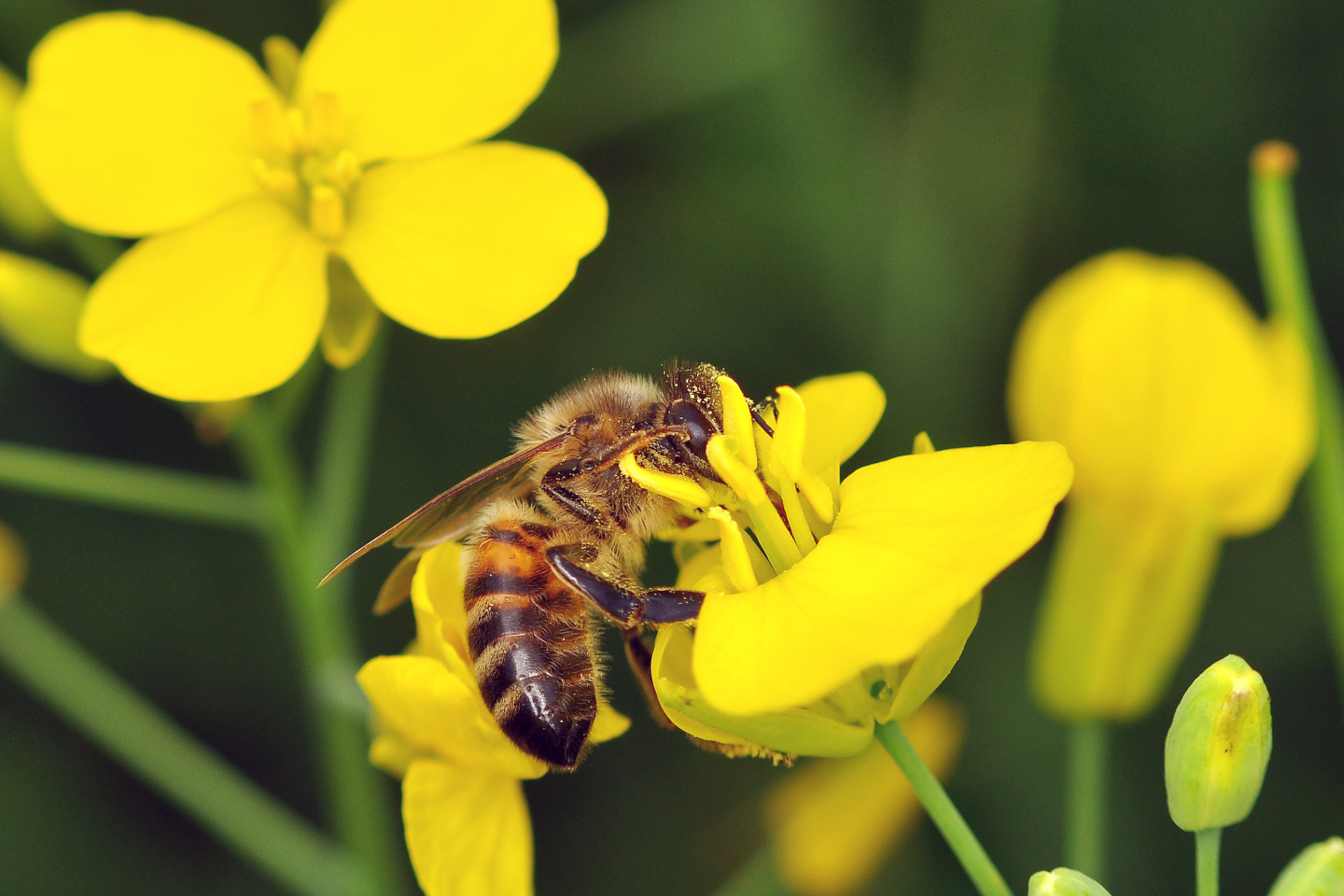
"caption": "A honeybee forages for nectar and pollen from an oilseed rape flower",
"description": "A honeybee forages for nectar and pollen from an oilseed rape flower",
"title": "A honeybee forages for nectar and pollen from an oilseed rape flower.",
"credit": "Albin Andersson/Nature ",
"status": "inherit",
"isLoading": false,
"fetchFailed": false
},
"bayareabites_95177": {
"type": "attachments",
"id": "bayareabites_95177",
"meta": {
"index": "attachments_1716263798",
"site": "bayareabites",
"id": "95177",
"found": true
},
"parent": 95173,
"imgSizes": {
"twentyfourteen-full-width": {
"file": "https://ww2.kqed.org/app/uploads/sites/24/2015/04/finished-yogurt-clear-and-yellow-1-1038x576.jpg",
"width": 1038,
"mimeType": "image/jpeg",
"height": 576
},
"thumbnail": {
"file": "https://ww2.kqed.org/app/uploads/sites/24/2015/04/finished-yogurt-clear-and-yellow-1-400x304.jpg",
"width": 400,
"mimeType": "image/jpeg",
"height": 304
},
"fd-sm": {
"file": "https://ww2.kqed.org/app/uploads/sites/24/2015/04/finished-yogurt-clear-and-yellow-1-320x243.jpg",
"width": 320,
"mimeType": "image/jpeg",
"height": 243
},
"post-thumbnail": {
"file": "https://ww2.kqed.org/app/uploads/sites/24/2015/04/finished-yogurt-clear-and-yellow-1-672x372.jpg",
"width": 672,
"mimeType": "image/jpeg",
"height": 372
},
"kqedFullSize": {
"file": "https://ww2.kqed.org/app/uploads/sites/24/2015/04/finished-yogurt-clear-and-yellow-1.jpg",
"width": 1920,
"height": 1457
},
"large": {
"file": "https://ww2.kqed.org/app/uploads/sites/24/2015/04/finished-yogurt-clear-and-yellow-1-1440x1093.jpg",
"width": 1440,
"mimeType": "image/jpeg",
"height": 1093
},
"guest-author-96": {
"file": "https://ww2.kqed.org/app/uploads/sites/24/2015/04/finished-yogurt-clear-and-yellow-1-96x96.jpg",
"width": 96,
"mimeType": "image/jpeg",
"height": 96
},
"medium": {
"file": "https://ww2.kqed.org/app/uploads/sites/24/2015/04/finished-yogurt-clear-and-yellow-1-800x607.jpg",
"width": 800,
"mimeType": "image/jpeg",
"height": 607
},
"guest-author-64": {
"file": "https://ww2.kqed.org/app/uploads/sites/24/2015/04/finished-yogurt-clear-and-yellow-1-64x64.jpg",
"width": 64,
"mimeType": "image/jpeg",
"height": 64
},
"guest-author-32": {
"file": "https://ww2.kqed.org/app/uploads/sites/24/2015/04/finished-yogurt-clear-and-yellow-1-32x32.jpg",
"width": 32,
"mimeType": "image/jpeg",
"height": 32
},
"cat_post_thumb_sizecategory-posts-2": {
"file": "https://ww2.kqed.org/app/uploads/sites/24/2015/04/finished-yogurt-clear-and-yellow-1-150x150.jpg",
"width": 150,
"mimeType": "image/jpeg",
"height": 150
},
"fd-lrg": {
"file": "https://ww2.kqed.org/app/uploads/sites/24/2015/04/finished-yogurt-clear-and-yellow-1-1180x895.jpg",
"width": 1180,
"mimeType": "image/jpeg",
"height": 895
},
"fd-med": {
"file": "https://ww2.kqed.org/app/uploads/sites/24/2015/04/finished-yogurt-clear-and-yellow-1-768x583.jpg",
"width": 768,
"mimeType": "image/jpeg",
"height": 583
},
"detail": {
"file": "https://ww2.kqed.org/app/uploads/sites/24/2015/04/finished-yogurt-clear-and-yellow-1-75x75.jpg",
"width": 75,
"mimeType": "image/jpeg",
"height": 75
},
"guest-author-128": {
"file": "https://ww2.kqed.org/app/uploads/sites/24/2015/04/finished-yogurt-clear-and-yellow-1-128x128.jpg",
"width": 128,
"mimeType": "image/jpeg",
"height": 128
}
},
"publishDate": 1429308508,
"modified": 1429313531,
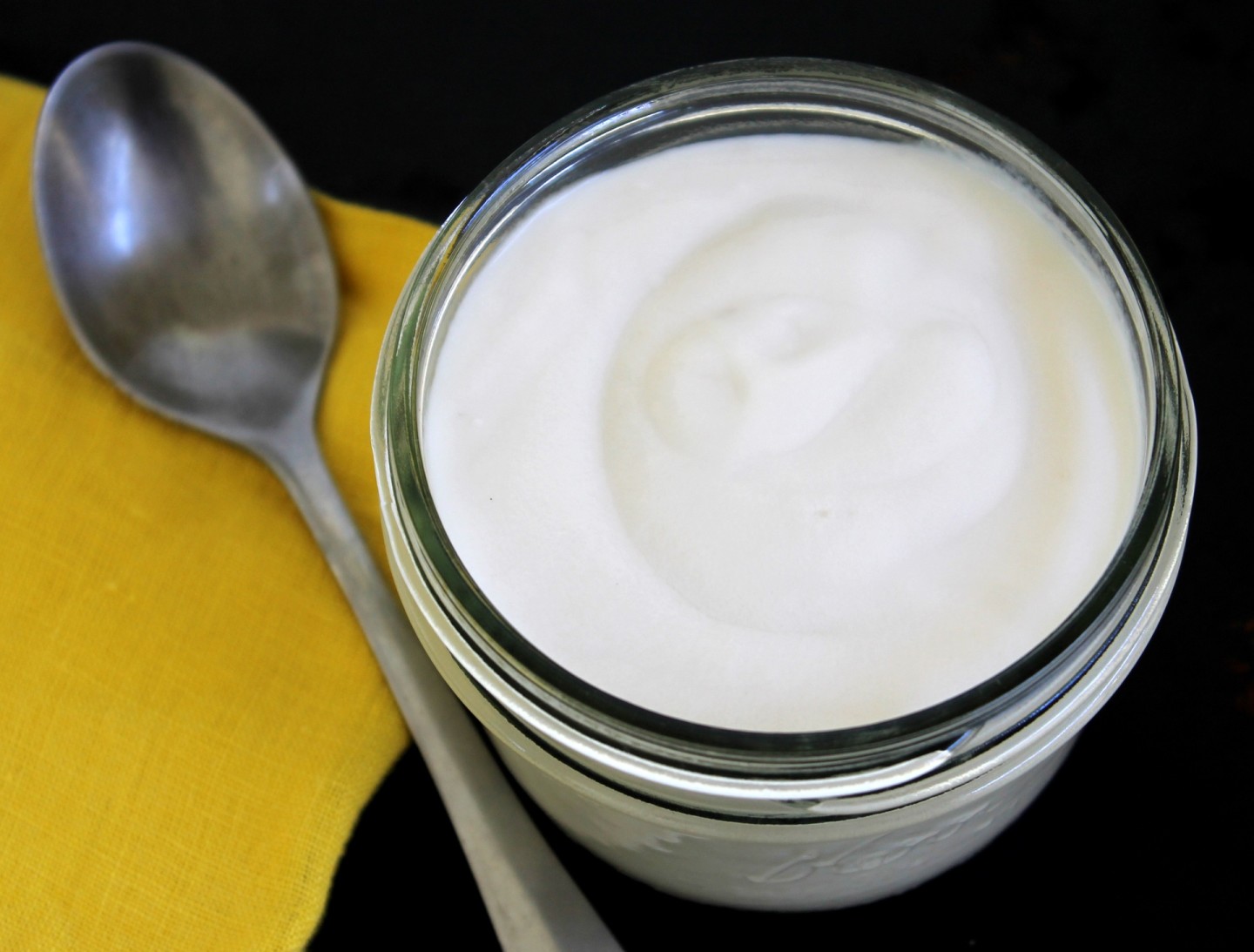
"caption": "Homemade coconut and almond milk yogurt.",
"description": null,
"title": "finished yogurt clear and yellow 1",
"credit": "Kate Williams",
"status": "inherit",
"isLoading": false,
"fetchFailed": false
},
"bayareabites_95195": {
"type": "attachments",
"id": "bayareabites_95195",
"meta": {
"index": "attachments_1716263798",
"site": "bayareabites",
"id": "95195",
"found": true
},
"parent": 95193,
"imgSizes": {
"thumbnail": {
"file": "https://ww2.kqed.org/app/uploads/sites/24/2015/04/food-companies-investigate-400x225.jpg",
"width": 400,
"mimeType": "image/jpeg",
"height": 225
},
"fd-sm": {
"file": "https://ww2.kqed.org/app/uploads/sites/24/2015/04/food-companies-investigate-320x180.jpg",
"width": 320,
"mimeType": "image/jpeg",
"height": 180
},
"post-thumbnail": {
"file": "https://ww2.kqed.org/app/uploads/sites/24/2015/04/food-companies-investigate-672x372.jpg",
"width": 672,
"mimeType": "image/jpeg",
"height": 372
},
"kqedFullSize": {
"file": "https://ww2.kqed.org/app/uploads/sites/24/2015/04/food-companies-investigate.jpg",
"width": 800,
"height": 449
},
"cat_post_thumb_sizecategory-posts-2": {
"file": "https://ww2.kqed.org/app/uploads/sites/24/2015/04/food-companies-investigate-150x150.jpg",
"width": 150,
"mimeType": "image/jpeg",
"height": 150
},
"fd-med": {
"file": "https://ww2.kqed.org/app/uploads/sites/24/2015/04/food-companies-investigate-768x431.jpg",
"width": 768,
"mimeType": "image/jpeg",
"height": 431
},
"guest-author-96": {
"file": "https://ww2.kqed.org/app/uploads/sites/24/2015/04/food-companies-investigate-96x96.jpg",
"width": 96,
"mimeType": "image/jpeg",
"height": 96
},
"medium": {
"file": "https://ww2.kqed.org/app/uploads/sites/24/2015/04/food-companies-investigate-800x449.jpg",
"width": 800,
"mimeType": "image/jpeg",
"height": 449
},
"guest-author-64": {
"file": "https://ww2.kqed.org/app/uploads/sites/24/2015/04/food-companies-investigate-64x64.jpg",
"width": 64,
"mimeType": "image/jpeg",
"height": 64
},
"detail": {
"file": "https://ww2.kqed.org/app/uploads/sites/24/2015/04/food-companies-investigate-75x75.jpg",
"width": 75,
"mimeType": "image/jpeg",
"height": 75
},
"guest-author-32": {
"file": "https://ww2.kqed.org/app/uploads/sites/24/2015/04/food-companies-investigate-32x32.jpg",
"width": 32,
"mimeType": "image/jpeg",
"height": 32
},
"guest-author-128": {
"file": "https://ww2.kqed.org/app/uploads/sites/24/2015/04/food-companies-investigate-128x128.jpg",
"width": 128,
"mimeType": "image/jpeg",
"height": 128
}
},
"publishDate": 1429339027,
"modified": 1429339060,
"caption": "Food companies can make safety evaluations of their products in secret without ever telling the Food and Drug Administration. ",
"description": null,
"title": "food-companies-investigate",
"credit": "Luciano Lozano/Ikon Images/Corbis ",
"status": "inherit",
"isLoading": false,
"fetchFailed": false
}
},
"audioPlayerReducer": {
"postId": "stream_live",
"isPaused": true,
"isPlaying": false,
"pfsActive": false,
"pledgeModalIsOpen": true,
"playerDrawerIsOpen": false,
"liveAudioPlayStartedAt": 0,
"liveAudioPlayContext": ""
},
"authorsReducer": {
"byline_bayareabites_95973": {
"type": "authors",
"id": "byline_bayareabites_95973",
"meta": {
"override": true
},
"slug": "byline_bayareabites_95973",
"name": "Allison Aubrey, \u003ca href=http://ww2.kqed.org/bayareabites/author/nprfood/>NPR Food\u003c/a>",
"isLoading": false
},
"byline_bayareabites_95870": {
"type": "authors",
"id": "byline_bayareabites_95870",
"meta": {
"override": true
},
"slug": "byline_bayareabites_95870",
"name": "Allison Aubrey, \u003ca href=http://ww2.kqed.org/bayareabites/author/nprfood/>NPR Food\u003c/a>",
"isLoading": false
},
"byline_bayareabites_95834": {
"type": "authors",
"id": "byline_bayareabites_95834",
"meta": {
"override": true
},
"slug": "byline_bayareabites_95834",
"name": "Bill Chappell, \u003ca href=\"http://ww2.kqed.org/bayareabites/author/nprfood/\">NPR Food\u003c/a>",
"isLoading": false
},
"byline_bayareabites_95774": {
"type": "authors",
"id": "byline_bayareabites_95774",
"meta": {
"override": true
},
"slug": "byline_bayareabites_95774",
"name": "Dan Charles, \u003ca href=\"http://ww2.kqed.org/bayareabites/author/nprfood/\">NPR Food\u003c/a> ",
"isLoading": false
},
"byline_bayareabites_95748": {
"type": "authors",
"id": "byline_bayareabites_95748",
"meta": {
"override": true
},
"slug": "byline_bayareabites_95748",
"name": "Dan Charles, \u003ca href=\"http://ww2.kqed.org/bayareabites/author/nprfood/\">NPR Food\u003c/a>",
"isLoading": false
},
"byline_bayareabites_95706": {
"type": "authors",
"id": "byline_bayareabites_95706",
"meta": {
"override": true
},
"slug": "byline_bayareabites_95706",
"name": "Carole Zimmer, \u003ca href=\"http://ww2.kqed.org/bayareabites/author/nprfood/\">NPR Food\u003c/a>",
"isLoading": false
},
"byline_bayareabites_95350": {
"type": "authors",
"id": "byline_bayareabites_95350",
"meta": {
"override": true
},
"slug": "byline_bayareabites_95350",
"name": "Allison Aubrey, \u003ca href=\"http://ww2.kqed.org/bayareabites/author/nprfood/\">NPR Food\u003c/a>",
"isLoading": false
},
"skalantari": {
"type": "authors",
"id": "46",
"meta": {
"index": "authors_1716337520",
"id": "46",
"found": true
},
"name": "Shuka Kalantari",
"firstName": "Shuka",
"lastName": "Kalantari",
"slug": "skalantari",
"email": "skalantari@kqed.org",
"display_author_email": false,
"staff_mastheads": [],
"title": "KQED Contributor",
"bio": "Shuka Kalantari is a Bay Area journalist reporting on health, food, culture and immigrant communities in California and internationally. She's reported for Public Radio International’s The World, BBC World News Service’s Outlook, Philosophy Talk, Vice Magazine. Shuka is also a frequent contributor to KQED Public Media. You can follow her \u003ca href=\"https://twitter.com/skalantari\">@skalantari\u003c/a> on Twitter and \u003ca href=\"https://instagram.com/skalantari/\">Instagram\u003c/a>.",
"avatar": "https://secure.gravatar.com/avatar/51d9608640bde16ba09124272a0c0f355429db1ebc29f1853b8d87aab1ae1753?s=600&d=blank&r=g",
"twitter": null,
"bluesky": null,
"facebook": null,
"instagram": null,
"linkedin": null,
"sites": [
{
"site": "news",
"roles": [
"subscriber"
]
},
{
"site": "bayareabites",
"roles": [
"subscriber"
]
},
{
"site": "stateofhealth",
"roles": [
"subscriber"
]
}
],
"headData": {
"title": "Shuka Kalantari | KQED",
"description": "KQED Contributor",
"ogImgSrc": "https://secure.gravatar.com/avatar/51d9608640bde16ba09124272a0c0f355429db1ebc29f1853b8d87aab1ae1753?s=600&d=blank&r=g",
"twImgSrc": "https://secure.gravatar.com/avatar/51d9608640bde16ba09124272a0c0f355429db1ebc29f1853b8d87aab1ae1753?s=600&d=blank&r=g"
},
"isLoading": false,
"link": "/author/skalantari"
},
"nprfood": {
"type": "authors",
"id": "5403",
"meta": {
"index": "authors_1716337520",
"id": "5403",
"found": true
},
"name": "NPR Food",
"firstName": "NPR Food",
"lastName": null,
"slug": "nprfood",
"email": "nprfood@kqed.org",
"display_author_email": false,
"staff_mastheads": [],
"title": null,
"bio": "Food and Health-related stories from NPR including NPR Radio; NPR's food blog, \"The Salt\"; NPR's Health News blog, \"Shots\"; NPR's Breaking News blog \"The Two-Way\"; NPR's global stories blog \"Goats and Soda,\" NPR's economy explainer \"Planet Money\"; food-related technology news from NPR's \"All Tech Considered\"; and food series \"Kitchen Window.\"",
"avatar": "https://secure.gravatar.com/avatar/c4b735bb26404fa18ce2447d32e64291?s=600&d=blank&r=g",
"twitter": "nprfood",
"facebook": null,
"instagram": null,
"linkedin": null,
"sites": [
{
"site": "bayareabites",
"roles": [
"contributor"
]
},
{
"site": "food",
"roles": [
"contributor"
]
}
],
"headData": {
"title": "NPR Food | KQED",
"description": null,
"ogImgSrc": "https://secure.gravatar.com/avatar/c4b735bb26404fa18ce2447d32e64291?s=600&d=blank&r=g",
"twImgSrc": "https://secure.gravatar.com/avatar/c4b735bb26404fa18ce2447d32e64291?s=600&d=blank&r=g"
},
"isLoading": false,
"link": "/author/nprfood"
},
"lisalanders": {
"type": "authors",
"id": "5412",
"meta": {
"index": "authors_1716337520",
"id": "5412",
"found": true
},
"name": "Lisa Landers",
"firstName": "Lisa",
"lastName": "Landers",
"slug": "lisalanders",
"email": "llanders@KQED.org",
"display_author_email": false,
"staff_mastheads": [],
"title": "KQED Contributor",
"bio": "Lisa Landers is a producer and writer whose work includes documentaries, museum exhibitions, and educational multimedia. Her work has covered a diversity of subject matter including natural history, ecological and social issues, cultural exploration, food, music, and architecture. She’s developed and produced films for broadcasters such as National Geographic, Smithsonian Channel, and the Discovery Channel. Her work as an exhibition developer and multimedia producer has been featured at institutions including the American Museum of Natural History, the National Building Museum, and The Tech Museum. Her writing has also appeared in a wide variety of print and online publications.",
"avatar": "https://secure.gravatar.com/avatar/1e4aa08f6f0a92ea11a2779a453cb36d?s=600&d=blank&r=g",
"twitter": null,
"bluesky": null,
"facebook": null,
"instagram": null,
"linkedin": null,
"sites": [
{
"site": "bayareabites",
"roles": [
"contributor"
]
},
{
"site": "quest",
"roles": [
"leadcoordinator",
"edit_theme_options",
"subscriber"
]
},
{
"site": "food",
"roles": []
}
],
"headData": {
"title": "Lisa Landers | KQED",
"description": "KQED Contributor",
"ogImgSrc": "https://secure.gravatar.com/avatar/1e4aa08f6f0a92ea11a2779a453cb36d?s=600&d=blank&r=g",
"twImgSrc": "https://secure.gravatar.com/avatar/1e4aa08f6f0a92ea11a2779a453cb36d?s=600&d=blank&r=g"
},
"isLoading": false,
"link": "/author/lisalanders"
},
"katewilliams": {
"type": "authors",
"id": "5485",
"meta": {
"index": "authors_1716337520",
"id": "5485",
"found": true
},
"name": "Kate Williams",
"firstName": "Kate",
"lastName": "Williams",
"slug": "katewilliams",
"email": "williaka@gmail.com",
"display_author_email": false,
"staff_mastheads": [],
"title": null,
"bio": "Kate Williams grew up outside of Atlanta, where twenty-pound baskets of peaches were an end-of-summer tradition. After spending time in Boston developing recipes for America's Test Kitchen and pretending to be a New Englander, she moved to sunny Berkeley. Here she works as a personal chef and food writer, covering topics ranging from taco trucks to modernist cookbooks. In addition to KQED's Bay Area Bites, Kate's work appears on Serious Eats, Berkeleyside NOSH, The Oxford American, America's Test Kitchen cookbooks, and Food52.",
"avatar": "https://secure.gravatar.com/avatar/25623fe56e181fe8b6ee92fd0ea077de?s=600&d=blank&r=g",
"twitter": "KateHWilliams",
"facebook": null,
"instagram": null,
"linkedin": null,
"sites": [
{
"site": "bayareabites",
"roles": [
"contributor"
]
},
{
"site": "food",
"roles": [
"contributor"
]
}
],
"headData": {
"title": "Kate Williams | KQED",
"description": null,
"ogImgSrc": "https://secure.gravatar.com/avatar/25623fe56e181fe8b6ee92fd0ea077de?s=600&d=blank&r=g",
"twImgSrc": "https://secure.gravatar.com/avatar/25623fe56e181fe8b6ee92fd0ea077de?s=600&d=blank&r=g"
},
"isLoading": false,
"link": "/author/katewilliams"
},
"shelbypope": {
"type": "authors",
"id": "5566",
"meta": {
"index": "authors_1716337520",
"id": "5566",
"found": true
},
"name": "Shelby Pope",
"firstName": "Shelby",
"lastName": "Pope",
"slug": "shelbypope",
"email": "shelbylpope@gmail.com",
"display_author_email": false,
"staff_mastheads": [],
"title": "KQED Contributor",
"bio": "Shelby Pope is a freelance writer living and eating her way through the East Bay. She’s written about food, art and science for publications including the Smithsonian, Lucky Peach, and the Washington Post's pet blog. When she’s not taste testing sourdough bread to find the Bay Area’s best loaf, you can find her on Twitter \u003ca href=\"https://twitter.com/shelbylpope\">@shelbylpope\u003c/a> or at \u003ca href=\"https://shelbypope.com/\">shelbypope.com\u003c/a>",
"avatar": "https://secure.gravatar.com/avatar/df74e904399e45720e48e36c6e1ae7a90c32216eb2c9c82f3b2e1a9641b507d3?s=600&d=blank&r=g",
"twitter": "shelbylpope",
"bluesky": null,
"facebook": null,
"instagram": null,
"linkedin": null,
"sites": [
{
"site": "arts",
"roles": [
"subscriber"
]
},
{
"site": "food",
"roles": [
"subscriber"
]
}
],
"headData": {
"title": "Shelby Pope | KQED",
"description": "KQED Contributor",
"ogImgSrc": "https://secure.gravatar.com/avatar/df74e904399e45720e48e36c6e1ae7a90c32216eb2c9c82f3b2e1a9641b507d3?s=600&d=blank&r=g",
"twImgSrc": "https://secure.gravatar.com/avatar/df74e904399e45720e48e36c6e1ae7a90c32216eb2c9c82f3b2e1a9641b507d3?s=600&d=blank&r=g"
},
"isLoading": false,
"link": "/author/shelbypope"
}
},
"pagesReducer": {
"bayareabites_category_health-and-nutrition": {
"type": "terms",
"id": "bayareabites_1245",
"meta": {
"index": "terms_1716263798",
"site": "bayareabites",
"id": "1245",
"score": 14.4079685
},
"featImg": null,
"name": "health and nutrition",
"description": null,
"taxonomy": "category",
"headData": {
"twImgId": null,
"twTitle": null,
"ogTitle": null,
"ogImgId": null,
"twDescription": null,
"description": null,
"title": "health and nutrition Archives | KQED Bay Area Bites",
"ogDescription": null
},
"ttid": 1078,
"slug": "health-and-nutrition",
"isLoading": false,
"title": "health and nutrition",
"pageMeta": {
"site": "bayareabites",
"WpPageTemplate": "page-topic-editorial",
"currentPage": 25
},
"blocks": [
{
"blockName": "kqed/post-list",
"attrs": {
"layout": "cardArticle2",
"query": "posts/bayareabites?category=health-and-nutrition",
"seeMore": false,
"paginated": true,
"page": 25
}
},
{
"blockName": "kqed/ad"
}
]
}
},
"pfsSessionReducer": {},
"postsReducer": {
"stream_live": {
"type": "live",
"id": "stream_live",
"audioUrl": "https://streams.kqed.org/kqedradio",
"title": "Live Stream",
"excerpt": "Live Stream information currently unavailable.",
"link": "/radio",
"featImg": "",
"label": {
"name": "KQED Live",
"link": "/"
}
},
"stream_kqedNewscast": {
"type": "posts",
"id": "stream_kqedNewscast",
"audioUrl": "https://www.kqed.org/.stream/anon/radio/RDnews/newscast.mp3?_=1",
"title": "KQED Newscast",
"featImg": "",
"label": {
"name": "88.5 FM",
"link": "/"
}
},
"bayareabites_95973": {
"type": "posts",
"id": "bayareabites_95973",
"meta": {
"index": "posts_1716263798",
"site": "bayareabites",
"id": "95973",
"score": null,
"sort": [
1431120941000
]
},
"parent": 0,
"labelTerm": {
"site": "bayareabites"
},
"blocks": [],
"publishDate": 1431120941,
"format": "standard",
"disqusTitle": "Promises, Promises: Is Big Food Marketing Less Junk To Kids On TV?",
"title": "Promises, Promises: Is Big Food Marketing Less Junk To Kids On TV?",
"headTitle": "Bay Area Bites | KQED Food",
"content": "\u003cp>It's not hard to connect the dots between what kids see on TV and what they eat. Advertising works.\u003c/p>\n\u003cp>And researchers have \u003ca href=\"http://www.iom.edu/Reports/2005/Food-Marketing-to-Children-and-Youth-Threat-or-Opportunity.aspx\" target=\"_blank\">documented\u003c/a> that marketing practices that push items like sugary cereals, salted snacks and fast food put children's long-term health at risk, by promoting unhealthy eating habits.\u003c/p>\n\u003cp>But shifting marketing away from products high in salt, sugar and fat — as the \u003ca href=\"http://www.iom.edu/\">Institute of Medicine of the National Academies\u003c/a> urged back in 2006 — has proven to be a tough challenge.\u003c/p>\n\u003cp>The food industry has been policing itself on this front. Through a collaborative known as the \u003ca href=\"http://www.bbb.org/council/the-national-partner-program/national-advertising-review-services/childrens-food-and-beverage-advertising-initiative/\" target=\"_blank\">Children's Food and Beverage Advertising Initiative\u003c/a>, which was launched at the end of 2006, companies pledged to cut back on marketing unhealthy foods to children under 12.\u003c/p>\n\u003cp>Lots of the biggest names in food are part of this initiative: from Kraft Foods and Kellogg to McDonald's USA and The Coca-Cola Company. And from their perspective, there's been lots of progress.\u003c/p>\n\u003cp>[ad fullwidth]\u003c/p>\n\u003cp>\"The foods being advertised to kids are healthier than ever,\" Elaine Kolish, the director of the industry's initiative, wrote to us in an email. And as \u003ca href=\"http://www.ajpmonline.org/article/S0749-3797(15)00095-1/abstract\" target=\"_blank\">research\u003c/a> published this week in the \u003cem>American Journal of Preventive Medicine\u003c/em> concludes, the companies have indeed met their targets.\u003c/p>\n\u003cp>For instance, Kellogg pledged that all child-targeted food ads would feature foods that contain no more than 200 calories, 2 grams of saturated fat and 12 grams of added sugar per serving. According to the new study, this promise has been kept. \"Examination of compliance with industry self-regulation revealed complete conformity with company pledges,\" the study concludes.\u003c/p>\n\u003cp>But it's too soon to give the industry a congratulatory high-five, according to \u003ca href=\"http://comm.arizona.edu/user/dale-kunkel\">Dale Kunkel\u003c/a>, a professor emeritus of communications at the University of Arizona and one of the authors of the study.\u003c/p>\n\u003cp>He tells us that the companies' efforts \u003cem>\u003c/em> \"have barely moved the needle in terms of shifting food advertising to children to genuinely healthy products.\"\u003c/p>\n\u003cp>Kunkel and his co-authors used a \u003ca href=\"http://www.nhlbi.nih.gov/health/educational/wecan/eat-right/choosing-foods.htm\" target=\"_blank\">food-grading system\u003c/a> known as \"Go\" (good to eat every day), \"Slow\" (good to eat a few times a week) and \"Whoa\" (eat only on occasion) to evaluate the kinds of foods advertised to kids.\u003c/p>\n\u003cp>Their analysis shows that in 2013, 75 percent of food ads targeted toward children by companies participating in the initiative \"promoted products in the poorest nutritional category.\"\u003c/p>\n\u003cp>Simply put, most foods marketed on TV to kids are \"Whoa\" foods. Companies may be reducing the amount of sugar or sodium in their products, or shaving down portion sizes, but they're still not promoting nutrient-dense \"Go\" foods.\u003c/p>\n\u003cp>The CFBAI's Elaine Kolish takes issue with this evaluation. She says the Go/Slow/Whoa system is flawed, and argues that contrary to what the study finds, \"progress under the Children's Food and Beverage Advertising Initiative has been substantial.\"\u003c/p>\n\u003cp>She points to cereals, one of the foods most frequently advertised to kids.\u003c/p>\n\u003cp>\"Before our program started, some cereals had as much as 15 grams of sugar per serving. To be advertised to children, they now can have no more than 10 grams of sugar, and many have even less. At the same time, their whole grain content has gone up,\" Kolish wrote in a statement to \u003ca href=\"http://www.npr.org/blogs/thesalt/\" target=\"_blank\">The Salt\u003c/a>.\u003c/p>\n\u003cp>So, do these changes give the industry credibility in arguing that it has met its goal to only advertise \"better-for-you foods\" to children, as the initiative \u003ca href=\"http://www.bbb.org/council/the-national-partner-program/national-advertising-review-services/childrens-food-and-beverage-advertising-initiative/about-the-initiative/\" target=\"_blank\">pledged\u003c/a> to do in its mission statement?\u003c/p>\n\u003cp>In Kunkel's opinion, the answer is no: \"There's a disconnect between what they say they're doing and what the study finds,\" he tells The Salt.\u003c/p>\n\u003cp>The companies participating in CFBAI \"have very self-interested definitions of what constitutes a healthy food,\" he argues.\u003c/p>\n\u003cp>In other words, if you can call a food \u003cem>better-for-you\u003c/em> because it contains a bit less sugar, this may be letting the industry off the hook a little too easily. At a time when Americans are being told to \u003ca href=\"http://www.npr.org/blogs/thesalt/2015/03/04/390726878/dump-the-lumps-the-world-health-organization-says-eat-less-sugar\" target=\"_blank\">limit sugar to fewer than 10 percent of daily calories\u003c/a>, and fill half of our plates — at every meal — with fruits and vegetables, it's clear that the ideal pattern of eating doesn't line up with what's being advertised on TV. \u003c/p>\n\u003cp>\u003c/p>\n\u003cp>Copyright 2015 \u003ca href=\"http://www.npr.org/\" target=\"_blank\">NPR\u003c/a>.\u003c/p>\n\n",
"disqusIdentifier": "95973 http://ww2.kqed.org/bayareabites/?p=95973",
"disqusUrl": "https://ww2.kqed.org/bayareabites/2015/05/08/promises-promises-is-big-food-marketing-less-junk-to-kids-on-tv/",
"stats": {
"hasVideo": false,
"hasChartOrMap": false,
"hasAudio": false,
"hasPolis": false,
"wordCount": 720,
"hasGoogleForm": false,
"hasGallery": false,
"hasHearkenModule": false,
"iframeSrcs": [],
"paragraphCount": 22
},
"modified": 1431120941,
"excerpt": "Back in 2006, food-industry giants pledged to market only \"better-for-you\" foods to children. A new study concludes they kept to the letter of that pledge, but not the spirit.",
"headData": {
"twImgId": "",
"twTitle": "",
"ogTitle": "",
"ogImgId": "",
"twDescription": "",
"description": "Back in 2006, food-industry giants pledged to market only "better-for-you" foods to children. A new study concludes they kept to the letter of that pledge, but not the spirit.",
"title": "Promises, Promises: Is Big Food Marketing Less Junk To Kids On TV? | KQED",
"ogDescription": "",
"schema": {
"@context": "https://schema.org",
"@type": "Article",
"headline": "Promises, Promises: Is Big Food Marketing Less Junk To Kids On TV?",
"datePublished": "2015-05-08T14:35:41-07:00",
"dateModified": "2015-05-08T14:35:41-07:00",
"image": "https://cdn.kqed.org/wp-content/uploads/2020/02/KQED-OG-Image@1x.png"
}
},
"guestAuthors": [],
"slug": "promises-promises-is-big-food-marketing-less-junk-to-kids-on-tv",
"status": "publish",
"nprApiLink": "http://api.npr.org/query?id=404977153&apiKey=MDAxOTAwOTE4MDEyMTkxMDAzNjczZDljZA004",
"nprByline": "Allison Aubrey, \u003ca href=http://ww2.kqed.org/bayareabites/author/nprfood/>NPR Food\u003c/a>",
"nprStoryDate": "Fri, 08 May 2015 13:58:00 -0400",
"nprLastModifiedDate": "Fri, 08 May 2015 14:21:43 -0400",
"nprHtmlLink": "http://www.npr.org/blogs/thesalt/2015/05/08/404977153/promises-promises-is-big-food-marketing-less-junk-to-kids-on-tv?ft=nprml&f=404977153",
"nprStoryId": "404977153",
"nprRetrievedStory": "1",
"nprPubDate": "Fri, 08 May 2015 14:21:00 -0400",
"path": "/bayareabites/95973/promises-promises-is-big-food-marketing-less-junk-to-kids-on-tv",
"audioTrackLength": null,
"parsedContent": [
{
"type": "contentString",
"content": "\u003cdiv class=\"post-body\">\u003cp>\u003cp>It's not hard to connect the dots between what kids see on TV and what they eat. Advertising works.\u003c/p>\n\u003cp>And researchers have \u003ca href=\"http://www.iom.edu/Reports/2005/Food-Marketing-to-Children-and-Youth-Threat-or-Opportunity.aspx\" target=\"_blank\">documented\u003c/a> that marketing practices that push items like sugary cereals, salted snacks and fast food put children's long-term health at risk, by promoting unhealthy eating habits.\u003c/p>\n\u003cp>But shifting marketing away from products high in salt, sugar and fat — as the \u003ca href=\"http://www.iom.edu/\">Institute of Medicine of the National Academies\u003c/a> urged back in 2006 — has proven to be a tough challenge.\u003c/p>\n\u003cp>The food industry has been policing itself on this front. Through a collaborative known as the \u003ca href=\"http://www.bbb.org/council/the-national-partner-program/national-advertising-review-services/childrens-food-and-beverage-advertising-initiative/\" target=\"_blank\">Children's Food and Beverage Advertising Initiative\u003c/a>, which was launched at the end of 2006, companies pledged to cut back on marketing unhealthy foods to children under 12.\u003c/p>\n\u003cp>Lots of the biggest names in food are part of this initiative: from Kraft Foods and Kellogg to McDonald's USA and The Coca-Cola Company. And from their perspective, there's been lots of progress.\u003c/p>\n\u003cp>\u003c/p>\u003c/div>",
"attributes": {
"named": {},
"numeric": []
}
},
{
"type": "component",
"content": "",
"name": "ad",
"attributes": {
"named": {
"label": "fullwidth"
},
"numeric": [
"fullwidth"
]
}
},
{
"type": "contentString",
"content": "\u003cdiv class=\"post-body\">\u003cp>\u003c/p>\n\u003cp>\"The foods being advertised to kids are healthier than ever,\" Elaine Kolish, the director of the industry's initiative, wrote to us in an email. And as \u003ca href=\"http://www.ajpmonline.org/article/S0749-3797(15)00095-1/abstract\" target=\"_blank\">research\u003c/a> published this week in the \u003cem>American Journal of Preventive Medicine\u003c/em> concludes, the companies have indeed met their targets.\u003c/p>\n\u003cp>For instance, Kellogg pledged that all child-targeted food ads would feature foods that contain no more than 200 calories, 2 grams of saturated fat and 12 grams of added sugar per serving. According to the new study, this promise has been kept. \"Examination of compliance with industry self-regulation revealed complete conformity with company pledges,\" the study concludes.\u003c/p>\n\u003cp>But it's too soon to give the industry a congratulatory high-five, according to \u003ca href=\"http://comm.arizona.edu/user/dale-kunkel\">Dale Kunkel\u003c/a>, a professor emeritus of communications at the University of Arizona and one of the authors of the study.\u003c/p>\n\u003cp>He tells us that the companies' efforts \u003cem>\u003c/em> \"have barely moved the needle in terms of shifting food advertising to children to genuinely healthy products.\"\u003c/p>\n\u003cp>Kunkel and his co-authors used a \u003ca href=\"http://www.nhlbi.nih.gov/health/educational/wecan/eat-right/choosing-foods.htm\" target=\"_blank\">food-grading system\u003c/a> known as \"Go\" (good to eat every day), \"Slow\" (good to eat a few times a week) and \"Whoa\" (eat only on occasion) to evaluate the kinds of foods advertised to kids.\u003c/p>\n\u003cp>Their analysis shows that in 2013, 75 percent of food ads targeted toward children by companies participating in the initiative \"promoted products in the poorest nutritional category.\"\u003c/p>\n\u003cp>Simply put, most foods marketed on TV to kids are \"Whoa\" foods. Companies may be reducing the amount of sugar or sodium in their products, or shaving down portion sizes, but they're still not promoting nutrient-dense \"Go\" foods.\u003c/p>\n\u003cp>The CFBAI's Elaine Kolish takes issue with this evaluation. She says the Go/Slow/Whoa system is flawed, and argues that contrary to what the study finds, \"progress under the Children's Food and Beverage Advertising Initiative has been substantial.\"\u003c/p>\n\u003cp>She points to cereals, one of the foods most frequently advertised to kids.\u003c/p>\n\u003cp>\"Before our program started, some cereals had as much as 15 grams of sugar per serving. To be advertised to children, they now can have no more than 10 grams of sugar, and many have even less. At the same time, their whole grain content has gone up,\" Kolish wrote in a statement to \u003ca href=\"http://www.npr.org/blogs/thesalt/\" target=\"_blank\">The Salt\u003c/a>.\u003c/p>\n\u003cp>So, do these changes give the industry credibility in arguing that it has met its goal to only advertise \"better-for-you foods\" to children, as the initiative \u003ca href=\"http://www.bbb.org/council/the-national-partner-program/national-advertising-review-services/childrens-food-and-beverage-advertising-initiative/about-the-initiative/\" target=\"_blank\">pledged\u003c/a> to do in its mission statement?\u003c/p>\n\u003cp>In Kunkel's opinion, the answer is no: \"There's a disconnect between what they say they're doing and what the study finds,\" he tells The Salt.\u003c/p>\n\u003cp>The companies participating in CFBAI \"have very self-interested definitions of what constitutes a healthy food,\" he argues.\u003c/p>\n\u003cp>In other words, if you can call a food \u003cem>better-for-you\u003c/em> because it contains a bit less sugar, this may be letting the industry off the hook a little too easily. At a time when Americans are being told to \u003ca href=\"http://www.npr.org/blogs/thesalt/2015/03/04/390726878/dump-the-lumps-the-world-health-organization-says-eat-less-sugar\" target=\"_blank\">limit sugar to fewer than 10 percent of daily calories\u003c/a>, and fill half of our plates — at every meal — with fruits and vegetables, it's clear that the ideal pattern of eating doesn't line up with what's being advertised on TV. \u003c/p>\n\u003cp>\u003c/p>\n\u003cp>Copyright 2015 \u003ca href=\"http://www.npr.org/\" target=\"_blank\">NPR\u003c/a>.\u003c/p>\n\n\u003c/div>\u003c/p>",
"attributes": {
"named": {},
"numeric": []
}
}
],
"link": "/bayareabites/95973/promises-promises-is-big-food-marketing-less-junk-to-kids-on-tv",
"authors": [
"byline_bayareabites_95973"
],
"categories": [
"bayareabites_10028",
"bayareabites_1245",
"bayareabites_1246",
"bayareabites_12555",
"bayareabites_10916",
"bayareabites_2035"
],
"tags": [
"bayareabites_11518",
"bayareabites_14438",
"bayareabites_14437",
"bayareabites_1853",
"bayareabites_511"
],
"featImg": "bayareabites_95974",
"label": "bayareabites"
},
"bayareabites_95870": {
"type": "posts",
"id": "bayareabites_95870",
"meta": {
"index": "posts_1716263798",
"site": "bayareabites",
"id": "95870",
"score": null,
"sort": [
1430941483000
]
},
"parent": 0,
"labelTerm": {
"site": "bayareabites"
},
"blocks": [],
"publishDate": 1430941483,
"format": "audio",
"disqusTitle": "Panera Is The Latest To Drop Artificial Ingredients From Its Food",
"title": "Panera Is The Latest To Drop Artificial Ingredients From Its Food",
"headTitle": "Bay Area Bites | KQED Food",
"content": "\u003cp>\u003cstrong>Listen to the Story on Morning Edition:\u003c/strong>\u003cbr>\nhttp://pd.npr.org/anon.npr-mp3/npr/me/2015/05/20150506_me_panera_is_the_latest_to_drop_artificial_ingredients_from_its_food.mp3\u003c/p>\n\u003cp>This news may feel like day-old bread, but here goes: Panera Bread is shaking up the fast-casual eatery world with its \u003ca href=\"https://www.panerabread.com/panerabread/documents/press/2015/no-no-list-release%205-5-15.pdf\">announcement\u003c/a> to ditch more than 150 food additives by the end of 2016.\u003c/p>\n\u003cp>That includes everything from artificial colorings to preservatives to monosodium gluatamate, or \u003ca href=\"http://www.npr.org/blogs/thesalt/2013/11/17/245728214/msg-seasoned-for-a-comeback\">MSG\u003c/a>. Here's a \u003ca href=\"https://www.panerabread.com/content/dam/panerabread/documents/panera-no-no-list-05-2015.pdf\">list\u003c/a> of Panera's new no-no list.\u003c/p>\n\u003cp>The question we're asking here at \u003ca href=\"http://www.npr.org/blogs/thesalt/\" target=\"_blank\">The Salt\u003c/a> is: How much credit should the chain get for its highly orchestrated announcement? (Believe us when we say there was more than one PR firm promoting the news.)\u003c/p>\n\u003cp>In other words, how forward-thinking is the company? And how much are they trying to take credit for changes that are actually sweeping the entire food industry?\u003c/p>\n\u003cp>[ad fullwidth]\u003c/p>\n\u003cp>Here's our take: Kudos to Panera for shining a light on some of the standard practices among commercial food suppliers -- such as adding titanium dioxide to mozzarella cheese in order to create an ultra-white appearance. Who needs bleach in their mozzarella, really?\u003c/p>\n\u003cp>Panera's head chef, Dan Kish, says that as he and his team pored over the hundreds of additives in the ingredients that Panera uses, they asked two questions: What is this? And why is it used?\u003c/p>\n\u003cp>When he realized that the titanium dioxide was used for cosmetic purposes, he said, \"Let's just take it out.\"\u003c/p>\n\u003cp>Kish says he's not a scientist, so he doesn't want get into the debate over whether removing the additives makes the food more healthful, or less harmful. In any case, there's little evidence that many of the additives Panera is eliminating pose a measurable health risk at the amounts they're commonly used in food. We've \u003ca href=\"http://www.npr.org/blogs/thesalt/2014/03/06/286886095/almost-500-foods-contain-the-yoga-mat-compound-should-we-care-keep\">reported\u003c/a>, for instance, that there's little risk associated with azodicarbonamide, a chemical on the \"no-no\" list, despite its association as being the same compound that's in yoga mats.\u003c/p>\n\u003cp>Kish says he believes that the direction Panera is headed is driven much more by his philosophy of food and cooking. \"We think a simplified pantry is a better pantry,\" he says.\u003c/p>\n\u003cp>Other Big Food companies like Nestle, Hershey and Kraft are also eliminating or cutting back on additives. And it's clear from survey data that more Americans favor such changes.\u003c/p>\n\u003cp>In January, Nielsen published a \u003ca href=\"http://www.nielsen.com/content/dam/nielsenglobal/eu/nielseninsights/pdfs/Nielsen%20Global%20Health%20and%20Wellness%20Report%20-%20January%202015.pdf\">global survey\u003c/a> showing that an increasing number of Americans say they want fresh, natural and minimally processed foods. What's more, 1 in 4 North Americans said they would pay a premium for foods that were \"all natural\" or contained no artificial colors.\u003c/p>\n\u003cp>But where Panera is not pushing new boundaries is its call to ditch trans fats. As we've \u003ca href=\"http://www.npr.org/blogs/thesalt/2013/11/07/243730263/fda-moves-to-phase-out-remaining-trans-fats-in-food-supply\">reported\u003c/a>, in 2006, the Food and Drug Administration required food companies to label the trans fats in their products. Since then, the entire food industry has cut back drastically on the use of partially hydrogenated oils. The Grocery Manufacturers Association estimates that food manufacturers have lowered the amounts of trans fats in their food products by over 73 percent.\u003c/p>\n\u003cp>So, on this particular ingredient, it's hard to give Panera credit for a change that has already swept through the entire industry.\u003c/p>\n\u003cp>And, here's one more hiccup in Panera's \"no-no\" list: The company says it will not use any high fructose corn syrup or artificial sweeteners — such as aspartame and Ace-K — in its menu items.\u003c/p>\n\u003cp>And yet it will continue to sell beverages, such as sodas and diet-colas, that contain these sweeteners. \"It's a big omission,\" says \u003ca href=\"http://www.cspinet.org/about/cspi_staff.html\">Lisa Lefferts\u003c/a>, a senior scientist at the Center for Science in the Public Interest.\u003c/p>\n\u003cp>Panera's Kish says the company is working with its beverage suppliers to move in this direction. So, he says, stay tuned. \u003c/p>\n\u003cp>\u003c/p>\n\u003cp>Copyright 2015 \u003ca href=\"http://www.npr.org/\" target=\"_blank\">NPR\u003c/a>.\u003c/p>\n\n",
"disqusIdentifier": "95870 http://ww2.kqed.org/bayareabites/?p=95870",
"disqusUrl": "https://ww2.kqed.org/bayareabites/2015/05/06/panera-is-the-latest-to-drop-artificial-ingredients-from-its-food/",
"stats": {
"hasVideo": false,
"hasChartOrMap": false,
"hasAudio": false,
"hasPolis": false,
"wordCount": 651,
"hasGoogleForm": false,
"hasGallery": false,
"hasHearkenModule": false,
"iframeSrcs": [],
"paragraphCount": 20
},
"modified": 1431117510,
"excerpt": "Panera Bread says it's dropping artificial colors, preservatives and additives from many menu items. But while it says that includes artificial sweeteners, it's leaving sodas with them on the menu.",
"headData": {
"twImgId": "",
"twTitle": "",
"ogTitle": "",
"ogImgId": "",
"twDescription": "",
"description": "Panera Bread says it's dropping artificial colors, preservatives and additives from many menu items. But while it says that includes artificial sweeteners, it's leaving sodas with them on the menu.",
"title": "Panera Is The Latest To Drop Artificial Ingredients From Its Food | KQED",
"ogDescription": "",
"schema": {
"@context": "https://schema.org",
"@type": "Article",
"headline": "Panera Is The Latest To Drop Artificial Ingredients From Its Food",
"datePublished": "2015-05-06T12:44:43-07:00",
"dateModified": "2015-05-08T13:38:30-07:00",
"image": "https://cdn.kqed.org/wp-content/uploads/2020/02/KQED-OG-Image@1x.png"
}
},
"guestAuthors": [],
"slug": "panera-is-the-latest-to-drop-artificial-ingredients-from-its-food",
"status": "publish",
"nprApiLink": "http://api.npr.org/query?id=404626500&apiKey=MDAxOTAwOTE4MDEyMTkxMDAzNjczZDljZA004",
"nprByline": "Allison Aubrey, \u003ca href=http://ww2.kqed.org/bayareabites/author/nprfood/>NPR Food\u003c/a>",
"nprStoryDate": "Wed, 06 May 2015 05:03:00 -0400",
"nprLastModifiedDate": "Wed, 06 May 2015 14:53:45 -0400",
"nprHtmlLink": "http://www.npr.org/blogs/thesalt/2015/05/06/404626500/panera-is-the-latest-to-drop-artificial-ingredients-from-its-food?ft=nprml&f=404626500",
"nprAudio": "http://pd.npr.org/anon.npr-mp3/npr/me/2015/05/20150506_me_panera_is_the_latest_to_drop_artificial_ingredients_from_its_food.mp3?orgId=1&topicId=1053&d=131&p=3&story=404626500&t=progseg&e=404625898&seg=13&ft=nprml&f=404626500",
"nprAudioM3u": "http://api.npr.org/m3u/1404626501-714c6a.m3u?orgId=1&topicId=1053&d=131&p=3&story=404626500&t=progseg&e=404625898&seg=13&ft=nprml&f=404626500",
"nprStoryId": "404626500",
"nprRetrievedStory": "1",
"nprPubDate": "Wed, 06 May 2015 14:53:00 -0400",
"path": "/bayareabites/95870/panera-is-the-latest-to-drop-artificial-ingredients-from-its-food",
"audioUrl": "http://pd.npr.org/anon.npr-mp3/npr/me/2015/05/20150506_me_panera_is_the_latest_to_drop_artificial_ingredients_from_its_food.mp3?orgId=1&topicId=1053&d=131&p=3&story=404626500&t=progseg&e=404625898&seg=13&ft=nprml&f=404626500",
"audioTrackLength": null,
"parsedContent": [
{
"type": "contentString",
"content": "\u003cdiv class=\"post-body\">\u003cp>\u003cp>\u003cstrong>Listen to the Story on Morning Edition:\u003c/strong>\u003cbr>\nhttp://pd.npr.org/anon.npr-mp3/npr/me/2015/05/20150506_me_panera_is_the_latest_to_drop_artificial_ingredients_from_its_food.mp3\u003c/p>\n\u003cp>This news may feel like day-old bread, but here goes: Panera Bread is shaking up the fast-casual eatery world with its \u003ca href=\"https://www.panerabread.com/panerabread/documents/press/2015/no-no-list-release%205-5-15.pdf\">announcement\u003c/a> to ditch more than 150 food additives by the end of 2016.\u003c/p>\n\u003cp>That includes everything from artificial colorings to preservatives to monosodium gluatamate, or \u003ca href=\"http://www.npr.org/blogs/thesalt/2013/11/17/245728214/msg-seasoned-for-a-comeback\">MSG\u003c/a>. Here's a \u003ca href=\"https://www.panerabread.com/content/dam/panerabread/documents/panera-no-no-list-05-2015.pdf\">list\u003c/a> of Panera's new no-no list.\u003c/p>\n\u003cp>The question we're asking here at \u003ca href=\"http://www.npr.org/blogs/thesalt/\" target=\"_blank\">The Salt\u003c/a> is: How much credit should the chain get for its highly orchestrated announcement? (Believe us when we say there was more than one PR firm promoting the news.)\u003c/p>\n\u003cp>In other words, how forward-thinking is the company? And how much are they trying to take credit for changes that are actually sweeping the entire food industry?\u003c/p>\n\u003cp>\u003c/p>\u003c/div>",
"attributes": {
"named": {},
"numeric": []
}
},
{
"type": "component",
"content": "",
"name": "ad",
"attributes": {
"named": {
"label": "fullwidth"
},
"numeric": [
"fullwidth"
]
}
},
{
"type": "contentString",
"content": "\u003cdiv class=\"post-body\">\u003cp>\u003c/p>\n\u003cp>Here's our take: Kudos to Panera for shining a light on some of the standard practices among commercial food suppliers -- such as adding titanium dioxide to mozzarella cheese in order to create an ultra-white appearance. Who needs bleach in their mozzarella, really?\u003c/p>\n\u003cp>Panera's head chef, Dan Kish, says that as he and his team pored over the hundreds of additives in the ingredients that Panera uses, they asked two questions: What is this? And why is it used?\u003c/p>\n\u003cp>When he realized that the titanium dioxide was used for cosmetic purposes, he said, \"Let's just take it out.\"\u003c/p>\n\u003cp>Kish says he's not a scientist, so he doesn't want get into the debate over whether removing the additives makes the food more healthful, or less harmful. In any case, there's little evidence that many of the additives Panera is eliminating pose a measurable health risk at the amounts they're commonly used in food. We've \u003ca href=\"http://www.npr.org/blogs/thesalt/2014/03/06/286886095/almost-500-foods-contain-the-yoga-mat-compound-should-we-care-keep\">reported\u003c/a>, for instance, that there's little risk associated with azodicarbonamide, a chemical on the \"no-no\" list, despite its association as being the same compound that's in yoga mats.\u003c/p>\n\u003cp>Kish says he believes that the direction Panera is headed is driven much more by his philosophy of food and cooking. \"We think a simplified pantry is a better pantry,\" he says.\u003c/p>\n\u003cp>Other Big Food companies like Nestle, Hershey and Kraft are also eliminating or cutting back on additives. And it's clear from survey data that more Americans favor such changes.\u003c/p>\n\u003cp>In January, Nielsen published a \u003ca href=\"http://www.nielsen.com/content/dam/nielsenglobal/eu/nielseninsights/pdfs/Nielsen%20Global%20Health%20and%20Wellness%20Report%20-%20January%202015.pdf\">global survey\u003c/a> showing that an increasing number of Americans say they want fresh, natural and minimally processed foods. What's more, 1 in 4 North Americans said they would pay a premium for foods that were \"all natural\" or contained no artificial colors.\u003c/p>\n\u003cp>But where Panera is not pushing new boundaries is its call to ditch trans fats. As we've \u003ca href=\"http://www.npr.org/blogs/thesalt/2013/11/07/243730263/fda-moves-to-phase-out-remaining-trans-fats-in-food-supply\">reported\u003c/a>, in 2006, the Food and Drug Administration required food companies to label the trans fats in their products. Since then, the entire food industry has cut back drastically on the use of partially hydrogenated oils. The Grocery Manufacturers Association estimates that food manufacturers have lowered the amounts of trans fats in their food products by over 73 percent.\u003c/p>\n\u003cp>So, on this particular ingredient, it's hard to give Panera credit for a change that has already swept through the entire industry.\u003c/p>\n\u003cp>And, here's one more hiccup in Panera's \"no-no\" list: The company says it will not use any high fructose corn syrup or artificial sweeteners — such as aspartame and Ace-K — in its menu items.\u003c/p>\n\u003cp>And yet it will continue to sell beverages, such as sodas and diet-colas, that contain these sweeteners. \"It's a big omission,\" says \u003ca href=\"http://www.cspinet.org/about/cspi_staff.html\">Lisa Lefferts\u003c/a>, a senior scientist at the Center for Science in the Public Interest.\u003c/p>\n\u003cp>Panera's Kish says the company is working with its beverage suppliers to move in this direction. So, he says, stay tuned. \u003c/p>\n\u003cp>\u003c/p>\n\u003cp>Copyright 2015 \u003ca href=\"http://www.npr.org/\" target=\"_blank\">NPR\u003c/a>.\u003c/p>\n\n\u003c/div>\u003c/p>",
"attributes": {
"named": {},
"numeric": []
}
}
],
"link": "/bayareabites/95870/panera-is-the-latest-to-drop-artificial-ingredients-from-its-food",
"authors": [
"byline_bayareabites_95870"
],
"categories": [
"bayareabites_10028",
"bayareabites_1245",
"bayareabites_12555",
"bayareabites_10916",
"bayareabites_1807"
],
"tags": [
"bayareabites_14428",
"bayareabites_14427",
"bayareabites_14426"
],
"featImg": "bayareabites_95871",
"label": "bayareabites"
},
"bayareabites_95834": {
"type": "posts",
"id": "bayareabites_95834",
"meta": {
"index": "posts_1716263798",
"site": "bayareabites",
"id": "95834",
"score": null,
"sort": [
1430762793000
]
},
"parent": 0,
"labelTerm": {
"site": "bayareabites"
},
"blocks": [],
"publishDate": 1430762793,
"format": "standard",
"disqusTitle": "McDonald's CEO Promises 'Modern, Progressive Burger Company'",
"title": "McDonald's CEO Promises 'Modern, Progressive Burger Company'",
"headTitle": "Bay Area Bites | KQED Food",
"content": "\u003cp>Looking for new growth and promising better restaurant experiences for customers, McDonald's President and CEO Steve Easterbrook is changing how the chain manages global markets and plans to boost the number of franchised restaurants.\u003c/p>\n\u003cp>\"The reality is, our recent performance has been poor,\" Easterbrook said in a video released Monday. \"The numbers don't lie. Which is why, as we celebrate 60 years of McDonald's, I will not shy away from resetting this business.\"\u003c/p>\n\u003cp>McDonald's will change the way it organizes global markets, putting leaders in charge of four main groups. The new structure relies less on geography and more on market maturity and growth prospects:\u003c/p>\n\u003cul>\n\u003cli>The United States: more than 40 percent of operating income in 2014.\u003c/li>\n\u003cli>International Lead Markets: Australia, Canada, France, Germany and the U.K., where established markets represent another 40 percent of operating income.\u003c/li>\n\u003cli>High-Growth Markets: China, Italy, Poland,Russia, South Korea, Spain, Switzerland and the Netherlands (10 percent of operating income).\u003c/li>\n\u003cli>Foundational Markets: Around 100 markets, which will mostly be franchised (independently owned).\u003c/li>\n\u003c/ul>\n\u003cp>Calling it \"a global turnaround,\" Easterbrook, who was named CEO in January — after a year in which global sales and revenue decreased — said McDonald's will become a \"modern progressive burger company.\"\u003c/p>\n\u003cp>Its slump has also led McDonald's to tinker with its menu — including the addition last month of a $5 burger. NPR's Marilyn Geewax \u003ca href=\"http://www.npr.org/blogs/thesalt/2015/04/08/398310022/the-latest-item-on-mcdonalds-shifting-menu-a-5-burger\" target=\"_blank\">reported for The Salt\u003c/a>:\u003c/p>\n\u003cblockquote>\n\u003cp>\"McDonald's \u003ca href=\"http://www.npr.org/blogs/thesalt/2014/12/08/369402086/mcdonalds-reports-steep-drop-in-sales-at-u-s-restaurants\" target=\"_blank\">has been struggling\u003c/a> in recent years to keep pace with fast-casual chains like Five Guys and Chipotle Mexican Grill.\u003c/p>\n\u003cp>\"So the fast-food giant is testing different menu options to lure back customers. Starting later this month, McDonald's diners will be able to choose a $4.99 sandwich — the Sirloin Third Pound burger.\"\u003c/p>\n\u003c/blockquote>\n\u003cp>Other changes Marilyn covered included a new range of toppings, all-day breakfast and new pastries, such as a bundt cake.\u003c/p>\n\u003cp>[ad fullwidth]\u003c/p>\n\u003cp>Aside from the promises of better food with better service, \u003ca href=\"https://mcdonalds.webcasts.com/viewer/event.jsp?ei=1063465\" target=\"_blank\">Easterbrook's video address\u003c/a> was also notable for his ability to keep his eyes open for long periods of time without blinking. By our count, in one stretch, he went nearly a minute without closing his eyes. \u003c/p>\n\u003cp>\u003c/p>\n\u003cp>Copyright 2015 \u003ca href=\"http://www.npr.org/\" target=\"_blank\">NPR\u003c/a>.\u003c/p>\n\n",
"disqusIdentifier": "95834 http://ww2.kqed.org/bayareabites/?p=95834",
"disqusUrl": "https://ww2.kqed.org/bayareabites/2015/05/04/mcdonalds-ceo-promises-modern-progressive-burger-company/",
"stats": {
"hasVideo": false,
"hasChartOrMap": false,
"hasAudio": false,
"hasPolis": false,
"wordCount": 368,
"hasGoogleForm": false,
"hasGallery": false,
"hasHearkenModule": false,
"iframeSrcs": [],
"paragraphCount": 12
},
"modified": 1430762793,
"excerpt": "\"The reality is, our recent performance has been poor,\" McDonald's President and CEO Steve Easterbrook said in a video released Monday.",
"headData": {
"twImgId": "",
"twTitle": "",
"ogTitle": "",
"ogImgId": "",
"twDescription": "",
"description": ""The reality is, our recent performance has been poor," McDonald's President and CEO Steve Easterbrook said in a video released Monday.",
"title": "McDonald's CEO Promises 'Modern, Progressive Burger Company' | KQED",
"ogDescription": "",
"schema": {
"@context": "https://schema.org",
"@type": "Article",
"headline": "McDonald's CEO Promises 'Modern, Progressive Burger Company'",
"datePublished": "2015-05-04T11:06:33-07:00",
"dateModified": "2015-05-04T11:06:33-07:00",
"image": "https://cdn.kqed.org/wp-content/uploads/2020/02/KQED-OG-Image@1x.png"
}
},
"guestAuthors": [],
"slug": "mcdonalds-ceo-promises-modern-progressive-burger-company",
"status": "publish",
"nprApiLink": "http://api.npr.org/query?id=404166605&apiKey=MDAxOTAwOTE4MDEyMTkxMDAzNjczZDljZA004",
"nprByline": "Bill Chappell, \u003ca href=\"http://ww2.kqed.org/bayareabites/author/nprfood/\">NPR Food\u003c/a>",
"nprStoryDate": "Mon, 04 May 2015 10:59:00 -0400",
"nprLastModifiedDate": "Mon, 04 May 2015 11:27:08 -0400",
"nprHtmlLink": "http://www.npr.org/blogs/thetwo-way/2015/05/04/404166605/mcdonald-s-ceo-promises-modern-progressive-burger-company?ft=nprml&f=404166605",
"nprStoryId": "404166605",
"nprRetrievedStory": "1",
"nprPubDate": "Mon, 04 May 2015 11:27:00 -0400",
"path": "/bayareabites/95834/mcdonalds-ceo-promises-modern-progressive-burger-company",
"audioTrackLength": null,
"parsedContent": [
{
"type": "contentString",
"content": "\u003cdiv class=\"post-body\">\u003cp>\u003cp>Looking for new growth and promising better restaurant experiences for customers, McDonald's President and CEO Steve Easterbrook is changing how the chain manages global markets and plans to boost the number of franchised restaurants.\u003c/p>\n\u003cp>\"The reality is, our recent performance has been poor,\" Easterbrook said in a video released Monday. \"The numbers don't lie. Which is why, as we celebrate 60 years of McDonald's, I will not shy away from resetting this business.\"\u003c/p>\n\u003cp>McDonald's will change the way it organizes global markets, putting leaders in charge of four main groups. The new structure relies less on geography and more on market maturity and growth prospects:\u003c/p>\n\u003cul>\n\u003cli>The United States: more than 40 percent of operating income in 2014.\u003c/li>\n\u003cli>International Lead Markets: Australia, Canada, France, Germany and the U.K., where established markets represent another 40 percent of operating income.\u003c/li>\n\u003cli>High-Growth Markets: China, Italy, Poland,Russia, South Korea, Spain, Switzerland and the Netherlands (10 percent of operating income).\u003c/li>\n\u003cli>Foundational Markets: Around 100 markets, which will mostly be franchised (independently owned).\u003c/li>\n\u003c/ul>\n\u003cp>Calling it \"a global turnaround,\" Easterbrook, who was named CEO in January — after a year in which global sales and revenue decreased — said McDonald's will become a \"modern progressive burger company.\"\u003c/p>\n\u003cp>Its slump has also led McDonald's to tinker with its menu — including the addition last month of a $5 burger. NPR's Marilyn Geewax \u003ca href=\"http://www.npr.org/blogs/thesalt/2015/04/08/398310022/the-latest-item-on-mcdonalds-shifting-menu-a-5-burger\" target=\"_blank\">reported for The Salt\u003c/a>:\u003c/p>\n\u003cblockquote>\n\u003cp>\"McDonald's \u003ca href=\"http://www.npr.org/blogs/thesalt/2014/12/08/369402086/mcdonalds-reports-steep-drop-in-sales-at-u-s-restaurants\" target=\"_blank\">has been struggling\u003c/a> in recent years to keep pace with fast-casual chains like Five Guys and Chipotle Mexican Grill.\u003c/p>\n\u003cp>\"So the fast-food giant is testing different menu options to lure back customers. Starting later this month, McDonald's diners will be able to choose a $4.99 sandwich — the Sirloin Third Pound burger.\"\u003c/p>\n\u003c/blockquote>\n\u003cp>Other changes Marilyn covered included a new range of toppings, all-day breakfast and new pastries, such as a bundt cake.\u003c/p>\n\u003cp>\u003c/p>\u003c/div>",
"attributes": {
"named": {},
"numeric": []
}
},
{
"type": "component",
"content": "",
"name": "ad",
"attributes": {
"named": {
"label": "fullwidth"
},
"numeric": [
"fullwidth"
]
}
},
{
"type": "contentString",
"content": "\u003cdiv class=\"post-body\">\u003cp>\u003c/p>\n\u003cp>Aside from the promises of better food with better service, \u003ca href=\"https://mcdonalds.webcasts.com/viewer/event.jsp?ei=1063465\" target=\"_blank\">Easterbrook's video address\u003c/a> was also notable for his ability to keep his eyes open for long periods of time without blinking. By our count, in one stretch, he went nearly a minute without closing his eyes. \u003c/p>\n\u003cp>\u003c/p>\n\u003cp>Copyright 2015 \u003ca href=\"http://www.npr.org/\" target=\"_blank\">NPR\u003c/a>.\u003c/p>\n\n\u003c/div>\u003c/p>",
"attributes": {
"named": {},
"numeric": []
}
}
],
"link": "/bayareabites/95834/mcdonalds-ceo-promises-modern-progressive-burger-company",
"authors": [
"byline_bayareabites_95834"
],
"categories": [
"bayareabites_10028",
"bayareabites_1245",
"bayareabites_10916"
],
"tags": [
"bayareabites_9101"
],
"featImg": "bayareabites_95835",
"label": "bayareabites"
},
"bayareabites_95791": {
"type": "posts",
"id": "bayareabites_95791",
"meta": {
"index": "posts_1716263798",
"site": "bayareabites",
"id": "95791",
"score": null,
"sort": [
1430476823000
]
},
"parent": 0,
"labelTerm": {
"site": "bayareabites"
},
"blocks": [],
"publishDate": 1430476823,
"format": "standard",
"disqusTitle": "Rooibos Tea: The Myth and the Magic",
"title": "Rooibos Tea: The Myth and the Magic",
"headTitle": "Bay Area Bites | KQED Food",
"content": "\u003cp>I’m not a coffee drinker, but I do love my tea. For years I greeted each day with a steaming mug of Earl Grey tea by my side. In the afternoon I would make another pot of black or green tea, sipping my way through the rest of the workday. But when I started having trouble sleeping a few years ago, I cut out almost all caffeine -- with the exception of small amounts of dark chocolate, crucial to my existence. Saying goodbye to tea was tough, but I found rooibos tea -- AKA “red tea” -- to be a satisfying, caffeine-free stand-in for my usual brew. I liked its earthy flavor, and it was full-bodied enough to support a splash of milk. Plus, I was still reaping the benefits of all those antioxidants and other magical chemical compounds found in tea -- or so I thought.\u003c/p>\n\u003cp>In truth, rooibos is not tea at all. It’s not even a distant relative to the tea plant (\u003cem>Camellia sinensis\u003c/em>). Rooibos is an herbal infusion made from a plant called \u003cem>Aspalathus linearis\u003c/em> that’s native to South Africa, where it thrives in the wild and as a cultivated crop. The word rooibos (pronounced roy-bus) translates as “red bush,” which refers to the way that the green, needle-shaped leaves turn red when they fall off the bush and oxidize in the sun. Most rooibos tea is made from these oxidized leaves, although a variety known as “green rooibos” is crafted from leaves that do not undergo oxidization.\u003c/p>\n\u003cp>Rooibos leaves are often blended with fragrant spices, dried fruits and other flavors the same way that black teas are. I’m partial to rooibos chai, like the one made by \u003ca href=\"http://shop.numitea.com/Rooibos-Chai/p/NUMIS-10200&c=NumiTeaStore@Teabag@Herbal\" target=\"_blank\" rel=\"noopener\">Numi\u003c/a> of Oakland and \u003ca href=\"http://www.teavana.com/the-teas/rooibos-teas\" target=\"_blank\" rel=\"noopener\">Teavana’s\u003c/a> Dosha Chai, a loose-leaf blend that contains cinnamon, coconut, ginger, cardamom, vanilla and rose blossoms.\u003c/p>\n\u003cfigure id=\"attachment_95801\" class=\"wp-caption aligncenter\" style=\"max-width: 1920px\">\u003ca href=\"http://ww2.kqed.org/bayareabites/wp-content/uploads/sites/24/2015/05/teavana-CU-opt.jpg\">\u003cimg class=\"size-full wp-image-95801\" src=\"http://ww2.kqed.org/bayareabites/wp-content/uploads/sites/24/2015/05/teavana-CU-opt.jpg\" alt=\"Teavana’s Dosha Chai blend.\" width=\"1920\" height=\"1280\" srcset=\"https://ww2.kqed.org/app/uploads/sites/24/2015/05/teavana-CU-opt.jpg 1920w, https://ww2.kqed.org/app/uploads/sites/24/2015/05/teavana-CU-opt-400x267.jpg 400w, https://ww2.kqed.org/app/uploads/sites/24/2015/05/teavana-CU-opt-800x533.jpg 800w, https://ww2.kqed.org/app/uploads/sites/24/2015/05/teavana-CU-opt-1440x960.jpg 1440w, https://ww2.kqed.org/app/uploads/sites/24/2015/05/teavana-CU-opt-1180x787.jpg 1180w, https://ww2.kqed.org/app/uploads/sites/24/2015/05/teavana-CU-opt-960x640.jpg 960w\" sizes=\"(max-width: 1920px) 100vw, 1920px\">\u003c/a>\u003cfigcaption class=\"wp-caption-text\">Teavana’s Dosha Chai blend. \u003ccite>(Lisa Landers)\u003c/cite>\u003c/figcaption>\u003c/figure>\n\u003cp>Although long popular in South Africa, rooibos was virtually unheard of in the U.S. until 2001, when Marin County based \u003ca href=\"http://www.republicoftea.com/?gclid=CMCXtOWJncUCFYpgfgod2HoA-Q\" target=\"_blank\" rel=\"noopener\">The Republic of Tea\u003c/a> start selling it. Today, rooibos is sold by many other companies, but they all import it from South Africa, according to The Republic of Tea’s Minister of Commerce, Kristina Richens.\u003c/p>\n\u003cp>“There have been attempts to grow it in other places without any success. It only seems to thrive in South Africa’s unique subclimate,” Richens says.\u003c/p>\n\u003cp>[ad fullwidth]\u003c/p>\n\u003cp>The company’s rooibos sales have climbed steadily over the past 14 years. Their current menu includes more than 30 blends. One of their biggest sellers is Double Red Rooibos, a concoction that contains rooibos powder (pulverized leaves) to enrich the taste and color of the brew.\u003c/p>\n\u003cfigure id=\"attachment_95799\" class=\"wp-caption aligncenter\" style=\"max-width: 1920px\">\u003ca href=\"http://ww2.kqed.org/bayareabites/wp-content/uploads/sites/24/2015/05/rooibos-glassopt.jpg\">\u003cimg class=\"size-full wp-image-95799\" src=\"http://ww2.kqed.org/bayareabites/wp-content/uploads/sites/24/2015/05/rooibos-glassopt.jpg\" alt=\"The Republic of Tea’s most popular rooibos teas.\" width=\"1920\" height=\"1420\" srcset=\"https://ww2.kqed.org/app/uploads/sites/24/2015/05/rooibos-glassopt.jpg 1920w, https://ww2.kqed.org/app/uploads/sites/24/2015/05/rooibos-glassopt-400x296.jpg 400w, https://ww2.kqed.org/app/uploads/sites/24/2015/05/rooibos-glassopt-800x592.jpg 800w, https://ww2.kqed.org/app/uploads/sites/24/2015/05/rooibos-glassopt-1440x1065.jpg 1440w, https://ww2.kqed.org/app/uploads/sites/24/2015/05/rooibos-glassopt-1180x873.jpg 1180w, https://ww2.kqed.org/app/uploads/sites/24/2015/05/rooibos-glassopt-960x710.jpg 960w\" sizes=\"(max-width: 1920px) 100vw, 1920px\">\u003c/a>\u003cfigcaption class=\"wp-caption-text\">The Republic of Tea’s most popular rooibos teas. \u003ccite>(Lisa Landers)\u003c/cite>\u003c/figcaption>\u003c/figure>\n\u003cp>I probably assumed that rooibos was an actual tea because of blends like Double Red Rooibos, that do taste a little like black tea. The myth is also perpetrated by tea purveyors, some of whom market rooibos alongside oolongs, pu-erhs and other real teas without listing it as herbal or making a clear distinction to customers.\u003c/p>\n\u003cp>The good news is that despite not being an actual, antioxidant-packed tea, studies suggest that rooibos does have some magic of its own to offer.\u003c/p>\n\u003cp>\u003cstrong>Beyond the Hype, Potential Health Benefits\u003c/strong>\u003c/p>\n\u003cfigure id=\"attachment_95800\" class=\"wp-caption aligncenter\" style=\"max-width: 1920px\">\u003ca href=\"http://ww2.kqed.org/bayareabites/wp-content/uploads/sites/24/2015/05/Teavana-counter-opt.jpg\">\u003cimg class=\"size-full wp-image-95800\" src=\"http://ww2.kqed.org/bayareabites/wp-content/uploads/sites/24/2015/05/Teavana-counter-opt.jpg\" alt=\"Teavana offers multiple rooibos blends in their Corte Madera store.\" width=\"1920\" height=\"1439\" srcset=\"https://ww2.kqed.org/app/uploads/sites/24/2015/05/Teavana-counter-opt.jpg 1920w, https://ww2.kqed.org/app/uploads/sites/24/2015/05/Teavana-counter-opt-400x300.jpg 400w, https://ww2.kqed.org/app/uploads/sites/24/2015/05/Teavana-counter-opt-800x600.jpg 800w, https://ww2.kqed.org/app/uploads/sites/24/2015/05/Teavana-counter-opt-1440x1079.jpg 1440w, https://ww2.kqed.org/app/uploads/sites/24/2015/05/Teavana-counter-opt-1180x884.jpg 1180w, https://ww2.kqed.org/app/uploads/sites/24/2015/05/Teavana-counter-opt-960x720.jpg 960w\" sizes=\"(max-width: 1920px) 100vw, 1920px\">\u003c/a>\u003cfigcaption class=\"wp-caption-text\">Teavana offers multiple rooibos blends in their Corte Madera store. \u003ccite>(Lisa Landers)\u003c/cite>\u003c/figcaption>\u003c/figure>\n\u003cp>Hype about rooibos’ potential health benefits may have peaked in the U.S. last week when Time Magazine listed it as one of the \u003ca href=\"http://time.com/3724505/50-healthiest-foods/\" target=\"_blank\" rel=\"noopener\">50 healthiest foods of all time\u003c/a>. Although it’s tempting to write it off as just another trend set in motion by our superfood-obsessed culture, South Africans have long touted rooibos as a wonder bush with medicinal properties. For hundreds of years it's been purported to help alleviate symptoms associated with asthma, eczema, heartburn, insomnia and nausea, among other problems.\u003c/p>\n\u003cp>Evidence to support these claims is largely anecdotal, but there is a growing body of science-based research that suggests rooibos may offer a number of impressive health benefits.\u003c/p>\n\u003cp>One thing we do know for sure is that rooibos is rich in beneficial polyphenols, including \u003ca href=\"http://www.ncbi.nlm.nih.gov/pubmed/16927447\" target=\"_blank\" rel=\"noopener\">two rare flavonoids known as aspalathin and nothofagin\u003c/a>. \u003ca href=\"http://www.ncbi.nlm.nih.gov/pubmed/11566638\" target=\"_blank\" rel=\"noopener\">Flavonoids\u003c/a> are generally known for their potent antioxidant, anti-inflammatory, anti-tumor and antiviral activities, many of which play a role in helping our bodies fend off chronic diseases. But studies of the specific flavonoids found in red tea have not been studied as extensively as others.\u003c/p>\n\u003cp>The South African Rooibos Council posted on its website a roundup of a \u003ca href=\"http://www.sarooibos.org.za/images/the-science-behind-rooibos-july2013.pdf\" target=\"_blank\" rel=\"noopener\">wide range of promising studies\u003c/a> conducted between 2009 and 2013, including research into rooibos’ ability to offer cardiovascular protection, help prevent diabetes, improve male fertility and \u003ca href=\"http://www.sarooibos.org.za/home-mainmenu-1/179-rooibos-helps-protect-against-skin-cancer\" target=\"_blank\" rel=\"noopener\">inhibit the development skin cancer when applied topically\u003c/a>.\u003c/p>\n\u003cp>The catch is that most of the studies to date have been conducted in test tubes or with rats, as opposed to actual human beings. That said, \u003ca href=\"http://www.ncbi.nlm.nih.gov/pubmed/20833235\" target=\"_blank\" rel=\"noopener\">one clinical study\u003c/a> out of South Africa did catch my eye. After 40 human volunteers drank six cups of fermented rooibos daily for six weeks, researchers found that the tea had significantly reduced “bad” cholesterol (LDL), and increased “good” cholesterol (HDL). The study also suggested “the antioxidant activity of the tea could be relevant in reducing the risk of developing cardiovascular disease.”\u003c/p>\n\u003cp>Regardless of what further research yields, it seems to me that there are already plenty of good reasons to swap your usual hot beverage for a mug of rooibos tea on occasion. It’s tasty, calorie- and caffeine-free, and perfect for washing down a piece of dark chocolate.\u003c/p>\n\u003cp>\u003c/p>\n\u003cp>\u003cem>Disclaimer: Although adverse reactions to rooibos have not been reported, people that are ill, have pre-existing health conditions or are taking medications should consult a physician.\u003c/em>\u003c/p>\n\n",
"disqusIdentifier": "95791 http://ww2.kqed.org/bayareabites/?p=95791",
"disqusUrl": "https://ww2.kqed.org/bayareabites/2015/05/01/rooibos-tea-the-myth-and-the-magic/",
"stats": {
"hasVideo": false,
"hasChartOrMap": false,
"hasAudio": false,
"hasPolis": false,
"wordCount": 987,
"hasGoogleForm": false,
"hasGallery": false,
"hasHearkenModule": false,
"iframeSrcs": [],
"paragraphCount": 18
},
"modified": 1556738671,
"excerpt": "Also known as “red tea,” rooibos tea offers potential health benefits, but marketing strategies can mislead consumers.",
"headData": {
"twImgId": "",
"twTitle": "",
"ogTitle": "",
"ogImgId": "",
"twDescription": "",
"description": "Also known as “red tea,” rooibos tea offers potential health benefits, but marketing strategies can mislead consumers.",
"title": "Rooibos Tea: The Myth and the Magic | KQED",
"ogDescription": "",
"schema": {
"@context": "https://schema.org",
"@type": "Article",
"headline": "Rooibos Tea: The Myth and the Magic",
"datePublished": "2015-05-01T03:40:23-07:00",
"dateModified": "2019-05-01T12:24:31-07:00",
"image": "https://cdn.kqed.org/wp-content/uploads/2020/02/KQED-OG-Image@1x.png"
}
},
"guestAuthors": [],
"slug": "rooibos-tea-the-myth-and-the-magic",
"status": "publish",
"path": "/bayareabites/95791/rooibos-tea-the-myth-and-the-magic",
"audioTrackLength": null,
"parsedContent": [
{
"type": "contentString",
"content": "\u003cdiv class=\"post-body\">\u003cp>\u003cp>I’m not a coffee drinker, but I do love my tea. For years I greeted each day with a steaming mug of Earl Grey tea by my side. In the afternoon I would make another pot of black or green tea, sipping my way through the rest of the workday. But when I started having trouble sleeping a few years ago, I cut out almost all caffeine -- with the exception of small amounts of dark chocolate, crucial to my existence. Saying goodbye to tea was tough, but I found rooibos tea -- AKA “red tea” -- to be a satisfying, caffeine-free stand-in for my usual brew. I liked its earthy flavor, and it was full-bodied enough to support a splash of milk. Plus, I was still reaping the benefits of all those antioxidants and other magical chemical compounds found in tea -- or so I thought.\u003c/p>\n\u003cp>In truth, rooibos is not tea at all. It’s not even a distant relative to the tea plant (\u003cem>Camellia sinensis\u003c/em>). Rooibos is an herbal infusion made from a plant called \u003cem>Aspalathus linearis\u003c/em> that’s native to South Africa, where it thrives in the wild and as a cultivated crop. The word rooibos (pronounced roy-bus) translates as “red bush,” which refers to the way that the green, needle-shaped leaves turn red when they fall off the bush and oxidize in the sun. Most rooibos tea is made from these oxidized leaves, although a variety known as “green rooibos” is crafted from leaves that do not undergo oxidization.\u003c/p>\n\u003cp>Rooibos leaves are often blended with fragrant spices, dried fruits and other flavors the same way that black teas are. I’m partial to rooibos chai, like the one made by \u003ca href=\"http://shop.numitea.com/Rooibos-Chai/p/NUMIS-10200&c=NumiTeaStore@Teabag@Herbal\" target=\"_blank\" rel=\"noopener\">Numi\u003c/a> of Oakland and \u003ca href=\"http://www.teavana.com/the-teas/rooibos-teas\" target=\"_blank\" rel=\"noopener\">Teavana’s\u003c/a> Dosha Chai, a loose-leaf blend that contains cinnamon, coconut, ginger, cardamom, vanilla and rose blossoms.\u003c/p>\n\u003cfigure id=\"attachment_95801\" class=\"wp-caption aligncenter\" style=\"max-width: 1920px\">\u003ca href=\"http://ww2.kqed.org/bayareabites/wp-content/uploads/sites/24/2015/05/teavana-CU-opt.jpg\">\u003cimg class=\"size-full wp-image-95801\" src=\"http://ww2.kqed.org/bayareabites/wp-content/uploads/sites/24/2015/05/teavana-CU-opt.jpg\" alt=\"Teavana’s Dosha Chai blend.\" width=\"1920\" height=\"1280\" srcset=\"https://ww2.kqed.org/app/uploads/sites/24/2015/05/teavana-CU-opt.jpg 1920w, https://ww2.kqed.org/app/uploads/sites/24/2015/05/teavana-CU-opt-400x267.jpg 400w, https://ww2.kqed.org/app/uploads/sites/24/2015/05/teavana-CU-opt-800x533.jpg 800w, https://ww2.kqed.org/app/uploads/sites/24/2015/05/teavana-CU-opt-1440x960.jpg 1440w, https://ww2.kqed.org/app/uploads/sites/24/2015/05/teavana-CU-opt-1180x787.jpg 1180w, https://ww2.kqed.org/app/uploads/sites/24/2015/05/teavana-CU-opt-960x640.jpg 960w\" sizes=\"(max-width: 1920px) 100vw, 1920px\">\u003c/a>\u003cfigcaption class=\"wp-caption-text\">Teavana’s Dosha Chai blend. \u003ccite>(Lisa Landers)\u003c/cite>\u003c/figcaption>\u003c/figure>\n\u003cp>Although long popular in South Africa, rooibos was virtually unheard of in the U.S. until 2001, when Marin County based \u003ca href=\"http://www.republicoftea.com/?gclid=CMCXtOWJncUCFYpgfgod2HoA-Q\" target=\"_blank\" rel=\"noopener\">The Republic of Tea\u003c/a> start selling it. Today, rooibos is sold by many other companies, but they all import it from South Africa, according to The Republic of Tea’s Minister of Commerce, Kristina Richens.\u003c/p>\n\u003cp>“There have been attempts to grow it in other places without any success. It only seems to thrive in South Africa’s unique subclimate,” Richens says.\u003c/p>\n\u003cp>\u003c/p>\u003c/div>",
"attributes": {
"named": {},
"numeric": []
}
},
{
"type": "component",
"content": "",
"name": "ad",
"attributes": {
"named": {
"label": "fullwidth"
},
"numeric": [
"fullwidth"
]
}
},
{
"type": "contentString",
"content": "\u003cdiv class=\"post-body\">\u003cp>\u003c/p>\n\u003cp>The company’s rooibos sales have climbed steadily over the past 14 years. Their current menu includes more than 30 blends. One of their biggest sellers is Double Red Rooibos, a concoction that contains rooibos powder (pulverized leaves) to enrich the taste and color of the brew.\u003c/p>\n\u003cfigure id=\"attachment_95799\" class=\"wp-caption aligncenter\" style=\"max-width: 1920px\">\u003ca href=\"http://ww2.kqed.org/bayareabites/wp-content/uploads/sites/24/2015/05/rooibos-glassopt.jpg\">\u003cimg class=\"size-full wp-image-95799\" src=\"http://ww2.kqed.org/bayareabites/wp-content/uploads/sites/24/2015/05/rooibos-glassopt.jpg\" alt=\"The Republic of Tea’s most popular rooibos teas.\" width=\"1920\" height=\"1420\" srcset=\"https://ww2.kqed.org/app/uploads/sites/24/2015/05/rooibos-glassopt.jpg 1920w, https://ww2.kqed.org/app/uploads/sites/24/2015/05/rooibos-glassopt-400x296.jpg 400w, https://ww2.kqed.org/app/uploads/sites/24/2015/05/rooibos-glassopt-800x592.jpg 800w, https://ww2.kqed.org/app/uploads/sites/24/2015/05/rooibos-glassopt-1440x1065.jpg 1440w, https://ww2.kqed.org/app/uploads/sites/24/2015/05/rooibos-glassopt-1180x873.jpg 1180w, https://ww2.kqed.org/app/uploads/sites/24/2015/05/rooibos-glassopt-960x710.jpg 960w\" sizes=\"(max-width: 1920px) 100vw, 1920px\">\u003c/a>\u003cfigcaption class=\"wp-caption-text\">The Republic of Tea’s most popular rooibos teas. \u003ccite>(Lisa Landers)\u003c/cite>\u003c/figcaption>\u003c/figure>\n\u003cp>I probably assumed that rooibos was an actual tea because of blends like Double Red Rooibos, that do taste a little like black tea. The myth is also perpetrated by tea purveyors, some of whom market rooibos alongside oolongs, pu-erhs and other real teas without listing it as herbal or making a clear distinction to customers.\u003c/p>\n\u003cp>The good news is that despite not being an actual, antioxidant-packed tea, studies suggest that rooibos does have some magic of its own to offer.\u003c/p>\n\u003cp>\u003cstrong>Beyond the Hype, Potential Health Benefits\u003c/strong>\u003c/p>\n\u003cfigure id=\"attachment_95800\" class=\"wp-caption aligncenter\" style=\"max-width: 1920px\">\u003ca href=\"http://ww2.kqed.org/bayareabites/wp-content/uploads/sites/24/2015/05/Teavana-counter-opt.jpg\">\u003cimg class=\"size-full wp-image-95800\" src=\"http://ww2.kqed.org/bayareabites/wp-content/uploads/sites/24/2015/05/Teavana-counter-opt.jpg\" alt=\"Teavana offers multiple rooibos blends in their Corte Madera store.\" width=\"1920\" height=\"1439\" srcset=\"https://ww2.kqed.org/app/uploads/sites/24/2015/05/Teavana-counter-opt.jpg 1920w, https://ww2.kqed.org/app/uploads/sites/24/2015/05/Teavana-counter-opt-400x300.jpg 400w, https://ww2.kqed.org/app/uploads/sites/24/2015/05/Teavana-counter-opt-800x600.jpg 800w, https://ww2.kqed.org/app/uploads/sites/24/2015/05/Teavana-counter-opt-1440x1079.jpg 1440w, https://ww2.kqed.org/app/uploads/sites/24/2015/05/Teavana-counter-opt-1180x884.jpg 1180w, https://ww2.kqed.org/app/uploads/sites/24/2015/05/Teavana-counter-opt-960x720.jpg 960w\" sizes=\"(max-width: 1920px) 100vw, 1920px\">\u003c/a>\u003cfigcaption class=\"wp-caption-text\">Teavana offers multiple rooibos blends in their Corte Madera store. \u003ccite>(Lisa Landers)\u003c/cite>\u003c/figcaption>\u003c/figure>\n\u003cp>Hype about rooibos’ potential health benefits may have peaked in the U.S. last week when Time Magazine listed it as one of the \u003ca href=\"http://time.com/3724505/50-healthiest-foods/\" target=\"_blank\" rel=\"noopener\">50 healthiest foods of all time\u003c/a>. Although it’s tempting to write it off as just another trend set in motion by our superfood-obsessed culture, South Africans have long touted rooibos as a wonder bush with medicinal properties. For hundreds of years it's been purported to help alleviate symptoms associated with asthma, eczema, heartburn, insomnia and nausea, among other problems.\u003c/p>\n\u003cp>Evidence to support these claims is largely anecdotal, but there is a growing body of science-based research that suggests rooibos may offer a number of impressive health benefits.\u003c/p>\n\u003cp>One thing we do know for sure is that rooibos is rich in beneficial polyphenols, including \u003ca href=\"http://www.ncbi.nlm.nih.gov/pubmed/16927447\" target=\"_blank\" rel=\"noopener\">two rare flavonoids known as aspalathin and nothofagin\u003c/a>. \u003ca href=\"http://www.ncbi.nlm.nih.gov/pubmed/11566638\" target=\"_blank\" rel=\"noopener\">Flavonoids\u003c/a> are generally known for their potent antioxidant, anti-inflammatory, anti-tumor and antiviral activities, many of which play a role in helping our bodies fend off chronic diseases. But studies of the specific flavonoids found in red tea have not been studied as extensively as others.\u003c/p>\n\u003cp>The South African Rooibos Council posted on its website a roundup of a \u003ca href=\"http://www.sarooibos.org.za/images/the-science-behind-rooibos-july2013.pdf\" target=\"_blank\" rel=\"noopener\">wide range of promising studies\u003c/a> conducted between 2009 and 2013, including research into rooibos’ ability to offer cardiovascular protection, help prevent diabetes, improve male fertility and \u003ca href=\"http://www.sarooibos.org.za/home-mainmenu-1/179-rooibos-helps-protect-against-skin-cancer\" target=\"_blank\" rel=\"noopener\">inhibit the development skin cancer when applied topically\u003c/a>.\u003c/p>\n\u003cp>The catch is that most of the studies to date have been conducted in test tubes or with rats, as opposed to actual human beings. That said, \u003ca href=\"http://www.ncbi.nlm.nih.gov/pubmed/20833235\" target=\"_blank\" rel=\"noopener\">one clinical study\u003c/a> out of South Africa did catch my eye. After 40 human volunteers drank six cups of fermented rooibos daily for six weeks, researchers found that the tea had significantly reduced “bad” cholesterol (LDL), and increased “good” cholesterol (HDL). The study also suggested “the antioxidant activity of the tea could be relevant in reducing the risk of developing cardiovascular disease.”\u003c/p>\n\u003cp>Regardless of what further research yields, it seems to me that there are already plenty of good reasons to swap your usual hot beverage for a mug of rooibos tea on occasion. It’s tasty, calorie- and caffeine-free, and perfect for washing down a piece of dark chocolate.\u003c/p>\n\u003cp>\u003c/p>\n\u003cp>\u003cem>Disclaimer: Although adverse reactions to rooibos have not been reported, people that are ill, have pre-existing health conditions or are taking medications should consult a physician.\u003c/em>\u003c/p>\n\n\u003c/div>\u003c/p>",
"attributes": {
"named": {},
"numeric": []
}
}
],
"link": "/bayareabites/95791/rooibos-tea-the-myth-and-the-magic",
"authors": [
"5412"
],
"categories": [
"bayareabites_752",
"bayareabites_1245",
"bayareabites_1248"
],
"tags": [
"bayareabites_16403",
"bayareabites_1608",
"bayareabites_16402",
"bayareabites_165"
],
"featImg": "bayareabites_95797",
"label": "bayareabites"
},
"bayareabites_95774": {
"type": "posts",
"id": "bayareabites_95774",
"meta": {
"index": "posts_1716263798",
"site": "bayareabites",
"id": "95774",
"score": null,
"sort": [
1430427768000
]
},
"parent": 0,
"labelTerm": {
"site": "bayareabites"
},
"blocks": [],
"publishDate": 1430427768,
"format": "standard",
"disqusTitle": "Why We Can't Take Chipotle's GMO Announcement All That Seriously",
"title": "Why We Can't Take Chipotle's GMO Announcement All That Seriously",
"headTitle": "Bay Area Bites | KQED Food",
"content": "\u003cp>Chipotle is \u003ca href=\"http://www.npr.org/blogs/thesalt/2015/04/27/402632212/chipotle-says-adios-to-gmos-as-food-industry-strips-away-ingredients\" target=\"_blank\">trumpeting\u003c/a> its renunciation of ingredients derived from genetically modified organisms, or GMOs. The company \u003ca href=\"https://chipotle.com/gmo\" target=\"_blank\">says\u003c/a> that using GMOs — mainly corn in its tortillas and soybean oil for cooking — \"doesn't align\" with its vision of \"food with integrity.\" According to Chipotle spokesman Chris Arnold, it represents \"our commitment to serving our customers the very best ingredients we can find.\"\u003c/p>\n\u003cp>Here at The Salt, though, we've been hearing from people who think Chipotle's stance shows little integrity at all. Rather, it shows a double helping of marketing hype, they say. \u003ca href=\"http://www.cspinet.org/about/cspi_staff.html\" target=\"_blank\">Greg Jaffe\u003c/a>, the expert on GMOs at the Center for Science in the Public Interest, calls it \"hypocritical\" and based on \"smoke and mirrors.\" The \u003cem>Washington Post\u003c/em>, meanwhile, \u003ca href=\"http://www.washingtonpost.com/opinions/burrito-bunkum/2015/04/29/a4cd8382-ed18-11e4-8666-a1d756d0218e_story.html?postshare=5061430360346655\" target=\"_blank\">accused\u003c/a> the company of joining a \"global propaganda campaign.\"\u003c/p>\n\u003cp>Why? Here are five reasons.\u003c/p>\n\u003cp>1. Soda\u003c/p>\n\u003cp>Way, way down at the bottom of the \u003ca href=\"https://chipotle.com/gmo\" target=\"_blank\">page\u003c/a> that announces Chipotle's new policy, far below the headline that says \"Food With Integrity; G-M-Over It,\" you'll find this sentence: \"Many of the beverages sold in our restaurants contain genetically modified ingredients, including those containing corn syrup, which is almost always made from GMO corn.\"\u003c/p>\n\u003cp>[ad fullwidth]\u003c/p>\n\u003cp>Well. It appears that Chipotle is making a massive exception to its GMO-free policy when it comes to selling sugary drinks.\u003c/p>\n\u003cp>2. The \"superweed\" double standard\u003c/p>\n\u003cp>As an example of the ways that GMOs can damage the environment, Chipotle points to the problems caused by herbicide-tolerant GMO crops and how they encourage farmers to use a single herbicide, usually \u003ca href=\"http://www.npr.org/blogs/thesalt/2015/03/24/394912399/a-top-weedkiiller-probably-causes-cancer-should-we-be-scared\" target=\"_blank\">glyphosate\u003c/a>, or Roundup. This, in turn, has led to the emergence of herbicide-resistant weeds, which Chipotle calls \"superweeds.\"\u003c/p>\n\u003cfigure id=\"attachment_95778\" class=\"wp-caption alignright\" style=\"max-width: 400px\">\u003ca href=\"http://ww2.kqed.org/bayareabites/wp-content/uploads/sites/24/2015/04/img_9520_10006322-82ec07240f3f0180ed731fda1d3c42b0f060daa0-s400-c85.jpg\">\u003cimg src=\"http://ww2.kqed.org/bayareabites/wp-content/uploads/sites/24/2015/04/img_9520_10006322-82ec07240f3f0180ed731fda1d3c42b0f060daa0-s400-c85.jpg\" alt=\"A sunflower greenhouse in Fargo, N.D., where Brent Hulke is breeding plants that produce oil that's dramatically lower in saturated fat.\" width=\"400\" height=\"300\" class=\"size-full wp-image-95778\">\u003c/a>\u003cfigcaption class=\"wp-caption-text\">A sunflower greenhouse in Fargo, N.D., where Brent Hulke is breeding plants that produce oil that's dramatically lower in saturated fat. \u003ccite>(Dan Charles/NPR )\u003c/cite>\u003c/figcaption>\u003c/figure>\n\u003cp>Chipotle's answer to this, per its new non-GMO policy, is to switch from soybean oil to sunflower oil.\u003c/p>\n\u003cp>The problem is, many sunflower varieties, while not genetically modified, also are herbicide-tolerant. They were \u003ca href=\"http://www.npr.org/blogs/thesalt/2012/03/12/148312077/how-a-sunflower-gene-crossed-the-line-from-weed-to-crop\" target=\"_blank\">bred\u003c/a> to tolerate a class of herbicides called ALS inhibitors. And since farmers started relying on them, many weeds have evolved resistance to those herbicides. In fact, many more weeds have become resistant to ALS inhibitors than to glyphosate.\u003c/p>\n\u003cp>Why should Chipotle bemoan the emergence of weeds that are resistant to glyphosate, yet not to other weedkillers?\u003c/p>\n\u003cp>3. Salt\u003c/p>\n\u003cp>The top reason to back away from GMOs, according to Chipotle's web site, is uncertainty about the long-term safety of growing and consuming this food. Yet the company apparently has no problem with salt, a substance that poses risks that are far more clearly documented, Jaffe points out. A recent \u003ca href=\"http://www.nytimes.com/interactive/2015/02/17/upshot/what-do-people-actually-order-at-chipotle.html?_r=0&abt=0002&abg=0\" target=\"_blank\">survey\u003c/a> by the \u003cem>New York Times\u003c/em> showed that the typical meal consumed at Chipotle contains close to a full day's recommended allowance of sodium, along with 1,070 calories.\u003c/p>\n\u003cp>For CSPI's Jaffe, the company's highly publicized move away from GMOs serves merely to distract consumers from \"the real problem with Chipotle food, which is that it's just not healthy.\"\u003c/p>\n\u003cp>4. Science\u003c/p>\n\u003cp>Chipotle can't quite make up its mind what to say about the safety of GMOs. In an email, Chipotle spokesman Arnold told The Salt that \"we didn't say we were doing this because we think GMO foods are not healthy.\" Yet the company's \u003ca href=\"https://chipotle.com/gmo\">website\u003c/a> casts doubt: \"While some studies have shown GMOs to be safe, most of this research was funded by companies that sell GMO seeds and did not evaluate long-term effects. More independent studies are needed,\" it says.\u003c/p>\n\u003cp>The fact is, scientific studies have shown ill effects from eating lots of things on the Chipotle menu, if you eat them to excess. At the top of the list, of course, are \u003ca href=\"http://www.npr.org/blogs/thesalt/2015/01/19/377780329/from-detox-to-elimination-diets-skipping-sugar-may-be-the-best-bet\" target=\"_blank\">sugar\u003c/a> in those sodas, the \u003ca href=\"http://www.npr.org/blogs/thesalt/2014/03/28/295332576/why-we-got-fatter-during-the-fat-free-food-boom\">refined carbohydrates\u003c/a> in the white rice and flour tortillas, and salt. There's no such evidence about GMOs.\u003c/p>\n\u003cp>5. Meat\u003c/p>\n\u003cp>Chipotle says it wasn't too difficult or expensive to remove GMO ingredients from its burritos. It simply had to find new suppliers for corn flour and cooking oil.\u003c/p>\n\u003cp>It would be much harder, and presumably more expensive, to use only meat from pigs or chickens that consumed a non-GMO diet. That's because the amount of corn or soybeans required to feed Chipotle's animals is vastly larger than what's needed for its tortillas or cooking oil. Finding a new supply of animal feed would raise costs, so Chipotle isn't doing it. \u003c/p>\n\u003cp>\u003c/p>\n\u003cp>\u003cem>Copyright 2015 \u003ca href=\"http://www.npr.org/\" target=\"_blank\">NPR\u003c/a>.\u003c/em>\u003c/p>\n\n",
"disqusIdentifier": "95774 http://ww2.kqed.org/bayareabites/?p=95774",
"disqusUrl": "https://ww2.kqed.org/bayareabites/2015/04/30/why-we-cant-take-chipotles-gmo-announcement-all-that-seriously/",
"stats": {
"hasVideo": false,
"hasChartOrMap": false,
"hasAudio": false,
"hasPolis": false,
"wordCount": 758,
"hasGoogleForm": false,
"hasGallery": false,
"hasHearkenModule": false,
"iframeSrcs": [],
"paragraphCount": 23
},
"modified": 1430427768,
"excerpt": "Chipotle says providing \"food with integrity\" means dropping genetically modified ingredients. But critics say the company's new policy is inconsistent and even dishonest.",
"headData": {
"twImgId": "",
"twTitle": "",
"ogTitle": "",
"ogImgId": "",
"twDescription": "",
"description": "Chipotle says providing "food with integrity" means dropping genetically modified ingredients. But critics say the company's new policy is inconsistent and even dishonest.",
"title": "Why We Can't Take Chipotle's GMO Announcement All That Seriously | KQED",
"ogDescription": "",
"schema": {
"@context": "https://schema.org",
"@type": "Article",
"headline": "Why We Can't Take Chipotle's GMO Announcement All That Seriously",
"datePublished": "2015-04-30T14:02:48-07:00",
"dateModified": "2015-04-30T14:02:48-07:00",
"image": "https://cdn.kqed.org/wp-content/uploads/2020/02/KQED-OG-Image@1x.png"
}
},
"guestAuthors": [],
"slug": "why-we-cant-take-chipotles-gmo-announcement-all-that-seriously",
"status": "publish",
"nprApiLink": "http://api.npr.org/query?id=403249551&apiKey=MDAxOTAwOTE4MDEyMTkxMDAzNjczZDljZA004",
"nprByline": "Dan Charles, \u003ca href=\"http://ww2.kqed.org/bayareabites/author/nprfood/\">NPR Food\u003c/a> ",
"nprStoryDate": "Thu, 30 Apr 2015 15:09:00 -0400",
"nprLastModifiedDate": "Thu, 30 Apr 2015 15:42:23 -0400",
"nprHtmlLink": "http://www.npr.org/blogs/thesalt/2015/04/30/403249551/why-we-cant-take-chipotles-gmo-announcement-all-that-seriously?ft=nprml&f=403249551",
"nprStoryId": "403249551",
"nprRetrievedStory": "1",
"nprPubDate": "Thu, 30 Apr 2015 15:42:00 -0400",
"path": "/bayareabites/95774/why-we-cant-take-chipotles-gmo-announcement-all-that-seriously",
"audioTrackLength": null,
"parsedContent": [
{
"type": "contentString",
"content": "\u003cdiv class=\"post-body\">\u003cp>\u003cp>Chipotle is \u003ca href=\"http://www.npr.org/blogs/thesalt/2015/04/27/402632212/chipotle-says-adios-to-gmos-as-food-industry-strips-away-ingredients\" target=\"_blank\">trumpeting\u003c/a> its renunciation of ingredients derived from genetically modified organisms, or GMOs. The company \u003ca href=\"https://chipotle.com/gmo\" target=\"_blank\">says\u003c/a> that using GMOs — mainly corn in its tortillas and soybean oil for cooking — \"doesn't align\" with its vision of \"food with integrity.\" According to Chipotle spokesman Chris Arnold, it represents \"our commitment to serving our customers the very best ingredients we can find.\"\u003c/p>\n\u003cp>Here at The Salt, though, we've been hearing from people who think Chipotle's stance shows little integrity at all. Rather, it shows a double helping of marketing hype, they say. \u003ca href=\"http://www.cspinet.org/about/cspi_staff.html\" target=\"_blank\">Greg Jaffe\u003c/a>, the expert on GMOs at the Center for Science in the Public Interest, calls it \"hypocritical\" and based on \"smoke and mirrors.\" The \u003cem>Washington Post\u003c/em>, meanwhile, \u003ca href=\"http://www.washingtonpost.com/opinions/burrito-bunkum/2015/04/29/a4cd8382-ed18-11e4-8666-a1d756d0218e_story.html?postshare=5061430360346655\" target=\"_blank\">accused\u003c/a> the company of joining a \"global propaganda campaign.\"\u003c/p>\n\u003cp>Why? Here are five reasons.\u003c/p>\n\u003cp>1. Soda\u003c/p>\n\u003cp>Way, way down at the bottom of the \u003ca href=\"https://chipotle.com/gmo\" target=\"_blank\">page\u003c/a> that announces Chipotle's new policy, far below the headline that says \"Food With Integrity; G-M-Over It,\" you'll find this sentence: \"Many of the beverages sold in our restaurants contain genetically modified ingredients, including those containing corn syrup, which is almost always made from GMO corn.\"\u003c/p>\n\u003cp>\u003c/p>\u003c/div>",
"attributes": {
"named": {},
"numeric": []
}
},
{
"type": "component",
"content": "",
"name": "ad",
"attributes": {
"named": {
"label": "fullwidth"
},
"numeric": [
"fullwidth"
]
}
},
{
"type": "contentString",
"content": "\u003cdiv class=\"post-body\">\u003cp>\u003c/p>\n\u003cp>Well. It appears that Chipotle is making a massive exception to its GMO-free policy when it comes to selling sugary drinks.\u003c/p>\n\u003cp>2. The \"superweed\" double standard\u003c/p>\n\u003cp>As an example of the ways that GMOs can damage the environment, Chipotle points to the problems caused by herbicide-tolerant GMO crops and how they encourage farmers to use a single herbicide, usually \u003ca href=\"http://www.npr.org/blogs/thesalt/2015/03/24/394912399/a-top-weedkiiller-probably-causes-cancer-should-we-be-scared\" target=\"_blank\">glyphosate\u003c/a>, or Roundup. This, in turn, has led to the emergence of herbicide-resistant weeds, which Chipotle calls \"superweeds.\"\u003c/p>\n\u003cfigure id=\"attachment_95778\" class=\"wp-caption alignright\" style=\"max-width: 400px\">\u003ca href=\"http://ww2.kqed.org/bayareabites/wp-content/uploads/sites/24/2015/04/img_9520_10006322-82ec07240f3f0180ed731fda1d3c42b0f060daa0-s400-c85.jpg\">\u003cimg src=\"http://ww2.kqed.org/bayareabites/wp-content/uploads/sites/24/2015/04/img_9520_10006322-82ec07240f3f0180ed731fda1d3c42b0f060daa0-s400-c85.jpg\" alt=\"A sunflower greenhouse in Fargo, N.D., where Brent Hulke is breeding plants that produce oil that's dramatically lower in saturated fat.\" width=\"400\" height=\"300\" class=\"size-full wp-image-95778\">\u003c/a>\u003cfigcaption class=\"wp-caption-text\">A sunflower greenhouse in Fargo, N.D., where Brent Hulke is breeding plants that produce oil that's dramatically lower in saturated fat. \u003ccite>(Dan Charles/NPR )\u003c/cite>\u003c/figcaption>\u003c/figure>\n\u003cp>Chipotle's answer to this, per its new non-GMO policy, is to switch from soybean oil to sunflower oil.\u003c/p>\n\u003cp>The problem is, many sunflower varieties, while not genetically modified, also are herbicide-tolerant. They were \u003ca href=\"http://www.npr.org/blogs/thesalt/2012/03/12/148312077/how-a-sunflower-gene-crossed-the-line-from-weed-to-crop\" target=\"_blank\">bred\u003c/a> to tolerate a class of herbicides called ALS inhibitors. And since farmers started relying on them, many weeds have evolved resistance to those herbicides. In fact, many more weeds have become resistant to ALS inhibitors than to glyphosate.\u003c/p>\n\u003cp>Why should Chipotle bemoan the emergence of weeds that are resistant to glyphosate, yet not to other weedkillers?\u003c/p>\n\u003cp>3. Salt\u003c/p>\n\u003cp>The top reason to back away from GMOs, according to Chipotle's web site, is uncertainty about the long-term safety of growing and consuming this food. Yet the company apparently has no problem with salt, a substance that poses risks that are far more clearly documented, Jaffe points out. A recent \u003ca href=\"http://www.nytimes.com/interactive/2015/02/17/upshot/what-do-people-actually-order-at-chipotle.html?_r=0&abt=0002&abg=0\" target=\"_blank\">survey\u003c/a> by the \u003cem>New York Times\u003c/em> showed that the typical meal consumed at Chipotle contains close to a full day's recommended allowance of sodium, along with 1,070 calories.\u003c/p>\n\u003cp>For CSPI's Jaffe, the company's highly publicized move away from GMOs serves merely to distract consumers from \"the real problem with Chipotle food, which is that it's just not healthy.\"\u003c/p>\n\u003cp>4. Science\u003c/p>\n\u003cp>Chipotle can't quite make up its mind what to say about the safety of GMOs. In an email, Chipotle spokesman Arnold told The Salt that \"we didn't say we were doing this because we think GMO foods are not healthy.\" Yet the company's \u003ca href=\"https://chipotle.com/gmo\">website\u003c/a> casts doubt: \"While some studies have shown GMOs to be safe, most of this research was funded by companies that sell GMO seeds and did not evaluate long-term effects. More independent studies are needed,\" it says.\u003c/p>\n\u003cp>The fact is, scientific studies have shown ill effects from eating lots of things on the Chipotle menu, if you eat them to excess. At the top of the list, of course, are \u003ca href=\"http://www.npr.org/blogs/thesalt/2015/01/19/377780329/from-detox-to-elimination-diets-skipping-sugar-may-be-the-best-bet\" target=\"_blank\">sugar\u003c/a> in those sodas, the \u003ca href=\"http://www.npr.org/blogs/thesalt/2014/03/28/295332576/why-we-got-fatter-during-the-fat-free-food-boom\">refined carbohydrates\u003c/a> in the white rice and flour tortillas, and salt. There's no such evidence about GMOs.\u003c/p>\n\u003cp>5. Meat\u003c/p>\n\u003cp>Chipotle says it wasn't too difficult or expensive to remove GMO ingredients from its burritos. It simply had to find new suppliers for corn flour and cooking oil.\u003c/p>\n\u003cp>It would be much harder, and presumably more expensive, to use only meat from pigs or chickens that consumed a non-GMO diet. That's because the amount of corn or soybeans required to feed Chipotle's animals is vastly larger than what's needed for its tortillas or cooking oil. Finding a new supply of animal feed would raise costs, so Chipotle isn't doing it. \u003c/p>\n\u003cp>\u003c/p>\n\u003cp>\u003cem>Copyright 2015 \u003ca href=\"http://www.npr.org/\" target=\"_blank\">NPR\u003c/a>.\u003c/em>\u003c/p>\n\n\u003c/div>\u003c/p>",
"attributes": {
"named": {},
"numeric": []
}
}
],
"link": "/bayareabites/95774/why-we-cant-take-chipotles-gmo-announcement-all-that-seriously",
"authors": [
"byline_bayareabites_95774"
],
"categories": [
"bayareabites_10028",
"bayareabites_1245",
"bayareabites_12555",
"bayareabites_10916",
"bayareabites_2035",
"bayareabites_358"
],
"tags": [
"bayareabites_12211",
"bayareabites_10787"
],
"featImg": "bayareabites_95775",
"label": "bayareabites"
},
"bayareabites_95211": {
"type": "posts",
"id": "bayareabites_95211",
"meta": {
"index": "posts_1716263798",
"site": "bayareabites",
"id": "95211",
"score": null,
"sort": [
1430319034000
]
},
"parent": 0,
"labelTerm": {
"site": "bayareabites"
},
"blocks": [],
"publishDate": 1430319034,
"format": "standard",
"disqusTitle": "5 Baby-Friendly East Bay Beer & Food Spots",
"title": "5 Baby-Friendly East Bay Beer & Food Spots",
"headTitle": "Bay Area Bites | KQED Food",
"content": "\u003cp>I used to be a big fan of hitting up bars that served food on the weekends (and yes, Thursdays count as the weekend). Then motherhood happened. My husband and I did the very common I-can’t-afford-a-bigger-San-Francisco-apartment move to the East Bay. We’re in Berkeley now. It’s great. I still love SF too (and lucky for you I’m not here to make some tiresome comparisons about which side of the bay is more hip). Anyhow, back to beer and babies. I still like to go out, but bars are out of the picture for now. I know I can technically take my ten month old to any restaurant that serves beer, but sometimes I don’t want to deal with the glares when my baby starts practicing his falsetto. And he always practices his falsetto. I’d rather go somewhere baby-friendly, and close. Somewhere that actually has a diaper changing table in the women’s room, and maybe even one in the men’s room (I know, I’m asking for so much). And somewhere that has gluten-free options, because I have \u003ca href=\"http://celiac.org/celiac-disease/what-is-celiac-disease/\" target=\"_blank\">celiac disease\u003c/a>. These places do exist. Here’s a list of my favorite baby-and-beer-friendly locales in the East Bay:\u003c/p>\n\u003cp>[gallery type=\"slideshow\" link=\"none\" size=\"full\" ids=\"95425,95424,95411,95410,95412,95423\"]\u003c/p>\n\u003cp>\u003cstrong>Westbrae Biergarten\u003c/strong> is not only baby-friendly, it’s dog-friendly too, so you don’t have to choose which creature you love the most. This North Berkeley beer garden comes replete with Berkeley’s famous \u003ca href=\"http://brazilcafeberkeley.com/\" target=\"_blank\">Pedro’s Brazilian Cafe\u003c/a> food truck (they have another location on University Avenue). There’s a very large play area filled with a sand pit and a bunch toys for the kiddos. Many a toddler has ingested sand here, including mine, but they live and learn. Westbrae Biergarten has revolving list of delicious beers on tap, and at least two or three different options for gluten-free cider, including Boonville-based Bite Hard Cider and Golden State Hard Cider from Sebastopol. The Brazilian cafe is famous for their tri-tip sandwiches - but their gluten-free tri-tip rice plate is a great alternative. Also delicious and gluten-free: seasoned french fries and the Flying Pigs: bacon wrapped chicken grilled on mini-skewers.\u003c/p>\n\u003cp>\u003ca href=\"http://www.westbraebiergarten.com/\" target=\"_blank\">\u003cstrong>Westbrae Biergarten\u003c/strong>\u003c/a>\u003cbr>\n\u003cstrong>Address:\u003c/strong> 1280 Gilman St, Berkeley [\u003ca href=\"http://goo.gl/TJB651\" target=\"_blank\">Map\u003c/a>]\u003cbr>\n\u003cstrong>Ph:\u003c/strong> (510) 647-9079\u003cbr>\n\u003cstrong>Winter Hours:\u003c/strong> Mon 11am-8pm; Tues-Sun 11am-9pm\u003cbr>\n\u003cstrong>Facebook:\u003c/strong> \u003ca href=\"https://www.facebook.com/westbraebeergarten\" target=\"_blank\">Westbrae Biergarten\u003c/a>\u003cbr>\n\u003cstrong>Price Range:\u003c/strong> $ (entrees under $10)\u003c/p>\n\u003cp>[gallery type=\"slideshow\" link=\"none\" size=\"full\" ids=\"95421,95418,95417,95420,95416,95422\"]\u003c/p>\n\u003cp>Don’t be fooled by the name, \u003cstrong>Farm Burger\u003c/strong> also has an impressive array of beer and wine. There is a great play area for the little ones with a huge chalkboard where they can practice their abstract drawing skills. Berkeley resident Erika Larsson-Hall says the food and beer are great, but she comes because her four year old son Johan plays with all the toys, and the other kids, in the play area. Translation: mommy gets to hang out with her friends without interruption. Their grass-fed hamburgers are the best I’ve tried thus far in the East Bay, plus they have gluten-free bun options. I recommend the Bibb Wedge salad with bacon and ranch dressing (minus the crispy onion rings, if you’re gluten-free). Celiac-friendly booze includes Golden State Cider from Sebastopol, plus a variety of red and white wines.\u003c/p>\n\u003cp>[ad fullwidth]\u003c/p>\n\u003cp>\u003ca href=\"http://www.farmburger.net/\" target=\"_blank\">\u003cstrong>Farm Burger\u003c/strong>\u003c/a>\u003cbr>\n\u003cstrong>Address:\u003c/strong> 1313 9th St #130, Berkeley [\u003ca href=\"http://goo.gl/GV70cx\" target=\"_blank\">Map\u003c/a>]\u003cbr>\n\u003cstrong>Ph:\u003c/strong> (510) 705-1485\u003cbr>\n\u003cstrong>Hours:\u003c/strong> Mon-Sun 11:30am-10pm\u003cbr>\n\u003cstrong>Facebook:\u003c/strong> \u003ca href=\"https://www.facebook.com/FarmBurgerBerkeleyCA\" target=\"_blank\">Farm Burger Berkeley\u003c/a>\u003cbr>\n\u003cstrong>Twitter:\u003c/strong> \u003ca href=\"https://twitter.com/farmburger\" target=\"_blank\">@farmburger\u003c/a>\u003cbr>\n\u003cstrong>Price Range:\u003c/strong> $ (entrees under $10)\u003c/p>\n\u003cp>[gallery type=\"slideshow\" link=\"none\" size=\"full\" ids=\"95686,95684,95685\"]\u003c/p>\n\u003cp>There’s no age limit for kids at \u003cstrong>The New Parkway Theater’s Baby Brigade\u003c/strong> but I saw a relatively disturbing movie there called ‘Kill the Messenger,’ so I don’t think I’d want my four year old to see it. But watching a movie here with my then four-month old was awesome. He slept in my arms, I ate popcorn. Most Baby Brigade movies are PG-13 or Rated R, and they usually have two movie offerings a week. Tons of beer, wine and food, comfy couches in a dimly lit room, and nobody cares if your kid starts crying during the movie. All their beers are produced within 200 miles of Oakland, and they have a really big menu of diner foods: burgers, pastas, pizzas, nachos and more. They have a delicious gluten-free mac and cheese and the option for getting gluten-free buns for your burgers.\u003c/p>\n\u003cp>\u003ca href=\"http://thenewparkway.com/wp/?page_id=136\" target=\"_blank\">\u003cstrong>The New Parkway Theater Baby Brigade\u003c/strong>\u003c/a>\u003cbr>\n\u003cstrong>Address:\u003c/strong> 474 24th St, Oakland [\u003ca href=\"http://goo.gl/VLhzhW\" target=\"_blank\">Map\u003c/a>]\u003cbr>\n\u003cstrong>Ph:\u003c/strong> (510) 658-7900\u003cbr>\n\u003cstrong>Baby Brigade Hours:\u003c/strong> 12:30pm or 1pm showing on Saturdays; 6:30pm showing most Mondays\u003cbr>\n\u003cstrong>Facebook:\u003c/strong> \u003ca href=\"https://www.facebook.com/TheNewParkway?fref=ts\" target=\"_blank\">The New Parkway\u003c/a>\u003cbr>\n\u003cstrong>Twitter:\u003c/strong> \u003ca href=\"https://twitter.com/thenewparkway\" target=\"_blank\">@TheNewParkway\u003c/a>\u003cbr>\n\u003cstrong>Price Range:\u003c/strong> $ (entrees under $10)\u003c/p>\n\u003cp>[gallery type=\"slideshow\" link=\"none\" size=\"full\" ids=\"95695,95691,95692,95694,95689,95696\"]\u003c/p>\n\u003cp>If you have a kid and you like your Black and Tans, this place is a godsend. \u003cstrong>Kensington Circus Pub\u003c/strong> has a children’s play space and an impressive selection of beer. The play space includes a bunch of toys for kids to play with, and chalkboard to draw on.They have domestic beers on tap, like Trumer Pils and Boont Amber Ale, and a ton of bottled options. Gluten-free ciders include Blackthorn Apple Dry Cider and Wyders Pear Cider. The menu is your typical pub fare with things like fish and chips and hamburgers, plus a kid’s menu. I enjoy Celiac-friendly fish tacos: two sauteed tilapia tacos with fresh avocado, coleslaw, salsa, their lime-jalapeno sour cream sauce and corn tortillas. Kensington Circus Pub also has live blues, jazz and bluegrass music many evenings - their calendar of events is online.\u003c/p>\n\u003cp>\u003ca href=\"http://kensingtoncircuspub.com/\" target=\"_blank\">\u003cstrong>Kensington Circus Pub\u003c/strong>\u003c/a>\u003cbr>\n\u003cstrong>Address:\u003c/strong> 389 Colusa Ave, Kensington [\u003ca href=\"http://goo.gl/Sr3Mu0\" target=\"_blank\">Map\u003c/a>]\u003cbr>\n\u003cstrong>Ph:\u003c/strong> (510) 524-8814\u003cbr>\n\u003cstrong>Hours:\u003c/strong> Mon-Thu 5:30pm-10pm; Fri-Sat 5pm-10pm; Sat-Sun 8am-2pm; Sun 5pm-9pm\u003cbr>\n\u003cstrong>Facebook:\u003c/strong> \u003ca href=\"https://www.facebook.com/pages/The-Kensington-Circus-Pub-SF-Bay-Area-CA/196317430212\" target=\"_blank\">The Kensington Circus Pub\u003c/a>\u003cbr>\n\u003cstrong>Price Range:\u003c/strong> $$ (Entrees $11-17)\u003c/p>\n\u003cp>[gallery type=\"slideshow\" link=\"file\" size=\"full\" ids=\"95426,95414,95415,95434,95413\"]\u003c/p>\n\u003cp>Ok, this one doesn’t have a play area, but \u003cstrong>Jupiter\u003c/strong> brews twelve of their own craft beers, serves 20 or so other regional beers, and has been around practically forever. In fact, my husband took me here on our first date 10 years ago. They’re way more Celiac-friendly now: they have a delicious pomegranate cider by Two Rivers Cider, and Omission gluten-free beers. Plus there's the option of getting Oakland's amazing Mariposa gluten-free crust for your pizza (additional $4 for the crust). Their artichoke dip is the most delicious thing ever - but sadly not gluten-free (I accidentally ate it once and suffered the gastrointestinal consequences). The outdoor area is great for younger children. There are heat lamps and a nice fire pit that your kid can trip out on from a safe distance so that he stops have a crying fit (yes, I’m describing my Saturday last week). Jupiter also has live outdoor shows - the schedule is on their website.\u003c/p>\n\u003cp>[ad floatright]\u003c/p>\n\u003cp>\u003ca href=\"http://www.jupiterbeer.com/\" target=\"_blank\">\u003cstrong>Jupiter\u003c/strong>\u003c/a>\u003cbr>\n\u003cstrong>Address:\u003c/strong> 2181 Shattuck Ave, Berkeley [\u003ca href=\"http://goo.gl/T1Dj9N\" target=\"_blank\">Map\u003c/a>]\u003cbr>\n\u003cstrong>Ph:\u003c/strong> (510) 843-8277\u003cbr>\n\u003cstrong>Bar Hours:\u003c/strong> Mon-Thurs 11:30am–1am; Fri 11:30am –1:30am; Sat 12:00pm –1:30am; Sun 12:00pm-12:00am; Kitchen Hours: Mon-Thurs, 11:30am–11pm; Fri 11:30am –12am; Sat 12pm–11pm; Sun 12pm–10pm\u003cbr>\n\u003cstrong>Facebook:\u003c/strong> \u003ca href=\"https://www.facebook.com/JupiterBerkeley\" target=\"_blank\">Jupiter Berkeley\u003c/a>\u003cbr>\n\u003cstrong>Twitter:\u003c/strong> \u003ca href=\"https://twitter.com/jupiterberkeley\" target=\"_blank\">@jupiterberkeley\u003c/a>\u003cbr>\n\u003cstrong>Price Range:\u003c/strong> $$ (Entrees $11-17)\u003c/p>\n\n",
"disqusIdentifier": "95211 http://ww2.kqed.org/bayareabites/?p=95211",
"disqusUrl": "https://ww2.kqed.org/bayareabites/2015/04/29/5-baby-friendly-east-bay-beer-food-spots/",
"stats": {
"hasVideo": false,
"hasChartOrMap": false,
"hasAudio": false,
"hasPolis": false,
"wordCount": 1293,
"hasGoogleForm": false,
"hasGallery": true,
"hasHearkenModule": false,
"iframeSrcs": [],
"paragraphCount": 18
},
"modified": 1430412248,
"excerpt": "Parenthood does not have to inhibit you from enjoying an evening out having a beer and some good food with your family and friends. Here are some baby-friendly spots in the East Bay where you can feel comfortable when your baby starts practicing his falsetto.",
"headData": {
"twImgId": "",
"twTitle": "",
"ogTitle": "",
"ogImgId": "",
"twDescription": "",
"description": "Parenthood does not have to inhibit you from enjoying an evening out having a beer and some good food with your family and friends. Here are some baby-friendly spots in the East Bay where you can feel comfortable when your baby starts practicing his falsetto.",
"title": "5 Baby-Friendly East Bay Beer & Food Spots | KQED",
"ogDescription": "",
"schema": {
"@context": "https://schema.org",
"@type": "Article",
"headline": "5 Baby-Friendly East Bay Beer & Food Spots",
"datePublished": "2015-04-29T07:50:34-07:00",
"dateModified": "2015-04-30T09:44:08-07:00",
"image": "https://cdn.kqed.org/wp-content/uploads/2020/02/KQED-OG-Image@1x.png"
}
},
"guestAuthors": [],
"slug": "5-baby-friendly-east-bay-beer-food-spots",
"status": "publish",
"path": "/bayareabites/95211/5-baby-friendly-east-bay-beer-food-spots",
"audioTrackLength": null,
"parsedContent": [
{
"type": "contentString",
"content": "\u003cdiv class=\"post-body\">\u003cp>\u003cp>I used to be a big fan of hitting up bars that served food on the weekends (and yes, Thursdays count as the weekend). Then motherhood happened. My husband and I did the very common I-can’t-afford-a-bigger-San-Francisco-apartment move to the East Bay. We’re in Berkeley now. It’s great. I still love SF too (and lucky for you I’m not here to make some tiresome comparisons about which side of the bay is more hip). Anyhow, back to beer and babies. I still like to go out, but bars are out of the picture for now. I know I can technically take my ten month old to any restaurant that serves beer, but sometimes I don’t want to deal with the glares when my baby starts practicing his falsetto. And he always practices his falsetto. I’d rather go somewhere baby-friendly, and close. Somewhere that actually has a diaper changing table in the women’s room, and maybe even one in the men’s room (I know, I’m asking for so much). And somewhere that has gluten-free options, because I have \u003ca href=\"http://celiac.org/celiac-disease/what-is-celiac-disease/\" target=\"_blank\">celiac disease\u003c/a>. These places do exist. Here’s a list of my favorite baby-and-beer-friendly locales in the East Bay:\u003c/p>\n\u003cp>\u003c/p>\u003c/div>",
"attributes": {
"named": {},
"numeric": []
}
},
{
"type": "component",
"content": "",
"name": "gallery",
"attributes": {
"named": {
"type": "slideshow",
"link": "none",
"size": "full",
"ids": "95425,95424,95411,95410,95412,95423",
"label": ""
},
"numeric": []
}
},
{
"type": "contentString",
"content": "\u003cdiv class=\"post-body\">\u003cp>\u003c/p>\n\u003cp>\u003cstrong>Westbrae Biergarten\u003c/strong> is not only baby-friendly, it’s dog-friendly too, so you don’t have to choose which creature you love the most. This North Berkeley beer garden comes replete with Berkeley’s famous \u003ca href=\"http://brazilcafeberkeley.com/\" target=\"_blank\">Pedro’s Brazilian Cafe\u003c/a> food truck (they have another location on University Avenue). There’s a very large play area filled with a sand pit and a bunch toys for the kiddos. Many a toddler has ingested sand here, including mine, but they live and learn. Westbrae Biergarten has revolving list of delicious beers on tap, and at least two or three different options for gluten-free cider, including Boonville-based Bite Hard Cider and Golden State Hard Cider from Sebastopol. The Brazilian cafe is famous for their tri-tip sandwiches - but their gluten-free tri-tip rice plate is a great alternative. Also delicious and gluten-free: seasoned french fries and the Flying Pigs: bacon wrapped chicken grilled on mini-skewers.\u003c/p>\n\u003cp>\u003ca href=\"http://www.westbraebiergarten.com/\" target=\"_blank\">\u003cstrong>Westbrae Biergarten\u003c/strong>\u003c/a>\u003cbr>\n\u003cstrong>Address:\u003c/strong> 1280 Gilman St, Berkeley [\u003ca href=\"http://goo.gl/TJB651\" target=\"_blank\">Map\u003c/a>]\u003cbr>\n\u003cstrong>Ph:\u003c/strong> (510) 647-9079\u003cbr>\n\u003cstrong>Winter Hours:\u003c/strong> Mon 11am-8pm; Tues-Sun 11am-9pm\u003cbr>\n\u003cstrong>Facebook:\u003c/strong> \u003ca href=\"https://www.facebook.com/westbraebeergarten\" target=\"_blank\">Westbrae Biergarten\u003c/a>\u003cbr>\n\u003cstrong>Price Range:\u003c/strong> $ (entrees under $10)\u003c/p>\n\u003cp>\u003c/p>\u003c/div>",
"attributes": {
"named": {},
"numeric": []
}
},
{
"type": "component",
"content": "",
"name": "gallery",
"attributes": {
"named": {
"type": "slideshow",
"link": "none",
"size": "full",
"ids": "95421,95418,95417,95420,95416,95422",
"label": ""
},
"numeric": []
}
},
{
"type": "contentString",
"content": "\u003cdiv class=\"post-body\">\u003cp>\u003c/p>\n\u003cp>Don’t be fooled by the name, \u003cstrong>Farm Burger\u003c/strong> also has an impressive array of beer and wine. There is a great play area for the little ones with a huge chalkboard where they can practice their abstract drawing skills. Berkeley resident Erika Larsson-Hall says the food and beer are great, but she comes because her four year old son Johan plays with all the toys, and the other kids, in the play area. Translation: mommy gets to hang out with her friends without interruption. Their grass-fed hamburgers are the best I’ve tried thus far in the East Bay, plus they have gluten-free bun options. I recommend the Bibb Wedge salad with bacon and ranch dressing (minus the crispy onion rings, if you’re gluten-free). Celiac-friendly booze includes Golden State Cider from Sebastopol, plus a variety of red and white wines.\u003c/p>\n\u003cp>\u003c/p>\u003c/div>",
"attributes": {
"named": {},
"numeric": []
}
},
{
"type": "component",
"content": "",
"name": "ad",
"attributes": {
"named": {
"label": "fullwidth"
},
"numeric": [
"fullwidth"
]
}
},
{
"type": "contentString",
"content": "\u003cdiv class=\"post-body\">\u003cp>\u003c/p>\n\u003cp>\u003ca href=\"http://www.farmburger.net/\" target=\"_blank\">\u003cstrong>Farm Burger\u003c/strong>\u003c/a>\u003cbr>\n\u003cstrong>Address:\u003c/strong> 1313 9th St #130, Berkeley [\u003ca href=\"http://goo.gl/GV70cx\" target=\"_blank\">Map\u003c/a>]\u003cbr>\n\u003cstrong>Ph:\u003c/strong> (510) 705-1485\u003cbr>\n\u003cstrong>Hours:\u003c/strong> Mon-Sun 11:30am-10pm\u003cbr>\n\u003cstrong>Facebook:\u003c/strong> \u003ca href=\"https://www.facebook.com/FarmBurgerBerkeleyCA\" target=\"_blank\">Farm Burger Berkeley\u003c/a>\u003cbr>\n\u003cstrong>Twitter:\u003c/strong> \u003ca href=\"https://twitter.com/farmburger\" target=\"_blank\">@farmburger\u003c/a>\u003cbr>\n\u003cstrong>Price Range:\u003c/strong> $ (entrees under $10)\u003c/p>\n\u003cp>\u003c/p>\u003c/div>",
"attributes": {
"named": {},
"numeric": []
}
},
{
"type": "component",
"content": "",
"name": "gallery",
"attributes": {
"named": {
"type": "slideshow",
"link": "none",
"size": "full",
"ids": "95686,95684,95685",
"label": ""
},
"numeric": []
}
},
{
"type": "contentString",
"content": "\u003cdiv class=\"post-body\">\u003cp>\u003c/p>\n\u003cp>There’s no age limit for kids at \u003cstrong>The New Parkway Theater’s Baby Brigade\u003c/strong> but I saw a relatively disturbing movie there called ‘Kill the Messenger,’ so I don’t think I’d want my four year old to see it. But watching a movie here with my then four-month old was awesome. He slept in my arms, I ate popcorn. Most Baby Brigade movies are PG-13 or Rated R, and they usually have two movie offerings a week. Tons of beer, wine and food, comfy couches in a dimly lit room, and nobody cares if your kid starts crying during the movie. All their beers are produced within 200 miles of Oakland, and they have a really big menu of diner foods: burgers, pastas, pizzas, nachos and more. They have a delicious gluten-free mac and cheese and the option for getting gluten-free buns for your burgers.\u003c/p>\n\u003cp>\u003ca href=\"http://thenewparkway.com/wp/?page_id=136\" target=\"_blank\">\u003cstrong>The New Parkway Theater Baby Brigade\u003c/strong>\u003c/a>\u003cbr>\n\u003cstrong>Address:\u003c/strong> 474 24th St, Oakland [\u003ca href=\"http://goo.gl/VLhzhW\" target=\"_blank\">Map\u003c/a>]\u003cbr>\n\u003cstrong>Ph:\u003c/strong> (510) 658-7900\u003cbr>\n\u003cstrong>Baby Brigade Hours:\u003c/strong> 12:30pm or 1pm showing on Saturdays; 6:30pm showing most Mondays\u003cbr>\n\u003cstrong>Facebook:\u003c/strong> \u003ca href=\"https://www.facebook.com/TheNewParkway?fref=ts\" target=\"_blank\">The New Parkway\u003c/a>\u003cbr>\n\u003cstrong>Twitter:\u003c/strong> \u003ca href=\"https://twitter.com/thenewparkway\" target=\"_blank\">@TheNewParkway\u003c/a>\u003cbr>\n\u003cstrong>Price Range:\u003c/strong> $ (entrees under $10)\u003c/p>\n\u003cp>\u003c/p>\u003c/div>",
"attributes": {
"named": {},
"numeric": []
}
},
{
"type": "component",
"content": "",
"name": "gallery",
"attributes": {
"named": {
"type": "slideshow",
"link": "none",
"size": "full",
"ids": "95695,95691,95692,95694,95689,95696",
"label": ""
},
"numeric": []
}
},
{
"type": "contentString",
"content": "\u003cdiv class=\"post-body\">\u003cp>\u003c/p>\n\u003cp>If you have a kid and you like your Black and Tans, this place is a godsend. \u003cstrong>Kensington Circus Pub\u003c/strong> has a children’s play space and an impressive selection of beer. The play space includes a bunch of toys for kids to play with, and chalkboard to draw on.They have domestic beers on tap, like Trumer Pils and Boont Amber Ale, and a ton of bottled options. Gluten-free ciders include Blackthorn Apple Dry Cider and Wyders Pear Cider. The menu is your typical pub fare with things like fish and chips and hamburgers, plus a kid’s menu. I enjoy Celiac-friendly fish tacos: two sauteed tilapia tacos with fresh avocado, coleslaw, salsa, their lime-jalapeno sour cream sauce and corn tortillas. Kensington Circus Pub also has live blues, jazz and bluegrass music many evenings - their calendar of events is online.\u003c/p>\n\u003cp>\u003ca href=\"http://kensingtoncircuspub.com/\" target=\"_blank\">\u003cstrong>Kensington Circus Pub\u003c/strong>\u003c/a>\u003cbr>\n\u003cstrong>Address:\u003c/strong> 389 Colusa Ave, Kensington [\u003ca href=\"http://goo.gl/Sr3Mu0\" target=\"_blank\">Map\u003c/a>]\u003cbr>\n\u003cstrong>Ph:\u003c/strong> (510) 524-8814\u003cbr>\n\u003cstrong>Hours:\u003c/strong> Mon-Thu 5:30pm-10pm; Fri-Sat 5pm-10pm; Sat-Sun 8am-2pm; Sun 5pm-9pm\u003cbr>\n\u003cstrong>Facebook:\u003c/strong> \u003ca href=\"https://www.facebook.com/pages/The-Kensington-Circus-Pub-SF-Bay-Area-CA/196317430212\" target=\"_blank\">The Kensington Circus Pub\u003c/a>\u003cbr>\n\u003cstrong>Price Range:\u003c/strong> $$ (Entrees $11-17)\u003c/p>\n\u003cp>\u003c/p>\u003c/div>",
"attributes": {
"named": {},
"numeric": []
}
},
{
"type": "component",
"content": "",
"name": "gallery",
"attributes": {
"named": {
"type": "slideshow",
"link": "file",
"size": "full",
"ids": "95426,95414,95415,95434,95413",
"label": ""
},
"numeric": []
}
},
{
"type": "contentString",
"content": "\u003cdiv class=\"post-body\">\u003cp>\u003c/p>\n\u003cp>Ok, this one doesn’t have a play area, but \u003cstrong>Jupiter\u003c/strong> brews twelve of their own craft beers, serves 20 or so other regional beers, and has been around practically forever. In fact, my husband took me here on our first date 10 years ago. They’re way more Celiac-friendly now: they have a delicious pomegranate cider by Two Rivers Cider, and Omission gluten-free beers. Plus there's the option of getting Oakland's amazing Mariposa gluten-free crust for your pizza (additional $4 for the crust). Their artichoke dip is the most delicious thing ever - but sadly not gluten-free (I accidentally ate it once and suffered the gastrointestinal consequences). The outdoor area is great for younger children. There are heat lamps and a nice fire pit that your kid can trip out on from a safe distance so that he stops have a crying fit (yes, I’m describing my Saturday last week). Jupiter also has live outdoor shows - the schedule is on their website.\u003c/p>\n\u003cp>\u003c/p>\u003c/div>",
"attributes": {
"named": {},
"numeric": []
}
},
{
"type": "component",
"content": "",
"name": "ad",
"attributes": {
"named": {
"label": "floatright"
},
"numeric": [
"floatright"
]
}
},
{
"type": "contentString",
"content": "\u003cdiv class=\"post-body\">\u003cp>\u003c/p>\n\u003cp>\u003ca href=\"http://www.jupiterbeer.com/\" target=\"_blank\">\u003cstrong>Jupiter\u003c/strong>\u003c/a>\u003cbr>\n\u003cstrong>Address:\u003c/strong> 2181 Shattuck Ave, Berkeley [\u003ca href=\"http://goo.gl/T1Dj9N\" target=\"_blank\">Map\u003c/a>]\u003cbr>\n\u003cstrong>Ph:\u003c/strong> (510) 843-8277\u003cbr>\n\u003cstrong>Bar Hours:\u003c/strong> Mon-Thurs 11:30am–1am; Fri 11:30am –1:30am; Sat 12:00pm –1:30am; Sun 12:00pm-12:00am; Kitchen Hours: Mon-Thurs, 11:30am–11pm; Fri 11:30am –12am; Sat 12pm–11pm; Sun 12pm–10pm\u003cbr>\n\u003cstrong>Facebook:\u003c/strong> \u003ca href=\"https://www.facebook.com/JupiterBerkeley\" target=\"_blank\">Jupiter Berkeley\u003c/a>\u003cbr>\n\u003cstrong>Twitter:\u003c/strong> \u003ca href=\"https://twitter.com/jupiterberkeley\" target=\"_blank\">@jupiterberkeley\u003c/a>\u003cbr>\n\u003cstrong>Price Range:\u003c/strong> $$ (Entrees $11-17)\u003c/p>\n\n\u003c/div>\u003c/p>",
"attributes": {
"named": {},
"numeric": []
}
}
],
"link": "/bayareabites/95211/5-baby-friendly-east-bay-beer-food-spots",
"authors": [
"46"
],
"categories": [
"bayareabites_109",
"bayareabites_301",
"bayareabites_264",
"bayareabites_13306",
"bayareabites_8770",
"bayareabites_13746",
"bayareabites_1245",
"bayareabites_1246",
"bayareabites_1875",
"bayareabites_366",
"bayareabites_1807",
"bayareabites_10"
],
"tags": [
"bayareabites_14405",
"bayareabites_10343",
"bayareabites_138",
"bayareabites_13167",
"bayareabites_1224"
],
"featImg": "bayareabites_95690",
"label": "bayareabites"
},
"bayareabites_95748": {
"type": "posts",
"id": "bayareabites_95748",
"meta": {
"index": "posts_1716263798",
"site": "bayareabites",
"id": "95748",
"score": null,
"sort": [
1430243431000
]
},
"parent": 0,
"labelTerm": {
"site": "bayareabites"
},
"blocks": [],
"publishDate": 1430243431,
"format": "audio",
"disqusTitle": "Tyson Foods To Stop Giving Chickens Antibiotics Used By Humans",
"title": "Tyson Foods To Stop Giving Chickens Antibiotics Used By Humans",
"headTitle": "Bay Area Bites | KQED Food",
"content": "\u003cp>\u003cstrong>Listen to the Story on Morning Edition:\u003c/strong>\u003cbr>\nhttp://pd.npr.org/anon.npr-mp3/npr/me/2015/04/20150428_me_tyson_foods_to_stop_giving_chickens_human-used_antibiotics.mp3\u003c/p>\n\u003cp>Tyson Foods, the country's biggest poultry producer, is promising to stop feeding its chickens any antibiotics that are used in human medicine.\u003c/p>\n\u003cp>It's the most dramatic sign so far of a major shift by the poultry industry. The speed with which chicken producers have turned away from antibiotics, in fact, has surprised some of the industry's longtime critics.\u003c/p>\n\u003cp>For decades, the farmers who raise chickens, pigs and cattle have used antibiotics as part of a formula for growing more animals, and growing them more cheaply.\u003c/p>\n\u003cp>But that practice has become controversial, because the more frequently such drugs are used, the more quickly bacteria evolve resistance to them. There are fears that antibiotic resistance could be migrating from bacteria in farm animals to bacteria that infect people — and that those infections are then more difficult to treat.\u003c/p>\n\u003cp>[ad fullwidth]\u003c/p>\n\u003cp>The poultry industry now appears ready to change course.\u003c/p>\n\u003cp>Over the past year, major companies such as \u003ca href=\"http://www.npr.org/blogs/thesalt/2014/09/03/345315380/perdue-says-its-hatching-chicks-are-off-antibiotics\">Perdue\u003c/a> and \u003ca href=\"http://www.wsj.com/articles/pilgrims-expects-25-of-its-chicken-will-be-antibiotic-free-by-2019-1429564675\">Pilgrim's Pride\u003c/a> have announced significant cuts in antibiotic use.\u003c/p>\n\u003cp>Now Tyson Foods, the biggest of them all, \u003ca href=\"http://www.tysonfoods.com/Media/News-Releases/2015/04/Antibiotics-Announcement.aspx\">has announced\u003c/a> its own plan. Donnie Smith, Tyson's CEO, says that by September 2017, the company expects to eliminate the use of all antibiotics that also are used in human medicine.\u003c/p>\n\u003cp>Tyson still will use a class of antibiotics called ionophores that are not used to treat humans. If bacteria develop resistance to ionophores, doctors don't care, because they never use ionophores anyway.\u003c/p>\n\u003cp>Smith pointed out that Tyson is not promising to never ever use a human antibiotic. \"What we're saying is, we don't believe that we're going to need to. But we're not going to let chickens suffer,\" he says.\u003c/p>\n\u003cp>If the company does resort to using a human antibiotic, though, it will report that use publicly, Smith says.\u003c/p>\n\u003cp>According to Smith, Tyson already has reduced its use of human-use antibiotics by 80 percent over the past four years. More than 90 percent of its chickens, in fact, now do not receive any human-use antibiotics at any point in their lives.\u003c/p>\n\u003cp>The timetable and details of Tyson's plans echoed those of \u003ca href=\"http://news.mcdonalds.com/Corporate/news-stories/McDonald-s-USA-Announces-New-Antibiotics-Policy-an\">McDonald's\u003c/a>, which announced last month that within two years, its U.S. restaurants will not serve chicken from birds that have been treated with medically important antibiotics. Tyson Foods is a major supplier for McDonald's.\u003c/p>\n\u003cp>\u003ca href=\"http://www.pewtrusts.org/en/about/experts/gail-hansen\">Gail Hansen\u003c/a>, a longtime critic of antibiotic use with the Pew Charitable Trust's Antibiotic Resistance Project, called the announcement a really big deal. \"Tyson is the big chicken producer,\" she said. \"Lots and lots of folks are saying that they want to go to fewer and fewer antibiotics, and Tyson is saying, 'We're with you. We're going there, too.' So this is huge.\"\u003c/p>\n\u003cp>On the same day that Tyson released its plans, Hansen's group announced its own \u003ca href=\"http://certifiedresponsibleantibiotics.org/\">initiative\u003c/a> to promote antibiotic-free chicken. It's a new certification for chicken, developed in collaboration with the U.S. Department of Agriculture and a group called \u003ca href=\"http://www.schoolfoodfocus.org/\">School Food Focus\u003c/a>. Auditors will verify that meat that receives this certification came from chickens that never were treated with medically relevant antibiotics, except when the birds were sick and needed treatment.\u003c/p>\n\u003cp>Other critics of antibiotic use also welcomed the announcement and called on other meat producers to follow the poultry industry's example. \"Why are the turkey, pork and beef industries lagging so far behind?\" asked Steve Roach, with a campaign called \u003ca href=\"http://www.keepantibioticsworking.com/\">Keep Antibiotics Working\u003c/a>, in a statement emailed to reporters.\u003c/p>\n\u003cp>\u003ca href=\"http://publichealth.gwu.edu/faculty/index.cfm?employeeID=907\">Lance Price\u003c/a>, a microbiologist and director of the recently launched Antibiotic Resistance Action Center at George Washington University, echoed the call for other producers to limit antibiotic use: \"The sooner we implement sound strategies to curb all unnecessary antibiotic use in every food-animal sector, the sooner we can protect public health from the looming threat of antibiotic-resistant bacteria.\" \u003c/p>\n\u003cp>\u003c/p>\n\u003cp>\u003cem>Copyright 2015 \u003ca href=\"http://www.npr.org/\" target=\"_blank\">NPR\u003c/a>.\u003c/em> \u003c/p>\n\n",
"disqusIdentifier": "95748 http://ww2.kqed.org/bayareabites/?p=95748",
"disqusUrl": "https://ww2.kqed.org/bayareabites/2015/04/28/tyson-foods-to-stop-giving-chickens-antibiotics-used-by-humans/",
"stats": {
"hasVideo": false,
"hasChartOrMap": false,
"hasAudio": false,
"hasPolis": false,
"wordCount": 671,
"hasGoogleForm": false,
"hasGallery": false,
"hasHearkenModule": false,
"iframeSrcs": [],
"paragraphCount": 20
},
"modified": 1430243431,
"excerpt": "Antibiotic use is falling out of fashion in the poultry industry. Tyson Foods, the biggest poultry producer in the U.S., says it will stop feeding its birds human-use antibiotics in two years.",
"headData": {
"twImgId": "",
"twTitle": "",
"ogTitle": "",
"ogImgId": "",
"twDescription": "",
"description": "Antibiotic use is falling out of fashion in the poultry industry. Tyson Foods, the biggest poultry producer in the U.S., says it will stop feeding its birds human-use antibiotics in two years.",
"title": "Tyson Foods To Stop Giving Chickens Antibiotics Used By Humans | KQED",
"ogDescription": "",
"schema": {
"@context": "https://schema.org",
"@type": "Article",
"headline": "Tyson Foods To Stop Giving Chickens Antibiotics Used By Humans",
"datePublished": "2015-04-28T10:50:31-07:00",
"dateModified": "2015-04-28T10:50:31-07:00",
"image": "https://cdn.kqed.org/wp-content/uploads/2020/02/KQED-OG-Image@1x.png"
}
},
"guestAuthors": [],
"slug": "tyson-foods-to-stop-giving-chickens-antibiotics-used-by-humans",
"status": "publish",
"nprApiLink": "http://api.npr.org/query?id=402736017&apiKey=MDAxOTAwOTE4MDEyMTkxMDAzNjczZDljZA004",
"nprByline": "Dan Charles, \u003ca href=\"http://ww2.kqed.org/bayareabites/author/nprfood/\">NPR Food\u003c/a>",
"nprStoryDate": "Tue, 28 Apr 2015 05:15:00 -0400",
"nprLastModifiedDate": "Tue, 28 Apr 2015 12:16:43 -0400",
"nprHtmlLink": "http://www.npr.org/blogs/thesalt/2015/04/28/402736017/tyson-foods-to-stop-giving-chickens-human-used-antibiotics?ft=nprml&f=402736017",
"nprAudio": "http://pd.npr.org/anon.npr-mp3/npr/me/2015/04/20150428_me_tyson_foods_to_stop_giving_chickens_human-used_antibiotics.mp3?orgId=1&topicId=1053&e=402736017&d=109&ft=nprml&f=402736017",
"nprAudioM3u": "http://api.npr.org/m3u/1402736018-8c97ee.m3u?orgId=1&topicId=1053&e=402736017&d=109&ft=nprml&f=402736017",
"nprStoryId": "402736017",
"nprRetrievedStory": "1",
"nprPubDate": "Tue, 28 Apr 2015 12:16:00 -0400",
"path": "/bayareabites/95748/tyson-foods-to-stop-giving-chickens-antibiotics-used-by-humans",
"audioUrl": "http://pd.npr.org/anon.npr-mp3/npr/me/2015/04/20150428_me_tyson_foods_to_stop_giving_chickens_human-used_antibiotics.mp3?orgId=1&topicId=1053&e=402736017&d=109&ft=nprml&f=402736017",
"audioTrackLength": null,
"parsedContent": [
{
"type": "contentString",
"content": "\u003cdiv class=\"post-body\">\u003cp>\u003cp>\u003cstrong>Listen to the Story on Morning Edition:\u003c/strong>\u003cbr>\nhttp://pd.npr.org/anon.npr-mp3/npr/me/2015/04/20150428_me_tyson_foods_to_stop_giving_chickens_human-used_antibiotics.mp3\u003c/p>\n\u003cp>Tyson Foods, the country's biggest poultry producer, is promising to stop feeding its chickens any antibiotics that are used in human medicine.\u003c/p>\n\u003cp>It's the most dramatic sign so far of a major shift by the poultry industry. The speed with which chicken producers have turned away from antibiotics, in fact, has surprised some of the industry's longtime critics.\u003c/p>\n\u003cp>For decades, the farmers who raise chickens, pigs and cattle have used antibiotics as part of a formula for growing more animals, and growing them more cheaply.\u003c/p>\n\u003cp>But that practice has become controversial, because the more frequently such drugs are used, the more quickly bacteria evolve resistance to them. There are fears that antibiotic resistance could be migrating from bacteria in farm animals to bacteria that infect people — and that those infections are then more difficult to treat.\u003c/p>\n\u003cp>\u003c/p>\u003c/div>",
"attributes": {
"named": {},
"numeric": []
}
},
{
"type": "component",
"content": "",
"name": "ad",
"attributes": {
"named": {
"label": "fullwidth"
},
"numeric": [
"fullwidth"
]
}
},
{
"type": "contentString",
"content": "\u003cdiv class=\"post-body\">\u003cp>\u003c/p>\n\u003cp>The poultry industry now appears ready to change course.\u003c/p>\n\u003cp>Over the past year, major companies such as \u003ca href=\"http://www.npr.org/blogs/thesalt/2014/09/03/345315380/perdue-says-its-hatching-chicks-are-off-antibiotics\">Perdue\u003c/a> and \u003ca href=\"http://www.wsj.com/articles/pilgrims-expects-25-of-its-chicken-will-be-antibiotic-free-by-2019-1429564675\">Pilgrim's Pride\u003c/a> have announced significant cuts in antibiotic use.\u003c/p>\n\u003cp>Now Tyson Foods, the biggest of them all, \u003ca href=\"http://www.tysonfoods.com/Media/News-Releases/2015/04/Antibiotics-Announcement.aspx\">has announced\u003c/a> its own plan. Donnie Smith, Tyson's CEO, says that by September 2017, the company expects to eliminate the use of all antibiotics that also are used in human medicine.\u003c/p>\n\u003cp>Tyson still will use a class of antibiotics called ionophores that are not used to treat humans. If bacteria develop resistance to ionophores, doctors don't care, because they never use ionophores anyway.\u003c/p>\n\u003cp>Smith pointed out that Tyson is not promising to never ever use a human antibiotic. \"What we're saying is, we don't believe that we're going to need to. But we're not going to let chickens suffer,\" he says.\u003c/p>\n\u003cp>If the company does resort to using a human antibiotic, though, it will report that use publicly, Smith says.\u003c/p>\n\u003cp>According to Smith, Tyson already has reduced its use of human-use antibiotics by 80 percent over the past four years. More than 90 percent of its chickens, in fact, now do not receive any human-use antibiotics at any point in their lives.\u003c/p>\n\u003cp>The timetable and details of Tyson's plans echoed those of \u003ca href=\"http://news.mcdonalds.com/Corporate/news-stories/McDonald-s-USA-Announces-New-Antibiotics-Policy-an\">McDonald's\u003c/a>, which announced last month that within two years, its U.S. restaurants will not serve chicken from birds that have been treated with medically important antibiotics. Tyson Foods is a major supplier for McDonald's.\u003c/p>\n\u003cp>\u003ca href=\"http://www.pewtrusts.org/en/about/experts/gail-hansen\">Gail Hansen\u003c/a>, a longtime critic of antibiotic use with the Pew Charitable Trust's Antibiotic Resistance Project, called the announcement a really big deal. \"Tyson is the big chicken producer,\" she said. \"Lots and lots of folks are saying that they want to go to fewer and fewer antibiotics, and Tyson is saying, 'We're with you. We're going there, too.' So this is huge.\"\u003c/p>\n\u003cp>On the same day that Tyson released its plans, Hansen's group announced its own \u003ca href=\"http://certifiedresponsibleantibiotics.org/\">initiative\u003c/a> to promote antibiotic-free chicken. It's a new certification for chicken, developed in collaboration with the U.S. Department of Agriculture and a group called \u003ca href=\"http://www.schoolfoodfocus.org/\">School Food Focus\u003c/a>. Auditors will verify that meat that receives this certification came from chickens that never were treated with medically relevant antibiotics, except when the birds were sick and needed treatment.\u003c/p>\n\u003cp>Other critics of antibiotic use also welcomed the announcement and called on other meat producers to follow the poultry industry's example. \"Why are the turkey, pork and beef industries lagging so far behind?\" asked Steve Roach, with a campaign called \u003ca href=\"http://www.keepantibioticsworking.com/\">Keep Antibiotics Working\u003c/a>, in a statement emailed to reporters.\u003c/p>\n\u003cp>\u003ca href=\"http://publichealth.gwu.edu/faculty/index.cfm?employeeID=907\">Lance Price\u003c/a>, a microbiologist and director of the recently launched Antibiotic Resistance Action Center at George Washington University, echoed the call for other producers to limit antibiotic use: \"The sooner we implement sound strategies to curb all unnecessary antibiotic use in every food-animal sector, the sooner we can protect public health from the looming threat of antibiotic-resistant bacteria.\" \u003c/p>\n\u003cp>\u003c/p>\n\u003cp>\u003cem>Copyright 2015 \u003ca href=\"http://www.npr.org/\" target=\"_blank\">NPR\u003c/a>.\u003c/em> \u003c/p>\n\n\u003c/div>\u003c/p>",
"attributes": {
"named": {},
"numeric": []
}
}
],
"link": "/bayareabites/95748/tyson-foods-to-stop-giving-chickens-antibiotics-used-by-humans",
"authors": [
"byline_bayareabites_95748"
],
"categories": [
"bayareabites_10028",
"bayareabites_4084",
"bayareabites_1245",
"bayareabites_10916",
"bayareabites_2035"
],
"tags": [
"bayareabites_11521",
"bayareabites_12328",
"bayareabites_14419"
],
"featImg": "bayareabites_95749",
"label": "bayareabites"
},
"bayareabites_95680": {
"type": "posts",
"id": "bayareabites_95680",
"meta": {
"index": "posts_1716263798",
"site": "bayareabites",
"id": "95680",
"score": null,
"sort": [
1430237534000
]
},
"parent": 0,
"labelTerm": {},
"blocks": [],
"publishDate": 1430237534,
"format": "standard",
"disqusTitle": "Project Open Hand Turns 30: An Iconic San Francisco Nonprofit Looks Forward",
"title": "Project Open Hand Turns 30: An Iconic San Francisco Nonprofit Looks Forward",
"headTitle": "Bay Area Bites | KQED Food",
"content": "\u003cp>It started with pasta. Spaghetti, to be exact: tupperwares full of spaghetti cooked in the basement of Trinity Church then delivered to the homes of patients with HIV. That spaghetti was the beginning of San Francisco nonprofit \u003ca href=\"http://www.openhand.org/\" target=\"_blank\">Project Open Hand\u003c/a>, and in the three decades since they started cooking in that basement, Open Hand has not just been able to survive, but thrive, changing and expanding to meet the needs of their city, with a model that’s been successfully duplicated across the country. And with an ambitious new study with UCSF underway, they’re pioneering research to support their belief that food can act as medicine.\u003c/p>\n\u003cp>The organization started when Ruth Brinker, a grandmother and former food service worker, noticed a friend with AIDS struggling to cook for himself. She successfully organized a group of friends to deliver home cooked meals, but the man died after one of the members went on vacation and wasn’t able to deliver the meals. The incident spurred Brinker to create Project Open Hand in 1985, with the aim to provide free, home cooked meals for the city’s increasing numbers of HIV patients.\u003c/p>\n\u003cfigure id=\"attachment_95737\" class=\"wp-caption aligncenter\" style=\"max-width: 500px\">\u003cimg src=\"http://ww2.kqed.org/bayareabites/wp-content/uploads/sites/24/2015/04/ruth-brinker.jpg\" alt=\"Ruth Brinker and a Project Open Hand volunteer.\" width=\"500\" class=\"size-full wp-image-95737\" srcset=\"https://ww2.kqed.org/app/uploads/sites/24/2015/04/ruth-brinker.jpg 1472w, https://ww2.kqed.org/app/uploads/sites/24/2015/04/ruth-brinker-400x513.jpg 400w, https://ww2.kqed.org/app/uploads/sites/24/2015/04/ruth-brinker-800x1026.jpg 800w, https://ww2.kqed.org/app/uploads/sites/24/2015/04/ruth-brinker-1440x1847.jpg 1440w, https://ww2.kqed.org/app/uploads/sites/24/2015/04/ruth-brinker-1180x1513.jpg 1180w, https://ww2.kqed.org/app/uploads/sites/24/2015/04/ruth-brinker-960x1231.jpg 960w\" sizes=\"(max-width: 1472px) 100vw, 1472px\">\u003cfigcaption class=\"wp-caption-text\">Ruth Brinker and a Project Open Hand volunteer. \u003ccite>(Project Open Hand)\u003c/cite>\u003c/figcaption>\u003c/figure>\n\u003cp>When the organization began, it was a casual affair, starting with just $2,000 and a group of spirited volunteers. Many HIV positive patients at the time suffered from \u003ca href=\"http://www.hiv.va.gov/patient/diagnosis/OI-wasting-syndrome.asp\" target=\"_blank\">wasting syndrome\u003c/a>, causing them to lose about 10% of their body fat, so Open Hand’s meals centered around hearty, fattening comfort food: mac and cheese, meatloaf, lots of fried foods.\u003c/p>\n\u003cp>“When the epidemic first started, there was nothing we could do,” said Jim Mercer, a volunteer for over 25 years. “We didn’t know what to do. We were finding that people were hungry, people were starving, they weren’t able to cook with themselves.”\u003c/p>\n\u003cfigure id=\"attachment_95699\" class=\"wp-caption aligncenter\" style=\"max-width: 1920px\">\u003cimg src=\"http://ww2.kqed.org/bayareabites/wp-content/uploads/sites/24/2015/04/Volunteers-and-Bananas-2.jpg\" alt=\"Volunteers bag groceries in the early days.\" width=\"1920\" height=\"1334\" class=\"size-full wp-image-95699\" srcset=\"https://ww2.kqed.org/app/uploads/sites/24/2015/04/Volunteers-and-Bananas-2.jpg 1920w, https://ww2.kqed.org/app/uploads/sites/24/2015/04/Volunteers-and-Bananas-2-400x278.jpg 400w, https://ww2.kqed.org/app/uploads/sites/24/2015/04/Volunteers-and-Bananas-2-800x556.jpg 800w, https://ww2.kqed.org/app/uploads/sites/24/2015/04/Volunteers-and-Bananas-2-1440x1001.jpg 1440w, https://ww2.kqed.org/app/uploads/sites/24/2015/04/Volunteers-and-Bananas-2-1180x820.jpg 1180w, https://ww2.kqed.org/app/uploads/sites/24/2015/04/Volunteers-and-Bananas-2-960x667.jpg 960w\" sizes=\"(max-width: 1920px) 100vw, 1920px\">\u003cfigcaption class=\"wp-caption-text\">Volunteers bag groceries in the early days. \u003ccite>(Project Open Hand)\u003c/cite>\u003c/figcaption>\u003c/figure>\n\u003cp>Volunteers delivered the meals, and served as a point of human interaction and contact for the isolated, terminally ill patients. It was difficult, emotionally taxing work: volunteers would often return to a client’s house the next week, and find that the client had died.\u003c/p>\n\u003cp>[ad fullwidth]\u003c/p>\n\u003cp>The organization expanded, and started to serve Alameda County in 1989, then moved into its current Polk Street location in 1997. A year later, the Salvation Army’s anti-gay stance allowed them to expand even more. San Francisco had just voted that all city employers were required to provide domestic partner benefits to their employees. The Salvation Army, which was previously running the city’s senior meal service, refused to provide the benefits, and was forced to give up its contract with the city. Open Hand took over the contract, and started providing lunch to seniors around the city. In 2000 they started serving clients with conditions other than HIV, including heart disease and various cancers. Other cities, including Los Angeles, New York and Atlanta, successfully duplicated the program.\u003c/p>\n\u003cp>Now, they serve 2,500 meals a day in San Francisco and the East Bay, and have a grocery center in downtown Oakland where clients can pick up meal ingredients. A steady supply of funding (a combination of government funding and individual and corporate donors) and volunteers (they work with 125 every day) allows them to successfully help more and more patients. Since they started serving more than just clients with HIV, they’ve developed seven specialized diets, so clients with everything from low carb needs to clients on dialysis can receive specifically tailored meals.\u003c/p>\n\u003cp>One of the organization’s biggest shifts over the years has been their increasing emphasis on healthy eating, a far cry from the meatloaf and mac and cheese of the early days. Now, an average meal is a lean protein with lots of veggies, an apple for dessert, local and organic when cost allows.\u003c/p>\n\u003cp>Their new focus on health also shows how HIV has changed over the years. An HIV diagnosis is no longer a death sentence, and Open Hand’s food reflects that: instead of rich comfort food to provide physical and emotional sustenance to dying patients, their healthy food is designed to help extend the lifespan of their HIV positive clients.\u003c/p>\n\u003cp>“The face of HIV, especially with gay men in San Francisco, is they’re facing aging issues. You have to realize alright, we’ve got to watch our cholesterol, carb intakes and all those other things,” says Mercer, who has HIV and credits Open Hand with keeping him healthy over the years.\u003c/p>\n\u003cp>“I’m asymptomatic, I have no viral loads, I don’t have any symptoms of the disease and I think a lot of that has to do with making healthier choices early in the epidemic stage. Project Open Hand was instrumental in that, in giving me a base that was centered on healthy living,” he said. “At some point I realized, “Hey, looks like I’m going to be around here for a while. Put down the pasta and pick up the kale and the broccoli.’”\u003c/p>\n\u003cfigure id=\"attachment_95698\" class=\"wp-caption aligncenter\" style=\"max-width: 1920px\">\u003cimg src=\"http://ww2.kqed.org/bayareabites/wp-content/uploads/sites/24/2015/04/Kitchen57-2.jpg\" alt=\"Volunteers prep meals in the organization's early days.\" width=\"1920\" height=\"1262\" class=\"size-full wp-image-95698\" srcset=\"https://ww2.kqed.org/app/uploads/sites/24/2015/04/Kitchen57-2.jpg 1920w, https://ww2.kqed.org/app/uploads/sites/24/2015/04/Kitchen57-2-400x263.jpg 400w, https://ww2.kqed.org/app/uploads/sites/24/2015/04/Kitchen57-2-800x526.jpg 800w, https://ww2.kqed.org/app/uploads/sites/24/2015/04/Kitchen57-2-1440x947.jpg 1440w, https://ww2.kqed.org/app/uploads/sites/24/2015/04/Kitchen57-2-1180x776.jpg 1180w, https://ww2.kqed.org/app/uploads/sites/24/2015/04/Kitchen57-2-960x631.jpg 960w\" sizes=\"(max-width: 1920px) 100vw, 1920px\">\u003cfigcaption class=\"wp-caption-text\">Volunteers prep meals in the organization's early days. \u003ccite>(Project Open Hand)\u003c/cite>\u003c/figcaption>\u003c/figure>\n\u003cp>That new focus on healthy eating led to Open Hand’s 2014 “Food=Medicine” \u003ca href=\"http://www.openhand.org/food-medicine-pilot-study/\" target=\"_blank\">pilot study\u003c/a> with UCSF. In an effort to determine what effect a healthy diet has on people’s overall health, Open Hand took a group of their clients with HIV/AIDS or both HIV/AIDS and diabetes and provided all their meals--not just the one they typically offer--customized to their nutritional needs for six months. The study is just wrapping up, and the initial results are expected to come out later this summer.\u003c/p>\n\u003cp>It seems like a simple enough hypothesis--of course healthy eating is better for your health, right?-- but it’s one that’s hard to prove. Although popular culture is awash in often contradictory nutrition advice, there are fairly few studies that have empirically examined the impact of food on health because it’s so hard to determine what someone actually eats--self reported accounts of one’s diets are typically way off, leading to skewed results.\u003c/p>\n\u003cfigure id=\"attachment_95735\" class=\"wp-caption aligncenter\" style=\"max-width: 1920px\">\u003cimg src=\"http://ww2.kqed.org/bayareabites/wp-content/uploads/sites/24/2015/04/serving-meals1920.jpg\" alt=\"Project Open Hand volunteer serving a meal.\" width=\"1920\" height=\"1278\" class=\"size-full wp-image-95735\" srcset=\"https://ww2.kqed.org/app/uploads/sites/24/2015/04/serving-meals1920.jpg 1920w, https://ww2.kqed.org/app/uploads/sites/24/2015/04/serving-meals1920-400x266.jpg 400w, https://ww2.kqed.org/app/uploads/sites/24/2015/04/serving-meals1920-800x533.jpg 800w, https://ww2.kqed.org/app/uploads/sites/24/2015/04/serving-meals1920-1440x959.jpg 1440w, https://ww2.kqed.org/app/uploads/sites/24/2015/04/serving-meals1920-1180x785.jpg 1180w, https://ww2.kqed.org/app/uploads/sites/24/2015/04/serving-meals1920-960x639.jpg 960w\" sizes=\"(max-width: 1920px) 100vw, 1920px\">\u003cfigcaption class=\"wp-caption-text\">Project Open Hand volunteer serving a meal. \u003ccite>(Project Open Hand)\u003c/cite>\u003c/figcaption>\u003c/figure>\n\u003cp>Open Hand is also trying to scale their operations to be able to support the rapidly increasing senior population: a 2012 Department of Aging and Adult Services \u003ca href=\"http://www.sfhsa.org/asset/ReportsDataResources/DAASNeedsAssessmentPartI.pdf\" target=\"_blank\">report\u003c/a> projected that San Francisco’s senior population is going to swell 20% over the next ten years. \u003c/p>\n\u003cp>They’re also focusing on meeting the needs of food insecure individuals in the Bay Area, said Simon Pitchford, co-CEO of Open Hand.\u003c/p>\n\u003cblockquote>\u003cp>“I serve on the food security task force and we put out a report about a year ago that indicated one in four people in the Bay Area is food insecure,” Pitchford said. “In a city that’s so resource rich as San Francisco, it’s such a startling statistic. That forms a lot of the population that we currently serve, and to continue to serve that population is really critical to our mission.”\u003c/p>\u003c/blockquote>\n\u003cp>For all of Open Hand’s changes over the last thirty years--from serving only HIV patients, to patients with several other diseases, from meatloaf to kale--there’s one thing that’s stayed the same: their slogan, \u003cstrong>“meals with love.”\u003c/strong>\u003c/p>\n\u003cp>“Ruth used to come around in the kitchen--this is going to get me verklempt every time I think about it--she would always ask the volunteers if they were cooking and [say], ‘Now you be sure you’re putting the love in that meal,’” said Mercer. “That was always something that was very important from the start and still goes on, to make sure that not only is it nutritious, but we put love in it. That’s what we’re serving our clients.”\u003c/p>\n\u003cp>Sure, food is food and we all need calories to survive. But Open Hand’s enduring impact can partially be attributed to their recognition that serving food to someone is more than just a meal--it’s a personal connection, demonstrable evidence that someone cares about you.\u003c/p>\n\u003cp>“There’s something about food. Food is such a comfort item. Taking somebody a hot meal just speaks volumes about the care and the love that you’re bringing to that person,” said Pitchford. “Food that was cooked by somebody’s hand, it’s just [got] such a special aura around it.”\u003c/p>\n\u003cp>“It’s the community. Going back to why Ruth started this organization, she recognized that there were people who were dying because they were malnourished, but also that there was no contact, there was a lack of socialization, an isolation,” Pitchford added. “That’s the thing that makes this so special, that we get to interact and talk to our clients all the time.”\u003c/p>\n\u003cfigure id=\"attachment_95703\" class=\"wp-caption aligncenter\" style=\"max-width: 1920px\">\u003cimg src=\"http://ww2.kqed.org/bayareabites/wp-content/uploads/sites/24/2015/04/Archive54-2.jpg\" alt=\"Ruth Brinker and a volunteer.\" width=\"1920\" height=\"1264\" class=\"size-full wp-image-95703\" srcset=\"https://ww2.kqed.org/app/uploads/sites/24/2015/04/Archive54-2.jpg 1920w, https://ww2.kqed.org/app/uploads/sites/24/2015/04/Archive54-2-400x263.jpg 400w, https://ww2.kqed.org/app/uploads/sites/24/2015/04/Archive54-2-800x527.jpg 800w, https://ww2.kqed.org/app/uploads/sites/24/2015/04/Archive54-2-1440x948.jpg 1440w, https://ww2.kqed.org/app/uploads/sites/24/2015/04/Archive54-2-1180x777.jpg 1180w, https://ww2.kqed.org/app/uploads/sites/24/2015/04/Archive54-2-960x632.jpg 960w\" sizes=\"(max-width: 1920px) 100vw, 1920px\">\u003cfigcaption class=\"wp-caption-text\">Ruth Brinker and a volunteer. \u003ccite>(Project Open Hand)\u003c/cite>\u003c/figcaption>\u003c/figure>\n\u003cp>That personal service extends to their delivery service, which Sumiyati Monoarfa found out last summer. After suffering three heart attacks in one week, she left UCSF with Open Hand scheduled to deliver her six months of dinners. It was a godsend for Monoarfa, who lives in a Tenderloin SRO with one kitchen for almost 200 rooms, making cooking a challenge. Not only did Open Hand introduce her to new foods (polenta, dill), it provided a valuable sense of community and security.\u003c/p>\n\u003cp>One night, Monoarfa wasn’t in her room when her delivery person came by with her food. Instead of leaving the food for her at the front desk, he asked the receptionist to call and check on her, to make sure she was safe.\u003c/p>\n\u003cp>“I can’t tell you how--I get emotional when I talk about them--” she said, choking up. “--How much that meant to me that he would take time out to check on my well being. It’s that personal touch, they became like your extended family because they care about you.\u003c/p>\n\u003cp>[ad floatright]\u003c/p>\n\u003cp>It is so much more than food. Their slogan “food made with love” is absolutely correct.”\u003c/p>\n\n",
"disqusIdentifier": "95680 http://ww2.kqed.org/bayareabites/?p=95680",
"disqusUrl": "https://ww2.kqed.org/bayareabites/2015/04/28/project-open-hand-turns-30-an-iconic-san-francisco-nonprofit-looks-forward/",
"stats": {
"hasVideo": false,
"hasChartOrMap": false,
"hasAudio": false,
"hasPolis": false,
"wordCount": 1748,
"hasGoogleForm": false,
"hasGallery": false,
"hasHearkenModule": false,
"iframeSrcs": [],
"paragraphCount": 27
},
"modified": 1430320388,
"excerpt": "Meal delivery charity that got its start delivering mac and cheese and meatloaf to AIDS patients now serves 2,500 healthy meals a day to seniors and people suffering from a variety of diseases--and with an ambitious new research study and plans for expansion, the meals are just the beginning. ",
"headData": {
"twImgId": "",
"twTitle": "",
"ogTitle": "",
"ogImgId": "",
"twDescription": "",
"description": "Meal delivery charity that got its start delivering mac and cheese and meatloaf to AIDS patients now serves 2,500 healthy meals a day to seniors and people suffering from a variety of diseases--and with an ambitious new research study and plans for expansion, the meals are just the beginning. ",
"title": "Project Open Hand Turns 30: An Iconic San Francisco Nonprofit Looks Forward | KQED",
"ogDescription": "",
"schema": {
"@context": "https://schema.org",
"@type": "Article",
"headline": "Project Open Hand Turns 30: An Iconic San Francisco Nonprofit Looks Forward",
"datePublished": "2015-04-28T09:12:14-07:00",
"dateModified": "2015-04-29T08:13:08-07:00",
"image": "https://cdn.kqed.org/wp-content/uploads/2020/02/KQED-OG-Image@1x.png"
}
},
"guestAuthors": [],
"slug": "project-open-hand-turns-30-an-iconic-san-francisco-nonprofit-looks-forward",
"status": "publish",
"sourceUrl": "http://ww2.kqed.org/bayareabites/category/food-banks-hunger-volunteer/",
"source": "Food Banks, Hunger, Volunteer",
"path": "/bayareabites/95680/project-open-hand-turns-30-an-iconic-san-francisco-nonprofit-looks-forward",
"audioTrackLength": null,
"parsedContent": [
{
"type": "contentString",
"content": "\u003cdiv class=\"post-body\">\u003cp>\u003cp>It started with pasta. Spaghetti, to be exact: tupperwares full of spaghetti cooked in the basement of Trinity Church then delivered to the homes of patients with HIV. That spaghetti was the beginning of San Francisco nonprofit \u003ca href=\"http://www.openhand.org/\" target=\"_blank\">Project Open Hand\u003c/a>, and in the three decades since they started cooking in that basement, Open Hand has not just been able to survive, but thrive, changing and expanding to meet the needs of their city, with a model that’s been successfully duplicated across the country. And with an ambitious new study with UCSF underway, they’re pioneering research to support their belief that food can act as medicine.\u003c/p>\n\u003cp>The organization started when Ruth Brinker, a grandmother and former food service worker, noticed a friend with AIDS struggling to cook for himself. She successfully organized a group of friends to deliver home cooked meals, but the man died after one of the members went on vacation and wasn’t able to deliver the meals. The incident spurred Brinker to create Project Open Hand in 1985, with the aim to provide free, home cooked meals for the city’s increasing numbers of HIV patients.\u003c/p>\n\u003cfigure id=\"attachment_95737\" class=\"wp-caption aligncenter\" style=\"max-width: 500px\">\u003cimg src=\"http://ww2.kqed.org/bayareabites/wp-content/uploads/sites/24/2015/04/ruth-brinker.jpg\" alt=\"Ruth Brinker and a Project Open Hand volunteer.\" width=\"500\" class=\"size-full wp-image-95737\" srcset=\"https://ww2.kqed.org/app/uploads/sites/24/2015/04/ruth-brinker.jpg 1472w, https://ww2.kqed.org/app/uploads/sites/24/2015/04/ruth-brinker-400x513.jpg 400w, https://ww2.kqed.org/app/uploads/sites/24/2015/04/ruth-brinker-800x1026.jpg 800w, https://ww2.kqed.org/app/uploads/sites/24/2015/04/ruth-brinker-1440x1847.jpg 1440w, https://ww2.kqed.org/app/uploads/sites/24/2015/04/ruth-brinker-1180x1513.jpg 1180w, https://ww2.kqed.org/app/uploads/sites/24/2015/04/ruth-brinker-960x1231.jpg 960w\" sizes=\"(max-width: 1472px) 100vw, 1472px\">\u003cfigcaption class=\"wp-caption-text\">Ruth Brinker and a Project Open Hand volunteer. \u003ccite>(Project Open Hand)\u003c/cite>\u003c/figcaption>\u003c/figure>\n\u003cp>When the organization began, it was a casual affair, starting with just $2,000 and a group of spirited volunteers. Many HIV positive patients at the time suffered from \u003ca href=\"http://www.hiv.va.gov/patient/diagnosis/OI-wasting-syndrome.asp\" target=\"_blank\">wasting syndrome\u003c/a>, causing them to lose about 10% of their body fat, so Open Hand’s meals centered around hearty, fattening comfort food: mac and cheese, meatloaf, lots of fried foods.\u003c/p>\n\u003cp>“When the epidemic first started, there was nothing we could do,” said Jim Mercer, a volunteer for over 25 years. “We didn’t know what to do. We were finding that people were hungry, people were starving, they weren’t able to cook with themselves.”\u003c/p>\n\u003cfigure id=\"attachment_95699\" class=\"wp-caption aligncenter\" style=\"max-width: 1920px\">\u003cimg src=\"http://ww2.kqed.org/bayareabites/wp-content/uploads/sites/24/2015/04/Volunteers-and-Bananas-2.jpg\" alt=\"Volunteers bag groceries in the early days.\" width=\"1920\" height=\"1334\" class=\"size-full wp-image-95699\" srcset=\"https://ww2.kqed.org/app/uploads/sites/24/2015/04/Volunteers-and-Bananas-2.jpg 1920w, https://ww2.kqed.org/app/uploads/sites/24/2015/04/Volunteers-and-Bananas-2-400x278.jpg 400w, https://ww2.kqed.org/app/uploads/sites/24/2015/04/Volunteers-and-Bananas-2-800x556.jpg 800w, https://ww2.kqed.org/app/uploads/sites/24/2015/04/Volunteers-and-Bananas-2-1440x1001.jpg 1440w, https://ww2.kqed.org/app/uploads/sites/24/2015/04/Volunteers-and-Bananas-2-1180x820.jpg 1180w, https://ww2.kqed.org/app/uploads/sites/24/2015/04/Volunteers-and-Bananas-2-960x667.jpg 960w\" sizes=\"(max-width: 1920px) 100vw, 1920px\">\u003cfigcaption class=\"wp-caption-text\">Volunteers bag groceries in the early days. \u003ccite>(Project Open Hand)\u003c/cite>\u003c/figcaption>\u003c/figure>\n\u003cp>Volunteers delivered the meals, and served as a point of human interaction and contact for the isolated, terminally ill patients. It was difficult, emotionally taxing work: volunteers would often return to a client’s house the next week, and find that the client had died.\u003c/p>\n\u003cp>\u003c/p>\u003c/div>",
"attributes": {
"named": {},
"numeric": []
}
},
{
"type": "component",
"content": "",
"name": "ad",
"attributes": {
"named": {
"label": "fullwidth"
},
"numeric": [
"fullwidth"
]
}
},
{
"type": "contentString",
"content": "\u003cdiv class=\"post-body\">\u003cp>\u003c/p>\n\u003cp>The organization expanded, and started to serve Alameda County in 1989, then moved into its current Polk Street location in 1997. A year later, the Salvation Army’s anti-gay stance allowed them to expand even more. San Francisco had just voted that all city employers were required to provide domestic partner benefits to their employees. The Salvation Army, which was previously running the city’s senior meal service, refused to provide the benefits, and was forced to give up its contract with the city. Open Hand took over the contract, and started providing lunch to seniors around the city. In 2000 they started serving clients with conditions other than HIV, including heart disease and various cancers. Other cities, including Los Angeles, New York and Atlanta, successfully duplicated the program.\u003c/p>\n\u003cp>Now, they serve 2,500 meals a day in San Francisco and the East Bay, and have a grocery center in downtown Oakland where clients can pick up meal ingredients. A steady supply of funding (a combination of government funding and individual and corporate donors) and volunteers (they work with 125 every day) allows them to successfully help more and more patients. Since they started serving more than just clients with HIV, they’ve developed seven specialized diets, so clients with everything from low carb needs to clients on dialysis can receive specifically tailored meals.\u003c/p>\n\u003cp>One of the organization’s biggest shifts over the years has been their increasing emphasis on healthy eating, a far cry from the meatloaf and mac and cheese of the early days. Now, an average meal is a lean protein with lots of veggies, an apple for dessert, local and organic when cost allows.\u003c/p>\n\u003cp>Their new focus on health also shows how HIV has changed over the years. An HIV diagnosis is no longer a death sentence, and Open Hand’s food reflects that: instead of rich comfort food to provide physical and emotional sustenance to dying patients, their healthy food is designed to help extend the lifespan of their HIV positive clients.\u003c/p>\n\u003cp>“The face of HIV, especially with gay men in San Francisco, is they’re facing aging issues. You have to realize alright, we’ve got to watch our cholesterol, carb intakes and all those other things,” says Mercer, who has HIV and credits Open Hand with keeping him healthy over the years.\u003c/p>\n\u003cp>“I’m asymptomatic, I have no viral loads, I don’t have any symptoms of the disease and I think a lot of that has to do with making healthier choices early in the epidemic stage. Project Open Hand was instrumental in that, in giving me a base that was centered on healthy living,” he said. “At some point I realized, “Hey, looks like I’m going to be around here for a while. Put down the pasta and pick up the kale and the broccoli.’”\u003c/p>\n\u003cfigure id=\"attachment_95698\" class=\"wp-caption aligncenter\" style=\"max-width: 1920px\">\u003cimg src=\"http://ww2.kqed.org/bayareabites/wp-content/uploads/sites/24/2015/04/Kitchen57-2.jpg\" alt=\"Volunteers prep meals in the organization's early days.\" width=\"1920\" height=\"1262\" class=\"size-full wp-image-95698\" srcset=\"https://ww2.kqed.org/app/uploads/sites/24/2015/04/Kitchen57-2.jpg 1920w, https://ww2.kqed.org/app/uploads/sites/24/2015/04/Kitchen57-2-400x263.jpg 400w, https://ww2.kqed.org/app/uploads/sites/24/2015/04/Kitchen57-2-800x526.jpg 800w, https://ww2.kqed.org/app/uploads/sites/24/2015/04/Kitchen57-2-1440x947.jpg 1440w, https://ww2.kqed.org/app/uploads/sites/24/2015/04/Kitchen57-2-1180x776.jpg 1180w, https://ww2.kqed.org/app/uploads/sites/24/2015/04/Kitchen57-2-960x631.jpg 960w\" sizes=\"(max-width: 1920px) 100vw, 1920px\">\u003cfigcaption class=\"wp-caption-text\">Volunteers prep meals in the organization's early days. \u003ccite>(Project Open Hand)\u003c/cite>\u003c/figcaption>\u003c/figure>\n\u003cp>That new focus on healthy eating led to Open Hand’s 2014 “Food=Medicine” \u003ca href=\"http://www.openhand.org/food-medicine-pilot-study/\" target=\"_blank\">pilot study\u003c/a> with UCSF. In an effort to determine what effect a healthy diet has on people’s overall health, Open Hand took a group of their clients with HIV/AIDS or both HIV/AIDS and diabetes and provided all their meals--not just the one they typically offer--customized to their nutritional needs for six months. The study is just wrapping up, and the initial results are expected to come out later this summer.\u003c/p>\n\u003cp>It seems like a simple enough hypothesis--of course healthy eating is better for your health, right?-- but it’s one that’s hard to prove. Although popular culture is awash in often contradictory nutrition advice, there are fairly few studies that have empirically examined the impact of food on health because it’s so hard to determine what someone actually eats--self reported accounts of one’s diets are typically way off, leading to skewed results.\u003c/p>\n\u003cfigure id=\"attachment_95735\" class=\"wp-caption aligncenter\" style=\"max-width: 1920px\">\u003cimg src=\"http://ww2.kqed.org/bayareabites/wp-content/uploads/sites/24/2015/04/serving-meals1920.jpg\" alt=\"Project Open Hand volunteer serving a meal.\" width=\"1920\" height=\"1278\" class=\"size-full wp-image-95735\" srcset=\"https://ww2.kqed.org/app/uploads/sites/24/2015/04/serving-meals1920.jpg 1920w, https://ww2.kqed.org/app/uploads/sites/24/2015/04/serving-meals1920-400x266.jpg 400w, https://ww2.kqed.org/app/uploads/sites/24/2015/04/serving-meals1920-800x533.jpg 800w, https://ww2.kqed.org/app/uploads/sites/24/2015/04/serving-meals1920-1440x959.jpg 1440w, https://ww2.kqed.org/app/uploads/sites/24/2015/04/serving-meals1920-1180x785.jpg 1180w, https://ww2.kqed.org/app/uploads/sites/24/2015/04/serving-meals1920-960x639.jpg 960w\" sizes=\"(max-width: 1920px) 100vw, 1920px\">\u003cfigcaption class=\"wp-caption-text\">Project Open Hand volunteer serving a meal. \u003ccite>(Project Open Hand)\u003c/cite>\u003c/figcaption>\u003c/figure>\n\u003cp>Open Hand is also trying to scale their operations to be able to support the rapidly increasing senior population: a 2012 Department of Aging and Adult Services \u003ca href=\"http://www.sfhsa.org/asset/ReportsDataResources/DAASNeedsAssessmentPartI.pdf\" target=\"_blank\">report\u003c/a> projected that San Francisco’s senior population is going to swell 20% over the next ten years. \u003c/p>\n\u003cp>They’re also focusing on meeting the needs of food insecure individuals in the Bay Area, said Simon Pitchford, co-CEO of Open Hand.\u003c/p>\n\u003cblockquote>\u003cp>“I serve on the food security task force and we put out a report about a year ago that indicated one in four people in the Bay Area is food insecure,” Pitchford said. “In a city that’s so resource rich as San Francisco, it’s such a startling statistic. That forms a lot of the population that we currently serve, and to continue to serve that population is really critical to our mission.”\u003c/p>\u003c/blockquote>\n\u003cp>For all of Open Hand’s changes over the last thirty years--from serving only HIV patients, to patients with several other diseases, from meatloaf to kale--there’s one thing that’s stayed the same: their slogan, \u003cstrong>“meals with love.”\u003c/strong>\u003c/p>\n\u003cp>“Ruth used to come around in the kitchen--this is going to get me verklempt every time I think about it--she would always ask the volunteers if they were cooking and [say], ‘Now you be sure you’re putting the love in that meal,’” said Mercer. “That was always something that was very important from the start and still goes on, to make sure that not only is it nutritious, but we put love in it. That’s what we’re serving our clients.”\u003c/p>\n\u003cp>Sure, food is food and we all need calories to survive. But Open Hand’s enduring impact can partially be attributed to their recognition that serving food to someone is more than just a meal--it’s a personal connection, demonstrable evidence that someone cares about you.\u003c/p>\n\u003cp>“There’s something about food. Food is such a comfort item. Taking somebody a hot meal just speaks volumes about the care and the love that you’re bringing to that person,” said Pitchford. “Food that was cooked by somebody’s hand, it’s just [got] such a special aura around it.”\u003c/p>\n\u003cp>“It’s the community. Going back to why Ruth started this organization, she recognized that there were people who were dying because they were malnourished, but also that there was no contact, there was a lack of socialization, an isolation,” Pitchford added. “That’s the thing that makes this so special, that we get to interact and talk to our clients all the time.”\u003c/p>\n\u003cfigure id=\"attachment_95703\" class=\"wp-caption aligncenter\" style=\"max-width: 1920px\">\u003cimg src=\"http://ww2.kqed.org/bayareabites/wp-content/uploads/sites/24/2015/04/Archive54-2.jpg\" alt=\"Ruth Brinker and a volunteer.\" width=\"1920\" height=\"1264\" class=\"size-full wp-image-95703\" srcset=\"https://ww2.kqed.org/app/uploads/sites/24/2015/04/Archive54-2.jpg 1920w, https://ww2.kqed.org/app/uploads/sites/24/2015/04/Archive54-2-400x263.jpg 400w, https://ww2.kqed.org/app/uploads/sites/24/2015/04/Archive54-2-800x527.jpg 800w, https://ww2.kqed.org/app/uploads/sites/24/2015/04/Archive54-2-1440x948.jpg 1440w, https://ww2.kqed.org/app/uploads/sites/24/2015/04/Archive54-2-1180x777.jpg 1180w, https://ww2.kqed.org/app/uploads/sites/24/2015/04/Archive54-2-960x632.jpg 960w\" sizes=\"(max-width: 1920px) 100vw, 1920px\">\u003cfigcaption class=\"wp-caption-text\">Ruth Brinker and a volunteer. \u003ccite>(Project Open Hand)\u003c/cite>\u003c/figcaption>\u003c/figure>\n\u003cp>That personal service extends to their delivery service, which Sumiyati Monoarfa found out last summer. After suffering three heart attacks in one week, she left UCSF with Open Hand scheduled to deliver her six months of dinners. It was a godsend for Monoarfa, who lives in a Tenderloin SRO with one kitchen for almost 200 rooms, making cooking a challenge. Not only did Open Hand introduce her to new foods (polenta, dill), it provided a valuable sense of community and security.\u003c/p>\n\u003cp>One night, Monoarfa wasn’t in her room when her delivery person came by with her food. Instead of leaving the food for her at the front desk, he asked the receptionist to call and check on her, to make sure she was safe.\u003c/p>\n\u003cp>“I can’t tell you how--I get emotional when I talk about them--” she said, choking up. “--How much that meant to me that he would take time out to check on my well being. It’s that personal touch, they became like your extended family because they care about you.\u003c/p>\n\u003cp>\u003c/p>\u003c/div>",
"attributes": {
"named": {},
"numeric": []
}
},
{
"type": "component",
"content": "",
"name": "ad",
"attributes": {
"named": {
"label": "floatright"
},
"numeric": [
"floatright"
]
}
},
{
"type": "contentString",
"content": "\u003cdiv class=\"post-body\">\u003cp>\u003c/p>\n\u003cp>It is so much more than food. Their slogan “food made with love” is absolutely correct.”\u003c/p>\n\n\u003c/div>\u003c/p>",
"attributes": {
"named": {},
"numeric": []
}
}
],
"link": "/bayareabites/95680/project-open-hand-turns-30-an-iconic-san-francisco-nonprofit-looks-forward",
"authors": [
"5566"
],
"categories": [
"bayareabites_8770",
"bayareabites_3032",
"bayareabites_10028",
"bayareabites_1245",
"bayareabites_366",
"bayareabites_2035",
"bayareabites_90"
],
"tags": [
"bayareabites_3039",
"bayareabites_1657",
"bayareabites_3040",
"bayareabites_14415",
"bayareabites_14414",
"bayareabites_14416"
],
"featImg": "bayareabites_95701",
"label": "source_bayareabites_95680"
},
"bayareabites_95706": {
"type": "posts",
"id": "bayareabites_95706",
"meta": {
"index": "posts_1716263798",
"site": "bayareabites",
"id": "95706",
"score": null,
"sort": [
1430174478000
]
},
"parent": 0,
"labelTerm": {
"site": "bayareabites"
},
"blocks": [],
"publishDate": 1430174478,
"format": "standard",
"disqusTitle": "Chipotle Says Adios To GMOs, As Food Industry Strips Away Ingredients",
"title": "Chipotle Says Adios To GMOs, As Food Industry Strips Away Ingredients",
"headTitle": "Bay Area Bites | KQED Food",
"content": "\u003cp>Fast-casual food chain Chipotle Mexican Grill has announced it has removed all ingredients made with genetically modified organisms from its menu, making good on a two-year-old \u003ca href=\"http://www.bloomberg.com/bw/articles/2013-06-18/the-genetically-modified-burrito-chipotle-tells-all\">promise\u003c/a>. It's the latest example of the food industry stripping away ingredients, some more questionable than others, as consumers demand a say in what's in their dinner.\u003c/p>\n\u003cp>There is no scientific evidence that GMOs pose a risk to health, as Chipotle founder and co-CEO Steve Ells readily acknowledges. \"I don't think this is about GMOs being harmful or not being harmful to your health,\" Ells tells The Salt. \"It's a bigger picture. It's really part of our food with integrity journey.\"\u003c/p>\n\u003cp>After Chipotle committed to ditching GMOs in 2013, its corn and flour tortillas were among the hardest items to revamp. But they're now GMO-free, thanks to Chipotle's collaborations with suppliers to plant non-GMO corn varieties. The soybean oil in the chips and taco shells, which was GMO, has also been replaced with non-GMO sunflower oil.\u003c/p>\n\u003cp>But the journey isn't done: Chipotle still uses meat from animals that may feed on GMO corn or soybeans. Ells says he wants to change that, but it is likely to take several years.\u003c/p>\n\u003cp>Michael Moss, author of \u003cem>Salt Sugar Fat: How the Food Giants Hooked Us,\u003c/em> applauds Chipotle's move to remove GMOs from its menu. \"I'm ambivalent about GMOs, personally,\" Moss tells The Salt, \"but I think Chipotle, with this move, is once again showing how fast it's positioning the company to respond to its customers' concerns about food.\"\u003c/p>\n\u003cfigure id=\"attachment_95708\" class=\"wp-caption aligncenter\" style=\"max-width: 500px\">\u003cimg src=\"http://ww2.kqed.org/bayareabites/wp-content/uploads/sites/24/2015/04/gmo_windowvinyl_custom-a286e4c09d6743c5a49483bafe59efcebfa87233.jpg\" alt=\"Fast-casual food chain Chipotle Mexican Grill pledged to remove all ingredients made with genetically modified organisms from its menu two years ago. It's now fulfilled that promise, although Chipotle still uses meat from animals that may feed on GMO corn or soybeans.\" width=\"500\" class=\"size-full wp-image-95708\" srcset=\"https://ww2.kqed.org/app/uploads/sites/24/2015/04/gmo_windowvinyl_custom-a286e4c09d6743c5a49483bafe59efcebfa87233.jpg 999w, https://ww2.kqed.org/app/uploads/sites/24/2015/04/gmo_windowvinyl_custom-a286e4c09d6743c5a49483bafe59efcebfa87233-400x534.jpg 400w, https://ww2.kqed.org/app/uploads/sites/24/2015/04/gmo_windowvinyl_custom-a286e4c09d6743c5a49483bafe59efcebfa87233-800x1067.jpg 800w, https://ww2.kqed.org/app/uploads/sites/24/2015/04/gmo_windowvinyl_custom-a286e4c09d6743c5a49483bafe59efcebfa87233-960x1281.jpg 960w\" sizes=\"(max-width: 999px) 100vw, 999px\">\u003cfigcaption class=\"wp-caption-text\">Fast-casual food chain Chipotle Mexican Grill pledged to remove all ingredients made with genetically modified organisms from its menu two years ago. It's now fulfilled that promise, although Chipotle still uses meat from animals that may feed on GMO corn or soybeans. \u003ccite>(Courtesy of Chipotle Mexican Grill)\u003c/cite>\u003c/figcaption>\u003c/figure>\n\u003cp>While Chipotle's announcement isn't so surprising, given its ethos of prizing fresh, high-quality ingredients, it's also part of a broader trend. These days, product reformulations, revamped recipes and changes in sourcing are increasingly becoming the price of doing business in the food industry.\u003c/p>\n\u003cp>[ad fullwidth]\u003c/p>\n\u003cp>Just last week, \u003ca href=\"http://www.npr.org/blogs/thesalt/2015/04/24/402031457/pepsico-swaps-diet-drinks-aspartame-for-other-artificial-sweeteners\">Pepsi announced\u003c/a> it was getting rid of aspartame — a sweetener federal regulators long declared safe in the amounts commonly used by the food industry — in Diet Pepsi; and Kraft announced it was dropping artificial dyes in its iconic bright-orange Macaroni & Cheese Dinner. Earlier this year, \u003ca href=\"http://www.npr.org/blogs/thesalt/2015/03/04/390701295/mcdonalds-says-it-wont-be-serving-chicken-raised-on-antibiotics\">McDonald's said\u003c/a> it would start sourcing chicken raised without antibiotics, and \u003ca href=\"http://www.npr.org/blogs/thesalt/2015/02/19/387319835/chocolate-makeover-nestle-dumps-artificial-colorings\">Nestle declared\u003c/a> it would dump artificial colorings and flavorings from its chocolate candies. Last year, a campaign that included 40,000 Facebook posts helped persuade General Mills to make Cheerios non-GMO. Another campaign \u003ca href=\"http://www.npr.org/blogs/thesalt/2014/02/06/272455631/subway-phasing-out-bread-additive-after-blogger-flags-health-concerns\">swayed Subway\u003c/a> to remove the additive azodicarbonamide from its breads.\u003c/p>\n\u003cp>Moss says falling sales and consumer-safety concerns are \u003ca href=\"http://www.npr.org/2015/03/21/394423069/as-americans-eat-healthier-processed-foods-starting-to-spoil\">driving large food firms\u003c/a> to change their products.\u003c/p>\n\u003cp>\"When consumers get concerned about one ingredient or one additive and that shows in a drop in sales, the companies go crazy and work as hard as they can to get rid of that,\" Moss says. \"They're incredibly sensitive to sales figures. We've seen one company after the next reporting horrific profits. They blame it on consumers getting concerned about what they put in their bodies.\"\u003c/p>\n\u003cp>But some of the recent fervor around stripping additives from processed foods misses the bigger picture, says Michele Simon, a public health lawyer, blogger and critic of the food industry.\u003c/p>\n\u003cp>\"Just tinkering with the ingredients in highly processed food is not going to make a dent in Americans' overall poor diet,\" Simon tells The Salt. \"The strongest scientific evidence calls for Americans to increase their intake of fruits and vegetables. I just want that bigger-picture perspective included.\"\u003c/p>\n\u003cp>Billy Roberts, a senior analyst for food and drink at Mintel, a market research firm, agrees that consumers are leading the way when it comes to demanding products that are GMO- and additive-free.\u003c/p>\n\u003cp>Roberts points to a survey of 2,000 Internet users 18 and older the company conducted in January. About 40 percent of participants indicated they would like food companies to stop using artificial sweeteners. And Roberts says following Pepsi's announcement that it will stop using aspartame, he won't be surprised if Coca-Cola announces a similar move.\u003c/p>\n\u003cp>\"I don't know of anyone who has dug in their heels on this,\" Moss says. \"These companies are not brave like that. They're risk-averse. They'll go whichever way public opinion goes. It's just a matter of time.\" \u003c/p>\n\u003cp>\u003c/p>\n\u003cp>\u003cem>Copyright 2015\u003ca href=\"http://www.npr.org/\" target=\"_blank\"> NPR\u003c/a>.\u003c/em>\u003c/p>\n\n",
"disqusIdentifier": "95706 http://ww2.kqed.org/bayareabites/?p=95706",
"disqusUrl": "https://ww2.kqed.org/bayareabites/2015/04/27/chipotle-says-adios-to-gmos-as-food-industry-strips-away-ingredients/",
"stats": {
"hasVideo": false,
"hasChartOrMap": false,
"hasAudio": false,
"hasPolis": false,
"wordCount": 777,
"hasGoogleForm": false,
"hasGallery": false,
"hasHearkenModule": false,
"iframeSrcs": [],
"paragraphCount": 17
},
"modified": 1539809198,
"excerpt": "Chipotle's move is the latest example of the food industry ditching ingredients, as consumers demand a say in what's in their dinner. Some of these ingredients are more questionable than others.",
"headData": {
"twImgId": "",
"twTitle": "",
"ogTitle": "",
"ogImgId": "",
"twDescription": "",
"description": "Chipotle's move is the latest example of the food industry ditching ingredients, as consumers demand a say in what's in their dinner. Some of these ingredients are more questionable than others.",
"title": "Chipotle Says Adios To GMOs, As Food Industry Strips Away Ingredients | KQED",
"ogDescription": "",
"schema": {
"@context": "https://schema.org",
"@type": "Article",
"headline": "Chipotle Says Adios To GMOs, As Food Industry Strips Away Ingredients",
"datePublished": "2015-04-27T15:41:18-07:00",
"dateModified": "2018-10-17T13:46:38-07:00",
"image": "https://cdn.kqed.org/wp-content/uploads/2020/02/KQED-OG-Image@1x.png"
}
},
"guestAuthors": [],
"slug": "chipotle-says-adios-to-gmos-as-food-industry-strips-away-ingredients",
"status": "publish",
"nprApiLink": "http://api.npr.org/query?id=402632212&apiKey=MDAxOTAwOTE4MDEyMTkxMDAzNjczZDljZA004",
"nprByline": "Carole Zimmer, \u003ca href=\"http://ww2.kqed.org/bayareabites/author/nprfood/\">NPR Food\u003c/a>",
"nprStoryDate": "Mon, 27 Apr 2015 17:04:00 -0400",
"nprLastModifiedDate": "Mon, 27 Apr 2015 17:27:04 -0400",
"nprHtmlLink": "http://www.npr.org/blogs/thesalt/2015/04/27/402632212/chipotle-says-adios-to-gmos-as-food-industry-strips-away-ingredients?ft=nprml&f=402632212",
"nprStoryId": "402632212",
"nprRetrievedStory": "1",
"nprPubDate": "Mon, 27 Apr 2015 17:27:00 -0400",
"path": "/bayareabites/95706/chipotle-says-adios-to-gmos-as-food-industry-strips-away-ingredients",
"audioTrackLength": null,
"parsedContent": [
{
"type": "contentString",
"content": "\u003cdiv class=\"post-body\">\u003cp>\u003cp>Fast-casual food chain Chipotle Mexican Grill has announced it has removed all ingredients made with genetically modified organisms from its menu, making good on a two-year-old \u003ca href=\"http://www.bloomberg.com/bw/articles/2013-06-18/the-genetically-modified-burrito-chipotle-tells-all\">promise\u003c/a>. It's the latest example of the food industry stripping away ingredients, some more questionable than others, as consumers demand a say in what's in their dinner.\u003c/p>\n\u003cp>There is no scientific evidence that GMOs pose a risk to health, as Chipotle founder and co-CEO Steve Ells readily acknowledges. \"I don't think this is about GMOs being harmful or not being harmful to your health,\" Ells tells The Salt. \"It's a bigger picture. It's really part of our food with integrity journey.\"\u003c/p>\n\u003cp>After Chipotle committed to ditching GMOs in 2013, its corn and flour tortillas were among the hardest items to revamp. But they're now GMO-free, thanks to Chipotle's collaborations with suppliers to plant non-GMO corn varieties. The soybean oil in the chips and taco shells, which was GMO, has also been replaced with non-GMO sunflower oil.\u003c/p>\n\u003cp>But the journey isn't done: Chipotle still uses meat from animals that may feed on GMO corn or soybeans. Ells says he wants to change that, but it is likely to take several years.\u003c/p>\n\u003cp>Michael Moss, author of \u003cem>Salt Sugar Fat: How the Food Giants Hooked Us,\u003c/em> applauds Chipotle's move to remove GMOs from its menu. \"I'm ambivalent about GMOs, personally,\" Moss tells The Salt, \"but I think Chipotle, with this move, is once again showing how fast it's positioning the company to respond to its customers' concerns about food.\"\u003c/p>\n\u003cfigure id=\"attachment_95708\" class=\"wp-caption aligncenter\" style=\"max-width: 500px\">\u003cimg src=\"http://ww2.kqed.org/bayareabites/wp-content/uploads/sites/24/2015/04/gmo_windowvinyl_custom-a286e4c09d6743c5a49483bafe59efcebfa87233.jpg\" alt=\"Fast-casual food chain Chipotle Mexican Grill pledged to remove all ingredients made with genetically modified organisms from its menu two years ago. It's now fulfilled that promise, although Chipotle still uses meat from animals that may feed on GMO corn or soybeans.\" width=\"500\" class=\"size-full wp-image-95708\" srcset=\"https://ww2.kqed.org/app/uploads/sites/24/2015/04/gmo_windowvinyl_custom-a286e4c09d6743c5a49483bafe59efcebfa87233.jpg 999w, https://ww2.kqed.org/app/uploads/sites/24/2015/04/gmo_windowvinyl_custom-a286e4c09d6743c5a49483bafe59efcebfa87233-400x534.jpg 400w, https://ww2.kqed.org/app/uploads/sites/24/2015/04/gmo_windowvinyl_custom-a286e4c09d6743c5a49483bafe59efcebfa87233-800x1067.jpg 800w, https://ww2.kqed.org/app/uploads/sites/24/2015/04/gmo_windowvinyl_custom-a286e4c09d6743c5a49483bafe59efcebfa87233-960x1281.jpg 960w\" sizes=\"(max-width: 999px) 100vw, 999px\">\u003cfigcaption class=\"wp-caption-text\">Fast-casual food chain Chipotle Mexican Grill pledged to remove all ingredients made with genetically modified organisms from its menu two years ago. It's now fulfilled that promise, although Chipotle still uses meat from animals that may feed on GMO corn or soybeans. \u003ccite>(Courtesy of Chipotle Mexican Grill)\u003c/cite>\u003c/figcaption>\u003c/figure>\n\u003cp>While Chipotle's announcement isn't so surprising, given its ethos of prizing fresh, high-quality ingredients, it's also part of a broader trend. These days, product reformulations, revamped recipes and changes in sourcing are increasingly becoming the price of doing business in the food industry.\u003c/p>\n\u003cp>\u003c/p>\u003c/div>",
"attributes": {
"named": {},
"numeric": []
}
},
{
"type": "component",
"content": "",
"name": "ad",
"attributes": {
"named": {
"label": "fullwidth"
},
"numeric": [
"fullwidth"
]
}
},
{
"type": "contentString",
"content": "\u003cdiv class=\"post-body\">\u003cp>\u003c/p>\n\u003cp>Just last week, \u003ca href=\"http://www.npr.org/blogs/thesalt/2015/04/24/402031457/pepsico-swaps-diet-drinks-aspartame-for-other-artificial-sweeteners\">Pepsi announced\u003c/a> it was getting rid of aspartame — a sweetener federal regulators long declared safe in the amounts commonly used by the food industry — in Diet Pepsi; and Kraft announced it was dropping artificial dyes in its iconic bright-orange Macaroni & Cheese Dinner. Earlier this year, \u003ca href=\"http://www.npr.org/blogs/thesalt/2015/03/04/390701295/mcdonalds-says-it-wont-be-serving-chicken-raised-on-antibiotics\">McDonald's said\u003c/a> it would start sourcing chicken raised without antibiotics, and \u003ca href=\"http://www.npr.org/blogs/thesalt/2015/02/19/387319835/chocolate-makeover-nestle-dumps-artificial-colorings\">Nestle declared\u003c/a> it would dump artificial colorings and flavorings from its chocolate candies. Last year, a campaign that included 40,000 Facebook posts helped persuade General Mills to make Cheerios non-GMO. Another campaign \u003ca href=\"http://www.npr.org/blogs/thesalt/2014/02/06/272455631/subway-phasing-out-bread-additive-after-blogger-flags-health-concerns\">swayed Subway\u003c/a> to remove the additive azodicarbonamide from its breads.\u003c/p>\n\u003cp>Moss says falling sales and consumer-safety concerns are \u003ca href=\"http://www.npr.org/2015/03/21/394423069/as-americans-eat-healthier-processed-foods-starting-to-spoil\">driving large food firms\u003c/a> to change their products.\u003c/p>\n\u003cp>\"When consumers get concerned about one ingredient or one additive and that shows in a drop in sales, the companies go crazy and work as hard as they can to get rid of that,\" Moss says. \"They're incredibly sensitive to sales figures. We've seen one company after the next reporting horrific profits. They blame it on consumers getting concerned about what they put in their bodies.\"\u003c/p>\n\u003cp>But some of the recent fervor around stripping additives from processed foods misses the bigger picture, says Michele Simon, a public health lawyer, blogger and critic of the food industry.\u003c/p>\n\u003cp>\"Just tinkering with the ingredients in highly processed food is not going to make a dent in Americans' overall poor diet,\" Simon tells The Salt. \"The strongest scientific evidence calls for Americans to increase their intake of fruits and vegetables. I just want that bigger-picture perspective included.\"\u003c/p>\n\u003cp>Billy Roberts, a senior analyst for food and drink at Mintel, a market research firm, agrees that consumers are leading the way when it comes to demanding products that are GMO- and additive-free.\u003c/p>\n\u003cp>Roberts points to a survey of 2,000 Internet users 18 and older the company conducted in January. About 40 percent of participants indicated they would like food companies to stop using artificial sweeteners. And Roberts says following Pepsi's announcement that it will stop using aspartame, he won't be surprised if Coca-Cola announces a similar move.\u003c/p>\n\u003cp>\"I don't know of anyone who has dug in their heels on this,\" Moss says. \"These companies are not brave like that. They're risk-averse. They'll go whichever way public opinion goes. It's just a matter of time.\" \u003c/p>\n\u003cp>\u003c/p>\n\u003cp>\u003cem>Copyright 2015\u003ca href=\"http://www.npr.org/\" target=\"_blank\"> NPR\u003c/a>.\u003c/em>\u003c/p>\n\n\u003c/div>\u003c/p>",
"attributes": {
"named": {},
"numeric": []
}
}
],
"link": "/bayareabites/95706/chipotle-says-adios-to-gmos-as-food-industry-strips-away-ingredients",
"authors": [
"byline_bayareabites_95706"
],
"categories": [
"bayareabites_13306",
"bayareabites_10028",
"bayareabites_4084",
"bayareabites_1245",
"bayareabites_10916",
"bayareabites_2035",
"bayareabites_11070",
"bayareabites_181"
],
"tags": [
"bayareabites_1435",
"bayareabites_14775",
"bayareabites_449",
"bayareabites_14756"
],
"featImg": "bayareabites_95707",
"label": "bayareabites"
},
"bayareabites_95350": {
"type": "posts",
"id": "bayareabites_95350",
"meta": {
"index": "posts_1716263798",
"site": "bayareabites",
"id": "95350",
"score": null,
"sort": [
1429819301000
]
},
"parent": 0,
"labelTerm": {
"site": "bayareabites"
},
"blocks": [],
"publishDate": 1429819301,
"format": "audio",
"disqusTitle": "Buzz Over Bee Health: New Pesticide Studies Rev Up Controversy",
"title": "Buzz Over Bee Health: New Pesticide Studies Rev Up Controversy",
"headTitle": "Bay Area Bites | KQED Food",
"content": "\u003cp>\u003cstrong>Listen to the Story on All Things Considered: \u003c/strong>\u003cbr>\nhttp://pd.npr.org/anon.npr-mp3/npr/atc/2015/04/20150422_atc_bee_colony_collapse_and_insecticides_aubrey_post.mp3\u003c/p>\n\u003cp>It has been about a decade since beekeepers and scientists began documenting a decline in honeybee populations and other important pollinators.\u003c/p>\n\u003cp>Even if you're not a lover of bees or honey, you should know that bees are critically important to our food supply. They help pollinate billions of dollars of crops each year, from apples and carrots to blueberries and almonds.\u003c/p>\n\u003cp>So if bees are threatened, ultimately, the production of these crops will be threatened, too.\u003c/p>\n\u003cp>Scientists have shown that a range of factors — from climate change to viruses to loss of habitat — are contributing to the global decline in bee health.\u003c/p>\n\u003cp>[ad fullwidth]\u003c/p>\n\u003cp>And two new studies published in the journal \u003cem>Nature\u003c/em> add to the evidence that overuse of neonicotinoid pesticides may also be contributing to the decline of bees.\u003c/p>\n\u003cp>Neonics, as they're known for short, have become among the most widely used insecticides in the world. The pesticide is coated onto the seeds that farmers plant to grow their crops. These pretreated seeds are used extensively in corn, soy and canola crops. In fact, it's estimated that treated seeds are used in more than 95 percent of the U.S. corn crop.\u003c/p>\n\u003cp>Part of the appeal for farmers is that neonics are simple to use. Farmers plant the seeds in the spring. \"The neonicotinoid [which is water soluble] is then absorbed as the plant grows ... and protects the tissues,\" explains scientist \u003ca href=\"http://pure.rhul.ac.uk/portal/en/persons/nigel-raine_b25f3a4a-fcda-4f53-874d-b58577f60b83.html\">Nigel Raine\u003c/a>, who authored a \u003ca href=\"http://www.nature.com/articles/nature14391.epdf?referrer_access_token=bflxoBTpQ78aw0ew2EuY-NRgN0jAjWel9jnR3ZoTv0OeZS9B-qNJPtIKWScyD6fOBt_ORnPUst73s12l39VyBG31LTCIVzkOZINOtL7yQ9lZelyyrplUQ9Ao_E8WPA7-Jw8C6Ut7yUJIzkAw2W6gZEsrLlm5Qwnkdtt5Zhc00MlK5nZPYjH7czBEY9N3P4L23t8Ih_2Td_RWBPI5AxSdCA%3D%3D&tracking_referrer=www.nature.com\">News & Views piece\u003c/a> that accompanies the new \u003cem>Nature\u003c/em> studies.\u003c/p>\n\u003cp>This is effective at protecting farmers' crops from pests. But it may be risky for the bees, because \"you get [neonicotinoid] residues in the nectar and pollen, even when the plant is flowering months later, potentially,\" Raine says.\u003c/p>\n\u003cp>And this means that when bees feed on the nectar of these flowering crops, they can be exposed to the pesticide.\u003c/p>\n\u003cfigure id=\"attachment_95352\" class=\"wp-caption aligncenter\" style=\"max-width: 1920px\">\u003cimg src=\"http://ww2.kqed.org/bayareabites/wp-content/uploads/sites/24/2015/04/11_honeybee_frame_majrundlof_custom-4f3c0c4e8d5c6e4bac36ccd8a73745a364014c12-e1429818339617.jpg\" alt=\"Researchers estimate the strength of a honeybee colony filled with busy bees tending their brood and food storage\" width=\"1920\" height=\"1439\" class=\"size-full wp-image-95352\">\u003cfigcaption class=\"wp-caption-text\">Researchers estimate the strength of a honeybee colony filled with busy bees tending their brood and food storage. \u003ccite>(Maj Rundlöf/Nature )\u003c/cite>\u003c/figcaption>\u003c/figure>\n\u003cp>Now, neonicotinoids, as the name suggests, are derived from nicotine and act as a poison to the nervous system. There's been a theory that bees might actually be repelled by it and avoid plants grown from treated seed. But one of the new studies published Wednesday suggests this is not the case.\u003c/p>\n\u003cp>Researchers in the United Kingdom conducted a lab experiment to see which kind of food sources bees are drawn to. They offered bees a choice between a plain, sugary solution and one laced with neonics. They \u003ca href=\"http://www.nature.com/articles/nature14414.epdf?referrer_access_token=RTNAGJ0r7txW1VMgB2OwctRgN0jAjWel9jnR3ZoTv0MduC3nHCOl2J2ECXCmE9hd2x8RlCnEGmk8ywijoGHvRvePt5iOSRTu235EXr9Vo8M8UVsrY8ZiC61C-wfCSm5PlFg-e2VHR9keu0RBYfVXXCZWjcNaB0dIeD8HpIAZLYvwCs_FLBwVTHSFfhh8qQp1V2SImHnv-2MCHZRpm-LH1A%3D%3D&tracking_referrer=www.nature.com\">found\u003c/a> the bees preferred the pesticide solution.\u003c/p>\n\u003cp>\"I think it's a surprising result,\" Raine says, \"because the data suggest that they can't taste the [pesticides], but they are still preferring them.\"\u003c/p>\n\u003cp>It's possible that they're getting a little buzz from the neonics, similar to the way a human may get a buzz from nicotine.\u003c/p>\n\u003cp>\"It might be a similar pathway,\" says Raine. \"They're getting some kind of positive reinforcement.\"\u003c/p>\n\u003cp>And the upshot is that bees could be opting for the food source that may harm them.\u003c/p>\n\u003cp>In a \u003ca href=\"http://www.nature.com/nature/journal/vaop/ncurrent/full/nature14420.html\">second study\u003c/a> published in \u003cem>Nature\u003c/em>, researcher Maj Rundlof and colleagues document the negative effects on the growth and reproduction of commercial bumblebee colonies feeding on flowering canola plants that were grown from seeds coated with neonicotinoids.\u003c/p>\n\u003cp>The study also documents a negative effect on populations of wild bees — both in seed-treated fields and in adjacent meadows.\u003c/p>\n\u003cp>Interestingly, the researchers did not observe a negative effect on honeybee colonies.\u003c/p>\n\u003cp>Scientists for Bayer CropScience, a leading producer of neonics, wrote in a statement emailed to The Salt that the research \"demonstrates yet again there is no effect of neonicotinoids on honeybee colonies in realistic field conditions, consistent with previous published field studies.\" The statement goes on to question the methodology and the \"overall robustness\" of the data on wild bees.\u003c/p>\n\u003cp>But given the accumulating body of evidence on the potential risk of neonics, there's a growing movement to restrict their use.\u003c/p>\n\u003cp>The European Union already has a temporary, partial ban in place restricting the use of some neonics.\u003c/p>\n\u003cp>And the Ontario government in Canada has \u003ca href=\"http://news.ontario.ca/ene/en/2015/03/reducing-neonicotinoid-pesticide-use-by-80-per-cent.html\">proposed a regulation\u003c/a> aimed at reducing the number of acres planted with neonic-treated corn and soybean seed by 80 percent by 2017. The proposal, which is currently open for a public comment period, would take effect in July.\u003c/p>\n\u003cp>In the U.S., the Environmental Protection Agency \u003ca href=\"http://www.epa.gov/oppfead1/cb/csb_page/updates/2015/neonic-outdooruse.html\">announced\u003c/a> this month that it is unlikely to approve new neonicotinoid pesticide uses.\u003c/p>\n\u003cp>\"I definitely think we are overusing neonicotinoids,\" \u003ca href=\"https://ag.purdue.edu/entm/Pages/Profile.aspx?strAlias=ckrupke&intDirDeptID=13The\">Christian Krupke\u003c/a>, an associate professor in the department of entomology at Purdue University, tells us.\u003c/p>\n\u003cp>\"We're simply using too many of these compounds, in such an indiscriminate way,\" he says. He \u003ca href=\"http://www2.epa.gov/sites/production/files/2014-10/documents/benefits_of_neonicotinoid_seed_treatments_to_soybean_production_2.pdf\">points to a recent EPA review\u003c/a> that concludes that using neonic-coated seeds offers little, if any, economic benefit to soybean farmers' economic bottom lines. In other words, some farmers are using pesticide-treated seeds they don't need.\u003c/p>\n\u003cp>And around the globe, there's concern that this may be undermining the health of bees.\u003c/p>\n\u003cp>\u003c/p>\n\u003cp>\u003cem>Copyright 2015 \u003ca href=\"http://www.npr.org/\" target=\"_blank\">NPR\u003c/a>. \u003c/em>\u003c/p>\n\n",
"disqusIdentifier": "95350 http://ww2.kqed.org/bayareabites/?p=95350",
"disqusUrl": "https://ww2.kqed.org/bayareabites/2015/04/23/buzz-over-bee-health-new-pesticide-studies-rev-up-controversy/",
"stats": {
"hasVideo": false,
"hasChartOrMap": false,
"hasAudio": false,
"hasPolis": false,
"wordCount": 871,
"hasGoogleForm": false,
"hasGallery": false,
"hasHearkenModule": false,
"iframeSrcs": [],
"paragraphCount": 30
},
"modified": 1429820277,
"excerpt": "Two new studies published in the journal \u003cem>Nature\u003c/em> point to a connection between a class of insecticides known as neonicotinoids and a decline in bee health. What's bad for bees is bad for crops, too.",
"headData": {
"twImgId": "",
"twTitle": "",
"ogTitle": "",
"ogImgId": "",
"twDescription": "",
"description": "Two new studies published in the journal Nature point to a connection between a class of insecticides known as neonicotinoids and a decline in bee health. What's bad for bees is bad for crops, too.",
"title": "Buzz Over Bee Health: New Pesticide Studies Rev Up Controversy | KQED",
"ogDescription": "",
"schema": {
"@context": "https://schema.org",
"@type": "Article",
"headline": "Buzz Over Bee Health: New Pesticide Studies Rev Up Controversy",
"datePublished": "2015-04-23T13:01:41-07:00",
"dateModified": "2015-04-23T13:17:57-07:00",
"image": "https://cdn.kqed.org/wp-content/uploads/2020/02/KQED-OG-Image@1x.png"
}
},
"guestAuthors": [],
"slug": "buzz-over-bee-health-new-pesticide-studies-rev-up-controversy",
"status": "publish",
"nprApiLink": "http://api.npr.org/query?id=401536105&apiKey=MDAxOTAwOTE4MDEyMTkxMDAzNjczZDljZA004",
"nprByline": "Allison Aubrey, \u003ca href=\"http://ww2.kqed.org/bayareabites/author/nprfood/\">NPR Food\u003c/a>",
"nprStoryDate": "Wed, 22 Apr 2015 18:36:00 -0400",
"nprLastModifiedDate": "Thu, 23 Apr 2015 11:58:36 -0400",
"nprHtmlLink": "http://www.npr.org/blogs/thesalt/2015/04/22/401536105/buzz-over-bee-health-new-pesticide-studies-rev-up-controversy?ft=nprml&f=401536105",
"nprAudio": "http://pd.npr.org/anon.npr-mp3/npr/atc/2015/04/20150422_atc_bee_colony_collapse_and_insecticides_aubrey_post.mp3?orgId=1&topicId=1024&e=401536105&d=227&ft=nprml&f=401536105",
"nprAudioM3u": "http://api.npr.org/m3u/1401540582-7a0a12.m3u?orgId=1&topicId=1024&e=401536105&d=227&ft=nprml&f=401536105",
"nprStoryId": "401536105",
"nprRetrievedStory": "1",
"nprPubDate": "Thu, 23 Apr 2015 11:58:00 -0400",
"path": "/bayareabites/95350/buzz-over-bee-health-new-pesticide-studies-rev-up-controversy",
"audioUrl": "http://pd.npr.org/anon.npr-mp3/npr/atc/2015/04/20150422_atc_bee_colony_collapse_and_insecticides_aubrey_post.mp3?orgId=1&topicId=1024&e=401536105&d=227&ft=nprml&f=401536105",
"audioTrackLength": null,
"parsedContent": [
{
"type": "contentString",
"content": "\u003cdiv class=\"post-body\">\u003cp>\u003cp>\u003cstrong>Listen to the Story on All Things Considered: \u003c/strong>\u003cbr>\nhttp://pd.npr.org/anon.npr-mp3/npr/atc/2015/04/20150422_atc_bee_colony_collapse_and_insecticides_aubrey_post.mp3\u003c/p>\n\u003cp>It has been about a decade since beekeepers and scientists began documenting a decline in honeybee populations and other important pollinators.\u003c/p>\n\u003cp>Even if you're not a lover of bees or honey, you should know that bees are critically important to our food supply. They help pollinate billions of dollars of crops each year, from apples and carrots to blueberries and almonds.\u003c/p>\n\u003cp>So if bees are threatened, ultimately, the production of these crops will be threatened, too.\u003c/p>\n\u003cp>Scientists have shown that a range of factors — from climate change to viruses to loss of habitat — are contributing to the global decline in bee health.\u003c/p>\n\u003cp>\u003c/p>\u003c/div>",
"attributes": {
"named": {},
"numeric": []
}
},
{
"type": "component",
"content": "",
"name": "ad",
"attributes": {
"named": {
"label": "fullwidth"
},
"numeric": [
"fullwidth"
]
}
},
{
"type": "contentString",
"content": "\u003cdiv class=\"post-body\">\u003cp>\u003c/p>\n\u003cp>And two new studies published in the journal \u003cem>Nature\u003c/em> add to the evidence that overuse of neonicotinoid pesticides may also be contributing to the decline of bees.\u003c/p>\n\u003cp>Neonics, as they're known for short, have become among the most widely used insecticides in the world. The pesticide is coated onto the seeds that farmers plant to grow their crops. These pretreated seeds are used extensively in corn, soy and canola crops. In fact, it's estimated that treated seeds are used in more than 95 percent of the U.S. corn crop.\u003c/p>\n\u003cp>Part of the appeal for farmers is that neonics are simple to use. Farmers plant the seeds in the spring. \"The neonicotinoid [which is water soluble] is then absorbed as the plant grows ... and protects the tissues,\" explains scientist \u003ca href=\"http://pure.rhul.ac.uk/portal/en/persons/nigel-raine_b25f3a4a-fcda-4f53-874d-b58577f60b83.html\">Nigel Raine\u003c/a>, who authored a \u003ca href=\"http://www.nature.com/articles/nature14391.epdf?referrer_access_token=bflxoBTpQ78aw0ew2EuY-NRgN0jAjWel9jnR3ZoTv0OeZS9B-qNJPtIKWScyD6fOBt_ORnPUst73s12l39VyBG31LTCIVzkOZINOtL7yQ9lZelyyrplUQ9Ao_E8WPA7-Jw8C6Ut7yUJIzkAw2W6gZEsrLlm5Qwnkdtt5Zhc00MlK5nZPYjH7czBEY9N3P4L23t8Ih_2Td_RWBPI5AxSdCA%3D%3D&tracking_referrer=www.nature.com\">News & Views piece\u003c/a> that accompanies the new \u003cem>Nature\u003c/em> studies.\u003c/p>\n\u003cp>This is effective at protecting farmers' crops from pests. But it may be risky for the bees, because \"you get [neonicotinoid] residues in the nectar and pollen, even when the plant is flowering months later, potentially,\" Raine says.\u003c/p>\n\u003cp>And this means that when bees feed on the nectar of these flowering crops, they can be exposed to the pesticide.\u003c/p>\n\u003cfigure id=\"attachment_95352\" class=\"wp-caption aligncenter\" style=\"max-width: 1920px\">\u003cimg src=\"http://ww2.kqed.org/bayareabites/wp-content/uploads/sites/24/2015/04/11_honeybee_frame_majrundlof_custom-4f3c0c4e8d5c6e4bac36ccd8a73745a364014c12-e1429818339617.jpg\" alt=\"Researchers estimate the strength of a honeybee colony filled with busy bees tending their brood and food storage\" width=\"1920\" height=\"1439\" class=\"size-full wp-image-95352\">\u003cfigcaption class=\"wp-caption-text\">Researchers estimate the strength of a honeybee colony filled with busy bees tending their brood and food storage. \u003ccite>(Maj Rundlöf/Nature )\u003c/cite>\u003c/figcaption>\u003c/figure>\n\u003cp>Now, neonicotinoids, as the name suggests, are derived from nicotine and act as a poison to the nervous system. There's been a theory that bees might actually be repelled by it and avoid plants grown from treated seed. But one of the new studies published Wednesday suggests this is not the case.\u003c/p>\n\u003cp>Researchers in the United Kingdom conducted a lab experiment to see which kind of food sources bees are drawn to. They offered bees a choice between a plain, sugary solution and one laced with neonics. They \u003ca href=\"http://www.nature.com/articles/nature14414.epdf?referrer_access_token=RTNAGJ0r7txW1VMgB2OwctRgN0jAjWel9jnR3ZoTv0MduC3nHCOl2J2ECXCmE9hd2x8RlCnEGmk8ywijoGHvRvePt5iOSRTu235EXr9Vo8M8UVsrY8ZiC61C-wfCSm5PlFg-e2VHR9keu0RBYfVXXCZWjcNaB0dIeD8HpIAZLYvwCs_FLBwVTHSFfhh8qQp1V2SImHnv-2MCHZRpm-LH1A%3D%3D&tracking_referrer=www.nature.com\">found\u003c/a> the bees preferred the pesticide solution.\u003c/p>\n\u003cp>\"I think it's a surprising result,\" Raine says, \"because the data suggest that they can't taste the [pesticides], but they are still preferring them.\"\u003c/p>\n\u003cp>It's possible that they're getting a little buzz from the neonics, similar to the way a human may get a buzz from nicotine.\u003c/p>\n\u003cp>\"It might be a similar pathway,\" says Raine. \"They're getting some kind of positive reinforcement.\"\u003c/p>\n\u003cp>And the upshot is that bees could be opting for the food source that may harm them.\u003c/p>\n\u003cp>In a \u003ca href=\"http://www.nature.com/nature/journal/vaop/ncurrent/full/nature14420.html\">second study\u003c/a> published in \u003cem>Nature\u003c/em>, researcher Maj Rundlof and colleagues document the negative effects on the growth and reproduction of commercial bumblebee colonies feeding on flowering canola plants that were grown from seeds coated with neonicotinoids.\u003c/p>\n\u003cp>The study also documents a negative effect on populations of wild bees — both in seed-treated fields and in adjacent meadows.\u003c/p>\n\u003cp>Interestingly, the researchers did not observe a negative effect on honeybee colonies.\u003c/p>\n\u003cp>Scientists for Bayer CropScience, a leading producer of neonics, wrote in a statement emailed to The Salt that the research \"demonstrates yet again there is no effect of neonicotinoids on honeybee colonies in realistic field conditions, consistent with previous published field studies.\" The statement goes on to question the methodology and the \"overall robustness\" of the data on wild bees.\u003c/p>\n\u003cp>But given the accumulating body of evidence on the potential risk of neonics, there's a growing movement to restrict their use.\u003c/p>\n\u003cp>The European Union already has a temporary, partial ban in place restricting the use of some neonics.\u003c/p>\n\u003cp>And the Ontario government in Canada has \u003ca href=\"http://news.ontario.ca/ene/en/2015/03/reducing-neonicotinoid-pesticide-use-by-80-per-cent.html\">proposed a regulation\u003c/a> aimed at reducing the number of acres planted with neonic-treated corn and soybean seed by 80 percent by 2017. The proposal, which is currently open for a public comment period, would take effect in July.\u003c/p>\n\u003cp>In the U.S., the Environmental Protection Agency \u003ca href=\"http://www.epa.gov/oppfead1/cb/csb_page/updates/2015/neonic-outdooruse.html\">announced\u003c/a> this month that it is unlikely to approve new neonicotinoid pesticide uses.\u003c/p>\n\u003cp>\"I definitely think we are overusing neonicotinoids,\" \u003ca href=\"https://ag.purdue.edu/entm/Pages/Profile.aspx?strAlias=ckrupke&intDirDeptID=13The\">Christian Krupke\u003c/a>, an associate professor in the department of entomology at Purdue University, tells us.\u003c/p>\n\u003cp>\"We're simply using too many of these compounds, in such an indiscriminate way,\" he says. He \u003ca href=\"http://www2.epa.gov/sites/production/files/2014-10/documents/benefits_of_neonicotinoid_seed_treatments_to_soybean_production_2.pdf\">points to a recent EPA review\u003c/a> that concludes that using neonic-coated seeds offers little, if any, economic benefit to soybean farmers' economic bottom lines. In other words, some farmers are using pesticide-treated seeds they don't need.\u003c/p>\n\u003cp>And around the globe, there's concern that this may be undermining the health of bees.\u003c/p>\n\u003cp>\u003c/p>\n\u003cp>\u003cem>Copyright 2015 \u003ca href=\"http://www.npr.org/\" target=\"_blank\">NPR\u003c/a>. \u003c/em>\u003c/p>\n\n\u003c/div>\u003c/p>",
"attributes": {
"named": {},
"numeric": []
}
}
],
"link": "/bayareabites/95350/buzz-over-bee-health-new-pesticide-studies-rev-up-controversy",
"authors": [
"byline_bayareabites_95350"
],
"categories": [
"bayareabites_10028",
"bayareabites_1245",
"bayareabites_10916",
"bayareabites_2035",
"bayareabites_34",
"bayareabites_358",
"bayareabites_60"
],
"tags": [
"bayareabites_875",
"bayareabites_14400",
"bayareabites_11446"
],
"featImg": "bayareabites_95351",
"label": "bayareabites"
},
"bayareabites_95173": {
"type": "posts",
"id": "bayareabites_95173",
"meta": {
"index": "posts_1716263798",
"site": "bayareabites",
"id": "95173",
"score": null,
"sort": [
1429374226000
]
},
"parent": 0,
"labelTerm": {
"site": "bayareabites",
"term": 15149
},
"blocks": [],
"publishDate": 1429374226,
"format": "standard",
"disqusTitle": "Yes, You Can Make Great Non-Dairy Yogurt at Home",
"title": "Yes, You Can Make Great Non-Dairy Yogurt at Home",
"headTitle": "Our Top 10 Recipes From 2015 | Bay Area Bites | KQED Food",
"content": "\u003cp>Non-dairy yogurt is tricky. The \u003ca href=\"http://ww2.kqed.org/bayareabites/2015/04/07/tasting-coconut-and-almond-milk-yogurts-have-room-for-improvement/\" target=\"_blank\" rel=\"noopener\">options available for purchase\u003c/a> at most grocery stores suffer from too much sugar or an abundance of thickeners and stabilizers, and the one successful non-dairy yogurt I’ve tried is wildly expensive. These problems make sense, though — plant-based milks don’t have the same protein, sugar, and fat structure as cow’s milk and so they behave much differently when inoculated with yogurt cultures.\u003c/p>\n\u003cp>[contextly_sidebar id=\"EUk4uxeb06slZgwOzmrCsVucYCGRW7ab\"]\u003c/p>\n\u003cp>But these issues don’t mean that there isn’t a way to eat good, cultured non-dairy yogurt. You just have to make it yourself.\u003c/p>\n\u003cp>The process isn’t exactly easy, and it works best when you use \u003ca href=\"http://ww2.kqed.org/bayareabites/2015/01/17/start-your-new-years-diet-off-right-with-homemade-nut-milks/\" target=\"_blank\" rel=\"noopener\">homemade almond milk\u003c/a> as part of the base. (I know, that means there are two recipes in one here. And yes, you could use a bottle of the higher-end additive free almond milks that are now becoming available in the Bay Area. I chose to use homemade nut milk because it is far cheaper.) But the results are so far beyond that which you can purchase in stores that I think the work is totally worth it.\u003c/p>\n\u003cp>Before beginning the recipe, you’ll need to order yogurt cultures online. \u003ca href=\"http://www.culturesforhealth.com/vegan-yogurt-starter.html\" target=\"_blank\" rel=\"noopener\">Cultures for Health\u003c/a> sells a vegan yogurt starter; if you’re not sensitive to dairy, you can also use a traditional yogurt starter from Cultures for Health or \u003ca href=\"http://www.yogourmet.com/ca-en/index.php\" target=\"_blank\" rel=\"noopener\">YoGourmet\u003c/a>. I have read that others have been successful using the contents of probiotic capsules as a yogurt cultures, but I haven’t tried it myself. These capsules might be a good alternative for anyone with very specific food allergies and intolerances (Cultures for Health starters may contain gluten and soy; YoGourmet contains dairy and may contain soy). If you do try probiotic capsules, you will want to include the optional sweetener in the recipe. Non-dairy milks are low in sugar and the cultures need the sweetener to thrive. Both Cultures for Health and YoGourmet include some form of sugar in their starters.\u003c/p>\n\u003cfigure id=\"attachment_95175\" class=\"wp-caption aligncenter\" style=\"max-width: 1920px\">\u003cimg class=\"size-full wp-image-95175\" src=\"http://ww2.kqed.org/bayareabites/wp-content/uploads/sites/24/2015/04/coconut-milk.jpg\" alt=\"I like to use coconut milk as a base, and then add some almond milk to lighten things up.\" width=\"1920\" height=\"1315\" srcset=\"https://ww2.kqed.org/app/uploads/sites/24/2015/04/coconut-milk.jpg 1920w, https://ww2.kqed.org/app/uploads/sites/24/2015/04/coconut-milk-400x274.jpg 400w, https://ww2.kqed.org/app/uploads/sites/24/2015/04/coconut-milk-800x548.jpg 800w, https://ww2.kqed.org/app/uploads/sites/24/2015/04/coconut-milk-1440x986.jpg 1440w, https://ww2.kqed.org/app/uploads/sites/24/2015/04/coconut-milk-1180x808.jpg 1180w, https://ww2.kqed.org/app/uploads/sites/24/2015/04/coconut-milk-768x526.jpg 768w, https://ww2.kqed.org/app/uploads/sites/24/2015/04/coconut-milk-320x219.jpg 320w\" sizes=\"(max-width: 1920px) 100vw, 1920px\">\u003cfigcaption class=\"wp-caption-text\">I like to use coconut milk as a base, and then add some almond milk to lighten things up. \u003ccite>(Kate Williams)\u003c/cite>\u003c/figcaption>\u003c/figure>\n\u003cp>Next, the milk. When I performed my \u003ca href=\"http://ww2.kqed.org/bayareabites/2015/04/07/tasting-coconut-and-almond-milk-yogurts-have-room-for-improvement/\" target=\"_blank\" rel=\"noopener\">non-dairy yogurt taste test\u003c/a> earlier this month, my favorite yogurt contained both coconut and almond milk, and I found that I preferred that blend in my homemade yogurt as well. You can make this recipe using all coconut or all almond milk, but the texture of the yogurt will change. If you plan on making an everyday yogurt with 100 percent coconut milk, you’ll want to thin it with water; I preferred using one 14-ounce can of full-fat coconut milk mixed with 1 1/2 cups water. It will be slightly lighter than the yogurt made with some almond milk. Yogurt made with two cans of coconut milk is very rich and decadent. It makes a good substitute for sour cream or creme fraiche, but I wouldn’t eat it with my granola.\u003c/p>\n\u003cfigure id=\"attachment_95179\" class=\"wp-caption aligncenter\" style=\"max-width: 1920px\">\u003cimg class=\"size-full wp-image-95179\" src=\"http://ww2.kqed.org/bayareabites/wp-content/uploads/sites/24/2015/04/tapioca-flour-or-starch.jpg\" alt=\"The key ingredient to thick, creamy non-dairy yogurt is tapioca starch (aka tapioca flour).\" width=\"1920\" height=\"1280\" srcset=\"https://ww2.kqed.org/app/uploads/sites/24/2015/04/tapioca-flour-or-starch.jpg 1920w, https://ww2.kqed.org/app/uploads/sites/24/2015/04/tapioca-flour-or-starch-400x267.jpg 400w, https://ww2.kqed.org/app/uploads/sites/24/2015/04/tapioca-flour-or-starch-800x533.jpg 800w, https://ww2.kqed.org/app/uploads/sites/24/2015/04/tapioca-flour-or-starch-1440x960.jpg 1440w, https://ww2.kqed.org/app/uploads/sites/24/2015/04/tapioca-flour-or-starch-1180x787.jpg 1180w, https://ww2.kqed.org/app/uploads/sites/24/2015/04/tapioca-flour-or-starch-768x512.jpg 768w, https://ww2.kqed.org/app/uploads/sites/24/2015/04/tapioca-flour-or-starch-320x213.jpg 320w\" sizes=\"(max-width: 1920px) 100vw, 1920px\">\u003cfigcaption class=\"wp-caption-text\">The key ingredient to thick, creamy non-dairy yogurt is tapioca starch (aka tapioca flour). \u003ccite>(Kate Williams)\u003c/cite>\u003c/figcaption>\u003c/figure>\n\u003cp>In addition to the cultures and milk, you will need to add a thickener. I was hesitant to add any sort of stabilizer because I found the texture to be off-putting in so many of my store-bought taste tests. However, coconut and almond milk won’t really thicken on their own.\u003c/p>\n\u003cp>[ad fullwidth]\u003c/p>\n\u003cp>[contextly_sidebar id=\"bQihUmfaYfyfkPBX20kC7y0nC70qtKqH\"]\u003c/p>\n\u003cp>Most non-dairy yogurt recipes online call for gelatin (a no-go for vegans), agar agar powder (tricky to use), or tapioca starch. I tried both agar and tapioca and had far greater success with tapioca.\u003c/p>\n\u003cp>Finally, I found that the yogurt cultured more reliably with a little extra sweetener. I don’t add enough that you can taste it in the final yogurt, but it is enough to give the cultures a little extra boost. Maple syrup works well, or you could use honey or even regular old sugar.\u003c/p>\n\u003cp>To make the yogurt, heat the coconut milk, almond milk and sweetener until the mixture is smooth and begins to steam (around 150 degrees). Next, mix in the tapioca.\u003c/p>\n\u003cfigure id=\"attachment_95180\" class=\"wp-caption aligncenter\" style=\"max-width: 1920px\">\u003cimg class=\"size-full wp-image-95180\" src=\"http://ww2.kqed.org/bayareabites/wp-content/uploads/sites/24/2015/04/tapioca-in-small-bowl-2.jpg\" alt=\"Tapioca needs to be stirred into a slurry before being added to the hot milk to keep the yogurt lump-free.\" width=\"1920\" height=\"1420\" srcset=\"https://ww2.kqed.org/app/uploads/sites/24/2015/04/tapioca-in-small-bowl-2.jpg 1920w, https://ww2.kqed.org/app/uploads/sites/24/2015/04/tapioca-in-small-bowl-2-400x296.jpg 400w, https://ww2.kqed.org/app/uploads/sites/24/2015/04/tapioca-in-small-bowl-2-800x592.jpg 800w, https://ww2.kqed.org/app/uploads/sites/24/2015/04/tapioca-in-small-bowl-2-1440x1065.jpg 1440w, https://ww2.kqed.org/app/uploads/sites/24/2015/04/tapioca-in-small-bowl-2-1180x873.jpg 1180w, https://ww2.kqed.org/app/uploads/sites/24/2015/04/tapioca-in-small-bowl-2-768x568.jpg 768w, https://ww2.kqed.org/app/uploads/sites/24/2015/04/tapioca-in-small-bowl-2-320x237.jpg 320w\" sizes=\"(max-width: 1920px) 100vw, 1920px\">\u003cfigcaption class=\"wp-caption-text\">Tapioca needs to be stirred into a slurry before being added to the hot milk to keep the yogurt lump-free. \u003ccite>(Kate Williams)\u003c/cite>\u003c/figcaption>\u003c/figure>\n\u003cp>This starch tends to form lumps, so you’ll need to create a slurry before adding it to the pot of milk. I mix 1 1/2 tablespoons tapioca starch with about 1/4 cup of the hot milk in a small bowl and whisk very, very thoroughly. Then I whisk that mixture into the rest of the milk. Continue to heat the milk until it becomes noticeably thicker and reaches 180 to 185 degrees.\u003c/p>\n\u003cp>Then, just like when making dairy yogurt, the hot milk needs to cool down to the proper incubation temperature. The fastest way to cool the milk is in an ice bath. Keep an eye on the temperature and stir frequently. Once the milk reaches 115 degrees, remove it from the ice bath.\u003c/p>\n\u003cfigure id=\"attachment_95178\" class=\"wp-caption aligncenter\" style=\"max-width: 1920px\">\u003cimg class=\"size-full wp-image-95178\" src=\"http://ww2.kqed.org/bayareabites/wp-content/uploads/sites/24/2015/04/ice-bath.jpg\" alt=\"Cool the milk to the proper incubation temperature quickly by using an ice bath.\" width=\"1920\" height=\"1290\" srcset=\"https://ww2.kqed.org/app/uploads/sites/24/2015/04/ice-bath.jpg 1920w, https://ww2.kqed.org/app/uploads/sites/24/2015/04/ice-bath-400x269.jpg 400w, https://ww2.kqed.org/app/uploads/sites/24/2015/04/ice-bath-800x538.jpg 800w, https://ww2.kqed.org/app/uploads/sites/24/2015/04/ice-bath-1440x968.jpg 1440w, https://ww2.kqed.org/app/uploads/sites/24/2015/04/ice-bath-1180x793.jpg 1180w, https://ww2.kqed.org/app/uploads/sites/24/2015/04/ice-bath-768x516.jpg 768w, https://ww2.kqed.org/app/uploads/sites/24/2015/04/ice-bath-320x215.jpg 320w\" sizes=\"(max-width: 1920px) 100vw, 1920px\">\u003cfigcaption class=\"wp-caption-text\">Cool the milk to the proper incubation temperature quickly by using an ice bath. \u003ccite>(Kate Williams)\u003c/cite>\u003c/figcaption>\u003c/figure>\n\u003cp>Finally, whisk in the powdered starter culture. Again, be sure to whisk well to eliminate any lumps. Transfer the milk to a glass jar and cover it with a clean kitchen towel. Since I’m using the same cultures as are used in dairy milk yogurts, I can incubate this version using the same method — I stick it in my oven with the light on and let it sit, undisturbed.\u003c/p>\n\u003cp>I found that this yogurt takes quite a while to culture properly; I leave it in the oven for at least 12 hours. After culturing, the yogurt is still a little thin, but will finish setting in the refrigerator. Give it a few hours to chill and you’re ready to eat.\u003c/p>\n\u003cfigure id=\"attachment_95176\" class=\"wp-caption aligncenter\" style=\"max-width: 1920px\">\u003cimg class=\"size-full wp-image-95176\" src=\"http://ww2.kqed.org/bayareabites/wp-content/uploads/sites/24/2015/04/finished-yogurt-blue-and-yellow-2.jpg\" alt=\"Homemade coconut and almond milk yogurt.\" width=\"1920\" height=\"1290\" srcset=\"https://ww2.kqed.org/app/uploads/sites/24/2015/04/finished-yogurt-blue-and-yellow-2.jpg 1920w, https://ww2.kqed.org/app/uploads/sites/24/2015/04/finished-yogurt-blue-and-yellow-2-400x269.jpg 400w, https://ww2.kqed.org/app/uploads/sites/24/2015/04/finished-yogurt-blue-and-yellow-2-800x538.jpg 800w, https://ww2.kqed.org/app/uploads/sites/24/2015/04/finished-yogurt-blue-and-yellow-2-1440x968.jpg 1440w, https://ww2.kqed.org/app/uploads/sites/24/2015/04/finished-yogurt-blue-and-yellow-2-1180x793.jpg 1180w, https://ww2.kqed.org/app/uploads/sites/24/2015/04/finished-yogurt-blue-and-yellow-2-768x516.jpg 768w, https://ww2.kqed.org/app/uploads/sites/24/2015/04/finished-yogurt-blue-and-yellow-2-320x215.jpg 320w\" sizes=\"(max-width: 1920px) 100vw, 1920px\">\u003cfigcaption class=\"wp-caption-text\">Homemade coconut and almond milk yogurt. \u003ccite>(Kate Williams)\u003c/cite>\u003c/figcaption>\u003c/figure>\n\u003ch3>Recipe: Homemade Coconut and Almond Milk Yogurt\u003c/h3>\n\u003cp>\u003cem>Makes about 3 1/2 cups yogurt\u003c/em>\u003c/p>\n\u003cp>\u003cstrong>Note:\u003c/strong> You can make this yogurt without the almond milk; substitute 1 1/2 cups of water or a second can of coconut milk (see above). Yogurt cultures are available through \u003ca href=\"http://www.culturesforhealth.com/vegan-yogurt-starter.html\" target=\"_blank\" rel=\"noopener\">Cultures for Health\u003c/a> or \u003ca href=\"http://www.yogourmet.com/ca-en/index.php\" target=\"_blank\" rel=\"noopener\">YoGourmet\u003c/a>. Other recipe writers say that you can also use the contents of probiotic supplement capsules instead of a starter; start with the contents of four capsules and include the optional sweetener.\u003c/p>\n\u003cp>\u003cstrong>Ingredients:\u003c/strong>\u003c/p>\n\u003cul>\n\u003cli>1 (14-ounce) can full-fat coconut milk\u003c/li>\n\u003cli>1 1/2 cups \u003ca href=\"http://ww2.kqed.org/bayareabites/2015/01/17/start-your-new-years-diet-off-right-with-homemade-nut-milks/\" target=\"_blank\" rel=\"noopener\">homemade almond milk\u003c/a> or other high-quality, unsweetened, additive-free almond milk\u003c/li>\n\u003cli>1 tablespoon maple syrup, honey, or organic cane sugar (optional)\u003c/li>\n\u003cli>1 1/2 tablespoons tapioca starch (also called tapioca flour)\u003c/li>\n\u003cli>1 (5 gram) packet powdered yogurt starter\u003c/li>\n\u003c/ul>\n\u003cp>[ad floatright]\u003c/p>\n\u003cp>\u003cstrong>Instructions:\u003c/strong>\u003c/p>\n\u003col>\n\u003cli>Prepare an ice bath by filling a large bowl with ice water. Set a second large bowl, preferably with a spout, in the ice bath.\u003c/li>\n\u003cli>Combine coconut milk, almond milk, and maple syrup in a medium saucepan over medium heat. Heat the milk, stirring occasionally, until it begins to steam and registers about 150 degrees on an instant-read thermometer.\u003c/li>\n\u003cli>In a small bowl, combine about 1/4 cup hot milk with the tapioca starch. Whisk until very smooth. Slowly whisk tapioca mixture into the saucepan of hot milk. Whisk until very smooth.\u003c/li>\n\u003cli>Continue to cook milk, stirring frequently, until it has noticeably thickened and registers between 180 and 185 degrees. Pour milk into the bowl set in the ice bath.\u003c/li>\n\u003cli>Let milk cool, stirring occasionally, until it registers 115 degrees. Remove from the ice bath.\u003c/li>\n\u003cli>Sprinkle yogurt starter over the surface of the milk. Whisk thoroughly until combined. Pour milk into a 1-quart glass canning jar and secure a clean kitchen towel over the top. Transfer jar to an oven and turn on the oven light. Place the jar close to the light. Let the yogurt sit, undisturbed until set, about 12 hours.\u003c/li>\n\u003cli>Remove the towel from the jar and seal with a lid. Refrigerate until chilled, at least 4 to 5 hours. Serve.\u003c/li>\n\u003c/ol>\n\n",
"disqusIdentifier": "95173 http://ww2.kqed.org/bayareabites/?p=95173",
"disqusUrl": "https://ww2.kqed.org/bayareabites/2015/04/18/yes-you-can-make-great-non-dairy-yogurt-at-home/",
"stats": {
"hasVideo": false,
"hasChartOrMap": false,
"hasAudio": false,
"hasPolis": false,
"wordCount": 1361,
"hasGoogleForm": false,
"hasGallery": false,
"hasHearkenModule": false,
"iframeSrcs": [],
"paragraphCount": 21
},
"modified": 1556668995,
"excerpt": "Store-bought dairy-free yogurts are not very good, but with a little bit of patience, you can make a creamy, delicious plant-based yogurt at home. Kate Williams will show you how.",
"headData": {
"twImgId": "",
"twTitle": "",
"ogTitle": "",
"ogImgId": "",
"twDescription": "",
"description": "Store-bought dairy-free yogurts are not very good, but with a little bit of patience, you can make a creamy, delicious plant-based yogurt at home. Kate Williams will show you how.",
"title": "Yes, You Can Make Great Non-Dairy Yogurt at Home | KQED",
"ogDescription": "",
"schema": {
"@context": "https://schema.org",
"@type": "Article",
"headline": "Yes, You Can Make Great Non-Dairy Yogurt at Home",
"datePublished": "2015-04-18T09:23:46-07:00",
"dateModified": "2019-04-30T17:03:15-07:00",
"image": "https://cdn.kqed.org/wp-content/uploads/2020/02/KQED-OG-Image@1x.png"
}
},
"guestAuthors": [],
"slug": "yes-you-can-make-great-non-dairy-yogurt-at-home",
"status": "publish",
"path": "/bayareabites/95173/yes-you-can-make-great-non-dairy-yogurt-at-home",
"audioTrackLength": null,
"parsedContent": [
{
"type": "contentString",
"content": "\u003cdiv class=\"post-body\">\u003cp>\u003cp>Non-dairy yogurt is tricky. The \u003ca href=\"http://ww2.kqed.org/bayareabites/2015/04/07/tasting-coconut-and-almond-milk-yogurts-have-room-for-improvement/\" target=\"_blank\" rel=\"noopener\">options available for purchase\u003c/a> at most grocery stores suffer from too much sugar or an abundance of thickeners and stabilizers, and the one successful non-dairy yogurt I’ve tried is wildly expensive. These problems make sense, though — plant-based milks don’t have the same protein, sugar, and fat structure as cow’s milk and so they behave much differently when inoculated with yogurt cultures.\u003c/p>\n\u003cp>\u003c/p>\u003cp>\u003c/p>\u003cp>\u003c/p>\n\u003cp>But these issues don’t mean that there isn’t a way to eat good, cultured non-dairy yogurt. You just have to make it yourself.\u003c/p>\n\u003cp>The process isn’t exactly easy, and it works best when you use \u003ca href=\"http://ww2.kqed.org/bayareabites/2015/01/17/start-your-new-years-diet-off-right-with-homemade-nut-milks/\" target=\"_blank\" rel=\"noopener\">homemade almond milk\u003c/a> as part of the base. (I know, that means there are two recipes in one here. And yes, you could use a bottle of the higher-end additive free almond milks that are now becoming available in the Bay Area. I chose to use homemade nut milk because it is far cheaper.) But the results are so far beyond that which you can purchase in stores that I think the work is totally worth it.\u003c/p>\n\u003cp>Before beginning the recipe, you’ll need to order yogurt cultures online. \u003ca href=\"http://www.culturesforhealth.com/vegan-yogurt-starter.html\" target=\"_blank\" rel=\"noopener\">Cultures for Health\u003c/a> sells a vegan yogurt starter; if you’re not sensitive to dairy, you can also use a traditional yogurt starter from Cultures for Health or \u003ca href=\"http://www.yogourmet.com/ca-en/index.php\" target=\"_blank\" rel=\"noopener\">YoGourmet\u003c/a>. I have read that others have been successful using the contents of probiotic capsules as a yogurt cultures, but I haven’t tried it myself. These capsules might be a good alternative for anyone with very specific food allergies and intolerances (Cultures for Health starters may contain gluten and soy; YoGourmet contains dairy and may contain soy). If you do try probiotic capsules, you will want to include the optional sweetener in the recipe. Non-dairy milks are low in sugar and the cultures need the sweetener to thrive. Both Cultures for Health and YoGourmet include some form of sugar in their starters.\u003c/p>\n\u003cfigure id=\"attachment_95175\" class=\"wp-caption aligncenter\" style=\"max-width: 1920px\">\u003cimg class=\"size-full wp-image-95175\" src=\"http://ww2.kqed.org/bayareabites/wp-content/uploads/sites/24/2015/04/coconut-milk.jpg\" alt=\"I like to use coconut milk as a base, and then add some almond milk to lighten things up.\" width=\"1920\" height=\"1315\" srcset=\"https://ww2.kqed.org/app/uploads/sites/24/2015/04/coconut-milk.jpg 1920w, https://ww2.kqed.org/app/uploads/sites/24/2015/04/coconut-milk-400x274.jpg 400w, https://ww2.kqed.org/app/uploads/sites/24/2015/04/coconut-milk-800x548.jpg 800w, https://ww2.kqed.org/app/uploads/sites/24/2015/04/coconut-milk-1440x986.jpg 1440w, https://ww2.kqed.org/app/uploads/sites/24/2015/04/coconut-milk-1180x808.jpg 1180w, https://ww2.kqed.org/app/uploads/sites/24/2015/04/coconut-milk-768x526.jpg 768w, https://ww2.kqed.org/app/uploads/sites/24/2015/04/coconut-milk-320x219.jpg 320w\" sizes=\"(max-width: 1920px) 100vw, 1920px\">\u003cfigcaption class=\"wp-caption-text\">I like to use coconut milk as a base, and then add some almond milk to lighten things up. \u003ccite>(Kate Williams)\u003c/cite>\u003c/figcaption>\u003c/figure>\n\u003cp>Next, the milk. When I performed my \u003ca href=\"http://ww2.kqed.org/bayareabites/2015/04/07/tasting-coconut-and-almond-milk-yogurts-have-room-for-improvement/\" target=\"_blank\" rel=\"noopener\">non-dairy yogurt taste test\u003c/a> earlier this month, my favorite yogurt contained both coconut and almond milk, and I found that I preferred that blend in my homemade yogurt as well. You can make this recipe using all coconut or all almond milk, but the texture of the yogurt will change. If you plan on making an everyday yogurt with 100 percent coconut milk, you’ll want to thin it with water; I preferred using one 14-ounce can of full-fat coconut milk mixed with 1 1/2 cups water. It will be slightly lighter than the yogurt made with some almond milk. Yogurt made with two cans of coconut milk is very rich and decadent. It makes a good substitute for sour cream or creme fraiche, but I wouldn’t eat it with my granola.\u003c/p>\n\u003cfigure id=\"attachment_95179\" class=\"wp-caption aligncenter\" style=\"max-width: 1920px\">\u003cimg class=\"size-full wp-image-95179\" src=\"http://ww2.kqed.org/bayareabites/wp-content/uploads/sites/24/2015/04/tapioca-flour-or-starch.jpg\" alt=\"The key ingredient to thick, creamy non-dairy yogurt is tapioca starch (aka tapioca flour).\" width=\"1920\" height=\"1280\" srcset=\"https://ww2.kqed.org/app/uploads/sites/24/2015/04/tapioca-flour-or-starch.jpg 1920w, https://ww2.kqed.org/app/uploads/sites/24/2015/04/tapioca-flour-or-starch-400x267.jpg 400w, https://ww2.kqed.org/app/uploads/sites/24/2015/04/tapioca-flour-or-starch-800x533.jpg 800w, https://ww2.kqed.org/app/uploads/sites/24/2015/04/tapioca-flour-or-starch-1440x960.jpg 1440w, https://ww2.kqed.org/app/uploads/sites/24/2015/04/tapioca-flour-or-starch-1180x787.jpg 1180w, https://ww2.kqed.org/app/uploads/sites/24/2015/04/tapioca-flour-or-starch-768x512.jpg 768w, https://ww2.kqed.org/app/uploads/sites/24/2015/04/tapioca-flour-or-starch-320x213.jpg 320w\" sizes=\"(max-width: 1920px) 100vw, 1920px\">\u003cfigcaption class=\"wp-caption-text\">The key ingredient to thick, creamy non-dairy yogurt is tapioca starch (aka tapioca flour). \u003ccite>(Kate Williams)\u003c/cite>\u003c/figcaption>\u003c/figure>\n\u003cp>In addition to the cultures and milk, you will need to add a thickener. I was hesitant to add any sort of stabilizer because I found the texture to be off-putting in so many of my store-bought taste tests. However, coconut and almond milk won’t really thicken on their own.\u003c/p>\n\u003cp>\u003c/p>\u003c/div>",
"attributes": {
"named": {},
"numeric": []
}
},
{
"type": "component",
"content": "",
"name": "ad",
"attributes": {
"named": {
"label": "fullwidth"
},
"numeric": [
"fullwidth"
]
}
},
{
"type": "contentString",
"content": "\u003cdiv class=\"post-body\">\u003cp>\u003c/p>\n\u003cp>\u003c/p>\u003cp>\u003c/p>\u003cp>\u003c/p>\n\u003cp>Most non-dairy yogurt recipes online call for gelatin (a no-go for vegans), agar agar powder (tricky to use), or tapioca starch. I tried both agar and tapioca and had far greater success with tapioca.\u003c/p>\n\u003cp>Finally, I found that the yogurt cultured more reliably with a little extra sweetener. I don’t add enough that you can taste it in the final yogurt, but it is enough to give the cultures a little extra boost. Maple syrup works well, or you could use honey or even regular old sugar.\u003c/p>\n\u003cp>To make the yogurt, heat the coconut milk, almond milk and sweetener until the mixture is smooth and begins to steam (around 150 degrees). Next, mix in the tapioca.\u003c/p>\n\u003cfigure id=\"attachment_95180\" class=\"wp-caption aligncenter\" style=\"max-width: 1920px\">\u003cimg class=\"size-full wp-image-95180\" src=\"http://ww2.kqed.org/bayareabites/wp-content/uploads/sites/24/2015/04/tapioca-in-small-bowl-2.jpg\" alt=\"Tapioca needs to be stirred into a slurry before being added to the hot milk to keep the yogurt lump-free.\" width=\"1920\" height=\"1420\" srcset=\"https://ww2.kqed.org/app/uploads/sites/24/2015/04/tapioca-in-small-bowl-2.jpg 1920w, https://ww2.kqed.org/app/uploads/sites/24/2015/04/tapioca-in-small-bowl-2-400x296.jpg 400w, https://ww2.kqed.org/app/uploads/sites/24/2015/04/tapioca-in-small-bowl-2-800x592.jpg 800w, https://ww2.kqed.org/app/uploads/sites/24/2015/04/tapioca-in-small-bowl-2-1440x1065.jpg 1440w, https://ww2.kqed.org/app/uploads/sites/24/2015/04/tapioca-in-small-bowl-2-1180x873.jpg 1180w, https://ww2.kqed.org/app/uploads/sites/24/2015/04/tapioca-in-small-bowl-2-768x568.jpg 768w, https://ww2.kqed.org/app/uploads/sites/24/2015/04/tapioca-in-small-bowl-2-320x237.jpg 320w\" sizes=\"(max-width: 1920px) 100vw, 1920px\">\u003cfigcaption class=\"wp-caption-text\">Tapioca needs to be stirred into a slurry before being added to the hot milk to keep the yogurt lump-free. \u003ccite>(Kate Williams)\u003c/cite>\u003c/figcaption>\u003c/figure>\n\u003cp>This starch tends to form lumps, so you’ll need to create a slurry before adding it to the pot of milk. I mix 1 1/2 tablespoons tapioca starch with about 1/4 cup of the hot milk in a small bowl and whisk very, very thoroughly. Then I whisk that mixture into the rest of the milk. Continue to heat the milk until it becomes noticeably thicker and reaches 180 to 185 degrees.\u003c/p>\n\u003cp>Then, just like when making dairy yogurt, the hot milk needs to cool down to the proper incubation temperature. The fastest way to cool the milk is in an ice bath. Keep an eye on the temperature and stir frequently. Once the milk reaches 115 degrees, remove it from the ice bath.\u003c/p>\n\u003cfigure id=\"attachment_95178\" class=\"wp-caption aligncenter\" style=\"max-width: 1920px\">\u003cimg class=\"size-full wp-image-95178\" src=\"http://ww2.kqed.org/bayareabites/wp-content/uploads/sites/24/2015/04/ice-bath.jpg\" alt=\"Cool the milk to the proper incubation temperature quickly by using an ice bath.\" width=\"1920\" height=\"1290\" srcset=\"https://ww2.kqed.org/app/uploads/sites/24/2015/04/ice-bath.jpg 1920w, https://ww2.kqed.org/app/uploads/sites/24/2015/04/ice-bath-400x269.jpg 400w, https://ww2.kqed.org/app/uploads/sites/24/2015/04/ice-bath-800x538.jpg 800w, https://ww2.kqed.org/app/uploads/sites/24/2015/04/ice-bath-1440x968.jpg 1440w, https://ww2.kqed.org/app/uploads/sites/24/2015/04/ice-bath-1180x793.jpg 1180w, https://ww2.kqed.org/app/uploads/sites/24/2015/04/ice-bath-768x516.jpg 768w, https://ww2.kqed.org/app/uploads/sites/24/2015/04/ice-bath-320x215.jpg 320w\" sizes=\"(max-width: 1920px) 100vw, 1920px\">\u003cfigcaption class=\"wp-caption-text\">Cool the milk to the proper incubation temperature quickly by using an ice bath. \u003ccite>(Kate Williams)\u003c/cite>\u003c/figcaption>\u003c/figure>\n\u003cp>Finally, whisk in the powdered starter culture. Again, be sure to whisk well to eliminate any lumps. Transfer the milk to a glass jar and cover it with a clean kitchen towel. Since I’m using the same cultures as are used in dairy milk yogurts, I can incubate this version using the same method — I stick it in my oven with the light on and let it sit, undisturbed.\u003c/p>\n\u003cp>I found that this yogurt takes quite a while to culture properly; I leave it in the oven for at least 12 hours. After culturing, the yogurt is still a little thin, but will finish setting in the refrigerator. Give it a few hours to chill and you’re ready to eat.\u003c/p>\n\u003cfigure id=\"attachment_95176\" class=\"wp-caption aligncenter\" style=\"max-width: 1920px\">\u003cimg class=\"size-full wp-image-95176\" src=\"http://ww2.kqed.org/bayareabites/wp-content/uploads/sites/24/2015/04/finished-yogurt-blue-and-yellow-2.jpg\" alt=\"Homemade coconut and almond milk yogurt.\" width=\"1920\" height=\"1290\" srcset=\"https://ww2.kqed.org/app/uploads/sites/24/2015/04/finished-yogurt-blue-and-yellow-2.jpg 1920w, https://ww2.kqed.org/app/uploads/sites/24/2015/04/finished-yogurt-blue-and-yellow-2-400x269.jpg 400w, https://ww2.kqed.org/app/uploads/sites/24/2015/04/finished-yogurt-blue-and-yellow-2-800x538.jpg 800w, https://ww2.kqed.org/app/uploads/sites/24/2015/04/finished-yogurt-blue-and-yellow-2-1440x968.jpg 1440w, https://ww2.kqed.org/app/uploads/sites/24/2015/04/finished-yogurt-blue-and-yellow-2-1180x793.jpg 1180w, https://ww2.kqed.org/app/uploads/sites/24/2015/04/finished-yogurt-blue-and-yellow-2-768x516.jpg 768w, https://ww2.kqed.org/app/uploads/sites/24/2015/04/finished-yogurt-blue-and-yellow-2-320x215.jpg 320w\" sizes=\"(max-width: 1920px) 100vw, 1920px\">\u003cfigcaption class=\"wp-caption-text\">Homemade coconut and almond milk yogurt. \u003ccite>(Kate Williams)\u003c/cite>\u003c/figcaption>\u003c/figure>\n\u003ch3>Recipe: Homemade Coconut and Almond Milk Yogurt\u003c/h3>\n\u003cp>\u003cem>Makes about 3 1/2 cups yogurt\u003c/em>\u003c/p>\n\u003cp>\u003cstrong>Note:\u003c/strong> You can make this yogurt without the almond milk; substitute 1 1/2 cups of water or a second can of coconut milk (see above). Yogurt cultures are available through \u003ca href=\"http://www.culturesforhealth.com/vegan-yogurt-starter.html\" target=\"_blank\" rel=\"noopener\">Cultures for Health\u003c/a> or \u003ca href=\"http://www.yogourmet.com/ca-en/index.php\" target=\"_blank\" rel=\"noopener\">YoGourmet\u003c/a>. Other recipe writers say that you can also use the contents of probiotic supplement capsules instead of a starter; start with the contents of four capsules and include the optional sweetener.\u003c/p>\n\u003cp>\u003cstrong>Ingredients:\u003c/strong>\u003c/p>\n\u003cul>\n\u003cli>1 (14-ounce) can full-fat coconut milk\u003c/li>\n\u003cli>1 1/2 cups \u003ca href=\"http://ww2.kqed.org/bayareabites/2015/01/17/start-your-new-years-diet-off-right-with-homemade-nut-milks/\" target=\"_blank\" rel=\"noopener\">homemade almond milk\u003c/a> or other high-quality, unsweetened, additive-free almond milk\u003c/li>\n\u003cli>1 tablespoon maple syrup, honey, or organic cane sugar (optional)\u003c/li>\n\u003cli>1 1/2 tablespoons tapioca starch (also called tapioca flour)\u003c/li>\n\u003cli>1 (5 gram) packet powdered yogurt starter\u003c/li>\n\u003c/ul>\n\u003cp>\u003c/p>\u003c/div>",
"attributes": {
"named": {},
"numeric": []
}
},
{
"type": "component",
"content": "",
"name": "ad",
"attributes": {
"named": {
"label": "floatright"
},
"numeric": [
"floatright"
]
}
},
{
"type": "contentString",
"content": "\u003cdiv class=\"post-body\">\u003cp>\u003c/p>\n\u003cp>\u003cstrong>Instructions:\u003c/strong>\u003c/p>\n\u003col>\n\u003cli>Prepare an ice bath by filling a large bowl with ice water. Set a second large bowl, preferably with a spout, in the ice bath.\u003c/li>\n\u003cli>Combine coconut milk, almond milk, and maple syrup in a medium saucepan over medium heat. Heat the milk, stirring occasionally, until it begins to steam and registers about 150 degrees on an instant-read thermometer.\u003c/li>\n\u003cli>In a small bowl, combine about 1/4 cup hot milk with the tapioca starch. Whisk until very smooth. Slowly whisk tapioca mixture into the saucepan of hot milk. Whisk until very smooth.\u003c/li>\n\u003cli>Continue to cook milk, stirring frequently, until it has noticeably thickened and registers between 180 and 185 degrees. Pour milk into the bowl set in the ice bath.\u003c/li>\n\u003cli>Let milk cool, stirring occasionally, until it registers 115 degrees. Remove from the ice bath.\u003c/li>\n\u003cli>Sprinkle yogurt starter over the surface of the milk. Whisk thoroughly until combined. Pour milk into a 1-quart glass canning jar and secure a clean kitchen towel over the top. Transfer jar to an oven and turn on the oven light. Place the jar close to the light. Let the yogurt sit, undisturbed until set, about 12 hours.\u003c/li>\n\u003cli>Remove the towel from the jar and seal with a lid. Refrigerate until chilled, at least 4 to 5 hours. Serve.\u003c/li>\n\u003c/ol>\n\n\u003c/div>\u003c/p>",
"attributes": {
"named": {},
"numeric": []
}
}
],
"link": "/bayareabites/95173/yes-you-can-make-great-non-dairy-yogurt-at-home",
"authors": [
"5485"
],
"series": [
"bayareabites_15149"
],
"categories": [
"bayareabites_2638",
"bayareabites_1245",
"bayareabites_12869",
"bayareabites_12",
"bayareabites_1873"
],
"tags": [
"bayareabites_8841",
"bayareabites_9067",
"bayareabites_16398",
"bayareabites_16399",
"bayareabites_2890"
],
"featImg": "bayareabites_95177",
"label": "bayareabites_15149"
},
"bayareabites_95193": {
"type": "posts",
"id": "bayareabites_95193",
"meta": {
"index": "posts_1716263798",
"site": "bayareabites",
"id": "95193",
"score": null,
"sort": [
1429339375000
]
},
"parent": 0,
"labelTerm": {
"site": "bayareabites"
},
"blocks": [],
"publishDate": 1429339375,
"format": "standard",
"disqusTitle": "How The Food Industry Relies On Scientists With Big Tobacco Ties",
"title": "How The Food Industry Relies On Scientists With Big Tobacco Ties",
"headTitle": "Bay Area Bites | KQED Food",
"content": "\u003cp>\u003cem>This story is excerpted from an investigation by the \u003ca href=\"http://www.publicintegrity.org/\">Center for Public Integrity\u003c/a>, a nonpartisan, nonprofit investigative news organization.\u003c/em>\u003c/p>\n\u003cp>The food industry regularly turns to a small group of scientists — including several with ties to Big Tobacco — to determine whether additives it is adding to food products are safe. And these relationships often allow food companies to avoid a rigorous pre-market government safety review, according to a Center for Public Integrity review of \u003ca href=\"http://www.accessdata.fda.gov/scripts/fdcc/index.cfm?set=GRASNotices&sort=GRN_No&order=DESC&showAll=true&type=basic&search=\">publicly available\u003c/a> data.\u003c/p>\n\u003cp>Critics of the system that ushers new food products to market say it is rife with conflicts of interest. When scientists depend on the food industry for income, they may be less likely to contest the safety of ingredients companies hope to market.\u003c/p>\n\u003cp>\"These are standing [scientific] panels of industry-hired guns,\" says Laura MacCleery, an attorney for the Center for Science in the Public Interest. \"It is funding bias on steroids.\"\u003c/p>\n\u003cp>A 1958 law allows companies seeking to market new ingredients to avoid an extensive safety review led by the U.S. Food and Drug Administration if they can establish that their additives are \"generally recognized as safe,\" or GRAS. In practice, that means companies must demonstrate that there is a consensus among scientific experts that their ingredients are safe.\u003c/p>\n\u003cp>[ad fullwidth]\u003c/p>\n\u003cp>To do so, they usually convene a panel of scientists to review published and unpublished safety data. Of 562 publicly available GRAS determinations voluntarily submitted to the FDA since 1998, the center analysis found that companies used such panels two-thirds of the time.\u003c/p>\n\u003cp>These panels, typically composed of three members, are meant to represent the scientific community at large. And they have great power because their decision is the final word on the use of the ingredient. Once the panel deems a new additive as GRAS, it can go into an array of foods that end up on supermarket shelves, with no notice to or review by the FDA.\u003c/p>\n\u003cp>Critics say that gives food companies an incentive to turn to experts they believe will look kindly upon their ingredients and gives scientists incentive to do so.\u003c/p>\n\u003cp>\"If I know that my paycheck is coming from a specific source, and I've been doing that for years and years, and that is what feeds me and my family, it becomes really difficult for me to be totally independent of the hand that is feeding me,\" says \u003ca href=\"http://www.nrdc.org/about/staff/erik-olson\">Erik Olson\u003c/a>, senior strategic director for health and food at the Natural Resources Defense Council.\u003c/p>\n\u003cp>Many scientific consultants dispute accusations that they are conflicted, arguing instead that they are the most qualified and most experienced scientists for the job.\u003c/p>\n\u003cp>\"If you're good at something, of course you're going to be in demand,\" says Joseph Borzelleca, who has appeared on 41 percent of the panels convened in the past 17 years — three times as many as the next most hired expert.\u003c/p>\n\u003cp>Borzelleca and other scientists say their reviews are thorough and that the GRAS process ensures the safety of food additives.\u003c/p>\n\u003cp>\"As long as you adhere to science-based review,\" says John Thomas, a scientific consultant, \"then I don't think there's a better peer-reviewed process in place.\"\u003c/p>\n\u003cp>The world of GRAS panelists is a small one. A Center for Public Integrity analysis found that the top 10 most frequently hired panelists have each sat on two dozen or more panels. Oftentimes, the same team of experts serves on panels together.\u003c/p>\n\u003cp>\"There's a reason you keep going back to the same people, and that's because these are people with sterling reputations, impeccable credentials and they know what they're doing,\" says \u003ca href=\"http://www.jheimbach.com/about.html\">James Heimbach\u003c/a>, who has convened GRAS panels for decades.\u003c/p>\n\u003cp>But \"the fact that there's ... repetition and there's familiarity ... could potentially breed a conflict,\" adds \u003ca href=\"http://www.gao.gov/key_issues/food_safety/issue_summary#t=4\">Steve Morris,\u003c/a> acting director of natural resources and environment for the Government Accountability Office, which published a \u003ca href=\"http://www.gao.gov/new.items/d10246.pdf\">report\u003c/a> in 2010 that cited financial conflicts of interest in the GRAS system as a concern.\u003c/p>\n\u003cp>The center's analysis very likely captures only a fraction of all expert panels convened to establish the GRAS status of additives. That's because companies can make safety evaluations in secret without ever telling the FDA.\u003c/p>\n\u003cp>Companies are allowed to hire a single consultant to sign off on safety determinations or rely on the judgment of their own experts — and did so about a third of the time.\u003c/p>\n\u003cp>The center identified at least 10 GRAS panelists — including four of the most frequently hired experts — who have in the past had ties to the tobacco industry, according to a \u003ca href=\"http://www.library.ucsf.edu/tobacco\">review\u003c/a> of tobacco industry documents archived by the University of California, San Francisco. Two of the 10 scientists were once full-time employees of big tobacco companies.\u003c/p>\n\u003cp>Some of these panelists said that their work for the tobacco industry was limited to evaluating the safety of cigarette additives or newly developed cigarette products that tobacco companies thought would be less dangerous. They stressed that they did not defend the safety of cigarettes in general.\u003c/p>\n\u003cp>Borzelleca's work for the tobacco industry dates at least to the early 1980s.\u003c/p>\n\u003cp>An RJ Reynolds \u003ca href=\"http://legacy.library.ucsf.edu/tid/xym39d00/pdf?search=%22borzelleca%22\">memo from 1984 notes\u003c/a> that Borzelleca \"has been secured by the tobacco industry to represent our position\" during discussions with the Department of Health and Human Services about cigarette additives.\u003c/p>\n\u003cp>Two years later, the company envisioned Borzelleca as its \"main spokesman\" if a list of cigarette additives submitted to HHS were to be leaked to the press and \"there is sustained and intense media coverage of ingredients issues,\" according to a \u003ca href=\"http://legacy.library.ucsf.edu/tid/lmq12a00/pdf?search=%22borzelleca%22\">confidential memo\u003c/a> regarding the tobacco industry's \"public relations strategy.\"\u003c/p>\n\u003cp>\"My advice to the tobacco industry was that the GRAS substances they were using are safe when ingested,\" Borzelleca wrote in an emailed response to center questions, \"but I could not comment on their effects when they were subjected to the high temperatures of a lighted cigarette, a position that I still have.\"\u003c/p>\n\u003cp>\u003cem>\u003cem>\u003cem>For the full investigation, head to the Center for Public Integrity's \u003c/em>\u003c/em>\u003c/em>\u003ca href=\"http://www.publicintegrity.org/2015/04/13/17112/why-fda-doesnt-really-know-whats-your-food\">site\u003c/a>.\u003cem>\u003cem>\u003cem> Follow the center on Twitter \u003c/em>\u003c/em>\u003c/em>\u003ca href=\"https://twitter.com/Publici\">@Publici\u003c/a> \u003cem>\u003cem>\u003cem>or sign up for its \u003c/em>\u003c/em>\u003c/em>\u003ca href=\"http://www.publicintegrity.org/email-subscribe\">newsletter\u003c/a>. \u003c/p>\n\u003cp>\u003c/p>\n\u003cp> \u003cem>Copyright 2015 \u003ca href=\"http://www.npr.org/\" target=\"_blank\">NPR\u003c/a>.\u003c/em> \u003c/p>\n\n",
"disqusIdentifier": "95193 http://ww2.kqed.org/bayareabites/?p=95193",
"disqusUrl": "https://ww2.kqed.org/bayareabites/2015/04/17/how-the-food-industry-relies-on-scientists-with-big-tobacco-ties/",
"stats": {
"hasVideo": false,
"hasChartOrMap": false,
"hasAudio": false,
"hasPolis": false,
"wordCount": 1019,
"hasGoogleForm": false,
"hasGallery": false,
"hasHearkenModule": false,
"iframeSrcs": [],
"paragraphCount": 28
},
"modified": 1429339375,
"excerpt": "Critics of the system that ushers food products to market say it is rife with conflicts of interest. When scientists depend on food companies for work, they may be less likely to contest food safety.",
"headData": {
"twImgId": "",
"twTitle": "",
"ogTitle": "",
"ogImgId": "",
"twDescription": "",
"description": "Critics of the system that ushers food products to market say it is rife with conflicts of interest. When scientists depend on food companies for work, they may be less likely to contest food safety.",
"title": "How The Food Industry Relies On Scientists With Big Tobacco Ties | KQED",
"ogDescription": "",
"schema": {
"@context": "https://schema.org",
"@type": "Article",
"headline": "How The Food Industry Relies On Scientists With Big Tobacco Ties",
"datePublished": "2015-04-17T23:42:55-07:00",
"dateModified": "2015-04-17T23:42:55-07:00",
"image": "https://cdn.kqed.org/wp-content/uploads/2020/02/KQED-OG-Image@1x.png"
}
},
"guestAuthors": [],
"slug": "how-the-food-industry-relies-on-scientists-with-big-tobacco-ties",
"status": "publish",
"nprApiLink": "http://api.npr.org/query?id=400391693&apiKey=MDAxOTAwOTE4MDEyMTkxMDAzNjczZDljZA004",
"nprStoryDate": "Fri, 17 Apr 2015 18:38:00 -0400",
"nprLastModifiedDate": "Fri, 17 Apr 2015 20:30:20 -0400",
"nprHtmlLink": "http://www.npr.org/blogs/thesalt/2015/04/17/400391693/how-the-food-industry-relies-on-scientists-with-big-tobacco-ties?ft=nprml&f=400391693",
"nprStoryId": "400391693",
"nprRetrievedStory": "1",
"nprPubDate": "Fri, 17 Apr 2015 20:30:00 -0400",
"path": "/bayareabites/95193/how-the-food-industry-relies-on-scientists-with-big-tobacco-ties",
"audioTrackLength": null,
"parsedContent": [
{
"type": "contentString",
"content": "\u003cdiv class=\"post-body\">\u003cp>\u003cp>\u003cem>This story is excerpted from an investigation by the \u003ca href=\"http://www.publicintegrity.org/\">Center for Public Integrity\u003c/a>, a nonpartisan, nonprofit investigative news organization.\u003c/em>\u003c/p>\n\u003cp>The food industry regularly turns to a small group of scientists — including several with ties to Big Tobacco — to determine whether additives it is adding to food products are safe. And these relationships often allow food companies to avoid a rigorous pre-market government safety review, according to a Center for Public Integrity review of \u003ca href=\"http://www.accessdata.fda.gov/scripts/fdcc/index.cfm?set=GRASNotices&sort=GRN_No&order=DESC&showAll=true&type=basic&search=\">publicly available\u003c/a> data.\u003c/p>\n\u003cp>Critics of the system that ushers new food products to market say it is rife with conflicts of interest. When scientists depend on the food industry for income, they may be less likely to contest the safety of ingredients companies hope to market.\u003c/p>\n\u003cp>\"These are standing [scientific] panels of industry-hired guns,\" says Laura MacCleery, an attorney for the Center for Science in the Public Interest. \"It is funding bias on steroids.\"\u003c/p>\n\u003cp>A 1958 law allows companies seeking to market new ingredients to avoid an extensive safety review led by the U.S. Food and Drug Administration if they can establish that their additives are \"generally recognized as safe,\" or GRAS. In practice, that means companies must demonstrate that there is a consensus among scientific experts that their ingredients are safe.\u003c/p>\n\u003cp>\u003c/p>\u003c/div>",
"attributes": {
"named": {},
"numeric": []
}
},
{
"type": "component",
"content": "",
"name": "ad",
"attributes": {
"named": {
"label": "fullwidth"
},
"numeric": [
"fullwidth"
]
}
},
{
"type": "contentString",
"content": "\u003cdiv class=\"post-body\">\u003cp>\u003c/p>\n\u003cp>To do so, they usually convene a panel of scientists to review published and unpublished safety data. Of 562 publicly available GRAS determinations voluntarily submitted to the FDA since 1998, the center analysis found that companies used such panels two-thirds of the time.\u003c/p>\n\u003cp>These panels, typically composed of three members, are meant to represent the scientific community at large. And they have great power because their decision is the final word on the use of the ingredient. Once the panel deems a new additive as GRAS, it can go into an array of foods that end up on supermarket shelves, with no notice to or review by the FDA.\u003c/p>\n\u003cp>Critics say that gives food companies an incentive to turn to experts they believe will look kindly upon their ingredients and gives scientists incentive to do so.\u003c/p>\n\u003cp>\"If I know that my paycheck is coming from a specific source, and I've been doing that for years and years, and that is what feeds me and my family, it becomes really difficult for me to be totally independent of the hand that is feeding me,\" says \u003ca href=\"http://www.nrdc.org/about/staff/erik-olson\">Erik Olson\u003c/a>, senior strategic director for health and food at the Natural Resources Defense Council.\u003c/p>\n\u003cp>Many scientific consultants dispute accusations that they are conflicted, arguing instead that they are the most qualified and most experienced scientists for the job.\u003c/p>\n\u003cp>\"If you're good at something, of course you're going to be in demand,\" says Joseph Borzelleca, who has appeared on 41 percent of the panels convened in the past 17 years — three times as many as the next most hired expert.\u003c/p>\n\u003cp>Borzelleca and other scientists say their reviews are thorough and that the GRAS process ensures the safety of food additives.\u003c/p>\n\u003cp>\"As long as you adhere to science-based review,\" says John Thomas, a scientific consultant, \"then I don't think there's a better peer-reviewed process in place.\"\u003c/p>\n\u003cp>The world of GRAS panelists is a small one. A Center for Public Integrity analysis found that the top 10 most frequently hired panelists have each sat on two dozen or more panels. Oftentimes, the same team of experts serves on panels together.\u003c/p>\n\u003cp>\"There's a reason you keep going back to the same people, and that's because these are people with sterling reputations, impeccable credentials and they know what they're doing,\" says \u003ca href=\"http://www.jheimbach.com/about.html\">James Heimbach\u003c/a>, who has convened GRAS panels for decades.\u003c/p>\n\u003cp>But \"the fact that there's ... repetition and there's familiarity ... could potentially breed a conflict,\" adds \u003ca href=\"http://www.gao.gov/key_issues/food_safety/issue_summary#t=4\">Steve Morris,\u003c/a> acting director of natural resources and environment for the Government Accountability Office, which published a \u003ca href=\"http://www.gao.gov/new.items/d10246.pdf\">report\u003c/a> in 2010 that cited financial conflicts of interest in the GRAS system as a concern.\u003c/p>\n\u003cp>The center's analysis very likely captures only a fraction of all expert panels convened to establish the GRAS status of additives. That's because companies can make safety evaluations in secret without ever telling the FDA.\u003c/p>\n\u003cp>Companies are allowed to hire a single consultant to sign off on safety determinations or rely on the judgment of their own experts — and did so about a third of the time.\u003c/p>\n\u003cp>The center identified at least 10 GRAS panelists — including four of the most frequently hired experts — who have in the past had ties to the tobacco industry, according to a \u003ca href=\"http://www.library.ucsf.edu/tobacco\">review\u003c/a> of tobacco industry documents archived by the University of California, San Francisco. Two of the 10 scientists were once full-time employees of big tobacco companies.\u003c/p>\n\u003cp>Some of these panelists said that their work for the tobacco industry was limited to evaluating the safety of cigarette additives or newly developed cigarette products that tobacco companies thought would be less dangerous. They stressed that they did not defend the safety of cigarettes in general.\u003c/p>\n\u003cp>Borzelleca's work for the tobacco industry dates at least to the early 1980s.\u003c/p>\n\u003cp>An RJ Reynolds \u003ca href=\"http://legacy.library.ucsf.edu/tid/xym39d00/pdf?search=%22borzelleca%22\">memo from 1984 notes\u003c/a> that Borzelleca \"has been secured by the tobacco industry to represent our position\" during discussions with the Department of Health and Human Services about cigarette additives.\u003c/p>\n\u003cp>Two years later, the company envisioned Borzelleca as its \"main spokesman\" if a list of cigarette additives submitted to HHS were to be leaked to the press and \"there is sustained and intense media coverage of ingredients issues,\" according to a \u003ca href=\"http://legacy.library.ucsf.edu/tid/lmq12a00/pdf?search=%22borzelleca%22\">confidential memo\u003c/a> regarding the tobacco industry's \"public relations strategy.\"\u003c/p>\n\u003cp>\"My advice to the tobacco industry was that the GRAS substances they were using are safe when ingested,\" Borzelleca wrote in an emailed response to center questions, \"but I could not comment on their effects when they were subjected to the high temperatures of a lighted cigarette, a position that I still have.\"\u003c/p>\n\u003cp>\u003cem>\u003cem>\u003cem>For the full investigation, head to the Center for Public Integrity's \u003c/em>\u003c/em>\u003c/em>\u003ca href=\"http://www.publicintegrity.org/2015/04/13/17112/why-fda-doesnt-really-know-whats-your-food\">site\u003c/a>.\u003cem>\u003cem>\u003cem> Follow the center on Twitter \u003c/em>\u003c/em>\u003c/em>\u003ca href=\"https://twitter.com/Publici\">@Publici\u003c/a> \u003cem>\u003cem>\u003cem>or sign up for its \u003c/em>\u003c/em>\u003c/em>\u003ca href=\"http://www.publicintegrity.org/email-subscribe\">newsletter\u003c/a>. \u003c/p>\n\u003cp>\u003c/p>\n\u003cp> \u003cem>Copyright 2015 \u003ca href=\"http://www.npr.org/\" target=\"_blank\">NPR\u003c/a>.\u003c/em> \u003c/p>\n\n\u003c/div>\u003c/p>",
"attributes": {
"named": {},
"numeric": []
}
}
],
"link": "/bayareabites/95193/how-the-food-industry-relies-on-scientists-with-big-tobacco-ties",
"authors": [
"5403"
],
"categories": [
"bayareabites_1245",
"bayareabites_10916",
"bayareabites_2035",
"bayareabites_358"
],
"tags": [
"bayareabites_14363",
"bayareabites_2608",
"bayareabites_14364",
"bayareabites_14365",
"bayareabites_14375"
],
"featImg": "bayareabites_95195",
"label": "bayareabites"
}
},
"podcastsReducer": {
"isFetching": false,
"fetchFailed": false,
"hasFetched": false,
"podcasts": {}
},
"radioProgramsReducer": {
"isFetching": false,
"fetchFailed": false,
"hasFetched": false,
"radioPrograms": {}
},
"radioSearchSegmentsReducer": {},
"programsReducer": {
"all-things-considered": {
"id": "all-things-considered",
"title": "All Things Considered",
"info": "Every weekday, \u003cem>All Things Considered\u003c/em> hosts Robert Siegel, Audie Cornish, Ari Shapiro, and Kelly McEvers present the program's trademark mix of news, interviews, commentaries, reviews, and offbeat features. Michel Martin hosts on the weekends.",
"airtime": "MON-FRI 1pm-2pm, 4:30pm-6:30pm\u003cbr />SAT-SUN 5pm-6pm",
"imageSrc": "https://cdn.kqed.org/wp-content/uploads/2024/04/All-Things-Considered-Podcast-Tile-360x360-1.jpg",
"officialWebsiteLink": "https://www.npr.org/programs/all-things-considered/",
"meta": {
"site": "news",
"source": "npr"
},
"link": "/radio/program/all-things-considered"
},
"american-suburb-podcast": {
"id": "american-suburb-podcast",
"title": "American Suburb: The Podcast",
"tagline": "The flip side of gentrification, told through one town",
"info": "Gentrification is changing cities across America, forcing people from neighborhoods they have long called home. Call them the displaced. Now those priced out of the Bay Area are looking for a better life in an unlikely place. American Suburb follows this migration to one California town along the Delta, 45 miles from San Francisco. But is this once sleepy suburb ready for them?",
"imageSrc": "https://cdn.kqed.org/wp-content/uploads/2024/04/American-Suburb-Podcast-Tile-703x703-1.jpg",
"officialWebsiteLink": "/news/series/american-suburb-podcast",
"meta": {
"site": "news",
"source": "kqed",
"order": 19
},
"link": "/news/series/american-suburb-podcast/",
"subscribe": {
"npr": "https://rpb3r.app.goo.gl/RBrW",
"apple": "https://itunes.apple.com/WebObjects/MZStore.woa/wa/viewPodcast?mt=2&id=1287748328",
"tuneIn": "https://tunein.com/radio/American-Suburb-p1086805/",
"rss": "https://ww2.kqed.org/news/series/american-suburb-podcast/feed/podcast",
"google": "https://podcasts.google.com/feed/aHR0cHM6Ly9mZWVkcy5tZWdhcGhvbmUuZm0vS1FJTkMzMDExODgxNjA5"
}
},
"baycurious": {
"id": "baycurious",
"title": "Bay Curious",
"tagline": "Exploring the Bay Area, one question at a time",
"info": "KQED’s new podcast, Bay Curious, gets to the bottom of the mysteries — both profound and peculiar — that give the Bay Area its unique identity. And we’ll do it with your help! You ask the questions. You decide what Bay Curious investigates. And you join us on the journey to find the answers.",
"imageSrc": "https://cdn.kqed.org/wp-content/uploads/2024/04/Bay-Curious-Podcast-Tile-703x703-1.jpg",
"imageAlt": "KQED Bay Curious",
"officialWebsiteLink": "/news/series/baycurious",
"meta": {
"site": "news",
"source": "kqed",
"order": 3
},
"link": "/podcasts/baycurious",
"subscribe": {
"apple": "https://podcasts.apple.com/us/podcast/bay-curious/id1172473406",
"npr": "https://www.npr.org/podcasts/500557090/bay-curious",
"rss": "https://ww2.kqed.org/news/category/bay-curious-podcast/feed/podcast",
"amazon": "https://music.amazon.com/podcasts/9a90d476-aa04-455d-9a4c-0871ed6216d4/bay-curious",
"stitcher": "https://www.stitcher.com/podcast/kqed/bay-curious",
"spotify": "https://open.spotify.com/show/6O76IdmhixfijmhTZLIJ8k"
}
},
"bbc-world-service": {
"id": "bbc-world-service",
"title": "BBC World Service",
"info": "The day's top stories from BBC News compiled twice daily in the week, once at weekends.",
"airtime": "MON-FRI 9pm-10pm, TUE-FRI 1am-2am",
"imageSrc": "https://cdn.kqed.org/wp-content/uploads/2024/04/BBC-World-Service-Podcast-Tile-360x360-1.jpg",
"officialWebsiteLink": "https://www.bbc.co.uk/sounds/play/live:bbc_world_service",
"meta": {
"site": "news",
"source": "BBC World Service"
},
"link": "/radio/program/bbc-world-service",
"subscribe": {
"apple": "https://itunes.apple.com/us/podcast/global-news-podcast/id135067274?mt=2",
"tuneIn": "https://tunein.com/radio/BBC-World-Service-p455581/",
"rss": "https://podcasts.files.bbci.co.uk/p02nq0gn.rss"
}
},
"californiareport": {
"id": "californiareport",
"title": "The California Report",
"tagline": "California, day by day",
"info": "KQED’s statewide radio news program providing daily coverage of issues, trends and public policy decisions.",
"imageSrc": "https://cdn.kqed.org/wp-content/uploads/2024/04/The-California-Report-Podcast-Tile-703x703-1.jpg",
"imageAlt": "KQED The California Report",
"officialWebsiteLink": "/californiareport",
"meta": {
"site": "news",
"source": "kqed",
"order": 8
},
"link": "/californiareport",
"subscribe": {
"apple": "https://podcasts.apple.com/us/podcast/kqeds-the-california-report/id79681292",
"amazon": "https://music.amazon.com/podcasts/26099305-72af-4542-9dde-ac1807fe36d5/kqed-s-the-california-report",
"npr": "https://www.npr.org/podcasts/432285393/the-california-report",
"stitcher": "https://www.stitcher.com/podcast/kqedfm-kqeds-the-california-report-podcast-8838",
"rss": "https://ww2.kqed.org/news/tag/tcram/feed/podcast"
}
},
"californiareportmagazine": {
"id": "californiareportmagazine",
"title": "The California Report Magazine",
"tagline": "Your state, your stories",
"info": "Every week, The California Report Magazine takes you on a road trip for the ears: to visit the places and meet the people who make California unique. The in-depth storytelling podcast from the California Report.",
"airtime": "FRI 4:30pm-5pm, 6:30pm-7pm, 11pm-11:30pm",
"imageSrc": "https://cdn.kqed.org/wp-content/uploads/2024/04/The-California-Report-Magazine-Podcast-Tile-703x703-1.jpg",
"imageAlt": "KQED The California Report Magazine",
"officialWebsiteLink": "/californiareportmagazine",
"meta": {
"site": "news",
"source": "kqed",
"order": 10
},
"link": "/californiareportmagazine",
"subscribe": {
"apple": "https://podcasts.apple.com/us/podcast/the-california-report-magazine/id1314750545",
"google": "https://podcasts.google.com/feed/aHR0cHM6Ly9mZWVkcy5tZWdhcGhvbmUuZm0vS1FJTkM3NjkwNjk1OTAz",
"npr": "https://www.npr.org/podcasts/564733126/the-california-report-magazine",
"stitcher": "https://www.stitcher.com/podcast/kqed/the-california-report-magazine",
"rss": "https://ww2.kqed.org/news/tag/tcrmag/feed/podcast"
}
},
"city-arts": {
"id": "city-arts",
"title": "City Arts & Lectures",
"info": "A one-hour radio program to hear celebrated writers, artists and thinkers address contemporary ideas and values, often discussing the creative process. Please note: tapes or transcripts are not available",
"imageSrc": "https://ww2.kqed.org/radio/wp-content/uploads/sites/50/2018/05/cityartsandlecture-300x300.jpg",
"officialWebsiteLink": "https://www.cityarts.net/",
"airtime": "SUN 1pm-2pm, TUE 10pm, WED 1am",
"meta": {
"site": "news",
"source": "City Arts & Lectures"
},
"link": "https://www.cityarts.net",
"subscribe": {
"tuneIn": "https://tunein.com/radio/City-Arts-and-Lectures-p692/",
"rss": "https://www.cityarts.net/feed/"
}
},
"closealltabs": {
"id": "closealltabs",
"title": "Close All Tabs",
"tagline": "Your irreverent guide to the trends redefining our world",
"info": "Close All Tabs breaks down how digital culture shapes our world through thoughtful insights and irreverent humor.",
"imageSrc": "https://cdn.kqed.org/wp-content/uploads/2025/02/CAT_2_Tile-scaled.jpg",
"imageAlt": "KQED Close All Tabs",
"officialWebsiteLink": "/podcasts/closealltabs",
"meta": {
"site": "news",
"source": "kqed",
"order": 1
},
"link": "/podcasts/closealltabs",
"subscribe": {
"apple": "https://podcasts.apple.com/us/podcast/close-all-tabs/id214663465",
"rss": "https://feeds.megaphone.fm/KQINC6993880386",
"amazon": "https://music.amazon.com/podcasts/92d9d4ac-67a3-4eed-b10a-fb45d45b1ef2/close-all-tabs",
"spotify": "https://open.spotify.com/show/6LAJFHnGK1pYXYzv6SIol6?si=deb0cae19813417c"
}
},
"code-switch-life-kit": {
"id": "code-switch-life-kit",
"title": "Code Switch / Life Kit",
"info": "\u003cem>Code Switch\u003c/em>, which listeners will hear in the first part of the hour, has fearless and much-needed conversations about race. Hosted by journalists of color, the show tackles the subject of race head-on, exploring how it impacts every part of society — from politics and pop culture to history, sports and more.\u003cbr />\u003cbr />\u003cem>Life Kit\u003c/em>, which will be in the second part of the hour, guides you through spaces and feelings no one prepares you for — from finances to mental health, from workplace microaggressions to imposter syndrome, from relationships to parenting. The show features experts with real world experience and shares their knowledge. Because everyone needs a little help being human.\u003cbr />\u003cbr />\u003ca href=\"https://www.npr.org/podcasts/510312/codeswitch\">\u003cem>Code Switch\u003c/em> offical site and podcast\u003c/a>\u003cbr />\u003ca href=\"https://www.npr.org/lifekit\">\u003cem>Life Kit\u003c/em> offical site and podcast\u003c/a>\u003cbr />",
"airtime": "SUN 9pm-10pm",
"imageSrc": "https://cdn.kqed.org/wp-content/uploads/2024/04/Code-Switch-Life-Kit-Podcast-Tile-360x360-1.jpg",
"meta": {
"site": "radio",
"source": "npr"
},
"link": "/radio/program/code-switch-life-kit",
"subscribe": {
"apple": "https://podcasts.apple.com/podcast/1112190608?mt=2&at=11l79Y&ct=nprdirectory",
"google": "https://podcasts.google.com/feed/aHR0cHM6Ly93d3cubnByLm9yZy9yc3MvcG9kY2FzdC5waHA_aWQ9NTEwMzEy",
"spotify": "https://open.spotify.com/show/3bExJ9JQpkwNhoHvaIIuyV",
"rss": "https://feeds.npr.org/510312/podcast.xml"
}
},
"commonwealth-club": {
"id": "commonwealth-club",
"title": "Commonwealth Club of California Podcast",
"info": "The Commonwealth Club of California is the nation's oldest and largest public affairs forum. As a non-partisan forum, The Club brings to the public airwaves diverse viewpoints on important topics. The Club's weekly radio broadcast - the oldest in the U.S., dating back to 1924 - is carried across the nation on public radio stations and is now podcasting. Our website archive features audio of our recent programs, as well as selected speeches from our long and distinguished history. This podcast feed is usually updated twice a week and is always un-edited.",
"airtime": "THU 10pm, FRI 1am",
"imageSrc": "https://cdn.kqed.org/wp-content/uploads/2024/04/Commonwealth-Club-Podcast-Tile-360x360-1.jpg",
"officialWebsiteLink": "https://www.commonwealthclub.org/podcasts",
"meta": {
"site": "news",
"source": "Commonwealth Club of California"
},
"link": "/radio/program/commonwealth-club",
"subscribe": {
"apple": "https://itunes.apple.com/us/podcast/commonwealth-club-of-california-podcast/id976334034?mt=2",
"google": "https://podcasts.google.com/feed/aHR0cDovL3d3dy5jb21tb253ZWFsdGhjbHViLm9yZy9hdWRpby9wb2RjYXN0L3dlZWtseS54bWw",
"tuneIn": "https://tunein.com/radio/Commonwealth-Club-of-California-p1060/"
}
},
"forum": {
"id": "forum",
"title": "Forum",
"tagline": "The conversation starts here",
"info": "KQED’s live call-in program discussing local, state, national and international issues, as well as in-depth interviews.",
"airtime": "MON-FRI 9am-11am, 10pm-11pm",
"imageSrc": "https://cdn.kqed.org/wp-content/uploads/2024/04/Forum-Podcast-Tile-703x703-1.jpg",
"imageAlt": "KQED Forum with Mina Kim and Alexis Madrigal",
"officialWebsiteLink": "/forum",
"meta": {
"site": "news",
"source": "kqed",
"order": 9
},
"link": "/forum",
"subscribe": {
"apple": "https://podcasts.apple.com/us/podcast/kqeds-forum/id73329719",
"google": "https://podcasts.google.com/feed/aHR0cHM6Ly9mZWVkcy5tZWdhcGhvbmUuZm0vS1FJTkM5NTU3MzgxNjMz",
"npr": "https://www.npr.org/podcasts/432307980/forum",
"stitcher": "https://www.stitcher.com/podcast/kqedfm-kqeds-forum-podcast",
"rss": "https://feeds.megaphone.fm/KQINC9557381633"
}
},
"freakonomics-radio": {
"id": "freakonomics-radio",
"title": "Freakonomics Radio",
"info": "Freakonomics Radio is a one-hour award-winning podcast and public-radio project hosted by Stephen Dubner, with co-author Steve Levitt as a regular guest. It is produced in partnership with WNYC.",
"imageSrc": "https://ww2.kqed.org/news/wp-content/uploads/sites/10/2018/05/freakonomicsRadio.png",
"officialWebsiteLink": "http://freakonomics.com/",
"airtime": "SUN 1am-2am, SAT 3pm-4pm",
"meta": {
"site": "radio",
"source": "WNYC"
},
"link": "/radio/program/freakonomics-radio",
"subscribe": {
"npr": "https://rpb3r.app.goo.gl/4s8b",
"apple": "https://itunes.apple.com/us/podcast/freakonomics-radio/id354668519",
"tuneIn": "https://tunein.com/podcasts/WNYC-Podcasts/Freakonomics-Radio-p272293/",
"rss": "https://feeds.feedburner.com/freakonomicsradio"
}
},
"fresh-air": {
"id": "fresh-air",
"title": "Fresh Air",
"info": "Hosted by Terry Gross, \u003cem>Fresh Air from WHYY\u003c/em> is the Peabody Award-winning weekday magazine of contemporary arts and issues. One of public radio's most popular programs, Fresh Air features intimate conversations with today's biggest luminaries.",
"airtime": "MON-FRI 7pm-8pm",
"imageSrc": "https://cdn.kqed.org/wp-content/uploads/2024/04/Fresh-Air-Podcast-Tile-360x360-1.jpg",
"officialWebsiteLink": "https://www.npr.org/programs/fresh-air/",
"meta": {
"site": "radio",
"source": "npr"
},
"link": "/radio/program/fresh-air",
"subscribe": {
"npr": "https://rpb3r.app.goo.gl/4s8b",
"apple": "https://itunes.apple.com/WebObjects/MZStore.woa/wa/viewPodcast?s=143441&mt=2&id=214089682&at=11l79Y&ct=nprdirectory",
"tuneIn": "https://tunein.com/radio/Fresh-Air-p17/",
"rss": "https://feeds.npr.org/381444908/podcast.xml"
}
},
"here-and-now": {
"id": "here-and-now",
"title": "Here & Now",
"info": "A live production of NPR and WBUR Boston, in collaboration with stations across the country, Here & Now reflects the fluid world of news as it's happening in the middle of the day, with timely, in-depth news, interviews and conversation. Hosted by Robin Young, Jeremy Hobson and Tonya Mosley.",
"airtime": "MON-THU 11am-12pm",
"imageSrc": "https://cdn.kqed.org/wp-content/uploads/2024/04/Here-And-Now-Podcast-Tile-360x360-1.jpg",
"officialWebsiteLink": "http://www.wbur.org/hereandnow",
"meta": {
"site": "news",
"source": "npr"
},
"link": "/radio/program/here-and-now",
"subsdcribe": {
"apple": "https://itunes.apple.com/WebObjects/MZStore.woa/wa/viewPodcast?mt=2&id=426698661",
"tuneIn": "https://tunein.com/radio/Here--Now-p211/",
"rss": "https://feeds.npr.org/510051/podcast.xml"
}
},
"hidden-brain": {
"id": "hidden-brain",
"title": "Hidden Brain",
"info": "Shankar Vedantam uses science and storytelling to reveal the unconscious patterns that drive human behavior, shape our choices and direct our relationships.",
"imageSrc": "https://ww2.kqed.org/radio/wp-content/uploads/sites/50/2018/05/hiddenbrain.jpg",
"officialWebsiteLink": "https://www.npr.org/series/423302056/hidden-brain",
"airtime": "SUN 7pm-8pm",
"meta": {
"site": "news",
"source": "NPR"
},
"link": "/radio/program/hidden-brain",
"subscribe": {
"apple": "https://itunes.apple.com/us/podcast/hidden-brain/id1028908750?mt=2",
"tuneIn": "https://tunein.com/podcasts/Science-Podcasts/Hidden-Brain-p787503/",
"rss": "https://feeds.npr.org/510308/podcast.xml"
}
},
"how-i-built-this": {
"id": "how-i-built-this",
"title": "How I Built This with Guy Raz",
"info": "Guy Raz dives into the stories behind some of the world's best known companies. How I Built This weaves a narrative journey about innovators, entrepreneurs and idealists—and the movements they built.",
"imageSrc": "https://ww2.kqed.org/news/wp-content/uploads/sites/10/2018/05/howIBuiltThis.png",
"officialWebsiteLink": "https://www.npr.org/podcasts/510313/how-i-built-this",
"airtime": "SUN 7:30pm-8pm",
"meta": {
"site": "news",
"source": "npr"
},
"link": "/radio/program/how-i-built-this",
"subscribe": {
"npr": "https://rpb3r.app.goo.gl/3zxy",
"apple": "https://itunes.apple.com/us/podcast/how-i-built-this-with-guy-raz/id1150510297?mt=2",
"tuneIn": "https://tunein.com/podcasts/Arts--Culture-Podcasts/How-I-Built-This-p910896/",
"rss": "https://feeds.npr.org/510313/podcast.xml"
}
},
"hyphenacion": {
"id": "hyphenacion",
"title": "Hyphenación",
"tagline": "Where conversation and cultura meet",
"info": "What kind of no sabo word is Hyphenación? For us, it’s about living within a hyphenation. Like being a third-gen Mexican-American from the Texas border now living that Bay Area Chicano life. Like Xorje! Each week we bring together a couple of hyphenated Latinos to talk all about personal life choices: family, careers, relationships, belonging … everything is on the table. ",
"imageSrc": "https://cdn.kqed.org/wp-content/uploads/2025/03/Hyphenacion_FinalAssets_PodcastTile.png",
"imageAlt": "KQED Hyphenación",
"officialWebsiteLink": "/podcasts/hyphenacion",
"meta": {
"site": "news",
"source": "kqed",
"order": 15
},
"link": "/podcasts/hyphenacion",
"subscribe": {
"apple": "https://podcasts.apple.com/us/podcast/hyphenaci%C3%B3n/id1191591838",
"spotify": "https://open.spotify.com/show/2p3Fifq96nw9BPcmFdIq0o?si=39209f7b25774f38",
"youtube": "https://www.youtube.com/c/kqedarts",
"amazon": "https://music.amazon.com/podcasts/6c3dd23c-93fb-4aab-97ba-1725fa6315f1/hyphenaci%C3%B3n",
"rss": "https://feeds.megaphone.fm/KQINC2275451163"
}
},
"jerrybrown": {
"id": "jerrybrown",
"title": "The Political Mind of Jerry Brown",
"tagline": "Lessons from a lifetime in politics",
"info": "The Political Mind of Jerry Brown brings listeners the wisdom of the former Governor, Mayor, and presidential candidate. Scott Shafer interviewed Brown for more than 40 hours, covering the former governor's life and half-century in the political game – and Brown has some lessons he'd like to share. ",
"imageSrc": "https://cdn.kqed.org/wp-content/uploads/2024/04/The-Political-Mind-of-Jerry-Brown-Podcast-Tile-703x703-1.jpg",
"imageAlt": "KQED The Political Mind of Jerry Brown",
"officialWebsiteLink": "/podcasts/jerrybrown",
"meta": {
"site": "news",
"source": "kqed",
"order": 18
},
"link": "/podcasts/jerrybrown",
"subscribe": {
"npr": "https://www.npr.org/podcasts/790253322/the-political-mind-of-jerry-brown",
"apple": "https://itunes.apple.com/us/podcast/id1492194549",
"rss": "https://ww2.kqed.org/news/series/jerrybrown/feed/podcast/",
"tuneIn": "http://tun.in/pjGcK",
"stitcher": "https://www.stitcher.com/podcast/kqed/the-political-mind-of-jerry-brown",
"spotify": "https://open.spotify.com/show/54C1dmuyFyKMFttY6X2j6r?si=K8SgRCoISNK6ZbjpXrX5-w",
"amazon": "https://music.amazon.com/podcasts/44420f75-3b0e-4301-ab3b-16da6b09e543/the-political-mind-of-jerry-brown"
}
},
"latino-usa": {
"id": "latino-usa",
"title": "Latino USA",
"airtime": "MON 1am-2am, SUN 6pm-7pm",
"info": "Latino USA, the radio journal of news and culture, is the only national, English-language radio program produced from a Latino perspective.",
"imageSrc": "https://ww2.kqed.org/radio/wp-content/uploads/sites/50/2018/04/latinoUsa.jpg",
"officialWebsiteLink": "http://latinousa.org/",
"meta": {
"site": "news",
"source": "npr"
},
"link": "/radio/program/latino-usa",
"subscribe": {
"npr": "https://rpb3r.app.goo.gl/xtTd",
"apple": "https://itunes.apple.com/WebObjects/MZStore.woa/wa/viewPodcast?s=143441&mt=2&id=79681317&at=11l79Y&ct=nprdirectory",
"tuneIn": "https://tunein.com/radio/Latino-USA-p621/",
"rss": "https://feeds.npr.org/510016/podcast.xml"
}
},
"marketplace": {
"id": "marketplace",
"title": "Marketplace",
"info": "Our flagship program, helmed by Kai Ryssdal, examines what the day in money delivered, through stories, conversations, newsworthy numbers and more. Updated Monday through Friday at about 3:30 p.m. PT.",
"airtime": "MON-FRI 4pm-4:30pm, MON-WED 6:30pm-7pm",
"imageSrc": "https://cdn.kqed.org/wp-content/uploads/2024/04/Marketplace-Podcast-Tile-360x360-1.jpg",
"officialWebsiteLink": "https://www.marketplace.org/",
"meta": {
"site": "news",
"source": "American Public Media"
},
"link": "/radio/program/marketplace",
"subscribe": {
"apple": "https://itunes.apple.com/WebObjects/MZStore.woa/wa/viewPodcast?s=143441&mt=2&id=201853034&at=11l79Y&ct=nprdirectory",
"tuneIn": "https://tunein.com/radio/APM-Marketplace-p88/",
"rss": "https://feeds.publicradio.org/public_feeds/marketplace-pm/rss/rss"
}
},
"masters-of-scale": {
"id": "masters-of-scale",
"title": "Masters of Scale",
"info": "Masters of Scale is an original podcast in which LinkedIn co-founder and Greylock Partner Reid Hoffman sets out to describe and prove theories that explain how great entrepreneurs take their companies from zero to a gazillion in ingenious fashion.",
"airtime": "Every other Wednesday June 12 through October 16 at 8pm (repeats Thursdays at 2am)",
"imageSrc": "https://cdn.kqed.org/wp-content/uploads/2024/04/Masters-of-Scale-Podcast-Tile-360x360-1.jpg",
"officialWebsiteLink": "https://mastersofscale.com/",
"meta": {
"site": "radio",
"source": "WaitWhat"
},
"link": "/radio/program/masters-of-scale",
"subscribe": {
"apple": "http://mastersofscale.app.link/",
"rss": "https://rss.art19.com/masters-of-scale"
}
},
"mindshift": {
"id": "mindshift",
"title": "MindShift",
"tagline": "A podcast about the future of learning and how we raise our kids",
"info": "The MindShift podcast explores the innovations in education that are shaping how kids learn. Hosts Ki Sung and Katrina Schwartz introduce listeners to educators, researchers, parents and students who are developing effective ways to improve how kids learn. We cover topics like how fed-up administrators are developing surprising tactics to deal with classroom disruptions; how listening to podcasts are helping kids develop reading skills; the consequences of overparenting; and why interdisciplinary learning can engage students on all ends of the traditional achievement spectrum. This podcast is part of the MindShift education site, a division of KQED News. KQED is an NPR/PBS member station based in San Francisco. You can also visit the MindShift website for episodes and supplemental blog posts or tweet us \u003ca href=\"https://twitter.com/MindShiftKQED\">@MindShiftKQED\u003c/a> or visit us at \u003ca href=\"/mindshift\">MindShift.KQED.org\u003c/a>",
"imageSrc": "https://cdn.kqed.org/wp-content/uploads/2024/04/Mindshift-Podcast-Tile-703x703-1.jpg",
"imageAlt": "KQED MindShift: How We Will Learn",
"officialWebsiteLink": "/mindshift/",
"meta": {
"site": "news",
"source": "kqed",
"order": 12
},
"link": "/podcasts/mindshift",
"subscribe": {
"apple": "https://podcasts.apple.com/us/podcast/mindshift-podcast/id1078765985",
"google": "https://podcasts.google.com/feed/aHR0cHM6Ly9mZWVkcy5tZWdhcGhvbmUuZm0vS1FJTkM1NzY0NjAwNDI5",
"npr": "https://www.npr.org/podcasts/464615685/mind-shift-podcast",
"stitcher": "https://www.stitcher.com/podcast/kqed/stories-teachers-share",
"spotify": "https://open.spotify.com/show/0MxSpNYZKNprFLCl7eEtyx"
}
},
"morning-edition": {
"id": "morning-edition",
"title": "Morning Edition",
"info": "\u003cem>Morning Edition\u003c/em> takes listeners around the country and the world with multi-faceted stories and commentaries every weekday. Hosts Steve Inskeep, David Greene and Rachel Martin bring you the latest breaking news and features to prepare you for the day.",
"airtime": "MON-FRI 3am-9am",
"imageSrc": "https://cdn.kqed.org/wp-content/uploads/2024/04/Morning-Edition-Podcast-Tile-360x360-1.jpg",
"officialWebsiteLink": "https://www.npr.org/programs/morning-edition/",
"meta": {
"site": "news",
"source": "npr"
},
"link": "/radio/program/morning-edition"
},
"onourwatch": {
"id": "onourwatch",
"title": "On Our Watch",
"tagline": "Deeply-reported investigative journalism",
"info": "For decades, the process for how police police themselves has been inconsistent – if not opaque. In some states, like California, these proceedings were completely hidden. After a new police transparency law unsealed scores of internal affairs files, our reporters set out to examine these cases and the shadow world of police discipline. On Our Watch brings listeners into the rooms where officers are questioned and witnesses are interrogated to find out who this system is really protecting. Is it the officers, or the public they've sworn to serve?",
"imageSrc": "https://cdn.kqed.org/wp-content/uploads/2024/04/On-Our-Watch-Podcast-Tile-703x703-1.jpg",
"imageAlt": "On Our Watch from NPR and KQED",
"officialWebsiteLink": "/podcasts/onourwatch",
"meta": {
"site": "news",
"source": "kqed",
"order": 11
},
"link": "/podcasts/onourwatch",
"subscribe": {
"apple": "https://podcasts.apple.com/podcast/id1567098962",
"google": "https://podcasts.google.com/feed/aHR0cHM6Ly9mZWVkcy5ucHIub3JnLzUxMDM2MC9wb2RjYXN0LnhtbD9zYz1nb29nbGVwb2RjYXN0cw",
"npr": "https://rpb3r.app.goo.gl/onourwatch",
"spotify": "https://open.spotify.com/show/0OLWoyizopu6tY1XiuX70x",
"tuneIn": "https://tunein.com/radio/On-Our-Watch-p1436229/",
"stitcher": "https://www.stitcher.com/show/on-our-watch",
"rss": "https://feeds.npr.org/510360/podcast.xml"
}
},
"on-the-media": {
"id": "on-the-media",
"title": "On The Media",
"info": "Our weekly podcast explores how the media 'sausage' is made, casts an incisive eye on fluctuations in the marketplace of ideas, and examines threats to the freedom of information and expression in America and abroad. For one hour a week, the show tries to lift the veil from the process of \"making media,\" especially news media, because it's through that lens that we see the world and the world sees us",
"airtime": "SUN 2pm-3pm, MON 12am-1am",
"imageSrc": "https://ww2.kqed.org/radio/wp-content/uploads/sites/50/2018/04/onTheMedia.png",
"officialWebsiteLink": "https://www.wnycstudios.org/shows/otm",
"meta": {
"site": "news",
"source": "wnyc"
},
"link": "/radio/program/on-the-media",
"subscribe": {
"apple": "https://itunes.apple.com/us/podcast/on-the-media/id73330715?mt=2",
"tuneIn": "https://tunein.com/radio/On-the-Media-p69/",
"rss": "http://feeds.wnyc.org/onthemedia"
}
},
"pbs-newshour": {
"id": "pbs-newshour",
"title": "PBS NewsHour",
"info": "Analysis, background reports and updates from the PBS NewsHour putting today's news in context.",
"airtime": "MON-FRI 3pm-4pm",
"imageSrc": "https://cdn.kqed.org/wp-content/uploads/2024/04/PBS-News-Hour-Podcast-Tile-360x360-1.jpg",
"officialWebsiteLink": "https://www.pbs.org/newshour/",
"meta": {
"site": "news",
"source": "pbs"
},
"link": "/radio/program/pbs-newshour",
"subscribe": {
"apple": "https://itunes.apple.com/us/podcast/pbs-newshour-full-show/id394432287?mt=2",
"tuneIn": "https://tunein.com/radio/PBS-NewsHour---Full-Show-p425698/",
"rss": "https://www.pbs.org/newshour/feeds/rss/podcasts/show"
}
},
"perspectives": {
"id": "perspectives",
"title": "Perspectives",
"tagline": "KQED's series of daily listener commentaries since 1991",
"info": "KQED's series of daily listener commentaries since 1991.",
"imageSrc": "https://cdn.kqed.org/wp-content/uploads/2025/01/Perspectives_Tile_Final.jpg",
"imageAlt": "KQED Perspectives",
"officialWebsiteLink": "/perspectives/",
"meta": {
"site": "radio",
"source": "kqed",
"order": 14
},
"link": "/perspectives",
"subscribe": {
"apple": "https://podcasts.apple.com/us/podcast/id73801135",
"npr": "https://www.npr.org/podcasts/432309616/perspectives",
"rss": "https://ww2.kqed.org/perspectives/category/perspectives/feed/",
"google": "https://podcasts.google.com/feed/aHR0cHM6Ly93dzIua3FlZC5vcmcvcGVyc3BlY3RpdmVzL2NhdGVnb3J5L3BlcnNwZWN0aXZlcy9mZWVkLw"
}
},
"planet-money": {
"id": "planet-money",
"title": "Planet Money",
"info": "The economy explained. Imagine you could call up a friend and say, Meet me at the bar and tell me what's going on with the economy. Now imagine that's actually a fun evening.",
"airtime": "SUN 3pm-4pm",
"imageSrc": "https://ww2.kqed.org/radio/wp-content/uploads/sites/50/2018/04/planetmoney.jpg",
"officialWebsiteLink": "https://www.npr.org/sections/money/",
"meta": {
"site": "news",
"source": "npr"
},
"link": "/radio/program/planet-money",
"subscribe": {
"npr": "https://rpb3r.app.goo.gl/M4f5",
"apple": "https://itunes.apple.com/us/podcast/planet-money/id290783428?mt=2",
"tuneIn": "https://tunein.com/podcasts/Business--Economics-Podcasts/Planet-Money-p164680/",
"rss": "https://feeds.npr.org/510289/podcast.xml"
}
},
"politicalbreakdown": {
"id": "politicalbreakdown",
"title": "Political Breakdown",
"tagline": "Politics from a personal perspective",
"info": "Political Breakdown is a new series that explores the political intersection of California and the nation. Each week hosts Scott Shafer and Marisa Lagos are joined with a new special guest to unpack politics -- with personality — and offer an insider’s glimpse at how politics happens.",
"airtime": "THU 6:30pm-7pm",
"imageSrc": "https://cdn.kqed.org/wp-content/uploads/2024/04/Political-Breakdown-2024-Podcast-Tile-703x703-1.jpg",
"imageAlt": "KQED Political Breakdown",
"officialWebsiteLink": "/podcasts/politicalbreakdown",
"meta": {
"site": "radio",
"source": "kqed",
"order": 5
},
"link": "/podcasts/politicalbreakdown",
"subscribe": {
"apple": "https://podcasts.apple.com/us/podcast/political-breakdown/id1327641087",
"amazon": "https://music.amazon.com/podcasts/e0c2d153-ad36-4c8d-901d-f1da6a724824/political-breakdown",
"npr": "https://www.npr.org/podcasts/572155894/political-breakdown",
"stitcher": "https://www.stitcher.com/podcast/kqed/political-breakdown",
"spotify": "https://open.spotify.com/show/07RVyIjIdk2WDuVehvBMoN",
"rss": "https://ww2.kqed.org/news/tag/political-breakdown/feed/podcast"
}
},
"possible": {
"id": "possible",
"title": "Possible",
"info": "Possible is hosted by entrepreneur Reid Hoffman and writer Aria Finger. Together in Possible, Hoffman and Finger lead enlightening discussions about building a brighter collective future. The show features interviews with visionary guests like Trevor Noah, Sam Altman and Janette Sadik-Khan. Possible paints an optimistic portrait of the world we can create through science, policy, business, art and our shared humanity. It asks: What if everything goes right for once? How can we get there? Each episode also includes a short fiction story generated by advanced AI GPT-4, serving as a thought-provoking springboard to speculate how humanity could leverage technology for good.",
"airtime": "SUN 2pm",
"imageSrc": "https://cdn.kqed.org/wp-content/uploads/2024/04/Possible-Podcast-Tile-360x360-1.jpg",
"officialWebsiteLink": "https://www.possible.fm/",
"meta": {
"site": "news",
"source": "Possible"
},
"link": "/radio/program/possible",
"subscribe": {
"apple": "https://podcasts.apple.com/us/podcast/possible/id1677184070",
"spotify": "https://open.spotify.com/show/730YpdUSNlMyPQwNnyjp4k"
}
},
"pri-the-world": {
"id": "pri-the-world",
"title": "PRI's The World: Latest Edition",
"info": "Each weekday, host Marco Werman and his team of producers bring you the world's most interesting stories in an hour of radio that reminds us just how small our planet really is.",
"airtime": "MON-FRI 2pm-3pm",
"imageSrc": "https://cdn.kqed.org/wp-content/uploads/2024/04/The-World-Podcast-Tile-360x360-1.jpg",
"officialWebsiteLink": "https://www.pri.org/programs/the-world",
"meta": {
"site": "news",
"source": "PRI"
},
"link": "/radio/program/pri-the-world",
"subscribe": {
"apple": "https://itunes.apple.com/us/podcast/pris-the-world-latest-edition/id278196007?mt=2",
"tuneIn": "https://tunein.com/podcasts/News--Politics-Podcasts/PRIs-The-World-p24/",
"rss": "http://feeds.feedburner.com/pri/theworld"
}
},
"radiolab": {
"id": "radiolab",
"title": "Radiolab",
"info": "A two-time Peabody Award-winner, Radiolab is an investigation told through sounds and stories, and centered around one big idea. In the Radiolab world, information sounds like music and science and culture collide. Hosted by Jad Abumrad and Robert Krulwich, the show is designed for listeners who demand skepticism, but appreciate wonder. WNYC Studios is the producer of other leading podcasts including Freakonomics Radio, Death, Sex & Money, On the Media and many more.",
"airtime": "SUN 12am-1am, SAT 2pm-3pm",
"imageSrc": "https://ww2.kqed.org/radio/wp-content/uploads/sites/50/2018/04/radiolab1400.png",
"officialWebsiteLink": "https://www.wnycstudios.org/shows/radiolab/",
"meta": {
"site": "science",
"source": "WNYC"
},
"link": "/radio/program/radiolab",
"subscribe": {
"apple": "https://itunes.apple.com/us/podcast/radiolab/id152249110?mt=2",
"tuneIn": "https://tunein.com/radio/RadioLab-p68032/",
"rss": "https://feeds.wnyc.org/radiolab"
}
},
"reveal": {
"id": "reveal",
"title": "Reveal",
"info": "Created by The Center for Investigative Reporting and PRX, Reveal is public radios first one-hour weekly radio show and podcast dedicated to investigative reporting. Credible, fact based and without a partisan agenda, Reveal combines the power and artistry of driveway moment storytelling with data-rich reporting on critically important issues. The result is stories that inform and inspire, arming our listeners with information to right injustices, hold the powerful accountable and improve lives.Reveal is hosted by Al Letson and showcases the award-winning work of CIR and newsrooms large and small across the nation. In a radio and podcast market crowded with choices, Reveal focuses on important and often surprising stories that illuminate the world for our listeners.",
"airtime": "SAT 4pm-5pm",
"imageSrc": "https://ww2.kqed.org/radio/wp-content/uploads/sites/50/2018/04/reveal300px.png",
"officialWebsiteLink": "https://www.revealnews.org/episodes/",
"meta": {
"site": "news",
"source": "npr"
},
"link": "/radio/program/reveal",
"subscribe": {
"apple": "https://itunes.apple.com/us/podcast/reveal/id886009669",
"tuneIn": "https://tunein.com/radio/Reveal-p679597/",
"rss": "http://feeds.revealradio.org/revealpodcast"
}
},
"rightnowish": {
"id": "rightnowish",
"title": "Rightnowish",
"tagline": "Art is where you find it",
"info": "Rightnowish digs into life in the Bay Area right now… ish. Journalist Pendarvis Harshaw takes us to galleries painted on the sides of liquor stores in West Oakland. We'll dance in warehouses in the Bayview, make smoothies with kids in South Berkeley, and listen to classical music in a 1984 Cutlass Supreme in Richmond. Every week, Pen talks to movers and shakers about how the Bay Area shapes what they create, and how they shape the place we call home.",
"imageSrc": "https://cdn.kqed.org/wp-content/uploads/2024/04/Rightnowish-Podcast-Tile-500x500-1.jpg",
"imageAlt": "KQED Rightnowish with Pendarvis Harshaw",
"officialWebsiteLink": "/podcasts/rightnowish",
"meta": {
"site": "arts",
"source": "kqed",
"order": 16
},
"link": "/podcasts/rightnowish",
"subscribe": {
"npr": "https://www.npr.org/podcasts/721590300/rightnowish",
"rss": "https://ww2.kqed.org/arts/programs/rightnowish/feed/podcast",
"apple": "https://podcasts.apple.com/us/podcast/rightnowish/id1482187648",
"stitcher": "https://www.stitcher.com/podcast/kqed/rightnowish",
"google": "https://podcasts.google.com/feed/aHR0cHM6Ly9mZWVkcy5tZWdhcGhvbmUuZm0vS1FJTkMxMjU5MTY3NDc4",
"spotify": "https://open.spotify.com/show/7kEJuafTzTVan7B78ttz1I"
}
},
"science-friday": {
"id": "science-friday",
"title": "Science Friday",
"info": "Science Friday is a weekly science talk show, broadcast live over public radio stations nationwide. Each week, the show focuses on science topics that are in the news and tries to bring an educated, balanced discussion to bear on the scientific issues at hand. Panels of expert guests join host Ira Flatow, a veteran science journalist, to discuss science and to take questions from listeners during the call-in portion of the program.",
"airtime": "FRI 11am-1pm",
"imageSrc": "https://cdn.kqed.org/wp-content/uploads/2024/04/Science-Friday-Podcast-Tile-360x360-1.jpg",
"officialWebsiteLink": "https://www.wnycstudios.org/shows/science-friday",
"meta": {
"site": "news",
"source": "npr"
},
"link": "/radio/program/science-friday",
"subscribe": {
"apple": "https://itunes.apple.com/WebObjects/MZStore.woa/wa/viewPodcast?s=143441&mt=2&id=73329284&at=11l79Y&ct=nprdirectory",
"tuneIn": "https://tunein.com/radio/Science-Friday-p394/",
"rss": "http://feeds.wnyc.org/science-friday"
}
},
"snap-judgment": {
"id": "snap-judgment",
"title": "Snap Judgment",
"tagline": "Real stories with killer beats",
"info": "The Snap Judgment radio show and podcast mixes real stories with killer beats to produce cinematic, dramatic radio. Snap's musical brand of storytelling dares listeners to see the world through the eyes of another. This is storytelling... with a BEAT!! Snap first aired on public radio stations nationwide in July 2010. Today, Snap Judgment airs on over 450 public radio stations and is brought to the airwaves by KQED & PRX.",
"airtime": "SAT 1pm-2pm, 9pm-10pm",
"imageSrc": "https://cdn.kqed.org/wp-content/uploads/2024/05/Snap-Judgment-Podcast-Tile-703x703-1.jpg",
"imageAlt": "KQED Snap Judgment",
"officialWebsiteLink": "https://snapjudgment.org",
"meta": {
"site": "arts",
"source": "kqed",
"order": 4
},
"link": "https://snapjudgment.org",
"subscribe": {
"apple": "https://podcasts.apple.com/us/podcast/snap-judgment/id283657561",
"npr": "https://www.npr.org/podcasts/449018144/snap-judgment",
"stitcher": "https://www.pandora.com/podcast/snap-judgment/PC:241?source=stitcher-sunset",
"spotify": "https://open.spotify.com/show/3Cct7ZWmxHNAtLgBTqjC5v",
"rss": "https://snap.feed.snapjudgment.org/"
}
},
"soldout": {
"id": "soldout",
"title": "SOLD OUT: Rethinking Housing in America",
"tagline": "A new future for housing",
"info": "Sold Out: Rethinking Housing in America",
"imageSrc": "https://cdn.kqed.org/wp-content/uploads/2024/04/Sold-Out-Podcast-Tile-703x703-1.jpg",
"imageAlt": "KQED Sold Out: Rethinking Housing in America",
"officialWebsiteLink": "/podcasts/soldout",
"meta": {
"site": "news",
"source": "kqed",
"order": 13
},
"link": "/podcasts/soldout",
"subscribe": {
"npr": "https://www.npr.org/podcasts/911586047/s-o-l-d-o-u-t-a-new-future-for-housing",
"apple": "https://podcasts.apple.com/us/podcast/introducing-sold-out-rethinking-housing-in-america/id1531354937",
"rss": "https://feeds.megaphone.fm/soldout",
"spotify": "https://open.spotify.com/show/38dTBSk2ISFoPiyYNoKn1X",
"stitcher": "https://www.stitcher.com/podcast/kqed/sold-out-rethinking-housing-in-america",
"tunein": "https://tunein.com/radio/SOLD-OUT-Rethinking-Housing-in-America-p1365871/"
}
},
"spooked": {
"id": "spooked",
"title": "Spooked",
"tagline": "True-life supernatural stories",
"info": "",
"imageSrc": "https://cdn.kqed.org/wp-content/uploads/2024/10/Spooked-Podcast-Tile-703x703-1.jpg",
"imageAlt": "KQED Spooked",
"officialWebsiteLink": "https://spookedpodcast.org/",
"meta": {
"site": "news",
"source": "kqed",
"order": 7
},
"link": "https://spookedpodcast.org/",
"subscribe": {
"apple": "https://podcasts.apple.com/us/podcast/spooked/id1279361017",
"npr": "https://www.npr.org/podcasts/549547848/snap-judgment-presents-spooked",
"spotify": "https://open.spotify.com/show/76571Rfl3m7PLJQZKQIGCT",
"rss": "https://feeds.simplecast.com/TBotaapn"
}
},
"tech-nation": {
"id": "tech-nation",
"title": "Tech Nation Radio Podcast",
"info": "Tech Nation is a weekly public radio program, hosted by Dr. Moira Gunn. Founded in 1993, it has grown from a simple interview show to a multi-faceted production, featuring conversations with noted technology and science leaders, and a weekly science and technology-related commentary.",
"airtime": "FRI 10pm",
"imageSrc": "https://cdn.kqed.org/wp-content/uploads/2024/04/Tech-Nation-Radio-Podcast-Tile-360x360-1.jpg",
"officialWebsiteLink": "http://technation.podomatic.com/",
"meta": {
"site": "science",
"source": "Tech Nation Media"
},
"link": "/radio/program/tech-nation",
"subscribe": {
"rss": "https://technation.podomatic.com/rss2.xml"
}
},
"ted-radio-hour": {
"id": "ted-radio-hour",
"title": "TED Radio Hour",
"info": "The TED Radio Hour is a journey through fascinating ideas, astonishing inventions, fresh approaches to old problems, and new ways to think and create.",
"airtime": "SUN 3pm-4pm, SAT 10pm-11pm",
"imageSrc": "https://ww2.kqed.org/radio/wp-content/uploads/sites/50/2018/04/tedRadioHour.jpg",
"officialWebsiteLink": "https://www.npr.org/programs/ted-radio-hour/?showDate=2018-06-22",
"meta": {
"site": "news",
"source": "npr"
},
"link": "/radio/program/ted-radio-hour",
"subscribe": {
"npr": "https://rpb3r.app.goo.gl/8vsS",
"apple": "https://itunes.apple.com/WebObjects/MZStore.woa/wa/viewPodcast?s=143441&mt=2&id=523121474&at=11l79Y&ct=nprdirectory",
"tuneIn": "https://tunein.com/radio/TED-Radio-Hour-p418021/",
"rss": "https://feeds.npr.org/510298/podcast.xml"
}
},
"thebay": {
"id": "thebay",
"title": "The Bay",
"tagline": "Local news to keep you rooted",
"info": "Host Devin Katayama walks you through the biggest story of the day with reporters and newsmakers.",
"imageSrc": "https://cdn.kqed.org/wp-content/uploads/2024/04/The-Bay-Podcast-Tile-703x703-1.jpg",
"imageAlt": "KQED The Bay",
"officialWebsiteLink": "/podcasts/thebay",
"meta": {
"site": "radio",
"source": "kqed",
"order": 2
},
"link": "/podcasts/thebay",
"subscribe": {
"apple": "https://podcasts.apple.com/us/podcast/the-bay/id1350043452",
"amazon": "https://music.amazon.com/podcasts/d800ea4c-7a2c-42f2-b861-edaf78a5db0b/the-bay",
"npr": "https://www.npr.org/podcasts/586725995/the-bay",
"stitcher": "https://www.stitcher.com/podcast/kqed/the-bay",
"spotify": "https://open.spotify.com/show/4BIKBKIujizLHlIlBNaAqQ",
"rss": "https://feeds.megaphone.fm/KQINC8259786327"
}
},
"thelatest": {
"id": "thelatest",
"title": "The Latest",
"tagline": "Trusted local news in real time",
"info": "",
"imageSrc": "https://cdn.kqed.org/wp-content/uploads/2025/05/The-Latest-2025-Podcast-Tile-703x703-1.jpg",
"imageAlt": "KQED The Latest",
"officialWebsiteLink": "/thelatest",
"meta": {
"site": "news",
"source": "kqed",
"order": 6
},
"link": "/thelatest",
"subscribe": {
"apple": "https://podcasts.apple.com/us/podcast/the-latest-from-kqed/id1197721799",
"npr": "https://www.npr.org/podcasts/1257949365/the-latest-from-k-q-e-d",
"spotify": "https://open.spotify.com/show/5KIIXMgM9GTi5AepwOYvIZ?si=bd3053fec7244dba",
"rss": "https://feeds.megaphone.fm/KQINC9137121918"
}
},
"theleap": {
"id": "theleap",
"title": "The Leap",
"tagline": "What if you closed your eyes, and jumped?",
"info": "Stories about people making dramatic, risky changes, told by award-winning public radio reporter Judy Campbell.",
"imageSrc": "https://cdn.kqed.org/wp-content/uploads/2024/04/The-Leap-Podcast-Tile-703x703-1.jpg",
"imageAlt": "KQED The Leap",
"officialWebsiteLink": "/podcasts/theleap",
"meta": {
"site": "news",
"source": "kqed",
"order": 17
},
"link": "/podcasts/theleap",
"subscribe": {
"apple": "https://podcasts.apple.com/us/podcast/the-leap/id1046668171",
"npr": "https://www.npr.org/podcasts/447248267/the-leap",
"stitcher": "https://www.stitcher.com/podcast/kqed/the-leap",
"spotify": "https://open.spotify.com/show/3sSlVHHzU0ytLwuGs1SD1U",
"rss": "https://ww2.kqed.org/news/programs/the-leap/feed/podcast"
}
},
"the-moth-radio-hour": {
"id": "the-moth-radio-hour",
"title": "The Moth Radio Hour",
"info": "Since its launch in 1997, The Moth has presented thousands of true stories, told live and without notes, to standing-room-only crowds worldwide. Moth storytellers stand alone, under a spotlight, with only a microphone and a roomful of strangers. The storyteller and the audience embark on a high-wire act of shared experience which is both terrifying and exhilarating. Since 2008, The Moth podcast has featured many of our favorite stories told live on Moth stages around the country. For information on all of our programs and live events, visit themoth.org.",
"airtime": "SAT 8pm-9pm and SUN 11am-12pm",
"imageSrc": "https://ww2.kqed.org/radio/wp-content/uploads/sites/50/2018/04/theMoth.jpg",
"officialWebsiteLink": "https://themoth.org/",
"meta": {
"site": "arts",
"source": "prx"
},
"link": "/radio/program/the-moth-radio-hour",
"subscribe": {
"apple": "https://itunes.apple.com/us/podcast/the-moth-podcast/id275699983?mt=2",
"tuneIn": "https://tunein.com/radio/The-Moth-p273888/",
"rss": "http://feeds.themoth.org/themothpodcast"
}
},
"the-new-yorker-radio-hour": {
"id": "the-new-yorker-radio-hour",
"title": "The New Yorker Radio Hour",
"info": "The New Yorker Radio Hour is a weekly program presented by the magazine's editor, David Remnick, and produced by WNYC Studios and The New Yorker. Each episode features a diverse mix of interviews, profiles, storytelling, and an occasional burst of humor inspired by the magazine, and shaped by its writers, artists, and editors. This isn't a radio version of a magazine, but something all its own, reflecting the rich possibilities of audio storytelling and conversation. Theme music for the show was composed and performed by Merrill Garbus of tUnE-YArDs.",
"airtime": "SAT 10am-11am",
"imageSrc": "https://cdn.kqed.org/wp-content/uploads/2024/04/The-New-Yorker-Podcast-Tile-360x360-1.jpg",
"officialWebsiteLink": "https://www.wnycstudios.org/shows/tnyradiohour",
"meta": {
"site": "arts",
"source": "WNYC"
},
"link": "/radio/program/the-new-yorker-radio-hour",
"subscribe": {
"apple": "https://itunes.apple.com/us/podcast/id1050430296",
"tuneIn": "https://tunein.com/podcasts/WNYC-Podcasts/New-Yorker-Radio-Hour-p803804/",
"rss": "https://feeds.feedburner.com/newyorkerradiohour"
}
},
"the-sam-sanders-show": {
"id": "the-sam-sanders-show",
"title": "The Sam Sanders Show",
"info": "One of public radio's most dynamic voices, Sam Sanders helped launch The NPR Politics Podcast and hosted NPR's hit show It's Been A Minute. Now, the award-winning host returns with something brand new, The Sam Sanders Show. Every week, Sam Sanders and friends dig into the culture that shapes our lives: what's driving the biggest trends, how artists really think, and even the memes you can't stop scrolling past. Sam is beloved for his way of unpacking the world and bringing you up close to fresh currents and engaging conversations. The Sam Sanders Show is smart, funny and always a good time.",
"airtime": "FRI 12-1pm AND SAT 11am-12pm",
"imageSrc": "https://cdn.kqed.org/wp-content/uploads/2025/11/The-Sam-Sanders-Show-Podcast-Tile-400x400-1.jpg",
"officialWebsiteLink": "https://www.kcrw.com/shows/the-sam-sanders-show/latest",
"meta": {
"site": "arts",
"source": "KCRW"
},
"link": "https://www.kcrw.com/shows/the-sam-sanders-show/latest",
"subscribe": {
"rss": "https://feed.cdnstream1.com/zjb/feed/download/ac/28/59/ac28594c-e1d0-4231-8728-61865cdc80e8.xml"
}
},
"the-splendid-table": {
"id": "the-splendid-table",
"title": "The Splendid Table",
"info": "\u003cem>The Splendid Table\u003c/em> hosts our nation's conversations about cooking, sustainability and food culture.",
"imageSrc": "https://cdn.kqed.org/wp-content/uploads/2024/04/The-Splendid-Table-Podcast-Tile-360x360-1.jpg",
"officialWebsiteLink": "https://www.splendidtable.org/",
"airtime": "SUN 10-11 pm",
"meta": {
"site": "radio",
"source": "npr"
},
"link": "/radio/program/the-splendid-table"
},
"this-american-life": {
"id": "this-american-life",
"title": "This American Life",
"info": "This American Life is a weekly public radio show, heard by 2.2 million people on more than 500 stations. Another 2.5 million people download the weekly podcast. It is hosted by Ira Glass, produced in collaboration with Chicago Public Media, delivered to stations by PRX The Public Radio Exchange, and has won all of the major broadcasting awards.",
"airtime": "SAT 12pm-1pm, 7pm-8pm",
"imageSrc": "https://ww2.kqed.org/radio/wp-content/uploads/sites/50/2018/04/thisAmericanLife.png",
"officialWebsiteLink": "https://www.thisamericanlife.org/",
"meta": {
"site": "news",
"source": "wbez"
},
"link": "/radio/program/this-american-life",
"subscribe": {
"apple": "https://itunes.apple.com/WebObjects/MZStore.woa/wa/viewPodcast?s=143441&mt=2&id=201671138&at=11l79Y&ct=nprdirectory",
"rss": "https://www.thisamericanlife.org/podcast/rss.xml"
}
},
"tinydeskradio": {
"id": "tinydeskradio",
"title": "Tiny Desk Radio",
"info": "We're bringing the best of Tiny Desk to the airwaves, only on public radio.",
"airtime": "SUN 8pm and SAT 9pm",
"imageSrc": "https://cdn.kqed.org/wp-content/uploads/2025/04/300x300-For-Member-Station-Logo-Tiny-Desk-Radio-@2x.png",
"officialWebsiteLink": "https://www.npr.org/series/g-s1-52030/tiny-desk-radio",
"meta": {
"site": "news",
"source": "npr"
},
"link": "/radio/program/tinydeskradio",
"subscribe": {
"rss": "https://feeds.npr.org/g-s1-52030/rss.xml"
}
},
"wait-wait-dont-tell-me": {
"id": "wait-wait-dont-tell-me",
"title": "Wait Wait... Don't Tell Me!",
"info": "Peter Sagal and Bill Kurtis host the weekly NPR News quiz show alongside some of the best and brightest news and entertainment personalities.",
"airtime": "SUN 10am-11am, SAT 11am-12pm, SAT 6pm-7pm",
"imageSrc": "https://cdn.kqed.org/wp-content/uploads/2024/04/Wait-Wait-Podcast-Tile-300x300-1.jpg",
"officialWebsiteLink": "https://www.npr.org/programs/wait-wait-dont-tell-me/",
"meta": {
"site": "news",
"source": "npr"
},
"link": "/radio/program/wait-wait-dont-tell-me",
"subscribe": {
"npr": "https://rpb3r.app.goo.gl/Xogv",
"apple": "https://itunes.apple.com/WebObjects/MZStore.woa/wa/viewPodcast?s=143441&mt=2&id=121493804&at=11l79Y&ct=nprdirectory",
"tuneIn": "https://tunein.com/radio/Wait-Wait-Dont-Tell-Me-p46/",
"rss": "https://feeds.npr.org/344098539/podcast.xml"
}
},
"weekend-edition-saturday": {
"id": "weekend-edition-saturday",
"title": "Weekend Edition Saturday",
"info": "Weekend Edition Saturday wraps up the week's news and offers a mix of analysis and features on a wide range of topics, including arts, sports, entertainment, and human interest stories. The two-hour program is hosted by NPR's Peabody Award-winning Scott Simon.",
"airtime": "SAT 5am-10am",
"imageSrc": "https://cdn.kqed.org/wp-content/uploads/2024/04/Weekend-Edition-Podcast-Tile-360x360-1.jpg",
"officialWebsiteLink": "https://www.npr.org/programs/weekend-edition-saturday/",
"meta": {
"site": "news",
"source": "npr"
},
"link": "/radio/program/weekend-edition-saturday"
},
"weekend-edition-sunday": {
"id": "weekend-edition-sunday",
"title": "Weekend Edition Sunday",
"info": "Weekend Edition Sunday features interviews with newsmakers, artists, scientists, politicians, musicians, writers, theologians and historians. The program has covered news events from Nelson Mandela's 1990 release from a South African prison to the capture of Saddam Hussein.",
"airtime": "SUN 5am-10am",
"imageSrc": "https://cdn.kqed.org/wp-content/uploads/2024/04/Weekend-Edition-Podcast-Tile-360x360-1.jpg",
"officialWebsiteLink": "https://www.npr.org/programs/weekend-edition-sunday/",
"meta": {
"site": "news",
"source": "npr"
},
"link": "/radio/program/weekend-edition-sunday"
}
},
"racesReducer": {},
"racesGenElectionReducer": {},
"racesGenElection2026Reducer": {},
"racesGenElection2026PresidentialReducer": {},
"radioSchedulesReducer": {},
"listsReducer": {
"posts/bayareabites?category=health-and-nutrition": {
"isFetching": false,
"latestQuery": {
"from": 288,
"size": 12
},
"vitalsOnly": false,
"totalRequested": 12,
"isLoading": false,
"isLoadingMore": true,
"total": {
"value": 759,
"relation": "eq"
},
"items": [
"bayareabites_95973",
"bayareabites_95870",
"bayareabites_95834",
"bayareabites_95791",
"bayareabites_95774",
"bayareabites_95211",
"bayareabites_95748",
"bayareabites_95680",
"bayareabites_95706",
"bayareabites_95350",
"bayareabites_95173",
"bayareabites_95193"
],
"complete": true
}
},
"recallGuideReducer": {
"intros": {},
"policy": {},
"candidates": {}
},
"savedArticleReducer": {
"articles": [],
"status": {}
},
"newslettersReducer": {
"isFetching": false,
"fetchFailed": false,
"hasFetched": false,
"newsletters": {},
"isSubscribing": false,
"isUnsubscribing": false,
"subscribedNewsletters": {}
},
"termsReducer": {
"about": {
"name": "About",
"type": "terms",
"id": "about",
"slug": "about",
"link": "/about",
"taxonomy": "site"
},
"arts": {
"name": "Arts & Culture",
"grouping": [
"arts",
"pop",
"trulyca"
],
"description": "KQED Arts provides daily in-depth coverage of the Bay Area's music, art, film, performing arts, literature and arts news, as well as cultural commentary and criticism.",
"type": "terms",
"id": "arts",
"slug": "arts",
"link": "/arts",
"taxonomy": "site"
},
"artschool": {
"name": "Art School",
"parent": "arts",
"type": "terms",
"id": "artschool",
"slug": "artschool",
"link": "/artschool",
"taxonomy": "site"
},
"bayareabites": {
"name": "KQED food",
"grouping": [
"food",
"bayareabites",
"checkplease"
],
"parent": "food",
"type": "terms",
"id": "bayareabites",
"slug": "bayareabites",
"link": "/food",
"taxonomy": "site"
},
"bayareahiphop": {
"name": "Bay Area Hiphop",
"type": "terms",
"id": "bayareahiphop",
"slug": "bayareahiphop",
"link": "/bayareahiphop",
"taxonomy": "site"
},
"campaign21": {
"name": "Campaign 21",
"type": "terms",
"id": "campaign21",
"slug": "campaign21",
"link": "/campaign21",
"taxonomy": "site"
},
"careers": {
"name": "Careers",
"type": "terms",
"id": "careers",
"slug": "careers",
"link": "/careers",
"taxonomy": "site"
},
"checkplease": {
"name": "KQED food",
"grouping": [
"food",
"bayareabites",
"checkplease"
],
"parent": "food",
"type": "terms",
"id": "checkplease",
"slug": "checkplease",
"link": "/food",
"taxonomy": "site"
},
"education": {
"name": "Education",
"grouping": [
"education"
],
"type": "terms",
"id": "education",
"slug": "education",
"link": "/education",
"taxonomy": "site"
},
"elections": {
"name": "Elections",
"type": "terms",
"id": "elections",
"slug": "elections",
"link": "/elections",
"taxonomy": "site"
},
"events": {
"name": "Events",
"type": "terms",
"id": "events",
"slug": "events",
"link": "/events",
"taxonomy": "site"
},
"event": {
"name": "Event",
"alias": "events",
"type": "terms",
"id": "event",
"slug": "event",
"link": "/event",
"taxonomy": "site"
},
"filmschoolshorts": {
"name": "Film School Shorts",
"type": "terms",
"id": "filmschoolshorts",
"slug": "filmschoolshorts",
"link": "/filmschoolshorts",
"taxonomy": "site"
},
"food": {
"name": "KQED food",
"grouping": [
"food",
"bayareabites",
"checkplease"
],
"type": "terms",
"id": "food",
"slug": "food",
"link": "/food",
"taxonomy": "site"
},
"forum": {
"name": "Forum",
"relatedContentQuery": "posts/forum?",
"parent": "news",
"type": "terms",
"id": "forum",
"slug": "forum",
"link": "/forum",
"taxonomy": "site"
},
"futureofyou": {
"name": "Future of You",
"grouping": [
"science",
"futureofyou"
],
"parent": "science",
"type": "terms",
"id": "futureofyou",
"slug": "futureofyou",
"link": "/futureofyou",
"taxonomy": "site"
},
"jpepinheart": {
"name": "KQED food",
"relatedContentQuery": "posts/food,bayareabites,checkplease",
"parent": "food",
"type": "terms",
"id": "jpepinheart",
"slug": "jpepinheart",
"link": "/food",
"taxonomy": "site"
},
"liveblog": {
"name": "Live Blog",
"type": "terms",
"id": "liveblog",
"slug": "liveblog",
"link": "/liveblog",
"taxonomy": "site"
},
"livetv": {
"name": "Live TV",
"parent": "tv",
"type": "terms",
"id": "livetv",
"slug": "livetv",
"link": "/livetv",
"taxonomy": "site"
},
"lowdown": {
"name": "The Lowdown",
"relatedContentQuery": "posts/lowdown?",
"parent": "news",
"type": "terms",
"id": "lowdown",
"slug": "lowdown",
"link": "/lowdown",
"taxonomy": "site"
},
"mindshift": {
"name": "Mindshift",
"parent": "news",
"description": "MindShift explores the future of education by highlighting the innovative – and sometimes counterintuitive – ways educators and parents are helping all children succeed.",
"type": "terms",
"id": "mindshift",
"slug": "mindshift",
"link": "/mindshift",
"taxonomy": "site"
},
"news": {
"name": "News",
"grouping": [
"news",
"forum"
],
"type": "terms",
"id": "news",
"slug": "news",
"link": "/news",
"taxonomy": "site"
},
"newsletters": {
"name": "newsletters",
"type": "terms",
"id": "newsletters",
"slug": "newsletters",
"link": "/newsletters",
"taxonomy": "site"
},
"perspectives": {
"name": "Perspectives",
"parent": "radio",
"type": "terms",
"id": "perspectives",
"slug": "perspectives",
"link": "/perspectives",
"taxonomy": "site"
},
"podcasts": {
"name": "Podcasts",
"type": "terms",
"id": "podcasts",
"slug": "podcasts",
"link": "/podcasts",
"taxonomy": "site"
},
"pop": {
"name": "Pop",
"parent": "arts",
"type": "terms",
"id": "pop",
"slug": "pop",
"link": "/pop",
"taxonomy": "site"
},
"pressroom": {
"name": "Pressroom",
"type": "terms",
"id": "pressroom",
"slug": "pressroom",
"link": "/pressroom",
"taxonomy": "site"
},
"quest": {
"name": "Quest",
"parent": "science",
"type": "terms",
"id": "quest",
"slug": "quest",
"link": "/quest",
"taxonomy": "site"
},
"radio": {
"name": "Radio",
"grouping": [
"forum",
"perspectives"
],
"description": "Listen to KQED Public Radio – home of Forum and The California Report – on 88.5 FM in San Francisco, 89.3 FM in Sacramento, 88.3 FM in Santa Rosa and 88.1 FM in Martinez.",
"type": "terms",
"id": "radio",
"slug": "radio",
"link": "/radio",
"taxonomy": "site"
},
"root": {
"name": "KQED",
"image": "https://ww2.kqed.org/app/uploads/2020/02/KQED-OG-Image@1x.png",
"imageWidth": 1200,
"imageHeight": 630,
"headData": {
"title": "KQED | News, Radio, Podcasts, TV | Public Media for Northern California",
"description": "KQED provides public radio, television, and independent reporting on issues that matter to the Bay Area. We’re the NPR and PBS member station for Northern California."
},
"type": "terms",
"id": "root",
"slug": "root",
"link": "/root",
"taxonomy": "site"
},
"science": {
"name": "Science",
"grouping": [
"science",
"futureofyou"
],
"description": "KQED Science brings you award-winning science and environment coverage from the Bay Area and beyond.",
"type": "terms",
"id": "science",
"slug": "science",
"link": "/science",
"taxonomy": "site"
},
"stateofhealth": {
"name": "State of Health",
"parent": "science",
"type": "terms",
"id": "stateofhealth",
"slug": "stateofhealth",
"link": "/stateofhealth",
"taxonomy": "site"
},
"support": {
"name": "Support",
"type": "terms",
"id": "support",
"slug": "support",
"link": "/support",
"taxonomy": "site"
},
"thedolist": {
"name": "The Do List",
"parent": "arts",
"type": "terms",
"id": "thedolist",
"slug": "thedolist",
"link": "/thedolist",
"taxonomy": "site"
},
"trulyca": {
"name": "Truly CA",
"grouping": [
"arts",
"pop",
"trulyca"
],
"parent": "arts",
"type": "terms",
"id": "trulyca",
"slug": "trulyca",
"link": "/trulyca",
"taxonomy": "site"
},
"tv": {
"name": "TV",
"type": "terms",
"id": "tv",
"slug": "tv",
"link": "/tv",
"taxonomy": "site"
},
"voterguide": {
"name": "Voter Guide",
"parent": "elections",
"alias": "elections",
"type": "terms",
"id": "voterguide",
"slug": "voterguide",
"link": "/voterguide",
"taxonomy": "site"
},
"guiaelectoral": {
"name": "Guia Electoral",
"parent": "elections",
"alias": "elections",
"type": "terms",
"id": "guiaelectoral",
"slug": "guiaelectoral",
"link": "/guiaelectoral",
"taxonomy": "site"
},
"bayareabites_category_health-and-nutrition": {
"isLoading": true
},
"bayareabites_1245": {
"type": "terms",
"id": "bayareabites_1245",
"meta": {
"index": "terms_1716263798",
"site": "bayareabites",
"id": "1245",
"found": true
},
"relationships": {},
"featImg": null,
"name": "health and nutrition",
"description": null,
"taxonomy": "category",
"headData": {
"twImgId": null,
"twTitle": null,
"ogTitle": null,
"ogImgId": null,
"twDescription": null,
"description": null,
"title": "health and nutrition Archives | KQED Bay Area Bites",
"ogDescription": null
},
"ttid": 1078,
"slug": "health-and-nutrition",
"isLoading": false,
"link": "/bayareabites/category/health-and-nutrition"
},
"source_bayareabites_95680": {
"type": "terms",
"id": "source_bayareabites_95680",
"meta": {
"override": true
},
"name": "Food Banks, Hunger, Volunteer",
"link": "http://ww2.kqed.org/bayareabites/category/food-banks-hunger-volunteer/",
"isLoading": false
},
"bayareabites_10028": {
"type": "terms",
"id": "bayareabites_10028",
"meta": {
"index": "terms_1716263798",
"site": "bayareabites",
"id": "10028",
"found": true
},
"relationships": {},
"featImg": null,
"name": "food news",
"description": null,
"taxonomy": "category",
"headData": {
"twImgId": null,
"twTitle": null,
"ogTitle": null,
"ogImgId": null,
"twDescription": null,
"description": null,
"title": "food news Archives | KQED Bay Area Bites",
"ogDescription": null
},
"ttid": 8301,
"slug": "food-news",
"isLoading": false,
"link": "/bayareabites/category/food-news"
},
"bayareabites_1246": {
"type": "terms",
"id": "bayareabites_1246",
"meta": {
"index": "terms_1716263798",
"site": "bayareabites",
"id": "1246",
"found": true
},
"relationships": {},
"featImg": null,
"name": "kids and family",
"description": null,
"taxonomy": "category",
"headData": {
"twImgId": null,
"twTitle": null,
"ogTitle": null,
"ogImgId": null,
"twDescription": null,
"description": null,
"title": "kids and family Archives | KQED Bay Area Bites",
"ogDescription": null
},
"ttid": 1085,
"slug": "kids-and-family",
"isLoading": false,
"link": "/bayareabites/category/kids-and-family"
},
"bayareabites_12555": {
"type": "terms",
"id": "bayareabites_12555",
"meta": {
"index": "terms_1716263798",
"site": "bayareabites",
"id": "12555",
"found": true
},
"relationships": {},
"featImg": null,
"name": "marketing, advertising & labeling",
"description": null,
"taxonomy": "category",
"headData": {
"twImgId": null,
"twTitle": null,
"ogTitle": null,
"ogImgId": null,
"twDescription": null,
"description": null,
"title": "marketing, advertising & labeling Archives | KQED Bay Area Bites",
"ogDescription": null
},
"ttid": 7018,
"slug": "marketing-and-advertising",
"isLoading": false,
"link": "/bayareabites/category/marketing-and-advertising"
},
"bayareabites_10916": {
"type": "terms",
"id": "bayareabites_10916",
"meta": {
"index": "terms_1716263798",
"site": "bayareabites",
"id": "10916",
"found": true
},
"relationships": {},
"featImg": null,
"name": "NPR food",
"description": null,
"taxonomy": "category",
"headData": {
"twImgId": null,
"twTitle": null,
"ogTitle": null,
"ogImgId": null,
"twDescription": null,
"description": null,
"title": "NPR food Archives | KQED Bay Area Bites",
"ogDescription": null
},
"ttid": 5375,
"slug": "npr-food",
"isLoading": false,
"link": "/bayareabites/category/npr-food"
},
"bayareabites_2035": {
"type": "terms",
"id": "bayareabites_2035",
"meta": {
"index": "terms_1716263798",
"site": "bayareabites",
"id": "2035",
"found": true
},
"relationships": {},
"featImg": null,
"name": "politics, activism, food safety",
"description": null,
"taxonomy": "category",
"headData": {
"twImgId": null,
"twTitle": null,
"ogTitle": null,
"ogImgId": null,
"twDescription": null,
"description": null,
"title": "politics, activism, food safety Archives | KQED Bay Area Bites",
"ogDescription": null
},
"ttid": 943,
"slug": "politics-activism-food-safety",
"isLoading": false,
"link": "/bayareabites/category/politics-activism-food-safety"
},
"bayareabites_11518": {
"type": "terms",
"id": "bayareabites_11518",
"meta": {
"index": "terms_1716263798",
"site": "bayareabites",
"id": "11518",
"found": true
},
"relationships": {},
"featImg": null,
"name": "fat",
"description": null,
"taxonomy": "tag",
"headData": {
"twImgId": null,
"twTitle": null,
"ogTitle": null,
"ogImgId": null,
"twDescription": null,
"description": null,
"title": "fat Archives | KQED Bay Area Bites",
"ogDescription": null
},
"ttid": 5979,
"slug": "fat",
"isLoading": false,
"link": "/bayareabites/tag/fat"
},
"bayareabites_14438": {
"type": "terms",
"id": "bayareabites_14438",
"meta": {
"index": "terms_1716263798",
"site": "bayareabites",
"id": "14438",
"found": true
},
"relationships": {},
"featImg": null,
"name": "Food Marketing",
"description": null,
"taxonomy": "tag",
"headData": {
"twImgId": null,
"twTitle": null,
"ogTitle": null,
"ogImgId": null,
"twDescription": null,
"description": null,
"title": "Food Marketing Archives | KQED Bay Area Bites",
"ogDescription": null
},
"ttid": 98814,
"slug": "food-marketing",
"isLoading": false,
"link": "/bayareabites/tag/food-marketing"
},
"bayareabites_14437": {
"type": "terms",
"id": "bayareabites_14437",
"meta": {
"index": "terms_1716263798",
"site": "bayareabites",
"id": "14437",
"found": true
},
"relationships": {},
"featImg": null,
"name": "Institute of Medicine of the National Academies",
"description": null,
"taxonomy": "tag",
"headData": {
"twImgId": null,
"twTitle": null,
"ogTitle": null,
"ogImgId": null,
"twDescription": null,
"description": null,
"title": "Institute of Medicine of the National Academies Archives | KQED Bay Area Bites",
"ogDescription": null
},
"ttid": 98813,
"slug": "institute-of-medicine-of-the-national-academies",
"isLoading": false,
"link": "/bayareabites/tag/institute-of-medicine-of-the-national-academies"
},
"bayareabites_1853": {
"type": "terms",
"id": "bayareabites_1853",
"meta": {
"index": "terms_1716263798",
"site": "bayareabites",
"id": "1853",
"found": true
},
"relationships": {},
"featImg": null,
"name": "salt",
"description": null,
"taxonomy": "tag",
"headData": {
"twImgId": null,
"twTitle": null,
"ogTitle": null,
"ogImgId": null,
"twDescription": null,
"description": null,
"title": "salt Archives | KQED Bay Area Bites",
"ogDescription": null
},
"ttid": 1439,
"slug": "salt",
"isLoading": false,
"link": "/bayareabites/tag/salt"
},
"bayareabites_511": {
"type": "terms",
"id": "bayareabites_511",
"meta": {
"index": "terms_1716263798",
"site": "bayareabites",
"id": "511",
"found": true
},
"relationships": {},
"featImg": null,
"name": "sugar",
"description": null,
"taxonomy": "tag",
"headData": {
"twImgId": null,
"twTitle": null,
"ogTitle": null,
"ogImgId": null,
"twDescription": null,
"description": null,
"title": "sugar Archives | KQED Bay Area Bites",
"ogDescription": null
},
"ttid": 476,
"slug": "sugar",
"isLoading": false,
"link": "/bayareabites/tag/sugar"
},
"bayareabites_1807": {
"type": "terms",
"id": "bayareabites_1807",
"meta": {
"index": "terms_1716263798",
"site": "bayareabites",
"id": "1807",
"found": true
},
"relationships": {},
"featImg": null,
"name": "restaurants, bars, cafes, pop-ups",
"description": null,
"taxonomy": "category",
"headData": {
"twImgId": null,
"twTitle": null,
"ogTitle": null,
"ogImgId": null,
"twDescription": null,
"description": null,
"title": "restaurants, bars, cafes, pop-ups Archives | KQED Bay Area Bites",
"ogDescription": null
},
"ttid": 56,
"slug": "restaurants-and-bars",
"isLoading": false,
"link": "/bayareabites/category/restaurants-and-bars"
},
"bayareabites_14428": {
"type": "terms",
"id": "bayareabites_14428",
"meta": {
"index": "terms_1716263798",
"site": "bayareabites",
"id": "14428",
"found": true
},
"relationships": {},
"featImg": null,
"name": "additives",
"description": null,
"taxonomy": "tag",
"headData": {
"twImgId": null,
"twTitle": null,
"ogTitle": null,
"ogImgId": null,
"twDescription": null,
"description": null,
"title": "additives Archives | KQED Bay Area Bites",
"ogDescription": null
},
"ttid": 98804,
"slug": "additives",
"isLoading": false,
"link": "/bayareabites/tag/additives"
},
"bayareabites_14427": {
"type": "terms",
"id": "bayareabites_14427",
"meta": {
"index": "terms_1716263798",
"site": "bayareabites",
"id": "14427",
"found": true
},
"relationships": {},
"featImg": null,
"name": "Artificial ingredients",
"description": null,
"taxonomy": "tag",
"headData": {
"twImgId": null,
"twTitle": null,
"ogTitle": null,
"ogImgId": null,
"twDescription": null,
"description": null,
"title": "Artificial ingredients Archives | KQED Bay Area Bites",
"ogDescription": null
},
"ttid": 98803,
"slug": "artificial-ingredients",
"isLoading": false,
"link": "/bayareabites/tag/artificial-ingredients"
},
"bayareabites_14426": {
"type": "terms",
"id": "bayareabites_14426",
"meta": {
"index": "terms_1716263798",
"site": "bayareabites",
"id": "14426",
"found": true
},
"relationships": {},
"featImg": null,
"name": "Panera",
"description": null,
"taxonomy": "tag",
"headData": {
"twImgId": null,
"twTitle": null,
"ogTitle": null,
"ogImgId": null,
"twDescription": null,
"description": null,
"title": "Panera Archives | KQED Bay Area Bites",
"ogDescription": null
},
"ttid": 98802,
"slug": "panera",
"isLoading": false,
"link": "/bayareabites/tag/panera"
},
"bayareabites_9101": {
"type": "terms",
"id": "bayareabites_9101",
"meta": {
"index": "terms_1716263798",
"site": "bayareabites",
"id": "9101",
"found": true
},
"relationships": {},
"featImg": null,
"name": "mcdonald's",
"description": null,
"taxonomy": "tag",
"headData": {
"twImgId": null,
"twTitle": null,
"ogTitle": null,
"ogImgId": null,
"twDescription": null,
"description": null,
"title": "mcdonald's Archives | KQED Bay Area Bites",
"ogDescription": null
},
"ttid": 3555,
"slug": "mcdonalds",
"isLoading": false,
"link": "/bayareabites/tag/mcdonalds"
},
"bayareabites_752": {
"type": "terms",
"id": "bayareabites_752",
"meta": {
"index": "terms_1716263798",
"site": "bayareabites",
"id": "752",
"found": true
},
"relationships": {},
"featImg": null,
"name": "Bay Area Bites Food + Drink",
"description": null,
"taxonomy": "category",
"headData": {
"twImgId": null,
"twTitle": null,
"ogTitle": null,
"ogImgId": null,
"twDescription": null,
"description": null,
"title": "Bay Area Bites Food + Drink Archives | KQED Bay Area Bites",
"ogDescription": null
},
"ttid": 1,
"slug": "food-and-drink",
"isLoading": false,
"link": "/bayareabites/category/food-and-drink"
},
"bayareabites_1248": {
"type": "terms",
"id": "bayareabites_1248",
"meta": {
"index": "terms_1716263798",
"site": "bayareabites",
"id": "1248",
"found": true
},
"relationships": {},
"featImg": null,
"name": "tea and coffee",
"description": null,
"taxonomy": "category",
"headData": {
"twImgId": null,
"twTitle": null,
"ogTitle": null,
"ogImgId": null,
"twDescription": null,
"description": null,
"title": "tea and coffee Archives | KQED Bay Area Bites",
"ogDescription": null
},
"ttid": 1086,
"slug": "tea-and-coffee",
"isLoading": false,
"link": "/bayareabites/category/tea-and-coffee"
},
"bayareabites_16403": {
"type": "terms",
"id": "bayareabites_16403",
"meta": {
"index": "terms_1716263798",
"site": "bayareabites",
"id": "16403",
"found": true
},
"relationships": {},
"featImg": null,
"name": "african cuisine",
"description": null,
"taxonomy": "tag",
"headData": {
"twImgId": null,
"twTitle": null,
"ogTitle": null,
"ogImgId": null,
"twDescription": null,
"description": null,
"title": "african cuisine Archives | KQED Bay Area Bites",
"ogDescription": null
},
"ttid": 100733,
"slug": "african-cuisine",
"isLoading": false,
"link": "/bayareabites/tag/african-cuisine"
},
"bayareabites_1608": {
"type": "terms",
"id": "bayareabites_1608",
"meta": {
"index": "terms_1716263798",
"site": "bayareabites",
"id": "1608",
"found": true
},
"relationships": {},
"featImg": null,
"name": "food history",
"description": null,
"taxonomy": "tag",
"headData": {
"twImgId": null,
"twTitle": null,
"ogTitle": null,
"ogImgId": null,
"twDescription": null,
"description": null,
"title": "food history Archives | KQED Bay Area Bites",
"ogDescription": null
},
"ttid": 1310,
"slug": "food-history",
"isLoading": false,
"link": "/bayareabites/tag/food-history"
},
"bayareabites_16402": {
"type": "terms",
"id": "bayareabites_16402",
"meta": {
"index": "terms_1716263798",
"site": "bayareabites",
"id": "16402",
"found": true
},
"relationships": {},
"featImg": null,
"name": "Rooibos",
"description": null,
"taxonomy": "tag",
"headData": {
"twImgId": null,
"twTitle": null,
"ogTitle": null,
"ogImgId": null,
"twDescription": null,
"description": null,
"title": "Rooibos Archives | KQED Bay Area Bites",
"ogDescription": null
},
"ttid": 100732,
"slug": "rooibos",
"isLoading": false,
"link": "/bayareabites/tag/rooibos"
},
"bayareabites_165": {
"type": "terms",
"id": "bayareabites_165",
"meta": {
"index": "terms_1716263798",
"site": "bayareabites",
"id": "165",
"found": true
},
"relationships": {},
"featImg": null,
"name": "tea",
"description": null,
"taxonomy": "tag",
"headData": {
"twImgId": null,
"twTitle": null,
"ogTitle": null,
"ogImgId": null,
"twDescription": null,
"description": null,
"title": "tea Archives | KQED Bay Area Bites",
"ogDescription": null
},
"ttid": 130,
"slug": "tea",
"isLoading": false,
"link": "/bayareabites/tag/tea"
},
"bayareabites_358": {
"type": "terms",
"id": "bayareabites_358",
"meta": {
"index": "terms_1716263798",
"site": "bayareabites",
"id": "358",
"found": true
},
"relationships": {},
"featImg": null,
"name": "science",
"description": null,
"taxonomy": "category",
"headData": {
"twImgId": null,
"twTitle": null,
"ogTitle": null,
"ogImgId": null,
"twDescription": null,
"description": null,
"title": "science Archives | KQED Bay Area Bites",
"ogDescription": null
},
"ttid": 7943,
"slug": "science",
"isLoading": false,
"link": "/bayareabites/category/science"
},
"bayareabites_12211": {
"type": "terms",
"id": "bayareabites_12211",
"meta": {
"index": "terms_1716263798",
"site": "bayareabites",
"id": "12211",
"found": true
},
"relationships": {},
"featImg": null,
"name": "Chipotle",
"description": null,
"taxonomy": "tag",
"headData": {
"twImgId": null,
"twTitle": null,
"ogTitle": null,
"ogImgId": null,
"twDescription": null,
"description": null,
"title": "Chipotle Archives | KQED Bay Area Bites",
"ogDescription": null
},
"ttid": 6673,
"slug": "chipotle",
"isLoading": false,
"link": "/bayareabites/tag/chipotle"
},
"bayareabites_10787": {
"type": "terms",
"id": "bayareabites_10787",
"meta": {
"index": "terms_1716263798",
"site": "bayareabites",
"id": "10787",
"found": true
},
"relationships": {},
"featImg": null,
"name": "GMOs",
"description": null,
"taxonomy": "tag",
"headData": {
"twImgId": null,
"twTitle": null,
"ogTitle": null,
"ogImgId": null,
"twDescription": null,
"description": null,
"title": "GMOs Archives | KQED Bay Area Bites",
"ogDescription": null
},
"ttid": 5241,
"slug": "gmos",
"isLoading": false,
"link": "/bayareabites/tag/gmos"
},
"bayareabites_109": {
"type": "terms",
"id": "bayareabites_109",
"meta": {
"index": "terms_1716263798",
"site": "bayareabites",
"id": "109",
"found": true
},
"relationships": {},
"featImg": null,
"name": "bay area",
"description": null,
"taxonomy": "category",
"headData": {
"twImgId": null,
"twTitle": null,
"ogTitle": null,
"ogImgId": null,
"twDescription": null,
"description": null,
"title": "bay area Archives | KQED Bay Area Bites",
"ogDescription": null
},
"ttid": 73,
"slug": "bay-area",
"isLoading": false,
"link": "/bayareabites/category/bay-area"
},
"bayareabites_301": {
"type": "terms",
"id": "bayareabites_301",
"meta": {
"index": "terms_1716263798",
"site": "bayareabites",
"id": "301",
"found": true
},
"relationships": {},
"featImg": null,
"name": "beer",
"description": "Beer",
"taxonomy": "category",
"headData": {
"twImgId": null,
"twTitle": null,
"ogTitle": null,
"ogImgId": null,
"twDescription": null,
"description": "beer",
"title": "beer Archives | KQED Bay Area Bites",
"ogDescription": null
},
"ttid": 1071,
"slug": "beer",
"isLoading": false,
"link": "/bayareabites/category/beer"
},
"bayareabites_264": {
"type": "terms",
"id": "bayareabites_264",
"meta": {
"index": "terms_1716263798",
"site": "bayareabites",
"id": "264",
"found": true
},
"relationships": {},
"featImg": null,
"name": "berkeley",
"description": null,
"taxonomy": "category",
"headData": {
"twImgId": null,
"twTitle": null,
"ogTitle": null,
"ogImgId": null,
"twDescription": null,
"description": null,
"title": "berkeley Archives | KQED Bay Area Bites",
"ogDescription": null
},
"ttid": 7636,
"slug": "berkeley",
"isLoading": false,
"link": "/bayareabites/category/berkeley"
},
"bayareabites_13306": {
"type": "terms",
"id": "bayareabites_13306",
"meta": {
"index": "terms_1716263798",
"site": "bayareabites",
"id": "13306",
"found": true
},
"relationships": {},
"featImg": null,
"name": "beverages",
"description": null,
"taxonomy": "category",
"headData": {
"twImgId": null,
"twTitle": null,
"ogTitle": null,
"ogImgId": null,
"twDescription": null,
"description": null,
"title": "beverages Archives | KQED Bay Area Bites",
"ogDescription": null
},
"ttid": 7773,
"slug": "beverages",
"isLoading": false,
"link": "/bayareabites/category/beverages"
},
"bayareabites_8770": {
"type": "terms",
"id": "bayareabites_8770",
"meta": {
"index": "terms_1716263798",
"site": "bayareabites",
"id": "8770",
"found": true
},
"relationships": {},
"featImg": null,
"name": "east bay",
"description": null,
"taxonomy": "category",
"headData": {
"twImgId": null,
"twTitle": null,
"ogTitle": null,
"ogImgId": null,
"twDescription": null,
"description": null,
"title": "east bay Archives | KQED Bay Area Bites",
"ogDescription": null
},
"ttid": 7634,
"slug": "east-bay",
"isLoading": false,
"link": "/bayareabites/category/east-bay"
},
"bayareabites_13746": {
"type": "terms",
"id": "bayareabites_13746",
"meta": {
"index": "terms_1716263798",
"site": "bayareabites",
"id": "13746",
"found": true
},
"relationships": {},
"featImg": null,
"name": "guides",
"description": null,
"taxonomy": "category",
"headData": {
"twImgId": null,
"twTitle": null,
"ogTitle": null,
"ogImgId": null,
"twDescription": null,
"description": null,
"title": "guides Archives | KQED Bay Area Bites",
"ogDescription": null
},
"ttid": 8219,
"slug": "guides-2",
"isLoading": false,
"link": "/bayareabites/category/guides-2"
},
"bayareabites_1875": {
"type": "terms",
"id": "bayareabites_1875",
"meta": {
"index": "terms_1716263798",
"site": "bayareabites",
"id": "1875",
"found": true
},
"relationships": {},
"featImg": null,
"name": "local food businesses",
"description": null,
"taxonomy": "category",
"headData": {
"twImgId": null,
"twTitle": null,
"ogTitle": null,
"ogImgId": null,
"twDescription": null,
"description": null,
"title": "local food businesses Archives | KQED Bay Area Bites",
"ogDescription": null
},
"ttid": 1453,
"slug": "local-food-businesses",
"isLoading": false,
"link": "/bayareabites/category/local-food-businesses"
},
"bayareabites_366": {
"type": "terms",
"id": "bayareabites_366",
"meta": {
"index": "terms_1716263798",
"site": "bayareabites",
"id": "366",
"found": true
},
"relationships": {},
"featImg": null,
"name": "oakland",
"description": null,
"taxonomy": "category",
"headData": {
"twImgId": null,
"twTitle": null,
"ogTitle": null,
"ogImgId": null,
"twDescription": null,
"description": null,
"title": "oakland Archives | KQED Bay Area Bites",
"ogDescription": null
},
"ttid": 7635,
"slug": "oakland",
"isLoading": false,
"link": "/bayareabites/category/oakland"
},
"bayareabites_10": {
"type": "terms",
"id": "bayareabites_10",
"meta": {
"index": "terms_1716263798",
"site": "bayareabites",
"id": "10",
"found": true
},
"relationships": {},
"featImg": null,
"name": "reviews",
"description": null,
"taxonomy": "category",
"headData": {
"twImgId": null,
"twTitle": null,
"ogTitle": null,
"ogImgId": null,
"twDescription": null,
"description": null,
"title": "reviews Archives | KQED Bay Area Bites",
"ogDescription": null
},
"ttid": 24,
"slug": "reviews",
"isLoading": false,
"link": "/bayareabites/category/reviews"
},
"bayareabites_14405": {
"type": "terms",
"id": "bayareabites_14405",
"meta": {
"index": "terms_1716263798",
"site": "bayareabites",
"id": "14405",
"found": true
},
"relationships": {},
"featImg": null,
"name": "babies",
"description": null,
"taxonomy": "tag",
"headData": {
"twImgId": null,
"twTitle": null,
"ogTitle": null,
"ogImgId": null,
"twDescription": null,
"description": null,
"title": "babies Archives | KQED Bay Area Bites",
"ogDescription": null
},
"ttid": 98781,
"slug": "babies",
"isLoading": false,
"link": "/bayareabites/tag/babies"
},
"bayareabites_10343": {
"type": "terms",
"id": "bayareabites_10343",
"meta": {
"index": "terms_1716263798",
"site": "bayareabites",
"id": "10343",
"found": true
},
"relationships": {},
"featImg": null,
"name": "celiac disease",
"description": null,
"taxonomy": "tag",
"headData": {
"twImgId": null,
"twTitle": null,
"ogTitle": null,
"ogImgId": null,
"twDescription": null,
"description": null,
"title": "celiac disease Archives | KQED Bay Area Bites",
"ogDescription": null
},
"ttid": 4797,
"slug": "celiac-disease",
"isLoading": false,
"link": "/bayareabites/tag/celiac-disease"
},
"bayareabites_138": {
"type": "terms",
"id": "bayareabites_138",
"meta": {
"index": "terms_1716263798",
"site": "bayareabites",
"id": "138",
"found": true
},
"relationships": {},
"featImg": null,
"name": "gluten-free",
"description": null,
"taxonomy": "tag",
"headData": {
"twImgId": null,
"twTitle": null,
"ogTitle": null,
"ogImgId": null,
"twDescription": null,
"description": null,
"title": "gluten-free Archives | KQED Bay Area Bites",
"ogDescription": null
},
"ttid": 103,
"slug": "gluten-free",
"isLoading": false,
"link": "/bayareabites/tag/gluten-free"
},
"bayareabites_13167": {
"type": "terms",
"id": "bayareabites_13167",
"meta": {
"index": "terms_1716263798",
"site": "bayareabites",
"id": "13167",
"found": true
},
"relationships": {},
"featImg": null,
"name": "gluten-free beer",
"description": null,
"taxonomy": "tag",
"headData": {
"twImgId": null,
"twTitle": null,
"ogTitle": null,
"ogImgId": null,
"twDescription": null,
"description": null,
"title": "gluten-free beer Archives | KQED Bay Area Bites",
"ogDescription": null
},
"ttid": 7630,
"slug": "gluten-free-beer",
"isLoading": false,
"link": "/bayareabites/tag/gluten-free-beer"
},
"bayareabites_1224": {
"type": "terms",
"id": "bayareabites_1224",
"meta": {
"index": "terms_1716263798",
"site": "bayareabites",
"id": "1224",
"found": true
},
"relationships": {},
"featImg": null,
"name": "kids",
"description": null,
"taxonomy": "tag",
"headData": {
"twImgId": null,
"twTitle": null,
"ogTitle": null,
"ogImgId": null,
"twDescription": null,
"description": null,
"title": "kids Archives | KQED Bay Area Bites",
"ogDescription": null
},
"ttid": 1080,
"slug": "kids",
"isLoading": false,
"link": "/bayareabites/tag/kids"
},
"bayareabites_4084": {
"type": "terms",
"id": "bayareabites_4084",
"meta": {
"index": "terms_1716263798",
"site": "bayareabites",
"id": "4084",
"found": true
},
"relationships": {},
"featImg": null,
"name": "food trends and technology",
"description": null,
"taxonomy": "category",
"headData": {
"twImgId": null,
"twTitle": null,
"ogTitle": null,
"ogImgId": null,
"twDescription": null,
"description": null,
"title": "food trends and technology Archives | KQED Bay Area Bites",
"ogDescription": null
},
"ttid": 2573,
"slug": "food-and-technology",
"isLoading": false,
"link": "/bayareabites/category/food-and-technology"
},
"bayareabites_11521": {
"type": "terms",
"id": "bayareabites_11521",
"meta": {
"index": "terms_1716263798",
"site": "bayareabites",
"id": "11521",
"found": true
},
"relationships": {},
"featImg": null,
"name": "antibiotics",
"description": null,
"taxonomy": "tag",
"headData": {
"twImgId": null,
"twTitle": null,
"ogTitle": null,
"ogImgId": null,
"twDescription": null,
"description": null,
"title": "antibiotics Archives | KQED Bay Area Bites",
"ogDescription": null
},
"ttid": 5982,
"slug": "antibiotics",
"isLoading": false,
"link": "/bayareabites/tag/antibiotics"
},
"bayareabites_12328": {
"type": "terms",
"id": "bayareabites_12328",
"meta": {
"index": "terms_1716263798",
"site": "bayareabites",
"id": "12328",
"found": true
},
"relationships": {},
"featImg": null,
"name": "poultry",
"description": null,
"taxonomy": "tag",
"headData": {
"twImgId": null,
"twTitle": null,
"ogTitle": null,
"ogImgId": null,
"twDescription": null,
"description": null,
"title": "poultry Archives | KQED Bay Area Bites",
"ogDescription": null
},
"ttid": 6790,
"slug": "poultry",
"isLoading": false,
"link": "/bayareabites/tag/poultry"
},
"bayareabites_14419": {
"type": "terms",
"id": "bayareabites_14419",
"meta": {
"index": "terms_1716263798",
"site": "bayareabites",
"id": "14419",
"found": true
},
"relationships": {},
"featImg": null,
"name": "tyson foods",
"description": null,
"taxonomy": "tag",
"headData": {
"twImgId": null,
"twTitle": null,
"ogTitle": null,
"ogImgId": null,
"twDescription": null,
"description": null,
"title": "tyson foods Archives | KQED Bay Area Bites",
"ogDescription": null
},
"ttid": 98795,
"slug": "tyson-foods",
"isLoading": false,
"link": "/bayareabites/tag/tyson-foods"
},
"bayareabites_3032": {
"type": "terms",
"id": "bayareabites_3032",
"meta": {
"index": "terms_1716263798",
"site": "bayareabites",
"id": "3032",
"found": true
},
"relationships": {},
"featImg": null,
"name": "food banks, hunger, volunteer",
"description": null,
"taxonomy": "category",
"headData": {
"twImgId": null,
"twTitle": null,
"ogTitle": null,
"ogImgId": null,
"twDescription": null,
"description": null,
"title": "food banks, hunger, volunteer Archives | KQED Bay Area Bites",
"ogDescription": null
},
"ttid": 2109,
"slug": "food-banks-hunger-volunteer",
"isLoading": false,
"link": "/bayareabites/category/food-banks-hunger-volunteer"
},
"bayareabites_90": {
"type": "terms",
"id": "bayareabites_90",
"meta": {
"index": "terms_1716263798",
"site": "bayareabites",
"id": "90",
"found": true
},
"relationships": {},
"featImg": null,
"name": "san francisco",
"description": null,
"taxonomy": "category",
"headData": {
"twImgId": null,
"twTitle": null,
"ogTitle": null,
"ogImgId": null,
"twDescription": null,
"description": null,
"title": "san francisco Archives | KQED Bay Area Bites",
"ogDescription": null
},
"ttid": 54,
"slug": "san-francisco",
"isLoading": false,
"link": "/bayareabites/category/san-francisco"
},
"bayareabites_3039": {
"type": "terms",
"id": "bayareabites_3039",
"meta": {
"index": "terms_1716263798",
"site": "bayareabites",
"id": "3039",
"found": true
},
"relationships": {},
"featImg": null,
"name": "AIDS",
"description": null,
"taxonomy": "tag",
"headData": {
"twImgId": null,
"twTitle": null,
"ogTitle": null,
"ogImgId": null,
"twDescription": null,
"description": null,
"title": "AIDS Archives | KQED Bay Area Bites",
"ogDescription": null
},
"ttid": 2114,
"slug": "aids",
"isLoading": false,
"link": "/bayareabites/tag/aids"
},
"bayareabites_1657": {
"type": "terms",
"id": "bayareabites_1657",
"meta": {
"index": "terms_1716263798",
"site": "bayareabites",
"id": "1657",
"found": true
},
"relationships": {},
"featImg": null,
"name": "charity",
"description": null,
"taxonomy": "tag",
"headData": {
"twImgId": null,
"twTitle": null,
"ogTitle": null,
"ogImgId": null,
"twDescription": null,
"description": null,
"title": "charity Archives | KQED Bay Area Bites",
"ogDescription": null
},
"ttid": 1330,
"slug": "charity",
"isLoading": false,
"link": "/bayareabites/tag/charity"
},
"bayareabites_3040": {
"type": "terms",
"id": "bayareabites_3040",
"meta": {
"index": "terms_1716263798",
"site": "bayareabites",
"id": "3040",
"found": true
},
"relationships": {},
"featImg": null,
"name": "HIV",
"description": null,
"taxonomy": "tag",
"headData": {
"twImgId": null,
"twTitle": null,
"ogTitle": null,
"ogImgId": null,
"twDescription": null,
"description": null,
"title": "HIV Archives | KQED Bay Area Bites",
"ogDescription": null
},
"ttid": 2115,
"slug": "hiv",
"isLoading": false,
"link": "/bayareabites/tag/hiv"
},
"bayareabites_14415": {
"type": "terms",
"id": "bayareabites_14415",
"meta": {
"index": "terms_1716263798",
"site": "bayareabites",
"id": "14415",
"found": true
},
"relationships": {},
"featImg": null,
"name": "non profit",
"description": null,
"taxonomy": "tag",
"headData": {
"twImgId": null,
"twTitle": null,
"ogTitle": null,
"ogImgId": null,
"twDescription": null,
"description": null,
"title": "non profit Archives | KQED Bay Area Bites",
"ogDescription": null
},
"ttid": 98791,
"slug": "non-profit",
"isLoading": false,
"link": "/bayareabites/tag/non-profit"
},
"bayareabites_14414": {
"type": "terms",
"id": "bayareabites_14414",
"meta": {
"index": "terms_1716263798",
"site": "bayareabites",
"id": "14414",
"found": true
},
"relationships": {},
"featImg": null,
"name": "Project Open Hand",
"description": null,
"taxonomy": "tag",
"headData": {
"twImgId": null,
"twTitle": null,
"ogTitle": null,
"ogImgId": null,
"twDescription": null,
"description": null,
"title": "Project Open Hand Archives | KQED Bay Area Bites",
"ogDescription": null
},
"ttid": 98790,
"slug": "project-open-hand",
"isLoading": false,
"link": "/bayareabites/tag/project-open-hand"
},
"bayareabites_14416": {
"type": "terms",
"id": "bayareabites_14416",
"meta": {
"index": "terms_1716263798",
"site": "bayareabites",
"id": "14416",
"found": true
},
"relationships": {},
"featImg": null,
"name": "Ruth Brinker",
"description": null,
"taxonomy": "tag",
"headData": {
"twImgId": null,
"twTitle": null,
"ogTitle": null,
"ogImgId": null,
"twDescription": null,
"description": null,
"title": "Ruth Brinker Archives | KQED Bay Area Bites",
"ogDescription": null
},
"ttid": 98792,
"slug": "ruth-brinker",
"isLoading": false,
"link": "/bayareabites/tag/ruth-brinker"
},
"bayareabites_11070": {
"type": "terms",
"id": "bayareabites_11070",
"meta": {
"index": "terms_1716263798",
"site": "bayareabites",
"id": "11070",
"found": true
},
"relationships": {},
"featImg": null,
"name": "soda",
"description": null,
"taxonomy": "category",
"headData": {
"twImgId": null,
"twTitle": null,
"ogTitle": null,
"ogImgId": null,
"twDescription": null,
"description": null,
"title": "soda Archives | KQED Bay Area Bites",
"ogDescription": null
},
"ttid": 7810,
"slug": "soda",
"isLoading": false,
"link": "/bayareabites/category/soda"
},
"bayareabites_181": {
"type": "terms",
"id": "bayareabites_181",
"meta": {
"index": "terms_1716263798",
"site": "bayareabites",
"id": "181",
"found": true
},
"relationships": {},
"featImg": null,
"name": "street food and fast food",
"description": null,
"taxonomy": "category",
"headData": {
"twImgId": null,
"twTitle": null,
"ogTitle": null,
"ogImgId": null,
"twDescription": null,
"description": null,
"title": "street food and fast food Archives | KQED Bay Area Bites",
"ogDescription": null
},
"ttid": 1872,
"slug": "street-food",
"isLoading": false,
"link": "/bayareabites/category/street-food"
},
"bayareabites_1435": {
"type": "terms",
"id": "bayareabites_1435",
"meta": {
"index": "terms_1716263798",
"site": "bayareabites",
"id": "1435",
"found": true
},
"relationships": {},
"featImg": null,
"name": "fast food",
"description": null,
"taxonomy": "tag",
"headData": {
"twImgId": null,
"twTitle": null,
"ogTitle": null,
"ogImgId": null,
"twDescription": null,
"description": null,
"title": "fast food Archives | KQED Bay Area Bites",
"ogDescription": null
},
"ttid": 1223,
"slug": "fast-food",
"isLoading": false,
"link": "/bayareabites/tag/fast-food"
},
"bayareabites_14775": {
"type": "terms",
"id": "bayareabites_14775",
"meta": {
"index": "terms_1716263798",
"site": "bayareabites",
"id": "14775",
"found": true
},
"relationships": {},
"featImg": null,
"name": "food news",
"description": null,
"taxonomy": "tag",
"headData": {
"twImgId": null,
"twTitle": null,
"ogTitle": null,
"ogImgId": null,
"twDescription": null,
"description": null,
"title": "food news Archives | KQED Bay Area Bites",
"ogDescription": null
},
"ttid": 4482,
"slug": "food-news",
"isLoading": false,
"link": "/bayareabites/tag/food-news"
},
"bayareabites_449": {
"type": "terms",
"id": "bayareabites_449",
"meta": {
"index": "terms_1716263798",
"site": "bayareabites",
"id": "449",
"found": true
},
"relationships": {},
"featImg": null,
"name": "nutrition",
"description": null,
"taxonomy": "tag",
"headData": {
"twImgId": null,
"twTitle": null,
"ogTitle": null,
"ogImgId": null,
"twDescription": null,
"description": null,
"title": "nutrition Archives | KQED Bay Area Bites",
"ogDescription": null
},
"ttid": 414,
"slug": "nutrition",
"isLoading": false,
"link": "/bayareabites/tag/nutrition"
},
"bayareabites_14756": {
"type": "terms",
"id": "bayareabites_14756",
"meta": {
"index": "terms_1716263798",
"site": "bayareabites",
"id": "14756",
"found": true
},
"relationships": {},
"featImg": null,
"name": "science",
"description": null,
"taxonomy": "tag",
"headData": {
"twImgId": null,
"twTitle": null,
"ogTitle": null,
"ogImgId": null,
"twDescription": null,
"description": null,
"title": "science Archives | KQED Bay Area Bites",
"ogDescription": null
},
"ttid": 323,
"slug": "science",
"isLoading": false,
"link": "/bayareabites/tag/science"
},
"bayareabites_34": {
"type": "terms",
"id": "bayareabites_34",
"meta": {
"index": "terms_1716263798",
"site": "bayareabites",
"id": "34",
"found": true
},
"relationships": {},
"featImg": null,
"name": "radio",
"description": null,
"taxonomy": "category",
"headData": {
"twImgId": null,
"twTitle": null,
"ogTitle": null,
"ogImgId": null,
"twDescription": null,
"description": null,
"title": "radio Archives | KQED Bay Area Bites",
"ogDescription": null
},
"ttid": 1158,
"slug": "radio",
"isLoading": false,
"link": "/bayareabites/category/radio"
},
"bayareabites_60": {
"type": "terms",
"id": "bayareabites_60",
"meta": {
"index": "terms_1716263798",
"site": "bayareabites",
"id": "60",
"found": true
},
"relationships": {},
"featImg": null,
"name": "sustainability, environment, climate change",
"description": null,
"taxonomy": "category",
"headData": {
"twImgId": null,
"twTitle": null,
"ogTitle": null,
"ogImgId": null,
"twDescription": null,
"description": null,
"title": "sustainability, environment, climate change Archives | KQED Bay Area Bites",
"ogDescription": null
},
"ttid": 23,
"slug": "sustainability",
"isLoading": false,
"link": "/bayareabites/category/sustainability"
},
"bayareabites_875": {
"type": "terms",
"id": "bayareabites_875",
"meta": {
"index": "terms_1716263798",
"site": "bayareabites",
"id": "875",
"found": true
},
"relationships": {},
"featImg": null,
"name": "bees",
"description": null,
"taxonomy": "tag",
"headData": {
"twImgId": null,
"twTitle": null,
"ogTitle": null,
"ogImgId": null,
"twDescription": null,
"description": null,
"title": "bees Archives | KQED Bay Area Bites",
"ogDescription": null
},
"ttid": 852,
"slug": "bees",
"isLoading": false,
"link": "/bayareabites/tag/bees"
},
"bayareabites_14400": {
"type": "terms",
"id": "bayareabites_14400",
"meta": {
"index": "terms_1716263798",
"site": "bayareabites",
"id": "14400",
"found": true
},
"relationships": {},
"featImg": null,
"name": "insecticides",
"description": null,
"taxonomy": "tag",
"headData": {
"twImgId": null,
"twTitle": null,
"ogTitle": null,
"ogImgId": null,
"twDescription": null,
"description": null,
"title": "insecticides Archives | KQED Bay Area Bites",
"ogDescription": null
},
"ttid": 98776,
"slug": "insecticides",
"isLoading": false,
"link": "/bayareabites/tag/insecticides"
},
"bayareabites_11446": {
"type": "terms",
"id": "bayareabites_11446",
"meta": {
"index": "terms_1716263798",
"site": "bayareabites",
"id": "11446",
"found": true
},
"relationships": {},
"featImg": null,
"name": "neonicotinoids",
"description": null,
"taxonomy": "tag",
"headData": {
"twImgId": null,
"twTitle": null,
"ogTitle": null,
"ogImgId": null,
"twDescription": null,
"description": null,
"title": "neonicotinoids Archives | KQED Bay Area Bites",
"ogDescription": null
},
"ttid": 5906,
"slug": "neonicotinoids",
"isLoading": false,
"link": "/bayareabites/tag/neonicotinoids"
},
"bayareabites_15149": {
"type": "terms",
"id": "bayareabites_15149",
"meta": {
"index": "terms_1716263798",
"site": "bayareabites",
"id": "15149",
"found": true
},
"relationships": {},
"featImg": null,
"name": "Our Top 10 Recipes From 2015",
"description": "\u003ca href=\"http://ww2.kqed.org/bayareabites/2015/11/12/thanksgiving-side-dish-creamy-brussels-sprouts-gratin-and-bacon-gratin-with-shallots-and-gruyere/\" rel=\"attachment wp-att-103088\">\u003cimg src=\"http://ww2.kqed.org/bayareabites/wp-content/uploads/sites/24/2015/11/brusselsprouts-finish.jpg\" alt=\"brusselsprouts-finish\" width=\"1920\" height=\"1280\" class=\"aligncenter size-full wp-image-103088\" />\u003c/a>\r\n\r\nBrussels sprouts were the \"it\" vegetable this past year and a \u003ca href=\"https://ww2.kqed.org/bayareabites/2015/11/12/thanksgiving-side-dish-creamy-brussels-sprouts-gratin-and-bacon-gratin-with-shallots-and-gruyere/\" target=\"_blank\">creamy gratin\u003c/a> topped the list of your favorite recipes from our Bay Area Bites contributors. Bookmark this page so you can enjoy them again!",
"taxonomy": "series",
"headData": {
"twImgId": null,
"twTitle": null,
"ogTitle": null,
"ogImgId": null,
"twDescription": null,
"description": "Brussels sprouts were the \"it\" vegetable this past year and a creamy gratin topped the list of your favorite recipes from our Bay Area Bites contributors. Bookmark this page so you can enjoy them again!",
"title": "Our Top 10 Recipes From 2015 Archives | KQED Bay Area Bites",
"ogDescription": null
},
"ttid": 99479,
"slug": "our-top-10-recipes-from-2015",
"isLoading": false,
"link": "/bayareabites/series/our-top-10-recipes-from-2015"
},
"bayareabites_2638": {
"type": "terms",
"id": "bayareabites_2638",
"meta": {
"index": "terms_1716263798",
"site": "bayareabites",
"id": "2638",
"found": true
},
"relationships": {},
"featImg": null,
"name": "DIY, foraging, urban homesteading",
"description": null,
"taxonomy": "category",
"headData": {
"twImgId": null,
"twTitle": null,
"ogTitle": null,
"ogImgId": null,
"twDescription": null,
"description": null,
"title": "DIY, foraging, urban homesteading Archives | KQED Bay Area Bites",
"ogDescription": null
},
"ttid": 1880,
"slug": "diy-and-urban-homesteading",
"isLoading": false,
"link": "/bayareabites/category/diy-and-urban-homesteading"
},
"bayareabites_12869": {
"type": "terms",
"id": "bayareabites_12869",
"meta": {
"index": "terms_1716263798",
"site": "bayareabites",
"id": "12869",
"found": true
},
"relationships": {},
"featImg": null,
"name": "healthy recipes and guides",
"description": null,
"taxonomy": "category",
"headData": {
"twImgId": null,
"twTitle": null,
"ogTitle": null,
"ogImgId": null,
"twDescription": null,
"description": null,
"title": "healthy recipes and guides Archives | KQED Bay Area Bites",
"ogDescription": null
},
"ttid": 7332,
"slug": "healthy-recipes",
"isLoading": false,
"link": "/bayareabites/category/healthy-recipes"
},
"bayareabites_12": {
"type": "terms",
"id": "bayareabites_12",
"meta": {
"index": "terms_1716263798",
"site": "bayareabites",
"id": "12",
"found": true
},
"relationships": {},
"featImg": null,
"name": "recipes",
"description": null,
"taxonomy": "category",
"headData": {
"twImgId": null,
"twTitle": null,
"ogTitle": null,
"ogImgId": null,
"twDescription": null,
"description": null,
"title": "recipes Archives | KQED Bay Area Bites",
"ogDescription": null
},
"ttid": 10,
"slug": "recipes",
"isLoading": false,
"link": "/bayareabites/category/recipes"
},
"bayareabites_1873": {
"type": "terms",
"id": "bayareabites_1873",
"meta": {
"index": "terms_1716263798",
"site": "bayareabites",
"id": "1873",
"found": true
},
"relationships": {},
"featImg": null,
"name": "vegetarian and vegan",
"description": null,
"taxonomy": "category",
"headData": {
"twImgId": null,
"twTitle": null,
"ogTitle": null,
"ogImgId": null,
"twDescription": null,
"description": null,
"title": "vegetarian and vegan Archives | KQED Bay Area Bites",
"ogDescription": null
},
"ttid": 1451,
"slug": "vegetarian-and-vegan",
"isLoading": false,
"link": "/bayareabites/category/vegetarian-and-vegan"
},
"bayareabites_8841": {
"type": "terms",
"id": "bayareabites_8841",
"meta": {
"index": "terms_1716263798",
"site": "bayareabites",
"id": "8841",
"found": true
},
"relationships": {},
"featImg": null,
"name": "almond milk",
"description": null,
"taxonomy": "tag",
"headData": {
"twImgId": null,
"twTitle": null,
"ogTitle": null,
"ogImgId": null,
"twDescription": null,
"description": null,
"title": "almond milk Archives | KQED Bay Area Bites",
"ogDescription": null
},
"ttid": 3294,
"slug": "almond-milk",
"isLoading": false,
"link": "/bayareabites/tag/almond-milk"
},
"bayareabites_9067": {
"type": "terms",
"id": "bayareabites_9067",
"meta": {
"index": "terms_1716263798",
"site": "bayareabites",
"id": "9067",
"found": true
},
"relationships": {},
"featImg": null,
"name": "coconut milk",
"description": null,
"taxonomy": "tag",
"headData": {
"twImgId": null,
"twTitle": null,
"ogTitle": null,
"ogImgId": null,
"twDescription": null,
"description": null,
"title": "coconut milk Archives | KQED Bay Area Bites",
"ogDescription": null
},
"ttid": 3521,
"slug": "coconut-milk",
"isLoading": false,
"link": "/bayareabites/tag/coconut-milk"
},
"bayareabites_16398": {
"type": "terms",
"id": "bayareabites_16398",
"meta": {
"index": "terms_1716263798",
"site": "bayareabites",
"id": "16398",
"found": true
},
"relationships": {},
"featImg": null,
"name": "dairy free recipes",
"description": null,
"taxonomy": "tag",
"headData": {
"twImgId": null,
"twTitle": null,
"ogTitle": null,
"ogImgId": null,
"twDescription": null,
"description": null,
"title": "dairy free recipes Archives | KQED Bay Area Bites",
"ogDescription": null
},
"ttid": 100728,
"slug": "dairy-free-recipes",
"isLoading": false,
"link": "/bayareabites/tag/dairy-free-recipes"
},
"bayareabites_16399": {
"type": "terms",
"id": "bayareabites_16399",
"meta": {
"index": "terms_1716263798",
"site": "bayareabites",
"id": "16399",
"found": true
},
"relationships": {},
"featImg": null,
"name": "vegan recipes",
"description": null,
"taxonomy": "tag",
"headData": {
"twImgId": null,
"twTitle": null,
"ogTitle": null,
"ogImgId": null,
"twDescription": null,
"description": null,
"title": "vegan recipes Archives | KQED Bay Area Bites",
"ogDescription": null
},
"ttid": 100729,
"slug": "vegan-recipes",
"isLoading": false,
"link": "/bayareabites/tag/vegan-recipes"
},
"bayareabites_2890": {
"type": "terms",
"id": "bayareabites_2890",
"meta": {
"index": "terms_1716263798",
"site": "bayareabites",
"id": "2890",
"found": true
},
"relationships": {},
"featImg": null,
"name": "yogurt",
"description": null,
"taxonomy": "tag",
"headData": {
"twImgId": null,
"twTitle": null,
"ogTitle": null,
"ogImgId": null,
"twDescription": null,
"description": null,
"title": "yogurt Archives | KQED Bay Area Bites",
"ogDescription": null
},
"ttid": 2019,
"slug": "yogurt",
"isLoading": false,
"link": "/bayareabites/tag/yogurt"
},
"bayareabites_14363": {
"type": "terms",
"id": "bayareabites_14363",
"meta": {
"index": "terms_1716263798",
"site": "bayareabites",
"id": "14363",
"found": true
},
"relationships": {},
"featImg": null,
"name": "Center for Public Integrity",
"description": null,
"taxonomy": "tag",
"headData": {
"twImgId": null,
"twTitle": null,
"ogTitle": null,
"ogImgId": null,
"twDescription": null,
"description": null,
"title": "Center for Public Integrity Archives | KQED Bay Area Bites",
"ogDescription": null
},
"ttid": 98739,
"slug": "center-for-public-integrity",
"isLoading": false,
"link": "/bayareabites/tag/center-for-public-integrity"
},
"bayareabites_2608": {
"type": "terms",
"id": "bayareabites_2608",
"meta": {
"index": "terms_1716263798",
"site": "bayareabites",
"id": "2608",
"found": true
},
"relationships": {},
"featImg": null,
"name": "FDA",
"description": null,
"taxonomy": "tag",
"headData": {
"twImgId": null,
"twTitle": null,
"ogTitle": null,
"ogImgId": null,
"twDescription": null,
"description": null,
"title": "FDA Archives | KQED Bay Area Bites",
"ogDescription": null
},
"ttid": 1862,
"slug": "fda",
"isLoading": false,
"link": "/bayareabites/tag/fda"
},
"bayareabites_14364": {
"type": "terms",
"id": "bayareabites_14364",
"meta": {
"index": "terms_1716263798",
"site": "bayareabites",
"id": "14364",
"found": true
},
"relationships": {},
"featImg": null,
"name": "food additives",
"description": null,
"taxonomy": "tag",
"headData": {
"twImgId": null,
"twTitle": null,
"ogTitle": null,
"ogImgId": null,
"twDescription": null,
"description": null,
"title": "food additives Archives | KQED Bay Area Bites",
"ogDescription": null
},
"ttid": 98740,
"slug": "food-additives",
"isLoading": false,
"link": "/bayareabites/tag/food-additives"
},
"bayareabites_14365": {
"type": "terms",
"id": "bayareabites_14365",
"meta": {
"index": "terms_1716263798",
"site": "bayareabites",
"id": "14365",
"found": true
},
"relationships": {},
"featImg": null,
"name": "GRAS",
"description": null,
"taxonomy": "tag",
"headData": {
"twImgId": null,
"twTitle": null,
"ogTitle": null,
"ogImgId": null,
"twDescription": null,
"description": null,
"title": "GRAS Archives | KQED Bay Area Bites",
"ogDescription": null
},
"ttid": 98741,
"slug": "gras",
"isLoading": false,
"link": "/bayareabites/tag/gras"
},
"bayareabites_14375": {
"type": "terms",
"id": "bayareabites_14375",
"meta": {
"index": "terms_1716263798",
"site": "bayareabites",
"id": "14375",
"found": true
},
"relationships": {},
"featImg": null,
"name": "tobacco",
"description": null,
"taxonomy": "tag",
"headData": {
"twImgId": null,
"twTitle": null,
"ogTitle": null,
"ogImgId": null,
"twDescription": null,
"description": null,
"title": "tobacco Archives | KQED Bay Area Bites",
"ogDescription": null
},
"ttid": 98751,
"slug": "tobacco",
"isLoading": false,
"link": "/bayareabites/tag/tobacco"
}
},
"userPermissionsReducer": {
"wpLoggedIn": false
},
"eventsReducer": {},
"fssReducer": {},
"tvDailyScheduleReducer": {},
"tvWeeklyScheduleReducer": {},
"tvPrimetimeScheduleReducer": {},
"tvMonthlyScheduleReducer": {},
"userAccountReducer": {
"user": {
"email": null,
"emailStatus": "EMAIL_UNVALIDATED",
"loggedStatus": "LOGGED_OUT",
"loggingChecked": false,
"articles": [],
"firstName": null,
"lastName": null,
"phoneNumber": null,
"fetchingMembership": false,
"membershipError": false,
"memberships": [
{
"id": null,
"startDate": null,
"firstName": null,
"lastName": null,
"familyNumber": null,
"memberNumber": null,
"memberSince": null,
"expirationDate": null,
"pfsEligible": false,
"isSustaining": false,
"membershipLevel": "Prospect",
"membershipStatus": "Non Member",
"lastGiftDate": null,
"renewalDate": null,
"lastDonationAmount": null
}
]
},
"authModal": {
"isOpen": false,
"view": "LANDING_VIEW"
},
"error": null
},
"youthMediaReducer": {},
"checkPleaseReducer": {
"filterData": {
"region": {
"key": "Restaurant Region",
"filters": [
"Any Region"
]
},
"cuisine": {
"key": "Restaurant Cuisine",
"filters": [
"Any Cuisine"
]
}
},
"restaurantDataById": {},
"restaurantIdsSorted": [],
"error": null
},
"userAgentReducer": {
"userAgent": "Mozilla/5.0 AppleWebKit/537.36 (KHTML, like Gecko; compatible; ClaudeBot/1.0; +claudebot@anthropic.com)",
"isBot": true
},
"requestOutcomesReducer": {
"notFound": []
}
}