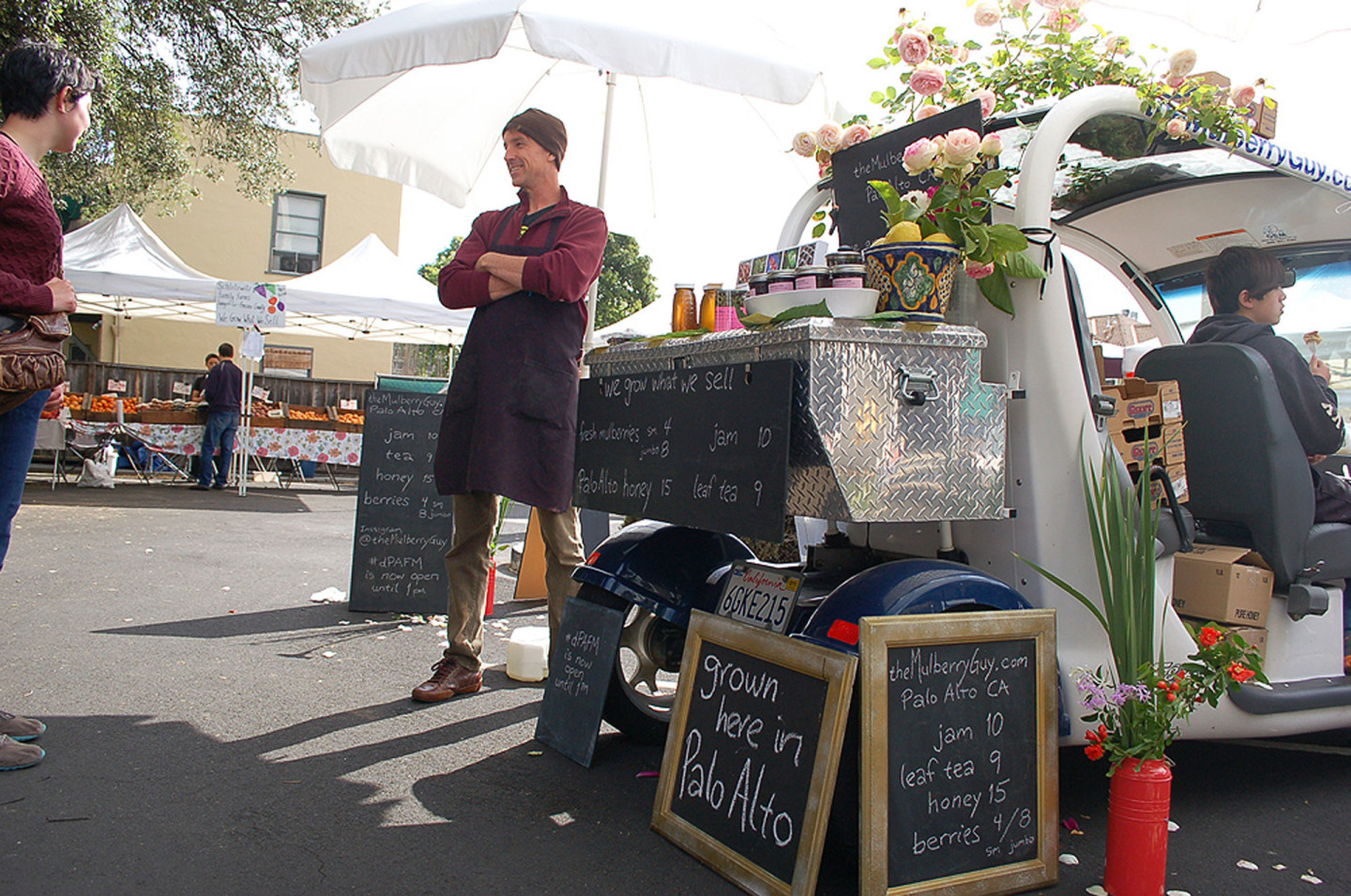
window.__IS_SSR__=true
window.__INITIAL_STATE__={
"attachmentsReducer": {
"audio_0": {
"type": "attachments",
"id": "audio_0",
"imgSizes": {
"kqedFullSize": {
"file": "https://ww2.kqed.org/news/wp-content/themes/KQED-unified/img/audio_bgs/background0.jpg"
}
}
},
"audio_1": {
"type": "attachments",
"id": "audio_1",
"imgSizes": {
"kqedFullSize": {
"file": "https://ww2.kqed.org/news/wp-content/themes/KQED-unified/img/audio_bgs/background1.jpg"
}
}
},
"audio_2": {
"type": "attachments",
"id": "audio_2",
"imgSizes": {
"kqedFullSize": {
"file": "https://ww2.kqed.org/news/wp-content/themes/KQED-unified/img/audio_bgs/background2.jpg"
}
}
},
"audio_3": {
"type": "attachments",
"id": "audio_3",
"imgSizes": {
"kqedFullSize": {
"file": "https://ww2.kqed.org/news/wp-content/themes/KQED-unified/img/audio_bgs/background3.jpg"
}
}
},
"audio_4": {
"type": "attachments",
"id": "audio_4",
"imgSizes": {
"kqedFullSize": {
"file": "https://ww2.kqed.org/news/wp-content/themes/KQED-unified/img/audio_bgs/background4.jpg"
}
}
},
"placeholder": {
"type": "attachments",
"id": "placeholder",
"imgSizes": {
"thumbnail": {
"file": "https://cdn.kqed.org/wp-content/uploads/2024/12/KQED-Default-Image-816638274-2000x1333-1-160x107.jpg",
"width": 160,
"height": 107,
"mimeType": "image/jpeg"
},
"medium": {
"file": "https://cdn.kqed.org/wp-content/uploads/2024/12/KQED-Default-Image-816638274-2000x1333-1-800x533.jpg",
"width": 800,
"height": 533,
"mimeType": "image/jpeg"
},
"medium_large": {
"file": "https://cdn.kqed.org/wp-content/uploads/2024/12/KQED-Default-Image-816638274-2000x1333-1-768x512.jpg",
"width": 768,
"height": 512,
"mimeType": "image/jpeg"
},
"large": {
"file": "https://cdn.kqed.org/wp-content/uploads/2024/12/KQED-Default-Image-816638274-2000x1333-1-1020x680.jpg",
"width": 1020,
"height": 680,
"mimeType": "image/jpeg"
},
"1536x1536": {
"file": "https://cdn.kqed.org/wp-content/uploads/2024/12/KQED-Default-Image-816638274-2000x1333-1-1536x1024.jpg",
"width": 1536,
"height": 1024,
"mimeType": "image/jpeg"
},
"fd-lrg": {
"file": "https://cdn.kqed.org/wp-content/uploads/2024/12/KQED-Default-Image-816638274-2000x1333-1-1536x1024.jpg",
"width": 1536,
"height": 1024,
"mimeType": "image/jpeg"
},
"fd-med": {
"file": "https://cdn.kqed.org/wp-content/uploads/2024/12/KQED-Default-Image-816638274-2000x1333-1-1020x680.jpg",
"width": 1020,
"height": 680,
"mimeType": "image/jpeg"
},
"fd-sm": {
"file": "https://cdn.kqed.org/wp-content/uploads/2024/12/KQED-Default-Image-816638274-2000x1333-1-800x533.jpg",
"width": 800,
"height": 533,
"mimeType": "image/jpeg"
},
"post-thumbnail": {
"file": "https://cdn.kqed.org/wp-content/uploads/2024/12/KQED-Default-Image-816638274-2000x1333-1-672x372.jpg",
"width": 672,
"height": 372,
"mimeType": "image/jpeg"
},
"twentyfourteen-full-width": {
"file": "https://cdn.kqed.org/wp-content/uploads/2024/12/KQED-Default-Image-816638274-2000x1333-1-1038x576.jpg",
"width": 1038,
"height": 576,
"mimeType": "image/jpeg"
},
"xxsmall": {
"file": "https://cdn.kqed.org/wp-content/uploads/2024/12/KQED-Default-Image-816638274-2000x1333-1-160x107.jpg",
"width": 160,
"height": 107,
"mimeType": "image/jpeg"
},
"xsmall": {
"file": "https://cdn.kqed.org/wp-content/uploads/2024/12/KQED-Default-Image-816638274-2000x1333-1-672x372.jpg",
"width": 672,
"height": 372,
"mimeType": "image/jpeg"
},
"small": {
"file": "https://cdn.kqed.org/wp-content/uploads/2024/12/KQED-Default-Image-816638274-2000x1333-1-672x372.jpg",
"width": 672,
"height": 372,
"mimeType": "image/jpeg"
},
"xlarge": {
"file": "https://cdn.kqed.org/wp-content/uploads/2024/12/KQED-Default-Image-816638274-2000x1333-1-1020x680.jpg",
"width": 1020,
"height": 680,
"mimeType": "image/jpeg"
},
"full-width": {
"file": "https://cdn.kqed.org/wp-content/uploads/2024/12/KQED-Default-Image-816638274-2000x1333-1-1920x1280.jpg",
"width": 1920,
"height": 1280,
"mimeType": "image/jpeg"
},
"guest-author-32": {
"file": "https://cdn.kqed.org/wp-content/uploads/2025/01/KQED-Default-Image-816638274-1333x1333-1-160x160.jpg",
"width": 32,
"height": 32,
"mimeType": "image/jpeg"
},
"guest-author-50": {
"file": "https://cdn.kqed.org/wp-content/uploads/2025/01/KQED-Default-Image-816638274-1333x1333-1-160x160.jpg",
"width": 50,
"height": 50,
"mimeType": "image/jpeg"
},
"guest-author-64": {
"file": "https://cdn.kqed.org/wp-content/uploads/2025/01/KQED-Default-Image-816638274-1333x1333-1-160x160.jpg",
"width": 64,
"height": 64,
"mimeType": "image/jpeg"
},
"guest-author-96": {
"file": "https://cdn.kqed.org/wp-content/uploads/2025/01/KQED-Default-Image-816638274-1333x1333-1-160x160.jpg",
"width": 96,
"height": 96,
"mimeType": "image/jpeg"
},
"guest-author-128": {
"file": "https://cdn.kqed.org/wp-content/uploads/2025/01/KQED-Default-Image-816638274-1333x1333-1-160x160.jpg",
"width": 128,
"height": 128,
"mimeType": "image/jpeg"
},
"detail": {
"file": "https://cdn.kqed.org/wp-content/uploads/2025/01/KQED-Default-Image-816638274-1333x1333-1-160x160.jpg",
"width": 160,
"height": 160,
"mimeType": "image/jpeg"
},
"kqedFullSize": {
"file": "https://cdn.kqed.org/wp-content/uploads/2024/12/KQED-Default-Image-816638274-2000x1333-1.jpg",
"width": 2000,
"height": 1333
}
}
},
"bayareabites_96269": {
"type": "attachments",
"id": "bayareabites_96269",
"meta": {
"index": "attachments_1716263798",
"site": "bayareabites",
"id": "96269",
"found": true
},
"parent": 96267,
"imgSizes": {
"twentyfourteen-full-width": {
"file": "https://ww2.kqed.org/app/uploads/sites/24/2015/05/at-market-1038x576.jpg",
"width": 1038,
"mimeType": "image/jpeg",
"height": 576
},
"thumbnail": {
"file": "https://ww2.kqed.org/app/uploads/sites/24/2015/05/at-market-400x265.jpg",
"width": 400,
"mimeType": "image/jpeg",
"height": 265
},
"fd-sm": {
"file": "https://ww2.kqed.org/app/uploads/sites/24/2015/05/at-market-960x637.jpg",
"width": 960,
"mimeType": "image/jpeg",
"height": 637
},
"post-thumbnail": {
"file": "https://ww2.kqed.org/app/uploads/sites/24/2015/05/at-market-672x372.jpg",
"width": 672,
"mimeType": "image/jpeg",
"height": 372
},
"kqedFullSize": {
"file": "https://ww2.kqed.org/app/uploads/sites/24/2015/05/at-market.jpg",
"width": 1920,
"height": 1273
},
"large": {
"file": "https://ww2.kqed.org/app/uploads/sites/24/2015/05/at-market-1440x955.jpg",
"width": 1440,
"mimeType": "image/jpeg",
"height": 955
},
"guest-author-96": {
"file": "https://ww2.kqed.org/app/uploads/sites/24/2015/05/at-market-96x96.jpg",
"width": 96,
"mimeType": "image/jpeg",
"height": 96
},
"medium": {
"file": "https://ww2.kqed.org/app/uploads/sites/24/2015/05/at-market-800x530.jpg",
"width": 800,
"mimeType": "image/jpeg",
"height": 530
},
"guest-author-64": {
"file": "https://ww2.kqed.org/app/uploads/sites/24/2015/05/at-market-64x64.jpg",
"width": 64,
"mimeType": "image/jpeg",
"height": 64
},
"guest-author-32": {
"file": "https://ww2.kqed.org/app/uploads/sites/24/2015/05/at-market-32x32.jpg",
"width": 32,
"mimeType": "image/jpeg",
"height": 32
},
"cat_post_thumb_sizecategory-posts-2": {
"file": "https://ww2.kqed.org/app/uploads/sites/24/2015/05/at-market-150x150.jpg",
"width": 150,
"mimeType": "image/jpeg",
"height": 150
},
"fd-med": {
"file": "https://ww2.kqed.org/app/uploads/sites/24/2015/05/at-market-1180x782.jpg",
"width": 1180,
"mimeType": "image/jpeg",
"height": 782
},
"detail": {
"file": "https://ww2.kqed.org/app/uploads/sites/24/2015/05/at-market-75x75.jpg",
"width": 75,
"mimeType": "image/jpeg",
"height": 75
},
"guest-author-128": {
"file": "https://ww2.kqed.org/app/uploads/sites/24/2015/05/at-market-128x128.jpg",
"width": 128,
"mimeType": "image/jpeg",
"height": 128
}
},
"publishDate": 1431989585,
"modified": 1431989622,
"caption": "Kevin Lynch, \"The Mulberry Guy\" at Palo Alto Farmers Market",
"description": null,
"title": "at-market",
"credit": "Susan Hathaway",
"status": "inherit",
"isLoading": false,
"fetchFailed": false
},
"bayareabites_96068": {
"type": "attachments",
"id": "bayareabites_96068",
"meta": {
"index": "attachments_1716263798",
"site": "bayareabites",
"id": "96068",
"found": true
},
"parent": 95972,
"imgSizes": {
"twentyfourteen-full-width": {
"file": "https://ww2.kqed.org/app/uploads/sites/24/2015/05/IMG_0470-1038x576.jpg",
"width": 1038,
"mimeType": "image/jpeg",
"height": 576
},
"thumbnail": {
"file": "https://ww2.kqed.org/app/uploads/sites/24/2015/05/IMG_0470-400x300.jpg",
"width": 400,
"mimeType": "image/jpeg",
"height": 300
},
"fd-sm": {
"file": "https://ww2.kqed.org/app/uploads/sites/24/2015/05/IMG_0470-960x720.jpg",
"width": 960,
"mimeType": "image/jpeg",
"height": 720
},
"post-thumbnail": {
"file": "https://ww2.kqed.org/app/uploads/sites/24/2015/05/IMG_0470-672x372.jpg",
"width": 672,
"mimeType": "image/jpeg",
"height": 372
},
"kqedFullSize": {
"file": "https://ww2.kqed.org/app/uploads/sites/24/2015/05/IMG_0470.jpg",
"width": 1920,
"height": 1440
},
"large": {
"file": "https://ww2.kqed.org/app/uploads/sites/24/2015/05/IMG_0470-1440x1080.jpg",
"width": 1440,
"mimeType": "image/jpeg",
"height": 1080
},
"guest-author-96": {
"file": "https://ww2.kqed.org/app/uploads/sites/24/2015/05/IMG_0470-96x96.jpg",
"width": 96,
"mimeType": "image/jpeg",
"height": 96
},
"medium": {
"file": "https://ww2.kqed.org/app/uploads/sites/24/2015/05/IMG_0470-800x600.jpg",
"width": 800,
"mimeType": "image/jpeg",
"height": 600
},
"guest-author-64": {
"file": "https://ww2.kqed.org/app/uploads/sites/24/2015/05/IMG_0470-64x64.jpg",
"width": 64,
"mimeType": "image/jpeg",
"height": 64
},
"guest-author-32": {
"file": "https://ww2.kqed.org/app/uploads/sites/24/2015/05/IMG_0470-32x32.jpg",
"width": 32,
"mimeType": "image/jpeg",
"height": 32
},
"cat_post_thumb_sizecategory-posts-2": {
"file": "https://ww2.kqed.org/app/uploads/sites/24/2015/05/IMG_0470-150x150.jpg",
"width": 150,
"mimeType": "image/jpeg",
"height": 150
},
"fd-med": {
"file": "https://ww2.kqed.org/app/uploads/sites/24/2015/05/IMG_0470-1180x885.jpg",
"width": 1180,
"mimeType": "image/jpeg",
"height": 885
},
"detail": {
"file": "https://ww2.kqed.org/app/uploads/sites/24/2015/05/IMG_0470-75x75.jpg",
"width": 75,
"mimeType": "image/jpeg",
"height": 75
},
"guest-author-128": {
"file": "https://ww2.kqed.org/app/uploads/sites/24/2015/05/IMG_0470-128x128.jpg",
"width": 128,
"mimeType": "image/jpeg",
"height": 128
}
},
"publishDate": 1431461451,
"modified": 1431461718,
"caption": "Mary Lemmer tends to a client's mini-farm.",
"description": "Mary Lemmer tends to a client's mini-farm.",
"title": "IMG_0470",
"credit": "Alix Wall",
"status": "inherit",
"isLoading": false,
"fetchFailed": false
},
"bayareabites_94795": {
"type": "attachments",
"id": "bayareabites_94795",
"meta": {
"index": "attachments_1716263798",
"site": "bayareabites",
"id": "94795",
"found": true
},
"parent": 94792,
"imgSizes": {
"thumbnail": {
"file": "https://ww2.kqed.org/app/uploads/sites/24/2015/04/stephen-satterfield-400x266.jpg",
"width": 400,
"mimeType": "image/jpeg",
"height": 266
},
"fd-sm": {
"file": "https://ww2.kqed.org/app/uploads/sites/24/2015/04/stephen-satterfield-320x213.jpg",
"width": 320,
"mimeType": "image/jpeg",
"height": 213
},
"post-thumbnail": {
"file": "https://ww2.kqed.org/app/uploads/sites/24/2015/04/stephen-satterfield-672x372.jpg",
"width": 672,
"mimeType": "image/jpeg",
"height": 372
},
"kqedFullSize": {
"file": "https://ww2.kqed.org/app/uploads/sites/24/2015/04/stephen-satterfield.jpg",
"width": 680,
"height": 453
},
"cat_post_thumb_sizecategory-posts-2": {
"file": "https://ww2.kqed.org/app/uploads/sites/24/2015/04/stephen-satterfield-150x150.jpg",
"width": 150,
"mimeType": "image/jpeg",
"height": 150
},
"guest-author-96": {
"file": "https://ww2.kqed.org/app/uploads/sites/24/2015/04/stephen-satterfield-96x96.jpg",
"width": 96,
"mimeType": "image/jpeg",
"height": 96
},
"guest-author-64": {
"file": "https://ww2.kqed.org/app/uploads/sites/24/2015/04/stephen-satterfield-64x64.jpg",
"width": 64,
"mimeType": "image/jpeg",
"height": 64
},
"detail": {
"file": "https://ww2.kqed.org/app/uploads/sites/24/2015/04/stephen-satterfield-75x75.jpg",
"width": 75,
"mimeType": "image/jpeg",
"height": 75
},
"guest-author-32": {
"file": "https://ww2.kqed.org/app/uploads/sites/24/2015/04/stephen-satterfield-32x32.jpg",
"width": 32,
"mimeType": "image/jpeg",
"height": 32
},
"guest-author-128": {
"file": "https://ww2.kqed.org/app/uploads/sites/24/2015/04/stephen-satterfield-128x128.jpg",
"width": 128,
"mimeType": "image/jpeg",
"height": 128
}
},
"publishDate": 1428465606,
"modified": 1428534019,
"caption": "Stephen Satterfield",
"description": null,
"title": "stephen-satterfield",
"credit": "Dijon Bowden",
"status": "inherit",
"isLoading": false,
"fetchFailed": false
},
"bayareabites_93665": {
"type": "attachments",
"id": "bayareabites_93665",
"meta": {
"index": "attachments_1716263798",
"site": "bayareabites",
"id": "93665",
"found": true
},
"parent": 93653,
"imgSizes": {
"thumbnail": {
"file": "https://ww2.kqed.org/app/uploads/sites/24/2015/03/featurd-400x225.jpg",
"width": 400,
"mimeType": "image/jpeg",
"height": 225
},
"fd-sm": {
"file": "https://ww2.kqed.org/app/uploads/sites/24/2015/03/featurd-320x180.jpg",
"width": 320,
"mimeType": "image/jpeg",
"height": 180
},
"kqedFullSize": {
"file": "https://ww2.kqed.org/app/uploads/sites/24/2015/03/featurd.jpg",
"width": 640,
"height": 360
},
"cat_post_thumb_sizecategory-posts-2": {
"file": "https://ww2.kqed.org/app/uploads/sites/24/2015/03/featurd-50x50.jpg",
"width": 50,
"mimeType": "image/jpeg",
"height": 50
},
"guest-author-96": {
"file": "https://ww2.kqed.org/app/uploads/sites/24/2015/03/featurd-96x96.jpg",
"width": 96,
"mimeType": "image/jpeg",
"height": 96
},
"guest-author-64": {
"file": "https://ww2.kqed.org/app/uploads/sites/24/2015/03/featurd-64x64.jpg",
"width": 64,
"mimeType": "image/jpeg",
"height": 64
},
"detail": {
"file": "https://ww2.kqed.org/app/uploads/sites/24/2015/03/featurd-75x75.jpg",
"width": 75,
"mimeType": "image/jpeg",
"height": 75
},
"guest-author-32": {
"file": "https://ww2.kqed.org/app/uploads/sites/24/2015/03/featurd-32x32.jpg",
"width": 32,
"mimeType": "image/jpeg",
"height": 32
},
"guest-author-128": {
"file": "https://ww2.kqed.org/app/uploads/sites/24/2015/03/featurd-128x128.jpg",
"width": 128,
"mimeType": "image/jpeg",
"height": 128
}
},
"publishDate": 1425539414,
"modified": 1425539507,
"caption": "Oakland Mayor Libby Schaaf speaks at a Wednesday press conference about the new minimum wage Photo: Shelby Pope",
"description": null,
"title": "featurd",
"credit": null,
"status": "inherit",
"isLoading": false,
"fetchFailed": false
},
"bayareabites_93453": {
"type": "attachments",
"id": "bayareabites_93453",
"meta": {
"index": "attachments_1716263798",
"site": "bayareabites",
"id": "93453",
"found": true
},
"parent": 93452,
"imgSizes": {
"twentyfourteen-full-width": {
"file": "https://ww2.kqed.org/app/uploads/sites/24/2015/02/freight-farms-1_enl-123e7a79521b0fabc4811de46e4cdf38a710ead1-1038x576.jpg",
"width": 1038,
"mimeType": "image/jpeg",
"height": 576
},
"thumbnail": {
"file": "https://ww2.kqed.org/app/uploads/sites/24/2015/02/freight-farms-1_enl-123e7a79521b0fabc4811de46e4cdf38a710ead1-400x266.jpg",
"width": 400,
"mimeType": "image/jpeg",
"height": 266
},
"fd-sm": {
"file": "https://ww2.kqed.org/app/uploads/sites/24/2015/02/freight-farms-1_enl-123e7a79521b0fabc4811de46e4cdf38a710ead1-320x213.jpg",
"width": 320,
"mimeType": "image/jpeg",
"height": 213
},
"post-thumbnail": {
"file": "https://ww2.kqed.org/app/uploads/sites/24/2015/02/freight-farms-1_enl-123e7a79521b0fabc4811de46e4cdf38a710ead1-672x372.jpg",
"width": 672,
"mimeType": "image/jpeg",
"height": 372
},
"kqedFullSize": {
"file": "https://ww2.kqed.org/app/uploads/sites/24/2015/02/freight-farms-1_enl-123e7a79521b0fabc4811de46e4cdf38a710ead1.jpg",
"width": 1108,
"height": 736
},
"guest-author-96": {
"file": "https://ww2.kqed.org/app/uploads/sites/24/2015/02/freight-farms-1_enl-123e7a79521b0fabc4811de46e4cdf38a710ead1-96x96.jpg",
"width": 96,
"mimeType": "image/jpeg",
"height": 96
},
"medium": {
"file": "https://ww2.kqed.org/app/uploads/sites/24/2015/02/freight-farms-1_enl-123e7a79521b0fabc4811de46e4cdf38a710ead1-800x531.jpg",
"width": 800,
"mimeType": "image/jpeg",
"height": 531
},
"guest-author-64": {
"file": "https://ww2.kqed.org/app/uploads/sites/24/2015/02/freight-farms-1_enl-123e7a79521b0fabc4811de46e4cdf38a710ead1-64x64.jpg",
"width": 64,
"mimeType": "image/jpeg",
"height": 64
},
"guest-author-32": {
"file": "https://ww2.kqed.org/app/uploads/sites/24/2015/02/freight-farms-1_enl-123e7a79521b0fabc4811de46e4cdf38a710ead1-32x32.jpg",
"width": 32,
"mimeType": "image/jpeg",
"height": 32
},
"cat_post_thumb_sizecategory-posts-2": {
"file": "https://ww2.kqed.org/app/uploads/sites/24/2015/02/freight-farms-1_enl-123e7a79521b0fabc4811de46e4cdf38a710ead1-50x50.jpg",
"width": 50,
"mimeType": "image/jpeg",
"height": 50
},
"fd-med": {
"file": "https://ww2.kqed.org/app/uploads/sites/24/2015/02/freight-farms-1_enl-123e7a79521b0fabc4811de46e4cdf38a710ead1-768x510.jpg",
"width": 768,
"mimeType": "image/jpeg",
"height": 510
},
"detail": {
"file": "https://ww2.kqed.org/app/uploads/sites/24/2015/02/freight-farms-1_enl-123e7a79521b0fabc4811de46e4cdf38a710ead1-75x75.jpg",
"width": 75,
"mimeType": "image/jpeg",
"height": 75
},
"guest-author-128": {
"file": "https://ww2.kqed.org/app/uploads/sites/24/2015/02/freight-farms-1_enl-123e7a79521b0fabc4811de46e4cdf38a710ead1-128x128.jpg",
"width": 128,
"mimeType": "image/jpeg",
"height": 128
}
},
"publishDate": 1424727194,
"modified": 1424727298,
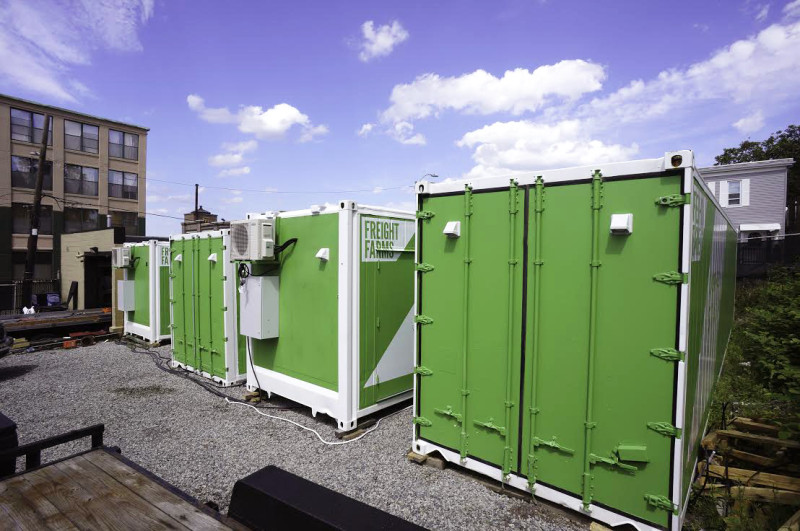
"caption": "Freight Farms are shipping containers modified to grow stacks of hydroponic plants and vegetables — anywhere, 365 days a year. Photo: Courtesy of Freight Farms",
"description": "Freight Farms are shipping containers modified to grow stacks of hydroponic plants and vegetables -- anywhere, 365 days a year",
"title": "Freight Farms are shipping containers modified to grow stacks of hydroponic plants and vegetables — anywhere, 365 days a year.",
"credit": null,
"status": "inherit",
"isLoading": false,
"fetchFailed": false
},
"bayareabites_93166": {
"type": "attachments",
"id": "bayareabites_93166",
"meta": {
"index": "attachments_1716263798",
"site": "bayareabites",
"id": "93166",
"found": true
},
"parent": 93165,
"imgSizes": {
"twentyfourteen-full-width": {
"file": "https://ww2.kqed.org/app/uploads/sites/24/2015/02/hands-holding-ketchup-n-fries_enl-e26243575024bc29d0237713a87c3eb8b99ddf5a-e1423773288167-1000x576.jpg",
"width": 1000,
"mimeType": "image/jpeg",
"height": 576
},
"thumbnail": {
"file": "https://ww2.kqed.org/app/uploads/sites/24/2015/02/hands-holding-ketchup-n-fries_enl-e26243575024bc29d0237713a87c3eb8b99ddf5a-e1423773288167-400x294.jpg",
"width": 400,
"mimeType": "image/jpeg",
"height": 294
},
"fd-sm": {
"file": "https://ww2.kqed.org/app/uploads/sites/24/2015/02/hands-holding-ketchup-n-fries_enl-e26243575024bc29d0237713a87c3eb8b99ddf5a-e1423773288167-320x235.jpg",
"width": 320,
"mimeType": "image/jpeg",
"height": 235
},
"post-thumbnail": {
"file": "https://ww2.kqed.org/app/uploads/sites/24/2015/02/hands-holding-ketchup-n-fries_enl-e26243575024bc29d0237713a87c3eb8b99ddf5a-e1423773288167-672x372.jpg",
"width": 672,
"mimeType": "image/jpeg",
"height": 372
},
"kqedFullSize": {
"file": "https://ww2.kqed.org/app/uploads/sites/24/2015/02/hands-holding-ketchup-n-fries_enl-e26243575024bc29d0237713a87c3eb8b99ddf5a-e1423773288167.jpg",
"width": 1000,
"height": 734
},
"guest-author-96": {
"file": "https://ww2.kqed.org/app/uploads/sites/24/2015/02/hands-holding-ketchup-n-fries_enl-e26243575024bc29d0237713a87c3eb8b99ddf5a-e1423773288167-96x96.jpg",
"width": 96,
"mimeType": "image/jpeg",
"height": 96
},
"medium": {
"file": "https://ww2.kqed.org/app/uploads/sites/24/2015/02/hands-holding-ketchup-n-fries_enl-e26243575024bc29d0237713a87c3eb8b99ddf5a-e1423773288167-800x587.jpg",
"width": 800,
"mimeType": "image/jpeg",
"height": 587
},
"guest-author-64": {
"file": "https://ww2.kqed.org/app/uploads/sites/24/2015/02/hands-holding-ketchup-n-fries_enl-e26243575024bc29d0237713a87c3eb8b99ddf5a-e1423773288167-64x64.jpg",
"width": 64,
"mimeType": "image/jpeg",
"height": 64
},
"guest-author-32": {
"file": "https://ww2.kqed.org/app/uploads/sites/24/2015/02/hands-holding-ketchup-n-fries_enl-e26243575024bc29d0237713a87c3eb8b99ddf5a-e1423773288167-32x32.jpg",
"width": 32,
"mimeType": "image/jpeg",
"height": 32
},
"cat_post_thumb_sizecategory-posts-2": {
"file": "https://ww2.kqed.org/app/uploads/sites/24/2015/02/hands-holding-ketchup-n-fries_enl-e26243575024bc29d0237713a87c3eb8b99ddf5a-e1423773288167-50x50.jpg",
"width": 50,
"mimeType": "image/jpeg",
"height": 50
},
"fd-med": {
"file": "https://ww2.kqed.org/app/uploads/sites/24/2015/02/hands-holding-ketchup-n-fries_enl-e26243575024bc29d0237713a87c3eb8b99ddf5a-e1423773288167-768x564.jpg",
"width": 768,
"mimeType": "image/jpeg",
"height": 564
},
"detail": {
"file": "https://ww2.kqed.org/app/uploads/sites/24/2015/02/hands-holding-ketchup-n-fries_enl-e26243575024bc29d0237713a87c3eb8b99ddf5a-e1423773288167-75x75.jpg",
"width": 75,
"mimeType": "image/jpeg",
"height": 75
},
"guest-author-128": {
"file": "https://ww2.kqed.org/app/uploads/sites/24/2015/02/hands-holding-ketchup-n-fries_enl-e26243575024bc29d0237713a87c3eb8b99ddf5a-e1423773288167-128x128.jpg",
"width": 128,
"mimeType": "image/jpeg",
"height": 128
}
},
"publishDate": 1423772769,
"modified": 1423773278,
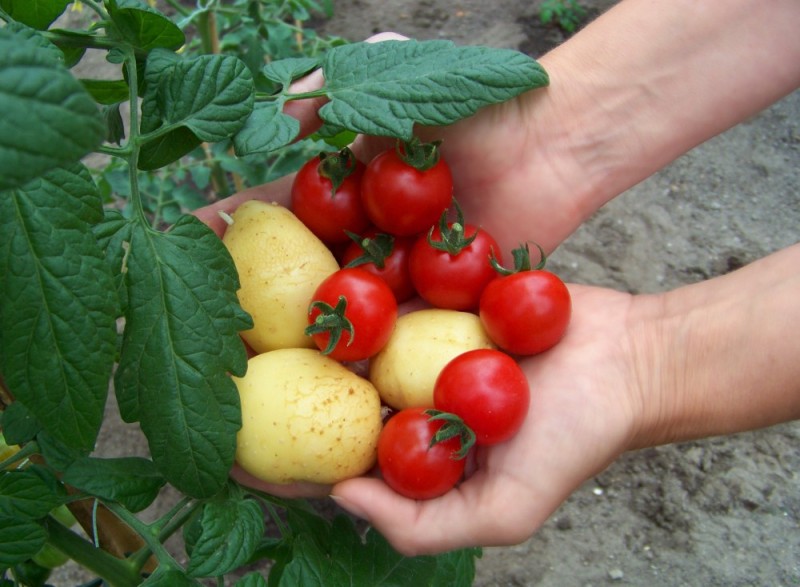
"caption": "The plant is an early tomato grafted to a late-producing potato. The two can be harvested throughout the season. Photo: SuperNaturals",
"description": "The plant is an early tomato grafted to a late-producing potato. The two can be harvested throughout the season.",
"title": "The plant is an early tomato grafted to a late-producing potato. The two can be harvested throughout the season.",
"credit": null,
"status": "inherit",
"isLoading": false,
"fetchFailed": false
},
"bayareabites_92672": {
"type": "attachments",
"id": "bayareabites_92672",
"meta": {
"index": "attachments_1716263798",
"site": "bayareabites",
"id": "92672",
"found": true
},
"parent": 92668,
"imgSizes": {
"kqedFullSize": {
"file": "https://ww2.kqed.org/app/uploads/sites/24/2015/01/A-sampling-of-findings-from-Stark-and-Carlsons-website-.jpg",
"width": 1000,
"height": 662
}
},
"publishDate": 1422680064,
"modified": 1423011096,
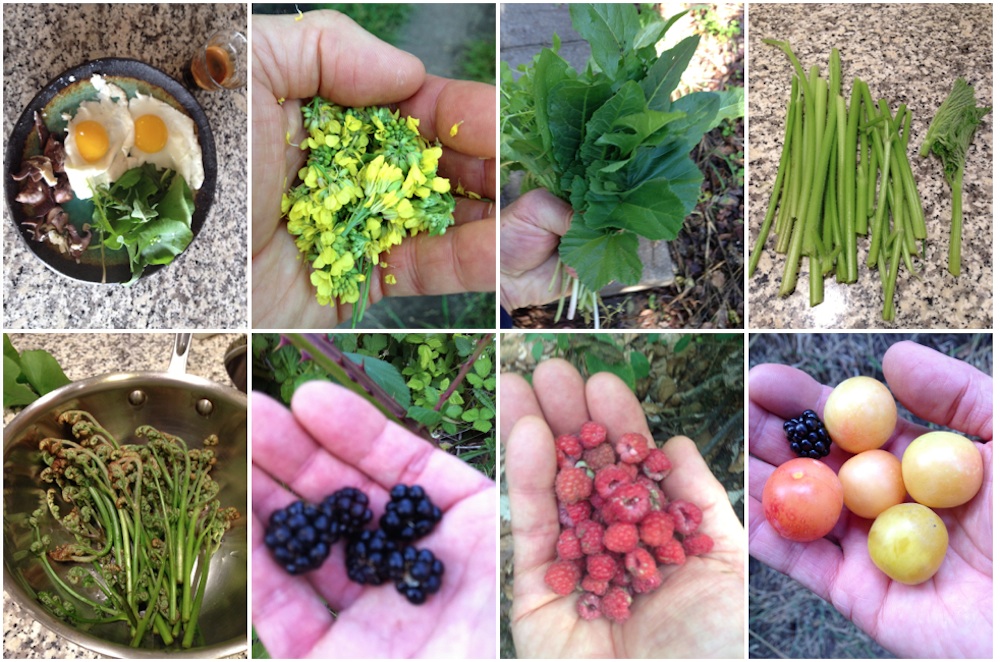
"caption": "A sampling of photos and findings from Stark and Carlson’s project. Photo: Philip Stark",
"description": null,
"title": "A sampling of findings from Stark and Carlson's website",
"credit": null,
"status": "inherit",
"isLoading": false,
"fetchFailed": false
},
"bayareabites_92246": {
"type": "attachments",
"id": "bayareabites_92246",
"meta": {
"index": "attachments_1716263798",
"site": "bayareabites",
"id": "92246",
"found": true
},
"parent": 92243,
"imgSizes": {
"kqedFullSize": {
"file": "https://ww2.kqed.org/app/uploads/sites/24/2015/01/doria-robinson.jpg",
"width": 680,
"height": 406
}
},
"publishDate": 1421953541,
"modified": 1421953777,
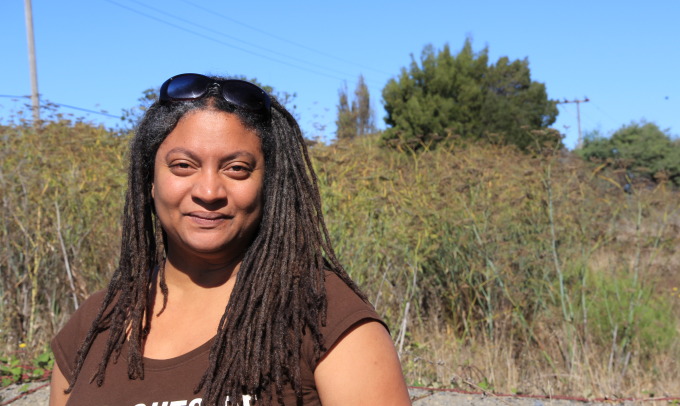
"caption": "Doria Robinson. Photo: Twilight Greenaway",
"description": null,
"title": "doria-robinson",
"credit": null,
"status": "inherit",
"isLoading": false,
"fetchFailed": false
},
"bayareabites_89691": {
"type": "attachments",
"id": "bayareabites_89691",
"meta": {
"index": "attachments_1716263798",
"site": "bayareabites",
"id": "89691",
"found": true
},
"parent": 89675,
"imgSizes": {
"kqedFullSize": {
"file": "https://ww2.kqed.org/app/uploads/sites/24/2014/11/Potential-new-zoning-regulations-will-make-it-easier-to-start-an-urban-farm-in-Oakland.jpg",
"width": 1000,
"height": 666
}
},
"publishDate": 1415480845,
"modified": 1415480845,
"caption": "Potential new zoning regulations will make it easier to start an urban farm in Oakland. Photo: Angela Johnston",
"description": null,
"title": "SONY DSC",
"credit": null,
"status": "inherit",
"isLoading": false,
"fetchFailed": false
},
"bayareabites_89760": {
"type": "attachments",
"id": "bayareabites_89760",
"meta": {
"index": "attachments_1716263798",
"site": "bayareabites",
"id": "89760",
"found": true
},
"parent": 89759,
"imgSizes": {
"kqedFullSize": {
"file": "https://ww2.kqed.org/app/uploads/sites/24/2014/11/occupy-the-farm_poster-image-watering-at-sundown_wide-bbcb04bc8228bd464d4e1153abfc8754be86ca60.jpg",
"width": 1836,
"height": 1033
}
},
"publishDate": 1415499646,
"modified": 1415499646,
"caption": null,
"description": "Promo poster for \u003cem>Occupy the Farm\u003c/em>",
"title": "Promo poster for Occupy the Farm",
"credit": null,
"status": "inherit",
"isLoading": false,
"fetchFailed": false
},
"bayareabites_88080": {
"type": "attachments",
"id": "bayareabites_88080",
"meta": {
"index": "attachments_1716263798",
"site": "bayareabites",
"id": "88080",
"found": true
},
"parent": 88076,
"imgSizes": {
"kqedFullSize": {
"file": "https://ww2.kqed.org/app/uploads/sites/24/2014/09/pumpkins_ElatChayyim-e1411361885521-680x331.jpg",
"width": 680,
"height": 331
}
},
"publishDate": 1411840991,
"modified": 1411840991,
"caption": "Photo courtesy of the Adamah farm at the Isabella Freedman Jewish Retreat Center. ",
"description": null,
"title": "pumpkins_ElatChayyim-e1411361885521-680x331",
"credit": null,
"status": "inherit",
"isLoading": false,
"fetchFailed": false
},
"bayareabites_87286": {
"type": "attachments",
"id": "bayareabites_87286",
"meta": {
"index": "attachments_1716263798",
"site": "bayareabites",
"id": "87286",
"found": true
},
"parent": 87285,
"imgSizes": {
"kqedFullSize": {
"file": "https://ww2.kqed.org/app/uploads/sites/24/2014/09/urbanfarm_wide-755060884e1d03ea379ecee4bf274f43ea398929-e1410301498126.jpg",
"width": 1000,
"height": 562
}
},
"publishDate": 1410301306,
"modified": 1410301306,
"caption": "Urban farmers turning a vacant lot into a garden plot in San Francisco's Hayes Valley. Photo: Chris Martin/Flickr",
"description": "Urban farmers turning a vacant lot into a garden plot in San Francisco's Hayes Valley.",
"title": "Urban farmers turning a vacant lot into a garden plot in San Francisco's Hayes Valley.",
"credit": null,
"status": "inherit",
"isLoading": false,
"fetchFailed": false
}
},
"audioPlayerReducer": {
"postId": "stream_live",
"isPaused": true,
"isPlaying": false,
"pfsActive": false,
"pledgeModalIsOpen": true,
"playerDrawerIsOpen": false,
"liveAudioPlayStartedAt": 0,
"liveAudioPlayContext": ""
},
"authorsReducer": {
"byline_bayareabites_93452": {
"type": "authors",
"id": "byline_bayareabites_93452",
"meta": {
"override": true
},
"slug": "byline_bayareabites_93452",
"name": "Here & Now Staff",
"isLoading": false
},
"byline_bayareabites_93165": {
"type": "authors",
"id": "byline_bayareabites_93165",
"meta": {
"override": true
},
"slug": "byline_bayareabites_93165",
"name": "Sáša Woodruff",
"isLoading": false
},
"byline_bayareabites_87285": {
"type": "authors",
"id": "byline_bayareabites_87285",
"meta": {
"override": true
},
"slug": "byline_bayareabites_87285",
"name": "Alastair Bland",
"isLoading": false
},
"sarahhenry": {
"type": "authors",
"id": "5125",
"meta": {
"index": "authors_1716337520",
"id": "5125",
"found": true
},
"name": "Sarah Henry",
"firstName": "Sarah",
"lastName": "Henry",
"slug": "sarahhenry",
"email": "sarahhenry0509@gmail.com",
"display_author_email": false,
"staff_mastheads": [],
"title": null,
"bio": "\u003ca href=\"http://www.sarahhenrywriter.com/\">Sarah Henry\u003c/a> hails from Sydney, Australia, where she grew up eating lamingtons, Vegemite, and prawns (not shrimp) on the barbie (barbecue). Sarah has called the Bay Area home for the past two decades and remembers how delighted she was when a modest farmers' market sprouted in downtown San Francisco years ago. As a freelance writer Sarah has covered local food people, places, politics, culture, and news for the \u003ca href=\"http://www.sfgate.com/food/article/Latina-entrepreneurs-share-wealth-knowledge-2693764.php\">San Francisco Chronicle\u003c/a>, \u003ca href=\"http://www.mercurynews.com/food-wine/ci_21619882/good-eggs-pie-subscriptions-and-seafood-deliveries\">San Jose Mercury News\u003c/a>, \u003ca href=\"http://alumni.berkeley.edu/news/california-magazine/fall-2011-good-fight/justice%E2%80%94and-good-grub%E2%80%94-all\">California\u003c/a>, \u003ca href=\"http://www.modernluxury.com/san-francisco\">San Francisco\u003c/a>, \u003ca href=\"http://www.diablomag.com/Diablo-Magazine/November-2012/Artisan-Eats/\">Diablo\u003c/a>, \u003ca href=\"http://www.ediblecommunities.com/eastbay/fall-2012/school-lunch-20.htm\">Edible East Bay\u003c/a>, \u003ca href=\"http://www.ediblecommunities.com/marinandwinecountry/summer-2012-issue-14/getting-wild-at-a-west-marin-supper-club.htm\">Edible Marin & Wine Country\u003c/a>, and \u003ca href=\"http://www.berkeleyside.com/\">Berkeleyside\u003c/a>. A contributor to the national food policy site \u003ca href=\"http://civileats.com/\">Civil Eats\u003c/a>, her stories have also appeared in \u003ca href=\"http://www.theatlantic.com/sarah-henry/\">The Atlantic\u003c/a>, \u003ca href=\"http://www.afar.com/highlights/kamal-mouzawaks-beirut-lebanon\">AFAR\u003c/a>, \u003ca href=\"http://www.gilttaste.com/stories/5207-a-family-tied-together-by-apron-strings\">Gilt Taste\u003c/a>, \u003ca href=\"http://www.lhj.com/community/your-stories/whats-for-dinner-dude/?page=1\">Ladies' Home Journal\u003c/a>, \u003ca href=\"http://grist.org/author/sarah-henry/\">Grist\u003c/a>, \u003ca href=\"http://www.shareable.net/users/sarah-henry\">Shareable\u003c/a>, and \u003ca href=\"http://www.eatingwell.com/food_news_origins/green_sustainable/host_a_diy_food_swap\">Eating Well\u003c/a>. An epicurean tour guide for \u003ca href=\"http://edibleexcursions.net/\">Edible Excursions\u003c/a>, Sarah is the voice behind the blog \u003ca href=\"http://lettuceeatkale.com/\">Lettuce Eat Kale\u003c/a> and \u003ca href=\"http://twitter.com/lettuceeatkale\">tweets\u003c/a> under that moniker too.",
"avatar": "https://secure.gravatar.com/avatar/3fcd7301e44f9b621f8c9fc7ad678ac7?s=600&d=blank&r=g",
"twitter": "lettuceeatkale",
"facebook": "pages/Lettuce-Eat-Kale/239312194611",
"instagram": null,
"linkedin": null,
"sites": [
{
"site": "bayareabites",
"roles": [
"contributor"
]
},
{
"site": "food",
"roles": [
"contributor"
]
}
],
"headData": {
"title": "Sarah Henry | KQED",
"description": null,
"ogImgSrc": "https://secure.gravatar.com/avatar/3fcd7301e44f9b621f8c9fc7ad678ac7?s=600&d=blank&r=g",
"twImgSrc": "https://secure.gravatar.com/avatar/3fcd7301e44f9b621f8c9fc7ad678ac7?s=600&d=blank&r=g"
},
"isLoading": false,
"link": "/author/sarahhenry"
},
"nprfood": {
"type": "authors",
"id": "5403",
"meta": {
"index": "authors_1716337520",
"id": "5403",
"found": true
},
"name": "NPR Food",
"firstName": "NPR Food",
"lastName": null,
"slug": "nprfood",
"email": "nprfood@kqed.org",
"display_author_email": false,
"staff_mastheads": [],
"title": null,
"bio": "Food and Health-related stories from NPR including NPR Radio; NPR's food blog, \"The Salt\"; NPR's Health News blog, \"Shots\"; NPR's Breaking News blog \"The Two-Way\"; NPR's global stories blog \"Goats and Soda,\" NPR's economy explainer \"Planet Money\"; food-related technology news from NPR's \"All Tech Considered\"; and food series \"Kitchen Window.\"",
"avatar": "https://secure.gravatar.com/avatar/c4b735bb26404fa18ce2447d32e64291?s=600&d=blank&r=g",
"twitter": "nprfood",
"facebook": null,
"instagram": null,
"linkedin": null,
"sites": [
{
"site": "bayareabites",
"roles": [
"contributor"
]
},
{
"site": "food",
"roles": [
"contributor"
]
}
],
"headData": {
"title": "NPR Food | KQED",
"description": null,
"ogImgSrc": "https://secure.gravatar.com/avatar/c4b735bb26404fa18ce2447d32e64291?s=600&d=blank&r=g",
"twImgSrc": "https://secure.gravatar.com/avatar/c4b735bb26404fa18ce2447d32e64291?s=600&d=blank&r=g"
},
"isLoading": false,
"link": "/author/nprfood"
},
"shelbypope": {
"type": "authors",
"id": "5566",
"meta": {
"index": "authors_1716337520",
"id": "5566",
"found": true
},
"name": "Shelby Pope",
"firstName": "Shelby",
"lastName": "Pope",
"slug": "shelbypope",
"email": "shelbylpope@gmail.com",
"display_author_email": false,
"staff_mastheads": [],
"title": "KQED Contributor",
"bio": "Shelby Pope is a freelance writer living and eating her way through the East Bay. She’s written about food, art and science for publications including the Smithsonian, Lucky Peach, and the Washington Post's pet blog. When she’s not taste testing sourdough bread to find the Bay Area’s best loaf, you can find her on Twitter \u003ca href=\"https://twitter.com/shelbylpope\">@shelbylpope\u003c/a> or at \u003ca href=\"https://shelbypope.com/\">shelbypope.com\u003c/a>",
"avatar": "https://secure.gravatar.com/avatar/df74e904399e45720e48e36c6e1ae7a90c32216eb2c9c82f3b2e1a9641b507d3?s=600&d=blank&r=g",
"twitter": "shelbylpope",
"bluesky": null,
"facebook": null,
"instagram": null,
"linkedin": null,
"sites": [
{
"site": "arts",
"roles": [
"subscriber"
]
},
{
"site": "food",
"roles": [
"subscriber"
]
}
],
"headData": {
"title": "Shelby Pope | KQED",
"description": "KQED Contributor",
"ogImgSrc": "https://secure.gravatar.com/avatar/df74e904399e45720e48e36c6e1ae7a90c32216eb2c9c82f3b2e1a9641b507d3?s=600&d=blank&r=g",
"twImgSrc": "https://secure.gravatar.com/avatar/df74e904399e45720e48e36c6e1ae7a90c32216eb2c9c82f3b2e1a9641b507d3?s=600&d=blank&r=g"
},
"isLoading": false,
"link": "/author/shelbypope"
},
"alexandrawall": {
"type": "authors",
"id": "5567",
"meta": {
"index": "authors_1716337520",
"id": "5567",
"found": true
},
"name": "Alix Wall",
"firstName": "Alix",
"lastName": "Wall",
"slug": "alexandrawall",
"email": "alixwall@sbcglobal.net",
"display_author_email": false,
"staff_mastheads": [],
"title": null,
"bio": "Alix Wall appeared in her hometown paper in Riverside, California as “Chef of the Week” when she was 15 years old, and in high school, she founded “The Bon Appetit Club.” After working as a journalist for many years, Alix became a certified natural foods chef from Bauman College in Berkeley. While she cooks part-time healthy, organic meals for busy families, she is also a contributing editor of j. weekly, the Bay Area’s Jewish newspaper, in which she has a monthly food column. Her food writing can also be found on Berkeleyside’s NOSH and in Edible East Bay. In addition to food, she loves writing about how couples met and fell in love, which she does for The San Francisco Chronicle’s Style section and j. weekly. In 2016, she founded The Illuminoshi: The Not-So-Secret Society of Bay Area Jewish Food Professionals. She is also writer/producer for a documentary-in-progress called \u003ca href=\"https://www.lonelychildmovie.com/\">The Lonely Child\u003c/a>. Follow Alix on Twitter \u003ca href=\"https://twitter.com/WallAlix\">@WallAlix\u003c/a>.",
"avatar": "https://secure.gravatar.com/avatar/421a27f26a185be932f8d567b499b1f1?s=600&d=blank&r=g",
"twitter": null,
"facebook": null,
"instagram": null,
"linkedin": null,
"sites": [
{
"site": "bayareabites",
"roles": [
"contributor"
]
},
{
"site": "food",
"roles": [
"contributor"
]
}
],
"headData": {
"title": "Alix Wall | KQED",
"description": null,
"ogImgSrc": "https://secure.gravatar.com/avatar/421a27f26a185be932f8d567b499b1f1?s=600&d=blank&r=g",
"twImgSrc": "https://secure.gravatar.com/avatar/421a27f26a185be932f8d567b499b1f1?s=600&d=blank&r=g"
},
"isLoading": false,
"link": "/author/alexandrawall"
},
"angelajohnston": {
"type": "authors",
"id": "5568",
"meta": {
"index": "authors_1716337520",
"id": "5568",
"found": true
},
"name": "Angela Johnston",
"firstName": "Angela",
"lastName": "Johnston",
"slug": "angelajohnston",
"email": "anj618@gmail.com",
"display_author_email": false,
"staff_mastheads": [],
"title": null,
"bio": "Angela Johnston is an independent radio reporter and producer who recently moved back home to the Bay Area after spending the past six years on the east coast of Canada. She has a Master’s Degree in broadcast journalism and is currently making radio stories for KALW's daily news magazine, Crosscurrents. When she's not writing and reporting, she's surfing surf small waves on her longboard or perfecting her paella recipe.",
"avatar": "https://secure.gravatar.com/avatar/29104f87db909d4901d06df73b9db604?s=600&d=blank&r=g",
"twitter": "ang_johnston",
"facebook": null,
"instagram": null,
"linkedin": null,
"sites": [
{
"site": "bayareabites",
"roles": [
"contributor"
]
}
],
"headData": {
"title": "Angela Johnston | KQED",
"description": null,
"ogImgSrc": "https://secure.gravatar.com/avatar/29104f87db909d4901d06df73b9db604?s=600&d=blank&r=g",
"twImgSrc": "https://secure.gravatar.com/avatar/29104f87db909d4901d06df73b9db604?s=600&d=blank&r=g"
},
"isLoading": false,
"link": "/author/angelajohnston"
},
"susanhathaway": {
"type": "authors",
"id": "5578",
"meta": {
"index": "authors_1716337520",
"id": "5578",
"found": true
},
"name": "Susan Hathaway",
"firstName": "Susan",
"lastName": "Hathaway",
"slug": "susanhathaway",
"email": "susan@redpenassoc.com",
"display_author_email": false,
"staff_mastheads": [],
"title": "KQED Contributor",
"bio": "From making blob-shaped pancakes for her family at age 6 to presumptuously reinventing recipes from well-known chefs, Susan has had a life-long food love affair. You'll usually find her sniffing out great ingredient sources, locating intriguing food stories, inventing recipes and exercising like a demon as an antidote to her passion. This Bay Area native is a longtime food & wine journalist and blogger who has contributed to regional publications such as the San Jose Mercury News and its affiliates, Metro, San Francisco Chronicle, South Bay Accent, Urbanspoon and other epistles that are lucky enough not to have been killed off yet by the publishing crisis.",
"avatar": "https://secure.gravatar.com/avatar/50460b73cde689778bd54c5eb183c0993d24c99dd4ed52f8207c15a3af0d7a33?s=600&d=blank&r=g",
"twitter": null,
"bluesky": null,
"facebook": null,
"instagram": null,
"linkedin": null,
"sites": [
{
"site": "bayareabites",
"roles": [
"subscriber"
]
},
{
"site": "food",
"roles": [
"subscriber"
]
}
],
"headData": {
"title": "Susan Hathaway | KQED",
"description": "KQED Contributor",
"ogImgSrc": "https://secure.gravatar.com/avatar/50460b73cde689778bd54c5eb183c0993d24c99dd4ed52f8207c15a3af0d7a33?s=600&d=blank&r=g",
"twImgSrc": "https://secure.gravatar.com/avatar/50460b73cde689778bd54c5eb183c0993d24c99dd4ed52f8207c15a3af0d7a33?s=600&d=blank&r=g"
},
"isLoading": false,
"link": "/author/susanhathaway"
},
"civileat": {
"type": "authors",
"id": "5583",
"meta": {
"index": "authors_1716337520",
"id": "5583",
"found": true
},
"name": "Civil Eats",
"firstName": "Civil",
"lastName": "Eats",
"slug": "civileat",
"email": "twilight@civileats.com",
"display_author_email": false,
"staff_mastheads": [],
"title": null,
"bio": "\u003ca href=\"http://civileats.com/\">Civil Eats\u003c/a> is a daily news source for critical thought about the American food system. We publish stories that shift the conversation around sustainable agriculture in an effort to build economically and socially just communities. Follow Civil Eats on Twitter \u003ca href=\"https://twitter.com/CivilEats\">@civileats\u003c/a> and on \u003ca href=\"https://www.facebook.com/pages/Civil-Eats/56766540637\">Facebook\u003c/a>.",
"avatar": "https://secure.gravatar.com/avatar/8f6f50bfb6403afe7cbc194b66cc1d4d?s=600&d=blank&r=g",
"twitter": "CivilEats",
"facebook": "/pages/Civil-Eats/56766540637?ref=hl",
"instagram": null,
"linkedin": null,
"sites": [
{
"site": "bayareabites",
"roles": [
"contributor"
]
},
{
"site": "food",
"roles": [
"contributor"
]
}
],
"headData": {
"title": "Civil Eats | KQED",
"description": null,
"ogImgSrc": "https://secure.gravatar.com/avatar/8f6f50bfb6403afe7cbc194b66cc1d4d?s=600&d=blank&r=g",
"twImgSrc": "https://secure.gravatar.com/avatar/8f6f50bfb6403afe7cbc194b66cc1d4d?s=600&d=blank&r=g"
},
"isLoading": false,
"link": "/author/civileat"
}
},
"pagesReducer": {
"bayareabites_category_gardening-and-urban-farming": {
"type": "terms",
"id": "bayareabites_2554",
"meta": {
"index": "terms_1716263798",
"site": "bayareabites",
"id": "2554",
"score": 13.896381
},
"featImg": null,
"name": "gardening and urban farming",
"description": null,
"taxonomy": "category",
"headData": {
"twImgId": null,
"twTitle": null,
"ogTitle": null,
"ogImgId": null,
"twDescription": null,
"description": null,
"title": "gardening and urban farming Archives | KQED Bay Area Bites",
"ogDescription": null
},
"ttid": 1016,
"slug": "gardening-and-urban-farming",
"isLoading": false,
"title": "gardening and urban farming",
"pageMeta": {
"site": "bayareabites",
"WpPageTemplate": "page-topic-editorial",
"currentPage": 4
},
"blocks": [
{
"blockName": "kqed/post-list",
"attrs": {
"layout": "cardArticle2",
"query": "posts/bayareabites?category=gardening-and-urban-farming",
"seeMore": false,
"paginated": true,
"page": 4
}
},
{
"blockName": "kqed/ad"
}
]
}
},
"pfsSessionReducer": {},
"postsReducer": {
"stream_live": {
"type": "live",
"id": "stream_live",
"audioUrl": "https://streams.kqed.org/kqedradio",
"title": "Live Stream",
"excerpt": "Live Stream information currently unavailable.",
"link": "/radio",
"featImg": "",
"label": {
"name": "KQED Live",
"link": "/"
}
},
"stream_kqedNewscast": {
"type": "posts",
"id": "stream_kqedNewscast",
"audioUrl": "https://www.kqed.org/.stream/anon/radio/RDnews/newscast.mp3?_=1",
"title": "KQED Newscast",
"featImg": "",
"label": {
"name": "88.5 FM",
"link": "/"
}
},
"bayareabites_96267": {
"type": "posts",
"id": "bayareabites_96267",
"meta": {
"index": "posts_1716263798",
"site": "bayareabites",
"id": "96267",
"score": null,
"sort": [
1432053036000
]
},
"parent": 0,
"labelTerm": {
"site": "bayareabites"
},
"blocks": [],
"publishDate": 1432053036,
"format": "standard",
"disqusTitle": "The 'Mulberry Guy' Brings Sweat and Passion to Second Career as Suburban Farmer",
"title": "The 'Mulberry Guy' Brings Sweat and Passion to Second Career as Suburban Farmer",
"headTitle": "Bay Area Bites | KQED Food",
"content": "\u003cp>Kevin Lynch -- aka, \"The Mulberry Guy\" -- is probably the most truly local grower selling his fruit at a Bay Area farmers market. It takes him just seven minutes to drive the two miles from his suburban Palo Alto \"farm\" in his street-legal \u003ca href=\"http://www.polaris.com/en-us/gem-electric-car\" target=\"_blank\" rel=\"noopener\">electric golf cart\u003c/a> (called, naturally, MulberryMobile) to the town's Saturday \u003ca href=\"http://pafarmersmarket.org/\" target=\"_blank\" rel=\"noopener\">farmers market\u003c/a>. Once there, the lanky vendor sells mulberry jam, mulberry tea bags, mulberry lip balm and a variety of other fruit lovingly cultivated in the yard surrounding his \u003ca href=\"http://www.eichlernetwork.com/article/wonderful-world-eichler-homes\" target=\"_blank\" rel=\"noopener\">Eichler\u003c/a> in a quiet, family-oriented neighborhood.\u003c/p>\n\u003cfigure id=\"attachment_96271\" class=\"wp-caption aligncenter\" style=\"max-width: 1920px\">\u003cimg class=\"size-full wp-image-96271\" src=\"http://ww2.kqed.org/bayareabites/wp-content/uploads/sites/24/2015/05/Illinois-Everbearing-mulber.jpg\" alt=\"These one-to-two-inch-long mulberries are the Illinois Everbearing variety and are juicy with a citrus overtone.\" width=\"1920\" height=\"1286\" srcset=\"https://ww2.kqed.org/app/uploads/sites/24/2015/05/Illinois-Everbearing-mulber.jpg 1920w, https://ww2.kqed.org/app/uploads/sites/24/2015/05/Illinois-Everbearing-mulber-400x268.jpg 400w, https://ww2.kqed.org/app/uploads/sites/24/2015/05/Illinois-Everbearing-mulber-800x536.jpg 800w, https://ww2.kqed.org/app/uploads/sites/24/2015/05/Illinois-Everbearing-mulber-1440x965.jpg 1440w, https://ww2.kqed.org/app/uploads/sites/24/2015/05/Illinois-Everbearing-mulber-1180x790.jpg 1180w, https://ww2.kqed.org/app/uploads/sites/24/2015/05/Illinois-Everbearing-mulber-960x643.jpg 960w\" sizes=\"(max-width: 1920px) 100vw, 1920px\">\u003cfigcaption class=\"wp-caption-text\">These one-to-two-inch-long mulberries are the Illinois Everbearing variety and are juicy with a citrus overtone. \u003ccite>(Susan Hathaway)\u003c/cite>\u003c/figcaption>\u003c/figure>\n\u003cp>Lynch's delicious, consistently sweet, complexly flavored fruit is a hit with foodies seeking new tasting experiences, but just about anyone can appreciate the candy-like fruit. The \u003ca href=\"http://www.crfg.org/pubs/ff/mulberry.html\" target=\"_blank\" rel=\"noopener\">mulberry\u003c/a> isn't actually a berry. It's a \u003ca href=\"http://en.wikipedia.org/wiki/Drupe\" target=\"_blank\" rel=\"noopener\">drupe\u003c/a>, in which aggregate fruits grow into long formations clustered around a mild-flavored, soft stem. Whatever its genus, Lynch's deep purple produce is quite habit forming.\u003c/p>\n\u003cp>\"They are the most \u003ca href=\"http://www.nutrition-and-you.com/mulberries.html\" target=\"_blank\" rel=\"noopener\">wonderfully tasty fruit\u003c/a>,\" Lynch says. \"Every year, when they become ripe again, we gush over our first bites.\" As do his customers, who now know they need to arrive early to snap up a portion of his farm's small output.\u003c/p>\n\u003cp>Another major difference between The Mulberry Guy and other farmers is in the objective. Lynch and his Shanghai-born wife, Monica, aren't in it for the money, but rather as a summer avocation for the two Palo Alto teachers. Their backyard business is alternate employment for the non-teaching months. \"Mulberries just happen to ripen steadily over the entire summer,\" Lynch notes. \"It's a perfect match.\"\u003c/p>\n\u003cfigure id=\"attachment_96272\" class=\"wp-caption aligncenter\" style=\"max-width: 1920px\">\u003cimg class=\"size-full wp-image-96272\" src=\"http://ww2.kqed.org/bayareabites/wp-content/uploads/sites/24/2015/05/Kevin-picking.jpg\" alt=\"Local middle-school science teacher Kevin Lynch picks mulberries as the season begins at his suburban farm in Palo Alto.\" width=\"1920\" height=\"2895\" srcset=\"https://ww2.kqed.org/app/uploads/sites/24/2015/05/Kevin-picking.jpg 1920w, https://ww2.kqed.org/app/uploads/sites/24/2015/05/Kevin-picking-400x603.jpg 400w, https://ww2.kqed.org/app/uploads/sites/24/2015/05/Kevin-picking-800x1206.jpg 800w, https://ww2.kqed.org/app/uploads/sites/24/2015/05/Kevin-picking-1440x2171.jpg 1440w, https://ww2.kqed.org/app/uploads/sites/24/2015/05/Kevin-picking-1180x1779.jpg 1180w, https://ww2.kqed.org/app/uploads/sites/24/2015/05/Kevin-picking-960x1448.jpg 960w\" sizes=\"(max-width: 1920px) 100vw, 1920px\">\u003cfigcaption class=\"wp-caption-text\">Local middle-school science teacher Kevin Lynch picks mulberries as the season begins at his suburban farm in Palo Alto. \u003ccite>(Susan Hathaway)\u003c/cite>\u003c/figcaption>\u003c/figure>\n\u003cp>This suburban farm is also a way to engage the couple's two sons, Osmanthus (Osy), 13, and Halo, 11, in an absorbing family project with rich side benefits. Lynch admits this is a break-even enterprise, but one that has expanded the family's horizons. \"We have so many new friends thanks to the mulberry,\" Lynch says. \"We've met really wonderful families,\" between weekly summer appearances at the farmers market and relationships forged with local chefs.\u003c/p>\n\u003cp>[ad fullwidth]\u003c/p>\n\u003cp>\"We've been allowed behind the scenes at a Michelin-starred restaurant; seen the way other local chefs take pride in cooking from true local sources; learned the interesting supply-side politics of the farmers market world and gained a greater respect for the true farmers -- the ones who do this for a living year round,\" Lynch explains.\u003c/p>\n\u003cp>The Lynches had no clue how much they would reap from growing mulberries when they backed into the project, which began with re-landscaping their yard a decade-plus ago. \"We ordered a large variety of interesting edibles, none of which we'd ever tasted,\" Lynch recalls. \"The mulberry was an epiphany and we simply bought more -- maybe over-bought! The idea to sell them was part in reaction to abundance and part brainstorm in that we could set up our young sons with instant summer employment some day.\"\u003c/p>\n\u003cfigure id=\"attachment_96273\" class=\"wp-caption aligncenter\" style=\"max-width: 1920px\">\u003cimg class=\"size-full wp-image-96273\" src=\"http://ww2.kqed.org/bayareabites/wp-content/uploads/sites/24/2015/05/picking-crew.jpg\" alt=\"Monica Lynch, a second- and third-grade teacher in Palo Alto, gets picking help from sons Osy, left, and Halo, right. \" width=\"1920\" height=\"1273\" srcset=\"https://ww2.kqed.org/app/uploads/sites/24/2015/05/picking-crew.jpg 1920w, https://ww2.kqed.org/app/uploads/sites/24/2015/05/picking-crew-400x265.jpg 400w, https://ww2.kqed.org/app/uploads/sites/24/2015/05/picking-crew-800x530.jpg 800w, https://ww2.kqed.org/app/uploads/sites/24/2015/05/picking-crew-1440x955.jpg 1440w, https://ww2.kqed.org/app/uploads/sites/24/2015/05/picking-crew-1180x782.jpg 1180w, https://ww2.kqed.org/app/uploads/sites/24/2015/05/picking-crew-960x637.jpg 960w\" sizes=\"(max-width: 1920px) 100vw, 1920px\">\u003cfigcaption class=\"wp-caption-text\">Monica Lynch, a second- and third-grade teacher in Palo Alto, gets picking help from sons Osy, left, and Halo, right. \u003ccite>(Susan Hathaway)\u003c/cite>\u003c/figcaption>\u003c/figure>\n\u003cp>Left to their own devices, mulberry trees -- drought-hardy, low-fuss fruit producers -- will each grow to 30 feet tall and 35 feet wide. However, the un-irrigated mulberry orchard in the family's small back yard has four tight rows of trees that have been carefully pruned by Lynch in what he calls \"an unnatural arrangement.\" His 27-plus trees come in four-plus varieties, but are not alone on the petite property.\u003c/p>\n\u003cp>\"We've planted just about every inch of our 8,000-square-foot lot that's not house and walkway,\" Lynch says. \"People are usually surprised by how small our place is. We go for height and planar form. That being said, we have very little sun left these days to grow things like veggies. We have figs, plums, apricots, oranges, limes, lemons, pears, blackberries, raspberries, Nanking cherries, cornelian cherries, elderberries, serviceberries, marionberries, cherries, pomegranates, pluots, loquats, hundreds of daffodils underplanting all of it, and we host a beehive for \u003ca href=\"https://www.facebook.com/uvasgoldapiary\" target=\"_blank\" rel=\"noopener\">Uvas Gold Apiary\u003c/a>.\"\u003c/p>\n\u003cp>Now in his seventh year as a market vendor, Lynch laughs when asked if farming is in his blood. Growing up in Southern California, \"I was a total L.A. kid,\" he says. \"We had lawns, like everybody. My parents are just baffled by where all the farming came from.\" In fact, the senior Lynches have never been to a farmers market so they'll be rectifying that when they visit their son and his family this summer.\u003c/p>\n\u003cfigure id=\"attachment_96274\" class=\"wp-caption aligncenter\" style=\"max-width: 1920px\">\u003cimg class=\"size-full wp-image-96274\" src=\"http://ww2.kqed.org/bayareabites/wp-content/uploads/sites/24/2015/05/Pakistan-mulberries.jpg\" alt=\"The longer Pakistan variety of mulberry can go to five inches and is toothsome, less moist and offers rounded flavors with hints of banana and apple.\" width=\"1920\" height=\"1511\" srcset=\"https://ww2.kqed.org/app/uploads/sites/24/2015/05/Pakistan-mulberries.jpg 1920w, https://ww2.kqed.org/app/uploads/sites/24/2015/05/Pakistan-mulberries-400x315.jpg 400w, https://ww2.kqed.org/app/uploads/sites/24/2015/05/Pakistan-mulberries-800x630.jpg 800w, https://ww2.kqed.org/app/uploads/sites/24/2015/05/Pakistan-mulberries-1440x1133.jpg 1440w, https://ww2.kqed.org/app/uploads/sites/24/2015/05/Pakistan-mulberries-1180x929.jpg 1180w, https://ww2.kqed.org/app/uploads/sites/24/2015/05/Pakistan-mulberries-960x756.jpg 960w\" sizes=\"(max-width: 1920px) 100vw, 1920px\">\u003cfigcaption class=\"wp-caption-text\">The longer Pakistan variety of mulberry can go to five inches and is toothsome, less moist and offers rounded flavors with hints of banana and apple. \u003ccite>(Susan Hathaway)\u003c/cite>\u003c/figcaption>\u003c/figure>\n\u003cp>As their passion project has expanded, Lynch and his wife have created new products to bring to the farmers market. With their stall only operating once a week, the Lynches began producing mulberry jam using some of the less-than-cosmetically-perfect fruit left over from what goes to market or is bought up by their restaurant clients, which currently include \u003ca href=\"http://www.pampaspaloalto.com/\" target=\"_blank\" rel=\"noopener\">Pampas\u003c/a> in Palo Alto, \u003ca href=\"http://www.maderasandhill.com/\" target=\"_blank\" rel=\"noopener\">Madera\u003c/a> in Menlo Park and \u003ca href=\"http://www.quattrorestaurant.com/\" target=\"_blank\" rel=\"noopener\">Quattro\u003c/a> at the Four Seasons in East Palo Alto. \"It's made from just three ingredients -- fruit, honey and lemon -- all grown in our yard. Not a lot of people can say that,\" Lynch states proudly.\u003c/p>\n\u003cfigure id=\"attachment_96275\" class=\"wp-caption aligncenter\" style=\"max-width: 1920px\">\u003cimg class=\"size-full wp-image-96275\" src=\"http://ww2.kqed.org/bayareabites/wp-content/uploads/sites/24/2015/05/Monica-and-tea.jpg\" alt=\"In order to utilize more of the Lynch family's yard full of mulberry trees, Monica has branched out to mulberry jam and tea, drying the leaves in her Palo Alto kitchen.\" width=\"1920\" height=\"2604\" srcset=\"https://ww2.kqed.org/app/uploads/sites/24/2015/05/Monica-and-tea.jpg 1920w, https://ww2.kqed.org/app/uploads/sites/24/2015/05/Monica-and-tea-400x543.jpg 400w, https://ww2.kqed.org/app/uploads/sites/24/2015/05/Monica-and-tea-800x1085.jpg 800w, https://ww2.kqed.org/app/uploads/sites/24/2015/05/Monica-and-tea-1440x1953.jpg 1440w, https://ww2.kqed.org/app/uploads/sites/24/2015/05/Monica-and-tea-1180x1600.jpg 1180w, https://ww2.kqed.org/app/uploads/sites/24/2015/05/Monica-and-tea-960x1302.jpg 960w\" sizes=\"(max-width: 1920px) 100vw, 1920px\">\u003cfigcaption class=\"wp-caption-text\">In order to utilize more of the Lynch family's yard full of mulberry trees, Monica has branched out to mulberry jam and tea, drying the leaves in her Palo Alto kitchen. \u003ccite>(Susan Hathaway)\u003c/cite>\u003c/figcaption>\u003c/figure>\n\u003cp>The environmentally minded couple are also utilizing other parts of the mulberry plant. A recent project by Monica involves drying the leaves for mulberry/mint tea, which is caffeine free and beneficial in \u003ca href=\"http://www.mulberrytea.org/benefits/mulberry-tea-benefits.html\" target=\"_blank\" rel=\"noopener\">treating various ailments\u003c/a> such as diabetes, high blood pressure and obesity. She has also begun using the deeply colored fruit for natural, organic lip balm. \"It has a little color -- my favorite -- purple,\" she says, pointing to her pale plum outfit and laughing.\u003c/p>\n\u003cp>While the Lynch family appears boundlessly energetic, a plan for how to utilize yet another part of their mulberry orchard in the far-off future -- when they might slow down -- has presented itself. Says Lynch, \"I have a customer at the farmers market who plays the lute and he says if I chop down the mulberry trees, the wood is perfect for \u003ca href=\"http://www.ehow.com/info_8434836_uses-mulberry-wood.html\" target=\"_blank\" rel=\"noopener\">making guitars\u003c/a>. We have a market at the end of the line!\"\u003c/p>\n\u003cp>[ad floatright]\u003c/p>\n\u003cp>Visit The Mulberry Guy at the Palo Alto downtown farmers market - Saturdays, 8am-1pm Gilman St. & Hamilton Ave., Palo Alto. Visit the website at \u003ca href=\"http://themulberryguy.com/\" target=\"_blank\" rel=\"noopener\">themulberryguy.com\u003c/a> or find their shop on Etsy at \u003ca href=\"https://www.etsy.com/shop/MulberryJamAndTea\" target=\"_blank\" rel=\"noopener\">MulberryJamAndTea\u003c/a>.\u003c/p>\n\n",
"disqusIdentifier": "96267 http://ww2.kqed.org/bayareabites/?p=96267",
"disqusUrl": "https://ww2.kqed.org/bayareabites/2015/05/19/the-mulberry-guy-brings-sweat-and-passion-to-second-career-as-a-suburban-farmer/",
"stats": {
"hasVideo": false,
"hasChartOrMap": false,
"hasAudio": false,
"hasPolis": false,
"wordCount": 1162,
"hasGoogleForm": false,
"hasGallery": false,
"hasHearkenModule": false,
"iframeSrcs": [],
"paragraphCount": 16
},
"modified": 1556744858,
"excerpt": "The most hyper-local grower in the Bay Area must surely be Kevin Lynch, \"The Mulberry Guy,\" who travels all of two miles from his suburban micro-farm (otherwise known as his backyard) to the downtown Palo Alto farmers market. ",
"headData": {
"twImgId": "",
"twTitle": "",
"ogTitle": "",
"ogImgId": "",
"twDescription": "",
"description": "The most hyper-local grower in the Bay Area must surely be Kevin Lynch, "The Mulberry Guy," who travels all of two miles from his suburban micro-farm (otherwise known as his backyard) to the downtown Palo Alto farmers market. ",
"title": "The 'Mulberry Guy' Brings Sweat and Passion to Second Career as Suburban Farmer | KQED",
"ogDescription": "",
"schema": {
"@context": "https://schema.org",
"@type": "Article",
"headline": "The 'Mulberry Guy' Brings Sweat and Passion to Second Career as Suburban Farmer",
"datePublished": "2015-05-19T09:30:36-07:00",
"dateModified": "2019-05-01T14:07:38-07:00",
"image": "https://cdn.kqed.org/wp-content/uploads/2020/02/KQED-OG-Image@1x.png"
}
},
"guestAuthors": [],
"slug": "the-mulberry-guy-brings-sweat-and-passion-to-second-career-as-a-suburban-farmer",
"status": "publish",
"path": "/bayareabites/96267/the-mulberry-guy-brings-sweat-and-passion-to-second-career-as-a-suburban-farmer",
"audioTrackLength": null,
"parsedContent": [
{
"type": "contentString",
"content": "\u003cdiv class=\"post-body\">\u003cp>\u003cp>Kevin Lynch -- aka, \"The Mulberry Guy\" -- is probably the most truly local grower selling his fruit at a Bay Area farmers market. It takes him just seven minutes to drive the two miles from his suburban Palo Alto \"farm\" in his street-legal \u003ca href=\"http://www.polaris.com/en-us/gem-electric-car\" target=\"_blank\" rel=\"noopener\">electric golf cart\u003c/a> (called, naturally, MulberryMobile) to the town's Saturday \u003ca href=\"http://pafarmersmarket.org/\" target=\"_blank\" rel=\"noopener\">farmers market\u003c/a>. Once there, the lanky vendor sells mulberry jam, mulberry tea bags, mulberry lip balm and a variety of other fruit lovingly cultivated in the yard surrounding his \u003ca href=\"http://www.eichlernetwork.com/article/wonderful-world-eichler-homes\" target=\"_blank\" rel=\"noopener\">Eichler\u003c/a> in a quiet, family-oriented neighborhood.\u003c/p>\n\u003cfigure id=\"attachment_96271\" class=\"wp-caption aligncenter\" style=\"max-width: 1920px\">\u003cimg class=\"size-full wp-image-96271\" src=\"http://ww2.kqed.org/bayareabites/wp-content/uploads/sites/24/2015/05/Illinois-Everbearing-mulber.jpg\" alt=\"These one-to-two-inch-long mulberries are the Illinois Everbearing variety and are juicy with a citrus overtone.\" width=\"1920\" height=\"1286\" srcset=\"https://ww2.kqed.org/app/uploads/sites/24/2015/05/Illinois-Everbearing-mulber.jpg 1920w, https://ww2.kqed.org/app/uploads/sites/24/2015/05/Illinois-Everbearing-mulber-400x268.jpg 400w, https://ww2.kqed.org/app/uploads/sites/24/2015/05/Illinois-Everbearing-mulber-800x536.jpg 800w, https://ww2.kqed.org/app/uploads/sites/24/2015/05/Illinois-Everbearing-mulber-1440x965.jpg 1440w, https://ww2.kqed.org/app/uploads/sites/24/2015/05/Illinois-Everbearing-mulber-1180x790.jpg 1180w, https://ww2.kqed.org/app/uploads/sites/24/2015/05/Illinois-Everbearing-mulber-960x643.jpg 960w\" sizes=\"(max-width: 1920px) 100vw, 1920px\">\u003cfigcaption class=\"wp-caption-text\">These one-to-two-inch-long mulberries are the Illinois Everbearing variety and are juicy with a citrus overtone. \u003ccite>(Susan Hathaway)\u003c/cite>\u003c/figcaption>\u003c/figure>\n\u003cp>Lynch's delicious, consistently sweet, complexly flavored fruit is a hit with foodies seeking new tasting experiences, but just about anyone can appreciate the candy-like fruit. The \u003ca href=\"http://www.crfg.org/pubs/ff/mulberry.html\" target=\"_blank\" rel=\"noopener\">mulberry\u003c/a> isn't actually a berry. It's a \u003ca href=\"http://en.wikipedia.org/wiki/Drupe\" target=\"_blank\" rel=\"noopener\">drupe\u003c/a>, in which aggregate fruits grow into long formations clustered around a mild-flavored, soft stem. Whatever its genus, Lynch's deep purple produce is quite habit forming.\u003c/p>\n\u003cp>\"They are the most \u003ca href=\"http://www.nutrition-and-you.com/mulberries.html\" target=\"_blank\" rel=\"noopener\">wonderfully tasty fruit\u003c/a>,\" Lynch says. \"Every year, when they become ripe again, we gush over our first bites.\" As do his customers, who now know they need to arrive early to snap up a portion of his farm's small output.\u003c/p>\n\u003cp>Another major difference between The Mulberry Guy and other farmers is in the objective. Lynch and his Shanghai-born wife, Monica, aren't in it for the money, but rather as a summer avocation for the two Palo Alto teachers. Their backyard business is alternate employment for the non-teaching months. \"Mulberries just happen to ripen steadily over the entire summer,\" Lynch notes. \"It's a perfect match.\"\u003c/p>\n\u003cfigure id=\"attachment_96272\" class=\"wp-caption aligncenter\" style=\"max-width: 1920px\">\u003cimg class=\"size-full wp-image-96272\" src=\"http://ww2.kqed.org/bayareabites/wp-content/uploads/sites/24/2015/05/Kevin-picking.jpg\" alt=\"Local middle-school science teacher Kevin Lynch picks mulberries as the season begins at his suburban farm in Palo Alto.\" width=\"1920\" height=\"2895\" srcset=\"https://ww2.kqed.org/app/uploads/sites/24/2015/05/Kevin-picking.jpg 1920w, https://ww2.kqed.org/app/uploads/sites/24/2015/05/Kevin-picking-400x603.jpg 400w, https://ww2.kqed.org/app/uploads/sites/24/2015/05/Kevin-picking-800x1206.jpg 800w, https://ww2.kqed.org/app/uploads/sites/24/2015/05/Kevin-picking-1440x2171.jpg 1440w, https://ww2.kqed.org/app/uploads/sites/24/2015/05/Kevin-picking-1180x1779.jpg 1180w, https://ww2.kqed.org/app/uploads/sites/24/2015/05/Kevin-picking-960x1448.jpg 960w\" sizes=\"(max-width: 1920px) 100vw, 1920px\">\u003cfigcaption class=\"wp-caption-text\">Local middle-school science teacher Kevin Lynch picks mulberries as the season begins at his suburban farm in Palo Alto. \u003ccite>(Susan Hathaway)\u003c/cite>\u003c/figcaption>\u003c/figure>\n\u003cp>This suburban farm is also a way to engage the couple's two sons, Osmanthus (Osy), 13, and Halo, 11, in an absorbing family project with rich side benefits. Lynch admits this is a break-even enterprise, but one that has expanded the family's horizons. \"We have so many new friends thanks to the mulberry,\" Lynch says. \"We've met really wonderful families,\" between weekly summer appearances at the farmers market and relationships forged with local chefs.\u003c/p>\n\u003cp>\u003c/p>\u003c/div>",
"attributes": {
"named": {},
"numeric": []
}
},
{
"type": "component",
"content": "",
"name": "ad",
"attributes": {
"named": {
"label": "fullwidth"
},
"numeric": [
"fullwidth"
]
}
},
{
"type": "contentString",
"content": "\u003cdiv class=\"post-body\">\u003cp>\u003c/p>\n\u003cp>\"We've been allowed behind the scenes at a Michelin-starred restaurant; seen the way other local chefs take pride in cooking from true local sources; learned the interesting supply-side politics of the farmers market world and gained a greater respect for the true farmers -- the ones who do this for a living year round,\" Lynch explains.\u003c/p>\n\u003cp>The Lynches had no clue how much they would reap from growing mulberries when they backed into the project, which began with re-landscaping their yard a decade-plus ago. \"We ordered a large variety of interesting edibles, none of which we'd ever tasted,\" Lynch recalls. \"The mulberry was an epiphany and we simply bought more -- maybe over-bought! The idea to sell them was part in reaction to abundance and part brainstorm in that we could set up our young sons with instant summer employment some day.\"\u003c/p>\n\u003cfigure id=\"attachment_96273\" class=\"wp-caption aligncenter\" style=\"max-width: 1920px\">\u003cimg class=\"size-full wp-image-96273\" src=\"http://ww2.kqed.org/bayareabites/wp-content/uploads/sites/24/2015/05/picking-crew.jpg\" alt=\"Monica Lynch, a second- and third-grade teacher in Palo Alto, gets picking help from sons Osy, left, and Halo, right. \" width=\"1920\" height=\"1273\" srcset=\"https://ww2.kqed.org/app/uploads/sites/24/2015/05/picking-crew.jpg 1920w, https://ww2.kqed.org/app/uploads/sites/24/2015/05/picking-crew-400x265.jpg 400w, https://ww2.kqed.org/app/uploads/sites/24/2015/05/picking-crew-800x530.jpg 800w, https://ww2.kqed.org/app/uploads/sites/24/2015/05/picking-crew-1440x955.jpg 1440w, https://ww2.kqed.org/app/uploads/sites/24/2015/05/picking-crew-1180x782.jpg 1180w, https://ww2.kqed.org/app/uploads/sites/24/2015/05/picking-crew-960x637.jpg 960w\" sizes=\"(max-width: 1920px) 100vw, 1920px\">\u003cfigcaption class=\"wp-caption-text\">Monica Lynch, a second- and third-grade teacher in Palo Alto, gets picking help from sons Osy, left, and Halo, right. \u003ccite>(Susan Hathaway)\u003c/cite>\u003c/figcaption>\u003c/figure>\n\u003cp>Left to their own devices, mulberry trees -- drought-hardy, low-fuss fruit producers -- will each grow to 30 feet tall and 35 feet wide. However, the un-irrigated mulberry orchard in the family's small back yard has four tight rows of trees that have been carefully pruned by Lynch in what he calls \"an unnatural arrangement.\" His 27-plus trees come in four-plus varieties, but are not alone on the petite property.\u003c/p>\n\u003cp>\"We've planted just about every inch of our 8,000-square-foot lot that's not house and walkway,\" Lynch says. \"People are usually surprised by how small our place is. We go for height and planar form. That being said, we have very little sun left these days to grow things like veggies. We have figs, plums, apricots, oranges, limes, lemons, pears, blackberries, raspberries, Nanking cherries, cornelian cherries, elderberries, serviceberries, marionberries, cherries, pomegranates, pluots, loquats, hundreds of daffodils underplanting all of it, and we host a beehive for \u003ca href=\"https://www.facebook.com/uvasgoldapiary\" target=\"_blank\" rel=\"noopener\">Uvas Gold Apiary\u003c/a>.\"\u003c/p>\n\u003cp>Now in his seventh year as a market vendor, Lynch laughs when asked if farming is in his blood. Growing up in Southern California, \"I was a total L.A. kid,\" he says. \"We had lawns, like everybody. My parents are just baffled by where all the farming came from.\" In fact, the senior Lynches have never been to a farmers market so they'll be rectifying that when they visit their son and his family this summer.\u003c/p>\n\u003cfigure id=\"attachment_96274\" class=\"wp-caption aligncenter\" style=\"max-width: 1920px\">\u003cimg class=\"size-full wp-image-96274\" src=\"http://ww2.kqed.org/bayareabites/wp-content/uploads/sites/24/2015/05/Pakistan-mulberries.jpg\" alt=\"The longer Pakistan variety of mulberry can go to five inches and is toothsome, less moist and offers rounded flavors with hints of banana and apple.\" width=\"1920\" height=\"1511\" srcset=\"https://ww2.kqed.org/app/uploads/sites/24/2015/05/Pakistan-mulberries.jpg 1920w, https://ww2.kqed.org/app/uploads/sites/24/2015/05/Pakistan-mulberries-400x315.jpg 400w, https://ww2.kqed.org/app/uploads/sites/24/2015/05/Pakistan-mulberries-800x630.jpg 800w, https://ww2.kqed.org/app/uploads/sites/24/2015/05/Pakistan-mulberries-1440x1133.jpg 1440w, https://ww2.kqed.org/app/uploads/sites/24/2015/05/Pakistan-mulberries-1180x929.jpg 1180w, https://ww2.kqed.org/app/uploads/sites/24/2015/05/Pakistan-mulberries-960x756.jpg 960w\" sizes=\"(max-width: 1920px) 100vw, 1920px\">\u003cfigcaption class=\"wp-caption-text\">The longer Pakistan variety of mulberry can go to five inches and is toothsome, less moist and offers rounded flavors with hints of banana and apple. \u003ccite>(Susan Hathaway)\u003c/cite>\u003c/figcaption>\u003c/figure>\n\u003cp>As their passion project has expanded, Lynch and his wife have created new products to bring to the farmers market. With their stall only operating once a week, the Lynches began producing mulberry jam using some of the less-than-cosmetically-perfect fruit left over from what goes to market or is bought up by their restaurant clients, which currently include \u003ca href=\"http://www.pampaspaloalto.com/\" target=\"_blank\" rel=\"noopener\">Pampas\u003c/a> in Palo Alto, \u003ca href=\"http://www.maderasandhill.com/\" target=\"_blank\" rel=\"noopener\">Madera\u003c/a> in Menlo Park and \u003ca href=\"http://www.quattrorestaurant.com/\" target=\"_blank\" rel=\"noopener\">Quattro\u003c/a> at the Four Seasons in East Palo Alto. \"It's made from just three ingredients -- fruit, honey and lemon -- all grown in our yard. Not a lot of people can say that,\" Lynch states proudly.\u003c/p>\n\u003cfigure id=\"attachment_96275\" class=\"wp-caption aligncenter\" style=\"max-width: 1920px\">\u003cimg class=\"size-full wp-image-96275\" src=\"http://ww2.kqed.org/bayareabites/wp-content/uploads/sites/24/2015/05/Monica-and-tea.jpg\" alt=\"In order to utilize more of the Lynch family's yard full of mulberry trees, Monica has branched out to mulberry jam and tea, drying the leaves in her Palo Alto kitchen.\" width=\"1920\" height=\"2604\" srcset=\"https://ww2.kqed.org/app/uploads/sites/24/2015/05/Monica-and-tea.jpg 1920w, https://ww2.kqed.org/app/uploads/sites/24/2015/05/Monica-and-tea-400x543.jpg 400w, https://ww2.kqed.org/app/uploads/sites/24/2015/05/Monica-and-tea-800x1085.jpg 800w, https://ww2.kqed.org/app/uploads/sites/24/2015/05/Monica-and-tea-1440x1953.jpg 1440w, https://ww2.kqed.org/app/uploads/sites/24/2015/05/Monica-and-tea-1180x1600.jpg 1180w, https://ww2.kqed.org/app/uploads/sites/24/2015/05/Monica-and-tea-960x1302.jpg 960w\" sizes=\"(max-width: 1920px) 100vw, 1920px\">\u003cfigcaption class=\"wp-caption-text\">In order to utilize more of the Lynch family's yard full of mulberry trees, Monica has branched out to mulberry jam and tea, drying the leaves in her Palo Alto kitchen. \u003ccite>(Susan Hathaway)\u003c/cite>\u003c/figcaption>\u003c/figure>\n\u003cp>The environmentally minded couple are also utilizing other parts of the mulberry plant. A recent project by Monica involves drying the leaves for mulberry/mint tea, which is caffeine free and beneficial in \u003ca href=\"http://www.mulberrytea.org/benefits/mulberry-tea-benefits.html\" target=\"_blank\" rel=\"noopener\">treating various ailments\u003c/a> such as diabetes, high blood pressure and obesity. She has also begun using the deeply colored fruit for natural, organic lip balm. \"It has a little color -- my favorite -- purple,\" she says, pointing to her pale plum outfit and laughing.\u003c/p>\n\u003cp>While the Lynch family appears boundlessly energetic, a plan for how to utilize yet another part of their mulberry orchard in the far-off future -- when they might slow down -- has presented itself. Says Lynch, \"I have a customer at the farmers market who plays the lute and he says if I chop down the mulberry trees, the wood is perfect for \u003ca href=\"http://www.ehow.com/info_8434836_uses-mulberry-wood.html\" target=\"_blank\" rel=\"noopener\">making guitars\u003c/a>. We have a market at the end of the line!\"\u003c/p>\n\u003cp>\u003c/p>\u003c/div>",
"attributes": {
"named": {},
"numeric": []
}
},
{
"type": "component",
"content": "",
"name": "ad",
"attributes": {
"named": {
"label": "floatright"
},
"numeric": [
"floatright"
]
}
},
{
"type": "contentString",
"content": "\u003cdiv class=\"post-body\">\u003cp>\u003c/p>\n\u003cp>Visit The Mulberry Guy at the Palo Alto downtown farmers market - Saturdays, 8am-1pm Gilman St. & Hamilton Ave., Palo Alto. Visit the website at \u003ca href=\"http://themulberryguy.com/\" target=\"_blank\" rel=\"noopener\">themulberryguy.com\u003c/a> or find their shop on Etsy at \u003ca href=\"https://www.etsy.com/shop/MulberryJamAndTea\" target=\"_blank\" rel=\"noopener\">MulberryJamAndTea\u003c/a>.\u003c/p>\n\n\u003c/div>\u003c/p>",
"attributes": {
"named": {},
"numeric": []
}
}
],
"link": "/bayareabites/96267/the-mulberry-guy-brings-sweat-and-passion-to-second-career-as-a-suburban-farmer",
"authors": [
"5578"
],
"categories": [
"bayareabites_109",
"bayareabites_1874",
"bayareabites_95",
"bayareabites_2554",
"bayareabites_1875",
"bayareabites_2332",
"bayareabites_91"
],
"tags": [
"bayareabites_16404",
"bayareabites_14767",
"bayareabites_2055"
],
"featImg": "bayareabites_96269",
"label": "bayareabites"
},
"bayareabites_95972": {
"type": "posts",
"id": "bayareabites_95972",
"meta": {
"index": "posts_1716263798",
"site": "bayareabites",
"id": "95972",
"score": null,
"sort": [
1431463070000
]
},
"parent": 0,
"labelTerm": {
"site": "bayareabites"
},
"blocks": [],
"publishDate": 1431463070,
"format": "standard",
"disqusTitle": "Food From Your Yard, Without All the Work",
"title": "Food From Your Yard, Without All the Work",
"headTitle": "Bay Area Bites | KQED Food",
"content": "\u003cp>San Francisco resident Kai Stinchcombe likes to cook his own meals, and he eats a lot of fresh vegetables. And he loves the idea of growing his own food. But between his job at a startup and out-of-town trips and life, he said, “I can barely keep the cactus in my room alive. Plus, I’m just not the type to install irrigation.”\u003c/p>\n\u003cp>So he called someone who was.\u003c/p>\n\u003cp>Only a month later, he is harvesting kale, fava bean greens and just had his first strawberry from his own garden.\u003c/p>\n\u003cp>Introducing San Francisco-based \u003ca href=\"http://www.myfoodscape.com\" target=\"_blank\" rel=\"noopener\">Scape\u003c/a>, which turns your own front or backyard –- and sometimes both –- into a mini-farm, with little or no work required on your part.\u003c/p>\n\u003cp>“My mission is to provide access to fresh, healthy food, by helping people grow food right in their own yards,” Scape founder Mary Lemmer told Bay Area Bites at a recent interview at one of the farms (read: backyards) she helps oversee.\u003c/p>\n\u003cfigure id=\"attachment_96067\" class=\"wp-caption aligncenter\" style=\"max-width: 1920px\">\u003cimg class=\"wp-image-96067 size-full\" src=\"http://ww2.kqed.org/bayareabites/wp-content/uploads/sites/24/2015/05/IMG_0468.jpg\" alt=\"Mary Lemmer tends to a garden at a client's home in Oakland.\" width=\"1920\" height=\"1440\" srcset=\"https://ww2.kqed.org/app/uploads/sites/24/2015/05/IMG_0468.jpg 1920w, https://ww2.kqed.org/app/uploads/sites/24/2015/05/IMG_0468-400x300.jpg 400w, https://ww2.kqed.org/app/uploads/sites/24/2015/05/IMG_0468-800x600.jpg 800w, https://ww2.kqed.org/app/uploads/sites/24/2015/05/IMG_0468-1440x1080.jpg 1440w, https://ww2.kqed.org/app/uploads/sites/24/2015/05/IMG_0468-1180x885.jpg 1180w, https://ww2.kqed.org/app/uploads/sites/24/2015/05/IMG_0468-960x720.jpg 960w\" sizes=\"(max-width: 1920px) 100vw, 1920px\">\u003cfigcaption class=\"wp-caption-text\">Mary Lemmer tends to a garden at a client's home in Oakland. \u003ccite>(Alix Wall)\u003c/cite>\u003c/figcaption>\u003c/figure>\n\u003cp>While the homeowner pays for installation of the garden, she can then choose how much service she wants; she can either maintain it herself for free, continue to pay a monthly fee of $25 for a box of DIY garden tools and materials (seeds, organic pest control, harvest tools, etc), or pay $50 per month to have someone come take care of it. If the cost of installation is prohibitive (an average size garden costs around $350 both for labor and starts or seeds, but does not include irrigation costs), the homeowner can split the cost with friends, and then share the produce as well. Scape can also help match up the homeowner with others nearby who want to share in the costs, but don’t have the space for a garden of their own.\u003c/p>\n\u003cp>[ad fullwidth]\u003c/p>\n\u003cp>In one case, Lemmer said, a San Francisco landowner got nine friends to each chip in $50 to pay for the garden, and each one is now entitled to a share of the produce.\u003c/p>\n\u003cp>“We met out of happenstance, and I liked the idea of putting my great soil to use to grow produce,” said Susie Wyshak, Rockridge resident and author of “Good Food, Great Business: How to Take Your Artisan Food Business From Concept to Marketplace” (Chronicle Books). “I had been wanting to clean up the weeds and set up a garden. It was a match made in a heaven, at a reasonable price, to meet these goals —- as they did the work. Now I want to hang out in the back yard admiring the farm, more than before, too. It will be fun to start getting the boxes of produce once the crops are ready.”\u003c/p>\n\u003cfigure id=\"attachment_96070\" class=\"wp-caption aligncenter\" style=\"max-width: 1920px\">\u003cimg class=\"wp-image-96070 size-full\" src=\"http://ww2.kqed.org/bayareabites/wp-content/uploads/sites/24/2015/05/photo.jpg\" alt=\"Susie Wyshak now hangs out in her backyard more than she did before to see how things are growing.\" width=\"1920\" height=\"1440\" srcset=\"https://ww2.kqed.org/app/uploads/sites/24/2015/05/photo.jpg 1920w, https://ww2.kqed.org/app/uploads/sites/24/2015/05/photo-400x300.jpg 400w, https://ww2.kqed.org/app/uploads/sites/24/2015/05/photo-800x600.jpg 800w, https://ww2.kqed.org/app/uploads/sites/24/2015/05/photo-1440x1080.jpg 1440w, https://ww2.kqed.org/app/uploads/sites/24/2015/05/photo-1180x885.jpg 1180w, https://ww2.kqed.org/app/uploads/sites/24/2015/05/photo-960x720.jpg 960w\" sizes=\"(max-width: 1920px) 100vw, 1920px\">\u003cfigcaption class=\"wp-caption-text\">Susie Wyshak now hangs out in her backyard more than she did before to see how things are growing. \u003ccite>(Courtesy of Susie Wyshak)\u003c/cite>\u003c/figcaption>\u003c/figure>\n\u003cp>Stinchcombe appreciates how he can show up to friend’s houses bearing a bunch of kale as a gift, or that when friends ask him at his house the source of certain items at the table, he can say his own yard.\u003c/p>\n\u003cp>Lemmer has also been running \u003ca href=\"http://www.ioriosgelato.com\" target=\"_blank\" rel=\"noopener\">a gelato business\u003c/a> for half her life, quite a feat since she is all of 26. When her family would visit her Italian grandparents in Philadelphia, she loved the Italian ices she would get there, ices she couldn't find where she lived in Michigan. With her father as her first investor, she began making ices and gelato and sold them at festivals and events and eventually opened a store in a “Ferry Building-like place.\"\u003c/p>\n\u003cp>“People loved our ices and gelato,” she said. “That inspired me to create something from scratch that was serving a need in the community that made people happy.”\u003c/p>\n\u003cp>Her brother still runs the business, while she has since moved to San Francisco.\u003c/p>\n\u003cp>Lemmer grew up on a 20-acre farm, and growing things is in her blood, she says. During her studies at the University of Michigan, she was always interested in food and worked for a time at the famed mail-order business \u003ca href=\"https://www.zingermans.com\" target=\"_blank\" rel=\"noopener\">Zingerman’s Deli\u003c/a>.\u003c/p>\n\u003cp>But she also discovered the benefits of eating a plant-based diet.\u003c/p>\n\u003cp>“I went vegetarian in high school, and then I got really sick in college, as a lot of what I was eating was wheat, dairy, soy and corn. I ate a lot of processed vegetarian food and once I cut it out, I got better. In looking at the world of food, I realized that people should be eating more of this,” she said while pointing to her freshly growing veggies “and less of so-called ‘healthy’ granola bars.”\u003c/p>\n\u003cp>At first, her plan was for a company with a different business model in which homeowners paid nothing for the installation, but she quickly realized she needed to improve upon the concept to become sustainable. While her business has now overseen a number of garden installations in the area so far -- plus in other parts of the country where she has gardening contacts as well –- she said she has 50 people waiting to have gardens installed by Scape, and she’s put together a large network of freelance gardeners with experience growing food.\u003c/p>\n\u003cfigure id=\"attachment_96069\" class=\"wp-caption aligncenter\" style=\"max-width: 1920px\">\u003cimg class=\"wp-image-96069 size-full\" src=\"http://ww2.kqed.org/bayareabites/wp-content/uploads/sites/24/2015/05/IMG_0475.jpg\" alt=\"Scape offers mini-farms at homeowner's front and backyards.\" width=\"1920\" height=\"1440\" srcset=\"https://ww2.kqed.org/app/uploads/sites/24/2015/05/IMG_0475.jpg 1920w, https://ww2.kqed.org/app/uploads/sites/24/2015/05/IMG_0475-400x300.jpg 400w, https://ww2.kqed.org/app/uploads/sites/24/2015/05/IMG_0475-800x600.jpg 800w, https://ww2.kqed.org/app/uploads/sites/24/2015/05/IMG_0475-1440x1080.jpg 1440w, https://ww2.kqed.org/app/uploads/sites/24/2015/05/IMG_0475-1180x885.jpg 1180w, https://ww2.kqed.org/app/uploads/sites/24/2015/05/IMG_0475-960x720.jpg 960w\" sizes=\"(max-width: 1920px) 100vw, 1920px\">\u003cfigcaption class=\"wp-caption-text\">Scape offers mini-farms at homeowner's front and backyards. \u003ccite>(Alix Wall)\u003c/cite>\u003c/figcaption>\u003c/figure>\n\u003cp>The landowner and gardener collaborate on deciding what should be grown, depending not only on what veggies they may want, but what will grow in the conditions they have.\u003c/p>\n\u003cp>So far, she’s finding that many of her customers are in the younger demographic like herself, since “younger people are busy and are not cooking every night. A share in one of our gardens is a good amount for them because a lot of people say with a CSA (community-supported agriculture) box, they waste some of it because it’s too big and they’re not home every night.”\u003c/p>\n\u003cp>Another benefit: Stinchcombe, who said he was pretty indifferent to fava beans before growing them, found that the fava leaves make a delicious pesto, which has the flavor of the beans.\u003c/p>\n\u003cp>[ad floatright]\u003c/p>\n\u003cp>Of the overall Scape experience so far, he said, “It’s fun. It’s producing a surprising large amount of food already. I’m delighted.”\u003c/p>\n\n",
"disqusIdentifier": "95972 http://ww2.kqed.org/bayareabites/?p=95972",
"disqusUrl": "https://ww2.kqed.org/bayareabites/2015/05/12/scape-offers-bay-area-residents-food-from-your-yard-without-all-the-work/",
"stats": {
"hasVideo": false,
"hasChartOrMap": false,
"hasAudio": false,
"hasPolis": false,
"wordCount": 1088,
"hasGoogleForm": false,
"hasGallery": false,
"hasHearkenModule": false,
"iframeSrcs": [],
"paragraphCount": 22
},
"modified": 1556745583,
"excerpt": "Many people like the idea of growing their food, but are deterred by the actual work. A new company has come along to do the heavy lifting for you.",
"headData": {
"twImgId": "",
"twTitle": "",
"ogTitle": "",
"ogImgId": "",
"twDescription": "",
"description": "Many people like the idea of growing their food, but are deterred by the actual work. A new company has come along to do the heavy lifting for you.",
"title": "Food From Your Yard, Without All the Work | KQED",
"ogDescription": "",
"schema": {
"@context": "https://schema.org",
"@type": "Article",
"headline": "Food From Your Yard, Without All the Work",
"datePublished": "2015-05-12T13:37:50-07:00",
"dateModified": "2019-05-01T14:19:43-07:00",
"image": "https://cdn.kqed.org/wp-content/uploads/2020/02/KQED-OG-Image@1x.png"
}
},
"guestAuthors": [],
"slug": "scape-offers-bay-area-residents-food-from-your-yard-without-all-the-work",
"status": "publish",
"path": "/bayareabites/95972/scape-offers-bay-area-residents-food-from-your-yard-without-all-the-work",
"audioTrackLength": null,
"parsedContent": [
{
"type": "contentString",
"content": "\u003cdiv class=\"post-body\">\u003cp>\u003cp>San Francisco resident Kai Stinchcombe likes to cook his own meals, and he eats a lot of fresh vegetables. And he loves the idea of growing his own food. But between his job at a startup and out-of-town trips and life, he said, “I can barely keep the cactus in my room alive. Plus, I’m just not the type to install irrigation.”\u003c/p>\n\u003cp>So he called someone who was.\u003c/p>\n\u003cp>Only a month later, he is harvesting kale, fava bean greens and just had his first strawberry from his own garden.\u003c/p>\n\u003cp>Introducing San Francisco-based \u003ca href=\"http://www.myfoodscape.com\" target=\"_blank\" rel=\"noopener\">Scape\u003c/a>, which turns your own front or backyard –- and sometimes both –- into a mini-farm, with little or no work required on your part.\u003c/p>\n\u003cp>“My mission is to provide access to fresh, healthy food, by helping people grow food right in their own yards,” Scape founder Mary Lemmer told Bay Area Bites at a recent interview at one of the farms (read: backyards) she helps oversee.\u003c/p>\n\u003cfigure id=\"attachment_96067\" class=\"wp-caption aligncenter\" style=\"max-width: 1920px\">\u003cimg class=\"wp-image-96067 size-full\" src=\"http://ww2.kqed.org/bayareabites/wp-content/uploads/sites/24/2015/05/IMG_0468.jpg\" alt=\"Mary Lemmer tends to a garden at a client's home in Oakland.\" width=\"1920\" height=\"1440\" srcset=\"https://ww2.kqed.org/app/uploads/sites/24/2015/05/IMG_0468.jpg 1920w, https://ww2.kqed.org/app/uploads/sites/24/2015/05/IMG_0468-400x300.jpg 400w, https://ww2.kqed.org/app/uploads/sites/24/2015/05/IMG_0468-800x600.jpg 800w, https://ww2.kqed.org/app/uploads/sites/24/2015/05/IMG_0468-1440x1080.jpg 1440w, https://ww2.kqed.org/app/uploads/sites/24/2015/05/IMG_0468-1180x885.jpg 1180w, https://ww2.kqed.org/app/uploads/sites/24/2015/05/IMG_0468-960x720.jpg 960w\" sizes=\"(max-width: 1920px) 100vw, 1920px\">\u003cfigcaption class=\"wp-caption-text\">Mary Lemmer tends to a garden at a client's home in Oakland. \u003ccite>(Alix Wall)\u003c/cite>\u003c/figcaption>\u003c/figure>\n\u003cp>While the homeowner pays for installation of the garden, she can then choose how much service she wants; she can either maintain it herself for free, continue to pay a monthly fee of $25 for a box of DIY garden tools and materials (seeds, organic pest control, harvest tools, etc), or pay $50 per month to have someone come take care of it. If the cost of installation is prohibitive (an average size garden costs around $350 both for labor and starts or seeds, but does not include irrigation costs), the homeowner can split the cost with friends, and then share the produce as well. Scape can also help match up the homeowner with others nearby who want to share in the costs, but don’t have the space for a garden of their own.\u003c/p>\n\u003cp>\u003c/p>\u003c/div>",
"attributes": {
"named": {},
"numeric": []
}
},
{
"type": "component",
"content": "",
"name": "ad",
"attributes": {
"named": {
"label": "fullwidth"
},
"numeric": [
"fullwidth"
]
}
},
{
"type": "contentString",
"content": "\u003cdiv class=\"post-body\">\u003cp>\u003c/p>\n\u003cp>In one case, Lemmer said, a San Francisco landowner got nine friends to each chip in $50 to pay for the garden, and each one is now entitled to a share of the produce.\u003c/p>\n\u003cp>“We met out of happenstance, and I liked the idea of putting my great soil to use to grow produce,” said Susie Wyshak, Rockridge resident and author of “Good Food, Great Business: How to Take Your Artisan Food Business From Concept to Marketplace” (Chronicle Books). “I had been wanting to clean up the weeds and set up a garden. It was a match made in a heaven, at a reasonable price, to meet these goals —- as they did the work. Now I want to hang out in the back yard admiring the farm, more than before, too. It will be fun to start getting the boxes of produce once the crops are ready.”\u003c/p>\n\u003cfigure id=\"attachment_96070\" class=\"wp-caption aligncenter\" style=\"max-width: 1920px\">\u003cimg class=\"wp-image-96070 size-full\" src=\"http://ww2.kqed.org/bayareabites/wp-content/uploads/sites/24/2015/05/photo.jpg\" alt=\"Susie Wyshak now hangs out in her backyard more than she did before to see how things are growing.\" width=\"1920\" height=\"1440\" srcset=\"https://ww2.kqed.org/app/uploads/sites/24/2015/05/photo.jpg 1920w, https://ww2.kqed.org/app/uploads/sites/24/2015/05/photo-400x300.jpg 400w, https://ww2.kqed.org/app/uploads/sites/24/2015/05/photo-800x600.jpg 800w, https://ww2.kqed.org/app/uploads/sites/24/2015/05/photo-1440x1080.jpg 1440w, https://ww2.kqed.org/app/uploads/sites/24/2015/05/photo-1180x885.jpg 1180w, https://ww2.kqed.org/app/uploads/sites/24/2015/05/photo-960x720.jpg 960w\" sizes=\"(max-width: 1920px) 100vw, 1920px\">\u003cfigcaption class=\"wp-caption-text\">Susie Wyshak now hangs out in her backyard more than she did before to see how things are growing. \u003ccite>(Courtesy of Susie Wyshak)\u003c/cite>\u003c/figcaption>\u003c/figure>\n\u003cp>Stinchcombe appreciates how he can show up to friend’s houses bearing a bunch of kale as a gift, or that when friends ask him at his house the source of certain items at the table, he can say his own yard.\u003c/p>\n\u003cp>Lemmer has also been running \u003ca href=\"http://www.ioriosgelato.com\" target=\"_blank\" rel=\"noopener\">a gelato business\u003c/a> for half her life, quite a feat since she is all of 26. When her family would visit her Italian grandparents in Philadelphia, she loved the Italian ices she would get there, ices she couldn't find where she lived in Michigan. With her father as her first investor, she began making ices and gelato and sold them at festivals and events and eventually opened a store in a “Ferry Building-like place.\"\u003c/p>\n\u003cp>“People loved our ices and gelato,” she said. “That inspired me to create something from scratch that was serving a need in the community that made people happy.”\u003c/p>\n\u003cp>Her brother still runs the business, while she has since moved to San Francisco.\u003c/p>\n\u003cp>Lemmer grew up on a 20-acre farm, and growing things is in her blood, she says. During her studies at the University of Michigan, she was always interested in food and worked for a time at the famed mail-order business \u003ca href=\"https://www.zingermans.com\" target=\"_blank\" rel=\"noopener\">Zingerman’s Deli\u003c/a>.\u003c/p>\n\u003cp>But she also discovered the benefits of eating a plant-based diet.\u003c/p>\n\u003cp>“I went vegetarian in high school, and then I got really sick in college, as a lot of what I was eating was wheat, dairy, soy and corn. I ate a lot of processed vegetarian food and once I cut it out, I got better. In looking at the world of food, I realized that people should be eating more of this,” she said while pointing to her freshly growing veggies “and less of so-called ‘healthy’ granola bars.”\u003c/p>\n\u003cp>At first, her plan was for a company with a different business model in which homeowners paid nothing for the installation, but she quickly realized she needed to improve upon the concept to become sustainable. While her business has now overseen a number of garden installations in the area so far -- plus in other parts of the country where she has gardening contacts as well –- she said she has 50 people waiting to have gardens installed by Scape, and she’s put together a large network of freelance gardeners with experience growing food.\u003c/p>\n\u003cfigure id=\"attachment_96069\" class=\"wp-caption aligncenter\" style=\"max-width: 1920px\">\u003cimg class=\"wp-image-96069 size-full\" src=\"http://ww2.kqed.org/bayareabites/wp-content/uploads/sites/24/2015/05/IMG_0475.jpg\" alt=\"Scape offers mini-farms at homeowner's front and backyards.\" width=\"1920\" height=\"1440\" srcset=\"https://ww2.kqed.org/app/uploads/sites/24/2015/05/IMG_0475.jpg 1920w, https://ww2.kqed.org/app/uploads/sites/24/2015/05/IMG_0475-400x300.jpg 400w, https://ww2.kqed.org/app/uploads/sites/24/2015/05/IMG_0475-800x600.jpg 800w, https://ww2.kqed.org/app/uploads/sites/24/2015/05/IMG_0475-1440x1080.jpg 1440w, https://ww2.kqed.org/app/uploads/sites/24/2015/05/IMG_0475-1180x885.jpg 1180w, https://ww2.kqed.org/app/uploads/sites/24/2015/05/IMG_0475-960x720.jpg 960w\" sizes=\"(max-width: 1920px) 100vw, 1920px\">\u003cfigcaption class=\"wp-caption-text\">Scape offers mini-farms at homeowner's front and backyards. \u003ccite>(Alix Wall)\u003c/cite>\u003c/figcaption>\u003c/figure>\n\u003cp>The landowner and gardener collaborate on deciding what should be grown, depending not only on what veggies they may want, but what will grow in the conditions they have.\u003c/p>\n\u003cp>So far, she’s finding that many of her customers are in the younger demographic like herself, since “younger people are busy and are not cooking every night. A share in one of our gardens is a good amount for them because a lot of people say with a CSA (community-supported agriculture) box, they waste some of it because it’s too big and they’re not home every night.”\u003c/p>\n\u003cp>Another benefit: Stinchcombe, who said he was pretty indifferent to fava beans before growing them, found that the fava leaves make a delicious pesto, which has the flavor of the beans.\u003c/p>\n\u003cp>\u003c/p>\u003c/div>",
"attributes": {
"named": {},
"numeric": []
}
},
{
"type": "component",
"content": "",
"name": "ad",
"attributes": {
"named": {
"label": "floatright"
},
"numeric": [
"floatright"
]
}
},
{
"type": "contentString",
"content": "\u003cdiv class=\"post-body\">\u003cp>\u003c/p>\n\u003cp>Of the overall Scape experience so far, he said, “It’s fun. It’s producing a surprising large amount of food already. I’m delighted.”\u003c/p>\n\n\u003c/div>\u003c/p>",
"attributes": {
"named": {},
"numeric": []
}
}
],
"link": "/bayareabites/95972/scape-offers-bay-area-residents-food-from-your-yard-without-all-the-work",
"authors": [
"5567"
],
"categories": [
"bayareabites_109",
"bayareabites_2554",
"bayareabites_1875",
"bayareabites_60"
],
"tags": [
"bayareabites_2055"
],
"featImg": "bayareabites_96068",
"label": "bayareabites"
},
"bayareabites_94792": {
"type": "posts",
"id": "bayareabites_94792",
"meta": {
"index": "posts_1716263798",
"site": "bayareabites",
"id": "94792",
"score": null,
"sort": [
1428534476000
]
},
"parent": 0,
"labelTerm": {
"site": "bayareabites"
},
"blocks": [],
"publishDate": 1428534476,
"format": "standard",
"disqusTitle": "Stephen Satterfield: Bridging the Food Movement and the Culinary World",
"title": "Stephen Satterfield: Bridging the Food Movement and the Culinary World",
"headTitle": "Bay Area Bites | KQED Food",
"content": "\u003cp>When Stephen Satterfield moved to San Francisco in the summer of 2010, the restaurant industry veteran had the good fortune of landing a gig managing Nopa, one of the area’s hottest farm-to-table restaurant named for the \u003ca href=\"http://hoodline.com/2014/07/nopa-vs-western-addition-what-s-in-a-name\" target=\"_blank\" rel=\"noopener\">recently rebranded\u003c/a>, fast gentrifying neighborhood where it is located. At the time, the Georgia native had no idea that he’d play a role in connecting the restaurant to its surrounding community.\u003c/p>\n\u003cp>Satterfield began spending time in nearby Alamo Square Park, with its picturesque views and iconic row of Victorian houses called the Painted Ladies. But there was another view that caught his attention: the dramatic façade of the city’s oldest, continuous-running high school.\u003c/p>\n\u003cp>Unlike the tourists or even many local residents, Satterfield noticed a lot of black and brown faces coming in and out of the building. He decided to get to know the Ida B. Wells High School and discovered that it was an alternative school for at-risk youth trying to make up time in courses and credits and come out on the other side with a diploma.\u003c/p>\n\u003cp>The school offers small classes intended to help students who struggle academically. “The students are mainly 16- to 20-year-old black and Latino city kids, from marginalized communities in San Francisco,” says Satterfield. “It’s the school of last resort for these students.”\u003c/p>\n\u003cp>But where some might see challenges, others see potential. Soon Satterfield met seasoned chef Alice Cravens, who runs the culinary arts program housed in the school’s basement called \u003ca href=\"http://heatofthekitchen.org/\" target=\"_blank\" rel=\"noopener\">Heat of the Kitchen\u003c/a>, where students learn valuable skills transferable to the city’s thriving food industry.\u003c/p>\n\u003cp>[ad fullwidth]\u003c/p>\n\u003cp>Cravens, who once owned her own tea shop in the city and worked at the acclaimed Chez Panisse restaurant in Berkeley, is both a collaborator and an inspiration. “Alice is teaching the kids not only how to cook, but how to develop skills as individuals and as part of a team in a professional environment,” he says.\u003c/p>\n\u003cp>The school also has a modest garden, dating back to the 1970s. Satterfield found an overgrown plot with mostly sandy soil. The area’s dense fog and strong winds made it an inhospitable spot for growing produce. There were no real beds or planter boxes, or place to store tools. No matter, Satterfield saw potential. Much like the students inside, any vegetables grown here needed to be resilient and able to withstand harsh conditions.\u003c/p>\n\u003cp>In 2012, the novice gardener set out to reinvigorate and replant the garden along with a few restaurant, school, and community volunteers. That first season not much grew, and Satterfield admits he was dismayed by the paltry harvest. But he didn’t give up. He and a few fellow restaurant volunteers went back in 2014 and built planter boxes and transferred healthy soil donated from a city farm and another high school.\u003c/p>\n\u003cp>He’s now the default garden manager, growing kale, collards, potatoes, lettuce, and herbs. He’s even found a sunny patch where Sungold tomatoes thrive. And all the produce finds a home in the Heat of the Kitchen classroom.\u003c/p>\n\u003cp>This year the school is undergoing extensive renovation and the students have been relocated to another campus until 2016. So Satterfield and other Nopa managers trek across town to the temporary school site to talk with students about job skills and professional development.\u003c/p>\n\u003cp>Satterfield can relate to the angst-filled adolescents and their restlessness; not that long ago he would have described himself the same way. Once the students return to the school, he’d like to help formally integrate gardening into the curriculum.\u003c/p>\n\u003cp>Satterfield’s school garden project may be on temporary hold, but the 30-year-old remains busy with other projects. In 2013, he launched \u003ca href=\"http://www.nopalize.com/\" target=\"_blank\" rel=\"noopener\">Nopalize\u003c/a>, a digital media platform about local food culture in the Bay Area funded by the owners of Nopa. He left his job at the restaurant a year ago to work on Nopalize full time. The site showcases the work of local growers and producers and is geared towards industry-centric food lovers.\u003c/p>\n\u003cfigure id=\"attachment_94794\" class=\"wp-caption aligncenter\" style=\"max-width: 1024px\">\u003cimg class=\"size-full wp-image-94794\" src=\"http://ww2.kqed.org/bayareabites/wp-content/uploads/sites/24/2015/04/nopalize.png\" alt=\"Nopalize\" width=\"1024\" height=\"511\" srcset=\"https://ww2.kqed.org/app/uploads/sites/24/2015/04/nopalize.png 1024w, https://ww2.kqed.org/app/uploads/sites/24/2015/04/nopalize-400x200.png 400w, https://ww2.kqed.org/app/uploads/sites/24/2015/04/nopalize-800x399.png 800w, https://ww2.kqed.org/app/uploads/sites/24/2015/04/nopalize-768x383.png 768w, https://ww2.kqed.org/app/uploads/sites/24/2015/04/nopalize-320x160.png 320w\" sizes=\"(max-width: 1024px) 100vw, 1024px\">\u003cfigcaption class=\"wp-caption-text\">\u003ca href=\"http://www.nopalize.com/\" target=\"_blank\" rel=\"noopener\">Nopalize\u003c/a>\u003c/figcaption>\u003c/figure>\n\u003cp>Here’s the thing about Satterfield: He straddles both the food movement and culinary crowds. And that’s kept him fresh, curious, and hungry. A striking, string bean of a man, Satterfield is an avid explorer, whose winding path has lead him to want to bring people closer by connecting through food and farming.\u003c/p>\n\u003cp>A sommelier by training and profession, Satterfield had long been drawn to San Francisco, its surrounding natural beauty and proximity to the Wine Country.\u003c/p>\n\u003cp>His wine education came early, courtesy of a high school friend’s father, whose cellar was loaded with fine vintages from Italy and France. From Georgia he decamped to the West Coast, to attend University of Oregon at Eugene, but dropped out and enrolled in the Western Culinary Institute’s School of Hospitality and Restaurant Management in nearby Portland. “That’s where I cut my teeth on fine food and wine,” he says. “And since the very first day of class I’ve had zero doubts that I’d be in this business for life.”\u003c/p>\n\u003cp>Satterfield found a job at Portland’s posh Benson Hotel, then enrolled in sommelier classes via the International Sommelier Guild and had the chance to introduce hotel guests to obscure wines from around the globe by hosting daily tastings in the lobby for a steady stream of, he says, mostly middle-aged ladies from Arizona and Washington. He was just 21.\u003c/p>\n\u003cp>But he wanted to reach a wider audience. In 2007, he founded a nonprofit called the International Society for Africans and Wine, which helped black South Africans break into the winemaking market. The organization, which disbanded in 2012, helped African growers get their wines into U.S. markets and used wine as a catalyst for economic development.\u003c/p>\n\u003cp>Burned out from charity work, Satterfield then briefly moved to the Sierra Foothills and lived on a farm, where he “dug ditches, burned stuff, hammered stuff, and shoveled, shoveled, shoveled.” The rural life proved too isolating, so he headed to San Francisco, where he quickly fell back into restaurant work and embraced the Bay Area’s thriving culinary scene and access to abundant, farm-fresh food.\u003c/p>\n\u003cp>Satterfield grew up on Southern cuisine: fried chicken, cornbread, mac and cheese, fried catfish, hushpuppies, collard greens, and, on Sunday, lots of sweet treats, in a house where his dad was the resident chef and gatherings around the dinner table were a common occurrence.\u003c/p>\n\u003cp>His grandmother’s death at age 59 from diabetes was a wake-up call for his whole family. “It was really sobering for us, because homemade cakes and pies were such a big part of not just eating, but our fellowship,” he says. “My mom in particular became an incredibly healthy eater after this happened. We still eat our sweets using my granny’s recipes, but less.”\u003c/p>\n\u003cp>Satterfield continues his family tradition of finding fellowship through food in his work. Last year, at Nopalize he launched an offline series of \u003ca href=\"http://www.nopalize.com/p/seasons.html\" target=\"_blank\" rel=\"noopener\">farm tours and lunches\u003c/a> to help connect people to their food in real life. That series will kick off again later this spring. The intimate, interactive trips have proved a hit with Nopalize fans. And they also represent a palpable desire on his part to engage with the food producers in his community.\u003c/p>\n\u003cp>[ad floatright]\u003c/p>\n\u003cp>“It’s no surprise that a restless soul like mine wandered to new places, but what has been a surprise is how this love affair with food and wine has taken my attention and quieted the pacing,” wrote Satterfield in a recent piece for \u003ca href=\"http://ediblemarinandwinecountry.com/summer-2014/the-good-food-activists/\" target=\"_blank\" rel=\"noopener\">\u003cem>Edible Marin and Wine Country\u003c/em>\u003c/a>. “I have found my life’s purpose while establishing deep, lifelong connections.”\u003c/p>\n\n",
"disqusIdentifier": "94792 http://ww2.kqed.org/bayareabites/?p=94792",
"disqusUrl": "https://ww2.kqed.org/bayareabites/2015/04/08/stephen-satterfield-bridging-the-food-movement-and-the-culinary-world/",
"stats": {
"hasVideo": false,
"hasChartOrMap": false,
"hasAudio": false,
"hasPolis": false,
"wordCount": 1332,
"hasGoogleForm": false,
"hasGallery": false,
"hasHearkenModule": false,
"iframeSrcs": [],
"paragraphCount": 24
},
"modified": 1554328017,
"excerpt": "When Stephen Satterfield moved to San Francisco in the summer of 2010, the restaurant industry veteran had the good fortune of landing a gig managing Nopa, one of the area’s hottest farm-to-table restaurant named for the recently rebranded, fast gentrifying neighborhood where it is located. At the time, the Georgia native had no idea that he’d play a role in connecting the restaurant to its surrounding community.",
"headData": {
"twImgId": "",
"twTitle": "",
"ogTitle": "",
"ogImgId": "",
"twDescription": "",
"description": "When Stephen Satterfield moved to San Francisco in the summer of 2010, the restaurant industry veteran had the good fortune of landing a gig managing Nopa, one of the area’s hottest farm-to-table restaurant named for the recently rebranded, fast gentrifying neighborhood where it is located. At the time, the Georgia native had no idea that he’d play a role in connecting the restaurant to its surrounding community.",
"title": "Stephen Satterfield: Bridging the Food Movement and the Culinary World | KQED",
"ogDescription": "",
"schema": {
"@context": "https://schema.org",
"@type": "Article",
"headline": "Stephen Satterfield: Bridging the Food Movement and the Culinary World",
"datePublished": "2015-04-08T16:07:56-07:00",
"dateModified": "2019-04-03T14:46:57-07:00",
"image": "https://cdn.kqed.org/wp-content/uploads/2020/02/KQED-OG-Image@1x.png"
}
},
"guestAuthors": [],
"slug": "stephen-satterfield-bridging-the-food-movement-and-the-culinary-world",
"status": "publish",
"path": "/bayareabites/94792/stephen-satterfield-bridging-the-food-movement-and-the-culinary-world",
"audioTrackLength": null,
"parsedContent": [
{
"type": "contentString",
"content": "\u003cdiv class=\"post-body\">\u003cp>\u003cp>When Stephen Satterfield moved to San Francisco in the summer of 2010, the restaurant industry veteran had the good fortune of landing a gig managing Nopa, one of the area’s hottest farm-to-table restaurant named for the \u003ca href=\"http://hoodline.com/2014/07/nopa-vs-western-addition-what-s-in-a-name\" target=\"_blank\" rel=\"noopener\">recently rebranded\u003c/a>, fast gentrifying neighborhood where it is located. At the time, the Georgia native had no idea that he’d play a role in connecting the restaurant to its surrounding community.\u003c/p>\n\u003cp>Satterfield began spending time in nearby Alamo Square Park, with its picturesque views and iconic row of Victorian houses called the Painted Ladies. But there was another view that caught his attention: the dramatic façade of the city’s oldest, continuous-running high school.\u003c/p>\n\u003cp>Unlike the tourists or even many local residents, Satterfield noticed a lot of black and brown faces coming in and out of the building. He decided to get to know the Ida B. Wells High School and discovered that it was an alternative school for at-risk youth trying to make up time in courses and credits and come out on the other side with a diploma.\u003c/p>\n\u003cp>The school offers small classes intended to help students who struggle academically. “The students are mainly 16- to 20-year-old black and Latino city kids, from marginalized communities in San Francisco,” says Satterfield. “It’s the school of last resort for these students.”\u003c/p>\n\u003cp>But where some might see challenges, others see potential. Soon Satterfield met seasoned chef Alice Cravens, who runs the culinary arts program housed in the school’s basement called \u003ca href=\"http://heatofthekitchen.org/\" target=\"_blank\" rel=\"noopener\">Heat of the Kitchen\u003c/a>, where students learn valuable skills transferable to the city’s thriving food industry.\u003c/p>\n\u003cp>\u003c/p>\u003c/div>",
"attributes": {
"named": {},
"numeric": []
}
},
{
"type": "component",
"content": "",
"name": "ad",
"attributes": {
"named": {
"label": "fullwidth"
},
"numeric": [
"fullwidth"
]
}
},
{
"type": "contentString",
"content": "\u003cdiv class=\"post-body\">\u003cp>\u003c/p>\n\u003cp>Cravens, who once owned her own tea shop in the city and worked at the acclaimed Chez Panisse restaurant in Berkeley, is both a collaborator and an inspiration. “Alice is teaching the kids not only how to cook, but how to develop skills as individuals and as part of a team in a professional environment,” he says.\u003c/p>\n\u003cp>The school also has a modest garden, dating back to the 1970s. Satterfield found an overgrown plot with mostly sandy soil. The area’s dense fog and strong winds made it an inhospitable spot for growing produce. There were no real beds or planter boxes, or place to store tools. No matter, Satterfield saw potential. Much like the students inside, any vegetables grown here needed to be resilient and able to withstand harsh conditions.\u003c/p>\n\u003cp>In 2012, the novice gardener set out to reinvigorate and replant the garden along with a few restaurant, school, and community volunteers. That first season not much grew, and Satterfield admits he was dismayed by the paltry harvest. But he didn’t give up. He and a few fellow restaurant volunteers went back in 2014 and built planter boxes and transferred healthy soil donated from a city farm and another high school.\u003c/p>\n\u003cp>He’s now the default garden manager, growing kale, collards, potatoes, lettuce, and herbs. He’s even found a sunny patch where Sungold tomatoes thrive. And all the produce finds a home in the Heat of the Kitchen classroom.\u003c/p>\n\u003cp>This year the school is undergoing extensive renovation and the students have been relocated to another campus until 2016. So Satterfield and other Nopa managers trek across town to the temporary school site to talk with students about job skills and professional development.\u003c/p>\n\u003cp>Satterfield can relate to the angst-filled adolescents and their restlessness; not that long ago he would have described himself the same way. Once the students return to the school, he’d like to help formally integrate gardening into the curriculum.\u003c/p>\n\u003cp>Satterfield’s school garden project may be on temporary hold, but the 30-year-old remains busy with other projects. In 2013, he launched \u003ca href=\"http://www.nopalize.com/\" target=\"_blank\" rel=\"noopener\">Nopalize\u003c/a>, a digital media platform about local food culture in the Bay Area funded by the owners of Nopa. He left his job at the restaurant a year ago to work on Nopalize full time. The site showcases the work of local growers and producers and is geared towards industry-centric food lovers.\u003c/p>\n\u003cfigure id=\"attachment_94794\" class=\"wp-caption aligncenter\" style=\"max-width: 1024px\">\u003cimg class=\"size-full wp-image-94794\" src=\"http://ww2.kqed.org/bayareabites/wp-content/uploads/sites/24/2015/04/nopalize.png\" alt=\"Nopalize\" width=\"1024\" height=\"511\" srcset=\"https://ww2.kqed.org/app/uploads/sites/24/2015/04/nopalize.png 1024w, https://ww2.kqed.org/app/uploads/sites/24/2015/04/nopalize-400x200.png 400w, https://ww2.kqed.org/app/uploads/sites/24/2015/04/nopalize-800x399.png 800w, https://ww2.kqed.org/app/uploads/sites/24/2015/04/nopalize-768x383.png 768w, https://ww2.kqed.org/app/uploads/sites/24/2015/04/nopalize-320x160.png 320w\" sizes=\"(max-width: 1024px) 100vw, 1024px\">\u003cfigcaption class=\"wp-caption-text\">\u003ca href=\"http://www.nopalize.com/\" target=\"_blank\" rel=\"noopener\">Nopalize\u003c/a>\u003c/figcaption>\u003c/figure>\n\u003cp>Here’s the thing about Satterfield: He straddles both the food movement and culinary crowds. And that’s kept him fresh, curious, and hungry. A striking, string bean of a man, Satterfield is an avid explorer, whose winding path has lead him to want to bring people closer by connecting through food and farming.\u003c/p>\n\u003cp>A sommelier by training and profession, Satterfield had long been drawn to San Francisco, its surrounding natural beauty and proximity to the Wine Country.\u003c/p>\n\u003cp>His wine education came early, courtesy of a high school friend’s father, whose cellar was loaded with fine vintages from Italy and France. From Georgia he decamped to the West Coast, to attend University of Oregon at Eugene, but dropped out and enrolled in the Western Culinary Institute’s School of Hospitality and Restaurant Management in nearby Portland. “That’s where I cut my teeth on fine food and wine,” he says. “And since the very first day of class I’ve had zero doubts that I’d be in this business for life.”\u003c/p>\n\u003cp>Satterfield found a job at Portland’s posh Benson Hotel, then enrolled in sommelier classes via the International Sommelier Guild and had the chance to introduce hotel guests to obscure wines from around the globe by hosting daily tastings in the lobby for a steady stream of, he says, mostly middle-aged ladies from Arizona and Washington. He was just 21.\u003c/p>\n\u003cp>But he wanted to reach a wider audience. In 2007, he founded a nonprofit called the International Society for Africans and Wine, which helped black South Africans break into the winemaking market. The organization, which disbanded in 2012, helped African growers get their wines into U.S. markets and used wine as a catalyst for economic development.\u003c/p>\n\u003cp>Burned out from charity work, Satterfield then briefly moved to the Sierra Foothills and lived on a farm, where he “dug ditches, burned stuff, hammered stuff, and shoveled, shoveled, shoveled.” The rural life proved too isolating, so he headed to San Francisco, where he quickly fell back into restaurant work and embraced the Bay Area’s thriving culinary scene and access to abundant, farm-fresh food.\u003c/p>\n\u003cp>Satterfield grew up on Southern cuisine: fried chicken, cornbread, mac and cheese, fried catfish, hushpuppies, collard greens, and, on Sunday, lots of sweet treats, in a house where his dad was the resident chef and gatherings around the dinner table were a common occurrence.\u003c/p>\n\u003cp>His grandmother’s death at age 59 from diabetes was a wake-up call for his whole family. “It was really sobering for us, because homemade cakes and pies were such a big part of not just eating, but our fellowship,” he says. “My mom in particular became an incredibly healthy eater after this happened. We still eat our sweets using my granny’s recipes, but less.”\u003c/p>\n\u003cp>Satterfield continues his family tradition of finding fellowship through food in his work. Last year, at Nopalize he launched an offline series of \u003ca href=\"http://www.nopalize.com/p/seasons.html\" target=\"_blank\" rel=\"noopener\">farm tours and lunches\u003c/a> to help connect people to their food in real life. That series will kick off again later this spring. The intimate, interactive trips have proved a hit with Nopalize fans. And they also represent a palpable desire on his part to engage with the food producers in his community.\u003c/p>\n\u003cp>\u003c/p>\u003c/div>",
"attributes": {
"named": {},
"numeric": []
}
},
{
"type": "component",
"content": "",
"name": "ad",
"attributes": {
"named": {
"label": "floatright"
},
"numeric": [
"floatright"
]
}
},
{
"type": "contentString",
"content": "\u003cdiv class=\"post-body\">\u003cp>\u003c/p>\n\u003cp>“It’s no surprise that a restless soul like mine wandered to new places, but what has been a surprise is how this love affair with food and wine has taken my attention and quieted the pacing,” wrote Satterfield in a recent piece for \u003ca href=\"http://ediblemarinandwinecountry.com/summer-2014/the-good-food-activists/\" target=\"_blank\" rel=\"noopener\">\u003cem>Edible Marin and Wine Country\u003c/em>\u003c/a>. “I have found my life’s purpose while establishing deep, lifelong connections.”\u003c/p>\n\n\u003c/div>\u003c/p>",
"attributes": {
"named": {},
"numeric": []
}
}
],
"link": "/bayareabites/94792/stephen-satterfield-bridging-the-food-movement-and-the-culinary-world",
"authors": [
"5125",
"5583"
],
"categories": [
"bayareabites_13718",
"bayareabites_64",
"bayareabites_1865",
"bayareabites_4084",
"bayareabites_2554",
"bayareabites_2035"
],
"tags": [
"bayareabites_14353",
"bayareabites_16380"
],
"featImg": "bayareabites_94795",
"label": "bayareabites"
},
"bayareabites_93653": {
"type": "posts",
"id": "bayareabites_93653",
"meta": {
"index": "posts_1716263798",
"site": "bayareabites",
"id": "93653",
"score": null,
"sort": [
1425574511000
]
},
"parent": 0,
"labelTerm": {
"site": "bayareabites"
},
"blocks": [],
"publishDate": 1425574511,
"format": "aside",
"disqusTitle": "“Fair Wage Food Tastes Better”: Oakland Mayor Libby Schaaf Talks Minimum Wage Hike",
"title": "“Fair Wage Food Tastes Better”: Oakland Mayor Libby Schaaf Talks Minimum Wage Hike",
"headTitle": "Bay Area Bites | KQED Food",
"content": "\u003cfigure id=\"attachment_93666\" class=\"wp-caption aligncenter\" style=\"max-width: 1920px\">\u003ca href=\"http://ww2.kqed.org/bayareabites/wp-content/uploads/sites/24/2015/03/edited2.jpg\">\u003cimg class=\"size-full wp-image-93666\" src=\"http://ww2.kqed.org/bayareabites/wp-content/uploads/sites/24/2015/03/edited2.jpg\" alt=\"Oakland Mayor Libby Schaaf speaks at a Wednesday press conference about the new minimum wage. Photo: Shelby Pope\" width=\"1920\" height=\"1626\" srcset=\"https://ww2.kqed.org/app/uploads/sites/24/2015/03/edited2.jpg 1920w, https://ww2.kqed.org/app/uploads/sites/24/2015/03/edited2-400x339.jpg 400w, https://ww2.kqed.org/app/uploads/sites/24/2015/03/edited2-800x678.jpg 800w, https://ww2.kqed.org/app/uploads/sites/24/2015/03/edited2-1440x1220.jpg 1440w, https://ww2.kqed.org/app/uploads/sites/24/2015/03/edited2-1180x999.jpg 1180w, https://ww2.kqed.org/app/uploads/sites/24/2015/03/edited2-768x650.jpg 768w, https://ww2.kqed.org/app/uploads/sites/24/2015/03/edited2-320x271.jpg 320w\" sizes=\"(max-width: 1920px) 100vw, 1920px\">\u003c/a>\u003cfigcaption class=\"wp-caption-text\">Oakland Mayor Libby Schaaf speaks at a Wednesday press conference about the new minimum wage. Also featured: Farley's owner Chris Hillyard (left), Kiara Gomez, a cook at Farley's, and Actual Cafe and Victory Burger owner Sal Bednarz (right). Photo: Shelby Pope\u003c/figcaption>\u003c/figure>\n\u003cp>Oakland mayor \u003ca href=\"http://www2.oaklandnet.com/Government/o/Mayor/index.htm\" target=\"_blank\">Libby Schaaf \u003c/a>has plans for your weekend: “On Thursday, hit happy hour,” she said in a press conference Wednesday morning. “Friday, take your sweetie out to dinner. Saturday, get some breakfast. Sunday, there’s some great brunches around Oakland.”\u003c/p>\n\u003cp>The press conference--and Schaaf’s desire to see you enjoying bottomless mimosas over the weekend--marked the beginning of the city’s public awareness campaign about Oakland’s \u003ca href=\"http://www2.oaklandnet.com/Government/o/CityAdministration/d/MinimumWage/OAK051451\" target=\"_blank\">new minimum wage\u003c/a>. The $12.25 an hour wage went into effect Monday, making it the highest minimum in the state. The hike, up from $9 an hour, was the result of \u003ca href=\"http://ballotpedia.org/City_of_Oakland_Minimum_Wage_Increase_Initiative,_Measure_FF_%28November_2014%29\" target=\"_blank\">Measure FF\u003c/a>, which won with an 82% majority last November.\u003c/p>\n\u003cp>The 36% wage increase has been challenging for many restaurant owners, who are searching for solutions to offset the jump in payroll costs. Some higher-end restaurants, like \u003ca href=\"http://homesteadoakland.com/\" target=\"_blank\">Homestead\u003c/a> and \u003ca href=\"http://bocanova.com/\" target=\"_blank\">Bocanova\u003c/a>, have \u003ca href=\"http://www.eastbayexpress.com/oakland/the-tipping-point/Content?oid=4197067\" target=\"_blank\">jettisoned tipping \u003c/a>entirely, adding an across the board service fee, while many other restaurants have simply raised prices.\u003c/p>\n\u003cp>During the press conference, two restaurant owners--Chris Hillyard of \u003ca href=\"https://www.facebook.com/farleyseast\" target=\"_blank\">Farley’s\u003c/a>, and Sal Bednarz of \u003ca href=\"http://actualcafe.com/\" target=\"_blank\">Actual Cafe\u003c/a> and \u003ca href=\"http://victoryburger.com/\" target=\"_blank\">Victory Burger\u003c/a>--spoke about the challenges they’re facing. Hillyard said it was the largest cost increase they’ve had to deal with during the six years he’s been running the cafe, and they’ve had to raise their prices.\u003c/p>\n\u003cp>Bednarz, who also raised prices, said the most important thing is for Oaklanders to recognize the significance behind the higher prices: “It was a difficult thing for me to do as a business owner, and I'm still unsure what the ongoing customer impact will be of having done that,” he said. “We’re here today to remind all of Oakland that we’re doing this for good reasons. Spend your dollar where your vote was. Support the minimum wage increase by supporting small businesses in Oakland.”\u003c/p>\n\u003cp>[ad fullwidth]\u003c/p>\n\u003cp>It’s a sentiment Mayor Schaaf, echoed in a talk with BAB about the minimum wage and other food issues she’s tackling: “An overwhelming number of Oakland voters voted for Measure FF,” she said. “We will be calling on them to support our restaurants that have stepped up to change the way that we pay our workers. I think fair wage food tastes better.”\u003c/p>\n\u003cfigure id=\"attachment_93668\" class=\"wp-caption aligncenter\" style=\"max-width: 1180px\">\u003ca href=\"http://ww2.kqed.org/bayareabites/wp-content/uploads/sites/24/2015/03/GettyImages_464660186-1180x812.jpg\">\u003cimg class=\"size-full wp-image-93668\" src=\"http://ww2.kqed.org/bayareabites/wp-content/uploads/sites/24/2015/03/GettyImages_464660186-1180x812.jpg\" alt=\"A supporter of Oakland's new $12.25 minimum wage. Photo: Justin Sullivan/Getty Images\" width=\"1180\" height=\"812\" srcset=\"https://ww2.kqed.org/app/uploads/sites/24/2015/03/GettyImages_464660186-1180x812.jpg 1180w, https://ww2.kqed.org/app/uploads/sites/24/2015/03/GettyImages_464660186-1180x812-400x275.jpg 400w, https://ww2.kqed.org/app/uploads/sites/24/2015/03/GettyImages_464660186-1180x812-800x551.jpg 800w, https://ww2.kqed.org/app/uploads/sites/24/2015/03/GettyImages_464660186-1180x812-768x528.jpg 768w, https://ww2.kqed.org/app/uploads/sites/24/2015/03/GettyImages_464660186-1180x812-320x220.jpg 320w\" sizes=\"(max-width: 1180px) 100vw, 1180px\">\u003c/a>\u003cfigcaption class=\"wp-caption-text\">A supporter of Oakland's new $12.25 minimum wage. Photo: Justin Sullivan/Getty Images\u003c/figcaption>\u003c/figure>\n\u003cp>\u003cstrong>How has the restaurant community been adjusting to the new wage?\u003c/strong>\u003c/p>\n\u003cp>We had several restaurant leaders that supported this initiative, even from its earliest stages. Charlie Hallowell, the owner of \u003ca href=\"http://penroseoakland.com/\" target=\"_blank\">Penrose\u003c/a>, \u003ca href=\"http://www.bootandshoeservice.com/\" target=\"_blank\">Boot and Shoe Service\u003c/a>, and \u003ca href=\"http://www.pizzaiolooakland.com/\" target=\"_blank\">Pizzaiolo\u003c/a>, was a very early supporter, recognizing that it’s good for everybody when people make a decent wage and they’re taken care of with things like sick leave.\u003c/p>\n\u003cp>I have expressed a lot of support and empathy for our restaurant community, recognizing that this is a big change and it’s going to be a little painful. But I’m confident that in the final analysis, this will be a really great thing for Oakland and our restaurant community, because at the end of the day people will have more money in their pockets to eat out.\u003c/p>\n\u003cp>\u003cstrong>How is your office helping restaurant owners with the transition?\u003c/strong>\u003c/p>\n\u003cp>One thing we’ve been doing is trying to make sure everyone understands the new laws and they feel like all their questions can be answered, that they have support in knowing what the new expectations are. Secondly, we’re starting a public awareness campaign for Oakland consumers, to encourage them to understand why prices may be going up and ask them to put their money where their vote was. They have the opportunity to put that vote into action by supporting Oakland small businesses. Oakland restaurants are worth it. I mean, where else is there so much creativity and inventiveness in food than in Oakland?\u003c/p>\n\u003cp>\u003cstrong>You’ve been vocal about bringing wealthy businesses into Oakland. How can the city balance new high-end restaurants catering to these new residents with traditional community standbys?\u003c/strong>\u003c/p>\n\u003cp>Oakland has seen explosive growth in our restaurant scene. Last year alone, we saw more than 300 new restaurants and bars open up in Oakland. I have tried to focus on supporting neighborhood businesses. The \u003cem>East Bay Express\u003c/em> just ran a story about their favorite Oakland restaurants, and they were very affordable, small, family-run restaurants that are off the beaten path--not in downtown, Jack London Square, Rockridge, Uptown, but in places like deep East Oakland, in the Bella Vista neighborhood.\u003c/p>\n\u003cp>I mean \u003ca href=\"http://www.yelp.com/biz/champa-garden-oakland\" target=\"_blank\">Champa Garden,\u003c/a> man, that place has a line out the door all the time and it’s not in a neighborhood known for restaurants--or even businesses. Oaklanders are adventurous and they love going off the beaten path, and part of what gives Oakland its charm is its authenticity. We’re not fancy or stuffy, we are creative and real. The cultural diversity in this city is also quite tasty.\u003c/p>\n\u003cp>\u003cstrong>You've waited tables, how did that affect your opinion of the minimum wage increase?\u003c/strong>\u003c/p>\n\u003cp>I have worked several hospitality industry jobs and know how difficult it is to rely on tips. Some nights you have good nights and some weeks you have bad weeks. And that insecurity is extremely difficult. I’m really pleased that Oakland’s seen a lot more service and hospitality jobs but now the people that work in them have a little more security, a little bit more assurance that they can support themselves and take a day off if they’re sick and they need to.\u003c/p>\n\u003cp>\u003cstrong>Do you think $12.25 is enough? Would you like to see a higher minimum wage?\u003c/strong>\u003c/p>\n\u003cp>I appreciate this as a great starting place for Oakland. It is getting close to what we calculated the living wage is for Oakland. I would love to see the Bay Area become a little more affordable and the wages be better. I’d like to see movement on both ends of the spectrum because the cost of housing is a real issue throughout the Bay Area, including in Oakland.\u003c/p>\n\u003cp>This was a big push for businesses to adjust to, but in a perfect world we will get our workers to a living wage, so that when you put in a full week’s work, you have the security that you can live and support a family. Having an economy where someone has to work two full-time jobs just to live in the city where they work is not good for people’s health, it’s not good for their families, it’s not good for our community. I think if we’re looking at a sustainable economy, we’ve got to have fair wages and we’ve got to have affordable housing.\u003c/p>\n\u003cp>\u003cstrong>How are you planning to work on issues of food insecurity?\u003c/strong>\u003c/p>\n\u003cp>I’m very pleased we’re going to be opening a \u003ca href=\"http://www.bizjournals.com/sanfrancisco/blog/real-estate/2014/12/oakland-grocery-store-tom-henderson-tribune-tower.html?page=all\" target=\"_blank\">new grocery store\u003c/a> in West Oakland, which has long needed one. I’m excited about the zoning changes we recently made to make backyard farming easier. We’re seeing some creative expression, where locally grown food is for sale in small baskets at local corner stores. In the meantime, while we wait to get full service grocery stores put into every neighborhood that needs them, [there are] these basket options, food carts, farmers’ markets. Some schools even [have] small farmers' markets from food that they’re growing at community gardens.\u003c/p>\n\u003cp>This whole different approach to awareness of where our food comes from and what healthy eating looks like is incredibly important, not just for sustainable communities, but for healthy families.\u003c/p>\n\u003cp>\u003cstrong>What’s the role of urban agriculture in Oakland’s food system?\u003c/strong>\u003c/p>\n\u003cp>Oakland’s a leader in promoting and encouraging backyard agriculture. We have focused on the growing of fruits and vegetables. I think a lot of people have raised very legitimate concerns around raising animals for meat. Our regulations have been recognized as very progressive and it’s been exciting to see a lot of nonprofits and community groups really embrace awareness of food security and health as something that all communities have an absolute right too.\u003c/p>\n\u003cp>\u003cstrong>Would you ever consider a tax break for urban farms like the one \u003ca href=\"http://www.npr.org/blogs/thesalt/2014/09/09/347141038/tax-breaks-may-turn-san-franciscos-vacant-lots-into-urban-farms\" target=\"_blank\">San Francisco has\u003c/a>?\u003c/strong>\u003c/p>\n\u003cp>I’m always open to creative ideas that are going to create a sustainable economy and make life healthier. It’s certainly something I’d be interested in learning more about.\u003c/p>\n\u003cp>\u003cstrong>What are some other food issues you’re excited to work on?\u003c/strong>\u003c/p>\n\u003cp>Oakland has a growing [number of] food manufacturing businesses and that’s a very promising part of our economy. We have one of the cleanest public water supplies in the country, which makes us very ideal for food manufacturing. \u003ca href=\"http://www.numitea.com/\" target=\"_blank\">Numi Tea\u003c/a> is the largest fair trade tea company in the world and it’s headquartered here in Oakland.\u003c/p>\n\u003cp>\u003ca href=\"http://www.ochocandy.com/\" target=\"_blank\">Ocho Candy,\u003c/a> organic candies that are sold in Whole Foods, are a great success story. I’ll be honest: they initially had a lot of trepidation about the new minimum wage law. And now Dennis Ring is one of the biggest Oakland business boosters. He moved into a larger space, he’s expanded his business, he’s even employing formerly incarcerated workers and is loving it. It’s a really great example of a phenomenal Oakland food business. It’s sweet on so many levels.\u003c/p>\n\u003cp>\u003cstrong>In your campaign, you specifically mentioned food trucks when you talked about making it easier to start a small business.\u003c/strong>\u003c/p>\n\u003cp>That’s another place where Oakland’s food culture and arts culture kind of mesh together in a wonderful explosion of vitality. We are foodies but we also love culture, we love community, we love diversity and so by having this growing culture of local food vending and pods of food trucks, that becomes a social event, and it’s often tied with arts and culture.\u003c/p>\n\u003cp>It’s a lot of what people talk about when they talk about Oakland as one of the hottest new tourist destinations in the country, but it’s also a fantastic way for entrepreneurs to start in the business. I worked for years in the Fruitvale neighborhood. Most of those brick and mortar restaurant owners started out with a truck.\u003c/p>\n\u003cp>Another thing I’m very passionate about is the Kiva Zip lending model. These are interest free loans and we were the \u003ca href=\"http://blog.kiva.org/kivablog/2013/05/24/week-in-review-oakland-is-the-first-city-to-become-a-kiva-zip-trustee\" target=\"_blank\">first city in the country \u003c/a>to be a trustee on Kiva Zip. A lot of the businesses that we’ve endorsed for loans. \u003ca href=\"http://www.popartbakeshop.com/\" target=\"_blank\">Pop Art Bakery\u003c/a> is just my favorite. I mean, oh my God, have you ever had one of their almond tassies? It’s a bite of heaven--with a lot of butter in it. They are just fantastic, a fantastic company that really benefited from a Kiva Zip loan.\u003c/p>\n\u003cfigure id=\"attachment_93667\" class=\"wp-caption aligncenter\" style=\"max-width: 640px\">\u003ca href=\"http://ww2.kqed.org/bayareabites/wp-content/uploads/sites/24/2015/03/927385_1442788919327973_841009208_n.jpg\">\u003cimg class=\"size-full wp-image-93667\" src=\"http://ww2.kqed.org/bayareabites/wp-content/uploads/sites/24/2015/03/927385_1442788919327973_841009208_n.jpg\" alt=\"Mayor Schaaf eats at Genny's Fire Pit during her campaign. Photo: Peggy Moore\" width=\"640\" height=\"640\" srcset=\"https://ww2.kqed.org/app/uploads/sites/24/2015/03/927385_1442788919327973_841009208_n.jpg 640w, https://ww2.kqed.org/app/uploads/sites/24/2015/03/927385_1442788919327973_841009208_n-400x400.jpg 400w, https://ww2.kqed.org/app/uploads/sites/24/2015/03/927385_1442788919327973_841009208_n-320x320.jpg 320w, https://ww2.kqed.org/app/uploads/sites/24/2015/03/927385_1442788919327973_841009208_n-32x32.jpg 32w, https://ww2.kqed.org/app/uploads/sites/24/2015/03/927385_1442788919327973_841009208_n-64x64.jpg 64w, https://ww2.kqed.org/app/uploads/sites/24/2015/03/927385_1442788919327973_841009208_n-96x96.jpg 96w, https://ww2.kqed.org/app/uploads/sites/24/2015/03/927385_1442788919327973_841009208_n-128x128.jpg 128w, https://ww2.kqed.org/app/uploads/sites/24/2015/03/927385_1442788919327973_841009208_n-50x50.jpg 50w, https://ww2.kqed.org/app/uploads/sites/24/2015/03/927385_1442788919327973_841009208_n-75x75.jpg 75w\" sizes=\"(max-width: 640px) 100vw, 640px\">\u003c/a>\u003cfigcaption class=\"wp-caption-text\">Mayor Schaaf eats at Genny's Fire Pit during her campaign. Photo: Peggy Moore\u003c/figcaption>\u003c/figure>\n\u003cp>\u003cstrong>To end on a less serious note: where do you like to eat?\u003c/strong>\u003c/p>\n\u003cp>I love \u003ca href=\"http://penroseoakland.com/\" target=\"_blank\">Penrose\u003c/a>. My husband and I have celebrated Valentine’s Day there for the last two years, partially because we’re not organized enough to make reservations. It just has phenomenal food, such a warm atmosphere and again, their food tastes better because I know that they’ve always paid a living wage to their workers.\u003c/p>\n\u003cp>When my kids were babies, the first restaurant I ever took them out to was called \u003ca href=\"http://www.yelp.com/biz/messob-ethiopian-restaurant-oakland\" target=\"_blank\">Messob\u003c/a> on Piedmont Ave. It’s Ethiopian food and it’s a great place to bring a baby because everyone eats with their fingers. I had this proud Oakland mother moment when my son’s class was studying bread--each child was supposed to bring in their favorite bread, and my son’s favorite bread was injera.\u003c/p>\n\u003cp>[ad floatright]\u003c/p>\n\u003cp>My favorite ice cream is a place called \u003ca href=\"http://www.yelp.com/biz/nieves-cinco-de-mayo-oakland-2\" target=\"_blank\">Nieves Cinco de Mayo \u003c/a>in the Fruitvale Public Market. They have wild flavors, like rose petal, and my favorite is cheese. Cheese ice cream. It’s like the stuffing of my mother-in-law’s cannoli, but made into ice cream. It’s out of this world.\u003c/p>\n\n",
"disqusIdentifier": "93653 http://blogs.kqed.org/bayareabites/?p=93653",
"disqusUrl": "https://ww2.kqed.org/bayareabites/2015/03/05/fair-wage-food-tastes-better-oakland-mayor-libby-schaaf-talks-minimum-wage-hike/",
"stats": {
"hasVideo": false,
"hasChartOrMap": false,
"hasAudio": false,
"hasPolis": false,
"wordCount": 2140,
"hasGoogleForm": false,
"hasGallery": false,
"hasHearkenModule": false,
"iframeSrcs": [],
"paragraphCount": 39
},
"modified": 1426265064,
"excerpt": "Oakland's new mayor discusses the $12.25 minimum wage, urban agriculture, and where to get the best cheese ice cream.",
"headData": {
"twImgId": "",
"twTitle": "",
"ogTitle": "",
"ogImgId": "",
"twDescription": "",
"description": "Oakland's new mayor discusses the $12.25 minimum wage, urban agriculture, and where to get the best cheese ice cream.",
"title": "“Fair Wage Food Tastes Better”: Oakland Mayor Libby Schaaf Talks Minimum Wage Hike | KQED",
"ogDescription": "",
"schema": {
"@context": "https://schema.org",
"@type": "Article",
"headline": "“Fair Wage Food Tastes Better”: Oakland Mayor Libby Schaaf Talks Minimum Wage Hike",
"datePublished": "2015-03-05T08:55:11-08:00",
"dateModified": "2015-03-13T09:44:24-07:00",
"image": "https://cdn.kqed.org/wp-content/uploads/2020/02/KQED-OG-Image@1x.png"
}
},
"guestAuthors": [],
"slug": "fair-wage-food-tastes-better-oakland-mayor-libby-schaaf-talks-minimum-wage-hike",
"status": "publish",
"path": "/bayareabites/93653/fair-wage-food-tastes-better-oakland-mayor-libby-schaaf-talks-minimum-wage-hike",
"audioTrackLength": null,
"parsedContent": [
{
"type": "contentString",
"content": "\u003cdiv class=\"post-body\">\u003cp>\u003cfigure id=\"attachment_93666\" class=\"wp-caption aligncenter\" style=\"max-width: 1920px\">\u003ca href=\"http://ww2.kqed.org/bayareabites/wp-content/uploads/sites/24/2015/03/edited2.jpg\">\u003cimg class=\"size-full wp-image-93666\" src=\"http://ww2.kqed.org/bayareabites/wp-content/uploads/sites/24/2015/03/edited2.jpg\" alt=\"Oakland Mayor Libby Schaaf speaks at a Wednesday press conference about the new minimum wage. Photo: Shelby Pope\" width=\"1920\" height=\"1626\" srcset=\"https://ww2.kqed.org/app/uploads/sites/24/2015/03/edited2.jpg 1920w, https://ww2.kqed.org/app/uploads/sites/24/2015/03/edited2-400x339.jpg 400w, https://ww2.kqed.org/app/uploads/sites/24/2015/03/edited2-800x678.jpg 800w, https://ww2.kqed.org/app/uploads/sites/24/2015/03/edited2-1440x1220.jpg 1440w, https://ww2.kqed.org/app/uploads/sites/24/2015/03/edited2-1180x999.jpg 1180w, https://ww2.kqed.org/app/uploads/sites/24/2015/03/edited2-768x650.jpg 768w, https://ww2.kqed.org/app/uploads/sites/24/2015/03/edited2-320x271.jpg 320w\" sizes=\"(max-width: 1920px) 100vw, 1920px\">\u003c/a>\u003cfigcaption class=\"wp-caption-text\">Oakland Mayor Libby Schaaf speaks at a Wednesday press conference about the new minimum wage. Also featured: Farley's owner Chris Hillyard (left), Kiara Gomez, a cook at Farley's, and Actual Cafe and Victory Burger owner Sal Bednarz (right). Photo: Shelby Pope\u003c/figcaption>\u003c/figure>\n\u003cp>Oakland mayor \u003ca href=\"http://www2.oaklandnet.com/Government/o/Mayor/index.htm\" target=\"_blank\">Libby Schaaf \u003c/a>has plans for your weekend: “On Thursday, hit happy hour,” she said in a press conference Wednesday morning. “Friday, take your sweetie out to dinner. Saturday, get some breakfast. Sunday, there’s some great brunches around Oakland.”\u003c/p>\n\u003cp>The press conference--and Schaaf’s desire to see you enjoying bottomless mimosas over the weekend--marked the beginning of the city’s public awareness campaign about Oakland’s \u003ca href=\"http://www2.oaklandnet.com/Government/o/CityAdministration/d/MinimumWage/OAK051451\" target=\"_blank\">new minimum wage\u003c/a>. The $12.25 an hour wage went into effect Monday, making it the highest minimum in the state. The hike, up from $9 an hour, was the result of \u003ca href=\"http://ballotpedia.org/City_of_Oakland_Minimum_Wage_Increase_Initiative,_Measure_FF_%28November_2014%29\" target=\"_blank\">Measure FF\u003c/a>, which won with an 82% majority last November.\u003c/p>\n\u003cp>The 36% wage increase has been challenging for many restaurant owners, who are searching for solutions to offset the jump in payroll costs. Some higher-end restaurants, like \u003ca href=\"http://homesteadoakland.com/\" target=\"_blank\">Homestead\u003c/a> and \u003ca href=\"http://bocanova.com/\" target=\"_blank\">Bocanova\u003c/a>, have \u003ca href=\"http://www.eastbayexpress.com/oakland/the-tipping-point/Content?oid=4197067\" target=\"_blank\">jettisoned tipping \u003c/a>entirely, adding an across the board service fee, while many other restaurants have simply raised prices.\u003c/p>\n\u003cp>During the press conference, two restaurant owners--Chris Hillyard of \u003ca href=\"https://www.facebook.com/farleyseast\" target=\"_blank\">Farley’s\u003c/a>, and Sal Bednarz of \u003ca href=\"http://actualcafe.com/\" target=\"_blank\">Actual Cafe\u003c/a> and \u003ca href=\"http://victoryburger.com/\" target=\"_blank\">Victory Burger\u003c/a>--spoke about the challenges they’re facing. Hillyard said it was the largest cost increase they’ve had to deal with during the six years he’s been running the cafe, and they’ve had to raise their prices.\u003c/p>\n\u003cp>Bednarz, who also raised prices, said the most important thing is for Oaklanders to recognize the significance behind the higher prices: “It was a difficult thing for me to do as a business owner, and I'm still unsure what the ongoing customer impact will be of having done that,” he said. “We’re here today to remind all of Oakland that we’re doing this for good reasons. Spend your dollar where your vote was. Support the minimum wage increase by supporting small businesses in Oakland.”\u003c/p>\n\u003cp>\u003c/p>\u003c/div>",
"attributes": {
"named": {},
"numeric": []
}
},
{
"type": "component",
"content": "",
"name": "ad",
"attributes": {
"named": {
"label": "fullwidth"
},
"numeric": [
"fullwidth"
]
}
},
{
"type": "contentString",
"content": "\u003cdiv class=\"post-body\">\u003cp>\u003c/p>\n\u003cp>It’s a sentiment Mayor Schaaf, echoed in a talk with BAB about the minimum wage and other food issues she’s tackling: “An overwhelming number of Oakland voters voted for Measure FF,” she said. “We will be calling on them to support our restaurants that have stepped up to change the way that we pay our workers. I think fair wage food tastes better.”\u003c/p>\n\u003cfigure id=\"attachment_93668\" class=\"wp-caption aligncenter\" style=\"max-width: 1180px\">\u003ca href=\"http://ww2.kqed.org/bayareabites/wp-content/uploads/sites/24/2015/03/GettyImages_464660186-1180x812.jpg\">\u003cimg class=\"size-full wp-image-93668\" src=\"http://ww2.kqed.org/bayareabites/wp-content/uploads/sites/24/2015/03/GettyImages_464660186-1180x812.jpg\" alt=\"A supporter of Oakland's new $12.25 minimum wage. Photo: Justin Sullivan/Getty Images\" width=\"1180\" height=\"812\" srcset=\"https://ww2.kqed.org/app/uploads/sites/24/2015/03/GettyImages_464660186-1180x812.jpg 1180w, https://ww2.kqed.org/app/uploads/sites/24/2015/03/GettyImages_464660186-1180x812-400x275.jpg 400w, https://ww2.kqed.org/app/uploads/sites/24/2015/03/GettyImages_464660186-1180x812-800x551.jpg 800w, https://ww2.kqed.org/app/uploads/sites/24/2015/03/GettyImages_464660186-1180x812-768x528.jpg 768w, https://ww2.kqed.org/app/uploads/sites/24/2015/03/GettyImages_464660186-1180x812-320x220.jpg 320w\" sizes=\"(max-width: 1180px) 100vw, 1180px\">\u003c/a>\u003cfigcaption class=\"wp-caption-text\">A supporter of Oakland's new $12.25 minimum wage. Photo: Justin Sullivan/Getty Images\u003c/figcaption>\u003c/figure>\n\u003cp>\u003cstrong>How has the restaurant community been adjusting to the new wage?\u003c/strong>\u003c/p>\n\u003cp>We had several restaurant leaders that supported this initiative, even from its earliest stages. Charlie Hallowell, the owner of \u003ca href=\"http://penroseoakland.com/\" target=\"_blank\">Penrose\u003c/a>, \u003ca href=\"http://www.bootandshoeservice.com/\" target=\"_blank\">Boot and Shoe Service\u003c/a>, and \u003ca href=\"http://www.pizzaiolooakland.com/\" target=\"_blank\">Pizzaiolo\u003c/a>, was a very early supporter, recognizing that it’s good for everybody when people make a decent wage and they’re taken care of with things like sick leave.\u003c/p>\n\u003cp>I have expressed a lot of support and empathy for our restaurant community, recognizing that this is a big change and it’s going to be a little painful. But I’m confident that in the final analysis, this will be a really great thing for Oakland and our restaurant community, because at the end of the day people will have more money in their pockets to eat out.\u003c/p>\n\u003cp>\u003cstrong>How is your office helping restaurant owners with the transition?\u003c/strong>\u003c/p>\n\u003cp>One thing we’ve been doing is trying to make sure everyone understands the new laws and they feel like all their questions can be answered, that they have support in knowing what the new expectations are. Secondly, we’re starting a public awareness campaign for Oakland consumers, to encourage them to understand why prices may be going up and ask them to put their money where their vote was. They have the opportunity to put that vote into action by supporting Oakland small businesses. Oakland restaurants are worth it. I mean, where else is there so much creativity and inventiveness in food than in Oakland?\u003c/p>\n\u003cp>\u003cstrong>You’ve been vocal about bringing wealthy businesses into Oakland. How can the city balance new high-end restaurants catering to these new residents with traditional community standbys?\u003c/strong>\u003c/p>\n\u003cp>Oakland has seen explosive growth in our restaurant scene. Last year alone, we saw more than 300 new restaurants and bars open up in Oakland. I have tried to focus on supporting neighborhood businesses. The \u003cem>East Bay Express\u003c/em> just ran a story about their favorite Oakland restaurants, and they were very affordable, small, family-run restaurants that are off the beaten path--not in downtown, Jack London Square, Rockridge, Uptown, but in places like deep East Oakland, in the Bella Vista neighborhood.\u003c/p>\n\u003cp>I mean \u003ca href=\"http://www.yelp.com/biz/champa-garden-oakland\" target=\"_blank\">Champa Garden,\u003c/a> man, that place has a line out the door all the time and it’s not in a neighborhood known for restaurants--or even businesses. Oaklanders are adventurous and they love going off the beaten path, and part of what gives Oakland its charm is its authenticity. We’re not fancy or stuffy, we are creative and real. The cultural diversity in this city is also quite tasty.\u003c/p>\n\u003cp>\u003cstrong>You've waited tables, how did that affect your opinion of the minimum wage increase?\u003c/strong>\u003c/p>\n\u003cp>I have worked several hospitality industry jobs and know how difficult it is to rely on tips. Some nights you have good nights and some weeks you have bad weeks. And that insecurity is extremely difficult. I’m really pleased that Oakland’s seen a lot more service and hospitality jobs but now the people that work in them have a little more security, a little bit more assurance that they can support themselves and take a day off if they’re sick and they need to.\u003c/p>\n\u003cp>\u003cstrong>Do you think $12.25 is enough? Would you like to see a higher minimum wage?\u003c/strong>\u003c/p>\n\u003cp>I appreciate this as a great starting place for Oakland. It is getting close to what we calculated the living wage is for Oakland. I would love to see the Bay Area become a little more affordable and the wages be better. I’d like to see movement on both ends of the spectrum because the cost of housing is a real issue throughout the Bay Area, including in Oakland.\u003c/p>\n\u003cp>This was a big push for businesses to adjust to, but in a perfect world we will get our workers to a living wage, so that when you put in a full week’s work, you have the security that you can live and support a family. Having an economy where someone has to work two full-time jobs just to live in the city where they work is not good for people’s health, it’s not good for their families, it’s not good for our community. I think if we’re looking at a sustainable economy, we’ve got to have fair wages and we’ve got to have affordable housing.\u003c/p>\n\u003cp>\u003cstrong>How are you planning to work on issues of food insecurity?\u003c/strong>\u003c/p>\n\u003cp>I’m very pleased we’re going to be opening a \u003ca href=\"http://www.bizjournals.com/sanfrancisco/blog/real-estate/2014/12/oakland-grocery-store-tom-henderson-tribune-tower.html?page=all\" target=\"_blank\">new grocery store\u003c/a> in West Oakland, which has long needed one. I’m excited about the zoning changes we recently made to make backyard farming easier. We’re seeing some creative expression, where locally grown food is for sale in small baskets at local corner stores. In the meantime, while we wait to get full service grocery stores put into every neighborhood that needs them, [there are] these basket options, food carts, farmers’ markets. Some schools even [have] small farmers' markets from food that they’re growing at community gardens.\u003c/p>\n\u003cp>This whole different approach to awareness of where our food comes from and what healthy eating looks like is incredibly important, not just for sustainable communities, but for healthy families.\u003c/p>\n\u003cp>\u003cstrong>What’s the role of urban agriculture in Oakland’s food system?\u003c/strong>\u003c/p>\n\u003cp>Oakland’s a leader in promoting and encouraging backyard agriculture. We have focused on the growing of fruits and vegetables. I think a lot of people have raised very legitimate concerns around raising animals for meat. Our regulations have been recognized as very progressive and it’s been exciting to see a lot of nonprofits and community groups really embrace awareness of food security and health as something that all communities have an absolute right too.\u003c/p>\n\u003cp>\u003cstrong>Would you ever consider a tax break for urban farms like the one \u003ca href=\"http://www.npr.org/blogs/thesalt/2014/09/09/347141038/tax-breaks-may-turn-san-franciscos-vacant-lots-into-urban-farms\" target=\"_blank\">San Francisco has\u003c/a>?\u003c/strong>\u003c/p>\n\u003cp>I’m always open to creative ideas that are going to create a sustainable economy and make life healthier. It’s certainly something I’d be interested in learning more about.\u003c/p>\n\u003cp>\u003cstrong>What are some other food issues you’re excited to work on?\u003c/strong>\u003c/p>\n\u003cp>Oakland has a growing [number of] food manufacturing businesses and that’s a very promising part of our economy. We have one of the cleanest public water supplies in the country, which makes us very ideal for food manufacturing. \u003ca href=\"http://www.numitea.com/\" target=\"_blank\">Numi Tea\u003c/a> is the largest fair trade tea company in the world and it’s headquartered here in Oakland.\u003c/p>\n\u003cp>\u003ca href=\"http://www.ochocandy.com/\" target=\"_blank\">Ocho Candy,\u003c/a> organic candies that are sold in Whole Foods, are a great success story. I’ll be honest: they initially had a lot of trepidation about the new minimum wage law. And now Dennis Ring is one of the biggest Oakland business boosters. He moved into a larger space, he’s expanded his business, he’s even employing formerly incarcerated workers and is loving it. It’s a really great example of a phenomenal Oakland food business. It’s sweet on so many levels.\u003c/p>\n\u003cp>\u003cstrong>In your campaign, you specifically mentioned food trucks when you talked about making it easier to start a small business.\u003c/strong>\u003c/p>\n\u003cp>That’s another place where Oakland’s food culture and arts culture kind of mesh together in a wonderful explosion of vitality. We are foodies but we also love culture, we love community, we love diversity and so by having this growing culture of local food vending and pods of food trucks, that becomes a social event, and it’s often tied with arts and culture.\u003c/p>\n\u003cp>It’s a lot of what people talk about when they talk about Oakland as one of the hottest new tourist destinations in the country, but it’s also a fantastic way for entrepreneurs to start in the business. I worked for years in the Fruitvale neighborhood. Most of those brick and mortar restaurant owners started out with a truck.\u003c/p>\n\u003cp>Another thing I’m very passionate about is the Kiva Zip lending model. These are interest free loans and we were the \u003ca href=\"http://blog.kiva.org/kivablog/2013/05/24/week-in-review-oakland-is-the-first-city-to-become-a-kiva-zip-trustee\" target=\"_blank\">first city in the country \u003c/a>to be a trustee on Kiva Zip. A lot of the businesses that we’ve endorsed for loans. \u003ca href=\"http://www.popartbakeshop.com/\" target=\"_blank\">Pop Art Bakery\u003c/a> is just my favorite. I mean, oh my God, have you ever had one of their almond tassies? It’s a bite of heaven--with a lot of butter in it. They are just fantastic, a fantastic company that really benefited from a Kiva Zip loan.\u003c/p>\n\u003cfigure id=\"attachment_93667\" class=\"wp-caption aligncenter\" style=\"max-width: 640px\">\u003ca href=\"http://ww2.kqed.org/bayareabites/wp-content/uploads/sites/24/2015/03/927385_1442788919327973_841009208_n.jpg\">\u003cimg class=\"size-full wp-image-93667\" src=\"http://ww2.kqed.org/bayareabites/wp-content/uploads/sites/24/2015/03/927385_1442788919327973_841009208_n.jpg\" alt=\"Mayor Schaaf eats at Genny's Fire Pit during her campaign. Photo: Peggy Moore\" width=\"640\" height=\"640\" srcset=\"https://ww2.kqed.org/app/uploads/sites/24/2015/03/927385_1442788919327973_841009208_n.jpg 640w, https://ww2.kqed.org/app/uploads/sites/24/2015/03/927385_1442788919327973_841009208_n-400x400.jpg 400w, https://ww2.kqed.org/app/uploads/sites/24/2015/03/927385_1442788919327973_841009208_n-320x320.jpg 320w, https://ww2.kqed.org/app/uploads/sites/24/2015/03/927385_1442788919327973_841009208_n-32x32.jpg 32w, https://ww2.kqed.org/app/uploads/sites/24/2015/03/927385_1442788919327973_841009208_n-64x64.jpg 64w, https://ww2.kqed.org/app/uploads/sites/24/2015/03/927385_1442788919327973_841009208_n-96x96.jpg 96w, https://ww2.kqed.org/app/uploads/sites/24/2015/03/927385_1442788919327973_841009208_n-128x128.jpg 128w, https://ww2.kqed.org/app/uploads/sites/24/2015/03/927385_1442788919327973_841009208_n-50x50.jpg 50w, https://ww2.kqed.org/app/uploads/sites/24/2015/03/927385_1442788919327973_841009208_n-75x75.jpg 75w\" sizes=\"(max-width: 640px) 100vw, 640px\">\u003c/a>\u003cfigcaption class=\"wp-caption-text\">Mayor Schaaf eats at Genny's Fire Pit during her campaign. Photo: Peggy Moore\u003c/figcaption>\u003c/figure>\n\u003cp>\u003cstrong>To end on a less serious note: where do you like to eat?\u003c/strong>\u003c/p>\n\u003cp>I love \u003ca href=\"http://penroseoakland.com/\" target=\"_blank\">Penrose\u003c/a>. My husband and I have celebrated Valentine’s Day there for the last two years, partially because we’re not organized enough to make reservations. It just has phenomenal food, such a warm atmosphere and again, their food tastes better because I know that they’ve always paid a living wage to their workers.\u003c/p>\n\u003cp>When my kids were babies, the first restaurant I ever took them out to was called \u003ca href=\"http://www.yelp.com/biz/messob-ethiopian-restaurant-oakland\" target=\"_blank\">Messob\u003c/a> on Piedmont Ave. It’s Ethiopian food and it’s a great place to bring a baby because everyone eats with their fingers. I had this proud Oakland mother moment when my son’s class was studying bread--each child was supposed to bring in their favorite bread, and my son’s favorite bread was injera.\u003c/p>\n\u003cp>\u003c/p>\u003c/div>",
"attributes": {
"named": {},
"numeric": []
}
},
{
"type": "component",
"content": "",
"name": "ad",
"attributes": {
"named": {
"label": "floatright"
},
"numeric": [
"floatright"
]
}
},
{
"type": "contentString",
"content": "\u003cdiv class=\"post-body\">\u003cp>\u003c/p>\n\u003cp>My favorite ice cream is a place called \u003ca href=\"http://www.yelp.com/biz/nieves-cinco-de-mayo-oakland-2\" target=\"_blank\">Nieves Cinco de Mayo \u003c/a>in the Fruitvale Public Market. They have wild flavors, like rose petal, and my favorite is cheese. Cheese ice cream. It’s like the stuffing of my mother-in-law’s cannoli, but made into ice cream. It’s out of this world.\u003c/p>\n\n\u003c/div>\u003c/p>",
"attributes": {
"named": {},
"numeric": []
}
}
],
"link": "/bayareabites/93653/fair-wage-food-tastes-better-oakland-mayor-libby-schaaf-talks-minimum-wage-hike",
"authors": [
"5566"
],
"categories": [
"bayareabites_109",
"bayareabites_8770",
"bayareabites_1962",
"bayareabites_10028",
"bayareabites_2554",
"bayareabites_1875",
"bayareabites_366",
"bayareabites_2035"
],
"tags": [
"bayareabites_14184",
"bayareabites_14182",
"bayareabites_14183",
"bayareabites_9351"
],
"featImg": "bayareabites_93665",
"label": "bayareabites"
},
"bayareabites_93452": {
"type": "posts",
"id": "bayareabites_93452",
"meta": {
"index": "posts_1716263798",
"site": "bayareabites",
"id": "93452",
"score": null,
"sort": [
1424728173000
]
},
"parent": 0,
"labelTerm": {
"site": "bayareabites"
},
"blocks": [],
"publishDate": 1424728173,
"format": "aside",
"disqusTitle": "Freight Farms: Entrepreneurs Modify Shipping Containers to Grow Local Produce Year-Round",
"title": "Freight Farms: Entrepreneurs Modify Shipping Containers to Grow Local Produce Year-Round",
"headTitle": "Bay Area Bites | KQED Food",
"content": "\u003cfigure id=\"attachment_93453\" class=\"wp-caption aligncenter\" style=\"max-width: 1108px\">\u003ca href=\"http://ww2.kqed.org/bayareabites/wp-content/uploads/sites/24/2015/02/freight-farms-1_enl-123e7a79521b0fabc4811de46e4cdf38a710ead1.jpg\">\u003cimg src=\"http://ww2.kqed.org/bayareabites/wp-content/uploads/sites/24/2015/02/freight-farms-1_enl-123e7a79521b0fabc4811de46e4cdf38a710ead1.jpg\" alt=\"Freight Farms are shipping containers modified to grow stacks of hydroponic plants and vegetables — anywhere, 365 days a year. Photo: Courtesy of Freight Farms\" width=\"1108\" height=\"736\" class=\"size-full wp-image-93453\" srcset=\"https://ww2.kqed.org/app/uploads/sites/24/2015/02/freight-farms-1_enl-123e7a79521b0fabc4811de46e4cdf38a710ead1.jpg 1108w, https://ww2.kqed.org/app/uploads/sites/24/2015/02/freight-farms-1_enl-123e7a79521b0fabc4811de46e4cdf38a710ead1-400x266.jpg 400w, https://ww2.kqed.org/app/uploads/sites/24/2015/02/freight-farms-1_enl-123e7a79521b0fabc4811de46e4cdf38a710ead1-800x531.jpg 800w, https://ww2.kqed.org/app/uploads/sites/24/2015/02/freight-farms-1_enl-123e7a79521b0fabc4811de46e4cdf38a710ead1-768x510.jpg 768w, https://ww2.kqed.org/app/uploads/sites/24/2015/02/freight-farms-1_enl-123e7a79521b0fabc4811de46e4cdf38a710ead1-320x213.jpg 320w\" sizes=\"(max-width: 1108px) 100vw, 1108px\">\u003c/a>\u003cfigcaption class=\"wp-caption-text\">Freight Farms are shipping containers modified to grow stacks of hydroponic plants and vegetables — anywhere, 365 days a year. Photo: Courtesy of Freight Farms\u003c/figcaption>\u003c/figure>\n\u003cp>\u003ciframe width=\"100%\" height=\"124\" scrolling=\"no\" frameborder=\"no\" src=\"//embed.wbur.org/player/hereandnow/2015/02/17/freight-farms-local-food\">\u003c/iframe>\u003c/p>\n\u003cp>Here & Now Staff, \u003ca href=\"http://www.npr.org/blogs/thesalt/2015/02/23/388467327/-freight-farms-grow-local-flavor-year-round\" target=\"_blank\">The Salt at NPR Food\u003c/a> (2/23/15)\u003c/p>\n\u003cp>The United States imports more than $100 billion of food every year from farms across the globe, often in the big metal shipping containers you see on cargo ships. Now, entrepreneurs are using those shipping containers to grow local produce.\u003c/p>\n\u003cp>\"\u003ca href=\"http://freightfarms.com/\" target=\"_blank\">Freight Farms\u003c/a>\" are shipping containers modified to grow stacks of hydroponic plants and vegetables. It's a new way for small-scale farmers to grow crops year-round in a computer-controlled environment, even in the middle of the city.\u003c/p>\n\u003cp>Freight Farms co-founders Jon Friedman and Brad McNamara started their Boston-based company in 2010. At first, they tell \u003cem>Here & Now'\u003c/em>s Jeremy Hobson, they were looking at growing food using urban rooftops.\u003c/p>\n\u003cp>[ad fullwidth]\u003c/p>\n\u003cp>Then they \"realized that there was a much larger opportunity to empower more people in different spaces than just your unused roof space,\" McNamara tells Hobson. Friedman and McNamara say their goal was to cut down on the number of miles it takes to get greens from farm to table, so you can grow local food anywhere.\u003c/p>\n\u003cfigure id=\"attachment_93454\" class=\"wp-caption aligncenter\" style=\"max-width: 1150px\">\u003ca href=\"http://ww2.kqed.org/bayareabites/wp-content/uploads/sites/24/2015/02/freight-farms-3_enl-693b5dddff7a491bce26566df176e01fa72bc331.jpg\">\u003cimg src=\"http://ww2.kqed.org/bayareabites/wp-content/uploads/sites/24/2015/02/freight-farms-3_enl-693b5dddff7a491bce26566df176e01fa72bc331.jpg\" alt=\"Jon Friedman (left) and Brad McNamara (right) are the co-founders of Freight Farms. Photo: Courtesy of Freight Farms\" width=\"1150\" height=\"766\" class=\"size-full wp-image-93454\" srcset=\"https://ww2.kqed.org/app/uploads/sites/24/2015/02/freight-farms-3_enl-693b5dddff7a491bce26566df176e01fa72bc331.jpg 1150w, https://ww2.kqed.org/app/uploads/sites/24/2015/02/freight-farms-3_enl-693b5dddff7a491bce26566df176e01fa72bc331-400x266.jpg 400w, https://ww2.kqed.org/app/uploads/sites/24/2015/02/freight-farms-3_enl-693b5dddff7a491bce26566df176e01fa72bc331-800x533.jpg 800w, https://ww2.kqed.org/app/uploads/sites/24/2015/02/freight-farms-3_enl-693b5dddff7a491bce26566df176e01fa72bc331-768x512.jpg 768w, https://ww2.kqed.org/app/uploads/sites/24/2015/02/freight-farms-3_enl-693b5dddff7a491bce26566df176e01fa72bc331-320x213.jpg 320w\" sizes=\"(max-width: 1150px) 100vw, 1150px\">\u003c/a>\u003cfigcaption class=\"wp-caption-text\">Jon Friedman (left) and Brad McNamara (right) are the co-founders of Freight Farms. Photo: Courtesy of Freight Farms\u003c/figcaption>\u003c/figure>\n\u003cp>The shipping containers are insulated, and all the systems – from pumps to irrigation to LED growing lights – can be digitally controlled. The Freight Farms are also Wi-Fi hot spots, so farmers can check on things like pH levels remotely using a mobile dashboard.\u003c/p>\n\u003cp>\"They can set alerts. They can set alarms,\" McNamara says, adding, \"So if you're at home and it's really cold outside, your farm is covered in snow, you don't actually have to leave your house to go check on things.\"\u003c/p>\n\u003cp>Freight Farms says it has sold about 25 of the containers so far, at a cost starting at $76,000 each.\u003c/p>\n\u003cp>Shawn and Connie Cooney are two urban farmers putting the technology into action in Boston.\u003c/p>\n\u003cp>\"In a city, you can grow enough produce using this technology to make a scalable business. So you can sell wholesale as well as retail and have a real business,\" Shawn Cooney tells Hobson.\u003c/p>\n\u003cp>The couple is currently growing greens including kale, cilantro, mustard greens and wild mint. Like a library of plants, the herbs and vegetables are neatly organized in towers of leafy greens. The Cooneys sell most of their produce to restaurants via wholesale distributors.\u003c/p>\n\u003cfigure id=\"attachment_93455\" class=\"wp-caption alignright\" style=\"max-width: 250px\">\u003ca href=\"http://ww2.kqed.org/bayareabites/wp-content/uploads/sites/24/2015/02/freigh-farms-2_enl-14bc13d78d799bc60884fea29ad7556d47089898.jpg\">\u003cimg src=\"http://ww2.kqed.org/bayareabites/wp-content/uploads/sites/24/2015/02/freigh-farms-2_enl-14bc13d78d799bc60884fea29ad7556d47089898.jpg\" alt=\"Lettuces, brassicas and herbs grow in a Freight Farms container. Photo: Courtesy of Freight Farms\" width=\"250\" class=\"size-full wp-image-93455\" srcset=\"https://ww2.kqed.org/app/uploads/sites/24/2015/02/freigh-farms-2_enl-14bc13d78d799bc60884fea29ad7556d47089898.jpg 490w, https://ww2.kqed.org/app/uploads/sites/24/2015/02/freigh-farms-2_enl-14bc13d78d799bc60884fea29ad7556d47089898-400x601.jpg 400w, https://ww2.kqed.org/app/uploads/sites/24/2015/02/freigh-farms-2_enl-14bc13d78d799bc60884fea29ad7556d47089898-320x481.jpg 320w\" sizes=\"(max-width: 490px) 100vw, 490px\">\u003c/a>\u003cfigcaption class=\"wp-caption-text\">Lettuces, brassicas and herbs grow in a Freight Farms container. Photo: Courtesy of Freight Farms\u003c/figcaption>\u003c/figure>\n\u003cp>\"No we're at the point where we're asking what the restaurants want,\" Connie Cooney says. Mustard greens, with their wasabi-like finish, are a popular request.\u003c/p>\n\u003cp>With a 365-day growing season, the Cooneys are always in business. Their four freight containers can yield as much produce as four acres of land – in less time, they say, than it would take to grow on a traditional farm.\u003c/p>\n\u003cp>\"If you give them the right nutrients, they taste as good, or better, as they would coming out of a dirt farm,\" Shawn Cooney says.\u003c/p>\n\u003cp>Even though watering, lighting and the addition of nutrients are all automatically controlled, \"there's still a lot of farm work going on,\" Shawn Cooney says, adding, \"You still have to come in and take care of the plants.\"\u003c/p>\n\u003cp>At this point, the Cooneys' business is breaking even. Now that they have a handle on the farming aspects, they can tailor their produce to what people want and focus on profit.\u003c/p>\n\u003cp>And while the Freight Farms system may seem particularly useful right now to Bostonians, with their city entombed in snow, Friedman hopes to see farmers all over the world adopt his company's growing system.\u003c/p>\n\u003cp>\"We see a lot of potential in a lot of other countries besides the U.S. [that] don't have access to food, [that] either have a large urban sprawl or just don't have the distribution system that we have in the U.S,\" Friedman says.\u003c/p>\n\u003chr>\n\u003cp>\u003cem>This story comes to us via Here & Now, a show produced by NPR and member station WBUR in Boston. You can also listen to the \u003ca href=\"http://hereandnow.wbur.org/2015/02/17/freight-farms-local-food\">audio version\u003c/a> of this story on WBUR's website.\u003c/em> \u003c/p>\n\u003cp>\u003c/p>\n\u003cp>Copyright 2015 \u003ca href=\"http://www.npr.org/\" target=\"_blank\">NPR\u003c/a>. \u003c/p>\n\n",
"disqusIdentifier": "93452 http://blogs.kqed.org/bayareabites/?p=93452",
"disqusUrl": "https://ww2.kqed.org/bayareabites/2015/02/23/freight-farms-entrepreneurs-modify-shipping-containers-to-grow-local-produce-year-round/",
"stats": {
"hasVideo": false,
"hasChartOrMap": true,
"hasAudio": false,
"hasPolis": false,
"wordCount": 733,
"hasGoogleForm": false,
"hasGallery": false,
"hasHearkenModule": false,
"iframeSrcs": [
"//embed.wbur.org/player/hereandnow/2015/02/17/freight-farms-local-food"
],
"paragraphCount": 23
},
"modified": 1424728173,
"excerpt": "Big metal shipping containers are often used to import food from around the globe. Now, two Boston entrepreneurs are modifying those containers to grow local produce hydroponically, 365 days a year.",
"headData": {
"twImgId": "",
"twTitle": "",
"ogTitle": "",
"ogImgId": "",
"twDescription": "",
"description": "Big metal shipping containers are often used to import food from around the globe. Now, two Boston entrepreneurs are modifying those containers to grow local produce hydroponically, 365 days a year.",
"title": "Freight Farms: Entrepreneurs Modify Shipping Containers to Grow Local Produce Year-Round | KQED",
"ogDescription": "",
"schema": {
"@context": "https://schema.org",
"@type": "Article",
"headline": "Freight Farms: Entrepreneurs Modify Shipping Containers to Grow Local Produce Year-Round",
"datePublished": "2015-02-23T13:49:33-08:00",
"dateModified": "2015-02-23T13:49:33-08:00",
"image": "https://cdn.kqed.org/wp-content/uploads/2020/02/KQED-OG-Image@1x.png"
}
},
"guestAuthors": [],
"slug": "freight-farms-entrepreneurs-modify-shipping-containers-to-grow-local-produce-year-round",
"status": "publish",
"nprApiLink": "http://api.npr.org/query?id=388467327&apiKey=MDAxOTAwOTE4MDEyMTkxMDAzNjczZDljZA004",
"nprByline": "Here & Now Staff",
"nprStoryDate": "Mon, 23 Feb 2015 13:47:00 -0500",
"nprLastModifiedDate": "Mon, 23 Feb 2015 13:48:00 -0500",
"nprHtmlLink": "http://www.npr.org/blogs/thesalt/2015/02/23/388467327/-freight-farms-grow-local-flavor-year-round?ft=nprml&f=388467327",
"nprStoryId": "388467327",
"nprRetrievedStory": "1",
"nprPubDate": "Mon, 23 Feb 2015 13:48:00 -0500",
"path": "/bayareabites/93452/freight-farms-entrepreneurs-modify-shipping-containers-to-grow-local-produce-year-round",
"audioTrackLength": null,
"parsedContent": [
{
"type": "contentString",
"content": "\u003cdiv class=\"post-body\">\u003cp>\u003cfigure id=\"attachment_93453\" class=\"wp-caption aligncenter\" style=\"max-width: 1108px\">\u003ca href=\"http://ww2.kqed.org/bayareabites/wp-content/uploads/sites/24/2015/02/freight-farms-1_enl-123e7a79521b0fabc4811de46e4cdf38a710ead1.jpg\">\u003cimg src=\"http://ww2.kqed.org/bayareabites/wp-content/uploads/sites/24/2015/02/freight-farms-1_enl-123e7a79521b0fabc4811de46e4cdf38a710ead1.jpg\" alt=\"Freight Farms are shipping containers modified to grow stacks of hydroponic plants and vegetables — anywhere, 365 days a year. Photo: Courtesy of Freight Farms\" width=\"1108\" height=\"736\" class=\"size-full wp-image-93453\" srcset=\"https://ww2.kqed.org/app/uploads/sites/24/2015/02/freight-farms-1_enl-123e7a79521b0fabc4811de46e4cdf38a710ead1.jpg 1108w, https://ww2.kqed.org/app/uploads/sites/24/2015/02/freight-farms-1_enl-123e7a79521b0fabc4811de46e4cdf38a710ead1-400x266.jpg 400w, https://ww2.kqed.org/app/uploads/sites/24/2015/02/freight-farms-1_enl-123e7a79521b0fabc4811de46e4cdf38a710ead1-800x531.jpg 800w, https://ww2.kqed.org/app/uploads/sites/24/2015/02/freight-farms-1_enl-123e7a79521b0fabc4811de46e4cdf38a710ead1-768x510.jpg 768w, https://ww2.kqed.org/app/uploads/sites/24/2015/02/freight-farms-1_enl-123e7a79521b0fabc4811de46e4cdf38a710ead1-320x213.jpg 320w\" sizes=\"(max-width: 1108px) 100vw, 1108px\">\u003c/a>\u003cfigcaption class=\"wp-caption-text\">Freight Farms are shipping containers modified to grow stacks of hydroponic plants and vegetables — anywhere, 365 days a year. Photo: Courtesy of Freight Farms\u003c/figcaption>\u003c/figure>\n\u003cp>\u003ciframe width=\"100%\" height=\"124\" scrolling=\"no\" frameborder=\"no\" src=\"//embed.wbur.org/player/hereandnow/2015/02/17/freight-farms-local-food\">\u003c/iframe>\u003c/p>\n\u003cp>Here & Now Staff, \u003ca href=\"http://www.npr.org/blogs/thesalt/2015/02/23/388467327/-freight-farms-grow-local-flavor-year-round\" target=\"_blank\">The Salt at NPR Food\u003c/a> (2/23/15)\u003c/p>\n\u003cp>The United States imports more than $100 billion of food every year from farms across the globe, often in the big metal shipping containers you see on cargo ships. Now, entrepreneurs are using those shipping containers to grow local produce.\u003c/p>\n\u003cp>\"\u003ca href=\"http://freightfarms.com/\" target=\"_blank\">Freight Farms\u003c/a>\" are shipping containers modified to grow stacks of hydroponic plants and vegetables. It's a new way for small-scale farmers to grow crops year-round in a computer-controlled environment, even in the middle of the city.\u003c/p>\n\u003cp>Freight Farms co-founders Jon Friedman and Brad McNamara started their Boston-based company in 2010. At first, they tell \u003cem>Here & Now'\u003c/em>s Jeremy Hobson, they were looking at growing food using urban rooftops.\u003c/p>\n\u003cp>\u003c/p>\u003c/div>",
"attributes": {
"named": {},
"numeric": []
}
},
{
"type": "component",
"content": "",
"name": "ad",
"attributes": {
"named": {
"label": "fullwidth"
},
"numeric": [
"fullwidth"
]
}
},
{
"type": "contentString",
"content": "\u003cdiv class=\"post-body\">\u003cp>\u003c/p>\n\u003cp>Then they \"realized that there was a much larger opportunity to empower more people in different spaces than just your unused roof space,\" McNamara tells Hobson. Friedman and McNamara say their goal was to cut down on the number of miles it takes to get greens from farm to table, so you can grow local food anywhere.\u003c/p>\n\u003cfigure id=\"attachment_93454\" class=\"wp-caption aligncenter\" style=\"max-width: 1150px\">\u003ca href=\"http://ww2.kqed.org/bayareabites/wp-content/uploads/sites/24/2015/02/freight-farms-3_enl-693b5dddff7a491bce26566df176e01fa72bc331.jpg\">\u003cimg src=\"http://ww2.kqed.org/bayareabites/wp-content/uploads/sites/24/2015/02/freight-farms-3_enl-693b5dddff7a491bce26566df176e01fa72bc331.jpg\" alt=\"Jon Friedman (left) and Brad McNamara (right) are the co-founders of Freight Farms. Photo: Courtesy of Freight Farms\" width=\"1150\" height=\"766\" class=\"size-full wp-image-93454\" srcset=\"https://ww2.kqed.org/app/uploads/sites/24/2015/02/freight-farms-3_enl-693b5dddff7a491bce26566df176e01fa72bc331.jpg 1150w, https://ww2.kqed.org/app/uploads/sites/24/2015/02/freight-farms-3_enl-693b5dddff7a491bce26566df176e01fa72bc331-400x266.jpg 400w, https://ww2.kqed.org/app/uploads/sites/24/2015/02/freight-farms-3_enl-693b5dddff7a491bce26566df176e01fa72bc331-800x533.jpg 800w, https://ww2.kqed.org/app/uploads/sites/24/2015/02/freight-farms-3_enl-693b5dddff7a491bce26566df176e01fa72bc331-768x512.jpg 768w, https://ww2.kqed.org/app/uploads/sites/24/2015/02/freight-farms-3_enl-693b5dddff7a491bce26566df176e01fa72bc331-320x213.jpg 320w\" sizes=\"(max-width: 1150px) 100vw, 1150px\">\u003c/a>\u003cfigcaption class=\"wp-caption-text\">Jon Friedman (left) and Brad McNamara (right) are the co-founders of Freight Farms. Photo: Courtesy of Freight Farms\u003c/figcaption>\u003c/figure>\n\u003cp>The shipping containers are insulated, and all the systems – from pumps to irrigation to LED growing lights – can be digitally controlled. The Freight Farms are also Wi-Fi hot spots, so farmers can check on things like pH levels remotely using a mobile dashboard.\u003c/p>\n\u003cp>\"They can set alerts. They can set alarms,\" McNamara says, adding, \"So if you're at home and it's really cold outside, your farm is covered in snow, you don't actually have to leave your house to go check on things.\"\u003c/p>\n\u003cp>Freight Farms says it has sold about 25 of the containers so far, at a cost starting at $76,000 each.\u003c/p>\n\u003cp>Shawn and Connie Cooney are two urban farmers putting the technology into action in Boston.\u003c/p>\n\u003cp>\"In a city, you can grow enough produce using this technology to make a scalable business. So you can sell wholesale as well as retail and have a real business,\" Shawn Cooney tells Hobson.\u003c/p>\n\u003cp>The couple is currently growing greens including kale, cilantro, mustard greens and wild mint. Like a library of plants, the herbs and vegetables are neatly organized in towers of leafy greens. The Cooneys sell most of their produce to restaurants via wholesale distributors.\u003c/p>\n\u003cfigure id=\"attachment_93455\" class=\"wp-caption alignright\" style=\"max-width: 250px\">\u003ca href=\"http://ww2.kqed.org/bayareabites/wp-content/uploads/sites/24/2015/02/freigh-farms-2_enl-14bc13d78d799bc60884fea29ad7556d47089898.jpg\">\u003cimg src=\"http://ww2.kqed.org/bayareabites/wp-content/uploads/sites/24/2015/02/freigh-farms-2_enl-14bc13d78d799bc60884fea29ad7556d47089898.jpg\" alt=\"Lettuces, brassicas and herbs grow in a Freight Farms container. Photo: Courtesy of Freight Farms\" width=\"250\" class=\"size-full wp-image-93455\" srcset=\"https://ww2.kqed.org/app/uploads/sites/24/2015/02/freigh-farms-2_enl-14bc13d78d799bc60884fea29ad7556d47089898.jpg 490w, https://ww2.kqed.org/app/uploads/sites/24/2015/02/freigh-farms-2_enl-14bc13d78d799bc60884fea29ad7556d47089898-400x601.jpg 400w, https://ww2.kqed.org/app/uploads/sites/24/2015/02/freigh-farms-2_enl-14bc13d78d799bc60884fea29ad7556d47089898-320x481.jpg 320w\" sizes=\"(max-width: 490px) 100vw, 490px\">\u003c/a>\u003cfigcaption class=\"wp-caption-text\">Lettuces, brassicas and herbs grow in a Freight Farms container. Photo: Courtesy of Freight Farms\u003c/figcaption>\u003c/figure>\n\u003cp>\"No we're at the point where we're asking what the restaurants want,\" Connie Cooney says. Mustard greens, with their wasabi-like finish, are a popular request.\u003c/p>\n\u003cp>With a 365-day growing season, the Cooneys are always in business. Their four freight containers can yield as much produce as four acres of land – in less time, they say, than it would take to grow on a traditional farm.\u003c/p>\n\u003cp>\"If you give them the right nutrients, they taste as good, or better, as they would coming out of a dirt farm,\" Shawn Cooney says.\u003c/p>\n\u003cp>Even though watering, lighting and the addition of nutrients are all automatically controlled, \"there's still a lot of farm work going on,\" Shawn Cooney says, adding, \"You still have to come in and take care of the plants.\"\u003c/p>\n\u003cp>At this point, the Cooneys' business is breaking even. Now that they have a handle on the farming aspects, they can tailor their produce to what people want and focus on profit.\u003c/p>\n\u003cp>And while the Freight Farms system may seem particularly useful right now to Bostonians, with their city entombed in snow, Friedman hopes to see farmers all over the world adopt his company's growing system.\u003c/p>\n\u003cp>\"We see a lot of potential in a lot of other countries besides the U.S. [that] don't have access to food, [that] either have a large urban sprawl or just don't have the distribution system that we have in the U.S,\" Friedman says.\u003c/p>\n\u003chr>\n\u003cp>\u003cem>This story comes to us via Here & Now, a show produced by NPR and member station WBUR in Boston. You can also listen to the \u003ca href=\"http://hereandnow.wbur.org/2015/02/17/freight-farms-local-food\">audio version\u003c/a> of this story on WBUR's website.\u003c/em> \u003c/p>\n\u003cp>\u003c/p>\n\u003cp>Copyright 2015 \u003ca href=\"http://www.npr.org/\" target=\"_blank\">NPR\u003c/a>. \u003c/p>\n\n\u003c/div>\u003c/p>",
"attributes": {
"named": {},
"numeric": []
}
}
],
"link": "/bayareabites/93452/freight-farms-entrepreneurs-modify-shipping-containers-to-grow-local-produce-year-round",
"authors": [
"byline_bayareabites_93452"
],
"categories": [
"bayareabites_2638",
"bayareabites_1874",
"bayareabites_4084",
"bayareabites_2554",
"bayareabites_10916"
],
"tags": [
"bayareabites_14166",
"bayareabites_14167",
"bayareabites_14168",
"bayareabites_2055"
],
"featImg": "bayareabites_93453",
"label": "bayareabites"
},
"bayareabites_93165": {
"type": "posts",
"id": "bayareabites_93165",
"meta": {
"index": "posts_1716263798",
"site": "bayareabites",
"id": "93165",
"score": null,
"sort": [
1423773409000
]
},
"parent": 0,
"labelTerm": {
"site": "bayareabites"
},
"blocks": [],
"publishDate": 1423773409,
"format": "aside",
"disqusTitle": "Gardener's Twofer: First Ketchup 'N' Fries Plant Hits U.S. Market",
"title": "Gardener's Twofer: First Ketchup 'N' Fries Plant Hits U.S. Market",
"headTitle": "Bay Area Bites | KQED Food",
"content": "\u003cp>Sáša Woodruff, \u003ca href=\"http://www.npr.org/blogs/thesalt/2015/02/12/385459778/gardeners-twofer-first-ketchup-n-fries-plant-hits-u-s-market\" target=\"_blank\">The Salt at NPR Food\u003c/a> (2/12/15) \u003c/p>\n\u003cfigure id=\"attachment_93167\" class=\"wp-caption alignright\" style=\"max-width: 300px\">\u003ca href=\"http://ww2.kqed.org/bayareabites/wp-content/uploads/sites/24/2015/02/knf-2_enl-718f0f9cb79298ad30775346e38ee1ea14a1ebaf-e1423773076789.jpg\">\u003cimg src=\"http://ww2.kqed.org/bayareabites/wp-content/uploads/sites/24/2015/02/knf-2_enl-718f0f9cb79298ad30775346e38ee1ea14a1ebaf-e1423773076789.jpg\" alt=\""It's not just any old tomato or any old potato. It's actually a really good, all-around potato at the base," says Michael Perry with Thomas & Morgan, the company that first developed the plant in the U.K. "Then on the top you've got the potential to have up to 500 super-sweet fruit." Photo: SuperNaturals\" width=\"300\" class=\"size-full wp-image-93167\" srcset=\"https://ww2.kqed.org/app/uploads/sites/24/2015/02/knf-2_enl-718f0f9cb79298ad30775346e38ee1ea14a1ebaf-e1423773076789.jpg 1000w, https://ww2.kqed.org/app/uploads/sites/24/2015/02/knf-2_enl-718f0f9cb79298ad30775346e38ee1ea14a1ebaf-e1423773076789-400x602.jpg 400w, https://ww2.kqed.org/app/uploads/sites/24/2015/02/knf-2_enl-718f0f9cb79298ad30775346e38ee1ea14a1ebaf-e1423773076789-800x1205.jpg 800w, https://ww2.kqed.org/app/uploads/sites/24/2015/02/knf-2_enl-718f0f9cb79298ad30775346e38ee1ea14a1ebaf-e1423773076789-768x1157.jpg 768w, https://ww2.kqed.org/app/uploads/sites/24/2015/02/knf-2_enl-718f0f9cb79298ad30775346e38ee1ea14a1ebaf-e1423773076789-320x482.jpg 320w\" sizes=\"(max-width: 1000px) 100vw, 1000px\">\u003c/a>\u003cfigcaption class=\"wp-caption-text\">\"It's not just any old tomato or any old potato. It's actually a really good, all-around potato at the base,\" says Michael Perry with Thomas & Morgan, the company that first developed the plant in the U.K. \"Then on the top you've got the potential to have up to 500 super-sweet fruit.\" Photo: SuperNaturals\u003c/figcaption>\u003c/figure>\n\u003cp>Love growing potatoes and tomatoes? This spring, gardeners in the U.S. (and Europe) will be able to get both tuber and fruit from a single plant.\u003c/p>\n\u003cp>It's even got a catchy name: Ketchup 'n' Fries.\u003c/p>\n\u003cp>\"It's like a science project,\" says Alice Doyle of \u003ca href=\"http://graftedvegetables.com/wp/\">SuperNaturals Grafted Vegetables\u003c/a>, the company that's licensing the variety for U.S. markets from the U.K. company that developed it. \"It's something that is really bizarre, but it's going to be fun [for gardeners] to measure and see how it grows.\"\u003c/p>\n\u003cp>This isn't a genetically modified organism but a plant of two different nightshades: the top of a cherry tomato grafted on to a white potato.\u003cem>\u003c/em>\u003c/p>\n\u003cp>[ad fullwidth]\u003c/p>\n\u003cp>\"Tomatoes and potatoes are in the same family and that makes it feasible,\" says John Bagnasco, also of SuperNaturals.\u003c/p>\n\u003cp>Grafting, the technique of taking two different plants in the same family and fusing them together, has been around since ancient times. Today, fruit trees, grape vines and roses are still grafted onto well-established rootstocks. (A New York artist is even attempting to graft branches from 40 different kinds of stone fruit onto a single tree, as The Salt \u003ca href=\"http://www.npr.org/blogs/thesalt/2014/08/03/337164041/the-gift-of-graft-new-york-artists-tree-to-grow-40-kinds-of-fruit\">reported\u003c/a> in August.)\u003c/p>\n\u003cp>Grafting is advantageous for higher yields and disease resistance. For example, a tree that is genetically resistant to soil diseases might not produce a juicy peach or a perfectly tart apple. So plant breeders can take branches from trees with tastier fruit and graft them onto the hardy rootstocks.\u003c/p>\n\u003cp>Over the last century, botanists have discovered vegetable or soft-tissue grafting. Grafters will take two separate seedlings — with stems of the same size and shape — and cut them in half. The top of one is then matched with the wound of the bottom. They are fused with a tiny plastic clip and taken into a special greenhouse while they grow into one plant. If the combination is correct, the whole organism should be stronger.\u003c/p>\n\u003cp>This idea of the tomato-potato twofer isn't actually new either. In the early 1900s, botanist \u003ca href=\"https://books.google.com/books?id=tQw9AAAAYAAJ&pg=PA282&lpg=PA282&dq=luther+burbank+tomato+potato+graft&source=bl&ots=kkHuEthpvE&sig=U356ivG9_odRD3C1X2Q5TfdHzlY&hl=en&sa=X&ei=mGraVO2vHc70oATjyYKYDA&sqi=2&ved=0CCoQ6AEwAg#v=onepage&q=luther%20burbank%20tomato%20potato%20graft&f=false\">Luther Burkbank\u003c/a> successfully grafted a potato top onto a tomato root, creating a viable plant — except that it was, shall we say, fruitless. He even experimented with a tomato-potato hybrid, affectionately named a \"pomato.\" Since then, home gardeners have experimented with these Chimera-esque grafted plants to varying success.\u003c/p>\n\u003cp>Finding the right partners is tricky at best. You have to find two plants that work well together to produce a balanced harvest of fruit and tubers.\u003c/p>\n\u003cp>\"If you're growing a potato from a seed, as the potato germinates, the stem is much thinner than a tomato when it germinates,\" says Bagnasco. \"You have to start the seeds at separate times and try to get the potatoes' stem up to size.\"\u003c/p>\n\u003cfigure id=\"attachment_93166\" class=\"wp-caption aligncenter\" style=\"max-width: 1000px\">\u003ca href=\"http://ww2.kqed.org/bayareabites/wp-content/uploads/sites/24/2015/02/hands-holding-ketchup-n-fries_enl-e26243575024bc29d0237713a87c3eb8b99ddf5a-e1423773288167.jpg\">\u003cimg src=\"http://ww2.kqed.org/bayareabites/wp-content/uploads/sites/24/2015/02/hands-holding-ketchup-n-fries_enl-e26243575024bc29d0237713a87c3eb8b99ddf5a-e1423773288167.jpg\" alt=\"The plant is an early tomato grafted to a late-producing potato. The two can be harvested throughout the season. Photo: SuperNaturals\" width=\"1000\" height=\"734\" class=\"size-full wp-image-93166\" srcset=\"https://ww2.kqed.org/app/uploads/sites/24/2015/02/hands-holding-ketchup-n-fries_enl-e26243575024bc29d0237713a87c3eb8b99ddf5a-e1423773288167.jpg 1000w, https://ww2.kqed.org/app/uploads/sites/24/2015/02/hands-holding-ketchup-n-fries_enl-e26243575024bc29d0237713a87c3eb8b99ddf5a-e1423773288167-400x294.jpg 400w, https://ww2.kqed.org/app/uploads/sites/24/2015/02/hands-holding-ketchup-n-fries_enl-e26243575024bc29d0237713a87c3eb8b99ddf5a-e1423773288167-800x587.jpg 800w, https://ww2.kqed.org/app/uploads/sites/24/2015/02/hands-holding-ketchup-n-fries_enl-e26243575024bc29d0237713a87c3eb8b99ddf5a-e1423773288167-768x564.jpg 768w, https://ww2.kqed.org/app/uploads/sites/24/2015/02/hands-holding-ketchup-n-fries_enl-e26243575024bc29d0237713a87c3eb8b99ddf5a-e1423773288167-320x235.jpg 320w\" sizes=\"(max-width: 1000px) 100vw, 1000px\">\u003c/a>\u003cfigcaption class=\"wp-caption-text\">The plant is an early tomato grafted to a late-producing potato. The two can be harvested throughout the season. Photo: SuperNaturals\u003c/figcaption>\u003c/figure>\n\u003cp>After five years of experimenting, SuperNaturals decided to license an already successful variety developed for Thomas & Morgan, a U.K.-based plant company. About 40,000 TomTatoes were sold last year in U.K., says Michael Perry, a product development manager for Thomas & Morgan who worked on TomTato. He says the goal was to make a combination that was more than a novelty plant.\u003c/p>\n\u003cp>\"It's not just any old tomato or any old potato. It's actually a really good, all-around potato at the base,\" Perry says. \"Then on the top you've got the potential to have up to 500 super-sweet fruit.\"\u003c/p>\n\u003cp>They also had to find an early tomato and late-producing potato, so the two could be harvested throughout the season. It took 15 years to develop the winning combination.\u003c/p>\n\u003cp>The TomTato is being released as Ketchup 'N' Fries in the U.S. this spring and the producers say the plant is sparking new interest in gardening. Perry says it wasn't just his usual customers who were interested in this last year in the U.K.\u003c/p>\n\u003cp>\"It was also teenagers and kids — people who wouldn't have been interested before, so it kind of opened it to a wider audience,\" he says.\u003c/p>\n\u003cp>SuperNaturals says garden centers across the country will be stocking Ketchup 'N' Fries in spring. It's also available online at \u003ca href=\"http://www.gardenamerica.com/store/Revolutionary-Ketchup-n-Fries.html\">Garden America\u003c/a> and at the \u003ca href=\"http://www.territorialseed.com/\">Territorial Seed Company\u003c/a>.\u003c/p>\n\u003cp>\u003cem>Sáša Woodruff is a freelance broadcast producer and reporter, working for local and national outlets including NPR, APM's Marketplace and PBS. She's currently a producer for PRI's To The Point and blogs about food and gardening at \u003ca href=\"http://trowelandfork.tumblr.com/\">Trowel and Fork\u003c/a>.\u003c/em> \u003c/p>\n\u003cp>\u003c/p>\n\u003cp>\u003cem>Copyright 2015 \u003ca href=\"http://www.npr.org/\" target=\"_blank\">NPR\u003c/a>.\u003c/em> \u003c/p>\n\n",
"disqusIdentifier": "93165 http://blogs.kqed.org/bayareabites/?p=93165",
"disqusUrl": "https://ww2.kqed.org/bayareabites/2015/02/12/gardeners-twofer-first-ketchup-n-fries-plant-hits-u-s-market/",
"stats": {
"hasVideo": false,
"hasChartOrMap": false,
"hasAudio": false,
"hasPolis": false,
"wordCount": 853,
"hasGoogleForm": false,
"hasGallery": false,
"hasHearkenModule": false,
"iframeSrcs": [],
"paragraphCount": 22
},
"modified": 1423773596,
"excerpt": "British horticulturalists have figured out how to graft a tomato plant onto a potato plant. This plant, called Ketchup 'N' Fries, has crossed the pond and is now available to gardeners in the U.S.",
"headData": {
"twImgId": "",
"twTitle": "",
"ogTitle": "",
"ogImgId": "",
"twDescription": "",
"description": "British horticulturalists have figured out how to graft a tomato plant onto a potato plant. This plant, called Ketchup 'N' Fries, has crossed the pond and is now available to gardeners in the U.S.",
"title": "Gardener's Twofer: First Ketchup 'N' Fries Plant Hits U.S. Market | KQED",
"ogDescription": "",
"schema": {
"@context": "https://schema.org",
"@type": "Article",
"headline": "Gardener's Twofer: First Ketchup 'N' Fries Plant Hits U.S. Market",
"datePublished": "2015-02-12T12:36:49-08:00",
"dateModified": "2015-02-12T12:39:56-08:00",
"image": "https://cdn.kqed.org/wp-content/uploads/2020/02/KQED-OG-Image@1x.png"
}
},
"guestAuthors": [],
"slug": "gardeners-twofer-first-ketchup-n-fries-plant-hits-u-s-market",
"status": "publish",
"nprApiLink": "http://api.npr.org/query?id=385459778&apiKey=MDAxOTAwOTE4MDEyMTkxMDAzNjczZDljZA004",
"nprByline": "Sáša Woodruff",
"nprStoryDate": "Thu, 12 Feb 2015 14:34:00 -0500",
"nprLastModifiedDate": "Thu, 12 Feb 2015 14:35:48 -0500",
"nprHtmlLink": "http://www.npr.org/blogs/thesalt/2015/02/12/385459778/gardeners-twofer-first-ketchup-n-fries-plant-hits-u-s-market?ft=nprml&f=385459778",
"nprStoryId": "385459778",
"nprRetrievedStory": "1",
"nprPubDate": "Thu, 12 Feb 2015 14:35:00 -0500",
"path": "/bayareabites/93165/gardeners-twofer-first-ketchup-n-fries-plant-hits-u-s-market",
"audioTrackLength": null,
"parsedContent": [
{
"type": "contentString",
"content": "\u003cdiv class=\"post-body\">\u003cp>\u003cp>Sáša Woodruff, \u003ca href=\"http://www.npr.org/blogs/thesalt/2015/02/12/385459778/gardeners-twofer-first-ketchup-n-fries-plant-hits-u-s-market\" target=\"_blank\">The Salt at NPR Food\u003c/a> (2/12/15) \u003c/p>\n\u003cfigure id=\"attachment_93167\" class=\"wp-caption alignright\" style=\"max-width: 300px\">\u003ca href=\"http://ww2.kqed.org/bayareabites/wp-content/uploads/sites/24/2015/02/knf-2_enl-718f0f9cb79298ad30775346e38ee1ea14a1ebaf-e1423773076789.jpg\">\u003cimg src=\"http://ww2.kqed.org/bayareabites/wp-content/uploads/sites/24/2015/02/knf-2_enl-718f0f9cb79298ad30775346e38ee1ea14a1ebaf-e1423773076789.jpg\" alt=\""It's not just any old tomato or any old potato. It's actually a really good, all-around potato at the base," says Michael Perry with Thomas & Morgan, the company that first developed the plant in the U.K. "Then on the top you've got the potential to have up to 500 super-sweet fruit." Photo: SuperNaturals\" width=\"300\" class=\"size-full wp-image-93167\" srcset=\"https://ww2.kqed.org/app/uploads/sites/24/2015/02/knf-2_enl-718f0f9cb79298ad30775346e38ee1ea14a1ebaf-e1423773076789.jpg 1000w, https://ww2.kqed.org/app/uploads/sites/24/2015/02/knf-2_enl-718f0f9cb79298ad30775346e38ee1ea14a1ebaf-e1423773076789-400x602.jpg 400w, https://ww2.kqed.org/app/uploads/sites/24/2015/02/knf-2_enl-718f0f9cb79298ad30775346e38ee1ea14a1ebaf-e1423773076789-800x1205.jpg 800w, https://ww2.kqed.org/app/uploads/sites/24/2015/02/knf-2_enl-718f0f9cb79298ad30775346e38ee1ea14a1ebaf-e1423773076789-768x1157.jpg 768w, https://ww2.kqed.org/app/uploads/sites/24/2015/02/knf-2_enl-718f0f9cb79298ad30775346e38ee1ea14a1ebaf-e1423773076789-320x482.jpg 320w\" sizes=\"(max-width: 1000px) 100vw, 1000px\">\u003c/a>\u003cfigcaption class=\"wp-caption-text\">\"It's not just any old tomato or any old potato. It's actually a really good, all-around potato at the base,\" says Michael Perry with Thomas & Morgan, the company that first developed the plant in the U.K. \"Then on the top you've got the potential to have up to 500 super-sweet fruit.\" Photo: SuperNaturals\u003c/figcaption>\u003c/figure>\n\u003cp>Love growing potatoes and tomatoes? This spring, gardeners in the U.S. (and Europe) will be able to get both tuber and fruit from a single plant.\u003c/p>\n\u003cp>It's even got a catchy name: Ketchup 'n' Fries.\u003c/p>\n\u003cp>\"It's like a science project,\" says Alice Doyle of \u003ca href=\"http://graftedvegetables.com/wp/\">SuperNaturals Grafted Vegetables\u003c/a>, the company that's licensing the variety for U.S. markets from the U.K. company that developed it. \"It's something that is really bizarre, but it's going to be fun [for gardeners] to measure and see how it grows.\"\u003c/p>\n\u003cp>This isn't a genetically modified organism but a plant of two different nightshades: the top of a cherry tomato grafted on to a white potato.\u003cem>\u003c/em>\u003c/p>\n\u003cp>\u003c/p>\u003c/div>",
"attributes": {
"named": {},
"numeric": []
}
},
{
"type": "component",
"content": "",
"name": "ad",
"attributes": {
"named": {
"label": "fullwidth"
},
"numeric": [
"fullwidth"
]
}
},
{
"type": "contentString",
"content": "\u003cdiv class=\"post-body\">\u003cp>\u003c/p>\n\u003cp>\"Tomatoes and potatoes are in the same family and that makes it feasible,\" says John Bagnasco, also of SuperNaturals.\u003c/p>\n\u003cp>Grafting, the technique of taking two different plants in the same family and fusing them together, has been around since ancient times. Today, fruit trees, grape vines and roses are still grafted onto well-established rootstocks. (A New York artist is even attempting to graft branches from 40 different kinds of stone fruit onto a single tree, as The Salt \u003ca href=\"http://www.npr.org/blogs/thesalt/2014/08/03/337164041/the-gift-of-graft-new-york-artists-tree-to-grow-40-kinds-of-fruit\">reported\u003c/a> in August.)\u003c/p>\n\u003cp>Grafting is advantageous for higher yields and disease resistance. For example, a tree that is genetically resistant to soil diseases might not produce a juicy peach or a perfectly tart apple. So plant breeders can take branches from trees with tastier fruit and graft them onto the hardy rootstocks.\u003c/p>\n\u003cp>Over the last century, botanists have discovered vegetable or soft-tissue grafting. Grafters will take two separate seedlings — with stems of the same size and shape — and cut them in half. The top of one is then matched with the wound of the bottom. They are fused with a tiny plastic clip and taken into a special greenhouse while they grow into one plant. If the combination is correct, the whole organism should be stronger.\u003c/p>\n\u003cp>This idea of the tomato-potato twofer isn't actually new either. In the early 1900s, botanist \u003ca href=\"https://books.google.com/books?id=tQw9AAAAYAAJ&pg=PA282&lpg=PA282&dq=luther+burbank+tomato+potato+graft&source=bl&ots=kkHuEthpvE&sig=U356ivG9_odRD3C1X2Q5TfdHzlY&hl=en&sa=X&ei=mGraVO2vHc70oATjyYKYDA&sqi=2&ved=0CCoQ6AEwAg#v=onepage&q=luther%20burbank%20tomato%20potato%20graft&f=false\">Luther Burkbank\u003c/a> successfully grafted a potato top onto a tomato root, creating a viable plant — except that it was, shall we say, fruitless. He even experimented with a tomato-potato hybrid, affectionately named a \"pomato.\" Since then, home gardeners have experimented with these Chimera-esque grafted plants to varying success.\u003c/p>\n\u003cp>Finding the right partners is tricky at best. You have to find two plants that work well together to produce a balanced harvest of fruit and tubers.\u003c/p>\n\u003cp>\"If you're growing a potato from a seed, as the potato germinates, the stem is much thinner than a tomato when it germinates,\" says Bagnasco. \"You have to start the seeds at separate times and try to get the potatoes' stem up to size.\"\u003c/p>\n\u003cfigure id=\"attachment_93166\" class=\"wp-caption aligncenter\" style=\"max-width: 1000px\">\u003ca href=\"http://ww2.kqed.org/bayareabites/wp-content/uploads/sites/24/2015/02/hands-holding-ketchup-n-fries_enl-e26243575024bc29d0237713a87c3eb8b99ddf5a-e1423773288167.jpg\">\u003cimg src=\"http://ww2.kqed.org/bayareabites/wp-content/uploads/sites/24/2015/02/hands-holding-ketchup-n-fries_enl-e26243575024bc29d0237713a87c3eb8b99ddf5a-e1423773288167.jpg\" alt=\"The plant is an early tomato grafted to a late-producing potato. The two can be harvested throughout the season. Photo: SuperNaturals\" width=\"1000\" height=\"734\" class=\"size-full wp-image-93166\" srcset=\"https://ww2.kqed.org/app/uploads/sites/24/2015/02/hands-holding-ketchup-n-fries_enl-e26243575024bc29d0237713a87c3eb8b99ddf5a-e1423773288167.jpg 1000w, https://ww2.kqed.org/app/uploads/sites/24/2015/02/hands-holding-ketchup-n-fries_enl-e26243575024bc29d0237713a87c3eb8b99ddf5a-e1423773288167-400x294.jpg 400w, https://ww2.kqed.org/app/uploads/sites/24/2015/02/hands-holding-ketchup-n-fries_enl-e26243575024bc29d0237713a87c3eb8b99ddf5a-e1423773288167-800x587.jpg 800w, https://ww2.kqed.org/app/uploads/sites/24/2015/02/hands-holding-ketchup-n-fries_enl-e26243575024bc29d0237713a87c3eb8b99ddf5a-e1423773288167-768x564.jpg 768w, https://ww2.kqed.org/app/uploads/sites/24/2015/02/hands-holding-ketchup-n-fries_enl-e26243575024bc29d0237713a87c3eb8b99ddf5a-e1423773288167-320x235.jpg 320w\" sizes=\"(max-width: 1000px) 100vw, 1000px\">\u003c/a>\u003cfigcaption class=\"wp-caption-text\">The plant is an early tomato grafted to a late-producing potato. The two can be harvested throughout the season. Photo: SuperNaturals\u003c/figcaption>\u003c/figure>\n\u003cp>After five years of experimenting, SuperNaturals decided to license an already successful variety developed for Thomas & Morgan, a U.K.-based plant company. About 40,000 TomTatoes were sold last year in U.K., says Michael Perry, a product development manager for Thomas & Morgan who worked on TomTato. He says the goal was to make a combination that was more than a novelty plant.\u003c/p>\n\u003cp>\"It's not just any old tomato or any old potato. It's actually a really good, all-around potato at the base,\" Perry says. \"Then on the top you've got the potential to have up to 500 super-sweet fruit.\"\u003c/p>\n\u003cp>They also had to find an early tomato and late-producing potato, so the two could be harvested throughout the season. It took 15 years to develop the winning combination.\u003c/p>\n\u003cp>The TomTato is being released as Ketchup 'N' Fries in the U.S. this spring and the producers say the plant is sparking new interest in gardening. Perry says it wasn't just his usual customers who were interested in this last year in the U.K.\u003c/p>\n\u003cp>\"It was also teenagers and kids — people who wouldn't have been interested before, so it kind of opened it to a wider audience,\" he says.\u003c/p>\n\u003cp>SuperNaturals says garden centers across the country will be stocking Ketchup 'N' Fries in spring. It's also available online at \u003ca href=\"http://www.gardenamerica.com/store/Revolutionary-Ketchup-n-Fries.html\">Garden America\u003c/a> and at the \u003ca href=\"http://www.territorialseed.com/\">Territorial Seed Company\u003c/a>.\u003c/p>\n\u003cp>\u003cem>Sáša Woodruff is a freelance broadcast producer and reporter, working for local and national outlets including NPR, APM's Marketplace and PBS. She's currently a producer for PRI's To The Point and blogs about food and gardening at \u003ca href=\"http://trowelandfork.tumblr.com/\">Trowel and Fork\u003c/a>.\u003c/em> \u003c/p>\n\u003cp>\u003c/p>\n\u003cp>\u003cem>Copyright 2015 \u003ca href=\"http://www.npr.org/\" target=\"_blank\">NPR\u003c/a>.\u003c/em> \u003c/p>\n\n\u003c/div>\u003c/p>",
"attributes": {
"named": {},
"numeric": []
}
}
],
"link": "/bayareabites/93165/gardeners-twofer-first-ketchup-n-fries-plant-hits-u-s-market",
"authors": [
"byline_bayareabites_93165"
],
"categories": [
"bayareabites_1874",
"bayareabites_4084",
"bayareabites_2554",
"bayareabites_10916",
"bayareabites_358"
],
"tags": [
"bayareabites_14142",
"bayareabites_14143",
"bayareabites_14141",
"bayareabites_300",
"bayareabites_14144",
"bayareabites_10921",
"bayareabites_453"
],
"featImg": "bayareabites_93166",
"label": "bayareabites"
},
"bayareabites_92668": {
"type": "posts",
"id": "bayareabites_92668",
"meta": {
"index": "posts_1716263798",
"site": "bayareabites",
"id": "92668",
"score": null,
"sort": [
1423158115000
]
},
"parent": 0,
"labelTerm": {
"site": "bayareabites"
},
"blocks": [],
"publishDate": 1423158115,
"format": "aside",
"disqusTitle": "Snacking In-Between Sidewalks: Mapping Abundance of Wild Edibles in the Bay Area’s Food Deserts",
"title": "Snacking In-Between Sidewalks: Mapping Abundance of Wild Edibles in the Bay Area’s Food Deserts",
"headTitle": "Bay Area Bites | KQED Food",
"content": "\u003cfigure id=\"attachment_92672\" class=\"wp-caption aligncenter\" style=\"max-width: 1000px\">\u003ca href=\"http://ww2.kqed.org/bayareabites/wp-content/uploads/sites/24/2015/01/A-sampling-of-findings-from-Stark-and-Carlsons-website-.jpg\">\u003cimg src=\"http://ww2.kqed.org/bayareabites/wp-content/uploads/sites/24/2015/01/A-sampling-of-findings-from-Stark-and-Carlsons-website-.jpg\" alt=\"A sampling of photos and findings from Stark and Carlson’s project. Photo: Philip Stark\" width=\"1000\" height=\"662\" class=\"size-full wp-image-92672\">\u003c/a>\u003cfigcaption class=\"wp-caption-text\">A sampling of photos and findings from Stark and Carlson’s project. Photo: \u003ca href=\"http://forage.berkeley.edu/\" target=\"_blank\">Philip Stark\u003c/a>\u003c/figcaption>\u003c/figure>\n\u003cp>UC Berkeley professors Philip Stark and Tom Carlson are self-proclaimed botanical rubberneckers. When both of them walk their daily route to campus, it’s rare that they’ll take a few steps without stopping in their tracks, bending down, and finding some food to snack on. Their wild snacks are what most people would call weeds. \u003c/p>\n\u003cp>Weeds, they say, get a really bad rap. Instead Stark and Carlson want people to think of them as wild edibles, underprivileged plants, or forgotten foods. “They’re just an incredible resource and we're not using them,” Stark says.\u003c/p>\n\u003cp>Carlson and Stark are researchers funded by the \u003ca href=\"http://food.berkeley.edu/\" target=\"_blank\">Berkeley Food Institute\u003c/a> studying the abundance, nutritional value, and potential toxicity of these wild edibles, or weeds, in the \u003ca href=\"http://www.ers.usda.gov/data-products/food-access-research-atlas/go-to-the-atlas.aspx\" target=\"_blank\">East Bay’s food deserts\u003c/a>. A food desert is typically a place in a low-income urban neighborhood at least half a mile from a supermarket. They’re also creating an \u003ca href=\"http://www.inaturalist.org/projects/berkeley-open-source-food\" target=\"_blank\">interactive map\u003c/a>, so the public can log on and see exactly where they’ve identified a patch of edible weeds. Already their project, called “Reaping without Sowing,” has confirmed that there are “mountains” of wild edible plants growing in the Bay Area’s urban food deserts, even at the end of 2014’s record drought.\u003c/p>\n\u003cfigure id=\"attachment_92676\" class=\"wp-caption aligncenter\" style=\"max-width: 1000px\">\u003ca href=\"http://ww2.kqed.org/bayareabites/wp-content/uploads/sites/24/2015/01/Phillip-Stark-and-Tom-Carlson.jpg\">\u003cimg src=\"http://ww2.kqed.org/bayareabites/wp-content/uploads/sites/24/2015/01/Phillip-Stark-and-Tom-Carlson.jpg\" alt=\"Philip Stark and Tom Carlson call themselves botanical rubberneckers. Photo: Angela Johnston\" width=\"1000\" height=\"750\" class=\"size-full wp-image-92676\">\u003c/a>\u003cfigcaption class=\"wp-caption-text\">Philip Stark and Tom Carlson call themselves botanical rubberneckers. Photo: Angela Johnston\u003c/figcaption>\u003c/figure>\n\u003cp>These edibles are actually most abundant in places where grocery stores are not, where fresh produce is difficult to buy, and where people don’t weed. Stark and Carlson explain that because people in wealthier neighborhoods tend to spray their lawns with pesticides and fertilizers, or hire gardeners to trim back any unwanted plants growing in their gardens, there are actually fewer sources of edible food in these places. The food deserts, the places where lower income families live, actually have more food growing between the concrete.\u003c/p>\n\u003cp>Take for example the blocks between \u003ca href=\"http://www.inaturalist.org/observations/project/1659?page=1\" target=\"_blank\">13th and 19th Avenue\u003c/a> in West Oakland. In this small section of the neighborhood, Stark and Carlson identified over 10 different species of edible plants. Zooming in even further, at one \u003ca href=\"http://www.inaturalist.org/observations/1111920\" target=\"_blank\">spot\u003c/a> near the corner of 15th and Campbell in Oakland, Stark notes there are 15-20 servings of dandelion. As well as recording the type of edible plant and its location on the map, Stark, Carlson and their students also identify things like how many people it would serve and how many servings are accessible.\u003c/p>\n\u003cfigure id=\"attachment_92671\" class=\"wp-caption aligncenter\" style=\"max-width: 1000px\">\u003ca href=\"http://ww2.kqed.org/bayareabites/wp-content/uploads/sites/24/2015/01/A-sample-of-the-map-of-wild-edibles-.jpg\">\u003cimg src=\"http://ww2.kqed.org/bayareabites/wp-content/uploads/sites/24/2015/01/A-sample-of-the-map-of-wild-edibles-.jpg\" alt=\"A sample of the map of wild edibles. Photo: Philip Stark\" width=\"1000\" height=\"565\" class=\"size-full wp-image-92671\">\u003c/a>\u003cfigcaption class=\"wp-caption-text\">A sample of the map of wild edibles. Photo: \u003ca href=\"http://forage.berkeley.edu/\" target=\"_blank\">Philip Stark\u003c/a>\u003c/figcaption>\u003c/figure>\n\u003cfigure id=\"attachment_92674\" class=\"wp-caption aligncenter\" style=\"max-width: 1000px\">\u003ca href=\"http://ww2.kqed.org/bayareabites/wp-content/uploads/sites/24/2015/01/Carlson-picks-some-chickweed.jpg\">\u003cimg src=\"http://ww2.kqed.org/bayareabites/wp-content/uploads/sites/24/2015/01/Carlson-picks-some-chickweed.jpg\" alt=\"Carlson picks some chickweed on the side of the road. Photo: Angela Johnston\" width=\"1000\" height=\"750\" class=\"size-full wp-image-92674\">\u003c/a>\u003cfigcaption class=\"wp-caption-text\">Carlson picks some chickweed on the side of the road. Photo: Angela Johnston\u003c/figcaption>\u003c/figure>\n\u003cp>Since they started, Stark and Carlson have identified over 90 different edible species in the East Bay’s food deserts. However, low-income residents in food deserts are less likely to be exposed to urban foraging trends. The challenge, they explain, is changing the perception of eating things from the ground.\u003c/p>\n\u003cp>[ad fullwidth]\u003c/p>\n\u003cp>“Eating anything that comes from the ground, comes from the dirt, gets a bad rap,” Stark says. He says the most common question people ask is, “what about dog pee?” Quite harmless even without a quick rinse, he tells me. After all, organic foods are grown in cow manure. Their project is also testing the \u003ca href=\"http://forage.berkeley.edu/#soil\" target=\"_blank\">soil toxicity\u003c/a> where these plants are growing. So far, they’ve found nothing out of the ordinary.\u003c/p>\n\u003cp>“People respond to eating so-called weeds with a big “ick!,” Stark says. They would much rather buy their dandelion greens from the produce section at Whole Foods, rather than pick them out of sidewalk. \u003c/p>\n\u003cfigure id=\"attachment_92677\" class=\"wp-caption aligncenter\" style=\"max-width: 1000px\">\u003ca href=\"http://ww2.kqed.org/bayareabites/wp-content/uploads/sites/24/2015/01/Stark-and-Carlson-find-some-wild-onions.jpg\">\u003cimg src=\"http://ww2.kqed.org/bayareabites/wp-content/uploads/sites/24/2015/01/Stark-and-Carlson-find-some-wild-onions.jpg\" alt=\"Stark and Carlson find some wild onions on the side of the road. Photo: Angela Johnston\" width=\"1000\" height=\"1333\" class=\"size-full wp-image-92677\">\u003c/a>\u003cfigcaption class=\"wp-caption-text\">Stark and Carlson find some wild onions on the side of the road. Photo: Angela Johnston\u003c/figcaption>\u003c/figure>\n\u003cp>“That’s because we blindly trust the food clergy (grocery stores, food corporations, restaurants) to tell us what is safe to eat or not. But, we know very little about the days-old produce sitting on the shelves. Not only does it also come from the dirt, it’s been sprayed with who knows what, handled by many different processors, and picked over by people looking for the perfect bunch,” Stark says. \u003c/p>\n\u003cp>Even urban farms around the Bay Area are throwing away edible weeds, Stark and Carlson say. 11 of the top 15 “pest” plants identified by urban farmers are actually edible. \u003c/p>\n\u003cp>“These nutritious, delicious, self-propagating, sustainable, and drought tolerant foods are watered, fertilized, picked, and then discarded as “weeds,” Stark and Carlson write in their project proposal.\u003c/p>\n\u003cp>They want to get these weeds on people’s plates by working with the food clergy. They hope to teach urban farmers at places like \u003ca href=\"http://www.sayhayfarms.com/\" target=\"_blank\">Say Hay Farms\u003c/a> in Woodland, CA, and \u003ca href=\"https://gilltractfarm.wordpress.com\" target=\"_blank\">Gill Tract Community Farm\u003c/a> in Albany, to identify these edible weeds and properly harvest them. After they are harvested, Stark and Carlson want to make sure they are sold at farmers markets. Finally, they are partnering with restaurants like \u003ca href=\"http://www.chezpanisse.com/intro.php\" target=\"_blank\">Chez Panisse\u003c/a> and \u003ca href=\"http://cesarberkeley.com/\" target=\"_blank\">César\u003c/a> to develop recipes that highlight and showcase these wild edibles. \u003c/p>\n\u003cfigure id=\"attachment_92673\" class=\"wp-caption aligncenter\" style=\"max-width: 1000px\">\u003ca href=\"http://ww2.kqed.org/bayareabites/wp-content/uploads/sites/24/2015/01/Carlson-displays-baynuts-he-foraged-and-roasted-from-a-nearby-tree.jpg\">\u003cimg src=\"http://ww2.kqed.org/bayareabites/wp-content/uploads/sites/24/2015/01/Carlson-displays-baynuts-he-foraged-and-roasted-from-a-nearby-tree.jpg\" alt=\"Carlson displays bay laurel nuts he foraged and roasted from a nearby tree. Photo: Angela Johnston\" width=\"1000\" height=\"1333\" class=\"size-full wp-image-92673\">\u003c/a>\u003cfigcaption class=\"wp-caption-text\">Carlson displays bay laurel nuts he foraged and roasted from a nearby tree. Photo: Angela Johnston\u003c/figcaption>\u003c/figure>\n\u003cp>Stark and Carlson say if they introduce these plants to people’s palates at high-end restaurants and farmers' markets, their acceptability will trickle down to all different types of communities. \u003c/p>\n\u003cp>“We hope people will go to the farmers' market and say, ‘Oh, there’s that stuff I was served the other day!” Stark says.\u003c/p>\n\u003cp>“All we want is for people to experience the flavors of these foods, and then they can decide for themselves. I think the majority of people when they experience these wild edibles they’re going to think ‘Oh, I like that,’” Carlson adds.\u003c/p>\n\u003cfigure id=\"attachment_92678\" class=\"wp-caption aligncenter\" style=\"max-width: 1000px\">\u003ca href=\"http://ww2.kqed.org/bayareabites/wp-content/uploads/sites/24/2015/01/Stark-holds-a-tasty-leaf-of-a-wild-edible-he-just-picked-from-the-side-of-the-road.jpg\">\u003cimg src=\"http://ww2.kqed.org/bayareabites/wp-content/uploads/sites/24/2015/01/Stark-holds-a-tasty-leaf-of-a-wild-edible-he-just-picked-from-the-side-of-the-road.jpg\" alt=\"Stark holds a tasty leaf of a wild edible he just picked from the side of the road. Photo: Angela Johnston\" width=\"1000\" height=\"1333\" class=\"size-full wp-image-92678\">\u003c/a>\u003cfigcaption class=\"wp-caption-text\">Stark holds a tasty leaf of a wild edible he just picked from the side of the road. Photo: Angela Johnston\u003c/figcaption>\u003c/figure>\n\u003cp>I admit, I was hesitant at first to bite into some of these plants when I met Carlson and Stark on a wild edible tour through their neighborhood. The piece of bristly ox-tongue that Carlson handed me and encouraged me to start eating, felt, and looked, like sandpaper. Its spiny, tongue-shaped leaves are not something you usually find in a salad. But, when I bit into it, it really wasn’t that bad -- juicy, milky, with just enough bitter flavor.\u003c/p>\n\u003cp>My favorite weed of the afternoon is called chickweed. The bright green plant with stemmy leaves is mild, and taste like spinach or mache lettuce.\u003c/p>\n\u003cp>We found “well-known” types of edible weeds, too. Fennel, purple sage, rosemary -- all in a public space. On one small street corner, we found over 10 species of wild edibles.\u003c/p>\n\u003cfigure id=\"attachment_92675\" class=\"wp-caption aligncenter\" style=\"max-width: 1000px\">\u003ca href=\"http://ww2.kqed.org/bayareabites/wp-content/uploads/sites/24/2015/01/One-persons-weeds-another-persons-food.jpg\">\u003cimg src=\"http://ww2.kqed.org/bayareabites/wp-content/uploads/sites/24/2015/01/One-persons-weeds-another-persons-food.jpg\" alt=\"One person's weeds, another person's food. Photo: Angela Johnston\" width=\"1000\" height=\"860\" class=\"size-full wp-image-92675\">\u003c/a>\u003cfigcaption class=\"wp-caption-text\">One person's weeds, another person's food. Photo: Angela Johnston\u003c/figcaption>\u003c/figure>\n\u003cfigure id=\"attachment_92679\" class=\"wp-caption aligncenter\" style=\"max-width: 1000px\">\u003ca href=\"http://ww2.kqed.org/bayareabites/wp-content/uploads/sites/24/2015/01/Tom-Carlson-stands-in-front-of-a-wild-sage-bush-near-Tilden-Park.jpg\">\u003cimg src=\"http://ww2.kqed.org/bayareabites/wp-content/uploads/sites/24/2015/01/Tom-Carlson-stands-in-front-of-a-wild-sage-bush-near-Tilden-Park.jpg\" alt=\"Tom Carlson stands in front of a wild sage bush near Tilden Park. Photo: Angela Johnston\" width=\"1000\" height=\"750\" class=\"size-full wp-image-92679\">\u003c/a>\u003cfigcaption class=\"wp-caption-text\">Tom Carlson stands in front of a wild sage bush near Tilden Park. Photo: Angela Johnston\u003c/figcaption>\u003c/figure>\n\u003cp>Not only are these plant species abundant, they are also healthy, Stark and Carlson say. Tom Carlson works as a pediatrician part-time and says he has seen firsthand the effects “food desert” diets have on people’s bodies. \u003c/p>\n\u003cp>“There's evidence that people on Western diets, the diversity of the gut microbiome is lower than it is in third world countries, substantially lower than hunter gatherer societies, and its hypothesized that it is largely due to the diversity of plants they consume,” Stark adds. He guesses that adding foraged plants to someone’s diet will be much better than just eating domesticated leafy greens. \u003c/p>\n\u003cp>“There’s a lot of mounting evidence that the health of your microbiome determines your general health to a great extent, including your mental health.”\u003c/p>\n\u003cp>An extension of their original project will look at the impact of eating these types of edible weeds on the gut microbiome by scientifically measuring the changes in a sample of about 50 people.\u003c/p>\n\u003cp>Stark, Carlson and their team are also working on a field guide to the top dozen edible plants in the East Bay. They want to include things that are abundant enough to be interesting, but also least likely to be confused with something toxic. The list includes fennel, dandelion, dock, sow thistle, chickweed, oxalis, mallow, plantago, and others. They specifically decided to not include wild berries, which you can find growing wild in almost every season in the area. A record of what and how much they’ve found so far can be found on their \u003ca href=\"http://forage.berkeley.edu/\" target=\"_blank\">website\u003c/a>.\u003c/p>\n\u003cfigure id=\"attachment_92670\" class=\"wp-caption aligncenter\" style=\"max-width: 1000px\">\u003ca href=\"http://ww2.kqed.org/bayareabites/wp-content/uploads/sites/24/2015/01/A-display-of-a-single-walks-picking-on-Starks-kitchen-table.jpg\">\u003cimg src=\"http://ww2.kqed.org/bayareabites/wp-content/uploads/sites/24/2015/01/A-display-of-a-single-walks-picking-on-Starks-kitchen-table.jpg\" alt=\"A display of a single walk's picking on Stark's kitchen counter. Photo: Angela Johnston\" width=\"1000\" height=\"750\" class=\"size-full wp-image-92670\">\u003c/a>\u003cfigcaption class=\"wp-caption-text\">A display of a single walk's picking on Stark's kitchen counter. Photo: Angela Johnston\u003c/figcaption>\u003c/figure>\n\u003cp>Carlson says another future plan is possibly going into some of the local schools in the food deserts and integrating this knowledge into the classroom.\u003c/p>\n\u003cp>They also want to work to change public policy regarding weed maintenance. On their second day in the field in West Oakland near Nelson Mandela Parkway, Stark and Carlson saw two city workers in hazmat suits spraying pesticides in the weeds that would otherwise be food for people living in the area.“I really think we need to let the city know that parks should be habitat or food or both,” Stark says.\u003c/p>\n\u003cp>[ad floatright]\u003c/p>\n\u003cp>“People do everything they can to get rid of them, and they keep coming back. If you can’t beat them why not eat them?”\u003c/p>\n\n",
"disqusIdentifier": "92668 http://blogs.kqed.org/bayareabites/?p=92668",
"disqusUrl": "https://ww2.kqed.org/bayareabites/2015/02/05/snacking-in-between-sidewalks-mapping-abundance-of-wild-edibles-in-the-bay-areas-food-deserts/",
"stats": {
"hasVideo": false,
"hasChartOrMap": false,
"hasAudio": false,
"hasPolis": false,
"wordCount": 1599,
"hasGoogleForm": false,
"hasGallery": false,
"hasHearkenModule": false,
"iframeSrcs": [],
"paragraphCount": 28
},
"modified": 1423272103,
"excerpt": "Two UC Berkeley professors think weeds get a bad rap. In fact, they believe the “mountains” of wild edible plants growing between the Bay Area’s sidewalks can help solve food access problems in food deserts. ",
"headData": {
"twImgId": "",
"twTitle": "",
"ogTitle": "",
"ogImgId": "",
"twDescription": "",
"description": "Two UC Berkeley professors think weeds get a bad rap. In fact, they believe the “mountains” of wild edible plants growing between the Bay Area’s sidewalks can help solve food access problems in food deserts. ",
"title": "Snacking In-Between Sidewalks: Mapping Abundance of Wild Edibles in the Bay Area’s Food Deserts | KQED",
"ogDescription": "",
"schema": {
"@context": "https://schema.org",
"@type": "Article",
"headline": "Snacking In-Between Sidewalks: Mapping Abundance of Wild Edibles in the Bay Area’s Food Deserts",
"datePublished": "2015-02-05T09:41:55-08:00",
"dateModified": "2015-02-06T17:21:43-08:00",
"image": "https://cdn.kqed.org/wp-content/uploads/2020/02/KQED-OG-Image@1x.png"
}
},
"guestAuthors": [],
"slug": "snacking-in-between-sidewalks-mapping-abundance-of-wild-edibles-in-the-bay-areas-food-deserts",
"status": "publish",
"path": "/bayareabites/92668/snacking-in-between-sidewalks-mapping-abundance-of-wild-edibles-in-the-bay-areas-food-deserts",
"audioTrackLength": null,
"parsedContent": [
{
"type": "contentString",
"content": "\u003cdiv class=\"post-body\">\u003cp>\u003cfigure id=\"attachment_92672\" class=\"wp-caption aligncenter\" style=\"max-width: 1000px\">\u003ca href=\"http://ww2.kqed.org/bayareabites/wp-content/uploads/sites/24/2015/01/A-sampling-of-findings-from-Stark-and-Carlsons-website-.jpg\">\u003cimg src=\"http://ww2.kqed.org/bayareabites/wp-content/uploads/sites/24/2015/01/A-sampling-of-findings-from-Stark-and-Carlsons-website-.jpg\" alt=\"A sampling of photos and findings from Stark and Carlson’s project. Photo: Philip Stark\" width=\"1000\" height=\"662\" class=\"size-full wp-image-92672\">\u003c/a>\u003cfigcaption class=\"wp-caption-text\">A sampling of photos and findings from Stark and Carlson’s project. Photo: \u003ca href=\"http://forage.berkeley.edu/\" target=\"_blank\">Philip Stark\u003c/a>\u003c/figcaption>\u003c/figure>\n\u003cp>UC Berkeley professors Philip Stark and Tom Carlson are self-proclaimed botanical rubberneckers. When both of them walk their daily route to campus, it’s rare that they’ll take a few steps without stopping in their tracks, bending down, and finding some food to snack on. Their wild snacks are what most people would call weeds. \u003c/p>\n\u003cp>Weeds, they say, get a really bad rap. Instead Stark and Carlson want people to think of them as wild edibles, underprivileged plants, or forgotten foods. “They’re just an incredible resource and we're not using them,” Stark says.\u003c/p>\n\u003cp>Carlson and Stark are researchers funded by the \u003ca href=\"http://food.berkeley.edu/\" target=\"_blank\">Berkeley Food Institute\u003c/a> studying the abundance, nutritional value, and potential toxicity of these wild edibles, or weeds, in the \u003ca href=\"http://www.ers.usda.gov/data-products/food-access-research-atlas/go-to-the-atlas.aspx\" target=\"_blank\">East Bay’s food deserts\u003c/a>. A food desert is typically a place in a low-income urban neighborhood at least half a mile from a supermarket. They’re also creating an \u003ca href=\"http://www.inaturalist.org/projects/berkeley-open-source-food\" target=\"_blank\">interactive map\u003c/a>, so the public can log on and see exactly where they’ve identified a patch of edible weeds. Already their project, called “Reaping without Sowing,” has confirmed that there are “mountains” of wild edible plants growing in the Bay Area’s urban food deserts, even at the end of 2014’s record drought.\u003c/p>\n\u003cfigure id=\"attachment_92676\" class=\"wp-caption aligncenter\" style=\"max-width: 1000px\">\u003ca href=\"http://ww2.kqed.org/bayareabites/wp-content/uploads/sites/24/2015/01/Phillip-Stark-and-Tom-Carlson.jpg\">\u003cimg src=\"http://ww2.kqed.org/bayareabites/wp-content/uploads/sites/24/2015/01/Phillip-Stark-and-Tom-Carlson.jpg\" alt=\"Philip Stark and Tom Carlson call themselves botanical rubberneckers. Photo: Angela Johnston\" width=\"1000\" height=\"750\" class=\"size-full wp-image-92676\">\u003c/a>\u003cfigcaption class=\"wp-caption-text\">Philip Stark and Tom Carlson call themselves botanical rubberneckers. Photo: Angela Johnston\u003c/figcaption>\u003c/figure>\n\u003cp>These edibles are actually most abundant in places where grocery stores are not, where fresh produce is difficult to buy, and where people don’t weed. Stark and Carlson explain that because people in wealthier neighborhoods tend to spray their lawns with pesticides and fertilizers, or hire gardeners to trim back any unwanted plants growing in their gardens, there are actually fewer sources of edible food in these places. The food deserts, the places where lower income families live, actually have more food growing between the concrete.\u003c/p>\n\u003cp>Take for example the blocks between \u003ca href=\"http://www.inaturalist.org/observations/project/1659?page=1\" target=\"_blank\">13th and 19th Avenue\u003c/a> in West Oakland. In this small section of the neighborhood, Stark and Carlson identified over 10 different species of edible plants. Zooming in even further, at one \u003ca href=\"http://www.inaturalist.org/observations/1111920\" target=\"_blank\">spot\u003c/a> near the corner of 15th and Campbell in Oakland, Stark notes there are 15-20 servings of dandelion. As well as recording the type of edible plant and its location on the map, Stark, Carlson and their students also identify things like how many people it would serve and how many servings are accessible.\u003c/p>\n\u003cfigure id=\"attachment_92671\" class=\"wp-caption aligncenter\" style=\"max-width: 1000px\">\u003ca href=\"http://ww2.kqed.org/bayareabites/wp-content/uploads/sites/24/2015/01/A-sample-of-the-map-of-wild-edibles-.jpg\">\u003cimg src=\"http://ww2.kqed.org/bayareabites/wp-content/uploads/sites/24/2015/01/A-sample-of-the-map-of-wild-edibles-.jpg\" alt=\"A sample of the map of wild edibles. Photo: Philip Stark\" width=\"1000\" height=\"565\" class=\"size-full wp-image-92671\">\u003c/a>\u003cfigcaption class=\"wp-caption-text\">A sample of the map of wild edibles. Photo: \u003ca href=\"http://forage.berkeley.edu/\" target=\"_blank\">Philip Stark\u003c/a>\u003c/figcaption>\u003c/figure>\n\u003cfigure id=\"attachment_92674\" class=\"wp-caption aligncenter\" style=\"max-width: 1000px\">\u003ca href=\"http://ww2.kqed.org/bayareabites/wp-content/uploads/sites/24/2015/01/Carlson-picks-some-chickweed.jpg\">\u003cimg src=\"http://ww2.kqed.org/bayareabites/wp-content/uploads/sites/24/2015/01/Carlson-picks-some-chickweed.jpg\" alt=\"Carlson picks some chickweed on the side of the road. Photo: Angela Johnston\" width=\"1000\" height=\"750\" class=\"size-full wp-image-92674\">\u003c/a>\u003cfigcaption class=\"wp-caption-text\">Carlson picks some chickweed on the side of the road. Photo: Angela Johnston\u003c/figcaption>\u003c/figure>\n\u003cp>Since they started, Stark and Carlson have identified over 90 different edible species in the East Bay’s food deserts. However, low-income residents in food deserts are less likely to be exposed to urban foraging trends. The challenge, they explain, is changing the perception of eating things from the ground.\u003c/p>\n\u003cp>\u003c/p>\u003c/div>",
"attributes": {
"named": {},
"numeric": []
}
},
{
"type": "component",
"content": "",
"name": "ad",
"attributes": {
"named": {
"label": "fullwidth"
},
"numeric": [
"fullwidth"
]
}
},
{
"type": "contentString",
"content": "\u003cdiv class=\"post-body\">\u003cp>\u003c/p>\n\u003cp>“Eating anything that comes from the ground, comes from the dirt, gets a bad rap,” Stark says. He says the most common question people ask is, “what about dog pee?” Quite harmless even without a quick rinse, he tells me. After all, organic foods are grown in cow manure. Their project is also testing the \u003ca href=\"http://forage.berkeley.edu/#soil\" target=\"_blank\">soil toxicity\u003c/a> where these plants are growing. So far, they’ve found nothing out of the ordinary.\u003c/p>\n\u003cp>“People respond to eating so-called weeds with a big “ick!,” Stark says. They would much rather buy their dandelion greens from the produce section at Whole Foods, rather than pick them out of sidewalk. \u003c/p>\n\u003cfigure id=\"attachment_92677\" class=\"wp-caption aligncenter\" style=\"max-width: 1000px\">\u003ca href=\"http://ww2.kqed.org/bayareabites/wp-content/uploads/sites/24/2015/01/Stark-and-Carlson-find-some-wild-onions.jpg\">\u003cimg src=\"http://ww2.kqed.org/bayareabites/wp-content/uploads/sites/24/2015/01/Stark-and-Carlson-find-some-wild-onions.jpg\" alt=\"Stark and Carlson find some wild onions on the side of the road. Photo: Angela Johnston\" width=\"1000\" height=\"1333\" class=\"size-full wp-image-92677\">\u003c/a>\u003cfigcaption class=\"wp-caption-text\">Stark and Carlson find some wild onions on the side of the road. Photo: Angela Johnston\u003c/figcaption>\u003c/figure>\n\u003cp>“That’s because we blindly trust the food clergy (grocery stores, food corporations, restaurants) to tell us what is safe to eat or not. But, we know very little about the days-old produce sitting on the shelves. Not only does it also come from the dirt, it’s been sprayed with who knows what, handled by many different processors, and picked over by people looking for the perfect bunch,” Stark says. \u003c/p>\n\u003cp>Even urban farms around the Bay Area are throwing away edible weeds, Stark and Carlson say. 11 of the top 15 “pest” plants identified by urban farmers are actually edible. \u003c/p>\n\u003cp>“These nutritious, delicious, self-propagating, sustainable, and drought tolerant foods are watered, fertilized, picked, and then discarded as “weeds,” Stark and Carlson write in their project proposal.\u003c/p>\n\u003cp>They want to get these weeds on people’s plates by working with the food clergy. They hope to teach urban farmers at places like \u003ca href=\"http://www.sayhayfarms.com/\" target=\"_blank\">Say Hay Farms\u003c/a> in Woodland, CA, and \u003ca href=\"https://gilltractfarm.wordpress.com\" target=\"_blank\">Gill Tract Community Farm\u003c/a> in Albany, to identify these edible weeds and properly harvest them. After they are harvested, Stark and Carlson want to make sure they are sold at farmers markets. Finally, they are partnering with restaurants like \u003ca href=\"http://www.chezpanisse.com/intro.php\" target=\"_blank\">Chez Panisse\u003c/a> and \u003ca href=\"http://cesarberkeley.com/\" target=\"_blank\">César\u003c/a> to develop recipes that highlight and showcase these wild edibles. \u003c/p>\n\u003cfigure id=\"attachment_92673\" class=\"wp-caption aligncenter\" style=\"max-width: 1000px\">\u003ca href=\"http://ww2.kqed.org/bayareabites/wp-content/uploads/sites/24/2015/01/Carlson-displays-baynuts-he-foraged-and-roasted-from-a-nearby-tree.jpg\">\u003cimg src=\"http://ww2.kqed.org/bayareabites/wp-content/uploads/sites/24/2015/01/Carlson-displays-baynuts-he-foraged-and-roasted-from-a-nearby-tree.jpg\" alt=\"Carlson displays bay laurel nuts he foraged and roasted from a nearby tree. Photo: Angela Johnston\" width=\"1000\" height=\"1333\" class=\"size-full wp-image-92673\">\u003c/a>\u003cfigcaption class=\"wp-caption-text\">Carlson displays bay laurel nuts he foraged and roasted from a nearby tree. Photo: Angela Johnston\u003c/figcaption>\u003c/figure>\n\u003cp>Stark and Carlson say if they introduce these plants to people’s palates at high-end restaurants and farmers' markets, their acceptability will trickle down to all different types of communities. \u003c/p>\n\u003cp>“We hope people will go to the farmers' market and say, ‘Oh, there’s that stuff I was served the other day!” Stark says.\u003c/p>\n\u003cp>“All we want is for people to experience the flavors of these foods, and then they can decide for themselves. I think the majority of people when they experience these wild edibles they’re going to think ‘Oh, I like that,’” Carlson adds.\u003c/p>\n\u003cfigure id=\"attachment_92678\" class=\"wp-caption aligncenter\" style=\"max-width: 1000px\">\u003ca href=\"http://ww2.kqed.org/bayareabites/wp-content/uploads/sites/24/2015/01/Stark-holds-a-tasty-leaf-of-a-wild-edible-he-just-picked-from-the-side-of-the-road.jpg\">\u003cimg src=\"http://ww2.kqed.org/bayareabites/wp-content/uploads/sites/24/2015/01/Stark-holds-a-tasty-leaf-of-a-wild-edible-he-just-picked-from-the-side-of-the-road.jpg\" alt=\"Stark holds a tasty leaf of a wild edible he just picked from the side of the road. Photo: Angela Johnston\" width=\"1000\" height=\"1333\" class=\"size-full wp-image-92678\">\u003c/a>\u003cfigcaption class=\"wp-caption-text\">Stark holds a tasty leaf of a wild edible he just picked from the side of the road. Photo: Angela Johnston\u003c/figcaption>\u003c/figure>\n\u003cp>I admit, I was hesitant at first to bite into some of these plants when I met Carlson and Stark on a wild edible tour through their neighborhood. The piece of bristly ox-tongue that Carlson handed me and encouraged me to start eating, felt, and looked, like sandpaper. Its spiny, tongue-shaped leaves are not something you usually find in a salad. But, when I bit into it, it really wasn’t that bad -- juicy, milky, with just enough bitter flavor.\u003c/p>\n\u003cp>My favorite weed of the afternoon is called chickweed. The bright green plant with stemmy leaves is mild, and taste like spinach or mache lettuce.\u003c/p>\n\u003cp>We found “well-known” types of edible weeds, too. Fennel, purple sage, rosemary -- all in a public space. On one small street corner, we found over 10 species of wild edibles.\u003c/p>\n\u003cfigure id=\"attachment_92675\" class=\"wp-caption aligncenter\" style=\"max-width: 1000px\">\u003ca href=\"http://ww2.kqed.org/bayareabites/wp-content/uploads/sites/24/2015/01/One-persons-weeds-another-persons-food.jpg\">\u003cimg src=\"http://ww2.kqed.org/bayareabites/wp-content/uploads/sites/24/2015/01/One-persons-weeds-another-persons-food.jpg\" alt=\"One person's weeds, another person's food. Photo: Angela Johnston\" width=\"1000\" height=\"860\" class=\"size-full wp-image-92675\">\u003c/a>\u003cfigcaption class=\"wp-caption-text\">One person's weeds, another person's food. Photo: Angela Johnston\u003c/figcaption>\u003c/figure>\n\u003cfigure id=\"attachment_92679\" class=\"wp-caption aligncenter\" style=\"max-width: 1000px\">\u003ca href=\"http://ww2.kqed.org/bayareabites/wp-content/uploads/sites/24/2015/01/Tom-Carlson-stands-in-front-of-a-wild-sage-bush-near-Tilden-Park.jpg\">\u003cimg src=\"http://ww2.kqed.org/bayareabites/wp-content/uploads/sites/24/2015/01/Tom-Carlson-stands-in-front-of-a-wild-sage-bush-near-Tilden-Park.jpg\" alt=\"Tom Carlson stands in front of a wild sage bush near Tilden Park. Photo: Angela Johnston\" width=\"1000\" height=\"750\" class=\"size-full wp-image-92679\">\u003c/a>\u003cfigcaption class=\"wp-caption-text\">Tom Carlson stands in front of a wild sage bush near Tilden Park. Photo: Angela Johnston\u003c/figcaption>\u003c/figure>\n\u003cp>Not only are these plant species abundant, they are also healthy, Stark and Carlson say. Tom Carlson works as a pediatrician part-time and says he has seen firsthand the effects “food desert” diets have on people’s bodies. \u003c/p>\n\u003cp>“There's evidence that people on Western diets, the diversity of the gut microbiome is lower than it is in third world countries, substantially lower than hunter gatherer societies, and its hypothesized that it is largely due to the diversity of plants they consume,” Stark adds. He guesses that adding foraged plants to someone’s diet will be much better than just eating domesticated leafy greens. \u003c/p>\n\u003cp>“There’s a lot of mounting evidence that the health of your microbiome determines your general health to a great extent, including your mental health.”\u003c/p>\n\u003cp>An extension of their original project will look at the impact of eating these types of edible weeds on the gut microbiome by scientifically measuring the changes in a sample of about 50 people.\u003c/p>\n\u003cp>Stark, Carlson and their team are also working on a field guide to the top dozen edible plants in the East Bay. They want to include things that are abundant enough to be interesting, but also least likely to be confused with something toxic. The list includes fennel, dandelion, dock, sow thistle, chickweed, oxalis, mallow, plantago, and others. They specifically decided to not include wild berries, which you can find growing wild in almost every season in the area. A record of what and how much they’ve found so far can be found on their \u003ca href=\"http://forage.berkeley.edu/\" target=\"_blank\">website\u003c/a>.\u003c/p>\n\u003cfigure id=\"attachment_92670\" class=\"wp-caption aligncenter\" style=\"max-width: 1000px\">\u003ca href=\"http://ww2.kqed.org/bayareabites/wp-content/uploads/sites/24/2015/01/A-display-of-a-single-walks-picking-on-Starks-kitchen-table.jpg\">\u003cimg src=\"http://ww2.kqed.org/bayareabites/wp-content/uploads/sites/24/2015/01/A-display-of-a-single-walks-picking-on-Starks-kitchen-table.jpg\" alt=\"A display of a single walk's picking on Stark's kitchen counter. Photo: Angela Johnston\" width=\"1000\" height=\"750\" class=\"size-full wp-image-92670\">\u003c/a>\u003cfigcaption class=\"wp-caption-text\">A display of a single walk's picking on Stark's kitchen counter. Photo: Angela Johnston\u003c/figcaption>\u003c/figure>\n\u003cp>Carlson says another future plan is possibly going into some of the local schools in the food deserts and integrating this knowledge into the classroom.\u003c/p>\n\u003cp>They also want to work to change public policy regarding weed maintenance. On their second day in the field in West Oakland near Nelson Mandela Parkway, Stark and Carlson saw two city workers in hazmat suits spraying pesticides in the weeds that would otherwise be food for people living in the area.“I really think we need to let the city know that parks should be habitat or food or both,” Stark says.\u003c/p>\n\u003cp>\u003c/p>\u003c/div>",
"attributes": {
"named": {},
"numeric": []
}
},
{
"type": "component",
"content": "",
"name": "ad",
"attributes": {
"named": {
"label": "floatright"
},
"numeric": [
"floatright"
]
}
},
{
"type": "contentString",
"content": "\u003cdiv class=\"post-body\">\u003cp>\u003c/p>\n\u003cp>“People do everything they can to get rid of them, and they keep coming back. If you can’t beat them why not eat them?”\u003c/p>\n\n\u003c/div>\u003c/p>",
"attributes": {
"named": {},
"numeric": []
}
}
],
"link": "/bayareabites/92668/snacking-in-between-sidewalks-mapping-abundance-of-wild-edibles-in-the-bay-areas-food-deserts",
"authors": [
"5568"
],
"categories": [
"bayareabites_109",
"bayareabites_752",
"bayareabites_264",
"bayareabites_2638",
"bayareabites_8770",
"bayareabites_4084",
"bayareabites_2554",
"bayareabites_1245",
"bayareabites_60",
"bayareabites_1873"
],
"tags": [
"bayareabites_14124",
"bayareabites_9531",
"bayareabites_13169",
"bayareabites_14128",
"bayareabites_14125",
"bayareabites_14123"
],
"featImg": "bayareabites_92672",
"label": "bayareabites"
},
"bayareabites_92243": {
"type": "posts",
"id": "bayareabites_92243",
"meta": {
"index": "posts_1716263798",
"site": "bayareabites",
"id": "92243",
"score": null,
"sort": [
1421955633000
]
},
"parent": 0,
"labelTerm": {
"site": "bayareabites"
},
"blocks": [],
"publishDate": 1421955633,
"format": "aside",
"disqusTitle": "This Urban Farmer is Growing Jobs in Her Richmond Community ",
"title": "This Urban Farmer is Growing Jobs in Her Richmond Community ",
"headTitle": "Bay Area Bites | KQED Food",
"content": "\u003cfigure id=\"attachment_92246\" class=\"wp-caption aligncenter\" style=\"max-width: 680px\">\u003ca href=\"http://ww2.kqed.org/bayareabites/wp-content/uploads/sites/24/2015/01/doria-robinson.jpg\">\u003cimg src=\"http://ww2.kqed.org/bayareabites/wp-content/uploads/sites/24/2015/01/doria-robinson.jpg\" alt=\"Doria Robinson is transforming an empty lot in North Richmond, California. Photo: Twilight Greenaway\" width=\"680\" height=\"406\" class=\"size-full wp-image-92246\">\u003c/a>\u003cfigcaption class=\"wp-caption-text\">Doria Robinson is transforming an empty lot in North Richmond, California. Photo: Twilight Greenaway\u003c/figcaption>\u003c/figure>\n\u003cp>By \u003ca href=\"http://civileats.com/author/aschlessmeirer/\" target=\"_blank\">Adrien Schless-Meier\u003c/a>, \u003ca href=\"http://civileats.com/2015/01/19/this-urban-farmer-is-growing-jobs-in-her-community/\" target=\"_blank\">Civil Eats\u003c/a> (1/19/15)\u003c/p>\n\u003cp>In 2012, the city of Richmond, California, garnered national attention when its residents voted down a ballot measure to \u003ca href=\"http://www.huffingtonpost.com/2012/11/07/soda-taxes_n_2088170.html\" target=\"_blank\">impose a tax on sugary beverages\u003c/a>. Groups like \u003ca href=\"http://www.dunkthejunk.org/\" target=\"_blank\">Dunk the Junk\u003c/a> hoped the measure would significantly hamper the city’s growing obesity problem. Doria Robinson, executive director of \u003ca href=\"http://www.urbantilth.org/\" target=\"_blank\">Urban Tilth\u003c/a>, saw the tax as an opportunity to invest in the health of her community.\u003c/p>\n\u003cp>Robinson emphasizes that low-income communities are often forced by budget constraints to invest only in the short-term, but something like the soda tax, which would have paid for youth sports and health education programs, could harness collective power little by little, culminating in a transformative change (voters in nearby Berkeley \u003ca href=\"http://civileats.com/2014/11/05/big-soda-suffers-historic-defeat-after-berkeley-voters-approve-soda-tax/\" target=\"_blank\">passed a soda tax\u003c/a> in November 2014). “We have resources. We buy food every day. We can use those resources however we choose,” argues Robinson. “As a collective, if we all threw a little [money] in the pot, we can afford” to have a healthier future.\u003c/p>\n\u003cp>When she was growing up in Richmond, Robinson didn’t think much about where the food she ate might have come from, let alone how she might grow it herself. The city’s poverty level hovers around 18 percent and the overall and child \u003ca href=\"http://www.feedingamerica.org/hunger-in-america/our-research/map-the-meal-gap/\" target=\"_blank\">food insecurity rates\u003c/a> in Richmond’s congressional district are just under 14 percent and 21 percent, respectively. Until recently, Richmond had the \u003ca href=\"http://www.motherjones.com/politics/2014/06/richmond-california-murder-rate-gun-death\" target=\"_blank\">ninth highest murder rate \u003c/a>in the country, and much of the violence was inextricably linked to a lack of resources and opportunities in low-income neighborhoods.\u003c/p>\n\u003cp>It wasn’t until she landed at Hampshire College in western Massachusetts that Robinson learned about local food, quickly becoming a regular among the students who tended to the school’s \u003ca href=\"https://www.hampshire.edu/farm/hampshire-college-farm\" target=\"_blank\">small organic farm\u003c/a>. As her involvement in farming grew, so did her exposure to alternatives to the industrial food system. She learned the ins and outs of running a community-supported agriculture (CSA) program, tried her hand in food retail, and eventually landed back in California at \u003ca href=\"http://www.veritablevegetable.com/\" target=\"_blank\">Veritable Vegetable\u003c/a>, a San Francisco-based distribution company and \u003ca href=\"http://www.bcorporation.net/\" target=\"_blank\">certified B Corp\u003c/a> that sells produce across the state. Working in distribution allowed Robinson to see the potential to dramatically shift a whole region or city’s relationship to food. Maybe, she thought, she could help that change take root in her hometown.\u003c/p>\n\u003cp>[ad fullwidth]\u003c/p>\n\u003cp>In 2005, shortly after settling back in Richmond, Robinson connected with local food activist Park Guthrie, who pitched an idea to a group of activists to convert 42 blocks of the Richmond Greenway into urban gardens that could both tackle food insecurity and teach residents about native plants and pollinators. Robinson had always viewed the area around the Greenway, a stretch of abandoned railroad that ran through the heart of her childhood neighborhood, as a vestige of urban blight. But Guthrie’s vision inspired Robinson, who immediately offered to help him put his plan into action. “I knew that this space could be transformed into open, gleaning gardens for the whole neighborhood,” recalls Robinson. She began volunteering with Urban Tilth who partnered with school gardeners to figure out how to build green spaces and gardens on the Greenway, and Urban Tilth found its purpose.\u003c/p>\n\u003cfigure id=\"attachment_92247\" class=\"wp-caption aligncenter\" style=\"max-width: 500px\">\u003ca href=\"http://ww2.kqed.org/bayareabites/wp-content/uploads/sites/24/2015/01/doria-robinson1-e1421954381803.jpg\">\u003cimg src=\"http://ww2.kqed.org/bayareabites/wp-content/uploads/sites/24/2015/01/doria-robinson1-e1421954381803.jpg\" alt=\"Doria Robinson in Richmond, California. Photo: Twilight Greenaway\" width=\"500\" class=\"size-full wp-image-92247\">\u003c/a>\u003cfigcaption class=\"wp-caption-text\">Doria Robinson in Richmond, California. Photo: Twilight Greenaway\u003c/figcaption>\u003c/figure>\n\u003cp>Nine years after joining Urban Tilth as a volunteer, Robinson now heads the organization. As it has grown, Urban Tilth has recognized that gardening can’t solve all of a community’s problems. “Alone, the community garden can’t sustain. You’re able to impact a much larger circle of people through a CSA or market stand,” notes Robinson.\u003c/p>\n\u003cp>She also admits that not everyone likes gardening and that’s okay. Urban food projects should be diverse enough to accommodate everyone, even those who shriek at the sight of an earthworm. “We still want them to eat the food,” says Robinson.\u003c/p>\n\u003cp>In addition to its 13 farm and garden sites, Urban Tilth is preparing to launch a CSA and has 150 families on the waiting list. Urban Tilth also working with \u003ca href=\"http://richmondfoodpolicycouncil.org/\" target=\"_blank\">The Richmond Food Policy Council\u003c/a> on a campaign to add fresh, locally-sourced salad bars to Richmond schools.\u003c/p>\n\u003cp>The idea for the Council arose out of the need to protect the vital local food infrastructure Urban Tilth had begun to develop. After combing through the city’s ordinances, Robinson and her colleagues realized that community gardening was not explicitly permitted—which effectively meant it was illegal.\u003c/p>\n\u003cp>Although many city officials informally supported local food, the Council worked with City’s Planning Department to create the city’s first urban agriculture ordinance in order to protect gardens and other urban food projects well into the future.\u003c/p>\n\u003cp>Asked if she ever feels Urban Tilth is stretched too thin, Robinson replies that the organization strives to meet her community’s myriad needs—many of which go unaddressed by other groups or local governments. “We could wait around for somebody to come along,” she says, “but we decided to step in” and make change happen.\u003c/p>\n\u003cp>While Urban Tilth has certainly propelled significant changes to the landscape in Richmond, Robinson champions the organization for its investment in the city’s most important resource: its residents. Like many community-based urban food projects, the organization relied almost exclusively on volunteer labor in its early years to tend and manage the gardens. This, Robinson says, was simply unsustainable.\u003c/p>\n\u003cp>“I’ve always been interested in how to get low-income people involved,” Robinson notes. “The answer is jobs.”\u003c/p>\n\u003cp>Under Robinson’s direction, Urban Tilth began training paid apprentices to coordinate garden programs. “Those first apprentices are almost all staff members at Urban Tilth six years later,” Robinson is proud to say. “And they’re teaching new apprentices—we have over 40 a year.”\u003c/p>\n\u003cp>In a city where steady employment for youth and inexperienced workers is limited to big box stores like Walmart and Target, or fast-food joints like Taco Bell and McDonald’s, Urban Tilth provides a different path. The organization’s programs target youth and trains them to become community leaders who can pass knowledge from generation to generation. Robinson ultimately hopes that by empowering young people with hard skills in agriculture and business, Urban Tilth might eventually seed a number of small co-operative food business in Richmond.\u003c/p>\n\u003cp>“I hope that Richmond will grow,” Robinson says of the city’s future, not in size or scope, but in confidence. While many people in Richmond are low-income, Robinson emphasizes that they are “not in intellectual poverty or poverty in terms of our relationships.”\u003c/p>\n\u003cp>“We want kids to have pride being from Richmond,” she adds. “We want to pull ourselves up collectively—not by our bootstraps, but together.”\u003c/p>\n\u003cp>[ad floatright]\u003c/p>\n\u003cp>\u003cstrong>About the Writer\u003c/strong>\u003cbr>\nAdrien Schless-Meier is deputy managing editor of Civil Eats and a contributor to the \u003ca href=\"http://civileats.com/category/local-eats-2/\" target=\"_blank\">Local Eats\u003c/a> series, a column highlighting innovative efforts to create vibrant local food systems across the United States. She currently works at the Bauman Foundation to support redistricting reform. She lives in Washington, DC.\u003c/p>\n\n",
"disqusIdentifier": "92243 http://blogs.kqed.org/bayareabites/?p=92243",
"disqusUrl": "https://ww2.kqed.org/bayareabites/2015/01/22/this-urban-farmer-is-growing-jobs-in-her-richmond-community/",
"stats": {
"hasVideo": false,
"hasChartOrMap": false,
"hasAudio": false,
"hasPolis": false,
"wordCount": 1245,
"hasGoogleForm": false,
"hasGallery": false,
"hasHearkenModule": false,
"iframeSrcs": [],
"paragraphCount": 21
},
"modified": 1421955633,
"excerpt": "In a city where steady employment for youth and inexperienced workers is limited to big box stores like Walmart and Target, or fast-food joints like Taco Bell and McDonald’s, Urban Tilth provides a different path. ",
"headData": {
"twImgId": "",
"twTitle": "",
"ogTitle": "",
"ogImgId": "",
"twDescription": "",
"description": "In a city where steady employment for youth and inexperienced workers is limited to big box stores like Walmart and Target, or fast-food joints like Taco Bell and McDonald’s, Urban Tilth provides a different path. ",
"title": "This Urban Farmer is Growing Jobs in Her Richmond Community | KQED",
"ogDescription": "",
"schema": {
"@context": "https://schema.org",
"@type": "Article",
"headline": "This Urban Farmer is Growing Jobs in Her Richmond Community ",
"datePublished": "2015-01-22T11:40:33-08:00",
"dateModified": "2015-01-22T11:40:33-08:00",
"image": "https://cdn.kqed.org/wp-content/uploads/2020/02/KQED-OG-Image@1x.png"
}
},
"guestAuthors": [],
"slug": "this-urban-farmer-is-growing-jobs-in-her-richmond-community",
"status": "publish",
"path": "/bayareabites/92243/this-urban-farmer-is-growing-jobs-in-her-richmond-community",
"audioTrackLength": null,
"parsedContent": [
{
"type": "contentString",
"content": "\u003cdiv class=\"post-body\">\u003cp>\u003cfigure id=\"attachment_92246\" class=\"wp-caption aligncenter\" style=\"max-width: 680px\">\u003ca href=\"http://ww2.kqed.org/bayareabites/wp-content/uploads/sites/24/2015/01/doria-robinson.jpg\">\u003cimg src=\"http://ww2.kqed.org/bayareabites/wp-content/uploads/sites/24/2015/01/doria-robinson.jpg\" alt=\"Doria Robinson is transforming an empty lot in North Richmond, California. Photo: Twilight Greenaway\" width=\"680\" height=\"406\" class=\"size-full wp-image-92246\">\u003c/a>\u003cfigcaption class=\"wp-caption-text\">Doria Robinson is transforming an empty lot in North Richmond, California. Photo: Twilight Greenaway\u003c/figcaption>\u003c/figure>\n\u003cp>By \u003ca href=\"http://civileats.com/author/aschlessmeirer/\" target=\"_blank\">Adrien Schless-Meier\u003c/a>, \u003ca href=\"http://civileats.com/2015/01/19/this-urban-farmer-is-growing-jobs-in-her-community/\" target=\"_blank\">Civil Eats\u003c/a> (1/19/15)\u003c/p>\n\u003cp>In 2012, the city of Richmond, California, garnered national attention when its residents voted down a ballot measure to \u003ca href=\"http://www.huffingtonpost.com/2012/11/07/soda-taxes_n_2088170.html\" target=\"_blank\">impose a tax on sugary beverages\u003c/a>. Groups like \u003ca href=\"http://www.dunkthejunk.org/\" target=\"_blank\">Dunk the Junk\u003c/a> hoped the measure would significantly hamper the city’s growing obesity problem. Doria Robinson, executive director of \u003ca href=\"http://www.urbantilth.org/\" target=\"_blank\">Urban Tilth\u003c/a>, saw the tax as an opportunity to invest in the health of her community.\u003c/p>\n\u003cp>Robinson emphasizes that low-income communities are often forced by budget constraints to invest only in the short-term, but something like the soda tax, which would have paid for youth sports and health education programs, could harness collective power little by little, culminating in a transformative change (voters in nearby Berkeley \u003ca href=\"http://civileats.com/2014/11/05/big-soda-suffers-historic-defeat-after-berkeley-voters-approve-soda-tax/\" target=\"_blank\">passed a soda tax\u003c/a> in November 2014). “We have resources. We buy food every day. We can use those resources however we choose,” argues Robinson. “As a collective, if we all threw a little [money] in the pot, we can afford” to have a healthier future.\u003c/p>\n\u003cp>When she was growing up in Richmond, Robinson didn’t think much about where the food she ate might have come from, let alone how she might grow it herself. The city’s poverty level hovers around 18 percent and the overall and child \u003ca href=\"http://www.feedingamerica.org/hunger-in-america/our-research/map-the-meal-gap/\" target=\"_blank\">food insecurity rates\u003c/a> in Richmond’s congressional district are just under 14 percent and 21 percent, respectively. Until recently, Richmond had the \u003ca href=\"http://www.motherjones.com/politics/2014/06/richmond-california-murder-rate-gun-death\" target=\"_blank\">ninth highest murder rate \u003c/a>in the country, and much of the violence was inextricably linked to a lack of resources and opportunities in low-income neighborhoods.\u003c/p>\n\u003cp>It wasn’t until she landed at Hampshire College in western Massachusetts that Robinson learned about local food, quickly becoming a regular among the students who tended to the school’s \u003ca href=\"https://www.hampshire.edu/farm/hampshire-college-farm\" target=\"_blank\">small organic farm\u003c/a>. As her involvement in farming grew, so did her exposure to alternatives to the industrial food system. She learned the ins and outs of running a community-supported agriculture (CSA) program, tried her hand in food retail, and eventually landed back in California at \u003ca href=\"http://www.veritablevegetable.com/\" target=\"_blank\">Veritable Vegetable\u003c/a>, a San Francisco-based distribution company and \u003ca href=\"http://www.bcorporation.net/\" target=\"_blank\">certified B Corp\u003c/a> that sells produce across the state. Working in distribution allowed Robinson to see the potential to dramatically shift a whole region or city’s relationship to food. Maybe, she thought, she could help that change take root in her hometown.\u003c/p>\n\u003cp>\u003c/p>\u003c/div>",
"attributes": {
"named": {},
"numeric": []
}
},
{
"type": "component",
"content": "",
"name": "ad",
"attributes": {
"named": {
"label": "fullwidth"
},
"numeric": [
"fullwidth"
]
}
},
{
"type": "contentString",
"content": "\u003cdiv class=\"post-body\">\u003cp>\u003c/p>\n\u003cp>In 2005, shortly after settling back in Richmond, Robinson connected with local food activist Park Guthrie, who pitched an idea to a group of activists to convert 42 blocks of the Richmond Greenway into urban gardens that could both tackle food insecurity and teach residents about native plants and pollinators. Robinson had always viewed the area around the Greenway, a stretch of abandoned railroad that ran through the heart of her childhood neighborhood, as a vestige of urban blight. But Guthrie’s vision inspired Robinson, who immediately offered to help him put his plan into action. “I knew that this space could be transformed into open, gleaning gardens for the whole neighborhood,” recalls Robinson. She began volunteering with Urban Tilth who partnered with school gardeners to figure out how to build green spaces and gardens on the Greenway, and Urban Tilth found its purpose.\u003c/p>\n\u003cfigure id=\"attachment_92247\" class=\"wp-caption aligncenter\" style=\"max-width: 500px\">\u003ca href=\"http://ww2.kqed.org/bayareabites/wp-content/uploads/sites/24/2015/01/doria-robinson1-e1421954381803.jpg\">\u003cimg src=\"http://ww2.kqed.org/bayareabites/wp-content/uploads/sites/24/2015/01/doria-robinson1-e1421954381803.jpg\" alt=\"Doria Robinson in Richmond, California. Photo: Twilight Greenaway\" width=\"500\" class=\"size-full wp-image-92247\">\u003c/a>\u003cfigcaption class=\"wp-caption-text\">Doria Robinson in Richmond, California. Photo: Twilight Greenaway\u003c/figcaption>\u003c/figure>\n\u003cp>Nine years after joining Urban Tilth as a volunteer, Robinson now heads the organization. As it has grown, Urban Tilth has recognized that gardening can’t solve all of a community’s problems. “Alone, the community garden can’t sustain. You’re able to impact a much larger circle of people through a CSA or market stand,” notes Robinson.\u003c/p>\n\u003cp>She also admits that not everyone likes gardening and that’s okay. Urban food projects should be diverse enough to accommodate everyone, even those who shriek at the sight of an earthworm. “We still want them to eat the food,” says Robinson.\u003c/p>\n\u003cp>In addition to its 13 farm and garden sites, Urban Tilth is preparing to launch a CSA and has 150 families on the waiting list. Urban Tilth also working with \u003ca href=\"http://richmondfoodpolicycouncil.org/\" target=\"_blank\">The Richmond Food Policy Council\u003c/a> on a campaign to add fresh, locally-sourced salad bars to Richmond schools.\u003c/p>\n\u003cp>The idea for the Council arose out of the need to protect the vital local food infrastructure Urban Tilth had begun to develop. After combing through the city’s ordinances, Robinson and her colleagues realized that community gardening was not explicitly permitted—which effectively meant it was illegal.\u003c/p>\n\u003cp>Although many city officials informally supported local food, the Council worked with City’s Planning Department to create the city’s first urban agriculture ordinance in order to protect gardens and other urban food projects well into the future.\u003c/p>\n\u003cp>Asked if she ever feels Urban Tilth is stretched too thin, Robinson replies that the organization strives to meet her community’s myriad needs—many of which go unaddressed by other groups or local governments. “We could wait around for somebody to come along,” she says, “but we decided to step in” and make change happen.\u003c/p>\n\u003cp>While Urban Tilth has certainly propelled significant changes to the landscape in Richmond, Robinson champions the organization for its investment in the city’s most important resource: its residents. Like many community-based urban food projects, the organization relied almost exclusively on volunteer labor in its early years to tend and manage the gardens. This, Robinson says, was simply unsustainable.\u003c/p>\n\u003cp>“I’ve always been interested in how to get low-income people involved,” Robinson notes. “The answer is jobs.”\u003c/p>\n\u003cp>Under Robinson’s direction, Urban Tilth began training paid apprentices to coordinate garden programs. “Those first apprentices are almost all staff members at Urban Tilth six years later,” Robinson is proud to say. “And they’re teaching new apprentices—we have over 40 a year.”\u003c/p>\n\u003cp>In a city where steady employment for youth and inexperienced workers is limited to big box stores like Walmart and Target, or fast-food joints like Taco Bell and McDonald’s, Urban Tilth provides a different path. The organization’s programs target youth and trains them to become community leaders who can pass knowledge from generation to generation. Robinson ultimately hopes that by empowering young people with hard skills in agriculture and business, Urban Tilth might eventually seed a number of small co-operative food business in Richmond.\u003c/p>\n\u003cp>“I hope that Richmond will grow,” Robinson says of the city’s future, not in size or scope, but in confidence. While many people in Richmond are low-income, Robinson emphasizes that they are “not in intellectual poverty or poverty in terms of our relationships.”\u003c/p>\n\u003cp>“We want kids to have pride being from Richmond,” she adds. “We want to pull ourselves up collectively—not by our bootstraps, but together.”\u003c/p>\n\u003cp>\u003c/p>\u003c/div>",
"attributes": {
"named": {},
"numeric": []
}
},
{
"type": "component",
"content": "",
"name": "ad",
"attributes": {
"named": {
"label": "floatright"
},
"numeric": [
"floatright"
]
}
},
{
"type": "contentString",
"content": "\u003cdiv class=\"post-body\">\u003cp>\u003c/p>\n\u003cp>\u003cstrong>About the Writer\u003c/strong>\u003cbr>\nAdrien Schless-Meier is deputy managing editor of Civil Eats and a contributor to the \u003ca href=\"http://civileats.com/category/local-eats-2/\" target=\"_blank\">Local Eats\u003c/a> series, a column highlighting innovative efforts to create vibrant local food systems across the United States. She currently works at the Bauman Foundation to support redistricting reform. She lives in Washington, DC.\u003c/p>\n\n\u003c/div>\u003c/p>",
"attributes": {
"named": {},
"numeric": []
}
}
],
"link": "/bayareabites/92243/this-urban-farmer-is-growing-jobs-in-her-richmond-community",
"authors": [
"5583"
],
"categories": [
"bayareabites_109",
"bayareabites_12276",
"bayareabites_8770",
"bayareabites_1874",
"bayareabites_2554",
"bayareabites_2035"
],
"tags": [
"bayareabites_14083",
"bayareabites_14086",
"bayareabites_2233",
"bayareabites_14084",
"bayareabites_14085"
],
"featImg": "bayareabites_92246",
"label": "bayareabites"
},
"bayareabites_89675": {
"type": "posts",
"id": "bayareabites_89675",
"meta": {
"index": "posts_1716263798",
"site": "bayareabites",
"id": "89675",
"score": null,
"sort": [
1415725969000
]
},
"parent": 0,
"labelTerm": {
"site": "bayareabites"
},
"blocks": [],
"publishDate": 1415725969,
"format": "aside",
"disqusTitle": "New Agriculture Policy Changes May Make it Easier to Start an Urban Farm in Oakland",
"title": "New Agriculture Policy Changes May Make it Easier to Start an Urban Farm in Oakland",
"headTitle": "Bay Area Bites | KQED Food",
"content": "\u003cfigure id=\"attachment_89691\" class=\"wp-caption aligncenter\" style=\"max-width: 1000px\">\u003ca href=\"http://ww2.kqed.org/bayareabites/wp-content/uploads/sites/24/2014/11/Potential-new-zoning-regulations-will-make-it-easier-to-start-an-urban-farm-in-Oakland.jpg\">\u003cimg src=\"http://ww2.kqed.org/bayareabites/wp-content/uploads/sites/24/2014/11/Potential-new-zoning-regulations-will-make-it-easier-to-start-an-urban-farm-in-Oakland.jpg\" alt=\"Potential new zoning regulations will make it easier to start an urban farm in Oakland. Photo: Angela Johnston\" width=\"1000\" height=\"666\" class=\"size-full wp-image-89691\">\u003c/a>\u003cfigcaption class=\"wp-caption-text\">Potential new zoning regulations will make it easier to start an urban farm in Oakland. Photo: Angela Johnston\u003c/figcaption>\u003c/figure>\n\u003cp>It’s a foggy fall day at West Oakland’s \u003ca href=\"http://www.cityslickerfarms.org/\" target=\"_blank\">City Slicker Farms\u003c/a> in Union Plaza Park, but by looking at the lush and green garden boxes full of basil, Swiss chard, and collard greens it’s hard to believe the growing season is almost over. While volunteers are planting root vegetables for the winter and picking the last of the green tomatoes, some food policy advocates are trying to harvest change in Oakland’s City Council. \u003c/p>\n\u003cfigure id=\"attachment_89683\" class=\"wp-caption aligncenter\" style=\"max-width: 1000px\">\u003ca href=\"http://ww2.kqed.org/bayareabites/wp-content/uploads/sites/24/2014/11/A-bountiful-bunch-of-basil-at-City-Slicker-Farms.jpg\">\u003cimg src=\"http://ww2.kqed.org/bayareabites/wp-content/uploads/sites/24/2014/11/A-bountiful-bunch-of-basil-at-City-Slicker-Farms.jpg\" alt=\"A bountiful bunch of basil at City Slicker Farms. Photo: Angela Johnston\" width=\"1000\" height=\"1503\" class=\"size-full wp-image-89683\">\u003c/a>\u003cfigcaption class=\"wp-caption-text\">A bountiful bunch of basil at City Slicker Farms. Photo: Angela Johnston\u003c/figcaption>\u003c/figure>\n\u003cfigure id=\"attachment_89689\" class=\"wp-caption aligncenter\" style=\"max-width: 1000px\">\u003ca href=\"http://ww2.kqed.org/bayareabites/wp-content/uploads/sites/24/2014/11/Joseph-Davis-Ellie-Gertler-and-Haider-Zafar-tend-the-garden-beds-at-City-Slicker-Farms.jpg\">\u003cimg src=\"http://ww2.kqed.org/bayareabites/wp-content/uploads/sites/24/2014/11/Joseph-Davis-Ellie-Gertler-and-Haider-Zafar-tend-the-garden-beds-at-City-Slicker-Farms.jpg\" alt=\"Joseph Davis, Ellie Gertler and Haider Zafar tend the garden beds at City Slicker Farms. Credit: Angela Johnston\" width=\"1000\" height=\"666\" class=\"size-full wp-image-89689\">\u003c/a>\u003cfigcaption class=\"wp-caption-text\">Joseph Davis, Ellie Gertler and Haider Zafar tend the garden beds at City Slicker Farms. Credit: Angela Johnston\u003c/figcaption>\u003c/figure>\n\u003cp>Last week, Oakland City Council first considered \u003ca href=\"http://www2.oaklandnet.com/w/oak049146\" target=\"_blank\">amendments\u003c/a> to the city’s zoning policies that would make it easier and cheaper to start urban farms and gardens in Oakland. The first vote passed unanimously, and on November 18, there will be final vote for these changes at the council meeting. Food policy activists and urban farming supporters are confident this vote will also be successful. \u003c/p>\n\u003cp>With some exceptions, like farms that include chickens or other livestock, these new regulations would remove the expensive and burdensome permit process from community gardens and farms in Oakland. Previously it could cost up to $3,000 to apply for a Conditional Use Permit (CUP), a process that could take several months without the guarantee of approval. The proposed changes would designate agriculture activities like growing and selling fruits, vegetables, and herbs; and keeping up to three beehives, as a right. It would also change the definition of a community garden from land cultivated by “more than one” to “one or more” persons. \u003c/p>\n\u003cblockquote>\u003cp>“If you're just starting a farm, or basically or really just interested in growing your own food, to have that barrier immediately of a permit is such a stopping point,” says Ariel Dekovic, the interim executive director of City Slicker Farms. “ It really says as a city, ‘Oakland doesn't value people’s rights to grow their own food.’ So from our perspective and from our experience this is so important because it really just opens up that right.”\u003c/p>\u003c/blockquote>\n\u003cfigure id=\"attachment_89685\" class=\"wp-caption aligncenter\" style=\"max-width: 1000px\">\u003ca href=\"http://ww2.kqed.org/bayareabites/wp-content/uploads/sites/24/2014/11/Ariel-Dekovic-the-interim-Executive-Director-for-City-Slicker-Farms.jpg\">\u003cimg src=\"http://ww2.kqed.org/bayareabites/wp-content/uploads/sites/24/2014/11/Ariel-Dekovic-the-interim-Executive-Director-for-City-Slicker-Farms.jpg\" alt=\"Ariel Dekovic - the interim executive director for City Slicker Farms. Photo: Angela Johnston\" width=\"1000\" height=\"665\" class=\"size-full wp-image-89685\">\u003c/a>\u003cfigcaption class=\"wp-caption-text\">Ariel Dekovic - the interim executive director for City Slicker Farms. Photo: Angela Johnston\u003c/figcaption>\u003c/figure>\n\u003cp>City Slicker Farms has been around since 2001 and already has CUPs for the 12 chickens they raise on site, but Dekovic says founder Willow Rosenthal probably faced barriers similar to the ones these new amendments are trying to get rid of. \u003c/p>\n\u003cblockquote>\u003cp>“She saw the total lack of access to any kind of healthy fresh food in West Oakland. There just were no grocery stores, no place where you could get affordable healthy food easily,” Dekovic says. “That lack of access combined with a deep history in the neighborhood of residents who either had family members, family knowledge, or interest in growing their own food was the catalyst for City Slicker Farms.”\u003c/p>\u003c/blockquote>\n\u003cfigure id=\"attachment_89686\" class=\"wp-caption aligncenter\" style=\"max-width: 1000px\">\u003ca href=\"http://ww2.kqed.org/bayareabites/wp-content/uploads/sites/24/2014/11/City-Slicker-Farms-in-West-Oakland-is-one-of-the-few-places-in-the-neighborhood-to-get-fresh-healthy-produce.jpg\">\u003cimg src=\"http://ww2.kqed.org/bayareabites/wp-content/uploads/sites/24/2014/11/City-Slicker-Farms-in-West-Oakland-is-one-of-the-few-places-in-the-neighborhood-to-get-fresh-healthy-produce.jpg\" alt=\"City Slicker Farms in West Oakland is one of the few places in the neighborhood to get fresh, healthy produce. Photo: Angela Johnston\" width=\"1000\" height=\"666\" class=\"size-full wp-image-89686\">\u003c/a>\u003cfigcaption class=\"wp-caption-text\">City Slicker Farms in West Oakland is one of the few places in the neighborhood to get fresh, healthy produce. Photo: Angela Johnston\u003c/figcaption>\u003c/figure>\n\u003cp>Aside from the community markets City Slicker Farms holds every Saturday, it still is very difficult to access fresh, healthy food in West Oakland. The nearest supermarket is the Pak N Save in Emeryville, and other local grocery stores can take a 45-minute bus ride to reach. \u003c/p>\n\u003cp>[ad fullwidth]\u003c/p>\n\u003cp>Other organizations have begun responding to this lack of access, and West Oakland is becoming a hub for community farming. For the past few years, an organization called the \u003ca href=\"http://peoplescommunitymarket.com/\" target=\"_blank\">People’s Community Market\u003c/a> has been \u003ca href=\"http://ww2.kqed.org/bayareabites/2013/04/02/coming-soon-a-supermarket-in-west-oakland/\" target=\"_blank\">working to build\u003c/a> a full-service supermarket in West Oakland. The Oakland Unified School district is also working to create a \u003ca href=\"http://www.ousd.k12.ca.us/cms/lib07/CA01001176/Centricity/Domain/118/OUSD_CentralKitchen_ConceptPaper.pdf\" target=\"_blank\">central kitchen\u003c/a> with an attached urban farm and education center.\u003c/p>\n\u003cfigure id=\"attachment_89690\" class=\"wp-caption aligncenter\" style=\"max-width: 1000px\">\u003ca href=\"http://ww2.kqed.org/bayareabites/wp-content/uploads/sites/24/2014/11/Murals-painted-by-the-community-in-response-to-recent-vandalism-at-the-farm.jpg\">\u003cimg src=\"http://ww2.kqed.org/bayareabites/wp-content/uploads/sites/24/2014/11/Murals-painted-by-the-community-in-response-to-recent-vandalism-at-the-farm.jpg\" alt=\"Murals painted by the community in response to recent vandalism at the farm. Photo: Angela Johnston\" width=\"1000\" height=\"666\" class=\"size-full wp-image-89690\">\u003c/a>\u003cfigcaption class=\"wp-caption-text\">Murals painted by the community in response to recent vandalism at the farm. Photo: Angela Johnston\u003c/figcaption>\u003c/figure>\n\u003cp>However, in the meantime Dekovic says it needs to be easy for as many people as possible to start growing their own food.\u003c/p>\n\u003cblockquote>\u003cp>“If you look at the report it mentions a goal that Oakland has about supporting community gardens that are multi-generational, multiethnic and welcoming to all. And this is the first step. If you are making it a right for people to be able to do this, this is really the first step to embracing that truly.”\u003c/p>\u003c/blockquote>\n\u003cp>Esperanza Pallana, the director of the \u003ca href=\"http://oaklandfood.org/\" target=\"_blank\">Oakland Food Policy Council\u003c/a> (OFPC), agrees. \u003c/p>\n\u003cblockquote>\u003cp>\"To acknowledge the right to grow our own food is particularly profound because the United States does not view food as a basic human right. It would be a significant statement for our city to not only view food as a basic right, but that growing it ourselves is a right. I hope Oakland can set an example for national food policy,” she says.\u003c/p>\u003c/blockquote>\n\u003cp>For the past four years Pallana and the OFPC have been working to form changes like the ones that will be decided on November 18. \u003c/p>\n\u003cp>“I think this policy is also important because the rate of hunger in Alameda County is \u003ca href=\"http://www.acgov.org/news/pressreleases/pr2014-05-05CalFreshAwareness.pdf\" target=\"_blank\">higher than ever\u003c/a>, Pallana adds. \"We have a climate than enables year round production of food crops. There is no reason why we can’t be growing our own way out of dependency on a food system than doesn’t serve us.\"\u003c/p>\n\u003cp>Both Dekovic and Pallana agree that if and when these amendments pass, the work of the urban farming and food policy advocate isn’t over, it’s only the first step in an ongoing discussion. Dekovic says she would eventually like to see Oakland make the permitting process easier for urban farmers to raise livestock.\u003c/p>\n\u003cblockquote>\u003cp>“Chickens are a pretty natural part of a produce farm, there’s a lot of beneficial systems going on there and so right now there are barriers to that.”\u003c/p>\u003c/blockquote>\n\u003cp>Land security is another huge issue. Dekovic worries about not being able to control the fate of farm space, which takes a lot of investment.\u003c/p>\n\u003cfigure id=\"attachment_89688\" class=\"wp-caption aligncenter\" style=\"max-width: 500px\">\u003ca href=\"http://ww2.kqed.org/bayareabites/wp-content/uploads/sites/24/2014/11/Fresh-green-beans-on-the-vine-at-City-Slicker-Farms.jpg\">\u003cimg src=\"http://ww2.kqed.org/bayareabites/wp-content/uploads/sites/24/2014/11/Fresh-green-beans-on-the-vine-at-City-Slicker-Farms.jpg\" alt=\"Fresh green beans on the vine at City Slicker Farms. Photo: Angela Johnston\" width=\"500\" class=\"size-full wp-image-89688\">\u003c/a>\u003cfigcaption class=\"wp-caption-text\">Fresh green beans on the vine at City Slicker Farms. Photo: Angela Johnston\u003c/figcaption>\u003c/figure>\n\u003cfigure id=\"attachment_89684\" class=\"wp-caption aligncenter\" style=\"max-width: 500px\">\u003ca href=\"http://ww2.kqed.org/bayareabites/wp-content/uploads/sites/24/2014/11/A-row-of-collard-greens-almost-ready-for-harvest-.jpg\">\u003cimg src=\"http://ww2.kqed.org/bayareabites/wp-content/uploads/sites/24/2014/11/A-row-of-collard-greens-almost-ready-for-harvest-.jpg\" alt=\"A row of collard greens almost ready for harvest. Photo: Angela Johnston\" width=\"500\" class=\"size-full wp-image-89684\">\u003c/a>\u003cfigcaption class=\"wp-caption-text\">A row of collard greens almost ready for harvest. Photo: Angela Johnston\u003c/figcaption>\u003c/figure>\n\u003cp>“How do we protect, enable and empower the residents who want to just have smaller scale community gardens?” One example, she says, is borrowing San Francisco’s idea for giving \u003ca href=\"http://ww2.kqed.org/bayareabites/2014/09/09/tax-breaks-may-turn-san-franciscos-vacant-lots-into-urban-farms/\" target=\"_blank\">tax breaks\u003c/a> to people who open up their land to urban farming.\u003c/p>\n\u003cp>Even more, there’s a larger discussion that needs to take place about the role of urban farms and community gardens in areas where \u003ca href=\"http://www.newyorker.com/business/currency/gentrification-and-the-urban-garden\" target=\"_blank\">gentrification\u003c/a> is changing the character of neighborhoods and creating tension between longtime residents and newcomers.\u003c/p>\n\u003cp>[ad floatright]\u003c/p>\n\u003cp>Urban farming isn't new, Dekovic says. “My grandmother moved to the Richmond District in the 1950s from the Philippines, had a giant backyard and was growing her food there.”\u003c/p>\n\u003cblockquote>\u003cp>“Our mission is really to empower residents of West Oakland typically who have lived here a long time and have been doing this for a long time, but when realtors advertise the urban garden as something that it's not, something hip and fashionable, something designed to sell property and rack up home prices, it raises some interesting questions.”\u003c/p>\u003c/blockquote>\n\u003cfigure id=\"attachment_89687\" class=\"wp-caption aligncenter\" style=\"max-width: 1000px\">\u003ca href=\"http://ww2.kqed.org/bayareabites/wp-content/uploads/sites/24/2014/11/Ellie-Gertler-and-Haider-Zafar-plant-carrot-seeds.jpg\">\u003cimg src=\"http://ww2.kqed.org/bayareabites/wp-content/uploads/sites/24/2014/11/Ellie-Gertler-and-Haider-Zafar-plant-carrot-seeds.jpg\" alt=\"Ellie Gertler and Haider Zafar plant carrot seeds. Photo: Angela Johnston\" width=\"1000\" height=\"666\" class=\"size-full wp-image-89687\">\u003c/a>\u003cfigcaption class=\"wp-caption-text\">Ellie Gertler and Haider Zafar plant carrot seeds. Photo: Angela Johnston\u003c/figcaption>\u003c/figure>\n\n",
"disqusIdentifier": "89675 http://blogs.kqed.org/bayareabites/?p=89675",
"disqusUrl": "https://ww2.kqed.org/bayareabites/2014/11/11/new-agriculture-policy-changes-may-make-it-easier-to-start-an-urban-farm-in-oakland/",
"stats": {
"hasVideo": false,
"hasChartOrMap": false,
"hasAudio": false,
"hasPolis": false,
"wordCount": 1249,
"hasGoogleForm": false,
"hasGallery": false,
"hasHearkenModule": false,
"iframeSrcs": [],
"paragraphCount": 23
},
"modified": 1415725969,
"excerpt": "Growing and selling your own kale and green tomatoes in Oakland may get a lot easier in the next few months. Next week the Oakland City Council will have a final vote on amendments to its agricultural zoning policy that will remove costly barriers to starting an urban farm.",
"headData": {
"twImgId": "",
"twTitle": "",
"ogTitle": "",
"ogImgId": "",
"twDescription": "",
"description": "Growing and selling your own kale and green tomatoes in Oakland may get a lot easier in the next few months. Next week the Oakland City Council will have a final vote on amendments to its agricultural zoning policy that will remove costly barriers to starting an urban farm.",
"title": "New Agriculture Policy Changes May Make it Easier to Start an Urban Farm in Oakland | KQED",
"ogDescription": "",
"schema": {
"@context": "https://schema.org",
"@type": "Article",
"headline": "New Agriculture Policy Changes May Make it Easier to Start an Urban Farm in Oakland",
"datePublished": "2014-11-11T09:12:49-08:00",
"dateModified": "2014-11-11T09:12:49-08:00",
"image": "https://cdn.kqed.org/wp-content/uploads/2020/02/KQED-OG-Image@1x.png"
}
},
"guestAuthors": [],
"slug": "new-agriculture-policy-changes-may-make-it-easier-to-start-an-urban-farm-in-oakland",
"status": "publish",
"path": "/bayareabites/89675/new-agriculture-policy-changes-may-make-it-easier-to-start-an-urban-farm-in-oakland",
"audioTrackLength": null,
"parsedContent": [
{
"type": "contentString",
"content": "\u003cdiv class=\"post-body\">\u003cp>\u003cfigure id=\"attachment_89691\" class=\"wp-caption aligncenter\" style=\"max-width: 1000px\">\u003ca href=\"http://ww2.kqed.org/bayareabites/wp-content/uploads/sites/24/2014/11/Potential-new-zoning-regulations-will-make-it-easier-to-start-an-urban-farm-in-Oakland.jpg\">\u003cimg src=\"http://ww2.kqed.org/bayareabites/wp-content/uploads/sites/24/2014/11/Potential-new-zoning-regulations-will-make-it-easier-to-start-an-urban-farm-in-Oakland.jpg\" alt=\"Potential new zoning regulations will make it easier to start an urban farm in Oakland. Photo: Angela Johnston\" width=\"1000\" height=\"666\" class=\"size-full wp-image-89691\">\u003c/a>\u003cfigcaption class=\"wp-caption-text\">Potential new zoning regulations will make it easier to start an urban farm in Oakland. Photo: Angela Johnston\u003c/figcaption>\u003c/figure>\n\u003cp>It’s a foggy fall day at West Oakland’s \u003ca href=\"http://www.cityslickerfarms.org/\" target=\"_blank\">City Slicker Farms\u003c/a> in Union Plaza Park, but by looking at the lush and green garden boxes full of basil, Swiss chard, and collard greens it’s hard to believe the growing season is almost over. While volunteers are planting root vegetables for the winter and picking the last of the green tomatoes, some food policy advocates are trying to harvest change in Oakland’s City Council. \u003c/p>\n\u003cfigure id=\"attachment_89683\" class=\"wp-caption aligncenter\" style=\"max-width: 1000px\">\u003ca href=\"http://ww2.kqed.org/bayareabites/wp-content/uploads/sites/24/2014/11/A-bountiful-bunch-of-basil-at-City-Slicker-Farms.jpg\">\u003cimg src=\"http://ww2.kqed.org/bayareabites/wp-content/uploads/sites/24/2014/11/A-bountiful-bunch-of-basil-at-City-Slicker-Farms.jpg\" alt=\"A bountiful bunch of basil at City Slicker Farms. Photo: Angela Johnston\" width=\"1000\" height=\"1503\" class=\"size-full wp-image-89683\">\u003c/a>\u003cfigcaption class=\"wp-caption-text\">A bountiful bunch of basil at City Slicker Farms. Photo: Angela Johnston\u003c/figcaption>\u003c/figure>\n\u003cfigure id=\"attachment_89689\" class=\"wp-caption aligncenter\" style=\"max-width: 1000px\">\u003ca href=\"http://ww2.kqed.org/bayareabites/wp-content/uploads/sites/24/2014/11/Joseph-Davis-Ellie-Gertler-and-Haider-Zafar-tend-the-garden-beds-at-City-Slicker-Farms.jpg\">\u003cimg src=\"http://ww2.kqed.org/bayareabites/wp-content/uploads/sites/24/2014/11/Joseph-Davis-Ellie-Gertler-and-Haider-Zafar-tend-the-garden-beds-at-City-Slicker-Farms.jpg\" alt=\"Joseph Davis, Ellie Gertler and Haider Zafar tend the garden beds at City Slicker Farms. Credit: Angela Johnston\" width=\"1000\" height=\"666\" class=\"size-full wp-image-89689\">\u003c/a>\u003cfigcaption class=\"wp-caption-text\">Joseph Davis, Ellie Gertler and Haider Zafar tend the garden beds at City Slicker Farms. Credit: Angela Johnston\u003c/figcaption>\u003c/figure>\n\u003cp>Last week, Oakland City Council first considered \u003ca href=\"http://www2.oaklandnet.com/w/oak049146\" target=\"_blank\">amendments\u003c/a> to the city’s zoning policies that would make it easier and cheaper to start urban farms and gardens in Oakland. The first vote passed unanimously, and on November 18, there will be final vote for these changes at the council meeting. Food policy activists and urban farming supporters are confident this vote will also be successful. \u003c/p>\n\u003cp>With some exceptions, like farms that include chickens or other livestock, these new regulations would remove the expensive and burdensome permit process from community gardens and farms in Oakland. Previously it could cost up to $3,000 to apply for a Conditional Use Permit (CUP), a process that could take several months without the guarantee of approval. The proposed changes would designate agriculture activities like growing and selling fruits, vegetables, and herbs; and keeping up to three beehives, as a right. It would also change the definition of a community garden from land cultivated by “more than one” to “one or more” persons. \u003c/p>\n\u003cblockquote>\u003cp>“If you're just starting a farm, or basically or really just interested in growing your own food, to have that barrier immediately of a permit is such a stopping point,” says Ariel Dekovic, the interim executive director of City Slicker Farms. “ It really says as a city, ‘Oakland doesn't value people’s rights to grow their own food.’ So from our perspective and from our experience this is so important because it really just opens up that right.”\u003c/p>\u003c/blockquote>\n\u003cfigure id=\"attachment_89685\" class=\"wp-caption aligncenter\" style=\"max-width: 1000px\">\u003ca href=\"http://ww2.kqed.org/bayareabites/wp-content/uploads/sites/24/2014/11/Ariel-Dekovic-the-interim-Executive-Director-for-City-Slicker-Farms.jpg\">\u003cimg src=\"http://ww2.kqed.org/bayareabites/wp-content/uploads/sites/24/2014/11/Ariel-Dekovic-the-interim-Executive-Director-for-City-Slicker-Farms.jpg\" alt=\"Ariel Dekovic - the interim executive director for City Slicker Farms. Photo: Angela Johnston\" width=\"1000\" height=\"665\" class=\"size-full wp-image-89685\">\u003c/a>\u003cfigcaption class=\"wp-caption-text\">Ariel Dekovic - the interim executive director for City Slicker Farms. Photo: Angela Johnston\u003c/figcaption>\u003c/figure>\n\u003cp>City Slicker Farms has been around since 2001 and already has CUPs for the 12 chickens they raise on site, but Dekovic says founder Willow Rosenthal probably faced barriers similar to the ones these new amendments are trying to get rid of. \u003c/p>\n\u003cblockquote>\u003cp>“She saw the total lack of access to any kind of healthy fresh food in West Oakland. There just were no grocery stores, no place where you could get affordable healthy food easily,” Dekovic says. “That lack of access combined with a deep history in the neighborhood of residents who either had family members, family knowledge, or interest in growing their own food was the catalyst for City Slicker Farms.”\u003c/p>\u003c/blockquote>\n\u003cfigure id=\"attachment_89686\" class=\"wp-caption aligncenter\" style=\"max-width: 1000px\">\u003ca href=\"http://ww2.kqed.org/bayareabites/wp-content/uploads/sites/24/2014/11/City-Slicker-Farms-in-West-Oakland-is-one-of-the-few-places-in-the-neighborhood-to-get-fresh-healthy-produce.jpg\">\u003cimg src=\"http://ww2.kqed.org/bayareabites/wp-content/uploads/sites/24/2014/11/City-Slicker-Farms-in-West-Oakland-is-one-of-the-few-places-in-the-neighborhood-to-get-fresh-healthy-produce.jpg\" alt=\"City Slicker Farms in West Oakland is one of the few places in the neighborhood to get fresh, healthy produce. Photo: Angela Johnston\" width=\"1000\" height=\"666\" class=\"size-full wp-image-89686\">\u003c/a>\u003cfigcaption class=\"wp-caption-text\">City Slicker Farms in West Oakland is one of the few places in the neighborhood to get fresh, healthy produce. Photo: Angela Johnston\u003c/figcaption>\u003c/figure>\n\u003cp>Aside from the community markets City Slicker Farms holds every Saturday, it still is very difficult to access fresh, healthy food in West Oakland. The nearest supermarket is the Pak N Save in Emeryville, and other local grocery stores can take a 45-minute bus ride to reach. \u003c/p>\n\u003cp>\u003c/p>\u003c/div>",
"attributes": {
"named": {},
"numeric": []
}
},
{
"type": "component",
"content": "",
"name": "ad",
"attributes": {
"named": {
"label": "fullwidth"
},
"numeric": [
"fullwidth"
]
}
},
{
"type": "contentString",
"content": "\u003cdiv class=\"post-body\">\u003cp>\u003c/p>\n\u003cp>Other organizations have begun responding to this lack of access, and West Oakland is becoming a hub for community farming. For the past few years, an organization called the \u003ca href=\"http://peoplescommunitymarket.com/\" target=\"_blank\">People’s Community Market\u003c/a> has been \u003ca href=\"http://ww2.kqed.org/bayareabites/2013/04/02/coming-soon-a-supermarket-in-west-oakland/\" target=\"_blank\">working to build\u003c/a> a full-service supermarket in West Oakland. The Oakland Unified School district is also working to create a \u003ca href=\"http://www.ousd.k12.ca.us/cms/lib07/CA01001176/Centricity/Domain/118/OUSD_CentralKitchen_ConceptPaper.pdf\" target=\"_blank\">central kitchen\u003c/a> with an attached urban farm and education center.\u003c/p>\n\u003cfigure id=\"attachment_89690\" class=\"wp-caption aligncenter\" style=\"max-width: 1000px\">\u003ca href=\"http://ww2.kqed.org/bayareabites/wp-content/uploads/sites/24/2014/11/Murals-painted-by-the-community-in-response-to-recent-vandalism-at-the-farm.jpg\">\u003cimg src=\"http://ww2.kqed.org/bayareabites/wp-content/uploads/sites/24/2014/11/Murals-painted-by-the-community-in-response-to-recent-vandalism-at-the-farm.jpg\" alt=\"Murals painted by the community in response to recent vandalism at the farm. Photo: Angela Johnston\" width=\"1000\" height=\"666\" class=\"size-full wp-image-89690\">\u003c/a>\u003cfigcaption class=\"wp-caption-text\">Murals painted by the community in response to recent vandalism at the farm. Photo: Angela Johnston\u003c/figcaption>\u003c/figure>\n\u003cp>However, in the meantime Dekovic says it needs to be easy for as many people as possible to start growing their own food.\u003c/p>\n\u003cblockquote>\u003cp>“If you look at the report it mentions a goal that Oakland has about supporting community gardens that are multi-generational, multiethnic and welcoming to all. And this is the first step. If you are making it a right for people to be able to do this, this is really the first step to embracing that truly.”\u003c/p>\u003c/blockquote>\n\u003cp>Esperanza Pallana, the director of the \u003ca href=\"http://oaklandfood.org/\" target=\"_blank\">Oakland Food Policy Council\u003c/a> (OFPC), agrees. \u003c/p>\n\u003cblockquote>\u003cp>\"To acknowledge the right to grow our own food is particularly profound because the United States does not view food as a basic human right. It would be a significant statement for our city to not only view food as a basic right, but that growing it ourselves is a right. I hope Oakland can set an example for national food policy,” she says.\u003c/p>\u003c/blockquote>\n\u003cp>For the past four years Pallana and the OFPC have been working to form changes like the ones that will be decided on November 18. \u003c/p>\n\u003cp>“I think this policy is also important because the rate of hunger in Alameda County is \u003ca href=\"http://www.acgov.org/news/pressreleases/pr2014-05-05CalFreshAwareness.pdf\" target=\"_blank\">higher than ever\u003c/a>, Pallana adds. \"We have a climate than enables year round production of food crops. There is no reason why we can’t be growing our own way out of dependency on a food system than doesn’t serve us.\"\u003c/p>\n\u003cp>Both Dekovic and Pallana agree that if and when these amendments pass, the work of the urban farming and food policy advocate isn’t over, it’s only the first step in an ongoing discussion. Dekovic says she would eventually like to see Oakland make the permitting process easier for urban farmers to raise livestock.\u003c/p>\n\u003cblockquote>\u003cp>“Chickens are a pretty natural part of a produce farm, there’s a lot of beneficial systems going on there and so right now there are barriers to that.”\u003c/p>\u003c/blockquote>\n\u003cp>Land security is another huge issue. Dekovic worries about not being able to control the fate of farm space, which takes a lot of investment.\u003c/p>\n\u003cfigure id=\"attachment_89688\" class=\"wp-caption aligncenter\" style=\"max-width: 500px\">\u003ca href=\"http://ww2.kqed.org/bayareabites/wp-content/uploads/sites/24/2014/11/Fresh-green-beans-on-the-vine-at-City-Slicker-Farms.jpg\">\u003cimg src=\"http://ww2.kqed.org/bayareabites/wp-content/uploads/sites/24/2014/11/Fresh-green-beans-on-the-vine-at-City-Slicker-Farms.jpg\" alt=\"Fresh green beans on the vine at City Slicker Farms. Photo: Angela Johnston\" width=\"500\" class=\"size-full wp-image-89688\">\u003c/a>\u003cfigcaption class=\"wp-caption-text\">Fresh green beans on the vine at City Slicker Farms. Photo: Angela Johnston\u003c/figcaption>\u003c/figure>\n\u003cfigure id=\"attachment_89684\" class=\"wp-caption aligncenter\" style=\"max-width: 500px\">\u003ca href=\"http://ww2.kqed.org/bayareabites/wp-content/uploads/sites/24/2014/11/A-row-of-collard-greens-almost-ready-for-harvest-.jpg\">\u003cimg src=\"http://ww2.kqed.org/bayareabites/wp-content/uploads/sites/24/2014/11/A-row-of-collard-greens-almost-ready-for-harvest-.jpg\" alt=\"A row of collard greens almost ready for harvest. Photo: Angela Johnston\" width=\"500\" class=\"size-full wp-image-89684\">\u003c/a>\u003cfigcaption class=\"wp-caption-text\">A row of collard greens almost ready for harvest. Photo: Angela Johnston\u003c/figcaption>\u003c/figure>\n\u003cp>“How do we protect, enable and empower the residents who want to just have smaller scale community gardens?” One example, she says, is borrowing San Francisco’s idea for giving \u003ca href=\"http://ww2.kqed.org/bayareabites/2014/09/09/tax-breaks-may-turn-san-franciscos-vacant-lots-into-urban-farms/\" target=\"_blank\">tax breaks\u003c/a> to people who open up their land to urban farming.\u003c/p>\n\u003cp>Even more, there’s a larger discussion that needs to take place about the role of urban farms and community gardens in areas where \u003ca href=\"http://www.newyorker.com/business/currency/gentrification-and-the-urban-garden\" target=\"_blank\">gentrification\u003c/a> is changing the character of neighborhoods and creating tension between longtime residents and newcomers.\u003c/p>\n\u003cp>\u003c/p>\u003c/div>",
"attributes": {
"named": {},
"numeric": []
}
},
{
"type": "component",
"content": "",
"name": "ad",
"attributes": {
"named": {
"label": "floatright"
},
"numeric": [
"floatright"
]
}
},
{
"type": "contentString",
"content": "\u003cdiv class=\"post-body\">\u003cp>\u003c/p>\n\u003cp>Urban farming isn't new, Dekovic says. “My grandmother moved to the Richmond District in the 1950s from the Philippines, had a giant backyard and was growing her food there.”\u003c/p>\n\u003cblockquote>\u003cp>“Our mission is really to empower residents of West Oakland typically who have lived here a long time and have been doing this for a long time, but when realtors advertise the urban garden as something that it's not, something hip and fashionable, something designed to sell property and rack up home prices, it raises some interesting questions.”\u003c/p>\u003c/blockquote>\n\u003cfigure id=\"attachment_89687\" class=\"wp-caption aligncenter\" style=\"max-width: 1000px\">\u003ca href=\"http://ww2.kqed.org/bayareabites/wp-content/uploads/sites/24/2014/11/Ellie-Gertler-and-Haider-Zafar-plant-carrot-seeds.jpg\">\u003cimg src=\"http://ww2.kqed.org/bayareabites/wp-content/uploads/sites/24/2014/11/Ellie-Gertler-and-Haider-Zafar-plant-carrot-seeds.jpg\" alt=\"Ellie Gertler and Haider Zafar plant carrot seeds. Photo: Angela Johnston\" width=\"1000\" height=\"666\" class=\"size-full wp-image-89687\">\u003c/a>\u003cfigcaption class=\"wp-caption-text\">Ellie Gertler and Haider Zafar plant carrot seeds. Photo: Angela Johnston\u003c/figcaption>\u003c/figure>\n\n\u003c/div>\u003c/p>",
"attributes": {
"named": {},
"numeric": []
}
}
],
"link": "/bayareabites/89675/new-agriculture-policy-changes-may-make-it-easier-to-start-an-urban-farm-in-oakland",
"authors": [
"5568"
],
"categories": [
"bayareabites_109",
"bayareabites_752",
"bayareabites_8770",
"bayareabites_1874",
"bayareabites_4084",
"bayareabites_2554",
"bayareabites_1875",
"bayareabites_366",
"bayareabites_2035",
"bayareabites_60"
],
"tags": [
"bayareabites_13925",
"bayareabites_14757",
"bayareabites_9532",
"bayareabites_9351"
],
"featImg": "bayareabites_89691",
"label": "bayareabites"
},
"bayareabites_89759": {
"type": "posts",
"id": "bayareabites_89759",
"meta": {
"index": "posts_1716263798",
"site": "bayareabites",
"id": "89759",
"score": null,
"sort": [
1415500146000
]
},
"parent": 0,
"labelTerm": {
"site": "bayareabites"
},
"blocks": [],
"publishDate": 1415500146,
"format": "aside",
"disqusTitle": "'Occupy The Farm': In Berkeley, The Revolution Will Be Irrigated",
"title": "'Occupy The Farm': In Berkeley, The Revolution Will Be Irrigated",
"headTitle": "Bay Area Bites | KQED Food",
"content": "\u003cp>by \u003ca href=\"http://www.npr.org/people/2100208/allison-aubrey\" target=\"_blank\">Allison Aubrey\u003c/a> and \u003ca href=\"http://www.npr.org/people/143160021/daniel-charles\" target=\"_blank\">Dan Charles\u003c/a>, \u003ca href=\"http://www.npr.org/blogs/thesalt/2014/11/08/362338673/occupy-the-farm-in-berkeley-the-revolution-will-be-irrigated\" target=\"_blank\">The Salt at NPR Food\u003c/a> (11/8/14)\u003c/p>\n\u003cp>\u003ciframe width=\"100%\" height=\"450\" scrolling=\"no\" frameborder=\"no\" src=\"https://w.soundcloud.com/player/?url=https%3A//api.soundcloud.com/tracks/175847418&auto_play=false&hide_related=false&show_comments=true&show_user=true&show_reposts=false&visual=true\">\u003c/iframe>\u003c/p>\n\u003cp>In an open field on the northern edge of Berkeley, Calif., planting vegetables is the latest form of political insurrection.\u003c/p>\n\u003cp>On the morning of April 22, 2012, hundreds of people broke the lock on a fence surrounding the Gill Tract, a 14-acre plot of land owned by the University of California. They set about planting thousands of vegetable seedlings.\u003c/p>\n\u003cp>This \"\u003ca href=\"http://occupythefarm.org/\">farm occupation\u003c/a>\" was, in part, a protest against the university's plans to convert part of the Gill Tract into a commercial development. But the protestors also had bigger things on their minds, such as malnutrition among the poor. The Gill Tract protest, which has evolved and persisted for more than two years now, has become a symbol of the subversive possibilities of urban agriculture.\u003c/p>\n\u003cp>[ad fullwidth]\u003c/p>\n\u003cp>There's now a documentary \u003ca href=\"http://occupythefarmfilm.com/\">film\u003c/a> about events at the Gill Tract, called \u003cem>Occupy the Farm\u003c/em>. Since we missed the actual protest, we called up the director of the film, Todd Darling, to learn more.\u003c/p>\n\u003cp>You can listen to our whole conversation at the link above.\u003c/p>\n\u003cp>\"What surprised me when I first got there was how much fun everybody was having,\" Darling says. \"All these kids were running around. People from the neighborhood were there. I realized that doing this as a group, in a piece of open land, was fulfilling people in a way that everyone was surprised at. When people talk about growing food as community, as a way of building communities, I realized that it's not just rhetoric, it actually is true. There's something magical about that activity.\"\u003c/p>\n\u003cp>Darling's film highlights many of the big issues that motivated the protest's organizers. \"It certainly was a protest against the university's plans to essentially privatize it by paving it over and leasing it out to commercial operations, but at the heart of it is the story of food and malnutrition in urban areas,\" he says.\u003c/p>\n\u003cp>At the end of the first summer, the impromptu farmers harvested two tons worth of food. Darling says he was startled by the amount. \"I came to realize how much food you could really grow in a small area,\" he says.\u003c/p>\n\u003cp>Darling isn't giving away the ending to his film, but he promises that it's not depressing. \"Rather than having martyrs led off at the end of the film, it's a more hopeful ending,\" he says. \"But that was never certain, and it happened in fairly dramatic style.\"\u003c/p>\n\u003cp>The film had its premier in Berkeley this week. In the coming weeks, it will \u003ca href=\"https://www.facebook.com/OccupyTheFarmFilm/events\">arrive\u003c/a> in New York and Pasadena, Calif. \u003c/p>\n\u003cp>\u003c/p>\n\u003cp>\u003cem>Copyright 2014 \u003ca href=\"http://www.npr.org/\" target=\"_blank\">NPR\u003c/a>.\u003c/em> \u003c/p>\n\n",
"disqusIdentifier": "89759 http://blogs.kqed.org/bayareabites/?p=89759",
"disqusUrl": "https://ww2.kqed.org/bayareabites/2014/11/08/occupy-the-farm-in-berkeley-the-revolution-will-be-irrigated/",
"stats": {
"hasVideo": false,
"hasChartOrMap": true,
"hasAudio": true,
"hasPolis": false,
"wordCount": 449,
"hasGoogleForm": false,
"hasGallery": false,
"hasHearkenModule": false,
"iframeSrcs": [
"https://w.soundcloud.com/player/"
],
"paragraphCount": 15
},
"modified": 1415500146,
"excerpt": "A new documentary film follows protesters who occupied a research farm owned by the University of California. The film has become a symbol of the subversive possibilities of urban farming.",
"headData": {
"twImgId": "",
"twTitle": "",
"ogTitle": "",
"ogImgId": "",
"twDescription": "",
"description": "A new documentary film follows protesters who occupied a research farm owned by the University of California. The film has become a symbol of the subversive possibilities of urban farming.",
"title": "'Occupy The Farm': In Berkeley, The Revolution Will Be Irrigated | KQED",
"ogDescription": "",
"schema": {
"@context": "https://schema.org",
"@type": "Article",
"headline": "'Occupy The Farm': In Berkeley, The Revolution Will Be Irrigated",
"datePublished": "2014-11-08T18:29:06-08:00",
"dateModified": "2014-11-08T18:29:06-08:00",
"image": "https://cdn.kqed.org/wp-content/uploads/2020/02/KQED-OG-Image@1x.png"
}
},
"guestAuthors": [],
"slug": "occupy-the-farm-in-berkeley-the-revolution-will-be-irrigated",
"status": "publish",
"nprApiLink": "http://api.npr.org/query?id=362338673&apiKey=MDAxOTAwOTE4MDEyMTkxMDAzNjczZDljZA004",
"nprStoryDate": "Sat, 08 Nov 2014 07:03:13 -0500",
"nprLastModifiedDate": "Sat, 08 Nov 2014 07:03:13 -0500",
"nprHtmlLink": "http://www.npr.org/blogs/thesalt/2014/11/08/362338673/occupy-the-farm-in-berkeley-the-revolution-will-be-irrigated?ft=3&f=362338673",
"nprStoryId": "362338673",
"nprRetrievedStory": "1",
"nprPubDate": "Sat, 08 Nov 2014 07:03:00 -0500",
"path": "/bayareabites/89759/occupy-the-farm-in-berkeley-the-revolution-will-be-irrigated",
"audioTrackLength": null,
"parsedContent": [
{
"type": "contentString",
"content": "\u003cdiv class=\"post-body\">\u003cp>\u003cp>by \u003ca href=\"http://www.npr.org/people/2100208/allison-aubrey\" target=\"_blank\">Allison Aubrey\u003c/a> and \u003ca href=\"http://www.npr.org/people/143160021/daniel-charles\" target=\"_blank\">Dan Charles\u003c/a>, \u003ca href=\"http://www.npr.org/blogs/thesalt/2014/11/08/362338673/occupy-the-farm-in-berkeley-the-revolution-will-be-irrigated\" target=\"_blank\">The Salt at NPR Food\u003c/a> (11/8/14)\u003c/p>\n\u003cp>\u003ciframe width=\"100%\" height=\"450\" scrolling=\"no\" frameborder=\"no\" src=\"https://w.soundcloud.com/player/?url=https%3A//api.soundcloud.com/tracks/175847418&auto_play=false&hide_related=false&show_comments=true&show_user=true&show_reposts=false&visual=true\">\u003c/iframe>\u003c/p>\n\u003cp>In an open field on the northern edge of Berkeley, Calif., planting vegetables is the latest form of political insurrection.\u003c/p>\n\u003cp>On the morning of April 22, 2012, hundreds of people broke the lock on a fence surrounding the Gill Tract, a 14-acre plot of land owned by the University of California. They set about planting thousands of vegetable seedlings.\u003c/p>\n\u003cp>This \"\u003ca href=\"http://occupythefarm.org/\">farm occupation\u003c/a>\" was, in part, a protest against the university's plans to convert part of the Gill Tract into a commercial development. But the protestors also had bigger things on their minds, such as malnutrition among the poor. The Gill Tract protest, which has evolved and persisted for more than two years now, has become a symbol of the subversive possibilities of urban agriculture.\u003c/p>\n\u003cp>\u003c/p>\u003c/div>",
"attributes": {
"named": {},
"numeric": []
}
},
{
"type": "component",
"content": "",
"name": "ad",
"attributes": {
"named": {
"label": "fullwidth"
},
"numeric": [
"fullwidth"
]
}
},
{
"type": "contentString",
"content": "\u003cdiv class=\"post-body\">\u003cp>\u003c/p>\n\u003cp>There's now a documentary \u003ca href=\"http://occupythefarmfilm.com/\">film\u003c/a> about events at the Gill Tract, called \u003cem>Occupy the Farm\u003c/em>. Since we missed the actual protest, we called up the director of the film, Todd Darling, to learn more.\u003c/p>\n\u003cp>You can listen to our whole conversation at the link above.\u003c/p>\n\u003cp>\"What surprised me when I first got there was how much fun everybody was having,\" Darling says. \"All these kids were running around. People from the neighborhood were there. I realized that doing this as a group, in a piece of open land, was fulfilling people in a way that everyone was surprised at. When people talk about growing food as community, as a way of building communities, I realized that it's not just rhetoric, it actually is true. There's something magical about that activity.\"\u003c/p>\n\u003cp>Darling's film highlights many of the big issues that motivated the protest's organizers. \"It certainly was a protest against the university's plans to essentially privatize it by paving it over and leasing it out to commercial operations, but at the heart of it is the story of food and malnutrition in urban areas,\" he says.\u003c/p>\n\u003cp>At the end of the first summer, the impromptu farmers harvested two tons worth of food. Darling says he was startled by the amount. \"I came to realize how much food you could really grow in a small area,\" he says.\u003c/p>\n\u003cp>Darling isn't giving away the ending to his film, but he promises that it's not depressing. \"Rather than having martyrs led off at the end of the film, it's a more hopeful ending,\" he says. \"But that was never certain, and it happened in fairly dramatic style.\"\u003c/p>\n\u003cp>The film had its premier in Berkeley this week. In the coming weeks, it will \u003ca href=\"https://www.facebook.com/OccupyTheFarmFilm/events\">arrive\u003c/a> in New York and Pasadena, Calif. \u003c/p>\n\u003cp>\u003c/p>\n\u003cp>\u003cem>Copyright 2014 \u003ca href=\"http://www.npr.org/\" target=\"_blank\">NPR\u003c/a>.\u003c/em> \u003c/p>\n\n\u003c/div>\u003c/p>",
"attributes": {
"named": {},
"numeric": []
}
}
],
"link": "/bayareabites/89759/occupy-the-farm-in-berkeley-the-revolution-will-be-irrigated",
"authors": [
"5403"
],
"categories": [
"bayareabites_109",
"bayareabites_264",
"bayareabites_8770",
"bayareabites_1874",
"bayareabites_4084",
"bayareabites_2554",
"bayareabites_10916",
"bayareabites_1593"
],
"tags": [
"bayareabites_14751",
"bayareabites_143",
"bayareabites_10407",
"bayareabites_10406",
"bayareabites_13517"
],
"featImg": "bayareabites_89760",
"label": "bayareabites"
},
"bayareabites_88076": {
"type": "posts",
"id": "bayareabites_88076",
"meta": {
"index": "posts_1716263798",
"site": "bayareabites",
"id": "88076",
"score": null,
"sort": [
1411842366000
]
},
"parent": 0,
"labelTerm": {
"site": "bayareabites"
},
"blocks": [],
"publishDate": 1411842366,
"format": "aside",
"disqusTitle": "Beyond The Kibbutz: A Jewish Farm Renaissance",
"title": "Beyond The Kibbutz: A Jewish Farm Renaissance",
"headTitle": "Bay Area Bites | KQED Food",
"content": "\u003cfigure id=\"attachment_88080\" class=\"wp-caption aligncenter\" style=\"max-width: 680px\">\u003ca href=\"http://ww2.kqed.org/bayareabites/wp-content/uploads/sites/24/2014/09/pumpkins_ElatChayyim-e1411361885521-680x331.jpg\">\u003cimg src=\"http://ww2.kqed.org/bayareabites/wp-content/uploads/sites/24/2014/09/pumpkins_ElatChayyim-e1411361885521-680x331.jpg\" alt=\"Photo courtesy of the Adamah farm at the Isabella Freedman Jewish Retreat Center.\" width=\"680\" height=\"331\" class=\"size-full wp-image-88080\">\u003c/a>\u003cfigcaption class=\"wp-caption-text\">Photo courtesy of the Adamah farm at the Isabella Freedman Jewish Retreat Center.\u003c/figcaption>\u003c/figure>\n\u003cp>By \u003ca href=\"http://civileats.com/author/jfrochtzwajg/\" target=\"_blank\">Jonathan Frochtzwajg\u003c/a>, \u003ca href=\"http://civileats.com/2014/09/22/beyond-the-kibbutz-the-jewish-farm-renaissance/\" target=\"_blank\">Civil Eats\u003c/a> (9/22/14)\u003c/p>\n\u003cp>\u003cem>Editor’s note: This is the first in a multipart series about the connections between faith and farming\u003c/em>.\u003c/p>\n\u003cp>Every fall, Paul Dinberg builds a kind of thatch-roofed hut on \u003ca href=\"http://littlegnomefarm.blogspot.com/\" target=\"_blank\">his 10-acre farm in Ridgefield, Washington\u003c/a>. This “sukkah,” a ceremonial structure Jews are commanded to construct and (for the very observant) live in for the holiday of \u003ca href=\"http://en.wikipedia.org/wiki/Sukkot\" target=\"_blank\">Sukkot\u003c/a>, commemorates the Israelites’ 40 years of desert-wandering. But sukkahs also have agricultural roots, possibly harking back to temporary structures ancient Jewish farmers would live in during harvest time. For a modern-day Jewish farmer like Dinberg, that gives Sukkot—which begins at sundown October 8 this year—special meaning. “We observe all the different festivals, but as a family, Sukkot is our favorite,” he says. “What gives me satisfaction is the connection to the agricultural cycle.”\u003c/p>\n\u003cp>Though many American Jews observe Sukkot, visiting their synagogue’s sukkah or building one in their backyard (or on their fire escape, as many do in urban areas), only a tiny minority can claim such an authentic connection to the holiday. Despite a history as a largely agricultural society, as well as modern traditions such as the \u003ca href=\"http://en.wikipedia.org/wiki/Kibbutz\" target=\"_blank\">kibbutz\u003c/a> (a farming-based collective community), it’s safe to say most American Jews are no longer strongly connected to the land: according to a \u003ca href=\"http://www.pewforum.org/2013/10/01/jewish-american-beliefs-attitudes-culture-survey/\" target=\"_blank\">2013 Pew Research Center survey\u003c/a>, 96 percent live in urban or suburban areas.\u003c/p>\n\u003cp>As interest in farming and food has grown among Americans in general, though, increasing numbers of this thoroughly citified minority are going back to the land—and bringing with them a millenia-old, rich agrarian heritage.\u003c/p>\n\u003cp>[ad fullwidth]\u003c/p>\n\u003cp>“There’s been an incredible amount of growth over the past 15 years,” says Liz Traison, a program associate at the Jewish sustainability organization \u003ca href=\"http://hazon.org/\" target=\"_blank\">Hazon\u003c/a>. A \u003ca href=\"http://hazon.org/transformative-experiences/jofee/\" target=\"_blank\">study the group released earlier this year\u003c/a> found that the annual number of participants in immersive “Jewish Outdoor, Food, and Environmental Education” (JOFEE) programs increased twelvefold between 2000 and 2012. “When people can see where food comes from and feel like they’re part of their community, that’s a powerful and spiritual experience,” Traison says.\u003c/p>\n\u003cp>The Jewish Environmental Fellowship is one of several farming-focused JOFFE programs that have cropped up in the last decade or so. It brings a cohort of young adults to \u003ca href=\"http://hazon.org/adamah/\" target=\"_blank\">Adamah\u003c/a>, the country’s leading Jewish educational farm, for three months of organic farming and self-cultivation. Fellows bookend days working on the six-acre tract in Falls Village, Connecticut with morning meditation and evening classes on agriculture-related theology.\u003c/p>\n\u003cp>“It’s an opportunity for folks to reconnect with a culture that has been forcibly removed from any relationship with the land for thousands of years,” says Shamu Sadeh, Adamah’s director. “What does it mean to look at liturgy, or Bible stories, or kosher laws through the eyes of a farmer? It brings that stuff to life in a way you’re not otherwise going to get.”\u003c/p>\n\u003cfigure id=\"attachment_88079\" class=\"wp-caption aligncenter\" style=\"max-width: 1024px\">\u003ca href=\"http://ww2.kqed.org/bayareabites/wp-content/uploads/sites/24/2014/09/onions_ElatChayyim.jpg\">\u003cimg src=\"http://ww2.kqed.org/bayareabites/wp-content/uploads/sites/24/2014/09/onions_ElatChayyim.jpg\" alt=\"Photo courtesy of the Adamah farm at the Isabella Freedman Jewish Retreat Center.\" width=\"1024\" height=\"685\" class=\"size-full wp-image-88079\">\u003c/a>\u003cfigcaption class=\"wp-caption-text\">Photo courtesy of the Adamah farm at the Isabella Freedman Jewish Retreat Center.\u003c/figcaption>\u003c/figure>\n\u003cp>Outside of institutions such as Adamah, there’s growing energy around the concept of Jewish “intentional communities” featuring farming elements. The first-ever Jewish Intentional Communities Conference, put on by Hazon last fall, drew 188 people. Among the attendees were delegates from Israeli \u003cem>kibbutzim\u003c/em>—institutions with which no Jewish, agriculture-based intentional community in America can avoid comparison. Indeed, many of the ideals that inspired pioneering “kibbutzniks”—self-reliance, honest work—echo in the contemporary U.S. intentional-community movement.\u003c/p>\n\u003cp>“There’s still so much to learn in the intentional-community world about the rise and fall of the traditional kibbutz movement in Israel,” Traison says.\u003c/p>\n\u003cp>Then there are individual Jewish farmers—like Paul Dinberg. After getting laid off from a job with the City of Portland, Oregon, Dinberg decided to leave behind the cubicle farm for, well, an actual farm. (He’d worked summers as a farm worker during grad school.) Part of his motivation, he says, came from the Jewish concept of \u003cem>tikkun olam\u003c/em>, or “repairing the world.”\u003c/p>\n\u003cp>“There’s a social-action part of being a Jew, where you’re supposed to do something good in the world,” Dinberg explains. “Farming allows me to do that—care for the earth, be a partner with God, provide opportunities for people through good food.”\u003c/p>\n\u003cp>Today, the 51-year-old runs an organic farm and community-supported agriculture (CSA) program just over the Columbia River from Portland. \u003ca href=\"http://littlegnomefarm.blogspot.com/\" target=\"_blank\">Little Gnome Farm\u003c/a> (“little-known”—get it?) operates according to such biodynamic farming methods as planting and harvesting on a lunar calendar—exactly, Dinberg notes, \u003ca href=\"http://en.wikipedia.org/wiki/Hebrew_calendar\" target=\"_blank\">as his ancient Jewish forebears did\u003c/a>.\u003c/p>\n\u003cp>Seated at his beat-up patio table in a John Deere cap and shorts, Dinberg argues that the lessons Jewish scripture offers about agriculture are more relevant than ever as the globe warms. “The Torah,” he says, “lays out how we’re supposed to relate to planet Earth and how if you idolize things like money, you’ll be pushed off the earth that sustains you.”\u003c/p>\n\u003cp>Dinberg’s not the only new Jewish back-to-lander who has drawn a connection between farming and the Judaic value of humility. Traison observes that Judaism and farming alike teach that “we live in a world we can’t quite control”—and provide their practitioners with a path to help navigate it. Adamah’s Sadeh, too, sees in agriculture a means for Jews (and everyone) to gain a broader, more spiritual perspective. At Adamah, he says, “we’re trying to provide a connection to wonder that comes from working within natural systems.”\u003c/p>\n\u003cp>“The foundation of any religion is not about laws, or what you eat, or how you practice specific rituals,” Sadeh says. “It’s about ‘wow.’ It’s about the fundamental human experience of awe. Farming’s a great way to get back to that.”\u003c/p>\n\u003cp>\u003c/p>\n\u003cp>\u003cstrong>About The Writer\u003c/strong>\u003cbr>\n Jonathan Frochtzwajg is a Portland, Oregon–based freelance journalist whose work has been published in T\u003cem>he Oregonian, Portland Monthly, BUST, Bitch, Modern Farmer, Willamette Week, Oregon Business, the Portland Mercury, Smith Journal\u003c/em>, and \u003cem>Los Angeles CityBeat\u003c/em>. \u003c/p>\n\n",
"disqusIdentifier": "88076 http://blogs.kqed.org/bayareabites/?p=88076",
"disqusUrl": "https://ww2.kqed.org/bayareabites/2014/09/27/beyond-the-kibbutz-a-jewish-farm-renaissance/",
"stats": {
"hasVideo": false,
"hasChartOrMap": false,
"hasAudio": false,
"hasPolis": false,
"wordCount": 1114,
"hasGoogleForm": false,
"hasGallery": false,
"hasHearkenModule": false,
"iframeSrcs": [],
"paragraphCount": 19
},
"modified": 1411842366,
"excerpt": "“There’s a social-action part of being a Jew, where you’re supposed to do something good in the world,” Dinberg explains. “Farming allows me to do that—care for the earth, be a partner with God, provide opportunities for people through good food.”",
"headData": {
"twImgId": "",
"twTitle": "",
"ogTitle": "",
"ogImgId": "",
"twDescription": "",
"description": "“There’s a social-action part of being a Jew, where you’re supposed to do something good in the world,” Dinberg explains. “Farming allows me to do that—care for the earth, be a partner with God, provide opportunities for people through good food.”",
"title": "Beyond The Kibbutz: A Jewish Farm Renaissance | KQED",
"ogDescription": "",
"schema": {
"@context": "https://schema.org",
"@type": "Article",
"headline": "Beyond The Kibbutz: A Jewish Farm Renaissance",
"datePublished": "2014-09-27T11:26:06-07:00",
"dateModified": "2014-09-27T11:26:06-07:00",
"image": "https://cdn.kqed.org/wp-content/uploads/2020/02/KQED-OG-Image@1x.png"
}
},
"guestAuthors": [],
"slug": "beyond-the-kibbutz-a-jewish-farm-renaissance",
"status": "publish",
"path": "/bayareabites/88076/beyond-the-kibbutz-a-jewish-farm-renaissance",
"audioTrackLength": null,
"parsedContent": [
{
"type": "contentString",
"content": "\u003cdiv class=\"post-body\">\u003cp>\u003cfigure id=\"attachment_88080\" class=\"wp-caption aligncenter\" style=\"max-width: 680px\">\u003ca href=\"http://ww2.kqed.org/bayareabites/wp-content/uploads/sites/24/2014/09/pumpkins_ElatChayyim-e1411361885521-680x331.jpg\">\u003cimg src=\"http://ww2.kqed.org/bayareabites/wp-content/uploads/sites/24/2014/09/pumpkins_ElatChayyim-e1411361885521-680x331.jpg\" alt=\"Photo courtesy of the Adamah farm at the Isabella Freedman Jewish Retreat Center.\" width=\"680\" height=\"331\" class=\"size-full wp-image-88080\">\u003c/a>\u003cfigcaption class=\"wp-caption-text\">Photo courtesy of the Adamah farm at the Isabella Freedman Jewish Retreat Center.\u003c/figcaption>\u003c/figure>\n\u003cp>By \u003ca href=\"http://civileats.com/author/jfrochtzwajg/\" target=\"_blank\">Jonathan Frochtzwajg\u003c/a>, \u003ca href=\"http://civileats.com/2014/09/22/beyond-the-kibbutz-the-jewish-farm-renaissance/\" target=\"_blank\">Civil Eats\u003c/a> (9/22/14)\u003c/p>\n\u003cp>\u003cem>Editor’s note: This is the first in a multipart series about the connections between faith and farming\u003c/em>.\u003c/p>\n\u003cp>Every fall, Paul Dinberg builds a kind of thatch-roofed hut on \u003ca href=\"http://littlegnomefarm.blogspot.com/\" target=\"_blank\">his 10-acre farm in Ridgefield, Washington\u003c/a>. This “sukkah,” a ceremonial structure Jews are commanded to construct and (for the very observant) live in for the holiday of \u003ca href=\"http://en.wikipedia.org/wiki/Sukkot\" target=\"_blank\">Sukkot\u003c/a>, commemorates the Israelites’ 40 years of desert-wandering. But sukkahs also have agricultural roots, possibly harking back to temporary structures ancient Jewish farmers would live in during harvest time. For a modern-day Jewish farmer like Dinberg, that gives Sukkot—which begins at sundown October 8 this year—special meaning. “We observe all the different festivals, but as a family, Sukkot is our favorite,” he says. “What gives me satisfaction is the connection to the agricultural cycle.”\u003c/p>\n\u003cp>Though many American Jews observe Sukkot, visiting their synagogue’s sukkah or building one in their backyard (or on their fire escape, as many do in urban areas), only a tiny minority can claim such an authentic connection to the holiday. Despite a history as a largely agricultural society, as well as modern traditions such as the \u003ca href=\"http://en.wikipedia.org/wiki/Kibbutz\" target=\"_blank\">kibbutz\u003c/a> (a farming-based collective community), it’s safe to say most American Jews are no longer strongly connected to the land: according to a \u003ca href=\"http://www.pewforum.org/2013/10/01/jewish-american-beliefs-attitudes-culture-survey/\" target=\"_blank\">2013 Pew Research Center survey\u003c/a>, 96 percent live in urban or suburban areas.\u003c/p>\n\u003cp>As interest in farming and food has grown among Americans in general, though, increasing numbers of this thoroughly citified minority are going back to the land—and bringing with them a millenia-old, rich agrarian heritage.\u003c/p>\n\u003cp>\u003c/p>\u003c/div>",
"attributes": {
"named": {},
"numeric": []
}
},
{
"type": "component",
"content": "",
"name": "ad",
"attributes": {
"named": {
"label": "fullwidth"
},
"numeric": [
"fullwidth"
]
}
},
{
"type": "contentString",
"content": "\u003cdiv class=\"post-body\">\u003cp>\u003c/p>\n\u003cp>“There’s been an incredible amount of growth over the past 15 years,” says Liz Traison, a program associate at the Jewish sustainability organization \u003ca href=\"http://hazon.org/\" target=\"_blank\">Hazon\u003c/a>. A \u003ca href=\"http://hazon.org/transformative-experiences/jofee/\" target=\"_blank\">study the group released earlier this year\u003c/a> found that the annual number of participants in immersive “Jewish Outdoor, Food, and Environmental Education” (JOFEE) programs increased twelvefold between 2000 and 2012. “When people can see where food comes from and feel like they’re part of their community, that’s a powerful and spiritual experience,” Traison says.\u003c/p>\n\u003cp>The Jewish Environmental Fellowship is one of several farming-focused JOFFE programs that have cropped up in the last decade or so. It brings a cohort of young adults to \u003ca href=\"http://hazon.org/adamah/\" target=\"_blank\">Adamah\u003c/a>, the country’s leading Jewish educational farm, for three months of organic farming and self-cultivation. Fellows bookend days working on the six-acre tract in Falls Village, Connecticut with morning meditation and evening classes on agriculture-related theology.\u003c/p>\n\u003cp>“It’s an opportunity for folks to reconnect with a culture that has been forcibly removed from any relationship with the land for thousands of years,” says Shamu Sadeh, Adamah’s director. “What does it mean to look at liturgy, or Bible stories, or kosher laws through the eyes of a farmer? It brings that stuff to life in a way you’re not otherwise going to get.”\u003c/p>\n\u003cfigure id=\"attachment_88079\" class=\"wp-caption aligncenter\" style=\"max-width: 1024px\">\u003ca href=\"http://ww2.kqed.org/bayareabites/wp-content/uploads/sites/24/2014/09/onions_ElatChayyim.jpg\">\u003cimg src=\"http://ww2.kqed.org/bayareabites/wp-content/uploads/sites/24/2014/09/onions_ElatChayyim.jpg\" alt=\"Photo courtesy of the Adamah farm at the Isabella Freedman Jewish Retreat Center.\" width=\"1024\" height=\"685\" class=\"size-full wp-image-88079\">\u003c/a>\u003cfigcaption class=\"wp-caption-text\">Photo courtesy of the Adamah farm at the Isabella Freedman Jewish Retreat Center.\u003c/figcaption>\u003c/figure>\n\u003cp>Outside of institutions such as Adamah, there’s growing energy around the concept of Jewish “intentional communities” featuring farming elements. The first-ever Jewish Intentional Communities Conference, put on by Hazon last fall, drew 188 people. Among the attendees were delegates from Israeli \u003cem>kibbutzim\u003c/em>—institutions with which no Jewish, agriculture-based intentional community in America can avoid comparison. Indeed, many of the ideals that inspired pioneering “kibbutzniks”—self-reliance, honest work—echo in the contemporary U.S. intentional-community movement.\u003c/p>\n\u003cp>“There’s still so much to learn in the intentional-community world about the rise and fall of the traditional kibbutz movement in Israel,” Traison says.\u003c/p>\n\u003cp>Then there are individual Jewish farmers—like Paul Dinberg. After getting laid off from a job with the City of Portland, Oregon, Dinberg decided to leave behind the cubicle farm for, well, an actual farm. (He’d worked summers as a farm worker during grad school.) Part of his motivation, he says, came from the Jewish concept of \u003cem>tikkun olam\u003c/em>, or “repairing the world.”\u003c/p>\n\u003cp>“There’s a social-action part of being a Jew, where you’re supposed to do something good in the world,” Dinberg explains. “Farming allows me to do that—care for the earth, be a partner with God, provide opportunities for people through good food.”\u003c/p>\n\u003cp>Today, the 51-year-old runs an organic farm and community-supported agriculture (CSA) program just over the Columbia River from Portland. \u003ca href=\"http://littlegnomefarm.blogspot.com/\" target=\"_blank\">Little Gnome Farm\u003c/a> (“little-known”—get it?) operates according to such biodynamic farming methods as planting and harvesting on a lunar calendar—exactly, Dinberg notes, \u003ca href=\"http://en.wikipedia.org/wiki/Hebrew_calendar\" target=\"_blank\">as his ancient Jewish forebears did\u003c/a>.\u003c/p>\n\u003cp>Seated at his beat-up patio table in a John Deere cap and shorts, Dinberg argues that the lessons Jewish scripture offers about agriculture are more relevant than ever as the globe warms. “The Torah,” he says, “lays out how we’re supposed to relate to planet Earth and how if you idolize things like money, you’ll be pushed off the earth that sustains you.”\u003c/p>\n\u003cp>Dinberg’s not the only new Jewish back-to-lander who has drawn a connection between farming and the Judaic value of humility. Traison observes that Judaism and farming alike teach that “we live in a world we can’t quite control”—and provide their practitioners with a path to help navigate it. Adamah’s Sadeh, too, sees in agriculture a means for Jews (and everyone) to gain a broader, more spiritual perspective. At Adamah, he says, “we’re trying to provide a connection to wonder that comes from working within natural systems.”\u003c/p>\n\u003cp>“The foundation of any religion is not about laws, or what you eat, or how you practice specific rituals,” Sadeh says. “It’s about ‘wow.’ It’s about the fundamental human experience of awe. Farming’s a great way to get back to that.”\u003c/p>\n\u003cp>\u003c/p>\n\u003cp>\u003cstrong>About The Writer\u003c/strong>\u003cbr>\n Jonathan Frochtzwajg is a Portland, Oregon–based freelance journalist whose work has been published in T\u003cem>he Oregonian, Portland Monthly, BUST, Bitch, Modern Farmer, Willamette Week, Oregon Business, the Portland Mercury, Smith Journal\u003c/em>, and \u003cem>Los Angeles CityBeat\u003c/em>. \u003c/p>\n\n\u003c/div>\u003c/p>",
"attributes": {
"named": {},
"numeric": []
}
}
],
"link": "/bayareabites/88076/beyond-the-kibbutz-a-jewish-farm-renaissance",
"authors": [
"5583"
],
"categories": [
"bayareabites_13718",
"bayareabites_1874",
"bayareabites_12493",
"bayareabites_4084",
"bayareabites_2554",
"bayareabites_1763"
],
"tags": [
"bayareabites_13845",
"bayareabites_13844",
"bayareabites_12203",
"bayareabites_71",
"bayareabites_13842",
"bayareabites_13841",
"bayareabites_13843"
],
"featImg": "bayareabites_88080",
"label": "bayareabites"
},
"bayareabites_87285": {
"type": "posts",
"id": "bayareabites_87285",
"meta": {
"index": "posts_1716263798",
"site": "bayareabites",
"id": "87285",
"score": null,
"sort": [
1410301586000
]
},
"parent": 0,
"labelTerm": {
"site": "bayareabites"
},
"blocks": [],
"publishDate": 1410301586,
"format": "aside",
"disqusTitle": "Tax Breaks May Turn San Francisco's Vacant Lots Into Urban Farms",
"title": "Tax Breaks May Turn San Francisco's Vacant Lots Into Urban Farms",
"headTitle": "Bay Area Bites | KQED Food",
"content": "\u003cfigure id=\"attachment_87286\" class=\"wp-caption aligncenter\" style=\"max-width: 1000px\">\u003ca href=\"http://ww2.kqed.org/bayareabites/wp-content/uploads/sites/24/2014/09/urbanfarm_wide-755060884e1d03ea379ecee4bf274f43ea398929-e1410301498126.jpg\">\u003cimg src=\"http://ww2.kqed.org/bayareabites/wp-content/uploads/sites/24/2014/09/urbanfarm_wide-755060884e1d03ea379ecee4bf274f43ea398929-e1410301498126.jpg\" alt=\"Urban farmers turning a vacant lot into a garden plot in San Francisco's Hayes Valley. Photo: Chris Martin/Flickr\" width=\"1000\" height=\"562\" class=\"size-full wp-image-87286\">\u003c/a>\u003cfigcaption class=\"wp-caption-text\">Urban farmers turning a vacant lot into a garden plot in San Francisco's Hayes Valley. Photo: \u003ca href=\"https://www.flickr.com/photos/cjmartin/\" target=\"_blank\">Chris Martin/Flickr\u003c/a>\u003c/figcaption>\u003c/figure>\n\u003cp>by Alastair Bland, \u003ca href=\"http://www.npr.org/blogs/thesalt/2014/09/09/347141038/tax-breaks-may-turn-san-franciscos-vacant-lots-into-urban-farms\" target=\"_blank\">The Salt at NPR Food\u003c/a> (9/9/14)\u003c/p>\n\u003cp>In San Francisco, there's a new program aimed at property owners who can resist the temptations of the sky-high real estate development market and turn their vacant lots into agricultural oases instead.\u003c/p>\n\u003cp>Many sustainability advocates have applauded the creation of the tax incentive, announced in August. But critics say there is no room in San Francisco to devote space to corn, beans and kale when homes cost millions and rent is at least $2,000 per bedroom in desirable areas.\u003c/p>\n\u003cp>Here's how the tax break works: Property owners who are willing to turn uninhabited land into farms would get that land assessed at the going tax rate for the state's irrigated farmland. According to the U.S. Department of Agriculture, that was about \u003ca href=\"http://www.nass.usda.gov/Statistics_by_State/California/Publications/Other_Files/201309lndvlscshrnts.pdf\">$12,500 per acre\u003c/a> in 2013.\u003c/p>\n\u003cp>If accepted into the program, the property owner's annual dues to the city would drop from $10,000 or more to roughly $100. But the landowner would have to keep the land as an agricultural operation for at least five years or pay back the balance of the tax reduction, plus interest.\u003c/p>\n\u003cp>[ad fullwidth]\u003c/p>\n\u003cp>To qualify, the farm must also sell or donate produce to local residents, offer school tours or some other educational benefit or serve as a community-run garden space.\u003c/p>\n\u003cp>\"The city legislation requires that there be some sort of public interface,\" says Eli Zigas, an urban agriculture advocate with the San Francisco-based nonprofit \u003ca href=\"http://www.spur.org/blog/2013-10-02/california-s-new-urban-agriculture-property-tax-incentive\">SPUR\u003c/a> who helped develop the ordinance. Zigas feels urban farms can, to a small degree, increase a region's food security. But their primary value is to raise awareness among city slickers otherwise disconnected from food production systems, Zigas says.\u003c/p>\n\u003cp>The city law's author David Chiu, a member of the San Francisco Board of Supervisors, tells The Salt there is currently nowhere near enough garden space in San Francisco to accommodate locals who want to grow their own food. He says the waiting list for some city residents hoping to get their hands into the soil of local community gardens is as long as two years.\u003c/p>\n\u003cp>\"There is enormous demand for this, in every single neighborhood,\" Chiu says, adding that, nonetheless, some public gardens have been lost to development projects. \"So we want to create incentive for property owners to preserve their land by using it for farming.\"\u003c/p>\n\u003cp>San Francisco's ordinance follows passage of a state law, \u003ca href=\"http://leginfo.legislature.ca.gov/faces/billNavClient.xhtml?bill_id=201320140AB551\">Assembly Bill 551,\u003c/a> in 2013 that gave cities and counties the authority to create tax incentives to start urban farms. While San Francisco is out in front, activists in Los Angeles, Oakland, San Jose, Sacramento and Fresno have all discussed creating similar incentive programs that would foster urban farming and rid their cityscapes of blighted vacant lots, according to Zigas.\u003c/p>\n\u003cp>Nationally, too, interest in urban farming is on the upswing, and many states have passed \u003ca href=\"http://www.ncsl.org/research/agriculture-and-rural-development/urban-agriculture-state-legislation.aspx\">laws\u003c/a> to promote city farms. In New Jersey, property used for urban agriculture is exempted from property taxes as long as a nonprofit organization runs the farm.\u003c/p>\n\u003cp>In Utah, urban land may be zoned for agriculture if the lot is between two and five acres.\u003c/p>\n\u003cp>Missouri, Hawaii, Texas and other states have created their own urban farming support programs. In 2010, Cleveland updated its zoning code to permit agriculture on all vacant residentially-zoned lots while creating a \u003ca href=\"http://www.city.cleveland.oh.us/CityofCleveland/Home/Government/CityAgencies/OfficeOfSustainability/LocalFoodsAndSustainableBusiness?_piref34_1123162_34_1122462_1122462.tabstring=Tab1\">grant program\u003c/a> for farmer co-ops and community-supported agriculture.\u003c/p>\n\u003cp>In Maryland, counties and the city of Baltimore may now offer tax credits for land used exclusively for farming. Baltimore officials have drafted a \u003ca href=\"http://legistar.baltimorecitycouncil.com/attachments/12049.pdf\">bill\u003c/a> to take advantage of the state law.\u003c/p>\n\u003cp>Urban farming advocate Megan Wakefield with the Community Law Center in Baltimore says growing crops in the city is important because it revitalizes abandoned lots, allows people to experience cultivation of food and helps foster a sense of community among neighbors.\u003c/p>\n\u003cp>\"From an environmental perspective,\" Wakefield adds, \"urban farming projects throughout the city help reduce the distance food has to travel to get to the consumer and provide pervious ground that helps reduce storm water runoff.\"\u003c/p>\n\u003cp>But in San Francisco, at least, not everyone likes the idea of using valuable real estate to grow food.\u003c/p>\n\u003cp>\"It's not like we have a food shortage in California ... but we certainly have a housing shortage,\" says David Sobel, the executive director of the \u003ca href=\"http://www.sfhdc.org/index.php/contact/index\">San Francisco Housing Development Corporation\u003c/a>, a nonprofit that helps lower-to middle-income people find affordable housing.\u003c/p>\n\u003cp>Sobel says he would like to see initiatives that support rooftop farming or encourage residents to grow backyard gardens. He says lower-income neighborhoods, especially, could benefit from having access to such greenery. \"That could help meet two needs at once, without precluding people from living there,\" he says.\u003c/p>\n\u003cp>Aaron Roland owns a two-lot property in San Francisco's Potrero Hill neighborhood that has been used as a farm for years. While he recognizes there's a housing shortage, he'd like to keep the property the way it is.\u003c/p>\n\u003cp>Thanks to the new tax break, Roland will begin saving about $6,000 per year. (Roland is paying especially low taxes because he bought the property 17 years ago.)\u003c/p>\n\u003cp>\"Is there $6,000 in value to the people of San Francisco in having this land used for agriculture? I think there is,\" says Roland. He estimates he would reap about $2 million if he sold the land for development, rather than use it as a garden.\u003c/p>\n\u003cp>Karen Heisler, owner of the restaurant \u003ca href=\"http://missionpie.com/\">Mission Pie\u003c/a>, sources some of her produce from a San Francisco urban farm. She says she supported the state law passed in 2013. Heisler says encouraging temporary gardens does not prevent a house from eventually taking its place on an undeveloped property— it just encourages property owners to do something productive with their land while possibly making development plans. For properties that are unsafe for building due to instability or erosion issues, the city's tax break offers owners an alternative long-term use plan, she says.\u003c/p>\n\u003cp>\"[Assembly Bill] 551 does nothing to impede the development of housing,\" she writes in an email. \"If a developer has a site and resources ready for development, she or he will simply go forward and develop.\"\u003c/p>\n\u003cp>Sobel, though, expects any efforts to replace a beloved community garden with homes will meet with fierce resistance.\u003c/p>\n\u003cp>\"I think a temporary garden could easily become permanent,\" he says. \"I hope people's expectations are shaped around the eventuality that these properties could eventually be developed.\" \u003c/p>\n\u003cp>[ad floatright]\u003c/p>\n\u003cp>\u003cem>Copyright 2014 \u003ca href=\"http://www.npr.org/\" target=\"_blank\">NPR\u003c/a>.\u003c/em> \u003c/p>\n\n",
"disqusIdentifier": "87285 http://blogs.kqed.org/bayareabites/?p=87285",
"disqusUrl": "https://ww2.kqed.org/bayareabites/2014/09/09/tax-breaks-may-turn-san-franciscos-vacant-lots-into-urban-farms/",
"stats": {
"hasVideo": false,
"hasChartOrMap": false,
"hasAudio": false,
"hasPolis": false,
"wordCount": 1113,
"hasGoogleForm": false,
"hasGallery": false,
"hasHearkenModule": false,
"iframeSrcs": [],
"paragraphCount": 29
},
"modified": 1410455341,
"excerpt": "San Francisco is one of many U.S. cities rolling out incentives to grow food on unused land. But some San Franciscans argue that land should be used to address the acute affordable housing shortage.",
"headData": {
"twImgId": "",
"twTitle": "",
"ogTitle": "",
"ogImgId": "",
"twDescription": "",
"description": "San Francisco is one of many U.S. cities rolling out incentives to grow food on unused land. But some San Franciscans argue that land should be used to address the acute affordable housing shortage.",
"title": "Tax Breaks May Turn San Francisco's Vacant Lots Into Urban Farms | KQED",
"ogDescription": "",
"schema": {
"@context": "https://schema.org",
"@type": "Article",
"headline": "Tax Breaks May Turn San Francisco's Vacant Lots Into Urban Farms",
"datePublished": "2014-09-09T15:26:26-07:00",
"dateModified": "2014-09-11T10:09:01-07:00",
"image": "https://cdn.kqed.org/wp-content/uploads/2020/02/KQED-OG-Image@1x.png"
}
},
"guestAuthors": [],
"slug": "tax-breaks-may-turn-san-franciscos-vacant-lots-into-urban-farms",
"status": "publish",
"nprApiLink": "http://api.npr.org/query?id=347141038&apiKey=MDAxOTAwOTE4MDEyMTkxMDAzNjczZDljZA004",
"nprByline": "Alastair Bland",
"nprStoryDate": "Tue, 09 Sep 2014 18:00:00 -0400",
"nprLastModifiedDate": "Tue, 09 Sep 2014 18:03:08 -0400",
"nprHtmlLink": "http://www.npr.org/blogs/thesalt/2014/09/09/347141038/tax-breaks-may-turn-san-franciscos-vacant-lots-into-urban-farms?ft=3&f=347141038",
"nprStoryId": "347141038",
"nprRetrievedStory": "1",
"nprPubDate": "Tue, 09 Sep 2014 18:03:00 -0400",
"path": "/bayareabites/87285/tax-breaks-may-turn-san-franciscos-vacant-lots-into-urban-farms",
"audioTrackLength": null,
"parsedContent": [
{
"type": "contentString",
"content": "\u003cdiv class=\"post-body\">\u003cp>\u003cfigure id=\"attachment_87286\" class=\"wp-caption aligncenter\" style=\"max-width: 1000px\">\u003ca href=\"http://ww2.kqed.org/bayareabites/wp-content/uploads/sites/24/2014/09/urbanfarm_wide-755060884e1d03ea379ecee4bf274f43ea398929-e1410301498126.jpg\">\u003cimg src=\"http://ww2.kqed.org/bayareabites/wp-content/uploads/sites/24/2014/09/urbanfarm_wide-755060884e1d03ea379ecee4bf274f43ea398929-e1410301498126.jpg\" alt=\"Urban farmers turning a vacant lot into a garden plot in San Francisco's Hayes Valley. Photo: Chris Martin/Flickr\" width=\"1000\" height=\"562\" class=\"size-full wp-image-87286\">\u003c/a>\u003cfigcaption class=\"wp-caption-text\">Urban farmers turning a vacant lot into a garden plot in San Francisco's Hayes Valley. Photo: \u003ca href=\"https://www.flickr.com/photos/cjmartin/\" target=\"_blank\">Chris Martin/Flickr\u003c/a>\u003c/figcaption>\u003c/figure>\n\u003cp>by Alastair Bland, \u003ca href=\"http://www.npr.org/blogs/thesalt/2014/09/09/347141038/tax-breaks-may-turn-san-franciscos-vacant-lots-into-urban-farms\" target=\"_blank\">The Salt at NPR Food\u003c/a> (9/9/14)\u003c/p>\n\u003cp>In San Francisco, there's a new program aimed at property owners who can resist the temptations of the sky-high real estate development market and turn their vacant lots into agricultural oases instead.\u003c/p>\n\u003cp>Many sustainability advocates have applauded the creation of the tax incentive, announced in August. But critics say there is no room in San Francisco to devote space to corn, beans and kale when homes cost millions and rent is at least $2,000 per bedroom in desirable areas.\u003c/p>\n\u003cp>Here's how the tax break works: Property owners who are willing to turn uninhabited land into farms would get that land assessed at the going tax rate for the state's irrigated farmland. According to the U.S. Department of Agriculture, that was about \u003ca href=\"http://www.nass.usda.gov/Statistics_by_State/California/Publications/Other_Files/201309lndvlscshrnts.pdf\">$12,500 per acre\u003c/a> in 2013.\u003c/p>\n\u003cp>If accepted into the program, the property owner's annual dues to the city would drop from $10,000 or more to roughly $100. But the landowner would have to keep the land as an agricultural operation for at least five years or pay back the balance of the tax reduction, plus interest.\u003c/p>\n\u003cp>\u003c/p>\u003c/div>",
"attributes": {
"named": {},
"numeric": []
}
},
{
"type": "component",
"content": "",
"name": "ad",
"attributes": {
"named": {
"label": "fullwidth"
},
"numeric": [
"fullwidth"
]
}
},
{
"type": "contentString",
"content": "\u003cdiv class=\"post-body\">\u003cp>\u003c/p>\n\u003cp>To qualify, the farm must also sell or donate produce to local residents, offer school tours or some other educational benefit or serve as a community-run garden space.\u003c/p>\n\u003cp>\"The city legislation requires that there be some sort of public interface,\" says Eli Zigas, an urban agriculture advocate with the San Francisco-based nonprofit \u003ca href=\"http://www.spur.org/blog/2013-10-02/california-s-new-urban-agriculture-property-tax-incentive\">SPUR\u003c/a> who helped develop the ordinance. Zigas feels urban farms can, to a small degree, increase a region's food security. But their primary value is to raise awareness among city slickers otherwise disconnected from food production systems, Zigas says.\u003c/p>\n\u003cp>The city law's author David Chiu, a member of the San Francisco Board of Supervisors, tells The Salt there is currently nowhere near enough garden space in San Francisco to accommodate locals who want to grow their own food. He says the waiting list for some city residents hoping to get their hands into the soil of local community gardens is as long as two years.\u003c/p>\n\u003cp>\"There is enormous demand for this, in every single neighborhood,\" Chiu says, adding that, nonetheless, some public gardens have been lost to development projects. \"So we want to create incentive for property owners to preserve their land by using it for farming.\"\u003c/p>\n\u003cp>San Francisco's ordinance follows passage of a state law, \u003ca href=\"http://leginfo.legislature.ca.gov/faces/billNavClient.xhtml?bill_id=201320140AB551\">Assembly Bill 551,\u003c/a> in 2013 that gave cities and counties the authority to create tax incentives to start urban farms. While San Francisco is out in front, activists in Los Angeles, Oakland, San Jose, Sacramento and Fresno have all discussed creating similar incentive programs that would foster urban farming and rid their cityscapes of blighted vacant lots, according to Zigas.\u003c/p>\n\u003cp>Nationally, too, interest in urban farming is on the upswing, and many states have passed \u003ca href=\"http://www.ncsl.org/research/agriculture-and-rural-development/urban-agriculture-state-legislation.aspx\">laws\u003c/a> to promote city farms. In New Jersey, property used for urban agriculture is exempted from property taxes as long as a nonprofit organization runs the farm.\u003c/p>\n\u003cp>In Utah, urban land may be zoned for agriculture if the lot is between two and five acres.\u003c/p>\n\u003cp>Missouri, Hawaii, Texas and other states have created their own urban farming support programs. In 2010, Cleveland updated its zoning code to permit agriculture on all vacant residentially-zoned lots while creating a \u003ca href=\"http://www.city.cleveland.oh.us/CityofCleveland/Home/Government/CityAgencies/OfficeOfSustainability/LocalFoodsAndSustainableBusiness?_piref34_1123162_34_1122462_1122462.tabstring=Tab1\">grant program\u003c/a> for farmer co-ops and community-supported agriculture.\u003c/p>\n\u003cp>In Maryland, counties and the city of Baltimore may now offer tax credits for land used exclusively for farming. Baltimore officials have drafted a \u003ca href=\"http://legistar.baltimorecitycouncil.com/attachments/12049.pdf\">bill\u003c/a> to take advantage of the state law.\u003c/p>\n\u003cp>Urban farming advocate Megan Wakefield with the Community Law Center in Baltimore says growing crops in the city is important because it revitalizes abandoned lots, allows people to experience cultivation of food and helps foster a sense of community among neighbors.\u003c/p>\n\u003cp>\"From an environmental perspective,\" Wakefield adds, \"urban farming projects throughout the city help reduce the distance food has to travel to get to the consumer and provide pervious ground that helps reduce storm water runoff.\"\u003c/p>\n\u003cp>But in San Francisco, at least, not everyone likes the idea of using valuable real estate to grow food.\u003c/p>\n\u003cp>\"It's not like we have a food shortage in California ... but we certainly have a housing shortage,\" says David Sobel, the executive director of the \u003ca href=\"http://www.sfhdc.org/index.php/contact/index\">San Francisco Housing Development Corporation\u003c/a>, a nonprofit that helps lower-to middle-income people find affordable housing.\u003c/p>\n\u003cp>Sobel says he would like to see initiatives that support rooftop farming or encourage residents to grow backyard gardens. He says lower-income neighborhoods, especially, could benefit from having access to such greenery. \"That could help meet two needs at once, without precluding people from living there,\" he says.\u003c/p>\n\u003cp>Aaron Roland owns a two-lot property in San Francisco's Potrero Hill neighborhood that has been used as a farm for years. While he recognizes there's a housing shortage, he'd like to keep the property the way it is.\u003c/p>\n\u003cp>Thanks to the new tax break, Roland will begin saving about $6,000 per year. (Roland is paying especially low taxes because he bought the property 17 years ago.)\u003c/p>\n\u003cp>\"Is there $6,000 in value to the people of San Francisco in having this land used for agriculture? I think there is,\" says Roland. He estimates he would reap about $2 million if he sold the land for development, rather than use it as a garden.\u003c/p>\n\u003cp>Karen Heisler, owner of the restaurant \u003ca href=\"http://missionpie.com/\">Mission Pie\u003c/a>, sources some of her produce from a San Francisco urban farm. She says she supported the state law passed in 2013. Heisler says encouraging temporary gardens does not prevent a house from eventually taking its place on an undeveloped property— it just encourages property owners to do something productive with their land while possibly making development plans. For properties that are unsafe for building due to instability or erosion issues, the city's tax break offers owners an alternative long-term use plan, she says.\u003c/p>\n\u003cp>\"[Assembly Bill] 551 does nothing to impede the development of housing,\" she writes in an email. \"If a developer has a site and resources ready for development, she or he will simply go forward and develop.\"\u003c/p>\n\u003cp>Sobel, though, expects any efforts to replace a beloved community garden with homes will meet with fierce resistance.\u003c/p>\n\u003cp>\"I think a temporary garden could easily become permanent,\" he says. \"I hope people's expectations are shaped around the eventuality that these properties could eventually be developed.\" \u003c/p>\n\u003cp>\u003c/p>\u003c/div>",
"attributes": {
"named": {},
"numeric": []
}
},
{
"type": "component",
"content": "",
"name": "ad",
"attributes": {
"named": {
"label": "floatright"
},
"numeric": [
"floatright"
]
}
},
{
"type": "contentString",
"content": "\u003cdiv class=\"post-body\">\u003cp>\u003c/p>\n\u003cp>\u003cem>Copyright 2014 \u003ca href=\"http://www.npr.org/\" target=\"_blank\">NPR\u003c/a>.\u003c/em> \u003c/p>\n\n\u003c/div>\u003c/p>",
"attributes": {
"named": {},
"numeric": []
}
}
],
"link": "/bayareabites/87285/tax-breaks-may-turn-san-franciscos-vacant-lots-into-urban-farms",
"authors": [
"byline_bayareabites_87285"
],
"categories": [
"bayareabites_109",
"bayareabites_1962",
"bayareabites_1874",
"bayareabites_4084",
"bayareabites_2554",
"bayareabites_10916",
"bayareabites_60"
],
"tags": [
"bayareabites_13784",
"bayareabites_14745",
"bayareabites_10921",
"bayareabites_11021"
],
"featImg": "bayareabites_87286",
"label": "bayareabites"
}
},
"podcastsReducer": {
"isFetching": false,
"fetchFailed": false,
"hasFetched": false,
"podcasts": {}
},
"radioProgramsReducer": {
"isFetching": false,
"fetchFailed": false,
"hasFetched": false,
"radioPrograms": {}
},
"radioSearchSegmentsReducer": {},
"programsReducer": {
"all-things-considered": {
"id": "all-things-considered",
"title": "All Things Considered",
"info": "Every weekday, \u003cem>All Things Considered\u003c/em> hosts Robert Siegel, Audie Cornish, Ari Shapiro, and Kelly McEvers present the program's trademark mix of news, interviews, commentaries, reviews, and offbeat features. Michel Martin hosts on the weekends.",
"airtime": "MON-FRI 1pm-2pm, 4:30pm-6:30pm\u003cbr />SAT-SUN 5pm-6pm",
"imageSrc": "https://cdn.kqed.org/wp-content/uploads/2024/04/All-Things-Considered-Podcast-Tile-360x360-1.jpg",
"officialWebsiteLink": "https://www.npr.org/programs/all-things-considered/",
"meta": {
"site": "news",
"source": "npr"
},
"link": "/radio/program/all-things-considered"
},
"american-suburb-podcast": {
"id": "american-suburb-podcast",
"title": "American Suburb: The Podcast",
"tagline": "The flip side of gentrification, told through one town",
"info": "Gentrification is changing cities across America, forcing people from neighborhoods they have long called home. Call them the displaced. Now those priced out of the Bay Area are looking for a better life in an unlikely place. American Suburb follows this migration to one California town along the Delta, 45 miles from San Francisco. But is this once sleepy suburb ready for them?",
"imageSrc": "https://cdn.kqed.org/wp-content/uploads/2024/04/American-Suburb-Podcast-Tile-703x703-1.jpg",
"officialWebsiteLink": "/news/series/american-suburb-podcast",
"meta": {
"site": "news",
"source": "kqed",
"order": 19
},
"link": "/news/series/american-suburb-podcast/",
"subscribe": {
"npr": "https://rpb3r.app.goo.gl/RBrW",
"apple": "https://itunes.apple.com/WebObjects/MZStore.woa/wa/viewPodcast?mt=2&id=1287748328",
"tuneIn": "https://tunein.com/radio/American-Suburb-p1086805/",
"rss": "https://ww2.kqed.org/news/series/american-suburb-podcast/feed/podcast",
"google": "https://podcasts.google.com/feed/aHR0cHM6Ly9mZWVkcy5tZWdhcGhvbmUuZm0vS1FJTkMzMDExODgxNjA5"
}
},
"baycurious": {
"id": "baycurious",
"title": "Bay Curious",
"tagline": "Exploring the Bay Area, one question at a time",
"info": "KQED’s new podcast, Bay Curious, gets to the bottom of the mysteries — both profound and peculiar — that give the Bay Area its unique identity. And we’ll do it with your help! You ask the questions. You decide what Bay Curious investigates. And you join us on the journey to find the answers.",
"imageSrc": "https://cdn.kqed.org/wp-content/uploads/2024/04/Bay-Curious-Podcast-Tile-703x703-1.jpg",
"imageAlt": "KQED Bay Curious",
"officialWebsiteLink": "/news/series/baycurious",
"meta": {
"site": "news",
"source": "kqed",
"order": 3
},
"link": "/podcasts/baycurious",
"subscribe": {
"apple": "https://podcasts.apple.com/us/podcast/bay-curious/id1172473406",
"npr": "https://www.npr.org/podcasts/500557090/bay-curious",
"rss": "https://ww2.kqed.org/news/category/bay-curious-podcast/feed/podcast",
"amazon": "https://music.amazon.com/podcasts/9a90d476-aa04-455d-9a4c-0871ed6216d4/bay-curious",
"stitcher": "https://www.stitcher.com/podcast/kqed/bay-curious",
"spotify": "https://open.spotify.com/show/6O76IdmhixfijmhTZLIJ8k"
}
},
"bbc-world-service": {
"id": "bbc-world-service",
"title": "BBC World Service",
"info": "The day's top stories from BBC News compiled twice daily in the week, once at weekends.",
"airtime": "MON-FRI 9pm-10pm, TUE-FRI 1am-2am",
"imageSrc": "https://cdn.kqed.org/wp-content/uploads/2024/04/BBC-World-Service-Podcast-Tile-360x360-1.jpg",
"officialWebsiteLink": "https://www.bbc.co.uk/sounds/play/live:bbc_world_service",
"meta": {
"site": "news",
"source": "BBC World Service"
},
"link": "/radio/program/bbc-world-service",
"subscribe": {
"apple": "https://itunes.apple.com/us/podcast/global-news-podcast/id135067274?mt=2",
"tuneIn": "https://tunein.com/radio/BBC-World-Service-p455581/",
"rss": "https://podcasts.files.bbci.co.uk/p02nq0gn.rss"
}
},
"californiareport": {
"id": "californiareport",
"title": "The California Report",
"tagline": "California, day by day",
"info": "KQED’s statewide radio news program providing daily coverage of issues, trends and public policy decisions.",
"imageSrc": "https://cdn.kqed.org/wp-content/uploads/2024/04/The-California-Report-Podcast-Tile-703x703-1.jpg",
"imageAlt": "KQED The California Report",
"officialWebsiteLink": "/californiareport",
"meta": {
"site": "news",
"source": "kqed",
"order": 8
},
"link": "/californiareport",
"subscribe": {
"apple": "https://podcasts.apple.com/us/podcast/kqeds-the-california-report/id79681292",
"amazon": "https://music.amazon.com/podcasts/26099305-72af-4542-9dde-ac1807fe36d5/kqed-s-the-california-report",
"npr": "https://www.npr.org/podcasts/432285393/the-california-report",
"stitcher": "https://www.stitcher.com/podcast/kqedfm-kqeds-the-california-report-podcast-8838",
"rss": "https://ww2.kqed.org/news/tag/tcram/feed/podcast"
}
},
"californiareportmagazine": {
"id": "californiareportmagazine",
"title": "The California Report Magazine",
"tagline": "Your state, your stories",
"info": "Every week, The California Report Magazine takes you on a road trip for the ears: to visit the places and meet the people who make California unique. The in-depth storytelling podcast from the California Report.",
"airtime": "FRI 4:30pm-5pm, 6:30pm-7pm, 11pm-11:30pm",
"imageSrc": "https://cdn.kqed.org/wp-content/uploads/2024/04/The-California-Report-Magazine-Podcast-Tile-703x703-1.jpg",
"imageAlt": "KQED The California Report Magazine",
"officialWebsiteLink": "/californiareportmagazine",
"meta": {
"site": "news",
"source": "kqed",
"order": 10
},
"link": "/californiareportmagazine",
"subscribe": {
"apple": "https://podcasts.apple.com/us/podcast/the-california-report-magazine/id1314750545",
"google": "https://podcasts.google.com/feed/aHR0cHM6Ly9mZWVkcy5tZWdhcGhvbmUuZm0vS1FJTkM3NjkwNjk1OTAz",
"npr": "https://www.npr.org/podcasts/564733126/the-california-report-magazine",
"stitcher": "https://www.stitcher.com/podcast/kqed/the-california-report-magazine",
"rss": "https://ww2.kqed.org/news/tag/tcrmag/feed/podcast"
}
},
"city-arts": {
"id": "city-arts",
"title": "City Arts & Lectures",
"info": "A one-hour radio program to hear celebrated writers, artists and thinkers address contemporary ideas and values, often discussing the creative process. Please note: tapes or transcripts are not available",
"imageSrc": "https://ww2.kqed.org/radio/wp-content/uploads/sites/50/2018/05/cityartsandlecture-300x300.jpg",
"officialWebsiteLink": "https://www.cityarts.net/",
"airtime": "SUN 1pm-2pm, TUE 10pm, WED 1am",
"meta": {
"site": "news",
"source": "City Arts & Lectures"
},
"link": "https://www.cityarts.net",
"subscribe": {
"tuneIn": "https://tunein.com/radio/City-Arts-and-Lectures-p692/",
"rss": "https://www.cityarts.net/feed/"
}
},
"closealltabs": {
"id": "closealltabs",
"title": "Close All Tabs",
"tagline": "Your irreverent guide to the trends redefining our world",
"info": "Close All Tabs breaks down how digital culture shapes our world through thoughtful insights and irreverent humor.",
"imageSrc": "https://cdn.kqed.org/wp-content/uploads/2025/02/CAT_2_Tile-scaled.jpg",
"imageAlt": "KQED Close All Tabs",
"officialWebsiteLink": "/podcasts/closealltabs",
"meta": {
"site": "news",
"source": "kqed",
"order": 1
},
"link": "/podcasts/closealltabs",
"subscribe": {
"apple": "https://podcasts.apple.com/us/podcast/close-all-tabs/id214663465",
"rss": "https://feeds.megaphone.fm/KQINC6993880386",
"amazon": "https://music.amazon.com/podcasts/92d9d4ac-67a3-4eed-b10a-fb45d45b1ef2/close-all-tabs",
"spotify": "https://open.spotify.com/show/6LAJFHnGK1pYXYzv6SIol6?si=deb0cae19813417c"
}
},
"code-switch-life-kit": {
"id": "code-switch-life-kit",
"title": "Code Switch / Life Kit",
"info": "\u003cem>Code Switch\u003c/em>, which listeners will hear in the first part of the hour, has fearless and much-needed conversations about race. Hosted by journalists of color, the show tackles the subject of race head-on, exploring how it impacts every part of society — from politics and pop culture to history, sports and more.\u003cbr />\u003cbr />\u003cem>Life Kit\u003c/em>, which will be in the second part of the hour, guides you through spaces and feelings no one prepares you for — from finances to mental health, from workplace microaggressions to imposter syndrome, from relationships to parenting. The show features experts with real world experience and shares their knowledge. Because everyone needs a little help being human.\u003cbr />\u003cbr />\u003ca href=\"https://www.npr.org/podcasts/510312/codeswitch\">\u003cem>Code Switch\u003c/em> offical site and podcast\u003c/a>\u003cbr />\u003ca href=\"https://www.npr.org/lifekit\">\u003cem>Life Kit\u003c/em> offical site and podcast\u003c/a>\u003cbr />",
"airtime": "SUN 9pm-10pm",
"imageSrc": "https://cdn.kqed.org/wp-content/uploads/2024/04/Code-Switch-Life-Kit-Podcast-Tile-360x360-1.jpg",
"meta": {
"site": "radio",
"source": "npr"
},
"link": "/radio/program/code-switch-life-kit",
"subscribe": {
"apple": "https://podcasts.apple.com/podcast/1112190608?mt=2&at=11l79Y&ct=nprdirectory",
"google": "https://podcasts.google.com/feed/aHR0cHM6Ly93d3cubnByLm9yZy9yc3MvcG9kY2FzdC5waHA_aWQ9NTEwMzEy",
"spotify": "https://open.spotify.com/show/3bExJ9JQpkwNhoHvaIIuyV",
"rss": "https://feeds.npr.org/510312/podcast.xml"
}
},
"commonwealth-club": {
"id": "commonwealth-club",
"title": "Commonwealth Club of California Podcast",
"info": "The Commonwealth Club of California is the nation's oldest and largest public affairs forum. As a non-partisan forum, The Club brings to the public airwaves diverse viewpoints on important topics. The Club's weekly radio broadcast - the oldest in the U.S., dating back to 1924 - is carried across the nation on public radio stations and is now podcasting. Our website archive features audio of our recent programs, as well as selected speeches from our long and distinguished history. This podcast feed is usually updated twice a week and is always un-edited.",
"airtime": "THU 10pm, FRI 1am",
"imageSrc": "https://cdn.kqed.org/wp-content/uploads/2024/04/Commonwealth-Club-Podcast-Tile-360x360-1.jpg",
"officialWebsiteLink": "https://www.commonwealthclub.org/podcasts",
"meta": {
"site": "news",
"source": "Commonwealth Club of California"
},
"link": "/radio/program/commonwealth-club",
"subscribe": {
"apple": "https://itunes.apple.com/us/podcast/commonwealth-club-of-california-podcast/id976334034?mt=2",
"google": "https://podcasts.google.com/feed/aHR0cDovL3d3dy5jb21tb253ZWFsdGhjbHViLm9yZy9hdWRpby9wb2RjYXN0L3dlZWtseS54bWw",
"tuneIn": "https://tunein.com/radio/Commonwealth-Club-of-California-p1060/"
}
},
"forum": {
"id": "forum",
"title": "Forum",
"tagline": "The conversation starts here",
"info": "KQED’s live call-in program discussing local, state, national and international issues, as well as in-depth interviews.",
"airtime": "MON-FRI 9am-11am, 10pm-11pm",
"imageSrc": "https://cdn.kqed.org/wp-content/uploads/2024/04/Forum-Podcast-Tile-703x703-1.jpg",
"imageAlt": "KQED Forum with Mina Kim and Alexis Madrigal",
"officialWebsiteLink": "/forum",
"meta": {
"site": "news",
"source": "kqed",
"order": 9
},
"link": "/forum",
"subscribe": {
"apple": "https://podcasts.apple.com/us/podcast/kqeds-forum/id73329719",
"google": "https://podcasts.google.com/feed/aHR0cHM6Ly9mZWVkcy5tZWdhcGhvbmUuZm0vS1FJTkM5NTU3MzgxNjMz",
"npr": "https://www.npr.org/podcasts/432307980/forum",
"stitcher": "https://www.stitcher.com/podcast/kqedfm-kqeds-forum-podcast",
"rss": "https://feeds.megaphone.fm/KQINC9557381633"
}
},
"freakonomics-radio": {
"id": "freakonomics-radio",
"title": "Freakonomics Radio",
"info": "Freakonomics Radio is a one-hour award-winning podcast and public-radio project hosted by Stephen Dubner, with co-author Steve Levitt as a regular guest. It is produced in partnership with WNYC.",
"imageSrc": "https://ww2.kqed.org/news/wp-content/uploads/sites/10/2018/05/freakonomicsRadio.png",
"officialWebsiteLink": "http://freakonomics.com/",
"airtime": "SUN 1am-2am, SAT 3pm-4pm",
"meta": {
"site": "radio",
"source": "WNYC"
},
"link": "/radio/program/freakonomics-radio",
"subscribe": {
"npr": "https://rpb3r.app.goo.gl/4s8b",
"apple": "https://itunes.apple.com/us/podcast/freakonomics-radio/id354668519",
"tuneIn": "https://tunein.com/podcasts/WNYC-Podcasts/Freakonomics-Radio-p272293/",
"rss": "https://feeds.feedburner.com/freakonomicsradio"
}
},
"fresh-air": {
"id": "fresh-air",
"title": "Fresh Air",
"info": "Hosted by Terry Gross, \u003cem>Fresh Air from WHYY\u003c/em> is the Peabody Award-winning weekday magazine of contemporary arts and issues. One of public radio's most popular programs, Fresh Air features intimate conversations with today's biggest luminaries.",
"airtime": "MON-FRI 7pm-8pm",
"imageSrc": "https://cdn.kqed.org/wp-content/uploads/2024/04/Fresh-Air-Podcast-Tile-360x360-1.jpg",
"officialWebsiteLink": "https://www.npr.org/programs/fresh-air/",
"meta": {
"site": "radio",
"source": "npr"
},
"link": "/radio/program/fresh-air",
"subscribe": {
"npr": "https://rpb3r.app.goo.gl/4s8b",
"apple": "https://itunes.apple.com/WebObjects/MZStore.woa/wa/viewPodcast?s=143441&mt=2&id=214089682&at=11l79Y&ct=nprdirectory",
"tuneIn": "https://tunein.com/radio/Fresh-Air-p17/",
"rss": "https://feeds.npr.org/381444908/podcast.xml"
}
},
"here-and-now": {
"id": "here-and-now",
"title": "Here & Now",
"info": "A live production of NPR and WBUR Boston, in collaboration with stations across the country, Here & Now reflects the fluid world of news as it's happening in the middle of the day, with timely, in-depth news, interviews and conversation. Hosted by Robin Young, Jeremy Hobson and Tonya Mosley.",
"airtime": "MON-THU 11am-12pm",
"imageSrc": "https://cdn.kqed.org/wp-content/uploads/2024/04/Here-And-Now-Podcast-Tile-360x360-1.jpg",
"officialWebsiteLink": "http://www.wbur.org/hereandnow",
"meta": {
"site": "news",
"source": "npr"
},
"link": "/radio/program/here-and-now",
"subsdcribe": {
"apple": "https://itunes.apple.com/WebObjects/MZStore.woa/wa/viewPodcast?mt=2&id=426698661",
"tuneIn": "https://tunein.com/radio/Here--Now-p211/",
"rss": "https://feeds.npr.org/510051/podcast.xml"
}
},
"hidden-brain": {
"id": "hidden-brain",
"title": "Hidden Brain",
"info": "Shankar Vedantam uses science and storytelling to reveal the unconscious patterns that drive human behavior, shape our choices and direct our relationships.",
"imageSrc": "https://ww2.kqed.org/radio/wp-content/uploads/sites/50/2018/05/hiddenbrain.jpg",
"officialWebsiteLink": "https://www.npr.org/series/423302056/hidden-brain",
"airtime": "SUN 7pm-8pm",
"meta": {
"site": "news",
"source": "NPR"
},
"link": "/radio/program/hidden-brain",
"subscribe": {
"apple": "https://itunes.apple.com/us/podcast/hidden-brain/id1028908750?mt=2",
"tuneIn": "https://tunein.com/podcasts/Science-Podcasts/Hidden-Brain-p787503/",
"rss": "https://feeds.npr.org/510308/podcast.xml"
}
},
"how-i-built-this": {
"id": "how-i-built-this",
"title": "How I Built This with Guy Raz",
"info": "Guy Raz dives into the stories behind some of the world's best known companies. How I Built This weaves a narrative journey about innovators, entrepreneurs and idealists—and the movements they built.",
"imageSrc": "https://ww2.kqed.org/news/wp-content/uploads/sites/10/2018/05/howIBuiltThis.png",
"officialWebsiteLink": "https://www.npr.org/podcasts/510313/how-i-built-this",
"airtime": "SUN 7:30pm-8pm",
"meta": {
"site": "news",
"source": "npr"
},
"link": "/radio/program/how-i-built-this",
"subscribe": {
"npr": "https://rpb3r.app.goo.gl/3zxy",
"apple": "https://itunes.apple.com/us/podcast/how-i-built-this-with-guy-raz/id1150510297?mt=2",
"tuneIn": "https://tunein.com/podcasts/Arts--Culture-Podcasts/How-I-Built-This-p910896/",
"rss": "https://feeds.npr.org/510313/podcast.xml"
}
},
"hyphenacion": {
"id": "hyphenacion",
"title": "Hyphenación",
"tagline": "Where conversation and cultura meet",
"info": "What kind of no sabo word is Hyphenación? For us, it’s about living within a hyphenation. Like being a third-gen Mexican-American from the Texas border now living that Bay Area Chicano life. Like Xorje! Each week we bring together a couple of hyphenated Latinos to talk all about personal life choices: family, careers, relationships, belonging … everything is on the table. ",
"imageSrc": "https://cdn.kqed.org/wp-content/uploads/2025/03/Hyphenacion_FinalAssets_PodcastTile.png",
"imageAlt": "KQED Hyphenación",
"officialWebsiteLink": "/podcasts/hyphenacion",
"meta": {
"site": "news",
"source": "kqed",
"order": 15
},
"link": "/podcasts/hyphenacion",
"subscribe": {
"apple": "https://podcasts.apple.com/us/podcast/hyphenaci%C3%B3n/id1191591838",
"spotify": "https://open.spotify.com/show/2p3Fifq96nw9BPcmFdIq0o?si=39209f7b25774f38",
"youtube": "https://www.youtube.com/c/kqedarts",
"amazon": "https://music.amazon.com/podcasts/6c3dd23c-93fb-4aab-97ba-1725fa6315f1/hyphenaci%C3%B3n",
"rss": "https://feeds.megaphone.fm/KQINC2275451163"
}
},
"jerrybrown": {
"id": "jerrybrown",
"title": "The Political Mind of Jerry Brown",
"tagline": "Lessons from a lifetime in politics",
"info": "The Political Mind of Jerry Brown brings listeners the wisdom of the former Governor, Mayor, and presidential candidate. Scott Shafer interviewed Brown for more than 40 hours, covering the former governor's life and half-century in the political game – and Brown has some lessons he'd like to share. ",
"imageSrc": "https://cdn.kqed.org/wp-content/uploads/2024/04/The-Political-Mind-of-Jerry-Brown-Podcast-Tile-703x703-1.jpg",
"imageAlt": "KQED The Political Mind of Jerry Brown",
"officialWebsiteLink": "/podcasts/jerrybrown",
"meta": {
"site": "news",
"source": "kqed",
"order": 18
},
"link": "/podcasts/jerrybrown",
"subscribe": {
"npr": "https://www.npr.org/podcasts/790253322/the-political-mind-of-jerry-brown",
"apple": "https://itunes.apple.com/us/podcast/id1492194549",
"rss": "https://ww2.kqed.org/news/series/jerrybrown/feed/podcast/",
"tuneIn": "http://tun.in/pjGcK",
"stitcher": "https://www.stitcher.com/podcast/kqed/the-political-mind-of-jerry-brown",
"spotify": "https://open.spotify.com/show/54C1dmuyFyKMFttY6X2j6r?si=K8SgRCoISNK6ZbjpXrX5-w",
"amazon": "https://music.amazon.com/podcasts/44420f75-3b0e-4301-ab3b-16da6b09e543/the-political-mind-of-jerry-brown"
}
},
"latino-usa": {
"id": "latino-usa",
"title": "Latino USA",
"airtime": "MON 1am-2am, SUN 6pm-7pm",
"info": "Latino USA, the radio journal of news and culture, is the only national, English-language radio program produced from a Latino perspective.",
"imageSrc": "https://ww2.kqed.org/radio/wp-content/uploads/sites/50/2018/04/latinoUsa.jpg",
"officialWebsiteLink": "http://latinousa.org/",
"meta": {
"site": "news",
"source": "npr"
},
"link": "/radio/program/latino-usa",
"subscribe": {
"npr": "https://rpb3r.app.goo.gl/xtTd",
"apple": "https://itunes.apple.com/WebObjects/MZStore.woa/wa/viewPodcast?s=143441&mt=2&id=79681317&at=11l79Y&ct=nprdirectory",
"tuneIn": "https://tunein.com/radio/Latino-USA-p621/",
"rss": "https://feeds.npr.org/510016/podcast.xml"
}
},
"marketplace": {
"id": "marketplace",
"title": "Marketplace",
"info": "Our flagship program, helmed by Kai Ryssdal, examines what the day in money delivered, through stories, conversations, newsworthy numbers and more. Updated Monday through Friday at about 3:30 p.m. PT.",
"airtime": "MON-FRI 4pm-4:30pm, MON-WED 6:30pm-7pm",
"imageSrc": "https://cdn.kqed.org/wp-content/uploads/2024/04/Marketplace-Podcast-Tile-360x360-1.jpg",
"officialWebsiteLink": "https://www.marketplace.org/",
"meta": {
"site": "news",
"source": "American Public Media"
},
"link": "/radio/program/marketplace",
"subscribe": {
"apple": "https://itunes.apple.com/WebObjects/MZStore.woa/wa/viewPodcast?s=143441&mt=2&id=201853034&at=11l79Y&ct=nprdirectory",
"tuneIn": "https://tunein.com/radio/APM-Marketplace-p88/",
"rss": "https://feeds.publicradio.org/public_feeds/marketplace-pm/rss/rss"
}
},
"masters-of-scale": {
"id": "masters-of-scale",
"title": "Masters of Scale",
"info": "Masters of Scale is an original podcast in which LinkedIn co-founder and Greylock Partner Reid Hoffman sets out to describe and prove theories that explain how great entrepreneurs take their companies from zero to a gazillion in ingenious fashion.",
"airtime": "Every other Wednesday June 12 through October 16 at 8pm (repeats Thursdays at 2am)",
"imageSrc": "https://cdn.kqed.org/wp-content/uploads/2024/04/Masters-of-Scale-Podcast-Tile-360x360-1.jpg",
"officialWebsiteLink": "https://mastersofscale.com/",
"meta": {
"site": "radio",
"source": "WaitWhat"
},
"link": "/radio/program/masters-of-scale",
"subscribe": {
"apple": "http://mastersofscale.app.link/",
"rss": "https://rss.art19.com/masters-of-scale"
}
},
"mindshift": {
"id": "mindshift",
"title": "MindShift",
"tagline": "A podcast about the future of learning and how we raise our kids",
"info": "The MindShift podcast explores the innovations in education that are shaping how kids learn. Hosts Ki Sung and Katrina Schwartz introduce listeners to educators, researchers, parents and students who are developing effective ways to improve how kids learn. We cover topics like how fed-up administrators are developing surprising tactics to deal with classroom disruptions; how listening to podcasts are helping kids develop reading skills; the consequences of overparenting; and why interdisciplinary learning can engage students on all ends of the traditional achievement spectrum. This podcast is part of the MindShift education site, a division of KQED News. KQED is an NPR/PBS member station based in San Francisco. You can also visit the MindShift website for episodes and supplemental blog posts or tweet us \u003ca href=\"https://twitter.com/MindShiftKQED\">@MindShiftKQED\u003c/a> or visit us at \u003ca href=\"/mindshift\">MindShift.KQED.org\u003c/a>",
"imageSrc": "https://cdn.kqed.org/wp-content/uploads/2024/04/Mindshift-Podcast-Tile-703x703-1.jpg",
"imageAlt": "KQED MindShift: How We Will Learn",
"officialWebsiteLink": "/mindshift/",
"meta": {
"site": "news",
"source": "kqed",
"order": 12
},
"link": "/podcasts/mindshift",
"subscribe": {
"apple": "https://podcasts.apple.com/us/podcast/mindshift-podcast/id1078765985",
"google": "https://podcasts.google.com/feed/aHR0cHM6Ly9mZWVkcy5tZWdhcGhvbmUuZm0vS1FJTkM1NzY0NjAwNDI5",
"npr": "https://www.npr.org/podcasts/464615685/mind-shift-podcast",
"stitcher": "https://www.stitcher.com/podcast/kqed/stories-teachers-share",
"spotify": "https://open.spotify.com/show/0MxSpNYZKNprFLCl7eEtyx"
}
},
"morning-edition": {
"id": "morning-edition",
"title": "Morning Edition",
"info": "\u003cem>Morning Edition\u003c/em> takes listeners around the country and the world with multi-faceted stories and commentaries every weekday. Hosts Steve Inskeep, David Greene and Rachel Martin bring you the latest breaking news and features to prepare you for the day.",
"airtime": "MON-FRI 3am-9am",
"imageSrc": "https://cdn.kqed.org/wp-content/uploads/2024/04/Morning-Edition-Podcast-Tile-360x360-1.jpg",
"officialWebsiteLink": "https://www.npr.org/programs/morning-edition/",
"meta": {
"site": "news",
"source": "npr"
},
"link": "/radio/program/morning-edition"
},
"onourwatch": {
"id": "onourwatch",
"title": "On Our Watch",
"tagline": "Deeply-reported investigative journalism",
"info": "For decades, the process for how police police themselves has been inconsistent – if not opaque. In some states, like California, these proceedings were completely hidden. After a new police transparency law unsealed scores of internal affairs files, our reporters set out to examine these cases and the shadow world of police discipline. On Our Watch brings listeners into the rooms where officers are questioned and witnesses are interrogated to find out who this system is really protecting. Is it the officers, or the public they've sworn to serve?",
"imageSrc": "https://cdn.kqed.org/wp-content/uploads/2024/04/On-Our-Watch-Podcast-Tile-703x703-1.jpg",
"imageAlt": "On Our Watch from NPR and KQED",
"officialWebsiteLink": "/podcasts/onourwatch",
"meta": {
"site": "news",
"source": "kqed",
"order": 11
},
"link": "/podcasts/onourwatch",
"subscribe": {
"apple": "https://podcasts.apple.com/podcast/id1567098962",
"google": "https://podcasts.google.com/feed/aHR0cHM6Ly9mZWVkcy5ucHIub3JnLzUxMDM2MC9wb2RjYXN0LnhtbD9zYz1nb29nbGVwb2RjYXN0cw",
"npr": "https://rpb3r.app.goo.gl/onourwatch",
"spotify": "https://open.spotify.com/show/0OLWoyizopu6tY1XiuX70x",
"tuneIn": "https://tunein.com/radio/On-Our-Watch-p1436229/",
"stitcher": "https://www.stitcher.com/show/on-our-watch",
"rss": "https://feeds.npr.org/510360/podcast.xml"
}
},
"on-the-media": {
"id": "on-the-media",
"title": "On The Media",
"info": "Our weekly podcast explores how the media 'sausage' is made, casts an incisive eye on fluctuations in the marketplace of ideas, and examines threats to the freedom of information and expression in America and abroad. For one hour a week, the show tries to lift the veil from the process of \"making media,\" especially news media, because it's through that lens that we see the world and the world sees us",
"airtime": "SUN 2pm-3pm, MON 12am-1am",
"imageSrc": "https://ww2.kqed.org/radio/wp-content/uploads/sites/50/2018/04/onTheMedia.png",
"officialWebsiteLink": "https://www.wnycstudios.org/shows/otm",
"meta": {
"site": "news",
"source": "wnyc"
},
"link": "/radio/program/on-the-media",
"subscribe": {
"apple": "https://itunes.apple.com/us/podcast/on-the-media/id73330715?mt=2",
"tuneIn": "https://tunein.com/radio/On-the-Media-p69/",
"rss": "http://feeds.wnyc.org/onthemedia"
}
},
"pbs-newshour": {
"id": "pbs-newshour",
"title": "PBS NewsHour",
"info": "Analysis, background reports and updates from the PBS NewsHour putting today's news in context.",
"airtime": "MON-FRI 3pm-4pm",
"imageSrc": "https://cdn.kqed.org/wp-content/uploads/2024/04/PBS-News-Hour-Podcast-Tile-360x360-1.jpg",
"officialWebsiteLink": "https://www.pbs.org/newshour/",
"meta": {
"site": "news",
"source": "pbs"
},
"link": "/radio/program/pbs-newshour",
"subscribe": {
"apple": "https://itunes.apple.com/us/podcast/pbs-newshour-full-show/id394432287?mt=2",
"tuneIn": "https://tunein.com/radio/PBS-NewsHour---Full-Show-p425698/",
"rss": "https://www.pbs.org/newshour/feeds/rss/podcasts/show"
}
},
"perspectives": {
"id": "perspectives",
"title": "Perspectives",
"tagline": "KQED's series of daily listener commentaries since 1991",
"info": "KQED's series of daily listener commentaries since 1991.",
"imageSrc": "https://cdn.kqed.org/wp-content/uploads/2025/01/Perspectives_Tile_Final.jpg",
"imageAlt": "KQED Perspectives",
"officialWebsiteLink": "/perspectives/",
"meta": {
"site": "radio",
"source": "kqed",
"order": 14
},
"link": "/perspectives",
"subscribe": {
"apple": "https://podcasts.apple.com/us/podcast/id73801135",
"npr": "https://www.npr.org/podcasts/432309616/perspectives",
"rss": "https://ww2.kqed.org/perspectives/category/perspectives/feed/",
"google": "https://podcasts.google.com/feed/aHR0cHM6Ly93dzIua3FlZC5vcmcvcGVyc3BlY3RpdmVzL2NhdGVnb3J5L3BlcnNwZWN0aXZlcy9mZWVkLw"
}
},
"planet-money": {
"id": "planet-money",
"title": "Planet Money",
"info": "The economy explained. Imagine you could call up a friend and say, Meet me at the bar and tell me what's going on with the economy. Now imagine that's actually a fun evening.",
"airtime": "SUN 3pm-4pm",
"imageSrc": "https://ww2.kqed.org/radio/wp-content/uploads/sites/50/2018/04/planetmoney.jpg",
"officialWebsiteLink": "https://www.npr.org/sections/money/",
"meta": {
"site": "news",
"source": "npr"
},
"link": "/radio/program/planet-money",
"subscribe": {
"npr": "https://rpb3r.app.goo.gl/M4f5",
"apple": "https://itunes.apple.com/us/podcast/planet-money/id290783428?mt=2",
"tuneIn": "https://tunein.com/podcasts/Business--Economics-Podcasts/Planet-Money-p164680/",
"rss": "https://feeds.npr.org/510289/podcast.xml"
}
},
"politicalbreakdown": {
"id": "politicalbreakdown",
"title": "Political Breakdown",
"tagline": "Politics from a personal perspective",
"info": "Political Breakdown is a new series that explores the political intersection of California and the nation. Each week hosts Scott Shafer and Marisa Lagos are joined with a new special guest to unpack politics -- with personality — and offer an insider’s glimpse at how politics happens.",
"airtime": "THU 6:30pm-7pm",
"imageSrc": "https://cdn.kqed.org/wp-content/uploads/2024/04/Political-Breakdown-2024-Podcast-Tile-703x703-1.jpg",
"imageAlt": "KQED Political Breakdown",
"officialWebsiteLink": "/podcasts/politicalbreakdown",
"meta": {
"site": "radio",
"source": "kqed",
"order": 5
},
"link": "/podcasts/politicalbreakdown",
"subscribe": {
"apple": "https://podcasts.apple.com/us/podcast/political-breakdown/id1327641087",
"amazon": "https://music.amazon.com/podcasts/e0c2d153-ad36-4c8d-901d-f1da6a724824/political-breakdown",
"npr": "https://www.npr.org/podcasts/572155894/political-breakdown",
"stitcher": "https://www.stitcher.com/podcast/kqed/political-breakdown",
"spotify": "https://open.spotify.com/show/07RVyIjIdk2WDuVehvBMoN",
"rss": "https://ww2.kqed.org/news/tag/political-breakdown/feed/podcast"
}
},
"possible": {
"id": "possible",
"title": "Possible",
"info": "Possible is hosted by entrepreneur Reid Hoffman and writer Aria Finger. Together in Possible, Hoffman and Finger lead enlightening discussions about building a brighter collective future. The show features interviews with visionary guests like Trevor Noah, Sam Altman and Janette Sadik-Khan. Possible paints an optimistic portrait of the world we can create through science, policy, business, art and our shared humanity. It asks: What if everything goes right for once? How can we get there? Each episode also includes a short fiction story generated by advanced AI GPT-4, serving as a thought-provoking springboard to speculate how humanity could leverage technology for good.",
"airtime": "SUN 2pm",
"imageSrc": "https://cdn.kqed.org/wp-content/uploads/2024/04/Possible-Podcast-Tile-360x360-1.jpg",
"officialWebsiteLink": "https://www.possible.fm/",
"meta": {
"site": "news",
"source": "Possible"
},
"link": "/radio/program/possible",
"subscribe": {
"apple": "https://podcasts.apple.com/us/podcast/possible/id1677184070",
"spotify": "https://open.spotify.com/show/730YpdUSNlMyPQwNnyjp4k"
}
},
"pri-the-world": {
"id": "pri-the-world",
"title": "PRI's The World: Latest Edition",
"info": "Each weekday, host Marco Werman and his team of producers bring you the world's most interesting stories in an hour of radio that reminds us just how small our planet really is.",
"airtime": "MON-FRI 2pm-3pm",
"imageSrc": "https://cdn.kqed.org/wp-content/uploads/2024/04/The-World-Podcast-Tile-360x360-1.jpg",
"officialWebsiteLink": "https://www.pri.org/programs/the-world",
"meta": {
"site": "news",
"source": "PRI"
},
"link": "/radio/program/pri-the-world",
"subscribe": {
"apple": "https://itunes.apple.com/us/podcast/pris-the-world-latest-edition/id278196007?mt=2",
"tuneIn": "https://tunein.com/podcasts/News--Politics-Podcasts/PRIs-The-World-p24/",
"rss": "http://feeds.feedburner.com/pri/theworld"
}
},
"radiolab": {
"id": "radiolab",
"title": "Radiolab",
"info": "A two-time Peabody Award-winner, Radiolab is an investigation told through sounds and stories, and centered around one big idea. In the Radiolab world, information sounds like music and science and culture collide. Hosted by Jad Abumrad and Robert Krulwich, the show is designed for listeners who demand skepticism, but appreciate wonder. WNYC Studios is the producer of other leading podcasts including Freakonomics Radio, Death, Sex & Money, On the Media and many more.",
"airtime": "SUN 12am-1am, SAT 2pm-3pm",
"imageSrc": "https://ww2.kqed.org/radio/wp-content/uploads/sites/50/2018/04/radiolab1400.png",
"officialWebsiteLink": "https://www.wnycstudios.org/shows/radiolab/",
"meta": {
"site": "science",
"source": "WNYC"
},
"link": "/radio/program/radiolab",
"subscribe": {
"apple": "https://itunes.apple.com/us/podcast/radiolab/id152249110?mt=2",
"tuneIn": "https://tunein.com/radio/RadioLab-p68032/",
"rss": "https://feeds.wnyc.org/radiolab"
}
},
"reveal": {
"id": "reveal",
"title": "Reveal",
"info": "Created by The Center for Investigative Reporting and PRX, Reveal is public radios first one-hour weekly radio show and podcast dedicated to investigative reporting. Credible, fact based and without a partisan agenda, Reveal combines the power and artistry of driveway moment storytelling with data-rich reporting on critically important issues. The result is stories that inform and inspire, arming our listeners with information to right injustices, hold the powerful accountable and improve lives.Reveal is hosted by Al Letson and showcases the award-winning work of CIR and newsrooms large and small across the nation. In a radio and podcast market crowded with choices, Reveal focuses on important and often surprising stories that illuminate the world for our listeners.",
"airtime": "SAT 4pm-5pm",
"imageSrc": "https://ww2.kqed.org/radio/wp-content/uploads/sites/50/2018/04/reveal300px.png",
"officialWebsiteLink": "https://www.revealnews.org/episodes/",
"meta": {
"site": "news",
"source": "npr"
},
"link": "/radio/program/reveal",
"subscribe": {
"apple": "https://itunes.apple.com/us/podcast/reveal/id886009669",
"tuneIn": "https://tunein.com/radio/Reveal-p679597/",
"rss": "http://feeds.revealradio.org/revealpodcast"
}
},
"rightnowish": {
"id": "rightnowish",
"title": "Rightnowish",
"tagline": "Art is where you find it",
"info": "Rightnowish digs into life in the Bay Area right now… ish. Journalist Pendarvis Harshaw takes us to galleries painted on the sides of liquor stores in West Oakland. We'll dance in warehouses in the Bayview, make smoothies with kids in South Berkeley, and listen to classical music in a 1984 Cutlass Supreme in Richmond. Every week, Pen talks to movers and shakers about how the Bay Area shapes what they create, and how they shape the place we call home.",
"imageSrc": "https://cdn.kqed.org/wp-content/uploads/2024/04/Rightnowish-Podcast-Tile-500x500-1.jpg",
"imageAlt": "KQED Rightnowish with Pendarvis Harshaw",
"officialWebsiteLink": "/podcasts/rightnowish",
"meta": {
"site": "arts",
"source": "kqed",
"order": 16
},
"link": "/podcasts/rightnowish",
"subscribe": {
"npr": "https://www.npr.org/podcasts/721590300/rightnowish",
"rss": "https://ww2.kqed.org/arts/programs/rightnowish/feed/podcast",
"apple": "https://podcasts.apple.com/us/podcast/rightnowish/id1482187648",
"stitcher": "https://www.stitcher.com/podcast/kqed/rightnowish",
"google": "https://podcasts.google.com/feed/aHR0cHM6Ly9mZWVkcy5tZWdhcGhvbmUuZm0vS1FJTkMxMjU5MTY3NDc4",
"spotify": "https://open.spotify.com/show/7kEJuafTzTVan7B78ttz1I"
}
},
"science-friday": {
"id": "science-friday",
"title": "Science Friday",
"info": "Science Friday is a weekly science talk show, broadcast live over public radio stations nationwide. Each week, the show focuses on science topics that are in the news and tries to bring an educated, balanced discussion to bear on the scientific issues at hand. Panels of expert guests join host Ira Flatow, a veteran science journalist, to discuss science and to take questions from listeners during the call-in portion of the program.",
"airtime": "FRI 11am-1pm",
"imageSrc": "https://cdn.kqed.org/wp-content/uploads/2024/04/Science-Friday-Podcast-Tile-360x360-1.jpg",
"officialWebsiteLink": "https://www.wnycstudios.org/shows/science-friday",
"meta": {
"site": "news",
"source": "npr"
},
"link": "/radio/program/science-friday",
"subscribe": {
"apple": "https://itunes.apple.com/WebObjects/MZStore.woa/wa/viewPodcast?s=143441&mt=2&id=73329284&at=11l79Y&ct=nprdirectory",
"tuneIn": "https://tunein.com/radio/Science-Friday-p394/",
"rss": "http://feeds.wnyc.org/science-friday"
}
},
"snap-judgment": {
"id": "snap-judgment",
"title": "Snap Judgment",
"tagline": "Real stories with killer beats",
"info": "The Snap Judgment radio show and podcast mixes real stories with killer beats to produce cinematic, dramatic radio. Snap's musical brand of storytelling dares listeners to see the world through the eyes of another. This is storytelling... with a BEAT!! Snap first aired on public radio stations nationwide in July 2010. Today, Snap Judgment airs on over 450 public radio stations and is brought to the airwaves by KQED & PRX.",
"airtime": "SAT 1pm-2pm, 9pm-10pm",
"imageSrc": "https://cdn.kqed.org/wp-content/uploads/2024/05/Snap-Judgment-Podcast-Tile-703x703-1.jpg",
"imageAlt": "KQED Snap Judgment",
"officialWebsiteLink": "https://snapjudgment.org",
"meta": {
"site": "arts",
"source": "kqed",
"order": 4
},
"link": "https://snapjudgment.org",
"subscribe": {
"apple": "https://podcasts.apple.com/us/podcast/snap-judgment/id283657561",
"npr": "https://www.npr.org/podcasts/449018144/snap-judgment",
"stitcher": "https://www.pandora.com/podcast/snap-judgment/PC:241?source=stitcher-sunset",
"spotify": "https://open.spotify.com/show/3Cct7ZWmxHNAtLgBTqjC5v",
"rss": "https://snap.feed.snapjudgment.org/"
}
},
"soldout": {
"id": "soldout",
"title": "SOLD OUT: Rethinking Housing in America",
"tagline": "A new future for housing",
"info": "Sold Out: Rethinking Housing in America",
"imageSrc": "https://cdn.kqed.org/wp-content/uploads/2024/04/Sold-Out-Podcast-Tile-703x703-1.jpg",
"imageAlt": "KQED Sold Out: Rethinking Housing in America",
"officialWebsiteLink": "/podcasts/soldout",
"meta": {
"site": "news",
"source": "kqed",
"order": 13
},
"link": "/podcasts/soldout",
"subscribe": {
"npr": "https://www.npr.org/podcasts/911586047/s-o-l-d-o-u-t-a-new-future-for-housing",
"apple": "https://podcasts.apple.com/us/podcast/introducing-sold-out-rethinking-housing-in-america/id1531354937",
"rss": "https://feeds.megaphone.fm/soldout",
"spotify": "https://open.spotify.com/show/38dTBSk2ISFoPiyYNoKn1X",
"stitcher": "https://www.stitcher.com/podcast/kqed/sold-out-rethinking-housing-in-america",
"tunein": "https://tunein.com/radio/SOLD-OUT-Rethinking-Housing-in-America-p1365871/"
}
},
"spooked": {
"id": "spooked",
"title": "Spooked",
"tagline": "True-life supernatural stories",
"info": "",
"imageSrc": "https://cdn.kqed.org/wp-content/uploads/2024/10/Spooked-Podcast-Tile-703x703-1.jpg",
"imageAlt": "KQED Spooked",
"officialWebsiteLink": "https://spookedpodcast.org/",
"meta": {
"site": "news",
"source": "kqed",
"order": 7
},
"link": "https://spookedpodcast.org/",
"subscribe": {
"apple": "https://podcasts.apple.com/us/podcast/spooked/id1279361017",
"npr": "https://www.npr.org/podcasts/549547848/snap-judgment-presents-spooked",
"spotify": "https://open.spotify.com/show/76571Rfl3m7PLJQZKQIGCT",
"rss": "https://feeds.simplecast.com/TBotaapn"
}
},
"tech-nation": {
"id": "tech-nation",
"title": "Tech Nation Radio Podcast",
"info": "Tech Nation is a weekly public radio program, hosted by Dr. Moira Gunn. Founded in 1993, it has grown from a simple interview show to a multi-faceted production, featuring conversations with noted technology and science leaders, and a weekly science and technology-related commentary.",
"airtime": "FRI 10pm",
"imageSrc": "https://cdn.kqed.org/wp-content/uploads/2024/04/Tech-Nation-Radio-Podcast-Tile-360x360-1.jpg",
"officialWebsiteLink": "http://technation.podomatic.com/",
"meta": {
"site": "science",
"source": "Tech Nation Media"
},
"link": "/radio/program/tech-nation",
"subscribe": {
"rss": "https://technation.podomatic.com/rss2.xml"
}
},
"ted-radio-hour": {
"id": "ted-radio-hour",
"title": "TED Radio Hour",
"info": "The TED Radio Hour is a journey through fascinating ideas, astonishing inventions, fresh approaches to old problems, and new ways to think and create.",
"airtime": "SUN 3pm-4pm, SAT 10pm-11pm",
"imageSrc": "https://ww2.kqed.org/radio/wp-content/uploads/sites/50/2018/04/tedRadioHour.jpg",
"officialWebsiteLink": "https://www.npr.org/programs/ted-radio-hour/?showDate=2018-06-22",
"meta": {
"site": "news",
"source": "npr"
},
"link": "/radio/program/ted-radio-hour",
"subscribe": {
"npr": "https://rpb3r.app.goo.gl/8vsS",
"apple": "https://itunes.apple.com/WebObjects/MZStore.woa/wa/viewPodcast?s=143441&mt=2&id=523121474&at=11l79Y&ct=nprdirectory",
"tuneIn": "https://tunein.com/radio/TED-Radio-Hour-p418021/",
"rss": "https://feeds.npr.org/510298/podcast.xml"
}
},
"thebay": {
"id": "thebay",
"title": "The Bay",
"tagline": "Local news to keep you rooted",
"info": "Host Devin Katayama walks you through the biggest story of the day with reporters and newsmakers.",
"imageSrc": "https://cdn.kqed.org/wp-content/uploads/2024/04/The-Bay-Podcast-Tile-703x703-1.jpg",
"imageAlt": "KQED The Bay",
"officialWebsiteLink": "/podcasts/thebay",
"meta": {
"site": "radio",
"source": "kqed",
"order": 2
},
"link": "/podcasts/thebay",
"subscribe": {
"apple": "https://podcasts.apple.com/us/podcast/the-bay/id1350043452",
"amazon": "https://music.amazon.com/podcasts/d800ea4c-7a2c-42f2-b861-edaf78a5db0b/the-bay",
"npr": "https://www.npr.org/podcasts/586725995/the-bay",
"stitcher": "https://www.stitcher.com/podcast/kqed/the-bay",
"spotify": "https://open.spotify.com/show/4BIKBKIujizLHlIlBNaAqQ",
"rss": "https://feeds.megaphone.fm/KQINC8259786327"
}
},
"thelatest": {
"id": "thelatest",
"title": "The Latest",
"tagline": "Trusted local news in real time",
"info": "",
"imageSrc": "https://cdn.kqed.org/wp-content/uploads/2025/05/The-Latest-2025-Podcast-Tile-703x703-1.jpg",
"imageAlt": "KQED The Latest",
"officialWebsiteLink": "/thelatest",
"meta": {
"site": "news",
"source": "kqed",
"order": 6
},
"link": "/thelatest",
"subscribe": {
"apple": "https://podcasts.apple.com/us/podcast/the-latest-from-kqed/id1197721799",
"npr": "https://www.npr.org/podcasts/1257949365/the-latest-from-k-q-e-d",
"spotify": "https://open.spotify.com/show/5KIIXMgM9GTi5AepwOYvIZ?si=bd3053fec7244dba",
"rss": "https://feeds.megaphone.fm/KQINC9137121918"
}
},
"theleap": {
"id": "theleap",
"title": "The Leap",
"tagline": "What if you closed your eyes, and jumped?",
"info": "Stories about people making dramatic, risky changes, told by award-winning public radio reporter Judy Campbell.",
"imageSrc": "https://cdn.kqed.org/wp-content/uploads/2024/04/The-Leap-Podcast-Tile-703x703-1.jpg",
"imageAlt": "KQED The Leap",
"officialWebsiteLink": "/podcasts/theleap",
"meta": {
"site": "news",
"source": "kqed",
"order": 17
},
"link": "/podcasts/theleap",
"subscribe": {
"apple": "https://podcasts.apple.com/us/podcast/the-leap/id1046668171",
"npr": "https://www.npr.org/podcasts/447248267/the-leap",
"stitcher": "https://www.stitcher.com/podcast/kqed/the-leap",
"spotify": "https://open.spotify.com/show/3sSlVHHzU0ytLwuGs1SD1U",
"rss": "https://ww2.kqed.org/news/programs/the-leap/feed/podcast"
}
},
"the-moth-radio-hour": {
"id": "the-moth-radio-hour",
"title": "The Moth Radio Hour",
"info": "Since its launch in 1997, The Moth has presented thousands of true stories, told live and without notes, to standing-room-only crowds worldwide. Moth storytellers stand alone, under a spotlight, with only a microphone and a roomful of strangers. The storyteller and the audience embark on a high-wire act of shared experience which is both terrifying and exhilarating. Since 2008, The Moth podcast has featured many of our favorite stories told live on Moth stages around the country. For information on all of our programs and live events, visit themoth.org.",
"airtime": "SAT 8pm-9pm and SUN 11am-12pm",
"imageSrc": "https://ww2.kqed.org/radio/wp-content/uploads/sites/50/2018/04/theMoth.jpg",
"officialWebsiteLink": "https://themoth.org/",
"meta": {
"site": "arts",
"source": "prx"
},
"link": "/radio/program/the-moth-radio-hour",
"subscribe": {
"apple": "https://itunes.apple.com/us/podcast/the-moth-podcast/id275699983?mt=2",
"tuneIn": "https://tunein.com/radio/The-Moth-p273888/",
"rss": "http://feeds.themoth.org/themothpodcast"
}
},
"the-new-yorker-radio-hour": {
"id": "the-new-yorker-radio-hour",
"title": "The New Yorker Radio Hour",
"info": "The New Yorker Radio Hour is a weekly program presented by the magazine's editor, David Remnick, and produced by WNYC Studios and The New Yorker. Each episode features a diverse mix of interviews, profiles, storytelling, and an occasional burst of humor inspired by the magazine, and shaped by its writers, artists, and editors. This isn't a radio version of a magazine, but something all its own, reflecting the rich possibilities of audio storytelling and conversation. Theme music for the show was composed and performed by Merrill Garbus of tUnE-YArDs.",
"airtime": "SAT 10am-11am",
"imageSrc": "https://cdn.kqed.org/wp-content/uploads/2024/04/The-New-Yorker-Podcast-Tile-360x360-1.jpg",
"officialWebsiteLink": "https://www.wnycstudios.org/shows/tnyradiohour",
"meta": {
"site": "arts",
"source": "WNYC"
},
"link": "/radio/program/the-new-yorker-radio-hour",
"subscribe": {
"apple": "https://itunes.apple.com/us/podcast/id1050430296",
"tuneIn": "https://tunein.com/podcasts/WNYC-Podcasts/New-Yorker-Radio-Hour-p803804/",
"rss": "https://feeds.feedburner.com/newyorkerradiohour"
}
},
"the-sam-sanders-show": {
"id": "the-sam-sanders-show",
"title": "The Sam Sanders Show",
"info": "One of public radio's most dynamic voices, Sam Sanders helped launch The NPR Politics Podcast and hosted NPR's hit show It's Been A Minute. Now, the award-winning host returns with something brand new, The Sam Sanders Show. Every week, Sam Sanders and friends dig into the culture that shapes our lives: what's driving the biggest trends, how artists really think, and even the memes you can't stop scrolling past. Sam is beloved for his way of unpacking the world and bringing you up close to fresh currents and engaging conversations. The Sam Sanders Show is smart, funny and always a good time.",
"airtime": "FRI 12-1pm AND SAT 11am-12pm",
"imageSrc": "https://cdn.kqed.org/wp-content/uploads/2025/11/The-Sam-Sanders-Show-Podcast-Tile-400x400-1.jpg",
"officialWebsiteLink": "https://www.kcrw.com/shows/the-sam-sanders-show/latest",
"meta": {
"site": "arts",
"source": "KCRW"
},
"link": "https://www.kcrw.com/shows/the-sam-sanders-show/latest",
"subscribe": {
"rss": "https://feed.cdnstream1.com/zjb/feed/download/ac/28/59/ac28594c-e1d0-4231-8728-61865cdc80e8.xml"
}
},
"the-splendid-table": {
"id": "the-splendid-table",
"title": "The Splendid Table",
"info": "\u003cem>The Splendid Table\u003c/em> hosts our nation's conversations about cooking, sustainability and food culture.",
"imageSrc": "https://cdn.kqed.org/wp-content/uploads/2024/04/The-Splendid-Table-Podcast-Tile-360x360-1.jpg",
"officialWebsiteLink": "https://www.splendidtable.org/",
"airtime": "SUN 10-11 pm",
"meta": {
"site": "radio",
"source": "npr"
},
"link": "/radio/program/the-splendid-table"
},
"this-american-life": {
"id": "this-american-life",
"title": "This American Life",
"info": "This American Life is a weekly public radio show, heard by 2.2 million people on more than 500 stations. Another 2.5 million people download the weekly podcast. It is hosted by Ira Glass, produced in collaboration with Chicago Public Media, delivered to stations by PRX The Public Radio Exchange, and has won all of the major broadcasting awards.",
"airtime": "SAT 12pm-1pm, 7pm-8pm",
"imageSrc": "https://ww2.kqed.org/radio/wp-content/uploads/sites/50/2018/04/thisAmericanLife.png",
"officialWebsiteLink": "https://www.thisamericanlife.org/",
"meta": {
"site": "news",
"source": "wbez"
},
"link": "/radio/program/this-american-life",
"subscribe": {
"apple": "https://itunes.apple.com/WebObjects/MZStore.woa/wa/viewPodcast?s=143441&mt=2&id=201671138&at=11l79Y&ct=nprdirectory",
"rss": "https://www.thisamericanlife.org/podcast/rss.xml"
}
},
"tinydeskradio": {
"id": "tinydeskradio",
"title": "Tiny Desk Radio",
"info": "We're bringing the best of Tiny Desk to the airwaves, only on public radio.",
"airtime": "SUN 8pm and SAT 9pm",
"imageSrc": "https://cdn.kqed.org/wp-content/uploads/2025/04/300x300-For-Member-Station-Logo-Tiny-Desk-Radio-@2x.png",
"officialWebsiteLink": "https://www.npr.org/series/g-s1-52030/tiny-desk-radio",
"meta": {
"site": "news",
"source": "npr"
},
"link": "/radio/program/tinydeskradio",
"subscribe": {
"rss": "https://feeds.npr.org/g-s1-52030/rss.xml"
}
},
"wait-wait-dont-tell-me": {
"id": "wait-wait-dont-tell-me",
"title": "Wait Wait... Don't Tell Me!",
"info": "Peter Sagal and Bill Kurtis host the weekly NPR News quiz show alongside some of the best and brightest news and entertainment personalities.",
"airtime": "SUN 10am-11am, SAT 11am-12pm, SAT 6pm-7pm",
"imageSrc": "https://cdn.kqed.org/wp-content/uploads/2024/04/Wait-Wait-Podcast-Tile-300x300-1.jpg",
"officialWebsiteLink": "https://www.npr.org/programs/wait-wait-dont-tell-me/",
"meta": {
"site": "news",
"source": "npr"
},
"link": "/radio/program/wait-wait-dont-tell-me",
"subscribe": {
"npr": "https://rpb3r.app.goo.gl/Xogv",
"apple": "https://itunes.apple.com/WebObjects/MZStore.woa/wa/viewPodcast?s=143441&mt=2&id=121493804&at=11l79Y&ct=nprdirectory",
"tuneIn": "https://tunein.com/radio/Wait-Wait-Dont-Tell-Me-p46/",
"rss": "https://feeds.npr.org/344098539/podcast.xml"
}
},
"weekend-edition-saturday": {
"id": "weekend-edition-saturday",
"title": "Weekend Edition Saturday",
"info": "Weekend Edition Saturday wraps up the week's news and offers a mix of analysis and features on a wide range of topics, including arts, sports, entertainment, and human interest stories. The two-hour program is hosted by NPR's Peabody Award-winning Scott Simon.",
"airtime": "SAT 5am-10am",
"imageSrc": "https://cdn.kqed.org/wp-content/uploads/2024/04/Weekend-Edition-Podcast-Tile-360x360-1.jpg",
"officialWebsiteLink": "https://www.npr.org/programs/weekend-edition-saturday/",
"meta": {
"site": "news",
"source": "npr"
},
"link": "/radio/program/weekend-edition-saturday"
},
"weekend-edition-sunday": {
"id": "weekend-edition-sunday",
"title": "Weekend Edition Sunday",
"info": "Weekend Edition Sunday features interviews with newsmakers, artists, scientists, politicians, musicians, writers, theologians and historians. The program has covered news events from Nelson Mandela's 1990 release from a South African prison to the capture of Saddam Hussein.",
"airtime": "SUN 5am-10am",
"imageSrc": "https://cdn.kqed.org/wp-content/uploads/2024/04/Weekend-Edition-Podcast-Tile-360x360-1.jpg",
"officialWebsiteLink": "https://www.npr.org/programs/weekend-edition-sunday/",
"meta": {
"site": "news",
"source": "npr"
},
"link": "/radio/program/weekend-edition-sunday"
}
},
"racesReducer": {},
"racesGenElectionReducer": {},
"racesGenElection2026Reducer": {},
"racesGenElection2026PresidentialReducer": {},
"radioSchedulesReducer": {},
"listsReducer": {
"posts/bayareabites?category=gardening-and-urban-farming": {
"isFetching": false,
"latestQuery": {
"from": 36,
"size": 12
},
"vitalsOnly": false,
"totalRequested": 12,
"isLoading": false,
"isLoadingMore": true,
"total": {
"value": 165,
"relation": "eq"
},
"items": [
"bayareabites_96267",
"bayareabites_95972",
"bayareabites_94792",
"bayareabites_93653",
"bayareabites_93452",
"bayareabites_93165",
"bayareabites_92668",
"bayareabites_92243",
"bayareabites_89675",
"bayareabites_89759",
"bayareabites_88076",
"bayareabites_87285"
],
"complete": true
}
},
"recallGuideReducer": {
"intros": {},
"policy": {},
"candidates": {}
},
"savedArticleReducer": {
"articles": [],
"status": {}
},
"newslettersReducer": {
"isFetching": false,
"fetchFailed": false,
"hasFetched": false,
"newsletters": {},
"isSubscribing": false,
"isUnsubscribing": false,
"subscribedNewsletters": {}
},
"termsReducer": {
"about": {
"name": "About",
"type": "terms",
"id": "about",
"slug": "about",
"link": "/about",
"taxonomy": "site"
},
"arts": {
"name": "Arts & Culture",
"grouping": [
"arts",
"pop",
"trulyca"
],
"description": "KQED Arts provides daily in-depth coverage of the Bay Area's music, art, film, performing arts, literature and arts news, as well as cultural commentary and criticism.",
"type": "terms",
"id": "arts",
"slug": "arts",
"link": "/arts",
"taxonomy": "site"
},
"artschool": {
"name": "Art School",
"parent": "arts",
"type": "terms",
"id": "artschool",
"slug": "artschool",
"link": "/artschool",
"taxonomy": "site"
},
"bayareabites": {
"name": "KQED food",
"grouping": [
"food",
"bayareabites",
"checkplease"
],
"parent": "food",
"type": "terms",
"id": "bayareabites",
"slug": "bayareabites",
"link": "/food",
"taxonomy": "site"
},
"bayareahiphop": {
"name": "Bay Area Hiphop",
"type": "terms",
"id": "bayareahiphop",
"slug": "bayareahiphop",
"link": "/bayareahiphop",
"taxonomy": "site"
},
"campaign21": {
"name": "Campaign 21",
"type": "terms",
"id": "campaign21",
"slug": "campaign21",
"link": "/campaign21",
"taxonomy": "site"
},
"careers": {
"name": "Careers",
"type": "terms",
"id": "careers",
"slug": "careers",
"link": "/careers",
"taxonomy": "site"
},
"checkplease": {
"name": "KQED food",
"grouping": [
"food",
"bayareabites",
"checkplease"
],
"parent": "food",
"type": "terms",
"id": "checkplease",
"slug": "checkplease",
"link": "/food",
"taxonomy": "site"
},
"education": {
"name": "Education",
"grouping": [
"education"
],
"type": "terms",
"id": "education",
"slug": "education",
"link": "/education",
"taxonomy": "site"
},
"elections": {
"name": "Elections",
"type": "terms",
"id": "elections",
"slug": "elections",
"link": "/elections",
"taxonomy": "site"
},
"events": {
"name": "Events",
"type": "terms",
"id": "events",
"slug": "events",
"link": "/events",
"taxonomy": "site"
},
"event": {
"name": "Event",
"alias": "events",
"type": "terms",
"id": "event",
"slug": "event",
"link": "/event",
"taxonomy": "site"
},
"filmschoolshorts": {
"name": "Film School Shorts",
"type": "terms",
"id": "filmschoolshorts",
"slug": "filmschoolshorts",
"link": "/filmschoolshorts",
"taxonomy": "site"
},
"food": {
"name": "KQED food",
"grouping": [
"food",
"bayareabites",
"checkplease"
],
"type": "terms",
"id": "food",
"slug": "food",
"link": "/food",
"taxonomy": "site"
},
"forum": {
"name": "Forum",
"relatedContentQuery": "posts/forum?",
"parent": "news",
"type": "terms",
"id": "forum",
"slug": "forum",
"link": "/forum",
"taxonomy": "site"
},
"futureofyou": {
"name": "Future of You",
"grouping": [
"science",
"futureofyou"
],
"parent": "science",
"type": "terms",
"id": "futureofyou",
"slug": "futureofyou",
"link": "/futureofyou",
"taxonomy": "site"
},
"jpepinheart": {
"name": "KQED food",
"relatedContentQuery": "posts/food,bayareabites,checkplease",
"parent": "food",
"type": "terms",
"id": "jpepinheart",
"slug": "jpepinheart",
"link": "/food",
"taxonomy": "site"
},
"liveblog": {
"name": "Live Blog",
"type": "terms",
"id": "liveblog",
"slug": "liveblog",
"link": "/liveblog",
"taxonomy": "site"
},
"livetv": {
"name": "Live TV",
"parent": "tv",
"type": "terms",
"id": "livetv",
"slug": "livetv",
"link": "/livetv",
"taxonomy": "site"
},
"lowdown": {
"name": "The Lowdown",
"relatedContentQuery": "posts/lowdown?",
"parent": "news",
"type": "terms",
"id": "lowdown",
"slug": "lowdown",
"link": "/lowdown",
"taxonomy": "site"
},
"mindshift": {
"name": "Mindshift",
"parent": "news",
"description": "MindShift explores the future of education by highlighting the innovative – and sometimes counterintuitive – ways educators and parents are helping all children succeed.",
"type": "terms",
"id": "mindshift",
"slug": "mindshift",
"link": "/mindshift",
"taxonomy": "site"
},
"news": {
"name": "News",
"grouping": [
"news",
"forum"
],
"type": "terms",
"id": "news",
"slug": "news",
"link": "/news",
"taxonomy": "site"
},
"newsletters": {
"name": "newsletters",
"type": "terms",
"id": "newsletters",
"slug": "newsletters",
"link": "/newsletters",
"taxonomy": "site"
},
"perspectives": {
"name": "Perspectives",
"parent": "radio",
"type": "terms",
"id": "perspectives",
"slug": "perspectives",
"link": "/perspectives",
"taxonomy": "site"
},
"podcasts": {
"name": "Podcasts",
"type": "terms",
"id": "podcasts",
"slug": "podcasts",
"link": "/podcasts",
"taxonomy": "site"
},
"pop": {
"name": "Pop",
"parent": "arts",
"type": "terms",
"id": "pop",
"slug": "pop",
"link": "/pop",
"taxonomy": "site"
},
"pressroom": {
"name": "Pressroom",
"type": "terms",
"id": "pressroom",
"slug": "pressroom",
"link": "/pressroom",
"taxonomy": "site"
},
"quest": {
"name": "Quest",
"parent": "science",
"type": "terms",
"id": "quest",
"slug": "quest",
"link": "/quest",
"taxonomy": "site"
},
"radio": {
"name": "Radio",
"grouping": [
"forum",
"perspectives"
],
"description": "Listen to KQED Public Radio – home of Forum and The California Report – on 88.5 FM in San Francisco, 89.3 FM in Sacramento, 88.3 FM in Santa Rosa and 88.1 FM in Martinez.",
"type": "terms",
"id": "radio",
"slug": "radio",
"link": "/radio",
"taxonomy": "site"
},
"root": {
"name": "KQED",
"image": "https://ww2.kqed.org/app/uploads/2020/02/KQED-OG-Image@1x.png",
"imageWidth": 1200,
"imageHeight": 630,
"headData": {
"title": "KQED | News, Radio, Podcasts, TV | Public Media for Northern California",
"description": "KQED provides public radio, television, and independent reporting on issues that matter to the Bay Area. We’re the NPR and PBS member station for Northern California."
},
"type": "terms",
"id": "root",
"slug": "root",
"link": "/root",
"taxonomy": "site"
},
"science": {
"name": "Science",
"grouping": [
"science",
"futureofyou"
],
"description": "KQED Science brings you award-winning science and environment coverage from the Bay Area and beyond.",
"type": "terms",
"id": "science",
"slug": "science",
"link": "/science",
"taxonomy": "site"
},
"stateofhealth": {
"name": "State of Health",
"parent": "science",
"type": "terms",
"id": "stateofhealth",
"slug": "stateofhealth",
"link": "/stateofhealth",
"taxonomy": "site"
},
"support": {
"name": "Support",
"type": "terms",
"id": "support",
"slug": "support",
"link": "/support",
"taxonomy": "site"
},
"thedolist": {
"name": "The Do List",
"parent": "arts",
"type": "terms",
"id": "thedolist",
"slug": "thedolist",
"link": "/thedolist",
"taxonomy": "site"
},
"trulyca": {
"name": "Truly CA",
"grouping": [
"arts",
"pop",
"trulyca"
],
"parent": "arts",
"type": "terms",
"id": "trulyca",
"slug": "trulyca",
"link": "/trulyca",
"taxonomy": "site"
},
"tv": {
"name": "TV",
"type": "terms",
"id": "tv",
"slug": "tv",
"link": "/tv",
"taxonomy": "site"
},
"voterguide": {
"name": "Voter Guide",
"parent": "elections",
"alias": "elections",
"type": "terms",
"id": "voterguide",
"slug": "voterguide",
"link": "/voterguide",
"taxonomy": "site"
},
"guiaelectoral": {
"name": "Guia Electoral",
"parent": "elections",
"alias": "elections",
"type": "terms",
"id": "guiaelectoral",
"slug": "guiaelectoral",
"link": "/guiaelectoral",
"taxonomy": "site"
},
"bayareabites_category_gardening-and-urban-farming": {
"isLoading": true
},
"bayareabites_2554": {
"type": "terms",
"id": "bayareabites_2554",
"meta": {
"index": "terms_1716263798",
"site": "bayareabites",
"id": "2554",
"found": true
},
"relationships": {},
"featImg": null,
"name": "gardening and urban farming",
"description": null,
"taxonomy": "category",
"headData": {
"twImgId": null,
"twTitle": null,
"ogTitle": null,
"ogImgId": null,
"twDescription": null,
"description": null,
"title": "gardening and urban farming Archives | KQED Bay Area Bites",
"ogDescription": null
},
"ttid": 1016,
"slug": "gardening-and-urban-farming",
"isLoading": false,
"link": "/bayareabites/category/gardening-and-urban-farming"
},
"bayareabites_109": {
"type": "terms",
"id": "bayareabites_109",
"meta": {
"index": "terms_1716263798",
"site": "bayareabites",
"id": "109",
"found": true
},
"relationships": {},
"featImg": null,
"name": "bay area",
"description": null,
"taxonomy": "category",
"headData": {
"twImgId": null,
"twTitle": null,
"ogTitle": null,
"ogImgId": null,
"twDescription": null,
"description": null,
"title": "bay area Archives | KQED Bay Area Bites",
"ogDescription": null
},
"ttid": 73,
"slug": "bay-area",
"isLoading": false,
"link": "/bayareabites/category/bay-area"
},
"bayareabites_1874": {
"type": "terms",
"id": "bayareabites_1874",
"meta": {
"index": "terms_1716263798",
"site": "bayareabites",
"id": "1874",
"found": true
},
"relationships": {},
"featImg": null,
"name": "farmers and farms",
"description": null,
"taxonomy": "category",
"headData": {
"twImgId": null,
"twTitle": null,
"ogTitle": null,
"ogImgId": null,
"twDescription": null,
"description": null,
"title": "farmers and farms Archives | KQED Bay Area Bites",
"ogDescription": null
},
"ttid": 1452,
"slug": "farmers-farmers-markets",
"isLoading": false,
"link": "/bayareabites/category/farmers-farmers-markets"
},
"bayareabites_95": {
"type": "terms",
"id": "bayareabites_95",
"meta": {
"index": "terms_1716263798",
"site": "bayareabites",
"id": "95",
"found": true
},
"relationships": {},
"featImg": null,
"name": "farmers markets",
"description": null,
"taxonomy": "category",
"headData": {
"twImgId": null,
"twTitle": null,
"ogTitle": null,
"ogImgId": null,
"twDescription": null,
"description": null,
"title": "farmers markets Archives | KQED Bay Area Bites",
"ogDescription": null
},
"ttid": 59,
"slug": "farmers-markets",
"isLoading": false,
"link": "/bayareabites/category/farmers-markets"
},
"bayareabites_1875": {
"type": "terms",
"id": "bayareabites_1875",
"meta": {
"index": "terms_1716263798",
"site": "bayareabites",
"id": "1875",
"found": true
},
"relationships": {},
"featImg": null,
"name": "local food businesses",
"description": null,
"taxonomy": "category",
"headData": {
"twImgId": null,
"twTitle": null,
"ogTitle": null,
"ogImgId": null,
"twDescription": null,
"description": null,
"title": "local food businesses Archives | KQED Bay Area Bites",
"ogDescription": null
},
"ttid": 1453,
"slug": "local-food-businesses",
"isLoading": false,
"link": "/bayareabites/category/local-food-businesses"
},
"bayareabites_2332": {
"type": "terms",
"id": "bayareabites_2332",
"meta": {
"index": "terms_1716263798",
"site": "bayareabites",
"id": "2332",
"found": true
},
"relationships": {},
"featImg": null,
"name": "palo alto",
"description": null,
"taxonomy": "category",
"headData": {
"twImgId": null,
"twTitle": null,
"ogTitle": null,
"ogImgId": null,
"twDescription": null,
"description": null,
"title": "palo alto Archives | KQED Bay Area Bites",
"ogDescription": null
},
"ttid": 8586,
"slug": "palo-alto",
"isLoading": false,
"link": "/bayareabites/category/palo-alto"
},
"bayareabites_91": {
"type": "terms",
"id": "bayareabites_91",
"meta": {
"index": "terms_1716263798",
"site": "bayareabites",
"id": "91",
"found": true
},
"relationships": {},
"featImg": null,
"name": "south bay",
"description": null,
"taxonomy": "category",
"headData": {
"twImgId": null,
"twTitle": null,
"ogTitle": null,
"ogImgId": null,
"twDescription": null,
"description": null,
"title": "south bay Archives | KQED Bay Area Bites",
"ogDescription": null
},
"ttid": 8157,
"slug": "south-bay",
"isLoading": false,
"link": "/bayareabites/category/south-bay"
},
"bayareabites_16404": {
"type": "terms",
"id": "bayareabites_16404",
"meta": {
"index": "terms_1716263798",
"site": "bayareabites",
"id": "16404",
"found": true
},
"relationships": {},
"featImg": null,
"name": "mullberry",
"description": null,
"taxonomy": "tag",
"headData": {
"twImgId": null,
"twTitle": null,
"ogTitle": null,
"ogImgId": null,
"twDescription": null,
"description": null,
"title": "mullberry Archives | KQED Bay Area Bites",
"ogDescription": null
},
"ttid": 100734,
"slug": "mullberry",
"isLoading": false,
"link": "/bayareabites/tag/mullberry"
},
"bayareabites_14767": {
"type": "terms",
"id": "bayareabites_14767",
"meta": {
"index": "terms_1716263798",
"site": "bayareabites",
"id": "14767",
"found": true
},
"relationships": {},
"featImg": null,
"name": "palo alto",
"description": null,
"taxonomy": "tag",
"headData": {
"twImgId": null,
"twTitle": null,
"ogTitle": null,
"ogImgId": null,
"twDescription": null,
"description": null,
"title": "palo alto Archives | KQED Bay Area Bites",
"ogDescription": null
},
"ttid": 1736,
"slug": "palo-alto",
"isLoading": false,
"link": "/bayareabites/tag/palo-alto"
},
"bayareabites_2055": {
"type": "terms",
"id": "bayareabites_2055",
"meta": {
"index": "terms_1716263798",
"site": "bayareabites",
"id": "2055",
"found": true
},
"relationships": {},
"featImg": null,
"name": "urban farming",
"description": null,
"taxonomy": "tag",
"headData": {
"twImgId": null,
"twTitle": null,
"ogTitle": null,
"ogImgId": null,
"twDescription": null,
"description": null,
"title": "urban farming Archives | KQED Bay Area Bites",
"ogDescription": null
},
"ttid": 1546,
"slug": "urban-farming",
"isLoading": false,
"link": "/bayareabites/tag/urban-farming"
},
"bayareabites_60": {
"type": "terms",
"id": "bayareabites_60",
"meta": {
"index": "terms_1716263798",
"site": "bayareabites",
"id": "60",
"found": true
},
"relationships": {},
"featImg": null,
"name": "sustainability, environment, climate change",
"description": null,
"taxonomy": "category",
"headData": {
"twImgId": null,
"twTitle": null,
"ogTitle": null,
"ogImgId": null,
"twDescription": null,
"description": null,
"title": "sustainability, environment, climate change Archives | KQED Bay Area Bites",
"ogDescription": null
},
"ttid": 23,
"slug": "sustainability",
"isLoading": false,
"link": "/bayareabites/category/sustainability"
},
"bayareabites_13718": {
"type": "terms",
"id": "bayareabites_13718",
"meta": {
"index": "terms_1716263798",
"site": "bayareabites",
"id": "13718",
"found": true
},
"relationships": {},
"featImg": null,
"name": "Civil Eats",
"description": null,
"taxonomy": "category",
"headData": {
"twImgId": null,
"twTitle": null,
"ogTitle": null,
"ogImgId": null,
"twDescription": null,
"description": null,
"title": "Civil Eats Archives | KQED Bay Area Bites",
"ogDescription": null
},
"ttid": 8190,
"slug": "civil-eats",
"isLoading": false,
"link": "/bayareabites/category/civil-eats"
},
"bayareabites_64": {
"type": "terms",
"id": "bayareabites_64",
"meta": {
"index": "terms_1716263798",
"site": "bayareabites",
"id": "64",
"found": true
},
"relationships": {},
"featImg": null,
"name": "culinary education and classes",
"description": null,
"taxonomy": "category",
"headData": {
"twImgId": null,
"twTitle": null,
"ogTitle": null,
"ogImgId": null,
"twDescription": null,
"description": null,
"title": "culinary education and classes Archives | KQED Bay Area Bites",
"ogDescription": null
},
"ttid": 28,
"slug": "culinary-education",
"isLoading": false,
"link": "/bayareabites/category/culinary-education"
},
"bayareabites_1865": {
"type": "terms",
"id": "bayareabites_1865",
"meta": {
"index": "terms_1716263798",
"site": "bayareabites",
"id": "1865",
"found": true
},
"relationships": {},
"featImg": null,
"name": "food bloggers and social media",
"description": null,
"taxonomy": "category",
"headData": {
"twImgId": null,
"twTitle": null,
"ogTitle": null,
"ogImgId": null,
"twDescription": null,
"description": null,
"title": "food bloggers and social media Archives | KQED Bay Area Bites",
"ogDescription": null
},
"ttid": 1240,
"slug": "food-bloggers-and-social-media",
"isLoading": false,
"link": "/bayareabites/category/food-bloggers-and-social-media"
},
"bayareabites_4084": {
"type": "terms",
"id": "bayareabites_4084",
"meta": {
"index": "terms_1716263798",
"site": "bayareabites",
"id": "4084",
"found": true
},
"relationships": {},
"featImg": null,
"name": "food trends and technology",
"description": null,
"taxonomy": "category",
"headData": {
"twImgId": null,
"twTitle": null,
"ogTitle": null,
"ogImgId": null,
"twDescription": null,
"description": null,
"title": "food trends and technology Archives | KQED Bay Area Bites",
"ogDescription": null
},
"ttid": 2573,
"slug": "food-and-technology",
"isLoading": false,
"link": "/bayareabites/category/food-and-technology"
},
"bayareabites_2035": {
"type": "terms",
"id": "bayareabites_2035",
"meta": {
"index": "terms_1716263798",
"site": "bayareabites",
"id": "2035",
"found": true
},
"relationships": {},
"featImg": null,
"name": "politics, activism, food safety",
"description": null,
"taxonomy": "category",
"headData": {
"twImgId": null,
"twTitle": null,
"ogTitle": null,
"ogImgId": null,
"twDescription": null,
"description": null,
"title": "politics, activism, food safety Archives | KQED Bay Area Bites",
"ogDescription": null
},
"ttid": 943,
"slug": "politics-activism-food-safety",
"isLoading": false,
"link": "/bayareabites/category/politics-activism-food-safety"
},
"bayareabites_14353": {
"type": "terms",
"id": "bayareabites_14353",
"meta": {
"index": "terms_1716263798",
"site": "bayareabites",
"id": "14353",
"found": true
},
"relationships": {},
"featImg": null,
"name": "Nopalize",
"description": null,
"taxonomy": "tag",
"headData": {
"twImgId": null,
"twTitle": null,
"ogTitle": null,
"ogImgId": null,
"twDescription": null,
"description": null,
"title": "Nopalize Archives | KQED Bay Area Bites",
"ogDescription": null
},
"ttid": 98729,
"slug": "nopalize",
"isLoading": false,
"link": "/bayareabites/tag/nopalize"
},
"bayareabites_16380": {
"type": "terms",
"id": "bayareabites_16380",
"meta": {
"index": "terms_1716263798",
"site": "bayareabites",
"id": "16380",
"found": true
},
"relationships": {},
"featImg": null,
"name": "restuarants",
"description": null,
"taxonomy": "tag",
"headData": {
"twImgId": null,
"twTitle": null,
"ogTitle": null,
"ogImgId": null,
"twDescription": null,
"description": null,
"title": "restuarants Archives | KQED Bay Area Bites",
"ogDescription": null
},
"ttid": 100710,
"slug": "restuarants",
"isLoading": false,
"link": "/bayareabites/tag/restuarants"
},
"bayareabites_8770": {
"type": "terms",
"id": "bayareabites_8770",
"meta": {
"index": "terms_1716263798",
"site": "bayareabites",
"id": "8770",
"found": true
},
"relationships": {},
"featImg": null,
"name": "east bay",
"description": null,
"taxonomy": "category",
"headData": {
"twImgId": null,
"twTitle": null,
"ogTitle": null,
"ogImgId": null,
"twDescription": null,
"description": null,
"title": "east bay Archives | KQED Bay Area Bites",
"ogDescription": null
},
"ttid": 7634,
"slug": "east-bay",
"isLoading": false,
"link": "/bayareabites/category/east-bay"
},
"bayareabites_1962": {
"type": "terms",
"id": "bayareabites_1962",
"meta": {
"index": "terms_1716263798",
"site": "bayareabites",
"id": "1962",
"found": true
},
"relationships": {},
"featImg": null,
"name": "economy and food costs",
"description": null,
"taxonomy": "category",
"headData": {
"twImgId": null,
"twTitle": null,
"ogTitle": null,
"ogImgId": null,
"twDescription": null,
"description": null,
"title": "economy and food costs Archives | KQED Bay Area Bites",
"ogDescription": null
},
"ttid": 1488,
"slug": "economy-and-food-costs",
"isLoading": false,
"link": "/bayareabites/category/economy-and-food-costs"
},
"bayareabites_10028": {
"type": "terms",
"id": "bayareabites_10028",
"meta": {
"index": "terms_1716263798",
"site": "bayareabites",
"id": "10028",
"found": true
},
"relationships": {},
"featImg": null,
"name": "food news",
"description": null,
"taxonomy": "category",
"headData": {
"twImgId": null,
"twTitle": null,
"ogTitle": null,
"ogImgId": null,
"twDescription": null,
"description": null,
"title": "food news Archives | KQED Bay Area Bites",
"ogDescription": null
},
"ttid": 8301,
"slug": "food-news",
"isLoading": false,
"link": "/bayareabites/category/food-news"
},
"bayareabites_366": {
"type": "terms",
"id": "bayareabites_366",
"meta": {
"index": "terms_1716263798",
"site": "bayareabites",
"id": "366",
"found": true
},
"relationships": {},
"featImg": null,
"name": "oakland",
"description": null,
"taxonomy": "category",
"headData": {
"twImgId": null,
"twTitle": null,
"ogTitle": null,
"ogImgId": null,
"twDescription": null,
"description": null,
"title": "oakland Archives | KQED Bay Area Bites",
"ogDescription": null
},
"ttid": 7635,
"slug": "oakland",
"isLoading": false,
"link": "/bayareabites/category/oakland"
},
"bayareabites_14184": {
"type": "terms",
"id": "bayareabites_14184",
"meta": {
"index": "terms_1716263798",
"site": "bayareabites",
"id": "14184",
"found": true
},
"relationships": {},
"featImg": null,
"name": "libby schaaf",
"description": null,
"taxonomy": "tag",
"headData": {
"twImgId": null,
"twTitle": null,
"ogTitle": null,
"ogImgId": null,
"twDescription": null,
"description": null,
"title": "libby schaaf Archives | KQED Bay Area Bites",
"ogDescription": null
},
"ttid": 8660,
"slug": "libby-schaaf",
"isLoading": false,
"link": "/bayareabites/tag/libby-schaaf"
},
"bayareabites_14182": {
"type": "terms",
"id": "bayareabites_14182",
"meta": {
"index": "terms_1716263798",
"site": "bayareabites",
"id": "14182",
"found": true
},
"relationships": {},
"featImg": null,
"name": "measure ff",
"description": null,
"taxonomy": "tag",
"headData": {
"twImgId": null,
"twTitle": null,
"ogTitle": null,
"ogImgId": null,
"twDescription": null,
"description": null,
"title": "measure ff Archives | KQED Bay Area Bites",
"ogDescription": null
},
"ttid": 8658,
"slug": "measure-ff",
"isLoading": false,
"link": "/bayareabites/tag/measure-ff"
},
"bayareabites_14183": {
"type": "terms",
"id": "bayareabites_14183",
"meta": {
"index": "terms_1716263798",
"site": "bayareabites",
"id": "14183",
"found": true
},
"relationships": {},
"featImg": null,
"name": "Oakland minimum wage",
"description": null,
"taxonomy": "tag",
"headData": {
"twImgId": null,
"twTitle": null,
"ogTitle": null,
"ogImgId": null,
"twDescription": null,
"description": null,
"title": "Oakland minimum wage Archives | KQED Bay Area Bites",
"ogDescription": null
},
"ttid": 8659,
"slug": "oakland-minimum-wage",
"isLoading": false,
"link": "/bayareabites/tag/oakland-minimum-wage"
},
"bayareabites_9351": {
"type": "terms",
"id": "bayareabites_9351",
"meta": {
"index": "terms_1716263798",
"site": "bayareabites",
"id": "9351",
"found": true
},
"relationships": {},
"featImg": null,
"name": "urban agriculture",
"description": null,
"taxonomy": "tag",
"headData": {
"twImgId": null,
"twTitle": null,
"ogTitle": null,
"ogImgId": null,
"twDescription": null,
"description": null,
"title": "urban agriculture Archives | KQED Bay Area Bites",
"ogDescription": null
},
"ttid": 3805,
"slug": "urban-agriculture",
"isLoading": false,
"link": "/bayareabites/tag/urban-agriculture"
},
"bayareabites_2638": {
"type": "terms",
"id": "bayareabites_2638",
"meta": {
"index": "terms_1716263798",
"site": "bayareabites",
"id": "2638",
"found": true
},
"relationships": {},
"featImg": null,
"name": "DIY, foraging, urban homesteading",
"description": null,
"taxonomy": "category",
"headData": {
"twImgId": null,
"twTitle": null,
"ogTitle": null,
"ogImgId": null,
"twDescription": null,
"description": null,
"title": "DIY, foraging, urban homesteading Archives | KQED Bay Area Bites",
"ogDescription": null
},
"ttid": 1880,
"slug": "diy-and-urban-homesteading",
"isLoading": false,
"link": "/bayareabites/category/diy-and-urban-homesteading"
},
"bayareabites_10916": {
"type": "terms",
"id": "bayareabites_10916",
"meta": {
"index": "terms_1716263798",
"site": "bayareabites",
"id": "10916",
"found": true
},
"relationships": {},
"featImg": null,
"name": "NPR food",
"description": null,
"taxonomy": "category",
"headData": {
"twImgId": null,
"twTitle": null,
"ogTitle": null,
"ogImgId": null,
"twDescription": null,
"description": null,
"title": "NPR food Archives | KQED Bay Area Bites",
"ogDescription": null
},
"ttid": 5375,
"slug": "npr-food",
"isLoading": false,
"link": "/bayareabites/category/npr-food"
},
"bayareabites_14166": {
"type": "terms",
"id": "bayareabites_14166",
"meta": {
"index": "terms_1716263798",
"site": "bayareabites",
"id": "14166",
"found": true
},
"relationships": {},
"featImg": null,
"name": "freight farms",
"description": null,
"taxonomy": "tag",
"headData": {
"twImgId": null,
"twTitle": null,
"ogTitle": null,
"ogImgId": null,
"twDescription": null,
"description": null,
"title": "freight farms Archives | KQED Bay Area Bites",
"ogDescription": null
},
"ttid": 8642,
"slug": "freight-farms",
"isLoading": false,
"link": "/bayareabites/tag/freight-farms"
},
"bayareabites_14167": {
"type": "terms",
"id": "bayareabites_14167",
"meta": {
"index": "terms_1716263798",
"site": "bayareabites",
"id": "14167",
"found": true
},
"relationships": {},
"featImg": null,
"name": "here & now",
"description": null,
"taxonomy": "tag",
"headData": {
"twImgId": null,
"twTitle": null,
"ogTitle": null,
"ogImgId": null,
"twDescription": null,
"description": null,
"title": "here & now Archives | KQED Bay Area Bites",
"ogDescription": null
},
"ttid": 8643,
"slug": "here-now",
"isLoading": false,
"link": "/bayareabites/tag/here-now"
},
"bayareabites_14168": {
"type": "terms",
"id": "bayareabites_14168",
"meta": {
"index": "terms_1716263798",
"site": "bayareabites",
"id": "14168",
"found": true
},
"relationships": {},
"featImg": null,
"name": "hydroponic farming",
"description": null,
"taxonomy": "tag",
"headData": {
"twImgId": null,
"twTitle": null,
"ogTitle": null,
"ogImgId": null,
"twDescription": null,
"description": null,
"title": "hydroponic farming Archives | KQED Bay Area Bites",
"ogDescription": null
},
"ttid": 8644,
"slug": "hydroponic-farming",
"isLoading": false,
"link": "/bayareabites/tag/hydroponic-farming"
},
"bayareabites_358": {
"type": "terms",
"id": "bayareabites_358",
"meta": {
"index": "terms_1716263798",
"site": "bayareabites",
"id": "358",
"found": true
},
"relationships": {},
"featImg": null,
"name": "science",
"description": null,
"taxonomy": "category",
"headData": {
"twImgId": null,
"twTitle": null,
"ogTitle": null,
"ogImgId": null,
"twDescription": null,
"description": null,
"title": "science Archives | KQED Bay Area Bites",
"ogDescription": null
},
"ttid": 7943,
"slug": "science",
"isLoading": false,
"link": "/bayareabites/category/science"
},
"bayareabites_14142": {
"type": "terms",
"id": "bayareabites_14142",
"meta": {
"index": "terms_1716263798",
"site": "bayareabites",
"id": "14142",
"found": true
},
"relationships": {},
"featImg": null,
"name": "botany",
"description": null,
"taxonomy": "tag",
"headData": {
"twImgId": null,
"twTitle": null,
"ogTitle": null,
"ogImgId": null,
"twDescription": null,
"description": null,
"title": "botany Archives | KQED Bay Area Bites",
"ogDescription": null
},
"ttid": 8618,
"slug": "botany",
"isLoading": false,
"link": "/bayareabites/tag/botany"
},
"bayareabites_14143": {
"type": "terms",
"id": "bayareabites_14143",
"meta": {
"index": "terms_1716263798",
"site": "bayareabites",
"id": "14143",
"found": true
},
"relationships": {},
"featImg": null,
"name": "grafting",
"description": null,
"taxonomy": "tag",
"headData": {
"twImgId": null,
"twTitle": null,
"ogTitle": null,
"ogImgId": null,
"twDescription": null,
"description": null,
"title": "grafting Archives | KQED Bay Area Bites",
"ogDescription": null
},
"ttid": 8619,
"slug": "grafting",
"isLoading": false,
"link": "/bayareabites/tag/grafting"
},
"bayareabites_14141": {
"type": "terms",
"id": "bayareabites_14141",
"meta": {
"index": "terms_1716263798",
"site": "bayareabites",
"id": "14141",
"found": true
},
"relationships": {},
"featImg": null,
"name": "Ketchup 'n' Fries",
"description": null,
"taxonomy": "tag",
"headData": {
"twImgId": null,
"twTitle": null,
"ogTitle": null,
"ogImgId": null,
"twDescription": null,
"description": null,
"title": "Ketchup 'n' Fries Archives | KQED Bay Area Bites",
"ogDescription": null
},
"ttid": 8617,
"slug": "ketchup-n-fries",
"isLoading": false,
"link": "/bayareabites/tag/ketchup-n-fries"
},
"bayareabites_300": {
"type": "terms",
"id": "bayareabites_300",
"meta": {
"index": "terms_1716263798",
"site": "bayareabites",
"id": "300",
"found": true
},
"relationships": {},
"featImg": null,
"name": "potatoes",
"description": null,
"taxonomy": "tag",
"headData": {
"twImgId": null,
"twTitle": null,
"ogTitle": null,
"ogImgId": null,
"twDescription": null,
"description": null,
"title": "potatoes Archives | KQED Bay Area Bites",
"ogDescription": null
},
"ttid": 265,
"slug": "potatoes",
"isLoading": false,
"link": "/bayareabites/tag/potatoes"
},
"bayareabites_14144": {
"type": "terms",
"id": "bayareabites_14144",
"meta": {
"index": "terms_1716263798",
"site": "bayareabites",
"id": "14144",
"found": true
},
"relationships": {},
"featImg": null,
"name": "SuperNaturals",
"description": null,
"taxonomy": "tag",
"headData": {
"twImgId": null,
"twTitle": null,
"ogTitle": null,
"ogImgId": null,
"twDescription": null,
"description": null,
"title": "SuperNaturals Archives | KQED Bay Area Bites",
"ogDescription": null
},
"ttid": 8620,
"slug": "supernaturals",
"isLoading": false,
"link": "/bayareabites/tag/supernaturals"
},
"bayareabites_10921": {
"type": "terms",
"id": "bayareabites_10921",
"meta": {
"index": "terms_1716263798",
"site": "bayareabites",
"id": "10921",
"found": true
},
"relationships": {},
"featImg": null,
"name": "the salt",
"description": null,
"taxonomy": "tag",
"headData": {
"twImgId": null,
"twTitle": null,
"ogTitle": null,
"ogImgId": null,
"twDescription": null,
"description": null,
"title": "the salt Archives | KQED Bay Area Bites",
"ogDescription": null
},
"ttid": 5380,
"slug": "the-salt",
"isLoading": false,
"link": "/bayareabites/tag/the-salt"
},
"bayareabites_453": {
"type": "terms",
"id": "bayareabites_453",
"meta": {
"index": "terms_1716263798",
"site": "bayareabites",
"id": "453",
"found": true
},
"relationships": {},
"featImg": null,
"name": "tomatoes",
"description": null,
"taxonomy": "tag",
"headData": {
"twImgId": null,
"twTitle": null,
"ogTitle": null,
"ogImgId": null,
"twDescription": null,
"description": null,
"title": "tomatoes Archives | KQED Bay Area Bites",
"ogDescription": null
},
"ttid": 418,
"slug": "tomatoes",
"isLoading": false,
"link": "/bayareabites/tag/tomatoes"
},
"bayareabites_752": {
"type": "terms",
"id": "bayareabites_752",
"meta": {
"index": "terms_1716263798",
"site": "bayareabites",
"id": "752",
"found": true
},
"relationships": {},
"featImg": null,
"name": "Bay Area Bites Food + Drink",
"description": null,
"taxonomy": "category",
"headData": {
"twImgId": null,
"twTitle": null,
"ogTitle": null,
"ogImgId": null,
"twDescription": null,
"description": null,
"title": "Bay Area Bites Food + Drink Archives | KQED Bay Area Bites",
"ogDescription": null
},
"ttid": 1,
"slug": "food-and-drink",
"isLoading": false,
"link": "/bayareabites/category/food-and-drink"
},
"bayareabites_264": {
"type": "terms",
"id": "bayareabites_264",
"meta": {
"index": "terms_1716263798",
"site": "bayareabites",
"id": "264",
"found": true
},
"relationships": {},
"featImg": null,
"name": "berkeley",
"description": null,
"taxonomy": "category",
"headData": {
"twImgId": null,
"twTitle": null,
"ogTitle": null,
"ogImgId": null,
"twDescription": null,
"description": null,
"title": "berkeley Archives | KQED Bay Area Bites",
"ogDescription": null
},
"ttid": 7636,
"slug": "berkeley",
"isLoading": false,
"link": "/bayareabites/category/berkeley"
},
"bayareabites_1245": {
"type": "terms",
"id": "bayareabites_1245",
"meta": {
"index": "terms_1716263798",
"site": "bayareabites",
"id": "1245",
"found": true
},
"relationships": {},
"featImg": null,
"name": "health and nutrition",
"description": null,
"taxonomy": "category",
"headData": {
"twImgId": null,
"twTitle": null,
"ogTitle": null,
"ogImgId": null,
"twDescription": null,
"description": null,
"title": "health and nutrition Archives | KQED Bay Area Bites",
"ogDescription": null
},
"ttid": 1078,
"slug": "health-and-nutrition",
"isLoading": false,
"link": "/bayareabites/category/health-and-nutrition"
},
"bayareabites_1873": {
"type": "terms",
"id": "bayareabites_1873",
"meta": {
"index": "terms_1716263798",
"site": "bayareabites",
"id": "1873",
"found": true
},
"relationships": {},
"featImg": null,
"name": "vegetarian and vegan",
"description": null,
"taxonomy": "category",
"headData": {
"twImgId": null,
"twTitle": null,
"ogTitle": null,
"ogImgId": null,
"twDescription": null,
"description": null,
"title": "vegetarian and vegan Archives | KQED Bay Area Bites",
"ogDescription": null
},
"ttid": 1451,
"slug": "vegetarian-and-vegan",
"isLoading": false,
"link": "/bayareabites/category/vegetarian-and-vegan"
},
"bayareabites_14124": {
"type": "terms",
"id": "bayareabites_14124",
"meta": {
"index": "terms_1716263798",
"site": "bayareabites",
"id": "14124",
"found": true
},
"relationships": {},
"featImg": null,
"name": "Berkeley Food Institute",
"description": null,
"taxonomy": "tag",
"headData": {
"twImgId": null,
"twTitle": null,
"ogTitle": null,
"ogImgId": null,
"twDescription": null,
"description": null,
"title": "Berkeley Food Institute Archives | KQED Bay Area Bites",
"ogDescription": null
},
"ttid": 8600,
"slug": "berkeley-food-institute",
"isLoading": false,
"link": "/bayareabites/tag/berkeley-food-institute"
},
"bayareabites_9531": {
"type": "terms",
"id": "bayareabites_9531",
"meta": {
"index": "terms_1716263798",
"site": "bayareabites",
"id": "9531",
"found": true
},
"relationships": {},
"featImg": null,
"name": "food deserts",
"description": null,
"taxonomy": "tag",
"headData": {
"twImgId": null,
"twTitle": null,
"ogTitle": null,
"ogImgId": null,
"twDescription": null,
"description": null,
"title": "food deserts Archives | KQED Bay Area Bites",
"ogDescription": null
},
"ttid": 3985,
"slug": "food-deserts",
"isLoading": false,
"link": "/bayareabites/tag/food-deserts"
},
"bayareabites_13169": {
"type": "terms",
"id": "bayareabites_13169",
"meta": {
"index": "terms_1716263798",
"site": "bayareabites",
"id": "13169",
"found": true
},
"relationships": {},
"featImg": null,
"name": "gut",
"description": null,
"taxonomy": "tag",
"headData": {
"twImgId": null,
"twTitle": null,
"ogTitle": null,
"ogImgId": null,
"twDescription": null,
"description": null,
"title": "gut Archives | KQED Bay Area Bites",
"ogDescription": null
},
"ttid": 7632,
"slug": "gut",
"isLoading": false,
"link": "/bayareabites/tag/gut"
},
"bayareabites_14128": {
"type": "terms",
"id": "bayareabites_14128",
"meta": {
"index": "terms_1716263798",
"site": "bayareabites",
"id": "14128",
"found": true
},
"relationships": {},
"featImg": null,
"name": "microbiome",
"description": null,
"taxonomy": "tag",
"headData": {
"twImgId": null,
"twTitle": null,
"ogTitle": null,
"ogImgId": null,
"twDescription": null,
"description": null,
"title": "microbiome Archives | KQED Bay Area Bites",
"ogDescription": null
},
"ttid": 8604,
"slug": "microbiome",
"isLoading": false,
"link": "/bayareabites/tag/microbiome"
},
"bayareabites_14125": {
"type": "terms",
"id": "bayareabites_14125",
"meta": {
"index": "terms_1716263798",
"site": "bayareabites",
"id": "14125",
"found": true
},
"relationships": {},
"featImg": null,
"name": "weeds",
"description": null,
"taxonomy": "tag",
"headData": {
"twImgId": null,
"twTitle": null,
"ogTitle": null,
"ogImgId": null,
"twDescription": null,
"description": null,
"title": "weeds Archives | KQED Bay Area Bites",
"ogDescription": null
},
"ttid": 8601,
"slug": "weeds",
"isLoading": false,
"link": "/bayareabites/tag/weeds"
},
"bayareabites_14123": {
"type": "terms",
"id": "bayareabites_14123",
"meta": {
"index": "terms_1716263798",
"site": "bayareabites",
"id": "14123",
"found": true
},
"relationships": {},
"featImg": null,
"name": "wild edibles",
"description": null,
"taxonomy": "tag",
"headData": {
"twImgId": null,
"twTitle": null,
"ogTitle": null,
"ogImgId": null,
"twDescription": null,
"description": null,
"title": "wild edibles Archives | KQED Bay Area Bites",
"ogDescription": null
},
"ttid": 8599,
"slug": "wild-edibles",
"isLoading": false,
"link": "/bayareabites/tag/wild-edibles"
},
"bayareabites_12276": {
"type": "terms",
"id": "bayareabites_12276",
"meta": {
"index": "terms_1716263798",
"site": "bayareabites",
"id": "12276",
"found": true
},
"relationships": {},
"featImg": null,
"name": "CUESA",
"description": null,
"taxonomy": "category",
"headData": {
"twImgId": null,
"twTitle": null,
"ogTitle": null,
"ogImgId": null,
"twDescription": null,
"description": null,
"title": "CUESA Archives | KQED Bay Area Bites",
"ogDescription": null
},
"ttid": 6738,
"slug": "cuesa",
"isLoading": false,
"link": "/bayareabites/category/cuesa"
},
"bayareabites_14083": {
"type": "terms",
"id": "bayareabites_14083",
"meta": {
"index": "terms_1716263798",
"site": "bayareabites",
"id": "14083",
"found": true
},
"relationships": {},
"featImg": null,
"name": "Doria Robinson",
"description": null,
"taxonomy": "tag",
"headData": {
"twImgId": null,
"twTitle": null,
"ogTitle": null,
"ogImgId": null,
"twDescription": null,
"description": null,
"title": "Doria Robinson Archives | KQED Bay Area Bites",
"ogDescription": null
},
"ttid": 8558,
"slug": "doria-robinson",
"isLoading": false,
"link": "/bayareabites/tag/doria-robinson"
},
"bayareabites_14086": {
"type": "terms",
"id": "bayareabites_14086",
"meta": {
"index": "terms_1716263798",
"site": "bayareabites",
"id": "14086",
"found": true
},
"relationships": {},
"featImg": null,
"name": "jobs",
"description": null,
"taxonomy": "tag",
"headData": {
"twImgId": null,
"twTitle": null,
"ogTitle": null,
"ogImgId": null,
"twDescription": null,
"description": null,
"title": "jobs Archives | KQED Bay Area Bites",
"ogDescription": null
},
"ttid": 8561,
"slug": "jobs",
"isLoading": false,
"link": "/bayareabites/tag/jobs"
},
"bayareabites_2233": {
"type": "terms",
"id": "bayareabites_2233",
"meta": {
"index": "terms_1716263798",
"site": "bayareabites",
"id": "2233",
"found": true
},
"relationships": {},
"featImg": null,
"name": "richmond",
"description": null,
"taxonomy": "tag",
"headData": {
"twImgId": null,
"twTitle": null,
"ogTitle": null,
"ogImgId": null,
"twDescription": null,
"description": null,
"title": "richmond Archives | KQED Bay Area Bites",
"ogDescription": null
},
"ttid": 1662,
"slug": "richmond",
"isLoading": false,
"link": "/bayareabites/tag/richmond"
},
"bayareabites_14084": {
"type": "terms",
"id": "bayareabites_14084",
"meta": {
"index": "terms_1716263798",
"site": "bayareabites",
"id": "14084",
"found": true
},
"relationships": {},
"featImg": null,
"name": "urban farm",
"description": null,
"taxonomy": "tag",
"headData": {
"twImgId": null,
"twTitle": null,
"ogTitle": null,
"ogImgId": null,
"twDescription": null,
"description": null,
"title": "urban farm Archives | KQED Bay Area Bites",
"ogDescription": null
},
"ttid": 8559,
"slug": "urban-farm",
"isLoading": false,
"link": "/bayareabites/tag/urban-farm"
},
"bayareabites_14085": {
"type": "terms",
"id": "bayareabites_14085",
"meta": {
"index": "terms_1716263798",
"site": "bayareabites",
"id": "14085",
"found": true
},
"relationships": {},
"featImg": null,
"name": "Urban Tilth",
"description": null,
"taxonomy": "tag",
"headData": {
"twImgId": null,
"twTitle": null,
"ogTitle": null,
"ogImgId": null,
"twDescription": null,
"description": null,
"title": "Urban Tilth Archives | KQED Bay Area Bites",
"ogDescription": null
},
"ttid": 8560,
"slug": "urban-tilth",
"isLoading": false,
"link": "/bayareabites/tag/urban-tilth"
},
"bayareabites_13925": {
"type": "terms",
"id": "bayareabites_13925",
"meta": {
"index": "terms_1716263798",
"site": "bayareabites",
"id": "13925",
"found": true
},
"relationships": {},
"featImg": null,
"name": "city slickers farm",
"description": null,
"taxonomy": "tag",
"headData": {
"twImgId": null,
"twTitle": null,
"ogTitle": null,
"ogImgId": null,
"twDescription": null,
"description": null,
"title": "city slickers farm Archives | KQED Bay Area Bites",
"ogDescription": null
},
"ttid": 8399,
"slug": "city-slickers-farm",
"isLoading": false,
"link": "/bayareabites/tag/city-slickers-farm"
},
"bayareabites_14757": {
"type": "terms",
"id": "bayareabites_14757",
"meta": {
"index": "terms_1716263798",
"site": "bayareabites",
"id": "14757",
"found": true
},
"relationships": {},
"featImg": null,
"name": "oakland",
"description": null,
"taxonomy": "tag",
"headData": {
"twImgId": null,
"twTitle": null,
"ogTitle": null,
"ogImgId": null,
"twDescription": null,
"description": null,
"title": "oakland Archives | KQED Bay Area Bites",
"ogDescription": null
},
"ttid": 331,
"slug": "oakland",
"isLoading": false,
"link": "/bayareabites/tag/oakland"
},
"bayareabites_9532": {
"type": "terms",
"id": "bayareabites_9532",
"meta": {
"index": "terms_1716263798",
"site": "bayareabites",
"id": "9532",
"found": true
},
"relationships": {},
"featImg": null,
"name": "People's Community Market",
"description": null,
"taxonomy": "tag",
"headData": {
"twImgId": null,
"twTitle": null,
"ogTitle": null,
"ogImgId": null,
"twDescription": null,
"description": null,
"title": "People's Community Market Archives | KQED Bay Area Bites",
"ogDescription": null
},
"ttid": 3986,
"slug": "peoples-community-market",
"isLoading": false,
"link": "/bayareabites/tag/peoples-community-market"
},
"bayareabites_1593": {
"type": "terms",
"id": "bayareabites_1593",
"meta": {
"index": "terms_1716263798",
"site": "bayareabites",
"id": "1593",
"found": true
},
"relationships": {},
"featImg": null,
"name": "tv, film, video, photography",
"description": null,
"taxonomy": "category",
"headData": {
"twImgId": null,
"twTitle": null,
"ogTitle": null,
"ogImgId": null,
"twDescription": null,
"description": null,
"title": "tv, film, video, photography Archives | KQED Bay Area Bites",
"ogDescription": null
},
"ttid": 9,
"slug": "tv-film-video",
"isLoading": false,
"link": "/bayareabites/category/tv-film-video"
},
"bayareabites_14751": {
"type": "terms",
"id": "bayareabites_14751",
"meta": {
"index": "terms_1716263798",
"site": "bayareabites",
"id": "14751",
"found": true
},
"relationships": {},
"featImg": null,
"name": "berkeley",
"description": null,
"taxonomy": "tag",
"headData": {
"twImgId": null,
"twTitle": null,
"ogTitle": null,
"ogImgId": null,
"twDescription": null,
"description": null,
"title": "berkeley Archives | KQED Bay Area Bites",
"ogDescription": null
},
"ttid": 229,
"slug": "berkeley",
"isLoading": false,
"link": "/bayareabites/tag/berkeley"
},
"bayareabites_143": {
"type": "terms",
"id": "bayareabites_143",
"meta": {
"index": "terms_1716263798",
"site": "bayareabites",
"id": "143",
"found": true
},
"relationships": {},
"featImg": null,
"name": "film",
"description": null,
"taxonomy": "tag",
"headData": {
"twImgId": null,
"twTitle": null,
"ogTitle": null,
"ogImgId": null,
"twDescription": null,
"description": null,
"title": "film Archives | KQED Bay Area Bites",
"ogDescription": null
},
"ttid": 108,
"slug": "film",
"isLoading": false,
"link": "/bayareabites/tag/film"
},
"bayareabites_10407": {
"type": "terms",
"id": "bayareabites_10407",
"meta": {
"index": "terms_1716263798",
"site": "bayareabites",
"id": "10407",
"found": true
},
"relationships": {},
"featImg": null,
"name": "gill tract",
"description": null,
"taxonomy": "tag",
"headData": {
"twImgId": null,
"twTitle": null,
"ogTitle": null,
"ogImgId": null,
"twDescription": null,
"description": null,
"title": "gill tract Archives | KQED Bay Area Bites",
"ogDescription": null
},
"ttid": 4861,
"slug": "gill-tract",
"isLoading": false,
"link": "/bayareabites/tag/gill-tract"
},
"bayareabites_10406": {
"type": "terms",
"id": "bayareabites_10406",
"meta": {
"index": "terms_1716263798",
"site": "bayareabites",
"id": "10406",
"found": true
},
"relationships": {},
"featImg": null,
"name": "occupy the farm",
"description": null,
"taxonomy": "tag",
"headData": {
"twImgId": null,
"twTitle": null,
"ogTitle": null,
"ogImgId": null,
"twDescription": null,
"description": null,
"title": "occupy the farm Archives | KQED Bay Area Bites",
"ogDescription": null
},
"ttid": 4860,
"slug": "occupy-the-farm",
"isLoading": false,
"link": "/bayareabites/tag/occupy-the-farm"
},
"bayareabites_13517": {
"type": "terms",
"id": "bayareabites_13517",
"meta": {
"index": "terms_1716263798",
"site": "bayareabites",
"id": "13517",
"found": true
},
"relationships": {},
"featImg": null,
"name": "University of California",
"description": null,
"taxonomy": "tag",
"headData": {
"twImgId": null,
"twTitle": null,
"ogTitle": null,
"ogImgId": null,
"twDescription": null,
"description": null,
"title": "University of California Archives | KQED Bay Area Bites",
"ogDescription": null
},
"ttid": 7987,
"slug": "university-of-california",
"isLoading": false,
"link": "/bayareabites/tag/university-of-california"
},
"bayareabites_12493": {
"type": "terms",
"id": "bayareabites_12493",
"meta": {
"index": "terms_1716263798",
"site": "bayareabites",
"id": "12493",
"found": true
},
"relationships": {},
"featImg": null,
"name": "Food & Spirituality",
"description": null,
"taxonomy": "category",
"headData": {
"twImgId": null,
"twTitle": null,
"ogTitle": null,
"ogImgId": null,
"twDescription": null,
"description": null,
"title": "Food & Spirituality Archives | KQED Bay Area Bites",
"ogDescription": null
},
"ttid": 6956,
"slug": "food-spirituality",
"isLoading": false,
"link": "/bayareabites/category/food-spirituality"
},
"bayareabites_1763": {
"type": "terms",
"id": "bayareabites_1763",
"meta": {
"index": "terms_1716263798",
"site": "bayareabites",
"id": "1763",
"found": true
},
"relationships": {},
"featImg": null,
"name": "holidays and traditions",
"description": null,
"taxonomy": "category",
"headData": {
"twImgId": null,
"twTitle": null,
"ogTitle": null,
"ogImgId": null,
"twDescription": null,
"description": null,
"title": "holidays and traditions Archives | KQED Bay Area Bites",
"ogDescription": null
},
"ttid": 1254,
"slug": "holidays-and-traditions",
"isLoading": false,
"link": "/bayareabites/category/holidays-and-traditions"
},
"bayareabites_13845": {
"type": "terms",
"id": "bayareabites_13845",
"meta": {
"index": "terms_1716263798",
"site": "bayareabites",
"id": "13845",
"found": true
},
"relationships": {},
"featImg": null,
"name": "Adamah",
"description": null,
"taxonomy": "tag",
"headData": {
"twImgId": null,
"twTitle": null,
"ogTitle": null,
"ogImgId": null,
"twDescription": null,
"description": null,
"title": "Adamah Archives | KQED Bay Area Bites",
"ogDescription": null
},
"ttid": 8319,
"slug": "adamah",
"isLoading": false,
"link": "/bayareabites/tag/adamah"
},
"bayareabites_13844": {
"type": "terms",
"id": "bayareabites_13844",
"meta": {
"index": "terms_1716263798",
"site": "bayareabites",
"id": "13844",
"found": true
},
"relationships": {},
"featImg": null,
"name": "Hazon",
"description": null,
"taxonomy": "tag",
"headData": {
"twImgId": null,
"twTitle": null,
"ogTitle": null,
"ogImgId": null,
"twDescription": null,
"description": null,
"title": "Hazon Archives | KQED Bay Area Bites",
"ogDescription": null
},
"ttid": 8318,
"slug": "hazon",
"isLoading": false,
"link": "/bayareabites/tag/hazon"
},
"bayareabites_12203": {
"type": "terms",
"id": "bayareabites_12203",
"meta": {
"index": "terms_1716263798",
"site": "bayareabites",
"id": "12203",
"found": true
},
"relationships": {},
"featImg": null,
"name": "Israel",
"description": null,
"taxonomy": "tag",
"headData": {
"twImgId": null,
"twTitle": null,
"ogTitle": null,
"ogImgId": null,
"twDescription": null,
"description": null,
"title": "Israel Archives | KQED Bay Area Bites",
"ogDescription": null
},
"ttid": 6665,
"slug": "israel",
"isLoading": false,
"link": "/bayareabites/tag/israel"
},
"bayareabites_71": {
"type": "terms",
"id": "bayareabites_71",
"meta": {
"index": "terms_1716263798",
"site": "bayareabites",
"id": "71",
"found": true
},
"relationships": {},
"featImg": null,
"name": "Jewish",
"description": null,
"taxonomy": "tag",
"headData": {
"twImgId": null,
"twTitle": null,
"ogTitle": null,
"ogImgId": null,
"twDescription": null,
"description": null,
"title": "Jewish Archives | KQED Bay Area Bites",
"ogDescription": null
},
"ttid": 35,
"slug": "jewish",
"isLoading": false,
"link": "/bayareabites/tag/jewish"
},
"bayareabites_13842": {
"type": "terms",
"id": "bayareabites_13842",
"meta": {
"index": "terms_1716263798",
"site": "bayareabites",
"id": "13842",
"found": true
},
"relationships": {},
"featImg": null,
"name": "kibbutz",
"description": null,
"taxonomy": "tag",
"headData": {
"twImgId": null,
"twTitle": null,
"ogTitle": null,
"ogImgId": null,
"twDescription": null,
"description": null,
"title": "kibbutz Archives | KQED Bay Area Bites",
"ogDescription": null
},
"ttid": 8316,
"slug": "kibbutz",
"isLoading": false,
"link": "/bayareabites/tag/kibbutz"
},
"bayareabites_13841": {
"type": "terms",
"id": "bayareabites_13841",
"meta": {
"index": "terms_1716263798",
"site": "bayareabites",
"id": "13841",
"found": true
},
"relationships": {},
"featImg": null,
"name": "Little Gnome Farm",
"description": null,
"taxonomy": "tag",
"headData": {
"twImgId": null,
"twTitle": null,
"ogTitle": null,
"ogImgId": null,
"twDescription": null,
"description": null,
"title": "Little Gnome Farm Archives | KQED Bay Area Bites",
"ogDescription": null
},
"ttid": 8315,
"slug": "little-gnome-farm",
"isLoading": false,
"link": "/bayareabites/tag/little-gnome-farm"
},
"bayareabites_13843": {
"type": "terms",
"id": "bayareabites_13843",
"meta": {
"index": "terms_1716263798",
"site": "bayareabites",
"id": "13843",
"found": true
},
"relationships": {},
"featImg": null,
"name": "Sukkot",
"description": null,
"taxonomy": "tag",
"headData": {
"twImgId": null,
"twTitle": null,
"ogTitle": null,
"ogImgId": null,
"twDescription": null,
"description": null,
"title": "Sukkot Archives | KQED Bay Area Bites",
"ogDescription": null
},
"ttid": 8317,
"slug": "sukkot",
"isLoading": false,
"link": "/bayareabites/tag/sukkot"
},
"bayareabites_13784": {
"type": "terms",
"id": "bayareabites_13784",
"meta": {
"index": "terms_1716263798",
"site": "bayareabites",
"id": "13784",
"found": true
},
"relationships": {},
"featImg": null,
"name": "affordable housing",
"description": null,
"taxonomy": "tag",
"headData": {
"twImgId": null,
"twTitle": null,
"ogTitle": null,
"ogImgId": null,
"twDescription": null,
"description": null,
"title": "affordable housing Archives | KQED Bay Area Bites",
"ogDescription": null
},
"ttid": 8257,
"slug": "affordable-housing",
"isLoading": false,
"link": "/bayareabites/tag/affordable-housing"
},
"bayareabites_14745": {
"type": "terms",
"id": "bayareabites_14745",
"meta": {
"index": "terms_1716263798",
"site": "bayareabites",
"id": "14745",
"found": true
},
"relationships": {},
"featImg": null,
"name": "san francisco",
"description": null,
"taxonomy": "tag",
"headData": {
"twImgId": null,
"twTitle": null,
"ogTitle": null,
"ogImgId": null,
"twDescription": null,
"description": null,
"title": "san francisco Archives | KQED Bay Area Bites",
"ogDescription": null
},
"ttid": 817,
"slug": "san-francisco",
"isLoading": false,
"link": "/bayareabites/tag/san-francisco"
},
"bayareabites_11021": {
"type": "terms",
"id": "bayareabites_11021",
"meta": {
"index": "terms_1716263798",
"site": "bayareabites",
"id": "11021",
"found": true
},
"relationships": {},
"featImg": null,
"name": "urban gardens",
"description": null,
"taxonomy": "tag",
"headData": {
"twImgId": null,
"twTitle": null,
"ogTitle": null,
"ogImgId": null,
"twDescription": null,
"description": null,
"title": "urban gardens Archives | KQED Bay Area Bites",
"ogDescription": null
},
"ttid": 5480,
"slug": "urban-gardens",
"isLoading": false,
"link": "/bayareabites/tag/urban-gardens"
}
},
"userPermissionsReducer": {
"wpLoggedIn": false
},
"eventsReducer": {},
"fssReducer": {},
"tvDailyScheduleReducer": {},
"tvWeeklyScheduleReducer": {},
"tvPrimetimeScheduleReducer": {},
"tvMonthlyScheduleReducer": {},
"userAccountReducer": {
"user": {
"email": null,
"emailStatus": "EMAIL_UNVALIDATED",
"loggedStatus": "LOGGED_OUT",
"loggingChecked": false,
"articles": [],
"firstName": null,
"lastName": null,
"phoneNumber": null,
"fetchingMembership": false,
"membershipError": false,
"memberships": [
{
"id": null,
"startDate": null,
"firstName": null,
"lastName": null,
"familyNumber": null,
"memberNumber": null,
"memberSince": null,
"expirationDate": null,
"pfsEligible": false,
"isSustaining": false,
"membershipLevel": "Prospect",
"membershipStatus": "Non Member",
"lastGiftDate": null,
"renewalDate": null,
"lastDonationAmount": null
}
]
},
"authModal": {
"isOpen": false,
"view": "LANDING_VIEW"
},
"error": null
},
"youthMediaReducer": {},
"checkPleaseReducer": {
"filterData": {
"region": {
"key": "Restaurant Region",
"filters": [
"Any Region"
]
},
"cuisine": {
"key": "Restaurant Cuisine",
"filters": [
"Any Cuisine"
]
}
},
"restaurantDataById": {},
"restaurantIdsSorted": [],
"error": null
},
"userAgentReducer": {
"userAgent": "Mozilla/5.0 AppleWebKit/537.36 (KHTML, like Gecko; compatible; ClaudeBot/1.0; +claudebot@anthropic.com)",
"isBot": true
},
"requestOutcomesReducer": {
"notFound": []
}
}