window.__IS_SSR__=true
window.__INITIAL_STATE__={
"attachmentsReducer": {
"audio_0": {
"type": "attachments",
"id": "audio_0",
"imgSizes": {
"kqedFullSize": {
"file": "https://ww2.kqed.org/news/wp-content/themes/KQED-unified/img/audio_bgs/background0.jpg"
}
}
},
"audio_1": {
"type": "attachments",
"id": "audio_1",
"imgSizes": {
"kqedFullSize": {
"file": "https://ww2.kqed.org/news/wp-content/themes/KQED-unified/img/audio_bgs/background1.jpg"
}
}
},
"audio_2": {
"type": "attachments",
"id": "audio_2",
"imgSizes": {
"kqedFullSize": {
"file": "https://ww2.kqed.org/news/wp-content/themes/KQED-unified/img/audio_bgs/background2.jpg"
}
}
},
"audio_3": {
"type": "attachments",
"id": "audio_3",
"imgSizes": {
"kqedFullSize": {
"file": "https://ww2.kqed.org/news/wp-content/themes/KQED-unified/img/audio_bgs/background3.jpg"
}
}
},
"audio_4": {
"type": "attachments",
"id": "audio_4",
"imgSizes": {
"kqedFullSize": {
"file": "https://ww2.kqed.org/news/wp-content/themes/KQED-unified/img/audio_bgs/background4.jpg"
}
}
},
"placeholder": {
"type": "attachments",
"id": "placeholder",
"imgSizes": {
"thumbnail": {
"file": "https://cdn.kqed.org/wp-content/uploads/2024/12/KQED-Default-Image-816638274-2000x1333-1-160x107.jpg",
"width": 160,
"height": 107,
"mimeType": "image/jpeg"
},
"medium": {
"file": "https://cdn.kqed.org/wp-content/uploads/2024/12/KQED-Default-Image-816638274-2000x1333-1-800x533.jpg",
"width": 800,
"height": 533,
"mimeType": "image/jpeg"
},
"medium_large": {
"file": "https://cdn.kqed.org/wp-content/uploads/2024/12/KQED-Default-Image-816638274-2000x1333-1-768x512.jpg",
"width": 768,
"height": 512,
"mimeType": "image/jpeg"
},
"large": {
"file": "https://cdn.kqed.org/wp-content/uploads/2024/12/KQED-Default-Image-816638274-2000x1333-1-1020x680.jpg",
"width": 1020,
"height": 680,
"mimeType": "image/jpeg"
},
"1536x1536": {
"file": "https://cdn.kqed.org/wp-content/uploads/2024/12/KQED-Default-Image-816638274-2000x1333-1-1536x1024.jpg",
"width": 1536,
"height": 1024,
"mimeType": "image/jpeg"
},
"fd-lrg": {
"file": "https://cdn.kqed.org/wp-content/uploads/2024/12/KQED-Default-Image-816638274-2000x1333-1-1536x1024.jpg",
"width": 1536,
"height": 1024,
"mimeType": "image/jpeg"
},
"fd-med": {
"file": "https://cdn.kqed.org/wp-content/uploads/2024/12/KQED-Default-Image-816638274-2000x1333-1-1020x680.jpg",
"width": 1020,
"height": 680,
"mimeType": "image/jpeg"
},
"fd-sm": {
"file": "https://cdn.kqed.org/wp-content/uploads/2024/12/KQED-Default-Image-816638274-2000x1333-1-800x533.jpg",
"width": 800,
"height": 533,
"mimeType": "image/jpeg"
},
"post-thumbnail": {
"file": "https://cdn.kqed.org/wp-content/uploads/2024/12/KQED-Default-Image-816638274-2000x1333-1-672x372.jpg",
"width": 672,
"height": 372,
"mimeType": "image/jpeg"
},
"twentyfourteen-full-width": {
"file": "https://cdn.kqed.org/wp-content/uploads/2024/12/KQED-Default-Image-816638274-2000x1333-1-1038x576.jpg",
"width": 1038,
"height": 576,
"mimeType": "image/jpeg"
},
"xxsmall": {
"file": "https://cdn.kqed.org/wp-content/uploads/2024/12/KQED-Default-Image-816638274-2000x1333-1-160x107.jpg",
"width": 160,
"height": 107,
"mimeType": "image/jpeg"
},
"xsmall": {
"file": "https://cdn.kqed.org/wp-content/uploads/2024/12/KQED-Default-Image-816638274-2000x1333-1-672x372.jpg",
"width": 672,
"height": 372,
"mimeType": "image/jpeg"
},
"small": {
"file": "https://cdn.kqed.org/wp-content/uploads/2024/12/KQED-Default-Image-816638274-2000x1333-1-672x372.jpg",
"width": 672,
"height": 372,
"mimeType": "image/jpeg"
},
"xlarge": {
"file": "https://cdn.kqed.org/wp-content/uploads/2024/12/KQED-Default-Image-816638274-2000x1333-1-1020x680.jpg",
"width": 1020,
"height": 680,
"mimeType": "image/jpeg"
},
"full-width": {
"file": "https://cdn.kqed.org/wp-content/uploads/2024/12/KQED-Default-Image-816638274-2000x1333-1-1920x1280.jpg",
"width": 1920,
"height": 1280,
"mimeType": "image/jpeg"
},
"guest-author-32": {
"file": "https://cdn.kqed.org/wp-content/uploads/2025/01/KQED-Default-Image-816638274-1333x1333-1-160x160.jpg",
"width": 32,
"height": 32,
"mimeType": "image/jpeg"
},
"guest-author-50": {
"file": "https://cdn.kqed.org/wp-content/uploads/2025/01/KQED-Default-Image-816638274-1333x1333-1-160x160.jpg",
"width": 50,
"height": 50,
"mimeType": "image/jpeg"
},
"guest-author-64": {
"file": "https://cdn.kqed.org/wp-content/uploads/2025/01/KQED-Default-Image-816638274-1333x1333-1-160x160.jpg",
"width": 64,
"height": 64,
"mimeType": "image/jpeg"
},
"guest-author-96": {
"file": "https://cdn.kqed.org/wp-content/uploads/2025/01/KQED-Default-Image-816638274-1333x1333-1-160x160.jpg",
"width": 96,
"height": 96,
"mimeType": "image/jpeg"
},
"guest-author-128": {
"file": "https://cdn.kqed.org/wp-content/uploads/2025/01/KQED-Default-Image-816638274-1333x1333-1-160x160.jpg",
"width": 128,
"height": 128,
"mimeType": "image/jpeg"
},
"detail": {
"file": "https://cdn.kqed.org/wp-content/uploads/2025/01/KQED-Default-Image-816638274-1333x1333-1-160x160.jpg",
"width": 160,
"height": 160,
"mimeType": "image/jpeg"
},
"kqedFullSize": {
"file": "https://cdn.kqed.org/wp-content/uploads/2024/12/KQED-Default-Image-816638274-2000x1333-1.jpg",
"width": 2000,
"height": 1333
}
}
},
"bayareabites_111772": {
"type": "attachments",
"id": "bayareabites_111772",
"meta": {
"index": "attachments_1716263798",
"site": "bayareabites",
"id": "111772",
"found": true
},
"parent": 111771,
"imgSizes": {
"twentyfourteen-full-width": {
"file": "https://ww2.kqed.org/app/uploads/sites/24/2016/08/2351849-drought-indoor-growing-photo-3-b2f8225558f3630309d8fa8f98873f7d47e92377-1038x576.jpg",
"width": 1038,
"mimeType": "image/jpeg",
"height": 576
},
"thumbnail": {
"file": "https://ww2.kqed.org/app/uploads/sites/24/2016/08/2351849-drought-indoor-growing-photo-3-b2f8225558f3630309d8fa8f98873f7d47e92377-400x300.jpg",
"width": 400,
"mimeType": "image/jpeg",
"height": 300
},
"fd-sm": {
"file": "https://ww2.kqed.org/app/uploads/sites/24/2016/08/2351849-drought-indoor-growing-photo-3-b2f8225558f3630309d8fa8f98873f7d47e92377-960x720.jpg",
"width": 960,
"mimeType": "image/jpeg",
"height": 720
},
"post-thumbnail": {
"file": "https://ww2.kqed.org/app/uploads/sites/24/2016/08/2351849-drought-indoor-growing-photo-3-b2f8225558f3630309d8fa8f98873f7d47e92377-672x372.jpg",
"width": 672,
"mimeType": "image/jpeg",
"height": 372
},
"kqedFullSize": {
"file": "https://ww2.kqed.org/app/uploads/sites/24/2016/08/2351849-drought-indoor-growing-photo-3-b2f8225558f3630309d8fa8f98873f7d47e92377.jpg",
"width": 1599,
"height": 1199
},
"large": {
"file": "https://ww2.kqed.org/app/uploads/sites/24/2016/08/2351849-drought-indoor-growing-photo-3-b2f8225558f3630309d8fa8f98873f7d47e92377-1440x1080.jpg",
"width": 1440,
"mimeType": "image/jpeg",
"height": 1080
},
"guest-author-50": {
"file": "https://ww2.kqed.org/app/uploads/sites/24/2016/08/2351849-drought-indoor-growing-photo-3-b2f8225558f3630309d8fa8f98873f7d47e92377-50x50.jpg",
"width": 50,
"mimeType": "image/jpeg",
"height": 50
},
"guest-author-96": {
"file": "https://ww2.kqed.org/app/uploads/sites/24/2016/08/2351849-drought-indoor-growing-photo-3-b2f8225558f3630309d8fa8f98873f7d47e92377-96x96.jpg",
"width": 96,
"mimeType": "image/jpeg",
"height": 96
},
"medium": {
"file": "https://ww2.kqed.org/app/uploads/sites/24/2016/08/2351849-drought-indoor-growing-photo-3-b2f8225558f3630309d8fa8f98873f7d47e92377-800x600.jpg",
"width": 800,
"mimeType": "image/jpeg",
"height": 600
},
"guest-author-64": {
"file": "https://ww2.kqed.org/app/uploads/sites/24/2016/08/2351849-drought-indoor-growing-photo-3-b2f8225558f3630309d8fa8f98873f7d47e92377-64x64.jpg",
"width": 64,
"mimeType": "image/jpeg",
"height": 64
},
"guest-author-32": {
"file": "https://ww2.kqed.org/app/uploads/sites/24/2016/08/2351849-drought-indoor-growing-photo-3-b2f8225558f3630309d8fa8f98873f7d47e92377-32x32.jpg",
"width": 32,
"mimeType": "image/jpeg",
"height": 32
},
"cat_post_thumb_sizecategory-posts-2": {
"file": "https://ww2.kqed.org/app/uploads/sites/24/2016/08/2351849-drought-indoor-growing-photo-3-b2f8225558f3630309d8fa8f98873f7d47e92377-150x150.jpg",
"width": 150,
"mimeType": "image/jpeg",
"height": 150
},
"fd-med": {
"file": "https://ww2.kqed.org/app/uploads/sites/24/2016/08/2351849-drought-indoor-growing-photo-3-b2f8225558f3630309d8fa8f98873f7d47e92377-1180x885.jpg",
"width": 1180,
"mimeType": "image/jpeg",
"height": 885
},
"detail": {
"file": "https://ww2.kqed.org/app/uploads/sites/24/2016/08/2351849-drought-indoor-growing-photo-3-b2f8225558f3630309d8fa8f98873f7d47e92377-150x150.jpg",
"width": 150,
"mimeType": "image/jpeg",
"height": 150
},
"medium_large": {
"file": "https://ww2.kqed.org/app/uploads/sites/24/2016/08/2351849-drought-indoor-growing-photo-3-b2f8225558f3630309d8fa8f98873f7d47e92377-768x576.jpg",
"width": 768,
"mimeType": "image/jpeg",
"height": 576
},
"guest-author-128": {
"file": "https://ww2.kqed.org/app/uploads/sites/24/2016/08/2351849-drought-indoor-growing-photo-3-b2f8225558f3630309d8fa8f98873f7d47e92377-128x128.jpg",
"width": 128,
"mimeType": "image/jpeg",
"height": 128
}
},
"publishDate": 1472668258,
"modified": 1472668585,
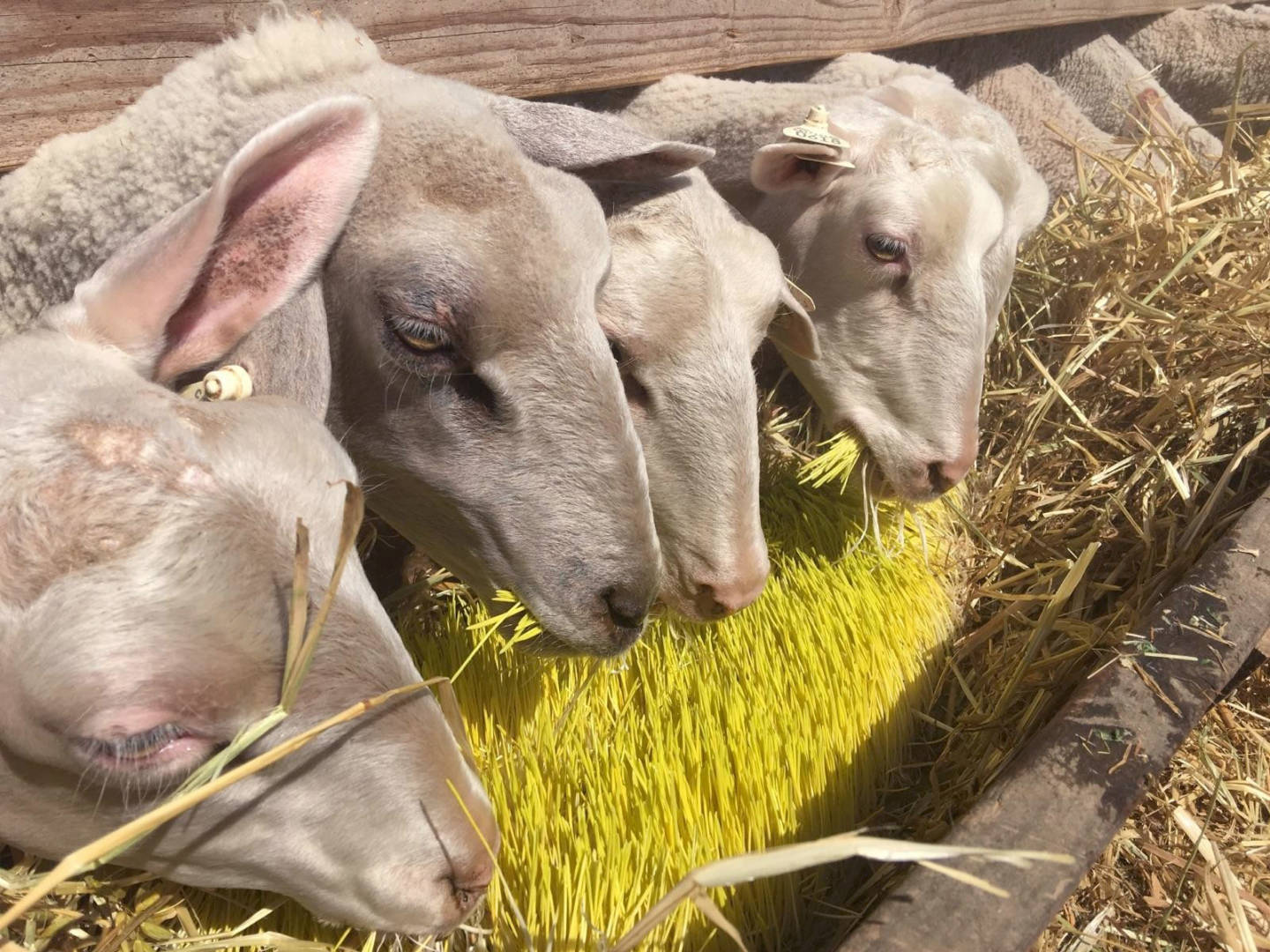
"caption": "These Central Valley sheep are happily munching on sprouted barley grown indoors. Farmer Mario Daccarett says the barley, grown in shipping containers, is sweet and keeps his sheep full longer.",
"description": "These Central Valley sheep are happily munching on sprouted barley grown indoors. Farmer Mario Daccarett says the barley, grown in shipping containers, is sweet and keeps his sheep full longer.",
"title": "These Central Valley sheep are happily munching on sprouted barley grown indoors. Farmer Mario Daccarett says the barley, grown in shipping containers, is sweet and keeps his sheep full longer.",
"credit": "Ezra David Romero/Valley Public Radio",
"status": "inherit",
"isLoading": false,
"fetchFailed": false
},
"bayareabites_108965": {
"type": "attachments",
"id": "bayareabites_108965",
"meta": {
"index": "attachments_1716263798",
"site": "bayareabites",
"id": "108965",
"found": true
},
"parent": 108964,
"imgSizes": {
"twentyfourteen-full-width": {
"file": "https://ww2.kqed.org/app/uploads/sites/24/2016/04/mackthedog-1_enl-2fe736bdc66cdda96536b8fd2a9515b7681c770f-1038x576.jpg",
"width": 1038,
"mimeType": "image/jpeg",
"height": 576
},
"thumbnail": {
"file": "https://ww2.kqed.org/app/uploads/sites/24/2016/04/mackthedog-1_enl-2fe736bdc66cdda96536b8fd2a9515b7681c770f-400x258.jpg",
"width": 400,
"mimeType": "image/jpeg",
"height": 258
},
"fd-sm": {
"file": "https://ww2.kqed.org/app/uploads/sites/24/2016/04/mackthedog-1_enl-2fe736bdc66cdda96536b8fd2a9515b7681c770f-960x619.jpg",
"width": 960,
"mimeType": "image/jpeg",
"height": 619
},
"post-thumbnail": {
"file": "https://ww2.kqed.org/app/uploads/sites/24/2016/04/mackthedog-1_enl-2fe736bdc66cdda96536b8fd2a9515b7681c770f-672x372.jpg",
"width": 672,
"mimeType": "image/jpeg",
"height": 372
},
"kqedFullSize": {
"file": "https://ww2.kqed.org/app/uploads/sites/24/2016/04/mackthedog-1_enl-2fe736bdc66cdda96536b8fd2a9515b7681c770f.jpg",
"width": 2000,
"height": 1290
},
"large": {
"file": "https://ww2.kqed.org/app/uploads/sites/24/2016/04/mackthedog-1_enl-2fe736bdc66cdda96536b8fd2a9515b7681c770f-1440x929.jpg",
"width": 1440,
"mimeType": "image/jpeg",
"height": 929
},
"guest-author-96": {
"file": "https://ww2.kqed.org/app/uploads/sites/24/2016/04/mackthedog-1_enl-2fe736bdc66cdda96536b8fd2a9515b7681c770f-96x96.jpg",
"width": 96,
"mimeType": "image/jpeg",
"height": 96
},
"medium": {
"file": "https://ww2.kqed.org/app/uploads/sites/24/2016/04/mackthedog-1_enl-2fe736bdc66cdda96536b8fd2a9515b7681c770f-800x516.jpg",
"width": 800,
"mimeType": "image/jpeg",
"height": 516
},
"guest-author-64": {
"file": "https://ww2.kqed.org/app/uploads/sites/24/2016/04/mackthedog-1_enl-2fe736bdc66cdda96536b8fd2a9515b7681c770f-64x64.jpg",
"width": 64,
"mimeType": "image/jpeg",
"height": 64
},
"guest-author-32": {
"file": "https://ww2.kqed.org/app/uploads/sites/24/2016/04/mackthedog-1_enl-2fe736bdc66cdda96536b8fd2a9515b7681c770f-32x32.jpg",
"width": 32,
"mimeType": "image/jpeg",
"height": 32
},
"cat_post_thumb_sizecategory-posts-2": {
"file": "https://ww2.kqed.org/app/uploads/sites/24/2016/04/mackthedog-1_enl-2fe736bdc66cdda96536b8fd2a9515b7681c770f-150x150.jpg",
"width": 150,
"mimeType": "image/jpeg",
"height": 150
},
"fd-lrg": {
"file": "https://ww2.kqed.org/app/uploads/sites/24/2016/04/mackthedog-1_enl-2fe736bdc66cdda96536b8fd2a9515b7681c770f-1920x1238.jpg",
"width": 1920,
"mimeType": "image/jpeg",
"height": 1238
},
"fd-med": {
"file": "https://ww2.kqed.org/app/uploads/sites/24/2016/04/mackthedog-1_enl-2fe736bdc66cdda96536b8fd2a9515b7681c770f-1180x761.jpg",
"width": 1180,
"mimeType": "image/jpeg",
"height": 761
},
"detail": {
"file": "https://ww2.kqed.org/app/uploads/sites/24/2016/04/mackthedog-1_enl-2fe736bdc66cdda96536b8fd2a9515b7681c770f-150x150.jpg",
"width": 150,
"mimeType": "image/jpeg",
"height": 150
},
"medium_large": {
"file": "https://ww2.kqed.org/app/uploads/sites/24/2016/04/mackthedog-1_enl-2fe736bdc66cdda96536b8fd2a9515b7681c770f-768x495.jpg",
"width": 768,
"mimeType": "image/jpeg",
"height": 495
},
"guest-author-128": {
"file": "https://ww2.kqed.org/app/uploads/sites/24/2016/04/mackthedog-1_enl-2fe736bdc66cdda96536b8fd2a9515b7681c770f-128x128.jpg",
"width": 128,
"mimeType": "image/jpeg",
"height": 128
}
},
"publishDate": 1461880499,
"modified": 1461880773,
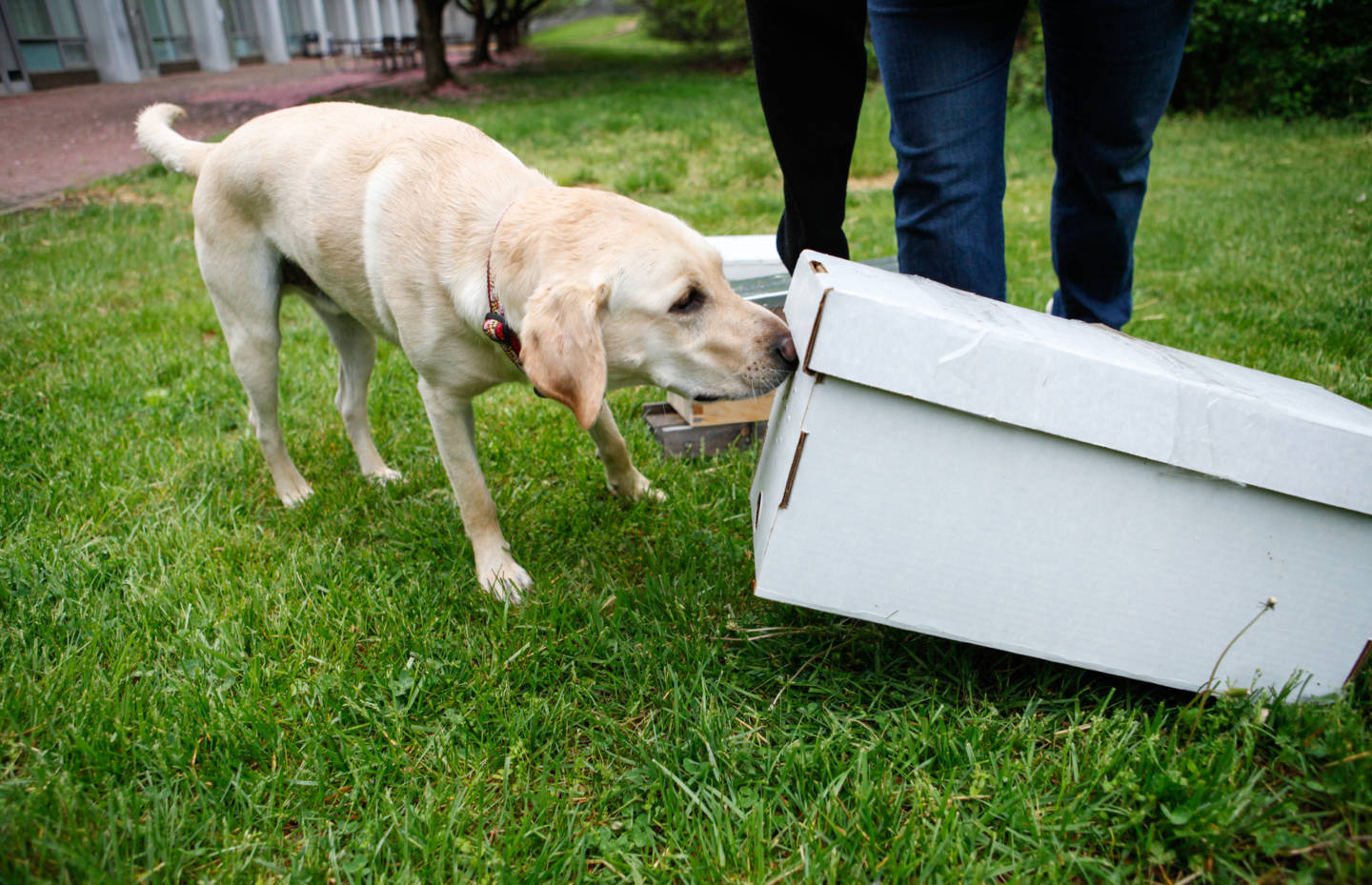
"caption": "Cybil Preston, chief apiary inspector for the Maryland Department of Agriculture, does a training run with Mack: She sets up fake beehives and commands him to \"find.\" He sniffs each of them to check for American foulbrood. If he detects the disease, he is trained to sit to notify Preston.",
"description": "Cybil Preston, chief apiary inspector for the Maryland Department of Agriculture, does a training run with Mack: She sets up fake beehives and commands him to \"find.\" He sniffs each of them to check for American foulbrood. If he detects the disease, he is trained to sit to notify Preston.",
"title": "Cybil Preston, chief apiary inspector for the Maryland Department of Agriculture, does a training run with Mack: She sets up fake beehives and commands him to \"find.\" He sniffs each of them to check for American foulbrood. If he detects the disease, he is trained to sit to notify Preston.",
"credit": "Morgan McCloy/NPR",
"status": "inherit",
"isLoading": false,
"fetchFailed": false
},
"bayareabites_107822": {
"type": "attachments",
"id": "bayareabites_107822",
"meta": {
"index": "attachments_1716263798",
"site": "bayareabites",
"id": "107822",
"found": true
},
"parent": 107760,
"imgSizes": {
"twentyfourteen-full-width": {
"file": "https://ww2.kqed.org/app/uploads/sites/24/2016/03/IMG_1905-1920-1038x576.jpg",
"width": 1038,
"mimeType": "image/jpeg",
"height": 576
},
"thumbnail": {
"file": "https://ww2.kqed.org/app/uploads/sites/24/2016/03/IMG_1905-1920-400x300.jpg",
"width": 400,
"mimeType": "image/jpeg",
"height": 300
},
"fd-sm": {
"file": "https://ww2.kqed.org/app/uploads/sites/24/2016/03/IMG_1905-1920-960x720.jpg",
"width": 960,
"mimeType": "image/jpeg",
"height": 720
},
"post-thumbnail": {
"file": "https://ww2.kqed.org/app/uploads/sites/24/2016/03/IMG_1905-1920-672x372.jpg",
"width": 672,
"mimeType": "image/jpeg",
"height": 372
},
"kqedFullSize": {
"file": "https://ww2.kqed.org/app/uploads/sites/24/2016/03/IMG_1905-1920.jpg",
"width": 1920,
"height": 1440
},
"large": {
"file": "https://ww2.kqed.org/app/uploads/sites/24/2016/03/IMG_1905-1920-1440x1080.jpg",
"width": 1440,
"mimeType": "image/jpeg",
"height": 1080
},
"guest-author-96": {
"file": "https://ww2.kqed.org/app/uploads/sites/24/2016/03/IMG_1905-1920-96x96.jpg",
"width": 96,
"mimeType": "image/jpeg",
"height": 96
},
"medium": {
"file": "https://ww2.kqed.org/app/uploads/sites/24/2016/03/IMG_1905-1920-800x600.jpg",
"width": 800,
"mimeType": "image/jpeg",
"height": 600
},
"guest-author-64": {
"file": "https://ww2.kqed.org/app/uploads/sites/24/2016/03/IMG_1905-1920-64x64.jpg",
"width": 64,
"mimeType": "image/jpeg",
"height": 64
},
"guest-author-32": {
"file": "https://ww2.kqed.org/app/uploads/sites/24/2016/03/IMG_1905-1920-32x32.jpg",
"width": 32,
"mimeType": "image/jpeg",
"height": 32
},
"cat_post_thumb_sizecategory-posts-2": {
"file": "https://ww2.kqed.org/app/uploads/sites/24/2016/03/IMG_1905-1920-150x150.jpg",
"width": 150,
"mimeType": "image/jpeg",
"height": 150
},
"fd-lrg": {
"file": "https://ww2.kqed.org/app/uploads/sites/24/2016/03/IMG_1905-1920-1920x1440.jpg",
"width": 1920,
"mimeType": "image/jpeg",
"height": 1440
},
"fd-med": {
"file": "https://ww2.kqed.org/app/uploads/sites/24/2016/03/IMG_1905-1920-1180x885.jpg",
"width": 1180,
"mimeType": "image/jpeg",
"height": 885
},
"detail": {
"file": "https://ww2.kqed.org/app/uploads/sites/24/2016/03/IMG_1905-1920-75x75.jpg",
"width": 75,
"mimeType": "image/jpeg",
"height": 75
},
"medium_large": {
"file": "https://ww2.kqed.org/app/uploads/sites/24/2016/03/IMG_1905-1920-768x576.jpg",
"width": 768,
"mimeType": "image/jpeg",
"height": 576
},
"guest-author-128": {
"file": "https://ww2.kqed.org/app/uploads/sites/24/2016/03/IMG_1905-1920-128x128.jpg",
"width": 128,
"mimeType": "image/jpeg",
"height": 128
}
},
"publishDate": 1458373107,
"modified": 1458373372,
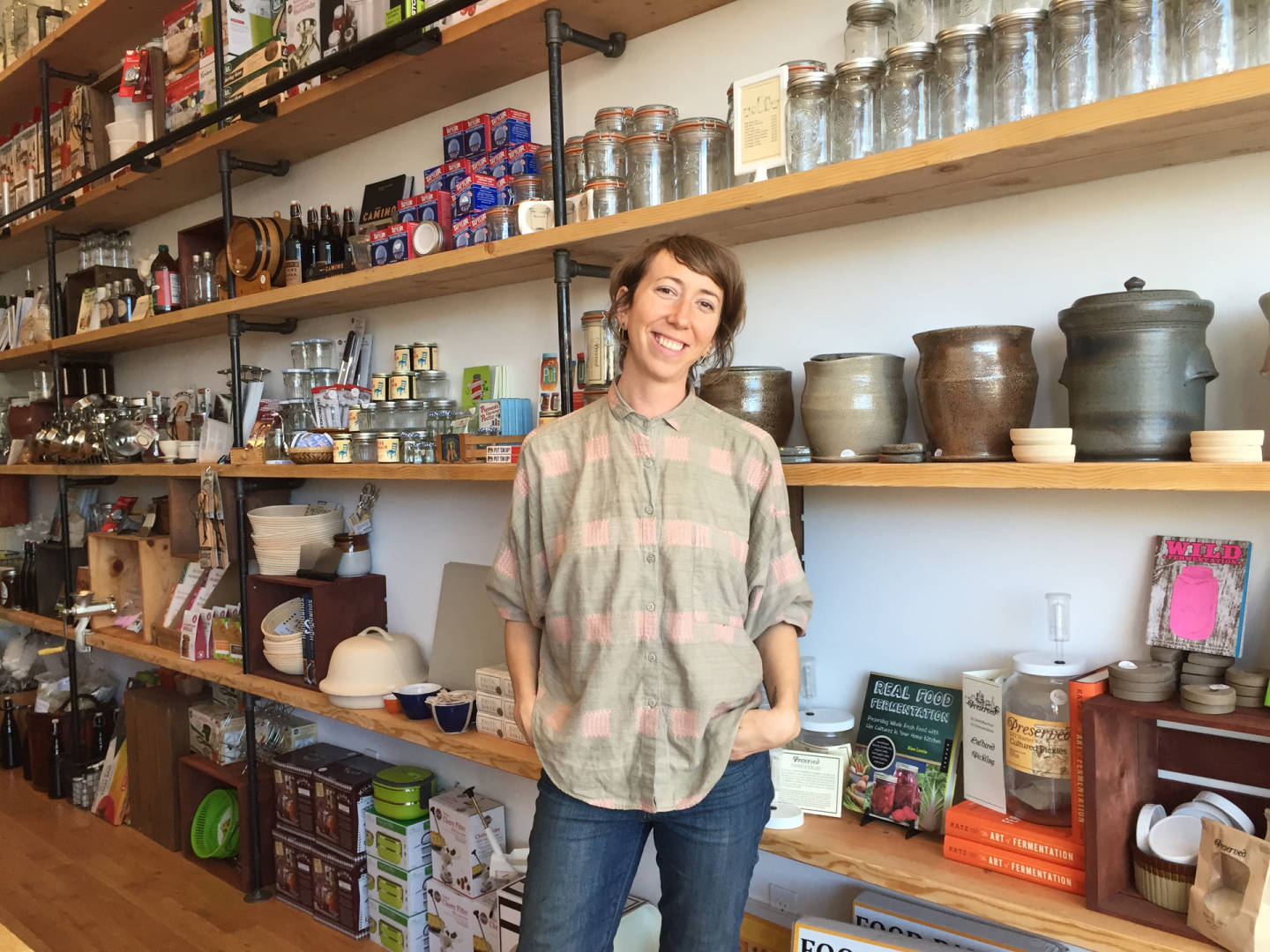
"caption": "Elizabeth Vecchiarelli has just moved to Temescal with a larger version of her popular store, Preserved.",
"description": null,
"title": "IMG_1905-1920",
"credit": "Alix Wall",
"status": "inherit",
"isLoading": false,
"fetchFailed": false
},
"bayareabites_103738": {
"type": "attachments",
"id": "bayareabites_103738",
"meta": {
"index": "attachments_1716263798",
"site": "bayareabites",
"id": "103738",
"found": true
},
"parent": 0,
"imgSizes": {
"twentyfourteen-full-width": {
"file": "https://ww2.kqed.org/app/uploads/sites/24/2015/11/edited11-1038x576.jpg",
"width": 1038,
"mimeType": "image/jpeg",
"height": 576
},
"thumbnail": {
"file": "https://ww2.kqed.org/app/uploads/sites/24/2015/11/edited11-400x267.jpg",
"width": 400,
"mimeType": "image/jpeg",
"height": 267
},
"fd-sm": {
"file": "https://ww2.kqed.org/app/uploads/sites/24/2015/11/edited11-960x641.jpg",
"width": 960,
"mimeType": "image/jpeg",
"height": 641
},
"post-thumbnail": {
"file": "https://ww2.kqed.org/app/uploads/sites/24/2015/11/edited11-672x372.jpg",
"width": 672,
"mimeType": "image/jpeg",
"height": 372
},
"kqedFullSize": {
"file": "https://ww2.kqed.org/app/uploads/sites/24/2015/11/edited11.jpg",
"width": 1920,
"height": 1281
},
"large": {
"file": "https://ww2.kqed.org/app/uploads/sites/24/2015/11/edited11-1440x961.jpg",
"width": 1440,
"mimeType": "image/jpeg",
"height": 961
},
"guest-author-96": {
"file": "https://ww2.kqed.org/app/uploads/sites/24/2015/11/edited11-96x96.jpg",
"width": 96,
"mimeType": "image/jpeg",
"height": 96
},
"medium": {
"file": "https://ww2.kqed.org/app/uploads/sites/24/2015/11/edited11-800x534.jpg",
"width": 800,
"mimeType": "image/jpeg",
"height": 534
},
"guest-author-64": {
"file": "https://ww2.kqed.org/app/uploads/sites/24/2015/11/edited11-64x64.jpg",
"width": 64,
"mimeType": "image/jpeg",
"height": 64
},
"guest-author-32": {
"file": "https://ww2.kqed.org/app/uploads/sites/24/2015/11/edited11-32x32.jpg",
"width": 32,
"mimeType": "image/jpeg",
"height": 32
},
"cat_post_thumb_sizecategory-posts-2": {
"file": "https://ww2.kqed.org/app/uploads/sites/24/2015/11/edited11-150x150.jpg",
"width": 150,
"mimeType": "image/jpeg",
"height": 150
},
"fd-lrg": {
"file": "https://ww2.kqed.org/app/uploads/sites/24/2015/11/edited11-1920x1281.jpg",
"width": 1920,
"mimeType": "image/jpeg",
"height": 1281
},
"fd-med": {
"file": "https://ww2.kqed.org/app/uploads/sites/24/2015/11/edited11-1180x787.jpg",
"width": 1180,
"mimeType": "image/jpeg",
"height": 787
},
"detail": {
"file": "https://ww2.kqed.org/app/uploads/sites/24/2015/11/edited11-75x75.jpg",
"width": 75,
"mimeType": "image/jpeg",
"height": 75
},
"guest-author-128": {
"file": "https://ww2.kqed.org/app/uploads/sites/24/2015/11/edited11-128x128.jpg",
"width": 128,
"mimeType": "image/jpeg",
"height": 128
}
},
"publishDate": 1447286590,
"modified": 1447298743,
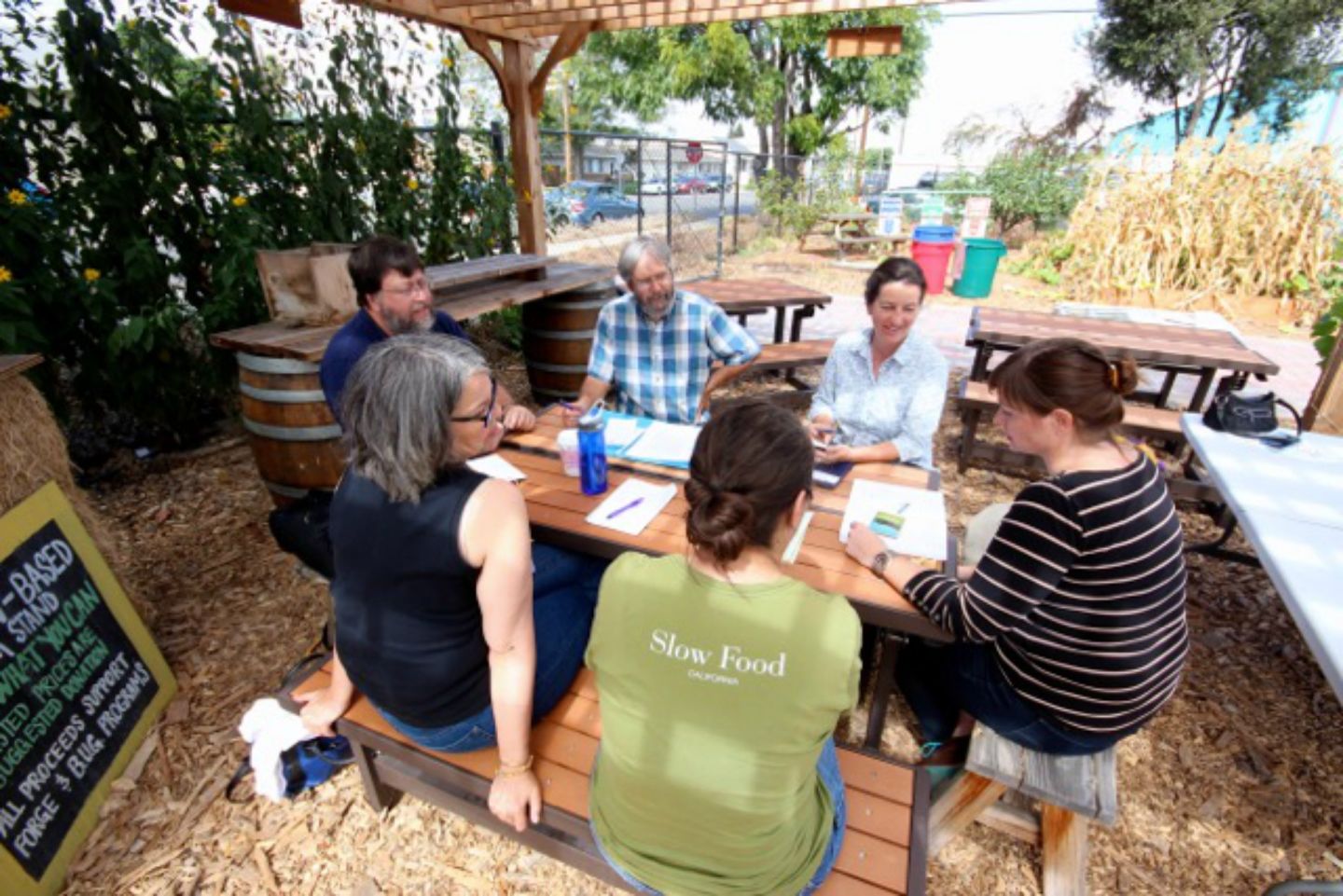
"caption": "Members from the California Food Policy Council Central Valley/Mountain region chatting at the CAFPC statewide meeting in 2014.",
"description": "Members from the California Food Policy Council Central Valley/Mountain region chatting at the CAFPC statewide meeting in 2014.",
"title": "Members from the California Food Policy Council Central Valley/Mountain region chatting at the CAFPC statewide meeting in 2014.",
"credit": "Doris Meier",
"status": "inherit",
"isLoading": false,
"fetchFailed": false
},
"bayareabites_103532": {
"type": "attachments",
"id": "bayareabites_103532",
"meta": {
"index": "attachments_1716263798",
"site": "bayareabites",
"id": "103532",
"found": true
},
"parent": 103531,
"imgSizes": {
"twentyfourteen-full-width": {
"file": "https://ww2.kqed.org/app/uploads/sites/24/2015/11/sherman-harvesting-greensnew-c725b16e33a345c3eb9dcb2e1e4f2edff7423733-1038x576.jpg",
"width": 1038,
"mimeType": "image/jpeg",
"height": 576
},
"thumbnail": {
"file": "https://ww2.kqed.org/app/uploads/sites/24/2015/11/sherman-harvesting-greensnew-c725b16e33a345c3eb9dcb2e1e4f2edff7423733-400x300.jpg",
"width": 400,
"mimeType": "image/jpeg",
"height": 300
},
"fd-sm": {
"file": "https://ww2.kqed.org/app/uploads/sites/24/2015/11/sherman-harvesting-greensnew-c725b16e33a345c3eb9dcb2e1e4f2edff7423733-960x720.jpg",
"width": 960,
"mimeType": "image/jpeg",
"height": 720
},
"post-thumbnail": {
"file": "https://ww2.kqed.org/app/uploads/sites/24/2015/11/sherman-harvesting-greensnew-c725b16e33a345c3eb9dcb2e1e4f2edff7423733-672x372.jpg",
"width": 672,
"mimeType": "image/jpeg",
"height": 372
},
"kqedFullSize": {
"file": "https://ww2.kqed.org/app/uploads/sites/24/2015/11/sherman-harvesting-greensnew-c725b16e33a345c3eb9dcb2e1e4f2edff7423733.jpg",
"width": 1050,
"height": 787
},
"cat_post_thumb_sizecategory-posts-2": {
"file": "https://ww2.kqed.org/app/uploads/sites/24/2015/11/sherman-harvesting-greensnew-c725b16e33a345c3eb9dcb2e1e4f2edff7423733-150x150.jpg",
"width": 150,
"mimeType": "image/jpeg",
"height": 150
},
"guest-author-96": {
"file": "https://ww2.kqed.org/app/uploads/sites/24/2015/11/sherman-harvesting-greensnew-c725b16e33a345c3eb9dcb2e1e4f2edff7423733-96x96.jpg",
"width": 96,
"mimeType": "image/jpeg",
"height": 96
},
"medium": {
"file": "https://ww2.kqed.org/app/uploads/sites/24/2015/11/sherman-harvesting-greensnew-c725b16e33a345c3eb9dcb2e1e4f2edff7423733-800x600.jpg",
"width": 800,
"mimeType": "image/jpeg",
"height": 600
},
"guest-author-64": {
"file": "https://ww2.kqed.org/app/uploads/sites/24/2015/11/sherman-harvesting-greensnew-c725b16e33a345c3eb9dcb2e1e4f2edff7423733-64x64.jpg",
"width": 64,
"mimeType": "image/jpeg",
"height": 64
},
"detail": {
"file": "https://ww2.kqed.org/app/uploads/sites/24/2015/11/sherman-harvesting-greensnew-c725b16e33a345c3eb9dcb2e1e4f2edff7423733-75x75.jpg",
"width": 75,
"mimeType": "image/jpeg",
"height": 75
},
"guest-author-32": {
"file": "https://ww2.kqed.org/app/uploads/sites/24/2015/11/sherman-harvesting-greensnew-c725b16e33a345c3eb9dcb2e1e4f2edff7423733-32x32.jpg",
"width": 32,
"mimeType": "image/jpeg",
"height": 32
},
"guest-author-128": {
"file": "https://ww2.kqed.org/app/uploads/sites/24/2015/11/sherman-harvesting-greensnew-c725b16e33a345c3eb9dcb2e1e4f2edff7423733-128x128.jpg",
"width": 128,
"mimeType": "image/jpeg",
"height": 128
}
},
"publishDate": 1447142070,
"modified": 1447142534,
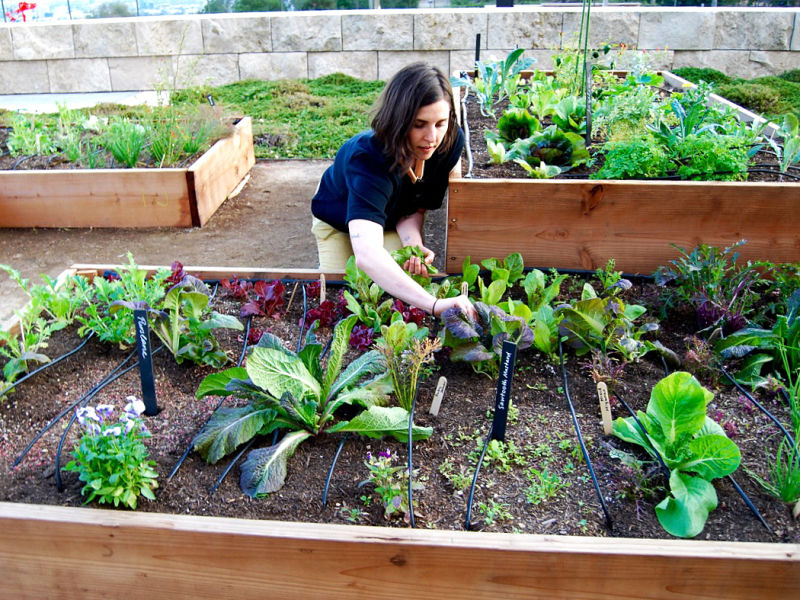
"caption": "Julia Sherman is the mastermind behind the Salad Garden at the Getty. Here, she pulls up heirloom greens for the salad.",
"description": "Julia Sherman is the mastermind behind the Salad Garden at the Getty. Here, she pulls up heirloom greens for the salad.",
"title": "Julia Sherman is the mastermind behind the Salad Garden at the Getty. Here, she pulls up heirloom greens for the salad.",
"credit": "Abbie Fentress Swanson for NPR ",
"status": "inherit",
"isLoading": false,
"fetchFailed": false
},
"bayareabites_101506": {
"type": "attachments",
"id": "bayareabites_101506",
"meta": {
"index": "attachments_1716263798",
"site": "bayareabites",
"id": "101506",
"found": true
},
"parent": 101505,
"imgSizes": {
"thumbnail": {
"file": "https://ww2.kqed.org/app/uploads/sites/24/2015/09/millet2-680x452-400x266.jpg",
"width": 400,
"mimeType": "image/jpeg",
"height": 266
},
"post-thumbnail": {
"file": "https://ww2.kqed.org/app/uploads/sites/24/2015/09/millet2-680x452-672x372.jpg",
"width": 672,
"mimeType": "image/jpeg",
"height": 372
},
"kqedFullSize": {
"file": "https://ww2.kqed.org/app/uploads/sites/24/2015/09/millet2-680x452.jpg",
"width": 680,
"height": 452
},
"cat_post_thumb_sizecategory-posts-2": {
"file": "https://ww2.kqed.org/app/uploads/sites/24/2015/09/millet2-680x452-150x150.jpg",
"width": 150,
"mimeType": "image/jpeg",
"height": 150
},
"guest-author-96": {
"file": "https://ww2.kqed.org/app/uploads/sites/24/2015/09/millet2-680x452-96x96.jpg",
"width": 96,
"mimeType": "image/jpeg",
"height": 96
},
"guest-author-64": {
"file": "https://ww2.kqed.org/app/uploads/sites/24/2015/09/millet2-680x452-64x64.jpg",
"width": 64,
"mimeType": "image/jpeg",
"height": 64
},
"detail": {
"file": "https://ww2.kqed.org/app/uploads/sites/24/2015/09/millet2-680x452-75x75.jpg",
"width": 75,
"mimeType": "image/jpeg",
"height": 75
},
"guest-author-32": {
"file": "https://ww2.kqed.org/app/uploads/sites/24/2015/09/millet2-680x452-32x32.jpg",
"width": 32,
"mimeType": "image/jpeg",
"height": 32
},
"guest-author-128": {
"file": "https://ww2.kqed.org/app/uploads/sites/24/2015/09/millet2-680x452-128x128.jpg",
"width": 128,
"mimeType": "image/jpeg",
"height": 128
}
},
"publishDate": 1443659244,
"modified": 1443659300,
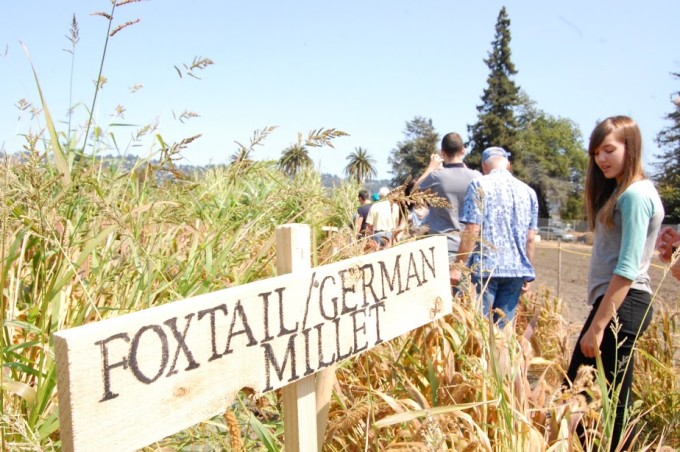
"caption": "Community members inspect the Millet Project demo farm at the UC Gill Tract.",
"description": "Community members inspect the Millet Project demo farm at the UC Gill Tract.",
"title": "Community members inspect the Millet Project demo farm at the UC Gill Tract.",
"credit": "Raquel Moreira",
"status": "inherit",
"isLoading": false,
"fetchFailed": false
},
"bayareabites_101177": {
"type": "attachments",
"id": "bayareabites_101177",
"meta": {
"index": "attachments_1716263798",
"site": "bayareabites",
"id": "101177",
"found": true
},
"parent": 101144,
"imgSizes": {
"twentyfourteen-full-width": {
"file": "https://ww2.kqed.org/app/uploads/sites/24/2015/09/IMG_6234-1920-1038x576.jpg",
"width": 1038,
"mimeType": "image/jpeg",
"height": 576
},
"thumbnail": {
"file": "https://ww2.kqed.org/app/uploads/sites/24/2015/09/IMG_6234-1920-400x267.jpg",
"width": 400,
"mimeType": "image/jpeg",
"height": 267
},
"fd-sm": {
"file": "https://ww2.kqed.org/app/uploads/sites/24/2015/09/IMG_6234-1920-960x640.jpg",
"width": 960,
"mimeType": "image/jpeg",
"height": 640
},
"post-thumbnail": {
"file": "https://ww2.kqed.org/app/uploads/sites/24/2015/09/IMG_6234-1920-672x372.jpg",
"width": 672,
"mimeType": "image/jpeg",
"height": 372
},
"kqedFullSize": {
"file": "https://ww2.kqed.org/app/uploads/sites/24/2015/09/IMG_6234-1920.jpg",
"width": 1920,
"height": 1280
},
"large": {
"file": "https://ww2.kqed.org/app/uploads/sites/24/2015/09/IMG_6234-1920-1440x960.jpg",
"width": 1440,
"mimeType": "image/jpeg",
"height": 960
},
"guest-author-96": {
"file": "https://ww2.kqed.org/app/uploads/sites/24/2015/09/IMG_6234-1920-96x96.jpg",
"width": 96,
"mimeType": "image/jpeg",
"height": 96
},
"medium": {
"file": "https://ww2.kqed.org/app/uploads/sites/24/2015/09/IMG_6234-1920-800x533.jpg",
"width": 800,
"mimeType": "image/jpeg",
"height": 533
},
"guest-author-64": {
"file": "https://ww2.kqed.org/app/uploads/sites/24/2015/09/IMG_6234-1920-64x64.jpg",
"width": 64,
"mimeType": "image/jpeg",
"height": 64
},
"guest-author-32": {
"file": "https://ww2.kqed.org/app/uploads/sites/24/2015/09/IMG_6234-1920-32x32.jpg",
"width": 32,
"mimeType": "image/jpeg",
"height": 32
},
"cat_post_thumb_sizecategory-posts-2": {
"file": "https://ww2.kqed.org/app/uploads/sites/24/2015/09/IMG_6234-1920-150x150.jpg",
"width": 150,
"mimeType": "image/jpeg",
"height": 150
},
"fd-lrg": {
"file": "https://ww2.kqed.org/app/uploads/sites/24/2015/09/IMG_6234-1920-1920x1280.jpg",
"width": 1920,
"mimeType": "image/jpeg",
"height": 1280
},
"fd-med": {
"file": "https://ww2.kqed.org/app/uploads/sites/24/2015/09/IMG_6234-1920-1180x787.jpg",
"width": 1180,
"mimeType": "image/jpeg",
"height": 787
},
"detail": {
"file": "https://ww2.kqed.org/app/uploads/sites/24/2015/09/IMG_6234-1920-75x75.jpg",
"width": 75,
"mimeType": "image/jpeg",
"height": 75
},
"guest-author-128": {
"file": "https://ww2.kqed.org/app/uploads/sites/24/2015/09/IMG_6234-1920-128x128.jpg",
"width": 128,
"mimeType": "image/jpeg",
"height": 128
}
},
"publishDate": 1442956686,
"modified": 1442957127,
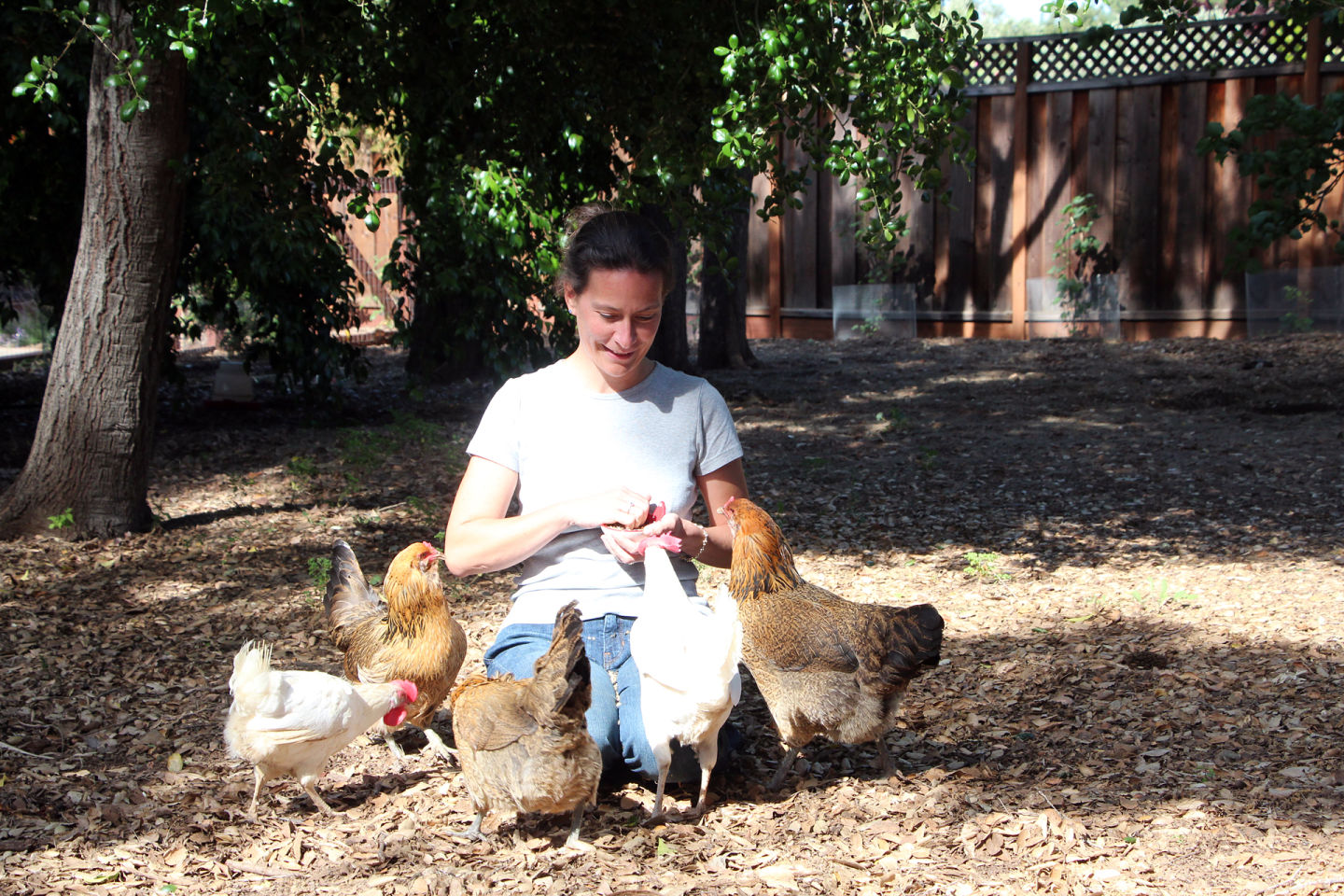
"caption": "Isabelle Cnudde of Los Altos says the chickens she adopted through Animal Place lay even more eggs than those she raised herself.",
"description": "Isabelle Cnudde of Los Altos says the chickens she adopted through Animal Place lay even more eggs than those she raised herself.",
"title": "Isabelle Cnudde of Los Altos says the chickens she adopted through Animal Place lay even more eggs than those she raised herself.",
"credit": "Peter Cnudde",
"status": "inherit",
"isLoading": false,
"fetchFailed": false
},
"bayareabites_100462": {
"type": "attachments",
"id": "bayareabites_100462",
"meta": {
"index": "attachments_1716263798",
"site": "bayareabites",
"id": "100462",
"found": true
},
"parent": 100455,
"imgSizes": {
"thumbnail": {
"file": "https://ww2.kqed.org/app/uploads/sites/24/2015/09/UA-720x413-400x229.jpg",
"width": 400,
"mimeType": "image/jpeg",
"height": 229
},
"post-thumbnail": {
"file": "https://ww2.kqed.org/app/uploads/sites/24/2015/09/UA-720x413-672x372.jpg",
"width": 672,
"mimeType": "image/jpeg",
"height": 372
},
"kqedFullSize": {
"file": "https://ww2.kqed.org/app/uploads/sites/24/2015/09/UA-720x413.jpg",
"width": 720,
"height": 413
},
"cat_post_thumb_sizecategory-posts-2": {
"file": "https://ww2.kqed.org/app/uploads/sites/24/2015/09/UA-720x413-150x150.jpg",
"width": 150,
"mimeType": "image/jpeg",
"height": 150
},
"guest-author-96": {
"file": "https://ww2.kqed.org/app/uploads/sites/24/2015/09/UA-720x413-96x96.jpg",
"width": 96,
"mimeType": "image/jpeg",
"height": 96
},
"guest-author-64": {
"file": "https://ww2.kqed.org/app/uploads/sites/24/2015/09/UA-720x413-64x64.jpg",
"width": 64,
"mimeType": "image/jpeg",
"height": 64
},
"detail": {
"file": "https://ww2.kqed.org/app/uploads/sites/24/2015/09/UA-720x413-75x75.jpg",
"width": 75,
"mimeType": "image/jpeg",
"height": 75
},
"guest-author-32": {
"file": "https://ww2.kqed.org/app/uploads/sites/24/2015/09/UA-720x413-32x32.jpg",
"width": 32,
"mimeType": "image/jpeg",
"height": 32
},
"guest-author-128": {
"file": "https://ww2.kqed.org/app/uploads/sites/24/2015/09/UA-720x413-128x128.jpg",
"width": 128,
"mimeType": "image/jpeg",
"height": 128
}
},
"publishDate": 1442210531,
"modified": 1442211094,
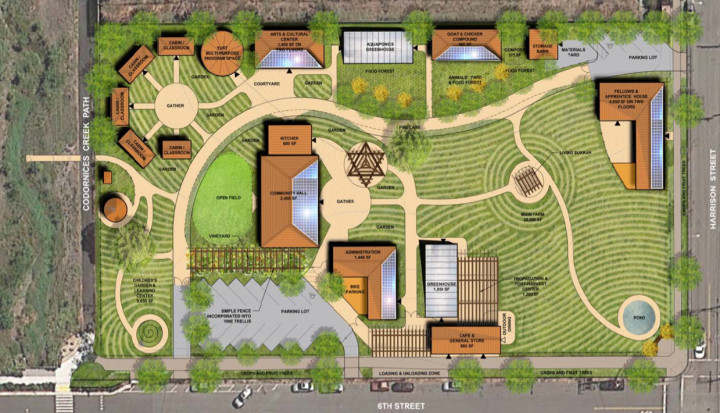
"caption": "Urban Adamah is set to break ground on its new West Berkeley farm on Friday or Monday. ",
"description": "Urban Adamah is set to break ground on its new West Berkeley farm on Friday or Monday. ",
"title": "Urban Adamah is set to break ground on its new West Berkeley farm on Friday or Monday.",
"credit": "Urban Adamah",
"status": "inherit",
"isLoading": false,
"fetchFailed": false
},
"bayareabites_100297": {
"type": "attachments",
"id": "bayareabites_100297",
"meta": {
"index": "attachments_1716263798",
"site": "bayareabites",
"id": "100297",
"found": true
},
"parent": 100285,
"imgSizes": {
"thumbnail": {
"file": "https://ww2.kqed.org/app/uploads/sites/24/2015/09/IMG_1879-680x453-400x266.jpg",
"width": 400,
"mimeType": "image/jpeg",
"height": 266
},
"post-thumbnail": {
"file": "https://ww2.kqed.org/app/uploads/sites/24/2015/09/IMG_1879-680x453-672x372.jpg",
"width": 672,
"mimeType": "image/jpeg",
"height": 372
},
"kqedFullSize": {
"file": "https://ww2.kqed.org/app/uploads/sites/24/2015/09/IMG_1879-680x453.jpg",
"width": 680,
"height": 453
},
"cat_post_thumb_sizecategory-posts-2": {
"file": "https://ww2.kqed.org/app/uploads/sites/24/2015/09/IMG_1879-680x453-150x150.jpg",
"width": 150,
"mimeType": "image/jpeg",
"height": 150
},
"guest-author-96": {
"file": "https://ww2.kqed.org/app/uploads/sites/24/2015/09/IMG_1879-680x453-96x96.jpg",
"width": 96,
"mimeType": "image/jpeg",
"height": 96
},
"guest-author-64": {
"file": "https://ww2.kqed.org/app/uploads/sites/24/2015/09/IMG_1879-680x453-64x64.jpg",
"width": 64,
"mimeType": "image/jpeg",
"height": 64
},
"detail": {
"file": "https://ww2.kqed.org/app/uploads/sites/24/2015/09/IMG_1879-680x453-75x75.jpg",
"width": 75,
"mimeType": "image/jpeg",
"height": 75
},
"guest-author-32": {
"file": "https://ww2.kqed.org/app/uploads/sites/24/2015/09/IMG_1879-680x453-32x32.jpg",
"width": 32,
"mimeType": "image/jpeg",
"height": 32
},
"guest-author-128": {
"file": "https://ww2.kqed.org/app/uploads/sites/24/2015/09/IMG_1879-680x453-128x128.jpg",
"width": 128,
"mimeType": "image/jpeg",
"height": 128
}
},
"publishDate": 1441853447,
"modified": 1441854743,
"caption": "Kelly Carlisle (second from left), poses with a group of current farm employees.",
"description": "Kelly Carlisle (second from left), poses with a group of current farm employees.",
"title": "Kelly Carlisle (second from left), poses with a group of current farm employees.",
"credit": "Twilight Greenaway",
"status": "inherit",
"isLoading": false,
"fetchFailed": false
},
"bayareabites_97491": {
"type": "attachments",
"id": "bayareabites_97491",
"meta": {
"index": "attachments_1716263798",
"site": "bayareabites",
"id": "97491",
"found": true
},
"parent": 97484,
"imgSizes": {
"thumbnail": {
"file": "https://ww2.kqed.org/app/uploads/sites/24/2015/06/Press-Release-UC-Village-Litigation-061715-720x387-400x215.jpg",
"width": 400,
"mimeType": "image/jpeg",
"height": 215
},
"post-thumbnail": {
"file": "https://ww2.kqed.org/app/uploads/sites/24/2015/06/Press-Release-UC-Village-Litigation-061715-720x387-672x372.jpg",
"width": 672,
"mimeType": "image/jpeg",
"height": 372
},
"kqedFullSize": {
"file": "https://ww2.kqed.org/app/uploads/sites/24/2015/06/Press-Release-UC-Village-Litigation-061715-720x387.jpg",
"width": 720,
"height": 387
},
"cat_post_thumb_sizecategory-posts-2": {
"file": "https://ww2.kqed.org/app/uploads/sites/24/2015/06/Press-Release-UC-Village-Litigation-061715-720x387-150x150.jpg",
"width": 150,
"mimeType": "image/jpeg",
"height": 150
},
"guest-author-96": {
"file": "https://ww2.kqed.org/app/uploads/sites/24/2015/06/Press-Release-UC-Village-Litigation-061715-720x387-96x96.jpg",
"width": 96,
"mimeType": "image/jpeg",
"height": 96
},
"guest-author-64": {
"file": "https://ww2.kqed.org/app/uploads/sites/24/2015/06/Press-Release-UC-Village-Litigation-061715-720x387-64x64.jpg",
"width": 64,
"mimeType": "image/jpeg",
"height": 64
},
"detail": {
"file": "https://ww2.kqed.org/app/uploads/sites/24/2015/06/Press-Release-UC-Village-Litigation-061715-720x387-75x75.jpg",
"width": 75,
"mimeType": "image/jpeg",
"height": 75
},
"guest-author-32": {
"file": "https://ww2.kqed.org/app/uploads/sites/24/2015/06/Press-Release-UC-Village-Litigation-061715-720x387-32x32.jpg",
"width": 32,
"mimeType": "image/jpeg",
"height": 32
},
"guest-author-128": {
"file": "https://ww2.kqed.org/app/uploads/sites/24/2015/06/Press-Release-UC-Village-Litigation-061715-720x387-128x128.jpg",
"width": 128,
"mimeType": "image/jpeg",
"height": 128
}
},
"publishDate": 1435286885,
"modified": 1435287394,
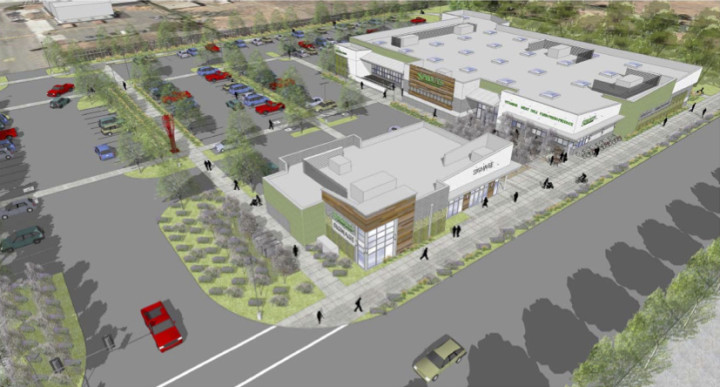
"caption": "A rendering of the University Village development shows a new Sprouts Farmers Market and additional retail space. A final appeal on the part of Occupy the Farm to stop the project was rejected last week.",
"description": null,
"title": "A rendering of the University Village development shows a new Sprouts Farmers Market and additional retail space. A final appeal on the part of Occupy the Farm to stop the project was rejected last week.",
"credit": "City of Albany",
"status": "inherit",
"isLoading": false,
"fetchFailed": false
},
"bayareabites_96327": {
"type": "attachments",
"id": "bayareabites_96327",
"meta": {
"index": "attachments_1716263798",
"site": "bayareabites",
"id": "96327",
"found": true
},
"parent": 96325,
"imgSizes": {
"twentyfourteen-full-width": {
"file": "https://ww2.kqed.org/app/uploads/sites/24/2015/05/bartram-s-planting-2-3_custom-1e265651dadb8420f65d5c9f6456f223498d9651-1038x576.jpg",
"width": 1038,
"mimeType": "image/jpeg",
"height": 576
},
"thumbnail": {
"file": "https://ww2.kqed.org/app/uploads/sites/24/2015/05/bartram-s-planting-2-3_custom-1e265651dadb8420f65d5c9f6456f223498d9651-400x256.jpg",
"width": 400,
"mimeType": "image/jpeg",
"height": 256
},
"fd-sm": {
"file": "https://ww2.kqed.org/app/uploads/sites/24/2015/05/bartram-s-planting-2-3_custom-1e265651dadb8420f65d5c9f6456f223498d9651-960x615.jpg",
"width": 960,
"mimeType": "image/jpeg",
"height": 615
},
"post-thumbnail": {
"file": "https://ww2.kqed.org/app/uploads/sites/24/2015/05/bartram-s-planting-2-3_custom-1e265651dadb8420f65d5c9f6456f223498d9651-672x372.jpg",
"width": 672,
"mimeType": "image/jpeg",
"height": 372
},
"kqedFullSize": {
"file": "https://ww2.kqed.org/app/uploads/sites/24/2015/05/bartram-s-planting-2-3_custom-1e265651dadb8420f65d5c9f6456f223498d9651.jpg",
"width": 2395,
"height": 1535
},
"large": {
"file": "https://ww2.kqed.org/app/uploads/sites/24/2015/05/bartram-s-planting-2-3_custom-1e265651dadb8420f65d5c9f6456f223498d9651-1440x923.jpg",
"width": 1440,
"mimeType": "image/jpeg",
"height": 923
},
"guest-author-96": {
"file": "https://ww2.kqed.org/app/uploads/sites/24/2015/05/bartram-s-planting-2-3_custom-1e265651dadb8420f65d5c9f6456f223498d9651-96x96.jpg",
"width": 96,
"mimeType": "image/jpeg",
"height": 96
},
"medium": {
"file": "https://ww2.kqed.org/app/uploads/sites/24/2015/05/bartram-s-planting-2-3_custom-1e265651dadb8420f65d5c9f6456f223498d9651-800x513.jpg",
"width": 800,
"mimeType": "image/jpeg",
"height": 513
},
"guest-author-64": {
"file": "https://ww2.kqed.org/app/uploads/sites/24/2015/05/bartram-s-planting-2-3_custom-1e265651dadb8420f65d5c9f6456f223498d9651-64x64.jpg",
"width": 64,
"mimeType": "image/jpeg",
"height": 64
},
"guest-author-32": {
"file": "https://ww2.kqed.org/app/uploads/sites/24/2015/05/bartram-s-planting-2-3_custom-1e265651dadb8420f65d5c9f6456f223498d9651-32x32.jpg",
"width": 32,
"mimeType": "image/jpeg",
"height": 32
},
"cat_post_thumb_sizecategory-posts-2": {
"file": "https://ww2.kqed.org/app/uploads/sites/24/2015/05/bartram-s-planting-2-3_custom-1e265651dadb8420f65d5c9f6456f223498d9651-150x150.jpg",
"width": 150,
"mimeType": "image/jpeg",
"height": 150
},
"fd-med": {
"file": "https://ww2.kqed.org/app/uploads/sites/24/2015/05/bartram-s-planting-2-3_custom-1e265651dadb8420f65d5c9f6456f223498d9651-1180x756.jpg",
"width": 1180,
"mimeType": "image/jpeg",
"height": 756
},
"detail": {
"file": "https://ww2.kqed.org/app/uploads/sites/24/2015/05/bartram-s-planting-2-3_custom-1e265651dadb8420f65d5c9f6456f223498d9651-75x75.jpg",
"width": 75,
"mimeType": "image/jpeg",
"height": 75
},
"guest-author-128": {
"file": "https://ww2.kqed.org/app/uploads/sites/24/2015/05/bartram-s-planting-2-3_custom-1e265651dadb8420f65d5c9f6456f223498d9651-128x128.jpg",
"width": 128,
"mimeType": "image/jpeg",
"height": 128
}
},
"publishDate": 1432228890,
"modified": 1432229661,
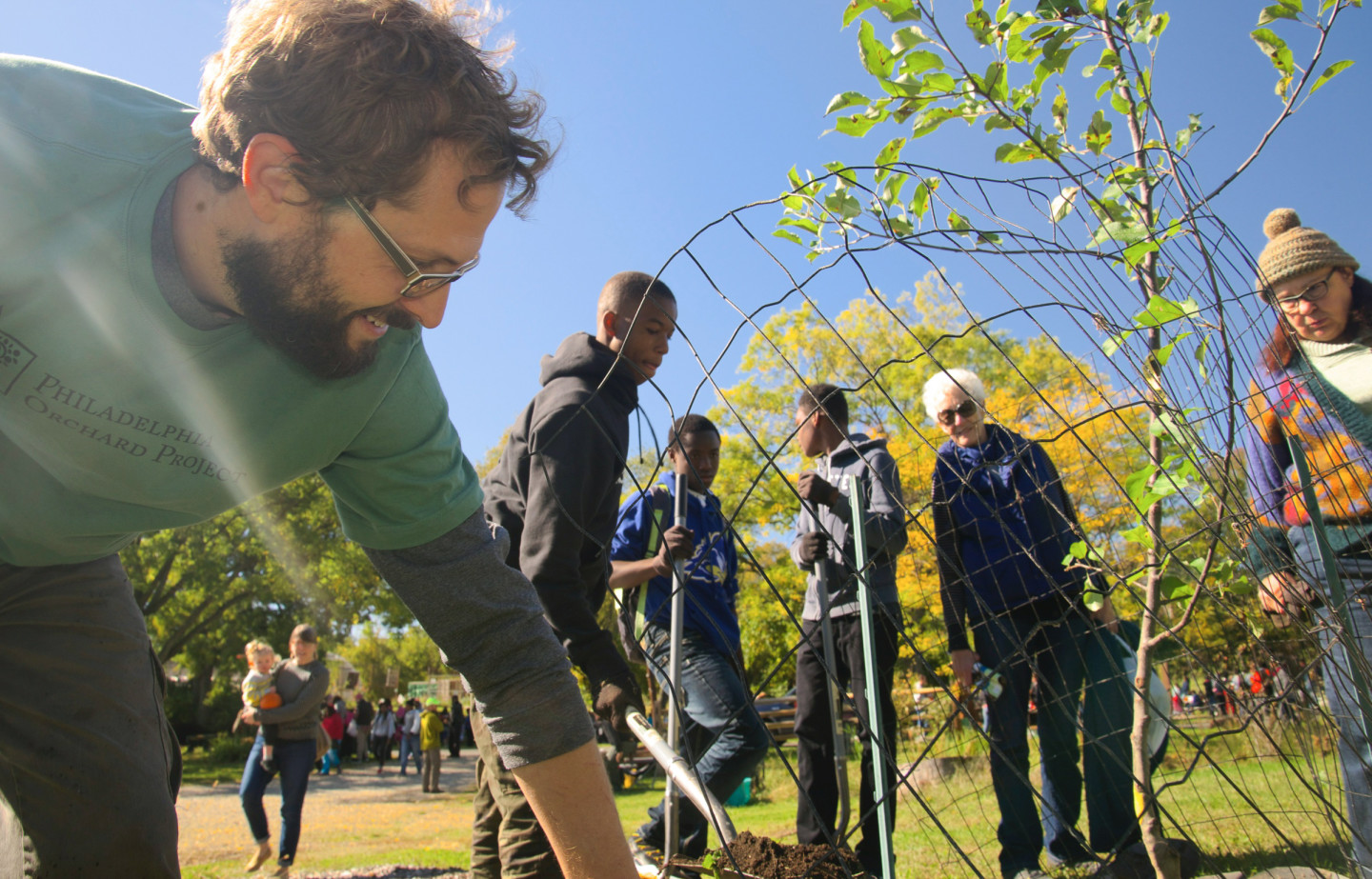
"caption": "Phil Forsyth, executive director of the Philadelphia Orchard Project, leads a fruit tree planting at Bartram's Garden in West Philadelphia.",
"description": "Phil Forsyth, executive director of the Philadelphia Orchard Project, leads a fruit tree planting at Bartram's Garden in West Philadelphia",
"title": "Phil Forsyth, executive director of the Philadelphia Orchard Project, leads a fruit tree planting at Bartram's Garden in West Philadelphia.",
"credit": "Courtesy of Philadelphia Orchard Project ",
"status": "inherit",
"isLoading": false,
"fetchFailed": false
},
"bayareabites_96288": {
"type": "attachments",
"id": "bayareabites_96288",
"meta": {
"index": "attachments_1716263798",
"site": "bayareabites",
"id": "96288",
"found": true
},
"parent": 96287,
"imgSizes": {
"twentyfourteen-full-width": {
"file": "https://ww2.kqed.org/app/uploads/sites/24/2015/05/dsc_0326_slide-588d0a7db2c7c613a3fd027ed9ee0c48e76e6312-1038x576.jpg",
"width": 1038,
"mimeType": "image/jpeg",
"height": 576
},
"thumbnail": {
"file": "https://ww2.kqed.org/app/uploads/sites/24/2015/05/dsc_0326_slide-588d0a7db2c7c613a3fd027ed9ee0c48e76e6312-400x267.jpg",
"width": 400,
"mimeType": "image/jpeg",
"height": 267
},
"fd-sm": {
"file": "https://ww2.kqed.org/app/uploads/sites/24/2015/05/dsc_0326_slide-588d0a7db2c7c613a3fd027ed9ee0c48e76e6312-960x640.jpg",
"width": 960,
"mimeType": "image/jpeg",
"height": 640
},
"post-thumbnail": {
"file": "https://ww2.kqed.org/app/uploads/sites/24/2015/05/dsc_0326_slide-588d0a7db2c7c613a3fd027ed9ee0c48e76e6312-672x372.jpg",
"width": 672,
"mimeType": "image/jpeg",
"height": 372
},
"kqedFullSize": {
"file": "https://ww2.kqed.org/app/uploads/sites/24/2015/05/dsc_0326_slide-588d0a7db2c7c613a3fd027ed9ee0c48e76e6312-e1432056413864.jpg",
"width": 1920,
"height": 1280
},
"large": {
"file": "https://ww2.kqed.org/app/uploads/sites/24/2015/05/dsc_0326_slide-588d0a7db2c7c613a3fd027ed9ee0c48e76e6312-1440x960.jpg",
"width": 1440,
"mimeType": "image/jpeg",
"height": 960
},
"guest-author-96": {
"file": "https://ww2.kqed.org/app/uploads/sites/24/2015/05/dsc_0326_slide-588d0a7db2c7c613a3fd027ed9ee0c48e76e6312-96x96.jpg",
"width": 96,
"mimeType": "image/jpeg",
"height": 96
},
"medium": {
"file": "https://ww2.kqed.org/app/uploads/sites/24/2015/05/dsc_0326_slide-588d0a7db2c7c613a3fd027ed9ee0c48e76e6312-800x533.jpg",
"width": 800,
"mimeType": "image/jpeg",
"height": 533
},
"guest-author-64": {
"file": "https://ww2.kqed.org/app/uploads/sites/24/2015/05/dsc_0326_slide-588d0a7db2c7c613a3fd027ed9ee0c48e76e6312-64x64.jpg",
"width": 64,
"mimeType": "image/jpeg",
"height": 64
},
"guest-author-32": {
"file": "https://ww2.kqed.org/app/uploads/sites/24/2015/05/dsc_0326_slide-588d0a7db2c7c613a3fd027ed9ee0c48e76e6312-32x32.jpg",
"width": 32,
"mimeType": "image/jpeg",
"height": 32
},
"cat_post_thumb_sizecategory-posts-2": {
"file": "https://ww2.kqed.org/app/uploads/sites/24/2015/05/dsc_0326_slide-588d0a7db2c7c613a3fd027ed9ee0c48e76e6312-150x150.jpg",
"width": 150,
"mimeType": "image/jpeg",
"height": 150
},
"fd-med": {
"file": "https://ww2.kqed.org/app/uploads/sites/24/2015/05/dsc_0326_slide-588d0a7db2c7c613a3fd027ed9ee0c48e76e6312-1180x787.jpg",
"width": 1180,
"mimeType": "image/jpeg",
"height": 787
},
"detail": {
"file": "https://ww2.kqed.org/app/uploads/sites/24/2015/05/dsc_0326_slide-588d0a7db2c7c613a3fd027ed9ee0c48e76e6312-75x75.jpg",
"width": 75,
"mimeType": "image/jpeg",
"height": 75
},
"guest-author-128": {
"file": "https://ww2.kqed.org/app/uploads/sites/24/2015/05/dsc_0326_slide-588d0a7db2c7c613a3fd027ed9ee0c48e76e6312-128x128.jpg",
"width": 128,
"mimeType": "image/jpeg",
"height": 128
}
},
"publishDate": 1432055605,
"modified": 1432056461,
"caption": "Mchezaji \"Che\" Axum stands in a hoop house at the University of the District of Columbia's Muirkirk Research Farm, a resource for urban farmers in the city.",
"description": "Mchezaji \"Che\" Axum stands in a hoop house at the University of the District of Columbia's Muirkirk Research Farm, a resource for urban farmers in the city.",
"title": "Mchezaji \"Che\" Axum stands in a hoop house at the University of the District of Columbia's Muirkirk Research Farm, a resource for urban farmers in the city.",
"credit": "Whitney Pipkin for NPR ",
"status": "inherit",
"isLoading": false,
"fetchFailed": false
}
},
"audioPlayerReducer": {
"postId": "stream_live",
"isPaused": true,
"isPlaying": false,
"pfsActive": false,
"pledgeModalIsOpen": true,
"playerDrawerIsOpen": false,
"liveAudioPlayStartedAt": 0,
"liveAudioPlayContext": ""
},
"authorsReducer": {
"byline_bayareabites_111771": {
"type": "authors",
"id": "byline_bayareabites_111771",
"meta": {
"override": true
},
"slug": "byline_bayareabites_111771",
"name": "Ezra David Romero, NPR Food",
"isLoading": false
},
"byline_bayareabites_108964": {
"type": "authors",
"id": "byline_bayareabites_108964",
"meta": {
"override": true
},
"slug": "byline_bayareabites_108964",
"name": "Jodi Helmer, \u003ca href=\"https://ww2.kqed.org/bayareabites/author/nprfood/\">NPR Food\u003c/a>",
"isLoading": false
},
"byline_bayareabites_103531": {
"type": "authors",
"id": "byline_bayareabites_103531",
"meta": {
"override": true
},
"slug": "byline_bayareabites_103531",
"name": "Abbie Fentress Swanson, \u003ca href=\"https://ww2.kqed.org/bayareabites/author/nprfood/\">NPR Food\u003c/a>",
"isLoading": false
},
"byline_bayareabites_97484": {
"type": "authors",
"id": "byline_bayareabites_97484",
"meta": {
"override": true
},
"slug": "byline_bayareabites_97484",
"name": "\u003ca href=\"http://ww2.kqed.org/bayareabites/author/katewilliams/\">Kate Williams\u003c/a>, \u003ca href=\"http://ww2.kqed.org/bayareabites/author/berkeleysidenosh/\">Berkeleyside NOSH\u003c/a>",
"isLoading": false
},
"byline_bayareabites_96325": {
"type": "authors",
"id": "byline_bayareabites_96325",
"meta": {
"override": true
},
"slug": "byline_bayareabites_96325",
"name": "Alastair Bland -- \u003ca href=\"http://ww2.kqed.org/bayareabites/author/nprfood/\">NPR Food\u003c/a>",
"isLoading": false
},
"byline_bayareabites_96287": {
"type": "authors",
"id": "byline_bayareabites_96287",
"meta": {
"override": true
},
"slug": "byline_bayareabites_96287",
"name": "Whitney Pipkin -- \u003ca href=\"http://ww2.kqed.org/bayareabites/author/nprfood/\">NPR Food\u003c/a>",
"isLoading": false
},
"sarahhenry": {
"type": "authors",
"id": "5125",
"meta": {
"index": "authors_1716337520",
"id": "5125",
"found": true
},
"name": "Sarah Henry",
"firstName": "Sarah",
"lastName": "Henry",
"slug": "sarahhenry",
"email": "sarahhenry0509@gmail.com",
"display_author_email": false,
"staff_mastheads": [],
"title": null,
"bio": "\u003ca href=\"http://www.sarahhenrywriter.com/\">Sarah Henry\u003c/a> hails from Sydney, Australia, where she grew up eating lamingtons, Vegemite, and prawns (not shrimp) on the barbie (barbecue). Sarah has called the Bay Area home for the past two decades and remembers how delighted she was when a modest farmers' market sprouted in downtown San Francisco years ago. As a freelance writer Sarah has covered local food people, places, politics, culture, and news for the \u003ca href=\"http://www.sfgate.com/food/article/Latina-entrepreneurs-share-wealth-knowledge-2693764.php\">San Francisco Chronicle\u003c/a>, \u003ca href=\"http://www.mercurynews.com/food-wine/ci_21619882/good-eggs-pie-subscriptions-and-seafood-deliveries\">San Jose Mercury News\u003c/a>, \u003ca href=\"http://alumni.berkeley.edu/news/california-magazine/fall-2011-good-fight/justice%E2%80%94and-good-grub%E2%80%94-all\">California\u003c/a>, \u003ca href=\"http://www.modernluxury.com/san-francisco\">San Francisco\u003c/a>, \u003ca href=\"http://www.diablomag.com/Diablo-Magazine/November-2012/Artisan-Eats/\">Diablo\u003c/a>, \u003ca href=\"http://www.ediblecommunities.com/eastbay/fall-2012/school-lunch-20.htm\">Edible East Bay\u003c/a>, \u003ca href=\"http://www.ediblecommunities.com/marinandwinecountry/summer-2012-issue-14/getting-wild-at-a-west-marin-supper-club.htm\">Edible Marin & Wine Country\u003c/a>, and \u003ca href=\"http://www.berkeleyside.com/\">Berkeleyside\u003c/a>. A contributor to the national food policy site \u003ca href=\"http://civileats.com/\">Civil Eats\u003c/a>, her stories have also appeared in \u003ca href=\"http://www.theatlantic.com/sarah-henry/\">The Atlantic\u003c/a>, \u003ca href=\"http://www.afar.com/highlights/kamal-mouzawaks-beirut-lebanon\">AFAR\u003c/a>, \u003ca href=\"http://www.gilttaste.com/stories/5207-a-family-tied-together-by-apron-strings\">Gilt Taste\u003c/a>, \u003ca href=\"http://www.lhj.com/community/your-stories/whats-for-dinner-dude/?page=1\">Ladies' Home Journal\u003c/a>, \u003ca href=\"http://grist.org/author/sarah-henry/\">Grist\u003c/a>, \u003ca href=\"http://www.shareable.net/users/sarah-henry\">Shareable\u003c/a>, and \u003ca href=\"http://www.eatingwell.com/food_news_origins/green_sustainable/host_a_diy_food_swap\">Eating Well\u003c/a>. An epicurean tour guide for \u003ca href=\"http://edibleexcursions.net/\">Edible Excursions\u003c/a>, Sarah is the voice behind the blog \u003ca href=\"http://lettuceeatkale.com/\">Lettuce Eat Kale\u003c/a> and \u003ca href=\"http://twitter.com/lettuceeatkale\">tweets\u003c/a> under that moniker too.",
"avatar": "https://secure.gravatar.com/avatar/3fcd7301e44f9b621f8c9fc7ad678ac7?s=600&d=blank&r=g",
"twitter": "lettuceeatkale",
"facebook": "pages/Lettuce-Eat-Kale/239312194611",
"instagram": null,
"linkedin": null,
"sites": [
{
"site": "bayareabites",
"roles": [
"contributor"
]
},
{
"site": "food",
"roles": [
"contributor"
]
}
],
"headData": {
"title": "Sarah Henry | KQED",
"description": null,
"ogImgSrc": "https://secure.gravatar.com/avatar/3fcd7301e44f9b621f8c9fc7ad678ac7?s=600&d=blank&r=g",
"twImgSrc": "https://secure.gravatar.com/avatar/3fcd7301e44f9b621f8c9fc7ad678ac7?s=600&d=blank&r=g"
},
"isLoading": false,
"link": "/author/sarahhenry"
},
"shelbypope": {
"type": "authors",
"id": "5566",
"meta": {
"index": "authors_1716337520",
"id": "5566",
"found": true
},
"name": "Shelby Pope",
"firstName": "Shelby",
"lastName": "Pope",
"slug": "shelbypope",
"email": "shelbylpope@gmail.com",
"display_author_email": false,
"staff_mastheads": [],
"title": "KQED Contributor",
"bio": "Shelby Pope is a freelance writer living and eating her way through the East Bay. She’s written about food, art and science for publications including the Smithsonian, Lucky Peach, and the Washington Post's pet blog. When she’s not taste testing sourdough bread to find the Bay Area’s best loaf, you can find her on Twitter \u003ca href=\"https://twitter.com/shelbylpope\">@shelbylpope\u003c/a> or at \u003ca href=\"https://shelbypope.com/\">shelbypope.com\u003c/a>",
"avatar": "https://secure.gravatar.com/avatar/df74e904399e45720e48e36c6e1ae7a90c32216eb2c9c82f3b2e1a9641b507d3?s=600&d=blank&r=g",
"twitter": "shelbylpope",
"bluesky": null,
"facebook": null,
"instagram": null,
"linkedin": null,
"sites": [
{
"site": "arts",
"roles": [
"subscriber"
]
},
{
"site": "food",
"roles": [
"subscriber"
]
}
],
"headData": {
"title": "Shelby Pope | KQED",
"description": "KQED Contributor",
"ogImgSrc": "https://secure.gravatar.com/avatar/df74e904399e45720e48e36c6e1ae7a90c32216eb2c9c82f3b2e1a9641b507d3?s=600&d=blank&r=g",
"twImgSrc": "https://secure.gravatar.com/avatar/df74e904399e45720e48e36c6e1ae7a90c32216eb2c9c82f3b2e1a9641b507d3?s=600&d=blank&r=g"
},
"isLoading": false,
"link": "/author/shelbypope"
},
"alexandrawall": {
"type": "authors",
"id": "5567",
"meta": {
"index": "authors_1716337520",
"id": "5567",
"found": true
},
"name": "Alix Wall",
"firstName": "Alix",
"lastName": "Wall",
"slug": "alexandrawall",
"email": "alixwall@sbcglobal.net",
"display_author_email": false,
"staff_mastheads": [],
"title": null,
"bio": "Alix Wall appeared in her hometown paper in Riverside, California as “Chef of the Week” when she was 15 years old, and in high school, she founded “The Bon Appetit Club.” After working as a journalist for many years, Alix became a certified natural foods chef from Bauman College in Berkeley. While she cooks part-time healthy, organic meals for busy families, she is also a contributing editor of j. weekly, the Bay Area’s Jewish newspaper, in which she has a monthly food column. Her food writing can also be found on Berkeleyside’s NOSH and in Edible East Bay. In addition to food, she loves writing about how couples met and fell in love, which she does for The San Francisco Chronicle’s Style section and j. weekly. In 2016, she founded The Illuminoshi: The Not-So-Secret Society of Bay Area Jewish Food Professionals. She is also writer/producer for a documentary-in-progress called \u003ca href=\"https://www.lonelychildmovie.com/\">The Lonely Child\u003c/a>. Follow Alix on Twitter \u003ca href=\"https://twitter.com/WallAlix\">@WallAlix\u003c/a>.",
"avatar": "https://secure.gravatar.com/avatar/421a27f26a185be932f8d567b499b1f1?s=600&d=blank&r=g",
"twitter": null,
"facebook": null,
"instagram": null,
"linkedin": null,
"sites": [
{
"site": "bayareabites",
"roles": [
"contributor"
]
},
{
"site": "food",
"roles": [
"contributor"
]
}
],
"headData": {
"title": "Alix Wall | KQED",
"description": null,
"ogImgSrc": "https://secure.gravatar.com/avatar/421a27f26a185be932f8d567b499b1f1?s=600&d=blank&r=g",
"twImgSrc": "https://secure.gravatar.com/avatar/421a27f26a185be932f8d567b499b1f1?s=600&d=blank&r=g"
},
"isLoading": false,
"link": "/author/alexandrawall"
},
"civileat": {
"type": "authors",
"id": "5583",
"meta": {
"index": "authors_1716337520",
"id": "5583",
"found": true
},
"name": "Civil Eats",
"firstName": "Civil",
"lastName": "Eats",
"slug": "civileat",
"email": "twilight@civileats.com",
"display_author_email": false,
"staff_mastheads": [],
"title": null,
"bio": "\u003ca href=\"http://civileats.com/\">Civil Eats\u003c/a> is a daily news source for critical thought about the American food system. We publish stories that shift the conversation around sustainable agriculture in an effort to build economically and socially just communities. Follow Civil Eats on Twitter \u003ca href=\"https://twitter.com/CivilEats\">@civileats\u003c/a> and on \u003ca href=\"https://www.facebook.com/pages/Civil-Eats/56766540637\">Facebook\u003c/a>.",
"avatar": "https://secure.gravatar.com/avatar/8f6f50bfb6403afe7cbc194b66cc1d4d?s=600&d=blank&r=g",
"twitter": "CivilEats",
"facebook": "/pages/Civil-Eats/56766540637?ref=hl",
"instagram": null,
"linkedin": null,
"sites": [
{
"site": "bayareabites",
"roles": [
"contributor"
]
},
{
"site": "food",
"roles": [
"contributor"
]
}
],
"headData": {
"title": "Civil Eats | KQED",
"description": null,
"ogImgSrc": "https://secure.gravatar.com/avatar/8f6f50bfb6403afe7cbc194b66cc1d4d?s=600&d=blank&r=g",
"twImgSrc": "https://secure.gravatar.com/avatar/8f6f50bfb6403afe7cbc194b66cc1d4d?s=600&d=blank&r=g"
},
"isLoading": false,
"link": "/author/civileat"
},
"berkeleysidenosh": {
"type": "authors",
"id": "5592",
"meta": {
"index": "authors_1716337520",
"id": "5592",
"found": true
},
"name": "Berkeleyside NOSH",
"firstName": "Berkeleyside",
"lastName": "NOSH",
"slug": "berkeleysidenosh",
"email": "nosh@berkeleyside.com",
"display_author_email": false,
"staff_mastheads": [],
"title": null,
"bio": "\u003ca href=\"http://www.berkeleyside.com/nosh/\">NOSH\u003c/a> covers all the hot news and scrumptious food-related stories in the East Bay. NOSH provides the buzz on new restaurants and bars, the chefs, the pioneers, the artisans, the food reformers and all things delicious in Berkeley, Oakland, Alameda and the surrounding area. NOSH is produced by \u003ca href=\"http://www.berkeleyside.com/\">Berkeleyside\u003c/a>, Berkeley’s locally grown, independent news website.",
"avatar": "https://secure.gravatar.com/avatar/81dfb429e31c636d536dc580cea21903?s=600&d=blank&r=g",
"twitter": "ebnosh",
"facebook": "ebnosh",
"instagram": null,
"linkedin": null,
"sites": [
{
"site": "bayareabites",
"roles": [
"contributor"
]
},
{
"site": "food",
"roles": [
"contributor"
]
}
],
"headData": {
"title": "Berkeleyside NOSH | KQED",
"description": null,
"ogImgSrc": "https://secure.gravatar.com/avatar/81dfb429e31c636d536dc580cea21903?s=600&d=blank&r=g",
"twImgSrc": "https://secure.gravatar.com/avatar/81dfb429e31c636d536dc580cea21903?s=600&d=blank&r=g"
},
"isLoading": false,
"link": "/author/berkeleysidenosh"
}
},
"pagesReducer": {
"bayareabites_category_gardening-and-urban-farming": {
"type": "terms",
"id": "bayareabites_2554",
"meta": {
"index": "terms_1716263798",
"site": "bayareabites",
"id": "2554",
"score": 13.89634
},
"featImg": null,
"name": "gardening and urban farming",
"description": null,
"taxonomy": "category",
"headData": {
"twImgId": null,
"twTitle": null,
"ogTitle": null,
"ogImgId": null,
"twDescription": null,
"description": null,
"title": "gardening and urban farming Archives | KQED Bay Area Bites",
"ogDescription": null
},
"ttid": 1016,
"slug": "gardening-and-urban-farming",
"isLoading": false,
"title": "gardening and urban farming",
"pageMeta": {
"site": "bayareabites",
"WpPageTemplate": "page-topic-editorial",
"currentPage": 3
},
"blocks": [
{
"blockName": "kqed/post-list",
"attrs": {
"layout": "cardArticle2",
"query": "posts/bayareabites?category=gardening-and-urban-farming",
"seeMore": false,
"paginated": true,
"page": 3
}
},
{
"blockName": "kqed/ad"
}
]
}
},
"pfsSessionReducer": {},
"postsReducer": {
"stream_live": {
"type": "live",
"id": "stream_live",
"audioUrl": "https://streams.kqed.org/kqedradio",
"title": "Live Stream",
"excerpt": "Live Stream information currently unavailable.",
"link": "/radio",
"featImg": "",
"label": {
"name": "KQED Live",
"link": "/"
}
},
"stream_kqedNewscast": {
"type": "posts",
"id": "stream_kqedNewscast",
"audioUrl": "https://www.kqed.org/.stream/anon/radio/RDnews/newscast.mp3?_=1",
"title": "KQED Newscast",
"featImg": "",
"label": {
"name": "88.5 FM",
"link": "/"
}
},
"bayareabites_111771": {
"type": "posts",
"id": "bayareabites_111771",
"meta": {
"index": "posts_1716263798",
"site": "bayareabites",
"id": "111771",
"score": null,
"sort": [
1472668678000
]
},
"parent": 0,
"labelTerm": {
"site": "bayareabites"
},
"blocks": [],
"publishDate": 1472668678,
"format": "standard",
"disqusTitle": "With Water In Short Supply, One California Farmer Grows Feed Indoors",
"title": "With Water In Short Supply, One California Farmer Grows Feed Indoors",
"headTitle": "Bay Area Bites | KQED Food",
"content": "\u003cp>\u003cstrong>Listen to the story on Morning Edition:\u003c/strong>\u003cbr>\nhttps://ondemand.npr.org/anon.npr-mp3/npr/me/2016/08/20160831_me_with_water_in_short_supply_california_ranchers_grow_their_feed_indoors.mp3\u003c/p>\n\u003cp>The extended drought in California has farmers looking for ways to use less water. Among them: growing feed indoors using hydroponics. The new diet is making some Central Valley sheep very happy.\u003c/p>\n\u003cp>On Golden Valley Farm an hour north of Fresno, Mario Daccarett's employees milk 500 sheep every day, in rounds of 12. This creamy milk eventually is turned into cheese and sold at places like Whole Foods.\u003c/p>\n\u003cp>\"They tell me that our Golden Ewe cheese is the best for grilled cheese sandwich ever,\" Daccarett says. (I bought some and it was really tasty.)\u003cstrong>\u003c/strong>\u003c/p>\n\u003cp>He says he gets about 800 pounds of milk a year from each ewe. To make that much milk it takes a lot of feed – like oats and hay. And to cut the cost of all that feed, Daccarett says he has a secret ingredient that enriches his cheese while at the same time saves a lot of water. That ingredient? Sprouted barley grown indoors.\u003c/p>\n\u003cp>[ad fullwidth]\u003c/p>\n\u003cp>\"We plant every day and we harvest every day, and it takes six days to complete the cycle,\" Daccarett adds.\u003c/p>\n\u003cp>He feeds his sheep one part oats and hay and one part sprouted barley. Growing barley as feed isn't anything new, but Daccarett sprouts barley seeds inside shipping containers using hydroponic technology and indoor grow lights. He's using just 2 percent of the water it would take to grow the crop outside.\u003c/p>\n\u003cp>\"I think that's a big advantage if you don't have a lot of land,\" says Daccarett. You can produce a tremendous amount of feed in a very, very small area. With a very little amount of water.\"\u003c/p>\n\u003cp>Inside each 10 by 20 foot shipping container are five horizontal rows of shallow black trays. Daccarett's nephew Jose Quiñonez says the growing process is quite simple. \"We just get the tray, just dump the barley, and spread it really good.\"\u003c/p>\n\u003cfigure id=\"attachment_111773\" class=\"wp-caption aligncenter\" style=\"max-width: 800px\">\u003cimg src=\"http://ww2.kqed.org/bayareabites/wp-content/uploads/sites/24/2016/08/2351849-drought-indoor-growing-photo-2_enl-dfd16bcc09f1139fd47de7aa9a3e9bc93a15c43c.jpg\" alt=\"Jose Quiñonez says 2,400 pounds of sprouts are fed daily to about 1,100 sheep.\" width=\"800\" height=\"599\" class=\"size-full wp-image-111773\" srcset=\"https://ww2.kqed.org/app/uploads/sites/24/2016/08/2351849-drought-indoor-growing-photo-2_enl-dfd16bcc09f1139fd47de7aa9a3e9bc93a15c43c.jpg 800w, https://ww2.kqed.org/app/uploads/sites/24/2016/08/2351849-drought-indoor-growing-photo-2_enl-dfd16bcc09f1139fd47de7aa9a3e9bc93a15c43c-400x300.jpg 400w, https://ww2.kqed.org/app/uploads/sites/24/2016/08/2351849-drought-indoor-growing-photo-2_enl-dfd16bcc09f1139fd47de7aa9a3e9bc93a15c43c-768x575.jpg 768w\" sizes=\"(max-width: 800px) 100vw, 800px\">\u003cfigcaption class=\"wp-caption-text\">Jose Quiñonez says 2,400 pounds of sprouts are fed daily to about 1,100 sheep. \u003ccite>(Ezra David Romero/Valley Public Radio)\u003c/cite>\u003c/figcaption>\u003c/figure>\n\u003cp>After he fills each tray he pushes the row forward until the container is full and closes the door.\u003c/p>\n\u003cp>\"That's it ... wait seven days and it will be ready to feed,\" says Quiñonez.\u003c/p>\n\u003cp>Every hour, sprinklers mist the seeds for 20 seconds. That amount of water is just enough to start germination. In a matter of days these sprouts will stand 6 inches tall and be ready for the sheep to eat. The farm produces 2,400 pounds of sprouts every day.\u003c/p>\n\u003cp>But not everyone thinks growing indoors is worth it.\u003c/p>\n\u003cp>\"The margins are pretty slim,\" says University of California, Davis agronomy professor Daniel Putnam. He says the cost doesn't pencil out.\u003c/p>\n\u003cp>\"If you really apply a little bit of economics to it and animal nutrition to it, it doesn't appear quite as promising as one might think,\" says Putnam.\u003c/p>\n\u003cp>Putnam says these hydroponic containers are expensive, about $100,000 each. But for sheep rancher Mario Daccarett, it's working. He says his first two containers paid for themselves in just over a year.\u003c/p>\n\u003cp>\"The more pressure we have from water limitations or the more pressure to become more efficient ourselves and more sustainable — you're going to see more people doing it,\" he explains.\u003c/p>\n\u003cp>And when Quiñonez feeds the sprouts to the sheep, they come running.\u003c/p>\n\u003cp>\"They go crazy when they see it,\" he says. \"They really like it.\"\u003c/p>\n\u003cp>And just like sheep love the sprouts, Daccarett says he loves the financial savings from using this not so-widely-used farming practice. He hopes to buy three more shipping containers to grow even more sprouts in the coming year.\u003c/p>\n\u003cp>\u003c/p>\n\u003cp>\u003cem>Copyright 2016 \u003ca href=\"http://www.npr.org/\" target=\"_blank\">NPR\u003c/a>.\u003c/em>\u003c/p>\n\n",
"disqusIdentifier": "111771 http://ww2.kqed.org/bayareabites/?p=111771",
"disqusUrl": "https://ww2.kqed.org/bayareabites/2016/08/31/with-water-in-short-supply-one-california-farmer-grows-feed-indoors/",
"stats": {
"hasVideo": false,
"hasChartOrMap": false,
"hasAudio": false,
"hasPolis": false,
"wordCount": 645,
"hasGoogleForm": false,
"hasGallery": false,
"hasHearkenModule": false,
"iframeSrcs": [],
"paragraphCount": 23
},
"modified": 1472668678,
"excerpt": "The extended drought in California has farmers looking for ways to use less water. Among them, growing feed indoors using hydroponics. The new diet is making some Central Valley sheep very happy.",
"headData": {
"twImgId": "",
"twTitle": "",
"ogTitle": "",
"ogImgId": "",
"twDescription": "",
"description": "The extended drought in California has farmers looking for ways to use less water. Among them, growing feed indoors using hydroponics. The new diet is making some Central Valley sheep very happy.",
"title": "With Water In Short Supply, One California Farmer Grows Feed Indoors | KQED",
"ogDescription": "",
"schema": {
"@context": "https://schema.org",
"@type": "Article",
"headline": "With Water In Short Supply, One California Farmer Grows Feed Indoors",
"datePublished": "2016-08-31T11:37:58-07:00",
"dateModified": "2016-08-31T11:37:58-07:00",
"image": "https://cdn.kqed.org/wp-content/uploads/2020/02/KQED-OG-Image@1x.png"
}
},
"guestAuthors": [],
"slug": "with-water-in-short-supply-one-california-farmer-grows-feed-indoors",
"status": "publish",
"nprApiLink": "http://api.npr.org/query?id=491927486&apiKey=MDAxOTAwOTE4MDEyMTkxMDAzNjczZDljZA004",
"nprByline": "Ezra David Romero, NPR Food",
"nprStoryDate": "Wed, 31 Aug 2016 05:10:00 -0400",
"nprLastModifiedDate": "Wed, 31 Aug 2016 13:22:04 -0400",
"nprHtmlLink": "http://www.npr.org/sections/thesalt/2016/08/31/491927486/with-water-in-short-supply-california-ranchers-grow-their-feed-indoors?ft=nprml&f=491927486",
"nprAudio": "https://ondemand.npr.org/anon.npr-mp3/npr/me/2016/08/20160831_me_with_water_in_short_supply_california_ranchers_grow_their_feed_indoors.mp3?orgId=1&topicId=1053&d=233&p=3&story=491927486&t=progseg&e=492056904&seg=17&ft=nprml&f=491927486",
"nprImageAgency": "Ezra David Romero/Valley Public Radio",
"nprAudioM3u": "http://api.npr.org/m3u/1492057190-f06639.m3u?orgId=1&topicId=1053&d=233&p=3&story=491927486&t=progseg&e=492056904&seg=17&ft=nprml&f=491927486",
"nprStoryId": "491927486",
"nprRetrievedStory": "1",
"nprPubDate": "Wed, 31 Aug 2016 13:22:00 -0400",
"path": "/bayareabites/111771/with-water-in-short-supply-one-california-farmer-grows-feed-indoors",
"audioUrl": "https://ondemand.npr.org/anon.npr-mp3/npr/me/2016/08/20160831_me_with_water_in_short_supply_california_ranchers_grow_their_feed_indoors.mp3?orgId=1&topicId=1053&d=233&p=3&story=491927486&t=progseg&e=492056904&seg=17&ft=nprml&f=491927486",
"audioTrackLength": null,
"parsedContent": [
{
"type": "contentString",
"content": "\u003cdiv class=\"post-body\">\u003cp>\u003cp>\u003cstrong>Listen to the story on Morning Edition:\u003c/strong>\u003cbr>\n\u003c/p>\u003c/div>",
"attributes": {
"named": {},
"numeric": []
}
},
{
"type": "component",
"content": "",
"name": "nprOneAudioLink",
"attributes": {
"named": {
"src": "https://ondemand.npr.org/anon.npr-mp3/npr/me/2016/08/20160831_me_with_water_in_short_supply_california_ranchers_grow_their_feed_indoors.mp3"
},
"numeric": []
}
},
{
"type": "contentString",
"content": "\u003cdiv class=\"post-body\">\u003cp>\u003c/p>\n\u003cp>The extended drought in California has farmers looking for ways to use less water. Among them: growing feed indoors using hydroponics. The new diet is making some Central Valley sheep very happy.\u003c/p>\n\u003cp>On Golden Valley Farm an hour north of Fresno, Mario Daccarett's employees milk 500 sheep every day, in rounds of 12. This creamy milk eventually is turned into cheese and sold at places like Whole Foods.\u003c/p>\n\u003cp>\"They tell me that our Golden Ewe cheese is the best for grilled cheese sandwich ever,\" Daccarett says. (I bought some and it was really tasty.)\u003cstrong>\u003c/strong>\u003c/p>\n\u003cp>He says he gets about 800 pounds of milk a year from each ewe. To make that much milk it takes a lot of feed – like oats and hay. And to cut the cost of all that feed, Daccarett says he has a secret ingredient that enriches his cheese while at the same time saves a lot of water. That ingredient? Sprouted barley grown indoors.\u003c/p>\n\u003cp>\u003c/p>\u003c/div>",
"attributes": {
"named": {},
"numeric": []
}
},
{
"type": "component",
"content": "",
"name": "ad",
"attributes": {
"named": {
"label": "fullwidth"
},
"numeric": [
"fullwidth"
]
}
},
{
"type": "contentString",
"content": "\u003cdiv class=\"post-body\">\u003cp>\u003c/p>\n\u003cp>\"We plant every day and we harvest every day, and it takes six days to complete the cycle,\" Daccarett adds.\u003c/p>\n\u003cp>He feeds his sheep one part oats and hay and one part sprouted barley. Growing barley as feed isn't anything new, but Daccarett sprouts barley seeds inside shipping containers using hydroponic technology and indoor grow lights. He's using just 2 percent of the water it would take to grow the crop outside.\u003c/p>\n\u003cp>\"I think that's a big advantage if you don't have a lot of land,\" says Daccarett. You can produce a tremendous amount of feed in a very, very small area. With a very little amount of water.\"\u003c/p>\n\u003cp>Inside each 10 by 20 foot shipping container are five horizontal rows of shallow black trays. Daccarett's nephew Jose Quiñonez says the growing process is quite simple. \"We just get the tray, just dump the barley, and spread it really good.\"\u003c/p>\n\u003cfigure id=\"attachment_111773\" class=\"wp-caption aligncenter\" style=\"max-width: 800px\">\u003cimg src=\"http://ww2.kqed.org/bayareabites/wp-content/uploads/sites/24/2016/08/2351849-drought-indoor-growing-photo-2_enl-dfd16bcc09f1139fd47de7aa9a3e9bc93a15c43c.jpg\" alt=\"Jose Quiñonez says 2,400 pounds of sprouts are fed daily to about 1,100 sheep.\" width=\"800\" height=\"599\" class=\"size-full wp-image-111773\" srcset=\"https://ww2.kqed.org/app/uploads/sites/24/2016/08/2351849-drought-indoor-growing-photo-2_enl-dfd16bcc09f1139fd47de7aa9a3e9bc93a15c43c.jpg 800w, https://ww2.kqed.org/app/uploads/sites/24/2016/08/2351849-drought-indoor-growing-photo-2_enl-dfd16bcc09f1139fd47de7aa9a3e9bc93a15c43c-400x300.jpg 400w, https://ww2.kqed.org/app/uploads/sites/24/2016/08/2351849-drought-indoor-growing-photo-2_enl-dfd16bcc09f1139fd47de7aa9a3e9bc93a15c43c-768x575.jpg 768w\" sizes=\"(max-width: 800px) 100vw, 800px\">\u003cfigcaption class=\"wp-caption-text\">Jose Quiñonez says 2,400 pounds of sprouts are fed daily to about 1,100 sheep. \u003ccite>(Ezra David Romero/Valley Public Radio)\u003c/cite>\u003c/figcaption>\u003c/figure>\n\u003cp>After he fills each tray he pushes the row forward until the container is full and closes the door.\u003c/p>\n\u003cp>\"That's it ... wait seven days and it will be ready to feed,\" says Quiñonez.\u003c/p>\n\u003cp>Every hour, sprinklers mist the seeds for 20 seconds. That amount of water is just enough to start germination. In a matter of days these sprouts will stand 6 inches tall and be ready for the sheep to eat. The farm produces 2,400 pounds of sprouts every day.\u003c/p>\n\u003cp>But not everyone thinks growing indoors is worth it.\u003c/p>\n\u003cp>\"The margins are pretty slim,\" says University of California, Davis agronomy professor Daniel Putnam. He says the cost doesn't pencil out.\u003c/p>\n\u003cp>\"If you really apply a little bit of economics to it and animal nutrition to it, it doesn't appear quite as promising as one might think,\" says Putnam.\u003c/p>\n\u003cp>Putnam says these hydroponic containers are expensive, about $100,000 each. But for sheep rancher Mario Daccarett, it's working. He says his first two containers paid for themselves in just over a year.\u003c/p>\n\u003cp>\"The more pressure we have from water limitations or the more pressure to become more efficient ourselves and more sustainable — you're going to see more people doing it,\" he explains.\u003c/p>\n\u003cp>And when Quiñonez feeds the sprouts to the sheep, they come running.\u003c/p>\n\u003cp>\"They go crazy when they see it,\" he says. \"They really like it.\"\u003c/p>\n\u003cp>And just like sheep love the sprouts, Daccarett says he loves the financial savings from using this not so-widely-used farming practice. He hopes to buy three more shipping containers to grow even more sprouts in the coming year.\u003c/p>\n\u003cp>\u003c/p>\n\u003cp>\u003cem>Copyright 2016 \u003ca href=\"http://www.npr.org/\" target=\"_blank\">NPR\u003c/a>.\u003c/em>\u003c/p>\n\n\u003c/div>\u003c/p>",
"attributes": {
"named": {},
"numeric": []
}
}
],
"link": "/bayareabites/111771/with-water-in-short-supply-one-california-farmer-grows-feed-indoors",
"authors": [
"byline_bayareabites_111771"
],
"categories": [
"bayareabites_1874",
"bayareabites_10028",
"bayareabites_4084",
"bayareabites_2554",
"bayareabites_358",
"bayareabites_60"
],
"tags": [
"bayareabites_14958",
"bayareabites_11813",
"bayareabites_14168"
],
"featImg": "bayareabites_111772",
"label": "bayareabites"
},
"bayareabites_108964": {
"type": "posts",
"id": "bayareabites_108964",
"meta": {
"index": "posts_1716263798",
"site": "bayareabites",
"id": "108964",
"score": null,
"sort": [
1461880872000
]
},
"parent": 0,
"labelTerm": {
"site": "bayareabites"
},
"blocks": [],
"publishDate": 1461880872,
"format": "standard",
"disqusTitle": "Keeping Bees Safe: It's A Ruff Job, But This Doggy Detective Gets It Done",
"title": "Keeping Bees Safe: It's A Ruff Job, But This Doggy Detective Gets It Done",
"headTitle": "Bay Area Bites | KQED Food",
"content": "\u003cp>The newest apiary inspector at the Maryland Department of Agriculture has four legs, golden fur and a powerful sniffer.\u003c/p>\n\u003cp>Mack, a 2-year-old yellow Lab, joined the team last fall to help his mom, chief apiary inspector Cybil Preston, inspect beehives for American foulbrood — AFB — a highly contagious bacterial disease that infects honeybee brood and, eventually, kills the colony.\u003c/p>\n\u003cp>\"Maryland has a thriving beekeeping industry, and most of our beekeepers have thousands of hives that travel from state to state for pollination,\" explains Preston. \"It's our job to make sure that infected hives don't cross state lines.\"\u003c/p>\n\u003cp>The Maryland Department of Agriculture has had a \"bee dog\" on staff since 1982 and is believed to be the only state agency in the nation using a dog to detect AFB.\u003c/p>\n\u003cp>In Australia, a black Labrador named Bazz has taken on the role of apiary inspector and reports to work wearing a custom bee suit to protect him from getting stung.\u003c/p>\n\u003cp>[ad fullwidth]\u003c/p>\n\u003cp>Alice Whitelaw, co-founder of \u003ca href=\"http://www.wd4c.org/\">Working Dogs for Conservation\u003c/a>, a nonprofit organization in Montana that trains dogs to sniff out invasive species, isn't surprised that a dog is helping prevent the spread of a deadly bee disease.\u003c/p>\n\u003cp>\"Combined with all of the other tools we have, dogs are a really good application for a lot of conservation issues,\" she says.\u003c/p>\n\u003cp>Mack is the fifth dog to hold the position. His predecessor, a black Lab named Klinker, retired last year.\u003c/p>\n\u003cp>\"The program is a unique asset to our department and we didn't want to let it go,\" Preston says.\u003c/p>\n\u003cp>To keep a dog on staff, Preston set out to find and train a new canine apiary inspector. A member of her local beekeeping group told her about Mack. The dog was living in a garage and needed a new home — along with some manners.\u003c/p>\n\u003cp>\"He was quite rude,\" Preston recalls.\u003c/p>\n\u003cp>But Mack proved to be a quick learner.\u003c/p>\n\u003cfigure id=\"attachment_108969\" class=\"wp-caption aligncenter\" style=\"max-width: 1500px\">\u003ca href=\"http://ww2.kqed.org/bayareabites/wp-content/uploads/sites/24/2016/04/mackthedog-2_custom-5a815e3dede2d53148ed84b3f5df8f58e5ea35b4-s1500-c85.jpg\">\u003cimg src=\"http://ww2.kqed.org/bayareabites/wp-content/uploads/sites/24/2016/04/mackthedog-2_custom-5a815e3dede2d53148ed84b3f5df8f58e5ea35b4-s1500-c85.jpg\" alt=\"Mack works for the Maryland Department of Agriculture to sniff out American foulbrood in bee colonies. He underwent a 14-week training program to get certified as an American foulbrood detection dog.\" width=\"1500\" height=\"999\" class=\"size-full wp-image-108969\" srcset=\"https://ww2.kqed.org/app/uploads/sites/24/2016/04/mackthedog-2_custom-5a815e3dede2d53148ed84b3f5df8f58e5ea35b4-s1500-c85.jpg 1500w, https://ww2.kqed.org/app/uploads/sites/24/2016/04/mackthedog-2_custom-5a815e3dede2d53148ed84b3f5df8f58e5ea35b4-s1500-c85-400x266.jpg 400w, https://ww2.kqed.org/app/uploads/sites/24/2016/04/mackthedog-2_custom-5a815e3dede2d53148ed84b3f5df8f58e5ea35b4-s1500-c85-800x533.jpg 800w, https://ww2.kqed.org/app/uploads/sites/24/2016/04/mackthedog-2_custom-5a815e3dede2d53148ed84b3f5df8f58e5ea35b4-s1500-c85-768x511.jpg 768w, https://ww2.kqed.org/app/uploads/sites/24/2016/04/mackthedog-2_custom-5a815e3dede2d53148ed84b3f5df8f58e5ea35b4-s1500-c85-1440x959.jpg 1440w, https://ww2.kqed.org/app/uploads/sites/24/2016/04/mackthedog-2_custom-5a815e3dede2d53148ed84b3f5df8f58e5ea35b4-s1500-c85-1180x786.jpg 1180w, https://ww2.kqed.org/app/uploads/sites/24/2016/04/mackthedog-2_custom-5a815e3dede2d53148ed84b3f5df8f58e5ea35b4-s1500-c85-960x639.jpg 960w\" sizes=\"(max-width: 1500px) 100vw, 1500px\">\u003c/a>\u003cfigcaption class=\"wp-caption-text\">Mack works for the Maryland Department of Agriculture to sniff out American foulbrood in bee colonies. He underwent a 14-week training program to get certified as an American foulbrood detection dog. \u003ccite>(Morgan McCloy/NPR)\u003c/cite>\u003c/figcaption>\u003c/figure>\n\u003cp>Preston taught the dog basic commands and then partnered with the team at the Maryland Department of Public Safety and Correctional Services to complete a 14-week training program to have Mack certified as a detection dog.\u003c/p>\n\u003cp>In the field, Mack works from November to April. When temperatures are cooler, the bees are less active, making Mack less apt to get stung. He moves from beehive to beehive, sniffing each one for the distinct odor of AFB infestation. If he smells AFB in a hive, he sits to alert Preston that a manual inspection is needed.\u003c/p>\n\u003cp>Using his nose, Mack can inspect 100 hives in 45 minutes. Preston must open each hive to perform a visual inspection, slowing her down; she can inspect 10 hives in the same amount of time.\u003c/p>\n\u003cp>\"If we want to be efficient, we need a dog,\" she says.\u003c/p>\n\u003cp>Last year, Maryland state inspectors checked 2,200 hives and found 13 cases of AFB. Preston believes the dogs help keep the disease in check.\u003c/p>\n\u003cp>\"Every hive Klinker alerted on was 100 percent correct and certified by the USDA as confirmed AFB,\" she says. \"It would be a lot more prevalent if we weren't doing dog inspections.\"\u003c/p>\n\u003cp>Hives were dormant when Mack started doing inspections last fall, so his success rate isn't clear yet. In field trials, he was 100 percent successful in identifying AFB.\u003c/p>\n\u003cp>Hive inspections are the first line of defense in preventing the spread of AFB.\u003c/p>\n\u003cp>When the disease is confirmed, the antibiotic Terramycin can be used to control the symptoms, but it doesn't destroy the spores; hives infected with AFB are frequently destroyed.\u003c/p>\n\u003cp>In Maryland, having a canine apiary inspector is an economical option for performing greater numbers of inspections and improving detection, says Preston, who owns Mack and pays for most of his care. (After Mack earned his AFB certification, the state agreed to pay for his vet bills.)\u003c/p>\n\u003cp>The bonus to having a dog on the team: it brings important attention to control the spread of the deadly disease.\u003c/p>\n\u003cp>\"A lot of beekeepers ... hear about the dog and call us out to inspect their hives,\" she explains. \"These kinds of relationships are essential for keeping instances of AFB down.\"\u003c/p>\n\u003cp>\u003cem>Jodi Helmer is a North Carolina-based journalist covering food and farming.\u003c/em>\u003c/p>\n\u003cp>\u003c/p>\n\u003cp>\u003cem>Copyright 2016 \u003ca href=\"http://www.npr.org/\" target=\"_blank\">NPR\u003c/a>. \u003c/em>\u003c/p>\n\n",
"disqusIdentifier": "108964 http://ww2.kqed.org/bayareabites/?p=108964",
"disqusUrl": "https://ww2.kqed.org/bayareabites/2016/04/28/keeping-bees-safe-its-a-ruff-job-but-this-doggy-detective-gets-it-done/",
"stats": {
"hasVideo": false,
"hasChartOrMap": false,
"hasAudio": false,
"hasPolis": false,
"wordCount": 747,
"hasGoogleForm": false,
"hasGallery": false,
"hasHearkenModule": false,
"iframeSrcs": [],
"paragraphCount": 28
},
"modified": 1461880872,
"excerpt": "Mack is the newest addition to the Maryland Department of Agriculture's apiary inspection team. He uses his superior sniffer to find hives infected with a contagious disease that kills bee colonies.",
"headData": {
"twImgId": "",
"twTitle": "",
"ogTitle": "",
"ogImgId": "",
"twDescription": "",
"description": "Mack is the newest addition to the Maryland Department of Agriculture's apiary inspection team. He uses his superior sniffer to find hives infected with a contagious disease that kills bee colonies.",
"title": "Keeping Bees Safe: It's A Ruff Job, But This Doggy Detective Gets It Done | KQED",
"ogDescription": "",
"schema": {
"@context": "https://schema.org",
"@type": "Article",
"headline": "Keeping Bees Safe: It's A Ruff Job, But This Doggy Detective Gets It Done",
"datePublished": "2016-04-28T15:01:12-07:00",
"dateModified": "2016-04-28T15:01:12-07:00",
"image": "https://cdn.kqed.org/wp-content/uploads/2020/02/KQED-OG-Image@1x.png"
}
},
"guestAuthors": [],
"slug": "keeping-bees-safe-its-a-ruff-job-but-this-doggy-detective-gets-it-done",
"status": "publish",
"nprApiLink": "http://api.npr.org/query?id=474403993&apiKey=MDAxOTAwOTE4MDEyMTkxMDAzNjczZDljZA004",
"nprByline": "Jodi Helmer, \u003ca href=\"https://ww2.kqed.org/bayareabites/author/nprfood/\">NPR Food\u003c/a>",
"nprStoryDate": "Thu, 28 Apr 2016 13:34:00 -0400",
"nprLastModifiedDate": "Thu, 28 Apr 2016 14:53:55 -0400",
"nprHtmlLink": "http://www.npr.org/sections/thesalt/2016/04/28/474403993/meet-the-dog-who-s-saving-the-bees?ft=nprml&f=474403993",
"nprImageAgency": "NPR",
"nprImageCredit": "Morgan McCloy",
"nprStoryId": "474403993",
"nprRetrievedStory": "1",
"nprPubDate": "Thu, 28 Apr 2016 14:53:00 -0400",
"path": "/bayareabites/108964/keeping-bees-safe-its-a-ruff-job-but-this-doggy-detective-gets-it-done",
"audioTrackLength": null,
"parsedContent": [
{
"type": "contentString",
"content": "\u003cdiv class=\"post-body\">\u003cp>\u003cp>The newest apiary inspector at the Maryland Department of Agriculture has four legs, golden fur and a powerful sniffer.\u003c/p>\n\u003cp>Mack, a 2-year-old yellow Lab, joined the team last fall to help his mom, chief apiary inspector Cybil Preston, inspect beehives for American foulbrood — AFB — a highly contagious bacterial disease that infects honeybee brood and, eventually, kills the colony.\u003c/p>\n\u003cp>\"Maryland has a thriving beekeeping industry, and most of our beekeepers have thousands of hives that travel from state to state for pollination,\" explains Preston. \"It's our job to make sure that infected hives don't cross state lines.\"\u003c/p>\n\u003cp>The Maryland Department of Agriculture has had a \"bee dog\" on staff since 1982 and is believed to be the only state agency in the nation using a dog to detect AFB.\u003c/p>\n\u003cp>In Australia, a black Labrador named Bazz has taken on the role of apiary inspector and reports to work wearing a custom bee suit to protect him from getting stung.\u003c/p>\n\u003cp>\u003c/p>\u003c/div>",
"attributes": {
"named": {},
"numeric": []
}
},
{
"type": "component",
"content": "",
"name": "ad",
"attributes": {
"named": {
"label": "fullwidth"
},
"numeric": [
"fullwidth"
]
}
},
{
"type": "contentString",
"content": "\u003cdiv class=\"post-body\">\u003cp>\u003c/p>\n\u003cp>Alice Whitelaw, co-founder of \u003ca href=\"http://www.wd4c.org/\">Working Dogs for Conservation\u003c/a>, a nonprofit organization in Montana that trains dogs to sniff out invasive species, isn't surprised that a dog is helping prevent the spread of a deadly bee disease.\u003c/p>\n\u003cp>\"Combined with all of the other tools we have, dogs are a really good application for a lot of conservation issues,\" she says.\u003c/p>\n\u003cp>Mack is the fifth dog to hold the position. His predecessor, a black Lab named Klinker, retired last year.\u003c/p>\n\u003cp>\"The program is a unique asset to our department and we didn't want to let it go,\" Preston says.\u003c/p>\n\u003cp>To keep a dog on staff, Preston set out to find and train a new canine apiary inspector. A member of her local beekeeping group told her about Mack. The dog was living in a garage and needed a new home — along with some manners.\u003c/p>\n\u003cp>\"He was quite rude,\" Preston recalls.\u003c/p>\n\u003cp>But Mack proved to be a quick learner.\u003c/p>\n\u003cfigure id=\"attachment_108969\" class=\"wp-caption aligncenter\" style=\"max-width: 1500px\">\u003ca href=\"http://ww2.kqed.org/bayareabites/wp-content/uploads/sites/24/2016/04/mackthedog-2_custom-5a815e3dede2d53148ed84b3f5df8f58e5ea35b4-s1500-c85.jpg\">\u003cimg src=\"http://ww2.kqed.org/bayareabites/wp-content/uploads/sites/24/2016/04/mackthedog-2_custom-5a815e3dede2d53148ed84b3f5df8f58e5ea35b4-s1500-c85.jpg\" alt=\"Mack works for the Maryland Department of Agriculture to sniff out American foulbrood in bee colonies. He underwent a 14-week training program to get certified as an American foulbrood detection dog.\" width=\"1500\" height=\"999\" class=\"size-full wp-image-108969\" srcset=\"https://ww2.kqed.org/app/uploads/sites/24/2016/04/mackthedog-2_custom-5a815e3dede2d53148ed84b3f5df8f58e5ea35b4-s1500-c85.jpg 1500w, https://ww2.kqed.org/app/uploads/sites/24/2016/04/mackthedog-2_custom-5a815e3dede2d53148ed84b3f5df8f58e5ea35b4-s1500-c85-400x266.jpg 400w, https://ww2.kqed.org/app/uploads/sites/24/2016/04/mackthedog-2_custom-5a815e3dede2d53148ed84b3f5df8f58e5ea35b4-s1500-c85-800x533.jpg 800w, https://ww2.kqed.org/app/uploads/sites/24/2016/04/mackthedog-2_custom-5a815e3dede2d53148ed84b3f5df8f58e5ea35b4-s1500-c85-768x511.jpg 768w, https://ww2.kqed.org/app/uploads/sites/24/2016/04/mackthedog-2_custom-5a815e3dede2d53148ed84b3f5df8f58e5ea35b4-s1500-c85-1440x959.jpg 1440w, https://ww2.kqed.org/app/uploads/sites/24/2016/04/mackthedog-2_custom-5a815e3dede2d53148ed84b3f5df8f58e5ea35b4-s1500-c85-1180x786.jpg 1180w, https://ww2.kqed.org/app/uploads/sites/24/2016/04/mackthedog-2_custom-5a815e3dede2d53148ed84b3f5df8f58e5ea35b4-s1500-c85-960x639.jpg 960w\" sizes=\"(max-width: 1500px) 100vw, 1500px\">\u003c/a>\u003cfigcaption class=\"wp-caption-text\">Mack works for the Maryland Department of Agriculture to sniff out American foulbrood in bee colonies. He underwent a 14-week training program to get certified as an American foulbrood detection dog. \u003ccite>(Morgan McCloy/NPR)\u003c/cite>\u003c/figcaption>\u003c/figure>\n\u003cp>Preston taught the dog basic commands and then partnered with the team at the Maryland Department of Public Safety and Correctional Services to complete a 14-week training program to have Mack certified as a detection dog.\u003c/p>\n\u003cp>In the field, Mack works from November to April. When temperatures are cooler, the bees are less active, making Mack less apt to get stung. He moves from beehive to beehive, sniffing each one for the distinct odor of AFB infestation. If he smells AFB in a hive, he sits to alert Preston that a manual inspection is needed.\u003c/p>\n\u003cp>Using his nose, Mack can inspect 100 hives in 45 minutes. Preston must open each hive to perform a visual inspection, slowing her down; she can inspect 10 hives in the same amount of time.\u003c/p>\n\u003cp>\"If we want to be efficient, we need a dog,\" she says.\u003c/p>\n\u003cp>Last year, Maryland state inspectors checked 2,200 hives and found 13 cases of AFB. Preston believes the dogs help keep the disease in check.\u003c/p>\n\u003cp>\"Every hive Klinker alerted on was 100 percent correct and certified by the USDA as confirmed AFB,\" she says. \"It would be a lot more prevalent if we weren't doing dog inspections.\"\u003c/p>\n\u003cp>Hives were dormant when Mack started doing inspections last fall, so his success rate isn't clear yet. In field trials, he was 100 percent successful in identifying AFB.\u003c/p>\n\u003cp>Hive inspections are the first line of defense in preventing the spread of AFB.\u003c/p>\n\u003cp>When the disease is confirmed, the antibiotic Terramycin can be used to control the symptoms, but it doesn't destroy the spores; hives infected with AFB are frequently destroyed.\u003c/p>\n\u003cp>In Maryland, having a canine apiary inspector is an economical option for performing greater numbers of inspections and improving detection, says Preston, who owns Mack and pays for most of his care. (After Mack earned his AFB certification, the state agreed to pay for his vet bills.)\u003c/p>\n\u003cp>The bonus to having a dog on the team: it brings important attention to control the spread of the deadly disease.\u003c/p>\n\u003cp>\"A lot of beekeepers ... hear about the dog and call us out to inspect their hives,\" she explains. \"These kinds of relationships are essential for keeping instances of AFB down.\"\u003c/p>\n\u003cp>\u003cem>Jodi Helmer is a North Carolina-based journalist covering food and farming.\u003c/em>\u003c/p>\n\u003cp>\u003c/p>\n\u003cp>\u003cem>Copyright 2016 \u003ca href=\"http://www.npr.org/\" target=\"_blank\">NPR\u003c/a>. \u003c/em>\u003c/p>\n\n\u003c/div>\u003c/p>",
"attributes": {
"named": {},
"numeric": []
}
}
],
"link": "/bayareabites/108964/keeping-bees-safe-its-a-ruff-job-but-this-doggy-detective-gets-it-done",
"authors": [
"byline_bayareabites_108964"
],
"categories": [
"bayareabites_1874",
"bayareabites_2554"
],
"tags": [
"bayareabites_1876",
"bayareabites_875",
"bayareabites_13822"
],
"featImg": "bayareabites_108965",
"label": "bayareabites"
},
"bayareabites_107760": {
"type": "posts",
"id": "bayareabites_107760",
"meta": {
"index": "posts_1716263798",
"site": "bayareabites",
"id": "107760",
"score": null,
"sort": [
1458696888000
]
},
"parent": 0,
"labelTerm": {},
"blocks": [],
"publishDate": 1458696888,
"format": "standard",
"disqusTitle": "First Peek: Oakland’s Newly-Expanded 'Preserved' Offers Everything for the DIY Set",
"title": "First Peek: Oakland’s Newly-Expanded 'Preserved' Offers Everything for the DIY Set",
"headTitle": "Bay Area Bites | KQED Food",
"content": "\u003cp>Elizabeth Vecchiarelli managed to do a lot with 100 square feet of space. For a year, she sold wares related to food preservation and DIY in a backyard shed called Preserved on Oakland’s Piedmont Avenue and taught classes on how to make your own sauerkraut, kimchi, vinegar and kombucha on a bench right outside. But after a year, she has moved into much grander digs in Temescal, on a popular stretch of Telegraph Avenue (her presence next to Bakesale Betty’s guarantees \u003cem>a lot\u003c/em> of foot traffic). The second iteration of her store, also called \u003ca href=\"http://www.preservedgoods.com\" target=\"_blank\">Preserved\u003c/a>, had its grand opening March 4.\u003c/p>\n\u003cp>“This is 500 square feet, but it feels way bigger than five times the size of the last one,” said Vecchiarelli.\u003c/p>\n\u003cp>While her shed was filled floor to ceiling, the store is as well, with a ladder needed to reach the highest shelves. Vecchiarelli is hoping to fill a niche that didn’t exist in the East Bay before Preserved.\u003c/p>\n\u003cp>When the fermentation enthusiast first moved here four years ago from Portland, she realized she couldn’t find one-stop shopping to buy all the supplies she might need for various food projects. While \u003ca href=\"http://biofueloasis.com\" target=\"_blank\">Biofuel Oasis\u003c/a> had some, their selection was small, and while \u003ca href=\"http://www.rainbow.coop\" target=\"_blank\">Rainbow Grocery\u003c/a> has an excellent kitchenware section, it required crossing the bridge.\u003c/p>\n\u003cp>Broken down by section, Preserved carries supplies for making your own: sauerkraut, kimchi and other fermented vegetables; jams, jellies and vinegars; sourdough and other breads; yogurt, cheese and butter; beer, cider and mead; kombucha, \u003ca href=\"https://en.wikipedia.org/wiki/Kefir\" target=\"_blank\">kefir\u003c/a> – both milk and water – bitters and tinctures; soap, salves, and then what Vecchiarelli calls “functional kitchen wares,” things like old school food mills, mortars and pestles, and many sizes of strainers.\u003c/p>\n\u003cfigure id=\"attachment_107819\" class=\"wp-caption aligncenter\" style=\"max-width: 1920px\">\u003cimg class=\"size-full wp-image-107819\" src=\"http://ww2.kqed.org/bayareabites/wp-content/uploads/sites/24/2016/03/IMG_1868-1920.jpg\" alt=\"Part of the bread section at Preserved.\" width=\"1920\" height=\"2560\" srcset=\"https://ww2.kqed.org/app/uploads/sites/24/2016/03/IMG_1868-1920.jpg 1920w, https://ww2.kqed.org/app/uploads/sites/24/2016/03/IMG_1868-1920-400x533.jpg 400w, https://ww2.kqed.org/app/uploads/sites/24/2016/03/IMG_1868-1920-800x1067.jpg 800w, https://ww2.kqed.org/app/uploads/sites/24/2016/03/IMG_1868-1920-768x1024.jpg 768w, https://ww2.kqed.org/app/uploads/sites/24/2016/03/IMG_1868-1920-1440x1920.jpg 1440w, https://ww2.kqed.org/app/uploads/sites/24/2016/03/IMG_1868-1920-1180x1573.jpg 1180w, https://ww2.kqed.org/app/uploads/sites/24/2016/03/IMG_1868-1920-960x1280.jpg 960w\" sizes=\"(max-width: 1920px) 100vw, 1920px\">\u003cfigcaption class=\"wp-caption-text\">Part of the bread section at Preserved. \u003ccite>(Alix Wall)\u003c/cite>\u003c/figcaption>\u003c/figure>\n\u003cp>“I’m trying to bring in things that are affordable, functional and economical,” she said.\u003c/p>\n\u003cp>[ad fullwidth]\u003c/p>\n\u003cp>Preserved sells fermentation crocks that span a range of prices, from handmade ceramic ones to those that are mass-produced; as well as a wide variety of mason jars.\u003c/p>\n\u003cp>Then there are the stranger things like a jerky gun (to make beef and other jerkies); a deluxe cherry pitter, which uses suction to excise the stone; and a non-electric dehydrator that hangs from a hook, allowing fruits and vegetables to air-dry.\u003c/p>\n\u003cp>Less affordable is the food section, as she carries things like \u003ca href=\"http://www.southrivermiso.com\" target=\"_blank\">South River\u003c/a> miso, which can cost up to four times as much as the brands of miso found at the market.\u003c/p>\n\u003cp>“The misos I carry are aged a minimum of one to two years,” she said. “They are traditionally fermented using old wooden barrels and are unpasteurized. Most miso you get from the grocery store has been fermenting only a couple of weeks. These are not only more healthful, but much more flavorful. The taste of these is unparalleled, and you use much less of it. Once you taste these, you won’t want anything else.”\u003c/p>\n\u003cfigure id=\"attachment_107821\" class=\"wp-caption aligncenter\" style=\"max-width: 1920px\">\u003cimg class=\"size-full wp-image-107821\" src=\"http://ww2.kqed.org/bayareabites/wp-content/uploads/sites/24/2016/03/IMG_1884-1920.jpg\" alt=\"The store is stocked floor to ceiling with items needed for DIY projects in the kitchen. \" width=\"1920\" height=\"1440\" srcset=\"https://ww2.kqed.org/app/uploads/sites/24/2016/03/IMG_1884-1920.jpg 1920w, https://ww2.kqed.org/app/uploads/sites/24/2016/03/IMG_1884-1920-400x300.jpg 400w, https://ww2.kqed.org/app/uploads/sites/24/2016/03/IMG_1884-1920-800x600.jpg 800w, https://ww2.kqed.org/app/uploads/sites/24/2016/03/IMG_1884-1920-768x576.jpg 768w, https://ww2.kqed.org/app/uploads/sites/24/2016/03/IMG_1884-1920-1440x1080.jpg 1440w, https://ww2.kqed.org/app/uploads/sites/24/2016/03/IMG_1884-1920-1180x885.jpg 1180w, https://ww2.kqed.org/app/uploads/sites/24/2016/03/IMG_1884-1920-960x720.jpg 960w\" sizes=\"(max-width: 1920px) 100vw, 1920px\">\u003cfigcaption class=\"wp-caption-text\">The store is stocked floor to ceiling with items needed for DIY projects in the kitchen. \u003ccite>(Alix Wall)\u003c/cite>\u003c/figcaption>\u003c/figure>\n\u003cp>She says the same about Red Boat fish sauce – she is very choosy about the products she features – and says it’s head and shoulders above most brands.\u003c/p>\n\u003cp>She also carries other Japanese products, like tamari and umeboshi plum vinegar, both of which are organic and made using traditional methods with no preservatives. She stocks many local producers, like jam from \u003ca href=\"http://bluechairfruit.com\" target=\"_blank\">Blue Chair Fruit\u003c/a>, shrubs from \u003ca href=\"http://innajam.com\" target=\"_blank\">Inna\u003c/a> and spices from \u003ca href=\"http://oaktownspiceshop.com\" target=\"_blank\">Oaktown Spice Shop\u003c/a> (she’s working on some custom blends with them, stay tuned). Refrigerated products include: cheeses from local producers like \u003ca href=\"http://sierranevadacheese.com\" target=\"_blank\">Sierra Nevada Cheese Company\u003c/a>, \u003ca href=\"http://www.bellwetherfarms.com\" target=\"_blank\">Bellwether Farms\u003c/a> and \u003ca href=\"http://gardenvarietycheese.com\" target=\"_blank\">Garden Variety\u003c/a>, a producer of sheeps’ milk products in Watsonville. Also stocked are the cultures to make a variety of cheeses at home. While in Portland Vecchiarelli worked at the award-winning \u003ca href=\"http://www.olympiaprovisions.com\" target=\"_blank\">Olympia Provisions\u003c/a>, so she carries a number of their salamis and other cured meats.\u003c/p>\n\u003cp>Raised in New Jersey, Vecchiarelli’s entrée into the food world, and specifically the area of fermentation, occurred when she moved to Philadelphia and worked at a wine, cheese and beer bar called \u003ca href=\"https://www.triaphilly.com\" target=\"_blank\">Tria\u003c/a>.\u003c/p>\n\u003cp>“Not only were we as a staff required to do weekly trainings on how different cheeses are made, but on the different styles of cheeses,” she said. “We had blind tastings, and we also had a little school there for customers to take classes, which I eventually got involved in.”\u003c/p>\n\u003cp>Later, Vecchiarelli got into farming, and with that came her introduction to Sandor Katz’s fermentation bible: \u003ca href=\"http://www.amazon.com/Wild-Fermentation-Flavor-Nutrition-Live-Culture/dp/1931498237/ref=sr_1_1?ie=UTF8&qid=1458237014&sr=8-1&keywords=wild+fermentation\" target=\"_blank\">“Wild Fermentation.”\u003c/a>\u003c/p>\n\u003cp>That book was completely eye-opening for Vecchiarelli, because while she had been already immersed in the world of wine, cheese and beer; she hadn’t considered that foods like yogurt, tempeh and sourdough were all fermented, too.\u003c/p>\n\u003cp>While Katz’s book led Vecchiarelli to begin experimenting with preserving her own vegetables, she found she wasn’t successful at it right off the bat. But the more she tinkered, the more delicious her ferments became. When she moved to Portland, she began offering classes to friends and then friends of friends.\u003c/p>\n\u003cfigure id=\"attachment_107820\" class=\"wp-caption aligncenter\" style=\"max-width: 1920px\">\u003cimg class=\"size-full wp-image-107820\" src=\"http://ww2.kqed.org/bayareabites/wp-content/uploads/sites/24/2016/03/IMG_1873-1920.jpg\" alt=\"The cheese and butter-making section features books from different authors on how to make them.\" width=\"1920\" height=\"1440\" srcset=\"https://ww2.kqed.org/app/uploads/sites/24/2016/03/IMG_1873-1920.jpg 1920w, https://ww2.kqed.org/app/uploads/sites/24/2016/03/IMG_1873-1920-400x300.jpg 400w, https://ww2.kqed.org/app/uploads/sites/24/2016/03/IMG_1873-1920-800x600.jpg 800w, https://ww2.kqed.org/app/uploads/sites/24/2016/03/IMG_1873-1920-768x576.jpg 768w, https://ww2.kqed.org/app/uploads/sites/24/2016/03/IMG_1873-1920-1440x1080.jpg 1440w, https://ww2.kqed.org/app/uploads/sites/24/2016/03/IMG_1873-1920-1180x885.jpg 1180w, https://ww2.kqed.org/app/uploads/sites/24/2016/03/IMG_1873-1920-960x720.jpg 960w\" sizes=\"(max-width: 1920px) 100vw, 1920px\">\u003cfigcaption class=\"wp-caption-text\">The cheese and butter-making section features books from different authors on how to make them. \u003ccite>(Alix Wall)\u003c/cite>\u003c/figcaption>\u003c/figure>\n\u003cp>“Classes are awesome because they’re community-based and give people a direct connection to ask questions. And people feel more comfortable in groups. I had a great experience and that really empowered me to teach,” she said.\u003c/p>\n\u003cp>When Vecchiarelli began reading up on the health effects of fermented products, she decided to become more educated in nutrition and moved to the East Bay to attend \u003ca href=\"http://www.baumancollege.org\" target=\"_blank\">Bauman College\u003c/a>. While studying nutrition, she worked in front of the house at the Oakland restaurant \u003ca href=\"http://www.caminorestaurant.com\" target=\"_blank\">Camino\u003c/a> for three years.\u003c/p>\n\u003cp>“They are on message with everything I believe in,” she said. “I familiarized myself with food culture in the Bay. While I had been immersed in the food world for over a decade, this was a great crash course into all the local farms. [Chef Russell Moore] also does a ton of fermentation and preserving, so even though I had quite the repertoire, he introduced me to new things. ‘You’re a fermenter, and you’re not making your own vinegar?’ he asked me.”\u003c/p>\n\u003cp>(Camino’s vinegar is one that is in stock as well).\u003c/p>\n\u003cp>Ultimately, Vecchiarelli is hoping to educate the masses about how to make all of these products, and sell the supplies to make them at an affordable price-point while she’s at it.\u003c/p>\n\u003cp>“A main mission is to make all of this approachable on an economic and educational level,” she said.\u003c/p>\n\u003cp>\u003ca href=\"http://www.preservedgoods.com/#!classroom/c1675\" target=\"_blank\">Classes\u003c/a> are offered twice weekly, both Thursday evenings and Saturday mornings, and whether you take a kombucha class or a kimchi and sauerkraut class, you can then buy whatever supplies you need to do-it-yourself at home. Vecchiarelli teaches many of the classes herself, but some are offered by other local experts-- Rachel Saunders of Blue Chair Fruit teaches the jam class, and Camino chef Danny Keiser teaches the sausage-making class.\u003c/p>\n\u003cp>While most supplies can be bought individually, Vecchiarelli makes her own starter kits as well, with more coming soon. She also writes her own recipe cards, which, she believes “make all of these things wholly approachable, so people think, ‘I really can go home and do this right now.’”\u003c/p>\n\u003cp>[ad floatright]\u003c/p>\n\u003cp>\u003ca href=\"http://www.preservedgoods.com\" target=\"_blank\">\u003cstrong>Preserved\u003c/strong>\u003c/a>\u003cbr>\n5032 Telegraph Avenue [\u003ca href=\"https://goo.gl/X0zfdO\" target=\"_blank\">Map\u003c/a>]\u003cbr>\nOakland, CA 94609\u003cbr>\nTel: (510) 922-8434\u003cbr>\nHours: Wed-Sun 12pm-7pm, Closed Mon-Tue\u003cbr>\nFacebook: \u003ca href=\"https://www.facebook.com/Preserved-555931467868433/\" target=\"_blank\">Preserved\u003c/a>\u003cbr>\nTwitter: \u003ca href=\"https://twitter.com/preservedgoods\" target=\"_blank\">@preservedgoods\u003c/a>\u003cbr>\nInstagram: \u003ca href=\"https://www.instagram.com/preservedgoods/\" target=\"_blank\">preservedgoods\u003c/a>\u003c/p>\n\n",
"disqusIdentifier": "107760 http://ww2.kqed.org/bayareabites/?p=107760",
"disqusUrl": "https://ww2.kqed.org/bayareabites/2016/03/22/first-look-oaklands-newly-expanded-preserved-offers-everything-for-the-diy-set/",
"stats": {
"hasVideo": false,
"hasChartOrMap": false,
"hasAudio": false,
"hasPolis": false,
"wordCount": 1305,
"hasGoogleForm": false,
"hasGallery": false,
"hasHearkenModule": false,
"iframeSrcs": [],
"paragraphCount": 28
},
"modified": 1459272429,
"excerpt": "Want to learn how to make your own cheese, kombucha, bitters, yogurt, sauerkraut, kimchi, kefir, sausage, pickles, vinegar, pickled fish or beer? Preserved in Oakland should be your first stop.",
"headData": {
"twImgId": "",
"twTitle": "",
"ogTitle": "",
"ogImgId": "",
"twDescription": "",
"description": "Want to learn how to make your own cheese, kombucha, bitters, yogurt, sauerkraut, kimchi, kefir, sausage, pickles, vinegar, pickled fish or beer? Preserved in Oakland should be your first stop.",
"title": "First Peek: Oakland’s Newly-Expanded 'Preserved' Offers Everything for the DIY Set | KQED",
"ogDescription": "",
"schema": {
"@context": "https://schema.org",
"@type": "Article",
"headline": "First Peek: Oakland’s Newly-Expanded 'Preserved' Offers Everything for the DIY Set",
"datePublished": "2016-03-22T18:34:48-07:00",
"dateModified": "2016-03-29T10:27:09-07:00",
"image": "https://cdn.kqed.org/wp-content/uploads/2020/02/KQED-OG-Image@1x.png"
}
},
"guestAuthors": [],
"slug": "first-look-oaklands-newly-expanded-preserved-offers-everything-for-the-diy-set",
"status": "publish",
"sourceUrl": "https://ww2.kqed.org/bayareabites/category/diy-and-urban-homesteading/",
"source": "DIY & urban homesteading",
"path": "/bayareabites/107760/first-look-oaklands-newly-expanded-preserved-offers-everything-for-the-diy-set",
"audioTrackLength": null,
"parsedContent": [
{
"type": "contentString",
"content": "\u003cdiv class=\"post-body\">\u003cp>\u003cp>Elizabeth Vecchiarelli managed to do a lot with 100 square feet of space. For a year, she sold wares related to food preservation and DIY in a backyard shed called Preserved on Oakland’s Piedmont Avenue and taught classes on how to make your own sauerkraut, kimchi, vinegar and kombucha on a bench right outside. But after a year, she has moved into much grander digs in Temescal, on a popular stretch of Telegraph Avenue (her presence next to Bakesale Betty’s guarantees \u003cem>a lot\u003c/em> of foot traffic). The second iteration of her store, also called \u003ca href=\"http://www.preservedgoods.com\" target=\"_blank\">Preserved\u003c/a>, had its grand opening March 4.\u003c/p>\n\u003cp>“This is 500 square feet, but it feels way bigger than five times the size of the last one,” said Vecchiarelli.\u003c/p>\n\u003cp>While her shed was filled floor to ceiling, the store is as well, with a ladder needed to reach the highest shelves. Vecchiarelli is hoping to fill a niche that didn’t exist in the East Bay before Preserved.\u003c/p>\n\u003cp>When the fermentation enthusiast first moved here four years ago from Portland, she realized she couldn’t find one-stop shopping to buy all the supplies she might need for various food projects. While \u003ca href=\"http://biofueloasis.com\" target=\"_blank\">Biofuel Oasis\u003c/a> had some, their selection was small, and while \u003ca href=\"http://www.rainbow.coop\" target=\"_blank\">Rainbow Grocery\u003c/a> has an excellent kitchenware section, it required crossing the bridge.\u003c/p>\n\u003cp>Broken down by section, Preserved carries supplies for making your own: sauerkraut, kimchi and other fermented vegetables; jams, jellies and vinegars; sourdough and other breads; yogurt, cheese and butter; beer, cider and mead; kombucha, \u003ca href=\"https://en.wikipedia.org/wiki/Kefir\" target=\"_blank\">kefir\u003c/a> – both milk and water – bitters and tinctures; soap, salves, and then what Vecchiarelli calls “functional kitchen wares,” things like old school food mills, mortars and pestles, and many sizes of strainers.\u003c/p>\n\u003cfigure id=\"attachment_107819\" class=\"wp-caption aligncenter\" style=\"max-width: 1920px\">\u003cimg class=\"size-full wp-image-107819\" src=\"http://ww2.kqed.org/bayareabites/wp-content/uploads/sites/24/2016/03/IMG_1868-1920.jpg\" alt=\"Part of the bread section at Preserved.\" width=\"1920\" height=\"2560\" srcset=\"https://ww2.kqed.org/app/uploads/sites/24/2016/03/IMG_1868-1920.jpg 1920w, https://ww2.kqed.org/app/uploads/sites/24/2016/03/IMG_1868-1920-400x533.jpg 400w, https://ww2.kqed.org/app/uploads/sites/24/2016/03/IMG_1868-1920-800x1067.jpg 800w, https://ww2.kqed.org/app/uploads/sites/24/2016/03/IMG_1868-1920-768x1024.jpg 768w, https://ww2.kqed.org/app/uploads/sites/24/2016/03/IMG_1868-1920-1440x1920.jpg 1440w, https://ww2.kqed.org/app/uploads/sites/24/2016/03/IMG_1868-1920-1180x1573.jpg 1180w, https://ww2.kqed.org/app/uploads/sites/24/2016/03/IMG_1868-1920-960x1280.jpg 960w\" sizes=\"(max-width: 1920px) 100vw, 1920px\">\u003cfigcaption class=\"wp-caption-text\">Part of the bread section at Preserved. \u003ccite>(Alix Wall)\u003c/cite>\u003c/figcaption>\u003c/figure>\n\u003cp>“I’m trying to bring in things that are affordable, functional and economical,” she said.\u003c/p>\n\u003cp>\u003c/p>\u003c/div>",
"attributes": {
"named": {},
"numeric": []
}
},
{
"type": "component",
"content": "",
"name": "ad",
"attributes": {
"named": {
"label": "fullwidth"
},
"numeric": [
"fullwidth"
]
}
},
{
"type": "contentString",
"content": "\u003cdiv class=\"post-body\">\u003cp>\u003c/p>\n\u003cp>Preserved sells fermentation crocks that span a range of prices, from handmade ceramic ones to those that are mass-produced; as well as a wide variety of mason jars.\u003c/p>\n\u003cp>Then there are the stranger things like a jerky gun (to make beef and other jerkies); a deluxe cherry pitter, which uses suction to excise the stone; and a non-electric dehydrator that hangs from a hook, allowing fruits and vegetables to air-dry.\u003c/p>\n\u003cp>Less affordable is the food section, as she carries things like \u003ca href=\"http://www.southrivermiso.com\" target=\"_blank\">South River\u003c/a> miso, which can cost up to four times as much as the brands of miso found at the market.\u003c/p>\n\u003cp>“The misos I carry are aged a minimum of one to two years,” she said. “They are traditionally fermented using old wooden barrels and are unpasteurized. Most miso you get from the grocery store has been fermenting only a couple of weeks. These are not only more healthful, but much more flavorful. The taste of these is unparalleled, and you use much less of it. Once you taste these, you won’t want anything else.”\u003c/p>\n\u003cfigure id=\"attachment_107821\" class=\"wp-caption aligncenter\" style=\"max-width: 1920px\">\u003cimg class=\"size-full wp-image-107821\" src=\"http://ww2.kqed.org/bayareabites/wp-content/uploads/sites/24/2016/03/IMG_1884-1920.jpg\" alt=\"The store is stocked floor to ceiling with items needed for DIY projects in the kitchen. \" width=\"1920\" height=\"1440\" srcset=\"https://ww2.kqed.org/app/uploads/sites/24/2016/03/IMG_1884-1920.jpg 1920w, https://ww2.kqed.org/app/uploads/sites/24/2016/03/IMG_1884-1920-400x300.jpg 400w, https://ww2.kqed.org/app/uploads/sites/24/2016/03/IMG_1884-1920-800x600.jpg 800w, https://ww2.kqed.org/app/uploads/sites/24/2016/03/IMG_1884-1920-768x576.jpg 768w, https://ww2.kqed.org/app/uploads/sites/24/2016/03/IMG_1884-1920-1440x1080.jpg 1440w, https://ww2.kqed.org/app/uploads/sites/24/2016/03/IMG_1884-1920-1180x885.jpg 1180w, https://ww2.kqed.org/app/uploads/sites/24/2016/03/IMG_1884-1920-960x720.jpg 960w\" sizes=\"(max-width: 1920px) 100vw, 1920px\">\u003cfigcaption class=\"wp-caption-text\">The store is stocked floor to ceiling with items needed for DIY projects in the kitchen. \u003ccite>(Alix Wall)\u003c/cite>\u003c/figcaption>\u003c/figure>\n\u003cp>She says the same about Red Boat fish sauce – she is very choosy about the products she features – and says it’s head and shoulders above most brands.\u003c/p>\n\u003cp>She also carries other Japanese products, like tamari and umeboshi plum vinegar, both of which are organic and made using traditional methods with no preservatives. She stocks many local producers, like jam from \u003ca href=\"http://bluechairfruit.com\" target=\"_blank\">Blue Chair Fruit\u003c/a>, shrubs from \u003ca href=\"http://innajam.com\" target=\"_blank\">Inna\u003c/a> and spices from \u003ca href=\"http://oaktownspiceshop.com\" target=\"_blank\">Oaktown Spice Shop\u003c/a> (she’s working on some custom blends with them, stay tuned). Refrigerated products include: cheeses from local producers like \u003ca href=\"http://sierranevadacheese.com\" target=\"_blank\">Sierra Nevada Cheese Company\u003c/a>, \u003ca href=\"http://www.bellwetherfarms.com\" target=\"_blank\">Bellwether Farms\u003c/a> and \u003ca href=\"http://gardenvarietycheese.com\" target=\"_blank\">Garden Variety\u003c/a>, a producer of sheeps’ milk products in Watsonville. Also stocked are the cultures to make a variety of cheeses at home. While in Portland Vecchiarelli worked at the award-winning \u003ca href=\"http://www.olympiaprovisions.com\" target=\"_blank\">Olympia Provisions\u003c/a>, so she carries a number of their salamis and other cured meats.\u003c/p>\n\u003cp>Raised in New Jersey, Vecchiarelli’s entrée into the food world, and specifically the area of fermentation, occurred when she moved to Philadelphia and worked at a wine, cheese and beer bar called \u003ca href=\"https://www.triaphilly.com\" target=\"_blank\">Tria\u003c/a>.\u003c/p>\n\u003cp>“Not only were we as a staff required to do weekly trainings on how different cheeses are made, but on the different styles of cheeses,” she said. “We had blind tastings, and we also had a little school there for customers to take classes, which I eventually got involved in.”\u003c/p>\n\u003cp>Later, Vecchiarelli got into farming, and with that came her introduction to Sandor Katz’s fermentation bible: \u003ca href=\"http://www.amazon.com/Wild-Fermentation-Flavor-Nutrition-Live-Culture/dp/1931498237/ref=sr_1_1?ie=UTF8&qid=1458237014&sr=8-1&keywords=wild+fermentation\" target=\"_blank\">“Wild Fermentation.”\u003c/a>\u003c/p>\n\u003cp>That book was completely eye-opening for Vecchiarelli, because while she had been already immersed in the world of wine, cheese and beer; she hadn’t considered that foods like yogurt, tempeh and sourdough were all fermented, too.\u003c/p>\n\u003cp>While Katz’s book led Vecchiarelli to begin experimenting with preserving her own vegetables, she found she wasn’t successful at it right off the bat. But the more she tinkered, the more delicious her ferments became. When she moved to Portland, she began offering classes to friends and then friends of friends.\u003c/p>\n\u003cfigure id=\"attachment_107820\" class=\"wp-caption aligncenter\" style=\"max-width: 1920px\">\u003cimg class=\"size-full wp-image-107820\" src=\"http://ww2.kqed.org/bayareabites/wp-content/uploads/sites/24/2016/03/IMG_1873-1920.jpg\" alt=\"The cheese and butter-making section features books from different authors on how to make them.\" width=\"1920\" height=\"1440\" srcset=\"https://ww2.kqed.org/app/uploads/sites/24/2016/03/IMG_1873-1920.jpg 1920w, https://ww2.kqed.org/app/uploads/sites/24/2016/03/IMG_1873-1920-400x300.jpg 400w, https://ww2.kqed.org/app/uploads/sites/24/2016/03/IMG_1873-1920-800x600.jpg 800w, https://ww2.kqed.org/app/uploads/sites/24/2016/03/IMG_1873-1920-768x576.jpg 768w, https://ww2.kqed.org/app/uploads/sites/24/2016/03/IMG_1873-1920-1440x1080.jpg 1440w, https://ww2.kqed.org/app/uploads/sites/24/2016/03/IMG_1873-1920-1180x885.jpg 1180w, https://ww2.kqed.org/app/uploads/sites/24/2016/03/IMG_1873-1920-960x720.jpg 960w\" sizes=\"(max-width: 1920px) 100vw, 1920px\">\u003cfigcaption class=\"wp-caption-text\">The cheese and butter-making section features books from different authors on how to make them. \u003ccite>(Alix Wall)\u003c/cite>\u003c/figcaption>\u003c/figure>\n\u003cp>“Classes are awesome because they’re community-based and give people a direct connection to ask questions. And people feel more comfortable in groups. I had a great experience and that really empowered me to teach,” she said.\u003c/p>\n\u003cp>When Vecchiarelli began reading up on the health effects of fermented products, she decided to become more educated in nutrition and moved to the East Bay to attend \u003ca href=\"http://www.baumancollege.org\" target=\"_blank\">Bauman College\u003c/a>. While studying nutrition, she worked in front of the house at the Oakland restaurant \u003ca href=\"http://www.caminorestaurant.com\" target=\"_blank\">Camino\u003c/a> for three years.\u003c/p>\n\u003cp>“They are on message with everything I believe in,” she said. “I familiarized myself with food culture in the Bay. While I had been immersed in the food world for over a decade, this was a great crash course into all the local farms. [Chef Russell Moore] also does a ton of fermentation and preserving, so even though I had quite the repertoire, he introduced me to new things. ‘You’re a fermenter, and you’re not making your own vinegar?’ he asked me.”\u003c/p>\n\u003cp>(Camino’s vinegar is one that is in stock as well).\u003c/p>\n\u003cp>Ultimately, Vecchiarelli is hoping to educate the masses about how to make all of these products, and sell the supplies to make them at an affordable price-point while she’s at it.\u003c/p>\n\u003cp>“A main mission is to make all of this approachable on an economic and educational level,” she said.\u003c/p>\n\u003cp>\u003ca href=\"http://www.preservedgoods.com/#!classroom/c1675\" target=\"_blank\">Classes\u003c/a> are offered twice weekly, both Thursday evenings and Saturday mornings, and whether you take a kombucha class or a kimchi and sauerkraut class, you can then buy whatever supplies you need to do-it-yourself at home. Vecchiarelli teaches many of the classes herself, but some are offered by other local experts-- Rachel Saunders of Blue Chair Fruit teaches the jam class, and Camino chef Danny Keiser teaches the sausage-making class.\u003c/p>\n\u003cp>While most supplies can be bought individually, Vecchiarelli makes her own starter kits as well, with more coming soon. She also writes her own recipe cards, which, she believes “make all of these things wholly approachable, so people think, ‘I really can go home and do this right now.’”\u003c/p>\n\u003cp>\u003c/p>\u003c/div>",
"attributes": {
"named": {},
"numeric": []
}
},
{
"type": "component",
"content": "",
"name": "ad",
"attributes": {
"named": {
"label": "floatright"
},
"numeric": [
"floatright"
]
}
},
{
"type": "contentString",
"content": "\u003cdiv class=\"post-body\">\u003cp>\u003c/p>\n\u003cp>\u003ca href=\"http://www.preservedgoods.com\" target=\"_blank\">\u003cstrong>Preserved\u003c/strong>\u003c/a>\u003cbr>\n5032 Telegraph Avenue [\u003ca href=\"https://goo.gl/X0zfdO\" target=\"_blank\">Map\u003c/a>]\u003cbr>\nOakland, CA 94609\u003cbr>\nTel: (510) 922-8434\u003cbr>\nHours: Wed-Sun 12pm-7pm, Closed Mon-Tue\u003cbr>\nFacebook: \u003ca href=\"https://www.facebook.com/Preserved-555931467868433/\" target=\"_blank\">Preserved\u003c/a>\u003cbr>\nTwitter: \u003ca href=\"https://twitter.com/preservedgoods\" target=\"_blank\">@preservedgoods\u003c/a>\u003cbr>\nInstagram: \u003ca href=\"https://www.instagram.com/preservedgoods/\" target=\"_blank\">preservedgoods\u003c/a>\u003c/p>\n\n\u003c/div>\u003c/p>",
"attributes": {
"named": {},
"numeric": []
}
}
],
"link": "/bayareabites/107760/first-look-oaklands-newly-expanded-preserved-offers-everything-for-the-diy-set",
"authors": [
"5567"
],
"categories": [
"bayareabites_109",
"bayareabites_2695",
"bayareabites_64",
"bayareabites_2638",
"bayareabites_8770",
"bayareabites_1962",
"bayareabites_4084",
"bayareabites_2554",
"bayareabites_1245",
"bayareabites_1875",
"bayareabites_366",
"bayareabites_60"
],
"tags": [
"bayareabites_344",
"bayareabites_987",
"bayareabites_15359",
"bayareabites_15358",
"bayareabites_8843"
],
"featImg": "bayareabites_107822",
"label": "source_bayareabites_107760"
},
"bayareabites_103739": {
"type": "posts",
"id": "bayareabites_103739",
"meta": {
"index": "posts_1716263798",
"site": "bayareabites",
"id": "103739",
"score": null,
"sort": [
1447426802000
]
},
"parent": 0,
"labelTerm": {},
"blocks": [],
"publishDate": 1447426802,
"format": "standard",
"disqusTitle": "How Oakland's Roots of Change is Transforming Food Policy in California",
"title": "How Oakland's Roots of Change is Transforming Food Policy in California",
"headTitle": "Bay Area Bites | KQED Food",
"content": "\u003cp>What's the difference between free range and organic chickens? Should I eat \u003ca href=\"http://www.theguardian.com/commentisfree/2013/jan/16/vegans-stomach-unpalatable-truth-quinoa\" target=\"_blank\">quinoa\u003c/a>? And tell me again why organic spinach is twice the cost of conventional? Given the complexity of contemporary food systems and their related issues, it's not surprising that some consumers latch onto simplistic answers to these confusing series of questions: GMOs = always bad! Small, organic farms = going to save the world! Big ag = the enemy!\u003c/p>\n\u003cp>The Oakland-based organization \u003ca href=\"http://www.rootsofchange.org/\" target=\"_blank\">Roots of Change\u003c/a> avoids this kind of easy thinking through their groundbreaking policy work, educational initiatives, and their engaging social media presence. They post a steady stream of topical articles on their \u003ca href=\"http://facebook.com/rootsofchange\" target=\"_blank\">Facebook page\u003c/a> -- with added commentary -- which attracts varied opinions from their fans. These well-intentioned commenters occasionally reduce complicated issues into black-and-white, \"good guys vs. bad guys\" arguments.\u003c/p>\n\u003cp>Roots of Change genuinely wants to change this dynamic. Their social media manager diplomatically steps into these online debates by gently pointing out hidden facets of the convoluted processes that shape our food systems -- thus encouraging a more balanced discussion.\u003c/p>\n\u003cp>In response to an \u003ca href=\"https://www.facebook.com/rootsofchange/photos/a.102897345876.103231.87964505876/10153073645310877/?type=3&theater\" target=\"_blank\">individual who advocated that Foster Farms be shut down\u003c/a> due to concerns over one of its poultry processing plant's water usage, the manager wrote,“It is a bit more complex.\" Then he/she went on to explain that Foster contracts with several local farms.\u003c/p>\n\u003cp>\"If you put [them] out of business, you could hurt just those farmers you'd like to see flourish. A better way would be to grow the market for local, organic and sustainably raised birds and attract producers to that marketplace. But no matter what, it takes water to process chickens, lots of water.”\u003c/p>\n\u003cp>[ad fullwidth]\u003c/p>\n\u003cp>This willingness to think broadly and to deeply engage with the community has made Roots Of Change a formidable organization. (They’ve also attracted a broad audience on Facebook with over 60,000 followers.) The group describes themselves as a “think and do tank,” and their goal is to change current food systems through policy work.\u003c/p>\n\u003cp>Since their inception in 2002, they've laid the foundation for lasting change through many projects, such as helping San Francisco and Los Angeles create viable, effective food policies. They were \u003ca href=\"http://www.rootsofchange.org/policy-watch/roc-sponsored-leg/\" target=\"_blank\">instrumental in shaping Market Match\u003c/a>, the statewide incentive program that matches nutritional benefits like WIC and CalFresh at farmers markets. And they helped influence \u003ca href=\"https://www.cdfa.ca.gov/agvision/\" target=\"_blank\">Ag Vision\u003c/a>, the state’s plan for a healthy agricultural future.\u003c/p>\n\u003cfigure id=\"attachment_103737\" class=\"wp-caption aligncenter\" style=\"max-width: 1920px\">\u003cimg class=\"wp-image-103737 size-full\" src=\"http://ww2.kqed.org/bayareabites/wp-content/uploads/sites/24/2015/11/edited21.jpg\" alt=\"Celebrating the passage of nutrition incentive matching legislation AB 1321 at Heart of the City Farmers Market in September. From left: Christina Oatfield, Eli Zigas, Peter Ruddock, Michael Dimock, Assemblymember Phil Ting, Kate Creps, Martin Bourque, Xavier Morales, Allen Moy.\" width=\"1920\" height=\"1279\" srcset=\"https://ww2.kqed.org/app/uploads/sites/24/2015/11/edited21.jpg 1920w, https://ww2.kqed.org/app/uploads/sites/24/2015/11/edited21-400x266.jpg 400w, https://ww2.kqed.org/app/uploads/sites/24/2015/11/edited21-800x533.jpg 800w, https://ww2.kqed.org/app/uploads/sites/24/2015/11/edited21-1440x959.jpg 1440w, https://ww2.kqed.org/app/uploads/sites/24/2015/11/edited21-1180x786.jpg 1180w, https://ww2.kqed.org/app/uploads/sites/24/2015/11/edited21-960x640.jpg 960w\" sizes=\"(max-width: 1920px) 100vw, 1920px\">\u003cfigcaption class=\"wp-caption-text\">Celebrating the passage of nutrition incentive matching legislation AB 1321 at Heart of the City Farmers Market in September. From left: Christina Oatfield, Eli Zigas, Peter Ruddock, Michael Dimock, Assemblymember Phil Ting, Kate Creps, Martin Bourque, Xavier Morales, Allen Moy. \u003ccite>(Doris Meier)\u003c/cite>\u003c/figcaption>\u003c/figure>\n\u003cp>“Our goal is to catalyze the food movement, [and] provide road maps to victories for transforming the food system,” said Michael Dimock, president of Roots of Change.\u003c/p>\n\u003cp>In the past few years, the group’s main initiative has been the \u003ca href=\"http://www.rootsofchange.org/projects/california-food-policy-council/\" target=\"_blank\">California Food Policy Council\u003c/a>. This group of 29 regional food policy councils works together to share ideas, resources, and lobbies on behalf of food and ag-related issues in Sacramento.\u003c/p>\n\u003cp>The council’s broad goals means that their work can't be narrowly classified. They encompass all aspects of the food system, from the environmental impacts of raising meat to fast food workers’ fight for fair wages.\u003c/p>\n\u003cp>“We have a long history of working with all elements, what we call grass tops to grassroots,” Dimock said.\u003c/p>\n\u003cp>It took a spirited debate in the early days of the council to agree on their six main focus areas: healthy food access; ecological farming systems; small farm viability; farm labor; school food environments; and reasonable food system infrastructure. Council members include advocates from a range of fields, including public health, social justice, local economies, environmentalism and labor.\u003c/p>\n\u003cp>One of Roots Of Change's biggest goals, Dimock said, was to “bring more democracy [and] more people to the food system, because there were too few interest groups controlling the evolution of the food system. That approach has proved to be politically powerful. If you can bring a broad cross section of people into a policy debate, it’s clear that, ‘Wow, people from all walks of life support this. We can get bills passed.’”\u003c/p>\n\u003cfigure id=\"attachment_103736\" class=\"wp-caption aligncenter\" style=\"max-width: 1920px\">\u003cimg class=\"wp-image-103736 size-full\" src=\"http://ww2.kqed.org/bayareabites/wp-content/uploads/sites/24/2015/11/edited31.jpg\" alt=\"The group discusses their 2013 Legislative Report on Food & Farming at the capitol building in Sacramento in early 2014. From left: Michael Dimock, Y. Armando Nieto, Assemblymember Roger Dickinson, D’Artagnan Scorza, Matthew Marsom, Brenda Ruiz.\" width=\"1920\" height=\"1281\" srcset=\"https://ww2.kqed.org/app/uploads/sites/24/2015/11/edited31.jpg 1920w, https://ww2.kqed.org/app/uploads/sites/24/2015/11/edited31-400x267.jpg 400w, https://ww2.kqed.org/app/uploads/sites/24/2015/11/edited31-800x534.jpg 800w, https://ww2.kqed.org/app/uploads/sites/24/2015/11/edited31-1440x961.jpg 1440w, https://ww2.kqed.org/app/uploads/sites/24/2015/11/edited31-1180x787.jpg 1180w, https://ww2.kqed.org/app/uploads/sites/24/2015/11/edited31-960x641.jpg 960w\" sizes=\"(max-width: 1920px) 100vw, 1920px\">\u003cfigcaption class=\"wp-caption-text\">The group discusses their 2013 Legislative Report on Food & Farming at the Capitol Building in Sacramento in early 2014. From left: Michael Dimock, Y. Armando Nieto, Assemblymember Roger Dickinson, D’Artagnan Scorza, Matthew Marsom, Brenda Ruiz. \u003ccite>(Doris Meier)\u003c/cite>\u003c/figcaption>\u003c/figure>\n\u003cp>When people learn about their work, Dimock says they often assume that mainstream agricultural groups are the enemy, but it’s not true. Agricultural groups, representing farmers weakened by the drought and in search of solutions, have supported Roots of Change on important legislation like climate change bills.\u003c/p>\n\u003cp>“We try to include farmers in all of the conversations we have around the development of bills so that we can take into account their needs. Our long-term vision is that agriculture remain vibrant and central to the California culture and economy. Part of what makes us California is our incredible diversity, and the innovation and farming systems here,” he said, noting California’s storied history that spans the early days of organic farming to landmark events in the food justice movement. “Ag has to remain at the center of our culture.”\u003c/p>\n\u003cp>Roots of Change’s success hasn’t been without its challenges. In 2008 and 2009, \u003ca href=\"http://www.rootsofchange.org/projects/working-diversity-fierce-allies-project/\" target=\"_blank\">the group recognized \u003c/a>that they were struggling with issues of racism and classism and sought outside help. (They're not alone in \u003ca href=\"http://munchies.vice.com/articles/the-new-food-movement-has-a-problem-with-race\" target=\"_blank\">facing this type of criticism regarding diversity\u003c/a>, however.) Following that, the group embarked on a two-year process with Oakland’s \u003ca href=\"http://www.peoplesgrocery.org/roots_of_change\" target=\"_blank\">People’s Grocery\u003c/a> to improve their \"cultural competency\" and unite on common goals.\u003c/p>\n\u003cp>Currently, Dimock said, their biggest problems revolve around funding -- like many non-profits. Historically, the group’s funding has been foundation-based, but as Roots of Change increases their lobbying efforts, many foundations can’t allocate funds for such explicitly political goals.\u003c/p>\n\u003cp>But Dimock is optimistic about the future of the organization. One of their most recent successes was the signing of bill \u003ca href=\"http://asmdc.org/members/a80/news-room/press-releases/governor-brown-signs-gonzalez-bill-protecting-grocery-workers-jobs\" target=\"_blank\">AB 359\u003c/a> into law by Governor Brown this summer. The new law helps protect grocery store workers from being fired when a store changes owners and is the first statewide law of its kind.\u003c/p>\n\u003cp>In the next few weeks, Roots of Change will release their yearly legislative report, which outlines the group’s goals for reworking the state's food system, the policies they support, and reveals how politicians across the state voted. The report also serves as a reminder to politicians that their constituents care about food issues -- while praising those who acknowledge them and calling out those who don’t.\u003c/p>\n\u003cp>[ad floatright]\u003c/p>\n\u003cp>And in the coming years, they're planning to expand the California Food Policy Council across the country, creating a collaborative national group that enacts long-term policy change around food systems.\u003c/p>\n\n",
"disqusIdentifier": "103739 http://ww2.kqed.org/bayareabites/?p=103739",
"disqusUrl": "https://ww2.kqed.org/bayareabites/2015/11/13/how-oaklands-roots-of-change-transforms-food-policy-in-california/",
"stats": {
"hasVideo": false,
"hasChartOrMap": false,
"hasAudio": false,
"hasPolis": false,
"wordCount": 1235,
"hasGoogleForm": false,
"hasGallery": false,
"hasHearkenModule": false,
"iframeSrcs": [],
"paragraphCount": 22
},
"modified": 1448008698,
"excerpt": "This Oakland organization takes an all-inclusive approach to changing food systems statewide. ",
"headData": {
"twImgId": "",
"twTitle": "",
"ogTitle": "",
"ogImgId": "",
"twDescription": "",
"description": "This Oakland organization takes an all-inclusive approach to changing food systems statewide. ",
"title": "How Oakland's Roots of Change is Transforming Food Policy in California | KQED",
"ogDescription": "",
"schema": {
"@context": "https://schema.org",
"@type": "Article",
"headline": "How Oakland's Roots of Change is Transforming Food Policy in California",
"datePublished": "2015-11-13T07:00:02-08:00",
"dateModified": "2015-11-20T00:38:18-08:00",
"image": "https://cdn.kqed.org/wp-content/uploads/2020/02/KQED-OG-Image@1x.png"
}
},
"guestAuthors": [],
"slug": "how-oaklands-roots-of-change-transforms-food-policy-in-california",
"status": "publish",
"sourceUrl": "http://ww2.kqed.org/bayareabites/category/politics-activism-food-safety/",
"source": "Politics, Activism & Food Safety",
"path": "/bayareabites/103739/how-oaklands-roots-of-change-transforms-food-policy-in-california",
"audioTrackLength": null,
"parsedContent": [
{
"type": "contentString",
"content": "\u003cdiv class=\"post-body\">\u003cp>\u003cp>What's the difference between free range and organic chickens? Should I eat \u003ca href=\"http://www.theguardian.com/commentisfree/2013/jan/16/vegans-stomach-unpalatable-truth-quinoa\" target=\"_blank\">quinoa\u003c/a>? And tell me again why organic spinach is twice the cost of conventional? Given the complexity of contemporary food systems and their related issues, it's not surprising that some consumers latch onto simplistic answers to these confusing series of questions: GMOs = always bad! Small, organic farms = going to save the world! Big ag = the enemy!\u003c/p>\n\u003cp>The Oakland-based organization \u003ca href=\"http://www.rootsofchange.org/\" target=\"_blank\">Roots of Change\u003c/a> avoids this kind of easy thinking through their groundbreaking policy work, educational initiatives, and their engaging social media presence. They post a steady stream of topical articles on their \u003ca href=\"http://facebook.com/rootsofchange\" target=\"_blank\">Facebook page\u003c/a> -- with added commentary -- which attracts varied opinions from their fans. These well-intentioned commenters occasionally reduce complicated issues into black-and-white, \"good guys vs. bad guys\" arguments.\u003c/p>\n\u003cp>Roots of Change genuinely wants to change this dynamic. Their social media manager diplomatically steps into these online debates by gently pointing out hidden facets of the convoluted processes that shape our food systems -- thus encouraging a more balanced discussion.\u003c/p>\n\u003cp>In response to an \u003ca href=\"https://www.facebook.com/rootsofchange/photos/a.102897345876.103231.87964505876/10153073645310877/?type=3&theater\" target=\"_blank\">individual who advocated that Foster Farms be shut down\u003c/a> due to concerns over one of its poultry processing plant's water usage, the manager wrote,“It is a bit more complex.\" Then he/she went on to explain that Foster contracts with several local farms.\u003c/p>\n\u003cp>\"If you put [them] out of business, you could hurt just those farmers you'd like to see flourish. A better way would be to grow the market for local, organic and sustainably raised birds and attract producers to that marketplace. But no matter what, it takes water to process chickens, lots of water.”\u003c/p>\n\u003cp>\u003c/p>\u003c/div>",
"attributes": {
"named": {},
"numeric": []
}
},
{
"type": "component",
"content": "",
"name": "ad",
"attributes": {
"named": {
"label": "fullwidth"
},
"numeric": [
"fullwidth"
]
}
},
{
"type": "contentString",
"content": "\u003cdiv class=\"post-body\">\u003cp>\u003c/p>\n\u003cp>This willingness to think broadly and to deeply engage with the community has made Roots Of Change a formidable organization. (They’ve also attracted a broad audience on Facebook with over 60,000 followers.) The group describes themselves as a “think and do tank,” and their goal is to change current food systems through policy work.\u003c/p>\n\u003cp>Since their inception in 2002, they've laid the foundation for lasting change through many projects, such as helping San Francisco and Los Angeles create viable, effective food policies. They were \u003ca href=\"http://www.rootsofchange.org/policy-watch/roc-sponsored-leg/\" target=\"_blank\">instrumental in shaping Market Match\u003c/a>, the statewide incentive program that matches nutritional benefits like WIC and CalFresh at farmers markets. And they helped influence \u003ca href=\"https://www.cdfa.ca.gov/agvision/\" target=\"_blank\">Ag Vision\u003c/a>, the state’s plan for a healthy agricultural future.\u003c/p>\n\u003cfigure id=\"attachment_103737\" class=\"wp-caption aligncenter\" style=\"max-width: 1920px\">\u003cimg class=\"wp-image-103737 size-full\" src=\"http://ww2.kqed.org/bayareabites/wp-content/uploads/sites/24/2015/11/edited21.jpg\" alt=\"Celebrating the passage of nutrition incentive matching legislation AB 1321 at Heart of the City Farmers Market in September. From left: Christina Oatfield, Eli Zigas, Peter Ruddock, Michael Dimock, Assemblymember Phil Ting, Kate Creps, Martin Bourque, Xavier Morales, Allen Moy.\" width=\"1920\" height=\"1279\" srcset=\"https://ww2.kqed.org/app/uploads/sites/24/2015/11/edited21.jpg 1920w, https://ww2.kqed.org/app/uploads/sites/24/2015/11/edited21-400x266.jpg 400w, https://ww2.kqed.org/app/uploads/sites/24/2015/11/edited21-800x533.jpg 800w, https://ww2.kqed.org/app/uploads/sites/24/2015/11/edited21-1440x959.jpg 1440w, https://ww2.kqed.org/app/uploads/sites/24/2015/11/edited21-1180x786.jpg 1180w, https://ww2.kqed.org/app/uploads/sites/24/2015/11/edited21-960x640.jpg 960w\" sizes=\"(max-width: 1920px) 100vw, 1920px\">\u003cfigcaption class=\"wp-caption-text\">Celebrating the passage of nutrition incentive matching legislation AB 1321 at Heart of the City Farmers Market in September. From left: Christina Oatfield, Eli Zigas, Peter Ruddock, Michael Dimock, Assemblymember Phil Ting, Kate Creps, Martin Bourque, Xavier Morales, Allen Moy. \u003ccite>(Doris Meier)\u003c/cite>\u003c/figcaption>\u003c/figure>\n\u003cp>“Our goal is to catalyze the food movement, [and] provide road maps to victories for transforming the food system,” said Michael Dimock, president of Roots of Change.\u003c/p>\n\u003cp>In the past few years, the group’s main initiative has been the \u003ca href=\"http://www.rootsofchange.org/projects/california-food-policy-council/\" target=\"_blank\">California Food Policy Council\u003c/a>. This group of 29 regional food policy councils works together to share ideas, resources, and lobbies on behalf of food and ag-related issues in Sacramento.\u003c/p>\n\u003cp>The council’s broad goals means that their work can't be narrowly classified. They encompass all aspects of the food system, from the environmental impacts of raising meat to fast food workers’ fight for fair wages.\u003c/p>\n\u003cp>“We have a long history of working with all elements, what we call grass tops to grassroots,” Dimock said.\u003c/p>\n\u003cp>It took a spirited debate in the early days of the council to agree on their six main focus areas: healthy food access; ecological farming systems; small farm viability; farm labor; school food environments; and reasonable food system infrastructure. Council members include advocates from a range of fields, including public health, social justice, local economies, environmentalism and labor.\u003c/p>\n\u003cp>One of Roots Of Change's biggest goals, Dimock said, was to “bring more democracy [and] more people to the food system, because there were too few interest groups controlling the evolution of the food system. That approach has proved to be politically powerful. If you can bring a broad cross section of people into a policy debate, it’s clear that, ‘Wow, people from all walks of life support this. We can get bills passed.’”\u003c/p>\n\u003cfigure id=\"attachment_103736\" class=\"wp-caption aligncenter\" style=\"max-width: 1920px\">\u003cimg class=\"wp-image-103736 size-full\" src=\"http://ww2.kqed.org/bayareabites/wp-content/uploads/sites/24/2015/11/edited31.jpg\" alt=\"The group discusses their 2013 Legislative Report on Food & Farming at the capitol building in Sacramento in early 2014. From left: Michael Dimock, Y. Armando Nieto, Assemblymember Roger Dickinson, D’Artagnan Scorza, Matthew Marsom, Brenda Ruiz.\" width=\"1920\" height=\"1281\" srcset=\"https://ww2.kqed.org/app/uploads/sites/24/2015/11/edited31.jpg 1920w, https://ww2.kqed.org/app/uploads/sites/24/2015/11/edited31-400x267.jpg 400w, https://ww2.kqed.org/app/uploads/sites/24/2015/11/edited31-800x534.jpg 800w, https://ww2.kqed.org/app/uploads/sites/24/2015/11/edited31-1440x961.jpg 1440w, https://ww2.kqed.org/app/uploads/sites/24/2015/11/edited31-1180x787.jpg 1180w, https://ww2.kqed.org/app/uploads/sites/24/2015/11/edited31-960x641.jpg 960w\" sizes=\"(max-width: 1920px) 100vw, 1920px\">\u003cfigcaption class=\"wp-caption-text\">The group discusses their 2013 Legislative Report on Food & Farming at the Capitol Building in Sacramento in early 2014. From left: Michael Dimock, Y. Armando Nieto, Assemblymember Roger Dickinson, D’Artagnan Scorza, Matthew Marsom, Brenda Ruiz. \u003ccite>(Doris Meier)\u003c/cite>\u003c/figcaption>\u003c/figure>\n\u003cp>When people learn about their work, Dimock says they often assume that mainstream agricultural groups are the enemy, but it’s not true. Agricultural groups, representing farmers weakened by the drought and in search of solutions, have supported Roots of Change on important legislation like climate change bills.\u003c/p>\n\u003cp>“We try to include farmers in all of the conversations we have around the development of bills so that we can take into account their needs. Our long-term vision is that agriculture remain vibrant and central to the California culture and economy. Part of what makes us California is our incredible diversity, and the innovation and farming systems here,” he said, noting California’s storied history that spans the early days of organic farming to landmark events in the food justice movement. “Ag has to remain at the center of our culture.”\u003c/p>\n\u003cp>Roots of Change’s success hasn’t been without its challenges. In 2008 and 2009, \u003ca href=\"http://www.rootsofchange.org/projects/working-diversity-fierce-allies-project/\" target=\"_blank\">the group recognized \u003c/a>that they were struggling with issues of racism and classism and sought outside help. (They're not alone in \u003ca href=\"http://munchies.vice.com/articles/the-new-food-movement-has-a-problem-with-race\" target=\"_blank\">facing this type of criticism regarding diversity\u003c/a>, however.) Following that, the group embarked on a two-year process with Oakland’s \u003ca href=\"http://www.peoplesgrocery.org/roots_of_change\" target=\"_blank\">People’s Grocery\u003c/a> to improve their \"cultural competency\" and unite on common goals.\u003c/p>\n\u003cp>Currently, Dimock said, their biggest problems revolve around funding -- like many non-profits. Historically, the group’s funding has been foundation-based, but as Roots of Change increases their lobbying efforts, many foundations can’t allocate funds for such explicitly political goals.\u003c/p>\n\u003cp>But Dimock is optimistic about the future of the organization. One of their most recent successes was the signing of bill \u003ca href=\"http://asmdc.org/members/a80/news-room/press-releases/governor-brown-signs-gonzalez-bill-protecting-grocery-workers-jobs\" target=\"_blank\">AB 359\u003c/a> into law by Governor Brown this summer. The new law helps protect grocery store workers from being fired when a store changes owners and is the first statewide law of its kind.\u003c/p>\n\u003cp>In the next few weeks, Roots of Change will release their yearly legislative report, which outlines the group’s goals for reworking the state's food system, the policies they support, and reveals how politicians across the state voted. The report also serves as a reminder to politicians that their constituents care about food issues -- while praising those who acknowledge them and calling out those who don’t.\u003c/p>\n\u003cp>\u003c/p>\u003c/div>",
"attributes": {
"named": {},
"numeric": []
}
},
{
"type": "component",
"content": "",
"name": "ad",
"attributes": {
"named": {
"label": "floatright"
},
"numeric": [
"floatright"
]
}
},
{
"type": "contentString",
"content": "\u003cdiv class=\"post-body\">\u003cp>\u003c/p>\n\u003cp>And in the coming years, they're planning to expand the California Food Policy Council across the country, creating a collaborative national group that enacts long-term policy change around food systems.\u003c/p>\n\n\u003c/div>\u003c/p>",
"attributes": {
"named": {},
"numeric": []
}
}
],
"link": "/bayareabites/103739/how-oaklands-roots-of-change-transforms-food-policy-in-california",
"authors": [
"5566"
],
"categories": [
"bayareabites_109",
"bayareabites_1962",
"bayareabites_95",
"bayareabites_10028",
"bayareabites_2554",
"bayareabites_366",
"bayareabites_2035",
"bayareabites_60"
],
"tags": [
"bayareabites_129",
"bayareabites_11497",
"bayareabites_669",
"bayareabites_15090",
"bayareabites_15089"
],
"featImg": "bayareabites_103738",
"label": "source_bayareabites_103739"
},
"bayareabites_103531": {
"type": "posts",
"id": "bayareabites_103531",
"meta": {
"index": "posts_1716263798",
"site": "bayareabites",
"id": "103531",
"score": null,
"sort": [
1447142663000
]
},
"parent": 0,
"labelTerm": {},
"blocks": [],
"publishDate": 1447142663,
"format": "standard",
"disqusTitle": "Salad-Making Is Performance Art At The Getty In Los Angeles",
"title": "Salad-Making Is Performance Art At The Getty In Los Angeles",
"headTitle": "Bay Area Bites | KQED Food",
"content": "\u003cp>If the Getty Center in Los Angeles is going to treat salad as art, then you can bet iceberg lettuce is not part of the equation. And indeed, from now through January 11, the \u003ca href=\"http://www.getty.edu/museum/programs/courses/getty_salad_garden.html\">Salad Garden\u003c/a> performance art stage features artists making salads from more than 50 exquisite heirloom herbs, vegetables and edible flowers. Part of the spectacle is also the artists devouring their salads on site.\u003c/p>\n\u003cp>Brooklyn photographer and writer Julia Sherman first established salad as a serious medium with her \u003ca href=\"http://www.saladforpresident.com/\">Salad for President\u003c/a> blog. She then put in an acclaimed garden installation on the roof of MoMA's PS1 in New York last year.\u003c/p>\n\u003cp>As she's moved the garden west to the Getty, she's tapped a dozen contemporary artists from across the country, including Larry Bell, Harry Gesner and Richard Irwin, to make salads with her here.\u003c/p>\n\u003cp>Sherman says the salad garden is an opportunity for artists to learn about rare heirloom plant varieties and engage with these plants as their materials in a new way.\u003c/p>\n\u003cp>\"Every salad is a new take, especially when the prompt is to make something based off of what we're growing here,\" Sherman says. \"We have some familiar plants, but a lot of these plants people have never had before. Even if artists come with a plan which we develop ahead of time, there's a certain element of chance and improvisation that necessarily happens on site.\"\u003c/p>\n\u003cfigure id=\"attachment_103533\" class=\"wp-caption aligncenter\" style=\"max-width: 1217px\">\u003cimg src=\"http://ww2.kqed.org/bayareabites/wp-content/uploads/sites/24/2015/11/parker-dressing-the-saladnew_enl-b47a91ca72dd12303014ae45c4f889bceff76360.jpg\" alt=\"Los Angeles artist Michael Parker pours a dressing of lemon juice, olive oil, salt and pepper over edible flowers, herbs and greens. Parker also made this giant purple porcelain bowl.\" width=\"1217\" height=\"757\" class=\"size-full wp-image-103533\" srcset=\"https://ww2.kqed.org/app/uploads/sites/24/2015/11/parker-dressing-the-saladnew_enl-b47a91ca72dd12303014ae45c4f889bceff76360.jpg 1217w, https://ww2.kqed.org/app/uploads/sites/24/2015/11/parker-dressing-the-saladnew_enl-b47a91ca72dd12303014ae45c4f889bceff76360-400x249.jpg 400w, https://ww2.kqed.org/app/uploads/sites/24/2015/11/parker-dressing-the-saladnew_enl-b47a91ca72dd12303014ae45c4f889bceff76360-800x498.jpg 800w, https://ww2.kqed.org/app/uploads/sites/24/2015/11/parker-dressing-the-saladnew_enl-b47a91ca72dd12303014ae45c4f889bceff76360-1180x734.jpg 1180w, https://ww2.kqed.org/app/uploads/sites/24/2015/11/parker-dressing-the-saladnew_enl-b47a91ca72dd12303014ae45c4f889bceff76360-960x597.jpg 960w\" sizes=\"(max-width: 1217px) 100vw, 1217px\">\u003cfigcaption class=\"wp-caption-text\">Los Angeles artist Michael Parker pours a dressing of lemon juice, olive oil, salt and pepper over edible flowers, herbs and greens. Parker also made this giant purple porcelain bowl. \u003ccite>(Abbie Fentress Swanson for NPR )\u003c/cite>\u003c/figcaption>\u003c/figure>\n\u003cp>A fluid and flexible community space is what the Getty is after, too, says Sarah Cooper, who works in educational programs division and convinced Sherman to bring the salad garden to California.\u003c/p>\n\u003cp>[ad fullwidth]\u003c/p>\n\u003cp>Sherman's first Los Angeles guest artist is Michael Parker, who happens to share an interest in performance art about produce. In \u003ca href=\"http://www.latimes.com/entertainment/arts/miranda/la-et-cam-juicework-ceramics-michael-parker-hrla-20150211-column.html\">his \"Juicework\" exhibition\u003c/a> earlier this year, Parker invited the public to squeeze juice from oranges, lemons and grapefruit using pretty handmade porcelain juicers that he made in his studio.\u003c/p>\n\u003cp>As he assembles his salad here at the Getty, Parker decides to taste each ingredient in the garden. The survey takes a couple of hours and yields selections like fragrant chicory and microgreen popcorn shoots for their color and pungent yet tender taste.\u003c/p>\n\u003cp>The leaves of the delicate purple-and-white pansies, however, do not make the cut. \"Some of these plants leave a horrible aftertaste,\" Parker says.\u003c/p>\n\u003cp>Sherman agrees: \"That leaf tastes like chewing gum or a crappy Life Savers from a hospitality bowl at a bad restaurant!\"\u003c/p>\n\u003cp>The garden's thousands of heirloom seeds come from the Baker Creek seed bank in Petaluma and were planted by California urban farming firm Farmscape. Sherman says she prefers heirlooms over conventional seeds to highlight lesser known plant varieties.\u003c/p>\n\u003cp>At the garden's edge, we museum visitors watch Parker bend to try borage, an ancient herb with emerald leaves and purple star-shaped flowers. Borage was used to aid digestion and \u003ca href=\"http://www.wnyc.org/story/224388-last-chance-foods-getting-know-borage/\">garnish the British Pimm's Cup\u003c/a> cocktail.\u003c/p>\n\u003cp>\"The young borage is delicious!\" Parker says. \"It tastes like cucumber. It's also kind of like okra because it's slimy.\"\u003c/p>\n\u003cp>Parker and Sherman next harvest mizuna and flashy butter gem and red ruffles lettuces. They add herbs and microgreens: chicory, basil and garlic chives. Pansy and marigold blossoms along with purple salvia give the salad more color. An errant ladybug is plucked out before the salad is finally dressed with the freshly squeezed juice of a Meyer lemon, olive oil, salt and pepper. Then it's all tossed in a giant purple iridescent porcelain bowl made by Parker.\u003c/p>\n\u003cp>Taking in the view of Los Angeles from atop the hill, the artists eat bites of salad with their hands and talk about how fresh it tastes, before moving onto discuss food waste and biodiversity in farming, and making absinthe from wormwood. The pretty salad looks like a Dutch still life from the 1600s and not a bit of it is wasted.\u003c/p>\n\u003cp>Visitors can see the Salad Garden first-hand two afternoons a week at the Getty and watch salad-making in the sculpture garden. And if it gets you hungry, you'll just have to make salad art at home.\u003c/p>\n\u003chr>\n\u003cp>\u003cem>Abbie Fentress Swanson is a journalist based in Los Angeles. She covers agriculture, food production, science, health and the environment.\u003c/em>\u003c/p>\n\u003cp>\u003c/p>\n\u003cp>\u003cem>Copyright 2015 \u003ca href=\"http://www.npr.org/\" target=\"_blank\">NPR\u003c/a>.\u003c/em>\u003c/p>\n\n",
"disqusIdentifier": "103531 http://ww2.kqed.org/bayareabites/?p=103531",
"disqusUrl": "https://ww2.kqed.org/bayareabites/2015/11/10/salad-making-is-performance-art-at-the-getty-in-los-angeles/",
"stats": {
"hasVideo": false,
"hasChartOrMap": false,
"hasAudio": false,
"hasPolis": false,
"wordCount": 748,
"hasGoogleForm": false,
"hasGallery": false,
"hasHearkenModule": false,
"iframeSrcs": [],
"paragraphCount": 20
},
"modified": 1447142663,
"excerpt": "Brooklyn photographer and writer Julia Sherman first established salad as a serious medium with her Salad for President blog. Now she's making salad with artists from around the country at the Getty.",
"headData": {
"twImgId": "",
"twTitle": "",
"ogTitle": "",
"ogImgId": "",
"twDescription": "",
"description": "Brooklyn photographer and writer Julia Sherman first established salad as a serious medium with her Salad for President blog. Now she's making salad with artists from around the country at the Getty.",
"title": "Salad-Making Is Performance Art At The Getty In Los Angeles | KQED",
"ogDescription": "",
"schema": {
"@context": "https://schema.org",
"@type": "Article",
"headline": "Salad-Making Is Performance Art At The Getty In Los Angeles",
"datePublished": "2015-11-10T00:04:23-08:00",
"dateModified": "2015-11-10T00:04:23-08:00",
"image": "https://cdn.kqed.org/wp-content/uploads/2020/02/KQED-OG-Image@1x.png"
}
},
"guestAuthors": [],
"slug": "salad-making-is-performance-art-at-the-getty-in-los-angeles",
"status": "publish",
"sourceUrl": "https://ww2.kqed.org/bayareabites/category/food-art/",
"nprApiLink": "http://api.npr.org/query?id=455338415&apiKey=MDAxOTAwOTE4MDEyMTkxMDAzNjczZDljZA004",
"nprByline": "Abbie Fentress Swanson, \u003ca href=\"https://ww2.kqed.org/bayareabites/author/nprfood/\">NPR Food\u003c/a>",
"nprStoryDate": "Mon, 09 Nov 2015 18:52:00 -0500",
"nprLastModifiedDate": "Mon, 09 Nov 2015 19:47:23 -0500",
"nprHtmlLink": "http://www.npr.org/sections/thesalt/2015/11/09/455338415/salad-making-is-performance-art-at-the-getty-in-los-angeles?ft=nprml&f=455338415",
"source": "Food Art",
"nprStoryId": "455338415",
"nprRetrievedStory": "1",
"nprPubDate": "Mon, 09 Nov 2015 19:47:00 -0500",
"path": "/bayareabites/103531/salad-making-is-performance-art-at-the-getty-in-los-angeles",
"audioTrackLength": null,
"parsedContent": [
{
"type": "contentString",
"content": "\u003cdiv class=\"post-body\">\u003cp>\u003cp>If the Getty Center in Los Angeles is going to treat salad as art, then you can bet iceberg lettuce is not part of the equation. And indeed, from now through January 11, the \u003ca href=\"http://www.getty.edu/museum/programs/courses/getty_salad_garden.html\">Salad Garden\u003c/a> performance art stage features artists making salads from more than 50 exquisite heirloom herbs, vegetables and edible flowers. Part of the spectacle is also the artists devouring their salads on site.\u003c/p>\n\u003cp>Brooklyn photographer and writer Julia Sherman first established salad as a serious medium with her \u003ca href=\"http://www.saladforpresident.com/\">Salad for President\u003c/a> blog. She then put in an acclaimed garden installation on the roof of MoMA's PS1 in New York last year.\u003c/p>\n\u003cp>As she's moved the garden west to the Getty, she's tapped a dozen contemporary artists from across the country, including Larry Bell, Harry Gesner and Richard Irwin, to make salads with her here.\u003c/p>\n\u003cp>Sherman says the salad garden is an opportunity for artists to learn about rare heirloom plant varieties and engage with these plants as their materials in a new way.\u003c/p>\n\u003cp>\"Every salad is a new take, especially when the prompt is to make something based off of what we're growing here,\" Sherman says. \"We have some familiar plants, but a lot of these plants people have never had before. Even if artists come with a plan which we develop ahead of time, there's a certain element of chance and improvisation that necessarily happens on site.\"\u003c/p>\n\u003cfigure id=\"attachment_103533\" class=\"wp-caption aligncenter\" style=\"max-width: 1217px\">\u003cimg src=\"http://ww2.kqed.org/bayareabites/wp-content/uploads/sites/24/2015/11/parker-dressing-the-saladnew_enl-b47a91ca72dd12303014ae45c4f889bceff76360.jpg\" alt=\"Los Angeles artist Michael Parker pours a dressing of lemon juice, olive oil, salt and pepper over edible flowers, herbs and greens. Parker also made this giant purple porcelain bowl.\" width=\"1217\" height=\"757\" class=\"size-full wp-image-103533\" srcset=\"https://ww2.kqed.org/app/uploads/sites/24/2015/11/parker-dressing-the-saladnew_enl-b47a91ca72dd12303014ae45c4f889bceff76360.jpg 1217w, https://ww2.kqed.org/app/uploads/sites/24/2015/11/parker-dressing-the-saladnew_enl-b47a91ca72dd12303014ae45c4f889bceff76360-400x249.jpg 400w, https://ww2.kqed.org/app/uploads/sites/24/2015/11/parker-dressing-the-saladnew_enl-b47a91ca72dd12303014ae45c4f889bceff76360-800x498.jpg 800w, https://ww2.kqed.org/app/uploads/sites/24/2015/11/parker-dressing-the-saladnew_enl-b47a91ca72dd12303014ae45c4f889bceff76360-1180x734.jpg 1180w, https://ww2.kqed.org/app/uploads/sites/24/2015/11/parker-dressing-the-saladnew_enl-b47a91ca72dd12303014ae45c4f889bceff76360-960x597.jpg 960w\" sizes=\"(max-width: 1217px) 100vw, 1217px\">\u003cfigcaption class=\"wp-caption-text\">Los Angeles artist Michael Parker pours a dressing of lemon juice, olive oil, salt and pepper over edible flowers, herbs and greens. Parker also made this giant purple porcelain bowl. \u003ccite>(Abbie Fentress Swanson for NPR )\u003c/cite>\u003c/figcaption>\u003c/figure>\n\u003cp>A fluid and flexible community space is what the Getty is after, too, says Sarah Cooper, who works in educational programs division and convinced Sherman to bring the salad garden to California.\u003c/p>\n\u003cp>\u003c/p>\u003c/div>",
"attributes": {
"named": {},
"numeric": []
}
},
{
"type": "component",
"content": "",
"name": "ad",
"attributes": {
"named": {
"label": "fullwidth"
},
"numeric": [
"fullwidth"
]
}
},
{
"type": "contentString",
"content": "\u003cdiv class=\"post-body\">\u003cp>\u003c/p>\n\u003cp>Sherman's first Los Angeles guest artist is Michael Parker, who happens to share an interest in performance art about produce. In \u003ca href=\"http://www.latimes.com/entertainment/arts/miranda/la-et-cam-juicework-ceramics-michael-parker-hrla-20150211-column.html\">his \"Juicework\" exhibition\u003c/a> earlier this year, Parker invited the public to squeeze juice from oranges, lemons and grapefruit using pretty handmade porcelain juicers that he made in his studio.\u003c/p>\n\u003cp>As he assembles his salad here at the Getty, Parker decides to taste each ingredient in the garden. The survey takes a couple of hours and yields selections like fragrant chicory and microgreen popcorn shoots for their color and pungent yet tender taste.\u003c/p>\n\u003cp>The leaves of the delicate purple-and-white pansies, however, do not make the cut. \"Some of these plants leave a horrible aftertaste,\" Parker says.\u003c/p>\n\u003cp>Sherman agrees: \"That leaf tastes like chewing gum or a crappy Life Savers from a hospitality bowl at a bad restaurant!\"\u003c/p>\n\u003cp>The garden's thousands of heirloom seeds come from the Baker Creek seed bank in Petaluma and were planted by California urban farming firm Farmscape. Sherman says she prefers heirlooms over conventional seeds to highlight lesser known plant varieties.\u003c/p>\n\u003cp>At the garden's edge, we museum visitors watch Parker bend to try borage, an ancient herb with emerald leaves and purple star-shaped flowers. Borage was used to aid digestion and \u003ca href=\"http://www.wnyc.org/story/224388-last-chance-foods-getting-know-borage/\">garnish the British Pimm's Cup\u003c/a> cocktail.\u003c/p>\n\u003cp>\"The young borage is delicious!\" Parker says. \"It tastes like cucumber. It's also kind of like okra because it's slimy.\"\u003c/p>\n\u003cp>Parker and Sherman next harvest mizuna and flashy butter gem and red ruffles lettuces. They add herbs and microgreens: chicory, basil and garlic chives. Pansy and marigold blossoms along with purple salvia give the salad more color. An errant ladybug is plucked out before the salad is finally dressed with the freshly squeezed juice of a Meyer lemon, olive oil, salt and pepper. Then it's all tossed in a giant purple iridescent porcelain bowl made by Parker.\u003c/p>\n\u003cp>Taking in the view of Los Angeles from atop the hill, the artists eat bites of salad with their hands and talk about how fresh it tastes, before moving onto discuss food waste and biodiversity in farming, and making absinthe from wormwood. The pretty salad looks like a Dutch still life from the 1600s and not a bit of it is wasted.\u003c/p>\n\u003cp>Visitors can see the Salad Garden first-hand two afternoons a week at the Getty and watch salad-making in the sculpture garden. And if it gets you hungry, you'll just have to make salad art at home.\u003c/p>\n\u003chr>\n\u003cp>\u003cem>Abbie Fentress Swanson is a journalist based in Los Angeles. She covers agriculture, food production, science, health and the environment.\u003c/em>\u003c/p>\n\u003cp>\u003c/p>\n\u003cp>\u003cem>Copyright 2015 \u003ca href=\"http://www.npr.org/\" target=\"_blank\">NPR\u003c/a>.\u003c/em>\u003c/p>\n\n\u003c/div>\u003c/p>",
"attributes": {
"named": {},
"numeric": []
}
}
],
"link": "/bayareabites/103531/salad-making-is-performance-art-at-the-getty-in-los-angeles",
"authors": [
"byline_bayareabites_103531"
],
"categories": [
"bayareabites_11028",
"bayareabites_2407",
"bayareabites_4084",
"bayareabites_2554",
"bayareabites_10916"
],
"tags": [
"bayareabites_15085",
"bayareabites_15086",
"bayareabites_15084",
"bayareabites_1815",
"bayareabites_15087"
],
"featImg": "bayareabites_103532",
"label": "source_bayareabites_103531"
},
"bayareabites_101505": {
"type": "posts",
"id": "bayareabites_101505",
"meta": {
"index": "posts_1716263798",
"site": "bayareabites",
"id": "101505",
"score": null,
"sort": [
1443708026000
]
},
"parent": 0,
"labelTerm": {
"site": "bayareabites"
},
"blocks": [],
"publishDate": 1443708026,
"format": "standard",
"disqusTitle": "Is Millet the Next Super Grain?",
"title": "Is Millet the Next Super Grain?",
"headTitle": "Bay Area Bites | KQED Food",
"content": "\u003cp>When scientists Amrita Hazra and Patricia Bubner arrived in Berkeley, California a few years back to do post-doctoral science at the University of California, they bonded over what they saw as an alarming lack of diversity in the American diet.\u003c/p>\n\u003cp>For one, Hazra, from India, and Bubner, from Austria, had both grown up eating many more diverse grains than they could find in the States. And they both had a fondness for \u003ca href=\"https://en.wikipedia.org/wiki/Millet\">millet\u003c/a>; Hazra likes to add it to soups, to give texture, while Bubner makes patties with it, or \u003ca href=\"http://themilletproject.org/recipes/desserts-and-bakery/sweet-millet-with-apples-and-honey/\">cooks it in milk like porridge\u003c/a> and adds apples and honey. But, Hazra was disappointed to learn that the variety of millets consumed in India are not available here, and they found that most Americans hardly ate it at all.\u003c/p>\n\u003cfigure id=\"attachment_101512\" class=\"wp-caption aligncenter\" style=\"max-width: 924px\">\u003cimg src=\"http://ww2.kqed.org/bayareabites/wp-content/uploads/sites/24/2015/10/millet1.jpg\" alt=\"Millet Project team members Amrita Hazra (left) and Gavin Abreu (right)\" width=\"924\" height=\"614\" class=\"size-full wp-image-101512\" srcset=\"https://ww2.kqed.org/app/uploads/sites/24/2015/10/millet1.jpg 924w, https://ww2.kqed.org/app/uploads/sites/24/2015/10/millet1-400x266.jpg 400w, https://ww2.kqed.org/app/uploads/sites/24/2015/10/millet1-800x532.jpg 800w\" sizes=\"(max-width: 924px) 100vw, 924px\">\u003cfigcaption class=\"wp-caption-text\">Millet Project team members Amrita Hazra (left) and Gavin Abreu (right) \u003ccite>(Raquel Moreira)\u003c/cite>\u003c/figcaption>\u003c/figure>\n\u003cp>While millet is grown and consumed in vast quantities in places like Africa, India, and parts of Europe, the ancient grain is much less popular here. In fact, it is mostly marketed for bird seed rather than for human consumption.\u003c/p>\n\u003cp>Millet is the term for a group of small seeded grasses. If you’ve ever cooked Proso millet, the variety available here, you know that it is yellow in color, and looks like a small bead when raw. Cooked in water or broth, it becomes fluffy in texture, with a slightly nutty taste. As with many grains though, it doesn’t have much flavor at all, and is mostly used as a vehicle to soak up whatever sauce you serve it with.\u003c/p>\n\u003cp>Earlier this year, Hazra and Bubner joined forces with Gavin Abreu, a student at U.C. Berkeley’s Haas School of Business, who had launched several food businesses in his native Mexico City, to create what they call \u003ca href=\"http://themilletproject.org/\">The Millet Project\u003c/a>. The project is geared toward, “rediscovering the traditions of cultivating millets and further reintroducing them into our diet.” The group applied for and was given seed funding from the \u003ca href=\"http://food.berkeley.edu/\">Berkeley Food Institute\u003c/a>, which awards grants with the aim of diversifying the local food system. A third researcher, Pedro Gonçalves, who was interested in the grain’s sustainable properties, later joined the team.\u003c/p>\n\u003cp>[ad fullwidth]\u003c/p>\n\u003cp>They received $24,000 to fund one year of research, and are looking for funding sources to continue the working. While they have no plans to start an organization or non-profit, and it isn’t tied into any kind of degree program, Bubner said, “we do this because we are genuinely interested in it and want to contribute to a change in the current food system.”\u003c/p>\n\u003cp>Why are these researchers so excited about millet? For starters, it’s a nutritional powerhouse. While its levels of antioxidants, iron, protein, calcium, and B vitamins vary from variety to variety, like quinoa, it has higher levels of protein and micronutrients than corn or rice. It’s also gluten-free. But the team doesn’t want millet to be marketed specifically as a gluten-free food, because, as Hazra puts it, “everyone should eat it.”\u003c/p>\n\u003cp>Furthermore, she said, “Millets have a \u003ca href=\"http://www.fao.org/docrep/T0818E/T0818E0b.htm#Continue\">balanced nutritional profile\u003c/a>,” meaning they have fewer carbohydrates and more protein and fiber than common grains like rice, wheat, and corn.\u003c/p>\n\u003cp>For a grain with a nutritional profile similar to that of quinoa, millet also wins out in the budgetary department. According to Hazra, “Millet is the cheapest grain the bulk section” of her local supermarket; while organic quinoa sells there for $5.99 a pound, a pound of organic millet costs only $1.29. This is because as quinoa has grown in popularity, the price of it has increased, too. While it thrives in the harsh conditions of its native Bolivia and Peru, it must be adapted to grow elsewhere (\u003ca href=\"http://thefern.org/2014/10/quinoa-quarrel/\">something American scientists are working on\u003c/a>).\u003c/p>\n\u003cp>Lastly, millet is incredibly resilient in a variety of climates. The \u003ca href=\"http://www.cgiar.org/\">Consultative Group on International Agricultural Research\u003c/a> describes it as a crop that can be grown in the “hungry season,” meaning that it often flourishes at times when the previous year’s grain supplies are exhausted.\u003c/p>\n\u003cp>“It’s one of the only crops that will grow in very bad soil with very little water,” said Bubner, “which is why it’s grown so widely in Africa.” It also grows faster than other crops—an average of 110 days from seed to grain, said Bubner, noting that wheat takes a minimum of 140 days, and rice up to 150 days.\u003c/p>\n\u003cp>This drought-tolerant quality might be part of what has caught the eye of the Berkeley Food Institute, and others in California, where farmers are enduring an historic multi-year drought.\u003c/p>\n\u003cp>While there are 50 to 60 varieties of millet in existence, procuring seeds to grow them all would be nearly impossible, so the team is growing the four most widely available varieties at the school’s \u003ca href=\"https://gilltractfarm.wordpress.com/\">Gill Tract Community Farm\u003c/a>, an urban farm that is open to the community and gives researchers a place to experiment.\u003c/p>\n\u003cp>In addition to Proso, the researchers are growing Japanese Barnyard millet, “a beautiful variety that has thick husks but might be difficult to hull,” said Hazra; Pearl millet, the variety most commonly grown in India; and Foxtail millet, also called German millet. (Teff, the grain used to make the Ethiopian flatbread injera, is also a form of millet.)\u003c/p>\n\u003cp>The \u003ca href=\"http://farmermai.com/\">Millet\u003c/a> Project is also working with six California farmers—some of whom are already food activists in their own right, like Doug Mosel of the \u003ca href=\"http://mendocinograin.net/\">Mendocino Grain Project\u003c/a> and Mai Nguyen of Ca Phao Farm—north of the Bay Area. Many of the farmers are excited to be growing millet for the first time, with seed provided through the grant. “We can see how it fares in different regions and soils in Northern California, so we can learn what conditions it likes best,” said Bubner.\u003c/p>\n\u003cfigure id=\"attachment_101511\" class=\"wp-caption aligncenter\" style=\"max-width: 924px\">\u003cimg src=\"http://ww2.kqed.org/bayareabites/wp-content/uploads/sites/24/2015/10/millet3.jpg\" alt=\"Four types of millet seeds (for planting) and hulled millet and millet meal (for consumption).\" width=\"924\" height=\"614\" class=\"size-full wp-image-101511\" srcset=\"https://ww2.kqed.org/app/uploads/sites/24/2015/10/millet3.jpg 924w, https://ww2.kqed.org/app/uploads/sites/24/2015/10/millet3-400x266.jpg 400w, https://ww2.kqed.org/app/uploads/sites/24/2015/10/millet3-800x532.jpg 800w\" sizes=\"(max-width: 924px) 100vw, 924px\">\u003cfigcaption class=\"wp-caption-text\">Four types of millet seeds (for planting) and hulled millet and millet meal (for consumption). \u003ccite>(Raquel Moreira)\u003c/cite>\u003c/figcaption>\u003c/figure>\n\u003cp>All the researchers have also gotten a crash course in farming, as they are tending to their own crops at the Gill Tract Farm, and have travelled to the other farms to help out. And even Bubner’s mother was drafted to join in, since she visited her daughter during planting time. “I told her she had it coming, since she’s the one who first introduced me to millet,” said Bubner.\u003c/p>\n\u003cp>On top of cultivating these unsung varieties, The Millet Project also recently held an exhibit extolling the virtues of the grain. They invited visitors to try foods like bread, crackers, and sausage made with millet, and gluten-free beer brewed from the grain. The hope is to pique the interest of eaters looking to expand their diets and eat more whole grains, and to help increase consumer demand, which could result in more millet grown and consumed in the U.S. in the not-too-distant future.\u003c/p>\n\u003cp>[ad floatright]\u003c/p>\n\u003cp>Speaking like the millet evangelist she is, Bubner recalled a recent visit to an agricultural area of Northern California where it was hot, dry, and all she saw was rice fields and almond trees, two crops known to rely heavily on irrigation. “I thought ‘Are you sure that’s a good idea?’ That could be millet,” she said.\u003c/p>\n\n",
"disqusIdentifier": "101505 http://ww2.kqed.org/bayareabites/?p=101505",
"disqusUrl": "https://ww2.kqed.org/bayareabites/2015/10/01/is-millet-the-next-super-grain/",
"stats": {
"hasVideo": false,
"hasChartOrMap": false,
"hasAudio": false,
"hasPolis": false,
"wordCount": 1260,
"hasGoogleForm": false,
"hasGallery": false,
"hasHearkenModule": false,
"iframeSrcs": [],
"paragraphCount": 20
},
"modified": 1443672674,
"excerpt": "A group of researchers hopes to bring this nutritious, drought-tolerant grain to the mainstream.",
"headData": {
"twImgId": "",
"twTitle": "",
"ogTitle": "",
"ogImgId": "",
"twDescription": "",
"description": "A group of researchers hopes to bring this nutritious, drought-tolerant grain to the mainstream.",
"title": "Is Millet the Next Super Grain? | KQED",
"ogDescription": "",
"schema": {
"@context": "https://schema.org",
"@type": "Article",
"headline": "Is Millet the Next Super Grain?",
"datePublished": "2015-10-01T07:00:26-07:00",
"dateModified": "2015-09-30T21:11:14-07:00",
"image": "https://cdn.kqed.org/wp-content/uploads/2020/02/KQED-OG-Image@1x.png"
}
},
"guestAuthors": [],
"slug": "is-millet-the-next-super-grain",
"status": "publish",
"path": "/bayareabites/101505/is-millet-the-next-super-grain",
"audioTrackLength": null,
"parsedContent": [
{
"type": "contentString",
"content": "\u003cdiv class=\"post-body\">\u003cp>\u003cp>When scientists Amrita Hazra and Patricia Bubner arrived in Berkeley, California a few years back to do post-doctoral science at the University of California, they bonded over what they saw as an alarming lack of diversity in the American diet.\u003c/p>\n\u003cp>For one, Hazra, from India, and Bubner, from Austria, had both grown up eating many more diverse grains than they could find in the States. And they both had a fondness for \u003ca href=\"https://en.wikipedia.org/wiki/Millet\">millet\u003c/a>; Hazra likes to add it to soups, to give texture, while Bubner makes patties with it, or \u003ca href=\"http://themilletproject.org/recipes/desserts-and-bakery/sweet-millet-with-apples-and-honey/\">cooks it in milk like porridge\u003c/a> and adds apples and honey. But, Hazra was disappointed to learn that the variety of millets consumed in India are not available here, and they found that most Americans hardly ate it at all.\u003c/p>\n\u003cfigure id=\"attachment_101512\" class=\"wp-caption aligncenter\" style=\"max-width: 924px\">\u003cimg src=\"http://ww2.kqed.org/bayareabites/wp-content/uploads/sites/24/2015/10/millet1.jpg\" alt=\"Millet Project team members Amrita Hazra (left) and Gavin Abreu (right)\" width=\"924\" height=\"614\" class=\"size-full wp-image-101512\" srcset=\"https://ww2.kqed.org/app/uploads/sites/24/2015/10/millet1.jpg 924w, https://ww2.kqed.org/app/uploads/sites/24/2015/10/millet1-400x266.jpg 400w, https://ww2.kqed.org/app/uploads/sites/24/2015/10/millet1-800x532.jpg 800w\" sizes=\"(max-width: 924px) 100vw, 924px\">\u003cfigcaption class=\"wp-caption-text\">Millet Project team members Amrita Hazra (left) and Gavin Abreu (right) \u003ccite>(Raquel Moreira)\u003c/cite>\u003c/figcaption>\u003c/figure>\n\u003cp>While millet is grown and consumed in vast quantities in places like Africa, India, and parts of Europe, the ancient grain is much less popular here. In fact, it is mostly marketed for bird seed rather than for human consumption.\u003c/p>\n\u003cp>Millet is the term for a group of small seeded grasses. If you’ve ever cooked Proso millet, the variety available here, you know that it is yellow in color, and looks like a small bead when raw. Cooked in water or broth, it becomes fluffy in texture, with a slightly nutty taste. As with many grains though, it doesn’t have much flavor at all, and is mostly used as a vehicle to soak up whatever sauce you serve it with.\u003c/p>\n\u003cp>Earlier this year, Hazra and Bubner joined forces with Gavin Abreu, a student at U.C. Berkeley’s Haas School of Business, who had launched several food businesses in his native Mexico City, to create what they call \u003ca href=\"http://themilletproject.org/\">The Millet Project\u003c/a>. The project is geared toward, “rediscovering the traditions of cultivating millets and further reintroducing them into our diet.” The group applied for and was given seed funding from the \u003ca href=\"http://food.berkeley.edu/\">Berkeley Food Institute\u003c/a>, which awards grants with the aim of diversifying the local food system. A third researcher, Pedro Gonçalves, who was interested in the grain’s sustainable properties, later joined the team.\u003c/p>\n\u003cp>\u003c/p>\u003c/div>",
"attributes": {
"named": {},
"numeric": []
}
},
{
"type": "component",
"content": "",
"name": "ad",
"attributes": {
"named": {
"label": "fullwidth"
},
"numeric": [
"fullwidth"
]
}
},
{
"type": "contentString",
"content": "\u003cdiv class=\"post-body\">\u003cp>\u003c/p>\n\u003cp>They received $24,000 to fund one year of research, and are looking for funding sources to continue the working. While they have no plans to start an organization or non-profit, and it isn’t tied into any kind of degree program, Bubner said, “we do this because we are genuinely interested in it and want to contribute to a change in the current food system.”\u003c/p>\n\u003cp>Why are these researchers so excited about millet? For starters, it’s a nutritional powerhouse. While its levels of antioxidants, iron, protein, calcium, and B vitamins vary from variety to variety, like quinoa, it has higher levels of protein and micronutrients than corn or rice. It’s also gluten-free. But the team doesn’t want millet to be marketed specifically as a gluten-free food, because, as Hazra puts it, “everyone should eat it.”\u003c/p>\n\u003cp>Furthermore, she said, “Millets have a \u003ca href=\"http://www.fao.org/docrep/T0818E/T0818E0b.htm#Continue\">balanced nutritional profile\u003c/a>,” meaning they have fewer carbohydrates and more protein and fiber than common grains like rice, wheat, and corn.\u003c/p>\n\u003cp>For a grain with a nutritional profile similar to that of quinoa, millet also wins out in the budgetary department. According to Hazra, “Millet is the cheapest grain the bulk section” of her local supermarket; while organic quinoa sells there for $5.99 a pound, a pound of organic millet costs only $1.29. This is because as quinoa has grown in popularity, the price of it has increased, too. While it thrives in the harsh conditions of its native Bolivia and Peru, it must be adapted to grow elsewhere (\u003ca href=\"http://thefern.org/2014/10/quinoa-quarrel/\">something American scientists are working on\u003c/a>).\u003c/p>\n\u003cp>Lastly, millet is incredibly resilient in a variety of climates. The \u003ca href=\"http://www.cgiar.org/\">Consultative Group on International Agricultural Research\u003c/a> describes it as a crop that can be grown in the “hungry season,” meaning that it often flourishes at times when the previous year’s grain supplies are exhausted.\u003c/p>\n\u003cp>“It’s one of the only crops that will grow in very bad soil with very little water,” said Bubner, “which is why it’s grown so widely in Africa.” It also grows faster than other crops—an average of 110 days from seed to grain, said Bubner, noting that wheat takes a minimum of 140 days, and rice up to 150 days.\u003c/p>\n\u003cp>This drought-tolerant quality might be part of what has caught the eye of the Berkeley Food Institute, and others in California, where farmers are enduring an historic multi-year drought.\u003c/p>\n\u003cp>While there are 50 to 60 varieties of millet in existence, procuring seeds to grow them all would be nearly impossible, so the team is growing the four most widely available varieties at the school’s \u003ca href=\"https://gilltractfarm.wordpress.com/\">Gill Tract Community Farm\u003c/a>, an urban farm that is open to the community and gives researchers a place to experiment.\u003c/p>\n\u003cp>In addition to Proso, the researchers are growing Japanese Barnyard millet, “a beautiful variety that has thick husks but might be difficult to hull,” said Hazra; Pearl millet, the variety most commonly grown in India; and Foxtail millet, also called German millet. (Teff, the grain used to make the Ethiopian flatbread injera, is also a form of millet.)\u003c/p>\n\u003cp>The \u003ca href=\"http://farmermai.com/\">Millet\u003c/a> Project is also working with six California farmers—some of whom are already food activists in their own right, like Doug Mosel of the \u003ca href=\"http://mendocinograin.net/\">Mendocino Grain Project\u003c/a> and Mai Nguyen of Ca Phao Farm—north of the Bay Area. Many of the farmers are excited to be growing millet for the first time, with seed provided through the grant. “We can see how it fares in different regions and soils in Northern California, so we can learn what conditions it likes best,” said Bubner.\u003c/p>\n\u003cfigure id=\"attachment_101511\" class=\"wp-caption aligncenter\" style=\"max-width: 924px\">\u003cimg src=\"http://ww2.kqed.org/bayareabites/wp-content/uploads/sites/24/2015/10/millet3.jpg\" alt=\"Four types of millet seeds (for planting) and hulled millet and millet meal (for consumption).\" width=\"924\" height=\"614\" class=\"size-full wp-image-101511\" srcset=\"https://ww2.kqed.org/app/uploads/sites/24/2015/10/millet3.jpg 924w, https://ww2.kqed.org/app/uploads/sites/24/2015/10/millet3-400x266.jpg 400w, https://ww2.kqed.org/app/uploads/sites/24/2015/10/millet3-800x532.jpg 800w\" sizes=\"(max-width: 924px) 100vw, 924px\">\u003cfigcaption class=\"wp-caption-text\">Four types of millet seeds (for planting) and hulled millet and millet meal (for consumption). \u003ccite>(Raquel Moreira)\u003c/cite>\u003c/figcaption>\u003c/figure>\n\u003cp>All the researchers have also gotten a crash course in farming, as they are tending to their own crops at the Gill Tract Farm, and have travelled to the other farms to help out. And even Bubner’s mother was drafted to join in, since she visited her daughter during planting time. “I told her she had it coming, since she’s the one who first introduced me to millet,” said Bubner.\u003c/p>\n\u003cp>On top of cultivating these unsung varieties, The Millet Project also recently held an exhibit extolling the virtues of the grain. They invited visitors to try foods like bread, crackers, and sausage made with millet, and gluten-free beer brewed from the grain. The hope is to pique the interest of eaters looking to expand their diets and eat more whole grains, and to help increase consumer demand, which could result in more millet grown and consumed in the U.S. in the not-too-distant future.\u003c/p>\n\u003cp>\u003c/p>\u003c/div>",
"attributes": {
"named": {},
"numeric": []
}
},
{
"type": "component",
"content": "",
"name": "ad",
"attributes": {
"named": {
"label": "floatright"
},
"numeric": [
"floatright"
]
}
},
{
"type": "contentString",
"content": "\u003cdiv class=\"post-body\">\u003cp>\u003c/p>\n\u003cp>Speaking like the millet evangelist she is, Bubner recalled a recent visit to an agricultural area of Northern California where it was hot, dry, and all she saw was rice fields and almond trees, two crops known to rely heavily on irrigation. “I thought ‘Are you sure that’s a good idea?’ That could be millet,” she said.\u003c/p>\n\n\u003c/div>\u003c/p>",
"attributes": {
"named": {},
"numeric": []
}
}
],
"link": "/bayareabites/101505/is-millet-the-next-super-grain",
"authors": [
"5583",
"5567"
],
"categories": [
"bayareabites_264",
"bayareabites_13718",
"bayareabites_8770",
"bayareabites_2554"
],
"tags": [
"bayareabites_129",
"bayareabites_2143",
"bayareabites_744",
"bayareabites_8860",
"bayareabites_13517"
],
"featImg": "bayareabites_101506",
"label": "bayareabites"
},
"bayareabites_101144": {
"type": "posts",
"id": "bayareabites_101144",
"meta": {
"index": "posts_1716263798",
"site": "bayareabites",
"id": "101144",
"score": null,
"sort": [
1443016840000
]
},
"parent": 0,
"labelTerm": {},
"blocks": [],
"publishDate": 1443016840,
"format": "standard",
"disqusTitle": "Thinking About Chickens? Adopting Them is More Humane Than Raising Them From Chicks, Advocates Say",
"title": "Thinking About Chickens? Adopting Them is More Humane Than Raising Them From Chicks, Advocates Say",
"headTitle": "Bay Area Bites | KQED Food",
"content": "\u003cp>Isabelle Cnudde of Los Altos has two cats and one dog. She also had three hens. And when one died, she thought about replacing her by going to a farm where she had initially purchased them. But then she thought better of it.\u003c/p>\n\u003cp>“It’s not right to just go and buy chickens, so I started to look for adopted chickens,” she said. “I found \u003ca href=\"http://animalplace.org\" target=\"_blank\">Animal Place\u003c/a>, learned I could adopt chickens from them and thought, ‘What a great thing to do.’” She adopted two chickens earlier this year.\u003c/p>\n\u003cp>Animal Place rescues farm animals when they are deemed no longer as productive as they once were and would normally be “depopulated,” a euphemism that farmers use for killing them. Every so often they team up with local SPCA chapters and hold adoption events. Such an event is taking place for chickens on Sunday, \u003cdel datetime=\"2015-09-24T16:00:22+00:00\">September 27\u003c/del> October 18 at the \u003ca href=\"http://www.eastbayspca.org/locations\" target=\"_blank\">East Bay SPCA in Oakland\u003c/a> from 12pm to 2pm.\u003c/p>\n\u003cp>While it’s called an adoption event, it’s really more of a “pick-up,” event, as adopters \u003ca href=\"http://animalplace.org/adoptable-chickens/\" target=\"_blank\">apply on Animal Place’s website\u003c/a> and get approved before the actual day of pick-up.\u003c/p>\n\u003cp>Adopters pay $10 a chicken (if they’re adopting between one and four); $7 a chicken (if they’re adopting between five and nine), and $5 each if they adopt between 10 and 15.\u003c/p>\n\u003cp>[ad fullwidth]\u003c/p>\n\u003cp>“We call those who apply and have a few questions that we go over with them, and then we bring as many chickens as are being adopted that day to the site,” said Jacinda Virgin, Animal Place’s adoption coordinator.\u003c/p>\n\u003cfigure id=\"attachment_101175\" class=\"wp-caption aligncenter\" style=\"max-width: 1920px\">\u003cimg class=\"size-full wp-image-101175\" src=\"http://ww2.kqed.org/bayareabites/wp-content/uploads/sites/24/2015/09/chickens-1920.jpg\" alt=\"Animal Place provides a sanctuary for chickens like these (or roosters) when they have nowhere else to go and farms don't want them.\" width=\"1920\" height=\"1280\" srcset=\"https://ww2.kqed.org/app/uploads/sites/24/2015/09/chickens-1920.jpg 1920w, https://ww2.kqed.org/app/uploads/sites/24/2015/09/chickens-1920-400x267.jpg 400w, https://ww2.kqed.org/app/uploads/sites/24/2015/09/chickens-1920-800x533.jpg 800w, https://ww2.kqed.org/app/uploads/sites/24/2015/09/chickens-1920-1440x960.jpg 1440w, https://ww2.kqed.org/app/uploads/sites/24/2015/09/chickens-1920-1180x787.jpg 1180w, https://ww2.kqed.org/app/uploads/sites/24/2015/09/chickens-1920-960x640.jpg 960w\" sizes=\"(max-width: 1920px) 100vw, 1920px\">\u003cfigcaption class=\"wp-caption-text\">Animal Place provides a sanctuary for chickens like these (or roosters) when they have nowhere else to go and farms don't want them. \u003ccite>(Marji Beach for Animal Place)\u003c/cite>\u003c/figcaption>\u003c/figure>\n\u003cp>Potential adopters must have a fully-enclosed chicken coop already and must promise to keep the chickens after they are no longer laying eggs.\u003c/p>\n\u003cp>“While there’s no real way to enforce that, I’m a stickler for it,” said Virgin. “I really try to find out if you’re a person who really cares about the chickens.”\u003c/p>\n\u003cp>Furthermore, she added, “You also have to make sure they have food, water and shelter -- and promise that if they’re suffering in any way, you’ll take them to the vet.”\u003c/p>\n\u003cp>While Animal Place has been holding these events for around five years, the animal sanctuary is 25 years old. Its main sanctuary is in Grass Valley, but chickens and goats live at its adoption facility in Vacaville.\u003c/p>\n\u003cp>“We work with different egg farmers that we have good business relationships with,” said Virgin. “These chickens are mostly in battery cages, but some are free-range. Sometimes we get notified about really bad situations. But for the most part, farmers call us when they’re ‘depopulating,’ when the chickens are one-and-a-half to two-and-a-half years old. They’ve started seeing a decline in their egg production, and they don’t see them as profitable.”\u003c/p>\n\u003cp>The chickens have not stopped laying eggs altogether but have just slowed down a bit, Virgin emphasized, so adopters will definitely get eggs out of the deal.\u003c/p>\n\u003cp>Virgin said that the Vacaville facility always has hens up for adoption and wants the word to get out so people who want backyard chickens won’t buy chicks.\u003c/p>\n\u003cp>“We’re hoping that people will start to see it’s better to rescue and adopt chickens than breeding or buying chicks because it’s a really cruel industry,” she said. “Sadly, the \u003ca href=\"http://ww2.kqed.org/bayareabites/2014/08/04/eatwell-farm-to-begin-breeding-its-own-heritage-poultry/\" target=\"_blank\">boy chicks are usually killed\u003c/a> before they even make it to be sold, since people only want female chickens for the eggs.”\u003c/p>\n\u003cp>Virgin said that most chicken owners are surprised to see how their personalities emerge.\u003c/p>\n\u003cp>“People fall in love with them as companion animals. They’re really sweet and have their own personalities like cats and dogs,” said Virgin. “There are plenty who need homes and they can be a fun companion at the same time.”\u003c/p>\n\u003cp>This was confirmed by Cnudde who said that the chickens she adopted from Animal Place are in fact more productive than those she raised herself.\u003c/p>\n\u003cp>“It’s shocking that the farms discard them after a year-and-a-half, as they still lay a lot of eggs,” she said. While the chickens she raised herself lay about one egg every three days, the hens she adopted lay an egg a day. Also since Cnudde is trying to eat a mostly vegan diet, she said, “I have to give them away, I can’t eat them all.”\u003c/p>\n\u003cp>When asked what Cnudde would say to those on the fence about adopting chickens, she said the benefits are many.\u003c/p>\n\u003cp>\"When you adopt a chicken from Animal Place, you make space for another chicken that can be saved from a farm,\" she said.\u003c/p>\n\u003cfigure id=\"attachment_101176\" class=\"wp-caption aligncenter\" style=\"max-width: 1920px\">\u003cimg class=\"size-full wp-image-101176\" src=\"http://ww2.kqed.org/bayareabites/wp-content/uploads/sites/24/2015/09/IMG_6272-1920.jpg\" alt=\"Isabelle Cnudde says taking care of chickens is much less maintenance than her cats or dog.\" width=\"1920\" height=\"1280\" srcset=\"https://ww2.kqed.org/app/uploads/sites/24/2015/09/IMG_6272-1920.jpg 1920w, https://ww2.kqed.org/app/uploads/sites/24/2015/09/IMG_6272-1920-400x267.jpg 400w, https://ww2.kqed.org/app/uploads/sites/24/2015/09/IMG_6272-1920-800x533.jpg 800w, https://ww2.kqed.org/app/uploads/sites/24/2015/09/IMG_6272-1920-1440x960.jpg 1440w, https://ww2.kqed.org/app/uploads/sites/24/2015/09/IMG_6272-1920-1180x787.jpg 1180w, https://ww2.kqed.org/app/uploads/sites/24/2015/09/IMG_6272-1920-960x640.jpg 960w\" sizes=\"(max-width: 1920px) 100vw, 1920px\">\u003cfigcaption class=\"wp-caption-text\">Isabelle Cnudde says taking care of chickens is much less maintenance than her cats or dog. \u003ccite>(Peter Cnudde)\u003c/cite>\u003c/figcaption>\u003c/figure>\n\u003cp>But the greatest enjoyment has come in the form of seeing her chickens “learning to be chickens at my house. They were in cages their whole lives, and to see them discovering new things was really amazing for me,” said Cnudde.\u003c/p>\n\u003cp>While her other chickens were already used to the kale or chard leaves she fed them from her garden, the new chickens would hesitantly try them while making faces. When they discovered they liked the new food, they’d run around with it and not share it with anyone.\u003c/p>\n\u003cp>Compared to her cats and dog, Cnudde said the chickens are practically no work at all. “Once you have a coop with nests for them, and it’s big enough for them to run around safely from predators, you only need to clean it and refill the feeder once a week. You can go on vacation and leave them for a week, while for the cats and dog I need a sitter. The chickens are much less maintenance.”\u003c/p>\n\u003cp>\u003c/p>\n\u003cp>\u003cstrong>\u003cem>Update 9/24/15\u003c/em>\u003c/strong>: \u003cem>Animal Place does not endorse leaving chickens alone for a week without a proper caregiver.\u003c/em>\u003c/p>\n\n",
"disqusIdentifier": "101144 http://ww2.kqed.org/bayareabites/?p=101144",
"disqusUrl": "https://ww2.kqed.org/bayareabites/2015/09/23/thinking-about-chickens-adopting-them-is-more-humane-than-raising-them-from-chicks-advocates-say/",
"stats": {
"hasVideo": false,
"hasChartOrMap": false,
"hasAudio": false,
"hasPolis": false,
"wordCount": 1078,
"hasGoogleForm": false,
"hasGallery": false,
"hasHearkenModule": false,
"iframeSrcs": [],
"paragraphCount": 26
},
"modified": 1443132885,
"excerpt": "Animal Place, a sanctuary for farm animals in Grass Valley, holds numerous adoption events each year. On October 18, the public is invited to come to Oakland to give some chickens new homes.",
"headData": {
"twImgId": "",
"twTitle": "",
"ogTitle": "",
"ogImgId": "",
"twDescription": "",
"description": "Animal Place, a sanctuary for farm animals in Grass Valley, holds numerous adoption events each year. On October 18, the public is invited to come to Oakland to give some chickens new homes.",
"title": "Thinking About Chickens? Adopting Them is More Humane Than Raising Them From Chicks, Advocates Say | KQED",
"ogDescription": "",
"schema": {
"@context": "https://schema.org",
"@type": "Article",
"headline": "Thinking About Chickens? Adopting Them is More Humane Than Raising Them From Chicks, Advocates Say",
"datePublished": "2015-09-23T07:00:40-07:00",
"dateModified": "2015-09-24T15:14:45-07:00",
"image": "https://cdn.kqed.org/wp-content/uploads/2020/02/KQED-OG-Image@1x.png"
}
},
"guestAuthors": [],
"slug": "thinking-about-chickens-adopting-them-is-more-humane-than-raising-them-from-chicks-advocates-say",
"status": "publish",
"sourceUrl": "https://ww2.kqed.org/bayareabites/category/gardening-and-urban-farming/",
"source": "Urban Farming",
"path": "/bayareabites/101144/thinking-about-chickens-adopting-them-is-more-humane-than-raising-them-from-chicks-advocates-say",
"audioTrackLength": null,
"parsedContent": [
{
"type": "contentString",
"content": "\u003cdiv class=\"post-body\">\u003cp>\u003cp>Isabelle Cnudde of Los Altos has two cats and one dog. She also had three hens. And when one died, she thought about replacing her by going to a farm where she had initially purchased them. But then she thought better of it.\u003c/p>\n\u003cp>“It’s not right to just go and buy chickens, so I started to look for adopted chickens,” she said. “I found \u003ca href=\"http://animalplace.org\" target=\"_blank\">Animal Place\u003c/a>, learned I could adopt chickens from them and thought, ‘What a great thing to do.’” She adopted two chickens earlier this year.\u003c/p>\n\u003cp>Animal Place rescues farm animals when they are deemed no longer as productive as they once were and would normally be “depopulated,” a euphemism that farmers use for killing them. Every so often they team up with local SPCA chapters and hold adoption events. Such an event is taking place for chickens on Sunday, \u003cdel datetime=\"2015-09-24T16:00:22+00:00\">September 27\u003c/del> October 18 at the \u003ca href=\"http://www.eastbayspca.org/locations\" target=\"_blank\">East Bay SPCA in Oakland\u003c/a> from 12pm to 2pm.\u003c/p>\n\u003cp>While it’s called an adoption event, it’s really more of a “pick-up,” event, as adopters \u003ca href=\"http://animalplace.org/adoptable-chickens/\" target=\"_blank\">apply on Animal Place’s website\u003c/a> and get approved before the actual day of pick-up.\u003c/p>\n\u003cp>Adopters pay $10 a chicken (if they’re adopting between one and four); $7 a chicken (if they’re adopting between five and nine), and $5 each if they adopt between 10 and 15.\u003c/p>\n\u003cp>\u003c/p>\u003c/div>",
"attributes": {
"named": {},
"numeric": []
}
},
{
"type": "component",
"content": "",
"name": "ad",
"attributes": {
"named": {
"label": "fullwidth"
},
"numeric": [
"fullwidth"
]
}
},
{
"type": "contentString",
"content": "\u003cdiv class=\"post-body\">\u003cp>\u003c/p>\n\u003cp>“We call those who apply and have a few questions that we go over with them, and then we bring as many chickens as are being adopted that day to the site,” said Jacinda Virgin, Animal Place’s adoption coordinator.\u003c/p>\n\u003cfigure id=\"attachment_101175\" class=\"wp-caption aligncenter\" style=\"max-width: 1920px\">\u003cimg class=\"size-full wp-image-101175\" src=\"http://ww2.kqed.org/bayareabites/wp-content/uploads/sites/24/2015/09/chickens-1920.jpg\" alt=\"Animal Place provides a sanctuary for chickens like these (or roosters) when they have nowhere else to go and farms don't want them.\" width=\"1920\" height=\"1280\" srcset=\"https://ww2.kqed.org/app/uploads/sites/24/2015/09/chickens-1920.jpg 1920w, https://ww2.kqed.org/app/uploads/sites/24/2015/09/chickens-1920-400x267.jpg 400w, https://ww2.kqed.org/app/uploads/sites/24/2015/09/chickens-1920-800x533.jpg 800w, https://ww2.kqed.org/app/uploads/sites/24/2015/09/chickens-1920-1440x960.jpg 1440w, https://ww2.kqed.org/app/uploads/sites/24/2015/09/chickens-1920-1180x787.jpg 1180w, https://ww2.kqed.org/app/uploads/sites/24/2015/09/chickens-1920-960x640.jpg 960w\" sizes=\"(max-width: 1920px) 100vw, 1920px\">\u003cfigcaption class=\"wp-caption-text\">Animal Place provides a sanctuary for chickens like these (or roosters) when they have nowhere else to go and farms don't want them. \u003ccite>(Marji Beach for Animal Place)\u003c/cite>\u003c/figcaption>\u003c/figure>\n\u003cp>Potential adopters must have a fully-enclosed chicken coop already and must promise to keep the chickens after they are no longer laying eggs.\u003c/p>\n\u003cp>“While there’s no real way to enforce that, I’m a stickler for it,” said Virgin. “I really try to find out if you’re a person who really cares about the chickens.”\u003c/p>\n\u003cp>Furthermore, she added, “You also have to make sure they have food, water and shelter -- and promise that if they’re suffering in any way, you’ll take them to the vet.”\u003c/p>\n\u003cp>While Animal Place has been holding these events for around five years, the animal sanctuary is 25 years old. Its main sanctuary is in Grass Valley, but chickens and goats live at its adoption facility in Vacaville.\u003c/p>\n\u003cp>“We work with different egg farmers that we have good business relationships with,” said Virgin. “These chickens are mostly in battery cages, but some are free-range. Sometimes we get notified about really bad situations. But for the most part, farmers call us when they’re ‘depopulating,’ when the chickens are one-and-a-half to two-and-a-half years old. They’ve started seeing a decline in their egg production, and they don’t see them as profitable.”\u003c/p>\n\u003cp>The chickens have not stopped laying eggs altogether but have just slowed down a bit, Virgin emphasized, so adopters will definitely get eggs out of the deal.\u003c/p>\n\u003cp>Virgin said that the Vacaville facility always has hens up for adoption and wants the word to get out so people who want backyard chickens won’t buy chicks.\u003c/p>\n\u003cp>“We’re hoping that people will start to see it’s better to rescue and adopt chickens than breeding or buying chicks because it’s a really cruel industry,” she said. “Sadly, the \u003ca href=\"http://ww2.kqed.org/bayareabites/2014/08/04/eatwell-farm-to-begin-breeding-its-own-heritage-poultry/\" target=\"_blank\">boy chicks are usually killed\u003c/a> before they even make it to be sold, since people only want female chickens for the eggs.”\u003c/p>\n\u003cp>Virgin said that most chicken owners are surprised to see how their personalities emerge.\u003c/p>\n\u003cp>“People fall in love with them as companion animals. They’re really sweet and have their own personalities like cats and dogs,” said Virgin. “There are plenty who need homes and they can be a fun companion at the same time.”\u003c/p>\n\u003cp>This was confirmed by Cnudde who said that the chickens she adopted from Animal Place are in fact more productive than those she raised herself.\u003c/p>\n\u003cp>“It’s shocking that the farms discard them after a year-and-a-half, as they still lay a lot of eggs,” she said. While the chickens she raised herself lay about one egg every three days, the hens she adopted lay an egg a day. Also since Cnudde is trying to eat a mostly vegan diet, she said, “I have to give them away, I can’t eat them all.”\u003c/p>\n\u003cp>When asked what Cnudde would say to those on the fence about adopting chickens, she said the benefits are many.\u003c/p>\n\u003cp>\"When you adopt a chicken from Animal Place, you make space for another chicken that can be saved from a farm,\" she said.\u003c/p>\n\u003cfigure id=\"attachment_101176\" class=\"wp-caption aligncenter\" style=\"max-width: 1920px\">\u003cimg class=\"size-full wp-image-101176\" src=\"http://ww2.kqed.org/bayareabites/wp-content/uploads/sites/24/2015/09/IMG_6272-1920.jpg\" alt=\"Isabelle Cnudde says taking care of chickens is much less maintenance than her cats or dog.\" width=\"1920\" height=\"1280\" srcset=\"https://ww2.kqed.org/app/uploads/sites/24/2015/09/IMG_6272-1920.jpg 1920w, https://ww2.kqed.org/app/uploads/sites/24/2015/09/IMG_6272-1920-400x267.jpg 400w, https://ww2.kqed.org/app/uploads/sites/24/2015/09/IMG_6272-1920-800x533.jpg 800w, https://ww2.kqed.org/app/uploads/sites/24/2015/09/IMG_6272-1920-1440x960.jpg 1440w, https://ww2.kqed.org/app/uploads/sites/24/2015/09/IMG_6272-1920-1180x787.jpg 1180w, https://ww2.kqed.org/app/uploads/sites/24/2015/09/IMG_6272-1920-960x640.jpg 960w\" sizes=\"(max-width: 1920px) 100vw, 1920px\">\u003cfigcaption class=\"wp-caption-text\">Isabelle Cnudde says taking care of chickens is much less maintenance than her cats or dog. \u003ccite>(Peter Cnudde)\u003c/cite>\u003c/figcaption>\u003c/figure>\n\u003cp>But the greatest enjoyment has come in the form of seeing her chickens “learning to be chickens at my house. They were in cages their whole lives, and to see them discovering new things was really amazing for me,” said Cnudde.\u003c/p>\n\u003cp>While her other chickens were already used to the kale or chard leaves she fed them from her garden, the new chickens would hesitantly try them while making faces. When they discovered they liked the new food, they’d run around with it and not share it with anyone.\u003c/p>\n\u003cp>Compared to her cats and dog, Cnudde said the chickens are practically no work at all. “Once you have a coop with nests for them, and it’s big enough for them to run around safely from predators, you only need to clean it and refill the feeder once a week. You can go on vacation and leave them for a week, while for the cats and dog I need a sitter. The chickens are much less maintenance.”\u003c/p>\n\u003cp>\u003c/p>\n\u003cp>\u003cstrong>\u003cem>Update 9/24/15\u003c/em>\u003c/strong>: \u003cem>Animal Place does not endorse leaving chickens alone for a week without a proper caregiver.\u003c/em>\u003c/p>\n\n\u003c/div>\u003c/p>",
"attributes": {
"named": {},
"numeric": []
}
}
],
"link": "/bayareabites/101144/thinking-about-chickens-adopting-them-is-more-humane-than-raising-them-from-chicks-advocates-say",
"authors": [
"5567"
],
"categories": [
"bayareabites_109",
"bayareabites_50",
"bayareabites_1874",
"bayareabites_2554",
"bayareabites_2035"
],
"tags": [
"bayareabites_8964",
"bayareabites_10197",
"bayareabites_10566",
"bayareabites_14875"
],
"featImg": "bayareabites_101177",
"label": "source_bayareabites_101144"
},
"bayareabites_100455": {
"type": "posts",
"id": "bayareabites_100455",
"meta": {
"index": "posts_1716263798",
"site": "bayareabites",
"id": "100455",
"score": null,
"sort": [
1442251859000
]
},
"parent": 0,
"labelTerm": {
"site": "bayareabites"
},
"blocks": [],
"publishDate": 1442251859,
"format": "standard",
"disqusTitle": "Urban Adamah to Break Ground on New Farm in West Berkeley",
"title": "Urban Adamah to Break Ground on New Farm in West Berkeley",
"headTitle": "Bay Area Bites | KQED Food",
"content": "\u003cp>\u003cem>By \u003ca href=\"http://www.berkeleyside.com/author/emilie/\" target=\"_blank\">Emilie Raguso\u003c/a>, Berkeleyside \u003ca href=\"http://www.berkeleyside.com/2015/09/11/urban-adamah-breaks-ground-on-west-berkeley-farm/\" target=\"_blank\">NOSH\u003c/a> (9/11/15)\u003c/em>\u003c/p>\n\u003cp>A sustainable agriculture organization with plans for an ambitious urban farm, and a training program for the next generation of farmers, is slated to break ground over the next few days on a project set to cover more than 2 acres of vacant land in \u003ca href=\"http://www.berkeleyside.com/tag/west-berkeley/\">West Berkeley\u003c/a>.\u003c/p>\n\u003cp>\u003ca href=\"http://www.berkeleyside.com/tag/urban-adamah/\">Urban Adamah\u003c/a>, which means “city and earth,” received new permits from Berkeley’s zoning board Thursday night to expand the scope of the project by adding permanent cabins for school groups and other visitors, worker housing and a café to the project site at 1151 Sixth St. The farm is set to be open to the public weekdays from 9 a.m. to 5 p.m. A café and general store selling farm produce will be open daily from 7:30 a.m. to 10 p.m.\u003c/p>\n\u003cp>\u003cstrong>See the \u003ca href=\"http://ww2.kqed.org/bayareabites/wp-content/uploads/sites/24/2015/09/2015-09-10_ZAB_Staff-Report_1151-Sixth.pdf\">staff report\u003c/a> and \u003ca href=\"http://ww2.kqed.org/bayareabites/wp-content/uploads/sites/24/2015/09/2015-09-10_ZAB_ATT3_1151-Sixth_Applicant-Statement.pdf\">applicant statement\u003c/a> for the project.\u003c/strong>\u003c/p>\n\u003cp>The organization, which is open to all but inspired by Jewish beliefs, has been operating at 1050 Parker St. since 2011. The group knew its lease there would end in 2015, and began looking in fall 2012 for property to purchase to continue and expand its work.\u003c/p>\n\u003cp>[ad fullwidth]\u003c/p>\n\u003cp>In July 2013, \u003ca href=\"http://www.berkeleyside.com/2013/05/23/urban-adamah-buys-2-acres-in-west-berkeley/\">Urban Adamah discovered the Sixth Street\u003c/a> property, at Harrison Street on the Berkeley-Albany border, and felt it had found its home.\u003cspan id=\"more-202097\">\u003c/span>\u003c/p>\n\u003cp>“The land abuts a restored creek and forest habitat, and is located near a bike path, public parks and ball fields. We envisioned a new home on the site that would double the size of our existing space and dramatically increase our impact in the community through the expansion of our food production and educational programs,” according to the group’s website.\u003c/p>\n\u003cp>By December 2013, the group had raised the $2.2 million it needed to buy the land and secured the initial permits from the city of Berkeley to move forward on the project. It has since launched a new campaign to raise $5.1 million, of which it has raised more than half. Urban Adamah hopes to raise the rest of the money by December.\u003c/p>\n\u003cp>The organization will now set to work on infrastructure development; relocation of the Parker Street campus; and the construction of the farm and related gardens, an outdoor kitchen, “rustic retreat cabins” for up to 20, and housing for up to 16 workers in its \u003ca href=\"http://urbanadamah.org/the-fellowship/\">three-month fellowship program\u003c/a>.\u003c/p>\n\u003cfigure id=\"attachment_100460\" class=\"wp-caption aligncenter\" style=\"max-width: 720px\">\u003cimg src=\"http://ww2.kqed.org/bayareabites/wp-content/uploads/sites/24/2015/09/IMG_9939-720x540.jpg\" alt=\"The construction team is slated to begin work Friday, Sept. 11, or Monday on Sixth Street.\" width=\"720\" height=\"540\" class=\"size-full wp-image-100460\" srcset=\"https://ww2.kqed.org/app/uploads/sites/24/2015/09/IMG_9939-720x540.jpg 720w, https://ww2.kqed.org/app/uploads/sites/24/2015/09/IMG_9939-720x540-400x300.jpg 400w\" sizes=\"(max-width: 720px) 100vw, 720px\">\u003cfigcaption class=\"wp-caption-text\">The construction team is slated to begin work Friday, Sept. 11, or Monday on Sixth Street. \u003ccite>( Adam Berman)\u003c/cite>\u003c/figcaption>\u003c/figure>\n\u003cfigure id=\"attachment_100459\" class=\"wp-caption aligncenter\" style=\"max-width: 720px\">\u003cimg src=\"http://ww2.kqed.org/bayareabites/wp-content/uploads/sites/24/2015/09/IMG_6498-720x540.jpg\" alt=\"The construction team is slated to begin work Friday, Sept. 11, or Monday on Sixth Street.\" width=\"720\" height=\"540\" class=\"size-full wp-image-100459\" srcset=\"https://ww2.kqed.org/app/uploads/sites/24/2015/09/IMG_6498-720x540.jpg 720w, https://ww2.kqed.org/app/uploads/sites/24/2015/09/IMG_6498-720x540-400x300.jpg 400w\" sizes=\"(max-width: 720px) 100vw, 720px\">\u003cfigcaption class=\"wp-caption-text\">The construction team is slated to begin work Friday, Sept. 11, or Monday on Sixth Street. \u003ccite>( Adam Berman)\u003c/cite>\u003c/figcaption>\u003c/figure>\n\u003cp>A third campaign, yet to be launched, has a goal of another $5.7 million, to pay for a children’s garden, a farm-to-table café, an expanded administrative building, a community hall, an arts and culture center and other programmatic facilities.\u003c/p>\n\u003cp>In addition to the fellowship program, which is focused on teaching urban farming practices to its participants, Urban Adamah offers programs for local youth from schools, religious organizations and the broader community. Its mission includes providing scholarships for youth who want to participate but cannot afford it. The farm gives 90% of its food away each week through partnerships with local non-profits.\u003c/p>\n\u003cp>“T\u003cspan class=\"s1\">his is the kind of place that can restore your faith in justice and beauty,” project representative \u003ca href=\"http://www.berkeleyside.com/tag/elisa-mikiten/\">Elisa Mikiten\u003c/a> told the board, of which she was formerly a member. “T\u003c/span>\u003cspan class=\"s1\">his project is as good as they come.”\u003c/span>\u003c/p>\n\u003cp>Thursday night, Berkeley \u003ca href=\"http://www.berkeleyside.com/tag/zoning-adjustments-board/\">Zoning Adjustments Board\u003c/a> members voted in favor of the project, applauding Urban Adamah’s mission and most of its plans. They spent a significant amount of time, however, grappling with how to allow proposed housing on the site due to the existing zoning in the area.\u003c/p>\n\u003cp>Ultimately, seven members of the board voted in favor of the new permits, while \u003ca href=\"http://www.berkeleyside.com/tag/prakash-pinto/\">Chairman Prakash Pinto\u003c/a> said — despite his support for the concept — he would have to abstain from the vote because he didn’t see how the residential use could be allowed under the city code. (Commissioner Steve Donaldson was absent.)\u003c/p>\n\u003cp>The zone does allow live-work units under the code, but the proposal by Urban Adamah does not comply with the technical requirements for live-work units, which are limited to arts-and-crafts uses.\u003c/p>\n\u003cfigure id=\"attachment_100458\" class=\"wp-caption aligncenter\" style=\"max-width: 720px\">\u003cimg src=\"http://ww2.kqed.org/bayareabites/wp-content/uploads/sites/24/2015/09/adamberman-720x480.jpg\" alt=\"Adam Berman, in 2013, stands on the boundary of the property Urban Adamah purchased on Sixth Street. Cordonices Creek is behind him.\" width=\"720\" height=\"480\" class=\"size-full wp-image-100458\" srcset=\"https://ww2.kqed.org/app/uploads/sites/24/2015/09/adamberman-720x480.jpg 720w, https://ww2.kqed.org/app/uploads/sites/24/2015/09/adamberman-720x480-400x267.jpg 400w\" sizes=\"(max-width: 720px) 100vw, 720px\">\u003cfigcaption class=\"wp-caption-text\">Adam Berman, in 2013, stands on the boundary of the property Urban Adamah purchased on Sixth Street. Cordonices Creek is behind him. \u003ccite>(Frances Dinkelspiel)\u003c/cite>\u003c/figcaption>\u003c/figure>\n\u003cp>Urban Adamah’s founder, \u003ca href=\"http://www.berkeleyside.com/tag/adam-berman/\">Adam Berman\u003c/a>, told the zoning board that the “overwhelming” community support for the project had expanded its scope since the idea first came up.\u003c/p>\n\u003cp>“W\u003cspan class=\"s1\">hen I started this project five years ago, never in a million years did I think I would be asking to do this,” he said. Berman said Urban Adamah is committed to both “growing food and giving it to people,” and training new farmers and leaders in urban agriculture. Many of the participants in the organization’s fellowship program stay in the Bay Area after coming to Urban Adamah to learn the skills they need, he added.\u003c/span>\u003c/p>\n\u003cp>Commissioners debated some of the application’s finer points, related to Urban Adamah’s plans for events throughout the year — including seven of which, linked to Jewish holidays, are expected to draw up to 200 people and include amplified sound — its parking proposal and housing for fellows.\u003c/p>\n\u003cp>Two neighbors questioned whether bringing that many people to the block would \u003ca href=\"http://www.berkeleyside.com/wp-content/uploads/2015/09/2015-09-10-_ZAB_Supplemental-Item_1151-Sixth.pdf\">put too much pressure on the area\u003c/a>, and said they were concerned about the potential for noise and crowds. They also asked whether the amount of parking on site — 17 proposed spaces — would be enough.\u003c/p>\n\u003cp>Berman said many people, including the fellows, would not bring cars to the farm; others, such as parents dropping off children, would not stay long enough to park. Berman said he was confident there would be enough room so as to not significantly impact the surrounding neighborhood.\u003c/p>\n\u003cfigure id=\"attachment_100461\" class=\"wp-caption aligncenter\" style=\"max-width: 720px\">\u003cimg src=\"http://ww2.kqed.org/bayareabites/wp-content/uploads/sites/24/2015/09/Screen-Shot-2015-09-11-at-10.06.14-AM-720x402.png\" alt=\"More than 25,000 people have participated in Urban Adamah’s programs, according to the organization. \" width=\"720\" height=\"402\" class=\"size-full wp-image-100461\" srcset=\"https://ww2.kqed.org/app/uploads/sites/24/2015/09/Screen-Shot-2015-09-11-at-10.06.14-AM-720x402.png 720w, https://ww2.kqed.org/app/uploads/sites/24/2015/09/Screen-Shot-2015-09-11-at-10.06.14-AM-720x402-400x223.png 400w\" sizes=\"(max-width: 720px) 100vw, 720px\">\u003cfigcaption class=\"wp-caption-text\">More than 25,000 people have participated in Urban Adamah’s programs, according to the organization. \u003ccite>(Urban Adamah)\u003c/cite>\u003c/figcaption>\u003c/figure>\n\u003cp>Ultimately the board agreed it was largely satisfied the project would be a positive addition to the neighborhood.\u003c/p>\n\u003cp>\u003ca href=\"http://www.berkeleyside.com/tag/richard-christiani/\">Commissioner Richard Christiani\u003c/a> said he looked forward to seeing the farm grow on Sixth Street.\u003c/p>\n\u003cp class=\"p1\">\u003cspan class=\"s1\">It’s a great way “for people to reconnect with the roots and the earth and where their food comes from,” he said, adding: “I\u003c/span>\u003cspan class=\"s1\"> think it’s really awesome that it’s happening in Berkeley.”\u003c/span>\u003c/p>\n\u003cp class=\"p1\">\u003cspan class=\"s1\">\u003ca href=\"http://www.berkeleyside.com/tag/denise-pinkston/\">Commissioner Denise Pinkston\u003c/a> said she wished the farm had existed when her children were young enough “to really participate,” recalling school field trips to Marin and Tilden’s Little Farm to learn about agriculture. \u003c/span>\u003cspan class=\"s1\">She said Berkeley is “incredibly fortunate” to have Urban Adamah as part of the community, and saw an urban farm as a “\u003c/span>\u003cspan class=\"s1\">fabulous contribution to the industrial fabric” of the neighborhood.\u003c/span>\u003c/p>\n\u003cp class=\"p1\">Jeff Morgan, of \u003ca href=\"http://www.berkeleyside.com/tag/covenant-wines/\">Covenant Winery\u003c/a>, which opened on the 1100 block of Sixth Street \u003ca href=\"http://www.berkeleyside.com/2014/09/26/a-kosher-grape-harvest-for-covenant-winery-in-berkeley/\">about a year ago\u003c/a>, told the zoning board it was Urban Adamah’s plans that convinced him to move his operation to Berkeley. He said he had been looking at a warehouse on Sixth, thinking the building was in bad shape. The neighborhood too, looked “pretty shabby” at the time. He recalls telling his wife: “I don’t think I can work here.”\u003c/p>\n\u003cp class=\"p1\">He then took a closer look at a vacant lot across the street, paying special attention to a poster describing plans for development there.\u003c/p>\n\u003cp class=\"p1\">“It described what Urban Adamah was going to be,” Morgan said, “and it changed my whole vision for the neighborhood.”\u003c/p>\n\u003cp>[ad floatright]\u003c/p>\n\u003cp>\u003cem>Learn more about \u003ca href=\"http://urbanadamah.org/about-us\">Urban Adamah’s\u003c/a> capital campaign in this \u003ca href=\"http://ww2.kqed.org/bayareabites/wp-content/uploads/sites/24/2015/09/CapitalCampaignV13.pdf\">brochure\u003c/a> and \u003ca href=\"http://urbanadamah.org/about-us/capital-campaign/\">online\u003c/a>. See Urban Adamah’s \u003ca href=\"http://ww2.kqed.org/bayareabites/wp-content/uploads/sites/24/2015/09/UrbanAdamahPresentation.pdf\">presentation for the Sept. 10 zoning board meeting\u003c/a>.\u003c/em>\u003c/p>\n\n",
"disqusIdentifier": "100455 http://ww2.kqed.org/bayareabites/?p=100455",
"disqusUrl": "https://ww2.kqed.org/bayareabites/2015/09/14/urban-adamah-to-break-ground-on-new-farm-in-west-berkeley/",
"stats": {
"hasVideo": false,
"hasChartOrMap": false,
"hasAudio": false,
"hasPolis": false,
"wordCount": 1398,
"hasGoogleForm": false,
"hasGallery": false,
"hasHearkenModule": false,
"iframeSrcs": [],
"paragraphCount": 25
},
"modified": 1442252501,
"excerpt": "A sustainable agriculture organization with plans for an ambitious urban farm, and a training program for the next generation of farmers, is slated to break ground on a project set to cover more than 2 acres of vacant land in West Berkeley.",
"headData": {
"twImgId": "",
"twTitle": "",
"ogTitle": "",
"ogImgId": "",
"twDescription": "",
"description": "A sustainable agriculture organization with plans for an ambitious urban farm, and a training program for the next generation of farmers, is slated to break ground on a project set to cover more than 2 acres of vacant land in West Berkeley.",
"title": "Urban Adamah to Break Ground on New Farm in West Berkeley | KQED",
"ogDescription": "",
"schema": {
"@context": "https://schema.org",
"@type": "Article",
"headline": "Urban Adamah to Break Ground on New Farm in West Berkeley",
"datePublished": "2015-09-14T10:30:59-07:00",
"dateModified": "2015-09-14T10:41:41-07:00",
"image": "https://cdn.kqed.org/wp-content/uploads/2020/02/KQED-OG-Image@1x.png"
}
},
"guestAuthors": [],
"slug": "urban-adamah-to-break-ground-on-new-farm-in-west-berkeley",
"status": "publish",
"path": "/bayareabites/100455/urban-adamah-to-break-ground-on-new-farm-in-west-berkeley",
"audioTrackLength": null,
"parsedContent": [
{
"type": "contentString",
"content": "\u003cdiv class=\"post-body\">\u003cp>\u003cp>\u003cem>By \u003ca href=\"http://www.berkeleyside.com/author/emilie/\" target=\"_blank\">Emilie Raguso\u003c/a>, Berkeleyside \u003ca href=\"http://www.berkeleyside.com/2015/09/11/urban-adamah-breaks-ground-on-west-berkeley-farm/\" target=\"_blank\">NOSH\u003c/a> (9/11/15)\u003c/em>\u003c/p>\n\u003cp>A sustainable agriculture organization with plans for an ambitious urban farm, and a training program for the next generation of farmers, is slated to break ground over the next few days on a project set to cover more than 2 acres of vacant land in \u003ca href=\"http://www.berkeleyside.com/tag/west-berkeley/\">West Berkeley\u003c/a>.\u003c/p>\n\u003cp>\u003ca href=\"http://www.berkeleyside.com/tag/urban-adamah/\">Urban Adamah\u003c/a>, which means “city and earth,” received new permits from Berkeley’s zoning board Thursday night to expand the scope of the project by adding permanent cabins for school groups and other visitors, worker housing and a café to the project site at 1151 Sixth St. The farm is set to be open to the public weekdays from 9 a.m. to 5 p.m. A café and general store selling farm produce will be open daily from 7:30 a.m. to 10 p.m.\u003c/p>\n\u003cp>\u003cstrong>See the \u003ca href=\"http://ww2.kqed.org/bayareabites/wp-content/uploads/sites/24/2015/09/2015-09-10_ZAB_Staff-Report_1151-Sixth.pdf\">staff report\u003c/a> and \u003ca href=\"http://ww2.kqed.org/bayareabites/wp-content/uploads/sites/24/2015/09/2015-09-10_ZAB_ATT3_1151-Sixth_Applicant-Statement.pdf\">applicant statement\u003c/a> for the project.\u003c/strong>\u003c/p>\n\u003cp>The organization, which is open to all but inspired by Jewish beliefs, has been operating at 1050 Parker St. since 2011. The group knew its lease there would end in 2015, and began looking in fall 2012 for property to purchase to continue and expand its work.\u003c/p>\n\u003cp>\u003c/p>\u003c/div>",
"attributes": {
"named": {},
"numeric": []
}
},
{
"type": "component",
"content": "",
"name": "ad",
"attributes": {
"named": {
"label": "fullwidth"
},
"numeric": [
"fullwidth"
]
}
},
{
"type": "contentString",
"content": "\u003cdiv class=\"post-body\">\u003cp>\u003c/p>\n\u003cp>In July 2013, \u003ca href=\"http://www.berkeleyside.com/2013/05/23/urban-adamah-buys-2-acres-in-west-berkeley/\">Urban Adamah discovered the Sixth Street\u003c/a> property, at Harrison Street on the Berkeley-Albany border, and felt it had found its home.\u003cspan id=\"more-202097\">\u003c/span>\u003c/p>\n\u003cp>“The land abuts a restored creek and forest habitat, and is located near a bike path, public parks and ball fields. We envisioned a new home on the site that would double the size of our existing space and dramatically increase our impact in the community through the expansion of our food production and educational programs,” according to the group’s website.\u003c/p>\n\u003cp>By December 2013, the group had raised the $2.2 million it needed to buy the land and secured the initial permits from the city of Berkeley to move forward on the project. It has since launched a new campaign to raise $5.1 million, of which it has raised more than half. Urban Adamah hopes to raise the rest of the money by December.\u003c/p>\n\u003cp>The organization will now set to work on infrastructure development; relocation of the Parker Street campus; and the construction of the farm and related gardens, an outdoor kitchen, “rustic retreat cabins” for up to 20, and housing for up to 16 workers in its \u003ca href=\"http://urbanadamah.org/the-fellowship/\">three-month fellowship program\u003c/a>.\u003c/p>\n\u003cfigure id=\"attachment_100460\" class=\"wp-caption aligncenter\" style=\"max-width: 720px\">\u003cimg src=\"http://ww2.kqed.org/bayareabites/wp-content/uploads/sites/24/2015/09/IMG_9939-720x540.jpg\" alt=\"The construction team is slated to begin work Friday, Sept. 11, or Monday on Sixth Street.\" width=\"720\" height=\"540\" class=\"size-full wp-image-100460\" srcset=\"https://ww2.kqed.org/app/uploads/sites/24/2015/09/IMG_9939-720x540.jpg 720w, https://ww2.kqed.org/app/uploads/sites/24/2015/09/IMG_9939-720x540-400x300.jpg 400w\" sizes=\"(max-width: 720px) 100vw, 720px\">\u003cfigcaption class=\"wp-caption-text\">The construction team is slated to begin work Friday, Sept. 11, or Monday on Sixth Street. \u003ccite>( Adam Berman)\u003c/cite>\u003c/figcaption>\u003c/figure>\n\u003cfigure id=\"attachment_100459\" class=\"wp-caption aligncenter\" style=\"max-width: 720px\">\u003cimg src=\"http://ww2.kqed.org/bayareabites/wp-content/uploads/sites/24/2015/09/IMG_6498-720x540.jpg\" alt=\"The construction team is slated to begin work Friday, Sept. 11, or Monday on Sixth Street.\" width=\"720\" height=\"540\" class=\"size-full wp-image-100459\" srcset=\"https://ww2.kqed.org/app/uploads/sites/24/2015/09/IMG_6498-720x540.jpg 720w, https://ww2.kqed.org/app/uploads/sites/24/2015/09/IMG_6498-720x540-400x300.jpg 400w\" sizes=\"(max-width: 720px) 100vw, 720px\">\u003cfigcaption class=\"wp-caption-text\">The construction team is slated to begin work Friday, Sept. 11, or Monday on Sixth Street. \u003ccite>( Adam Berman)\u003c/cite>\u003c/figcaption>\u003c/figure>\n\u003cp>A third campaign, yet to be launched, has a goal of another $5.7 million, to pay for a children’s garden, a farm-to-table café, an expanded administrative building, a community hall, an arts and culture center and other programmatic facilities.\u003c/p>\n\u003cp>In addition to the fellowship program, which is focused on teaching urban farming practices to its participants, Urban Adamah offers programs for local youth from schools, religious organizations and the broader community. Its mission includes providing scholarships for youth who want to participate but cannot afford it. The farm gives 90% of its food away each week through partnerships with local non-profits.\u003c/p>\n\u003cp>“T\u003cspan class=\"s1\">his is the kind of place that can restore your faith in justice and beauty,” project representative \u003ca href=\"http://www.berkeleyside.com/tag/elisa-mikiten/\">Elisa Mikiten\u003c/a> told the board, of which she was formerly a member. “T\u003c/span>\u003cspan class=\"s1\">his project is as good as they come.”\u003c/span>\u003c/p>\n\u003cp>Thursday night, Berkeley \u003ca href=\"http://www.berkeleyside.com/tag/zoning-adjustments-board/\">Zoning Adjustments Board\u003c/a> members voted in favor of the project, applauding Urban Adamah’s mission and most of its plans. They spent a significant amount of time, however, grappling with how to allow proposed housing on the site due to the existing zoning in the area.\u003c/p>\n\u003cp>Ultimately, seven members of the board voted in favor of the new permits, while \u003ca href=\"http://www.berkeleyside.com/tag/prakash-pinto/\">Chairman Prakash Pinto\u003c/a> said — despite his support for the concept — he would have to abstain from the vote because he didn’t see how the residential use could be allowed under the city code. (Commissioner Steve Donaldson was absent.)\u003c/p>\n\u003cp>The zone does allow live-work units under the code, but the proposal by Urban Adamah does not comply with the technical requirements for live-work units, which are limited to arts-and-crafts uses.\u003c/p>\n\u003cfigure id=\"attachment_100458\" class=\"wp-caption aligncenter\" style=\"max-width: 720px\">\u003cimg src=\"http://ww2.kqed.org/bayareabites/wp-content/uploads/sites/24/2015/09/adamberman-720x480.jpg\" alt=\"Adam Berman, in 2013, stands on the boundary of the property Urban Adamah purchased on Sixth Street. Cordonices Creek is behind him.\" width=\"720\" height=\"480\" class=\"size-full wp-image-100458\" srcset=\"https://ww2.kqed.org/app/uploads/sites/24/2015/09/adamberman-720x480.jpg 720w, https://ww2.kqed.org/app/uploads/sites/24/2015/09/adamberman-720x480-400x267.jpg 400w\" sizes=\"(max-width: 720px) 100vw, 720px\">\u003cfigcaption class=\"wp-caption-text\">Adam Berman, in 2013, stands on the boundary of the property Urban Adamah purchased on Sixth Street. Cordonices Creek is behind him. \u003ccite>(Frances Dinkelspiel)\u003c/cite>\u003c/figcaption>\u003c/figure>\n\u003cp>Urban Adamah’s founder, \u003ca href=\"http://www.berkeleyside.com/tag/adam-berman/\">Adam Berman\u003c/a>, told the zoning board that the “overwhelming” community support for the project had expanded its scope since the idea first came up.\u003c/p>\n\u003cp>“W\u003cspan class=\"s1\">hen I started this project five years ago, never in a million years did I think I would be asking to do this,” he said. Berman said Urban Adamah is committed to both “growing food and giving it to people,” and training new farmers and leaders in urban agriculture. Many of the participants in the organization’s fellowship program stay in the Bay Area after coming to Urban Adamah to learn the skills they need, he added.\u003c/span>\u003c/p>\n\u003cp>Commissioners debated some of the application’s finer points, related to Urban Adamah’s plans for events throughout the year — including seven of which, linked to Jewish holidays, are expected to draw up to 200 people and include amplified sound — its parking proposal and housing for fellows.\u003c/p>\n\u003cp>Two neighbors questioned whether bringing that many people to the block would \u003ca href=\"http://www.berkeleyside.com/wp-content/uploads/2015/09/2015-09-10-_ZAB_Supplemental-Item_1151-Sixth.pdf\">put too much pressure on the area\u003c/a>, and said they were concerned about the potential for noise and crowds. They also asked whether the amount of parking on site — 17 proposed spaces — would be enough.\u003c/p>\n\u003cp>Berman said many people, including the fellows, would not bring cars to the farm; others, such as parents dropping off children, would not stay long enough to park. Berman said he was confident there would be enough room so as to not significantly impact the surrounding neighborhood.\u003c/p>\n\u003cfigure id=\"attachment_100461\" class=\"wp-caption aligncenter\" style=\"max-width: 720px\">\u003cimg src=\"http://ww2.kqed.org/bayareabites/wp-content/uploads/sites/24/2015/09/Screen-Shot-2015-09-11-at-10.06.14-AM-720x402.png\" alt=\"More than 25,000 people have participated in Urban Adamah’s programs, according to the organization. \" width=\"720\" height=\"402\" class=\"size-full wp-image-100461\" srcset=\"https://ww2.kqed.org/app/uploads/sites/24/2015/09/Screen-Shot-2015-09-11-at-10.06.14-AM-720x402.png 720w, https://ww2.kqed.org/app/uploads/sites/24/2015/09/Screen-Shot-2015-09-11-at-10.06.14-AM-720x402-400x223.png 400w\" sizes=\"(max-width: 720px) 100vw, 720px\">\u003cfigcaption class=\"wp-caption-text\">More than 25,000 people have participated in Urban Adamah’s programs, according to the organization. \u003ccite>(Urban Adamah)\u003c/cite>\u003c/figcaption>\u003c/figure>\n\u003cp>Ultimately the board agreed it was largely satisfied the project would be a positive addition to the neighborhood.\u003c/p>\n\u003cp>\u003ca href=\"http://www.berkeleyside.com/tag/richard-christiani/\">Commissioner Richard Christiani\u003c/a> said he looked forward to seeing the farm grow on Sixth Street.\u003c/p>\n\u003cp class=\"p1\">\u003cspan class=\"s1\">It’s a great way “for people to reconnect with the roots and the earth and where their food comes from,” he said, adding: “I\u003c/span>\u003cspan class=\"s1\"> think it’s really awesome that it’s happening in Berkeley.”\u003c/span>\u003c/p>\n\u003cp class=\"p1\">\u003cspan class=\"s1\">\u003ca href=\"http://www.berkeleyside.com/tag/denise-pinkston/\">Commissioner Denise Pinkston\u003c/a> said she wished the farm had existed when her children were young enough “to really participate,” recalling school field trips to Marin and Tilden’s Little Farm to learn about agriculture. \u003c/span>\u003cspan class=\"s1\">She said Berkeley is “incredibly fortunate” to have Urban Adamah as part of the community, and saw an urban farm as a “\u003c/span>\u003cspan class=\"s1\">fabulous contribution to the industrial fabric” of the neighborhood.\u003c/span>\u003c/p>\n\u003cp class=\"p1\">Jeff Morgan, of \u003ca href=\"http://www.berkeleyside.com/tag/covenant-wines/\">Covenant Winery\u003c/a>, which opened on the 1100 block of Sixth Street \u003ca href=\"http://www.berkeleyside.com/2014/09/26/a-kosher-grape-harvest-for-covenant-winery-in-berkeley/\">about a year ago\u003c/a>, told the zoning board it was Urban Adamah’s plans that convinced him to move his operation to Berkeley. He said he had been looking at a warehouse on Sixth, thinking the building was in bad shape. The neighborhood too, looked “pretty shabby” at the time. He recalls telling his wife: “I don’t think I can work here.”\u003c/p>\n\u003cp class=\"p1\">He then took a closer look at a vacant lot across the street, paying special attention to a poster describing plans for development there.\u003c/p>\n\u003cp class=\"p1\">“It described what Urban Adamah was going to be,” Morgan said, “and it changed my whole vision for the neighborhood.”\u003c/p>\n\u003cp>\u003c/p>\u003c/div>",
"attributes": {
"named": {},
"numeric": []
}
},
{
"type": "component",
"content": "",
"name": "ad",
"attributes": {
"named": {
"label": "floatright"
},
"numeric": [
"floatright"
]
}
},
{
"type": "contentString",
"content": "\u003cdiv class=\"post-body\">\u003cp>\u003c/p>\n\u003cp>\u003cem>Learn more about \u003ca href=\"http://urbanadamah.org/about-us\">Urban Adamah’s\u003c/a> capital campaign in this \u003ca href=\"http://ww2.kqed.org/bayareabites/wp-content/uploads/sites/24/2015/09/CapitalCampaignV13.pdf\">brochure\u003c/a> and \u003ca href=\"http://urbanadamah.org/about-us/capital-campaign/\">online\u003c/a>. See Urban Adamah’s \u003ca href=\"http://ww2.kqed.org/bayareabites/wp-content/uploads/sites/24/2015/09/UrbanAdamahPresentation.pdf\">presentation for the Sept. 10 zoning board meeting\u003c/a>.\u003c/em>\u003c/p>\n\n\u003c/div>\u003c/p>",
"attributes": {
"named": {},
"numeric": []
}
}
],
"link": "/bayareabites/100455/urban-adamah-to-break-ground-on-new-farm-in-west-berkeley",
"authors": [
"5592"
],
"categories": [
"bayareabites_264",
"bayareabites_8770",
"bayareabites_2554"
],
"tags": [
"bayareabites_14751",
"bayareabites_71",
"bayareabites_14824",
"bayareabites_14825",
"bayareabites_14084"
],
"featImg": "bayareabites_100462",
"label": "bayareabites"
},
"bayareabites_100285": {
"type": "posts",
"id": "bayareabites_100285",
"meta": {
"index": "posts_1716263798",
"site": "bayareabites",
"id": "100285",
"score": null,
"sort": [
1441985030000
]
},
"parent": 0,
"labelTerm": {
"site": "bayareabites"
},
"blocks": [],
"publishDate": 1441985030,
"format": "standard",
"disqusTitle": "Former Black Panther Launches Oakland Urban Farm to Give Ex-Prisoners a Fresh Start",
"title": "Former Black Panther Launches Oakland Urban Farm to Give Ex-Prisoners a Fresh Start",
"headTitle": "Bay Area Bites | KQED Food",
"content": "\u003cp>\u003ca href=\"http://elainebrown.org/About_Elaine.html\">Elaine Brown\u003c/a> is no stranger to radical ideas. The 72-year-old former chairwoman of the Black Panther Party has long advocated on behalf of prisoners. Now she is determined to transform a once-blighted vacant lot in West Oakland, California into a thriving \u003ca href=\"http://ww2.kqed.org/news/2014/10/29/an-activists-plan-for-developing-lives-as-well-as-property-in-oakland\">urban farm business that employs former offenders\u003c/a>. And the produce they cultivate is destined for a fine dining restaurant in a city fast gaining a reputation as an eating destination.\u003c/p>\n\u003cp>Brown’s project, announced last October, is ambitious. The first step has been establishing a for-profit West Oakland Farms, whose 40 raised beds are already overflowing with tomatoes, peppers, kale, squash, corn, and other produce. Down the road, Brown wants to add a juice bar, fitness center, grocery store, and tech design space, along with affordable housing on the city-owned property under the umbrella of the nonprofit organization she founded last year, \u003ca href=\"http://keithcarson.org/event/39951\">Oakland & the World Enterprises\u003c/a>.\u003c/p>\n\u003cp>“I’m not in the farm business,” she told Civil Eats recently. “I’m in the business of creating opportunities for Black men and women who are poor and lack the education, skills, and resources to return to a community that is rapidly gentrifying without economic avenues for them in mind.”\u003c/p>\n\u003cp>Think of it as part prisoner re-entry program, part small business startup incubator, and part community hub. Brown chaired the Black Panthers from 1974 to 1977 and, after more than a 30-year absence, moved back to Oakland in 2010. The project marks her return to activism in the city. Since 2013, Brown has been working closely with Alameda County Supervisor Keith Carson on youth and employment re-entry projects in West Oakland.\u003c/p>\n\u003cp>Time may have passed but Brown’s message remains the same: self-sufficiency, self-determination, and empowerment for her people. Only these days, they’re armed with shovels, wheelbarrows, and other farm tools.\u003c/p>\n\u003cp>[ad fullwidth]\u003c/p>\n\u003cp>The farm is a welcome addition to the neighborhood. Oakland & the World Enterprises leases the three-quarter acre plot from the city in a section of Oakland that has been slower to bounce back than other areas. The land is located directly across from the Bay Area Rapid Transit (BART) line, which connects Oakland to San Francisco and other parts of the Bay Area. As with much of the rest of this city, West Oakland is a neighborhood that many believe is \u003ca href=\"http://www.sfgate.com/bayarea/article/Gentrification-transforming-face-of-Oakland-5387273.php\">rapidly gentrifying\u003c/a>: \u003ca href=\"http://www.cityslickerfarms.org/\">Community farms\u003c/a>, \u003ca href=\"http://10thandwood.com/\">\u003cspan class=\"st\">café\u003c/span>s\u003c/a>, and \u003ca href=\"http://fuseboxoakland.com/\">restaurants\u003c/a> are popping up, but the area still \u003ca href=\"http://ww2.kqed.org/news/2015/08/27/west-oakland-property-prices-peoples-community-market\">lacks a supermarket\u003c/a>.\u003c/p>\n\u003cp>Brown thinks big. She’s also realistic about what one program can do. “This is not a panacea, it’s a model,” she says. “People come out of the joint with nothing to do and $200 in their pocket. Once that money runs out … they’ll do anything to survive, including hitting somebody in the head for $20.” We have to create positive opportunities for these people to return to the community.”\u003c/p>\n\u003cp>\u003cstrong>A Second Chance for People and a Place\u003c/strong>\u003c/p>\n\u003cp>Despite its recent bleak history, this neighborhood was once a vibrant African-American cultural center, where jazz and blues were a draw. But a series of freeways, a postal distribution center, and the train line cut through the neighborhood, sucking the soul out of it in the process. As with the ex-prisoners, Brown wants to help give West Oakland a second chance, too.\u003c/p>\n\u003cp>But she knows she has a long way to go. While Brown has the vision, she still has to raise significant funding to make it a reality. She’s looking to nonprofit groups and private donors to invest in her idea. She estimates the entire project, including housing, will cost in the $30 to $40 million range. To date, she’s received only around $300,000 in grants and county funding.\u003c/p>\n\u003cp>For now, the farm employs 10 former inmates on a part-time, rotating basis and pays them $20 an hour. It has also landed its first culinary client contract: \u003ca href=\"http://picanrestaurant.com/\">Picán Restaurant\u003c/a>, an upscale Southern-influenced restaurant in the city’s lively Uptown district, and one of the few Black-owned restaurants in the area.\u003c/p>\n\u003cp>It was a privilege to come on board as a restaurant partner, says Picán owner Michael LeBlanc. In addition to buying from the farm, the restaurant is hosting fundraising and goodwill-building dinners for West Oakland Farms once a month through the end of the year.\u003c/p>\n\u003cp>Brown, who concedes to knowing little about growing or cooking food, has enlisted Master Gardener Kelly Carlisle to oversee the effort. An ex-Navy officer and longtime East Oakland resident, Carlisle also runs the nonprofit \u003ca href=\"http://anvfarm.org/\">Acta Non Verba: Youth Urban Farm Project\u003c/a>.\u003c/p>\n\u003cp>“Working with kids is one thing, working with adults who have been in prison is something else,” says Carlisle. “Some of my crew asks if they can go to the bathroom, that’s how engrained prison culture is for them.”\u003c/p>\n\u003cfigure id=\"attachment_100298\" class=\"wp-caption aligncenter\" style=\"max-width: 1200px\">\u003cimg src=\"http://ww2.kqed.org/bayareabites/wp-content/uploads/sites/24/2015/09/IMG_1884-e1441749768767.jpg\" alt=\"Chard in the West Oakland sun.\" width=\"1200\" height=\"800\" class=\"size-full wp-image-100298\" srcset=\"https://ww2.kqed.org/app/uploads/sites/24/2015/09/IMG_1884-e1441749768767.jpg 1200w, https://ww2.kqed.org/app/uploads/sites/24/2015/09/IMG_1884-e1441749768767-400x267.jpg 400w, https://ww2.kqed.org/app/uploads/sites/24/2015/09/IMG_1884-e1441749768767-800x533.jpg 800w, https://ww2.kqed.org/app/uploads/sites/24/2015/09/IMG_1884-e1441749768767-1180x787.jpg 1180w, https://ww2.kqed.org/app/uploads/sites/24/2015/09/IMG_1884-e1441749768767-960x640.jpg 960w\" sizes=\"(max-width: 1200px) 100vw, 1200px\">\u003cfigcaption class=\"wp-caption-text\">Chard in the West Oakland sun. \u003ccite>(Twilight Greenaway)\u003c/cite>\u003c/figcaption>\u003c/figure>\n\u003cp>\u003cstrong>After Time Behind Bars, a Chance to Grow\u003c/strong>\u003c/p>\n\u003cp>In a matter of months, the team has built an obvious rapport. GaQuayla LaGrone, 32, began working at the farm in April. She had never farmed before and it took her a few weeks to get over her squeamishness around insects. LaGrone hopes to eventually start her own business making natural hair care products for African Americans. “I might even be able to use herbs or flowers from the farm in the products,” she says.\u003c/p>\n\u003cp>“Every day I come here I learn something new. I didn’t know that a lot of fruits start life as a flower; that just blew my mind,” says Ray Kidd, 26. He was incarcerated from age 16 to 23 for violent crimes, and wants to break free of the prison cycle: Both his biological parents are in federal prison.\u003c/p>\n\u003cp>West Oakland Farms is not the only local program that hires ex-inmates. \u003ca href=\"http://www.plantingjustice.org/\">Planting Justice\u003c/a>, which builds community produce gardens, also hires former prisoners. But given the \u003ca href=\"http://www.nytimes.com/2015/03/01/business/out-of-trouble-but-criminal-records-keep-men-out-of-work.html?_r=0http://www.nytimes.com/2015/03/01/business/out-of-trouble-but-criminal-records-keep-men-out-of-work.html?_r=0\">crushing numbers\u003c/a> of people exiting prison without work opportunities, there’s room for many more such undertakings.\u003c/p>\n\u003cp>[ad floatright]\u003c/p>\n\u003cp>Oakland & the World Enterprises board member and Grammy-award winning musician of Tony! Toni! Tone! fame D’wayne Wiggins grew up in the area. “Oakland was a different place when I was a child—I remember running outside and eating fruit from my neighbor’s plum trees. It can be that kind of place again,” he says. “I’m inspired by Brown’s commitment to bring about change and I’m confident this program will continue to grow.”\u003c/p>\n\n",
"disqusIdentifier": "100285 http://ww2.kqed.org/bayareabites/?p=100285",
"disqusUrl": "https://ww2.kqed.org/bayareabites/2015/09/11/former-black-panther-launches-oakland-urban-farm-to-give-ex-prisoners-a-fresh-start/",
"stats": {
"hasVideo": false,
"hasChartOrMap": false,
"hasAudio": false,
"hasPolis": false,
"wordCount": 1135,
"hasGoogleForm": false,
"hasGallery": false,
"hasHearkenModule": false,
"iframeSrcs": [],
"paragraphCount": 21
},
"modified": 1453508039,
"excerpt": "Veteran activist Elaine Brown has hatched a plan that begins with a farm, and could bring about a renaissance in an underresourced neighborhood.",
"headData": {
"twImgId": "",
"twTitle": "",
"ogTitle": "",
"ogImgId": "",
"twDescription": "",
"description": "Veteran activist Elaine Brown has hatched a plan that begins with a farm, and could bring about a renaissance in an underresourced neighborhood.",
"title": "Former Black Panther Launches Oakland Urban Farm to Give Ex-Prisoners a Fresh Start | KQED",
"ogDescription": "",
"schema": {
"@context": "https://schema.org",
"@type": "Article",
"headline": "Former Black Panther Launches Oakland Urban Farm to Give Ex-Prisoners a Fresh Start",
"datePublished": "2015-09-11T08:23:50-07:00",
"dateModified": "2016-01-22T16:13:59-08:00",
"image": "https://cdn.kqed.org/wp-content/uploads/2020/02/KQED-OG-Image@1x.png"
}
},
"guestAuthors": [],
"slug": "former-black-panther-launches-oakland-urban-farm-to-give-ex-prisoners-a-fresh-start",
"status": "publish",
"path": "/bayareabites/100285/former-black-panther-launches-oakland-urban-farm-to-give-ex-prisoners-a-fresh-start",
"audioTrackLength": null,
"parsedContent": [
{
"type": "contentString",
"content": "\u003cdiv class=\"post-body\">\u003cp>\u003cp>\u003ca href=\"http://elainebrown.org/About_Elaine.html\">Elaine Brown\u003c/a> is no stranger to radical ideas. The 72-year-old former chairwoman of the Black Panther Party has long advocated on behalf of prisoners. Now she is determined to transform a once-blighted vacant lot in West Oakland, California into a thriving \u003ca href=\"http://ww2.kqed.org/news/2014/10/29/an-activists-plan-for-developing-lives-as-well-as-property-in-oakland\">urban farm business that employs former offenders\u003c/a>. And the produce they cultivate is destined for a fine dining restaurant in a city fast gaining a reputation as an eating destination.\u003c/p>\n\u003cp>Brown’s project, announced last October, is ambitious. The first step has been establishing a for-profit West Oakland Farms, whose 40 raised beds are already overflowing with tomatoes, peppers, kale, squash, corn, and other produce. Down the road, Brown wants to add a juice bar, fitness center, grocery store, and tech design space, along with affordable housing on the city-owned property under the umbrella of the nonprofit organization she founded last year, \u003ca href=\"http://keithcarson.org/event/39951\">Oakland & the World Enterprises\u003c/a>.\u003c/p>\n\u003cp>“I’m not in the farm business,” she told Civil Eats recently. “I’m in the business of creating opportunities for Black men and women who are poor and lack the education, skills, and resources to return to a community that is rapidly gentrifying without economic avenues for them in mind.”\u003c/p>\n\u003cp>Think of it as part prisoner re-entry program, part small business startup incubator, and part community hub. Brown chaired the Black Panthers from 1974 to 1977 and, after more than a 30-year absence, moved back to Oakland in 2010. The project marks her return to activism in the city. Since 2013, Brown has been working closely with Alameda County Supervisor Keith Carson on youth and employment re-entry projects in West Oakland.\u003c/p>\n\u003cp>Time may have passed but Brown’s message remains the same: self-sufficiency, self-determination, and empowerment for her people. Only these days, they’re armed with shovels, wheelbarrows, and other farm tools.\u003c/p>\n\u003cp>\u003c/p>\u003c/div>",
"attributes": {
"named": {},
"numeric": []
}
},
{
"type": "component",
"content": "",
"name": "ad",
"attributes": {
"named": {
"label": "fullwidth"
},
"numeric": [
"fullwidth"
]
}
},
{
"type": "contentString",
"content": "\u003cdiv class=\"post-body\">\u003cp>\u003c/p>\n\u003cp>The farm is a welcome addition to the neighborhood. Oakland & the World Enterprises leases the three-quarter acre plot from the city in a section of Oakland that has been slower to bounce back than other areas. The land is located directly across from the Bay Area Rapid Transit (BART) line, which connects Oakland to San Francisco and other parts of the Bay Area. As with much of the rest of this city, West Oakland is a neighborhood that many believe is \u003ca href=\"http://www.sfgate.com/bayarea/article/Gentrification-transforming-face-of-Oakland-5387273.php\">rapidly gentrifying\u003c/a>: \u003ca href=\"http://www.cityslickerfarms.org/\">Community farms\u003c/a>, \u003ca href=\"http://10thandwood.com/\">\u003cspan class=\"st\">café\u003c/span>s\u003c/a>, and \u003ca href=\"http://fuseboxoakland.com/\">restaurants\u003c/a> are popping up, but the area still \u003ca href=\"http://ww2.kqed.org/news/2015/08/27/west-oakland-property-prices-peoples-community-market\">lacks a supermarket\u003c/a>.\u003c/p>\n\u003cp>Brown thinks big. She’s also realistic about what one program can do. “This is not a panacea, it’s a model,” she says. “People come out of the joint with nothing to do and $200 in their pocket. Once that money runs out … they’ll do anything to survive, including hitting somebody in the head for $20.” We have to create positive opportunities for these people to return to the community.”\u003c/p>\n\u003cp>\u003cstrong>A Second Chance for People and a Place\u003c/strong>\u003c/p>\n\u003cp>Despite its recent bleak history, this neighborhood was once a vibrant African-American cultural center, where jazz and blues were a draw. But a series of freeways, a postal distribution center, and the train line cut through the neighborhood, sucking the soul out of it in the process. As with the ex-prisoners, Brown wants to help give West Oakland a second chance, too.\u003c/p>\n\u003cp>But she knows she has a long way to go. While Brown has the vision, she still has to raise significant funding to make it a reality. She’s looking to nonprofit groups and private donors to invest in her idea. She estimates the entire project, including housing, will cost in the $30 to $40 million range. To date, she’s received only around $300,000 in grants and county funding.\u003c/p>\n\u003cp>For now, the farm employs 10 former inmates on a part-time, rotating basis and pays them $20 an hour. It has also landed its first culinary client contract: \u003ca href=\"http://picanrestaurant.com/\">Picán Restaurant\u003c/a>, an upscale Southern-influenced restaurant in the city’s lively Uptown district, and one of the few Black-owned restaurants in the area.\u003c/p>\n\u003cp>It was a privilege to come on board as a restaurant partner, says Picán owner Michael LeBlanc. In addition to buying from the farm, the restaurant is hosting fundraising and goodwill-building dinners for West Oakland Farms once a month through the end of the year.\u003c/p>\n\u003cp>Brown, who concedes to knowing little about growing or cooking food, has enlisted Master Gardener Kelly Carlisle to oversee the effort. An ex-Navy officer and longtime East Oakland resident, Carlisle also runs the nonprofit \u003ca href=\"http://anvfarm.org/\">Acta Non Verba: Youth Urban Farm Project\u003c/a>.\u003c/p>\n\u003cp>“Working with kids is one thing, working with adults who have been in prison is something else,” says Carlisle. “Some of my crew asks if they can go to the bathroom, that’s how engrained prison culture is for them.”\u003c/p>\n\u003cfigure id=\"attachment_100298\" class=\"wp-caption aligncenter\" style=\"max-width: 1200px\">\u003cimg src=\"http://ww2.kqed.org/bayareabites/wp-content/uploads/sites/24/2015/09/IMG_1884-e1441749768767.jpg\" alt=\"Chard in the West Oakland sun.\" width=\"1200\" height=\"800\" class=\"size-full wp-image-100298\" srcset=\"https://ww2.kqed.org/app/uploads/sites/24/2015/09/IMG_1884-e1441749768767.jpg 1200w, https://ww2.kqed.org/app/uploads/sites/24/2015/09/IMG_1884-e1441749768767-400x267.jpg 400w, https://ww2.kqed.org/app/uploads/sites/24/2015/09/IMG_1884-e1441749768767-800x533.jpg 800w, https://ww2.kqed.org/app/uploads/sites/24/2015/09/IMG_1884-e1441749768767-1180x787.jpg 1180w, https://ww2.kqed.org/app/uploads/sites/24/2015/09/IMG_1884-e1441749768767-960x640.jpg 960w\" sizes=\"(max-width: 1200px) 100vw, 1200px\">\u003cfigcaption class=\"wp-caption-text\">Chard in the West Oakland sun. \u003ccite>(Twilight Greenaway)\u003c/cite>\u003c/figcaption>\u003c/figure>\n\u003cp>\u003cstrong>After Time Behind Bars, a Chance to Grow\u003c/strong>\u003c/p>\n\u003cp>In a matter of months, the team has built an obvious rapport. GaQuayla LaGrone, 32, began working at the farm in April. She had never farmed before and it took her a few weeks to get over her squeamishness around insects. LaGrone hopes to eventually start her own business making natural hair care products for African Americans. “I might even be able to use herbs or flowers from the farm in the products,” she says.\u003c/p>\n\u003cp>“Every day I come here I learn something new. I didn’t know that a lot of fruits start life as a flower; that just blew my mind,” says Ray Kidd, 26. He was incarcerated from age 16 to 23 for violent crimes, and wants to break free of the prison cycle: Both his biological parents are in federal prison.\u003c/p>\n\u003cp>West Oakland Farms is not the only local program that hires ex-inmates. \u003ca href=\"http://www.plantingjustice.org/\">Planting Justice\u003c/a>, which builds community produce gardens, also hires former prisoners. But given the \u003ca href=\"http://www.nytimes.com/2015/03/01/business/out-of-trouble-but-criminal-records-keep-men-out-of-work.html?_r=0http://www.nytimes.com/2015/03/01/business/out-of-trouble-but-criminal-records-keep-men-out-of-work.html?_r=0\">crushing numbers\u003c/a> of people exiting prison without work opportunities, there’s room for many more such undertakings.\u003c/p>\n\u003cp>\u003c/p>\u003c/div>",
"attributes": {
"named": {},
"numeric": []
}
},
{
"type": "component",
"content": "",
"name": "ad",
"attributes": {
"named": {
"label": "floatright"
},
"numeric": [
"floatright"
]
}
},
{
"type": "contentString",
"content": "\u003cdiv class=\"post-body\">\u003cp>\u003c/p>\n\u003cp>Oakland & the World Enterprises board member and Grammy-award winning musician of Tony! Toni! Tone! fame D’wayne Wiggins grew up in the area. “Oakland was a different place when I was a child—I remember running outside and eating fruit from my neighbor’s plum trees. It can be that kind of place again,” he says. “I’m inspired by Brown’s commitment to bring about change and I’m confident this program will continue to grow.”\u003c/p>\n\n\u003c/div>\u003c/p>",
"attributes": {
"named": {},
"numeric": []
}
}
],
"link": "/bayareabites/100285/former-black-panther-launches-oakland-urban-farm-to-give-ex-prisoners-a-fresh-start",
"authors": [
"5583",
"5125"
],
"categories": [
"bayareabites_109",
"bayareabites_13718",
"bayareabites_8770",
"bayareabites_2554",
"bayareabites_2035"
],
"tags": [
"bayareabites_14809",
"bayareabites_15232",
"bayareabites_14810",
"bayareabites_14811",
"bayareabites_14084",
"bayareabites_9998"
],
"featImg": "bayareabites_100297",
"label": "bayareabites"
},
"bayareabites_97484": {
"type": "posts",
"id": "bayareabites_97484",
"meta": {
"index": "posts_1716263798",
"site": "bayareabites",
"id": "97484",
"score": null,
"sort": [
1435343127000
]
},
"parent": 0,
"labelTerm": {
"site": "bayareabites"
},
"blocks": [],
"publishDate": 1435343127,
"format": "standard",
"disqusTitle": "Disputed UC Berkeley Land Next to Albany’s Gill Tract Gets Green Light For Sprouts Grocery",
"title": "Disputed UC Berkeley Land Next to Albany’s Gill Tract Gets Green Light For Sprouts Grocery",
"headTitle": "Bay Area Bites | KQED Food",
"content": "\u003cp>The disputed UC Berkeley land next to Albany’s \u003ca href=\"http://www.berkeleyside.com/tag/gill-tract/\" target=\"_blank\">Gill Tract\u003c/a> is in contention no more. Last week, the California Court of Appeals ruled in favor of the university to build a senior housing development and \u003ca href=\"http://www.berkeleyside.com/tag/sprouts-farmers-market/\" target=\"_blank\">Sprouts Farmers Market\u003c/a> grocery store on San Pablo Avenue in University Village.\u003c/p>\n\u003cp>The development, on a long-vacant lot next to the Gill Tract research field, has been the site of protests since April 2012 on the part of \u003ca href=\"http://www.berkeleyside.com/tag/occupy-the-farm/\" target=\"_blank\">Occupy the Farm\u003c/a>, which has stated that UC Berkeley’s plans would “pave over a rare natural resource” and that the Gill Tract is “public farmland that belongs to the people.”\u003c/p>\n\u003cp>Stefanie Rawlings, of Occupy the Farm, originally filed a lawsuit against the city of Albany and UC Berkeley that alleged that the city’s approved Environmental Impact Report was deficient. When Rawlings lost the suit, she filed an appeal on the grounds that the report did not lay out appropriate alternatives for the building plan, and that the city did not appropriately consider the alternatives listed.\u003cspan id=\"more-195689\">\u003c/span>\u003c/p>\n\u003cp>In a statement, Occupy participant Vanessa Raditz, a public-health student at UC Berkeley, said the city’s “failure to explore alternatives is a severe public health threat to the community. This area has long been known for its dangerous air pollution from the 580 and 80 freeways and the Pacific Steel Casting factory, which has led to high levels of asthma in the community. The EIR highlights that the proposed development would be bringing in 6,500 new cars per day on Monroe Street, right next to the village daycare center, the little league fields, and Oceanview Elementary School. The EIR even states clearly that these traffic impacts cannot be mitigated. The only solution is a smaller project or none at all.”\u003c/p>\n\u003cp>The courts disagreed and rejected the appeal June 16.\u003c/p>\n\u003cp>[ad fullwidth]\u003c/p>\n\u003cp>Albany Mayor Peter Maass expressed strong support for the project. “After a very extensive planning and vetting process, I was happy to hear that the last of the legal hurdles has been cleared,” he said in a prepared statement. “With its attention to walking and cycling access, creek restoration, green building standards and more, this project will set a high standard for urban development and will have enduring benefits for the Albany community.”\u003c/p>\n\u003cp>Now that the legal challenges have been mitigated, tenants plan to begin construction later this year.\u003c/p>\n\u003cfigure id=\"attachment_97490\" class=\"wp-caption aligncenter\" style=\"max-width: 720px\">\u003cimg src=\"http://ww2.kqed.org/bayareabites/wp-content/uploads/sites/24/2015/06/homepage_project_site__0-720x432.jpg\" alt=\"The site plan for UC Berkeley’s mixed-use project in Albany.\" width=\"720\" height=\"432\" class=\"size-full wp-image-97490\" srcset=\"https://ww2.kqed.org/app/uploads/sites/24/2015/06/homepage_project_site__0-720x432.jpg 720w, https://ww2.kqed.org/app/uploads/sites/24/2015/06/homepage_project_site__0-720x432-400x240.jpg 400w\" sizes=\"(max-width: 720px) 100vw, 720px\">\u003cfigcaption class=\"wp-caption-text\">The site plan for UC Berkeley’s mixed-use project in Albany.\u003c/figcaption>\u003c/figure>\n\u003cp>The development was initially approved by the city of Albany in 2014, though it had been part of a community planning process that had been ongoing for several years. It originally included a Whole Foods Market in addition to the senior housing complex. But Whole Foods pulled out of the project after the prolonged protests, and Sprouts signed on. While Occupy the Farm contends that the project will destroy the Gill Tract community farm, construction is not planned on either the 10-acre agricultural research fields where there is a community farm.\u003c/p>\n\u003cp>Occupy the Farm has argued that the Gill Tract historically spanned the entirety of the area where University Village, UC Berkeley’s family housing development, was built, and is not limited only to the research fields.\u003c/p>\n\u003cfigure id=\"attachment_97492\" class=\"wp-caption alignleft\" style=\"max-width: 210px\">\u003cimg src=\"http://ww2.kqed.org/bayareabites/wp-content/uploads/sites/24/2015/06/Screen-Shot-2015-06-24-at-11.12.44-AM.png\" alt=\"Approved public art by Bruce Beasley. \" width=\"210\" height=\"258\" class=\"size-full wp-image-97492\">\u003cfigcaption class=\"wp-caption-text\">Approved public art by Bruce Beasley. \u003ccite>(City of Albany)\u003c/cite>\u003c/figcaption>\u003c/figure>\n\u003cp>The current plans also include the construction of new walking and bike paths, as well as a 22-foot-tall stainless steel sculpture by East Bay artist Bruce Beasley.\u003c/p>\n\u003cp>In addition to their opposition to the construction as a whole, the protesters contend that Sprouts is a poor choice. They have organized regular protest events at Bay Area Sprouts locations, most recently at the Fremont and Mountain View locations May 30.\u003c/p>\n\u003cp>“Sprouts is not a Farmer’s Market. Using that name for a big-box supermarket is an insult to local farmers who are actually working to fix our broken food system,” said Hank Herrera of New Hope Farms and the Gill Tract Farm Coalition in a statement.\u003c/p>\n\u003cp>The last protest to take place at Gill Tract concerned \u003ca href=\"http://www.berkeleyside.com/2015/02/26/53-trees-come-down-on-uc-berkeley-land-as-grocery-store-senior-living-project-kicks-off/\">the removal of 53 trees\u003c/a> on the property this past February. Occupy the Farm also disrupted a UC Regents meeting May 21, carrying signs saying, “We want produce, not privatization.”\u003c/p>\n\u003cp>\u003c/p>\n\u003cp> \u003c/p>\n\n",
"disqusIdentifier": "97484 http://ww2.kqed.org/bayareabites/?p=97484",
"disqusUrl": "https://ww2.kqed.org/bayareabites/2015/06/26/disputed-uc-berkeley-land-next-to-albanys-gill-tract-gets-green-light-for-sprouts-grocery/",
"stats": {
"hasVideo": false,
"hasChartOrMap": false,
"hasAudio": false,
"hasPolis": false,
"wordCount": 730,
"hasGoogleForm": false,
"hasGallery": false,
"hasHearkenModule": false,
"iframeSrcs": [],
"paragraphCount": 15
},
"modified": 1435343604,
"excerpt": "The disputed UC Berkeley land next to Albany’s Gill Tract is in contention no more. Last week, the California Court of Appeals ruled in favor of the university to build a senior housing development and Sprouts Farmers Market grocery store on San Pablo Avenue in University Village.",
"headData": {
"twImgId": "",
"twTitle": "",
"ogTitle": "",
"ogImgId": "",
"twDescription": "",
"description": "The disputed UC Berkeley land next to Albany’s Gill Tract is in contention no more. Last week, the California Court of Appeals ruled in favor of the university to build a senior housing development and Sprouts Farmers Market grocery store on San Pablo Avenue in University Village.",
"title": "Disputed UC Berkeley Land Next to Albany’s Gill Tract Gets Green Light For Sprouts Grocery | KQED",
"ogDescription": "",
"schema": {
"@context": "https://schema.org",
"@type": "Article",
"headline": "Disputed UC Berkeley Land Next to Albany’s Gill Tract Gets Green Light For Sprouts Grocery",
"datePublished": "2015-06-26T11:25:27-07:00",
"dateModified": "2015-06-26T11:33:24-07:00",
"image": "https://cdn.kqed.org/wp-content/uploads/2020/02/KQED-OG-Image@1x.png"
}
},
"guestAuthors": [],
"slug": "disputed-uc-berkeley-land-next-to-albanys-gill-tract-gets-green-light-for-sprouts-grocery",
"status": "publish",
"nprByline": "\u003ca href=\"http://ww2.kqed.org/bayareabites/author/katewilliams/\">Kate Williams\u003c/a>, \u003ca href=\"http://ww2.kqed.org/bayareabites/author/berkeleysidenosh/\">Berkeleyside NOSH\u003c/a>",
"path": "/bayareabites/97484/disputed-uc-berkeley-land-next-to-albanys-gill-tract-gets-green-light-for-sprouts-grocery",
"audioTrackLength": null,
"parsedContent": [
{
"type": "contentString",
"content": "\u003cdiv class=\"post-body\">\u003cp>\u003cp>The disputed UC Berkeley land next to Albany’s \u003ca href=\"http://www.berkeleyside.com/tag/gill-tract/\" target=\"_blank\">Gill Tract\u003c/a> is in contention no more. Last week, the California Court of Appeals ruled in favor of the university to build a senior housing development and \u003ca href=\"http://www.berkeleyside.com/tag/sprouts-farmers-market/\" target=\"_blank\">Sprouts Farmers Market\u003c/a> grocery store on San Pablo Avenue in University Village.\u003c/p>\n\u003cp>The development, on a long-vacant lot next to the Gill Tract research field, has been the site of protests since April 2012 on the part of \u003ca href=\"http://www.berkeleyside.com/tag/occupy-the-farm/\" target=\"_blank\">Occupy the Farm\u003c/a>, which has stated that UC Berkeley’s plans would “pave over a rare natural resource” and that the Gill Tract is “public farmland that belongs to the people.”\u003c/p>\n\u003cp>Stefanie Rawlings, of Occupy the Farm, originally filed a lawsuit against the city of Albany and UC Berkeley that alleged that the city’s approved Environmental Impact Report was deficient. When Rawlings lost the suit, she filed an appeal on the grounds that the report did not lay out appropriate alternatives for the building plan, and that the city did not appropriately consider the alternatives listed.\u003cspan id=\"more-195689\">\u003c/span>\u003c/p>\n\u003cp>In a statement, Occupy participant Vanessa Raditz, a public-health student at UC Berkeley, said the city’s “failure to explore alternatives is a severe public health threat to the community. This area has long been known for its dangerous air pollution from the 580 and 80 freeways and the Pacific Steel Casting factory, which has led to high levels of asthma in the community. The EIR highlights that the proposed development would be bringing in 6,500 new cars per day on Monroe Street, right next to the village daycare center, the little league fields, and Oceanview Elementary School. The EIR even states clearly that these traffic impacts cannot be mitigated. The only solution is a smaller project or none at all.”\u003c/p>\n\u003cp>The courts disagreed and rejected the appeal June 16.\u003c/p>\n\u003cp>\u003c/p>\u003c/div>",
"attributes": {
"named": {},
"numeric": []
}
},
{
"type": "component",
"content": "",
"name": "ad",
"attributes": {
"named": {
"label": "fullwidth"
},
"numeric": [
"fullwidth"
]
}
},
{
"type": "contentString",
"content": "\u003cdiv class=\"post-body\">\u003cp>\u003c/p>\n\u003cp>Albany Mayor Peter Maass expressed strong support for the project. “After a very extensive planning and vetting process, I was happy to hear that the last of the legal hurdles has been cleared,” he said in a prepared statement. “With its attention to walking and cycling access, creek restoration, green building standards and more, this project will set a high standard for urban development and will have enduring benefits for the Albany community.”\u003c/p>\n\u003cp>Now that the legal challenges have been mitigated, tenants plan to begin construction later this year.\u003c/p>\n\u003cfigure id=\"attachment_97490\" class=\"wp-caption aligncenter\" style=\"max-width: 720px\">\u003cimg src=\"http://ww2.kqed.org/bayareabites/wp-content/uploads/sites/24/2015/06/homepage_project_site__0-720x432.jpg\" alt=\"The site plan for UC Berkeley’s mixed-use project in Albany.\" width=\"720\" height=\"432\" class=\"size-full wp-image-97490\" srcset=\"https://ww2.kqed.org/app/uploads/sites/24/2015/06/homepage_project_site__0-720x432.jpg 720w, https://ww2.kqed.org/app/uploads/sites/24/2015/06/homepage_project_site__0-720x432-400x240.jpg 400w\" sizes=\"(max-width: 720px) 100vw, 720px\">\u003cfigcaption class=\"wp-caption-text\">The site plan for UC Berkeley’s mixed-use project in Albany.\u003c/figcaption>\u003c/figure>\n\u003cp>The development was initially approved by the city of Albany in 2014, though it had been part of a community planning process that had been ongoing for several years. It originally included a Whole Foods Market in addition to the senior housing complex. But Whole Foods pulled out of the project after the prolonged protests, and Sprouts signed on. While Occupy the Farm contends that the project will destroy the Gill Tract community farm, construction is not planned on either the 10-acre agricultural research fields where there is a community farm.\u003c/p>\n\u003cp>Occupy the Farm has argued that the Gill Tract historically spanned the entirety of the area where University Village, UC Berkeley’s family housing development, was built, and is not limited only to the research fields.\u003c/p>\n\u003cfigure id=\"attachment_97492\" class=\"wp-caption alignleft\" style=\"max-width: 210px\">\u003cimg src=\"http://ww2.kqed.org/bayareabites/wp-content/uploads/sites/24/2015/06/Screen-Shot-2015-06-24-at-11.12.44-AM.png\" alt=\"Approved public art by Bruce Beasley. \" width=\"210\" height=\"258\" class=\"size-full wp-image-97492\">\u003cfigcaption class=\"wp-caption-text\">Approved public art by Bruce Beasley. \u003ccite>(City of Albany)\u003c/cite>\u003c/figcaption>\u003c/figure>\n\u003cp>The current plans also include the construction of new walking and bike paths, as well as a 22-foot-tall stainless steel sculpture by East Bay artist Bruce Beasley.\u003c/p>\n\u003cp>In addition to their opposition to the construction as a whole, the protesters contend that Sprouts is a poor choice. They have organized regular protest events at Bay Area Sprouts locations, most recently at the Fremont and Mountain View locations May 30.\u003c/p>\n\u003cp>“Sprouts is not a Farmer’s Market. Using that name for a big-box supermarket is an insult to local farmers who are actually working to fix our broken food system,” said Hank Herrera of New Hope Farms and the Gill Tract Farm Coalition in a statement.\u003c/p>\n\u003cp>The last protest to take place at Gill Tract concerned \u003ca href=\"http://www.berkeleyside.com/2015/02/26/53-trees-come-down-on-uc-berkeley-land-as-grocery-store-senior-living-project-kicks-off/\">the removal of 53 trees\u003c/a> on the property this past February. Occupy the Farm also disrupted a UC Regents meeting May 21, carrying signs saying, “We want produce, not privatization.”\u003c/p>\n\u003cp>\u003c/p>\n\u003cp> \u003c/p>\n\n\u003c/div>\u003c/p>",
"attributes": {
"named": {},
"numeric": []
}
}
],
"link": "/bayareabites/97484/disputed-uc-berkeley-land-next-to-albanys-gill-tract-gets-green-light-for-sprouts-grocery",
"authors": [
"byline_bayareabites_97484"
],
"categories": [
"bayareabites_109",
"bayareabites_13813",
"bayareabites_8770",
"bayareabites_10028",
"bayareabites_2554",
"bayareabites_2035",
"bayareabites_60"
],
"tags": [
"bayareabites_10407",
"bayareabites_10406",
"bayareabites_14592",
"bayareabites_9649"
],
"featImg": "bayareabites_97491",
"label": "bayareabites"
},
"bayareabites_96325": {
"type": "posts",
"id": "bayareabites_96325",
"meta": {
"index": "posts_1716263798",
"site": "bayareabites",
"id": "96325",
"score": null,
"sort": [
1432238433000
]
},
"parent": 0,
"labelTerm": {
"site": "bayareabites"
},
"blocks": [],
"publishDate": 1432238433,
"format": "standard",
"disqusTitle": "Urban Food Forests Make Fruit Free For The Picking",
"title": "Urban Food Forests Make Fruit Free For The Picking",
"headTitle": "Bay Area Bites | KQED Food",
"content": "\u003cp>To discover the new frontier of urban farming, you'll have to look up — and look sharp — for hanging fruit.\u003c/p>\n\u003cp>Urban orchards are dropping everything from apples to persimmons to avocados on \u003ca href=\"http://www.npr.org/sections/thesalt/2012/02/29/147668557/seattles-first-urban-food-forest-will-be-free-to-forage\">Seattle\u003c/a>, Bloomington, Ind., \u003ca href=\"http://www.bostontreeparty.org/about/party/\">Boston\u003c/a>, Toronto, San Francisco, \u003ca href=\"http://fallenfruit.org/projects/urbanfruittrails/\">Los Angeles\u003c/a> and other North American cities. Groups like the \u003ca href=\"http://www.portlandfruit.org/\">Portland Fruit Tree Project\u003c/a> advocate for public access to existing fruit trees so that people can glean crops that would otherwise go uneaten — an idea some \u003ca href=\"https://americanorchard.wordpress.com/tag/urban-orchards/\">are calling\u003c/a> radical. Other groups are more interested in planting new groves of fruit trees on previously fallow city land.\u003c/p>\n\u003cp>Fruit trees produce food, but also provide shade, keep greenhouse gases out of the atmosphere, improve water quality and may even \u003ca href=\"http://www.treesearch.fs.fed.us/pubs/40701\">deter crime\u003c/a>. Advocates say they also have a longer lasting impact on communities than vegetable beds.\u003c/p>\n\u003cp>\"When you plant lettuce, you produce food for today, which is great, but when you plant a tree, you're feeding people tomorrow,\" says Nina Beth Cardin, director of the \u003ca href=\"http://www.baltimoreorchard.org/\">Baltimore Orchard Project\u003c/a>, a program of the Baltimore non-profit \u003ca href=\"http://civicworks.com/\" target=\"_blank\" rel=\"noopener\">Civic Works\u003c/a>. The orchard project has planted thousands of apple, serviceberry, pawpaw, fig and pear trees on public and private land around Baltimore. City officials, striving to meet a \u003ca href=\"http://www.treebaltimore.org/about/\">goal\u003c/a> of increasing the city's tree canopy, have been providing starter trees to Cardin's group, which in turn helps churches and schools plant and learn to maintain fruit trees.\u003c/p>\n\u003cp>In Philadelphia, fruit trees have a special knack for bringing people together, says Phil Forsyth, executive director of \u003ca href=\"http://www.phillyorchards.org/\">Philadelphia Orchard Project\u003c/a>. Since a large tree takes up space, communities are more likely to treat it as a public resource, with the crop harvested and shared among many people, Forsyth says.\u003c/p>\n\u003cfigure id=\"attachment_96326\" class=\"wp-caption aligncenter\" style=\"max-width: 1450px\">\u003cimg class=\"size-full wp-image-96326\" src=\"http://ww2.kqed.org/bayareabites/wp-content/uploads/sites/24/2015/05/ogden-berries-2_custom-fc0e4d62a96743b00476297011b9871190cf4e54.jpg\" alt=\"A morning's berry harvest from West Philadelphia's Ogden Orchard includes raspberries, gooseberries, currants, goumis and mulberri\" width=\"1450\" height=\"867\" srcset=\"https://ww2.kqed.org/app/uploads/sites/24/2015/05/ogden-berries-2_custom-fc0e4d62a96743b00476297011b9871190cf4e54.jpg 1450w, https://ww2.kqed.org/app/uploads/sites/24/2015/05/ogden-berries-2_custom-fc0e4d62a96743b00476297011b9871190cf4e54-400x239.jpg 400w, https://ww2.kqed.org/app/uploads/sites/24/2015/05/ogden-berries-2_custom-fc0e4d62a96743b00476297011b9871190cf4e54-800x478.jpg 800w, https://ww2.kqed.org/app/uploads/sites/24/2015/05/ogden-berries-2_custom-fc0e4d62a96743b00476297011b9871190cf4e54-1440x861.jpg 1440w, https://ww2.kqed.org/app/uploads/sites/24/2015/05/ogden-berries-2_custom-fc0e4d62a96743b00476297011b9871190cf4e54-1180x706.jpg 1180w, https://ww2.kqed.org/app/uploads/sites/24/2015/05/ogden-berries-2_custom-fc0e4d62a96743b00476297011b9871190cf4e54-960x574.jpg 960w\" sizes=\"(max-width: 1450px) 100vw, 1450px\">\u003cfigcaption class=\"wp-caption-text\">A morning's berry harvest from West Philadelphia's Ogden Orchard includes raspberries, gooseberries, currants, goumis and mulberri \u003ccite>(Philadelphia Orchard Project )\u003c/cite>\u003c/figcaption>\u003c/figure>\n\u003cp>Forsyth's organization, founded in 2007, has helped plant nearly 40 orchards in and around Philadelphia and maintains a nursery stocked with small potted figs, cherries, mulberries and more. The organization provides these young trees to groups and individuals who apply for assistance to plant an orchard -- and meet some basic criteria. Forsyth says applicants must have spaces with sufficient sunlight and soil, and must also have long-term property leases or ownership of their land.\u003c/p>\n\u003cp>[ad fullwidth]\u003c/p>\n\u003cp>While fruit orchards have some advantages over other urban agriculture initiatives, they have their own disadvantages as well. Trees can be relatively expensive, and tricky to plant. While a packet of seeds sufficient to fill a veggie bed may run a few bucks, a single fruit tree sapling may go for $30 or more.\u003c/p>\n\u003cp>And, while vegetable gardens can be started by, at minimum, tossing a handful of seeds over the soil, most trees must be started by \u003ca href=\"http://www.npr.org/sections/thesalt/2014/08/03/337164041/the-gift-of-graft-new-york-artists-tree-to-grow-40-kinds-of-fruit\">grafting\u003c/a> a branch of a desired variety onto an existing tree, often referred to as rootstock. With grafting, it's possible to grow many varieties of fruit on a single tree.\u003c/p>\n\u003cp>Commercial nurseries generally handle the relatively technical work of tree propagation and sell trees several years old in small pots. (Figs are an anomaly and may be propagated very easily by rooting small branch cutting in the earth, with no grafting required.)\u003c/p>\n\u003cfigure id=\"attachment_96328\" class=\"wp-caption aligncenter\" style=\"max-width: 1282px\">\u003cimg class=\"size-full wp-image-96328\" src=\"http://ww2.kqed.org/bayareabites/wp-content/uploads/sites/24/2015/05/awbury-pears-1_custom-69221010a7a074de7b3a52ae9abbdcffcb1a0eb7.jpg\" alt=\"Pears ripen on the tree at the Awbury Arboretum Food Forest, one of the 48 sites of the Philadelphia Orchard Project.\" width=\"1282\" height=\"853\" srcset=\"https://ww2.kqed.org/app/uploads/sites/24/2015/05/awbury-pears-1_custom-69221010a7a074de7b3a52ae9abbdcffcb1a0eb7.jpg 1282w, https://ww2.kqed.org/app/uploads/sites/24/2015/05/awbury-pears-1_custom-69221010a7a074de7b3a52ae9abbdcffcb1a0eb7-400x266.jpg 400w, https://ww2.kqed.org/app/uploads/sites/24/2015/05/awbury-pears-1_custom-69221010a7a074de7b3a52ae9abbdcffcb1a0eb7-800x532.jpg 800w, https://ww2.kqed.org/app/uploads/sites/24/2015/05/awbury-pears-1_custom-69221010a7a074de7b3a52ae9abbdcffcb1a0eb7-1180x785.jpg 1180w, https://ww2.kqed.org/app/uploads/sites/24/2015/05/awbury-pears-1_custom-69221010a7a074de7b3a52ae9abbdcffcb1a0eb7-960x639.jpg 960w\" sizes=\"(max-width: 1282px) 100vw, 1282px\">\u003cfigcaption class=\"wp-caption-text\">Pears ripen on the tree at the Awbury Arboretum Food Forest, one of the 48 sites of the Philadelphia Orchard Project. \u003ccite>(Courtesy of Philadelphia Orchard Project )\u003c/cite>\u003c/figcaption>\u003c/figure>\n\u003cp>Once they are planted and their roots have set in the soil, trees and vines may be relatively self-sufficient and require far less maintenance work than vegetable gardens. However, cold winters can kill fruit trees — especially those adapted to warm climates. In the Midwest and the Eastern U.S., fig trees, for one, often get bundled up for the winter. An effective method, Forsyth says, is to wrap a thick insulating layer of autumn leaves around the tree with chicken wire.\u003c/p>\n\u003cp>Such measures are unnecessary in the mild Mediterranean climate of San Francisco, where a garbage dump was cleared and turned into a four-acre farm and orchard in the mid 1990s on the relatively warm, east side of the city, near the Bernal Heights neighborhood. Today, \u003ca href=\"http://www.alemanyfarm.org/history/\">Alemany Farm\u003c/a> is largely devoted to artichokes, lettuce and strawberries. But the biggest draw is the fruit trees. Subtropical species, including loquats, figs, pineapple guavas and avocados, thrive on the farm, and the public is welcome to come and pick the fruit.\u003c/p>\n\u003cp>Alemany also boasts a vineyard of 350 Pinot Noir vines, which Elly Hartshorn planted in 2013 as part of her winemaking project, \u003ca href=\"http://www.neighborhoodvineyards.org/\">Neighborhood Vineyards\u003c/a>. The San Francisco vines should produce their first crop this year, Hartshorn tells The Salt.\u003c/p>\n\u003cp>\"In a city where I might not have a house of my own, a vineyard is a space where I can establish long-term roots,\" says Hartshorn.\u003c/p>\n\u003cp>Of course, the labor required to establish and maintain fruit trees and vines means it's important to ensure that the sites are protected from development. Cardin says her group wants a guarantee that the land will not be built on for at least 20 years before they provide orchard planting assistance.\u003c/p>\n\u003cp>In San Francisco, a \u003ca href=\"http://www.npr.org/blogs/thesalt/2014/09/09/347141038/tax-breaks-may-turn-san-franciscos-vacant-lots-into-urban-farms\">city program\u003c/a> that gives tax breaks to landowners who turn their property over to farming ventures requires they do so for at least five years — which Hartshorn notes is not enough time to make a vineyard, or an orchard, worth the effort of planting. Many fruit trees don't bear a substantial crop until they're several years old.\u003c/p>\n\u003cp>But in the meantime, they may provide habitat for birds and insects and shade for people and animals. Tree roots help thwart erosion, and the trees themselves grow by drawing carbon from the atmosphere, and producing oxygen. Trees' beneficial effects on air quality, and their potential for helping curb climate change, are a reason that city governments are now encouraging landowners to plant them.\u003c/p>\n\u003cp>Cardin says her hope is that, by planting even a few trees, a community will make the choice to keep that piece of land undeveloped for decades.\u003c/p>\n\u003cp>\"Trees have a true spiritual element,\" says Cardin. \"The act of gardening itself has a spiritual value, but not the lettuce itself. It's the presence of the tree, the constancy of the tree, that's so special.\"\u003c/p>\n\u003chr>\n\u003cp>\u003cem>Alastair Bland is a freelance writer based in San Francisco who covers food, agriculture and the environment.\u003c/em>\u003c/p>\n\u003cp>[ad floatright]\u003c/p>\n\u003cp>Copyright 2015 \u003ca href=\"http://www.npr.org/\">NPR\u003c/a>.\u003c/p>\n\n",
"disqusIdentifier": "96325 http://ww2.kqed.org/bayareabites/?p=96325",
"disqusUrl": "https://ww2.kqed.org/bayareabites/2015/05/21/urban-food-forests-make-fruit-free-for-the-picking/",
"stats": {
"hasVideo": false,
"hasChartOrMap": false,
"hasAudio": false,
"hasPolis": false,
"wordCount": 1065,
"hasGoogleForm": false,
"hasGallery": false,
"hasHearkenModule": false,
"iframeSrcs": [],
"paragraphCount": 22
},
"modified": 1556739012,
"excerpt": "Urban orchards are dropping everything from apples to avocados on Seattle, Bloomington, Ind., Boston and several other cities. Advocates say orchards can have longer lasting impact than gardens.",
"headData": {
"twImgId": "",
"twTitle": "",
"ogTitle": "",
"ogImgId": "",
"twDescription": "",
"description": "Urban orchards are dropping everything from apples to avocados on Seattle, Bloomington, Ind., Boston and several other cities. Advocates say orchards can have longer lasting impact than gardens.",
"title": "Urban Food Forests Make Fruit Free For The Picking | KQED",
"ogDescription": "",
"schema": {
"@context": "https://schema.org",
"@type": "Article",
"headline": "Urban Food Forests Make Fruit Free For The Picking",
"datePublished": "2015-05-21T13:00:33-07:00",
"dateModified": "2019-05-01T12:30:12-07:00",
"image": "https://cdn.kqed.org/wp-content/uploads/2020/02/KQED-OG-Image@1x.png"
}
},
"guestAuthors": [],
"slug": "urban-food-forests-make-fruit-free-for-the-picking",
"status": "publish",
"nprApiLink": "http://api.npr.org/query?id=408293431&apiKey=MDAxOTAwOTE4MDEyMTkxMDAzNjczZDljZA004",
"nprByline": "Alastair Bland -- \u003ca href=\"http://ww2.kqed.org/bayareabites/author/nprfood/\">NPR Food\u003c/a>",
"nprStoryDate": "Thu, 21 May 2015 11:57:37 -0400",
"nprLastModifiedDate": "Thu, 21 May 2015 11:57:37 -0400",
"nprHtmlLink": "http://www.npr.org/sections/thesalt/2015/05/21/408293431/urban-food-forests-make-fruit-free-for-the-picking?ft=nprml&f=408293431",
"nprStoryId": "408293431",
"nprRetrievedStory": "1",
"nprPubDate": "Thu, 21 May 2015 11:57:00 -0400",
"path": "/bayareabites/96325/urban-food-forests-make-fruit-free-for-the-picking",
"audioTrackLength": null,
"parsedContent": [
{
"type": "contentString",
"content": "\u003cdiv class=\"post-body\">\u003cp>\u003cp>To discover the new frontier of urban farming, you'll have to look up — and look sharp — for hanging fruit.\u003c/p>\n\u003cp>Urban orchards are dropping everything from apples to persimmons to avocados on \u003ca href=\"http://www.npr.org/sections/thesalt/2012/02/29/147668557/seattles-first-urban-food-forest-will-be-free-to-forage\">Seattle\u003c/a>, Bloomington, Ind., \u003ca href=\"http://www.bostontreeparty.org/about/party/\">Boston\u003c/a>, Toronto, San Francisco, \u003ca href=\"http://fallenfruit.org/projects/urbanfruittrails/\">Los Angeles\u003c/a> and other North American cities. Groups like the \u003ca href=\"http://www.portlandfruit.org/\">Portland Fruit Tree Project\u003c/a> advocate for public access to existing fruit trees so that people can glean crops that would otherwise go uneaten — an idea some \u003ca href=\"https://americanorchard.wordpress.com/tag/urban-orchards/\">are calling\u003c/a> radical. Other groups are more interested in planting new groves of fruit trees on previously fallow city land.\u003c/p>\n\u003cp>Fruit trees produce food, but also provide shade, keep greenhouse gases out of the atmosphere, improve water quality and may even \u003ca href=\"http://www.treesearch.fs.fed.us/pubs/40701\">deter crime\u003c/a>. Advocates say they also have a longer lasting impact on communities than vegetable beds.\u003c/p>\n\u003cp>\"When you plant lettuce, you produce food for today, which is great, but when you plant a tree, you're feeding people tomorrow,\" says Nina Beth Cardin, director of the \u003ca href=\"http://www.baltimoreorchard.org/\">Baltimore Orchard Project\u003c/a>, a program of the Baltimore non-profit \u003ca href=\"http://civicworks.com/\" target=\"_blank\" rel=\"noopener\">Civic Works\u003c/a>. The orchard project has planted thousands of apple, serviceberry, pawpaw, fig and pear trees on public and private land around Baltimore. City officials, striving to meet a \u003ca href=\"http://www.treebaltimore.org/about/\">goal\u003c/a> of increasing the city's tree canopy, have been providing starter trees to Cardin's group, which in turn helps churches and schools plant and learn to maintain fruit trees.\u003c/p>\n\u003cp>In Philadelphia, fruit trees have a special knack for bringing people together, says Phil Forsyth, executive director of \u003ca href=\"http://www.phillyorchards.org/\">Philadelphia Orchard Project\u003c/a>. Since a large tree takes up space, communities are more likely to treat it as a public resource, with the crop harvested and shared among many people, Forsyth says.\u003c/p>\n\u003cfigure id=\"attachment_96326\" class=\"wp-caption aligncenter\" style=\"max-width: 1450px\">\u003cimg class=\"size-full wp-image-96326\" src=\"http://ww2.kqed.org/bayareabites/wp-content/uploads/sites/24/2015/05/ogden-berries-2_custom-fc0e4d62a96743b00476297011b9871190cf4e54.jpg\" alt=\"A morning's berry harvest from West Philadelphia's Ogden Orchard includes raspberries, gooseberries, currants, goumis and mulberri\" width=\"1450\" height=\"867\" srcset=\"https://ww2.kqed.org/app/uploads/sites/24/2015/05/ogden-berries-2_custom-fc0e4d62a96743b00476297011b9871190cf4e54.jpg 1450w, https://ww2.kqed.org/app/uploads/sites/24/2015/05/ogden-berries-2_custom-fc0e4d62a96743b00476297011b9871190cf4e54-400x239.jpg 400w, https://ww2.kqed.org/app/uploads/sites/24/2015/05/ogden-berries-2_custom-fc0e4d62a96743b00476297011b9871190cf4e54-800x478.jpg 800w, https://ww2.kqed.org/app/uploads/sites/24/2015/05/ogden-berries-2_custom-fc0e4d62a96743b00476297011b9871190cf4e54-1440x861.jpg 1440w, https://ww2.kqed.org/app/uploads/sites/24/2015/05/ogden-berries-2_custom-fc0e4d62a96743b00476297011b9871190cf4e54-1180x706.jpg 1180w, https://ww2.kqed.org/app/uploads/sites/24/2015/05/ogden-berries-2_custom-fc0e4d62a96743b00476297011b9871190cf4e54-960x574.jpg 960w\" sizes=\"(max-width: 1450px) 100vw, 1450px\">\u003cfigcaption class=\"wp-caption-text\">A morning's berry harvest from West Philadelphia's Ogden Orchard includes raspberries, gooseberries, currants, goumis and mulberri \u003ccite>(Philadelphia Orchard Project )\u003c/cite>\u003c/figcaption>\u003c/figure>\n\u003cp>Forsyth's organization, founded in 2007, has helped plant nearly 40 orchards in and around Philadelphia and maintains a nursery stocked with small potted figs, cherries, mulberries and more. The organization provides these young trees to groups and individuals who apply for assistance to plant an orchard -- and meet some basic criteria. Forsyth says applicants must have spaces with sufficient sunlight and soil, and must also have long-term property leases or ownership of their land.\u003c/p>\n\u003cp>\u003c/p>\u003c/div>",
"attributes": {
"named": {},
"numeric": []
}
},
{
"type": "component",
"content": "",
"name": "ad",
"attributes": {
"named": {
"label": "fullwidth"
},
"numeric": [
"fullwidth"
]
}
},
{
"type": "contentString",
"content": "\u003cdiv class=\"post-body\">\u003cp>\u003c/p>\n\u003cp>While fruit orchards have some advantages over other urban agriculture initiatives, they have their own disadvantages as well. Trees can be relatively expensive, and tricky to plant. While a packet of seeds sufficient to fill a veggie bed may run a few bucks, a single fruit tree sapling may go for $30 or more.\u003c/p>\n\u003cp>And, while vegetable gardens can be started by, at minimum, tossing a handful of seeds over the soil, most trees must be started by \u003ca href=\"http://www.npr.org/sections/thesalt/2014/08/03/337164041/the-gift-of-graft-new-york-artists-tree-to-grow-40-kinds-of-fruit\">grafting\u003c/a> a branch of a desired variety onto an existing tree, often referred to as rootstock. With grafting, it's possible to grow many varieties of fruit on a single tree.\u003c/p>\n\u003cp>Commercial nurseries generally handle the relatively technical work of tree propagation and sell trees several years old in small pots. (Figs are an anomaly and may be propagated very easily by rooting small branch cutting in the earth, with no grafting required.)\u003c/p>\n\u003cfigure id=\"attachment_96328\" class=\"wp-caption aligncenter\" style=\"max-width: 1282px\">\u003cimg class=\"size-full wp-image-96328\" src=\"http://ww2.kqed.org/bayareabites/wp-content/uploads/sites/24/2015/05/awbury-pears-1_custom-69221010a7a074de7b3a52ae9abbdcffcb1a0eb7.jpg\" alt=\"Pears ripen on the tree at the Awbury Arboretum Food Forest, one of the 48 sites of the Philadelphia Orchard Project.\" width=\"1282\" height=\"853\" srcset=\"https://ww2.kqed.org/app/uploads/sites/24/2015/05/awbury-pears-1_custom-69221010a7a074de7b3a52ae9abbdcffcb1a0eb7.jpg 1282w, https://ww2.kqed.org/app/uploads/sites/24/2015/05/awbury-pears-1_custom-69221010a7a074de7b3a52ae9abbdcffcb1a0eb7-400x266.jpg 400w, https://ww2.kqed.org/app/uploads/sites/24/2015/05/awbury-pears-1_custom-69221010a7a074de7b3a52ae9abbdcffcb1a0eb7-800x532.jpg 800w, https://ww2.kqed.org/app/uploads/sites/24/2015/05/awbury-pears-1_custom-69221010a7a074de7b3a52ae9abbdcffcb1a0eb7-1180x785.jpg 1180w, https://ww2.kqed.org/app/uploads/sites/24/2015/05/awbury-pears-1_custom-69221010a7a074de7b3a52ae9abbdcffcb1a0eb7-960x639.jpg 960w\" sizes=\"(max-width: 1282px) 100vw, 1282px\">\u003cfigcaption class=\"wp-caption-text\">Pears ripen on the tree at the Awbury Arboretum Food Forest, one of the 48 sites of the Philadelphia Orchard Project. \u003ccite>(Courtesy of Philadelphia Orchard Project )\u003c/cite>\u003c/figcaption>\u003c/figure>\n\u003cp>Once they are planted and their roots have set in the soil, trees and vines may be relatively self-sufficient and require far less maintenance work than vegetable gardens. However, cold winters can kill fruit trees — especially those adapted to warm climates. In the Midwest and the Eastern U.S., fig trees, for one, often get bundled up for the winter. An effective method, Forsyth says, is to wrap a thick insulating layer of autumn leaves around the tree with chicken wire.\u003c/p>\n\u003cp>Such measures are unnecessary in the mild Mediterranean climate of San Francisco, where a garbage dump was cleared and turned into a four-acre farm and orchard in the mid 1990s on the relatively warm, east side of the city, near the Bernal Heights neighborhood. Today, \u003ca href=\"http://www.alemanyfarm.org/history/\">Alemany Farm\u003c/a> is largely devoted to artichokes, lettuce and strawberries. But the biggest draw is the fruit trees. Subtropical species, including loquats, figs, pineapple guavas and avocados, thrive on the farm, and the public is welcome to come and pick the fruit.\u003c/p>\n\u003cp>Alemany also boasts a vineyard of 350 Pinot Noir vines, which Elly Hartshorn planted in 2013 as part of her winemaking project, \u003ca href=\"http://www.neighborhoodvineyards.org/\">Neighborhood Vineyards\u003c/a>. The San Francisco vines should produce their first crop this year, Hartshorn tells The Salt.\u003c/p>\n\u003cp>\"In a city where I might not have a house of my own, a vineyard is a space where I can establish long-term roots,\" says Hartshorn.\u003c/p>\n\u003cp>Of course, the labor required to establish and maintain fruit trees and vines means it's important to ensure that the sites are protected from development. Cardin says her group wants a guarantee that the land will not be built on for at least 20 years before they provide orchard planting assistance.\u003c/p>\n\u003cp>In San Francisco, a \u003ca href=\"http://www.npr.org/blogs/thesalt/2014/09/09/347141038/tax-breaks-may-turn-san-franciscos-vacant-lots-into-urban-farms\">city program\u003c/a> that gives tax breaks to landowners who turn their property over to farming ventures requires they do so for at least five years — which Hartshorn notes is not enough time to make a vineyard, or an orchard, worth the effort of planting. Many fruit trees don't bear a substantial crop until they're several years old.\u003c/p>\n\u003cp>But in the meantime, they may provide habitat for birds and insects and shade for people and animals. Tree roots help thwart erosion, and the trees themselves grow by drawing carbon from the atmosphere, and producing oxygen. Trees' beneficial effects on air quality, and their potential for helping curb climate change, are a reason that city governments are now encouraging landowners to plant them.\u003c/p>\n\u003cp>Cardin says her hope is that, by planting even a few trees, a community will make the choice to keep that piece of land undeveloped for decades.\u003c/p>\n\u003cp>\"Trees have a true spiritual element,\" says Cardin. \"The act of gardening itself has a spiritual value, but not the lettuce itself. It's the presence of the tree, the constancy of the tree, that's so special.\"\u003c/p>\n\u003chr>\n\u003cp>\u003cem>Alastair Bland is a freelance writer based in San Francisco who covers food, agriculture and the environment.\u003c/em>\u003c/p>\n\u003cp>\u003c/p>\u003c/div>",
"attributes": {
"named": {},
"numeric": []
}
},
{
"type": "component",
"content": "",
"name": "ad",
"attributes": {
"named": {
"label": "floatright"
},
"numeric": [
"floatright"
]
}
},
{
"type": "contentString",
"content": "\u003cdiv class=\"post-body\">\u003cp>\u003c/p>\n\u003cp>Copyright 2015 \u003ca href=\"http://www.npr.org/\">NPR\u003c/a>.\u003c/p>\n\n\u003c/div>\u003c/p>",
"attributes": {
"named": {},
"numeric": []
}
}
],
"link": "/bayareabites/96325/urban-food-forests-make-fruit-free-for-the-picking",
"authors": [
"byline_bayareabites_96325"
],
"categories": [
"bayareabites_2638",
"bayareabites_2554",
"bayareabites_10916",
"bayareabites_60"
],
"tags": [
"bayareabites_14775",
"bayareabites_449",
"bayareabites_2055"
],
"featImg": "bayareabites_96327",
"label": "bayareabites"
},
"bayareabites_96287": {
"type": "posts",
"id": "bayareabites_96287",
"meta": {
"index": "posts_1716263798",
"site": "bayareabites",
"id": "96287",
"score": null,
"sort": [
1432065628000
]
},
"parent": 0,
"labelTerm": {
"site": "bayareabites"
},
"blocks": [],
"publishDate": 1432065628,
"format": "standard",
"disqusTitle": "Urban Farmers Say It's Time They Got Their Own Research Farms",
"title": "Urban Farmers Say It's Time They Got Their Own Research Farms",
"headTitle": "Bay Area Bites | KQED Food",
"content": "\u003cp>About 80 percent of Americans now live in urban areas, and more and more of us are growing food in cities as well.\u003c/p>\n\u003cp>But where's an urban farmer to turn for \u003ca href=\"http://www.npr.org/blogs/thesalt/2015/04/28/402556821/how-newbie-gardeners-can-safely-grow-food-on-urban-land\" target=\"_blank\" rel=\"noopener\">a soil test\u003c/a> or when pests infiltrate the fruit orchard?\u003c/p>\n\u003cp>Increasingly, they can turn to institutions that have been serving farmers in rural areas for more than 150 years: \u003ca href=\"http://www.npr.org/2012/07/05/156301146/land-grant-universities-and-future-of-agriculture\" target=\"_blank\" rel=\"noopener\">land-grant colleges and universities\u003c/a>. From Cornell University to the University of Florida to Texas A&M, land grants dispense practical advice to farmers and hobby gardeners across the country.\u003c/p>\n\u003cp>The agricultural arms of these universities have historically focused on regions far from cities where the majority of our food is still grown. But their research on crop varieties, soil quality and pest resistance is just as relevant — and now in high demand — inside the city.\u003c/p>\n\u003cp>Just ask Mchezaji \"Che\" Axum, who runs \u003ca href=\"http://udc-causes.blogspot.com/2014/06/all-about-muirkirk-farm.html\" target=\"_blank\" rel=\"noopener\">a research farm\u003c/a> for the University of the District of Columbia, the only land-grant university in the country with an exclusively urban focus.\u003c/p>\n\u003cp>[ad fullwidth]\u003c/p>\n\u003cp>One of the central questions of urban agriculture is how to grow more food in less space. And so, instead of vast fields testing dozens of varieties of wheat, Axum's research farm has raised beds, narrow hoop houses and even a shipping container. He gives growers advice on where to buy decent soil or how to compost their own, in case the land they plan to grow on has a seedy industrial past.\u003c/p>\n\u003cp>He says urban farmers aren't looking to grow one crop for a commodity market, but enough crops to replace a trip to the grocery store or to fill a small farm box for customers. They need to know a little about a lot of varieties in order to make the most of small growing spaces. And, often, it's been a generation or two since anyone in their family has lived on a farm.\u003c/p>\n\u003cfigure id=\"attachment_96289\" class=\"wp-caption aligncenter\" style=\"max-width: 1920px\">\u003cimg class=\"size-full wp-image-96289\" src=\"http://ww2.kqed.org/bayareabites/wp-content/uploads/sites/24/2015/05/dsc_0343_slide-a1893d1b422dbe02026b4d8041276ee49ff644b7-e1432056514157.jpg\" alt=\"The remnants of several projects wait for spring in a hoop house at the farm this past winter. The blue pools at the end have grown fish in the past and beds are being transitioned from fall plants to spring.\" width=\"1920\" height=\"1280\">\u003cfigcaption class=\"wp-caption-text\">The remnants of several projects wait for spring in a hoop house at the farm this past winter. The blue pools at the end have grown fish in the past and beds are being transitioned from fall plants to spring. \u003ccite>(Whitney Pipkin for NPR )\u003c/cite>\u003c/figcaption>\u003c/figure>\n\u003cp>As interest in farming in the nation's capital has evolved, so has the 143-acre farm in Beltsville, MD. And it's serving as an example to other land-grants looking to cater to city farms.\u003c/p>\n\u003cp>\"It's clear that urban settings, given how many people live there, still have an important role to play in food security and production,\" says Sabine O'Hara, director of UDC's land-grant programs. \"So that's how we've positioned the farm.\"\u003c/p>\n\u003cp>The UDC farm serves as kind of a demonstration of the different ways agriculture can serve urban communities. There are apple orchards that supply area food pantries and a shipping container filled with fish that makes food and fertilizer. The farm also has greenhouses filled with seedlings of specialty crops such as African eggplant and an omega-3-rich South American plant called waterleaf cultivated with immigrant communities in mind.\u003c/p>\n\u003cp>Axum, a trained agronomist, also has all kinds of research projects underway — looking at the nutrient density of crops and increasing their yield.\u003c/p>\n\u003cp>\"They focus on some of the vital challenges of the urban setting: climate change, food security, hunger, obesity prevention,\" says Ahlishia Shipley, social science specialist with the U.S. Department of Agriculture's \u003ca href=\"http://nifa.usda.gov/\" target=\"_blank\" rel=\"noopener\">National Institute of Food and Agriculture\u003c/a>, which helps fund land-grant programs.\u003c/p>\n\u003cp>But, she says, the urban extension's biggest challenge is getting the word out \"that you're there to help.\"\u003c/p>\n\u003cp>In New York City, for example, \u003ca href=\"http://www.cce.cornell.edu/Pages/Default.aspx\" target=\"_blank\" rel=\"noopener\">Cornell University's Cooperative Extension\u003c/a> has one staff member for every 160,000 residents and tries to \"make sure that all New York residents benefit from Cornell's research,\" says Jennifer Tiffany, executive director of the college's city-based outreach.\u003c/p>\n\u003cp>In New York, the Cornell extension office works alongside dozens of other organizations that add to its work by writing prescriptions for fruits and vegetables that can then be used at nearby farmers markets. Instead of visiting individual farms to offer growers advice, as staff might in a rural setting, Tiffany says her program leads instructional tours that take almost 100 people through an indoor hydroponics facility, showing them just how many calories of food can be grown inside the city buildings.\u003c/p>\n\u003cp>Though her university has been catering extension programs to the city's nearly 8.5 million residents for some time, other states are just beginning to see urban agriculture reach a critical mass. Texas A&M University is gearing more of its land-grant programs toward the booming Dallas-Fort Worth region, where a farming workshop can draw as many as 4,000 people, Shipley says.\u003c/p>\n\u003cp>As other universities consider their urban audiences, they could take cues from the only land grant with an entirely urban charter.\u003c/p>\n\u003cp>Axum currently is experimenting with crops that specifically meet nutritional needs of D.C. residents with HIV and AIDS. He works alongside local farmers to help them troubleshoot issues throughout the growing season, demonstrating nearly every growing practice they can imagine on the farm.\u003c/p>\n\u003cp>The farm also serves as home base to the land grant's chapter of the iconic \u003ca href=\"http://www.udc.edu/college_of_urban_agriculture_and_environmental_studies/master_gardening\" target=\"_blank\" rel=\"noopener\">Master Gardener Program\u003c/a>, a national program that trains gardeners in all 50 states.\u003c/p>\n\u003cp>D.C. participants, Axum says, \"have homes and yards and balconies and they want to learn to grow food. Then they become available as resources for other growers.\"\u003c/p>\n\u003cp>The Master Gardener Program has trained more than 400 D.C. residents since it was revitalized in 2002. Along with Axum, those urban gardening pros are ready and willing to share their expertise with beginners.\u003c/p>\n\u003chr>\n\u003cp>\u003cem>Whitney Pipkin is a freelance journalist writing about food, farms and the environment from Alexandria, Va. She also is staff writer for the \u003ca href=\"http://bayjournal.com\">Chesapeake Bay Journal\u003c/a> and blogs at \u003ca href=\"http://ThinkAboutEat.com\">ThinkAboutEat.com\u003c/a>.\u003c/em>\u003c/p>\n\u003cp>\u003c/p>\n\u003cp>Copyright 2015 \u003ca href=\"http://www.npr.org/\" target=\"_blank\" rel=\"noopener\">NPR\u003c/a>.\u003c/p>\n\n",
"disqusIdentifier": "96287 http://ww2.kqed.org/bayareabites/?p=96287",
"disqusUrl": "https://ww2.kqed.org/bayareabites/2015/05/19/urban-farmers-say-its-time-they-got-their-own-research-farms/",
"stats": {
"hasVideo": false,
"hasChartOrMap": false,
"hasAudio": false,
"hasPolis": false,
"wordCount": 993,
"hasGoogleForm": false,
"hasGallery": false,
"hasHearkenModule": false,
"iframeSrcs": [],
"paragraphCount": 25
},
"modified": 1556744790,
"excerpt": "The University of the District of Columbia is the one land-grant university in the U.S. with an urban focus. It's fostering studies on growing food in raised beds, hoop houses and shipping containers.",
"headData": {
"twImgId": "",
"twTitle": "",
"ogTitle": "",
"ogImgId": "",
"twDescription": "",
"description": "The University of the District of Columbia is the one land-grant university in the U.S. with an urban focus. It's fostering studies on growing food in raised beds, hoop houses and shipping containers.",
"title": "Urban Farmers Say It's Time They Got Their Own Research Farms | KQED",
"ogDescription": "",
"schema": {
"@context": "https://schema.org",
"@type": "Article",
"headline": "Urban Farmers Say It's Time They Got Their Own Research Farms",
"datePublished": "2015-05-19T13:00:28-07:00",
"dateModified": "2019-05-01T14:06:30-07:00",
"image": "https://cdn.kqed.org/wp-content/uploads/2020/02/KQED-OG-Image@1x.png"
}
},
"guestAuthors": [],
"slug": "urban-farmers-say-its-time-they-got-their-own-research-farms",
"status": "publish",
"nprApiLink": "http://api.npr.org/query?id=407732692&apiKey=MDAxOTAwOTE4MDEyMTkxMDAzNjczZDljZA004",
"nprByline": "Whitney Pipkin -- \u003ca href=\"http://ww2.kqed.org/bayareabites/author/nprfood/\">NPR Food\u003c/a>",
"nprStoryDate": "Mon, 18 May 2015 18:07:00 -0400",
"nprLastModifiedDate": "Tue, 19 May 2015 12:27:18 -0400",
"nprHtmlLink": "http://www.npr.org/sections/thesalt/2015/05/18/407732692/urban-farmers-say-its-time-they-got-their-own-research-farms?ft=nprml&f=407732692",
"nprStoryId": "407732692",
"nprRetrievedStory": "1",
"nprPubDate": "Tue, 19 May 2015 12:27:00 -0400",
"path": "/bayareabites/96287/urban-farmers-say-its-time-they-got-their-own-research-farms",
"audioTrackLength": null,
"parsedContent": [
{
"type": "contentString",
"content": "\u003cdiv class=\"post-body\">\u003cp>\u003cp>About 80 percent of Americans now live in urban areas, and more and more of us are growing food in cities as well.\u003c/p>\n\u003cp>But where's an urban farmer to turn for \u003ca href=\"http://www.npr.org/blogs/thesalt/2015/04/28/402556821/how-newbie-gardeners-can-safely-grow-food-on-urban-land\" target=\"_blank\" rel=\"noopener\">a soil test\u003c/a> or when pests infiltrate the fruit orchard?\u003c/p>\n\u003cp>Increasingly, they can turn to institutions that have been serving farmers in rural areas for more than 150 years: \u003ca href=\"http://www.npr.org/2012/07/05/156301146/land-grant-universities-and-future-of-agriculture\" target=\"_blank\" rel=\"noopener\">land-grant colleges and universities\u003c/a>. From Cornell University to the University of Florida to Texas A&M, land grants dispense practical advice to farmers and hobby gardeners across the country.\u003c/p>\n\u003cp>The agricultural arms of these universities have historically focused on regions far from cities where the majority of our food is still grown. But their research on crop varieties, soil quality and pest resistance is just as relevant — and now in high demand — inside the city.\u003c/p>\n\u003cp>Just ask Mchezaji \"Che\" Axum, who runs \u003ca href=\"http://udc-causes.blogspot.com/2014/06/all-about-muirkirk-farm.html\" target=\"_blank\" rel=\"noopener\">a research farm\u003c/a> for the University of the District of Columbia, the only land-grant university in the country with an exclusively urban focus.\u003c/p>\n\u003cp>\u003c/p>\u003c/div>",
"attributes": {
"named": {},
"numeric": []
}
},
{
"type": "component",
"content": "",
"name": "ad",
"attributes": {
"named": {
"label": "fullwidth"
},
"numeric": [
"fullwidth"
]
}
},
{
"type": "contentString",
"content": "\u003cdiv class=\"post-body\">\u003cp>\u003c/p>\n\u003cp>One of the central questions of urban agriculture is how to grow more food in less space. And so, instead of vast fields testing dozens of varieties of wheat, Axum's research farm has raised beds, narrow hoop houses and even a shipping container. He gives growers advice on where to buy decent soil or how to compost their own, in case the land they plan to grow on has a seedy industrial past.\u003c/p>\n\u003cp>He says urban farmers aren't looking to grow one crop for a commodity market, but enough crops to replace a trip to the grocery store or to fill a small farm box for customers. They need to know a little about a lot of varieties in order to make the most of small growing spaces. And, often, it's been a generation or two since anyone in their family has lived on a farm.\u003c/p>\n\u003cfigure id=\"attachment_96289\" class=\"wp-caption aligncenter\" style=\"max-width: 1920px\">\u003cimg class=\"size-full wp-image-96289\" src=\"http://ww2.kqed.org/bayareabites/wp-content/uploads/sites/24/2015/05/dsc_0343_slide-a1893d1b422dbe02026b4d8041276ee49ff644b7-e1432056514157.jpg\" alt=\"The remnants of several projects wait for spring in a hoop house at the farm this past winter. The blue pools at the end have grown fish in the past and beds are being transitioned from fall plants to spring.\" width=\"1920\" height=\"1280\">\u003cfigcaption class=\"wp-caption-text\">The remnants of several projects wait for spring in a hoop house at the farm this past winter. The blue pools at the end have grown fish in the past and beds are being transitioned from fall plants to spring. \u003ccite>(Whitney Pipkin for NPR )\u003c/cite>\u003c/figcaption>\u003c/figure>\n\u003cp>As interest in farming in the nation's capital has evolved, so has the 143-acre farm in Beltsville, MD. And it's serving as an example to other land-grants looking to cater to city farms.\u003c/p>\n\u003cp>\"It's clear that urban settings, given how many people live there, still have an important role to play in food security and production,\" says Sabine O'Hara, director of UDC's land-grant programs. \"So that's how we've positioned the farm.\"\u003c/p>\n\u003cp>The UDC farm serves as kind of a demonstration of the different ways agriculture can serve urban communities. There are apple orchards that supply area food pantries and a shipping container filled with fish that makes food and fertilizer. The farm also has greenhouses filled with seedlings of specialty crops such as African eggplant and an omega-3-rich South American plant called waterleaf cultivated with immigrant communities in mind.\u003c/p>\n\u003cp>Axum, a trained agronomist, also has all kinds of research projects underway — looking at the nutrient density of crops and increasing their yield.\u003c/p>\n\u003cp>\"They focus on some of the vital challenges of the urban setting: climate change, food security, hunger, obesity prevention,\" says Ahlishia Shipley, social science specialist with the U.S. Department of Agriculture's \u003ca href=\"http://nifa.usda.gov/\" target=\"_blank\" rel=\"noopener\">National Institute of Food and Agriculture\u003c/a>, which helps fund land-grant programs.\u003c/p>\n\u003cp>But, she says, the urban extension's biggest challenge is getting the word out \"that you're there to help.\"\u003c/p>\n\u003cp>In New York City, for example, \u003ca href=\"http://www.cce.cornell.edu/Pages/Default.aspx\" target=\"_blank\" rel=\"noopener\">Cornell University's Cooperative Extension\u003c/a> has one staff member for every 160,000 residents and tries to \"make sure that all New York residents benefit from Cornell's research,\" says Jennifer Tiffany, executive director of the college's city-based outreach.\u003c/p>\n\u003cp>In New York, the Cornell extension office works alongside dozens of other organizations that add to its work by writing prescriptions for fruits and vegetables that can then be used at nearby farmers markets. Instead of visiting individual farms to offer growers advice, as staff might in a rural setting, Tiffany says her program leads instructional tours that take almost 100 people through an indoor hydroponics facility, showing them just how many calories of food can be grown inside the city buildings.\u003c/p>\n\u003cp>Though her university has been catering extension programs to the city's nearly 8.5 million residents for some time, other states are just beginning to see urban agriculture reach a critical mass. Texas A&M University is gearing more of its land-grant programs toward the booming Dallas-Fort Worth region, where a farming workshop can draw as many as 4,000 people, Shipley says.\u003c/p>\n\u003cp>As other universities consider their urban audiences, they could take cues from the only land grant with an entirely urban charter.\u003c/p>\n\u003cp>Axum currently is experimenting with crops that specifically meet nutritional needs of D.C. residents with HIV and AIDS. He works alongside local farmers to help them troubleshoot issues throughout the growing season, demonstrating nearly every growing practice they can imagine on the farm.\u003c/p>\n\u003cp>The farm also serves as home base to the land grant's chapter of the iconic \u003ca href=\"http://www.udc.edu/college_of_urban_agriculture_and_environmental_studies/master_gardening\" target=\"_blank\" rel=\"noopener\">Master Gardener Program\u003c/a>, a national program that trains gardeners in all 50 states.\u003c/p>\n\u003cp>D.C. participants, Axum says, \"have homes and yards and balconies and they want to learn to grow food. Then they become available as resources for other growers.\"\u003c/p>\n\u003cp>The Master Gardener Program has trained more than 400 D.C. residents since it was revitalized in 2002. Along with Axum, those urban gardening pros are ready and willing to share their expertise with beginners.\u003c/p>\n\u003chr>\n\u003cp>\u003cem>Whitney Pipkin is a freelance journalist writing about food, farms and the environment from Alexandria, Va. She also is staff writer for the \u003ca href=\"http://bayjournal.com\">Chesapeake Bay Journal\u003c/a> and blogs at \u003ca href=\"http://ThinkAboutEat.com\">ThinkAboutEat.com\u003c/a>.\u003c/em>\u003c/p>\n\u003cp>\u003c/p>\n\u003cp>Copyright 2015 \u003ca href=\"http://www.npr.org/\" target=\"_blank\" rel=\"noopener\">NPR\u003c/a>.\u003c/p>\n\n\u003c/div>\u003c/p>",
"attributes": {
"named": {},
"numeric": []
}
}
],
"link": "/bayareabites/96287/urban-farmers-say-its-time-they-got-their-own-research-farms",
"authors": [
"byline_bayareabites_96287"
],
"categories": [
"bayareabites_2554",
"bayareabites_10916",
"bayareabites_358",
"bayareabites_60"
],
"tags": [
"bayareabites_14775",
"bayareabites_11497",
"bayareabites_2055"
],
"featImg": "bayareabites_96288",
"label": "bayareabites"
}
},
"podcastsReducer": {
"isFetching": false,
"fetchFailed": false,
"hasFetched": false,
"podcasts": {}
},
"radioProgramsReducer": {
"isFetching": false,
"fetchFailed": false,
"hasFetched": false,
"radioPrograms": {}
},
"radioSearchSegmentsReducer": {},
"programsReducer": {
"all-things-considered": {
"id": "all-things-considered",
"title": "All Things Considered",
"info": "Every weekday, \u003cem>All Things Considered\u003c/em> hosts Robert Siegel, Audie Cornish, Ari Shapiro, and Kelly McEvers present the program's trademark mix of news, interviews, commentaries, reviews, and offbeat features. Michel Martin hosts on the weekends.",
"airtime": "MON-FRI 1pm-2pm, 4:30pm-6:30pm\u003cbr />SAT-SUN 5pm-6pm",
"imageSrc": "https://cdn.kqed.org/wp-content/uploads/2024/04/All-Things-Considered-Podcast-Tile-360x360-1.jpg",
"officialWebsiteLink": "https://www.npr.org/programs/all-things-considered/",
"meta": {
"site": "news",
"source": "npr"
},
"link": "/radio/program/all-things-considered"
},
"american-suburb-podcast": {
"id": "american-suburb-podcast",
"title": "American Suburb: The Podcast",
"tagline": "The flip side of gentrification, told through one town",
"info": "Gentrification is changing cities across America, forcing people from neighborhoods they have long called home. Call them the displaced. Now those priced out of the Bay Area are looking for a better life in an unlikely place. American Suburb follows this migration to one California town along the Delta, 45 miles from San Francisco. But is this once sleepy suburb ready for them?",
"imageSrc": "https://cdn.kqed.org/wp-content/uploads/2024/04/American-Suburb-Podcast-Tile-703x703-1.jpg",
"officialWebsiteLink": "/news/series/american-suburb-podcast",
"meta": {
"site": "news",
"source": "kqed",
"order": 19
},
"link": "/news/series/american-suburb-podcast/",
"subscribe": {
"npr": "https://rpb3r.app.goo.gl/RBrW",
"apple": "https://itunes.apple.com/WebObjects/MZStore.woa/wa/viewPodcast?mt=2&id=1287748328",
"tuneIn": "https://tunein.com/radio/American-Suburb-p1086805/",
"rss": "https://ww2.kqed.org/news/series/american-suburb-podcast/feed/podcast",
"google": "https://podcasts.google.com/feed/aHR0cHM6Ly9mZWVkcy5tZWdhcGhvbmUuZm0vS1FJTkMzMDExODgxNjA5"
}
},
"baycurious": {
"id": "baycurious",
"title": "Bay Curious",
"tagline": "Exploring the Bay Area, one question at a time",
"info": "KQED’s new podcast, Bay Curious, gets to the bottom of the mysteries — both profound and peculiar — that give the Bay Area its unique identity. And we’ll do it with your help! You ask the questions. You decide what Bay Curious investigates. And you join us on the journey to find the answers.",
"imageSrc": "https://cdn.kqed.org/wp-content/uploads/2024/04/Bay-Curious-Podcast-Tile-703x703-1.jpg",
"imageAlt": "KQED Bay Curious",
"officialWebsiteLink": "/news/series/baycurious",
"meta": {
"site": "news",
"source": "kqed",
"order": 3
},
"link": "/podcasts/baycurious",
"subscribe": {
"apple": "https://podcasts.apple.com/us/podcast/bay-curious/id1172473406",
"npr": "https://www.npr.org/podcasts/500557090/bay-curious",
"rss": "https://ww2.kqed.org/news/category/bay-curious-podcast/feed/podcast",
"amazon": "https://music.amazon.com/podcasts/9a90d476-aa04-455d-9a4c-0871ed6216d4/bay-curious",
"stitcher": "https://www.stitcher.com/podcast/kqed/bay-curious",
"spotify": "https://open.spotify.com/show/6O76IdmhixfijmhTZLIJ8k"
}
},
"bbc-world-service": {
"id": "bbc-world-service",
"title": "BBC World Service",
"info": "The day's top stories from BBC News compiled twice daily in the week, once at weekends.",
"airtime": "MON-FRI 9pm-10pm, TUE-FRI 1am-2am",
"imageSrc": "https://cdn.kqed.org/wp-content/uploads/2024/04/BBC-World-Service-Podcast-Tile-360x360-1.jpg",
"officialWebsiteLink": "https://www.bbc.co.uk/sounds/play/live:bbc_world_service",
"meta": {
"site": "news",
"source": "BBC World Service"
},
"link": "/radio/program/bbc-world-service",
"subscribe": {
"apple": "https://itunes.apple.com/us/podcast/global-news-podcast/id135067274?mt=2",
"tuneIn": "https://tunein.com/radio/BBC-World-Service-p455581/",
"rss": "https://podcasts.files.bbci.co.uk/p02nq0gn.rss"
}
},
"californiareport": {
"id": "californiareport",
"title": "The California Report",
"tagline": "California, day by day",
"info": "KQED’s statewide radio news program providing daily coverage of issues, trends and public policy decisions.",
"imageSrc": "https://cdn.kqed.org/wp-content/uploads/2024/04/The-California-Report-Podcast-Tile-703x703-1.jpg",
"imageAlt": "KQED The California Report",
"officialWebsiteLink": "/californiareport",
"meta": {
"site": "news",
"source": "kqed",
"order": 8
},
"link": "/californiareport",
"subscribe": {
"apple": "https://podcasts.apple.com/us/podcast/kqeds-the-california-report/id79681292",
"amazon": "https://music.amazon.com/podcasts/26099305-72af-4542-9dde-ac1807fe36d5/kqed-s-the-california-report",
"npr": "https://www.npr.org/podcasts/432285393/the-california-report",
"stitcher": "https://www.stitcher.com/podcast/kqedfm-kqeds-the-california-report-podcast-8838",
"rss": "https://ww2.kqed.org/news/tag/tcram/feed/podcast"
}
},
"californiareportmagazine": {
"id": "californiareportmagazine",
"title": "The California Report Magazine",
"tagline": "Your state, your stories",
"info": "Every week, The California Report Magazine takes you on a road trip for the ears: to visit the places and meet the people who make California unique. The in-depth storytelling podcast from the California Report.",
"airtime": "FRI 4:30pm-5pm, 6:30pm-7pm, 11pm-11:30pm",
"imageSrc": "https://cdn.kqed.org/wp-content/uploads/2024/04/The-California-Report-Magazine-Podcast-Tile-703x703-1.jpg",
"imageAlt": "KQED The California Report Magazine",
"officialWebsiteLink": "/californiareportmagazine",
"meta": {
"site": "news",
"source": "kqed",
"order": 10
},
"link": "/californiareportmagazine",
"subscribe": {
"apple": "https://podcasts.apple.com/us/podcast/the-california-report-magazine/id1314750545",
"google": "https://podcasts.google.com/feed/aHR0cHM6Ly9mZWVkcy5tZWdhcGhvbmUuZm0vS1FJTkM3NjkwNjk1OTAz",
"npr": "https://www.npr.org/podcasts/564733126/the-california-report-magazine",
"stitcher": "https://www.stitcher.com/podcast/kqed/the-california-report-magazine",
"rss": "https://ww2.kqed.org/news/tag/tcrmag/feed/podcast"
}
},
"city-arts": {
"id": "city-arts",
"title": "City Arts & Lectures",
"info": "A one-hour radio program to hear celebrated writers, artists and thinkers address contemporary ideas and values, often discussing the creative process. Please note: tapes or transcripts are not available",
"imageSrc": "https://ww2.kqed.org/radio/wp-content/uploads/sites/50/2018/05/cityartsandlecture-300x300.jpg",
"officialWebsiteLink": "https://www.cityarts.net/",
"airtime": "SUN 1pm-2pm, TUE 10pm, WED 1am",
"meta": {
"site": "news",
"source": "City Arts & Lectures"
},
"link": "https://www.cityarts.net",
"subscribe": {
"tuneIn": "https://tunein.com/radio/City-Arts-and-Lectures-p692/",
"rss": "https://www.cityarts.net/feed/"
}
},
"closealltabs": {
"id": "closealltabs",
"title": "Close All Tabs",
"tagline": "Your irreverent guide to the trends redefining our world",
"info": "Close All Tabs breaks down how digital culture shapes our world through thoughtful insights and irreverent humor.",
"imageSrc": "https://cdn.kqed.org/wp-content/uploads/2025/02/CAT_2_Tile-scaled.jpg",
"imageAlt": "KQED Close All Tabs",
"officialWebsiteLink": "/podcasts/closealltabs",
"meta": {
"site": "news",
"source": "kqed",
"order": 1
},
"link": "/podcasts/closealltabs",
"subscribe": {
"apple": "https://podcasts.apple.com/us/podcast/close-all-tabs/id214663465",
"rss": "https://feeds.megaphone.fm/KQINC6993880386",
"amazon": "https://music.amazon.com/podcasts/92d9d4ac-67a3-4eed-b10a-fb45d45b1ef2/close-all-tabs",
"spotify": "https://open.spotify.com/show/6LAJFHnGK1pYXYzv6SIol6?si=deb0cae19813417c"
}
},
"code-switch-life-kit": {
"id": "code-switch-life-kit",
"title": "Code Switch / Life Kit",
"info": "\u003cem>Code Switch\u003c/em>, which listeners will hear in the first part of the hour, has fearless and much-needed conversations about race. Hosted by journalists of color, the show tackles the subject of race head-on, exploring how it impacts every part of society — from politics and pop culture to history, sports and more.\u003cbr />\u003cbr />\u003cem>Life Kit\u003c/em>, which will be in the second part of the hour, guides you through spaces and feelings no one prepares you for — from finances to mental health, from workplace microaggressions to imposter syndrome, from relationships to parenting. The show features experts with real world experience and shares their knowledge. Because everyone needs a little help being human.\u003cbr />\u003cbr />\u003ca href=\"https://www.npr.org/podcasts/510312/codeswitch\">\u003cem>Code Switch\u003c/em> offical site and podcast\u003c/a>\u003cbr />\u003ca href=\"https://www.npr.org/lifekit\">\u003cem>Life Kit\u003c/em> offical site and podcast\u003c/a>\u003cbr />",
"airtime": "SUN 9pm-10pm",
"imageSrc": "https://cdn.kqed.org/wp-content/uploads/2024/04/Code-Switch-Life-Kit-Podcast-Tile-360x360-1.jpg",
"meta": {
"site": "radio",
"source": "npr"
},
"link": "/radio/program/code-switch-life-kit",
"subscribe": {
"apple": "https://podcasts.apple.com/podcast/1112190608?mt=2&at=11l79Y&ct=nprdirectory",
"google": "https://podcasts.google.com/feed/aHR0cHM6Ly93d3cubnByLm9yZy9yc3MvcG9kY2FzdC5waHA_aWQ9NTEwMzEy",
"spotify": "https://open.spotify.com/show/3bExJ9JQpkwNhoHvaIIuyV",
"rss": "https://feeds.npr.org/510312/podcast.xml"
}
},
"commonwealth-club": {
"id": "commonwealth-club",
"title": "Commonwealth Club of California Podcast",
"info": "The Commonwealth Club of California is the nation's oldest and largest public affairs forum. As a non-partisan forum, The Club brings to the public airwaves diverse viewpoints on important topics. The Club's weekly radio broadcast - the oldest in the U.S., dating back to 1924 - is carried across the nation on public radio stations and is now podcasting. Our website archive features audio of our recent programs, as well as selected speeches from our long and distinguished history. This podcast feed is usually updated twice a week and is always un-edited.",
"airtime": "THU 10pm, FRI 1am",
"imageSrc": "https://cdn.kqed.org/wp-content/uploads/2024/04/Commonwealth-Club-Podcast-Tile-360x360-1.jpg",
"officialWebsiteLink": "https://www.commonwealthclub.org/podcasts",
"meta": {
"site": "news",
"source": "Commonwealth Club of California"
},
"link": "/radio/program/commonwealth-club",
"subscribe": {
"apple": "https://itunes.apple.com/us/podcast/commonwealth-club-of-california-podcast/id976334034?mt=2",
"google": "https://podcasts.google.com/feed/aHR0cDovL3d3dy5jb21tb253ZWFsdGhjbHViLm9yZy9hdWRpby9wb2RjYXN0L3dlZWtseS54bWw",
"tuneIn": "https://tunein.com/radio/Commonwealth-Club-of-California-p1060/"
}
},
"forum": {
"id": "forum",
"title": "Forum",
"tagline": "The conversation starts here",
"info": "KQED’s live call-in program discussing local, state, national and international issues, as well as in-depth interviews.",
"airtime": "MON-FRI 9am-11am, 10pm-11pm",
"imageSrc": "https://cdn.kqed.org/wp-content/uploads/2024/04/Forum-Podcast-Tile-703x703-1.jpg",
"imageAlt": "KQED Forum with Mina Kim and Alexis Madrigal",
"officialWebsiteLink": "/forum",
"meta": {
"site": "news",
"source": "kqed",
"order": 9
},
"link": "/forum",
"subscribe": {
"apple": "https://podcasts.apple.com/us/podcast/kqeds-forum/id73329719",
"google": "https://podcasts.google.com/feed/aHR0cHM6Ly9mZWVkcy5tZWdhcGhvbmUuZm0vS1FJTkM5NTU3MzgxNjMz",
"npr": "https://www.npr.org/podcasts/432307980/forum",
"stitcher": "https://www.stitcher.com/podcast/kqedfm-kqeds-forum-podcast",
"rss": "https://feeds.megaphone.fm/KQINC9557381633"
}
},
"freakonomics-radio": {
"id": "freakonomics-radio",
"title": "Freakonomics Radio",
"info": "Freakonomics Radio is a one-hour award-winning podcast and public-radio project hosted by Stephen Dubner, with co-author Steve Levitt as a regular guest. It is produced in partnership with WNYC.",
"imageSrc": "https://ww2.kqed.org/news/wp-content/uploads/sites/10/2018/05/freakonomicsRadio.png",
"officialWebsiteLink": "http://freakonomics.com/",
"airtime": "SUN 1am-2am, SAT 3pm-4pm",
"meta": {
"site": "radio",
"source": "WNYC"
},
"link": "/radio/program/freakonomics-radio",
"subscribe": {
"npr": "https://rpb3r.app.goo.gl/4s8b",
"apple": "https://itunes.apple.com/us/podcast/freakonomics-radio/id354668519",
"tuneIn": "https://tunein.com/podcasts/WNYC-Podcasts/Freakonomics-Radio-p272293/",
"rss": "https://feeds.feedburner.com/freakonomicsradio"
}
},
"fresh-air": {
"id": "fresh-air",
"title": "Fresh Air",
"info": "Hosted by Terry Gross, \u003cem>Fresh Air from WHYY\u003c/em> is the Peabody Award-winning weekday magazine of contemporary arts and issues. One of public radio's most popular programs, Fresh Air features intimate conversations with today's biggest luminaries.",
"airtime": "MON-FRI 7pm-8pm",
"imageSrc": "https://cdn.kqed.org/wp-content/uploads/2024/04/Fresh-Air-Podcast-Tile-360x360-1.jpg",
"officialWebsiteLink": "https://www.npr.org/programs/fresh-air/",
"meta": {
"site": "radio",
"source": "npr"
},
"link": "/radio/program/fresh-air",
"subscribe": {
"npr": "https://rpb3r.app.goo.gl/4s8b",
"apple": "https://itunes.apple.com/WebObjects/MZStore.woa/wa/viewPodcast?s=143441&mt=2&id=214089682&at=11l79Y&ct=nprdirectory",
"tuneIn": "https://tunein.com/radio/Fresh-Air-p17/",
"rss": "https://feeds.npr.org/381444908/podcast.xml"
}
},
"here-and-now": {
"id": "here-and-now",
"title": "Here & Now",
"info": "A live production of NPR and WBUR Boston, in collaboration with stations across the country, Here & Now reflects the fluid world of news as it's happening in the middle of the day, with timely, in-depth news, interviews and conversation. Hosted by Robin Young, Jeremy Hobson and Tonya Mosley.",
"airtime": "MON-THU 11am-12pm",
"imageSrc": "https://cdn.kqed.org/wp-content/uploads/2024/04/Here-And-Now-Podcast-Tile-360x360-1.jpg",
"officialWebsiteLink": "http://www.wbur.org/hereandnow",
"meta": {
"site": "news",
"source": "npr"
},
"link": "/radio/program/here-and-now",
"subsdcribe": {
"apple": "https://itunes.apple.com/WebObjects/MZStore.woa/wa/viewPodcast?mt=2&id=426698661",
"tuneIn": "https://tunein.com/radio/Here--Now-p211/",
"rss": "https://feeds.npr.org/510051/podcast.xml"
}
},
"hidden-brain": {
"id": "hidden-brain",
"title": "Hidden Brain",
"info": "Shankar Vedantam uses science and storytelling to reveal the unconscious patterns that drive human behavior, shape our choices and direct our relationships.",
"imageSrc": "https://ww2.kqed.org/radio/wp-content/uploads/sites/50/2018/05/hiddenbrain.jpg",
"officialWebsiteLink": "https://www.npr.org/series/423302056/hidden-brain",
"airtime": "SUN 7pm-8pm",
"meta": {
"site": "news",
"source": "NPR"
},
"link": "/radio/program/hidden-brain",
"subscribe": {
"apple": "https://itunes.apple.com/us/podcast/hidden-brain/id1028908750?mt=2",
"tuneIn": "https://tunein.com/podcasts/Science-Podcasts/Hidden-Brain-p787503/",
"rss": "https://feeds.npr.org/510308/podcast.xml"
}
},
"how-i-built-this": {
"id": "how-i-built-this",
"title": "How I Built This with Guy Raz",
"info": "Guy Raz dives into the stories behind some of the world's best known companies. How I Built This weaves a narrative journey about innovators, entrepreneurs and idealists—and the movements they built.",
"imageSrc": "https://ww2.kqed.org/news/wp-content/uploads/sites/10/2018/05/howIBuiltThis.png",
"officialWebsiteLink": "https://www.npr.org/podcasts/510313/how-i-built-this",
"airtime": "SUN 7:30pm-8pm",
"meta": {
"site": "news",
"source": "npr"
},
"link": "/radio/program/how-i-built-this",
"subscribe": {
"npr": "https://rpb3r.app.goo.gl/3zxy",
"apple": "https://itunes.apple.com/us/podcast/how-i-built-this-with-guy-raz/id1150510297?mt=2",
"tuneIn": "https://tunein.com/podcasts/Arts--Culture-Podcasts/How-I-Built-This-p910896/",
"rss": "https://feeds.npr.org/510313/podcast.xml"
}
},
"hyphenacion": {
"id": "hyphenacion",
"title": "Hyphenación",
"tagline": "Where conversation and cultura meet",
"info": "What kind of no sabo word is Hyphenación? For us, it’s about living within a hyphenation. Like being a third-gen Mexican-American from the Texas border now living that Bay Area Chicano life. Like Xorje! Each week we bring together a couple of hyphenated Latinos to talk all about personal life choices: family, careers, relationships, belonging … everything is on the table. ",
"imageSrc": "https://cdn.kqed.org/wp-content/uploads/2025/03/Hyphenacion_FinalAssets_PodcastTile.png",
"imageAlt": "KQED Hyphenación",
"officialWebsiteLink": "/podcasts/hyphenacion",
"meta": {
"site": "news",
"source": "kqed",
"order": 15
},
"link": "/podcasts/hyphenacion",
"subscribe": {
"apple": "https://podcasts.apple.com/us/podcast/hyphenaci%C3%B3n/id1191591838",
"spotify": "https://open.spotify.com/show/2p3Fifq96nw9BPcmFdIq0o?si=39209f7b25774f38",
"youtube": "https://www.youtube.com/c/kqedarts",
"amazon": "https://music.amazon.com/podcasts/6c3dd23c-93fb-4aab-97ba-1725fa6315f1/hyphenaci%C3%B3n",
"rss": "https://feeds.megaphone.fm/KQINC2275451163"
}
},
"jerrybrown": {
"id": "jerrybrown",
"title": "The Political Mind of Jerry Brown",
"tagline": "Lessons from a lifetime in politics",
"info": "The Political Mind of Jerry Brown brings listeners the wisdom of the former Governor, Mayor, and presidential candidate. Scott Shafer interviewed Brown for more than 40 hours, covering the former governor's life and half-century in the political game – and Brown has some lessons he'd like to share. ",
"imageSrc": "https://cdn.kqed.org/wp-content/uploads/2024/04/The-Political-Mind-of-Jerry-Brown-Podcast-Tile-703x703-1.jpg",
"imageAlt": "KQED The Political Mind of Jerry Brown",
"officialWebsiteLink": "/podcasts/jerrybrown",
"meta": {
"site": "news",
"source": "kqed",
"order": 18
},
"link": "/podcasts/jerrybrown",
"subscribe": {
"npr": "https://www.npr.org/podcasts/790253322/the-political-mind-of-jerry-brown",
"apple": "https://itunes.apple.com/us/podcast/id1492194549",
"rss": "https://ww2.kqed.org/news/series/jerrybrown/feed/podcast/",
"tuneIn": "http://tun.in/pjGcK",
"stitcher": "https://www.stitcher.com/podcast/kqed/the-political-mind-of-jerry-brown",
"spotify": "https://open.spotify.com/show/54C1dmuyFyKMFttY6X2j6r?si=K8SgRCoISNK6ZbjpXrX5-w",
"amazon": "https://music.amazon.com/podcasts/44420f75-3b0e-4301-ab3b-16da6b09e543/the-political-mind-of-jerry-brown"
}
},
"latino-usa": {
"id": "latino-usa",
"title": "Latino USA",
"airtime": "MON 1am-2am, SUN 6pm-7pm",
"info": "Latino USA, the radio journal of news and culture, is the only national, English-language radio program produced from a Latino perspective.",
"imageSrc": "https://ww2.kqed.org/radio/wp-content/uploads/sites/50/2018/04/latinoUsa.jpg",
"officialWebsiteLink": "http://latinousa.org/",
"meta": {
"site": "news",
"source": "npr"
},
"link": "/radio/program/latino-usa",
"subscribe": {
"npr": "https://rpb3r.app.goo.gl/xtTd",
"apple": "https://itunes.apple.com/WebObjects/MZStore.woa/wa/viewPodcast?s=143441&mt=2&id=79681317&at=11l79Y&ct=nprdirectory",
"tuneIn": "https://tunein.com/radio/Latino-USA-p621/",
"rss": "https://feeds.npr.org/510016/podcast.xml"
}
},
"marketplace": {
"id": "marketplace",
"title": "Marketplace",
"info": "Our flagship program, helmed by Kai Ryssdal, examines what the day in money delivered, through stories, conversations, newsworthy numbers and more. Updated Monday through Friday at about 3:30 p.m. PT.",
"airtime": "MON-FRI 4pm-4:30pm, MON-WED 6:30pm-7pm",
"imageSrc": "https://cdn.kqed.org/wp-content/uploads/2024/04/Marketplace-Podcast-Tile-360x360-1.jpg",
"officialWebsiteLink": "https://www.marketplace.org/",
"meta": {
"site": "news",
"source": "American Public Media"
},
"link": "/radio/program/marketplace",
"subscribe": {
"apple": "https://itunes.apple.com/WebObjects/MZStore.woa/wa/viewPodcast?s=143441&mt=2&id=201853034&at=11l79Y&ct=nprdirectory",
"tuneIn": "https://tunein.com/radio/APM-Marketplace-p88/",
"rss": "https://feeds.publicradio.org/public_feeds/marketplace-pm/rss/rss"
}
},
"masters-of-scale": {
"id": "masters-of-scale",
"title": "Masters of Scale",
"info": "Masters of Scale is an original podcast in which LinkedIn co-founder and Greylock Partner Reid Hoffman sets out to describe and prove theories that explain how great entrepreneurs take their companies from zero to a gazillion in ingenious fashion.",
"airtime": "Every other Wednesday June 12 through October 16 at 8pm (repeats Thursdays at 2am)",
"imageSrc": "https://cdn.kqed.org/wp-content/uploads/2024/04/Masters-of-Scale-Podcast-Tile-360x360-1.jpg",
"officialWebsiteLink": "https://mastersofscale.com/",
"meta": {
"site": "radio",
"source": "WaitWhat"
},
"link": "/radio/program/masters-of-scale",
"subscribe": {
"apple": "http://mastersofscale.app.link/",
"rss": "https://rss.art19.com/masters-of-scale"
}
},
"mindshift": {
"id": "mindshift",
"title": "MindShift",
"tagline": "A podcast about the future of learning and how we raise our kids",
"info": "The MindShift podcast explores the innovations in education that are shaping how kids learn. Hosts Ki Sung and Katrina Schwartz introduce listeners to educators, researchers, parents and students who are developing effective ways to improve how kids learn. We cover topics like how fed-up administrators are developing surprising tactics to deal with classroom disruptions; how listening to podcasts are helping kids develop reading skills; the consequences of overparenting; and why interdisciplinary learning can engage students on all ends of the traditional achievement spectrum. This podcast is part of the MindShift education site, a division of KQED News. KQED is an NPR/PBS member station based in San Francisco. You can also visit the MindShift website for episodes and supplemental blog posts or tweet us \u003ca href=\"https://twitter.com/MindShiftKQED\">@MindShiftKQED\u003c/a> or visit us at \u003ca href=\"/mindshift\">MindShift.KQED.org\u003c/a>",
"imageSrc": "https://cdn.kqed.org/wp-content/uploads/2024/04/Mindshift-Podcast-Tile-703x703-1.jpg",
"imageAlt": "KQED MindShift: How We Will Learn",
"officialWebsiteLink": "/mindshift/",
"meta": {
"site": "news",
"source": "kqed",
"order": 12
},
"link": "/podcasts/mindshift",
"subscribe": {
"apple": "https://podcasts.apple.com/us/podcast/mindshift-podcast/id1078765985",
"google": "https://podcasts.google.com/feed/aHR0cHM6Ly9mZWVkcy5tZWdhcGhvbmUuZm0vS1FJTkM1NzY0NjAwNDI5",
"npr": "https://www.npr.org/podcasts/464615685/mind-shift-podcast",
"stitcher": "https://www.stitcher.com/podcast/kqed/stories-teachers-share",
"spotify": "https://open.spotify.com/show/0MxSpNYZKNprFLCl7eEtyx"
}
},
"morning-edition": {
"id": "morning-edition",
"title": "Morning Edition",
"info": "\u003cem>Morning Edition\u003c/em> takes listeners around the country and the world with multi-faceted stories and commentaries every weekday. Hosts Steve Inskeep, David Greene and Rachel Martin bring you the latest breaking news and features to prepare you for the day.",
"airtime": "MON-FRI 3am-9am",
"imageSrc": "https://cdn.kqed.org/wp-content/uploads/2024/04/Morning-Edition-Podcast-Tile-360x360-1.jpg",
"officialWebsiteLink": "https://www.npr.org/programs/morning-edition/",
"meta": {
"site": "news",
"source": "npr"
},
"link": "/radio/program/morning-edition"
},
"onourwatch": {
"id": "onourwatch",
"title": "On Our Watch",
"tagline": "Deeply-reported investigative journalism",
"info": "For decades, the process for how police police themselves has been inconsistent – if not opaque. In some states, like California, these proceedings were completely hidden. After a new police transparency law unsealed scores of internal affairs files, our reporters set out to examine these cases and the shadow world of police discipline. On Our Watch brings listeners into the rooms where officers are questioned and witnesses are interrogated to find out who this system is really protecting. Is it the officers, or the public they've sworn to serve?",
"imageSrc": "https://cdn.kqed.org/wp-content/uploads/2024/04/On-Our-Watch-Podcast-Tile-703x703-1.jpg",
"imageAlt": "On Our Watch from NPR and KQED",
"officialWebsiteLink": "/podcasts/onourwatch",
"meta": {
"site": "news",
"source": "kqed",
"order": 11
},
"link": "/podcasts/onourwatch",
"subscribe": {
"apple": "https://podcasts.apple.com/podcast/id1567098962",
"google": "https://podcasts.google.com/feed/aHR0cHM6Ly9mZWVkcy5ucHIub3JnLzUxMDM2MC9wb2RjYXN0LnhtbD9zYz1nb29nbGVwb2RjYXN0cw",
"npr": "https://rpb3r.app.goo.gl/onourwatch",
"spotify": "https://open.spotify.com/show/0OLWoyizopu6tY1XiuX70x",
"tuneIn": "https://tunein.com/radio/On-Our-Watch-p1436229/",
"stitcher": "https://www.stitcher.com/show/on-our-watch",
"rss": "https://feeds.npr.org/510360/podcast.xml"
}
},
"on-the-media": {
"id": "on-the-media",
"title": "On The Media",
"info": "Our weekly podcast explores how the media 'sausage' is made, casts an incisive eye on fluctuations in the marketplace of ideas, and examines threats to the freedom of information and expression in America and abroad. For one hour a week, the show tries to lift the veil from the process of \"making media,\" especially news media, because it's through that lens that we see the world and the world sees us",
"airtime": "SUN 2pm-3pm, MON 12am-1am",
"imageSrc": "https://ww2.kqed.org/radio/wp-content/uploads/sites/50/2018/04/onTheMedia.png",
"officialWebsiteLink": "https://www.wnycstudios.org/shows/otm",
"meta": {
"site": "news",
"source": "wnyc"
},
"link": "/radio/program/on-the-media",
"subscribe": {
"apple": "https://itunes.apple.com/us/podcast/on-the-media/id73330715?mt=2",
"tuneIn": "https://tunein.com/radio/On-the-Media-p69/",
"rss": "http://feeds.wnyc.org/onthemedia"
}
},
"pbs-newshour": {
"id": "pbs-newshour",
"title": "PBS NewsHour",
"info": "Analysis, background reports and updates from the PBS NewsHour putting today's news in context.",
"airtime": "MON-FRI 3pm-4pm",
"imageSrc": "https://cdn.kqed.org/wp-content/uploads/2024/04/PBS-News-Hour-Podcast-Tile-360x360-1.jpg",
"officialWebsiteLink": "https://www.pbs.org/newshour/",
"meta": {
"site": "news",
"source": "pbs"
},
"link": "/radio/program/pbs-newshour",
"subscribe": {
"apple": "https://itunes.apple.com/us/podcast/pbs-newshour-full-show/id394432287?mt=2",
"tuneIn": "https://tunein.com/radio/PBS-NewsHour---Full-Show-p425698/",
"rss": "https://www.pbs.org/newshour/feeds/rss/podcasts/show"
}
},
"perspectives": {
"id": "perspectives",
"title": "Perspectives",
"tagline": "KQED's series of daily listener commentaries since 1991",
"info": "KQED's series of daily listener commentaries since 1991.",
"imageSrc": "https://cdn.kqed.org/wp-content/uploads/2025/01/Perspectives_Tile_Final.jpg",
"imageAlt": "KQED Perspectives",
"officialWebsiteLink": "/perspectives/",
"meta": {
"site": "radio",
"source": "kqed",
"order": 14
},
"link": "/perspectives",
"subscribe": {
"apple": "https://podcasts.apple.com/us/podcast/id73801135",
"npr": "https://www.npr.org/podcasts/432309616/perspectives",
"rss": "https://ww2.kqed.org/perspectives/category/perspectives/feed/",
"google": "https://podcasts.google.com/feed/aHR0cHM6Ly93dzIua3FlZC5vcmcvcGVyc3BlY3RpdmVzL2NhdGVnb3J5L3BlcnNwZWN0aXZlcy9mZWVkLw"
}
},
"planet-money": {
"id": "planet-money",
"title": "Planet Money",
"info": "The economy explained. Imagine you could call up a friend and say, Meet me at the bar and tell me what's going on with the economy. Now imagine that's actually a fun evening.",
"airtime": "SUN 3pm-4pm",
"imageSrc": "https://ww2.kqed.org/radio/wp-content/uploads/sites/50/2018/04/planetmoney.jpg",
"officialWebsiteLink": "https://www.npr.org/sections/money/",
"meta": {
"site": "news",
"source": "npr"
},
"link": "/radio/program/planet-money",
"subscribe": {
"npr": "https://rpb3r.app.goo.gl/M4f5",
"apple": "https://itunes.apple.com/us/podcast/planet-money/id290783428?mt=2",
"tuneIn": "https://tunein.com/podcasts/Business--Economics-Podcasts/Planet-Money-p164680/",
"rss": "https://feeds.npr.org/510289/podcast.xml"
}
},
"politicalbreakdown": {
"id": "politicalbreakdown",
"title": "Political Breakdown",
"tagline": "Politics from a personal perspective",
"info": "Political Breakdown is a new series that explores the political intersection of California and the nation. Each week hosts Scott Shafer and Marisa Lagos are joined with a new special guest to unpack politics -- with personality — and offer an insider’s glimpse at how politics happens.",
"airtime": "THU 6:30pm-7pm",
"imageSrc": "https://cdn.kqed.org/wp-content/uploads/2024/04/Political-Breakdown-2024-Podcast-Tile-703x703-1.jpg",
"imageAlt": "KQED Political Breakdown",
"officialWebsiteLink": "/podcasts/politicalbreakdown",
"meta": {
"site": "radio",
"source": "kqed",
"order": 5
},
"link": "/podcasts/politicalbreakdown",
"subscribe": {
"apple": "https://podcasts.apple.com/us/podcast/political-breakdown/id1327641087",
"amazon": "https://music.amazon.com/podcasts/e0c2d153-ad36-4c8d-901d-f1da6a724824/political-breakdown",
"npr": "https://www.npr.org/podcasts/572155894/political-breakdown",
"stitcher": "https://www.stitcher.com/podcast/kqed/political-breakdown",
"spotify": "https://open.spotify.com/show/07RVyIjIdk2WDuVehvBMoN",
"rss": "https://ww2.kqed.org/news/tag/political-breakdown/feed/podcast"
}
},
"possible": {
"id": "possible",
"title": "Possible",
"info": "Possible is hosted by entrepreneur Reid Hoffman and writer Aria Finger. Together in Possible, Hoffman and Finger lead enlightening discussions about building a brighter collective future. The show features interviews with visionary guests like Trevor Noah, Sam Altman and Janette Sadik-Khan. Possible paints an optimistic portrait of the world we can create through science, policy, business, art and our shared humanity. It asks: What if everything goes right for once? How can we get there? Each episode also includes a short fiction story generated by advanced AI GPT-4, serving as a thought-provoking springboard to speculate how humanity could leverage technology for good.",
"airtime": "SUN 2pm",
"imageSrc": "https://cdn.kqed.org/wp-content/uploads/2024/04/Possible-Podcast-Tile-360x360-1.jpg",
"officialWebsiteLink": "https://www.possible.fm/",
"meta": {
"site": "news",
"source": "Possible"
},
"link": "/radio/program/possible",
"subscribe": {
"apple": "https://podcasts.apple.com/us/podcast/possible/id1677184070",
"spotify": "https://open.spotify.com/show/730YpdUSNlMyPQwNnyjp4k"
}
},
"pri-the-world": {
"id": "pri-the-world",
"title": "PRI's The World: Latest Edition",
"info": "Each weekday, host Marco Werman and his team of producers bring you the world's most interesting stories in an hour of radio that reminds us just how small our planet really is.",
"airtime": "MON-FRI 2pm-3pm",
"imageSrc": "https://cdn.kqed.org/wp-content/uploads/2024/04/The-World-Podcast-Tile-360x360-1.jpg",
"officialWebsiteLink": "https://www.pri.org/programs/the-world",
"meta": {
"site": "news",
"source": "PRI"
},
"link": "/radio/program/pri-the-world",
"subscribe": {
"apple": "https://itunes.apple.com/us/podcast/pris-the-world-latest-edition/id278196007?mt=2",
"tuneIn": "https://tunein.com/podcasts/News--Politics-Podcasts/PRIs-The-World-p24/",
"rss": "http://feeds.feedburner.com/pri/theworld"
}
},
"radiolab": {
"id": "radiolab",
"title": "Radiolab",
"info": "A two-time Peabody Award-winner, Radiolab is an investigation told through sounds and stories, and centered around one big idea. In the Radiolab world, information sounds like music and science and culture collide. Hosted by Jad Abumrad and Robert Krulwich, the show is designed for listeners who demand skepticism, but appreciate wonder. WNYC Studios is the producer of other leading podcasts including Freakonomics Radio, Death, Sex & Money, On the Media and many more.",
"airtime": "SUN 12am-1am, SAT 2pm-3pm",
"imageSrc": "https://ww2.kqed.org/radio/wp-content/uploads/sites/50/2018/04/radiolab1400.png",
"officialWebsiteLink": "https://www.wnycstudios.org/shows/radiolab/",
"meta": {
"site": "science",
"source": "WNYC"
},
"link": "/radio/program/radiolab",
"subscribe": {
"apple": "https://itunes.apple.com/us/podcast/radiolab/id152249110?mt=2",
"tuneIn": "https://tunein.com/radio/RadioLab-p68032/",
"rss": "https://feeds.wnyc.org/radiolab"
}
},
"reveal": {
"id": "reveal",
"title": "Reveal",
"info": "Created by The Center for Investigative Reporting and PRX, Reveal is public radios first one-hour weekly radio show and podcast dedicated to investigative reporting. Credible, fact based and without a partisan agenda, Reveal combines the power and artistry of driveway moment storytelling with data-rich reporting on critically important issues. The result is stories that inform and inspire, arming our listeners with information to right injustices, hold the powerful accountable and improve lives.Reveal is hosted by Al Letson and showcases the award-winning work of CIR and newsrooms large and small across the nation. In a radio and podcast market crowded with choices, Reveal focuses on important and often surprising stories that illuminate the world for our listeners.",
"airtime": "SAT 4pm-5pm",
"imageSrc": "https://ww2.kqed.org/radio/wp-content/uploads/sites/50/2018/04/reveal300px.png",
"officialWebsiteLink": "https://www.revealnews.org/episodes/",
"meta": {
"site": "news",
"source": "npr"
},
"link": "/radio/program/reveal",
"subscribe": {
"apple": "https://itunes.apple.com/us/podcast/reveal/id886009669",
"tuneIn": "https://tunein.com/radio/Reveal-p679597/",
"rss": "http://feeds.revealradio.org/revealpodcast"
}
},
"rightnowish": {
"id": "rightnowish",
"title": "Rightnowish",
"tagline": "Art is where you find it",
"info": "Rightnowish digs into life in the Bay Area right now… ish. Journalist Pendarvis Harshaw takes us to galleries painted on the sides of liquor stores in West Oakland. We'll dance in warehouses in the Bayview, make smoothies with kids in South Berkeley, and listen to classical music in a 1984 Cutlass Supreme in Richmond. Every week, Pen talks to movers and shakers about how the Bay Area shapes what they create, and how they shape the place we call home.",
"imageSrc": "https://cdn.kqed.org/wp-content/uploads/2024/04/Rightnowish-Podcast-Tile-500x500-1.jpg",
"imageAlt": "KQED Rightnowish with Pendarvis Harshaw",
"officialWebsiteLink": "/podcasts/rightnowish",
"meta": {
"site": "arts",
"source": "kqed",
"order": 16
},
"link": "/podcasts/rightnowish",
"subscribe": {
"npr": "https://www.npr.org/podcasts/721590300/rightnowish",
"rss": "https://ww2.kqed.org/arts/programs/rightnowish/feed/podcast",
"apple": "https://podcasts.apple.com/us/podcast/rightnowish/id1482187648",
"stitcher": "https://www.stitcher.com/podcast/kqed/rightnowish",
"google": "https://podcasts.google.com/feed/aHR0cHM6Ly9mZWVkcy5tZWdhcGhvbmUuZm0vS1FJTkMxMjU5MTY3NDc4",
"spotify": "https://open.spotify.com/show/7kEJuafTzTVan7B78ttz1I"
}
},
"science-friday": {
"id": "science-friday",
"title": "Science Friday",
"info": "Science Friday is a weekly science talk show, broadcast live over public radio stations nationwide. Each week, the show focuses on science topics that are in the news and tries to bring an educated, balanced discussion to bear on the scientific issues at hand. Panels of expert guests join host Ira Flatow, a veteran science journalist, to discuss science and to take questions from listeners during the call-in portion of the program.",
"airtime": "FRI 11am-1pm",
"imageSrc": "https://cdn.kqed.org/wp-content/uploads/2024/04/Science-Friday-Podcast-Tile-360x360-1.jpg",
"officialWebsiteLink": "https://www.wnycstudios.org/shows/science-friday",
"meta": {
"site": "news",
"source": "npr"
},
"link": "/radio/program/science-friday",
"subscribe": {
"apple": "https://itunes.apple.com/WebObjects/MZStore.woa/wa/viewPodcast?s=143441&mt=2&id=73329284&at=11l79Y&ct=nprdirectory",
"tuneIn": "https://tunein.com/radio/Science-Friday-p394/",
"rss": "http://feeds.wnyc.org/science-friday"
}
},
"snap-judgment": {
"id": "snap-judgment",
"title": "Snap Judgment",
"tagline": "Real stories with killer beats",
"info": "The Snap Judgment radio show and podcast mixes real stories with killer beats to produce cinematic, dramatic radio. Snap's musical brand of storytelling dares listeners to see the world through the eyes of another. This is storytelling... with a BEAT!! Snap first aired on public radio stations nationwide in July 2010. Today, Snap Judgment airs on over 450 public radio stations and is brought to the airwaves by KQED & PRX.",
"airtime": "SAT 1pm-2pm, 9pm-10pm",
"imageSrc": "https://cdn.kqed.org/wp-content/uploads/2024/05/Snap-Judgment-Podcast-Tile-703x703-1.jpg",
"imageAlt": "KQED Snap Judgment",
"officialWebsiteLink": "https://snapjudgment.org",
"meta": {
"site": "arts",
"source": "kqed",
"order": 4
},
"link": "https://snapjudgment.org",
"subscribe": {
"apple": "https://podcasts.apple.com/us/podcast/snap-judgment/id283657561",
"npr": "https://www.npr.org/podcasts/449018144/snap-judgment",
"stitcher": "https://www.pandora.com/podcast/snap-judgment/PC:241?source=stitcher-sunset",
"spotify": "https://open.spotify.com/show/3Cct7ZWmxHNAtLgBTqjC5v",
"rss": "https://snap.feed.snapjudgment.org/"
}
},
"soldout": {
"id": "soldout",
"title": "SOLD OUT: Rethinking Housing in America",
"tagline": "A new future for housing",
"info": "Sold Out: Rethinking Housing in America",
"imageSrc": "https://cdn.kqed.org/wp-content/uploads/2024/04/Sold-Out-Podcast-Tile-703x703-1.jpg",
"imageAlt": "KQED Sold Out: Rethinking Housing in America",
"officialWebsiteLink": "/podcasts/soldout",
"meta": {
"site": "news",
"source": "kqed",
"order": 13
},
"link": "/podcasts/soldout",
"subscribe": {
"npr": "https://www.npr.org/podcasts/911586047/s-o-l-d-o-u-t-a-new-future-for-housing",
"apple": "https://podcasts.apple.com/us/podcast/introducing-sold-out-rethinking-housing-in-america/id1531354937",
"rss": "https://feeds.megaphone.fm/soldout",
"spotify": "https://open.spotify.com/show/38dTBSk2ISFoPiyYNoKn1X",
"stitcher": "https://www.stitcher.com/podcast/kqed/sold-out-rethinking-housing-in-america",
"tunein": "https://tunein.com/radio/SOLD-OUT-Rethinking-Housing-in-America-p1365871/"
}
},
"spooked": {
"id": "spooked",
"title": "Spooked",
"tagline": "True-life supernatural stories",
"info": "",
"imageSrc": "https://cdn.kqed.org/wp-content/uploads/2024/10/Spooked-Podcast-Tile-703x703-1.jpg",
"imageAlt": "KQED Spooked",
"officialWebsiteLink": "https://spookedpodcast.org/",
"meta": {
"site": "news",
"source": "kqed",
"order": 7
},
"link": "https://spookedpodcast.org/",
"subscribe": {
"apple": "https://podcasts.apple.com/us/podcast/spooked/id1279361017",
"npr": "https://www.npr.org/podcasts/549547848/snap-judgment-presents-spooked",
"spotify": "https://open.spotify.com/show/76571Rfl3m7PLJQZKQIGCT",
"rss": "https://feeds.simplecast.com/TBotaapn"
}
},
"tech-nation": {
"id": "tech-nation",
"title": "Tech Nation Radio Podcast",
"info": "Tech Nation is a weekly public radio program, hosted by Dr. Moira Gunn. Founded in 1993, it has grown from a simple interview show to a multi-faceted production, featuring conversations with noted technology and science leaders, and a weekly science and technology-related commentary.",
"airtime": "FRI 10pm",
"imageSrc": "https://cdn.kqed.org/wp-content/uploads/2024/04/Tech-Nation-Radio-Podcast-Tile-360x360-1.jpg",
"officialWebsiteLink": "http://technation.podomatic.com/",
"meta": {
"site": "science",
"source": "Tech Nation Media"
},
"link": "/radio/program/tech-nation",
"subscribe": {
"rss": "https://technation.podomatic.com/rss2.xml"
}
},
"ted-radio-hour": {
"id": "ted-radio-hour",
"title": "TED Radio Hour",
"info": "The TED Radio Hour is a journey through fascinating ideas, astonishing inventions, fresh approaches to old problems, and new ways to think and create.",
"airtime": "SUN 3pm-4pm, SAT 10pm-11pm",
"imageSrc": "https://ww2.kqed.org/radio/wp-content/uploads/sites/50/2018/04/tedRadioHour.jpg",
"officialWebsiteLink": "https://www.npr.org/programs/ted-radio-hour/?showDate=2018-06-22",
"meta": {
"site": "news",
"source": "npr"
},
"link": "/radio/program/ted-radio-hour",
"subscribe": {
"npr": "https://rpb3r.app.goo.gl/8vsS",
"apple": "https://itunes.apple.com/WebObjects/MZStore.woa/wa/viewPodcast?s=143441&mt=2&id=523121474&at=11l79Y&ct=nprdirectory",
"tuneIn": "https://tunein.com/radio/TED-Radio-Hour-p418021/",
"rss": "https://feeds.npr.org/510298/podcast.xml"
}
},
"thebay": {
"id": "thebay",
"title": "The Bay",
"tagline": "Local news to keep you rooted",
"info": "Host Devin Katayama walks you through the biggest story of the day with reporters and newsmakers.",
"imageSrc": "https://cdn.kqed.org/wp-content/uploads/2024/04/The-Bay-Podcast-Tile-703x703-1.jpg",
"imageAlt": "KQED The Bay",
"officialWebsiteLink": "/podcasts/thebay",
"meta": {
"site": "radio",
"source": "kqed",
"order": 2
},
"link": "/podcasts/thebay",
"subscribe": {
"apple": "https://podcasts.apple.com/us/podcast/the-bay/id1350043452",
"amazon": "https://music.amazon.com/podcasts/d800ea4c-7a2c-42f2-b861-edaf78a5db0b/the-bay",
"npr": "https://www.npr.org/podcasts/586725995/the-bay",
"stitcher": "https://www.stitcher.com/podcast/kqed/the-bay",
"spotify": "https://open.spotify.com/show/4BIKBKIujizLHlIlBNaAqQ",
"rss": "https://feeds.megaphone.fm/KQINC8259786327"
}
},
"thelatest": {
"id": "thelatest",
"title": "The Latest",
"tagline": "Trusted local news in real time",
"info": "",
"imageSrc": "https://cdn.kqed.org/wp-content/uploads/2025/05/The-Latest-2025-Podcast-Tile-703x703-1.jpg",
"imageAlt": "KQED The Latest",
"officialWebsiteLink": "/thelatest",
"meta": {
"site": "news",
"source": "kqed",
"order": 6
},
"link": "/thelatest",
"subscribe": {
"apple": "https://podcasts.apple.com/us/podcast/the-latest-from-kqed/id1197721799",
"npr": "https://www.npr.org/podcasts/1257949365/the-latest-from-k-q-e-d",
"spotify": "https://open.spotify.com/show/5KIIXMgM9GTi5AepwOYvIZ?si=bd3053fec7244dba",
"rss": "https://feeds.megaphone.fm/KQINC9137121918"
}
},
"theleap": {
"id": "theleap",
"title": "The Leap",
"tagline": "What if you closed your eyes, and jumped?",
"info": "Stories about people making dramatic, risky changes, told by award-winning public radio reporter Judy Campbell.",
"imageSrc": "https://cdn.kqed.org/wp-content/uploads/2024/04/The-Leap-Podcast-Tile-703x703-1.jpg",
"imageAlt": "KQED The Leap",
"officialWebsiteLink": "/podcasts/theleap",
"meta": {
"site": "news",
"source": "kqed",
"order": 17
},
"link": "/podcasts/theleap",
"subscribe": {
"apple": "https://podcasts.apple.com/us/podcast/the-leap/id1046668171",
"npr": "https://www.npr.org/podcasts/447248267/the-leap",
"stitcher": "https://www.stitcher.com/podcast/kqed/the-leap",
"spotify": "https://open.spotify.com/show/3sSlVHHzU0ytLwuGs1SD1U",
"rss": "https://ww2.kqed.org/news/programs/the-leap/feed/podcast"
}
},
"the-moth-radio-hour": {
"id": "the-moth-radio-hour",
"title": "The Moth Radio Hour",
"info": "Since its launch in 1997, The Moth has presented thousands of true stories, told live and without notes, to standing-room-only crowds worldwide. Moth storytellers stand alone, under a spotlight, with only a microphone and a roomful of strangers. The storyteller and the audience embark on a high-wire act of shared experience which is both terrifying and exhilarating. Since 2008, The Moth podcast has featured many of our favorite stories told live on Moth stages around the country. For information on all of our programs and live events, visit themoth.org.",
"airtime": "SAT 8pm-9pm and SUN 11am-12pm",
"imageSrc": "https://ww2.kqed.org/radio/wp-content/uploads/sites/50/2018/04/theMoth.jpg",
"officialWebsiteLink": "https://themoth.org/",
"meta": {
"site": "arts",
"source": "prx"
},
"link": "/radio/program/the-moth-radio-hour",
"subscribe": {
"apple": "https://itunes.apple.com/us/podcast/the-moth-podcast/id275699983?mt=2",
"tuneIn": "https://tunein.com/radio/The-Moth-p273888/",
"rss": "http://feeds.themoth.org/themothpodcast"
}
},
"the-new-yorker-radio-hour": {
"id": "the-new-yorker-radio-hour",
"title": "The New Yorker Radio Hour",
"info": "The New Yorker Radio Hour is a weekly program presented by the magazine's editor, David Remnick, and produced by WNYC Studios and The New Yorker. Each episode features a diverse mix of interviews, profiles, storytelling, and an occasional burst of humor inspired by the magazine, and shaped by its writers, artists, and editors. This isn't a radio version of a magazine, but something all its own, reflecting the rich possibilities of audio storytelling and conversation. Theme music for the show was composed and performed by Merrill Garbus of tUnE-YArDs.",
"airtime": "SAT 10am-11am",
"imageSrc": "https://cdn.kqed.org/wp-content/uploads/2024/04/The-New-Yorker-Podcast-Tile-360x360-1.jpg",
"officialWebsiteLink": "https://www.wnycstudios.org/shows/tnyradiohour",
"meta": {
"site": "arts",
"source": "WNYC"
},
"link": "/radio/program/the-new-yorker-radio-hour",
"subscribe": {
"apple": "https://itunes.apple.com/us/podcast/id1050430296",
"tuneIn": "https://tunein.com/podcasts/WNYC-Podcasts/New-Yorker-Radio-Hour-p803804/",
"rss": "https://feeds.feedburner.com/newyorkerradiohour"
}
},
"the-sam-sanders-show": {
"id": "the-sam-sanders-show",
"title": "The Sam Sanders Show",
"info": "One of public radio's most dynamic voices, Sam Sanders helped launch The NPR Politics Podcast and hosted NPR's hit show It's Been A Minute. Now, the award-winning host returns with something brand new, The Sam Sanders Show. Every week, Sam Sanders and friends dig into the culture that shapes our lives: what's driving the biggest trends, how artists really think, and even the memes you can't stop scrolling past. Sam is beloved for his way of unpacking the world and bringing you up close to fresh currents and engaging conversations. The Sam Sanders Show is smart, funny and always a good time.",
"airtime": "FRI 12-1pm AND SAT 11am-12pm",
"imageSrc": "https://cdn.kqed.org/wp-content/uploads/2025/11/The-Sam-Sanders-Show-Podcast-Tile-400x400-1.jpg",
"officialWebsiteLink": "https://www.kcrw.com/shows/the-sam-sanders-show/latest",
"meta": {
"site": "arts",
"source": "KCRW"
},
"link": "https://www.kcrw.com/shows/the-sam-sanders-show/latest",
"subscribe": {
"rss": "https://feed.cdnstream1.com/zjb/feed/download/ac/28/59/ac28594c-e1d0-4231-8728-61865cdc80e8.xml"
}
},
"the-splendid-table": {
"id": "the-splendid-table",
"title": "The Splendid Table",
"info": "\u003cem>The Splendid Table\u003c/em> hosts our nation's conversations about cooking, sustainability and food culture.",
"imageSrc": "https://cdn.kqed.org/wp-content/uploads/2024/04/The-Splendid-Table-Podcast-Tile-360x360-1.jpg",
"officialWebsiteLink": "https://www.splendidtable.org/",
"airtime": "SUN 10-11 pm",
"meta": {
"site": "radio",
"source": "npr"
},
"link": "/radio/program/the-splendid-table"
},
"this-american-life": {
"id": "this-american-life",
"title": "This American Life",
"info": "This American Life is a weekly public radio show, heard by 2.2 million people on more than 500 stations. Another 2.5 million people download the weekly podcast. It is hosted by Ira Glass, produced in collaboration with Chicago Public Media, delivered to stations by PRX The Public Radio Exchange, and has won all of the major broadcasting awards.",
"airtime": "SAT 12pm-1pm, 7pm-8pm",
"imageSrc": "https://ww2.kqed.org/radio/wp-content/uploads/sites/50/2018/04/thisAmericanLife.png",
"officialWebsiteLink": "https://www.thisamericanlife.org/",
"meta": {
"site": "news",
"source": "wbez"
},
"link": "/radio/program/this-american-life",
"subscribe": {
"apple": "https://itunes.apple.com/WebObjects/MZStore.woa/wa/viewPodcast?s=143441&mt=2&id=201671138&at=11l79Y&ct=nprdirectory",
"rss": "https://www.thisamericanlife.org/podcast/rss.xml"
}
},
"tinydeskradio": {
"id": "tinydeskradio",
"title": "Tiny Desk Radio",
"info": "We're bringing the best of Tiny Desk to the airwaves, only on public radio.",
"airtime": "SUN 8pm and SAT 9pm",
"imageSrc": "https://cdn.kqed.org/wp-content/uploads/2025/04/300x300-For-Member-Station-Logo-Tiny-Desk-Radio-@2x.png",
"officialWebsiteLink": "https://www.npr.org/series/g-s1-52030/tiny-desk-radio",
"meta": {
"site": "news",
"source": "npr"
},
"link": "/radio/program/tinydeskradio",
"subscribe": {
"rss": "https://feeds.npr.org/g-s1-52030/rss.xml"
}
},
"wait-wait-dont-tell-me": {
"id": "wait-wait-dont-tell-me",
"title": "Wait Wait... Don't Tell Me!",
"info": "Peter Sagal and Bill Kurtis host the weekly NPR News quiz show alongside some of the best and brightest news and entertainment personalities.",
"airtime": "SUN 10am-11am, SAT 11am-12pm, SAT 6pm-7pm",
"imageSrc": "https://cdn.kqed.org/wp-content/uploads/2024/04/Wait-Wait-Podcast-Tile-300x300-1.jpg",
"officialWebsiteLink": "https://www.npr.org/programs/wait-wait-dont-tell-me/",
"meta": {
"site": "news",
"source": "npr"
},
"link": "/radio/program/wait-wait-dont-tell-me",
"subscribe": {
"npr": "https://rpb3r.app.goo.gl/Xogv",
"apple": "https://itunes.apple.com/WebObjects/MZStore.woa/wa/viewPodcast?s=143441&mt=2&id=121493804&at=11l79Y&ct=nprdirectory",
"tuneIn": "https://tunein.com/radio/Wait-Wait-Dont-Tell-Me-p46/",
"rss": "https://feeds.npr.org/344098539/podcast.xml"
}
},
"weekend-edition-saturday": {
"id": "weekend-edition-saturday",
"title": "Weekend Edition Saturday",
"info": "Weekend Edition Saturday wraps up the week's news and offers a mix of analysis and features on a wide range of topics, including arts, sports, entertainment, and human interest stories. The two-hour program is hosted by NPR's Peabody Award-winning Scott Simon.",
"airtime": "SAT 5am-10am",
"imageSrc": "https://cdn.kqed.org/wp-content/uploads/2024/04/Weekend-Edition-Podcast-Tile-360x360-1.jpg",
"officialWebsiteLink": "https://www.npr.org/programs/weekend-edition-saturday/",
"meta": {
"site": "news",
"source": "npr"
},
"link": "/radio/program/weekend-edition-saturday"
},
"weekend-edition-sunday": {
"id": "weekend-edition-sunday",
"title": "Weekend Edition Sunday",
"info": "Weekend Edition Sunday features interviews with newsmakers, artists, scientists, politicians, musicians, writers, theologians and historians. The program has covered news events from Nelson Mandela's 1990 release from a South African prison to the capture of Saddam Hussein.",
"airtime": "SUN 5am-10am",
"imageSrc": "https://cdn.kqed.org/wp-content/uploads/2024/04/Weekend-Edition-Podcast-Tile-360x360-1.jpg",
"officialWebsiteLink": "https://www.npr.org/programs/weekend-edition-sunday/",
"meta": {
"site": "news",
"source": "npr"
},
"link": "/radio/program/weekend-edition-sunday"
}
},
"racesReducer": {},
"racesGenElectionReducer": {},
"racesGenElection2026Reducer": {},
"racesGenElection2026PresidentialReducer": {},
"radioSchedulesReducer": {},
"listsReducer": {
"posts/bayareabites?category=gardening-and-urban-farming": {
"isFetching": false,
"latestQuery": {
"from": 24,
"size": 12
},
"vitalsOnly": false,
"totalRequested": 12,
"isLoading": false,
"isLoadingMore": true,
"total": {
"value": 165,
"relation": "eq"
},
"items": [
"bayareabites_111771",
"bayareabites_108964",
"bayareabites_107760",
"bayareabites_103739",
"bayareabites_103531",
"bayareabites_101505",
"bayareabites_101144",
"bayareabites_100455",
"bayareabites_100285",
"bayareabites_97484",
"bayareabites_96325",
"bayareabites_96287"
],
"complete": true
}
},
"recallGuideReducer": {
"intros": {},
"policy": {},
"candidates": {}
},
"savedArticleReducer": {
"articles": [],
"status": {}
},
"newslettersReducer": {
"isFetching": false,
"fetchFailed": false,
"hasFetched": false,
"newsletters": {},
"isSubscribing": false,
"isUnsubscribing": false,
"subscribedNewsletters": {}
},
"termsReducer": {
"about": {
"name": "About",
"type": "terms",
"id": "about",
"slug": "about",
"link": "/about",
"taxonomy": "site"
},
"arts": {
"name": "Arts & Culture",
"grouping": [
"arts",
"pop",
"trulyca"
],
"description": "KQED Arts provides daily in-depth coverage of the Bay Area's music, art, film, performing arts, literature and arts news, as well as cultural commentary and criticism.",
"type": "terms",
"id": "arts",
"slug": "arts",
"link": "/arts",
"taxonomy": "site"
},
"artschool": {
"name": "Art School",
"parent": "arts",
"type": "terms",
"id": "artschool",
"slug": "artschool",
"link": "/artschool",
"taxonomy": "site"
},
"bayareabites": {
"name": "KQED food",
"grouping": [
"food",
"bayareabites",
"checkplease"
],
"parent": "food",
"type": "terms",
"id": "bayareabites",
"slug": "bayareabites",
"link": "/food",
"taxonomy": "site"
},
"bayareahiphop": {
"name": "Bay Area Hiphop",
"type": "terms",
"id": "bayareahiphop",
"slug": "bayareahiphop",
"link": "/bayareahiphop",
"taxonomy": "site"
},
"campaign21": {
"name": "Campaign 21",
"type": "terms",
"id": "campaign21",
"slug": "campaign21",
"link": "/campaign21",
"taxonomy": "site"
},
"careers": {
"name": "Careers",
"type": "terms",
"id": "careers",
"slug": "careers",
"link": "/careers",
"taxonomy": "site"
},
"checkplease": {
"name": "KQED food",
"grouping": [
"food",
"bayareabites",
"checkplease"
],
"parent": "food",
"type": "terms",
"id": "checkplease",
"slug": "checkplease",
"link": "/food",
"taxonomy": "site"
},
"education": {
"name": "Education",
"grouping": [
"education"
],
"type": "terms",
"id": "education",
"slug": "education",
"link": "/education",
"taxonomy": "site"
},
"elections": {
"name": "Elections",
"type": "terms",
"id": "elections",
"slug": "elections",
"link": "/elections",
"taxonomy": "site"
},
"events": {
"name": "Events",
"type": "terms",
"id": "events",
"slug": "events",
"link": "/events",
"taxonomy": "site"
},
"event": {
"name": "Event",
"alias": "events",
"type": "terms",
"id": "event",
"slug": "event",
"link": "/event",
"taxonomy": "site"
},
"filmschoolshorts": {
"name": "Film School Shorts",
"type": "terms",
"id": "filmschoolshorts",
"slug": "filmschoolshorts",
"link": "/filmschoolshorts",
"taxonomy": "site"
},
"food": {
"name": "KQED food",
"grouping": [
"food",
"bayareabites",
"checkplease"
],
"type": "terms",
"id": "food",
"slug": "food",
"link": "/food",
"taxonomy": "site"
},
"forum": {
"name": "Forum",
"relatedContentQuery": "posts/forum?",
"parent": "news",
"type": "terms",
"id": "forum",
"slug": "forum",
"link": "/forum",
"taxonomy": "site"
},
"futureofyou": {
"name": "Future of You",
"grouping": [
"science",
"futureofyou"
],
"parent": "science",
"type": "terms",
"id": "futureofyou",
"slug": "futureofyou",
"link": "/futureofyou",
"taxonomy": "site"
},
"jpepinheart": {
"name": "KQED food",
"relatedContentQuery": "posts/food,bayareabites,checkplease",
"parent": "food",
"type": "terms",
"id": "jpepinheart",
"slug": "jpepinheart",
"link": "/food",
"taxonomy": "site"
},
"liveblog": {
"name": "Live Blog",
"type": "terms",
"id": "liveblog",
"slug": "liveblog",
"link": "/liveblog",
"taxonomy": "site"
},
"livetv": {
"name": "Live TV",
"parent": "tv",
"type": "terms",
"id": "livetv",
"slug": "livetv",
"link": "/livetv",
"taxonomy": "site"
},
"lowdown": {
"name": "The Lowdown",
"relatedContentQuery": "posts/lowdown?",
"parent": "news",
"type": "terms",
"id": "lowdown",
"slug": "lowdown",
"link": "/lowdown",
"taxonomy": "site"
},
"mindshift": {
"name": "Mindshift",
"parent": "news",
"description": "MindShift explores the future of education by highlighting the innovative – and sometimes counterintuitive – ways educators and parents are helping all children succeed.",
"type": "terms",
"id": "mindshift",
"slug": "mindshift",
"link": "/mindshift",
"taxonomy": "site"
},
"news": {
"name": "News",
"grouping": [
"news",
"forum"
],
"type": "terms",
"id": "news",
"slug": "news",
"link": "/news",
"taxonomy": "site"
},
"newsletters": {
"name": "newsletters",
"type": "terms",
"id": "newsletters",
"slug": "newsletters",
"link": "/newsletters",
"taxonomy": "site"
},
"perspectives": {
"name": "Perspectives",
"parent": "radio",
"type": "terms",
"id": "perspectives",
"slug": "perspectives",
"link": "/perspectives",
"taxonomy": "site"
},
"podcasts": {
"name": "Podcasts",
"type": "terms",
"id": "podcasts",
"slug": "podcasts",
"link": "/podcasts",
"taxonomy": "site"
},
"pop": {
"name": "Pop",
"parent": "arts",
"type": "terms",
"id": "pop",
"slug": "pop",
"link": "/pop",
"taxonomy": "site"
},
"pressroom": {
"name": "Pressroom",
"type": "terms",
"id": "pressroom",
"slug": "pressroom",
"link": "/pressroom",
"taxonomy": "site"
},
"quest": {
"name": "Quest",
"parent": "science",
"type": "terms",
"id": "quest",
"slug": "quest",
"link": "/quest",
"taxonomy": "site"
},
"radio": {
"name": "Radio",
"grouping": [
"forum",
"perspectives"
],
"description": "Listen to KQED Public Radio – home of Forum and The California Report – on 88.5 FM in San Francisco, 89.3 FM in Sacramento, 88.3 FM in Santa Rosa and 88.1 FM in Martinez.",
"type": "terms",
"id": "radio",
"slug": "radio",
"link": "/radio",
"taxonomy": "site"
},
"root": {
"name": "KQED",
"image": "https://ww2.kqed.org/app/uploads/2020/02/KQED-OG-Image@1x.png",
"imageWidth": 1200,
"imageHeight": 630,
"headData": {
"title": "KQED | News, Radio, Podcasts, TV | Public Media for Northern California",
"description": "KQED provides public radio, television, and independent reporting on issues that matter to the Bay Area. We’re the NPR and PBS member station for Northern California."
},
"type": "terms",
"id": "root",
"slug": "root",
"link": "/root",
"taxonomy": "site"
},
"science": {
"name": "Science",
"grouping": [
"science",
"futureofyou"
],
"description": "KQED Science brings you award-winning science and environment coverage from the Bay Area and beyond.",
"type": "terms",
"id": "science",
"slug": "science",
"link": "/science",
"taxonomy": "site"
},
"stateofhealth": {
"name": "State of Health",
"parent": "science",
"type": "terms",
"id": "stateofhealth",
"slug": "stateofhealth",
"link": "/stateofhealth",
"taxonomy": "site"
},
"support": {
"name": "Support",
"type": "terms",
"id": "support",
"slug": "support",
"link": "/support",
"taxonomy": "site"
},
"thedolist": {
"name": "The Do List",
"parent": "arts",
"type": "terms",
"id": "thedolist",
"slug": "thedolist",
"link": "/thedolist",
"taxonomy": "site"
},
"trulyca": {
"name": "Truly CA",
"grouping": [
"arts",
"pop",
"trulyca"
],
"parent": "arts",
"type": "terms",
"id": "trulyca",
"slug": "trulyca",
"link": "/trulyca",
"taxonomy": "site"
},
"tv": {
"name": "TV",
"type": "terms",
"id": "tv",
"slug": "tv",
"link": "/tv",
"taxonomy": "site"
},
"voterguide": {
"name": "Voter Guide",
"parent": "elections",
"alias": "elections",
"type": "terms",
"id": "voterguide",
"slug": "voterguide",
"link": "/voterguide",
"taxonomy": "site"
},
"guiaelectoral": {
"name": "Guia Electoral",
"parent": "elections",
"alias": "elections",
"type": "terms",
"id": "guiaelectoral",
"slug": "guiaelectoral",
"link": "/guiaelectoral",
"taxonomy": "site"
},
"bayareabites_category_gardening-and-urban-farming": {
"isLoading": true
},
"bayareabites_2554": {
"type": "terms",
"id": "bayareabites_2554",
"meta": {
"index": "terms_1716263798",
"site": "bayareabites",
"id": "2554",
"found": true
},
"relationships": {},
"featImg": null,
"name": "gardening and urban farming",
"description": null,
"taxonomy": "category",
"headData": {
"twImgId": null,
"twTitle": null,
"ogTitle": null,
"ogImgId": null,
"twDescription": null,
"description": null,
"title": "gardening and urban farming Archives | KQED Bay Area Bites",
"ogDescription": null
},
"ttid": 1016,
"slug": "gardening-and-urban-farming",
"isLoading": false,
"link": "/bayareabites/category/gardening-and-urban-farming"
},
"source_bayareabites_107760": {
"type": "terms",
"id": "source_bayareabites_107760",
"meta": {
"override": true
},
"name": "DIY & urban homesteading",
"link": "https://ww2.kqed.org/bayareabites/category/diy-and-urban-homesteading/",
"isLoading": false
},
"source_bayareabites_103739": {
"type": "terms",
"id": "source_bayareabites_103739",
"meta": {
"override": true
},
"name": "Politics, Activism & Food Safety",
"link": "http://ww2.kqed.org/bayareabites/category/politics-activism-food-safety/",
"isLoading": false
},
"source_bayareabites_103531": {
"type": "terms",
"id": "source_bayareabites_103531",
"meta": {
"override": true
},
"name": "Food Art",
"link": "https://ww2.kqed.org/bayareabites/category/food-art/",
"isLoading": false
},
"source_bayareabites_101144": {
"type": "terms",
"id": "source_bayareabites_101144",
"meta": {
"override": true
},
"name": "Urban Farming",
"link": "https://ww2.kqed.org/bayareabites/category/gardening-and-urban-farming/",
"isLoading": false
},
"bayareabites_1874": {
"type": "terms",
"id": "bayareabites_1874",
"meta": {
"index": "terms_1716263798",
"site": "bayareabites",
"id": "1874",
"found": true
},
"relationships": {},
"featImg": null,
"name": "farmers and farms",
"description": null,
"taxonomy": "category",
"headData": {
"twImgId": null,
"twTitle": null,
"ogTitle": null,
"ogImgId": null,
"twDescription": null,
"description": null,
"title": "farmers and farms Archives | KQED Bay Area Bites",
"ogDescription": null
},
"ttid": 1452,
"slug": "farmers-farmers-markets",
"isLoading": false,
"link": "/bayareabites/category/farmers-farmers-markets"
},
"bayareabites_10028": {
"type": "terms",
"id": "bayareabites_10028",
"meta": {
"index": "terms_1716263798",
"site": "bayareabites",
"id": "10028",
"found": true
},
"relationships": {},
"featImg": null,
"name": "food news",
"description": null,
"taxonomy": "category",
"headData": {
"twImgId": null,
"twTitle": null,
"ogTitle": null,
"ogImgId": null,
"twDescription": null,
"description": null,
"title": "food news Archives | KQED Bay Area Bites",
"ogDescription": null
},
"ttid": 8301,
"slug": "food-news",
"isLoading": false,
"link": "/bayareabites/category/food-news"
},
"bayareabites_4084": {
"type": "terms",
"id": "bayareabites_4084",
"meta": {
"index": "terms_1716263798",
"site": "bayareabites",
"id": "4084",
"found": true
},
"relationships": {},
"featImg": null,
"name": "food trends and technology",
"description": null,
"taxonomy": "category",
"headData": {
"twImgId": null,
"twTitle": null,
"ogTitle": null,
"ogImgId": null,
"twDescription": null,
"description": null,
"title": "food trends and technology Archives | KQED Bay Area Bites",
"ogDescription": null
},
"ttid": 2573,
"slug": "food-and-technology",
"isLoading": false,
"link": "/bayareabites/category/food-and-technology"
},
"bayareabites_358": {
"type": "terms",
"id": "bayareabites_358",
"meta": {
"index": "terms_1716263798",
"site": "bayareabites",
"id": "358",
"found": true
},
"relationships": {},
"featImg": null,
"name": "science",
"description": null,
"taxonomy": "category",
"headData": {
"twImgId": null,
"twTitle": null,
"ogTitle": null,
"ogImgId": null,
"twDescription": null,
"description": null,
"title": "science Archives | KQED Bay Area Bites",
"ogDescription": null
},
"ttid": 7943,
"slug": "science",
"isLoading": false,
"link": "/bayareabites/category/science"
},
"bayareabites_60": {
"type": "terms",
"id": "bayareabites_60",
"meta": {
"index": "terms_1716263798",
"site": "bayareabites",
"id": "60",
"found": true
},
"relationships": {},
"featImg": null,
"name": "sustainability, environment, climate change",
"description": null,
"taxonomy": "category",
"headData": {
"twImgId": null,
"twTitle": null,
"ogTitle": null,
"ogImgId": null,
"twDescription": null,
"description": null,
"title": "sustainability, environment, climate change Archives | KQED Bay Area Bites",
"ogDescription": null
},
"ttid": 23,
"slug": "sustainability",
"isLoading": false,
"link": "/bayareabites/category/sustainability"
},
"bayareabites_14958": {
"type": "terms",
"id": "bayareabites_14958",
"meta": {
"index": "terms_1716263798",
"site": "bayareabites",
"id": "14958",
"found": true
},
"relationships": {},
"featImg": null,
"name": "CA drought",
"description": null,
"taxonomy": "tag",
"headData": {
"twImgId": null,
"twTitle": null,
"ogTitle": null,
"ogImgId": null,
"twDescription": null,
"description": null,
"title": "CA drought Archives | KQED Bay Area Bites",
"ogDescription": null
},
"ttid": 99288,
"slug": "ca-drought",
"isLoading": false,
"link": "/bayareabites/tag/ca-drought"
},
"bayareabites_11813": {
"type": "terms",
"id": "bayareabites_11813",
"meta": {
"index": "terms_1716263798",
"site": "bayareabites",
"id": "11813",
"found": true
},
"relationships": {},
"featImg": null,
"name": "drought",
"description": null,
"taxonomy": "tag",
"headData": {
"twImgId": null,
"twTitle": null,
"ogTitle": null,
"ogImgId": null,
"twDescription": null,
"description": null,
"title": "drought Archives | KQED Bay Area Bites",
"ogDescription": null
},
"ttid": 6275,
"slug": "drought",
"isLoading": false,
"link": "/bayareabites/tag/drought"
},
"bayareabites_14168": {
"type": "terms",
"id": "bayareabites_14168",
"meta": {
"index": "terms_1716263798",
"site": "bayareabites",
"id": "14168",
"found": true
},
"relationships": {},
"featImg": null,
"name": "hydroponic farming",
"description": null,
"taxonomy": "tag",
"headData": {
"twImgId": null,
"twTitle": null,
"ogTitle": null,
"ogImgId": null,
"twDescription": null,
"description": null,
"title": "hydroponic farming Archives | KQED Bay Area Bites",
"ogDescription": null
},
"ttid": 8644,
"slug": "hydroponic-farming",
"isLoading": false,
"link": "/bayareabites/tag/hydroponic-farming"
},
"bayareabites_1876": {
"type": "terms",
"id": "bayareabites_1876",
"meta": {
"index": "terms_1716263798",
"site": "bayareabites",
"id": "1876",
"found": true
},
"relationships": {},
"featImg": null,
"name": "beekeeping",
"description": null,
"taxonomy": "tag",
"headData": {
"twImgId": null,
"twTitle": null,
"ogTitle": null,
"ogImgId": null,
"twDescription": null,
"description": null,
"title": "beekeeping Archives | KQED Bay Area Bites",
"ogDescription": null
},
"ttid": 1454,
"slug": "beekeeping",
"isLoading": false,
"link": "/bayareabites/tag/beekeeping"
},
"bayareabites_875": {
"type": "terms",
"id": "bayareabites_875",
"meta": {
"index": "terms_1716263798",
"site": "bayareabites",
"id": "875",
"found": true
},
"relationships": {},
"featImg": null,
"name": "bees",
"description": null,
"taxonomy": "tag",
"headData": {
"twImgId": null,
"twTitle": null,
"ogTitle": null,
"ogImgId": null,
"twDescription": null,
"description": null,
"title": "bees Archives | KQED Bay Area Bites",
"ogDescription": null
},
"ttid": 852,
"slug": "bees",
"isLoading": false,
"link": "/bayareabites/tag/bees"
},
"bayareabites_13822": {
"type": "terms",
"id": "bayareabites_13822",
"meta": {
"index": "terms_1716263798",
"site": "bayareabites",
"id": "13822",
"found": true
},
"relationships": {},
"featImg": null,
"name": "dogs",
"description": null,
"taxonomy": "tag",
"headData": {
"twImgId": null,
"twTitle": null,
"ogTitle": null,
"ogImgId": null,
"twDescription": null,
"description": null,
"title": "dogs Archives | KQED Bay Area Bites",
"ogDescription": null
},
"ttid": 8295,
"slug": "dogs",
"isLoading": false,
"link": "/bayareabites/tag/dogs"
},
"bayareabites_109": {
"type": "terms",
"id": "bayareabites_109",
"meta": {
"index": "terms_1716263798",
"site": "bayareabites",
"id": "109",
"found": true
},
"relationships": {},
"featImg": null,
"name": "bay area",
"description": null,
"taxonomy": "category",
"headData": {
"twImgId": null,
"twTitle": null,
"ogTitle": null,
"ogImgId": null,
"twDescription": null,
"description": null,
"title": "bay area Archives | KQED Bay Area Bites",
"ogDescription": null
},
"ttid": 73,
"slug": "bay-area",
"isLoading": false,
"link": "/bayareabites/category/bay-area"
},
"bayareabites_2695": {
"type": "terms",
"id": "bayareabites_2695",
"meta": {
"index": "terms_1716263798",
"site": "bayareabites",
"id": "2695",
"found": true
},
"relationships": {},
"featImg": null,
"name": "cooking techniques and tips",
"description": null,
"taxonomy": "category",
"headData": {
"twImgId": null,
"twTitle": null,
"ogTitle": null,
"ogImgId": null,
"twDescription": null,
"description": null,
"title": "cooking techniques and tips Archives | KQED Bay Area Bites",
"ogDescription": null
},
"ttid": 1905,
"slug": "cooking-techniques-and-tips",
"isLoading": false,
"link": "/bayareabites/category/cooking-techniques-and-tips"
},
"bayareabites_64": {
"type": "terms",
"id": "bayareabites_64",
"meta": {
"index": "terms_1716263798",
"site": "bayareabites",
"id": "64",
"found": true
},
"relationships": {},
"featImg": null,
"name": "culinary education and classes",
"description": null,
"taxonomy": "category",
"headData": {
"twImgId": null,
"twTitle": null,
"ogTitle": null,
"ogImgId": null,
"twDescription": null,
"description": null,
"title": "culinary education and classes Archives | KQED Bay Area Bites",
"ogDescription": null
},
"ttid": 28,
"slug": "culinary-education",
"isLoading": false,
"link": "/bayareabites/category/culinary-education"
},
"bayareabites_2638": {
"type": "terms",
"id": "bayareabites_2638",
"meta": {
"index": "terms_1716263798",
"site": "bayareabites",
"id": "2638",
"found": true
},
"relationships": {},
"featImg": null,
"name": "DIY, foraging, urban homesteading",
"description": null,
"taxonomy": "category",
"headData": {
"twImgId": null,
"twTitle": null,
"ogTitle": null,
"ogImgId": null,
"twDescription": null,
"description": null,
"title": "DIY, foraging, urban homesteading Archives | KQED Bay Area Bites",
"ogDescription": null
},
"ttid": 1880,
"slug": "diy-and-urban-homesteading",
"isLoading": false,
"link": "/bayareabites/category/diy-and-urban-homesteading"
},
"bayareabites_8770": {
"type": "terms",
"id": "bayareabites_8770",
"meta": {
"index": "terms_1716263798",
"site": "bayareabites",
"id": "8770",
"found": true
},
"relationships": {},
"featImg": null,
"name": "east bay",
"description": null,
"taxonomy": "category",
"headData": {
"twImgId": null,
"twTitle": null,
"ogTitle": null,
"ogImgId": null,
"twDescription": null,
"description": null,
"title": "east bay Archives | KQED Bay Area Bites",
"ogDescription": null
},
"ttid": 7634,
"slug": "east-bay",
"isLoading": false,
"link": "/bayareabites/category/east-bay"
},
"bayareabites_1962": {
"type": "terms",
"id": "bayareabites_1962",
"meta": {
"index": "terms_1716263798",
"site": "bayareabites",
"id": "1962",
"found": true
},
"relationships": {},
"featImg": null,
"name": "economy and food costs",
"description": null,
"taxonomy": "category",
"headData": {
"twImgId": null,
"twTitle": null,
"ogTitle": null,
"ogImgId": null,
"twDescription": null,
"description": null,
"title": "economy and food costs Archives | KQED Bay Area Bites",
"ogDescription": null
},
"ttid": 1488,
"slug": "economy-and-food-costs",
"isLoading": false,
"link": "/bayareabites/category/economy-and-food-costs"
},
"bayareabites_1245": {
"type": "terms",
"id": "bayareabites_1245",
"meta": {
"index": "terms_1716263798",
"site": "bayareabites",
"id": "1245",
"found": true
},
"relationships": {},
"featImg": null,
"name": "health and nutrition",
"description": null,
"taxonomy": "category",
"headData": {
"twImgId": null,
"twTitle": null,
"ogTitle": null,
"ogImgId": null,
"twDescription": null,
"description": null,
"title": "health and nutrition Archives | KQED Bay Area Bites",
"ogDescription": null
},
"ttid": 1078,
"slug": "health-and-nutrition",
"isLoading": false,
"link": "/bayareabites/category/health-and-nutrition"
},
"bayareabites_1875": {
"type": "terms",
"id": "bayareabites_1875",
"meta": {
"index": "terms_1716263798",
"site": "bayareabites",
"id": "1875",
"found": true
},
"relationships": {},
"featImg": null,
"name": "local food businesses",
"description": null,
"taxonomy": "category",
"headData": {
"twImgId": null,
"twTitle": null,
"ogTitle": null,
"ogImgId": null,
"twDescription": null,
"description": null,
"title": "local food businesses Archives | KQED Bay Area Bites",
"ogDescription": null
},
"ttid": 1453,
"slug": "local-food-businesses",
"isLoading": false,
"link": "/bayareabites/category/local-food-businesses"
},
"bayareabites_366": {
"type": "terms",
"id": "bayareabites_366",
"meta": {
"index": "terms_1716263798",
"site": "bayareabites",
"id": "366",
"found": true
},
"relationships": {},
"featImg": null,
"name": "oakland",
"description": null,
"taxonomy": "category",
"headData": {
"twImgId": null,
"twTitle": null,
"ogTitle": null,
"ogImgId": null,
"twDescription": null,
"description": null,
"title": "oakland Archives | KQED Bay Area Bites",
"ogDescription": null
},
"ttid": 7635,
"slug": "oakland",
"isLoading": false,
"link": "/bayareabites/category/oakland"
},
"bayareabites_344": {
"type": "terms",
"id": "bayareabites_344",
"meta": {
"index": "terms_1716263798",
"site": "bayareabites",
"id": "344",
"found": true
},
"relationships": {},
"featImg": null,
"name": "canning",
"description": null,
"taxonomy": "tag",
"headData": {
"twImgId": null,
"twTitle": null,
"ogTitle": null,
"ogImgId": null,
"twDescription": null,
"description": null,
"title": "canning Archives | KQED Bay Area Bites",
"ogDescription": null
},
"ttid": 309,
"slug": "canning",
"isLoading": false,
"link": "/bayareabites/tag/canning"
},
"bayareabites_987": {
"type": "terms",
"id": "bayareabites_987",
"meta": {
"index": "terms_1716263798",
"site": "bayareabites",
"id": "987",
"found": true
},
"relationships": {},
"featImg": null,
"name": "DIY",
"description": null,
"taxonomy": "tag",
"headData": {
"twImgId": null,
"twTitle": null,
"ogTitle": null,
"ogImgId": null,
"twDescription": null,
"description": null,
"title": "DIY Archives | KQED Bay Area Bites",
"ogDescription": null
},
"ttid": 898,
"slug": "diy",
"isLoading": false,
"link": "/bayareabites/tag/diy"
},
"bayareabites_15359": {
"type": "terms",
"id": "bayareabites_15359",
"meta": {
"index": "terms_1716263798",
"site": "bayareabites",
"id": "15359",
"found": true
},
"relationships": {},
"featImg": null,
"name": "Elizabeth Vecchiarelli",
"description": null,
"taxonomy": "tag",
"headData": {
"twImgId": null,
"twTitle": null,
"ogTitle": null,
"ogImgId": null,
"twDescription": null,
"description": null,
"title": "Elizabeth Vecchiarelli Archives | KQED Bay Area Bites",
"ogDescription": null
},
"ttid": 99689,
"slug": "elizabeth-vecchiarelli",
"isLoading": false,
"link": "/bayareabites/tag/elizabeth-vecchiarelli"
},
"bayareabites_15358": {
"type": "terms",
"id": "bayareabites_15358",
"meta": {
"index": "terms_1716263798",
"site": "bayareabites",
"id": "15358",
"found": true
},
"relationships": {},
"featImg": null,
"name": "Preserved",
"description": null,
"taxonomy": "tag",
"headData": {
"twImgId": null,
"twTitle": null,
"ogTitle": null,
"ogImgId": null,
"twDescription": null,
"description": null,
"title": "Preserved Archives | KQED Bay Area Bites",
"ogDescription": null
},
"ttid": 99688,
"slug": "preserved",
"isLoading": false,
"link": "/bayareabites/tag/preserved"
},
"bayareabites_8843": {
"type": "terms",
"id": "bayareabites_8843",
"meta": {
"index": "terms_1716263798",
"site": "bayareabites",
"id": "8843",
"found": true
},
"relationships": {},
"featImg": null,
"name": "temescal",
"description": null,
"taxonomy": "tag",
"headData": {
"twImgId": null,
"twTitle": null,
"ogTitle": null,
"ogImgId": null,
"twDescription": null,
"description": null,
"title": "temescal Archives | KQED Bay Area Bites",
"ogDescription": null
},
"ttid": 3296,
"slug": "temescal",
"isLoading": false,
"link": "/bayareabites/tag/temescal"
},
"bayareabites_95": {
"type": "terms",
"id": "bayareabites_95",
"meta": {
"index": "terms_1716263798",
"site": "bayareabites",
"id": "95",
"found": true
},
"relationships": {},
"featImg": null,
"name": "farmers markets",
"description": null,
"taxonomy": "category",
"headData": {
"twImgId": null,
"twTitle": null,
"ogTitle": null,
"ogImgId": null,
"twDescription": null,
"description": null,
"title": "farmers markets Archives | KQED Bay Area Bites",
"ogDescription": null
},
"ttid": 59,
"slug": "farmers-markets",
"isLoading": false,
"link": "/bayareabites/category/farmers-markets"
},
"bayareabites_2035": {
"type": "terms",
"id": "bayareabites_2035",
"meta": {
"index": "terms_1716263798",
"site": "bayareabites",
"id": "2035",
"found": true
},
"relationships": {},
"featImg": null,
"name": "politics, activism, food safety",
"description": null,
"taxonomy": "category",
"headData": {
"twImgId": null,
"twTitle": null,
"ogTitle": null,
"ogImgId": null,
"twDescription": null,
"description": null,
"title": "politics, activism, food safety Archives | KQED Bay Area Bites",
"ogDescription": null
},
"ttid": 943,
"slug": "politics-activism-food-safety",
"isLoading": false,
"link": "/bayareabites/category/politics-activism-food-safety"
},
"bayareabites_129": {
"type": "terms",
"id": "bayareabites_129",
"meta": {
"index": "terms_1716263798",
"site": "bayareabites",
"id": "129",
"found": true
},
"relationships": {},
"featImg": null,
"name": "agriculture",
"description": null,
"taxonomy": "tag",
"headData": {
"twImgId": null,
"twTitle": null,
"ogTitle": null,
"ogImgId": null,
"twDescription": null,
"description": null,
"title": "agriculture Archives | KQED Bay Area Bites",
"ogDescription": null
},
"ttid": 93,
"slug": "agriculture",
"isLoading": false,
"link": "/bayareabites/tag/agriculture"
},
"bayareabites_11497": {
"type": "terms",
"id": "bayareabites_11497",
"meta": {
"index": "terms_1716263798",
"site": "bayareabites",
"id": "11497",
"found": true
},
"relationships": {},
"featImg": null,
"name": "food policy",
"description": null,
"taxonomy": "tag",
"headData": {
"twImgId": null,
"twTitle": null,
"ogTitle": null,
"ogImgId": null,
"twDescription": null,
"description": null,
"title": "food policy Archives | KQED Bay Area Bites",
"ogDescription": null
},
"ttid": 5958,
"slug": "food-policy",
"isLoading": false,
"link": "/bayareabites/tag/food-policy"
},
"bayareabites_669": {
"type": "terms",
"id": "bayareabites_669",
"meta": {
"index": "terms_1716263798",
"site": "bayareabites",
"id": "669",
"found": true
},
"relationships": {},
"featImg": null,
"name": "food politics",
"description": null,
"taxonomy": "tag",
"headData": {
"twImgId": null,
"twTitle": null,
"ogTitle": null,
"ogImgId": null,
"twDescription": null,
"description": null,
"title": "food politics Archives | KQED Bay Area Bites",
"ogDescription": null
},
"ttid": 2061,
"slug": "food-politics",
"isLoading": false,
"link": "/bayareabites/tag/food-politics"
},
"bayareabites_15090": {
"type": "terms",
"id": "bayareabites_15090",
"meta": {
"index": "terms_1716263798",
"site": "bayareabites",
"id": "15090",
"found": true
},
"relationships": {},
"featImg": null,
"name": "Michael Dimock",
"description": null,
"taxonomy": "tag",
"headData": {
"twImgId": null,
"twTitle": null,
"ogTitle": null,
"ogImgId": null,
"twDescription": null,
"description": null,
"title": "Michael Dimock Archives | KQED Bay Area Bites",
"ogDescription": null
},
"ttid": 99420,
"slug": "michael-dimock",
"isLoading": false,
"link": "/bayareabites/tag/michael-dimock"
},
"bayareabites_15089": {
"type": "terms",
"id": "bayareabites_15089",
"meta": {
"index": "terms_1716263798",
"site": "bayareabites",
"id": "15089",
"found": true
},
"relationships": {},
"featImg": null,
"name": "Roots of Change",
"description": null,
"taxonomy": "tag",
"headData": {
"twImgId": null,
"twTitle": null,
"ogTitle": null,
"ogImgId": null,
"twDescription": null,
"description": null,
"title": "Roots of Change Archives | KQED Bay Area Bites",
"ogDescription": null
},
"ttid": 99419,
"slug": "roots-of-change",
"isLoading": false,
"link": "/bayareabites/tag/roots-of-change"
},
"bayareabites_11028": {
"type": "terms",
"id": "bayareabites_11028",
"meta": {
"index": "terms_1716263798",
"site": "bayareabites",
"id": "11028",
"found": true
},
"relationships": {},
"featImg": null,
"name": "food art",
"description": null,
"taxonomy": "category",
"headData": {
"twImgId": null,
"twTitle": null,
"ogTitle": null,
"ogImgId": null,
"twDescription": null,
"description": null,
"title": "food art Archives | KQED Bay Area Bites",
"ogDescription": null
},
"ttid": 7736,
"slug": "food-art",
"isLoading": false,
"link": "/bayareabites/category/food-art"
},
"bayareabites_2407": {
"type": "terms",
"id": "bayareabites_2407",
"meta": {
"index": "terms_1716263798",
"site": "bayareabites",
"id": "2407",
"found": true
},
"relationships": {},
"featImg": null,
"name": "food art, writing, music, dance",
"description": null,
"taxonomy": "category",
"headData": {
"twImgId": null,
"twTitle": null,
"ogTitle": null,
"ogImgId": null,
"twDescription": null,
"description": null,
"title": "food art, writing, music, dance Archives | KQED Bay Area Bites",
"ogDescription": null
},
"ttid": 941,
"slug": "food-art-writing-music",
"isLoading": false,
"link": "/bayareabites/category/food-art-writing-music"
},
"bayareabites_10916": {
"type": "terms",
"id": "bayareabites_10916",
"meta": {
"index": "terms_1716263798",
"site": "bayareabites",
"id": "10916",
"found": true
},
"relationships": {},
"featImg": null,
"name": "NPR food",
"description": null,
"taxonomy": "category",
"headData": {
"twImgId": null,
"twTitle": null,
"ogTitle": null,
"ogImgId": null,
"twDescription": null,
"description": null,
"title": "NPR food Archives | KQED Bay Area Bites",
"ogDescription": null
},
"ttid": 5375,
"slug": "npr-food",
"isLoading": false,
"link": "/bayareabites/category/npr-food"
},
"bayareabites_15085": {
"type": "terms",
"id": "bayareabites_15085",
"meta": {
"index": "terms_1716263798",
"site": "bayareabites",
"id": "15085",
"found": true
},
"relationships": {},
"featImg": null,
"name": "Getty",
"description": null,
"taxonomy": "tag",
"headData": {
"twImgId": null,
"twTitle": null,
"ogTitle": null,
"ogImgId": null,
"twDescription": null,
"description": null,
"title": "Getty Archives | KQED Bay Area Bites",
"ogDescription": null
},
"ttid": 99415,
"slug": "getty",
"isLoading": false,
"link": "/bayareabites/tag/getty"
},
"bayareabites_15086": {
"type": "terms",
"id": "bayareabites_15086",
"meta": {
"index": "terms_1716263798",
"site": "bayareabites",
"id": "15086",
"found": true
},
"relationships": {},
"featImg": null,
"name": "Julia Sherman",
"description": null,
"taxonomy": "tag",
"headData": {
"twImgId": null,
"twTitle": null,
"ogTitle": null,
"ogImgId": null,
"twDescription": null,
"description": null,
"title": "Julia Sherman Archives | KQED Bay Area Bites",
"ogDescription": null
},
"ttid": 99416,
"slug": "julia-sherman",
"isLoading": false,
"link": "/bayareabites/tag/julia-sherman"
},
"bayareabites_15084": {
"type": "terms",
"id": "bayareabites_15084",
"meta": {
"index": "terms_1716263798",
"site": "bayareabites",
"id": "15084",
"found": true
},
"relationships": {},
"featImg": null,
"name": "performance art",
"description": null,
"taxonomy": "tag",
"headData": {
"twImgId": null,
"twTitle": null,
"ogTitle": null,
"ogImgId": null,
"twDescription": null,
"description": null,
"title": "performance art Archives | KQED Bay Area Bites",
"ogDescription": null
},
"ttid": 99414,
"slug": "performance-art",
"isLoading": false,
"link": "/bayareabites/tag/performance-art"
},
"bayareabites_1815": {
"type": "terms",
"id": "bayareabites_1815",
"meta": {
"index": "terms_1716263798",
"site": "bayareabites",
"id": "1815",
"found": true
},
"relationships": {},
"featImg": null,
"name": "salad",
"description": null,
"taxonomy": "tag",
"headData": {
"twImgId": null,
"twTitle": null,
"ogTitle": null,
"ogImgId": null,
"twDescription": null,
"description": null,
"title": "salad Archives | KQED Bay Area Bites",
"ogDescription": null
},
"ttid": 1418,
"slug": "salad",
"isLoading": false,
"link": "/bayareabites/tag/salad"
},
"bayareabites_15087": {
"type": "terms",
"id": "bayareabites_15087",
"meta": {
"index": "terms_1716263798",
"site": "bayareabites",
"id": "15087",
"found": true
},
"relationships": {},
"featImg": null,
"name": "Salad for President",
"description": null,
"taxonomy": "tag",
"headData": {
"twImgId": null,
"twTitle": null,
"ogTitle": null,
"ogImgId": null,
"twDescription": null,
"description": null,
"title": "Salad for President Archives | KQED Bay Area Bites",
"ogDescription": null
},
"ttid": 99417,
"slug": "salad-for-president",
"isLoading": false,
"link": "/bayareabites/tag/salad-for-president"
},
"bayareabites_264": {
"type": "terms",
"id": "bayareabites_264",
"meta": {
"index": "terms_1716263798",
"site": "bayareabites",
"id": "264",
"found": true
},
"relationships": {},
"featImg": null,
"name": "berkeley",
"description": null,
"taxonomy": "category",
"headData": {
"twImgId": null,
"twTitle": null,
"ogTitle": null,
"ogImgId": null,
"twDescription": null,
"description": null,
"title": "berkeley Archives | KQED Bay Area Bites",
"ogDescription": null
},
"ttid": 7636,
"slug": "berkeley",
"isLoading": false,
"link": "/bayareabites/category/berkeley"
},
"bayareabites_13718": {
"type": "terms",
"id": "bayareabites_13718",
"meta": {
"index": "terms_1716263798",
"site": "bayareabites",
"id": "13718",
"found": true
},
"relationships": {},
"featImg": null,
"name": "Civil Eats",
"description": null,
"taxonomy": "category",
"headData": {
"twImgId": null,
"twTitle": null,
"ogTitle": null,
"ogImgId": null,
"twDescription": null,
"description": null,
"title": "Civil Eats Archives | KQED Bay Area Bites",
"ogDescription": null
},
"ttid": 8190,
"slug": "civil-eats",
"isLoading": false,
"link": "/bayareabites/category/civil-eats"
},
"bayareabites_2143": {
"type": "terms",
"id": "bayareabites_2143",
"meta": {
"index": "terms_1716263798",
"site": "bayareabites",
"id": "2143",
"found": true
},
"relationships": {},
"featImg": null,
"name": "farming",
"description": null,
"taxonomy": "tag",
"headData": {
"twImgId": null,
"twTitle": null,
"ogTitle": null,
"ogImgId": null,
"twDescription": null,
"description": null,
"title": "farming Archives | KQED Bay Area Bites",
"ogDescription": null
},
"ttid": 1597,
"slug": "farming",
"isLoading": false,
"link": "/bayareabites/tag/farming"
},
"bayareabites_744": {
"type": "terms",
"id": "bayareabites_744",
"meta": {
"index": "terms_1716263798",
"site": "bayareabites",
"id": "744",
"found": true
},
"relationships": {},
"featImg": null,
"name": "food",
"description": null,
"taxonomy": "tag",
"headData": {
"twImgId": null,
"twTitle": null,
"ogTitle": null,
"ogImgId": null,
"twDescription": null,
"description": null,
"title": "food Archives | KQED Bay Area Bites",
"ogDescription": null
},
"ttid": 727,
"slug": "food",
"isLoading": false,
"link": "/bayareabites/tag/food"
},
"bayareabites_8860": {
"type": "terms",
"id": "bayareabites_8860",
"meta": {
"index": "terms_1716263798",
"site": "bayareabites",
"id": "8860",
"found": true
},
"relationships": {},
"featImg": null,
"name": "millet",
"description": null,
"taxonomy": "tag",
"headData": {
"twImgId": null,
"twTitle": null,
"ogTitle": null,
"ogImgId": null,
"twDescription": null,
"description": null,
"title": "millet Archives | KQED Bay Area Bites",
"ogDescription": null
},
"ttid": 3313,
"slug": "millet",
"isLoading": false,
"link": "/bayareabites/tag/millet"
},
"bayareabites_13517": {
"type": "terms",
"id": "bayareabites_13517",
"meta": {
"index": "terms_1716263798",
"site": "bayareabites",
"id": "13517",
"found": true
},
"relationships": {},
"featImg": null,
"name": "University of California",
"description": null,
"taxonomy": "tag",
"headData": {
"twImgId": null,
"twTitle": null,
"ogTitle": null,
"ogImgId": null,
"twDescription": null,
"description": null,
"title": "University of California Archives | KQED Bay Area Bites",
"ogDescription": null
},
"ttid": 7987,
"slug": "university-of-california",
"isLoading": false,
"link": "/bayareabites/tag/university-of-california"
},
"bayareabites_50": {
"type": "terms",
"id": "bayareabites_50",
"meta": {
"index": "terms_1716263798",
"site": "bayareabites",
"id": "50",
"found": true
},
"relationships": {},
"featImg": null,
"name": "events",
"description": null,
"taxonomy": "category",
"headData": {
"twImgId": null,
"twTitle": null,
"ogTitle": null,
"ogImgId": null,
"twDescription": null,
"description": null,
"title": "events Archives | KQED Bay Area Bites",
"ogDescription": null
},
"ttid": 750,
"slug": "events",
"isLoading": false,
"link": "/bayareabites/category/events"
},
"bayareabites_8964": {
"type": "terms",
"id": "bayareabites_8964",
"meta": {
"index": "terms_1716263798",
"site": "bayareabites",
"id": "8964",
"found": true
},
"relationships": {},
"featImg": null,
"name": "Animal Place",
"description": null,
"taxonomy": "tag",
"headData": {
"twImgId": null,
"twTitle": null,
"ogTitle": null,
"ogImgId": null,
"twDescription": null,
"description": null,
"title": "Animal Place Archives | KQED Bay Area Bites",
"ogDescription": null
},
"ttid": 3417,
"slug": "animal-place",
"isLoading": false,
"link": "/bayareabites/tag/animal-place"
},
"bayareabites_10197": {
"type": "terms",
"id": "bayareabites_10197",
"meta": {
"index": "terms_1716263798",
"site": "bayareabites",
"id": "10197",
"found": true
},
"relationships": {},
"featImg": null,
"name": "animal rescue",
"description": null,
"taxonomy": "tag",
"headData": {
"twImgId": null,
"twTitle": null,
"ogTitle": null,
"ogImgId": null,
"twDescription": null,
"description": null,
"title": "animal rescue Archives | KQED Bay Area Bites",
"ogDescription": null
},
"ttid": 4651,
"slug": "animal-rescue",
"isLoading": false,
"link": "/bayareabites/tag/animal-rescue"
},
"bayareabites_10566": {
"type": "terms",
"id": "bayareabites_10566",
"meta": {
"index": "terms_1716263798",
"site": "bayareabites",
"id": "10566",
"found": true
},
"relationships": {},
"featImg": null,
"name": "backyard chickens",
"description": null,
"taxonomy": "tag",
"headData": {
"twImgId": null,
"twTitle": null,
"ogTitle": null,
"ogImgId": null,
"twDescription": null,
"description": null,
"title": "backyard chickens Archives | KQED Bay Area Bites",
"ogDescription": null
},
"ttid": 5020,
"slug": "backyard-chickens",
"isLoading": false,
"link": "/bayareabites/tag/backyard-chickens"
},
"bayareabites_14875": {
"type": "terms",
"id": "bayareabites_14875",
"meta": {
"index": "terms_1716263798",
"site": "bayareabites",
"id": "14875",
"found": true
},
"relationships": {},
"featImg": null,
"name": "Eatwell Farms",
"description": null,
"taxonomy": "tag",
"headData": {
"twImgId": null,
"twTitle": null,
"ogTitle": null,
"ogImgId": null,
"twDescription": null,
"description": null,
"title": "Eatwell Farms Archives | KQED Bay Area Bites",
"ogDescription": null
},
"ttid": 99205,
"slug": "eatwell-farms",
"isLoading": false,
"link": "/bayareabites/tag/eatwell-farms"
},
"bayareabites_14751": {
"type": "terms",
"id": "bayareabites_14751",
"meta": {
"index": "terms_1716263798",
"site": "bayareabites",
"id": "14751",
"found": true
},
"relationships": {},
"featImg": null,
"name": "berkeley",
"description": null,
"taxonomy": "tag",
"headData": {
"twImgId": null,
"twTitle": null,
"ogTitle": null,
"ogImgId": null,
"twDescription": null,
"description": null,
"title": "berkeley Archives | KQED Bay Area Bites",
"ogDescription": null
},
"ttid": 229,
"slug": "berkeley",
"isLoading": false,
"link": "/bayareabites/tag/berkeley"
},
"bayareabites_71": {
"type": "terms",
"id": "bayareabites_71",
"meta": {
"index": "terms_1716263798",
"site": "bayareabites",
"id": "71",
"found": true
},
"relationships": {},
"featImg": null,
"name": "Jewish",
"description": null,
"taxonomy": "tag",
"headData": {
"twImgId": null,
"twTitle": null,
"ogTitle": null,
"ogImgId": null,
"twDescription": null,
"description": null,
"title": "Jewish Archives | KQED Bay Area Bites",
"ogDescription": null
},
"ttid": 35,
"slug": "jewish",
"isLoading": false,
"link": "/bayareabites/tag/jewish"
},
"bayareabites_14824": {
"type": "terms",
"id": "bayareabites_14824",
"meta": {
"index": "terms_1716263798",
"site": "bayareabites",
"id": "14824",
"found": true
},
"relationships": {},
"featImg": null,
"name": "Urban Adamah",
"description": null,
"taxonomy": "tag",
"headData": {
"twImgId": null,
"twTitle": null,
"ogTitle": null,
"ogImgId": null,
"twDescription": null,
"description": null,
"title": "Urban Adamah Archives | KQED Bay Area Bites",
"ogDescription": null
},
"ttid": 99154,
"slug": "urban-adamah",
"isLoading": false,
"link": "/bayareabites/tag/urban-adamah"
},
"bayareabites_14825": {
"type": "terms",
"id": "bayareabites_14825",
"meta": {
"index": "terms_1716263798",
"site": "bayareabites",
"id": "14825",
"found": true
},
"relationships": {},
"featImg": null,
"name": "urban education",
"description": null,
"taxonomy": "tag",
"headData": {
"twImgId": null,
"twTitle": null,
"ogTitle": null,
"ogImgId": null,
"twDescription": null,
"description": null,
"title": "urban education Archives | KQED Bay Area Bites",
"ogDescription": null
},
"ttid": 99155,
"slug": "urban-education",
"isLoading": false,
"link": "/bayareabites/tag/urban-education"
},
"bayareabites_14084": {
"type": "terms",
"id": "bayareabites_14084",
"meta": {
"index": "terms_1716263798",
"site": "bayareabites",
"id": "14084",
"found": true
},
"relationships": {},
"featImg": null,
"name": "urban farm",
"description": null,
"taxonomy": "tag",
"headData": {
"twImgId": null,
"twTitle": null,
"ogTitle": null,
"ogImgId": null,
"twDescription": null,
"description": null,
"title": "urban farm Archives | KQED Bay Area Bites",
"ogDescription": null
},
"ttid": 8559,
"slug": "urban-farm",
"isLoading": false,
"link": "/bayareabites/tag/urban-farm"
},
"bayareabites_14809": {
"type": "terms",
"id": "bayareabites_14809",
"meta": {
"index": "terms_1716263798",
"site": "bayareabites",
"id": "14809",
"found": true
},
"relationships": {},
"featImg": null,
"name": "black panther",
"description": null,
"taxonomy": "tag",
"headData": {
"twImgId": null,
"twTitle": null,
"ogTitle": null,
"ogImgId": null,
"twDescription": null,
"description": null,
"title": "black panther Archives | KQED Bay Area Bites",
"ogDescription": null
},
"ttid": 99139,
"slug": "black-panther",
"isLoading": false,
"link": "/bayareabites/tag/black-panther"
},
"bayareabites_15232": {
"type": "terms",
"id": "bayareabites_15232",
"meta": {
"index": "terms_1716263798",
"site": "bayareabites",
"id": "15232",
"found": true
},
"relationships": {},
"featImg": null,
"name": "black panthers",
"description": null,
"taxonomy": "tag",
"headData": {
"twImgId": null,
"twTitle": null,
"ogTitle": null,
"ogImgId": null,
"twDescription": null,
"description": null,
"title": "black panthers Archives | KQED Bay Area Bites",
"ogDescription": null
},
"ttid": 99562,
"slug": "black-panthers",
"isLoading": false,
"link": "/bayareabites/tag/black-panthers"
},
"bayareabites_14810": {
"type": "terms",
"id": "bayareabites_14810",
"meta": {
"index": "terms_1716263798",
"site": "bayareabites",
"id": "14810",
"found": true
},
"relationships": {},
"featImg": null,
"name": "Elaine Brown",
"description": null,
"taxonomy": "tag",
"headData": {
"twImgId": null,
"twTitle": null,
"ogTitle": null,
"ogImgId": null,
"twDescription": null,
"description": null,
"title": "Elaine Brown Archives | KQED Bay Area Bites",
"ogDescription": null
},
"ttid": 99140,
"slug": "elaine-brown",
"isLoading": false,
"link": "/bayareabites/tag/elaine-brown"
},
"bayareabites_14811": {
"type": "terms",
"id": "bayareabites_14811",
"meta": {
"index": "terms_1716263798",
"site": "bayareabites",
"id": "14811",
"found": true
},
"relationships": {},
"featImg": null,
"name": "ex-prisoners",
"description": null,
"taxonomy": "tag",
"headData": {
"twImgId": null,
"twTitle": null,
"ogTitle": null,
"ogImgId": null,
"twDescription": null,
"description": null,
"title": "ex-prisoners Archives | KQED Bay Area Bites",
"ogDescription": null
},
"ttid": 99141,
"slug": "ex-prisoners",
"isLoading": false,
"link": "/bayareabites/tag/ex-prisoners"
},
"bayareabites_9998": {
"type": "terms",
"id": "bayareabites_9998",
"meta": {
"index": "terms_1716263798",
"site": "bayareabites",
"id": "9998",
"found": true
},
"relationships": {},
"featImg": null,
"name": "west oakland",
"description": null,
"taxonomy": "tag",
"headData": {
"twImgId": null,
"twTitle": null,
"ogTitle": null,
"ogImgId": null,
"twDescription": null,
"description": null,
"title": "west oakland Archives | KQED Bay Area Bites",
"ogDescription": null
},
"ttid": 4452,
"slug": "west-oakland",
"isLoading": false,
"link": "/bayareabites/tag/west-oakland"
},
"bayareabites_13813": {
"type": "terms",
"id": "bayareabites_13813",
"meta": {
"index": "terms_1716263798",
"site": "bayareabites",
"id": "13813",
"found": true
},
"relationships": {},
"featImg": null,
"name": "Berkeleyside NOSH",
"description": null,
"taxonomy": "category",
"headData": {
"twImgId": null,
"twTitle": null,
"ogTitle": null,
"ogImgId": null,
"twDescription": null,
"description": null,
"title": "Berkeleyside NOSH Archives | KQED Bay Area Bites",
"ogDescription": null
},
"ttid": 8286,
"slug": "berkeleyside-nosh",
"isLoading": false,
"link": "/bayareabites/category/berkeleyside-nosh"
},
"bayareabites_10407": {
"type": "terms",
"id": "bayareabites_10407",
"meta": {
"index": "terms_1716263798",
"site": "bayareabites",
"id": "10407",
"found": true
},
"relationships": {},
"featImg": null,
"name": "gill tract",
"description": null,
"taxonomy": "tag",
"headData": {
"twImgId": null,
"twTitle": null,
"ogTitle": null,
"ogImgId": null,
"twDescription": null,
"description": null,
"title": "gill tract Archives | KQED Bay Area Bites",
"ogDescription": null
},
"ttid": 4861,
"slug": "gill-tract",
"isLoading": false,
"link": "/bayareabites/tag/gill-tract"
},
"bayareabites_10406": {
"type": "terms",
"id": "bayareabites_10406",
"meta": {
"index": "terms_1716263798",
"site": "bayareabites",
"id": "10406",
"found": true
},
"relationships": {},
"featImg": null,
"name": "occupy the farm",
"description": null,
"taxonomy": "tag",
"headData": {
"twImgId": null,
"twTitle": null,
"ogTitle": null,
"ogImgId": null,
"twDescription": null,
"description": null,
"title": "occupy the farm Archives | KQED Bay Area Bites",
"ogDescription": null
},
"ttid": 4860,
"slug": "occupy-the-farm",
"isLoading": false,
"link": "/bayareabites/tag/occupy-the-farm"
},
"bayareabites_14592": {
"type": "terms",
"id": "bayareabites_14592",
"meta": {
"index": "terms_1716263798",
"site": "bayareabites",
"id": "14592",
"found": true
},
"relationships": {},
"featImg": null,
"name": "Sprouts",
"description": null,
"taxonomy": "tag",
"headData": {
"twImgId": null,
"twTitle": null,
"ogTitle": null,
"ogImgId": null,
"twDescription": null,
"description": null,
"title": "Sprouts Archives | KQED Bay Area Bites",
"ogDescription": null
},
"ttid": 98968,
"slug": "sprouts",
"isLoading": false,
"link": "/bayareabites/tag/sprouts"
},
"bayareabites_9649": {
"type": "terms",
"id": "bayareabites_9649",
"meta": {
"index": "terms_1716263798",
"site": "bayareabites",
"id": "9649",
"found": true
},
"relationships": {},
"featImg": null,
"name": "UC Berkeley",
"description": null,
"taxonomy": "tag",
"headData": {
"twImgId": null,
"twTitle": null,
"ogTitle": null,
"ogImgId": null,
"twDescription": null,
"description": null,
"title": "UC Berkeley Archives | KQED Bay Area Bites",
"ogDescription": null
},
"ttid": 4103,
"slug": "uc-berkeley",
"isLoading": false,
"link": "/bayareabites/tag/uc-berkeley"
},
"bayareabites_14775": {
"type": "terms",
"id": "bayareabites_14775",
"meta": {
"index": "terms_1716263798",
"site": "bayareabites",
"id": "14775",
"found": true
},
"relationships": {},
"featImg": null,
"name": "food news",
"description": null,
"taxonomy": "tag",
"headData": {
"twImgId": null,
"twTitle": null,
"ogTitle": null,
"ogImgId": null,
"twDescription": null,
"description": null,
"title": "food news Archives | KQED Bay Area Bites",
"ogDescription": null
},
"ttid": 4482,
"slug": "food-news",
"isLoading": false,
"link": "/bayareabites/tag/food-news"
},
"bayareabites_449": {
"type": "terms",
"id": "bayareabites_449",
"meta": {
"index": "terms_1716263798",
"site": "bayareabites",
"id": "449",
"found": true
},
"relationships": {},
"featImg": null,
"name": "nutrition",
"description": null,
"taxonomy": "tag",
"headData": {
"twImgId": null,
"twTitle": null,
"ogTitle": null,
"ogImgId": null,
"twDescription": null,
"description": null,
"title": "nutrition Archives | KQED Bay Area Bites",
"ogDescription": null
},
"ttid": 414,
"slug": "nutrition",
"isLoading": false,
"link": "/bayareabites/tag/nutrition"
},
"bayareabites_2055": {
"type": "terms",
"id": "bayareabites_2055",
"meta": {
"index": "terms_1716263798",
"site": "bayareabites",
"id": "2055",
"found": true
},
"relationships": {},
"featImg": null,
"name": "urban farming",
"description": null,
"taxonomy": "tag",
"headData": {
"twImgId": null,
"twTitle": null,
"ogTitle": null,
"ogImgId": null,
"twDescription": null,
"description": null,
"title": "urban farming Archives | KQED Bay Area Bites",
"ogDescription": null
},
"ttid": 1546,
"slug": "urban-farming",
"isLoading": false,
"link": "/bayareabites/tag/urban-farming"
}
},
"userPermissionsReducer": {
"wpLoggedIn": false
},
"eventsReducer": {},
"fssReducer": {},
"tvDailyScheduleReducer": {},
"tvWeeklyScheduleReducer": {},
"tvPrimetimeScheduleReducer": {},
"tvMonthlyScheduleReducer": {},
"userAccountReducer": {
"user": {
"email": null,
"emailStatus": "EMAIL_UNVALIDATED",
"loggedStatus": "LOGGED_OUT",
"loggingChecked": false,
"articles": [],
"firstName": null,
"lastName": null,
"phoneNumber": null,
"fetchingMembership": false,
"membershipError": false,
"memberships": [
{
"id": null,
"startDate": null,
"firstName": null,
"lastName": null,
"familyNumber": null,
"memberNumber": null,
"memberSince": null,
"expirationDate": null,
"pfsEligible": false,
"isSustaining": false,
"membershipLevel": "Prospect",
"membershipStatus": "Non Member",
"lastGiftDate": null,
"renewalDate": null,
"lastDonationAmount": null
}
]
},
"authModal": {
"isOpen": false,
"view": "LANDING_VIEW"
},
"error": null
},
"youthMediaReducer": {},
"checkPleaseReducer": {
"filterData": {
"region": {
"key": "Restaurant Region",
"filters": [
"Any Region"
]
},
"cuisine": {
"key": "Restaurant Cuisine",
"filters": [
"Any Cuisine"
]
}
},
"restaurantDataById": {},
"restaurantIdsSorted": [],
"error": null
},
"userAgentReducer": {
"userAgent": "Mozilla/5.0 AppleWebKit/537.36 (KHTML, like Gecko; compatible; ClaudeBot/1.0; +claudebot@anthropic.com)",
"isBot": true
},
"requestOutcomesReducer": {
"notFound": []
}
}