window.__IS_SSR__=true
window.__INITIAL_STATE__={
"attachmentsReducer": {
"audio_0": {
"type": "attachments",
"id": "audio_0",
"imgSizes": {
"kqedFullSize": {
"file": "https://ww2.kqed.org/news/wp-content/themes/KQED-unified/img/audio_bgs/background0.jpg"
}
}
},
"audio_1": {
"type": "attachments",
"id": "audio_1",
"imgSizes": {
"kqedFullSize": {
"file": "https://ww2.kqed.org/news/wp-content/themes/KQED-unified/img/audio_bgs/background1.jpg"
}
}
},
"audio_2": {
"type": "attachments",
"id": "audio_2",
"imgSizes": {
"kqedFullSize": {
"file": "https://ww2.kqed.org/news/wp-content/themes/KQED-unified/img/audio_bgs/background2.jpg"
}
}
},
"audio_3": {
"type": "attachments",
"id": "audio_3",
"imgSizes": {
"kqedFullSize": {
"file": "https://ww2.kqed.org/news/wp-content/themes/KQED-unified/img/audio_bgs/background3.jpg"
}
}
},
"audio_4": {
"type": "attachments",
"id": "audio_4",
"imgSizes": {
"kqedFullSize": {
"file": "https://ww2.kqed.org/news/wp-content/themes/KQED-unified/img/audio_bgs/background4.jpg"
}
}
},
"placeholder": {
"type": "attachments",
"id": "placeholder",
"imgSizes": {
"thumbnail": {
"file": "https://cdn.kqed.org/wp-content/uploads/2024/12/KQED-Default-Image-816638274-2000x1333-1-160x107.jpg",
"width": 160,
"height": 107,
"mimeType": "image/jpeg"
},
"medium": {
"file": "https://cdn.kqed.org/wp-content/uploads/2024/12/KQED-Default-Image-816638274-2000x1333-1-800x533.jpg",
"width": 800,
"height": 533,
"mimeType": "image/jpeg"
},
"medium_large": {
"file": "https://cdn.kqed.org/wp-content/uploads/2024/12/KQED-Default-Image-816638274-2000x1333-1-768x512.jpg",
"width": 768,
"height": 512,
"mimeType": "image/jpeg"
},
"large": {
"file": "https://cdn.kqed.org/wp-content/uploads/2024/12/KQED-Default-Image-816638274-2000x1333-1-1020x680.jpg",
"width": 1020,
"height": 680,
"mimeType": "image/jpeg"
},
"1536x1536": {
"file": "https://cdn.kqed.org/wp-content/uploads/2024/12/KQED-Default-Image-816638274-2000x1333-1-1536x1024.jpg",
"width": 1536,
"height": 1024,
"mimeType": "image/jpeg"
},
"fd-lrg": {
"file": "https://cdn.kqed.org/wp-content/uploads/2024/12/KQED-Default-Image-816638274-2000x1333-1-1536x1024.jpg",
"width": 1536,
"height": 1024,
"mimeType": "image/jpeg"
},
"fd-med": {
"file": "https://cdn.kqed.org/wp-content/uploads/2024/12/KQED-Default-Image-816638274-2000x1333-1-1020x680.jpg",
"width": 1020,
"height": 680,
"mimeType": "image/jpeg"
},
"fd-sm": {
"file": "https://cdn.kqed.org/wp-content/uploads/2024/12/KQED-Default-Image-816638274-2000x1333-1-800x533.jpg",
"width": 800,
"height": 533,
"mimeType": "image/jpeg"
},
"post-thumbnail": {
"file": "https://cdn.kqed.org/wp-content/uploads/2024/12/KQED-Default-Image-816638274-2000x1333-1-672x372.jpg",
"width": 672,
"height": 372,
"mimeType": "image/jpeg"
},
"twentyfourteen-full-width": {
"file": "https://cdn.kqed.org/wp-content/uploads/2024/12/KQED-Default-Image-816638274-2000x1333-1-1038x576.jpg",
"width": 1038,
"height": 576,
"mimeType": "image/jpeg"
},
"xxsmall": {
"file": "https://cdn.kqed.org/wp-content/uploads/2024/12/KQED-Default-Image-816638274-2000x1333-1-160x107.jpg",
"width": 160,
"height": 107,
"mimeType": "image/jpeg"
},
"xsmall": {
"file": "https://cdn.kqed.org/wp-content/uploads/2024/12/KQED-Default-Image-816638274-2000x1333-1-672x372.jpg",
"width": 672,
"height": 372,
"mimeType": "image/jpeg"
},
"small": {
"file": "https://cdn.kqed.org/wp-content/uploads/2024/12/KQED-Default-Image-816638274-2000x1333-1-672x372.jpg",
"width": 672,
"height": 372,
"mimeType": "image/jpeg"
},
"xlarge": {
"file": "https://cdn.kqed.org/wp-content/uploads/2024/12/KQED-Default-Image-816638274-2000x1333-1-1020x680.jpg",
"width": 1020,
"height": 680,
"mimeType": "image/jpeg"
},
"full-width": {
"file": "https://cdn.kqed.org/wp-content/uploads/2024/12/KQED-Default-Image-816638274-2000x1333-1-1920x1280.jpg",
"width": 1920,
"height": 1280,
"mimeType": "image/jpeg"
},
"guest-author-32": {
"file": "https://cdn.kqed.org/wp-content/uploads/2025/01/KQED-Default-Image-816638274-1333x1333-1-160x160.jpg",
"width": 32,
"height": 32,
"mimeType": "image/jpeg"
},
"guest-author-50": {
"file": "https://cdn.kqed.org/wp-content/uploads/2025/01/KQED-Default-Image-816638274-1333x1333-1-160x160.jpg",
"width": 50,
"height": 50,
"mimeType": "image/jpeg"
},
"guest-author-64": {
"file": "https://cdn.kqed.org/wp-content/uploads/2025/01/KQED-Default-Image-816638274-1333x1333-1-160x160.jpg",
"width": 64,
"height": 64,
"mimeType": "image/jpeg"
},
"guest-author-96": {
"file": "https://cdn.kqed.org/wp-content/uploads/2025/01/KQED-Default-Image-816638274-1333x1333-1-160x160.jpg",
"width": 96,
"height": 96,
"mimeType": "image/jpeg"
},
"guest-author-128": {
"file": "https://cdn.kqed.org/wp-content/uploads/2025/01/KQED-Default-Image-816638274-1333x1333-1-160x160.jpg",
"width": 128,
"height": 128,
"mimeType": "image/jpeg"
},
"detail": {
"file": "https://cdn.kqed.org/wp-content/uploads/2025/01/KQED-Default-Image-816638274-1333x1333-1-160x160.jpg",
"width": 160,
"height": 160,
"mimeType": "image/jpeg"
},
"kqedFullSize": {
"file": "https://cdn.kqed.org/wp-content/uploads/2024/12/KQED-Default-Image-816638274-2000x1333-1.jpg",
"width": 2000,
"height": 1333
}
}
},
"bayareabites_93700": {
"type": "attachments",
"id": "bayareabites_93700",
"meta": {
"index": "attachments_1716263798",
"site": "bayareabites",
"id": "93700",
"found": true
},
"parent": 93696,
"imgSizes": {
"thumbnail": {
"file": "https://ww2.kqed.org/app/uploads/sites/24/2015/03/lunchhour-400x225.jpg",
"width": 400,
"mimeType": "image/jpeg",
"height": 225
},
"fd-sm": {
"file": "https://ww2.kqed.org/app/uploads/sites/24/2015/03/lunchhour-320x180.jpg",
"width": 320,
"mimeType": "image/jpeg",
"height": 180
},
"kqedFullSize": {
"file": "https://ww2.kqed.org/app/uploads/sites/24/2015/03/lunchhour.jpg",
"width": 600,
"height": 337
},
"cat_post_thumb_sizecategory-posts-2": {
"file": "https://ww2.kqed.org/app/uploads/sites/24/2015/03/lunchhour-50x50.jpg",
"width": 50,
"mimeType": "image/jpeg",
"height": 50
},
"guest-author-96": {
"file": "https://ww2.kqed.org/app/uploads/sites/24/2015/03/lunchhour-96x96.jpg",
"width": 96,
"mimeType": "image/jpeg",
"height": 96
},
"guest-author-64": {
"file": "https://ww2.kqed.org/app/uploads/sites/24/2015/03/lunchhour-64x64.jpg",
"width": 64,
"mimeType": "image/jpeg",
"height": 64
},
"detail": {
"file": "https://ww2.kqed.org/app/uploads/sites/24/2015/03/lunchhour-75x75.jpg",
"width": 75,
"mimeType": "image/jpeg",
"height": 75
},
"guest-author-32": {
"file": "https://ww2.kqed.org/app/uploads/sites/24/2015/03/lunchhour-32x32.jpg",
"width": 32,
"mimeType": "image/jpeg",
"height": 32
},
"guest-author-128": {
"file": "https://ww2.kqed.org/app/uploads/sites/24/2015/03/lunchhour-128x128.jpg",
"width": 128,
"mimeType": "image/jpeg",
"height": 128
}
},
"publishDate": 1425582211,
"modified": 1425582246,
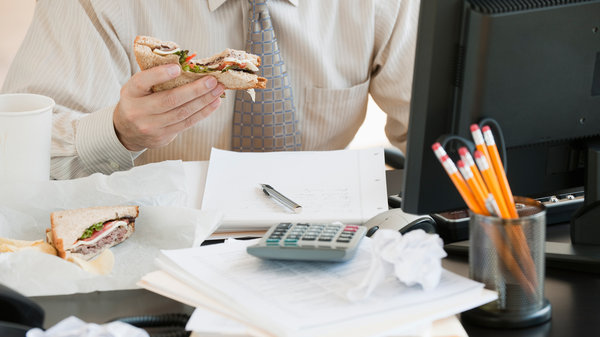
"caption": "Eating at your desk day after day? Research suggests \"staying inside, in the same location, is really detrimental to creative thinking,\" says management professor Kimberly Elsbach. Photo: 145/Tom Grill/Ocean/Corbis ",
"description": null,
"title": "lunchhour",
"credit": null,
"status": "inherit",
"isLoading": false,
"fetchFailed": false
},
"bayareabites_93638": {
"type": "attachments",
"id": "bayareabites_93638",
"meta": {
"index": "attachments_1716263798",
"site": "bayareabites",
"id": "93638",
"found": true
},
"parent": 93637,
"imgSizes": {
"twentyfourteen-full-width": {
"file": "https://ww2.kqed.org/app/uploads/sites/24/2015/03/farm-1_enl-e7c0b75a8633e1021452395810f3c73cc8e4b4e5-e1425421073231-1038x576.jpg",
"width": 1038,
"mimeType": "image/jpeg",
"height": 576
},
"thumbnail": {
"file": "https://ww2.kqed.org/app/uploads/sites/24/2015/03/farm-1_enl-e7c0b75a8633e1021452395810f3c73cc8e4b4e5-e1425421073231-400x267.jpg",
"width": 400,
"mimeType": "image/jpeg",
"height": 267
},
"fd-sm": {
"file": "https://ww2.kqed.org/app/uploads/sites/24/2015/03/farm-1_enl-e7c0b75a8633e1021452395810f3c73cc8e4b4e5-e1425421073231-320x213.jpg",
"width": 320,
"mimeType": "image/jpeg",
"height": 213
},
"post-thumbnail": {
"file": "https://ww2.kqed.org/app/uploads/sites/24/2015/03/farm-1_enl-e7c0b75a8633e1021452395810f3c73cc8e4b4e5-e1425421073231-672x372.jpg",
"width": 672,
"mimeType": "image/jpeg",
"height": 372
},
"kqedFullSize": {
"file": "https://ww2.kqed.org/app/uploads/sites/24/2015/03/farm-1_enl-e7c0b75a8633e1021452395810f3c73cc8e4b4e5-e1425421073231.jpg",
"width": 1920,
"height": 1280
},
"large": {
"file": "https://ww2.kqed.org/app/uploads/sites/24/2015/03/farm-1_enl-e7c0b75a8633e1021452395810f3c73cc8e4b4e5-e1425421073231-1440x960.jpg",
"width": 1440,
"mimeType": "image/jpeg",
"height": 960
},
"guest-author-96": {
"file": "https://ww2.kqed.org/app/uploads/sites/24/2015/03/farm-1_enl-e7c0b75a8633e1021452395810f3c73cc8e4b4e5-e1425421073231-96x96.jpg",
"width": 96,
"mimeType": "image/jpeg",
"height": 96
},
"medium": {
"file": "https://ww2.kqed.org/app/uploads/sites/24/2015/03/farm-1_enl-e7c0b75a8633e1021452395810f3c73cc8e4b4e5-e1425421073231-800x533.jpg",
"width": 800,
"mimeType": "image/jpeg",
"height": 533
},
"guest-author-64": {
"file": "https://ww2.kqed.org/app/uploads/sites/24/2015/03/farm-1_enl-e7c0b75a8633e1021452395810f3c73cc8e4b4e5-e1425421073231-64x64.jpg",
"width": 64,
"mimeType": "image/jpeg",
"height": 64
},
"guest-author-32": {
"file": "https://ww2.kqed.org/app/uploads/sites/24/2015/03/farm-1_enl-e7c0b75a8633e1021452395810f3c73cc8e4b4e5-e1425421073231-32x32.jpg",
"width": 32,
"mimeType": "image/jpeg",
"height": 32
},
"cat_post_thumb_sizecategory-posts-2": {
"file": "https://ww2.kqed.org/app/uploads/sites/24/2015/03/farm-1_enl-e7c0b75a8633e1021452395810f3c73cc8e4b4e5-e1425421073231-50x50.jpg",
"width": 50,
"mimeType": "image/jpeg",
"height": 50
},
"fd-lrg": {
"file": "https://ww2.kqed.org/app/uploads/sites/24/2015/03/farm-1_enl-e7c0b75a8633e1021452395810f3c73cc8e4b4e5-e1425421073231-1180x787.jpg",
"width": 1180,
"mimeType": "image/jpeg",
"height": 787
},
"fd-med": {
"file": "https://ww2.kqed.org/app/uploads/sites/24/2015/03/farm-1_enl-e7c0b75a8633e1021452395810f3c73cc8e4b4e5-e1425421073231-768x512.jpg",
"width": 768,
"mimeType": "image/jpeg",
"height": 512
},
"detail": {
"file": "https://ww2.kqed.org/app/uploads/sites/24/2015/03/farm-1_enl-e7c0b75a8633e1021452395810f3c73cc8e4b4e5-e1425421073231-75x75.jpg",
"width": 75,
"mimeType": "image/jpeg",
"height": 75
},
"guest-author-128": {
"file": "https://ww2.kqed.org/app/uploads/sites/24/2015/03/farm-1_enl-e7c0b75a8633e1021452395810f3c73cc8e4b4e5-e1425421073231-128x128.jpg",
"width": 128,
"mimeType": "image/jpeg",
"height": 128
}
},
"publishDate": 1425418979,
"modified": 1425421065,
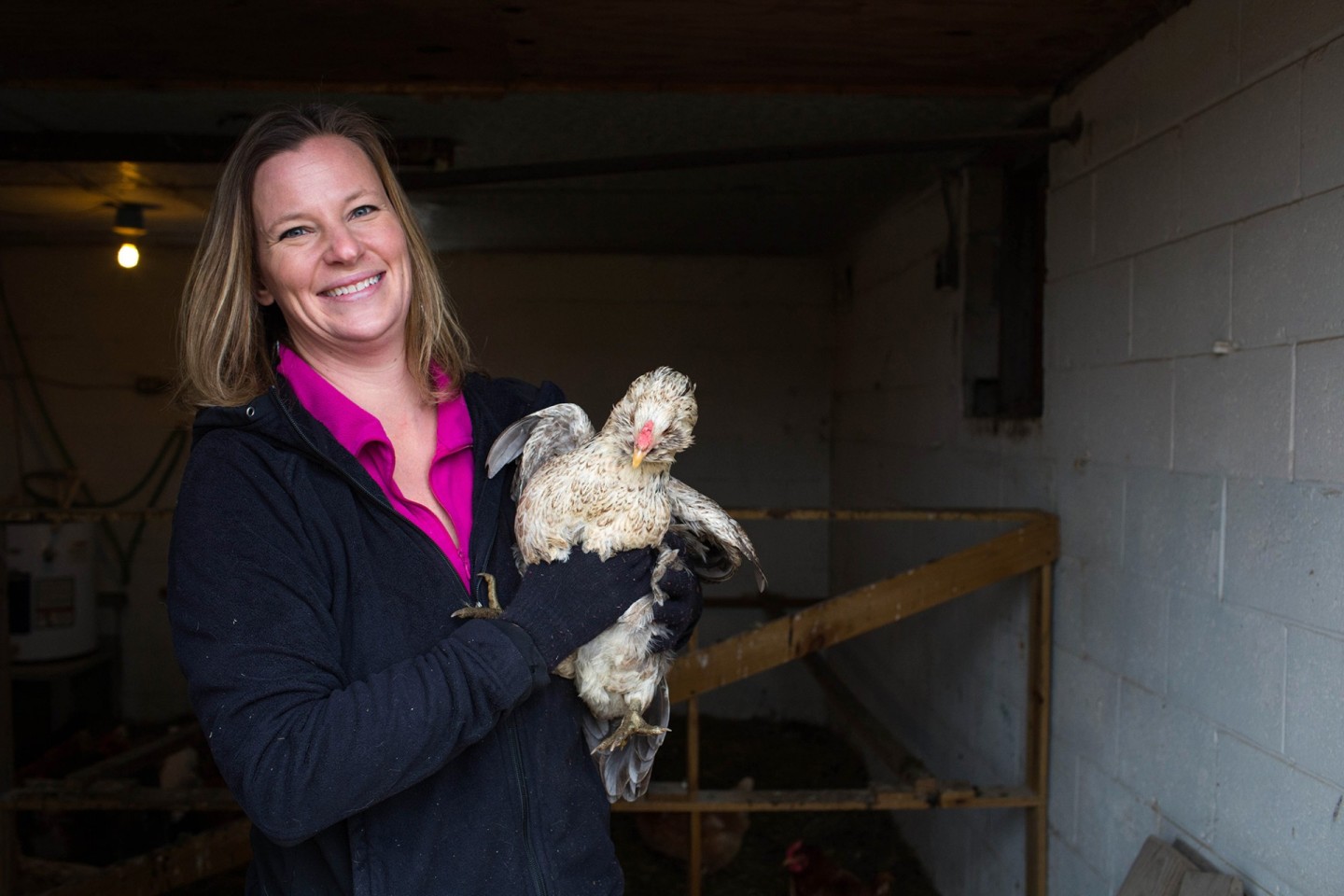
"caption": "Three years ago, Air Force veteran Sara Creech quit her job as a nurse and bought a 43-acre farm in North Salem, Ind. She named her farm Blue Yonder Organic. Photo: John Wendle for Harvest Public Media",
"description": "Three years ago, Air Force veteran Sara Creech quit her job as a nurse and bought a 43-acre farm in North Salem, Ind. She named her farm Blue Yonder Organic",
"title": "Three years ago, Air Force veteran Sara Creech quit her job as a nurse and bought a 43-acre farm in North Salem, Ind. She named her farm Blue Yonder Organic.",
"credit": null,
"status": "inherit",
"isLoading": false,
"fetchFailed": false
},
"bayareabites_93584": {
"type": "attachments",
"id": "bayareabites_93584",
"meta": {
"index": "attachments_1716263798",
"site": "bayareabites",
"id": "93584",
"found": true
},
"parent": 93583,
"imgSizes": {
"twentyfourteen-full-width": {
"file": "https://ww2.kqed.org/app/uploads/sites/24/2015/02/food-waste-1_enl-6a0a590462479a2a9eeac8f3e4f465eef08bc3dc-1038x576.jpg",
"width": 1038,
"mimeType": "image/jpeg",
"height": 576
},
"thumbnail": {
"file": "https://ww2.kqed.org/app/uploads/sites/24/2015/02/food-waste-1_enl-6a0a590462479a2a9eeac8f3e4f465eef08bc3dc-400x269.jpg",
"width": 400,
"mimeType": "image/jpeg",
"height": 269
},
"fd-sm": {
"file": "https://ww2.kqed.org/app/uploads/sites/24/2015/02/food-waste-1_enl-6a0a590462479a2a9eeac8f3e4f465eef08bc3dc-320x216.jpg",
"width": 320,
"mimeType": "image/jpeg",
"height": 216
},
"post-thumbnail": {
"file": "https://ww2.kqed.org/app/uploads/sites/24/2015/02/food-waste-1_enl-6a0a590462479a2a9eeac8f3e4f465eef08bc3dc-672x372.jpg",
"width": 672,
"mimeType": "image/jpeg",
"height": 372
},
"kqedFullSize": {
"file": "https://ww2.kqed.org/app/uploads/sites/24/2015/02/food-waste-1_enl-6a0a590462479a2a9eeac8f3e4f465eef08bc3dc.jpg",
"width": 1783,
"height": 1201
},
"large": {
"file": "https://ww2.kqed.org/app/uploads/sites/24/2015/02/food-waste-1_enl-6a0a590462479a2a9eeac8f3e4f465eef08bc3dc-1440x970.jpg",
"width": 1440,
"mimeType": "image/jpeg",
"height": 970
},
"guest-author-96": {
"file": "https://ww2.kqed.org/app/uploads/sites/24/2015/02/food-waste-1_enl-6a0a590462479a2a9eeac8f3e4f465eef08bc3dc-96x96.jpg",
"width": 96,
"mimeType": "image/jpeg",
"height": 96
},
"medium": {
"file": "https://ww2.kqed.org/app/uploads/sites/24/2015/02/food-waste-1_enl-6a0a590462479a2a9eeac8f3e4f465eef08bc3dc-800x539.jpg",
"width": 800,
"mimeType": "image/jpeg",
"height": 539
},
"guest-author-64": {
"file": "https://ww2.kqed.org/app/uploads/sites/24/2015/02/food-waste-1_enl-6a0a590462479a2a9eeac8f3e4f465eef08bc3dc-64x64.jpg",
"width": 64,
"mimeType": "image/jpeg",
"height": 64
},
"guest-author-32": {
"file": "https://ww2.kqed.org/app/uploads/sites/24/2015/02/food-waste-1_enl-6a0a590462479a2a9eeac8f3e4f465eef08bc3dc-32x32.jpg",
"width": 32,
"mimeType": "image/jpeg",
"height": 32
},
"cat_post_thumb_sizecategory-posts-2": {
"file": "https://ww2.kqed.org/app/uploads/sites/24/2015/02/food-waste-1_enl-6a0a590462479a2a9eeac8f3e4f465eef08bc3dc-50x50.jpg",
"width": 50,
"mimeType": "image/jpeg",
"height": 50
},
"fd-lrg": {
"file": "https://ww2.kqed.org/app/uploads/sites/24/2015/02/food-waste-1_enl-6a0a590462479a2a9eeac8f3e4f465eef08bc3dc-1180x795.jpg",
"width": 1180,
"mimeType": "image/jpeg",
"height": 795
},
"fd-med": {
"file": "https://ww2.kqed.org/app/uploads/sites/24/2015/02/food-waste-1_enl-6a0a590462479a2a9eeac8f3e4f465eef08bc3dc-768x517.jpg",
"width": 768,
"mimeType": "image/jpeg",
"height": 517
},
"detail": {
"file": "https://ww2.kqed.org/app/uploads/sites/24/2015/02/food-waste-1_enl-6a0a590462479a2a9eeac8f3e4f465eef08bc3dc-75x75.jpg",
"width": 75,
"mimeType": "image/jpeg",
"height": 75
},
"guest-author-128": {
"file": "https://ww2.kqed.org/app/uploads/sites/24/2015/02/food-waste-1_enl-6a0a590462479a2a9eeac8f3e4f465eef08bc3dc-128x128.jpg",
"width": 128,
"mimeType": "image/jpeg",
"height": 128
}
},
"publishDate": 1425078187,
"modified": 1425079930,
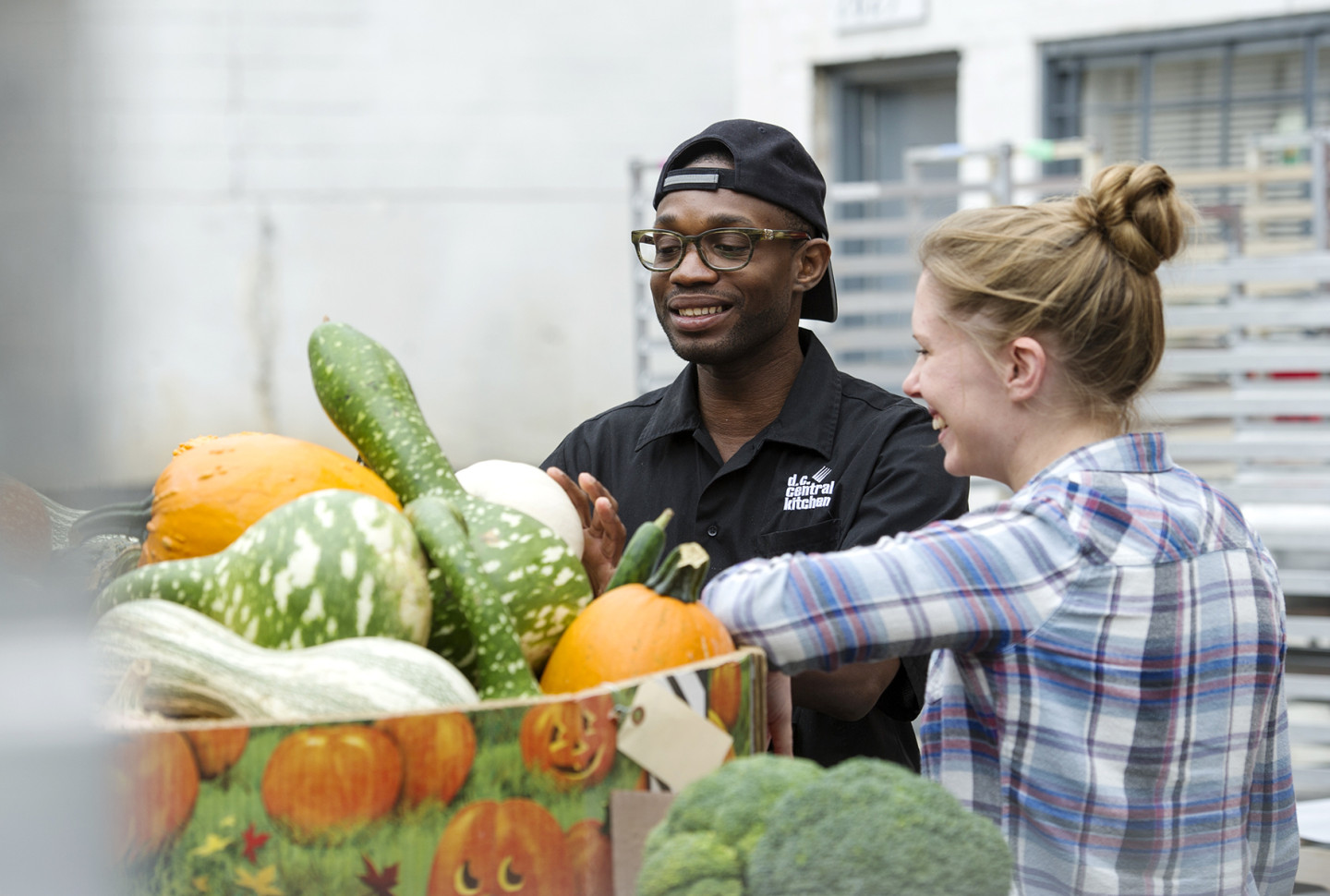
"caption": "Student volunteers with The Campus Kitchens Project evaluate produce. The initiative gets high-school and college students to scavenge food from cafeterias, grocery stores and farmers' markets, cook it and deliver it to organizations serving low-income people in their communities. Photo: Courtesy of DC Central Kitchen ",
"description": "Student volunteers with The Campus Kitchens Project evaluate produce. The initiative gets high-school and college students to scavenge food from cafeterias, grocery stores and farmers' markets, cook it and deliver it to organizations serving low-income people in their communities.",
"title": "Student volunteers with The Campus Kitchens Project evaluate produce. The initiative gets high-school and college students to scavenge food from cafeterias, grocery stores and farmers' markets, cook it and deliver it to organizations serving low-income people in their communities.",
"credit": null,
"status": "inherit",
"isLoading": false,
"fetchFailed": false
},
"bayareabites_93514": {
"type": "attachments",
"id": "bayareabites_93514",
"meta": {
"index": "attachments_1716263798",
"site": "bayareabites",
"id": "93514",
"found": true
},
"parent": 93513,
"imgSizes": {
"twentyfourteen-full-width": {
"file": "https://ww2.kqed.org/app/uploads/sites/24/2015/02/tater-tats-1_enl-75f89318cceccbf0ce34e701c34d828edf7e897a-e1424894180358-1038x576.jpg",
"width": 1038,
"mimeType": "image/jpeg",
"height": 576
},
"thumbnail": {
"file": "https://ww2.kqed.org/app/uploads/sites/24/2015/02/tater-tats-1_enl-75f89318cceccbf0ce34e701c34d828edf7e897a-e1424894180358-400x266.jpg",
"width": 400,
"mimeType": "image/jpeg",
"height": 266
},
"fd-sm": {
"file": "https://ww2.kqed.org/app/uploads/sites/24/2015/02/tater-tats-1_enl-75f89318cceccbf0ce34e701c34d828edf7e897a-e1424894180358-320x213.jpg",
"width": 320,
"mimeType": "image/jpeg",
"height": 213
},
"post-thumbnail": {
"file": "https://ww2.kqed.org/app/uploads/sites/24/2015/02/tater-tats-1_enl-75f89318cceccbf0ce34e701c34d828edf7e897a-e1424894180358-672x372.jpg",
"width": 672,
"mimeType": "image/jpeg",
"height": 372
},
"kqedFullSize": {
"file": "https://ww2.kqed.org/app/uploads/sites/24/2015/02/tater-tats-1_enl-75f89318cceccbf0ce34e701c34d828edf7e897a-e1424894180358.jpg",
"width": 1920,
"height": 1279
},
"large": {
"file": "https://ww2.kqed.org/app/uploads/sites/24/2015/02/tater-tats-1_enl-75f89318cceccbf0ce34e701c34d828edf7e897a-e1424894180358-1440x959.jpg",
"width": 1440,
"mimeType": "image/jpeg",
"height": 959
},
"guest-author-96": {
"file": "https://ww2.kqed.org/app/uploads/sites/24/2015/02/tater-tats-1_enl-75f89318cceccbf0ce34e701c34d828edf7e897a-e1424894180358-96x96.jpg",
"width": 96,
"mimeType": "image/jpeg",
"height": 96
},
"medium": {
"file": "https://ww2.kqed.org/app/uploads/sites/24/2015/02/tater-tats-1_enl-75f89318cceccbf0ce34e701c34d828edf7e897a-e1424894180358-800x533.jpg",
"width": 800,
"mimeType": "image/jpeg",
"height": 533
},
"guest-author-64": {
"file": "https://ww2.kqed.org/app/uploads/sites/24/2015/02/tater-tats-1_enl-75f89318cceccbf0ce34e701c34d828edf7e897a-e1424894180358-64x64.jpg",
"width": 64,
"mimeType": "image/jpeg",
"height": 64
},
"guest-author-32": {
"file": "https://ww2.kqed.org/app/uploads/sites/24/2015/02/tater-tats-1_enl-75f89318cceccbf0ce34e701c34d828edf7e897a-e1424894180358-32x32.jpg",
"width": 32,
"mimeType": "image/jpeg",
"height": 32
},
"cat_post_thumb_sizecategory-posts-2": {
"file": "https://ww2.kqed.org/app/uploads/sites/24/2015/02/tater-tats-1_enl-75f89318cceccbf0ce34e701c34d828edf7e897a-e1424894180358-50x50.jpg",
"width": 50,
"mimeType": "image/jpeg",
"height": 50
},
"fd-lrg": {
"file": "https://ww2.kqed.org/app/uploads/sites/24/2015/02/tater-tats-1_enl-75f89318cceccbf0ce34e701c34d828edf7e897a-e1424894180358-1180x786.jpg",
"width": 1180,
"mimeType": "image/jpeg",
"height": 786
},
"fd-med": {
"file": "https://ww2.kqed.org/app/uploads/sites/24/2015/02/tater-tats-1_enl-75f89318cceccbf0ce34e701c34d828edf7e897a-e1424894180358-768x512.jpg",
"width": 768,
"mimeType": "image/jpeg",
"height": 512
},
"detail": {
"file": "https://ww2.kqed.org/app/uploads/sites/24/2015/02/tater-tats-1_enl-75f89318cceccbf0ce34e701c34d828edf7e897a-e1424894180358-75x75.jpg",
"width": 75,
"mimeType": "image/jpeg",
"height": 75
},
"guest-author-128": {
"file": "https://ww2.kqed.org/app/uploads/sites/24/2015/02/tater-tats-1_enl-75f89318cceccbf0ce34e701c34d828edf7e897a-e1424894180358-128x128.jpg",
"width": 128,
"mimeType": "image/jpeg",
"height": 128
}
},
"publishDate": 1424893365,
"modified": 1424894197,
"caption": "Siblings Jessica and Oliver Schaap of Holland, Mich., test out the temporary vegetable tattoos known as Tater Tats. Photo: Courtesy of Jenna Weiler",
"description": "Siblings Jessica and Oliver Schaap of Holland, Mich., test out the temporary vegetable tattoos known as Tater Tats.",
"title": "Siblings Jessica and Oliver Schaap of Holland, Mich., test out the temporary vegetable tattoos known as Tater Tats.",
"credit": null,
"status": "inherit",
"isLoading": false,
"fetchFailed": false
},
"bayareabites_93453": {
"type": "attachments",
"id": "bayareabites_93453",
"meta": {
"index": "attachments_1716263798",
"site": "bayareabites",
"id": "93453",
"found": true
},
"parent": 93452,
"imgSizes": {
"twentyfourteen-full-width": {
"file": "https://ww2.kqed.org/app/uploads/sites/24/2015/02/freight-farms-1_enl-123e7a79521b0fabc4811de46e4cdf38a710ead1-1038x576.jpg",
"width": 1038,
"mimeType": "image/jpeg",
"height": 576
},
"thumbnail": {
"file": "https://ww2.kqed.org/app/uploads/sites/24/2015/02/freight-farms-1_enl-123e7a79521b0fabc4811de46e4cdf38a710ead1-400x266.jpg",
"width": 400,
"mimeType": "image/jpeg",
"height": 266
},
"fd-sm": {
"file": "https://ww2.kqed.org/app/uploads/sites/24/2015/02/freight-farms-1_enl-123e7a79521b0fabc4811de46e4cdf38a710ead1-320x213.jpg",
"width": 320,
"mimeType": "image/jpeg",
"height": 213
},
"post-thumbnail": {
"file": "https://ww2.kqed.org/app/uploads/sites/24/2015/02/freight-farms-1_enl-123e7a79521b0fabc4811de46e4cdf38a710ead1-672x372.jpg",
"width": 672,
"mimeType": "image/jpeg",
"height": 372
},
"kqedFullSize": {
"file": "https://ww2.kqed.org/app/uploads/sites/24/2015/02/freight-farms-1_enl-123e7a79521b0fabc4811de46e4cdf38a710ead1.jpg",
"width": 1108,
"height": 736
},
"guest-author-96": {
"file": "https://ww2.kqed.org/app/uploads/sites/24/2015/02/freight-farms-1_enl-123e7a79521b0fabc4811de46e4cdf38a710ead1-96x96.jpg",
"width": 96,
"mimeType": "image/jpeg",
"height": 96
},
"medium": {
"file": "https://ww2.kqed.org/app/uploads/sites/24/2015/02/freight-farms-1_enl-123e7a79521b0fabc4811de46e4cdf38a710ead1-800x531.jpg",
"width": 800,
"mimeType": "image/jpeg",
"height": 531
},
"guest-author-64": {
"file": "https://ww2.kqed.org/app/uploads/sites/24/2015/02/freight-farms-1_enl-123e7a79521b0fabc4811de46e4cdf38a710ead1-64x64.jpg",
"width": 64,
"mimeType": "image/jpeg",
"height": 64
},
"guest-author-32": {
"file": "https://ww2.kqed.org/app/uploads/sites/24/2015/02/freight-farms-1_enl-123e7a79521b0fabc4811de46e4cdf38a710ead1-32x32.jpg",
"width": 32,
"mimeType": "image/jpeg",
"height": 32
},
"cat_post_thumb_sizecategory-posts-2": {
"file": "https://ww2.kqed.org/app/uploads/sites/24/2015/02/freight-farms-1_enl-123e7a79521b0fabc4811de46e4cdf38a710ead1-50x50.jpg",
"width": 50,
"mimeType": "image/jpeg",
"height": 50
},
"fd-med": {
"file": "https://ww2.kqed.org/app/uploads/sites/24/2015/02/freight-farms-1_enl-123e7a79521b0fabc4811de46e4cdf38a710ead1-768x510.jpg",
"width": 768,
"mimeType": "image/jpeg",
"height": 510
},
"detail": {
"file": "https://ww2.kqed.org/app/uploads/sites/24/2015/02/freight-farms-1_enl-123e7a79521b0fabc4811de46e4cdf38a710ead1-75x75.jpg",
"width": 75,
"mimeType": "image/jpeg",
"height": 75
},
"guest-author-128": {
"file": "https://ww2.kqed.org/app/uploads/sites/24/2015/02/freight-farms-1_enl-123e7a79521b0fabc4811de46e4cdf38a710ead1-128x128.jpg",
"width": 128,
"mimeType": "image/jpeg",
"height": 128
}
},
"publishDate": 1424727194,
"modified": 1424727298,
"caption": "Freight Farms are shipping containers modified to grow stacks of hydroponic plants and vegetables — anywhere, 365 days a year. Photo: Courtesy of Freight Farms",
"description": "Freight Farms are shipping containers modified to grow stacks of hydroponic plants and vegetables -- anywhere, 365 days a year",
"title": "Freight Farms are shipping containers modified to grow stacks of hydroponic plants and vegetables — anywhere, 365 days a year.",
"credit": null,
"status": "inherit",
"isLoading": false,
"fetchFailed": false
},
"bayareabites_93441": {
"type": "attachments",
"id": "bayareabites_93441",
"meta": {
"index": "attachments_1716263798",
"site": "bayareabites",
"id": "93441",
"found": true
},
"parent": 93440,
"imgSizes": {
"twentyfourteen-full-width": {
"file": "https://ww2.kqed.org/app/uploads/sites/24/2015/02/costco_enl-90d3a4bc4261c10b14c238b264083371cfc61211-1038x576.jpg",
"width": 1038,
"mimeType": "image/jpeg",
"height": 576
},
"thumbnail": {
"file": "https://ww2.kqed.org/app/uploads/sites/24/2015/02/costco_enl-90d3a4bc4261c10b14c238b264083371cfc61211-400x266.jpg",
"width": 400,
"mimeType": "image/jpeg",
"height": 266
},
"fd-sm": {
"file": "https://ww2.kqed.org/app/uploads/sites/24/2015/02/costco_enl-90d3a4bc4261c10b14c238b264083371cfc61211-320x212.jpg",
"width": 320,
"mimeType": "image/jpeg",
"height": 212
},
"post-thumbnail": {
"file": "https://ww2.kqed.org/app/uploads/sites/24/2015/02/costco_enl-90d3a4bc4261c10b14c238b264083371cfc61211-672x372.jpg",
"width": 672,
"mimeType": "image/jpeg",
"height": 372
},
"kqedFullSize": {
"file": "https://ww2.kqed.org/app/uploads/sites/24/2015/02/costco_enl-90d3a4bc4261c10b14c238b264083371cfc61211.jpg",
"width": 2000,
"height": 1328
},
"large": {
"file": "https://ww2.kqed.org/app/uploads/sites/24/2015/02/costco_enl-90d3a4bc4261c10b14c238b264083371cfc61211-1440x956.jpg",
"width": 1440,
"mimeType": "image/jpeg",
"height": 956
},
"guest-author-96": {
"file": "https://ww2.kqed.org/app/uploads/sites/24/2015/02/costco_enl-90d3a4bc4261c10b14c238b264083371cfc61211-96x96.jpg",
"width": 96,
"mimeType": "image/jpeg",
"height": 96
},
"medium": {
"file": "https://ww2.kqed.org/app/uploads/sites/24/2015/02/costco_enl-90d3a4bc4261c10b14c238b264083371cfc61211-800x531.jpg",
"width": 800,
"mimeType": "image/jpeg",
"height": 531
},
"guest-author-64": {
"file": "https://ww2.kqed.org/app/uploads/sites/24/2015/02/costco_enl-90d3a4bc4261c10b14c238b264083371cfc61211-64x64.jpg",
"width": 64,
"mimeType": "image/jpeg",
"height": 64
},
"guest-author-32": {
"file": "https://ww2.kqed.org/app/uploads/sites/24/2015/02/costco_enl-90d3a4bc4261c10b14c238b264083371cfc61211-32x32.jpg",
"width": 32,
"mimeType": "image/jpeg",
"height": 32
},
"cat_post_thumb_sizecategory-posts-2": {
"file": "https://ww2.kqed.org/app/uploads/sites/24/2015/02/costco_enl-90d3a4bc4261c10b14c238b264083371cfc61211-50x50.jpg",
"width": 50,
"mimeType": "image/jpeg",
"height": 50
},
"fd-lrg": {
"file": "https://ww2.kqed.org/app/uploads/sites/24/2015/02/costco_enl-90d3a4bc4261c10b14c238b264083371cfc61211-1180x784.jpg",
"width": 1180,
"mimeType": "image/jpeg",
"height": 784
},
"fd-med": {
"file": "https://ww2.kqed.org/app/uploads/sites/24/2015/02/costco_enl-90d3a4bc4261c10b14c238b264083371cfc61211-768x510.jpg",
"width": 768,
"mimeType": "image/jpeg",
"height": 510
},
"detail": {
"file": "https://ww2.kqed.org/app/uploads/sites/24/2015/02/costco_enl-90d3a4bc4261c10b14c238b264083371cfc61211-75x75.jpg",
"width": 75,
"mimeType": "image/jpeg",
"height": 75
},
"guest-author-128": {
"file": "https://ww2.kqed.org/app/uploads/sites/24/2015/02/costco_enl-90d3a4bc4261c10b14c238b264083371cfc61211-128x128.jpg",
"width": 128,
"mimeType": "image/jpeg",
"height": 128
}
},
"publishDate": 1424474503,
"modified": 1424710977,
"caption": "Photo: Ron Antonelli/Bloomberg via Getty Images ",
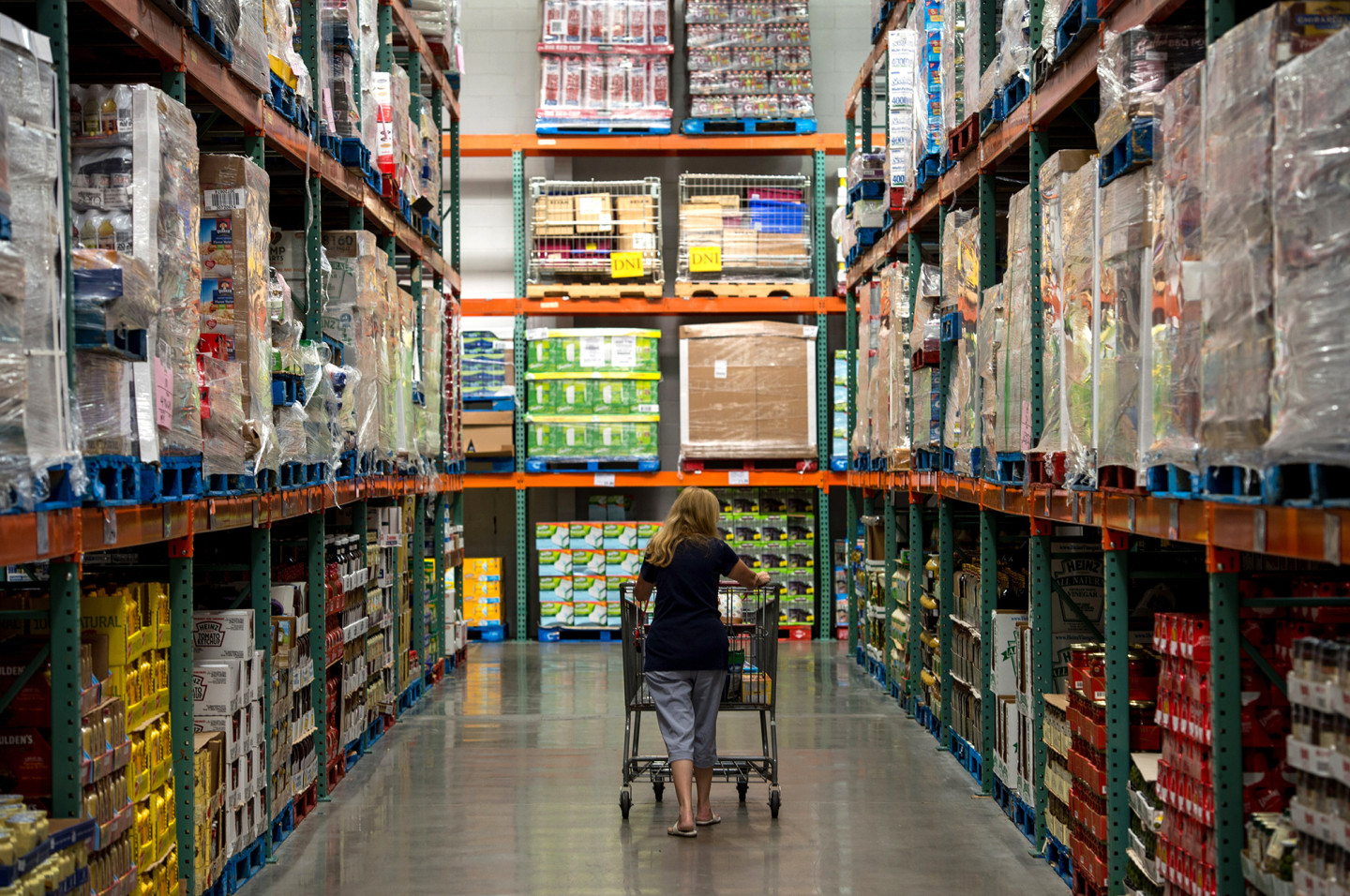
"description": "A woman pushes a cart at a Costco store in Hackensack, N.J., in 2013. Big-box stores are effective delivery devices for fattening foods, economists argue in a new study.",
"title": "A woman pushes a cart at a Costco store in Hackensack, N.J., in 2013. Big-box stores are effective delivery devices for fattening foods, economists argue in a new study.",
"credit": null,
"status": "inherit",
"isLoading": false,
"fetchFailed": false
},
"bayareabites_93346": {
"type": "attachments",
"id": "bayareabites_93346",
"meta": {
"index": "attachments_1716263798",
"site": "bayareabites",
"id": "93346",
"found": true
},
"parent": 93342,
"imgSizes": {
"thumbnail": {
"file": "https://ww2.kqed.org/app/uploads/sites/24/2015/02/online-grocery-shopping-400x198.jpg",
"width": 400,
"mimeType": "image/jpeg",
"height": 198
},
"fd-sm": {
"file": "https://ww2.kqed.org/app/uploads/sites/24/2015/02/online-grocery-shopping-320x159.jpg",
"width": 320,
"mimeType": "image/jpeg",
"height": 159
},
"post-thumbnail": {
"file": "https://ww2.kqed.org/app/uploads/sites/24/2015/02/online-grocery-shopping-672x337.jpg",
"width": 672,
"mimeType": "image/jpeg",
"height": 337
},
"kqedFullSize": {
"file": "https://ww2.kqed.org/app/uploads/sites/24/2015/02/online-grocery-shopping.jpg",
"width": 680,
"height": 337
},
"cat_post_thumb_sizecategory-posts-2": {
"file": "https://ww2.kqed.org/app/uploads/sites/24/2015/02/online-grocery-shopping-50x50.jpg",
"width": 50,
"mimeType": "image/jpeg",
"height": 50
},
"guest-author-96": {
"file": "https://ww2.kqed.org/app/uploads/sites/24/2015/02/online-grocery-shopping-96x96.jpg",
"width": 96,
"mimeType": "image/jpeg",
"height": 96
},
"guest-author-64": {
"file": "https://ww2.kqed.org/app/uploads/sites/24/2015/02/online-grocery-shopping-64x64.jpg",
"width": 64,
"mimeType": "image/jpeg",
"height": 64
},
"detail": {
"file": "https://ww2.kqed.org/app/uploads/sites/24/2015/02/online-grocery-shopping-75x75.jpg",
"width": 75,
"mimeType": "image/jpeg",
"height": 75
},
"guest-author-32": {
"file": "https://ww2.kqed.org/app/uploads/sites/24/2015/02/online-grocery-shopping-32x32.jpg",
"width": 32,
"mimeType": "image/jpeg",
"height": 32
},
"guest-author-128": {
"file": "https://ww2.kqed.org/app/uploads/sites/24/2015/02/online-grocery-shopping-128x128.jpg",
"width": 128,
"mimeType": "image/jpeg",
"height": 128
}
},
"publishDate": 1424308382,
"modified": 1424308414,
"caption": null,
"description": null,
"title": "online-grocery-shopping",
"credit": null,
"status": "inherit",
"isLoading": false,
"fetchFailed": false
},
"bayareabites_93425": {
"type": "attachments",
"id": "bayareabites_93425",
"meta": {
"index": "attachments_1716263798",
"site": "bayareabites",
"id": "93425",
"found": true
},
"parent": 93424,
"imgSizes": {
"twentyfourteen-full-width": {
"file": "https://ww2.kqed.org/app/uploads/sites/24/2015/02/raw-milk-1_enl-636f8d1ed04d096d7f5b88cb5a16b7824d821769-e1424471371747-1038x576.jpg",
"width": 1038,
"mimeType": "image/jpeg",
"height": 576
},
"thumbnail": {
"file": "https://ww2.kqed.org/app/uploads/sites/24/2015/02/raw-milk-1_enl-636f8d1ed04d096d7f5b88cb5a16b7824d821769-e1424471371747-400x266.jpg",
"width": 400,
"mimeType": "image/jpeg",
"height": 266
},
"fd-sm": {
"file": "https://ww2.kqed.org/app/uploads/sites/24/2015/02/raw-milk-1_enl-636f8d1ed04d096d7f5b88cb5a16b7824d821769-e1424471371747-320x213.jpg",
"width": 320,
"mimeType": "image/jpeg",
"height": 213
},
"post-thumbnail": {
"file": "https://ww2.kqed.org/app/uploads/sites/24/2015/02/raw-milk-1_enl-636f8d1ed04d096d7f5b88cb5a16b7824d821769-e1424471371747-672x372.jpg",
"width": 672,
"mimeType": "image/jpeg",
"height": 372
},
"kqedFullSize": {
"file": "https://ww2.kqed.org/app/uploads/sites/24/2015/02/raw-milk-1_enl-636f8d1ed04d096d7f5b88cb5a16b7824d821769-e1424471371747.jpg",
"width": 1920,
"height": 1279
},
"large": {
"file": "https://ww2.kqed.org/app/uploads/sites/24/2015/02/raw-milk-1_enl-636f8d1ed04d096d7f5b88cb5a16b7824d821769-e1424471371747-1440x959.jpg",
"width": 1440,
"mimeType": "image/jpeg",
"height": 959
},
"guest-author-96": {
"file": "https://ww2.kqed.org/app/uploads/sites/24/2015/02/raw-milk-1_enl-636f8d1ed04d096d7f5b88cb5a16b7824d821769-e1424471371747-96x96.jpg",
"width": 96,
"mimeType": "image/jpeg",
"height": 96
},
"medium": {
"file": "https://ww2.kqed.org/app/uploads/sites/24/2015/02/raw-milk-1_enl-636f8d1ed04d096d7f5b88cb5a16b7824d821769-e1424471371747-800x533.jpg",
"width": 800,
"mimeType": "image/jpeg",
"height": 533
},
"guest-author-64": {
"file": "https://ww2.kqed.org/app/uploads/sites/24/2015/02/raw-milk-1_enl-636f8d1ed04d096d7f5b88cb5a16b7824d821769-e1424471371747-64x64.jpg",
"width": 64,
"mimeType": "image/jpeg",
"height": 64
},
"guest-author-32": {
"file": "https://ww2.kqed.org/app/uploads/sites/24/2015/02/raw-milk-1_enl-636f8d1ed04d096d7f5b88cb5a16b7824d821769-e1424471371747-32x32.jpg",
"width": 32,
"mimeType": "image/jpeg",
"height": 32
},
"cat_post_thumb_sizecategory-posts-2": {
"file": "https://ww2.kqed.org/app/uploads/sites/24/2015/02/raw-milk-1_enl-636f8d1ed04d096d7f5b88cb5a16b7824d821769-e1424471371747-50x50.jpg",
"width": 50,
"mimeType": "image/jpeg",
"height": 50
},
"fd-lrg": {
"file": "https://ww2.kqed.org/app/uploads/sites/24/2015/02/raw-milk-1_enl-636f8d1ed04d096d7f5b88cb5a16b7824d821769-e1424471371747-1180x786.jpg",
"width": 1180,
"mimeType": "image/jpeg",
"height": 786
},
"fd-med": {
"file": "https://ww2.kqed.org/app/uploads/sites/24/2015/02/raw-milk-1_enl-636f8d1ed04d096d7f5b88cb5a16b7824d821769-e1424471371747-768x512.jpg",
"width": 768,
"mimeType": "image/jpeg",
"height": 512
},
"detail": {
"file": "https://ww2.kqed.org/app/uploads/sites/24/2015/02/raw-milk-1_enl-636f8d1ed04d096d7f5b88cb5a16b7824d821769-e1424471371747-75x75.jpg",
"width": 75,
"mimeType": "image/jpeg",
"height": 75
},
"guest-author-128": {
"file": "https://ww2.kqed.org/app/uploads/sites/24/2015/02/raw-milk-1_enl-636f8d1ed04d096d7f5b88cb5a16b7824d821769-e1424471371747-128x128.jpg",
"width": 128,
"mimeType": "image/jpeg",
"height": 128
}
},
"publishDate": 1424463563,
"modified": 1424471339,
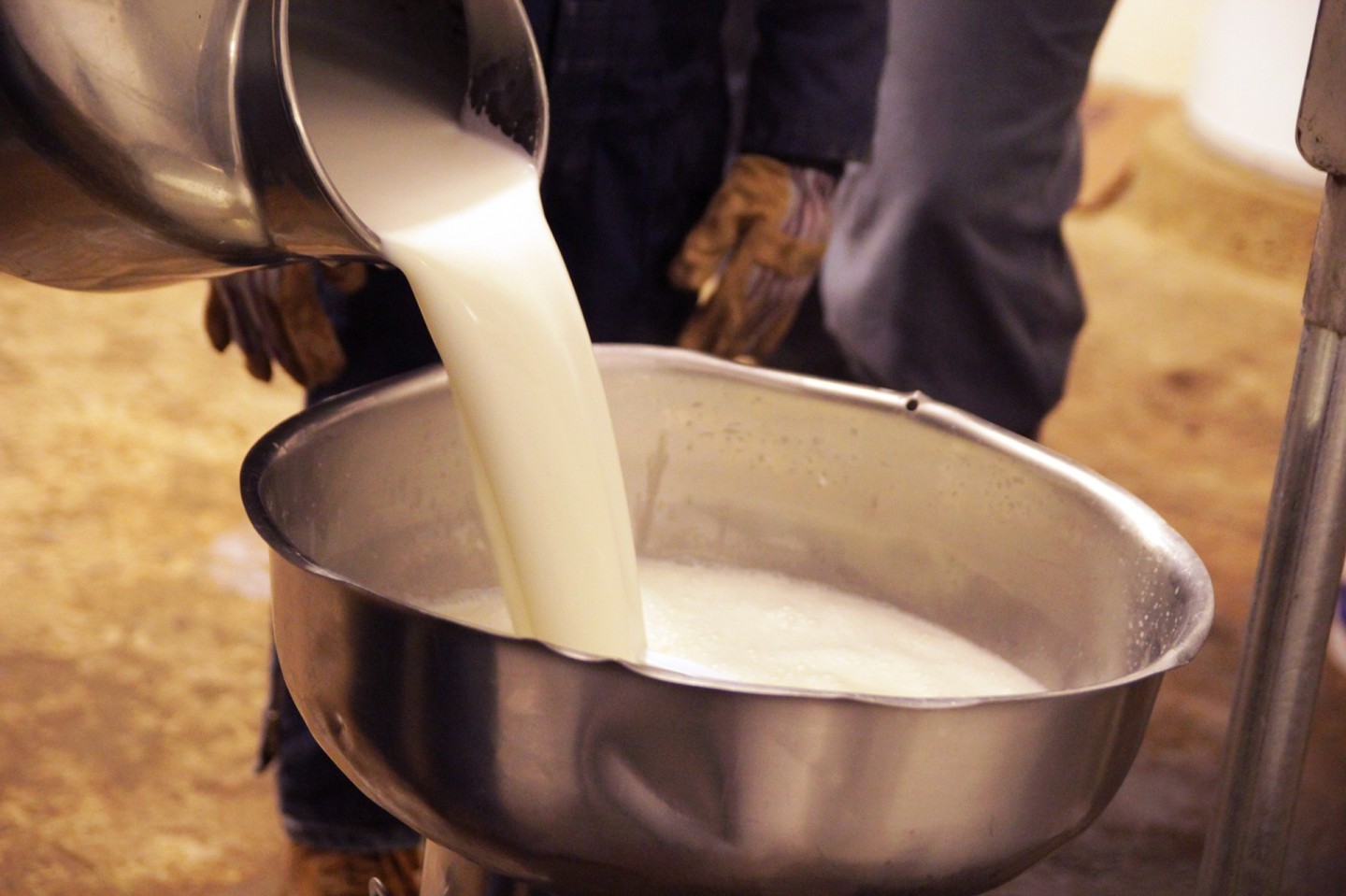
"caption": "The U.S. Centers for Disease Control and Prevention cautions that unpasteurized milk can cause serious illness, because it's a fertile breeding ground for harmful germs like salmonella and E. coli. But such warnings haven't deterred raw milk enthusiasts. Photo: Abby Wendle/Harvest Public Media",
"description": "The U.S. Centers for Disease Control and Prevention cautions that unpasteurized milk can cause serious illness, because it's a fertile breeding ground for harmful germs like salmonella and E. coli. But such warnings haven't deterred raw milk enthusiasts.",
"title": "The U.S. Centers for Disease Control and Prevention cautions that unpasteurized milk can cause serious illness, because it's a fertile breeding ground for harmful germs like salmonella and E. coli. But such warnings haven't deterred raw milk enthusiasts.",
"credit": null,
"status": "inherit",
"isLoading": false,
"fetchFailed": false
},
"bayareabites_93330": {
"type": "attachments",
"id": "bayareabites_93330",
"meta": {
"index": "attachments_1716263798",
"site": "bayareabites",
"id": "93330",
"found": true
},
"parent": 93326,
"imgSizes": {
"thumbnail": {
"file": "https://ww2.kqed.org/app/uploads/sites/24/2015/02/fat-400x267.jpg",
"width": 400,
"mimeType": "image/jpeg",
"height": 267
},
"fd-sm": {
"file": "https://ww2.kqed.org/app/uploads/sites/24/2015/02/fat-320x213.jpg",
"width": 320,
"mimeType": "image/jpeg",
"height": 213
},
"post-thumbnail": {
"file": "https://ww2.kqed.org/app/uploads/sites/24/2015/02/fat-672x372.jpg",
"width": 672,
"mimeType": "image/jpeg",
"height": 372
},
"kqedFullSize": {
"file": "https://ww2.kqed.org/app/uploads/sites/24/2015/02/fat.jpg",
"width": 800,
"height": 533
},
"cat_post_thumb_sizecategory-posts-2": {
"file": "https://ww2.kqed.org/app/uploads/sites/24/2015/02/fat-50x50.jpg",
"width": 50,
"mimeType": "image/jpeg",
"height": 50
},
"fd-med": {
"file": "https://ww2.kqed.org/app/uploads/sites/24/2015/02/fat-768x512.jpg",
"width": 768,
"mimeType": "image/jpeg",
"height": 512
},
"guest-author-96": {
"file": "https://ww2.kqed.org/app/uploads/sites/24/2015/02/fat-96x96.jpg",
"width": 96,
"mimeType": "image/jpeg",
"height": 96
},
"medium": {
"file": "https://ww2.kqed.org/app/uploads/sites/24/2015/02/fat-800x533.jpg",
"width": 800,
"mimeType": "image/jpeg",
"height": 533
},
"guest-author-64": {
"file": "https://ww2.kqed.org/app/uploads/sites/24/2015/02/fat-64x64.jpg",
"width": 64,
"mimeType": "image/jpeg",
"height": 64
},
"detail": {
"file": "https://ww2.kqed.org/app/uploads/sites/24/2015/02/fat-75x75.jpg",
"width": 75,
"mimeType": "image/jpeg",
"height": 75
},
"guest-author-32": {
"file": "https://ww2.kqed.org/app/uploads/sites/24/2015/02/fat-32x32.jpg",
"width": 32,
"mimeType": "image/jpeg",
"height": 32
},
"guest-author-128": {
"file": "https://ww2.kqed.org/app/uploads/sites/24/2015/02/fat-128x128.jpg",
"width": 128,
"mimeType": "image/jpeg",
"height": 128
}
},
"publishDate": 1424287922,
"modified": 1424287945,
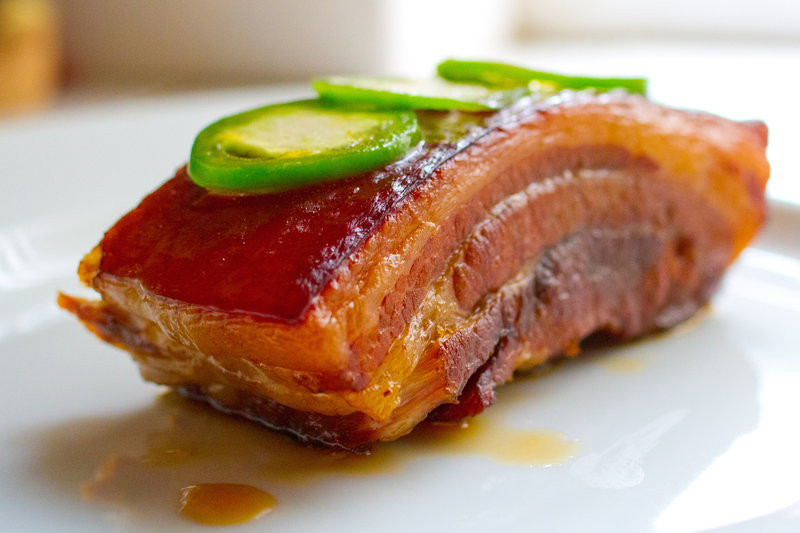
"caption": "A slice of pork belly, with a thick layer of fat. \"If we confirm that fat is a basic taste quality, it's the equivalent of saying chartreuse is a primary color,\" Richard Mattes of Purdue University says. \"It changes our basic understanding of what taste is.\" Photo: Xiao He/Flickr ",
"description": null,
"title": "fat",
"credit": null,
"status": "inherit",
"isLoading": false,
"fetchFailed": false
},
"bayareabites_93308": {
"type": "attachments",
"id": "bayareabites_93308",
"meta": {
"index": "attachments_1716263798",
"site": "bayareabites",
"id": "93308",
"found": true
},
"parent": 93307,
"imgSizes": {
"twentyfourteen-full-width": {
"file": "https://ww2.kqed.org/app/uploads/sites/24/2015/02/pineapple-express_enl-e8bbd24e87822eba87e1aa487d711654d776b770-e1424285345223-1000x576.jpg",
"width": 1000,
"mimeType": "image/jpeg",
"height": 576
},
"thumbnail": {
"file": "https://ww2.kqed.org/app/uploads/sites/24/2015/02/pineapple-express_enl-e8bbd24e87822eba87e1aa487d711654d776b770-e1424285345223-400x266.jpg",
"width": 400,
"mimeType": "image/jpeg",
"height": 266
},
"fd-sm": {
"file": "https://ww2.kqed.org/app/uploads/sites/24/2015/02/pineapple-express_enl-e8bbd24e87822eba87e1aa487d711654d776b770-e1424285345223-320x213.jpg",
"width": 320,
"mimeType": "image/jpeg",
"height": 213
},
"post-thumbnail": {
"file": "https://ww2.kqed.org/app/uploads/sites/24/2015/02/pineapple-express_enl-e8bbd24e87822eba87e1aa487d711654d776b770-e1424285345223-672x372.jpg",
"width": 672,
"mimeType": "image/jpeg",
"height": 372
},
"kqedFullSize": {
"file": "https://ww2.kqed.org/app/uploads/sites/24/2015/02/pineapple-express_enl-e8bbd24e87822eba87e1aa487d711654d776b770-e1424285345223.jpg",
"width": 1000,
"height": 666
},
"guest-author-96": {
"file": "https://ww2.kqed.org/app/uploads/sites/24/2015/02/pineapple-express_enl-e8bbd24e87822eba87e1aa487d711654d776b770-e1424285345223-96x96.jpg",
"width": 96,
"mimeType": "image/jpeg",
"height": 96
},
"medium": {
"file": "https://ww2.kqed.org/app/uploads/sites/24/2015/02/pineapple-express_enl-e8bbd24e87822eba87e1aa487d711654d776b770-e1424285345223-800x533.jpg",
"width": 800,
"mimeType": "image/jpeg",
"height": 533
},
"guest-author-64": {
"file": "https://ww2.kqed.org/app/uploads/sites/24/2015/02/pineapple-express_enl-e8bbd24e87822eba87e1aa487d711654d776b770-e1424285345223-64x64.jpg",
"width": 64,
"mimeType": "image/jpeg",
"height": 64
},
"guest-author-32": {
"file": "https://ww2.kqed.org/app/uploads/sites/24/2015/02/pineapple-express_enl-e8bbd24e87822eba87e1aa487d711654d776b770-e1424285345223-32x32.jpg",
"width": 32,
"mimeType": "image/jpeg",
"height": 32
},
"cat_post_thumb_sizecategory-posts-2": {
"file": "https://ww2.kqed.org/app/uploads/sites/24/2015/02/pineapple-express_enl-e8bbd24e87822eba87e1aa487d711654d776b770-e1424285345223-50x50.jpg",
"width": 50,
"mimeType": "image/jpeg",
"height": 50
},
"fd-med": {
"file": "https://ww2.kqed.org/app/uploads/sites/24/2015/02/pineapple-express_enl-e8bbd24e87822eba87e1aa487d711654d776b770-e1424285345223-768x511.jpg",
"width": 768,
"mimeType": "image/jpeg",
"height": 511
},
"detail": {
"file": "https://ww2.kqed.org/app/uploads/sites/24/2015/02/pineapple-express_enl-e8bbd24e87822eba87e1aa487d711654d776b770-e1424285345223-75x75.jpg",
"width": 75,
"mimeType": "image/jpeg",
"height": 75
},
"guest-author-128": {
"file": "https://ww2.kqed.org/app/uploads/sites/24/2015/02/pineapple-express_enl-e8bbd24e87822eba87e1aa487d711654d776b770-e1424285345223-128x128.jpg",
"width": 128,
"mimeType": "image/jpeg",
"height": 128
}
},
"publishDate": 1424285003,
"modified": 1424285338,
"caption": "After the pot-smoking comes the insatiable hunger. Just ask James Franco and Seth Rogen's weed-loving characters in Pineapple Express. Photo: The Kobal Collection ",
"description": "After the pot-smoking comes the insatiable hunger. Just ask James Franco and Seth Rogen's weed-loving characters in \u003cem>Pineapple Express\u003c/em>.",
"title": "After the pot-smoking comes the insatiable hunger. Just ask James Franco and Seth Rogen's weed-loving characters in Pineapple Express.",
"credit": null,
"status": "inherit",
"isLoading": false,
"fetchFailed": false
},
"bayareabites_93246": {
"type": "attachments",
"id": "bayareabites_93246",
"meta": {
"index": "attachments_1716263798",
"site": "bayareabites",
"id": "93246",
"found": true
},
"parent": 93245,
"imgSizes": {
"thumbnail": {
"file": "https://ww2.kqed.org/app/uploads/sites/24/2015/02/arctic-apple-1_wide-aa0a0356dfd08dd18d2624b903e17d06f55f88a7-e1423873954542-400x225.jpg",
"width": 400,
"mimeType": "image/jpeg",
"height": 225
},
"fd-sm": {
"file": "https://ww2.kqed.org/app/uploads/sites/24/2015/02/arctic-apple-1_wide-aa0a0356dfd08dd18d2624b903e17d06f55f88a7-e1423873954542-320x180.jpg",
"width": 320,
"mimeType": "image/jpeg",
"height": 180
},
"post-thumbnail": {
"file": "https://ww2.kqed.org/app/uploads/sites/24/2015/02/arctic-apple-1_wide-aa0a0356dfd08dd18d2624b903e17d06f55f88a7-e1423873954542-672x372.jpg",
"width": 672,
"mimeType": "image/jpeg",
"height": 372
},
"kqedFullSize": {
"file": "https://ww2.kqed.org/app/uploads/sites/24/2015/02/arctic-apple-1_wide-aa0a0356dfd08dd18d2624b903e17d06f55f88a7-e1423873954542.jpg",
"width": 1000,
"height": 563
},
"cat_post_thumb_sizecategory-posts-2": {
"file": "https://ww2.kqed.org/app/uploads/sites/24/2015/02/arctic-apple-1_wide-aa0a0356dfd08dd18d2624b903e17d06f55f88a7-e1423873954542-50x50.jpg",
"width": 50,
"mimeType": "image/jpeg",
"height": 50
},
"fd-med": {
"file": "https://ww2.kqed.org/app/uploads/sites/24/2015/02/arctic-apple-1_wide-aa0a0356dfd08dd18d2624b903e17d06f55f88a7-e1423873954542-768x432.jpg",
"width": 768,
"mimeType": "image/jpeg",
"height": 432
},
"guest-author-96": {
"file": "https://ww2.kqed.org/app/uploads/sites/24/2015/02/arctic-apple-1_wide-aa0a0356dfd08dd18d2624b903e17d06f55f88a7-e1423873954542-96x96.jpg",
"width": 96,
"mimeType": "image/jpeg",
"height": 96
},
"medium": {
"file": "https://ww2.kqed.org/app/uploads/sites/24/2015/02/arctic-apple-1_wide-aa0a0356dfd08dd18d2624b903e17d06f55f88a7-e1423873954542-800x450.jpg",
"width": 800,
"mimeType": "image/jpeg",
"height": 450
},
"guest-author-64": {
"file": "https://ww2.kqed.org/app/uploads/sites/24/2015/02/arctic-apple-1_wide-aa0a0356dfd08dd18d2624b903e17d06f55f88a7-e1423873954542-64x64.jpg",
"width": 64,
"mimeType": "image/jpeg",
"height": 64
},
"detail": {
"file": "https://ww2.kqed.org/app/uploads/sites/24/2015/02/arctic-apple-1_wide-aa0a0356dfd08dd18d2624b903e17d06f55f88a7-e1423873954542-75x75.jpg",
"width": 75,
"mimeType": "image/jpeg",
"height": 75
},
"guest-author-32": {
"file": "https://ww2.kqed.org/app/uploads/sites/24/2015/02/arctic-apple-1_wide-aa0a0356dfd08dd18d2624b903e17d06f55f88a7-e1423873954542-32x32.jpg",
"width": 32,
"mimeType": "image/jpeg",
"height": 32
},
"guest-author-128": {
"file": "https://ww2.kqed.org/app/uploads/sites/24/2015/02/arctic-apple-1_wide-aa0a0356dfd08dd18d2624b903e17d06f55f88a7-e1423873954542-128x128.jpg",
"width": 128,
"mimeType": "image/jpeg",
"height": 128
}
},
"publishDate": 1423873643,
"modified": 1423873949,
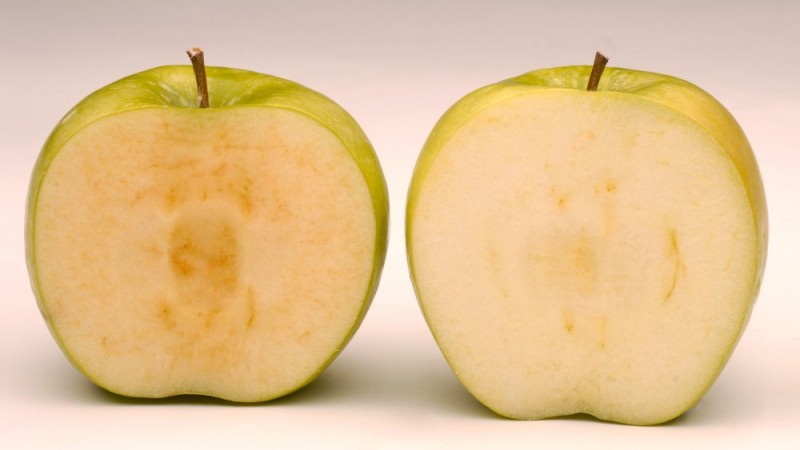
"caption": "Arctic Granny (right), a GMO variety created by Okanagan Specialty Fruits, got the gren light from federal regulators Friday. The apple doesn't turn brown like a conventional Granny Smith apple (left). Photo: Okanagan Specialty Fruits ",
"description": "Arctic Granny (right), a GMO variety created by Okanagan Specialty Fruits, got the gren light from federal regulators Friday. The apple doesn't turn brown like a conventional Granny Smith apple (left).",
"title": "Arctic Granny (right), a GMO variety created by Okanagan Specialty Fruits, got the gren light from federal regulators Friday. The apple doesn't turn brown like a conventional Granny Smith apple (left).",
"credit": null,
"status": "inherit",
"isLoading": false,
"fetchFailed": false
},
"bayareabites_93174": {
"type": "attachments",
"id": "bayareabites_93174",
"meta": {
"index": "attachments_1716263798",
"site": "bayareabites",
"id": "93174",
"found": true
},
"parent": 93172,
"imgSizes": {
"twentyfourteen-full-width": {
"file": "https://ww2.kqed.org/app/uploads/sites/24/2015/02/app-1_enl-36fe49df3f0961f5ddc0c2ccc794b31574cc290c-e1423781979530-1000x576.jpg",
"width": 1000,
"mimeType": "image/jpeg",
"height": 576
},
"thumbnail": {
"file": "https://ww2.kqed.org/app/uploads/sites/24/2015/02/app-1_enl-36fe49df3f0961f5ddc0c2ccc794b31574cc290c-e1423781979530-400x266.jpg",
"width": 400,
"mimeType": "image/jpeg",
"height": 266
},
"fd-sm": {
"file": "https://ww2.kqed.org/app/uploads/sites/24/2015/02/app-1_enl-36fe49df3f0961f5ddc0c2ccc794b31574cc290c-e1423781979530-320x213.jpg",
"width": 320,
"mimeType": "image/jpeg",
"height": 213
},
"post-thumbnail": {
"file": "https://ww2.kqed.org/app/uploads/sites/24/2015/02/app-1_enl-36fe49df3f0961f5ddc0c2ccc794b31574cc290c-e1423781979530-672x372.jpg",
"width": 672,
"mimeType": "image/jpeg",
"height": 372
},
"kqedFullSize": {
"file": "https://ww2.kqed.org/app/uploads/sites/24/2015/02/app-1_enl-36fe49df3f0961f5ddc0c2ccc794b31574cc290c-e1423781979530.jpg",
"width": 1000,
"height": 666
},
"guest-author-96": {
"file": "https://ww2.kqed.org/app/uploads/sites/24/2015/02/app-1_enl-36fe49df3f0961f5ddc0c2ccc794b31574cc290c-e1423781979530-96x96.jpg",
"width": 96,
"mimeType": "image/jpeg",
"height": 96
},
"medium": {
"file": "https://ww2.kqed.org/app/uploads/sites/24/2015/02/app-1_enl-36fe49df3f0961f5ddc0c2ccc794b31574cc290c-e1423781979530-800x533.jpg",
"width": 800,
"mimeType": "image/jpeg",
"height": 533
},
"guest-author-64": {
"file": "https://ww2.kqed.org/app/uploads/sites/24/2015/02/app-1_enl-36fe49df3f0961f5ddc0c2ccc794b31574cc290c-e1423781979530-64x64.jpg",
"width": 64,
"mimeType": "image/jpeg",
"height": 64
},
"guest-author-32": {
"file": "https://ww2.kqed.org/app/uploads/sites/24/2015/02/app-1_enl-36fe49df3f0961f5ddc0c2ccc794b31574cc290c-e1423781979530-32x32.jpg",
"width": 32,
"mimeType": "image/jpeg",
"height": 32
},
"cat_post_thumb_sizecategory-posts-2": {
"file": "https://ww2.kqed.org/app/uploads/sites/24/2015/02/app-1_enl-36fe49df3f0961f5ddc0c2ccc794b31574cc290c-e1423781979530-50x50.jpg",
"width": 50,
"mimeType": "image/jpeg",
"height": 50
},
"fd-med": {
"file": "https://ww2.kqed.org/app/uploads/sites/24/2015/02/app-1_enl-36fe49df3f0961f5ddc0c2ccc794b31574cc290c-e1423781979530-768x511.jpg",
"width": 768,
"mimeType": "image/jpeg",
"height": 511
},
"detail": {
"file": "https://ww2.kqed.org/app/uploads/sites/24/2015/02/app-1_enl-36fe49df3f0961f5ddc0c2ccc794b31574cc290c-e1423781979530-75x75.jpg",
"width": 75,
"mimeType": "image/jpeg",
"height": 75
},
"guest-author-128": {
"file": "https://ww2.kqed.org/app/uploads/sites/24/2015/02/app-1_enl-36fe49df3f0961f5ddc0c2ccc794b31574cc290c-e1423781979530-128x128.jpg",
"width": 128,
"mimeType": "image/jpeg",
"height": 128
}
},
"publishDate": 1423781560,
"modified": 1423781974,
"caption": "A screenshot of the app from Restaurant Opportunities Centers United. Photo: Meredith Rizzo/NPR",
"description": "A screenshot of the app from Restaurant Opportunities Centers United.",
"title": "A screenshot of the app from Restaurant Opportunities Centers United.",
"credit": null,
"status": "inherit",
"isLoading": false,
"fetchFailed": false
}
},
"audioPlayerReducer": {
"postId": "stream_live",
"isPaused": true,
"isPlaying": false,
"pfsActive": false,
"pledgeModalIsOpen": true,
"playerDrawerIsOpen": false,
"liveAudioPlayStartedAt": 0,
"liveAudioPlayContext": ""
},
"authorsReducer": {
"byline_bayareabites_93696": {
"type": "authors",
"id": "byline_bayareabites_93696",
"meta": {
"override": true
},
"slug": "byline_bayareabites_93696",
"name": "Here & Now",
"isLoading": false
},
"byline_bayareabites_93637": {
"type": "authors",
"id": "byline_bayareabites_93637",
"meta": {
"override": true
},
"slug": "byline_bayareabites_93637",
"name": "Abby Wendle",
"isLoading": false
},
"byline_bayareabites_93583": {
"type": "authors",
"id": "byline_bayareabites_93583",
"meta": {
"override": true
},
"slug": "byline_bayareabites_93583",
"name": "Linda Poon",
"isLoading": false
},
"byline_bayareabites_93513": {
"type": "authors",
"id": "byline_bayareabites_93513",
"meta": {
"override": true
},
"slug": "byline_bayareabites_93513",
"name": "Eliza Barclay",
"isLoading": false
},
"byline_bayareabites_93452": {
"type": "authors",
"id": "byline_bayareabites_93452",
"meta": {
"override": true
},
"slug": "byline_bayareabites_93452",
"name": "Here & Now Staff",
"isLoading": false
},
"byline_bayareabites_93440": {
"type": "authors",
"id": "byline_bayareabites_93440",
"meta": {
"override": true
},
"slug": "byline_bayareabites_93440",
"name": "Alan Greenblatt",
"isLoading": false
},
"byline_bayareabites_93424": {
"type": "authors",
"id": "byline_bayareabites_93424",
"meta": {
"override": true
},
"slug": "byline_bayareabites_93424",
"name": "Abby Wendle",
"isLoading": false
},
"byline_bayareabites_93326": {
"type": "authors",
"id": "byline_bayareabites_93326",
"meta": {
"override": true
},
"slug": "byline_bayareabites_93326",
"name": "Maanvi Singh",
"isLoading": false
},
"byline_bayareabites_93307": {
"type": "authors",
"id": "byline_bayareabites_93307",
"meta": {
"override": true
},
"slug": "byline_bayareabites_93307",
"name": "Angus Chen",
"isLoading": false
},
"byline_bayareabites_93245": {
"type": "authors",
"id": "byline_bayareabites_93245",
"meta": {
"override": true
},
"slug": "byline_bayareabites_93245",
"name": "Dan Charles",
"isLoading": false
},
"byline_bayareabites_93172": {
"type": "authors",
"id": "byline_bayareabites_93172",
"meta": {
"override": true
},
"slug": "byline_bayareabites_93172",
"name": "Poncie Rutsch",
"isLoading": false
},
"civileat": {
"type": "authors",
"id": "5583",
"meta": {
"index": "authors_1716337520",
"id": "5583",
"found": true
},
"name": "Civil Eats",
"firstName": "Civil",
"lastName": "Eats",
"slug": "civileat",
"email": "twilight@civileats.com",
"display_author_email": false,
"staff_mastheads": [],
"title": null,
"bio": "\u003ca href=\"http://civileats.com/\">Civil Eats\u003c/a> is a daily news source for critical thought about the American food system. We publish stories that shift the conversation around sustainable agriculture in an effort to build economically and socially just communities. Follow Civil Eats on Twitter \u003ca href=\"https://twitter.com/CivilEats\">@civileats\u003c/a> and on \u003ca href=\"https://www.facebook.com/pages/Civil-Eats/56766540637\">Facebook\u003c/a>.",
"avatar": "https://secure.gravatar.com/avatar/8f6f50bfb6403afe7cbc194b66cc1d4d?s=600&d=blank&r=g",
"twitter": "CivilEats",
"facebook": "/pages/Civil-Eats/56766540637?ref=hl",
"instagram": null,
"linkedin": null,
"sites": [
{
"site": "bayareabites",
"roles": [
"contributor"
]
},
{
"site": "food",
"roles": [
"contributor"
]
}
],
"headData": {
"title": "Civil Eats | KQED",
"description": null,
"ogImgSrc": "https://secure.gravatar.com/avatar/8f6f50bfb6403afe7cbc194b66cc1d4d?s=600&d=blank&r=g",
"twImgSrc": "https://secure.gravatar.com/avatar/8f6f50bfb6403afe7cbc194b66cc1d4d?s=600&d=blank&r=g"
},
"isLoading": false,
"link": "/author/civileat"
}
},
"pagesReducer": {
"bayareabites_category_food-and-technology": {
"type": "terms",
"id": "bayareabites_4084",
"meta": {
"index": "terms_1716263798",
"site": "bayareabites",
"id": "4084",
"score": 14.405561
},
"featImg": null,
"name": "food trends and technology",
"description": null,
"taxonomy": "category",
"headData": {
"twImgId": null,
"twTitle": null,
"ogTitle": null,
"ogImgId": null,
"twDescription": null,
"description": null,
"title": "food trends and technology Archives | KQED Bay Area Bites",
"ogDescription": null
},
"ttid": 2573,
"slug": "food-and-technology",
"isLoading": false,
"title": "food trends and technology",
"pageMeta": {
"site": "bayareabites",
"WpPageTemplate": "page-topic-editorial",
"currentPage": 27
},
"blocks": [
{
"blockName": "kqed/post-list",
"attrs": {
"layout": "cardArticle2",
"query": "posts/bayareabites?category=food-and-technology",
"seeMore": false,
"paginated": true,
"page": 27
}
},
{
"blockName": "kqed/ad"
}
]
}
},
"pfsSessionReducer": {},
"postsReducer": {
"stream_live": {
"type": "live",
"id": "stream_live",
"audioUrl": "https://streams.kqed.org/kqedradio",
"title": "Live Stream",
"excerpt": "Live Stream information currently unavailable.",
"link": "/radio",
"featImg": "",
"label": {
"name": "KQED Live",
"link": "/"
}
},
"stream_kqedNewscast": {
"type": "posts",
"id": "stream_kqedNewscast",
"audioUrl": "https://www.kqed.org/.stream/anon/radio/RDnews/newscast.mp3?_=1",
"title": "KQED Newscast",
"featImg": "",
"label": {
"name": "88.5 FM",
"link": "/"
}
},
"bayareabites_93696": {
"type": "posts",
"id": "bayareabites_93696",
"meta": {
"index": "posts_1716263798",
"site": "bayareabites",
"id": "93696",
"score": null,
"sort": [
1425582497000
]
},
"parent": 0,
"labelTerm": {
"site": "bayareabites"
},
"blocks": [],
"publishDate": 1425582497,
"format": "aside",
"disqusTitle": "We're Not Taking Enough Lunch Breaks. Why That's Bad For Business",
"title": "We're Not Taking Enough Lunch Breaks. Why That's Bad For Business",
"headTitle": "Bay Area Bites | KQED Food",
"content": "\u003cfigure id=\"attachment_93700\" class=\"wp-caption aligncenter\" style=\"max-width: 600px\">\u003ca href=\"http://ww2.kqed.org/bayareabites/wp-content/uploads/sites/24/2015/03/lunchhour.jpg\">\u003cimg src=\"http://ww2.kqed.org/bayareabites/wp-content/uploads/sites/24/2015/03/lunchhour.jpg\" alt='Eating at your desk day after day? Research suggests \"staying inside, in the same location, is really detrimental to creative thinking,\" says management professor Kimberly Elsbach. Photo: 145/Tom Grill/Ocean/Corbis ' width=\"600\" height=\"337\" class=\"size-full wp-image-93700\" srcset=\"https://ww2.kqed.org/app/uploads/sites/24/2015/03/lunchhour.jpg 600w, https://ww2.kqed.org/app/uploads/sites/24/2015/03/lunchhour-400x225.jpg 400w, https://ww2.kqed.org/app/uploads/sites/24/2015/03/lunchhour-320x180.jpg 320w\" sizes=\"(max-width: 600px) 100vw, 600px\">\u003c/a>\u003cfigcaption class=\"wp-caption-text\">Eating at your desk day after day? Research suggests \"staying inside, in the same location, is really detrimental to creative thinking,\" says management professor Kimberly Elsbach. Photo: 145/Tom Grill/Ocean/Corbis\u003c/figcaption>\u003c/figure>\n\u003cp>\u003ciframe width=\"100%\" height=\"124\" scrolling=\"no\" frameborder=\"no\" src=\"//embed.wbur.org/player/hereandnow/2015/03/03/no-lunch-hour\">\u003c/iframe>\u003c/p>\n\u003cp>\u003ca href=\"http://hereandnow.wbur.org/2015/03/03/no-lunch-hour\" target=\"_blank\">Here & Now\u003c/a>, WBUR at \u003ca href=\"http://www.npr.org/blogs/thesalt/2015/03/05/390726886/were-not-taking-enough-lunch-breaks-why-thats-bad-for-business\" target=\"_blank\">The Salt at NPR Food\u003c/a> (3/5/15)\u003c/p>\n\u003cp>Did you take a lunch break yesterday? Are you planning to take one today?\u003c/p>\n\u003cp>Chances are the answer is no. Fewer American workers are taking time for lunch. \u003ca href=\"https://www.right.com/news-and-events/press-releases/2012-press-releases/item23943.aspx\" target=\"_blank\">Research shows\u003c/a> that only 1 in 5 five people step away for the midday meal. Most workers are simply eating at their desks.\u003c/p>\n\u003cp>But studies have also found that the longer you stay at work, the more important it is to get outside of the office, even if it's just for a few minutes, because creativity can take a hit when you don't change environments.\u003c/p>\n\u003cp>[ad fullwidth]\u003c/p>\n\u003cp>\"We know that creativity and innovation happen when people change their environment, and especially when they expose themselves to a \u003ca href=\"http://www.tandfonline.com/doi/abs/10.1080/078559809#.VPh5f3zF-Sp\">nature-like environment\u003c/a>, to a natural environment,\" says \u003ca href=\"http://gsm.ucdavis.edu/faculty/kimberly-d-elsbach\">Kimberly Elsbach\u003c/a>, a professor at the University of California, Davis Graduate School of Management, who studies workplace psychology.\u003c/p>\n\u003cp>\"So staying inside, in the same location, is really detrimental to creative thinking. It's also detrimental to doing that rumination that's needed for ideas to percolate and gestate and allow a person to arrive at an 'aha' moment,\" Elsbach tells Jeremy Hobson, host of \u003cem>Here & Now.\u003c/em>\u003c/p>\n\u003cp>And in a knowledge-based economy, where innovation is what your workers produce, that can also be detrimental to the bottom line.\u003c/p>\n\u003cp>To reap the benefits of a lunch break, \"you don't actually need to go eat,\" Elsbach says, \"you just need to get out. And it doesn't have to be between 12 p.m. and 1 p.m. to have a positive impact. It can be just going outside and \u003ca href=\"http://www.apa.org/pubs/journals/releases/xlm-a0036577.pdf\">taking a walk\u003c/a> around the block. That in itself is really restorative.\"\u003c/p>\n\u003cp>Elsbach's own research has found that \u003ca href=\"http://www.psykol.org/nos/images/0/05/Elsbach_and_Hargadon_2006_creativity.pdf\">\"mindless\" work\u003c/a> — which can include tasks like walking — can enhance creativity, she tells The Salt.\u003c/p>\n\u003chr>\n\u003ch3>Interview Highlights\u003c/h3>\n\u003cp>\u003cstrong>On why the lunch hour is disappearing\u003c/strong>\u003c/p>\n\u003cp>\"The work day runs now from much earlier in the morning to late at night, and it's also not a standard 9 to 5. So ... when you eat or when you take a break to get some sustenance is not going to be the same [as it used to be]. Also, there's just this demand to be forever available, so people are reluctant to leave their desk in case they miss something. And so people are eating at their desk — if they're eating at all — and are just there for longer periods of time.\"\u003c/p>\n\u003cp>\u003cstrong>On lunch breaks and labor laws\u003c/strong>\u003c/p>\n\u003cp>\"People who are in more staff or line jobs that are unionized or regulated by labor rules, [those] are the people who are left taking lunch – because it's mandated. But for white-collar workers and managers it's not, and so they're the group who are least likely to take lunch.\"\u003c/p>\n\u003cp>\u003cstrong>On making sure you take a break by creating a lunch culture at work\u003c/strong>\u003c/p>\n\u003cp>\"It's tough. One of the things I think helps is ... creating a community around it. So you can set up an online forum where you say, OK, these are the different activities we're doing. There's one group that's going to meet and eat sack lunch outside. There's another group that's going to go for a walk around the local environment. There's another group that's going to go to a favorite restaurant. And so you create community around it, and you're not doing it by yourself and being seen as the odd person out. ...\u003c/p>\n\u003cp>\"You need to get the top managers to be part of this community of taking time off in the middle of the day to eat lunch, to go for a walk, to have a coffee break. They need to be included in the community and model that behavior for the rest of the workforce.\"\u003c/p>\n\u003chr>\n\u003cp>\u003cem>This story comes to NPR's The Salt via Here & Now, a show produced by NPR and member station WBUR in Boston. You can also listen to the \u003ca href=\"http://hereandnow.wbur.org/2015/03/03/no-lunch-hour\">audio version\u003c/a> of this story on WBUR's website.\u003c/em> \u003c/p>\n\u003cp>\u003c/p>\n\u003cp>\u003cem>Copyright 2015 \u003ca href=\"http://www.npr.org/\" target=\"_blank\">NPR\u003c/a>.\u003c/em> \u003c/p>\n\n",
"disqusIdentifier": "93696 http://blogs.kqed.org/bayareabites/?p=93696",
"disqusUrl": "https://ww2.kqed.org/bayareabites/2015/03/05/were-not-taking-enough-lunch-breaks-why-thats-bad-for-business/",
"stats": {
"hasVideo": false,
"hasChartOrMap": true,
"hasAudio": false,
"hasPolis": false,
"wordCount": 725,
"hasGoogleForm": false,
"hasGallery": false,
"hasHearkenModule": false,
"iframeSrcs": [
"//embed.wbur.org/player/hereandnow/2015/03/03/no-lunch-hour"
],
"paragraphCount": 21
},
"modified": 1425582767,
"excerpt": "Research shows that only 1 in 5 five people take a break and leave their desks to eat. Most workers are simply eating at their desks. But creativity can take a big hit without a change of scenery.",
"headData": {
"twImgId": "",
"twTitle": "",
"ogTitle": "",
"ogImgId": "",
"twDescription": "",
"description": "Research shows that only 1 in 5 five people take a break and leave their desks to eat. Most workers are simply eating at their desks. But creativity can take a big hit without a change of scenery.",
"title": "We're Not Taking Enough Lunch Breaks. Why That's Bad For Business | KQED",
"ogDescription": "",
"schema": {
"@context": "https://schema.org",
"@type": "Article",
"headline": "We're Not Taking Enough Lunch Breaks. Why That's Bad For Business",
"datePublished": "2015-03-05T11:08:17-08:00",
"dateModified": "2015-03-05T11:12:47-08:00",
"image": "https://cdn.kqed.org/wp-content/uploads/2020/02/KQED-OG-Image@1x.png"
}
},
"guestAuthors": [],
"slug": "were-not-taking-enough-lunch-breaks-why-thats-bad-for-business",
"status": "publish",
"nprApiLink": "http://api.npr.org/query?id=390726886&apiKey=MDAxOTAwOTE4MDEyMTkxMDAzNjczZDljZA004",
"nprByline": "Here & Now",
"nprStoryDate": "Thu, 05 Mar 2015 10:47:00 -0500",
"nprLastModifiedDate": "Thu, 05 Mar 2015 13:08:58 -0500",
"nprHtmlLink": "http://www.npr.org/blogs/thesalt/2015/03/05/390726886/were-not-taking-enough-lunch-breaks-why-thats-bad-for-business?ft=nprml&f=390726886",
"nprStoryId": "390726886",
"nprRetrievedStory": "1",
"nprPubDate": "Thu, 05 Mar 2015 13:08:00 -0500",
"path": "/bayareabites/93696/were-not-taking-enough-lunch-breaks-why-thats-bad-for-business",
"audioTrackLength": null,
"parsedContent": [
{
"type": "contentString",
"content": "\u003cdiv class=\"post-body\">\u003cp>\u003cfigure id=\"attachment_93700\" class=\"wp-caption aligncenter\" style=\"max-width: 600px\">\u003ca href=\"http://ww2.kqed.org/bayareabites/wp-content/uploads/sites/24/2015/03/lunchhour.jpg\">\u003cimg src=\"http://ww2.kqed.org/bayareabites/wp-content/uploads/sites/24/2015/03/lunchhour.jpg\" alt='Eating at your desk day after day? Research suggests \"staying inside, in the same location, is really detrimental to creative thinking,\" says management professor Kimberly Elsbach. Photo: 145/Tom Grill/Ocean/Corbis ' width=\"600\" height=\"337\" class=\"size-full wp-image-93700\" srcset=\"https://ww2.kqed.org/app/uploads/sites/24/2015/03/lunchhour.jpg 600w, https://ww2.kqed.org/app/uploads/sites/24/2015/03/lunchhour-400x225.jpg 400w, https://ww2.kqed.org/app/uploads/sites/24/2015/03/lunchhour-320x180.jpg 320w\" sizes=\"(max-width: 600px) 100vw, 600px\">\u003c/a>\u003cfigcaption class=\"wp-caption-text\">Eating at your desk day after day? Research suggests \"staying inside, in the same location, is really detrimental to creative thinking,\" says management professor Kimberly Elsbach. Photo: 145/Tom Grill/Ocean/Corbis\u003c/figcaption>\u003c/figure>\n\u003cp>\u003ciframe width=\"100%\" height=\"124\" scrolling=\"no\" frameborder=\"no\" src=\"//embed.wbur.org/player/hereandnow/2015/03/03/no-lunch-hour\">\u003c/iframe>\u003c/p>\n\u003cp>\u003ca href=\"http://hereandnow.wbur.org/2015/03/03/no-lunch-hour\" target=\"_blank\">Here & Now\u003c/a>, WBUR at \u003ca href=\"http://www.npr.org/blogs/thesalt/2015/03/05/390726886/were-not-taking-enough-lunch-breaks-why-thats-bad-for-business\" target=\"_blank\">The Salt at NPR Food\u003c/a> (3/5/15)\u003c/p>\n\u003cp>Did you take a lunch break yesterday? Are you planning to take one today?\u003c/p>\n\u003cp>Chances are the answer is no. Fewer American workers are taking time for lunch. \u003ca href=\"https://www.right.com/news-and-events/press-releases/2012-press-releases/item23943.aspx\" target=\"_blank\">Research shows\u003c/a> that only 1 in 5 five people step away for the midday meal. Most workers are simply eating at their desks.\u003c/p>\n\u003cp>But studies have also found that the longer you stay at work, the more important it is to get outside of the office, even if it's just for a few minutes, because creativity can take a hit when you don't change environments.\u003c/p>\n\u003cp>\u003c/p>\u003c/div>",
"attributes": {
"named": {},
"numeric": []
}
},
{
"type": "component",
"content": "",
"name": "ad",
"attributes": {
"named": {
"label": "fullwidth"
},
"numeric": [
"fullwidth"
]
}
},
{
"type": "contentString",
"content": "\u003cdiv class=\"post-body\">\u003cp>\u003c/p>\n\u003cp>\"We know that creativity and innovation happen when people change their environment, and especially when they expose themselves to a \u003ca href=\"http://www.tandfonline.com/doi/abs/10.1080/078559809#.VPh5f3zF-Sp\">nature-like environment\u003c/a>, to a natural environment,\" says \u003ca href=\"http://gsm.ucdavis.edu/faculty/kimberly-d-elsbach\">Kimberly Elsbach\u003c/a>, a professor at the University of California, Davis Graduate School of Management, who studies workplace psychology.\u003c/p>\n\u003cp>\"So staying inside, in the same location, is really detrimental to creative thinking. It's also detrimental to doing that rumination that's needed for ideas to percolate and gestate and allow a person to arrive at an 'aha' moment,\" Elsbach tells Jeremy Hobson, host of \u003cem>Here & Now.\u003c/em>\u003c/p>\n\u003cp>And in a knowledge-based economy, where innovation is what your workers produce, that can also be detrimental to the bottom line.\u003c/p>\n\u003cp>To reap the benefits of a lunch break, \"you don't actually need to go eat,\" Elsbach says, \"you just need to get out. And it doesn't have to be between 12 p.m. and 1 p.m. to have a positive impact. It can be just going outside and \u003ca href=\"http://www.apa.org/pubs/journals/releases/xlm-a0036577.pdf\">taking a walk\u003c/a> around the block. That in itself is really restorative.\"\u003c/p>\n\u003cp>Elsbach's own research has found that \u003ca href=\"http://www.psykol.org/nos/images/0/05/Elsbach_and_Hargadon_2006_creativity.pdf\">\"mindless\" work\u003c/a> — which can include tasks like walking — can enhance creativity, she tells The Salt.\u003c/p>\n\u003chr>\n\u003ch3>Interview Highlights\u003c/h3>\n\u003cp>\u003cstrong>On why the lunch hour is disappearing\u003c/strong>\u003c/p>\n\u003cp>\"The work day runs now from much earlier in the morning to late at night, and it's also not a standard 9 to 5. So ... when you eat or when you take a break to get some sustenance is not going to be the same [as it used to be]. Also, there's just this demand to be forever available, so people are reluctant to leave their desk in case they miss something. And so people are eating at their desk — if they're eating at all — and are just there for longer periods of time.\"\u003c/p>\n\u003cp>\u003cstrong>On lunch breaks and labor laws\u003c/strong>\u003c/p>\n\u003cp>\"People who are in more staff or line jobs that are unionized or regulated by labor rules, [those] are the people who are left taking lunch – because it's mandated. But for white-collar workers and managers it's not, and so they're the group who are least likely to take lunch.\"\u003c/p>\n\u003cp>\u003cstrong>On making sure you take a break by creating a lunch culture at work\u003c/strong>\u003c/p>\n\u003cp>\"It's tough. One of the things I think helps is ... creating a community around it. So you can set up an online forum where you say, OK, these are the different activities we're doing. There's one group that's going to meet and eat sack lunch outside. There's another group that's going to go for a walk around the local environment. There's another group that's going to go to a favorite restaurant. And so you create community around it, and you're not doing it by yourself and being seen as the odd person out. ...\u003c/p>\n\u003cp>\"You need to get the top managers to be part of this community of taking time off in the middle of the day to eat lunch, to go for a walk, to have a coffee break. They need to be included in the community and model that behavior for the rest of the workforce.\"\u003c/p>\n\u003chr>\n\u003cp>\u003cem>This story comes to NPR's The Salt via Here & Now, a show produced by NPR and member station WBUR in Boston. You can also listen to the \u003ca href=\"http://hereandnow.wbur.org/2015/03/03/no-lunch-hour\">audio version\u003c/a> of this story on WBUR's website.\u003c/em> \u003c/p>\n\u003cp>\u003c/p>\n\u003cp>\u003cem>Copyright 2015 \u003ca href=\"http://www.npr.org/\" target=\"_blank\">NPR\u003c/a>.\u003c/em> \u003c/p>\n\n\u003c/div>\u003c/p>",
"attributes": {
"named": {},
"numeric": []
}
}
],
"link": "/bayareabites/93696/were-not-taking-enough-lunch-breaks-why-thats-bad-for-business",
"authors": [
"byline_bayareabites_93696"
],
"categories": [
"bayareabites_4084",
"bayareabites_10916",
"bayareabites_358"
],
"tags": [
"bayareabites_14167",
"bayareabites_1329",
"bayareabites_14186",
"bayareabites_12139",
"bayareabites_11318",
"bayareabites_13619",
"bayareabites_14187"
],
"featImg": "bayareabites_93700",
"label": "bayareabites"
},
"bayareabites_93637": {
"type": "posts",
"id": "bayareabites_93637",
"meta": {
"index": "posts_1716263798",
"site": "bayareabites",
"id": "93637",
"score": null,
"sort": [
1425431142000
]
},
"parent": 0,
"labelTerm": {
"site": "bayareabites"
},
"blocks": [],
"publishDate": 1425431142,
"format": "aside",
"disqusTitle": "From War To Plow: Why USDA Wants Veterans To Take Up Farming",
"title": "From War To Plow: Why USDA Wants Veterans To Take Up Farming",
"headTitle": "Bay Area Bites | KQED Food",
"content": "\u003cfigure id=\"attachment_93638\" class=\"wp-caption aligncenter\" style=\"max-width: 1920px\">\u003ca href=\"http://ww2.kqed.org/bayareabites/wp-content/uploads/sites/24/2015/03/farm-1_enl-e7c0b75a8633e1021452395810f3c73cc8e4b4e5-e1425421073231.jpg\">\u003cimg src=\"http://ww2.kqed.org/bayareabites/wp-content/uploads/sites/24/2015/03/farm-1_enl-e7c0b75a8633e1021452395810f3c73cc8e4b4e5-e1425421073231.jpg\" alt=\"Three years ago, Air Force veteran Sara Creech quit her job as a nurse and bought a 43-acre farm in North Salem, Ind. She named her farm Blue Yonder Organic. Photo: John Wendle for Harvest Public Media\" width=\"1920\" height=\"1280\" class=\"size-full wp-image-93638\" srcset=\"https://ww2.kqed.org/app/uploads/sites/24/2015/03/farm-1_enl-e7c0b75a8633e1021452395810f3c73cc8e4b4e5-e1425421073231.jpg 1920w, https://ww2.kqed.org/app/uploads/sites/24/2015/03/farm-1_enl-e7c0b75a8633e1021452395810f3c73cc8e4b4e5-e1425421073231-400x267.jpg 400w, https://ww2.kqed.org/app/uploads/sites/24/2015/03/farm-1_enl-e7c0b75a8633e1021452395810f3c73cc8e4b4e5-e1425421073231-800x533.jpg 800w, https://ww2.kqed.org/app/uploads/sites/24/2015/03/farm-1_enl-e7c0b75a8633e1021452395810f3c73cc8e4b4e5-e1425421073231-1440x960.jpg 1440w, https://ww2.kqed.org/app/uploads/sites/24/2015/03/farm-1_enl-e7c0b75a8633e1021452395810f3c73cc8e4b4e5-e1425421073231-1180x787.jpg 1180w, https://ww2.kqed.org/app/uploads/sites/24/2015/03/farm-1_enl-e7c0b75a8633e1021452395810f3c73cc8e4b4e5-e1425421073231-768x512.jpg 768w, https://ww2.kqed.org/app/uploads/sites/24/2015/03/farm-1_enl-e7c0b75a8633e1021452395810f3c73cc8e4b4e5-e1425421073231-320x213.jpg 320w\" sizes=\"(max-width: 1920px) 100vw, 1920px\">\u003c/a>\u003cfigcaption class=\"wp-caption-text\">Three years ago, Air Force veteran Sara Creech quit her job as a nurse and bought a 43-acre farm in North Salem, Ind. She named her farm Blue Yonder Organic. Photo: John Wendle for Harvest Public Media\u003c/figcaption>\u003c/figure>\n\u003cp>By Abby Wendle, \u003ca href=\"http://www.npr.org/blogs/thesalt/2015/03/03/390251255/from-war-to-plow-why-usda-wants-veterans-to-take-up-farming\" target=\"_blank\">The Salt at NPR Food\u003c/a> (3/3/15)\u003c/p>\n\u003cp>Sara Creech has grown dependent on farming. She started out planting an orchard of fruit trees: apples, peaches, cherries and pears. She added berry bushes and rows of vegetables.\u003c/p>\n\u003cp>And then she bought her first chickens.\u003c/p>\n\u003cp>\"A lot of people call chickens the gateway animal,\" says Creech, who lives in rural North Salem, Ind. \"Like once you have a chicken on the farm, then you end up getting sheep on the farm, and then you end up getting horses, and cows. And then it just explodes from there.\"\u003c/p>\n\u003cp>Creech served as a surgery nurse during the Iraq War. She has a master's degree and 16 years of experience. But she turned to farming when her career in nursing fell apart.\u003c/p>\n\u003cp>[ad fullwidth]\u003c/p>\n\u003cp>As many as \u003ca href=\"http://www.ptsd.va.gov/public/PTSD-overview/basics/how-common-is-ptsd.asp\">one in five\u003c/a> Iraq War veterans came home from service with PTSD. Creech was one of them. She said PTSD made returning to nursing impossible. Her depression and anxiety became so severe, she says she felt like she was dangerous to her patients.\u003c/p>\n\u003cp>\"I couldn't work,\" she says. \"I couldn't do my job. It was devastating.\"\u003c/p>\n\u003cp>Veterans returning home from Iraq and Afghanistan often have a hard time transitioning back to their civilian lives and careers. They have \u003ca href=\"http://costsofwar.org/article/us-veterans-and-military-families\">higher rates\u003c/a> of divorce, depression and suicide. And they're more likely to be \u003ca href=\"http://www.bls.gov/news.release/empsit.t05.htm\">unemployed\u003c/a> than both civilians and veterans of other wars.\u003c/p>\n\u003cp>In recent years, thousands of veterans like Creech have showed an interest in farming as a way to find peace and purpose. Several \u003ca href=\"https://www.ncat.org/about-us/\">nonprofit organizations\u003c/a> and \u003ca href=\"http://harvestpublicmedia.org/article/544/combat-cowboy-duties-helping-hand-nebraska/5\">universities\u003c/a> have launched programs to help them pursue careers in agriculture.\u003c/p>\n\u003cp>Now, Congress has gotten on board, giving veterans a dose of financial support. The 2014 Farm Bill designated veterans, for the first time, as a distinct class of \u003ca href=\"http://www.usda.gov/newfarmers\">beginning farmers\u003c/a> within the U.S. Department of Agriculture. The status \u003ca href=\"http://iowafarmerveteran.org/house-2014-farm-bill-includes-veteran-farmers/\">grants\u003c/a> veterans access to low-interest-rate loans to buy animals and equipment. It also allows them to apply for grants to build onto their farm, and it can help them receive extra payments to implement conservation practices on their land.\u003c/p>\n\u003cp>\"More than anything, it's just an acknowledgement,\" says Michael O'Gorman, founder of the \u003ca href=\"http://www.farmvetco.org/\">Farmer Veteran Coalition\u003c/a>, a nonprofit organization that links up veterans with farming jobs and apprenticeships.\u003c/p>\n\u003cp>O'Gorman started the coalition with a handful of interested veterans' families in 2009. He says excitement about the legislation has helped double his group's membership to 4,000 veterans in the past year.\u003c/p>\n\u003cp>Veterans still face all of the obstacles of other beginners: Farming is expensive. The hours are long. Success can be at the mercy of the weather, and profit margins can be discouragingly low. Operators of small farms often face financial \u003ca href=\"http://www.ers.usda.gov/media/1728096/eib-132.pdf\">problems\u003c/a> that require off-farm jobs to keep the business afloat.\u003c/p>\n\u003cp>But the Farm Bill gives veterans an extra advantage over these obstacles. It not only provides them with access to all of the beginning farmer program's resources, in some cases, it requires the USDA to give veterans' applications priority preference — ahead of nonveterans and minority farmers.\u003c/p>\n\u003cfigure id=\"attachment_93639\" class=\"wp-caption aligncenter\" style=\"max-width: 1920px\">\u003ca href=\"http://ww2.kqed.org/bayareabites/wp-content/uploads/sites/24/2015/03/farm-2_enl-63abd1f9cd21c0cad63244e02f8ff4eaae1db139-e1425421166331.jpg\">\u003cimg src=\"http://ww2.kqed.org/bayareabites/wp-content/uploads/sites/24/2015/03/farm-2_enl-63abd1f9cd21c0cad63244e02f8ff4eaae1db139-e1425421166331.jpg\" alt=\"Sara Creech used her savings account and support from her family to buy a foreclosed farmhouse in rural Indiana. This year, thanks to changes in the latest Farm Bill, Creech received $21,000 from the USDA — money she is putting back into her farm. Photo: John Wendle for Harvest Public Media\" width=\"1920\" height=\"1280\" class=\"size-full wp-image-93639\" srcset=\"https://ww2.kqed.org/app/uploads/sites/24/2015/03/farm-2_enl-63abd1f9cd21c0cad63244e02f8ff4eaae1db139-e1425421166331.jpg 1920w, https://ww2.kqed.org/app/uploads/sites/24/2015/03/farm-2_enl-63abd1f9cd21c0cad63244e02f8ff4eaae1db139-e1425421166331-400x267.jpg 400w, https://ww2.kqed.org/app/uploads/sites/24/2015/03/farm-2_enl-63abd1f9cd21c0cad63244e02f8ff4eaae1db139-e1425421166331-800x533.jpg 800w, https://ww2.kqed.org/app/uploads/sites/24/2015/03/farm-2_enl-63abd1f9cd21c0cad63244e02f8ff4eaae1db139-e1425421166331-1440x960.jpg 1440w, https://ww2.kqed.org/app/uploads/sites/24/2015/03/farm-2_enl-63abd1f9cd21c0cad63244e02f8ff4eaae1db139-e1425421166331-1180x787.jpg 1180w, https://ww2.kqed.org/app/uploads/sites/24/2015/03/farm-2_enl-63abd1f9cd21c0cad63244e02f8ff4eaae1db139-e1425421166331-768x512.jpg 768w, https://ww2.kqed.org/app/uploads/sites/24/2015/03/farm-2_enl-63abd1f9cd21c0cad63244e02f8ff4eaae1db139-e1425421166331-320x213.jpg 320w\" sizes=\"(max-width: 1920px) 100vw, 1920px\">\u003c/a>\u003cfigcaption class=\"wp-caption-text\">Sara Creech used her savings account and support from her family to buy a foreclosed farmhouse in rural Indiana. This year, thanks to changes in the latest Farm Bill, Creech received $21,000 from the USDA — money she is putting back into her farm. Photo: John Wendle for Harvest Public Media\u003c/figcaption>\u003c/figure>\n\u003cp>O'Gorman says this preferential treatment is payment for the time veterans took away from their own goals to serve.\u003c/p>\n\u003cp>\"The veterans don't want a hand out,\" he says. \"But it would be nice to go to the front of a few lines, because even if one did come home unharmed — many of them didn't — but they still took years out of the normal development of a career.\"\u003c/p>\n\u003cp>While other recruiters might require a full resume, the USDA is eager to attract inexperienced farmers to the field.\u003c/p>\n\u003cp>The average American farmer is 58 years old, according to the 2012 Census of Agriculture. Farmers over 55 control \u003ca href=\"http://www.cfra.org/resources/beginning_farmer\">more than half\u003c/a> of the country's farmland, and one in two is likely to retire in the next decade. Since 1987, there has been a \u003ca href=\"http://harvestpublicmedia.org/changinglands\">decline\u003c/a> in the number of new farmers joining the ranks, with only 17 percent at the beginning of their farming careers — with less than a decade of experience.\u003c/p>\n\u003cp>\"When you look at the population growth, we're naturally going to need more and more producers to keep pace with the growing demand,\" says Karis Gutter, the USDA's first military veterans' agriculture liaison. \"The veterans' cadre looks very promising for us.\"\u003c/p>\n\u003cp>About 2 1/2 million veterans have returned home from Iraq and Afghanistan, \u003ca href=\"http://www.cfra.org/resources/beginning_farmer\">nearly half\u003c/a> of them to rural counties. Despite that, very few veterans currently work in agriculture: just 2 percent of rural veterans of Iraq and the Gulf War, according to USDA.\u003c/p>\n\u003cp>But a USDA \u003ca href=\"http://www.ers.usda.gov/publications/eb-economic-brief/eb25.aspx\">report\u003c/a> from 2013 suggests that rural veterans could be a wise investment, because they tend to have more education and technical training than their nonveteran rural peers, and they bring unique skills from their military experience.\u003c/p>\n\u003cp>\"It's an absolute natural fit,\" Gutter says. \"Many of the men and women who have served come from rural backgrounds and get training to work with their hands and have a natural instinct for entrepreneurship.\"\u003c/p>\n\u003cp>Sara Creech is proof of that sentiment. Three years ago she quit her job as a nurse and used her savings account and support from her family to buy a foreclosed farmhouse sitting on 43 acres in rural Indiana.\u003c/p>\n\u003cp>Last year, Creech started \u003ca href=\"http://www.blueyonderorganicfarm.com/\">Blue Yonder Organic Farm\u003c/a>, named for the Air Force \u003ca href=\"https://www.youtube.com/watch?v=C95Cb2ByHNA\">theme song\u003c/a>. She raised 900 chickens and sold meat, eggs and produce at the local farmers market and through a CSA.\u003c/p>\n\u003cp>This year, thanks to changes in the latest Farm Bill,\u003cstrong> \u003c/strong>Creech received $21,000 from the USDA because of her veteran status. She's using the money to improve the quality of her soil and build a hoop house, which will extend her growing season and should increase her profits.\u003c/p>\n\u003cp>Creech is also getting support at the state level. Some Midwest states are launching\u003ca href=\"http://www.kyproud.com/veterans/\"> marketing campaigns\u003c/a> that supply veteran farmers with a patriotic logo, \"Homegrown by Heroes,\" to help advertise their products. Creech flies a \"Homegrown by Heroes\" sign at her farmers market table to attract customers.\u003c/p>\n\u003cp>\"The community loves food, and they love veterans, at least in our area,\" she says. \"But they don't know how to support us. They don't know what we need.\"\u003c/p>\n\u003cp>She says being able to designate her business as veteran-owned gives people a tangible way to pay her back for her service.\u003c/p>\n\u003cp>Money, though, is not her priority, she says. In many ways, she says, the work pays for itself.\u003c/p>\n\u003cp>\"I am getting out of bed every day. And I am doing my chores every day. And I am taking care of animals every day. People are relying on me,\" she says. \"I don't know where my life is going to take me, but I feel like I'm on the right path.\"\u003c/p>\n\u003cp>She's helping other vets find their path, too, hosting veterans groups at Blue Yonder for week-long workshops to give them a taste of life on the farm.\u003c/p>\n\u003chr>\n\u003cp>\u003cem>Abby Wendle is a reporter with \u003c/em>\u003ca href=\"http://tspr.org/\">Tri States Public Radio\u003c/a>\u003cem> and \u003c/em>\u003ca href=\"http://harvestpublicmedia.org/\">Harvest Public Media\u003c/a>, \u003cem>a public radio reporting collaboration that focuses on agriculture and food production.\u003c/em> \u003c/p>\n\u003cp>[ad floatright]\u003c/p>\n\u003cp> \u003cem>Copyright 2015 \u003ca href=\"http://www.npr.org/\" target=\"_blank\">NPR\u003c/a>.\u003c/em>\u003c/p>\n\n",
"disqusIdentifier": "93637 http://blogs.kqed.org/bayareabites/?p=93637",
"disqusUrl": "https://ww2.kqed.org/bayareabites/2015/03/03/from-war-to-plow-why-usda-wants-veterans-to-take-up-farming/",
"stats": {
"hasVideo": false,
"hasChartOrMap": false,
"hasAudio": false,
"hasPolis": false,
"wordCount": 1294,
"hasGoogleForm": false,
"hasGallery": false,
"hasHearkenModule": false,
"iframeSrcs": [],
"paragraphCount": 35
},
"modified": 1425431142,
"excerpt": "Sara Creech's nursing career fell apart after she returned from Iraq with PTSD. She found purpose — and a new path — on the farm. Now, the USDA is giving veterans like her more financial support.",
"headData": {
"twImgId": "",
"twTitle": "",
"ogTitle": "",
"ogImgId": "",
"twDescription": "",
"description": "Sara Creech's nursing career fell apart after she returned from Iraq with PTSD. She found purpose — and a new path — on the farm. Now, the USDA is giving veterans like her more financial support.",
"title": "From War To Plow: Why USDA Wants Veterans To Take Up Farming | KQED",
"ogDescription": "",
"schema": {
"@context": "https://schema.org",
"@type": "Article",
"headline": "From War To Plow: Why USDA Wants Veterans To Take Up Farming",
"datePublished": "2015-03-03T17:05:42-08:00",
"dateModified": "2015-03-03T17:05:42-08:00",
"image": "https://cdn.kqed.org/wp-content/uploads/2020/02/KQED-OG-Image@1x.png"
}
},
"guestAuthors": [],
"slug": "from-war-to-plow-why-usda-wants-veterans-to-take-up-farming",
"status": "publish",
"nprApiLink": "http://api.npr.org/query?id=390251255&apiKey=MDAxOTAwOTE4MDEyMTkxMDAzNjczZDljZA004",
"nprByline": "Abby Wendle",
"nprStoryDate": "Tue, 03 Mar 2015 13:08:00 -0500",
"nprLastModifiedDate": "Tue, 03 Mar 2015 16:26:02 -0500",
"nprHtmlLink": "http://www.npr.org/blogs/thesalt/2015/03/03/390251255/from-war-to-plow-why-usda-wants-veterans-to-take-up-farming?ft=nprml&f=390251255",
"nprStoryId": "390251255",
"nprRetrievedStory": "1",
"nprPubDate": "Tue, 03 Mar 2015 16:26:00 -0500",
"path": "/bayareabites/93637/from-war-to-plow-why-usda-wants-veterans-to-take-up-farming",
"audioTrackLength": null,
"parsedContent": [
{
"type": "contentString",
"content": "\u003cdiv class=\"post-body\">\u003cp>\u003cfigure id=\"attachment_93638\" class=\"wp-caption aligncenter\" style=\"max-width: 1920px\">\u003ca href=\"http://ww2.kqed.org/bayareabites/wp-content/uploads/sites/24/2015/03/farm-1_enl-e7c0b75a8633e1021452395810f3c73cc8e4b4e5-e1425421073231.jpg\">\u003cimg src=\"http://ww2.kqed.org/bayareabites/wp-content/uploads/sites/24/2015/03/farm-1_enl-e7c0b75a8633e1021452395810f3c73cc8e4b4e5-e1425421073231.jpg\" alt=\"Three years ago, Air Force veteran Sara Creech quit her job as a nurse and bought a 43-acre farm in North Salem, Ind. She named her farm Blue Yonder Organic. Photo: John Wendle for Harvest Public Media\" width=\"1920\" height=\"1280\" class=\"size-full wp-image-93638\" srcset=\"https://ww2.kqed.org/app/uploads/sites/24/2015/03/farm-1_enl-e7c0b75a8633e1021452395810f3c73cc8e4b4e5-e1425421073231.jpg 1920w, https://ww2.kqed.org/app/uploads/sites/24/2015/03/farm-1_enl-e7c0b75a8633e1021452395810f3c73cc8e4b4e5-e1425421073231-400x267.jpg 400w, https://ww2.kqed.org/app/uploads/sites/24/2015/03/farm-1_enl-e7c0b75a8633e1021452395810f3c73cc8e4b4e5-e1425421073231-800x533.jpg 800w, https://ww2.kqed.org/app/uploads/sites/24/2015/03/farm-1_enl-e7c0b75a8633e1021452395810f3c73cc8e4b4e5-e1425421073231-1440x960.jpg 1440w, https://ww2.kqed.org/app/uploads/sites/24/2015/03/farm-1_enl-e7c0b75a8633e1021452395810f3c73cc8e4b4e5-e1425421073231-1180x787.jpg 1180w, https://ww2.kqed.org/app/uploads/sites/24/2015/03/farm-1_enl-e7c0b75a8633e1021452395810f3c73cc8e4b4e5-e1425421073231-768x512.jpg 768w, https://ww2.kqed.org/app/uploads/sites/24/2015/03/farm-1_enl-e7c0b75a8633e1021452395810f3c73cc8e4b4e5-e1425421073231-320x213.jpg 320w\" sizes=\"(max-width: 1920px) 100vw, 1920px\">\u003c/a>\u003cfigcaption class=\"wp-caption-text\">Three years ago, Air Force veteran Sara Creech quit her job as a nurse and bought a 43-acre farm in North Salem, Ind. She named her farm Blue Yonder Organic. Photo: John Wendle for Harvest Public Media\u003c/figcaption>\u003c/figure>\n\u003cp>By Abby Wendle, \u003ca href=\"http://www.npr.org/blogs/thesalt/2015/03/03/390251255/from-war-to-plow-why-usda-wants-veterans-to-take-up-farming\" target=\"_blank\">The Salt at NPR Food\u003c/a> (3/3/15)\u003c/p>\n\u003cp>Sara Creech has grown dependent on farming. She started out planting an orchard of fruit trees: apples, peaches, cherries and pears. She added berry bushes and rows of vegetables.\u003c/p>\n\u003cp>And then she bought her first chickens.\u003c/p>\n\u003cp>\"A lot of people call chickens the gateway animal,\" says Creech, who lives in rural North Salem, Ind. \"Like once you have a chicken on the farm, then you end up getting sheep on the farm, and then you end up getting horses, and cows. And then it just explodes from there.\"\u003c/p>\n\u003cp>Creech served as a surgery nurse during the Iraq War. She has a master's degree and 16 years of experience. But she turned to farming when her career in nursing fell apart.\u003c/p>\n\u003cp>\u003c/p>\u003c/div>",
"attributes": {
"named": {},
"numeric": []
}
},
{
"type": "component",
"content": "",
"name": "ad",
"attributes": {
"named": {
"label": "fullwidth"
},
"numeric": [
"fullwidth"
]
}
},
{
"type": "contentString",
"content": "\u003cdiv class=\"post-body\">\u003cp>\u003c/p>\n\u003cp>As many as \u003ca href=\"http://www.ptsd.va.gov/public/PTSD-overview/basics/how-common-is-ptsd.asp\">one in five\u003c/a> Iraq War veterans came home from service with PTSD. Creech was one of them. She said PTSD made returning to nursing impossible. Her depression and anxiety became so severe, she says she felt like she was dangerous to her patients.\u003c/p>\n\u003cp>\"I couldn't work,\" she says. \"I couldn't do my job. It was devastating.\"\u003c/p>\n\u003cp>Veterans returning home from Iraq and Afghanistan often have a hard time transitioning back to their civilian lives and careers. They have \u003ca href=\"http://costsofwar.org/article/us-veterans-and-military-families\">higher rates\u003c/a> of divorce, depression and suicide. And they're more likely to be \u003ca href=\"http://www.bls.gov/news.release/empsit.t05.htm\">unemployed\u003c/a> than both civilians and veterans of other wars.\u003c/p>\n\u003cp>In recent years, thousands of veterans like Creech have showed an interest in farming as a way to find peace and purpose. Several \u003ca href=\"https://www.ncat.org/about-us/\">nonprofit organizations\u003c/a> and \u003ca href=\"http://harvestpublicmedia.org/article/544/combat-cowboy-duties-helping-hand-nebraska/5\">universities\u003c/a> have launched programs to help them pursue careers in agriculture.\u003c/p>\n\u003cp>Now, Congress has gotten on board, giving veterans a dose of financial support. The 2014 Farm Bill designated veterans, for the first time, as a distinct class of \u003ca href=\"http://www.usda.gov/newfarmers\">beginning farmers\u003c/a> within the U.S. Department of Agriculture. The status \u003ca href=\"http://iowafarmerveteran.org/house-2014-farm-bill-includes-veteran-farmers/\">grants\u003c/a> veterans access to low-interest-rate loans to buy animals and equipment. It also allows them to apply for grants to build onto their farm, and it can help them receive extra payments to implement conservation practices on their land.\u003c/p>\n\u003cp>\"More than anything, it's just an acknowledgement,\" says Michael O'Gorman, founder of the \u003ca href=\"http://www.farmvetco.org/\">Farmer Veteran Coalition\u003c/a>, a nonprofit organization that links up veterans with farming jobs and apprenticeships.\u003c/p>\n\u003cp>O'Gorman started the coalition with a handful of interested veterans' families in 2009. He says excitement about the legislation has helped double his group's membership to 4,000 veterans in the past year.\u003c/p>\n\u003cp>Veterans still face all of the obstacles of other beginners: Farming is expensive. The hours are long. Success can be at the mercy of the weather, and profit margins can be discouragingly low. Operators of small farms often face financial \u003ca href=\"http://www.ers.usda.gov/media/1728096/eib-132.pdf\">problems\u003c/a> that require off-farm jobs to keep the business afloat.\u003c/p>\n\u003cp>But the Farm Bill gives veterans an extra advantage over these obstacles. It not only provides them with access to all of the beginning farmer program's resources, in some cases, it requires the USDA to give veterans' applications priority preference — ahead of nonveterans and minority farmers.\u003c/p>\n\u003cfigure id=\"attachment_93639\" class=\"wp-caption aligncenter\" style=\"max-width: 1920px\">\u003ca href=\"http://ww2.kqed.org/bayareabites/wp-content/uploads/sites/24/2015/03/farm-2_enl-63abd1f9cd21c0cad63244e02f8ff4eaae1db139-e1425421166331.jpg\">\u003cimg src=\"http://ww2.kqed.org/bayareabites/wp-content/uploads/sites/24/2015/03/farm-2_enl-63abd1f9cd21c0cad63244e02f8ff4eaae1db139-e1425421166331.jpg\" alt=\"Sara Creech used her savings account and support from her family to buy a foreclosed farmhouse in rural Indiana. This year, thanks to changes in the latest Farm Bill, Creech received $21,000 from the USDA — money she is putting back into her farm. Photo: John Wendle for Harvest Public Media\" width=\"1920\" height=\"1280\" class=\"size-full wp-image-93639\" srcset=\"https://ww2.kqed.org/app/uploads/sites/24/2015/03/farm-2_enl-63abd1f9cd21c0cad63244e02f8ff4eaae1db139-e1425421166331.jpg 1920w, https://ww2.kqed.org/app/uploads/sites/24/2015/03/farm-2_enl-63abd1f9cd21c0cad63244e02f8ff4eaae1db139-e1425421166331-400x267.jpg 400w, https://ww2.kqed.org/app/uploads/sites/24/2015/03/farm-2_enl-63abd1f9cd21c0cad63244e02f8ff4eaae1db139-e1425421166331-800x533.jpg 800w, https://ww2.kqed.org/app/uploads/sites/24/2015/03/farm-2_enl-63abd1f9cd21c0cad63244e02f8ff4eaae1db139-e1425421166331-1440x960.jpg 1440w, https://ww2.kqed.org/app/uploads/sites/24/2015/03/farm-2_enl-63abd1f9cd21c0cad63244e02f8ff4eaae1db139-e1425421166331-1180x787.jpg 1180w, https://ww2.kqed.org/app/uploads/sites/24/2015/03/farm-2_enl-63abd1f9cd21c0cad63244e02f8ff4eaae1db139-e1425421166331-768x512.jpg 768w, https://ww2.kqed.org/app/uploads/sites/24/2015/03/farm-2_enl-63abd1f9cd21c0cad63244e02f8ff4eaae1db139-e1425421166331-320x213.jpg 320w\" sizes=\"(max-width: 1920px) 100vw, 1920px\">\u003c/a>\u003cfigcaption class=\"wp-caption-text\">Sara Creech used her savings account and support from her family to buy a foreclosed farmhouse in rural Indiana. This year, thanks to changes in the latest Farm Bill, Creech received $21,000 from the USDA — money she is putting back into her farm. Photo: John Wendle for Harvest Public Media\u003c/figcaption>\u003c/figure>\n\u003cp>O'Gorman says this preferential treatment is payment for the time veterans took away from their own goals to serve.\u003c/p>\n\u003cp>\"The veterans don't want a hand out,\" he says. \"But it would be nice to go to the front of a few lines, because even if one did come home unharmed — many of them didn't — but they still took years out of the normal development of a career.\"\u003c/p>\n\u003cp>While other recruiters might require a full resume, the USDA is eager to attract inexperienced farmers to the field.\u003c/p>\n\u003cp>The average American farmer is 58 years old, according to the 2012 Census of Agriculture. Farmers over 55 control \u003ca href=\"http://www.cfra.org/resources/beginning_farmer\">more than half\u003c/a> of the country's farmland, and one in two is likely to retire in the next decade. Since 1987, there has been a \u003ca href=\"http://harvestpublicmedia.org/changinglands\">decline\u003c/a> in the number of new farmers joining the ranks, with only 17 percent at the beginning of their farming careers — with less than a decade of experience.\u003c/p>\n\u003cp>\"When you look at the population growth, we're naturally going to need more and more producers to keep pace with the growing demand,\" says Karis Gutter, the USDA's first military veterans' agriculture liaison. \"The veterans' cadre looks very promising for us.\"\u003c/p>\n\u003cp>About 2 1/2 million veterans have returned home from Iraq and Afghanistan, \u003ca href=\"http://www.cfra.org/resources/beginning_farmer\">nearly half\u003c/a> of them to rural counties. Despite that, very few veterans currently work in agriculture: just 2 percent of rural veterans of Iraq and the Gulf War, according to USDA.\u003c/p>\n\u003cp>But a USDA \u003ca href=\"http://www.ers.usda.gov/publications/eb-economic-brief/eb25.aspx\">report\u003c/a> from 2013 suggests that rural veterans could be a wise investment, because they tend to have more education and technical training than their nonveteran rural peers, and they bring unique skills from their military experience.\u003c/p>\n\u003cp>\"It's an absolute natural fit,\" Gutter says. \"Many of the men and women who have served come from rural backgrounds and get training to work with their hands and have a natural instinct for entrepreneurship.\"\u003c/p>\n\u003cp>Sara Creech is proof of that sentiment. Three years ago she quit her job as a nurse and used her savings account and support from her family to buy a foreclosed farmhouse sitting on 43 acres in rural Indiana.\u003c/p>\n\u003cp>Last year, Creech started \u003ca href=\"http://www.blueyonderorganicfarm.com/\">Blue Yonder Organic Farm\u003c/a>, named for the Air Force \u003ca href=\"https://www.youtube.com/watch?v=C95Cb2ByHNA\">theme song\u003c/a>. She raised 900 chickens and sold meat, eggs and produce at the local farmers market and through a CSA.\u003c/p>\n\u003cp>This year, thanks to changes in the latest Farm Bill,\u003cstrong> \u003c/strong>Creech received $21,000 from the USDA because of her veteran status. She's using the money to improve the quality of her soil and build a hoop house, which will extend her growing season and should increase her profits.\u003c/p>\n\u003cp>Creech is also getting support at the state level. Some Midwest states are launching\u003ca href=\"http://www.kyproud.com/veterans/\"> marketing campaigns\u003c/a> that supply veteran farmers with a patriotic logo, \"Homegrown by Heroes,\" to help advertise their products. Creech flies a \"Homegrown by Heroes\" sign at her farmers market table to attract customers.\u003c/p>\n\u003cp>\"The community loves food, and they love veterans, at least in our area,\" she says. \"But they don't know how to support us. They don't know what we need.\"\u003c/p>\n\u003cp>She says being able to designate her business as veteran-owned gives people a tangible way to pay her back for her service.\u003c/p>\n\u003cp>Money, though, is not her priority, she says. In many ways, she says, the work pays for itself.\u003c/p>\n\u003cp>\"I am getting out of bed every day. And I am doing my chores every day. And I am taking care of animals every day. People are relying on me,\" she says. \"I don't know where my life is going to take me, but I feel like I'm on the right path.\"\u003c/p>\n\u003cp>She's helping other vets find their path, too, hosting veterans groups at Blue Yonder for week-long workshops to give them a taste of life on the farm.\u003c/p>\n\u003chr>\n\u003cp>\u003cem>Abby Wendle is a reporter with \u003c/em>\u003ca href=\"http://tspr.org/\">Tri States Public Radio\u003c/a>\u003cem> and \u003c/em>\u003ca href=\"http://harvestpublicmedia.org/\">Harvest Public Media\u003c/a>, \u003cem>a public radio reporting collaboration that focuses on agriculture and food production.\u003c/em> \u003c/p>\n\u003cp>\u003c/p>\u003c/div>",
"attributes": {
"named": {},
"numeric": []
}
},
{
"type": "component",
"content": "",
"name": "ad",
"attributes": {
"named": {
"label": "floatright"
},
"numeric": [
"floatright"
]
}
},
{
"type": "contentString",
"content": "\u003cdiv class=\"post-body\">\u003cp>\u003c/p>\n\u003cp> \u003cem>Copyright 2015 \u003ca href=\"http://www.npr.org/\" target=\"_blank\">NPR\u003c/a>.\u003c/em>\u003c/p>\n\n\u003c/div>\u003c/p>",
"attributes": {
"named": {},
"numeric": []
}
}
],
"link": "/bayareabites/93637/from-war-to-plow-why-usda-wants-veterans-to-take-up-farming",
"authors": [
"byline_bayareabites_93637"
],
"categories": [
"bayareabites_1874",
"bayareabites_4084",
"bayareabites_10916",
"bayareabites_2035"
],
"tags": [
"bayareabites_2143",
"bayareabites_14180",
"bayareabites_10921",
"bayareabites_8913",
"bayareabites_11365"
],
"featImg": "bayareabites_93638",
"label": "bayareabites"
},
"bayareabites_93583": {
"type": "posts",
"id": "bayareabites_93583",
"meta": {
"index": "posts_1716263798",
"site": "bayareabites",
"id": "93583",
"score": null,
"sort": [
1425080136000
]
},
"parent": 0,
"labelTerm": {
"site": "bayareabites"
},
"blocks": [],
"publishDate": 1425080136,
"format": "aside",
"disqusTitle": "When Food Is Too Good To Waste, College Kids Pick Up The Scraps",
"title": "When Food Is Too Good To Waste, College Kids Pick Up The Scraps",
"headTitle": "Bay Area Bites | KQED Food",
"content": "\u003cfigure id=\"attachment_93584\" class=\"wp-caption aligncenter\" style=\"max-width: 1783px\">\u003ca href=\"http://ww2.kqed.org/bayareabites/wp-content/uploads/sites/24/2015/02/food-waste-1_enl-6a0a590462479a2a9eeac8f3e4f465eef08bc3dc.jpg\">\u003cimg src=\"http://ww2.kqed.org/bayareabites/wp-content/uploads/sites/24/2015/02/food-waste-1_enl-6a0a590462479a2a9eeac8f3e4f465eef08bc3dc.jpg\" alt=\"Student volunteers with The Campus Kitchens Project evaluate produce. The initiative gets high-school and college students to scavenge food from cafeterias, grocery stores and farmers' markets, cook it and deliver it to organizations serving low-income people in their communities. Photo: Courtesy of DC Central Kitchen \" width=\"1783\" height=\"1201\" class=\"size-full wp-image-93584\" srcset=\"https://ww2.kqed.org/app/uploads/sites/24/2015/02/food-waste-1_enl-6a0a590462479a2a9eeac8f3e4f465eef08bc3dc.jpg 1783w, https://ww2.kqed.org/app/uploads/sites/24/2015/02/food-waste-1_enl-6a0a590462479a2a9eeac8f3e4f465eef08bc3dc-400x269.jpg 400w, https://ww2.kqed.org/app/uploads/sites/24/2015/02/food-waste-1_enl-6a0a590462479a2a9eeac8f3e4f465eef08bc3dc-800x539.jpg 800w, https://ww2.kqed.org/app/uploads/sites/24/2015/02/food-waste-1_enl-6a0a590462479a2a9eeac8f3e4f465eef08bc3dc-1440x970.jpg 1440w, https://ww2.kqed.org/app/uploads/sites/24/2015/02/food-waste-1_enl-6a0a590462479a2a9eeac8f3e4f465eef08bc3dc-1180x795.jpg 1180w, https://ww2.kqed.org/app/uploads/sites/24/2015/02/food-waste-1_enl-6a0a590462479a2a9eeac8f3e4f465eef08bc3dc-768x517.jpg 768w, https://ww2.kqed.org/app/uploads/sites/24/2015/02/food-waste-1_enl-6a0a590462479a2a9eeac8f3e4f465eef08bc3dc-320x216.jpg 320w\" sizes=\"(max-width: 1783px) 100vw, 1783px\">\u003c/a>\u003cfigcaption class=\"wp-caption-text\">Student volunteers with The Campus Kitchens Project evaluate produce. The initiative gets high-school and college students to scavenge food from cafeterias, grocery stores and farmers' markets, cook it and deliver it to organizations serving low-income people in their communities. Photo: Courtesy of DC Central Kitchen\u003c/figcaption>\u003c/figure>\n\u003cp>by Linda Poon, \u003ca href=\"http://www.npr.org/blogs/thesalt/2015/02/27/389284061/when-food-is-too-good-to-waste-college-kids-pick-up-the-scraps\" target=\"_blank\">The Salt at NPR Food\u003c/a> (2/27/15)\u003c/p>\n\u003cp>Back in 2011 when I was a student at the University of Maryland in College Park I once noticed a massive pile of trash in front of a dining hall. A closer look revealed that it was mostly food — a half-eaten sandwich, a browning apple and what appeared to be the remains of the day's lunch special.\u003c/p>\n\u003cp>The heap was gross, but intriguing. Turned out it was a stunt to get students thinking about how much food they throw out each day.\u003c/p>\n\u003cp>Nowadays, students are coming face to face with their food waste, and its environmental and social impact, a lot more often. They also have more opportunities do something about it.\u003c/p>\n\u003cp>The conspirator behind the stinky installation at UMD was Ben Simon, 25. Simon founded the \u003ca href=\"http://www.foodrecoverynetwork.org/\">Food Recovery Network\u003c/a> as an undergraduate as a way to get college kids to salvage uneaten food from cafeterias and deliver it to local agencies that feed the needy. He's been so successful with the initiative that he \u003ca href=\"http://www.forbes.com/pictures/emeg45edife/ben-simon-25/\">was recently highlighted\u003c/a> on Forbes' \"30 Under 30\" list of entrepreneurs.\u003c/p>\n\u003cp>[ad fullwidth]\u003c/p>\n\u003cp>The average college student generates 142 pounds of food waste a year, \u003ca href=\"http://www.recyclingworksma.com/food-waste-estimation-guide/#Jump01\">according\u003c/a> to Recycling Works, a program in Massachusetts. And college campuses as a group throw out a total of 22 million pounds of uneaten food each year, the Food Recovery Network has found. It's a small – but significant — piece of the 35 million tons of food discarded by Americans in 2012 alone, \u003ca href=\"http://www.epa.gov/osw/nonhaz/municipal/pubs/2012_msw_fs.pdf\">according\u003c/a> to the latest estimate from the U.S. Environmental Protection Agency. About 40 percent of all food in the U.S. never even makes it to the plate before it's tossed. Yet \u003ca href=\"http://www.feedingamerica.org/hunger-in-america/\">1 in 6\u003c/a> Americans go hungry.\u003c/p>\n\u003cp>Like many institutions with big food service operations, colleges and universities are forced to throw food away because they never know exactly how many people will be dining in their cafeterias every day. Many schools are serving meals buffet-style and can't run the risk of running out of food.\u003c/p>\n\u003cp>Simon says all the waste at the UMD began to resonate with him as a lost opportunity to feed the hungry — he was volunteering at soup kitchens and involved with food drives at the time. He discovered that only a handful of U.S. colleges had some sort of program to repurpose uneaten food. There was \u003ca href=\"http://hunger.stanford.edu/\">SPOON\u003c/a> at Stanford University and the \u003ca href=\"http://www.campuskitchens.org/\">The Campus Kitchens Project\u003c/a>, which had chapters in a few dozen schools.\u003c/p>\n\u003cp>\"It just seemed like everywhere across the country, this surplus food from college campuses was just getting wasted,\" he tells The Salt.\u003c/p>\n\u003cp>So he got to work, initially with a group of 11 people. Soon 200 people from other student organizations on campus came to volunteer. Three years later, the program expanded to more than 100 chapters around the country. To date, students in the network have salvaged nearly 640,000 pounds of food, which they repackage and driven by students in their own cars to local agencies that feed the hungry.\u003c/p>\n\u003cp>Colleges and universities have also been coming up with their own ways to prevent food waste, says \u003ca href=\"http://www.ulsf.org/about_bio_wcalder.html\">Wynn Calder\u003c/a>, a sustainability consultant and the director of the Association of University Leaders for a Sustainable Future. \"A lot of schools have done things like introduce trayless dining,\" he says. \"A study at Loyola University Chicago found that a combination of getting rid of trays and reducing plate sizes makes about a 25 percent reduction in food waste.\"\u003c/p>\n\u003cp>Other tactics include offering fewer food choices and putting unhealthful food further in the back to make students take less at a time.\u003c/p>\n\u003cp>Simon says part of his inspiration came from The Campus Kitchens Project, which was started in 2001 by the nonprofit \u003ca href=\"http://www.dccentralkitchen.org/\">D.C. Central Kitchen\u003c/a> and now has 42 chapters. Whereas Simon's organization rescues food that's already been cooked, The Campus Kitchens Project has high-school and college students scavenging food from cafeterias, grocery stores and farmers' markets, preparing it and delivering it to organizations serving low-income people in their communities.\u003c/p>\n\u003cp>\"It's the students who come up with the recipes, who check the temperature of the food, who are trained in [food] safety and who are running the shifts as a chef would,\" says Jenny Bird, a coordinator for the The Campus Kitchens Project at the St. Louis University chapter.\u003c/p>\n\u003cfigure id=\"attachment_93585\" class=\"wp-caption aligncenter\" style=\"max-width: 1291px\">\u003ca href=\"http://ww2.kqed.org/bayareabites/wp-content/uploads/sites/24/2015/02/composting-1_slide-43aea62eb22ed09ae8812b788dbb54ade0a7f915.jpg\">\u003cimg src=\"http://ww2.kqed.org/bayareabites/wp-content/uploads/sites/24/2015/02/composting-1_slide-43aea62eb22ed09ae8812b788dbb54ade0a7f915.jpg\" alt=\"Former Director Nidhi Solanki of Project Compost uses a tractor and compost turner to turn food waste into compost. Photo: Sequoia Williams \" width=\"1291\" height=\"860\" class=\"size-full wp-image-93585\" srcset=\"https://ww2.kqed.org/app/uploads/sites/24/2015/02/composting-1_slide-43aea62eb22ed09ae8812b788dbb54ade0a7f915.jpg 1291w, https://ww2.kqed.org/app/uploads/sites/24/2015/02/composting-1_slide-43aea62eb22ed09ae8812b788dbb54ade0a7f915-400x266.jpg 400w, https://ww2.kqed.org/app/uploads/sites/24/2015/02/composting-1_slide-43aea62eb22ed09ae8812b788dbb54ade0a7f915-800x533.jpg 800w, https://ww2.kqed.org/app/uploads/sites/24/2015/02/composting-1_slide-43aea62eb22ed09ae8812b788dbb54ade0a7f915-1180x786.jpg 1180w, https://ww2.kqed.org/app/uploads/sites/24/2015/02/composting-1_slide-43aea62eb22ed09ae8812b788dbb54ade0a7f915-768x512.jpg 768w, https://ww2.kqed.org/app/uploads/sites/24/2015/02/composting-1_slide-43aea62eb22ed09ae8812b788dbb54ade0a7f915-320x213.jpg 320w\" sizes=\"(max-width: 1291px) 100vw, 1291px\">\u003c/a>\u003cfigcaption class=\"wp-caption-text\">Former Director Nidhi Solanki of Project Compost uses a tractor and compost turner to turn food waste into compost. Photo: Sequoia Williams\u003c/figcaption>\u003c/figure>\n\u003cp>At University of California, Davis, students are focusing on food waste that can't be eaten but can be composted. Jessica Siegel, 21, is a senior who runs \u003ca href=\"http://projectcompost.ucdavis.edu/\">Project Compost\u003c/a>. The student-led program collects nearly 2,000 pounds a week in carrot peels and coffee grounds from the school's main coffee house and from a plant lab. It all gets composted into a material that's donated to community gardens.\u003c/p>\n\u003cp>\"You just see so much when you're behind the scenes digging at the waste, like how much waste is produced and how much of that can be used to make compost,\" says Siegel.\u003c/p>\n\u003cp>Wynn Calder at Association of University Leaders for a Sustainable Future says he's thrilled that students are getting involved with the food waste issue.\u003c/p>\n\u003cp>\"If you become aware of the importance of not wasting food at the age of 15, 18 or 20, it's a heck of a lot better than figuring that out when you're 50,\" he tells The Salt.\u003c/p>\n\u003cp>If anyone is going to reverse the trend of food waste, it's millennials, says \u003ca href=\"http://www.nrdc.org/about/staff/dana-gunders\">Dana Gunders\u003c/a> at the nonprofit National Resources Defense Council. \"They care, they're just starting to form their food habits and they're opened to new things,\" she says. \"And they're going to be eating food for longer than [older] generations.\u003c/p>\n\u003cp>What's really needed, she says, is a \"paradigm shift in how we value food. And I think millennials are really poised to drive that.\" \u003c/p>\n\u003cp>[ad floatright]\u003c/p>\n\u003cp>\u003cem>Copyright 2015 \u003ca href=\"http://www.npr.org/\" target=\"_blank\">NPR\u003c/a>.\u003c/em>\u003c/p>\n\n",
"disqusIdentifier": "93583 http://blogs.kqed.org/bayareabites/?p=93583",
"disqusUrl": "https://ww2.kqed.org/bayareabites/2015/02/27/when-food-is-too-good-to-waste-college-kids-pick-up-the-scraps/",
"stats": {
"hasVideo": false,
"hasChartOrMap": false,
"hasAudio": false,
"hasPolis": false,
"wordCount": 1066,
"hasGoogleForm": false,
"hasGallery": false,
"hasHearkenModule": false,
"iframeSrcs": [],
"paragraphCount": 23
},
"modified": 1425080136,
"excerpt": "Millions of tons of food are wasted on college campuses around the country, and students are noticing. Some of them are now rescuing food to make tasty meals for the needy and compost for gardens.",
"headData": {
"twImgId": "",
"twTitle": "",
"ogTitle": "",
"ogImgId": "",
"twDescription": "",
"description": "Millions of tons of food are wasted on college campuses around the country, and students are noticing. Some of them are now rescuing food to make tasty meals for the needy and compost for gardens.",
"title": "When Food Is Too Good To Waste, College Kids Pick Up The Scraps | KQED",
"ogDescription": "",
"schema": {
"@context": "https://schema.org",
"@type": "Article",
"headline": "When Food Is Too Good To Waste, College Kids Pick Up The Scraps",
"datePublished": "2015-02-27T15:35:36-08:00",
"dateModified": "2015-02-27T15:35:36-08:00",
"image": "https://cdn.kqed.org/wp-content/uploads/2020/02/KQED-OG-Image@1x.png"
}
},
"guestAuthors": [],
"slug": "when-food-is-too-good-to-waste-college-kids-pick-up-the-scraps",
"status": "publish",
"nprApiLink": "http://api.npr.org/query?id=389284061&apiKey=MDAxOTAwOTE4MDEyMTkxMDAzNjczZDljZA004",
"nprByline": "Linda Poon",
"nprStoryDate": "Fri, 27 Feb 2015 13:51:00 -0500",
"nprLastModifiedDate": "Fri, 27 Feb 2015 16:57:38 -0500",
"nprHtmlLink": "http://www.npr.org/blogs/thesalt/2015/02/27/389284061/when-food-is-too-good-to-waste-college-kids-pick-up-the-scraps?ft=nprml&f=389284061",
"nprStoryId": "389284061",
"nprRetrievedStory": "1",
"nprPubDate": "Fri, 27 Feb 2015 16:57:00 -0500",
"path": "/bayareabites/93583/when-food-is-too-good-to-waste-college-kids-pick-up-the-scraps",
"audioTrackLength": null,
"parsedContent": [
{
"type": "contentString",
"content": "\u003cdiv class=\"post-body\">\u003cp>\u003cfigure id=\"attachment_93584\" class=\"wp-caption aligncenter\" style=\"max-width: 1783px\">\u003ca href=\"http://ww2.kqed.org/bayareabites/wp-content/uploads/sites/24/2015/02/food-waste-1_enl-6a0a590462479a2a9eeac8f3e4f465eef08bc3dc.jpg\">\u003cimg src=\"http://ww2.kqed.org/bayareabites/wp-content/uploads/sites/24/2015/02/food-waste-1_enl-6a0a590462479a2a9eeac8f3e4f465eef08bc3dc.jpg\" alt=\"Student volunteers with The Campus Kitchens Project evaluate produce. The initiative gets high-school and college students to scavenge food from cafeterias, grocery stores and farmers' markets, cook it and deliver it to organizations serving low-income people in their communities. Photo: Courtesy of DC Central Kitchen \" width=\"1783\" height=\"1201\" class=\"size-full wp-image-93584\" srcset=\"https://ww2.kqed.org/app/uploads/sites/24/2015/02/food-waste-1_enl-6a0a590462479a2a9eeac8f3e4f465eef08bc3dc.jpg 1783w, https://ww2.kqed.org/app/uploads/sites/24/2015/02/food-waste-1_enl-6a0a590462479a2a9eeac8f3e4f465eef08bc3dc-400x269.jpg 400w, https://ww2.kqed.org/app/uploads/sites/24/2015/02/food-waste-1_enl-6a0a590462479a2a9eeac8f3e4f465eef08bc3dc-800x539.jpg 800w, https://ww2.kqed.org/app/uploads/sites/24/2015/02/food-waste-1_enl-6a0a590462479a2a9eeac8f3e4f465eef08bc3dc-1440x970.jpg 1440w, https://ww2.kqed.org/app/uploads/sites/24/2015/02/food-waste-1_enl-6a0a590462479a2a9eeac8f3e4f465eef08bc3dc-1180x795.jpg 1180w, https://ww2.kqed.org/app/uploads/sites/24/2015/02/food-waste-1_enl-6a0a590462479a2a9eeac8f3e4f465eef08bc3dc-768x517.jpg 768w, https://ww2.kqed.org/app/uploads/sites/24/2015/02/food-waste-1_enl-6a0a590462479a2a9eeac8f3e4f465eef08bc3dc-320x216.jpg 320w\" sizes=\"(max-width: 1783px) 100vw, 1783px\">\u003c/a>\u003cfigcaption class=\"wp-caption-text\">Student volunteers with The Campus Kitchens Project evaluate produce. The initiative gets high-school and college students to scavenge food from cafeterias, grocery stores and farmers' markets, cook it and deliver it to organizations serving low-income people in their communities. Photo: Courtesy of DC Central Kitchen\u003c/figcaption>\u003c/figure>\n\u003cp>by Linda Poon, \u003ca href=\"http://www.npr.org/blogs/thesalt/2015/02/27/389284061/when-food-is-too-good-to-waste-college-kids-pick-up-the-scraps\" target=\"_blank\">The Salt at NPR Food\u003c/a> (2/27/15)\u003c/p>\n\u003cp>Back in 2011 when I was a student at the University of Maryland in College Park I once noticed a massive pile of trash in front of a dining hall. A closer look revealed that it was mostly food — a half-eaten sandwich, a browning apple and what appeared to be the remains of the day's lunch special.\u003c/p>\n\u003cp>The heap was gross, but intriguing. Turned out it was a stunt to get students thinking about how much food they throw out each day.\u003c/p>\n\u003cp>Nowadays, students are coming face to face with their food waste, and its environmental and social impact, a lot more often. They also have more opportunities do something about it.\u003c/p>\n\u003cp>The conspirator behind the stinky installation at UMD was Ben Simon, 25. Simon founded the \u003ca href=\"http://www.foodrecoverynetwork.org/\">Food Recovery Network\u003c/a> as an undergraduate as a way to get college kids to salvage uneaten food from cafeterias and deliver it to local agencies that feed the needy. He's been so successful with the initiative that he \u003ca href=\"http://www.forbes.com/pictures/emeg45edife/ben-simon-25/\">was recently highlighted\u003c/a> on Forbes' \"30 Under 30\" list of entrepreneurs.\u003c/p>\n\u003cp>\u003c/p>\u003c/div>",
"attributes": {
"named": {},
"numeric": []
}
},
{
"type": "component",
"content": "",
"name": "ad",
"attributes": {
"named": {
"label": "fullwidth"
},
"numeric": [
"fullwidth"
]
}
},
{
"type": "contentString",
"content": "\u003cdiv class=\"post-body\">\u003cp>\u003c/p>\n\u003cp>The average college student generates 142 pounds of food waste a year, \u003ca href=\"http://www.recyclingworksma.com/food-waste-estimation-guide/#Jump01\">according\u003c/a> to Recycling Works, a program in Massachusetts. And college campuses as a group throw out a total of 22 million pounds of uneaten food each year, the Food Recovery Network has found. It's a small – but significant — piece of the 35 million tons of food discarded by Americans in 2012 alone, \u003ca href=\"http://www.epa.gov/osw/nonhaz/municipal/pubs/2012_msw_fs.pdf\">according\u003c/a> to the latest estimate from the U.S. Environmental Protection Agency. About 40 percent of all food in the U.S. never even makes it to the plate before it's tossed. Yet \u003ca href=\"http://www.feedingamerica.org/hunger-in-america/\">1 in 6\u003c/a> Americans go hungry.\u003c/p>\n\u003cp>Like many institutions with big food service operations, colleges and universities are forced to throw food away because they never know exactly how many people will be dining in their cafeterias every day. Many schools are serving meals buffet-style and can't run the risk of running out of food.\u003c/p>\n\u003cp>Simon says all the waste at the UMD began to resonate with him as a lost opportunity to feed the hungry — he was volunteering at soup kitchens and involved with food drives at the time. He discovered that only a handful of U.S. colleges had some sort of program to repurpose uneaten food. There was \u003ca href=\"http://hunger.stanford.edu/\">SPOON\u003c/a> at Stanford University and the \u003ca href=\"http://www.campuskitchens.org/\">The Campus Kitchens Project\u003c/a>, which had chapters in a few dozen schools.\u003c/p>\n\u003cp>\"It just seemed like everywhere across the country, this surplus food from college campuses was just getting wasted,\" he tells The Salt.\u003c/p>\n\u003cp>So he got to work, initially with a group of 11 people. Soon 200 people from other student organizations on campus came to volunteer. Three years later, the program expanded to more than 100 chapters around the country. To date, students in the network have salvaged nearly 640,000 pounds of food, which they repackage and driven by students in their own cars to local agencies that feed the hungry.\u003c/p>\n\u003cp>Colleges and universities have also been coming up with their own ways to prevent food waste, says \u003ca href=\"http://www.ulsf.org/about_bio_wcalder.html\">Wynn Calder\u003c/a>, a sustainability consultant and the director of the Association of University Leaders for a Sustainable Future. \"A lot of schools have done things like introduce trayless dining,\" he says. \"A study at Loyola University Chicago found that a combination of getting rid of trays and reducing plate sizes makes about a 25 percent reduction in food waste.\"\u003c/p>\n\u003cp>Other tactics include offering fewer food choices and putting unhealthful food further in the back to make students take less at a time.\u003c/p>\n\u003cp>Simon says part of his inspiration came from The Campus Kitchens Project, which was started in 2001 by the nonprofit \u003ca href=\"http://www.dccentralkitchen.org/\">D.C. Central Kitchen\u003c/a> and now has 42 chapters. Whereas Simon's organization rescues food that's already been cooked, The Campus Kitchens Project has high-school and college students scavenging food from cafeterias, grocery stores and farmers' markets, preparing it and delivering it to organizations serving low-income people in their communities.\u003c/p>\n\u003cp>\"It's the students who come up with the recipes, who check the temperature of the food, who are trained in [food] safety and who are running the shifts as a chef would,\" says Jenny Bird, a coordinator for the The Campus Kitchens Project at the St. Louis University chapter.\u003c/p>\n\u003cfigure id=\"attachment_93585\" class=\"wp-caption aligncenter\" style=\"max-width: 1291px\">\u003ca href=\"http://ww2.kqed.org/bayareabites/wp-content/uploads/sites/24/2015/02/composting-1_slide-43aea62eb22ed09ae8812b788dbb54ade0a7f915.jpg\">\u003cimg src=\"http://ww2.kqed.org/bayareabites/wp-content/uploads/sites/24/2015/02/composting-1_slide-43aea62eb22ed09ae8812b788dbb54ade0a7f915.jpg\" alt=\"Former Director Nidhi Solanki of Project Compost uses a tractor and compost turner to turn food waste into compost. Photo: Sequoia Williams \" width=\"1291\" height=\"860\" class=\"size-full wp-image-93585\" srcset=\"https://ww2.kqed.org/app/uploads/sites/24/2015/02/composting-1_slide-43aea62eb22ed09ae8812b788dbb54ade0a7f915.jpg 1291w, https://ww2.kqed.org/app/uploads/sites/24/2015/02/composting-1_slide-43aea62eb22ed09ae8812b788dbb54ade0a7f915-400x266.jpg 400w, https://ww2.kqed.org/app/uploads/sites/24/2015/02/composting-1_slide-43aea62eb22ed09ae8812b788dbb54ade0a7f915-800x533.jpg 800w, https://ww2.kqed.org/app/uploads/sites/24/2015/02/composting-1_slide-43aea62eb22ed09ae8812b788dbb54ade0a7f915-1180x786.jpg 1180w, https://ww2.kqed.org/app/uploads/sites/24/2015/02/composting-1_slide-43aea62eb22ed09ae8812b788dbb54ade0a7f915-768x512.jpg 768w, https://ww2.kqed.org/app/uploads/sites/24/2015/02/composting-1_slide-43aea62eb22ed09ae8812b788dbb54ade0a7f915-320x213.jpg 320w\" sizes=\"(max-width: 1291px) 100vw, 1291px\">\u003c/a>\u003cfigcaption class=\"wp-caption-text\">Former Director Nidhi Solanki of Project Compost uses a tractor and compost turner to turn food waste into compost. Photo: Sequoia Williams\u003c/figcaption>\u003c/figure>\n\u003cp>At University of California, Davis, students are focusing on food waste that can't be eaten but can be composted. Jessica Siegel, 21, is a senior who runs \u003ca href=\"http://projectcompost.ucdavis.edu/\">Project Compost\u003c/a>. The student-led program collects nearly 2,000 pounds a week in carrot peels and coffee grounds from the school's main coffee house and from a plant lab. It all gets composted into a material that's donated to community gardens.\u003c/p>\n\u003cp>\"You just see so much when you're behind the scenes digging at the waste, like how much waste is produced and how much of that can be used to make compost,\" says Siegel.\u003c/p>\n\u003cp>Wynn Calder at Association of University Leaders for a Sustainable Future says he's thrilled that students are getting involved with the food waste issue.\u003c/p>\n\u003cp>\"If you become aware of the importance of not wasting food at the age of 15, 18 or 20, it's a heck of a lot better than figuring that out when you're 50,\" he tells The Salt.\u003c/p>\n\u003cp>If anyone is going to reverse the trend of food waste, it's millennials, says \u003ca href=\"http://www.nrdc.org/about/staff/dana-gunders\">Dana Gunders\u003c/a> at the nonprofit National Resources Defense Council. \"They care, they're just starting to form their food habits and they're opened to new things,\" she says. \"And they're going to be eating food for longer than [older] generations.\u003c/p>\n\u003cp>What's really needed, she says, is a \"paradigm shift in how we value food. And I think millennials are really poised to drive that.\" \u003c/p>\n\u003cp>\u003c/p>\u003c/div>",
"attributes": {
"named": {},
"numeric": []
}
},
{
"type": "component",
"content": "",
"name": "ad",
"attributes": {
"named": {
"label": "floatright"
},
"numeric": [
"floatright"
]
}
},
{
"type": "contentString",
"content": "\u003cdiv class=\"post-body\">\u003cp>\u003c/p>\n\u003cp>\u003cem>Copyright 2015 \u003ca href=\"http://www.npr.org/\" target=\"_blank\">NPR\u003c/a>.\u003c/em>\u003c/p>\n\n\u003c/div>\u003c/p>",
"attributes": {
"named": {},
"numeric": []
}
}
],
"link": "/bayareabites/93583/when-food-is-too-good-to-waste-college-kids-pick-up-the-scraps",
"authors": [
"byline_bayareabites_93583"
],
"categories": [
"bayareabites_1962",
"bayareabites_3032",
"bayareabites_4084",
"bayareabites_10916",
"bayareabites_2035",
"bayareabites_60"
],
"tags": [
"bayareabites_14178",
"bayareabites_2524",
"bayareabites_3707",
"bayareabites_248",
"bayareabites_11439",
"bayareabites_10921"
],
"featImg": "bayareabites_93584",
"label": "bayareabites"
},
"bayareabites_93513": {
"type": "posts",
"id": "bayareabites_93513",
"meta": {
"index": "posts_1716263798",
"site": "bayareabites",
"id": "93513",
"score": null,
"sort": [
1424894970000
]
},
"parent": 0,
"labelTerm": {
"site": "bayareabites"
},
"blocks": [],
"publishDate": 1424894970,
"format": "aside",
"disqusTitle": "Produce Pride: Showing The Love With Vegetable Tattoos",
"title": "Produce Pride: Showing The Love With Vegetable Tattoos",
"headTitle": "Bay Area Bites | KQED Food",
"content": "\u003cfigure id=\"attachment_93514\" class=\"wp-caption aligncenter\" style=\"max-width: 1920px\">\u003ca href=\"http://ww2.kqed.org/bayareabites/wp-content/uploads/sites/24/2015/02/tater-tats-1_enl-75f89318cceccbf0ce34e701c34d828edf7e897a-e1424894180358.jpg\">\u003cimg src=\"http://ww2.kqed.org/bayareabites/wp-content/uploads/sites/24/2015/02/tater-tats-1_enl-75f89318cceccbf0ce34e701c34d828edf7e897a-e1424894180358.jpg\" alt=\"Siblings Jessica and Oliver Schaap of Holland, Mich., test out the temporary vegetable tattoos known as Tater Tats. Photo: Courtesy of Jenna Weiler\" width=\"1920\" height=\"1279\" class=\"size-full wp-image-93514\" srcset=\"https://ww2.kqed.org/app/uploads/sites/24/2015/02/tater-tats-1_enl-75f89318cceccbf0ce34e701c34d828edf7e897a-e1424894180358.jpg 1920w, https://ww2.kqed.org/app/uploads/sites/24/2015/02/tater-tats-1_enl-75f89318cceccbf0ce34e701c34d828edf7e897a-e1424894180358-400x266.jpg 400w, https://ww2.kqed.org/app/uploads/sites/24/2015/02/tater-tats-1_enl-75f89318cceccbf0ce34e701c34d828edf7e897a-e1424894180358-800x533.jpg 800w, https://ww2.kqed.org/app/uploads/sites/24/2015/02/tater-tats-1_enl-75f89318cceccbf0ce34e701c34d828edf7e897a-e1424894180358-1440x959.jpg 1440w, https://ww2.kqed.org/app/uploads/sites/24/2015/02/tater-tats-1_enl-75f89318cceccbf0ce34e701c34d828edf7e897a-e1424894180358-1180x786.jpg 1180w, https://ww2.kqed.org/app/uploads/sites/24/2015/02/tater-tats-1_enl-75f89318cceccbf0ce34e701c34d828edf7e897a-e1424894180358-768x512.jpg 768w, https://ww2.kqed.org/app/uploads/sites/24/2015/02/tater-tats-1_enl-75f89318cceccbf0ce34e701c34d828edf7e897a-e1424894180358-320x213.jpg 320w\" sizes=\"(max-width: 1920px) 100vw, 1920px\">\u003c/a>\u003cfigcaption class=\"wp-caption-text\">Siblings Jessica and Oliver Schaap of Holland, Mich., test out the temporary vegetable tattoos known as Tater Tats. Photo: Courtesy of Jenna Weiler\u003c/figcaption>\u003c/figure>\n\u003cp>By \u003ca href=\"http://www.npr.org/people/348764033/eliza-barclay\" target=\"_blank\">Eliza Barclay\u003c/a>, \u003ca href=\"http://www.npr.org/blogs/thesalt/2015/02/25/384138019/vegetable-tattoos\" target=\"_blank\">The Salt at NPR Food\u003c/a> (2/25/15)\u003c/p>\n\u003cp>If you really love vegetables and want to tell the world, there are many ways to do so. You can join a community supported agriculture group, or CSA. You can plant a garden in your front yard. And you can broadcast your passion with t-shirt or sticker slogan like \"Eat More Kale\" or \"Powered By Plants.\"\u003c/p>\n\u003cp>Now, there's also the option of adorning your body with vegetable body art.\u003c/p>\n\u003cp>Jenna Weiler, a farmer and food entrepreneur from Michigan, has a \u003ca href=\"https://www.kickstarter.com/projects/1386926937/tater-tats\">Kickstarter\u003c/a> underway to raise money for Tater Tats, a temporary vegetable tattoo business.\u003c/p>\n\u003cp>Weiler says the idea for the tats came to her when she was working on Groundswell Farm in west Michigan, and was joking with her fellow farmers that she should get a bean tattoo on her arm to remind her of the right size to harvest the legumes.\u003c/p>\n\u003cfigure id=\"attachment_93515\" class=\"wp-caption aligncenter\" style=\"max-width: 1920px\">\u003ca href=\"http://ww2.kqed.org/bayareabites/wp-content/uploads/sites/24/2015/02/tats_enl-775e094762b693ad936649e9ae3aa492046ecc4f.jpg\">\u003cimg src=\"http://ww2.kqed.org/bayareabites/wp-content/uploads/sites/24/2015/02/tats_enl-775e094762b693ad936649e9ae3aa492046ecc4f-e1424894237278.jpg\" alt=\"The temporary tattoos from Tater Tats come in three different seasonal packs. Image: Courtesy of Jenna Weiler\" width=\"1920\" height=\"958\" class=\"size-full wp-image-93515\" srcset=\"https://ww2.kqed.org/app/uploads/sites/24/2015/02/tats_enl-775e094762b693ad936649e9ae3aa492046ecc4f-e1424894237278.jpg 1920w, https://ww2.kqed.org/app/uploads/sites/24/2015/02/tats_enl-775e094762b693ad936649e9ae3aa492046ecc4f-e1424894237278-400x200.jpg 400w, https://ww2.kqed.org/app/uploads/sites/24/2015/02/tats_enl-775e094762b693ad936649e9ae3aa492046ecc4f-e1424894237278-800x399.jpg 800w, https://ww2.kqed.org/app/uploads/sites/24/2015/02/tats_enl-775e094762b693ad936649e9ae3aa492046ecc4f-e1424894237278-1440x719.jpg 1440w, https://ww2.kqed.org/app/uploads/sites/24/2015/02/tats_enl-775e094762b693ad936649e9ae3aa492046ecc4f-e1424894237278-1180x589.jpg 1180w, https://ww2.kqed.org/app/uploads/sites/24/2015/02/tats_enl-775e094762b693ad936649e9ae3aa492046ecc4f-e1424894237278-768x383.jpg 768w, https://ww2.kqed.org/app/uploads/sites/24/2015/02/tats_enl-775e094762b693ad936649e9ae3aa492046ecc4f-e1424894237278-320x160.jpg 320w\" sizes=\"(max-width: 1920px) 100vw, 1920px\">\u003c/a>\u003cfigcaption class=\"wp-caption-text\">The temporary tattoos from Tater Tats come in three different seasonal packs. Image: Courtesy of Jenna Weiler\u003c/figcaption>\u003c/figure>\n\u003cp>Rather then get a real bean tattoo, she decided that temporary vegetable tattoos could be a fun way to educate kids (and adults) about healthy, seasonal eating. Temporary body art could remind people of how beautiful vegetables are, and grouping them seasonally could help communicate what crops grow when, she says.\u003c/p>\n\u003cp>[ad fullwidth]\u003c/p>\n\u003cp>\"Ideally these tats would be a fun way to make vegetables cool,\" Weiler tells us by email. \"So us food lovers can proclaim, 'I'm proud to love eggplant!' \"\u003c/p>\n\u003cfigure id=\"attachment_93516\" class=\"wp-caption alignright\" style=\"max-width: 290px\">\u003ca href=\"http://ww2.kqed.org/bayareabites/wp-content/uploads/sites/24/2015/02/sean-brock-15b129ce0d5ce2f6538f3b7e98af126dc821e33a-e1424894336700.jpg\">\u003cimg src=\"http://ww2.kqed.org/bayareabites/wp-content/uploads/sites/24/2015/02/sean-brock-15b129ce0d5ce2f6538f3b7e98af126dc821e33a-290x217.jpg\" alt=\"Chef Sean Brock of Charleston, S.C., shows off the inspiration for his Jimmy Red corn tattoo. Photo: Breville USA via Flickr\" width=\"290\" height=\"217\" class=\"size-medium wp-image-93516\">\u003c/a>\u003cfigcaption class=\"wp-caption-text\">Chef Sean Brock of Charleston, S.C., shows off the inspiration for his Jimmy Red corn tattoo. Photo: \u003ca href=\"https://www.flickr.com/photos/breville/10731712866/in/photolist-hmjQmb-hmkk7M-djj1o3-6F1Z4D-djj1m7-6F1Zt2-6EtSVJ-6EpHhk-6ASm1Y-6ASkZ9-6ANb8k-hmpV8T-hmomyD-hmnNGH-6EtSKy-hmoN6m-hmoRMY-hmnDpU-hmoENH-hmoRDw-hmkS19-hmn7YV-hmmqVQ-hmogub-hmpnjx-hmkSGD-hmpV3T-hm\" target=\"_blank\">Breville USA via Flickr\u003c/a>\u003c/figcaption>\u003c/figure>\n\u003cp>The Tater Tats last three days and will cost $5 for a pack of four. They come in spring, summer and fall themes, featuring a few vegetables harvested in each season, like greens and radishes for spring, peppers and eggplant for summer and butternut squash and leeks for fall.\u003c/p>\n\u003cp>While temporary tattoos may be all some veggie lovers need, some diehards are committing to a lifetime of produce art on their bodies.\u003c/p>\n\u003cp>\u003ca href=\"http://www.kylecrowell.com\">Kyle Crowell\u003c/a> is a tattoo artist in Anaheim, Calif., who says he's drawn a few vegetables in his day, including carrots, beets and two halves of an avocado on a married couple. (One of them got the pit.) Most of the people who request them are vegetarian or vegan, he says.\u003c/p>\n\u003cp>\"Pizza is the no. 1 food-related tattoo, for whatever reason,\" Crowell tells us. \"But I appreciate the vegetables; they make for an interesting looking tattoo and they're fun to draw.\"\u003c/p>\n\u003cp>We combed Instagram for pictures of some of the best permanent vegetable tattoos, and assembled them here. We also recommend \u003ca href=\"http://edibletattoos.tumblr.com\">Edible Tattoos\u003c/a>, a Tumblr dedicated to the art of food tattoos.\u003c/p>\n\u003cblockquote class=\"instagram-media\" data-instgrm-captioned data-instgrm-version=\"4\" style=\" background:#FFF; border:0; border-radius:3px; box-shadow:0 0 1px 0 rgba(0,0,0,0.5),0 1px 10px 0 rgba(0,0,0,0.15); margin: 1px; max-width:658px; padding:0; width:99.375%; width:-webkit-calc(100% - 2px); width:calc(100% - 2px);\">\n\u003cdiv style=\"padding:8px;\">\n\u003cdiv style=\" background:#F8F8F8; line-height:0; margin-top:40px; padding:50% 0; text-align:center; width:100%;\">\n\u003cdiv style=\" background:url(data:image/png;base64,iVBORw0KGgoAAAANSUhEUgAAACwAAAAsCAMAAAApWqozAAAAGFBMVEUiIiI9PT0eHh4gIB4hIBkcHBwcHBwcHBydr+JQAAAACHRSTlMABA4YHyQsM5jtaMwAAADfSURBVDjL7ZVBEgMhCAQBAf//42xcNbpAqakcM0ftUmFAAIBE81IqBJdS3lS6zs3bIpB9WED3YYXFPmHRfT8sgyrCP1x8uEUxLMzNWElFOYCV6mHWWwMzdPEKHlhLw7NWJqkHc4uIZphavDzA2JPzUDsBZziNae2S6owH8xPmX8G7zzgKEOPUoYHvGz1TBCxMkd3kwNVbU0gKHkx+iZILf77IofhrY1nYFnB/lQPb79drWOyJVa/DAvg9B/rLB4cC+Nqgdz/TvBbBnr6GBReqn/nRmDgaQEej7WhonozjF+Y2I/fZou/qAAAAAElFTkSuQmCC); display:block; height:44px; margin:0 auto -44px; position:relative; top:-22px; width:44px;\">\u003c/div>\n\u003c/div>\n\u003cp style=\" margin:8px 0 0 0; padding:0 4px;\"> \u003ca href=\"https://instagram.com/p/q8Srx_ydRE/\" style=\" color:#000; font-family:Arial,sans-serif; font-size:14px; font-style:normal; font-weight:normal; line-height:17px; text-decoration:none; word-wrap:break-word;\" target=\"_top\">High Quality work done By Cody Eich from Canada. Last pic for today. ll post one picture on weekdays. Thanks for the likes n follow! #hkig #hk #tattoo #ink #geometry #tattooink #fruittattoo #oniontattoo #tattooart #inktattoo #artistictattoo #artisticinkfo\u003c/a>\u003c/p>\n\u003cp style=\" color:#c9c8cd; font-family:Arial,sans-serif; font-size:14px; line-height:17px; margin-bottom:0; margin-top:8px; overflow:hidden; padding:8px 0 7px; text-align:center; text-overflow:ellipsis; white-space:nowrap;\">A photo posted by Tattoo Inspiration (@artistic_inkfo) on \u003ctime style=\" font-family:Arial,sans-serif; font-size:14px; line-height:17px;\" datetime=\"2014-07-27T05:03:16+00:00\">Jul 26, 2014 at 10:03pm PDT\u003c/time>\u003c/p>\n\u003c/div>\n\u003c/blockquote>\n\u003cp>\u003cscript async defer src=\"//platform.instagram.com/en_US/embeds.js\">\u003c/script>\u003c/p>\n\u003cblockquote class=\"instagram-media\" data-instgrm-captioned data-instgrm-version=\"4\" style=\" background:#FFF; border:0; border-radius:3px; box-shadow:0 0 1px 0 rgba(0,0,0,0.5),0 1px 10px 0 rgba(0,0,0,0.15); margin: 1px; max-width:658px; padding:0; width:99.375%; width:-webkit-calc(100% - 2px); width:calc(100% - 2px);\">\n\u003cdiv style=\"padding:8px;\">\n\u003cdiv style=\" background:#F8F8F8; line-height:0; margin-top:40px; padding:50% 0; text-align:center; width:100%;\">\n\u003cdiv style=\" background:url(data:image/png;base64,iVBORw0KGgoAAAANSUhEUgAAACwAAAAsCAMAAAApWqozAAAAGFBMVEUiIiI9PT0eHh4gIB4hIBkcHBwcHBwcHBydr+JQAAAACHRSTlMABA4YHyQsM5jtaMwAAADfSURBVDjL7ZVBEgMhCAQBAf//42xcNbpAqakcM0ftUmFAAIBE81IqBJdS3lS6zs3bIpB9WED3YYXFPmHRfT8sgyrCP1x8uEUxLMzNWElFOYCV6mHWWwMzdPEKHlhLw7NWJqkHc4uIZphavDzA2JPzUDsBZziNae2S6owH8xPmX8G7zzgKEOPUoYHvGz1TBCxMkd3kwNVbU0gKHkx+iZILf77IofhrY1nYFnB/lQPb79drWOyJVa/DAvg9B/rLB4cC+Nqgdz/TvBbBnr6GBReqn/nRmDgaQEej7WhonozjF+Y2I/fZou/qAAAAAElFTkSuQmCC); display:block; height:44px; margin:0 auto -44px; position:relative; top:-22px; width:44px;\">\u003c/div>\n\u003c/div>\n\u003cp style=\" margin:8px 0 0 0; padding:0 4px;\"> \u003ca href=\"https://instagram.com/p/yq96jSPa_c/\" style=\" color:#000; font-family:Arial,sans-serif; font-size:14px; font-style:normal; font-weight:normal; line-height:17px; text-decoration:none; word-wrap:break-word;\" target=\"_top\">First semi realistic vegetable tattoo. Never thought I'd get to do an avocado. #tattoobycanada #avocadotattoo #healthytattoos\u003c/a>\u003c/p>\n\u003cp style=\" color:#c9c8cd; font-family:Arial,sans-serif; font-size:14px; line-height:17px; margin-bottom:0; margin-top:8px; overflow:hidden; padding:8px 0 7px; text-align:center; text-overflow:ellipsis; white-space:nowrap;\">A photo posted by MikeY aka Canada (@shortythemaster) on \u003ctime style=\" font-family:Arial,sans-serif; font-size:14px; line-height:17px;\" datetime=\"2015-02-04T07:45:51+00:00\">Feb 3, 2015 at 11:45pm PST\u003c/time>\u003c/p>\n\u003c/div>\n\u003c/blockquote>\n\u003cp>\u003cscript async defer src=\"//platform.instagram.com/en_US/embeds.js\">\u003c/script>\u003c/p>\n\u003cblockquote class=\"instagram-media\" data-instgrm-captioned data-instgrm-version=\"4\" style=\" background:#FFF; border:0; border-radius:3px; box-shadow:0 0 1px 0 rgba(0,0,0,0.5),0 1px 10px 0 rgba(0,0,0,0.15); margin: 1px; max-width:658px; padding:0; width:99.375%; width:-webkit-calc(100% - 2px); width:calc(100% - 2px);\">\n\u003cdiv style=\"padding:8px;\">\n\u003cdiv style=\" background:#F8F8F8; line-height:0; margin-top:40px; padding:50% 0; text-align:center; width:100%;\">\n\u003cdiv style=\" background:url(data:image/png;base64,iVBORw0KGgoAAAANSUhEUgAAACwAAAAsCAMAAAApWqozAAAAGFBMVEUiIiI9PT0eHh4gIB4hIBkcHBwcHBwcHBydr+JQAAAACHRSTlMABA4YHyQsM5jtaMwAAADfSURBVDjL7ZVBEgMhCAQBAf//42xcNbpAqakcM0ftUmFAAIBE81IqBJdS3lS6zs3bIpB9WED3YYXFPmHRfT8sgyrCP1x8uEUxLMzNWElFOYCV6mHWWwMzdPEKHlhLw7NWJqkHc4uIZphavDzA2JPzUDsBZziNae2S6owH8xPmX8G7zzgKEOPUoYHvGz1TBCxMkd3kwNVbU0gKHkx+iZILf77IofhrY1nYFnB/lQPb79drWOyJVa/DAvg9B/rLB4cC+Nqgdz/TvBbBnr6GBReqn/nRmDgaQEej7WhonozjF+Y2I/fZou/qAAAAAElFTkSuQmCC); display:block; height:44px; margin:0 auto -44px; position:relative; top:-22px; width:44px;\">\u003c/div>\n\u003c/div>\n\u003cp style=\" margin:8px 0 0 0; padding:0 4px;\"> \u003ca href=\"https://instagram.com/p/weSNGfTJUE/\" style=\" color:#000; font-family:Arial,sans-serif; font-size:14px; font-style:normal; font-weight:normal; line-height:17px; text-decoration:none; word-wrap:break-word;\" target=\"_top\">#Repost @inkstress ・・・ Did you tattoo rainbow chard today? Because I sure did! Yum!! Thanks @monkeyhousejenny! #rachelgilbert #nohopenofeartattoo #tattoo #portland #tattoosbyinkstress\u003c/a>\u003c/p>\n\u003cp style=\" color:#c9c8cd; font-family:Arial,sans-serif; font-size:14px; line-height:17px; margin-bottom:0; margin-top:8px; overflow:hidden; padding:8px 0 7px; text-align:center; text-overflow:ellipsis; white-space:nowrap;\">A photo posted by Jenny Breed (@monkeyhousejenny) on \u003ctime style=\" font-family:Arial,sans-serif; font-size:14px; line-height:17px;\" datetime=\"2014-12-11T16:30:14+00:00\">Dec 11, 2014 at 8:30am PST\u003c/time>\u003c/p>\n\u003c/div>\n\u003c/blockquote>\n\u003cp>\u003cscript async defer src=\"//platform.instagram.com/en_US/embeds.js\">\u003c/script>\u003c/p>\n\u003cblockquote class=\"instagram-media\" data-instgrm-captioned data-instgrm-version=\"4\" style=\" background:#FFF; border:0; border-radius:3px; box-shadow:0 0 1px 0 rgba(0,0,0,0.5),0 1px 10px 0 rgba(0,0,0,0.15); margin: 1px; max-width:658px; padding:0; width:99.375%; width:-webkit-calc(100% - 2px); width:calc(100% - 2px);\">\n\u003cdiv style=\"padding:8px;\">\n\u003cdiv style=\" background:#F8F8F8; line-height:0; margin-top:40px; padding:50% 0; text-align:center; width:100%;\">\n\u003cdiv style=\" background:url(data:image/png;base64,iVBORw0KGgoAAAANSUhEUgAAACwAAAAsCAMAAAApWqozAAAAGFBMVEUiIiI9PT0eHh4gIB4hIBkcHBwcHBwcHBydr+JQAAAACHRSTlMABA4YHyQsM5jtaMwAAADfSURBVDjL7ZVBEgMhCAQBAf//42xcNbpAqakcM0ftUmFAAIBE81IqBJdS3lS6zs3bIpB9WED3YYXFPmHRfT8sgyrCP1x8uEUxLMzNWElFOYCV6mHWWwMzdPEKHlhLw7NWJqkHc4uIZphavDzA2JPzUDsBZziNae2S6owH8xPmX8G7zzgKEOPUoYHvGz1TBCxMkd3kwNVbU0gKHkx+iZILf77IofhrY1nYFnB/lQPb79drWOyJVa/DAvg9B/rLB4cC+Nqgdz/TvBbBnr6GBReqn/nRmDgaQEej7WhonozjF+Y2I/fZou/qAAAAAElFTkSuQmCC); display:block; height:44px; margin:0 auto -44px; position:relative; top:-22px; width:44px;\">\u003c/div>\n\u003c/div>\n\u003cp style=\" margin:8px 0 0 0; padding:0 4px;\"> \u003ca href=\"https://instagram.com/p/yJGTlYBRFU/\" style=\" color:#000; font-family:Arial,sans-serif; font-size:14px; font-style:normal; font-weight:normal; line-height:17px; text-decoration:none; word-wrap:break-word;\" target=\"_top\">Meghan's veggie 3/4 sleeve fully healed. #amandamarie @evermorela #ladytattooer #losangelestattoo #laink #vegtattoo #vegetableart #veggietattoo #colortattoo #healedtattoo #realistictattoo\u003c/a>\u003c/p>\n\u003cp style=\" color:#c9c8cd; font-family:Arial,sans-serif; font-size:14px; line-height:17px; margin-bottom:0; margin-top:8px; overflow:hidden; padding:8px 0 7px; text-align:center; text-overflow:ellipsis; white-space:nowrap;\">A photo posted by Amanda Marie (@amanda_marie_tattooer) on \u003ctime style=\" font-family:Arial,sans-serif; font-size:14px; line-height:17px;\" datetime=\"2015-01-22T04:05:00+00:00\">Jan 21, 2015 at 8:05pm PST\u003c/time>\u003c/p>\n\u003c/div>\n\u003c/blockquote>\n\u003cp>\u003cscript async defer src=\"//platform.instagram.com/en_US/embeds.js\">\u003c/script>\u003c/p>\n\u003cblockquote class=\"instagram-media\" data-instgrm-captioned data-instgrm-version=\"4\" style=\" background:#FFF; border:0; border-radius:3px; box-shadow:0 0 1px 0 rgba(0,0,0,0.5),0 1px 10px 0 rgba(0,0,0,0.15); margin: 1px; max-width:658px; padding:0; width:99.375%; width:-webkit-calc(100% - 2px); width:calc(100% - 2px);\">\n\u003cdiv style=\"padding:8px;\">\n\u003cdiv style=\" background:#F8F8F8; line-height:0; margin-top:40px; padding:50% 0; text-align:center; width:100%;\">\n\u003cdiv style=\" background:url(data:image/png;base64,iVBORw0KGgoAAAANSUhEUgAAACwAAAAsCAMAAAApWqozAAAAGFBMVEUiIiI9PT0eHh4gIB4hIBkcHBwcHBwcHBydr+JQAAAACHRSTlMABA4YHyQsM5jtaMwAAADfSURBVDjL7ZVBEgMhCAQBAf//42xcNbpAqakcM0ftUmFAAIBE81IqBJdS3lS6zs3bIpB9WED3YYXFPmHRfT8sgyrCP1x8uEUxLMzNWElFOYCV6mHWWwMzdPEKHlhLw7NWJqkHc4uIZphavDzA2JPzUDsBZziNae2S6owH8xPmX8G7zzgKEOPUoYHvGz1TBCxMkd3kwNVbU0gKHkx+iZILf77IofhrY1nYFnB/lQPb79drWOyJVa/DAvg9B/rLB4cC+Nqgdz/TvBbBnr6GBReqn/nRmDgaQEej7WhonozjF+Y2I/fZou/qAAAAAElFTkSuQmCC); display:block; height:44px; margin:0 auto -44px; position:relative; top:-22px; width:44px;\">\u003c/div>\n\u003c/div>\n\u003cp style=\" margin:8px 0 0 0; padding:0 4px;\"> \u003ca href=\"https://instagram.com/p/heveADq6sz/\" style=\" color:#000; font-family:Arial,sans-serif; font-size:14px; font-style:normal; font-weight:normal; line-height:17px; text-decoration:none; word-wrap:break-word;\" target=\"_top\">Corn portrait #foodtattoo #butterfattattoo\u003c/a>\u003c/p>\n\u003cp style=\" color:#c9c8cd; font-family:Arial,sans-serif; font-size:14px; line-height:17px; margin-bottom:0; margin-top:8px; overflow:hidden; padding:8px 0 7px; text-align:center; text-overflow:ellipsis; white-space:nowrap;\">A photo posted by Esther Garcia (@butterstinker) on \u003ctime style=\" font-family:Arial,sans-serif; font-size:14px; line-height:17px;\" datetime=\"2013-12-04T00:55:02+00:00\">Dec 3, 2013 at 4:55pm PST\u003c/time>\u003c/p>\n\u003c/div>\n\u003c/blockquote>\n\u003cp>\u003cscript async defer src=\"//platform.instagram.com/en_US/embeds.js\">\u003c/script>\u003c/p>\n\u003cblockquote class=\"instagram-media\" data-instgrm-captioned data-instgrm-version=\"4\" style=\" background:#FFF; border:0; border-radius:3px; box-shadow:0 0 1px 0 rgba(0,0,0,0.5),0 1px 10px 0 rgba(0,0,0,0.15); margin: 1px; max-width:658px; padding:0; width:99.375%; width:-webkit-calc(100% - 2px); width:calc(100% - 2px);\">\n\u003cdiv style=\"padding:8px;\">\n\u003cdiv style=\" background:#F8F8F8; line-height:0; margin-top:40px; padding:50% 0; text-align:center; width:100%;\">\n\u003cdiv style=\" background:url(data:image/png;base64,iVBORw0KGgoAAAANSUhEUgAAACwAAAAsCAMAAAApWqozAAAAGFBMVEUiIiI9PT0eHh4gIB4hIBkcHBwcHBwcHBydr+JQAAAACHRSTlMABA4YHyQsM5jtaMwAAADfSURBVDjL7ZVBEgMhCAQBAf//42xcNbpAqakcM0ftUmFAAIBE81IqBJdS3lS6zs3bIpB9WED3YYXFPmHRfT8sgyrCP1x8uEUxLMzNWElFOYCV6mHWWwMzdPEKHlhLw7NWJqkHc4uIZphavDzA2JPzUDsBZziNae2S6owH8xPmX8G7zzgKEOPUoYHvGz1TBCxMkd3kwNVbU0gKHkx+iZILf77IofhrY1nYFnB/lQPb79drWOyJVa/DAvg9B/rLB4cC+Nqgdz/TvBbBnr6GBReqn/nRmDgaQEej7WhonozjF+Y2I/fZou/qAAAAAElFTkSuQmCC); display:block; height:44px; margin:0 auto -44px; position:relative; top:-22px; width:44px;\">\u003c/div>\n\u003c/div>\n\u003cp style=\" margin:8px 0 0 0; padding:0 4px;\"> \u003ca href=\"https://instagram.com/p/XVRb89TCMc/\" style=\" color:#000; font-family:Arial,sans-serif; font-size:14px; font-style:normal; font-weight:normal; line-height:17px; text-decoration:none; word-wrap:break-word;\" target=\"_top\">#asparagas #fig #tattoo #freshtattoo #cheftattoo\u003c/a>\u003c/p>\n\u003cp style=\" color:#c9c8cd; font-family:Arial,sans-serif; font-size:14px; line-height:17px; margin-bottom:0; margin-top:8px; overflow:hidden; padding:8px 0 7px; text-align:center; text-overflow:ellipsis; white-space:nowrap;\">A photo posted by Roger Trawick (@action_tattoo) on \u003ctime style=\" font-family:Arial,sans-serif; font-size:14px; line-height:17px;\" datetime=\"2013-03-26T19:25:30+00:00\">Mar 26, 2013 at 12:25pm PDT\u003c/time>\u003c/p>\n\u003c/div>\n\u003c/blockquote>\n\u003cp>\u003cscript async defer src=\"//platform.instagram.com/en_US/embeds.js\">\u003c/script>\u003c/p>\n\u003cblockquote class=\"instagram-media\" data-instgrm-captioned data-instgrm-version=\"4\" style=\" background:#FFF; border:0; border-radius:3px; box-shadow:0 0 1px 0 rgba(0,0,0,0.5),0 1px 10px 0 rgba(0,0,0,0.15); margin: 1px; max-width:658px; padding:0; width:99.375%; width:-webkit-calc(100% - 2px); width:calc(100% - 2px);\">\n\u003cdiv style=\"padding:8px;\">\n\u003cdiv style=\" background:#F8F8F8; line-height:0; margin-top:40px; padding:50% 0; text-align:center; width:100%;\">\n\u003cdiv style=\" background:url(data:image/png;base64,iVBORw0KGgoAAAANSUhEUgAAACwAAAAsCAMAAAApWqozAAAAGFBMVEUiIiI9PT0eHh4gIB4hIBkcHBwcHBwcHBydr+JQAAAACHRSTlMABA4YHyQsM5jtaMwAAADfSURBVDjL7ZVBEgMhCAQBAf//42xcNbpAqakcM0ftUmFAAIBE81IqBJdS3lS6zs3bIpB9WED3YYXFPmHRfT8sgyrCP1x8uEUxLMzNWElFOYCV6mHWWwMzdPEKHlhLw7NWJqkHc4uIZphavDzA2JPzUDsBZziNae2S6owH8xPmX8G7zzgKEOPUoYHvGz1TBCxMkd3kwNVbU0gKHkx+iZILf77IofhrY1nYFnB/lQPb79drWOyJVa/DAvg9B/rLB4cC+Nqgdz/TvBbBnr6GBReqn/nRmDgaQEej7WhonozjF+Y2I/fZou/qAAAAAElFTkSuQmCC); display:block; height:44px; margin:0 auto -44px; position:relative; top:-22px; width:44px;\">\u003c/div>\n\u003c/div>\n\u003cp style=\" margin:8px 0 0 0; padding:0 4px;\"> \u003ca href=\"https://instagram.com/p/qcAP3ZOJvA/\" style=\" color:#000; font-family:Arial,sans-serif; font-size:14px; font-style:normal; font-weight:normal; line-height:17px; text-decoration:none; word-wrap:break-word;\" target=\"_top\">Cute little artichoke by Sean @piercedhearts @ramshackle_tattoo #foodtattoo #tattoo #tattooseattle #tattooudistrict #piercedheartstattoo #artichoke #artichoketattoo\u003c/a>\u003c/p>\n\u003cp style=\" color:#c9c8cd; font-family:Arial,sans-serif; font-size:14px; line-height:17px; margin-bottom:0; margin-top:8px; overflow:hidden; padding:8px 0 7px; text-align:center; text-overflow:ellipsis; white-space:nowrap;\">A photo posted by Pierced Hearts (@piercedhearts) on \u003ctime style=\" font-family:Arial,sans-serif; font-size:14px; line-height:17px;\" datetime=\"2014-07-14T16:06:29+00:00\">Jul 14, 2014 at 9:06am PDT\u003c/time>\u003c/p>\n\u003c/div>\n\u003c/blockquote>\n\u003cp>\u003cscript async defer src=\"//platform.instagram.com/en_US/embeds.js\">\u003c/script>\u003c/p>\n\u003cblockquote class=\"instagram-media\" data-instgrm-captioned data-instgrm-version=\"4\" style=\" background:#FFF; border:0; border-radius:3px; box-shadow:0 0 1px 0 rgba(0,0,0,0.5),0 1px 10px 0 rgba(0,0,0,0.15); margin: 1px; max-width:658px; padding:0; width:99.375%; width:-webkit-calc(100% - 2px); width:calc(100% - 2px);\">\n\u003cdiv style=\"padding:8px;\">\n\u003cdiv style=\" background:#F8F8F8; line-height:0; margin-top:40px; padding:50% 0; text-align:center; width:100%;\">\n\u003cdiv style=\" background:url(data:image/png;base64,iVBORw0KGgoAAAANSUhEUgAAACwAAAAsCAMAAAApWqozAAAAGFBMVEUiIiI9PT0eHh4gIB4hIBkcHBwcHBwcHBydr+JQAAAACHRSTlMABA4YHyQsM5jtaMwAAADfSURBVDjL7ZVBEgMhCAQBAf//42xcNbpAqakcM0ftUmFAAIBE81IqBJdS3lS6zs3bIpB9WED3YYXFPmHRfT8sgyrCP1x8uEUxLMzNWElFOYCV6mHWWwMzdPEKHlhLw7NWJqkHc4uIZphavDzA2JPzUDsBZziNae2S6owH8xPmX8G7zzgKEOPUoYHvGz1TBCxMkd3kwNVbU0gKHkx+iZILf77IofhrY1nYFnB/lQPb79drWOyJVa/DAvg9B/rLB4cC+Nqgdz/TvBbBnr6GBReqn/nRmDgaQEej7WhonozjF+Y2I/fZou/qAAAAAElFTkSuQmCC); display:block; height:44px; margin:0 auto -44px; position:relative; top:-22px; width:44px;\">\u003c/div>\n\u003c/div>\n\u003cp style=\" margin:8px 0 0 0; padding:0 4px;\"> \u003ca href=\"https://instagram.com/p/ZETCgagy3l/\" style=\" color:#000; font-family:Arial,sans-serif; font-size:14px; font-style:normal; font-weight:normal; line-height:17px; text-decoration:none; word-wrap:break-word;\" target=\"_top\">Bouquet of root vegetables for @thebaconbandit! So stoked to see a pal from home. #tattoo #whatdoesitmean?#beetsme!\u003c/a>\u003c/p>\n\u003cp style=\" color:#c9c8cd; font-family:Arial,sans-serif; font-size:14px; line-height:17px; margin-bottom:0; margin-top:8px; overflow:hidden; padding:8px 0 7px; text-align:center; text-overflow:ellipsis; white-space:nowrap;\">A photo posted by Sam Smith Tattoo (@scragpie) on \u003ctime style=\" font-family:Arial,sans-serif; font-size:14px; line-height:17px;\" datetime=\"2013-05-08T22:15:12+00:00\">May 8, 2013 at 3:15pm PDT\u003c/time>\u003c/p>\n\u003c/div>\n\u003c/blockquote>\n\u003cp>\u003cscript async defer src=\"//platform.instagram.com/en_US/embeds.js\">\u003c/script>\u003c/p>\n\u003cp>\u003c/p>\n\u003cp>Copyright 2015 \u003ca href=\"http://www.npr.org/\" target=\"_blank\">NPR\u003c/a>.\u003c/p>\n\n",
"disqusIdentifier": "93513 http://blogs.kqed.org/bayareabites/?p=93513",
"disqusUrl": "https://ww2.kqed.org/bayareabites/2015/02/25/produce-pride-showing-the-love-with-vegetable-tattoos/",
"stats": {
"hasVideo": false,
"hasChartOrMap": false,
"hasAudio": false,
"hasPolis": false,
"wordCount": 746,
"hasGoogleForm": false,
"hasGallery": false,
"hasHearkenModule": false,
"iframeSrcs": [],
"paragraphCount": 23
},
"modified": 1424894970,
"excerpt": "Vegetable tattoos, both temporary and permanent, can make for beautiful body art. Some enthusiasts are hoping to use them to encourage healthy, seasonal eating.",
"headData": {
"twImgId": "",
"twTitle": "",
"ogTitle": "",
"ogImgId": "",
"twDescription": "",
"description": "Vegetable tattoos, both temporary and permanent, can make for beautiful body art. Some enthusiasts are hoping to use them to encourage healthy, seasonal eating.",
"title": "Produce Pride: Showing The Love With Vegetable Tattoos | KQED",
"ogDescription": "",
"schema": {
"@context": "https://schema.org",
"@type": "Article",
"headline": "Produce Pride: Showing The Love With Vegetable Tattoos",
"datePublished": "2015-02-25T12:09:30-08:00",
"dateModified": "2015-02-25T12:09:30-08:00",
"image": "https://cdn.kqed.org/wp-content/uploads/2020/02/KQED-OG-Image@1x.png"
}
},
"guestAuthors": [],
"slug": "produce-pride-showing-the-love-with-vegetable-tattoos",
"status": "publish",
"nprApiLink": "http://api.npr.org/query?id=384138019&apiKey=MDAxOTAwOTE4MDEyMTkxMDAzNjczZDljZA004",
"nprByline": "Eliza Barclay",
"nprStoryDate": "Wed, 25 Feb 2015 11:07:00 -0500",
"nprLastModifiedDate": "Wed, 25 Feb 2015 14:34:29 -0500",
"nprHtmlLink": "http://www.npr.org/blogs/thesalt/2015/02/25/384138019/vegetable-tattoos?ft=nprml&f=384138019",
"nprStoryId": "384138019",
"nprRetrievedStory": "1",
"nprPubDate": "Wed, 25 Feb 2015 14:34:00 -0500",
"path": "/bayareabites/93513/produce-pride-showing-the-love-with-vegetable-tattoos",
"audioTrackLength": null,
"parsedContent": [
{
"type": "contentString",
"content": "\u003cdiv class=\"post-body\">\u003cp>\u003cfigure id=\"attachment_93514\" class=\"wp-caption aligncenter\" style=\"max-width: 1920px\">\u003ca href=\"http://ww2.kqed.org/bayareabites/wp-content/uploads/sites/24/2015/02/tater-tats-1_enl-75f89318cceccbf0ce34e701c34d828edf7e897a-e1424894180358.jpg\">\u003cimg src=\"http://ww2.kqed.org/bayareabites/wp-content/uploads/sites/24/2015/02/tater-tats-1_enl-75f89318cceccbf0ce34e701c34d828edf7e897a-e1424894180358.jpg\" alt=\"Siblings Jessica and Oliver Schaap of Holland, Mich., test out the temporary vegetable tattoos known as Tater Tats. Photo: Courtesy of Jenna Weiler\" width=\"1920\" height=\"1279\" class=\"size-full wp-image-93514\" srcset=\"https://ww2.kqed.org/app/uploads/sites/24/2015/02/tater-tats-1_enl-75f89318cceccbf0ce34e701c34d828edf7e897a-e1424894180358.jpg 1920w, https://ww2.kqed.org/app/uploads/sites/24/2015/02/tater-tats-1_enl-75f89318cceccbf0ce34e701c34d828edf7e897a-e1424894180358-400x266.jpg 400w, https://ww2.kqed.org/app/uploads/sites/24/2015/02/tater-tats-1_enl-75f89318cceccbf0ce34e701c34d828edf7e897a-e1424894180358-800x533.jpg 800w, https://ww2.kqed.org/app/uploads/sites/24/2015/02/tater-tats-1_enl-75f89318cceccbf0ce34e701c34d828edf7e897a-e1424894180358-1440x959.jpg 1440w, https://ww2.kqed.org/app/uploads/sites/24/2015/02/tater-tats-1_enl-75f89318cceccbf0ce34e701c34d828edf7e897a-e1424894180358-1180x786.jpg 1180w, https://ww2.kqed.org/app/uploads/sites/24/2015/02/tater-tats-1_enl-75f89318cceccbf0ce34e701c34d828edf7e897a-e1424894180358-768x512.jpg 768w, https://ww2.kqed.org/app/uploads/sites/24/2015/02/tater-tats-1_enl-75f89318cceccbf0ce34e701c34d828edf7e897a-e1424894180358-320x213.jpg 320w\" sizes=\"(max-width: 1920px) 100vw, 1920px\">\u003c/a>\u003cfigcaption class=\"wp-caption-text\">Siblings Jessica and Oliver Schaap of Holland, Mich., test out the temporary vegetable tattoos known as Tater Tats. Photo: Courtesy of Jenna Weiler\u003c/figcaption>\u003c/figure>\n\u003cp>By \u003ca href=\"http://www.npr.org/people/348764033/eliza-barclay\" target=\"_blank\">Eliza Barclay\u003c/a>, \u003ca href=\"http://www.npr.org/blogs/thesalt/2015/02/25/384138019/vegetable-tattoos\" target=\"_blank\">The Salt at NPR Food\u003c/a> (2/25/15)\u003c/p>\n\u003cp>If you really love vegetables and want to tell the world, there are many ways to do so. You can join a community supported agriculture group, or CSA. You can plant a garden in your front yard. And you can broadcast your passion with t-shirt or sticker slogan like \"Eat More Kale\" or \"Powered By Plants.\"\u003c/p>\n\u003cp>Now, there's also the option of adorning your body with vegetable body art.\u003c/p>\n\u003cp>Jenna Weiler, a farmer and food entrepreneur from Michigan, has a \u003ca href=\"https://www.kickstarter.com/projects/1386926937/tater-tats\">Kickstarter\u003c/a> underway to raise money for Tater Tats, a temporary vegetable tattoo business.\u003c/p>\n\u003cp>Weiler says the idea for the tats came to her when she was working on Groundswell Farm in west Michigan, and was joking with her fellow farmers that she should get a bean tattoo on her arm to remind her of the right size to harvest the legumes.\u003c/p>\n\u003cfigure id=\"attachment_93515\" class=\"wp-caption aligncenter\" style=\"max-width: 1920px\">\u003ca href=\"http://ww2.kqed.org/bayareabites/wp-content/uploads/sites/24/2015/02/tats_enl-775e094762b693ad936649e9ae3aa492046ecc4f.jpg\">\u003cimg src=\"http://ww2.kqed.org/bayareabites/wp-content/uploads/sites/24/2015/02/tats_enl-775e094762b693ad936649e9ae3aa492046ecc4f-e1424894237278.jpg\" alt=\"The temporary tattoos from Tater Tats come in three different seasonal packs. Image: Courtesy of Jenna Weiler\" width=\"1920\" height=\"958\" class=\"size-full wp-image-93515\" srcset=\"https://ww2.kqed.org/app/uploads/sites/24/2015/02/tats_enl-775e094762b693ad936649e9ae3aa492046ecc4f-e1424894237278.jpg 1920w, https://ww2.kqed.org/app/uploads/sites/24/2015/02/tats_enl-775e094762b693ad936649e9ae3aa492046ecc4f-e1424894237278-400x200.jpg 400w, https://ww2.kqed.org/app/uploads/sites/24/2015/02/tats_enl-775e094762b693ad936649e9ae3aa492046ecc4f-e1424894237278-800x399.jpg 800w, https://ww2.kqed.org/app/uploads/sites/24/2015/02/tats_enl-775e094762b693ad936649e9ae3aa492046ecc4f-e1424894237278-1440x719.jpg 1440w, https://ww2.kqed.org/app/uploads/sites/24/2015/02/tats_enl-775e094762b693ad936649e9ae3aa492046ecc4f-e1424894237278-1180x589.jpg 1180w, https://ww2.kqed.org/app/uploads/sites/24/2015/02/tats_enl-775e094762b693ad936649e9ae3aa492046ecc4f-e1424894237278-768x383.jpg 768w, https://ww2.kqed.org/app/uploads/sites/24/2015/02/tats_enl-775e094762b693ad936649e9ae3aa492046ecc4f-e1424894237278-320x160.jpg 320w\" sizes=\"(max-width: 1920px) 100vw, 1920px\">\u003c/a>\u003cfigcaption class=\"wp-caption-text\">The temporary tattoos from Tater Tats come in three different seasonal packs. Image: Courtesy of Jenna Weiler\u003c/figcaption>\u003c/figure>\n\u003cp>Rather then get a real bean tattoo, she decided that temporary vegetable tattoos could be a fun way to educate kids (and adults) about healthy, seasonal eating. Temporary body art could remind people of how beautiful vegetables are, and grouping them seasonally could help communicate what crops grow when, she says.\u003c/p>\n\u003cp>\u003c/p>\u003c/div>",
"attributes": {
"named": {},
"numeric": []
}
},
{
"type": "component",
"content": "",
"name": "ad",
"attributes": {
"named": {
"label": "fullwidth"
},
"numeric": [
"fullwidth"
]
}
},
{
"type": "contentString",
"content": "\u003cdiv class=\"post-body\">\u003cp>\u003c/p>\n\u003cp>\"Ideally these tats would be a fun way to make vegetables cool,\" Weiler tells us by email. \"So us food lovers can proclaim, 'I'm proud to love eggplant!' \"\u003c/p>\n\u003cfigure id=\"attachment_93516\" class=\"wp-caption alignright\" style=\"max-width: 290px\">\u003ca href=\"http://ww2.kqed.org/bayareabites/wp-content/uploads/sites/24/2015/02/sean-brock-15b129ce0d5ce2f6538f3b7e98af126dc821e33a-e1424894336700.jpg\">\u003cimg src=\"http://ww2.kqed.org/bayareabites/wp-content/uploads/sites/24/2015/02/sean-brock-15b129ce0d5ce2f6538f3b7e98af126dc821e33a-290x217.jpg\" alt=\"Chef Sean Brock of Charleston, S.C., shows off the inspiration for his Jimmy Red corn tattoo. Photo: Breville USA via Flickr\" width=\"290\" height=\"217\" class=\"size-medium wp-image-93516\">\u003c/a>\u003cfigcaption class=\"wp-caption-text\">Chef Sean Brock of Charleston, S.C., shows off the inspiration for his Jimmy Red corn tattoo. Photo: \u003ca href=\"https://www.flickr.com/photos/breville/10731712866/in/photolist-hmjQmb-hmkk7M-djj1o3-6F1Z4D-djj1m7-6F1Zt2-6EtSVJ-6EpHhk-6ASm1Y-6ASkZ9-6ANb8k-hmpV8T-hmomyD-hmnNGH-6EtSKy-hmoN6m-hmoRMY-hmnDpU-hmoENH-hmoRDw-hmkS19-hmn7YV-hmmqVQ-hmogub-hmpnjx-hmkSGD-hmpV3T-hm\" target=\"_blank\">Breville USA via Flickr\u003c/a>\u003c/figcaption>\u003c/figure>\n\u003cp>The Tater Tats last three days and will cost $5 for a pack of four. They come in spring, summer and fall themes, featuring a few vegetables harvested in each season, like greens and radishes for spring, peppers and eggplant for summer and butternut squash and leeks for fall.\u003c/p>\n\u003cp>While temporary tattoos may be all some veggie lovers need, some diehards are committing to a lifetime of produce art on their bodies.\u003c/p>\n\u003cp>\u003ca href=\"http://www.kylecrowell.com\">Kyle Crowell\u003c/a> is a tattoo artist in Anaheim, Calif., who says he's drawn a few vegetables in his day, including carrots, beets and two halves of an avocado on a married couple. (One of them got the pit.) Most of the people who request them are vegetarian or vegan, he says.\u003c/p>\n\u003cp>\"Pizza is the no. 1 food-related tattoo, for whatever reason,\" Crowell tells us. \"But I appreciate the vegetables; they make for an interesting looking tattoo and they're fun to draw.\"\u003c/p>\n\u003cp>We combed Instagram for pictures of some of the best permanent vegetable tattoos, and assembled them here. We also recommend \u003ca href=\"http://edibletattoos.tumblr.com\">Edible Tattoos\u003c/a>, a Tumblr dedicated to the art of food tattoos.\u003c/p>\n\u003cblockquote class=\"instagram-media\" data-instgrm-captioned data-instgrm-version=\"4\" style=\" background:#FFF; border:0; border-radius:3px; box-shadow:0 0 1px 0 rgba(0,0,0,0.5),0 1px 10px 0 rgba(0,0,0,0.15); margin: 1px; max-width:658px; padding:0; width:99.375%; width:-webkit-calc(100% - 2px); width:calc(100% - 2px);\">\n\u003cdiv style=\"padding:8px;\">\n\u003cdiv style=\" background:#F8F8F8; line-height:0; margin-top:40px; padding:50% 0; text-align:center; width:100%;\">\n\u003cdiv style=\" background:url(data:image/png;base64,iVBORw0KGgoAAAANSUhEUgAAACwAAAAsCAMAAAApWqozAAAAGFBMVEUiIiI9PT0eHh4gIB4hIBkcHBwcHBwcHBydr+JQAAAACHRSTlMABA4YHyQsM5jtaMwAAADfSURBVDjL7ZVBEgMhCAQBAf//42xcNbpAqakcM0ftUmFAAIBE81IqBJdS3lS6zs3bIpB9WED3YYXFPmHRfT8sgyrCP1x8uEUxLMzNWElFOYCV6mHWWwMzdPEKHlhLw7NWJqkHc4uIZphavDzA2JPzUDsBZziNae2S6owH8xPmX8G7zzgKEOPUoYHvGz1TBCxMkd3kwNVbU0gKHkx+iZILf77IofhrY1nYFnB/lQPb79drWOyJVa/DAvg9B/rLB4cC+Nqgdz/TvBbBnr6GBReqn/nRmDgaQEej7WhonozjF+Y2I/fZou/qAAAAAElFTkSuQmCC); display:block; height:44px; margin:0 auto -44px; position:relative; top:-22px; width:44px;\">\u003c/div>\n\u003c/div>\n\u003cp style=\" margin:8px 0 0 0; padding:0 4px;\"> \u003ca href=\"https://instagram.com/p/q8Srx_ydRE/\" style=\" color:#000; font-family:Arial,sans-serif; font-size:14px; font-style:normal; font-weight:normal; line-height:17px; text-decoration:none; word-wrap:break-word;\" target=\"_top\">High Quality work done By Cody Eich from Canada. Last pic for today. ll post one picture on weekdays. Thanks for the likes n follow! #hkig #hk #tattoo #ink #geometry #tattooink #fruittattoo #oniontattoo #tattooart #inktattoo #artistictattoo #artisticinkfo\u003c/a>\u003c/p>\n\u003cp style=\" color:#c9c8cd; font-family:Arial,sans-serif; font-size:14px; line-height:17px; margin-bottom:0; margin-top:8px; overflow:hidden; padding:8px 0 7px; text-align:center; text-overflow:ellipsis; white-space:nowrap;\">A photo posted by Tattoo Inspiration (@artistic_inkfo) on \u003ctime style=\" font-family:Arial,sans-serif; font-size:14px; line-height:17px;\" datetime=\"2014-07-27T05:03:16+00:00\">Jul 26, 2014 at 10:03pm PDT\u003c/time>\u003c/p>\n\u003c/div>\n\u003c/blockquote>\n\u003cp>\u003cscript async defer src=\"//platform.instagram.com/en_US/embeds.js\">\u003c/script>\u003c/p>\n\u003cblockquote class=\"instagram-media\" data-instgrm-captioned data-instgrm-version=\"4\" style=\" background:#FFF; border:0; border-radius:3px; box-shadow:0 0 1px 0 rgba(0,0,0,0.5),0 1px 10px 0 rgba(0,0,0,0.15); margin: 1px; max-width:658px; padding:0; width:99.375%; width:-webkit-calc(100% - 2px); width:calc(100% - 2px);\">\n\u003cdiv style=\"padding:8px;\">\n\u003cdiv style=\" background:#F8F8F8; line-height:0; margin-top:40px; padding:50% 0; text-align:center; width:100%;\">\n\u003cdiv style=\" background:url(data:image/png;base64,iVBORw0KGgoAAAANSUhEUgAAACwAAAAsCAMAAAApWqozAAAAGFBMVEUiIiI9PT0eHh4gIB4hIBkcHBwcHBwcHBydr+JQAAAACHRSTlMABA4YHyQsM5jtaMwAAADfSURBVDjL7ZVBEgMhCAQBAf//42xcNbpAqakcM0ftUmFAAIBE81IqBJdS3lS6zs3bIpB9WED3YYXFPmHRfT8sgyrCP1x8uEUxLMzNWElFOYCV6mHWWwMzdPEKHlhLw7NWJqkHc4uIZphavDzA2JPzUDsBZziNae2S6owH8xPmX8G7zzgKEOPUoYHvGz1TBCxMkd3kwNVbU0gKHkx+iZILf77IofhrY1nYFnB/lQPb79drWOyJVa/DAvg9B/rLB4cC+Nqgdz/TvBbBnr6GBReqn/nRmDgaQEej7WhonozjF+Y2I/fZou/qAAAAAElFTkSuQmCC); display:block; height:44px; margin:0 auto -44px; position:relative; top:-22px; width:44px;\">\u003c/div>\n\u003c/div>\n\u003cp style=\" margin:8px 0 0 0; padding:0 4px;\"> \u003ca href=\"https://instagram.com/p/yq96jSPa_c/\" style=\" color:#000; font-family:Arial,sans-serif; font-size:14px; font-style:normal; font-weight:normal; line-height:17px; text-decoration:none; word-wrap:break-word;\" target=\"_top\">First semi realistic vegetable tattoo. Never thought I'd get to do an avocado. #tattoobycanada #avocadotattoo #healthytattoos\u003c/a>\u003c/p>\n\u003cp style=\" color:#c9c8cd; font-family:Arial,sans-serif; font-size:14px; line-height:17px; margin-bottom:0; margin-top:8px; overflow:hidden; padding:8px 0 7px; text-align:center; text-overflow:ellipsis; white-space:nowrap;\">A photo posted by MikeY aka Canada (@shortythemaster) on \u003ctime style=\" font-family:Arial,sans-serif; font-size:14px; line-height:17px;\" datetime=\"2015-02-04T07:45:51+00:00\">Feb 3, 2015 at 11:45pm PST\u003c/time>\u003c/p>\n\u003c/div>\n\u003c/blockquote>\n\u003cp>\u003cscript async defer src=\"//platform.instagram.com/en_US/embeds.js\">\u003c/script>\u003c/p>\n\u003cblockquote class=\"instagram-media\" data-instgrm-captioned data-instgrm-version=\"4\" style=\" background:#FFF; border:0; border-radius:3px; box-shadow:0 0 1px 0 rgba(0,0,0,0.5),0 1px 10px 0 rgba(0,0,0,0.15); margin: 1px; max-width:658px; padding:0; width:99.375%; width:-webkit-calc(100% - 2px); width:calc(100% - 2px);\">\n\u003cdiv style=\"padding:8px;\">\n\u003cdiv style=\" background:#F8F8F8; line-height:0; margin-top:40px; padding:50% 0; text-align:center; width:100%;\">\n\u003cdiv style=\" background:url(data:image/png;base64,iVBORw0KGgoAAAANSUhEUgAAACwAAAAsCAMAAAApWqozAAAAGFBMVEUiIiI9PT0eHh4gIB4hIBkcHBwcHBwcHBydr+JQAAAACHRSTlMABA4YHyQsM5jtaMwAAADfSURBVDjL7ZVBEgMhCAQBAf//42xcNbpAqakcM0ftUmFAAIBE81IqBJdS3lS6zs3bIpB9WED3YYXFPmHRfT8sgyrCP1x8uEUxLMzNWElFOYCV6mHWWwMzdPEKHlhLw7NWJqkHc4uIZphavDzA2JPzUDsBZziNae2S6owH8xPmX8G7zzgKEOPUoYHvGz1TBCxMkd3kwNVbU0gKHkx+iZILf77IofhrY1nYFnB/lQPb79drWOyJVa/DAvg9B/rLB4cC+Nqgdz/TvBbBnr6GBReqn/nRmDgaQEej7WhonozjF+Y2I/fZou/qAAAAAElFTkSuQmCC); display:block; height:44px; margin:0 auto -44px; position:relative; top:-22px; width:44px;\">\u003c/div>\n\u003c/div>\n\u003cp style=\" margin:8px 0 0 0; padding:0 4px;\"> \u003ca href=\"https://instagram.com/p/weSNGfTJUE/\" style=\" color:#000; font-family:Arial,sans-serif; font-size:14px; font-style:normal; font-weight:normal; line-height:17px; text-decoration:none; word-wrap:break-word;\" target=\"_top\">#Repost @inkstress ・・・ Did you tattoo rainbow chard today? Because I sure did! Yum!! Thanks @monkeyhousejenny! #rachelgilbert #nohopenofeartattoo #tattoo #portland #tattoosbyinkstress\u003c/a>\u003c/p>\n\u003cp style=\" color:#c9c8cd; font-family:Arial,sans-serif; font-size:14px; line-height:17px; margin-bottom:0; margin-top:8px; overflow:hidden; padding:8px 0 7px; text-align:center; text-overflow:ellipsis; white-space:nowrap;\">A photo posted by Jenny Breed (@monkeyhousejenny) on \u003ctime style=\" font-family:Arial,sans-serif; font-size:14px; line-height:17px;\" datetime=\"2014-12-11T16:30:14+00:00\">Dec 11, 2014 at 8:30am PST\u003c/time>\u003c/p>\n\u003c/div>\n\u003c/blockquote>\n\u003cp>\u003cscript async defer src=\"//platform.instagram.com/en_US/embeds.js\">\u003c/script>\u003c/p>\n\u003cblockquote class=\"instagram-media\" data-instgrm-captioned data-instgrm-version=\"4\" style=\" background:#FFF; border:0; border-radius:3px; box-shadow:0 0 1px 0 rgba(0,0,0,0.5),0 1px 10px 0 rgba(0,0,0,0.15); margin: 1px; max-width:658px; padding:0; width:99.375%; width:-webkit-calc(100% - 2px); width:calc(100% - 2px);\">\n\u003cdiv style=\"padding:8px;\">\n\u003cdiv style=\" background:#F8F8F8; line-height:0; margin-top:40px; padding:50% 0; text-align:center; width:100%;\">\n\u003cdiv style=\" background:url(data:image/png;base64,iVBORw0KGgoAAAANSUhEUgAAACwAAAAsCAMAAAApWqozAAAAGFBMVEUiIiI9PT0eHh4gIB4hIBkcHBwcHBwcHBydr+JQAAAACHRSTlMABA4YHyQsM5jtaMwAAADfSURBVDjL7ZVBEgMhCAQBAf//42xcNbpAqakcM0ftUmFAAIBE81IqBJdS3lS6zs3bIpB9WED3YYXFPmHRfT8sgyrCP1x8uEUxLMzNWElFOYCV6mHWWwMzdPEKHlhLw7NWJqkHc4uIZphavDzA2JPzUDsBZziNae2S6owH8xPmX8G7zzgKEOPUoYHvGz1TBCxMkd3kwNVbU0gKHkx+iZILf77IofhrY1nYFnB/lQPb79drWOyJVa/DAvg9B/rLB4cC+Nqgdz/TvBbBnr6GBReqn/nRmDgaQEej7WhonozjF+Y2I/fZou/qAAAAAElFTkSuQmCC); display:block; height:44px; margin:0 auto -44px; position:relative; top:-22px; width:44px;\">\u003c/div>\n\u003c/div>\n\u003cp style=\" margin:8px 0 0 0; padding:0 4px;\"> \u003ca href=\"https://instagram.com/p/yJGTlYBRFU/\" style=\" color:#000; font-family:Arial,sans-serif; font-size:14px; font-style:normal; font-weight:normal; line-height:17px; text-decoration:none; word-wrap:break-word;\" target=\"_top\">Meghan's veggie 3/4 sleeve fully healed. #amandamarie @evermorela #ladytattooer #losangelestattoo #laink #vegtattoo #vegetableart #veggietattoo #colortattoo #healedtattoo #realistictattoo\u003c/a>\u003c/p>\n\u003cp style=\" color:#c9c8cd; font-family:Arial,sans-serif; font-size:14px; line-height:17px; margin-bottom:0; margin-top:8px; overflow:hidden; padding:8px 0 7px; text-align:center; text-overflow:ellipsis; white-space:nowrap;\">A photo posted by Amanda Marie (@amanda_marie_tattooer) on \u003ctime style=\" font-family:Arial,sans-serif; font-size:14px; line-height:17px;\" datetime=\"2015-01-22T04:05:00+00:00\">Jan 21, 2015 at 8:05pm PST\u003c/time>\u003c/p>\n\u003c/div>\n\u003c/blockquote>\n\u003cp>\u003cscript async defer src=\"//platform.instagram.com/en_US/embeds.js\">\u003c/script>\u003c/p>\n\u003cblockquote class=\"instagram-media\" data-instgrm-captioned data-instgrm-version=\"4\" style=\" background:#FFF; border:0; border-radius:3px; box-shadow:0 0 1px 0 rgba(0,0,0,0.5),0 1px 10px 0 rgba(0,0,0,0.15); margin: 1px; max-width:658px; padding:0; width:99.375%; width:-webkit-calc(100% - 2px); width:calc(100% - 2px);\">\n\u003cdiv style=\"padding:8px;\">\n\u003cdiv style=\" background:#F8F8F8; line-height:0; margin-top:40px; padding:50% 0; text-align:center; width:100%;\">\n\u003cdiv style=\" background:url(data:image/png;base64,iVBORw0KGgoAAAANSUhEUgAAACwAAAAsCAMAAAApWqozAAAAGFBMVEUiIiI9PT0eHh4gIB4hIBkcHBwcHBwcHBydr+JQAAAACHRSTlMABA4YHyQsM5jtaMwAAADfSURBVDjL7ZVBEgMhCAQBAf//42xcNbpAqakcM0ftUmFAAIBE81IqBJdS3lS6zs3bIpB9WED3YYXFPmHRfT8sgyrCP1x8uEUxLMzNWElFOYCV6mHWWwMzdPEKHlhLw7NWJqkHc4uIZphavDzA2JPzUDsBZziNae2S6owH8xPmX8G7zzgKEOPUoYHvGz1TBCxMkd3kwNVbU0gKHkx+iZILf77IofhrY1nYFnB/lQPb79drWOyJVa/DAvg9B/rLB4cC+Nqgdz/TvBbBnr6GBReqn/nRmDgaQEej7WhonozjF+Y2I/fZou/qAAAAAElFTkSuQmCC); display:block; height:44px; margin:0 auto -44px; position:relative; top:-22px; width:44px;\">\u003c/div>\n\u003c/div>\n\u003cp style=\" margin:8px 0 0 0; padding:0 4px;\"> \u003ca href=\"https://instagram.com/p/heveADq6sz/\" style=\" color:#000; font-family:Arial,sans-serif; font-size:14px; font-style:normal; font-weight:normal; line-height:17px; text-decoration:none; word-wrap:break-word;\" target=\"_top\">Corn portrait #foodtattoo #butterfattattoo\u003c/a>\u003c/p>\n\u003cp style=\" color:#c9c8cd; font-family:Arial,sans-serif; font-size:14px; line-height:17px; margin-bottom:0; margin-top:8px; overflow:hidden; padding:8px 0 7px; text-align:center; text-overflow:ellipsis; white-space:nowrap;\">A photo posted by Esther Garcia (@butterstinker) on \u003ctime style=\" font-family:Arial,sans-serif; font-size:14px; line-height:17px;\" datetime=\"2013-12-04T00:55:02+00:00\">Dec 3, 2013 at 4:55pm PST\u003c/time>\u003c/p>\n\u003c/div>\n\u003c/blockquote>\n\u003cp>\u003cscript async defer src=\"//platform.instagram.com/en_US/embeds.js\">\u003c/script>\u003c/p>\n\u003cblockquote class=\"instagram-media\" data-instgrm-captioned data-instgrm-version=\"4\" style=\" background:#FFF; border:0; border-radius:3px; box-shadow:0 0 1px 0 rgba(0,0,0,0.5),0 1px 10px 0 rgba(0,0,0,0.15); margin: 1px; max-width:658px; padding:0; width:99.375%; width:-webkit-calc(100% - 2px); width:calc(100% - 2px);\">\n\u003cdiv style=\"padding:8px;\">\n\u003cdiv style=\" background:#F8F8F8; line-height:0; margin-top:40px; padding:50% 0; text-align:center; width:100%;\">\n\u003cdiv style=\" background:url(data:image/png;base64,iVBORw0KGgoAAAANSUhEUgAAACwAAAAsCAMAAAApWqozAAAAGFBMVEUiIiI9PT0eHh4gIB4hIBkcHBwcHBwcHBydr+JQAAAACHRSTlMABA4YHyQsM5jtaMwAAADfSURBVDjL7ZVBEgMhCAQBAf//42xcNbpAqakcM0ftUmFAAIBE81IqBJdS3lS6zs3bIpB9WED3YYXFPmHRfT8sgyrCP1x8uEUxLMzNWElFOYCV6mHWWwMzdPEKHlhLw7NWJqkHc4uIZphavDzA2JPzUDsBZziNae2S6owH8xPmX8G7zzgKEOPUoYHvGz1TBCxMkd3kwNVbU0gKHkx+iZILf77IofhrY1nYFnB/lQPb79drWOyJVa/DAvg9B/rLB4cC+Nqgdz/TvBbBnr6GBReqn/nRmDgaQEej7WhonozjF+Y2I/fZou/qAAAAAElFTkSuQmCC); display:block; height:44px; margin:0 auto -44px; position:relative; top:-22px; width:44px;\">\u003c/div>\n\u003c/div>\n\u003cp style=\" margin:8px 0 0 0; padding:0 4px;\"> \u003ca href=\"https://instagram.com/p/XVRb89TCMc/\" style=\" color:#000; font-family:Arial,sans-serif; font-size:14px; font-style:normal; font-weight:normal; line-height:17px; text-decoration:none; word-wrap:break-word;\" target=\"_top\">#asparagas #fig #tattoo #freshtattoo #cheftattoo\u003c/a>\u003c/p>\n\u003cp style=\" color:#c9c8cd; font-family:Arial,sans-serif; font-size:14px; line-height:17px; margin-bottom:0; margin-top:8px; overflow:hidden; padding:8px 0 7px; text-align:center; text-overflow:ellipsis; white-space:nowrap;\">A photo posted by Roger Trawick (@action_tattoo) on \u003ctime style=\" font-family:Arial,sans-serif; font-size:14px; line-height:17px;\" datetime=\"2013-03-26T19:25:30+00:00\">Mar 26, 2013 at 12:25pm PDT\u003c/time>\u003c/p>\n\u003c/div>\n\u003c/blockquote>\n\u003cp>\u003cscript async defer src=\"//platform.instagram.com/en_US/embeds.js\">\u003c/script>\u003c/p>\n\u003cblockquote class=\"instagram-media\" data-instgrm-captioned data-instgrm-version=\"4\" style=\" background:#FFF; border:0; border-radius:3px; box-shadow:0 0 1px 0 rgba(0,0,0,0.5),0 1px 10px 0 rgba(0,0,0,0.15); margin: 1px; max-width:658px; padding:0; width:99.375%; width:-webkit-calc(100% - 2px); width:calc(100% - 2px);\">\n\u003cdiv style=\"padding:8px;\">\n\u003cdiv style=\" background:#F8F8F8; line-height:0; margin-top:40px; padding:50% 0; text-align:center; width:100%;\">\n\u003cdiv style=\" background:url(data:image/png;base64,iVBORw0KGgoAAAANSUhEUgAAACwAAAAsCAMAAAApWqozAAAAGFBMVEUiIiI9PT0eHh4gIB4hIBkcHBwcHBwcHBydr+JQAAAACHRSTlMABA4YHyQsM5jtaMwAAADfSURBVDjL7ZVBEgMhCAQBAf//42xcNbpAqakcM0ftUmFAAIBE81IqBJdS3lS6zs3bIpB9WED3YYXFPmHRfT8sgyrCP1x8uEUxLMzNWElFOYCV6mHWWwMzdPEKHlhLw7NWJqkHc4uIZphavDzA2JPzUDsBZziNae2S6owH8xPmX8G7zzgKEOPUoYHvGz1TBCxMkd3kwNVbU0gKHkx+iZILf77IofhrY1nYFnB/lQPb79drWOyJVa/DAvg9B/rLB4cC+Nqgdz/TvBbBnr6GBReqn/nRmDgaQEej7WhonozjF+Y2I/fZou/qAAAAAElFTkSuQmCC); display:block; height:44px; margin:0 auto -44px; position:relative; top:-22px; width:44px;\">\u003c/div>\n\u003c/div>\n\u003cp style=\" margin:8px 0 0 0; padding:0 4px;\"> \u003ca href=\"https://instagram.com/p/qcAP3ZOJvA/\" style=\" color:#000; font-family:Arial,sans-serif; font-size:14px; font-style:normal; font-weight:normal; line-height:17px; text-decoration:none; word-wrap:break-word;\" target=\"_top\">Cute little artichoke by Sean @piercedhearts @ramshackle_tattoo #foodtattoo #tattoo #tattooseattle #tattooudistrict #piercedheartstattoo #artichoke #artichoketattoo\u003c/a>\u003c/p>\n\u003cp style=\" color:#c9c8cd; font-family:Arial,sans-serif; font-size:14px; line-height:17px; margin-bottom:0; margin-top:8px; overflow:hidden; padding:8px 0 7px; text-align:center; text-overflow:ellipsis; white-space:nowrap;\">A photo posted by Pierced Hearts (@piercedhearts) on \u003ctime style=\" font-family:Arial,sans-serif; font-size:14px; line-height:17px;\" datetime=\"2014-07-14T16:06:29+00:00\">Jul 14, 2014 at 9:06am PDT\u003c/time>\u003c/p>\n\u003c/div>\n\u003c/blockquote>\n\u003cp>\u003cscript async defer src=\"//platform.instagram.com/en_US/embeds.js\">\u003c/script>\u003c/p>\n\u003cblockquote class=\"instagram-media\" data-instgrm-captioned data-instgrm-version=\"4\" style=\" background:#FFF; border:0; border-radius:3px; box-shadow:0 0 1px 0 rgba(0,0,0,0.5),0 1px 10px 0 rgba(0,0,0,0.15); margin: 1px; max-width:658px; padding:0; width:99.375%; width:-webkit-calc(100% - 2px); width:calc(100% - 2px);\">\n\u003cdiv style=\"padding:8px;\">\n\u003cdiv style=\" background:#F8F8F8; line-height:0; margin-top:40px; padding:50% 0; text-align:center; width:100%;\">\n\u003cdiv style=\" background:url(data:image/png;base64,iVBORw0KGgoAAAANSUhEUgAAACwAAAAsCAMAAAApWqozAAAAGFBMVEUiIiI9PT0eHh4gIB4hIBkcHBwcHBwcHBydr+JQAAAACHRSTlMABA4YHyQsM5jtaMwAAADfSURBVDjL7ZVBEgMhCAQBAf//42xcNbpAqakcM0ftUmFAAIBE81IqBJdS3lS6zs3bIpB9WED3YYXFPmHRfT8sgyrCP1x8uEUxLMzNWElFOYCV6mHWWwMzdPEKHlhLw7NWJqkHc4uIZphavDzA2JPzUDsBZziNae2S6owH8xPmX8G7zzgKEOPUoYHvGz1TBCxMkd3kwNVbU0gKHkx+iZILf77IofhrY1nYFnB/lQPb79drWOyJVa/DAvg9B/rLB4cC+Nqgdz/TvBbBnr6GBReqn/nRmDgaQEej7WhonozjF+Y2I/fZou/qAAAAAElFTkSuQmCC); display:block; height:44px; margin:0 auto -44px; position:relative; top:-22px; width:44px;\">\u003c/div>\n\u003c/div>\n\u003cp style=\" margin:8px 0 0 0; padding:0 4px;\"> \u003ca href=\"https://instagram.com/p/ZETCgagy3l/\" style=\" color:#000; font-family:Arial,sans-serif; font-size:14px; font-style:normal; font-weight:normal; line-height:17px; text-decoration:none; word-wrap:break-word;\" target=\"_top\">Bouquet of root vegetables for @thebaconbandit! So stoked to see a pal from home. #tattoo #whatdoesitmean?#beetsme!\u003c/a>\u003c/p>\n\u003cp style=\" color:#c9c8cd; font-family:Arial,sans-serif; font-size:14px; line-height:17px; margin-bottom:0; margin-top:8px; overflow:hidden; padding:8px 0 7px; text-align:center; text-overflow:ellipsis; white-space:nowrap;\">A photo posted by Sam Smith Tattoo (@scragpie) on \u003ctime style=\" font-family:Arial,sans-serif; font-size:14px; line-height:17px;\" datetime=\"2013-05-08T22:15:12+00:00\">May 8, 2013 at 3:15pm PDT\u003c/time>\u003c/p>\n\u003c/div>\n\u003c/blockquote>\n\u003cp>\u003cscript async defer src=\"//platform.instagram.com/en_US/embeds.js\">\u003c/script>\u003c/p>\n\u003cp>\u003c/p>\n\u003cp>Copyright 2015 \u003ca href=\"http://www.npr.org/\" target=\"_blank\">NPR\u003c/a>.\u003c/p>\n\n\u003c/div>\u003c/p>",
"attributes": {
"named": {},
"numeric": []
}
}
],
"link": "/bayareabites/93513/produce-pride-showing-the-love-with-vegetable-tattoos",
"authors": [
"byline_bayareabites_93513"
],
"categories": [
"bayareabites_11028",
"bayareabites_2407",
"bayareabites_4084",
"bayareabites_10916"
],
"tags": [
"bayareabites_14174",
"bayareabites_14176",
"bayareabites_14173",
"bayareabites_10921",
"bayareabites_14175"
],
"featImg": "bayareabites_93514",
"label": "bayareabites"
},
"bayareabites_93452": {
"type": "posts",
"id": "bayareabites_93452",
"meta": {
"index": "posts_1716263798",
"site": "bayareabites",
"id": "93452",
"score": null,
"sort": [
1424728173000
]
},
"parent": 0,
"labelTerm": {
"site": "bayareabites"
},
"blocks": [],
"publishDate": 1424728173,
"format": "aside",
"disqusTitle": "Freight Farms: Entrepreneurs Modify Shipping Containers to Grow Local Produce Year-Round",
"title": "Freight Farms: Entrepreneurs Modify Shipping Containers to Grow Local Produce Year-Round",
"headTitle": "Bay Area Bites | KQED Food",
"content": "\u003cfigure id=\"attachment_93453\" class=\"wp-caption aligncenter\" style=\"max-width: 1108px\">\u003ca href=\"http://ww2.kqed.org/bayareabites/wp-content/uploads/sites/24/2015/02/freight-farms-1_enl-123e7a79521b0fabc4811de46e4cdf38a710ead1.jpg\">\u003cimg src=\"http://ww2.kqed.org/bayareabites/wp-content/uploads/sites/24/2015/02/freight-farms-1_enl-123e7a79521b0fabc4811de46e4cdf38a710ead1.jpg\" alt=\"Freight Farms are shipping containers modified to grow stacks of hydroponic plants and vegetables — anywhere, 365 days a year. Photo: Courtesy of Freight Farms\" width=\"1108\" height=\"736\" class=\"size-full wp-image-93453\" srcset=\"https://ww2.kqed.org/app/uploads/sites/24/2015/02/freight-farms-1_enl-123e7a79521b0fabc4811de46e4cdf38a710ead1.jpg 1108w, https://ww2.kqed.org/app/uploads/sites/24/2015/02/freight-farms-1_enl-123e7a79521b0fabc4811de46e4cdf38a710ead1-400x266.jpg 400w, https://ww2.kqed.org/app/uploads/sites/24/2015/02/freight-farms-1_enl-123e7a79521b0fabc4811de46e4cdf38a710ead1-800x531.jpg 800w, https://ww2.kqed.org/app/uploads/sites/24/2015/02/freight-farms-1_enl-123e7a79521b0fabc4811de46e4cdf38a710ead1-768x510.jpg 768w, https://ww2.kqed.org/app/uploads/sites/24/2015/02/freight-farms-1_enl-123e7a79521b0fabc4811de46e4cdf38a710ead1-320x213.jpg 320w\" sizes=\"(max-width: 1108px) 100vw, 1108px\">\u003c/a>\u003cfigcaption class=\"wp-caption-text\">Freight Farms are shipping containers modified to grow stacks of hydroponic plants and vegetables — anywhere, 365 days a year. Photo: Courtesy of Freight Farms\u003c/figcaption>\u003c/figure>\n\u003cp>\u003ciframe width=\"100%\" height=\"124\" scrolling=\"no\" frameborder=\"no\" src=\"//embed.wbur.org/player/hereandnow/2015/02/17/freight-farms-local-food\">\u003c/iframe>\u003c/p>\n\u003cp>Here & Now Staff, \u003ca href=\"http://www.npr.org/blogs/thesalt/2015/02/23/388467327/-freight-farms-grow-local-flavor-year-round\" target=\"_blank\">The Salt at NPR Food\u003c/a> (2/23/15)\u003c/p>\n\u003cp>The United States imports more than $100 billion of food every year from farms across the globe, often in the big metal shipping containers you see on cargo ships. Now, entrepreneurs are using those shipping containers to grow local produce.\u003c/p>\n\u003cp>\"\u003ca href=\"http://freightfarms.com/\" target=\"_blank\">Freight Farms\u003c/a>\" are shipping containers modified to grow stacks of hydroponic plants and vegetables. It's a new way for small-scale farmers to grow crops year-round in a computer-controlled environment, even in the middle of the city.\u003c/p>\n\u003cp>Freight Farms co-founders Jon Friedman and Brad McNamara started their Boston-based company in 2010. At first, they tell \u003cem>Here & Now'\u003c/em>s Jeremy Hobson, they were looking at growing food using urban rooftops.\u003c/p>\n\u003cp>[ad fullwidth]\u003c/p>\n\u003cp>Then they \"realized that there was a much larger opportunity to empower more people in different spaces than just your unused roof space,\" McNamara tells Hobson. Friedman and McNamara say their goal was to cut down on the number of miles it takes to get greens from farm to table, so you can grow local food anywhere.\u003c/p>\n\u003cfigure id=\"attachment_93454\" class=\"wp-caption aligncenter\" style=\"max-width: 1150px\">\u003ca href=\"http://ww2.kqed.org/bayareabites/wp-content/uploads/sites/24/2015/02/freight-farms-3_enl-693b5dddff7a491bce26566df176e01fa72bc331.jpg\">\u003cimg src=\"http://ww2.kqed.org/bayareabites/wp-content/uploads/sites/24/2015/02/freight-farms-3_enl-693b5dddff7a491bce26566df176e01fa72bc331.jpg\" alt=\"Jon Friedman (left) and Brad McNamara (right) are the co-founders of Freight Farms. Photo: Courtesy of Freight Farms\" width=\"1150\" height=\"766\" class=\"size-full wp-image-93454\" srcset=\"https://ww2.kqed.org/app/uploads/sites/24/2015/02/freight-farms-3_enl-693b5dddff7a491bce26566df176e01fa72bc331.jpg 1150w, https://ww2.kqed.org/app/uploads/sites/24/2015/02/freight-farms-3_enl-693b5dddff7a491bce26566df176e01fa72bc331-400x266.jpg 400w, https://ww2.kqed.org/app/uploads/sites/24/2015/02/freight-farms-3_enl-693b5dddff7a491bce26566df176e01fa72bc331-800x533.jpg 800w, https://ww2.kqed.org/app/uploads/sites/24/2015/02/freight-farms-3_enl-693b5dddff7a491bce26566df176e01fa72bc331-768x512.jpg 768w, https://ww2.kqed.org/app/uploads/sites/24/2015/02/freight-farms-3_enl-693b5dddff7a491bce26566df176e01fa72bc331-320x213.jpg 320w\" sizes=\"(max-width: 1150px) 100vw, 1150px\">\u003c/a>\u003cfigcaption class=\"wp-caption-text\">Jon Friedman (left) and Brad McNamara (right) are the co-founders of Freight Farms. Photo: Courtesy of Freight Farms\u003c/figcaption>\u003c/figure>\n\u003cp>The shipping containers are insulated, and all the systems – from pumps to irrigation to LED growing lights – can be digitally controlled. The Freight Farms are also Wi-Fi hot spots, so farmers can check on things like pH levels remotely using a mobile dashboard.\u003c/p>\n\u003cp>\"They can set alerts. They can set alarms,\" McNamara says, adding, \"So if you're at home and it's really cold outside, your farm is covered in snow, you don't actually have to leave your house to go check on things.\"\u003c/p>\n\u003cp>Freight Farms says it has sold about 25 of the containers so far, at a cost starting at $76,000 each.\u003c/p>\n\u003cp>Shawn and Connie Cooney are two urban farmers putting the technology into action in Boston.\u003c/p>\n\u003cp>\"In a city, you can grow enough produce using this technology to make a scalable business. So you can sell wholesale as well as retail and have a real business,\" Shawn Cooney tells Hobson.\u003c/p>\n\u003cp>The couple is currently growing greens including kale, cilantro, mustard greens and wild mint. Like a library of plants, the herbs and vegetables are neatly organized in towers of leafy greens. The Cooneys sell most of their produce to restaurants via wholesale distributors.\u003c/p>\n\u003cfigure id=\"attachment_93455\" class=\"wp-caption alignright\" style=\"max-width: 250px\">\u003ca href=\"http://ww2.kqed.org/bayareabites/wp-content/uploads/sites/24/2015/02/freigh-farms-2_enl-14bc13d78d799bc60884fea29ad7556d47089898.jpg\">\u003cimg src=\"http://ww2.kqed.org/bayareabites/wp-content/uploads/sites/24/2015/02/freigh-farms-2_enl-14bc13d78d799bc60884fea29ad7556d47089898.jpg\" alt=\"Lettuces, brassicas and herbs grow in a Freight Farms container. Photo: Courtesy of Freight Farms\" width=\"250\" class=\"size-full wp-image-93455\" srcset=\"https://ww2.kqed.org/app/uploads/sites/24/2015/02/freigh-farms-2_enl-14bc13d78d799bc60884fea29ad7556d47089898.jpg 490w, https://ww2.kqed.org/app/uploads/sites/24/2015/02/freigh-farms-2_enl-14bc13d78d799bc60884fea29ad7556d47089898-400x601.jpg 400w, https://ww2.kqed.org/app/uploads/sites/24/2015/02/freigh-farms-2_enl-14bc13d78d799bc60884fea29ad7556d47089898-320x481.jpg 320w\" sizes=\"(max-width: 490px) 100vw, 490px\">\u003c/a>\u003cfigcaption class=\"wp-caption-text\">Lettuces, brassicas and herbs grow in a Freight Farms container. Photo: Courtesy of Freight Farms\u003c/figcaption>\u003c/figure>\n\u003cp>\"No we're at the point where we're asking what the restaurants want,\" Connie Cooney says. Mustard greens, with their wasabi-like finish, are a popular request.\u003c/p>\n\u003cp>With a 365-day growing season, the Cooneys are always in business. Their four freight containers can yield as much produce as four acres of land – in less time, they say, than it would take to grow on a traditional farm.\u003c/p>\n\u003cp>\"If you give them the right nutrients, they taste as good, or better, as they would coming out of a dirt farm,\" Shawn Cooney says.\u003c/p>\n\u003cp>Even though watering, lighting and the addition of nutrients are all automatically controlled, \"there's still a lot of farm work going on,\" Shawn Cooney says, adding, \"You still have to come in and take care of the plants.\"\u003c/p>\n\u003cp>At this point, the Cooneys' business is breaking even. Now that they have a handle on the farming aspects, they can tailor their produce to what people want and focus on profit.\u003c/p>\n\u003cp>And while the Freight Farms system may seem particularly useful right now to Bostonians, with their city entombed in snow, Friedman hopes to see farmers all over the world adopt his company's growing system.\u003c/p>\n\u003cp>\"We see a lot of potential in a lot of other countries besides the U.S. [that] don't have access to food, [that] either have a large urban sprawl or just don't have the distribution system that we have in the U.S,\" Friedman says.\u003c/p>\n\u003chr>\n\u003cp>\u003cem>This story comes to us via Here & Now, a show produced by NPR and member station WBUR in Boston. You can also listen to the \u003ca href=\"http://hereandnow.wbur.org/2015/02/17/freight-farms-local-food\">audio version\u003c/a> of this story on WBUR's website.\u003c/em> \u003c/p>\n\u003cp>\u003c/p>\n\u003cp>Copyright 2015 \u003ca href=\"http://www.npr.org/\" target=\"_blank\">NPR\u003c/a>. \u003c/p>\n\n",
"disqusIdentifier": "93452 http://blogs.kqed.org/bayareabites/?p=93452",
"disqusUrl": "https://ww2.kqed.org/bayareabites/2015/02/23/freight-farms-entrepreneurs-modify-shipping-containers-to-grow-local-produce-year-round/",
"stats": {
"hasVideo": false,
"hasChartOrMap": true,
"hasAudio": false,
"hasPolis": false,
"wordCount": 733,
"hasGoogleForm": false,
"hasGallery": false,
"hasHearkenModule": false,
"iframeSrcs": [
"//embed.wbur.org/player/hereandnow/2015/02/17/freight-farms-local-food"
],
"paragraphCount": 23
},
"modified": 1424728173,
"excerpt": "Big metal shipping containers are often used to import food from around the globe. Now, two Boston entrepreneurs are modifying those containers to grow local produce hydroponically, 365 days a year.",
"headData": {
"twImgId": "",
"twTitle": "",
"ogTitle": "",
"ogImgId": "",
"twDescription": "",
"description": "Big metal shipping containers are often used to import food from around the globe. Now, two Boston entrepreneurs are modifying those containers to grow local produce hydroponically, 365 days a year.",
"title": "Freight Farms: Entrepreneurs Modify Shipping Containers to Grow Local Produce Year-Round | KQED",
"ogDescription": "",
"schema": {
"@context": "https://schema.org",
"@type": "Article",
"headline": "Freight Farms: Entrepreneurs Modify Shipping Containers to Grow Local Produce Year-Round",
"datePublished": "2015-02-23T13:49:33-08:00",
"dateModified": "2015-02-23T13:49:33-08:00",
"image": "https://cdn.kqed.org/wp-content/uploads/2020/02/KQED-OG-Image@1x.png"
}
},
"guestAuthors": [],
"slug": "freight-farms-entrepreneurs-modify-shipping-containers-to-grow-local-produce-year-round",
"status": "publish",
"nprApiLink": "http://api.npr.org/query?id=388467327&apiKey=MDAxOTAwOTE4MDEyMTkxMDAzNjczZDljZA004",
"nprByline": "Here & Now Staff",
"nprStoryDate": "Mon, 23 Feb 2015 13:47:00 -0500",
"nprLastModifiedDate": "Mon, 23 Feb 2015 13:48:00 -0500",
"nprHtmlLink": "http://www.npr.org/blogs/thesalt/2015/02/23/388467327/-freight-farms-grow-local-flavor-year-round?ft=nprml&f=388467327",
"nprStoryId": "388467327",
"nprRetrievedStory": "1",
"nprPubDate": "Mon, 23 Feb 2015 13:48:00 -0500",
"path": "/bayareabites/93452/freight-farms-entrepreneurs-modify-shipping-containers-to-grow-local-produce-year-round",
"audioTrackLength": null,
"parsedContent": [
{
"type": "contentString",
"content": "\u003cdiv class=\"post-body\">\u003cp>\u003cfigure id=\"attachment_93453\" class=\"wp-caption aligncenter\" style=\"max-width: 1108px\">\u003ca href=\"http://ww2.kqed.org/bayareabites/wp-content/uploads/sites/24/2015/02/freight-farms-1_enl-123e7a79521b0fabc4811de46e4cdf38a710ead1.jpg\">\u003cimg src=\"http://ww2.kqed.org/bayareabites/wp-content/uploads/sites/24/2015/02/freight-farms-1_enl-123e7a79521b0fabc4811de46e4cdf38a710ead1.jpg\" alt=\"Freight Farms are shipping containers modified to grow stacks of hydroponic plants and vegetables — anywhere, 365 days a year. Photo: Courtesy of Freight Farms\" width=\"1108\" height=\"736\" class=\"size-full wp-image-93453\" srcset=\"https://ww2.kqed.org/app/uploads/sites/24/2015/02/freight-farms-1_enl-123e7a79521b0fabc4811de46e4cdf38a710ead1.jpg 1108w, https://ww2.kqed.org/app/uploads/sites/24/2015/02/freight-farms-1_enl-123e7a79521b0fabc4811de46e4cdf38a710ead1-400x266.jpg 400w, https://ww2.kqed.org/app/uploads/sites/24/2015/02/freight-farms-1_enl-123e7a79521b0fabc4811de46e4cdf38a710ead1-800x531.jpg 800w, https://ww2.kqed.org/app/uploads/sites/24/2015/02/freight-farms-1_enl-123e7a79521b0fabc4811de46e4cdf38a710ead1-768x510.jpg 768w, https://ww2.kqed.org/app/uploads/sites/24/2015/02/freight-farms-1_enl-123e7a79521b0fabc4811de46e4cdf38a710ead1-320x213.jpg 320w\" sizes=\"(max-width: 1108px) 100vw, 1108px\">\u003c/a>\u003cfigcaption class=\"wp-caption-text\">Freight Farms are shipping containers modified to grow stacks of hydroponic plants and vegetables — anywhere, 365 days a year. Photo: Courtesy of Freight Farms\u003c/figcaption>\u003c/figure>\n\u003cp>\u003ciframe width=\"100%\" height=\"124\" scrolling=\"no\" frameborder=\"no\" src=\"//embed.wbur.org/player/hereandnow/2015/02/17/freight-farms-local-food\">\u003c/iframe>\u003c/p>\n\u003cp>Here & Now Staff, \u003ca href=\"http://www.npr.org/blogs/thesalt/2015/02/23/388467327/-freight-farms-grow-local-flavor-year-round\" target=\"_blank\">The Salt at NPR Food\u003c/a> (2/23/15)\u003c/p>\n\u003cp>The United States imports more than $100 billion of food every year from farms across the globe, often in the big metal shipping containers you see on cargo ships. Now, entrepreneurs are using those shipping containers to grow local produce.\u003c/p>\n\u003cp>\"\u003ca href=\"http://freightfarms.com/\" target=\"_blank\">Freight Farms\u003c/a>\" are shipping containers modified to grow stacks of hydroponic plants and vegetables. It's a new way for small-scale farmers to grow crops year-round in a computer-controlled environment, even in the middle of the city.\u003c/p>\n\u003cp>Freight Farms co-founders Jon Friedman and Brad McNamara started their Boston-based company in 2010. At first, they tell \u003cem>Here & Now'\u003c/em>s Jeremy Hobson, they were looking at growing food using urban rooftops.\u003c/p>\n\u003cp>\u003c/p>\u003c/div>",
"attributes": {
"named": {},
"numeric": []
}
},
{
"type": "component",
"content": "",
"name": "ad",
"attributes": {
"named": {
"label": "fullwidth"
},
"numeric": [
"fullwidth"
]
}
},
{
"type": "contentString",
"content": "\u003cdiv class=\"post-body\">\u003cp>\u003c/p>\n\u003cp>Then they \"realized that there was a much larger opportunity to empower more people in different spaces than just your unused roof space,\" McNamara tells Hobson. Friedman and McNamara say their goal was to cut down on the number of miles it takes to get greens from farm to table, so you can grow local food anywhere.\u003c/p>\n\u003cfigure id=\"attachment_93454\" class=\"wp-caption aligncenter\" style=\"max-width: 1150px\">\u003ca href=\"http://ww2.kqed.org/bayareabites/wp-content/uploads/sites/24/2015/02/freight-farms-3_enl-693b5dddff7a491bce26566df176e01fa72bc331.jpg\">\u003cimg src=\"http://ww2.kqed.org/bayareabites/wp-content/uploads/sites/24/2015/02/freight-farms-3_enl-693b5dddff7a491bce26566df176e01fa72bc331.jpg\" alt=\"Jon Friedman (left) and Brad McNamara (right) are the co-founders of Freight Farms. Photo: Courtesy of Freight Farms\" width=\"1150\" height=\"766\" class=\"size-full wp-image-93454\" srcset=\"https://ww2.kqed.org/app/uploads/sites/24/2015/02/freight-farms-3_enl-693b5dddff7a491bce26566df176e01fa72bc331.jpg 1150w, https://ww2.kqed.org/app/uploads/sites/24/2015/02/freight-farms-3_enl-693b5dddff7a491bce26566df176e01fa72bc331-400x266.jpg 400w, https://ww2.kqed.org/app/uploads/sites/24/2015/02/freight-farms-3_enl-693b5dddff7a491bce26566df176e01fa72bc331-800x533.jpg 800w, https://ww2.kqed.org/app/uploads/sites/24/2015/02/freight-farms-3_enl-693b5dddff7a491bce26566df176e01fa72bc331-768x512.jpg 768w, https://ww2.kqed.org/app/uploads/sites/24/2015/02/freight-farms-3_enl-693b5dddff7a491bce26566df176e01fa72bc331-320x213.jpg 320w\" sizes=\"(max-width: 1150px) 100vw, 1150px\">\u003c/a>\u003cfigcaption class=\"wp-caption-text\">Jon Friedman (left) and Brad McNamara (right) are the co-founders of Freight Farms. Photo: Courtesy of Freight Farms\u003c/figcaption>\u003c/figure>\n\u003cp>The shipping containers are insulated, and all the systems – from pumps to irrigation to LED growing lights – can be digitally controlled. The Freight Farms are also Wi-Fi hot spots, so farmers can check on things like pH levels remotely using a mobile dashboard.\u003c/p>\n\u003cp>\"They can set alerts. They can set alarms,\" McNamara says, adding, \"So if you're at home and it's really cold outside, your farm is covered in snow, you don't actually have to leave your house to go check on things.\"\u003c/p>\n\u003cp>Freight Farms says it has sold about 25 of the containers so far, at a cost starting at $76,000 each.\u003c/p>\n\u003cp>Shawn and Connie Cooney are two urban farmers putting the technology into action in Boston.\u003c/p>\n\u003cp>\"In a city, you can grow enough produce using this technology to make a scalable business. So you can sell wholesale as well as retail and have a real business,\" Shawn Cooney tells Hobson.\u003c/p>\n\u003cp>The couple is currently growing greens including kale, cilantro, mustard greens and wild mint. Like a library of plants, the herbs and vegetables are neatly organized in towers of leafy greens. The Cooneys sell most of their produce to restaurants via wholesale distributors.\u003c/p>\n\u003cfigure id=\"attachment_93455\" class=\"wp-caption alignright\" style=\"max-width: 250px\">\u003ca href=\"http://ww2.kqed.org/bayareabites/wp-content/uploads/sites/24/2015/02/freigh-farms-2_enl-14bc13d78d799bc60884fea29ad7556d47089898.jpg\">\u003cimg src=\"http://ww2.kqed.org/bayareabites/wp-content/uploads/sites/24/2015/02/freigh-farms-2_enl-14bc13d78d799bc60884fea29ad7556d47089898.jpg\" alt=\"Lettuces, brassicas and herbs grow in a Freight Farms container. Photo: Courtesy of Freight Farms\" width=\"250\" class=\"size-full wp-image-93455\" srcset=\"https://ww2.kqed.org/app/uploads/sites/24/2015/02/freigh-farms-2_enl-14bc13d78d799bc60884fea29ad7556d47089898.jpg 490w, https://ww2.kqed.org/app/uploads/sites/24/2015/02/freigh-farms-2_enl-14bc13d78d799bc60884fea29ad7556d47089898-400x601.jpg 400w, https://ww2.kqed.org/app/uploads/sites/24/2015/02/freigh-farms-2_enl-14bc13d78d799bc60884fea29ad7556d47089898-320x481.jpg 320w\" sizes=\"(max-width: 490px) 100vw, 490px\">\u003c/a>\u003cfigcaption class=\"wp-caption-text\">Lettuces, brassicas and herbs grow in a Freight Farms container. Photo: Courtesy of Freight Farms\u003c/figcaption>\u003c/figure>\n\u003cp>\"No we're at the point where we're asking what the restaurants want,\" Connie Cooney says. Mustard greens, with their wasabi-like finish, are a popular request.\u003c/p>\n\u003cp>With a 365-day growing season, the Cooneys are always in business. Their four freight containers can yield as much produce as four acres of land – in less time, they say, than it would take to grow on a traditional farm.\u003c/p>\n\u003cp>\"If you give them the right nutrients, they taste as good, or better, as they would coming out of a dirt farm,\" Shawn Cooney says.\u003c/p>\n\u003cp>Even though watering, lighting and the addition of nutrients are all automatically controlled, \"there's still a lot of farm work going on,\" Shawn Cooney says, adding, \"You still have to come in and take care of the plants.\"\u003c/p>\n\u003cp>At this point, the Cooneys' business is breaking even. Now that they have a handle on the farming aspects, they can tailor their produce to what people want and focus on profit.\u003c/p>\n\u003cp>And while the Freight Farms system may seem particularly useful right now to Bostonians, with their city entombed in snow, Friedman hopes to see farmers all over the world adopt his company's growing system.\u003c/p>\n\u003cp>\"We see a lot of potential in a lot of other countries besides the U.S. [that] don't have access to food, [that] either have a large urban sprawl or just don't have the distribution system that we have in the U.S,\" Friedman says.\u003c/p>\n\u003chr>\n\u003cp>\u003cem>This story comes to us via Here & Now, a show produced by NPR and member station WBUR in Boston. You can also listen to the \u003ca href=\"http://hereandnow.wbur.org/2015/02/17/freight-farms-local-food\">audio version\u003c/a> of this story on WBUR's website.\u003c/em> \u003c/p>\n\u003cp>\u003c/p>\n\u003cp>Copyright 2015 \u003ca href=\"http://www.npr.org/\" target=\"_blank\">NPR\u003c/a>. \u003c/p>\n\n\u003c/div>\u003c/p>",
"attributes": {
"named": {},
"numeric": []
}
}
],
"link": "/bayareabites/93452/freight-farms-entrepreneurs-modify-shipping-containers-to-grow-local-produce-year-round",
"authors": [
"byline_bayareabites_93452"
],
"categories": [
"bayareabites_2638",
"bayareabites_1874",
"bayareabites_4084",
"bayareabites_2554",
"bayareabites_10916"
],
"tags": [
"bayareabites_14166",
"bayareabites_14167",
"bayareabites_14168",
"bayareabites_2055"
],
"featImg": "bayareabites_93453",
"label": "bayareabites"
},
"bayareabites_93440": {
"type": "posts",
"id": "bayareabites_93440",
"meta": {
"index": "posts_1716263798",
"site": "bayareabites",
"id": "93440",
"score": null,
"sort": [
1424711171000
]
},
"parent": 0,
"labelTerm": {
"site": "bayareabites"
},
"blocks": [],
"publishDate": 1424711171,
"format": "aside",
"disqusTitle": "Have Big-Box Superstores Helped To Make Us Fat?",
"title": "Have Big-Box Superstores Helped To Make Us Fat?",
"headTitle": "Bay Area Bites | KQED Food",
"content": "\u003cfigure id=\"attachment_93441\" class=\"wp-caption aligncenter\" style=\"max-width: 2000px\">\u003ca href=\"http://ww2.kqed.org/bayareabites/wp-content/uploads/sites/24/2015/02/costco_enl-90d3a4bc4261c10b14c238b264083371cfc61211.jpg\">\u003cimg src=\"http://ww2.kqed.org/bayareabites/wp-content/uploads/sites/24/2015/02/costco_enl-90d3a4bc4261c10b14c238b264083371cfc61211.jpg\" alt=\"Photo: Ron Antonelli/Bloomberg via Getty Images \" width=\"2000\" height=\"1328\" class=\"size-full wp-image-93441\" srcset=\"https://ww2.kqed.org/app/uploads/sites/24/2015/02/costco_enl-90d3a4bc4261c10b14c238b264083371cfc61211.jpg 2000w, https://ww2.kqed.org/app/uploads/sites/24/2015/02/costco_enl-90d3a4bc4261c10b14c238b264083371cfc61211-400x266.jpg 400w, https://ww2.kqed.org/app/uploads/sites/24/2015/02/costco_enl-90d3a4bc4261c10b14c238b264083371cfc61211-800x531.jpg 800w, https://ww2.kqed.org/app/uploads/sites/24/2015/02/costco_enl-90d3a4bc4261c10b14c238b264083371cfc61211-1440x956.jpg 1440w, https://ww2.kqed.org/app/uploads/sites/24/2015/02/costco_enl-90d3a4bc4261c10b14c238b264083371cfc61211-1180x784.jpg 1180w, https://ww2.kqed.org/app/uploads/sites/24/2015/02/costco_enl-90d3a4bc4261c10b14c238b264083371cfc61211-768x510.jpg 768w, https://ww2.kqed.org/app/uploads/sites/24/2015/02/costco_enl-90d3a4bc4261c10b14c238b264083371cfc61211-320x212.jpg 320w\" sizes=\"(max-width: 2000px) 100vw, 2000px\">\u003c/a>\u003cfigcaption class=\"wp-caption-text\">Photo: Ron Antonelli/Bloomberg via Getty Images\u003c/figcaption>\u003c/figure>\n\u003cp>By Alan Greenblatt, \u003ca href=\"http://www.npr.org/blogs/thesalt/2015/02/20/387761011/have-big-box-superstores-helped-to-make-us-fat\" target=\"_blank\">The Salt at NPR Food\u003c/a> (2/20/15)\u003c/p>\n\u003cp>The humorist Bill Bryson once \u003ca href=\"http://www.newyorker.com/magazine/2001/04/09/the-baseball-writer\">wrote\u003c/a> that \"the purpose of the modern American suburb is to make sure that no citizen is ever more than 500 yards from a food product featuring melted cheese.\"\u003c/p>\n\u003cp>That's an exaggeration, but health officials have long worried that our environment of plentiful, cheap and easily accessible calories is contributing to obesity.\u003c/p>\n\u003cp>A group of economists argues in a new \u003ca href=\"http://www.nber.org/papers/w20892\">paper\u003c/a> published by the National Bureau of Economic Research that the prevalence of restaurants and big-box grocers and warehouse clubs contributes mightily to weight gain. \"Food's gotten cheaper and more readily available, so we eat more of it. It's really simple,\" says study coauthor \u003ca href=\"http://aysps.gsu.edu/profile/charles-courtemanche/\">Charles Courtemanche\u003c/a>, a health economist at Georgia State University. \"At least a sizable portion of the rise in obesity can be characterized as responses to economic incentives.\"\u003c/p>\n\u003cp>A major \u003ca href=\"http://www.npr.org/2015/02/20/387685044/panel-recommends-more-fruits-and-vegetables-less-meat-and-sugar\">report\u003c/a> from a group of government-appointed nutrition experts released Thursday noted that about two-thirds of American adults are overweight or obese and nearly half suffer from chronic conditions related to poor diet and exercise. Many studies have shown that additional caloric intake rather than reduced exercise is driving the trend.\u003c/p>\n\u003cp>[ad fullwidth]\u003c/p>\n\u003cp>A big part of the problem of overeating, Courtemanche and his colleagues argue, is that restaurants and big-box stores are such effective delivery devices for loads of fattening foods.\u003c/p>\n\u003cp>\"With 20 years of data, you can really identify the exact moment when a new Wal-Mart or new restaurants came in and you saw the rise in BMI,\" Courtemanche says.\u003c/p>\n\u003cp>The study, coauthored by researchers at the universities of Iowa, Virginia and Louisville, looks at the nation as a whole, rather than focusing in on specific locales (although Courtemanche says there are clear regional differences). The authors compared information they had compiled about restaurant and big-box-store locations with survey data looking at individual health, as well as state-level data examining more than two dozen economic and demographic factors.\u003c/p>\n\u003cp>What they found was that the density of restaurants and large-scale food retailers in particular areas was a major factor between 1990 and 2010\u003cstrong> \u003c/strong>in the nationwide rise of obesity and \u003ca href=\"http://www.npr.org/blogs/health/2010/12/01/131735271/how-dangerous-is-being-fat-new-data-on-the-meaning-of-body-mass-index\">BMI, or body mass index\u003c/a>, which measures weight against an individual's height. They attribute nearly half the rise in severe obesity — referring to people who are more than 50 percent above their ideal weight — to such businesses.\u003c/p>\n\u003cp>Courtemanche concedes that it would be impossible to prove to a certainty that big-box stores and restaurants cause increases in obesity, \"unless you're able to randomize which counties get a Wal-Mart and which ones don't.\" But he says even after controlling for other factors, such businesses have a measurable effect.\u003c/p>\n\u003cp>But others focused on the obesity problem are skeptical. Health officials have long debated how much our evolving environment, such as a \u003ca href=\"http://www.npr.org/blogs/thetwo-way/2012/04/16/150586667/americans-do-not-walk-the-walk-and-thats-a-growing-problem\">lack of sidewalks\u003c/a> and the \u003ca href=\"http://www.npr.org/blogs/thesalt/2014/03/14/290122911/see-more-eat-more-the-geography-of-fast-food\">prevalence of fast-food restaurants\u003c/a>, has contributed to the obesity epidemic. And there's a potential \"chicken and egg\" problem with the big-box analysis, says Ted Kyle, advocacy adviser to the \u003ca href=\"http://www.obesity.org/about-us/about-us.htm\">Obesity Society\u003c/a>, a Maryland-based group that promotes obesity research.\u003c/p>\n\u003cp>\"What they did find is an association between areas with high numbers of big-box stores and people with high rates of obesity,\" Kyle says. \"It could be that the consumers who have high rates of obesity make very good customers for big-box stores.\"\u003c/p>\n\u003cp>Kyle emphasizes that he doesn't mean retailers go looking for areas with large numbers of obese residents, but that they do naturally seek customers who will purchase large quantities of packaged goods.\u003c/p>\n\u003cp>So, do the big-box stores cause obesity, or simply serve people with a propensity to buy in big amounts?\u003c/p>\n\u003cp>\"They're not going to put big-box stores in a place where there aren't people who are going to shop there,\" says \u003ca href=\"http://www.yaleruddcenter.org/who_we_are.aspx?id=330\">Marlene Schwartz\u003c/a>, director of the Rudd Center for Food Policy and Obesity at the University of Connecticut. (The center was formerly at Yale University.)\u003c/p>\n\u003cp>Still, Schwartz notes that the study is careful to filter for other possible explanations, such as income levels and population density and age. Big-box stores and restaurants, she says, are part of the perils of abundance in the American diet.\u003c/p>\n\u003cp>Our brains respond greedily to a surfeit of food, she suggests. \"Historically, food didn't last forever,\" Schwartz says. \"You had to eat food when you had it [so] the idea of eating more when you have so much available makes sense to me.\"\u003c/p>\n\u003cp>Wal-Mart and other retailers say the study does not take into account their efforts to offer more healthful choices and reduce the number of calories consumers take home with them. They also cite their involvement with first lady Michelle Obama on her \u003ca href=\"http://www.npr.org/2011/01/20/133085573/first-lady-lauds-walmarts-healthy-food-plan\">\"Let's Move\" initiative\u003c/a> and the \u003ca href=\"http://www.healthyweightcommit.org/\">Healthy Weight Commitment Foundation\u003c/a>.\u003c/p>\n\u003cp>Still, they haven't stopped selling foodstuffs in mass quantities. Yet the problem may not be that food retailers are seemingly everywhere, selling chocolate pretzels in 3.5-gallon containers, but how people react to such goodies, suggests \u003ca href=\"http://dyson.cornell.edu/people/profiles/wansink.php\">Brian Wansink\u003c/a>, a former federal nutrition official who is a professor of consumer behavior at Cornell University.\u003c/p>\n\u003cp>When people \"stockpile\" bulk foods, they're likely to eat a lot of it in a short time, he says. Like, half of it within a few days.\u003c/p>\n\u003cp>A couple of simple steps can drastically reduce such overconsumption, Wansink says. Put that 36-bag package of chips in a cupboard that's just a little bit out of the way, such as in a pantry in the basement. Also, breaking up the packages — by dividing chips, for instance, into smaller bags — helps people to slow their eating down appreciably.\u003c/p>\n\u003cp>\"If we broke the food into smaller units, like 150 or 200 calories, it reduced how much people ate to about 10 percent more than they typically would, instead of it being a whole lot more,\" says Wansink, who recently published a book, \u003cem>Slim by Design: Mindless Eating Solutions for Everyday Life\u003c/em>. \"Repackaging that huge, money-saving item into smaller subitems and putting them into a cupboard that's out of sight are very simple steps and don't involve willpower or keeping a food diary.\"\u003c/p>\n\u003cp>The conclusion is thus the same as always with dietary information. Chips, cookies and melted cheese are all around us. It's OK to buy all you want, Wansink suggests, and enjoy. Just don't overdo it at any given time.\u003c/p>\n\u003cp>[ad floatright]\u003c/p>\n\u003cp> \u003cem>Copyright 2015\u003ca href=\"http://www.npr.org/\" target=\"_blank\"> NPR\u003c/a>.\u003c/em>\u003c/p>\n\n",
"disqusIdentifier": "93440 http://blogs.kqed.org/bayareabites/?p=93440",
"disqusUrl": "https://ww2.kqed.org/bayareabites/2015/02/23/have-big-box-superstores-helped-to-make-us-fat/",
"stats": {
"hasVideo": false,
"hasChartOrMap": false,
"hasAudio": false,
"hasPolis": false,
"wordCount": 1103,
"hasGoogleForm": false,
"hasGallery": false,
"hasHearkenModule": false,
"iframeSrcs": [],
"paragraphCount": 26
},
"modified": 1424711171,
"excerpt": "A study argues that the density of restaurants and large-scale food retailers in parts of the U.S. has been a major factor in the rise of obesity. But some see it as a \"chicken and egg\" problem.",
"headData": {
"twImgId": "",
"twTitle": "",
"ogTitle": "",
"ogImgId": "",
"twDescription": "",
"description": "A study argues that the density of restaurants and large-scale food retailers in parts of the U.S. has been a major factor in the rise of obesity. But some see it as a "chicken and egg" problem.",
"title": "Have Big-Box Superstores Helped To Make Us Fat? | KQED",
"ogDescription": "",
"schema": {
"@context": "https://schema.org",
"@type": "Article",
"headline": "Have Big-Box Superstores Helped To Make Us Fat?",
"datePublished": "2015-02-23T09:06:11-08:00",
"dateModified": "2015-02-23T09:06:11-08:00",
"image": "https://cdn.kqed.org/wp-content/uploads/2020/02/KQED-OG-Image@1x.png"
}
},
"guestAuthors": [],
"slug": "have-big-box-superstores-helped-to-make-us-fat",
"status": "publish",
"nprApiLink": "http://api.npr.org/query?id=387761011&apiKey=MDAxOTAwOTE4MDEyMTkxMDAzNjczZDljZA004",
"nprByline": "Alan Greenblatt",
"nprStoryDate": "Fri, 20 Feb 2015 15:10:00 -0500",
"nprLastModifiedDate": "Fri, 20 Feb 2015 17:27:41 -0500",
"nprHtmlLink": "http://www.npr.org/blogs/thesalt/2015/02/20/387761011/have-big-box-superstores-helped-to-make-us-fat?ft=nprml&f=387761011",
"nprStoryId": "387761011",
"nprRetrievedStory": "1",
"nprPubDate": "Fri, 20 Feb 2015 17:27:00 -0500",
"path": "/bayareabites/93440/have-big-box-superstores-helped-to-make-us-fat",
"audioTrackLength": null,
"parsedContent": [
{
"type": "contentString",
"content": "\u003cdiv class=\"post-body\">\u003cp>\u003cfigure id=\"attachment_93441\" class=\"wp-caption aligncenter\" style=\"max-width: 2000px\">\u003ca href=\"http://ww2.kqed.org/bayareabites/wp-content/uploads/sites/24/2015/02/costco_enl-90d3a4bc4261c10b14c238b264083371cfc61211.jpg\">\u003cimg src=\"http://ww2.kqed.org/bayareabites/wp-content/uploads/sites/24/2015/02/costco_enl-90d3a4bc4261c10b14c238b264083371cfc61211.jpg\" alt=\"Photo: Ron Antonelli/Bloomberg via Getty Images \" width=\"2000\" height=\"1328\" class=\"size-full wp-image-93441\" srcset=\"https://ww2.kqed.org/app/uploads/sites/24/2015/02/costco_enl-90d3a4bc4261c10b14c238b264083371cfc61211.jpg 2000w, https://ww2.kqed.org/app/uploads/sites/24/2015/02/costco_enl-90d3a4bc4261c10b14c238b264083371cfc61211-400x266.jpg 400w, https://ww2.kqed.org/app/uploads/sites/24/2015/02/costco_enl-90d3a4bc4261c10b14c238b264083371cfc61211-800x531.jpg 800w, https://ww2.kqed.org/app/uploads/sites/24/2015/02/costco_enl-90d3a4bc4261c10b14c238b264083371cfc61211-1440x956.jpg 1440w, https://ww2.kqed.org/app/uploads/sites/24/2015/02/costco_enl-90d3a4bc4261c10b14c238b264083371cfc61211-1180x784.jpg 1180w, https://ww2.kqed.org/app/uploads/sites/24/2015/02/costco_enl-90d3a4bc4261c10b14c238b264083371cfc61211-768x510.jpg 768w, https://ww2.kqed.org/app/uploads/sites/24/2015/02/costco_enl-90d3a4bc4261c10b14c238b264083371cfc61211-320x212.jpg 320w\" sizes=\"(max-width: 2000px) 100vw, 2000px\">\u003c/a>\u003cfigcaption class=\"wp-caption-text\">Photo: Ron Antonelli/Bloomberg via Getty Images\u003c/figcaption>\u003c/figure>\n\u003cp>By Alan Greenblatt, \u003ca href=\"http://www.npr.org/blogs/thesalt/2015/02/20/387761011/have-big-box-superstores-helped-to-make-us-fat\" target=\"_blank\">The Salt at NPR Food\u003c/a> (2/20/15)\u003c/p>\n\u003cp>The humorist Bill Bryson once \u003ca href=\"http://www.newyorker.com/magazine/2001/04/09/the-baseball-writer\">wrote\u003c/a> that \"the purpose of the modern American suburb is to make sure that no citizen is ever more than 500 yards from a food product featuring melted cheese.\"\u003c/p>\n\u003cp>That's an exaggeration, but health officials have long worried that our environment of plentiful, cheap and easily accessible calories is contributing to obesity.\u003c/p>\n\u003cp>A group of economists argues in a new \u003ca href=\"http://www.nber.org/papers/w20892\">paper\u003c/a> published by the National Bureau of Economic Research that the prevalence of restaurants and big-box grocers and warehouse clubs contributes mightily to weight gain. \"Food's gotten cheaper and more readily available, so we eat more of it. It's really simple,\" says study coauthor \u003ca href=\"http://aysps.gsu.edu/profile/charles-courtemanche/\">Charles Courtemanche\u003c/a>, a health economist at Georgia State University. \"At least a sizable portion of the rise in obesity can be characterized as responses to economic incentives.\"\u003c/p>\n\u003cp>A major \u003ca href=\"http://www.npr.org/2015/02/20/387685044/panel-recommends-more-fruits-and-vegetables-less-meat-and-sugar\">report\u003c/a> from a group of government-appointed nutrition experts released Thursday noted that about two-thirds of American adults are overweight or obese and nearly half suffer from chronic conditions related to poor diet and exercise. Many studies have shown that additional caloric intake rather than reduced exercise is driving the trend.\u003c/p>\n\u003cp>\u003c/p>\u003c/div>",
"attributes": {
"named": {},
"numeric": []
}
},
{
"type": "component",
"content": "",
"name": "ad",
"attributes": {
"named": {
"label": "fullwidth"
},
"numeric": [
"fullwidth"
]
}
},
{
"type": "contentString",
"content": "\u003cdiv class=\"post-body\">\u003cp>\u003c/p>\n\u003cp>A big part of the problem of overeating, Courtemanche and his colleagues argue, is that restaurants and big-box stores are such effective delivery devices for loads of fattening foods.\u003c/p>\n\u003cp>\"With 20 years of data, you can really identify the exact moment when a new Wal-Mart or new restaurants came in and you saw the rise in BMI,\" Courtemanche says.\u003c/p>\n\u003cp>The study, coauthored by researchers at the universities of Iowa, Virginia and Louisville, looks at the nation as a whole, rather than focusing in on specific locales (although Courtemanche says there are clear regional differences). The authors compared information they had compiled about restaurant and big-box-store locations with survey data looking at individual health, as well as state-level data examining more than two dozen economic and demographic factors.\u003c/p>\n\u003cp>What they found was that the density of restaurants and large-scale food retailers in particular areas was a major factor between 1990 and 2010\u003cstrong> \u003c/strong>in the nationwide rise of obesity and \u003ca href=\"http://www.npr.org/blogs/health/2010/12/01/131735271/how-dangerous-is-being-fat-new-data-on-the-meaning-of-body-mass-index\">BMI, or body mass index\u003c/a>, which measures weight against an individual's height. They attribute nearly half the rise in severe obesity — referring to people who are more than 50 percent above their ideal weight — to such businesses.\u003c/p>\n\u003cp>Courtemanche concedes that it would be impossible to prove to a certainty that big-box stores and restaurants cause increases in obesity, \"unless you're able to randomize which counties get a Wal-Mart and which ones don't.\" But he says even after controlling for other factors, such businesses have a measurable effect.\u003c/p>\n\u003cp>But others focused on the obesity problem are skeptical. Health officials have long debated how much our evolving environment, such as a \u003ca href=\"http://www.npr.org/blogs/thetwo-way/2012/04/16/150586667/americans-do-not-walk-the-walk-and-thats-a-growing-problem\">lack of sidewalks\u003c/a> and the \u003ca href=\"http://www.npr.org/blogs/thesalt/2014/03/14/290122911/see-more-eat-more-the-geography-of-fast-food\">prevalence of fast-food restaurants\u003c/a>, has contributed to the obesity epidemic. And there's a potential \"chicken and egg\" problem with the big-box analysis, says Ted Kyle, advocacy adviser to the \u003ca href=\"http://www.obesity.org/about-us/about-us.htm\">Obesity Society\u003c/a>, a Maryland-based group that promotes obesity research.\u003c/p>\n\u003cp>\"What they did find is an association between areas with high numbers of big-box stores and people with high rates of obesity,\" Kyle says. \"It could be that the consumers who have high rates of obesity make very good customers for big-box stores.\"\u003c/p>\n\u003cp>Kyle emphasizes that he doesn't mean retailers go looking for areas with large numbers of obese residents, but that they do naturally seek customers who will purchase large quantities of packaged goods.\u003c/p>\n\u003cp>So, do the big-box stores cause obesity, or simply serve people with a propensity to buy in big amounts?\u003c/p>\n\u003cp>\"They're not going to put big-box stores in a place where there aren't people who are going to shop there,\" says \u003ca href=\"http://www.yaleruddcenter.org/who_we_are.aspx?id=330\">Marlene Schwartz\u003c/a>, director of the Rudd Center for Food Policy and Obesity at the University of Connecticut. (The center was formerly at Yale University.)\u003c/p>\n\u003cp>Still, Schwartz notes that the study is careful to filter for other possible explanations, such as income levels and population density and age. Big-box stores and restaurants, she says, are part of the perils of abundance in the American diet.\u003c/p>\n\u003cp>Our brains respond greedily to a surfeit of food, she suggests. \"Historically, food didn't last forever,\" Schwartz says. \"You had to eat food when you had it [so] the idea of eating more when you have so much available makes sense to me.\"\u003c/p>\n\u003cp>Wal-Mart and other retailers say the study does not take into account their efforts to offer more healthful choices and reduce the number of calories consumers take home with them. They also cite their involvement with first lady Michelle Obama on her \u003ca href=\"http://www.npr.org/2011/01/20/133085573/first-lady-lauds-walmarts-healthy-food-plan\">\"Let's Move\" initiative\u003c/a> and the \u003ca href=\"http://www.healthyweightcommit.org/\">Healthy Weight Commitment Foundation\u003c/a>.\u003c/p>\n\u003cp>Still, they haven't stopped selling foodstuffs in mass quantities. Yet the problem may not be that food retailers are seemingly everywhere, selling chocolate pretzels in 3.5-gallon containers, but how people react to such goodies, suggests \u003ca href=\"http://dyson.cornell.edu/people/profiles/wansink.php\">Brian Wansink\u003c/a>, a former federal nutrition official who is a professor of consumer behavior at Cornell University.\u003c/p>\n\u003cp>When people \"stockpile\" bulk foods, they're likely to eat a lot of it in a short time, he says. Like, half of it within a few days.\u003c/p>\n\u003cp>A couple of simple steps can drastically reduce such overconsumption, Wansink says. Put that 36-bag package of chips in a cupboard that's just a little bit out of the way, such as in a pantry in the basement. Also, breaking up the packages — by dividing chips, for instance, into smaller bags — helps people to slow their eating down appreciably.\u003c/p>\n\u003cp>\"If we broke the food into smaller units, like 150 or 200 calories, it reduced how much people ate to about 10 percent more than they typically would, instead of it being a whole lot more,\" says Wansink, who recently published a book, \u003cem>Slim by Design: Mindless Eating Solutions for Everyday Life\u003c/em>. \"Repackaging that huge, money-saving item into smaller subitems and putting them into a cupboard that's out of sight are very simple steps and don't involve willpower or keeping a food diary.\"\u003c/p>\n\u003cp>The conclusion is thus the same as always with dietary information. Chips, cookies and melted cheese are all around us. It's OK to buy all you want, Wansink suggests, and enjoy. Just don't overdo it at any given time.\u003c/p>\n\u003cp>\u003c/p>\u003c/div>",
"attributes": {
"named": {},
"numeric": []
}
},
{
"type": "component",
"content": "",
"name": "ad",
"attributes": {
"named": {
"label": "floatright"
},
"numeric": [
"floatright"
]
}
},
{
"type": "contentString",
"content": "\u003cdiv class=\"post-body\">\u003cp>\u003c/p>\n\u003cp> \u003cem>Copyright 2015\u003ca href=\"http://www.npr.org/\" target=\"_blank\"> NPR\u003c/a>.\u003c/em>\u003c/p>\n\n\u003c/div>\u003c/p>",
"attributes": {
"named": {},
"numeric": []
}
}
],
"link": "/bayareabites/93440/have-big-box-superstores-helped-to-make-us-fat",
"authors": [
"byline_bayareabites_93440"
],
"categories": [
"bayareabites_4084",
"bayareabites_1245",
"bayareabites_10916"
],
"tags": [
"bayareabites_509",
"bayareabites_2613",
"bayareabites_10921",
"bayareabites_11141"
],
"featImg": "bayareabites_93441",
"label": "bayareabites"
},
"bayareabites_93342": {
"type": "posts",
"id": "bayareabites_93342",
"meta": {
"index": "posts_1716263798",
"site": "bayareabites",
"id": "93342",
"score": null,
"sort": [
1424473271000
]
},
"parent": 0,
"labelTerm": {
"site": "bayareabites"
},
"blocks": [],
"publishDate": 1424473271,
"format": "aside",
"disqusTitle": "Is the Online Grocery Boom Good for the Planet?",
"title": "Is the Online Grocery Boom Good for the Planet?",
"headTitle": "Bay Area Bites | KQED Food",
"content": "\u003cp>\u003ca href=\"http://ww2.kqed.org/bayareabites/wp-content/uploads/sites/24/2015/02/online-grocery-shopping.jpg\">\u003cimg src=\"http://ww2.kqed.org/bayareabites/wp-content/uploads/sites/24/2015/02/online-grocery-shopping.jpg\" alt=\"Online grocery shopping - delivery services\" width=\"680\" height=\"337\" class=\"aligncenter size-full wp-image-93346\" srcset=\"https://ww2.kqed.org/app/uploads/sites/24/2015/02/online-grocery-shopping.jpg 680w, https://ww2.kqed.org/app/uploads/sites/24/2015/02/online-grocery-shopping-400x198.jpg 400w, https://ww2.kqed.org/app/uploads/sites/24/2015/02/online-grocery-shopping-320x159.jpg 320w\" sizes=\"(max-width: 680px) 100vw, 680px\">\u003c/a>\u003c/p>\n\u003cp>By \u003ca href=\"http://civileats.com/author/dmitchell/\" target=\"_blank\">Dan Mitchell\u003c/a>, \u003ca href=\"http://civileats.com/2015/02/12/is-the-online-grocery-boom-good-for-the-planet/\" target=\"_blank\">Civil Eats\u003c/a> (2/12/15) \u003c/p>\n\u003cp>Nobody’s wondering anymore whether online grocery delivery can make for a viable business. It already is one. The field is crowded with competitors, business is booming and, on the whole, the industry is making money.\u003c/p>\n\u003cp>What will all this growth mean for the food system at large? It’s a mixed bag. While the move away from local bricks-and-mortar food sales will likely have its downside within some communities, online businesses definitely have the potential to boost sales of sustainable, organic, and local foods. And they could lighten the toll that getting groceries takes on the environment as well.\u003c/p>\n\u003cp>While delivery services represent less than 2 percent of the total grocery business in terms of revenue, growth has been rapid, especially in the last couple of years. A recent \u003ca href=\"http://www.ibisworld.com/industry/online-grocery-sales.html\" target=\"_blank\">report\u003c/a> by IBISWorld reveals that the business has grown by an average of 14.1 percent a year for the past five years. That growth will level off some, according to the report, but it will still grow by nearly 10 percent a year between now and 2019. Revenues stand at $10.9 billion, with about $1 billion in profits. There are now about 2,700 businesses delivering groceries in the United States.\u003c/p>\n\u003cp>[ad fullwidth]\u003c/p>\n\u003cp>The \u003ca href=\"http://www.sfgate.com/news/article/Webvan-goes-under-Online-grocer-shuts-down-2901586.php\" target=\"_blank\">implosion of Webvan\u003c/a> at the end of the dotcom crash 14 years ago was so stunning that it scared both investors and customers away from the business for a while. But Webvan didn’t fail because people didn’t want grocery delivery, it failed mainly because it tried to \u003ca href=\"http://fortune.com/2014/04/04/next-up-for-disruption-the-grocery-business/\" target=\"_blank\">grow too big, too fast\u003c/a>, as many companies did at the time.\u003c/p>\n\u003cp>Thereafter, unlike just about every other consumer-facing enterprise, the grocery business stayed mostly offline. But investor confidence started to revive right around the time smartphones became ubiquitous, removing one of the chief elements of friction in the business: the need to place orders while sitting at a computer. Now it can be done anywhere, at any time.\u003c/p>\n\u003ch3>Shopping in the Information Age\u003c/h3>\n\u003cp>In some ways, the now-burgeoning business of grocery delivery has its roots in Community Supported Agriculture or the CSA movement. But while CSAs help support local farmers, they generally aren’t that efficient. CSA members buy farm shares, often receiving a weekly box of seasonal produce, but still have to get the bulk of their groceries elsewhere.\u003c/p>\n\u003cp>Outfits like \u003ca href=\"https://www.goodeggs.com/welcome\" target=\"_blank\">Good Eggs\u003c/a> and \u003ca href=\"https://www.relayfoods.com/welcome\" target=\"_blank\">Relay Foods\u003c/a> have run with the CSA model, while broadening the selection, offering more delivery choices, and working with many different suppliers. \u003ca href=\"http://modernfarmer.com/2014/05/tech-helps-local-food-markets-work-kinks/\" target=\"_blank\">Zach Buckner, the CEO of the Mid-Atlantic-based Relay Foods, has said\u003c/a> that businesses like his are “replacing the traditional CSA,” by offering a full range of groceries along with fare from local farmers. While Relay focuses heavily on local, sustainable foods, the total selection is similar to that which is offered by Whole Foods, including prepared meals.\u003c/p>\n\u003cp>CSAs and farmers’ markets offer a remarkable level of transparency, but they are only reaching a relatively small slice of eaters (farmers’ markets numbers, for instance, are in danger of \u003ca href=\"http://www.latimes.com/food/dailydish/la-dd-has-the-farmers-market-movement-peaked-20150209-story.html\" target=\"_blank\">reaching a plateau\u003c/a>). Customers of online grocers that specialize in local and sustainable fare, on the other hand, can instantly see a great deal of information about any given product, including where it was grown or manufactured–and in a way that can be scaled up.\u003c/p>\n\u003cp>“It’s an irony,” says Chad Arnold, CEO of the Colorado-based company \u003ca href=\"https://colorado.doortodoororganics.com/shop-good-food\" target=\"_blank\">Door to Door Organics\u003c/a>. “It takes an online company to bring the producer closer to the consumer again,” the way it was before the industrial food system began to dominate.\u003c/p>\n\u003ch3>Driving Efficiency\u003c/h3>\n\u003cp>The natural assumption is that grocery delivery is good for the environment because one truck making multiple deliveries spews less carbon dioxide into the air than a lot of individual cars making trips to the supermarket. And all indications are that this is true, but it’s slightly more complicated than that.\u003c/p>\n\u003cp>\u003ca href=\"http://www.washington.edu/news/2013/04/29/grocery-delivery-service-is-greener-than-driving-to-the-store/\" target=\"_blank\">A 2013 study\u003c/a> by civil engineers at the University of Washington, Anne Goodchild and Erica Wygonik, found that grocery delivery emits between 20 and 75 percent less carbon dioxide than individual trips to the store. That’s a huge range, mainly because different modes of delivery yield radically different results. The best method, according to the study, has the grocer deciding on delivery times. The worst method is one that allows customers to choose their own delivery times. When the grocers decide, they can plan routes with an eye toward efficiency. When customers decide, grocers don’t have that advantage.\u003c/p>\n\u003cp>The latter method is more convenient for customers, of course, but it means that grocers have less flexibility in determining the most efficient routes.\u003c/p>\n\u003cp>(Some caveats here: the study didn’t take into account people who walk or take public transportation to grocery stores, nor did it account for refrigerated trucks. It simply compared driving to the store with having groceries delivered.)\u003c/p>\n\u003cp>Relay Foods’ Buckner says his company uses an even better approach. While he offers home delivery, most of his customers opt for a method whereby a single, large truck plants itself at some location, usually in a heavily trafficked area near office buildings or industrial parks. Customers then just stop by and pick up their groceries. “We handle 40 or 50 orders all at once that way,” he says. “People just stop off on their way home from work.” Even compared to home delivery, he says, “it’s a gigantic savings” of carbon emissions, time, and money.\u003c/p>\n\u003cp>A rarely mentioned aspect of grocery delivery is that it is, in some ways, a vast improvement over farmers’ markets, efficiency-wise. Since farmers’ markets, like CSAs, are so popular and have done so much to support local agriculture, it may be that people hesitate to criticize them.\u003c/p>\n\u003cp>Buckner has no such qualms. Besides the need for customers to get to the market just as they would get to a grocery store, “each farmer has to truck all that stuff to the market, too, sometimes to several of them. And they don’t know how much they’ll actually sell, so there’s waste. It’s an environmental nightmare.” Plus, most farmers are not born salespeople. Better, Buckner says, to leave the sales and distribution to folks like him.\u003c/p>\n\u003cp>But online grocers aren’t always a panacea. The implication of the University of Washington Study is that companies like Instacart are among the most wasteful. That company, which recently landed financing valuing it at about $1 billion, is \u003ca href=\"https://www.google.com/search?hl=en&gl=us&tbm=nws&authuser=0&q=instacart&oq=instacart&gs_l=news-cc.3..43j43i53.1023.2173.0.2397.9.5.0.3.3.0.270.776.2j1j2.5.0...0.0...1ac.1.IAe_cMTYDXI\" target=\"_blank\">getting the most buzz right now\u003c/a>, partly because customers find it very convenient. Instacart promises near-immediate delivery, or delivery whenever a customer wants it. It works sort of like Uber in that contractors in private vehicles take orders online, and go to grocery stores–often more than one–to pick up whatever customers want. It’s convenient, and totally inefficient.\u003c/p>\n\u003cp>“It doesn’t seem any different [efficiency-wise] than people going to the store by themselves,” says Door to Door’s Arnold. “It might even be worse, if the [order] sizes tend to be smaller. They deliver groceries but it’s really more of a personal shopping service.”\u003c/p>\n\u003cp>If Instacart makes deals similar to the pilot program it is running with Whole Foods, that might help some. That service has Instacart personnel on-site at the store, so the trip out to the store is eliminated, at least. But it still offers the same one-hour service, and so isn’t nearly as efficient as services offered by the likes of Good Eggs, Door to Door Organics or Relay Foods.\u003c/p>\n\u003cp>Meanwhile, outfits like \u003ca href=\"https://fresh.amazon.com/welcome;jsessionid=3411A8E03E3A096F9CBFC579FE10233B\" target=\"_blank\">AmazonFresh\u003c/a> and \u003ca href=\"https://www.google.com/shopping/express/\" target=\"_blank\">Google\u003c/a> are making slow moves into the business, and have the \u003ca href=\"http://www.thestreet.com/story/12912921/1/google-wants-to-be-your-grocer-as-it-expands-express-delivery-service.html\" target=\"_blank\">potential to become huge\u003c/a>. The IBISWorld report concludes that profit margins will fall for everybody as competition heats up, but it’s hard to know what effects such giants (assuming they become food giants) will have on the sustainability of business. Either way, says Arnold, “They’ll be serving a very broad swath of the market. But they’ll reinforce the thesis that the consumer is finally ready for this.”\u003c/p>\n\u003cp>[ad floatright]\u003c/p>\n\u003cp>\u003cstrong>About the Writer\u003c/strong>\u003cbr>\nDan Mitchell is an independent journalist in Oakland, Ca. He has written for \u003cem>The New York Times\u003c/em>, \u003cem>Fortune\u003c/em>, \u003cem>Modern Farmer\u003c/em>, \u003cem>Wired\u003c/em>, and many others. \u003c/p>\n\n",
"disqusIdentifier": "93342 http://blogs.kqed.org/bayareabites/?p=93342",
"disqusUrl": "https://ww2.kqed.org/bayareabites/2015/02/20/is-the-online-grocery-boom-good-for-the-planet/",
"stats": {
"hasVideo": false,
"hasChartOrMap": false,
"hasAudio": false,
"hasPolis": false,
"wordCount": 1432,
"hasGoogleForm": false,
"hasGallery": false,
"hasHearkenModule": false,
"iframeSrcs": [],
"paragraphCount": 25
},
"modified": 1424473271,
"excerpt": "Nobody’s wondering anymore whether online grocery delivery can make for a viable business. It already is one. The field is crowded with competitors, business is booming and, on the whole, the industry is making money. What will all this growth mean for the food system at large?",
"headData": {
"twImgId": "",
"twTitle": "",
"ogTitle": "",
"ogImgId": "",
"twDescription": "",
"description": "Nobody’s wondering anymore whether online grocery delivery can make for a viable business. It already is one. The field is crowded with competitors, business is booming and, on the whole, the industry is making money. What will all this growth mean for the food system at large?",
"title": "Is the Online Grocery Boom Good for the Planet? | KQED",
"ogDescription": "",
"schema": {
"@context": "https://schema.org",
"@type": "Article",
"headline": "Is the Online Grocery Boom Good for the Planet?",
"datePublished": "2015-02-20T15:01:11-08:00",
"dateModified": "2015-02-20T15:01:11-08:00",
"image": "https://cdn.kqed.org/wp-content/uploads/2020/02/KQED-OG-Image@1x.png"
}
},
"guestAuthors": [],
"slug": "is-the-online-grocery-boom-good-for-the-planet",
"status": "publish",
"path": "/bayareabites/93342/is-the-online-grocery-boom-good-for-the-planet",
"audioTrackLength": null,
"parsedContent": [
{
"type": "contentString",
"content": "\u003cdiv class=\"post-body\">\u003cp>\u003cp>\u003ca href=\"http://ww2.kqed.org/bayareabites/wp-content/uploads/sites/24/2015/02/online-grocery-shopping.jpg\">\u003cimg src=\"http://ww2.kqed.org/bayareabites/wp-content/uploads/sites/24/2015/02/online-grocery-shopping.jpg\" alt=\"Online grocery shopping - delivery services\" width=\"680\" height=\"337\" class=\"aligncenter size-full wp-image-93346\" srcset=\"https://ww2.kqed.org/app/uploads/sites/24/2015/02/online-grocery-shopping.jpg 680w, https://ww2.kqed.org/app/uploads/sites/24/2015/02/online-grocery-shopping-400x198.jpg 400w, https://ww2.kqed.org/app/uploads/sites/24/2015/02/online-grocery-shopping-320x159.jpg 320w\" sizes=\"(max-width: 680px) 100vw, 680px\">\u003c/a>\u003c/p>\n\u003cp>By \u003ca href=\"http://civileats.com/author/dmitchell/\" target=\"_blank\">Dan Mitchell\u003c/a>, \u003ca href=\"http://civileats.com/2015/02/12/is-the-online-grocery-boom-good-for-the-planet/\" target=\"_blank\">Civil Eats\u003c/a> (2/12/15) \u003c/p>\n\u003cp>Nobody’s wondering anymore whether online grocery delivery can make for a viable business. It already is one. The field is crowded with competitors, business is booming and, on the whole, the industry is making money.\u003c/p>\n\u003cp>What will all this growth mean for the food system at large? It’s a mixed bag. While the move away from local bricks-and-mortar food sales will likely have its downside within some communities, online businesses definitely have the potential to boost sales of sustainable, organic, and local foods. And they could lighten the toll that getting groceries takes on the environment as well.\u003c/p>\n\u003cp>While delivery services represent less than 2 percent of the total grocery business in terms of revenue, growth has been rapid, especially in the last couple of years. A recent \u003ca href=\"http://www.ibisworld.com/industry/online-grocery-sales.html\" target=\"_blank\">report\u003c/a> by IBISWorld reveals that the business has grown by an average of 14.1 percent a year for the past five years. That growth will level off some, according to the report, but it will still grow by nearly 10 percent a year between now and 2019. Revenues stand at $10.9 billion, with about $1 billion in profits. There are now about 2,700 businesses delivering groceries in the United States.\u003c/p>\n\u003cp>\u003c/p>\u003c/div>",
"attributes": {
"named": {},
"numeric": []
}
},
{
"type": "component",
"content": "",
"name": "ad",
"attributes": {
"named": {
"label": "fullwidth"
},
"numeric": [
"fullwidth"
]
}
},
{
"type": "contentString",
"content": "\u003cdiv class=\"post-body\">\u003cp>\u003c/p>\n\u003cp>The \u003ca href=\"http://www.sfgate.com/news/article/Webvan-goes-under-Online-grocer-shuts-down-2901586.php\" target=\"_blank\">implosion of Webvan\u003c/a> at the end of the dotcom crash 14 years ago was so stunning that it scared both investors and customers away from the business for a while. But Webvan didn’t fail because people didn’t want grocery delivery, it failed mainly because it tried to \u003ca href=\"http://fortune.com/2014/04/04/next-up-for-disruption-the-grocery-business/\" target=\"_blank\">grow too big, too fast\u003c/a>, as many companies did at the time.\u003c/p>\n\u003cp>Thereafter, unlike just about every other consumer-facing enterprise, the grocery business stayed mostly offline. But investor confidence started to revive right around the time smartphones became ubiquitous, removing one of the chief elements of friction in the business: the need to place orders while sitting at a computer. Now it can be done anywhere, at any time.\u003c/p>\n\u003ch3>Shopping in the Information Age\u003c/h3>\n\u003cp>In some ways, the now-burgeoning business of grocery delivery has its roots in Community Supported Agriculture or the CSA movement. But while CSAs help support local farmers, they generally aren’t that efficient. CSA members buy farm shares, often receiving a weekly box of seasonal produce, but still have to get the bulk of their groceries elsewhere.\u003c/p>\n\u003cp>Outfits like \u003ca href=\"https://www.goodeggs.com/welcome\" target=\"_blank\">Good Eggs\u003c/a> and \u003ca href=\"https://www.relayfoods.com/welcome\" target=\"_blank\">Relay Foods\u003c/a> have run with the CSA model, while broadening the selection, offering more delivery choices, and working with many different suppliers. \u003ca href=\"http://modernfarmer.com/2014/05/tech-helps-local-food-markets-work-kinks/\" target=\"_blank\">Zach Buckner, the CEO of the Mid-Atlantic-based Relay Foods, has said\u003c/a> that businesses like his are “replacing the traditional CSA,” by offering a full range of groceries along with fare from local farmers. While Relay focuses heavily on local, sustainable foods, the total selection is similar to that which is offered by Whole Foods, including prepared meals.\u003c/p>\n\u003cp>CSAs and farmers’ markets offer a remarkable level of transparency, but they are only reaching a relatively small slice of eaters (farmers’ markets numbers, for instance, are in danger of \u003ca href=\"http://www.latimes.com/food/dailydish/la-dd-has-the-farmers-market-movement-peaked-20150209-story.html\" target=\"_blank\">reaching a plateau\u003c/a>). Customers of online grocers that specialize in local and sustainable fare, on the other hand, can instantly see a great deal of information about any given product, including where it was grown or manufactured–and in a way that can be scaled up.\u003c/p>\n\u003cp>“It’s an irony,” says Chad Arnold, CEO of the Colorado-based company \u003ca href=\"https://colorado.doortodoororganics.com/shop-good-food\" target=\"_blank\">Door to Door Organics\u003c/a>. “It takes an online company to bring the producer closer to the consumer again,” the way it was before the industrial food system began to dominate.\u003c/p>\n\u003ch3>Driving Efficiency\u003c/h3>\n\u003cp>The natural assumption is that grocery delivery is good for the environment because one truck making multiple deliveries spews less carbon dioxide into the air than a lot of individual cars making trips to the supermarket. And all indications are that this is true, but it’s slightly more complicated than that.\u003c/p>\n\u003cp>\u003ca href=\"http://www.washington.edu/news/2013/04/29/grocery-delivery-service-is-greener-than-driving-to-the-store/\" target=\"_blank\">A 2013 study\u003c/a> by civil engineers at the University of Washington, Anne Goodchild and Erica Wygonik, found that grocery delivery emits between 20 and 75 percent less carbon dioxide than individual trips to the store. That’s a huge range, mainly because different modes of delivery yield radically different results. The best method, according to the study, has the grocer deciding on delivery times. The worst method is one that allows customers to choose their own delivery times. When the grocers decide, they can plan routes with an eye toward efficiency. When customers decide, grocers don’t have that advantage.\u003c/p>\n\u003cp>The latter method is more convenient for customers, of course, but it means that grocers have less flexibility in determining the most efficient routes.\u003c/p>\n\u003cp>(Some caveats here: the study didn’t take into account people who walk or take public transportation to grocery stores, nor did it account for refrigerated trucks. It simply compared driving to the store with having groceries delivered.)\u003c/p>\n\u003cp>Relay Foods’ Buckner says his company uses an even better approach. While he offers home delivery, most of his customers opt for a method whereby a single, large truck plants itself at some location, usually in a heavily trafficked area near office buildings or industrial parks. Customers then just stop by and pick up their groceries. “We handle 40 or 50 orders all at once that way,” he says. “People just stop off on their way home from work.” Even compared to home delivery, he says, “it’s a gigantic savings” of carbon emissions, time, and money.\u003c/p>\n\u003cp>A rarely mentioned aspect of grocery delivery is that it is, in some ways, a vast improvement over farmers’ markets, efficiency-wise. Since farmers’ markets, like CSAs, are so popular and have done so much to support local agriculture, it may be that people hesitate to criticize them.\u003c/p>\n\u003cp>Buckner has no such qualms. Besides the need for customers to get to the market just as they would get to a grocery store, “each farmer has to truck all that stuff to the market, too, sometimes to several of them. And they don’t know how much they’ll actually sell, so there’s waste. It’s an environmental nightmare.” Plus, most farmers are not born salespeople. Better, Buckner says, to leave the sales and distribution to folks like him.\u003c/p>\n\u003cp>But online grocers aren’t always a panacea. The implication of the University of Washington Study is that companies like Instacart are among the most wasteful. That company, which recently landed financing valuing it at about $1 billion, is \u003ca href=\"https://www.google.com/search?hl=en&gl=us&tbm=nws&authuser=0&q=instacart&oq=instacart&gs_l=news-cc.3..43j43i53.1023.2173.0.2397.9.5.0.3.3.0.270.776.2j1j2.5.0...0.0...1ac.1.IAe_cMTYDXI\" target=\"_blank\">getting the most buzz right now\u003c/a>, partly because customers find it very convenient. Instacart promises near-immediate delivery, or delivery whenever a customer wants it. It works sort of like Uber in that contractors in private vehicles take orders online, and go to grocery stores–often more than one–to pick up whatever customers want. It’s convenient, and totally inefficient.\u003c/p>\n\u003cp>“It doesn’t seem any different [efficiency-wise] than people going to the store by themselves,” says Door to Door’s Arnold. “It might even be worse, if the [order] sizes tend to be smaller. They deliver groceries but it’s really more of a personal shopping service.”\u003c/p>\n\u003cp>If Instacart makes deals similar to the pilot program it is running with Whole Foods, that might help some. That service has Instacart personnel on-site at the store, so the trip out to the store is eliminated, at least. But it still offers the same one-hour service, and so isn’t nearly as efficient as services offered by the likes of Good Eggs, Door to Door Organics or Relay Foods.\u003c/p>\n\u003cp>Meanwhile, outfits like \u003ca href=\"https://fresh.amazon.com/welcome;jsessionid=3411A8E03E3A096F9CBFC579FE10233B\" target=\"_blank\">AmazonFresh\u003c/a> and \u003ca href=\"https://www.google.com/shopping/express/\" target=\"_blank\">Google\u003c/a> are making slow moves into the business, and have the \u003ca href=\"http://www.thestreet.com/story/12912921/1/google-wants-to-be-your-grocer-as-it-expands-express-delivery-service.html\" target=\"_blank\">potential to become huge\u003c/a>. The IBISWorld report concludes that profit margins will fall for everybody as competition heats up, but it’s hard to know what effects such giants (assuming they become food giants) will have on the sustainability of business. Either way, says Arnold, “They’ll be serving a very broad swath of the market. But they’ll reinforce the thesis that the consumer is finally ready for this.”\u003c/p>\n\u003cp>\u003c/p>\u003c/div>",
"attributes": {
"named": {},
"numeric": []
}
},
{
"type": "component",
"content": "",
"name": "ad",
"attributes": {
"named": {
"label": "floatright"
},
"numeric": [
"floatright"
]
}
},
{
"type": "contentString",
"content": "\u003cdiv class=\"post-body\">\u003cp>\u003c/p>\n\u003cp>\u003cstrong>About the Writer\u003c/strong>\u003cbr>\nDan Mitchell is an independent journalist in Oakland, Ca. He has written for \u003cem>The New York Times\u003c/em>, \u003cem>Fortune\u003c/em>, \u003cem>Modern Farmer\u003c/em>, \u003cem>Wired\u003c/em>, and many others. \u003c/p>\n\n\u003c/div>\u003c/p>",
"attributes": {
"named": {},
"numeric": []
}
}
],
"link": "/bayareabites/93342/is-the-online-grocery-boom-good-for-the-planet",
"authors": [
"5583"
],
"categories": [
"bayareabites_13718",
"bayareabites_4084"
],
"tags": [
"bayareabites_11782",
"bayareabites_13273",
"bayareabites_14158"
],
"featImg": "bayareabites_93346",
"label": "bayareabites"
},
"bayareabites_93424": {
"type": "posts",
"id": "bayareabites_93424",
"meta": {
"index": "posts_1716263798",
"site": "bayareabites",
"id": "93424",
"score": null,
"sort": [
1424472481000
]
},
"parent": 0,
"labelTerm": {
"site": "bayareabites"
},
"blocks": [],
"publishDate": 1424472481,
"format": "aside",
"disqusTitle": "Why Some States Want To Legalize Raw Milk Sales",
"title": "Why Some States Want To Legalize Raw Milk Sales",
"headTitle": "Bay Area Bites | KQED Food",
"content": "\u003cfigure id=\"attachment_93425\" class=\"wp-caption aligncenter\" style=\"max-width: 1920px\">\u003ca href=\"http://ww2.kqed.org/bayareabites/wp-content/uploads/sites/24/2015/02/raw-milk-1_enl-636f8d1ed04d096d7f5b88cb5a16b7824d821769-e1424471371747.jpg\">\u003cimg src=\"http://ww2.kqed.org/bayareabites/wp-content/uploads/sites/24/2015/02/raw-milk-1_enl-636f8d1ed04d096d7f5b88cb5a16b7824d821769-e1424471371747.jpg\" alt=\"The U.S. Centers for Disease Control and Prevention cautions that unpasteurized milk can cause serious illness, because it's a fertile breeding ground for harmful germs like salmonella and E. coli. But such warnings haven't deterred raw milk enthusiasts. Photo: Abby Wendle/Harvest Public Media\" width=\"1920\" height=\"1279\" class=\"size-full wp-image-93425\" srcset=\"https://ww2.kqed.org/app/uploads/sites/24/2015/02/raw-milk-1_enl-636f8d1ed04d096d7f5b88cb5a16b7824d821769-e1424471371747.jpg 1920w, https://ww2.kqed.org/app/uploads/sites/24/2015/02/raw-milk-1_enl-636f8d1ed04d096d7f5b88cb5a16b7824d821769-e1424471371747-400x266.jpg 400w, https://ww2.kqed.org/app/uploads/sites/24/2015/02/raw-milk-1_enl-636f8d1ed04d096d7f5b88cb5a16b7824d821769-e1424471371747-800x533.jpg 800w, https://ww2.kqed.org/app/uploads/sites/24/2015/02/raw-milk-1_enl-636f8d1ed04d096d7f5b88cb5a16b7824d821769-e1424471371747-1440x959.jpg 1440w, https://ww2.kqed.org/app/uploads/sites/24/2015/02/raw-milk-1_enl-636f8d1ed04d096d7f5b88cb5a16b7824d821769-e1424471371747-1180x786.jpg 1180w, https://ww2.kqed.org/app/uploads/sites/24/2015/02/raw-milk-1_enl-636f8d1ed04d096d7f5b88cb5a16b7824d821769-e1424471371747-768x512.jpg 768w, https://ww2.kqed.org/app/uploads/sites/24/2015/02/raw-milk-1_enl-636f8d1ed04d096d7f5b88cb5a16b7824d821769-e1424471371747-320x213.jpg 320w\" sizes=\"(max-width: 1920px) 100vw, 1920px\">\u003c/a>\u003cfigcaption class=\"wp-caption-text\">The U.S. Centers for Disease Control and Prevention cautions that unpasteurized milk can cause serious illness, because it's a fertile breeding ground for harmful germs like salmonella and E. coli. But such warnings haven't deterred raw milk enthusiasts. Photo: Abby Wendle/Harvest Public Media\u003c/figcaption>\u003c/figure>\n\u003cp>By Abby Wendle, \u003ca href=\"http://tspr.org/\" target=\"_blank\">Tri States Public Radio\u003c/a>, \u003ca href=\"http://www.npr.org/blogs/thesalt/2015/02/20/387558373/why-some-states-want-to-legalize-raw-milk-sales\" target=\"_blank\">The Salt at NPR Food\u003c/a> (2/20/15)\u003c/p>\n\u003cp>The federal government banned the sale of raw milk across state lines nearly three decades ago because it poses a threat to public health. The Centers for Disease Control and Prevention, the American Academy of Pediatrics and the American Medical Association all \u003ca href=\"http://www.cdc.gov/foodsafety/rawmilk/raw-milk-index.html\">strongly advise\u003c/a> people not to drink it.\u003c/p>\n\u003cp>But individual states still control raw milk sales within their borders. And despite the health warnings, some Midwestern states have recently proposed legalizing raw milk sales in order to impose strict regulations on the risky — and growing — market.\u003c/p>\n\u003cp>Raw milk has become popular in recent years as part of the local food movement: An estimated \u003ca href=\"http://www.cdc.gov/foodnet/surveys/foodnetexposureatlas0607_508.pdf\">3 percent of the population\u003c/a> drinks at least one glass a week. Many of its fans are fiercely passionate about what they see as its benefits. They say they buy raw milk because it doesn't contain the growth hormone rGBH, they like the taste, and they enjoy having a direct connection to the food they eat.\u003c/p>\n\u003cp>\"I like having a relationship with the people who are producing the food I put in my body,\" says Holly Stovall, a raw milk consumer and advocate from Macomb, Ill.\u003c/p>\n\u003cfigure id=\"attachment_93426\" class=\"wp-caption alignright\" style=\"max-width: 290px\">\u003ca href=\"http://ww2.kqed.org/bayareabites/wp-content/uploads/sites/24/2015/02/raw-milk-3_enl-754aea6e6352b2533c7d50264601e1c9e1f36612-e1424471955699.jpg\">\u003cimg src=\"http://ww2.kqed.org/bayareabites/wp-content/uploads/sites/24/2015/02/raw-milk-3_enl-754aea6e6352b2533c7d50264601e1c9e1f36612-290x194.jpg\" alt=\"Joel Gruver is the milkman for a group of raw milk drinkers in Macomb, Ill. Photo: Abby Wendle/Harvest Public Media\" width=\"290\" height=\"194\" class=\"size-medium wp-image-93426\">\u003c/a>\u003cfigcaption class=\"wp-caption-text\">Joel Gruver is the milkman for a group of raw milk drinkers in Macomb, Ill. Photo: Abby Wendle/Harvest Public Media\u003c/figcaption>\u003c/figure>\n\u003cp>But raw milk is particularly fertile for germs. By definition, raw milk is not pasteurized — the process of heating milk to 161 degrees Fahrenheit for 15 seconds to kill harmful bacteria like salmonella, E. coli and campylobacter. Milk contaminated with these bacteria does not look, smell or taste different from milk that's safe to drink, but it can lead to severe illness.\u003c/p>\n\u003cp>[ad fullwidth]\u003c/p>\n\u003cp>\u003ca href=\"http://www.cdc.gov/media/spokesperson/sme-bios/tauxe.pdf\">Dr. Robert Tauxe\u003c/a>, the deputy director of the foodborne, waterborne and environmental disease division at the CDC, says that children, the elderly and pregnant women are most at risk. And no one is immune.\u003c/p>\n\u003cp>\"Healthy people of any age can get very sick, or even possibly die, if they drink contaminated raw milk,\" he says.\u003c/p>\n\u003cp>But warnings from federal health regulators haven't dissuaded those determined to drink it.\u003c/p>\n\u003cp>\u003ca href=\"http://www.nasda.org/About/Staff/4436.aspx\">Bob Ehart\u003c/a>, senior policy and science adviser at the National Association of State Departments of Agriculture (NASDA), has been tracking raw milk policy in all 50 states for the past decade. He says more and more states are legalizing its sale.\u003c/p>\n\u003cp>According to NASDA's \u003ca href=\"http://www.nasda.org/file.aspx?id=3916\">most recent survey\u003c/a>, conducted in 2011, raw milk sales are legal in 30 states, with a variety of restrictions on how it can be sold. Twelve, including California, Pennsylvania and Utah, allow raw milk sales in retail stores. In Missouri, Kansas and Nebraska, customers have to go to the farm to buy it. And in Colorado, consumers enter into a legal contract with the farmer in what's called a \u003ca href=\"http://www.realmilk.com/wp-content/uploads/2000/01/CowShareTrifold.pdf\">cow-share\u003c/a> — a CSA-style operation in which consumers buy a share of a cow in exchange for raw milk.\u003cstrong>\u003c/strong>\u003c/p>\n\u003cp>The CDC has been monitoring this move towards broader legalization and recently reported a corresponding increase in the number of illnesses attributed to raw milk: \u003ca href=\"http://www.cdc.gov/foodsafety/rawmilk/nonpasteurized-outbreaks-2012.html\">up four fold\u003c/a> from years past. From 2007 to 2012, there were 81 outbreaks reported — an average of 13 per year that led to nearly 1,000 \u003ca href=\"http://www.cdc.gov/foodsafety/rawmilk/nonpasteurized-outbreaks-2012.html\">illnesses and 73 hospitalizations\u003c/a>. That's compared to just three outbreaks a year, on average, from 1993 to 2006.\u003cstrong>\u003c/strong>\u003c/p>\n\u003cp>The greatest jump was in outbreaks of severe diarrhea, often the result of drinking raw milk tainted with campylobacter-infected feces. Tauxe says that spike should serve as a reminder that no amount of regulation can make raw milk safe.\u003c/p>\n\u003cp>But NASDA's Ehart suggests some states may not be legalizing raw milk sales to condone it. Rather, he says legalization may give public health agencies the power to regulate a market that might otherwise exist underground.\u003c/p>\n\u003cp>\"Some would say that it would be worse if there's nothing on the books that allows the agency to do anything,\" Ehart says. \"This at least allows them to do something if there's an exposure level that affects public health.\"\u003c/p>\n\u003cp>The battle over raw milk regulation is raging in Illinois. Despite being illegal, raw milk sales in the state have grown. Dozens of dairies now supply nearly a half-million customers.\u003c/p>\n\u003cp>Joe Zanger's three Guernsey cows produce up to 30 gallons of raw milk a day. For the past few years, he's been selling the unpasteurized stuff by the gallon, in glass jars, to a growing number of customers living in Quincy, Ill., the city down the road from his dairy.\u003c/p>\n\u003cfigure id=\"attachment_93427\" class=\"wp-caption aligncenter\" style=\"max-width: 1920px\">\u003ca href=\"http://ww2.kqed.org/bayareabites/wp-content/uploads/sites/24/2015/02/raw-milk-2_enl-0a4f2db61565e012ed02b69be8eea265e2b5a8e1-e1424472036593.jpg\">\u003cimg src=\"http://ww2.kqed.org/bayareabites/wp-content/uploads/sites/24/2015/02/raw-milk-2_enl-0a4f2db61565e012ed02b69be8eea265e2b5a8e1-e1424472036593.jpg\" alt=\"Joe Zanger and his son, Abram, clean out the cow barn. For the past few years, Zanger has been selling raw milk by the gallon to a growing number of customers living in Quincy, Ill., the city down the road from his dairy. Photo: Abby Wendle/Harvest Public Media\" width=\"1920\" height=\"1275\" class=\"size-full wp-image-93427\" srcset=\"https://ww2.kqed.org/app/uploads/sites/24/2015/02/raw-milk-2_enl-0a4f2db61565e012ed02b69be8eea265e2b5a8e1-e1424472036593.jpg 1920w, https://ww2.kqed.org/app/uploads/sites/24/2015/02/raw-milk-2_enl-0a4f2db61565e012ed02b69be8eea265e2b5a8e1-e1424472036593-400x266.jpg 400w, https://ww2.kqed.org/app/uploads/sites/24/2015/02/raw-milk-2_enl-0a4f2db61565e012ed02b69be8eea265e2b5a8e1-e1424472036593-800x531.jpg 800w, https://ww2.kqed.org/app/uploads/sites/24/2015/02/raw-milk-2_enl-0a4f2db61565e012ed02b69be8eea265e2b5a8e1-e1424472036593-1440x956.jpg 1440w, https://ww2.kqed.org/app/uploads/sites/24/2015/02/raw-milk-2_enl-0a4f2db61565e012ed02b69be8eea265e2b5a8e1-e1424472036593-1180x784.jpg 1180w, https://ww2.kqed.org/app/uploads/sites/24/2015/02/raw-milk-2_enl-0a4f2db61565e012ed02b69be8eea265e2b5a8e1-e1424472036593-768x510.jpg 768w, https://ww2.kqed.org/app/uploads/sites/24/2015/02/raw-milk-2_enl-0a4f2db61565e012ed02b69be8eea265e2b5a8e1-e1424472036593-320x213.jpg 320w\" sizes=\"(max-width: 1920px) 100vw, 1920px\">\u003c/a>\u003cfigcaption class=\"wp-caption-text\">Joe Zanger and his son, Abram, clean out the cow barn. For the past few years, Zanger has been selling raw milk by the gallon to a growing number of customers living in Quincy, Ill., the city down the road from his dairy. Photo: Abby Wendle/Harvest Public Media\u003c/figcaption>\u003c/figure>\n\u003cp>Zanger says he earns a few hundred dollars a week from this side business — enough to pay for animal feed, vet bills and milking barn maintenance. He believes that one day, it could turn into a profitable venture.\u003c/p>\n\u003cp>\"This is something that I can maybe grow a little bit, if I pick up more customers and buy more cows and just keep recycling that money\" into the business, he says.\u003c/p>\n\u003cp>When Illinois became aware of the growing market, the health department proposed rules that would technically legalize raw milk, but \u003ca href=\"http://www.wbez.org/news/culture/illinois-regulators-put-squeeze-raw-milk-rules-110769\">impose strict regulations\u003c/a> on the industry. Similar to other states in the region, sales would be limited to the farm.\u003c/p>\n\u003cp>Farmers would also be required to place a warning label on the product, sell it within five days of milking, and keep records of whom they sell to. By keeping track of where raw milk flows, public health officials say they'll be able to more effectively respond to outbreaks, if they happen. But farmers complain it's an unnecessary headache.\u003c/p>\n\u003cp>When it comes to the milking operation, the proposed rules mandate that all farmers keep their dairy cows \"free from dirt\" and routinely have their milk tested for harmful bacteria. Farmers would also have to upgrade their infrastructure to have an easily cleanable milking barn, proper plumbing, and a separate milk house to store the product in a refrigerated, stainless-steel tank.\u003c/p>\n\u003cp>The Illinois proposal is currently on indefinite hold. Legislation to open the market in both \u003ca href=\"http://www.foodsafetynews.com/2013/03/sale-and-delivery-of-raw-milk-goes-down-the-funnel-in-iowa/#.VND4xGTF-iE\">Iowa\u003c/a> and \u003ca href=\"http://www.foodsafetynews.com/2013/03/indiana-follows/#.VND6MGTF-iE\">Indiana\u003c/a> was proposed in 2013, but stalled in committee.\u003c/p>\n\u003cp>The proposed regulations in Illinois have garnered fierce resistance from raw milk consumers and producers, who see them as an attack on small businesses and personal freedom.\u003c/p>\n\u003cp>\"The free market has taken us so far already. Why not just keep letting it go?\" asks dairyman Zanger. \"If you come out to my farm and you see something you don't like that makes you not want to buy my milk, you have every right to say, 'No, thanks.' If everything looks appropriate, why can't you buy it?\"\u003c/p>\n\u003cp>In the absence of legislation in Illinois, producers like Zanger are left wondering whether they'll have to pay for expensive upgrades in the near future — or worse, be shut down by regulators.\u003c/p>\n\u003cp>For now, Zanger continues to sell raw milk and cream to his customers. Even though it's illegal, the thirst is there, and Zanger says so is his commitment to quenching it.\u003c/p>\n\u003chr>\n\u003cp>\u003cem>\u003cem>Abby Wendle is a reporter for Tri States Public Radio. A version of this story appeared on the site of \u003ca href=\"http://www.harvestpublicmedia.org/\">Harvest Public Media\u003c/a>,\u003c/em> \u003cem>a public radio reporting collaboration that focuses on agriculture and food production.\u003c/em>\u003c/em> \u003c/p>\n\u003cp>[ad floatright]\u003c/p>\n\u003cp> \u003cem>Copyright 2015 \u003ca href=\"http://www.tristatesradio.com\" target=\"_blank\">Tri States Public Radio\u003c/a>.\u003c/em> \u003c/p>\n\n",
"disqusIdentifier": "93424 http://blogs.kqed.org/bayareabites/?p=93424",
"disqusUrl": "https://ww2.kqed.org/bayareabites/2015/02/20/why-some-states-want-to-legalize-raw-milk-sales/",
"stats": {
"hasVideo": false,
"hasChartOrMap": false,
"hasAudio": false,
"hasPolis": false,
"wordCount": 1327,
"hasGoogleForm": false,
"hasGallery": false,
"hasHearkenModule": false,
"iframeSrcs": [],
"paragraphCount": 31
},
"modified": 1424472481,
"excerpt": "Selling unpasteurized milk across state lines is illegal because it poses a threat to public health. But raw milk sales are growing nonetheless. Legalization would let states regulate a risky market.",
"headData": {
"twImgId": "",
"twTitle": "",
"ogTitle": "",
"ogImgId": "",
"twDescription": "",
"description": "Selling unpasteurized milk across state lines is illegal because it poses a threat to public health. But raw milk sales are growing nonetheless. Legalization would let states regulate a risky market.",
"title": "Why Some States Want To Legalize Raw Milk Sales | KQED",
"ogDescription": "",
"schema": {
"@context": "https://schema.org",
"@type": "Article",
"headline": "Why Some States Want To Legalize Raw Milk Sales",
"datePublished": "2015-02-20T14:48:01-08:00",
"dateModified": "2015-02-20T14:48:01-08:00",
"image": "https://cdn.kqed.org/wp-content/uploads/2020/02/KQED-OG-Image@1x.png"
}
},
"guestAuthors": [],
"slug": "why-some-states-want-to-legalize-raw-milk-sales",
"status": "publish",
"nprApiLink": "http://api.npr.org/query?id=387558373&apiKey=MDAxOTAwOTE4MDEyMTkxMDAzNjczZDljZA004",
"nprByline": "Abby Wendle",
"nprStoryDate": "Fri, 20 Feb 2015 12:21:04 -0500",
"nprLastModifiedDate": "Fri, 20 Feb 2015 12:21:04 -0500",
"nprHtmlLink": "http://www.npr.org/blogs/thesalt/2015/02/20/387558373/why-some-states-want-to-legalize-raw-milk-sales?ft=nprml&f=387558373",
"nprStoryId": "387558373",
"nprRetrievedStory": "1",
"nprPubDate": "Fri, 20 Feb 2015 12:21:00 -0500",
"path": "/bayareabites/93424/why-some-states-want-to-legalize-raw-milk-sales",
"audioTrackLength": null,
"parsedContent": [
{
"type": "contentString",
"content": "\u003cdiv class=\"post-body\">\u003cp>\u003cfigure id=\"attachment_93425\" class=\"wp-caption aligncenter\" style=\"max-width: 1920px\">\u003ca href=\"http://ww2.kqed.org/bayareabites/wp-content/uploads/sites/24/2015/02/raw-milk-1_enl-636f8d1ed04d096d7f5b88cb5a16b7824d821769-e1424471371747.jpg\">\u003cimg src=\"http://ww2.kqed.org/bayareabites/wp-content/uploads/sites/24/2015/02/raw-milk-1_enl-636f8d1ed04d096d7f5b88cb5a16b7824d821769-e1424471371747.jpg\" alt=\"The U.S. Centers for Disease Control and Prevention cautions that unpasteurized milk can cause serious illness, because it's a fertile breeding ground for harmful germs like salmonella and E. coli. But such warnings haven't deterred raw milk enthusiasts. Photo: Abby Wendle/Harvest Public Media\" width=\"1920\" height=\"1279\" class=\"size-full wp-image-93425\" srcset=\"https://ww2.kqed.org/app/uploads/sites/24/2015/02/raw-milk-1_enl-636f8d1ed04d096d7f5b88cb5a16b7824d821769-e1424471371747.jpg 1920w, https://ww2.kqed.org/app/uploads/sites/24/2015/02/raw-milk-1_enl-636f8d1ed04d096d7f5b88cb5a16b7824d821769-e1424471371747-400x266.jpg 400w, https://ww2.kqed.org/app/uploads/sites/24/2015/02/raw-milk-1_enl-636f8d1ed04d096d7f5b88cb5a16b7824d821769-e1424471371747-800x533.jpg 800w, https://ww2.kqed.org/app/uploads/sites/24/2015/02/raw-milk-1_enl-636f8d1ed04d096d7f5b88cb5a16b7824d821769-e1424471371747-1440x959.jpg 1440w, https://ww2.kqed.org/app/uploads/sites/24/2015/02/raw-milk-1_enl-636f8d1ed04d096d7f5b88cb5a16b7824d821769-e1424471371747-1180x786.jpg 1180w, https://ww2.kqed.org/app/uploads/sites/24/2015/02/raw-milk-1_enl-636f8d1ed04d096d7f5b88cb5a16b7824d821769-e1424471371747-768x512.jpg 768w, https://ww2.kqed.org/app/uploads/sites/24/2015/02/raw-milk-1_enl-636f8d1ed04d096d7f5b88cb5a16b7824d821769-e1424471371747-320x213.jpg 320w\" sizes=\"(max-width: 1920px) 100vw, 1920px\">\u003c/a>\u003cfigcaption class=\"wp-caption-text\">The U.S. Centers for Disease Control and Prevention cautions that unpasteurized milk can cause serious illness, because it's a fertile breeding ground for harmful germs like salmonella and E. coli. But such warnings haven't deterred raw milk enthusiasts. Photo: Abby Wendle/Harvest Public Media\u003c/figcaption>\u003c/figure>\n\u003cp>By Abby Wendle, \u003ca href=\"http://tspr.org/\" target=\"_blank\">Tri States Public Radio\u003c/a>, \u003ca href=\"http://www.npr.org/blogs/thesalt/2015/02/20/387558373/why-some-states-want-to-legalize-raw-milk-sales\" target=\"_blank\">The Salt at NPR Food\u003c/a> (2/20/15)\u003c/p>\n\u003cp>The federal government banned the sale of raw milk across state lines nearly three decades ago because it poses a threat to public health. The Centers for Disease Control and Prevention, the American Academy of Pediatrics and the American Medical Association all \u003ca href=\"http://www.cdc.gov/foodsafety/rawmilk/raw-milk-index.html\">strongly advise\u003c/a> people not to drink it.\u003c/p>\n\u003cp>But individual states still control raw milk sales within their borders. And despite the health warnings, some Midwestern states have recently proposed legalizing raw milk sales in order to impose strict regulations on the risky — and growing — market.\u003c/p>\n\u003cp>Raw milk has become popular in recent years as part of the local food movement: An estimated \u003ca href=\"http://www.cdc.gov/foodnet/surveys/foodnetexposureatlas0607_508.pdf\">3 percent of the population\u003c/a> drinks at least one glass a week. Many of its fans are fiercely passionate about what they see as its benefits. They say they buy raw milk because it doesn't contain the growth hormone rGBH, they like the taste, and they enjoy having a direct connection to the food they eat.\u003c/p>\n\u003cp>\"I like having a relationship with the people who are producing the food I put in my body,\" says Holly Stovall, a raw milk consumer and advocate from Macomb, Ill.\u003c/p>\n\u003cfigure id=\"attachment_93426\" class=\"wp-caption alignright\" style=\"max-width: 290px\">\u003ca href=\"http://ww2.kqed.org/bayareabites/wp-content/uploads/sites/24/2015/02/raw-milk-3_enl-754aea6e6352b2533c7d50264601e1c9e1f36612-e1424471955699.jpg\">\u003cimg src=\"http://ww2.kqed.org/bayareabites/wp-content/uploads/sites/24/2015/02/raw-milk-3_enl-754aea6e6352b2533c7d50264601e1c9e1f36612-290x194.jpg\" alt=\"Joel Gruver is the milkman for a group of raw milk drinkers in Macomb, Ill. Photo: Abby Wendle/Harvest Public Media\" width=\"290\" height=\"194\" class=\"size-medium wp-image-93426\">\u003c/a>\u003cfigcaption class=\"wp-caption-text\">Joel Gruver is the milkman for a group of raw milk drinkers in Macomb, Ill. Photo: Abby Wendle/Harvest Public Media\u003c/figcaption>\u003c/figure>\n\u003cp>But raw milk is particularly fertile for germs. By definition, raw milk is not pasteurized — the process of heating milk to 161 degrees Fahrenheit for 15 seconds to kill harmful bacteria like salmonella, E. coli and campylobacter. Milk contaminated with these bacteria does not look, smell or taste different from milk that's safe to drink, but it can lead to severe illness.\u003c/p>\n\u003cp>\u003c/p>\u003c/div>",
"attributes": {
"named": {},
"numeric": []
}
},
{
"type": "component",
"content": "",
"name": "ad",
"attributes": {
"named": {
"label": "fullwidth"
},
"numeric": [
"fullwidth"
]
}
},
{
"type": "contentString",
"content": "\u003cdiv class=\"post-body\">\u003cp>\u003c/p>\n\u003cp>\u003ca href=\"http://www.cdc.gov/media/spokesperson/sme-bios/tauxe.pdf\">Dr. Robert Tauxe\u003c/a>, the deputy director of the foodborne, waterborne and environmental disease division at the CDC, says that children, the elderly and pregnant women are most at risk. And no one is immune.\u003c/p>\n\u003cp>\"Healthy people of any age can get very sick, or even possibly die, if they drink contaminated raw milk,\" he says.\u003c/p>\n\u003cp>But warnings from federal health regulators haven't dissuaded those determined to drink it.\u003c/p>\n\u003cp>\u003ca href=\"http://www.nasda.org/About/Staff/4436.aspx\">Bob Ehart\u003c/a>, senior policy and science adviser at the National Association of State Departments of Agriculture (NASDA), has been tracking raw milk policy in all 50 states for the past decade. He says more and more states are legalizing its sale.\u003c/p>\n\u003cp>According to NASDA's \u003ca href=\"http://www.nasda.org/file.aspx?id=3916\">most recent survey\u003c/a>, conducted in 2011, raw milk sales are legal in 30 states, with a variety of restrictions on how it can be sold. Twelve, including California, Pennsylvania and Utah, allow raw milk sales in retail stores. In Missouri, Kansas and Nebraska, customers have to go to the farm to buy it. And in Colorado, consumers enter into a legal contract with the farmer in what's called a \u003ca href=\"http://www.realmilk.com/wp-content/uploads/2000/01/CowShareTrifold.pdf\">cow-share\u003c/a> — a CSA-style operation in which consumers buy a share of a cow in exchange for raw milk.\u003cstrong>\u003c/strong>\u003c/p>\n\u003cp>The CDC has been monitoring this move towards broader legalization and recently reported a corresponding increase in the number of illnesses attributed to raw milk: \u003ca href=\"http://www.cdc.gov/foodsafety/rawmilk/nonpasteurized-outbreaks-2012.html\">up four fold\u003c/a> from years past. From 2007 to 2012, there were 81 outbreaks reported — an average of 13 per year that led to nearly 1,000 \u003ca href=\"http://www.cdc.gov/foodsafety/rawmilk/nonpasteurized-outbreaks-2012.html\">illnesses and 73 hospitalizations\u003c/a>. That's compared to just three outbreaks a year, on average, from 1993 to 2006.\u003cstrong>\u003c/strong>\u003c/p>\n\u003cp>The greatest jump was in outbreaks of severe diarrhea, often the result of drinking raw milk tainted with campylobacter-infected feces. Tauxe says that spike should serve as a reminder that no amount of regulation can make raw milk safe.\u003c/p>\n\u003cp>But NASDA's Ehart suggests some states may not be legalizing raw milk sales to condone it. Rather, he says legalization may give public health agencies the power to regulate a market that might otherwise exist underground.\u003c/p>\n\u003cp>\"Some would say that it would be worse if there's nothing on the books that allows the agency to do anything,\" Ehart says. \"This at least allows them to do something if there's an exposure level that affects public health.\"\u003c/p>\n\u003cp>The battle over raw milk regulation is raging in Illinois. Despite being illegal, raw milk sales in the state have grown. Dozens of dairies now supply nearly a half-million customers.\u003c/p>\n\u003cp>Joe Zanger's three Guernsey cows produce up to 30 gallons of raw milk a day. For the past few years, he's been selling the unpasteurized stuff by the gallon, in glass jars, to a growing number of customers living in Quincy, Ill., the city down the road from his dairy.\u003c/p>\n\u003cfigure id=\"attachment_93427\" class=\"wp-caption aligncenter\" style=\"max-width: 1920px\">\u003ca href=\"http://ww2.kqed.org/bayareabites/wp-content/uploads/sites/24/2015/02/raw-milk-2_enl-0a4f2db61565e012ed02b69be8eea265e2b5a8e1-e1424472036593.jpg\">\u003cimg src=\"http://ww2.kqed.org/bayareabites/wp-content/uploads/sites/24/2015/02/raw-milk-2_enl-0a4f2db61565e012ed02b69be8eea265e2b5a8e1-e1424472036593.jpg\" alt=\"Joe Zanger and his son, Abram, clean out the cow barn. For the past few years, Zanger has been selling raw milk by the gallon to a growing number of customers living in Quincy, Ill., the city down the road from his dairy. Photo: Abby Wendle/Harvest Public Media\" width=\"1920\" height=\"1275\" class=\"size-full wp-image-93427\" srcset=\"https://ww2.kqed.org/app/uploads/sites/24/2015/02/raw-milk-2_enl-0a4f2db61565e012ed02b69be8eea265e2b5a8e1-e1424472036593.jpg 1920w, https://ww2.kqed.org/app/uploads/sites/24/2015/02/raw-milk-2_enl-0a4f2db61565e012ed02b69be8eea265e2b5a8e1-e1424472036593-400x266.jpg 400w, https://ww2.kqed.org/app/uploads/sites/24/2015/02/raw-milk-2_enl-0a4f2db61565e012ed02b69be8eea265e2b5a8e1-e1424472036593-800x531.jpg 800w, https://ww2.kqed.org/app/uploads/sites/24/2015/02/raw-milk-2_enl-0a4f2db61565e012ed02b69be8eea265e2b5a8e1-e1424472036593-1440x956.jpg 1440w, https://ww2.kqed.org/app/uploads/sites/24/2015/02/raw-milk-2_enl-0a4f2db61565e012ed02b69be8eea265e2b5a8e1-e1424472036593-1180x784.jpg 1180w, https://ww2.kqed.org/app/uploads/sites/24/2015/02/raw-milk-2_enl-0a4f2db61565e012ed02b69be8eea265e2b5a8e1-e1424472036593-768x510.jpg 768w, https://ww2.kqed.org/app/uploads/sites/24/2015/02/raw-milk-2_enl-0a4f2db61565e012ed02b69be8eea265e2b5a8e1-e1424472036593-320x213.jpg 320w\" sizes=\"(max-width: 1920px) 100vw, 1920px\">\u003c/a>\u003cfigcaption class=\"wp-caption-text\">Joe Zanger and his son, Abram, clean out the cow barn. For the past few years, Zanger has been selling raw milk by the gallon to a growing number of customers living in Quincy, Ill., the city down the road from his dairy. Photo: Abby Wendle/Harvest Public Media\u003c/figcaption>\u003c/figure>\n\u003cp>Zanger says he earns a few hundred dollars a week from this side business — enough to pay for animal feed, vet bills and milking barn maintenance. He believes that one day, it could turn into a profitable venture.\u003c/p>\n\u003cp>\"This is something that I can maybe grow a little bit, if I pick up more customers and buy more cows and just keep recycling that money\" into the business, he says.\u003c/p>\n\u003cp>When Illinois became aware of the growing market, the health department proposed rules that would technically legalize raw milk, but \u003ca href=\"http://www.wbez.org/news/culture/illinois-regulators-put-squeeze-raw-milk-rules-110769\">impose strict regulations\u003c/a> on the industry. Similar to other states in the region, sales would be limited to the farm.\u003c/p>\n\u003cp>Farmers would also be required to place a warning label on the product, sell it within five days of milking, and keep records of whom they sell to. By keeping track of where raw milk flows, public health officials say they'll be able to more effectively respond to outbreaks, if they happen. But farmers complain it's an unnecessary headache.\u003c/p>\n\u003cp>When it comes to the milking operation, the proposed rules mandate that all farmers keep their dairy cows \"free from dirt\" and routinely have their milk tested for harmful bacteria. Farmers would also have to upgrade their infrastructure to have an easily cleanable milking barn, proper plumbing, and a separate milk house to store the product in a refrigerated, stainless-steel tank.\u003c/p>\n\u003cp>The Illinois proposal is currently on indefinite hold. Legislation to open the market in both \u003ca href=\"http://www.foodsafetynews.com/2013/03/sale-and-delivery-of-raw-milk-goes-down-the-funnel-in-iowa/#.VND4xGTF-iE\">Iowa\u003c/a> and \u003ca href=\"http://www.foodsafetynews.com/2013/03/indiana-follows/#.VND6MGTF-iE\">Indiana\u003c/a> was proposed in 2013, but stalled in committee.\u003c/p>\n\u003cp>The proposed regulations in Illinois have garnered fierce resistance from raw milk consumers and producers, who see them as an attack on small businesses and personal freedom.\u003c/p>\n\u003cp>\"The free market has taken us so far already. Why not just keep letting it go?\" asks dairyman Zanger. \"If you come out to my farm and you see something you don't like that makes you not want to buy my milk, you have every right to say, 'No, thanks.' If everything looks appropriate, why can't you buy it?\"\u003c/p>\n\u003cp>In the absence of legislation in Illinois, producers like Zanger are left wondering whether they'll have to pay for expensive upgrades in the near future — or worse, be shut down by regulators.\u003c/p>\n\u003cp>For now, Zanger continues to sell raw milk and cream to his customers. Even though it's illegal, the thirst is there, and Zanger says so is his commitment to quenching it.\u003c/p>\n\u003chr>\n\u003cp>\u003cem>\u003cem>Abby Wendle is a reporter for Tri States Public Radio. A version of this story appeared on the site of \u003ca href=\"http://www.harvestpublicmedia.org/\">Harvest Public Media\u003c/a>,\u003c/em> \u003cem>a public radio reporting collaboration that focuses on agriculture and food production.\u003c/em>\u003c/em> \u003c/p>\n\u003cp>\u003c/p>\u003c/div>",
"attributes": {
"named": {},
"numeric": []
}
},
{
"type": "component",
"content": "",
"name": "ad",
"attributes": {
"named": {
"label": "floatright"
},
"numeric": [
"floatright"
]
}
},
{
"type": "contentString",
"content": "\u003cdiv class=\"post-body\">\u003cp>\u003c/p>\n\u003cp> \u003cem>Copyright 2015 \u003ca href=\"http://www.tristatesradio.com\" target=\"_blank\">Tri States Public Radio\u003c/a>.\u003c/em> \u003c/p>\n\n\u003c/div>\u003c/p>",
"attributes": {
"named": {},
"numeric": []
}
}
],
"link": "/bayareabites/93424/why-some-states-want-to-legalize-raw-milk-sales",
"authors": [
"byline_bayareabites_93424"
],
"categories": [
"bayareabites_13306",
"bayareabites_10028",
"bayareabites_4084",
"bayareabites_1245",
"bayareabites_10916",
"bayareabites_2035"
],
"tags": [
"bayareabites_11815",
"bayareabites_1621",
"bayareabites_13549",
"bayareabites_10921"
],
"featImg": "bayareabites_93425",
"label": "bayareabites"
},
"bayareabites_93326": {
"type": "posts",
"id": "bayareabites_93326",
"meta": {
"index": "posts_1716263798",
"site": "bayareabites",
"id": "93326",
"score": null,
"sort": [
1424288129000
]
},
"parent": 0,
"labelTerm": {
"site": "bayareabites"
},
"blocks": [],
"publishDate": 1424288129,
"format": "aside",
"disqusTitle": "Salty, Sweet, Sour. Is It Time To Make Fat The Sixth Taste?",
"title": "Salty, Sweet, Sour. Is It Time To Make Fat The Sixth Taste?",
"headTitle": "Bay Area Bites | KQED Food",
"content": "\u003cfigure id=\"attachment_93330\" class=\"wp-caption aligncenter\" style=\"max-width: 800px\">\u003ca href=\"http://ww2.kqed.org/bayareabites/wp-content/uploads/sites/24/2015/02/fat.jpg\">\u003cimg src=\"http://ww2.kqed.org/bayareabites/wp-content/uploads/sites/24/2015/02/fat.jpg\" alt=\"A slice of pork belly, with a thick layer of fat. "If we confirm that fat is a basic taste quality, it's the equivalent of saying chartreuse is a primary color," Richard Mattes of Purdue University says. "It changes our basic understanding of what taste is." Photo: Xiao He/Flickr \" width=\"800\" height=\"533\" class=\"size-full wp-image-93330\" srcset=\"https://ww2.kqed.org/app/uploads/sites/24/2015/02/fat.jpg 800w, https://ww2.kqed.org/app/uploads/sites/24/2015/02/fat-400x267.jpg 400w, https://ww2.kqed.org/app/uploads/sites/24/2015/02/fat-768x512.jpg 768w, https://ww2.kqed.org/app/uploads/sites/24/2015/02/fat-320x213.jpg 320w\" sizes=\"(max-width: 800px) 100vw, 800px\">\u003c/a>\u003cfigcaption class=\"wp-caption-text\">A slice of pork belly, with a thick layer of fat. \"If we confirm that fat is a basic taste quality, it's the equivalent of saying chartreuse is a primary color,\" Richard Mattes of Purdue University says. \"It changes our basic understanding of what taste is.\" Photo: \u003ca href=\"https://www.flickr.com/photos/praguewatermelon/6991503695\" target=\"_blank\">Xiao He/Flickr\u003c/a>\u003c/figcaption>\u003c/figure>\n\u003cp>by \u003ca href=\"http://www.npr.org/people/348776169/maanvi-singh\" target=\"_blank\">Maanvi Singh\u003c/a>, \u003ca href=\"http://www.npr.org/blogs/thesalt/2015/02/18/386100165/salty-sweet-sour-is-it-time-to-make-fat-the-sixth-taste\" target=\"_blank\">The Salt at NPR Food\u003c/a> (2/18/15)\u003c/p>\n\u003cp>Your tongue doubtless knows the difference between a high-fat food and the low-fat alternative. Full-fat ice cream and cream cheese feel silkier and more sumptuous. Burgers made with fatty meat are typically juicer than burgers made with lean meat.\u003c/p>\n\u003cp>OK, so, we've long known fat gives food a desirable texture. But some scientists are now making the case that we should also think of fat as the sixth primary taste, along with sweet, salt, sour, bitter and umami.\u003c/p>\n\u003cp>Early in February, researchers from Deakin University in Australia published a \u003ca href=\"http://www.flavourjournal.com/content/4/1/5\">paper\u003c/a> in the journal \u003cem>Flavour\u003c/em> arguing that \"the next 5 to 10 years should reveal, conclusively, whether fat can be classified as the sixth taste.\"\u003c/p>\n\u003cp>So what would it take for fat to become an official taste?\u003c/p>\n\u003cp>[ad fullwidth]\u003c/p>\n\u003cp>\"Strictly speaking, taste is a chemical function,\" \u003ca href=\"http://www.deakin.edu.au/profiles/russell-keast\">Russell Keast\u003c/a>, a sensory scientist at Deakin and lead author of the paper, tells The Salt. He says that when a chemical substance – a salt or sugar crystal, for example — comes into contact with sensory cells in our mouths, it triggers a series of reactions. The cells in our mouths tell other nerve cells that they're perceiving something sweet or salty and those nerve cells eventually pass this information on to the brain.\u003c/p>\n\u003cp>According to the paper, there are five criteria that need to be met to call something a primary taste. It starts with a chemical stimuli (like sugar or salt), which then trigger specific receptors on our taste buds. Then, there has to be a viable a pathway between these receptors and our brains, and we've got to be able to perceive and process the taste in the brain. And finally, this whole process has to trigger downstream effects in the body.\u003c/p>\n\u003cp>When it comes to fat, scientists know what the stimuli are: fatty acids — the building blocks of oil, butter and lard. And scientists also know that we have taste receptors for these fatty acids in our mouths and intestines.\u003c/p>\n\u003cp>But researchers have yet to pin down exact how our the receptors on our tongues signal the presence of fat to our brains, though they have some promising leads.\u003c/p>\n\u003cp>And here's another place where thinking about fat as a taste gets interesting, and controversial: \"When we eat something sweet, we have that instant perception of sweetness. With fatty acids, we don't have a conscious perception,\" Keast says.\u003c/p>\n\u003cp>In his experiments, Keast says, people usually can't even describe what a solution with pure fatty acids tastes like. \"They'll say they know it's different from water, but they don't know why,\" he says. \"We don't have any vocabulary to describe the sensation.\"\u003c/p>\n\u003cp>There's one exception to that, says Keast: When food goes rancid, it's usually a sign that mold or bacteria have degraded the triglycerides in oil and lard. We are able to taste fatty acids once they've reached this foul state.\u003c/p>\n\u003cp>But generally, our inability to perceive fat taste is why some say there's not enough evidence to say fat is a true taste.\u003c/p>\n\u003cp>If fat is a taste, it isn't like any of the others, says \u003ca href=\"http://www.purdue.edu/hhs/nutr/directory/index.php/profile/mattes\">Richard Mattes\u003c/a>, a professor of nutrition science at Purdue University, who wasn't involved with the \u003cem>Flavour\u003c/em> paper.\u003c/p>\n\u003cp>\"If we confirm that fat is a basic taste quality, it's the equivalent of saying chartreuse is a primary color,\" Mattes says. \"It changes our basic understanding of what taste is.\"\u003c/p>\n\u003cp>There's some evidence that fat may meet the criteria of having downstream effects on the body. Fat is a key nutrient that our body wants and needs — and even though we may not perceive fatty acids specifically, there's evidence that the presence of fatty acids on our tongues signals to our digestive system to get enzymes ready to digest fat.\u003c/p>\n\u003cp>The taste of fat may also signal to our brains and digestive systems that we should eat less, because something caloric and satiating about to make its way down to our guts.\u003c/p>\n\u003cp>\"This may be why low-fat foods have been generally unsuccessful so far,\" Mattes says. Most low-fat alternatives are designed to emulate the texture of fat, but not the taste — and our bodies aren't fooled by it.\u003c/p>\n\u003cp>\"If we recognize fat as a taste we could start developing better low-fat products,\" Mattes says, though at this point researchers aren't quite sure what that would entail.\u003c/p>\n\u003cp>Researchers are also looking into the link between the fatty acid receptors in our mouths and obesity. Preliminary evidence suggests that people who are obese may be less sensitive to the taste of fat, and therefore may feel as satiated by high-fat food.\u003c/p>\n\u003cp>\u003c/p>\n\u003cp>\"We don't fully understand all that yet. But we're close,\" Mattes says. \"The evidence is, in my opinion, quite strong and growing. And I think fat will be accepted as a taste soon.\"\u003cbr>\n\u003cem>\u003cbr>\nCopyright 2015 \u003ca href=\"http://www.npr.org\" target=\"_blank\">NPR\u003c/a>.\u003c/em> \u003c/p>\n\n",
"disqusIdentifier": "93326 http://blogs.kqed.org/bayareabites/?p=93326",
"disqusUrl": "https://ww2.kqed.org/bayareabites/2015/02/18/salty-sweet-sour-is-it-time-to-make-fat-the-sixth-taste/",
"stats": {
"hasVideo": false,
"hasChartOrMap": false,
"hasAudio": false,
"hasPolis": false,
"wordCount": 894,
"hasGoogleForm": false,
"hasGallery": false,
"hasHearkenModule": false,
"iframeSrcs": [],
"paragraphCount": 23
},
"modified": 1424288129,
"excerpt": "Fat has a lot in common with the five basic tastes: salty, sweet, sour, bitter and umami. But while people easily recognize the texture of fat, scientists say they can't quite perceive the taste.",
"headData": {
"twImgId": "",
"twTitle": "",
"ogTitle": "",
"ogImgId": "",
"twDescription": "",
"description": "Fat has a lot in common with the five basic tastes: salty, sweet, sour, bitter and umami. But while people easily recognize the texture of fat, scientists say they can't quite perceive the taste.",
"title": "Salty, Sweet, Sour. Is It Time To Make Fat The Sixth Taste? | KQED",
"ogDescription": "",
"schema": {
"@context": "https://schema.org",
"@type": "Article",
"headline": "Salty, Sweet, Sour. Is It Time To Make Fat The Sixth Taste?",
"datePublished": "2015-02-18T11:35:29-08:00",
"dateModified": "2015-02-18T11:35:29-08:00",
"image": "https://cdn.kqed.org/wp-content/uploads/2020/02/KQED-OG-Image@1x.png"
}
},
"guestAuthors": [],
"slug": "salty-sweet-sour-is-it-time-to-make-fat-the-sixth-taste",
"status": "publish",
"nprApiLink": "http://api.npr.org/query?id=386100165&apiKey=MDAxOTAwOTE4MDEyMTkxMDAzNjczZDljZA004",
"nprByline": "Maanvi Singh",
"nprStoryDate": "Wed, 18 Feb 2015 12:19:00 -0500",
"nprLastModifiedDate": "Wed, 18 Feb 2015 12:21:16 -0500",
"nprHtmlLink": "http://www.npr.org/blogs/thesalt/2015/02/18/386100165/salty-sweet-sour-is-it-time-to-make-fat-the-sixth-taste?ft=nprml&f=386100165",
"nprStoryId": "386100165",
"nprRetrievedStory": "1",
"nprPubDate": "Wed, 18 Feb 2015 12:21:00 -0500",
"path": "/bayareabites/93326/salty-sweet-sour-is-it-time-to-make-fat-the-sixth-taste",
"audioTrackLength": null,
"parsedContent": [
{
"type": "contentString",
"content": "\u003cdiv class=\"post-body\">\u003cp>\u003cfigure id=\"attachment_93330\" class=\"wp-caption aligncenter\" style=\"max-width: 800px\">\u003ca href=\"http://ww2.kqed.org/bayareabites/wp-content/uploads/sites/24/2015/02/fat.jpg\">\u003cimg src=\"http://ww2.kqed.org/bayareabites/wp-content/uploads/sites/24/2015/02/fat.jpg\" alt=\"A slice of pork belly, with a thick layer of fat. "If we confirm that fat is a basic taste quality, it's the equivalent of saying chartreuse is a primary color," Richard Mattes of Purdue University says. "It changes our basic understanding of what taste is." Photo: Xiao He/Flickr \" width=\"800\" height=\"533\" class=\"size-full wp-image-93330\" srcset=\"https://ww2.kqed.org/app/uploads/sites/24/2015/02/fat.jpg 800w, https://ww2.kqed.org/app/uploads/sites/24/2015/02/fat-400x267.jpg 400w, https://ww2.kqed.org/app/uploads/sites/24/2015/02/fat-768x512.jpg 768w, https://ww2.kqed.org/app/uploads/sites/24/2015/02/fat-320x213.jpg 320w\" sizes=\"(max-width: 800px) 100vw, 800px\">\u003c/a>\u003cfigcaption class=\"wp-caption-text\">A slice of pork belly, with a thick layer of fat. \"If we confirm that fat is a basic taste quality, it's the equivalent of saying chartreuse is a primary color,\" Richard Mattes of Purdue University says. \"It changes our basic understanding of what taste is.\" Photo: \u003ca href=\"https://www.flickr.com/photos/praguewatermelon/6991503695\" target=\"_blank\">Xiao He/Flickr\u003c/a>\u003c/figcaption>\u003c/figure>\n\u003cp>by \u003ca href=\"http://www.npr.org/people/348776169/maanvi-singh\" target=\"_blank\">Maanvi Singh\u003c/a>, \u003ca href=\"http://www.npr.org/blogs/thesalt/2015/02/18/386100165/salty-sweet-sour-is-it-time-to-make-fat-the-sixth-taste\" target=\"_blank\">The Salt at NPR Food\u003c/a> (2/18/15)\u003c/p>\n\u003cp>Your tongue doubtless knows the difference between a high-fat food and the low-fat alternative. Full-fat ice cream and cream cheese feel silkier and more sumptuous. Burgers made with fatty meat are typically juicer than burgers made with lean meat.\u003c/p>\n\u003cp>OK, so, we've long known fat gives food a desirable texture. But some scientists are now making the case that we should also think of fat as the sixth primary taste, along with sweet, salt, sour, bitter and umami.\u003c/p>\n\u003cp>Early in February, researchers from Deakin University in Australia published a \u003ca href=\"http://www.flavourjournal.com/content/4/1/5\">paper\u003c/a> in the journal \u003cem>Flavour\u003c/em> arguing that \"the next 5 to 10 years should reveal, conclusively, whether fat can be classified as the sixth taste.\"\u003c/p>\n\u003cp>So what would it take for fat to become an official taste?\u003c/p>\n\u003cp>\u003c/p>\u003c/div>",
"attributes": {
"named": {},
"numeric": []
}
},
{
"type": "component",
"content": "",
"name": "ad",
"attributes": {
"named": {
"label": "fullwidth"
},
"numeric": [
"fullwidth"
]
}
},
{
"type": "contentString",
"content": "\u003cdiv class=\"post-body\">\u003cp>\u003c/p>\n\u003cp>\"Strictly speaking, taste is a chemical function,\" \u003ca href=\"http://www.deakin.edu.au/profiles/russell-keast\">Russell Keast\u003c/a>, a sensory scientist at Deakin and lead author of the paper, tells The Salt. He says that when a chemical substance – a salt or sugar crystal, for example — comes into contact with sensory cells in our mouths, it triggers a series of reactions. The cells in our mouths tell other nerve cells that they're perceiving something sweet or salty and those nerve cells eventually pass this information on to the brain.\u003c/p>\n\u003cp>According to the paper, there are five criteria that need to be met to call something a primary taste. It starts with a chemical stimuli (like sugar or salt), which then trigger specific receptors on our taste buds. Then, there has to be a viable a pathway between these receptors and our brains, and we've got to be able to perceive and process the taste in the brain. And finally, this whole process has to trigger downstream effects in the body.\u003c/p>\n\u003cp>When it comes to fat, scientists know what the stimuli are: fatty acids — the building blocks of oil, butter and lard. And scientists also know that we have taste receptors for these fatty acids in our mouths and intestines.\u003c/p>\n\u003cp>But researchers have yet to pin down exact how our the receptors on our tongues signal the presence of fat to our brains, though they have some promising leads.\u003c/p>\n\u003cp>And here's another place where thinking about fat as a taste gets interesting, and controversial: \"When we eat something sweet, we have that instant perception of sweetness. With fatty acids, we don't have a conscious perception,\" Keast says.\u003c/p>\n\u003cp>In his experiments, Keast says, people usually can't even describe what a solution with pure fatty acids tastes like. \"They'll say they know it's different from water, but they don't know why,\" he says. \"We don't have any vocabulary to describe the sensation.\"\u003c/p>\n\u003cp>There's one exception to that, says Keast: When food goes rancid, it's usually a sign that mold or bacteria have degraded the triglycerides in oil and lard. We are able to taste fatty acids once they've reached this foul state.\u003c/p>\n\u003cp>But generally, our inability to perceive fat taste is why some say there's not enough evidence to say fat is a true taste.\u003c/p>\n\u003cp>If fat is a taste, it isn't like any of the others, says \u003ca href=\"http://www.purdue.edu/hhs/nutr/directory/index.php/profile/mattes\">Richard Mattes\u003c/a>, a professor of nutrition science at Purdue University, who wasn't involved with the \u003cem>Flavour\u003c/em> paper.\u003c/p>\n\u003cp>\"If we confirm that fat is a basic taste quality, it's the equivalent of saying chartreuse is a primary color,\" Mattes says. \"It changes our basic understanding of what taste is.\"\u003c/p>\n\u003cp>There's some evidence that fat may meet the criteria of having downstream effects on the body. Fat is a key nutrient that our body wants and needs — and even though we may not perceive fatty acids specifically, there's evidence that the presence of fatty acids on our tongues signals to our digestive system to get enzymes ready to digest fat.\u003c/p>\n\u003cp>The taste of fat may also signal to our brains and digestive systems that we should eat less, because something caloric and satiating about to make its way down to our guts.\u003c/p>\n\u003cp>\"This may be why low-fat foods have been generally unsuccessful so far,\" Mattes says. Most low-fat alternatives are designed to emulate the texture of fat, but not the taste — and our bodies aren't fooled by it.\u003c/p>\n\u003cp>\"If we recognize fat as a taste we could start developing better low-fat products,\" Mattes says, though at this point researchers aren't quite sure what that would entail.\u003c/p>\n\u003cp>Researchers are also looking into the link between the fatty acid receptors in our mouths and obesity. Preliminary evidence suggests that people who are obese may be less sensitive to the taste of fat, and therefore may feel as satiated by high-fat food.\u003c/p>\n\u003cp>\u003c/p>\n\u003cp>\"We don't fully understand all that yet. But we're close,\" Mattes says. \"The evidence is, in my opinion, quite strong and growing. And I think fat will be accepted as a taste soon.\"\u003cbr>\n\u003cem>\u003cbr>\nCopyright 2015 \u003ca href=\"http://www.npr.org\" target=\"_blank\">NPR\u003c/a>.\u003c/em> \u003c/p>\n\n\u003c/div>\u003c/p>",
"attributes": {
"named": {},
"numeric": []
}
}
],
"link": "/bayareabites/93326/salty-sweet-sour-is-it-time-to-make-fat-the-sixth-taste",
"authors": [
"byline_bayareabites_93326"
],
"categories": [
"bayareabites_4084",
"bayareabites_10916",
"bayareabites_358"
],
"tags": [
"bayareabites_11518",
"bayareabites_3972",
"bayareabites_10921"
],
"featImg": "bayareabites_93330",
"label": "bayareabites"
},
"bayareabites_93307": {
"type": "posts",
"id": "bayareabites_93307",
"meta": {
"index": "posts_1716263798",
"site": "bayareabites",
"id": "93307",
"score": null,
"sort": [
1424285405000
]
},
"parent": 0,
"labelTerm": {
"site": "bayareabites"
},
"blocks": [],
"publishDate": 1424285405,
"format": "aside",
"disqusTitle": "How Marijuana Highjacks Your Brain To Give You The Munchies",
"title": "How Marijuana Highjacks Your Brain To Give You The Munchies",
"headTitle": "Bay Area Bites | KQED Food",
"content": "\u003cfigure id=\"attachment_93308\" class=\"wp-caption aligncenter\" style=\"max-width: 1000px\">\u003ca href=\"http://ww2.kqed.org/bayareabites/wp-content/uploads/sites/24/2015/02/pineapple-express_enl-e8bbd24e87822eba87e1aa487d711654d776b770-e1424285345223.jpg\">\u003cimg class=\"size-full wp-image-93308\" src=\"http://ww2.kqed.org/bayareabites/wp-content/uploads/sites/24/2015/02/pineapple-express_enl-e8bbd24e87822eba87e1aa487d711654d776b770-e1424285345223.jpg\" alt=\"After the pot-smoking comes the insatiable hunger. Just ask James Franco and Seth Rogen's weed-loving characters in Pineapple Express. Photo: The Kobal Collection\" width=\"1000\" height=\"666\" srcset=\"https://ww2.kqed.org/app/uploads/sites/24/2015/02/pineapple-express_enl-e8bbd24e87822eba87e1aa487d711654d776b770-e1424285345223.jpg 1000w, https://ww2.kqed.org/app/uploads/sites/24/2015/02/pineapple-express_enl-e8bbd24e87822eba87e1aa487d711654d776b770-e1424285345223-400x266.jpg 400w, https://ww2.kqed.org/app/uploads/sites/24/2015/02/pineapple-express_enl-e8bbd24e87822eba87e1aa487d711654d776b770-e1424285345223-800x533.jpg 800w, https://ww2.kqed.org/app/uploads/sites/24/2015/02/pineapple-express_enl-e8bbd24e87822eba87e1aa487d711654d776b770-e1424285345223-768x511.jpg 768w, https://ww2.kqed.org/app/uploads/sites/24/2015/02/pineapple-express_enl-e8bbd24e87822eba87e1aa487d711654d776b770-e1424285345223-320x213.jpg 320w\" sizes=\"(max-width: 1000px) 100vw, 1000px\">\u003c/a>\u003cfigcaption class=\"wp-caption-text\">After the pot-smoking comes the insatiable hunger. Just ask James Franco and Seth Rogen's weed-loving characters in Pineapple Express. Photo: The Kobal Collection\u003c/figcaption>\u003c/figure>\n\u003cp>by Angus Chen, \u003ca href=\"http://www.npr.org/blogs/thesalt/2015/02/18/387033071/how-marijuana-hijacks-your-brain-to-create-the-munchies\" target=\"_blank\" rel=\"noopener\">The Salt at NPR Food\u003c/a> (2/18/15)\u003c/p>\n\u003cp>Shortly after toking up, a lot of marijuana users find that there's one burning question on their minds: \"Why am I so hungry?\" Researchers have been probing different parts of the brain looking for the root cause of the marijuana munchies for years. Now, a team of neuroscientists \u003ca href=\"http://dx.doi.org/10.1038/nature14260\">report\u003c/a> that they have stumbled onto a major clue buried in a cluster of neurons they thought was responsible for making you feel full.\u003c/p>\n\u003cp>This cluster, called the POMC neurons, is in the hypothalamus, a region of the brain that scientists typically associate with base instincts like sexual arousal, alertness and feeding. Tamas Horvath, a neuroscientist at the Yale School of Medicine and the team's leader, says that the POMC neurons normally work by sending out a chemical signal telling the brain, you're sated, stop eating.\u003c/p>\n\u003cp>In the past, when neuroscientists \u003ca href=\"http://www.nutritionandmetabolism.com/content/4/1/18\">shut down POMC neurons\u003c/a> in mice, all the mice became morbidly obese. Horvath figured that in order for the drug in marijuana — compounds called cannabinoids — to spawn that undeniable impulse to feed, it would have to bind the activity of these neurons and make them fire less. Paradoxically, Horvath says, \"We found the exact opposite.\"\u003c/p>\n\u003cp>The team discovered that when they injected cannabinoids into mice, the drug was turning off adjacent cells that normally command the POMC neurons to slow down. As a result, the POMC neurons' activity leapt up. At the same time, the cannabinoids activate a receptor inside the POMC neuron that causes the cell to switch from making a chemical signal telling the brain you're full to making endorphins, a neurotransmitter that's known to increase appetite.\u003c/p>\n\u003cp>[ad fullwidth]\u003c/p>\n\u003cp>These two effects combined create a kind of runaway hungry effect. \"Even if you just had dinner and you smoke the pot, all of a sudden these neurons that told you to stop eating become the drivers of hunger,\" Horvath says. It's a bit like slamming down on the brakes and finding weed has turned it into another gas pedal.\u003c/p>\n\u003cp>Jessica Barson and Sarah Leibowitz, two neuroscientists at the Rockefeller University in New York City, say that the study is pretty innovative. The idea that a neuron would flip from firing off one chemical signal to giving the complete opposite signal in this way is a new one, and Leibowitz says that reveals an important driver of overeating in general. And Barson says Horvath's team has just done some excellent experiments. \"It's really beautiful to read a study like this,\" she says.\u003c/p>\n\u003cp>One caveat is that the study — which appears online in the journal \u003cem>Nature\u003c/em> — was done on mouse brains, not human ones. But Horvath says the hypothalamus is such an ancient part of the brain, something that evolved before mammals, that he'd \"bet his life\" the way these neural circuits work in mice is the same in humans. Barson says that until you do the experiment with humans, \"you can't know for sure, but it's reasonable to conclude that it's the same thing.\"\u003c/p>\n\u003cp>The study is not, however, the final missing piece of the munchies mystery. A lot of other neural processes get layered on top of what goes inside the hypothalamus, and cannabinoids affect those other parts of the brain as well. Last year, researchers \u003ca href=\"http://www.ncbi.nlm.nih.gov/pmc/articles/PMC3705914/\">found\u003c/a> that cannabinoids lit up the brain's olfactory center, making mice more sensitive to smells. Before that, other researchers \u003ca href=\"http://www.ncbi.nlm.nih.gov/pmc/articles/PMC3705914/\">discovered\u003c/a> cannabinoids were increasing levels of dopamine in the brain; that's the swoon that comes with eating tasty things.\u003c/p>\n\u003cp>Horvath says the neural circuitry that cannabinoids are subverting in the hypothalamus is the fundamental driver for hunger. It has to do with basic survival. But he also agrees that the munchies are probably the sum result of cannabinoids acting all over the brain.\u003c/p>\n\u003cp>\"For anyone who's experienced it — you realize that's exactly what's happening,\" he chuckles. \"You just can't stop, no matter how much you put in your mouth.\"\u003c/p>\n\u003chr>\n\u003cp>\u003cem>Angus Chen is a journalist and radio producer based in New York City. He's on Twitter: \u003ca href=\"https://twitter.com/angrchen\" target=\"_blank\" rel=\"noopener\">@angrchen\u003c/a>\u003c/em>\u003c/p>\n\u003cp>\u003c/p>\n\u003cp>\u003cem>Copyright 2015 \u003ca href=\"http://www.npr.org/\" target=\"_blank\" rel=\"noopener\">NPR\u003c/a>.\u003c/em>\u003c/p>\n\n",
"disqusIdentifier": "93307 http://blogs.kqed.org/bayareabites/?p=93307",
"disqusUrl": "https://ww2.kqed.org/bayareabites/2015/02/18/how-marijuana-highjacks-your-brain-to-give-you-the-munchies/",
"stats": {
"hasVideo": false,
"hasChartOrMap": false,
"hasAudio": false,
"hasPolis": false,
"wordCount": 726,
"hasGoogleForm": false,
"hasGallery": false,
"hasHearkenModule": false,
"iframeSrcs": [],
"paragraphCount": 15
},
"modified": 1553041490,
"excerpt": "Where there's pot, there's often an insatiable hunger. Now researchers have a big clue why: Cannabinoids, the drug in marijuana, appear to flip a neural circuit that normally tells us we're full.",
"headData": {
"twImgId": "",
"twTitle": "",
"ogTitle": "",
"ogImgId": "",
"twDescription": "",
"description": "Where there's pot, there's often an insatiable hunger. Now researchers have a big clue why: Cannabinoids, the drug in marijuana, appear to flip a neural circuit that normally tells us we're full.",
"title": "How Marijuana Highjacks Your Brain To Give You The Munchies | KQED",
"ogDescription": "",
"schema": {
"@context": "https://schema.org",
"@type": "Article",
"headline": "How Marijuana Highjacks Your Brain To Give You The Munchies",
"datePublished": "2015-02-18T10:50:05-08:00",
"dateModified": "2019-03-19T17:24:50-07:00",
"image": "https://cdn.kqed.org/wp-content/uploads/2020/02/KQED-OG-Image@1x.png"
}
},
"guestAuthors": [],
"slug": "how-marijuana-highjacks-your-brain-to-give-you-the-munchies",
"status": "publish",
"nprApiLink": "http://api.npr.org/query?id=387033071&apiKey=MDAxOTAwOTE4MDEyMTkxMDAzNjczZDljZA004",
"nprByline": "Angus Chen",
"nprStoryDate": "Wed, 18 Feb 2015 10:14:00 -0500",
"nprLastModifiedDate": "Wed, 18 Feb 2015 12:20:46 -0500",
"nprHtmlLink": "http://www.npr.org/blogs/thesalt/2015/02/18/387033071/how-marijuana-hijacks-your-brain-to-create-the-munchies?ft=nprml&f=387033071",
"nprStoryId": "387033071",
"nprRetrievedStory": "1",
"nprPubDate": "Wed, 18 Feb 2015 12:20:00 -0500",
"path": "/bayareabites/93307/how-marijuana-highjacks-your-brain-to-give-you-the-munchies",
"audioTrackLength": null,
"parsedContent": [
{
"type": "contentString",
"content": "\u003cdiv class=\"post-body\">\u003cp>\u003cfigure id=\"attachment_93308\" class=\"wp-caption aligncenter\" style=\"max-width: 1000px\">\u003ca href=\"http://ww2.kqed.org/bayareabites/wp-content/uploads/sites/24/2015/02/pineapple-express_enl-e8bbd24e87822eba87e1aa487d711654d776b770-e1424285345223.jpg\">\u003cimg class=\"size-full wp-image-93308\" src=\"http://ww2.kqed.org/bayareabites/wp-content/uploads/sites/24/2015/02/pineapple-express_enl-e8bbd24e87822eba87e1aa487d711654d776b770-e1424285345223.jpg\" alt=\"After the pot-smoking comes the insatiable hunger. Just ask James Franco and Seth Rogen's weed-loving characters in Pineapple Express. Photo: The Kobal Collection\" width=\"1000\" height=\"666\" srcset=\"https://ww2.kqed.org/app/uploads/sites/24/2015/02/pineapple-express_enl-e8bbd24e87822eba87e1aa487d711654d776b770-e1424285345223.jpg 1000w, https://ww2.kqed.org/app/uploads/sites/24/2015/02/pineapple-express_enl-e8bbd24e87822eba87e1aa487d711654d776b770-e1424285345223-400x266.jpg 400w, https://ww2.kqed.org/app/uploads/sites/24/2015/02/pineapple-express_enl-e8bbd24e87822eba87e1aa487d711654d776b770-e1424285345223-800x533.jpg 800w, https://ww2.kqed.org/app/uploads/sites/24/2015/02/pineapple-express_enl-e8bbd24e87822eba87e1aa487d711654d776b770-e1424285345223-768x511.jpg 768w, https://ww2.kqed.org/app/uploads/sites/24/2015/02/pineapple-express_enl-e8bbd24e87822eba87e1aa487d711654d776b770-e1424285345223-320x213.jpg 320w\" sizes=\"(max-width: 1000px) 100vw, 1000px\">\u003c/a>\u003cfigcaption class=\"wp-caption-text\">After the pot-smoking comes the insatiable hunger. Just ask James Franco and Seth Rogen's weed-loving characters in Pineapple Express. Photo: The Kobal Collection\u003c/figcaption>\u003c/figure>\n\u003cp>by Angus Chen, \u003ca href=\"http://www.npr.org/blogs/thesalt/2015/02/18/387033071/how-marijuana-hijacks-your-brain-to-create-the-munchies\" target=\"_blank\" rel=\"noopener\">The Salt at NPR Food\u003c/a> (2/18/15)\u003c/p>\n\u003cp>Shortly after toking up, a lot of marijuana users find that there's one burning question on their minds: \"Why am I so hungry?\" Researchers have been probing different parts of the brain looking for the root cause of the marijuana munchies for years. Now, a team of neuroscientists \u003ca href=\"http://dx.doi.org/10.1038/nature14260\">report\u003c/a> that they have stumbled onto a major clue buried in a cluster of neurons they thought was responsible for making you feel full.\u003c/p>\n\u003cp>This cluster, called the POMC neurons, is in the hypothalamus, a region of the brain that scientists typically associate with base instincts like sexual arousal, alertness and feeding. Tamas Horvath, a neuroscientist at the Yale School of Medicine and the team's leader, says that the POMC neurons normally work by sending out a chemical signal telling the brain, you're sated, stop eating.\u003c/p>\n\u003cp>In the past, when neuroscientists \u003ca href=\"http://www.nutritionandmetabolism.com/content/4/1/18\">shut down POMC neurons\u003c/a> in mice, all the mice became morbidly obese. Horvath figured that in order for the drug in marijuana — compounds called cannabinoids — to spawn that undeniable impulse to feed, it would have to bind the activity of these neurons and make them fire less. Paradoxically, Horvath says, \"We found the exact opposite.\"\u003c/p>\n\u003cp>The team discovered that when they injected cannabinoids into mice, the drug was turning off adjacent cells that normally command the POMC neurons to slow down. As a result, the POMC neurons' activity leapt up. At the same time, the cannabinoids activate a receptor inside the POMC neuron that causes the cell to switch from making a chemical signal telling the brain you're full to making endorphins, a neurotransmitter that's known to increase appetite.\u003c/p>\n\u003cp>\u003c/p>\u003c/div>",
"attributes": {
"named": {},
"numeric": []
}
},
{
"type": "component",
"content": "",
"name": "ad",
"attributes": {
"named": {
"label": "fullwidth"
},
"numeric": [
"fullwidth"
]
}
},
{
"type": "contentString",
"content": "\u003cdiv class=\"post-body\">\u003cp>\u003c/p>\n\u003cp>These two effects combined create a kind of runaway hungry effect. \"Even if you just had dinner and you smoke the pot, all of a sudden these neurons that told you to stop eating become the drivers of hunger,\" Horvath says. It's a bit like slamming down on the brakes and finding weed has turned it into another gas pedal.\u003c/p>\n\u003cp>Jessica Barson and Sarah Leibowitz, two neuroscientists at the Rockefeller University in New York City, say that the study is pretty innovative. The idea that a neuron would flip from firing off one chemical signal to giving the complete opposite signal in this way is a new one, and Leibowitz says that reveals an important driver of overeating in general. And Barson says Horvath's team has just done some excellent experiments. \"It's really beautiful to read a study like this,\" she says.\u003c/p>\n\u003cp>One caveat is that the study — which appears online in the journal \u003cem>Nature\u003c/em> — was done on mouse brains, not human ones. But Horvath says the hypothalamus is such an ancient part of the brain, something that evolved before mammals, that he'd \"bet his life\" the way these neural circuits work in mice is the same in humans. Barson says that until you do the experiment with humans, \"you can't know for sure, but it's reasonable to conclude that it's the same thing.\"\u003c/p>\n\u003cp>The study is not, however, the final missing piece of the munchies mystery. A lot of other neural processes get layered on top of what goes inside the hypothalamus, and cannabinoids affect those other parts of the brain as well. Last year, researchers \u003ca href=\"http://www.ncbi.nlm.nih.gov/pmc/articles/PMC3705914/\">found\u003c/a> that cannabinoids lit up the brain's olfactory center, making mice more sensitive to smells. Before that, other researchers \u003ca href=\"http://www.ncbi.nlm.nih.gov/pmc/articles/PMC3705914/\">discovered\u003c/a> cannabinoids were increasing levels of dopamine in the brain; that's the swoon that comes with eating tasty things.\u003c/p>\n\u003cp>Horvath says the neural circuitry that cannabinoids are subverting in the hypothalamus is the fundamental driver for hunger. It has to do with basic survival. But he also agrees that the munchies are probably the sum result of cannabinoids acting all over the brain.\u003c/p>\n\u003cp>\"For anyone who's experienced it — you realize that's exactly what's happening,\" he chuckles. \"You just can't stop, no matter how much you put in your mouth.\"\u003c/p>\n\u003chr>\n\u003cp>\u003cem>Angus Chen is a journalist and radio producer based in New York City. He's on Twitter: \u003ca href=\"https://twitter.com/angrchen\" target=\"_blank\" rel=\"noopener\">@angrchen\u003c/a>\u003c/em>\u003c/p>\n\u003cp>\u003c/p>\n\u003cp>\u003cem>Copyright 2015 \u003ca href=\"http://www.npr.org/\" target=\"_blank\" rel=\"noopener\">NPR\u003c/a>.\u003c/em>\u003c/p>\n\n\u003c/div>\u003c/p>",
"attributes": {
"named": {},
"numeric": []
}
}
],
"link": "/bayareabites/93307/how-marijuana-highjacks-your-brain-to-give-you-the-munchies",
"authors": [
"byline_bayareabites_93307"
],
"categories": [
"bayareabites_4084",
"bayareabites_10916",
"bayareabites_358"
],
"tags": [
"bayareabites_14076",
"bayareabites_16272"
],
"featImg": "bayareabites_93308",
"label": "bayareabites"
},
"bayareabites_93245": {
"type": "posts",
"id": "bayareabites_93245",
"meta": {
"index": "posts_1716263798",
"site": "bayareabites",
"id": "93245",
"score": null,
"sort": [
1423874068000
]
},
"parent": 0,
"labelTerm": {
"site": "bayareabites"
},
"blocks": [],
"publishDate": 1423874068,
"format": "aside",
"disqusTitle": "GMO Apples Get The Nod, But Not Much Of A Welcoming Party",
"title": "GMO Apples Get The Nod, But Not Much Of A Welcoming Party",
"headTitle": "Bay Area Bites | KQED Food",
"content": "\u003cfigure id=\"attachment_93246\" class=\"wp-caption aligncenter\" style=\"max-width: 1000px\">\u003ca href=\"http://ww2.kqed.org/bayareabites/wp-content/uploads/sites/24/2015/02/arctic-apple-1_wide-aa0a0356dfd08dd18d2624b903e17d06f55f88a7-e1423873954542.jpg\">\u003cimg src=\"http://ww2.kqed.org/bayareabites/wp-content/uploads/sites/24/2015/02/arctic-apple-1_wide-aa0a0356dfd08dd18d2624b903e17d06f55f88a7-e1423873954542.jpg\" alt=\"Arctic Granny (right), a GMO variety created by Okanagan Specialty Fruits, got the gren light from federal regulators Friday. The apple doesn't turn brown like a conventional Granny Smith apple (left). Photo: Okanagan Specialty Fruits\" width=\"1000\" height=\"563\" class=\"size-full wp-image-93246\" srcset=\"https://ww2.kqed.org/app/uploads/sites/24/2015/02/arctic-apple-1_wide-aa0a0356dfd08dd18d2624b903e17d06f55f88a7-e1423873954542.jpg 1000w, https://ww2.kqed.org/app/uploads/sites/24/2015/02/arctic-apple-1_wide-aa0a0356dfd08dd18d2624b903e17d06f55f88a7-e1423873954542-400x225.jpg 400w, https://ww2.kqed.org/app/uploads/sites/24/2015/02/arctic-apple-1_wide-aa0a0356dfd08dd18d2624b903e17d06f55f88a7-e1423873954542-800x450.jpg 800w, https://ww2.kqed.org/app/uploads/sites/24/2015/02/arctic-apple-1_wide-aa0a0356dfd08dd18d2624b903e17d06f55f88a7-e1423873954542-768x432.jpg 768w, https://ww2.kqed.org/app/uploads/sites/24/2015/02/arctic-apple-1_wide-aa0a0356dfd08dd18d2624b903e17d06f55f88a7-e1423873954542-320x180.jpg 320w\" sizes=\"(max-width: 1000px) 100vw, 1000px\">\u003c/a>\u003cfigcaption class=\"wp-caption-text\">Arctic Granny (right), a GMO variety created by Okanagan Specialty Fruits, got the gren light from federal regulators Friday. The apple doesn't turn brown like a conventional Granny Smith apple (left). Photo: Okanagan Specialty Fruits\u003c/figcaption>\u003c/figure>\n\u003cp>By Dan Charles, \u003ca href=\"http://www.npr.org/blogs/thesalt/2015/02/13/386029863/gmo-apples-get-the-nod-but-not-much-of-a-welcoming-party\" target=\"_blank\">The Salt at NPR Food\u003c/a> (2/13/15)\u003c/p>\n\u003cp>\u003cstrong>Listen to the Story on All Things Considered:\u003c/strong>\u003cbr>\nhttp://pd.npr.org/anon.npr-mp3/npr/atc/2015/02/20150213_atc_here_come_the_gmo_apples.mp3\u003c/p>\n\u003cp>We have good news for all of you who find browned apple slices unappetizing. It's bad news, though, if you don't like scientists fiddling with your food. The U.S. Department of Agriculture has given a green light to apples that have been genetically modified so that they don't turn brown when you cut them open.\u003c/p>\n\u003cp>The \u003ca href=\"http://www.npr.org/blogs/thesalt/2014/01/08/260782518/this-gmo-apple-wont-brown-will-that-sour-the-fruits-image\">apples\u003c/a> in question are modified versions of Golden Delicious and Granny Smith apples. They're called Arctic Golden and Arctic Granny, and they were created by Okanagan Specialty Fruits, a small company in British Columbia, Canada.\u003c/p>\n\u003cp>The company inserted some extra genes into these apples. The genes are actually extra copies of genes that apples already possess, and as a result, the genes are \"silenced:\" They no longer produce the enzyme that's responsible for apple flesh turning brown when it's exposed to air.\u003c/p>\n\u003cp>[ad fullwidth]\u003c/p>\n\u003cp>According to \u003ca href=\"http://www.arcticapples.com/blog/osf-staff/meet-osf-founders-neal-and-louisa-carter#.UIG6Tm_A_ng\">Neal Carter\u003c/a>, the president of Okanagan Specialty Fruits, the main market for these apples will be food service companies that serve sliced apples. Currently, they prevent the apple slices from getting brown through some other method, usually a preservative similar to the lemon juice in your kitchen.\u003c/p>\n\u003cp>Regulators at the U.S. Department of Agriculture \u003ca href=\"http://www.aphis.usda.gov/stakeholders/downloads/2015/SA_arctic_apples.pdf\">said\u003c/a> Friday they'd decided that the new apples pose no additional dangers. This means that farmers are now legally free to plant and sell them.\u003c/p>\n\u003cp>Okanagan Specialty Fruits, however, is also waiting for a letter of approval from the Food and Drug Administration, which is evaluating the fruit's safety for consumers. The FDA has already approved \u003ca href=\"http://www.npr.org/blogs/thesalt/2015/01/13/376184710/gmo-potatoes-have-arrived-but-will-anyone-buy-them\">potatoes\u003c/a> that were modified in a similar manner, and most observers expect the FDA to approve these apples as well.\u003c/p>\n\u003cp>Yet other hurdles remain. Critics of genetically modified food, including Consumers Union, Food and Water Watch and Friends of the Earth, unleashed a barrage of protest Friday against the USDA's decision.\u003c/p>\n\u003cp>\"It's interesting that USDA chose to approve this GMO apple on Friday the 13\u003csup>th \u003c/sup>-- it's certainly an unlucky day for the apple growers, consumers and food companies that don't want this unnecessary new GMO,\" Lisa Archer, food and technology program director at Friends of the Earth, said in a statement.\u003c/p>\n\u003cp>The groups say the technology needs more critical scrutiny, and believe that the government's system for approving such crops relies too heavily on tests carried out by the companies themselves. The Environmental Working Group noted in a \u003ca href=\"http://www.ewg.org/release/arctic-apples-will-thaw-congressional-action-gmo-labeling\">statement\u003c/a> that the new apples may \"thaw Congressional action on GMO labeling,\" fueling efforts to pass legislation that would require food manufacturers to label foods containing GMOs.\u003c/p>\n\u003cp>Some important players in the apple business, such as the \u003ca href=\"http://www.nwhort.org/\">Northwest Horticultural Council\u003c/a>, also are opposed to the new apples. They are worried the advent of GMO apples will ruin the wholesome image of the entire apple section in supermarkets. There also are concerns that foreign markets, where the new apples are not yet approved for sale, might turn away from American apple exports.\u003c/p>\n\u003cp>Such uncertainties could convince many apple growers to shun the new apples, at least until major customers have decided whether or not to buy them. \"I think it's going to be a very minor market,\" says Christian Schlect, president of the Northwest Horticultural Council, which represents fruit producers in Oregon and Washington. \"It's hard to believe that there will be mass plantings of this.\" \u003c/p>\n\u003cp>\u003c/p>\n\u003cp> \u003cem>Copyright 2015 \u003ca href=\"http://www.npr.org/\" target=\"_blank\">NPR\u003c/a>.\u003c/em>\u003c/p>\n\n",
"disqusIdentifier": "93245 http://blogs.kqed.org/bayareabites/?p=93245",
"disqusUrl": "https://ww2.kqed.org/bayareabites/2015/02/13/gmo-apples-get-the-nod-but-not-much-of-a-welcoming-party/",
"stats": {
"hasVideo": false,
"hasChartOrMap": false,
"hasAudio": false,
"hasPolis": false,
"wordCount": 633,
"hasGoogleForm": false,
"hasGallery": false,
"hasHearkenModule": false,
"iframeSrcs": [],
"paragraphCount": 16
},
"modified": 1423874068,
"excerpt": "Government regulators have approved the first genetically modified apples, which don't turn brown when you cut them open. But planting these trees will be a gamble since consumers may not want them.",
"headData": {
"twImgId": "",
"twTitle": "",
"ogTitle": "",
"ogImgId": "",
"twDescription": "",
"description": "Government regulators have approved the first genetically modified apples, which don't turn brown when you cut them open. But planting these trees will be a gamble since consumers may not want them.",
"title": "GMO Apples Get The Nod, But Not Much Of A Welcoming Party | KQED",
"ogDescription": "",
"schema": {
"@context": "https://schema.org",
"@type": "Article",
"headline": "GMO Apples Get The Nod, But Not Much Of A Welcoming Party",
"datePublished": "2015-02-13T16:34:28-08:00",
"dateModified": "2015-02-13T16:34:28-08:00",
"image": "https://cdn.kqed.org/wp-content/uploads/2020/02/KQED-OG-Image@1x.png"
}
},
"guestAuthors": [],
"slug": "gmo-apples-get-the-nod-but-not-much-of-a-welcoming-party",
"status": "publish",
"nprApiLink": "http://api.npr.org/query?id=386029863&apiKey=MDAxOTAwOTE4MDEyMTkxMDAzNjczZDljZA004",
"nprByline": "Dan Charles",
"nprStoryDate": "Fri, 13 Feb 2015 17:38:00 -0500",
"nprLastModifiedDate": "Fri, 13 Feb 2015 17:59:57 -0500",
"nprHtmlLink": "http://www.npr.org/blogs/thesalt/2015/02/13/386029863/gmo-apples-get-the-nod-but-not-much-of-a-welcoming-party?ft=nprml&f=386029863",
"nprAudio": "http://pd.npr.org/anon.npr-mp3/npr/atc/2015/02/20150213_atc_here_come_the_gmo_apples.mp3?orgId=1&topicId=1053&e=386029863&d=191&ft=nprml&f=386029863",
"nprAudioM3u": "http://api.npr.org/m3u/1386085380-7711b4.m3u?orgId=1&topicId=1053&e=386029863&d=191&ft=nprml&f=386029863",
"nprStoryId": "386029863",
"nprRetrievedStory": "1",
"nprPubDate": "Fri, 13 Feb 2015 18:29:00 -0500",
"path": "/bayareabites/93245/gmo-apples-get-the-nod-but-not-much-of-a-welcoming-party",
"audioUrl": "http://pd.npr.org/anon.npr-mp3/npr/atc/2015/02/20150213_atc_here_come_the_gmo_apples.mp3",
"audioDuration": null,
"audioTrackLength": null,
"parsedContent": [
{
"type": "contentString",
"content": "\u003cdiv class=\"post-body\">\u003cp>\u003cfigure id=\"attachment_93246\" class=\"wp-caption aligncenter\" style=\"max-width: 1000px\">\u003ca href=\"http://ww2.kqed.org/bayareabites/wp-content/uploads/sites/24/2015/02/arctic-apple-1_wide-aa0a0356dfd08dd18d2624b903e17d06f55f88a7-e1423873954542.jpg\">\u003cimg src=\"http://ww2.kqed.org/bayareabites/wp-content/uploads/sites/24/2015/02/arctic-apple-1_wide-aa0a0356dfd08dd18d2624b903e17d06f55f88a7-e1423873954542.jpg\" alt=\"Arctic Granny (right), a GMO variety created by Okanagan Specialty Fruits, got the gren light from federal regulators Friday. The apple doesn't turn brown like a conventional Granny Smith apple (left). Photo: Okanagan Specialty Fruits\" width=\"1000\" height=\"563\" class=\"size-full wp-image-93246\" srcset=\"https://ww2.kqed.org/app/uploads/sites/24/2015/02/arctic-apple-1_wide-aa0a0356dfd08dd18d2624b903e17d06f55f88a7-e1423873954542.jpg 1000w, https://ww2.kqed.org/app/uploads/sites/24/2015/02/arctic-apple-1_wide-aa0a0356dfd08dd18d2624b903e17d06f55f88a7-e1423873954542-400x225.jpg 400w, https://ww2.kqed.org/app/uploads/sites/24/2015/02/arctic-apple-1_wide-aa0a0356dfd08dd18d2624b903e17d06f55f88a7-e1423873954542-800x450.jpg 800w, https://ww2.kqed.org/app/uploads/sites/24/2015/02/arctic-apple-1_wide-aa0a0356dfd08dd18d2624b903e17d06f55f88a7-e1423873954542-768x432.jpg 768w, https://ww2.kqed.org/app/uploads/sites/24/2015/02/arctic-apple-1_wide-aa0a0356dfd08dd18d2624b903e17d06f55f88a7-e1423873954542-320x180.jpg 320w\" sizes=\"(max-width: 1000px) 100vw, 1000px\">\u003c/a>\u003cfigcaption class=\"wp-caption-text\">Arctic Granny (right), a GMO variety created by Okanagan Specialty Fruits, got the gren light from federal regulators Friday. The apple doesn't turn brown like a conventional Granny Smith apple (left). Photo: Okanagan Specialty Fruits\u003c/figcaption>\u003c/figure>\n\u003cp>By Dan Charles, \u003ca href=\"http://www.npr.org/blogs/thesalt/2015/02/13/386029863/gmo-apples-get-the-nod-but-not-much-of-a-welcoming-party\" target=\"_blank\">The Salt at NPR Food\u003c/a> (2/13/15)\u003c/p>\n\u003cp>\u003cstrong>Listen to the Story on All Things Considered:\u003c/strong>\u003cbr>\nhttp://pd.npr.org/anon.npr-mp3/npr/atc/2015/02/20150213_atc_here_come_the_gmo_apples.mp3\u003c/p>\n\u003cp>We have good news for all of you who find browned apple slices unappetizing. It's bad news, though, if you don't like scientists fiddling with your food. The U.S. Department of Agriculture has given a green light to apples that have been genetically modified so that they don't turn brown when you cut them open.\u003c/p>\n\u003cp>The \u003ca href=\"http://www.npr.org/blogs/thesalt/2014/01/08/260782518/this-gmo-apple-wont-brown-will-that-sour-the-fruits-image\">apples\u003c/a> in question are modified versions of Golden Delicious and Granny Smith apples. They're called Arctic Golden and Arctic Granny, and they were created by Okanagan Specialty Fruits, a small company in British Columbia, Canada.\u003c/p>\n\u003cp>The company inserted some extra genes into these apples. The genes are actually extra copies of genes that apples already possess, and as a result, the genes are \"silenced:\" They no longer produce the enzyme that's responsible for apple flesh turning brown when it's exposed to air.\u003c/p>\n\u003cp>\u003c/p>\u003c/div>",
"attributes": {
"named": {},
"numeric": []
}
},
{
"type": "component",
"content": "",
"name": "ad",
"attributes": {
"named": {
"label": "fullwidth"
},
"numeric": [
"fullwidth"
]
}
},
{
"type": "contentString",
"content": "\u003cdiv class=\"post-body\">\u003cp>\u003c/p>\n\u003cp>According to \u003ca href=\"http://www.arcticapples.com/blog/osf-staff/meet-osf-founders-neal-and-louisa-carter#.UIG6Tm_A_ng\">Neal Carter\u003c/a>, the president of Okanagan Specialty Fruits, the main market for these apples will be food service companies that serve sliced apples. Currently, they prevent the apple slices from getting brown through some other method, usually a preservative similar to the lemon juice in your kitchen.\u003c/p>\n\u003cp>Regulators at the U.S. Department of Agriculture \u003ca href=\"http://www.aphis.usda.gov/stakeholders/downloads/2015/SA_arctic_apples.pdf\">said\u003c/a> Friday they'd decided that the new apples pose no additional dangers. This means that farmers are now legally free to plant and sell them.\u003c/p>\n\u003cp>Okanagan Specialty Fruits, however, is also waiting for a letter of approval from the Food and Drug Administration, which is evaluating the fruit's safety for consumers. The FDA has already approved \u003ca href=\"http://www.npr.org/blogs/thesalt/2015/01/13/376184710/gmo-potatoes-have-arrived-but-will-anyone-buy-them\">potatoes\u003c/a> that were modified in a similar manner, and most observers expect the FDA to approve these apples as well.\u003c/p>\n\u003cp>Yet other hurdles remain. Critics of genetically modified food, including Consumers Union, Food and Water Watch and Friends of the Earth, unleashed a barrage of protest Friday against the USDA's decision.\u003c/p>\n\u003cp>\"It's interesting that USDA chose to approve this GMO apple on Friday the 13\u003csup>th \u003c/sup>-- it's certainly an unlucky day for the apple growers, consumers and food companies that don't want this unnecessary new GMO,\" Lisa Archer, food and technology program director at Friends of the Earth, said in a statement.\u003c/p>\n\u003cp>The groups say the technology needs more critical scrutiny, and believe that the government's system for approving such crops relies too heavily on tests carried out by the companies themselves. The Environmental Working Group noted in a \u003ca href=\"http://www.ewg.org/release/arctic-apples-will-thaw-congressional-action-gmo-labeling\">statement\u003c/a> that the new apples may \"thaw Congressional action on GMO labeling,\" fueling efforts to pass legislation that would require food manufacturers to label foods containing GMOs.\u003c/p>\n\u003cp>Some important players in the apple business, such as the \u003ca href=\"http://www.nwhort.org/\">Northwest Horticultural Council\u003c/a>, also are opposed to the new apples. They are worried the advent of GMO apples will ruin the wholesome image of the entire apple section in supermarkets. There also are concerns that foreign markets, where the new apples are not yet approved for sale, might turn away from American apple exports.\u003c/p>\n\u003cp>Such uncertainties could convince many apple growers to shun the new apples, at least until major customers have decided whether or not to buy them. \"I think it's going to be a very minor market,\" says Christian Schlect, president of the Northwest Horticultural Council, which represents fruit producers in Oregon and Washington. \"It's hard to believe that there will be mass plantings of this.\" \u003c/p>\n\u003cp>\u003c/p>\n\u003cp> \u003cem>Copyright 2015 \u003ca href=\"http://www.npr.org/\" target=\"_blank\">NPR\u003c/a>.\u003c/em>\u003c/p>\n\n\u003c/div>\u003c/p>",
"attributes": {
"named": {},
"numeric": []
}
}
],
"link": "/bayareabites/93245/gmo-apples-get-the-nod-but-not-much-of-a-welcoming-party",
"authors": [
"byline_bayareabites_93245"
],
"categories": [
"bayareabites_1874",
"bayareabites_4084",
"bayareabites_1245",
"bayareabites_10916",
"bayareabites_2035",
"bayareabites_34"
],
"tags": [
"bayareabites_469",
"bayareabites_11270",
"bayareabites_10771",
"bayareabites_10787",
"bayareabites_10921",
"bayareabites_8913"
],
"featImg": "bayareabites_93246",
"label": "bayareabites"
},
"bayareabites_93172": {
"type": "posts",
"id": "bayareabites_93172",
"meta": {
"index": "posts_1716263798",
"site": "bayareabites",
"id": "93172",
"score": null,
"sort": [
1423782081000
]
},
"parent": 0,
"labelTerm": {
"site": "bayareabites"
},
"blocks": [],
"publishDate": 1423782081,
"format": "aside",
"disqusTitle": "Like Yelp For Labor Rights: This App Rates How Restaurants Treat Workers",
"title": "Like Yelp For Labor Rights: This App Rates How Restaurants Treat Workers",
"headTitle": "Bay Area Bites | KQED Food",
"content": "\u003cfigure id=\"attachment_93173\" class=\"wp-caption aligncenter\" style=\"max-width: 1000px\">\u003ca href=\"http://ww2.kqed.org/bayareabites/wp-content/uploads/sites/24/2015/02/shake-shack_enl-a02246c49d40189189853882254820982818c94f-e1423781902687.jpg\">\u003cimg src=\"http://ww2.kqed.org/bayareabites/wp-content/uploads/sites/24/2015/02/shake-shack_enl-a02246c49d40189189853882254820982818c94f-e1423781902687.jpg\" alt=\"Customers pick up their orders from a Shake Shack in New York City. It's one of the restaurants whose labor practices are detailed in the ROC United Diners' Guide app. Photo: Andrew Burton/Getty Images\" width=\"1000\" height=\"645\" class=\"size-full wp-image-93173\" srcset=\"https://ww2.kqed.org/app/uploads/sites/24/2015/02/shake-shack_enl-a02246c49d40189189853882254820982818c94f-e1423781902687.jpg 1000w, https://ww2.kqed.org/app/uploads/sites/24/2015/02/shake-shack_enl-a02246c49d40189189853882254820982818c94f-e1423781902687-400x258.jpg 400w, https://ww2.kqed.org/app/uploads/sites/24/2015/02/shake-shack_enl-a02246c49d40189189853882254820982818c94f-e1423781902687-800x516.jpg 800w, https://ww2.kqed.org/app/uploads/sites/24/2015/02/shake-shack_enl-a02246c49d40189189853882254820982818c94f-e1423781902687-768x495.jpg 768w, https://ww2.kqed.org/app/uploads/sites/24/2015/02/shake-shack_enl-a02246c49d40189189853882254820982818c94f-e1423781902687-320x206.jpg 320w\" sizes=\"(max-width: 1000px) 100vw, 1000px\">\u003c/a>\u003cfigcaption class=\"wp-caption-text\">Customers pick up their orders from a Shake Shack in New York City. It's one of the restaurants whose labor practices are detailed in the ROC United Diners' Guide app. Photo: Andrew Burton/Getty Images\u003c/figcaption>\u003c/figure>\n\u003cp>Poncie Rutsch, \u003ca href=\"http://www.npr.org/blogs/thesalt/2015/02/12/385739008/like-yelp-for-labor-rights-this-app-rates-how-restaurants-treat-workers\">The Salt at NPR Food\u003c/a> (2/12/15)\u003c/p>\n\u003cp>Restaurant servers are three times more likely to \u003ca href=\"http://rocunited.org/tipped-over-the-edge-gender-inequity-in-the-restaurant-industry/\">receive below-poverty-line\u003c/a> pay than the rest of the U.S. workforce. Yet in a world where shoppers fret over cage-free eggs and organic vegetables, how many are also asking how much their favorite restaurant pays its staff?\u003c/p>\n\u003cp>An app from \u003ca href=\"http://rocunited.org/\">Restaurant Opportunities Centers United\u003c/a>, an organization of restaurant workers, employers and customers, aims to encourage diners to ask those kinds of questions about the welfare of industry workers. Think of it as a kind of Yelp for labor rights.\u003c/p>\n\u003cp>The \u003ca href=\"http://rocunited.org/dinersguide/\">ROC United Diners' Guide\u003c/a> app lets diners investigate the policies at restaurants in the U.S. When a user enters her location, the app brings up a few local restaurants and shows whether they pay their staffs a living wage and offer a few basic benefits, like paid sick leave. When the user swipes left, the app shows and evaluates the top 100 chain restaurants in the U.S. – so you can see how they stack up.\u003c/p>\n\u003cp>The app actually rolled out a \u003ca href=\"http://www.npr.org/blogs/thesalt/2012/12/10/166671273/want-to-find-a-restaurant-that-treats-workers-well-theres-an-app-for-that\">couple of years ago,\u003c/a> but an updated version offers a new twist: crowdsourcing. ROC officials hope this component will quickly help expand the list, which currently offers detailed information for only about 150 restaurants.\u003c/p>\n\u003cp>[ad fullwidth]\u003c/p>\n\u003cp>If your restaurant of choice isn't on the list, the app encourages you to talk to a manager about the establishment's policies. Users can then create an entry for the restaurant and fill out as much as they know about its wages and practices. The information they submit goes to ROC's staff, who verify the details before adding it to the list of restaurants.\u003c/p>\n\u003cp>That feature isn't just about enlisting diners to do ROC's legwork, says Maria Myotte, the group's national communications coordinator. Every time diners reach out directly to a restaurant manager, they are demonstrating that these issues are important, she says.\u003c/p>\n\u003cp>\"We want it to be less of an easy 'here's what you can use' list and more of an engagement tool,\" Myotte says.\u003c/p>\n\u003cp>Non-chain restaurants listed on the app appear under a category called \"high road.\" They are rated on four different criteria.\u003c/p>\n\u003cfigure id=\"attachment_93174\" class=\"wp-caption aligncenter\" style=\"max-width: 1000px\">\u003ca href=\"http://ww2.kqed.org/bayareabites/wp-content/uploads/sites/24/2015/02/app-1_enl-36fe49df3f0961f5ddc0c2ccc794b31574cc290c-e1423781979530.jpg\">\u003cimg src=\"http://ww2.kqed.org/bayareabites/wp-content/uploads/sites/24/2015/02/app-1_enl-36fe49df3f0961f5ddc0c2ccc794b31574cc290c-e1423781979530.jpg\" alt=\"A screenshot of the app from Restaurant Opportunities Centers United. Photo: Meredith Rizzo/NPR\" width=\"1000\" height=\"666\" class=\"size-full wp-image-93174\" srcset=\"https://ww2.kqed.org/app/uploads/sites/24/2015/02/app-1_enl-36fe49df3f0961f5ddc0c2ccc794b31574cc290c-e1423781979530.jpg 1000w, https://ww2.kqed.org/app/uploads/sites/24/2015/02/app-1_enl-36fe49df3f0961f5ddc0c2ccc794b31574cc290c-e1423781979530-400x266.jpg 400w, https://ww2.kqed.org/app/uploads/sites/24/2015/02/app-1_enl-36fe49df3f0961f5ddc0c2ccc794b31574cc290c-e1423781979530-800x533.jpg 800w, https://ww2.kqed.org/app/uploads/sites/24/2015/02/app-1_enl-36fe49df3f0961f5ddc0c2ccc794b31574cc290c-e1423781979530-768x511.jpg 768w, https://ww2.kqed.org/app/uploads/sites/24/2015/02/app-1_enl-36fe49df3f0961f5ddc0c2ccc794b31574cc290c-e1423781979530-320x213.jpg 320w\" sizes=\"(max-width: 1000px) 100vw, 1000px\">\u003c/a>\u003cfigcaption class=\"wp-caption-text\">A screenshot of the app from Restaurant Opportunities Centers United. Photo: Meredith Rizzo/NPR\u003c/figcaption>\u003c/figure>\n\u003cp>The first and second criteria are related to wages: The restaurant must pay its non-tipped workers at least $10 an hour. And tipped staff must earn at least $7 an hour to make the list. That's higher than the federal minimum wage for anyone who earns tips — just $2.13 an hour, a number that hasn't increased since 1991. (As we've reported, some states have \u003ca href=\"http://www.npr.org/blogs/thesalt/2014/02/06/272469496/after-23-years-your-waiter-is-ready-for-a-raise\">higher tip minimum wages\u003c/a>.)\u003c/p>\n\u003cp>Next, the restaurant must give all employees paid sick days. \"Working while sick is so commonplace,\"\u003cstrong> \u003c/strong>says Myotte, because most restaurant workers can't afford to take a day off without pay.\u003c/p>\n\u003cp>\"We have heard from our workers that they face termination or [that] colleagues have been fired for not showing up\" when they are sick, says Myotte.\u003c/p>\n\u003cp>Paid sick days, Myotte says, should really be a no-brainer. Foodborne \u003ca href=\"http://cspinet.org/reports/outbreakalert2014.pdf\">illness moves quickly\u003c/a> through restaurants. Because so many people touch the food, it's easy for germs to spread from restaurant staff to customers.\u003c/p>\n\u003cp>Finally, the restaurant must have a nondiscriminatory program for internal promotion. \"A majority of actual living-wage restaurants are in fine dining,\" says Myotte, \"but they're dominated by white workers, especially white men.\"\u003c/p>\n\u003cp>She says many restaurants have qualified applicants of color already working inside their doors, but in lower-paying positions like busboys or dishwashers. Those workers, she says, often don't get considered when management is looking to fill higher-paying, front-of-the-house positions.\u003c/p>\n\u003cp>\"A lot of the servers are hired externally, even though there's qualified staff right there at the restaurant,\" says Myotte. Hiring from within might help decrease the \u003ca href=\"http://rocunited.org/wp-content/uploads/2013/04/reports_blacks-in-the-industry_brief.pdf\">$4 wage gap\u003c/a> that ROC United found between white and black restaurant employees when they surveyed more than 4,000 workers.\u003c/p>\n\u003cp>I opened up the app here in Washington, D.C., to see who's ethically serving my lunch. Shake Shack appears on the list — but the nearest location, the app tells me, is Grand Central Terminal, in New York City. For the record, the closest one is actually about a 10-minute walk away.\u003c/p>\n\u003cp>Location snafu aside, according to the ROC app, Shake Shack meets all criteria for a \"high road\" restaurant except for one: the wages for tipped workers. But this isn't quite accurate — Shake Shack doesn't have tipped workers, so how could it be underpaying them?\u003c/p>\n\u003cp>\"It's a little wonky on the back end to remove that standard,\" Myotte admits, but she says that ROC United is working on this technical issue. \"What we want to make it do is specify that those restaurants don't have tipped workers.\"\u003c/p>\n\u003cp>Indeed, very few of the restaurants listed meet all four of the \"high road\" criteria. But with enough pressure from consumers, ROC United expects restaurants to shape up.\u003c/p>\n\u003cp>\"There's more than just a few restaurants in cities doing this,\" says Myotte. \u003c/p>\n\u003cp>\u003c/p>\n\u003cp> \u003cem>Copyright 2015 \u003ca href=\"http://www.npr.org/\" target=\"_blank\">NPR\u003c/a>.\u003c/em> \u003c/p>\n\n",
"disqusIdentifier": "93172 http://blogs.kqed.org/bayareabites/?p=93172",
"disqusUrl": "https://ww2.kqed.org/bayareabites/2015/02/12/like-yelp-for-labor-rights-this-app-rates-how-restaurants-treat-workers/",
"stats": {
"hasVideo": false,
"hasChartOrMap": false,
"hasAudio": false,
"hasPolis": false,
"wordCount": 912,
"hasGoogleForm": false,
"hasGallery": false,
"hasHearkenModule": false,
"iframeSrcs": [],
"paragraphCount": 24
},
"modified": 1423782871,
"excerpt": "Want to know if your favorite restaurant pays its servers a living wage? An app encourages diners to ask before they dig in.",
"headData": {
"twImgId": "",
"twTitle": "",
"ogTitle": "",
"ogImgId": "",
"twDescription": "",
"description": "Want to know if your favorite restaurant pays its servers a living wage? An app encourages diners to ask before they dig in.",
"title": "Like Yelp For Labor Rights: This App Rates How Restaurants Treat Workers | KQED",
"ogDescription": "",
"schema": {
"@context": "https://schema.org",
"@type": "Article",
"headline": "Like Yelp For Labor Rights: This App Rates How Restaurants Treat Workers",
"datePublished": "2015-02-12T15:01:21-08:00",
"dateModified": "2015-02-12T15:14:31-08:00",
"image": "https://cdn.kqed.org/wp-content/uploads/2020/02/KQED-OG-Image@1x.png"
}
},
"guestAuthors": [],
"slug": "like-yelp-for-labor-rights-this-app-rates-how-restaurants-treat-workers",
"status": "publish",
"nprApiLink": "http://api.npr.org/query?id=385739008&apiKey=MDAxOTAwOTE4MDEyMTkxMDAzNjczZDljZA004",
"nprByline": "Poncie Rutsch",
"nprStoryDate": "Thu, 12 Feb 2015 16:45:43 -0500",
"nprLastModifiedDate": "Thu, 12 Feb 2015 16:45:43 -0500",
"nprHtmlLink": "http://www.npr.org/blogs/thesalt/2015/02/12/385739008/like-yelp-for-labor-rights-this-app-rates-how-restaurants-treat-workers?ft=nprml&f=385739008",
"nprStoryId": "385739008",
"nprRetrievedStory": "1",
"nprPubDate": "Thu, 12 Feb 2015 16:45:00 -0500",
"path": "/bayareabites/93172/like-yelp-for-labor-rights-this-app-rates-how-restaurants-treat-workers",
"audioTrackLength": null,
"parsedContent": [
{
"type": "contentString",
"content": "\u003cdiv class=\"post-body\">\u003cp>\u003cfigure id=\"attachment_93173\" class=\"wp-caption aligncenter\" style=\"max-width: 1000px\">\u003ca href=\"http://ww2.kqed.org/bayareabites/wp-content/uploads/sites/24/2015/02/shake-shack_enl-a02246c49d40189189853882254820982818c94f-e1423781902687.jpg\">\u003cimg src=\"http://ww2.kqed.org/bayareabites/wp-content/uploads/sites/24/2015/02/shake-shack_enl-a02246c49d40189189853882254820982818c94f-e1423781902687.jpg\" alt=\"Customers pick up their orders from a Shake Shack in New York City. It's one of the restaurants whose labor practices are detailed in the ROC United Diners' Guide app. Photo: Andrew Burton/Getty Images\" width=\"1000\" height=\"645\" class=\"size-full wp-image-93173\" srcset=\"https://ww2.kqed.org/app/uploads/sites/24/2015/02/shake-shack_enl-a02246c49d40189189853882254820982818c94f-e1423781902687.jpg 1000w, https://ww2.kqed.org/app/uploads/sites/24/2015/02/shake-shack_enl-a02246c49d40189189853882254820982818c94f-e1423781902687-400x258.jpg 400w, https://ww2.kqed.org/app/uploads/sites/24/2015/02/shake-shack_enl-a02246c49d40189189853882254820982818c94f-e1423781902687-800x516.jpg 800w, https://ww2.kqed.org/app/uploads/sites/24/2015/02/shake-shack_enl-a02246c49d40189189853882254820982818c94f-e1423781902687-768x495.jpg 768w, https://ww2.kqed.org/app/uploads/sites/24/2015/02/shake-shack_enl-a02246c49d40189189853882254820982818c94f-e1423781902687-320x206.jpg 320w\" sizes=\"(max-width: 1000px) 100vw, 1000px\">\u003c/a>\u003cfigcaption class=\"wp-caption-text\">Customers pick up their orders from a Shake Shack in New York City. It's one of the restaurants whose labor practices are detailed in the ROC United Diners' Guide app. Photo: Andrew Burton/Getty Images\u003c/figcaption>\u003c/figure>\n\u003cp>Poncie Rutsch, \u003ca href=\"http://www.npr.org/blogs/thesalt/2015/02/12/385739008/like-yelp-for-labor-rights-this-app-rates-how-restaurants-treat-workers\">The Salt at NPR Food\u003c/a> (2/12/15)\u003c/p>\n\u003cp>Restaurant servers are three times more likely to \u003ca href=\"http://rocunited.org/tipped-over-the-edge-gender-inequity-in-the-restaurant-industry/\">receive below-poverty-line\u003c/a> pay than the rest of the U.S. workforce. Yet in a world where shoppers fret over cage-free eggs and organic vegetables, how many are also asking how much their favorite restaurant pays its staff?\u003c/p>\n\u003cp>An app from \u003ca href=\"http://rocunited.org/\">Restaurant Opportunities Centers United\u003c/a>, an organization of restaurant workers, employers and customers, aims to encourage diners to ask those kinds of questions about the welfare of industry workers. Think of it as a kind of Yelp for labor rights.\u003c/p>\n\u003cp>The \u003ca href=\"http://rocunited.org/dinersguide/\">ROC United Diners' Guide\u003c/a> app lets diners investigate the policies at restaurants in the U.S. When a user enters her location, the app brings up a few local restaurants and shows whether they pay their staffs a living wage and offer a few basic benefits, like paid sick leave. When the user swipes left, the app shows and evaluates the top 100 chain restaurants in the U.S. – so you can see how they stack up.\u003c/p>\n\u003cp>The app actually rolled out a \u003ca href=\"http://www.npr.org/blogs/thesalt/2012/12/10/166671273/want-to-find-a-restaurant-that-treats-workers-well-theres-an-app-for-that\">couple of years ago,\u003c/a> but an updated version offers a new twist: crowdsourcing. ROC officials hope this component will quickly help expand the list, which currently offers detailed information for only about 150 restaurants.\u003c/p>\n\u003cp>\u003c/p>\u003c/div>",
"attributes": {
"named": {},
"numeric": []
}
},
{
"type": "component",
"content": "",
"name": "ad",
"attributes": {
"named": {
"label": "fullwidth"
},
"numeric": [
"fullwidth"
]
}
},
{
"type": "contentString",
"content": "\u003cdiv class=\"post-body\">\u003cp>\u003c/p>\n\u003cp>If your restaurant of choice isn't on the list, the app encourages you to talk to a manager about the establishment's policies. Users can then create an entry for the restaurant and fill out as much as they know about its wages and practices. The information they submit goes to ROC's staff, who verify the details before adding it to the list of restaurants.\u003c/p>\n\u003cp>That feature isn't just about enlisting diners to do ROC's legwork, says Maria Myotte, the group's national communications coordinator. Every time diners reach out directly to a restaurant manager, they are demonstrating that these issues are important, she says.\u003c/p>\n\u003cp>\"We want it to be less of an easy 'here's what you can use' list and more of an engagement tool,\" Myotte says.\u003c/p>\n\u003cp>Non-chain restaurants listed on the app appear under a category called \"high road.\" They are rated on four different criteria.\u003c/p>\n\u003cfigure id=\"attachment_93174\" class=\"wp-caption aligncenter\" style=\"max-width: 1000px\">\u003ca href=\"http://ww2.kqed.org/bayareabites/wp-content/uploads/sites/24/2015/02/app-1_enl-36fe49df3f0961f5ddc0c2ccc794b31574cc290c-e1423781979530.jpg\">\u003cimg src=\"http://ww2.kqed.org/bayareabites/wp-content/uploads/sites/24/2015/02/app-1_enl-36fe49df3f0961f5ddc0c2ccc794b31574cc290c-e1423781979530.jpg\" alt=\"A screenshot of the app from Restaurant Opportunities Centers United. Photo: Meredith Rizzo/NPR\" width=\"1000\" height=\"666\" class=\"size-full wp-image-93174\" srcset=\"https://ww2.kqed.org/app/uploads/sites/24/2015/02/app-1_enl-36fe49df3f0961f5ddc0c2ccc794b31574cc290c-e1423781979530.jpg 1000w, https://ww2.kqed.org/app/uploads/sites/24/2015/02/app-1_enl-36fe49df3f0961f5ddc0c2ccc794b31574cc290c-e1423781979530-400x266.jpg 400w, https://ww2.kqed.org/app/uploads/sites/24/2015/02/app-1_enl-36fe49df3f0961f5ddc0c2ccc794b31574cc290c-e1423781979530-800x533.jpg 800w, https://ww2.kqed.org/app/uploads/sites/24/2015/02/app-1_enl-36fe49df3f0961f5ddc0c2ccc794b31574cc290c-e1423781979530-768x511.jpg 768w, https://ww2.kqed.org/app/uploads/sites/24/2015/02/app-1_enl-36fe49df3f0961f5ddc0c2ccc794b31574cc290c-e1423781979530-320x213.jpg 320w\" sizes=\"(max-width: 1000px) 100vw, 1000px\">\u003c/a>\u003cfigcaption class=\"wp-caption-text\">A screenshot of the app from Restaurant Opportunities Centers United. Photo: Meredith Rizzo/NPR\u003c/figcaption>\u003c/figure>\n\u003cp>The first and second criteria are related to wages: The restaurant must pay its non-tipped workers at least $10 an hour. And tipped staff must earn at least $7 an hour to make the list. That's higher than the federal minimum wage for anyone who earns tips — just $2.13 an hour, a number that hasn't increased since 1991. (As we've reported, some states have \u003ca href=\"http://www.npr.org/blogs/thesalt/2014/02/06/272469496/after-23-years-your-waiter-is-ready-for-a-raise\">higher tip minimum wages\u003c/a>.)\u003c/p>\n\u003cp>Next, the restaurant must give all employees paid sick days. \"Working while sick is so commonplace,\"\u003cstrong> \u003c/strong>says Myotte, because most restaurant workers can't afford to take a day off without pay.\u003c/p>\n\u003cp>\"We have heard from our workers that they face termination or [that] colleagues have been fired for not showing up\" when they are sick, says Myotte.\u003c/p>\n\u003cp>Paid sick days, Myotte says, should really be a no-brainer. Foodborne \u003ca href=\"http://cspinet.org/reports/outbreakalert2014.pdf\">illness moves quickly\u003c/a> through restaurants. Because so many people touch the food, it's easy for germs to spread from restaurant staff to customers.\u003c/p>\n\u003cp>Finally, the restaurant must have a nondiscriminatory program for internal promotion. \"A majority of actual living-wage restaurants are in fine dining,\" says Myotte, \"but they're dominated by white workers, especially white men.\"\u003c/p>\n\u003cp>She says many restaurants have qualified applicants of color already working inside their doors, but in lower-paying positions like busboys or dishwashers. Those workers, she says, often don't get considered when management is looking to fill higher-paying, front-of-the-house positions.\u003c/p>\n\u003cp>\"A lot of the servers are hired externally, even though there's qualified staff right there at the restaurant,\" says Myotte. Hiring from within might help decrease the \u003ca href=\"http://rocunited.org/wp-content/uploads/2013/04/reports_blacks-in-the-industry_brief.pdf\">$4 wage gap\u003c/a> that ROC United found between white and black restaurant employees when they surveyed more than 4,000 workers.\u003c/p>\n\u003cp>I opened up the app here in Washington, D.C., to see who's ethically serving my lunch. Shake Shack appears on the list — but the nearest location, the app tells me, is Grand Central Terminal, in New York City. For the record, the closest one is actually about a 10-minute walk away.\u003c/p>\n\u003cp>Location snafu aside, according to the ROC app, Shake Shack meets all criteria for a \"high road\" restaurant except for one: the wages for tipped workers. But this isn't quite accurate — Shake Shack doesn't have tipped workers, so how could it be underpaying them?\u003c/p>\n\u003cp>\"It's a little wonky on the back end to remove that standard,\" Myotte admits, but she says that ROC United is working on this technical issue. \"What we want to make it do is specify that those restaurants don't have tipped workers.\"\u003c/p>\n\u003cp>Indeed, very few of the restaurants listed meet all four of the \"high road\" criteria. But with enough pressure from consumers, ROC United expects restaurants to shape up.\u003c/p>\n\u003cp>\"There's more than just a few restaurants in cities doing this,\" says Myotte. \u003c/p>\n\u003cp>\u003c/p>\n\u003cp> \u003cem>Copyright 2015 \u003ca href=\"http://www.npr.org/\" target=\"_blank\">NPR\u003c/a>.\u003c/em> \u003c/p>\n\n\u003c/div>\u003c/p>",
"attributes": {
"named": {},
"numeric": []
}
}
],
"link": "/bayareabites/93172/like-yelp-for-labor-rights-this-app-rates-how-restaurants-treat-workers",
"authors": [
"byline_bayareabites_93172"
],
"categories": [
"bayareabites_1962",
"bayareabites_4084",
"bayareabites_1146",
"bayareabites_10916",
"bayareabites_2035"
],
"tags": [
"bayareabites_12108",
"bayareabites_14145",
"bayareabites_14146",
"bayareabites_11502",
"bayareabites_11505",
"bayareabites_14147"
],
"featImg": "bayareabites_93174",
"label": "bayareabites"
}
},
"podcastsReducer": {
"isFetching": false,
"fetchFailed": false,
"hasFetched": false,
"podcasts": {}
},
"radioProgramsReducer": {
"isFetching": false,
"fetchFailed": false,
"hasFetched": false,
"radioPrograms": {}
},
"radioSearchSegmentsReducer": {},
"programsReducer": {
"all-things-considered": {
"id": "all-things-considered",
"title": "All Things Considered",
"info": "Every weekday, \u003cem>All Things Considered\u003c/em> hosts Robert Siegel, Audie Cornish, Ari Shapiro, and Kelly McEvers present the program's trademark mix of news, interviews, commentaries, reviews, and offbeat features. Michel Martin hosts on the weekends.",
"airtime": "MON-FRI 1pm-2pm, 4:30pm-6:30pm\u003cbr />SAT-SUN 5pm-6pm",
"imageSrc": "https://cdn.kqed.org/wp-content/uploads/2024/04/All-Things-Considered-Podcast-Tile-360x360-1.jpg",
"officialWebsiteLink": "https://www.npr.org/programs/all-things-considered/",
"meta": {
"site": "news",
"source": "npr"
},
"link": "/radio/program/all-things-considered"
},
"american-suburb-podcast": {
"id": "american-suburb-podcast",
"title": "American Suburb: The Podcast",
"tagline": "The flip side of gentrification, told through one town",
"info": "Gentrification is changing cities across America, forcing people from neighborhoods they have long called home. Call them the displaced. Now those priced out of the Bay Area are looking for a better life in an unlikely place. American Suburb follows this migration to one California town along the Delta, 45 miles from San Francisco. But is this once sleepy suburb ready for them?",
"imageSrc": "https://cdn.kqed.org/wp-content/uploads/2024/04/American-Suburb-Podcast-Tile-703x703-1.jpg",
"officialWebsiteLink": "/news/series/american-suburb-podcast",
"meta": {
"site": "news",
"source": "kqed",
"order": 19
},
"link": "/news/series/american-suburb-podcast/",
"subscribe": {
"npr": "https://rpb3r.app.goo.gl/RBrW",
"apple": "https://itunes.apple.com/WebObjects/MZStore.woa/wa/viewPodcast?mt=2&id=1287748328",
"tuneIn": "https://tunein.com/radio/American-Suburb-p1086805/",
"rss": "https://ww2.kqed.org/news/series/american-suburb-podcast/feed/podcast",
"google": "https://podcasts.google.com/feed/aHR0cHM6Ly9mZWVkcy5tZWdhcGhvbmUuZm0vS1FJTkMzMDExODgxNjA5"
}
},
"baycurious": {
"id": "baycurious",
"title": "Bay Curious",
"tagline": "Exploring the Bay Area, one question at a time",
"info": "KQED’s new podcast, Bay Curious, gets to the bottom of the mysteries — both profound and peculiar — that give the Bay Area its unique identity. And we’ll do it with your help! You ask the questions. You decide what Bay Curious investigates. And you join us on the journey to find the answers.",
"imageSrc": "https://cdn.kqed.org/wp-content/uploads/2024/04/Bay-Curious-Podcast-Tile-703x703-1.jpg",
"imageAlt": "KQED Bay Curious",
"officialWebsiteLink": "/news/series/baycurious",
"meta": {
"site": "news",
"source": "kqed",
"order": 3
},
"link": "/podcasts/baycurious",
"subscribe": {
"apple": "https://podcasts.apple.com/us/podcast/bay-curious/id1172473406",
"npr": "https://www.npr.org/podcasts/500557090/bay-curious",
"rss": "https://ww2.kqed.org/news/category/bay-curious-podcast/feed/podcast",
"amazon": "https://music.amazon.com/podcasts/9a90d476-aa04-455d-9a4c-0871ed6216d4/bay-curious",
"stitcher": "https://www.stitcher.com/podcast/kqed/bay-curious",
"spotify": "https://open.spotify.com/show/6O76IdmhixfijmhTZLIJ8k"
}
},
"bbc-world-service": {
"id": "bbc-world-service",
"title": "BBC World Service",
"info": "The day's top stories from BBC News compiled twice daily in the week, once at weekends.",
"airtime": "MON-FRI 9pm-10pm, TUE-FRI 1am-2am",
"imageSrc": "https://cdn.kqed.org/wp-content/uploads/2024/04/BBC-World-Service-Podcast-Tile-360x360-1.jpg",
"officialWebsiteLink": "https://www.bbc.co.uk/sounds/play/live:bbc_world_service",
"meta": {
"site": "news",
"source": "BBC World Service"
},
"link": "/radio/program/bbc-world-service",
"subscribe": {
"apple": "https://itunes.apple.com/us/podcast/global-news-podcast/id135067274?mt=2",
"tuneIn": "https://tunein.com/radio/BBC-World-Service-p455581/",
"rss": "https://podcasts.files.bbci.co.uk/p02nq0gn.rss"
}
},
"californiareport": {
"id": "californiareport",
"title": "The California Report",
"tagline": "California, day by day",
"info": "KQED’s statewide radio news program providing daily coverage of issues, trends and public policy decisions.",
"imageSrc": "https://cdn.kqed.org/wp-content/uploads/2024/04/The-California-Report-Podcast-Tile-703x703-1.jpg",
"imageAlt": "KQED The California Report",
"officialWebsiteLink": "/californiareport",
"meta": {
"site": "news",
"source": "kqed",
"order": 8
},
"link": "/californiareport",
"subscribe": {
"apple": "https://podcasts.apple.com/us/podcast/kqeds-the-california-report/id79681292",
"amazon": "https://music.amazon.com/podcasts/26099305-72af-4542-9dde-ac1807fe36d5/kqed-s-the-california-report",
"npr": "https://www.npr.org/podcasts/432285393/the-california-report",
"stitcher": "https://www.stitcher.com/podcast/kqedfm-kqeds-the-california-report-podcast-8838",
"rss": "https://ww2.kqed.org/news/tag/tcram/feed/podcast"
}
},
"californiareportmagazine": {
"id": "californiareportmagazine",
"title": "The California Report Magazine",
"tagline": "Your state, your stories",
"info": "Every week, The California Report Magazine takes you on a road trip for the ears: to visit the places and meet the people who make California unique. The in-depth storytelling podcast from the California Report.",
"airtime": "FRI 4:30pm-5pm, 6:30pm-7pm, 11pm-11:30pm",
"imageSrc": "https://cdn.kqed.org/wp-content/uploads/2024/04/The-California-Report-Magazine-Podcast-Tile-703x703-1.jpg",
"imageAlt": "KQED The California Report Magazine",
"officialWebsiteLink": "/californiareportmagazine",
"meta": {
"site": "news",
"source": "kqed",
"order": 10
},
"link": "/californiareportmagazine",
"subscribe": {
"apple": "https://podcasts.apple.com/us/podcast/the-california-report-magazine/id1314750545",
"google": "https://podcasts.google.com/feed/aHR0cHM6Ly9mZWVkcy5tZWdhcGhvbmUuZm0vS1FJTkM3NjkwNjk1OTAz",
"npr": "https://www.npr.org/podcasts/564733126/the-california-report-magazine",
"stitcher": "https://www.stitcher.com/podcast/kqed/the-california-report-magazine",
"rss": "https://ww2.kqed.org/news/tag/tcrmag/feed/podcast"
}
},
"city-arts": {
"id": "city-arts",
"title": "City Arts & Lectures",
"info": "A one-hour radio program to hear celebrated writers, artists and thinkers address contemporary ideas and values, often discussing the creative process. Please note: tapes or transcripts are not available",
"imageSrc": "https://ww2.kqed.org/radio/wp-content/uploads/sites/50/2018/05/cityartsandlecture-300x300.jpg",
"officialWebsiteLink": "https://www.cityarts.net/",
"airtime": "SUN 1pm-2pm, TUE 10pm, WED 1am",
"meta": {
"site": "news",
"source": "City Arts & Lectures"
},
"link": "https://www.cityarts.net",
"subscribe": {
"tuneIn": "https://tunein.com/radio/City-Arts-and-Lectures-p692/",
"rss": "https://www.cityarts.net/feed/"
}
},
"closealltabs": {
"id": "closealltabs",
"title": "Close All Tabs",
"tagline": "Your irreverent guide to the trends redefining our world",
"info": "Close All Tabs breaks down how digital culture shapes our world through thoughtful insights and irreverent humor.",
"imageSrc": "https://cdn.kqed.org/wp-content/uploads/2025/02/CAT_2_Tile-scaled.jpg",
"imageAlt": "KQED Close All Tabs",
"officialWebsiteLink": "/podcasts/closealltabs",
"meta": {
"site": "news",
"source": "kqed",
"order": 1
},
"link": "/podcasts/closealltabs",
"subscribe": {
"apple": "https://podcasts.apple.com/us/podcast/close-all-tabs/id214663465",
"rss": "https://feeds.megaphone.fm/KQINC6993880386",
"amazon": "https://music.amazon.com/podcasts/92d9d4ac-67a3-4eed-b10a-fb45d45b1ef2/close-all-tabs",
"spotify": "https://open.spotify.com/show/6LAJFHnGK1pYXYzv6SIol6?si=deb0cae19813417c"
}
},
"code-switch-life-kit": {
"id": "code-switch-life-kit",
"title": "Code Switch / Life Kit",
"info": "\u003cem>Code Switch\u003c/em>, which listeners will hear in the first part of the hour, has fearless and much-needed conversations about race. Hosted by journalists of color, the show tackles the subject of race head-on, exploring how it impacts every part of society — from politics and pop culture to history, sports and more.\u003cbr />\u003cbr />\u003cem>Life Kit\u003c/em>, which will be in the second part of the hour, guides you through spaces and feelings no one prepares you for — from finances to mental health, from workplace microaggressions to imposter syndrome, from relationships to parenting. The show features experts with real world experience and shares their knowledge. Because everyone needs a little help being human.\u003cbr />\u003cbr />\u003ca href=\"https://www.npr.org/podcasts/510312/codeswitch\">\u003cem>Code Switch\u003c/em> offical site and podcast\u003c/a>\u003cbr />\u003ca href=\"https://www.npr.org/lifekit\">\u003cem>Life Kit\u003c/em> offical site and podcast\u003c/a>\u003cbr />",
"airtime": "SUN 9pm-10pm",
"imageSrc": "https://cdn.kqed.org/wp-content/uploads/2024/04/Code-Switch-Life-Kit-Podcast-Tile-360x360-1.jpg",
"meta": {
"site": "radio",
"source": "npr"
},
"link": "/radio/program/code-switch-life-kit",
"subscribe": {
"apple": "https://podcasts.apple.com/podcast/1112190608?mt=2&at=11l79Y&ct=nprdirectory",
"google": "https://podcasts.google.com/feed/aHR0cHM6Ly93d3cubnByLm9yZy9yc3MvcG9kY2FzdC5waHA_aWQ9NTEwMzEy",
"spotify": "https://open.spotify.com/show/3bExJ9JQpkwNhoHvaIIuyV",
"rss": "https://feeds.npr.org/510312/podcast.xml"
}
},
"commonwealth-club": {
"id": "commonwealth-club",
"title": "Commonwealth Club of California Podcast",
"info": "The Commonwealth Club of California is the nation's oldest and largest public affairs forum. As a non-partisan forum, The Club brings to the public airwaves diverse viewpoints on important topics. The Club's weekly radio broadcast - the oldest in the U.S., dating back to 1924 - is carried across the nation on public radio stations and is now podcasting. Our website archive features audio of our recent programs, as well as selected speeches from our long and distinguished history. This podcast feed is usually updated twice a week and is always un-edited.",
"airtime": "THU 10pm, FRI 1am",
"imageSrc": "https://cdn.kqed.org/wp-content/uploads/2024/04/Commonwealth-Club-Podcast-Tile-360x360-1.jpg",
"officialWebsiteLink": "https://www.commonwealthclub.org/podcasts",
"meta": {
"site": "news",
"source": "Commonwealth Club of California"
},
"link": "/radio/program/commonwealth-club",
"subscribe": {
"apple": "https://itunes.apple.com/us/podcast/commonwealth-club-of-california-podcast/id976334034?mt=2",
"google": "https://podcasts.google.com/feed/aHR0cDovL3d3dy5jb21tb253ZWFsdGhjbHViLm9yZy9hdWRpby9wb2RjYXN0L3dlZWtseS54bWw",
"tuneIn": "https://tunein.com/radio/Commonwealth-Club-of-California-p1060/"
}
},
"forum": {
"id": "forum",
"title": "Forum",
"tagline": "The conversation starts here",
"info": "KQED’s live call-in program discussing local, state, national and international issues, as well as in-depth interviews.",
"airtime": "MON-FRI 9am-11am, 10pm-11pm",
"imageSrc": "https://cdn.kqed.org/wp-content/uploads/2024/04/Forum-Podcast-Tile-703x703-1.jpg",
"imageAlt": "KQED Forum with Mina Kim and Alexis Madrigal",
"officialWebsiteLink": "/forum",
"meta": {
"site": "news",
"source": "kqed",
"order": 9
},
"link": "/forum",
"subscribe": {
"apple": "https://podcasts.apple.com/us/podcast/kqeds-forum/id73329719",
"google": "https://podcasts.google.com/feed/aHR0cHM6Ly9mZWVkcy5tZWdhcGhvbmUuZm0vS1FJTkM5NTU3MzgxNjMz",
"npr": "https://www.npr.org/podcasts/432307980/forum",
"stitcher": "https://www.stitcher.com/podcast/kqedfm-kqeds-forum-podcast",
"rss": "https://feeds.megaphone.fm/KQINC9557381633"
}
},
"freakonomics-radio": {
"id": "freakonomics-radio",
"title": "Freakonomics Radio",
"info": "Freakonomics Radio is a one-hour award-winning podcast and public-radio project hosted by Stephen Dubner, with co-author Steve Levitt as a regular guest. It is produced in partnership with WNYC.",
"imageSrc": "https://ww2.kqed.org/news/wp-content/uploads/sites/10/2018/05/freakonomicsRadio.png",
"officialWebsiteLink": "http://freakonomics.com/",
"airtime": "SUN 1am-2am, SAT 3pm-4pm",
"meta": {
"site": "radio",
"source": "WNYC"
},
"link": "/radio/program/freakonomics-radio",
"subscribe": {
"npr": "https://rpb3r.app.goo.gl/4s8b",
"apple": "https://itunes.apple.com/us/podcast/freakonomics-radio/id354668519",
"tuneIn": "https://tunein.com/podcasts/WNYC-Podcasts/Freakonomics-Radio-p272293/",
"rss": "https://feeds.feedburner.com/freakonomicsradio"
}
},
"fresh-air": {
"id": "fresh-air",
"title": "Fresh Air",
"info": "Hosted by Terry Gross, \u003cem>Fresh Air from WHYY\u003c/em> is the Peabody Award-winning weekday magazine of contemporary arts and issues. One of public radio's most popular programs, Fresh Air features intimate conversations with today's biggest luminaries.",
"airtime": "MON-FRI 7pm-8pm",
"imageSrc": "https://cdn.kqed.org/wp-content/uploads/2024/04/Fresh-Air-Podcast-Tile-360x360-1.jpg",
"officialWebsiteLink": "https://www.npr.org/programs/fresh-air/",
"meta": {
"site": "radio",
"source": "npr"
},
"link": "/radio/program/fresh-air",
"subscribe": {
"npr": "https://rpb3r.app.goo.gl/4s8b",
"apple": "https://itunes.apple.com/WebObjects/MZStore.woa/wa/viewPodcast?s=143441&mt=2&id=214089682&at=11l79Y&ct=nprdirectory",
"tuneIn": "https://tunein.com/radio/Fresh-Air-p17/",
"rss": "https://feeds.npr.org/381444908/podcast.xml"
}
},
"here-and-now": {
"id": "here-and-now",
"title": "Here & Now",
"info": "A live production of NPR and WBUR Boston, in collaboration with stations across the country, Here & Now reflects the fluid world of news as it's happening in the middle of the day, with timely, in-depth news, interviews and conversation. Hosted by Robin Young, Jeremy Hobson and Tonya Mosley.",
"airtime": "MON-THU 11am-12pm",
"imageSrc": "https://cdn.kqed.org/wp-content/uploads/2024/04/Here-And-Now-Podcast-Tile-360x360-1.jpg",
"officialWebsiteLink": "http://www.wbur.org/hereandnow",
"meta": {
"site": "news",
"source": "npr"
},
"link": "/radio/program/here-and-now",
"subsdcribe": {
"apple": "https://itunes.apple.com/WebObjects/MZStore.woa/wa/viewPodcast?mt=2&id=426698661",
"tuneIn": "https://tunein.com/radio/Here--Now-p211/",
"rss": "https://feeds.npr.org/510051/podcast.xml"
}
},
"hidden-brain": {
"id": "hidden-brain",
"title": "Hidden Brain",
"info": "Shankar Vedantam uses science and storytelling to reveal the unconscious patterns that drive human behavior, shape our choices and direct our relationships.",
"imageSrc": "https://ww2.kqed.org/radio/wp-content/uploads/sites/50/2018/05/hiddenbrain.jpg",
"officialWebsiteLink": "https://www.npr.org/series/423302056/hidden-brain",
"airtime": "SUN 7pm-8pm",
"meta": {
"site": "news",
"source": "NPR"
},
"link": "/radio/program/hidden-brain",
"subscribe": {
"apple": "https://itunes.apple.com/us/podcast/hidden-brain/id1028908750?mt=2",
"tuneIn": "https://tunein.com/podcasts/Science-Podcasts/Hidden-Brain-p787503/",
"rss": "https://feeds.npr.org/510308/podcast.xml"
}
},
"how-i-built-this": {
"id": "how-i-built-this",
"title": "How I Built This with Guy Raz",
"info": "Guy Raz dives into the stories behind some of the world's best known companies. How I Built This weaves a narrative journey about innovators, entrepreneurs and idealists—and the movements they built.",
"imageSrc": "https://ww2.kqed.org/news/wp-content/uploads/sites/10/2018/05/howIBuiltThis.png",
"officialWebsiteLink": "https://www.npr.org/podcasts/510313/how-i-built-this",
"airtime": "SUN 7:30pm-8pm",
"meta": {
"site": "news",
"source": "npr"
},
"link": "/radio/program/how-i-built-this",
"subscribe": {
"npr": "https://rpb3r.app.goo.gl/3zxy",
"apple": "https://itunes.apple.com/us/podcast/how-i-built-this-with-guy-raz/id1150510297?mt=2",
"tuneIn": "https://tunein.com/podcasts/Arts--Culture-Podcasts/How-I-Built-This-p910896/",
"rss": "https://feeds.npr.org/510313/podcast.xml"
}
},
"hyphenacion": {
"id": "hyphenacion",
"title": "Hyphenación",
"tagline": "Where conversation and cultura meet",
"info": "What kind of no sabo word is Hyphenación? For us, it’s about living within a hyphenation. Like being a third-gen Mexican-American from the Texas border now living that Bay Area Chicano life. Like Xorje! Each week we bring together a couple of hyphenated Latinos to talk all about personal life choices: family, careers, relationships, belonging … everything is on the table. ",
"imageSrc": "https://cdn.kqed.org/wp-content/uploads/2025/03/Hyphenacion_FinalAssets_PodcastTile.png",
"imageAlt": "KQED Hyphenación",
"officialWebsiteLink": "/podcasts/hyphenacion",
"meta": {
"site": "news",
"source": "kqed",
"order": 15
},
"link": "/podcasts/hyphenacion",
"subscribe": {
"apple": "https://podcasts.apple.com/us/podcast/hyphenaci%C3%B3n/id1191591838",
"spotify": "https://open.spotify.com/show/2p3Fifq96nw9BPcmFdIq0o?si=39209f7b25774f38",
"youtube": "https://www.youtube.com/c/kqedarts",
"amazon": "https://music.amazon.com/podcasts/6c3dd23c-93fb-4aab-97ba-1725fa6315f1/hyphenaci%C3%B3n",
"rss": "https://feeds.megaphone.fm/KQINC2275451163"
}
},
"jerrybrown": {
"id": "jerrybrown",
"title": "The Political Mind of Jerry Brown",
"tagline": "Lessons from a lifetime in politics",
"info": "The Political Mind of Jerry Brown brings listeners the wisdom of the former Governor, Mayor, and presidential candidate. Scott Shafer interviewed Brown for more than 40 hours, covering the former governor's life and half-century in the political game – and Brown has some lessons he'd like to share. ",
"imageSrc": "https://cdn.kqed.org/wp-content/uploads/2024/04/The-Political-Mind-of-Jerry-Brown-Podcast-Tile-703x703-1.jpg",
"imageAlt": "KQED The Political Mind of Jerry Brown",
"officialWebsiteLink": "/podcasts/jerrybrown",
"meta": {
"site": "news",
"source": "kqed",
"order": 18
},
"link": "/podcasts/jerrybrown",
"subscribe": {
"npr": "https://www.npr.org/podcasts/790253322/the-political-mind-of-jerry-brown",
"apple": "https://itunes.apple.com/us/podcast/id1492194549",
"rss": "https://ww2.kqed.org/news/series/jerrybrown/feed/podcast/",
"tuneIn": "http://tun.in/pjGcK",
"stitcher": "https://www.stitcher.com/podcast/kqed/the-political-mind-of-jerry-brown",
"spotify": "https://open.spotify.com/show/54C1dmuyFyKMFttY6X2j6r?si=K8SgRCoISNK6ZbjpXrX5-w",
"amazon": "https://music.amazon.com/podcasts/44420f75-3b0e-4301-ab3b-16da6b09e543/the-political-mind-of-jerry-brown"
}
},
"latino-usa": {
"id": "latino-usa",
"title": "Latino USA",
"airtime": "MON 1am-2am, SUN 6pm-7pm",
"info": "Latino USA, the radio journal of news and culture, is the only national, English-language radio program produced from a Latino perspective.",
"imageSrc": "https://ww2.kqed.org/radio/wp-content/uploads/sites/50/2018/04/latinoUsa.jpg",
"officialWebsiteLink": "http://latinousa.org/",
"meta": {
"site": "news",
"source": "npr"
},
"link": "/radio/program/latino-usa",
"subscribe": {
"npr": "https://rpb3r.app.goo.gl/xtTd",
"apple": "https://itunes.apple.com/WebObjects/MZStore.woa/wa/viewPodcast?s=143441&mt=2&id=79681317&at=11l79Y&ct=nprdirectory",
"tuneIn": "https://tunein.com/radio/Latino-USA-p621/",
"rss": "https://feeds.npr.org/510016/podcast.xml"
}
},
"marketplace": {
"id": "marketplace",
"title": "Marketplace",
"info": "Our flagship program, helmed by Kai Ryssdal, examines what the day in money delivered, through stories, conversations, newsworthy numbers and more. Updated Monday through Friday at about 3:30 p.m. PT.",
"airtime": "MON-FRI 4pm-4:30pm, MON-WED 6:30pm-7pm",
"imageSrc": "https://cdn.kqed.org/wp-content/uploads/2024/04/Marketplace-Podcast-Tile-360x360-1.jpg",
"officialWebsiteLink": "https://www.marketplace.org/",
"meta": {
"site": "news",
"source": "American Public Media"
},
"link": "/radio/program/marketplace",
"subscribe": {
"apple": "https://itunes.apple.com/WebObjects/MZStore.woa/wa/viewPodcast?s=143441&mt=2&id=201853034&at=11l79Y&ct=nprdirectory",
"tuneIn": "https://tunein.com/radio/APM-Marketplace-p88/",
"rss": "https://feeds.publicradio.org/public_feeds/marketplace-pm/rss/rss"
}
},
"masters-of-scale": {
"id": "masters-of-scale",
"title": "Masters of Scale",
"info": "Masters of Scale is an original podcast in which LinkedIn co-founder and Greylock Partner Reid Hoffman sets out to describe and prove theories that explain how great entrepreneurs take their companies from zero to a gazillion in ingenious fashion.",
"airtime": "Every other Wednesday June 12 through October 16 at 8pm (repeats Thursdays at 2am)",
"imageSrc": "https://cdn.kqed.org/wp-content/uploads/2024/04/Masters-of-Scale-Podcast-Tile-360x360-1.jpg",
"officialWebsiteLink": "https://mastersofscale.com/",
"meta": {
"site": "radio",
"source": "WaitWhat"
},
"link": "/radio/program/masters-of-scale",
"subscribe": {
"apple": "http://mastersofscale.app.link/",
"rss": "https://rss.art19.com/masters-of-scale"
}
},
"mindshift": {
"id": "mindshift",
"title": "MindShift",
"tagline": "A podcast about the future of learning and how we raise our kids",
"info": "The MindShift podcast explores the innovations in education that are shaping how kids learn. Hosts Ki Sung and Katrina Schwartz introduce listeners to educators, researchers, parents and students who are developing effective ways to improve how kids learn. We cover topics like how fed-up administrators are developing surprising tactics to deal with classroom disruptions; how listening to podcasts are helping kids develop reading skills; the consequences of overparenting; and why interdisciplinary learning can engage students on all ends of the traditional achievement spectrum. This podcast is part of the MindShift education site, a division of KQED News. KQED is an NPR/PBS member station based in San Francisco. You can also visit the MindShift website for episodes and supplemental blog posts or tweet us \u003ca href=\"https://twitter.com/MindShiftKQED\">@MindShiftKQED\u003c/a> or visit us at \u003ca href=\"/mindshift\">MindShift.KQED.org\u003c/a>",
"imageSrc": "https://cdn.kqed.org/wp-content/uploads/2024/04/Mindshift-Podcast-Tile-703x703-1.jpg",
"imageAlt": "KQED MindShift: How We Will Learn",
"officialWebsiteLink": "/mindshift/",
"meta": {
"site": "news",
"source": "kqed",
"order": 12
},
"link": "/podcasts/mindshift",
"subscribe": {
"apple": "https://podcasts.apple.com/us/podcast/mindshift-podcast/id1078765985",
"google": "https://podcasts.google.com/feed/aHR0cHM6Ly9mZWVkcy5tZWdhcGhvbmUuZm0vS1FJTkM1NzY0NjAwNDI5",
"npr": "https://www.npr.org/podcasts/464615685/mind-shift-podcast",
"stitcher": "https://www.stitcher.com/podcast/kqed/stories-teachers-share",
"spotify": "https://open.spotify.com/show/0MxSpNYZKNprFLCl7eEtyx"
}
},
"morning-edition": {
"id": "morning-edition",
"title": "Morning Edition",
"info": "\u003cem>Morning Edition\u003c/em> takes listeners around the country and the world with multi-faceted stories and commentaries every weekday. Hosts Steve Inskeep, David Greene and Rachel Martin bring you the latest breaking news and features to prepare you for the day.",
"airtime": "MON-FRI 3am-9am",
"imageSrc": "https://cdn.kqed.org/wp-content/uploads/2024/04/Morning-Edition-Podcast-Tile-360x360-1.jpg",
"officialWebsiteLink": "https://www.npr.org/programs/morning-edition/",
"meta": {
"site": "news",
"source": "npr"
},
"link": "/radio/program/morning-edition"
},
"onourwatch": {
"id": "onourwatch",
"title": "On Our Watch",
"tagline": "Deeply-reported investigative journalism",
"info": "For decades, the process for how police police themselves has been inconsistent – if not opaque. In some states, like California, these proceedings were completely hidden. After a new police transparency law unsealed scores of internal affairs files, our reporters set out to examine these cases and the shadow world of police discipline. On Our Watch brings listeners into the rooms where officers are questioned and witnesses are interrogated to find out who this system is really protecting. Is it the officers, or the public they've sworn to serve?",
"imageSrc": "https://cdn.kqed.org/wp-content/uploads/2024/04/On-Our-Watch-Podcast-Tile-703x703-1.jpg",
"imageAlt": "On Our Watch from NPR and KQED",
"officialWebsiteLink": "/podcasts/onourwatch",
"meta": {
"site": "news",
"source": "kqed",
"order": 11
},
"link": "/podcasts/onourwatch",
"subscribe": {
"apple": "https://podcasts.apple.com/podcast/id1567098962",
"google": "https://podcasts.google.com/feed/aHR0cHM6Ly9mZWVkcy5ucHIub3JnLzUxMDM2MC9wb2RjYXN0LnhtbD9zYz1nb29nbGVwb2RjYXN0cw",
"npr": "https://rpb3r.app.goo.gl/onourwatch",
"spotify": "https://open.spotify.com/show/0OLWoyizopu6tY1XiuX70x",
"tuneIn": "https://tunein.com/radio/On-Our-Watch-p1436229/",
"stitcher": "https://www.stitcher.com/show/on-our-watch",
"rss": "https://feeds.npr.org/510360/podcast.xml"
}
},
"on-the-media": {
"id": "on-the-media",
"title": "On The Media",
"info": "Our weekly podcast explores how the media 'sausage' is made, casts an incisive eye on fluctuations in the marketplace of ideas, and examines threats to the freedom of information and expression in America and abroad. For one hour a week, the show tries to lift the veil from the process of \"making media,\" especially news media, because it's through that lens that we see the world and the world sees us",
"airtime": "SUN 2pm-3pm, MON 12am-1am",
"imageSrc": "https://ww2.kqed.org/radio/wp-content/uploads/sites/50/2018/04/onTheMedia.png",
"officialWebsiteLink": "https://www.wnycstudios.org/shows/otm",
"meta": {
"site": "news",
"source": "wnyc"
},
"link": "/radio/program/on-the-media",
"subscribe": {
"apple": "https://itunes.apple.com/us/podcast/on-the-media/id73330715?mt=2",
"tuneIn": "https://tunein.com/radio/On-the-Media-p69/",
"rss": "http://feeds.wnyc.org/onthemedia"
}
},
"pbs-newshour": {
"id": "pbs-newshour",
"title": "PBS NewsHour",
"info": "Analysis, background reports and updates from the PBS NewsHour putting today's news in context.",
"airtime": "MON-FRI 3pm-4pm",
"imageSrc": "https://cdn.kqed.org/wp-content/uploads/2024/04/PBS-News-Hour-Podcast-Tile-360x360-1.jpg",
"officialWebsiteLink": "https://www.pbs.org/newshour/",
"meta": {
"site": "news",
"source": "pbs"
},
"link": "/radio/program/pbs-newshour",
"subscribe": {
"apple": "https://itunes.apple.com/us/podcast/pbs-newshour-full-show/id394432287?mt=2",
"tuneIn": "https://tunein.com/radio/PBS-NewsHour---Full-Show-p425698/",
"rss": "https://www.pbs.org/newshour/feeds/rss/podcasts/show"
}
},
"perspectives": {
"id": "perspectives",
"title": "Perspectives",
"tagline": "KQED's series of daily listener commentaries since 1991",
"info": "KQED's series of daily listener commentaries since 1991.",
"imageSrc": "https://cdn.kqed.org/wp-content/uploads/2025/01/Perspectives_Tile_Final.jpg",
"imageAlt": "KQED Perspectives",
"officialWebsiteLink": "/perspectives/",
"meta": {
"site": "radio",
"source": "kqed",
"order": 14
},
"link": "/perspectives",
"subscribe": {
"apple": "https://podcasts.apple.com/us/podcast/id73801135",
"npr": "https://www.npr.org/podcasts/432309616/perspectives",
"rss": "https://ww2.kqed.org/perspectives/category/perspectives/feed/",
"google": "https://podcasts.google.com/feed/aHR0cHM6Ly93dzIua3FlZC5vcmcvcGVyc3BlY3RpdmVzL2NhdGVnb3J5L3BlcnNwZWN0aXZlcy9mZWVkLw"
}
},
"planet-money": {
"id": "planet-money",
"title": "Planet Money",
"info": "The economy explained. Imagine you could call up a friend and say, Meet me at the bar and tell me what's going on with the economy. Now imagine that's actually a fun evening.",
"airtime": "SUN 3pm-4pm",
"imageSrc": "https://ww2.kqed.org/radio/wp-content/uploads/sites/50/2018/04/planetmoney.jpg",
"officialWebsiteLink": "https://www.npr.org/sections/money/",
"meta": {
"site": "news",
"source": "npr"
},
"link": "/radio/program/planet-money",
"subscribe": {
"npr": "https://rpb3r.app.goo.gl/M4f5",
"apple": "https://itunes.apple.com/us/podcast/planet-money/id290783428?mt=2",
"tuneIn": "https://tunein.com/podcasts/Business--Economics-Podcasts/Planet-Money-p164680/",
"rss": "https://feeds.npr.org/510289/podcast.xml"
}
},
"politicalbreakdown": {
"id": "politicalbreakdown",
"title": "Political Breakdown",
"tagline": "Politics from a personal perspective",
"info": "Political Breakdown is a new series that explores the political intersection of California and the nation. Each week hosts Scott Shafer and Marisa Lagos are joined with a new special guest to unpack politics -- with personality — and offer an insider’s glimpse at how politics happens.",
"airtime": "THU 6:30pm-7pm",
"imageSrc": "https://cdn.kqed.org/wp-content/uploads/2024/04/Political-Breakdown-2024-Podcast-Tile-703x703-1.jpg",
"imageAlt": "KQED Political Breakdown",
"officialWebsiteLink": "/podcasts/politicalbreakdown",
"meta": {
"site": "radio",
"source": "kqed",
"order": 5
},
"link": "/podcasts/politicalbreakdown",
"subscribe": {
"apple": "https://podcasts.apple.com/us/podcast/political-breakdown/id1327641087",
"amazon": "https://music.amazon.com/podcasts/e0c2d153-ad36-4c8d-901d-f1da6a724824/political-breakdown",
"npr": "https://www.npr.org/podcasts/572155894/political-breakdown",
"stitcher": "https://www.stitcher.com/podcast/kqed/political-breakdown",
"spotify": "https://open.spotify.com/show/07RVyIjIdk2WDuVehvBMoN",
"rss": "https://ww2.kqed.org/news/tag/political-breakdown/feed/podcast"
}
},
"possible": {
"id": "possible",
"title": "Possible",
"info": "Possible is hosted by entrepreneur Reid Hoffman and writer Aria Finger. Together in Possible, Hoffman and Finger lead enlightening discussions about building a brighter collective future. The show features interviews with visionary guests like Trevor Noah, Sam Altman and Janette Sadik-Khan. Possible paints an optimistic portrait of the world we can create through science, policy, business, art and our shared humanity. It asks: What if everything goes right for once? How can we get there? Each episode also includes a short fiction story generated by advanced AI GPT-4, serving as a thought-provoking springboard to speculate how humanity could leverage technology for good.",
"airtime": "SUN 2pm",
"imageSrc": "https://cdn.kqed.org/wp-content/uploads/2024/04/Possible-Podcast-Tile-360x360-1.jpg",
"officialWebsiteLink": "https://www.possible.fm/",
"meta": {
"site": "news",
"source": "Possible"
},
"link": "/radio/program/possible",
"subscribe": {
"apple": "https://podcasts.apple.com/us/podcast/possible/id1677184070",
"spotify": "https://open.spotify.com/show/730YpdUSNlMyPQwNnyjp4k"
}
},
"pri-the-world": {
"id": "pri-the-world",
"title": "PRI's The World: Latest Edition",
"info": "Each weekday, host Marco Werman and his team of producers bring you the world's most interesting stories in an hour of radio that reminds us just how small our planet really is.",
"airtime": "MON-FRI 2pm-3pm",
"imageSrc": "https://cdn.kqed.org/wp-content/uploads/2024/04/The-World-Podcast-Tile-360x360-1.jpg",
"officialWebsiteLink": "https://www.pri.org/programs/the-world",
"meta": {
"site": "news",
"source": "PRI"
},
"link": "/radio/program/pri-the-world",
"subscribe": {
"apple": "https://itunes.apple.com/us/podcast/pris-the-world-latest-edition/id278196007?mt=2",
"tuneIn": "https://tunein.com/podcasts/News--Politics-Podcasts/PRIs-The-World-p24/",
"rss": "http://feeds.feedburner.com/pri/theworld"
}
},
"radiolab": {
"id": "radiolab",
"title": "Radiolab",
"info": "A two-time Peabody Award-winner, Radiolab is an investigation told through sounds and stories, and centered around one big idea. In the Radiolab world, information sounds like music and science and culture collide. Hosted by Jad Abumrad and Robert Krulwich, the show is designed for listeners who demand skepticism, but appreciate wonder. WNYC Studios is the producer of other leading podcasts including Freakonomics Radio, Death, Sex & Money, On the Media and many more.",
"airtime": "SUN 12am-1am, SAT 2pm-3pm",
"imageSrc": "https://ww2.kqed.org/radio/wp-content/uploads/sites/50/2018/04/radiolab1400.png",
"officialWebsiteLink": "https://www.wnycstudios.org/shows/radiolab/",
"meta": {
"site": "science",
"source": "WNYC"
},
"link": "/radio/program/radiolab",
"subscribe": {
"apple": "https://itunes.apple.com/us/podcast/radiolab/id152249110?mt=2",
"tuneIn": "https://tunein.com/radio/RadioLab-p68032/",
"rss": "https://feeds.wnyc.org/radiolab"
}
},
"reveal": {
"id": "reveal",
"title": "Reveal",
"info": "Created by The Center for Investigative Reporting and PRX, Reveal is public radios first one-hour weekly radio show and podcast dedicated to investigative reporting. Credible, fact based and without a partisan agenda, Reveal combines the power and artistry of driveway moment storytelling with data-rich reporting on critically important issues. The result is stories that inform and inspire, arming our listeners with information to right injustices, hold the powerful accountable and improve lives.Reveal is hosted by Al Letson and showcases the award-winning work of CIR and newsrooms large and small across the nation. In a radio and podcast market crowded with choices, Reveal focuses on important and often surprising stories that illuminate the world for our listeners.",
"airtime": "SAT 4pm-5pm",
"imageSrc": "https://ww2.kqed.org/radio/wp-content/uploads/sites/50/2018/04/reveal300px.png",
"officialWebsiteLink": "https://www.revealnews.org/episodes/",
"meta": {
"site": "news",
"source": "npr"
},
"link": "/radio/program/reveal",
"subscribe": {
"apple": "https://itunes.apple.com/us/podcast/reveal/id886009669",
"tuneIn": "https://tunein.com/radio/Reveal-p679597/",
"rss": "http://feeds.revealradio.org/revealpodcast"
}
},
"rightnowish": {
"id": "rightnowish",
"title": "Rightnowish",
"tagline": "Art is where you find it",
"info": "Rightnowish digs into life in the Bay Area right now… ish. Journalist Pendarvis Harshaw takes us to galleries painted on the sides of liquor stores in West Oakland. We'll dance in warehouses in the Bayview, make smoothies with kids in South Berkeley, and listen to classical music in a 1984 Cutlass Supreme in Richmond. Every week, Pen talks to movers and shakers about how the Bay Area shapes what they create, and how they shape the place we call home.",
"imageSrc": "https://cdn.kqed.org/wp-content/uploads/2024/04/Rightnowish-Podcast-Tile-500x500-1.jpg",
"imageAlt": "KQED Rightnowish with Pendarvis Harshaw",
"officialWebsiteLink": "/podcasts/rightnowish",
"meta": {
"site": "arts",
"source": "kqed",
"order": 16
},
"link": "/podcasts/rightnowish",
"subscribe": {
"npr": "https://www.npr.org/podcasts/721590300/rightnowish",
"rss": "https://ww2.kqed.org/arts/programs/rightnowish/feed/podcast",
"apple": "https://podcasts.apple.com/us/podcast/rightnowish/id1482187648",
"stitcher": "https://www.stitcher.com/podcast/kqed/rightnowish",
"google": "https://podcasts.google.com/feed/aHR0cHM6Ly9mZWVkcy5tZWdhcGhvbmUuZm0vS1FJTkMxMjU5MTY3NDc4",
"spotify": "https://open.spotify.com/show/7kEJuafTzTVan7B78ttz1I"
}
},
"science-friday": {
"id": "science-friday",
"title": "Science Friday",
"info": "Science Friday is a weekly science talk show, broadcast live over public radio stations nationwide. Each week, the show focuses on science topics that are in the news and tries to bring an educated, balanced discussion to bear on the scientific issues at hand. Panels of expert guests join host Ira Flatow, a veteran science journalist, to discuss science and to take questions from listeners during the call-in portion of the program.",
"airtime": "FRI 11am-1pm",
"imageSrc": "https://cdn.kqed.org/wp-content/uploads/2024/04/Science-Friday-Podcast-Tile-360x360-1.jpg",
"officialWebsiteLink": "https://www.wnycstudios.org/shows/science-friday",
"meta": {
"site": "news",
"source": "npr"
},
"link": "/radio/program/science-friday",
"subscribe": {
"apple": "https://itunes.apple.com/WebObjects/MZStore.woa/wa/viewPodcast?s=143441&mt=2&id=73329284&at=11l79Y&ct=nprdirectory",
"tuneIn": "https://tunein.com/radio/Science-Friday-p394/",
"rss": "http://feeds.wnyc.org/science-friday"
}
},
"snap-judgment": {
"id": "snap-judgment",
"title": "Snap Judgment",
"tagline": "Real stories with killer beats",
"info": "The Snap Judgment radio show and podcast mixes real stories with killer beats to produce cinematic, dramatic radio. Snap's musical brand of storytelling dares listeners to see the world through the eyes of another. This is storytelling... with a BEAT!! Snap first aired on public radio stations nationwide in July 2010. Today, Snap Judgment airs on over 450 public radio stations and is brought to the airwaves by KQED & PRX.",
"airtime": "SAT 1pm-2pm, 9pm-10pm",
"imageSrc": "https://cdn.kqed.org/wp-content/uploads/2024/05/Snap-Judgment-Podcast-Tile-703x703-1.jpg",
"imageAlt": "KQED Snap Judgment",
"officialWebsiteLink": "https://snapjudgment.org",
"meta": {
"site": "arts",
"source": "kqed",
"order": 4
},
"link": "https://snapjudgment.org",
"subscribe": {
"apple": "https://podcasts.apple.com/us/podcast/snap-judgment/id283657561",
"npr": "https://www.npr.org/podcasts/449018144/snap-judgment",
"stitcher": "https://www.pandora.com/podcast/snap-judgment/PC:241?source=stitcher-sunset",
"spotify": "https://open.spotify.com/show/3Cct7ZWmxHNAtLgBTqjC5v",
"rss": "https://snap.feed.snapjudgment.org/"
}
},
"soldout": {
"id": "soldout",
"title": "SOLD OUT: Rethinking Housing in America",
"tagline": "A new future for housing",
"info": "Sold Out: Rethinking Housing in America",
"imageSrc": "https://cdn.kqed.org/wp-content/uploads/2024/04/Sold-Out-Podcast-Tile-703x703-1.jpg",
"imageAlt": "KQED Sold Out: Rethinking Housing in America",
"officialWebsiteLink": "/podcasts/soldout",
"meta": {
"site": "news",
"source": "kqed",
"order": 13
},
"link": "/podcasts/soldout",
"subscribe": {
"npr": "https://www.npr.org/podcasts/911586047/s-o-l-d-o-u-t-a-new-future-for-housing",
"apple": "https://podcasts.apple.com/us/podcast/introducing-sold-out-rethinking-housing-in-america/id1531354937",
"rss": "https://feeds.megaphone.fm/soldout",
"spotify": "https://open.spotify.com/show/38dTBSk2ISFoPiyYNoKn1X",
"stitcher": "https://www.stitcher.com/podcast/kqed/sold-out-rethinking-housing-in-america",
"tunein": "https://tunein.com/radio/SOLD-OUT-Rethinking-Housing-in-America-p1365871/"
}
},
"spooked": {
"id": "spooked",
"title": "Spooked",
"tagline": "True-life supernatural stories",
"info": "",
"imageSrc": "https://cdn.kqed.org/wp-content/uploads/2024/10/Spooked-Podcast-Tile-703x703-1.jpg",
"imageAlt": "KQED Spooked",
"officialWebsiteLink": "https://spookedpodcast.org/",
"meta": {
"site": "news",
"source": "kqed",
"order": 7
},
"link": "https://spookedpodcast.org/",
"subscribe": {
"apple": "https://podcasts.apple.com/us/podcast/spooked/id1279361017",
"npr": "https://www.npr.org/podcasts/549547848/snap-judgment-presents-spooked",
"spotify": "https://open.spotify.com/show/76571Rfl3m7PLJQZKQIGCT",
"rss": "https://feeds.simplecast.com/TBotaapn"
}
},
"tech-nation": {
"id": "tech-nation",
"title": "Tech Nation Radio Podcast",
"info": "Tech Nation is a weekly public radio program, hosted by Dr. Moira Gunn. Founded in 1993, it has grown from a simple interview show to a multi-faceted production, featuring conversations with noted technology and science leaders, and a weekly science and technology-related commentary.",
"airtime": "FRI 10pm",
"imageSrc": "https://cdn.kqed.org/wp-content/uploads/2024/04/Tech-Nation-Radio-Podcast-Tile-360x360-1.jpg",
"officialWebsiteLink": "http://technation.podomatic.com/",
"meta": {
"site": "science",
"source": "Tech Nation Media"
},
"link": "/radio/program/tech-nation",
"subscribe": {
"rss": "https://technation.podomatic.com/rss2.xml"
}
},
"ted-radio-hour": {
"id": "ted-radio-hour",
"title": "TED Radio Hour",
"info": "The TED Radio Hour is a journey through fascinating ideas, astonishing inventions, fresh approaches to old problems, and new ways to think and create.",
"airtime": "SUN 3pm-4pm, SAT 10pm-11pm",
"imageSrc": "https://ww2.kqed.org/radio/wp-content/uploads/sites/50/2018/04/tedRadioHour.jpg",
"officialWebsiteLink": "https://www.npr.org/programs/ted-radio-hour/?showDate=2018-06-22",
"meta": {
"site": "news",
"source": "npr"
},
"link": "/radio/program/ted-radio-hour",
"subscribe": {
"npr": "https://rpb3r.app.goo.gl/8vsS",
"apple": "https://itunes.apple.com/WebObjects/MZStore.woa/wa/viewPodcast?s=143441&mt=2&id=523121474&at=11l79Y&ct=nprdirectory",
"tuneIn": "https://tunein.com/radio/TED-Radio-Hour-p418021/",
"rss": "https://feeds.npr.org/510298/podcast.xml"
}
},
"thebay": {
"id": "thebay",
"title": "The Bay",
"tagline": "Local news to keep you rooted",
"info": "Host Devin Katayama walks you through the biggest story of the day with reporters and newsmakers.",
"imageSrc": "https://cdn.kqed.org/wp-content/uploads/2024/04/The-Bay-Podcast-Tile-703x703-1.jpg",
"imageAlt": "KQED The Bay",
"officialWebsiteLink": "/podcasts/thebay",
"meta": {
"site": "radio",
"source": "kqed",
"order": 2
},
"link": "/podcasts/thebay",
"subscribe": {
"apple": "https://podcasts.apple.com/us/podcast/the-bay/id1350043452",
"amazon": "https://music.amazon.com/podcasts/d800ea4c-7a2c-42f2-b861-edaf78a5db0b/the-bay",
"npr": "https://www.npr.org/podcasts/586725995/the-bay",
"stitcher": "https://www.stitcher.com/podcast/kqed/the-bay",
"spotify": "https://open.spotify.com/show/4BIKBKIujizLHlIlBNaAqQ",
"rss": "https://feeds.megaphone.fm/KQINC8259786327"
}
},
"thelatest": {
"id": "thelatest",
"title": "The Latest",
"tagline": "Trusted local news in real time",
"info": "",
"imageSrc": "https://cdn.kqed.org/wp-content/uploads/2025/05/The-Latest-2025-Podcast-Tile-703x703-1.jpg",
"imageAlt": "KQED The Latest",
"officialWebsiteLink": "/thelatest",
"meta": {
"site": "news",
"source": "kqed",
"order": 6
},
"link": "/thelatest",
"subscribe": {
"apple": "https://podcasts.apple.com/us/podcast/the-latest-from-kqed/id1197721799",
"npr": "https://www.npr.org/podcasts/1257949365/the-latest-from-k-q-e-d",
"spotify": "https://open.spotify.com/show/5KIIXMgM9GTi5AepwOYvIZ?si=bd3053fec7244dba",
"rss": "https://feeds.megaphone.fm/KQINC9137121918"
}
},
"theleap": {
"id": "theleap",
"title": "The Leap",
"tagline": "What if you closed your eyes, and jumped?",
"info": "Stories about people making dramatic, risky changes, told by award-winning public radio reporter Judy Campbell.",
"imageSrc": "https://cdn.kqed.org/wp-content/uploads/2024/04/The-Leap-Podcast-Tile-703x703-1.jpg",
"imageAlt": "KQED The Leap",
"officialWebsiteLink": "/podcasts/theleap",
"meta": {
"site": "news",
"source": "kqed",
"order": 17
},
"link": "/podcasts/theleap",
"subscribe": {
"apple": "https://podcasts.apple.com/us/podcast/the-leap/id1046668171",
"npr": "https://www.npr.org/podcasts/447248267/the-leap",
"stitcher": "https://www.stitcher.com/podcast/kqed/the-leap",
"spotify": "https://open.spotify.com/show/3sSlVHHzU0ytLwuGs1SD1U",
"rss": "https://ww2.kqed.org/news/programs/the-leap/feed/podcast"
}
},
"the-moth-radio-hour": {
"id": "the-moth-radio-hour",
"title": "The Moth Radio Hour",
"info": "Since its launch in 1997, The Moth has presented thousands of true stories, told live and without notes, to standing-room-only crowds worldwide. Moth storytellers stand alone, under a spotlight, with only a microphone and a roomful of strangers. The storyteller and the audience embark on a high-wire act of shared experience which is both terrifying and exhilarating. Since 2008, The Moth podcast has featured many of our favorite stories told live on Moth stages around the country. For information on all of our programs and live events, visit themoth.org.",
"airtime": "SAT 8pm-9pm and SUN 11am-12pm",
"imageSrc": "https://ww2.kqed.org/radio/wp-content/uploads/sites/50/2018/04/theMoth.jpg",
"officialWebsiteLink": "https://themoth.org/",
"meta": {
"site": "arts",
"source": "prx"
},
"link": "/radio/program/the-moth-radio-hour",
"subscribe": {
"apple": "https://itunes.apple.com/us/podcast/the-moth-podcast/id275699983?mt=2",
"tuneIn": "https://tunein.com/radio/The-Moth-p273888/",
"rss": "http://feeds.themoth.org/themothpodcast"
}
},
"the-new-yorker-radio-hour": {
"id": "the-new-yorker-radio-hour",
"title": "The New Yorker Radio Hour",
"info": "The New Yorker Radio Hour is a weekly program presented by the magazine's editor, David Remnick, and produced by WNYC Studios and The New Yorker. Each episode features a diverse mix of interviews, profiles, storytelling, and an occasional burst of humor inspired by the magazine, and shaped by its writers, artists, and editors. This isn't a radio version of a magazine, but something all its own, reflecting the rich possibilities of audio storytelling and conversation. Theme music for the show was composed and performed by Merrill Garbus of tUnE-YArDs.",
"airtime": "SAT 10am-11am",
"imageSrc": "https://cdn.kqed.org/wp-content/uploads/2024/04/The-New-Yorker-Podcast-Tile-360x360-1.jpg",
"officialWebsiteLink": "https://www.wnycstudios.org/shows/tnyradiohour",
"meta": {
"site": "arts",
"source": "WNYC"
},
"link": "/radio/program/the-new-yorker-radio-hour",
"subscribe": {
"apple": "https://itunes.apple.com/us/podcast/id1050430296",
"tuneIn": "https://tunein.com/podcasts/WNYC-Podcasts/New-Yorker-Radio-Hour-p803804/",
"rss": "https://feeds.feedburner.com/newyorkerradiohour"
}
},
"the-sam-sanders-show": {
"id": "the-sam-sanders-show",
"title": "The Sam Sanders Show",
"info": "One of public radio's most dynamic voices, Sam Sanders helped launch The NPR Politics Podcast and hosted NPR's hit show It's Been A Minute. Now, the award-winning host returns with something brand new, The Sam Sanders Show. Every week, Sam Sanders and friends dig into the culture that shapes our lives: what's driving the biggest trends, how artists really think, and even the memes you can't stop scrolling past. Sam is beloved for his way of unpacking the world and bringing you up close to fresh currents and engaging conversations. The Sam Sanders Show is smart, funny and always a good time.",
"airtime": "FRI 12-1pm AND SAT 11am-12pm",
"imageSrc": "https://cdn.kqed.org/wp-content/uploads/2025/11/The-Sam-Sanders-Show-Podcast-Tile-400x400-1.jpg",
"officialWebsiteLink": "https://www.kcrw.com/shows/the-sam-sanders-show/latest",
"meta": {
"site": "arts",
"source": "KCRW"
},
"link": "https://www.kcrw.com/shows/the-sam-sanders-show/latest",
"subscribe": {
"rss": "https://feed.cdnstream1.com/zjb/feed/download/ac/28/59/ac28594c-e1d0-4231-8728-61865cdc80e8.xml"
}
},
"the-splendid-table": {
"id": "the-splendid-table",
"title": "The Splendid Table",
"info": "\u003cem>The Splendid Table\u003c/em> hosts our nation's conversations about cooking, sustainability and food culture.",
"imageSrc": "https://cdn.kqed.org/wp-content/uploads/2024/04/The-Splendid-Table-Podcast-Tile-360x360-1.jpg",
"officialWebsiteLink": "https://www.splendidtable.org/",
"airtime": "SUN 10-11 pm",
"meta": {
"site": "radio",
"source": "npr"
},
"link": "/radio/program/the-splendid-table"
},
"this-american-life": {
"id": "this-american-life",
"title": "This American Life",
"info": "This American Life is a weekly public radio show, heard by 2.2 million people on more than 500 stations. Another 2.5 million people download the weekly podcast. It is hosted by Ira Glass, produced in collaboration with Chicago Public Media, delivered to stations by PRX The Public Radio Exchange, and has won all of the major broadcasting awards.",
"airtime": "SAT 12pm-1pm, 7pm-8pm",
"imageSrc": "https://ww2.kqed.org/radio/wp-content/uploads/sites/50/2018/04/thisAmericanLife.png",
"officialWebsiteLink": "https://www.thisamericanlife.org/",
"meta": {
"site": "news",
"source": "wbez"
},
"link": "/radio/program/this-american-life",
"subscribe": {
"apple": "https://itunes.apple.com/WebObjects/MZStore.woa/wa/viewPodcast?s=143441&mt=2&id=201671138&at=11l79Y&ct=nprdirectory",
"rss": "https://www.thisamericanlife.org/podcast/rss.xml"
}
},
"tinydeskradio": {
"id": "tinydeskradio",
"title": "Tiny Desk Radio",
"info": "We're bringing the best of Tiny Desk to the airwaves, only on public radio.",
"airtime": "SUN 8pm and SAT 9pm",
"imageSrc": "https://cdn.kqed.org/wp-content/uploads/2025/04/300x300-For-Member-Station-Logo-Tiny-Desk-Radio-@2x.png",
"officialWebsiteLink": "https://www.npr.org/series/g-s1-52030/tiny-desk-radio",
"meta": {
"site": "news",
"source": "npr"
},
"link": "/radio/program/tinydeskradio",
"subscribe": {
"rss": "https://feeds.npr.org/g-s1-52030/rss.xml"
}
},
"wait-wait-dont-tell-me": {
"id": "wait-wait-dont-tell-me",
"title": "Wait Wait... Don't Tell Me!",
"info": "Peter Sagal and Bill Kurtis host the weekly NPR News quiz show alongside some of the best and brightest news and entertainment personalities.",
"airtime": "SUN 10am-11am, SAT 11am-12pm, SAT 6pm-7pm",
"imageSrc": "https://cdn.kqed.org/wp-content/uploads/2024/04/Wait-Wait-Podcast-Tile-300x300-1.jpg",
"officialWebsiteLink": "https://www.npr.org/programs/wait-wait-dont-tell-me/",
"meta": {
"site": "news",
"source": "npr"
},
"link": "/radio/program/wait-wait-dont-tell-me",
"subscribe": {
"npr": "https://rpb3r.app.goo.gl/Xogv",
"apple": "https://itunes.apple.com/WebObjects/MZStore.woa/wa/viewPodcast?s=143441&mt=2&id=121493804&at=11l79Y&ct=nprdirectory",
"tuneIn": "https://tunein.com/radio/Wait-Wait-Dont-Tell-Me-p46/",
"rss": "https://feeds.npr.org/344098539/podcast.xml"
}
},
"weekend-edition-saturday": {
"id": "weekend-edition-saturday",
"title": "Weekend Edition Saturday",
"info": "Weekend Edition Saturday wraps up the week's news and offers a mix of analysis and features on a wide range of topics, including arts, sports, entertainment, and human interest stories. The two-hour program is hosted by NPR's Peabody Award-winning Scott Simon.",
"airtime": "SAT 5am-10am",
"imageSrc": "https://cdn.kqed.org/wp-content/uploads/2024/04/Weekend-Edition-Podcast-Tile-360x360-1.jpg",
"officialWebsiteLink": "https://www.npr.org/programs/weekend-edition-saturday/",
"meta": {
"site": "news",
"source": "npr"
},
"link": "/radio/program/weekend-edition-saturday"
},
"weekend-edition-sunday": {
"id": "weekend-edition-sunday",
"title": "Weekend Edition Sunday",
"info": "Weekend Edition Sunday features interviews with newsmakers, artists, scientists, politicians, musicians, writers, theologians and historians. The program has covered news events from Nelson Mandela's 1990 release from a South African prison to the capture of Saddam Hussein.",
"airtime": "SUN 5am-10am",
"imageSrc": "https://cdn.kqed.org/wp-content/uploads/2024/04/Weekend-Edition-Podcast-Tile-360x360-1.jpg",
"officialWebsiteLink": "https://www.npr.org/programs/weekend-edition-sunday/",
"meta": {
"site": "news",
"source": "npr"
},
"link": "/radio/program/weekend-edition-sunday"
}
},
"racesReducer": {},
"racesGenElectionReducer": {},
"racesGenElection2026Reducer": {},
"radioSchedulesReducer": {},
"listsReducer": {
"posts/bayareabites?category=food-and-technology": {
"isFetching": false,
"latestQuery": {
"from": 312,
"size": 12
},
"vitalsOnly": false,
"totalRequested": 12,
"isLoading": false,
"isLoadingMore": true,
"total": {
"value": 743,
"relation": "eq"
},
"items": [
"bayareabites_93696",
"bayareabites_93637",
"bayareabites_93583",
"bayareabites_93513",
"bayareabites_93452",
"bayareabites_93440",
"bayareabites_93342",
"bayareabites_93424",
"bayareabites_93326",
"bayareabites_93307",
"bayareabites_93245",
"bayareabites_93172"
],
"complete": true
}
},
"recallGuideReducer": {
"intros": {},
"policy": {},
"candidates": {}
},
"savedArticleReducer": {
"articles": [],
"status": {}
},
"newslettersReducer": {
"isFetching": false,
"fetchFailed": false,
"hasFetched": false,
"newsletters": {},
"isSubscribing": false,
"isUnsubscribing": false,
"subscribedNewsletters": {}
},
"termsReducer": {
"about": {
"name": "About",
"type": "terms",
"id": "about",
"slug": "about",
"link": "/about",
"taxonomy": "site"
},
"arts": {
"name": "Arts & Culture",
"grouping": [
"arts",
"pop",
"trulyca"
],
"description": "KQED Arts provides daily in-depth coverage of the Bay Area's music, art, film, performing arts, literature and arts news, as well as cultural commentary and criticism.",
"type": "terms",
"id": "arts",
"slug": "arts",
"link": "/arts",
"taxonomy": "site"
},
"artschool": {
"name": "Art School",
"parent": "arts",
"type": "terms",
"id": "artschool",
"slug": "artschool",
"link": "/artschool",
"taxonomy": "site"
},
"bayareabites": {
"name": "KQED food",
"grouping": [
"food",
"bayareabites",
"checkplease"
],
"parent": "food",
"type": "terms",
"id": "bayareabites",
"slug": "bayareabites",
"link": "/food",
"taxonomy": "site"
},
"bayareahiphop": {
"name": "Bay Area Hiphop",
"type": "terms",
"id": "bayareahiphop",
"slug": "bayareahiphop",
"link": "/bayareahiphop",
"taxonomy": "site"
},
"campaign21": {
"name": "Campaign 21",
"type": "terms",
"id": "campaign21",
"slug": "campaign21",
"link": "/campaign21",
"taxonomy": "site"
},
"careers": {
"name": "Careers",
"type": "terms",
"id": "careers",
"slug": "careers",
"link": "/careers",
"taxonomy": "site"
},
"checkplease": {
"name": "KQED food",
"grouping": [
"food",
"bayareabites",
"checkplease"
],
"parent": "food",
"type": "terms",
"id": "checkplease",
"slug": "checkplease",
"link": "/food",
"taxonomy": "site"
},
"education": {
"name": "Education",
"grouping": [
"education"
],
"type": "terms",
"id": "education",
"slug": "education",
"link": "/education",
"taxonomy": "site"
},
"elections": {
"name": "Elections",
"type": "terms",
"id": "elections",
"slug": "elections",
"link": "/elections",
"taxonomy": "site"
},
"events": {
"name": "Events",
"type": "terms",
"id": "events",
"slug": "events",
"link": "/events",
"taxonomy": "site"
},
"event": {
"name": "Event",
"alias": "events",
"type": "terms",
"id": "event",
"slug": "event",
"link": "/event",
"taxonomy": "site"
},
"filmschoolshorts": {
"name": "Film School Shorts",
"type": "terms",
"id": "filmschoolshorts",
"slug": "filmschoolshorts",
"link": "/filmschoolshorts",
"taxonomy": "site"
},
"food": {
"name": "KQED food",
"grouping": [
"food",
"bayareabites",
"checkplease"
],
"type": "terms",
"id": "food",
"slug": "food",
"link": "/food",
"taxonomy": "site"
},
"forum": {
"name": "Forum",
"relatedContentQuery": "posts/forum?",
"parent": "news",
"type": "terms",
"id": "forum",
"slug": "forum",
"link": "/forum",
"taxonomy": "site"
},
"futureofyou": {
"name": "Future of You",
"grouping": [
"science",
"futureofyou"
],
"parent": "science",
"type": "terms",
"id": "futureofyou",
"slug": "futureofyou",
"link": "/futureofyou",
"taxonomy": "site"
},
"jpepinheart": {
"name": "KQED food",
"relatedContentQuery": "posts/food,bayareabites,checkplease",
"parent": "food",
"type": "terms",
"id": "jpepinheart",
"slug": "jpepinheart",
"link": "/food",
"taxonomy": "site"
},
"liveblog": {
"name": "Live Blog",
"type": "terms",
"id": "liveblog",
"slug": "liveblog",
"link": "/liveblog",
"taxonomy": "site"
},
"livetv": {
"name": "Live TV",
"parent": "tv",
"type": "terms",
"id": "livetv",
"slug": "livetv",
"link": "/livetv",
"taxonomy": "site"
},
"lowdown": {
"name": "The Lowdown",
"relatedContentQuery": "posts/lowdown?",
"parent": "news",
"type": "terms",
"id": "lowdown",
"slug": "lowdown",
"link": "/lowdown",
"taxonomy": "site"
},
"mindshift": {
"name": "Mindshift",
"parent": "news",
"description": "MindShift explores the future of education by highlighting the innovative – and sometimes counterintuitive – ways educators and parents are helping all children succeed.",
"type": "terms",
"id": "mindshift",
"slug": "mindshift",
"link": "/mindshift",
"taxonomy": "site"
},
"news": {
"name": "News",
"grouping": [
"news",
"forum"
],
"type": "terms",
"id": "news",
"slug": "news",
"link": "/news",
"taxonomy": "site"
},
"newsletters": {
"name": "newsletters",
"type": "terms",
"id": "newsletters",
"slug": "newsletters",
"link": "/newsletters",
"taxonomy": "site"
},
"perspectives": {
"name": "Perspectives",
"parent": "radio",
"type": "terms",
"id": "perspectives",
"slug": "perspectives",
"link": "/perspectives",
"taxonomy": "site"
},
"podcasts": {
"name": "Podcasts",
"type": "terms",
"id": "podcasts",
"slug": "podcasts",
"link": "/podcasts",
"taxonomy": "site"
},
"pop": {
"name": "Pop",
"parent": "arts",
"type": "terms",
"id": "pop",
"slug": "pop",
"link": "/pop",
"taxonomy": "site"
},
"pressroom": {
"name": "Pressroom",
"type": "terms",
"id": "pressroom",
"slug": "pressroom",
"link": "/pressroom",
"taxonomy": "site"
},
"quest": {
"name": "Quest",
"parent": "science",
"type": "terms",
"id": "quest",
"slug": "quest",
"link": "/quest",
"taxonomy": "site"
},
"radio": {
"name": "Radio",
"grouping": [
"forum",
"perspectives"
],
"description": "Listen to KQED Public Radio – home of Forum and The California Report – on 88.5 FM in San Francisco, 89.3 FM in Sacramento, 88.3 FM in Santa Rosa and 88.1 FM in Martinez.",
"type": "terms",
"id": "radio",
"slug": "radio",
"link": "/radio",
"taxonomy": "site"
},
"root": {
"name": "KQED",
"image": "https://ww2.kqed.org/app/uploads/2020/02/KQED-OG-Image@1x.png",
"imageWidth": 1200,
"imageHeight": 630,
"headData": {
"title": "KQED | News, Radio, Podcasts, TV | Public Media for Northern California",
"description": "KQED provides public radio, television, and independent reporting on issues that matter to the Bay Area. We’re the NPR and PBS member station for Northern California."
},
"type": "terms",
"id": "root",
"slug": "root",
"link": "/root",
"taxonomy": "site"
},
"science": {
"name": "Science",
"grouping": [
"science",
"futureofyou"
],
"description": "KQED Science brings you award-winning science and environment coverage from the Bay Area and beyond.",
"type": "terms",
"id": "science",
"slug": "science",
"link": "/science",
"taxonomy": "site"
},
"stateofhealth": {
"name": "State of Health",
"parent": "science",
"type": "terms",
"id": "stateofhealth",
"slug": "stateofhealth",
"link": "/stateofhealth",
"taxonomy": "site"
},
"support": {
"name": "Support",
"type": "terms",
"id": "support",
"slug": "support",
"link": "/support",
"taxonomy": "site"
},
"thedolist": {
"name": "The Do List",
"parent": "arts",
"type": "terms",
"id": "thedolist",
"slug": "thedolist",
"link": "/thedolist",
"taxonomy": "site"
},
"trulyca": {
"name": "Truly CA",
"grouping": [
"arts",
"pop",
"trulyca"
],
"parent": "arts",
"type": "terms",
"id": "trulyca",
"slug": "trulyca",
"link": "/trulyca",
"taxonomy": "site"
},
"tv": {
"name": "TV",
"type": "terms",
"id": "tv",
"slug": "tv",
"link": "/tv",
"taxonomy": "site"
},
"voterguide": {
"name": "Voter Guide",
"parent": "elections",
"alias": "elections",
"type": "terms",
"id": "voterguide",
"slug": "voterguide",
"link": "/voterguide",
"taxonomy": "site"
},
"guiaelectoral": {
"name": "Guia Electoral",
"parent": "elections",
"alias": "elections",
"type": "terms",
"id": "guiaelectoral",
"slug": "guiaelectoral",
"link": "/guiaelectoral",
"taxonomy": "site"
},
"bayareabites_category_food-and-technology": {
"isLoading": true
},
"bayareabites_4084": {
"type": "terms",
"id": "bayareabites_4084",
"meta": {
"index": "terms_1716263798",
"site": "bayareabites",
"id": "4084",
"found": true
},
"relationships": {},
"featImg": null,
"name": "food trends and technology",
"description": null,
"taxonomy": "category",
"headData": {
"twImgId": null,
"twTitle": null,
"ogTitle": null,
"ogImgId": null,
"twDescription": null,
"description": null,
"title": "food trends and technology Archives | KQED Bay Area Bites",
"ogDescription": null
},
"ttid": 2573,
"slug": "food-and-technology",
"isLoading": false,
"link": "/bayareabites/category/food-and-technology"
},
"bayareabites_10916": {
"type": "terms",
"id": "bayareabites_10916",
"meta": {
"index": "terms_1716263798",
"site": "bayareabites",
"id": "10916",
"found": true
},
"relationships": {},
"featImg": null,
"name": "NPR food",
"description": null,
"taxonomy": "category",
"headData": {
"twImgId": null,
"twTitle": null,
"ogTitle": null,
"ogImgId": null,
"twDescription": null,
"description": null,
"title": "NPR food Archives | KQED Bay Area Bites",
"ogDescription": null
},
"ttid": 5375,
"slug": "npr-food",
"isLoading": false,
"link": "/bayareabites/category/npr-food"
},
"bayareabites_358": {
"type": "terms",
"id": "bayareabites_358",
"meta": {
"index": "terms_1716263798",
"site": "bayareabites",
"id": "358",
"found": true
},
"relationships": {},
"featImg": null,
"name": "science",
"description": null,
"taxonomy": "category",
"headData": {
"twImgId": null,
"twTitle": null,
"ogTitle": null,
"ogImgId": null,
"twDescription": null,
"description": null,
"title": "science Archives | KQED Bay Area Bites",
"ogDescription": null
},
"ttid": 7943,
"slug": "science",
"isLoading": false,
"link": "/bayareabites/category/science"
},
"bayareabites_14167": {
"type": "terms",
"id": "bayareabites_14167",
"meta": {
"index": "terms_1716263798",
"site": "bayareabites",
"id": "14167",
"found": true
},
"relationships": {},
"featImg": null,
"name": "here & now",
"description": null,
"taxonomy": "tag",
"headData": {
"twImgId": null,
"twTitle": null,
"ogTitle": null,
"ogImgId": null,
"twDescription": null,
"description": null,
"title": "here & now Archives | KQED Bay Area Bites",
"ogDescription": null
},
"ttid": 8643,
"slug": "here-now",
"isLoading": false,
"link": "/bayareabites/tag/here-now"
},
"bayareabites_1329": {
"type": "terms",
"id": "bayareabites_1329",
"meta": {
"index": "terms_1716263798",
"site": "bayareabites",
"id": "1329",
"found": true
},
"relationships": {},
"featImg": null,
"name": "lunch",
"description": null,
"taxonomy": "tag",
"headData": {
"twImgId": null,
"twTitle": null,
"ogTitle": null,
"ogImgId": null,
"twDescription": null,
"description": null,
"title": "lunch Archives | KQED Bay Area Bites",
"ogDescription": null
},
"ttid": 1163,
"slug": "lunch",
"isLoading": false,
"link": "/bayareabites/tag/lunch"
},
"bayareabites_14186": {
"type": "terms",
"id": "bayareabites_14186",
"meta": {
"index": "terms_1716263798",
"site": "bayareabites",
"id": "14186",
"found": true
},
"relationships": {},
"featImg": null,
"name": "lunch break",
"description": null,
"taxonomy": "tag",
"headData": {
"twImgId": null,
"twTitle": null,
"ogTitle": null,
"ogImgId": null,
"twDescription": null,
"description": null,
"title": "lunch break Archives | KQED Bay Area Bites",
"ogDescription": null
},
"ttid": 8662,
"slug": "lunch-break",
"isLoading": false,
"link": "/bayareabites/tag/lunch-break"
},
"bayareabites_12139": {
"type": "terms",
"id": "bayareabites_12139",
"meta": {
"index": "terms_1716263798",
"site": "bayareabites",
"id": "12139",
"found": true
},
"relationships": {},
"featImg": null,
"name": "research",
"description": null,
"taxonomy": "tag",
"headData": {
"twImgId": null,
"twTitle": null,
"ogTitle": null,
"ogImgId": null,
"twDescription": null,
"description": null,
"title": "research Archives | KQED Bay Area Bites",
"ogDescription": null
},
"ttid": 6601,
"slug": "research",
"isLoading": false,
"link": "/bayareabites/tag/research"
},
"bayareabites_11318": {
"type": "terms",
"id": "bayareabites_11318",
"meta": {
"index": "terms_1716263798",
"site": "bayareabites",
"id": "11318",
"found": true
},
"relationships": {},
"featImg": null,
"name": "study",
"description": null,
"taxonomy": "tag",
"headData": {
"twImgId": null,
"twTitle": null,
"ogTitle": null,
"ogImgId": null,
"twDescription": null,
"description": null,
"title": "study Archives | KQED Bay Area Bites",
"ogDescription": null
},
"ttid": 5777,
"slug": "study",
"isLoading": false,
"link": "/bayareabites/tag/study"
},
"bayareabites_13619": {
"type": "terms",
"id": "bayareabites_13619",
"meta": {
"index": "terms_1716263798",
"site": "bayareabites",
"id": "13619",
"found": true
},
"relationships": {},
"featImg": null,
"name": "WBUR",
"description": null,
"taxonomy": "tag",
"headData": {
"twImgId": null,
"twTitle": null,
"ogTitle": null,
"ogImgId": null,
"twDescription": null,
"description": null,
"title": "WBUR Archives | KQED Bay Area Bites",
"ogDescription": null
},
"ttid": 8089,
"slug": "wbur",
"isLoading": false,
"link": "/bayareabites/tag/wbur"
},
"bayareabites_14187": {
"type": "terms",
"id": "bayareabites_14187",
"meta": {
"index": "terms_1716263798",
"site": "bayareabites",
"id": "14187",
"found": true
},
"relationships": {},
"featImg": null,
"name": "work",
"description": null,
"taxonomy": "tag",
"headData": {
"twImgId": null,
"twTitle": null,
"ogTitle": null,
"ogImgId": null,
"twDescription": null,
"description": null,
"title": "work Archives | KQED Bay Area Bites",
"ogDescription": null
},
"ttid": 8663,
"slug": "work",
"isLoading": false,
"link": "/bayareabites/tag/work"
},
"bayareabites_1874": {
"type": "terms",
"id": "bayareabites_1874",
"meta": {
"index": "terms_1716263798",
"site": "bayareabites",
"id": "1874",
"found": true
},
"relationships": {},
"featImg": null,
"name": "farmers and farms",
"description": null,
"taxonomy": "category",
"headData": {
"twImgId": null,
"twTitle": null,
"ogTitle": null,
"ogImgId": null,
"twDescription": null,
"description": null,
"title": "farmers and farms Archives | KQED Bay Area Bites",
"ogDescription": null
},
"ttid": 1452,
"slug": "farmers-farmers-markets",
"isLoading": false,
"link": "/bayareabites/category/farmers-farmers-markets"
},
"bayareabites_2035": {
"type": "terms",
"id": "bayareabites_2035",
"meta": {
"index": "terms_1716263798",
"site": "bayareabites",
"id": "2035",
"found": true
},
"relationships": {},
"featImg": null,
"name": "politics, activism, food safety",
"description": null,
"taxonomy": "category",
"headData": {
"twImgId": null,
"twTitle": null,
"ogTitle": null,
"ogImgId": null,
"twDescription": null,
"description": null,
"title": "politics, activism, food safety Archives | KQED Bay Area Bites",
"ogDescription": null
},
"ttid": 943,
"slug": "politics-activism-food-safety",
"isLoading": false,
"link": "/bayareabites/category/politics-activism-food-safety"
},
"bayareabites_2143": {
"type": "terms",
"id": "bayareabites_2143",
"meta": {
"index": "terms_1716263798",
"site": "bayareabites",
"id": "2143",
"found": true
},
"relationships": {},
"featImg": null,
"name": "farming",
"description": null,
"taxonomy": "tag",
"headData": {
"twImgId": null,
"twTitle": null,
"ogTitle": null,
"ogImgId": null,
"twDescription": null,
"description": null,
"title": "farming Archives | KQED Bay Area Bites",
"ogDescription": null
},
"ttid": 1597,
"slug": "farming",
"isLoading": false,
"link": "/bayareabites/tag/farming"
},
"bayareabites_14180": {
"type": "terms",
"id": "bayareabites_14180",
"meta": {
"index": "terms_1716263798",
"site": "bayareabites",
"id": "14180",
"found": true
},
"relationships": {},
"featImg": null,
"name": "PTSD",
"description": null,
"taxonomy": "tag",
"headData": {
"twImgId": null,
"twTitle": null,
"ogTitle": null,
"ogImgId": null,
"twDescription": null,
"description": null,
"title": "PTSD Archives | KQED Bay Area Bites",
"ogDescription": null
},
"ttid": 8656,
"slug": "ptsd",
"isLoading": false,
"link": "/bayareabites/tag/ptsd"
},
"bayareabites_10921": {
"type": "terms",
"id": "bayareabites_10921",
"meta": {
"index": "terms_1716263798",
"site": "bayareabites",
"id": "10921",
"found": true
},
"relationships": {},
"featImg": null,
"name": "the salt",
"description": null,
"taxonomy": "tag",
"headData": {
"twImgId": null,
"twTitle": null,
"ogTitle": null,
"ogImgId": null,
"twDescription": null,
"description": null,
"title": "the salt Archives | KQED Bay Area Bites",
"ogDescription": null
},
"ttid": 5380,
"slug": "the-salt",
"isLoading": false,
"link": "/bayareabites/tag/the-salt"
},
"bayareabites_8913": {
"type": "terms",
"id": "bayareabites_8913",
"meta": {
"index": "terms_1716263798",
"site": "bayareabites",
"id": "8913",
"found": true
},
"relationships": {},
"featImg": null,
"name": "usda",
"description": null,
"taxonomy": "tag",
"headData": {
"twImgId": null,
"twTitle": null,
"ogTitle": null,
"ogImgId": null,
"twDescription": null,
"description": null,
"title": "usda Archives | KQED Bay Area Bites",
"ogDescription": null
},
"ttid": 3366,
"slug": "usda",
"isLoading": false,
"link": "/bayareabites/tag/usda"
},
"bayareabites_11365": {
"type": "terms",
"id": "bayareabites_11365",
"meta": {
"index": "terms_1716263798",
"site": "bayareabites",
"id": "11365",
"found": true
},
"relationships": {},
"featImg": null,
"name": "veterans",
"description": null,
"taxonomy": "tag",
"headData": {
"twImgId": null,
"twTitle": null,
"ogTitle": null,
"ogImgId": null,
"twDescription": null,
"description": null,
"title": "veterans Archives | KQED Bay Area Bites",
"ogDescription": null
},
"ttid": 5825,
"slug": "veterans",
"isLoading": false,
"link": "/bayareabites/tag/veterans"
},
"bayareabites_1962": {
"type": "terms",
"id": "bayareabites_1962",
"meta": {
"index": "terms_1716263798",
"site": "bayareabites",
"id": "1962",
"found": true
},
"relationships": {},
"featImg": null,
"name": "economy and food costs",
"description": null,
"taxonomy": "category",
"headData": {
"twImgId": null,
"twTitle": null,
"ogTitle": null,
"ogImgId": null,
"twDescription": null,
"description": null,
"title": "economy and food costs Archives | KQED Bay Area Bites",
"ogDescription": null
},
"ttid": 1488,
"slug": "economy-and-food-costs",
"isLoading": false,
"link": "/bayareabites/category/economy-and-food-costs"
},
"bayareabites_3032": {
"type": "terms",
"id": "bayareabites_3032",
"meta": {
"index": "terms_1716263798",
"site": "bayareabites",
"id": "3032",
"found": true
},
"relationships": {},
"featImg": null,
"name": "food banks, hunger, volunteer",
"description": null,
"taxonomy": "category",
"headData": {
"twImgId": null,
"twTitle": null,
"ogTitle": null,
"ogImgId": null,
"twDescription": null,
"description": null,
"title": "food banks, hunger, volunteer Archives | KQED Bay Area Bites",
"ogDescription": null
},
"ttid": 2109,
"slug": "food-banks-hunger-volunteer",
"isLoading": false,
"link": "/bayareabites/category/food-banks-hunger-volunteer"
},
"bayareabites_60": {
"type": "terms",
"id": "bayareabites_60",
"meta": {
"index": "terms_1716263798",
"site": "bayareabites",
"id": "60",
"found": true
},
"relationships": {},
"featImg": null,
"name": "sustainability, environment, climate change",
"description": null,
"taxonomy": "category",
"headData": {
"twImgId": null,
"twTitle": null,
"ogTitle": null,
"ogImgId": null,
"twDescription": null,
"description": null,
"title": "sustainability, environment, climate change Archives | KQED Bay Area Bites",
"ogDescription": null
},
"ttid": 23,
"slug": "sustainability",
"isLoading": false,
"link": "/bayareabites/category/sustainability"
},
"bayareabites_14178": {
"type": "terms",
"id": "bayareabites_14178",
"meta": {
"index": "terms_1716263798",
"site": "bayareabites",
"id": "14178",
"found": true
},
"relationships": {},
"featImg": null,
"name": "college",
"description": null,
"taxonomy": "tag",
"headData": {
"twImgId": null,
"twTitle": null,
"ogTitle": null,
"ogImgId": null,
"twDescription": null,
"description": null,
"title": "college Archives | KQED Bay Area Bites",
"ogDescription": null
},
"ttid": 8654,
"slug": "college",
"isLoading": false,
"link": "/bayareabites/tag/college"
},
"bayareabites_2524": {
"type": "terms",
"id": "bayareabites_2524",
"meta": {
"index": "terms_1716263798",
"site": "bayareabites",
"id": "2524",
"found": true
},
"relationships": {},
"featImg": null,
"name": "compost",
"description": null,
"taxonomy": "tag",
"headData": {
"twImgId": null,
"twTitle": null,
"ogTitle": null,
"ogImgId": null,
"twDescription": null,
"description": null,
"title": "compost Archives | KQED Bay Area Bites",
"ogDescription": null
},
"ttid": 1822,
"slug": "compost",
"isLoading": false,
"link": "/bayareabites/tag/compost"
},
"bayareabites_3707": {
"type": "terms",
"id": "bayareabites_3707",
"meta": {
"index": "terms_1716263798",
"site": "bayareabites",
"id": "3707",
"found": true
},
"relationships": {},
"featImg": null,
"name": "food waste",
"description": null,
"taxonomy": "tag",
"headData": {
"twImgId": null,
"twTitle": null,
"ogTitle": null,
"ogImgId": null,
"twDescription": null,
"description": null,
"title": "food waste Archives | KQED Bay Area Bites",
"ogDescription": null
},
"ttid": 2448,
"slug": "food-waste",
"isLoading": false,
"link": "/bayareabites/tag/food-waste"
},
"bayareabites_248": {
"type": "terms",
"id": "bayareabites_248",
"meta": {
"index": "terms_1716263798",
"site": "bayareabites",
"id": "248",
"found": true
},
"relationships": {},
"featImg": null,
"name": "hunger",
"description": null,
"taxonomy": "tag",
"headData": {
"twImgId": null,
"twTitle": null,
"ogTitle": null,
"ogImgId": null,
"twDescription": null,
"description": null,
"title": "hunger Archives | KQED Bay Area Bites",
"ogDescription": null
},
"ttid": 213,
"slug": "hunger",
"isLoading": false,
"link": "/bayareabites/tag/hunger"
},
"bayareabites_11439": {
"type": "terms",
"id": "bayareabites_11439",
"meta": {
"index": "terms_1716263798",
"site": "bayareabites",
"id": "11439",
"found": true
},
"relationships": {},
"featImg": null,
"name": "students",
"description": null,
"taxonomy": "tag",
"headData": {
"twImgId": null,
"twTitle": null,
"ogTitle": null,
"ogImgId": null,
"twDescription": null,
"description": null,
"title": "students Archives | KQED Bay Area Bites",
"ogDescription": null
},
"ttid": 5899,
"slug": "students",
"isLoading": false,
"link": "/bayareabites/tag/students"
},
"bayareabites_11028": {
"type": "terms",
"id": "bayareabites_11028",
"meta": {
"index": "terms_1716263798",
"site": "bayareabites",
"id": "11028",
"found": true
},
"relationships": {},
"featImg": null,
"name": "food art",
"description": null,
"taxonomy": "category",
"headData": {
"twImgId": null,
"twTitle": null,
"ogTitle": null,
"ogImgId": null,
"twDescription": null,
"description": null,
"title": "food art Archives | KQED Bay Area Bites",
"ogDescription": null
},
"ttid": 7736,
"slug": "food-art",
"isLoading": false,
"link": "/bayareabites/category/food-art"
},
"bayareabites_2407": {
"type": "terms",
"id": "bayareabites_2407",
"meta": {
"index": "terms_1716263798",
"site": "bayareabites",
"id": "2407",
"found": true
},
"relationships": {},
"featImg": null,
"name": "food art, writing, music, dance",
"description": null,
"taxonomy": "category",
"headData": {
"twImgId": null,
"twTitle": null,
"ogTitle": null,
"ogImgId": null,
"twDescription": null,
"description": null,
"title": "food art, writing, music, dance Archives | KQED Bay Area Bites",
"ogDescription": null
},
"ttid": 941,
"slug": "food-art-writing-music",
"isLoading": false,
"link": "/bayareabites/category/food-art-writing-music"
},
"bayareabites_14174": {
"type": "terms",
"id": "bayareabites_14174",
"meta": {
"index": "terms_1716263798",
"site": "bayareabites",
"id": "14174",
"found": true
},
"relationships": {},
"featImg": null,
"name": "edible tattoos",
"description": null,
"taxonomy": "tag",
"headData": {
"twImgId": null,
"twTitle": null,
"ogTitle": null,
"ogImgId": null,
"twDescription": null,
"description": null,
"title": "edible tattoos Archives | KQED Bay Area Bites",
"ogDescription": null
},
"ttid": 8650,
"slug": "edible-tattoos",
"isLoading": false,
"link": "/bayareabites/tag/edible-tattoos"
},
"bayareabites_14176": {
"type": "terms",
"id": "bayareabites_14176",
"meta": {
"index": "terms_1716263798",
"site": "bayareabites",
"id": "14176",
"found": true
},
"relationships": {},
"featImg": null,
"name": "tater tats",
"description": null,
"taxonomy": "tag",
"headData": {
"twImgId": null,
"twTitle": null,
"ogTitle": null,
"ogImgId": null,
"twDescription": null,
"description": null,
"title": "tater tats Archives | KQED Bay Area Bites",
"ogDescription": null
},
"ttid": 8652,
"slug": "tater-tats",
"isLoading": false,
"link": "/bayareabites/tag/tater-tats"
},
"bayareabites_14173": {
"type": "terms",
"id": "bayareabites_14173",
"meta": {
"index": "terms_1716263798",
"site": "bayareabites",
"id": "14173",
"found": true
},
"relationships": {},
"featImg": null,
"name": "tattoos",
"description": null,
"taxonomy": "tag",
"headData": {
"twImgId": null,
"twTitle": null,
"ogTitle": null,
"ogImgId": null,
"twDescription": null,
"description": null,
"title": "tattoos Archives | KQED Bay Area Bites",
"ogDescription": null
},
"ttid": 8649,
"slug": "tattoos",
"isLoading": false,
"link": "/bayareabites/tag/tattoos"
},
"bayareabites_14175": {
"type": "terms",
"id": "bayareabites_14175",
"meta": {
"index": "terms_1716263798",
"site": "bayareabites",
"id": "14175",
"found": true
},
"relationships": {},
"featImg": null,
"name": "vegetable tattoos",
"description": null,
"taxonomy": "tag",
"headData": {
"twImgId": null,
"twTitle": null,
"ogTitle": null,
"ogImgId": null,
"twDescription": null,
"description": null,
"title": "vegetable tattoos Archives | KQED Bay Area Bites",
"ogDescription": null
},
"ttid": 8651,
"slug": "vegetable-tattoos",
"isLoading": false,
"link": "/bayareabites/tag/vegetable-tattoos"
},
"bayareabites_2638": {
"type": "terms",
"id": "bayareabites_2638",
"meta": {
"index": "terms_1716263798",
"site": "bayareabites",
"id": "2638",
"found": true
},
"relationships": {},
"featImg": null,
"name": "DIY, foraging, urban homesteading",
"description": null,
"taxonomy": "category",
"headData": {
"twImgId": null,
"twTitle": null,
"ogTitle": null,
"ogImgId": null,
"twDescription": null,
"description": null,
"title": "DIY, foraging, urban homesteading Archives | KQED Bay Area Bites",
"ogDescription": null
},
"ttid": 1880,
"slug": "diy-and-urban-homesteading",
"isLoading": false,
"link": "/bayareabites/category/diy-and-urban-homesteading"
},
"bayareabites_2554": {
"type": "terms",
"id": "bayareabites_2554",
"meta": {
"index": "terms_1716263798",
"site": "bayareabites",
"id": "2554",
"found": true
},
"relationships": {},
"featImg": null,
"name": "gardening and urban farming",
"description": null,
"taxonomy": "category",
"headData": {
"twImgId": null,
"twTitle": null,
"ogTitle": null,
"ogImgId": null,
"twDescription": null,
"description": null,
"title": "gardening and urban farming Archives | KQED Bay Area Bites",
"ogDescription": null
},
"ttid": 1016,
"slug": "gardening-and-urban-farming",
"isLoading": false,
"link": "/bayareabites/category/gardening-and-urban-farming"
},
"bayareabites_14166": {
"type": "terms",
"id": "bayareabites_14166",
"meta": {
"index": "terms_1716263798",
"site": "bayareabites",
"id": "14166",
"found": true
},
"relationships": {},
"featImg": null,
"name": "freight farms",
"description": null,
"taxonomy": "tag",
"headData": {
"twImgId": null,
"twTitle": null,
"ogTitle": null,
"ogImgId": null,
"twDescription": null,
"description": null,
"title": "freight farms Archives | KQED Bay Area Bites",
"ogDescription": null
},
"ttid": 8642,
"slug": "freight-farms",
"isLoading": false,
"link": "/bayareabites/tag/freight-farms"
},
"bayareabites_14168": {
"type": "terms",
"id": "bayareabites_14168",
"meta": {
"index": "terms_1716263798",
"site": "bayareabites",
"id": "14168",
"found": true
},
"relationships": {},
"featImg": null,
"name": "hydroponic farming",
"description": null,
"taxonomy": "tag",
"headData": {
"twImgId": null,
"twTitle": null,
"ogTitle": null,
"ogImgId": null,
"twDescription": null,
"description": null,
"title": "hydroponic farming Archives | KQED Bay Area Bites",
"ogDescription": null
},
"ttid": 8644,
"slug": "hydroponic-farming",
"isLoading": false,
"link": "/bayareabites/tag/hydroponic-farming"
},
"bayareabites_2055": {
"type": "terms",
"id": "bayareabites_2055",
"meta": {
"index": "terms_1716263798",
"site": "bayareabites",
"id": "2055",
"found": true
},
"relationships": {},
"featImg": null,
"name": "urban farming",
"description": null,
"taxonomy": "tag",
"headData": {
"twImgId": null,
"twTitle": null,
"ogTitle": null,
"ogImgId": null,
"twDescription": null,
"description": null,
"title": "urban farming Archives | KQED Bay Area Bites",
"ogDescription": null
},
"ttid": 1546,
"slug": "urban-farming",
"isLoading": false,
"link": "/bayareabites/tag/urban-farming"
},
"bayareabites_1245": {
"type": "terms",
"id": "bayareabites_1245",
"meta": {
"index": "terms_1716263798",
"site": "bayareabites",
"id": "1245",
"found": true
},
"relationships": {},
"featImg": null,
"name": "health and nutrition",
"description": null,
"taxonomy": "category",
"headData": {
"twImgId": null,
"twTitle": null,
"ogTitle": null,
"ogImgId": null,
"twDescription": null,
"description": null,
"title": "health and nutrition Archives | KQED Bay Area Bites",
"ogDescription": null
},
"ttid": 1078,
"slug": "health-and-nutrition",
"isLoading": false,
"link": "/bayareabites/category/health-and-nutrition"
},
"bayareabites_509": {
"type": "terms",
"id": "bayareabites_509",
"meta": {
"index": "terms_1716263798",
"site": "bayareabites",
"id": "509",
"found": true
},
"relationships": {},
"featImg": null,
"name": "grocery",
"description": null,
"taxonomy": "tag",
"headData": {
"twImgId": null,
"twTitle": null,
"ogTitle": null,
"ogImgId": null,
"twDescription": null,
"description": null,
"title": "grocery Archives | KQED Bay Area Bites",
"ogDescription": null
},
"ttid": 474,
"slug": "grocery",
"isLoading": false,
"link": "/bayareabites/tag/grocery"
},
"bayareabites_2613": {
"type": "terms",
"id": "bayareabites_2613",
"meta": {
"index": "terms_1716263798",
"site": "bayareabites",
"id": "2613",
"found": true
},
"relationships": {},
"featImg": null,
"name": "obesity",
"description": null,
"taxonomy": "tag",
"headData": {
"twImgId": null,
"twTitle": null,
"ogTitle": null,
"ogImgId": null,
"twDescription": null,
"description": null,
"title": "obesity Archives | KQED Bay Area Bites",
"ogDescription": null
},
"ttid": 1907,
"slug": "obesity",
"isLoading": false,
"link": "/bayareabites/tag/obesity"
},
"bayareabites_11141": {
"type": "terms",
"id": "bayareabites_11141",
"meta": {
"index": "terms_1716263798",
"site": "bayareabites",
"id": "11141",
"found": true
},
"relationships": {},
"featImg": null,
"name": "Wal-Mart",
"description": null,
"taxonomy": "tag",
"headData": {
"twImgId": null,
"twTitle": null,
"ogTitle": null,
"ogImgId": null,
"twDescription": null,
"description": null,
"title": "Wal-Mart Archives | KQED Bay Area Bites",
"ogDescription": null
},
"ttid": 5600,
"slug": "wal-mart",
"isLoading": false,
"link": "/bayareabites/tag/wal-mart"
},
"bayareabites_13718": {
"type": "terms",
"id": "bayareabites_13718",
"meta": {
"index": "terms_1716263798",
"site": "bayareabites",
"id": "13718",
"found": true
},
"relationships": {},
"featImg": null,
"name": "Civil Eats",
"description": null,
"taxonomy": "category",
"headData": {
"twImgId": null,
"twTitle": null,
"ogTitle": null,
"ogImgId": null,
"twDescription": null,
"description": null,
"title": "Civil Eats Archives | KQED Bay Area Bites",
"ogDescription": null
},
"ttid": 8190,
"slug": "civil-eats",
"isLoading": false,
"link": "/bayareabites/category/civil-eats"
},
"bayareabites_11782": {
"type": "terms",
"id": "bayareabites_11782",
"meta": {
"index": "terms_1716263798",
"site": "bayareabites",
"id": "11782",
"found": true
},
"relationships": {},
"featImg": null,
"name": "amazonfresh",
"description": null,
"taxonomy": "tag",
"headData": {
"twImgId": null,
"twTitle": null,
"ogTitle": null,
"ogImgId": null,
"twDescription": null,
"description": null,
"title": "amazonfresh Archives | KQED Bay Area Bites",
"ogDescription": null
},
"ttid": 6244,
"slug": "amazonfresh",
"isLoading": false,
"link": "/bayareabites/tag/amazonfresh"
},
"bayareabites_13273": {
"type": "terms",
"id": "bayareabites_13273",
"meta": {
"index": "terms_1716263798",
"site": "bayareabites",
"id": "13273",
"found": true
},
"relationships": {},
"featImg": null,
"name": "groceries",
"description": null,
"taxonomy": "tag",
"headData": {
"twImgId": null,
"twTitle": null,
"ogTitle": null,
"ogImgId": null,
"twDescription": null,
"description": null,
"title": "groceries Archives | KQED Bay Area Bites",
"ogDescription": null
},
"ttid": 7740,
"slug": "groceries",
"isLoading": false,
"link": "/bayareabites/tag/groceries"
},
"bayareabites_14158": {
"type": "terms",
"id": "bayareabites_14158",
"meta": {
"index": "terms_1716263798",
"site": "bayareabites",
"id": "14158",
"found": true
},
"relationships": {},
"featImg": null,
"name": "online grocery delivery",
"description": null,
"taxonomy": "tag",
"headData": {
"twImgId": null,
"twTitle": null,
"ogTitle": null,
"ogImgId": null,
"twDescription": null,
"description": null,
"title": "online grocery delivery Archives | KQED Bay Area Bites",
"ogDescription": null
},
"ttid": 8634,
"slug": "online-grocery-delivery",
"isLoading": false,
"link": "/bayareabites/tag/online-grocery-delivery"
},
"bayareabites_13306": {
"type": "terms",
"id": "bayareabites_13306",
"meta": {
"index": "terms_1716263798",
"site": "bayareabites",
"id": "13306",
"found": true
},
"relationships": {},
"featImg": null,
"name": "beverages",
"description": null,
"taxonomy": "category",
"headData": {
"twImgId": null,
"twTitle": null,
"ogTitle": null,
"ogImgId": null,
"twDescription": null,
"description": null,
"title": "beverages Archives | KQED Bay Area Bites",
"ogDescription": null
},
"ttid": 7773,
"slug": "beverages",
"isLoading": false,
"link": "/bayareabites/category/beverages"
},
"bayareabites_10028": {
"type": "terms",
"id": "bayareabites_10028",
"meta": {
"index": "terms_1716263798",
"site": "bayareabites",
"id": "10028",
"found": true
},
"relationships": {},
"featImg": null,
"name": "food news",
"description": null,
"taxonomy": "category",
"headData": {
"twImgId": null,
"twTitle": null,
"ogTitle": null,
"ogImgId": null,
"twDescription": null,
"description": null,
"title": "food news Archives | KQED Bay Area Bites",
"ogDescription": null
},
"ttid": 8301,
"slug": "food-news",
"isLoading": false,
"link": "/bayareabites/category/food-news"
},
"bayareabites_11815": {
"type": "terms",
"id": "bayareabites_11815",
"meta": {
"index": "terms_1716263798",
"site": "bayareabites",
"id": "11815",
"found": true
},
"relationships": {},
"featImg": null,
"name": "Harvest Public Media",
"description": null,
"taxonomy": "tag",
"headData": {
"twImgId": null,
"twTitle": null,
"ogTitle": null,
"ogImgId": null,
"twDescription": null,
"description": null,
"title": "Harvest Public Media Archives | KQED Bay Area Bites",
"ogDescription": null
},
"ttid": 6277,
"slug": "harvest-public-media",
"isLoading": false,
"link": "/bayareabites/tag/harvest-public-media"
},
"bayareabites_1621": {
"type": "terms",
"id": "bayareabites_1621",
"meta": {
"index": "terms_1716263798",
"site": "bayareabites",
"id": "1621",
"found": true
},
"relationships": {},
"featImg": null,
"name": "milk",
"description": null,
"taxonomy": "tag",
"headData": {
"twImgId": null,
"twTitle": null,
"ogTitle": null,
"ogImgId": null,
"twDescription": null,
"description": null,
"title": "milk Archives | KQED Bay Area Bites",
"ogDescription": null
},
"ttid": 1320,
"slug": "milk",
"isLoading": false,
"link": "/bayareabites/tag/milk"
},
"bayareabites_13549": {
"type": "terms",
"id": "bayareabites_13549",
"meta": {
"index": "terms_1716263798",
"site": "bayareabites",
"id": "13549",
"found": true
},
"relationships": {},
"featImg": null,
"name": "raw milk",
"description": null,
"taxonomy": "tag",
"headData": {
"twImgId": null,
"twTitle": null,
"ogTitle": null,
"ogImgId": null,
"twDescription": null,
"description": null,
"title": "raw milk Archives | KQED Bay Area Bites",
"ogDescription": null
},
"ttid": 8019,
"slug": "raw-milk",
"isLoading": false,
"link": "/bayareabites/tag/raw-milk"
},
"bayareabites_11518": {
"type": "terms",
"id": "bayareabites_11518",
"meta": {
"index": "terms_1716263798",
"site": "bayareabites",
"id": "11518",
"found": true
},
"relationships": {},
"featImg": null,
"name": "fat",
"description": null,
"taxonomy": "tag",
"headData": {
"twImgId": null,
"twTitle": null,
"ogTitle": null,
"ogImgId": null,
"twDescription": null,
"description": null,
"title": "fat Archives | KQED Bay Area Bites",
"ogDescription": null
},
"ttid": 5979,
"slug": "fat",
"isLoading": false,
"link": "/bayareabites/tag/fat"
},
"bayareabites_3972": {
"type": "terms",
"id": "bayareabites_3972",
"meta": {
"index": "terms_1716263798",
"site": "bayareabites",
"id": "3972",
"found": true
},
"relationships": {},
"featImg": null,
"name": "taste",
"description": null,
"taxonomy": "tag",
"headData": {
"twImgId": null,
"twTitle": null,
"ogTitle": null,
"ogImgId": null,
"twDescription": null,
"description": null,
"title": "taste Archives | KQED Bay Area Bites",
"ogDescription": null
},
"ttid": 2519,
"slug": "taste",
"isLoading": false,
"link": "/bayareabites/tag/taste"
},
"bayareabites_14076": {
"type": "terms",
"id": "bayareabites_14076",
"meta": {
"index": "terms_1716263798",
"site": "bayareabites",
"id": "14076",
"found": true
},
"relationships": {},
"featImg": null,
"name": "cannabis",
"description": null,
"taxonomy": "tag",
"headData": {
"twImgId": null,
"twTitle": null,
"ogTitle": null,
"ogImgId": null,
"twDescription": null,
"description": null,
"title": "cannabis Archives | KQED Bay Area Bites",
"ogDescription": null
},
"ttid": 8551,
"slug": "cannabis",
"isLoading": false,
"link": "/bayareabites/tag/cannabis"
},
"bayareabites_16272": {
"type": "terms",
"id": "bayareabites_16272",
"meta": {
"index": "terms_1716263798",
"site": "bayareabites",
"id": "16272",
"found": true
},
"relationships": {},
"featImg": null,
"name": "npr food",
"description": null,
"taxonomy": "tag",
"headData": {
"twImgId": null,
"twTitle": null,
"ogTitle": null,
"ogImgId": null,
"twDescription": null,
"description": null,
"title": "npr food Archives | KQED Bay Area Bites",
"ogDescription": null
},
"ttid": 100602,
"slug": "npr-food",
"isLoading": false,
"link": "/bayareabites/tag/npr-food"
},
"bayareabites_34": {
"type": "terms",
"id": "bayareabites_34",
"meta": {
"index": "terms_1716263798",
"site": "bayareabites",
"id": "34",
"found": true
},
"relationships": {},
"featImg": null,
"name": "radio",
"description": null,
"taxonomy": "category",
"headData": {
"twImgId": null,
"twTitle": null,
"ogTitle": null,
"ogImgId": null,
"twDescription": null,
"description": null,
"title": "radio Archives | KQED Bay Area Bites",
"ogDescription": null
},
"ttid": 1158,
"slug": "radio",
"isLoading": false,
"link": "/bayareabites/category/radio"
},
"bayareabites_469": {
"type": "terms",
"id": "bayareabites_469",
"meta": {
"index": "terms_1716263798",
"site": "bayareabites",
"id": "469",
"found": true
},
"relationships": {},
"featImg": null,
"name": "apples",
"description": null,
"taxonomy": "tag",
"headData": {
"twImgId": null,
"twTitle": null,
"ogTitle": null,
"ogImgId": null,
"twDescription": null,
"description": null,
"title": "apples Archives | KQED Bay Area Bites",
"ogDescription": null
},
"ttid": 434,
"slug": "apples",
"isLoading": false,
"link": "/bayareabites/tag/apples"
},
"bayareabites_11270": {
"type": "terms",
"id": "bayareabites_11270",
"meta": {
"index": "terms_1716263798",
"site": "bayareabites",
"id": "11270",
"found": true
},
"relationships": {},
"featImg": null,
"name": "dan charles",
"description": null,
"taxonomy": "tag",
"headData": {
"twImgId": null,
"twTitle": null,
"ogTitle": null,
"ogImgId": null,
"twDescription": null,
"description": null,
"title": "dan charles Archives | KQED Bay Area Bites",
"ogDescription": null
},
"ttid": 5729,
"slug": "dan-charles",
"isLoading": false,
"link": "/bayareabites/tag/dan-charles"
},
"bayareabites_10771": {
"type": "terms",
"id": "bayareabites_10771",
"meta": {
"index": "terms_1716263798",
"site": "bayareabites",
"id": "10771",
"found": true
},
"relationships": {},
"featImg": null,
"name": "GMO",
"description": null,
"taxonomy": "tag",
"headData": {
"twImgId": null,
"twTitle": null,
"ogTitle": null,
"ogImgId": null,
"twDescription": null,
"description": null,
"title": "GMO Archives | KQED Bay Area Bites",
"ogDescription": null
},
"ttid": 5225,
"slug": "gmo",
"isLoading": false,
"link": "/bayareabites/tag/gmo"
},
"bayareabites_10787": {
"type": "terms",
"id": "bayareabites_10787",
"meta": {
"index": "terms_1716263798",
"site": "bayareabites",
"id": "10787",
"found": true
},
"relationships": {},
"featImg": null,
"name": "GMOs",
"description": null,
"taxonomy": "tag",
"headData": {
"twImgId": null,
"twTitle": null,
"ogTitle": null,
"ogImgId": null,
"twDescription": null,
"description": null,
"title": "GMOs Archives | KQED Bay Area Bites",
"ogDescription": null
},
"ttid": 5241,
"slug": "gmos",
"isLoading": false,
"link": "/bayareabites/tag/gmos"
},
"bayareabites_1146": {
"type": "terms",
"id": "bayareabites_1146",
"meta": {
"index": "terms_1716263798",
"site": "bayareabites",
"id": "1146",
"found": true
},
"relationships": {},
"featImg": null,
"name": "hospitality",
"description": null,
"taxonomy": "category",
"headData": {
"twImgId": null,
"twTitle": null,
"ogTitle": null,
"ogImgId": null,
"twDescription": null,
"description": null,
"title": "hospitality Archives | KQED Bay Area Bites",
"ogDescription": null
},
"ttid": 1460,
"slug": "hospitality",
"isLoading": false,
"link": "/bayareabites/category/hospitality"
},
"bayareabites_12108": {
"type": "terms",
"id": "bayareabites_12108",
"meta": {
"index": "terms_1716263798",
"site": "bayareabites",
"id": "12108",
"found": true
},
"relationships": {},
"featImg": null,
"name": "app",
"description": null,
"taxonomy": "tag",
"headData": {
"twImgId": null,
"twTitle": null,
"ogTitle": null,
"ogImgId": null,
"twDescription": null,
"description": null,
"title": "app Archives | KQED Bay Area Bites",
"ogDescription": null
},
"ttid": 6570,
"slug": "app",
"isLoading": false,
"link": "/bayareabites/tag/app"
},
"bayareabites_14145": {
"type": "terms",
"id": "bayareabites_14145",
"meta": {
"index": "terms_1716263798",
"site": "bayareabites",
"id": "14145",
"found": true
},
"relationships": {},
"featImg": null,
"name": "food service",
"description": null,
"taxonomy": "tag",
"headData": {
"twImgId": null,
"twTitle": null,
"ogTitle": null,
"ogImgId": null,
"twDescription": null,
"description": null,
"title": "food service Archives | KQED Bay Area Bites",
"ogDescription": null
},
"ttid": 8621,
"slug": "food-service",
"isLoading": false,
"link": "/bayareabites/tag/food-service"
},
"bayareabites_14146": {
"type": "terms",
"id": "bayareabites_14146",
"meta": {
"index": "terms_1716263798",
"site": "bayareabites",
"id": "14146",
"found": true
},
"relationships": {},
"featImg": null,
"name": "labor rights",
"description": null,
"taxonomy": "tag",
"headData": {
"twImgId": null,
"twTitle": null,
"ogTitle": null,
"ogImgId": null,
"twDescription": null,
"description": null,
"title": "labor rights Archives | KQED Bay Area Bites",
"ogDescription": null
},
"ttid": 8622,
"slug": "labor-rights",
"isLoading": false,
"link": "/bayareabites/tag/labor-rights"
},
"bayareabites_11502": {
"type": "terms",
"id": "bayareabites_11502",
"meta": {
"index": "terms_1716263798",
"site": "bayareabites",
"id": "11502",
"found": true
},
"relationships": {},
"featImg": null,
"name": "living wage",
"description": null,
"taxonomy": "tag",
"headData": {
"twImgId": null,
"twTitle": null,
"ogTitle": null,
"ogImgId": null,
"twDescription": null,
"description": null,
"title": "living wage Archives | KQED Bay Area Bites",
"ogDescription": null
},
"ttid": 5963,
"slug": "living-wage",
"isLoading": false,
"link": "/bayareabites/tag/living-wage"
},
"bayareabites_11505": {
"type": "terms",
"id": "bayareabites_11505",
"meta": {
"index": "terms_1716263798",
"site": "bayareabites",
"id": "11505",
"found": true
},
"relationships": {},
"featImg": null,
"name": "minimum wage",
"description": null,
"taxonomy": "tag",
"headData": {
"twImgId": null,
"twTitle": null,
"ogTitle": null,
"ogImgId": null,
"twDescription": null,
"description": null,
"title": "minimum wage Archives | KQED Bay Area Bites",
"ogDescription": null
},
"ttid": 5966,
"slug": "minimum-wage",
"isLoading": false,
"link": "/bayareabites/tag/minimum-wage"
},
"bayareabites_14147": {
"type": "terms",
"id": "bayareabites_14147",
"meta": {
"index": "terms_1716263798",
"site": "bayareabites",
"id": "14147",
"found": true
},
"relationships": {},
"featImg": null,
"name": "ROC United Diners' Guide",
"description": null,
"taxonomy": "tag",
"headData": {
"twImgId": null,
"twTitle": null,
"ogTitle": null,
"ogImgId": null,
"twDescription": null,
"description": null,
"title": "ROC United Diners' Guide Archives | KQED Bay Area Bites",
"ogDescription": null
},
"ttid": 8623,
"slug": "roc-united-diners-guide",
"isLoading": false,
"link": "/bayareabites/tag/roc-united-diners-guide"
}
},
"userPermissionsReducer": {
"wpLoggedIn": false
},
"eventsReducer": {},
"fssReducer": {},
"tvDailyScheduleReducer": {},
"tvWeeklyScheduleReducer": {},
"tvPrimetimeScheduleReducer": {},
"tvMonthlyScheduleReducer": {},
"userAccountReducer": {
"user": {
"email": null,
"emailStatus": "EMAIL_UNVALIDATED",
"loggedStatus": "LOGGED_OUT",
"loggingChecked": false,
"articles": [],
"firstName": null,
"lastName": null,
"phoneNumber": null,
"fetchingMembership": false,
"membershipError": false,
"memberships": [
{
"id": null,
"startDate": null,
"firstName": null,
"lastName": null,
"familyNumber": null,
"memberNumber": null,
"memberSince": null,
"expirationDate": null,
"pfsEligible": false,
"isSustaining": false,
"membershipLevel": "Prospect",
"membershipStatus": "Non Member",
"lastGiftDate": null,
"renewalDate": null,
"lastDonationAmount": null
}
]
},
"authModal": {
"isOpen": false,
"view": "LANDING_VIEW"
},
"error": null
},
"youthMediaReducer": {},
"checkPleaseReducer": {
"filterData": {
"region": {
"key": "Restaurant Region",
"filters": [
"Any Region"
]
},
"cuisine": {
"key": "Restaurant Cuisine",
"filters": [
"Any Cuisine"
]
}
},
"restaurantDataById": {},
"restaurantIdsSorted": [],
"error": null
},
"userAgentReducer": {
"userAgent": "Mozilla/5.0 AppleWebKit/537.36 (KHTML, like Gecko; compatible; ClaudeBot/1.0; +claudebot@anthropic.com)",
"isBot": true
},
"requestOutcomesReducer": {
"notFound": []
}
}