window.__IS_SSR__=true
window.__INITIAL_STATE__={
"attachmentsReducer": {
"audio_0": {
"type": "attachments",
"id": "audio_0",
"imgSizes": {
"kqedFullSize": {
"file": "https://ww2.kqed.org/news/wp-content/themes/KQED-unified/img/audio_bgs/background0.jpg"
}
}
},
"audio_1": {
"type": "attachments",
"id": "audio_1",
"imgSizes": {
"kqedFullSize": {
"file": "https://ww2.kqed.org/news/wp-content/themes/KQED-unified/img/audio_bgs/background1.jpg"
}
}
},
"audio_2": {
"type": "attachments",
"id": "audio_2",
"imgSizes": {
"kqedFullSize": {
"file": "https://ww2.kqed.org/news/wp-content/themes/KQED-unified/img/audio_bgs/background2.jpg"
}
}
},
"audio_3": {
"type": "attachments",
"id": "audio_3",
"imgSizes": {
"kqedFullSize": {
"file": "https://ww2.kqed.org/news/wp-content/themes/KQED-unified/img/audio_bgs/background3.jpg"
}
}
},
"audio_4": {
"type": "attachments",
"id": "audio_4",
"imgSizes": {
"kqedFullSize": {
"file": "https://ww2.kqed.org/news/wp-content/themes/KQED-unified/img/audio_bgs/background4.jpg"
}
}
},
"placeholder": {
"type": "attachments",
"id": "placeholder",
"imgSizes": {
"thumbnail": {
"file": "https://cdn.kqed.org/wp-content/uploads/2024/12/KQED-Default-Image-816638274-2000x1333-1-160x107.jpg",
"width": 160,
"height": 107,
"mimeType": "image/jpeg"
},
"medium": {
"file": "https://cdn.kqed.org/wp-content/uploads/2024/12/KQED-Default-Image-816638274-2000x1333-1-800x533.jpg",
"width": 800,
"height": 533,
"mimeType": "image/jpeg"
},
"medium_large": {
"file": "https://cdn.kqed.org/wp-content/uploads/2024/12/KQED-Default-Image-816638274-2000x1333-1-768x512.jpg",
"width": 768,
"height": 512,
"mimeType": "image/jpeg"
},
"large": {
"file": "https://cdn.kqed.org/wp-content/uploads/2024/12/KQED-Default-Image-816638274-2000x1333-1-1020x680.jpg",
"width": 1020,
"height": 680,
"mimeType": "image/jpeg"
},
"1536x1536": {
"file": "https://cdn.kqed.org/wp-content/uploads/2024/12/KQED-Default-Image-816638274-2000x1333-1-1536x1024.jpg",
"width": 1536,
"height": 1024,
"mimeType": "image/jpeg"
},
"fd-lrg": {
"file": "https://cdn.kqed.org/wp-content/uploads/2024/12/KQED-Default-Image-816638274-2000x1333-1-1536x1024.jpg",
"width": 1536,
"height": 1024,
"mimeType": "image/jpeg"
},
"fd-med": {
"file": "https://cdn.kqed.org/wp-content/uploads/2024/12/KQED-Default-Image-816638274-2000x1333-1-1020x680.jpg",
"width": 1020,
"height": 680,
"mimeType": "image/jpeg"
},
"fd-sm": {
"file": "https://cdn.kqed.org/wp-content/uploads/2024/12/KQED-Default-Image-816638274-2000x1333-1-800x533.jpg",
"width": 800,
"height": 533,
"mimeType": "image/jpeg"
},
"post-thumbnail": {
"file": "https://cdn.kqed.org/wp-content/uploads/2024/12/KQED-Default-Image-816638274-2000x1333-1-672x372.jpg",
"width": 672,
"height": 372,
"mimeType": "image/jpeg"
},
"twentyfourteen-full-width": {
"file": "https://cdn.kqed.org/wp-content/uploads/2024/12/KQED-Default-Image-816638274-2000x1333-1-1038x576.jpg",
"width": 1038,
"height": 576,
"mimeType": "image/jpeg"
},
"xxsmall": {
"file": "https://cdn.kqed.org/wp-content/uploads/2024/12/KQED-Default-Image-816638274-2000x1333-1-160x107.jpg",
"width": 160,
"height": 107,
"mimeType": "image/jpeg"
},
"xsmall": {
"file": "https://cdn.kqed.org/wp-content/uploads/2024/12/KQED-Default-Image-816638274-2000x1333-1-672x372.jpg",
"width": 672,
"height": 372,
"mimeType": "image/jpeg"
},
"small": {
"file": "https://cdn.kqed.org/wp-content/uploads/2024/12/KQED-Default-Image-816638274-2000x1333-1-672x372.jpg",
"width": 672,
"height": 372,
"mimeType": "image/jpeg"
},
"xlarge": {
"file": "https://cdn.kqed.org/wp-content/uploads/2024/12/KQED-Default-Image-816638274-2000x1333-1-1020x680.jpg",
"width": 1020,
"height": 680,
"mimeType": "image/jpeg"
},
"full-width": {
"file": "https://cdn.kqed.org/wp-content/uploads/2024/12/KQED-Default-Image-816638274-2000x1333-1-1920x1280.jpg",
"width": 1920,
"height": 1280,
"mimeType": "image/jpeg"
},
"guest-author-32": {
"file": "https://cdn.kqed.org/wp-content/uploads/2025/01/KQED-Default-Image-816638274-1333x1333-1-160x160.jpg",
"width": 32,
"height": 32,
"mimeType": "image/jpeg"
},
"guest-author-50": {
"file": "https://cdn.kqed.org/wp-content/uploads/2025/01/KQED-Default-Image-816638274-1333x1333-1-160x160.jpg",
"width": 50,
"height": 50,
"mimeType": "image/jpeg"
},
"guest-author-64": {
"file": "https://cdn.kqed.org/wp-content/uploads/2025/01/KQED-Default-Image-816638274-1333x1333-1-160x160.jpg",
"width": 64,
"height": 64,
"mimeType": "image/jpeg"
},
"guest-author-96": {
"file": "https://cdn.kqed.org/wp-content/uploads/2025/01/KQED-Default-Image-816638274-1333x1333-1-160x160.jpg",
"width": 96,
"height": 96,
"mimeType": "image/jpeg"
},
"guest-author-128": {
"file": "https://cdn.kqed.org/wp-content/uploads/2025/01/KQED-Default-Image-816638274-1333x1333-1-160x160.jpg",
"width": 128,
"height": 128,
"mimeType": "image/jpeg"
},
"detail": {
"file": "https://cdn.kqed.org/wp-content/uploads/2025/01/KQED-Default-Image-816638274-1333x1333-1-160x160.jpg",
"width": 160,
"height": 160,
"mimeType": "image/jpeg"
},
"kqedFullSize": {
"file": "https://cdn.kqed.org/wp-content/uploads/2024/12/KQED-Default-Image-816638274-2000x1333-1.jpg",
"width": 2000,
"height": 1333
}
}
},
"bayareabites_97541": {
"type": "attachments",
"id": "bayareabites_97541",
"meta": {
"index": "attachments_1716263798",
"site": "bayareabites",
"id": "97541",
"found": true
},
"parent": 97540,
"imgSizes": {
"twentyfourteen-full-width": {
"file": "https://ww2.kqed.org/app/uploads/sites/24/2015/06/9736091624_c9c33e892a_o_custom-beb6920ea379872a3bc9803104f7d88d558602a7-1038x576.jpg",
"width": 1038,
"mimeType": "image/jpeg",
"height": 576
},
"thumbnail": {
"file": "https://ww2.kqed.org/app/uploads/sites/24/2015/06/9736091624_c9c33e892a_o_custom-beb6920ea379872a3bc9803104f7d88d558602a7-400x266.jpg",
"width": 400,
"mimeType": "image/jpeg",
"height": 266
},
"fd-sm": {
"file": "https://ww2.kqed.org/app/uploads/sites/24/2015/06/9736091624_c9c33e892a_o_custom-beb6920ea379872a3bc9803104f7d88d558602a7-960x639.jpg",
"width": 960,
"mimeType": "image/jpeg",
"height": 639
},
"post-thumbnail": {
"file": "https://ww2.kqed.org/app/uploads/sites/24/2015/06/9736091624_c9c33e892a_o_custom-beb6920ea379872a3bc9803104f7d88d558602a7-672x372.jpg",
"width": 672,
"mimeType": "image/jpeg",
"height": 372
},
"kqedFullSize": {
"file": "https://ww2.kqed.org/app/uploads/sites/24/2015/06/9736091624_c9c33e892a_o_custom-beb6920ea379872a3bc9803104f7d88d558602a7-e1435706390242.jpg",
"width": 1920,
"height": 1279
},
"large": {
"file": "https://ww2.kqed.org/app/uploads/sites/24/2015/06/9736091624_c9c33e892a_o_custom-beb6920ea379872a3bc9803104f7d88d558602a7-1440x959.jpg",
"width": 1440,
"mimeType": "image/jpeg",
"height": 959
},
"guest-author-96": {
"file": "https://ww2.kqed.org/app/uploads/sites/24/2015/06/9736091624_c9c33e892a_o_custom-beb6920ea379872a3bc9803104f7d88d558602a7-96x96.jpg",
"width": 96,
"mimeType": "image/jpeg",
"height": 96
},
"medium": {
"file": "https://ww2.kqed.org/app/uploads/sites/24/2015/06/9736091624_c9c33e892a_o_custom-beb6920ea379872a3bc9803104f7d88d558602a7-800x533.jpg",
"width": 800,
"mimeType": "image/jpeg",
"height": 533
},
"guest-author-64": {
"file": "https://ww2.kqed.org/app/uploads/sites/24/2015/06/9736091624_c9c33e892a_o_custom-beb6920ea379872a3bc9803104f7d88d558602a7-64x64.jpg",
"width": 64,
"mimeType": "image/jpeg",
"height": 64
},
"guest-author-32": {
"file": "https://ww2.kqed.org/app/uploads/sites/24/2015/06/9736091624_c9c33e892a_o_custom-beb6920ea379872a3bc9803104f7d88d558602a7-32x32.jpg",
"width": 32,
"mimeType": "image/jpeg",
"height": 32
},
"cat_post_thumb_sizecategory-posts-2": {
"file": "https://ww2.kqed.org/app/uploads/sites/24/2015/06/9736091624_c9c33e892a_o_custom-beb6920ea379872a3bc9803104f7d88d558602a7-150x150.jpg",
"width": 150,
"mimeType": "image/jpeg",
"height": 150
},
"fd-med": {
"file": "https://ww2.kqed.org/app/uploads/sites/24/2015/06/9736091624_c9c33e892a_o_custom-beb6920ea379872a3bc9803104f7d88d558602a7-1180x786.jpg",
"width": 1180,
"mimeType": "image/jpeg",
"height": 786
},
"detail": {
"file": "https://ww2.kqed.org/app/uploads/sites/24/2015/06/9736091624_c9c33e892a_o_custom-beb6920ea379872a3bc9803104f7d88d558602a7-75x75.jpg",
"width": 75,
"mimeType": "image/jpeg",
"height": 75
},
"guest-author-128": {
"file": "https://ww2.kqed.org/app/uploads/sites/24/2015/06/9736091624_c9c33e892a_o_custom-beb6920ea379872a3bc9803104f7d88d558602a7-128x128.jpg",
"width": 128,
"mimeType": "image/jpeg",
"height": 128
}
},
"publishDate": 1435705098,
"modified": 1435706438,
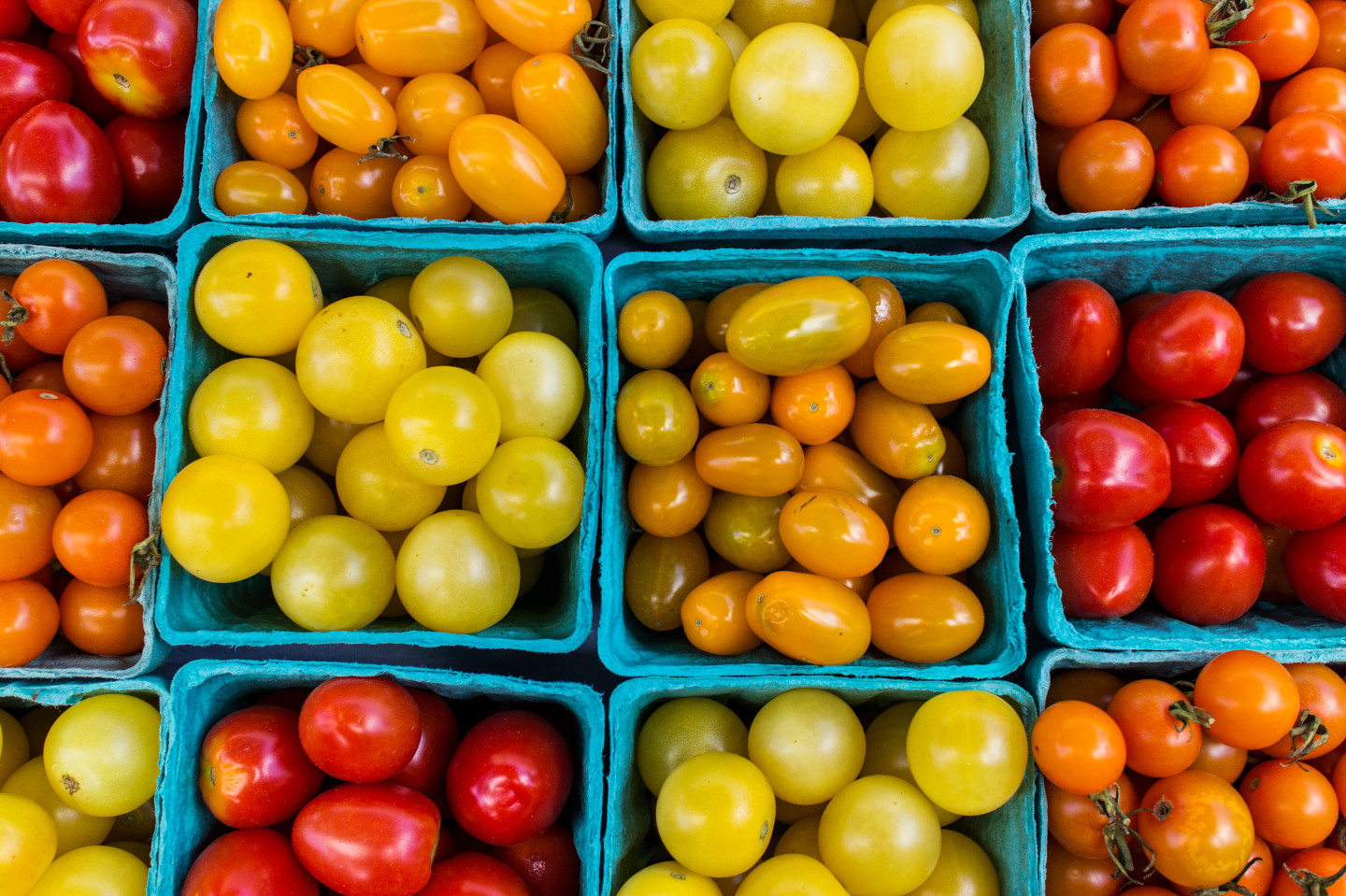
"caption": "Tomatoes at Union South Farmers Market in Madison Wisconsin.",
"description": "Tomatoes at Union South Farmers Market in Madison Wisconsin.",
"title": "Tomatoes at Union South Farmers Market in Madison Wisconsin.",
"credit": "\u003ca href=\"https://www.flickr.com/photos/patkuhl/9736091624/\">Patrick Kuhl/Flickr\u003c/a>",
"status": "inherit",
"isLoading": false,
"fetchFailed": false
},
"bayareabites_97501": {
"type": "attachments",
"id": "bayareabites_97501",
"meta": {
"index": "attachments_1716263798",
"site": "bayareabites",
"id": "97501",
"found": true
},
"parent": 97497,
"imgSizes": {
"thumbnail": {
"file": "https://ww2.kqed.org/app/uploads/sites/24/2015/06/Masumoto_peaches-680x510-400x300.jpg",
"width": 400,
"mimeType": "image/jpeg",
"height": 300
},
"post-thumbnail": {
"file": "https://ww2.kqed.org/app/uploads/sites/24/2015/06/Masumoto_peaches-680x510-672x372.jpg",
"width": 672,
"mimeType": "image/jpeg",
"height": 372
},
"kqedFullSize": {
"file": "https://ww2.kqed.org/app/uploads/sites/24/2015/06/Masumoto_peaches-680x510.jpg",
"width": 680,
"height": 510
},
"cat_post_thumb_sizecategory-posts-2": {
"file": "https://ww2.kqed.org/app/uploads/sites/24/2015/06/Masumoto_peaches-680x510-150x150.jpg",
"width": 150,
"mimeType": "image/jpeg",
"height": 150
},
"guest-author-96": {
"file": "https://ww2.kqed.org/app/uploads/sites/24/2015/06/Masumoto_peaches-680x510-96x96.jpg",
"width": 96,
"mimeType": "image/jpeg",
"height": 96
},
"guest-author-64": {
"file": "https://ww2.kqed.org/app/uploads/sites/24/2015/06/Masumoto_peaches-680x510-64x64.jpg",
"width": 64,
"mimeType": "image/jpeg",
"height": 64
},
"detail": {
"file": "https://ww2.kqed.org/app/uploads/sites/24/2015/06/Masumoto_peaches-680x510-75x75.jpg",
"width": 75,
"mimeType": "image/jpeg",
"height": 75
},
"guest-author-32": {
"file": "https://ww2.kqed.org/app/uploads/sites/24/2015/06/Masumoto_peaches-680x510-32x32.jpg",
"width": 32,
"mimeType": "image/jpeg",
"height": 32
},
"guest-author-128": {
"file": "https://ww2.kqed.org/app/uploads/sites/24/2015/06/Masumoto_peaches-680x510-128x128.jpg",
"width": 128,
"mimeType": "image/jpeg",
"height": 128
}
},
"publishDate": 1435288549,
"modified": 1435288638,
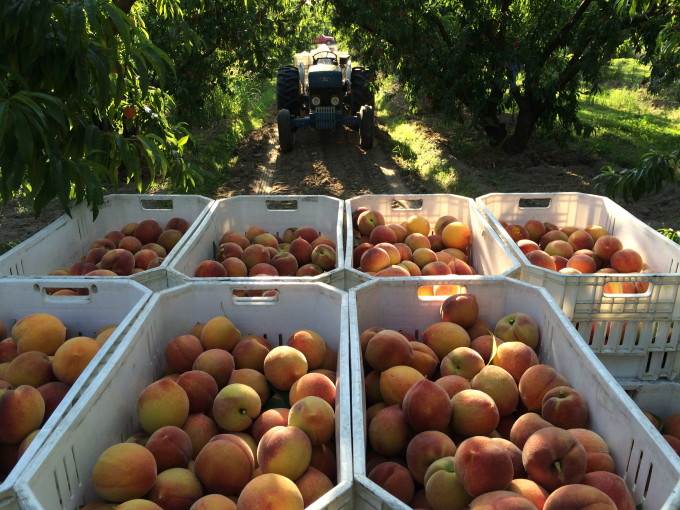
"caption": "Gold Dust Peaches",
"description": null,
"title": "Gold Dust Peaches",
"credit": "Masumoto Family Farm",
"status": "inherit",
"isLoading": false,
"fetchFailed": false
},
"bayareabites_96997": {
"type": "attachments",
"id": "bayareabites_96997",
"meta": {
"index": "attachments_1716263798",
"site": "bayareabites",
"id": "96997",
"found": true
},
"parent": 96996,
"imgSizes": {
"twentyfourteen-full-width": {
"file": "https://ww2.kqed.org/app/uploads/sites/24/2015/06/trash-man-2bc556b6649a696f7ba6ed8b2189f9a3b4d89f55-1038x576.jpg",
"width": 1038,
"mimeType": "image/jpeg",
"height": 576
},
"thumbnail": {
"file": "https://ww2.kqed.org/app/uploads/sites/24/2015/06/trash-man-2bc556b6649a696f7ba6ed8b2189f9a3b4d89f55-400x300.jpg",
"width": 400,
"mimeType": "image/jpeg",
"height": 300
},
"fd-sm": {
"file": "https://ww2.kqed.org/app/uploads/sites/24/2015/06/trash-man-2bc556b6649a696f7ba6ed8b2189f9a3b4d89f55-960x720.jpg",
"width": 960,
"mimeType": "image/jpeg",
"height": 720
},
"post-thumbnail": {
"file": "https://ww2.kqed.org/app/uploads/sites/24/2015/06/trash-man-2bc556b6649a696f7ba6ed8b2189f9a3b4d89f55-672x372.jpg",
"width": 672,
"mimeType": "image/jpeg",
"height": 372
},
"kqedFullSize": {
"file": "https://ww2.kqed.org/app/uploads/sites/24/2015/06/trash-man-2bc556b6649a696f7ba6ed8b2189f9a3b4d89f55-e1434483323327.jpg",
"width": 1920,
"height": 1440
},
"large": {
"file": "https://ww2.kqed.org/app/uploads/sites/24/2015/06/trash-man-2bc556b6649a696f7ba6ed8b2189f9a3b4d89f55-1440x1080.jpg",
"width": 1440,
"mimeType": "image/jpeg",
"height": 1080
},
"guest-author-96": {
"file": "https://ww2.kqed.org/app/uploads/sites/24/2015/06/trash-man-2bc556b6649a696f7ba6ed8b2189f9a3b4d89f55-96x96.jpg",
"width": 96,
"mimeType": "image/jpeg",
"height": 96
},
"medium": {
"file": "https://ww2.kqed.org/app/uploads/sites/24/2015/06/trash-man-2bc556b6649a696f7ba6ed8b2189f9a3b4d89f55-800x600.jpg",
"width": 800,
"mimeType": "image/jpeg",
"height": 600
},
"guest-author-64": {
"file": "https://ww2.kqed.org/app/uploads/sites/24/2015/06/trash-man-2bc556b6649a696f7ba6ed8b2189f9a3b4d89f55-64x64.jpg",
"width": 64,
"mimeType": "image/jpeg",
"height": 64
},
"guest-author-32": {
"file": "https://ww2.kqed.org/app/uploads/sites/24/2015/06/trash-man-2bc556b6649a696f7ba6ed8b2189f9a3b4d89f55-32x32.jpg",
"width": 32,
"mimeType": "image/jpeg",
"height": 32
},
"cat_post_thumb_sizecategory-posts-2": {
"file": "https://ww2.kqed.org/app/uploads/sites/24/2015/06/trash-man-2bc556b6649a696f7ba6ed8b2189f9a3b4d89f55-150x150.jpg",
"width": 150,
"mimeType": "image/jpeg",
"height": 150
},
"fd-med": {
"file": "https://ww2.kqed.org/app/uploads/sites/24/2015/06/trash-man-2bc556b6649a696f7ba6ed8b2189f9a3b4d89f55-1180x885.jpg",
"width": 1180,
"mimeType": "image/jpeg",
"height": 885
},
"detail": {
"file": "https://ww2.kqed.org/app/uploads/sites/24/2015/06/trash-man-2bc556b6649a696f7ba6ed8b2189f9a3b4d89f55-75x75.jpg",
"width": 75,
"mimeType": "image/jpeg",
"height": 75
},
"guest-author-128": {
"file": "https://ww2.kqed.org/app/uploads/sites/24/2015/06/trash-man-2bc556b6649a696f7ba6ed8b2189f9a3b4d89f55-128x128.jpg",
"width": 128,
"mimeType": "image/jpeg",
"height": 128
}
},
"publishDate": 1434482888,
"modified": 1434483317,
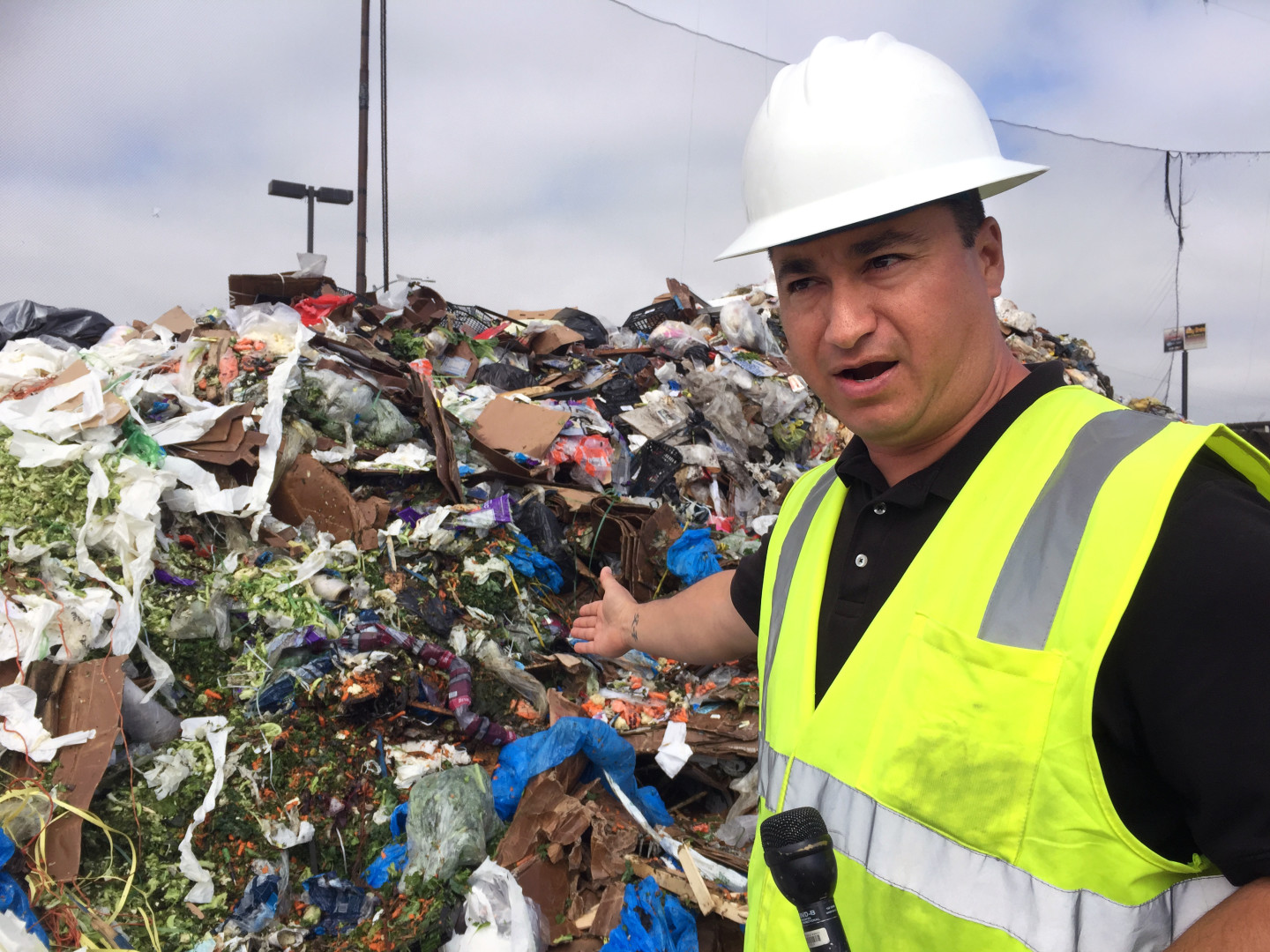
"caption": "Cesar Zuniga, operations manager at the Salinas Valley municipal dump in California, points to salad greens that still have two weeks before their sell-by date. \"Some loads ... look very fresh,\" Zuniga says. \"We question, wow, why is this being tossed?",
"description": "Cesar Zuniga, operations manager at the Salinas Valley municipal dump in California, points to salad greens that still have two weeks before their sell-by date. \"Some loads ... look very fresh,\" Zuniga says. \"We question, wow, why is this being tossed?",
"title": "Cesar Zuniga, operations manager at the Salinas Valley municipal dump in California, points to salad greens that still have two weeks before their sell-by date. \"Some loads ... look very fresh,\" Zuniga says. \"We question, wow, why is this being tossed?\"",
"credit": "Allison Aubrey/NPR ",
"status": "inherit",
"isLoading": false,
"fetchFailed": false
},
"bayareabites_96821": {
"type": "attachments",
"id": "bayareabites_96821",
"meta": {
"index": "attachments_1716263798",
"site": "bayareabites",
"id": "96821",
"found": true
},
"parent": 96820,
"imgSizes": {
"twentyfourteen-full-width": {
"file": "https://ww2.kqed.org/app/uploads/sites/24/2015/06/gettyimages-474278430_custom-4558478131ce0134337adb5e737fbe25ee002ee6-1038x576.jpg",
"width": 1038,
"mimeType": "image/jpeg",
"height": 576
},
"thumbnail": {
"file": "https://ww2.kqed.org/app/uploads/sites/24/2015/06/gettyimages-474278430_custom-4558478131ce0134337adb5e737fbe25ee002ee6-400x266.jpg",
"width": 400,
"mimeType": "image/jpeg",
"height": 266
},
"fd-sm": {
"file": "https://ww2.kqed.org/app/uploads/sites/24/2015/06/gettyimages-474278430_custom-4558478131ce0134337adb5e737fbe25ee002ee6-960x639.jpg",
"width": 960,
"mimeType": "image/jpeg",
"height": 639
},
"post-thumbnail": {
"file": "https://ww2.kqed.org/app/uploads/sites/24/2015/06/gettyimages-474278430_custom-4558478131ce0134337adb5e737fbe25ee002ee6-672x372.jpg",
"width": 672,
"mimeType": "image/jpeg",
"height": 372
},
"kqedFullSize": {
"file": "https://ww2.kqed.org/app/uploads/sites/24/2015/06/gettyimages-474278430_custom-4558478131ce0134337adb5e737fbe25ee002ee6-e1433968908394.jpg",
"width": 1920,
"height": 1279
},
"large": {
"file": "https://ww2.kqed.org/app/uploads/sites/24/2015/06/gettyimages-474278430_custom-4558478131ce0134337adb5e737fbe25ee002ee6-1440x959.jpg",
"width": 1440,
"mimeType": "image/jpeg",
"height": 959
},
"guest-author-96": {
"file": "https://ww2.kqed.org/app/uploads/sites/24/2015/06/gettyimages-474278430_custom-4558478131ce0134337adb5e737fbe25ee002ee6-96x96.jpg",
"width": 96,
"mimeType": "image/jpeg",
"height": 96
},
"medium": {
"file": "https://ww2.kqed.org/app/uploads/sites/24/2015/06/gettyimages-474278430_custom-4558478131ce0134337adb5e737fbe25ee002ee6-800x533.jpg",
"width": 800,
"mimeType": "image/jpeg",
"height": 533
},
"guest-author-64": {
"file": "https://ww2.kqed.org/app/uploads/sites/24/2015/06/gettyimages-474278430_custom-4558478131ce0134337adb5e737fbe25ee002ee6-64x64.jpg",
"width": 64,
"mimeType": "image/jpeg",
"height": 64
},
"guest-author-32": {
"file": "https://ww2.kqed.org/app/uploads/sites/24/2015/06/gettyimages-474278430_custom-4558478131ce0134337adb5e737fbe25ee002ee6-32x32.jpg",
"width": 32,
"mimeType": "image/jpeg",
"height": 32
},
"cat_post_thumb_sizecategory-posts-2": {
"file": "https://ww2.kqed.org/app/uploads/sites/24/2015/06/gettyimages-474278430_custom-4558478131ce0134337adb5e737fbe25ee002ee6-150x150.jpg",
"width": 150,
"mimeType": "image/jpeg",
"height": 150
},
"fd-med": {
"file": "https://ww2.kqed.org/app/uploads/sites/24/2015/06/gettyimages-474278430_custom-4558478131ce0134337adb5e737fbe25ee002ee6-1180x786.jpg",
"width": 1180,
"mimeType": "image/jpeg",
"height": 786
},
"detail": {
"file": "https://ww2.kqed.org/app/uploads/sites/24/2015/06/gettyimages-474278430_custom-4558478131ce0134337adb5e737fbe25ee002ee6-75x75.jpg",
"width": 75,
"mimeType": "image/jpeg",
"height": 75
},
"guest-author-128": {
"file": "https://ww2.kqed.org/app/uploads/sites/24/2015/06/gettyimages-474278430_custom-4558478131ce0134337adb5e737fbe25ee002ee6-128x128.jpg",
"width": 128,
"mimeType": "image/jpeg",
"height": 128
}
},
"publishDate": 1433967023,
"modified": 1433968928,
"caption": "Cartons of eggs are stacked on shelves at Laurenzo's Italian Center, May 21, 2015, in Miami.",
"description": "Cartons of eggs are stacked on shelves at Laurenzo's Italian Center, May 21, 2015, in Miami.",
"title": "Cartons of eggs are stacked on shelves at Laurenzo's Italian Center, May 21, 2015, in Miami.",
"credit": "Joe Raedle/Getty Images",
"status": "inherit",
"isLoading": false,
"fetchFailed": false
},
"bayareabites_96661": {
"type": "attachments",
"id": "bayareabites_96661",
"meta": {
"index": "attachments_1716263798",
"site": "bayareabites",
"id": "96661",
"found": true
},
"parent": 96659,
"imgSizes": {
"twentyfourteen-full-width": {
"file": "https://ww2.kqed.org/app/uploads/sites/24/2015/06/06004_daily-table01_custom-cbe346ac2af5b33d01de137666d2c14924bc228e-1038x576.jpg",
"width": 1038,
"mimeType": "image/jpeg",
"height": 576
},
"thumbnail": {
"file": "https://ww2.kqed.org/app/uploads/sites/24/2015/06/06004_daily-table01_custom-cbe346ac2af5b33d01de137666d2c14924bc228e-400x266.jpg",
"width": 400,
"mimeType": "image/jpeg",
"height": 266
},
"fd-sm": {
"file": "https://ww2.kqed.org/app/uploads/sites/24/2015/06/06004_daily-table01_custom-cbe346ac2af5b33d01de137666d2c14924bc228e-960x639.jpg",
"width": 960,
"mimeType": "image/jpeg",
"height": 639
},
"post-thumbnail": {
"file": "https://ww2.kqed.org/app/uploads/sites/24/2015/06/06004_daily-table01_custom-cbe346ac2af5b33d01de137666d2c14924bc228e-672x372.jpg",
"width": 672,
"mimeType": "image/jpeg",
"height": 372
},
"kqedFullSize": {
"file": "https://ww2.kqed.org/app/uploads/sites/24/2015/06/06004_daily-table01_custom-cbe346ac2af5b33d01de137666d2c14924bc228e.jpg",
"width": 1700,
"height": 1132
},
"large": {
"file": "https://ww2.kqed.org/app/uploads/sites/24/2015/06/06004_daily-table01_custom-cbe346ac2af5b33d01de137666d2c14924bc228e-1440x959.jpg",
"width": 1440,
"mimeType": "image/jpeg",
"height": 959
},
"guest-author-96": {
"file": "https://ww2.kqed.org/app/uploads/sites/24/2015/06/06004_daily-table01_custom-cbe346ac2af5b33d01de137666d2c14924bc228e-96x96.jpg",
"width": 96,
"mimeType": "image/jpeg",
"height": 96
},
"medium": {
"file": "https://ww2.kqed.org/app/uploads/sites/24/2015/06/06004_daily-table01_custom-cbe346ac2af5b33d01de137666d2c14924bc228e-800x533.jpg",
"width": 800,
"mimeType": "image/jpeg",
"height": 533
},
"guest-author-64": {
"file": "https://ww2.kqed.org/app/uploads/sites/24/2015/06/06004_daily-table01_custom-cbe346ac2af5b33d01de137666d2c14924bc228e-64x64.jpg",
"width": 64,
"mimeType": "image/jpeg",
"height": 64
},
"guest-author-32": {
"file": "https://ww2.kqed.org/app/uploads/sites/24/2015/06/06004_daily-table01_custom-cbe346ac2af5b33d01de137666d2c14924bc228e-32x32.jpg",
"width": 32,
"mimeType": "image/jpeg",
"height": 32
},
"cat_post_thumb_sizecategory-posts-2": {
"file": "https://ww2.kqed.org/app/uploads/sites/24/2015/06/06004_daily-table01_custom-cbe346ac2af5b33d01de137666d2c14924bc228e-150x150.jpg",
"width": 150,
"mimeType": "image/jpeg",
"height": 150
},
"fd-med": {
"file": "https://ww2.kqed.org/app/uploads/sites/24/2015/06/06004_daily-table01_custom-cbe346ac2af5b33d01de137666d2c14924bc228e-1180x786.jpg",
"width": 1180,
"mimeType": "image/jpeg",
"height": 786
},
"detail": {
"file": "https://ww2.kqed.org/app/uploads/sites/24/2015/06/06004_daily-table01_custom-cbe346ac2af5b33d01de137666d2c14924bc228e-75x75.jpg",
"width": 75,
"mimeType": "image/jpeg",
"height": 75
},
"guest-author-128": {
"file": "https://ww2.kqed.org/app/uploads/sites/24/2015/06/06004_daily-table01_custom-cbe346ac2af5b33d01de137666d2c14924bc228e-128x128.jpg",
"width": 128,
"mimeType": "image/jpeg",
"height": 128
}
},
"publishDate": 1433523128,
"modified": 1433526241,
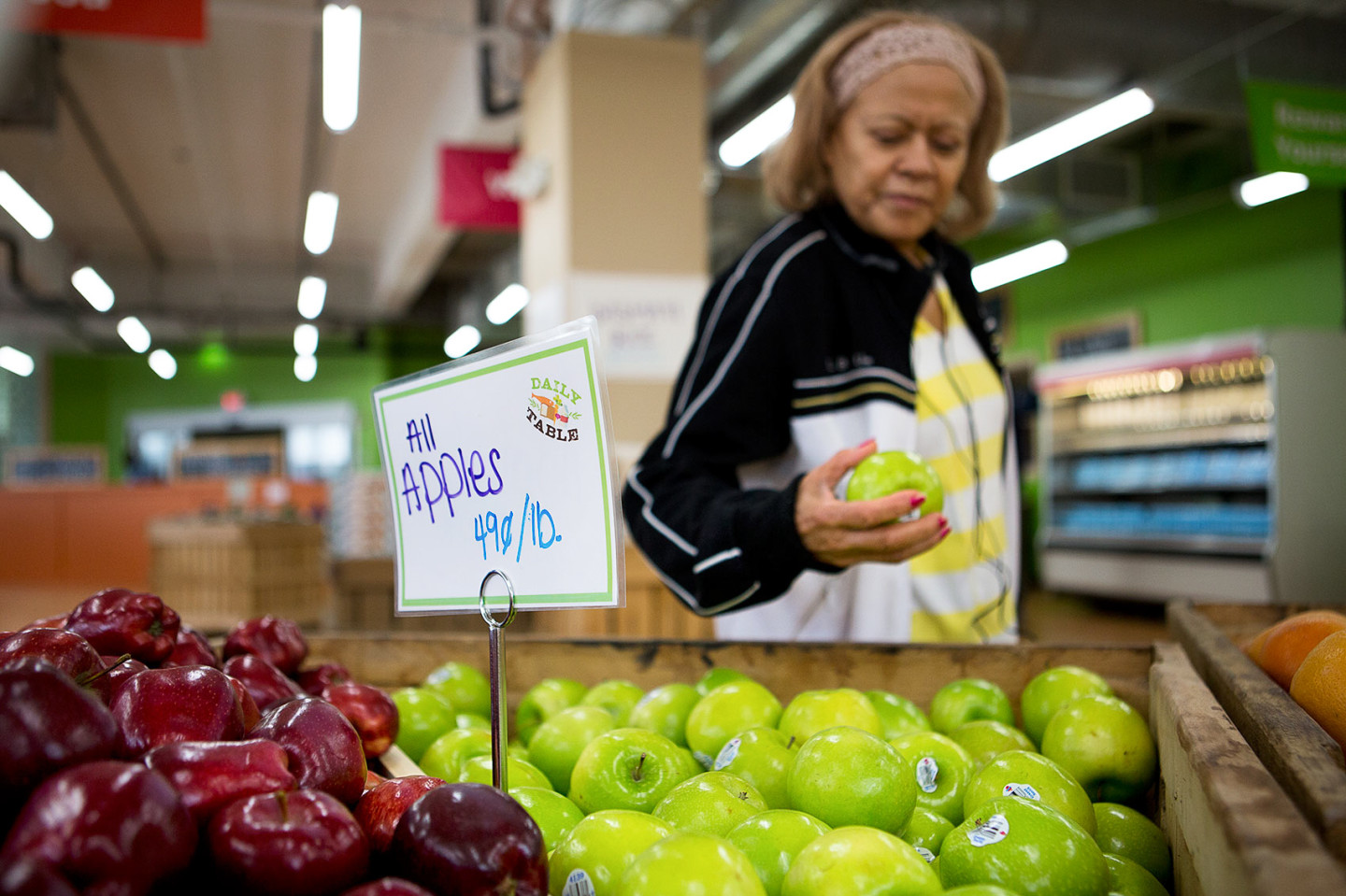
"caption": "Noemi Sosa shops at Daily Table, a nonprofit supermarket in Dorchester, Mass. ",
"description": "Noemi Sosa shops at Daily Table, a nonprofit supermarket in Dorchester, Mass",
"title": "Noemi Sosa shops at Daily Table, a nonprofit supermarket in Dorchester, Mass.",
"credit": "Jesse Costa/WBUR ",
"status": "inherit",
"isLoading": false,
"fetchFailed": false
},
"bayareabites_96507": {
"type": "attachments",
"id": "bayareabites_96507",
"meta": {
"index": "attachments_1716263798",
"site": "bayareabites",
"id": "96507",
"found": true
},
"parent": 96500,
"imgSizes": {
"twentyfourteen-full-width": {
"file": "https://ww2.kqed.org/app/uploads/sites/24/2015/05/just-eat-it-food-waste-dish-1038x576.jpg",
"width": 1038,
"mimeType": "image/jpeg",
"height": 576
},
"thumbnail": {
"file": "https://ww2.kqed.org/app/uploads/sites/24/2015/05/just-eat-it-food-waste-dish-400x254.jpg",
"width": 400,
"mimeType": "image/jpeg",
"height": 254
},
"fd-sm": {
"file": "https://ww2.kqed.org/app/uploads/sites/24/2015/05/just-eat-it-food-waste-dish-960x611.jpg",
"width": 960,
"mimeType": "image/jpeg",
"height": 611
},
"post-thumbnail": {
"file": "https://ww2.kqed.org/app/uploads/sites/24/2015/05/just-eat-it-food-waste-dish-672x372.jpg",
"width": 672,
"mimeType": "image/jpeg",
"height": 372
},
"kqedFullSize": {
"file": "https://ww2.kqed.org/app/uploads/sites/24/2015/05/just-eat-it-food-waste-dish.jpg",
"width": 1920,
"height": 1221
},
"large": {
"file": "https://ww2.kqed.org/app/uploads/sites/24/2015/05/just-eat-it-food-waste-dish-1440x916.jpg",
"width": 1440,
"mimeType": "image/jpeg",
"height": 916
},
"guest-author-96": {
"file": "https://ww2.kqed.org/app/uploads/sites/24/2015/05/just-eat-it-food-waste-dish-96x96.jpg",
"width": 96,
"mimeType": "image/jpeg",
"height": 96
},
"medium": {
"file": "https://ww2.kqed.org/app/uploads/sites/24/2015/05/just-eat-it-food-waste-dish-800x509.jpg",
"width": 800,
"mimeType": "image/jpeg",
"height": 509
},
"guest-author-64": {
"file": "https://ww2.kqed.org/app/uploads/sites/24/2015/05/just-eat-it-food-waste-dish-64x64.jpg",
"width": 64,
"mimeType": "image/jpeg",
"height": 64
},
"guest-author-32": {
"file": "https://ww2.kqed.org/app/uploads/sites/24/2015/05/just-eat-it-food-waste-dish-32x32.jpg",
"width": 32,
"mimeType": "image/jpeg",
"height": 32
},
"cat_post_thumb_sizecategory-posts-2": {
"file": "https://ww2.kqed.org/app/uploads/sites/24/2015/05/just-eat-it-food-waste-dish-150x150.jpg",
"width": 150,
"mimeType": "image/jpeg",
"height": 150
},
"fd-med": {
"file": "https://ww2.kqed.org/app/uploads/sites/24/2015/05/just-eat-it-food-waste-dish-1180x750.jpg",
"width": 1180,
"mimeType": "image/jpeg",
"height": 750
},
"detail": {
"file": "https://ww2.kqed.org/app/uploads/sites/24/2015/05/just-eat-it-food-waste-dish-75x75.jpg",
"width": 75,
"mimeType": "image/jpeg",
"height": 75
},
"guest-author-128": {
"file": "https://ww2.kqed.org/app/uploads/sites/24/2015/05/just-eat-it-food-waste-dish-128x128.jpg",
"width": 128,
"mimeType": "image/jpeg",
"height": 128
}
},
"publishDate": 1433010246,
"modified": 1433010325,
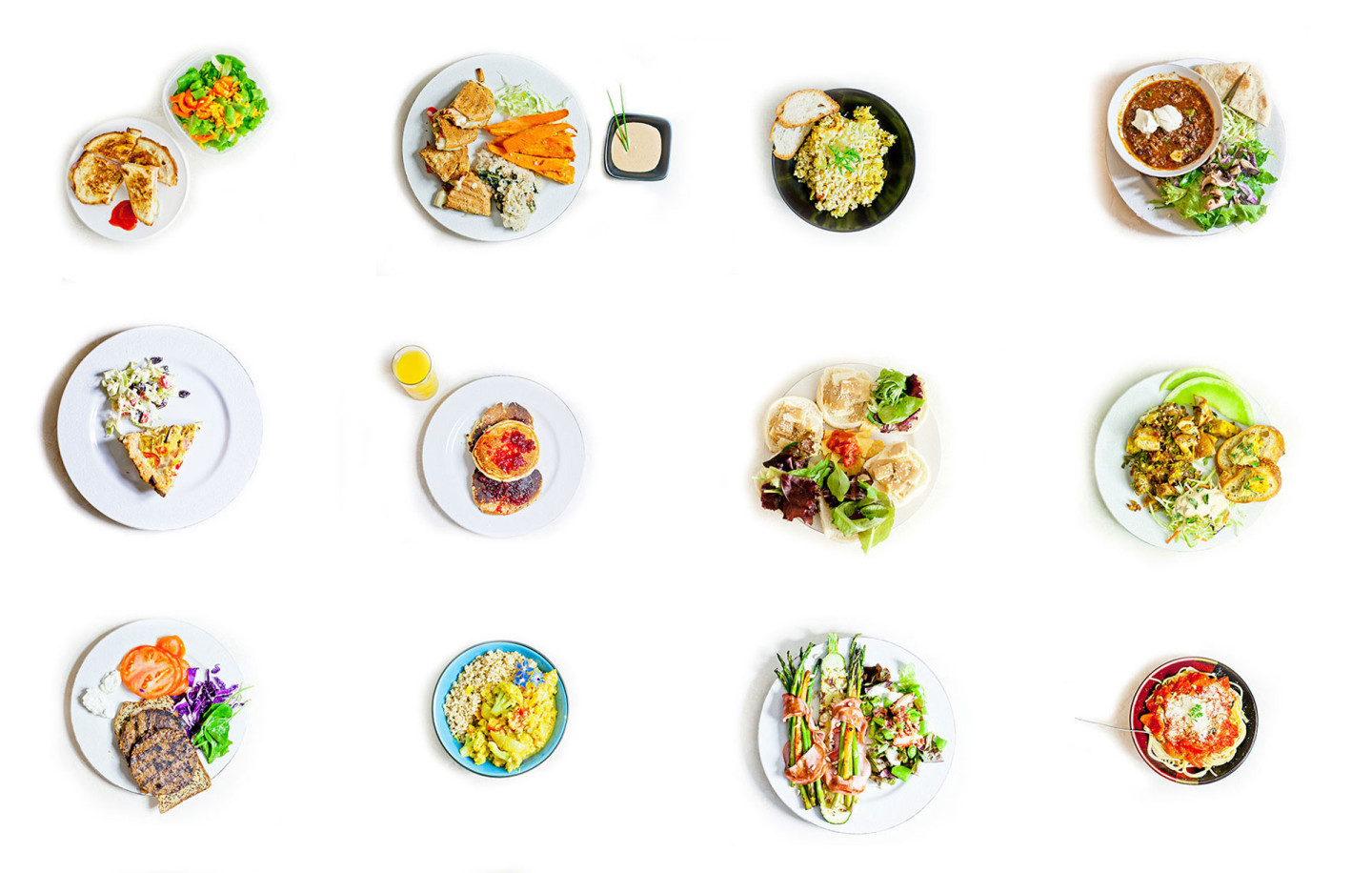
"caption": "Filmmakers Grant Baldwin and Jenny Rustemeyer made these meals from food that would otherwise have gone uneaten.",
"description": null,
"title": "just-eat-it-food-waste-dish",
"credit": "Peg Leg Films",
"status": "inherit",
"isLoading": false,
"fetchFailed": false
},
"bayareabites_96478": {
"type": "attachments",
"id": "bayareabites_96478",
"meta": {
"index": "attachments_1716263798",
"site": "bayareabites",
"id": "96478",
"found": true
},
"parent": 96474,
"imgSizes": {
"thumbnail": {
"file": "https://ww2.kqed.org/app/uploads/sites/24/2015/05/Amys_too-400x208.jpg",
"width": 400,
"mimeType": "image/jpeg",
"height": 208
},
"fd-sm": {
"file": "https://ww2.kqed.org/app/uploads/sites/24/2015/05/Amys_too-960x499.jpg",
"width": 960,
"mimeType": "image/jpeg",
"height": 499
},
"post-thumbnail": {
"file": "https://ww2.kqed.org/app/uploads/sites/24/2015/05/Amys_too-672x372.jpg",
"width": 672,
"mimeType": "image/jpeg",
"height": 372
},
"kqedFullSize": {
"file": "https://ww2.kqed.org/app/uploads/sites/24/2015/05/Amys_too.jpg",
"width": 1018,
"height": 529
},
"cat_post_thumb_sizecategory-posts-2": {
"file": "https://ww2.kqed.org/app/uploads/sites/24/2015/05/Amys_too-150x150.jpg",
"width": 150,
"mimeType": "image/jpeg",
"height": 150
},
"guest-author-96": {
"file": "https://ww2.kqed.org/app/uploads/sites/24/2015/05/Amys_too-96x96.jpg",
"width": 96,
"mimeType": "image/jpeg",
"height": 96
},
"medium": {
"file": "https://ww2.kqed.org/app/uploads/sites/24/2015/05/Amys_too-800x416.jpg",
"width": 800,
"mimeType": "image/jpeg",
"height": 416
},
"guest-author-64": {
"file": "https://ww2.kqed.org/app/uploads/sites/24/2015/05/Amys_too-64x64.jpg",
"width": 64,
"mimeType": "image/jpeg",
"height": 64
},
"detail": {
"file": "https://ww2.kqed.org/app/uploads/sites/24/2015/05/Amys_too-75x75.jpg",
"width": 75,
"mimeType": "image/jpeg",
"height": 75
},
"guest-author-32": {
"file": "https://ww2.kqed.org/app/uploads/sites/24/2015/05/Amys_too-32x32.jpg",
"width": 32,
"mimeType": "image/jpeg",
"height": 32
},
"guest-author-128": {
"file": "https://ww2.kqed.org/app/uploads/sites/24/2015/05/Amys_too-128x128.jpg",
"width": 128,
"mimeType": "image/jpeg",
"height": 128
}
},
"publishDate": 1432839421,
"modified": 1432839421,
"caption": null,
"description": null,
"title": "Amys_too",
"credit": null,
"status": "inherit",
"isLoading": false,
"fetchFailed": false
},
"bayareabites_96422": {
"type": "attachments",
"id": "bayareabites_96422",
"meta": {
"index": "attachments_1716263798",
"site": "bayareabites",
"id": "96422",
"found": true
},
"parent": 96409,
"imgSizes": {
"twentyfourteen-full-width": {
"file": "https://ww2.kqed.org/app/uploads/sites/24/2015/05/markbittman-1038x576.jpg",
"width": 1038,
"mimeType": "image/jpeg",
"height": 576
},
"thumbnail": {
"file": "https://ww2.kqed.org/app/uploads/sites/24/2015/05/markbittman-400x278.jpg",
"width": 400,
"mimeType": "image/jpeg",
"height": 278
},
"fd-sm": {
"file": "https://ww2.kqed.org/app/uploads/sites/24/2015/05/markbittman-960x667.jpg",
"width": 960,
"mimeType": "image/jpeg",
"height": 667
},
"post-thumbnail": {
"file": "https://ww2.kqed.org/app/uploads/sites/24/2015/05/markbittman-672x372.jpg",
"width": 672,
"mimeType": "image/jpeg",
"height": 372
},
"kqedFullSize": {
"file": "https://ww2.kqed.org/app/uploads/sites/24/2015/05/markbittman.jpg",
"width": 1920,
"height": 1334
},
"large": {
"file": "https://ww2.kqed.org/app/uploads/sites/24/2015/05/markbittman-1440x1001.jpg",
"width": 1440,
"mimeType": "image/jpeg",
"height": 1001
},
"guest-author-96": {
"file": "https://ww2.kqed.org/app/uploads/sites/24/2015/05/markbittman-96x96.jpg",
"width": 96,
"mimeType": "image/jpeg",
"height": 96
},
"medium": {
"file": "https://ww2.kqed.org/app/uploads/sites/24/2015/05/markbittman-800x556.jpg",
"width": 800,
"mimeType": "image/jpeg",
"height": 556
},
"guest-author-64": {
"file": "https://ww2.kqed.org/app/uploads/sites/24/2015/05/markbittman-64x64.jpg",
"width": 64,
"mimeType": "image/jpeg",
"height": 64
},
"guest-author-32": {
"file": "https://ww2.kqed.org/app/uploads/sites/24/2015/05/markbittman-32x32.jpg",
"width": 32,
"mimeType": "image/jpeg",
"height": 32
},
"cat_post_thumb_sizecategory-posts-2": {
"file": "https://ww2.kqed.org/app/uploads/sites/24/2015/05/markbittman-150x150.jpg",
"width": 150,
"mimeType": "image/jpeg",
"height": 150
},
"fd-med": {
"file": "https://ww2.kqed.org/app/uploads/sites/24/2015/05/markbittman-1180x820.jpg",
"width": 1180,
"mimeType": "image/jpeg",
"height": 820
},
"detail": {
"file": "https://ww2.kqed.org/app/uploads/sites/24/2015/05/markbittman-75x75.jpg",
"width": 75,
"mimeType": "image/jpeg",
"height": 75
},
"guest-author-128": {
"file": "https://ww2.kqed.org/app/uploads/sites/24/2015/05/markbittman-128x128.jpg",
"width": 128,
"mimeType": "image/jpeg",
"height": 128
}
},
"publishDate": 1432739346,
"modified": 1432739373,
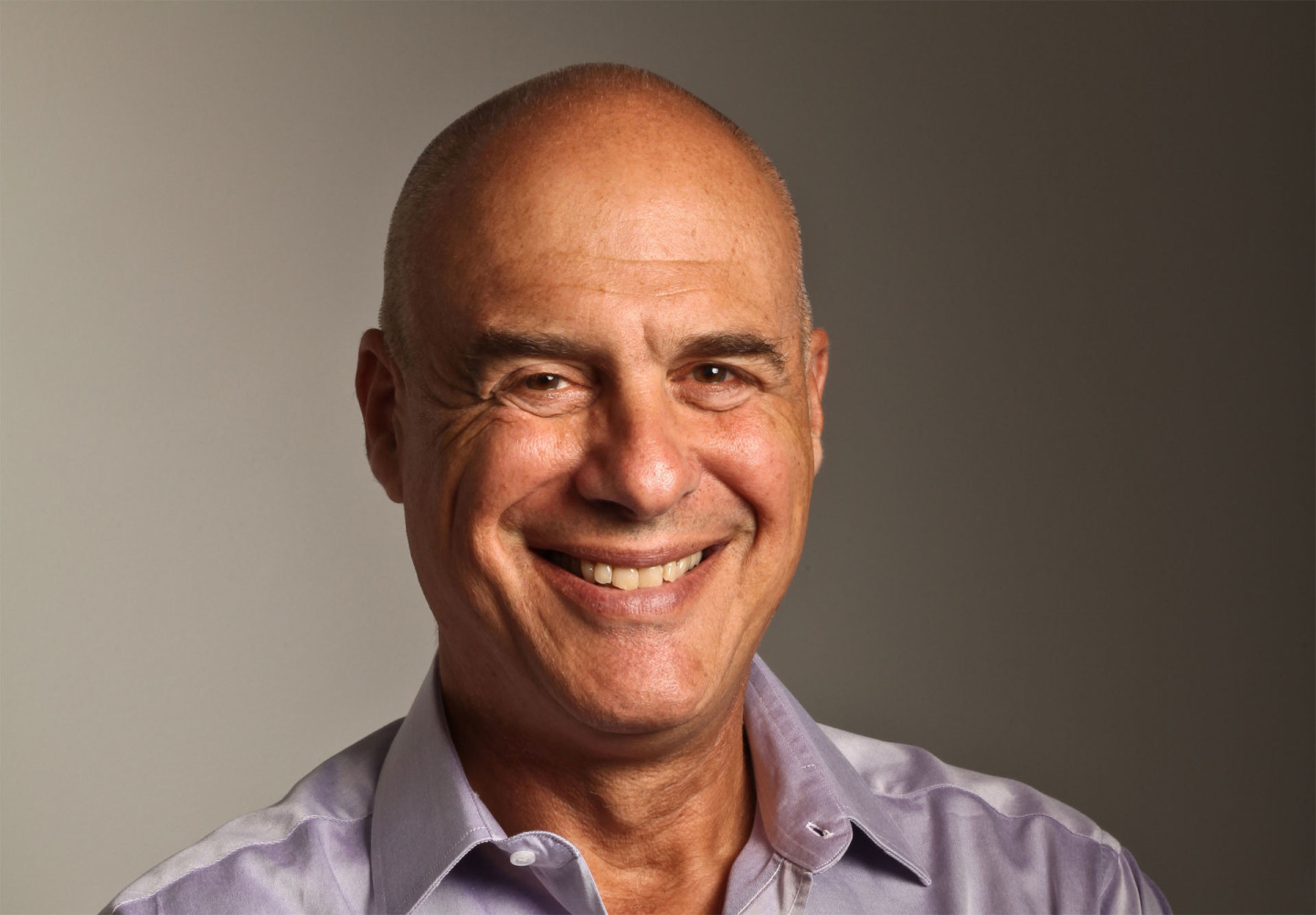
"caption": "Mark Bittman",
"description": null,
"title": "markbittman",
"credit": "Fred Conrad",
"status": "inherit",
"isLoading": false,
"fetchFailed": false
},
"bayareabites_96352": {
"type": "attachments",
"id": "bayareabites_96352",
"meta": {
"index": "attachments_1716263798",
"site": "bayareabites",
"id": "96352",
"found": true
},
"parent": 96350,
"imgSizes": {
"thumbnail": {
"file": "https://ww2.kqed.org/app/uploads/sites/24/2015/05/IMG_0707-720x540-400x300.jpg",
"width": 400,
"mimeType": "image/jpeg",
"height": 300
},
"post-thumbnail": {
"file": "https://ww2.kqed.org/app/uploads/sites/24/2015/05/IMG_0707-720x540-672x372.jpg",
"width": 672,
"mimeType": "image/jpeg",
"height": 372
},
"kqedFullSize": {
"file": "https://ww2.kqed.org/app/uploads/sites/24/2015/05/IMG_0707-720x540.jpg",
"width": 720,
"height": 540
},
"cat_post_thumb_sizecategory-posts-2": {
"file": "https://ww2.kqed.org/app/uploads/sites/24/2015/05/IMG_0707-720x540-150x150.jpg",
"width": 150,
"mimeType": "image/jpeg",
"height": 150
},
"guest-author-96": {
"file": "https://ww2.kqed.org/app/uploads/sites/24/2015/05/IMG_0707-720x540-96x96.jpg",
"width": 96,
"mimeType": "image/jpeg",
"height": 96
},
"guest-author-64": {
"file": "https://ww2.kqed.org/app/uploads/sites/24/2015/05/IMG_0707-720x540-64x64.jpg",
"width": 64,
"mimeType": "image/jpeg",
"height": 64
},
"detail": {
"file": "https://ww2.kqed.org/app/uploads/sites/24/2015/05/IMG_0707-720x540-75x75.jpg",
"width": 75,
"mimeType": "image/jpeg",
"height": 75
},
"guest-author-32": {
"file": "https://ww2.kqed.org/app/uploads/sites/24/2015/05/IMG_0707-720x540-32x32.jpg",
"width": 32,
"mimeType": "image/jpeg",
"height": 32
},
"guest-author-128": {
"file": "https://ww2.kqed.org/app/uploads/sites/24/2015/05/IMG_0707-720x540-128x128.jpg",
"width": 128,
"mimeType": "image/jpeg",
"height": 128
}
},
"publishDate": 1432321672,
"modified": 1432336729,
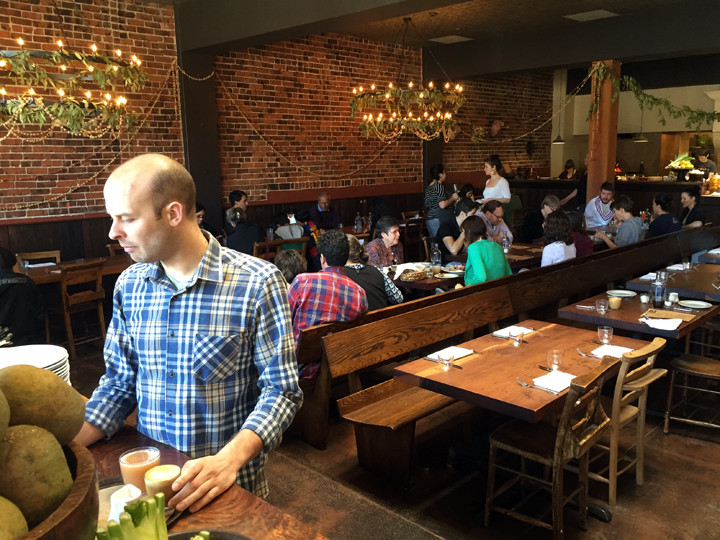
"caption": "Camino is one of several East Bay restaurants that has re-formatted its entire wage structure and eliminated tipping in light of the new Oakland minimum wage.",
"description": null,
"title": "IMG_0707-720x540",
"credit": "Emilie Raguso",
"status": "inherit",
"isLoading": false,
"fetchFailed": false
},
"bayareabites_96305": {
"type": "attachments",
"id": "bayareabites_96305",
"meta": {
"index": "attachments_1716263798",
"site": "bayareabites",
"id": "96305",
"found": true
},
"parent": 96301,
"imgSizes": {
"thumbnail": {
"file": "https://ww2.kqed.org/app/uploads/sites/24/2015/05/shutterstock_114845197-e1431966565694-680x315-400x185.jpg",
"width": 400,
"mimeType": "image/jpeg",
"height": 185
},
"post-thumbnail": {
"file": "https://ww2.kqed.org/app/uploads/sites/24/2015/05/shutterstock_114845197-e1431966565694-680x315-672x315.jpg",
"width": 672,
"mimeType": "image/jpeg",
"height": 315
},
"kqedFullSize": {
"file": "https://ww2.kqed.org/app/uploads/sites/24/2015/05/shutterstock_114845197-e1431966565694-680x315.jpg",
"width": 680,
"height": 315
},
"cat_post_thumb_sizecategory-posts-2": {
"file": "https://ww2.kqed.org/app/uploads/sites/24/2015/05/shutterstock_114845197-e1431966565694-680x315-150x150.jpg",
"width": 150,
"mimeType": "image/jpeg",
"height": 150
},
"guest-author-96": {
"file": "https://ww2.kqed.org/app/uploads/sites/24/2015/05/shutterstock_114845197-e1431966565694-680x315-96x96.jpg",
"width": 96,
"mimeType": "image/jpeg",
"height": 96
},
"guest-author-64": {
"file": "https://ww2.kqed.org/app/uploads/sites/24/2015/05/shutterstock_114845197-e1431966565694-680x315-64x64.jpg",
"width": 64,
"mimeType": "image/jpeg",
"height": 64
},
"detail": {
"file": "https://ww2.kqed.org/app/uploads/sites/24/2015/05/shutterstock_114845197-e1431966565694-680x315-75x75.jpg",
"width": 75,
"mimeType": "image/jpeg",
"height": 75
},
"guest-author-32": {
"file": "https://ww2.kqed.org/app/uploads/sites/24/2015/05/shutterstock_114845197-e1431966565694-680x315-32x32.jpg",
"width": 32,
"mimeType": "image/jpeg",
"height": 32
},
"guest-author-128": {
"file": "https://ww2.kqed.org/app/uploads/sites/24/2015/05/shutterstock_114845197-e1431966565694-680x315-128x128.jpg",
"width": 128,
"mimeType": "image/jpeg",
"height": 128
}
},
"publishDate": 1432144565,
"modified": 1432144590,
"caption": "In 2012, the U.S. imported about 2 billion pounds of seafood from TPP countries. ",
"description": null,
"title": "shutterstock_114845197-e1431966565694-680x315",
"credit": "Aleph Studio",
"status": "inherit",
"isLoading": false,
"fetchFailed": false
},
"bayareabites_96235": {
"type": "attachments",
"id": "bayareabites_96235",
"meta": {
"index": "attachments_1716263798",
"site": "bayareabites",
"id": "96235",
"found": true
},
"parent": 96228,
"imgSizes": {
"twentyfourteen-full-width": {
"file": "https://ww2.kqed.org/app/uploads/sites/24/2015/05/edited2-1038x576.jpg",
"width": 1038,
"mimeType": "image/jpeg",
"height": 576
},
"thumbnail": {
"file": "https://ww2.kqed.org/app/uploads/sites/24/2015/05/edited2-400x266.jpg",
"width": 400,
"mimeType": "image/jpeg",
"height": 266
},
"fd-sm": {
"file": "https://ww2.kqed.org/app/uploads/sites/24/2015/05/edited2-960x640.jpg",
"width": 960,
"mimeType": "image/jpeg",
"height": 640
},
"post-thumbnail": {
"file": "https://ww2.kqed.org/app/uploads/sites/24/2015/05/edited2-672x372.jpg",
"width": 672,
"mimeType": "image/jpeg",
"height": 372
},
"kqedFullSize": {
"file": "https://ww2.kqed.org/app/uploads/sites/24/2015/05/edited2.jpg",
"width": 1920,
"height": 1279
},
"large": {
"file": "https://ww2.kqed.org/app/uploads/sites/24/2015/05/edited2-1440x959.jpg",
"width": 1440,
"mimeType": "image/jpeg",
"height": 959
},
"guest-author-96": {
"file": "https://ww2.kqed.org/app/uploads/sites/24/2015/05/edited2-96x96.jpg",
"width": 96,
"mimeType": "image/jpeg",
"height": 96
},
"medium": {
"file": "https://ww2.kqed.org/app/uploads/sites/24/2015/05/edited2-800x533.jpg",
"width": 800,
"mimeType": "image/jpeg",
"height": 533
},
"guest-author-64": {
"file": "https://ww2.kqed.org/app/uploads/sites/24/2015/05/edited2-64x64.jpg",
"width": 64,
"mimeType": "image/jpeg",
"height": 64
},
"guest-author-32": {
"file": "https://ww2.kqed.org/app/uploads/sites/24/2015/05/edited2-32x32.jpg",
"width": 32,
"mimeType": "image/jpeg",
"height": 32
},
"cat_post_thumb_sizecategory-posts-2": {
"file": "https://ww2.kqed.org/app/uploads/sites/24/2015/05/edited2-150x150.jpg",
"width": 150,
"mimeType": "image/jpeg",
"height": 150
},
"fd-med": {
"file": "https://ww2.kqed.org/app/uploads/sites/24/2015/05/edited2-1180x786.jpg",
"width": 1180,
"mimeType": "image/jpeg",
"height": 786
},
"detail": {
"file": "https://ww2.kqed.org/app/uploads/sites/24/2015/05/edited2-75x75.jpg",
"width": 75,
"mimeType": "image/jpeg",
"height": 75
},
"guest-author-128": {
"file": "https://ww2.kqed.org/app/uploads/sites/24/2015/05/edited2-128x128.jpg",
"width": 128,
"mimeType": "image/jpeg",
"height": 128
}
},
"publishDate": 1431745629,
"modified": 1431745730,
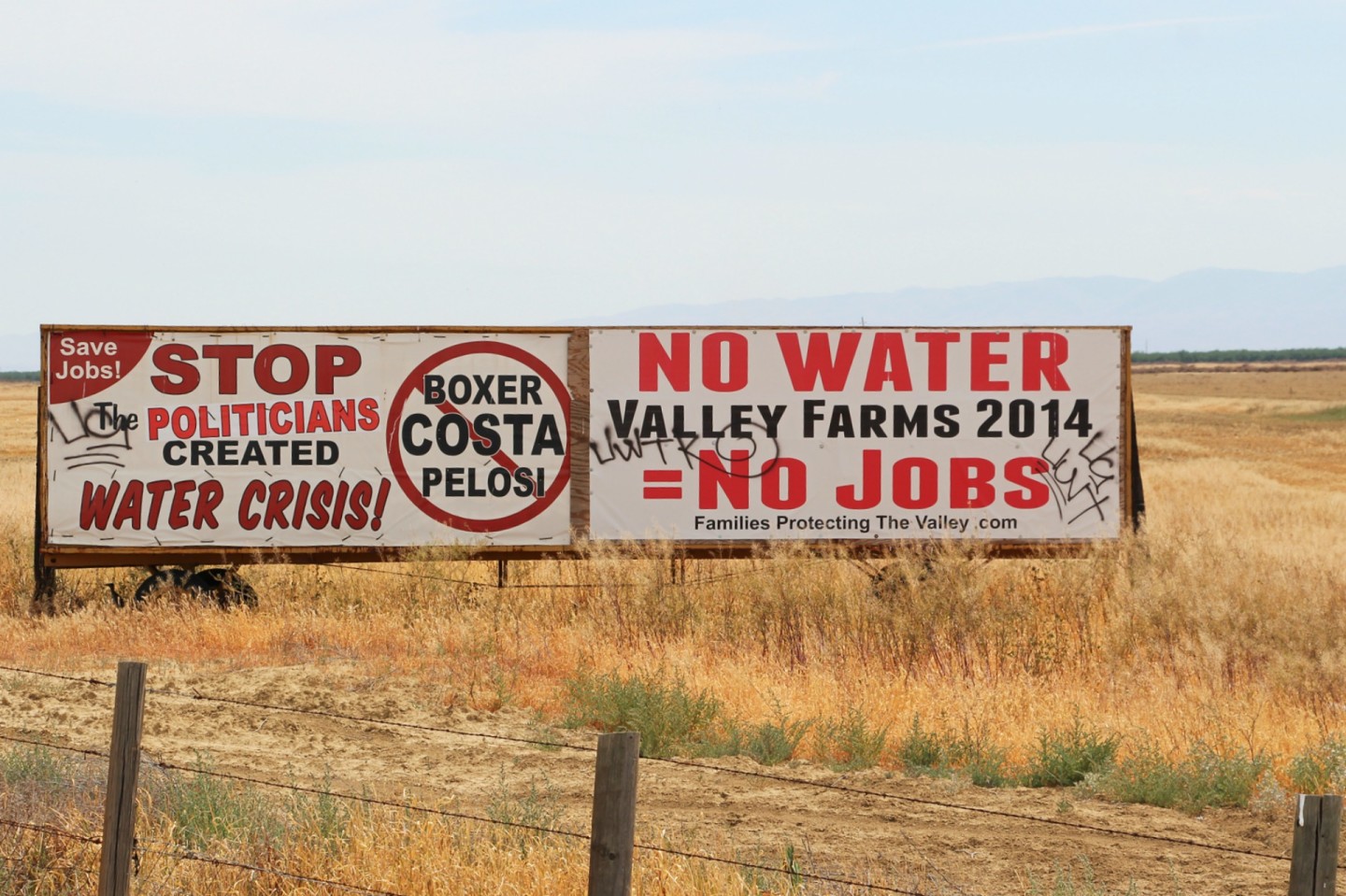
"caption": "One of the signs as seen from the I-5. Photo: Wendy Goodfriend ",
"description": null,
"title": "edited2",
"credit": null,
"status": "inherit",
"isLoading": false,
"fetchFailed": false
},
"bayareabites_96057": {
"type": "attachments",
"id": "bayareabites_96057",
"meta": {
"index": "attachments_1716263798",
"site": "bayareabites",
"id": "96057",
"found": true
},
"parent": 96056,
"imgSizes": {
"twentyfourteen-full-width": {
"file": "https://ww2.kqed.org/app/uploads/sites/24/2015/05/177194586_custom-6a8310e21c561ea2c8eaf01935a210350146df16-1038x576.jpg",
"width": 1038,
"mimeType": "image/jpeg",
"height": 576
},
"thumbnail": {
"file": "https://ww2.kqed.org/app/uploads/sites/24/2015/05/177194586_custom-6a8310e21c561ea2c8eaf01935a210350146df16-400x255.jpg",
"width": 400,
"mimeType": "image/jpeg",
"height": 255
},
"fd-sm": {
"file": "https://ww2.kqed.org/app/uploads/sites/24/2015/05/177194586_custom-6a8310e21c561ea2c8eaf01935a210350146df16-960x612.jpg",
"width": 960,
"mimeType": "image/jpeg",
"height": 612
},
"post-thumbnail": {
"file": "https://ww2.kqed.org/app/uploads/sites/24/2015/05/177194586_custom-6a8310e21c561ea2c8eaf01935a210350146df16-672x372.jpg",
"width": 672,
"mimeType": "image/jpeg",
"height": 372
},
"kqedFullSize": {
"file": "https://ww2.kqed.org/app/uploads/sites/24/2015/05/177194586_custom-6a8310e21c561ea2c8eaf01935a210350146df16-e1431454604832.jpg",
"width": 1920,
"height": 1224
},
"large": {
"file": "https://ww2.kqed.org/app/uploads/sites/24/2015/05/177194586_custom-6a8310e21c561ea2c8eaf01935a210350146df16-1440x918.jpg",
"width": 1440,
"mimeType": "image/jpeg",
"height": 918
},
"guest-author-96": {
"file": "https://ww2.kqed.org/app/uploads/sites/24/2015/05/177194586_custom-6a8310e21c561ea2c8eaf01935a210350146df16-96x96.jpg",
"width": 96,
"mimeType": "image/jpeg",
"height": 96
},
"medium": {
"file": "https://ww2.kqed.org/app/uploads/sites/24/2015/05/177194586_custom-6a8310e21c561ea2c8eaf01935a210350146df16-800x510.jpg",
"width": 800,
"mimeType": "image/jpeg",
"height": 510
},
"guest-author-64": {
"file": "https://ww2.kqed.org/app/uploads/sites/24/2015/05/177194586_custom-6a8310e21c561ea2c8eaf01935a210350146df16-64x64.jpg",
"width": 64,
"mimeType": "image/jpeg",
"height": 64
},
"guest-author-32": {
"file": "https://ww2.kqed.org/app/uploads/sites/24/2015/05/177194586_custom-6a8310e21c561ea2c8eaf01935a210350146df16-32x32.jpg",
"width": 32,
"mimeType": "image/jpeg",
"height": 32
},
"cat_post_thumb_sizecategory-posts-2": {
"file": "https://ww2.kqed.org/app/uploads/sites/24/2015/05/177194586_custom-6a8310e21c561ea2c8eaf01935a210350146df16-150x150.jpg",
"width": 150,
"mimeType": "image/jpeg",
"height": 150
},
"fd-med": {
"file": "https://ww2.kqed.org/app/uploads/sites/24/2015/05/177194586_custom-6a8310e21c561ea2c8eaf01935a210350146df16-1180x752.jpg",
"width": 1180,
"mimeType": "image/jpeg",
"height": 752
},
"detail": {
"file": "https://ww2.kqed.org/app/uploads/sites/24/2015/05/177194586_custom-6a8310e21c561ea2c8eaf01935a210350146df16-75x75.jpg",
"width": 75,
"mimeType": "image/jpeg",
"height": 75
},
"guest-author-128": {
"file": "https://ww2.kqed.org/app/uploads/sites/24/2015/05/177194586_custom-6a8310e21c561ea2c8eaf01935a210350146df16-128x128.jpg",
"width": 128,
"mimeType": "image/jpeg",
"height": 128
}
},
"publishDate": 1431454455,
"modified": 1431454598,
"caption": "Coca-Cola cans on a production line at a bottling plant near New Delhi in 2013. The company decided in April 2015 not to build an $81 million bottling plant in southern India because local farmers said it might exhaust groundwater supplies.\n",
"description": "Coca-Cola cans on a production line at a bottling plant near New Delhi in 2013. The company decided in April 2015 not to build an $81 million bottling plant in southern India because local farmers said it might exhaust groundwater supplies.\n",
"title": "Coca-Cola cans on a production line at a bottling plant near New Delhi in 2013. The company decided in April 2015 not to build an $81 million bottling plant in southern India because local farmers said it might exhaust groundwater supplies.",
"credit": "Prakash Singh/AFP/Getty Images",
"status": "inherit",
"isLoading": false,
"fetchFailed": false
}
},
"audioPlayerReducer": {
"postId": "stream_live",
"isPaused": true,
"isPlaying": false,
"pfsActive": false,
"pledgeModalIsOpen": true,
"playerDrawerIsOpen": false,
"liveAudioPlayStartedAt": 0,
"liveAudioPlayContext": ""
},
"authorsReducer": {
"byline_bayareabites_97540": {
"type": "authors",
"id": "byline_bayareabites_97540",
"meta": {
"override": true
},
"slug": "byline_bayareabites_97540",
"name": "Allison Aubrey, \u003ca href=\"http://ww2.kqed.org/bayareabites/author/nprfood/\">NPR Food\u003c/a>",
"isLoading": false
},
"byline_bayareabites_97497": {
"type": "authors",
"id": "byline_bayareabites_97497",
"meta": {
"override": true
},
"slug": "byline_bayareabites_97497",
"name": "\u003ca href=\"http://civileats.com/author/sholt/\">Steve Holt\u003c/a>, \u003ca href=\"http://ww2.kqed.org/bayareabites/author/civileat/\">Civil Eats\u003c/a>",
"isLoading": false
},
"byline_bayareabites_96996": {
"type": "authors",
"id": "byline_bayareabites_96996",
"meta": {
"override": true
},
"slug": "byline_bayareabites_96996",
"name": "Allison Aubrey, \u003ca href=\"http://ww2.kqed.org/bayareabites/author/nprfood/\">NPR Food\u003c/a>",
"isLoading": false
},
"byline_bayareabites_96820": {
"type": "authors",
"id": "byline_bayareabites_96820",
"meta": {
"override": true
},
"slug": "byline_bayareabites_96820",
"name": "Peggy Lowe, Harvest Public Media at \u003ca href=\"http://ww2.kqed.org/bayareabites/author/nprfood/\">NPR Food\u003c/a>",
"isLoading": false
},
"byline_bayareabites_96659": {
"type": "authors",
"id": "byline_bayareabites_96659",
"meta": {
"override": true
},
"slug": "byline_bayareabites_96659",
"name": "Curt Nickisch, WBUR at \u003ca href=\"http://ww2.kqed.org/bayareabites/author/nprfood/\">NPR Food\u003c/a>",
"isLoading": false
},
"byline_bayareabites_96474": {
"type": "authors",
"id": "byline_bayareabites_96474",
"meta": {
"override": true
},
"slug": "byline_bayareabites_96474",
"name": "Leilani Clark, \u003ca href=\"http://ww2.kqed.org/bayareabites/author/civileat/\">Civil Eats\u003c/a>",
"isLoading": false
},
"byline_bayareabites_96350": {
"type": "authors",
"id": "byline_bayareabites_96350",
"meta": {
"override": true
},
"slug": "byline_bayareabites_96350",
"name": "Kate Williams, \u003ca href=\"http://ww2.kqed.org/bayareabites/author/berkeleysidenosh/\">Berkeleyside NOSH\u003c/a>",
"isLoading": false
},
"byline_bayareabites_96301": {
"type": "authors",
"id": "byline_bayareabites_96301",
"meta": {
"override": true
},
"slug": "byline_bayareabites_96301",
"name": "Elizabeth Grossman, \u003ca href=\"http://ww2.kqed.org/bayareabites/author/civileat/\">Civil Eats\u003c/a>",
"isLoading": false
},
"byline_bayareabites_96056": {
"type": "authors",
"id": "byline_bayareabites_96056",
"meta": {
"override": true
},
"slug": "byline_bayareabites_96056",
"name": "Abby Wendle, \u003ca href=\"http://ww2.kqed.org/bayareabites/author/nprfood/\" target=\"_blank\">NPR Food\u003c/a>",
"isLoading": false
},
"marktaylor-2": {
"type": "authors",
"id": "8",
"meta": {
"index": "authors_1716337520",
"id": "8",
"found": true
},
"name": "Mark Taylor",
"firstName": "Mark",
"lastName": "Taylor",
"slug": "marktaylor-2",
"email": "mark@emptypictures.net",
"display_author_email": false,
"staff_mastheads": [],
"title": null,
"bio": "Mark Taylor founded KQED Arts in 2005 and served as Senior Interactive Producer for Arts and Culture through 2014. Taylor was the online arts editor of KQED's daily arts blog for nine years and created the station's first web-original podcasts, Gallery Crawl and The Writers' Block.\r\n\r\nTaylor is an experimental filmmaker and visual artist whose work has been collected by the Library of Congress, Stanford University and the New York Museum of Modern Art, among many others. He teaches Media Studies at the University of San Francisco and is exploring the connection between film and food. \u003ca href=\"http://emptypictures.net/\">Visit Mark Taylor's website\u003c/a> at emptypictures.net.",
"avatar": "https://secure.gravatar.com/avatar/3452322b4dec4379500b11b74718f5da?s=600&d=blank&r=g",
"twitter": null,
"facebook": null,
"instagram": null,
"linkedin": null,
"sites": [
{
"site": "arts",
"roles": [
"Administrator",
"contributor"
]
},
{
"site": "bayareabites",
"roles": [
"author"
]
},
{
"site": "checkplease",
"roles": [
"subscriber"
]
},
{
"site": "food",
"roles": [
"contributor"
]
}
],
"headData": {
"title": "Mark Taylor | KQED",
"description": null,
"ogImgSrc": "https://secure.gravatar.com/avatar/3452322b4dec4379500b11b74718f5da?s=600&d=blank&r=g",
"twImgSrc": "https://secure.gravatar.com/avatar/3452322b4dec4379500b11b74718f5da?s=600&d=blank&r=g"
},
"isLoading": false,
"link": "/author/marktaylor-2"
},
"shelbypope": {
"type": "authors",
"id": "5566",
"meta": {
"index": "authors_1716337520",
"id": "5566",
"found": true
},
"name": "Shelby Pope",
"firstName": "Shelby",
"lastName": "Pope",
"slug": "shelbypope",
"email": "shelbylpope@gmail.com",
"display_author_email": false,
"staff_mastheads": [],
"title": "KQED Contributor",
"bio": "Shelby Pope is a freelance writer living and eating her way through the East Bay. She’s written about food, art and science for publications including the Smithsonian, Lucky Peach, and the Washington Post's pet blog. When she’s not taste testing sourdough bread to find the Bay Area’s best loaf, you can find her on Twitter \u003ca href=\"https://twitter.com/shelbylpope\">@shelbylpope\u003c/a> or at \u003ca href=\"https://shelbypope.com/\">shelbypope.com\u003c/a>",
"avatar": "https://secure.gravatar.com/avatar/df74e904399e45720e48e36c6e1ae7a90c32216eb2c9c82f3b2e1a9641b507d3?s=600&d=blank&r=g",
"twitter": "shelbylpope",
"bluesky": null,
"facebook": null,
"instagram": null,
"linkedin": null,
"sites": [
{
"site": "arts",
"roles": [
"subscriber"
]
},
{
"site": "food",
"roles": [
"subscriber"
]
}
],
"headData": {
"title": "Shelby Pope | KQED",
"description": "KQED Contributor",
"ogImgSrc": "https://secure.gravatar.com/avatar/df74e904399e45720e48e36c6e1ae7a90c32216eb2c9c82f3b2e1a9641b507d3?s=600&d=blank&r=g",
"twImgSrc": "https://secure.gravatar.com/avatar/df74e904399e45720e48e36c6e1ae7a90c32216eb2c9c82f3b2e1a9641b507d3?s=600&d=blank&r=g"
},
"isLoading": false,
"link": "/author/shelbypope"
}
},
"pagesReducer": {
"bayareabites_category_economy-and-food-costs": {
"type": "terms",
"id": "bayareabites_1962",
"meta": {
"index": "terms_1716263798",
"site": "bayareabites",
"id": "1962",
"score": 13.896381
},
"featImg": null,
"name": "economy and food costs",
"description": null,
"taxonomy": "category",
"headData": {
"twImgId": null,
"twTitle": null,
"ogTitle": null,
"ogImgId": null,
"twDescription": null,
"description": null,
"title": "economy and food costs Archives | KQED Bay Area Bites",
"ogDescription": null
},
"ttid": 1488,
"slug": "economy-and-food-costs",
"isLoading": false,
"title": "economy and food costs",
"pageMeta": {
"site": "bayareabites",
"WpPageTemplate": "page-topic-editorial",
"currentPage": 8
},
"blocks": [
{
"blockName": "kqed/post-list",
"attrs": {
"layout": "cardArticle2",
"query": "posts/bayareabites?category=economy-and-food-costs",
"seeMore": false,
"paginated": true,
"page": 8
}
},
{
"blockName": "kqed/ad"
}
]
}
},
"pfsSessionReducer": {},
"postsReducer": {
"stream_live": {
"type": "live",
"id": "stream_live",
"audioUrl": "https://streams.kqed.org/kqedradio",
"title": "Live Stream",
"excerpt": "Live Stream information currently unavailable.",
"link": "/radio",
"featImg": "",
"label": {
"name": "KQED Live",
"link": "/"
}
},
"stream_kqedNewscast": {
"type": "posts",
"id": "stream_kqedNewscast",
"audioUrl": "https://www.kqed.org/.stream/anon/radio/RDnews/newscast.mp3?_=1",
"title": "KQED Newscast",
"featImg": "",
"label": {
"name": "88.5 FM",
"link": "/"
}
},
"bayareabites_97540": {
"type": "posts",
"id": "bayareabites_97540",
"meta": {
"index": "posts_1716263798",
"site": "bayareabites",
"id": "97540",
"score": null,
"sort": [
1435706901000
]
},
"parent": 0,
"labelTerm": {
"site": "bayareabites"
},
"blocks": [],
"publishDate": 1435706901,
"format": "standard",
"disqusTitle": "Communities Get A Lift As Local Food Sales Surge To $11 Billion A Year",
"title": "Communities Get A Lift As Local Food Sales Surge To $11 Billion A Year",
"headTitle": "Bay Area Bites | KQED Food",
"content": "\u003cp>There's a renaissance in local and regional food, and it's not just \u003ca href=\"http://www.npr.org/sections/thesalt/2015/02/05/384058943/are-farmer-market-sales-peaking-that-might-be-good-for-farmers\">farmers markets\u003c/a> in urban areas that are driving it.\u003c/p>\n\u003cp>On \u003ca href=\"http://www.usda.gov/wps/portal/usda/usdamedia?navid=kyf-compass-map\">this map\u003c/a>, the U.S. Department of Agriculture pinpoints more than 4,000 local and regional food businesses and projects — from food hubs to farm-to-school programs to initiatives to expand healthy food access to low-income communities — in every state around the country.\u003c/p>\n\u003cp>They've all contributed to the explosion in sales in local food. The USDA estimates that local food sales have grown from from about $5 billion in 2008 to $11.7 billion in 2014.\u003c/p>\n\u003cp>\"Local food is rapidly growing from a niche market to an integrated system recognized for its economic boost to communities across the country,\" Agriculture Secretary Tom Vilsack tells The Salt in an interview.\u003c/p>\n\u003cp>The states with the most federal investment in local food initiatives, according to the USDA, include Kentucky, Wisconsin, Mississippi, Texas and Alabama.\u003c/p>\n\u003cp>[ad fullwidth]\u003c/p>\n\u003cp>And, as evidence that this investment is paying off, Vilsack points to USDA's updated \u003ca href=\"state%20%22Made%20in%20Rural%20America%22%20report\">Made in Rural America\u003c/a> report.\u003c/p>\n\u003cp>It features the projects that the USDA has helped to support through the \u003ca href=\"https://www.whitehouse.gov/sites/default/files/docs/lflp_summary_report_508_final_062915.pdf\">Local Foods, Local Places\u003c/a> program.\u003c/p>\n\u003cfigure id=\"attachment_97542\" class=\"wp-caption aligncenter\" style=\"max-width: 1920px\">\u003cimg src=\"http://ww2.kqed.org/bayareabites/wp-content/uploads/sites/24/2015/06/market-sq-vendors-tn1_custom-0904ab8bd09cb77ce3ee06213f260f26bb125cd9-e1435706503733.jpg\" alt=\"Farmers' Marketat Market Square in Knoxville, Tennessee.\" width=\"1920\" height=\"1192\" class=\"size-full wp-image-97542\">\u003cfigcaption class=\"wp-caption-text\">Farmers' Marketat Market Square in Knoxville, Tennessee. \u003ccite>(\u003ca href=\"https://commons.wikimedia.org/wiki/File:Market-sq-vendors-tn1.jpg\">Brian Stansberry/Wikimedia\u003c/a>)\u003c/cite>\u003c/figcaption>\u003c/figure>\n\u003cp>So, what kinds of projects can communities get help with? Here are some examples:\u003c/p>\n\u003cul>\n\u003cli>In Barbourville, Ky., the community received technical assistance to expand a farmers market into a permanent facility and that may become a regional food hub.\u003c/li>\n\u003cli>In Clarksdale, Miss., a local non-profit got technical assistance in creating a vegetable farming-based job training program.\u003c/li>\n\u003cli>And in Fallon, Nev., a community group received technical assistance to help start a community-owned grocery store in a downtown building that had been abandoned.\u003c/li>\n\u003c/ul>\n\u003cp>So, is this boom in local food investment nationwide making it easier to get access to healthy, affordable food?\u003c/p>\n\u003cp>Vilsack points to new data showing that 6,400 farmers markets and other direct-to-consumer outlets now accept SNAP, or food stamps. As we've \u003ca href=\"http://www.npr.org/sections/thesalt/2014/11/10/361803607/how-double-bucks-for-food-stamps-conquered-capitol-hill\">reported\u003c/a>, the federal government in 2014 put put $100 million behind a simple idea: doubling the value of the benefits to buy local fruits and vegetables.\u003c/p>\n\u003cp>And last year SNAP recipients redeemed about $19 million worth of benefits at farmers markets.\u003c/p>\n\u003cp>Of course, this is just a tiny sliver of the billions of dollars spent on SNAP each year.\u003c/p>\n\u003cp>But according to Vilsack, \"it's millions of dollars of additional opportunity, which helps to support local communities and it's likely to grow over time.\" \u003c/p>\n\u003cp>\u003c/p>\n\u003cp>\u003cem>Copyright 2015 \u003ca href=\"http://www.npr.org/\" target=\"_blank\">NPR\u003c/a>.\u003c/em> \u003c/p>\n\n",
"disqusIdentifier": "97540 http://ww2.kqed.org/bayareabites/?p=97540",
"disqusUrl": "https://ww2.kqed.org/bayareabites/2015/06/30/communities-get-a-lift-as-local-food-sales-surge-to-11-billion-a-year/",
"stats": {
"hasVideo": false,
"hasChartOrMap": false,
"hasAudio": false,
"hasPolis": false,
"wordCount": 427,
"hasGoogleForm": false,
"hasGallery": false,
"hasHearkenModule": false,
"iframeSrcs": [],
"paragraphCount": 16
},
"modified": 1435706901,
"excerpt": "The U.S. Department of Agriculture says local food is growing quickly from a niche market into something that's generating significant income for communities across the country.",
"headData": {
"twImgId": "",
"twTitle": "",
"ogTitle": "",
"ogImgId": "",
"twDescription": "",
"description": "The U.S. Department of Agriculture says local food is growing quickly from a niche market into something that's generating significant income for communities across the country.",
"title": "Communities Get A Lift As Local Food Sales Surge To $11 Billion A Year | KQED",
"ogDescription": "",
"schema": {
"@context": "https://schema.org",
"@type": "Article",
"headline": "Communities Get A Lift As Local Food Sales Surge To $11 Billion A Year",
"datePublished": "2015-06-30T16:28:21-07:00",
"dateModified": "2015-06-30T16:28:21-07:00",
"image": "https://cdn.kqed.org/wp-content/uploads/2020/02/KQED-OG-Image@1x.png"
}
},
"guestAuthors": [],
"slug": "communities-get-a-lift-as-local-food-sales-surge-to-11-billion-a-year",
"status": "publish",
"nprApiLink": "http://api.npr.org/query?id=418835394&apiKey=MDAxOTAwOTE4MDEyMTkxMDAzNjczZDljZA004",
"nprByline": "Allison Aubrey, \u003ca href=\"http://ww2.kqed.org/bayareabites/author/nprfood/\">NPR Food\u003c/a>",
"nprStoryDate": "Tue, 30 Jun 2015 17:42:20 -0400",
"nprLastModifiedDate": "Tue, 30 Jun 2015 17:42:20 -0400",
"nprHtmlLink": "http://www.npr.org/sections/thesalt/2015/06/30/418835394/communities-get-a-lift-as-local-food-sales-surge-to-11-billion-a-year?ft=nprml&f=418835394",
"nprStoryId": "418835394",
"nprRetrievedStory": "1",
"nprPubDate": "Tue, 30 Jun 2015 17:42:00 -0400",
"path": "/bayareabites/97540/communities-get-a-lift-as-local-food-sales-surge-to-11-billion-a-year",
"audioTrackLength": null,
"parsedContent": [
{
"type": "contentString",
"content": "\u003cdiv class=\"post-body\">\u003cp>\u003cp>There's a renaissance in local and regional food, and it's not just \u003ca href=\"http://www.npr.org/sections/thesalt/2015/02/05/384058943/are-farmer-market-sales-peaking-that-might-be-good-for-farmers\">farmers markets\u003c/a> in urban areas that are driving it.\u003c/p>\n\u003cp>On \u003ca href=\"http://www.usda.gov/wps/portal/usda/usdamedia?navid=kyf-compass-map\">this map\u003c/a>, the U.S. Department of Agriculture pinpoints more than 4,000 local and regional food businesses and projects — from food hubs to farm-to-school programs to initiatives to expand healthy food access to low-income communities — in every state around the country.\u003c/p>\n\u003cp>They've all contributed to the explosion in sales in local food. The USDA estimates that local food sales have grown from from about $5 billion in 2008 to $11.7 billion in 2014.\u003c/p>\n\u003cp>\"Local food is rapidly growing from a niche market to an integrated system recognized for its economic boost to communities across the country,\" Agriculture Secretary Tom Vilsack tells The Salt in an interview.\u003c/p>\n\u003cp>The states with the most federal investment in local food initiatives, according to the USDA, include Kentucky, Wisconsin, Mississippi, Texas and Alabama.\u003c/p>\n\u003cp>\u003c/p>\u003c/div>",
"attributes": {
"named": {},
"numeric": []
}
},
{
"type": "component",
"content": "",
"name": "ad",
"attributes": {
"named": {
"label": "fullwidth"
},
"numeric": [
"fullwidth"
]
}
},
{
"type": "contentString",
"content": "\u003cdiv class=\"post-body\">\u003cp>\u003c/p>\n\u003cp>And, as evidence that this investment is paying off, Vilsack points to USDA's updated \u003ca href=\"state%20%22Made%20in%20Rural%20America%22%20report\">Made in Rural America\u003c/a> report.\u003c/p>\n\u003cp>It features the projects that the USDA has helped to support through the \u003ca href=\"https://www.whitehouse.gov/sites/default/files/docs/lflp_summary_report_508_final_062915.pdf\">Local Foods, Local Places\u003c/a> program.\u003c/p>\n\u003cfigure id=\"attachment_97542\" class=\"wp-caption aligncenter\" style=\"max-width: 1920px\">\u003cimg src=\"http://ww2.kqed.org/bayareabites/wp-content/uploads/sites/24/2015/06/market-sq-vendors-tn1_custom-0904ab8bd09cb77ce3ee06213f260f26bb125cd9-e1435706503733.jpg\" alt=\"Farmers' Marketat Market Square in Knoxville, Tennessee.\" width=\"1920\" height=\"1192\" class=\"size-full wp-image-97542\">\u003cfigcaption class=\"wp-caption-text\">Farmers' Marketat Market Square in Knoxville, Tennessee. \u003ccite>(\u003ca href=\"https://commons.wikimedia.org/wiki/File:Market-sq-vendors-tn1.jpg\">Brian Stansberry/Wikimedia\u003c/a>)\u003c/cite>\u003c/figcaption>\u003c/figure>\n\u003cp>So, what kinds of projects can communities get help with? Here are some examples:\u003c/p>\n\u003cul>\n\u003cli>In Barbourville, Ky., the community received technical assistance to expand a farmers market into a permanent facility and that may become a regional food hub.\u003c/li>\n\u003cli>In Clarksdale, Miss., a local non-profit got technical assistance in creating a vegetable farming-based job training program.\u003c/li>\n\u003cli>And in Fallon, Nev., a community group received technical assistance to help start a community-owned grocery store in a downtown building that had been abandoned.\u003c/li>\n\u003c/ul>\n\u003cp>So, is this boom in local food investment nationwide making it easier to get access to healthy, affordable food?\u003c/p>\n\u003cp>Vilsack points to new data showing that 6,400 farmers markets and other direct-to-consumer outlets now accept SNAP, or food stamps. As we've \u003ca href=\"http://www.npr.org/sections/thesalt/2014/11/10/361803607/how-double-bucks-for-food-stamps-conquered-capitol-hill\">reported\u003c/a>, the federal government in 2014 put put $100 million behind a simple idea: doubling the value of the benefits to buy local fruits and vegetables.\u003c/p>\n\u003cp>And last year SNAP recipients redeemed about $19 million worth of benefits at farmers markets.\u003c/p>\n\u003cp>Of course, this is just a tiny sliver of the billions of dollars spent on SNAP each year.\u003c/p>\n\u003cp>But according to Vilsack, \"it's millions of dollars of additional opportunity, which helps to support local communities and it's likely to grow over time.\" \u003c/p>\n\u003cp>\u003c/p>\n\u003cp>\u003cem>Copyright 2015 \u003ca href=\"http://www.npr.org/\" target=\"_blank\">NPR\u003c/a>.\u003c/em> \u003c/p>\n\n\u003c/div>\u003c/p>",
"attributes": {
"named": {},
"numeric": []
}
}
],
"link": "/bayareabites/97540/communities-get-a-lift-as-local-food-sales-surge-to-11-billion-a-year",
"authors": [
"byline_bayareabites_97540"
],
"categories": [
"bayareabites_1962",
"bayareabites_95",
"bayareabites_10028",
"bayareabites_4084",
"bayareabites_10916",
"bayareabites_60"
],
"tags": [
"bayareabites_14747",
"bayareabites_9136",
"bayareabites_11838",
"bayareabites_8913"
],
"featImg": "bayareabites_97541",
"label": "bayareabites"
},
"bayareabites_97497": {
"type": "posts",
"id": "bayareabites_97497",
"meta": {
"index": "posts_1716263798",
"site": "bayareabites",
"id": "97497",
"score": null,
"sort": [
1435614545000
]
},
"parent": 0,
"labelTerm": {
"site": "bayareabites"
},
"blocks": [],
"publishDate": 1435614545,
"format": "standard",
"disqusTitle": "How Buying Smaller Fruit Could Save California’s Drought-Stricken Family Farms",
"title": "How Buying Smaller Fruit Could Save California’s Drought-Stricken Family Farms",
"headTitle": "Bay Area Bites | KQED Food",
"content": "\u003cp>Second-generation organic peach grower David “Mas” Masumoto describes the difference between a farming disaster and a crisis this way: A disaster is when he harvests nothing, while a crisis is when he’s not making any money. Four years into California’s worst drought in history, and like many West Coast farmers, he’s in crisis mode.\u003c/p>\n\u003cp>To conserve, Masumoto gave his peach trees between 20 and 30 percent less water, yielding a fruit Mas calls “very small” but “great tasting”—the Gold Dust Peach. Now, the fruit isn’t selling. Even at Berkeley Bowl, a popular supermarket in food-progressive Berkeley, shoppers just aren’t reaching for the smaller peach.\u003c/p>\n\u003cp>“What’s worse: composting the peaches back into the soil or knowing they are sitting in a store and no one wants to buy them?” laments his daughter, Nikiko Masumoto, 29. “This is happening right now. It’s heartbreaking.”\u003c/p>\n\u003cp>This is especially bad news for the 60-acre, 47-year-old \u003ca href=\"http://www.masumoto.com/\">family farm\u003c/a>, because the Masumotos see the smaller fruit as the product of a long-term philosophical shift rather than just a short-term way to ride out the drought.\u003c/p>\n\u003cp>Masumoto Family Farm sits on the Kings River watershed and has historically drawn its irrigation water from two sources: “ditch water” that originates as snowmelt from the Sierra Nevada mountain range upstream, and water pumped from the ground. Despite relying on the Kings River for a “significant amount” of the water they use to irrigate, the Masumotos have had no ditch water for the last two years.\u003c/p>\n\u003cfigure id=\"attachment_97500\" class=\"wp-caption alignnone\" style=\"max-width: 500px\">\u003cimg src=\"http://ww2.kqed.org/bayareabites/wp-content/uploads/sites/24/2015/06/back-Mas-Marcy-front-Korio-Nikiko-Masumoto-e1434931649140.jpg\" alt=\"The Masumoto family before the drought.\" width=\"500\" class=\"size-full wp-image-97500\" srcset=\"https://ww2.kqed.org/app/uploads/sites/24/2015/06/back-Mas-Marcy-front-Korio-Nikiko-Masumoto-e1434931649140.jpg 1200w, https://ww2.kqed.org/app/uploads/sites/24/2015/06/back-Mas-Marcy-front-Korio-Nikiko-Masumoto-e1434931649140-400x601.jpg 400w, https://ww2.kqed.org/app/uploads/sites/24/2015/06/back-Mas-Marcy-front-Korio-Nikiko-Masumoto-e1434931649140-800x1202.jpg 800w, https://ww2.kqed.org/app/uploads/sites/24/2015/06/back-Mas-Marcy-front-Korio-Nikiko-Masumoto-e1434931649140-1180x1773.jpg 1180w, https://ww2.kqed.org/app/uploads/sites/24/2015/06/back-Mas-Marcy-front-Korio-Nikiko-Masumoto-e1434931649140-960x1442.jpg 960w\" sizes=\"(max-width: 1200px) 100vw, 1200px\">\u003cfigcaption class=\"wp-caption-text\">The Masumoto family before the drought. \u003ccite>(Masumoto Family Farm)\u003c/cite>\u003c/figcaption>\u003c/figure>\n\u003cp>In addition to the challenges presented by decreased water availability and mandatory \u003ca href=\"http://www.nytimes.com/2015/06/13/us/california-announces-restrictions-on-water-use-by-farmers.html?_r=0\">restrictions\u003c/a>, the last few winters have been historically warm. Peach and other stone fruit trees require “chill hours”—exposure to sub-45 degree temperatures—for maximum health and a larger yield. The past two winters have been the \u003ca href=\"http://www.latimes.com/local/lanow/la-warm-winter-weather-20150220-story.html\">warmest on record for California\u003c/a>, leaving some varieties of the typically resilient peach at 10 percent of their typical size.\u003c/p>\n\u003cp>[ad fullwidth]\u003c/p>\n\u003cp>Informed by researchers from Stanford University \u003ca href=\"http://news.stanford.edu/news/2014/september/drought-climate-change-092914.html\">who say\u003c/a> climate change will likely result in even more drought and warmer winters, the Masumotos are adapting.\u003c/p>\n\u003cp>“The last year or two made us very aware of how we have to change some of our practices, and really this question of sustainability—the way we were farming, believing that water was an unlimited resource, and how incorrect that was,” Mas says.\u003c/p>\n\u003cp>Many growers facing such a shortage invest money in high-tech equipment or dig even deeper wells—a practice that is \u003ca href=\"http://www.motherjones.com/environment/2015/06/california-sinking-drought-ground-water\">causing the entire state of California to sink\u003c/a>. Most farmers adjust their irrigation levels accordingly, says Dr. Ken Shackel, a professor in plant/water relations at UC Davis. But no one knows for sure just how much water will be necessary in the coming years.\u003c/p>\n\u003cp>“Is it going to be worth continuing to grow peaches if I have to spend $10,000 or $50,000 to buy a pump or make my well deeper?” he asks.\u003c/p>\n\u003cp>Instead of using technology to draw more water from a diminished supply to maintain the size of their peaches, the Masumotos are embracing the smaller fruit. In fact, after tasting the sweetness and juiciness of his smaller Gold Dusts, Mas actually wondered whether he’d been overwatering his peaches for years.\u003c/p>\n\u003cp>“We had these peaches that were small, but had this wonderful, concentrated taste,” he adds. “It made us think—maybe this is the natural state of most fruit. Why are we chasing the bigger fruit? Because of the market.”\u003c/p>\n\u003cp>In the end, the future of Masumoto Family Farm may be determined by whether consumers will rally around a smaller, but just-as-tasty peach—a result that is very much in question at this point.\u003c/p>\n\u003cp>“A lifetime of conditioning says we’re going to reach for the most perfect looking produce and leave the uglier, smaller, less perfect produce behind,” says Ron Clark, whose new business \u003ca href=\"http://www.imperfectproduce.com/home.php\">Imperfect Produce\u003c/a> will promote and sell “ugly” produce directly to consumers at 30 percent less than market prices.\u003c/p>\n\u003cp>“It’s the American consumer who bears the choice and has the power to enforce changes in the system,” he adds.\u003c/p>\n\u003cp>Inspired by the ugly fruit campaigns, the Masumotos are using slogans like “small is delicious, too” and hope to see the hashtag \u003ca href=\"https://twitter.com/search?q=%23SmallFruitRevolution&src=typd\" target=\"_blank\">#SmallFruitRevolution\u003c/a> go viral. They’re reaching out to their customers on social media and starting a candid conversation about their challenges and opportunities. Response within their circle of supporters have been overwhelmingly positive: A recent Facebook post urging them to “eat small fruit” was the farm’s \u003ca href=\"https://www.facebook.com/MasumotoFamilyFarm/photos/a.278027245641818.58679.182605525183991/739216532856218/?type=1&theater\">most popular post ever\u003c/a>, eliciting dozens of comments and shares.\u003c/p>\n\u003cp>If their grassroots campaign doesn’t work? Nikiko says she’d consider ditching peaches altogether for drought resistant crops like olives or figs—but only if all else fails.\u003c/p>\n\u003cp>“It would be hard to imagine,” says Nikiko, who just celebrated her fourth year working full-time on the family farm. “I literally have peach tattoos on my body. It would be a real loss.”\u003c/p>\n\u003cp> \u003c/p>\n\u003cp>\u003c/p>\n\u003cp> \u003c/p>\n\n",
"disqusIdentifier": "97497 http://ww2.kqed.org/bayareabites/?p=97497",
"disqusUrl": "https://ww2.kqed.org/bayareabites/2015/06/29/how-buying-smaller-fruit-could-save-californias-drought-stricken-family-farms/",
"stats": {
"hasVideo": false,
"hasChartOrMap": false,
"hasAudio": false,
"hasPolis": false,
"wordCount": 908,
"hasGoogleForm": false,
"hasGallery": false,
"hasHearkenModule": false,
"iframeSrcs": [],
"paragraphCount": 20
},
"modified": 1546975053,
"excerpt": "Inspired by the ugly fruit campaigns, the Masumotos are using slogans like “small is delicious, too” and hope to see the hashtag #SmallFruitRevolution go viral. ",
"headData": {
"twImgId": "",
"twTitle": "",
"ogTitle": "",
"ogImgId": "",
"twDescription": "",
"description": "Inspired by the ugly fruit campaigns, the Masumotos are using slogans like “small is delicious, too” and hope to see the hashtag #SmallFruitRevolution go viral. ",
"title": "How Buying Smaller Fruit Could Save California’s Drought-Stricken Family Farms | KQED",
"ogDescription": "",
"schema": {
"@context": "https://schema.org",
"@type": "Article",
"headline": "How Buying Smaller Fruit Could Save California’s Drought-Stricken Family Farms",
"datePublished": "2015-06-29T14:49:05-07:00",
"dateModified": "2019-01-08T11:17:33-08:00",
"image": "https://cdn.kqed.org/wp-content/uploads/2020/02/KQED-OG-Image@1x.png"
}
},
"guestAuthors": [],
"slug": "how-buying-smaller-fruit-could-save-californias-drought-stricken-family-farms",
"status": "publish",
"nprByline": "\u003ca href=\"http://civileats.com/author/sholt/\">Steve Holt\u003c/a>, \u003ca href=\"http://ww2.kqed.org/bayareabites/author/civileat/\">Civil Eats\u003c/a>",
"path": "/bayareabites/97497/how-buying-smaller-fruit-could-save-californias-drought-stricken-family-farms",
"audioTrackLength": null,
"parsedContent": [
{
"type": "contentString",
"content": "\u003cdiv class=\"post-body\">\u003cp>\u003cp>Second-generation organic peach grower David “Mas” Masumoto describes the difference between a farming disaster and a crisis this way: A disaster is when he harvests nothing, while a crisis is when he’s not making any money. Four years into California’s worst drought in history, and like many West Coast farmers, he’s in crisis mode.\u003c/p>\n\u003cp>To conserve, Masumoto gave his peach trees between 20 and 30 percent less water, yielding a fruit Mas calls “very small” but “great tasting”—the Gold Dust Peach. Now, the fruit isn’t selling. Even at Berkeley Bowl, a popular supermarket in food-progressive Berkeley, shoppers just aren’t reaching for the smaller peach.\u003c/p>\n\u003cp>“What’s worse: composting the peaches back into the soil or knowing they are sitting in a store and no one wants to buy them?” laments his daughter, Nikiko Masumoto, 29. “This is happening right now. It’s heartbreaking.”\u003c/p>\n\u003cp>This is especially bad news for the 60-acre, 47-year-old \u003ca href=\"http://www.masumoto.com/\">family farm\u003c/a>, because the Masumotos see the smaller fruit as the product of a long-term philosophical shift rather than just a short-term way to ride out the drought.\u003c/p>\n\u003cp>Masumoto Family Farm sits on the Kings River watershed and has historically drawn its irrigation water from two sources: “ditch water” that originates as snowmelt from the Sierra Nevada mountain range upstream, and water pumped from the ground. Despite relying on the Kings River for a “significant amount” of the water they use to irrigate, the Masumotos have had no ditch water for the last two years.\u003c/p>\n\u003cfigure id=\"attachment_97500\" class=\"wp-caption alignnone\" style=\"max-width: 500px\">\u003cimg src=\"http://ww2.kqed.org/bayareabites/wp-content/uploads/sites/24/2015/06/back-Mas-Marcy-front-Korio-Nikiko-Masumoto-e1434931649140.jpg\" alt=\"The Masumoto family before the drought.\" width=\"500\" class=\"size-full wp-image-97500\" srcset=\"https://ww2.kqed.org/app/uploads/sites/24/2015/06/back-Mas-Marcy-front-Korio-Nikiko-Masumoto-e1434931649140.jpg 1200w, https://ww2.kqed.org/app/uploads/sites/24/2015/06/back-Mas-Marcy-front-Korio-Nikiko-Masumoto-e1434931649140-400x601.jpg 400w, https://ww2.kqed.org/app/uploads/sites/24/2015/06/back-Mas-Marcy-front-Korio-Nikiko-Masumoto-e1434931649140-800x1202.jpg 800w, https://ww2.kqed.org/app/uploads/sites/24/2015/06/back-Mas-Marcy-front-Korio-Nikiko-Masumoto-e1434931649140-1180x1773.jpg 1180w, https://ww2.kqed.org/app/uploads/sites/24/2015/06/back-Mas-Marcy-front-Korio-Nikiko-Masumoto-e1434931649140-960x1442.jpg 960w\" sizes=\"(max-width: 1200px) 100vw, 1200px\">\u003cfigcaption class=\"wp-caption-text\">The Masumoto family before the drought. \u003ccite>(Masumoto Family Farm)\u003c/cite>\u003c/figcaption>\u003c/figure>\n\u003cp>In addition to the challenges presented by decreased water availability and mandatory \u003ca href=\"http://www.nytimes.com/2015/06/13/us/california-announces-restrictions-on-water-use-by-farmers.html?_r=0\">restrictions\u003c/a>, the last few winters have been historically warm. Peach and other stone fruit trees require “chill hours”—exposure to sub-45 degree temperatures—for maximum health and a larger yield. The past two winters have been the \u003ca href=\"http://www.latimes.com/local/lanow/la-warm-winter-weather-20150220-story.html\">warmest on record for California\u003c/a>, leaving some varieties of the typically resilient peach at 10 percent of their typical size.\u003c/p>\n\u003cp>\u003c/p>\u003c/div>",
"attributes": {
"named": {},
"numeric": []
}
},
{
"type": "component",
"content": "",
"name": "ad",
"attributes": {
"named": {
"label": "fullwidth"
},
"numeric": [
"fullwidth"
]
}
},
{
"type": "contentString",
"content": "\u003cdiv class=\"post-body\">\u003cp>\u003c/p>\n\u003cp>Informed by researchers from Stanford University \u003ca href=\"http://news.stanford.edu/news/2014/september/drought-climate-change-092914.html\">who say\u003c/a> climate change will likely result in even more drought and warmer winters, the Masumotos are adapting.\u003c/p>\n\u003cp>“The last year or two made us very aware of how we have to change some of our practices, and really this question of sustainability—the way we were farming, believing that water was an unlimited resource, and how incorrect that was,” Mas says.\u003c/p>\n\u003cp>Many growers facing such a shortage invest money in high-tech equipment or dig even deeper wells—a practice that is \u003ca href=\"http://www.motherjones.com/environment/2015/06/california-sinking-drought-ground-water\">causing the entire state of California to sink\u003c/a>. Most farmers adjust their irrigation levels accordingly, says Dr. Ken Shackel, a professor in plant/water relations at UC Davis. But no one knows for sure just how much water will be necessary in the coming years.\u003c/p>\n\u003cp>“Is it going to be worth continuing to grow peaches if I have to spend $10,000 or $50,000 to buy a pump or make my well deeper?” he asks.\u003c/p>\n\u003cp>Instead of using technology to draw more water from a diminished supply to maintain the size of their peaches, the Masumotos are embracing the smaller fruit. In fact, after tasting the sweetness and juiciness of his smaller Gold Dusts, Mas actually wondered whether he’d been overwatering his peaches for years.\u003c/p>\n\u003cp>“We had these peaches that were small, but had this wonderful, concentrated taste,” he adds. “It made us think—maybe this is the natural state of most fruit. Why are we chasing the bigger fruit? Because of the market.”\u003c/p>\n\u003cp>In the end, the future of Masumoto Family Farm may be determined by whether consumers will rally around a smaller, but just-as-tasty peach—a result that is very much in question at this point.\u003c/p>\n\u003cp>“A lifetime of conditioning says we’re going to reach for the most perfect looking produce and leave the uglier, smaller, less perfect produce behind,” says Ron Clark, whose new business \u003ca href=\"http://www.imperfectproduce.com/home.php\">Imperfect Produce\u003c/a> will promote and sell “ugly” produce directly to consumers at 30 percent less than market prices.\u003c/p>\n\u003cp>“It’s the American consumer who bears the choice and has the power to enforce changes in the system,” he adds.\u003c/p>\n\u003cp>Inspired by the ugly fruit campaigns, the Masumotos are using slogans like “small is delicious, too” and hope to see the hashtag \u003ca href=\"https://twitter.com/search?q=%23SmallFruitRevolution&src=typd\" target=\"_blank\">#SmallFruitRevolution\u003c/a> go viral. They’re reaching out to their customers on social media and starting a candid conversation about their challenges and opportunities. Response within their circle of supporters have been overwhelmingly positive: A recent Facebook post urging them to “eat small fruit” was the farm’s \u003ca href=\"https://www.facebook.com/MasumotoFamilyFarm/photos/a.278027245641818.58679.182605525183991/739216532856218/?type=1&theater\">most popular post ever\u003c/a>, eliciting dozens of comments and shares.\u003c/p>\n\u003cp>If their grassroots campaign doesn’t work? Nikiko says she’d consider ditching peaches altogether for drought resistant crops like olives or figs—but only if all else fails.\u003c/p>\n\u003cp>“It would be hard to imagine,” says Nikiko, who just celebrated her fourth year working full-time on the family farm. “I literally have peach tattoos on my body. It would be a real loss.”\u003c/p>\n\u003cp> \u003c/p>\n\u003cp>\u003c/p>\n\u003cp> \u003c/p>\n\n\u003c/div>\u003c/p>",
"attributes": {
"named": {},
"numeric": []
}
}
],
"link": "/bayareabites/97497/how-buying-smaller-fruit-could-save-californias-drought-stricken-family-farms",
"authors": [
"byline_bayareabites_97497"
],
"categories": [
"bayareabites_109",
"bayareabites_13718",
"bayareabites_1962",
"bayareabites_1874",
"bayareabites_4084",
"bayareabites_60"
],
"tags": [
"bayareabites_11813",
"bayareabites_1057",
"bayareabites_14775",
"bayareabites_449",
"bayareabites_14756"
],
"featImg": "bayareabites_97501",
"label": "bayareabites"
},
"bayareabites_96996": {
"type": "posts",
"id": "bayareabites_96996",
"meta": {
"index": "posts_1716263798",
"site": "bayareabites",
"id": "96996",
"score": null,
"sort": [
1434483568000
]
},
"parent": 0,
"labelTerm": {
"site": "bayareabites"
},
"blocks": [],
"publishDate": 1434483568,
"format": "audio",
"disqusTitle": "Landfill Of Lettuce: What Happens To Salad Past Its Prime?",
"title": "Landfill Of Lettuce: What Happens To Salad Past Its Prime?",
"headTitle": "Bay Area Bites | KQED Food",
"content": "\u003cp>\u003cstrong>Listen to the Story on Morning Edition:\u003c/strong>\u003cbr>\nhttp://pd.npr.org/anon.npr-mp3/npr/me/2015/06/20150616_me_landfill_of_lettuce_what_happens_to_salad_past_its_prime.mp3\u003c/p>\n\u003cp>Here's a scenario lots of us can relate to: tossing a bag of lettuce because it sat too long in the back of the fridge.\u003c/p>\n\u003cp>It doesn't take a long time for greens to turn to slime.\u003c/p>\n\u003cp>Bag by bag, this waste adds up. The Environmental Protection Agency estimates that the typical American family throws out about $1,600 worth of food each year. And what we consumers toss out is just the last step in a long chain of waste.\u003c/p>\n\u003cp>Food is lost on farms, during processing and trucking. Supermarkets toss out unsold food.\u003c/p>\n\u003cp>[ad fullwidth]\u003c/p>\n\u003cp>We were curious about this downstream waste — the part of the food supply chain that's largely hidden from consumers.\u003c/p>\n\u003cp>And we wondered how the fast-growing, packaged produce and salads category — which is expected to approach \u003ca href=\"http://www.reportlinker.com/p02234073-summary/Branded-Packaged-Produce-and-Salads-U-S-Market-Trends.html\">$7 billion in sales\u003c/a> by 2018 — might contribute to waste.\u003c/p>\n\u003cp>In the Salinas Valley of California — known as America's salad bowl — we visited the \u003ca href=\"http://www.svswa.org/\">municipal dump\u003c/a>. The fertile strip of land surrounding the town of Salinas produces an estimated 70 percent of U.S. salad greens.\u003c/p>\n\u003cp>At the dump, we caught up with Operations Manager Cesar Zuniga as a dump truck pulled in. It was filled to the brim with salads and other waste from nearby farms.\u003c/p>\n\u003cp>\"This one looks like a mixed load,\" Zuniga says. As it tipped its load, out tumbled a 15-foot heap of greens.\u003c/p>\n\u003cp>And a lot of it looked crisp and ready to eat.\u003c/p>\n\u003cfigure id=\"attachment_97002\" class=\"wp-caption alignright\" style=\"max-width: 300px\">\u003cimg src=\"http://ww2.kqed.org/bayareabites/wp-content/uploads/sites/24/2015/06/salad-salinas.jpg\" alt=\"The Salinas Valley is known as America's salad bowl. The Natural Resources Defense Council estimates that farmers here and elsewhere around the country may over-plant by about 10 percent. \" width=\"300\" height=\"225\" class=\"size-full wp-image-97002\">\u003cfigcaption class=\"wp-caption-text\">The Salinas Valley is known as America's salad bowl. The Natural Resources Defense Council estimates that farmers here and elsewhere around the country may over-plant by about 10 percent. \u003ccite>(\u003ca href=\"https://www.flickr.com/photos/128012869@N08/15209767607/in/photolist-pb331x-7ZDsmm-5sXA2A-c8XR6G-5yiJ9P-4AbBr2-psvVkV-dVy7PS-ptGgQc-N64eA-iEkAkz-4XUo3p-ptJNV-zhKgt-c2YrZG-c2YpUU-c2Yrry-9hR3h5-gHH8J5-56qZwc-5sTcC8-4dBvFk-4kTyXX-5sXzMu-7m35Kh-4aSGdf-rwjNYB-\">Faces of Fracking/Flickr \u003c/a>)\u003c/cite>\u003c/figcaption>\u003c/figure>\n\u003cp>\"Some loads ... look very fresh,\" Zuniga says. \"We question, wow, why is this being tossed?\"\u003c/p>\n\u003cp>Zuniga says the load that arrived on this day is pretty typical. \"This is what we see through the spring and fall months: We see a lot of food waste from the salad processing plants,\" he says.\u003c/p>\n\u003cp>As we step closer to the dumped load, Zuniga picks up a bag of salad and looks at the sell-by date stamped on the package.\u003c/p>\n\u003cp>\"What ended up here was good for [another] two weeks or so,\" Zuniga says.\u003c/p>\n\u003cp>So, why were these salad greens dumped?\u003c/p>\n\u003cp>We called \u003ca href=\"http://www.taylorfarms.com/\">Taylor Farms\u003c/a>, the brand name on the bags we saw at the dump. It's one of the big salad processors in the area.\u003c/p>\n\u003cp>In an email, Mark Campion, president of Taylor Farms Retail, told us that the \"primary reason\" that salad gets disposed of is that it gets too close to its \"code date\" — what consumers think of as the sell-by date.\u003c/p>\n\u003cp>\"If we overrun a particular product ... it might not have enough code date for the customer to receive it,\" Campion said.\u003c/p>\n\u003cp>The bags we saw at the dump still had almost two weeks before reaching the sell-by date. But that was probably not long enough to ship them and get them onto store shelves, because grocery chains need plenty of time to sell the products while they're still fresh.\u003c/p>\n\u003cp>\"Most [grocery store] customers require 10-11 days of useable code date upon arrival at their distribution center,\" explains Campion.\u003c/p>\n\u003cp>Campion says Taylor Farms gives surplus product to its employees and donates some to food banks, too. \"The last option is sending product to disposal,\" Campion wrote. \"It's rare that product gets disposed of, but it does happen.\"\u003c/p>\n\u003cp>There are no official estimates of waste from salad processors. And as the U.S. Department of Agriculture has noted, it's \u003ca href=\"http://www.ers.usda.gov/data-products/food-availability-%28per-capita%29-data-system/loss-adjusted-food-availability-documentation.aspx#limitations\">difficult to estimate\u003c/a> food loss at the farm level not just for salad greens but for foods across the supply chain.\u003c/p>\n\u003cp>The Natural Resources Defense Council has \u003ca href=\"http://switchboard.nrdc.org/blogs/dgunders/left_out_how_much_of_the_fresh.html\">surveyed\u003c/a> California farmers about waste. \"It's a a difficult topic,\" says \u003ca href=\"http://switchboard.nrdc.org/blogs/jberkenkamp/\">JoAnne Berkenkamp\u003c/a>, a senior advocate for the environmental group's Food & Agriculture Program. \"Farmers don't want to talk about something they've grown and weren't able to sell.\"\u003c/p>\n\u003cp>It's a sensitive topic — especially in drought-stricken California — where farmers use a large quantity of the state's precious water. But Berkenkamp says the survey research shows that some farmers grow more than they can sell.\u003c/p>\n\u003cp>\"Most large growers have strong incentive to over-plant,\" explains Berkenkamp, because they \"don't want to run out of product or come up short on a contract.\"\u003c/p>\n\u003cp>The NRDC estimates growers may over-plant by about 10 percent. This may not sound like much, \"but it can really add up to thousands of pounds of surplus product,\" Berkenkamp says.\u003c/p>\n\u003cp>And here's another issue: When bags of lettuce and other produce end up in landfills, it contributes to climate change.\u003c/p>\n\u003cp>As the food decomposes, \"it will release methane — a very powerful greenhouse gas,\" explains Berkenkamp. And food waste in landfills is responsible for a significant portion of methane emissions.\u003c/p>\n\u003cp>Some of the methane gas from landfills is being captured and converted to energy. But a lot of it goes into the atmosphere.\u003c/p>\n\u003cp>So, what steps can shoppers take to address this issue?\u003c/p>\n\u003cp>They can compost the greens they don't eat instead of tossing them. If more produce were composted, it could help reduce methane emissions, according to NRDC.\u003c/p>\n\u003cp>And, here's a novel idea: Maybe more of us should rethink our shopping habits — and only buy what we know we can eat.\u003c/p>\n\u003cp>Back at the Salinas Valley dump, there's a separate pile for compost. But because of all the plastic in the lettuce waste from the salad processors, it can't be composted.\u003c/p>\n\u003cp>So, where will it end up? A landfill.\u003c/p>\n\u003cp>Tune in Tuesday night (June 16) to the PBS NewsHour and check The Salt on Wednesday for more on food waste in the Salinas Valley. Here's a \u003ca href=\"https://www.dropbox.com/s/dsbhn34wcfeioe7/food-waste-PROMO.mov?dl=0\">sneak peak of\u003c/a> the upcoming story. \u003c/p>\n\u003cp>\u003c/p>\n\u003cp>\u003cem>Copyright 2015 \u003ca href=\"http://www.npr.org/\" target=\"_blank\">NPR\u003c/a>.\u003c/em>\u003c/p>\n\n",
"disqusIdentifier": "96996 http://ww2.kqed.org/bayareabites/?p=96996",
"disqusUrl": "https://ww2.kqed.org/bayareabites/2015/06/16/landfill-of-lettuce-what-happens-to-salad-past-its-prime/",
"stats": {
"hasVideo": false,
"hasChartOrMap": false,
"hasAudio": false,
"hasPolis": false,
"wordCount": 1008,
"hasGoogleForm": false,
"hasGallery": false,
"hasHearkenModule": false,
"iframeSrcs": [],
"paragraphCount": 39
},
"modified": 1434483568,
"excerpt": "The bagged salad industry is growing quickly. Consumers love the convenience. But one unintended consequence is waste. We investigate why a dump truck full of bagged greens got tossed in a landfill.",
"headData": {
"twImgId": "",
"twTitle": "",
"ogTitle": "",
"ogImgId": "",
"twDescription": "",
"description": "The bagged salad industry is growing quickly. Consumers love the convenience. But one unintended consequence is waste. We investigate why a dump truck full of bagged greens got tossed in a landfill.",
"title": "Landfill Of Lettuce: What Happens To Salad Past Its Prime? | KQED",
"ogDescription": "",
"schema": {
"@context": "https://schema.org",
"@type": "Article",
"headline": "Landfill Of Lettuce: What Happens To Salad Past Its Prime?",
"datePublished": "2015-06-16T12:39:28-07:00",
"dateModified": "2015-06-16T12:39:28-07:00",
"image": "https://cdn.kqed.org/wp-content/uploads/2020/02/KQED-OG-Image@1x.png"
}
},
"guestAuthors": [],
"slug": "landfill-of-lettuce-what-happens-to-salad-past-its-prime",
"status": "publish",
"nprApiLink": "http://api.npr.org/query?id=414667913&apiKey=MDAxOTAwOTE4MDEyMTkxMDAzNjczZDljZA004",
"nprByline": "Allison Aubrey, \u003ca href=\"http://ww2.kqed.org/bayareabites/author/nprfood/\">NPR Food\u003c/a>",
"nprStoryDate": "Tue, 16 Jun 2015 05:07:00 -0400",
"nprLastModifiedDate": "Tue, 16 Jun 2015 15:03:12 -0400",
"nprHtmlLink": "http://www.npr.org/sections/thesalt/2015/06/16/414667913/landfill-of-lettuce-what-happens-to-salad-past-its-prime?ft=nprml&f=414667913",
"nprAudio": "http://pd.npr.org/anon.npr-mp3/npr/me/2015/06/20150616_me_landfill_of_lettuce_what_happens_to_salad_past_its_prime.mp3?orgId=1&topicId=1053&d=311&p=3&story=414667913&t=progseg&e=414831047&seg=1&ft=nprml&f=414667913",
"nprAudioM3u": "http://api.npr.org/m3u/1414831936-811225.m3u?orgId=1&topicId=1053&d=311&p=3&story=414667913&t=progseg&e=414831047&seg=1&ft=nprml&f=414667913",
"nprStoryId": "414667913",
"nprRetrievedStory": "1",
"nprPubDate": "Tue, 16 Jun 2015 15:03:00 -0400",
"path": "/bayareabites/96996/landfill-of-lettuce-what-happens-to-salad-past-its-prime",
"audioUrl": "http://pd.npr.org/anon.npr-mp3/npr/me/2015/06/20150616_me_landfill_of_lettuce_what_happens_to_salad_past_its_prime.mp3?orgId=1&topicId=1053&d=311&p=3&story=414667913&t=progseg&e=414831047&seg=1&ft=nprml&f=414667913",
"audioTrackLength": null,
"parsedContent": [
{
"type": "contentString",
"content": "\u003cdiv class=\"post-body\">\u003cp>\u003cp>\u003cstrong>Listen to the Story on Morning Edition:\u003c/strong>\u003cbr>\nhttp://pd.npr.org/anon.npr-mp3/npr/me/2015/06/20150616_me_landfill_of_lettuce_what_happens_to_salad_past_its_prime.mp3\u003c/p>\n\u003cp>Here's a scenario lots of us can relate to: tossing a bag of lettuce because it sat too long in the back of the fridge.\u003c/p>\n\u003cp>It doesn't take a long time for greens to turn to slime.\u003c/p>\n\u003cp>Bag by bag, this waste adds up. The Environmental Protection Agency estimates that the typical American family throws out about $1,600 worth of food each year. And what we consumers toss out is just the last step in a long chain of waste.\u003c/p>\n\u003cp>Food is lost on farms, during processing and trucking. Supermarkets toss out unsold food.\u003c/p>\n\u003cp>\u003c/p>\u003c/div>",
"attributes": {
"named": {},
"numeric": []
}
},
{
"type": "component",
"content": "",
"name": "ad",
"attributes": {
"named": {
"label": "fullwidth"
},
"numeric": [
"fullwidth"
]
}
},
{
"type": "contentString",
"content": "\u003cdiv class=\"post-body\">\u003cp>\u003c/p>\n\u003cp>We were curious about this downstream waste — the part of the food supply chain that's largely hidden from consumers.\u003c/p>\n\u003cp>And we wondered how the fast-growing, packaged produce and salads category — which is expected to approach \u003ca href=\"http://www.reportlinker.com/p02234073-summary/Branded-Packaged-Produce-and-Salads-U-S-Market-Trends.html\">$7 billion in sales\u003c/a> by 2018 — might contribute to waste.\u003c/p>\n\u003cp>In the Salinas Valley of California — known as America's salad bowl — we visited the \u003ca href=\"http://www.svswa.org/\">municipal dump\u003c/a>. The fertile strip of land surrounding the town of Salinas produces an estimated 70 percent of U.S. salad greens.\u003c/p>\n\u003cp>At the dump, we caught up with Operations Manager Cesar Zuniga as a dump truck pulled in. It was filled to the brim with salads and other waste from nearby farms.\u003c/p>\n\u003cp>\"This one looks like a mixed load,\" Zuniga says. As it tipped its load, out tumbled a 15-foot heap of greens.\u003c/p>\n\u003cp>And a lot of it looked crisp and ready to eat.\u003c/p>\n\u003cfigure id=\"attachment_97002\" class=\"wp-caption alignright\" style=\"max-width: 300px\">\u003cimg src=\"http://ww2.kqed.org/bayareabites/wp-content/uploads/sites/24/2015/06/salad-salinas.jpg\" alt=\"The Salinas Valley is known as America's salad bowl. The Natural Resources Defense Council estimates that farmers here and elsewhere around the country may over-plant by about 10 percent. \" width=\"300\" height=\"225\" class=\"size-full wp-image-97002\">\u003cfigcaption class=\"wp-caption-text\">The Salinas Valley is known as America's salad bowl. The Natural Resources Defense Council estimates that farmers here and elsewhere around the country may over-plant by about 10 percent. \u003ccite>(\u003ca href=\"https://www.flickr.com/photos/128012869@N08/15209767607/in/photolist-pb331x-7ZDsmm-5sXA2A-c8XR6G-5yiJ9P-4AbBr2-psvVkV-dVy7PS-ptGgQc-N64eA-iEkAkz-4XUo3p-ptJNV-zhKgt-c2YrZG-c2YpUU-c2Yrry-9hR3h5-gHH8J5-56qZwc-5sTcC8-4dBvFk-4kTyXX-5sXzMu-7m35Kh-4aSGdf-rwjNYB-\">Faces of Fracking/Flickr \u003c/a>)\u003c/cite>\u003c/figcaption>\u003c/figure>\n\u003cp>\"Some loads ... look very fresh,\" Zuniga says. \"We question, wow, why is this being tossed?\"\u003c/p>\n\u003cp>Zuniga says the load that arrived on this day is pretty typical. \"This is what we see through the spring and fall months: We see a lot of food waste from the salad processing plants,\" he says.\u003c/p>\n\u003cp>As we step closer to the dumped load, Zuniga picks up a bag of salad and looks at the sell-by date stamped on the package.\u003c/p>\n\u003cp>\"What ended up here was good for [another] two weeks or so,\" Zuniga says.\u003c/p>\n\u003cp>So, why were these salad greens dumped?\u003c/p>\n\u003cp>We called \u003ca href=\"http://www.taylorfarms.com/\">Taylor Farms\u003c/a>, the brand name on the bags we saw at the dump. It's one of the big salad processors in the area.\u003c/p>\n\u003cp>In an email, Mark Campion, president of Taylor Farms Retail, told us that the \"primary reason\" that salad gets disposed of is that it gets too close to its \"code date\" — what consumers think of as the sell-by date.\u003c/p>\n\u003cp>\"If we overrun a particular product ... it might not have enough code date for the customer to receive it,\" Campion said.\u003c/p>\n\u003cp>The bags we saw at the dump still had almost two weeks before reaching the sell-by date. But that was probably not long enough to ship them and get them onto store shelves, because grocery chains need plenty of time to sell the products while they're still fresh.\u003c/p>\n\u003cp>\"Most [grocery store] customers require 10-11 days of useable code date upon arrival at their distribution center,\" explains Campion.\u003c/p>\n\u003cp>Campion says Taylor Farms gives surplus product to its employees and donates some to food banks, too. \"The last option is sending product to disposal,\" Campion wrote. \"It's rare that product gets disposed of, but it does happen.\"\u003c/p>\n\u003cp>There are no official estimates of waste from salad processors. And as the U.S. Department of Agriculture has noted, it's \u003ca href=\"http://www.ers.usda.gov/data-products/food-availability-%28per-capita%29-data-system/loss-adjusted-food-availability-documentation.aspx#limitations\">difficult to estimate\u003c/a> food loss at the farm level not just for salad greens but for foods across the supply chain.\u003c/p>\n\u003cp>The Natural Resources Defense Council has \u003ca href=\"http://switchboard.nrdc.org/blogs/dgunders/left_out_how_much_of_the_fresh.html\">surveyed\u003c/a> California farmers about waste. \"It's a a difficult topic,\" says \u003ca href=\"http://switchboard.nrdc.org/blogs/jberkenkamp/\">JoAnne Berkenkamp\u003c/a>, a senior advocate for the environmental group's Food & Agriculture Program. \"Farmers don't want to talk about something they've grown and weren't able to sell.\"\u003c/p>\n\u003cp>It's a sensitive topic — especially in drought-stricken California — where farmers use a large quantity of the state's precious water. But Berkenkamp says the survey research shows that some farmers grow more than they can sell.\u003c/p>\n\u003cp>\"Most large growers have strong incentive to over-plant,\" explains Berkenkamp, because they \"don't want to run out of product or come up short on a contract.\"\u003c/p>\n\u003cp>The NRDC estimates growers may over-plant by about 10 percent. This may not sound like much, \"but it can really add up to thousands of pounds of surplus product,\" Berkenkamp says.\u003c/p>\n\u003cp>And here's another issue: When bags of lettuce and other produce end up in landfills, it contributes to climate change.\u003c/p>\n\u003cp>As the food decomposes, \"it will release methane — a very powerful greenhouse gas,\" explains Berkenkamp. And food waste in landfills is responsible for a significant portion of methane emissions.\u003c/p>\n\u003cp>Some of the methane gas from landfills is being captured and converted to energy. But a lot of it goes into the atmosphere.\u003c/p>\n\u003cp>So, what steps can shoppers take to address this issue?\u003c/p>\n\u003cp>They can compost the greens they don't eat instead of tossing them. If more produce were composted, it could help reduce methane emissions, according to NRDC.\u003c/p>\n\u003cp>And, here's a novel idea: Maybe more of us should rethink our shopping habits — and only buy what we know we can eat.\u003c/p>\n\u003cp>Back at the Salinas Valley dump, there's a separate pile for compost. But because of all the plastic in the lettuce waste from the salad processors, it can't be composted.\u003c/p>\n\u003cp>So, where will it end up? A landfill.\u003c/p>\n\u003cp>Tune in Tuesday night (June 16) to the PBS NewsHour and check The Salt on Wednesday for more on food waste in the Salinas Valley. Here's a \u003ca href=\"https://www.dropbox.com/s/dsbhn34wcfeioe7/food-waste-PROMO.mov?dl=0\">sneak peak of\u003c/a> the upcoming story. \u003c/p>\n\u003cp>\u003c/p>\n\u003cp>\u003cem>Copyright 2015 \u003ca href=\"http://www.npr.org/\" target=\"_blank\">NPR\u003c/a>.\u003c/em>\u003c/p>\n\n\u003c/div>\u003c/p>",
"attributes": {
"named": {},
"numeric": []
}
}
],
"link": "/bayareabites/96996/landfill-of-lettuce-what-happens-to-salad-past-its-prime",
"authors": [
"byline_bayareabites_96996"
],
"categories": [
"bayareabites_1962",
"bayareabites_3032",
"bayareabites_10028",
"bayareabites_4084",
"bayareabites_10916",
"bayareabites_2035",
"bayareabites_34",
"bayareabites_60"
],
"tags": [
"bayareabites_3707",
"bayareabites_12825",
"bayareabites_14571"
],
"featImg": "bayareabites_96997",
"label": "bayareabites"
},
"bayareabites_96820": {
"type": "posts",
"id": "bayareabites_96820",
"meta": {
"index": "posts_1716263798",
"site": "bayareabites",
"id": "96820",
"score": null,
"sort": [
1433969237000
]
},
"parent": 0,
"labelTerm": {
"site": "bayareabites"
},
"blocks": [],
"publishDate": 1433969237,
"format": "audio",
"disqusTitle": "For Bakers And Restaurants, Egg Supply Is Getting Ugly",
"title": "For Bakers And Restaurants, Egg Supply Is Getting Ugly",
"headTitle": "Bay Area Bites | KQED Food",
"content": "\u003cp>\u003cstrong>Listen to the Story on Morning Edition:\u003c/strong>\u003cbr>\nhttp://pd.npr.org/anon.npr-mp3/npr/me/2015/06/20150610_me_for_bakers_and_restaurants_egg_supply_is_getting_ugly.mp3\u003c/p>\n\u003cp>Tony Lordi sighs as he reaches into the pocket of his white uniform pants and pulls out his iPhone.\u003c/p>\n\u003cp>These days, Lordi, the production manager at Judy's Bakery in Kansas City, Mo., checks with his supplier every day. He needs to know the price of what's become liquid gold for commercial bakers: \"liquid egg.\"\u003c/p>\n\u003cp>\"The market's like gas prices at this point,\" he says.\u003c/p>\n\u003cp>Rarely heard of outside the food industry, liquid egg is used for dozens of things, from cakes and cookies to mayonnaise and lots of breakfast dishes. On this day, Lordi learns that the price of a 30-pound bucket of liquid egg is $79.24 – more than double what it was in May.\u003c/p>\n\u003cp>[ad fullwidth]\u003c/p>\n\u003cp>Lordi sighs again – he reads out loud the latest text from his supplier: \"He says, 'Very ugly situation headed our way. We ordered 900 buckets of eggs and got 70. They're telling us as of July first, we get zero.' So when my guy that I buy all my eggs from tells me that, what do I do?\"\u003c/p>\n\u003cp>Commercial bakers and restaurants have been hard hit by the shortage of liquid egg, made scarce because of the largest outbreak of avian influenza to ever hit the U.S.\u003c/p>\n\u003cp>\"I think the product is out there. You're just going to have to pay for it,\" says \u003ca href=\"http://www.urnerbarry.com/EggBios.html\">Brian Moscogiuri\u003c/a>, an egg industry analyst with Urner Barry. \"That's the bottom line. That's supply and demand.\"\u003c/p>\n\u003cp>Liquid egg prices have shot up 240 percent since early May, when the outbreak began spreading quickly across the Midwest, Moscogiuri says. The center of the lethal bird flu outbreak was in Iowa, the country's largest egg-producing state. Most of the \u003ca href=\"http://www.aphis.usda.gov/wps/portal/aphis/ourfocus/animalhealth/sa_animal_disease_information/sa_avian_health/ct_avian_influenza_disease/!ut/p/a1/lVJNU4MwEP0tHnqkSYEC9db6VdS2akdbuDBLCJAREiaEMvrrDVgdnbFVc9vd93b3vQ0K0RaFHHYsA8UEh6KLQye6Xs3N0Qyb_tV6coH95dPlwrt1rdXc1oBAA_CBN8Xf-asb3-n4D3g2Px_htYU2KEQh4apSOQqgylkdEcEV5SoqWCxBvgxwDZFoZJQK0tR9BJyVUEQ5hULlXzMJqynUNGI8FbLsRbyXdwz4J56ofULDiobyV_ggdstUhCUoiM1Jih2TGpY3AsMmsWXAGMaGOU7SJCHEtSx3L_6Iul_M68VryNnVdG67t9ow2zOxf67p7mSBse_sAUf8DfQO7sEhExut_ynq-g8nN-XibJHptqByozMbbY8e4b385Qhoe-QImxkKnZZt_PtumawQcf8TgymPLU9PlTSlksphI3U6V6o6HeABbtt2yEQLkElGmkI1kg4zsRvgfsznlCHU1U_NclErtD3QBFXlY-lZL8ZzulwaYXB3V268enpy8gaLBRxS/?1dmy&urile=wcm%3apath%3a%2Faphis_content_library%2Fsa_our_focus%2Fsa_animal_health%2Fsa_animal_disease_information%2Fsa_avian_health%2Fsa_detections_by_states%2Fct_ai_pacific_flyway\">47 million birds killed\u003c/a> so far because of the outbreak were part of \"breaker\" operations, an on-farm process in which chickens lay the eggs, which are then broken, liquefied, frozen or dried.\u003c/p>\n\u003cfigure id=\"attachment_96822\" class=\"wp-caption aligncenter\" style=\"max-width: 1920px\">\u003cimg src=\"http://ww2.kqed.org/bayareabites/wp-content/uploads/sites/24/2015/06/fullsizerender.jpg_custom-64b19619c0014a0270f6e0756443ea1d48392ae4-e1433969156179.jpe\" alt=\"Tony Lordi, production manager at Judy's Bakery in North Kansas City, Mo., holds a 30-pound bucket of liquid egg, which has doubled in cost since May, as a lethal outbreak of avian flu has decimated laying hens in the Midwest.\" width=\"1920\" height=\"1439\" class=\"size-full wp-image-96822\">\u003cfigcaption class=\"wp-caption-text\">Tony Lordi, production manager at Judy's Bakery in North Kansas City, Mo., holds a 30-pound bucket of liquid egg, which has doubled in cost since May, as a lethal outbreak of avian flu has decimated laying hens in the Midwest. \u003ccite>(Peggy Lowe/KCUR/Harvest Public Media)\u003c/cite>\u003c/figcaption>\u003c/figure>\n\u003cp>The outbreak is affecting grocery store shell eggs, too. In some part of the country \u003ca href=\"http://www.usatoday.com/story/money/personalfinance/2015/06/09/egg-prices-up/28734967/?utm_source=feedblitz&utm_medium=FeedBlitzRss&utm_campaign=usatodaycomnation-topstories\">the price has tripled\u003c/a>, with a carton of a dozen peaking at $3. One Texas grocery chain is \u003ca href=\"http://www.washingtonpost.com/blogs/wonkblog/wp/2015/06/05/the-largest-grocer-in-the-texas-is-now-rationing-eggs/\">rationing eggs\u003c/a>.\u003c/p>\n\u003cp>The price spikes come even as agriculture officials believe the outbreak is slowing. On Tuesday, the first turkey farm that was infected got back online in Minnesota. But on Monday, the first case of \u003ca href=\"http://news.yahoo.com/worst-u-bird-flu-outbreak-history-expands-michigan-191824431.html\">bird flu was reported in Michigan\u003c/a>, with a Canada goose testing positive for the disease.\u003c/p>\n\u003cp>The outbreak of highly pathogenic H5N2 flu has now spread to 21 states, infecting 298 sites. \u003ca href=\"http://www.npr.org/sections/thesalt/2015/05/21/408306843/avian-flu-outbreak-takes-poultry-producers-into-uncharted-territory\">Scientists watching the spread are surprised\u003c/a> at how quickly the virus has moved, especially since it's historically known to be more contagious in the fall.\u003c/p>\n\u003cp>The outbreak comes at an unfortunate time for the egg industry, which has enjoyed record per capita consumption during the last few years, Moscogiuri says, thanks to popular protein diets.\u003c/p>\n\u003cp>\"Eggs were really becoming the good guy in the protein industry,\" he says.\u003c/p>\n\u003cp>Fast-food chains are also taking a hit, just as some are adding or extending breakfast hours. Yet most companies haven't increased prices to compensate, because they have fixed-price menus, says Todd Kuethe, an agricultural economist at the University of Illinois.\u003c/p>\n\u003cp>\"The price of your Egg McMuffin is not going to change, but McDonald's input change on that has gone up considerably in the past month,\" he says.\u003c/p>\n\u003cp>A quarter of McDonald's revenue comes from that first meal of the day — business so good that the global chain is testing \u003ca href=\"http://www.usatoday.com/story/money/2015/04/20/mcdonalds-all-day-breakfast-fast-food-restaurants-dining/26088395/\">an all-day breakfast menu\u003c/a>. But the outbreak has not affected McDonald's supplies, says company spokeswoman Lisa McComb. She says McDonald's is using its regular suppliers, and its contingency plans are always in place.\u003c/p>\n\u003cp>\"Our ability to provide our customers eggs is not impacted,\" McComb wrote in an email. \"McDonald's is not finding new sources for eggs, nor are we making changes to how we source eggs.\"\u003c/p>\n\u003cp>Kuethe and others are optimistic that the worst of the outbreak is over, because the number of bird flu cases has slowed in the last few weeks. Egg prices will likely go down – but not for months, as the flocks are being rebuilt. The infected farms have to sit idle for six weeks after the birds are destroyed, and young hens – called pullets – don't begin laying eggs until they're about five months old.\u003c/p>\n\u003cp>Supplies are also supposed to grow somewhat from \u003ca href=\"http://www.npr.org/sections/thesalt/2015/06/03/411713405/avian-flu-outbreak-has-u-s-bakers-begging-for-europes-eggs\">new imports\u003c/a> from the Netherlands, which the U.S. Department of Agriculture approved last week. The only other country that imports eggs to the U.S. is Canada, but officials have said they may open up trade to other countries if supplies continue to remain tight.\u003c/p>\n\u003chr>\n\u003cp>\u003cem>Peggy Lowe is a reporter for \u003c/em>\u003ca href=\"http://harvestpublicmedia.org/\">Harvest Public Media\u003c/a>\u003cem>, a public radio reporting collaboration that focuses on agriculture and food production. A \u003c/em>version\u003cem> of this story first appeared on the Harvest site. \u003c/em> \u003c/p>\n\u003cp>\u003c/p>\n\u003cp>\u003cem>Copyright 2015 \u003ca href=\"http://www.npr.org/\" target=\"_blank\">NPR\u003c/a>.\u003c/em> \u003c/p>\n\n",
"disqusIdentifier": "96820 http://ww2.kqed.org/bayareabites/?p=96820",
"disqusUrl": "https://ww2.kqed.org/bayareabites/2015/06/10/for-bakers-and-restaurants-egg-supply-is-getting-ugly/",
"stats": {
"hasVideo": false,
"hasChartOrMap": false,
"hasAudio": false,
"hasPolis": false,
"wordCount": 895,
"hasGoogleForm": false,
"hasGallery": false,
"hasHearkenModule": false,
"iframeSrcs": [],
"paragraphCount": 24
},
"modified": 1433969421,
"excerpt": "Commercial bakers and restaurants use liquid egg in dozens of foods, from cakes to mayonnaise. But the price has shot up 240 percent since May, as U.S. poultry farms reel from an avian flu outbreak.",
"headData": {
"twImgId": "",
"twTitle": "",
"ogTitle": "",
"ogImgId": "",
"twDescription": "",
"description": "Commercial bakers and restaurants use liquid egg in dozens of foods, from cakes to mayonnaise. But the price has shot up 240 percent since May, as U.S. poultry farms reel from an avian flu outbreak.",
"title": "For Bakers And Restaurants, Egg Supply Is Getting Ugly | KQED",
"ogDescription": "",
"schema": {
"@context": "https://schema.org",
"@type": "Article",
"headline": "For Bakers And Restaurants, Egg Supply Is Getting Ugly",
"datePublished": "2015-06-10T13:47:17-07:00",
"dateModified": "2015-06-10T13:50:21-07:00",
"image": "https://cdn.kqed.org/wp-content/uploads/2020/02/KQED-OG-Image@1x.png"
}
},
"guestAuthors": [],
"slug": "for-bakers-and-restaurants-egg-supply-is-getting-ugly",
"status": "publish",
"nprApiLink": "http://api.npr.org/query?id=413206232&apiKey=MDAxOTAwOTE4MDEyMTkxMDAzNjczZDljZA004",
"nprByline": "Peggy Lowe, Harvest Public Media at \u003ca href=\"http://ww2.kqed.org/bayareabites/author/nprfood/\">NPR Food\u003c/a>",
"nprStoryDate": "Wed, 10 Jun 2015 05:01:00 -0400",
"nprLastModifiedDate": "Wed, 10 Jun 2015 13:23:34 -0400",
"nprHtmlLink": "http://www.npr.org/sections/thesalt/2015/06/10/413206232/for-bakers-and-restaurants-egg-supply-is-getting-ugly?ft=nprml&f=413206232",
"nprAudio": "http://pd.npr.org/anon.npr-mp3/npr/me/2015/06/20150610_me_for_bakers_and_restaurants_egg_supply_is_getting_ugly.mp3?orgId=1&topicId=1006&d=220&p=3&story=413206232&t=progseg&e=413317980&seg=10&ft=nprml&f=413206232",
"nprAudioM3u": "http://api.npr.org/m3u/1413318106-e7b00e.m3u?orgId=1&topicId=1006&d=220&p=3&story=413206232&t=progseg&e=413317980&seg=10&ft=nprml&f=413206232",
"nprStoryId": "413206232",
"nprRetrievedStory": "1",
"nprPubDate": "Wed, 10 Jun 2015 13:23:00 -0400",
"path": "/bayareabites/96820/for-bakers-and-restaurants-egg-supply-is-getting-ugly",
"audioUrl": "http://pd.npr.org/anon.npr-mp3/npr/me/2015/06/20150610_me_for_bakers_and_restaurants_egg_supply_is_getting_ugly.mp3?orgId=1&topicId=1006&d=220&p=3&story=413206232&t=progseg&e=413317980&seg=10&ft=nprml&f=413206232",
"audioTrackLength": null,
"parsedContent": [
{
"type": "contentString",
"content": "\u003cdiv class=\"post-body\">\u003cp>\u003cp>\u003cstrong>Listen to the Story on Morning Edition:\u003c/strong>\u003cbr>\nhttp://pd.npr.org/anon.npr-mp3/npr/me/2015/06/20150610_me_for_bakers_and_restaurants_egg_supply_is_getting_ugly.mp3\u003c/p>\n\u003cp>Tony Lordi sighs as he reaches into the pocket of his white uniform pants and pulls out his iPhone.\u003c/p>\n\u003cp>These days, Lordi, the production manager at Judy's Bakery in Kansas City, Mo., checks with his supplier every day. He needs to know the price of what's become liquid gold for commercial bakers: \"liquid egg.\"\u003c/p>\n\u003cp>\"The market's like gas prices at this point,\" he says.\u003c/p>\n\u003cp>Rarely heard of outside the food industry, liquid egg is used for dozens of things, from cakes and cookies to mayonnaise and lots of breakfast dishes. On this day, Lordi learns that the price of a 30-pound bucket of liquid egg is $79.24 – more than double what it was in May.\u003c/p>\n\u003cp>\u003c/p>\u003c/div>",
"attributes": {
"named": {},
"numeric": []
}
},
{
"type": "component",
"content": "",
"name": "ad",
"attributes": {
"named": {
"label": "fullwidth"
},
"numeric": [
"fullwidth"
]
}
},
{
"type": "contentString",
"content": "\u003cdiv class=\"post-body\">\u003cp>\u003c/p>\n\u003cp>Lordi sighs again – he reads out loud the latest text from his supplier: \"He says, 'Very ugly situation headed our way. We ordered 900 buckets of eggs and got 70. They're telling us as of July first, we get zero.' So when my guy that I buy all my eggs from tells me that, what do I do?\"\u003c/p>\n\u003cp>Commercial bakers and restaurants have been hard hit by the shortage of liquid egg, made scarce because of the largest outbreak of avian influenza to ever hit the U.S.\u003c/p>\n\u003cp>\"I think the product is out there. You're just going to have to pay for it,\" says \u003ca href=\"http://www.urnerbarry.com/EggBios.html\">Brian Moscogiuri\u003c/a>, an egg industry analyst with Urner Barry. \"That's the bottom line. That's supply and demand.\"\u003c/p>\n\u003cp>Liquid egg prices have shot up 240 percent since early May, when the outbreak began spreading quickly across the Midwest, Moscogiuri says. The center of the lethal bird flu outbreak was in Iowa, the country's largest egg-producing state. Most of the \u003ca href=\"http://www.aphis.usda.gov/wps/portal/aphis/ourfocus/animalhealth/sa_animal_disease_information/sa_avian_health/ct_avian_influenza_disease/!ut/p/a1/lVJNU4MwEP0tHnqkSYEC9db6VdS2akdbuDBLCJAREiaEMvrrDVgdnbFVc9vd93b3vQ0K0RaFHHYsA8UEh6KLQye6Xs3N0Qyb_tV6coH95dPlwrt1rdXc1oBAA_CBN8Xf-asb3-n4D3g2Px_htYU2KEQh4apSOQqgylkdEcEV5SoqWCxBvgxwDZFoZJQK0tR9BJyVUEQ5hULlXzMJqynUNGI8FbLsRbyXdwz4J56ofULDiobyV_ggdstUhCUoiM1Jih2TGpY3AsMmsWXAGMaGOU7SJCHEtSx3L_6Iul_M68VryNnVdG67t9ow2zOxf67p7mSBse_sAUf8DfQO7sEhExut_ynq-g8nN-XibJHptqByozMbbY8e4b385Qhoe-QImxkKnZZt_PtumawQcf8TgymPLU9PlTSlksphI3U6V6o6HeABbtt2yEQLkElGmkI1kg4zsRvgfsznlCHU1U_NclErtD3QBFXlY-lZL8ZzulwaYXB3V268enpy8gaLBRxS/?1dmy&urile=wcm%3apath%3a%2Faphis_content_library%2Fsa_our_focus%2Fsa_animal_health%2Fsa_animal_disease_information%2Fsa_avian_health%2Fsa_detections_by_states%2Fct_ai_pacific_flyway\">47 million birds killed\u003c/a> so far because of the outbreak were part of \"breaker\" operations, an on-farm process in which chickens lay the eggs, which are then broken, liquefied, frozen or dried.\u003c/p>\n\u003cfigure id=\"attachment_96822\" class=\"wp-caption aligncenter\" style=\"max-width: 1920px\">\u003cimg src=\"http://ww2.kqed.org/bayareabites/wp-content/uploads/sites/24/2015/06/fullsizerender.jpg_custom-64b19619c0014a0270f6e0756443ea1d48392ae4-e1433969156179.jpe\" alt=\"Tony Lordi, production manager at Judy's Bakery in North Kansas City, Mo., holds a 30-pound bucket of liquid egg, which has doubled in cost since May, as a lethal outbreak of avian flu has decimated laying hens in the Midwest.\" width=\"1920\" height=\"1439\" class=\"size-full wp-image-96822\">\u003cfigcaption class=\"wp-caption-text\">Tony Lordi, production manager at Judy's Bakery in North Kansas City, Mo., holds a 30-pound bucket of liquid egg, which has doubled in cost since May, as a lethal outbreak of avian flu has decimated laying hens in the Midwest. \u003ccite>(Peggy Lowe/KCUR/Harvest Public Media)\u003c/cite>\u003c/figcaption>\u003c/figure>\n\u003cp>The outbreak is affecting grocery store shell eggs, too. In some part of the country \u003ca href=\"http://www.usatoday.com/story/money/personalfinance/2015/06/09/egg-prices-up/28734967/?utm_source=feedblitz&utm_medium=FeedBlitzRss&utm_campaign=usatodaycomnation-topstories\">the price has tripled\u003c/a>, with a carton of a dozen peaking at $3. One Texas grocery chain is \u003ca href=\"http://www.washingtonpost.com/blogs/wonkblog/wp/2015/06/05/the-largest-grocer-in-the-texas-is-now-rationing-eggs/\">rationing eggs\u003c/a>.\u003c/p>\n\u003cp>The price spikes come even as agriculture officials believe the outbreak is slowing. On Tuesday, the first turkey farm that was infected got back online in Minnesota. But on Monday, the first case of \u003ca href=\"http://news.yahoo.com/worst-u-bird-flu-outbreak-history-expands-michigan-191824431.html\">bird flu was reported in Michigan\u003c/a>, with a Canada goose testing positive for the disease.\u003c/p>\n\u003cp>The outbreak of highly pathogenic H5N2 flu has now spread to 21 states, infecting 298 sites. \u003ca href=\"http://www.npr.org/sections/thesalt/2015/05/21/408306843/avian-flu-outbreak-takes-poultry-producers-into-uncharted-territory\">Scientists watching the spread are surprised\u003c/a> at how quickly the virus has moved, especially since it's historically known to be more contagious in the fall.\u003c/p>\n\u003cp>The outbreak comes at an unfortunate time for the egg industry, which has enjoyed record per capita consumption during the last few years, Moscogiuri says, thanks to popular protein diets.\u003c/p>\n\u003cp>\"Eggs were really becoming the good guy in the protein industry,\" he says.\u003c/p>\n\u003cp>Fast-food chains are also taking a hit, just as some are adding or extending breakfast hours. Yet most companies haven't increased prices to compensate, because they have fixed-price menus, says Todd Kuethe, an agricultural economist at the University of Illinois.\u003c/p>\n\u003cp>\"The price of your Egg McMuffin is not going to change, but McDonald's input change on that has gone up considerably in the past month,\" he says.\u003c/p>\n\u003cp>A quarter of McDonald's revenue comes from that first meal of the day — business so good that the global chain is testing \u003ca href=\"http://www.usatoday.com/story/money/2015/04/20/mcdonalds-all-day-breakfast-fast-food-restaurants-dining/26088395/\">an all-day breakfast menu\u003c/a>. But the outbreak has not affected McDonald's supplies, says company spokeswoman Lisa McComb. She says McDonald's is using its regular suppliers, and its contingency plans are always in place.\u003c/p>\n\u003cp>\"Our ability to provide our customers eggs is not impacted,\" McComb wrote in an email. \"McDonald's is not finding new sources for eggs, nor are we making changes to how we source eggs.\"\u003c/p>\n\u003cp>Kuethe and others are optimistic that the worst of the outbreak is over, because the number of bird flu cases has slowed in the last few weeks. Egg prices will likely go down – but not for months, as the flocks are being rebuilt. The infected farms have to sit idle for six weeks after the birds are destroyed, and young hens – called pullets – don't begin laying eggs until they're about five months old.\u003c/p>\n\u003cp>Supplies are also supposed to grow somewhat from \u003ca href=\"http://www.npr.org/sections/thesalt/2015/06/03/411713405/avian-flu-outbreak-has-u-s-bakers-begging-for-europes-eggs\">new imports\u003c/a> from the Netherlands, which the U.S. Department of Agriculture approved last week. The only other country that imports eggs to the U.S. is Canada, but officials have said they may open up trade to other countries if supplies continue to remain tight.\u003c/p>\n\u003chr>\n\u003cp>\u003cem>Peggy Lowe is a reporter for \u003c/em>\u003ca href=\"http://harvestpublicmedia.org/\">Harvest Public Media\u003c/a>\u003cem>, a public radio reporting collaboration that focuses on agriculture and food production. A \u003c/em>version\u003cem> of this story first appeared on the Harvest site. \u003c/em> \u003c/p>\n\u003cp>\u003c/p>\n\u003cp>\u003cem>Copyright 2015 \u003ca href=\"http://www.npr.org/\" target=\"_blank\">NPR\u003c/a>.\u003c/em> \u003c/p>\n\n\u003c/div>\u003c/p>",
"attributes": {
"named": {},
"numeric": []
}
}
],
"link": "/bayareabites/96820/for-bakers-and-restaurants-egg-supply-is-getting-ugly",
"authors": [
"byline_bayareabites_96820"
],
"categories": [
"bayareabites_1962",
"bayareabites_1874",
"bayareabites_10028",
"bayareabites_1245",
"bayareabites_10916",
"bayareabites_2035"
],
"tags": [
"bayareabites_14489",
"bayareabites_8551",
"bayareabites_33",
"bayareabites_12328"
],
"featImg": "bayareabites_96821",
"label": "bayareabites"
},
"bayareabites_96659": {
"type": "posts",
"id": "bayareabites_96659",
"meta": {
"index": "posts_1716263798",
"site": "bayareabites",
"id": "96659",
"score": null,
"sort": [
1433527425000
]
},
"parent": 0,
"labelTerm": {
"site": "bayareabites"
},
"blocks": [],
"publishDate": 1433527425,
"format": "standard",
"disqusTitle": "Trader Joe's Ex-President Opens Store With Aging Food And Cheap Meals",
"title": "Trader Joe's Ex-President Opens Store With Aging Food And Cheap Meals",
"headTitle": "Bay Area Bites | KQED Food",
"content": "\u003cp>\u003cstrong>Listen to the Story on All Things Considered:\u003c/strong>\u003cbr>\nhttp://pd.npr.org/anon.npr-mp3/npr/atc/2015/06/20150604_atc_daily_table_opens.mp3\u003c/p>\n\u003cp>Daily Table opened its doors Thursday with shelves full of surplus and aging food.\u003c/p>\n\u003cp>The \u003ca href=\"http://dailytable.org/\">nonprofit grocery store\u003c/a> is in the low-to-middle income Boston neighborhood of Dorchester. It's selling canned vegetables two for $1 and a dozen eggs for 99 cents. Potatoes are 49 cents a pound. Bananas are 29 cents a pound.\u003c/p>\n\u003cp>\"That's good. It's cheap! Everything good,\" says Noemi Sosa, a shopper marveling at the prices that — for Boston — are phenomenally low.\u003c/p>\n\u003cp>The reason these prices are so low? Most of the stock is donated by food wholesalers and markets. It either didn't sell or it's surplus.\u003c/p>\n\u003cp>[ad fullwidth]\u003c/p>\n\u003cp>Grocery stores like Trader Joe's aren't donating any food to Daily Table yet, but the plan is to get food from them eventually, too.\u003c/p>\n\u003cp>It was Doug Rauch, the former president of Trader Joe's, who came up with this concept. He was frustrated by the amount of nutritious food that went into dumpsters, just because it was nearing its \u003ca href=\"http://www.npr.org/sections/thesalt/2012/12/26/167819082/dont-fear-that-expired-food\">sell-by date\u003c/a>. Meanwhile, millions of people don't eat very well. But Rauch had to fight the critics, who said he was just dumping food rejected by rich people on the poor.\u003c/p>\n\u003cfigure id=\"attachment_96662\" class=\"wp-caption aligncenter\" style=\"max-width: 1700px\">\u003cimg class=\"size-full wp-image-96662\" src=\"http://ww2.kqed.org/bayareabites/wp-content/uploads/sites/24/2015/06/06004_daily-table15_custom-8fc4dacf6877cf8bd07ec09475ca10eb986f160d.jpg\" alt=\"Daily Table founder Doug Rauch greets Latoya Rush after she walks into the store. \" width=\"1700\" height=\"1132\" srcset=\"https://ww2.kqed.org/app/uploads/sites/24/2015/06/06004_daily-table15_custom-8fc4dacf6877cf8bd07ec09475ca10eb986f160d.jpg 1700w, https://ww2.kqed.org/app/uploads/sites/24/2015/06/06004_daily-table15_custom-8fc4dacf6877cf8bd07ec09475ca10eb986f160d-400x266.jpg 400w, https://ww2.kqed.org/app/uploads/sites/24/2015/06/06004_daily-table15_custom-8fc4dacf6877cf8bd07ec09475ca10eb986f160d-800x533.jpg 800w, https://ww2.kqed.org/app/uploads/sites/24/2015/06/06004_daily-table15_custom-8fc4dacf6877cf8bd07ec09475ca10eb986f160d-1440x959.jpg 1440w, https://ww2.kqed.org/app/uploads/sites/24/2015/06/06004_daily-table15_custom-8fc4dacf6877cf8bd07ec09475ca10eb986f160d-1180x786.jpg 1180w, https://ww2.kqed.org/app/uploads/sites/24/2015/06/06004_daily-table15_custom-8fc4dacf6877cf8bd07ec09475ca10eb986f160d-960x639.jpg 960w\" sizes=\"(max-width: 1700px) 100vw, 1700px\">\u003cfigcaption class=\"wp-caption-text\">Daily Table founder Doug Rauch greets Latoya Rush after she walks into the store. \u003ccite>(Jesse Costa/WBUR )\u003c/cite>\u003c/figcaption>\u003c/figure>\n\u003cp>Rauch \u003ca href=\"http://www.npr.org/sections/thesalt/2013/09/21/222082247/trader-joes-ex-president-to-turn-expired-food-into-cheap-meals\">first announced\u003c/a> he would open the store in September 2013.\u003c/p>\n\u003cp>\"It's been a long time coming,\" he says.\u003c/p>\n\u003cp>Checking out with the cashier, customer Manuel Goncalves admits he surveyed the expiration dates before putting food in his basket.\u003c/p>\n\u003cp>\"I looked around, I saw the date. I saw the food being prepared in the back,\" he says. \"And I felt comfortable to come back and buy as much as I can.\u003c/p>\n\u003cp>His groceries come to $30.46. \"That's it? Wow!\" he says.\u003c/p>\n\u003cp>For just over $30, he walks out with what looks like enough groceries to feed his family for a week.\u003c/p>\n\u003cp>Besides selling staples, Daily Table is also cooking up prepared meals on a rotating menu. \"The recipes have to change every day because the donations change every day,\" says head chef Ismail Samad. Even though the food is not as new as what's in your local supermarket, that doesn't mean it's bad, he says.\u003c/p>\n\u003cfigure id=\"attachment_96660\" class=\"wp-caption aligncenter\" style=\"max-width: 1700px\">\u003cimg class=\"size-full wp-image-96660\" src=\"http://ww2.kqed.org/bayareabites/wp-content/uploads/sites/24/2015/06/06004_daily-table07_custom-9a6cd1307ffac7707590686e8331e7937abd4f8c.jpg\" alt=\"In the preparation kitchen, Marilyn Rush dispenses black beans into cups ready to be packed and sent out for retail. \" width=\"1700\" height=\"1132\" srcset=\"https://ww2.kqed.org/app/uploads/sites/24/2015/06/06004_daily-table07_custom-9a6cd1307ffac7707590686e8331e7937abd4f8c.jpg 1700w, https://ww2.kqed.org/app/uploads/sites/24/2015/06/06004_daily-table07_custom-9a6cd1307ffac7707590686e8331e7937abd4f8c-400x266.jpg 400w, https://ww2.kqed.org/app/uploads/sites/24/2015/06/06004_daily-table07_custom-9a6cd1307ffac7707590686e8331e7937abd4f8c-800x533.jpg 800w, https://ww2.kqed.org/app/uploads/sites/24/2015/06/06004_daily-table07_custom-9a6cd1307ffac7707590686e8331e7937abd4f8c-1440x959.jpg 1440w, https://ww2.kqed.org/app/uploads/sites/24/2015/06/06004_daily-table07_custom-9a6cd1307ffac7707590686e8331e7937abd4f8c-1180x786.jpg 1180w, https://ww2.kqed.org/app/uploads/sites/24/2015/06/06004_daily-table07_custom-9a6cd1307ffac7707590686e8331e7937abd4f8c-960x639.jpg 960w\" sizes=\"(max-width: 1700px) 100vw, 1700px\">\u003cfigcaption class=\"wp-caption-text\">In the preparation kitchen, Marilyn Rush dispenses black beans into cups ready to be packed and sent out for retail. \u003ccite>(Jesse Costa/WBUR )\u003c/cite>\u003c/figcaption>\u003c/figure>\n\u003cp>\"The top of the kale might be getting a little light green. We cut that off and sauté it up,\" he says.\u003c/p>\n\u003cp>Samad hopes customers in Dorchester eat it up. If they do, Rauch wants to expand this model to other cities across the country.\u003c/p>\n\u003cp>\u003c/p>\n\u003cp>\u003cem>Copyright 2015 \u003ca href=\"http://www.wbur.org\" target=\"_blank\" rel=\"noopener\">WBUR\u003c/a>.\u003c/em>\u003c/p>\n\n",
"disqusIdentifier": "96659 http://ww2.kqed.org/bayareabites/?p=96659",
"disqusUrl": "https://ww2.kqed.org/bayareabites/2015/06/05/trader-joes-ex-president-opens-store-with-aging-food-and-cheap-meals/",
"stats": {
"hasVideo": false,
"hasChartOrMap": false,
"hasAudio": false,
"hasPolis": false,
"wordCount": 476,
"hasGoogleForm": false,
"hasGallery": false,
"hasHearkenModule": false,
"iframeSrcs": [],
"paragraphCount": 19
},
"modified": 1556745893,
"excerpt": "Would you buy groceries with a shorter shelf life if they were sold at a steep discount? Doug Rauch will test the idea at a new grocery store stocked with food donated by wholesalers and markets.",
"headData": {
"twImgId": "",
"twTitle": "",
"ogTitle": "",
"ogImgId": "",
"twDescription": "",
"description": "Would you buy groceries with a shorter shelf life if they were sold at a steep discount? Doug Rauch will test the idea at a new grocery store stocked with food donated by wholesalers and markets.",
"title": "Trader Joe's Ex-President Opens Store With Aging Food And Cheap Meals | KQED",
"ogDescription": "",
"schema": {
"@context": "https://schema.org",
"@type": "Article",
"headline": "Trader Joe's Ex-President Opens Store With Aging Food And Cheap Meals",
"datePublished": "2015-06-05T11:03:45-07:00",
"dateModified": "2019-05-01T14:24:53-07:00",
"image": "https://cdn.kqed.org/wp-content/uploads/2020/02/KQED-OG-Image@1x.png"
}
},
"guestAuthors": [],
"slug": "trader-joes-ex-president-opens-store-with-aging-food-and-cheap-meals",
"status": "publish",
"nprApiLink": "http://api.npr.org/query?id=411777947&apiKey=MDAxOTAwOTE4MDEyMTkxMDAzNjczZDljZA004",
"nprByline": "Curt Nickisch, WBUR at \u003ca href=\"http://ww2.kqed.org/bayareabites/author/nprfood/\">NPR Food\u003c/a>",
"nprStoryDate": "Thu, 04 Jun 2015 18:25:00 -0400",
"nprLastModifiedDate": "Fri, 05 Jun 2015 10:02:53 -0400",
"nprHtmlLink": "http://www.npr.org/sections/thesalt/2015/06/04/411777947/trader-joes-ex-president-opens-store-with-aging-food-and-cheap-meals?ft=nprml&f=411777947",
"nprAudio": "http://pd.npr.org/anon.npr-mp3/npr/atc/2015/06/20150604_atc_daily_table_opens.mp3?orgId=329&topicId=1053&aggIds=130593764&d=143&p=2&story=411777947&t=progseg&e=412027307&seg=8&ft=nprml&f=411777947",
"audioTrackLength": 143,
"nprAudioM3u": "http://api.npr.org/m3u/1412046980-34e292.m3u?orgId=329&topicId=1053&aggIds=130593764&d=143&p=2&story=411777947&t=progseg&e=412027307&seg=8&ft=nprml&f=411777947",
"nprStoryId": "411777947",
"nprRetrievedStory": "1",
"nprPubDate": "Fri, 05 Jun 2015 10:02:00 -0400",
"path": "/bayareabites/96659/trader-joes-ex-president-opens-store-with-aging-food-and-cheap-meals",
"audioUrl": "http://pd.npr.org/anon.npr-mp3/npr/atc/2015/06/20150604_atc_daily_table_opens.mp3?orgId=329&topicId=1053&aggIds=130593764&d=143&p=2&story=411777947&t=progseg&e=412027307&seg=8&ft=nprml&f=411777947",
"parsedContent": [
{
"type": "contentString",
"content": "\u003cdiv class=\"post-body\">\u003cp>\u003cp>\u003cstrong>Listen to the Story on All Things Considered:\u003c/strong>\u003cbr>\nhttp://pd.npr.org/anon.npr-mp3/npr/atc/2015/06/20150604_atc_daily_table_opens.mp3\u003c/p>\n\u003cp>Daily Table opened its doors Thursday with shelves full of surplus and aging food.\u003c/p>\n\u003cp>The \u003ca href=\"http://dailytable.org/\">nonprofit grocery store\u003c/a> is in the low-to-middle income Boston neighborhood of Dorchester. It's selling canned vegetables two for $1 and a dozen eggs for 99 cents. Potatoes are 49 cents a pound. Bananas are 29 cents a pound.\u003c/p>\n\u003cp>\"That's good. It's cheap! Everything good,\" says Noemi Sosa, a shopper marveling at the prices that — for Boston — are phenomenally low.\u003c/p>\n\u003cp>The reason these prices are so low? Most of the stock is donated by food wholesalers and markets. It either didn't sell or it's surplus.\u003c/p>\n\u003cp>\u003c/p>\u003c/div>",
"attributes": {
"named": {},
"numeric": []
}
},
{
"type": "component",
"content": "",
"name": "ad",
"attributes": {
"named": {
"label": "fullwidth"
},
"numeric": [
"fullwidth"
]
}
},
{
"type": "contentString",
"content": "\u003cdiv class=\"post-body\">\u003cp>\u003c/p>\n\u003cp>Grocery stores like Trader Joe's aren't donating any food to Daily Table yet, but the plan is to get food from them eventually, too.\u003c/p>\n\u003cp>It was Doug Rauch, the former president of Trader Joe's, who came up with this concept. He was frustrated by the amount of nutritious food that went into dumpsters, just because it was nearing its \u003ca href=\"http://www.npr.org/sections/thesalt/2012/12/26/167819082/dont-fear-that-expired-food\">sell-by date\u003c/a>. Meanwhile, millions of people don't eat very well. But Rauch had to fight the critics, who said he was just dumping food rejected by rich people on the poor.\u003c/p>\n\u003cfigure id=\"attachment_96662\" class=\"wp-caption aligncenter\" style=\"max-width: 1700px\">\u003cimg class=\"size-full wp-image-96662\" src=\"http://ww2.kqed.org/bayareabites/wp-content/uploads/sites/24/2015/06/06004_daily-table15_custom-8fc4dacf6877cf8bd07ec09475ca10eb986f160d.jpg\" alt=\"Daily Table founder Doug Rauch greets Latoya Rush after she walks into the store. \" width=\"1700\" height=\"1132\" srcset=\"https://ww2.kqed.org/app/uploads/sites/24/2015/06/06004_daily-table15_custom-8fc4dacf6877cf8bd07ec09475ca10eb986f160d.jpg 1700w, https://ww2.kqed.org/app/uploads/sites/24/2015/06/06004_daily-table15_custom-8fc4dacf6877cf8bd07ec09475ca10eb986f160d-400x266.jpg 400w, https://ww2.kqed.org/app/uploads/sites/24/2015/06/06004_daily-table15_custom-8fc4dacf6877cf8bd07ec09475ca10eb986f160d-800x533.jpg 800w, https://ww2.kqed.org/app/uploads/sites/24/2015/06/06004_daily-table15_custom-8fc4dacf6877cf8bd07ec09475ca10eb986f160d-1440x959.jpg 1440w, https://ww2.kqed.org/app/uploads/sites/24/2015/06/06004_daily-table15_custom-8fc4dacf6877cf8bd07ec09475ca10eb986f160d-1180x786.jpg 1180w, https://ww2.kqed.org/app/uploads/sites/24/2015/06/06004_daily-table15_custom-8fc4dacf6877cf8bd07ec09475ca10eb986f160d-960x639.jpg 960w\" sizes=\"(max-width: 1700px) 100vw, 1700px\">\u003cfigcaption class=\"wp-caption-text\">Daily Table founder Doug Rauch greets Latoya Rush after she walks into the store. \u003ccite>(Jesse Costa/WBUR )\u003c/cite>\u003c/figcaption>\u003c/figure>\n\u003cp>Rauch \u003ca href=\"http://www.npr.org/sections/thesalt/2013/09/21/222082247/trader-joes-ex-president-to-turn-expired-food-into-cheap-meals\">first announced\u003c/a> he would open the store in September 2013.\u003c/p>\n\u003cp>\"It's been a long time coming,\" he says.\u003c/p>\n\u003cp>Checking out with the cashier, customer Manuel Goncalves admits he surveyed the expiration dates before putting food in his basket.\u003c/p>\n\u003cp>\"I looked around, I saw the date. I saw the food being prepared in the back,\" he says. \"And I felt comfortable to come back and buy as much as I can.\u003c/p>\n\u003cp>His groceries come to $30.46. \"That's it? Wow!\" he says.\u003c/p>\n\u003cp>For just over $30, he walks out with what looks like enough groceries to feed his family for a week.\u003c/p>\n\u003cp>Besides selling staples, Daily Table is also cooking up prepared meals on a rotating menu. \"The recipes have to change every day because the donations change every day,\" says head chef Ismail Samad. Even though the food is not as new as what's in your local supermarket, that doesn't mean it's bad, he says.\u003c/p>\n\u003cfigure id=\"attachment_96660\" class=\"wp-caption aligncenter\" style=\"max-width: 1700px\">\u003cimg class=\"size-full wp-image-96660\" src=\"http://ww2.kqed.org/bayareabites/wp-content/uploads/sites/24/2015/06/06004_daily-table07_custom-9a6cd1307ffac7707590686e8331e7937abd4f8c.jpg\" alt=\"In the preparation kitchen, Marilyn Rush dispenses black beans into cups ready to be packed and sent out for retail. \" width=\"1700\" height=\"1132\" srcset=\"https://ww2.kqed.org/app/uploads/sites/24/2015/06/06004_daily-table07_custom-9a6cd1307ffac7707590686e8331e7937abd4f8c.jpg 1700w, https://ww2.kqed.org/app/uploads/sites/24/2015/06/06004_daily-table07_custom-9a6cd1307ffac7707590686e8331e7937abd4f8c-400x266.jpg 400w, https://ww2.kqed.org/app/uploads/sites/24/2015/06/06004_daily-table07_custom-9a6cd1307ffac7707590686e8331e7937abd4f8c-800x533.jpg 800w, https://ww2.kqed.org/app/uploads/sites/24/2015/06/06004_daily-table07_custom-9a6cd1307ffac7707590686e8331e7937abd4f8c-1440x959.jpg 1440w, https://ww2.kqed.org/app/uploads/sites/24/2015/06/06004_daily-table07_custom-9a6cd1307ffac7707590686e8331e7937abd4f8c-1180x786.jpg 1180w, https://ww2.kqed.org/app/uploads/sites/24/2015/06/06004_daily-table07_custom-9a6cd1307ffac7707590686e8331e7937abd4f8c-960x639.jpg 960w\" sizes=\"(max-width: 1700px) 100vw, 1700px\">\u003cfigcaption class=\"wp-caption-text\">In the preparation kitchen, Marilyn Rush dispenses black beans into cups ready to be packed and sent out for retail. \u003ccite>(Jesse Costa/WBUR )\u003c/cite>\u003c/figcaption>\u003c/figure>\n\u003cp>\"The top of the kale might be getting a little light green. We cut that off and sauté it up,\" he says.\u003c/p>\n\u003cp>Samad hopes customers in Dorchester eat it up. If they do, Rauch wants to expand this model to other cities across the country.\u003c/p>\n\u003cp>\u003c/p>\n\u003cp>\u003cem>Copyright 2015 \u003ca href=\"http://www.wbur.org\" target=\"_blank\" rel=\"noopener\">WBUR\u003c/a>.\u003c/em>\u003c/p>\n\n\u003c/div>\u003c/p>",
"attributes": {
"named": {},
"numeric": []
}
}
],
"link": "/bayareabites/96659/trader-joes-ex-president-opens-store-with-aging-food-and-cheap-meals",
"authors": [
"byline_bayareabites_96659"
],
"categories": [
"bayareabites_1962",
"bayareabites_10028",
"bayareabites_10916"
],
"tags": [
"bayareabites_14775",
"bayareabites_1829"
],
"featImg": "bayareabites_96661",
"label": "bayareabites"
},
"bayareabites_96500": {
"type": "posts",
"id": "bayareabites_96500",
"meta": {
"index": "posts_1716263798",
"site": "bayareabites",
"id": "96500",
"score": null,
"sort": [
1433174451000
]
},
"parent": 0,
"labelTerm": {
"site": "bayareabites"
},
"blocks": [],
"publishDate": 1433174451,
"format": "standard",
"disqusTitle": "'Just Eat It' Demonstrates a Widespread System of Food Waste",
"title": "'Just Eat It' Demonstrates a Widespread System of Food Waste",
"headTitle": "Bay Area Bites | KQED Food",
"content": "\u003cp>A couple weeks ago I made the Chili Shrimp recipe from Mark Bittman’s \u003cem>How to Cook Everything\u003c/em>. I am not a very practiced cook, which was why my partner bought me this book, and also why he creates bookmarks with the word “yum” and tiny, hand-drawn illustrations of the food to mark those recipes that I manage to successfully pull off. In any case, I whipped this one up, and as usual, made too much. We scraped the leftovers into a plastic container and put them into the fridge “for later.”\u003c/p>\n\u003cp>Those two-week-old shrimp swam vividly into my mind as I watched \u003cem>Just Eat It\u003c/em>, a new documentary about food waste that screens Tuesday, June 2, 7pm at the David Brower Center in Berkeley. You know where that container of leftover shrimp resides, in the back of my refrigerator with the “science experiments.” And there it will remain with all that other forgotten food until the urge to purge takes hold (a rare occurrence) or until something starts to smell. (I am a guy.)\u003c/p>\n\u003cp>In eye-popping (and often gorgeous) detail, \u003cem>Just Eat It\u003c/em> illustrates how much food we waste in North America. For the record, forty percent of all the food raised or grown in our part of the world is left uneaten. Globally the figure is a whopping one third.\u003c/p>\n\u003cfigure id=\"attachment_96502\" class=\"wp-caption aligncenter\" style=\"max-width: 1920px\">\u003cimg class=\"size-full wp-image-96502\" src=\"http://ww2.kqed.org/bayareabites/wp-content/uploads/sites/24/2015/05/jei-1.jpg\" alt=\"Filmmakers Jen Rustemeyer and Grant Baldwin\" width=\"1920\" height=\"1821\" srcset=\"https://ww2.kqed.org/app/uploads/sites/24/2015/05/jei-1.jpg 1920w, https://ww2.kqed.org/app/uploads/sites/24/2015/05/jei-1-400x379.jpg 400w, https://ww2.kqed.org/app/uploads/sites/24/2015/05/jei-1-800x759.jpg 800w, https://ww2.kqed.org/app/uploads/sites/24/2015/05/jei-1-1440x1366.jpg 1440w, https://ww2.kqed.org/app/uploads/sites/24/2015/05/jei-1-1180x1119.jpg 1180w, https://ww2.kqed.org/app/uploads/sites/24/2015/05/jei-1-960x911.jpg 960w\" sizes=\"(max-width: 1920px) 100vw, 1920px\">\u003cfigcaption class=\"wp-caption-text\">Filmmakers Jen Rustemeyer and Grant Baldwin \u003ccite>(Pure Souls Media)\u003c/cite>\u003c/figcaption>\u003c/figure>\n\u003cp>The filmmakers have come up with novel ways to demonstrate just what this waste means, starting with their own habits in the kitchen. After learning about the billions of dollars of food that is discarded each year in North America, documentarians Grant Baldwin and Jenny Rustemeyer decide to live for six months on food that either has been or would otherwise be thrown away. This exercise in bartering, scrounging and dumpster diving yields an unexpected bounty, which the couple begins to share with friends and family.\u003c/p>\n\u003cfigure id=\"attachment_96503\" class=\"wp-caption aligncenter\" style=\"max-width: 1920px\">\u003cimg class=\"size-full wp-image-96503\" src=\"http://ww2.kqed.org/bayareabites/wp-content/uploads/sites/24/2015/05/jei-2.jpg\" alt=\"Just Eat It Director and film subject Grant Baldwin is shocked to find a swimming pool sized dumpster filled with discarded hummus.\" width=\"1920\" height=\"1080\" srcset=\"https://ww2.kqed.org/app/uploads/sites/24/2015/05/jei-2.jpg 1920w, https://ww2.kqed.org/app/uploads/sites/24/2015/05/jei-2-400x225.jpg 400w, https://ww2.kqed.org/app/uploads/sites/24/2015/05/jei-2-800x450.jpg 800w, https://ww2.kqed.org/app/uploads/sites/24/2015/05/jei-2-1440x810.jpg 1440w, https://ww2.kqed.org/app/uploads/sites/24/2015/05/jei-2-1180x664.jpg 1180w, https://ww2.kqed.org/app/uploads/sites/24/2015/05/jei-2-960x540.jpg 960w\" sizes=\"(max-width: 1920px) 100vw, 1920px\">\u003cfigcaption class=\"wp-caption-text\">Just Eat It Director and film subject Grant Baldwin is shocked to find a swimming pool sized dumpster filled with discarded hummus. \u003ccite>(Peg Leg Films – Scene from Just Eat It: A Food Waste Story)\u003c/cite>\u003c/figcaption>\u003c/figure>\n\u003cp>Along the way, they explore the various points where perfectly good food gets tossed out for various reasons. A Fresno peach and nectarine farmer describes how less-than-cosmetically-perfect fruit ends up wasted before it even leaves the processing plant. A Salinas celery farmer demonstrates just how much of the plant gets left out in the field.\u003c/p>\n\u003cp>[ad fullwidth]\u003c/p>\n\u003cp>Once the produce comes to market, aesthetic, commercial and regulatory concerns determine whether it will wind up in our grocery bags. But even that is no guarantee that the food will be consumed. Nearly a quarter of what we buy goes uneaten. Once again, check the progress of those specimens growing in the back of your fridge.\u003c/p>\n\u003cfigure id=\"attachment_96504\" class=\"wp-caption aligncenter\" style=\"max-width: 1920px\">\u003cimg class=\"size-full wp-image-96504\" src=\"http://ww2.kqed.org/bayareabites/wp-content/uploads/sites/24/2015/05/jei-3.jpg\" alt=\"A grocery shopper picks through fruit in the produce section. Most fruits and vegetables are culled due to aesthetic issues rather than safety concerns.\" width=\"1920\" height=\"1219\" srcset=\"https://ww2.kqed.org/app/uploads/sites/24/2015/05/jei-3.jpg 1920w, https://ww2.kqed.org/app/uploads/sites/24/2015/05/jei-3-400x254.jpg 400w, https://ww2.kqed.org/app/uploads/sites/24/2015/05/jei-3-800x508.jpg 800w, https://ww2.kqed.org/app/uploads/sites/24/2015/05/jei-3-1440x914.jpg 1440w, https://ww2.kqed.org/app/uploads/sites/24/2015/05/jei-3-1180x749.jpg 1180w, https://ww2.kqed.org/app/uploads/sites/24/2015/05/jei-3-960x610.jpg 960w\" sizes=\"(max-width: 1920px) 100vw, 1920px\">\u003cfigcaption class=\"wp-caption-text\">A grocery shopper picks through fruit in the produce section. Most fruits and vegetables are culled due to aesthetic issues rather than safety concerns. \u003ccite>(Peg Leg Films – Scene from Just Eat It: A Food Waste Story)\u003c/cite>\u003c/figcaption>\u003c/figure>\n\u003cp>\u003cem>Just Eat It\u003c/em> includes interviews with Dana Gunders, a San Francisco-based Food and Agriculture Project Scientist with the Natural Resources Defense Council, activist and author (\u003cem>Waste: Uncovering the Global Food Scandal\u003c/em>) Tristram Stuart and journalist and author (\u003cem>American Wasteland\u003c/em>) Jonathan Bloom. Bloom points out that our culture hasn’t always condoned such waste. During the not-so-distant past (think Great Depression and World War II) waste was unheard of. Bloom finds it odd that wasting food isn’t taboo, considering there are fines for littering and for failing to recycle. Wasting food is not only widespread; it’s condoned. Think about how the ever-increasing portions served up in North American restaurants encourage us to both over-eat AND waste food, which, during this period of extended drought in the western U.S., is really just the wasting of water, energy, and other finite resources.\u003c/p>\n\u003cp>Filmmakers Baldwin and Rustemeyer effectively demonstrate that food waste is a problem that is both social and systematic. We all participate, consciously or not. After watching \u003cem>Just Eat It\u003c/em>, I was moved to clean out my refrigerator and took a silent vow to be mindful of what I put back into it. Maybe next time I go to the farmers market I will buy that less-than-perfect piece of fruit, or that lonely bunch of greens…\u003c/p>\n\u003cp>https://youtu.be/zkASAZGIuu0\u003c/p>\n\u003cp>\u003c/p>\n\u003cp>\u003cem>Just Eat It\u003c/em> plays Tuesday, June 2, 7pm at the David Brower Center in Berkeley. There will be a post-film conversation with Dana Frasz, founder and director of Food Shift, an organization dedicated to reducing food waste in the Bay Area, and Ruben E. Canedo, current coordinating chair of the UC Berkeley Food Security Committee and Co-Chair of the UC System Global Food Initiative Food Access & Security Committee. For \u003ca href=\"http://www.browercenter.org/programs/reel-to-real\" target=\"_blank\" rel=\"noopener\">more information\u003c/a>, visit browercenter.org.\u003c/p>\n\n",
"disqusIdentifier": "96500 http://ww2.kqed.org/bayareabites/?p=96500",
"disqusUrl": "https://ww2.kqed.org/bayareabites/2015/06/01/just-eat-it-demonstrates-a-widespread-system-of-food-waste/",
"stats": {
"hasVideo": false,
"hasChartOrMap": false,
"hasAudio": false,
"hasPolis": false,
"wordCount": 826,
"hasGoogleForm": false,
"hasGallery": false,
"hasHearkenModule": false,
"iframeSrcs": [],
"paragraphCount": 11
},
"modified": 1556746991,
"excerpt": "Just Eat It, a new documentary screening Tuesday, June 2, in Berkeley illustrates food waste in North America.",
"headData": {
"twImgId": "",
"twTitle": "",
"ogTitle": "",
"ogImgId": "",
"twDescription": "",
"description": "Just Eat It, a new documentary screening Tuesday, June 2, in Berkeley illustrates food waste in North America.",
"title": "'Just Eat It' Demonstrates a Widespread System of Food Waste | KQED",
"ogDescription": "",
"schema": {
"@context": "https://schema.org",
"@type": "Article",
"headline": "'Just Eat It' Demonstrates a Widespread System of Food Waste",
"datePublished": "2015-06-01T09:00:51-07:00",
"dateModified": "2019-05-01T14:43:11-07:00",
"image": "https://cdn.kqed.org/wp-content/uploads/2020/02/KQED-OG-Image@1x.png"
}
},
"guestAuthors": [],
"slug": "just-eat-it-demonstrates-a-widespread-system-of-food-waste",
"status": "publish",
"path": "/bayareabites/96500/just-eat-it-demonstrates-a-widespread-system-of-food-waste",
"audioTrackLength": null,
"parsedContent": [
{
"type": "contentString",
"content": "\u003cdiv class=\"post-body\">\u003cp>\u003cp>A couple weeks ago I made the Chili Shrimp recipe from Mark Bittman’s \u003cem>How to Cook Everything\u003c/em>. I am not a very practiced cook, which was why my partner bought me this book, and also why he creates bookmarks with the word “yum” and tiny, hand-drawn illustrations of the food to mark those recipes that I manage to successfully pull off. In any case, I whipped this one up, and as usual, made too much. We scraped the leftovers into a plastic container and put them into the fridge “for later.”\u003c/p>\n\u003cp>Those two-week-old shrimp swam vividly into my mind as I watched \u003cem>Just Eat It\u003c/em>, a new documentary about food waste that screens Tuesday, June 2, 7pm at the David Brower Center in Berkeley. You know where that container of leftover shrimp resides, in the back of my refrigerator with the “science experiments.” And there it will remain with all that other forgotten food until the urge to purge takes hold (a rare occurrence) or until something starts to smell. (I am a guy.)\u003c/p>\n\u003cp>In eye-popping (and often gorgeous) detail, \u003cem>Just Eat It\u003c/em> illustrates how much food we waste in North America. For the record, forty percent of all the food raised or grown in our part of the world is left uneaten. Globally the figure is a whopping one third.\u003c/p>\n\u003cfigure id=\"attachment_96502\" class=\"wp-caption aligncenter\" style=\"max-width: 1920px\">\u003cimg class=\"size-full wp-image-96502\" src=\"http://ww2.kqed.org/bayareabites/wp-content/uploads/sites/24/2015/05/jei-1.jpg\" alt=\"Filmmakers Jen Rustemeyer and Grant Baldwin\" width=\"1920\" height=\"1821\" srcset=\"https://ww2.kqed.org/app/uploads/sites/24/2015/05/jei-1.jpg 1920w, https://ww2.kqed.org/app/uploads/sites/24/2015/05/jei-1-400x379.jpg 400w, https://ww2.kqed.org/app/uploads/sites/24/2015/05/jei-1-800x759.jpg 800w, https://ww2.kqed.org/app/uploads/sites/24/2015/05/jei-1-1440x1366.jpg 1440w, https://ww2.kqed.org/app/uploads/sites/24/2015/05/jei-1-1180x1119.jpg 1180w, https://ww2.kqed.org/app/uploads/sites/24/2015/05/jei-1-960x911.jpg 960w\" sizes=\"(max-width: 1920px) 100vw, 1920px\">\u003cfigcaption class=\"wp-caption-text\">Filmmakers Jen Rustemeyer and Grant Baldwin \u003ccite>(Pure Souls Media)\u003c/cite>\u003c/figcaption>\u003c/figure>\n\u003cp>The filmmakers have come up with novel ways to demonstrate just what this waste means, starting with their own habits in the kitchen. After learning about the billions of dollars of food that is discarded each year in North America, documentarians Grant Baldwin and Jenny Rustemeyer decide to live for six months on food that either has been or would otherwise be thrown away. This exercise in bartering, scrounging and dumpster diving yields an unexpected bounty, which the couple begins to share with friends and family.\u003c/p>\n\u003cfigure id=\"attachment_96503\" class=\"wp-caption aligncenter\" style=\"max-width: 1920px\">\u003cimg class=\"size-full wp-image-96503\" src=\"http://ww2.kqed.org/bayareabites/wp-content/uploads/sites/24/2015/05/jei-2.jpg\" alt=\"Just Eat It Director and film subject Grant Baldwin is shocked to find a swimming pool sized dumpster filled with discarded hummus.\" width=\"1920\" height=\"1080\" srcset=\"https://ww2.kqed.org/app/uploads/sites/24/2015/05/jei-2.jpg 1920w, https://ww2.kqed.org/app/uploads/sites/24/2015/05/jei-2-400x225.jpg 400w, https://ww2.kqed.org/app/uploads/sites/24/2015/05/jei-2-800x450.jpg 800w, https://ww2.kqed.org/app/uploads/sites/24/2015/05/jei-2-1440x810.jpg 1440w, https://ww2.kqed.org/app/uploads/sites/24/2015/05/jei-2-1180x664.jpg 1180w, https://ww2.kqed.org/app/uploads/sites/24/2015/05/jei-2-960x540.jpg 960w\" sizes=\"(max-width: 1920px) 100vw, 1920px\">\u003cfigcaption class=\"wp-caption-text\">Just Eat It Director and film subject Grant Baldwin is shocked to find a swimming pool sized dumpster filled with discarded hummus. \u003ccite>(Peg Leg Films – Scene from Just Eat It: A Food Waste Story)\u003c/cite>\u003c/figcaption>\u003c/figure>\n\u003cp>Along the way, they explore the various points where perfectly good food gets tossed out for various reasons. A Fresno peach and nectarine farmer describes how less-than-cosmetically-perfect fruit ends up wasted before it even leaves the processing plant. A Salinas celery farmer demonstrates just how much of the plant gets left out in the field.\u003c/p>\n\u003cp>\u003c/p>\u003c/div>",
"attributes": {
"named": {},
"numeric": []
}
},
{
"type": "component",
"content": "",
"name": "ad",
"attributes": {
"named": {
"label": "fullwidth"
},
"numeric": [
"fullwidth"
]
}
},
{
"type": "contentString",
"content": "\u003cdiv class=\"post-body\">\u003cp>\u003c/p>\n\u003cp>Once the produce comes to market, aesthetic, commercial and regulatory concerns determine whether it will wind up in our grocery bags. But even that is no guarantee that the food will be consumed. Nearly a quarter of what we buy goes uneaten. Once again, check the progress of those specimens growing in the back of your fridge.\u003c/p>\n\u003cfigure id=\"attachment_96504\" class=\"wp-caption aligncenter\" style=\"max-width: 1920px\">\u003cimg class=\"size-full wp-image-96504\" src=\"http://ww2.kqed.org/bayareabites/wp-content/uploads/sites/24/2015/05/jei-3.jpg\" alt=\"A grocery shopper picks through fruit in the produce section. Most fruits and vegetables are culled due to aesthetic issues rather than safety concerns.\" width=\"1920\" height=\"1219\" srcset=\"https://ww2.kqed.org/app/uploads/sites/24/2015/05/jei-3.jpg 1920w, https://ww2.kqed.org/app/uploads/sites/24/2015/05/jei-3-400x254.jpg 400w, https://ww2.kqed.org/app/uploads/sites/24/2015/05/jei-3-800x508.jpg 800w, https://ww2.kqed.org/app/uploads/sites/24/2015/05/jei-3-1440x914.jpg 1440w, https://ww2.kqed.org/app/uploads/sites/24/2015/05/jei-3-1180x749.jpg 1180w, https://ww2.kqed.org/app/uploads/sites/24/2015/05/jei-3-960x610.jpg 960w\" sizes=\"(max-width: 1920px) 100vw, 1920px\">\u003cfigcaption class=\"wp-caption-text\">A grocery shopper picks through fruit in the produce section. Most fruits and vegetables are culled due to aesthetic issues rather than safety concerns. \u003ccite>(Peg Leg Films – Scene from Just Eat It: A Food Waste Story)\u003c/cite>\u003c/figcaption>\u003c/figure>\n\u003cp>\u003cem>Just Eat It\u003c/em> includes interviews with Dana Gunders, a San Francisco-based Food and Agriculture Project Scientist with the Natural Resources Defense Council, activist and author (\u003cem>Waste: Uncovering the Global Food Scandal\u003c/em>) Tristram Stuart and journalist and author (\u003cem>American Wasteland\u003c/em>) Jonathan Bloom. Bloom points out that our culture hasn’t always condoned such waste. During the not-so-distant past (think Great Depression and World War II) waste was unheard of. Bloom finds it odd that wasting food isn’t taboo, considering there are fines for littering and for failing to recycle. Wasting food is not only widespread; it’s condoned. Think about how the ever-increasing portions served up in North American restaurants encourage us to both over-eat AND waste food, which, during this period of extended drought in the western U.S., is really just the wasting of water, energy, and other finite resources.\u003c/p>\n\u003cp>Filmmakers Baldwin and Rustemeyer effectively demonstrate that food waste is a problem that is both social and systematic. We all participate, consciously or not. After watching \u003cem>Just Eat It\u003c/em>, I was moved to clean out my refrigerator and took a silent vow to be mindful of what I put back into it. Maybe next time I go to the farmers market I will buy that less-than-perfect piece of fruit, or that lonely bunch of greens…\u003c/p>\u003c/p>\u003cp>\u003cspan class='utils-parseShortcode-shortcodes-__youtubeShortcode__embedYoutube'>\n \u003cspan class='utils-parseShortcode-shortcodes-__youtubeShortcode__embedYoutubeInside'>\n \u003ciframe\n loading='lazy'\n class='utils-parseShortcode-shortcodes-__youtubeShortcode__youtubePlayer'\n type='text/html'\n src='//www.youtube.com/embed/zkASAZGIuu0'\n title='//www.youtube.com/embed/zkASAZGIuu0'\n allowfullscreen='true'\n style='border:0;'>\u003c/iframe>\n \u003c/span>\n \u003c/span>\u003c/p>\u003cp>\u003cp>\u003c/p>\n\u003cp>\u003cem>Just Eat It\u003c/em> plays Tuesday, June 2, 7pm at the David Brower Center in Berkeley. There will be a post-film conversation with Dana Frasz, founder and director of Food Shift, an organization dedicated to reducing food waste in the Bay Area, and Ruben E. Canedo, current coordinating chair of the UC Berkeley Food Security Committee and Co-Chair of the UC System Global Food Initiative Food Access & Security Committee. For \u003ca href=\"http://www.browercenter.org/programs/reel-to-real\" target=\"_blank\" rel=\"noopener\">more information\u003c/a>, visit browercenter.org.\u003c/p>\n\n\u003c/div>\u003c/p>",
"attributes": {
"named": {},
"numeric": []
}
}
],
"link": "/bayareabites/96500/just-eat-it-demonstrates-a-widespread-system-of-food-waste",
"authors": [
"8"
],
"categories": [
"bayareabites_2638",
"bayareabites_1962",
"bayareabites_1874",
"bayareabites_95",
"bayareabites_4084",
"bayareabites_2035",
"bayareabites_10",
"bayareabites_60",
"bayareabites_1593"
],
"tags": [
"bayareabites_11497"
],
"featImg": "bayareabites_96507",
"label": "bayareabites"
},
"bayareabites_96474": {
"type": "posts",
"id": "bayareabites_96474",
"meta": {
"index": "posts_1716263798",
"site": "bayareabites",
"id": "96474",
"score": null,
"sort": [
1432911612000
]
},
"parent": 0,
"labelTerm": {
"site": "bayareabites"
},
"blocks": [],
"publishDate": 1432911612,
"format": "standard",
"disqusTitle": "From Soup to Fries: Amy’s Joins the “Clean” Fast Food Club",
"title": "From Soup to Fries: Amy’s Joins the “Clean” Fast Food Club",
"headTitle": "Bay Area Bites | KQED Food",
"content": "\u003cp>In two weeks, an organic farmer at an undisclosed California potato patch will harvest the first crop of potatoes destined for the fryer in the kitchen at the soon-to-launch Amy’s Drive Thru restaurant in Rohnert Park, California. The fast food restaurant with a twist is the brainchild of \u003ca href=\"http://www.amys.com/\" target=\"_blank\" rel=\"noopener\">Amy’s Kitchen\u003c/a>, the popular frozen food and soup company.\u003c/p>\n\u003cp>It took two years, and thousands of pounds of potatoes, to find the right organic variety of potato for fresh-cut french fries cooked in sunflower oil. “Most businesses would go to a company and buy a bunch of frozen potatoes,” says John Paneno, Director of Sourcing at Amy’s Kitchen. “Amy’s started from scratch. We hired experts who could find the best varieties that met our sensory requirements. We had to figure out where they grew best and who is the best farmer to process them. We’re not taking any shortcuts.”\u003c/p>\n\u003cp>In late June, the meticulously sourced french fries will debut at the official launch of the first Amy’s Drive Thru.\u003c/p>\n\u003cp>Customers have asked the company’s owners to enter into the restaurant business for two decades, says co-founder and co-CEO Andy Berliner, who oversees the company with his wife, Rachel.\u003c/p>\n\u003cp>“About four years ago, we decided to do more of a traditional drive-through restaurant, but with organic, vegetarian, pesticide-free, and GMO-free food,” Berliner tells \u003cem>Civil Eats\u003c/em>. The menu, which the company says is made with around 95 percent certified organic ingredients, will be familiar to fast food fans: burritos, pizza, shakes, chili, salads, and, of course, French fries.\u003c/p>\n\u003cp>[ad fullwidth]\u003c/p>\n\u003cp>Creating organic and good-tasting menu items has taken an inordinate amount of work. A task only compounded by the fact that all menu items will be available in regular, gluten-free, dairy-free, and vegan configurations.\u003c/p>\n\u003cp>The price point is higher than most fast food, but inline with \u003ca href=\"http://foodbeverage.about.com/od/StartingAFoodBusiness/qt/Restaurant-Formats-Starting-A-Restaurant-Here-Are-The-Basics.htm\" target=\"_blank\" rel=\"noopener\">fast casual\u003c/a> chains like Chipotle and Panera. Customers will be able to buy a meal for under $9 and have it delivered within three-and-a-half minutes, a \u003ca href=\"http://www.qsrmagazine.com/reports/drive-thru-performance-study\" target=\"_blank\" rel=\"noopener\">key to drive-thru success\u003c/a>.\u003c/p>\n\u003cp>It’s important to note that the Berliners avoid the term “healthy fast food.” “We’re not calling it healthy because we do use salt and oil,” says Rachel Berliner. “It wouldn’t sell if we weren’t frying it in oil. You have to reach a medium. It just tastes good and it’s clean.”\u003c/p>\n\u003cp>“Better-for-you,” is how her husband Andy puts it.\u003c/p>\n\u003cp>The couple started Amy’s Kitchen in 1987 when they developed a frozen vegetarian pot pie out of their kitchen in Petaluma, California, a Northern California town that remains the company’s headquarters. Twenty-seven years later, the company has grown an average of 30 percent a year, according to Andy Berliner.\u003c/p>\n\u003cp>With processing plants in Oregon, Santa Rosa, and Idaho, and nearly 2,000 employees, it has evolved into one of the biggest selling frozen food and canned soup companies in the U.S. Since Amy’s Kitchen isn’t publicly traded, and is family-owned and operated, exact sales figures aren’t public knowledge. But on a 2012 \u003ca href=\"http://video.cnbc.com/gallery/?video=3000042363\" target=\"_blank\" rel=\"noopener\">episode of \u003cem>How I Made My Millions\u003c/em>\u003c/a>, the Berliners said the company earned upwards of $300 million in sales that year. Three years later, that number has shot up to $500 million according to a senior manager in communications.\u003c/p>\n\u003cp>At a time when other companies are working hard to remove genetically engineered and other highly processed ingredients from their menus, Amy’s Drive Thru, by virtue of the parent company’s history, has an upper hand. “We haven’t changed. Organic, vegetarian and non-GMO is who we are,” says Berliner.\u003c/p>\n\u003cp>As consumer \u003ca href=\"http://www.foodnavigator-usa.com/Markets/US-organic-food-market-to-grow-14-from-2013-18\" target=\"_blank\" rel=\"noopener\">demand for local and organic food\u003c/a> continues to skyrocket, the time has never been better for a venture into “clean” fast food. McDonald’s may have changed their tune about \u003ca href=\"http://www.nytimes.com/2015/05/07/business/while-its-not-on-the-burger-mcdonalds-adds-kale.html\" target=\"_blank\" rel=\"noopener\">kale\u003c/a>, but fast food won’t shake its reputation for industrially produced meat, low-quality produce, and large quantities of fat, sodium, and sugar anytime soon. Now a new breed of restaurants aims to clean up fast food’s reputation -- and change the eating habits for legions of Americans along the way. Indeed, Amy’s Drive Thru is part of a larger trend taking place throughout the U.S.\u003c/p>\n\u003cp>Chains like \u003ca href=\"http://www.burgerville.com/\" target=\"_blank\" rel=\"noopener\">Burgerville\u003c/a> and \u003ca href=\"http://www.shakeshack.com/\" target=\"_blank\" rel=\"noopener\">Shake Shack\u003c/a> fill their menus with antibiotic-free hamburgers, fresh-cut fries, and shakes made from local strawberries. In the Bay Area, high-profile chefs Roy Choi and Daniel Patterson are readying for the fall launch of \u003ca href=\"http://www.newyorker.com/business/currency/the-untapped-potential-of-wasted-food\" target=\"_blank\" rel=\"noopener\">Loco’l\u003c/a>, a fast food joint that will use quality, organic ingredients while maintaining the taste, convenience, and price point of traditional fast food. (Some menu items may cost as little as 99-cents.) In a touch you won’t find at Wendy’s, the hamburgers at Loco’l are tucked between whole-grain buns created by Chad Robertson of the notorious San Francisco-based Tartine Bakery.\u003c/p>\n\u003cp>“Right now, we have a whole society that’s been eating preservatives and processed food, that’s being brainwashed by billions of dollars of industry, and we can’t just say, ‘Yo, eat this kale,’” Choi \u003ca href=\"http://www.papermag.com/2015/05/locol_roy_choi_daniel_patterson_questlove.php\" target=\"_blank\" rel=\"noopener\">told\u003c/a> \u003cem>Paper\u003c/em>. “So what we have to do is pick food in a structure that makes sense. But then inside the structure is real food. So, for example, there are chicken nuggets [on our menu], but those chicken nuggets are made using really good birds, using rice flour to coat it, making a sauce out of real tomatoes and soybean and fermented chili paste. But they don’t know any of this; they just think it’s chicken nuggets.”\u003c/p>\n\u003cp>While Choi appears to be targeting eaters who don’t go looking for “better-for-you” options, and easing them into changing their habits, Amy’s benefits from a brand that has wide recognition among the health food crowd. Now, the location of the first Amy’s Drive Thru will allow the company to source local produce from farms like \u003ca href=\"http://www.bloomfieldorganics.com/\" target=\"_blank\" rel=\"noopener\">Bloomfield Organics\u003c/a> and other small growers. Paneno says their sourcing philosophy is to “start local and work our way out.”\u003c/p>\n\u003cp>“We’re blessed to be in California,” he adds, fresh off a morning of sampling cucumbers, straight from the fields, to be turned into pickles for the drive-thru. Still, the restaurant needs to ensure supply, which will likely mean sourcing to the north or south if the demand arises.\u003c/p>\n\u003cp>According to Paneno, Amy’s ag field reps monitor all stages of the growing process and ag managers work through the soil-management, harvesting, and clean-up of the food products, until they arrive for processing at the Amy’s plant or kitchen.\u003c/p>\n\u003cp>As the Berliners see it, all of these locally sourced and pesticide-free foods don’t really matter if restaurant employees work in \u003ca href=\"http://laborcenter.berkeley.edu/the-rise-of-the-low-wage-restaurant-industrial-complex/\" target=\"_blank\" rel=\"noopener\">abysmal conditions for poverty wages\u003c/a>.\u003c/p>\n\u003cp>“We’ll be paying more than anyone else in the market,” says Andy Berliner, when asked about entry-level wages for Amy’s Drive Thru. Employees will receive a starting wage of $12 an hour, lower than demands for a \u003ca href=\"http://livingwagesonoma.org/\" target=\"_blank\" rel=\"noopener\">$15 an hour living wage\u003c/a> in Sonoma County, but higher than the \u003ca href=\"http://www.minimum-wage.org/states.asp?state=California\" target=\"_blank\" rel=\"noopener\">statewide minimum wage\u003c/a> of $9 an hour. Employees will also receive medical benefits through a company-owned \u003ca href=\"http://www.prweb.com/releases/AmysHealthClinic/02222012/prweb9188502.htm\" target=\"_blank\" rel=\"noopener\">health center\u003c/a>, and vacation days.\u003c/p>\n\u003cp>Only time can tell whether sustainably minded fast food joints like Amy’s Drive-Thru and Loco’l will thrive in the face of competition from established fast food giants (the first Amy’s Drive-Thru will be located down the street from a wildly popular In-N-Out Burger).\u003c/p>\n\u003cp>If this pioneer attempt is successful, expansion is a definite possibility, says Andy Berliner. They’ll take the process slow, and expand when ready, he adds. But, signs point to a sea change in consumer demands when it comes to fast food. In the face of declining sales profits as food-savvy millennials defect to new fast-casual establishments, McDonald’s recently set out out to redefine itself as a “\u003ca href=\"http://www.qsrmagazine.com/news/mcdonalds-sales-decreased-17-percent-february\" target=\"_blank\" rel=\"noopener\">modern, progressive burger company\u003c/a>.”\u003c/p>\n\u003cp>Rachel Berliner recounts how a post about the restaurant’s launch on an anti-GMO website led to hundreds of letters from all over the country.\u003c/p>\n\u003cp>“People were writing in to ask when Amy’s Drive Thru was coming to their town,” Berliner says. “My feeling is that the restaurant is something that’s really needed.”\u003c/p>\n\u003cp>[ad floatright]\u003c/p>\n\u003cp>About the Writer\u003cbr>\n\u003ca href=\"http://civileats.com/author/lclark/\" target=\"_blank\" rel=\"noopener\">Leilani Clark\u003c/a> is a freelance writer based in Santa Rosa, California. Her work has appeared in \u003cem>The North Bay Bohemian, Made Local, Shareable, Yes, The Orlando Weekly,\u003c/em> and \u003cem>The Sacramento News and Review\u003c/em>. She is a 2014 California Endowment Health Journalism Fellow through the USC Annenberg School of Communication.\u003c/p>\n\n",
"disqusIdentifier": "96474 http://ww2.kqed.org/bayareabites/?p=96474",
"disqusUrl": "https://ww2.kqed.org/bayareabites/2015/05/29/from-soup-to-fries-amys-joins-the-clean-fast-food-club/",
"stats": {
"hasVideo": false,
"hasChartOrMap": false,
"hasAudio": false,
"hasPolis": false,
"wordCount": 1542,
"hasGoogleForm": false,
"hasGallery": false,
"hasHearkenModule": false,
"iframeSrcs": [],
"paragraphCount": 27
},
"modified": 1556747559,
"excerpt": "The well-known organic food brand will launch Amy’s Drive Thru later this summer. ",
"headData": {
"twImgId": "",
"twTitle": "",
"ogTitle": "",
"ogImgId": "",
"twDescription": "",
"description": "The well-known organic food brand will launch Amy’s Drive Thru later this summer. ",
"title": "From Soup to Fries: Amy’s Joins the “Clean” Fast Food Club | KQED",
"ogDescription": "",
"schema": {
"@context": "https://schema.org",
"@type": "Article",
"headline": "From Soup to Fries: Amy’s Joins the “Clean” Fast Food Club",
"datePublished": "2015-05-29T08:00:12-07:00",
"dateModified": "2019-05-01T14:52:39-07:00",
"image": "https://cdn.kqed.org/wp-content/uploads/2020/02/KQED-OG-Image@1x.png"
}
},
"guestAuthors": [],
"slug": "from-soup-to-fries-amys-joins-the-clean-fast-food-club",
"status": "publish",
"nprByline": "Leilani Clark, \u003ca href=\"http://ww2.kqed.org/bayareabites/author/civileat/\">Civil Eats\u003c/a>",
"path": "/bayareabites/96474/from-soup-to-fries-amys-joins-the-clean-fast-food-club",
"audioTrackLength": null,
"parsedContent": [
{
"type": "contentString",
"content": "\u003cdiv class=\"post-body\">\u003cp>\u003cp>In two weeks, an organic farmer at an undisclosed California potato patch will harvest the first crop of potatoes destined for the fryer in the kitchen at the soon-to-launch Amy’s Drive Thru restaurant in Rohnert Park, California. The fast food restaurant with a twist is the brainchild of \u003ca href=\"http://www.amys.com/\" target=\"_blank\" rel=\"noopener\">Amy’s Kitchen\u003c/a>, the popular frozen food and soup company.\u003c/p>\n\u003cp>It took two years, and thousands of pounds of potatoes, to find the right organic variety of potato for fresh-cut french fries cooked in sunflower oil. “Most businesses would go to a company and buy a bunch of frozen potatoes,” says John Paneno, Director of Sourcing at Amy’s Kitchen. “Amy’s started from scratch. We hired experts who could find the best varieties that met our sensory requirements. We had to figure out where they grew best and who is the best farmer to process them. We’re not taking any shortcuts.”\u003c/p>\n\u003cp>In late June, the meticulously sourced french fries will debut at the official launch of the first Amy’s Drive Thru.\u003c/p>\n\u003cp>Customers have asked the company’s owners to enter into the restaurant business for two decades, says co-founder and co-CEO Andy Berliner, who oversees the company with his wife, Rachel.\u003c/p>\n\u003cp>“About four years ago, we decided to do more of a traditional drive-through restaurant, but with organic, vegetarian, pesticide-free, and GMO-free food,” Berliner tells \u003cem>Civil Eats\u003c/em>. The menu, which the company says is made with around 95 percent certified organic ingredients, will be familiar to fast food fans: burritos, pizza, shakes, chili, salads, and, of course, French fries.\u003c/p>\n\u003cp>\u003c/p>\u003c/div>",
"attributes": {
"named": {},
"numeric": []
}
},
{
"type": "component",
"content": "",
"name": "ad",
"attributes": {
"named": {
"label": "fullwidth"
},
"numeric": [
"fullwidth"
]
}
},
{
"type": "contentString",
"content": "\u003cdiv class=\"post-body\">\u003cp>\u003c/p>\n\u003cp>Creating organic and good-tasting menu items has taken an inordinate amount of work. A task only compounded by the fact that all menu items will be available in regular, gluten-free, dairy-free, and vegan configurations.\u003c/p>\n\u003cp>The price point is higher than most fast food, but inline with \u003ca href=\"http://foodbeverage.about.com/od/StartingAFoodBusiness/qt/Restaurant-Formats-Starting-A-Restaurant-Here-Are-The-Basics.htm\" target=\"_blank\" rel=\"noopener\">fast casual\u003c/a> chains like Chipotle and Panera. Customers will be able to buy a meal for under $9 and have it delivered within three-and-a-half minutes, a \u003ca href=\"http://www.qsrmagazine.com/reports/drive-thru-performance-study\" target=\"_blank\" rel=\"noopener\">key to drive-thru success\u003c/a>.\u003c/p>\n\u003cp>It’s important to note that the Berliners avoid the term “healthy fast food.” “We’re not calling it healthy because we do use salt and oil,” says Rachel Berliner. “It wouldn’t sell if we weren’t frying it in oil. You have to reach a medium. It just tastes good and it’s clean.”\u003c/p>\n\u003cp>“Better-for-you,” is how her husband Andy puts it.\u003c/p>\n\u003cp>The couple started Amy’s Kitchen in 1987 when they developed a frozen vegetarian pot pie out of their kitchen in Petaluma, California, a Northern California town that remains the company’s headquarters. Twenty-seven years later, the company has grown an average of 30 percent a year, according to Andy Berliner.\u003c/p>\n\u003cp>With processing plants in Oregon, Santa Rosa, and Idaho, and nearly 2,000 employees, it has evolved into one of the biggest selling frozen food and canned soup companies in the U.S. Since Amy’s Kitchen isn’t publicly traded, and is family-owned and operated, exact sales figures aren’t public knowledge. But on a 2012 \u003ca href=\"http://video.cnbc.com/gallery/?video=3000042363\" target=\"_blank\" rel=\"noopener\">episode of \u003cem>How I Made My Millions\u003c/em>\u003c/a>, the Berliners said the company earned upwards of $300 million in sales that year. Three years later, that number has shot up to $500 million according to a senior manager in communications.\u003c/p>\n\u003cp>At a time when other companies are working hard to remove genetically engineered and other highly processed ingredients from their menus, Amy’s Drive Thru, by virtue of the parent company’s history, has an upper hand. “We haven’t changed. Organic, vegetarian and non-GMO is who we are,” says Berliner.\u003c/p>\n\u003cp>As consumer \u003ca href=\"http://www.foodnavigator-usa.com/Markets/US-organic-food-market-to-grow-14-from-2013-18\" target=\"_blank\" rel=\"noopener\">demand for local and organic food\u003c/a> continues to skyrocket, the time has never been better for a venture into “clean” fast food. McDonald’s may have changed their tune about \u003ca href=\"http://www.nytimes.com/2015/05/07/business/while-its-not-on-the-burger-mcdonalds-adds-kale.html\" target=\"_blank\" rel=\"noopener\">kale\u003c/a>, but fast food won’t shake its reputation for industrially produced meat, low-quality produce, and large quantities of fat, sodium, and sugar anytime soon. Now a new breed of restaurants aims to clean up fast food’s reputation -- and change the eating habits for legions of Americans along the way. Indeed, Amy’s Drive Thru is part of a larger trend taking place throughout the U.S.\u003c/p>\n\u003cp>Chains like \u003ca href=\"http://www.burgerville.com/\" target=\"_blank\" rel=\"noopener\">Burgerville\u003c/a> and \u003ca href=\"http://www.shakeshack.com/\" target=\"_blank\" rel=\"noopener\">Shake Shack\u003c/a> fill their menus with antibiotic-free hamburgers, fresh-cut fries, and shakes made from local strawberries. In the Bay Area, high-profile chefs Roy Choi and Daniel Patterson are readying for the fall launch of \u003ca href=\"http://www.newyorker.com/business/currency/the-untapped-potential-of-wasted-food\" target=\"_blank\" rel=\"noopener\">Loco’l\u003c/a>, a fast food joint that will use quality, organic ingredients while maintaining the taste, convenience, and price point of traditional fast food. (Some menu items may cost as little as 99-cents.) In a touch you won’t find at Wendy’s, the hamburgers at Loco’l are tucked between whole-grain buns created by Chad Robertson of the notorious San Francisco-based Tartine Bakery.\u003c/p>\n\u003cp>“Right now, we have a whole society that’s been eating preservatives and processed food, that’s being brainwashed by billions of dollars of industry, and we can’t just say, ‘Yo, eat this kale,’” Choi \u003ca href=\"http://www.papermag.com/2015/05/locol_roy_choi_daniel_patterson_questlove.php\" target=\"_blank\" rel=\"noopener\">told\u003c/a> \u003cem>Paper\u003c/em>. “So what we have to do is pick food in a structure that makes sense. But then inside the structure is real food. So, for example, there are chicken nuggets [on our menu], but those chicken nuggets are made using really good birds, using rice flour to coat it, making a sauce out of real tomatoes and soybean and fermented chili paste. But they don’t know any of this; they just think it’s chicken nuggets.”\u003c/p>\n\u003cp>While Choi appears to be targeting eaters who don’t go looking for “better-for-you” options, and easing them into changing their habits, Amy’s benefits from a brand that has wide recognition among the health food crowd. Now, the location of the first Amy’s Drive Thru will allow the company to source local produce from farms like \u003ca href=\"http://www.bloomfieldorganics.com/\" target=\"_blank\" rel=\"noopener\">Bloomfield Organics\u003c/a> and other small growers. Paneno says their sourcing philosophy is to “start local and work our way out.”\u003c/p>\n\u003cp>“We’re blessed to be in California,” he adds, fresh off a morning of sampling cucumbers, straight from the fields, to be turned into pickles for the drive-thru. Still, the restaurant needs to ensure supply, which will likely mean sourcing to the north or south if the demand arises.\u003c/p>\n\u003cp>According to Paneno, Amy’s ag field reps monitor all stages of the growing process and ag managers work through the soil-management, harvesting, and clean-up of the food products, until they arrive for processing at the Amy’s plant or kitchen.\u003c/p>\n\u003cp>As the Berliners see it, all of these locally sourced and pesticide-free foods don’t really matter if restaurant employees work in \u003ca href=\"http://laborcenter.berkeley.edu/the-rise-of-the-low-wage-restaurant-industrial-complex/\" target=\"_blank\" rel=\"noopener\">abysmal conditions for poverty wages\u003c/a>.\u003c/p>\n\u003cp>“We’ll be paying more than anyone else in the market,” says Andy Berliner, when asked about entry-level wages for Amy’s Drive Thru. Employees will receive a starting wage of $12 an hour, lower than demands for a \u003ca href=\"http://livingwagesonoma.org/\" target=\"_blank\" rel=\"noopener\">$15 an hour living wage\u003c/a> in Sonoma County, but higher than the \u003ca href=\"http://www.minimum-wage.org/states.asp?state=California\" target=\"_blank\" rel=\"noopener\">statewide minimum wage\u003c/a> of $9 an hour. Employees will also receive medical benefits through a company-owned \u003ca href=\"http://www.prweb.com/releases/AmysHealthClinic/02222012/prweb9188502.htm\" target=\"_blank\" rel=\"noopener\">health center\u003c/a>, and vacation days.\u003c/p>\n\u003cp>Only time can tell whether sustainably minded fast food joints like Amy’s Drive-Thru and Loco’l will thrive in the face of competition from established fast food giants (the first Amy’s Drive-Thru will be located down the street from a wildly popular In-N-Out Burger).\u003c/p>\n\u003cp>If this pioneer attempt is successful, expansion is a definite possibility, says Andy Berliner. They’ll take the process slow, and expand when ready, he adds. But, signs point to a sea change in consumer demands when it comes to fast food. In the face of declining sales profits as food-savvy millennials defect to new fast-casual establishments, McDonald’s recently set out out to redefine itself as a “\u003ca href=\"http://www.qsrmagazine.com/news/mcdonalds-sales-decreased-17-percent-february\" target=\"_blank\" rel=\"noopener\">modern, progressive burger company\u003c/a>.”\u003c/p>\n\u003cp>Rachel Berliner recounts how a post about the restaurant’s launch on an anti-GMO website led to hundreds of letters from all over the country.\u003c/p>\n\u003cp>“People were writing in to ask when Amy’s Drive Thru was coming to their town,” Berliner says. “My feeling is that the restaurant is something that’s really needed.”\u003c/p>\n\u003cp>\u003c/p>\u003c/div>",
"attributes": {
"named": {},
"numeric": []
}
},
{
"type": "component",
"content": "",
"name": "ad",
"attributes": {
"named": {
"label": "floatright"
},
"numeric": [
"floatright"
]
}
},
{
"type": "contentString",
"content": "\u003cdiv class=\"post-body\">\u003cp>\u003c/p>\n\u003cp>About the Writer\u003cbr>\n\u003ca href=\"http://civileats.com/author/lclark/\" target=\"_blank\" rel=\"noopener\">Leilani Clark\u003c/a> is a freelance writer based in Santa Rosa, California. Her work has appeared in \u003cem>The North Bay Bohemian, Made Local, Shareable, Yes, The Orlando Weekly,\u003c/em> and \u003cem>The Sacramento News and Review\u003c/em>. She is a 2014 California Endowment Health Journalism Fellow through the USC Annenberg School of Communication.\u003c/p>\n\n\u003c/div>\u003c/p>",
"attributes": {
"named": {},
"numeric": []
}
}
],
"link": "/bayareabites/96474/from-soup-to-fries-amys-joins-the-clean-fast-food-club",
"authors": [
"byline_bayareabites_96474"
],
"categories": [
"bayareabites_109",
"bayareabites_13718",
"bayareabites_1962",
"bayareabites_10028",
"bayareabites_4084",
"bayareabites_1245",
"bayareabites_1875",
"bayareabites_181"
],
"tags": [
"bayareabites_14523",
"bayareabites_14775"
],
"featImg": "bayareabites_96478",
"label": "bayareabites"
},
"bayareabites_96409": {
"type": "posts",
"id": "bayareabites_96409",
"meta": {
"index": "posts_1716263798",
"site": "bayareabites",
"id": "96409",
"score": null,
"sort": [
1432742436000
]
},
"parent": 0,
"labelTerm": {
"site": "bayareabites"
},
"blocks": [],
"publishDate": 1432742436,
"format": "standard",
"disqusTitle": "Mark Bittman Talks About Food and 'California Matters'",
"title": "Mark Bittman Talks About Food and 'California Matters'",
"headTitle": "Bay Area Bites | KQED Food",
"content": "\u003cp>Yesterday (May 26, 2015), KQED \u003cem>Forum's\u003c/em> Michael Krasny talked with \u003cem>New York Times\u003c/em> columnist Mark Bittman, who is currently a visiting fellow at U.C. Berkeley's Food Institute. The \u003cem>How to Cook Everything\u003c/em> author has spent the last few months traveling around the state and talking to people in the U.C. system for a series of videos on California's changing agriculture and food production systems. \u003c/p>\n\u003cp>Bittman's \u003cem>California Matters\u003c/em> series launches June 8, 2015. Episodes cover a wide range of topics including wild edibles, the history of Chinese-American food, labor justice in the restaurant industry and how the use of pesticides in the Salinas fields affects neo-natal health.\u003c/p>\n\u003cp>Highlights from the conversation follow: \u003c/p>\n\u003ch4>On the Bay Area\u003c/h4>\n\u003cp>\"You can get the best ingredients you can get anywhere, which is really quite a thing to say -- the most beautiful produce and a very long growing season and a shocking number of things in fine shape in the middle of the winter and a drought. And a two-hour drive to some of the most egregious industrial agriculture on the face of the earth. It's a really mixed bag and total fun as a journalist because you can talk about how wonderful the Meyer lemons are or you can talk about mega dairy farms that probably shouldn't exist. And you have everything in between here.\" \u003c/p>\n\u003cp>https://youtu.be/4n1PvH4B1Vo\u003c/p>\n\u003ch4>On food labeling\u003c/h4>\n\u003cp>\"The only label you can put on produce that matters right now is whether it's organic or not... You know one of the first things I did when I started my opinion column was my dream food label, which was a complete fantasy. You know, I've said I would like to see labeling that lets us know how the workers who produced that food were treated. And that certainly is an issue with produce, where you have, in California alone, something like a million migrant workers who work seasonally. Who work mostly for nine or ten dollars an hour and who are living below the poverty level. Without those people, you don't get to eat fruits and vegetables.\"\u003c/p>\n\u003ch4>On the question of free will and the \"nanny state\"\u003c/h4>\n\u003cp>\"The market is not concerned with public health, and I think we see that all the time. The market is not concerned whether workers are treated well. We see that all the time. To govern means to steer. We need guidance in order to live good lives and in fact many people need protection from what I see as the ravages of big business. Who is going to provide that protection? That has nothing to do with free will. My free will, if I'm working as a farm laborer and getting nine dollars an hour, my free will is not going to get me health care or eighteen dollars an hour. My free will has nothing to do with that. I need protection... \u003c/p>\n\u003cp>[ad fullwidth]\u003c/p>\n\u003cp>I don't know what nanny state means. I want government to protect public health. Nanny state means building roads. Nanny state means building sewers. There are public health challenges; there are infrastructure challenges that we rely on the state to do. This is protecting us from something that's harmful.\" \u003c/p>\n\u003ch4>On the minimum wage\u003c/h4>\n\u003cp>\"It should be defined as something that provides some kind of standard of living that we would all be comfortable with. I don't know what that is. It's hard to define. When you see ... that you would need to be making the equivalent of forty dollars an hour to rent a two-bedroom apartment in San Francisco, that says to me that San Francisco is hostile to people who make less than forty dollars. The point is, is that the kind of city you want, where everybody makes at least fifty dollars an hour? Cause if it is, that's what you're headed towards. I mean, where's your labor force? San Leandro? OK, but how do they get here? And so on.\"\u003c/p>\n\u003cp>[Continuing later in the show when asked about how minimum wage hikes affect small businesses.] \"Look. If you are relying on starvation wages to stay in business, maybe you're in the wrong business. I mean, that's a very cruel thing to say, but it's not as cruel as paying people starvation wages. Is your business viable if you're relying on paying people at a rate that does not allow them to buy food?\" \u003c/p>\n\u003cp>\u003c/p>\n\u003cp>\u003cb>Listen to the full May 26, 2015 interview on KQED's \u003cem>Forum\u003c/em>:\u003c/b>\u003cbr>\nhttp://www.kqed.org/.stream/anon/radio/forum/2015/05/20150526bforum.mp3\u003c/p>\n\n",
"disqusIdentifier": "96409 http://ww2.kqed.org/bayareabites/?p=96409",
"disqusUrl": "https://ww2.kqed.org/bayareabites/2015/05/27/mark-bittman-talks-about-food-and-california-matters/",
"stats": {
"hasVideo": false,
"hasChartOrMap": false,
"hasAudio": true,
"hasPolis": false,
"wordCount": 777,
"hasGoogleForm": false,
"hasGallery": false,
"hasHearkenModule": false,
"iframeSrcs": [],
"paragraphCount": 12
},
"modified": 1481593220,
"excerpt": "Highlights from Mark Bittman's May 26, 2015 conversation with Forum's Michael Krasny.",
"headData": {
"twImgId": "",
"twTitle": "",
"ogTitle": "",
"ogImgId": "",
"twDescription": "",
"description": "Highlights from Mark Bittman's May 26, 2015 conversation with Forum's Michael Krasny.",
"title": "Mark Bittman Talks About Food and 'California Matters' | KQED",
"ogDescription": "",
"schema": {
"@context": "https://schema.org",
"@type": "Article",
"headline": "Mark Bittman Talks About Food and 'California Matters'",
"datePublished": "2015-05-27T09:00:36-07:00",
"dateModified": "2016-12-12T17:40:20-08:00",
"image": "https://cdn.kqed.org/wp-content/uploads/2020/02/KQED-OG-Image@1x.png"
}
},
"guestAuthors": [],
"slug": "mark-bittman-talks-about-food-and-california-matters",
"status": "publish",
"path": "/bayareabites/96409/mark-bittman-talks-about-food-and-california-matters",
"audioTrackLength": null,
"parsedContent": [
{
"type": "contentString",
"content": "\u003cdiv class=\"post-body\">\u003cp>\u003cp>Yesterday (May 26, 2015), KQED \u003cem>Forum's\u003c/em> Michael Krasny talked with \u003cem>New York Times\u003c/em> columnist Mark Bittman, who is currently a visiting fellow at U.C. Berkeley's Food Institute. The \u003cem>How to Cook Everything\u003c/em> author has spent the last few months traveling around the state and talking to people in the U.C. system for a series of videos on California's changing agriculture and food production systems. \u003c/p>\n\u003cp>Bittman's \u003cem>California Matters\u003c/em> series launches June 8, 2015. Episodes cover a wide range of topics including wild edibles, the history of Chinese-American food, labor justice in the restaurant industry and how the use of pesticides in the Salinas fields affects neo-natal health.\u003c/p>\n\u003cp>Highlights from the conversation follow: \u003c/p>\n\u003ch4>On the Bay Area\u003c/h4>\n\u003cp>\"You can get the best ingredients you can get anywhere, which is really quite a thing to say -- the most beautiful produce and a very long growing season and a shocking number of things in fine shape in the middle of the winter and a drought. And a two-hour drive to some of the most egregious industrial agriculture on the face of the earth. It's a really mixed bag and total fun as a journalist because you can talk about how wonderful the Meyer lemons are or you can talk about mega dairy farms that probably shouldn't exist. And you have everything in between here.\" \u003c/p>\u003c/p>\u003cp>\u003cspan class='utils-parseShortcode-shortcodes-__youtubeShortcode__embedYoutube'>\n \u003cspan class='utils-parseShortcode-shortcodes-__youtubeShortcode__embedYoutubeInside'>\n \u003ciframe\n loading='lazy'\n class='utils-parseShortcode-shortcodes-__youtubeShortcode__youtubePlayer'\n type='text/html'\n src='//www.youtube.com/embed/4n1PvH4B1Vo'\n title='//www.youtube.com/embed/4n1PvH4B1Vo'\n allowfullscreen='true'\n style='border:0;'>\u003c/iframe>\n \u003c/span>\n \u003c/span>\u003c/p>\u003cp>\u003ch4>On food labeling\u003c/h4>\n\u003cp>\"The only label you can put on produce that matters right now is whether it's organic or not... You know one of the first things I did when I started my opinion column was my dream food label, which was a complete fantasy. You know, I've said I would like to see labeling that lets us know how the workers who produced that food were treated. And that certainly is an issue with produce, where you have, in California alone, something like a million migrant workers who work seasonally. Who work mostly for nine or ten dollars an hour and who are living below the poverty level. Without those people, you don't get to eat fruits and vegetables.\"\u003c/p>\n\u003ch4>On the question of free will and the \"nanny state\"\u003c/h4>\n\u003cp>\"The market is not concerned with public health, and I think we see that all the time. The market is not concerned whether workers are treated well. We see that all the time. To govern means to steer. We need guidance in order to live good lives and in fact many people need protection from what I see as the ravages of big business. Who is going to provide that protection? That has nothing to do with free will. My free will, if I'm working as a farm laborer and getting nine dollars an hour, my free will is not going to get me health care or eighteen dollars an hour. My free will has nothing to do with that. I need protection... \u003c/p>\n\u003cp>\u003c/p>\u003c/div>",
"attributes": {
"named": {},
"numeric": []
}
},
{
"type": "component",
"content": "",
"name": "ad",
"attributes": {
"named": {
"label": "fullwidth"
},
"numeric": [
"fullwidth"
]
}
},
{
"type": "contentString",
"content": "\u003cdiv class=\"post-body\">\u003cp>\u003c/p>\n\u003cp>I don't know what nanny state means. I want government to protect public health. Nanny state means building roads. Nanny state means building sewers. There are public health challenges; there are infrastructure challenges that we rely on the state to do. This is protecting us from something that's harmful.\" \u003c/p>\n\u003ch4>On the minimum wage\u003c/h4>\n\u003cp>\"It should be defined as something that provides some kind of standard of living that we would all be comfortable with. I don't know what that is. It's hard to define. When you see ... that you would need to be making the equivalent of forty dollars an hour to rent a two-bedroom apartment in San Francisco, that says to me that San Francisco is hostile to people who make less than forty dollars. The point is, is that the kind of city you want, where everybody makes at least fifty dollars an hour? Cause if it is, that's what you're headed towards. I mean, where's your labor force? San Leandro? OK, but how do they get here? And so on.\"\u003c/p>\n\u003cp>[Continuing later in the show when asked about how minimum wage hikes affect small businesses.] \"Look. If you are relying on starvation wages to stay in business, maybe you're in the wrong business. I mean, that's a very cruel thing to say, but it's not as cruel as paying people starvation wages. Is your business viable if you're relying on paying people at a rate that does not allow them to buy food?\" \u003c/p>\n\u003cp>\u003c/p>\n\u003cp>\u003cb>Listen to the full May 26, 2015 interview on KQED's \u003cem>Forum\u003c/em>:\u003c/b>\u003cbr>\u003c/p>\u003c/div>",
"attributes": {
"named": {},
"numeric": []
}
},
{
"type": "component",
"content": "",
"name": "audioLink",
"attributes": {
"named": {
"src": "http://www.kqed.org/.stream/anon/radio/forum/2015/05/20150526bforum.mp3"
},
"numeric": []
}
},
{
"type": "contentString",
"content": "\u003cdiv class=\"post-body\">\u003cp>\n\u003c/div>\u003c/p>",
"attributes": {
"named": {},
"numeric": []
}
}
],
"link": "/bayareabites/96409/mark-bittman-talks-about-food-and-california-matters",
"authors": [
"8"
],
"categories": [
"bayareabites_109",
"bayareabites_1962",
"bayareabites_2035"
],
"tags": [
"bayareabites_14513",
"bayareabites_12131",
"bayareabites_676",
"bayareabites_11505",
"bayareabites_9649"
],
"featImg": "bayareabites_96422",
"label": "bayareabites"
},
"bayareabites_96350": {
"type": "posts",
"id": "bayareabites_96350",
"meta": {
"index": "posts_1716263798",
"site": "bayareabites",
"id": "96350",
"score": null,
"sort": [
1432479647000
]
},
"parent": 0,
"labelTerm": {
"site": "bayareabites"
},
"blocks": [],
"publishDate": 1432479647,
"format": "standard",
"disqusTitle": "East Bay Restaurants Adapt to New Minimum Wage",
"title": "East Bay Restaurants Adapt to New Minimum Wage",
"headTitle": "Bay Area Bites | KQED Food",
"content": "\u003cp>On March 2, the city of Oakland raised its minimum wage by 36%. At $12.25 per hour, the new wage is the highest in the country — for now. San Francisco matched this wage on May 1, and Emeryville will leapfrog both cities in July.\u003c/p>\n\u003cp>The wage increase was voted into law last November as a part of Measure FF. Over 80% of Oakland residents supported the measure. And while all Oakland businesses are now required to abide by the new wage, conversations about its benefits and repercussions have been most active in the restaurant industry.\u003c/p>\n\u003cp>Restaurants have notoriously small operational budget margins, and are, according to \u003ca href=\"http://www.berkeleyside.com/tag/saru-jayaraman/\" target=\"_blank\">Saru Jayaraman\u003c/a>, the co-director of \u003ca href=\"http://www.berkeleyside.com/tag/restaurant-opportunities-centers-united/\" target=\"_blank\">Restaurant Opportunity Centers United\u003c/a> (ROC-United) and director of the Food Labor Research Center at UC Berkeley, one of the largest employers of low-wage workers in the United States. Jayaraman reports that seven out of the ten lowest paying jobs in the country are restaurant jobs.\u003c/p>\n\u003cfigure id=\"attachment_96353\" class=\"wp-caption aligncenter\" style=\"max-width: 720px\">\u003cimg src=\"http://ww2.kqed.org/bayareabites/wp-content/uploads/sites/24/2015/05/Frances-with-Saru-by-Pete-Rosos-720x480.jpg\" alt=\"Saru Jayaraman, seen here speaking with Berkeleyside’s Frances Dinkelspiel at Uncharted 2014, says in the long run wage increases in the restaurant field will be better for business.\" width=\"720\" height=\"480\" class=\"size-full wp-image-96353\" srcset=\"https://ww2.kqed.org/app/uploads/sites/24/2015/05/Frances-with-Saru-by-Pete-Rosos-720x480.jpg 720w, https://ww2.kqed.org/app/uploads/sites/24/2015/05/Frances-with-Saru-by-Pete-Rosos-720x480-400x267.jpg 400w\" sizes=\"(max-width: 720px) 100vw, 720px\">\u003cfigcaption class=\"wp-caption-text\">Saru Jayaraman, seen here speaking with Berkeleyside’s Frances Dinkelspiel at Uncharted 2014, says in the long run wage increases in the restaurant field will be better for business. \u003ccite>(Pete Rosos)\u003c/cite>\u003c/figcaption>\u003c/figure>\n\u003cp>California does, however, have some protections for restaurant workers. Service staff is required to make at least the state minimum wage; they are not permitted to be paid a “tipped minimum” of $2.13 per hour as they are in other states. Still, the state’s minimum wage of $9 per hour doesn’t go very far in the Bay Area’s booming economy. (Indeed, according to \u003ca href=\"http://livingwage.mit.edu/places/0600153000\" target=\"_blank\">MIT’s Living Wage Calculator\u003c/a>, the minimum wage needed to support a single adult in Oakland is over $11; one needs to make over double that number to support even a small family.)\u003c/p>\n\u003cp>“There’s been an ongoing problem in the restaurant industry where many of our employees have trouble paying the bills. It is bad for the industry and bad for the community,” said \u003ca href=\"http://www.berkeleyside.com/tag/jay-porter/\" target=\"_blank\">Jay Porter\u003c/a>, the owner of \u003ca href=\"http://www.berkeleyside.com/tag/the-half-orange/\" target=\"_blank\">The Half Orange\u003c/a> in Fruitvale and upcoming \u003ca href=\"http://www.berkeleyside.com/tag/salsipuedes/\" target=\"_blank\">Salsipuedes\u003c/a> in North Oakland. “When one of your most significant industries as a whole employs people at a sub-living wage, that’s not good for the community. That’s money that’s not circulating in the economy. It also means that there’s a really high turnover. It means that a lot of people are having to work 70 to 80 hours a week to pay the bills.”\u003c/p>\n\u003cp>[ad fullwidth]\u003c/p>\n\u003cp>Measure FF was an attempt to change that problem. The measure not only set Oakland’s minimum wage at $12.25 per hour, but it also added mandatory paid sick leave and provided means for retaliation should employers not follow the new rules. Oakland’s new wage is now also tied to the Consumer Price Index, and it will be allowed to rise each year on January 1.\u003c/p>\n\u003cp>Restaurant owners have adapted to the wage increase in various ways. Most, like Porter, have simply increased prices to account for the higher labor costs. Other restaurants, such as \u003ca href=\"http://www.berkeleyside.com/tag/homestead/\" target=\"_blank\">Homestead,\u003c/a> \u003ca href=\"http://www.berkeleyside.com/tag/dopo/\" target=\"_blank\">Dopo\u003c/a>, \u003ca href=\"http://www.berkeleyside.com/tag/camino/\" target=\"_blank\">Camino\u003c/a> in Oakland, and \u003ca href=\"http://www.berkeleyside.com/tag/comal/\" target=\"_blank\">Comal\u003c/a> in Berkeley, have used this wage increase to re-format their entire wage structure. All four have eliminated tipping and have incorporated the average tip amount (around 20% of the total bill) to the line item charge for each dish on their menus. Still others, like \u003ca href=\"http://www.berkeleyside.com/tag/bocanova/\" target=\"_blank\">Bocanova\u003c/a> in Jack London Square, have added a mandatory service charge to their bill.\u003c/p>\n\u003cp>These adaptations are part of a larger conversation. Last month saw \u003ca href=\"http://www.berkeleyside.com/tag/fight-for-15/\" target=\"_blank\">local and national protests\u003c/a> for a $15 minimum wage. Measure FF has prompted many restaurants to reconsider tipping and fair pay between employees. Small, non-English speaking food businesses are closing, or considering it. Emeryville is considering an historically large wage bump — from $9 per hour to over $14. And everyone, especially restaurant workers, are reconsidering what, exactly, a fair wage means.\u003c/p>\n\u003cfigure id=\"attachment_96354\" class=\"wp-caption aligncenter\" style=\"max-width: 720px\">\u003cimg src=\"http://ww2.kqed.org/bayareabites/wp-content/uploads/sites/24/2015/05/JayPorter-KatieMayfield.jpg\" alt=\"Jay Porter and Katie Mayfield own The Half Orange and forthcoming Salsipuedes. Porter has been an advocate for disrupting the traditional tipping systems in restaurants. \" width=\"720\" height=\"503\" class=\"size-full wp-image-96354\" srcset=\"https://ww2.kqed.org/app/uploads/sites/24/2015/05/JayPorter-KatieMayfield.jpg 720w, https://ww2.kqed.org/app/uploads/sites/24/2015/05/JayPorter-KatieMayfield-400x279.jpg 400w\" sizes=\"(max-width: 720px) 100vw, 720px\">\u003cfigcaption class=\"wp-caption-text\">Jay Porter and Katie Mayfield own The Half Orange and forthcoming Salsipuedes. Porter has been an advocate for disrupting the traditional tipping systems in restaurants. \u003ccite>(Jay Porter)\u003c/cite>\u003c/figcaption>\u003c/figure>\n\u003ch4>Increases better for business?\u003c/h4>\n\u003cp>UC Berkeley’s \u003ca href=\"http://www.berkeleyside.com/tag/institute-for-research-on-labor-and-employment/\" target=\"_blank\">Institute for Research on Labor and Employment\u003c/a> (IRLE) prepared a policy brief on the Oakland measure last June. The research suggested that restaurants and retail businesses would likely be most affected by the increase, but restaurants would only need to raise their prices by 2.5%. Authors Michael Reich, Ken Jacobs, Annette Berndardt and Ian Perry suggested that reduced employee turnover costs and improved work performance would make up for increased labor costs.\u003c/p>\n\u003cp>However, most of the restaurant owners we have spoken to have all raised their prices much more than 2.5%. Chris Hillyard of \u003ca href=\"http://www.berkeleyside.com/tag/farleys-east/\" target=\"_blank\">Farley’s\u003c/a> coffee shops in Uptown and in Emeryville raised his prices between 5% and 15%, depending on the item. \u003ca href=\"http://www.berkeleyside.com/tag/sal-bednarz/\" target=\"_blank\">Sal Bednarz\u003c/a> of \u003ca href=\"http://www.berkeleyside.com/tag/actual-cafe/\" target=\"_blank\">Actual Café\u003c/a> and \u003ca href=\"http://www.berkeleyside.com/tag/victory-burger/\" target=\"_blank\">Victory Burger\u003c/a> gave most of his items at 9% bump. Porter’s prices went up around 15%.\u003c/p>\n\u003cp>“It is clear that the researchers missed some of the important parts of the picture. They talked about a restaurant price increase of 3%. That still may be the average price increase, but for the small restaurants that I’m talking to, none of us can do it for 3%, none of us,” said Bednarz. “A lot of us are doing double digit price increases, much more.”\u003c/p>\n\u003cp>Hillyard noted labor costs are more complicated than the direct wage cost. “There are also sick days. Plus workers compensation goes up because your payroll costs have gone up,” he said. Indeed, the IRLE report didn’t include the increased costs of paid sick leave. However, Reich noted in an email that Oakland area restaurant prices have been increasing around 2.4% per year, which makes these bumps part of a general trend.\u003c/p>\n\u003cp>Despite these price increases, most Oakland restaurants are still doing what they do best.\u003c/p>\n\u003cp>“Our revenue is up a bit, and our customer traffic is close to what it was before we made the changes. We’ve had a lot of customers who have noticed the price increases. Some already understood why [they were] going up, some didn’t,” said Bednarz. “My crew was well equipped to educate them and had good conversations across the counter.”\u003c/p>\n\u003cp>However, Bednarz did report that his morning coffee business has been a bit slower than usual. “Who knows what that is. It could be something like our customers are driving a different direction to get to work or that schools in the neighborhood have different hours this week. In a few weeks it may come back, but it may not.” Porter and Hillyard also report fairly consistent business.\u003c/p>\n\u003cp>Jayaraman says that in the long run, the wage increase will be better for business. “The economy is going to do better. I think we’re going to see better restaurants, better service, better food. I think we’re going to see actually faster job growth. That’s what we’ve seen everywhere else every time the wage has gone up,” she said.\u003c/p>\n\u003cp>Another IRLE overview report on local minimum wage laws said that wage increases do increase the spending power of employees and that they do typically spend that extra money. The authors did note, however, that research still needs to be done to estimate the economic stimulus created by this new spending power.\u003c/p>\n\u003cp>Perhaps just as important as spending power is employee morale. “You’re going to have healthier workers because they have paid sick days. You’re going to have happier workers because they’re better paid. You’re going to have better service. It’s going to be good for everybody,” said Jayaraman.\u003c/p>\n\u003cp>However, as Bednarz explained, these changes will not happen overnight. His employees received their first increased pay check three weeks after restaurants instated higher prices. “That’s a number of weeks of lag,” he said. “The folks who are coming to a place like mine in the morning are coming up for their morning coffee, and they’re often daily customers. A small increase in what they’re paying, that increases five times. It accumulates. I’m not saying that these people don’t care about what we’re doing, but they may not be able to afford to care.”\u003c/p>\n\u003cfigure id=\"attachment_96355\" class=\"wp-caption aligncenter\" style=\"max-width: 720px\">\u003cimg src=\"http://ww2.kqed.org/bayareabites/wp-content/uploads/sites/24/2015/05/IMG_2339.jpg\" alt=\"Sandwiches at Victory Burger have gone up in price by around 9% after the wage increase went into effect.\" width=\"720\" height=\"540\" class=\"size-full wp-image-96355\" srcset=\"https://ww2.kqed.org/app/uploads/sites/24/2015/05/IMG_2339.jpg 720w, https://ww2.kqed.org/app/uploads/sites/24/2015/05/IMG_2339-400x300.jpg 400w\" sizes=\"(max-width: 720px) 100vw, 720px\">\u003cfigcaption class=\"wp-caption-text\">Sandwiches at Victory Burger have gone up in price by around 9% after the wage increase went into effect. \u003ccite>(Emilie Raguso)\u003c/cite>\u003c/figcaption>\u003c/figure>\n\u003ch4>Front of house or back of the house? Unequal pay\u003c/h4>\n\u003cp>Historically, there have been three different wage structures in place in restaurants. Employees in the “back of the house” — cooks, dishwashers, bussers — make a single hourly wage without tips. Those in the “front of the house” — servers and hosts — make an hourly minimum plus tips on their bills. Managers usually get a salary.\u003c/p>\n\u003cp>Because California doesn’t allow for a tipped minimum, front-of-house workers typically take home far more income than the cooks and dishwashers in the back of the house — even if the back-of-the-house workers are making more than the minimum wage. This means that, even if all employees get a wage increase, the front of house still stands to bring home substantially more income. If prices increase, tips will increase as well, further increasing take-home pay. (Some restaurant owners we spoke to, like Porter, gave everyone a raise, while others, like Bednarz, raised wages only for those making below $12.25, with a few exceptions.)\u003c/p>\n\u003cp>At a high-end restaurant where diners are tipping 20% on a $100 tab, the profits for servers can be very high. “I understand that for servers in places that they’re still getting tipped, they’re making a killing,” said Tim Veatch, a cook at Camino.\u003c/p>\n\u003cp>It is a fairly common practice for restaurants to “pool” tips at the end of service and divide up the total among employees. Typically under this system, servers take home a higher proportion of the tip, while back-of-the-house employees get a smaller percentage.\u003c/p>\n\u003cp>California’s labor code makes this practice a little more complicated. It does allow for tip pooling, but the original legislation says that tips must go to those who are in a “direct line of service.” However, in 2009, the California Supreme Court ruled on several cases that challenged the wording of the legislation. In Etheridge v. Reins International, the court held that all employees in the “chain of service” are eligible to receive a share of tips, which included dishwashers and other members of the kitchen staff. In Budrow v. Dave & Busters, the court expanded that idea to say that the decision regarding who can participate in the tip pool can be “based on a reasonable assessment of the patron’s intentions.” The differences between a “direct line of” and “chain of” service aren’t exactly clear-cut, and the definition of a “reasonable assessment” is open to legal interpretation.\u003c/p>\n\u003cp>Each restaurant owner that we spoke to said that they try to balance wages between the front and back of the house as best as possible, but have been wary of violating the law. When Hillyard and his wife and co-owner Amy Hillyard opened Farley’s, the pair intentionally gave their cooks the job of delivering food to customers so that they could legally participate in the tip pool. Bednarz says that he has always pooled tips and has suggested raising the tip share between employees, but the final say came down to the employees.\u003c/p>\n\u003cp>“There’s a legal minefield that we’re trying to maneuver here as we try to do right. And there are lots of ways that we can do wrong,” said Bednarz. “My interest is in making sure that the staff also feels like it is fair. None of the front of house crew, who have to give up a little bit more of what they take in, is unhappy to give a little bit more of it to the kitchen.”\u003c/p>\n\u003cp>Part of the reason for their willingness, Bednarz added, is because tip amounts have gone up along with prices. “Prices go up, tips go up, a lot more of the crew get to share more deeply in the pool of tips, and effectively everybody gets a raise,” he said.\u003c/p>\n\u003cp>When California’s state minimum wage rose from $8 per hour to $9 in July 2014, Camino owners \u003ca href=\"http://www.berkeleyside.com/tag/russell-moore/\" target=\"_blank\">Russell Moore\u003c/a> and \u003ca href=\"http://www.berkeleyside.com/tag/allison-hopelain/\" target=\"_blank\">Allison Hopelain\u003c/a> made attempts to encourage the service staff to distribute tips. Unlike Bendarz’s employees, they chose not to.\u003c/p>\n\u003cp>This was around the time that Veatch started working at the restaurant. “Russ and Allison had made a few attempts to allow the service staff to give us larger portions of the tipped money that was coming in, to cut the kitchen in,” he said. “But the law dictates that you, as the manager of a restaurant, are not allowed to distribute a server’s tips. They have to do that for themselves.”\u003c/p>\n\u003cp>Veatch believes this system to be entirely inequitable. “The real issue is that the money from tips is part of the kitchen’s doing. That imbalance has always bothered me, as someone who puts the hours in and who puts the passion in. Then there are other people who can walk in, serve your passion and walk out with two times the amount of money that you made in half the time,” he said.\u003c/p>\n\u003cp>This fact was part of Moore’s impetus for completely re-formatting his pay structure. “I was tired of the semi-legal prospect of trying to get the waiters to tip out more to the back of the house or trying to alter the tip pool,” he said. “We all know it’s sort of a grey area.” As of January 31, Camino no longer accepts tips.\u003c/p>\n\u003cfigure id=\"attachment_96356\" class=\"wp-caption aligncenter\" style=\"max-width: 720px\">\u003cimg src=\"http://ww2.kqed.org/bayareabites/wp-content/uploads/sites/24/2015/05/Russell-Moore-720x539.jpg\" alt=\"Russell Moore, co-owner of Camino: “Why don’t we just charge people what it costs to eat at our restaurant?” \" width=\"720\" height=\"539\" class=\"size-full wp-image-96356\" srcset=\"https://ww2.kqed.org/app/uploads/sites/24/2015/05/Russell-Moore-720x539.jpg 720w, https://ww2.kqed.org/app/uploads/sites/24/2015/05/Russell-Moore-720x539-400x299.jpg 400w\" sizes=\"(max-width: 720px) 100vw, 720px\">\u003cfigcaption class=\"wp-caption-text\">Russell Moore, co-owner of Camino: “Why don’t we just charge people what it costs to eat at our restaurant?” \u003ccite>(Courtesy Russell Moore)\u003c/cite>\u003c/figcaption>\u003c/figure>\n\u003ch4>The not-so-simple question of tipping\u003c/h4>\n\u003cp>Moore and Hopelain had always wanted to eliminate tips. Before opening Camino, Moore worked at \u003ca href=\"http://www.berkeleyside.com/tag/chez-panisse/\" target=\"_blank\">Chez Panisse\u003c/a>, where there is a 17% service charge on all bills. He and Hopelain wanted to take this principle one step further and incorporate that charge into the cost of the dishes. But, he said, “we kind of chickened out. We were going to be in this weird stretch of Oakland and back then there weren’t many restaurants opening there.” The pair instead instated a regular tipping system with a tip pool. They kept all front of house employees at the same wage, where they all shared tasks and tips.\u003c/p>\n\u003cp>However, Moore said, “As minimum wage has been going up, we’ve thought more and more about how we could change it and what we could do.” They entertained the idea of adding a service charge, as at Chez Panisse, but changed their mind once they read the wording of Measure FF. According to the measure, service charges “shall be paid over in their entirety to the Hospitality Workers performing services for the customers.” The measure also stipulates that supervisors and owners could not take in any of the service charges. Moore was concerned that he wouldn’t legally be able to divide a service charge with the back of the house workers.\u003c/p>\n\u003cp>“It didn’t seem like we could cleanly have a service charge and cleanly decide where all that money goes,” he said. “So we thought, ‘Why don’t we just charge people what it costs to eat at our restaurant?’”\u003c/p>\n\u003cp>Each of Camino’s menus advertises its tip-less system in bold type. And the dishes themselves are significantly more expensive — more than 20% — than they were before the change. The increased item price goes directly to paying employees’ higher wages.\u003c/p>\n\u003cp>So far, says Moore, there hasn’t been any backlash from customers.\u003c/p>\n\u003cp>Host Hannah Rice is often the first person to explain the new system to guests. “I thought people wouldn’t be so accepting. But everyone has been really excited about it,” she said.\u003c/p>\n\u003cp>Veatch has been in to eat in the restaurant on his days off and he says that his friends find it exciting. “They’re like, ‘Oh there’s no tip!’ There’s confusion as to what you’re supposed to do, but I talk them through it,” he said. “I think everyone has really accepted it as a beneficial form of dining. You just get to sign your check and leave.”\u003c/p>\n\u003cp>Porter says that models like Camino’s have been met with criticism from labor activists because “they say it removes money from the pockets of servers and that is against the intent of Measure FF.”\u003c/p>\n\u003cp>However, notes Jayaraman, “The impetus to move more and more towards living wages paid by the employer as opposed to by consumer tips is a good thing.”\u003c/p>\n\u003cp>Moore admits that he did lose servers over the wage change. “For some of our more experienced servers, this just gave them the impetus to do that other career that they wanted to do, start that business, go back to school, or do something else. They didn’t leave with ill will,” he said. “A couple went to other restaurants to make more money. But everyone gave lots of notice and we had plenty of time and at the end of the day, we have a really great staff, front and back.”\u003c/p>\n\u003cp>He has tried to combat employee turnover by increasing hours and reformatting the wage structure to encourage employees to work for promotion. Importantly, Moore says that the current wage structure incentivizes his servers to work five days a week, which qualifies them for health insurance.\u003c/p>\n\u003cp>Servers’ wages are also more predictable, he said. “I’ve always hated that feeling that servers are guns for hire. Like, ‘Oh it’s going to be a slow night, let’s cut them. Things are dying down, let’s send them home,’” he said. “Our selling points to servers were, ‘Yes, on a good Saturday night you’ll make less money. But on a slow Saturday brunch you’re going to make more.’” On those slow days, Moore gives the front of house staff other tasks to do, such as helping with kitchen prep work, in order for them to keep their hours up.\u003c/p>\n\u003cp>Moore has also built in a growth track for his front of house employees. Typically, servers do not want to get promoted to a management position, he said, because that salary pays less than the server was making in tips. Plus, in his old system, all servers were paid the same. Now he gives servers with more experience a higher starting wage. “There’s incentive for the new server to learn more and become a better server and manager,” he said. “Like any other job in the world, you can get a raise, or you can not get a raise. We can manage people like you can manage people in any other line of work.”\u003c/p>\n\u003cp>Rice was hired before the change, and she decided to stay on, despite losing her tips. “Overall I probably make less, but I’m OK with that. I think it is the right thing to do,” she said. “The minimum wage should be helping everyone, and with tips it is only really helping the front of the house. The dishwashers and the bussers get left behind. Everyone works together, so for one person to be making more is unfair.” Rice added that she would be happy to work at another restaurant with a similar tipless pay structure.\u003c/p>\n\u003cp>For now, though, she hopes to continue to work and move up the ranks at the restaurant. “They’re providing a chance for everyone to move around and be familiar with other parts of the restaurant,” she said. “We get to see different sides of the restaurant and experience a different position.”\u003c/p>\n\u003cp>On the other hand, Cabril Barnes, a manager at both Actual Café and Victory Burger, says that he would be one of those servers to leave if tips had been eliminated at his restaurant. “Tips are definitely an incentive. I personally would not want to work in a place without tips and work just for a flat base rate,” he said.\u003c/p>\n\u003cp>Despite the staffing changes, Moore and his employees all report that the restaurant’s service has improved. “We have a better sense of teamwork now,” said Rice. “Guests are looking closer at our service and they’re applauding us. Everyone is noticing positive effects.”\u003c/p>\n\u003cp>Porter has long been an advocate for eliminating tips. He famously did so at his San Diego restaurant, The Linkery. “The idea that servers are motivated by tips is an enormous fallacy that has been totally disproven,” he said. “Great servers, as long as they are well-compensated, are going to do great work without tipping incentives. It turns out that that is pretty much how every other American works. When you’re fairly compensated, you’re going to do great work out of your own personal pride and the joy of doing great work.”\u003c/p>\n\u003cp>Indeed, Moore reports that his servers feel just like that. “The servers said something curious the other day at staff meal. They said, ‘There’s something about this which makes everything feel more professional. It makes it feel less like I’m putting on an act for a customer in the hopes that they might tip me. It’s more like I have an incentive to just do a really good job.’”\u003c/p>\n\u003cp>Bednarz agrees. “You can argue all day long about how tips deviate based on the level of service or product that we give — they don’t. On a crappy day, our tips are just as good as on a good day. We know when we’re screwing up on the floor and when we’re kicking ass. And tips are mostly the same,” he said.\u003c/p>\n\u003cp>Not surprisingly, Moore’s back of the house team is pleased with the changes. “The cooks got raises and they’re excited that we’ve taken an interest in making it so they can keep living here. Our cooking crew has always been fairly solid, but now it’s really solid,” said Moore. “We pay more than almost anyone now. It’s still not enough, but it’s getting there.”\u003c/p>\n\u003cp>Added Veatch, “I’ve been in the industry for ten years and I’ve never worked at a restaurant that was more respectful for my hours, did more to pay me for the moments that I’m in there, and cared more for me from a quality-of-life perspective and a cost of living perspective than Camino. I would never go back to a restaurant with a traditional tipping system.”\u003c/p>\n\u003cp>Moore hopes that more restaurants will see Camino’s success and mimic their payment approach. “What I would love is for the restaurants that are really busy and popular, that make more money, for them to make the change,” he said. “But I think they’re nervous about losing their floor staff.”\u003c/p>\n\u003cp>“It’s going to be a really big change, and there’s going to be a big transition,” Moore continued. “I think the ‘no tipping’ model might be the model because I think customers are going to get tired of weird charges at restaurants.”\u003c/p>\n\u003cp>Rice agrees. “I think that we’re going to be seeing a lot of less traditional restaurant [pay structures] over time. We’ll be seeing more restaurants that are adopting what Camino is doing,” said Rice. “Restaurants are also becoming more professional than they were before, which is a big deal for the Bay Area because restaurants are such a big part of our economy.”\u003c/p>\n\u003cp>Overall, Moore is pleased with the change. “It’s sort of scary being the test case but Allison and I are super happy with it,” he said.\u003c/p>\n\u003cfigure id=\"attachment_96357\" class=\"wp-caption aligncenter\" style=\"max-width: 720px\">\u003cimg src=\"http://ww2.kqed.org/bayareabites/wp-content/uploads/sites/24/2015/05/7373492948_4ac0b22e13_k-720x540.jpg\" alt=\"Chinatown’s Legendary Palace shut down earlier this year.\" width=\"720\" height=\"540\" class=\"size-full wp-image-96357\" srcset=\"https://ww2.kqed.org/app/uploads/sites/24/2015/05/7373492948_4ac0b22e13_k-720x540.jpg 720w, https://ww2.kqed.org/app/uploads/sites/24/2015/05/7373492948_4ac0b22e13_k-720x540-400x300.jpg 400w\" sizes=\"(max-width: 720px) 100vw, 720px\">\u003cfigcaption class=\"wp-caption-text\">Chinatown’s Legendary Palace shut down earlier this year. \u003ccite>( sfbaywalk/Flickr)\u003c/cite>\u003c/figcaption>\u003c/figure>\n\u003ch4>Wages increase and Chinatown struggles\u003c/h4>\n\u003cp>Other restaurateurs in Oakland have not been as happy.\u003c/p>\n\u003cp>In March, stories in on \u003ca href=\"http://www.nbcbayarea.com/news/local/Its-the-Final-Nail-to-the-Coffin-Chinatown-Businesses-Struggle-Over-Oaklands-New-Minimum-Wage-296527421.html\" target=\"_blank\">NBC Bay Area\u003c/a>, on \u003ca href=\"http://sanfrancisco.cbslocal.com/2015/03/16/minimum-wage-hike-hits-oakland-chinatown-shop-restaurant-owners-hard/\" target=\"_blank\">CBS SF Bay Area\u003c/a>, and in the \u003ca href=\"http://www.sfchronicle.com/bayarea/article/Minimum-wage-hike-hurts-Oakland-Chinatown-6133798.php\" target=\"_blank\">San Francisco Chronicle\u003c/a> documented struggles in Oakland’s Chinatown. The Chronicle reported that four restaurants and six grocery stores in and around Chinatown closed in advance of the wage hike, including Legendary Palace, a popular banquet restaurant.\u003c/p>\n\u003cp>However, Bednarz, who has been working with the Chinatown Chamber of Commerce, says the problem in Chinatown is greater than the repercussions of increased labor costs. “There’s kind of a perfect storm going on in Chinatown. The port strike really hurt during Chinese New Year. There is the competition around Chinatown. Other cities now have more Asian markets and restaurants popping up so that people that used to commute to Chinatown to do their shopping now sometimes do it in their home city. Real-estate prices are starting to go up,” he said. “And now there’s this wage increase.”\u003c/p>\n\u003cp>Chinatown restaurants have generally not followed the same trends as the newer, pricier restaurants in booming parts of Oakland. Instead, they have succeeded based on providing food and other goods at super-low prices. According to Bednarz, it is this pricing structure that may be these businesses’ downfall. “It’s apparent that some Chinatown businesses might need to find other strategies to differentiate themselves. Rather than using price as the primary means to compete, they may need to focus on service and product instead,” Bednarz wrote in an \u003ca href=\"http://oaklandlocal.com/2015/04/oakland-minimum-wage-part-3-a-perfect-storm-in-chinatown-community-voices/\" target=\"_blank\">op-ed for Oakland Local\u003c/a>. “They might need to use different marketing strategies to reach non-Chinese customers, but need to do this carefully so they don’t alienate their Chinese neighbors.”\u003c/p>\n\u003cp>Jayaraman takes a harder stance. She points out that all restaurants have to refigure their budgets for all sorts of unexpected price increases, such as food costs or rental agreements. “When other costs go up and you see a business close, the public doesn’t say, ‘Oh well, that means we should have kept food costs artificially down.’ They say, ‘That’s too bad the restaurant couldn’t figure out how to make it work,’” she said. “Why is it that with wages alone, as opposed to every other cost, we say, ‘We should artificially depress wages to help out these business owners?’ We don’t say that with food costs, we don’t say that with supplier costs of any other kind. We can’t say that with human costs either. Human costs have so much greater impact on so many more people than all the other costs that a restaurant has to pay.”\u003c/p>\n\u003cp>Both Bednarz and Jayaraman agree that outreach and business support will go a long way to preventing more businesses from closing. “Our feeling is that business that just outright close when the minimum wage goes up either weren’t properly operating to begin with or don’t have the support or the know-how and the technical assistance to figure out how to make it work,” said Jayaraman. “I would love these employers that are struggling to be in touch with us and we can provide … peer support, or even potential access to various supports and capital.”\u003c/p>\n\u003cp>Jayaraman has organized a group of what she calls “\u003ca href=\"http://rocunited.org/our-work/high-road/\" target=\"_blank\">High Road Restaurants\u003c/a>” within ROC-United. “It’s not only a group of folks that are advocating for better wages and working conditions but it’s also a peer network for employers to learn from one another how to continually raise wages and do the right thing,” she said. In the East Bay, her group includes Arizmendi, Café Gabriela, \u003ca href=\"http://www.berkeleyside.com/tag/fusebox/\" target=\"_blank\">FuseBOX\u003c/a>, \u003ca href=\"http://www.berkeleyside.com/tag/kainbigan/\" target=\"_blank\">Kain’bigan\u003c/a>, \u003ca href=\"http://www.berkeleyside.com/tag/kingston-11/\" target=\"_blank\">Kingston 11\u003c/a>, \u003ca href=\"http://www.berkeleyside.com/tag/pietisserie/\" target=\"_blank\">PieTisserie\u003c/a>, \u003ca href=\"http://www.berkeleyside.com/tag/sweet-bar-bakery/\" target=\"_blank\">Sweet Bar Bakery\u003c/a>, \u003ca href=\"http://www.berkeleyside.com/tag/tamales-la-oaxaquena/\" target=\"_blank\">Tamales la Oaxaquena\u003c/a>, and the \u003ca href=\"http://www.berkeleyside.com/tag/swans-market/\" target=\"_blank\">Swan’s Marketplace\u003c/a> businesses \u003ca href=\"http://www.berkeleyside.com/tag/b-dama/\" target=\"_blank\">B-Dama\u003c/a>, \u003ca href=\"http://www.berkeleyside.com/tag/cosecha/\" target=\"_blank\">Cosecha\u003c/a>, \u003ca href=\"http://www.berkeleyside.com/tag/miss-ollies/\" target=\"_blank\">Miss Ollie’s\u003c/a>, and \u003ca href=\"http://www.berkeleyside.com/tag/the-cook-and-her-farmer/\" target=\"_blank\">The Cook and Her Farmer\u003c/a>. Kingston 11, in particular, has been involved in the group. Jayaraman says that the owners Adrian Henderson, Nigel Jones and Andre King came with her to Washington D.C. during the “Fight for 15” rallies on April 15.\u003c/p>\n\u003cp>Similarly, Bednarz, along with Hillyard and several other prominent Oakland restaurateurs like \u003ca href=\"http://www.berkeleyside.com/tag/charlie-hallowell/\" target=\"_blank\">Charlie Hallowell\u003c/a> of \u003ca href=\"http://www.berkeleyside.com/tag/pizzaiolo/\" target=\"_blank\">Pizzaiolo\u003c/a>, \u003ca href=\"http://www.berkeleyside.com/tag/penrose/\" target=\"_blank\">Penrose\u003c/a>, and \u003ca href=\"http://www.berkeleyside.com/tag/boot-and-shoe-service/\" target=\"_blank\">Boot and Shoe Service\u003c/a>; \u003ca href=\"http://www.berkeleyside.com/tag/chris-pastena/\" target=\"_blank\">Chris Pastena\u003c/a> of \u003ca href=\"http://www.berkeleyside.com/tag/chop-bar/\" target=\"_blank\">Chop Bar\u003c/a> and \u003ca href=\"http://www.berkeleyside.com/tag/lungomare/\" target=\"_blank\">Lungomare\u003c/a>; Emily and Scott Goldenberg of Caffe 817; and Allison Arevalo and Erin Wade of \u003ca href=\"http://www.berkeleyside.com/tag/homeroom/\" target=\"_blank\">Homeroom\u003c/a> teamed up earlier this year to brainstorm ways to adapt their budget and support other small business owners. “I would characterize the group as being a collection of values-driven restaurant owners, folks who are as concerned about fairness as they are about their own personal financial well-being,” said Bednarz.\u003c/p>\n\u003cp>“We didn’t form it to be an advocacy group or anything, it was more about partnering together,” said Hillyard. “If we wanted to do social marketing stuff together, great. If we just wanted to be a sounding board for ideas for one another, that’s OK too.”\u003c/p>\n\u003cp>The group’s main objective quickly became clear — education. “We needed to educate the public on why prices were going up and why it’s a good thing because everyone is going to be earning more income,” said Hillyard. “Our customers understood why prices went up and it’s fortunately worked out OK so far.” Member restaurants were active supporters of the Lift Up Oakland campaign, and some, like Bednarz and Hillyard, spoke at rallies and wrote letters to members of Oakland’s government.\u003c/p>\n\u003cp>“Speaking for myself personally, and interpreting what I hear and see from other folks, we genuinely give a crap about what is happening in all parts of Oakland,” said Bednarz. “And the last thing that I want to see is small businesses that have been anchors of neighborhoods for decades go out of business because they are unable to adapt to the change in their cost structure.”\u003c/p>\n\u003cp>Barnes, who works for Bednarz, was so impressed with his employer’s involvement that he, too, got involved. He spoke with other neighborhood restaurants and wrote a letter to the new mayor, Libby Schaff, who was been a vocal supporter of the campaign.\u003c/p>\n\u003cp>The best way to help any business struggling with the wage increase, say both Bednarz and Jayaraman, is to continue to support Oakland businesses, especially those in Chinatown. “Visit Chinatown. Remind yourself that it’s full of interesting restaurants and eat at your favorites. Tell the staff that you’d support them even if they raised their prices a bit,” said Bednarz.\u003c/p>\n\u003cfigure id=\"attachment_96358\" class=\"wp-caption aligncenter\" style=\"max-width: 720px\">\u003cimg src=\"http://ww2.kqed.org/bayareabites/wp-content/uploads/sites/24/2015/05/4434448412_6822b151cf_o-720x480.png\" alt=\"Actual Café. \" width=\"720\" height=\"480\" class=\"size-full wp-image-96358\" srcset=\"https://ww2.kqed.org/app/uploads/sites/24/2015/05/4434448412_6822b151cf_o-720x480.png 720w, https://ww2.kqed.org/app/uploads/sites/24/2015/05/4434448412_6822b151cf_o-720x480-400x267.png 400w\" sizes=\"(max-width: 720px) 100vw, 720px\">\u003cfigcaption class=\"wp-caption-text\">Actual Café. \u003ccite>(Carrie Cizauskas/Flickr)\u003c/cite>\u003c/figcaption>\u003c/figure>\n\u003ch4>Emeryville set for highest minimum wage in country\u003c/h4>\n\u003cp>Only three miles but a world away from Chinatown, Oakland’s neighbor to the west has been having minimum wage debates of its own. Last week, Emeryville’s city council unanimously approved a rapid minimum wage increase — from $9 to over $14 per hour — to occur this July.\u003c/p>\n\u003cp>Unlike Oakland’s wage increase, Emeryville’s change did not come about via an election. Instead, the council members drafted and voted on an ordinance to increase the wage on their own, \u003ca href=\"http://www.berkeleyside.com/tag/berkeley-minimum-wage/\" target=\"_blank\">as they did in Berkeley last year\u003c/a>. The council has accepted public comments at special city council meetings, but did not call for a study of the increase or ask for input other than during meetings.\u003c/p>\n\u003cp>The council’s wage will be, by far, the highest in the country, and it is set to increase almost to $16 per hour by 2019. Despite support for a fair wage, Emeryville small businesses were not supportive of the original proposal, which would have included all businesses with at least 10 employees.\u003c/p>\n\u003cp>Businesses with fewer than 10 employees would be able to take a small business exemption and phase in the wage increase over three years. Those who take the exemption would need to match Oakland’s $12.25 wage on July 1; the following year, wages would rise to $13 per hour and continue to increase by one dollar per hour each year until 2019, when the wage would need to match the rest of Emeryville. After push back from business owners like Hillyard, who has 12 employees at his Emeryville location and wouldn’t have qualified for the exemption, the council has amended its proposal to define a small business at 55 employees.\u003c/p>\n\u003cp>The problem, said Hillyard, who opened his Emeryville Farley’s location in 2010, is that the increase is scheduled to go in effect overnight. Hillyard has already raised his prices at his Emeryville location to match those at Farley’s East, but doesn’t believe he could retain his customers with a second price increase this summer. “There would definitely be customer push back at that point. I don’t know what we would do,” he said. “Even our employees are saying, ‘Wow, that’s a big increase. That would be great, but that might be hard for the business.’”\u003c/p>\n\u003cp>Another concern about Emeryville’s wage increase is that it will shift the economic dynamic between it and other East Bay cities. Employees could theoretically leave jobs in Berkeley or Oakland to go work in Emervyille, while customers could theoretically abandon pricier Emeryville restaurants for others across the border.\u003c/p>\n\u003cp>As Bendarz explained, it isn’t difficult for potential customers to comparison shop. “A latte is a latte and you can get something fairly similar at plenty of places around town. For customers who are particularly price sensitive, it’s not a big trip for them to go two blocks across the Berkeley border and get a similar drink for less,” he said.\u003c/p>\n\u003cp>In an attempt to stymie these concerns, Berkeley mayor \u003ca href=\"http://www.berkeleyside.com/2014/04/22/berkeley-mayor-proposes-east-bay-minimum-wage/\" target=\"_blank\">Tom Bates proposed a coordinated regional minimum wage\u003c/a> last spring between the East Bay cites of Berkeley, Oakland, Emeryville, Alameda, Albany and El Cerrito. Bates suggested that each neighboring city match Oakland’s wage plan in order to level the playing field between regional businesses. “I don’t want to put our businesses at a disadvantage with regard to neighboring communities. It makes sense for everyone to have the same wage,” he told Berkeleyside in April 2014.\u003c/p>\n\u003cp>Likewise, Hillyard is in support of a regional approach to wage increase. “It would make it much easier for businesses. For example, [Bednarz’s] Actual Cafe is a block and half away from our Emeryville store. If they’re paying a wage that’s two dollars less per hour that means their prices are going to be less as well and it puts our Emeryville store in a difficult competitive situation. The increase would be a real challenge for Emeryville small businesses,” he said.\u003c/p>\n\u003cp>As of October, when Berkeley’s minimum wage went up to $10 per hour, \u003ca href=\"http://www.berkeleyside.com/2014/10/01/berkeleys-minimum-wage-is-10-starting-today-oct-1/\" target=\"_blank\">Bates was still advocating for a regional wage\u003c/a>. It may happen without actual legislation. Both Oakland and Emeryville’s wage increases have prompted further discussion on the part of Berkeley City Council’s Labor Commission. Last month, the commission proposed a revised minimum wage law that would increase wages to $16 by 2017 and include language similar to Measure FF regarding service charges. The council is expected to consider the proposal June 9; meanwhile Berkeley’s Minimum Wage Initiative Coalition plans on filing for a ballot measure petition should the proposal fall through, according to the \u003ca href=\"http://www.contracostatimes.com/breaking-news/ci_27775621/berkeley-could-have-16-minimum-wage-by-2017\" target=\"_blank\">Conta Costa Times\u003c/a>.\u003c/p>\n\u003cfigure id=\"attachment_96359\" class=\"wp-caption aligncenter\" style=\"max-width: 720px\">\u003cimg src=\"http://ww2.kqed.org/bayareabites/wp-content/uploads/sites/24/2015/05/Chris-Farleys-SF-720x480.jpg\" alt=\"Chris Hillyard, owner of Farley’s on 65th in Emeryville and Farley’s East in Uptown, supported Measure FF, but has concerns about Emeryville’s proposed wage increase. \" width=\"720\" height=\"480\" class=\"size-full wp-image-96359\" srcset=\"https://ww2.kqed.org/app/uploads/sites/24/2015/05/Chris-Farleys-SF-720x480.jpg 720w, https://ww2.kqed.org/app/uploads/sites/24/2015/05/Chris-Farleys-SF-720x480-400x267.jpg 400w\" sizes=\"(max-width: 720px) 100vw, 720px\">\u003cfigcaption class=\"wp-caption-text\">Chris Hillyard, owner of Farley’s on 65th in Emeryville and Farley’s East in Uptown, supported Measure FF, but has concerns about Emeryville’s proposed wage increase. \u003ccite>(courtesy Chris Hillyard)\u003c/cite>\u003c/figcaption>\u003c/figure>\n\u003ch4>Looking to the future: diners encouraged to get involved\u003c/h4>\n\u003cp>The IRLE is currently researching how Oakland restaurants have adapted to the wage increase. The research center collected data on prices before and after the increase, and, according to Reich, plans to release the research soon.\u003c/p>\n\u003cp>Regardless of the results, Oakland restaurant employees and owners predict more changes to come.\u003c/p>\n\u003cp>“This is such a big picture win for everybody, but any time that there’s a change in the industry, any time there’s a disruption like this, it will have some kind of random effects,” said Porter. “Some might unfortunately take a hit to their business, and that could be me. There’s no guarantee that it won’t be me. So everyone’s a little nervous because you know that when there’s a sea change like this, it’s the roll of the dice could be that it doesn’t work for me short term.”\u003c/p>\n\u003cp>However, added Porter, “The only way to make the business sustainable is for price of going out to reflect the price of paying employees in our community enough to live on.”\u003c/p>\n\u003cp>Pina Kahlo, a barista at the new Speaker Box Café in Uptown, thinks that the minimum wage issue is more complicated. “Minimum wage is going to be minimum wage. The system was never meant to fully take care of [service workers]. It is up to us as individuals to be good neighbors to one another, to see one another as human,” she said.\u003c/p>\n\u003cp>Her solution? Stay active and engaged. “Come out for fair wage, come be with people who also think and want to hang out and make friends too. If you are not out being with people who expressly say ‘I am about this thing,’ then you are the one that’s missing out,” she said.\u003c/p>\n\u003cp>[ad floatright]\u003c/p>\n\u003cp>Similarly, Jayaraman encourages diners to continue to participate in the wage discussion. “I would encourage the consuming public to continue to express their support for workers having better wages and working conditions every time they eat out,” she said. “It’s both a way to let restaurants know that customers really value these things, and it’s also a way to express support to employers who are making the change, staying in business, doing it right, not complaining and trying to figure it out. … More than ever we should be supporting Oakland restaurants because they’ve made a huge leap.”\u003c/p>\n\n",
"disqusIdentifier": "96350 http://ww2.kqed.org/bayareabites/?p=96350",
"disqusUrl": "https://ww2.kqed.org/bayareabites/2015/05/24/east-bay-restaurants-adapt-to-new-minimum-wage/",
"stats": {
"hasVideo": false,
"hasChartOrMap": false,
"hasAudio": false,
"hasPolis": false,
"wordCount": 6693,
"hasGoogleForm": false,
"hasGallery": false,
"hasHearkenModule": false,
"iframeSrcs": [],
"paragraphCount": 89
},
"modified": 1432340055,
"excerpt": "The effects of new minimum wages are causing a ripple effect of changes across the East Bay restaurant scene.",
"headData": {
"twImgId": "",
"twTitle": "",
"ogTitle": "",
"ogImgId": "",
"twDescription": "",
"description": "The effects of new minimum wages are causing a ripple effect of changes across the East Bay restaurant scene.",
"title": "East Bay Restaurants Adapt to New Minimum Wage | KQED",
"ogDescription": "",
"schema": {
"@context": "https://schema.org",
"@type": "Article",
"headline": "East Bay Restaurants Adapt to New Minimum Wage",
"datePublished": "2015-05-24T08:00:47-07:00",
"dateModified": "2015-05-22T17:14:15-07:00",
"image": "https://cdn.kqed.org/wp-content/uploads/2020/02/KQED-OG-Image@1x.png"
}
},
"guestAuthors": [],
"slug": "east-bay-restaurants-adapt-to-new-minimum-wage",
"status": "publish",
"nprByline": "Kate Williams, \u003ca href=\"http://ww2.kqed.org/bayareabites/author/berkeleysidenosh/\">Berkeleyside NOSH\u003c/a>",
"path": "/bayareabites/96350/east-bay-restaurants-adapt-to-new-minimum-wage",
"audioTrackLength": null,
"parsedContent": [
{
"type": "contentString",
"content": "\u003cdiv class=\"post-body\">\u003cp>\u003cp>On March 2, the city of Oakland raised its minimum wage by 36%. At $12.25 per hour, the new wage is the highest in the country — for now. San Francisco matched this wage on May 1, and Emeryville will leapfrog both cities in July.\u003c/p>\n\u003cp>The wage increase was voted into law last November as a part of Measure FF. Over 80% of Oakland residents supported the measure. And while all Oakland businesses are now required to abide by the new wage, conversations about its benefits and repercussions have been most active in the restaurant industry.\u003c/p>\n\u003cp>Restaurants have notoriously small operational budget margins, and are, according to \u003ca href=\"http://www.berkeleyside.com/tag/saru-jayaraman/\" target=\"_blank\">Saru Jayaraman\u003c/a>, the co-director of \u003ca href=\"http://www.berkeleyside.com/tag/restaurant-opportunities-centers-united/\" target=\"_blank\">Restaurant Opportunity Centers United\u003c/a> (ROC-United) and director of the Food Labor Research Center at UC Berkeley, one of the largest employers of low-wage workers in the United States. Jayaraman reports that seven out of the ten lowest paying jobs in the country are restaurant jobs.\u003c/p>\n\u003cfigure id=\"attachment_96353\" class=\"wp-caption aligncenter\" style=\"max-width: 720px\">\u003cimg src=\"http://ww2.kqed.org/bayareabites/wp-content/uploads/sites/24/2015/05/Frances-with-Saru-by-Pete-Rosos-720x480.jpg\" alt=\"Saru Jayaraman, seen here speaking with Berkeleyside’s Frances Dinkelspiel at Uncharted 2014, says in the long run wage increases in the restaurant field will be better for business.\" width=\"720\" height=\"480\" class=\"size-full wp-image-96353\" srcset=\"https://ww2.kqed.org/app/uploads/sites/24/2015/05/Frances-with-Saru-by-Pete-Rosos-720x480.jpg 720w, https://ww2.kqed.org/app/uploads/sites/24/2015/05/Frances-with-Saru-by-Pete-Rosos-720x480-400x267.jpg 400w\" sizes=\"(max-width: 720px) 100vw, 720px\">\u003cfigcaption class=\"wp-caption-text\">Saru Jayaraman, seen here speaking with Berkeleyside’s Frances Dinkelspiel at Uncharted 2014, says in the long run wage increases in the restaurant field will be better for business. \u003ccite>(Pete Rosos)\u003c/cite>\u003c/figcaption>\u003c/figure>\n\u003cp>California does, however, have some protections for restaurant workers. Service staff is required to make at least the state minimum wage; they are not permitted to be paid a “tipped minimum” of $2.13 per hour as they are in other states. Still, the state’s minimum wage of $9 per hour doesn’t go very far in the Bay Area’s booming economy. (Indeed, according to \u003ca href=\"http://livingwage.mit.edu/places/0600153000\" target=\"_blank\">MIT’s Living Wage Calculator\u003c/a>, the minimum wage needed to support a single adult in Oakland is over $11; one needs to make over double that number to support even a small family.)\u003c/p>\n\u003cp>“There’s been an ongoing problem in the restaurant industry where many of our employees have trouble paying the bills. It is bad for the industry and bad for the community,” said \u003ca href=\"http://www.berkeleyside.com/tag/jay-porter/\" target=\"_blank\">Jay Porter\u003c/a>, the owner of \u003ca href=\"http://www.berkeleyside.com/tag/the-half-orange/\" target=\"_blank\">The Half Orange\u003c/a> in Fruitvale and upcoming \u003ca href=\"http://www.berkeleyside.com/tag/salsipuedes/\" target=\"_blank\">Salsipuedes\u003c/a> in North Oakland. “When one of your most significant industries as a whole employs people at a sub-living wage, that’s not good for the community. That’s money that’s not circulating in the economy. It also means that there’s a really high turnover. It means that a lot of people are having to work 70 to 80 hours a week to pay the bills.”\u003c/p>\n\u003cp>\u003c/p>\u003c/div>",
"attributes": {
"named": {},
"numeric": []
}
},
{
"type": "component",
"content": "",
"name": "ad",
"attributes": {
"named": {
"label": "fullwidth"
},
"numeric": [
"fullwidth"
]
}
},
{
"type": "contentString",
"content": "\u003cdiv class=\"post-body\">\u003cp>\u003c/p>\n\u003cp>Measure FF was an attempt to change that problem. The measure not only set Oakland’s minimum wage at $12.25 per hour, but it also added mandatory paid sick leave and provided means for retaliation should employers not follow the new rules. Oakland’s new wage is now also tied to the Consumer Price Index, and it will be allowed to rise each year on January 1.\u003c/p>\n\u003cp>Restaurant owners have adapted to the wage increase in various ways. Most, like Porter, have simply increased prices to account for the higher labor costs. Other restaurants, such as \u003ca href=\"http://www.berkeleyside.com/tag/homestead/\" target=\"_blank\">Homestead,\u003c/a> \u003ca href=\"http://www.berkeleyside.com/tag/dopo/\" target=\"_blank\">Dopo\u003c/a>, \u003ca href=\"http://www.berkeleyside.com/tag/camino/\" target=\"_blank\">Camino\u003c/a> in Oakland, and \u003ca href=\"http://www.berkeleyside.com/tag/comal/\" target=\"_blank\">Comal\u003c/a> in Berkeley, have used this wage increase to re-format their entire wage structure. All four have eliminated tipping and have incorporated the average tip amount (around 20% of the total bill) to the line item charge for each dish on their menus. Still others, like \u003ca href=\"http://www.berkeleyside.com/tag/bocanova/\" target=\"_blank\">Bocanova\u003c/a> in Jack London Square, have added a mandatory service charge to their bill.\u003c/p>\n\u003cp>These adaptations are part of a larger conversation. Last month saw \u003ca href=\"http://www.berkeleyside.com/tag/fight-for-15/\" target=\"_blank\">local and national protests\u003c/a> for a $15 minimum wage. Measure FF has prompted many restaurants to reconsider tipping and fair pay between employees. Small, non-English speaking food businesses are closing, or considering it. Emeryville is considering an historically large wage bump — from $9 per hour to over $14. And everyone, especially restaurant workers, are reconsidering what, exactly, a fair wage means.\u003c/p>\n\u003cfigure id=\"attachment_96354\" class=\"wp-caption aligncenter\" style=\"max-width: 720px\">\u003cimg src=\"http://ww2.kqed.org/bayareabites/wp-content/uploads/sites/24/2015/05/JayPorter-KatieMayfield.jpg\" alt=\"Jay Porter and Katie Mayfield own The Half Orange and forthcoming Salsipuedes. Porter has been an advocate for disrupting the traditional tipping systems in restaurants. \" width=\"720\" height=\"503\" class=\"size-full wp-image-96354\" srcset=\"https://ww2.kqed.org/app/uploads/sites/24/2015/05/JayPorter-KatieMayfield.jpg 720w, https://ww2.kqed.org/app/uploads/sites/24/2015/05/JayPorter-KatieMayfield-400x279.jpg 400w\" sizes=\"(max-width: 720px) 100vw, 720px\">\u003cfigcaption class=\"wp-caption-text\">Jay Porter and Katie Mayfield own The Half Orange and forthcoming Salsipuedes. Porter has been an advocate for disrupting the traditional tipping systems in restaurants. \u003ccite>(Jay Porter)\u003c/cite>\u003c/figcaption>\u003c/figure>\n\u003ch4>Increases better for business?\u003c/h4>\n\u003cp>UC Berkeley’s \u003ca href=\"http://www.berkeleyside.com/tag/institute-for-research-on-labor-and-employment/\" target=\"_blank\">Institute for Research on Labor and Employment\u003c/a> (IRLE) prepared a policy brief on the Oakland measure last June. The research suggested that restaurants and retail businesses would likely be most affected by the increase, but restaurants would only need to raise their prices by 2.5%. Authors Michael Reich, Ken Jacobs, Annette Berndardt and Ian Perry suggested that reduced employee turnover costs and improved work performance would make up for increased labor costs.\u003c/p>\n\u003cp>However, most of the restaurant owners we have spoken to have all raised their prices much more than 2.5%. Chris Hillyard of \u003ca href=\"http://www.berkeleyside.com/tag/farleys-east/\" target=\"_blank\">Farley’s\u003c/a> coffee shops in Uptown and in Emeryville raised his prices between 5% and 15%, depending on the item. \u003ca href=\"http://www.berkeleyside.com/tag/sal-bednarz/\" target=\"_blank\">Sal Bednarz\u003c/a> of \u003ca href=\"http://www.berkeleyside.com/tag/actual-cafe/\" target=\"_blank\">Actual Café\u003c/a> and \u003ca href=\"http://www.berkeleyside.com/tag/victory-burger/\" target=\"_blank\">Victory Burger\u003c/a> gave most of his items at 9% bump. Porter’s prices went up around 15%.\u003c/p>\n\u003cp>“It is clear that the researchers missed some of the important parts of the picture. They talked about a restaurant price increase of 3%. That still may be the average price increase, but for the small restaurants that I’m talking to, none of us can do it for 3%, none of us,” said Bednarz. “A lot of us are doing double digit price increases, much more.”\u003c/p>\n\u003cp>Hillyard noted labor costs are more complicated than the direct wage cost. “There are also sick days. Plus workers compensation goes up because your payroll costs have gone up,” he said. Indeed, the IRLE report didn’t include the increased costs of paid sick leave. However, Reich noted in an email that Oakland area restaurant prices have been increasing around 2.4% per year, which makes these bumps part of a general trend.\u003c/p>\n\u003cp>Despite these price increases, most Oakland restaurants are still doing what they do best.\u003c/p>\n\u003cp>“Our revenue is up a bit, and our customer traffic is close to what it was before we made the changes. We’ve had a lot of customers who have noticed the price increases. Some already understood why [they were] going up, some didn’t,” said Bednarz. “My crew was well equipped to educate them and had good conversations across the counter.”\u003c/p>\n\u003cp>However, Bednarz did report that his morning coffee business has been a bit slower than usual. “Who knows what that is. It could be something like our customers are driving a different direction to get to work or that schools in the neighborhood have different hours this week. In a few weeks it may come back, but it may not.” Porter and Hillyard also report fairly consistent business.\u003c/p>\n\u003cp>Jayaraman says that in the long run, the wage increase will be better for business. “The economy is going to do better. I think we’re going to see better restaurants, better service, better food. I think we’re going to see actually faster job growth. That’s what we’ve seen everywhere else every time the wage has gone up,” she said.\u003c/p>\n\u003cp>Another IRLE overview report on local minimum wage laws said that wage increases do increase the spending power of employees and that they do typically spend that extra money. The authors did note, however, that research still needs to be done to estimate the economic stimulus created by this new spending power.\u003c/p>\n\u003cp>Perhaps just as important as spending power is employee morale. “You’re going to have healthier workers because they have paid sick days. You’re going to have happier workers because they’re better paid. You’re going to have better service. It’s going to be good for everybody,” said Jayaraman.\u003c/p>\n\u003cp>However, as Bednarz explained, these changes will not happen overnight. His employees received their first increased pay check three weeks after restaurants instated higher prices. “That’s a number of weeks of lag,” he said. “The folks who are coming to a place like mine in the morning are coming up for their morning coffee, and they’re often daily customers. A small increase in what they’re paying, that increases five times. It accumulates. I’m not saying that these people don’t care about what we’re doing, but they may not be able to afford to care.”\u003c/p>\n\u003cfigure id=\"attachment_96355\" class=\"wp-caption aligncenter\" style=\"max-width: 720px\">\u003cimg src=\"http://ww2.kqed.org/bayareabites/wp-content/uploads/sites/24/2015/05/IMG_2339.jpg\" alt=\"Sandwiches at Victory Burger have gone up in price by around 9% after the wage increase went into effect.\" width=\"720\" height=\"540\" class=\"size-full wp-image-96355\" srcset=\"https://ww2.kqed.org/app/uploads/sites/24/2015/05/IMG_2339.jpg 720w, https://ww2.kqed.org/app/uploads/sites/24/2015/05/IMG_2339-400x300.jpg 400w\" sizes=\"(max-width: 720px) 100vw, 720px\">\u003cfigcaption class=\"wp-caption-text\">Sandwiches at Victory Burger have gone up in price by around 9% after the wage increase went into effect. \u003ccite>(Emilie Raguso)\u003c/cite>\u003c/figcaption>\u003c/figure>\n\u003ch4>Front of house or back of the house? Unequal pay\u003c/h4>\n\u003cp>Historically, there have been three different wage structures in place in restaurants. Employees in the “back of the house” — cooks, dishwashers, bussers — make a single hourly wage without tips. Those in the “front of the house” — servers and hosts — make an hourly minimum plus tips on their bills. Managers usually get a salary.\u003c/p>\n\u003cp>Because California doesn’t allow for a tipped minimum, front-of-house workers typically take home far more income than the cooks and dishwashers in the back of the house — even if the back-of-the-house workers are making more than the minimum wage. This means that, even if all employees get a wage increase, the front of house still stands to bring home substantially more income. If prices increase, tips will increase as well, further increasing take-home pay. (Some restaurant owners we spoke to, like Porter, gave everyone a raise, while others, like Bednarz, raised wages only for those making below $12.25, with a few exceptions.)\u003c/p>\n\u003cp>At a high-end restaurant where diners are tipping 20% on a $100 tab, the profits for servers can be very high. “I understand that for servers in places that they’re still getting tipped, they’re making a killing,” said Tim Veatch, a cook at Camino.\u003c/p>\n\u003cp>It is a fairly common practice for restaurants to “pool” tips at the end of service and divide up the total among employees. Typically under this system, servers take home a higher proportion of the tip, while back-of-the-house employees get a smaller percentage.\u003c/p>\n\u003cp>California’s labor code makes this practice a little more complicated. It does allow for tip pooling, but the original legislation says that tips must go to those who are in a “direct line of service.” However, in 2009, the California Supreme Court ruled on several cases that challenged the wording of the legislation. In Etheridge v. Reins International, the court held that all employees in the “chain of service” are eligible to receive a share of tips, which included dishwashers and other members of the kitchen staff. In Budrow v. Dave & Busters, the court expanded that idea to say that the decision regarding who can participate in the tip pool can be “based on a reasonable assessment of the patron’s intentions.” The differences between a “direct line of” and “chain of” service aren’t exactly clear-cut, and the definition of a “reasonable assessment” is open to legal interpretation.\u003c/p>\n\u003cp>Each restaurant owner that we spoke to said that they try to balance wages between the front and back of the house as best as possible, but have been wary of violating the law. When Hillyard and his wife and co-owner Amy Hillyard opened Farley’s, the pair intentionally gave their cooks the job of delivering food to customers so that they could legally participate in the tip pool. Bednarz says that he has always pooled tips and has suggested raising the tip share between employees, but the final say came down to the employees.\u003c/p>\n\u003cp>“There’s a legal minefield that we’re trying to maneuver here as we try to do right. And there are lots of ways that we can do wrong,” said Bednarz. “My interest is in making sure that the staff also feels like it is fair. None of the front of house crew, who have to give up a little bit more of what they take in, is unhappy to give a little bit more of it to the kitchen.”\u003c/p>\n\u003cp>Part of the reason for their willingness, Bednarz added, is because tip amounts have gone up along with prices. “Prices go up, tips go up, a lot more of the crew get to share more deeply in the pool of tips, and effectively everybody gets a raise,” he said.\u003c/p>\n\u003cp>When California’s state minimum wage rose from $8 per hour to $9 in July 2014, Camino owners \u003ca href=\"http://www.berkeleyside.com/tag/russell-moore/\" target=\"_blank\">Russell Moore\u003c/a> and \u003ca href=\"http://www.berkeleyside.com/tag/allison-hopelain/\" target=\"_blank\">Allison Hopelain\u003c/a> made attempts to encourage the service staff to distribute tips. Unlike Bendarz’s employees, they chose not to.\u003c/p>\n\u003cp>This was around the time that Veatch started working at the restaurant. “Russ and Allison had made a few attempts to allow the service staff to give us larger portions of the tipped money that was coming in, to cut the kitchen in,” he said. “But the law dictates that you, as the manager of a restaurant, are not allowed to distribute a server’s tips. They have to do that for themselves.”\u003c/p>\n\u003cp>Veatch believes this system to be entirely inequitable. “The real issue is that the money from tips is part of the kitchen’s doing. That imbalance has always bothered me, as someone who puts the hours in and who puts the passion in. Then there are other people who can walk in, serve your passion and walk out with two times the amount of money that you made in half the time,” he said.\u003c/p>\n\u003cp>This fact was part of Moore’s impetus for completely re-formatting his pay structure. “I was tired of the semi-legal prospect of trying to get the waiters to tip out more to the back of the house or trying to alter the tip pool,” he said. “We all know it’s sort of a grey area.” As of January 31, Camino no longer accepts tips.\u003c/p>\n\u003cfigure id=\"attachment_96356\" class=\"wp-caption aligncenter\" style=\"max-width: 720px\">\u003cimg src=\"http://ww2.kqed.org/bayareabites/wp-content/uploads/sites/24/2015/05/Russell-Moore-720x539.jpg\" alt=\"Russell Moore, co-owner of Camino: “Why don’t we just charge people what it costs to eat at our restaurant?” \" width=\"720\" height=\"539\" class=\"size-full wp-image-96356\" srcset=\"https://ww2.kqed.org/app/uploads/sites/24/2015/05/Russell-Moore-720x539.jpg 720w, https://ww2.kqed.org/app/uploads/sites/24/2015/05/Russell-Moore-720x539-400x299.jpg 400w\" sizes=\"(max-width: 720px) 100vw, 720px\">\u003cfigcaption class=\"wp-caption-text\">Russell Moore, co-owner of Camino: “Why don’t we just charge people what it costs to eat at our restaurant?” \u003ccite>(Courtesy Russell Moore)\u003c/cite>\u003c/figcaption>\u003c/figure>\n\u003ch4>The not-so-simple question of tipping\u003c/h4>\n\u003cp>Moore and Hopelain had always wanted to eliminate tips. Before opening Camino, Moore worked at \u003ca href=\"http://www.berkeleyside.com/tag/chez-panisse/\" target=\"_blank\">Chez Panisse\u003c/a>, where there is a 17% service charge on all bills. He and Hopelain wanted to take this principle one step further and incorporate that charge into the cost of the dishes. But, he said, “we kind of chickened out. We were going to be in this weird stretch of Oakland and back then there weren’t many restaurants opening there.” The pair instead instated a regular tipping system with a tip pool. They kept all front of house employees at the same wage, where they all shared tasks and tips.\u003c/p>\n\u003cp>However, Moore said, “As minimum wage has been going up, we’ve thought more and more about how we could change it and what we could do.” They entertained the idea of adding a service charge, as at Chez Panisse, but changed their mind once they read the wording of Measure FF. According to the measure, service charges “shall be paid over in their entirety to the Hospitality Workers performing services for the customers.” The measure also stipulates that supervisors and owners could not take in any of the service charges. Moore was concerned that he wouldn’t legally be able to divide a service charge with the back of the house workers.\u003c/p>\n\u003cp>“It didn’t seem like we could cleanly have a service charge and cleanly decide where all that money goes,” he said. “So we thought, ‘Why don’t we just charge people what it costs to eat at our restaurant?’”\u003c/p>\n\u003cp>Each of Camino’s menus advertises its tip-less system in bold type. And the dishes themselves are significantly more expensive — more than 20% — than they were before the change. The increased item price goes directly to paying employees’ higher wages.\u003c/p>\n\u003cp>So far, says Moore, there hasn’t been any backlash from customers.\u003c/p>\n\u003cp>Host Hannah Rice is often the first person to explain the new system to guests. “I thought people wouldn’t be so accepting. But everyone has been really excited about it,” she said.\u003c/p>\n\u003cp>Veatch has been in to eat in the restaurant on his days off and he says that his friends find it exciting. “They’re like, ‘Oh there’s no tip!’ There’s confusion as to what you’re supposed to do, but I talk them through it,” he said. “I think everyone has really accepted it as a beneficial form of dining. You just get to sign your check and leave.”\u003c/p>\n\u003cp>Porter says that models like Camino’s have been met with criticism from labor activists because “they say it removes money from the pockets of servers and that is against the intent of Measure FF.”\u003c/p>\n\u003cp>However, notes Jayaraman, “The impetus to move more and more towards living wages paid by the employer as opposed to by consumer tips is a good thing.”\u003c/p>\n\u003cp>Moore admits that he did lose servers over the wage change. “For some of our more experienced servers, this just gave them the impetus to do that other career that they wanted to do, start that business, go back to school, or do something else. They didn’t leave with ill will,” he said. “A couple went to other restaurants to make more money. But everyone gave lots of notice and we had plenty of time and at the end of the day, we have a really great staff, front and back.”\u003c/p>\n\u003cp>He has tried to combat employee turnover by increasing hours and reformatting the wage structure to encourage employees to work for promotion. Importantly, Moore says that the current wage structure incentivizes his servers to work five days a week, which qualifies them for health insurance.\u003c/p>\n\u003cp>Servers’ wages are also more predictable, he said. “I’ve always hated that feeling that servers are guns for hire. Like, ‘Oh it’s going to be a slow night, let’s cut them. Things are dying down, let’s send them home,’” he said. “Our selling points to servers were, ‘Yes, on a good Saturday night you’ll make less money. But on a slow Saturday brunch you’re going to make more.’” On those slow days, Moore gives the front of house staff other tasks to do, such as helping with kitchen prep work, in order for them to keep their hours up.\u003c/p>\n\u003cp>Moore has also built in a growth track for his front of house employees. Typically, servers do not want to get promoted to a management position, he said, because that salary pays less than the server was making in tips. Plus, in his old system, all servers were paid the same. Now he gives servers with more experience a higher starting wage. “There’s incentive for the new server to learn more and become a better server and manager,” he said. “Like any other job in the world, you can get a raise, or you can not get a raise. We can manage people like you can manage people in any other line of work.”\u003c/p>\n\u003cp>Rice was hired before the change, and she decided to stay on, despite losing her tips. “Overall I probably make less, but I’m OK with that. I think it is the right thing to do,” she said. “The minimum wage should be helping everyone, and with tips it is only really helping the front of the house. The dishwashers and the bussers get left behind. Everyone works together, so for one person to be making more is unfair.” Rice added that she would be happy to work at another restaurant with a similar tipless pay structure.\u003c/p>\n\u003cp>For now, though, she hopes to continue to work and move up the ranks at the restaurant. “They’re providing a chance for everyone to move around and be familiar with other parts of the restaurant,” she said. “We get to see different sides of the restaurant and experience a different position.”\u003c/p>\n\u003cp>On the other hand, Cabril Barnes, a manager at both Actual Café and Victory Burger, says that he would be one of those servers to leave if tips had been eliminated at his restaurant. “Tips are definitely an incentive. I personally would not want to work in a place without tips and work just for a flat base rate,” he said.\u003c/p>\n\u003cp>Despite the staffing changes, Moore and his employees all report that the restaurant’s service has improved. “We have a better sense of teamwork now,” said Rice. “Guests are looking closer at our service and they’re applauding us. Everyone is noticing positive effects.”\u003c/p>\n\u003cp>Porter has long been an advocate for eliminating tips. He famously did so at his San Diego restaurant, The Linkery. “The idea that servers are motivated by tips is an enormous fallacy that has been totally disproven,” he said. “Great servers, as long as they are well-compensated, are going to do great work without tipping incentives. It turns out that that is pretty much how every other American works. When you’re fairly compensated, you’re going to do great work out of your own personal pride and the joy of doing great work.”\u003c/p>\n\u003cp>Indeed, Moore reports that his servers feel just like that. “The servers said something curious the other day at staff meal. They said, ‘There’s something about this which makes everything feel more professional. It makes it feel less like I’m putting on an act for a customer in the hopes that they might tip me. It’s more like I have an incentive to just do a really good job.’”\u003c/p>\n\u003cp>Bednarz agrees. “You can argue all day long about how tips deviate based on the level of service or product that we give — they don’t. On a crappy day, our tips are just as good as on a good day. We know when we’re screwing up on the floor and when we’re kicking ass. And tips are mostly the same,” he said.\u003c/p>\n\u003cp>Not surprisingly, Moore’s back of the house team is pleased with the changes. “The cooks got raises and they’re excited that we’ve taken an interest in making it so they can keep living here. Our cooking crew has always been fairly solid, but now it’s really solid,” said Moore. “We pay more than almost anyone now. It’s still not enough, but it’s getting there.”\u003c/p>\n\u003cp>Added Veatch, “I’ve been in the industry for ten years and I’ve never worked at a restaurant that was more respectful for my hours, did more to pay me for the moments that I’m in there, and cared more for me from a quality-of-life perspective and a cost of living perspective than Camino. I would never go back to a restaurant with a traditional tipping system.”\u003c/p>\n\u003cp>Moore hopes that more restaurants will see Camino’s success and mimic their payment approach. “What I would love is for the restaurants that are really busy and popular, that make more money, for them to make the change,” he said. “But I think they’re nervous about losing their floor staff.”\u003c/p>\n\u003cp>“It’s going to be a really big change, and there’s going to be a big transition,” Moore continued. “I think the ‘no tipping’ model might be the model because I think customers are going to get tired of weird charges at restaurants.”\u003c/p>\n\u003cp>Rice agrees. “I think that we’re going to be seeing a lot of less traditional restaurant [pay structures] over time. We’ll be seeing more restaurants that are adopting what Camino is doing,” said Rice. “Restaurants are also becoming more professional than they were before, which is a big deal for the Bay Area because restaurants are such a big part of our economy.”\u003c/p>\n\u003cp>Overall, Moore is pleased with the change. “It’s sort of scary being the test case but Allison and I are super happy with it,” he said.\u003c/p>\n\u003cfigure id=\"attachment_96357\" class=\"wp-caption aligncenter\" style=\"max-width: 720px\">\u003cimg src=\"http://ww2.kqed.org/bayareabites/wp-content/uploads/sites/24/2015/05/7373492948_4ac0b22e13_k-720x540.jpg\" alt=\"Chinatown’s Legendary Palace shut down earlier this year.\" width=\"720\" height=\"540\" class=\"size-full wp-image-96357\" srcset=\"https://ww2.kqed.org/app/uploads/sites/24/2015/05/7373492948_4ac0b22e13_k-720x540.jpg 720w, https://ww2.kqed.org/app/uploads/sites/24/2015/05/7373492948_4ac0b22e13_k-720x540-400x300.jpg 400w\" sizes=\"(max-width: 720px) 100vw, 720px\">\u003cfigcaption class=\"wp-caption-text\">Chinatown’s Legendary Palace shut down earlier this year. \u003ccite>( sfbaywalk/Flickr)\u003c/cite>\u003c/figcaption>\u003c/figure>\n\u003ch4>Wages increase and Chinatown struggles\u003c/h4>\n\u003cp>Other restaurateurs in Oakland have not been as happy.\u003c/p>\n\u003cp>In March, stories in on \u003ca href=\"http://www.nbcbayarea.com/news/local/Its-the-Final-Nail-to-the-Coffin-Chinatown-Businesses-Struggle-Over-Oaklands-New-Minimum-Wage-296527421.html\" target=\"_blank\">NBC Bay Area\u003c/a>, on \u003ca href=\"http://sanfrancisco.cbslocal.com/2015/03/16/minimum-wage-hike-hits-oakland-chinatown-shop-restaurant-owners-hard/\" target=\"_blank\">CBS SF Bay Area\u003c/a>, and in the \u003ca href=\"http://www.sfchronicle.com/bayarea/article/Minimum-wage-hike-hurts-Oakland-Chinatown-6133798.php\" target=\"_blank\">San Francisco Chronicle\u003c/a> documented struggles in Oakland’s Chinatown. The Chronicle reported that four restaurants and six grocery stores in and around Chinatown closed in advance of the wage hike, including Legendary Palace, a popular banquet restaurant.\u003c/p>\n\u003cp>However, Bednarz, who has been working with the Chinatown Chamber of Commerce, says the problem in Chinatown is greater than the repercussions of increased labor costs. “There’s kind of a perfect storm going on in Chinatown. The port strike really hurt during Chinese New Year. There is the competition around Chinatown. Other cities now have more Asian markets and restaurants popping up so that people that used to commute to Chinatown to do their shopping now sometimes do it in their home city. Real-estate prices are starting to go up,” he said. “And now there’s this wage increase.”\u003c/p>\n\u003cp>Chinatown restaurants have generally not followed the same trends as the newer, pricier restaurants in booming parts of Oakland. Instead, they have succeeded based on providing food and other goods at super-low prices. According to Bednarz, it is this pricing structure that may be these businesses’ downfall. “It’s apparent that some Chinatown businesses might need to find other strategies to differentiate themselves. Rather than using price as the primary means to compete, they may need to focus on service and product instead,” Bednarz wrote in an \u003ca href=\"http://oaklandlocal.com/2015/04/oakland-minimum-wage-part-3-a-perfect-storm-in-chinatown-community-voices/\" target=\"_blank\">op-ed for Oakland Local\u003c/a>. “They might need to use different marketing strategies to reach non-Chinese customers, but need to do this carefully so they don’t alienate their Chinese neighbors.”\u003c/p>\n\u003cp>Jayaraman takes a harder stance. She points out that all restaurants have to refigure their budgets for all sorts of unexpected price increases, such as food costs or rental agreements. “When other costs go up and you see a business close, the public doesn’t say, ‘Oh well, that means we should have kept food costs artificially down.’ They say, ‘That’s too bad the restaurant couldn’t figure out how to make it work,’” she said. “Why is it that with wages alone, as opposed to every other cost, we say, ‘We should artificially depress wages to help out these business owners?’ We don’t say that with food costs, we don’t say that with supplier costs of any other kind. We can’t say that with human costs either. Human costs have so much greater impact on so many more people than all the other costs that a restaurant has to pay.”\u003c/p>\n\u003cp>Both Bednarz and Jayaraman agree that outreach and business support will go a long way to preventing more businesses from closing. “Our feeling is that business that just outright close when the minimum wage goes up either weren’t properly operating to begin with or don’t have the support or the know-how and the technical assistance to figure out how to make it work,” said Jayaraman. “I would love these employers that are struggling to be in touch with us and we can provide … peer support, or even potential access to various supports and capital.”\u003c/p>\n\u003cp>Jayaraman has organized a group of what she calls “\u003ca href=\"http://rocunited.org/our-work/high-road/\" target=\"_blank\">High Road Restaurants\u003c/a>” within ROC-United. “It’s not only a group of folks that are advocating for better wages and working conditions but it’s also a peer network for employers to learn from one another how to continually raise wages and do the right thing,” she said. In the East Bay, her group includes Arizmendi, Café Gabriela, \u003ca href=\"http://www.berkeleyside.com/tag/fusebox/\" target=\"_blank\">FuseBOX\u003c/a>, \u003ca href=\"http://www.berkeleyside.com/tag/kainbigan/\" target=\"_blank\">Kain’bigan\u003c/a>, \u003ca href=\"http://www.berkeleyside.com/tag/kingston-11/\" target=\"_blank\">Kingston 11\u003c/a>, \u003ca href=\"http://www.berkeleyside.com/tag/pietisserie/\" target=\"_blank\">PieTisserie\u003c/a>, \u003ca href=\"http://www.berkeleyside.com/tag/sweet-bar-bakery/\" target=\"_blank\">Sweet Bar Bakery\u003c/a>, \u003ca href=\"http://www.berkeleyside.com/tag/tamales-la-oaxaquena/\" target=\"_blank\">Tamales la Oaxaquena\u003c/a>, and the \u003ca href=\"http://www.berkeleyside.com/tag/swans-market/\" target=\"_blank\">Swan’s Marketplace\u003c/a> businesses \u003ca href=\"http://www.berkeleyside.com/tag/b-dama/\" target=\"_blank\">B-Dama\u003c/a>, \u003ca href=\"http://www.berkeleyside.com/tag/cosecha/\" target=\"_blank\">Cosecha\u003c/a>, \u003ca href=\"http://www.berkeleyside.com/tag/miss-ollies/\" target=\"_blank\">Miss Ollie’s\u003c/a>, and \u003ca href=\"http://www.berkeleyside.com/tag/the-cook-and-her-farmer/\" target=\"_blank\">The Cook and Her Farmer\u003c/a>. Kingston 11, in particular, has been involved in the group. Jayaraman says that the owners Adrian Henderson, Nigel Jones and Andre King came with her to Washington D.C. during the “Fight for 15” rallies on April 15.\u003c/p>\n\u003cp>Similarly, Bednarz, along with Hillyard and several other prominent Oakland restaurateurs like \u003ca href=\"http://www.berkeleyside.com/tag/charlie-hallowell/\" target=\"_blank\">Charlie Hallowell\u003c/a> of \u003ca href=\"http://www.berkeleyside.com/tag/pizzaiolo/\" target=\"_blank\">Pizzaiolo\u003c/a>, \u003ca href=\"http://www.berkeleyside.com/tag/penrose/\" target=\"_blank\">Penrose\u003c/a>, and \u003ca href=\"http://www.berkeleyside.com/tag/boot-and-shoe-service/\" target=\"_blank\">Boot and Shoe Service\u003c/a>; \u003ca href=\"http://www.berkeleyside.com/tag/chris-pastena/\" target=\"_blank\">Chris Pastena\u003c/a> of \u003ca href=\"http://www.berkeleyside.com/tag/chop-bar/\" target=\"_blank\">Chop Bar\u003c/a> and \u003ca href=\"http://www.berkeleyside.com/tag/lungomare/\" target=\"_blank\">Lungomare\u003c/a>; Emily and Scott Goldenberg of Caffe 817; and Allison Arevalo and Erin Wade of \u003ca href=\"http://www.berkeleyside.com/tag/homeroom/\" target=\"_blank\">Homeroom\u003c/a> teamed up earlier this year to brainstorm ways to adapt their budget and support other small business owners. “I would characterize the group as being a collection of values-driven restaurant owners, folks who are as concerned about fairness as they are about their own personal financial well-being,” said Bednarz.\u003c/p>\n\u003cp>“We didn’t form it to be an advocacy group or anything, it was more about partnering together,” said Hillyard. “If we wanted to do social marketing stuff together, great. If we just wanted to be a sounding board for ideas for one another, that’s OK too.”\u003c/p>\n\u003cp>The group’s main objective quickly became clear — education. “We needed to educate the public on why prices were going up and why it’s a good thing because everyone is going to be earning more income,” said Hillyard. “Our customers understood why prices went up and it’s fortunately worked out OK so far.” Member restaurants were active supporters of the Lift Up Oakland campaign, and some, like Bednarz and Hillyard, spoke at rallies and wrote letters to members of Oakland’s government.\u003c/p>\n\u003cp>“Speaking for myself personally, and interpreting what I hear and see from other folks, we genuinely give a crap about what is happening in all parts of Oakland,” said Bednarz. “And the last thing that I want to see is small businesses that have been anchors of neighborhoods for decades go out of business because they are unable to adapt to the change in their cost structure.”\u003c/p>\n\u003cp>Barnes, who works for Bednarz, was so impressed with his employer’s involvement that he, too, got involved. He spoke with other neighborhood restaurants and wrote a letter to the new mayor, Libby Schaff, who was been a vocal supporter of the campaign.\u003c/p>\n\u003cp>The best way to help any business struggling with the wage increase, say both Bednarz and Jayaraman, is to continue to support Oakland businesses, especially those in Chinatown. “Visit Chinatown. Remind yourself that it’s full of interesting restaurants and eat at your favorites. Tell the staff that you’d support them even if they raised their prices a bit,” said Bednarz.\u003c/p>\n\u003cfigure id=\"attachment_96358\" class=\"wp-caption aligncenter\" style=\"max-width: 720px\">\u003cimg src=\"http://ww2.kqed.org/bayareabites/wp-content/uploads/sites/24/2015/05/4434448412_6822b151cf_o-720x480.png\" alt=\"Actual Café. \" width=\"720\" height=\"480\" class=\"size-full wp-image-96358\" srcset=\"https://ww2.kqed.org/app/uploads/sites/24/2015/05/4434448412_6822b151cf_o-720x480.png 720w, https://ww2.kqed.org/app/uploads/sites/24/2015/05/4434448412_6822b151cf_o-720x480-400x267.png 400w\" sizes=\"(max-width: 720px) 100vw, 720px\">\u003cfigcaption class=\"wp-caption-text\">Actual Café. \u003ccite>(Carrie Cizauskas/Flickr)\u003c/cite>\u003c/figcaption>\u003c/figure>\n\u003ch4>Emeryville set for highest minimum wage in country\u003c/h4>\n\u003cp>Only three miles but a world away from Chinatown, Oakland’s neighbor to the west has been having minimum wage debates of its own. Last week, Emeryville’s city council unanimously approved a rapid minimum wage increase — from $9 to over $14 per hour — to occur this July.\u003c/p>\n\u003cp>Unlike Oakland’s wage increase, Emeryville’s change did not come about via an election. Instead, the council members drafted and voted on an ordinance to increase the wage on their own, \u003ca href=\"http://www.berkeleyside.com/tag/berkeley-minimum-wage/\" target=\"_blank\">as they did in Berkeley last year\u003c/a>. The council has accepted public comments at special city council meetings, but did not call for a study of the increase or ask for input other than during meetings.\u003c/p>\n\u003cp>The council’s wage will be, by far, the highest in the country, and it is set to increase almost to $16 per hour by 2019. Despite support for a fair wage, Emeryville small businesses were not supportive of the original proposal, which would have included all businesses with at least 10 employees.\u003c/p>\n\u003cp>Businesses with fewer than 10 employees would be able to take a small business exemption and phase in the wage increase over three years. Those who take the exemption would need to match Oakland’s $12.25 wage on July 1; the following year, wages would rise to $13 per hour and continue to increase by one dollar per hour each year until 2019, when the wage would need to match the rest of Emeryville. After push back from business owners like Hillyard, who has 12 employees at his Emeryville location and wouldn’t have qualified for the exemption, the council has amended its proposal to define a small business at 55 employees.\u003c/p>\n\u003cp>The problem, said Hillyard, who opened his Emeryville Farley’s location in 2010, is that the increase is scheduled to go in effect overnight. Hillyard has already raised his prices at his Emeryville location to match those at Farley’s East, but doesn’t believe he could retain his customers with a second price increase this summer. “There would definitely be customer push back at that point. I don’t know what we would do,” he said. “Even our employees are saying, ‘Wow, that’s a big increase. That would be great, but that might be hard for the business.’”\u003c/p>\n\u003cp>Another concern about Emeryville’s wage increase is that it will shift the economic dynamic between it and other East Bay cities. Employees could theoretically leave jobs in Berkeley or Oakland to go work in Emervyille, while customers could theoretically abandon pricier Emeryville restaurants for others across the border.\u003c/p>\n\u003cp>As Bendarz explained, it isn’t difficult for potential customers to comparison shop. “A latte is a latte and you can get something fairly similar at plenty of places around town. For customers who are particularly price sensitive, it’s not a big trip for them to go two blocks across the Berkeley border and get a similar drink for less,” he said.\u003c/p>\n\u003cp>In an attempt to stymie these concerns, Berkeley mayor \u003ca href=\"http://www.berkeleyside.com/2014/04/22/berkeley-mayor-proposes-east-bay-minimum-wage/\" target=\"_blank\">Tom Bates proposed a coordinated regional minimum wage\u003c/a> last spring between the East Bay cites of Berkeley, Oakland, Emeryville, Alameda, Albany and El Cerrito. Bates suggested that each neighboring city match Oakland’s wage plan in order to level the playing field between regional businesses. “I don’t want to put our businesses at a disadvantage with regard to neighboring communities. It makes sense for everyone to have the same wage,” he told Berkeleyside in April 2014.\u003c/p>\n\u003cp>Likewise, Hillyard is in support of a regional approach to wage increase. “It would make it much easier for businesses. For example, [Bednarz’s] Actual Cafe is a block and half away from our Emeryville store. If they’re paying a wage that’s two dollars less per hour that means their prices are going to be less as well and it puts our Emeryville store in a difficult competitive situation. The increase would be a real challenge for Emeryville small businesses,” he said.\u003c/p>\n\u003cp>As of October, when Berkeley’s minimum wage went up to $10 per hour, \u003ca href=\"http://www.berkeleyside.com/2014/10/01/berkeleys-minimum-wage-is-10-starting-today-oct-1/\" target=\"_blank\">Bates was still advocating for a regional wage\u003c/a>. It may happen without actual legislation. Both Oakland and Emeryville’s wage increases have prompted further discussion on the part of Berkeley City Council’s Labor Commission. Last month, the commission proposed a revised minimum wage law that would increase wages to $16 by 2017 and include language similar to Measure FF regarding service charges. The council is expected to consider the proposal June 9; meanwhile Berkeley’s Minimum Wage Initiative Coalition plans on filing for a ballot measure petition should the proposal fall through, according to the \u003ca href=\"http://www.contracostatimes.com/breaking-news/ci_27775621/berkeley-could-have-16-minimum-wage-by-2017\" target=\"_blank\">Conta Costa Times\u003c/a>.\u003c/p>\n\u003cfigure id=\"attachment_96359\" class=\"wp-caption aligncenter\" style=\"max-width: 720px\">\u003cimg src=\"http://ww2.kqed.org/bayareabites/wp-content/uploads/sites/24/2015/05/Chris-Farleys-SF-720x480.jpg\" alt=\"Chris Hillyard, owner of Farley’s on 65th in Emeryville and Farley’s East in Uptown, supported Measure FF, but has concerns about Emeryville’s proposed wage increase. \" width=\"720\" height=\"480\" class=\"size-full wp-image-96359\" srcset=\"https://ww2.kqed.org/app/uploads/sites/24/2015/05/Chris-Farleys-SF-720x480.jpg 720w, https://ww2.kqed.org/app/uploads/sites/24/2015/05/Chris-Farleys-SF-720x480-400x267.jpg 400w\" sizes=\"(max-width: 720px) 100vw, 720px\">\u003cfigcaption class=\"wp-caption-text\">Chris Hillyard, owner of Farley’s on 65th in Emeryville and Farley’s East in Uptown, supported Measure FF, but has concerns about Emeryville’s proposed wage increase. \u003ccite>(courtesy Chris Hillyard)\u003c/cite>\u003c/figcaption>\u003c/figure>\n\u003ch4>Looking to the future: diners encouraged to get involved\u003c/h4>\n\u003cp>The IRLE is currently researching how Oakland restaurants have adapted to the wage increase. The research center collected data on prices before and after the increase, and, according to Reich, plans to release the research soon.\u003c/p>\n\u003cp>Regardless of the results, Oakland restaurant employees and owners predict more changes to come.\u003c/p>\n\u003cp>“This is such a big picture win for everybody, but any time that there’s a change in the industry, any time there’s a disruption like this, it will have some kind of random effects,” said Porter. “Some might unfortunately take a hit to their business, and that could be me. There’s no guarantee that it won’t be me. So everyone’s a little nervous because you know that when there’s a sea change like this, it’s the roll of the dice could be that it doesn’t work for me short term.”\u003c/p>\n\u003cp>However, added Porter, “The only way to make the business sustainable is for price of going out to reflect the price of paying employees in our community enough to live on.”\u003c/p>\n\u003cp>Pina Kahlo, a barista at the new Speaker Box Café in Uptown, thinks that the minimum wage issue is more complicated. “Minimum wage is going to be minimum wage. The system was never meant to fully take care of [service workers]. It is up to us as individuals to be good neighbors to one another, to see one another as human,” she said.\u003c/p>\n\u003cp>Her solution? Stay active and engaged. “Come out for fair wage, come be with people who also think and want to hang out and make friends too. If you are not out being with people who expressly say ‘I am about this thing,’ then you are the one that’s missing out,” she said.\u003c/p>\n\u003cp>\u003c/p>\u003c/div>",
"attributes": {
"named": {},
"numeric": []
}
},
{
"type": "component",
"content": "",
"name": "ad",
"attributes": {
"named": {
"label": "floatright"
},
"numeric": [
"floatright"
]
}
},
{
"type": "contentString",
"content": "\u003cdiv class=\"post-body\">\u003cp>\u003c/p>\n\u003cp>Similarly, Jayaraman encourages diners to continue to participate in the wage discussion. “I would encourage the consuming public to continue to express their support for workers having better wages and working conditions every time they eat out,” she said. “It’s both a way to let restaurants know that customers really value these things, and it’s also a way to express support to employers who are making the change, staying in business, doing it right, not complaining and trying to figure it out. … More than ever we should be supporting Oakland restaurants because they’ve made a huge leap.”\u003c/p>\n\n\u003c/div>\u003c/p>",
"attributes": {
"named": {},
"numeric": []
}
}
],
"link": "/bayareabites/96350/east-bay-restaurants-adapt-to-new-minimum-wage",
"authors": [
"byline_bayareabites_96350"
],
"categories": [
"bayareabites_109",
"bayareabites_13813",
"bayareabites_8770",
"bayareabites_1962",
"bayareabites_10028",
"bayareabites_1875"
],
"tags": [
"bayareabites_14506",
"bayareabites_11505",
"bayareabites_1147"
],
"featImg": "bayareabites_96352",
"label": "bayareabites"
},
"bayareabites_96301": {
"type": "posts",
"id": "bayareabites_96301",
"meta": {
"index": "posts_1716263798",
"site": "bayareabites",
"id": "96301",
"score": null,
"sort": [
1432150232000
]
},
"parent": 0,
"labelTerm": {
"site": "bayareabites"
},
"blocks": [],
"publishDate": 1432150232,
"format": "standard",
"disqusTitle": "What Do International Trade Agreements Have to Do With Dinner?",
"title": "What Do International Trade Agreements Have to Do With Dinner?",
"headTitle": "Bay Area Bites | KQED Food",
"content": "\u003cp>International trade agreements may seem like a long way from what you’re making for dinner. But the two agreements on the table this spring -- the \u003ca href=\"https://ustr.gov/tpp\" target=\"_blank\" rel=\"noopener\">Trans-Pacific Partnership\u003c/a> (TPP) and the \u003ca href=\"https://ustr.gov/ttip\" target=\"_blank\" rel=\"noopener\">Transatlantic Trade and Investment Partnership\u003c/a> (TTIP) -- could have a profound impact on the food we eat.\u003c/p>\n\u003cp>The agreements have been negotiated \u003ca href=\"http://www.npr.org/sections/itsallpolitics/2015/05/14/406675625/a-trade-deal-read-in-secret-by-only-few-or-maybe-none\" target=\"_blank\" rel=\"noopener\">behind closed doors\u003c/a> and could be submitted to Congress soon. In the case of the TPP, it could even happen this week. If Congress approves what’s called “\u003ca href=\"http://www.npr.org/sections/thetwo-way/2015/05/14/406761861/fast-track-trade-measure-clears-key-senate-hurdle\" target=\"_blank\" rel=\"noopener\">fast-track\u003c/a>” authority, the agreements would have to be voted on as is -- without any changes. And Monday morning, \u003ca href=\"http://www.reuters.com/article/2015/05/18/usa-meat-idUSL1N0Y90SL20150518\" target=\"_blank\" rel=\"noopener\">Reuters reported\u003c/a> that the U.S. lost its appeal to the WTO for repeal of country of origin labeling (COOL) requirements for meat.\u003c/p>\n\u003cp>\u003cem>Civil Eats\u003c/em> spoke to experts to find out what consumers need to know about these agreements.\u003c/p>\n\u003cp>\u003cstrong>What products do the TPP and TTIP cover?\u003c/strong>\u003c/p>\n\u003cp>“Everything from pork to pomegranates to [prawns],” could be impacted by the deals, says \u003ca href=\"http://www.foodandwaterwatch.org/\" target=\"_blank\" rel=\"noopener\">Food & Water Watch\u003c/a> research director and senior policy advocate Patrick Woodall.\u003c/p>\n\u003cp>[ad fullwidth]\u003c/p>\n\u003cp>All types of food would be included: meat, produce, seafood, and processed food.\u003cbr>\n\u003cstrong>\u003cbr>\nWhat countries are involved?\u003c/strong>\u003c/p>\n\u003cp>The TPP would include Australia, Brunei, Canada, Chile, Japan, Malaysia, Mexico, New Zealand, Peru, Singapore, and Vietnam. Once the agreement is in place, other countries could join. According to Woodall, those that have expressed interest include China, Indonesia, Korea, the Philippines, and Thailand.\u003c/p>\n\u003cp>The TTIP, on the other hand, would include the 28 countries of the European Union.\u003c/p>\n\u003cp>The U.S. already has free trade agreements with many of these countries. But the new agreements would supplement those currently in place and it’s expected that TPP and TTIP rules would prevail.\u003cbr>\n\u003cstrong>\u003cbr>\nHow do these agreements work?\u003c/strong>\u003c/p>\n\u003cp>The \u003ca href=\"https://ustr.gov/tpp\" target=\"_blank\" rel=\"noopener\">goal of the TPP\u003c/a> -- like other such free trade deals -- is to make it easier for countries to export their products to others in the agreements. It does so by removing “\u003ca href=\"https://ustr.gov/about-us/policy-offices/press-office/reports-and-publications/2015/2015-national-trade-estimate\" target=\"_blank\" rel=\"noopener\">barriers to trade\u003c/a>,” like import taxes and other regulations that can make it difficult to export or import certain products.\u003c/p>\n\u003cp>\u003ca href=\"http://www.centerforfoodsafety.org/\" target=\"_blank\" rel=\"noopener\">Center for Food Safety’s\u003c/a> international director, Debbie Barker, says it’s important to remember that the TPP and TTIP, “like other modern day trade agreements, have gone beyond the historical role of dealing with tariffs and quotas.” This means softening or even doing away with regulations in order to facilitate trade.\u003c/p>\n\u003cp>When it comes to food, this could mean relaxing rules that limit pesticide residue on produce, restrict antibiotic, pharmaceutical or other chemical use in aquaculture and livestock production or additives, including nanomaterials in food processing. It could also interfere with labeling requirements.\u003c/p>\n\u003cp>For example, the TTIP could potentially lead to reducing EU requirements for labeling food containing genetically engineered ingredients and nanomaterials. It could also relax rules for meat produced with certain antibiotics and hormones, poultry raised on feed additives that contain arsenic, and meat produced with a growth-promoting drug called \u003ca href=\"http://www.livescience.com/47032-time-for-us-to-ban-ractopamine.html\" target=\"_blank\" rel=\"noopener\">ractopamine\u003c/a>.\u003c/p>\n\u003cp>These agreements could also threaten labeling programs designed to promote locally produced food.\u003c/p>\n\u003cp>The TPP and TTIP also include provisions that allow countries and businesses to challenge new regulations considered obstacles to trade that would adversely affect anticipated profits.\u003c/p>\n\u003cp>\u003cstrong>How do the two agreements differ?\u003c/strong>\u003c/p>\n\u003cp>In the U.S., \u003ca href=\"http://www.iatp.org/tradesecrets/food-safety.html\" target=\"_blank\" rel=\"noopener\">consumer advocates\u003c/a> are concerned that the TPP will mean less safe food imported into the U.S. In Europe, there’s concern that the TTIP will relax the EU’s more stringent standards for meat, pesticides, and GMOs.\u003c/p>\n\u003cp>Overall, the EU’s approach to food safety and chemicals is considered more precautionary than the United States’. But what’s allowed, say, in \u003ca href=\"http://www.berkeleywellness.com/healthy-eating/food-safety/article/how-safe-your-imported-seafood\" target=\"_blank\" rel=\"noopener\">Asian aquaculture\u003c/a>, is considered less stringent than what’s allowed in the U.S. Yet there are also countries in the TPP with policies that could restrict imports of U.S. products -- such as Peru, which \u003ca href=\"https://ustr.gov/sites/default/files/FINAL-2014-SPS-Report-Compiled.pdf\" target=\"_blank\" rel=\"noopener\">requires labeling\u003c/a> of food containing GMOs and Japan, which has stringent food additive standards.\u003c/p>\n\u003cp>It’s likely that both agreements will lower the standards for food safety across the board, simply to allow more food to be imported and exported between the partner nations.\u003c/p>\n\u003cp>\u003cstrong>Would these trade agreements make our food less safe?\u003c/strong>\u003c/p>\n\u003cp>That is the concern of U.S. Representatives \u003ca href=\"http://delauro.house.gov/index.php?option=com_content&view=article&id=1928:delauro-calls-for-release-of-trans-pacific-partnership-food-safety-chapter&catid=2&Itemid=21\" target=\"_blank\" rel=\"noopener\">Rosa DeLauro\u003c/a> (D-Connecticut), \u003ca href=\"http://civileats.com/2015/01/14/faces-visions-of-the-food-movement-u-s-representative-chellie-pingree/\" target=\"_blank\" rel=\"noopener\">Chellie Pingree\u003c/a> (D-Maine), and \u003ca href=\"https://louise.house.gov/issues/antibiotic-resistance\" target=\"_blank\" rel=\"noopener\">Louise Slaughter\u003c/a> (D-New York), who held a \u003ca href=\"http://www.agri-pulse.com/Democratic-lawmakers-use-COOL-to-make-the-case-against-TPP-05142015.asp\" target=\"_blank\" rel=\"noopener\">press conference\u003c/a> last week.\u003c/p>\n\u003cp>The section of the TPP that covers food safety has these \u003ca href=\"http://www.cnsnews.com/news/article/ali-meyer/rep-delauro-trade-deal-our-food-system-broken-and-tpp-will-make-matters-worse\" target=\"_blank\" rel=\"noopener\">members of Congress\u003c/a> -- along with many environmental and consumer advocates -- worried. “Trade trumps food safety,” DeLauro said of the TPP.\u003c/p>\n\u003cp>The \u003ca href=\"https://ustr.gov/\" target=\"_blank\" rel=\"noopener\">U.S. Trade Representative\u003c/a> -- the White House office that negotiates trade agreements -- has compiled an \u003ca href=\"https://ustr.gov/about-us/policy-offices/press-office/reports-and-publications/2014-SPS-Report\" target=\"_blank\" rel=\"noopener\">enormous list\u003c/a> of these “non-tariff” trade barriers. They include treatments required to protect against pathogens, use of specific drugs in livestock, required disease testing methods, regulations restricting biotechnology (including genetic engineering), food additives, and shelf-life standards.\u003c/p>\n\u003cp>\u003cstrong>Why is seafood a particular concern?\u003c/strong>\u003c/p>\n\u003cp>Because about \u003ca href=\"http://www.fishwatch.gov/farmed_seafood/outside_the_us.htm\" target=\"_blank\" rel=\"noopener\">90 percent of the seafood\u003c/a> Americans consume is imported, especially from countries in the TPP, the agreement could affect the shrimp, tilapia, crab, catfish, tuna, and lots of other types of seafood filling supermarket freezers.\u003c/p>\n\u003cp>While current U.S. regulations require \u003ca href=\"http://www.ams.usda.gov/AMSv1.0/COOL\" target=\"_blank\" rel=\"noopener\">country of origin labeling\u003c/a> for imported meat, fish, and produce, \u003ca href=\"http://www.ecfr.gov/cgi-bin/text-idx?c=ecfr&sid=0bfba9505f9e71f6ad1b482c1fc1c99a&rgn=div5&view=text&node=7:3.1.1.1.7&idno=7#se7.3.60_1119\" target=\"_blank\" rel=\"noopener\">“processed”\u003c/a> seafood is exempt from these requirements. That means fish sticks, canned tuna, frozen boiled shrimp or any seafood that’s been cooked or prepared in any way, is exempt from COOL requirements.\u003c/p>\n\u003cp>In 2012, the U.S. imported about \u003ca href=\"http://www.scribd.com/doc/224142880/Trans-Pacific-Partnership-TPP-Fast-Track-to-a-Rising-Tide-of-Imported-Fish\" target=\"_blank\" rel=\"noopener\">2 billion pounds\u003c/a> of seafood from TPP countries. Shrimp, tuna, and farmed freshwater fish are the \u003ca href=\"http://www.fishwatch.gov/wild_seafood/outside_the_us.htm\" target=\"_blank\" rel=\"noopener\">leading U.S. seafood imports\u003c/a>. Much of this comes from Asia; TPP could mean even more.\u003c/p>\n\u003cp>While there are rules that essentially say imported meat and eggs have to meet safety standards that are \u003ca href=\"http://www.fsis.usda.gov/wps/portal/fsis/topics/international-affairs\" target=\"_blank\" rel=\"noopener\">equivalent\u003c/a> to those in the U.S., there are no such \u003ca href=\"http://www.law360.com/articles/641602/house-dem-fears-tpp-will-flood-us-with-unsafe-seafood\" target=\"_blank\" rel=\"noopener\">rules for seafood\u003c/a>.\u003c/p>\n\u003cp>And, as has happened with country of origin requirements for meat, these regulations can be \u003ca href=\"http://www.foodsafetynews.com/2014/10/wto-rules-against-country-of-origin-labeling-on-meat-in-us/#.VVnhjOtcI7Q\" target=\"_blank\" rel=\"noopener\">challenged\u003c/a> under free trade agreements like the TPP and TTIP.\u003cbr>\n\u003cstrong>\u003cbr>\nWhy are increased imports a concern?\u003c/strong>\u003c/p>\n\u003cp>Under the current volume of food imports, the \u003ca href=\"http://www.fda.gov/Food/GuidanceRegulation/FSMA/ucm376478.htm?source=govdelivery&utm_medium=email&utm_source=govdelivery\" target=\"_blank\" rel=\"noopener\">U.S. Food and Drug Administration\u003c/a> (FDA) physically inspects only about 2 percent of imported food. The concern is that if import volumes grow -- as they have under other free trade deals, including NAFTA -- even less will be inspected.\u003c/p>\n\u003cp>\u003cstrong>What happens next?\u003c/strong>\u003c/p>\n\u003cp>If “fast-track” authority passes both the House and Senate, the TPP and TTIP could be submitted to Congress for a vote that would have to come within 90 days.\u003c/p>\n\u003cp>The Obama administration is \u003ca href=\"https://ustr.gov/about-us/policy-offices/press-office/blog/2014/September/New-Reports-Illustrate-Made-In-US-Exports-Support-Jobs-Grow-Economy-Unlock-Opportunity\" target=\"_blank\" rel=\"noopener\">promoting these agreements\u003c/a> as boons to U.S. businesses -- including farmers and ranchers -- large and \u003ca href=\"https://ustr.gov/about-us/policy-offices/press-office/press-releases/2015/april/new-administration-report-exports\" target=\"_blank\" rel=\"noopener\">small\u003c/a>. While many businesses are looking forward to increasing exports, \u003ca href=\"http://www.commondreams.org/newswire/2015/04/28/2009-organizations-call-congress-oppose-fast-track-authority-tpp\" target=\"_blank\" rel=\"noopener\">consumer, environmental\u003c/a>, and \u003ca href=\"http://www.pbs.org/newshour/bb/labor-unions-oppose-trans-pacific-partnership/\" target=\"_blank\" rel=\"noopener\">labor\u003c/a> advocates and not a few \u003ca href=\"http://delauro.house.gov/index.php?option=com_content&view=article&id=1455:delauro-miller-lead-151-house-dems-telling-president-they-will-not-support-outdated-fast-track-for-trans-pacific-partnership&Itemid=21\" target=\"_blank\" rel=\"noopener\">members of Congress\u003c/a> say the trade deals are not such a good deal.\u003c/p>\n\u003cp>American consumers are now demanding transparency in food sourcing and want more local food, says Representative Chellie Pingree. Flooding the marketplace with “cheap imports” with no ability for consumers to tell the difference is not what they want, she says. “Once the damage is done, it will be very hard to undo.”\u003c/p>\n\u003cp>\u003cstrong>About the Writer\u003c/strong>\u003c/p>\n\u003cp>[ad floatright]\u003c/p>\n\u003cp>Elizabeth Grossman is a Portland, Oregon-based journalist specializing in environmental and science issues. She is the author of \u003cem>Chasing Molecules, High Tech Trash, Watershed\u003c/em> and other books. Her work has appeared in a variety of publications, including \u003cem>Scientific American, Environmental Health Perspectives, Yale e360, Ensia, High Country News, The Pump Handle, Chemical Watch, Washington Post, TheAtlantic.com, Salon, The Nation,\u003c/em> and \u003cem>Mother Jones\u003c/em>.\u003c/p>\n\n",
"disqusIdentifier": "96301 http://ww2.kqed.org/bayareabites/?p=96301",
"disqusUrl": "https://ww2.kqed.org/bayareabites/2015/05/20/what-do-international-trade-agreements-have-to-do-with-dinner/",
"stats": {
"hasVideo": false,
"hasChartOrMap": false,
"hasAudio": false,
"hasPolis": false,
"wordCount": 1279,
"hasGoogleForm": false,
"hasGallery": false,
"hasHearkenModule": false,
"iframeSrcs": [],
"paragraphCount": 38
},
"modified": 1556739313,
"excerpt": "If you’re concerned about food safety, here’s what you need to know about the TPP and TTIP.",
"headData": {
"twImgId": "",
"twTitle": "",
"ogTitle": "",
"ogImgId": "",
"twDescription": "",
"description": "If you’re concerned about food safety, here’s what you need to know about the TPP and TTIP.",
"title": "What Do International Trade Agreements Have to Do With Dinner? | KQED",
"ogDescription": "",
"schema": {
"@context": "https://schema.org",
"@type": "Article",
"headline": "What Do International Trade Agreements Have to Do With Dinner?",
"datePublished": "2015-05-20T12:30:32-07:00",
"dateModified": "2019-05-01T12:35:13-07:00",
"image": "https://cdn.kqed.org/wp-content/uploads/2020/02/KQED-OG-Image@1x.png"
}
},
"guestAuthors": [],
"slug": "what-do-international-trade-agreements-have-to-do-with-dinner",
"status": "publish",
"nprByline": "Elizabeth Grossman, \u003ca href=\"http://ww2.kqed.org/bayareabites/author/civileat/\">Civil Eats\u003c/a>",
"path": "/bayareabites/96301/what-do-international-trade-agreements-have-to-do-with-dinner",
"audioTrackLength": null,
"parsedContent": [
{
"type": "contentString",
"content": "\u003cdiv class=\"post-body\">\u003cp>\u003cp>International trade agreements may seem like a long way from what you’re making for dinner. But the two agreements on the table this spring -- the \u003ca href=\"https://ustr.gov/tpp\" target=\"_blank\" rel=\"noopener\">Trans-Pacific Partnership\u003c/a> (TPP) and the \u003ca href=\"https://ustr.gov/ttip\" target=\"_blank\" rel=\"noopener\">Transatlantic Trade and Investment Partnership\u003c/a> (TTIP) -- could have a profound impact on the food we eat.\u003c/p>\n\u003cp>The agreements have been negotiated \u003ca href=\"http://www.npr.org/sections/itsallpolitics/2015/05/14/406675625/a-trade-deal-read-in-secret-by-only-few-or-maybe-none\" target=\"_blank\" rel=\"noopener\">behind closed doors\u003c/a> and could be submitted to Congress soon. In the case of the TPP, it could even happen this week. If Congress approves what’s called “\u003ca href=\"http://www.npr.org/sections/thetwo-way/2015/05/14/406761861/fast-track-trade-measure-clears-key-senate-hurdle\" target=\"_blank\" rel=\"noopener\">fast-track\u003c/a>” authority, the agreements would have to be voted on as is -- without any changes. And Monday morning, \u003ca href=\"http://www.reuters.com/article/2015/05/18/usa-meat-idUSL1N0Y90SL20150518\" target=\"_blank\" rel=\"noopener\">Reuters reported\u003c/a> that the U.S. lost its appeal to the WTO for repeal of country of origin labeling (COOL) requirements for meat.\u003c/p>\n\u003cp>\u003cem>Civil Eats\u003c/em> spoke to experts to find out what consumers need to know about these agreements.\u003c/p>\n\u003cp>\u003cstrong>What products do the TPP and TTIP cover?\u003c/strong>\u003c/p>\n\u003cp>“Everything from pork to pomegranates to [prawns],” could be impacted by the deals, says \u003ca href=\"http://www.foodandwaterwatch.org/\" target=\"_blank\" rel=\"noopener\">Food & Water Watch\u003c/a> research director and senior policy advocate Patrick Woodall.\u003c/p>\n\u003cp>\u003c/p>\u003c/div>",
"attributes": {
"named": {},
"numeric": []
}
},
{
"type": "component",
"content": "",
"name": "ad",
"attributes": {
"named": {
"label": "fullwidth"
},
"numeric": [
"fullwidth"
]
}
},
{
"type": "contentString",
"content": "\u003cdiv class=\"post-body\">\u003cp>\u003c/p>\n\u003cp>All types of food would be included: meat, produce, seafood, and processed food.\u003cbr>\n\u003cstrong>\u003cbr>\nWhat countries are involved?\u003c/strong>\u003c/p>\n\u003cp>The TPP would include Australia, Brunei, Canada, Chile, Japan, Malaysia, Mexico, New Zealand, Peru, Singapore, and Vietnam. Once the agreement is in place, other countries could join. According to Woodall, those that have expressed interest include China, Indonesia, Korea, the Philippines, and Thailand.\u003c/p>\n\u003cp>The TTIP, on the other hand, would include the 28 countries of the European Union.\u003c/p>\n\u003cp>The U.S. already has free trade agreements with many of these countries. But the new agreements would supplement those currently in place and it’s expected that TPP and TTIP rules would prevail.\u003cbr>\n\u003cstrong>\u003cbr>\nHow do these agreements work?\u003c/strong>\u003c/p>\n\u003cp>The \u003ca href=\"https://ustr.gov/tpp\" target=\"_blank\" rel=\"noopener\">goal of the TPP\u003c/a> -- like other such free trade deals -- is to make it easier for countries to export their products to others in the agreements. It does so by removing “\u003ca href=\"https://ustr.gov/about-us/policy-offices/press-office/reports-and-publications/2015/2015-national-trade-estimate\" target=\"_blank\" rel=\"noopener\">barriers to trade\u003c/a>,” like import taxes and other regulations that can make it difficult to export or import certain products.\u003c/p>\n\u003cp>\u003ca href=\"http://www.centerforfoodsafety.org/\" target=\"_blank\" rel=\"noopener\">Center for Food Safety’s\u003c/a> international director, Debbie Barker, says it’s important to remember that the TPP and TTIP, “like other modern day trade agreements, have gone beyond the historical role of dealing with tariffs and quotas.” This means softening or even doing away with regulations in order to facilitate trade.\u003c/p>\n\u003cp>When it comes to food, this could mean relaxing rules that limit pesticide residue on produce, restrict antibiotic, pharmaceutical or other chemical use in aquaculture and livestock production or additives, including nanomaterials in food processing. It could also interfere with labeling requirements.\u003c/p>\n\u003cp>For example, the TTIP could potentially lead to reducing EU requirements for labeling food containing genetically engineered ingredients and nanomaterials. It could also relax rules for meat produced with certain antibiotics and hormones, poultry raised on feed additives that contain arsenic, and meat produced with a growth-promoting drug called \u003ca href=\"http://www.livescience.com/47032-time-for-us-to-ban-ractopamine.html\" target=\"_blank\" rel=\"noopener\">ractopamine\u003c/a>.\u003c/p>\n\u003cp>These agreements could also threaten labeling programs designed to promote locally produced food.\u003c/p>\n\u003cp>The TPP and TTIP also include provisions that allow countries and businesses to challenge new regulations considered obstacles to trade that would adversely affect anticipated profits.\u003c/p>\n\u003cp>\u003cstrong>How do the two agreements differ?\u003c/strong>\u003c/p>\n\u003cp>In the U.S., \u003ca href=\"http://www.iatp.org/tradesecrets/food-safety.html\" target=\"_blank\" rel=\"noopener\">consumer advocates\u003c/a> are concerned that the TPP will mean less safe food imported into the U.S. In Europe, there’s concern that the TTIP will relax the EU’s more stringent standards for meat, pesticides, and GMOs.\u003c/p>\n\u003cp>Overall, the EU’s approach to food safety and chemicals is considered more precautionary than the United States’. But what’s allowed, say, in \u003ca href=\"http://www.berkeleywellness.com/healthy-eating/food-safety/article/how-safe-your-imported-seafood\" target=\"_blank\" rel=\"noopener\">Asian aquaculture\u003c/a>, is considered less stringent than what’s allowed in the U.S. Yet there are also countries in the TPP with policies that could restrict imports of U.S. products -- such as Peru, which \u003ca href=\"https://ustr.gov/sites/default/files/FINAL-2014-SPS-Report-Compiled.pdf\" target=\"_blank\" rel=\"noopener\">requires labeling\u003c/a> of food containing GMOs and Japan, which has stringent food additive standards.\u003c/p>\n\u003cp>It’s likely that both agreements will lower the standards for food safety across the board, simply to allow more food to be imported and exported between the partner nations.\u003c/p>\n\u003cp>\u003cstrong>Would these trade agreements make our food less safe?\u003c/strong>\u003c/p>\n\u003cp>That is the concern of U.S. Representatives \u003ca href=\"http://delauro.house.gov/index.php?option=com_content&view=article&id=1928:delauro-calls-for-release-of-trans-pacific-partnership-food-safety-chapter&catid=2&Itemid=21\" target=\"_blank\" rel=\"noopener\">Rosa DeLauro\u003c/a> (D-Connecticut), \u003ca href=\"http://civileats.com/2015/01/14/faces-visions-of-the-food-movement-u-s-representative-chellie-pingree/\" target=\"_blank\" rel=\"noopener\">Chellie Pingree\u003c/a> (D-Maine), and \u003ca href=\"https://louise.house.gov/issues/antibiotic-resistance\" target=\"_blank\" rel=\"noopener\">Louise Slaughter\u003c/a> (D-New York), who held a \u003ca href=\"http://www.agri-pulse.com/Democratic-lawmakers-use-COOL-to-make-the-case-against-TPP-05142015.asp\" target=\"_blank\" rel=\"noopener\">press conference\u003c/a> last week.\u003c/p>\n\u003cp>The section of the TPP that covers food safety has these \u003ca href=\"http://www.cnsnews.com/news/article/ali-meyer/rep-delauro-trade-deal-our-food-system-broken-and-tpp-will-make-matters-worse\" target=\"_blank\" rel=\"noopener\">members of Congress\u003c/a> -- along with many environmental and consumer advocates -- worried. “Trade trumps food safety,” DeLauro said of the TPP.\u003c/p>\n\u003cp>The \u003ca href=\"https://ustr.gov/\" target=\"_blank\" rel=\"noopener\">U.S. Trade Representative\u003c/a> -- the White House office that negotiates trade agreements -- has compiled an \u003ca href=\"https://ustr.gov/about-us/policy-offices/press-office/reports-and-publications/2014-SPS-Report\" target=\"_blank\" rel=\"noopener\">enormous list\u003c/a> of these “non-tariff” trade barriers. They include treatments required to protect against pathogens, use of specific drugs in livestock, required disease testing methods, regulations restricting biotechnology (including genetic engineering), food additives, and shelf-life standards.\u003c/p>\n\u003cp>\u003cstrong>Why is seafood a particular concern?\u003c/strong>\u003c/p>\n\u003cp>Because about \u003ca href=\"http://www.fishwatch.gov/farmed_seafood/outside_the_us.htm\" target=\"_blank\" rel=\"noopener\">90 percent of the seafood\u003c/a> Americans consume is imported, especially from countries in the TPP, the agreement could affect the shrimp, tilapia, crab, catfish, tuna, and lots of other types of seafood filling supermarket freezers.\u003c/p>\n\u003cp>While current U.S. regulations require \u003ca href=\"http://www.ams.usda.gov/AMSv1.0/COOL\" target=\"_blank\" rel=\"noopener\">country of origin labeling\u003c/a> for imported meat, fish, and produce, \u003ca href=\"http://www.ecfr.gov/cgi-bin/text-idx?c=ecfr&sid=0bfba9505f9e71f6ad1b482c1fc1c99a&rgn=div5&view=text&node=7:3.1.1.1.7&idno=7#se7.3.60_1119\" target=\"_blank\" rel=\"noopener\">“processed”\u003c/a> seafood is exempt from these requirements. That means fish sticks, canned tuna, frozen boiled shrimp or any seafood that’s been cooked or prepared in any way, is exempt from COOL requirements.\u003c/p>\n\u003cp>In 2012, the U.S. imported about \u003ca href=\"http://www.scribd.com/doc/224142880/Trans-Pacific-Partnership-TPP-Fast-Track-to-a-Rising-Tide-of-Imported-Fish\" target=\"_blank\" rel=\"noopener\">2 billion pounds\u003c/a> of seafood from TPP countries. Shrimp, tuna, and farmed freshwater fish are the \u003ca href=\"http://www.fishwatch.gov/wild_seafood/outside_the_us.htm\" target=\"_blank\" rel=\"noopener\">leading U.S. seafood imports\u003c/a>. Much of this comes from Asia; TPP could mean even more.\u003c/p>\n\u003cp>While there are rules that essentially say imported meat and eggs have to meet safety standards that are \u003ca href=\"http://www.fsis.usda.gov/wps/portal/fsis/topics/international-affairs\" target=\"_blank\" rel=\"noopener\">equivalent\u003c/a> to those in the U.S., there are no such \u003ca href=\"http://www.law360.com/articles/641602/house-dem-fears-tpp-will-flood-us-with-unsafe-seafood\" target=\"_blank\" rel=\"noopener\">rules for seafood\u003c/a>.\u003c/p>\n\u003cp>And, as has happened with country of origin requirements for meat, these regulations can be \u003ca href=\"http://www.foodsafetynews.com/2014/10/wto-rules-against-country-of-origin-labeling-on-meat-in-us/#.VVnhjOtcI7Q\" target=\"_blank\" rel=\"noopener\">challenged\u003c/a> under free trade agreements like the TPP and TTIP.\u003cbr>\n\u003cstrong>\u003cbr>\nWhy are increased imports a concern?\u003c/strong>\u003c/p>\n\u003cp>Under the current volume of food imports, the \u003ca href=\"http://www.fda.gov/Food/GuidanceRegulation/FSMA/ucm376478.htm?source=govdelivery&utm_medium=email&utm_source=govdelivery\" target=\"_blank\" rel=\"noopener\">U.S. Food and Drug Administration\u003c/a> (FDA) physically inspects only about 2 percent of imported food. The concern is that if import volumes grow -- as they have under other free trade deals, including NAFTA -- even less will be inspected.\u003c/p>\n\u003cp>\u003cstrong>What happens next?\u003c/strong>\u003c/p>\n\u003cp>If “fast-track” authority passes both the House and Senate, the TPP and TTIP could be submitted to Congress for a vote that would have to come within 90 days.\u003c/p>\n\u003cp>The Obama administration is \u003ca href=\"https://ustr.gov/about-us/policy-offices/press-office/blog/2014/September/New-Reports-Illustrate-Made-In-US-Exports-Support-Jobs-Grow-Economy-Unlock-Opportunity\" target=\"_blank\" rel=\"noopener\">promoting these agreements\u003c/a> as boons to U.S. businesses -- including farmers and ranchers -- large and \u003ca href=\"https://ustr.gov/about-us/policy-offices/press-office/press-releases/2015/april/new-administration-report-exports\" target=\"_blank\" rel=\"noopener\">small\u003c/a>. While many businesses are looking forward to increasing exports, \u003ca href=\"http://www.commondreams.org/newswire/2015/04/28/2009-organizations-call-congress-oppose-fast-track-authority-tpp\" target=\"_blank\" rel=\"noopener\">consumer, environmental\u003c/a>, and \u003ca href=\"http://www.pbs.org/newshour/bb/labor-unions-oppose-trans-pacific-partnership/\" target=\"_blank\" rel=\"noopener\">labor\u003c/a> advocates and not a few \u003ca href=\"http://delauro.house.gov/index.php?option=com_content&view=article&id=1455:delauro-miller-lead-151-house-dems-telling-president-they-will-not-support-outdated-fast-track-for-trans-pacific-partnership&Itemid=21\" target=\"_blank\" rel=\"noopener\">members of Congress\u003c/a> say the trade deals are not such a good deal.\u003c/p>\n\u003cp>American consumers are now demanding transparency in food sourcing and want more local food, says Representative Chellie Pingree. Flooding the marketplace with “cheap imports” with no ability for consumers to tell the difference is not what they want, she says. “Once the damage is done, it will be very hard to undo.”\u003c/p>\n\u003cp>\u003cstrong>About the Writer\u003c/strong>\u003c/p>\n\u003cp>\u003c/p>\u003c/div>",
"attributes": {
"named": {},
"numeric": []
}
},
{
"type": "component",
"content": "",
"name": "ad",
"attributes": {
"named": {
"label": "floatright"
},
"numeric": [
"floatright"
]
}
},
{
"type": "contentString",
"content": "\u003cdiv class=\"post-body\">\u003cp>\u003c/p>\n\u003cp>Elizabeth Grossman is a Portland, Oregon-based journalist specializing in environmental and science issues. She is the author of \u003cem>Chasing Molecules, High Tech Trash, Watershed\u003c/em> and other books. Her work has appeared in a variety of publications, including \u003cem>Scientific American, Environmental Health Perspectives, Yale e360, Ensia, High Country News, The Pump Handle, Chemical Watch, Washington Post, TheAtlantic.com, Salon, The Nation,\u003c/em> and \u003cem>Mother Jones\u003c/em>.\u003c/p>\n\n\u003c/div>\u003c/p>",
"attributes": {
"named": {},
"numeric": []
}
}
],
"link": "/bayareabites/96301/what-do-international-trade-agreements-have-to-do-with-dinner",
"authors": [
"byline_bayareabites_96301"
],
"categories": [
"bayareabites_13718",
"bayareabites_1962",
"bayareabites_10028",
"bayareabites_2035"
],
"tags": [
"bayareabites_14775",
"bayareabites_11497"
],
"featImg": "bayareabites_96305",
"label": "bayareabites"
},
"bayareabites_96228": {
"type": "posts",
"id": "bayareabites_96228",
"meta": {
"index": "posts_1716263798",
"site": "bayareabites",
"id": "96228",
"score": null,
"sort": [
1432051250000
]
},
"parent": 0,
"labelTerm": {
"site": "bayareabites"
},
"blocks": [],
"publishDate": 1432051250,
"format": "standard",
"disqusTitle": "Who Is Behind Those Water Signs On I-5?",
"title": "Who Is Behind Those Water Signs On I-5?",
"headTitle": "Bay Area Bites | KQED Food",
"content": "\u003cp>They’re a ubiquitous sight on the I-5: giant signs posted along the highway blaring dire messages about the water supply, farming, and what's endangering both (politicians, mainly).\u003c/p>\n\u003cp>While the signs have been up for nearly a decade, they’ve taken on a particular resonance in the last few years. Years of record \u003ca href=\"http://www.sfgate.com/bayarea/article/California-drought-Jerry-Brown-declares-5152625.php\" target=\"_blank\" rel=\"noopener\">low rainfall\u003c/a> and the \u003ca href=\"http://droughtmonitor.unl.edu/Home/RegionalDroughtMonitor.aspx?west\" target=\"_blank\" rel=\"noopener\">subsequent drought\u003c/a> have left once-fertile fields dry and barren. For sheltered city dwellers, the signs are a stark reminder of California's \u003ca href=\"http://watereconomics.ucsd.edu/cali_timeline.html\" target=\"_blank\" rel=\"noopener\">never-ending water fight\u003c/a>.\u003c/p>\n\u003cp>The signs are the work of \u003ca href=\"http://www.familiesprotectingthevalley.com/\" target=\"_blank\" rel=\"noopener\">Families Protecting the Valley\u003c/a> (FPV), a loosely organized group of farmers and concerned locals in the San Joaquin Valley, whose mission is to add another voice to the state’s ongoing conversation about water. Armed with a small budget and the support of the local community, the group is trying to take back the water narrative from politicians, businesses and environmentalists.\u003c/p>\n\u003cp>“The environmentalists, you’ve got to give them credit,” said Denis Prosperi, founder of Families Protecting the Valley. “They’ve done a hell of a PR job convincing people that there’s enough water for fish and farmers, enough water for everybody, we've just got to manage it differently. Well, there’s not. There never was.”\u003c/p>\n\u003cp>The Madera farmer (almonds and wine grapes) started the organization in 2000, when Enron was trying to build \u003ca href=\"https://books.google.com/books?id=MVt5AAAAQBAJ&pg=PT232&lpg=PT232&dq=Azurix+madera&source=bl&ots=O8xCNyIKUw&sig=ybZcP-rLcRjAm8UdJGDSXUjmDWY&hl=en&sa=X&ei=tLdWVbrPJsPFsAXw7IHYBg&ved=0CDkQ6AEwBg#v=onepage&q=Azurix%20madera&f=false\" target=\"_blank\" rel=\"noopener\">a $45 million water bank in Madera County\u003c/a>. Residents and local businesses donated time and money to oppose the project, and managed to successfully kill it. The group was dormant for a few years, re-constituting to fight the \u003ca href=\"http://www.mcclatchydc.com/2009/10/27/77853/san-joaquin-restoration-fight.html\" target=\"_blank\" rel=\"noopener\">San Joaquin River Restoration Program\u003c/a>, which it believed would have debilitating effects on the surface water supply for farmers. The \u003ca href=\"https://www.wildlife.ca.gov/Regions/4/San-Joaquin-River\" target=\"_blank\" rel=\"noopener\">river restoration program\u003c/a>, designed “to restore and maintain fish populations in ‘good condition’ in the main stem of the San Joaquin River below Friant Dam to the confluence of the Merced River,\" was the result of a settlement agreement in a lawsuit filed by environmental groups. Prosperi formalized the group during this period, putting together a board of directors, and setting up a website and email newsletter.\u003c/p>\n\u003cfigure id=\"attachment_96234\" class=\"wp-caption aligncenter\" style=\"max-width: 1920px\">\u003cimg class=\"size-full wp-image-96234\" src=\"http://ww2.kqed.org/bayareabites/wp-content/uploads/sites/24/2015/05/edied3.jpg\" alt=\"The signs are so iconic they were even featured in this Kickstarter funded board game about California's water issues. Photo: Shelby Pope\" width=\"1920\" height=\"1885\" srcset=\"https://ww2.kqed.org/app/uploads/sites/24/2015/05/edied3.jpg 1920w, https://ww2.kqed.org/app/uploads/sites/24/2015/05/edied3-400x393.jpg 400w, https://ww2.kqed.org/app/uploads/sites/24/2015/05/edied3-800x785.jpg 800w, https://ww2.kqed.org/app/uploads/sites/24/2015/05/edied3-1440x1414.jpg 1440w, https://ww2.kqed.org/app/uploads/sites/24/2015/05/edied3-1180x1158.jpg 1180w, https://ww2.kqed.org/app/uploads/sites/24/2015/05/edied3-960x943.jpg 960w, https://ww2.kqed.org/app/uploads/sites/24/2015/05/edied3-32x32.jpg 32w, https://ww2.kqed.org/app/uploads/sites/24/2015/05/edied3-64x64.jpg 64w, https://ww2.kqed.org/app/uploads/sites/24/2015/05/edied3-75x75.jpg 75w\" sizes=\"(max-width: 1920px) 100vw, 1920px\">\u003cfigcaption class=\"wp-caption-text\">The signs are so iconic they were even featured in this Kickstarter funded board game about California's water issues. Photo: Shelby Pope\u003c/figcaption>\u003c/figure>\n\u003cp>Since then, the group has been agitating for the rights of farmers to have continued access to water, and has offered \u003ca href=\"http://www.familiesprotectingthevalley.com/responses-m-57-57.html\" target=\"_blank\" rel=\"noopener\">many suggestions\u003c/a> for how the state’s budget and water supply should be allocated. Despite the agriculture lobby’s \u003ca href=\"http://www.opensecrets.org/news/2014/04/the-politics-of-drought-california-water-interests-prime-the-pump-in-washington/\" target=\"_blank\" rel=\"noopener\">powerful presence\u003c/a> in Sacramento, the group doesn't feel heard. It wants the valley's sizable role in both the state’s economy and on the nation’s dinner table to be reflected in the water farmers there receive.\u003c/p>\n\u003cp>[ad fullwidth]\u003c/p>\n\u003cp>“We’re very close to the tipping point, in that if we don’t have a change in policy very quickly about solving the problem long term, then the economic dislocation is going to start,” said Prosperi. “It’s going to be very hard. Detroit -- that’s what it’s going to look like.”\u003c/p>\n\u003cp>The situation has become increasingly dire. Paltry rainfall has left valley farmers with less water than ever. Last year, they were hit with a staggering blow: all farmers who got their water from the federal \u003ca href=\"http://www.usbr.gov/mp/cvp/\" target=\"_blank\" rel=\"noopener\">Central Valley Project\u003c/a>, which provides water to over three million acres of farmland, including six of the country’s seven most productive farming counties, \u003ca href=\"http://www.circleofblue.org/waternews/2015/world/california-drought-cuts-farm-water-allocation-zero-second-consecutive-year/\" target=\"_blank\" rel=\"noopener\">would receive no water\u003c/a> at all. This move forced the farmers to use water already in reserve or, if possible, to buy water from another source. Things didn’t get better this year. The farmers again didn’t receive any allocations from the Central Valley Project, and the group has little faith in any of Governor Brown’s plans to address the issue.\u003c/p>\n\u003cp>In addition to these hardships, the farmers have had to deal with the general public's increasing antipathy towards farmers’ water use. As the state sees more reservoirs and rivers run dry, agriculture, which \u003ca href=\"http://www.ppic.org/main/publication_show.asp?i=1108\" target=\"_blank\" rel=\"noopener\">most sources agree\u003c/a> uses 80% of the state’s water, has become a \u003ca href=\"http://www.washingtonpost.com/blogs/govbeat/wp/2015/04/03/agriculture-is-80-percent-of-water-use-in-california-why-arent-farmers-being-forced-to-cut-back/\" target=\"_blank\" rel=\"noopener\">popular target\u003c/a>. Families Protecting The Valley contends that agriculture only \u003ca href=\"http://www.familiesprotectingthevalley.com/news.php?ax=v&n=10&id=10&nid=394\" target=\"_blank\" rel=\"noopener\">uses about 40%\u003c/a> of the state’s water. (\u003ca href=\"http://pacinst.org/publication/sustaining-california-agriculture-in-an-uncertain-future/\" target=\"_blank\" rel=\"noopener\">Learn more\u003c/a> about this complicated and often contentious subject.)\u003c/p>\n\u003cp>And so, over the years, the farmers have been forced to become public relations experts.\u003c/p>\n\u003cp>“I give the environmental community credit. They came out saying ag uses 80% of the water, one gallon per [almond] and they blanketed the media to the point where the lie becomes the truth,” Prosperi said. “Our side hasn’t done that. Farmers aren’t made that way. They think, ‘Well, they’re wrong, we’re right, people gotta see that.’ Well, people don’t see it, and we’re losing the PR battle. In fact, I’ll say we already lost the PR battle.”\u003c/p>\n\u003cp>Families Protecting the Valley tried a few different methods. The group sent people to meetings in Sacramento, created a TV ad, and has sent people to San Francisco to pass out flyers. None of these measures were enough to get the message sufficiently into the mainstream, and proved too expensive for the group, which survives solely on donations. It needed a cheap and effective way to get its message into the world.\u003c/p>\n\u003cp>https://www.youtube.com/watch?v=myTQOHKPj-Q\u003c/p>\n\u003cp>That's where the signs came in. Around 2008, with the help of a friend, Hanford real estate broker and former farmer Russ Waymire put up the group's first sign: “Congress Created Dust Bowl.” Other signs soon followed, but it took awhile to get the message right. Waymire and his pals tried different size signs, experimenting with the fewest number of words needed to get the point across. FPV members drove down the highway at 80 miles an hour to see if the signs were legible. Local farmers quickly became interested in the project, offering up their land to host signs, while others started to put up signs of their own along Highway 99 and Interstate 5.\u003c/p>\n\u003cp>People were eager to help, Waymire said. “Some people were saying ‘We’re not working weekends, we’re not getting enough hours, want us to stand out here? Get us some signs, we’ll stand out here by I-5 and we'll tell these people.’\u003c/p>\n\u003cp>“Most people, they’re busy with their lives, believing what people are telling them and what they hear, which is that farmers are the problem.”\u003c/p>\n\u003cfigure id=\"attachment_96236\" class=\"wp-caption aligncenter\" style=\"max-width: 602px\">\u003cimg class=\"size-full wp-image-96236\" src=\"http://ww2.kqed.org/bayareabites/wp-content/uploads/sites/24/2015/05/edited1.jpg\" alt=\"One of Families Protecting The Valley's signs. Photo: Families Protecting The Valley\" width=\"602\" height=\"383\" srcset=\"https://ww2.kqed.org/app/uploads/sites/24/2015/05/edited1.jpg 602w, https://ww2.kqed.org/app/uploads/sites/24/2015/05/edited1-400x254.jpg 400w\" sizes=\"(max-width: 602px) 100vw, 602px\">\u003cfigcaption class=\"wp-caption-text\">One of Families Protecting The Valley's signs. Photo: Families Protecting The Valley\u003c/figcaption>\u003c/figure>\n\u003cp>On the phone, both Prosperi and Waymire speak quickly and passionately, carefully laying out their evidence and information for their cause like lawyers at trial. It’s a hard fight, one they feel they are losing.\u003c/p>\n\u003cp>“People ask us, are you guys going to win or lose? And I [say] no, we’ve already lost. I’m not stupid,” Prosperi said. “But the point is: I want to get enough people to hear the other side, where somewhere out in the future, somebody will say, ‘You know, those guys were right.’”\u003c/p>\n\u003cp>Though Prosperi and Waymire worry they are fighting a losing battle, they can’t stop. Farms \u003ca href=\"http://www.theguardian.com/us-news/2015/may/05/california-drought-farms-silence\" target=\"_blank\" rel=\"noopener\">are dying\u003c/a>, families are \u003ca href=\"http://www.npr.org/sections/thesalt/2014/04/22/303726931/fields-and-farm-jobs-dry-up-with-californias-worsening-drought\" target=\"_blank\" rel=\"noopener\">losing their livelihoods\u003c/a> and there’s no end in sight. Yet still they press on, trying to share their perspective on how California's water resources should be used, bit by bit, sign by sign, in the hope that one day soon, people will wake up and realize how wrong they’ve been.\u003c/p>\n\u003cp>“We were fighting before the drought. Now the drought has brought to a head what we’ve been telling people for years is going to happen,” Prosperi said. “Hopefully somewhere along the line, there’ll be a realization that the state is going in the wrong direction. But if they don’t do something quick, it’s going to be too late.”\u003c/p>\n\u003cp>[ad floatright]\u003c/p>\n\u003cp>\u003cstrong>Editor's Note:\u003c/strong> \u003ci>This post has been updated since publication, adding clarifying information about some of the water projects discussed.\u003c/i>\u003c/p>\n\n",
"disqusIdentifier": "96228 http://ww2.kqed.org/bayareabites/?p=96228",
"disqusUrl": "https://ww2.kqed.org/bayareabites/2015/05/19/who-is-behind-those-water-signs-on-the-i-5/",
"stats": {
"hasVideo": true,
"hasChartOrMap": false,
"hasAudio": false,
"hasPolis": false,
"wordCount": 1420,
"hasGoogleForm": false,
"hasGallery": false,
"hasHearkenModule": false,
"iframeSrcs": [],
"paragraphCount": 22
},
"modified": 1556744943,
"excerpt": "The signs, \"Congress Created Dust Bowl,\" \"No Water=No Jobs,\" are the work of Families Protecting The Valley, a group of farmers desperate to get your attention. ",
"headData": {
"twImgId": "",
"twTitle": "",
"ogTitle": "",
"ogImgId": "",
"twDescription": "",
"description": "The signs, "Congress Created Dust Bowl," "No Water=No Jobs," are the work of Families Protecting The Valley, a group of farmers desperate to get your attention. ",
"title": "Who Is Behind Those Water Signs On I-5? | KQED",
"ogDescription": "",
"schema": {
"@context": "https://schema.org",
"@type": "Article",
"headline": "Who Is Behind Those Water Signs On I-5?",
"datePublished": "2015-05-19T09:00:50-07:00",
"dateModified": "2019-05-01T14:09:03-07:00",
"image": "https://cdn.kqed.org/wp-content/uploads/2020/02/KQED-OG-Image@1x.png"
}
},
"guestAuthors": [],
"slug": "who-is-behind-those-water-signs-on-the-i-5",
"status": "publish",
"path": "/bayareabites/96228/who-is-behind-those-water-signs-on-the-i-5",
"audioTrackLength": null,
"parsedContent": [
{
"type": "contentString",
"content": "\u003cdiv class=\"post-body\">\u003cp>\u003cp>They’re a ubiquitous sight on the I-5: giant signs posted along the highway blaring dire messages about the water supply, farming, and what's endangering both (politicians, mainly).\u003c/p>\n\u003cp>While the signs have been up for nearly a decade, they’ve taken on a particular resonance in the last few years. Years of record \u003ca href=\"http://www.sfgate.com/bayarea/article/California-drought-Jerry-Brown-declares-5152625.php\" target=\"_blank\" rel=\"noopener\">low rainfall\u003c/a> and the \u003ca href=\"http://droughtmonitor.unl.edu/Home/RegionalDroughtMonitor.aspx?west\" target=\"_blank\" rel=\"noopener\">subsequent drought\u003c/a> have left once-fertile fields dry and barren. For sheltered city dwellers, the signs are a stark reminder of California's \u003ca href=\"http://watereconomics.ucsd.edu/cali_timeline.html\" target=\"_blank\" rel=\"noopener\">never-ending water fight\u003c/a>.\u003c/p>\n\u003cp>The signs are the work of \u003ca href=\"http://www.familiesprotectingthevalley.com/\" target=\"_blank\" rel=\"noopener\">Families Protecting the Valley\u003c/a> (FPV), a loosely organized group of farmers and concerned locals in the San Joaquin Valley, whose mission is to add another voice to the state’s ongoing conversation about water. Armed with a small budget and the support of the local community, the group is trying to take back the water narrative from politicians, businesses and environmentalists.\u003c/p>\n\u003cp>“The environmentalists, you’ve got to give them credit,” said Denis Prosperi, founder of Families Protecting the Valley. “They’ve done a hell of a PR job convincing people that there’s enough water for fish and farmers, enough water for everybody, we've just got to manage it differently. Well, there’s not. There never was.”\u003c/p>\n\u003cp>The Madera farmer (almonds and wine grapes) started the organization in 2000, when Enron was trying to build \u003ca href=\"https://books.google.com/books?id=MVt5AAAAQBAJ&pg=PT232&lpg=PT232&dq=Azurix+madera&source=bl&ots=O8xCNyIKUw&sig=ybZcP-rLcRjAm8UdJGDSXUjmDWY&hl=en&sa=X&ei=tLdWVbrPJsPFsAXw7IHYBg&ved=0CDkQ6AEwBg#v=onepage&q=Azurix%20madera&f=false\" target=\"_blank\" rel=\"noopener\">a $45 million water bank in Madera County\u003c/a>. Residents and local businesses donated time and money to oppose the project, and managed to successfully kill it. The group was dormant for a few years, re-constituting to fight the \u003ca href=\"http://www.mcclatchydc.com/2009/10/27/77853/san-joaquin-restoration-fight.html\" target=\"_blank\" rel=\"noopener\">San Joaquin River Restoration Program\u003c/a>, which it believed would have debilitating effects on the surface water supply for farmers. The \u003ca href=\"https://www.wildlife.ca.gov/Regions/4/San-Joaquin-River\" target=\"_blank\" rel=\"noopener\">river restoration program\u003c/a>, designed “to restore and maintain fish populations in ‘good condition’ in the main stem of the San Joaquin River below Friant Dam to the confluence of the Merced River,\" was the result of a settlement agreement in a lawsuit filed by environmental groups. Prosperi formalized the group during this period, putting together a board of directors, and setting up a website and email newsletter.\u003c/p>\n\u003cfigure id=\"attachment_96234\" class=\"wp-caption aligncenter\" style=\"max-width: 1920px\">\u003cimg class=\"size-full wp-image-96234\" src=\"http://ww2.kqed.org/bayareabites/wp-content/uploads/sites/24/2015/05/edied3.jpg\" alt=\"The signs are so iconic they were even featured in this Kickstarter funded board game about California's water issues. Photo: Shelby Pope\" width=\"1920\" height=\"1885\" srcset=\"https://ww2.kqed.org/app/uploads/sites/24/2015/05/edied3.jpg 1920w, https://ww2.kqed.org/app/uploads/sites/24/2015/05/edied3-400x393.jpg 400w, https://ww2.kqed.org/app/uploads/sites/24/2015/05/edied3-800x785.jpg 800w, https://ww2.kqed.org/app/uploads/sites/24/2015/05/edied3-1440x1414.jpg 1440w, https://ww2.kqed.org/app/uploads/sites/24/2015/05/edied3-1180x1158.jpg 1180w, https://ww2.kqed.org/app/uploads/sites/24/2015/05/edied3-960x943.jpg 960w, https://ww2.kqed.org/app/uploads/sites/24/2015/05/edied3-32x32.jpg 32w, https://ww2.kqed.org/app/uploads/sites/24/2015/05/edied3-64x64.jpg 64w, https://ww2.kqed.org/app/uploads/sites/24/2015/05/edied3-75x75.jpg 75w\" sizes=\"(max-width: 1920px) 100vw, 1920px\">\u003cfigcaption class=\"wp-caption-text\">The signs are so iconic they were even featured in this Kickstarter funded board game about California's water issues. Photo: Shelby Pope\u003c/figcaption>\u003c/figure>\n\u003cp>Since then, the group has been agitating for the rights of farmers to have continued access to water, and has offered \u003ca href=\"http://www.familiesprotectingthevalley.com/responses-m-57-57.html\" target=\"_blank\" rel=\"noopener\">many suggestions\u003c/a> for how the state’s budget and water supply should be allocated. Despite the agriculture lobby’s \u003ca href=\"http://www.opensecrets.org/news/2014/04/the-politics-of-drought-california-water-interests-prime-the-pump-in-washington/\" target=\"_blank\" rel=\"noopener\">powerful presence\u003c/a> in Sacramento, the group doesn't feel heard. It wants the valley's sizable role in both the state’s economy and on the nation’s dinner table to be reflected in the water farmers there receive.\u003c/p>\n\u003cp>\u003c/p>\u003c/div>",
"attributes": {
"named": {},
"numeric": []
}
},
{
"type": "component",
"content": "",
"name": "ad",
"attributes": {
"named": {
"label": "fullwidth"
},
"numeric": [
"fullwidth"
]
}
},
{
"type": "contentString",
"content": "\u003cdiv class=\"post-body\">\u003cp>\u003c/p>\n\u003cp>“We’re very close to the tipping point, in that if we don’t have a change in policy very quickly about solving the problem long term, then the economic dislocation is going to start,” said Prosperi. “It’s going to be very hard. Detroit -- that’s what it’s going to look like.”\u003c/p>\n\u003cp>The situation has become increasingly dire. Paltry rainfall has left valley farmers with less water than ever. Last year, they were hit with a staggering blow: all farmers who got their water from the federal \u003ca href=\"http://www.usbr.gov/mp/cvp/\" target=\"_blank\" rel=\"noopener\">Central Valley Project\u003c/a>, which provides water to over three million acres of farmland, including six of the country’s seven most productive farming counties, \u003ca href=\"http://www.circleofblue.org/waternews/2015/world/california-drought-cuts-farm-water-allocation-zero-second-consecutive-year/\" target=\"_blank\" rel=\"noopener\">would receive no water\u003c/a> at all. This move forced the farmers to use water already in reserve or, if possible, to buy water from another source. Things didn’t get better this year. The farmers again didn’t receive any allocations from the Central Valley Project, and the group has little faith in any of Governor Brown’s plans to address the issue.\u003c/p>\n\u003cp>In addition to these hardships, the farmers have had to deal with the general public's increasing antipathy towards farmers’ water use. As the state sees more reservoirs and rivers run dry, agriculture, which \u003ca href=\"http://www.ppic.org/main/publication_show.asp?i=1108\" target=\"_blank\" rel=\"noopener\">most sources agree\u003c/a> uses 80% of the state’s water, has become a \u003ca href=\"http://www.washingtonpost.com/blogs/govbeat/wp/2015/04/03/agriculture-is-80-percent-of-water-use-in-california-why-arent-farmers-being-forced-to-cut-back/\" target=\"_blank\" rel=\"noopener\">popular target\u003c/a>. Families Protecting The Valley contends that agriculture only \u003ca href=\"http://www.familiesprotectingthevalley.com/news.php?ax=v&n=10&id=10&nid=394\" target=\"_blank\" rel=\"noopener\">uses about 40%\u003c/a> of the state’s water. (\u003ca href=\"http://pacinst.org/publication/sustaining-california-agriculture-in-an-uncertain-future/\" target=\"_blank\" rel=\"noopener\">Learn more\u003c/a> about this complicated and often contentious subject.)\u003c/p>\n\u003cp>And so, over the years, the farmers have been forced to become public relations experts.\u003c/p>\n\u003cp>“I give the environmental community credit. They came out saying ag uses 80% of the water, one gallon per [almond] and they blanketed the media to the point where the lie becomes the truth,” Prosperi said. “Our side hasn’t done that. Farmers aren’t made that way. They think, ‘Well, they’re wrong, we’re right, people gotta see that.’ Well, people don’t see it, and we’re losing the PR battle. In fact, I’ll say we already lost the PR battle.”\u003c/p>\n\u003cp>Families Protecting the Valley tried a few different methods. The group sent people to meetings in Sacramento, created a TV ad, and has sent people to San Francisco to pass out flyers. None of these measures were enough to get the message sufficiently into the mainstream, and proved too expensive for the group, which survives solely on donations. It needed a cheap and effective way to get its message into the world.\u003c/p>\u003c/p>\u003cp>\u003cspan class='utils-parseShortcode-shortcodes-__youtubeShortcode__embedYoutube'>\n \u003cspan class='utils-parseShortcode-shortcodes-__youtubeShortcode__embedYoutubeInside'>\n \u003ciframe\n loading='lazy'\n class='utils-parseShortcode-shortcodes-__youtubeShortcode__youtubePlayer'\n type='text/html'\n src='//www.youtube.com/embed/myTQOHKPj-Q'\n title='//www.youtube.com/embed/myTQOHKPj-Q'\n allowfullscreen='true'\n style='border:0;'>\u003c/iframe>\n \u003c/span>\n \u003c/span>\u003c/p>\u003cp>\u003cp>That's where the signs came in. Around 2008, with the help of a friend, Hanford real estate broker and former farmer Russ Waymire put up the group's first sign: “Congress Created Dust Bowl.” Other signs soon followed, but it took awhile to get the message right. Waymire and his pals tried different size signs, experimenting with the fewest number of words needed to get the point across. FPV members drove down the highway at 80 miles an hour to see if the signs were legible. Local farmers quickly became interested in the project, offering up their land to host signs, while others started to put up signs of their own along Highway 99 and Interstate 5.\u003c/p>\n\u003cp>People were eager to help, Waymire said. “Some people were saying ‘We’re not working weekends, we’re not getting enough hours, want us to stand out here? Get us some signs, we’ll stand out here by I-5 and we'll tell these people.’\u003c/p>\n\u003cp>“Most people, they’re busy with their lives, believing what people are telling them and what they hear, which is that farmers are the problem.”\u003c/p>\n\u003cfigure id=\"attachment_96236\" class=\"wp-caption aligncenter\" style=\"max-width: 602px\">\u003cimg class=\"size-full wp-image-96236\" src=\"http://ww2.kqed.org/bayareabites/wp-content/uploads/sites/24/2015/05/edited1.jpg\" alt=\"One of Families Protecting The Valley's signs. Photo: Families Protecting The Valley\" width=\"602\" height=\"383\" srcset=\"https://ww2.kqed.org/app/uploads/sites/24/2015/05/edited1.jpg 602w, https://ww2.kqed.org/app/uploads/sites/24/2015/05/edited1-400x254.jpg 400w\" sizes=\"(max-width: 602px) 100vw, 602px\">\u003cfigcaption class=\"wp-caption-text\">One of Families Protecting The Valley's signs. Photo: Families Protecting The Valley\u003c/figcaption>\u003c/figure>\n\u003cp>On the phone, both Prosperi and Waymire speak quickly and passionately, carefully laying out their evidence and information for their cause like lawyers at trial. It’s a hard fight, one they feel they are losing.\u003c/p>\n\u003cp>“People ask us, are you guys going to win or lose? And I [say] no, we’ve already lost. I’m not stupid,” Prosperi said. “But the point is: I want to get enough people to hear the other side, where somewhere out in the future, somebody will say, ‘You know, those guys were right.’”\u003c/p>\n\u003cp>Though Prosperi and Waymire worry they are fighting a losing battle, they can’t stop. Farms \u003ca href=\"http://www.theguardian.com/us-news/2015/may/05/california-drought-farms-silence\" target=\"_blank\" rel=\"noopener\">are dying\u003c/a>, families are \u003ca href=\"http://www.npr.org/sections/thesalt/2014/04/22/303726931/fields-and-farm-jobs-dry-up-with-californias-worsening-drought\" target=\"_blank\" rel=\"noopener\">losing their livelihoods\u003c/a> and there’s no end in sight. Yet still they press on, trying to share their perspective on how California's water resources should be used, bit by bit, sign by sign, in the hope that one day soon, people will wake up and realize how wrong they’ve been.\u003c/p>\n\u003cp>“We were fighting before the drought. Now the drought has brought to a head what we’ve been telling people for years is going to happen,” Prosperi said. “Hopefully somewhere along the line, there’ll be a realization that the state is going in the wrong direction. But if they don’t do something quick, it’s going to be too late.”\u003c/p>\n\u003cp>\u003c/p>\u003c/div>",
"attributes": {
"named": {},
"numeric": []
}
},
{
"type": "component",
"content": "",
"name": "ad",
"attributes": {
"named": {
"label": "floatright"
},
"numeric": [
"floatright"
]
}
},
{
"type": "contentString",
"content": "\u003cdiv class=\"post-body\">\u003cp>\u003c/p>\n\u003cp>\u003cstrong>Editor's Note:\u003c/strong> \u003ci>This post has been updated since publication, adding clarifying information about some of the water projects discussed.\u003c/i>\u003c/p>\n\n\u003c/div>\u003c/p>",
"attributes": {
"named": {},
"numeric": []
}
}
],
"link": "/bayareabites/96228/who-is-behind-those-water-signs-on-the-i-5",
"authors": [
"5566"
],
"categories": [
"bayareabites_1962",
"bayareabites_1874",
"bayareabites_10028",
"bayareabites_2035",
"bayareabites_60"
],
"tags": [
"bayareabites_129",
"bayareabites_2143",
"bayareabites_14775",
"bayareabites_11497"
],
"featImg": "bayareabites_96235",
"label": "bayareabites"
},
"bayareabites_96056": {
"type": "posts",
"id": "bayareabites_96056",
"meta": {
"index": "posts_1716263798",
"site": "bayareabites",
"id": "96056",
"score": null,
"sort": [
1431454927000
]
},
"parent": 0,
"labelTerm": {
"site": "bayareabites"
},
"blocks": [],
"publishDate": 1431454927,
"format": "standard",
"disqusTitle": "Why Food Companies Should Be More Afraid Of Water Scarcity",
"title": "Why Food Companies Should Be More Afraid Of Water Scarcity",
"headTitle": "Bay Area Bites | KQED Food",
"content": "\u003cp>America's biggest food production companies face a growing threat of water scarcity, according to a \u003ca href=\"http://www.ceres.org/issues/water/water-and-esg-risk\">new report\u003c/a> from Ceres, an environmental sustainability group.\u003c/p>\n\u003cp>Producing food, after all, requires more water than almost any other business on Earth. And the outlook isn't pretty: One-third of food is grown in areas of high or extremely high water stress, while pollution and climate change are further limiting supplies of clean water around the world.\u003c/p>\n\u003cp>And yet two-thirds of the 37 U.S. food companies assessed in the report aren't even engaging farmers on this issue, says \u003ca href=\"http://www.ceres.org/about-us/who-we-are/ceres-staff/brooke-barton\">Brooke Barton\u003c/a>, co-author of the report and leader of Ceres' water program.\u003c/p>\n\u003cp>Farming can be a major contributor to water pollution through runoff from chemicals and manure. Because food companies depend on clean water, they have an incentive to help farmers keep water in mind.\u003c/p>\n\u003cp>\"A lot of the food companies are frankly asleep at the wheel,\" Barton says. \"Many have not even begun to look at the water impacts associated with the farmers, the dairies, and the ranches that they source from.\"\u003c/p>\n\u003cp>[ad fullwidth]\u003c/p>\n\u003cp>Which may be surprising, since water is already having a significant financial impact on many of these food companies. Among the examples cited by the report: Cargill reported a 12 percent drop in 2014 fourth-quarter profits linked to the drought's impact on beef production and Coca-Cola decided in April 2015 not to build an $81 million bottling plant in southern India because local farmers said it might exhaust groundwater supplies.\u003c/p>\n\u003cp>Some companies are working with producers to improve water efficiency and limit pollution, Ceres notes. \u003ca href=\"http://www.unilever.com/\">Unilever\u003c/a>, the producer of Hellmann's mayonnaise, is paying their Iowa soybean farmers ten cents a bushel to adopt sustainable water practices, Barton says.\u003c/p>\n\u003cp>As water supplies risk becoming increasingly depleted and polluted in major agricultural growing regions, traditional risk management approaches — like geographic diversification — are less effective.\u003c/p>\n\u003cp>\"There's not a lot of growing area left and we are pushing up against the limits of available water supply,\" Barton says. \"So, this is a time to invest in the supply chain. To invest in watersheds and in agriculture. Not a time to run and hide.\"\u003c/p>\n\u003cp>The report cites drought, aquifer depletion, and competition from cities as additional reasons for water worries.\u003c/p>\n\u003cp>\u003cem>This \u003ca href=\"http://harvestpublicmedia.org/article/us-ranchers-counting-labels-stand-apart-global-competition\">story\u003c/a> comes to us via\u003c/em> \u003ca href=\"http://www.harvestpublicmedia.org/\">Harvest Public Media\u003cem>,\u003c/em>\u003c/a>\u003cem> a public radio reporting collaboration that focuses on agriculture and food production issues.\u003c/em>\u003c/p>\n\u003cp>\u003c/p>\n\u003cp>Copyright 2015 \u003ca href=\"http://www.npr.org/\" target=\"_blank\" rel=\"noopener\">NPR\u003c/a>.\u003c/p>\n\n",
"disqusIdentifier": "96056 http://ww2.kqed.org/bayareabites/?p=96056",
"disqusUrl": "https://ww2.kqed.org/bayareabites/2015/05/12/why-food-companies-should-be-more-afraid-of-water-scarcity/",
"stats": {
"hasVideo": false,
"hasChartOrMap": false,
"hasAudio": false,
"hasPolis": false,
"wordCount": 411,
"hasGoogleForm": false,
"hasGallery": false,
"hasHearkenModule": false,
"iframeSrcs": [],
"paragraphCount": 14
},
"modified": 1556745619,
"excerpt": "An environmental sustainability group assessed how 37 U.S. food companies are responding to escalating water risks. It found most have a long way to go to improve water efficiency and other practices.",
"headData": {
"twImgId": "",
"twTitle": "",
"ogTitle": "",
"ogImgId": "",
"twDescription": "",
"description": "An environmental sustainability group assessed how 37 U.S. food companies are responding to escalating water risks. It found most have a long way to go to improve water efficiency and other practices.",
"title": "Why Food Companies Should Be More Afraid Of Water Scarcity | KQED",
"ogDescription": "",
"schema": {
"@context": "https://schema.org",
"@type": "Article",
"headline": "Why Food Companies Should Be More Afraid Of Water Scarcity",
"datePublished": "2015-05-12T11:22:07-07:00",
"dateModified": "2019-05-01T14:20:19-07:00",
"image": "https://cdn.kqed.org/wp-content/uploads/2020/02/KQED-OG-Image@1x.png"
}
},
"guestAuthors": [],
"slug": "why-food-companies-should-be-more-afraid-of-water-scarcity",
"status": "publish",
"nprApiLink": "http://api.npr.org/query?id=405946749&apiKey=MDAxOTAwOTE4MDEyMTkxMDAzNjczZDljZA004",
"nprByline": "Abby Wendle, \u003ca href=\"http://ww2.kqed.org/bayareabites/author/nprfood/\" target=\"_blank\">NPR Food\u003c/a>",
"nprStoryDate": "Mon, 11 May 2015 18:10:00 -0400",
"nprLastModifiedDate": "Tue, 12 May 2015 09:50:38 -0400",
"nprHtmlLink": "http://www.npr.org/blogs/thesalt/2015/05/11/405946749/why-food-companies-should-be-more-afraid-of-water-scarcity?ft=nprml&f=405946749",
"nprStoryId": "405946749",
"nprRetrievedStory": "1",
"nprPubDate": "Tue, 12 May 2015 09:50:00 -0400",
"path": "/bayareabites/96056/why-food-companies-should-be-more-afraid-of-water-scarcity",
"audioTrackLength": null,
"parsedContent": [
{
"type": "contentString",
"content": "\u003cdiv class=\"post-body\">\u003cp>\u003cp>America's biggest food production companies face a growing threat of water scarcity, according to a \u003ca href=\"http://www.ceres.org/issues/water/water-and-esg-risk\">new report\u003c/a> from Ceres, an environmental sustainability group.\u003c/p>\n\u003cp>Producing food, after all, requires more water than almost any other business on Earth. And the outlook isn't pretty: One-third of food is grown in areas of high or extremely high water stress, while pollution and climate change are further limiting supplies of clean water around the world.\u003c/p>\n\u003cp>And yet two-thirds of the 37 U.S. food companies assessed in the report aren't even engaging farmers on this issue, says \u003ca href=\"http://www.ceres.org/about-us/who-we-are/ceres-staff/brooke-barton\">Brooke Barton\u003c/a>, co-author of the report and leader of Ceres' water program.\u003c/p>\n\u003cp>Farming can be a major contributor to water pollution through runoff from chemicals and manure. Because food companies depend on clean water, they have an incentive to help farmers keep water in mind.\u003c/p>\n\u003cp>\"A lot of the food companies are frankly asleep at the wheel,\" Barton says. \"Many have not even begun to look at the water impacts associated with the farmers, the dairies, and the ranches that they source from.\"\u003c/p>\n\u003cp>\u003c/p>\u003c/div>",
"attributes": {
"named": {},
"numeric": []
}
},
{
"type": "component",
"content": "",
"name": "ad",
"attributes": {
"named": {
"label": "fullwidth"
},
"numeric": [
"fullwidth"
]
}
},
{
"type": "contentString",
"content": "\u003cdiv class=\"post-body\">\u003cp>\u003c/p>\n\u003cp>Which may be surprising, since water is already having a significant financial impact on many of these food companies. Among the examples cited by the report: Cargill reported a 12 percent drop in 2014 fourth-quarter profits linked to the drought's impact on beef production and Coca-Cola decided in April 2015 not to build an $81 million bottling plant in southern India because local farmers said it might exhaust groundwater supplies.\u003c/p>\n\u003cp>Some companies are working with producers to improve water efficiency and limit pollution, Ceres notes. \u003ca href=\"http://www.unilever.com/\">Unilever\u003c/a>, the producer of Hellmann's mayonnaise, is paying their Iowa soybean farmers ten cents a bushel to adopt sustainable water practices, Barton says.\u003c/p>\n\u003cp>As water supplies risk becoming increasingly depleted and polluted in major agricultural growing regions, traditional risk management approaches — like geographic diversification — are less effective.\u003c/p>\n\u003cp>\"There's not a lot of growing area left and we are pushing up against the limits of available water supply,\" Barton says. \"So, this is a time to invest in the supply chain. To invest in watersheds and in agriculture. Not a time to run and hide.\"\u003c/p>\n\u003cp>The report cites drought, aquifer depletion, and competition from cities as additional reasons for water worries.\u003c/p>\n\u003cp>\u003cem>This \u003ca href=\"http://harvestpublicmedia.org/article/us-ranchers-counting-labels-stand-apart-global-competition\">story\u003c/a> comes to us via\u003c/em> \u003ca href=\"http://www.harvestpublicmedia.org/\">Harvest Public Media\u003cem>,\u003c/em>\u003c/a>\u003cem> a public radio reporting collaboration that focuses on agriculture and food production issues.\u003c/em>\u003c/p>\n\u003cp>\u003c/p>\n\u003cp>Copyright 2015 \u003ca href=\"http://www.npr.org/\" target=\"_blank\" rel=\"noopener\">NPR\u003c/a>.\u003c/p>\n\n\u003c/div>\u003c/p>",
"attributes": {
"named": {},
"numeric": []
}
}
],
"link": "/bayareabites/96056/why-food-companies-should-be-more-afraid-of-water-scarcity",
"authors": [
"byline_bayareabites_96056"
],
"categories": [
"bayareabites_1962",
"bayareabites_1874",
"bayareabites_1245",
"bayareabites_60"
],
"tags": [
"bayareabites_14775",
"bayareabites_11497"
],
"featImg": "bayareabites_96057",
"label": "bayareabites"
}
},
"podcastsReducer": {
"isFetching": false,
"fetchFailed": false,
"hasFetched": false,
"podcasts": {}
},
"radioProgramsReducer": {
"isFetching": false,
"fetchFailed": false,
"hasFetched": false,
"radioPrograms": {}
},
"radioSearchSegmentsReducer": {},
"programsReducer": {
"all-things-considered": {
"id": "all-things-considered",
"title": "All Things Considered",
"info": "Every weekday, \u003cem>All Things Considered\u003c/em> hosts Robert Siegel, Audie Cornish, Ari Shapiro, and Kelly McEvers present the program's trademark mix of news, interviews, commentaries, reviews, and offbeat features. Michel Martin hosts on the weekends.",
"airtime": "MON-FRI 1pm-2pm, 4:30pm-6:30pm\u003cbr />SAT-SUN 5pm-6pm",
"imageSrc": "https://cdn.kqed.org/wp-content/uploads/2024/04/All-Things-Considered-Podcast-Tile-360x360-1.jpg",
"officialWebsiteLink": "https://www.npr.org/programs/all-things-considered/",
"meta": {
"site": "news",
"source": "npr"
},
"link": "/radio/program/all-things-considered"
},
"american-suburb-podcast": {
"id": "american-suburb-podcast",
"title": "American Suburb: The Podcast",
"tagline": "The flip side of gentrification, told through one town",
"info": "Gentrification is changing cities across America, forcing people from neighborhoods they have long called home. Call them the displaced. Now those priced out of the Bay Area are looking for a better life in an unlikely place. American Suburb follows this migration to one California town along the Delta, 45 miles from San Francisco. But is this once sleepy suburb ready for them?",
"imageSrc": "https://cdn.kqed.org/wp-content/uploads/2024/04/American-Suburb-Podcast-Tile-703x703-1.jpg",
"officialWebsiteLink": "/news/series/american-suburb-podcast",
"meta": {
"site": "news",
"source": "kqed",
"order": 19
},
"link": "/news/series/american-suburb-podcast/",
"subscribe": {
"npr": "https://rpb3r.app.goo.gl/RBrW",
"apple": "https://itunes.apple.com/WebObjects/MZStore.woa/wa/viewPodcast?mt=2&id=1287748328",
"tuneIn": "https://tunein.com/radio/American-Suburb-p1086805/",
"rss": "https://ww2.kqed.org/news/series/american-suburb-podcast/feed/podcast",
"google": "https://podcasts.google.com/feed/aHR0cHM6Ly9mZWVkcy5tZWdhcGhvbmUuZm0vS1FJTkMzMDExODgxNjA5"
}
},
"baycurious": {
"id": "baycurious",
"title": "Bay Curious",
"tagline": "Exploring the Bay Area, one question at a time",
"info": "KQED’s new podcast, Bay Curious, gets to the bottom of the mysteries — both profound and peculiar — that give the Bay Area its unique identity. And we’ll do it with your help! You ask the questions. You decide what Bay Curious investigates. And you join us on the journey to find the answers.",
"imageSrc": "https://cdn.kqed.org/wp-content/uploads/2024/04/Bay-Curious-Podcast-Tile-703x703-1.jpg",
"imageAlt": "KQED Bay Curious",
"officialWebsiteLink": "/news/series/baycurious",
"meta": {
"site": "news",
"source": "kqed",
"order": 3
},
"link": "/podcasts/baycurious",
"subscribe": {
"apple": "https://podcasts.apple.com/us/podcast/bay-curious/id1172473406",
"npr": "https://www.npr.org/podcasts/500557090/bay-curious",
"rss": "https://ww2.kqed.org/news/category/bay-curious-podcast/feed/podcast",
"amazon": "https://music.amazon.com/podcasts/9a90d476-aa04-455d-9a4c-0871ed6216d4/bay-curious",
"stitcher": "https://www.stitcher.com/podcast/kqed/bay-curious",
"spotify": "https://open.spotify.com/show/6O76IdmhixfijmhTZLIJ8k"
}
},
"bbc-world-service": {
"id": "bbc-world-service",
"title": "BBC World Service",
"info": "The day's top stories from BBC News compiled twice daily in the week, once at weekends.",
"airtime": "MON-FRI 9pm-10pm, TUE-FRI 1am-2am",
"imageSrc": "https://cdn.kqed.org/wp-content/uploads/2024/04/BBC-World-Service-Podcast-Tile-360x360-1.jpg",
"officialWebsiteLink": "https://www.bbc.co.uk/sounds/play/live:bbc_world_service",
"meta": {
"site": "news",
"source": "BBC World Service"
},
"link": "/radio/program/bbc-world-service",
"subscribe": {
"apple": "https://itunes.apple.com/us/podcast/global-news-podcast/id135067274?mt=2",
"tuneIn": "https://tunein.com/radio/BBC-World-Service-p455581/",
"rss": "https://podcasts.files.bbci.co.uk/p02nq0gn.rss"
}
},
"californiareport": {
"id": "californiareport",
"title": "The California Report",
"tagline": "California, day by day",
"info": "KQED’s statewide radio news program providing daily coverage of issues, trends and public policy decisions.",
"imageSrc": "https://cdn.kqed.org/wp-content/uploads/2024/04/The-California-Report-Podcast-Tile-703x703-1.jpg",
"imageAlt": "KQED The California Report",
"officialWebsiteLink": "/californiareport",
"meta": {
"site": "news",
"source": "kqed",
"order": 8
},
"link": "/californiareport",
"subscribe": {
"apple": "https://podcasts.apple.com/us/podcast/kqeds-the-california-report/id79681292",
"amazon": "https://music.amazon.com/podcasts/26099305-72af-4542-9dde-ac1807fe36d5/kqed-s-the-california-report",
"npr": "https://www.npr.org/podcasts/432285393/the-california-report",
"stitcher": "https://www.stitcher.com/podcast/kqedfm-kqeds-the-california-report-podcast-8838",
"rss": "https://ww2.kqed.org/news/tag/tcram/feed/podcast"
}
},
"californiareportmagazine": {
"id": "californiareportmagazine",
"title": "The California Report Magazine",
"tagline": "Your state, your stories",
"info": "Every week, The California Report Magazine takes you on a road trip for the ears: to visit the places and meet the people who make California unique. The in-depth storytelling podcast from the California Report.",
"airtime": "FRI 4:30pm-5pm, 6:30pm-7pm, 11pm-11:30pm",
"imageSrc": "https://cdn.kqed.org/wp-content/uploads/2024/04/The-California-Report-Magazine-Podcast-Tile-703x703-1.jpg",
"imageAlt": "KQED The California Report Magazine",
"officialWebsiteLink": "/californiareportmagazine",
"meta": {
"site": "news",
"source": "kqed",
"order": 10
},
"link": "/californiareportmagazine",
"subscribe": {
"apple": "https://podcasts.apple.com/us/podcast/the-california-report-magazine/id1314750545",
"google": "https://podcasts.google.com/feed/aHR0cHM6Ly9mZWVkcy5tZWdhcGhvbmUuZm0vS1FJTkM3NjkwNjk1OTAz",
"npr": "https://www.npr.org/podcasts/564733126/the-california-report-magazine",
"stitcher": "https://www.stitcher.com/podcast/kqed/the-california-report-magazine",
"rss": "https://ww2.kqed.org/news/tag/tcrmag/feed/podcast"
}
},
"city-arts": {
"id": "city-arts",
"title": "City Arts & Lectures",
"info": "A one-hour radio program to hear celebrated writers, artists and thinkers address contemporary ideas and values, often discussing the creative process. Please note: tapes or transcripts are not available",
"imageSrc": "https://ww2.kqed.org/radio/wp-content/uploads/sites/50/2018/05/cityartsandlecture-300x300.jpg",
"officialWebsiteLink": "https://www.cityarts.net/",
"airtime": "SUN 1pm-2pm, TUE 10pm, WED 1am",
"meta": {
"site": "news",
"source": "City Arts & Lectures"
},
"link": "https://www.cityarts.net",
"subscribe": {
"tuneIn": "https://tunein.com/radio/City-Arts-and-Lectures-p692/",
"rss": "https://www.cityarts.net/feed/"
}
},
"closealltabs": {
"id": "closealltabs",
"title": "Close All Tabs",
"tagline": "Your irreverent guide to the trends redefining our world",
"info": "Close All Tabs breaks down how digital culture shapes our world through thoughtful insights and irreverent humor.",
"imageSrc": "https://cdn.kqed.org/wp-content/uploads/2025/02/CAT_2_Tile-scaled.jpg",
"imageAlt": "KQED Close All Tabs",
"officialWebsiteLink": "/podcasts/closealltabs",
"meta": {
"site": "news",
"source": "kqed",
"order": 1
},
"link": "/podcasts/closealltabs",
"subscribe": {
"apple": "https://podcasts.apple.com/us/podcast/close-all-tabs/id214663465",
"rss": "https://feeds.megaphone.fm/KQINC6993880386",
"amazon": "https://music.amazon.com/podcasts/92d9d4ac-67a3-4eed-b10a-fb45d45b1ef2/close-all-tabs",
"spotify": "https://open.spotify.com/show/6LAJFHnGK1pYXYzv6SIol6?si=deb0cae19813417c"
}
},
"code-switch-life-kit": {
"id": "code-switch-life-kit",
"title": "Code Switch / Life Kit",
"info": "\u003cem>Code Switch\u003c/em>, which listeners will hear in the first part of the hour, has fearless and much-needed conversations about race. Hosted by journalists of color, the show tackles the subject of race head-on, exploring how it impacts every part of society — from politics and pop culture to history, sports and more.\u003cbr />\u003cbr />\u003cem>Life Kit\u003c/em>, which will be in the second part of the hour, guides you through spaces and feelings no one prepares you for — from finances to mental health, from workplace microaggressions to imposter syndrome, from relationships to parenting. The show features experts with real world experience and shares their knowledge. Because everyone needs a little help being human.\u003cbr />\u003cbr />\u003ca href=\"https://www.npr.org/podcasts/510312/codeswitch\">\u003cem>Code Switch\u003c/em> offical site and podcast\u003c/a>\u003cbr />\u003ca href=\"https://www.npr.org/lifekit\">\u003cem>Life Kit\u003c/em> offical site and podcast\u003c/a>\u003cbr />",
"airtime": "SUN 9pm-10pm",
"imageSrc": "https://cdn.kqed.org/wp-content/uploads/2024/04/Code-Switch-Life-Kit-Podcast-Tile-360x360-1.jpg",
"meta": {
"site": "radio",
"source": "npr"
},
"link": "/radio/program/code-switch-life-kit",
"subscribe": {
"apple": "https://podcasts.apple.com/podcast/1112190608?mt=2&at=11l79Y&ct=nprdirectory",
"google": "https://podcasts.google.com/feed/aHR0cHM6Ly93d3cubnByLm9yZy9yc3MvcG9kY2FzdC5waHA_aWQ9NTEwMzEy",
"spotify": "https://open.spotify.com/show/3bExJ9JQpkwNhoHvaIIuyV",
"rss": "https://feeds.npr.org/510312/podcast.xml"
}
},
"commonwealth-club": {
"id": "commonwealth-club",
"title": "Commonwealth Club of California Podcast",
"info": "The Commonwealth Club of California is the nation's oldest and largest public affairs forum. As a non-partisan forum, The Club brings to the public airwaves diverse viewpoints on important topics. The Club's weekly radio broadcast - the oldest in the U.S., dating back to 1924 - is carried across the nation on public radio stations and is now podcasting. Our website archive features audio of our recent programs, as well as selected speeches from our long and distinguished history. This podcast feed is usually updated twice a week and is always un-edited.",
"airtime": "THU 10pm, FRI 1am",
"imageSrc": "https://cdn.kqed.org/wp-content/uploads/2024/04/Commonwealth-Club-Podcast-Tile-360x360-1.jpg",
"officialWebsiteLink": "https://www.commonwealthclub.org/podcasts",
"meta": {
"site": "news",
"source": "Commonwealth Club of California"
},
"link": "/radio/program/commonwealth-club",
"subscribe": {
"apple": "https://itunes.apple.com/us/podcast/commonwealth-club-of-california-podcast/id976334034?mt=2",
"google": "https://podcasts.google.com/feed/aHR0cDovL3d3dy5jb21tb253ZWFsdGhjbHViLm9yZy9hdWRpby9wb2RjYXN0L3dlZWtseS54bWw",
"tuneIn": "https://tunein.com/radio/Commonwealth-Club-of-California-p1060/"
}
},
"forum": {
"id": "forum",
"title": "Forum",
"tagline": "The conversation starts here",
"info": "KQED’s live call-in program discussing local, state, national and international issues, as well as in-depth interviews.",
"airtime": "MON-FRI 9am-11am, 10pm-11pm",
"imageSrc": "https://cdn.kqed.org/wp-content/uploads/2024/04/Forum-Podcast-Tile-703x703-1.jpg",
"imageAlt": "KQED Forum with Mina Kim and Alexis Madrigal",
"officialWebsiteLink": "/forum",
"meta": {
"site": "news",
"source": "kqed",
"order": 9
},
"link": "/forum",
"subscribe": {
"apple": "https://podcasts.apple.com/us/podcast/kqeds-forum/id73329719",
"google": "https://podcasts.google.com/feed/aHR0cHM6Ly9mZWVkcy5tZWdhcGhvbmUuZm0vS1FJTkM5NTU3MzgxNjMz",
"npr": "https://www.npr.org/podcasts/432307980/forum",
"stitcher": "https://www.stitcher.com/podcast/kqedfm-kqeds-forum-podcast",
"rss": "https://feeds.megaphone.fm/KQINC9557381633"
}
},
"freakonomics-radio": {
"id": "freakonomics-radio",
"title": "Freakonomics Radio",
"info": "Freakonomics Radio is a one-hour award-winning podcast and public-radio project hosted by Stephen Dubner, with co-author Steve Levitt as a regular guest. It is produced in partnership with WNYC.",
"imageSrc": "https://ww2.kqed.org/news/wp-content/uploads/sites/10/2018/05/freakonomicsRadio.png",
"officialWebsiteLink": "http://freakonomics.com/",
"airtime": "SUN 1am-2am, SAT 3pm-4pm",
"meta": {
"site": "radio",
"source": "WNYC"
},
"link": "/radio/program/freakonomics-radio",
"subscribe": {
"npr": "https://rpb3r.app.goo.gl/4s8b",
"apple": "https://itunes.apple.com/us/podcast/freakonomics-radio/id354668519",
"tuneIn": "https://tunein.com/podcasts/WNYC-Podcasts/Freakonomics-Radio-p272293/",
"rss": "https://feeds.feedburner.com/freakonomicsradio"
}
},
"fresh-air": {
"id": "fresh-air",
"title": "Fresh Air",
"info": "Hosted by Terry Gross, \u003cem>Fresh Air from WHYY\u003c/em> is the Peabody Award-winning weekday magazine of contemporary arts and issues. One of public radio's most popular programs, Fresh Air features intimate conversations with today's biggest luminaries.",
"airtime": "MON-FRI 7pm-8pm",
"imageSrc": "https://cdn.kqed.org/wp-content/uploads/2024/04/Fresh-Air-Podcast-Tile-360x360-1.jpg",
"officialWebsiteLink": "https://www.npr.org/programs/fresh-air/",
"meta": {
"site": "radio",
"source": "npr"
},
"link": "/radio/program/fresh-air",
"subscribe": {
"npr": "https://rpb3r.app.goo.gl/4s8b",
"apple": "https://itunes.apple.com/WebObjects/MZStore.woa/wa/viewPodcast?s=143441&mt=2&id=214089682&at=11l79Y&ct=nprdirectory",
"tuneIn": "https://tunein.com/radio/Fresh-Air-p17/",
"rss": "https://feeds.npr.org/381444908/podcast.xml"
}
},
"here-and-now": {
"id": "here-and-now",
"title": "Here & Now",
"info": "A live production of NPR and WBUR Boston, in collaboration with stations across the country, Here & Now reflects the fluid world of news as it's happening in the middle of the day, with timely, in-depth news, interviews and conversation. Hosted by Robin Young, Jeremy Hobson and Tonya Mosley.",
"airtime": "MON-THU 11am-12pm",
"imageSrc": "https://cdn.kqed.org/wp-content/uploads/2024/04/Here-And-Now-Podcast-Tile-360x360-1.jpg",
"officialWebsiteLink": "http://www.wbur.org/hereandnow",
"meta": {
"site": "news",
"source": "npr"
},
"link": "/radio/program/here-and-now",
"subsdcribe": {
"apple": "https://itunes.apple.com/WebObjects/MZStore.woa/wa/viewPodcast?mt=2&id=426698661",
"tuneIn": "https://tunein.com/radio/Here--Now-p211/",
"rss": "https://feeds.npr.org/510051/podcast.xml"
}
},
"hidden-brain": {
"id": "hidden-brain",
"title": "Hidden Brain",
"info": "Shankar Vedantam uses science and storytelling to reveal the unconscious patterns that drive human behavior, shape our choices and direct our relationships.",
"imageSrc": "https://ww2.kqed.org/radio/wp-content/uploads/sites/50/2018/05/hiddenbrain.jpg",
"officialWebsiteLink": "https://www.npr.org/series/423302056/hidden-brain",
"airtime": "SUN 7pm-8pm",
"meta": {
"site": "news",
"source": "NPR"
},
"link": "/radio/program/hidden-brain",
"subscribe": {
"apple": "https://itunes.apple.com/us/podcast/hidden-brain/id1028908750?mt=2",
"tuneIn": "https://tunein.com/podcasts/Science-Podcasts/Hidden-Brain-p787503/",
"rss": "https://feeds.npr.org/510308/podcast.xml"
}
},
"how-i-built-this": {
"id": "how-i-built-this",
"title": "How I Built This with Guy Raz",
"info": "Guy Raz dives into the stories behind some of the world's best known companies. How I Built This weaves a narrative journey about innovators, entrepreneurs and idealists—and the movements they built.",
"imageSrc": "https://ww2.kqed.org/news/wp-content/uploads/sites/10/2018/05/howIBuiltThis.png",
"officialWebsiteLink": "https://www.npr.org/podcasts/510313/how-i-built-this",
"airtime": "SUN 7:30pm-8pm",
"meta": {
"site": "news",
"source": "npr"
},
"link": "/radio/program/how-i-built-this",
"subscribe": {
"npr": "https://rpb3r.app.goo.gl/3zxy",
"apple": "https://itunes.apple.com/us/podcast/how-i-built-this-with-guy-raz/id1150510297?mt=2",
"tuneIn": "https://tunein.com/podcasts/Arts--Culture-Podcasts/How-I-Built-This-p910896/",
"rss": "https://feeds.npr.org/510313/podcast.xml"
}
},
"hyphenacion": {
"id": "hyphenacion",
"title": "Hyphenación",
"tagline": "Where conversation and cultura meet",
"info": "What kind of no sabo word is Hyphenación? For us, it’s about living within a hyphenation. Like being a third-gen Mexican-American from the Texas border now living that Bay Area Chicano life. Like Xorje! Each week we bring together a couple of hyphenated Latinos to talk all about personal life choices: family, careers, relationships, belonging … everything is on the table. ",
"imageSrc": "https://cdn.kqed.org/wp-content/uploads/2025/03/Hyphenacion_FinalAssets_PodcastTile.png",
"imageAlt": "KQED Hyphenación",
"officialWebsiteLink": "/podcasts/hyphenacion",
"meta": {
"site": "news",
"source": "kqed",
"order": 15
},
"link": "/podcasts/hyphenacion",
"subscribe": {
"apple": "https://podcasts.apple.com/us/podcast/hyphenaci%C3%B3n/id1191591838",
"spotify": "https://open.spotify.com/show/2p3Fifq96nw9BPcmFdIq0o?si=39209f7b25774f38",
"youtube": "https://www.youtube.com/c/kqedarts",
"amazon": "https://music.amazon.com/podcasts/6c3dd23c-93fb-4aab-97ba-1725fa6315f1/hyphenaci%C3%B3n",
"rss": "https://feeds.megaphone.fm/KQINC2275451163"
}
},
"jerrybrown": {
"id": "jerrybrown",
"title": "The Political Mind of Jerry Brown",
"tagline": "Lessons from a lifetime in politics",
"info": "The Political Mind of Jerry Brown brings listeners the wisdom of the former Governor, Mayor, and presidential candidate. Scott Shafer interviewed Brown for more than 40 hours, covering the former governor's life and half-century in the political game – and Brown has some lessons he'd like to share. ",
"imageSrc": "https://cdn.kqed.org/wp-content/uploads/2024/04/The-Political-Mind-of-Jerry-Brown-Podcast-Tile-703x703-1.jpg",
"imageAlt": "KQED The Political Mind of Jerry Brown",
"officialWebsiteLink": "/podcasts/jerrybrown",
"meta": {
"site": "news",
"source": "kqed",
"order": 18
},
"link": "/podcasts/jerrybrown",
"subscribe": {
"npr": "https://www.npr.org/podcasts/790253322/the-political-mind-of-jerry-brown",
"apple": "https://itunes.apple.com/us/podcast/id1492194549",
"rss": "https://ww2.kqed.org/news/series/jerrybrown/feed/podcast/",
"tuneIn": "http://tun.in/pjGcK",
"stitcher": "https://www.stitcher.com/podcast/kqed/the-political-mind-of-jerry-brown",
"spotify": "https://open.spotify.com/show/54C1dmuyFyKMFttY6X2j6r?si=K8SgRCoISNK6ZbjpXrX5-w",
"amazon": "https://music.amazon.com/podcasts/44420f75-3b0e-4301-ab3b-16da6b09e543/the-political-mind-of-jerry-brown"
}
},
"latino-usa": {
"id": "latino-usa",
"title": "Latino USA",
"airtime": "MON 1am-2am, SUN 6pm-7pm",
"info": "Latino USA, the radio journal of news and culture, is the only national, English-language radio program produced from a Latino perspective.",
"imageSrc": "https://ww2.kqed.org/radio/wp-content/uploads/sites/50/2018/04/latinoUsa.jpg",
"officialWebsiteLink": "http://latinousa.org/",
"meta": {
"site": "news",
"source": "npr"
},
"link": "/radio/program/latino-usa",
"subscribe": {
"npr": "https://rpb3r.app.goo.gl/xtTd",
"apple": "https://itunes.apple.com/WebObjects/MZStore.woa/wa/viewPodcast?s=143441&mt=2&id=79681317&at=11l79Y&ct=nprdirectory",
"tuneIn": "https://tunein.com/radio/Latino-USA-p621/",
"rss": "https://feeds.npr.org/510016/podcast.xml"
}
},
"marketplace": {
"id": "marketplace",
"title": "Marketplace",
"info": "Our flagship program, helmed by Kai Ryssdal, examines what the day in money delivered, through stories, conversations, newsworthy numbers and more. Updated Monday through Friday at about 3:30 p.m. PT.",
"airtime": "MON-FRI 4pm-4:30pm, MON-WED 6:30pm-7pm",
"imageSrc": "https://cdn.kqed.org/wp-content/uploads/2024/04/Marketplace-Podcast-Tile-360x360-1.jpg",
"officialWebsiteLink": "https://www.marketplace.org/",
"meta": {
"site": "news",
"source": "American Public Media"
},
"link": "/radio/program/marketplace",
"subscribe": {
"apple": "https://itunes.apple.com/WebObjects/MZStore.woa/wa/viewPodcast?s=143441&mt=2&id=201853034&at=11l79Y&ct=nprdirectory",
"tuneIn": "https://tunein.com/radio/APM-Marketplace-p88/",
"rss": "https://feeds.publicradio.org/public_feeds/marketplace-pm/rss/rss"
}
},
"masters-of-scale": {
"id": "masters-of-scale",
"title": "Masters of Scale",
"info": "Masters of Scale is an original podcast in which LinkedIn co-founder and Greylock Partner Reid Hoffman sets out to describe and prove theories that explain how great entrepreneurs take their companies from zero to a gazillion in ingenious fashion.",
"airtime": "Every other Wednesday June 12 through October 16 at 8pm (repeats Thursdays at 2am)",
"imageSrc": "https://cdn.kqed.org/wp-content/uploads/2024/04/Masters-of-Scale-Podcast-Tile-360x360-1.jpg",
"officialWebsiteLink": "https://mastersofscale.com/",
"meta": {
"site": "radio",
"source": "WaitWhat"
},
"link": "/radio/program/masters-of-scale",
"subscribe": {
"apple": "http://mastersofscale.app.link/",
"rss": "https://rss.art19.com/masters-of-scale"
}
},
"mindshift": {
"id": "mindshift",
"title": "MindShift",
"tagline": "A podcast about the future of learning and how we raise our kids",
"info": "The MindShift podcast explores the innovations in education that are shaping how kids learn. Hosts Ki Sung and Katrina Schwartz introduce listeners to educators, researchers, parents and students who are developing effective ways to improve how kids learn. We cover topics like how fed-up administrators are developing surprising tactics to deal with classroom disruptions; how listening to podcasts are helping kids develop reading skills; the consequences of overparenting; and why interdisciplinary learning can engage students on all ends of the traditional achievement spectrum. This podcast is part of the MindShift education site, a division of KQED News. KQED is an NPR/PBS member station based in San Francisco. You can also visit the MindShift website for episodes and supplemental blog posts or tweet us \u003ca href=\"https://twitter.com/MindShiftKQED\">@MindShiftKQED\u003c/a> or visit us at \u003ca href=\"/mindshift\">MindShift.KQED.org\u003c/a>",
"imageSrc": "https://cdn.kqed.org/wp-content/uploads/2024/04/Mindshift-Podcast-Tile-703x703-1.jpg",
"imageAlt": "KQED MindShift: How We Will Learn",
"officialWebsiteLink": "/mindshift/",
"meta": {
"site": "news",
"source": "kqed",
"order": 12
},
"link": "/podcasts/mindshift",
"subscribe": {
"apple": "https://podcasts.apple.com/us/podcast/mindshift-podcast/id1078765985",
"google": "https://podcasts.google.com/feed/aHR0cHM6Ly9mZWVkcy5tZWdhcGhvbmUuZm0vS1FJTkM1NzY0NjAwNDI5",
"npr": "https://www.npr.org/podcasts/464615685/mind-shift-podcast",
"stitcher": "https://www.stitcher.com/podcast/kqed/stories-teachers-share",
"spotify": "https://open.spotify.com/show/0MxSpNYZKNprFLCl7eEtyx"
}
},
"morning-edition": {
"id": "morning-edition",
"title": "Morning Edition",
"info": "\u003cem>Morning Edition\u003c/em> takes listeners around the country and the world with multi-faceted stories and commentaries every weekday. Hosts Steve Inskeep, David Greene and Rachel Martin bring you the latest breaking news and features to prepare you for the day.",
"airtime": "MON-FRI 3am-9am",
"imageSrc": "https://cdn.kqed.org/wp-content/uploads/2024/04/Morning-Edition-Podcast-Tile-360x360-1.jpg",
"officialWebsiteLink": "https://www.npr.org/programs/morning-edition/",
"meta": {
"site": "news",
"source": "npr"
},
"link": "/radio/program/morning-edition"
},
"onourwatch": {
"id": "onourwatch",
"title": "On Our Watch",
"tagline": "Deeply-reported investigative journalism",
"info": "For decades, the process for how police police themselves has been inconsistent – if not opaque. In some states, like California, these proceedings were completely hidden. After a new police transparency law unsealed scores of internal affairs files, our reporters set out to examine these cases and the shadow world of police discipline. On Our Watch brings listeners into the rooms where officers are questioned and witnesses are interrogated to find out who this system is really protecting. Is it the officers, or the public they've sworn to serve?",
"imageSrc": "https://cdn.kqed.org/wp-content/uploads/2024/04/On-Our-Watch-Podcast-Tile-703x703-1.jpg",
"imageAlt": "On Our Watch from NPR and KQED",
"officialWebsiteLink": "/podcasts/onourwatch",
"meta": {
"site": "news",
"source": "kqed",
"order": 11
},
"link": "/podcasts/onourwatch",
"subscribe": {
"apple": "https://podcasts.apple.com/podcast/id1567098962",
"google": "https://podcasts.google.com/feed/aHR0cHM6Ly9mZWVkcy5ucHIub3JnLzUxMDM2MC9wb2RjYXN0LnhtbD9zYz1nb29nbGVwb2RjYXN0cw",
"npr": "https://rpb3r.app.goo.gl/onourwatch",
"spotify": "https://open.spotify.com/show/0OLWoyizopu6tY1XiuX70x",
"tuneIn": "https://tunein.com/radio/On-Our-Watch-p1436229/",
"stitcher": "https://www.stitcher.com/show/on-our-watch",
"rss": "https://feeds.npr.org/510360/podcast.xml"
}
},
"on-the-media": {
"id": "on-the-media",
"title": "On The Media",
"info": "Our weekly podcast explores how the media 'sausage' is made, casts an incisive eye on fluctuations in the marketplace of ideas, and examines threats to the freedom of information and expression in America and abroad. For one hour a week, the show tries to lift the veil from the process of \"making media,\" especially news media, because it's through that lens that we see the world and the world sees us",
"airtime": "SUN 2pm-3pm, MON 12am-1am",
"imageSrc": "https://ww2.kqed.org/radio/wp-content/uploads/sites/50/2018/04/onTheMedia.png",
"officialWebsiteLink": "https://www.wnycstudios.org/shows/otm",
"meta": {
"site": "news",
"source": "wnyc"
},
"link": "/radio/program/on-the-media",
"subscribe": {
"apple": "https://itunes.apple.com/us/podcast/on-the-media/id73330715?mt=2",
"tuneIn": "https://tunein.com/radio/On-the-Media-p69/",
"rss": "http://feeds.wnyc.org/onthemedia"
}
},
"pbs-newshour": {
"id": "pbs-newshour",
"title": "PBS NewsHour",
"info": "Analysis, background reports and updates from the PBS NewsHour putting today's news in context.",
"airtime": "MON-FRI 3pm-4pm",
"imageSrc": "https://cdn.kqed.org/wp-content/uploads/2024/04/PBS-News-Hour-Podcast-Tile-360x360-1.jpg",
"officialWebsiteLink": "https://www.pbs.org/newshour/",
"meta": {
"site": "news",
"source": "pbs"
},
"link": "/radio/program/pbs-newshour",
"subscribe": {
"apple": "https://itunes.apple.com/us/podcast/pbs-newshour-full-show/id394432287?mt=2",
"tuneIn": "https://tunein.com/radio/PBS-NewsHour---Full-Show-p425698/",
"rss": "https://www.pbs.org/newshour/feeds/rss/podcasts/show"
}
},
"perspectives": {
"id": "perspectives",
"title": "Perspectives",
"tagline": "KQED's series of daily listener commentaries since 1991",
"info": "KQED's series of daily listener commentaries since 1991.",
"imageSrc": "https://cdn.kqed.org/wp-content/uploads/2025/01/Perspectives_Tile_Final.jpg",
"imageAlt": "KQED Perspectives",
"officialWebsiteLink": "/perspectives/",
"meta": {
"site": "radio",
"source": "kqed",
"order": 14
},
"link": "/perspectives",
"subscribe": {
"apple": "https://podcasts.apple.com/us/podcast/id73801135",
"npr": "https://www.npr.org/podcasts/432309616/perspectives",
"rss": "https://ww2.kqed.org/perspectives/category/perspectives/feed/",
"google": "https://podcasts.google.com/feed/aHR0cHM6Ly93dzIua3FlZC5vcmcvcGVyc3BlY3RpdmVzL2NhdGVnb3J5L3BlcnNwZWN0aXZlcy9mZWVkLw"
}
},
"planet-money": {
"id": "planet-money",
"title": "Planet Money",
"info": "The economy explained. Imagine you could call up a friend and say, Meet me at the bar and tell me what's going on with the economy. Now imagine that's actually a fun evening.",
"airtime": "SUN 3pm-4pm",
"imageSrc": "https://ww2.kqed.org/radio/wp-content/uploads/sites/50/2018/04/planetmoney.jpg",
"officialWebsiteLink": "https://www.npr.org/sections/money/",
"meta": {
"site": "news",
"source": "npr"
},
"link": "/radio/program/planet-money",
"subscribe": {
"npr": "https://rpb3r.app.goo.gl/M4f5",
"apple": "https://itunes.apple.com/us/podcast/planet-money/id290783428?mt=2",
"tuneIn": "https://tunein.com/podcasts/Business--Economics-Podcasts/Planet-Money-p164680/",
"rss": "https://feeds.npr.org/510289/podcast.xml"
}
},
"politicalbreakdown": {
"id": "politicalbreakdown",
"title": "Political Breakdown",
"tagline": "Politics from a personal perspective",
"info": "Political Breakdown is a new series that explores the political intersection of California and the nation. Each week hosts Scott Shafer and Marisa Lagos are joined with a new special guest to unpack politics -- with personality — and offer an insider’s glimpse at how politics happens.",
"airtime": "THU 6:30pm-7pm",
"imageSrc": "https://cdn.kqed.org/wp-content/uploads/2024/04/Political-Breakdown-2024-Podcast-Tile-703x703-1.jpg",
"imageAlt": "KQED Political Breakdown",
"officialWebsiteLink": "/podcasts/politicalbreakdown",
"meta": {
"site": "radio",
"source": "kqed",
"order": 5
},
"link": "/podcasts/politicalbreakdown",
"subscribe": {
"apple": "https://podcasts.apple.com/us/podcast/political-breakdown/id1327641087",
"amazon": "https://music.amazon.com/podcasts/e0c2d153-ad36-4c8d-901d-f1da6a724824/political-breakdown",
"npr": "https://www.npr.org/podcasts/572155894/political-breakdown",
"stitcher": "https://www.stitcher.com/podcast/kqed/political-breakdown",
"spotify": "https://open.spotify.com/show/07RVyIjIdk2WDuVehvBMoN",
"rss": "https://ww2.kqed.org/news/tag/political-breakdown/feed/podcast"
}
},
"possible": {
"id": "possible",
"title": "Possible",
"info": "Possible is hosted by entrepreneur Reid Hoffman and writer Aria Finger. Together in Possible, Hoffman and Finger lead enlightening discussions about building a brighter collective future. The show features interviews with visionary guests like Trevor Noah, Sam Altman and Janette Sadik-Khan. Possible paints an optimistic portrait of the world we can create through science, policy, business, art and our shared humanity. It asks: What if everything goes right for once? How can we get there? Each episode also includes a short fiction story generated by advanced AI GPT-4, serving as a thought-provoking springboard to speculate how humanity could leverage technology for good.",
"airtime": "SUN 2pm",
"imageSrc": "https://cdn.kqed.org/wp-content/uploads/2024/04/Possible-Podcast-Tile-360x360-1.jpg",
"officialWebsiteLink": "https://www.possible.fm/",
"meta": {
"site": "news",
"source": "Possible"
},
"link": "/radio/program/possible",
"subscribe": {
"apple": "https://podcasts.apple.com/us/podcast/possible/id1677184070",
"spotify": "https://open.spotify.com/show/730YpdUSNlMyPQwNnyjp4k"
}
},
"pri-the-world": {
"id": "pri-the-world",
"title": "PRI's The World: Latest Edition",
"info": "Each weekday, host Marco Werman and his team of producers bring you the world's most interesting stories in an hour of radio that reminds us just how small our planet really is.",
"airtime": "MON-FRI 2pm-3pm",
"imageSrc": "https://cdn.kqed.org/wp-content/uploads/2024/04/The-World-Podcast-Tile-360x360-1.jpg",
"officialWebsiteLink": "https://www.pri.org/programs/the-world",
"meta": {
"site": "news",
"source": "PRI"
},
"link": "/radio/program/pri-the-world",
"subscribe": {
"apple": "https://itunes.apple.com/us/podcast/pris-the-world-latest-edition/id278196007?mt=2",
"tuneIn": "https://tunein.com/podcasts/News--Politics-Podcasts/PRIs-The-World-p24/",
"rss": "http://feeds.feedburner.com/pri/theworld"
}
},
"radiolab": {
"id": "radiolab",
"title": "Radiolab",
"info": "A two-time Peabody Award-winner, Radiolab is an investigation told through sounds and stories, and centered around one big idea. In the Radiolab world, information sounds like music and science and culture collide. Hosted by Jad Abumrad and Robert Krulwich, the show is designed for listeners who demand skepticism, but appreciate wonder. WNYC Studios is the producer of other leading podcasts including Freakonomics Radio, Death, Sex & Money, On the Media and many more.",
"airtime": "SUN 12am-1am, SAT 2pm-3pm",
"imageSrc": "https://ww2.kqed.org/radio/wp-content/uploads/sites/50/2018/04/radiolab1400.png",
"officialWebsiteLink": "https://www.wnycstudios.org/shows/radiolab/",
"meta": {
"site": "science",
"source": "WNYC"
},
"link": "/radio/program/radiolab",
"subscribe": {
"apple": "https://itunes.apple.com/us/podcast/radiolab/id152249110?mt=2",
"tuneIn": "https://tunein.com/radio/RadioLab-p68032/",
"rss": "https://feeds.wnyc.org/radiolab"
}
},
"reveal": {
"id": "reveal",
"title": "Reveal",
"info": "Created by The Center for Investigative Reporting and PRX, Reveal is public radios first one-hour weekly radio show and podcast dedicated to investigative reporting. Credible, fact based and without a partisan agenda, Reveal combines the power and artistry of driveway moment storytelling with data-rich reporting on critically important issues. The result is stories that inform and inspire, arming our listeners with information to right injustices, hold the powerful accountable and improve lives.Reveal is hosted by Al Letson and showcases the award-winning work of CIR and newsrooms large and small across the nation. In a radio and podcast market crowded with choices, Reveal focuses on important and often surprising stories that illuminate the world for our listeners.",
"airtime": "SAT 4pm-5pm",
"imageSrc": "https://ww2.kqed.org/radio/wp-content/uploads/sites/50/2018/04/reveal300px.png",
"officialWebsiteLink": "https://www.revealnews.org/episodes/",
"meta": {
"site": "news",
"source": "npr"
},
"link": "/radio/program/reveal",
"subscribe": {
"apple": "https://itunes.apple.com/us/podcast/reveal/id886009669",
"tuneIn": "https://tunein.com/radio/Reveal-p679597/",
"rss": "http://feeds.revealradio.org/revealpodcast"
}
},
"rightnowish": {
"id": "rightnowish",
"title": "Rightnowish",
"tagline": "Art is where you find it",
"info": "Rightnowish digs into life in the Bay Area right now… ish. Journalist Pendarvis Harshaw takes us to galleries painted on the sides of liquor stores in West Oakland. We'll dance in warehouses in the Bayview, make smoothies with kids in South Berkeley, and listen to classical music in a 1984 Cutlass Supreme in Richmond. Every week, Pen talks to movers and shakers about how the Bay Area shapes what they create, and how they shape the place we call home.",
"imageSrc": "https://cdn.kqed.org/wp-content/uploads/2024/04/Rightnowish-Podcast-Tile-500x500-1.jpg",
"imageAlt": "KQED Rightnowish with Pendarvis Harshaw",
"officialWebsiteLink": "/podcasts/rightnowish",
"meta": {
"site": "arts",
"source": "kqed",
"order": 16
},
"link": "/podcasts/rightnowish",
"subscribe": {
"npr": "https://www.npr.org/podcasts/721590300/rightnowish",
"rss": "https://ww2.kqed.org/arts/programs/rightnowish/feed/podcast",
"apple": "https://podcasts.apple.com/us/podcast/rightnowish/id1482187648",
"stitcher": "https://www.stitcher.com/podcast/kqed/rightnowish",
"google": "https://podcasts.google.com/feed/aHR0cHM6Ly9mZWVkcy5tZWdhcGhvbmUuZm0vS1FJTkMxMjU5MTY3NDc4",
"spotify": "https://open.spotify.com/show/7kEJuafTzTVan7B78ttz1I"
}
},
"science-friday": {
"id": "science-friday",
"title": "Science Friday",
"info": "Science Friday is a weekly science talk show, broadcast live over public radio stations nationwide. Each week, the show focuses on science topics that are in the news and tries to bring an educated, balanced discussion to bear on the scientific issues at hand. Panels of expert guests join host Ira Flatow, a veteran science journalist, to discuss science and to take questions from listeners during the call-in portion of the program.",
"airtime": "FRI 11am-1pm",
"imageSrc": "https://cdn.kqed.org/wp-content/uploads/2024/04/Science-Friday-Podcast-Tile-360x360-1.jpg",
"officialWebsiteLink": "https://www.wnycstudios.org/shows/science-friday",
"meta": {
"site": "news",
"source": "npr"
},
"link": "/radio/program/science-friday",
"subscribe": {
"apple": "https://itunes.apple.com/WebObjects/MZStore.woa/wa/viewPodcast?s=143441&mt=2&id=73329284&at=11l79Y&ct=nprdirectory",
"tuneIn": "https://tunein.com/radio/Science-Friday-p394/",
"rss": "http://feeds.wnyc.org/science-friday"
}
},
"snap-judgment": {
"id": "snap-judgment",
"title": "Snap Judgment",
"tagline": "Real stories with killer beats",
"info": "The Snap Judgment radio show and podcast mixes real stories with killer beats to produce cinematic, dramatic radio. Snap's musical brand of storytelling dares listeners to see the world through the eyes of another. This is storytelling... with a BEAT!! Snap first aired on public radio stations nationwide in July 2010. Today, Snap Judgment airs on over 450 public radio stations and is brought to the airwaves by KQED & PRX.",
"airtime": "SAT 1pm-2pm, 9pm-10pm",
"imageSrc": "https://cdn.kqed.org/wp-content/uploads/2024/05/Snap-Judgment-Podcast-Tile-703x703-1.jpg",
"imageAlt": "KQED Snap Judgment",
"officialWebsiteLink": "https://snapjudgment.org",
"meta": {
"site": "arts",
"source": "kqed",
"order": 4
},
"link": "https://snapjudgment.org",
"subscribe": {
"apple": "https://podcasts.apple.com/us/podcast/snap-judgment/id283657561",
"npr": "https://www.npr.org/podcasts/449018144/snap-judgment",
"stitcher": "https://www.pandora.com/podcast/snap-judgment/PC:241?source=stitcher-sunset",
"spotify": "https://open.spotify.com/show/3Cct7ZWmxHNAtLgBTqjC5v",
"rss": "https://snap.feed.snapjudgment.org/"
}
},
"soldout": {
"id": "soldout",
"title": "SOLD OUT: Rethinking Housing in America",
"tagline": "A new future for housing",
"info": "Sold Out: Rethinking Housing in America",
"imageSrc": "https://cdn.kqed.org/wp-content/uploads/2024/04/Sold-Out-Podcast-Tile-703x703-1.jpg",
"imageAlt": "KQED Sold Out: Rethinking Housing in America",
"officialWebsiteLink": "/podcasts/soldout",
"meta": {
"site": "news",
"source": "kqed",
"order": 13
},
"link": "/podcasts/soldout",
"subscribe": {
"npr": "https://www.npr.org/podcasts/911586047/s-o-l-d-o-u-t-a-new-future-for-housing",
"apple": "https://podcasts.apple.com/us/podcast/introducing-sold-out-rethinking-housing-in-america/id1531354937",
"rss": "https://feeds.megaphone.fm/soldout",
"spotify": "https://open.spotify.com/show/38dTBSk2ISFoPiyYNoKn1X",
"stitcher": "https://www.stitcher.com/podcast/kqed/sold-out-rethinking-housing-in-america",
"tunein": "https://tunein.com/radio/SOLD-OUT-Rethinking-Housing-in-America-p1365871/"
}
},
"spooked": {
"id": "spooked",
"title": "Spooked",
"tagline": "True-life supernatural stories",
"info": "",
"imageSrc": "https://cdn.kqed.org/wp-content/uploads/2024/10/Spooked-Podcast-Tile-703x703-1.jpg",
"imageAlt": "KQED Spooked",
"officialWebsiteLink": "https://spookedpodcast.org/",
"meta": {
"site": "news",
"source": "kqed",
"order": 7
},
"link": "https://spookedpodcast.org/",
"subscribe": {
"apple": "https://podcasts.apple.com/us/podcast/spooked/id1279361017",
"npr": "https://www.npr.org/podcasts/549547848/snap-judgment-presents-spooked",
"spotify": "https://open.spotify.com/show/76571Rfl3m7PLJQZKQIGCT",
"rss": "https://feeds.simplecast.com/TBotaapn"
}
},
"tech-nation": {
"id": "tech-nation",
"title": "Tech Nation Radio Podcast",
"info": "Tech Nation is a weekly public radio program, hosted by Dr. Moira Gunn. Founded in 1993, it has grown from a simple interview show to a multi-faceted production, featuring conversations with noted technology and science leaders, and a weekly science and technology-related commentary.",
"airtime": "FRI 10pm",
"imageSrc": "https://cdn.kqed.org/wp-content/uploads/2024/04/Tech-Nation-Radio-Podcast-Tile-360x360-1.jpg",
"officialWebsiteLink": "http://technation.podomatic.com/",
"meta": {
"site": "science",
"source": "Tech Nation Media"
},
"link": "/radio/program/tech-nation",
"subscribe": {
"rss": "https://technation.podomatic.com/rss2.xml"
}
},
"ted-radio-hour": {
"id": "ted-radio-hour",
"title": "TED Radio Hour",
"info": "The TED Radio Hour is a journey through fascinating ideas, astonishing inventions, fresh approaches to old problems, and new ways to think and create.",
"airtime": "SUN 3pm-4pm, SAT 10pm-11pm",
"imageSrc": "https://ww2.kqed.org/radio/wp-content/uploads/sites/50/2018/04/tedRadioHour.jpg",
"officialWebsiteLink": "https://www.npr.org/programs/ted-radio-hour/?showDate=2018-06-22",
"meta": {
"site": "news",
"source": "npr"
},
"link": "/radio/program/ted-radio-hour",
"subscribe": {
"npr": "https://rpb3r.app.goo.gl/8vsS",
"apple": "https://itunes.apple.com/WebObjects/MZStore.woa/wa/viewPodcast?s=143441&mt=2&id=523121474&at=11l79Y&ct=nprdirectory",
"tuneIn": "https://tunein.com/radio/TED-Radio-Hour-p418021/",
"rss": "https://feeds.npr.org/510298/podcast.xml"
}
},
"thebay": {
"id": "thebay",
"title": "The Bay",
"tagline": "Local news to keep you rooted",
"info": "Host Devin Katayama walks you through the biggest story of the day with reporters and newsmakers.",
"imageSrc": "https://cdn.kqed.org/wp-content/uploads/2024/04/The-Bay-Podcast-Tile-703x703-1.jpg",
"imageAlt": "KQED The Bay",
"officialWebsiteLink": "/podcasts/thebay",
"meta": {
"site": "radio",
"source": "kqed",
"order": 2
},
"link": "/podcasts/thebay",
"subscribe": {
"apple": "https://podcasts.apple.com/us/podcast/the-bay/id1350043452",
"amazon": "https://music.amazon.com/podcasts/d800ea4c-7a2c-42f2-b861-edaf78a5db0b/the-bay",
"npr": "https://www.npr.org/podcasts/586725995/the-bay",
"stitcher": "https://www.stitcher.com/podcast/kqed/the-bay",
"spotify": "https://open.spotify.com/show/4BIKBKIujizLHlIlBNaAqQ",
"rss": "https://feeds.megaphone.fm/KQINC8259786327"
}
},
"thelatest": {
"id": "thelatest",
"title": "The Latest",
"tagline": "Trusted local news in real time",
"info": "",
"imageSrc": "https://cdn.kqed.org/wp-content/uploads/2025/05/The-Latest-2025-Podcast-Tile-703x703-1.jpg",
"imageAlt": "KQED The Latest",
"officialWebsiteLink": "/thelatest",
"meta": {
"site": "news",
"source": "kqed",
"order": 6
},
"link": "/thelatest",
"subscribe": {
"apple": "https://podcasts.apple.com/us/podcast/the-latest-from-kqed/id1197721799",
"npr": "https://www.npr.org/podcasts/1257949365/the-latest-from-k-q-e-d",
"spotify": "https://open.spotify.com/show/5KIIXMgM9GTi5AepwOYvIZ?si=bd3053fec7244dba",
"rss": "https://feeds.megaphone.fm/KQINC9137121918"
}
},
"theleap": {
"id": "theleap",
"title": "The Leap",
"tagline": "What if you closed your eyes, and jumped?",
"info": "Stories about people making dramatic, risky changes, told by award-winning public radio reporter Judy Campbell.",
"imageSrc": "https://cdn.kqed.org/wp-content/uploads/2024/04/The-Leap-Podcast-Tile-703x703-1.jpg",
"imageAlt": "KQED The Leap",
"officialWebsiteLink": "/podcasts/theleap",
"meta": {
"site": "news",
"source": "kqed",
"order": 17
},
"link": "/podcasts/theleap",
"subscribe": {
"apple": "https://podcasts.apple.com/us/podcast/the-leap/id1046668171",
"npr": "https://www.npr.org/podcasts/447248267/the-leap",
"stitcher": "https://www.stitcher.com/podcast/kqed/the-leap",
"spotify": "https://open.spotify.com/show/3sSlVHHzU0ytLwuGs1SD1U",
"rss": "https://ww2.kqed.org/news/programs/the-leap/feed/podcast"
}
},
"the-moth-radio-hour": {
"id": "the-moth-radio-hour",
"title": "The Moth Radio Hour",
"info": "Since its launch in 1997, The Moth has presented thousands of true stories, told live and without notes, to standing-room-only crowds worldwide. Moth storytellers stand alone, under a spotlight, with only a microphone and a roomful of strangers. The storyteller and the audience embark on a high-wire act of shared experience which is both terrifying and exhilarating. Since 2008, The Moth podcast has featured many of our favorite stories told live on Moth stages around the country. For information on all of our programs and live events, visit themoth.org.",
"airtime": "SAT 8pm-9pm and SUN 11am-12pm",
"imageSrc": "https://ww2.kqed.org/radio/wp-content/uploads/sites/50/2018/04/theMoth.jpg",
"officialWebsiteLink": "https://themoth.org/",
"meta": {
"site": "arts",
"source": "prx"
},
"link": "/radio/program/the-moth-radio-hour",
"subscribe": {
"apple": "https://itunes.apple.com/us/podcast/the-moth-podcast/id275699983?mt=2",
"tuneIn": "https://tunein.com/radio/The-Moth-p273888/",
"rss": "http://feeds.themoth.org/themothpodcast"
}
},
"the-new-yorker-radio-hour": {
"id": "the-new-yorker-radio-hour",
"title": "The New Yorker Radio Hour",
"info": "The New Yorker Radio Hour is a weekly program presented by the magazine's editor, David Remnick, and produced by WNYC Studios and The New Yorker. Each episode features a diverse mix of interviews, profiles, storytelling, and an occasional burst of humor inspired by the magazine, and shaped by its writers, artists, and editors. This isn't a radio version of a magazine, but something all its own, reflecting the rich possibilities of audio storytelling and conversation. Theme music for the show was composed and performed by Merrill Garbus of tUnE-YArDs.",
"airtime": "SAT 10am-11am",
"imageSrc": "https://cdn.kqed.org/wp-content/uploads/2024/04/The-New-Yorker-Podcast-Tile-360x360-1.jpg",
"officialWebsiteLink": "https://www.wnycstudios.org/shows/tnyradiohour",
"meta": {
"site": "arts",
"source": "WNYC"
},
"link": "/radio/program/the-new-yorker-radio-hour",
"subscribe": {
"apple": "https://itunes.apple.com/us/podcast/id1050430296",
"tuneIn": "https://tunein.com/podcasts/WNYC-Podcasts/New-Yorker-Radio-Hour-p803804/",
"rss": "https://feeds.feedburner.com/newyorkerradiohour"
}
},
"the-sam-sanders-show": {
"id": "the-sam-sanders-show",
"title": "The Sam Sanders Show",
"info": "One of public radio's most dynamic voices, Sam Sanders helped launch The NPR Politics Podcast and hosted NPR's hit show It's Been A Minute. Now, the award-winning host returns with something brand new, The Sam Sanders Show. Every week, Sam Sanders and friends dig into the culture that shapes our lives: what's driving the biggest trends, how artists really think, and even the memes you can't stop scrolling past. Sam is beloved for his way of unpacking the world and bringing you up close to fresh currents and engaging conversations. The Sam Sanders Show is smart, funny and always a good time.",
"airtime": "FRI 12-1pm AND SAT 11am-12pm",
"imageSrc": "https://cdn.kqed.org/wp-content/uploads/2025/11/The-Sam-Sanders-Show-Podcast-Tile-400x400-1.jpg",
"officialWebsiteLink": "https://www.kcrw.com/shows/the-sam-sanders-show/latest",
"meta": {
"site": "arts",
"source": "KCRW"
},
"link": "https://www.kcrw.com/shows/the-sam-sanders-show/latest",
"subscribe": {
"rss": "https://feed.cdnstream1.com/zjb/feed/download/ac/28/59/ac28594c-e1d0-4231-8728-61865cdc80e8.xml"
}
},
"the-splendid-table": {
"id": "the-splendid-table",
"title": "The Splendid Table",
"info": "\u003cem>The Splendid Table\u003c/em> hosts our nation's conversations about cooking, sustainability and food culture.",
"imageSrc": "https://cdn.kqed.org/wp-content/uploads/2024/04/The-Splendid-Table-Podcast-Tile-360x360-1.jpg",
"officialWebsiteLink": "https://www.splendidtable.org/",
"airtime": "SUN 10-11 pm",
"meta": {
"site": "radio",
"source": "npr"
},
"link": "/radio/program/the-splendid-table"
},
"this-american-life": {
"id": "this-american-life",
"title": "This American Life",
"info": "This American Life is a weekly public radio show, heard by 2.2 million people on more than 500 stations. Another 2.5 million people download the weekly podcast. It is hosted by Ira Glass, produced in collaboration with Chicago Public Media, delivered to stations by PRX The Public Radio Exchange, and has won all of the major broadcasting awards.",
"airtime": "SAT 12pm-1pm, 7pm-8pm",
"imageSrc": "https://ww2.kqed.org/radio/wp-content/uploads/sites/50/2018/04/thisAmericanLife.png",
"officialWebsiteLink": "https://www.thisamericanlife.org/",
"meta": {
"site": "news",
"source": "wbez"
},
"link": "/radio/program/this-american-life",
"subscribe": {
"apple": "https://itunes.apple.com/WebObjects/MZStore.woa/wa/viewPodcast?s=143441&mt=2&id=201671138&at=11l79Y&ct=nprdirectory",
"rss": "https://www.thisamericanlife.org/podcast/rss.xml"
}
},
"tinydeskradio": {
"id": "tinydeskradio",
"title": "Tiny Desk Radio",
"info": "We're bringing the best of Tiny Desk to the airwaves, only on public radio.",
"airtime": "SUN 8pm and SAT 9pm",
"imageSrc": "https://cdn.kqed.org/wp-content/uploads/2025/04/300x300-For-Member-Station-Logo-Tiny-Desk-Radio-@2x.png",
"officialWebsiteLink": "https://www.npr.org/series/g-s1-52030/tiny-desk-radio",
"meta": {
"site": "news",
"source": "npr"
},
"link": "/radio/program/tinydeskradio",
"subscribe": {
"rss": "https://feeds.npr.org/g-s1-52030/rss.xml"
}
},
"wait-wait-dont-tell-me": {
"id": "wait-wait-dont-tell-me",
"title": "Wait Wait... Don't Tell Me!",
"info": "Peter Sagal and Bill Kurtis host the weekly NPR News quiz show alongside some of the best and brightest news and entertainment personalities.",
"airtime": "SUN 10am-11am, SAT 11am-12pm, SAT 6pm-7pm",
"imageSrc": "https://cdn.kqed.org/wp-content/uploads/2024/04/Wait-Wait-Podcast-Tile-300x300-1.jpg",
"officialWebsiteLink": "https://www.npr.org/programs/wait-wait-dont-tell-me/",
"meta": {
"site": "news",
"source": "npr"
},
"link": "/radio/program/wait-wait-dont-tell-me",
"subscribe": {
"npr": "https://rpb3r.app.goo.gl/Xogv",
"apple": "https://itunes.apple.com/WebObjects/MZStore.woa/wa/viewPodcast?s=143441&mt=2&id=121493804&at=11l79Y&ct=nprdirectory",
"tuneIn": "https://tunein.com/radio/Wait-Wait-Dont-Tell-Me-p46/",
"rss": "https://feeds.npr.org/344098539/podcast.xml"
}
},
"weekend-edition-saturday": {
"id": "weekend-edition-saturday",
"title": "Weekend Edition Saturday",
"info": "Weekend Edition Saturday wraps up the week's news and offers a mix of analysis and features on a wide range of topics, including arts, sports, entertainment, and human interest stories. The two-hour program is hosted by NPR's Peabody Award-winning Scott Simon.",
"airtime": "SAT 5am-10am",
"imageSrc": "https://cdn.kqed.org/wp-content/uploads/2024/04/Weekend-Edition-Podcast-Tile-360x360-1.jpg",
"officialWebsiteLink": "https://www.npr.org/programs/weekend-edition-saturday/",
"meta": {
"site": "news",
"source": "npr"
},
"link": "/radio/program/weekend-edition-saturday"
},
"weekend-edition-sunday": {
"id": "weekend-edition-sunday",
"title": "Weekend Edition Sunday",
"info": "Weekend Edition Sunday features interviews with newsmakers, artists, scientists, politicians, musicians, writers, theologians and historians. The program has covered news events from Nelson Mandela's 1990 release from a South African prison to the capture of Saddam Hussein.",
"airtime": "SUN 5am-10am",
"imageSrc": "https://cdn.kqed.org/wp-content/uploads/2024/04/Weekend-Edition-Podcast-Tile-360x360-1.jpg",
"officialWebsiteLink": "https://www.npr.org/programs/weekend-edition-sunday/",
"meta": {
"site": "news",
"source": "npr"
},
"link": "/radio/program/weekend-edition-sunday"
}
},
"racesReducer": {},
"racesGenElectionReducer": {},
"racesGenElection2026Reducer": {},
"racesGenElection2026PresidentialReducer": {},
"radioSchedulesReducer": {},
"listsReducer": {
"posts/bayareabites?category=economy-and-food-costs": {
"isFetching": false,
"latestQuery": {
"from": 84,
"size": 12
},
"vitalsOnly": false,
"totalRequested": 12,
"isLoading": false,
"isLoadingMore": true,
"total": {
"value": 270,
"relation": "eq"
},
"items": [
"bayareabites_97540",
"bayareabites_97497",
"bayareabites_96996",
"bayareabites_96820",
"bayareabites_96659",
"bayareabites_96500",
"bayareabites_96474",
"bayareabites_96409",
"bayareabites_96350",
"bayareabites_96301",
"bayareabites_96228",
"bayareabites_96056"
],
"complete": true
}
},
"recallGuideReducer": {
"intros": {},
"policy": {},
"candidates": {}
},
"savedArticleReducer": {
"articles": [],
"status": {}
},
"newslettersReducer": {
"isFetching": false,
"fetchFailed": false,
"hasFetched": false,
"newsletters": {},
"isSubscribing": false,
"isUnsubscribing": false,
"subscribedNewsletters": {}
},
"termsReducer": {
"about": {
"name": "About",
"type": "terms",
"id": "about",
"slug": "about",
"link": "/about",
"taxonomy": "site"
},
"arts": {
"name": "Arts & Culture",
"grouping": [
"arts",
"pop",
"trulyca"
],
"description": "KQED Arts provides daily in-depth coverage of the Bay Area's music, art, film, performing arts, literature and arts news, as well as cultural commentary and criticism.",
"type": "terms",
"id": "arts",
"slug": "arts",
"link": "/arts",
"taxonomy": "site"
},
"artschool": {
"name": "Art School",
"parent": "arts",
"type": "terms",
"id": "artschool",
"slug": "artschool",
"link": "/artschool",
"taxonomy": "site"
},
"bayareabites": {
"name": "KQED food",
"grouping": [
"food",
"bayareabites",
"checkplease"
],
"parent": "food",
"type": "terms",
"id": "bayareabites",
"slug": "bayareabites",
"link": "/food",
"taxonomy": "site"
},
"bayareahiphop": {
"name": "Bay Area Hiphop",
"type": "terms",
"id": "bayareahiphop",
"slug": "bayareahiphop",
"link": "/bayareahiphop",
"taxonomy": "site"
},
"campaign21": {
"name": "Campaign 21",
"type": "terms",
"id": "campaign21",
"slug": "campaign21",
"link": "/campaign21",
"taxonomy": "site"
},
"careers": {
"name": "Careers",
"type": "terms",
"id": "careers",
"slug": "careers",
"link": "/careers",
"taxonomy": "site"
},
"checkplease": {
"name": "KQED food",
"grouping": [
"food",
"bayareabites",
"checkplease"
],
"parent": "food",
"type": "terms",
"id": "checkplease",
"slug": "checkplease",
"link": "/food",
"taxonomy": "site"
},
"education": {
"name": "Education",
"grouping": [
"education"
],
"type": "terms",
"id": "education",
"slug": "education",
"link": "/education",
"taxonomy": "site"
},
"elections": {
"name": "Elections",
"type": "terms",
"id": "elections",
"slug": "elections",
"link": "/elections",
"taxonomy": "site"
},
"events": {
"name": "Events",
"type": "terms",
"id": "events",
"slug": "events",
"link": "/events",
"taxonomy": "site"
},
"event": {
"name": "Event",
"alias": "events",
"type": "terms",
"id": "event",
"slug": "event",
"link": "/event",
"taxonomy": "site"
},
"filmschoolshorts": {
"name": "Film School Shorts",
"type": "terms",
"id": "filmschoolshorts",
"slug": "filmschoolshorts",
"link": "/filmschoolshorts",
"taxonomy": "site"
},
"food": {
"name": "KQED food",
"grouping": [
"food",
"bayareabites",
"checkplease"
],
"type": "terms",
"id": "food",
"slug": "food",
"link": "/food",
"taxonomy": "site"
},
"forum": {
"name": "Forum",
"relatedContentQuery": "posts/forum?",
"parent": "news",
"type": "terms",
"id": "forum",
"slug": "forum",
"link": "/forum",
"taxonomy": "site"
},
"futureofyou": {
"name": "Future of You",
"grouping": [
"science",
"futureofyou"
],
"parent": "science",
"type": "terms",
"id": "futureofyou",
"slug": "futureofyou",
"link": "/futureofyou",
"taxonomy": "site"
},
"jpepinheart": {
"name": "KQED food",
"relatedContentQuery": "posts/food,bayareabites,checkplease",
"parent": "food",
"type": "terms",
"id": "jpepinheart",
"slug": "jpepinheart",
"link": "/food",
"taxonomy": "site"
},
"liveblog": {
"name": "Live Blog",
"type": "terms",
"id": "liveblog",
"slug": "liveblog",
"link": "/liveblog",
"taxonomy": "site"
},
"livetv": {
"name": "Live TV",
"parent": "tv",
"type": "terms",
"id": "livetv",
"slug": "livetv",
"link": "/livetv",
"taxonomy": "site"
},
"lowdown": {
"name": "The Lowdown",
"relatedContentQuery": "posts/lowdown?",
"parent": "news",
"type": "terms",
"id": "lowdown",
"slug": "lowdown",
"link": "/lowdown",
"taxonomy": "site"
},
"mindshift": {
"name": "Mindshift",
"parent": "news",
"description": "MindShift explores the future of education by highlighting the innovative – and sometimes counterintuitive – ways educators and parents are helping all children succeed.",
"type": "terms",
"id": "mindshift",
"slug": "mindshift",
"link": "/mindshift",
"taxonomy": "site"
},
"news": {
"name": "News",
"grouping": [
"news",
"forum"
],
"type": "terms",
"id": "news",
"slug": "news",
"link": "/news",
"taxonomy": "site"
},
"newsletters": {
"name": "newsletters",
"type": "terms",
"id": "newsletters",
"slug": "newsletters",
"link": "/newsletters",
"taxonomy": "site"
},
"perspectives": {
"name": "Perspectives",
"parent": "radio",
"type": "terms",
"id": "perspectives",
"slug": "perspectives",
"link": "/perspectives",
"taxonomy": "site"
},
"podcasts": {
"name": "Podcasts",
"type": "terms",
"id": "podcasts",
"slug": "podcasts",
"link": "/podcasts",
"taxonomy": "site"
},
"pop": {
"name": "Pop",
"parent": "arts",
"type": "terms",
"id": "pop",
"slug": "pop",
"link": "/pop",
"taxonomy": "site"
},
"pressroom": {
"name": "Pressroom",
"type": "terms",
"id": "pressroom",
"slug": "pressroom",
"link": "/pressroom",
"taxonomy": "site"
},
"quest": {
"name": "Quest",
"parent": "science",
"type": "terms",
"id": "quest",
"slug": "quest",
"link": "/quest",
"taxonomy": "site"
},
"radio": {
"name": "Radio",
"grouping": [
"forum",
"perspectives"
],
"description": "Listen to KQED Public Radio – home of Forum and The California Report – on 88.5 FM in San Francisco, 89.3 FM in Sacramento, 88.3 FM in Santa Rosa and 88.1 FM in Martinez.",
"type": "terms",
"id": "radio",
"slug": "radio",
"link": "/radio",
"taxonomy": "site"
},
"root": {
"name": "KQED",
"image": "https://ww2.kqed.org/app/uploads/2020/02/KQED-OG-Image@1x.png",
"imageWidth": 1200,
"imageHeight": 630,
"headData": {
"title": "KQED | News, Radio, Podcasts, TV | Public Media for Northern California",
"description": "KQED provides public radio, television, and independent reporting on issues that matter to the Bay Area. We’re the NPR and PBS member station for Northern California."
},
"type": "terms",
"id": "root",
"slug": "root",
"link": "/root",
"taxonomy": "site"
},
"science": {
"name": "Science",
"grouping": [
"science",
"futureofyou"
],
"description": "KQED Science brings you award-winning science and environment coverage from the Bay Area and beyond.",
"type": "terms",
"id": "science",
"slug": "science",
"link": "/science",
"taxonomy": "site"
},
"stateofhealth": {
"name": "State of Health",
"parent": "science",
"type": "terms",
"id": "stateofhealth",
"slug": "stateofhealth",
"link": "/stateofhealth",
"taxonomy": "site"
},
"support": {
"name": "Support",
"type": "terms",
"id": "support",
"slug": "support",
"link": "/support",
"taxonomy": "site"
},
"thedolist": {
"name": "The Do List",
"parent": "arts",
"type": "terms",
"id": "thedolist",
"slug": "thedolist",
"link": "/thedolist",
"taxonomy": "site"
},
"trulyca": {
"name": "Truly CA",
"grouping": [
"arts",
"pop",
"trulyca"
],
"parent": "arts",
"type": "terms",
"id": "trulyca",
"slug": "trulyca",
"link": "/trulyca",
"taxonomy": "site"
},
"tv": {
"name": "TV",
"type": "terms",
"id": "tv",
"slug": "tv",
"link": "/tv",
"taxonomy": "site"
},
"voterguide": {
"name": "Voter Guide",
"parent": "elections",
"alias": "elections",
"type": "terms",
"id": "voterguide",
"slug": "voterguide",
"link": "/voterguide",
"taxonomy": "site"
},
"guiaelectoral": {
"name": "Guia Electoral",
"parent": "elections",
"alias": "elections",
"type": "terms",
"id": "guiaelectoral",
"slug": "guiaelectoral",
"link": "/guiaelectoral",
"taxonomy": "site"
},
"bayareabites_category_economy-and-food-costs": {
"isLoading": true
},
"bayareabites_1962": {
"type": "terms",
"id": "bayareabites_1962",
"meta": {
"index": "terms_1716263798",
"site": "bayareabites",
"id": "1962",
"found": true
},
"relationships": {},
"featImg": null,
"name": "economy and food costs",
"description": null,
"taxonomy": "category",
"headData": {
"twImgId": null,
"twTitle": null,
"ogTitle": null,
"ogImgId": null,
"twDescription": null,
"description": null,
"title": "economy and food costs Archives | KQED Bay Area Bites",
"ogDescription": null
},
"ttid": 1488,
"slug": "economy-and-food-costs",
"isLoading": false,
"link": "/bayareabites/category/economy-and-food-costs"
},
"bayareabites_95": {
"type": "terms",
"id": "bayareabites_95",
"meta": {
"index": "terms_1716263798",
"site": "bayareabites",
"id": "95",
"found": true
},
"relationships": {},
"featImg": null,
"name": "farmers markets",
"description": null,
"taxonomy": "category",
"headData": {
"twImgId": null,
"twTitle": null,
"ogTitle": null,
"ogImgId": null,
"twDescription": null,
"description": null,
"title": "farmers markets Archives | KQED Bay Area Bites",
"ogDescription": null
},
"ttid": 59,
"slug": "farmers-markets",
"isLoading": false,
"link": "/bayareabites/category/farmers-markets"
},
"bayareabites_10028": {
"type": "terms",
"id": "bayareabites_10028",
"meta": {
"index": "terms_1716263798",
"site": "bayareabites",
"id": "10028",
"found": true
},
"relationships": {},
"featImg": null,
"name": "food news",
"description": null,
"taxonomy": "category",
"headData": {
"twImgId": null,
"twTitle": null,
"ogTitle": null,
"ogImgId": null,
"twDescription": null,
"description": null,
"title": "food news Archives | KQED Bay Area Bites",
"ogDescription": null
},
"ttid": 8301,
"slug": "food-news",
"isLoading": false,
"link": "/bayareabites/category/food-news"
},
"bayareabites_4084": {
"type": "terms",
"id": "bayareabites_4084",
"meta": {
"index": "terms_1716263798",
"site": "bayareabites",
"id": "4084",
"found": true
},
"relationships": {},
"featImg": null,
"name": "food trends and technology",
"description": null,
"taxonomy": "category",
"headData": {
"twImgId": null,
"twTitle": null,
"ogTitle": null,
"ogImgId": null,
"twDescription": null,
"description": null,
"title": "food trends and technology Archives | KQED Bay Area Bites",
"ogDescription": null
},
"ttid": 2573,
"slug": "food-and-technology",
"isLoading": false,
"link": "/bayareabites/category/food-and-technology"
},
"bayareabites_10916": {
"type": "terms",
"id": "bayareabites_10916",
"meta": {
"index": "terms_1716263798",
"site": "bayareabites",
"id": "10916",
"found": true
},
"relationships": {},
"featImg": null,
"name": "NPR food",
"description": null,
"taxonomy": "category",
"headData": {
"twImgId": null,
"twTitle": null,
"ogTitle": null,
"ogImgId": null,
"twDescription": null,
"description": null,
"title": "NPR food Archives | KQED Bay Area Bites",
"ogDescription": null
},
"ttid": 5375,
"slug": "npr-food",
"isLoading": false,
"link": "/bayareabites/category/npr-food"
},
"bayareabites_60": {
"type": "terms",
"id": "bayareabites_60",
"meta": {
"index": "terms_1716263798",
"site": "bayareabites",
"id": "60",
"found": true
},
"relationships": {},
"featImg": null,
"name": "sustainability, environment, climate change",
"description": null,
"taxonomy": "category",
"headData": {
"twImgId": null,
"twTitle": null,
"ogTitle": null,
"ogImgId": null,
"twDescription": null,
"description": null,
"title": "sustainability, environment, climate change Archives | KQED Bay Area Bites",
"ogDescription": null
},
"ttid": 23,
"slug": "sustainability",
"isLoading": false,
"link": "/bayareabites/category/sustainability"
},
"bayareabites_14747": {
"type": "terms",
"id": "bayareabites_14747",
"meta": {
"index": "terms_1716263798",
"site": "bayareabites",
"id": "14747",
"found": true
},
"relationships": {},
"featImg": null,
"name": "farmers markets",
"description": null,
"taxonomy": "tag",
"headData": {
"twImgId": null,
"twTitle": null,
"ogTitle": null,
"ogImgId": null,
"twDescription": null,
"description": null,
"title": "farmers markets Archives | KQED Bay Area Bites",
"ogDescription": null
},
"ttid": 1612,
"slug": "farmers-markets",
"isLoading": false,
"link": "/bayareabites/tag/farmers-markets"
},
"bayareabites_9136": {
"type": "terms",
"id": "bayareabites_9136",
"meta": {
"index": "terms_1716263798",
"site": "bayareabites",
"id": "9136",
"found": true
},
"relationships": {},
"featImg": null,
"name": "local food",
"description": null,
"taxonomy": "tag",
"headData": {
"twImgId": null,
"twTitle": null,
"ogTitle": null,
"ogImgId": null,
"twDescription": null,
"description": null,
"title": "local food Archives | KQED Bay Area Bites",
"ogDescription": null
},
"ttid": 3590,
"slug": "local-food",
"isLoading": false,
"link": "/bayareabites/tag/local-food"
},
"bayareabites_11838": {
"type": "terms",
"id": "bayareabites_11838",
"meta": {
"index": "terms_1716263798",
"site": "bayareabites",
"id": "11838",
"found": true
},
"relationships": {},
"featImg": null,
"name": "SNAP",
"description": null,
"taxonomy": "tag",
"headData": {
"twImgId": null,
"twTitle": null,
"ogTitle": null,
"ogImgId": null,
"twDescription": null,
"description": null,
"title": "SNAP Archives | KQED Bay Area Bites",
"ogDescription": null
},
"ttid": 6300,
"slug": "snap",
"isLoading": false,
"link": "/bayareabites/tag/snap"
},
"bayareabites_8913": {
"type": "terms",
"id": "bayareabites_8913",
"meta": {
"index": "terms_1716263798",
"site": "bayareabites",
"id": "8913",
"found": true
},
"relationships": {},
"featImg": null,
"name": "usda",
"description": null,
"taxonomy": "tag",
"headData": {
"twImgId": null,
"twTitle": null,
"ogTitle": null,
"ogImgId": null,
"twDescription": null,
"description": null,
"title": "usda Archives | KQED Bay Area Bites",
"ogDescription": null
},
"ttid": 3366,
"slug": "usda",
"isLoading": false,
"link": "/bayareabites/tag/usda"
},
"bayareabites_109": {
"type": "terms",
"id": "bayareabites_109",
"meta": {
"index": "terms_1716263798",
"site": "bayareabites",
"id": "109",
"found": true
},
"relationships": {},
"featImg": null,
"name": "bay area",
"description": null,
"taxonomy": "category",
"headData": {
"twImgId": null,
"twTitle": null,
"ogTitle": null,
"ogImgId": null,
"twDescription": null,
"description": null,
"title": "bay area Archives | KQED Bay Area Bites",
"ogDescription": null
},
"ttid": 73,
"slug": "bay-area",
"isLoading": false,
"link": "/bayareabites/category/bay-area"
},
"bayareabites_13718": {
"type": "terms",
"id": "bayareabites_13718",
"meta": {
"index": "terms_1716263798",
"site": "bayareabites",
"id": "13718",
"found": true
},
"relationships": {},
"featImg": null,
"name": "Civil Eats",
"description": null,
"taxonomy": "category",
"headData": {
"twImgId": null,
"twTitle": null,
"ogTitle": null,
"ogImgId": null,
"twDescription": null,
"description": null,
"title": "Civil Eats Archives | KQED Bay Area Bites",
"ogDescription": null
},
"ttid": 8190,
"slug": "civil-eats",
"isLoading": false,
"link": "/bayareabites/category/civil-eats"
},
"bayareabites_1874": {
"type": "terms",
"id": "bayareabites_1874",
"meta": {
"index": "terms_1716263798",
"site": "bayareabites",
"id": "1874",
"found": true
},
"relationships": {},
"featImg": null,
"name": "farmers and farms",
"description": null,
"taxonomy": "category",
"headData": {
"twImgId": null,
"twTitle": null,
"ogTitle": null,
"ogImgId": null,
"twDescription": null,
"description": null,
"title": "farmers and farms Archives | KQED Bay Area Bites",
"ogDescription": null
},
"ttid": 1452,
"slug": "farmers-farmers-markets",
"isLoading": false,
"link": "/bayareabites/category/farmers-farmers-markets"
},
"bayareabites_11813": {
"type": "terms",
"id": "bayareabites_11813",
"meta": {
"index": "terms_1716263798",
"site": "bayareabites",
"id": "11813",
"found": true
},
"relationships": {},
"featImg": null,
"name": "drought",
"description": null,
"taxonomy": "tag",
"headData": {
"twImgId": null,
"twTitle": null,
"ogTitle": null,
"ogImgId": null,
"twDescription": null,
"description": null,
"title": "drought Archives | KQED Bay Area Bites",
"ogDescription": null
},
"ttid": 6275,
"slug": "drought",
"isLoading": false,
"link": "/bayareabites/tag/drought"
},
"bayareabites_1057": {
"type": "terms",
"id": "bayareabites_1057",
"meta": {
"index": "terms_1716263798",
"site": "bayareabites",
"id": "1057",
"found": true
},
"relationships": {},
"featImg": null,
"name": "farms",
"description": null,
"taxonomy": "tag",
"headData": {
"twImgId": null,
"twTitle": null,
"ogTitle": null,
"ogImgId": null,
"twDescription": null,
"description": null,
"title": "farms Archives | KQED Bay Area Bites",
"ogDescription": null
},
"ttid": 958,
"slug": "farms",
"isLoading": false,
"link": "/bayareabites/tag/farms"
},
"bayareabites_14775": {
"type": "terms",
"id": "bayareabites_14775",
"meta": {
"index": "terms_1716263798",
"site": "bayareabites",
"id": "14775",
"found": true
},
"relationships": {},
"featImg": null,
"name": "food news",
"description": null,
"taxonomy": "tag",
"headData": {
"twImgId": null,
"twTitle": null,
"ogTitle": null,
"ogImgId": null,
"twDescription": null,
"description": null,
"title": "food news Archives | KQED Bay Area Bites",
"ogDescription": null
},
"ttid": 4482,
"slug": "food-news",
"isLoading": false,
"link": "/bayareabites/tag/food-news"
},
"bayareabites_449": {
"type": "terms",
"id": "bayareabites_449",
"meta": {
"index": "terms_1716263798",
"site": "bayareabites",
"id": "449",
"found": true
},
"relationships": {},
"featImg": null,
"name": "nutrition",
"description": null,
"taxonomy": "tag",
"headData": {
"twImgId": null,
"twTitle": null,
"ogTitle": null,
"ogImgId": null,
"twDescription": null,
"description": null,
"title": "nutrition Archives | KQED Bay Area Bites",
"ogDescription": null
},
"ttid": 414,
"slug": "nutrition",
"isLoading": false,
"link": "/bayareabites/tag/nutrition"
},
"bayareabites_14756": {
"type": "terms",
"id": "bayareabites_14756",
"meta": {
"index": "terms_1716263798",
"site": "bayareabites",
"id": "14756",
"found": true
},
"relationships": {},
"featImg": null,
"name": "science",
"description": null,
"taxonomy": "tag",
"headData": {
"twImgId": null,
"twTitle": null,
"ogTitle": null,
"ogImgId": null,
"twDescription": null,
"description": null,
"title": "science Archives | KQED Bay Area Bites",
"ogDescription": null
},
"ttid": 323,
"slug": "science",
"isLoading": false,
"link": "/bayareabites/tag/science"
},
"bayareabites_3032": {
"type": "terms",
"id": "bayareabites_3032",
"meta": {
"index": "terms_1716263798",
"site": "bayareabites",
"id": "3032",
"found": true
},
"relationships": {},
"featImg": null,
"name": "food banks, hunger, volunteer",
"description": null,
"taxonomy": "category",
"headData": {
"twImgId": null,
"twTitle": null,
"ogTitle": null,
"ogImgId": null,
"twDescription": null,
"description": null,
"title": "food banks, hunger, volunteer Archives | KQED Bay Area Bites",
"ogDescription": null
},
"ttid": 2109,
"slug": "food-banks-hunger-volunteer",
"isLoading": false,
"link": "/bayareabites/category/food-banks-hunger-volunteer"
},
"bayareabites_2035": {
"type": "terms",
"id": "bayareabites_2035",
"meta": {
"index": "terms_1716263798",
"site": "bayareabites",
"id": "2035",
"found": true
},
"relationships": {},
"featImg": null,
"name": "politics, activism, food safety",
"description": null,
"taxonomy": "category",
"headData": {
"twImgId": null,
"twTitle": null,
"ogTitle": null,
"ogImgId": null,
"twDescription": null,
"description": null,
"title": "politics, activism, food safety Archives | KQED Bay Area Bites",
"ogDescription": null
},
"ttid": 943,
"slug": "politics-activism-food-safety",
"isLoading": false,
"link": "/bayareabites/category/politics-activism-food-safety"
},
"bayareabites_34": {
"type": "terms",
"id": "bayareabites_34",
"meta": {
"index": "terms_1716263798",
"site": "bayareabites",
"id": "34",
"found": true
},
"relationships": {},
"featImg": null,
"name": "radio",
"description": null,
"taxonomy": "category",
"headData": {
"twImgId": null,
"twTitle": null,
"ogTitle": null,
"ogImgId": null,
"twDescription": null,
"description": null,
"title": "radio Archives | KQED Bay Area Bites",
"ogDescription": null
},
"ttid": 1158,
"slug": "radio",
"isLoading": false,
"link": "/bayareabites/category/radio"
},
"bayareabites_3707": {
"type": "terms",
"id": "bayareabites_3707",
"meta": {
"index": "terms_1716263798",
"site": "bayareabites",
"id": "3707",
"found": true
},
"relationships": {},
"featImg": null,
"name": "food waste",
"description": null,
"taxonomy": "tag",
"headData": {
"twImgId": null,
"twTitle": null,
"ogTitle": null,
"ogImgId": null,
"twDescription": null,
"description": null,
"title": "food waste Archives | KQED Bay Area Bites",
"ogDescription": null
},
"ttid": 2448,
"slug": "food-waste",
"isLoading": false,
"link": "/bayareabites/tag/food-waste"
},
"bayareabites_12825": {
"type": "terms",
"id": "bayareabites_12825",
"meta": {
"index": "terms_1716263798",
"site": "bayareabites",
"id": "12825",
"found": true
},
"relationships": {},
"featImg": null,
"name": "lettuce",
"description": null,
"taxonomy": "tag",
"headData": {
"twImgId": null,
"twTitle": null,
"ogTitle": null,
"ogImgId": null,
"twDescription": null,
"description": null,
"title": "lettuce Archives | KQED Bay Area Bites",
"ogDescription": null
},
"ttid": 7288,
"slug": "lettuce",
"isLoading": false,
"link": "/bayareabites/tag/lettuce"
},
"bayareabites_14571": {
"type": "terms",
"id": "bayareabites_14571",
"meta": {
"index": "terms_1716263798",
"site": "bayareabites",
"id": "14571",
"found": true
},
"relationships": {},
"featImg": null,
"name": "Salinas Valley",
"description": null,
"taxonomy": "tag",
"headData": {
"twImgId": null,
"twTitle": null,
"ogTitle": null,
"ogImgId": null,
"twDescription": null,
"description": null,
"title": "Salinas Valley Archives | KQED Bay Area Bites",
"ogDescription": null
},
"ttid": 98947,
"slug": "salinas-valley",
"isLoading": false,
"link": "/bayareabites/tag/salinas-valley"
},
"bayareabites_1245": {
"type": "terms",
"id": "bayareabites_1245",
"meta": {
"index": "terms_1716263798",
"site": "bayareabites",
"id": "1245",
"found": true
},
"relationships": {},
"featImg": null,
"name": "health and nutrition",
"description": null,
"taxonomy": "category",
"headData": {
"twImgId": null,
"twTitle": null,
"ogTitle": null,
"ogImgId": null,
"twDescription": null,
"description": null,
"title": "health and nutrition Archives | KQED Bay Area Bites",
"ogDescription": null
},
"ttid": 1078,
"slug": "health-and-nutrition",
"isLoading": false,
"link": "/bayareabites/category/health-and-nutrition"
},
"bayareabites_14489": {
"type": "terms",
"id": "bayareabites_14489",
"meta": {
"index": "terms_1716263798",
"site": "bayareabites",
"id": "14489",
"found": true
},
"relationships": {},
"featImg": null,
"name": "avian flu",
"description": null,
"taxonomy": "tag",
"headData": {
"twImgId": null,
"twTitle": null,
"ogTitle": null,
"ogImgId": null,
"twDescription": null,
"description": null,
"title": "avian flu Archives | KQED Bay Area Bites",
"ogDescription": null
},
"ttid": 98865,
"slug": "avian-flu",
"isLoading": false,
"link": "/bayareabites/tag/avian-flu"
},
"bayareabites_8551": {
"type": "terms",
"id": "bayareabites_8551",
"meta": {
"index": "terms_1716263798",
"site": "bayareabites",
"id": "8551",
"found": true
},
"relationships": {},
"featImg": null,
"name": "bakeries",
"description": null,
"taxonomy": "tag",
"headData": {
"twImgId": null,
"twTitle": null,
"ogTitle": null,
"ogImgId": null,
"twDescription": null,
"description": null,
"title": "bakeries Archives | KQED Bay Area Bites",
"ogDescription": null
},
"ttid": 3004,
"slug": "bakeries",
"isLoading": false,
"link": "/bayareabites/tag/bakeries"
},
"bayareabites_33": {
"type": "terms",
"id": "bayareabites_33",
"meta": {
"index": "terms_1716263798",
"site": "bayareabites",
"id": "33",
"found": true
},
"relationships": {},
"featImg": null,
"name": "eggs",
"description": null,
"taxonomy": "tag",
"headData": {
"twImgId": null,
"twTitle": null,
"ogTitle": null,
"ogImgId": null,
"twDescription": null,
"description": null,
"title": "eggs Archives | KQED Bay Area Bites",
"ogDescription": null
},
"ttid": 1497,
"slug": "eggs",
"isLoading": false,
"link": "/bayareabites/tag/eggs"
},
"bayareabites_12328": {
"type": "terms",
"id": "bayareabites_12328",
"meta": {
"index": "terms_1716263798",
"site": "bayareabites",
"id": "12328",
"found": true
},
"relationships": {},
"featImg": null,
"name": "poultry",
"description": null,
"taxonomy": "tag",
"headData": {
"twImgId": null,
"twTitle": null,
"ogTitle": null,
"ogImgId": null,
"twDescription": null,
"description": null,
"title": "poultry Archives | KQED Bay Area Bites",
"ogDescription": null
},
"ttid": 6790,
"slug": "poultry",
"isLoading": false,
"link": "/bayareabites/tag/poultry"
},
"bayareabites_1829": {
"type": "terms",
"id": "bayareabites_1829",
"meta": {
"index": "terms_1716263798",
"site": "bayareabites",
"id": "1829",
"found": true
},
"relationships": {},
"featImg": null,
"name": "trader joes",
"description": null,
"taxonomy": "tag",
"headData": {
"twImgId": null,
"twTitle": null,
"ogTitle": null,
"ogImgId": null,
"twDescription": null,
"description": null,
"title": "trader joes Archives | KQED Bay Area Bites",
"ogDescription": null
},
"ttid": 1430,
"slug": "trader-joes",
"isLoading": false,
"link": "/bayareabites/tag/trader-joes"
},
"bayareabites_2638": {
"type": "terms",
"id": "bayareabites_2638",
"meta": {
"index": "terms_1716263798",
"site": "bayareabites",
"id": "2638",
"found": true
},
"relationships": {},
"featImg": null,
"name": "DIY, foraging, urban homesteading",
"description": null,
"taxonomy": "category",
"headData": {
"twImgId": null,
"twTitle": null,
"ogTitle": null,
"ogImgId": null,
"twDescription": null,
"description": null,
"title": "DIY, foraging, urban homesteading Archives | KQED Bay Area Bites",
"ogDescription": null
},
"ttid": 1880,
"slug": "diy-and-urban-homesteading",
"isLoading": false,
"link": "/bayareabites/category/diy-and-urban-homesteading"
},
"bayareabites_10": {
"type": "terms",
"id": "bayareabites_10",
"meta": {
"index": "terms_1716263798",
"site": "bayareabites",
"id": "10",
"found": true
},
"relationships": {},
"featImg": null,
"name": "reviews",
"description": null,
"taxonomy": "category",
"headData": {
"twImgId": null,
"twTitle": null,
"ogTitle": null,
"ogImgId": null,
"twDescription": null,
"description": null,
"title": "reviews Archives | KQED Bay Area Bites",
"ogDescription": null
},
"ttid": 24,
"slug": "reviews",
"isLoading": false,
"link": "/bayareabites/category/reviews"
},
"bayareabites_1593": {
"type": "terms",
"id": "bayareabites_1593",
"meta": {
"index": "terms_1716263798",
"site": "bayareabites",
"id": "1593",
"found": true
},
"relationships": {},
"featImg": null,
"name": "tv, film, video, photography",
"description": null,
"taxonomy": "category",
"headData": {
"twImgId": null,
"twTitle": null,
"ogTitle": null,
"ogImgId": null,
"twDescription": null,
"description": null,
"title": "tv, film, video, photography Archives | KQED Bay Area Bites",
"ogDescription": null
},
"ttid": 9,
"slug": "tv-film-video",
"isLoading": false,
"link": "/bayareabites/category/tv-film-video"
},
"bayareabites_11497": {
"type": "terms",
"id": "bayareabites_11497",
"meta": {
"index": "terms_1716263798",
"site": "bayareabites",
"id": "11497",
"found": true
},
"relationships": {},
"featImg": null,
"name": "food policy",
"description": null,
"taxonomy": "tag",
"headData": {
"twImgId": null,
"twTitle": null,
"ogTitle": null,
"ogImgId": null,
"twDescription": null,
"description": null,
"title": "food policy Archives | KQED Bay Area Bites",
"ogDescription": null
},
"ttid": 5958,
"slug": "food-policy",
"isLoading": false,
"link": "/bayareabites/tag/food-policy"
},
"bayareabites_1875": {
"type": "terms",
"id": "bayareabites_1875",
"meta": {
"index": "terms_1716263798",
"site": "bayareabites",
"id": "1875",
"found": true
},
"relationships": {},
"featImg": null,
"name": "local food businesses",
"description": null,
"taxonomy": "category",
"headData": {
"twImgId": null,
"twTitle": null,
"ogTitle": null,
"ogImgId": null,
"twDescription": null,
"description": null,
"title": "local food businesses Archives | KQED Bay Area Bites",
"ogDescription": null
},
"ttid": 1453,
"slug": "local-food-businesses",
"isLoading": false,
"link": "/bayareabites/category/local-food-businesses"
},
"bayareabites_181": {
"type": "terms",
"id": "bayareabites_181",
"meta": {
"index": "terms_1716263798",
"site": "bayareabites",
"id": "181",
"found": true
},
"relationships": {},
"featImg": null,
"name": "street food and fast food",
"description": null,
"taxonomy": "category",
"headData": {
"twImgId": null,
"twTitle": null,
"ogTitle": null,
"ogImgId": null,
"twDescription": null,
"description": null,
"title": "street food and fast food Archives | KQED Bay Area Bites",
"ogDescription": null
},
"ttid": 1872,
"slug": "street-food",
"isLoading": false,
"link": "/bayareabites/category/street-food"
},
"bayareabites_14523": {
"type": "terms",
"id": "bayareabites_14523",
"meta": {
"index": "terms_1716263798",
"site": "bayareabites",
"id": "14523",
"found": true
},
"relationships": {},
"featImg": null,
"name": "Amy's Kitchen",
"description": null,
"taxonomy": "tag",
"headData": {
"twImgId": null,
"twTitle": null,
"ogTitle": null,
"ogImgId": null,
"twDescription": null,
"description": null,
"title": "Amy's Kitchen Archives | KQED Bay Area Bites",
"ogDescription": null
},
"ttid": 98899,
"slug": "amys-kitchen",
"isLoading": false,
"link": "/bayareabites/tag/amys-kitchen"
},
"bayareabites_14513": {
"type": "terms",
"id": "bayareabites_14513",
"meta": {
"index": "terms_1716263798",
"site": "bayareabites",
"id": "14513",
"found": true
},
"relationships": {},
"featImg": null,
"name": "california matters",
"description": null,
"taxonomy": "tag",
"headData": {
"twImgId": null,
"twTitle": null,
"ogTitle": null,
"ogImgId": null,
"twDescription": null,
"description": null,
"title": "california matters Archives | KQED Bay Area Bites",
"ogDescription": null
},
"ttid": 98889,
"slug": "california-matters",
"isLoading": false,
"link": "/bayareabites/tag/california-matters"
},
"bayareabites_12131": {
"type": "terms",
"id": "bayareabites_12131",
"meta": {
"index": "terms_1716263798",
"site": "bayareabites",
"id": "12131",
"found": true
},
"relationships": {},
"featImg": null,
"name": "farm laborers",
"description": null,
"taxonomy": "tag",
"headData": {
"twImgId": null,
"twTitle": null,
"ogTitle": null,
"ogImgId": null,
"twDescription": null,
"description": null,
"title": "farm laborers Archives | KQED Bay Area Bites",
"ogDescription": null
},
"ttid": 6593,
"slug": "farm-laborers",
"isLoading": false,
"link": "/bayareabites/tag/farm-laborers"
},
"bayareabites_676": {
"type": "terms",
"id": "bayareabites_676",
"meta": {
"index": "terms_1716263798",
"site": "bayareabites",
"id": "676",
"found": true
},
"relationships": {},
"featImg": null,
"name": "mark bittman",
"description": null,
"taxonomy": "tag",
"headData": {
"twImgId": null,
"twTitle": null,
"ogTitle": null,
"ogImgId": null,
"twDescription": null,
"description": null,
"title": "mark bittman Archives | KQED Bay Area Bites",
"ogDescription": null
},
"ttid": 641,
"slug": "mark-bittman",
"isLoading": false,
"link": "/bayareabites/tag/mark-bittman"
},
"bayareabites_11505": {
"type": "terms",
"id": "bayareabites_11505",
"meta": {
"index": "terms_1716263798",
"site": "bayareabites",
"id": "11505",
"found": true
},
"relationships": {},
"featImg": null,
"name": "minimum wage",
"description": null,
"taxonomy": "tag",
"headData": {
"twImgId": null,
"twTitle": null,
"ogTitle": null,
"ogImgId": null,
"twDescription": null,
"description": null,
"title": "minimum wage Archives | KQED Bay Area Bites",
"ogDescription": null
},
"ttid": 5966,
"slug": "minimum-wage",
"isLoading": false,
"link": "/bayareabites/tag/minimum-wage"
},
"bayareabites_9649": {
"type": "terms",
"id": "bayareabites_9649",
"meta": {
"index": "terms_1716263798",
"site": "bayareabites",
"id": "9649",
"found": true
},
"relationships": {},
"featImg": null,
"name": "UC Berkeley",
"description": null,
"taxonomy": "tag",
"headData": {
"twImgId": null,
"twTitle": null,
"ogTitle": null,
"ogImgId": null,
"twDescription": null,
"description": null,
"title": "UC Berkeley Archives | KQED Bay Area Bites",
"ogDescription": null
},
"ttid": 4103,
"slug": "uc-berkeley",
"isLoading": false,
"link": "/bayareabites/tag/uc-berkeley"
},
"bayareabites_13813": {
"type": "terms",
"id": "bayareabites_13813",
"meta": {
"index": "terms_1716263798",
"site": "bayareabites",
"id": "13813",
"found": true
},
"relationships": {},
"featImg": null,
"name": "Berkeleyside NOSH",
"description": null,
"taxonomy": "category",
"headData": {
"twImgId": null,
"twTitle": null,
"ogTitle": null,
"ogImgId": null,
"twDescription": null,
"description": null,
"title": "Berkeleyside NOSH Archives | KQED Bay Area Bites",
"ogDescription": null
},
"ttid": 8286,
"slug": "berkeleyside-nosh",
"isLoading": false,
"link": "/bayareabites/category/berkeleyside-nosh"
},
"bayareabites_8770": {
"type": "terms",
"id": "bayareabites_8770",
"meta": {
"index": "terms_1716263798",
"site": "bayareabites",
"id": "8770",
"found": true
},
"relationships": {},
"featImg": null,
"name": "east bay",
"description": null,
"taxonomy": "category",
"headData": {
"twImgId": null,
"twTitle": null,
"ogTitle": null,
"ogImgId": null,
"twDescription": null,
"description": null,
"title": "east bay Archives | KQED Bay Area Bites",
"ogDescription": null
},
"ttid": 7634,
"slug": "east-bay",
"isLoading": false,
"link": "/bayareabites/category/east-bay"
},
"bayareabites_14506": {
"type": "terms",
"id": "bayareabites_14506",
"meta": {
"index": "terms_1716263798",
"site": "bayareabites",
"id": "14506",
"found": true
},
"relationships": {},
"featImg": null,
"name": "cost of dining out",
"description": null,
"taxonomy": "tag",
"headData": {
"twImgId": null,
"twTitle": null,
"ogTitle": null,
"ogImgId": null,
"twDescription": null,
"description": null,
"title": "cost of dining out Archives | KQED Bay Area Bites",
"ogDescription": null
},
"ttid": 98882,
"slug": "cost-of-dining-out",
"isLoading": false,
"link": "/bayareabites/tag/cost-of-dining-out"
},
"bayareabites_1147": {
"type": "terms",
"id": "bayareabites_1147",
"meta": {
"index": "terms_1716263798",
"site": "bayareabites",
"id": "1147",
"found": true
},
"relationships": {},
"featImg": null,
"name": "tipping",
"description": null,
"taxonomy": "tag",
"headData": {
"twImgId": null,
"twTitle": null,
"ogTitle": null,
"ogImgId": null,
"twDescription": null,
"description": null,
"title": "tipping Archives | KQED Bay Area Bites",
"ogDescription": null
},
"ttid": 1018,
"slug": "tipping",
"isLoading": false,
"link": "/bayareabites/tag/tipping"
},
"bayareabites_129": {
"type": "terms",
"id": "bayareabites_129",
"meta": {
"index": "terms_1716263798",
"site": "bayareabites",
"id": "129",
"found": true
},
"relationships": {},
"featImg": null,
"name": "agriculture",
"description": null,
"taxonomy": "tag",
"headData": {
"twImgId": null,
"twTitle": null,
"ogTitle": null,
"ogImgId": null,
"twDescription": null,
"description": null,
"title": "agriculture Archives | KQED Bay Area Bites",
"ogDescription": null
},
"ttid": 93,
"slug": "agriculture",
"isLoading": false,
"link": "/bayareabites/tag/agriculture"
},
"bayareabites_2143": {
"type": "terms",
"id": "bayareabites_2143",
"meta": {
"index": "terms_1716263798",
"site": "bayareabites",
"id": "2143",
"found": true
},
"relationships": {},
"featImg": null,
"name": "farming",
"description": null,
"taxonomy": "tag",
"headData": {
"twImgId": null,
"twTitle": null,
"ogTitle": null,
"ogImgId": null,
"twDescription": null,
"description": null,
"title": "farming Archives | KQED Bay Area Bites",
"ogDescription": null
},
"ttid": 1597,
"slug": "farming",
"isLoading": false,
"link": "/bayareabites/tag/farming"
}
},
"userPermissionsReducer": {
"wpLoggedIn": false
},
"eventsReducer": {},
"fssReducer": {},
"tvDailyScheduleReducer": {},
"tvWeeklyScheduleReducer": {},
"tvPrimetimeScheduleReducer": {},
"tvMonthlyScheduleReducer": {},
"userAccountReducer": {
"user": {
"email": null,
"emailStatus": "EMAIL_UNVALIDATED",
"loggedStatus": "LOGGED_OUT",
"loggingChecked": false,
"articles": [],
"firstName": null,
"lastName": null,
"phoneNumber": null,
"fetchingMembership": false,
"membershipError": false,
"memberships": [
{
"id": null,
"startDate": null,
"firstName": null,
"lastName": null,
"familyNumber": null,
"memberNumber": null,
"memberSince": null,
"expirationDate": null,
"pfsEligible": false,
"isSustaining": false,
"membershipLevel": "Prospect",
"membershipStatus": "Non Member",
"lastGiftDate": null,
"renewalDate": null,
"lastDonationAmount": null
}
]
},
"authModal": {
"isOpen": false,
"view": "LANDING_VIEW"
},
"error": null
},
"youthMediaReducer": {},
"checkPleaseReducer": {
"filterData": {
"region": {
"key": "Restaurant Region",
"filters": [
"Any Region"
]
},
"cuisine": {
"key": "Restaurant Cuisine",
"filters": [
"Any Cuisine"
]
}
},
"restaurantDataById": {},
"restaurantIdsSorted": [],
"error": null
},
"userAgentReducer": {
"userAgent": "Mozilla/5.0 AppleWebKit/537.36 (KHTML, like Gecko; compatible; ClaudeBot/1.0; +claudebot@anthropic.com)",
"isBot": true
},
"requestOutcomesReducer": {
"notFound": []
}
}