window.__IS_SSR__=true
window.__INITIAL_STATE__={
"attachmentsReducer": {
"audio_0": {
"type": "attachments",
"id": "audio_0",
"imgSizes": {
"kqedFullSize": {
"file": "https://ww2.kqed.org/news/wp-content/themes/KQED-unified/img/audio_bgs/background0.jpg"
}
}
},
"audio_1": {
"type": "attachments",
"id": "audio_1",
"imgSizes": {
"kqedFullSize": {
"file": "https://ww2.kqed.org/news/wp-content/themes/KQED-unified/img/audio_bgs/background1.jpg"
}
}
},
"audio_2": {
"type": "attachments",
"id": "audio_2",
"imgSizes": {
"kqedFullSize": {
"file": "https://ww2.kqed.org/news/wp-content/themes/KQED-unified/img/audio_bgs/background2.jpg"
}
}
},
"audio_3": {
"type": "attachments",
"id": "audio_3",
"imgSizes": {
"kqedFullSize": {
"file": "https://ww2.kqed.org/news/wp-content/themes/KQED-unified/img/audio_bgs/background3.jpg"
}
}
},
"audio_4": {
"type": "attachments",
"id": "audio_4",
"imgSizes": {
"kqedFullSize": {
"file": "https://ww2.kqed.org/news/wp-content/themes/KQED-unified/img/audio_bgs/background4.jpg"
}
}
},
"placeholder": {
"type": "attachments",
"id": "placeholder",
"imgSizes": {
"thumbnail": {
"file": "https://cdn.kqed.org/wp-content/uploads/2024/12/KQED-Default-Image-816638274-2000x1333-1-160x107.jpg",
"width": 160,
"height": 107,
"mimeType": "image/jpeg"
},
"medium": {
"file": "https://cdn.kqed.org/wp-content/uploads/2024/12/KQED-Default-Image-816638274-2000x1333-1-800x533.jpg",
"width": 800,
"height": 533,
"mimeType": "image/jpeg"
},
"medium_large": {
"file": "https://cdn.kqed.org/wp-content/uploads/2024/12/KQED-Default-Image-816638274-2000x1333-1-768x512.jpg",
"width": 768,
"height": 512,
"mimeType": "image/jpeg"
},
"large": {
"file": "https://cdn.kqed.org/wp-content/uploads/2024/12/KQED-Default-Image-816638274-2000x1333-1-1020x680.jpg",
"width": 1020,
"height": 680,
"mimeType": "image/jpeg"
},
"1536x1536": {
"file": "https://cdn.kqed.org/wp-content/uploads/2024/12/KQED-Default-Image-816638274-2000x1333-1-1536x1024.jpg",
"width": 1536,
"height": 1024,
"mimeType": "image/jpeg"
},
"fd-lrg": {
"file": "https://cdn.kqed.org/wp-content/uploads/2024/12/KQED-Default-Image-816638274-2000x1333-1-1536x1024.jpg",
"width": 1536,
"height": 1024,
"mimeType": "image/jpeg"
},
"fd-med": {
"file": "https://cdn.kqed.org/wp-content/uploads/2024/12/KQED-Default-Image-816638274-2000x1333-1-1020x680.jpg",
"width": 1020,
"height": 680,
"mimeType": "image/jpeg"
},
"fd-sm": {
"file": "https://cdn.kqed.org/wp-content/uploads/2024/12/KQED-Default-Image-816638274-2000x1333-1-800x533.jpg",
"width": 800,
"height": 533,
"mimeType": "image/jpeg"
},
"post-thumbnail": {
"file": "https://cdn.kqed.org/wp-content/uploads/2024/12/KQED-Default-Image-816638274-2000x1333-1-672x372.jpg",
"width": 672,
"height": 372,
"mimeType": "image/jpeg"
},
"twentyfourteen-full-width": {
"file": "https://cdn.kqed.org/wp-content/uploads/2024/12/KQED-Default-Image-816638274-2000x1333-1-1038x576.jpg",
"width": 1038,
"height": 576,
"mimeType": "image/jpeg"
},
"xxsmall": {
"file": "https://cdn.kqed.org/wp-content/uploads/2024/12/KQED-Default-Image-816638274-2000x1333-1-160x107.jpg",
"width": 160,
"height": 107,
"mimeType": "image/jpeg"
},
"xsmall": {
"file": "https://cdn.kqed.org/wp-content/uploads/2024/12/KQED-Default-Image-816638274-2000x1333-1-672x372.jpg",
"width": 672,
"height": 372,
"mimeType": "image/jpeg"
},
"small": {
"file": "https://cdn.kqed.org/wp-content/uploads/2024/12/KQED-Default-Image-816638274-2000x1333-1-672x372.jpg",
"width": 672,
"height": 372,
"mimeType": "image/jpeg"
},
"xlarge": {
"file": "https://cdn.kqed.org/wp-content/uploads/2024/12/KQED-Default-Image-816638274-2000x1333-1-1020x680.jpg",
"width": 1020,
"height": 680,
"mimeType": "image/jpeg"
},
"full-width": {
"file": "https://cdn.kqed.org/wp-content/uploads/2024/12/KQED-Default-Image-816638274-2000x1333-1-1920x1280.jpg",
"width": 1920,
"height": 1280,
"mimeType": "image/jpeg"
},
"guest-author-32": {
"file": "https://cdn.kqed.org/wp-content/uploads/2025/01/KQED-Default-Image-816638274-1333x1333-1-160x160.jpg",
"width": 32,
"height": 32,
"mimeType": "image/jpeg"
},
"guest-author-50": {
"file": "https://cdn.kqed.org/wp-content/uploads/2025/01/KQED-Default-Image-816638274-1333x1333-1-160x160.jpg",
"width": 50,
"height": 50,
"mimeType": "image/jpeg"
},
"guest-author-64": {
"file": "https://cdn.kqed.org/wp-content/uploads/2025/01/KQED-Default-Image-816638274-1333x1333-1-160x160.jpg",
"width": 64,
"height": 64,
"mimeType": "image/jpeg"
},
"guest-author-96": {
"file": "https://cdn.kqed.org/wp-content/uploads/2025/01/KQED-Default-Image-816638274-1333x1333-1-160x160.jpg",
"width": 96,
"height": 96,
"mimeType": "image/jpeg"
},
"guest-author-128": {
"file": "https://cdn.kqed.org/wp-content/uploads/2025/01/KQED-Default-Image-816638274-1333x1333-1-160x160.jpg",
"width": 128,
"height": 128,
"mimeType": "image/jpeg"
},
"detail": {
"file": "https://cdn.kqed.org/wp-content/uploads/2025/01/KQED-Default-Image-816638274-1333x1333-1-160x160.jpg",
"width": 160,
"height": 160,
"mimeType": "image/jpeg"
},
"kqedFullSize": {
"file": "https://cdn.kqed.org/wp-content/uploads/2024/12/KQED-Default-Image-816638274-2000x1333-1.jpg",
"width": 2000,
"height": 1333
}
}
},
"bayareabites_126762": {
"type": "attachments",
"id": "bayareabites_126762",
"meta": {
"index": "attachments_1716263798",
"site": "bayareabites",
"id": "126762",
"found": true
},
"parent": 126761,
"imgSizes": {
"small": {
"file": "https://ww2.kqed.org/app/uploads/sites/24/2018/04/snap-90c80d21360ed226c9c29d63b26f717c0e030edd-520x390.jpg",
"width": 520,
"mimeType": "image/jpeg",
"height": 390
},
"twentyfourteen-full-width": {
"file": "https://ww2.kqed.org/app/uploads/sites/24/2018/04/snap-90c80d21360ed226c9c29d63b26f717c0e030edd-1038x576.jpg",
"width": 1038,
"mimeType": "image/jpeg",
"height": 576
},
"thumbnail": {
"file": "https://ww2.kqed.org/app/uploads/sites/24/2018/04/snap-90c80d21360ed226c9c29d63b26f717c0e030edd-160x120.jpg",
"width": 160,
"mimeType": "image/jpeg",
"height": 120
},
"fd-sm": {
"file": "https://ww2.kqed.org/app/uploads/sites/24/2018/04/snap-90c80d21360ed226c9c29d63b26f717c0e030edd-960x720.jpg",
"width": 960,
"mimeType": "image/jpeg",
"height": 720
},
"post-thumbnail": {
"file": "https://ww2.kqed.org/app/uploads/sites/24/2018/04/snap-90c80d21360ed226c9c29d63b26f717c0e030edd-672x372.jpg",
"width": 672,
"mimeType": "image/jpeg",
"height": 372
},
"xsmall": {
"file": "https://ww2.kqed.org/app/uploads/sites/24/2018/04/snap-90c80d21360ed226c9c29d63b26f717c0e030edd-375x281.jpg",
"width": 375,
"mimeType": "image/jpeg",
"height": 281
},
"kqedFullSize": {
"file": "https://ww2.kqed.org/app/uploads/sites/24/2018/04/snap-90c80d21360ed226c9c29d63b26f717c0e030edd.jpg",
"width": 4603,
"height": 3452
},
"large": {
"file": "https://ww2.kqed.org/app/uploads/sites/24/2018/04/snap-90c80d21360ed226c9c29d63b26f717c0e030edd-1020x765.jpg",
"width": 1020,
"mimeType": "image/jpeg",
"height": 765
},
"xlarge": {
"file": "https://ww2.kqed.org/app/uploads/sites/24/2018/04/snap-90c80d21360ed226c9c29d63b26f717c0e030edd-1180x885.jpg",
"width": 1180,
"mimeType": "image/jpeg",
"height": 885
},
"complete_open_graph": {
"file": "https://ww2.kqed.org/app/uploads/sites/24/2018/04/snap-90c80d21360ed226c9c29d63b26f717c0e030edd-1200x900.jpg",
"width": 1200,
"mimeType": "image/jpeg",
"height": 900
},
"guest-author-50": {
"file": "https://ww2.kqed.org/app/uploads/sites/24/2018/04/snap-90c80d21360ed226c9c29d63b26f717c0e030edd-50x50.jpg",
"width": 50,
"mimeType": "image/jpeg",
"height": 50
},
"guest-author-96": {
"file": "https://ww2.kqed.org/app/uploads/sites/24/2018/04/snap-90c80d21360ed226c9c29d63b26f717c0e030edd-96x96.jpg",
"width": 96,
"mimeType": "image/jpeg",
"height": 96
},
"medium": {
"file": "https://ww2.kqed.org/app/uploads/sites/24/2018/04/snap-90c80d21360ed226c9c29d63b26f717c0e030edd-800x600.jpg",
"width": 800,
"mimeType": "image/jpeg",
"height": 600
},
"guest-author-64": {
"file": "https://ww2.kqed.org/app/uploads/sites/24/2018/04/snap-90c80d21360ed226c9c29d63b26f717c0e030edd-64x64.jpg",
"width": 64,
"mimeType": "image/jpeg",
"height": 64
},
"guest-author-32": {
"file": "https://ww2.kqed.org/app/uploads/sites/24/2018/04/snap-90c80d21360ed226c9c29d63b26f717c0e030edd-32x32.jpg",
"width": 32,
"mimeType": "image/jpeg",
"height": 32
},
"fd-lrg": {
"file": "https://ww2.kqed.org/app/uploads/sites/24/2018/04/snap-90c80d21360ed226c9c29d63b26f717c0e030edd-1920x1440.jpg",
"width": 1920,
"mimeType": "image/jpeg",
"height": 1440
},
"fd-med": {
"file": "https://ww2.kqed.org/app/uploads/sites/24/2018/04/snap-90c80d21360ed226c9c29d63b26f717c0e030edd-1180x885.jpg",
"width": 1180,
"mimeType": "image/jpeg",
"height": 885
},
"full-width": {
"file": "https://ww2.kqed.org/app/uploads/sites/24/2018/04/snap-90c80d21360ed226c9c29d63b26f717c0e030edd-1920x1440.jpg",
"width": 1920,
"mimeType": "image/jpeg",
"height": 1440
},
"detail": {
"file": "https://ww2.kqed.org/app/uploads/sites/24/2018/04/snap-90c80d21360ed226c9c29d63b26f717c0e030edd-150x150.jpg",
"width": 150,
"mimeType": "image/jpeg",
"height": 150
},
"medium_large": {
"file": "https://ww2.kqed.org/app/uploads/sites/24/2018/04/snap-90c80d21360ed226c9c29d63b26f717c0e030edd-768x576.jpg",
"width": 768,
"mimeType": "image/jpeg",
"height": 576
},
"guest-author-128": {
"file": "https://ww2.kqed.org/app/uploads/sites/24/2018/04/snap-90c80d21360ed226c9c29d63b26f717c0e030edd-128x128.jpg",
"width": 128,
"mimeType": "image/jpeg",
"height": 128
},
"xxsmall": {
"file": "https://ww2.kqed.org/app/uploads/sites/24/2018/04/snap-90c80d21360ed226c9c29d63b26f717c0e030edd-240x180.jpg",
"width": 240,
"mimeType": "image/jpeg",
"height": 180
}
},
"publishDate": 1523745508,
"modified": 1523745692,
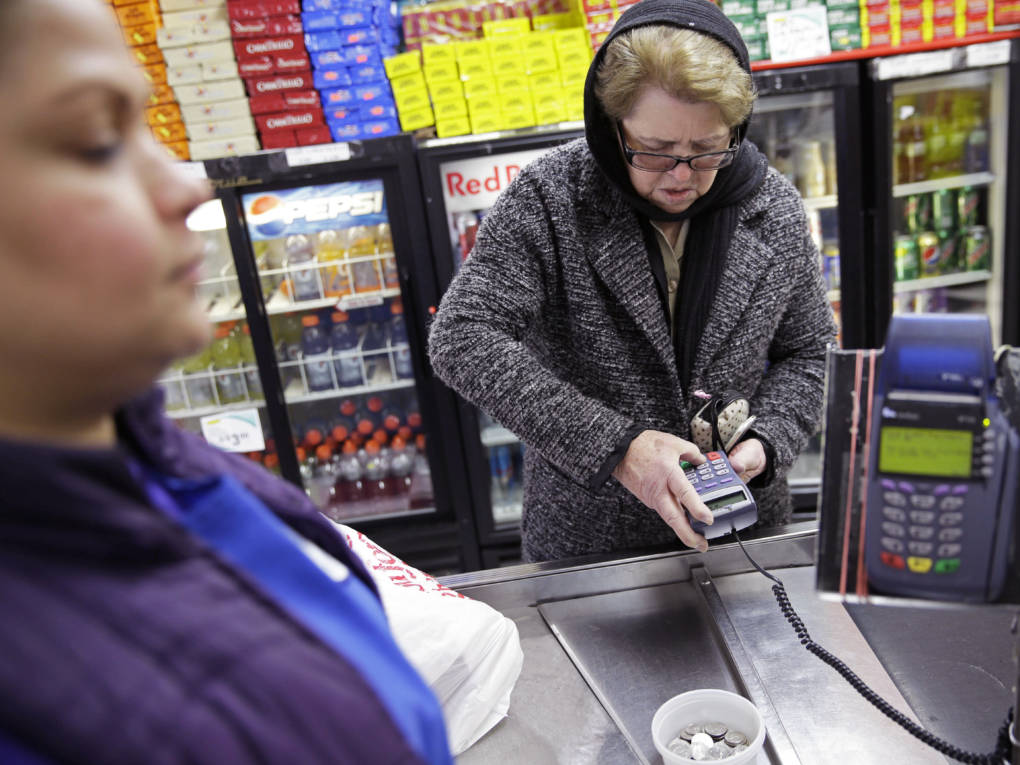
"caption": "Hilda Herrera of New York state is one of 40,000 people who rely on the SNAP program for help buying groceries.",
"description": "Hilda Herrera of New York state is one of 40,000 people who rely on the SNAP program for help buying groceries",
"title": "Hilda Herrera of New York state is one of 40,000 people who rely on the SNAP program for help buying groceries.",
"credit": "Seth Wenig/AP",
"status": "inherit",
"isLoading": false,
"fetchFailed": false
},
"bayareabites_126429": {
"type": "attachments",
"id": "bayareabites_126429",
"meta": {
"index": "attachments_1716263798",
"site": "bayareabites",
"id": "126429",
"found": true
},
"parent": 126428,
"imgSizes": {
"small": {
"file": "https://ww2.kqed.org/app/uploads/sites/24/2018/04/pigs-1bd9f8f397ebd5a2369b0b3a2dad08c3326c2b4a-520x390.jpg",
"width": 520,
"mimeType": "image/jpeg",
"height": 390
},
"twentyfourteen-full-width": {
"file": "https://ww2.kqed.org/app/uploads/sites/24/2018/04/pigs-1bd9f8f397ebd5a2369b0b3a2dad08c3326c2b4a-1038x576.jpg",
"width": 1038,
"mimeType": "image/jpeg",
"height": 576
},
"thumbnail": {
"file": "https://ww2.kqed.org/app/uploads/sites/24/2018/04/pigs-1bd9f8f397ebd5a2369b0b3a2dad08c3326c2b4a-160x120.jpg",
"width": 160,
"mimeType": "image/jpeg",
"height": 120
},
"fd-sm": {
"file": "https://ww2.kqed.org/app/uploads/sites/24/2018/04/pigs-1bd9f8f397ebd5a2369b0b3a2dad08c3326c2b4a-960x720.jpg",
"width": 960,
"mimeType": "image/jpeg",
"height": 720
},
"post-thumbnail": {
"file": "https://ww2.kqed.org/app/uploads/sites/24/2018/04/pigs-1bd9f8f397ebd5a2369b0b3a2dad08c3326c2b4a-672x372.jpg",
"width": 672,
"mimeType": "image/jpeg",
"height": 372
},
"xsmall": {
"file": "https://ww2.kqed.org/app/uploads/sites/24/2018/04/pigs-1bd9f8f397ebd5a2369b0b3a2dad08c3326c2b4a-375x281.jpg",
"width": 375,
"mimeType": "image/jpeg",
"height": 281
},
"kqedFullSize": {
"file": "https://ww2.kqed.org/app/uploads/sites/24/2018/04/pigs-1bd9f8f397ebd5a2369b0b3a2dad08c3326c2b4a.jpg",
"width": 1534,
"height": 1150
},
"large": {
"file": "https://ww2.kqed.org/app/uploads/sites/24/2018/04/pigs-1bd9f8f397ebd5a2369b0b3a2dad08c3326c2b4a-1020x765.jpg",
"width": 1020,
"mimeType": "image/jpeg",
"height": 765
},
"xlarge": {
"file": "https://ww2.kqed.org/app/uploads/sites/24/2018/04/pigs-1bd9f8f397ebd5a2369b0b3a2dad08c3326c2b4a-1180x885.jpg",
"width": 1180,
"mimeType": "image/jpeg",
"height": 885
},
"guest-author-50": {
"file": "https://ww2.kqed.org/app/uploads/sites/24/2018/04/pigs-1bd9f8f397ebd5a2369b0b3a2dad08c3326c2b4a-50x50.jpg",
"width": 50,
"mimeType": "image/jpeg",
"height": 50
},
"guest-author-96": {
"file": "https://ww2.kqed.org/app/uploads/sites/24/2018/04/pigs-1bd9f8f397ebd5a2369b0b3a2dad08c3326c2b4a-96x96.jpg",
"width": 96,
"mimeType": "image/jpeg",
"height": 96
},
"medium": {
"file": "https://ww2.kqed.org/app/uploads/sites/24/2018/04/pigs-1bd9f8f397ebd5a2369b0b3a2dad08c3326c2b4a-800x600.jpg",
"width": 800,
"mimeType": "image/jpeg",
"height": 600
},
"guest-author-64": {
"file": "https://ww2.kqed.org/app/uploads/sites/24/2018/04/pigs-1bd9f8f397ebd5a2369b0b3a2dad08c3326c2b4a-64x64.jpg",
"width": 64,
"mimeType": "image/jpeg",
"height": 64
},
"guest-author-32": {
"file": "https://ww2.kqed.org/app/uploads/sites/24/2018/04/pigs-1bd9f8f397ebd5a2369b0b3a2dad08c3326c2b4a-32x32.jpg",
"width": 32,
"mimeType": "image/jpeg",
"height": 32
},
"fd-med": {
"file": "https://ww2.kqed.org/app/uploads/sites/24/2018/04/pigs-1bd9f8f397ebd5a2369b0b3a2dad08c3326c2b4a-1180x885.jpg",
"width": 1180,
"mimeType": "image/jpeg",
"height": 885
},
"detail": {
"file": "https://ww2.kqed.org/app/uploads/sites/24/2018/04/pigs-1bd9f8f397ebd5a2369b0b3a2dad08c3326c2b4a-150x150.jpg",
"width": 150,
"mimeType": "image/jpeg",
"height": 150
},
"medium_large": {
"file": "https://ww2.kqed.org/app/uploads/sites/24/2018/04/pigs-1bd9f8f397ebd5a2369b0b3a2dad08c3326c2b4a-768x576.jpg",
"width": 768,
"mimeType": "image/jpeg",
"height": 576
},
"guest-author-128": {
"file": "https://ww2.kqed.org/app/uploads/sites/24/2018/04/pigs-1bd9f8f397ebd5a2369b0b3a2dad08c3326c2b4a-128x128.jpg",
"width": 128,
"mimeType": "image/jpeg",
"height": 128
},
"xxsmall": {
"file": "https://ww2.kqed.org/app/uploads/sites/24/2018/04/pigs-1bd9f8f397ebd5a2369b0b3a2dad08c3326c2b4a-240x180.jpg",
"width": 240,
"mimeType": "image/jpeg",
"height": 180
}
},
"publishDate": 1522956824,
"modified": 1522961466,
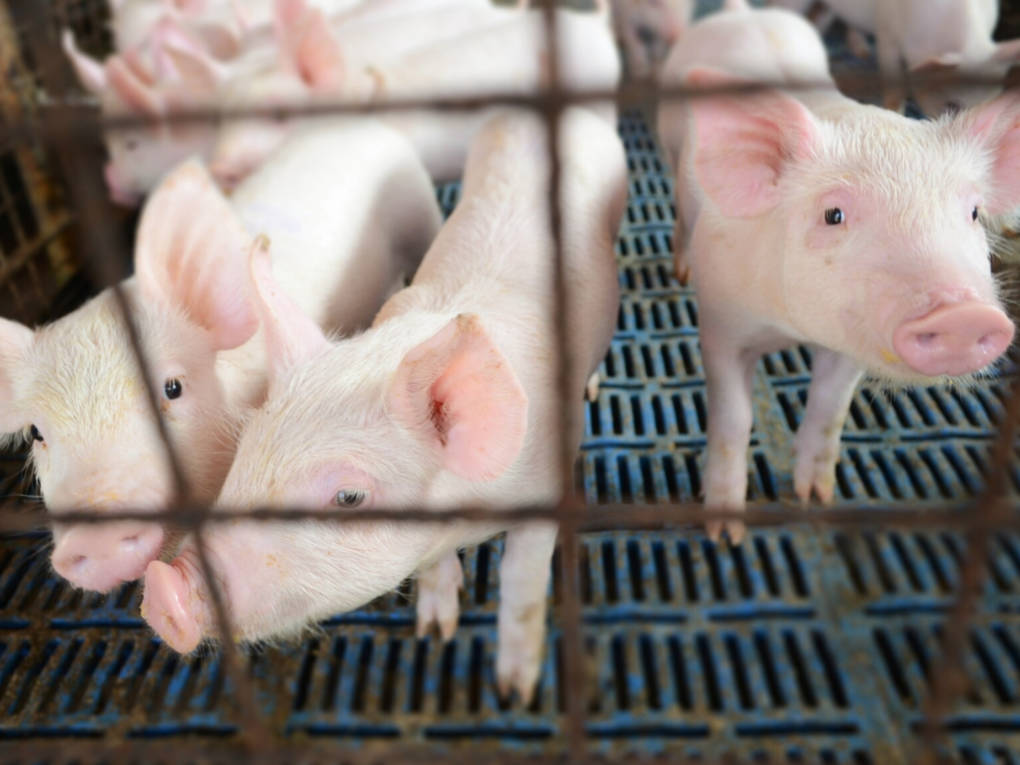
"caption": "Hog farmers worry that they will pay a hefty price if there's a trade war with China.",
"description": "Hog farmers worry that they will pay a hefty price if there's a trade war with China.",
"title": "Hog farmers worry that they will pay a hefty price if there's a trade war with China.",
"credit": "Red Cedicol/EyeEm/Getty Images",
"status": "inherit",
"isLoading": false,
"fetchFailed": false
},
"bayareabites_126401": {
"type": "attachments",
"id": "bayareabites_126401",
"meta": {
"index": "attachments_1716263798",
"site": "bayareabites",
"id": "126401",
"found": true
},
"parent": 126400,
"imgSizes": {
"small": {
"file": "https://ww2.kqed.org/app/uploads/sites/24/2018/04/gettyimages-941251796-25b662653802458ac92d2a6492a7974c85c25861-520x390.jpg",
"width": 520,
"mimeType": "image/jpeg",
"height": 390
},
"twentyfourteen-full-width": {
"file": "https://ww2.kqed.org/app/uploads/sites/24/2018/04/gettyimages-941251796-25b662653802458ac92d2a6492a7974c85c25861-1038x576.jpg",
"width": 1038,
"mimeType": "image/jpeg",
"height": 576
},
"thumbnail": {
"file": "https://ww2.kqed.org/app/uploads/sites/24/2018/04/gettyimages-941251796-25b662653802458ac92d2a6492a7974c85c25861-160x120.jpg",
"width": 160,
"mimeType": "image/jpeg",
"height": 120
},
"fd-sm": {
"file": "https://ww2.kqed.org/app/uploads/sites/24/2018/04/gettyimages-941251796-25b662653802458ac92d2a6492a7974c85c25861-960x720.jpg",
"width": 960,
"mimeType": "image/jpeg",
"height": 720
},
"post-thumbnail": {
"file": "https://ww2.kqed.org/app/uploads/sites/24/2018/04/gettyimages-941251796-25b662653802458ac92d2a6492a7974c85c25861-672x372.jpg",
"width": 672,
"mimeType": "image/jpeg",
"height": 372
},
"xsmall": {
"file": "https://ww2.kqed.org/app/uploads/sites/24/2018/04/gettyimages-941251796-25b662653802458ac92d2a6492a7974c85c25861-375x281.jpg",
"width": 375,
"mimeType": "image/jpeg",
"height": 281
},
"kqedFullSize": {
"file": "https://ww2.kqed.org/app/uploads/sites/24/2018/04/gettyimages-941251796-25b662653802458ac92d2a6492a7974c85c25861.jpg",
"width": 3784,
"height": 2838
},
"large": {
"file": "https://ww2.kqed.org/app/uploads/sites/24/2018/04/gettyimages-941251796-25b662653802458ac92d2a6492a7974c85c25861-1020x765.jpg",
"width": 1020,
"mimeType": "image/jpeg",
"height": 765
},
"xlarge": {
"file": "https://ww2.kqed.org/app/uploads/sites/24/2018/04/gettyimages-941251796-25b662653802458ac92d2a6492a7974c85c25861-1180x885.jpg",
"width": 1180,
"mimeType": "image/jpeg",
"height": 885
},
"guest-author-50": {
"file": "https://ww2.kqed.org/app/uploads/sites/24/2018/04/gettyimages-941251796-25b662653802458ac92d2a6492a7974c85c25861-50x50.jpg",
"width": 50,
"mimeType": "image/jpeg",
"height": 50
},
"guest-author-96": {
"file": "https://ww2.kqed.org/app/uploads/sites/24/2018/04/gettyimages-941251796-25b662653802458ac92d2a6492a7974c85c25861-96x96.jpg",
"width": 96,
"mimeType": "image/jpeg",
"height": 96
},
"medium": {
"file": "https://ww2.kqed.org/app/uploads/sites/24/2018/04/gettyimages-941251796-25b662653802458ac92d2a6492a7974c85c25861-800x600.jpg",
"width": 800,
"mimeType": "image/jpeg",
"height": 600
},
"guest-author-64": {
"file": "https://ww2.kqed.org/app/uploads/sites/24/2018/04/gettyimages-941251796-25b662653802458ac92d2a6492a7974c85c25861-64x64.jpg",
"width": 64,
"mimeType": "image/jpeg",
"height": 64
},
"guest-author-32": {
"file": "https://ww2.kqed.org/app/uploads/sites/24/2018/04/gettyimages-941251796-25b662653802458ac92d2a6492a7974c85c25861-32x32.jpg",
"width": 32,
"mimeType": "image/jpeg",
"height": 32
},
"fd-lrg": {
"file": "https://ww2.kqed.org/app/uploads/sites/24/2018/04/gettyimages-941251796-25b662653802458ac92d2a6492a7974c85c25861-1920x1440.jpg",
"width": 1920,
"mimeType": "image/jpeg",
"height": 1440
},
"fd-med": {
"file": "https://ww2.kqed.org/app/uploads/sites/24/2018/04/gettyimages-941251796-25b662653802458ac92d2a6492a7974c85c25861-1180x885.jpg",
"width": 1180,
"mimeType": "image/jpeg",
"height": 885
},
"full-width": {
"file": "https://ww2.kqed.org/app/uploads/sites/24/2018/04/gettyimages-941251796-25b662653802458ac92d2a6492a7974c85c25861-1920x1440.jpg",
"width": 1920,
"mimeType": "image/jpeg",
"height": 1440
},
"detail": {
"file": "https://ww2.kqed.org/app/uploads/sites/24/2018/04/gettyimages-941251796-25b662653802458ac92d2a6492a7974c85c25861-150x150.jpg",
"width": 150,
"mimeType": "image/jpeg",
"height": 150
},
"medium_large": {
"file": "https://ww2.kqed.org/app/uploads/sites/24/2018/04/gettyimages-941251796-25b662653802458ac92d2a6492a7974c85c25861-768x576.jpg",
"width": 768,
"mimeType": "image/jpeg",
"height": 576
},
"guest-author-128": {
"file": "https://ww2.kqed.org/app/uploads/sites/24/2018/04/gettyimages-941251796-25b662653802458ac92d2a6492a7974c85c25861-128x128.jpg",
"width": 128,
"mimeType": "image/jpeg",
"height": 128
},
"xxsmall": {
"file": "https://ww2.kqed.org/app/uploads/sites/24/2018/04/gettyimages-941251796-25b662653802458ac92d2a6492a7974c85c25861-240x180.jpg",
"width": 240,
"mimeType": "image/jpeg",
"height": 180
}
},
"publishDate": 1522790100,
"modified": 1522790134,
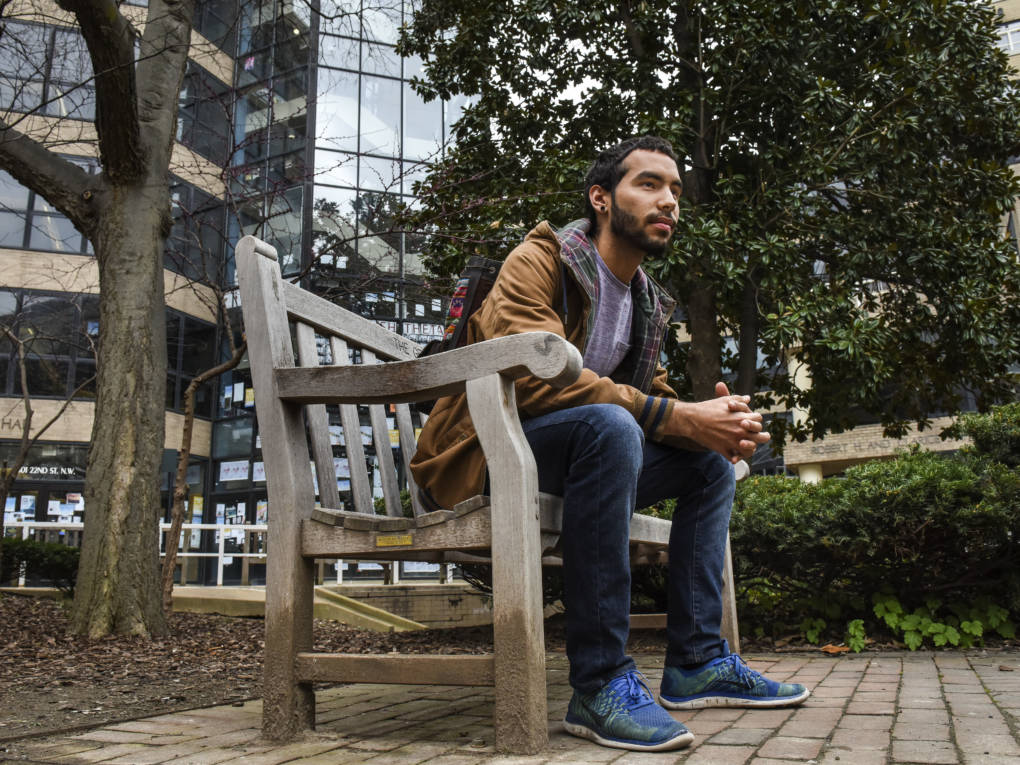
"caption": "Caleb Torres, a senior at George Washington University, says he ran out of grocery money his freshmen year, so he began skipping meals.",
"description": "Caleb Torres, a senior at George Washington University, says he ran out of grocery money his freshmen year, so he began skipping meals.",
"title": "Caleb Torres, a senior at George Washington University, says he ran out of grocery money his freshmen year, so he began skipping meals.",
"credit": "The Washington Post/The Washington Post/Getty Images",
"status": "inherit",
"isLoading": false,
"fetchFailed": false
},
"bayareabites_126380": {
"type": "attachments",
"id": "bayareabites_126380",
"meta": {
"index": "attachments_1716263798",
"site": "bayareabites",
"id": "126380",
"found": true
},
"parent": 126379,
"imgSizes": {
"small": {
"file": "https://ww2.kqed.org/app/uploads/sites/24/2018/04/almonds-fd781ea457b7d129371b82437902fc38bc9b3d6a-520x390.jpg",
"width": 520,
"mimeType": "image/jpeg",
"height": 390
},
"twentyfourteen-full-width": {
"file": "https://ww2.kqed.org/app/uploads/sites/24/2018/04/almonds-fd781ea457b7d129371b82437902fc38bc9b3d6a-1038x576.jpg",
"width": 1038,
"mimeType": "image/jpeg",
"height": 576
},
"thumbnail": {
"file": "https://ww2.kqed.org/app/uploads/sites/24/2018/04/almonds-fd781ea457b7d129371b82437902fc38bc9b3d6a-160x120.jpg",
"width": 160,
"mimeType": "image/jpeg",
"height": 120
},
"fd-sm": {
"file": "https://ww2.kqed.org/app/uploads/sites/24/2018/04/almonds-fd781ea457b7d129371b82437902fc38bc9b3d6a-960x720.jpg",
"width": 960,
"mimeType": "image/jpeg",
"height": 720
},
"post-thumbnail": {
"file": "https://ww2.kqed.org/app/uploads/sites/24/2018/04/almonds-fd781ea457b7d129371b82437902fc38bc9b3d6a-672x372.jpg",
"width": 672,
"mimeType": "image/jpeg",
"height": 372
},
"xsmall": {
"file": "https://ww2.kqed.org/app/uploads/sites/24/2018/04/almonds-fd781ea457b7d129371b82437902fc38bc9b3d6a-375x281.jpg",
"width": 375,
"mimeType": "image/jpeg",
"height": 281
},
"kqedFullSize": {
"file": "https://ww2.kqed.org/app/uploads/sites/24/2018/04/almonds-fd781ea457b7d129371b82437902fc38bc9b3d6a.jpg",
"width": 1332,
"height": 999
},
"large": {
"file": "https://ww2.kqed.org/app/uploads/sites/24/2018/04/almonds-fd781ea457b7d129371b82437902fc38bc9b3d6a-1020x765.jpg",
"width": 1020,
"mimeType": "image/jpeg",
"height": 765
},
"xlarge": {
"file": "https://ww2.kqed.org/app/uploads/sites/24/2018/04/almonds-fd781ea457b7d129371b82437902fc38bc9b3d6a-1180x885.jpg",
"width": 1180,
"mimeType": "image/jpeg",
"height": 885
},
"guest-author-50": {
"file": "https://ww2.kqed.org/app/uploads/sites/24/2018/04/almonds-fd781ea457b7d129371b82437902fc38bc9b3d6a-50x50.jpg",
"width": 50,
"mimeType": "image/jpeg",
"height": 50
},
"guest-author-96": {
"file": "https://ww2.kqed.org/app/uploads/sites/24/2018/04/almonds-fd781ea457b7d129371b82437902fc38bc9b3d6a-96x96.jpg",
"width": 96,
"mimeType": "image/jpeg",
"height": 96
},
"medium": {
"file": "https://ww2.kqed.org/app/uploads/sites/24/2018/04/almonds-fd781ea457b7d129371b82437902fc38bc9b3d6a-800x600.jpg",
"width": 800,
"mimeType": "image/jpeg",
"height": 600
},
"guest-author-64": {
"file": "https://ww2.kqed.org/app/uploads/sites/24/2018/04/almonds-fd781ea457b7d129371b82437902fc38bc9b3d6a-64x64.jpg",
"width": 64,
"mimeType": "image/jpeg",
"height": 64
},
"guest-author-32": {
"file": "https://ww2.kqed.org/app/uploads/sites/24/2018/04/almonds-fd781ea457b7d129371b82437902fc38bc9b3d6a-32x32.jpg",
"width": 32,
"mimeType": "image/jpeg",
"height": 32
},
"fd-med": {
"file": "https://ww2.kqed.org/app/uploads/sites/24/2018/04/almonds-fd781ea457b7d129371b82437902fc38bc9b3d6a-1180x885.jpg",
"width": 1180,
"mimeType": "image/jpeg",
"height": 885
},
"detail": {
"file": "https://ww2.kqed.org/app/uploads/sites/24/2018/04/almonds-fd781ea457b7d129371b82437902fc38bc9b3d6a-150x150.jpg",
"width": 150,
"mimeType": "image/jpeg",
"height": 150
},
"medium_large": {
"file": "https://ww2.kqed.org/app/uploads/sites/24/2018/04/almonds-fd781ea457b7d129371b82437902fc38bc9b3d6a-768x576.jpg",
"width": 768,
"mimeType": "image/jpeg",
"height": 576
},
"guest-author-128": {
"file": "https://ww2.kqed.org/app/uploads/sites/24/2018/04/almonds-fd781ea457b7d129371b82437902fc38bc9b3d6a-128x128.jpg",
"width": 128,
"mimeType": "image/jpeg",
"height": 128
},
"xxsmall": {
"file": "https://ww2.kqed.org/app/uploads/sites/24/2018/04/almonds-fd781ea457b7d129371b82437902fc38bc9b3d6a-240x180.jpg",
"width": 240,
"mimeType": "image/jpeg",
"height": 180
}
},
"publishDate": 1522706663,
"modified": 1522706736,
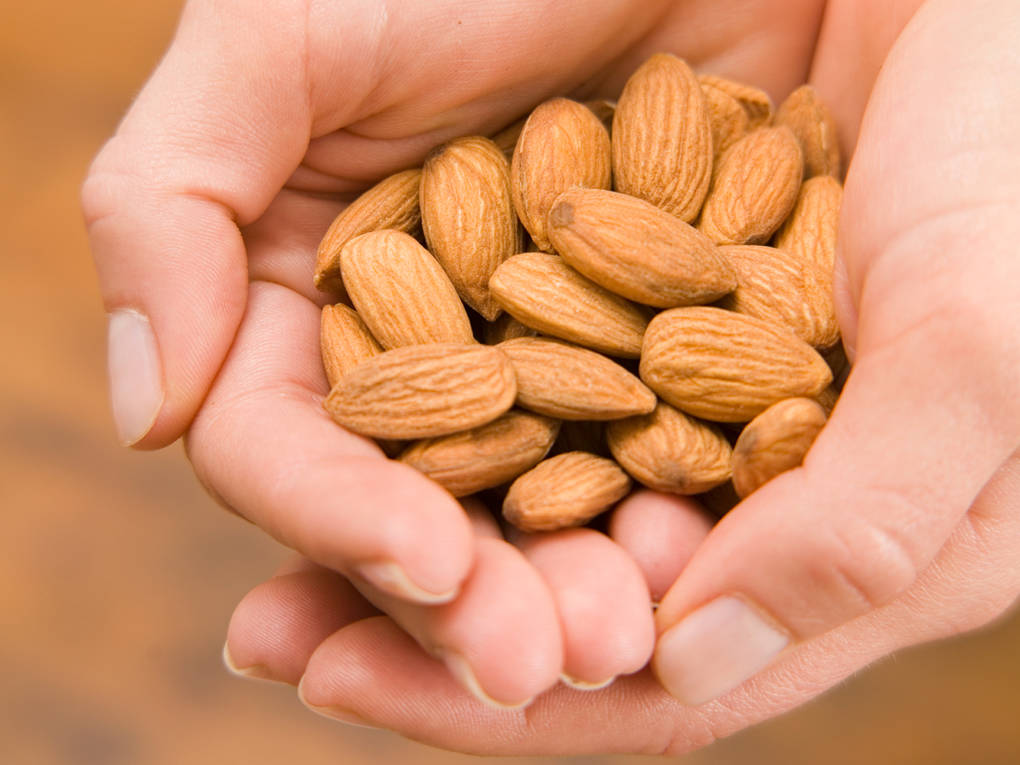
"caption": "New Chinese tariffs will raise the price of many American crops, including almonds and other nuts.",
"description": "New Chinese tariffs will raise the price of many American crops, including almonds and other nuts.",
"title": "New Chinese tariffs will raise the price of many American crops, including almonds and other nuts.",
"credit": "PM Images/Getty Images",
"status": "inherit",
"isLoading": false,
"fetchFailed": false
},
"bayareabites_126200": {
"type": "attachments",
"id": "bayareabites_126200",
"meta": {
"index": "attachments_1716263798",
"site": "bayareabites",
"id": "126200",
"found": true
},
"parent": 126199,
"imgSizes": {
"small": {
"file": "https://ww2.kqed.org/app/uploads/sites/24/2018/03/dmg-store_wide-8ac56ea44b37817664378a09407133dfc274ac07-520x292.jpg",
"width": 520,
"mimeType": "image/jpeg",
"height": 292
},
"thumbnail": {
"file": "https://ww2.kqed.org/app/uploads/sites/24/2018/03/dmg-store_wide-8ac56ea44b37817664378a09407133dfc274ac07-160x90.jpg",
"width": 160,
"mimeType": "image/jpeg",
"height": 90
},
"post-thumbnail": {
"file": "https://ww2.kqed.org/app/uploads/sites/24/2018/03/dmg-store_wide-8ac56ea44b37817664378a09407133dfc274ac07-672x372.jpg",
"width": 672,
"mimeType": "image/jpeg",
"height": 372
},
"xsmall": {
"file": "https://ww2.kqed.org/app/uploads/sites/24/2018/03/dmg-store_wide-8ac56ea44b37817664378a09407133dfc274ac07-375x211.jpg",
"width": 375,
"mimeType": "image/jpeg",
"height": 211
},
"kqedFullSize": {
"file": "https://ww2.kqed.org/app/uploads/sites/24/2018/03/dmg-store_wide-8ac56ea44b37817664378a09407133dfc274ac07.jpg",
"width": 730,
"height": 410
},
"guest-author-50": {
"file": "https://ww2.kqed.org/app/uploads/sites/24/2018/03/dmg-store_wide-8ac56ea44b37817664378a09407133dfc274ac07-50x50.jpg",
"width": 50,
"mimeType": "image/jpeg",
"height": 50
},
"guest-author-96": {
"file": "https://ww2.kqed.org/app/uploads/sites/24/2018/03/dmg-store_wide-8ac56ea44b37817664378a09407133dfc274ac07-96x96.jpg",
"width": 96,
"mimeType": "image/jpeg",
"height": 96
},
"guest-author-64": {
"file": "https://ww2.kqed.org/app/uploads/sites/24/2018/03/dmg-store_wide-8ac56ea44b37817664378a09407133dfc274ac07-64x64.jpg",
"width": 64,
"mimeType": "image/jpeg",
"height": 64
},
"detail": {
"file": "https://ww2.kqed.org/app/uploads/sites/24/2018/03/dmg-store_wide-8ac56ea44b37817664378a09407133dfc274ac07-150x150.jpg",
"width": 150,
"mimeType": "image/jpeg",
"height": 150
},
"guest-author-32": {
"file": "https://ww2.kqed.org/app/uploads/sites/24/2018/03/dmg-store_wide-8ac56ea44b37817664378a09407133dfc274ac07-32x32.jpg",
"width": 32,
"mimeType": "image/jpeg",
"height": 32
},
"guest-author-128": {
"file": "https://ww2.kqed.org/app/uploads/sites/24/2018/03/dmg-store_wide-8ac56ea44b37817664378a09407133dfc274ac07-128x128.jpg",
"width": 128,
"mimeType": "image/jpeg",
"height": 128
},
"xxsmall": {
"file": "https://ww2.kqed.org/app/uploads/sites/24/2018/03/dmg-store_wide-8ac56ea44b37817664378a09407133dfc274ac07-240x135.jpg",
"width": 240,
"mimeType": "image/jpeg",
"height": 135
}
},
"publishDate": 1522190057,
"modified": 1522190153,
"caption": "DMG Foods, the Salvation Army's first supermarket, offers discount groceries to nutritional assistance beneficiaries and anyone else who walks through the door.",
"description": "DMG Foods, the Salvation Army's first supermarket, offers discount groceries to nutritional assistance beneficiaries and anyone else who walks through the door",
"title": "DMG Foods, the Salvation Army's first supermarket, offers discount groceries to nutritional assistance beneficiaries and anyone else who walks through the door.",
"credit": "dmgfoods.org",
"status": "inherit",
"isLoading": false,
"fetchFailed": false
},
"bayareabites_125384": {
"type": "attachments",
"id": "bayareabites_125384",
"meta": {
"index": "attachments_1716263798",
"site": "bayareabites",
"id": "125384",
"found": true
},
"parent": 125376,
"imgSizes": {
"small": {
"file": "https://ww2.kqed.org/app/uploads/sites/24/2018/03/180228-food-coops-seward-1-520x347.jpg",
"width": 520,
"mimeType": "image/jpeg",
"height": 347
},
"twentyfourteen-full-width": {
"file": "https://ww2.kqed.org/app/uploads/sites/24/2018/03/180228-food-coops-seward-1-1038x576.jpg",
"width": 1038,
"mimeType": "image/jpeg",
"height": 576
},
"thumbnail": {
"file": "https://ww2.kqed.org/app/uploads/sites/24/2018/03/180228-food-coops-seward-1-160x107.jpg",
"width": 160,
"mimeType": "image/jpeg",
"height": 107
},
"fd-sm": {
"file": "https://ww2.kqed.org/app/uploads/sites/24/2018/03/180228-food-coops-seward-1-960x640.jpg",
"width": 960,
"mimeType": "image/jpeg",
"height": 640
},
"post-thumbnail": {
"file": "https://ww2.kqed.org/app/uploads/sites/24/2018/03/180228-food-coops-seward-1-672x372.jpg",
"width": 672,
"mimeType": "image/jpeg",
"height": 372
},
"xsmall": {
"file": "https://ww2.kqed.org/app/uploads/sites/24/2018/03/180228-food-coops-seward-1-375x250.jpg",
"width": 375,
"mimeType": "image/jpeg",
"height": 250
},
"kqedFullSize": {
"file": "https://ww2.kqed.org/app/uploads/sites/24/2018/03/180228-food-coops-seward-1.jpg",
"width": 1200,
"height": 800
},
"large": {
"file": "https://ww2.kqed.org/app/uploads/sites/24/2018/03/180228-food-coops-seward-1-1020x680.jpg",
"width": 1020,
"mimeType": "image/jpeg",
"height": 680
},
"xlarge": {
"file": "https://ww2.kqed.org/app/uploads/sites/24/2018/03/180228-food-coops-seward-1-1180x787.jpg",
"width": 1180,
"mimeType": "image/jpeg",
"height": 787
},
"guest-author-50": {
"file": "https://ww2.kqed.org/app/uploads/sites/24/2018/03/180228-food-coops-seward-1-50x50.jpg",
"width": 50,
"mimeType": "image/jpeg",
"height": 50
},
"guest-author-96": {
"file": "https://ww2.kqed.org/app/uploads/sites/24/2018/03/180228-food-coops-seward-1-96x96.jpg",
"width": 96,
"mimeType": "image/jpeg",
"height": 96
},
"medium": {
"file": "https://ww2.kqed.org/app/uploads/sites/24/2018/03/180228-food-coops-seward-1-800x533.jpg",
"width": 800,
"mimeType": "image/jpeg",
"height": 533
},
"guest-author-64": {
"file": "https://ww2.kqed.org/app/uploads/sites/24/2018/03/180228-food-coops-seward-1-64x64.jpg",
"width": 64,
"mimeType": "image/jpeg",
"height": 64
},
"guest-author-32": {
"file": "https://ww2.kqed.org/app/uploads/sites/24/2018/03/180228-food-coops-seward-1-32x32.jpg",
"width": 32,
"mimeType": "image/jpeg",
"height": 32
},
"fd-med": {
"file": "https://ww2.kqed.org/app/uploads/sites/24/2018/03/180228-food-coops-seward-1-1180x787.jpg",
"width": 1180,
"mimeType": "image/jpeg",
"height": 787
},
"detail": {
"file": "https://ww2.kqed.org/app/uploads/sites/24/2018/03/180228-food-coops-seward-1-150x150.jpg",
"width": 150,
"mimeType": "image/jpeg",
"height": 150
},
"medium_large": {
"file": "https://ww2.kqed.org/app/uploads/sites/24/2018/03/180228-food-coops-seward-1-768x512.jpg",
"width": 768,
"mimeType": "image/jpeg",
"height": 512
},
"guest-author-128": {
"file": "https://ww2.kqed.org/app/uploads/sites/24/2018/03/180228-food-coops-seward-1-128x128.jpg",
"width": 128,
"mimeType": "image/jpeg",
"height": 128
},
"xxsmall": {
"file": "https://ww2.kqed.org/app/uploads/sites/24/2018/03/180228-food-coops-seward-1-240x160.jpg",
"width": 240,
"mimeType": "image/jpeg",
"height": 160
}
},
"publishDate": 1520030306,
"modified": 1520030479,
"caption": "Seward Community Co-op",
"description": null,
"title": "180228-food-coops-seward-1",
"credit": " courtesy of \u003ca href=\"https://seward.coop/inthestore/bulk\">The Seward Coop\u003c/a>",
"status": "inherit",
"isLoading": false,
"fetchFailed": false
},
"bayareabites_124443": {
"type": "attachments",
"id": "bayareabites_124443",
"meta": {
"index": "attachments_1716263798",
"site": "bayareabites",
"id": "124443",
"found": true
},
"parent": 124442,
"imgSizes": {
"small": {
"file": "https://ww2.kqed.org/app/uploads/sites/24/2018/01/gettyimages-8497759121_custom-403f041b019f2f4eba7eeec808ec668d0cb9b0ed-520x344.jpg",
"width": 520,
"mimeType": "image/jpeg",
"height": 344
},
"twentyfourteen-full-width": {
"file": "https://ww2.kqed.org/app/uploads/sites/24/2018/01/gettyimages-8497759121_custom-403f041b019f2f4eba7eeec808ec668d0cb9b0ed-1038x576.jpg",
"width": 1038,
"mimeType": "image/jpeg",
"height": 576
},
"thumbnail": {
"file": "https://ww2.kqed.org/app/uploads/sites/24/2018/01/gettyimages-8497759121_custom-403f041b019f2f4eba7eeec808ec668d0cb9b0ed-160x106.jpg",
"width": 160,
"mimeType": "image/jpeg",
"height": 106
},
"fd-sm": {
"file": "https://ww2.kqed.org/app/uploads/sites/24/2018/01/gettyimages-8497759121_custom-403f041b019f2f4eba7eeec808ec668d0cb9b0ed-960x636.jpg",
"width": 960,
"mimeType": "image/jpeg",
"height": 636
},
"post-thumbnail": {
"file": "https://ww2.kqed.org/app/uploads/sites/24/2018/01/gettyimages-8497759121_custom-403f041b019f2f4eba7eeec808ec668d0cb9b0ed-672x372.jpg",
"width": 672,
"mimeType": "image/jpeg",
"height": 372
},
"xsmall": {
"file": "https://ww2.kqed.org/app/uploads/sites/24/2018/01/gettyimages-8497759121_custom-403f041b019f2f4eba7eeec808ec668d0cb9b0ed-375x248.jpg",
"width": 375,
"mimeType": "image/jpeg",
"height": 248
},
"kqedFullSize": {
"file": "https://ww2.kqed.org/app/uploads/sites/24/2018/01/gettyimages-8497759121_custom-403f041b019f2f4eba7eeec808ec668d0cb9b0ed.jpg",
"width": 5875,
"height": 3892
},
"large": {
"file": "https://ww2.kqed.org/app/uploads/sites/24/2018/01/gettyimages-8497759121_custom-403f041b019f2f4eba7eeec808ec668d0cb9b0ed-1020x676.jpg",
"width": 1020,
"mimeType": "image/jpeg",
"height": 676
},
"xlarge": {
"file": "https://ww2.kqed.org/app/uploads/sites/24/2018/01/gettyimages-8497759121_custom-403f041b019f2f4eba7eeec808ec668d0cb9b0ed-1180x782.jpg",
"width": 1180,
"mimeType": "image/jpeg",
"height": 782
},
"guest-author-50": {
"file": "https://ww2.kqed.org/app/uploads/sites/24/2018/01/gettyimages-8497759121_custom-403f041b019f2f4eba7eeec808ec668d0cb9b0ed-50x50.jpg",
"width": 50,
"mimeType": "image/jpeg",
"height": 50
},
"guest-author-96": {
"file": "https://ww2.kqed.org/app/uploads/sites/24/2018/01/gettyimages-8497759121_custom-403f041b019f2f4eba7eeec808ec668d0cb9b0ed-96x96.jpg",
"width": 96,
"mimeType": "image/jpeg",
"height": 96
},
"medium": {
"file": "https://ww2.kqed.org/app/uploads/sites/24/2018/01/gettyimages-8497759121_custom-403f041b019f2f4eba7eeec808ec668d0cb9b0ed-800x530.jpg",
"width": 800,
"mimeType": "image/jpeg",
"height": 530
},
"guest-author-64": {
"file": "https://ww2.kqed.org/app/uploads/sites/24/2018/01/gettyimages-8497759121_custom-403f041b019f2f4eba7eeec808ec668d0cb9b0ed-64x64.jpg",
"width": 64,
"mimeType": "image/jpeg",
"height": 64
},
"guest-author-32": {
"file": "https://ww2.kqed.org/app/uploads/sites/24/2018/01/gettyimages-8497759121_custom-403f041b019f2f4eba7eeec808ec668d0cb9b0ed-32x32.jpg",
"width": 32,
"mimeType": "image/jpeg",
"height": 32
},
"fd-lrg": {
"file": "https://ww2.kqed.org/app/uploads/sites/24/2018/01/gettyimages-8497759121_custom-403f041b019f2f4eba7eeec808ec668d0cb9b0ed-1920x1272.jpg",
"width": 1920,
"mimeType": "image/jpeg",
"height": 1272
},
"fd-med": {
"file": "https://ww2.kqed.org/app/uploads/sites/24/2018/01/gettyimages-8497759121_custom-403f041b019f2f4eba7eeec808ec668d0cb9b0ed-1180x782.jpg",
"width": 1180,
"mimeType": "image/jpeg",
"height": 782
},
"full-width": {
"file": "https://ww2.kqed.org/app/uploads/sites/24/2018/01/gettyimages-8497759121_custom-403f041b019f2f4eba7eeec808ec668d0cb9b0ed-1920x1272.jpg",
"width": 1920,
"mimeType": "image/jpeg",
"height": 1272
},
"detail": {
"file": "https://ww2.kqed.org/app/uploads/sites/24/2018/01/gettyimages-8497759121_custom-403f041b019f2f4eba7eeec808ec668d0cb9b0ed-150x150.jpg",
"width": 150,
"mimeType": "image/jpeg",
"height": 150
},
"medium_large": {
"file": "https://ww2.kqed.org/app/uploads/sites/24/2018/01/gettyimages-8497759121_custom-403f041b019f2f4eba7eeec808ec668d0cb9b0ed-768x509.jpg",
"width": 768,
"mimeType": "image/jpeg",
"height": 509
},
"guest-author-128": {
"file": "https://ww2.kqed.org/app/uploads/sites/24/2018/01/gettyimages-8497759121_custom-403f041b019f2f4eba7eeec808ec668d0cb9b0ed-128x128.jpg",
"width": 128,
"mimeType": "image/jpeg",
"height": 128
},
"xxsmall": {
"file": "https://ww2.kqed.org/app/uploads/sites/24/2018/01/gettyimages-8497759121_custom-403f041b019f2f4eba7eeec808ec668d0cb9b0ed-240x159.jpg",
"width": 240,
"mimeType": "image/jpeg",
"height": 159
}
},
"publishDate": 1516147561,
"modified": 1516147800,
"caption": "An engineer shows a sample of biodiesel at an industrial complex in General Lagos, Santa Fe province, Argentina. The United States recently imposed duties on Argentine biodiesel, blocking it from the U.S. market.",
"description": "An engineer shows a sample of biodiesel at an industrial complex in General Lagos, Santa Fe province, Argentina. The United States recently imposed duties on Argentine biodiesel, blocking it from the U.S. market.",
"title": "An engineer shows a sample of biodiesel at an industrial complex in General Lagos, Santa Fe province, Argentina. The United States recently imposed duties on Argentine biodiesel, blocking it from the U.S. market.",
"credit": "Eitan Abramovich/AFP/Getty Images",
"status": "inherit",
"isLoading": false,
"fetchFailed": false
},
"bayareabites_124287": {
"type": "attachments",
"id": "bayareabites_124287",
"meta": {
"index": "attachments_1716263798",
"site": "bayareabites",
"id": "124287",
"found": true
},
"parent": 124284,
"imgSizes": {
"small": {
"file": "https://ww2.kqed.org/app/uploads/sites/24/2018/01/GettyImages-830658986-520x350.jpg",
"width": 520,
"mimeType": "image/jpeg",
"height": 350
},
"twentyfourteen-full-width": {
"file": "https://ww2.kqed.org/app/uploads/sites/24/2018/01/GettyImages-830658986-1024x576.jpg",
"width": 1024,
"mimeType": "image/jpeg",
"height": 576
},
"thumbnail": {
"file": "https://ww2.kqed.org/app/uploads/sites/24/2018/01/GettyImages-830658986-160x108.jpg",
"width": 160,
"mimeType": "image/jpeg",
"height": 108
},
"fd-sm": {
"file": "https://ww2.kqed.org/app/uploads/sites/24/2018/01/GettyImages-830658986-960x646.jpg",
"width": 960,
"mimeType": "image/jpeg",
"height": 646
},
"post-thumbnail": {
"file": "https://ww2.kqed.org/app/uploads/sites/24/2018/01/GettyImages-830658986-672x372.jpg",
"width": 672,
"mimeType": "image/jpeg",
"height": 372
},
"xsmall": {
"file": "https://ww2.kqed.org/app/uploads/sites/24/2018/01/GettyImages-830658986-375x252.jpg",
"width": 375,
"mimeType": "image/jpeg",
"height": 252
},
"kqedFullSize": {
"file": "https://ww2.kqed.org/app/uploads/sites/24/2018/01/GettyImages-830658986.jpg",
"width": 1024,
"height": 689
},
"large": {
"file": "https://ww2.kqed.org/app/uploads/sites/24/2018/01/GettyImages-830658986-1020x686.jpg",
"width": 1020,
"mimeType": "image/jpeg",
"height": 686
},
"guest-author-50": {
"file": "https://ww2.kqed.org/app/uploads/sites/24/2018/01/GettyImages-830658986-50x50.jpg",
"width": 50,
"mimeType": "image/jpeg",
"height": 50
},
"guest-author-96": {
"file": "https://ww2.kqed.org/app/uploads/sites/24/2018/01/GettyImages-830658986-96x96.jpg",
"width": 96,
"mimeType": "image/jpeg",
"height": 96
},
"medium": {
"file": "https://ww2.kqed.org/app/uploads/sites/24/2018/01/GettyImages-830658986-800x538.jpg",
"width": 800,
"mimeType": "image/jpeg",
"height": 538
},
"guest-author-64": {
"file": "https://ww2.kqed.org/app/uploads/sites/24/2018/01/GettyImages-830658986-64x64.jpg",
"width": 64,
"mimeType": "image/jpeg",
"height": 64
},
"guest-author-32": {
"file": "https://ww2.kqed.org/app/uploads/sites/24/2018/01/GettyImages-830658986-32x32.jpg",
"width": 32,
"mimeType": "image/jpeg",
"height": 32
},
"detail": {
"file": "https://ww2.kqed.org/app/uploads/sites/24/2018/01/GettyImages-830658986-150x150.jpg",
"width": 150,
"mimeType": "image/jpeg",
"height": 150
},
"medium_large": {
"file": "https://ww2.kqed.org/app/uploads/sites/24/2018/01/GettyImages-830658986-768x517.jpg",
"width": 768,
"mimeType": "image/jpeg",
"height": 517
},
"guest-author-128": {
"file": "https://ww2.kqed.org/app/uploads/sites/24/2018/01/GettyImages-830658986-128x128.jpg",
"width": 128,
"mimeType": "image/jpeg",
"height": 128
},
"xxsmall": {
"file": "https://ww2.kqed.org/app/uploads/sites/24/2018/01/GettyImages-830658986-240x161.jpg",
"width": 240,
"mimeType": "image/jpeg",
"height": 161
}
},
"publishDate": 1515088253,
"modified": 1515088297,
"caption": "Egg prices are scrambling higher, at least for the first few months of 2018.",
"description": "Egg prices are scrambling higher, at least for the first few months of 2018.",
"title": "BELGIUM-EUROPE-FOOD-HEALTH",
"credit": "JOHN THYS/AFP/Getty Images",
"status": "inherit",
"isLoading": false,
"fetchFailed": false
},
"bayareabites_122153": {
"type": "attachments",
"id": "bayareabites_122153",
"meta": {
"index": "attachments_1716263798",
"site": "bayareabites",
"id": "122153",
"found": true
},
"parent": 122152,
"imgSizes": {
"small": {
"file": "https://ww2.kqed.org/app/uploads/sites/24/2017/10/gettyimages-51560386-1-_wide-ad1c509903802b1b8db01bfa8ab54b333f402357-520x292.jpg",
"width": 520,
"mimeType": "image/jpeg",
"height": 292
},
"twentyfourteen-full-width": {
"file": "https://ww2.kqed.org/app/uploads/sites/24/2017/10/gettyimages-51560386-1-_wide-ad1c509903802b1b8db01bfa8ab54b333f402357-1038x576.jpg",
"width": 1038,
"mimeType": "image/jpeg",
"height": 576
},
"thumbnail": {
"file": "https://ww2.kqed.org/app/uploads/sites/24/2017/10/gettyimages-51560386-1-_wide-ad1c509903802b1b8db01bfa8ab54b333f402357-160x90.jpg",
"width": 160,
"mimeType": "image/jpeg",
"height": 90
},
"fd-sm": {
"file": "https://ww2.kqed.org/app/uploads/sites/24/2017/10/gettyimages-51560386-1-_wide-ad1c509903802b1b8db01bfa8ab54b333f402357-960x540.jpg",
"width": 960,
"mimeType": "image/jpeg",
"height": 540
},
"post-thumbnail": {
"file": "https://ww2.kqed.org/app/uploads/sites/24/2017/10/gettyimages-51560386-1-_wide-ad1c509903802b1b8db01bfa8ab54b333f402357-672x372.jpg",
"width": 672,
"mimeType": "image/jpeg",
"height": 372
},
"xsmall": {
"file": "https://ww2.kqed.org/app/uploads/sites/24/2017/10/gettyimages-51560386-1-_wide-ad1c509903802b1b8db01bfa8ab54b333f402357-375x211.jpg",
"width": 375,
"mimeType": "image/jpeg",
"height": 211
},
"kqedFullSize": {
"file": "https://ww2.kqed.org/app/uploads/sites/24/2017/10/gettyimages-51560386-1-_wide-ad1c509903802b1b8db01bfa8ab54b333f402357.jpg",
"width": 3000,
"height": 1687
},
"large": {
"file": "https://ww2.kqed.org/app/uploads/sites/24/2017/10/gettyimages-51560386-1-_wide-ad1c509903802b1b8db01bfa8ab54b333f402357-1020x574.jpg",
"width": 1020,
"mimeType": "image/jpeg",
"height": 574
},
"xlarge": {
"file": "https://ww2.kqed.org/app/uploads/sites/24/2017/10/gettyimages-51560386-1-_wide-ad1c509903802b1b8db01bfa8ab54b333f402357-1180x664.jpg",
"width": 1180,
"mimeType": "image/jpeg",
"height": 664
},
"guest-author-50": {
"file": "https://ww2.kqed.org/app/uploads/sites/24/2017/10/gettyimages-51560386-1-_wide-ad1c509903802b1b8db01bfa8ab54b333f402357-50x50.jpg",
"width": 50,
"mimeType": "image/jpeg",
"height": 50
},
"guest-author-96": {
"file": "https://ww2.kqed.org/app/uploads/sites/24/2017/10/gettyimages-51560386-1-_wide-ad1c509903802b1b8db01bfa8ab54b333f402357-96x96.jpg",
"width": 96,
"mimeType": "image/jpeg",
"height": 96
},
"medium": {
"file": "https://ww2.kqed.org/app/uploads/sites/24/2017/10/gettyimages-51560386-1-_wide-ad1c509903802b1b8db01bfa8ab54b333f402357-800x450.jpg",
"width": 800,
"mimeType": "image/jpeg",
"height": 450
},
"guest-author-64": {
"file": "https://ww2.kqed.org/app/uploads/sites/24/2017/10/gettyimages-51560386-1-_wide-ad1c509903802b1b8db01bfa8ab54b333f402357-64x64.jpg",
"width": 64,
"mimeType": "image/jpeg",
"height": 64
},
"guest-author-32": {
"file": "https://ww2.kqed.org/app/uploads/sites/24/2017/10/gettyimages-51560386-1-_wide-ad1c509903802b1b8db01bfa8ab54b333f402357-32x32.jpg",
"width": 32,
"mimeType": "image/jpeg",
"height": 32
},
"fd-lrg": {
"file": "https://ww2.kqed.org/app/uploads/sites/24/2017/10/gettyimages-51560386-1-_wide-ad1c509903802b1b8db01bfa8ab54b333f402357-1920x1080.jpg",
"width": 1920,
"mimeType": "image/jpeg",
"height": 1080
},
"fd-med": {
"file": "https://ww2.kqed.org/app/uploads/sites/24/2017/10/gettyimages-51560386-1-_wide-ad1c509903802b1b8db01bfa8ab54b333f402357-1180x664.jpg",
"width": 1180,
"mimeType": "image/jpeg",
"height": 664
},
"full-width": {
"file": "https://ww2.kqed.org/app/uploads/sites/24/2017/10/gettyimages-51560386-1-_wide-ad1c509903802b1b8db01bfa8ab54b333f402357-1920x1080.jpg",
"width": 1920,
"mimeType": "image/jpeg",
"height": 1080
},
"detail": {
"file": "https://ww2.kqed.org/app/uploads/sites/24/2017/10/gettyimages-51560386-1-_wide-ad1c509903802b1b8db01bfa8ab54b333f402357-150x150.jpg",
"width": 150,
"mimeType": "image/jpeg",
"height": 150
},
"medium_large": {
"file": "https://ww2.kqed.org/app/uploads/sites/24/2017/10/gettyimages-51560386-1-_wide-ad1c509903802b1b8db01bfa8ab54b333f402357-768x432.jpg",
"width": 768,
"mimeType": "image/jpeg",
"height": 432
},
"guest-author-128": {
"file": "https://ww2.kqed.org/app/uploads/sites/24/2017/10/gettyimages-51560386-1-_wide-ad1c509903802b1b8db01bfa8ab54b333f402357-128x128.jpg",
"width": 128,
"mimeType": "image/jpeg",
"height": 128
},
"xxsmall": {
"file": "https://ww2.kqed.org/app/uploads/sites/24/2017/10/gettyimages-51560386-1-_wide-ad1c509903802b1b8db01bfa8ab54b333f402357-240x135.jpg",
"width": 240,
"mimeType": "image/jpeg",
"height": 135
}
},
"publishDate": 1509469757,
"modified": 1509469948,
"caption": "A squirrel investigates Halloween jack-o'lanterns in Washington, D.C. Analysts say spending for holiday decor, candy and costumes is strong this year.",
"description": "A squirrel investigates Halloween jack-o'lanterns in Washington, D.C. Analysts say spending for holiday decor, candy and costumes is strong this year.",
"title": "A squirrel investigates Halloween jack-o'lanterns in Washington, D.C. Analysts say spending for holiday decor, candy and costumes is strong this year.",
"credit": "Joe Raedle/Getty Images",
"status": "inherit",
"isLoading": false,
"fetchFailed": false
},
"bayareabites_122045": {
"type": "attachments",
"id": "bayareabites_122045",
"meta": {
"index": "attachments_1716263798",
"site": "bayareabites",
"id": "122045",
"found": true
},
"parent": 121670,
"imgSizes": {
"small": {
"file": "https://ww2.kqed.org/app/uploads/sites/24/2017/10/IMG_1607-520x409.jpg",
"width": 520,
"mimeType": "image/jpeg",
"height": 409
},
"twentyfourteen-full-width": {
"file": "https://ww2.kqed.org/app/uploads/sites/24/2017/10/IMG_1607-1038x576.jpg",
"width": 1038,
"mimeType": "image/jpeg",
"height": 576
},
"thumbnail": {
"file": "https://ww2.kqed.org/app/uploads/sites/24/2017/10/IMG_1607-160x126.jpg",
"width": 160,
"mimeType": "image/jpeg",
"height": 126
},
"fd-sm": {
"file": "https://ww2.kqed.org/app/uploads/sites/24/2017/10/IMG_1607-960x755.jpg",
"width": 960,
"mimeType": "image/jpeg",
"height": 755
},
"post-thumbnail": {
"file": "https://ww2.kqed.org/app/uploads/sites/24/2017/10/IMG_1607-672x372.jpg",
"width": 672,
"mimeType": "image/jpeg",
"height": 372
},
"xsmall": {
"file": "https://ww2.kqed.org/app/uploads/sites/24/2017/10/IMG_1607-375x295.jpg",
"width": 375,
"mimeType": "image/jpeg",
"height": 295
},
"kqedFullSize": {
"file": "https://ww2.kqed.org/app/uploads/sites/24/2017/10/IMG_1607.jpg",
"width": 1920,
"height": 1510
},
"large": {
"file": "https://ww2.kqed.org/app/uploads/sites/24/2017/10/IMG_1607-1020x802.jpg",
"width": 1020,
"mimeType": "image/jpeg",
"height": 802
},
"xlarge": {
"file": "https://ww2.kqed.org/app/uploads/sites/24/2017/10/IMG_1607-1180x928.jpg",
"width": 1180,
"mimeType": "image/jpeg",
"height": 928
},
"guest-author-50": {
"file": "https://ww2.kqed.org/app/uploads/sites/24/2017/10/IMG_1607-50x50.jpg",
"width": 50,
"mimeType": "image/jpeg",
"height": 50
},
"guest-author-96": {
"file": "https://ww2.kqed.org/app/uploads/sites/24/2017/10/IMG_1607-96x96.jpg",
"width": 96,
"mimeType": "image/jpeg",
"height": 96
},
"medium": {
"file": "https://ww2.kqed.org/app/uploads/sites/24/2017/10/IMG_1607-800x629.jpg",
"width": 800,
"mimeType": "image/jpeg",
"height": 629
},
"guest-author-64": {
"file": "https://ww2.kqed.org/app/uploads/sites/24/2017/10/IMG_1607-64x64.jpg",
"width": 64,
"mimeType": "image/jpeg",
"height": 64
},
"guest-author-32": {
"file": "https://ww2.kqed.org/app/uploads/sites/24/2017/10/IMG_1607-32x32.jpg",
"width": 32,
"mimeType": "image/jpeg",
"height": 32
},
"fd-lrg": {
"file": "https://ww2.kqed.org/app/uploads/sites/24/2017/10/IMG_1607-1920x1510.jpg",
"width": 1920,
"mimeType": "image/jpeg",
"height": 1510
},
"fd-med": {
"file": "https://ww2.kqed.org/app/uploads/sites/24/2017/10/IMG_1607-1180x928.jpg",
"width": 1180,
"mimeType": "image/jpeg",
"height": 928
},
"full-width": {
"file": "https://ww2.kqed.org/app/uploads/sites/24/2017/10/IMG_1607-1920x1510.jpg",
"width": 1920,
"mimeType": "image/jpeg",
"height": 1510
},
"detail": {
"file": "https://ww2.kqed.org/app/uploads/sites/24/2017/10/IMG_1607-150x150.jpg",
"width": 150,
"mimeType": "image/jpeg",
"height": 150
},
"medium_large": {
"file": "https://ww2.kqed.org/app/uploads/sites/24/2017/10/IMG_1607-768x604.jpg",
"width": 768,
"mimeType": "image/jpeg",
"height": 604
},
"guest-author-128": {
"file": "https://ww2.kqed.org/app/uploads/sites/24/2017/10/IMG_1607-128x128.jpg",
"width": 128,
"mimeType": "image/jpeg",
"height": 128
},
"xxsmall": {
"file": "https://ww2.kqed.org/app/uploads/sites/24/2017/10/IMG_1607-240x189.jpg",
"width": 240,
"mimeType": "image/jpeg",
"height": 189
}
},
"publishDate": 1508893942,
"modified": 1508899919,
"caption": "A lemon meringue tart from A Taste of Denmark.",
"description": "A lemon meringue tart from A Taste of Denmark.",
"title": "A lemon meringue tart from A Taste of Denmark.",
"credit": "Shelby Pope",
"status": "inherit",
"isLoading": false,
"fetchFailed": false
},
"bayareabites_121176": {
"type": "attachments",
"id": "bayareabites_121176",
"meta": {
"index": "attachments_1716263798",
"site": "bayareabites",
"id": "121176",
"found": true
},
"parent": 121175,
"imgSizes": {
"small": {
"file": "https://ww2.kqed.org/app/uploads/sites/24/2017/10/img_7459-9a224649609ed27f7f728be72217480c97279579-520x390.jpg",
"width": 520,
"mimeType": "image/jpeg",
"height": 390
},
"twentyfourteen-full-width": {
"file": "https://ww2.kqed.org/app/uploads/sites/24/2017/10/img_7459-9a224649609ed27f7f728be72217480c97279579-1038x576.jpg",
"width": 1038,
"mimeType": "image/jpeg",
"height": 576
},
"thumbnail": {
"file": "https://ww2.kqed.org/app/uploads/sites/24/2017/10/img_7459-9a224649609ed27f7f728be72217480c97279579-160x120.jpg",
"width": 160,
"mimeType": "image/jpeg",
"height": 120
},
"fd-sm": {
"file": "https://ww2.kqed.org/app/uploads/sites/24/2017/10/img_7459-9a224649609ed27f7f728be72217480c97279579-960x720.jpg",
"width": 960,
"mimeType": "image/jpeg",
"height": 720
},
"post-thumbnail": {
"file": "https://ww2.kqed.org/app/uploads/sites/24/2017/10/img_7459-9a224649609ed27f7f728be72217480c97279579-672x372.jpg",
"width": 672,
"mimeType": "image/jpeg",
"height": 372
},
"xsmall": {
"file": "https://ww2.kqed.org/app/uploads/sites/24/2017/10/img_7459-9a224649609ed27f7f728be72217480c97279579-375x281.jpg",
"width": 375,
"mimeType": "image/jpeg",
"height": 281
},
"kqedFullSize": {
"file": "https://ww2.kqed.org/app/uploads/sites/24/2017/10/img_7459-9a224649609ed27f7f728be72217480c97279579-e1507056506853.jpg",
"width": 1920,
"height": 1440
},
"large": {
"file": "https://ww2.kqed.org/app/uploads/sites/24/2017/10/img_7459-9a224649609ed27f7f728be72217480c97279579-1020x765.jpg",
"width": 1020,
"mimeType": "image/jpeg",
"height": 765
},
"xlarge": {
"file": "https://ww2.kqed.org/app/uploads/sites/24/2017/10/img_7459-9a224649609ed27f7f728be72217480c97279579-1180x885.jpg",
"width": 1180,
"mimeType": "image/jpeg",
"height": 885
},
"guest-author-50": {
"file": "https://ww2.kqed.org/app/uploads/sites/24/2017/10/img_7459-9a224649609ed27f7f728be72217480c97279579-50x50.jpg",
"width": 50,
"mimeType": "image/jpeg",
"height": 50
},
"guest-author-96": {
"file": "https://ww2.kqed.org/app/uploads/sites/24/2017/10/img_7459-9a224649609ed27f7f728be72217480c97279579-96x96.jpg",
"width": 96,
"mimeType": "image/jpeg",
"height": 96
},
"medium": {
"file": "https://ww2.kqed.org/app/uploads/sites/24/2017/10/img_7459-9a224649609ed27f7f728be72217480c97279579-800x600.jpg",
"width": 800,
"mimeType": "image/jpeg",
"height": 600
},
"guest-author-64": {
"file": "https://ww2.kqed.org/app/uploads/sites/24/2017/10/img_7459-9a224649609ed27f7f728be72217480c97279579-64x64.jpg",
"width": 64,
"mimeType": "image/jpeg",
"height": 64
},
"guest-author-32": {
"file": "https://ww2.kqed.org/app/uploads/sites/24/2017/10/img_7459-9a224649609ed27f7f728be72217480c97279579-32x32.jpg",
"width": 32,
"mimeType": "image/jpeg",
"height": 32
},
"fd-lrg": {
"file": "https://ww2.kqed.org/app/uploads/sites/24/2017/10/img_7459-9a224649609ed27f7f728be72217480c97279579-1920x1440.jpg",
"width": 1920,
"mimeType": "image/jpeg",
"height": 1440
},
"fd-med": {
"file": "https://ww2.kqed.org/app/uploads/sites/24/2017/10/img_7459-9a224649609ed27f7f728be72217480c97279579-1180x885.jpg",
"width": 1180,
"mimeType": "image/jpeg",
"height": 885
},
"full-width": {
"file": "https://ww2.kqed.org/app/uploads/sites/24/2017/10/img_7459-9a224649609ed27f7f728be72217480c97279579-1920x1440.jpg",
"width": 1920,
"mimeType": "image/jpeg",
"height": 1440
},
"detail": {
"file": "https://ww2.kqed.org/app/uploads/sites/24/2017/10/img_7459-9a224649609ed27f7f728be72217480c97279579-150x150.jpg",
"width": 150,
"mimeType": "image/jpeg",
"height": 150
},
"medium_large": {
"file": "https://ww2.kqed.org/app/uploads/sites/24/2017/10/img_7459-9a224649609ed27f7f728be72217480c97279579-768x576.jpg",
"width": 768,
"mimeType": "image/jpeg",
"height": 576
},
"guest-author-128": {
"file": "https://ww2.kqed.org/app/uploads/sites/24/2017/10/img_7459-9a224649609ed27f7f728be72217480c97279579-128x128.jpg",
"width": 128,
"mimeType": "image/jpeg",
"height": 128
},
"xxsmall": {
"file": "https://ww2.kqed.org/app/uploads/sites/24/2017/10/img_7459-9a224649609ed27f7f728be72217480c97279579-240x180.jpg",
"width": 240,
"mimeType": "image/jpeg",
"height": 180
}
},
"publishDate": 1507054092,
"modified": 1507056566,
"caption": "Jeff England, director of the Trinity County Food Bank, delivers items in remote Zenia, Calif. The closest large grocery store is 100 miles away.",
"description": "Jeff England, director of the Trinity County Food Bank, delivers items in remote Zenia, Calif. The closest large grocery store is 100 miles away.",
"title": "Jeff England, director of the Trinity County Food Bank, delivers items in remote Zenia, Calif. The closest large grocery store is 100 miles away.",
"credit": "Lisa Morehouse",
"status": "inherit",
"isLoading": false,
"fetchFailed": false
},
"bayareabites_121088": {
"type": "attachments",
"id": "bayareabites_121088",
"meta": {
"index": "attachments_1716263798",
"site": "bayareabites",
"id": "121088",
"found": true
},
"parent": 121087,
"imgSizes": {
"small": {
"file": "https://ww2.kqed.org/app/uploads/sites/24/2017/09/diptych_1_wide-4b1053e4862654286d0801c9a816aa1ff4638937-520x292.jpg",
"width": 520,
"mimeType": "image/jpeg",
"height": 292
},
"twentyfourteen-full-width": {
"file": "https://ww2.kqed.org/app/uploads/sites/24/2017/09/diptych_1_wide-4b1053e4862654286d0801c9a816aa1ff4638937-1038x576.jpg",
"width": 1038,
"mimeType": "image/jpeg",
"height": 576
},
"thumbnail": {
"file": "https://ww2.kqed.org/app/uploads/sites/24/2017/09/diptych_1_wide-4b1053e4862654286d0801c9a816aa1ff4638937-160x90.jpg",
"width": 160,
"mimeType": "image/jpeg",
"height": 90
},
"fd-sm": {
"file": "https://ww2.kqed.org/app/uploads/sites/24/2017/09/diptych_1_wide-4b1053e4862654286d0801c9a816aa1ff4638937-960x540.jpg",
"width": 960,
"mimeType": "image/jpeg",
"height": 540
},
"post-thumbnail": {
"file": "https://ww2.kqed.org/app/uploads/sites/24/2017/09/diptych_1_wide-4b1053e4862654286d0801c9a816aa1ff4638937-672x372.jpg",
"width": 672,
"mimeType": "image/jpeg",
"height": 372
},
"xsmall": {
"file": "https://ww2.kqed.org/app/uploads/sites/24/2017/09/diptych_1_wide-4b1053e4862654286d0801c9a816aa1ff4638937-375x211.jpg",
"width": 375,
"mimeType": "image/jpeg",
"height": 211
},
"kqedFullSize": {
"file": "https://ww2.kqed.org/app/uploads/sites/24/2017/09/diptych_1_wide-4b1053e4862654286d0801c9a816aa1ff4638937.jpg",
"width": 3000,
"height": 1687
},
"large": {
"file": "https://ww2.kqed.org/app/uploads/sites/24/2017/09/diptych_1_wide-4b1053e4862654286d0801c9a816aa1ff4638937-1020x574.jpg",
"width": 1020,
"mimeType": "image/jpeg",
"height": 574
},
"xlarge": {
"file": "https://ww2.kqed.org/app/uploads/sites/24/2017/09/diptych_1_wide-4b1053e4862654286d0801c9a816aa1ff4638937-1180x664.jpg",
"width": 1180,
"mimeType": "image/jpeg",
"height": 664
},
"guest-author-50": {
"file": "https://ww2.kqed.org/app/uploads/sites/24/2017/09/diptych_1_wide-4b1053e4862654286d0801c9a816aa1ff4638937-50x50.jpg",
"width": 50,
"mimeType": "image/jpeg",
"height": 50
},
"guest-author-96": {
"file": "https://ww2.kqed.org/app/uploads/sites/24/2017/09/diptych_1_wide-4b1053e4862654286d0801c9a816aa1ff4638937-96x96.jpg",
"width": 96,
"mimeType": "image/jpeg",
"height": 96
},
"medium": {
"file": "https://ww2.kqed.org/app/uploads/sites/24/2017/09/diptych_1_wide-4b1053e4862654286d0801c9a816aa1ff4638937-800x450.jpg",
"width": 800,
"mimeType": "image/jpeg",
"height": 450
},
"guest-author-64": {
"file": "https://ww2.kqed.org/app/uploads/sites/24/2017/09/diptych_1_wide-4b1053e4862654286d0801c9a816aa1ff4638937-64x64.jpg",
"width": 64,
"mimeType": "image/jpeg",
"height": 64
},
"guest-author-32": {
"file": "https://ww2.kqed.org/app/uploads/sites/24/2017/09/diptych_1_wide-4b1053e4862654286d0801c9a816aa1ff4638937-32x32.jpg",
"width": 32,
"mimeType": "image/jpeg",
"height": 32
},
"fd-lrg": {
"file": "https://ww2.kqed.org/app/uploads/sites/24/2017/09/diptych_1_wide-4b1053e4862654286d0801c9a816aa1ff4638937-1920x1080.jpg",
"width": 1920,
"mimeType": "image/jpeg",
"height": 1080
},
"fd-med": {
"file": "https://ww2.kqed.org/app/uploads/sites/24/2017/09/diptych_1_wide-4b1053e4862654286d0801c9a816aa1ff4638937-1180x664.jpg",
"width": 1180,
"mimeType": "image/jpeg",
"height": 664
},
"full-width": {
"file": "https://ww2.kqed.org/app/uploads/sites/24/2017/09/diptych_1_wide-4b1053e4862654286d0801c9a816aa1ff4638937-1920x1080.jpg",
"width": 1920,
"mimeType": "image/jpeg",
"height": 1080
},
"detail": {
"file": "https://ww2.kqed.org/app/uploads/sites/24/2017/09/diptych_1_wide-4b1053e4862654286d0801c9a816aa1ff4638937-150x150.jpg",
"width": 150,
"mimeType": "image/jpeg",
"height": 150
},
"medium_large": {
"file": "https://ww2.kqed.org/app/uploads/sites/24/2017/09/diptych_1_wide-4b1053e4862654286d0801c9a816aa1ff4638937-768x432.jpg",
"width": 768,
"mimeType": "image/jpeg",
"height": 432
},
"guest-author-128": {
"file": "https://ww2.kqed.org/app/uploads/sites/24/2017/09/diptych_1_wide-4b1053e4862654286d0801c9a816aa1ff4638937-128x128.jpg",
"width": 128,
"mimeType": "image/jpeg",
"height": 128
},
"xxsmall": {
"file": "https://ww2.kqed.org/app/uploads/sites/24/2017/09/diptych_1_wide-4b1053e4862654286d0801c9a816aa1ff4638937-240x135.jpg",
"width": 240,
"mimeType": "image/jpeg",
"height": 135
}
},
"publishDate": 1506536729,
"modified": 1506536949,
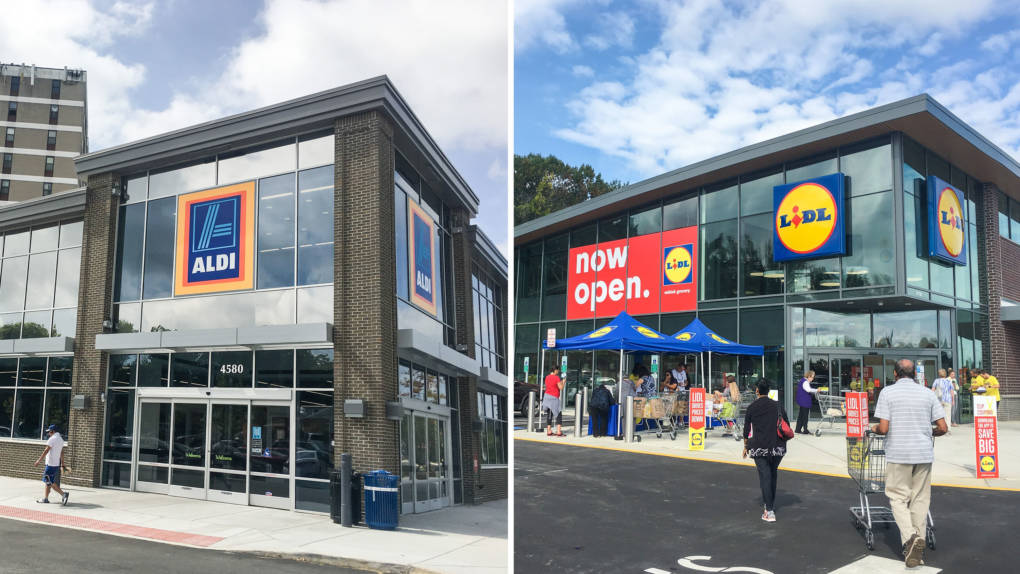
"caption": "German grocers Aldi and Lidl are aggressively growing their U.S. footprint. Aldi, which aims to have 2,500 stores by 2022, has recently renovated this store in Alexandria, Va. (left) And Lidl's new location in Manassas, Va., was its 30th in the country.",
"description": "German grocers Aldi and Lidl are aggressively growing their U.S. footprint. Aldi, which aims to have 2,500 stores by 2022, has recently renovated this store in Alexandria, Va. (left) And Lidl's new location in Manassas, Va., was its 30th in the country.",
"title": "German grocers Aldi and Lidl are aggressively growing their U.S. footprint. Aldi, which aims to have 2,500 stores by 2022, has recently renovated this store in Alexandria, Va. (left) And Lidl's new location in Manassas, Va., was its 30th in the country.",
"credit": "Alina Selyukh/NPR",
"status": "inherit",
"isLoading": false,
"fetchFailed": false
}
},
"audioPlayerReducer": {
"postId": "stream_live",
"isPaused": true,
"isPlaying": false,
"pfsActive": false,
"pledgeModalIsOpen": true,
"playerDrawerIsOpen": false,
"liveAudioPlayStartedAt": 0,
"liveAudioPlayContext": ""
},
"authorsReducer": {
"byline_bayareabites_126761": {
"type": "authors",
"id": "byline_bayareabites_126761",
"meta": {
"override": true
},
"slug": "byline_bayareabites_126761",
"name": "Brakkton Booker, Dan Charles, NPR Food",
"isLoading": false
},
"byline_bayareabites_126428": {
"type": "authors",
"id": "byline_bayareabites_126428",
"meta": {
"override": true
},
"slug": "byline_bayareabites_126428",
"name": "Frank Morris \u003ca href=\"http://www.kcur.org/\">KCUR 89.3\u003c/a>, NPR Food",
"isLoading": false
},
"byline_bayareabites_126400": {
"type": "authors",
"id": "byline_bayareabites_126400",
"meta": {
"override": true
},
"slug": "byline_bayareabites_126400",
"name": "Laurel Dalrymple, Selena Simmons-Duffin, NPR Food",
"isLoading": false
},
"byline_bayareabites_126379": {
"type": "authors",
"id": "byline_bayareabites_126379",
"meta": {
"override": true
},
"slug": "byline_bayareabites_126379",
"name": "Mary Louise Kelly, NPR Food",
"isLoading": false
},
"byline_bayareabites_126199": {
"type": "authors",
"id": "byline_bayareabites_126199",
"meta": {
"override": true
},
"slug": "byline_bayareabites_126199",
"name": "Dominique Maria Bonessi",
"isLoading": false
},
"byline_bayareabites_125376": {
"type": "authors",
"id": "byline_bayareabites_125376",
"meta": {
"override": true
},
"slug": "byline_bayareabites_125376",
"name": "\u003ca href=\"https://civileats.com/author/sparker/\">Stephanie Parker\u003c/a>, \u003ca href=\"https://ww2.kqed.org/bayareabites/author/civileat/\">Civil Eats\u003c/a>",
"isLoading": false
},
"byline_bayareabites_124442": {
"type": "authors",
"id": "byline_bayareabites_124442",
"meta": {
"override": true
},
"slug": "byline_bayareabites_124442",
"name": "Dan Charles, \u003cstrong>\u003ca href=\"https://www.npr.org/sections/thesalt/2018/01/16/577649838/turning-soybeans-into-diesel-fuel-is-costing-us-billions\">NPR Food\u003c/a>\u003c/strong>",
"isLoading": false
},
"byline_bayareabites_124284": {
"type": "authors",
"id": "byline_bayareabites_124284",
"meta": {
"override": true
},
"slug": "byline_bayareabites_124284",
"name": "Amy Mayer, \u003cstrong>\u003ca href=\"https://www.npr.org/sections/thesalt/2018/01/04/575368028/youll-be-shelling-out-more-money-for-eggs-in-2018\">NPR Food\u003c/a>\u003c/strong>",
"isLoading": false
},
"byline_bayareabites_122152": {
"type": "authors",
"id": "byline_bayareabites_122152",
"meta": {
"override": true
},
"slug": "byline_bayareabites_122152",
"name": "Marilyn Geewax, the two-way, NPR Food",
"isLoading": false
},
"byline_bayareabites_121175": {
"type": "authors",
"id": "byline_bayareabites_121175",
"meta": {
"override": true
},
"slug": "byline_bayareabites_121175",
"name": "Lisa Morehouse, \u003ca href=\"https://ww2.kqed.org/bayareabites/author/nprfood/\">NPR Food\u003c/a>",
"isLoading": false
},
"byline_bayareabites_121087": {
"type": "authors",
"id": "byline_bayareabites_121087",
"meta": {
"override": true
},
"slug": "byline_bayareabites_121087",
"name": "Alina Selyukh, NPR Food",
"isLoading": false
},
"shelbypope": {
"type": "authors",
"id": "5566",
"meta": {
"index": "authors_1716337520",
"id": "5566",
"found": true
},
"name": "Shelby Pope",
"firstName": "Shelby",
"lastName": "Pope",
"slug": "shelbypope",
"email": "shelbylpope@gmail.com",
"display_author_email": false,
"staff_mastheads": [],
"title": "KQED Contributor",
"bio": "Shelby Pope is a freelance writer living and eating her way through the East Bay. She’s written about food, art and science for publications including the Smithsonian, Lucky Peach, and the Washington Post's pet blog. When she’s not taste testing sourdough bread to find the Bay Area’s best loaf, you can find her on Twitter \u003ca href=\"https://twitter.com/shelbylpope\">@shelbylpope\u003c/a> or at \u003ca href=\"https://shelbypope.com/\">shelbypope.com\u003c/a>",
"avatar": "https://secure.gravatar.com/avatar/df74e904399e45720e48e36c6e1ae7a90c32216eb2c9c82f3b2e1a9641b507d3?s=600&d=blank&r=g",
"twitter": "shelbylpope",
"bluesky": null,
"facebook": null,
"instagram": null,
"linkedin": null,
"sites": [
{
"site": "arts",
"roles": [
"subscriber"
]
},
{
"site": "food",
"roles": [
"subscriber"
]
}
],
"headData": {
"title": "Shelby Pope | KQED",
"description": "KQED Contributor",
"ogImgSrc": "https://secure.gravatar.com/avatar/df74e904399e45720e48e36c6e1ae7a90c32216eb2c9c82f3b2e1a9641b507d3?s=600&d=blank&r=g",
"twImgSrc": "https://secure.gravatar.com/avatar/df74e904399e45720e48e36c6e1ae7a90c32216eb2c9c82f3b2e1a9641b507d3?s=600&d=blank&r=g"
},
"isLoading": false,
"link": "/author/shelbypope"
}
},
"pagesReducer": {
"bayareabites_category_economy-and-food-costs": {
"type": "terms",
"id": "bayareabites_1962",
"meta": {
"index": "terms_1716263798",
"site": "bayareabites",
"id": "1962",
"score": 13.896381
},
"featImg": null,
"name": "economy and food costs",
"description": null,
"taxonomy": "category",
"headData": {
"twImgId": null,
"twTitle": null,
"ogTitle": null,
"ogImgId": null,
"twDescription": null,
"description": null,
"title": "economy and food costs Archives | KQED Bay Area Bites",
"ogDescription": null
},
"ttid": 1488,
"slug": "economy-and-food-costs",
"isLoading": false,
"title": "economy and food costs",
"pageMeta": {
"site": "bayareabites",
"WpPageTemplate": "page-topic-editorial",
"currentPage": 4
},
"blocks": [
{
"blockName": "kqed/post-list",
"attrs": {
"layout": "cardArticle2",
"query": "posts/bayareabites?category=economy-and-food-costs",
"seeMore": false,
"paginated": true,
"page": 4
}
},
{
"blockName": "kqed/ad"
}
]
}
},
"pfsSessionReducer": {},
"postsReducer": {
"stream_live": {
"type": "live",
"id": "stream_live",
"audioUrl": "https://streams.kqed.org/kqedradio",
"title": "Live Stream",
"excerpt": "Live Stream information currently unavailable.",
"link": "/radio",
"featImg": "",
"label": {
"name": "KQED Live",
"link": "/"
}
},
"stream_kqedNewscast": {
"type": "posts",
"id": "stream_kqedNewscast",
"audioUrl": "https://www.kqed.org/.stream/anon/radio/RDnews/newscast.mp3?_=1",
"title": "KQED Newscast",
"featImg": "",
"label": {
"name": "88.5 FM",
"link": "/"
}
},
"bayareabites_126761": {
"type": "posts",
"id": "bayareabites_126761",
"meta": {
"index": "posts_1716263798",
"site": "bayareabites",
"id": "126761",
"score": null,
"sort": [
1523745807000
]
},
"parent": 0,
"labelTerm": {},
"blocks": [],
"publishDate": 1523745807,
"format": "standard",
"disqusTitle": "Republican Farm Bill Calls On Many SNAP Recipients To Work Or Go To School",
"title": "Republican Farm Bill Calls On Many SNAP Recipients To Work Or Go To School",
"headTitle": "Bay Area Bites | KQED Food",
"content": "\u003cp>If Republicans in Congress have their way, millions of people who get food aid through the Supplemental Nutritional Assistance Program (SNAP) will have to find a job or attend job training classes for about 20 hours each week, or lose their benefits.\u003c/p>\n\u003cp>That's the biggest and most controversial part of a Republican-drafted \u003ca href=\"https://agriculture.house.gov/uploadedfiles/agriculture_and_nutrition_act_of_2018.pdf\">Farm Bill\u003c/a> unveiled this week by Michael Conaway, R-Texas, chairman of the Agriculture Committee in the House of Representatives. The rest of Conaway's proposal, however, represents continuity. Existing subsidies for farmers would continue in their current form.\u003c/p>\n\u003cp>Democrats — even those who support subsidies to farmers — are vowing to fight Conaway's draft bill because of its changes to the SNAP program. Collin Peterson D-Minn., the senior Democratic member of the House Agriculture Committee, said the SNAP changes would \"increase food insecurity and hardship.\" He accused his Republican colleagues of breaking up \"the long-standing, bipartisan, urban-rural ... alliance\" that has supported past farm bills.\u003c/p>\n\u003cp>Republicans, though, say the work requirement proposals are meant to assist those who may have fallen on hard times get back on their feet, off public assistance, and into the workforce.\u003c/p>\n\u003cp>\"We believe that breaking this poverty cycle is really important,\" Conaway told reporters at a news conference unveiling the bill Thursday.\u003c/p>\n\u003cp>[ad fullwidth]\u003c/p>\n\u003cp>The legislation calls for able-bodied adults between the ages of 18 and 59 to work or be enrolled in a job-training program for at least 20 hours a week beginning in fiscal year 2021. That minimum number of hours would jump to 25 hours per week starting in fiscal year 2026.\u003c/p>\n\u003cp>Those who violate the work requirements could become ineligible for SNAP benefits for a 12-month period. Subsequent violations could result in three years of lost benefits, \"unless an individual obtains employment sufficient to meet the hourly requirement or is no longer subject to the work requirements at an earlier time,\" and other conditions, according to language in the summary of the bill.\u003c/p>\n\u003cp>The bill also aims to cut down on potential SNAP fraud. It calls for creating a Duplicative Enrollment Database\u003cstrong> \u003c/strong>that would determine who is eligible for benefits and \"to prevent supplemental nutrition assistance program participants from receiving duplicative benefits in multiple states,\" according to the text of the bill.\u003c/p>\n\u003cp>A plan to allow states to implement a \u003ca href=\"https://apnews.com/6f5adff5efeb4f9a9075f76bf9cf5572\">drug testing\u003c/a> program for certain food stamp recipients is not in the draft. But Conaway did not\u003cem> \u003c/em>rule out that one could be added later.\u003c/p>\n\u003cp>\"It's not in the bill base text, but we have some members on the committee who are keenly interested in that,\" Conway said.\u003c/p>\n\u003cp>Earlier this week President Trump signed an \u003ca href=\"https://www.npr.org/2018/04/10/601332980/president-trump-turns-attention-to-welfare-programs\">executive order\u003c/a> calling on federal agencies to strengthen work requirements on public assistance programs.\u003c/p>\n\u003cp>SNAP helps more than \u003ca href=\"https://fns-prod.azureedge.net/sites/default/files/datastatistics/january-performance-report-2018.pdf\">40 million needy individuals\u003c/a>, and nutrition programs account for approximately \u003ca href=\"https://www.ers.usda.gov/topics/farm-economy/farm-commodity-policy/projected-spending-under-the-2014-farm-bill/\">80 percent\u003c/a> of the cost of the current farm bill.\u003c/p>\n\u003cp>Conaway's draft bill does not mention the \u003ca href=\"https://www.npr.org/sections/thesalt/2018/02/12/585130274/trump-administration-wants-to-decide-what-food-snap-recipients-will-get\">idea\u003c/a> — floated by the Trump administration — of distributing a portion of SNAP aid in the form of boxes of nonperishable food, rather than debit cards that people can use to buy food in supermarkets. That idea, put forward in the president's most recent proposed federal budget, was widely criticized by anti-poverty advocates and grocery stores.\u003c/p>\n\u003cp>Traditional multi-billion-dollar programs aimed at supporting farmers, such as federally subsidized crop insurance, are preserved in Conaway's proposal. The vast majority of these subsidies go to the most widely planted crops: corn, cotton, peanuts, rice, soybeans, and wheat. The bill also maintains restrictions on sugar imports that prop up the price of domestically produced sugar.\u003c/p>\n\u003cp>These subsidies have come under increasing criticism in recent years. Public health advocates \u003ca href=\"https://www.heart.org/idc/groups/heart-public/@wcm/@adv/documents/downloadable/ucm_429110.pdf\">say\u003c/a> that government subsidies, if they exist at all, should promote the most nutritious crops, such as vegetables and fruit.\u003c/p>\n\u003cp>Environmentalists, meanwhile, are condemning a provision in Conaway's draft that would amend a completely separate law, one that governs pesticides. Conaway wants to eliminate a requirement that the Environmental Protection Agency consult with the other agencies, such as the Department of Interior, to determine whether a new pesticide could harm threatened or endangered species.\u003c/p>\n\u003cp>In a statement, the \u003ca href=\"http://www.biologicaldiversity.org/\">Center for Biological Diversity\u003c/a> said that this proposed change would \" ignore pesticides' harms to endangered species and eviscerate all meaningful protections for fish, animals and plants under the Endangered Species Act.\"\u003c/p>\n\u003cp>The draft bill proposes other small changes in farm policy that reflect new concerns. It authorizes an expansion in enforcement of the National Organic Program to prevent fraudulent labeling of imports as organic. If passed, it would also authorize more funding to promote farmers' markets, and to fight the growing problem of wild pigs that have been destroying crops in certain areas.\u003c/p>\n\u003cp>The Farm Bill traditionally comes up for renewal every five years. Congress passed the current version in 2014. \u003c/p>\n\u003cp>\u003c/p>\n\u003cp>\u003cem>Copyright 2018 \u003ca href=\"http://www.npr.org/\">NPR\u003c/a>.\u003c/em> \u003c/p>\n\n",
"disqusIdentifier": "126761 https://ww2.kqed.org/bayareabites/?p=126761",
"disqusUrl": "https://ww2.kqed.org/bayareabites/2018/04/14/republican-farm-bill-calls-on-many-snap-recipients-to-work-or-go-to-school/",
"stats": {
"hasVideo": false,
"hasChartOrMap": false,
"hasAudio": false,
"hasPolis": false,
"wordCount": 815,
"hasGoogleForm": false,
"hasGallery": false,
"hasHearkenModule": false,
"iframeSrcs": [],
"paragraphCount": 22
},
"modified": 1523745807,
"excerpt": "Republicans in Congress have released their version of a new Farm Bill. It imposes new requirements on low-income recipients of food assistance, but continues traditional subsidies for farmers.",
"headData": {
"twImgId": "",
"twTitle": "",
"ogTitle": "",
"ogImgId": "",
"twDescription": "",
"description": "Republicans in Congress have released their version of a new Farm Bill. It imposes new requirements on low-income recipients of food assistance, but continues traditional subsidies for farmers.",
"title": "Republican Farm Bill Calls On Many SNAP Recipients To Work Or Go To School | KQED",
"ogDescription": "",
"schema": {
"@context": "https://schema.org",
"@type": "Article",
"headline": "Republican Farm Bill Calls On Many SNAP Recipients To Work Or Go To School",
"datePublished": "2018-04-14T15:43:27-07:00",
"dateModified": "2018-04-14T15:43:27-07:00",
"image": "https://cdn.kqed.org/wp-content/uploads/2020/02/KQED-OG-Image@1x.png"
}
},
"guestAuthors": [],
"slug": "republican-farm-bill-calls-on-many-snap-recipients-to-work-or-go-to-school",
"status": "publish",
"sourceUrl": "https://www.kqed.org/bayareabites/category/politics-activism-food-safety",
"nprApiLink": "http://api.npr.org/query?id=601900588&apiKey=MDAxOTAwOTE4MDEyMTkxMDAzNjczZDljZA004",
"nprByline": "Brakkton Booker, Dan Charles, NPR Food",
"nprStoryDate": "Thu, 12 Apr 2018 19:35:00 -0400",
"nprLastModifiedDate": "Thu, 12 Apr 2018 19:38:55 -0400",
"nprHtmlLink": "https://www.npr.org/sections/thesalt/2018/04/12/601900588/republican-farm-bill-calls-on-some-snap-recipients-to-work-or-go-to-school?ft=nprml&f=601900588",
"nprImageAgency": "AP",
"nprImageCredit": "Seth Wenig",
"source": "Politics, Activism, Food Safety",
"nprStoryId": "601900588",
"nprRetrievedStory": "1",
"nprPubDate": "Thu, 12 Apr 2018 19:38:00 -0400",
"path": "/bayareabites/126761/republican-farm-bill-calls-on-many-snap-recipients-to-work-or-go-to-school",
"audioTrackLength": null,
"parsedContent": [
{
"type": "contentString",
"content": "\u003cdiv class=\"post-body\">\u003cp>\u003cp>If Republicans in Congress have their way, millions of people who get food aid through the Supplemental Nutritional Assistance Program (SNAP) will have to find a job or attend job training classes for about 20 hours each week, or lose their benefits.\u003c/p>\n\u003cp>That's the biggest and most controversial part of a Republican-drafted \u003ca href=\"https://agriculture.house.gov/uploadedfiles/agriculture_and_nutrition_act_of_2018.pdf\">Farm Bill\u003c/a> unveiled this week by Michael Conaway, R-Texas, chairman of the Agriculture Committee in the House of Representatives. The rest of Conaway's proposal, however, represents continuity. Existing subsidies for farmers would continue in their current form.\u003c/p>\n\u003cp>Democrats — even those who support subsidies to farmers — are vowing to fight Conaway's draft bill because of its changes to the SNAP program. Collin Peterson D-Minn., the senior Democratic member of the House Agriculture Committee, said the SNAP changes would \"increase food insecurity and hardship.\" He accused his Republican colleagues of breaking up \"the long-standing, bipartisan, urban-rural ... alliance\" that has supported past farm bills.\u003c/p>\n\u003cp>Republicans, though, say the work requirement proposals are meant to assist those who may have fallen on hard times get back on their feet, off public assistance, and into the workforce.\u003c/p>\n\u003cp>\"We believe that breaking this poverty cycle is really important,\" Conaway told reporters at a news conference unveiling the bill Thursday.\u003c/p>\n\u003cp>\u003c/p>\u003c/div>",
"attributes": {
"named": {},
"numeric": []
}
},
{
"type": "component",
"content": "",
"name": "ad",
"attributes": {
"named": {
"label": "fullwidth"
},
"numeric": [
"fullwidth"
]
}
},
{
"type": "contentString",
"content": "\u003cdiv class=\"post-body\">\u003cp>\u003c/p>\n\u003cp>The legislation calls for able-bodied adults between the ages of 18 and 59 to work or be enrolled in a job-training program for at least 20 hours a week beginning in fiscal year 2021. That minimum number of hours would jump to 25 hours per week starting in fiscal year 2026.\u003c/p>\n\u003cp>Those who violate the work requirements could become ineligible for SNAP benefits for a 12-month period. Subsequent violations could result in three years of lost benefits, \"unless an individual obtains employment sufficient to meet the hourly requirement or is no longer subject to the work requirements at an earlier time,\" and other conditions, according to language in the summary of the bill.\u003c/p>\n\u003cp>The bill also aims to cut down on potential SNAP fraud. It calls for creating a Duplicative Enrollment Database\u003cstrong> \u003c/strong>that would determine who is eligible for benefits and \"to prevent supplemental nutrition assistance program participants from receiving duplicative benefits in multiple states,\" according to the text of the bill.\u003c/p>\n\u003cp>A plan to allow states to implement a \u003ca href=\"https://apnews.com/6f5adff5efeb4f9a9075f76bf9cf5572\">drug testing\u003c/a> program for certain food stamp recipients is not in the draft. But Conaway did not\u003cem> \u003c/em>rule out that one could be added later.\u003c/p>\n\u003cp>\"It's not in the bill base text, but we have some members on the committee who are keenly interested in that,\" Conway said.\u003c/p>\n\u003cp>Earlier this week President Trump signed an \u003ca href=\"https://www.npr.org/2018/04/10/601332980/president-trump-turns-attention-to-welfare-programs\">executive order\u003c/a> calling on federal agencies to strengthen work requirements on public assistance programs.\u003c/p>\n\u003cp>SNAP helps more than \u003ca href=\"https://fns-prod.azureedge.net/sites/default/files/datastatistics/january-performance-report-2018.pdf\">40 million needy individuals\u003c/a>, and nutrition programs account for approximately \u003ca href=\"https://www.ers.usda.gov/topics/farm-economy/farm-commodity-policy/projected-spending-under-the-2014-farm-bill/\">80 percent\u003c/a> of the cost of the current farm bill.\u003c/p>\n\u003cp>Conaway's draft bill does not mention the \u003ca href=\"https://www.npr.org/sections/thesalt/2018/02/12/585130274/trump-administration-wants-to-decide-what-food-snap-recipients-will-get\">idea\u003c/a> — floated by the Trump administration — of distributing a portion of SNAP aid in the form of boxes of nonperishable food, rather than debit cards that people can use to buy food in supermarkets. That idea, put forward in the president's most recent proposed federal budget, was widely criticized by anti-poverty advocates and grocery stores.\u003c/p>\n\u003cp>Traditional multi-billion-dollar programs aimed at supporting farmers, such as federally subsidized crop insurance, are preserved in Conaway's proposal. The vast majority of these subsidies go to the most widely planted crops: corn, cotton, peanuts, rice, soybeans, and wheat. The bill also maintains restrictions on sugar imports that prop up the price of domestically produced sugar.\u003c/p>\n\u003cp>These subsidies have come under increasing criticism in recent years. Public health advocates \u003ca href=\"https://www.heart.org/idc/groups/heart-public/@wcm/@adv/documents/downloadable/ucm_429110.pdf\">say\u003c/a> that government subsidies, if they exist at all, should promote the most nutritious crops, such as vegetables and fruit.\u003c/p>\n\u003cp>Environmentalists, meanwhile, are condemning a provision in Conaway's draft that would amend a completely separate law, one that governs pesticides. Conaway wants to eliminate a requirement that the Environmental Protection Agency consult with the other agencies, such as the Department of Interior, to determine whether a new pesticide could harm threatened or endangered species.\u003c/p>\n\u003cp>In a statement, the \u003ca href=\"http://www.biologicaldiversity.org/\">Center for Biological Diversity\u003c/a> said that this proposed change would \" ignore pesticides' harms to endangered species and eviscerate all meaningful protections for fish, animals and plants under the Endangered Species Act.\"\u003c/p>\n\u003cp>The draft bill proposes other small changes in farm policy that reflect new concerns. It authorizes an expansion in enforcement of the National Organic Program to prevent fraudulent labeling of imports as organic. If passed, it would also authorize more funding to promote farmers' markets, and to fight the growing problem of wild pigs that have been destroying crops in certain areas.\u003c/p>\n\u003cp>The Farm Bill traditionally comes up for renewal every five years. Congress passed the current version in 2014. \u003c/p>\n\u003cp>\u003c/p>\n\u003cp>\u003cem>Copyright 2018 \u003ca href=\"http://www.npr.org/\">NPR\u003c/a>.\u003c/em> \u003c/p>\n\n\u003c/div>\u003c/p>",
"attributes": {
"named": {},
"numeric": []
}
}
],
"link": "/bayareabites/126761/republican-farm-bill-calls-on-many-snap-recipients-to-work-or-go-to-school",
"authors": [
"byline_bayareabites_126761"
],
"categories": [
"bayareabites_1962",
"bayareabites_1874",
"bayareabites_10028",
"bayareabites_2035"
],
"tags": [
"bayareabites_135",
"bayareabites_12707",
"bayareabites_11838"
],
"featImg": "bayareabites_126762",
"label": "source_bayareabites_126761"
},
"bayareabites_126428": {
"type": "posts",
"id": "bayareabites_126428",
"meta": {
"index": "posts_1716263798",
"site": "bayareabites",
"id": "126428",
"score": null,
"sort": [
1522961765000
]
},
"parent": 0,
"labelTerm": {},
"blocks": [],
"publishDate": 1522961765,
"format": "audio",
"disqusTitle": "U.S. Farmers Likely To Be Among Hardest Hit By Chinese Tariffs",
"title": "U.S. Farmers Likely To Be Among Hardest Hit By Chinese Tariffs",
"headTitle": "Bay Area Bites | KQED Food",
"content": "\u003cp>In response to the Trump administration's threats to place tariffs on $50 billion in Chinese goods, China has threatened to sanction $50 billion in U.S. exports, including airplanes, cars and chemicals. These tariffs would also target some of America's most successful exporters — farmers.\u003c/p>\n\u003cp>As the sun was coming up Wednesday, farmers at Betty's Truck Stop near Sweet Springs, Mo., took their coffee with a serving of bad news.\u003c/p>\n\u003cp>\"Beans are down 50 cents overnight, and corn's down 14 [cents] because of this trade thing with China,\" says corn and soybean farmer Jim Bridges. He takes a seat at a large table in the center of the restaurant.\u003c/p>\n\u003cp>https://ondemand.npr.org/anon.npr-mp3/npr/atc/2018/04/20180404_atc_farmers_hardest_hit_by_chinese_tariffs.mp3\u003cbr>\nBridges makes a few calculations and reckons his potential losses are about $50,000.\u003c/p>\n\u003cp>China has threatened to slap tariffs on some of the biggest U.S. crops: corn, soybeans, wheat, cotton and beef. But, Charles Tuckwiller, sitting next to Bridges in a worn jacket, says it's too early to accurately tally the losses.\u003c/p>\n\u003cp>[ad fullwidth]\u003c/p>\n\u003cp>\"It could have an impact on us. Weather probably plays more of a role than that tariff is going to. We have always survived,\" says Tuckwiller with a sigh.\u003c/p>\n\u003cp>The farmers at this table are survivors. They've weathered downturns and massive consolidation in agriculture to become some of the world's most efficient producers. But their survival strategy depends on exports.\u003c/p>\n\u003cp>\"Exports are very important to U.S. agriculture,\" says \u003ca href=\"https://www.econ.iastate.edu/people/david-swenson\">David Swenson\u003c/a>, an economist at Iowa State University. \"We produce significantly more than we can consume here in the United States, and farmers across the United States in all sectors of agriculture depend on exports to maintain price levels.\"\u003c/p>\n\u003cp>China has become the \u003ca href=\"https://www.fas.usda.gov/data/top-us-agricultural-exports-2017\">largest customer\u003c/a> for America's farm products, buying well over $20 billion per year. China bought more than $1 billion in U.S. pork last year. But this week, it threatened a 25 percent tariff on that pork and 15 percent tariffs on a host of farm products grown across a wide swath of the country, \u003ca href=\"https://www.npr.org/sections/thesalt/2018/04/02/598870076/what-chinese-tariffs-targeting-american-crops-will-mean-for-farmers\">including nuts\u003c/a>.\u003c/p>\n\u003cp>\u003ca href=\"http://www.americanpistachios.org\">Richard Matoian\u003c/a>, executive director of American Pistachio Growers, says that 70 percent of U.S. pistachios go into the export market and that more than half of those go straight to China. China also buys a big chunk of the California almond crop, which will be hit hard by tariffs.\u003c/p>\n\u003cp>\"We are generally free traders. We believe in open and free trade,\" says Matoian.\u003c/p>\n\u003cp>And that is a conviction shared by many U.S. farmers from coast to coast. Dr. Ron Prestage is a veterinarian in Camden, S.C., but he also runs Prestage Farms, one of the largest pork and poultry producers in the Unites States. Prestage Farms has been expanding, building a new pork packing plant in Iowa, but projected demand for pork has dropped since the tariff fight began.\u003c/p>\n\u003cp>\"Do I enjoy being in the crosshairs and caught in the middle of this dispute?\" Prestage asks rhetorically. \"[T]he short answer is 'No.' But I understand it.\"\u003c/p>\n\u003cp>Prestage says American farmers and pork producers in particular are automatic targets in trade disputes because they are such strong competitors in the world market.\u003c/p>\n\u003cp>\"And that's not by luck,\" says Prestage. \"That's through a lot of hard work.\"\u003c/p>\n\u003cp>U.S. farm groups have worked long and hard to chip away at trade barriers, and some worry these tariff fights could upend decades of progress.\u003c/p>\n\u003cp>\"Right now we're in a trade skirmish, but probably not in a war. But the concern is, that skirmish could escalate,\" says \u003ca href=\"https://ag.purdue.edu/agecon/Pages/Profile.aspx?strAlias=hurtc\">Christopher Hurt\u003c/a>, a professor of agricultural economics at Purdue University in Indiana.\u003c/p>\n\u003cp>And a trade war with China isn't farmers' only worry. If President Trump follows through with threats to walk away from the North American Free Trade Agreement, U.S. farmers could be pinned down in a trade war on two very punishing fronts. \u003c/p>\n\u003cp>\u003c/p>\n\u003cp>\u003cem>Copyright 2018 \u003ca href=\"http://www.kcur.org/\">KCUR 89.3\u003c/a>.\u003c/em> \u003c/p>\n\n",
"disqusIdentifier": "126428 https://ww2.kqed.org/bayareabites/?p=126428",
"disqusUrl": "https://ww2.kqed.org/bayareabites/2018/04/05/u-s-farmers-likely-to-be-among-hardest-hit-by-chinese-tariffs/",
"stats": {
"hasVideo": false,
"hasChartOrMap": false,
"hasAudio": false,
"hasPolis": false,
"wordCount": 666,
"hasGoogleForm": false,
"hasGallery": false,
"hasHearkenModule": false,
"iframeSrcs": [],
"paragraphCount": 20
},
"modified": 1522961882,
"excerpt": "China's retaliatory tariffs would hit farmers, who rely on exports to keep their business models going, harder than any other group, especially those raising hogs, nuts and fruit.",
"headData": {
"twImgId": "",
"twTitle": "",
"ogTitle": "",
"ogImgId": "",
"twDescription": "",
"description": "China's retaliatory tariffs would hit farmers, who rely on exports to keep their business models going, harder than any other group, especially those raising hogs, nuts and fruit.",
"title": "U.S. Farmers Likely To Be Among Hardest Hit By Chinese Tariffs | KQED",
"ogDescription": "",
"schema": {
"@context": "https://schema.org",
"@type": "Article",
"headline": "U.S. Farmers Likely To Be Among Hardest Hit By Chinese Tariffs",
"datePublished": "2018-04-05T13:56:05-07:00",
"dateModified": "2018-04-05T13:58:02-07:00",
"image": "https://cdn.kqed.org/wp-content/uploads/2020/02/KQED-OG-Image@1x.png"
}
},
"guestAuthors": [],
"slug": "u-s-farmers-likely-to-be-among-hardest-hit-by-chinese-tariffs",
"status": "publish",
"nprApiLink": "http://api.npr.org/query?id=599524681&apiKey=MDAxOTAwOTE4MDEyMTkxMDAzNjczZDljZA004",
"nprStoryDate": "Wed, 04 Apr 2018 21:17:00 -0400",
"nprLastModifiedDate": "Thu, 05 Apr 2018 13:31:23 -0400",
"nprHtmlLink": "https://www.npr.org/sections/thesalt/2018/04/04/599524681/u-s-farmers-likely-among-hardest-hit-by-chinese-tarriffs?ft=nprml&f=599524681",
"nprAudio": "https://ondemand.npr.org/anon.npr-mp3/npr/atc/2018/04/20180404_atc_farmers_hardest_hit_by_chinese_tariffs.mp3?orgId=60&topicId=1053&d=234&p=2&story=599524681&ft=nprml&f=599524681",
"nprImageAgency": "Getty Images",
"source": "Politics, Activism, Food Safety",
"nprAudioM3u": "http://api.npr.org/m3u/1599579338-db1b94.m3u?orgId=60&topicId=1053&d=234&p=2&story=599524681&ft=nprml&f=599524681",
"nprStoryId": "599524681",
"sourceUrl": "https://www.kqed.org/bayareabites/category/politics-activism-food-safety",
"nprByline": "Frank Morris \u003ca href=\"http://www.kcur.org/\">KCUR 89.3\u003c/a>, NPR Food",
"nprImageCredit": "Red Cedicol/EyeEm",
"nprRetrievedStory": "1",
"nprPubDate": "Thu, 05 Apr 2018 13:31:00 -0400",
"path": "/bayareabites/126428/u-s-farmers-likely-to-be-among-hardest-hit-by-chinese-tariffs",
"audioUrl": "https://ondemand.npr.org/anon.npr-mp3/npr/atc/2018/04/20180404_atc_farmers_hardest_hit_by_chinese_tariffs.mp3?orgId=60&topicId=1053&d=234&p=2&story=599524681&ft=nprml&f=599524681",
"audioTrackLength": null,
"parsedContent": [
{
"type": "contentString",
"content": "\u003cdiv class=\"post-body\">\u003cp>\u003cp>In response to the Trump administration's threats to place tariffs on $50 billion in Chinese goods, China has threatened to sanction $50 billion in U.S. exports, including airplanes, cars and chemicals. These tariffs would also target some of America's most successful exporters — farmers.\u003c/p>\n\u003cp>As the sun was coming up Wednesday, farmers at Betty's Truck Stop near Sweet Springs, Mo., took their coffee with a serving of bad news.\u003c/p>\n\u003cp>\"Beans are down 50 cents overnight, and corn's down 14 [cents] because of this trade thing with China,\" says corn and soybean farmer Jim Bridges. He takes a seat at a large table in the center of the restaurant.\u003c/p>\n\u003cp>\u003c/p>\u003c/div>",
"attributes": {
"named": {},
"numeric": []
}
},
{
"type": "component",
"content": "",
"name": "nprOneAudioLink",
"attributes": {
"named": {
"src": "https://ondemand.npr.org/anon.npr-mp3/npr/atc/2018/04/20180404_atc_farmers_hardest_hit_by_chinese_tariffs.mp3"
},
"numeric": []
}
},
{
"type": "contentString",
"content": "\u003cdiv class=\"post-body\">\u003cp>\u003cbr>\nBridges makes a few calculations and reckons his potential losses are about $50,000.\u003c/p>\n\u003cp>China has threatened to slap tariffs on some of the biggest U.S. crops: corn, soybeans, wheat, cotton and beef. But, Charles Tuckwiller, sitting next to Bridges in a worn jacket, says it's too early to accurately tally the losses.\u003c/p>\n\u003cp>\u003c/p>\u003c/div>",
"attributes": {
"named": {},
"numeric": []
}
},
{
"type": "component",
"content": "",
"name": "ad",
"attributes": {
"named": {
"label": "fullwidth"
},
"numeric": [
"fullwidth"
]
}
},
{
"type": "contentString",
"content": "\u003cdiv class=\"post-body\">\u003cp>\u003c/p>\n\u003cp>\"It could have an impact on us. Weather probably plays more of a role than that tariff is going to. We have always survived,\" says Tuckwiller with a sigh.\u003c/p>\n\u003cp>The farmers at this table are survivors. They've weathered downturns and massive consolidation in agriculture to become some of the world's most efficient producers. But their survival strategy depends on exports.\u003c/p>\n\u003cp>\"Exports are very important to U.S. agriculture,\" says \u003ca href=\"https://www.econ.iastate.edu/people/david-swenson\">David Swenson\u003c/a>, an economist at Iowa State University. \"We produce significantly more than we can consume here in the United States, and farmers across the United States in all sectors of agriculture depend on exports to maintain price levels.\"\u003c/p>\n\u003cp>China has become the \u003ca href=\"https://www.fas.usda.gov/data/top-us-agricultural-exports-2017\">largest customer\u003c/a> for America's farm products, buying well over $20 billion per year. China bought more than $1 billion in U.S. pork last year. But this week, it threatened a 25 percent tariff on that pork and 15 percent tariffs on a host of farm products grown across a wide swath of the country, \u003ca href=\"https://www.npr.org/sections/thesalt/2018/04/02/598870076/what-chinese-tariffs-targeting-american-crops-will-mean-for-farmers\">including nuts\u003c/a>.\u003c/p>\n\u003cp>\u003ca href=\"http://www.americanpistachios.org\">Richard Matoian\u003c/a>, executive director of American Pistachio Growers, says that 70 percent of U.S. pistachios go into the export market and that more than half of those go straight to China. China also buys a big chunk of the California almond crop, which will be hit hard by tariffs.\u003c/p>\n\u003cp>\"We are generally free traders. We believe in open and free trade,\" says Matoian.\u003c/p>\n\u003cp>And that is a conviction shared by many U.S. farmers from coast to coast. Dr. Ron Prestage is a veterinarian in Camden, S.C., but he also runs Prestage Farms, one of the largest pork and poultry producers in the Unites States. Prestage Farms has been expanding, building a new pork packing plant in Iowa, but projected demand for pork has dropped since the tariff fight began.\u003c/p>\n\u003cp>\"Do I enjoy being in the crosshairs and caught in the middle of this dispute?\" Prestage asks rhetorically. \"[T]he short answer is 'No.' But I understand it.\"\u003c/p>\n\u003cp>Prestage says American farmers and pork producers in particular are automatic targets in trade disputes because they are such strong competitors in the world market.\u003c/p>\n\u003cp>\"And that's not by luck,\" says Prestage. \"That's through a lot of hard work.\"\u003c/p>\n\u003cp>U.S. farm groups have worked long and hard to chip away at trade barriers, and some worry these tariff fights could upend decades of progress.\u003c/p>\n\u003cp>\"Right now we're in a trade skirmish, but probably not in a war. But the concern is, that skirmish could escalate,\" says \u003ca href=\"https://ag.purdue.edu/agecon/Pages/Profile.aspx?strAlias=hurtc\">Christopher Hurt\u003c/a>, a professor of agricultural economics at Purdue University in Indiana.\u003c/p>\n\u003cp>And a trade war with China isn't farmers' only worry. If President Trump follows through with threats to walk away from the North American Free Trade Agreement, U.S. farmers could be pinned down in a trade war on two very punishing fronts. \u003c/p>\n\u003cp>\u003c/p>\n\u003cp>\u003cem>Copyright 2018 \u003ca href=\"http://www.kcur.org/\">KCUR 89.3\u003c/a>.\u003c/em> \u003c/p>\n\n\u003c/div>\u003c/p>",
"attributes": {
"named": {},
"numeric": []
}
}
],
"link": "/bayareabites/126428/u-s-farmers-likely-to-be-among-hardest-hit-by-chinese-tariffs",
"authors": [
"byline_bayareabites_126428"
],
"categories": [
"bayareabites_1962",
"bayareabites_1874",
"bayareabites_10028",
"bayareabites_2035"
],
"tags": [
"bayareabites_272",
"bayareabites_16094",
"bayareabites_11393",
"bayareabites_16091"
],
"featImg": "bayareabites_126429",
"label": "source_bayareabites_126428"
},
"bayareabites_126400": {
"type": "posts",
"id": "bayareabites_126400",
"meta": {
"index": "posts_1716263798",
"site": "bayareabites",
"id": "126400",
"score": null,
"sort": [
1522790958000
]
},
"parent": 0,
"labelTerm": {},
"blocks": [],
"publishDate": 1522790958,
"format": "standard",
"disqusTitle": "Food, Housing Insecurity May Be Keeping College Students From Graduating",
"title": "Food, Housing Insecurity May Be Keeping College Students From Graduating",
"headTitle": "Bay Area Bites | KQED Food",
"content": "\u003cp>In college, it's hard to learn while you're hungry.\u003c/p>\n\u003cp>That's a message Temple University higher education policy professor Sara Goldrick-Rab has been getting throughout her career.\u003c/p>\n\u003cp>She self-identifies as a \"scholar activist.\" She has advocated for free college, and in 2013 she founded the \u003ca href=\"http://wihopelab.com/index.html\">Wisconsin HOPE Lab\u003c/a>, which aims to turn research about low-income students into policies that improve equitable outcomes in post-secondary education.\u003c/p>\n\u003cp>On Tuesday, the HOPE lab released a new report based on an online survey of more than 40,000 students at 66 community colleges and universities.\u003c/p>\n\u003cp>Among the findings: In the past 30 days, 36 percent of university students and 42 percent of community college students felt food insecure, which \"means that students have trouble getting enough to eat on a daily basis,\" Goldrick-Rab says. \"They may go without meals, they may lose weight and they may go without nutritious food.\"\u003c/p>\n\u003cp>[ad fullwidth]\u003c/p>\n\u003cp>She spoke with \u003cem>All Things Considered\u003c/em> host Audie Cornish about the report, and the challenges ahead. Excerpts of their conversation are transcribed below, edited for length and clarity.\u003c/p>\n\u003cp>https://ondemand.npr.org/anon.npr-mp3/npr/atc/2018/04/20180403_atc_food_housing_insecurity_may_be_keeping_college_students_from_graduating.mp3\u003c/p>\n\u003cp>\u003cstrong>Because people volunteered to participate in this survey, it's a self-selecting group. Does it really represent what's going on in higher education right now?\u003c/strong>\u003c/p>\n\u003cp>There are no nationally representative studies available to look at these problems. The federal government is the only one who collects that sort of information on college students, and they don't ask a single question about food or housing insecurity. So the only way we can get information about this is by asking colleges' permission to survey their students. This is an area of research that receives almost no funding.\u003c/p>\n\u003cp>In our survey, we used the U.S. Department of Agriculture's standardized measure of food security with everybody all over the world. We asked college students the exact same set of questions. We asked them about things that have happened to them in the past 30 days, and the extent to which they agree with statements like: I have not had enough food to eat because of lack of money. I have lost weight because I have not eaten enough. I have skipped meals.\u003c/p>\n\u003cp>\u003cstrong>What's the effect on low-income students?\u003c/strong>\u003c/p>\n\u003cp>It really undermines their ability to do well in school. They try incredibly hard, when we look at how much time they spend in the classroom and studying. It's the same as for students who don't have these problems, but their grades suffer, their test scores appear to be lower, and overall their chances of graduating are slimmer. They can barely escape the conditions of poverty long enough to complete their degrees.\u003c/p>\n\u003cp>\u003cstrong>Would this matter if they were in school or not?\u003c/strong>\u003c/p>\n\u003cp>Part of what we're seeing here is people who appear to be pushed downward, who are struggling more, because they're also grappling with the high price of higher education. And some of them — including people who, frankly, look middle class — are now struggling with food or housing insecurity because their resources pale in comparison to those high college prices. So they really wouldn't be going through these issues if they weren't in college.\u003c/p>\n\u003cp>\u003cstrong>Many of the schools in the study are community colleges, and they are tasked with one thing: to educate. Are you saying that they need to do more, and why should they?\u003c/strong>\u003c/p>\n\u003cp>I'm not suggesting that colleges become social service agencies, but rather, in support of their main focus — which is to help students graduate — they may need to undertake partnerships and develop resources in conjunction with social service agencies. For example, in K-12 education we don't merely provide free public education. We also have a national school lunch program. We also work with housing authorities to provide subsidized housing to students. We also provide subsidized transportation, so that students can actually get to school. Most of those sorts of things are currently missing in higher education, and they're going to need to be brought to the table if we want people to graduate.\u003c/p>\n\u003cp>\u003cstrong>Aren't they missing because these are ostensibly adults that we're talking about? At a certain point, are we saying, \"You need to provide for yourself\"?\u003c/strong>\u003c/p>\n\u003cp>I think that's mostly right except for one thing. These days, college has become the new high school. It's very difficult to get into the workforce without first getting a degree. So I don't think it's a question of whether we're supporting a child or an adult, but rather whether we're supporting a hardworking, talented person who is trying to become economically sufficient.\u003c/p>\n\u003cp>\u003cstrong>Is the problem getting worse?\u003c/strong>\u003c/p>\n\u003cp>We really don't know if the problem is getting worse because no one is systematically collecting data on the same sorts of people at the same colleges over time. There is no good trend data.\u003c/p>\n\u003cp>But the conditions that are leading to these problems do appear to be hard, and harder perhaps than they've been in the prior decades. For example, families clearly don't have enough money to live on these days. The social safety net is not nearly as supportive as it used to be. And work is extremely hard to find, particularly good-paying work for part-time workers.\u003c/p>\n\u003cp>\u003cem>The full report can be found \u003ca href=\"http://wihopelab.com/publications/Wisconsin-HOPE-Lab-Still-Hungry-and-Homeless.pdf\">here.\u003c/a>\u003c/em> \u003c/p>\n\u003cp>\u003c/p>\n\u003cp> \u003cem>Copyright 2018 \u003ca href=\"http://www.npr.org/\">NPR\u003c/a>.\u003c/em>\u003c/p>\n\n",
"disqusIdentifier": "126400 https://ww2.kqed.org/bayareabites/?p=126400",
"disqusUrl": "https://ww2.kqed.org/bayareabites/2018/04/03/food-housing-insecurity-may-be-keeping-college-students-from-graduating/",
"stats": {
"hasVideo": false,
"hasChartOrMap": false,
"hasAudio": false,
"hasPolis": false,
"wordCount": 915,
"hasGoogleForm": false,
"hasGallery": false,
"hasHearkenModule": false,
"iframeSrcs": [],
"paragraphCount": 24
},
"modified": 1522953654,
"excerpt": "A new survey finds that many students at universities and community colleges are struggling to pay for basic needs — and that's hampering their ability to learn and complete their degrees.",
"headData": {
"twImgId": "",
"twTitle": "",
"ogTitle": "",
"ogImgId": "",
"twDescription": "",
"description": "A new survey finds that many students at universities and community colleges are struggling to pay for basic needs — and that's hampering their ability to learn and complete their degrees.",
"title": "Food, Housing Insecurity May Be Keeping College Students From Graduating | KQED",
"ogDescription": "",
"schema": {
"@context": "https://schema.org",
"@type": "Article",
"headline": "Food, Housing Insecurity May Be Keeping College Students From Graduating",
"datePublished": "2018-04-03T14:29:18-07:00",
"dateModified": "2018-04-05T11:40:54-07:00",
"image": "https://cdn.kqed.org/wp-content/uploads/2020/02/KQED-OG-Image@1x.png"
}
},
"guestAuthors": [],
"slug": "food-housing-insecurity-may-be-keeping-college-students-from-graduating",
"status": "publish",
"nprApiLink": "http://api.npr.org/query?id=599198739&apiKey=MDAxOTAwOTE4MDEyMTkxMDAzNjczZDljZA004",
"nprStoryDate": "Tue, 03 Apr 2018 16:21:00 -0400",
"nprLastModifiedDate": "Tue, 03 Apr 2018 16:27:13 -0400",
"nprHtmlLink": "https://www.npr.org/sections/thesalt/2018/04/03/599198739/food-housing-insecurity-may-be-keeping-college-students-from-graduating?ft=nprml&f=599198739",
"nprAudio": "https://ondemand.npr.org/anon.npr-mp3/npr/atc/2018/04/20180403_atc_food_housing_insecurity_may_be_keeping_college_students_from_graduating.mp3?orgId=1&topicId=1128&d=245&p=2&story=599198739&ft=nprml&f=599198739",
"nprImageAgency": "The Washington Post/Getty Images",
"source": "Food Banks, Hunger, Volunteer",
"nprAudioM3u": "http://api.npr.org/m3u/1599240798-a808c1.m3u?orgId=1&topicId=1128&d=245&p=2&story=599198739&ft=nprml&f=599198739",
"nprStoryId": "599198739",
"sourceUrl": "https://www.kqed.org/bayareabites/category/food-banks-hunger-volunteer",
"nprByline": "Laurel Dalrymple, Selena Simmons-Duffin, NPR Food",
"nprImageCredit": "The Washington Post",
"nprRetrievedStory": "1",
"nprPubDate": "Tue, 03 Apr 2018 17:12:00 -0400",
"path": "/bayareabites/126400/food-housing-insecurity-may-be-keeping-college-students-from-graduating",
"audioUrl": "https://ondemand.npr.org/anon.npr-mp3/npr/atc/2018/04/20180403_atc_food_housing_insecurity_may_be_keeping_college_students_from_graduating.mp3?orgId=1&topicId=1128&d=245&p=2&story=599198739&ft=nprml&f=599198739",
"audioTrackLength": null,
"parsedContent": [
{
"type": "contentString",
"content": "\u003cdiv class=\"post-body\">\u003cp>\u003cp>In college, it's hard to learn while you're hungry.\u003c/p>\n\u003cp>That's a message Temple University higher education policy professor Sara Goldrick-Rab has been getting throughout her career.\u003c/p>\n\u003cp>She self-identifies as a \"scholar activist.\" She has advocated for free college, and in 2013 she founded the \u003ca href=\"http://wihopelab.com/index.html\">Wisconsin HOPE Lab\u003c/a>, which aims to turn research about low-income students into policies that improve equitable outcomes in post-secondary education.\u003c/p>\n\u003cp>On Tuesday, the HOPE lab released a new report based on an online survey of more than 40,000 students at 66 community colleges and universities.\u003c/p>\n\u003cp>Among the findings: In the past 30 days, 36 percent of university students and 42 percent of community college students felt food insecure, which \"means that students have trouble getting enough to eat on a daily basis,\" Goldrick-Rab says. \"They may go without meals, they may lose weight and they may go without nutritious food.\"\u003c/p>\n\u003cp>\u003c/p>\u003c/div>",
"attributes": {
"named": {},
"numeric": []
}
},
{
"type": "component",
"content": "",
"name": "ad",
"attributes": {
"named": {
"label": "fullwidth"
},
"numeric": [
"fullwidth"
]
}
},
{
"type": "contentString",
"content": "\u003cdiv class=\"post-body\">\u003cp>\u003c/p>\n\u003cp>She spoke with \u003cem>All Things Considered\u003c/em> host Audie Cornish about the report, and the challenges ahead. Excerpts of their conversation are transcribed below, edited for length and clarity.\u003c/p>\n\u003cp>\u003c/p>\u003c/div>",
"attributes": {
"named": {},
"numeric": []
}
},
{
"type": "component",
"content": "",
"name": "nprOneAudioLink",
"attributes": {
"named": {
"src": "https://ondemand.npr.org/anon.npr-mp3/npr/atc/2018/04/20180403_atc_food_housing_insecurity_may_be_keeping_college_students_from_graduating.mp3"
},
"numeric": []
}
},
{
"type": "contentString",
"content": "\u003cdiv class=\"post-body\">\u003cp>\u003c/p>\n\u003cp>\u003cstrong>Because people volunteered to participate in this survey, it's a self-selecting group. Does it really represent what's going on in higher education right now?\u003c/strong>\u003c/p>\n\u003cp>There are no nationally representative studies available to look at these problems. The federal government is the only one who collects that sort of information on college students, and they don't ask a single question about food or housing insecurity. So the only way we can get information about this is by asking colleges' permission to survey their students. This is an area of research that receives almost no funding.\u003c/p>\n\u003cp>In our survey, we used the U.S. Department of Agriculture's standardized measure of food security with everybody all over the world. We asked college students the exact same set of questions. We asked them about things that have happened to them in the past 30 days, and the extent to which they agree with statements like: I have not had enough food to eat because of lack of money. I have lost weight because I have not eaten enough. I have skipped meals.\u003c/p>\n\u003cp>\u003cstrong>What's the effect on low-income students?\u003c/strong>\u003c/p>\n\u003cp>It really undermines their ability to do well in school. They try incredibly hard, when we look at how much time they spend in the classroom and studying. It's the same as for students who don't have these problems, but their grades suffer, their test scores appear to be lower, and overall their chances of graduating are slimmer. They can barely escape the conditions of poverty long enough to complete their degrees.\u003c/p>\n\u003cp>\u003cstrong>Would this matter if they were in school or not?\u003c/strong>\u003c/p>\n\u003cp>Part of what we're seeing here is people who appear to be pushed downward, who are struggling more, because they're also grappling with the high price of higher education. And some of them — including people who, frankly, look middle class — are now struggling with food or housing insecurity because their resources pale in comparison to those high college prices. So they really wouldn't be going through these issues if they weren't in college.\u003c/p>\n\u003cp>\u003cstrong>Many of the schools in the study are community colleges, and they are tasked with one thing: to educate. Are you saying that they need to do more, and why should they?\u003c/strong>\u003c/p>\n\u003cp>I'm not suggesting that colleges become social service agencies, but rather, in support of their main focus — which is to help students graduate — they may need to undertake partnerships and develop resources in conjunction with social service agencies. For example, in K-12 education we don't merely provide free public education. We also have a national school lunch program. We also work with housing authorities to provide subsidized housing to students. We also provide subsidized transportation, so that students can actually get to school. Most of those sorts of things are currently missing in higher education, and they're going to need to be brought to the table if we want people to graduate.\u003c/p>\n\u003cp>\u003cstrong>Aren't they missing because these are ostensibly adults that we're talking about? At a certain point, are we saying, \"You need to provide for yourself\"?\u003c/strong>\u003c/p>\n\u003cp>I think that's mostly right except for one thing. These days, college has become the new high school. It's very difficult to get into the workforce without first getting a degree. So I don't think it's a question of whether we're supporting a child or an adult, but rather whether we're supporting a hardworking, talented person who is trying to become economically sufficient.\u003c/p>\n\u003cp>\u003cstrong>Is the problem getting worse?\u003c/strong>\u003c/p>\n\u003cp>We really don't know if the problem is getting worse because no one is systematically collecting data on the same sorts of people at the same colleges over time. There is no good trend data.\u003c/p>\n\u003cp>But the conditions that are leading to these problems do appear to be hard, and harder perhaps than they've been in the prior decades. For example, families clearly don't have enough money to live on these days. The social safety net is not nearly as supportive as it used to be. And work is extremely hard to find, particularly good-paying work for part-time workers.\u003c/p>\n\u003cp>\u003cem>The full report can be found \u003ca href=\"http://wihopelab.com/publications/Wisconsin-HOPE-Lab-Still-Hungry-and-Homeless.pdf\">here.\u003c/a>\u003c/em> \u003c/p>\n\u003cp>\u003c/p>\n\u003cp> \u003cem>Copyright 2018 \u003ca href=\"http://www.npr.org/\">NPR\u003c/a>.\u003c/em>\u003c/p>\n\n\u003c/div>\u003c/p>",
"attributes": {
"named": {},
"numeric": []
}
}
],
"link": "/bayareabites/126400/food-housing-insecurity-may-be-keeping-college-students-from-graduating",
"authors": [
"byline_bayareabites_126400"
],
"categories": [
"bayareabites_1962",
"bayareabites_3032",
"bayareabites_10028",
"bayareabites_1245"
],
"tags": [
"bayareabites_13313",
"bayareabites_11439"
],
"featImg": "bayareabites_126401",
"label": "source_bayareabites_126400"
},
"bayareabites_126379": {
"type": "posts",
"id": "bayareabites_126379",
"meta": {
"index": "posts_1716263798",
"site": "bayareabites",
"id": "126379",
"score": null,
"sort": [
1522706889000
]
},
"parent": 0,
"labelTerm": {
"site": "bayareabites"
},
"blocks": [],
"publishDate": 1522706889,
"format": "audio",
"disqusTitle": "What Chinese Tariffs Targeting American Crops Will Mean For Farmers",
"title": "What Chinese Tariffs Targeting American Crops Will Mean For Farmers",
"headTitle": "Bay Area Bites | KQED Food",
"content": "\u003cp>Today, the Chinese government announced tariffs on 128 American products, including food. Pork will be taxed 25 percent, and wine, dried fruit, and nuts are now subject to a 15 percent duty.\u003c/p>\n\u003cp>The announcement comes in response to the tariffs President Trump recently imposed on steel and aluminum. Trade officials from each country are negotiating, and it's not yet clear how long the duties will be in effect, or what the lasting impact will be for American producers and growers.\u003c/p>\n\u003cp>But for businesses who already have shipments in transit, there are immediate effects. NPR's Mary Louise Kelly spoke with someone whose business is already feeling the tariffs directly. \u003ca href=\"http://www.meridiangrowers.com/team/\">Jim Zion\u003c/a>, managing partner at Meridian Growers in Fresno, Calif., distributes almonds, pistachios, and pecans to markets like China.\u003c/p>\n\u003cp>https://ondemand.npr.org/anon.npr-mp3/npr/atc/2018/04/20180402_atc_what_chinese_tariffs_targeting_american_crops_will_mean_for_farmers_.mp3\u003c/p>\n\u003cp>Questions and answers have been edited for length and clarity.\u003c/p>\n\u003cp>[ad fullwidth]\u003c/p>\n\u003cp>\u003cstrong>How many nuts does California sell to China? \u003c/strong>\u003c/p>\n\u003cp>In any given year, California exports anywhere between 60 to 70 percent of its almonds, pistachios, and walnuts. Arizona exports about the same amount of its pistachios and pecans. China has been one of the largest markets for the last few years. At one time, one out of every four pistachios grown in California was destined for China.\u003c/p>\n\u003cp>\u003cstrong>How big a deal will this 15 percent tariff be for your business?\u003c/strong>\u003c/p>\n\u003cp>For anything that we were shipping, that's what we call \"on the water\" — in transit to China — we will have to ask our buyers how they would like to handle the additional cost, because obviously this wasn't factored in when we made the original contract.\u003c/p>\n\u003cp>Either we're going to have to give them a discount to cover this additional cost, or, if we can't come up with an agreement, we will divert those containers to another destination that doesn't have a tariff. If we can't do that, we'll have to bring them back. Regardless, this will definitely cost us some money out of our pocket to take care of these issues.\u003c/p>\n\u003cp>\u003cstrong>Do you have an estimate for how much money this will cost?\u003c/strong>\u003c/p>\n\u003cp>Pistachios today are selling for about $3.50 a pound on a wholesale basis. So 15 percent of that would be around $0.50 a pound, which, in a container of 44,000 pounds is about $22,000.\u003c/p>\n\u003cp>If we have to divert that load to another destination, that could cost us anywhere from $2,000 to $4,000.\u003c/p>\n\u003cp>And if we have to bring it back, anytime we bring a container back to the United States, by the time we bring it back and go through customs and everything, that additional cost could be $10,000. So out of pocket this could cost us anywhere from $5,000 to $25,000 per container.\u003c/p>\n\u003cp>\u003cstrong>And you're describing not just an economic cost but a bureaucratic hassle, having to renegotiate deals you thought were done. \u003c/strong>\u003c/p>\n\u003cp>Exactly. We've been doing business with many of our customers for many years, so we'll be able to work through this, but this is something that neither one of us wants.\u003c/p>\n\u003cp>We're being optimistic that this will not last forever, and at some point a settlement on this trade dispute will be negotiated, so we can get back to doing business, which is what all of us want to do anyway.\u003c/p>\n\u003cp>\u003cstrong>You work with growers across California's Central Valley — what are you hearing from them? \u003c/strong>\u003c/p>\n\u003cp>They're concerned. We were concerned when we found out about the steel and aluminum tariffs.\u003c/p>\n\u003cp>Typically, in trade disputes, the first round hits what I call specialty crops — dried fruits and nuts is what affects us — they tend to be easy targets. We tend to be the first victims in any type of trade dispute, and once again, that's proven to be correct.\u003c/p>\n\u003cp>\u003cstrong>You're saying, pardon the pun, but you're low-hanging fruit. \u003c/strong>\u003c/p>\n\u003cp>Exactly, we are considered a nonessential low-hanging fruit. And we kind of knew this was coming — we were hoping it wasn't, but there's not a lot we can do about it.\u003c/p>\n\u003cp>\u003cstrong>To what extent, in your view, are politics part of this? There's been a lot of talk that perhaps these tariffs are designed to hit at areas of the country that have been home to a lot of Trump supporters. \u003c/strong>\u003c/p>\n\u003cp>Politics play a huge part in it. If you look at the Central Valley, it tends to vote Republican, and it's home to some of the largest production of almonds and pistachios in the United States. So it's no coincidence that they hit dried fruits and nuts.\u003c/p>\n\u003cp>\u003cstrong>I wonder what you might say if you could lean down and whisper in the president's ear? \u003c/strong>\u003c/p>\n\u003cp>Unfortunately, crops and agriculture tend to be the pawns in this, and I would say, we can't be. This is our business. So much of what we do goes overseas, we need a coherent trade policy that allows us to do business, allows our customers to buy the product that we have. That's what we want, that's what we need and that's what we're looking forward to: a coherent trade policy in which we can plan going forward.\u003c/p>\n\u003cp>We plant these trees, and these trees will last 25 years — pistachios will last hundreds of years — so we need long-term stability in these marketplaces.\u003c/p>\n\u003cp>\u003cstrong>I understand you're also working the phone to China today. What are you hearing from your contacts there? \u003c/strong>\u003c/p>\n\u003cp>They knew it was coming, they were hoping it wasn't going to happen, and at this point we're trying to wait and find out — is this really going to stick, or is it going to be 24, 48, 72 hours and they go \"OK, we negotiated a settlement?\"\u003c/p>\n\u003cp>Honestly, the next 24 hours is going to be critical. We actually have containers arriving in Asia within the next seven days, so I've gotta make some decisions.\u003c/p>\n\u003cp>\u003cstrong>And the decision you have to make in the next 24 hours is whether or not to divert that shipment and send them somewhere else? \u003c/strong>\u003c/p>\n\u003cp>Divert, renegotiate the contract, or bring back, those are the decisions I have to make.\u003c/p>\n\u003cp>\u003cstrong>If China doesn't get almonds and pistachios and pecans from the U.S., where would they get them from? \u003c/strong>\u003c/p>\n\u003cp>Well, pistachios are grown in Iran, and they will probably pick up their needs from Iran. Australia has been planting a lot of almonds lately, with the worldwide demand. And pecans, you can get pecans from South Africa and Australia.\u003c/p>\n\u003cp>So the bottom line is our customers do have alternatives. They would prefer buying from California, but if the costs are too high or too restrictive, they can switch to another producing country.\u003c/p>\n\u003cp>\u003cem>Menaka Wilhelm and Sam Gringlas contributed to this report.\u003c/em> \u003c/p>\n\u003cp>[ad floatright]\u003c/p>\n\u003cp>\u003cem>Copyright 2018 \u003ca href=\"http://www.npr.org/\">NPR\u003c/a>.\u003c/em> \u003c/p>\n\n",
"disqusIdentifier": "126379 https://ww2.kqed.org/bayareabites/?p=126379",
"disqusUrl": "https://ww2.kqed.org/bayareabites/2018/04/02/what-chinese-tariffs-targeting-american-crops-will-mean-for-farmers/",
"stats": {
"hasVideo": false,
"hasChartOrMap": false,
"hasAudio": false,
"hasPolis": false,
"wordCount": 1168,
"hasGoogleForm": false,
"hasGallery": false,
"hasHearkenModule": false,
"iframeSrcs": [],
"paragraphCount": 38
},
"modified": 1522706889,
"excerpt": "Newly announced Chinese tariffs will raise prices on many U.S. crops. How will that affect American farmers? NPR's Mary Louise Kelley spoke with Jim Zion, a Californian nut distributor, to find out.",
"headData": {
"twImgId": "",
"twTitle": "",
"ogTitle": "",
"ogImgId": "",
"twDescription": "",
"description": "Newly announced Chinese tariffs will raise prices on many U.S. crops. How will that affect American farmers? NPR's Mary Louise Kelley spoke with Jim Zion, a Californian nut distributor, to find out.",
"title": "What Chinese Tariffs Targeting American Crops Will Mean For Farmers | KQED",
"ogDescription": "",
"schema": {
"@context": "https://schema.org",
"@type": "Article",
"headline": "What Chinese Tariffs Targeting American Crops Will Mean For Farmers",
"datePublished": "2018-04-02T15:08:09-07:00",
"dateModified": "2018-04-02T15:08:09-07:00",
"image": "https://cdn.kqed.org/wp-content/uploads/2020/02/KQED-OG-Image@1x.png"
}
},
"guestAuthors": [],
"slug": "what-chinese-tariffs-targeting-american-crops-will-mean-for-farmers",
"status": "publish",
"nprApiLink": "http://api.npr.org/query?id=598870076&apiKey=MDAxOTAwOTE4MDEyMTkxMDAzNjczZDljZA004",
"nprByline": "Mary Louise Kelly, NPR Food",
"nprStoryDate": "Mon, 02 Apr 2018 17:11:00 -0400",
"nprLastModifiedDate": "Mon, 02 Apr 2018 17:15:37 -0400",
"nprHtmlLink": "https://www.npr.org/sections/thesalt/2018/04/02/598870076/what-chinese-tariffs-targeting-american-crops-will-mean-for-farmers?ft=nprml&f=598870076",
"nprAudio": "https://ondemand.npr.org/anon.npr-mp3/npr/atc/2018/04/20180402_atc_what_chinese_tariffs_targeting_american_crops_will_mean_for_farmers_.mp3?orgId=1&topicId=1053&d=270&p=2&story=598870076&ft=nprml&f=598870076",
"nprImageAgency": "Getty Images",
"nprImageCredit": "PM Images",
"nprAudioM3u": "http://api.npr.org/m3u/1598916560-46e72b.m3u?orgId=1&topicId=1053&d=270&p=2&story=598870076&ft=nprml&f=598870076",
"nprStoryId": "598870076",
"nprRetrievedStory": "1",
"nprPubDate": "Mon, 02 Apr 2018 18:03:00 -0400",
"path": "/bayareabites/126379/what-chinese-tariffs-targeting-american-crops-will-mean-for-farmers",
"audioUrl": "https://ondemand.npr.org/anon.npr-mp3/npr/atc/2018/04/20180402_atc_what_chinese_tariffs_targeting_american_crops_will_mean_for_farmers_.mp3?orgId=1&topicId=1053&d=270&p=2&story=598870076&ft=nprml&f=598870076",
"audioTrackLength": null,
"parsedContent": [
{
"type": "contentString",
"content": "\u003cdiv class=\"post-body\">\u003cp>\u003cp>Today, the Chinese government announced tariffs on 128 American products, including food. Pork will be taxed 25 percent, and wine, dried fruit, and nuts are now subject to a 15 percent duty.\u003c/p>\n\u003cp>The announcement comes in response to the tariffs President Trump recently imposed on steel and aluminum. Trade officials from each country are negotiating, and it's not yet clear how long the duties will be in effect, or what the lasting impact will be for American producers and growers.\u003c/p>\n\u003cp>But for businesses who already have shipments in transit, there are immediate effects. NPR's Mary Louise Kelly spoke with someone whose business is already feeling the tariffs directly. \u003ca href=\"http://www.meridiangrowers.com/team/\">Jim Zion\u003c/a>, managing partner at Meridian Growers in Fresno, Calif., distributes almonds, pistachios, and pecans to markets like China.\u003c/p>\n\u003cp>\u003c/p>\u003c/div>",
"attributes": {
"named": {},
"numeric": []
}
},
{
"type": "component",
"content": "",
"name": "nprOneAudioLink",
"attributes": {
"named": {
"src": "https://ondemand.npr.org/anon.npr-mp3/npr/atc/2018/04/20180402_atc_what_chinese_tariffs_targeting_american_crops_will_mean_for_farmers_.mp3"
},
"numeric": []
}
},
{
"type": "contentString",
"content": "\u003cdiv class=\"post-body\">\u003cp>\u003c/p>\n\u003cp>Questions and answers have been edited for length and clarity.\u003c/p>\n\u003cp>\u003c/p>\u003c/div>",
"attributes": {
"named": {},
"numeric": []
}
},
{
"type": "component",
"content": "",
"name": "ad",
"attributes": {
"named": {
"label": "fullwidth"
},
"numeric": [
"fullwidth"
]
}
},
{
"type": "contentString",
"content": "\u003cdiv class=\"post-body\">\u003cp>\u003c/p>\n\u003cp>\u003cstrong>How many nuts does California sell to China? \u003c/strong>\u003c/p>\n\u003cp>In any given year, California exports anywhere between 60 to 70 percent of its almonds, pistachios, and walnuts. Arizona exports about the same amount of its pistachios and pecans. China has been one of the largest markets for the last few years. At one time, one out of every four pistachios grown in California was destined for China.\u003c/p>\n\u003cp>\u003cstrong>How big a deal will this 15 percent tariff be for your business?\u003c/strong>\u003c/p>\n\u003cp>For anything that we were shipping, that's what we call \"on the water\" — in transit to China — we will have to ask our buyers how they would like to handle the additional cost, because obviously this wasn't factored in when we made the original contract.\u003c/p>\n\u003cp>Either we're going to have to give them a discount to cover this additional cost, or, if we can't come up with an agreement, we will divert those containers to another destination that doesn't have a tariff. If we can't do that, we'll have to bring them back. Regardless, this will definitely cost us some money out of our pocket to take care of these issues.\u003c/p>\n\u003cp>\u003cstrong>Do you have an estimate for how much money this will cost?\u003c/strong>\u003c/p>\n\u003cp>Pistachios today are selling for about $3.50 a pound on a wholesale basis. So 15 percent of that would be around $0.50 a pound, which, in a container of 44,000 pounds is about $22,000.\u003c/p>\n\u003cp>If we have to divert that load to another destination, that could cost us anywhere from $2,000 to $4,000.\u003c/p>\n\u003cp>And if we have to bring it back, anytime we bring a container back to the United States, by the time we bring it back and go through customs and everything, that additional cost could be $10,000. So out of pocket this could cost us anywhere from $5,000 to $25,000 per container.\u003c/p>\n\u003cp>\u003cstrong>And you're describing not just an economic cost but a bureaucratic hassle, having to renegotiate deals you thought were done. \u003c/strong>\u003c/p>\n\u003cp>Exactly. We've been doing business with many of our customers for many years, so we'll be able to work through this, but this is something that neither one of us wants.\u003c/p>\n\u003cp>We're being optimistic that this will not last forever, and at some point a settlement on this trade dispute will be negotiated, so we can get back to doing business, which is what all of us want to do anyway.\u003c/p>\n\u003cp>\u003cstrong>You work with growers across California's Central Valley — what are you hearing from them? \u003c/strong>\u003c/p>\n\u003cp>They're concerned. We were concerned when we found out about the steel and aluminum tariffs.\u003c/p>\n\u003cp>Typically, in trade disputes, the first round hits what I call specialty crops — dried fruits and nuts is what affects us — they tend to be easy targets. We tend to be the first victims in any type of trade dispute, and once again, that's proven to be correct.\u003c/p>\n\u003cp>\u003cstrong>You're saying, pardon the pun, but you're low-hanging fruit. \u003c/strong>\u003c/p>\n\u003cp>Exactly, we are considered a nonessential low-hanging fruit. And we kind of knew this was coming — we were hoping it wasn't, but there's not a lot we can do about it.\u003c/p>\n\u003cp>\u003cstrong>To what extent, in your view, are politics part of this? There's been a lot of talk that perhaps these tariffs are designed to hit at areas of the country that have been home to a lot of Trump supporters. \u003c/strong>\u003c/p>\n\u003cp>Politics play a huge part in it. If you look at the Central Valley, it tends to vote Republican, and it's home to some of the largest production of almonds and pistachios in the United States. So it's no coincidence that they hit dried fruits and nuts.\u003c/p>\n\u003cp>\u003cstrong>I wonder what you might say if you could lean down and whisper in the president's ear? \u003c/strong>\u003c/p>\n\u003cp>Unfortunately, crops and agriculture tend to be the pawns in this, and I would say, we can't be. This is our business. So much of what we do goes overseas, we need a coherent trade policy that allows us to do business, allows our customers to buy the product that we have. That's what we want, that's what we need and that's what we're looking forward to: a coherent trade policy in which we can plan going forward.\u003c/p>\n\u003cp>We plant these trees, and these trees will last 25 years — pistachios will last hundreds of years — so we need long-term stability in these marketplaces.\u003c/p>\n\u003cp>\u003cstrong>I understand you're also working the phone to China today. What are you hearing from your contacts there? \u003c/strong>\u003c/p>\n\u003cp>They knew it was coming, they were hoping it wasn't going to happen, and at this point we're trying to wait and find out — is this really going to stick, or is it going to be 24, 48, 72 hours and they go \"OK, we negotiated a settlement?\"\u003c/p>\n\u003cp>Honestly, the next 24 hours is going to be critical. We actually have containers arriving in Asia within the next seven days, so I've gotta make some decisions.\u003c/p>\n\u003cp>\u003cstrong>And the decision you have to make in the next 24 hours is whether or not to divert that shipment and send them somewhere else? \u003c/strong>\u003c/p>\n\u003cp>Divert, renegotiate the contract, or bring back, those are the decisions I have to make.\u003c/p>\n\u003cp>\u003cstrong>If China doesn't get almonds and pistachios and pecans from the U.S., where would they get them from? \u003c/strong>\u003c/p>\n\u003cp>Well, pistachios are grown in Iran, and they will probably pick up their needs from Iran. Australia has been planting a lot of almonds lately, with the worldwide demand. And pecans, you can get pecans from South Africa and Australia.\u003c/p>\n\u003cp>So the bottom line is our customers do have alternatives. They would prefer buying from California, but if the costs are too high or too restrictive, they can switch to another producing country.\u003c/p>\n\u003cp>\u003cem>Menaka Wilhelm and Sam Gringlas contributed to this report.\u003c/em> \u003c/p>\n\u003cp>\u003c/p>\u003c/div>",
"attributes": {
"named": {},
"numeric": []
}
},
{
"type": "component",
"content": "",
"name": "ad",
"attributes": {
"named": {
"label": "floatright"
},
"numeric": [
"floatright"
]
}
},
{
"type": "contentString",
"content": "\u003cdiv class=\"post-body\">\u003cp>\u003c/p>\n\u003cp>\u003cem>Copyright 2018 \u003ca href=\"http://www.npr.org/\">NPR\u003c/a>.\u003c/em> \u003c/p>\n\n\u003c/div>\u003c/p>",
"attributes": {
"named": {},
"numeric": []
}
}
],
"link": "/bayareabites/126379/what-chinese-tariffs-targeting-american-crops-will-mean-for-farmers",
"authors": [
"byline_bayareabites_126379"
],
"categories": [
"bayareabites_1962",
"bayareabites_10028",
"bayareabites_2035"
],
"tags": [
"bayareabites_272",
"bayareabites_16092",
"bayareabites_16091"
],
"featImg": "bayareabites_126380",
"label": "bayareabites"
},
"bayareabites_126199": {
"type": "posts",
"id": "bayareabites_126199",
"meta": {
"index": "posts_1716263798",
"site": "bayareabites",
"id": "126199",
"score": null,
"sort": [
1522190474000
]
},
"parent": 0,
"labelTerm": {},
"blocks": [],
"publishDate": 1522190474,
"format": "standard",
"disqusTitle": "Salvation Army Opens First Grocery Store Ever In Baltimore",
"title": "Salvation Army Opens First Grocery Store Ever In Baltimore",
"headTitle": "Bay Area Bites | KQED Food",
"content": "\u003cp>Nearly a quarter of the residents of Baltimore lack adequate access to healthy food. For many, the nearest grocery stores are mini-marts with limited produce. And, lower incomes impact the ability of people to afford healthier food, according to a \u003ca href=\"https://www.jhsph.edu/research/centers-and-institutes/johns-hopkins-center-for-a-livable-future/_pdf/projects/bal-city-food-env/baltimore-food-environment-digital.pdf\">study\u003c/a> by Johns Hopkins that looked at the regions of the city where the need for more healthy food options is the greatest.\u003c/p>\n\u003cp>https://ondemand.npr.org/anon.npr-mp3/npr/atc/2018/03/20180327_atc_salvation_army_opens_first_grocery_store_ever_in_baltimore.mp3\u003c/p>\n\u003cp>While hunger and access to good food is not a new problem for the city, long-time time religious charity, the Salvation Army, is trying something new to tackle it. The Salvation Army recently opened its first non-profit grocery store in the country in East Baltimore.\u003c/p>\n\u003cp>Lawrence Pollard and his wife, Faith, are shopping at the Salvation Army grocery store for the first time. The store is called \u003ca href=\"https://www.dmgfoods.org\">DMG Foods\u003c/a>, which stands for the Salvation Army's motto, \"Doing the Most Good.\"\u003c/p>\n\u003cp>Pollard looks around and seems impressed. \"So far, so good. It's clean place,\" he says.\u003c/p>\n\u003cp>[ad fullwidth]\u003c/p>\n\u003cp>The 7,000-square foot space looks like your average grocery store. The couple admires the stacks of fresh-looking asparagus, juicy Gala apples, and a variety of lettuce. Lawrence clutches a paper with the store's weekly deal.\u003c/p>\n\u003cp>\"I see a couple of deals already,\" he says, \"especially on the fruits and the salads.\"\u003c/p>\n\u003cp>Now, many grocery stores brag about having the lowest prices, but we checked. The milk, eggs, butter, and canned tuna at DMG are \u003ca href=\"http://wypr.org/post/getting-biggest-bang-your-buck-local-grocery-stores\">50 cents to $3 cheaper\u003c/a> than at the nearest chain grocery store.\u003c/p>\n\u003cp>In addition to offering the usual grocery store experience, DMG Foods also offers nutritional guidance, shopping education, workforce development training, and meal planning.\u003c/p>\n\u003cp>While the store caters to beneficiaries of the Supplemental Nutrition Assistance Program or SNAP, Major Gene Hogg, the Salvation Army's central Maryland commander, says anyone can shop here.\u003c/p>\n\u003cp>\"Our business is not really selling food,\" he says. \"What we're in the business of doing is helping and loving people. And the qualifications to shop here is to walk in the door.\"\u003c/p>\n\u003cp>The Salvation Army decided to go into the food business because, Hogg says, they found a niche where many chain grocery stores could not survive.\u003c/p>\n\u003cp>Hogg says they did research around what they could \"do to sustain a community, rather than entering into it on an as-need-basis.\"\u003c/p>\n\u003cp>\"This is where we live, this is where we minister,\" says Hogg. \"Moving into that space, I think we can make a viable impact into the community.\"\u003c/p>\n\u003cp>The DMG store has some help making products available to its customers. Some of the non-perishable food is donated by the Maryland Food Bank, while produce is bought from a large distributor that sells it to DMG at a steep discount. Since the store opened a couple of weeks ago, Hogg says business so far is good.\u003cstrong>\u003cem>\u003c/em>\u003c/strong>\u003c/p>\n\u003cp>He says the goal is to get to 300 customers in one day. To entice more customers each week, it offers free items for SNAP beneficiaries. This week, the store is giving away 10-pound bags of frozen\u003cstrong> \u003c/strong>chicken.\u003c/p>\n\u003cp>The grocery store is an experiment. Hogg says if it makes enough money beyond expenses, proceeds can go to Salvation Army's home for survivors of human trafficking. \"So not only are you just shopping and meeting your needs for your household, but in the end you could be actually helping someone who could be rescued from human trafficking.\"\u003c/p>\n\u003cp>Over at the cash register, Lawrence and Faith Pollards are ready to check out. They leave the store clutching three full grocery bags. They've only spent about $17.\u003c/p>\n\u003cp>If the store is successful in attracting enough customers, Hogg says the Salvation Army may be able to expand to other parts of Baltimore. And if that works out, it hopes to open in more areas across the country.\u003c/p>\n\u003cp>The Salvation Army has high hopes that the Baltimore DMG store will succeed. Hogg says DMG is not just a motto, it's a promise. \u003c/p>\n\u003cp>\u003c/p>\n\u003cp>\u003cem>Copyright 2018 \u003ca href=\"http://www.wypr.org/\">WYPR - 88.1 FM Baltimore\u003c/a>.\u003c/em> \u003c/p>\n\n",
"disqusIdentifier": "126199 https://ww2.kqed.org/bayareabites/?p=126199",
"disqusUrl": "https://ww2.kqed.org/bayareabites/2018/03/27/salvation-army-opens-first-grocery-store-ever-in-baltimore/",
"stats": {
"hasVideo": false,
"hasChartOrMap": false,
"hasAudio": false,
"hasPolis": false,
"wordCount": 686,
"hasGoogleForm": false,
"hasGallery": false,
"hasHearkenModule": false,
"iframeSrcs": [],
"paragraphCount": 22
},
"modified": 1522190474,
"excerpt": "Long-time religious charity the Salvation Army, known for providing clothing and shelter, is trying a new tactic to help low-income residents in Baltimore — offering them access to healthy food.",
"headData": {
"twImgId": "",
"twTitle": "",
"ogTitle": "",
"ogImgId": "",
"twDescription": "",
"description": "Long-time religious charity the Salvation Army, known for providing clothing and shelter, is trying a new tactic to help low-income residents in Baltimore — offering them access to healthy food.",
"title": "Salvation Army Opens First Grocery Store Ever In Baltimore | KQED",
"ogDescription": "",
"schema": {
"@context": "https://schema.org",
"@type": "Article",
"headline": "Salvation Army Opens First Grocery Store Ever In Baltimore",
"datePublished": "2018-03-27T15:41:14-07:00",
"dateModified": "2018-03-27T15:41:14-07:00",
"image": "https://cdn.kqed.org/wp-content/uploads/2020/02/KQED-OG-Image@1x.png"
}
},
"guestAuthors": [],
"slug": "salvation-army-opens-first-grocery-store-ever-in-baltimore",
"status": "publish",
"nprApiLink": "http://api.npr.org/query?id=597304848&apiKey=MDAxOTAwOTE4MDEyMTkxMDAzNjczZDljZA004",
"nprStoryDate": "Tue, 27 Mar 2018 16:06:00 -0400",
"nprLastModifiedDate": "Tue, 27 Mar 2018 17:58:31 -0400",
"nprHtmlLink": "https://www.npr.org/sections/thesalt/2018/03/27/597304848/salvation-army-opens-first-grocery-store-ever-in-baltimore?ft=nprml&f=597304848",
"nprAudio": "https://ondemand.npr.org/anon.npr-mp3/npr/atc/2018/03/20180327_atc_salvation_army_opens_first_grocery_store_ever_in_baltimore.mp3?orgId=725&topicId=1053&d=211&p=2&story=597304848&ft=nprml&f=597304848",
"nprImageAgency": "dmgfoods.org",
"source": "Economy and Food Costs",
"nprAudioM3u": "http://api.npr.org/m3u/1597390731-40c616.m3u?orgId=725&topicId=1053&d=211&p=2&story=597304848&ft=nprml&f=597304848",
"nprStoryId": "597304848",
"sourceUrl": "https://www.kqed.org/bayareabites/category/economy-and-food-costs",
"nprByline": "Dominique Maria Bonessi",
"nprRetrievedStory": "1",
"nprPubDate": "Tue, 27 Mar 2018 18:21:00 -0400",
"path": "/bayareabites/126199/salvation-army-opens-first-grocery-store-ever-in-baltimore",
"audioUrl": "https://ondemand.npr.org/anon.npr-mp3/npr/atc/2018/03/20180327_atc_salvation_army_opens_first_grocery_store_ever_in_baltimore.mp3?orgId=725&topicId=1053&d=211&p=2&story=597304848&ft=nprml&f=597304848",
"audioTrackLength": null,
"parsedContent": [
{
"type": "contentString",
"content": "\u003cdiv class=\"post-body\">\u003cp>\u003cp>Nearly a quarter of the residents of Baltimore lack adequate access to healthy food. For many, the nearest grocery stores are mini-marts with limited produce. And, lower incomes impact the ability of people to afford healthier food, according to a \u003ca href=\"https://www.jhsph.edu/research/centers-and-institutes/johns-hopkins-center-for-a-livable-future/_pdf/projects/bal-city-food-env/baltimore-food-environment-digital.pdf\">study\u003c/a> by Johns Hopkins that looked at the regions of the city where the need for more healthy food options is the greatest.\u003c/p>\n\u003cp>\u003c/p>\u003c/div>",
"attributes": {
"named": {},
"numeric": []
}
},
{
"type": "component",
"content": "",
"name": "nprOneAudioLink",
"attributes": {
"named": {
"src": "https://ondemand.npr.org/anon.npr-mp3/npr/atc/2018/03/20180327_atc_salvation_army_opens_first_grocery_store_ever_in_baltimore.mp3"
},
"numeric": []
}
},
{
"type": "contentString",
"content": "\u003cdiv class=\"post-body\">\u003cp>\u003c/p>\n\u003cp>While hunger and access to good food is not a new problem for the city, long-time time religious charity, the Salvation Army, is trying something new to tackle it. The Salvation Army recently opened its first non-profit grocery store in the country in East Baltimore.\u003c/p>\n\u003cp>Lawrence Pollard and his wife, Faith, are shopping at the Salvation Army grocery store for the first time. The store is called \u003ca href=\"https://www.dmgfoods.org\">DMG Foods\u003c/a>, which stands for the Salvation Army's motto, \"Doing the Most Good.\"\u003c/p>\n\u003cp>Pollard looks around and seems impressed. \"So far, so good. It's clean place,\" he says.\u003c/p>\n\u003cp>\u003c/p>\u003c/div>",
"attributes": {
"named": {},
"numeric": []
}
},
{
"type": "component",
"content": "",
"name": "ad",
"attributes": {
"named": {
"label": "fullwidth"
},
"numeric": [
"fullwidth"
]
}
},
{
"type": "contentString",
"content": "\u003cdiv class=\"post-body\">\u003cp>\u003c/p>\n\u003cp>The 7,000-square foot space looks like your average grocery store. The couple admires the stacks of fresh-looking asparagus, juicy Gala apples, and a variety of lettuce. Lawrence clutches a paper with the store's weekly deal.\u003c/p>\n\u003cp>\"I see a couple of deals already,\" he says, \"especially on the fruits and the salads.\"\u003c/p>\n\u003cp>Now, many grocery stores brag about having the lowest prices, but we checked. The milk, eggs, butter, and canned tuna at DMG are \u003ca href=\"http://wypr.org/post/getting-biggest-bang-your-buck-local-grocery-stores\">50 cents to $3 cheaper\u003c/a> than at the nearest chain grocery store.\u003c/p>\n\u003cp>In addition to offering the usual grocery store experience, DMG Foods also offers nutritional guidance, shopping education, workforce development training, and meal planning.\u003c/p>\n\u003cp>While the store caters to beneficiaries of the Supplemental Nutrition Assistance Program or SNAP, Major Gene Hogg, the Salvation Army's central Maryland commander, says anyone can shop here.\u003c/p>\n\u003cp>\"Our business is not really selling food,\" he says. \"What we're in the business of doing is helping and loving people. And the qualifications to shop here is to walk in the door.\"\u003c/p>\n\u003cp>The Salvation Army decided to go into the food business because, Hogg says, they found a niche where many chain grocery stores could not survive.\u003c/p>\n\u003cp>Hogg says they did research around what they could \"do to sustain a community, rather than entering into it on an as-need-basis.\"\u003c/p>\n\u003cp>\"This is where we live, this is where we minister,\" says Hogg. \"Moving into that space, I think we can make a viable impact into the community.\"\u003c/p>\n\u003cp>The DMG store has some help making products available to its customers. Some of the non-perishable food is donated by the Maryland Food Bank, while produce is bought from a large distributor that sells it to DMG at a steep discount. Since the store opened a couple of weeks ago, Hogg says business so far is good.\u003cstrong>\u003cem>\u003c/em>\u003c/strong>\u003c/p>\n\u003cp>He says the goal is to get to 300 customers in one day. To entice more customers each week, it offers free items for SNAP beneficiaries. This week, the store is giving away 10-pound bags of frozen\u003cstrong> \u003c/strong>chicken.\u003c/p>\n\u003cp>The grocery store is an experiment. Hogg says if it makes enough money beyond expenses, proceeds can go to Salvation Army's home for survivors of human trafficking. \"So not only are you just shopping and meeting your needs for your household, but in the end you could be actually helping someone who could be rescued from human trafficking.\"\u003c/p>\n\u003cp>Over at the cash register, Lawrence and Faith Pollards are ready to check out. They leave the store clutching three full grocery bags. They've only spent about $17.\u003c/p>\n\u003cp>If the store is successful in attracting enough customers, Hogg says the Salvation Army may be able to expand to other parts of Baltimore. And if that works out, it hopes to open in more areas across the country.\u003c/p>\n\u003cp>The Salvation Army has high hopes that the Baltimore DMG store will succeed. Hogg says DMG is not just a motto, it's a promise. \u003c/p>\n\u003cp>\u003c/p>\n\u003cp>\u003cem>Copyright 2018 \u003ca href=\"http://www.wypr.org/\">WYPR - 88.1 FM Baltimore\u003c/a>.\u003c/em> \u003c/p>\n\n\u003c/div>\u003c/p>",
"attributes": {
"named": {},
"numeric": []
}
}
],
"link": "/bayareabites/126199/salvation-army-opens-first-grocery-store-ever-in-baltimore",
"authors": [
"byline_bayareabites_126199"
],
"categories": [
"bayareabites_1962",
"bayareabites_3032",
"bayareabites_10028",
"bayareabites_1245"
],
"tags": [
"bayareabites_16085",
"bayareabites_16086",
"bayareabites_16084"
],
"featImg": "bayareabites_126200",
"label": "source_bayareabites_126199"
},
"bayareabites_125376": {
"type": "posts",
"id": "bayareabites_125376",
"meta": {
"index": "posts_1716263798",
"site": "bayareabites",
"id": "125376",
"score": null,
"sort": [
1520279041000
]
},
"parent": 0,
"labelTerm": {
"site": "bayareabites"
},
"blocks": [],
"publishDate": 1520279041,
"format": "standard",
"disqusTitle": "Can Food Co-ops Survive the New Retail Reality?",
"title": "Can Food Co-ops Survive the New Retail Reality?",
"headTitle": "Bay Area Bites | KQED Food",
"content": "\u003cp>\u003cem>As mega-retailers like Amazon-Whole Foods and Costco go after their customer base, community grocery stores are being forced to reinvent to stay relevant.\u003c/em>\u003c/p>\n\u003cp>The Good Earth Market food cooperative in Billings, Montana, which opened its doors 23 years ago, closed in October 2017. Over the last few years, the long-loved community market had a hard time keeping up with increasing competition.\u003c/p>\n\u003cp>“Costco and Walmart and Albertsons and everyone has organic,” said Carol Beam, board president of the market for the last 13 years. “We knew what we needed to break even every week, and every week we were anywhere from $8,000 to $10,000 short.”\u003c/p>\n\u003cp>It’s not just in Montana—around the country, food retail is in a state of upheaval. In addition to co-ops being squeezed out of the organic food market they once largely provided, conventional grocery stores are also facing pressure from online retailers. And though food co-ops are no longer the easiest, or even the cheapest, way to access organic and local foods, those that have succeeded for the long haul may offer signs of hope for local economies.\u003c/p>\n\u003cp>C.E. Pugh, the chief operating officer of \u003ca href=\"https://www.ncg.coop/\">National Co+op Grocers\u003c/a> (NCG), a cooperative providing business services for 147 food co-ops in 37 states, said co-ops began seeing a change in their fates starting in 2013. “The conventional grocers got very serious for the first time about natural and organic and added lots of products,” he said. “The impacts manifested themselves almost overnight in 2013.”\u003c/p>\n\u003cp>[ad fullwidth]\u003c/p>\n\u003cp>NCG has seen six cooperatives close since 2012, but has also welcomed 23 new stores in that same period, some of which were newly opened co-ops, and some of which already existed but had not yet joined NCG. The Minnesota-based \u003ca href=\"https://www.fci.coop/\">Food Co-op Initiative\u003c/a>, a nonprofit focused on helping new co-ops open and thrive, supported the launch of \u003ca href=\"https://www.fci.coop/about-us/our-impact/\">134 co-ops in the last 10 years\u003c/a>. Of those, 74 percent are still in business.\u003c/p>\n\u003cfigure id=\"attachment_125383\" class=\"wp-caption aligncenter\" style=\"max-width: 1200px\">\u003cimg src=\"https://ww2.kqed.org/bayareabites/wp-content/uploads/sites/24/2018/03/180228-food-co-ops-top2.jpg\" alt=\"Minnesota’s Cook County Whole Foods Co-op. Tony Webster\" width=\"1200\" height=\"800\" class=\"size-full wp-image-125383\" srcset=\"https://ww2.kqed.org/app/uploads/sites/24/2018/03/180228-food-co-ops-top2.jpg 1200w, https://ww2.kqed.org/app/uploads/sites/24/2018/03/180228-food-co-ops-top2-160x107.jpg 160w, https://ww2.kqed.org/app/uploads/sites/24/2018/03/180228-food-co-ops-top2-800x533.jpg 800w, https://ww2.kqed.org/app/uploads/sites/24/2018/03/180228-food-co-ops-top2-768x512.jpg 768w, https://ww2.kqed.org/app/uploads/sites/24/2018/03/180228-food-co-ops-top2-1020x680.jpg 1020w, https://ww2.kqed.org/app/uploads/sites/24/2018/03/180228-food-co-ops-top2-1180x787.jpg 1180w, https://ww2.kqed.org/app/uploads/sites/24/2018/03/180228-food-co-ops-top2-960x640.jpg 960w, https://ww2.kqed.org/app/uploads/sites/24/2018/03/180228-food-co-ops-top2-240x160.jpg 240w, https://ww2.kqed.org/app/uploads/sites/24/2018/03/180228-food-co-ops-top2-375x250.jpg 375w, https://ww2.kqed.org/app/uploads/sites/24/2018/03/180228-food-co-ops-top2-520x347.jpg 520w\" sizes=\"(max-width: 1200px) 100vw, 1200px\">\u003cfigcaption class=\"wp-caption-text\">Minnesota’s Cook County Whole Foods Co-op. \u003ccite>(\u003ca href=\"https://www.flickr.com/photos/diversey/36200837185/\">Tony Webster\u003c/a>)\u003c/cite>\u003c/figcaption>\u003c/figure>\n\u003cp>While the number of food co-ops in the U.S. is growing overall, some are still struggling against an influx of available local and organic markets. As co-ops face increased competition from mainstream retailers, advocates are considering how to distinguish themselves—and how to adapt to ensure survival.\u003c/p>\n\u003cp>\u003cstrong>The Rise of Organic in Conventional Grocery Stores\u003c/strong>\u003c/p>\n\u003cp>After 40 years, the East Lansing Food Co-op (ELFCO) in East Lansing, Michigan, closed in February 2017. “I have anecdotal evidence that when the co-op was started in the 1970s, there was almost no access to organic food whatsoever,” said Yelena Kalinsky, president of the co-op board during ELFCO’s last year. “Now there are a number of ways.”\u003c/p>\n\u003cp>One of which was likely a Whole Foods, which opened a store in April 2016 a mere 200 yards away from ELFCO. Even besides Whole Foods, there were already other natural grocers in town, such as Fresh Thyme and Foods for Living.\u003c/p>\n\u003cp>“Even Kroger has an organic foods section that’s doing very well,” Kalinsky added. “The positive spin is that we achieved our mission of making organic and local food possible. But after Whole Foods and Fresh Thyme came in, our numbers went down.” In May 2016, sales were \u003ca href=\"http://www.lansingstatejournal.com/story/news/local/2017/01/04/after-40-years-east-lansing-food-co-op-closing/96149472/\">down 20 to 30 percent\u003c/a>over the previous year, which the co-op blamed on stronger competition.\u003c/p>\n\u003cp>Annie Knupfer, professor emeritus of educational studies at Purdue University and author of \u003ca href=\"http://www.cornellpress.cornell.edu/book/?GCOI=80140100986350\">\u003cem>Food Co-ops in America: Community, Consumption, and Economic Democracy\u003c/em>\u003c/a>, acknowledges the abundance of organic food purveyors in today’s marketplace. “I think today the question would be, why a food co-op, when there are so many other options, like farmers’ markets, CSAs, organic food stores,” she said. “Unless you have a strong commitment to the ideals of food co-ops, you have a lot of options.”\u003c/p>\n\u003cp>Pugh of NCG echoed this sentiment when discussing the ways conventional mega-retailers like Costco, Walmart, and Kroger encroached on the organic market. Currently, Costco is the largest retailer of organic food in the U.S., \u003ca href=\"https://www.huffingtonpost.com/entry/costco-organic-produce-farmers-partnership_us_570d0a80e4b01422324a1f6c\">with four billion dollars in annual organic sales in 2015\u003c/a>, while \u003ca href=\"https://www.seattletimes.com/business/retail/costco-becomes-largest-organic-grocer-analysts-say/\">Whole Foods had $3.6 billion\u003c/a>. And in 2017, \u003ca href=\"https://www.reuters.com/article/brief-krogers-organic-produce-sales-achi/brief-krogers-organic-produce-sales-achieve-1-billion-idUSFWN1PR0WZ\">Kroger reportedly broke $1 billion in sales of organic produce.\u003c/a>\u003c/p>\n\u003cp>“This new thing with the conventional [retailers] was kind of insidious, and people didn’t quite see that,” he said. “[Co-op leaders] thought, ‘Our customers won’t go there,’ but they were already there, buying products the co-ops don’t carry, like Charmin. And so they’re there anyway, and then they see organic milk, and they think, ‘Oh that’s a good price.’”\u003c/p>\n\u003cp>\u003cstrong>Distinguishing Co-ops from the Competition\u003c/strong>\u003c/p>\n\u003cp>“Each individual co-op and each individual community has to determine its relevance today,” Pugh said. “There’s no question of what its purpose was 10 to 20 years ago, when it may have been the only source or the best source of organic products. [But] why is it relevant today?”\u003c/p>\n\u003cp>According to Knupfer, one thing co-ops offer is a sense of community and empowerment in decision-making. “You can’t go into a CSA or grocery store and participate,” Knupfer said. “But you can raise concerns at any business. So I think what a co-op needs to provide is a sense of community.”\u003c/p>\n\u003cfigure id=\"attachment_125381\" class=\"wp-caption aligncenter\" style=\"max-width: 800px\">\u003cimg src=\"https://ww2.kqed.org/bayareabites/wp-content/uploads/sites/24/2018/03/180228-food-co-ops-coffee-time.jpg\" alt=\"Coffee time at Ithaca’s Green Star Co-op.\" width=\"800\" height=\"646\" class=\"size-full wp-image-125381\" srcset=\"https://ww2.kqed.org/app/uploads/sites/24/2018/03/180228-food-co-ops-coffee-time.jpg 800w, https://ww2.kqed.org/app/uploads/sites/24/2018/03/180228-food-co-ops-coffee-time-160x129.jpg 160w, https://ww2.kqed.org/app/uploads/sites/24/2018/03/180228-food-co-ops-coffee-time-768x620.jpg 768w, https://ww2.kqed.org/app/uploads/sites/24/2018/03/180228-food-co-ops-coffee-time-240x194.jpg 240w, https://ww2.kqed.org/app/uploads/sites/24/2018/03/180228-food-co-ops-coffee-time-375x303.jpg 375w, https://ww2.kqed.org/app/uploads/sites/24/2018/03/180228-food-co-ops-coffee-time-520x420.jpg 520w\" sizes=\"(max-width: 800px) 100vw, 800px\">\u003cfigcaption class=\"wp-caption-text\">Coffee time at Ithaca’s Green Star Co-op. \u003ccite>(\u003ca href=\"https://www.flickr.com/photos/joeyz51/36409089533/\">Joeyz51\u003c/a>)\u003c/cite>\u003c/figcaption>\u003c/figure>\n\u003cp>Co-ops do this in a number of ways, including hosting community events, organizing local producer fairs, meet-your-farmer events, and other community-building activities. Some co-ops, including the Missoula Food Co-op, which \u003ca href=\"http://missoulanews.com/news/after-a-decade-at-the-burns-st-center-the-missoula/article_d525720e-ca49-11e7-9e88-630ea6e0252d.html\">closed at the end of 2017\u003c/a>, and the highly successful \u003ca href=\"https://www.foodcoop.com/\">Park Slope Food Co-op\u003c/a> in Brooklyn, have tried to build community and lower prices through a worker-owner model. For most of its existence, the Missoula Food Co-op required all members to work in some capacity for at least three hours a month, and only members were supposed to shop at the store.\u003c/p>\n\u003cp>However, this was a controversial policy. The time commitment was a limiting factor for some people who might have otherwise joined and supported the co-op. Kim Gilchrist, a board member at the Missoula Food Co-op, thinks that the worker-member policy hurt the organization in a number of ways. Adding the work requirement on to the store’s out-of-the-way location may have sent potential members to more easily accessible retailers, and she says the co-op didn’t do enough outreach in its neighborhood to be economically sustainable.\u003c/p>\n\u003cp>Gilchrist also believes the worker-owner model might have hurt the co-op through inferior customer service. Worker-owners, not being employees, did not go through a long training, and didn’t have to worry about being fired. When the store opened to non-members, it was still staffed by unpaid, part-time member-owners. The customer service, or lack thereof, became a problem.\u003c/p>\n\u003cp>“We heard feedback sometimes you walk in and there’s not a cashier, or they’re not super friendly,” Gilchrist said. “Sometimes there’s music playing, sometimes there’s not. If you’re a stranger coming into the store, you want a friendly face, you want some help.”\u003c/p>\n\u003cp>\u003cstrong>Adapting to Compete in the Changing Market\u003c/strong>\u003c/p>\n\u003cp>While some co-ops are struggling, others are succeeding in a changing market with different adaptations. “The market has gotten tougher, but the difference has been that our member co-ops have been adapting,” NCG’s Pugh said. “As the competition got tighter, management at the individual co-ops just buckled down to find ways to get better.”\u003c/p>\n\u003cp>Some co-ops, like the Harvest Co-op in Cambridge, Massachusetts and the Food Front Cooperative Grocery in Portland, Oregon have \u003ca href=\"https://civileats.com/2016/08/30/can-online-sales-bring-food-co-ops-into-the-modern-age/\">begun offering online sales\u003c/a>. Others, like the Seward Community Co-op in Minneapolis, Minnesota, are \u003ca href=\"https://civileats.com/2016/09/20/this-minneapolis-cooperative-grocery-store-is-working-to-break-the-diversity-mold/\">focusing on ensuring diversity in the food co-op landscape.\u003c/a>\u003c/p>\n\u003cfigure id=\"attachment_125382\" class=\"wp-caption aligncenter\" style=\"max-width: 1200px\">\u003cimg src=\"https://ww2.kqed.org/bayareabites/wp-content/uploads/sites/24/2018/03/180228-food-co-ops-top1.jpg\" alt=\"PCC Markets\" width=\"1200\" height=\"801\" class=\"size-full wp-image-125382\" srcset=\"https://ww2.kqed.org/app/uploads/sites/24/2018/03/180228-food-co-ops-top1.jpg 1200w, https://ww2.kqed.org/app/uploads/sites/24/2018/03/180228-food-co-ops-top1-160x107.jpg 160w, https://ww2.kqed.org/app/uploads/sites/24/2018/03/180228-food-co-ops-top1-800x534.jpg 800w, https://ww2.kqed.org/app/uploads/sites/24/2018/03/180228-food-co-ops-top1-768x513.jpg 768w, https://ww2.kqed.org/app/uploads/sites/24/2018/03/180228-food-co-ops-top1-1020x681.jpg 1020w, https://ww2.kqed.org/app/uploads/sites/24/2018/03/180228-food-co-ops-top1-1180x788.jpg 1180w, https://ww2.kqed.org/app/uploads/sites/24/2018/03/180228-food-co-ops-top1-960x641.jpg 960w, https://ww2.kqed.org/app/uploads/sites/24/2018/03/180228-food-co-ops-top1-240x160.jpg 240w, https://ww2.kqed.org/app/uploads/sites/24/2018/03/180228-food-co-ops-top1-375x250.jpg 375w, https://ww2.kqed.org/app/uploads/sites/24/2018/03/180228-food-co-ops-top1-520x347.jpg 520w\" sizes=\"(max-width: 1200px) 100vw, 1200px\">\u003cfigcaption class=\"wp-caption-text\">PCC Markets \u003ccite>(\u003ca href=\"https://www.instagram.com/p/BaP2nc7nzAl/?taken-by=pccmarkets\">PCC Markets\u003c/a>)\u003c/cite>\u003c/figcaption>\u003c/figure>\n\u003cp>Meanwhile, as Whole Foods adapts to its recent acquisition by Amazon, \u003ca href=\"https://civileats.com/2017/12/14/how-will-local-food-producers-fare-under-amazon-whole-foods/\">its role as a local foods purveyor has come into question.\u003c/a> As it operations are centralized, co-ops may be able to reclaim their role as the best place to buy local food products and support local producers.\u003c/p>\n\u003cp>Allan Reetz of \u003ca href=\"http://coopfoodstore.coop/\">Hanover Co-op Food Stores\u003c/a>, multi-million dollar businesses with two locations in New Hampshire and one in Vermont, stressed the importance of keeping one eye on the local food system while also watching the broader market. “Cooperatives are a way to build security in your local food system and involve the community at a grassroots level,” Reetz said. “But that does not guarantee anything. You still have to compete in the marketplace you find yourselves in.”\u003c/p>\n\u003cp>Hanover Co-op Food Stores, which \u003ca href=\"http://coopfoodstore.coop/co-op-history\">date back to 1936\u003c/a>, have expanded beyond a regular food co-op to include things such as delicatessens, a sushi bar, and even \u003ca href=\"http://coopfoodstore.coop/service-center\">an auto service center\u003c/a>. It sells co-op staples like tofu and raw milk, but also offers a range of conventional food products like Frosted Flakes in order to be a one-stop shopping location.\u003c/p>\n\u003cp>Despite growing competition, the co-op is thriving. “It’s not to say we’re doing something extra special others have ignored,” Reetz said. “Grocery retail is a tough business. Co-ops have really established a market that now the big chains have moved into over the years, so there’s a lot of attention paid to the turf that we crafted.”\u003c/p>\n\u003cp>Across the country in Medford, Oregon, the much smaller Medford Food Co-op, which opened in 2011, is also doing well in this difficult atmosphere. Halle Riddlebarger, the store’s marketing manager, credits the co-op’s success to its relative youth, which she says makes the store nimble and better able to respond to people’s requests.\u003c/p>\n\u003cp>“We’re not set in our ways from having done something one way for 20 years,” Riddlebarger said. Recently, based on member requests for more prepared food, the co-op opened a café and deli. “Co-ops have to be able to respond to what people want and not take a decade to do so.”\u003c/p>\n\u003cp>In some rural areas, becoming a cooperative can offer a lifeline for struggling grocery stores. The North Dakota Association of Rural Electric Cooperatives runs \u003ca href=\"http://ndarec.com/ruralgrocery\">the Rural Grocery Initiative\u003c/a> under the direction of Lori Capouch. Because so many small, rural grocery stores in the state are struggling, the initiative has helped some become cooperatives, giving these stores the support of the local community. These cooperatives are generally conventional grocery stores, selling all the regular staples instead of focusing specifically on local or organic food.\u003c/p>\n\u003cp>“I think that that cooperative, community-owned business model is going to become more and more important in these small communities that are at a distance from a full-service grocery store,” Capouch said. “That’s going to be the way to keep fresh foods available for people living and working in small towns.”\u003c/p>\n\u003cp>Indeed, perhaps the biggest challenge food co-ops face is not the competition from Whole Foods or Costco, but finding the balance between their original ideals and the ability to adapt to what consumers want and need now.\u003c/p>\n\u003cp>“I think some of us have been a little idealistic, and we need to learn more about how businesses work, because a food co-op is a business,” Purdue’s Knupfer said. “How do you make food co-ops a small business that’s also a community? People need to think outside the box.”\u003c/p>\n\u003cp>[ad floatright]\u003c/p>\n\u003cp>\u003cem>This post originally published on\u003c/em> \u003ca href=\"https://civileats.com/2018/02/28/can-food-coops-survive-the-new-retail-reality/\">\u003cem>Civil Eats\u003c/em>\u003c/a>.\u003c/p>\n\n",
"disqusIdentifier": "125376 https://ww2.kqed.org/bayareabites/?p=125376",
"disqusUrl": "https://ww2.kqed.org/bayareabites/2018/03/05/can-food-co-ops-survive-the-new-retail-reality/",
"stats": {
"hasVideo": false,
"hasChartOrMap": false,
"hasAudio": false,
"hasPolis": false,
"wordCount": 2056,
"hasGoogleForm": false,
"hasGallery": false,
"hasHearkenModule": false,
"iframeSrcs": [],
"paragraphCount": 37
},
"modified": 1520388262,
"excerpt": "As mega-retailers like Amazon-Whole Foods and Costco go after their customer base, community grocery stores are being forced to reinvent to stay relevant.",
"headData": {
"twImgId": "",
"twTitle": "",
"ogTitle": "",
"ogImgId": "",
"twDescription": "",
"description": "As mega-retailers like Amazon-Whole Foods and Costco go after their customer base, community grocery stores are being forced to reinvent to stay relevant.",
"title": "Can Food Co-ops Survive the New Retail Reality? | KQED",
"ogDescription": "",
"schema": {
"@context": "https://schema.org",
"@type": "Article",
"headline": "Can Food Co-ops Survive the New Retail Reality?",
"datePublished": "2018-03-05T11:44:01-08:00",
"dateModified": "2018-03-06T18:04:22-08:00",
"image": "https://cdn.kqed.org/wp-content/uploads/2020/02/KQED-OG-Image@1x.png"
}
},
"guestAuthors": [],
"slug": "can-food-co-ops-survive-the-new-retail-reality",
"status": "publish",
"nprByline": "\u003ca href=\"https://civileats.com/author/sparker/\">Stephanie Parker\u003c/a>, \u003ca href=\"https://ww2.kqed.org/bayareabites/author/civileat/\">Civil Eats\u003c/a>",
"path": "/bayareabites/125376/can-food-co-ops-survive-the-new-retail-reality",
"audioTrackLength": null,
"parsedContent": [
{
"type": "contentString",
"content": "\u003cdiv class=\"post-body\">\u003cp>\u003cp>\u003cem>As mega-retailers like Amazon-Whole Foods and Costco go after their customer base, community grocery stores are being forced to reinvent to stay relevant.\u003c/em>\u003c/p>\n\u003cp>The Good Earth Market food cooperative in Billings, Montana, which opened its doors 23 years ago, closed in October 2017. Over the last few years, the long-loved community market had a hard time keeping up with increasing competition.\u003c/p>\n\u003cp>“Costco and Walmart and Albertsons and everyone has organic,” said Carol Beam, board president of the market for the last 13 years. “We knew what we needed to break even every week, and every week we were anywhere from $8,000 to $10,000 short.”\u003c/p>\n\u003cp>It’s not just in Montana—around the country, food retail is in a state of upheaval. In addition to co-ops being squeezed out of the organic food market they once largely provided, conventional grocery stores are also facing pressure from online retailers. And though food co-ops are no longer the easiest, or even the cheapest, way to access organic and local foods, those that have succeeded for the long haul may offer signs of hope for local economies.\u003c/p>\n\u003cp>C.E. Pugh, the chief operating officer of \u003ca href=\"https://www.ncg.coop/\">National Co+op Grocers\u003c/a> (NCG), a cooperative providing business services for 147 food co-ops in 37 states, said co-ops began seeing a change in their fates starting in 2013. “The conventional grocers got very serious for the first time about natural and organic and added lots of products,” he said. “The impacts manifested themselves almost overnight in 2013.”\u003c/p>\n\u003cp>\u003c/p>\u003c/div>",
"attributes": {
"named": {},
"numeric": []
}
},
{
"type": "component",
"content": "",
"name": "ad",
"attributes": {
"named": {
"label": "fullwidth"
},
"numeric": [
"fullwidth"
]
}
},
{
"type": "contentString",
"content": "\u003cdiv class=\"post-body\">\u003cp>\u003c/p>\n\u003cp>NCG has seen six cooperatives close since 2012, but has also welcomed 23 new stores in that same period, some of which were newly opened co-ops, and some of which already existed but had not yet joined NCG. The Minnesota-based \u003ca href=\"https://www.fci.coop/\">Food Co-op Initiative\u003c/a>, a nonprofit focused on helping new co-ops open and thrive, supported the launch of \u003ca href=\"https://www.fci.coop/about-us/our-impact/\">134 co-ops in the last 10 years\u003c/a>. Of those, 74 percent are still in business.\u003c/p>\n\u003cfigure id=\"attachment_125383\" class=\"wp-caption aligncenter\" style=\"max-width: 1200px\">\u003cimg src=\"https://ww2.kqed.org/bayareabites/wp-content/uploads/sites/24/2018/03/180228-food-co-ops-top2.jpg\" alt=\"Minnesota’s Cook County Whole Foods Co-op. Tony Webster\" width=\"1200\" height=\"800\" class=\"size-full wp-image-125383\" srcset=\"https://ww2.kqed.org/app/uploads/sites/24/2018/03/180228-food-co-ops-top2.jpg 1200w, https://ww2.kqed.org/app/uploads/sites/24/2018/03/180228-food-co-ops-top2-160x107.jpg 160w, https://ww2.kqed.org/app/uploads/sites/24/2018/03/180228-food-co-ops-top2-800x533.jpg 800w, https://ww2.kqed.org/app/uploads/sites/24/2018/03/180228-food-co-ops-top2-768x512.jpg 768w, https://ww2.kqed.org/app/uploads/sites/24/2018/03/180228-food-co-ops-top2-1020x680.jpg 1020w, https://ww2.kqed.org/app/uploads/sites/24/2018/03/180228-food-co-ops-top2-1180x787.jpg 1180w, https://ww2.kqed.org/app/uploads/sites/24/2018/03/180228-food-co-ops-top2-960x640.jpg 960w, https://ww2.kqed.org/app/uploads/sites/24/2018/03/180228-food-co-ops-top2-240x160.jpg 240w, https://ww2.kqed.org/app/uploads/sites/24/2018/03/180228-food-co-ops-top2-375x250.jpg 375w, https://ww2.kqed.org/app/uploads/sites/24/2018/03/180228-food-co-ops-top2-520x347.jpg 520w\" sizes=\"(max-width: 1200px) 100vw, 1200px\">\u003cfigcaption class=\"wp-caption-text\">Minnesota’s Cook County Whole Foods Co-op. \u003ccite>(\u003ca href=\"https://www.flickr.com/photos/diversey/36200837185/\">Tony Webster\u003c/a>)\u003c/cite>\u003c/figcaption>\u003c/figure>\n\u003cp>While the number of food co-ops in the U.S. is growing overall, some are still struggling against an influx of available local and organic markets. As co-ops face increased competition from mainstream retailers, advocates are considering how to distinguish themselves—and how to adapt to ensure survival.\u003c/p>\n\u003cp>\u003cstrong>The Rise of Organic in Conventional Grocery Stores\u003c/strong>\u003c/p>\n\u003cp>After 40 years, the East Lansing Food Co-op (ELFCO) in East Lansing, Michigan, closed in February 2017. “I have anecdotal evidence that when the co-op was started in the 1970s, there was almost no access to organic food whatsoever,” said Yelena Kalinsky, president of the co-op board during ELFCO’s last year. “Now there are a number of ways.”\u003c/p>\n\u003cp>One of which was likely a Whole Foods, which opened a store in April 2016 a mere 200 yards away from ELFCO. Even besides Whole Foods, there were already other natural grocers in town, such as Fresh Thyme and Foods for Living.\u003c/p>\n\u003cp>“Even Kroger has an organic foods section that’s doing very well,” Kalinsky added. “The positive spin is that we achieved our mission of making organic and local food possible. But after Whole Foods and Fresh Thyme came in, our numbers went down.” In May 2016, sales were \u003ca href=\"http://www.lansingstatejournal.com/story/news/local/2017/01/04/after-40-years-east-lansing-food-co-op-closing/96149472/\">down 20 to 30 percent\u003c/a>over the previous year, which the co-op blamed on stronger competition.\u003c/p>\n\u003cp>Annie Knupfer, professor emeritus of educational studies at Purdue University and author of \u003ca href=\"http://www.cornellpress.cornell.edu/book/?GCOI=80140100986350\">\u003cem>Food Co-ops in America: Community, Consumption, and Economic Democracy\u003c/em>\u003c/a>, acknowledges the abundance of organic food purveyors in today’s marketplace. “I think today the question would be, why a food co-op, when there are so many other options, like farmers’ markets, CSAs, organic food stores,” she said. “Unless you have a strong commitment to the ideals of food co-ops, you have a lot of options.”\u003c/p>\n\u003cp>Pugh of NCG echoed this sentiment when discussing the ways conventional mega-retailers like Costco, Walmart, and Kroger encroached on the organic market. Currently, Costco is the largest retailer of organic food in the U.S., \u003ca href=\"https://www.huffingtonpost.com/entry/costco-organic-produce-farmers-partnership_us_570d0a80e4b01422324a1f6c\">with four billion dollars in annual organic sales in 2015\u003c/a>, while \u003ca href=\"https://www.seattletimes.com/business/retail/costco-becomes-largest-organic-grocer-analysts-say/\">Whole Foods had $3.6 billion\u003c/a>. And in 2017, \u003ca href=\"https://www.reuters.com/article/brief-krogers-organic-produce-sales-achi/brief-krogers-organic-produce-sales-achieve-1-billion-idUSFWN1PR0WZ\">Kroger reportedly broke $1 billion in sales of organic produce.\u003c/a>\u003c/p>\n\u003cp>“This new thing with the conventional [retailers] was kind of insidious, and people didn’t quite see that,” he said. “[Co-op leaders] thought, ‘Our customers won’t go there,’ but they were already there, buying products the co-ops don’t carry, like Charmin. And so they’re there anyway, and then they see organic milk, and they think, ‘Oh that’s a good price.’”\u003c/p>\n\u003cp>\u003cstrong>Distinguishing Co-ops from the Competition\u003c/strong>\u003c/p>\n\u003cp>“Each individual co-op and each individual community has to determine its relevance today,” Pugh said. “There’s no question of what its purpose was 10 to 20 years ago, when it may have been the only source or the best source of organic products. [But] why is it relevant today?”\u003c/p>\n\u003cp>According to Knupfer, one thing co-ops offer is a sense of community and empowerment in decision-making. “You can’t go into a CSA or grocery store and participate,” Knupfer said. “But you can raise concerns at any business. So I think what a co-op needs to provide is a sense of community.”\u003c/p>\n\u003cfigure id=\"attachment_125381\" class=\"wp-caption aligncenter\" style=\"max-width: 800px\">\u003cimg src=\"https://ww2.kqed.org/bayareabites/wp-content/uploads/sites/24/2018/03/180228-food-co-ops-coffee-time.jpg\" alt=\"Coffee time at Ithaca’s Green Star Co-op.\" width=\"800\" height=\"646\" class=\"size-full wp-image-125381\" srcset=\"https://ww2.kqed.org/app/uploads/sites/24/2018/03/180228-food-co-ops-coffee-time.jpg 800w, https://ww2.kqed.org/app/uploads/sites/24/2018/03/180228-food-co-ops-coffee-time-160x129.jpg 160w, https://ww2.kqed.org/app/uploads/sites/24/2018/03/180228-food-co-ops-coffee-time-768x620.jpg 768w, https://ww2.kqed.org/app/uploads/sites/24/2018/03/180228-food-co-ops-coffee-time-240x194.jpg 240w, https://ww2.kqed.org/app/uploads/sites/24/2018/03/180228-food-co-ops-coffee-time-375x303.jpg 375w, https://ww2.kqed.org/app/uploads/sites/24/2018/03/180228-food-co-ops-coffee-time-520x420.jpg 520w\" sizes=\"(max-width: 800px) 100vw, 800px\">\u003cfigcaption class=\"wp-caption-text\">Coffee time at Ithaca’s Green Star Co-op. \u003ccite>(\u003ca href=\"https://www.flickr.com/photos/joeyz51/36409089533/\">Joeyz51\u003c/a>)\u003c/cite>\u003c/figcaption>\u003c/figure>\n\u003cp>Co-ops do this in a number of ways, including hosting community events, organizing local producer fairs, meet-your-farmer events, and other community-building activities. Some co-ops, including the Missoula Food Co-op, which \u003ca href=\"http://missoulanews.com/news/after-a-decade-at-the-burns-st-center-the-missoula/article_d525720e-ca49-11e7-9e88-630ea6e0252d.html\">closed at the end of 2017\u003c/a>, and the highly successful \u003ca href=\"https://www.foodcoop.com/\">Park Slope Food Co-op\u003c/a> in Brooklyn, have tried to build community and lower prices through a worker-owner model. For most of its existence, the Missoula Food Co-op required all members to work in some capacity for at least three hours a month, and only members were supposed to shop at the store.\u003c/p>\n\u003cp>However, this was a controversial policy. The time commitment was a limiting factor for some people who might have otherwise joined and supported the co-op. Kim Gilchrist, a board member at the Missoula Food Co-op, thinks that the worker-member policy hurt the organization in a number of ways. Adding the work requirement on to the store’s out-of-the-way location may have sent potential members to more easily accessible retailers, and she says the co-op didn’t do enough outreach in its neighborhood to be economically sustainable.\u003c/p>\n\u003cp>Gilchrist also believes the worker-owner model might have hurt the co-op through inferior customer service. Worker-owners, not being employees, did not go through a long training, and didn’t have to worry about being fired. When the store opened to non-members, it was still staffed by unpaid, part-time member-owners. The customer service, or lack thereof, became a problem.\u003c/p>\n\u003cp>“We heard feedback sometimes you walk in and there’s not a cashier, or they’re not super friendly,” Gilchrist said. “Sometimes there’s music playing, sometimes there’s not. If you’re a stranger coming into the store, you want a friendly face, you want some help.”\u003c/p>\n\u003cp>\u003cstrong>Adapting to Compete in the Changing Market\u003c/strong>\u003c/p>\n\u003cp>While some co-ops are struggling, others are succeeding in a changing market with different adaptations. “The market has gotten tougher, but the difference has been that our member co-ops have been adapting,” NCG’s Pugh said. “As the competition got tighter, management at the individual co-ops just buckled down to find ways to get better.”\u003c/p>\n\u003cp>Some co-ops, like the Harvest Co-op in Cambridge, Massachusetts and the Food Front Cooperative Grocery in Portland, Oregon have \u003ca href=\"https://civileats.com/2016/08/30/can-online-sales-bring-food-co-ops-into-the-modern-age/\">begun offering online sales\u003c/a>. Others, like the Seward Community Co-op in Minneapolis, Minnesota, are \u003ca href=\"https://civileats.com/2016/09/20/this-minneapolis-cooperative-grocery-store-is-working-to-break-the-diversity-mold/\">focusing on ensuring diversity in the food co-op landscape.\u003c/a>\u003c/p>\n\u003cfigure id=\"attachment_125382\" class=\"wp-caption aligncenter\" style=\"max-width: 1200px\">\u003cimg src=\"https://ww2.kqed.org/bayareabites/wp-content/uploads/sites/24/2018/03/180228-food-co-ops-top1.jpg\" alt=\"PCC Markets\" width=\"1200\" height=\"801\" class=\"size-full wp-image-125382\" srcset=\"https://ww2.kqed.org/app/uploads/sites/24/2018/03/180228-food-co-ops-top1.jpg 1200w, https://ww2.kqed.org/app/uploads/sites/24/2018/03/180228-food-co-ops-top1-160x107.jpg 160w, https://ww2.kqed.org/app/uploads/sites/24/2018/03/180228-food-co-ops-top1-800x534.jpg 800w, https://ww2.kqed.org/app/uploads/sites/24/2018/03/180228-food-co-ops-top1-768x513.jpg 768w, https://ww2.kqed.org/app/uploads/sites/24/2018/03/180228-food-co-ops-top1-1020x681.jpg 1020w, https://ww2.kqed.org/app/uploads/sites/24/2018/03/180228-food-co-ops-top1-1180x788.jpg 1180w, https://ww2.kqed.org/app/uploads/sites/24/2018/03/180228-food-co-ops-top1-960x641.jpg 960w, https://ww2.kqed.org/app/uploads/sites/24/2018/03/180228-food-co-ops-top1-240x160.jpg 240w, https://ww2.kqed.org/app/uploads/sites/24/2018/03/180228-food-co-ops-top1-375x250.jpg 375w, https://ww2.kqed.org/app/uploads/sites/24/2018/03/180228-food-co-ops-top1-520x347.jpg 520w\" sizes=\"(max-width: 1200px) 100vw, 1200px\">\u003cfigcaption class=\"wp-caption-text\">PCC Markets \u003ccite>(\u003ca href=\"https://www.instagram.com/p/BaP2nc7nzAl/?taken-by=pccmarkets\">PCC Markets\u003c/a>)\u003c/cite>\u003c/figcaption>\u003c/figure>\n\u003cp>Meanwhile, as Whole Foods adapts to its recent acquisition by Amazon, \u003ca href=\"https://civileats.com/2017/12/14/how-will-local-food-producers-fare-under-amazon-whole-foods/\">its role as a local foods purveyor has come into question.\u003c/a> As it operations are centralized, co-ops may be able to reclaim their role as the best place to buy local food products and support local producers.\u003c/p>\n\u003cp>Allan Reetz of \u003ca href=\"http://coopfoodstore.coop/\">Hanover Co-op Food Stores\u003c/a>, multi-million dollar businesses with two locations in New Hampshire and one in Vermont, stressed the importance of keeping one eye on the local food system while also watching the broader market. “Cooperatives are a way to build security in your local food system and involve the community at a grassroots level,” Reetz said. “But that does not guarantee anything. You still have to compete in the marketplace you find yourselves in.”\u003c/p>\n\u003cp>Hanover Co-op Food Stores, which \u003ca href=\"http://coopfoodstore.coop/co-op-history\">date back to 1936\u003c/a>, have expanded beyond a regular food co-op to include things such as delicatessens, a sushi bar, and even \u003ca href=\"http://coopfoodstore.coop/service-center\">an auto service center\u003c/a>. It sells co-op staples like tofu and raw milk, but also offers a range of conventional food products like Frosted Flakes in order to be a one-stop shopping location.\u003c/p>\n\u003cp>Despite growing competition, the co-op is thriving. “It’s not to say we’re doing something extra special others have ignored,” Reetz said. “Grocery retail is a tough business. Co-ops have really established a market that now the big chains have moved into over the years, so there’s a lot of attention paid to the turf that we crafted.”\u003c/p>\n\u003cp>Across the country in Medford, Oregon, the much smaller Medford Food Co-op, which opened in 2011, is also doing well in this difficult atmosphere. Halle Riddlebarger, the store’s marketing manager, credits the co-op’s success to its relative youth, which she says makes the store nimble and better able to respond to people’s requests.\u003c/p>\n\u003cp>“We’re not set in our ways from having done something one way for 20 years,” Riddlebarger said. Recently, based on member requests for more prepared food, the co-op opened a café and deli. “Co-ops have to be able to respond to what people want and not take a decade to do so.”\u003c/p>\n\u003cp>In some rural areas, becoming a cooperative can offer a lifeline for struggling grocery stores. The North Dakota Association of Rural Electric Cooperatives runs \u003ca href=\"http://ndarec.com/ruralgrocery\">the Rural Grocery Initiative\u003c/a> under the direction of Lori Capouch. Because so many small, rural grocery stores in the state are struggling, the initiative has helped some become cooperatives, giving these stores the support of the local community. These cooperatives are generally conventional grocery stores, selling all the regular staples instead of focusing specifically on local or organic food.\u003c/p>\n\u003cp>“I think that that cooperative, community-owned business model is going to become more and more important in these small communities that are at a distance from a full-service grocery store,” Capouch said. “That’s going to be the way to keep fresh foods available for people living and working in small towns.”\u003c/p>\n\u003cp>Indeed, perhaps the biggest challenge food co-ops face is not the competition from Whole Foods or Costco, but finding the balance between their original ideals and the ability to adapt to what consumers want and need now.\u003c/p>\n\u003cp>“I think some of us have been a little idealistic, and we need to learn more about how businesses work, because a food co-op is a business,” Purdue’s Knupfer said. “How do you make food co-ops a small business that’s also a community? People need to think outside the box.”\u003c/p>\n\u003cp>\u003c/p>\u003c/div>",
"attributes": {
"named": {},
"numeric": []
}
},
{
"type": "component",
"content": "",
"name": "ad",
"attributes": {
"named": {
"label": "floatright"
},
"numeric": [
"floatright"
]
}
},
{
"type": "contentString",
"content": "\u003cdiv class=\"post-body\">\u003cp>\u003c/p>\n\u003cp>\u003cem>This post originally published on\u003c/em> \u003ca href=\"https://civileats.com/2018/02/28/can-food-coops-survive-the-new-retail-reality/\">\u003cem>Civil Eats\u003c/em>\u003c/a>.\u003c/p>\n\n\u003c/div>\u003c/p>",
"attributes": {
"named": {},
"numeric": []
}
}
],
"link": "/bayareabites/125376/can-food-co-ops-survive-the-new-retail-reality",
"authors": [
"byline_bayareabites_125376"
],
"categories": [
"bayareabites_1962",
"bayareabites_10028",
"bayareabites_4084"
],
"tags": [
"bayareabites_11781",
"bayareabites_11936",
"bayareabites_3063",
"bayareabites_14724"
],
"featImg": "bayareabites_125384",
"label": "bayareabites"
},
"bayareabites_124442": {
"type": "posts",
"id": "bayareabites_124442",
"meta": {
"index": "posts_1716263798",
"site": "bayareabites",
"id": "124442",
"score": null,
"sort": [
1516147900000
]
},
"parent": 0,
"labelTerm": {
"site": "bayareabites"
},
"blocks": [],
"publishDate": 1516147900,
"format": "standard",
"disqusTitle": "Turning Soybeans Into Diesel Fuel is Costing Us Billions",
"title": "Turning Soybeans Into Diesel Fuel is Costing Us Billions",
"headTitle": "Bay Area Bites | KQED Food",
"content": "\u003cp>This year, trucks and other heavy-duty motors in America will burn some 3 billion gallons of diesel fuel that was made from soybean oil. They're doing it, though, not because it's cheaper or better, but because they're required to, by law.\u003c/p>\n\u003cp>The law is the Renewable Fuel Standard, or RFS. For some, especially Midwestern farmers, it's the key to creating clean energy from American soil and sun. For others — like many economists — it's a wasteful misuse of resources.\u003c/p>\n\u003cp>And the most wasteful part of the RFS, according to some, is biodiesel. It's different from ethanol, a fuel that's made from corn and mixed into gasoline, also as required by the RFS. In fact, gasoline companies \u003ca href=\"https://www.npr.org/sections/thesalt/2016/02/10/466010209/the-shocking-truth-about-americas-ethanol-law-it-doesnt-matter-for-now\">probably\u003c/a> would use ethanol even if there were no law requiring it, because ethanol is a useful fuel additive. That's not true of biodiesel.\u003c/p>\n\u003cp>\"This is an easy one, economically. Biodiesel is very expensive, relative to petroleum diesel,\" says Scott Irwin, an economist at the University of Illinois, who follows biofuel markets closely. He calculates that the extra cost for biodiesel comes to about $1.80 per gallon right now, meaning that the biofuel law is costing Americans about $5.4 billion a year.\u003c/p>\n\u003cp>Irwin explains that use of biodiesel is driven by three different parts of the Renewable Fuel Standard. The law includes a quota for biodiesel use, but in addition to that, biodiesel also is used in order to meet the law's demand for \"advanced biofuels.\" Finally, there's an overall quota for biofuels of all sorts, and companies are using biodiesel to meet that quota as well because they've run into limits on their ability to blend ethanol into gasoline.\u003c/p>\n\u003cp>[ad fullwidth]\u003c/p>\n\u003cp>Defenders of biodiesel \u003ca href=\"https://unitedsoybean.org/media-center/issue-briefs/biodiesel/\">insist\u003c/a> that it's a much cleaner fuel than regular diesel, because it doesn't come from the ground, but from soybean plants that capture carbon dioxide from the air as they grow. In fact, by the EPA's calculations, replacing petroleum-based fuel with biodiesel will cut greenhouse emissions at least in half.\u003c/p>\n\u003cp>A growing number of environmentalists, however, say that this calculation is dead wrong. They say that if more soybeans are needed to make fuel in addition to food, it inevitably means that people somewhere on Earth will have to plow up grasslands or cut down forests in order to grow that additional supply — and clearing such land releases huge amounts of carbon dioxide into the atmosphere.\u003c/p>\n\u003cp>Two environmental groups — ActionAid USA and Mighty Earth — just released a \u003ca href=\"https://www.actionaidusa.org/wp-content/uploads/2018/01/AAUSA_MightyEarth_Burned_FINAL_web.pdf\">report\u003c/a> connecting America's biodiesel demands directly to deforestation in Argentina.\u003c/p>\n\u003cp>Investigators from the two groups documented widespread clearing of Argentine forests in order to expand cultivation of soybeans. Simultaneously, Argentina expanded its exports of soybean-derived biodiesel to the United States. In 2016, in fact, Argentina shipped more than 400 million gallons of biodiesel to the U.S., equivalent to almost 15 percent of all the biodiesel that Americans consumed.\u003c/p>\n\u003cp>The story, however, is more complicated than it seems. For one thing, that boom in Argentine biodiesel exports is over, at least for now. Last summer, the the United States accused Argentina of subsidizing its biodiesel producers and \"dumping\" cheap biodiesel on the world market. In retaliation, the U.S. \u003ca href=\"https://enforcement.trade.gov/download/factsheets/factsheet-multiple-biodiesel-cvd-prelim-082217.pdf\">imposed\u003c/a> hefty taxes on on all biodiesel from Argentina. Overnight, those imports ceased. Americans now will have to rely on biodiesel produced here in the U.S. — which also is more expensive. (In a way, Argentina was doing the U.S. a favor, helping it satisfy its biodiesel demands more cheaply.)\u003c/p>\n\u003cp>In addition, the most powerful factor driving demand for soybeans these days is China's appetite for soy meal, to feed its pigs and chickens, rather than America's need for soy oil to make fuel.\u003c/p>\n\u003cp>\"The big story is China's demand,\" says Irwin of the University of Illinois. \"If anything is related to tearing up pastures in Argentina to grow soybeans, it's China and not biodiesel.\"\u003c/p>\n\u003cp>In fact, China wants so much soy meal that it's boosted global supplies of soy oil, because soybeans, when they're crushed, yield both meal and oil. By satisfying China's demand for meal, soy processors inevitably end up with plenty of oil to sell, too. (Interestingly, this is a reversal of the situation a century ago, when soybeans were mainly grown for their oil, and producers struggled to find uses for the meal.)\u003c/p>\n\u003cp>\u003c/p>\n\u003cp>\u003cem>Copyright 2018 \u003ca href=\"http://www.npr.org/\" rel=\"noopener\" target=\"_blank\">NPR\u003c/a>. \u003c/em>\u003c/p>\n\n",
"disqusIdentifier": "124442 https://ww2.kqed.org/bayareabites/?p=124442",
"disqusUrl": "https://ww2.kqed.org/bayareabites/2018/01/16/turning-soybeans-into-diesel-fuel-is-costing-us-billions/",
"stats": {
"hasVideo": false,
"hasChartOrMap": false,
"hasAudio": false,
"hasPolis": false,
"wordCount": 750,
"hasGoogleForm": false,
"hasGallery": false,
"hasHearkenModule": false,
"iframeSrcs": [],
"paragraphCount": 16
},
"modified": 1516147900,
"excerpt": "The law that requires America to turn some of its soybeans into diesel fuel for trucks has created a new industry. But it's costing American consumers about $5 billion each year.",
"headData": {
"twImgId": "",
"twTitle": "",
"ogTitle": "",
"ogImgId": "",
"twDescription": "",
"description": "The law that requires America to turn some of its soybeans into diesel fuel for trucks has created a new industry. But it's costing American consumers about $5 billion each year.",
"title": "Turning Soybeans Into Diesel Fuel is Costing Us Billions | KQED",
"ogDescription": "",
"schema": {
"@context": "https://schema.org",
"@type": "Article",
"headline": "Turning Soybeans Into Diesel Fuel is Costing Us Billions",
"datePublished": "2018-01-16T16:11:40-08:00",
"dateModified": "2018-01-16T16:11:40-08:00",
"image": "https://cdn.kqed.org/wp-content/uploads/2020/02/KQED-OG-Image@1x.png"
}
},
"guestAuthors": [],
"slug": "turning-soybeans-into-diesel-fuel-is-costing-us-billions",
"status": "publish",
"nprApiLink": "http://api.npr.org/query?id=577649838&apiKey=MDAxOTAwOTE4MDEyMTkxMDAzNjczZDljZA004",
"nprByline": "Dan Charles, \u003cstrong>\u003ca href=\"https://www.npr.org/sections/thesalt/2018/01/16/577649838/turning-soybeans-into-diesel-fuel-is-costing-us-billions\">NPR Food\u003c/a>\u003c/strong>",
"nprStoryDate": "Tue, 16 Jan 2018 17:43:23 -0500",
"nprLastModifiedDate": "Tue, 16 Jan 2018 17:43:23 -0500",
"nprHtmlLink": "https://www.npr.org/sections/thesalt/2018/01/16/577649838/turning-soybeans-into-diesel-fuel-is-costing-us-billions?ft=nprml&f=577649838",
"nprImageAgency": "AFP/Getty Images",
"nprImageCredit": "Eitan Abramovich",
"nprStoryId": "577649838",
"nprRetrievedStory": "1",
"nprPubDate": "Tue, 16 Jan 2018 17:43:00 -0500",
"path": "/bayareabites/124442/turning-soybeans-into-diesel-fuel-is-costing-us-billions",
"audioTrackLength": null,
"parsedContent": [
{
"type": "contentString",
"content": "\u003cdiv class=\"post-body\">\u003cp>\u003cp>This year, trucks and other heavy-duty motors in America will burn some 3 billion gallons of diesel fuel that was made from soybean oil. They're doing it, though, not because it's cheaper or better, but because they're required to, by law.\u003c/p>\n\u003cp>The law is the Renewable Fuel Standard, or RFS. For some, especially Midwestern farmers, it's the key to creating clean energy from American soil and sun. For others — like many economists — it's a wasteful misuse of resources.\u003c/p>\n\u003cp>And the most wasteful part of the RFS, according to some, is biodiesel. It's different from ethanol, a fuel that's made from corn and mixed into gasoline, also as required by the RFS. In fact, gasoline companies \u003ca href=\"https://www.npr.org/sections/thesalt/2016/02/10/466010209/the-shocking-truth-about-americas-ethanol-law-it-doesnt-matter-for-now\">probably\u003c/a> would use ethanol even if there were no law requiring it, because ethanol is a useful fuel additive. That's not true of biodiesel.\u003c/p>\n\u003cp>\"This is an easy one, economically. Biodiesel is very expensive, relative to petroleum diesel,\" says Scott Irwin, an economist at the University of Illinois, who follows biofuel markets closely. He calculates that the extra cost for biodiesel comes to about $1.80 per gallon right now, meaning that the biofuel law is costing Americans about $5.4 billion a year.\u003c/p>\n\u003cp>Irwin explains that use of biodiesel is driven by three different parts of the Renewable Fuel Standard. The law includes a quota for biodiesel use, but in addition to that, biodiesel also is used in order to meet the law's demand for \"advanced biofuels.\" Finally, there's an overall quota for biofuels of all sorts, and companies are using biodiesel to meet that quota as well because they've run into limits on their ability to blend ethanol into gasoline.\u003c/p>\n\u003cp>\u003c/p>\u003c/div>",
"attributes": {
"named": {},
"numeric": []
}
},
{
"type": "component",
"content": "",
"name": "ad",
"attributes": {
"named": {
"label": "fullwidth"
},
"numeric": [
"fullwidth"
]
}
},
{
"type": "contentString",
"content": "\u003cdiv class=\"post-body\">\u003cp>\u003c/p>\n\u003cp>Defenders of biodiesel \u003ca href=\"https://unitedsoybean.org/media-center/issue-briefs/biodiesel/\">insist\u003c/a> that it's a much cleaner fuel than regular diesel, because it doesn't come from the ground, but from soybean plants that capture carbon dioxide from the air as they grow. In fact, by the EPA's calculations, replacing petroleum-based fuel with biodiesel will cut greenhouse emissions at least in half.\u003c/p>\n\u003cp>A growing number of environmentalists, however, say that this calculation is dead wrong. They say that if more soybeans are needed to make fuel in addition to food, it inevitably means that people somewhere on Earth will have to plow up grasslands or cut down forests in order to grow that additional supply — and clearing such land releases huge amounts of carbon dioxide into the atmosphere.\u003c/p>\n\u003cp>Two environmental groups — ActionAid USA and Mighty Earth — just released a \u003ca href=\"https://www.actionaidusa.org/wp-content/uploads/2018/01/AAUSA_MightyEarth_Burned_FINAL_web.pdf\">report\u003c/a> connecting America's biodiesel demands directly to deforestation in Argentina.\u003c/p>\n\u003cp>Investigators from the two groups documented widespread clearing of Argentine forests in order to expand cultivation of soybeans. Simultaneously, Argentina expanded its exports of soybean-derived biodiesel to the United States. In 2016, in fact, Argentina shipped more than 400 million gallons of biodiesel to the U.S., equivalent to almost 15 percent of all the biodiesel that Americans consumed.\u003c/p>\n\u003cp>The story, however, is more complicated than it seems. For one thing, that boom in Argentine biodiesel exports is over, at least for now. Last summer, the the United States accused Argentina of subsidizing its biodiesel producers and \"dumping\" cheap biodiesel on the world market. In retaliation, the U.S. \u003ca href=\"https://enforcement.trade.gov/download/factsheets/factsheet-multiple-biodiesel-cvd-prelim-082217.pdf\">imposed\u003c/a> hefty taxes on on all biodiesel from Argentina. Overnight, those imports ceased. Americans now will have to rely on biodiesel produced here in the U.S. — which also is more expensive. (In a way, Argentina was doing the U.S. a favor, helping it satisfy its biodiesel demands more cheaply.)\u003c/p>\n\u003cp>In addition, the most powerful factor driving demand for soybeans these days is China's appetite for soy meal, to feed its pigs and chickens, rather than America's need for soy oil to make fuel.\u003c/p>\n\u003cp>\"The big story is China's demand,\" says Irwin of the University of Illinois. \"If anything is related to tearing up pastures in Argentina to grow soybeans, it's China and not biodiesel.\"\u003c/p>\n\u003cp>In fact, China wants so much soy meal that it's boosted global supplies of soy oil, because soybeans, when they're crushed, yield both meal and oil. By satisfying China's demand for meal, soy processors inevitably end up with plenty of oil to sell, too. (Interestingly, this is a reversal of the situation a century ago, when soybeans were mainly grown for their oil, and producers struggled to find uses for the meal.)\u003c/p>\n\u003cp>\u003c/p>\n\u003cp>\u003cem>Copyright 2018 \u003ca href=\"http://www.npr.org/\" rel=\"noopener\" target=\"_blank\">NPR\u003c/a>. \u003c/em>\u003c/p>\n\n\u003c/div>\u003c/p>",
"attributes": {
"named": {},
"numeric": []
}
}
],
"link": "/bayareabites/124442/turning-soybeans-into-diesel-fuel-is-costing-us-billions",
"authors": [
"byline_bayareabites_124442"
],
"categories": [
"bayareabites_1962",
"bayareabites_1874",
"bayareabites_10028",
"bayareabites_358",
"bayareabites_60"
],
"tags": [
"bayareabites_16049",
"bayareabites_3582"
],
"featImg": "bayareabites_124443",
"label": "bayareabites"
},
"bayareabites_124284": {
"type": "posts",
"id": "bayareabites_124284",
"meta": {
"index": "posts_1716263798",
"site": "bayareabites",
"id": "124284",
"score": null,
"sort": [
1515088577000
]
},
"parent": 0,
"labelTerm": {
"site": "bayareabites"
},
"blocks": [],
"publishDate": 1515088577,
"format": "standard",
"disqusTitle": "You'll Be Shelling Out More Money For Eggs In 2018",
"title": "You'll Be Shelling Out More Money For Eggs In 2018",
"headTitle": "Bay Area Bites | KQED Food",
"content": "\u003cp>The U.S. Department of Agriculture predicts consumers will be paying less for beef, pork, lamb, chicken and turkey in early 2018 than at the start of 2017. Not so for eggs.\u003c/p>\n\u003cp>Egg prices during the first three months of 2018 are likely to be more than 35 percent higher than they were during the same period of 2017, USDA's Economic Research Service \u003ca href=\"https://www.ers.usda.gov/webdocs/publications/86243/ldp-m-282.pdf?v=43087\">says\u003c/a>. The increase, from about 80 cents for a dozen grade A large eggs at the start of 2017 to predictions of $1.06 to $1.12 for a dozen, is due to several months of increased sales.\u003c/p>\n\u003cp>Iowa State University professor Hongwei Xin, who directs the school's Egg Industry Center, says domestic and international demand for U.S. eggs are on the rise.\u003c/p>\n\u003cp>\"We are at 273.7, about 274 eggs per capita per year,\" he says of U.S. consumption. \"This is the highest of the past 38 years.\" And he says it's expected to continue climbing.\u003c/p>\n\u003cp>Meanwhile, bird flu, which devastated the Midwest poultry sector in 2015, affected egg production this year in other countries, including South Korea, the Philippines, South Africa and the Netherlands.\u003c/p>\n\u003cp>[ad fullwidth]\u003c/p>\n\u003cp>\"These AI (avian influenza) outbreaks in other countries, it's very unfortunate for them, but does benefit our industry somewhat,\" Xin says.\u003c/p>\n\u003cp>The European market was further dented in August, when an insecticide that's used to control fleas in pets may have been inappropriately used by cleaning crews in the Netherlands to reduce lice in chickens. The \u003ca href=\"http://www.bbc.com/news/world-europe-40878381\">BBC reported\u003c/a> that the European Union bans the use of the insecticide Fipronil in food animals and millions of eggs were pulled from the market.\u003c/p>\n\u003cp>U.S. egg producers appear to be increasing the size of their laying flocks, which ultimately will increase supply and potentially push prices down, the USDA says.\u003c/p>\n\u003cp>Xin also says it's important to take the long view of egg prices. From 2010-2014, the average price of a dozen eggs in the first quarter was $1.22 per dozen. That was before the avian flu outbreak wreaked havoc on the industry, so the projection for the next few months is below what consumers have weathered in the recent past.\u003c/p>\n\u003cp>\u003cem>This\u003c/em>\u003cem> story comes to us from \u003ca href=\"http://harvestpublicmedia.org/\">Harvest Public Media\u003c/a>, a reporting collaboration focused on food and agriculture. \u003c/em> \u003c/p>\n\u003cp>\u003c/p>\n\u003cp>\u003cem>Copyright 2018 \u003ca href=\"http://harvestpublicmedia.org/\" rel=\"noopener\" target=\"_blank\">Harvest Public Media\u003c/a>.\u003c/em>\u003c/p>\n\n",
"disqusIdentifier": "124284 https://ww2.kqed.org/bayareabites/?p=124284",
"disqusUrl": "https://ww2.kqed.org/bayareabites/2018/01/04/youll-be-shelling-out-more-money-for-eggs-in-2018/",
"stats": {
"hasVideo": false,
"hasChartOrMap": false,
"hasAudio": false,
"hasPolis": false,
"wordCount": 391,
"hasGoogleForm": false,
"hasGallery": false,
"hasHearkenModule": false,
"iframeSrcs": [],
"paragraphCount": 13
},
"modified": 1515088577,
"excerpt": "High demand, bird flu and insecticides have all driven prices higher, but there is a sunny side: U.S. producers appear to be increasing the size of their laying flocks, which may push costs down.",
"headData": {
"twImgId": "",
"twTitle": "",
"ogTitle": "",
"ogImgId": "",
"twDescription": "",
"description": "High demand, bird flu and insecticides have all driven prices higher, but there is a sunny side: U.S. producers appear to be increasing the size of their laying flocks, which may push costs down.",
"title": "You'll Be Shelling Out More Money For Eggs In 2018 | KQED",
"ogDescription": "",
"schema": {
"@context": "https://schema.org",
"@type": "Article",
"headline": "You'll Be Shelling Out More Money For Eggs In 2018",
"datePublished": "2018-01-04T09:56:17-08:00",
"dateModified": "2018-01-04T09:56:17-08:00",
"image": "https://cdn.kqed.org/wp-content/uploads/2020/02/KQED-OG-Image@1x.png"
}
},
"guestAuthors": [],
"slug": "youll-be-shelling-out-more-money-for-eggs-in-2018",
"status": "publish",
"nprApiLink": "http://api.npr.org/query?id=575368028&apiKey=MDAxOTAwOTE4MDEyMTkxMDAzNjczZDljZA004",
"nprByline": "Amy Mayer, \u003cstrong>\u003ca href=\"https://www.npr.org/sections/thesalt/2018/01/04/575368028/youll-be-shelling-out-more-money-for-eggs-in-2018\">NPR Food\u003c/a>\u003c/strong>",
"nprStoryDate": "Thu, 04 Jan 2018 08:00:14 -0500",
"nprLastModifiedDate": "Thu, 04 Jan 2018 08:00:14 -0500",
"nprHtmlLink": "https://www.npr.org/sections/thesalt/2018/01/04/575368028/youll-be-shelling-out-more-money-for-eggs-in-2018?ft=nprml&f=575368028",
"nprImageAgency": "Getty Images",
"nprImageCredit": "Nikada",
"nprStoryId": "575368028",
"nprRetrievedStory": "1",
"nprPubDate": "Thu, 04 Jan 2018 08:00:00 -0500",
"path": "/bayareabites/124284/youll-be-shelling-out-more-money-for-eggs-in-2018",
"audioTrackLength": null,
"parsedContent": [
{
"type": "contentString",
"content": "\u003cdiv class=\"post-body\">\u003cp>\u003cp>The U.S. Department of Agriculture predicts consumers will be paying less for beef, pork, lamb, chicken and turkey in early 2018 than at the start of 2017. Not so for eggs.\u003c/p>\n\u003cp>Egg prices during the first three months of 2018 are likely to be more than 35 percent higher than they were during the same period of 2017, USDA's Economic Research Service \u003ca href=\"https://www.ers.usda.gov/webdocs/publications/86243/ldp-m-282.pdf?v=43087\">says\u003c/a>. The increase, from about 80 cents for a dozen grade A large eggs at the start of 2017 to predictions of $1.06 to $1.12 for a dozen, is due to several months of increased sales.\u003c/p>\n\u003cp>Iowa State University professor Hongwei Xin, who directs the school's Egg Industry Center, says domestic and international demand for U.S. eggs are on the rise.\u003c/p>\n\u003cp>\"We are at 273.7, about 274 eggs per capita per year,\" he says of U.S. consumption. \"This is the highest of the past 38 years.\" And he says it's expected to continue climbing.\u003c/p>\n\u003cp>Meanwhile, bird flu, which devastated the Midwest poultry sector in 2015, affected egg production this year in other countries, including South Korea, the Philippines, South Africa and the Netherlands.\u003c/p>\n\u003cp>\u003c/p>\u003c/div>",
"attributes": {
"named": {},
"numeric": []
}
},
{
"type": "component",
"content": "",
"name": "ad",
"attributes": {
"named": {
"label": "fullwidth"
},
"numeric": [
"fullwidth"
]
}
},
{
"type": "contentString",
"content": "\u003cdiv class=\"post-body\">\u003cp>\u003c/p>\n\u003cp>\"These AI (avian influenza) outbreaks in other countries, it's very unfortunate for them, but does benefit our industry somewhat,\" Xin says.\u003c/p>\n\u003cp>The European market was further dented in August, when an insecticide that's used to control fleas in pets may have been inappropriately used by cleaning crews in the Netherlands to reduce lice in chickens. The \u003ca href=\"http://www.bbc.com/news/world-europe-40878381\">BBC reported\u003c/a> that the European Union bans the use of the insecticide Fipronil in food animals and millions of eggs were pulled from the market.\u003c/p>\n\u003cp>U.S. egg producers appear to be increasing the size of their laying flocks, which ultimately will increase supply and potentially push prices down, the USDA says.\u003c/p>\n\u003cp>Xin also says it's important to take the long view of egg prices. From 2010-2014, the average price of a dozen eggs in the first quarter was $1.22 per dozen. That was before the avian flu outbreak wreaked havoc on the industry, so the projection for the next few months is below what consumers have weathered in the recent past.\u003c/p>\n\u003cp>\u003cem>This\u003c/em>\u003cem> story comes to us from \u003ca href=\"http://harvestpublicmedia.org/\">Harvest Public Media\u003c/a>, a reporting collaboration focused on food and agriculture. \u003c/em> \u003c/p>\n\u003cp>\u003c/p>\n\u003cp>\u003cem>Copyright 2018 \u003ca href=\"http://harvestpublicmedia.org/\" rel=\"noopener\" target=\"_blank\">Harvest Public Media\u003c/a>.\u003c/em>\u003c/p>\n\n\u003c/div>\u003c/p>",
"attributes": {
"named": {},
"numeric": []
}
}
],
"link": "/bayareabites/124284/youll-be-shelling-out-more-money-for-eggs-in-2018",
"authors": [
"byline_bayareabites_124284"
],
"categories": [
"bayareabites_1962",
"bayareabites_1874"
],
"tags": [
"bayareabites_33",
"bayareabites_835"
],
"featImg": "bayareabites_124287",
"label": "bayareabites"
},
"bayareabites_122152": {
"type": "posts",
"id": "bayareabites_122152",
"meta": {
"index": "posts_1716263798",
"site": "bayareabites",
"id": "122152",
"score": null,
"sort": [
1509470040000
]
},
"parent": 0,
"labelTerm": {},
"blocks": [],
"publishDate": 1509470040,
"format": "standard",
"disqusTitle": "This Halloween Is Scaring Up Record Sales of Candy, Costumes And Decor",
"title": "This Halloween Is Scaring Up Record Sales of Candy, Costumes And Decor",
"headTitle": "Bay Area Bites | KQED Food",
"content": "\u003cp>This may not be good news for your waistline, but your sweet tooth might appreciate it: Halloween candy sales are crackerjack this year.\u003c/p>\n\u003cp>\"Consumer confidence is riding high, so consumers are likely to splurge a little more on edible goodies,\" David Deull, a senior economist with IHS Markit, said in his analysis of 2017 Halloween spending.\u003c/p>\n\u003cp>Halloween candy sales are expected to rise 4.1 percent from last year, reaching a seasonally adjusted $4.1 billion, he said.\u003c/p>\n\u003cp>The sales increase is particularly impressive given that candy prices have dropped 0.9 percent compared with last year, marking the second consecutive Halloween candy price decline, \u003ca href=\"http://blog.ihs.com/trick-or-treat-2017:-halloween-candy-prices-and-spending\">according \u003c/a>to IHS Markit data.\u003c/p>\n\u003cp>\"Global cocoa production in both 2016 and 2017 experienced large improvements over each previous year with especially good, and in some cases record, production from major producers in West Africa,\" Deull said. \"This created downward pressure on cocoa bean prices in 2017.\"\u003c/p>\n\u003cp>[ad fullwidth]\u003c/p>\n\u003cp>And that put more candy in your shopping cart.\u003c/p>\n\u003cp>The \u003ca href=\"https://nrf.com/resources/consumer-research-and-data/holiday-spending/halloween-headquarters\">National Retail Federation\u003c/a>, which surveyed more than 7,000 consumers, estimates more than 179 million Americans will be participating in some type of Halloween festivities, up from 171 million last year.\u003c/p>\n\u003cp>By the trade group's calculations, this year's total Halloween spending - for costumes, cards, decorations, candy and more - will end up hitting a record $9.1 billion, up from $8.4 billion in 2016.\u003c/p>\n\u003cp>The upbeat readings on Halloween sales fit with what most economists are saying about consumers' mood, which has been improving along with gains in hiring, stable retail prices, rising home prices and growing retirement savings accounts.\u003c/p>\n\u003cp>The latest reading of consumer sentiment shows a surge for October, according to the University of Michigan \u003ca href=\"http://www.sca.isr.umich.edu/\">Surveys of Consumers\u003c/a>. \"The finances of consumers have benefited from low unemployment and inflation rates as well as renewed increases in home values and a resurgent stock market,\" said university economist Richard Curtin, who directs the surveys.\u003c/p>\n\u003cp>Economists generally say the positive outlook for Halloween bodes well for this year's holiday shopping season, which is a bit longer than most years. In 2017, Christmas falls 32 days after Thanksgiving - one day more than in 2016. And this matters: Christmas falls on a Monday instead of Sunday, giving consumers an extra weekend day to do some last minute shopping.\u003c/p>\n\u003cp>\"Although this year hasn't been perfect, especially with the recent devastating hurricanes, we believe that a longer shopping season and strong consumer confidence will deliver retailers a strong holiday season,\" NRF President and CEO Matthew Shay said.\u003c/p>\n\u003cp>The group estimates holiday sales will be up between 3.6 percent and 4 percent, for a total of between $678.8 billion and $682 billion. \u003c/p>\n\u003cp>\u003c/p>\n\u003cp>\u003cem>Copyright 2017 \u003ca href=\"http://www.npr.org/\">NPR\u003c/a>.\u003c/em> \u003c/p>\n\n",
"disqusIdentifier": "122152 https://ww2.kqed.org/bayareabites/?p=122152",
"disqusUrl": "https://ww2.kqed.org/bayareabites/2017/10/31/this-halloween-is-scaring-up-record-sales-of-candy-costumes-and-decor/",
"stats": {
"hasVideo": false,
"hasChartOrMap": false,
"hasAudio": false,
"hasPolis": false,
"wordCount": 448,
"hasGoogleForm": false,
"hasGallery": false,
"hasHearkenModule": false,
"iframeSrcs": [],
"paragraphCount": 16
},
"modified": 1539121374,
"excerpt": "Surging consumer confidence is spurring sales for Halloween. Retailers are forecasting an 8 percent increase in sales for costumes, candy and decorations. Those gains are strong given low inflation.",
"headData": {
"twImgId": "",
"twTitle": "",
"ogTitle": "",
"ogImgId": "",
"twDescription": "",
"description": "Surging consumer confidence is spurring sales for Halloween. Retailers are forecasting an 8 percent increase in sales for costumes, candy and decorations. Those gains are strong given low inflation.",
"title": "This Halloween Is Scaring Up Record Sales of Candy, Costumes And Decor | KQED",
"ogDescription": "",
"schema": {
"@context": "https://schema.org",
"@type": "Article",
"headline": "This Halloween Is Scaring Up Record Sales of Candy, Costumes And Decor",
"datePublished": "2017-10-31T10:14:00-07:00",
"dateModified": "2018-10-09T14:42:54-07:00",
"image": "https://cdn.kqed.org/wp-content/uploads/2020/02/KQED-OG-Image@1x.png"
}
},
"guestAuthors": [],
"slug": "this-halloween-is-scaring-up-record-sales-of-candy-costumes-and-decor",
"status": "publish",
"sourceUrl": "https://ww2.kqed.org/bayareabites/category/economy-and-food-costs/",
"nprApiLink": "http://api.npr.org/query?id=560891059&apiKey=MDAxOTAwOTE4MDEyMTkxMDAzNjczZDljZA004",
"nprByline": "Marilyn Geewax, the two-way, NPR Food",
"nprStoryDate": "Mon, 30 Oct 2017 18:28:57 -0400",
"nprLastModifiedDate": "Mon, 30 Oct 2017 18:29:11 -0400",
"nprHtmlLink": "http://www.npr.org/sections/thetwo-way/2017/10/30/560891059/this-halloween-is-scaring-up-record-sales-of-candy-costumes-and-decor?ft=nprml&f=560891059",
"nprImageAgency": "Getty Images",
"nprImageCredit": "Joe Raedle",
"source": "Economy And Food Costs",
"nprStoryId": "560891059",
"nprRetrievedStory": "1",
"nprPubDate": "Mon, 30 Oct 2017 18:28:00 -0400",
"path": "/bayareabites/122152/this-halloween-is-scaring-up-record-sales-of-candy-costumes-and-decor",
"audioTrackLength": null,
"parsedContent": [
{
"type": "contentString",
"content": "\u003cdiv class=\"post-body\">\u003cp>\u003cp>This may not be good news for your waistline, but your sweet tooth might appreciate it: Halloween candy sales are crackerjack this year.\u003c/p>\n\u003cp>\"Consumer confidence is riding high, so consumers are likely to splurge a little more on edible goodies,\" David Deull, a senior economist with IHS Markit, said in his analysis of 2017 Halloween spending.\u003c/p>\n\u003cp>Halloween candy sales are expected to rise 4.1 percent from last year, reaching a seasonally adjusted $4.1 billion, he said.\u003c/p>\n\u003cp>The sales increase is particularly impressive given that candy prices have dropped 0.9 percent compared with last year, marking the second consecutive Halloween candy price decline, \u003ca href=\"http://blog.ihs.com/trick-or-treat-2017:-halloween-candy-prices-and-spending\">according \u003c/a>to IHS Markit data.\u003c/p>\n\u003cp>\"Global cocoa production in both 2016 and 2017 experienced large improvements over each previous year with especially good, and in some cases record, production from major producers in West Africa,\" Deull said. \"This created downward pressure on cocoa bean prices in 2017.\"\u003c/p>\n\u003cp>\u003c/p>\u003c/div>",
"attributes": {
"named": {},
"numeric": []
}
},
{
"type": "component",
"content": "",
"name": "ad",
"attributes": {
"named": {
"label": "fullwidth"
},
"numeric": [
"fullwidth"
]
}
},
{
"type": "contentString",
"content": "\u003cdiv class=\"post-body\">\u003cp>\u003c/p>\n\u003cp>And that put more candy in your shopping cart.\u003c/p>\n\u003cp>The \u003ca href=\"https://nrf.com/resources/consumer-research-and-data/holiday-spending/halloween-headquarters\">National Retail Federation\u003c/a>, which surveyed more than 7,000 consumers, estimates more than 179 million Americans will be participating in some type of Halloween festivities, up from 171 million last year.\u003c/p>\n\u003cp>By the trade group's calculations, this year's total Halloween spending - for costumes, cards, decorations, candy and more - will end up hitting a record $9.1 billion, up from $8.4 billion in 2016.\u003c/p>\n\u003cp>The upbeat readings on Halloween sales fit with what most economists are saying about consumers' mood, which has been improving along with gains in hiring, stable retail prices, rising home prices and growing retirement savings accounts.\u003c/p>\n\u003cp>The latest reading of consumer sentiment shows a surge for October, according to the University of Michigan \u003ca href=\"http://www.sca.isr.umich.edu/\">Surveys of Consumers\u003c/a>. \"The finances of consumers have benefited from low unemployment and inflation rates as well as renewed increases in home values and a resurgent stock market,\" said university economist Richard Curtin, who directs the surveys.\u003c/p>\n\u003cp>Economists generally say the positive outlook for Halloween bodes well for this year's holiday shopping season, which is a bit longer than most years. In 2017, Christmas falls 32 days after Thanksgiving - one day more than in 2016. And this matters: Christmas falls on a Monday instead of Sunday, giving consumers an extra weekend day to do some last minute shopping.\u003c/p>\n\u003cp>\"Although this year hasn't been perfect, especially with the recent devastating hurricanes, we believe that a longer shopping season and strong consumer confidence will deliver retailers a strong holiday season,\" NRF President and CEO Matthew Shay said.\u003c/p>\n\u003cp>The group estimates holiday sales will be up between 3.6 percent and 4 percent, for a total of between $678.8 billion and $682 billion. \u003c/p>\n\u003cp>\u003c/p>\n\u003cp>\u003cem>Copyright 2017 \u003ca href=\"http://www.npr.org/\">NPR\u003c/a>.\u003c/em> \u003c/p>\n\n\u003c/div>\u003c/p>",
"attributes": {
"named": {},
"numeric": []
}
}
],
"link": "/bayareabites/122152/this-halloween-is-scaring-up-record-sales-of-candy-costumes-and-decor",
"authors": [
"byline_bayareabites_122152"
],
"categories": [
"bayareabites_1962",
"bayareabites_10028",
"bayareabites_4084",
"bayareabites_1763",
"bayareabites_12555"
],
"tags": [
"bayareabites_416"
],
"featImg": "bayareabites_122153",
"label": "source_bayareabites_122152"
},
"bayareabites_121670": {
"type": "posts",
"id": "bayareabites_121670",
"meta": {
"index": "posts_1716263798",
"site": "bayareabites",
"id": "121670",
"score": null,
"sort": [
1509041597000
]
},
"parent": 0,
"labelTerm": {},
"blocks": [],
"publishDate": 1509041597,
"format": "standard",
"disqusTitle": "Bay Area Bites Guide to Cooperative Food Businesses in Berkeley and Oakland",
"title": "Bay Area Bites Guide to Cooperative Food Businesses in Berkeley and Oakland",
"headTitle": "Bay Area Bites | KQED Food",
"content": "\u003cp>Opening and sustaining a restaurant in today’s Bay Area is rife with \u003ca href=\"https://ww2.kqed.org/bayareabites/2016/12/27/heres-why-2016-was-rough-for-bay-area-restaurants/\">potential dangers\u003c/a>. Labor is expensive, food is expensive, rent is expensive, and on top of it all, maybe the city your restaurant is located in isn’t as supportive as you’d like. It’s an exhausting, fickle industry. But some restaurants think they’ve found a solution--by turning to a co-op business model.\u003c/p>\n\u003cp>Instead of a traditional restaurant, where profits go to an owner or investors, a cooperative is owned by its workers, and profits are distributed equally between them. They also make decisions collaboratively, with each member having an equal say in business decisions. And since they can offer more autonomy and good benefits, they usually have higher employee retention rates than other restaurants. (Co-op and collective are often used interchangeably, but \u003ca href=\"http://cultivate.coop/wiki/Differences_Between_Worker_Cooperatives_and_Collectives\">they're different\u003c/a>: cooperative refers to who owns a business, while a collective is a style of management.) It can be difficult to sustain, but as Momo Chang pointed out in a \u003ca href=\"https://www.eastbayexpress.com/oakland/are-co-ops-the-future-of-a-sustainable-restaurant-industry/Content?oid=9423964\">recent piece for the East Bay Express\u003c/a>, it can be an effective way for restaurants to sustain themselves in a time when it’s hard to find labor. We’ve featured the East Bay’s co-op restaurants below--if there’s one we missed, please let us know in the comments.\u003c/p>\n\u003cfigure id=\"attachment_122034\" class=\"wp-caption aligncenter\" style=\"max-width: 1920px\">\u003cimg class=\"size-full wp-image-122034\" src=\"https://ww2.kqed.org/bayareabites/wp-content/uploads/sites/24/2017/10/IMG_1474.jpg\" alt=\"Customers enjoy a sunny afternoon at Cheeseboard in North Berkeley.\" width=\"1920\" height=\"1491\" srcset=\"https://ww2.kqed.org/app/uploads/sites/24/2017/10/IMG_1474.jpg 1920w, https://ww2.kqed.org/app/uploads/sites/24/2017/10/IMG_1474-160x124.jpg 160w, https://ww2.kqed.org/app/uploads/sites/24/2017/10/IMG_1474-800x621.jpg 800w, https://ww2.kqed.org/app/uploads/sites/24/2017/10/IMG_1474-768x596.jpg 768w, https://ww2.kqed.org/app/uploads/sites/24/2017/10/IMG_1474-1020x792.jpg 1020w, https://ww2.kqed.org/app/uploads/sites/24/2017/10/IMG_1474-1180x916.jpg 1180w, https://ww2.kqed.org/app/uploads/sites/24/2017/10/IMG_1474-960x746.jpg 960w, https://ww2.kqed.org/app/uploads/sites/24/2017/10/IMG_1474-240x186.jpg 240w, https://ww2.kqed.org/app/uploads/sites/24/2017/10/IMG_1474-375x291.jpg 375w, https://ww2.kqed.org/app/uploads/sites/24/2017/10/IMG_1474-520x404.jpg 520w\" sizes=\"(max-width: 1920px) 100vw, 1920px\">\u003cfigcaption class=\"wp-caption-text\">Customers enjoy a sunny afternoon at Cheeseboard in North Berkeley. \u003ccite>(Shelby Pope)\u003c/cite>\u003c/figcaption>\u003c/figure>\n\u003cp>These days, you can’t walk a block in San Francisco without bumping into a line of people in line for coffee, poke or cookie dough. At North Berkeley’s \u003cstrong>Cheeseboard Pizzeria\u003c/strong>, people have been lining up for the restaurant's pizza of the day since 1985, when some workers from the Cheeseboard bakery and cheese shop started offering vegetarian pizza at night. The business started as a traditional for-profit shop in 1967, but the owners \u003ca href=\"http://cheeseboardcollective.coop/about-us/about-main/\">sold it to the workers in 1971\u003c/a>. As the years passed, the pizzeria has adapted with the times, adding gluten-free and vegan options, and helped start the Arizmendi \u003ca href=\"http://www.arizmendibakery.coop/\">group of collectives\u003c/a> in the '90s. On a recent visit, everyone from Cal students to businessmen queued up for the day’s pizza while children danced to a jaunty band singing about a nefarious ex from Grass Valley.\u003c/p>\n\u003cfigure id=\"attachment_122033\" class=\"wp-caption aligncenter\" style=\"max-width: 1920px\">\u003cimg class=\"size-full wp-image-122033\" src=\"https://ww2.kqed.org/bayareabites/wp-content/uploads/sites/24/2017/10/IMG_1466.jpg\" alt=\"Cheeseboard's tomato pizza, featuring locally-grown, dry farmed organic tomatoes, is a rare seasonal treat.\" width=\"1920\" height=\"1458\" srcset=\"https://ww2.kqed.org/app/uploads/sites/24/2017/10/IMG_1466.jpg 1920w, https://ww2.kqed.org/app/uploads/sites/24/2017/10/IMG_1466-160x122.jpg 160w, https://ww2.kqed.org/app/uploads/sites/24/2017/10/IMG_1466-800x608.jpg 800w, https://ww2.kqed.org/app/uploads/sites/24/2017/10/IMG_1466-768x583.jpg 768w, https://ww2.kqed.org/app/uploads/sites/24/2017/10/IMG_1466-1020x775.jpg 1020w, https://ww2.kqed.org/app/uploads/sites/24/2017/10/IMG_1466-1180x896.jpg 1180w, https://ww2.kqed.org/app/uploads/sites/24/2017/10/IMG_1466-960x729.jpg 960w, https://ww2.kqed.org/app/uploads/sites/24/2017/10/IMG_1466-240x182.jpg 240w, https://ww2.kqed.org/app/uploads/sites/24/2017/10/IMG_1466-375x285.jpg 375w, https://ww2.kqed.org/app/uploads/sites/24/2017/10/IMG_1466-520x395.jpg 520w\" sizes=\"(max-width: 1920px) 100vw, 1920px\">\u003cfigcaption class=\"wp-caption-text\">Cheeseboard's tomato pizza, featuring locally-grown, dry farmed organic tomatoes, is a rare seasonal treat. \u003ccite>(Shelby Pope)\u003c/cite>\u003c/figcaption>\u003c/figure>\n\u003cfigure id=\"attachment_122035\" class=\"wp-caption aligncenter\" style=\"max-width: 1920px\">\u003cimg class=\"size-full wp-image-122035\" src=\"https://ww2.kqed.org/bayareabites/wp-content/uploads/sites/24/2017/10/IMG_1479.jpg\" alt=\"Cheeseboard's salad of the day: a roasted corn salad with pickled onions and peppers atop organic greens.\" width=\"1920\" height=\"1440\" srcset=\"https://ww2.kqed.org/app/uploads/sites/24/2017/10/IMG_1479.jpg 1920w, https://ww2.kqed.org/app/uploads/sites/24/2017/10/IMG_1479-160x120.jpg 160w, https://ww2.kqed.org/app/uploads/sites/24/2017/10/IMG_1479-800x600.jpg 800w, https://ww2.kqed.org/app/uploads/sites/24/2017/10/IMG_1479-768x576.jpg 768w, https://ww2.kqed.org/app/uploads/sites/24/2017/10/IMG_1479-1020x765.jpg 1020w, https://ww2.kqed.org/app/uploads/sites/24/2017/10/IMG_1479-1180x885.jpg 1180w, https://ww2.kqed.org/app/uploads/sites/24/2017/10/IMG_1479-960x720.jpg 960w, https://ww2.kqed.org/app/uploads/sites/24/2017/10/IMG_1479-240x180.jpg 240w, https://ww2.kqed.org/app/uploads/sites/24/2017/10/IMG_1479-375x281.jpg 375w, https://ww2.kqed.org/app/uploads/sites/24/2017/10/IMG_1479-520x390.jpg 520w\" sizes=\"(max-width: 1920px) 100vw, 1920px\">\u003cfigcaption class=\"wp-caption-text\">Cheeseboard's salad of the day: a roasted corn salad with pickled onions and peppers atop organic greens. \u003ccite>(Shelby Pope)\u003c/cite>\u003c/figcaption>\u003c/figure>\n\u003cp>Their tomato pizza (a rare seasonal treat, as they usually eschew tomatoes in favor of creative vegetable and cheese combinations) showed off their commitment to sustainable produce with sweet, dry farmed local tomatoes while a roasted corn salad featured a satisfying mix of pickled onions and pasilla peppers and a sweet buttermilk dressing.\u003c/p>\n\u003cp>\u003ca href=\"http://cheeseboardcollective.coop/\">\u003cstrong>Cheese Board Pizza\u003c/strong>\u003c/a>\u003cbr>\n1512 Shattuck Ave. [\u003ca href=\"https://goo.gl/maps/rvnLcNxcBN22\">Map\u003c/a>]\u003cbr>\nBerkeley, CA 94709\u003cbr>\nPh: (510) 549-3183\u003cbr>\nHours: Tues-Sat, 11:30am-3pm 4:30-8pm; closed Sun-Mon\u003cbr>\nFacebook: \u003ca href=\"https://www.facebook.com/cheeseboard/\">The Cheese Board Collective\u003c/a>\u003cbr>\nTwitter: \u003ca href=\"https://twitter.com/CheeseBoardColl\">@CheeseBoardColl\u003c/a>\u003cbr>\nInstagram: \u003ca href=\"https://www.instagram.com/cheeseboardcoll/\">@cheeseboardcoll\u003c/a>\u003cbr>\nPrice range: $-$$ (Pizza slice $2.75, Whole Pizza $22-$28)\u003c/p>\n\u003cfigure id=\"attachment_122036\" class=\"wp-caption aligncenter\" style=\"max-width: 1920px\">\u003cimg class=\"size-full wp-image-122036\" src=\"https://ww2.kqed.org/bayareabites/wp-content/uploads/sites/24/2017/10/IMG_1517.jpg\" alt=\"Three Stone Hearth offers walk-in purchases in addition to their meal subscription program.\" width=\"1920\" height=\"1350\" srcset=\"https://ww2.kqed.org/app/uploads/sites/24/2017/10/IMG_1517.jpg 1920w, https://ww2.kqed.org/app/uploads/sites/24/2017/10/IMG_1517-160x113.jpg 160w, https://ww2.kqed.org/app/uploads/sites/24/2017/10/IMG_1517-800x563.jpg 800w, https://ww2.kqed.org/app/uploads/sites/24/2017/10/IMG_1517-768x540.jpg 768w, https://ww2.kqed.org/app/uploads/sites/24/2017/10/IMG_1517-1020x717.jpg 1020w, https://ww2.kqed.org/app/uploads/sites/24/2017/10/IMG_1517-1180x830.jpg 1180w, https://ww2.kqed.org/app/uploads/sites/24/2017/10/IMG_1517-960x675.jpg 960w, https://ww2.kqed.org/app/uploads/sites/24/2017/10/IMG_1517-240x169.jpg 240w, https://ww2.kqed.org/app/uploads/sites/24/2017/10/IMG_1517-375x264.jpg 375w, https://ww2.kqed.org/app/uploads/sites/24/2017/10/IMG_1517-520x366.jpg 520w\" sizes=\"(max-width: 1920px) 100vw, 1920px\">\u003cfigcaption class=\"wp-caption-text\">Three Stone Hearth offers walk-in purchases in addition to their meal subscription program. \u003ccite>(Shelby Pope)\u003c/cite>\u003c/figcaption>\u003c/figure>\n\u003cp>\u003cstrong>Three Stone Hearth\u003c/strong> isn’t a restaurant or food store, but a community supported kitchen. Just like in a CSA, customers help maintain the business by purchasing in advance. Only in this case, instead of produce, they’re buying nutrient dense prepared meals, inspired by traditional cooking preparations and methods (fermented foods and bone broth are both mainstays). The business, which is run by a cooperative of 19 worker-owners, is also open to the public, so anyone can pick up a jar of one of the week’s soups--a carrot soup with a bold gingery kick and a whisper of coconut on my visit--or something a little more filling, like their tender, well-spiced pulled pork, just begging to be piled atop some polenta (or perhaps sandwiched between slices of gluten-free sourdough, also available for purchase at their University Ave. location).\u003c/p>\n\u003cfigure id=\"attachment_122031\" class=\"wp-caption aligncenter\" style=\"max-width: 1920px\">\u003cimg class=\"size-full wp-image-122031\" src=\"https://ww2.kqed.org/bayareabites/wp-content/uploads/sites/24/2017/10/DSC_2362.jpg\" alt=\"Three Stone Hearth also offers sustainable meat options, like honey pulled pork from Marin Sun Farms' pastured pork.\" width=\"1920\" height=\"1354\" srcset=\"https://ww2.kqed.org/app/uploads/sites/24/2017/10/DSC_2362.jpg 1920w, https://ww2.kqed.org/app/uploads/sites/24/2017/10/DSC_2362-160x113.jpg 160w, https://ww2.kqed.org/app/uploads/sites/24/2017/10/DSC_2362-800x564.jpg 800w, https://ww2.kqed.org/app/uploads/sites/24/2017/10/DSC_2362-768x542.jpg 768w, https://ww2.kqed.org/app/uploads/sites/24/2017/10/DSC_2362-1020x719.jpg 1020w, https://ww2.kqed.org/app/uploads/sites/24/2017/10/DSC_2362-1180x832.jpg 1180w, https://ww2.kqed.org/app/uploads/sites/24/2017/10/DSC_2362-960x677.jpg 960w, https://ww2.kqed.org/app/uploads/sites/24/2017/10/DSC_2362-240x169.jpg 240w, https://ww2.kqed.org/app/uploads/sites/24/2017/10/DSC_2362-375x264.jpg 375w, https://ww2.kqed.org/app/uploads/sites/24/2017/10/DSC_2362-520x367.jpg 520w\" sizes=\"(max-width: 1920px) 100vw, 1920px\">\u003cfigcaption class=\"wp-caption-text\">Three Stone Hearth also offers sustainable meat options, like honey pulled pork from Marin Sun Farms' pastured pork. \u003ccite>(Shelby Pope)\u003c/cite>\u003c/figcaption>\u003c/figure>\n\u003cfigure id=\"attachment_122032\" class=\"wp-caption aligncenter\" style=\"max-width: 1920px\">\u003cimg class=\"size-full wp-image-122032\" src=\"https://ww2.kqed.org/bayareabites/wp-content/uploads/sites/24/2017/10/DSC_2366.jpg\" alt=\"Three Stone Hearth offers a variety of soups, including this carrot ginger version.\" width=\"1920\" height=\"1253\" srcset=\"https://ww2.kqed.org/app/uploads/sites/24/2017/10/DSC_2366.jpg 1920w, https://ww2.kqed.org/app/uploads/sites/24/2017/10/DSC_2366-160x104.jpg 160w, https://ww2.kqed.org/app/uploads/sites/24/2017/10/DSC_2366-800x522.jpg 800w, https://ww2.kqed.org/app/uploads/sites/24/2017/10/DSC_2366-768x501.jpg 768w, https://ww2.kqed.org/app/uploads/sites/24/2017/10/DSC_2366-1020x666.jpg 1020w, https://ww2.kqed.org/app/uploads/sites/24/2017/10/DSC_2366-1180x770.jpg 1180w, https://ww2.kqed.org/app/uploads/sites/24/2017/10/DSC_2366-960x627.jpg 960w, https://ww2.kqed.org/app/uploads/sites/24/2017/10/DSC_2366-240x157.jpg 240w, https://ww2.kqed.org/app/uploads/sites/24/2017/10/DSC_2366-375x245.jpg 375w, https://ww2.kqed.org/app/uploads/sites/24/2017/10/DSC_2366-520x339.jpg 520w\" sizes=\"(max-width: 1920px) 100vw, 1920px\">\u003cfigcaption class=\"wp-caption-text\">Three Stone Hearth offers a variety of soups, including this carrot ginger version. \u003ccite>(Shelby Pope)\u003c/cite>\u003c/figcaption>\u003c/figure>\n\u003cp>\u003ca href=\"http://www.threestonehearth.com/\">\u003cstrong>Three Stone Hearth\u003c/strong>\u003c/a>\u003cbr>\n1581 University Ave. [\u003ca href=\"https://goo.gl/maps/xEF87hYcbKs\">Map]\u003c/a>\u003cbr>\nBerkeley, CA 94703\u003cbr>\nPh: (510) 981-1334\u003cbr>\nHours: Wed, 4-7pm; Thur, 10am-4pm; Fri, 2pm-6pm; Sat, 9am-2pm; closed Sun-Tue\u003cbr>\nFacebook: \u003ca href=\"https://www.facebook.com/threestonehearth/\">Three Stone Hearth\u003c/a>\u003cbr>\nTwitter: \u003ca href=\"https://twitter.com/3stonehearth\">@3StoneHearth\u003c/a>\u003cbr>\nInstagram: \u003ca href=\"https://www.instagram.com/threestonehearth/\">@threestonehearth\u003c/a>\u003cbr>\nPrice range: $$ (Entrees $11-$17)\u003c/p>\n\u003cfigure id=\"attachment_122044\" class=\"wp-caption aligncenter\" style=\"max-width: 1920px\">\u003cimg class=\"size-full wp-image-122044\" src=\"https://ww2.kqed.org/bayareabites/wp-content/uploads/sites/24/2017/10/IMG_1606.jpg\" alt=\"A slice of chantilly cake from A Taste of Denmark.\" width=\"1920\" height=\"1402\" srcset=\"https://ww2.kqed.org/app/uploads/sites/24/2017/10/IMG_1606.jpg 1920w, https://ww2.kqed.org/app/uploads/sites/24/2017/10/IMG_1606-160x117.jpg 160w, https://ww2.kqed.org/app/uploads/sites/24/2017/10/IMG_1606-800x584.jpg 800w, https://ww2.kqed.org/app/uploads/sites/24/2017/10/IMG_1606-768x561.jpg 768w, https://ww2.kqed.org/app/uploads/sites/24/2017/10/IMG_1606-1020x745.jpg 1020w, https://ww2.kqed.org/app/uploads/sites/24/2017/10/IMG_1606-1180x862.jpg 1180w, https://ww2.kqed.org/app/uploads/sites/24/2017/10/IMG_1606-960x701.jpg 960w, https://ww2.kqed.org/app/uploads/sites/24/2017/10/IMG_1606-240x175.jpg 240w, https://ww2.kqed.org/app/uploads/sites/24/2017/10/IMG_1606-375x274.jpg 375w, https://ww2.kqed.org/app/uploads/sites/24/2017/10/IMG_1606-520x380.jpg 520w\" sizes=\"(max-width: 1920px) 100vw, 1920px\">\u003cfigcaption class=\"wp-caption-text\">A slice of chantilly cake from A Taste of Denmark. \u003ccite>(Shelby Pope)\u003c/cite>\u003c/figcaption>\u003c/figure>\n\u003cfigure id=\"attachment_122045\" class=\"wp-caption aligncenter\" style=\"max-width: 1920px\">\u003cimg class=\"size-full wp-image-122045\" src=\"https://ww2.kqed.org/bayareabites/wp-content/uploads/sites/24/2017/10/IMG_1607.jpg\" alt=\"A lemon meringue tart from A Taste of Denmark.\" width=\"1920\" height=\"1510\" srcset=\"https://ww2.kqed.org/app/uploads/sites/24/2017/10/IMG_1607.jpg 1920w, https://ww2.kqed.org/app/uploads/sites/24/2017/10/IMG_1607-160x126.jpg 160w, https://ww2.kqed.org/app/uploads/sites/24/2017/10/IMG_1607-800x629.jpg 800w, https://ww2.kqed.org/app/uploads/sites/24/2017/10/IMG_1607-768x604.jpg 768w, https://ww2.kqed.org/app/uploads/sites/24/2017/10/IMG_1607-1020x802.jpg 1020w, https://ww2.kqed.org/app/uploads/sites/24/2017/10/IMG_1607-1180x928.jpg 1180w, https://ww2.kqed.org/app/uploads/sites/24/2017/10/IMG_1607-960x755.jpg 960w, https://ww2.kqed.org/app/uploads/sites/24/2017/10/IMG_1607-240x189.jpg 240w, https://ww2.kqed.org/app/uploads/sites/24/2017/10/IMG_1607-375x295.jpg 375w, https://ww2.kqed.org/app/uploads/sites/24/2017/10/IMG_1607-520x409.jpg 520w\" sizes=\"(max-width: 1920px) 100vw, 1920px\">\u003cfigcaption class=\"wp-caption-text\">A lemon meringue tart from A Taste of Denmark. \u003ccite>(Shelby Pope)\u003c/cite>\u003c/figcaption>\u003c/figure>\n\u003cp>When \u003ca href=\"https://localwiki.org/oakland/Neldam%27s_Danish_Bakery\">Neldam’s Danish Bakery\u003c/a>, an Oakland institution for more than 80 years, was forced to close in 2010 after money troubles, its workers didn’t know what to do. Many had worked there for decades. Pastry was all they knew. So, they decided to reopen in 2010 as a cooperative, renaming themselves \u003cstrong>A Taste of Denmark\u003c/strong>. It’s a nostalgic establishment, with row after row of treats laid out in gleaming cases, stately armchairs and a sign reminding you that stressed spelled backwards is desserts. While they still offer Scandinavian treats like cardamom bread and buttery danishes, they’ve expanded their selection of pastries. Don’t miss their traditional American desserts, like a mini lemon meringue pie topped with a giant tower of bronzed meringue or the chantilly cake, a chocolate chiffon and whipped cream creation that resembles a far superior Ho-Ho. A Taste of Denmark also offers an assortment of decorated cakes, wedding cakes, pies, and cookies.\u003c/p>\n\u003cfigure id=\"attachment_122030\" class=\"wp-caption aligncenter\" style=\"max-width: 1920px\">\u003cimg class=\"size-full wp-image-122030\" src=\"https://ww2.kqed.org/bayareabites/wp-content/uploads/sites/24/2017/10/1920.jpg\" alt=\"A Taste of Denmark offers a huge variety of pastries.\" width=\"1920\" height=\"1370\" srcset=\"https://ww2.kqed.org/app/uploads/sites/24/2017/10/1920.jpg 1920w, https://ww2.kqed.org/app/uploads/sites/24/2017/10/1920-160x114.jpg 160w, https://ww2.kqed.org/app/uploads/sites/24/2017/10/1920-800x571.jpg 800w, https://ww2.kqed.org/app/uploads/sites/24/2017/10/1920-768x548.jpg 768w, https://ww2.kqed.org/app/uploads/sites/24/2017/10/1920-1020x728.jpg 1020w, https://ww2.kqed.org/app/uploads/sites/24/2017/10/1920-1180x842.jpg 1180w, https://ww2.kqed.org/app/uploads/sites/24/2017/10/1920-960x685.jpg 960w, https://ww2.kqed.org/app/uploads/sites/24/2017/10/1920-240x171.jpg 240w, https://ww2.kqed.org/app/uploads/sites/24/2017/10/1920-375x268.jpg 375w, https://ww2.kqed.org/app/uploads/sites/24/2017/10/1920-520x371.jpg 520w\" sizes=\"(max-width: 1920px) 100vw, 1920px\">\u003cfigcaption class=\"wp-caption-text\">A Taste of Denmark offers a huge variety of pastries. \u003ccite>(Shelby Pope)\u003c/cite>\u003c/figcaption>\u003c/figure>\n\u003cp>\u003ca href=\"http://tastedenmark.com/\">\u003cstrong>A Taste of Denmark Bakery\u003c/strong>\u003c/a>\u003cbr>\n3401 Telegraph Ave. [\u003ca href=\"https://goo.gl/maps/oTkCYsQ9GBv\">Map\u003c/a>]\u003cbr>\nOakland, CA 94609\u003cbr>\nPh: (510) 420-8889\u003cbr>\nHours: Mon-Wed, 7am-3pm; Thur-Fri, 7am-5pm; Sat, 8am-5pm; Sun, 10am-3pm\u003cbr>\nFacebook: \u003ca href=\"https://www.facebook.com/TasteofDenmark/\">A Taste of Denmark Bakery\u003c/a>\u003cbr>\nTwitter: \u003ca href=\"https://twitter.com/Tasteof_Denmark\">@Tasteof_Denmark\u003c/a>\u003cbr>\nPrice range: $ (Pastries/Bread $10 and under, Cakes $19-$102)\u003c/p>\n\u003cfigure id=\"attachment_122037\" class=\"wp-caption aligncenter\" style=\"max-width: 1920px\">\u003cimg class=\"size-full wp-image-122037\" src=\"https://ww2.kqed.org/bayareabites/wp-content/uploads/sites/24/2017/10/IMG_1545.jpg\" alt=\"Red Bay offers intriguing drinks like a charcoal vanilla latte and a honey lavender cappuccino in addition to their drip coffee.\" width=\"1920\" height=\"1313\" srcset=\"https://ww2.kqed.org/app/uploads/sites/24/2017/10/IMG_1545.jpg 1920w, https://ww2.kqed.org/app/uploads/sites/24/2017/10/IMG_1545-160x109.jpg 160w, https://ww2.kqed.org/app/uploads/sites/24/2017/10/IMG_1545-800x547.jpg 800w, https://ww2.kqed.org/app/uploads/sites/24/2017/10/IMG_1545-768x525.jpg 768w, https://ww2.kqed.org/app/uploads/sites/24/2017/10/IMG_1545-1020x698.jpg 1020w, https://ww2.kqed.org/app/uploads/sites/24/2017/10/IMG_1545-1180x807.jpg 1180w, https://ww2.kqed.org/app/uploads/sites/24/2017/10/IMG_1545-960x657.jpg 960w, https://ww2.kqed.org/app/uploads/sites/24/2017/10/IMG_1545-240x164.jpg 240w, https://ww2.kqed.org/app/uploads/sites/24/2017/10/IMG_1545-375x256.jpg 375w, https://ww2.kqed.org/app/uploads/sites/24/2017/10/IMG_1545-520x356.jpg 520w\" sizes=\"(max-width: 1920px) 100vw, 1920px\">\u003cfigcaption class=\"wp-caption-text\">Red Bay offers intriguing drinks like a charcoal vanilla latte and a honey lavender cappuccino in addition to their drip coffee. \u003ccite>(Shelby Pope)\u003c/cite>\u003c/figcaption>\u003c/figure>\n\u003cp>\u003cstrong>Red Bay’s Coffee\u003c/strong>’s tagline is “beautiful coffee to the people,” which the company practices in a few different ways. On the supplier side of things, founder Keba Konte prioritizes buying coffee directly from farmers--\u003ca href=\"https://www.redbaycoffee.com/products/sweet-unity\">one of their single origins\u003c/a> is grown by Jackie Robinson’s son--which ensures they receive a fair share of the profits. He also approaches recruitment differently. He prioritizes employing a racially diverse staff and offers career pathways to those usually denied such opportunities, including formerly incarcerated individuals and former foster children. While Red Bay isn’t an official cooperative, the profits from their Uptown cafe are shared equally between the company’s two dozen workers, depending on how many hours they worked that month.\u003c/p>\n\u003cfigure id=\"attachment_122039\" class=\"wp-caption aligncenter\" style=\"max-width: 1920px\">\u003cimg class=\"size-full wp-image-122039\" src=\"https://ww2.kqed.org/bayareabites/wp-content/uploads/sites/24/2017/10/IMG_1561.jpg\" alt=\"Red Bay Coffee's cafe repurposes an old shipping container.\" width=\"1920\" height=\"1440\" srcset=\"https://ww2.kqed.org/app/uploads/sites/24/2017/10/IMG_1561.jpg 1920w, https://ww2.kqed.org/app/uploads/sites/24/2017/10/IMG_1561-160x120.jpg 160w, https://ww2.kqed.org/app/uploads/sites/24/2017/10/IMG_1561-800x600.jpg 800w, https://ww2.kqed.org/app/uploads/sites/24/2017/10/IMG_1561-768x576.jpg 768w, https://ww2.kqed.org/app/uploads/sites/24/2017/10/IMG_1561-1020x765.jpg 1020w, https://ww2.kqed.org/app/uploads/sites/24/2017/10/IMG_1561-1180x885.jpg 1180w, https://ww2.kqed.org/app/uploads/sites/24/2017/10/IMG_1561-960x720.jpg 960w, https://ww2.kqed.org/app/uploads/sites/24/2017/10/IMG_1561-240x180.jpg 240w, https://ww2.kqed.org/app/uploads/sites/24/2017/10/IMG_1561-375x281.jpg 375w, https://ww2.kqed.org/app/uploads/sites/24/2017/10/IMG_1561-520x390.jpg 520w\" sizes=\"(max-width: 1920px) 100vw, 1920px\">\u003cfigcaption class=\"wp-caption-text\">Red Bay Coffee's cafe repurposes an old shipping container. \u003ccite>(Shelby Pope)\u003c/cite>\u003c/figcaption>\u003c/figure>\n\u003cp>At that cafe, a former shipping container in the Hive shopping center, they serve rotating coffee blends (on my visit, their bright, chocolatey East Fourteenth) as well as more unusual offerings. A honey lavender cappuccino was herbal and not too sweet, while a vanilla charcoal latte--according to our server, the charcoal rounds out the espresso flavor while offering some \u003ca href=\"https://www.eater.com/2017/6/7/15750526/activated-charcoal-black-food-trend\">debated health benefits\u003c/a>--wasn’t as cloying as the typical vanilla latte, thanks to the the cafe’s balanced homemade vanilla syrup.\u003c/p>\n\u003cp>[ad fullwidth]\u003c/p>\n\u003cp>\u003ca href=\"https://www.redbaycoffee.com/\">\u003cstrong>Red Bay Cafe\u003c/strong>\u003c/a>\u003cbr>\n2327 Broadway [\u003ca href=\"https://goo.gl/maps/wLcL77unUvB2\">Map\u003c/a>]\u003cbr>\nOakland, CA 94612\u003cbr>\nPh: (510) 517-5582\u003cbr>\nHours: Mon-Thur, 7am-4:30pm; Fri, 7am-6pm; Sat, 9am-6pm; Sun, 10am-3pm\u003cbr>\nFacebook: \u003ca href=\"https://www.facebook.com/redbaycoffee/\">Red Bay Coffee\u003c/a>\u003cbr>\nTwitter: \u003ca href=\"https://twitter.com/redbaycoffee\">@redbaycoffee\u003c/a>\u003cbr>\nInstagram: \u003ca href=\"https://www.instagram.com/redbaycoffee/\">@redbaycoffee\u003c/a>\u003cbr>\nPrice range: Price range: $ (Coffee drinks $10 and under, 1lb Coffee $16-$19)\u003c/p>\n\u003cfigure id=\"attachment_122047\" class=\"wp-caption aligncenter\" style=\"max-width: 1920px\">\u003cimg class=\"size-full wp-image-122047\" src=\"https://ww2.kqed.org/bayareabites/wp-content/uploads/sites/24/2017/10/IMG_1601-e1508900078797.jpg\" alt=\"The Juice Bar Collective is small with a mighty output. \" width=\"1920\" height=\"1440\">\u003cfigcaption class=\"wp-caption-text\">The Juice Bar Collective is small with a mighty output. \u003ccite>(Shelby Pope)\u003c/cite>\u003c/figcaption>\u003c/figure>\n\u003cfigure id=\"attachment_122043\" class=\"wp-caption aligncenter\" style=\"max-width: 1920px\">\u003cimg class=\"size-full wp-image-122043\" src=\"https://ww2.kqed.org/bayareabites/wp-content/uploads/sites/24/2017/10/IMG_1571.jpg\" alt=\"The JBC Kale smoothie from the Juice Bar Collective in North Berkeley.\" width=\"1920\" height=\"1468\" srcset=\"https://ww2.kqed.org/app/uploads/sites/24/2017/10/IMG_1571.jpg 1920w, https://ww2.kqed.org/app/uploads/sites/24/2017/10/IMG_1571-160x122.jpg 160w, https://ww2.kqed.org/app/uploads/sites/24/2017/10/IMG_1571-800x612.jpg 800w, https://ww2.kqed.org/app/uploads/sites/24/2017/10/IMG_1571-768x587.jpg 768w, https://ww2.kqed.org/app/uploads/sites/24/2017/10/IMG_1571-1020x780.jpg 1020w, https://ww2.kqed.org/app/uploads/sites/24/2017/10/IMG_1571-1180x902.jpg 1180w, https://ww2.kqed.org/app/uploads/sites/24/2017/10/IMG_1571-960x734.jpg 960w, https://ww2.kqed.org/app/uploads/sites/24/2017/10/IMG_1571-240x184.jpg 240w, https://ww2.kqed.org/app/uploads/sites/24/2017/10/IMG_1571-375x287.jpg 375w, https://ww2.kqed.org/app/uploads/sites/24/2017/10/IMG_1571-520x398.jpg 520w\" sizes=\"(max-width: 1920px) 100vw, 1920px\">\u003cfigcaption class=\"wp-caption-text\">The JBC Kale smoothie from the Juice Bar Collective in North Berkeley. \u003ccite>(Shelby Pope)\u003c/cite>\u003c/figcaption>\u003c/figure>\n\u003cp>The \u003cstrong>Juice Bar Collective\u003c/strong>, also in North Berkeley, doesn't seem to be the easiest place to work. It’s the size of a wealthy person’s walk-in closet, requiring staffers to work in very cozy proximity to their coworkers. And while they specialize in juices and smoothies--like a virtuous, viridescent JBC Kale--they also produce a menu of sandwiches, salads and hot dishes. This means that at any given moment, there’s a blender whirring while someone else is pulling a tray of mac and cheese out of the oven (a richer, spicier and less austere version than what you’d expect from such a '70s health food store environs), someone else is making sandwiches (don’t miss their turkey sandwiches, with thick slices of local and sustainable turkey breast) and someone else is calmly taking orders from a line of customers that often snakes out the door and down Vine Street.\u003c/p>\n\u003cfigure id=\"attachment_122042\" class=\"wp-caption aligncenter\" style=\"max-width: 1920px\">\u003cimg class=\"size-full wp-image-122042\" src=\"https://ww2.kqed.org/bayareabites/wp-content/uploads/sites/24/2017/10/IMG_1567.jpg\" alt=\"The turkey sandwich from the Juice Bar Collective.\" width=\"1920\" height=\"1147\" srcset=\"https://ww2.kqed.org/app/uploads/sites/24/2017/10/IMG_1567.jpg 1920w, https://ww2.kqed.org/app/uploads/sites/24/2017/10/IMG_1567-160x96.jpg 160w, https://ww2.kqed.org/app/uploads/sites/24/2017/10/IMG_1567-800x478.jpg 800w, https://ww2.kqed.org/app/uploads/sites/24/2017/10/IMG_1567-768x459.jpg 768w, https://ww2.kqed.org/app/uploads/sites/24/2017/10/IMG_1567-1020x609.jpg 1020w, https://ww2.kqed.org/app/uploads/sites/24/2017/10/IMG_1567-1180x705.jpg 1180w, https://ww2.kqed.org/app/uploads/sites/24/2017/10/IMG_1567-960x574.jpg 960w, https://ww2.kqed.org/app/uploads/sites/24/2017/10/IMG_1567-240x143.jpg 240w, https://ww2.kqed.org/app/uploads/sites/24/2017/10/IMG_1567-375x224.jpg 375w, https://ww2.kqed.org/app/uploads/sites/24/2017/10/IMG_1567-520x311.jpg 520w\" sizes=\"(max-width: 1920px) 100vw, 1920px\">\u003cfigcaption class=\"wp-caption-text\">The turkey sandwich from the Juice Bar Collective. \u003ccite>(Shelby Pope)\u003c/cite>\u003c/figcaption>\u003c/figure>\n\u003cfigure id=\"attachment_122041\" class=\"wp-caption aligncenter\" style=\"max-width: 1920px\">\u003cimg class=\"size-full wp-image-122041\" src=\"https://ww2.kqed.org/bayareabites/wp-content/uploads/sites/24/2017/10/IMG_1565.jpg\" alt=\"While they specialize in juices and smoothies, the Juice Bar Collective also offers less virtuous fare, like their mac and cheese.\" width=\"1920\" height=\"1440\" srcset=\"https://ww2.kqed.org/app/uploads/sites/24/2017/10/IMG_1565.jpg 1920w, https://ww2.kqed.org/app/uploads/sites/24/2017/10/IMG_1565-160x120.jpg 160w, https://ww2.kqed.org/app/uploads/sites/24/2017/10/IMG_1565-800x600.jpg 800w, https://ww2.kqed.org/app/uploads/sites/24/2017/10/IMG_1565-768x576.jpg 768w, https://ww2.kqed.org/app/uploads/sites/24/2017/10/IMG_1565-1020x765.jpg 1020w, https://ww2.kqed.org/app/uploads/sites/24/2017/10/IMG_1565-1180x885.jpg 1180w, https://ww2.kqed.org/app/uploads/sites/24/2017/10/IMG_1565-960x720.jpg 960w, https://ww2.kqed.org/app/uploads/sites/24/2017/10/IMG_1565-240x180.jpg 240w, https://ww2.kqed.org/app/uploads/sites/24/2017/10/IMG_1565-375x281.jpg 375w, https://ww2.kqed.org/app/uploads/sites/24/2017/10/IMG_1565-520x390.jpg 520w\" sizes=\"(max-width: 1920px) 100vw, 1920px\">\u003cfigcaption class=\"wp-caption-text\">While they specialize in juices and smoothies, the Juice Bar Collective also offers less virtuous fare, like their mac and cheese. \u003ccite>(Shelby Pope)\u003c/cite>\u003c/figcaption>\u003c/figure>\n\u003cp>But any employee annoyances are eased by the cooperative’s policy of regularly rotating employee duties, so no one is forced to be stuck in a role they don’t enjoy for too long. Plus, as we found out in our \u003ca href=\"https://ww2.kqed.org/bayareabites/2011/05/16/lessons-from-berkeleys-juice-bar-collective/\">previous profile\u003c/a> of the Juice Bar Collective, workers also get full health, vision, and dental benefits, as well as a month of vacation.\u003c/p>\n\u003cp>[ad floatright]\u003c/p>\n\u003cp>\u003ca href=\"http://www.juicebarcollective.com/\">\u003cstrong>Juice Bar Collective\u003c/strong>\u003c/a>\u003cbr>\n2114 Vine St. [\u003ca href=\"https://goo.gl/maps/hvzfiQ4qPCN2\">Map\u003c/a>]\u003cbr>\nBerkeley, CA 94709\u003cbr>\nPh: (510) 548-8473\u003cbr>\nHours: Mon-Sat, 10am-4pm\u003cbr>\nFacebook: \u003ca href=\"https://www.facebook.com/JuiceBarCollective/\">Juice Bar Collective\u003c/a>\u003cbr>\nPrice range: $ (Entrees $10 and under)\u003c/p>\n\n",
"disqusIdentifier": "121670 https://ww2.kqed.org/bayareabites/?p=121670",
"disqusUrl": "https://ww2.kqed.org/bayareabites/2017/10/26/bay-area-bites-guide-to-cooperative-food-businesses-in-berkeley-and-oakland/",
"stats": {
"hasVideo": false,
"hasChartOrMap": false,
"hasAudio": false,
"hasPolis": false,
"wordCount": 1635,
"hasGoogleForm": false,
"hasGallery": false,
"hasHearkenModule": false,
"iframeSrcs": [],
"paragraphCount": 17
},
"modified": 1551226340,
"excerpt": "Co-ops want to bring stability to a notoriously fickle industry--here's our guide to a few in the East Bay. ",
"headData": {
"twImgId": "",
"twTitle": "",
"ogTitle": "",
"ogImgId": "",
"twDescription": "",
"description": "Co-ops want to bring stability to a notoriously fickle industry--here's our guide to a few in the East Bay. ",
"title": "Bay Area Bites Guide to Cooperative Food Businesses in Berkeley and Oakland | KQED",
"ogDescription": "",
"schema": {
"@context": "https://schema.org",
"@type": "Article",
"headline": "Bay Area Bites Guide to Cooperative Food Businesses in Berkeley and Oakland",
"datePublished": "2017-10-26T11:13:17-07:00",
"dateModified": "2019-02-26T16:12:20-08:00",
"image": "https://cdn.kqed.org/wp-content/uploads/2020/02/KQED-OG-Image@1x.png"
}
},
"guestAuthors": [],
"slug": "bay-area-bites-guide-to-cooperative-food-businesses-in-berkeley-and-oakland",
"status": "publish",
"sourceUrl": "https://ww2.kqed.org/bayareabites/category/guides-2/",
"source": "Guides",
"path": "/bayareabites/121670/bay-area-bites-guide-to-cooperative-food-businesses-in-berkeley-and-oakland",
"audioTrackLength": null,
"parsedContent": [
{
"type": "contentString",
"content": "\u003cdiv class=\"post-body\">\u003cp>\u003cp>Opening and sustaining a restaurant in today’s Bay Area is rife with \u003ca href=\"https://ww2.kqed.org/bayareabites/2016/12/27/heres-why-2016-was-rough-for-bay-area-restaurants/\">potential dangers\u003c/a>. Labor is expensive, food is expensive, rent is expensive, and on top of it all, maybe the city your restaurant is located in isn’t as supportive as you’d like. It’s an exhausting, fickle industry. But some restaurants think they’ve found a solution--by turning to a co-op business model.\u003c/p>\n\u003cp>Instead of a traditional restaurant, where profits go to an owner or investors, a cooperative is owned by its workers, and profits are distributed equally between them. They also make decisions collaboratively, with each member having an equal say in business decisions. And since they can offer more autonomy and good benefits, they usually have higher employee retention rates than other restaurants. (Co-op and collective are often used interchangeably, but \u003ca href=\"http://cultivate.coop/wiki/Differences_Between_Worker_Cooperatives_and_Collectives\">they're different\u003c/a>: cooperative refers to who owns a business, while a collective is a style of management.) It can be difficult to sustain, but as Momo Chang pointed out in a \u003ca href=\"https://www.eastbayexpress.com/oakland/are-co-ops-the-future-of-a-sustainable-restaurant-industry/Content?oid=9423964\">recent piece for the East Bay Express\u003c/a>, it can be an effective way for restaurants to sustain themselves in a time when it’s hard to find labor. We’ve featured the East Bay’s co-op restaurants below--if there’s one we missed, please let us know in the comments.\u003c/p>\n\u003cfigure id=\"attachment_122034\" class=\"wp-caption aligncenter\" style=\"max-width: 1920px\">\u003cimg class=\"size-full wp-image-122034\" src=\"https://ww2.kqed.org/bayareabites/wp-content/uploads/sites/24/2017/10/IMG_1474.jpg\" alt=\"Customers enjoy a sunny afternoon at Cheeseboard in North Berkeley.\" width=\"1920\" height=\"1491\" srcset=\"https://ww2.kqed.org/app/uploads/sites/24/2017/10/IMG_1474.jpg 1920w, https://ww2.kqed.org/app/uploads/sites/24/2017/10/IMG_1474-160x124.jpg 160w, https://ww2.kqed.org/app/uploads/sites/24/2017/10/IMG_1474-800x621.jpg 800w, https://ww2.kqed.org/app/uploads/sites/24/2017/10/IMG_1474-768x596.jpg 768w, https://ww2.kqed.org/app/uploads/sites/24/2017/10/IMG_1474-1020x792.jpg 1020w, https://ww2.kqed.org/app/uploads/sites/24/2017/10/IMG_1474-1180x916.jpg 1180w, https://ww2.kqed.org/app/uploads/sites/24/2017/10/IMG_1474-960x746.jpg 960w, https://ww2.kqed.org/app/uploads/sites/24/2017/10/IMG_1474-240x186.jpg 240w, https://ww2.kqed.org/app/uploads/sites/24/2017/10/IMG_1474-375x291.jpg 375w, https://ww2.kqed.org/app/uploads/sites/24/2017/10/IMG_1474-520x404.jpg 520w\" sizes=\"(max-width: 1920px) 100vw, 1920px\">\u003cfigcaption class=\"wp-caption-text\">Customers enjoy a sunny afternoon at Cheeseboard in North Berkeley. \u003ccite>(Shelby Pope)\u003c/cite>\u003c/figcaption>\u003c/figure>\n\u003cp>These days, you can’t walk a block in San Francisco without bumping into a line of people in line for coffee, poke or cookie dough. At North Berkeley’s \u003cstrong>Cheeseboard Pizzeria\u003c/strong>, people have been lining up for the restaurant's pizza of the day since 1985, when some workers from the Cheeseboard bakery and cheese shop started offering vegetarian pizza at night. The business started as a traditional for-profit shop in 1967, but the owners \u003ca href=\"http://cheeseboardcollective.coop/about-us/about-main/\">sold it to the workers in 1971\u003c/a>. As the years passed, the pizzeria has adapted with the times, adding gluten-free and vegan options, and helped start the Arizmendi \u003ca href=\"http://www.arizmendibakery.coop/\">group of collectives\u003c/a> in the '90s. On a recent visit, everyone from Cal students to businessmen queued up for the day’s pizza while children danced to a jaunty band singing about a nefarious ex from Grass Valley.\u003c/p>\n\u003cfigure id=\"attachment_122033\" class=\"wp-caption aligncenter\" style=\"max-width: 1920px\">\u003cimg class=\"size-full wp-image-122033\" src=\"https://ww2.kqed.org/bayareabites/wp-content/uploads/sites/24/2017/10/IMG_1466.jpg\" alt=\"Cheeseboard's tomato pizza, featuring locally-grown, dry farmed organic tomatoes, is a rare seasonal treat.\" width=\"1920\" height=\"1458\" srcset=\"https://ww2.kqed.org/app/uploads/sites/24/2017/10/IMG_1466.jpg 1920w, https://ww2.kqed.org/app/uploads/sites/24/2017/10/IMG_1466-160x122.jpg 160w, https://ww2.kqed.org/app/uploads/sites/24/2017/10/IMG_1466-800x608.jpg 800w, https://ww2.kqed.org/app/uploads/sites/24/2017/10/IMG_1466-768x583.jpg 768w, https://ww2.kqed.org/app/uploads/sites/24/2017/10/IMG_1466-1020x775.jpg 1020w, https://ww2.kqed.org/app/uploads/sites/24/2017/10/IMG_1466-1180x896.jpg 1180w, https://ww2.kqed.org/app/uploads/sites/24/2017/10/IMG_1466-960x729.jpg 960w, https://ww2.kqed.org/app/uploads/sites/24/2017/10/IMG_1466-240x182.jpg 240w, https://ww2.kqed.org/app/uploads/sites/24/2017/10/IMG_1466-375x285.jpg 375w, https://ww2.kqed.org/app/uploads/sites/24/2017/10/IMG_1466-520x395.jpg 520w\" sizes=\"(max-width: 1920px) 100vw, 1920px\">\u003cfigcaption class=\"wp-caption-text\">Cheeseboard's tomato pizza, featuring locally-grown, dry farmed organic tomatoes, is a rare seasonal treat. \u003ccite>(Shelby Pope)\u003c/cite>\u003c/figcaption>\u003c/figure>\n\u003cfigure id=\"attachment_122035\" class=\"wp-caption aligncenter\" style=\"max-width: 1920px\">\u003cimg class=\"size-full wp-image-122035\" src=\"https://ww2.kqed.org/bayareabites/wp-content/uploads/sites/24/2017/10/IMG_1479.jpg\" alt=\"Cheeseboard's salad of the day: a roasted corn salad with pickled onions and peppers atop organic greens.\" width=\"1920\" height=\"1440\" srcset=\"https://ww2.kqed.org/app/uploads/sites/24/2017/10/IMG_1479.jpg 1920w, https://ww2.kqed.org/app/uploads/sites/24/2017/10/IMG_1479-160x120.jpg 160w, https://ww2.kqed.org/app/uploads/sites/24/2017/10/IMG_1479-800x600.jpg 800w, https://ww2.kqed.org/app/uploads/sites/24/2017/10/IMG_1479-768x576.jpg 768w, https://ww2.kqed.org/app/uploads/sites/24/2017/10/IMG_1479-1020x765.jpg 1020w, https://ww2.kqed.org/app/uploads/sites/24/2017/10/IMG_1479-1180x885.jpg 1180w, https://ww2.kqed.org/app/uploads/sites/24/2017/10/IMG_1479-960x720.jpg 960w, https://ww2.kqed.org/app/uploads/sites/24/2017/10/IMG_1479-240x180.jpg 240w, https://ww2.kqed.org/app/uploads/sites/24/2017/10/IMG_1479-375x281.jpg 375w, https://ww2.kqed.org/app/uploads/sites/24/2017/10/IMG_1479-520x390.jpg 520w\" sizes=\"(max-width: 1920px) 100vw, 1920px\">\u003cfigcaption class=\"wp-caption-text\">Cheeseboard's salad of the day: a roasted corn salad with pickled onions and peppers atop organic greens. \u003ccite>(Shelby Pope)\u003c/cite>\u003c/figcaption>\u003c/figure>\n\u003cp>Their tomato pizza (a rare seasonal treat, as they usually eschew tomatoes in favor of creative vegetable and cheese combinations) showed off their commitment to sustainable produce with sweet, dry farmed local tomatoes while a roasted corn salad featured a satisfying mix of pickled onions and pasilla peppers and a sweet buttermilk dressing.\u003c/p>\n\u003cp>\u003ca href=\"http://cheeseboardcollective.coop/\">\u003cstrong>Cheese Board Pizza\u003c/strong>\u003c/a>\u003cbr>\n1512 Shattuck Ave. [\u003ca href=\"https://goo.gl/maps/rvnLcNxcBN22\">Map\u003c/a>]\u003cbr>\nBerkeley, CA 94709\u003cbr>\nPh: (510) 549-3183\u003cbr>\nHours: Tues-Sat, 11:30am-3pm 4:30-8pm; closed Sun-Mon\u003cbr>\nFacebook: \u003ca href=\"https://www.facebook.com/cheeseboard/\">The Cheese Board Collective\u003c/a>\u003cbr>\nTwitter: \u003ca href=\"https://twitter.com/CheeseBoardColl\">@CheeseBoardColl\u003c/a>\u003cbr>\nInstagram: \u003ca href=\"https://www.instagram.com/cheeseboardcoll/\">@cheeseboardcoll\u003c/a>\u003cbr>\nPrice range: $-$$ (Pizza slice $2.75, Whole Pizza $22-$28)\u003c/p>\n\u003cfigure id=\"attachment_122036\" class=\"wp-caption aligncenter\" style=\"max-width: 1920px\">\u003cimg class=\"size-full wp-image-122036\" src=\"https://ww2.kqed.org/bayareabites/wp-content/uploads/sites/24/2017/10/IMG_1517.jpg\" alt=\"Three Stone Hearth offers walk-in purchases in addition to their meal subscription program.\" width=\"1920\" height=\"1350\" srcset=\"https://ww2.kqed.org/app/uploads/sites/24/2017/10/IMG_1517.jpg 1920w, https://ww2.kqed.org/app/uploads/sites/24/2017/10/IMG_1517-160x113.jpg 160w, https://ww2.kqed.org/app/uploads/sites/24/2017/10/IMG_1517-800x563.jpg 800w, https://ww2.kqed.org/app/uploads/sites/24/2017/10/IMG_1517-768x540.jpg 768w, https://ww2.kqed.org/app/uploads/sites/24/2017/10/IMG_1517-1020x717.jpg 1020w, https://ww2.kqed.org/app/uploads/sites/24/2017/10/IMG_1517-1180x830.jpg 1180w, https://ww2.kqed.org/app/uploads/sites/24/2017/10/IMG_1517-960x675.jpg 960w, https://ww2.kqed.org/app/uploads/sites/24/2017/10/IMG_1517-240x169.jpg 240w, https://ww2.kqed.org/app/uploads/sites/24/2017/10/IMG_1517-375x264.jpg 375w, https://ww2.kqed.org/app/uploads/sites/24/2017/10/IMG_1517-520x366.jpg 520w\" sizes=\"(max-width: 1920px) 100vw, 1920px\">\u003cfigcaption class=\"wp-caption-text\">Three Stone Hearth offers walk-in purchases in addition to their meal subscription program. \u003ccite>(Shelby Pope)\u003c/cite>\u003c/figcaption>\u003c/figure>\n\u003cp>\u003cstrong>Three Stone Hearth\u003c/strong> isn’t a restaurant or food store, but a community supported kitchen. Just like in a CSA, customers help maintain the business by purchasing in advance. Only in this case, instead of produce, they’re buying nutrient dense prepared meals, inspired by traditional cooking preparations and methods (fermented foods and bone broth are both mainstays). The business, which is run by a cooperative of 19 worker-owners, is also open to the public, so anyone can pick up a jar of one of the week’s soups--a carrot soup with a bold gingery kick and a whisper of coconut on my visit--or something a little more filling, like their tender, well-spiced pulled pork, just begging to be piled atop some polenta (or perhaps sandwiched between slices of gluten-free sourdough, also available for purchase at their University Ave. location).\u003c/p>\n\u003cfigure id=\"attachment_122031\" class=\"wp-caption aligncenter\" style=\"max-width: 1920px\">\u003cimg class=\"size-full wp-image-122031\" src=\"https://ww2.kqed.org/bayareabites/wp-content/uploads/sites/24/2017/10/DSC_2362.jpg\" alt=\"Three Stone Hearth also offers sustainable meat options, like honey pulled pork from Marin Sun Farms' pastured pork.\" width=\"1920\" height=\"1354\" srcset=\"https://ww2.kqed.org/app/uploads/sites/24/2017/10/DSC_2362.jpg 1920w, https://ww2.kqed.org/app/uploads/sites/24/2017/10/DSC_2362-160x113.jpg 160w, https://ww2.kqed.org/app/uploads/sites/24/2017/10/DSC_2362-800x564.jpg 800w, https://ww2.kqed.org/app/uploads/sites/24/2017/10/DSC_2362-768x542.jpg 768w, https://ww2.kqed.org/app/uploads/sites/24/2017/10/DSC_2362-1020x719.jpg 1020w, https://ww2.kqed.org/app/uploads/sites/24/2017/10/DSC_2362-1180x832.jpg 1180w, https://ww2.kqed.org/app/uploads/sites/24/2017/10/DSC_2362-960x677.jpg 960w, https://ww2.kqed.org/app/uploads/sites/24/2017/10/DSC_2362-240x169.jpg 240w, https://ww2.kqed.org/app/uploads/sites/24/2017/10/DSC_2362-375x264.jpg 375w, https://ww2.kqed.org/app/uploads/sites/24/2017/10/DSC_2362-520x367.jpg 520w\" sizes=\"(max-width: 1920px) 100vw, 1920px\">\u003cfigcaption class=\"wp-caption-text\">Three Stone Hearth also offers sustainable meat options, like honey pulled pork from Marin Sun Farms' pastured pork. \u003ccite>(Shelby Pope)\u003c/cite>\u003c/figcaption>\u003c/figure>\n\u003cfigure id=\"attachment_122032\" class=\"wp-caption aligncenter\" style=\"max-width: 1920px\">\u003cimg class=\"size-full wp-image-122032\" src=\"https://ww2.kqed.org/bayareabites/wp-content/uploads/sites/24/2017/10/DSC_2366.jpg\" alt=\"Three Stone Hearth offers a variety of soups, including this carrot ginger version.\" width=\"1920\" height=\"1253\" srcset=\"https://ww2.kqed.org/app/uploads/sites/24/2017/10/DSC_2366.jpg 1920w, https://ww2.kqed.org/app/uploads/sites/24/2017/10/DSC_2366-160x104.jpg 160w, https://ww2.kqed.org/app/uploads/sites/24/2017/10/DSC_2366-800x522.jpg 800w, https://ww2.kqed.org/app/uploads/sites/24/2017/10/DSC_2366-768x501.jpg 768w, https://ww2.kqed.org/app/uploads/sites/24/2017/10/DSC_2366-1020x666.jpg 1020w, https://ww2.kqed.org/app/uploads/sites/24/2017/10/DSC_2366-1180x770.jpg 1180w, https://ww2.kqed.org/app/uploads/sites/24/2017/10/DSC_2366-960x627.jpg 960w, https://ww2.kqed.org/app/uploads/sites/24/2017/10/DSC_2366-240x157.jpg 240w, https://ww2.kqed.org/app/uploads/sites/24/2017/10/DSC_2366-375x245.jpg 375w, https://ww2.kqed.org/app/uploads/sites/24/2017/10/DSC_2366-520x339.jpg 520w\" sizes=\"(max-width: 1920px) 100vw, 1920px\">\u003cfigcaption class=\"wp-caption-text\">Three Stone Hearth offers a variety of soups, including this carrot ginger version. \u003ccite>(Shelby Pope)\u003c/cite>\u003c/figcaption>\u003c/figure>\n\u003cp>\u003ca href=\"http://www.threestonehearth.com/\">\u003cstrong>Three Stone Hearth\u003c/strong>\u003c/a>\u003cbr>\n1581 University Ave. [\u003ca href=\"https://goo.gl/maps/xEF87hYcbKs\">Map]\u003c/a>\u003cbr>\nBerkeley, CA 94703\u003cbr>\nPh: (510) 981-1334\u003cbr>\nHours: Wed, 4-7pm; Thur, 10am-4pm; Fri, 2pm-6pm; Sat, 9am-2pm; closed Sun-Tue\u003cbr>\nFacebook: \u003ca href=\"https://www.facebook.com/threestonehearth/\">Three Stone Hearth\u003c/a>\u003cbr>\nTwitter: \u003ca href=\"https://twitter.com/3stonehearth\">@3StoneHearth\u003c/a>\u003cbr>\nInstagram: \u003ca href=\"https://www.instagram.com/threestonehearth/\">@threestonehearth\u003c/a>\u003cbr>\nPrice range: $$ (Entrees $11-$17)\u003c/p>\n\u003cfigure id=\"attachment_122044\" class=\"wp-caption aligncenter\" style=\"max-width: 1920px\">\u003cimg class=\"size-full wp-image-122044\" src=\"https://ww2.kqed.org/bayareabites/wp-content/uploads/sites/24/2017/10/IMG_1606.jpg\" alt=\"A slice of chantilly cake from A Taste of Denmark.\" width=\"1920\" height=\"1402\" srcset=\"https://ww2.kqed.org/app/uploads/sites/24/2017/10/IMG_1606.jpg 1920w, https://ww2.kqed.org/app/uploads/sites/24/2017/10/IMG_1606-160x117.jpg 160w, https://ww2.kqed.org/app/uploads/sites/24/2017/10/IMG_1606-800x584.jpg 800w, https://ww2.kqed.org/app/uploads/sites/24/2017/10/IMG_1606-768x561.jpg 768w, https://ww2.kqed.org/app/uploads/sites/24/2017/10/IMG_1606-1020x745.jpg 1020w, https://ww2.kqed.org/app/uploads/sites/24/2017/10/IMG_1606-1180x862.jpg 1180w, https://ww2.kqed.org/app/uploads/sites/24/2017/10/IMG_1606-960x701.jpg 960w, https://ww2.kqed.org/app/uploads/sites/24/2017/10/IMG_1606-240x175.jpg 240w, https://ww2.kqed.org/app/uploads/sites/24/2017/10/IMG_1606-375x274.jpg 375w, https://ww2.kqed.org/app/uploads/sites/24/2017/10/IMG_1606-520x380.jpg 520w\" sizes=\"(max-width: 1920px) 100vw, 1920px\">\u003cfigcaption class=\"wp-caption-text\">A slice of chantilly cake from A Taste of Denmark. \u003ccite>(Shelby Pope)\u003c/cite>\u003c/figcaption>\u003c/figure>\n\u003cfigure id=\"attachment_122045\" class=\"wp-caption aligncenter\" style=\"max-width: 1920px\">\u003cimg class=\"size-full wp-image-122045\" src=\"https://ww2.kqed.org/bayareabites/wp-content/uploads/sites/24/2017/10/IMG_1607.jpg\" alt=\"A lemon meringue tart from A Taste of Denmark.\" width=\"1920\" height=\"1510\" srcset=\"https://ww2.kqed.org/app/uploads/sites/24/2017/10/IMG_1607.jpg 1920w, https://ww2.kqed.org/app/uploads/sites/24/2017/10/IMG_1607-160x126.jpg 160w, https://ww2.kqed.org/app/uploads/sites/24/2017/10/IMG_1607-800x629.jpg 800w, https://ww2.kqed.org/app/uploads/sites/24/2017/10/IMG_1607-768x604.jpg 768w, https://ww2.kqed.org/app/uploads/sites/24/2017/10/IMG_1607-1020x802.jpg 1020w, https://ww2.kqed.org/app/uploads/sites/24/2017/10/IMG_1607-1180x928.jpg 1180w, https://ww2.kqed.org/app/uploads/sites/24/2017/10/IMG_1607-960x755.jpg 960w, https://ww2.kqed.org/app/uploads/sites/24/2017/10/IMG_1607-240x189.jpg 240w, https://ww2.kqed.org/app/uploads/sites/24/2017/10/IMG_1607-375x295.jpg 375w, https://ww2.kqed.org/app/uploads/sites/24/2017/10/IMG_1607-520x409.jpg 520w\" sizes=\"(max-width: 1920px) 100vw, 1920px\">\u003cfigcaption class=\"wp-caption-text\">A lemon meringue tart from A Taste of Denmark. \u003ccite>(Shelby Pope)\u003c/cite>\u003c/figcaption>\u003c/figure>\n\u003cp>When \u003ca href=\"https://localwiki.org/oakland/Neldam%27s_Danish_Bakery\">Neldam’s Danish Bakery\u003c/a>, an Oakland institution for more than 80 years, was forced to close in 2010 after money troubles, its workers didn’t know what to do. Many had worked there for decades. Pastry was all they knew. So, they decided to reopen in 2010 as a cooperative, renaming themselves \u003cstrong>A Taste of Denmark\u003c/strong>. It’s a nostalgic establishment, with row after row of treats laid out in gleaming cases, stately armchairs and a sign reminding you that stressed spelled backwards is desserts. While they still offer Scandinavian treats like cardamom bread and buttery danishes, they’ve expanded their selection of pastries. Don’t miss their traditional American desserts, like a mini lemon meringue pie topped with a giant tower of bronzed meringue or the chantilly cake, a chocolate chiffon and whipped cream creation that resembles a far superior Ho-Ho. A Taste of Denmark also offers an assortment of decorated cakes, wedding cakes, pies, and cookies.\u003c/p>\n\u003cfigure id=\"attachment_122030\" class=\"wp-caption aligncenter\" style=\"max-width: 1920px\">\u003cimg class=\"size-full wp-image-122030\" src=\"https://ww2.kqed.org/bayareabites/wp-content/uploads/sites/24/2017/10/1920.jpg\" alt=\"A Taste of Denmark offers a huge variety of pastries.\" width=\"1920\" height=\"1370\" srcset=\"https://ww2.kqed.org/app/uploads/sites/24/2017/10/1920.jpg 1920w, https://ww2.kqed.org/app/uploads/sites/24/2017/10/1920-160x114.jpg 160w, https://ww2.kqed.org/app/uploads/sites/24/2017/10/1920-800x571.jpg 800w, https://ww2.kqed.org/app/uploads/sites/24/2017/10/1920-768x548.jpg 768w, https://ww2.kqed.org/app/uploads/sites/24/2017/10/1920-1020x728.jpg 1020w, https://ww2.kqed.org/app/uploads/sites/24/2017/10/1920-1180x842.jpg 1180w, https://ww2.kqed.org/app/uploads/sites/24/2017/10/1920-960x685.jpg 960w, https://ww2.kqed.org/app/uploads/sites/24/2017/10/1920-240x171.jpg 240w, https://ww2.kqed.org/app/uploads/sites/24/2017/10/1920-375x268.jpg 375w, https://ww2.kqed.org/app/uploads/sites/24/2017/10/1920-520x371.jpg 520w\" sizes=\"(max-width: 1920px) 100vw, 1920px\">\u003cfigcaption class=\"wp-caption-text\">A Taste of Denmark offers a huge variety of pastries. \u003ccite>(Shelby Pope)\u003c/cite>\u003c/figcaption>\u003c/figure>\n\u003cp>\u003ca href=\"http://tastedenmark.com/\">\u003cstrong>A Taste of Denmark Bakery\u003c/strong>\u003c/a>\u003cbr>\n3401 Telegraph Ave. [\u003ca href=\"https://goo.gl/maps/oTkCYsQ9GBv\">Map\u003c/a>]\u003cbr>\nOakland, CA 94609\u003cbr>\nPh: (510) 420-8889\u003cbr>\nHours: Mon-Wed, 7am-3pm; Thur-Fri, 7am-5pm; Sat, 8am-5pm; Sun, 10am-3pm\u003cbr>\nFacebook: \u003ca href=\"https://www.facebook.com/TasteofDenmark/\">A Taste of Denmark Bakery\u003c/a>\u003cbr>\nTwitter: \u003ca href=\"https://twitter.com/Tasteof_Denmark\">@Tasteof_Denmark\u003c/a>\u003cbr>\nPrice range: $ (Pastries/Bread $10 and under, Cakes $19-$102)\u003c/p>\n\u003cfigure id=\"attachment_122037\" class=\"wp-caption aligncenter\" style=\"max-width: 1920px\">\u003cimg class=\"size-full wp-image-122037\" src=\"https://ww2.kqed.org/bayareabites/wp-content/uploads/sites/24/2017/10/IMG_1545.jpg\" alt=\"Red Bay offers intriguing drinks like a charcoal vanilla latte and a honey lavender cappuccino in addition to their drip coffee.\" width=\"1920\" height=\"1313\" srcset=\"https://ww2.kqed.org/app/uploads/sites/24/2017/10/IMG_1545.jpg 1920w, https://ww2.kqed.org/app/uploads/sites/24/2017/10/IMG_1545-160x109.jpg 160w, https://ww2.kqed.org/app/uploads/sites/24/2017/10/IMG_1545-800x547.jpg 800w, https://ww2.kqed.org/app/uploads/sites/24/2017/10/IMG_1545-768x525.jpg 768w, https://ww2.kqed.org/app/uploads/sites/24/2017/10/IMG_1545-1020x698.jpg 1020w, https://ww2.kqed.org/app/uploads/sites/24/2017/10/IMG_1545-1180x807.jpg 1180w, https://ww2.kqed.org/app/uploads/sites/24/2017/10/IMG_1545-960x657.jpg 960w, https://ww2.kqed.org/app/uploads/sites/24/2017/10/IMG_1545-240x164.jpg 240w, https://ww2.kqed.org/app/uploads/sites/24/2017/10/IMG_1545-375x256.jpg 375w, https://ww2.kqed.org/app/uploads/sites/24/2017/10/IMG_1545-520x356.jpg 520w\" sizes=\"(max-width: 1920px) 100vw, 1920px\">\u003cfigcaption class=\"wp-caption-text\">Red Bay offers intriguing drinks like a charcoal vanilla latte and a honey lavender cappuccino in addition to their drip coffee. \u003ccite>(Shelby Pope)\u003c/cite>\u003c/figcaption>\u003c/figure>\n\u003cp>\u003cstrong>Red Bay’s Coffee\u003c/strong>’s tagline is “beautiful coffee to the people,” which the company practices in a few different ways. On the supplier side of things, founder Keba Konte prioritizes buying coffee directly from farmers--\u003ca href=\"https://www.redbaycoffee.com/products/sweet-unity\">one of their single origins\u003c/a> is grown by Jackie Robinson’s son--which ensures they receive a fair share of the profits. He also approaches recruitment differently. He prioritizes employing a racially diverse staff and offers career pathways to those usually denied such opportunities, including formerly incarcerated individuals and former foster children. While Red Bay isn’t an official cooperative, the profits from their Uptown cafe are shared equally between the company’s two dozen workers, depending on how many hours they worked that month.\u003c/p>\n\u003cfigure id=\"attachment_122039\" class=\"wp-caption aligncenter\" style=\"max-width: 1920px\">\u003cimg class=\"size-full wp-image-122039\" src=\"https://ww2.kqed.org/bayareabites/wp-content/uploads/sites/24/2017/10/IMG_1561.jpg\" alt=\"Red Bay Coffee's cafe repurposes an old shipping container.\" width=\"1920\" height=\"1440\" srcset=\"https://ww2.kqed.org/app/uploads/sites/24/2017/10/IMG_1561.jpg 1920w, https://ww2.kqed.org/app/uploads/sites/24/2017/10/IMG_1561-160x120.jpg 160w, https://ww2.kqed.org/app/uploads/sites/24/2017/10/IMG_1561-800x600.jpg 800w, https://ww2.kqed.org/app/uploads/sites/24/2017/10/IMG_1561-768x576.jpg 768w, https://ww2.kqed.org/app/uploads/sites/24/2017/10/IMG_1561-1020x765.jpg 1020w, https://ww2.kqed.org/app/uploads/sites/24/2017/10/IMG_1561-1180x885.jpg 1180w, https://ww2.kqed.org/app/uploads/sites/24/2017/10/IMG_1561-960x720.jpg 960w, https://ww2.kqed.org/app/uploads/sites/24/2017/10/IMG_1561-240x180.jpg 240w, https://ww2.kqed.org/app/uploads/sites/24/2017/10/IMG_1561-375x281.jpg 375w, https://ww2.kqed.org/app/uploads/sites/24/2017/10/IMG_1561-520x390.jpg 520w\" sizes=\"(max-width: 1920px) 100vw, 1920px\">\u003cfigcaption class=\"wp-caption-text\">Red Bay Coffee's cafe repurposes an old shipping container. \u003ccite>(Shelby Pope)\u003c/cite>\u003c/figcaption>\u003c/figure>\n\u003cp>At that cafe, a former shipping container in the Hive shopping center, they serve rotating coffee blends (on my visit, their bright, chocolatey East Fourteenth) as well as more unusual offerings. A honey lavender cappuccino was herbal and not too sweet, while a vanilla charcoal latte--according to our server, the charcoal rounds out the espresso flavor while offering some \u003ca href=\"https://www.eater.com/2017/6/7/15750526/activated-charcoal-black-food-trend\">debated health benefits\u003c/a>--wasn’t as cloying as the typical vanilla latte, thanks to the the cafe’s balanced homemade vanilla syrup.\u003c/p>\n\u003cp>\u003c/p>\u003c/div>",
"attributes": {
"named": {},
"numeric": []
}
},
{
"type": "component",
"content": "",
"name": "ad",
"attributes": {
"named": {
"label": "fullwidth"
},
"numeric": [
"fullwidth"
]
}
},
{
"type": "contentString",
"content": "\u003cdiv class=\"post-body\">\u003cp>\u003c/p>\n\u003cp>\u003ca href=\"https://www.redbaycoffee.com/\">\u003cstrong>Red Bay Cafe\u003c/strong>\u003c/a>\u003cbr>\n2327 Broadway [\u003ca href=\"https://goo.gl/maps/wLcL77unUvB2\">Map\u003c/a>]\u003cbr>\nOakland, CA 94612\u003cbr>\nPh: (510) 517-5582\u003cbr>\nHours: Mon-Thur, 7am-4:30pm; Fri, 7am-6pm; Sat, 9am-6pm; Sun, 10am-3pm\u003cbr>\nFacebook: \u003ca href=\"https://www.facebook.com/redbaycoffee/\">Red Bay Coffee\u003c/a>\u003cbr>\nTwitter: \u003ca href=\"https://twitter.com/redbaycoffee\">@redbaycoffee\u003c/a>\u003cbr>\nInstagram: \u003ca href=\"https://www.instagram.com/redbaycoffee/\">@redbaycoffee\u003c/a>\u003cbr>\nPrice range: Price range: $ (Coffee drinks $10 and under, 1lb Coffee $16-$19)\u003c/p>\n\u003cfigure id=\"attachment_122047\" class=\"wp-caption aligncenter\" style=\"max-width: 1920px\">\u003cimg class=\"size-full wp-image-122047\" src=\"https://ww2.kqed.org/bayareabites/wp-content/uploads/sites/24/2017/10/IMG_1601-e1508900078797.jpg\" alt=\"The Juice Bar Collective is small with a mighty output. \" width=\"1920\" height=\"1440\">\u003cfigcaption class=\"wp-caption-text\">The Juice Bar Collective is small with a mighty output. \u003ccite>(Shelby Pope)\u003c/cite>\u003c/figcaption>\u003c/figure>\n\u003cfigure id=\"attachment_122043\" class=\"wp-caption aligncenter\" style=\"max-width: 1920px\">\u003cimg class=\"size-full wp-image-122043\" src=\"https://ww2.kqed.org/bayareabites/wp-content/uploads/sites/24/2017/10/IMG_1571.jpg\" alt=\"The JBC Kale smoothie from the Juice Bar Collective in North Berkeley.\" width=\"1920\" height=\"1468\" srcset=\"https://ww2.kqed.org/app/uploads/sites/24/2017/10/IMG_1571.jpg 1920w, https://ww2.kqed.org/app/uploads/sites/24/2017/10/IMG_1571-160x122.jpg 160w, https://ww2.kqed.org/app/uploads/sites/24/2017/10/IMG_1571-800x612.jpg 800w, https://ww2.kqed.org/app/uploads/sites/24/2017/10/IMG_1571-768x587.jpg 768w, https://ww2.kqed.org/app/uploads/sites/24/2017/10/IMG_1571-1020x780.jpg 1020w, https://ww2.kqed.org/app/uploads/sites/24/2017/10/IMG_1571-1180x902.jpg 1180w, https://ww2.kqed.org/app/uploads/sites/24/2017/10/IMG_1571-960x734.jpg 960w, https://ww2.kqed.org/app/uploads/sites/24/2017/10/IMG_1571-240x184.jpg 240w, https://ww2.kqed.org/app/uploads/sites/24/2017/10/IMG_1571-375x287.jpg 375w, https://ww2.kqed.org/app/uploads/sites/24/2017/10/IMG_1571-520x398.jpg 520w\" sizes=\"(max-width: 1920px) 100vw, 1920px\">\u003cfigcaption class=\"wp-caption-text\">The JBC Kale smoothie from the Juice Bar Collective in North Berkeley. \u003ccite>(Shelby Pope)\u003c/cite>\u003c/figcaption>\u003c/figure>\n\u003cp>The \u003cstrong>Juice Bar Collective\u003c/strong>, also in North Berkeley, doesn't seem to be the easiest place to work. It’s the size of a wealthy person’s walk-in closet, requiring staffers to work in very cozy proximity to their coworkers. And while they specialize in juices and smoothies--like a virtuous, viridescent JBC Kale--they also produce a menu of sandwiches, salads and hot dishes. This means that at any given moment, there’s a blender whirring while someone else is pulling a tray of mac and cheese out of the oven (a richer, spicier and less austere version than what you’d expect from such a '70s health food store environs), someone else is making sandwiches (don’t miss their turkey sandwiches, with thick slices of local and sustainable turkey breast) and someone else is calmly taking orders from a line of customers that often snakes out the door and down Vine Street.\u003c/p>\n\u003cfigure id=\"attachment_122042\" class=\"wp-caption aligncenter\" style=\"max-width: 1920px\">\u003cimg class=\"size-full wp-image-122042\" src=\"https://ww2.kqed.org/bayareabites/wp-content/uploads/sites/24/2017/10/IMG_1567.jpg\" alt=\"The turkey sandwich from the Juice Bar Collective.\" width=\"1920\" height=\"1147\" srcset=\"https://ww2.kqed.org/app/uploads/sites/24/2017/10/IMG_1567.jpg 1920w, https://ww2.kqed.org/app/uploads/sites/24/2017/10/IMG_1567-160x96.jpg 160w, https://ww2.kqed.org/app/uploads/sites/24/2017/10/IMG_1567-800x478.jpg 800w, https://ww2.kqed.org/app/uploads/sites/24/2017/10/IMG_1567-768x459.jpg 768w, https://ww2.kqed.org/app/uploads/sites/24/2017/10/IMG_1567-1020x609.jpg 1020w, https://ww2.kqed.org/app/uploads/sites/24/2017/10/IMG_1567-1180x705.jpg 1180w, https://ww2.kqed.org/app/uploads/sites/24/2017/10/IMG_1567-960x574.jpg 960w, https://ww2.kqed.org/app/uploads/sites/24/2017/10/IMG_1567-240x143.jpg 240w, https://ww2.kqed.org/app/uploads/sites/24/2017/10/IMG_1567-375x224.jpg 375w, https://ww2.kqed.org/app/uploads/sites/24/2017/10/IMG_1567-520x311.jpg 520w\" sizes=\"(max-width: 1920px) 100vw, 1920px\">\u003cfigcaption class=\"wp-caption-text\">The turkey sandwich from the Juice Bar Collective. \u003ccite>(Shelby Pope)\u003c/cite>\u003c/figcaption>\u003c/figure>\n\u003cfigure id=\"attachment_122041\" class=\"wp-caption aligncenter\" style=\"max-width: 1920px\">\u003cimg class=\"size-full wp-image-122041\" src=\"https://ww2.kqed.org/bayareabites/wp-content/uploads/sites/24/2017/10/IMG_1565.jpg\" alt=\"While they specialize in juices and smoothies, the Juice Bar Collective also offers less virtuous fare, like their mac and cheese.\" width=\"1920\" height=\"1440\" srcset=\"https://ww2.kqed.org/app/uploads/sites/24/2017/10/IMG_1565.jpg 1920w, https://ww2.kqed.org/app/uploads/sites/24/2017/10/IMG_1565-160x120.jpg 160w, https://ww2.kqed.org/app/uploads/sites/24/2017/10/IMG_1565-800x600.jpg 800w, https://ww2.kqed.org/app/uploads/sites/24/2017/10/IMG_1565-768x576.jpg 768w, https://ww2.kqed.org/app/uploads/sites/24/2017/10/IMG_1565-1020x765.jpg 1020w, https://ww2.kqed.org/app/uploads/sites/24/2017/10/IMG_1565-1180x885.jpg 1180w, https://ww2.kqed.org/app/uploads/sites/24/2017/10/IMG_1565-960x720.jpg 960w, https://ww2.kqed.org/app/uploads/sites/24/2017/10/IMG_1565-240x180.jpg 240w, https://ww2.kqed.org/app/uploads/sites/24/2017/10/IMG_1565-375x281.jpg 375w, https://ww2.kqed.org/app/uploads/sites/24/2017/10/IMG_1565-520x390.jpg 520w\" sizes=\"(max-width: 1920px) 100vw, 1920px\">\u003cfigcaption class=\"wp-caption-text\">While they specialize in juices and smoothies, the Juice Bar Collective also offers less virtuous fare, like their mac and cheese. \u003ccite>(Shelby Pope)\u003c/cite>\u003c/figcaption>\u003c/figure>\n\u003cp>But any employee annoyances are eased by the cooperative’s policy of regularly rotating employee duties, so no one is forced to be stuck in a role they don’t enjoy for too long. Plus, as we found out in our \u003ca href=\"https://ww2.kqed.org/bayareabites/2011/05/16/lessons-from-berkeleys-juice-bar-collective/\">previous profile\u003c/a> of the Juice Bar Collective, workers also get full health, vision, and dental benefits, as well as a month of vacation.\u003c/p>\n\u003cp>\u003c/p>\u003c/div>",
"attributes": {
"named": {},
"numeric": []
}
},
{
"type": "component",
"content": "",
"name": "ad",
"attributes": {
"named": {
"label": "floatright"
},
"numeric": [
"floatright"
]
}
},
{
"type": "contentString",
"content": "\u003cdiv class=\"post-body\">\u003cp>\u003c/p>\n\u003cp>\u003ca href=\"http://www.juicebarcollective.com/\">\u003cstrong>Juice Bar Collective\u003c/strong>\u003c/a>\u003cbr>\n2114 Vine St. [\u003ca href=\"https://goo.gl/maps/hvzfiQ4qPCN2\">Map\u003c/a>]\u003cbr>\nBerkeley, CA 94709\u003cbr>\nPh: (510) 548-8473\u003cbr>\nHours: Mon-Sat, 10am-4pm\u003cbr>\nFacebook: \u003ca href=\"https://www.facebook.com/JuiceBarCollective/\">Juice Bar Collective\u003c/a>\u003cbr>\nPrice range: $ (Entrees $10 and under)\u003c/p>\n\n\u003c/div>\u003c/p>",
"attributes": {
"named": {},
"numeric": []
}
}
],
"link": "/bayareabites/121670/bay-area-bites-guide-to-cooperative-food-businesses-in-berkeley-and-oakland",
"authors": [
"5566"
],
"categories": [
"bayareabites_264",
"bayareabites_1962",
"bayareabites_13746",
"bayareabites_1875",
"bayareabites_366",
"bayareabites_1807"
],
"tags": [
"bayareabites_16321",
"bayareabites_12545",
"bayareabites_16322",
"bayareabites_9282",
"bayareabites_15850",
"bayareabites_14723"
],
"featImg": "bayareabites_122045",
"label": "source_bayareabites_121670"
},
"bayareabites_121175": {
"type": "posts",
"id": "bayareabites_121175",
"meta": {
"index": "posts_1716263798",
"site": "bayareabites",
"id": "121175",
"score": null,
"sort": [
1507056721000
]
},
"parent": 0,
"labelTerm": {},
"blocks": [],
"publishDate": 1507056721,
"format": "standard",
"disqusTitle": "One Man's Quest To Feed A Hungry, Isolated California County",
"title": "One Man's Quest To Feed A Hungry, Isolated California County",
"headTitle": "Bay Area Bites | KQED Food",
"content": "\u003cp>Across the United States, more than one out of every 10 people is \"food insecure,\" which means they don't know where their next meal is coming from. In Trinity County, a sparsely populated area in northwestern California, that number is closer to one in five.\u003c/p>\n\u003cp>Jeff England, director of the Trinity County Food Bank, is trying to change that.\u003c/p>\n\u003cp>The sun has barely come up in the tiny town of Douglas City, Calif. England and two other men are almost done packing a couple of trucks with food.\u003c/p>\n\u003cp>\"We're loaded to the gills,\" he says, pointing to produce like cabbage, white onions and sweet potatoes, along with packaged and canned foods.\u003c/p>\n\u003cp>I hop into the cab of the 20-year-old truck with a rattling refrigeration unit, joining England as he begins his monthly food delivery run to the county's hungriest and most isolated residents. He'll drive 230 miles today, 650 by the end of the week.\u003c/p>\n\u003cp>[ad fullwidth]\u003c/p>\n\u003cp>\"When I make my trip, because of all the twisty, turny roads, I kinda have to take it a little bit easy,\" he says. Too sharp a turn can upend the pallets of food he's carefully packed for today's 10 1/2 hour drive.\u003c/p>\n\u003cp>We pass vehicles that have fallen off the side of the road, abandoned. All around us are thickly-forested mountains, one jagged ridge after another.\u003c/p>\n\u003cp>\"If it was just flattened out completely, with the mountains and everything else, it would be the size of Texas,\" he says.\u003c/p>\n\u003cp>\u003cstrong>\"You just go without\"\u003c/strong>\u003c/p>\n\u003cp>At Solid Rock Church in the town of Hayfork, Calif., more than 50 people line up for food which England cobbles together from a spider's web of local, state and federal programs.\u003c/p>\n\u003cp>Teresia Kirkland is volunteering at this event, but she also collects free food, which she often combines in casseroles.\u003c/p>\n\u003cp>\"Without the food bank you just go without,\" she says. \"I'm on social security, and after you pay all your bills, if you have an emergency — if you have a flat tire or anything that needs to be taken care of — you need to wait till the next month.\"\u003c/p>\n\u003cp>\"That makes for a long month. A long, long month,\" chimes in Glenda Raines.\u003c/p>\n\u003cp>Both women say they used to supplement their budgets by taking items to a recycling center in town, but that's closed now.\u003c/p>\n\u003cp>Raines says that until recently, she and her husband were homeless, camping out by the creek. \"A friend let us stay in a garage made into a little cabin. I don't know how long that's going to last. I'm still considered homeless.\"\u003c/p>\n\u003cp>Raines says she prepares the food she receives on a little propane stove. Her husband, Gary, says he's frustrated that there isn't more senior housing, and that a glut of marijuana growers coming into Hayfork are jacking up rents. He says he worked in the sawmill for 17 years when it was still open. When he broke his back, he retired. Now he gets just over $800 a month in social security.\u003c/p>\n\u003cp>\"Last month I got a $180 ticket for being homeless in the National Forest. I didn't even know that was the law,\" he says, with a slightly bitter laugh.\u003c/p>\n\u003cp>\u003cstrong>Lack of farmland\u003c/strong>\u003c/p>\n\u003cp>Despite the obvious financial struggles of many Trinity County's residents, more than 10 California counties actually have higher poverty rates. But Trinity is one of the state's most food-insecure places. To find out why, I head to what looks like the center of food abundance in Trinity County: the farmers market in Weaverville.\u003c/p>\n\u003cp>Sue Corrigan — who founded the market over 20 years ago — is shopping for zucchini, tomatilloes for salsa, and onions for her husband to make onion rings.\u003c/p>\n\u003cfigure id=\"attachment_121177\" class=\"wp-caption aligncenter\" style=\"max-width: 1920px\">\u003cimg src=\"https://ww2.kqed.org/bayareabites/wp-content/uploads/sites/24/2017/10/img_7502-55673d46932d2d6dcbf0b84f10e65c04e25dcf71-e1507056524521.jpg\" alt=\"Sue Corrigan manages the farmers market in Weaverville, Calif., where only one Trinity County man is among the farmers selling produce and prepared foods.\" width=\"1920\" height=\"1440\" class=\"size-full wp-image-121177\">\u003cfigcaption class=\"wp-caption-text\">Sue Corrigan manages the farmers market in Weaverville, Calif., where only one Trinity County man is among the farmers selling produce and prepared foods. \u003ccite>(Lisa Morehouse)\u003c/cite>\u003c/figcaption>\u003c/figure>\n\u003cp>As she points to one vendor, Corrigan says something surprising: \"This next farmer is our only farmer in the Weaverville area.\" That farmer is the only local of about 10 who are selling produce here.\u003c/p>\n\u003cp>Corrigan, whose family had farmland here starting in the 1830s, says that years ago, much of the potential land was taken out of commission. In the 1950s, \"The government was taking our land,\" she says, to build the Trinity Dam, which sends water to Central and Southern California.\u003c/p>\n\u003cp>\"One of our last areas that was open enough to do farming, and they buried it with a lake,\" she says, wistfully.\u003c/p>\n\u003cp>It's all about priorities, Corrigan says.\u003c/p>\n\u003cp>\"We've had three different rushes: First the gold rush, second the timber rush, and now the marijuana rush, which is called the green rush. The focus has been on other industries and not a food-sustainable industry.\"\u003c/p>\n\u003cp>\u003cstrong>An isolated county\u003c/strong>\u003c/p>\n\u003cp>One more explanation for Trinity's food insecurity? Isolation.\u003c/p>\n\u003cp>England maneuvers around potholes to get to the most remote drop-off point today. He says that last winter, he defied state highway workers and drove over a closed, snow-covered road to deliver food to people who'd been stuck for months.\u003c/p>\n\u003cp>\"I said, 'I have to go.' I slipped, lost traction, gained traction,\" he remembers. \"I just knew they needed the food so I decided to take the chance and I made it.\"\u003c/p>\n\u003cp>\"That takes a lot of guts,\" says Lauren Turner. She's come to the food drop-off at the volunteer fire department in the tiny town of Zenia.\u003cstrong> \u003c/strong>\u003c/p>\n\u003cp>\"Coming up the back of the mountain, they call it Refrigerator Alley for a reason,\" she says. \"It gets pretty slick. So, we're grateful. It's not easy up here.\"\u003c/p>\n\u003cp>\u003cstrong>As for grocery shopping?\u003c/strong>\u003c/p>\n\u003cp>\"Usually it's 100 miles in any direction from here to a large town,\" says Turner. That's more than a two-hour drive, which she makes only once a month. In between, she relies on the Food Bank delivery.\u003c/p>\n\u003cp>\"We keep the canned good for times when we can't get off the hill, and the fresh food, I get imaginative,\" she says. \"I like to take the veggies and cook them in fruit juice and then I like to put fish on top of them the last 15-20 minutes. Sometime we get frozen fish, so I make a lot of one-pot meals.\"\u003c/p>\n\u003cp>England says he and his team have more than doubled the amount of food they're bringing into Trinity County in the last year. The Food Bank and \u003ca href=\"https://www.trinitycountyfoodbank.com/\">Trinity County Food Assistance\u003c/a> deliver one bag or box of food to 2,500 households each month. That's 20 percent of the county.\u003c/p>\n\u003cp>England says the community here is incredibly supportive, but some people have complained that the food bank just enables drug-addicted or homeless people.\u003c/p>\n\u003cp>\"We don't judge people, and those druggies have kids. The kids might not get food normally,\" England says, but if the food bank provides, then they do.\u003c/p>\n\u003cp>\"I mean, if you're hungry, you're hungry. I don't care who you are. You're black, white, Indian, Mexican, fat, skinny, or from out of the county. If you're hungry, you're hungry.\"\u003c/p>\n\u003cp>That's an attitude that comes from personal experience. England says he's been out of work before. \"And I've struggled in the past, a long time ago, with some addiction problems. It just felt so good to be able to go to a place when you're hungry.\"\u003c/p>\n\u003cp>He remembers that first meal in a soup kitchen.\u003c/p>\n\u003cp>\"It was in a church. It was spaghetti, garlic bread and a salad,\" and they sent him and others home with cans of soup and chili.\u003c/p>\n\u003cp>\"A lot of people don't know what it is to be hungry,\" he explains. \"It's a horrible feeling. You're weak. You can't do anything. You don't have any ambitions. I'm so happy to be able to turn the table,\" he says, and help the people whose shoes he's been in before.\u003c/p>\n\u003cp>\u003cem>This piece was produced in collaboration with the\u003ca href=\"http://thefern.org/\"> Food & Environment Reporting Network\u003c/a>, a non-profit, investigative news organization. Ariel Plotnick helped with research and reporting for this piece. A broadcast version of this story aired on NPR's Here & Now.\u003cbr>\u003c/em>\u003c/p>\n\u003cp>[ad floatright]\u003c/p>\n\u003cp>\u003cem>Copyright 2017 \u003ca href=\"http://www.npr.org/\">NPR\u003c/a>.\u003c/em> \u003c/p>\n\n",
"disqusIdentifier": "121175 https://ww2.kqed.org/bayareabites/?p=121175",
"disqusUrl": "https://ww2.kqed.org/bayareabites/2017/10/03/one-mans-quest-to-feed-a-hungry-isolated-california-county/",
"stats": {
"hasVideo": false,
"hasChartOrMap": false,
"hasAudio": false,
"hasPolis": false,
"wordCount": 1400,
"hasGoogleForm": false,
"hasGallery": false,
"hasHearkenModule": false,
"iframeSrcs": [],
"paragraphCount": 46
},
"modified": 1507056721,
"excerpt": "The harsh terrain lacks farmland. And the nearest large grocery store is 100 miles away with sometimes no way to get there. So more residents have come to rely on Jeff England's food bank delivery.",
"headData": {
"twImgId": "",
"twTitle": "",
"ogTitle": "",
"ogImgId": "",
"twDescription": "",
"description": "The harsh terrain lacks farmland. And the nearest large grocery store is 100 miles away with sometimes no way to get there. So more residents have come to rely on Jeff England's food bank delivery.",
"title": "One Man's Quest To Feed A Hungry, Isolated California County | KQED",
"ogDescription": "",
"schema": {
"@context": "https://schema.org",
"@type": "Article",
"headline": "One Man's Quest To Feed A Hungry, Isolated California County",
"datePublished": "2017-10-03T11:52:01-07:00",
"dateModified": "2017-10-03T11:52:01-07:00",
"image": "https://cdn.kqed.org/wp-content/uploads/2020/02/KQED-OG-Image@1x.png"
}
},
"guestAuthors": [],
"slug": "one-mans-quest-to-feed-a-hungry-isolated-california-county",
"status": "publish",
"sourceUrl": "https://ww2.kqed.org/bayareabites/category/food-banks-hunger-volunteer/",
"nprApiLink": "http://api.npr.org/query?id=555056477&apiKey=MDAxOTAwOTE4MDEyMTkxMDAzNjczZDljZA004",
"nprByline": "Lisa Morehouse, \u003ca href=\"https://ww2.kqed.org/bayareabites/author/nprfood/\">NPR Food\u003c/a>",
"nprStoryDate": "Tue, 03 Oct 2017 12:11:39 -0400",
"nprLastModifiedDate": "Tue, 03 Oct 2017 12:11:39 -0400",
"nprHtmlLink": "http://www.npr.org/sections/thesalt/2017/10/03/555056477/one-mans-quest-to-feed-a-hungry-isolated-california-county?ft=nprml&f=555056477",
"nprImageAgency": "Lisa Morehouse",
"source": "Food Banks, Hunger, Volunteer",
"nprStoryId": "555056477",
"nprRetrievedStory": "1",
"nprPubDate": "Tue, 03 Oct 2017 12:11:00 -0400",
"path": "/bayareabites/121175/one-mans-quest-to-feed-a-hungry-isolated-california-county",
"audioTrackLength": null,
"parsedContent": [
{
"type": "contentString",
"content": "\u003cdiv class=\"post-body\">\u003cp>\u003cp>Across the United States, more than one out of every 10 people is \"food insecure,\" which means they don't know where their next meal is coming from. In Trinity County, a sparsely populated area in northwestern California, that number is closer to one in five.\u003c/p>\n\u003cp>Jeff England, director of the Trinity County Food Bank, is trying to change that.\u003c/p>\n\u003cp>The sun has barely come up in the tiny town of Douglas City, Calif. England and two other men are almost done packing a couple of trucks with food.\u003c/p>\n\u003cp>\"We're loaded to the gills,\" he says, pointing to produce like cabbage, white onions and sweet potatoes, along with packaged and canned foods.\u003c/p>\n\u003cp>I hop into the cab of the 20-year-old truck with a rattling refrigeration unit, joining England as he begins his monthly food delivery run to the county's hungriest and most isolated residents. He'll drive 230 miles today, 650 by the end of the week.\u003c/p>\n\u003cp>\u003c/p>\u003c/div>",
"attributes": {
"named": {},
"numeric": []
}
},
{
"type": "component",
"content": "",
"name": "ad",
"attributes": {
"named": {
"label": "fullwidth"
},
"numeric": [
"fullwidth"
]
}
},
{
"type": "contentString",
"content": "\u003cdiv class=\"post-body\">\u003cp>\u003c/p>\n\u003cp>\"When I make my trip, because of all the twisty, turny roads, I kinda have to take it a little bit easy,\" he says. Too sharp a turn can upend the pallets of food he's carefully packed for today's 10 1/2 hour drive.\u003c/p>\n\u003cp>We pass vehicles that have fallen off the side of the road, abandoned. All around us are thickly-forested mountains, one jagged ridge after another.\u003c/p>\n\u003cp>\"If it was just flattened out completely, with the mountains and everything else, it would be the size of Texas,\" he says.\u003c/p>\n\u003cp>\u003cstrong>\"You just go without\"\u003c/strong>\u003c/p>\n\u003cp>At Solid Rock Church in the town of Hayfork, Calif., more than 50 people line up for food which England cobbles together from a spider's web of local, state and federal programs.\u003c/p>\n\u003cp>Teresia Kirkland is volunteering at this event, but she also collects free food, which she often combines in casseroles.\u003c/p>\n\u003cp>\"Without the food bank you just go without,\" she says. \"I'm on social security, and after you pay all your bills, if you have an emergency — if you have a flat tire or anything that needs to be taken care of — you need to wait till the next month.\"\u003c/p>\n\u003cp>\"That makes for a long month. A long, long month,\" chimes in Glenda Raines.\u003c/p>\n\u003cp>Both women say they used to supplement their budgets by taking items to a recycling center in town, but that's closed now.\u003c/p>\n\u003cp>Raines says that until recently, she and her husband were homeless, camping out by the creek. \"A friend let us stay in a garage made into a little cabin. I don't know how long that's going to last. I'm still considered homeless.\"\u003c/p>\n\u003cp>Raines says she prepares the food she receives on a little propane stove. Her husband, Gary, says he's frustrated that there isn't more senior housing, and that a glut of marijuana growers coming into Hayfork are jacking up rents. He says he worked in the sawmill for 17 years when it was still open. When he broke his back, he retired. Now he gets just over $800 a month in social security.\u003c/p>\n\u003cp>\"Last month I got a $180 ticket for being homeless in the National Forest. I didn't even know that was the law,\" he says, with a slightly bitter laugh.\u003c/p>\n\u003cp>\u003cstrong>Lack of farmland\u003c/strong>\u003c/p>\n\u003cp>Despite the obvious financial struggles of many Trinity County's residents, more than 10 California counties actually have higher poverty rates. But Trinity is one of the state's most food-insecure places. To find out why, I head to what looks like the center of food abundance in Trinity County: the farmers market in Weaverville.\u003c/p>\n\u003cp>Sue Corrigan — who founded the market over 20 years ago — is shopping for zucchini, tomatilloes for salsa, and onions for her husband to make onion rings.\u003c/p>\n\u003cfigure id=\"attachment_121177\" class=\"wp-caption aligncenter\" style=\"max-width: 1920px\">\u003cimg src=\"https://ww2.kqed.org/bayareabites/wp-content/uploads/sites/24/2017/10/img_7502-55673d46932d2d6dcbf0b84f10e65c04e25dcf71-e1507056524521.jpg\" alt=\"Sue Corrigan manages the farmers market in Weaverville, Calif., where only one Trinity County man is among the farmers selling produce and prepared foods.\" width=\"1920\" height=\"1440\" class=\"size-full wp-image-121177\">\u003cfigcaption class=\"wp-caption-text\">Sue Corrigan manages the farmers market in Weaverville, Calif., where only one Trinity County man is among the farmers selling produce and prepared foods. \u003ccite>(Lisa Morehouse)\u003c/cite>\u003c/figcaption>\u003c/figure>\n\u003cp>As she points to one vendor, Corrigan says something surprising: \"This next farmer is our only farmer in the Weaverville area.\" That farmer is the only local of about 10 who are selling produce here.\u003c/p>\n\u003cp>Corrigan, whose family had farmland here starting in the 1830s, says that years ago, much of the potential land was taken out of commission. In the 1950s, \"The government was taking our land,\" she says, to build the Trinity Dam, which sends water to Central and Southern California.\u003c/p>\n\u003cp>\"One of our last areas that was open enough to do farming, and they buried it with a lake,\" she says, wistfully.\u003c/p>\n\u003cp>It's all about priorities, Corrigan says.\u003c/p>\n\u003cp>\"We've had three different rushes: First the gold rush, second the timber rush, and now the marijuana rush, which is called the green rush. The focus has been on other industries and not a food-sustainable industry.\"\u003c/p>\n\u003cp>\u003cstrong>An isolated county\u003c/strong>\u003c/p>\n\u003cp>One more explanation for Trinity's food insecurity? Isolation.\u003c/p>\n\u003cp>England maneuvers around potholes to get to the most remote drop-off point today. He says that last winter, he defied state highway workers and drove over a closed, snow-covered road to deliver food to people who'd been stuck for months.\u003c/p>\n\u003cp>\"I said, 'I have to go.' I slipped, lost traction, gained traction,\" he remembers. \"I just knew they needed the food so I decided to take the chance and I made it.\"\u003c/p>\n\u003cp>\"That takes a lot of guts,\" says Lauren Turner. She's come to the food drop-off at the volunteer fire department in the tiny town of Zenia.\u003cstrong> \u003c/strong>\u003c/p>\n\u003cp>\"Coming up the back of the mountain, they call it Refrigerator Alley for a reason,\" she says. \"It gets pretty slick. So, we're grateful. It's not easy up here.\"\u003c/p>\n\u003cp>\u003cstrong>As for grocery shopping?\u003c/strong>\u003c/p>\n\u003cp>\"Usually it's 100 miles in any direction from here to a large town,\" says Turner. That's more than a two-hour drive, which she makes only once a month. In between, she relies on the Food Bank delivery.\u003c/p>\n\u003cp>\"We keep the canned good for times when we can't get off the hill, and the fresh food, I get imaginative,\" she says. \"I like to take the veggies and cook them in fruit juice and then I like to put fish on top of them the last 15-20 minutes. Sometime we get frozen fish, so I make a lot of one-pot meals.\"\u003c/p>\n\u003cp>England says he and his team have more than doubled the amount of food they're bringing into Trinity County in the last year. The Food Bank and \u003ca href=\"https://www.trinitycountyfoodbank.com/\">Trinity County Food Assistance\u003c/a> deliver one bag or box of food to 2,500 households each month. That's 20 percent of the county.\u003c/p>\n\u003cp>England says the community here is incredibly supportive, but some people have complained that the food bank just enables drug-addicted or homeless people.\u003c/p>\n\u003cp>\"We don't judge people, and those druggies have kids. The kids might not get food normally,\" England says, but if the food bank provides, then they do.\u003c/p>\n\u003cp>\"I mean, if you're hungry, you're hungry. I don't care who you are. You're black, white, Indian, Mexican, fat, skinny, or from out of the county. If you're hungry, you're hungry.\"\u003c/p>\n\u003cp>That's an attitude that comes from personal experience. England says he's been out of work before. \"And I've struggled in the past, a long time ago, with some addiction problems. It just felt so good to be able to go to a place when you're hungry.\"\u003c/p>\n\u003cp>He remembers that first meal in a soup kitchen.\u003c/p>\n\u003cp>\"It was in a church. It was spaghetti, garlic bread and a salad,\" and they sent him and others home with cans of soup and chili.\u003c/p>\n\u003cp>\"A lot of people don't know what it is to be hungry,\" he explains. \"It's a horrible feeling. You're weak. You can't do anything. You don't have any ambitions. I'm so happy to be able to turn the table,\" he says, and help the people whose shoes he's been in before.\u003c/p>\n\u003cp>\u003cem>This piece was produced in collaboration with the\u003ca href=\"http://thefern.org/\"> Food & Environment Reporting Network\u003c/a>, a non-profit, investigative news organization. Ariel Plotnick helped with research and reporting for this piece. A broadcast version of this story aired on NPR's Here & Now.\u003cbr>\u003c/em>\u003c/p>\n\u003cp>\u003c/p>\u003c/div>",
"attributes": {
"named": {},
"numeric": []
}
},
{
"type": "component",
"content": "",
"name": "ad",
"attributes": {
"named": {
"label": "floatright"
},
"numeric": [
"floatright"
]
}
},
{
"type": "contentString",
"content": "\u003cdiv class=\"post-body\">\u003cp>\u003c/p>\n\u003cp>\u003cem>Copyright 2017 \u003ca href=\"http://www.npr.org/\">NPR\u003c/a>.\u003c/em> \u003c/p>\n\n\u003c/div>\u003c/p>",
"attributes": {
"named": {},
"numeric": []
}
}
],
"link": "/bayareabites/121175/one-mans-quest-to-feed-a-hungry-isolated-california-county",
"authors": [
"byline_bayareabites_121175"
],
"categories": [
"bayareabites_1962",
"bayareabites_11028",
"bayareabites_3032",
"bayareabites_10028",
"bayareabites_4084",
"bayareabites_2035",
"bayareabites_358"
],
"tags": [
"bayareabites_13313",
"bayareabites_248"
],
"featImg": "bayareabites_121176",
"label": "source_bayareabites_121175"
},
"bayareabites_121087": {
"type": "posts",
"id": "bayareabites_121087",
"meta": {
"index": "posts_1716263798",
"site": "bayareabites",
"id": "121087",
"score": null,
"sort": [
1506538172000
]
},
"parent": 0,
"labelTerm": {
"site": "bayareabites"
},
"blocks": [],
"publishDate": 1506538172,
"format": "audio",
"disqusTitle": "Discount Grocers Aldi And Lidl Give U.S. Stores A Run For Their Money",
"title": "Discount Grocers Aldi And Lidl Give U.S. Stores A Run For Their Money",
"headTitle": "Bay Area Bites | KQED Food",
"content": "\u003cp>\u003ciframe src=\"https://www.npr.org/player/embed/552384150/554057416\" width=\"100%\" height=\"290\" frameborder=\"0\" scrolling=\"no\" title=\"NPR embedded audio player\">\u003c/iframe>\u003cbr>\nIt's 6:30 a.m. on a Thursday in September, about an hour until the grand opening of a Lidl grocery store in Manassas, Va. A small line is queued along a squat building — at first glance, maybe a car dealership, if it were designed by Ikea. A few people at the front of the line shake their heads when asked whether they'd heard of a Lidl — pronounced\"Lee-dle\" — before this one arrived. It's the German newcomer's 30th U.S. location.\u003c/p>\n\u003cp>Rose and Roy Spilman camped overnight to be the first customers. Or, rather, Rose sat in line while Roy slept in the car — this is very much Rose's thing. \"She's professional,\" says third-in-line Melissa Johnson. \"Her Krispy Kreme story is epic.\" Last year, Rose spent three days staking out a spot to win a free year's supply of doughnuts for her children and grandchildren.\u003c/p>\n\u003cp>Johnson and Spilman had met before; naturally, in another line to another grocery store: It was the grand re-opening of a local Aldi, Lidl's compatriot and main rival, and the two women's favorite place to shop.\u003c/p>\n\u003cp>Aldi and Lidl, in industry speak, are called deep discounters. They offer a limited assortment at very low prices — think large eggs on sale for 49 cents a dozen — keeping costs down with a mix of tactics for efficiency. If the U.S. grocery industry is in the middle of a price war, Aldi and Lidl are at the frontline.\u003c/p>\n\u003cp>\u003cstrong>Growing footprint\u003c/strong>\u003c/p>\n\u003cp>[ad fullwidth]\u003c/p>\n\u003cp>Competition has been intense among U.S. grocers. Companies are trying to figure out the role of technology in our shopping habits, and Amazon is ever the elephant in the room, \u003ca href=\"http://www.npr.org/sections/thetwo-way/2017/08/25/546130559/whole-foods-will-drop-prices-on-monday-amazon-says-detailing-new-grocery-strateg\">now in possession\u003c/a> of Whole Foods. And the pressure to compete on price is always there. In fact, prices have been falling quite a bit. Analysts often cite two major factors: A long period of \u003ca href=\"http://www.npr.org/sections/thesalt/2017/09/06/547820236/grocery-prices-have-been-falling-did-you-notice\">food deflation\u003c/a>, and stepped-up competition from Aldi and Lidl.\u003c/p>\n\u003cfigure id=\"attachment_121089\" class=\"wp-caption aligncenter\" style=\"max-width: 1920px\">\u003cimg src=\"https://ww2.kqed.org/bayareabites/wp-content/uploads/sites/24/2017/09/2017-09-16_supermarkets_prices-1-71d22fa867957511fded2c216be882e1c8da0a7a-e1506537043838.jpg\" alt=\"Roy and Rose Spilman camped overnight to be the first customers at a new Lidl store in Manassas, Va.\" width=\"1920\" height=\"1440\" class=\"size-full wp-image-121089\">\u003cfigcaption class=\"wp-caption-text\">Roy and Rose Spilman camped overnight to be the first customers at a new Lidl store in Manassas, Va. \u003ccite>(Alina Selyukh/NPR)\u003c/cite>\u003c/figcaption>\u003c/figure>\n\u003cp>Aldi is an old-timer that's been in the U.S. since the 1970s, approaching 1,700 stores. The company \u003ca href=\"https://www.reuters.com/article/us-usa-retail-aldi/aldi-fires-3-4-billion-shot-in-u-s-supermarket-wars-idUSKBN193044\">has now pledged\u003c/a> $5 billion to renovate existing stores and grow to a total of 2,500 locations by 2022 — which would make it second only to Walmart and Kroger.\u003c/p>\n\u003cp>Lidl began spreading along the East Coast \u003ca href=\"https://www.cnbc.com/2017/06/26/lidls-next-us-grocery-stores-will-open-in-virginia-and-north-carolina.html\">in June\u003c/a>, reached 30 storefronts in mid-September. It aims for a total of 100 by the mid-2018 — presumably expanding further, if at a slower pace, after that.\u003c/p>\n\u003cp>Both stores are known particularly for private-brand, or store-label, products. Jim Hertel, senior vice president at food retail consultancy Inmar Willard Bishop Analytics, says that allows these grocers to offer customers savings of about 35-40 percent compared with other supermarkets. A limited stock goes into these discount stores, which are very compact and value efficiency above frills.\u003c/p>\n\u003cp>Some industry watchers \u003ca href=\"https://www.bloomberg.com/news/articles/2017-06-12/european-grocery-rivalry-expands-to-u-s-as-aldi-lidl-bulk-up\">predict that\u003c/a> over the next few years, the deep-discount grocery business will grow five times faster than traditional stores — in part because Americans are becoming more comfortable with private-brand groceries.\u003c/p>\n\u003cp>\"We have been involved in being a low-price leader since day one,\" says Scott Patton, vice president of corporate buying at Aldi. \"Because of the way we structure our business ... we are comfortable that we will come out as a leader in the price war. The market will ultimately decide how long it can go\" down in price.\u003c/p>\n\u003cfigure id=\"attachment_121090\" class=\"wp-caption aligncenter\" style=\"max-width: 1920px\">\u003cimg src=\"https://ww2.kqed.org/bayareabites/wp-content/uploads/sites/24/2017/09/2017-09-16_supermarkets_prices-8_slide-473e17e63d9712913bd780216f67fa61c1bcd191-e1506537094604.jpg\" alt=\"Aldi, which has been in the U.S. since the 1970s, has been updating its look and product selection, adding more fresh produce, among other things.\" width=\"1920\" height=\"1280\" class=\"size-full wp-image-121090\">\u003cfigcaption class=\"wp-caption-text\">Aldi, which has been in the U.S. since the 1970s, has been updating its look and product selection, adding more fresh produce, among other things. \u003ccite>(Alina Selyukh/NPR)\u003c/cite>\u003c/figcaption>\u003c/figure>\n\u003cp>\u003cstrong>Pursuit of efficiency\u003c/strong>\u003c/p>\n\u003cp>Inside the brand-new Lidl in Virginia, Roy and Rose Spilman slowly fill up their cart: several fresh pineapples at 89-cents a pop, high-pulp orange juice for less than $2. Roy offers up some strawberries for $1.89, but Rose is eagle-eyed: \"Aldi's was $1.77.\"\u003c/p>\n\u003cp>She picks up an unexpected find: a cheap stepping stool from the \"Lidl Surprises\" section. \"It was something I was going to build for her, but haven't gotten \u003cem>around \u003c/em>to it,\" Roy says, with a sly thumbs-up.\u003c/p>\n\u003cp>Meanwhile, Johnson emerges at the checkout with an almost-empty cart. She says she enjoyed being in the Lidl — \"Aldi is a bit more factory-esque\" — but she wasn't fully sold on the price comparison to her favorite store. More importantly, she's got a houseful of kids for whom the Lidl brand is untested. \"I'll be back, though,\" she says. \"I'll bring my crew — I'll let them decide.\"\u003c/p>\n\u003cp>Both German chains feature compact stores — Aldis, for example, are around 12,000 square feet on average — staffed by a few employees at a time.\u003c/p>\n\u003cp>\"Typically, in a grocery store you'd often find 25, 26, 27 aisles. In Lidl, what we do here is just six aisles,\" says Lidl spokesman Will Harwood, walking past the fruit and vegetables toward meats, cheeses and dairy. \"By the time a customer reaches the end of the first aisle, they're going to typically be able to do about 80 percent of their shop.\"\u003c/p>\n\u003cp>This design is one of many tactics that keep the store efficient and prices down. Both Aldi and Lidl also display items straight in their pallets or boxes, saving employees the time that would go into unpacking and constantly reshuffling individual items on shelves. Getting a shopping cart at Aldi requires a 25-cent deposit, to be reclaimed when the cart is returned. This spares the store's workers the effort of chasing down strays.\u003c/p>\n\u003cp>\u003cstrong>The appeal of limited selection\u003c/strong>\u003c/p>\n\u003cp>But the key factor that lets Aldi and Lidl cut costs is a limited assortment. Where a big supermarket would offer a dozen or more options of, say, pickles, Aldi or Lidl might have one or two varieties, only in the most popular size — but those would turn over in massive quantities. And this huge sales volume of one thing allows the stores to negotiate a good deal with the supplier.\u003c/p>\n\u003cfigure id=\"attachment_121091\" class=\"wp-caption aligncenter\" style=\"max-width: 2810px\">\u003cimg src=\"https://ww2.kqed.org/bayareabites/wp-content/uploads/sites/24/2017/09/2017-09-16_supermarkets_prices-5-3985aaff1f4991ac747d46451beed36fae72732a.jpg\" alt=\"Eggs for sale for 49 cents a dozen at the new Lidl store in Manassas, Va. A newcomer to the U.S., Lidl uses a mix of cost-cutting tactics to keep prices low.\" width=\"2810\" height=\"2105\" class=\"size-full wp-image-121091\" srcset=\"https://ww2.kqed.org/app/uploads/sites/24/2017/09/2017-09-16_supermarkets_prices-5-3985aaff1f4991ac747d46451beed36fae72732a.jpg 2810w, https://ww2.kqed.org/app/uploads/sites/24/2017/09/2017-09-16_supermarkets_prices-5-3985aaff1f4991ac747d46451beed36fae72732a-160x120.jpg 160w, https://ww2.kqed.org/app/uploads/sites/24/2017/09/2017-09-16_supermarkets_prices-5-3985aaff1f4991ac747d46451beed36fae72732a-800x599.jpg 800w, https://ww2.kqed.org/app/uploads/sites/24/2017/09/2017-09-16_supermarkets_prices-5-3985aaff1f4991ac747d46451beed36fae72732a-768x575.jpg 768w, https://ww2.kqed.org/app/uploads/sites/24/2017/09/2017-09-16_supermarkets_prices-5-3985aaff1f4991ac747d46451beed36fae72732a-1020x764.jpg 1020w, https://ww2.kqed.org/app/uploads/sites/24/2017/09/2017-09-16_supermarkets_prices-5-3985aaff1f4991ac747d46451beed36fae72732a-1180x884.jpg 1180w, https://ww2.kqed.org/app/uploads/sites/24/2017/09/2017-09-16_supermarkets_prices-5-3985aaff1f4991ac747d46451beed36fae72732a-960x719.jpg 960w, https://ww2.kqed.org/app/uploads/sites/24/2017/09/2017-09-16_supermarkets_prices-5-3985aaff1f4991ac747d46451beed36fae72732a-240x180.jpg 240w, https://ww2.kqed.org/app/uploads/sites/24/2017/09/2017-09-16_supermarkets_prices-5-3985aaff1f4991ac747d46451beed36fae72732a-375x281.jpg 375w, https://ww2.kqed.org/app/uploads/sites/24/2017/09/2017-09-16_supermarkets_prices-5-3985aaff1f4991ac747d46451beed36fae72732a-520x390.jpg 520w\" sizes=\"(max-width: 2810px) 100vw, 2810px\">\u003cfigcaption class=\"wp-caption-text\">Eggs for sale for 49 cents a dozen at the new Lidl store in Manassas, Va. A newcomer to the U.S., Lidl uses a mix of cost-cutting tactics to keep prices low. \u003ccite>(Alina Selyukh/NPR)\u003c/cite>\u003c/figcaption>\u003c/figure>\n\u003cp>\"I think right now, the key for us is, consumers are appreciating more and more private-label,\" says Aldi's Patton. \"They're absolutely recognizing they can get great quality product at a great price.\"\u003c/p>\n\u003cp>Of course, with prices so low, some consumers are bound to be suspicious about the quality of food for sale. Both German chains are working to win over shoppers by expanding their selection of items like fresh produce, black angus beef, and organic choices.\u003c/p>\n\u003cp>Hertel says there's a common misconception that Aldi stores are geared toward low-income shoppers on very limited food budgets. \"It's really a combination,\" he says. \"Certainly, the extreme-value does ... appeal to the lower end of the economic scale, but actually the bulk of their sales come from mid- to maybe just above middle-class households.\"\u003c/p>\n\u003cp>And Aldi's Patton points out that his stores are in all types of markets, urban and suburban.\u003c/p>\n\u003cp>\u003cem>NPR Business Desk intern Yu-Ning Aileen Chuang contributed to this report.\u003c/em> \u003c/p>\n\u003cp>[ad floatright]\u003c/p>\n\u003cp> \u003cem>Copyright 2017 \u003ca href=\"http://www.npr.org/\">NPR\u003c/a>.\u003c/em> \u003c/p>\n\n",
"disqusIdentifier": "121087 https://ww2.kqed.org/bayareabites/?p=121087",
"disqusUrl": "https://ww2.kqed.org/bayareabites/2017/09/27/discount-grocers-aldi-and-lidl-give-u-s-stores-a-run-for-their-money/",
"stats": {
"hasVideo": false,
"hasChartOrMap": true,
"hasAudio": false,
"hasPolis": false,
"wordCount": 1258,
"hasGoogleForm": false,
"hasGallery": false,
"hasHearkenModule": false,
"iframeSrcs": [
"https://www.npr.org/player/embed/552384150/554057416"
],
"paragraphCount": 28
},
"modified": 1506643326,
"excerpt": "The grocery industry is in an intense price war. Two German competitors — Aldi and Lidl — are a major driving force. They're known for very low prices, and they're planning scores of new U.S. stores.",
"headData": {
"twImgId": "",
"twTitle": "",
"ogTitle": "",
"ogImgId": "",
"twDescription": "",
"description": "The grocery industry is in an intense price war. Two German competitors — Aldi and Lidl — are a major driving force. They're known for very low prices, and they're planning scores of new U.S. stores.",
"title": "Discount Grocers Aldi And Lidl Give U.S. Stores A Run For Their Money | KQED",
"ogDescription": "",
"schema": {
"@context": "https://schema.org",
"@type": "Article",
"headline": "Discount Grocers Aldi And Lidl Give U.S. Stores A Run For Their Money",
"datePublished": "2017-09-27T11:49:32-07:00",
"dateModified": "2017-09-28T17:02:06-07:00",
"image": "https://cdn.kqed.org/wp-content/uploads/2020/02/KQED-OG-Image@1x.png"
}
},
"guestAuthors": [],
"slug": "discount-grocers-aldi-and-lidl-give-u-s-stores-a-run-for-their-money",
"status": "publish",
"nprApiLink": "http://api.npr.org/query?id=552384150&apiKey=MDAxOTAwOTE4MDEyMTkxMDAzNjczZDljZA004",
"nprByline": "Alina Selyukh, NPR Food",
"nprStoryDate": "Wed, 27 Sep 2017 14:04:05 -0400",
"nprLastModifiedDate": "Wed, 27 Sep 2017 14:04:05 -0400",
"nprHtmlLink": "http://www.npr.org/sections/thesalt/2017/09/27/552384150/discount-grocers-aldi-and-lidl-give-u-s-stores-a-run-for-their-money?ft=nprml&f=552384150",
"nprImageAgency": "NPR",
"nprImageCredit": "Alina Selyukh",
"nprStoryId": "552384150",
"nprRetrievedStory": "1",
"nprPubDate": "Wed, 27 Sep 2017 14:04:00 -0400",
"path": "/bayareabites/121087/discount-grocers-aldi-and-lidl-give-u-s-stores-a-run-for-their-money",
"audioTrackLength": null,
"parsedContent": [
{
"type": "contentString",
"content": "\u003cdiv class=\"post-body\">\u003cp>\u003cp>\u003ciframe src=\"https://www.npr.org/player/embed/552384150/554057416\" width=\"100%\" height=\"290\" frameborder=\"0\" scrolling=\"no\" title=\"NPR embedded audio player\">\u003c/iframe>\u003cbr>\nIt's 6:30 a.m. on a Thursday in September, about an hour until the grand opening of a Lidl grocery store in Manassas, Va. A small line is queued along a squat building — at first glance, maybe a car dealership, if it were designed by Ikea. A few people at the front of the line shake their heads when asked whether they'd heard of a Lidl — pronounced\"Lee-dle\" — before this one arrived. It's the German newcomer's 30th U.S. location.\u003c/p>\n\u003cp>Rose and Roy Spilman camped overnight to be the first customers. Or, rather, Rose sat in line while Roy slept in the car — this is very much Rose's thing. \"She's professional,\" says third-in-line Melissa Johnson. \"Her Krispy Kreme story is epic.\" Last year, Rose spent three days staking out a spot to win a free year's supply of doughnuts for her children and grandchildren.\u003c/p>\n\u003cp>Johnson and Spilman had met before; naturally, in another line to another grocery store: It was the grand re-opening of a local Aldi, Lidl's compatriot and main rival, and the two women's favorite place to shop.\u003c/p>\n\u003cp>Aldi and Lidl, in industry speak, are called deep discounters. They offer a limited assortment at very low prices — think large eggs on sale for 49 cents a dozen — keeping costs down with a mix of tactics for efficiency. If the U.S. grocery industry is in the middle of a price war, Aldi and Lidl are at the frontline.\u003c/p>\n\u003cp>\u003cstrong>Growing footprint\u003c/strong>\u003c/p>\n\u003cp>\u003c/p>\u003c/div>",
"attributes": {
"named": {},
"numeric": []
}
},
{
"type": "component",
"content": "",
"name": "ad",
"attributes": {
"named": {
"label": "fullwidth"
},
"numeric": [
"fullwidth"
]
}
},
{
"type": "contentString",
"content": "\u003cdiv class=\"post-body\">\u003cp>\u003c/p>\n\u003cp>Competition has been intense among U.S. grocers. Companies are trying to figure out the role of technology in our shopping habits, and Amazon is ever the elephant in the room, \u003ca href=\"http://www.npr.org/sections/thetwo-way/2017/08/25/546130559/whole-foods-will-drop-prices-on-monday-amazon-says-detailing-new-grocery-strateg\">now in possession\u003c/a> of Whole Foods. And the pressure to compete on price is always there. In fact, prices have been falling quite a bit. Analysts often cite two major factors: A long period of \u003ca href=\"http://www.npr.org/sections/thesalt/2017/09/06/547820236/grocery-prices-have-been-falling-did-you-notice\">food deflation\u003c/a>, and stepped-up competition from Aldi and Lidl.\u003c/p>\n\u003cfigure id=\"attachment_121089\" class=\"wp-caption aligncenter\" style=\"max-width: 1920px\">\u003cimg src=\"https://ww2.kqed.org/bayareabites/wp-content/uploads/sites/24/2017/09/2017-09-16_supermarkets_prices-1-71d22fa867957511fded2c216be882e1c8da0a7a-e1506537043838.jpg\" alt=\"Roy and Rose Spilman camped overnight to be the first customers at a new Lidl store in Manassas, Va.\" width=\"1920\" height=\"1440\" class=\"size-full wp-image-121089\">\u003cfigcaption class=\"wp-caption-text\">Roy and Rose Spilman camped overnight to be the first customers at a new Lidl store in Manassas, Va. \u003ccite>(Alina Selyukh/NPR)\u003c/cite>\u003c/figcaption>\u003c/figure>\n\u003cp>Aldi is an old-timer that's been in the U.S. since the 1970s, approaching 1,700 stores. The company \u003ca href=\"https://www.reuters.com/article/us-usa-retail-aldi/aldi-fires-3-4-billion-shot-in-u-s-supermarket-wars-idUSKBN193044\">has now pledged\u003c/a> $5 billion to renovate existing stores and grow to a total of 2,500 locations by 2022 — which would make it second only to Walmart and Kroger.\u003c/p>\n\u003cp>Lidl began spreading along the East Coast \u003ca href=\"https://www.cnbc.com/2017/06/26/lidls-next-us-grocery-stores-will-open-in-virginia-and-north-carolina.html\">in June\u003c/a>, reached 30 storefronts in mid-September. It aims for a total of 100 by the mid-2018 — presumably expanding further, if at a slower pace, after that.\u003c/p>\n\u003cp>Both stores are known particularly for private-brand, or store-label, products. Jim Hertel, senior vice president at food retail consultancy Inmar Willard Bishop Analytics, says that allows these grocers to offer customers savings of about 35-40 percent compared with other supermarkets. A limited stock goes into these discount stores, which are very compact and value efficiency above frills.\u003c/p>\n\u003cp>Some industry watchers \u003ca href=\"https://www.bloomberg.com/news/articles/2017-06-12/european-grocery-rivalry-expands-to-u-s-as-aldi-lidl-bulk-up\">predict that\u003c/a> over the next few years, the deep-discount grocery business will grow five times faster than traditional stores — in part because Americans are becoming more comfortable with private-brand groceries.\u003c/p>\n\u003cp>\"We have been involved in being a low-price leader since day one,\" says Scott Patton, vice president of corporate buying at Aldi. \"Because of the way we structure our business ... we are comfortable that we will come out as a leader in the price war. The market will ultimately decide how long it can go\" down in price.\u003c/p>\n\u003cfigure id=\"attachment_121090\" class=\"wp-caption aligncenter\" style=\"max-width: 1920px\">\u003cimg src=\"https://ww2.kqed.org/bayareabites/wp-content/uploads/sites/24/2017/09/2017-09-16_supermarkets_prices-8_slide-473e17e63d9712913bd780216f67fa61c1bcd191-e1506537094604.jpg\" alt=\"Aldi, which has been in the U.S. since the 1970s, has been updating its look and product selection, adding more fresh produce, among other things.\" width=\"1920\" height=\"1280\" class=\"size-full wp-image-121090\">\u003cfigcaption class=\"wp-caption-text\">Aldi, which has been in the U.S. since the 1970s, has been updating its look and product selection, adding more fresh produce, among other things. \u003ccite>(Alina Selyukh/NPR)\u003c/cite>\u003c/figcaption>\u003c/figure>\n\u003cp>\u003cstrong>Pursuit of efficiency\u003c/strong>\u003c/p>\n\u003cp>Inside the brand-new Lidl in Virginia, Roy and Rose Spilman slowly fill up their cart: several fresh pineapples at 89-cents a pop, high-pulp orange juice for less than $2. Roy offers up some strawberries for $1.89, but Rose is eagle-eyed: \"Aldi's was $1.77.\"\u003c/p>\n\u003cp>She picks up an unexpected find: a cheap stepping stool from the \"Lidl Surprises\" section. \"It was something I was going to build for her, but haven't gotten \u003cem>around \u003c/em>to it,\" Roy says, with a sly thumbs-up.\u003c/p>\n\u003cp>Meanwhile, Johnson emerges at the checkout with an almost-empty cart. She says she enjoyed being in the Lidl — \"Aldi is a bit more factory-esque\" — but she wasn't fully sold on the price comparison to her favorite store. More importantly, she's got a houseful of kids for whom the Lidl brand is untested. \"I'll be back, though,\" she says. \"I'll bring my crew — I'll let them decide.\"\u003c/p>\n\u003cp>Both German chains feature compact stores — Aldis, for example, are around 12,000 square feet on average — staffed by a few employees at a time.\u003c/p>\n\u003cp>\"Typically, in a grocery store you'd often find 25, 26, 27 aisles. In Lidl, what we do here is just six aisles,\" says Lidl spokesman Will Harwood, walking past the fruit and vegetables toward meats, cheeses and dairy. \"By the time a customer reaches the end of the first aisle, they're going to typically be able to do about 80 percent of their shop.\"\u003c/p>\n\u003cp>This design is one of many tactics that keep the store efficient and prices down. Both Aldi and Lidl also display items straight in their pallets or boxes, saving employees the time that would go into unpacking and constantly reshuffling individual items on shelves. Getting a shopping cart at Aldi requires a 25-cent deposit, to be reclaimed when the cart is returned. This spares the store's workers the effort of chasing down strays.\u003c/p>\n\u003cp>\u003cstrong>The appeal of limited selection\u003c/strong>\u003c/p>\n\u003cp>But the key factor that lets Aldi and Lidl cut costs is a limited assortment. Where a big supermarket would offer a dozen or more options of, say, pickles, Aldi or Lidl might have one or two varieties, only in the most popular size — but those would turn over in massive quantities. And this huge sales volume of one thing allows the stores to negotiate a good deal with the supplier.\u003c/p>\n\u003cfigure id=\"attachment_121091\" class=\"wp-caption aligncenter\" style=\"max-width: 2810px\">\u003cimg src=\"https://ww2.kqed.org/bayareabites/wp-content/uploads/sites/24/2017/09/2017-09-16_supermarkets_prices-5-3985aaff1f4991ac747d46451beed36fae72732a.jpg\" alt=\"Eggs for sale for 49 cents a dozen at the new Lidl store in Manassas, Va. A newcomer to the U.S., Lidl uses a mix of cost-cutting tactics to keep prices low.\" width=\"2810\" height=\"2105\" class=\"size-full wp-image-121091\" srcset=\"https://ww2.kqed.org/app/uploads/sites/24/2017/09/2017-09-16_supermarkets_prices-5-3985aaff1f4991ac747d46451beed36fae72732a.jpg 2810w, https://ww2.kqed.org/app/uploads/sites/24/2017/09/2017-09-16_supermarkets_prices-5-3985aaff1f4991ac747d46451beed36fae72732a-160x120.jpg 160w, https://ww2.kqed.org/app/uploads/sites/24/2017/09/2017-09-16_supermarkets_prices-5-3985aaff1f4991ac747d46451beed36fae72732a-800x599.jpg 800w, https://ww2.kqed.org/app/uploads/sites/24/2017/09/2017-09-16_supermarkets_prices-5-3985aaff1f4991ac747d46451beed36fae72732a-768x575.jpg 768w, https://ww2.kqed.org/app/uploads/sites/24/2017/09/2017-09-16_supermarkets_prices-5-3985aaff1f4991ac747d46451beed36fae72732a-1020x764.jpg 1020w, https://ww2.kqed.org/app/uploads/sites/24/2017/09/2017-09-16_supermarkets_prices-5-3985aaff1f4991ac747d46451beed36fae72732a-1180x884.jpg 1180w, https://ww2.kqed.org/app/uploads/sites/24/2017/09/2017-09-16_supermarkets_prices-5-3985aaff1f4991ac747d46451beed36fae72732a-960x719.jpg 960w, https://ww2.kqed.org/app/uploads/sites/24/2017/09/2017-09-16_supermarkets_prices-5-3985aaff1f4991ac747d46451beed36fae72732a-240x180.jpg 240w, https://ww2.kqed.org/app/uploads/sites/24/2017/09/2017-09-16_supermarkets_prices-5-3985aaff1f4991ac747d46451beed36fae72732a-375x281.jpg 375w, https://ww2.kqed.org/app/uploads/sites/24/2017/09/2017-09-16_supermarkets_prices-5-3985aaff1f4991ac747d46451beed36fae72732a-520x390.jpg 520w\" sizes=\"(max-width: 2810px) 100vw, 2810px\">\u003cfigcaption class=\"wp-caption-text\">Eggs for sale for 49 cents a dozen at the new Lidl store in Manassas, Va. A newcomer to the U.S., Lidl uses a mix of cost-cutting tactics to keep prices low. \u003ccite>(Alina Selyukh/NPR)\u003c/cite>\u003c/figcaption>\u003c/figure>\n\u003cp>\"I think right now, the key for us is, consumers are appreciating more and more private-label,\" says Aldi's Patton. \"They're absolutely recognizing they can get great quality product at a great price.\"\u003c/p>\n\u003cp>Of course, with prices so low, some consumers are bound to be suspicious about the quality of food for sale. Both German chains are working to win over shoppers by expanding their selection of items like fresh produce, black angus beef, and organic choices.\u003c/p>\n\u003cp>Hertel says there's a common misconception that Aldi stores are geared toward low-income shoppers on very limited food budgets. \"It's really a combination,\" he says. \"Certainly, the extreme-value does ... appeal to the lower end of the economic scale, but actually the bulk of their sales come from mid- to maybe just above middle-class households.\"\u003c/p>\n\u003cp>And Aldi's Patton points out that his stores are in all types of markets, urban and suburban.\u003c/p>\n\u003cp>\u003cem>NPR Business Desk intern Yu-Ning Aileen Chuang contributed to this report.\u003c/em> \u003c/p>\n\u003cp>\u003c/p>\u003c/div>",
"attributes": {
"named": {},
"numeric": []
}
},
{
"type": "component",
"content": "",
"name": "ad",
"attributes": {
"named": {
"label": "floatright"
},
"numeric": [
"floatright"
]
}
},
{
"type": "contentString",
"content": "\u003cdiv class=\"post-body\">\u003cp>\u003c/p>\n\u003cp> \u003cem>Copyright 2017 \u003ca href=\"http://www.npr.org/\">NPR\u003c/a>.\u003c/em> \u003c/p>\n\n\u003c/div>\u003c/p>",
"attributes": {
"named": {},
"numeric": []
}
}
],
"link": "/bayareabites/121087/discount-grocers-aldi-and-lidl-give-u-s-stores-a-run-for-their-money",
"authors": [
"byline_bayareabites_121087"
],
"categories": [
"bayareabites_1962",
"bayareabites_10028",
"bayareabites_4084"
],
"tags": [
"bayareabites_15980",
"bayareabites_668"
],
"featImg": "bayareabites_121088",
"label": "bayareabites"
}
},
"podcastsReducer": {
"isFetching": false,
"fetchFailed": false,
"hasFetched": false,
"podcasts": {}
},
"radioProgramsReducer": {
"isFetching": false,
"fetchFailed": false,
"hasFetched": false,
"radioPrograms": {}
},
"radioSearchSegmentsReducer": {},
"programsReducer": {
"all-things-considered": {
"id": "all-things-considered",
"title": "All Things Considered",
"info": "Every weekday, \u003cem>All Things Considered\u003c/em> hosts Robert Siegel, Audie Cornish, Ari Shapiro, and Kelly McEvers present the program's trademark mix of news, interviews, commentaries, reviews, and offbeat features. Michel Martin hosts on the weekends.",
"airtime": "MON-FRI 1pm-2pm, 4:30pm-6:30pm\u003cbr />SAT-SUN 5pm-6pm",
"imageSrc": "https://cdn.kqed.org/wp-content/uploads/2024/04/All-Things-Considered-Podcast-Tile-360x360-1.jpg",
"officialWebsiteLink": "https://www.npr.org/programs/all-things-considered/",
"meta": {
"site": "news",
"source": "npr"
},
"link": "/radio/program/all-things-considered"
},
"american-suburb-podcast": {
"id": "american-suburb-podcast",
"title": "American Suburb: The Podcast",
"tagline": "The flip side of gentrification, told through one town",
"info": "Gentrification is changing cities across America, forcing people from neighborhoods they have long called home. Call them the displaced. Now those priced out of the Bay Area are looking for a better life in an unlikely place. American Suburb follows this migration to one California town along the Delta, 45 miles from San Francisco. But is this once sleepy suburb ready for them?",
"imageSrc": "https://cdn.kqed.org/wp-content/uploads/2024/04/American-Suburb-Podcast-Tile-703x703-1.jpg",
"officialWebsiteLink": "/news/series/american-suburb-podcast",
"meta": {
"site": "news",
"source": "kqed",
"order": 19
},
"link": "/news/series/american-suburb-podcast/",
"subscribe": {
"npr": "https://rpb3r.app.goo.gl/RBrW",
"apple": "https://itunes.apple.com/WebObjects/MZStore.woa/wa/viewPodcast?mt=2&id=1287748328",
"tuneIn": "https://tunein.com/radio/American-Suburb-p1086805/",
"rss": "https://ww2.kqed.org/news/series/american-suburb-podcast/feed/podcast",
"google": "https://podcasts.google.com/feed/aHR0cHM6Ly9mZWVkcy5tZWdhcGhvbmUuZm0vS1FJTkMzMDExODgxNjA5"
}
},
"baycurious": {
"id": "baycurious",
"title": "Bay Curious",
"tagline": "Exploring the Bay Area, one question at a time",
"info": "KQED’s new podcast, Bay Curious, gets to the bottom of the mysteries — both profound and peculiar — that give the Bay Area its unique identity. And we’ll do it with your help! You ask the questions. You decide what Bay Curious investigates. And you join us on the journey to find the answers.",
"imageSrc": "https://cdn.kqed.org/wp-content/uploads/2024/04/Bay-Curious-Podcast-Tile-703x703-1.jpg",
"imageAlt": "KQED Bay Curious",
"officialWebsiteLink": "/news/series/baycurious",
"meta": {
"site": "news",
"source": "kqed",
"order": 3
},
"link": "/podcasts/baycurious",
"subscribe": {
"apple": "https://podcasts.apple.com/us/podcast/bay-curious/id1172473406",
"npr": "https://www.npr.org/podcasts/500557090/bay-curious",
"rss": "https://ww2.kqed.org/news/category/bay-curious-podcast/feed/podcast",
"amazon": "https://music.amazon.com/podcasts/9a90d476-aa04-455d-9a4c-0871ed6216d4/bay-curious",
"stitcher": "https://www.stitcher.com/podcast/kqed/bay-curious",
"spotify": "https://open.spotify.com/show/6O76IdmhixfijmhTZLIJ8k"
}
},
"bbc-world-service": {
"id": "bbc-world-service",
"title": "BBC World Service",
"info": "The day's top stories from BBC News compiled twice daily in the week, once at weekends.",
"airtime": "MON-FRI 9pm-10pm, TUE-FRI 1am-2am",
"imageSrc": "https://cdn.kqed.org/wp-content/uploads/2024/04/BBC-World-Service-Podcast-Tile-360x360-1.jpg",
"officialWebsiteLink": "https://www.bbc.co.uk/sounds/play/live:bbc_world_service",
"meta": {
"site": "news",
"source": "BBC World Service"
},
"link": "/radio/program/bbc-world-service",
"subscribe": {
"apple": "https://itunes.apple.com/us/podcast/global-news-podcast/id135067274?mt=2",
"tuneIn": "https://tunein.com/radio/BBC-World-Service-p455581/",
"rss": "https://podcasts.files.bbci.co.uk/p02nq0gn.rss"
}
},
"californiareport": {
"id": "californiareport",
"title": "The California Report",
"tagline": "California, day by day",
"info": "KQED’s statewide radio news program providing daily coverage of issues, trends and public policy decisions.",
"imageSrc": "https://cdn.kqed.org/wp-content/uploads/2024/04/The-California-Report-Podcast-Tile-703x703-1.jpg",
"imageAlt": "KQED The California Report",
"officialWebsiteLink": "/californiareport",
"meta": {
"site": "news",
"source": "kqed",
"order": 8
},
"link": "/californiareport",
"subscribe": {
"apple": "https://podcasts.apple.com/us/podcast/kqeds-the-california-report/id79681292",
"amazon": "https://music.amazon.com/podcasts/26099305-72af-4542-9dde-ac1807fe36d5/kqed-s-the-california-report",
"npr": "https://www.npr.org/podcasts/432285393/the-california-report",
"stitcher": "https://www.stitcher.com/podcast/kqedfm-kqeds-the-california-report-podcast-8838",
"rss": "https://ww2.kqed.org/news/tag/tcram/feed/podcast"
}
},
"californiareportmagazine": {
"id": "californiareportmagazine",
"title": "The California Report Magazine",
"tagline": "Your state, your stories",
"info": "Every week, The California Report Magazine takes you on a road trip for the ears: to visit the places and meet the people who make California unique. The in-depth storytelling podcast from the California Report.",
"airtime": "FRI 4:30pm-5pm, 6:30pm-7pm, 11pm-11:30pm",
"imageSrc": "https://cdn.kqed.org/wp-content/uploads/2024/04/The-California-Report-Magazine-Podcast-Tile-703x703-1.jpg",
"imageAlt": "KQED The California Report Magazine",
"officialWebsiteLink": "/californiareportmagazine",
"meta": {
"site": "news",
"source": "kqed",
"order": 10
},
"link": "/californiareportmagazine",
"subscribe": {
"apple": "https://podcasts.apple.com/us/podcast/the-california-report-magazine/id1314750545",
"google": "https://podcasts.google.com/feed/aHR0cHM6Ly9mZWVkcy5tZWdhcGhvbmUuZm0vS1FJTkM3NjkwNjk1OTAz",
"npr": "https://www.npr.org/podcasts/564733126/the-california-report-magazine",
"stitcher": "https://www.stitcher.com/podcast/kqed/the-california-report-magazine",
"rss": "https://ww2.kqed.org/news/tag/tcrmag/feed/podcast"
}
},
"city-arts": {
"id": "city-arts",
"title": "City Arts & Lectures",
"info": "A one-hour radio program to hear celebrated writers, artists and thinkers address contemporary ideas and values, often discussing the creative process. Please note: tapes or transcripts are not available",
"imageSrc": "https://ww2.kqed.org/radio/wp-content/uploads/sites/50/2018/05/cityartsandlecture-300x300.jpg",
"officialWebsiteLink": "https://www.cityarts.net/",
"airtime": "SUN 1pm-2pm, TUE 10pm, WED 1am",
"meta": {
"site": "news",
"source": "City Arts & Lectures"
},
"link": "https://www.cityarts.net",
"subscribe": {
"tuneIn": "https://tunein.com/radio/City-Arts-and-Lectures-p692/",
"rss": "https://www.cityarts.net/feed/"
}
},
"closealltabs": {
"id": "closealltabs",
"title": "Close All Tabs",
"tagline": "Your irreverent guide to the trends redefining our world",
"info": "Close All Tabs breaks down how digital culture shapes our world through thoughtful insights and irreverent humor.",
"imageSrc": "https://cdn.kqed.org/wp-content/uploads/2025/02/CAT_2_Tile-scaled.jpg",
"imageAlt": "KQED Close All Tabs",
"officialWebsiteLink": "/podcasts/closealltabs",
"meta": {
"site": "news",
"source": "kqed",
"order": 1
},
"link": "/podcasts/closealltabs",
"subscribe": {
"apple": "https://podcasts.apple.com/us/podcast/close-all-tabs/id214663465",
"rss": "https://feeds.megaphone.fm/KQINC6993880386",
"amazon": "https://music.amazon.com/podcasts/92d9d4ac-67a3-4eed-b10a-fb45d45b1ef2/close-all-tabs",
"spotify": "https://open.spotify.com/show/6LAJFHnGK1pYXYzv6SIol6?si=deb0cae19813417c"
}
},
"code-switch-life-kit": {
"id": "code-switch-life-kit",
"title": "Code Switch / Life Kit",
"info": "\u003cem>Code Switch\u003c/em>, which listeners will hear in the first part of the hour, has fearless and much-needed conversations about race. Hosted by journalists of color, the show tackles the subject of race head-on, exploring how it impacts every part of society — from politics and pop culture to history, sports and more.\u003cbr />\u003cbr />\u003cem>Life Kit\u003c/em>, which will be in the second part of the hour, guides you through spaces and feelings no one prepares you for — from finances to mental health, from workplace microaggressions to imposter syndrome, from relationships to parenting. The show features experts with real world experience and shares their knowledge. Because everyone needs a little help being human.\u003cbr />\u003cbr />\u003ca href=\"https://www.npr.org/podcasts/510312/codeswitch\">\u003cem>Code Switch\u003c/em> offical site and podcast\u003c/a>\u003cbr />\u003ca href=\"https://www.npr.org/lifekit\">\u003cem>Life Kit\u003c/em> offical site and podcast\u003c/a>\u003cbr />",
"airtime": "SUN 9pm-10pm",
"imageSrc": "https://cdn.kqed.org/wp-content/uploads/2024/04/Code-Switch-Life-Kit-Podcast-Tile-360x360-1.jpg",
"meta": {
"site": "radio",
"source": "npr"
},
"link": "/radio/program/code-switch-life-kit",
"subscribe": {
"apple": "https://podcasts.apple.com/podcast/1112190608?mt=2&at=11l79Y&ct=nprdirectory",
"google": "https://podcasts.google.com/feed/aHR0cHM6Ly93d3cubnByLm9yZy9yc3MvcG9kY2FzdC5waHA_aWQ9NTEwMzEy",
"spotify": "https://open.spotify.com/show/3bExJ9JQpkwNhoHvaIIuyV",
"rss": "https://feeds.npr.org/510312/podcast.xml"
}
},
"commonwealth-club": {
"id": "commonwealth-club",
"title": "Commonwealth Club of California Podcast",
"info": "The Commonwealth Club of California is the nation's oldest and largest public affairs forum. As a non-partisan forum, The Club brings to the public airwaves diverse viewpoints on important topics. The Club's weekly radio broadcast - the oldest in the U.S., dating back to 1924 - is carried across the nation on public radio stations and is now podcasting. Our website archive features audio of our recent programs, as well as selected speeches from our long and distinguished history. This podcast feed is usually updated twice a week and is always un-edited.",
"airtime": "THU 10pm, FRI 1am",
"imageSrc": "https://cdn.kqed.org/wp-content/uploads/2024/04/Commonwealth-Club-Podcast-Tile-360x360-1.jpg",
"officialWebsiteLink": "https://www.commonwealthclub.org/podcasts",
"meta": {
"site": "news",
"source": "Commonwealth Club of California"
},
"link": "/radio/program/commonwealth-club",
"subscribe": {
"apple": "https://itunes.apple.com/us/podcast/commonwealth-club-of-california-podcast/id976334034?mt=2",
"google": "https://podcasts.google.com/feed/aHR0cDovL3d3dy5jb21tb253ZWFsdGhjbHViLm9yZy9hdWRpby9wb2RjYXN0L3dlZWtseS54bWw",
"tuneIn": "https://tunein.com/radio/Commonwealth-Club-of-California-p1060/"
}
},
"forum": {
"id": "forum",
"title": "Forum",
"tagline": "The conversation starts here",
"info": "KQED’s live call-in program discussing local, state, national and international issues, as well as in-depth interviews.",
"airtime": "MON-FRI 9am-11am, 10pm-11pm",
"imageSrc": "https://cdn.kqed.org/wp-content/uploads/2024/04/Forum-Podcast-Tile-703x703-1.jpg",
"imageAlt": "KQED Forum with Mina Kim and Alexis Madrigal",
"officialWebsiteLink": "/forum",
"meta": {
"site": "news",
"source": "kqed",
"order": 9
},
"link": "/forum",
"subscribe": {
"apple": "https://podcasts.apple.com/us/podcast/kqeds-forum/id73329719",
"google": "https://podcasts.google.com/feed/aHR0cHM6Ly9mZWVkcy5tZWdhcGhvbmUuZm0vS1FJTkM5NTU3MzgxNjMz",
"npr": "https://www.npr.org/podcasts/432307980/forum",
"stitcher": "https://www.stitcher.com/podcast/kqedfm-kqeds-forum-podcast",
"rss": "https://feeds.megaphone.fm/KQINC9557381633"
}
},
"freakonomics-radio": {
"id": "freakonomics-radio",
"title": "Freakonomics Radio",
"info": "Freakonomics Radio is a one-hour award-winning podcast and public-radio project hosted by Stephen Dubner, with co-author Steve Levitt as a regular guest. It is produced in partnership with WNYC.",
"imageSrc": "https://ww2.kqed.org/news/wp-content/uploads/sites/10/2018/05/freakonomicsRadio.png",
"officialWebsiteLink": "http://freakonomics.com/",
"airtime": "SUN 1am-2am, SAT 3pm-4pm",
"meta": {
"site": "radio",
"source": "WNYC"
},
"link": "/radio/program/freakonomics-radio",
"subscribe": {
"npr": "https://rpb3r.app.goo.gl/4s8b",
"apple": "https://itunes.apple.com/us/podcast/freakonomics-radio/id354668519",
"tuneIn": "https://tunein.com/podcasts/WNYC-Podcasts/Freakonomics-Radio-p272293/",
"rss": "https://feeds.feedburner.com/freakonomicsradio"
}
},
"fresh-air": {
"id": "fresh-air",
"title": "Fresh Air",
"info": "Hosted by Terry Gross, \u003cem>Fresh Air from WHYY\u003c/em> is the Peabody Award-winning weekday magazine of contemporary arts and issues. One of public radio's most popular programs, Fresh Air features intimate conversations with today's biggest luminaries.",
"airtime": "MON-FRI 7pm-8pm",
"imageSrc": "https://cdn.kqed.org/wp-content/uploads/2024/04/Fresh-Air-Podcast-Tile-360x360-1.jpg",
"officialWebsiteLink": "https://www.npr.org/programs/fresh-air/",
"meta": {
"site": "radio",
"source": "npr"
},
"link": "/radio/program/fresh-air",
"subscribe": {
"npr": "https://rpb3r.app.goo.gl/4s8b",
"apple": "https://itunes.apple.com/WebObjects/MZStore.woa/wa/viewPodcast?s=143441&mt=2&id=214089682&at=11l79Y&ct=nprdirectory",
"tuneIn": "https://tunein.com/radio/Fresh-Air-p17/",
"rss": "https://feeds.npr.org/381444908/podcast.xml"
}
},
"here-and-now": {
"id": "here-and-now",
"title": "Here & Now",
"info": "A live production of NPR and WBUR Boston, in collaboration with stations across the country, Here & Now reflects the fluid world of news as it's happening in the middle of the day, with timely, in-depth news, interviews and conversation. Hosted by Robin Young, Jeremy Hobson and Tonya Mosley.",
"airtime": "MON-THU 11am-12pm",
"imageSrc": "https://cdn.kqed.org/wp-content/uploads/2024/04/Here-And-Now-Podcast-Tile-360x360-1.jpg",
"officialWebsiteLink": "http://www.wbur.org/hereandnow",
"meta": {
"site": "news",
"source": "npr"
},
"link": "/radio/program/here-and-now",
"subsdcribe": {
"apple": "https://itunes.apple.com/WebObjects/MZStore.woa/wa/viewPodcast?mt=2&id=426698661",
"tuneIn": "https://tunein.com/radio/Here--Now-p211/",
"rss": "https://feeds.npr.org/510051/podcast.xml"
}
},
"hidden-brain": {
"id": "hidden-brain",
"title": "Hidden Brain",
"info": "Shankar Vedantam uses science and storytelling to reveal the unconscious patterns that drive human behavior, shape our choices and direct our relationships.",
"imageSrc": "https://ww2.kqed.org/radio/wp-content/uploads/sites/50/2018/05/hiddenbrain.jpg",
"officialWebsiteLink": "https://www.npr.org/series/423302056/hidden-brain",
"airtime": "SUN 7pm-8pm",
"meta": {
"site": "news",
"source": "NPR"
},
"link": "/radio/program/hidden-brain",
"subscribe": {
"apple": "https://itunes.apple.com/us/podcast/hidden-brain/id1028908750?mt=2",
"tuneIn": "https://tunein.com/podcasts/Science-Podcasts/Hidden-Brain-p787503/",
"rss": "https://feeds.npr.org/510308/podcast.xml"
}
},
"how-i-built-this": {
"id": "how-i-built-this",
"title": "How I Built This with Guy Raz",
"info": "Guy Raz dives into the stories behind some of the world's best known companies. How I Built This weaves a narrative journey about innovators, entrepreneurs and idealists—and the movements they built.",
"imageSrc": "https://ww2.kqed.org/news/wp-content/uploads/sites/10/2018/05/howIBuiltThis.png",
"officialWebsiteLink": "https://www.npr.org/podcasts/510313/how-i-built-this",
"airtime": "SUN 7:30pm-8pm",
"meta": {
"site": "news",
"source": "npr"
},
"link": "/radio/program/how-i-built-this",
"subscribe": {
"npr": "https://rpb3r.app.goo.gl/3zxy",
"apple": "https://itunes.apple.com/us/podcast/how-i-built-this-with-guy-raz/id1150510297?mt=2",
"tuneIn": "https://tunein.com/podcasts/Arts--Culture-Podcasts/How-I-Built-This-p910896/",
"rss": "https://feeds.npr.org/510313/podcast.xml"
}
},
"hyphenacion": {
"id": "hyphenacion",
"title": "Hyphenación",
"tagline": "Where conversation and cultura meet",
"info": "What kind of no sabo word is Hyphenación? For us, it’s about living within a hyphenation. Like being a third-gen Mexican-American from the Texas border now living that Bay Area Chicano life. Like Xorje! Each week we bring together a couple of hyphenated Latinos to talk all about personal life choices: family, careers, relationships, belonging … everything is on the table. ",
"imageSrc": "https://cdn.kqed.org/wp-content/uploads/2025/03/Hyphenacion_FinalAssets_PodcastTile.png",
"imageAlt": "KQED Hyphenación",
"officialWebsiteLink": "/podcasts/hyphenacion",
"meta": {
"site": "news",
"source": "kqed",
"order": 15
},
"link": "/podcasts/hyphenacion",
"subscribe": {
"apple": "https://podcasts.apple.com/us/podcast/hyphenaci%C3%B3n/id1191591838",
"spotify": "https://open.spotify.com/show/2p3Fifq96nw9BPcmFdIq0o?si=39209f7b25774f38",
"youtube": "https://www.youtube.com/c/kqedarts",
"amazon": "https://music.amazon.com/podcasts/6c3dd23c-93fb-4aab-97ba-1725fa6315f1/hyphenaci%C3%B3n",
"rss": "https://feeds.megaphone.fm/KQINC2275451163"
}
},
"jerrybrown": {
"id": "jerrybrown",
"title": "The Political Mind of Jerry Brown",
"tagline": "Lessons from a lifetime in politics",
"info": "The Political Mind of Jerry Brown brings listeners the wisdom of the former Governor, Mayor, and presidential candidate. Scott Shafer interviewed Brown for more than 40 hours, covering the former governor's life and half-century in the political game – and Brown has some lessons he'd like to share. ",
"imageSrc": "https://cdn.kqed.org/wp-content/uploads/2024/04/The-Political-Mind-of-Jerry-Brown-Podcast-Tile-703x703-1.jpg",
"imageAlt": "KQED The Political Mind of Jerry Brown",
"officialWebsiteLink": "/podcasts/jerrybrown",
"meta": {
"site": "news",
"source": "kqed",
"order": 18
},
"link": "/podcasts/jerrybrown",
"subscribe": {
"npr": "https://www.npr.org/podcasts/790253322/the-political-mind-of-jerry-brown",
"apple": "https://itunes.apple.com/us/podcast/id1492194549",
"rss": "https://ww2.kqed.org/news/series/jerrybrown/feed/podcast/",
"tuneIn": "http://tun.in/pjGcK",
"stitcher": "https://www.stitcher.com/podcast/kqed/the-political-mind-of-jerry-brown",
"spotify": "https://open.spotify.com/show/54C1dmuyFyKMFttY6X2j6r?si=K8SgRCoISNK6ZbjpXrX5-w",
"amazon": "https://music.amazon.com/podcasts/44420f75-3b0e-4301-ab3b-16da6b09e543/the-political-mind-of-jerry-brown"
}
},
"latino-usa": {
"id": "latino-usa",
"title": "Latino USA",
"airtime": "MON 1am-2am, SUN 6pm-7pm",
"info": "Latino USA, the radio journal of news and culture, is the only national, English-language radio program produced from a Latino perspective.",
"imageSrc": "https://ww2.kqed.org/radio/wp-content/uploads/sites/50/2018/04/latinoUsa.jpg",
"officialWebsiteLink": "http://latinousa.org/",
"meta": {
"site": "news",
"source": "npr"
},
"link": "/radio/program/latino-usa",
"subscribe": {
"npr": "https://rpb3r.app.goo.gl/xtTd",
"apple": "https://itunes.apple.com/WebObjects/MZStore.woa/wa/viewPodcast?s=143441&mt=2&id=79681317&at=11l79Y&ct=nprdirectory",
"tuneIn": "https://tunein.com/radio/Latino-USA-p621/",
"rss": "https://feeds.npr.org/510016/podcast.xml"
}
},
"marketplace": {
"id": "marketplace",
"title": "Marketplace",
"info": "Our flagship program, helmed by Kai Ryssdal, examines what the day in money delivered, through stories, conversations, newsworthy numbers and more. Updated Monday through Friday at about 3:30 p.m. PT.",
"airtime": "MON-FRI 4pm-4:30pm, MON-WED 6:30pm-7pm",
"imageSrc": "https://cdn.kqed.org/wp-content/uploads/2024/04/Marketplace-Podcast-Tile-360x360-1.jpg",
"officialWebsiteLink": "https://www.marketplace.org/",
"meta": {
"site": "news",
"source": "American Public Media"
},
"link": "/radio/program/marketplace",
"subscribe": {
"apple": "https://itunes.apple.com/WebObjects/MZStore.woa/wa/viewPodcast?s=143441&mt=2&id=201853034&at=11l79Y&ct=nprdirectory",
"tuneIn": "https://tunein.com/radio/APM-Marketplace-p88/",
"rss": "https://feeds.publicradio.org/public_feeds/marketplace-pm/rss/rss"
}
},
"masters-of-scale": {
"id": "masters-of-scale",
"title": "Masters of Scale",
"info": "Masters of Scale is an original podcast in which LinkedIn co-founder and Greylock Partner Reid Hoffman sets out to describe and prove theories that explain how great entrepreneurs take their companies from zero to a gazillion in ingenious fashion.",
"airtime": "Every other Wednesday June 12 through October 16 at 8pm (repeats Thursdays at 2am)",
"imageSrc": "https://cdn.kqed.org/wp-content/uploads/2024/04/Masters-of-Scale-Podcast-Tile-360x360-1.jpg",
"officialWebsiteLink": "https://mastersofscale.com/",
"meta": {
"site": "radio",
"source": "WaitWhat"
},
"link": "/radio/program/masters-of-scale",
"subscribe": {
"apple": "http://mastersofscale.app.link/",
"rss": "https://rss.art19.com/masters-of-scale"
}
},
"mindshift": {
"id": "mindshift",
"title": "MindShift",
"tagline": "A podcast about the future of learning and how we raise our kids",
"info": "The MindShift podcast explores the innovations in education that are shaping how kids learn. Hosts Ki Sung and Katrina Schwartz introduce listeners to educators, researchers, parents and students who are developing effective ways to improve how kids learn. We cover topics like how fed-up administrators are developing surprising tactics to deal with classroom disruptions; how listening to podcasts are helping kids develop reading skills; the consequences of overparenting; and why interdisciplinary learning can engage students on all ends of the traditional achievement spectrum. This podcast is part of the MindShift education site, a division of KQED News. KQED is an NPR/PBS member station based in San Francisco. You can also visit the MindShift website for episodes and supplemental blog posts or tweet us \u003ca href=\"https://twitter.com/MindShiftKQED\">@MindShiftKQED\u003c/a> or visit us at \u003ca href=\"/mindshift\">MindShift.KQED.org\u003c/a>",
"imageSrc": "https://cdn.kqed.org/wp-content/uploads/2024/04/Mindshift-Podcast-Tile-703x703-1.jpg",
"imageAlt": "KQED MindShift: How We Will Learn",
"officialWebsiteLink": "/mindshift/",
"meta": {
"site": "news",
"source": "kqed",
"order": 12
},
"link": "/podcasts/mindshift",
"subscribe": {
"apple": "https://podcasts.apple.com/us/podcast/mindshift-podcast/id1078765985",
"google": "https://podcasts.google.com/feed/aHR0cHM6Ly9mZWVkcy5tZWdhcGhvbmUuZm0vS1FJTkM1NzY0NjAwNDI5",
"npr": "https://www.npr.org/podcasts/464615685/mind-shift-podcast",
"stitcher": "https://www.stitcher.com/podcast/kqed/stories-teachers-share",
"spotify": "https://open.spotify.com/show/0MxSpNYZKNprFLCl7eEtyx"
}
},
"morning-edition": {
"id": "morning-edition",
"title": "Morning Edition",
"info": "\u003cem>Morning Edition\u003c/em> takes listeners around the country and the world with multi-faceted stories and commentaries every weekday. Hosts Steve Inskeep, David Greene and Rachel Martin bring you the latest breaking news and features to prepare you for the day.",
"airtime": "MON-FRI 3am-9am",
"imageSrc": "https://cdn.kqed.org/wp-content/uploads/2024/04/Morning-Edition-Podcast-Tile-360x360-1.jpg",
"officialWebsiteLink": "https://www.npr.org/programs/morning-edition/",
"meta": {
"site": "news",
"source": "npr"
},
"link": "/radio/program/morning-edition"
},
"onourwatch": {
"id": "onourwatch",
"title": "On Our Watch",
"tagline": "Deeply-reported investigative journalism",
"info": "For decades, the process for how police police themselves has been inconsistent – if not opaque. In some states, like California, these proceedings were completely hidden. After a new police transparency law unsealed scores of internal affairs files, our reporters set out to examine these cases and the shadow world of police discipline. On Our Watch brings listeners into the rooms where officers are questioned and witnesses are interrogated to find out who this system is really protecting. Is it the officers, or the public they've sworn to serve?",
"imageSrc": "https://cdn.kqed.org/wp-content/uploads/2024/04/On-Our-Watch-Podcast-Tile-703x703-1.jpg",
"imageAlt": "On Our Watch from NPR and KQED",
"officialWebsiteLink": "/podcasts/onourwatch",
"meta": {
"site": "news",
"source": "kqed",
"order": 11
},
"link": "/podcasts/onourwatch",
"subscribe": {
"apple": "https://podcasts.apple.com/podcast/id1567098962",
"google": "https://podcasts.google.com/feed/aHR0cHM6Ly9mZWVkcy5ucHIub3JnLzUxMDM2MC9wb2RjYXN0LnhtbD9zYz1nb29nbGVwb2RjYXN0cw",
"npr": "https://rpb3r.app.goo.gl/onourwatch",
"spotify": "https://open.spotify.com/show/0OLWoyizopu6tY1XiuX70x",
"tuneIn": "https://tunein.com/radio/On-Our-Watch-p1436229/",
"stitcher": "https://www.stitcher.com/show/on-our-watch",
"rss": "https://feeds.npr.org/510360/podcast.xml"
}
},
"on-the-media": {
"id": "on-the-media",
"title": "On The Media",
"info": "Our weekly podcast explores how the media 'sausage' is made, casts an incisive eye on fluctuations in the marketplace of ideas, and examines threats to the freedom of information and expression in America and abroad. For one hour a week, the show tries to lift the veil from the process of \"making media,\" especially news media, because it's through that lens that we see the world and the world sees us",
"airtime": "SUN 2pm-3pm, MON 12am-1am",
"imageSrc": "https://ww2.kqed.org/radio/wp-content/uploads/sites/50/2018/04/onTheMedia.png",
"officialWebsiteLink": "https://www.wnycstudios.org/shows/otm",
"meta": {
"site": "news",
"source": "wnyc"
},
"link": "/radio/program/on-the-media",
"subscribe": {
"apple": "https://itunes.apple.com/us/podcast/on-the-media/id73330715?mt=2",
"tuneIn": "https://tunein.com/radio/On-the-Media-p69/",
"rss": "http://feeds.wnyc.org/onthemedia"
}
},
"pbs-newshour": {
"id": "pbs-newshour",
"title": "PBS NewsHour",
"info": "Analysis, background reports and updates from the PBS NewsHour putting today's news in context.",
"airtime": "MON-FRI 3pm-4pm",
"imageSrc": "https://cdn.kqed.org/wp-content/uploads/2024/04/PBS-News-Hour-Podcast-Tile-360x360-1.jpg",
"officialWebsiteLink": "https://www.pbs.org/newshour/",
"meta": {
"site": "news",
"source": "pbs"
},
"link": "/radio/program/pbs-newshour",
"subscribe": {
"apple": "https://itunes.apple.com/us/podcast/pbs-newshour-full-show/id394432287?mt=2",
"tuneIn": "https://tunein.com/radio/PBS-NewsHour---Full-Show-p425698/",
"rss": "https://www.pbs.org/newshour/feeds/rss/podcasts/show"
}
},
"perspectives": {
"id": "perspectives",
"title": "Perspectives",
"tagline": "KQED's series of daily listener commentaries since 1991",
"info": "KQED's series of daily listener commentaries since 1991.",
"imageSrc": "https://cdn.kqed.org/wp-content/uploads/2025/01/Perspectives_Tile_Final.jpg",
"imageAlt": "KQED Perspectives",
"officialWebsiteLink": "/perspectives/",
"meta": {
"site": "radio",
"source": "kqed",
"order": 14
},
"link": "/perspectives",
"subscribe": {
"apple": "https://podcasts.apple.com/us/podcast/id73801135",
"npr": "https://www.npr.org/podcasts/432309616/perspectives",
"rss": "https://ww2.kqed.org/perspectives/category/perspectives/feed/",
"google": "https://podcasts.google.com/feed/aHR0cHM6Ly93dzIua3FlZC5vcmcvcGVyc3BlY3RpdmVzL2NhdGVnb3J5L3BlcnNwZWN0aXZlcy9mZWVkLw"
}
},
"planet-money": {
"id": "planet-money",
"title": "Planet Money",
"info": "The economy explained. Imagine you could call up a friend and say, Meet me at the bar and tell me what's going on with the economy. Now imagine that's actually a fun evening.",
"airtime": "SUN 3pm-4pm",
"imageSrc": "https://ww2.kqed.org/radio/wp-content/uploads/sites/50/2018/04/planetmoney.jpg",
"officialWebsiteLink": "https://www.npr.org/sections/money/",
"meta": {
"site": "news",
"source": "npr"
},
"link": "/radio/program/planet-money",
"subscribe": {
"npr": "https://rpb3r.app.goo.gl/M4f5",
"apple": "https://itunes.apple.com/us/podcast/planet-money/id290783428?mt=2",
"tuneIn": "https://tunein.com/podcasts/Business--Economics-Podcasts/Planet-Money-p164680/",
"rss": "https://feeds.npr.org/510289/podcast.xml"
}
},
"politicalbreakdown": {
"id": "politicalbreakdown",
"title": "Political Breakdown",
"tagline": "Politics from a personal perspective",
"info": "Political Breakdown is a new series that explores the political intersection of California and the nation. Each week hosts Scott Shafer and Marisa Lagos are joined with a new special guest to unpack politics -- with personality — and offer an insider’s glimpse at how politics happens.",
"airtime": "THU 6:30pm-7pm",
"imageSrc": "https://cdn.kqed.org/wp-content/uploads/2024/04/Political-Breakdown-2024-Podcast-Tile-703x703-1.jpg",
"imageAlt": "KQED Political Breakdown",
"officialWebsiteLink": "/podcasts/politicalbreakdown",
"meta": {
"site": "radio",
"source": "kqed",
"order": 5
},
"link": "/podcasts/politicalbreakdown",
"subscribe": {
"apple": "https://podcasts.apple.com/us/podcast/political-breakdown/id1327641087",
"amazon": "https://music.amazon.com/podcasts/e0c2d153-ad36-4c8d-901d-f1da6a724824/political-breakdown",
"npr": "https://www.npr.org/podcasts/572155894/political-breakdown",
"stitcher": "https://www.stitcher.com/podcast/kqed/political-breakdown",
"spotify": "https://open.spotify.com/show/07RVyIjIdk2WDuVehvBMoN",
"rss": "https://ww2.kqed.org/news/tag/political-breakdown/feed/podcast"
}
},
"possible": {
"id": "possible",
"title": "Possible",
"info": "Possible is hosted by entrepreneur Reid Hoffman and writer Aria Finger. Together in Possible, Hoffman and Finger lead enlightening discussions about building a brighter collective future. The show features interviews with visionary guests like Trevor Noah, Sam Altman and Janette Sadik-Khan. Possible paints an optimistic portrait of the world we can create through science, policy, business, art and our shared humanity. It asks: What if everything goes right for once? How can we get there? Each episode also includes a short fiction story generated by advanced AI GPT-4, serving as a thought-provoking springboard to speculate how humanity could leverage technology for good.",
"airtime": "SUN 2pm",
"imageSrc": "https://cdn.kqed.org/wp-content/uploads/2024/04/Possible-Podcast-Tile-360x360-1.jpg",
"officialWebsiteLink": "https://www.possible.fm/",
"meta": {
"site": "news",
"source": "Possible"
},
"link": "/radio/program/possible",
"subscribe": {
"apple": "https://podcasts.apple.com/us/podcast/possible/id1677184070",
"spotify": "https://open.spotify.com/show/730YpdUSNlMyPQwNnyjp4k"
}
},
"pri-the-world": {
"id": "pri-the-world",
"title": "PRI's The World: Latest Edition",
"info": "Each weekday, host Marco Werman and his team of producers bring you the world's most interesting stories in an hour of radio that reminds us just how small our planet really is.",
"airtime": "MON-FRI 2pm-3pm",
"imageSrc": "https://cdn.kqed.org/wp-content/uploads/2024/04/The-World-Podcast-Tile-360x360-1.jpg",
"officialWebsiteLink": "https://www.pri.org/programs/the-world",
"meta": {
"site": "news",
"source": "PRI"
},
"link": "/radio/program/pri-the-world",
"subscribe": {
"apple": "https://itunes.apple.com/us/podcast/pris-the-world-latest-edition/id278196007?mt=2",
"tuneIn": "https://tunein.com/podcasts/News--Politics-Podcasts/PRIs-The-World-p24/",
"rss": "http://feeds.feedburner.com/pri/theworld"
}
},
"radiolab": {
"id": "radiolab",
"title": "Radiolab",
"info": "A two-time Peabody Award-winner, Radiolab is an investigation told through sounds and stories, and centered around one big idea. In the Radiolab world, information sounds like music and science and culture collide. Hosted by Jad Abumrad and Robert Krulwich, the show is designed for listeners who demand skepticism, but appreciate wonder. WNYC Studios is the producer of other leading podcasts including Freakonomics Radio, Death, Sex & Money, On the Media and many more.",
"airtime": "SUN 12am-1am, SAT 2pm-3pm",
"imageSrc": "https://ww2.kqed.org/radio/wp-content/uploads/sites/50/2018/04/radiolab1400.png",
"officialWebsiteLink": "https://www.wnycstudios.org/shows/radiolab/",
"meta": {
"site": "science",
"source": "WNYC"
},
"link": "/radio/program/radiolab",
"subscribe": {
"apple": "https://itunes.apple.com/us/podcast/radiolab/id152249110?mt=2",
"tuneIn": "https://tunein.com/radio/RadioLab-p68032/",
"rss": "https://feeds.wnyc.org/radiolab"
}
},
"reveal": {
"id": "reveal",
"title": "Reveal",
"info": "Created by The Center for Investigative Reporting and PRX, Reveal is public radios first one-hour weekly radio show and podcast dedicated to investigative reporting. Credible, fact based and without a partisan agenda, Reveal combines the power and artistry of driveway moment storytelling with data-rich reporting on critically important issues. The result is stories that inform and inspire, arming our listeners with information to right injustices, hold the powerful accountable and improve lives.Reveal is hosted by Al Letson and showcases the award-winning work of CIR and newsrooms large and small across the nation. In a radio and podcast market crowded with choices, Reveal focuses on important and often surprising stories that illuminate the world for our listeners.",
"airtime": "SAT 4pm-5pm",
"imageSrc": "https://ww2.kqed.org/radio/wp-content/uploads/sites/50/2018/04/reveal300px.png",
"officialWebsiteLink": "https://www.revealnews.org/episodes/",
"meta": {
"site": "news",
"source": "npr"
},
"link": "/radio/program/reveal",
"subscribe": {
"apple": "https://itunes.apple.com/us/podcast/reveal/id886009669",
"tuneIn": "https://tunein.com/radio/Reveal-p679597/",
"rss": "http://feeds.revealradio.org/revealpodcast"
}
},
"rightnowish": {
"id": "rightnowish",
"title": "Rightnowish",
"tagline": "Art is where you find it",
"info": "Rightnowish digs into life in the Bay Area right now… ish. Journalist Pendarvis Harshaw takes us to galleries painted on the sides of liquor stores in West Oakland. We'll dance in warehouses in the Bayview, make smoothies with kids in South Berkeley, and listen to classical music in a 1984 Cutlass Supreme in Richmond. Every week, Pen talks to movers and shakers about how the Bay Area shapes what they create, and how they shape the place we call home.",
"imageSrc": "https://cdn.kqed.org/wp-content/uploads/2024/04/Rightnowish-Podcast-Tile-500x500-1.jpg",
"imageAlt": "KQED Rightnowish with Pendarvis Harshaw",
"officialWebsiteLink": "/podcasts/rightnowish",
"meta": {
"site": "arts",
"source": "kqed",
"order": 16
},
"link": "/podcasts/rightnowish",
"subscribe": {
"npr": "https://www.npr.org/podcasts/721590300/rightnowish",
"rss": "https://ww2.kqed.org/arts/programs/rightnowish/feed/podcast",
"apple": "https://podcasts.apple.com/us/podcast/rightnowish/id1482187648",
"stitcher": "https://www.stitcher.com/podcast/kqed/rightnowish",
"google": "https://podcasts.google.com/feed/aHR0cHM6Ly9mZWVkcy5tZWdhcGhvbmUuZm0vS1FJTkMxMjU5MTY3NDc4",
"spotify": "https://open.spotify.com/show/7kEJuafTzTVan7B78ttz1I"
}
},
"science-friday": {
"id": "science-friday",
"title": "Science Friday",
"info": "Science Friday is a weekly science talk show, broadcast live over public radio stations nationwide. Each week, the show focuses on science topics that are in the news and tries to bring an educated, balanced discussion to bear on the scientific issues at hand. Panels of expert guests join host Ira Flatow, a veteran science journalist, to discuss science and to take questions from listeners during the call-in portion of the program.",
"airtime": "FRI 11am-1pm",
"imageSrc": "https://cdn.kqed.org/wp-content/uploads/2024/04/Science-Friday-Podcast-Tile-360x360-1.jpg",
"officialWebsiteLink": "https://www.wnycstudios.org/shows/science-friday",
"meta": {
"site": "news",
"source": "npr"
},
"link": "/radio/program/science-friday",
"subscribe": {
"apple": "https://itunes.apple.com/WebObjects/MZStore.woa/wa/viewPodcast?s=143441&mt=2&id=73329284&at=11l79Y&ct=nprdirectory",
"tuneIn": "https://tunein.com/radio/Science-Friday-p394/",
"rss": "http://feeds.wnyc.org/science-friday"
}
},
"snap-judgment": {
"id": "snap-judgment",
"title": "Snap Judgment",
"tagline": "Real stories with killer beats",
"info": "The Snap Judgment radio show and podcast mixes real stories with killer beats to produce cinematic, dramatic radio. Snap's musical brand of storytelling dares listeners to see the world through the eyes of another. This is storytelling... with a BEAT!! Snap first aired on public radio stations nationwide in July 2010. Today, Snap Judgment airs on over 450 public radio stations and is brought to the airwaves by KQED & PRX.",
"airtime": "SAT 1pm-2pm, 9pm-10pm",
"imageSrc": "https://cdn.kqed.org/wp-content/uploads/2024/05/Snap-Judgment-Podcast-Tile-703x703-1.jpg",
"imageAlt": "KQED Snap Judgment",
"officialWebsiteLink": "https://snapjudgment.org",
"meta": {
"site": "arts",
"source": "kqed",
"order": 4
},
"link": "https://snapjudgment.org",
"subscribe": {
"apple": "https://podcasts.apple.com/us/podcast/snap-judgment/id283657561",
"npr": "https://www.npr.org/podcasts/449018144/snap-judgment",
"stitcher": "https://www.pandora.com/podcast/snap-judgment/PC:241?source=stitcher-sunset",
"spotify": "https://open.spotify.com/show/3Cct7ZWmxHNAtLgBTqjC5v",
"rss": "https://snap.feed.snapjudgment.org/"
}
},
"soldout": {
"id": "soldout",
"title": "SOLD OUT: Rethinking Housing in America",
"tagline": "A new future for housing",
"info": "Sold Out: Rethinking Housing in America",
"imageSrc": "https://cdn.kqed.org/wp-content/uploads/2024/04/Sold-Out-Podcast-Tile-703x703-1.jpg",
"imageAlt": "KQED Sold Out: Rethinking Housing in America",
"officialWebsiteLink": "/podcasts/soldout",
"meta": {
"site": "news",
"source": "kqed",
"order": 13
},
"link": "/podcasts/soldout",
"subscribe": {
"npr": "https://www.npr.org/podcasts/911586047/s-o-l-d-o-u-t-a-new-future-for-housing",
"apple": "https://podcasts.apple.com/us/podcast/introducing-sold-out-rethinking-housing-in-america/id1531354937",
"rss": "https://feeds.megaphone.fm/soldout",
"spotify": "https://open.spotify.com/show/38dTBSk2ISFoPiyYNoKn1X",
"stitcher": "https://www.stitcher.com/podcast/kqed/sold-out-rethinking-housing-in-america",
"tunein": "https://tunein.com/radio/SOLD-OUT-Rethinking-Housing-in-America-p1365871/"
}
},
"spooked": {
"id": "spooked",
"title": "Spooked",
"tagline": "True-life supernatural stories",
"info": "",
"imageSrc": "https://cdn.kqed.org/wp-content/uploads/2024/10/Spooked-Podcast-Tile-703x703-1.jpg",
"imageAlt": "KQED Spooked",
"officialWebsiteLink": "https://spookedpodcast.org/",
"meta": {
"site": "news",
"source": "kqed",
"order": 7
},
"link": "https://spookedpodcast.org/",
"subscribe": {
"apple": "https://podcasts.apple.com/us/podcast/spooked/id1279361017",
"npr": "https://www.npr.org/podcasts/549547848/snap-judgment-presents-spooked",
"spotify": "https://open.spotify.com/show/76571Rfl3m7PLJQZKQIGCT",
"rss": "https://feeds.simplecast.com/TBotaapn"
}
},
"tech-nation": {
"id": "tech-nation",
"title": "Tech Nation Radio Podcast",
"info": "Tech Nation is a weekly public radio program, hosted by Dr. Moira Gunn. Founded in 1993, it has grown from a simple interview show to a multi-faceted production, featuring conversations with noted technology and science leaders, and a weekly science and technology-related commentary.",
"airtime": "FRI 10pm",
"imageSrc": "https://cdn.kqed.org/wp-content/uploads/2024/04/Tech-Nation-Radio-Podcast-Tile-360x360-1.jpg",
"officialWebsiteLink": "http://technation.podomatic.com/",
"meta": {
"site": "science",
"source": "Tech Nation Media"
},
"link": "/radio/program/tech-nation",
"subscribe": {
"rss": "https://technation.podomatic.com/rss2.xml"
}
},
"ted-radio-hour": {
"id": "ted-radio-hour",
"title": "TED Radio Hour",
"info": "The TED Radio Hour is a journey through fascinating ideas, astonishing inventions, fresh approaches to old problems, and new ways to think and create.",
"airtime": "SUN 3pm-4pm, SAT 10pm-11pm",
"imageSrc": "https://ww2.kqed.org/radio/wp-content/uploads/sites/50/2018/04/tedRadioHour.jpg",
"officialWebsiteLink": "https://www.npr.org/programs/ted-radio-hour/?showDate=2018-06-22",
"meta": {
"site": "news",
"source": "npr"
},
"link": "/radio/program/ted-radio-hour",
"subscribe": {
"npr": "https://rpb3r.app.goo.gl/8vsS",
"apple": "https://itunes.apple.com/WebObjects/MZStore.woa/wa/viewPodcast?s=143441&mt=2&id=523121474&at=11l79Y&ct=nprdirectory",
"tuneIn": "https://tunein.com/radio/TED-Radio-Hour-p418021/",
"rss": "https://feeds.npr.org/510298/podcast.xml"
}
},
"thebay": {
"id": "thebay",
"title": "The Bay",
"tagline": "Local news to keep you rooted",
"info": "Host Devin Katayama walks you through the biggest story of the day with reporters and newsmakers.",
"imageSrc": "https://cdn.kqed.org/wp-content/uploads/2024/04/The-Bay-Podcast-Tile-703x703-1.jpg",
"imageAlt": "KQED The Bay",
"officialWebsiteLink": "/podcasts/thebay",
"meta": {
"site": "radio",
"source": "kqed",
"order": 2
},
"link": "/podcasts/thebay",
"subscribe": {
"apple": "https://podcasts.apple.com/us/podcast/the-bay/id1350043452",
"amazon": "https://music.amazon.com/podcasts/d800ea4c-7a2c-42f2-b861-edaf78a5db0b/the-bay",
"npr": "https://www.npr.org/podcasts/586725995/the-bay",
"stitcher": "https://www.stitcher.com/podcast/kqed/the-bay",
"spotify": "https://open.spotify.com/show/4BIKBKIujizLHlIlBNaAqQ",
"rss": "https://feeds.megaphone.fm/KQINC8259786327"
}
},
"thelatest": {
"id": "thelatest",
"title": "The Latest",
"tagline": "Trusted local news in real time",
"info": "",
"imageSrc": "https://cdn.kqed.org/wp-content/uploads/2025/05/The-Latest-2025-Podcast-Tile-703x703-1.jpg",
"imageAlt": "KQED The Latest",
"officialWebsiteLink": "/thelatest",
"meta": {
"site": "news",
"source": "kqed",
"order": 6
},
"link": "/thelatest",
"subscribe": {
"apple": "https://podcasts.apple.com/us/podcast/the-latest-from-kqed/id1197721799",
"npr": "https://www.npr.org/podcasts/1257949365/the-latest-from-k-q-e-d",
"spotify": "https://open.spotify.com/show/5KIIXMgM9GTi5AepwOYvIZ?si=bd3053fec7244dba",
"rss": "https://feeds.megaphone.fm/KQINC9137121918"
}
},
"theleap": {
"id": "theleap",
"title": "The Leap",
"tagline": "What if you closed your eyes, and jumped?",
"info": "Stories about people making dramatic, risky changes, told by award-winning public radio reporter Judy Campbell.",
"imageSrc": "https://cdn.kqed.org/wp-content/uploads/2024/04/The-Leap-Podcast-Tile-703x703-1.jpg",
"imageAlt": "KQED The Leap",
"officialWebsiteLink": "/podcasts/theleap",
"meta": {
"site": "news",
"source": "kqed",
"order": 17
},
"link": "/podcasts/theleap",
"subscribe": {
"apple": "https://podcasts.apple.com/us/podcast/the-leap/id1046668171",
"npr": "https://www.npr.org/podcasts/447248267/the-leap",
"stitcher": "https://www.stitcher.com/podcast/kqed/the-leap",
"spotify": "https://open.spotify.com/show/3sSlVHHzU0ytLwuGs1SD1U",
"rss": "https://ww2.kqed.org/news/programs/the-leap/feed/podcast"
}
},
"the-moth-radio-hour": {
"id": "the-moth-radio-hour",
"title": "The Moth Radio Hour",
"info": "Since its launch in 1997, The Moth has presented thousands of true stories, told live and without notes, to standing-room-only crowds worldwide. Moth storytellers stand alone, under a spotlight, with only a microphone and a roomful of strangers. The storyteller and the audience embark on a high-wire act of shared experience which is both terrifying and exhilarating. Since 2008, The Moth podcast has featured many of our favorite stories told live on Moth stages around the country. For information on all of our programs and live events, visit themoth.org.",
"airtime": "SAT 8pm-9pm and SUN 11am-12pm",
"imageSrc": "https://ww2.kqed.org/radio/wp-content/uploads/sites/50/2018/04/theMoth.jpg",
"officialWebsiteLink": "https://themoth.org/",
"meta": {
"site": "arts",
"source": "prx"
},
"link": "/radio/program/the-moth-radio-hour",
"subscribe": {
"apple": "https://itunes.apple.com/us/podcast/the-moth-podcast/id275699983?mt=2",
"tuneIn": "https://tunein.com/radio/The-Moth-p273888/",
"rss": "http://feeds.themoth.org/themothpodcast"
}
},
"the-new-yorker-radio-hour": {
"id": "the-new-yorker-radio-hour",
"title": "The New Yorker Radio Hour",
"info": "The New Yorker Radio Hour is a weekly program presented by the magazine's editor, David Remnick, and produced by WNYC Studios and The New Yorker. Each episode features a diverse mix of interviews, profiles, storytelling, and an occasional burst of humor inspired by the magazine, and shaped by its writers, artists, and editors. This isn't a radio version of a magazine, but something all its own, reflecting the rich possibilities of audio storytelling and conversation. Theme music for the show was composed and performed by Merrill Garbus of tUnE-YArDs.",
"airtime": "SAT 10am-11am",
"imageSrc": "https://cdn.kqed.org/wp-content/uploads/2024/04/The-New-Yorker-Podcast-Tile-360x360-1.jpg",
"officialWebsiteLink": "https://www.wnycstudios.org/shows/tnyradiohour",
"meta": {
"site": "arts",
"source": "WNYC"
},
"link": "/radio/program/the-new-yorker-radio-hour",
"subscribe": {
"apple": "https://itunes.apple.com/us/podcast/id1050430296",
"tuneIn": "https://tunein.com/podcasts/WNYC-Podcasts/New-Yorker-Radio-Hour-p803804/",
"rss": "https://feeds.feedburner.com/newyorkerradiohour"
}
},
"the-sam-sanders-show": {
"id": "the-sam-sanders-show",
"title": "The Sam Sanders Show",
"info": "One of public radio's most dynamic voices, Sam Sanders helped launch The NPR Politics Podcast and hosted NPR's hit show It's Been A Minute. Now, the award-winning host returns with something brand new, The Sam Sanders Show. Every week, Sam Sanders and friends dig into the culture that shapes our lives: what's driving the biggest trends, how artists really think, and even the memes you can't stop scrolling past. Sam is beloved for his way of unpacking the world and bringing you up close to fresh currents and engaging conversations. The Sam Sanders Show is smart, funny and always a good time.",
"airtime": "FRI 12-1pm AND SAT 11am-12pm",
"imageSrc": "https://cdn.kqed.org/wp-content/uploads/2025/11/The-Sam-Sanders-Show-Podcast-Tile-400x400-1.jpg",
"officialWebsiteLink": "https://www.kcrw.com/shows/the-sam-sanders-show/latest",
"meta": {
"site": "arts",
"source": "KCRW"
},
"link": "https://www.kcrw.com/shows/the-sam-sanders-show/latest",
"subscribe": {
"rss": "https://feed.cdnstream1.com/zjb/feed/download/ac/28/59/ac28594c-e1d0-4231-8728-61865cdc80e8.xml"
}
},
"the-splendid-table": {
"id": "the-splendid-table",
"title": "The Splendid Table",
"info": "\u003cem>The Splendid Table\u003c/em> hosts our nation's conversations about cooking, sustainability and food culture.",
"imageSrc": "https://cdn.kqed.org/wp-content/uploads/2024/04/The-Splendid-Table-Podcast-Tile-360x360-1.jpg",
"officialWebsiteLink": "https://www.splendidtable.org/",
"airtime": "SUN 10-11 pm",
"meta": {
"site": "radio",
"source": "npr"
},
"link": "/radio/program/the-splendid-table"
},
"this-american-life": {
"id": "this-american-life",
"title": "This American Life",
"info": "This American Life is a weekly public radio show, heard by 2.2 million people on more than 500 stations. Another 2.5 million people download the weekly podcast. It is hosted by Ira Glass, produced in collaboration with Chicago Public Media, delivered to stations by PRX The Public Radio Exchange, and has won all of the major broadcasting awards.",
"airtime": "SAT 12pm-1pm, 7pm-8pm",
"imageSrc": "https://ww2.kqed.org/radio/wp-content/uploads/sites/50/2018/04/thisAmericanLife.png",
"officialWebsiteLink": "https://www.thisamericanlife.org/",
"meta": {
"site": "news",
"source": "wbez"
},
"link": "/radio/program/this-american-life",
"subscribe": {
"apple": "https://itunes.apple.com/WebObjects/MZStore.woa/wa/viewPodcast?s=143441&mt=2&id=201671138&at=11l79Y&ct=nprdirectory",
"rss": "https://www.thisamericanlife.org/podcast/rss.xml"
}
},
"tinydeskradio": {
"id": "tinydeskradio",
"title": "Tiny Desk Radio",
"info": "We're bringing the best of Tiny Desk to the airwaves, only on public radio.",
"airtime": "SUN 8pm and SAT 9pm",
"imageSrc": "https://cdn.kqed.org/wp-content/uploads/2025/04/300x300-For-Member-Station-Logo-Tiny-Desk-Radio-@2x.png",
"officialWebsiteLink": "https://www.npr.org/series/g-s1-52030/tiny-desk-radio",
"meta": {
"site": "news",
"source": "npr"
},
"link": "/radio/program/tinydeskradio",
"subscribe": {
"rss": "https://feeds.npr.org/g-s1-52030/rss.xml"
}
},
"wait-wait-dont-tell-me": {
"id": "wait-wait-dont-tell-me",
"title": "Wait Wait... Don't Tell Me!",
"info": "Peter Sagal and Bill Kurtis host the weekly NPR News quiz show alongside some of the best and brightest news and entertainment personalities.",
"airtime": "SUN 10am-11am, SAT 11am-12pm, SAT 6pm-7pm",
"imageSrc": "https://cdn.kqed.org/wp-content/uploads/2024/04/Wait-Wait-Podcast-Tile-300x300-1.jpg",
"officialWebsiteLink": "https://www.npr.org/programs/wait-wait-dont-tell-me/",
"meta": {
"site": "news",
"source": "npr"
},
"link": "/radio/program/wait-wait-dont-tell-me",
"subscribe": {
"npr": "https://rpb3r.app.goo.gl/Xogv",
"apple": "https://itunes.apple.com/WebObjects/MZStore.woa/wa/viewPodcast?s=143441&mt=2&id=121493804&at=11l79Y&ct=nprdirectory",
"tuneIn": "https://tunein.com/radio/Wait-Wait-Dont-Tell-Me-p46/",
"rss": "https://feeds.npr.org/344098539/podcast.xml"
}
},
"weekend-edition-saturday": {
"id": "weekend-edition-saturday",
"title": "Weekend Edition Saturday",
"info": "Weekend Edition Saturday wraps up the week's news and offers a mix of analysis and features on a wide range of topics, including arts, sports, entertainment, and human interest stories. The two-hour program is hosted by NPR's Peabody Award-winning Scott Simon.",
"airtime": "SAT 5am-10am",
"imageSrc": "https://cdn.kqed.org/wp-content/uploads/2024/04/Weekend-Edition-Podcast-Tile-360x360-1.jpg",
"officialWebsiteLink": "https://www.npr.org/programs/weekend-edition-saturday/",
"meta": {
"site": "news",
"source": "npr"
},
"link": "/radio/program/weekend-edition-saturday"
},
"weekend-edition-sunday": {
"id": "weekend-edition-sunday",
"title": "Weekend Edition Sunday",
"info": "Weekend Edition Sunday features interviews with newsmakers, artists, scientists, politicians, musicians, writers, theologians and historians. The program has covered news events from Nelson Mandela's 1990 release from a South African prison to the capture of Saddam Hussein.",
"airtime": "SUN 5am-10am",
"imageSrc": "https://cdn.kqed.org/wp-content/uploads/2024/04/Weekend-Edition-Podcast-Tile-360x360-1.jpg",
"officialWebsiteLink": "https://www.npr.org/programs/weekend-edition-sunday/",
"meta": {
"site": "news",
"source": "npr"
},
"link": "/radio/program/weekend-edition-sunday"
}
},
"racesReducer": {},
"racesGenElectionReducer": {},
"racesGenElection2026Reducer": {},
"racesGenElection2026PresidentialReducer": {},
"radioSchedulesReducer": {},
"listsReducer": {
"posts/bayareabites?category=economy-and-food-costs": {
"isFetching": false,
"latestQuery": {
"from": 36,
"size": 12
},
"vitalsOnly": false,
"totalRequested": 12,
"isLoading": false,
"isLoadingMore": true,
"total": {
"value": 270,
"relation": "eq"
},
"items": [
"bayareabites_126761",
"bayareabites_126428",
"bayareabites_126400",
"bayareabites_126379",
"bayareabites_126199",
"bayareabites_125376",
"bayareabites_124442",
"bayareabites_124284",
"bayareabites_122152",
"bayareabites_121670",
"bayareabites_121175",
"bayareabites_121087"
],
"complete": true
}
},
"recallGuideReducer": {
"intros": {},
"policy": {},
"candidates": {}
},
"savedArticleReducer": {
"articles": [],
"status": {}
},
"newslettersReducer": {
"isFetching": false,
"fetchFailed": false,
"hasFetched": false,
"newsletters": {},
"isSubscribing": false,
"isUnsubscribing": false,
"subscribedNewsletters": {}
},
"termsReducer": {
"about": {
"name": "About",
"type": "terms",
"id": "about",
"slug": "about",
"link": "/about",
"taxonomy": "site"
},
"arts": {
"name": "Arts & Culture",
"grouping": [
"arts",
"pop",
"trulyca"
],
"description": "KQED Arts provides daily in-depth coverage of the Bay Area's music, art, film, performing arts, literature and arts news, as well as cultural commentary and criticism.",
"type": "terms",
"id": "arts",
"slug": "arts",
"link": "/arts",
"taxonomy": "site"
},
"artschool": {
"name": "Art School",
"parent": "arts",
"type": "terms",
"id": "artschool",
"slug": "artschool",
"link": "/artschool",
"taxonomy": "site"
},
"bayareabites": {
"name": "KQED food",
"grouping": [
"food",
"bayareabites",
"checkplease"
],
"parent": "food",
"type": "terms",
"id": "bayareabites",
"slug": "bayareabites",
"link": "/food",
"taxonomy": "site"
},
"bayareahiphop": {
"name": "Bay Area Hiphop",
"type": "terms",
"id": "bayareahiphop",
"slug": "bayareahiphop",
"link": "/bayareahiphop",
"taxonomy": "site"
},
"campaign21": {
"name": "Campaign 21",
"type": "terms",
"id": "campaign21",
"slug": "campaign21",
"link": "/campaign21",
"taxonomy": "site"
},
"careers": {
"name": "Careers",
"type": "terms",
"id": "careers",
"slug": "careers",
"link": "/careers",
"taxonomy": "site"
},
"checkplease": {
"name": "KQED food",
"grouping": [
"food",
"bayareabites",
"checkplease"
],
"parent": "food",
"type": "terms",
"id": "checkplease",
"slug": "checkplease",
"link": "/food",
"taxonomy": "site"
},
"education": {
"name": "Education",
"grouping": [
"education"
],
"type": "terms",
"id": "education",
"slug": "education",
"link": "/education",
"taxonomy": "site"
},
"elections": {
"name": "Elections",
"type": "terms",
"id": "elections",
"slug": "elections",
"link": "/elections",
"taxonomy": "site"
},
"events": {
"name": "Events",
"type": "terms",
"id": "events",
"slug": "events",
"link": "/events",
"taxonomy": "site"
},
"event": {
"name": "Event",
"alias": "events",
"type": "terms",
"id": "event",
"slug": "event",
"link": "/event",
"taxonomy": "site"
},
"filmschoolshorts": {
"name": "Film School Shorts",
"type": "terms",
"id": "filmschoolshorts",
"slug": "filmschoolshorts",
"link": "/filmschoolshorts",
"taxonomy": "site"
},
"food": {
"name": "KQED food",
"grouping": [
"food",
"bayareabites",
"checkplease"
],
"type": "terms",
"id": "food",
"slug": "food",
"link": "/food",
"taxonomy": "site"
},
"forum": {
"name": "Forum",
"relatedContentQuery": "posts/forum?",
"parent": "news",
"type": "terms",
"id": "forum",
"slug": "forum",
"link": "/forum",
"taxonomy": "site"
},
"futureofyou": {
"name": "Future of You",
"grouping": [
"science",
"futureofyou"
],
"parent": "science",
"type": "terms",
"id": "futureofyou",
"slug": "futureofyou",
"link": "/futureofyou",
"taxonomy": "site"
},
"jpepinheart": {
"name": "KQED food",
"relatedContentQuery": "posts/food,bayareabites,checkplease",
"parent": "food",
"type": "terms",
"id": "jpepinheart",
"slug": "jpepinheart",
"link": "/food",
"taxonomy": "site"
},
"liveblog": {
"name": "Live Blog",
"type": "terms",
"id": "liveblog",
"slug": "liveblog",
"link": "/liveblog",
"taxonomy": "site"
},
"livetv": {
"name": "Live TV",
"parent": "tv",
"type": "terms",
"id": "livetv",
"slug": "livetv",
"link": "/livetv",
"taxonomy": "site"
},
"lowdown": {
"name": "The Lowdown",
"relatedContentQuery": "posts/lowdown?",
"parent": "news",
"type": "terms",
"id": "lowdown",
"slug": "lowdown",
"link": "/lowdown",
"taxonomy": "site"
},
"mindshift": {
"name": "Mindshift",
"parent": "news",
"description": "MindShift explores the future of education by highlighting the innovative – and sometimes counterintuitive – ways educators and parents are helping all children succeed.",
"type": "terms",
"id": "mindshift",
"slug": "mindshift",
"link": "/mindshift",
"taxonomy": "site"
},
"news": {
"name": "News",
"grouping": [
"news",
"forum"
],
"type": "terms",
"id": "news",
"slug": "news",
"link": "/news",
"taxonomy": "site"
},
"newsletters": {
"name": "newsletters",
"type": "terms",
"id": "newsletters",
"slug": "newsletters",
"link": "/newsletters",
"taxonomy": "site"
},
"perspectives": {
"name": "Perspectives",
"parent": "radio",
"type": "terms",
"id": "perspectives",
"slug": "perspectives",
"link": "/perspectives",
"taxonomy": "site"
},
"podcasts": {
"name": "Podcasts",
"type": "terms",
"id": "podcasts",
"slug": "podcasts",
"link": "/podcasts",
"taxonomy": "site"
},
"pop": {
"name": "Pop",
"parent": "arts",
"type": "terms",
"id": "pop",
"slug": "pop",
"link": "/pop",
"taxonomy": "site"
},
"pressroom": {
"name": "Pressroom",
"type": "terms",
"id": "pressroom",
"slug": "pressroom",
"link": "/pressroom",
"taxonomy": "site"
},
"quest": {
"name": "Quest",
"parent": "science",
"type": "terms",
"id": "quest",
"slug": "quest",
"link": "/quest",
"taxonomy": "site"
},
"radio": {
"name": "Radio",
"grouping": [
"forum",
"perspectives"
],
"description": "Listen to KQED Public Radio – home of Forum and The California Report – on 88.5 FM in San Francisco, 89.3 FM in Sacramento, 88.3 FM in Santa Rosa and 88.1 FM in Martinez.",
"type": "terms",
"id": "radio",
"slug": "radio",
"link": "/radio",
"taxonomy": "site"
},
"root": {
"name": "KQED",
"image": "https://ww2.kqed.org/app/uploads/2020/02/KQED-OG-Image@1x.png",
"imageWidth": 1200,
"imageHeight": 630,
"headData": {
"title": "KQED | News, Radio, Podcasts, TV | Public Media for Northern California",
"description": "KQED provides public radio, television, and independent reporting on issues that matter to the Bay Area. We’re the NPR and PBS member station for Northern California."
},
"type": "terms",
"id": "root",
"slug": "root",
"link": "/root",
"taxonomy": "site"
},
"science": {
"name": "Science",
"grouping": [
"science",
"futureofyou"
],
"description": "KQED Science brings you award-winning science and environment coverage from the Bay Area and beyond.",
"type": "terms",
"id": "science",
"slug": "science",
"link": "/science",
"taxonomy": "site"
},
"stateofhealth": {
"name": "State of Health",
"parent": "science",
"type": "terms",
"id": "stateofhealth",
"slug": "stateofhealth",
"link": "/stateofhealth",
"taxonomy": "site"
},
"support": {
"name": "Support",
"type": "terms",
"id": "support",
"slug": "support",
"link": "/support",
"taxonomy": "site"
},
"thedolist": {
"name": "The Do List",
"parent": "arts",
"type": "terms",
"id": "thedolist",
"slug": "thedolist",
"link": "/thedolist",
"taxonomy": "site"
},
"trulyca": {
"name": "Truly CA",
"grouping": [
"arts",
"pop",
"trulyca"
],
"parent": "arts",
"type": "terms",
"id": "trulyca",
"slug": "trulyca",
"link": "/trulyca",
"taxonomy": "site"
},
"tv": {
"name": "TV",
"type": "terms",
"id": "tv",
"slug": "tv",
"link": "/tv",
"taxonomy": "site"
},
"voterguide": {
"name": "Voter Guide",
"parent": "elections",
"alias": "elections",
"type": "terms",
"id": "voterguide",
"slug": "voterguide",
"link": "/voterguide",
"taxonomy": "site"
},
"guiaelectoral": {
"name": "Guia Electoral",
"parent": "elections",
"alias": "elections",
"type": "terms",
"id": "guiaelectoral",
"slug": "guiaelectoral",
"link": "/guiaelectoral",
"taxonomy": "site"
},
"bayareabites_category_economy-and-food-costs": {
"isLoading": true
},
"bayareabites_1962": {
"type": "terms",
"id": "bayareabites_1962",
"meta": {
"index": "terms_1716263798",
"site": "bayareabites",
"id": "1962",
"found": true
},
"relationships": {},
"featImg": null,
"name": "economy and food costs",
"description": null,
"taxonomy": "category",
"headData": {
"twImgId": null,
"twTitle": null,
"ogTitle": null,
"ogImgId": null,
"twDescription": null,
"description": null,
"title": "economy and food costs Archives | KQED Bay Area Bites",
"ogDescription": null
},
"ttid": 1488,
"slug": "economy-and-food-costs",
"isLoading": false,
"link": "/bayareabites/category/economy-and-food-costs"
},
"source_bayareabites_126761": {
"type": "terms",
"id": "source_bayareabites_126761",
"meta": {
"override": true
},
"name": "Politics, Activism, Food Safety",
"link": "https://www.kqed.org/bayareabites/category/politics-activism-food-safety",
"isLoading": false
},
"source_bayareabites_126428": {
"type": "terms",
"id": "source_bayareabites_126428",
"meta": {
"override": true
},
"name": "Politics, Activism, Food Safety",
"link": "https://www.kqed.org/bayareabites/category/politics-activism-food-safety",
"isLoading": false
},
"source_bayareabites_126400": {
"type": "terms",
"id": "source_bayareabites_126400",
"meta": {
"override": true
},
"name": "Food Banks, Hunger, Volunteer",
"link": "https://www.kqed.org/bayareabites/category/food-banks-hunger-volunteer",
"isLoading": false
},
"source_bayareabites_126199": {
"type": "terms",
"id": "source_bayareabites_126199",
"meta": {
"override": true
},
"name": "Economy and Food Costs",
"link": "https://www.kqed.org/bayareabites/category/economy-and-food-costs",
"isLoading": false
},
"source_bayareabites_122152": {
"type": "terms",
"id": "source_bayareabites_122152",
"meta": {
"override": true
},
"name": "Economy And Food Costs",
"link": "https://ww2.kqed.org/bayareabites/category/economy-and-food-costs/",
"isLoading": false
},
"source_bayareabites_121670": {
"type": "terms",
"id": "source_bayareabites_121670",
"meta": {
"override": true
},
"name": "Guides",
"link": "https://ww2.kqed.org/bayareabites/category/guides-2/",
"isLoading": false
},
"source_bayareabites_121175": {
"type": "terms",
"id": "source_bayareabites_121175",
"meta": {
"override": true
},
"name": "Food Banks, Hunger, Volunteer",
"link": "https://ww2.kqed.org/bayareabites/category/food-banks-hunger-volunteer/",
"isLoading": false
},
"bayareabites_1874": {
"type": "terms",
"id": "bayareabites_1874",
"meta": {
"index": "terms_1716263798",
"site": "bayareabites",
"id": "1874",
"found": true
},
"relationships": {},
"featImg": null,
"name": "farmers and farms",
"description": null,
"taxonomy": "category",
"headData": {
"twImgId": null,
"twTitle": null,
"ogTitle": null,
"ogImgId": null,
"twDescription": null,
"description": null,
"title": "farmers and farms Archives | KQED Bay Area Bites",
"ogDescription": null
},
"ttid": 1452,
"slug": "farmers-farmers-markets",
"isLoading": false,
"link": "/bayareabites/category/farmers-farmers-markets"
},
"bayareabites_10028": {
"type": "terms",
"id": "bayareabites_10028",
"meta": {
"index": "terms_1716263798",
"site": "bayareabites",
"id": "10028",
"found": true
},
"relationships": {},
"featImg": null,
"name": "food news",
"description": null,
"taxonomy": "category",
"headData": {
"twImgId": null,
"twTitle": null,
"ogTitle": null,
"ogImgId": null,
"twDescription": null,
"description": null,
"title": "food news Archives | KQED Bay Area Bites",
"ogDescription": null
},
"ttid": 8301,
"slug": "food-news",
"isLoading": false,
"link": "/bayareabites/category/food-news"
},
"bayareabites_2035": {
"type": "terms",
"id": "bayareabites_2035",
"meta": {
"index": "terms_1716263798",
"site": "bayareabites",
"id": "2035",
"found": true
},
"relationships": {},
"featImg": null,
"name": "politics, activism, food safety",
"description": null,
"taxonomy": "category",
"headData": {
"twImgId": null,
"twTitle": null,
"ogTitle": null,
"ogImgId": null,
"twDescription": null,
"description": null,
"title": "politics, activism, food safety Archives | KQED Bay Area Bites",
"ogDescription": null
},
"ttid": 943,
"slug": "politics-activism-food-safety",
"isLoading": false,
"link": "/bayareabites/category/politics-activism-food-safety"
},
"bayareabites_135": {
"type": "terms",
"id": "bayareabites_135",
"meta": {
"index": "terms_1716263798",
"site": "bayareabites",
"id": "135",
"found": true
},
"relationships": {},
"featImg": null,
"name": "farm bill",
"description": null,
"taxonomy": "tag",
"headData": {
"twImgId": null,
"twTitle": null,
"ogTitle": null,
"ogImgId": null,
"twDescription": null,
"description": null,
"title": "farm bill Archives | KQED Bay Area Bites",
"ogDescription": null
},
"ttid": 100,
"slug": "farm-bill",
"isLoading": false,
"link": "/bayareabites/tag/farm-bill"
},
"bayareabites_12707": {
"type": "terms",
"id": "bayareabites_12707",
"meta": {
"index": "terms_1716263798",
"site": "bayareabites",
"id": "12707",
"found": true
},
"relationships": {},
"featImg": null,
"name": "republicans",
"description": null,
"taxonomy": "tag",
"headData": {
"twImgId": null,
"twTitle": null,
"ogTitle": null,
"ogImgId": null,
"twDescription": null,
"description": null,
"title": "republicans Archives | KQED Bay Area Bites",
"ogDescription": null
},
"ttid": 7170,
"slug": "republicans",
"isLoading": false,
"link": "/bayareabites/tag/republicans"
},
"bayareabites_11838": {
"type": "terms",
"id": "bayareabites_11838",
"meta": {
"index": "terms_1716263798",
"site": "bayareabites",
"id": "11838",
"found": true
},
"relationships": {},
"featImg": null,
"name": "SNAP",
"description": null,
"taxonomy": "tag",
"headData": {
"twImgId": null,
"twTitle": null,
"ogTitle": null,
"ogImgId": null,
"twDescription": null,
"description": null,
"title": "SNAP Archives | KQED Bay Area Bites",
"ogDescription": null
},
"ttid": 6300,
"slug": "snap",
"isLoading": false,
"link": "/bayareabites/tag/snap"
},
"bayareabites_272": {
"type": "terms",
"id": "bayareabites_272",
"meta": {
"index": "terms_1716263798",
"site": "bayareabites",
"id": "272",
"found": true
},
"relationships": {},
"featImg": null,
"name": "china",
"description": null,
"taxonomy": "tag",
"headData": {
"twImgId": null,
"twTitle": null,
"ogTitle": null,
"ogImgId": null,
"twDescription": null,
"description": null,
"title": "china Archives | KQED Bay Area Bites",
"ogDescription": null
},
"ttid": 237,
"slug": "china",
"isLoading": false,
"link": "/bayareabites/tag/china"
},
"bayareabites_16094": {
"type": "terms",
"id": "bayareabites_16094",
"meta": {
"index": "terms_1716263798",
"site": "bayareabites",
"id": "16094",
"found": true
},
"relationships": {},
"featImg": null,
"name": "hogs",
"description": null,
"taxonomy": "tag",
"headData": {
"twImgId": null,
"twTitle": null,
"ogTitle": null,
"ogImgId": null,
"twDescription": null,
"description": null,
"title": "hogs Archives | KQED Bay Area Bites",
"ogDescription": null
},
"ttid": 100424,
"slug": "hogs",
"isLoading": false,
"link": "/bayareabites/tag/hogs"
},
"bayareabites_11393": {
"type": "terms",
"id": "bayareabites_11393",
"meta": {
"index": "terms_1716263798",
"site": "bayareabites",
"id": "11393",
"found": true
},
"relationships": {},
"featImg": null,
"name": "pigs",
"description": null,
"taxonomy": "tag",
"headData": {
"twImgId": null,
"twTitle": null,
"ogTitle": null,
"ogImgId": null,
"twDescription": null,
"description": null,
"title": "pigs Archives | KQED Bay Area Bites",
"ogDescription": null
},
"ttid": 5853,
"slug": "pigs",
"isLoading": false,
"link": "/bayareabites/tag/pigs"
},
"bayareabites_16091": {
"type": "terms",
"id": "bayareabites_16091",
"meta": {
"index": "terms_1716263798",
"site": "bayareabites",
"id": "16091",
"found": true
},
"relationships": {},
"featImg": null,
"name": "tariffs",
"description": null,
"taxonomy": "tag",
"headData": {
"twImgId": null,
"twTitle": null,
"ogTitle": null,
"ogImgId": null,
"twDescription": null,
"description": null,
"title": "tariffs Archives | KQED Bay Area Bites",
"ogDescription": null
},
"ttid": 100421,
"slug": "tariffs",
"isLoading": false,
"link": "/bayareabites/tag/tariffs"
},
"bayareabites_3032": {
"type": "terms",
"id": "bayareabites_3032",
"meta": {
"index": "terms_1716263798",
"site": "bayareabites",
"id": "3032",
"found": true
},
"relationships": {},
"featImg": null,
"name": "food banks, hunger, volunteer",
"description": null,
"taxonomy": "category",
"headData": {
"twImgId": null,
"twTitle": null,
"ogTitle": null,
"ogImgId": null,
"twDescription": null,
"description": null,
"title": "food banks, hunger, volunteer Archives | KQED Bay Area Bites",
"ogDescription": null
},
"ttid": 2109,
"slug": "food-banks-hunger-volunteer",
"isLoading": false,
"link": "/bayareabites/category/food-banks-hunger-volunteer"
},
"bayareabites_1245": {
"type": "terms",
"id": "bayareabites_1245",
"meta": {
"index": "terms_1716263798",
"site": "bayareabites",
"id": "1245",
"found": true
},
"relationships": {},
"featImg": null,
"name": "health and nutrition",
"description": null,
"taxonomy": "category",
"headData": {
"twImgId": null,
"twTitle": null,
"ogTitle": null,
"ogImgId": null,
"twDescription": null,
"description": null,
"title": "health and nutrition Archives | KQED Bay Area Bites",
"ogDescription": null
},
"ttid": 1078,
"slug": "health-and-nutrition",
"isLoading": false,
"link": "/bayareabites/category/health-and-nutrition"
},
"bayareabites_13313": {
"type": "terms",
"id": "bayareabites_13313",
"meta": {
"index": "terms_1716263798",
"site": "bayareabites",
"id": "13313",
"found": true
},
"relationships": {},
"featImg": null,
"name": "food insecurity",
"description": null,
"taxonomy": "tag",
"headData": {
"twImgId": null,
"twTitle": null,
"ogTitle": null,
"ogImgId": null,
"twDescription": null,
"description": null,
"title": "food insecurity Archives | KQED Bay Area Bites",
"ogDescription": null
},
"ttid": 7781,
"slug": "food-insecurity",
"isLoading": false,
"link": "/bayareabites/tag/food-insecurity"
},
"bayareabites_11439": {
"type": "terms",
"id": "bayareabites_11439",
"meta": {
"index": "terms_1716263798",
"site": "bayareabites",
"id": "11439",
"found": true
},
"relationships": {},
"featImg": null,
"name": "students",
"description": null,
"taxonomy": "tag",
"headData": {
"twImgId": null,
"twTitle": null,
"ogTitle": null,
"ogImgId": null,
"twDescription": null,
"description": null,
"title": "students Archives | KQED Bay Area Bites",
"ogDescription": null
},
"ttid": 5899,
"slug": "students",
"isLoading": false,
"link": "/bayareabites/tag/students"
},
"bayareabites_16092": {
"type": "terms",
"id": "bayareabites_16092",
"meta": {
"index": "terms_1716263798",
"site": "bayareabites",
"id": "16092",
"found": true
},
"relationships": {},
"featImg": null,
"name": "exports",
"description": null,
"taxonomy": "tag",
"headData": {
"twImgId": null,
"twTitle": null,
"ogTitle": null,
"ogImgId": null,
"twDescription": null,
"description": null,
"title": "exports Archives | KQED Bay Area Bites",
"ogDescription": null
},
"ttid": 100422,
"slug": "exports",
"isLoading": false,
"link": "/bayareabites/tag/exports"
},
"bayareabites_16085": {
"type": "terms",
"id": "bayareabites_16085",
"meta": {
"index": "terms_1716263798",
"site": "bayareabites",
"id": "16085",
"found": true
},
"relationships": {},
"featImg": null,
"name": "Baltimore",
"description": null,
"taxonomy": "tag",
"headData": {
"twImgId": null,
"twTitle": null,
"ogTitle": null,
"ogImgId": null,
"twDescription": null,
"description": null,
"title": "Baltimore Archives | KQED Bay Area Bites",
"ogDescription": null
},
"ttid": 100415,
"slug": "baltimore",
"isLoading": false,
"link": "/bayareabites/tag/baltimore"
},
"bayareabites_16086": {
"type": "terms",
"id": "bayareabites_16086",
"meta": {
"index": "terms_1716263798",
"site": "bayareabites",
"id": "16086",
"found": true
},
"relationships": {},
"featImg": null,
"name": "DMG Foods",
"description": null,
"taxonomy": "tag",
"headData": {
"twImgId": null,
"twTitle": null,
"ogTitle": null,
"ogImgId": null,
"twDescription": null,
"description": null,
"title": "DMG Foods Archives | KQED Bay Area Bites",
"ogDescription": null
},
"ttid": 100416,
"slug": "dmg-foods",
"isLoading": false,
"link": "/bayareabites/tag/dmg-foods"
},
"bayareabites_16084": {
"type": "terms",
"id": "bayareabites_16084",
"meta": {
"index": "terms_1716263798",
"site": "bayareabites",
"id": "16084",
"found": true
},
"relationships": {},
"featImg": null,
"name": "Salvation Army",
"description": null,
"taxonomy": "tag",
"headData": {
"twImgId": null,
"twTitle": null,
"ogTitle": null,
"ogImgId": null,
"twDescription": null,
"description": null,
"title": "Salvation Army Archives | KQED Bay Area Bites",
"ogDescription": null
},
"ttid": 100414,
"slug": "salvation-army",
"isLoading": false,
"link": "/bayareabites/tag/salvation-army"
},
"bayareabites_4084": {
"type": "terms",
"id": "bayareabites_4084",
"meta": {
"index": "terms_1716263798",
"site": "bayareabites",
"id": "4084",
"found": true
},
"relationships": {},
"featImg": null,
"name": "food trends and technology",
"description": null,
"taxonomy": "category",
"headData": {
"twImgId": null,
"twTitle": null,
"ogTitle": null,
"ogImgId": null,
"twDescription": null,
"description": null,
"title": "food trends and technology Archives | KQED Bay Area Bites",
"ogDescription": null
},
"ttid": 2573,
"slug": "food-and-technology",
"isLoading": false,
"link": "/bayareabites/category/food-and-technology"
},
"bayareabites_11781": {
"type": "terms",
"id": "bayareabites_11781",
"meta": {
"index": "terms_1716263798",
"site": "bayareabites",
"id": "11781",
"found": true
},
"relationships": {},
"featImg": null,
"name": "amazon",
"description": null,
"taxonomy": "tag",
"headData": {
"twImgId": null,
"twTitle": null,
"ogTitle": null,
"ogImgId": null,
"twDescription": null,
"description": null,
"title": "amazon Archives | KQED Bay Area Bites",
"ogDescription": null
},
"ttid": 6243,
"slug": "amazon",
"isLoading": false,
"link": "/bayareabites/tag/amazon"
},
"bayareabites_11936": {
"type": "terms",
"id": "bayareabites_11936",
"meta": {
"index": "terms_1716263798",
"site": "bayareabites",
"id": "11936",
"found": true
},
"relationships": {},
"featImg": null,
"name": "Costco",
"description": null,
"taxonomy": "tag",
"headData": {
"twImgId": null,
"twTitle": null,
"ogTitle": null,
"ogImgId": null,
"twDescription": null,
"description": null,
"title": "Costco Archives | KQED Bay Area Bites",
"ogDescription": null
},
"ttid": 6398,
"slug": "costco",
"isLoading": false,
"link": "/bayareabites/tag/costco"
},
"bayareabites_3063": {
"type": "terms",
"id": "bayareabites_3063",
"meta": {
"index": "terms_1716263798",
"site": "bayareabites",
"id": "3063",
"found": true
},
"relationships": {},
"featImg": null,
"name": "Whole Foods",
"description": null,
"taxonomy": "tag",
"headData": {
"twImgId": null,
"twTitle": null,
"ogTitle": null,
"ogImgId": null,
"twDescription": null,
"description": null,
"title": "Whole Foods Archives | KQED Bay Area Bites",
"ogDescription": null
},
"ttid": 2130,
"slug": "whole-foods",
"isLoading": false,
"link": "/bayareabites/tag/whole-foods"
},
"bayareabites_14724": {
"type": "terms",
"id": "bayareabites_14724",
"meta": {
"index": "terms_1716263798",
"site": "bayareabites",
"id": "14724",
"found": true
},
"relationships": {},
"featImg": null,
"name": "worker-owned coop",
"description": null,
"taxonomy": "tag",
"headData": {
"twImgId": null,
"twTitle": null,
"ogTitle": null,
"ogImgId": null,
"twDescription": null,
"description": null,
"title": "worker-owned coop Archives | KQED Bay Area Bites",
"ogDescription": null
},
"ttid": 99100,
"slug": "worker-owned-coop",
"isLoading": false,
"link": "/bayareabites/tag/worker-owned-coop"
},
"bayareabites_358": {
"type": "terms",
"id": "bayareabites_358",
"meta": {
"index": "terms_1716263798",
"site": "bayareabites",
"id": "358",
"found": true
},
"relationships": {},
"featImg": null,
"name": "science",
"description": null,
"taxonomy": "category",
"headData": {
"twImgId": null,
"twTitle": null,
"ogTitle": null,
"ogImgId": null,
"twDescription": null,
"description": null,
"title": "science Archives | KQED Bay Area Bites",
"ogDescription": null
},
"ttid": 7943,
"slug": "science",
"isLoading": false,
"link": "/bayareabites/category/science"
},
"bayareabites_60": {
"type": "terms",
"id": "bayareabites_60",
"meta": {
"index": "terms_1716263798",
"site": "bayareabites",
"id": "60",
"found": true
},
"relationships": {},
"featImg": null,
"name": "sustainability, environment, climate change",
"description": null,
"taxonomy": "category",
"headData": {
"twImgId": null,
"twTitle": null,
"ogTitle": null,
"ogImgId": null,
"twDescription": null,
"description": null,
"title": "sustainability, environment, climate change Archives | KQED Bay Area Bites",
"ogDescription": null
},
"ttid": 23,
"slug": "sustainability",
"isLoading": false,
"link": "/bayareabites/category/sustainability"
},
"bayareabites_16049": {
"type": "terms",
"id": "bayareabites_16049",
"meta": {
"index": "terms_1716263798",
"site": "bayareabites",
"id": "16049",
"found": true
},
"relationships": {},
"featImg": null,
"name": "ethanol",
"description": null,
"taxonomy": "tag",
"headData": {
"twImgId": null,
"twTitle": null,
"ogTitle": null,
"ogImgId": null,
"twDescription": null,
"description": null,
"title": "ethanol Archives | KQED Bay Area Bites",
"ogDescription": null
},
"ttid": 100379,
"slug": "ethanol",
"isLoading": false,
"link": "/bayareabites/tag/ethanol"
},
"bayareabites_3582": {
"type": "terms",
"id": "bayareabites_3582",
"meta": {
"index": "terms_1716263798",
"site": "bayareabites",
"id": "3582",
"found": true
},
"relationships": {},
"featImg": null,
"name": "soybeans",
"description": null,
"taxonomy": "tag",
"headData": {
"twImgId": null,
"twTitle": null,
"ogTitle": null,
"ogImgId": null,
"twDescription": null,
"description": null,
"title": "soybeans Archives | KQED Bay Area Bites",
"ogDescription": null
},
"ttid": 2372,
"slug": "soybeans",
"isLoading": false,
"link": "/bayareabites/tag/soybeans"
},
"bayareabites_33": {
"type": "terms",
"id": "bayareabites_33",
"meta": {
"index": "terms_1716263798",
"site": "bayareabites",
"id": "33",
"found": true
},
"relationships": {},
"featImg": null,
"name": "eggs",
"description": null,
"taxonomy": "tag",
"headData": {
"twImgId": null,
"twTitle": null,
"ogTitle": null,
"ogImgId": null,
"twDescription": null,
"description": null,
"title": "eggs Archives | KQED Bay Area Bites",
"ogDescription": null
},
"ttid": 1497,
"slug": "eggs",
"isLoading": false,
"link": "/bayareabites/tag/eggs"
},
"bayareabites_835": {
"type": "terms",
"id": "bayareabites_835",
"meta": {
"index": "terms_1716263798",
"site": "bayareabites",
"id": "835",
"found": true
},
"relationships": {},
"featImg": null,
"name": "food prices",
"description": null,
"taxonomy": "tag",
"headData": {
"twImgId": null,
"twTitle": null,
"ogTitle": null,
"ogImgId": null,
"twDescription": null,
"description": null,
"title": "food prices Archives | KQED Bay Area Bites",
"ogDescription": null
},
"ttid": 833,
"slug": "food-prices",
"isLoading": false,
"link": "/bayareabites/tag/food-prices"
},
"bayareabites_1763": {
"type": "terms",
"id": "bayareabites_1763",
"meta": {
"index": "terms_1716263798",
"site": "bayareabites",
"id": "1763",
"found": true
},
"relationships": {},
"featImg": null,
"name": "holidays and traditions",
"description": null,
"taxonomy": "category",
"headData": {
"twImgId": null,
"twTitle": null,
"ogTitle": null,
"ogImgId": null,
"twDescription": null,
"description": null,
"title": "holidays and traditions Archives | KQED Bay Area Bites",
"ogDescription": null
},
"ttid": 1254,
"slug": "holidays-and-traditions",
"isLoading": false,
"link": "/bayareabites/category/holidays-and-traditions"
},
"bayareabites_12555": {
"type": "terms",
"id": "bayareabites_12555",
"meta": {
"index": "terms_1716263798",
"site": "bayareabites",
"id": "12555",
"found": true
},
"relationships": {},
"featImg": null,
"name": "marketing, advertising & labeling",
"description": null,
"taxonomy": "category",
"headData": {
"twImgId": null,
"twTitle": null,
"ogTitle": null,
"ogImgId": null,
"twDescription": null,
"description": null,
"title": "marketing, advertising & labeling Archives | KQED Bay Area Bites",
"ogDescription": null
},
"ttid": 7018,
"slug": "marketing-and-advertising",
"isLoading": false,
"link": "/bayareabites/category/marketing-and-advertising"
},
"bayareabites_416": {
"type": "terms",
"id": "bayareabites_416",
"meta": {
"index": "terms_1716263798",
"site": "bayareabites",
"id": "416",
"found": true
},
"relationships": {},
"featImg": null,
"name": "candy",
"description": null,
"taxonomy": "tag",
"headData": {
"twImgId": null,
"twTitle": null,
"ogTitle": null,
"ogImgId": null,
"twDescription": null,
"description": null,
"title": "candy Archives | KQED Bay Area Bites",
"ogDescription": null
},
"ttid": 381,
"slug": "candy",
"isLoading": false,
"link": "/bayareabites/tag/candy"
},
"bayareabites_264": {
"type": "terms",
"id": "bayareabites_264",
"meta": {
"index": "terms_1716263798",
"site": "bayareabites",
"id": "264",
"found": true
},
"relationships": {},
"featImg": null,
"name": "berkeley",
"description": null,
"taxonomy": "category",
"headData": {
"twImgId": null,
"twTitle": null,
"ogTitle": null,
"ogImgId": null,
"twDescription": null,
"description": null,
"title": "berkeley Archives | KQED Bay Area Bites",
"ogDescription": null
},
"ttid": 7636,
"slug": "berkeley",
"isLoading": false,
"link": "/bayareabites/category/berkeley"
},
"bayareabites_13746": {
"type": "terms",
"id": "bayareabites_13746",
"meta": {
"index": "terms_1716263798",
"site": "bayareabites",
"id": "13746",
"found": true
},
"relationships": {},
"featImg": null,
"name": "guides",
"description": null,
"taxonomy": "category",
"headData": {
"twImgId": null,
"twTitle": null,
"ogTitle": null,
"ogImgId": null,
"twDescription": null,
"description": null,
"title": "guides Archives | KQED Bay Area Bites",
"ogDescription": null
},
"ttid": 8219,
"slug": "guides-2",
"isLoading": false,
"link": "/bayareabites/category/guides-2"
},
"bayareabites_1875": {
"type": "terms",
"id": "bayareabites_1875",
"meta": {
"index": "terms_1716263798",
"site": "bayareabites",
"id": "1875",
"found": true
},
"relationships": {},
"featImg": null,
"name": "local food businesses",
"description": null,
"taxonomy": "category",
"headData": {
"twImgId": null,
"twTitle": null,
"ogTitle": null,
"ogImgId": null,
"twDescription": null,
"description": null,
"title": "local food businesses Archives | KQED Bay Area Bites",
"ogDescription": null
},
"ttid": 1453,
"slug": "local-food-businesses",
"isLoading": false,
"link": "/bayareabites/category/local-food-businesses"
},
"bayareabites_366": {
"type": "terms",
"id": "bayareabites_366",
"meta": {
"index": "terms_1716263798",
"site": "bayareabites",
"id": "366",
"found": true
},
"relationships": {},
"featImg": null,
"name": "oakland",
"description": null,
"taxonomy": "category",
"headData": {
"twImgId": null,
"twTitle": null,
"ogTitle": null,
"ogImgId": null,
"twDescription": null,
"description": null,
"title": "oakland Archives | KQED Bay Area Bites",
"ogDescription": null
},
"ttid": 7635,
"slug": "oakland",
"isLoading": false,
"link": "/bayareabites/category/oakland"
},
"bayareabites_1807": {
"type": "terms",
"id": "bayareabites_1807",
"meta": {
"index": "terms_1716263798",
"site": "bayareabites",
"id": "1807",
"found": true
},
"relationships": {},
"featImg": null,
"name": "restaurants, bars, cafes, pop-ups",
"description": null,
"taxonomy": "category",
"headData": {
"twImgId": null,
"twTitle": null,
"ogTitle": null,
"ogImgId": null,
"twDescription": null,
"description": null,
"title": "restaurants, bars, cafes, pop-ups Archives | KQED Bay Area Bites",
"ogDescription": null
},
"ttid": 56,
"slug": "restaurants-and-bars",
"isLoading": false,
"link": "/bayareabites/category/restaurants-and-bars"
},
"bayareabites_16321": {
"type": "terms",
"id": "bayareabites_16321",
"meta": {
"index": "terms_1716263798",
"site": "bayareabites",
"id": "16321",
"found": true
},
"relationships": {},
"featImg": null,
"name": "A Taste of Denmark Bakery",
"description": null,
"taxonomy": "tag",
"headData": {
"twImgId": null,
"twTitle": null,
"ogTitle": null,
"ogImgId": null,
"twDescription": null,
"description": null,
"title": "A Taste of Denmark Bakery Archives | KQED Bay Area Bites",
"ogDescription": null
},
"ttid": 100651,
"slug": "a-taste-of-denmark-bakery",
"isLoading": false,
"link": "/bayareabites/tag/a-taste-of-denmark-bakery"
},
"bayareabites_12545": {
"type": "terms",
"id": "bayareabites_12545",
"meta": {
"index": "terms_1716263798",
"site": "bayareabites",
"id": "12545",
"found": true
},
"relationships": {},
"featImg": null,
"name": "cheeseboard",
"description": null,
"taxonomy": "tag",
"headData": {
"twImgId": null,
"twTitle": null,
"ogTitle": null,
"ogImgId": null,
"twDescription": null,
"description": null,
"title": "cheeseboard Archives | KQED Bay Area Bites",
"ogDescription": null
},
"ttid": 7008,
"slug": "cheeseboard",
"isLoading": false,
"link": "/bayareabites/tag/cheeseboard"
},
"bayareabites_16322": {
"type": "terms",
"id": "bayareabites_16322",
"meta": {
"index": "terms_1716263798",
"site": "bayareabites",
"id": "16322",
"found": true
},
"relationships": {},
"featImg": null,
"name": "cooprative",
"description": null,
"taxonomy": "tag",
"headData": {
"twImgId": null,
"twTitle": null,
"ogTitle": null,
"ogImgId": null,
"twDescription": null,
"description": null,
"title": "cooprative Archives | KQED Bay Area Bites",
"ogDescription": null
},
"ttid": 100652,
"slug": "cooprative",
"isLoading": false,
"link": "/bayareabites/tag/cooprative"
},
"bayareabites_9282": {
"type": "terms",
"id": "bayareabites_9282",
"meta": {
"index": "terms_1716263798",
"site": "bayareabites",
"id": "9282",
"found": true
},
"relationships": {},
"featImg": null,
"name": "juice bar collective",
"description": null,
"taxonomy": "tag",
"headData": {
"twImgId": null,
"twTitle": null,
"ogTitle": null,
"ogImgId": null,
"twDescription": null,
"description": null,
"title": "juice bar collective Archives | KQED Bay Area Bites",
"ogDescription": null
},
"ttid": 3736,
"slug": "juice-bar-collective",
"isLoading": false,
"link": "/bayareabites/tag/juice-bar-collective"
},
"bayareabites_15850": {
"type": "terms",
"id": "bayareabites_15850",
"meta": {
"index": "terms_1716263798",
"site": "bayareabites",
"id": "15850",
"found": true
},
"relationships": {},
"featImg": null,
"name": "Red Bay Coffee",
"description": null,
"taxonomy": "tag",
"headData": {
"twImgId": null,
"twTitle": null,
"ogTitle": null,
"ogImgId": null,
"twDescription": null,
"description": null,
"title": "Red Bay Coffee Archives | KQED Bay Area Bites",
"ogDescription": null
},
"ttid": 100180,
"slug": "red-bay-coffee",
"isLoading": false,
"link": "/bayareabites/tag/red-bay-coffee"
},
"bayareabites_14723": {
"type": "terms",
"id": "bayareabites_14723",
"meta": {
"index": "terms_1716263798",
"site": "bayareabites",
"id": "14723",
"found": true
},
"relationships": {},
"featImg": null,
"name": "Three Stone Hearth",
"description": null,
"taxonomy": "tag",
"headData": {
"twImgId": null,
"twTitle": null,
"ogTitle": null,
"ogImgId": null,
"twDescription": null,
"description": null,
"title": "Three Stone Hearth Archives | KQED Bay Area Bites",
"ogDescription": null
},
"ttid": 99099,
"slug": "three-stone-hearth",
"isLoading": false,
"link": "/bayareabites/tag/three-stone-hearth"
},
"bayareabites_11028": {
"type": "terms",
"id": "bayareabites_11028",
"meta": {
"index": "terms_1716263798",
"site": "bayareabites",
"id": "11028",
"found": true
},
"relationships": {},
"featImg": null,
"name": "food art",
"description": null,
"taxonomy": "category",
"headData": {
"twImgId": null,
"twTitle": null,
"ogTitle": null,
"ogImgId": null,
"twDescription": null,
"description": null,
"title": "food art Archives | KQED Bay Area Bites",
"ogDescription": null
},
"ttid": 7736,
"slug": "food-art",
"isLoading": false,
"link": "/bayareabites/category/food-art"
},
"bayareabites_248": {
"type": "terms",
"id": "bayareabites_248",
"meta": {
"index": "terms_1716263798",
"site": "bayareabites",
"id": "248",
"found": true
},
"relationships": {},
"featImg": null,
"name": "hunger",
"description": null,
"taxonomy": "tag",
"headData": {
"twImgId": null,
"twTitle": null,
"ogTitle": null,
"ogImgId": null,
"twDescription": null,
"description": null,
"title": "hunger Archives | KQED Bay Area Bites",
"ogDescription": null
},
"ttid": 213,
"slug": "hunger",
"isLoading": false,
"link": "/bayareabites/tag/hunger"
},
"bayareabites_15980": {
"type": "terms",
"id": "bayareabites_15980",
"meta": {
"index": "terms_1716263798",
"site": "bayareabites",
"id": "15980",
"found": true
},
"relationships": {},
"featImg": null,
"name": "Aldi And Lidl",
"description": null,
"taxonomy": "tag",
"headData": {
"twImgId": null,
"twTitle": null,
"ogTitle": null,
"ogImgId": null,
"twDescription": null,
"description": null,
"title": "Aldi And Lidl Archives | KQED Bay Area Bites",
"ogDescription": null
},
"ttid": 100310,
"slug": "aldi-and-lidl",
"isLoading": false,
"link": "/bayareabites/tag/aldi-and-lidl"
},
"bayareabites_668": {
"type": "terms",
"id": "bayareabites_668",
"meta": {
"index": "terms_1716263798",
"site": "bayareabites",
"id": "668",
"found": true
},
"relationships": {},
"featImg": null,
"name": "grocery store",
"description": null,
"taxonomy": "tag",
"headData": {
"twImgId": null,
"twTitle": null,
"ogTitle": null,
"ogImgId": null,
"twDescription": null,
"description": null,
"title": "grocery store Archives | KQED Bay Area Bites",
"ogDescription": null
},
"ttid": 633,
"slug": "grocery-store",
"isLoading": false,
"link": "/bayareabites/tag/grocery-store"
}
},
"userPermissionsReducer": {
"wpLoggedIn": false
},
"eventsReducer": {},
"fssReducer": {},
"tvDailyScheduleReducer": {},
"tvWeeklyScheduleReducer": {},
"tvPrimetimeScheduleReducer": {},
"tvMonthlyScheduleReducer": {},
"userAccountReducer": {
"user": {
"email": null,
"emailStatus": "EMAIL_UNVALIDATED",
"loggedStatus": "LOGGED_OUT",
"loggingChecked": false,
"articles": [],
"firstName": null,
"lastName": null,
"phoneNumber": null,
"fetchingMembership": false,
"membershipError": false,
"memberships": [
{
"id": null,
"startDate": null,
"firstName": null,
"lastName": null,
"familyNumber": null,
"memberNumber": null,
"memberSince": null,
"expirationDate": null,
"pfsEligible": false,
"isSustaining": false,
"membershipLevel": "Prospect",
"membershipStatus": "Non Member",
"lastGiftDate": null,
"renewalDate": null,
"lastDonationAmount": null
}
]
},
"authModal": {
"isOpen": false,
"view": "LANDING_VIEW"
},
"error": null
},
"youthMediaReducer": {},
"checkPleaseReducer": {
"filterData": {
"region": {
"key": "Restaurant Region",
"filters": [
"Any Region"
]
},
"cuisine": {
"key": "Restaurant Cuisine",
"filters": [
"Any Cuisine"
]
}
},
"restaurantDataById": {},
"restaurantIdsSorted": [],
"error": null
},
"userAgentReducer": {
"userAgent": "Mozilla/5.0 AppleWebKit/537.36 (KHTML, like Gecko; compatible; ClaudeBot/1.0; +claudebot@anthropic.com)",
"isBot": true
},
"requestOutcomesReducer": {
"notFound": []
}
}