window.__IS_SSR__=true
window.__INITIAL_STATE__={
"attachmentsReducer": {
"audio_0": {
"type": "attachments",
"id": "audio_0",
"imgSizes": {
"kqedFullSize": {
"file": "https://ww2.kqed.org/news/wp-content/themes/KQED-unified/img/audio_bgs/background0.jpg"
}
}
},
"audio_1": {
"type": "attachments",
"id": "audio_1",
"imgSizes": {
"kqedFullSize": {
"file": "https://ww2.kqed.org/news/wp-content/themes/KQED-unified/img/audio_bgs/background1.jpg"
}
}
},
"audio_2": {
"type": "attachments",
"id": "audio_2",
"imgSizes": {
"kqedFullSize": {
"file": "https://ww2.kqed.org/news/wp-content/themes/KQED-unified/img/audio_bgs/background2.jpg"
}
}
},
"audio_3": {
"type": "attachments",
"id": "audio_3",
"imgSizes": {
"kqedFullSize": {
"file": "https://ww2.kqed.org/news/wp-content/themes/KQED-unified/img/audio_bgs/background3.jpg"
}
}
},
"audio_4": {
"type": "attachments",
"id": "audio_4",
"imgSizes": {
"kqedFullSize": {
"file": "https://ww2.kqed.org/news/wp-content/themes/KQED-unified/img/audio_bgs/background4.jpg"
}
}
},
"placeholder": {
"type": "attachments",
"id": "placeholder",
"imgSizes": {
"thumbnail": {
"file": "https://cdn.kqed.org/wp-content/uploads/2024/12/KQED-Default-Image-816638274-2000x1333-1-160x107.jpg",
"width": 160,
"height": 107,
"mimeType": "image/jpeg"
},
"medium": {
"file": "https://cdn.kqed.org/wp-content/uploads/2024/12/KQED-Default-Image-816638274-2000x1333-1-800x533.jpg",
"width": 800,
"height": 533,
"mimeType": "image/jpeg"
},
"medium_large": {
"file": "https://cdn.kqed.org/wp-content/uploads/2024/12/KQED-Default-Image-816638274-2000x1333-1-768x512.jpg",
"width": 768,
"height": 512,
"mimeType": "image/jpeg"
},
"large": {
"file": "https://cdn.kqed.org/wp-content/uploads/2024/12/KQED-Default-Image-816638274-2000x1333-1-1020x680.jpg",
"width": 1020,
"height": 680,
"mimeType": "image/jpeg"
},
"1536x1536": {
"file": "https://cdn.kqed.org/wp-content/uploads/2024/12/KQED-Default-Image-816638274-2000x1333-1-1536x1024.jpg",
"width": 1536,
"height": 1024,
"mimeType": "image/jpeg"
},
"fd-lrg": {
"file": "https://cdn.kqed.org/wp-content/uploads/2024/12/KQED-Default-Image-816638274-2000x1333-1-1536x1024.jpg",
"width": 1536,
"height": 1024,
"mimeType": "image/jpeg"
},
"fd-med": {
"file": "https://cdn.kqed.org/wp-content/uploads/2024/12/KQED-Default-Image-816638274-2000x1333-1-1020x680.jpg",
"width": 1020,
"height": 680,
"mimeType": "image/jpeg"
},
"fd-sm": {
"file": "https://cdn.kqed.org/wp-content/uploads/2024/12/KQED-Default-Image-816638274-2000x1333-1-800x533.jpg",
"width": 800,
"height": 533,
"mimeType": "image/jpeg"
},
"post-thumbnail": {
"file": "https://cdn.kqed.org/wp-content/uploads/2024/12/KQED-Default-Image-816638274-2000x1333-1-672x372.jpg",
"width": 672,
"height": 372,
"mimeType": "image/jpeg"
},
"twentyfourteen-full-width": {
"file": "https://cdn.kqed.org/wp-content/uploads/2024/12/KQED-Default-Image-816638274-2000x1333-1-1038x576.jpg",
"width": 1038,
"height": 576,
"mimeType": "image/jpeg"
},
"xxsmall": {
"file": "https://cdn.kqed.org/wp-content/uploads/2024/12/KQED-Default-Image-816638274-2000x1333-1-160x107.jpg",
"width": 160,
"height": 107,
"mimeType": "image/jpeg"
},
"xsmall": {
"file": "https://cdn.kqed.org/wp-content/uploads/2024/12/KQED-Default-Image-816638274-2000x1333-1-672x372.jpg",
"width": 672,
"height": 372,
"mimeType": "image/jpeg"
},
"small": {
"file": "https://cdn.kqed.org/wp-content/uploads/2024/12/KQED-Default-Image-816638274-2000x1333-1-672x372.jpg",
"width": 672,
"height": 372,
"mimeType": "image/jpeg"
},
"xlarge": {
"file": "https://cdn.kqed.org/wp-content/uploads/2024/12/KQED-Default-Image-816638274-2000x1333-1-1020x680.jpg",
"width": 1020,
"height": 680,
"mimeType": "image/jpeg"
},
"full-width": {
"file": "https://cdn.kqed.org/wp-content/uploads/2024/12/KQED-Default-Image-816638274-2000x1333-1-1920x1280.jpg",
"width": 1920,
"height": 1280,
"mimeType": "image/jpeg"
},
"guest-author-32": {
"file": "https://cdn.kqed.org/wp-content/uploads/2025/01/KQED-Default-Image-816638274-1333x1333-1-160x160.jpg",
"width": 32,
"height": 32,
"mimeType": "image/jpeg"
},
"guest-author-50": {
"file": "https://cdn.kqed.org/wp-content/uploads/2025/01/KQED-Default-Image-816638274-1333x1333-1-160x160.jpg",
"width": 50,
"height": 50,
"mimeType": "image/jpeg"
},
"guest-author-64": {
"file": "https://cdn.kqed.org/wp-content/uploads/2025/01/KQED-Default-Image-816638274-1333x1333-1-160x160.jpg",
"width": 64,
"height": 64,
"mimeType": "image/jpeg"
},
"guest-author-96": {
"file": "https://cdn.kqed.org/wp-content/uploads/2025/01/KQED-Default-Image-816638274-1333x1333-1-160x160.jpg",
"width": 96,
"height": 96,
"mimeType": "image/jpeg"
},
"guest-author-128": {
"file": "https://cdn.kqed.org/wp-content/uploads/2025/01/KQED-Default-Image-816638274-1333x1333-1-160x160.jpg",
"width": 128,
"height": 128,
"mimeType": "image/jpeg"
},
"detail": {
"file": "https://cdn.kqed.org/wp-content/uploads/2025/01/KQED-Default-Image-816638274-1333x1333-1-160x160.jpg",
"width": 160,
"height": 160,
"mimeType": "image/jpeg"
},
"kqedFullSize": {
"file": "https://cdn.kqed.org/wp-content/uploads/2024/12/KQED-Default-Image-816638274-2000x1333-1.jpg",
"width": 2000,
"height": 1333
}
}
},
"bayareabites_132835": {
"type": "attachments",
"id": "bayareabites_132835",
"meta": {
"index": "attachments_1716263798",
"site": "bayareabites",
"id": "132835",
"found": true
},
"parent": 132834,
"imgSizes": {
"twentyfourteen-full-width": {
"file": "https://ww2.kqed.org/app/uploads/sites/24/2019/03/kitchen-1_custom-618f38170402def5c8b8bade8e884996486b4922-640x576.jpg",
"width": 640,
"mimeType": "image/jpeg",
"height": 576
},
"thumbnail": {
"file": "https://ww2.kqed.org/app/uploads/sites/24/2019/03/kitchen-1_custom-618f38170402def5c8b8bade8e884996486b4922-160x156.jpg",
"width": 160,
"mimeType": "image/jpeg",
"height": 156
},
"post-thumbnail": {
"file": "https://ww2.kqed.org/app/uploads/sites/24/2019/03/kitchen-1_custom-618f38170402def5c8b8bade8e884996486b4922-640x372.jpg",
"width": 640,
"mimeType": "image/jpeg",
"height": 372
},
"kqedFullSize": {
"file": "https://ww2.kqed.org/app/uploads/sites/24/2019/03/kitchen-1_custom-618f38170402def5c8b8bade8e884996486b4922.jpg",
"width": 640,
"height": 623
},
"guest-author-50": {
"file": "https://ww2.kqed.org/app/uploads/sites/24/2019/03/kitchen-1_custom-618f38170402def5c8b8bade8e884996486b4922-50x50.jpg",
"width": 50,
"mimeType": "image/jpeg",
"height": 50
},
"guest-author-96": {
"file": "https://ww2.kqed.org/app/uploads/sites/24/2019/03/kitchen-1_custom-618f38170402def5c8b8bade8e884996486b4922-96x96.jpg",
"width": 96,
"mimeType": "image/jpeg",
"height": 96
},
"guest-author-64": {
"file": "https://ww2.kqed.org/app/uploads/sites/24/2019/03/kitchen-1_custom-618f38170402def5c8b8bade8e884996486b4922-64x64.jpg",
"width": 64,
"mimeType": "image/jpeg",
"height": 64
},
"guest-author-32": {
"file": "https://ww2.kqed.org/app/uploads/sites/24/2019/03/kitchen-1_custom-618f38170402def5c8b8bade8e884996486b4922-32x32.jpg",
"width": 32,
"mimeType": "image/jpeg",
"height": 32
},
"guest-author-128": {
"file": "https://ww2.kqed.org/app/uploads/sites/24/2019/03/kitchen-1_custom-618f38170402def5c8b8bade8e884996486b4922-128x128.jpg",
"width": 128,
"mimeType": "image/jpeg",
"height": 128
}
},
"publishDate": 1551905285,
"modified": 1551905415,
"caption": "Allison Hopelain, owner of The Kebabery in Oakland, Calif., says the cafeteria-style restaurant reflects the changing tastes of customers who now want to grab a quick, affordable meal and head back to their lives.",
"description": "Allison Hopelain, owner of The Kebabery in Oakland, Calif., says the cafeteria-style restaurant reflects the changing tastes of customers who now want to grab a quick, affordable meal and head back to their lives.",
"title": "Allison Hopelain, owner of The Kebabery in Oakland, Calif., says the cafeteria-style restaurant reflects the changing tastes of customers who now want to grab a quick, affordable meal and head back to their lives.",
"credit": "Allison Hopelain/Courtesy of The Kebabery",
"status": "inherit",
"isLoading": false,
"fetchFailed": false
},
"bayareabites_132063": {
"type": "attachments",
"id": "bayareabites_132063",
"meta": {
"index": "attachments_1716263798",
"site": "bayareabites",
"id": "132063",
"found": true
},
"parent": 132062,
"imgSizes": {
"small": {
"file": "https://ww2.kqed.org/app/uploads/sites/24/2019/01/ljohnson-hunger-in-college_custom-5c2cdc1b686e102d2e8f71333e7f26a666598ad3-520x325.jpg",
"width": 520,
"mimeType": "image/jpeg",
"height": 325
},
"twentyfourteen-full-width": {
"file": "https://ww2.kqed.org/app/uploads/sites/24/2019/01/ljohnson-hunger-in-college_custom-5c2cdc1b686e102d2e8f71333e7f26a666598ad3-1038x576.jpg",
"width": 1038,
"mimeType": "image/jpeg",
"height": 576
},
"thumbnail": {
"file": "https://ww2.kqed.org/app/uploads/sites/24/2019/01/ljohnson-hunger-in-college_custom-5c2cdc1b686e102d2e8f71333e7f26a666598ad3-160x100.jpg",
"width": 160,
"mimeType": "image/jpeg",
"height": 100
},
"fd-sm": {
"file": "https://ww2.kqed.org/app/uploads/sites/24/2019/01/ljohnson-hunger-in-college_custom-5c2cdc1b686e102d2e8f71333e7f26a666598ad3-960x599.jpg",
"width": 960,
"mimeType": "image/jpeg",
"height": 599
},
"post-thumbnail": {
"file": "https://ww2.kqed.org/app/uploads/sites/24/2019/01/ljohnson-hunger-in-college_custom-5c2cdc1b686e102d2e8f71333e7f26a666598ad3-672x372.jpg",
"width": 672,
"mimeType": "image/jpeg",
"height": 372
},
"xsmall": {
"file": "https://ww2.kqed.org/app/uploads/sites/24/2019/01/ljohnson-hunger-in-college_custom-5c2cdc1b686e102d2e8f71333e7f26a666598ad3-375x234.jpg",
"width": 375,
"mimeType": "image/jpeg",
"height": 234
},
"kqedFullSize": {
"file": "https://ww2.kqed.org/app/uploads/sites/24/2019/01/ljohnson-hunger-in-college_custom-5c2cdc1b686e102d2e8f71333e7f26a666598ad3-e1547156417353.jpg",
"width": 1920,
"height": 1198
},
"large": {
"file": "https://ww2.kqed.org/app/uploads/sites/24/2019/01/ljohnson-hunger-in-college_custom-5c2cdc1b686e102d2e8f71333e7f26a666598ad3-1020x637.jpg",
"width": 1020,
"mimeType": "image/jpeg",
"height": 637
},
"xlarge": {
"file": "https://ww2.kqed.org/app/uploads/sites/24/2019/01/ljohnson-hunger-in-college_custom-5c2cdc1b686e102d2e8f71333e7f26a666598ad3-1180x736.jpg",
"width": 1180,
"mimeType": "image/jpeg",
"height": 736
},
"complete_open_graph": {
"file": "https://ww2.kqed.org/app/uploads/sites/24/2019/01/ljohnson-hunger-in-college_custom-5c2cdc1b686e102d2e8f71333e7f26a666598ad3-1200x749.jpg",
"width": 1200,
"mimeType": "image/jpeg",
"height": 749
},
"guest-author-50": {
"file": "https://ww2.kqed.org/app/uploads/sites/24/2019/01/ljohnson-hunger-in-college_custom-5c2cdc1b686e102d2e8f71333e7f26a666598ad3-50x50.jpg",
"width": 50,
"mimeType": "image/jpeg",
"height": 50
},
"guest-author-96": {
"file": "https://ww2.kqed.org/app/uploads/sites/24/2019/01/ljohnson-hunger-in-college_custom-5c2cdc1b686e102d2e8f71333e7f26a666598ad3-96x96.jpg",
"width": 96,
"mimeType": "image/jpeg",
"height": 96
},
"medium": {
"file": "https://ww2.kqed.org/app/uploads/sites/24/2019/01/ljohnson-hunger-in-college_custom-5c2cdc1b686e102d2e8f71333e7f26a666598ad3-800x499.jpg",
"width": 800,
"mimeType": "image/jpeg",
"height": 499
},
"guest-author-64": {
"file": "https://ww2.kqed.org/app/uploads/sites/24/2019/01/ljohnson-hunger-in-college_custom-5c2cdc1b686e102d2e8f71333e7f26a666598ad3-64x64.jpg",
"width": 64,
"mimeType": "image/jpeg",
"height": 64
},
"guest-author-32": {
"file": "https://ww2.kqed.org/app/uploads/sites/24/2019/01/ljohnson-hunger-in-college_custom-5c2cdc1b686e102d2e8f71333e7f26a666598ad3-32x32.jpg",
"width": 32,
"mimeType": "image/jpeg",
"height": 32
},
"fd-lrg": {
"file": "https://ww2.kqed.org/app/uploads/sites/24/2019/01/ljohnson-hunger-in-college_custom-5c2cdc1b686e102d2e8f71333e7f26a666598ad3-1920x1198.jpg",
"width": 1920,
"mimeType": "image/jpeg",
"height": 1198
},
"fd-med": {
"file": "https://ww2.kqed.org/app/uploads/sites/24/2019/01/ljohnson-hunger-in-college_custom-5c2cdc1b686e102d2e8f71333e7f26a666598ad3-1180x736.jpg",
"width": 1180,
"mimeType": "image/jpeg",
"height": 736
},
"full-width": {
"file": "https://ww2.kqed.org/app/uploads/sites/24/2019/01/ljohnson-hunger-in-college_custom-5c2cdc1b686e102d2e8f71333e7f26a666598ad3-1920x1198.jpg",
"width": 1920,
"mimeType": "image/jpeg",
"height": 1198
},
"detail": {
"file": "https://ww2.kqed.org/app/uploads/sites/24/2019/01/ljohnson-hunger-in-college_custom-5c2cdc1b686e102d2e8f71333e7f26a666598ad3-150x150.jpg",
"width": 150,
"mimeType": "image/jpeg",
"height": 150
},
"medium_large": {
"file": "https://ww2.kqed.org/app/uploads/sites/24/2019/01/ljohnson-hunger-in-college_custom-5c2cdc1b686e102d2e8f71333e7f26a666598ad3-768x479.jpg",
"width": 768,
"mimeType": "image/jpeg",
"height": 479
},
"guest-author-128": {
"file": "https://ww2.kqed.org/app/uploads/sites/24/2019/01/ljohnson-hunger-in-college_custom-5c2cdc1b686e102d2e8f71333e7f26a666598ad3-128x128.jpg",
"width": 128,
"mimeType": "image/jpeg",
"height": 128
},
"xxsmall": {
"file": "https://ww2.kqed.org/app/uploads/sites/24/2019/01/ljohnson-hunger-in-college_custom-5c2cdc1b686e102d2e8f71333e7f26a666598ad3-240x150.jpg",
"width": 240,
"mimeType": "image/jpeg",
"height": 150
}
},
"publishDate": 1547156347,
"modified": 1547156429,
"caption": "College students studying while hungry.",
"description": "College students studying while hungry.",
"title": "College students studying while hungry.",
"credit": "LA Johnson/NPR",
"status": "inherit",
"isLoading": false,
"fetchFailed": false
},
"bayareabites_132057": {
"type": "attachments",
"id": "bayareabites_132057",
"meta": {
"index": "attachments_1716263798",
"site": "bayareabites",
"id": "132057",
"found": true
},
"parent": 132056,
"imgSizes": {
"small": {
"file": "https://ww2.kqed.org/app/uploads/sites/24/2019/01/gettyimages-543376694_wide-1d9ac57f947f60506d6490d7b3d948cc8e45d7d7-520x292.jpg",
"width": 520,
"mimeType": "image/jpeg",
"height": 292
},
"twentyfourteen-full-width": {
"file": "https://ww2.kqed.org/app/uploads/sites/24/2019/01/gettyimages-543376694_wide-1d9ac57f947f60506d6490d7b3d948cc8e45d7d7-1038x576.jpg",
"width": 1038,
"mimeType": "image/jpeg",
"height": 576
},
"thumbnail": {
"file": "https://ww2.kqed.org/app/uploads/sites/24/2019/01/gettyimages-543376694_wide-1d9ac57f947f60506d6490d7b3d948cc8e45d7d7-160x90.jpg",
"width": 160,
"mimeType": "image/jpeg",
"height": 90
},
"fd-sm": {
"file": "https://ww2.kqed.org/app/uploads/sites/24/2019/01/gettyimages-543376694_wide-1d9ac57f947f60506d6490d7b3d948cc8e45d7d7-960x540.jpg",
"width": 960,
"mimeType": "image/jpeg",
"height": 540
},
"post-thumbnail": {
"file": "https://ww2.kqed.org/app/uploads/sites/24/2019/01/gettyimages-543376694_wide-1d9ac57f947f60506d6490d7b3d948cc8e45d7d7-672x372.jpg",
"width": 672,
"mimeType": "image/jpeg",
"height": 372
},
"xsmall": {
"file": "https://ww2.kqed.org/app/uploads/sites/24/2019/01/gettyimages-543376694_wide-1d9ac57f947f60506d6490d7b3d948cc8e45d7d7-375x211.jpg",
"width": 375,
"mimeType": "image/jpeg",
"height": 211
},
"kqedFullSize": {
"file": "https://ww2.kqed.org/app/uploads/sites/24/2019/01/gettyimages-543376694_wide-1d9ac57f947f60506d6490d7b3d948cc8e45d7d7-e1547060481404.jpg",
"width": 1920,
"height": 1080
},
"large": {
"file": "https://ww2.kqed.org/app/uploads/sites/24/2019/01/gettyimages-543376694_wide-1d9ac57f947f60506d6490d7b3d948cc8e45d7d7-1020x574.jpg",
"width": 1020,
"mimeType": "image/jpeg",
"height": 574
},
"xlarge": {
"file": "https://ww2.kqed.org/app/uploads/sites/24/2019/01/gettyimages-543376694_wide-1d9ac57f947f60506d6490d7b3d948cc8e45d7d7-1180x664.jpg",
"width": 1180,
"mimeType": "image/jpeg",
"height": 664
},
"complete_open_graph": {
"file": "https://ww2.kqed.org/app/uploads/sites/24/2019/01/gettyimages-543376694_wide-1d9ac57f947f60506d6490d7b3d948cc8e45d7d7-1200x675.jpg",
"width": 1200,
"mimeType": "image/jpeg",
"height": 675
},
"guest-author-50": {
"file": "https://ww2.kqed.org/app/uploads/sites/24/2019/01/gettyimages-543376694_wide-1d9ac57f947f60506d6490d7b3d948cc8e45d7d7-50x50.jpg",
"width": 50,
"mimeType": "image/jpeg",
"height": 50
},
"guest-author-96": {
"file": "https://ww2.kqed.org/app/uploads/sites/24/2019/01/gettyimages-543376694_wide-1d9ac57f947f60506d6490d7b3d948cc8e45d7d7-96x96.jpg",
"width": 96,
"mimeType": "image/jpeg",
"height": 96
},
"medium": {
"file": "https://ww2.kqed.org/app/uploads/sites/24/2019/01/gettyimages-543376694_wide-1d9ac57f947f60506d6490d7b3d948cc8e45d7d7-800x450.jpg",
"width": 800,
"mimeType": "image/jpeg",
"height": 450
},
"guest-author-64": {
"file": "https://ww2.kqed.org/app/uploads/sites/24/2019/01/gettyimages-543376694_wide-1d9ac57f947f60506d6490d7b3d948cc8e45d7d7-64x64.jpg",
"width": 64,
"mimeType": "image/jpeg",
"height": 64
},
"guest-author-32": {
"file": "https://ww2.kqed.org/app/uploads/sites/24/2019/01/gettyimages-543376694_wide-1d9ac57f947f60506d6490d7b3d948cc8e45d7d7-32x32.jpg",
"width": 32,
"mimeType": "image/jpeg",
"height": 32
},
"fd-lrg": {
"file": "https://ww2.kqed.org/app/uploads/sites/24/2019/01/gettyimages-543376694_wide-1d9ac57f947f60506d6490d7b3d948cc8e45d7d7-1920x1080.jpg",
"width": 1920,
"mimeType": "image/jpeg",
"height": 1080
},
"fd-med": {
"file": "https://ww2.kqed.org/app/uploads/sites/24/2019/01/gettyimages-543376694_wide-1d9ac57f947f60506d6490d7b3d948cc8e45d7d7-1180x664.jpg",
"width": 1180,
"mimeType": "image/jpeg",
"height": 664
},
"full-width": {
"file": "https://ww2.kqed.org/app/uploads/sites/24/2019/01/gettyimages-543376694_wide-1d9ac57f947f60506d6490d7b3d948cc8e45d7d7-1920x1080.jpg",
"width": 1920,
"mimeType": "image/jpeg",
"height": 1080
},
"detail": {
"file": "https://ww2.kqed.org/app/uploads/sites/24/2019/01/gettyimages-543376694_wide-1d9ac57f947f60506d6490d7b3d948cc8e45d7d7-150x150.jpg",
"width": 150,
"mimeType": "image/jpeg",
"height": 150
},
"medium_large": {
"file": "https://ww2.kqed.org/app/uploads/sites/24/2019/01/gettyimages-543376694_wide-1d9ac57f947f60506d6490d7b3d948cc8e45d7d7-768x432.jpg",
"width": 768,
"mimeType": "image/jpeg",
"height": 432
},
"guest-author-128": {
"file": "https://ww2.kqed.org/app/uploads/sites/24/2019/01/gettyimages-543376694_wide-1d9ac57f947f60506d6490d7b3d948cc8e45d7d7-128x128.jpg",
"width": 128,
"mimeType": "image/jpeg",
"height": 128
},
"xxsmall": {
"file": "https://ww2.kqed.org/app/uploads/sites/24/2019/01/gettyimages-543376694_wide-1d9ac57f947f60506d6490d7b3d948cc8e45d7d7-240x135.jpg",
"width": 240,
"mimeType": "image/jpeg",
"height": 135
}
},
"publishDate": 1547060434,
"modified": 1547060473,
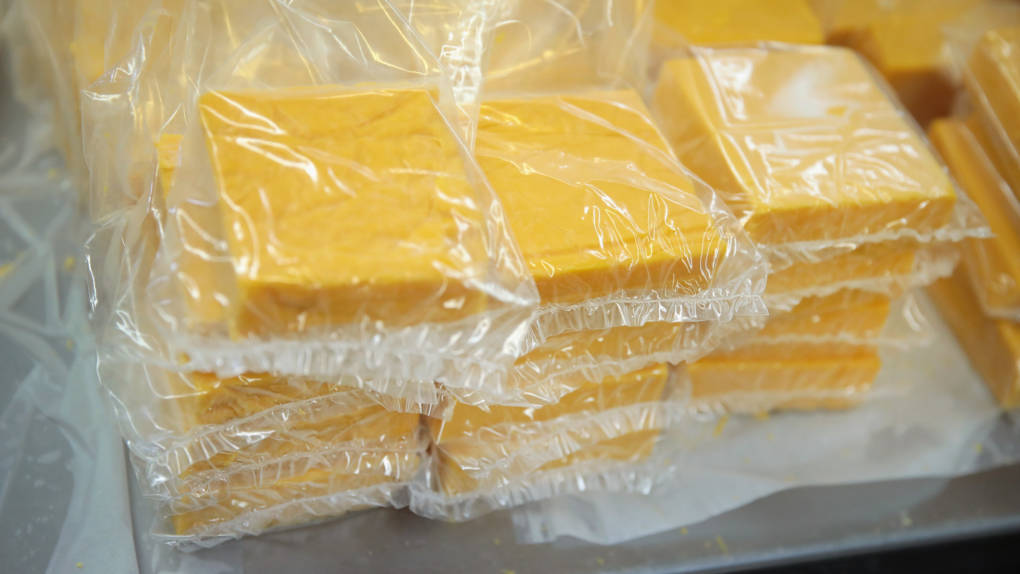
"caption": "Cheese is packaged for sale at Widmer's Cheese Cellars in 2016 in Theresa, Wis. Record dairy production in the U.S. has produced a record surplus of cheese causing prices to drop",
"description": "Cheese is packaged for sale at Widmer's Cheese Cellars in 2016 in Theresa, Wis. Record dairy production in the U.S. has produced a record surplus of cheese causing prices to drop",
"title": "Cheese is packaged for sale at Widmer's Cheese Cellars in 2016 in Theresa, Wis. Record dairy production in the U.S. has produced a record surplus of cheese causing prices to drop.",
"credit": "Scott Olson/Getty Images",
"status": "inherit",
"isLoading": false,
"fetchFailed": false
},
"bayareabites_131903": {
"type": "attachments",
"id": "bayareabites_131903",
"meta": {
"index": "attachments_1716263798",
"site": "bayareabites",
"id": "131903",
"found": true
},
"parent": 131902,
"imgSizes": {
"small": {
"file": "https://ww2.kqed.org/app/uploads/sites/24/2019/01/gettyimages-481969123_custom-a25839470240e1fb6bc5a4cc439dbec20ec86b01-520x461.jpg",
"width": 520,
"mimeType": "image/jpeg",
"height": 461
},
"twentyfourteen-full-width": {
"file": "https://ww2.kqed.org/app/uploads/sites/24/2019/01/gettyimages-481969123_custom-a25839470240e1fb6bc5a4cc439dbec20ec86b01-1038x576.jpg",
"width": 1038,
"mimeType": "image/jpeg",
"height": 576
},
"thumbnail": {
"file": "https://ww2.kqed.org/app/uploads/sites/24/2019/01/gettyimages-481969123_custom-a25839470240e1fb6bc5a4cc439dbec20ec86b01-160x142.jpg",
"width": 160,
"mimeType": "image/jpeg",
"height": 142
},
"fd-sm": {
"file": "https://ww2.kqed.org/app/uploads/sites/24/2019/01/gettyimages-481969123_custom-a25839470240e1fb6bc5a4cc439dbec20ec86b01-960x851.jpg",
"width": 960,
"mimeType": "image/jpeg",
"height": 851
},
"post-thumbnail": {
"file": "https://ww2.kqed.org/app/uploads/sites/24/2019/01/gettyimages-481969123_custom-a25839470240e1fb6bc5a4cc439dbec20ec86b01-672x372.jpg",
"width": 672,
"mimeType": "image/jpeg",
"height": 372
},
"xsmall": {
"file": "https://ww2.kqed.org/app/uploads/sites/24/2019/01/gettyimages-481969123_custom-a25839470240e1fb6bc5a4cc439dbec20ec86b01-375x332.jpg",
"width": 375,
"mimeType": "image/jpeg",
"height": 332
},
"kqedFullSize": {
"file": "https://ww2.kqed.org/app/uploads/sites/24/2019/01/gettyimages-481969123_custom-a25839470240e1fb6bc5a4cc439dbec20ec86b01-e1546554530828.jpg",
"width": 1920,
"height": 1702
},
"large": {
"file": "https://ww2.kqed.org/app/uploads/sites/24/2019/01/gettyimages-481969123_custom-a25839470240e1fb6bc5a4cc439dbec20ec86b01-1020x904.jpg",
"width": 1020,
"mimeType": "image/jpeg",
"height": 904
},
"xlarge": {
"file": "https://ww2.kqed.org/app/uploads/sites/24/2019/01/gettyimages-481969123_custom-a25839470240e1fb6bc5a4cc439dbec20ec86b01-1180x1046.jpg",
"width": 1180,
"mimeType": "image/jpeg",
"height": 1046
},
"complete_open_graph": {
"file": "https://ww2.kqed.org/app/uploads/sites/24/2019/01/gettyimages-481969123_custom-a25839470240e1fb6bc5a4cc439dbec20ec86b01-1200x1064.jpg",
"width": 1200,
"mimeType": "image/jpeg",
"height": 1064
},
"guest-author-50": {
"file": "https://ww2.kqed.org/app/uploads/sites/24/2019/01/gettyimages-481969123_custom-a25839470240e1fb6bc5a4cc439dbec20ec86b01-50x50.jpg",
"width": 50,
"mimeType": "image/jpeg",
"height": 50
},
"guest-author-96": {
"file": "https://ww2.kqed.org/app/uploads/sites/24/2019/01/gettyimages-481969123_custom-a25839470240e1fb6bc5a4cc439dbec20ec86b01-96x96.jpg",
"width": 96,
"mimeType": "image/jpeg",
"height": 96
},
"medium": {
"file": "https://ww2.kqed.org/app/uploads/sites/24/2019/01/gettyimages-481969123_custom-a25839470240e1fb6bc5a4cc439dbec20ec86b01-800x709.jpg",
"width": 800,
"mimeType": "image/jpeg",
"height": 709
},
"guest-author-64": {
"file": "https://ww2.kqed.org/app/uploads/sites/24/2019/01/gettyimages-481969123_custom-a25839470240e1fb6bc5a4cc439dbec20ec86b01-64x64.jpg",
"width": 64,
"mimeType": "image/jpeg",
"height": 64
},
"guest-author-32": {
"file": "https://ww2.kqed.org/app/uploads/sites/24/2019/01/gettyimages-481969123_custom-a25839470240e1fb6bc5a4cc439dbec20ec86b01-32x32.jpg",
"width": 32,
"mimeType": "image/jpeg",
"height": 32
},
"fd-lrg": {
"file": "https://ww2.kqed.org/app/uploads/sites/24/2019/01/gettyimages-481969123_custom-a25839470240e1fb6bc5a4cc439dbec20ec86b01-1920x1702.jpg",
"width": 1920,
"mimeType": "image/jpeg",
"height": 1702
},
"fd-med": {
"file": "https://ww2.kqed.org/app/uploads/sites/24/2019/01/gettyimages-481969123_custom-a25839470240e1fb6bc5a4cc439dbec20ec86b01-1180x1046.jpg",
"width": 1180,
"mimeType": "image/jpeg",
"height": 1046
},
"full-width": {
"file": "https://ww2.kqed.org/app/uploads/sites/24/2019/01/gettyimages-481969123_custom-a25839470240e1fb6bc5a4cc439dbec20ec86b01-1920x1702.jpg",
"width": 1920,
"mimeType": "image/jpeg",
"height": 1702
},
"detail": {
"file": "https://ww2.kqed.org/app/uploads/sites/24/2019/01/gettyimages-481969123_custom-a25839470240e1fb6bc5a4cc439dbec20ec86b01-150x150.jpg",
"width": 150,
"mimeType": "image/jpeg",
"height": 150
},
"medium_large": {
"file": "https://ww2.kqed.org/app/uploads/sites/24/2019/01/gettyimages-481969123_custom-a25839470240e1fb6bc5a4cc439dbec20ec86b01-768x681.jpg",
"width": 768,
"mimeType": "image/jpeg",
"height": 681
},
"guest-author-128": {
"file": "https://ww2.kqed.org/app/uploads/sites/24/2019/01/gettyimages-481969123_custom-a25839470240e1fb6bc5a4cc439dbec20ec86b01-128x128.jpg",
"width": 128,
"mimeType": "image/jpeg",
"height": 128
},
"xxsmall": {
"file": "https://ww2.kqed.org/app/uploads/sites/24/2019/01/gettyimages-481969123_custom-a25839470240e1fb6bc5a4cc439dbec20ec86b01-240x213.jpg",
"width": 240,
"mimeType": "image/jpeg",
"height": 213
}
},
"publishDate": 1546554023,
"modified": 1546554552,
"caption": "The world of mainstream consumer brands is in a major slow-motion transformation.",
"description": "The world of mainstream consumer brands is in a major slow-motion transformation.",
"title": "The world of mainstream consumer brands is in a major slow-motion transformation.",
"credit": "sorbetto/Getty Images",
"status": "inherit",
"isLoading": false,
"fetchFailed": false
},
"bayareabites_131840": {
"type": "attachments",
"id": "bayareabites_131840",
"meta": {
"index": "attachments_1716263798",
"site": "bayareabites",
"id": "131840",
"found": true
},
"parent": 131839,
"imgSizes": {
"small": {
"file": "https://ww2.kqed.org/app/uploads/sites/24/2018/12/chickpea-exports__2_custom-4e18b02060055f930c7eecec530fb6915e9e13c0-520x389.jpg",
"width": 520,
"mimeType": "image/jpeg",
"height": 389
},
"twentyfourteen-full-width": {
"file": "https://ww2.kqed.org/app/uploads/sites/24/2018/12/chickpea-exports__2_custom-4e18b02060055f930c7eecec530fb6915e9e13c0-1038x576.jpg",
"width": 1038,
"mimeType": "image/jpeg",
"height": 576
},
"thumbnail": {
"file": "https://ww2.kqed.org/app/uploads/sites/24/2018/12/chickpea-exports__2_custom-4e18b02060055f930c7eecec530fb6915e9e13c0-160x120.jpg",
"width": 160,
"mimeType": "image/jpeg",
"height": 120
},
"fd-sm": {
"file": "https://ww2.kqed.org/app/uploads/sites/24/2018/12/chickpea-exports__2_custom-4e18b02060055f930c7eecec530fb6915e9e13c0-960x718.jpg",
"width": 960,
"mimeType": "image/jpeg",
"height": 718
},
"post-thumbnail": {
"file": "https://ww2.kqed.org/app/uploads/sites/24/2018/12/chickpea-exports__2_custom-4e18b02060055f930c7eecec530fb6915e9e13c0-672x372.jpg",
"width": 672,
"mimeType": "image/jpeg",
"height": 372
},
"xsmall": {
"file": "https://ww2.kqed.org/app/uploads/sites/24/2018/12/chickpea-exports__2_custom-4e18b02060055f930c7eecec530fb6915e9e13c0-375x280.jpg",
"width": 375,
"mimeType": "image/jpeg",
"height": 280
},
"kqedFullSize": {
"file": "https://ww2.kqed.org/app/uploads/sites/24/2018/12/chickpea-exports__2_custom-4e18b02060055f930c7eecec530fb6915e9e13c0-e1546283605638.jpg",
"width": 1920,
"height": 1436
},
"large": {
"file": "https://ww2.kqed.org/app/uploads/sites/24/2018/12/chickpea-exports__2_custom-4e18b02060055f930c7eecec530fb6915e9e13c0-1020x763.jpg",
"width": 1020,
"mimeType": "image/jpeg",
"height": 763
},
"xlarge": {
"file": "https://ww2.kqed.org/app/uploads/sites/24/2018/12/chickpea-exports__2_custom-4e18b02060055f930c7eecec530fb6915e9e13c0-1180x883.jpg",
"width": 1180,
"mimeType": "image/jpeg",
"height": 883
},
"complete_open_graph": {
"file": "https://ww2.kqed.org/app/uploads/sites/24/2018/12/chickpea-exports__2_custom-4e18b02060055f930c7eecec530fb6915e9e13c0-1200x898.jpg",
"width": 1200,
"mimeType": "image/jpeg",
"height": 898
},
"guest-author-50": {
"file": "https://ww2.kqed.org/app/uploads/sites/24/2018/12/chickpea-exports__2_custom-4e18b02060055f930c7eecec530fb6915e9e13c0-50x50.jpg",
"width": 50,
"mimeType": "image/jpeg",
"height": 50
},
"guest-author-96": {
"file": "https://ww2.kqed.org/app/uploads/sites/24/2018/12/chickpea-exports__2_custom-4e18b02060055f930c7eecec530fb6915e9e13c0-96x96.jpg",
"width": 96,
"mimeType": "image/jpeg",
"height": 96
},
"medium": {
"file": "https://ww2.kqed.org/app/uploads/sites/24/2018/12/chickpea-exports__2_custom-4e18b02060055f930c7eecec530fb6915e9e13c0-800x598.jpg",
"width": 800,
"mimeType": "image/jpeg",
"height": 598
},
"guest-author-64": {
"file": "https://ww2.kqed.org/app/uploads/sites/24/2018/12/chickpea-exports__2_custom-4e18b02060055f930c7eecec530fb6915e9e13c0-64x64.jpg",
"width": 64,
"mimeType": "image/jpeg",
"height": 64
},
"guest-author-32": {
"file": "https://ww2.kqed.org/app/uploads/sites/24/2018/12/chickpea-exports__2_custom-4e18b02060055f930c7eecec530fb6915e9e13c0-32x32.jpg",
"width": 32,
"mimeType": "image/jpeg",
"height": 32
},
"fd-lrg": {
"file": "https://ww2.kqed.org/app/uploads/sites/24/2018/12/chickpea-exports__2_custom-4e18b02060055f930c7eecec530fb6915e9e13c0-1920x1436.jpg",
"width": 1920,
"mimeType": "image/jpeg",
"height": 1436
},
"fd-med": {
"file": "https://ww2.kqed.org/app/uploads/sites/24/2018/12/chickpea-exports__2_custom-4e18b02060055f930c7eecec530fb6915e9e13c0-1180x883.jpg",
"width": 1180,
"mimeType": "image/jpeg",
"height": 883
},
"full-width": {
"file": "https://ww2.kqed.org/app/uploads/sites/24/2018/12/chickpea-exports__2_custom-4e18b02060055f930c7eecec530fb6915e9e13c0-1920x1436.jpg",
"width": 1920,
"mimeType": "image/jpeg",
"height": 1436
},
"detail": {
"file": "https://ww2.kqed.org/app/uploads/sites/24/2018/12/chickpea-exports__2_custom-4e18b02060055f930c7eecec530fb6915e9e13c0-150x150.jpg",
"width": 150,
"mimeType": "image/jpeg",
"height": 150
},
"medium_large": {
"file": "https://ww2.kqed.org/app/uploads/sites/24/2018/12/chickpea-exports__2_custom-4e18b02060055f930c7eecec530fb6915e9e13c0-768x574.jpg",
"width": 768,
"mimeType": "image/jpeg",
"height": 574
},
"guest-author-128": {
"file": "https://ww2.kqed.org/app/uploads/sites/24/2018/12/chickpea-exports__2_custom-4e18b02060055f930c7eecec530fb6915e9e13c0-128x128.jpg",
"width": 128,
"mimeType": "image/jpeg",
"height": 128
},
"xxsmall": {
"file": "https://ww2.kqed.org/app/uploads/sites/24/2018/12/chickpea-exports__2_custom-4e18b02060055f930c7eecec530fb6915e9e13c0-240x180.jpg",
"width": 240,
"mimeType": "image/jpeg",
"height": 180
}
},
"publishDate": 1546282949,
"modified": 1546283642,
"caption": "Allen Druffel, 34, of Colton, Wash., stands in front of the co-op silos that hold his unsold chickpeas. Last year he was getting 50 cents a pound for his pulse crop. Now, the going price is 18 cents a pound — well below his cost of production.",
"description": "Allen Druffel, 34, of Colton, Wash., stands in front of the co-op silos that hold his unsold chickpeas. Last year he was getting 50 cents a pound for his pulse crop. Now, the going price is 18 cents a pound -- well below his cost of production.",
"title": "Allen Druffel, 34, of Colton, Wash., stands in front of the co-op silos that hold his unsold chickpeas. Last year he was getting 50 cents a pound for his pulse crop. Now, the going price is 18 cents a pound — well below his cost of production.",
"credit": "Anna King/Northwest News Network",
"status": "inherit",
"isLoading": false,
"fetchFailed": false
},
"bayareabites_130102": {
"type": "attachments",
"id": "bayareabites_130102",
"meta": {
"index": "attachments_1716263798",
"site": "bayareabites",
"id": "130102",
"found": true
},
"parent": 130101,
"imgSizes": {
"small": {
"file": "https://ww2.kqed.org/app/uploads/sites/24/2018/08/img_7767-57c8d46735cdc9d77d51ba57efe87af20ff77ff7-520x390.jpg",
"width": 520,
"mimeType": "image/jpeg",
"height": 390
},
"twentyfourteen-full-width": {
"file": "https://ww2.kqed.org/app/uploads/sites/24/2018/08/img_7767-57c8d46735cdc9d77d51ba57efe87af20ff77ff7-1038x576.jpg",
"width": 1038,
"mimeType": "image/jpeg",
"height": 576
},
"thumbnail": {
"file": "https://ww2.kqed.org/app/uploads/sites/24/2018/08/img_7767-57c8d46735cdc9d77d51ba57efe87af20ff77ff7-160x120.jpg",
"width": 160,
"mimeType": "image/jpeg",
"height": 120
},
"fd-sm": {
"file": "https://ww2.kqed.org/app/uploads/sites/24/2018/08/img_7767-57c8d46735cdc9d77d51ba57efe87af20ff77ff7-960x720.jpg",
"width": 960,
"mimeType": "image/jpeg",
"height": 720
},
"post-thumbnail": {
"file": "https://ww2.kqed.org/app/uploads/sites/24/2018/08/img_7767-57c8d46735cdc9d77d51ba57efe87af20ff77ff7-672x372.jpg",
"width": 672,
"mimeType": "image/jpeg",
"height": 372
},
"xsmall": {
"file": "https://ww2.kqed.org/app/uploads/sites/24/2018/08/img_7767-57c8d46735cdc9d77d51ba57efe87af20ff77ff7-375x281.jpg",
"width": 375,
"mimeType": "image/jpeg",
"height": 281
},
"kqedFullSize": {
"file": "https://ww2.kqed.org/app/uploads/sites/24/2018/08/img_7767-57c8d46735cdc9d77d51ba57efe87af20ff77ff7-e1534547485385.jpg",
"width": 1920,
"height": 1440
},
"large": {
"file": "https://ww2.kqed.org/app/uploads/sites/24/2018/08/img_7767-57c8d46735cdc9d77d51ba57efe87af20ff77ff7-1020x765.jpg",
"width": 1020,
"mimeType": "image/jpeg",
"height": 765
},
"xlarge": {
"file": "https://ww2.kqed.org/app/uploads/sites/24/2018/08/img_7767-57c8d46735cdc9d77d51ba57efe87af20ff77ff7-1180x885.jpg",
"width": 1180,
"mimeType": "image/jpeg",
"height": 885
},
"complete_open_graph": {
"file": "https://ww2.kqed.org/app/uploads/sites/24/2018/08/img_7767-57c8d46735cdc9d77d51ba57efe87af20ff77ff7-1200x900.jpg",
"width": 1200,
"mimeType": "image/jpeg",
"height": 900
},
"guest-author-50": {
"file": "https://ww2.kqed.org/app/uploads/sites/24/2018/08/img_7767-57c8d46735cdc9d77d51ba57efe87af20ff77ff7-50x50.jpg",
"width": 50,
"mimeType": "image/jpeg",
"height": 50
},
"guest-author-96": {
"file": "https://ww2.kqed.org/app/uploads/sites/24/2018/08/img_7767-57c8d46735cdc9d77d51ba57efe87af20ff77ff7-96x96.jpg",
"width": 96,
"mimeType": "image/jpeg",
"height": 96
},
"medium": {
"file": "https://ww2.kqed.org/app/uploads/sites/24/2018/08/img_7767-57c8d46735cdc9d77d51ba57efe87af20ff77ff7-800x600.jpg",
"width": 800,
"mimeType": "image/jpeg",
"height": 600
},
"guest-author-64": {
"file": "https://ww2.kqed.org/app/uploads/sites/24/2018/08/img_7767-57c8d46735cdc9d77d51ba57efe87af20ff77ff7-64x64.jpg",
"width": 64,
"mimeType": "image/jpeg",
"height": 64
},
"guest-author-32": {
"file": "https://ww2.kqed.org/app/uploads/sites/24/2018/08/img_7767-57c8d46735cdc9d77d51ba57efe87af20ff77ff7-32x32.jpg",
"width": 32,
"mimeType": "image/jpeg",
"height": 32
},
"fd-lrg": {
"file": "https://ww2.kqed.org/app/uploads/sites/24/2018/08/img_7767-57c8d46735cdc9d77d51ba57efe87af20ff77ff7-1920x1440.jpg",
"width": 1920,
"mimeType": "image/jpeg",
"height": 1440
},
"fd-med": {
"file": "https://ww2.kqed.org/app/uploads/sites/24/2018/08/img_7767-57c8d46735cdc9d77d51ba57efe87af20ff77ff7-1180x885.jpg",
"width": 1180,
"mimeType": "image/jpeg",
"height": 885
},
"full-width": {
"file": "https://ww2.kqed.org/app/uploads/sites/24/2018/08/img_7767-57c8d46735cdc9d77d51ba57efe87af20ff77ff7-1920x1440.jpg",
"width": 1920,
"mimeType": "image/jpeg",
"height": 1440
},
"detail": {
"file": "https://ww2.kqed.org/app/uploads/sites/24/2018/08/img_7767-57c8d46735cdc9d77d51ba57efe87af20ff77ff7-150x150.jpg",
"width": 150,
"mimeType": "image/jpeg",
"height": 150
},
"medium_large": {
"file": "https://ww2.kqed.org/app/uploads/sites/24/2018/08/img_7767-57c8d46735cdc9d77d51ba57efe87af20ff77ff7-768x576.jpg",
"width": 768,
"mimeType": "image/jpeg",
"height": 576
},
"guest-author-128": {
"file": "https://ww2.kqed.org/app/uploads/sites/24/2018/08/img_7767-57c8d46735cdc9d77d51ba57efe87af20ff77ff7-128x128.jpg",
"width": 128,
"mimeType": "image/jpeg",
"height": 128
},
"xxsmall": {
"file": "https://ww2.kqed.org/app/uploads/sites/24/2018/08/img_7767-57c8d46735cdc9d77d51ba57efe87af20ff77ff7-240x180.jpg",
"width": 240,
"mimeType": "image/jpeg",
"height": 180
}
},
"publishDate": 1534547287,
"modified": 1534547497,
"caption": "Peter Rabbit encourages people not to waste food as he casually chomps on a carrot on posters around town.",
"description": "Peter Rabbit encourages people not to waste food as he casually chomps on a carrot on posters around town.",
"title": "Peter Rabbit encourages people not to waste food as he casually chomps on a carrot on posters around town.",
"credit": "Carolyn Beans for NPR",
"status": "inherit",
"isLoading": false,
"fetchFailed": false
},
"bayareabites_130033": {
"type": "attachments",
"id": "bayareabites_130033",
"meta": {
"index": "attachments_1716263798",
"site": "bayareabites",
"id": "130033",
"found": true
},
"parent": 130032,
"imgSizes": {
"small": {
"file": "https://ww2.kqed.org/app/uploads/sites/24/2018/08/trainingsessionchicks_wide-86f74c7cc5c796463e27105bf70851965045124c-520x293.jpg",
"width": 520,
"mimeType": "image/jpeg",
"height": 293
},
"twentyfourteen-full-width": {
"file": "https://ww2.kqed.org/app/uploads/sites/24/2018/08/trainingsessionchicks_wide-86f74c7cc5c796463e27105bf70851965045124c-1038x576.jpg",
"width": 1038,
"mimeType": "image/jpeg",
"height": 576
},
"thumbnail": {
"file": "https://ww2.kqed.org/app/uploads/sites/24/2018/08/trainingsessionchicks_wide-86f74c7cc5c796463e27105bf70851965045124c-160x90.jpg",
"width": 160,
"mimeType": "image/jpeg",
"height": 90
},
"fd-sm": {
"file": "https://ww2.kqed.org/app/uploads/sites/24/2018/08/trainingsessionchicks_wide-86f74c7cc5c796463e27105bf70851965045124c-960x540.jpg",
"width": 960,
"mimeType": "image/jpeg",
"height": 540
},
"post-thumbnail": {
"file": "https://ww2.kqed.org/app/uploads/sites/24/2018/08/trainingsessionchicks_wide-86f74c7cc5c796463e27105bf70851965045124c-672x372.jpg",
"width": 672,
"mimeType": "image/jpeg",
"height": 372
},
"xsmall": {
"file": "https://ww2.kqed.org/app/uploads/sites/24/2018/08/trainingsessionchicks_wide-86f74c7cc5c796463e27105bf70851965045124c-375x211.jpg",
"width": 375,
"mimeType": "image/jpeg",
"height": 211
},
"kqedFullSize": {
"file": "https://ww2.kqed.org/app/uploads/sites/24/2018/08/trainingsessionchicks_wide-86f74c7cc5c796463e27105bf70851965045124c-e1533845654508.jpg",
"width": 1920,
"height": 1080
},
"large": {
"file": "https://ww2.kqed.org/app/uploads/sites/24/2018/08/trainingsessionchicks_wide-86f74c7cc5c796463e27105bf70851965045124c-1020x574.jpg",
"width": 1020,
"mimeType": "image/jpeg",
"height": 574
},
"xlarge": {
"file": "https://ww2.kqed.org/app/uploads/sites/24/2018/08/trainingsessionchicks_wide-86f74c7cc5c796463e27105bf70851965045124c-1180x664.jpg",
"width": 1180,
"mimeType": "image/jpeg",
"height": 664
},
"complete_open_graph": {
"file": "https://ww2.kqed.org/app/uploads/sites/24/2018/08/trainingsessionchicks_wide-86f74c7cc5c796463e27105bf70851965045124c-1200x675.jpg",
"width": 1200,
"mimeType": "image/jpeg",
"height": 675
},
"guest-author-50": {
"file": "https://ww2.kqed.org/app/uploads/sites/24/2018/08/trainingsessionchicks_wide-86f74c7cc5c796463e27105bf70851965045124c-50x50.jpg",
"width": 50,
"mimeType": "image/jpeg",
"height": 50
},
"guest-author-96": {
"file": "https://ww2.kqed.org/app/uploads/sites/24/2018/08/trainingsessionchicks_wide-86f74c7cc5c796463e27105bf70851965045124c-96x96.jpg",
"width": 96,
"mimeType": "image/jpeg",
"height": 96
},
"medium": {
"file": "https://ww2.kqed.org/app/uploads/sites/24/2018/08/trainingsessionchicks_wide-86f74c7cc5c796463e27105bf70851965045124c-800x450.jpg",
"width": 800,
"mimeType": "image/jpeg",
"height": 450
},
"guest-author-64": {
"file": "https://ww2.kqed.org/app/uploads/sites/24/2018/08/trainingsessionchicks_wide-86f74c7cc5c796463e27105bf70851965045124c-64x64.jpg",
"width": 64,
"mimeType": "image/jpeg",
"height": 64
},
"guest-author-32": {
"file": "https://ww2.kqed.org/app/uploads/sites/24/2018/08/trainingsessionchicks_wide-86f74c7cc5c796463e27105bf70851965045124c-32x32.jpg",
"width": 32,
"mimeType": "image/jpeg",
"height": 32
},
"fd-lrg": {
"file": "https://ww2.kqed.org/app/uploads/sites/24/2018/08/trainingsessionchicks_wide-86f74c7cc5c796463e27105bf70851965045124c-1920x1080.jpg",
"width": 1920,
"mimeType": "image/jpeg",
"height": 1080
},
"fd-med": {
"file": "https://ww2.kqed.org/app/uploads/sites/24/2018/08/trainingsessionchicks_wide-86f74c7cc5c796463e27105bf70851965045124c-1180x664.jpg",
"width": 1180,
"mimeType": "image/jpeg",
"height": 664
},
"full-width": {
"file": "https://ww2.kqed.org/app/uploads/sites/24/2018/08/trainingsessionchicks_wide-86f74c7cc5c796463e27105bf70851965045124c-1920x1080.jpg",
"width": 1920,
"mimeType": "image/jpeg",
"height": 1080
},
"detail": {
"file": "https://ww2.kqed.org/app/uploads/sites/24/2018/08/trainingsessionchicks_wide-86f74c7cc5c796463e27105bf70851965045124c-150x150.jpg",
"width": 150,
"mimeType": "image/jpeg",
"height": 150
},
"medium_large": {
"file": "https://ww2.kqed.org/app/uploads/sites/24/2018/08/trainingsessionchicks_wide-86f74c7cc5c796463e27105bf70851965045124c-768x432.jpg",
"width": 768,
"mimeType": "image/jpeg",
"height": 432
},
"guest-author-128": {
"file": "https://ww2.kqed.org/app/uploads/sites/24/2018/08/trainingsessionchicks_wide-86f74c7cc5c796463e27105bf70851965045124c-128x128.jpg",
"width": 128,
"mimeType": "image/jpeg",
"height": 128
},
"xxsmall": {
"file": "https://ww2.kqed.org/app/uploads/sites/24/2018/08/trainingsessionchicks_wide-86f74c7cc5c796463e27105bf70851965045124c-240x135.jpg",
"width": 240,
"mimeType": "image/jpeg",
"height": 135
}
},
"publishDate": 1533845528,
"modified": 1533845762,
"caption": "The Feed the Future Tworore Inkoko, Twunguke project hosts a meeting in the Gataraga sector of Rwanda to recruit farmers to grow chickens. If the farmers commit to four days of training and pass a competency test, they are given a backyard coop worth about $625, as well as the means to obtain 100 day-old chicks, vaccines, feed and technical advice.",
"description": "The Feed the Future Tworore Inkoko, Twunguke project hosts a meeting in the Gataraga sector of Rwanda to recruit farmers to grow chickens. If the farmers commit to four days of training and pass a competency test, they are given a backyard coop worth about $625, as well as the means to obtain 100 day-old chicks, vaccines, feed and technical advice.",
"title": "The Feed the Future Tworore Inkoko, Twunguke project hosts a meeting in the Gataraga sector of Rwanda to recruit farmers to grow chickens. If the farmers commit to four days of training and pass a competency test, they are given a backyard coop worth about $625, as well as the means to obtain 100 day-old chicks, vaccines, feed and technical advice.",
"credit": "Emily Urban/NPR",
"status": "inherit",
"isLoading": false,
"fetchFailed": false
},
"bayareabites_129280": {
"type": "attachments",
"id": "bayareabites_129280",
"meta": {
"index": "attachments_1716263798",
"site": "bayareabites",
"id": "129280",
"found": true
},
"parent": 129279,
"imgSizes": {
"small": {
"file": "https://ww2.kqed.org/app/uploads/sites/24/2018/07/pepper_vert-9b0596e2d49a43fe29ae8163f2c38027cc605138-520x693.jpg",
"width": 520,
"mimeType": "image/jpeg",
"height": 693
},
"twentyfourteen-full-width": {
"file": "https://ww2.kqed.org/app/uploads/sites/24/2018/07/pepper_vert-9b0596e2d49a43fe29ae8163f2c38027cc605138-1038x576.jpg",
"width": 1038,
"mimeType": "image/jpeg",
"height": 576
},
"thumbnail": {
"file": "https://ww2.kqed.org/app/uploads/sites/24/2018/07/pepper_vert-9b0596e2d49a43fe29ae8163f2c38027cc605138-160x213.jpg",
"width": 160,
"mimeType": "image/jpeg",
"height": 213
},
"fd-sm": {
"file": "https://ww2.kqed.org/app/uploads/sites/24/2018/07/pepper_vert-9b0596e2d49a43fe29ae8163f2c38027cc605138-960x1280.jpg",
"width": 960,
"mimeType": "image/jpeg",
"height": 1280
},
"post-thumbnail": {
"file": "https://ww2.kqed.org/app/uploads/sites/24/2018/07/pepper_vert-9b0596e2d49a43fe29ae8163f2c38027cc605138-672x372.jpg",
"width": 672,
"mimeType": "image/jpeg",
"height": 372
},
"xsmall": {
"file": "https://ww2.kqed.org/app/uploads/sites/24/2018/07/pepper_vert-9b0596e2d49a43fe29ae8163f2c38027cc605138-375x500.jpg",
"width": 375,
"mimeType": "image/jpeg",
"height": 500
},
"kqedFullSize": {
"file": "https://ww2.kqed.org/app/uploads/sites/24/2018/07/pepper_vert-9b0596e2d49a43fe29ae8163f2c38027cc605138.jpg",
"width": 1512,
"height": 2016
},
"large": {
"file": "https://ww2.kqed.org/app/uploads/sites/24/2018/07/pepper_vert-9b0596e2d49a43fe29ae8163f2c38027cc605138-1020x1360.jpg",
"width": 1020,
"mimeType": "image/jpeg",
"height": 1360
},
"xlarge": {
"file": "https://ww2.kqed.org/app/uploads/sites/24/2018/07/pepper_vert-9b0596e2d49a43fe29ae8163f2c38027cc605138-1180x1573.jpg",
"width": 1180,
"mimeType": "image/jpeg",
"height": 1573
},
"complete_open_graph": {
"file": "https://ww2.kqed.org/app/uploads/sites/24/2018/07/pepper_vert-9b0596e2d49a43fe29ae8163f2c38027cc605138-900x1200.jpg",
"width": 900,
"mimeType": "image/jpeg",
"height": 1200
},
"guest-author-50": {
"file": "https://ww2.kqed.org/app/uploads/sites/24/2018/07/pepper_vert-9b0596e2d49a43fe29ae8163f2c38027cc605138-50x50.jpg",
"width": 50,
"mimeType": "image/jpeg",
"height": 50
},
"guest-author-96": {
"file": "https://ww2.kqed.org/app/uploads/sites/24/2018/07/pepper_vert-9b0596e2d49a43fe29ae8163f2c38027cc605138-96x96.jpg",
"width": 96,
"mimeType": "image/jpeg",
"height": 96
},
"medium": {
"file": "https://ww2.kqed.org/app/uploads/sites/24/2018/07/pepper_vert-9b0596e2d49a43fe29ae8163f2c38027cc605138-800x1067.jpg",
"width": 800,
"mimeType": "image/jpeg",
"height": 1067
},
"guest-author-64": {
"file": "https://ww2.kqed.org/app/uploads/sites/24/2018/07/pepper_vert-9b0596e2d49a43fe29ae8163f2c38027cc605138-64x64.jpg",
"width": 64,
"mimeType": "image/jpeg",
"height": 64
},
"guest-author-32": {
"file": "https://ww2.kqed.org/app/uploads/sites/24/2018/07/pepper_vert-9b0596e2d49a43fe29ae8163f2c38027cc605138-32x32.jpg",
"width": 32,
"mimeType": "image/jpeg",
"height": 32
},
"fd-med": {
"file": "https://ww2.kqed.org/app/uploads/sites/24/2018/07/pepper_vert-9b0596e2d49a43fe29ae8163f2c38027cc605138-1180x1573.jpg",
"width": 1180,
"mimeType": "image/jpeg",
"height": 1573
},
"detail": {
"file": "https://ww2.kqed.org/app/uploads/sites/24/2018/07/pepper_vert-9b0596e2d49a43fe29ae8163f2c38027cc605138-150x150.jpg",
"width": 150,
"mimeType": "image/jpeg",
"height": 150
},
"medium_large": {
"file": "https://ww2.kqed.org/app/uploads/sites/24/2018/07/pepper_vert-9b0596e2d49a43fe29ae8163f2c38027cc605138-768x1024.jpg",
"width": 768,
"mimeType": "image/jpeg",
"height": 1024
},
"guest-author-128": {
"file": "https://ww2.kqed.org/app/uploads/sites/24/2018/07/pepper_vert-9b0596e2d49a43fe29ae8163f2c38027cc605138-128x128.jpg",
"width": 128,
"mimeType": "image/jpeg",
"height": 128
},
"xxsmall": {
"file": "https://ww2.kqed.org/app/uploads/sites/24/2018/07/pepper_vert-9b0596e2d49a43fe29ae8163f2c38027cc605138-240x320.jpg",
"width": 240,
"mimeType": "image/jpeg",
"height": 320
}
},
"publishDate": 1530805465,
"modified": 1530806058,
"caption": "Amir Peay recently opened a distillery in Lexington, Ky., at the site of the James E. Pepper distillery. About 10 percent of his revenues come from exports, and Peay worries that the European Union's tariffs will hurt his overseas business.",
"description": "Amir Peay recently opened a distillery in Lexington, Ky., at the site of the James E. Pepper distillery. About 10 percent of his revenues come from exports, and Peay worries that the European Union's tariffs will hurt his overseas business",
"title": "Amir Peay recently opened a distillery in Lexington, Ky., at the site of the James E. Pepper distillery. About 10 percent of his revenues come from exports, and Peay worries that the European Union's tariffs will hurt his overseas business.",
"credit": "John Ydstie/NPR",
"status": "inherit",
"isLoading": false,
"fetchFailed": false
},
"bayareabites_129275": {
"type": "attachments",
"id": "bayareabites_129275",
"meta": {
"index": "attachments_1716263798",
"site": "bayareabites",
"id": "129275",
"found": true
},
"parent": 129274,
"imgSizes": {
"small": {
"file": "https://ww2.kqed.org/app/uploads/sites/24/2018/07/beefwtrump_5-1-d8a8eed04265cd592e3e985b782f1ebc015bdf30-520x390.jpg",
"width": 520,
"mimeType": "image/jpeg",
"height": 390
},
"twentyfourteen-full-width": {
"file": "https://ww2.kqed.org/app/uploads/sites/24/2018/07/beefwtrump_5-1-d8a8eed04265cd592e3e985b782f1ebc015bdf30-1038x576.jpg",
"width": 1038,
"mimeType": "image/jpeg",
"height": 576
},
"thumbnail": {
"file": "https://ww2.kqed.org/app/uploads/sites/24/2018/07/beefwtrump_5-1-d8a8eed04265cd592e3e985b782f1ebc015bdf30-160x120.jpg",
"width": 160,
"mimeType": "image/jpeg",
"height": 120
},
"fd-sm": {
"file": "https://ww2.kqed.org/app/uploads/sites/24/2018/07/beefwtrump_5-1-d8a8eed04265cd592e3e985b782f1ebc015bdf30-960x720.jpg",
"width": 960,
"mimeType": "image/jpeg",
"height": 720
},
"post-thumbnail": {
"file": "https://ww2.kqed.org/app/uploads/sites/24/2018/07/beefwtrump_5-1-d8a8eed04265cd592e3e985b782f1ebc015bdf30-672x372.jpg",
"width": 672,
"mimeType": "image/jpeg",
"height": 372
},
"xsmall": {
"file": "https://ww2.kqed.org/app/uploads/sites/24/2018/07/beefwtrump_5-1-d8a8eed04265cd592e3e985b782f1ebc015bdf30-375x281.jpg",
"width": 375,
"mimeType": "image/jpeg",
"height": 281
},
"kqedFullSize": {
"file": "https://ww2.kqed.org/app/uploads/sites/24/2018/07/beefwtrump_5-1-d8a8eed04265cd592e3e985b782f1ebc015bdf30.jpg",
"width": 4029,
"height": 3022
},
"large": {
"file": "https://ww2.kqed.org/app/uploads/sites/24/2018/07/beefwtrump_5-1-d8a8eed04265cd592e3e985b782f1ebc015bdf30-1020x765.jpg",
"width": 1020,
"mimeType": "image/jpeg",
"height": 765
},
"xlarge": {
"file": "https://ww2.kqed.org/app/uploads/sites/24/2018/07/beefwtrump_5-1-d8a8eed04265cd592e3e985b782f1ebc015bdf30-1180x885.jpg",
"width": 1180,
"mimeType": "image/jpeg",
"height": 885
},
"complete_open_graph": {
"file": "https://ww2.kqed.org/app/uploads/sites/24/2018/07/beefwtrump_5-1-d8a8eed04265cd592e3e985b782f1ebc015bdf30-1200x900.jpg",
"width": 1200,
"mimeType": "image/jpeg",
"height": 900
},
"guest-author-50": {
"file": "https://ww2.kqed.org/app/uploads/sites/24/2018/07/beefwtrump_5-1-d8a8eed04265cd592e3e985b782f1ebc015bdf30-50x50.jpg",
"width": 50,
"mimeType": "image/jpeg",
"height": 50
},
"guest-author-96": {
"file": "https://ww2.kqed.org/app/uploads/sites/24/2018/07/beefwtrump_5-1-d8a8eed04265cd592e3e985b782f1ebc015bdf30-96x96.jpg",
"width": 96,
"mimeType": "image/jpeg",
"height": 96
},
"medium": {
"file": "https://ww2.kqed.org/app/uploads/sites/24/2018/07/beefwtrump_5-1-d8a8eed04265cd592e3e985b782f1ebc015bdf30-800x600.jpg",
"width": 800,
"mimeType": "image/jpeg",
"height": 600
},
"guest-author-64": {
"file": "https://ww2.kqed.org/app/uploads/sites/24/2018/07/beefwtrump_5-1-d8a8eed04265cd592e3e985b782f1ebc015bdf30-64x64.jpg",
"width": 64,
"mimeType": "image/jpeg",
"height": 64
},
"guest-author-32": {
"file": "https://ww2.kqed.org/app/uploads/sites/24/2018/07/beefwtrump_5-1-d8a8eed04265cd592e3e985b782f1ebc015bdf30-32x32.jpg",
"width": 32,
"mimeType": "image/jpeg",
"height": 32
},
"fd-lrg": {
"file": "https://ww2.kqed.org/app/uploads/sites/24/2018/07/beefwtrump_5-1-d8a8eed04265cd592e3e985b782f1ebc015bdf30-1920x1440.jpg",
"width": 1920,
"mimeType": "image/jpeg",
"height": 1440
},
"fd-med": {
"file": "https://ww2.kqed.org/app/uploads/sites/24/2018/07/beefwtrump_5-1-d8a8eed04265cd592e3e985b782f1ebc015bdf30-1180x885.jpg",
"width": 1180,
"mimeType": "image/jpeg",
"height": 885
},
"full-width": {
"file": "https://ww2.kqed.org/app/uploads/sites/24/2018/07/beefwtrump_5-1-d8a8eed04265cd592e3e985b782f1ebc015bdf30-1920x1440.jpg",
"width": 1920,
"mimeType": "image/jpeg",
"height": 1440
},
"detail": {
"file": "https://ww2.kqed.org/app/uploads/sites/24/2018/07/beefwtrump_5-1-d8a8eed04265cd592e3e985b782f1ebc015bdf30-150x150.jpg",
"width": 150,
"mimeType": "image/jpeg",
"height": 150
},
"medium_large": {
"file": "https://ww2.kqed.org/app/uploads/sites/24/2018/07/beefwtrump_5-1-d8a8eed04265cd592e3e985b782f1ebc015bdf30-768x576.jpg",
"width": 768,
"mimeType": "image/jpeg",
"height": 576
},
"guest-author-128": {
"file": "https://ww2.kqed.org/app/uploads/sites/24/2018/07/beefwtrump_5-1-d8a8eed04265cd592e3e985b782f1ebc015bdf30-128x128.jpg",
"width": 128,
"mimeType": "image/jpeg",
"height": 128
},
"xxsmall": {
"file": "https://ww2.kqed.org/app/uploads/sites/24/2018/07/beefwtrump_5-1-d8a8eed04265cd592e3e985b782f1ebc015bdf30-240x180.jpg",
"width": 240,
"mimeType": "image/jpeg",
"height": 180
}
},
"publishDate": 1530803592,
"modified": 1530804562,
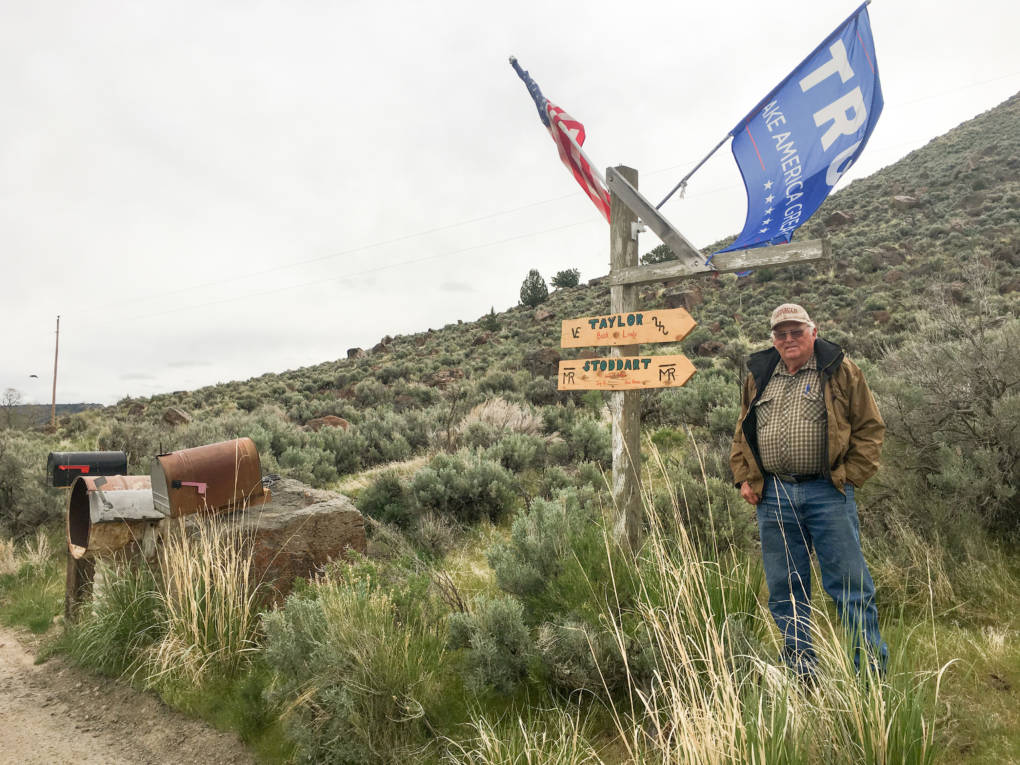
"caption": "Rancher Buck Taylor proudly flies his American and Trump flags by his driveway mailboxes and signpost in Diamond Valley, Ore. He and other ranchers are facing new tariffs on beef exports that could cost him – but he doesn't blame President Trump.",
"description": "Rancher Buck Taylor proudly flies his American and Trump flags by his driveway mailboxes and signpost in Diamond Valley, Ore. He and other ranchers are facing new tariffs on beef exports that could cost him – but he doesn't blame President Trum",
"title": "Rancher Buck Taylor proudly flies his American and Trump flags by his driveway mailboxes and signpost in Diamond Valley, Ore. He and other ranchers are facing new tariffs on beef exports that could cost him – but he doesn't blame President Trump.",
"credit": "Anna King/Northwest News Network",
"status": "inherit",
"isLoading": false,
"fetchFailed": false
},
"bayareabites_128262": {
"type": "attachments",
"id": "bayareabites_128262",
"meta": {
"index": "attachments_1716263798",
"site": "bayareabites",
"id": "128262",
"found": true
},
"parent": 128261,
"imgSizes": {
"small": {
"file": "https://ww2.kqed.org/app/uploads/sites/24/2018/05/gettyimages-695273956_wide-dd8cbbb4501506c3aa96d168c5f286d6b91219b0-520x292.jpg",
"width": 520,
"mimeType": "image/jpeg",
"height": 292
},
"twentyfourteen-full-width": {
"file": "https://ww2.kqed.org/app/uploads/sites/24/2018/05/gettyimages-695273956_wide-dd8cbbb4501506c3aa96d168c5f286d6b91219b0-1038x576.jpg",
"width": 1038,
"mimeType": "image/jpeg",
"height": 576
},
"thumbnail": {
"file": "https://ww2.kqed.org/app/uploads/sites/24/2018/05/gettyimages-695273956_wide-dd8cbbb4501506c3aa96d168c5f286d6b91219b0-160x90.jpg",
"width": 160,
"mimeType": "image/jpeg",
"height": 90
},
"fd-sm": {
"file": "https://ww2.kqed.org/app/uploads/sites/24/2018/05/gettyimages-695273956_wide-dd8cbbb4501506c3aa96d168c5f286d6b91219b0-960x540.jpg",
"width": 960,
"mimeType": "image/jpeg",
"height": 540
},
"post-thumbnail": {
"file": "https://ww2.kqed.org/app/uploads/sites/24/2018/05/gettyimages-695273956_wide-dd8cbbb4501506c3aa96d168c5f286d6b91219b0-672x372.jpg",
"width": 672,
"mimeType": "image/jpeg",
"height": 372
},
"xsmall": {
"file": "https://ww2.kqed.org/app/uploads/sites/24/2018/05/gettyimages-695273956_wide-dd8cbbb4501506c3aa96d168c5f286d6b91219b0-375x211.jpg",
"width": 375,
"mimeType": "image/jpeg",
"height": 211
},
"kqedFullSize": {
"file": "https://ww2.kqed.org/app/uploads/sites/24/2018/05/gettyimages-695273956_wide-dd8cbbb4501506c3aa96d168c5f286d6b91219b0.jpg",
"width": 5760,
"height": 3239
},
"large": {
"file": "https://ww2.kqed.org/app/uploads/sites/24/2018/05/gettyimages-695273956_wide-dd8cbbb4501506c3aa96d168c5f286d6b91219b0-1020x574.jpg",
"width": 1020,
"mimeType": "image/jpeg",
"height": 574
},
"xlarge": {
"file": "https://ww2.kqed.org/app/uploads/sites/24/2018/05/gettyimages-695273956_wide-dd8cbbb4501506c3aa96d168c5f286d6b91219b0-1180x664.jpg",
"width": 1180,
"mimeType": "image/jpeg",
"height": 664
},
"complete_open_graph": {
"file": "https://ww2.kqed.org/app/uploads/sites/24/2018/05/gettyimages-695273956_wide-dd8cbbb4501506c3aa96d168c5f286d6b91219b0-1200x675.jpg",
"width": 1200,
"mimeType": "image/jpeg",
"height": 675
},
"guest-author-50": {
"file": "https://ww2.kqed.org/app/uploads/sites/24/2018/05/gettyimages-695273956_wide-dd8cbbb4501506c3aa96d168c5f286d6b91219b0-50x50.jpg",
"width": 50,
"mimeType": "image/jpeg",
"height": 50
},
"guest-author-96": {
"file": "https://ww2.kqed.org/app/uploads/sites/24/2018/05/gettyimages-695273956_wide-dd8cbbb4501506c3aa96d168c5f286d6b91219b0-96x96.jpg",
"width": 96,
"mimeType": "image/jpeg",
"height": 96
},
"medium": {
"file": "https://ww2.kqed.org/app/uploads/sites/24/2018/05/gettyimages-695273956_wide-dd8cbbb4501506c3aa96d168c5f286d6b91219b0-800x450.jpg",
"width": 800,
"mimeType": "image/jpeg",
"height": 450
},
"guest-author-64": {
"file": "https://ww2.kqed.org/app/uploads/sites/24/2018/05/gettyimages-695273956_wide-dd8cbbb4501506c3aa96d168c5f286d6b91219b0-64x64.jpg",
"width": 64,
"mimeType": "image/jpeg",
"height": 64
},
"guest-author-32": {
"file": "https://ww2.kqed.org/app/uploads/sites/24/2018/05/gettyimages-695273956_wide-dd8cbbb4501506c3aa96d168c5f286d6b91219b0-32x32.jpg",
"width": 32,
"mimeType": "image/jpeg",
"height": 32
},
"fd-lrg": {
"file": "https://ww2.kqed.org/app/uploads/sites/24/2018/05/gettyimages-695273956_wide-dd8cbbb4501506c3aa96d168c5f286d6b91219b0-1920x1080.jpg",
"width": 1920,
"mimeType": "image/jpeg",
"height": 1080
},
"fd-med": {
"file": "https://ww2.kqed.org/app/uploads/sites/24/2018/05/gettyimages-695273956_wide-dd8cbbb4501506c3aa96d168c5f286d6b91219b0-1180x664.jpg",
"width": 1180,
"mimeType": "image/jpeg",
"height": 664
},
"full-width": {
"file": "https://ww2.kqed.org/app/uploads/sites/24/2018/05/gettyimages-695273956_wide-dd8cbbb4501506c3aa96d168c5f286d6b91219b0-1920x1080.jpg",
"width": 1920,
"mimeType": "image/jpeg",
"height": 1080
},
"detail": {
"file": "https://ww2.kqed.org/app/uploads/sites/24/2018/05/gettyimages-695273956_wide-dd8cbbb4501506c3aa96d168c5f286d6b91219b0-150x150.jpg",
"width": 150,
"mimeType": "image/jpeg",
"height": 150
},
"medium_large": {
"file": "https://ww2.kqed.org/app/uploads/sites/24/2018/05/gettyimages-695273956_wide-dd8cbbb4501506c3aa96d168c5f286d6b91219b0-768x432.jpg",
"width": 768,
"mimeType": "image/jpeg",
"height": 432
},
"guest-author-128": {
"file": "https://ww2.kqed.org/app/uploads/sites/24/2018/05/gettyimages-695273956_wide-dd8cbbb4501506c3aa96d168c5f286d6b91219b0-128x128.jpg",
"width": 128,
"mimeType": "image/jpeg",
"height": 128
},
"xxsmall": {
"file": "https://ww2.kqed.org/app/uploads/sites/24/2018/05/gettyimages-695273956_wide-dd8cbbb4501506c3aa96d168c5f286d6b91219b0-240x135.jpg",
"width": 240,
"mimeType": "image/jpeg",
"height": 135
}
},
"publishDate": 1526660167,
"modified": 1526660342,
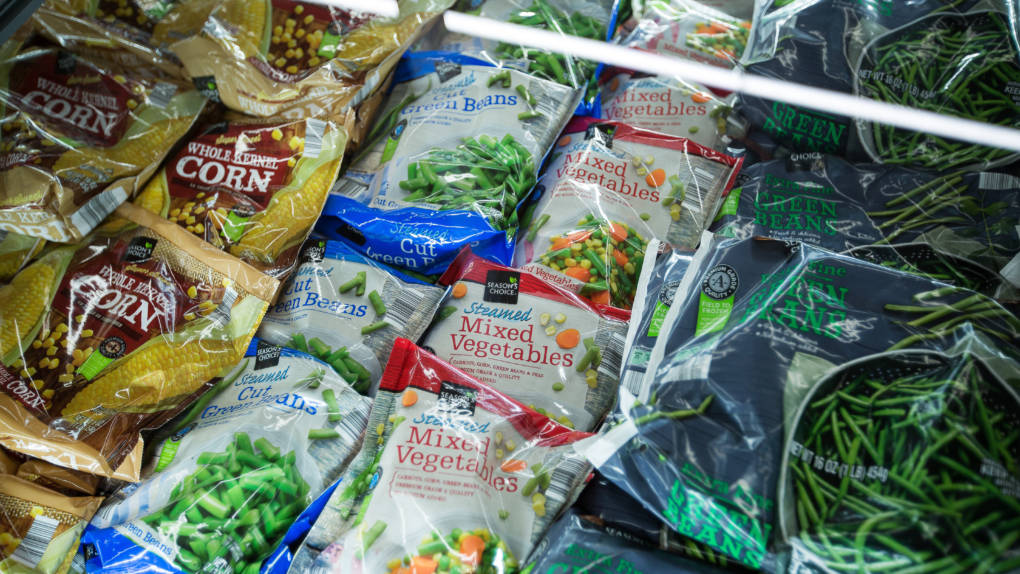
"caption": "Frozen vegetables are displayed for sale at an Aldi supermarket in Hackensack, N.J.",
"description": "Frozen vegetables are displayed for sale at an Aldi supermarket in Hackensack, N.J.",
"title": "Frozen vegetables are displayed for sale at an Aldi supermarket in Hackensack, N.J.",
"credit": "Bloomberg/Bloomberg via Getty Images",
"status": "inherit",
"isLoading": false,
"fetchFailed": false
},
"bayareabites_128215": {
"type": "attachments",
"id": "bayareabites_128215",
"meta": {
"index": "attachments_1716263798",
"site": "bayareabites",
"id": "128215",
"found": true
},
"parent": 128214,
"imgSizes": {
"small": {
"file": "https://ww2.kqed.org/app/uploads/sites/24/2018/05/gettyimages-123548581-5bdd6b9e1f2de7bc2e14815ebd9e8edfe943ebc7-520x390.jpg",
"width": 520,
"mimeType": "image/jpeg",
"height": 390
},
"twentyfourteen-full-width": {
"file": "https://ww2.kqed.org/app/uploads/sites/24/2018/05/gettyimages-123548581-5bdd6b9e1f2de7bc2e14815ebd9e8edfe943ebc7-1038x576.jpg",
"width": 1038,
"mimeType": "image/jpeg",
"height": 576
},
"thumbnail": {
"file": "https://ww2.kqed.org/app/uploads/sites/24/2018/05/gettyimages-123548581-5bdd6b9e1f2de7bc2e14815ebd9e8edfe943ebc7-160x120.jpg",
"width": 160,
"mimeType": "image/jpeg",
"height": 120
},
"fd-sm": {
"file": "https://ww2.kqed.org/app/uploads/sites/24/2018/05/gettyimages-123548581-5bdd6b9e1f2de7bc2e14815ebd9e8edfe943ebc7-960x720.jpg",
"width": 960,
"mimeType": "image/jpeg",
"height": 720
},
"post-thumbnail": {
"file": "https://ww2.kqed.org/app/uploads/sites/24/2018/05/gettyimages-123548581-5bdd6b9e1f2de7bc2e14815ebd9e8edfe943ebc7-672x372.jpg",
"width": 672,
"mimeType": "image/jpeg",
"height": 372
},
"xsmall": {
"file": "https://ww2.kqed.org/app/uploads/sites/24/2018/05/gettyimages-123548581-5bdd6b9e1f2de7bc2e14815ebd9e8edfe943ebc7-375x281.jpg",
"width": 375,
"mimeType": "image/jpeg",
"height": 281
},
"kqedFullSize": {
"file": "https://ww2.kqed.org/app/uploads/sites/24/2018/05/gettyimages-123548581-5bdd6b9e1f2de7bc2e14815ebd9e8edfe943ebc7.jpg",
"width": 1918,
"height": 1438
},
"large": {
"file": "https://ww2.kqed.org/app/uploads/sites/24/2018/05/gettyimages-123548581-5bdd6b9e1f2de7bc2e14815ebd9e8edfe943ebc7-1020x765.jpg",
"width": 1020,
"mimeType": "image/jpeg",
"height": 765
},
"xlarge": {
"file": "https://ww2.kqed.org/app/uploads/sites/24/2018/05/gettyimages-123548581-5bdd6b9e1f2de7bc2e14815ebd9e8edfe943ebc7-1180x885.jpg",
"width": 1180,
"mimeType": "image/jpeg",
"height": 885
},
"complete_open_graph": {
"file": "https://ww2.kqed.org/app/uploads/sites/24/2018/05/gettyimages-123548581-5bdd6b9e1f2de7bc2e14815ebd9e8edfe943ebc7-1200x900.jpg",
"width": 1200,
"mimeType": "image/jpeg",
"height": 900
},
"guest-author-50": {
"file": "https://ww2.kqed.org/app/uploads/sites/24/2018/05/gettyimages-123548581-5bdd6b9e1f2de7bc2e14815ebd9e8edfe943ebc7-50x50.jpg",
"width": 50,
"mimeType": "image/jpeg",
"height": 50
},
"guest-author-96": {
"file": "https://ww2.kqed.org/app/uploads/sites/24/2018/05/gettyimages-123548581-5bdd6b9e1f2de7bc2e14815ebd9e8edfe943ebc7-96x96.jpg",
"width": 96,
"mimeType": "image/jpeg",
"height": 96
},
"medium": {
"file": "https://ww2.kqed.org/app/uploads/sites/24/2018/05/gettyimages-123548581-5bdd6b9e1f2de7bc2e14815ebd9e8edfe943ebc7-800x600.jpg",
"width": 800,
"mimeType": "image/jpeg",
"height": 600
},
"guest-author-64": {
"file": "https://ww2.kqed.org/app/uploads/sites/24/2018/05/gettyimages-123548581-5bdd6b9e1f2de7bc2e14815ebd9e8edfe943ebc7-64x64.jpg",
"width": 64,
"mimeType": "image/jpeg",
"height": 64
},
"guest-author-32": {
"file": "https://ww2.kqed.org/app/uploads/sites/24/2018/05/gettyimages-123548581-5bdd6b9e1f2de7bc2e14815ebd9e8edfe943ebc7-32x32.jpg",
"width": 32,
"mimeType": "image/jpeg",
"height": 32
},
"fd-med": {
"file": "https://ww2.kqed.org/app/uploads/sites/24/2018/05/gettyimages-123548581-5bdd6b9e1f2de7bc2e14815ebd9e8edfe943ebc7-1180x885.jpg",
"width": 1180,
"mimeType": "image/jpeg",
"height": 885
},
"detail": {
"file": "https://ww2.kqed.org/app/uploads/sites/24/2018/05/gettyimages-123548581-5bdd6b9e1f2de7bc2e14815ebd9e8edfe943ebc7-150x150.jpg",
"width": 150,
"mimeType": "image/jpeg",
"height": 150
},
"medium_large": {
"file": "https://ww2.kqed.org/app/uploads/sites/24/2018/05/gettyimages-123548581-5bdd6b9e1f2de7bc2e14815ebd9e8edfe943ebc7-768x576.jpg",
"width": 768,
"mimeType": "image/jpeg",
"height": 576
},
"guest-author-128": {
"file": "https://ww2.kqed.org/app/uploads/sites/24/2018/05/gettyimages-123548581-5bdd6b9e1f2de7bc2e14815ebd9e8edfe943ebc7-128x128.jpg",
"width": 128,
"mimeType": "image/jpeg",
"height": 128
},
"xxsmall": {
"file": "https://ww2.kqed.org/app/uploads/sites/24/2018/05/gettyimages-123548581-5bdd6b9e1f2de7bc2e14815ebd9e8edfe943ebc7-240x180.jpg",
"width": 240,
"mimeType": "image/jpeg",
"height": 180
}
},
"publishDate": 1526575162,
"modified": 1526575292,
"caption": "Georgia's chicken prices were 30 to 50 percent higher than chicken prices elsewhere in 2015. Investors smelled a rat.",
"description": "Georgia's chicken prices were 30 to 50 percent higher than chicken prices elsewhere in 2015. Investors smelled a rat.",
"title": "Georgia's chicken prices were 30 to 50 percent higher than chicken prices elsewhere in 2015. Investors smelled a rat.",
"credit": "Rob Lawson/Getty Images",
"status": "inherit",
"isLoading": false,
"fetchFailed": false
},
"bayareabites_127732": {
"type": "attachments",
"id": "bayareabites_127732",
"meta": {
"index": "attachments_1716263798",
"site": "bayareabites",
"id": "127732",
"found": true
},
"parent": 127731,
"imgSizes": {
"small": {
"file": "https://ww2.kqed.org/app/uploads/sites/24/2018/05/frozen_wide-98c995b4916b657607a1f6ce06ec3f5d44db37be-520x292.jpg",
"width": 520,
"mimeType": "image/jpeg",
"height": 292
},
"twentyfourteen-full-width": {
"file": "https://ww2.kqed.org/app/uploads/sites/24/2018/05/frozen_wide-98c995b4916b657607a1f6ce06ec3f5d44db37be-1038x576.jpg",
"width": 1038,
"mimeType": "image/jpeg",
"height": 576
},
"thumbnail": {
"file": "https://ww2.kqed.org/app/uploads/sites/24/2018/05/frozen_wide-98c995b4916b657607a1f6ce06ec3f5d44db37be-160x90.jpg",
"width": 160,
"mimeType": "image/jpeg",
"height": 90
},
"fd-sm": {
"file": "https://ww2.kqed.org/app/uploads/sites/24/2018/05/frozen_wide-98c995b4916b657607a1f6ce06ec3f5d44db37be-960x540.jpg",
"width": 960,
"mimeType": "image/jpeg",
"height": 540
},
"post-thumbnail": {
"file": "https://ww2.kqed.org/app/uploads/sites/24/2018/05/frozen_wide-98c995b4916b657607a1f6ce06ec3f5d44db37be-672x372.jpg",
"width": 672,
"mimeType": "image/jpeg",
"height": 372
},
"xsmall": {
"file": "https://ww2.kqed.org/app/uploads/sites/24/2018/05/frozen_wide-98c995b4916b657607a1f6ce06ec3f5d44db37be-375x211.jpg",
"width": 375,
"mimeType": "image/jpeg",
"height": 211
},
"kqedFullSize": {
"file": "https://ww2.kqed.org/app/uploads/sites/24/2018/05/frozen_wide-98c995b4916b657607a1f6ce06ec3f5d44db37be.jpg",
"width": 3057,
"height": 1719
},
"large": {
"file": "https://ww2.kqed.org/app/uploads/sites/24/2018/05/frozen_wide-98c995b4916b657607a1f6ce06ec3f5d44db37be-1020x574.jpg",
"width": 1020,
"mimeType": "image/jpeg",
"height": 574
},
"xlarge": {
"file": "https://ww2.kqed.org/app/uploads/sites/24/2018/05/frozen_wide-98c995b4916b657607a1f6ce06ec3f5d44db37be-1180x664.jpg",
"width": 1180,
"mimeType": "image/jpeg",
"height": 664
},
"complete_open_graph": {
"file": "https://ww2.kqed.org/app/uploads/sites/24/2018/05/frozen_wide-98c995b4916b657607a1f6ce06ec3f5d44db37be-1200x675.jpg",
"width": 1200,
"mimeType": "image/jpeg",
"height": 675
},
"guest-author-50": {
"file": "https://ww2.kqed.org/app/uploads/sites/24/2018/05/frozen_wide-98c995b4916b657607a1f6ce06ec3f5d44db37be-50x50.jpg",
"width": 50,
"mimeType": "image/jpeg",
"height": 50
},
"guest-author-96": {
"file": "https://ww2.kqed.org/app/uploads/sites/24/2018/05/frozen_wide-98c995b4916b657607a1f6ce06ec3f5d44db37be-96x96.jpg",
"width": 96,
"mimeType": "image/jpeg",
"height": 96
},
"medium": {
"file": "https://ww2.kqed.org/app/uploads/sites/24/2018/05/frozen_wide-98c995b4916b657607a1f6ce06ec3f5d44db37be-800x450.jpg",
"width": 800,
"mimeType": "image/jpeg",
"height": 450
},
"guest-author-64": {
"file": "https://ww2.kqed.org/app/uploads/sites/24/2018/05/frozen_wide-98c995b4916b657607a1f6ce06ec3f5d44db37be-64x64.jpg",
"width": 64,
"mimeType": "image/jpeg",
"height": 64
},
"guest-author-32": {
"file": "https://ww2.kqed.org/app/uploads/sites/24/2018/05/frozen_wide-98c995b4916b657607a1f6ce06ec3f5d44db37be-32x32.jpg",
"width": 32,
"mimeType": "image/jpeg",
"height": 32
},
"fd-lrg": {
"file": "https://ww2.kqed.org/app/uploads/sites/24/2018/05/frozen_wide-98c995b4916b657607a1f6ce06ec3f5d44db37be-1920x1080.jpg",
"width": 1920,
"mimeType": "image/jpeg",
"height": 1080
},
"fd-med": {
"file": "https://ww2.kqed.org/app/uploads/sites/24/2018/05/frozen_wide-98c995b4916b657607a1f6ce06ec3f5d44db37be-1180x664.jpg",
"width": 1180,
"mimeType": "image/jpeg",
"height": 664
},
"full-width": {
"file": "https://ww2.kqed.org/app/uploads/sites/24/2018/05/frozen_wide-98c995b4916b657607a1f6ce06ec3f5d44db37be-1920x1080.jpg",
"width": 1920,
"mimeType": "image/jpeg",
"height": 1080
},
"detail": {
"file": "https://ww2.kqed.org/app/uploads/sites/24/2018/05/frozen_wide-98c995b4916b657607a1f6ce06ec3f5d44db37be-150x150.jpg",
"width": 150,
"mimeType": "image/jpeg",
"height": 150
},
"medium_large": {
"file": "https://ww2.kqed.org/app/uploads/sites/24/2018/05/frozen_wide-98c995b4916b657607a1f6ce06ec3f5d44db37be-768x432.jpg",
"width": 768,
"mimeType": "image/jpeg",
"height": 432
},
"guest-author-128": {
"file": "https://ww2.kqed.org/app/uploads/sites/24/2018/05/frozen_wide-98c995b4916b657607a1f6ce06ec3f5d44db37be-128x128.jpg",
"width": 128,
"mimeType": "image/jpeg",
"height": 128
},
"xxsmall": {
"file": "https://ww2.kqed.org/app/uploads/sites/24/2018/05/frozen_wide-98c995b4916b657607a1f6ce06ec3f5d44db37be-240x135.jpg",
"width": 240,
"mimeType": "image/jpeg",
"height": 135
}
},
"publishDate": 1525448672,
"modified": 1525448672,
"caption": null,
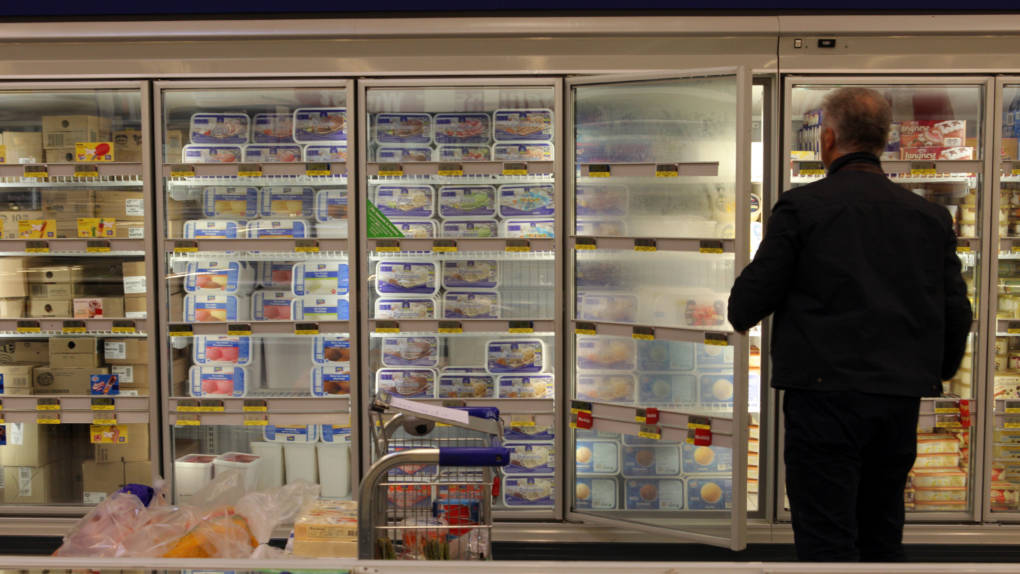
"description": "One reason frozen food sales might be faltering is because of design. \"That glass door. It really creates a fence,\" says food trend analyst Phil Lempert.",
"title": "One reason frozen food sales might be faltering is because of design. \"That glass door. It really creates a fence,\" says food trend analyst Phil Lempert.",
"credit": null,
"status": "inherit",
"isLoading": false,
"fetchFailed": false
}
},
"audioPlayerReducer": {
"postId": "stream_live",
"isPaused": true,
"isPlaying": false,
"pfsActive": false,
"pledgeModalIsOpen": true,
"playerDrawerIsOpen": false,
"liveAudioPlayStartedAt": 0,
"liveAudioPlayContext": ""
},
"authorsReducer": {
"byline_bayareabites_132834": {
"type": "authors",
"id": "byline_bayareabites_132834",
"meta": {
"override": true
},
"slug": "byline_bayareabites_132834",
"name": "Jasmine Garsd, NPR Food",
"isLoading": false
},
"byline_bayareabites_132062": {
"type": "authors",
"id": "byline_bayareabites_132062",
"meta": {
"override": true
},
"slug": "byline_bayareabites_132062",
"name": "Clare Lombardo\u003cbr>Elissa Nadworny, NPR Food",
"isLoading": false
},
"byline_bayareabites_132056": {
"type": "authors",
"id": "byline_bayareabites_132056",
"meta": {
"override": true
},
"slug": "byline_bayareabites_132056",
"name": "Samantha Raphelson, NPR Food",
"isLoading": false
},
"byline_bayareabites_131902": {
"type": "authors",
"id": "byline_bayareabites_131902",
"meta": {
"override": true
},
"slug": "byline_bayareabites_131902",
"name": "Alina Selyukh, NPR Food",
"isLoading": false
},
"byline_bayareabites_131839": {
"type": "authors",
"id": "byline_bayareabites_131839",
"meta": {
"override": true
},
"slug": "byline_bayareabites_131839",
"name": "Anna King, NPR",
"isLoading": false
},
"byline_bayareabites_130101": {
"type": "authors",
"id": "byline_bayareabites_130101",
"meta": {
"override": true
},
"slug": "byline_bayareabites_130101",
"name": "Carolyn Beans, NPR Food",
"isLoading": false
},
"byline_bayareabites_130032": {
"type": "authors",
"id": "byline_bayareabites_130032",
"meta": {
"override": true
},
"slug": "byline_bayareabites_130032",
"name": "Marc Gunther, NPR",
"isLoading": false
},
"byline_bayareabites_129279": {
"type": "authors",
"id": "byline_bayareabites_129279",
"meta": {
"override": true
},
"slug": "byline_bayareabites_129279",
"name": "John Ydstie, NPR Food",
"isLoading": false
},
"byline_bayareabites_129274": {
"type": "authors",
"id": "byline_bayareabites_129274",
"meta": {
"override": true
},
"slug": "byline_bayareabites_129274",
"name": "Anna King, Northwest News Network, NPR Food",
"isLoading": false
},
"byline_bayareabites_128261": {
"type": "authors",
"id": "byline_bayareabites_128261",
"meta": {
"override": true
},
"slug": "byline_bayareabites_128261",
"name": "Allison Aubrey, NPR Food",
"isLoading": false
},
"byline_bayareabites_128214": {
"type": "authors",
"id": "byline_bayareabites_128214",
"meta": {
"override": true
},
"slug": "byline_bayareabites_128214",
"name": "Dan Charles, NPR Food",
"isLoading": false
},
"byline_bayareabites_127731": {
"type": "authors",
"id": "byline_bayareabites_127731",
"meta": {
"override": true
},
"slug": "byline_bayareabites_127731",
"name": "Neda Ulaby, NPR Food",
"isLoading": false
}
},
"pagesReducer": {
"bayareabites_category_economy-and-food-costs": {
"type": "terms",
"id": "bayareabites_1962",
"meta": {
"index": "terms_1716263798",
"site": "bayareabites",
"id": "1962",
"score": 13.89634
},
"featImg": null,
"name": "economy and food costs",
"description": null,
"taxonomy": "category",
"headData": {
"twImgId": null,
"twTitle": null,
"ogTitle": null,
"ogImgId": null,
"twDescription": null,
"description": null,
"title": "economy and food costs Archives | KQED Bay Area Bites",
"ogDescription": null
},
"ttid": 1488,
"slug": "economy-and-food-costs",
"isLoading": false,
"title": "economy and food costs",
"pageMeta": {
"site": "bayareabites",
"WpPageTemplate": "page-topic-editorial",
"currentPage": 3
},
"blocks": [
{
"blockName": "kqed/post-list",
"attrs": {
"layout": "cardArticle2",
"query": "posts/bayareabites?category=economy-and-food-costs",
"seeMore": false,
"paginated": true,
"page": 3
}
},
{
"blockName": "kqed/ad"
}
]
}
},
"pfsSessionReducer": {},
"postsReducer": {
"stream_live": {
"type": "live",
"id": "stream_live",
"audioUrl": "https://streams.kqed.org/kqedradio",
"title": "Live Stream",
"excerpt": "Live Stream information currently unavailable.",
"link": "/radio",
"featImg": "",
"label": {
"name": "KQED Live",
"link": "/"
}
},
"stream_kqedNewscast": {
"type": "posts",
"id": "stream_kqedNewscast",
"audioUrl": "https://www.kqed.org/.stream/anon/radio/RDnews/newscast.mp3?_=1",
"title": "KQED Newscast",
"featImg": "",
"label": {
"name": "88.5 FM",
"link": "/"
}
},
"bayareabites_132834": {
"type": "posts",
"id": "bayareabites_132834",
"meta": {
"index": "posts_1716263798",
"site": "bayareabites",
"id": "132834",
"score": null,
"sort": [
1551905714000
]
},
"parent": 0,
"labelTerm": {
"site": "bayareabites"
},
"blocks": [],
"publishDate": 1551905714,
"format": "aside",
"disqusTitle": "Bay Area's High Cost Of Living Squeezes Restaurant Workers, Chefs And Owners",
"title": "Bay Area's High Cost Of Living Squeezes Restaurant Workers, Chefs And Owners",
"headTitle": "Bay Area Bites | KQED Food",
"content": "\u003cp>Every morning at around 5 a.m., Armando Ibarra wakes up in the back of his van. He's been living there for the last couple of years. On his dashboard rests a holy candle. A rosary hangs from the rearview mirror.\u003c/p>\n\u003cp>Ibarra walks over to his job, at a chain hotel near San Francisco's airport. He says at least he can wash up there. \"I take a shower, drink my coffee, smoke a cigarette and ready to work.\"\u003c/p>\n\u003cfigure id=\"attachment_132836\" class=\"wp-caption aligncenter\" style=\"max-width: 1920px\">\u003cimg class=\"size-full wp-image-132836\" src=\"https://ww2.kqed.org/bayareabites/wp-content/uploads/sites/24/2019/03/img_0012_custom-bb7545dad411e82590f37f8c9c209436e46ecdca-e1551905378333.jpg\" alt=\"Armando Ibarra, a hotel restaurant worker in San Francisco, lives out of his van to save money — and to avoid an hours-long commute from San Jose. A holy candle rests on his dashboard; a rosary hangs from the rearview mirror.\" width=\"1920\" height=\"1439\">\u003cfigcaption class=\"wp-caption-text\">Armando Ibarra, a hotel restaurant worker in San Francisco, lives out of his van to save money — and to avoid an hours-long commute from San Jose. A holy candle rests on his dashboard; a rosary hangs from the rearview mirror. \u003ccite>(Jasmine Garsd/NPR)\u003c/cite>\u003c/figcaption>\u003c/figure>\n\u003cp>The hotel restaurant where Ibarra works as a food runner boasts creative, artisanal and healthy meals. People in the San Francisco Bay Area are known for being foodies (the city now has the \u003ca href=\"https://abc7news.com/food/record-breaking-year-for-michelin-starred-restaurants-in-san-francisco/4792454/\">most Michelin three-star restaurants\u003c/a> in the U.S.).\u003c/p>\n\u003cp>But behind kitchen doors, tension has been stewing for years: Service industry workers like Ibarra say they can no longer afford to live in the Bay Area on their wages. And restaurant owners say the high cost of life has made it hard to retain staff, and even to stay in business.\u003c/p>\n\u003cp>The Bay Area is notoriously expensive. As the tech industry grows, rents have soared. A one-bedroom apartment costs well over $3,000 a month. The minimum wage just went up to \u003ca href=\"https://sfgov.org/olse/minimum-wage-ordinance-mwo\">$15 an hour\u003c/a>, but the cost of living also keeps rising.\u003c/p>\n\u003cp>[ad fullwidth]\u003c/p>\n\u003cp>Ibarra makes around $15 an hour. He used to commute from neighboring San Jose, one of the most expensive cities in the country. He paid $800 a month for a room, but just slept there.\u003c/p>\n\u003cp>When traffic was bad, the drive back from work could take as much as three hours. \"You would go bumper-to-bumper, bumper-to-bumper sometimes. You get crazy,\" Ibarra says.\u003c/p>\n\u003cp>He considered renting near work. But he couldn't afford it. He figured he was already spending as much as four hours a day in the car, so he might as well just sleep there.\u003c/p>\n\u003cp>The plight of low-wage workers like Ibarra is affecting the restaurant business. Just last year, \u003ca href=\"https://sf.eater.com/2017/9/22/16352884/restaurants-bars-closed-fall-2018-san-francisco-bay-area\">several high-profile eateries shut down.\u003c/a> One of them was Camino, known for its wood-fired cuisine. Co-owner Allison Hopelain says the restaurant took a major hit when its chef moved to Seattle because he couldn't afford to live in the Bay Area.\u003c/p>\n\u003cp>\"[He] felt like he would have better opportunities there in terms of opening his own place, buying a home,\" Hopelain says. She says things started unraveling when he left. Last year, after about a decade in business, \u003ca href=\"https://www.sfchronicle.com/restaurants/article/Say-goodbye-to-Camino-a-restaurant-too-special-13455156.php\">Camino closed\u003c/a>.\u003c/p>\n\u003cp>Hopelain went on to open The Kebabery in Oakland. It's a small, cafeteria-style joint. You just pick your food and find a table. She says it's a much more affordable business model, but she also thinks it's what a lot of customers want.\u003c/p>\n\u003cp>Decades ago, eating out was a special occasion, but these days Hopelain says people want to grab a quick, affordable bite of good food, and head back to their lives.\u003c/p>\n\u003cfigure id=\"attachment_132835\" class=\"wp-caption aligncenter\" style=\"max-width: 640px\">\u003cimg class=\"size-full wp-image-132835\" src=\"https://ww2.kqed.org/bayareabites/wp-content/uploads/sites/24/2019/03/kitchen-1_custom-618f38170402def5c8b8bade8e884996486b4922.jpg\" alt=\"Allison Hopelain, owner of The Kebabery in Oakland, Calif., says the cafeteria-style restaurant reflects the changing tastes of customers who now want to grab a quick, affordable meal and head back to their lives.\" width=\"640\" height=\"623\" srcset=\"https://ww2.kqed.org/app/uploads/sites/24/2019/03/kitchen-1_custom-618f38170402def5c8b8bade8e884996486b4922.jpg 640w, https://ww2.kqed.org/app/uploads/sites/24/2019/03/kitchen-1_custom-618f38170402def5c8b8bade8e884996486b4922-160x156.jpg 160w, https://ww2.kqed.org/app/uploads/sites/24/2019/03/kitchen-1_custom-618f38170402def5c8b8bade8e884996486b4922-32x32.jpg 32w, https://ww2.kqed.org/app/uploads/sites/24/2019/03/kitchen-1_custom-618f38170402def5c8b8bade8e884996486b4922-50x50.jpg 50w\" sizes=\"(max-width: 640px) 100vw, 640px\">\u003cfigcaption class=\"wp-caption-text\">Allison Hopelain, owner of The Kebabery in Oakland, Calif., says the cafeteria-style restaurant reflects the changing tastes of customers who now want to grab a quick, affordable meal and head back to their lives. \u003ccite>(Allison Hopelain/Courtesy of The Kebabery)\u003c/cite>\u003c/figcaption>\u003c/figure>\n\u003cp>A few minutes north of Oakland, Peter Levitt says his restaurant, with waiters, hosts and food runners, is part of a dying breed. \"Your old diners with booths and breakfast and lunch table service. It's over,\" he says.\u003c/p>\n\u003cp>Saul's, a Jewish deli, is a landmark in Berkeley near the University of California campus. Professors and locals hold meetings in the cozy booths over bagels, blintzes, smoked fish and a warm matzo ball soup.\u003c/p>\n\u003cfigure id=\"attachment_132837\" class=\"wp-caption aligncenter\" style=\"max-width: 1000px\">\u003cimg class=\"size-full wp-image-132837\" src=\"https://ww2.kqed.org/bayareabites/wp-content/uploads/sites/24/2019/03/p1040091_custom-0e51e2198ae4bb82ec24dbb3bfbfd3994b611270.jpg\" alt=\"Peter Levitt, owner of Saul's, a Jewish deli in Berkeley, says that as the minimum wage and housing prices climb, "the menu prices have to go up, because you have to pay more to retain your labor force."\" width=\"1000\" height=\"605\" srcset=\"https://ww2.kqed.org/app/uploads/sites/24/2019/03/p1040091_custom-0e51e2198ae4bb82ec24dbb3bfbfd3994b611270.jpg 1000w, https://ww2.kqed.org/app/uploads/sites/24/2019/03/p1040091_custom-0e51e2198ae4bb82ec24dbb3bfbfd3994b611270-160x97.jpg 160w, https://ww2.kqed.org/app/uploads/sites/24/2019/03/p1040091_custom-0e51e2198ae4bb82ec24dbb3bfbfd3994b611270-800x484.jpg 800w, https://ww2.kqed.org/app/uploads/sites/24/2019/03/p1040091_custom-0e51e2198ae4bb82ec24dbb3bfbfd3994b611270-768x465.jpg 768w\" sizes=\"(max-width: 1000px) 100vw, 1000px\">\u003cfigcaption class=\"wp-caption-text\">Peter Levitt, owner of Saul's, a Jewish deli in Berkeley, says that as the minimum wage and housing prices climb, \"the menu prices have to go up, because you have to pay more to retain your labor force.\" \u003ccite>(Emunah Hauser/Courtesy of Saul's Deli)\u003c/cite>\u003c/figcaption>\u003c/figure>\n\u003cp>Saul's was \u003ca href=\"http://www.saulsdeli.com/peter-karen\">established in the 1980s\u003c/a> and Levitt has seen a change in the cost of living here unfold before his own eyes. With workers getting pushed out of the Bay Area, he says, \"we've seen our staff coming from further and further away.\" One of his cooks sleeps at his extended family's house nearby, during work days, to shorten his commute.\u003c/p>\n\u003cp>Levitt says Saul's might have to adapt to the changing times. \"As minimum wages go up, and particularly as housing prices go up, the menu prices have to go up, because you have to pay more to retain your labor force,\" he says. \"And at some point maybe there won't be enough clientele out there to pay the cost of table service to sustain this kind of restaurant.\"\u003c/p>\n\u003cp>Some restaurants in the area are even turning to automation. Located in San Francisco's Financial District, Creator offers burgers created by local celebrity chefs.\u003c/p>\n\u003cp>But the burgers are \u003ca href=\"https://www.npr.org/sections/thesalt/2018/08/24/640511068/fad-or-the-future-robot-made-burgers-wow-the-crowds-in-san-francisco\">made by a giant robot\u003c/a> that slices the brioche bun, grates the cheese and cuts the tomatoes. The end result: a $6 burger.\u003c/p>\n\u003cfigure id=\"attachment_132839\" class=\"wp-caption aligncenter\" style=\"max-width: 1600px\">\u003cimg class=\"size-full wp-image-132839\" src=\"https://ww2.kqed.org/bayareabites/wp-content/uploads/sites/24/2019/03/creator-device-buns-4dea23bb9133bab676b9011338f334e1d2b0828c-s1600-c85.jpg\" alt=\"The burger-making robot at Creator, an automated restaurant in San Francisco.\" width=\"1600\" height=\"1200\" srcset=\"https://ww2.kqed.org/app/uploads/sites/24/2019/03/creator-device-buns-4dea23bb9133bab676b9011338f334e1d2b0828c-s1600-c85.jpg 1600w, https://ww2.kqed.org/app/uploads/sites/24/2019/03/creator-device-buns-4dea23bb9133bab676b9011338f334e1d2b0828c-s1600-c85-160x120.jpg 160w, https://ww2.kqed.org/app/uploads/sites/24/2019/03/creator-device-buns-4dea23bb9133bab676b9011338f334e1d2b0828c-s1600-c85-800x600.jpg 800w, https://ww2.kqed.org/app/uploads/sites/24/2019/03/creator-device-buns-4dea23bb9133bab676b9011338f334e1d2b0828c-s1600-c85-768x576.jpg 768w, https://ww2.kqed.org/app/uploads/sites/24/2019/03/creator-device-buns-4dea23bb9133bab676b9011338f334e1d2b0828c-s1600-c85-1020x765.jpg 1020w, https://ww2.kqed.org/app/uploads/sites/24/2019/03/creator-device-buns-4dea23bb9133bab676b9011338f334e1d2b0828c-s1600-c85-1200x900.jpg 1200w\" sizes=\"(max-width: 1600px) 100vw, 1600px\">\u003cfigcaption class=\"wp-caption-text\">The burger-making robot at Creator, an automated restaurant in San Francisco. \u003ccite>(Aubrie Prick/Courtesy of Creator.)\u003c/cite>\u003c/figcaption>\u003c/figure>\n\u003cp>Alex Vardakostas grew up flipping patties at his parents' restaurant, a burger joint in a little California surf town. He says the robot can flip burgers better, and more cheaply.\u003c/p>\n\u003cp>[aside postID=\"bayareabites_130151\" label=\"Fad Or The Future? Robot-Made Burgers Wow The Crowds In San Francisco\"]\u003c/p>\n\u003cp>\"The only way you can make a burger of this kind of quality at that price is using a device that's going to grind meat to order. It's going to slice the tomato to order, slice the bun to order,\" Vardakostas says.\u003c/p>\n\u003cp>Meanwhile, at the hotel restaurant where Armando Ibarra works, a burger costs about $20.\u003c/p>\n\u003cp>\"You know, even when I get the discount, that's too much,\" he says.\u003c/p>\n\u003cp>He says he usually just goes to Burger King or Taco Bell, or stops by a gas station to eat before heading back to his van to sleep.\u003c/p>\n\u003cp>[ad floatright]\u003c/p>\n\u003cp>\u003cb>Copyright 2019 NPR. To see more, \u003ca href=\"https://www.npr.org/2019/03/06/699126819/bay-areas-high-cost-of-living-squeezes-restaurant-workers-chefs-and-owners\">visit NPR.org\u003c/a>.\u003c/b>\u003c/p>\n\n",
"disqusIdentifier": "132834 https://ww2.kqed.org/bayareabites/?p=132834",
"disqusUrl": "https://ww2.kqed.org/bayareabites/2019/03/06/bay-areas-high-cost-of-living-squeezes-restaurant-workers-chefs-and-owners/",
"stats": {
"hasVideo": false,
"hasChartOrMap": false,
"hasAudio": false,
"hasPolis": false,
"wordCount": 1066,
"hasGoogleForm": false,
"hasGallery": false,
"hasHearkenModule": false,
"iframeSrcs": [],
"paragraphCount": 27
},
"modified": 1554323291,
"excerpt": "The San Francisco Bay Area is known for its love of fine food. It's also increasingly becoming known as an area where it's almost impossible to live on a service-industry wage.",
"headData": {
"twImgId": "",
"twTitle": "",
"ogTitle": "",
"ogImgId": "",
"twDescription": "",
"description": "The San Francisco Bay Area is known for its love of fine food. It's also increasingly becoming known as an area where it's almost impossible to live on a service-industry wage.",
"title": "Bay Area's High Cost Of Living Squeezes Restaurant Workers, Chefs And Owners | KQED",
"ogDescription": "",
"schema": {
"@context": "https://schema.org",
"@type": "Article",
"headline": "Bay Area's High Cost Of Living Squeezes Restaurant Workers, Chefs And Owners",
"datePublished": "2019-03-06T12:55:14-08:00",
"dateModified": "2019-04-03T13:28:11-07:00",
"image": "https://cdn.kqed.org/wp-content/uploads/2020/02/KQED-OG-Image@1x.png"
}
},
"guestAuthors": [],
"slug": "bay-areas-high-cost-of-living-squeezes-restaurant-workers-chefs-and-owners",
"status": "publish",
"nprByline": "Jasmine Garsd, NPR Food",
"nprImageAgency": "Courtesy of The Kebabery",
"nprImageCredit": "Allison Hopelain",
"path": "/bayareabites/132834/bay-areas-high-cost-of-living-squeezes-restaurant-workers-chefs-and-owners",
"audioTrackLength": null,
"parsedContent": [
{
"type": "contentString",
"content": "\u003cdiv class=\"post-body\">\u003cp>\u003cp>Every morning at around 5 a.m., Armando Ibarra wakes up in the back of his van. He's been living there for the last couple of years. On his dashboard rests a holy candle. A rosary hangs from the rearview mirror.\u003c/p>\n\u003cp>Ibarra walks over to his job, at a chain hotel near San Francisco's airport. He says at least he can wash up there. \"I take a shower, drink my coffee, smoke a cigarette and ready to work.\"\u003c/p>\n\u003cfigure id=\"attachment_132836\" class=\"wp-caption aligncenter\" style=\"max-width: 1920px\">\u003cimg class=\"size-full wp-image-132836\" src=\"https://ww2.kqed.org/bayareabites/wp-content/uploads/sites/24/2019/03/img_0012_custom-bb7545dad411e82590f37f8c9c209436e46ecdca-e1551905378333.jpg\" alt=\"Armando Ibarra, a hotel restaurant worker in San Francisco, lives out of his van to save money — and to avoid an hours-long commute from San Jose. A holy candle rests on his dashboard; a rosary hangs from the rearview mirror.\" width=\"1920\" height=\"1439\">\u003cfigcaption class=\"wp-caption-text\">Armando Ibarra, a hotel restaurant worker in San Francisco, lives out of his van to save money — and to avoid an hours-long commute from San Jose. A holy candle rests on his dashboard; a rosary hangs from the rearview mirror. \u003ccite>(Jasmine Garsd/NPR)\u003c/cite>\u003c/figcaption>\u003c/figure>\n\u003cp>The hotel restaurant where Ibarra works as a food runner boasts creative, artisanal and healthy meals. People in the San Francisco Bay Area are known for being foodies (the city now has the \u003ca href=\"https://abc7news.com/food/record-breaking-year-for-michelin-starred-restaurants-in-san-francisco/4792454/\">most Michelin three-star restaurants\u003c/a> in the U.S.).\u003c/p>\n\u003cp>But behind kitchen doors, tension has been stewing for years: Service industry workers like Ibarra say they can no longer afford to live in the Bay Area on their wages. And restaurant owners say the high cost of life has made it hard to retain staff, and even to stay in business.\u003c/p>\n\u003cp>The Bay Area is notoriously expensive. As the tech industry grows, rents have soared. A one-bedroom apartment costs well over $3,000 a month. The minimum wage just went up to \u003ca href=\"https://sfgov.org/olse/minimum-wage-ordinance-mwo\">$15 an hour\u003c/a>, but the cost of living also keeps rising.\u003c/p>\n\u003cp>\u003c/p>\u003c/div>",
"attributes": {
"named": {},
"numeric": []
}
},
{
"type": "component",
"content": "",
"name": "ad",
"attributes": {
"named": {
"label": "fullwidth"
},
"numeric": [
"fullwidth"
]
}
},
{
"type": "contentString",
"content": "\u003cdiv class=\"post-body\">\u003cp>\u003c/p>\n\u003cp>Ibarra makes around $15 an hour. He used to commute from neighboring San Jose, one of the most expensive cities in the country. He paid $800 a month for a room, but just slept there.\u003c/p>\n\u003cp>When traffic was bad, the drive back from work could take as much as three hours. \"You would go bumper-to-bumper, bumper-to-bumper sometimes. You get crazy,\" Ibarra says.\u003c/p>\n\u003cp>He considered renting near work. But he couldn't afford it. He figured he was already spending as much as four hours a day in the car, so he might as well just sleep there.\u003c/p>\n\u003cp>The plight of low-wage workers like Ibarra is affecting the restaurant business. Just last year, \u003ca href=\"https://sf.eater.com/2017/9/22/16352884/restaurants-bars-closed-fall-2018-san-francisco-bay-area\">several high-profile eateries shut down.\u003c/a> One of them was Camino, known for its wood-fired cuisine. Co-owner Allison Hopelain says the restaurant took a major hit when its chef moved to Seattle because he couldn't afford to live in the Bay Area.\u003c/p>\n\u003cp>\"[He] felt like he would have better opportunities there in terms of opening his own place, buying a home,\" Hopelain says. She says things started unraveling when he left. Last year, after about a decade in business, \u003ca href=\"https://www.sfchronicle.com/restaurants/article/Say-goodbye-to-Camino-a-restaurant-too-special-13455156.php\">Camino closed\u003c/a>.\u003c/p>\n\u003cp>Hopelain went on to open The Kebabery in Oakland. It's a small, cafeteria-style joint. You just pick your food and find a table. She says it's a much more affordable business model, but she also thinks it's what a lot of customers want.\u003c/p>\n\u003cp>Decades ago, eating out was a special occasion, but these days Hopelain says people want to grab a quick, affordable bite of good food, and head back to their lives.\u003c/p>\n\u003cfigure id=\"attachment_132835\" class=\"wp-caption aligncenter\" style=\"max-width: 640px\">\u003cimg class=\"size-full wp-image-132835\" src=\"https://ww2.kqed.org/bayareabites/wp-content/uploads/sites/24/2019/03/kitchen-1_custom-618f38170402def5c8b8bade8e884996486b4922.jpg\" alt=\"Allison Hopelain, owner of The Kebabery in Oakland, Calif., says the cafeteria-style restaurant reflects the changing tastes of customers who now want to grab a quick, affordable meal and head back to their lives.\" width=\"640\" height=\"623\" srcset=\"https://ww2.kqed.org/app/uploads/sites/24/2019/03/kitchen-1_custom-618f38170402def5c8b8bade8e884996486b4922.jpg 640w, https://ww2.kqed.org/app/uploads/sites/24/2019/03/kitchen-1_custom-618f38170402def5c8b8bade8e884996486b4922-160x156.jpg 160w, https://ww2.kqed.org/app/uploads/sites/24/2019/03/kitchen-1_custom-618f38170402def5c8b8bade8e884996486b4922-32x32.jpg 32w, https://ww2.kqed.org/app/uploads/sites/24/2019/03/kitchen-1_custom-618f38170402def5c8b8bade8e884996486b4922-50x50.jpg 50w\" sizes=\"(max-width: 640px) 100vw, 640px\">\u003cfigcaption class=\"wp-caption-text\">Allison Hopelain, owner of The Kebabery in Oakland, Calif., says the cafeteria-style restaurant reflects the changing tastes of customers who now want to grab a quick, affordable meal and head back to their lives. \u003ccite>(Allison Hopelain/Courtesy of The Kebabery)\u003c/cite>\u003c/figcaption>\u003c/figure>\n\u003cp>A few minutes north of Oakland, Peter Levitt says his restaurant, with waiters, hosts and food runners, is part of a dying breed. \"Your old diners with booths and breakfast and lunch table service. It's over,\" he says.\u003c/p>\n\u003cp>Saul's, a Jewish deli, is a landmark in Berkeley near the University of California campus. Professors and locals hold meetings in the cozy booths over bagels, blintzes, smoked fish and a warm matzo ball soup.\u003c/p>\n\u003cfigure id=\"attachment_132837\" class=\"wp-caption aligncenter\" style=\"max-width: 1000px\">\u003cimg class=\"size-full wp-image-132837\" src=\"https://ww2.kqed.org/bayareabites/wp-content/uploads/sites/24/2019/03/p1040091_custom-0e51e2198ae4bb82ec24dbb3bfbfd3994b611270.jpg\" alt=\"Peter Levitt, owner of Saul's, a Jewish deli in Berkeley, says that as the minimum wage and housing prices climb, "the menu prices have to go up, because you have to pay more to retain your labor force."\" width=\"1000\" height=\"605\" srcset=\"https://ww2.kqed.org/app/uploads/sites/24/2019/03/p1040091_custom-0e51e2198ae4bb82ec24dbb3bfbfd3994b611270.jpg 1000w, https://ww2.kqed.org/app/uploads/sites/24/2019/03/p1040091_custom-0e51e2198ae4bb82ec24dbb3bfbfd3994b611270-160x97.jpg 160w, https://ww2.kqed.org/app/uploads/sites/24/2019/03/p1040091_custom-0e51e2198ae4bb82ec24dbb3bfbfd3994b611270-800x484.jpg 800w, https://ww2.kqed.org/app/uploads/sites/24/2019/03/p1040091_custom-0e51e2198ae4bb82ec24dbb3bfbfd3994b611270-768x465.jpg 768w\" sizes=\"(max-width: 1000px) 100vw, 1000px\">\u003cfigcaption class=\"wp-caption-text\">Peter Levitt, owner of Saul's, a Jewish deli in Berkeley, says that as the minimum wage and housing prices climb, \"the menu prices have to go up, because you have to pay more to retain your labor force.\" \u003ccite>(Emunah Hauser/Courtesy of Saul's Deli)\u003c/cite>\u003c/figcaption>\u003c/figure>\n\u003cp>Saul's was \u003ca href=\"http://www.saulsdeli.com/peter-karen\">established in the 1980s\u003c/a> and Levitt has seen a change in the cost of living here unfold before his own eyes. With workers getting pushed out of the Bay Area, he says, \"we've seen our staff coming from further and further away.\" One of his cooks sleeps at his extended family's house nearby, during work days, to shorten his commute.\u003c/p>\n\u003cp>Levitt says Saul's might have to adapt to the changing times. \"As minimum wages go up, and particularly as housing prices go up, the menu prices have to go up, because you have to pay more to retain your labor force,\" he says. \"And at some point maybe there won't be enough clientele out there to pay the cost of table service to sustain this kind of restaurant.\"\u003c/p>\n\u003cp>Some restaurants in the area are even turning to automation. Located in San Francisco's Financial District, Creator offers burgers created by local celebrity chefs.\u003c/p>\n\u003cp>But the burgers are \u003ca href=\"https://www.npr.org/sections/thesalt/2018/08/24/640511068/fad-or-the-future-robot-made-burgers-wow-the-crowds-in-san-francisco\">made by a giant robot\u003c/a> that slices the brioche bun, grates the cheese and cuts the tomatoes. The end result: a $6 burger.\u003c/p>\n\u003cfigure id=\"attachment_132839\" class=\"wp-caption aligncenter\" style=\"max-width: 1600px\">\u003cimg class=\"size-full wp-image-132839\" src=\"https://ww2.kqed.org/bayareabites/wp-content/uploads/sites/24/2019/03/creator-device-buns-4dea23bb9133bab676b9011338f334e1d2b0828c-s1600-c85.jpg\" alt=\"The burger-making robot at Creator, an automated restaurant in San Francisco.\" width=\"1600\" height=\"1200\" srcset=\"https://ww2.kqed.org/app/uploads/sites/24/2019/03/creator-device-buns-4dea23bb9133bab676b9011338f334e1d2b0828c-s1600-c85.jpg 1600w, https://ww2.kqed.org/app/uploads/sites/24/2019/03/creator-device-buns-4dea23bb9133bab676b9011338f334e1d2b0828c-s1600-c85-160x120.jpg 160w, https://ww2.kqed.org/app/uploads/sites/24/2019/03/creator-device-buns-4dea23bb9133bab676b9011338f334e1d2b0828c-s1600-c85-800x600.jpg 800w, https://ww2.kqed.org/app/uploads/sites/24/2019/03/creator-device-buns-4dea23bb9133bab676b9011338f334e1d2b0828c-s1600-c85-768x576.jpg 768w, https://ww2.kqed.org/app/uploads/sites/24/2019/03/creator-device-buns-4dea23bb9133bab676b9011338f334e1d2b0828c-s1600-c85-1020x765.jpg 1020w, https://ww2.kqed.org/app/uploads/sites/24/2019/03/creator-device-buns-4dea23bb9133bab676b9011338f334e1d2b0828c-s1600-c85-1200x900.jpg 1200w\" sizes=\"(max-width: 1600px) 100vw, 1600px\">\u003cfigcaption class=\"wp-caption-text\">The burger-making robot at Creator, an automated restaurant in San Francisco. \u003ccite>(Aubrie Prick/Courtesy of Creator.)\u003c/cite>\u003c/figcaption>\u003c/figure>\n\u003cp>Alex Vardakostas grew up flipping patties at his parents' restaurant, a burger joint in a little California surf town. He says the robot can flip burgers better, and more cheaply.\u003c/p>\n\u003cp>\u003c/p>\u003c/div>",
"attributes": {
"named": {},
"numeric": []
}
},
{
"type": "component",
"content": "",
"name": "aside",
"attributes": {
"named": {
"postid": "bayareabites_130151",
"label": "Fad Or The Future? Robot-Made Burgers Wow The Crowds In San Francisco "
},
"numeric": []
}
},
{
"type": "contentString",
"content": "\u003cdiv class=\"post-body\">\u003cp>\u003c/p>\n\u003cp>\"The only way you can make a burger of this kind of quality at that price is using a device that's going to grind meat to order. It's going to slice the tomato to order, slice the bun to order,\" Vardakostas says.\u003c/p>\n\u003cp>Meanwhile, at the hotel restaurant where Armando Ibarra works, a burger costs about $20.\u003c/p>\n\u003cp>\"You know, even when I get the discount, that's too much,\" he says.\u003c/p>\n\u003cp>He says he usually just goes to Burger King or Taco Bell, or stops by a gas station to eat before heading back to his van to sleep.\u003c/p>\n\u003cp>\u003c/p>\u003c/div>",
"attributes": {
"named": {},
"numeric": []
}
},
{
"type": "component",
"content": "",
"name": "ad",
"attributes": {
"named": {
"label": "floatright"
},
"numeric": [
"floatright"
]
}
},
{
"type": "contentString",
"content": "\u003cdiv class=\"post-body\">\u003cp>\u003c/p>\n\u003cp>\u003cb>Copyright 2019 NPR. To see more, \u003ca href=\"https://www.npr.org/2019/03/06/699126819/bay-areas-high-cost-of-living-squeezes-restaurant-workers-chefs-and-owners\">visit NPR.org\u003c/a>.\u003c/b>\u003c/p>\n\n\u003c/div>\u003c/p>",
"attributes": {
"named": {},
"numeric": []
}
}
],
"link": "/bayareabites/132834/bay-areas-high-cost-of-living-squeezes-restaurant-workers-chefs-and-owners",
"authors": [
"byline_bayareabites_132834"
],
"categories": [
"bayareabites_63",
"bayareabites_8770",
"bayareabites_1962",
"bayareabites_11028",
"bayareabites_10028",
"bayareabites_15155",
"bayareabites_10916",
"bayareabites_1807",
"bayareabites_90",
"bayareabites_181"
],
"tags": [
"bayareabites_14775",
"bayareabites_16272"
],
"featImg": "bayareabites_132835",
"label": "bayareabites"
},
"bayareabites_132062": {
"type": "posts",
"id": "bayareabites_132062",
"meta": {
"index": "posts_1716263798",
"site": "bayareabites",
"id": "132062",
"score": null,
"sort": [
1547156603000
]
},
"parent": 0,
"labelTerm": {
"site": "bayareabites"
},
"blocks": [],
"publishDate": 1547156603,
"format": "standard",
"disqusTitle": "Report: College Students Are Hungry And Government Programs Could Do More To Help",
"title": "Report: College Students Are Hungry And Government Programs Could Do More To Help",
"headTitle": "Bay Area Bites | KQED Food",
"content": "\u003cp>College students across the country struggle with food insecurity.\u003c/p>\n\u003cp>Tuition and books, plus many hours away from a job, can be a huge financial burden on students — and for many, skipping meals can be a last-minute solution to a bad financial situation.\u003c/p>\n\u003cp>\u003ca href=\"https://www.gao.gov/products/GAO-19-95\">A new government report \u003c/a>finds that millions of college students are very likely struggling. And the report — which is from the Government Accountability Office — concludes that the federal systems in place could do a better job of helping them.\u003c/p>\n\u003cp>There isn't federal data on food insecurity among college students nationally, so the GAO reviewed 31 studies on the topic, showing that most concluded that over a third of college students don't always have enough to eat.\u003c/p>\n\u003cp>\"This is a major, major moment and a major victory in the fight against campus hunger,\" Sara Goldrick-Rab, a professor at Temple University, \u003ca href=\"https://www.facebook.com/mazonusa/videos/542290686275529/\">said at a briefing\u003c/a> Wednesday. The GAO cited \u003ca href=\"https://www.npr.org/sections/thetwo-way/2018/04/03/599197919/hunger-and-homelessness-are-widespread-among-college-students-study-finds\">her research on food insecurity\u003c/a> throughout the report.\u003c/p>\n\u003cp>[ad fullwidth]\u003c/p>\n\u003cp>GAO's report points out that just 29 percent of college students today are \"traditional students\" — those who enroll immediately after high school and depend on their parents for financial support. The vast majority — 71 percent — don't follow the narrative of the \"\u003ca href=\"https://www.npr.org/sections/ed/2018/09/04/638561407/todays-college-students-arent-who-you-think-they-are\">typical\u003c/a>\" college student. They might be financially independent, have kids of their own or fit any one of a number of characteristics that the report lays out.\u003c/p>\n\u003cp>And that's important to remember: While middle-class students may joke about being \"broke college students\" who eat ramen for a week, many students are truly hungry, says Carrie Welton, a policy analyst at the Center for Law and Social Policy.\u003c/p>\n\u003cp>\"Low-income students, first-generation students and students of color have a very different experience,\" Welton says.\u003c/p>\n\u003cp>The report focuses on ways that the federal Supplemental Nutrition Assistance Program could better help students struggling with hunger. SNAP — which operates under the Food and Nutrition Service of the federal government — provides low-income Americans with assistance for food.\u003c/p>\n\u003cp>It's one of the best ways to reduce food insecurity among college students, says Welton. But many students who could be receiving those benefits don't realize it, because the eligibility guidelines are unclear. According to the report, almost 2 million students who may have been eligible for SNAP didn't receive benefits in 2017.\u003c/p>\n\u003cp>\"It is safe to say that it's confusing and cumbersome, and feels like a very large lift, not only for students to understand it but post-secondary institutions,\" Welton explains.\u003c/p>\n\u003cp>Many colleges are taking their own steps to address hunger on campus by organizing food pantries and coordinating among staff to identify and work with students who need assistance. But school staff that try to help students access SNAP benefits are often faced with hurdles. At many colleges GAO researchers spoke with, students and school leaders said they were unclear about the SNAP eligibility rules or had incorrect information about them.\u003c/p>\n\u003cp>Even some staff at state SNAP agencies and regional Food and Nutrition Service offices said that they weren't entirely clear on eligibility rules. The report recommended that the Food and Nutrition Service website clarify SNAP eligibility requirements so that the site can serve as a resource for schools and states.\u003c/p>\n\u003cp>The report also recommended that the Food and Nutrition Service review the various approaches that individual state SNAP agencies are taking to help students and share them among the states. These state agencies have some flexibility in how they provide services, and some are taking steps to reach out to college students and clarify eligibility rules.\u003c/p>\n\u003cp>\"No one gets ahead by letting these numbers go on,\" Goldrick-Rab said \u003ca href=\"https://www.facebook.com/mazonusa/videos/542290686275529/\">Wednesday\u003c/a>.\u003c/p>\n\u003cp>\u003c/p>\n\u003cp>The federal government invests billions every year in student financial aid — but many students who receive those funds don't make it through college. As the GAO report notes, access to SNAP benefits \u003ca href=\"http://www.equalmeasure.org/ideas/report/final-evaluation-report-public-benefits-and-community-colleges-lessons-from-the-benefits-access-for-college-completion-demonstration/\">has been shown\u003c/a> to increase the likelihood that those students will graduate with a degree.\u003c/p>\n\u003cdiv class=\"fullattribution\">Copyright 2019 NPR. To see more, visit https://www.npr.org.\u003cimg src=\"https://www.google-analytics.com/__utm.gif?utmac=UA-5828686-4&utmdt=Report%3A+College+Students+Are+Hungry+And+Government+Programs+Could+Do+More+To+Help&utme=8(APIKey)9(MDAxOTAwOTE4MDEyMTkxMDAzNjczZDljZA004)\">\u003c/div>\n\n",
"disqusIdentifier": "132062 https://ww2.kqed.org/bayareabites/?p=132062",
"disqusUrl": "https://ww2.kqed.org/bayareabites/2019/01/10/report-college-students-are-hungry-and-government-programs-could-do-more-to-help/",
"stats": {
"hasVideo": false,
"hasChartOrMap": false,
"hasAudio": false,
"hasPolis": false,
"wordCount": 679,
"hasGoogleForm": false,
"hasGallery": false,
"hasHearkenModule": false,
"iframeSrcs": [],
"paragraphCount": 18
},
"modified": 1547156603,
"excerpt": "A federal report finds many undergraduates are too hungry to learn and don't have enough information to access the federal resources available to help. ",
"headData": {
"twImgId": "",
"twTitle": "",
"ogTitle": "",
"ogImgId": "",
"twDescription": "",
"description": "A federal report finds many undergraduates are too hungry to learn and don't have enough information to access the federal resources available to help. ",
"title": "Report: College Students Are Hungry And Government Programs Could Do More To Help | KQED",
"ogDescription": "",
"schema": {
"@context": "https://schema.org",
"@type": "Article",
"headline": "Report: College Students Are Hungry And Government Programs Could Do More To Help",
"datePublished": "2019-01-10T13:43:23-08:00",
"dateModified": "2019-01-10T13:43:23-08:00",
"image": "https://cdn.kqed.org/wp-content/uploads/2020/02/KQED-OG-Image@1x.png"
}
},
"guestAuthors": [],
"slug": "report-college-students-are-hungry-and-government-programs-could-do-more-to-help",
"status": "publish",
"nprApiLink": "http://api.npr.org/query?id=683302685&apiKey=MDAxOTAwOTE4MDEyMTkxMDAzNjczZDljZA004",
"nprByline": "Clare Lombardo\u003cbr>Elissa Nadworny, NPR Food",
"nprStoryDate": "Thu, 10 Jan 2019 11:45:14 -0500",
"nprLastModifiedDate": "Thu, 10 Jan 2019 15:48:37 -0500",
"nprHtmlLink": "https://www.npr.org/2019/01/10/683302685/report-college-students-are-hungry-and-government-programs-could-do-more-to-help?ft=nprml&f=683302685",
"nprImageAgency": "NPR",
"nprImageCredit": "LA Johnson",
"nprStoryId": "683302685",
"nprRetrievedStory": "1",
"nprPubDate": "Thu, 10 Jan 2019 15:48:00 -0500",
"path": "/bayareabites/132062/report-college-students-are-hungry-and-government-programs-could-do-more-to-help",
"audioTrackLength": null,
"parsedContent": [
{
"type": "contentString",
"content": "\u003cdiv class=\"post-body\">\u003cp>\u003cp>College students across the country struggle with food insecurity.\u003c/p>\n\u003cp>Tuition and books, plus many hours away from a job, can be a huge financial burden on students — and for many, skipping meals can be a last-minute solution to a bad financial situation.\u003c/p>\n\u003cp>\u003ca href=\"https://www.gao.gov/products/GAO-19-95\">A new government report \u003c/a>finds that millions of college students are very likely struggling. And the report — which is from the Government Accountability Office — concludes that the federal systems in place could do a better job of helping them.\u003c/p>\n\u003cp>There isn't federal data on food insecurity among college students nationally, so the GAO reviewed 31 studies on the topic, showing that most concluded that over a third of college students don't always have enough to eat.\u003c/p>\n\u003cp>\"This is a major, major moment and a major victory in the fight against campus hunger,\" Sara Goldrick-Rab, a professor at Temple University, \u003ca href=\"https://www.facebook.com/mazonusa/videos/542290686275529/\">said at a briefing\u003c/a> Wednesday. The GAO cited \u003ca href=\"https://www.npr.org/sections/thetwo-way/2018/04/03/599197919/hunger-and-homelessness-are-widespread-among-college-students-study-finds\">her research on food insecurity\u003c/a> throughout the report.\u003c/p>\n\u003cp>\u003c/p>\u003c/div>",
"attributes": {
"named": {},
"numeric": []
}
},
{
"type": "component",
"content": "",
"name": "ad",
"attributes": {
"named": {
"label": "fullwidth"
},
"numeric": [
"fullwidth"
]
}
},
{
"type": "contentString",
"content": "\u003cdiv class=\"post-body\">\u003cp>\u003c/p>\n\u003cp>GAO's report points out that just 29 percent of college students today are \"traditional students\" — those who enroll immediately after high school and depend on their parents for financial support. The vast majority — 71 percent — don't follow the narrative of the \"\u003ca href=\"https://www.npr.org/sections/ed/2018/09/04/638561407/todays-college-students-arent-who-you-think-they-are\">typical\u003c/a>\" college student. They might be financially independent, have kids of their own or fit any one of a number of characteristics that the report lays out.\u003c/p>\n\u003cp>And that's important to remember: While middle-class students may joke about being \"broke college students\" who eat ramen for a week, many students are truly hungry, says Carrie Welton, a policy analyst at the Center for Law and Social Policy.\u003c/p>\n\u003cp>\"Low-income students, first-generation students and students of color have a very different experience,\" Welton says.\u003c/p>\n\u003cp>The report focuses on ways that the federal Supplemental Nutrition Assistance Program could better help students struggling with hunger. SNAP — which operates under the Food and Nutrition Service of the federal government — provides low-income Americans with assistance for food.\u003c/p>\n\u003cp>It's one of the best ways to reduce food insecurity among college students, says Welton. But many students who could be receiving those benefits don't realize it, because the eligibility guidelines are unclear. According to the report, almost 2 million students who may have been eligible for SNAP didn't receive benefits in 2017.\u003c/p>\n\u003cp>\"It is safe to say that it's confusing and cumbersome, and feels like a very large lift, not only for students to understand it but post-secondary institutions,\" Welton explains.\u003c/p>\n\u003cp>Many colleges are taking their own steps to address hunger on campus by organizing food pantries and coordinating among staff to identify and work with students who need assistance. But school staff that try to help students access SNAP benefits are often faced with hurdles. At many colleges GAO researchers spoke with, students and school leaders said they were unclear about the SNAP eligibility rules or had incorrect information about them.\u003c/p>\n\u003cp>Even some staff at state SNAP agencies and regional Food and Nutrition Service offices said that they weren't entirely clear on eligibility rules. The report recommended that the Food and Nutrition Service website clarify SNAP eligibility requirements so that the site can serve as a resource for schools and states.\u003c/p>\n\u003cp>The report also recommended that the Food and Nutrition Service review the various approaches that individual state SNAP agencies are taking to help students and share them among the states. These state agencies have some flexibility in how they provide services, and some are taking steps to reach out to college students and clarify eligibility rules.\u003c/p>\n\u003cp>\"No one gets ahead by letting these numbers go on,\" Goldrick-Rab said \u003ca href=\"https://www.facebook.com/mazonusa/videos/542290686275529/\">Wednesday\u003c/a>.\u003c/p>\n\u003cp>\u003c/p>\n\u003cp>The federal government invests billions every year in student financial aid — but many students who receive those funds don't make it through college. As the GAO report notes, access to SNAP benefits \u003ca href=\"http://www.equalmeasure.org/ideas/report/final-evaluation-report-public-benefits-and-community-colleges-lessons-from-the-benefits-access-for-college-completion-demonstration/\">has been shown\u003c/a> to increase the likelihood that those students will graduate with a degree.\u003c/p>\n\u003cdiv class=\"fullattribution\">Copyright 2019 NPR. To see more, visit https://www.npr.org.\u003cimg src=\"https://www.google-analytics.com/__utm.gif?utmac=UA-5828686-4&utmdt=Report%3A+College+Students+Are+Hungry+And+Government+Programs+Could+Do+More+To+Help&utme=8(APIKey)9(MDAxOTAwOTE4MDEyMTkxMDAzNjczZDljZA004)\">\u003c/div>\n\n\u003c/div>\u003c/p>",
"attributes": {
"named": {},
"numeric": []
}
}
],
"link": "/bayareabites/132062/report-college-students-are-hungry-and-government-programs-could-do-more-to-help",
"authors": [
"byline_bayareabites_132062"
],
"categories": [
"bayareabites_1962",
"bayareabites_11028",
"bayareabites_10028",
"bayareabites_1245",
"bayareabites_10916",
"bayareabites_358"
],
"tags": [
"bayareabites_14178",
"bayareabites_13313",
"bayareabites_14775",
"bayareabites_16272",
"bayareabites_449",
"bayareabites_11838",
"bayareabites_11439"
],
"featImg": "bayareabites_132063",
"label": "bayareabites"
},
"bayareabites_132056": {
"type": "posts",
"id": "bayareabites_132056",
"meta": {
"index": "posts_1716263798",
"site": "bayareabites",
"id": "132056",
"score": null,
"sort": [
1547060657000
]
},
"parent": 0,
"labelTerm": {
"site": "bayareabites"
},
"blocks": [],
"publishDate": 1547060657,
"format": "standard",
"disqusTitle": "Nobody Is Moving Our Cheese: American Surplus Reaches Record High",
"title": "Nobody Is Moving Our Cheese: American Surplus Reaches Record High",
"headTitle": "Bay Area Bites | KQED Food",
"content": "\u003cp>It's a stinky time for the American cheese industry.\u003c/p>\n\u003cp>While Americans consumed nearly 37 pounds per capita in 2017, it was not enough to reduce the country's 1.4 billion-pound cheese surplus,\u003ca href=\"https://www.ers.usda.gov/data-products/dairy-data/\"> according to the U.S. Department of Agriculture\u003c/a>. The glut, which at \u003ca href=\"https://www.vox.com/science-and-health/2018/6/28/17515188/us-cheese-surplus-billion-pounds\">900,000 cubic yards\u003c/a> is the largest in U.S. history, means that there is enough cheese sitting in cold storage to wrap around the U.S. Capitol.\u003c/p>\n\u003cp>[contextly_sidebar id=\"gOBOE3EfsFwicqJkDWFfh0KtvYl7PyU3\"]\u003c/p>\n\u003cp>The stockpile started to build several years ago, in large part because the pace of milk production began to exceed the rates of consumption, says Andrew Novakovic, professor of agricultural economics at Cornell University.\u003c/p>\n\u003cp>Over the past 10 years, milk production has increased by \u003ca href=\"https://www.nass.usda.gov/Charts_and_Maps/Milk_Production_and_Milk_Cows/milkprod.php\">13 percent\u003c/a> because of high prices. But what dairy farmers failed to realize was that Americans are drinking less milk. According to data from the USDA, Americans drank just 149 pounds of milk per capita in 2017, down from 247 pounds in 1975.\u003c/p>\n\u003cp>[ad fullwidth]\u003c/p>\n\u003cp>Suppliers turn that extra milk into cheese because it is less perishable and stays fresh for longer periods. But Americans are turning their noses up at those processed cheese slices and string cheese — varieties that are a main driver of the U.S. cheese market — in favor of more refined options, \u003ca href=\"https://www.wbur.org/hereandnow/2019/01/08/cheese-surplus-united-states\">Novakovic tells\u003c/a> \u003cem>Here & Now's\u003c/em> Jeremy Hobson. Despite this shift, sales of mozzarella cheese, the single largest type of cheese produced and consumed in the U.S., remain strong, he says.\u003c/p>\n\u003cp>\"What has changed — and changed fairly noticeably and fairly recently — is people are turning away from processed cheese,\" Novakovic says. \"It's also the case that we're seeing increased sales of kind of more exotic, specialty, European-style cheeses. Some of those are made in the U.S. A lot of them aren't.\"\u003c/p>\n\u003cp>Novakovic also notes that imported cheeses tend to cost more, so when people choose those, they buy less cheese overall. The growing surplus of American-made cheese and milk means that prices are declining. The \u003ca href=\"https://www.ams.usda.gov/mnreports/dymadvancedprices.pdf\">current average price\u003c/a> of whole milk is $15.12 per 100 pounds, which is \u003ca href=\"https://extension.psu.edu/wheres-the-variation-in-dairy-breakeven-costs\">much lower\u003c/a> than the price required for dairy farmers to break even.\u003c/p>\n\u003cp>\"It's the same as it is for everything else: If you've got too much of something, the price has to go down until consumption rises,\" Novakovic says.\u003c/p>\n\u003cp>Some analysts have raised fears that U.S. trade disputes with China and Mexico could also negatively impact the dairy industry. But according to the U.S. Dairy Export Council, \u003ca href=\"https://blog.usdec.org/usdairyexporter/us-dairy-exports-on-track-for-record-year-0\">the impact of retaliatory tariffs\u003c/a> on American dairy products has been relatively small, not to mention that the U.S. exports only about 6 percent of its cheese.\u003c/p>\n\u003cp>That is to say that the price of letting pounds of cheese sit idle in cold storage comes back to dairy farmers. Since the 1970s, the industry has consolidated with more cows housed on larger farms, but now even those farms can't compete. In Wisconsin alone, hundreds of farms \u003ca href=\"https://www.wsj.com/articles/america-cant-move-its-cheese-11545042600?mod=hp_lead_pos9&ns=prod/accounts-wsj\">closed in 2018\u003c/a>\u003cem>, The Wall Street Journal\u003c/em> reported.\u003c/p>\n\u003cp>\u003c/p>\n\u003cp>\"A lot of farmers would say, 'Well, make it stop.' But the fact of the matter is we're still pushing out a little bit more milk than we know what to do with,\" Novakovic says. \"And really, it's not a big number, but until those two numbers get reconciled, we're going to continue to see these low prices.\"\u003c/p>\n\u003cdiv class=\"fullattribution\">Copyright 2019 NPR. To see more, visit https://www.npr.org.\u003cimg src=\"https://www.google-analytics.com/__utm.gif?utmac=UA-5828686-4&utmdt=Nobody+Is+Moving+Our+Cheese%3A+American+Surplus+Reaches+Record+High+&utme=8(APIKey)9(MDAxOTAwOTE4MDEyMTkxMDAzNjczZDljZA004)\">\u003c/div>\n\n",
"disqusIdentifier": "132056 https://ww2.kqed.org/bayareabites/?p=132056",
"disqusUrl": "https://ww2.kqed.org/bayareabites/2019/01/09/nobody-is-moving-our-cheese-american-surplus-reaches-record-high/",
"stats": {
"hasVideo": false,
"hasChartOrMap": false,
"hasAudio": false,
"hasPolis": false,
"wordCount": 587,
"hasGoogleForm": false,
"hasGallery": false,
"hasHearkenModule": false,
"iframeSrcs": [],
"paragraphCount": 14
},
"modified": 1547060657,
"excerpt": "Americans consumed almost 37 pounds per capita in 2017, but that wasn't enough to reduce the country's 1.4 billion-pound cheese surplus. The stockpile of cheese started to build several years ago.",
"headData": {
"twImgId": "",
"twTitle": "",
"ogTitle": "",
"ogImgId": "",
"twDescription": "",
"description": "Americans consumed almost 37 pounds per capita in 2017, but that wasn't enough to reduce the country's 1.4 billion-pound cheese surplus. The stockpile of cheese started to build several years ago.",
"title": "Nobody Is Moving Our Cheese: American Surplus Reaches Record High | KQED",
"ogDescription": "",
"schema": {
"@context": "https://schema.org",
"@type": "Article",
"headline": "Nobody Is Moving Our Cheese: American Surplus Reaches Record High",
"datePublished": "2019-01-09T11:04:17-08:00",
"dateModified": "2019-01-09T11:04:17-08:00",
"image": "https://cdn.kqed.org/wp-content/uploads/2020/02/KQED-OG-Image@1x.png"
}
},
"guestAuthors": [],
"slug": "nobody-is-moving-our-cheese-american-surplus-reaches-record-high",
"status": "publish",
"nprApiLink": "http://api.npr.org/query?id=683339929&apiKey=MDAxOTAwOTE4MDEyMTkxMDAzNjczZDljZA004",
"nprByline": "Samantha Raphelson, NPR Food",
"nprStoryDate": "Wed, 09 Jan 2019 05:58:00 -0500",
"nprLastModifiedDate": "Wed, 09 Jan 2019 13:07:33 -0500",
"nprHtmlLink": "https://www.npr.org/2019/01/09/683339929/nobody-is-moving-our-cheese-american-surplus-reaches-record-high?ft=nprml&f=683339929",
"nprImageAgency": "Getty Images",
"nprImageCredit": "Scott Olson",
"nprStoryId": "683339929",
"nprRetrievedStory": "1",
"nprPubDate": "Wed, 09 Jan 2019 13:07:00 -0500",
"path": "/bayareabites/132056/nobody-is-moving-our-cheese-american-surplus-reaches-record-high",
"audioTrackLength": null,
"parsedContent": [
{
"type": "contentString",
"content": "\u003cdiv class=\"post-body\">\u003cp>\u003cp>It's a stinky time for the American cheese industry.\u003c/p>\n\u003cp>While Americans consumed nearly 37 pounds per capita in 2017, it was not enough to reduce the country's 1.4 billion-pound cheese surplus,\u003ca href=\"https://www.ers.usda.gov/data-products/dairy-data/\"> according to the U.S. Department of Agriculture\u003c/a>. The glut, which at \u003ca href=\"https://www.vox.com/science-and-health/2018/6/28/17515188/us-cheese-surplus-billion-pounds\">900,000 cubic yards\u003c/a> is the largest in U.S. history, means that there is enough cheese sitting in cold storage to wrap around the U.S. Capitol.\u003c/p>\n\u003cp>\u003c/p>\u003cp>\u003c/p>\u003cp>\u003c/p>\n\u003cp>The stockpile started to build several years ago, in large part because the pace of milk production began to exceed the rates of consumption, says Andrew Novakovic, professor of agricultural economics at Cornell University.\u003c/p>\n\u003cp>Over the past 10 years, milk production has increased by \u003ca href=\"https://www.nass.usda.gov/Charts_and_Maps/Milk_Production_and_Milk_Cows/milkprod.php\">13 percent\u003c/a> because of high prices. But what dairy farmers failed to realize was that Americans are drinking less milk. According to data from the USDA, Americans drank just 149 pounds of milk per capita in 2017, down from 247 pounds in 1975.\u003c/p>\n\u003cp>\u003c/p>\u003c/div>",
"attributes": {
"named": {},
"numeric": []
}
},
{
"type": "component",
"content": "",
"name": "ad",
"attributes": {
"named": {
"label": "fullwidth"
},
"numeric": [
"fullwidth"
]
}
},
{
"type": "contentString",
"content": "\u003cdiv class=\"post-body\">\u003cp>\u003c/p>\n\u003cp>Suppliers turn that extra milk into cheese because it is less perishable and stays fresh for longer periods. But Americans are turning their noses up at those processed cheese slices and string cheese — varieties that are a main driver of the U.S. cheese market — in favor of more refined options, \u003ca href=\"https://www.wbur.org/hereandnow/2019/01/08/cheese-surplus-united-states\">Novakovic tells\u003c/a> \u003cem>Here & Now's\u003c/em> Jeremy Hobson. Despite this shift, sales of mozzarella cheese, the single largest type of cheese produced and consumed in the U.S., remain strong, he says.\u003c/p>\n\u003cp>\"What has changed — and changed fairly noticeably and fairly recently — is people are turning away from processed cheese,\" Novakovic says. \"It's also the case that we're seeing increased sales of kind of more exotic, specialty, European-style cheeses. Some of those are made in the U.S. A lot of them aren't.\"\u003c/p>\n\u003cp>Novakovic also notes that imported cheeses tend to cost more, so when people choose those, they buy less cheese overall. The growing surplus of American-made cheese and milk means that prices are declining. The \u003ca href=\"https://www.ams.usda.gov/mnreports/dymadvancedprices.pdf\">current average price\u003c/a> of whole milk is $15.12 per 100 pounds, which is \u003ca href=\"https://extension.psu.edu/wheres-the-variation-in-dairy-breakeven-costs\">much lower\u003c/a> than the price required for dairy farmers to break even.\u003c/p>\n\u003cp>\"It's the same as it is for everything else: If you've got too much of something, the price has to go down until consumption rises,\" Novakovic says.\u003c/p>\n\u003cp>Some analysts have raised fears that U.S. trade disputes with China and Mexico could also negatively impact the dairy industry. But according to the U.S. Dairy Export Council, \u003ca href=\"https://blog.usdec.org/usdairyexporter/us-dairy-exports-on-track-for-record-year-0\">the impact of retaliatory tariffs\u003c/a> on American dairy products has been relatively small, not to mention that the U.S. exports only about 6 percent of its cheese.\u003c/p>\n\u003cp>That is to say that the price of letting pounds of cheese sit idle in cold storage comes back to dairy farmers. Since the 1970s, the industry has consolidated with more cows housed on larger farms, but now even those farms can't compete. In Wisconsin alone, hundreds of farms \u003ca href=\"https://www.wsj.com/articles/america-cant-move-its-cheese-11545042600?mod=hp_lead_pos9&ns=prod/accounts-wsj\">closed in 2018\u003c/a>\u003cem>, The Wall Street Journal\u003c/em> reported.\u003c/p>\n\u003cp>\u003c/p>\n\u003cp>\"A lot of farmers would say, 'Well, make it stop.' But the fact of the matter is we're still pushing out a little bit more milk than we know what to do with,\" Novakovic says. \"And really, it's not a big number, but until those two numbers get reconciled, we're going to continue to see these low prices.\"\u003c/p>\n\u003cdiv class=\"fullattribution\">Copyright 2019 NPR. To see more, visit https://www.npr.org.\u003cimg src=\"https://www.google-analytics.com/__utm.gif?utmac=UA-5828686-4&utmdt=Nobody+Is+Moving+Our+Cheese%3A+American+Surplus+Reaches+Record+High+&utme=8(APIKey)9(MDAxOTAwOTE4MDEyMTkxMDAzNjczZDljZA004)\">\u003c/div>\n\n\u003c/div>\u003c/p>",
"attributes": {
"named": {},
"numeric": []
}
}
],
"link": "/bayareabites/132056/nobody-is-moving-our-cheese-american-surplus-reaches-record-high",
"authors": [
"byline_bayareabites_132056"
],
"categories": [
"bayareabites_1962",
"bayareabites_1874",
"bayareabites_11028",
"bayareabites_10028",
"bayareabites_10916",
"bayareabites_358"
],
"tags": [
"bayareabites_14750",
"bayareabites_1057",
"bayareabites_14775",
"bayareabites_16272"
],
"featImg": "bayareabites_132057",
"label": "bayareabites"
},
"bayareabites_131902": {
"type": "posts",
"id": "bayareabites_131902",
"meta": {
"index": "posts_1716263798",
"site": "bayareabites",
"id": "131902",
"score": null,
"sort": [
1546554637000
]
},
"parent": 0,
"labelTerm": {
"site": "bayareabites"
},
"blocks": [],
"publishDate": 1546554637,
"format": "standard",
"disqusTitle": "From Campbell's To Kellogg's, Classic Brands Are Feeling The Crunch",
"title": "From Campbell's To Kellogg's, Classic Brands Are Feeling The Crunch",
"headTitle": "Bay Area Bites | KQED Food",
"content": "\u003cp>Think about the last time you went to the supermarket. You probably spent no more than a few seconds choosing from all the different brands of toothpaste, frozen peas or oatmeal.\u003c/p>\n\u003cp>Those few seconds used to be the holy grail for brands, the moment you would get hooked forever on that Tide detergent or Heinz ketchup — an event referred to as \"the first moment of truth.\" But lately, the moment of truth has moved to the Internet. What's more, ripples from the 2008 recession have changed us as shoppers.\u003c/p>\n\u003cp>More and more people have started saying: \"I'm not a brand person.\"\u003c/p>\n\u003cp>Those five fateful words come from Juliet McFadden, 23, an office manager in Boston. For consumer brands used to owning American cupboards and closets, that sentiment spells trouble and signals a turning point: evolve or wither.\u003c/p>\n\u003cp>It has been a tumultuous period for giant consumer brand companies. Campbell Soup Co. is in the process of selling off parts of its business and \u003ca href=\"https://www.nytimes.com/2018/12/20/business/campbell-soup-chief-executive-clouse.html\">welcoming a new\u003c/a> chief executive. Procter & Gamble is \u003ca href=\"https://www.cnbc.com/2018/11/08/pg-to-restructure-company-as-maker-of-gillette-simplifies-units.html\">restructuring\u003c/a>. Unilever, which makes Dove soap and Hellmann's mayonnaise, has also \u003ca href=\"https://www.wsj.com/articles/unilever-picks-insider-as-new-ceo-1543478395\">hired a new CEO\u003c/a>.\u003c/p>\n\u003cp>[ad fullwidth]\u003c/p>\n\u003cp>As far back as 2015, research firm Catalina\u003ca href=\"https://assets.ctfassets.net/oyvkhyupj8l5/2ZYjJLIB2gsMyaOgmQC2WW/8ece3950dea3f20122cf71ea80229c1a/2015-Mid-Year-Review.pdf\"> reported\u003c/a> that 90 of the top 100 brands in consumer packaged goods had lost market share.\u003c/p>\n\u003cp>To understand that trend, consider a shopper like McFadden. She is just starting to build her finances and lifelong shopping habits. This makes her a prime target for consumer-goods companies like Procter & Gamble, Kraft Heinz or General Mills. But she's not easy to win over.\u003c/p>\n\u003cp>For example, McFadden doesn't like cereal. \"I just don't usually eat breakfast,\" she says. She doesn't drink soda and dislikes yogurts \"with a ton of sugar with them.\" She doesn't buy paper towels and prefers reusable washable rags. \"Paper towels are expensive,\" she says. \"Stuff like that adds up.\"\u003c/p>\n\u003cp>The tastes of McFadden's generation often get treated with the tired trope about millennials killing \u003ca href=\"https://www.nytimes.com/2016/02/24/dining/breakfast-cereal.html?_r=0\">breakfast cereal\u003c/a>, \u003ca href=\"https://www.washingtonpost.com/lifestyle/home/do-you-use-paper-towels-as-napkins-at-the-dinner-table-you-are-not-alone/2016/03/25/d0d076b0-eb8c-11e5-b0fd-073d5930a7b7_story.html?utm_term=.b908ac3c1d9b\">napkins\u003c/a>, \u003ca href=\"https://www.marketwatch.com/story/millennials-are-killing-bar-soap-2017-06-09\">bar soap\u003c/a>, \u003ca href=\"https://www.wsj.com/articles/tuna-makers-look-to-hook-younger-consumers-1543766400\">canned tuna\u003c/a>. But really, most Americans could make a similar list. Maybe you choose the store brand of toilet paper; or you buy a fancier condiment instead of Hellmann's mayo; or you order eco-friendly diapers on the Internet.\u003c/p>\n\u003cp>\"Rather than just relying on brand familiarity, consumers buy today what performs for them. They are much less brand-loyal,\" says David Luttenberger of market-research firm Mintel. \"They are more driven by performance, by convenience, by price.\"\u003c/p>\n\u003cp>During the Great Recession, Americans warmed up to cheaper off-brand products, like generic or store brands. And then, they kept buying them even as the economy improved.\u003c/p>\n\u003cp>Plus, the Internet — of course — has completely shaken up shopping.\u003c/p>\n\u003cp>Think about how people used to discover new brands. Only the biggest conglomerates could afford prime TV advertising and prominent placement in stores, right around eye level.\u003c/p>\n\u003cp>And so the baby boomer generation of shoppers grew up reaching for ubiquitous products like Campbell's soup, Heinz ketchup, Oscar Mayer hot dogs or P&G's Crest toothpaste.\u003c/p>\n\u003cp>Some of these names remain longtime favorites among loyal older shoppers. In a 2018 \u003ca href=\"https://morningconsult.com/most-loved-brands/#most-loved\">Morning Consult poll\u003c/a>, Procter & Gamble and Kimberly-Clark were the two top brands preferred by boomers, far more than U.S. adults overall.\u003c/p>\n\u003cp>Meanwhile, tech investors have been funding startups to bring Silicon Valley \"disruption\" to products such as toothbrushes, vitamins and tampons. Wall Street has become cautious about once-dominant consumer brands. Shares of companies like \u003ca href=\"https://finance.yahoo.com/chart/K#eyJpbnRlcnZhbCI6IndlZWsiLCJwZXJpb2RpY2l0eSI6MSwiY2FuZGxlV2lkdGgiOjYuMTY4NTgyMzc1NDc4OTI3LCJ2b2x1bWVVbmRlcmxheSI6dHJ1ZSwiYWRqIjp0cnVlLCJjcm9zc2hhaXIiOnRydWUsImNoYXJ0VHlwZSI6ImxpbmUiLCJleHRlbmRlZCI6ZmFsc2UsIm1hcmtldFNlc3Npb25zIjp7fSwiYWdncmVnYXRpb25UeXBlIjoib2hsYyIsImNoYXJ0U2NhbGUiOiJsaW5lYXIiLCJwYW5lbHMiOnsiY2hhcnQiOnsicGVyY2VudCI6MSwiZGlzcGxheSI6IksiLCJjaGFydE5hbWUiOiJjaGFydCIsInRvcCI6MH19LCJzZXRTcGFuIjp7Im11bHRpcGxpZXIiOjUsImJhc2UiOiJ5ZWFyIiwicGVyaW9kaWNpdHkiOnsicGVyaW9kIjoxLCJpbnRlcnZhbCI6IndlZWsifX0sImxpbmVXaWR0aCI6Miwic3RyaXBlZEJhY2tncm91ZCI6dHJ1ZSwiZXZlbnRzIjp0cnVlLCJjb2xvciI6IiMwMDgxZjIiLCJzeW1ib2xzIjpbeyJzeW1ib2wiOiJLIiwic3ltYm9sT2JqZWN0Ijp7InN5bWJvbCI6IksifSwicGVyaW9kaWNpdHkiOjEsImludGVydmFsIjoid2VlayIsInNldFNwYW4iOnsibXVsdGlwbGllciI6NSwiYmFzZSI6InllYXIiLCJwZXJpb2RpY2l0eSI6eyJwZXJpb2QiOjEsImludGVydmFsIjoid2VlayJ9fX1dLCJldmVudE1hcCI6eyJjb3Jwb3JhdGUiOnsiZGl2cyI6dHJ1ZSwic3BsaXRzIjp0cnVlfSwic2lnRGV2Ijp7fX0sImN1c3RvbVJhbmdlIjpudWxsLCJzdHVkaWVzIjp7InZvbCB1bmRyIjp7InR5cGUiOiJ2b2wgdW5kciIsImlucHV0cyI6eyJpZCI6InZvbCB1bmRyIiwiZGlzcGxheSI6InZvbCB1bmRyIn0sIm91dHB1dHMiOnsiVXAgVm9sdW1lIjoiIzAwYjA2MSIsIkRvd24gVm9sdW1lIjoiI0ZGMzMzQSJ9LCJwYW5lbCI6ImNoYXJ0IiwicGFyYW1ldGVycyI6eyJ3aWR0aEZhY3RvciI6MC40NSwiY2hhcnROYW1lIjoiY2hhcnQifX19fQ%3D%3D\">Kellogg\u003c/a>, \u003ca href=\"https://finance.yahoo.com/chart/KHC#eyJpbnRlcnZhbCI6IndlZWsiLCJwZXJpb2RpY2l0eSI6MSwiY2FuZGxlV2lkdGgiOjguODQ2MTUzODQ2MTUzODQ3LCJ2b2x1bWVVbmRlcmxheSI6dHJ1ZSwiYWRqIjp0cnVlLCJjcm9zc2hhaXIiOnRydWUsImNoYXJ0VHlwZSI6ImxpbmUiLCJleHRlbmRlZCI6ZmFsc2UsIm1hcmtldFNlc3Npb25zIjp7fSwiYWdncmVnYXRpb25UeXBlIjoib2hsYyIsImNoYXJ0U2NhbGUiOiJsaW5lYXIiLCJwYW5lbHMiOnsiY2hhcnQiOnsicGVyY2VudCI6MSwiZGlzcGxheSI6IktIQyIsImNoYXJ0TmFtZSI6ImNoYXJ0IiwidG9wIjowfX0sInNldFNwYW4iOnsiYmFzZSI6ImFsbCIsIm11bHRpcGxpZXIiOjF9LCJsaW5lV2lkdGgiOjIsInN0cmlwZWRCYWNrZ3JvdWQiOnRydWUsImV2ZW50cyI6dHJ1ZSwiY29sb3IiOiIjMDA4MWYyIiwic3ltYm9scyI6W3sic3ltYm9sIjoiS0hDIiwic3ltYm9sT2JqZWN0Ijp7InN5bWJvbCI6IktIQyJ9LCJwZXJpb2RpY2l0eSI6MSwiaW50ZXJ2YWwiOiJ3ZWVrIiwic2V0U3BhbiI6eyJiYXNlIjoiYWxsIiwibXVsdGlwbGllciI6MX19XSwiZXZlbnRNYXAiOnsiY29ycG9yYXRlIjp7ImRpdnMiOnRydWUsInNwbGl0cyI6dHJ1ZX0sInNpZ0RldiI6e319LCJzdHVkaWVzIjp7InZvbCB1bmRyIjp7InR5cGUiOiJ2b2wgdW5kciIsImlucHV0cyI6eyJpZCI6InZvbCB1bmRyIiwiZGlzcGxheSI6InZvbCB1bmRyIn0sIm91dHB1dHMiOnsiVXAgVm9sdW1lIjoiIzAwYjA2MSIsIkRvd24gVm9sdW1lIjoiI0ZGMzMzQSJ9LCJwYW5lbCI6ImNoYXJ0IiwicGFyYW1ldGVycyI6eyJ3aWR0aEZhY3RvciI6MC40NSwiY2hhcnROYW1lIjoiY2hhcnQifX19LCJjdXN0b21SYW5nZSI6bnVsbH0%3D\">Kraft Heinz\u003c/a> and \u003ca href=\"https://finance.yahoo.com/chart/GIS#eyJpbnRlcnZhbCI6IndlZWsiLCJwZXJpb2RpY2l0eSI6MSwiY2FuZGxlV2lkdGgiOjYuMTY4NTgyMzc1NDc4OTI3LCJ2b2x1bWVVbmRlcmxheSI6dHJ1ZSwiYWRqIjp0cnVlLCJjcm9zc2hhaXIiOnRydWUsImNoYXJ0VHlwZSI6ImxpbmUiLCJleHRlbmRlZCI6ZmFsc2UsIm1hcmtldFNlc3Npb25zIjp7fSwiYWdncmVnYXRpb25UeXBlIjoib2hsYyIsImNoYXJ0U2NhbGUiOiJsaW5lYXIiLCJwYW5lbHMiOnsiY2hhcnQiOnsicGVyY2VudCI6MSwiZGlzcGxheSI6IkdJUyIsImNoYXJ0TmFtZSI6ImNoYXJ0IiwidG9wIjowfX0sInNldFNwYW4iOnsibXVsdGlwbGllciI6NSwiYmFzZSI6InllYXIiLCJwZXJpb2RpY2l0eSI6eyJwZXJpb2QiOjEsImludGVydmFsIjoid2VlayJ9fSwibGluZVdpZHRoIjoyLCJzdHJpcGVkQmFja2dyb3VkIjp0cnVlLCJldmVudHMiOnRydWUsImNvbG9yIjoiIzAwODFmMiIsInN5bWJvbHMiOlt7InN5bWJvbCI6IkdJUyIsInN5bWJvbE9iamVjdCI6eyJzeW1ib2wiOiJHSVMifSwicGVyaW9kaWNpdHkiOjEsImludGVydmFsIjoid2VlayIsInNldFNwYW4iOnsibXVsdGlwbGllciI6NSwiYmFzZSI6InllYXIiLCJwZXJpb2RpY2l0eSI6eyJwZXJpb2QiOjEsImludGVydmFsIjoid2VlayJ9fX1dLCJldmVudE1hcCI6eyJjb3Jwb3JhdGUiOnsiZGl2cyI6dHJ1ZSwic3BsaXRzIjp0cnVlfSwic2lnRGV2Ijp7fX0sImN1c3RvbVJhbmdlIjpudWxsLCJzdHVkaWVzIjp7InZvbCB1bmRyIjp7InR5cGUiOiJ2b2wgdW5kciIsImlucHV0cyI6eyJpZCI6InZvbCB1bmRyIiwiZGlzcGxheSI6InZvbCB1bmRyIn0sIm91dHB1dHMiOnsiVXAgVm9sdW1lIjoiIzAwYjA2MSIsIkRvd24gVm9sdW1lIjoiI0ZGMzMzQSJ9LCJwYW5lbCI6ImNoYXJ0IiwicGFyYW1ldGVycyI6eyJ3aWR0aEZhY3RvciI6MC40NSwiY2hhcnROYW1lIjoiY2hhcnQifX19fQ%3D%3D\">General Mills\u003c/a> recently hit their lowest levels in years.\u003c/p>\n\u003cp>\"They're in a bit of a pickle,\" says Americus Reed, marketing professor at the University of Pennsylvania's Wharton School. \"Like in the music industry, very few artists can continue being successful in the sophomore and junior album, right? ... It is a big challenge to reinvent yourself over and over again.\"\u003c/p>\n\u003cp>But that's exactly what companies are trying to do with brands to survive. In 2017, Procter & Gamble\u003ca href=\"https://www.washingtonpost.com/business/capitalbusiness/how-hipster-brands-have-the-king-of-razors-on-the-run/2017/04/05/edca3af6-1a27-11e7-9887-1a5314b56a08_story.html?utm_term=.a33dde70e338\"> cut the price\u003c/a> of its razors and replacement blades to compete against online-subscription upstarts Dollar Shave Club and Harry's. Rival Unilever went all in and \u003ca href=\"https://www.wsj.com/articles/unilever-buys-dollar-shave-club-1468987836?mod=article_inline\">bought\u003c/a> the Dollar Shave Club for $1 billion.\u003c/p>\n\u003cp>Kimberly-Clark — whose brands include Kleenex, Huggies and Kotex —\u003ca href=\"https://www.npr.org/sections/thetwo-way/2018/01/23/580029629/kimberly-clark-announces-layoffs-along-with-3-3-billion-in-operating-profit\"> was struggling so much that it announced plans\u003c/a> to lay off 13 percent of its workers and shutter 10 plants. Among various brand revamps, the company has launched a new Scott toilet paper without the center tube to appeal to the environmentally conscious shopper.\u003c/p>\n\u003cp>General Mills renamed the classic Hamburger Helper as simply \"Helper.\" In a\u003ca href=\"https://www.eater.com/2016/3/7/11173858/kraft-mac-and-cheese-different\"> quiet feat\u003c/a>, Kraft Heinz managed to take out artificial preservatives and dyes from its classic macaroni and cheese without angering devotees.\u003c/p>\n\u003cp>The 149-year-old Campbell Soup Co. has been \u003ca href=\"https://morningconsult.com/2017/05/02/campbell-soups-age-problem/\">the poster child\u003c/a> of the struggle to adjust to an age where people want convenient, fresher products with ingredients they can pronounce.\u003c/p>\n\u003cp>Canonized by Andy Warhol in the heat-and-serve postwar era, Campbell is\u003ca href=\"https://morningconsult.com/2017/05/02/campbell-soups-age-problem/\"> acutely feeling\u003c/a> Americans' waning appetite for canned and condensed soups. It's trying to hold on to its huge share of the market with cleaner labels showing fresh ingredients, containers meant for sipping and modern flavors like toasted barley.\u003c/p>\n\u003cp>Another staple feeling the pressure is breakfast cereal, with nostalgic brands like Kellogg's Frosted Flakes and Froot Loops; General Mills' Lucky Charms and Cheerios; PepsiCo's Life and Cap'n Crunch. Sales here have been\u003ca href=\"https://www.nytimes.com/2016/02/24/dining/breakfast-cereal.html?_r=0\"> declining \u003c/a>for years. Mintel predicts an additional 5 percent decline through 2023, as people aren't swayed by reduced-sugar offerings and choose to skip breakfast or opt for more portable, warmer and more nutritious options.\u003c/p>\n\u003cp>\"You've got a lot of CEOs that are at their wits' end trying to figure out growth,\" \u003cem>The Wall Street Journal \u003c/em>\u003ca href=\"https://www.wsj.com/articles/packaged-food-companies-churn-through-ceos-desperate-for-fresh-ideas-1527598800?mod=article_inline\">cited\u003c/a> \"a now-retired big-food-company chief\" as saying in May 2018. The article said at least 16 CEOs of major packaged-food and beverage companies had stepped down in the previous two years.\u003c/p>\n\u003cp>\u003c/p>\n\u003cp>\"The challenge for these legacy brands is that the people that were born into them are going to die,\" says Reed, the marketing professor, \"and so you better have a plan to talk to these younger types of consumers.\"\u003c/p>\n\u003cdiv class=\"fullattribution\">Copyright 2019 NPR. To see more, visit https://www.npr.org.\u003cimg src=\"https://www.google-analytics.com/__utm.gif?utmac=UA-5828686-4&utmdt=From+Campbell%27s+To+Kellogg%27s%2C+Classic+Brands+Are+Feeling+The+Crunch&utme=8(APIKey)9(MDAxOTAwOTE4MDEyMTkxMDAzNjczZDljZA004)\">\u003c/div>\n\n",
"disqusIdentifier": "131902 https://ww2.kqed.org/bayareabites/?p=131902",
"disqusUrl": "https://ww2.kqed.org/bayareabites/2019/01/03/from-campbells-to-kelloggs-classic-brands-are-feeling-the-crunch/",
"stats": {
"hasVideo": false,
"hasChartOrMap": false,
"hasAudio": false,
"hasPolis": false,
"wordCount": 1056,
"hasGoogleForm": false,
"hasGallery": false,
"hasHearkenModule": false,
"iframeSrcs": [],
"paragraphCount": 27
},
"modified": 1546554637,
"excerpt": "Big mainstream consumer brands, which have owned our cupboards and closets, face a turning point: a time to evolve or wither. The Internet and the echoes of the recession have changed us as shoppers.",
"headData": {
"twImgId": "",
"twTitle": "",
"ogTitle": "",
"ogImgId": "",
"twDescription": "",
"description": "Big mainstream consumer brands, which have owned our cupboards and closets, face a turning point: a time to evolve or wither. The Internet and the echoes of the recession have changed us as shoppers.",
"title": "From Campbell's To Kellogg's, Classic Brands Are Feeling The Crunch | KQED",
"ogDescription": "",
"schema": {
"@context": "https://schema.org",
"@type": "Article",
"headline": "From Campbell's To Kellogg's, Classic Brands Are Feeling The Crunch",
"datePublished": "2019-01-03T14:30:37-08:00",
"dateModified": "2019-01-03T14:30:37-08:00",
"image": "https://cdn.kqed.org/wp-content/uploads/2020/02/KQED-OG-Image@1x.png"
}
},
"guestAuthors": [],
"slug": "from-campbells-to-kelloggs-classic-brands-are-feeling-the-crunch",
"status": "publish",
"nprApiLink": "http://api.npr.org/query?id=677390110&apiKey=MDAxOTAwOTE4MDEyMTkxMDAzNjczZDljZA004",
"nprStoryDate": "Tue, 01 Jan 2019 16:20:19 -0500",
"nprLastModifiedDate": "Wed, 02 Jan 2019 14:35:01 -0500",
"nprHtmlLink": "https://www.npr.org/2019/01/01/677390110/from-campbells-to-kellogg-s-classic-brands-are-feeling-the-crunch?ft=nprml&f=677390110",
"nprAudio": "https://ondemand.npr.org/anon.npr-mp3/npr/atc/2019/01/20190101_atc_from_campbells_to_kelloggs_classic_brands_are_feeling_the_crunch.mp3?orgId=1&topicId=1006&d=241&p=2&story=677390110&ft=nprml&f=677390110",
"nprImageAgency": "Getty Images",
"nprAudioM3u": "http://api.npr.org/m3u/1681442560-50fe24.m3u?orgId=1&topicId=1006&d=241&p=2&story=677390110&ft=nprml&f=677390110",
"nprStoryId": "677390110",
"nprByline": "Alina Selyukh, NPR Food",
"audioTrackLength": 241,
"nprImageCredit": "sorbetto",
"nprRetrievedStory": "1",
"nprPubDate": "Wed, 02 Jan 2019 14:35:00 -0500",
"path": "/bayareabites/131902/from-campbells-to-kelloggs-classic-brands-are-feeling-the-crunch",
"audioUrl": "https://ondemand.npr.org/anon.npr-mp3/npr/atc/2019/01/20190101_atc_from_campbells_to_kelloggs_classic_brands_are_feeling_the_crunch.mp3?orgId=1&topicId=1006&d=241&p=2&story=677390110&ft=nprml&f=677390110",
"parsedContent": [
{
"type": "contentString",
"content": "\u003cdiv class=\"post-body\">\u003cp>\u003cp>Think about the last time you went to the supermarket. You probably spent no more than a few seconds choosing from all the different brands of toothpaste, frozen peas or oatmeal.\u003c/p>\n\u003cp>Those few seconds used to be the holy grail for brands, the moment you would get hooked forever on that Tide detergent or Heinz ketchup — an event referred to as \"the first moment of truth.\" But lately, the moment of truth has moved to the Internet. What's more, ripples from the 2008 recession have changed us as shoppers.\u003c/p>\n\u003cp>More and more people have started saying: \"I'm not a brand person.\"\u003c/p>\n\u003cp>Those five fateful words come from Juliet McFadden, 23, an office manager in Boston. For consumer brands used to owning American cupboards and closets, that sentiment spells trouble and signals a turning point: evolve or wither.\u003c/p>\n\u003cp>It has been a tumultuous period for giant consumer brand companies. Campbell Soup Co. is in the process of selling off parts of its business and \u003ca href=\"https://www.nytimes.com/2018/12/20/business/campbell-soup-chief-executive-clouse.html\">welcoming a new\u003c/a> chief executive. Procter & Gamble is \u003ca href=\"https://www.cnbc.com/2018/11/08/pg-to-restructure-company-as-maker-of-gillette-simplifies-units.html\">restructuring\u003c/a>. Unilever, which makes Dove soap and Hellmann's mayonnaise, has also \u003ca href=\"https://www.wsj.com/articles/unilever-picks-insider-as-new-ceo-1543478395\">hired a new CEO\u003c/a>.\u003c/p>\n\u003cp>\u003c/p>\u003c/div>",
"attributes": {
"named": {},
"numeric": []
}
},
{
"type": "component",
"content": "",
"name": "ad",
"attributes": {
"named": {
"label": "fullwidth"
},
"numeric": [
"fullwidth"
]
}
},
{
"type": "contentString",
"content": "\u003cdiv class=\"post-body\">\u003cp>\u003c/p>\n\u003cp>As far back as 2015, research firm Catalina\u003ca href=\"https://assets.ctfassets.net/oyvkhyupj8l5/2ZYjJLIB2gsMyaOgmQC2WW/8ece3950dea3f20122cf71ea80229c1a/2015-Mid-Year-Review.pdf\"> reported\u003c/a> that 90 of the top 100 brands in consumer packaged goods had lost market share.\u003c/p>\n\u003cp>To understand that trend, consider a shopper like McFadden. She is just starting to build her finances and lifelong shopping habits. This makes her a prime target for consumer-goods companies like Procter & Gamble, Kraft Heinz or General Mills. But she's not easy to win over.\u003c/p>\n\u003cp>For example, McFadden doesn't like cereal. \"I just don't usually eat breakfast,\" she says. She doesn't drink soda and dislikes yogurts \"with a ton of sugar with them.\" She doesn't buy paper towels and prefers reusable washable rags. \"Paper towels are expensive,\" she says. \"Stuff like that adds up.\"\u003c/p>\n\u003cp>The tastes of McFadden's generation often get treated with the tired trope about millennials killing \u003ca href=\"https://www.nytimes.com/2016/02/24/dining/breakfast-cereal.html?_r=0\">breakfast cereal\u003c/a>, \u003ca href=\"https://www.washingtonpost.com/lifestyle/home/do-you-use-paper-towels-as-napkins-at-the-dinner-table-you-are-not-alone/2016/03/25/d0d076b0-eb8c-11e5-b0fd-073d5930a7b7_story.html?utm_term=.b908ac3c1d9b\">napkins\u003c/a>, \u003ca href=\"https://www.marketwatch.com/story/millennials-are-killing-bar-soap-2017-06-09\">bar soap\u003c/a>, \u003ca href=\"https://www.wsj.com/articles/tuna-makers-look-to-hook-younger-consumers-1543766400\">canned tuna\u003c/a>. But really, most Americans could make a similar list. Maybe you choose the store brand of toilet paper; or you buy a fancier condiment instead of Hellmann's mayo; or you order eco-friendly diapers on the Internet.\u003c/p>\n\u003cp>\"Rather than just relying on brand familiarity, consumers buy today what performs for them. They are much less brand-loyal,\" says David Luttenberger of market-research firm Mintel. \"They are more driven by performance, by convenience, by price.\"\u003c/p>\n\u003cp>During the Great Recession, Americans warmed up to cheaper off-brand products, like generic or store brands. And then, they kept buying them even as the economy improved.\u003c/p>\n\u003cp>Plus, the Internet — of course — has completely shaken up shopping.\u003c/p>\n\u003cp>Think about how people used to discover new brands. Only the biggest conglomerates could afford prime TV advertising and prominent placement in stores, right around eye level.\u003c/p>\n\u003cp>And so the baby boomer generation of shoppers grew up reaching for ubiquitous products like Campbell's soup, Heinz ketchup, Oscar Mayer hot dogs or P&G's Crest toothpaste.\u003c/p>\n\u003cp>Some of these names remain longtime favorites among loyal older shoppers. In a 2018 \u003ca href=\"https://morningconsult.com/most-loved-brands/#most-loved\">Morning Consult poll\u003c/a>, Procter & Gamble and Kimberly-Clark were the two top brands preferred by boomers, far more than U.S. adults overall.\u003c/p>\n\u003cp>Meanwhile, tech investors have been funding startups to bring Silicon Valley \"disruption\" to products such as toothbrushes, vitamins and tampons. Wall Street has become cautious about once-dominant consumer brands. Shares of companies like \u003ca href=\"https://finance.yahoo.com/chart/K#eyJpbnRlcnZhbCI6IndlZWsiLCJwZXJpb2RpY2l0eSI6MSwiY2FuZGxlV2lkdGgiOjYuMTY4NTgyMzc1NDc4OTI3LCJ2b2x1bWVVbmRlcmxheSI6dHJ1ZSwiYWRqIjp0cnVlLCJjcm9zc2hhaXIiOnRydWUsImNoYXJ0VHlwZSI6ImxpbmUiLCJleHRlbmRlZCI6ZmFsc2UsIm1hcmtldFNlc3Npb25zIjp7fSwiYWdncmVnYXRpb25UeXBlIjoib2hsYyIsImNoYXJ0U2NhbGUiOiJsaW5lYXIiLCJwYW5lbHMiOnsiY2hhcnQiOnsicGVyY2VudCI6MSwiZGlzcGxheSI6IksiLCJjaGFydE5hbWUiOiJjaGFydCIsInRvcCI6MH19LCJzZXRTcGFuIjp7Im11bHRpcGxpZXIiOjUsImJhc2UiOiJ5ZWFyIiwicGVyaW9kaWNpdHkiOnsicGVyaW9kIjoxLCJpbnRlcnZhbCI6IndlZWsifX0sImxpbmVXaWR0aCI6Miwic3RyaXBlZEJhY2tncm91ZCI6dHJ1ZSwiZXZlbnRzIjp0cnVlLCJjb2xvciI6IiMwMDgxZjIiLCJzeW1ib2xzIjpbeyJzeW1ib2wiOiJLIiwic3ltYm9sT2JqZWN0Ijp7InN5bWJvbCI6IksifSwicGVyaW9kaWNpdHkiOjEsImludGVydmFsIjoid2VlayIsInNldFNwYW4iOnsibXVsdGlwbGllciI6NSwiYmFzZSI6InllYXIiLCJwZXJpb2RpY2l0eSI6eyJwZXJpb2QiOjEsImludGVydmFsIjoid2VlayJ9fX1dLCJldmVudE1hcCI6eyJjb3Jwb3JhdGUiOnsiZGl2cyI6dHJ1ZSwic3BsaXRzIjp0cnVlfSwic2lnRGV2Ijp7fX0sImN1c3RvbVJhbmdlIjpudWxsLCJzdHVkaWVzIjp7InZvbCB1bmRyIjp7InR5cGUiOiJ2b2wgdW5kciIsImlucHV0cyI6eyJpZCI6InZvbCB1bmRyIiwiZGlzcGxheSI6InZvbCB1bmRyIn0sIm91dHB1dHMiOnsiVXAgVm9sdW1lIjoiIzAwYjA2MSIsIkRvd24gVm9sdW1lIjoiI0ZGMzMzQSJ9LCJwYW5lbCI6ImNoYXJ0IiwicGFyYW1ldGVycyI6eyJ3aWR0aEZhY3RvciI6MC40NSwiY2hhcnROYW1lIjoiY2hhcnQifX19fQ%3D%3D\">Kellogg\u003c/a>, \u003ca href=\"https://finance.yahoo.com/chart/KHC#eyJpbnRlcnZhbCI6IndlZWsiLCJwZXJpb2RpY2l0eSI6MSwiY2FuZGxlV2lkdGgiOjguODQ2MTUzODQ2MTUzODQ3LCJ2b2x1bWVVbmRlcmxheSI6dHJ1ZSwiYWRqIjp0cnVlLCJjcm9zc2hhaXIiOnRydWUsImNoYXJ0VHlwZSI6ImxpbmUiLCJleHRlbmRlZCI6ZmFsc2UsIm1hcmtldFNlc3Npb25zIjp7fSwiYWdncmVnYXRpb25UeXBlIjoib2hsYyIsImNoYXJ0U2NhbGUiOiJsaW5lYXIiLCJwYW5lbHMiOnsiY2hhcnQiOnsicGVyY2VudCI6MSwiZGlzcGxheSI6IktIQyIsImNoYXJ0TmFtZSI6ImNoYXJ0IiwidG9wIjowfX0sInNldFNwYW4iOnsiYmFzZSI6ImFsbCIsIm11bHRpcGxpZXIiOjF9LCJsaW5lV2lkdGgiOjIsInN0cmlwZWRCYWNrZ3JvdWQiOnRydWUsImV2ZW50cyI6dHJ1ZSwiY29sb3IiOiIjMDA4MWYyIiwic3ltYm9scyI6W3sic3ltYm9sIjoiS0hDIiwic3ltYm9sT2JqZWN0Ijp7InN5bWJvbCI6IktIQyJ9LCJwZXJpb2RpY2l0eSI6MSwiaW50ZXJ2YWwiOiJ3ZWVrIiwic2V0U3BhbiI6eyJiYXNlIjoiYWxsIiwibXVsdGlwbGllciI6MX19XSwiZXZlbnRNYXAiOnsiY29ycG9yYXRlIjp7ImRpdnMiOnRydWUsInNwbGl0cyI6dHJ1ZX0sInNpZ0RldiI6e319LCJzdHVkaWVzIjp7InZvbCB1bmRyIjp7InR5cGUiOiJ2b2wgdW5kciIsImlucHV0cyI6eyJpZCI6InZvbCB1bmRyIiwiZGlzcGxheSI6InZvbCB1bmRyIn0sIm91dHB1dHMiOnsiVXAgVm9sdW1lIjoiIzAwYjA2MSIsIkRvd24gVm9sdW1lIjoiI0ZGMzMzQSJ9LCJwYW5lbCI6ImNoYXJ0IiwicGFyYW1ldGVycyI6eyJ3aWR0aEZhY3RvciI6MC40NSwiY2hhcnROYW1lIjoiY2hhcnQifX19LCJjdXN0b21SYW5nZSI6bnVsbH0%3D\">Kraft Heinz\u003c/a> and \u003ca href=\"https://finance.yahoo.com/chart/GIS#eyJpbnRlcnZhbCI6IndlZWsiLCJwZXJpb2RpY2l0eSI6MSwiY2FuZGxlV2lkdGgiOjYuMTY4NTgyMzc1NDc4OTI3LCJ2b2x1bWVVbmRlcmxheSI6dHJ1ZSwiYWRqIjp0cnVlLCJjcm9zc2hhaXIiOnRydWUsImNoYXJ0VHlwZSI6ImxpbmUiLCJleHRlbmRlZCI6ZmFsc2UsIm1hcmtldFNlc3Npb25zIjp7fSwiYWdncmVnYXRpb25UeXBlIjoib2hsYyIsImNoYXJ0U2NhbGUiOiJsaW5lYXIiLCJwYW5lbHMiOnsiY2hhcnQiOnsicGVyY2VudCI6MSwiZGlzcGxheSI6IkdJUyIsImNoYXJ0TmFtZSI6ImNoYXJ0IiwidG9wIjowfX0sInNldFNwYW4iOnsibXVsdGlwbGllciI6NSwiYmFzZSI6InllYXIiLCJwZXJpb2RpY2l0eSI6eyJwZXJpb2QiOjEsImludGVydmFsIjoid2VlayJ9fSwibGluZVdpZHRoIjoyLCJzdHJpcGVkQmFja2dyb3VkIjp0cnVlLCJldmVudHMiOnRydWUsImNvbG9yIjoiIzAwODFmMiIsInN5bWJvbHMiOlt7InN5bWJvbCI6IkdJUyIsInN5bWJvbE9iamVjdCI6eyJzeW1ib2wiOiJHSVMifSwicGVyaW9kaWNpdHkiOjEsImludGVydmFsIjoid2VlayIsInNldFNwYW4iOnsibXVsdGlwbGllciI6NSwiYmFzZSI6InllYXIiLCJwZXJpb2RpY2l0eSI6eyJwZXJpb2QiOjEsImludGVydmFsIjoid2VlayJ9fX1dLCJldmVudE1hcCI6eyJjb3Jwb3JhdGUiOnsiZGl2cyI6dHJ1ZSwic3BsaXRzIjp0cnVlfSwic2lnRGV2Ijp7fX0sImN1c3RvbVJhbmdlIjpudWxsLCJzdHVkaWVzIjp7InZvbCB1bmRyIjp7InR5cGUiOiJ2b2wgdW5kciIsImlucHV0cyI6eyJpZCI6InZvbCB1bmRyIiwiZGlzcGxheSI6InZvbCB1bmRyIn0sIm91dHB1dHMiOnsiVXAgVm9sdW1lIjoiIzAwYjA2MSIsIkRvd24gVm9sdW1lIjoiI0ZGMzMzQSJ9LCJwYW5lbCI6ImNoYXJ0IiwicGFyYW1ldGVycyI6eyJ3aWR0aEZhY3RvciI6MC40NSwiY2hhcnROYW1lIjoiY2hhcnQifX19fQ%3D%3D\">General Mills\u003c/a> recently hit their lowest levels in years.\u003c/p>\n\u003cp>\"They're in a bit of a pickle,\" says Americus Reed, marketing professor at the University of Pennsylvania's Wharton School. \"Like in the music industry, very few artists can continue being successful in the sophomore and junior album, right? ... It is a big challenge to reinvent yourself over and over again.\"\u003c/p>\n\u003cp>But that's exactly what companies are trying to do with brands to survive. In 2017, Procter & Gamble\u003ca href=\"https://www.washingtonpost.com/business/capitalbusiness/how-hipster-brands-have-the-king-of-razors-on-the-run/2017/04/05/edca3af6-1a27-11e7-9887-1a5314b56a08_story.html?utm_term=.a33dde70e338\"> cut the price\u003c/a> of its razors and replacement blades to compete against online-subscription upstarts Dollar Shave Club and Harry's. Rival Unilever went all in and \u003ca href=\"https://www.wsj.com/articles/unilever-buys-dollar-shave-club-1468987836?mod=article_inline\">bought\u003c/a> the Dollar Shave Club for $1 billion.\u003c/p>\n\u003cp>Kimberly-Clark — whose brands include Kleenex, Huggies and Kotex —\u003ca href=\"https://www.npr.org/sections/thetwo-way/2018/01/23/580029629/kimberly-clark-announces-layoffs-along-with-3-3-billion-in-operating-profit\"> was struggling so much that it announced plans\u003c/a> to lay off 13 percent of its workers and shutter 10 plants. Among various brand revamps, the company has launched a new Scott toilet paper without the center tube to appeal to the environmentally conscious shopper.\u003c/p>\n\u003cp>General Mills renamed the classic Hamburger Helper as simply \"Helper.\" In a\u003ca href=\"https://www.eater.com/2016/3/7/11173858/kraft-mac-and-cheese-different\"> quiet feat\u003c/a>, Kraft Heinz managed to take out artificial preservatives and dyes from its classic macaroni and cheese without angering devotees.\u003c/p>\n\u003cp>The 149-year-old Campbell Soup Co. has been \u003ca href=\"https://morningconsult.com/2017/05/02/campbell-soups-age-problem/\">the poster child\u003c/a> of the struggle to adjust to an age where people want convenient, fresher products with ingredients they can pronounce.\u003c/p>\n\u003cp>Canonized by Andy Warhol in the heat-and-serve postwar era, Campbell is\u003ca href=\"https://morningconsult.com/2017/05/02/campbell-soups-age-problem/\"> acutely feeling\u003c/a> Americans' waning appetite for canned and condensed soups. It's trying to hold on to its huge share of the market with cleaner labels showing fresh ingredients, containers meant for sipping and modern flavors like toasted barley.\u003c/p>\n\u003cp>Another staple feeling the pressure is breakfast cereal, with nostalgic brands like Kellogg's Frosted Flakes and Froot Loops; General Mills' Lucky Charms and Cheerios; PepsiCo's Life and Cap'n Crunch. Sales here have been\u003ca href=\"https://www.nytimes.com/2016/02/24/dining/breakfast-cereal.html?_r=0\"> declining \u003c/a>for years. Mintel predicts an additional 5 percent decline through 2023, as people aren't swayed by reduced-sugar offerings and choose to skip breakfast or opt for more portable, warmer and more nutritious options.\u003c/p>\n\u003cp>\"You've got a lot of CEOs that are at their wits' end trying to figure out growth,\" \u003cem>The Wall Street Journal \u003c/em>\u003ca href=\"https://www.wsj.com/articles/packaged-food-companies-churn-through-ceos-desperate-for-fresh-ideas-1527598800?mod=article_inline\">cited\u003c/a> \"a now-retired big-food-company chief\" as saying in May 2018. The article said at least 16 CEOs of major packaged-food and beverage companies had stepped down in the previous two years.\u003c/p>\n\u003cp>\u003c/p>\n\u003cp>\"The challenge for these legacy brands is that the people that were born into them are going to die,\" says Reed, the marketing professor, \"and so you better have a plan to talk to these younger types of consumers.\"\u003c/p>\n\u003cdiv class=\"fullattribution\">Copyright 2019 NPR. To see more, visit https://www.npr.org.\u003cimg src=\"https://www.google-analytics.com/__utm.gif?utmac=UA-5828686-4&utmdt=From+Campbell%27s+To+Kellogg%27s%2C+Classic+Brands+Are+Feeling+The+Crunch&utme=8(APIKey)9(MDAxOTAwOTE4MDEyMTkxMDAzNjczZDljZA004)\">\u003c/div>\n\n\u003c/div>\u003c/p>",
"attributes": {
"named": {},
"numeric": []
}
}
],
"link": "/bayareabites/131902/from-campbells-to-kelloggs-classic-brands-are-feeling-the-crunch",
"authors": [
"byline_bayareabites_131902"
],
"categories": [
"bayareabites_1962",
"bayareabites_11028",
"bayareabites_10028",
"bayareabites_4084",
"bayareabites_12555",
"bayareabites_10916",
"bayareabites_358",
"bayareabites_60"
],
"tags": [
"bayareabites_12554"
],
"featImg": "bayareabites_131903",
"label": "bayareabites"
},
"bayareabites_131839": {
"type": "posts",
"id": "bayareabites_131839",
"meta": {
"index": "posts_1716263798",
"site": "bayareabites",
"id": "131839",
"score": null,
"sort": [
1546283132000
]
},
"parent": 0,
"labelTerm": {
"site": "bayareabites"
},
"blocks": [],
"publishDate": 1546283132,
"format": "standard",
"disqusTitle": "Chickpeas Sit In Silos As Trump's Trade Wars Wage On",
"title": "Chickpeas Sit In Silos As Trump's Trade Wars Wage On",
"headTitle": "Bay Area Bites | KQED Food",
"content": "\u003cp>On a recent rainy day, farmer Allen Druffel stands outside a silo shuffling his feet in the gravel. This co-op bin is where he stores his dried garbanzo beans in the tiny town of Colton, Wash. The place should be busy; trucks should be loading and hauling this year's crop to markets and international ports. But midafternoon, there's just the rain.\u003c/p>\n\u003cp>Since farmers like Druffel brought in this year's crops, hardly any garbanzos — or chickpeas — have moved.\u003c/p>\n\u003cp>\"Thirty to 40 percent of our total revenue is in the bin,\" Druffel says. \"And we're not sure what we want to do with it.\"\u003c/p>\n\u003cp>And it's bad times for lentils and peas, too. In the agriculture industry, these are all called pulse crops. The largest importers of U.S. pulse crops have slapped tariffs on them, and they've been sitting in silos ever since.\u003c/p>\n\u003cp>\u003cstrong>Bitter bumper\u003c/strong>\u003c/p>\n\u003cp>[ad fullwidth]\u003c/p>\n\u003cp>The real trouble started early this year, with the U.S. pulling out of the Trans-Pacific Partnership. Then came President Trump's steel and aluminum tariffs. China and India are the two largest buyers of American garbanzos, peas and lentils, and those exports have all but stopped. Other countries are holding off on buying them, too, while the prices are unstable.\u003c/p>\n\u003cp>Druffel saw the market drop only when it was too late — after he had already planted the crop in the spring, and then again after harvest.\u003c/p>\n\u003cp>\"It was a bit of a roller coaster,\" Druffel says. \"It was one of the best crops we've ever harvested. And then to see the pricing take a 40 to 60 percent fall is really unfortunate. If you're talking real numbers, in February of 2018 I sold chickpeas for 50 cents a pound — and today they're trading at 18 cents a pound.\"\u003c/p>\n\u003cp>Dirk Hammond is an honest-to-goodness bean counter. He does the accounting at \u003ca href=\"https://gfbrocke.com/\">George F. Brocke & Sons\u003c/a>, a pulse crop exporter in Kendrick, Idaho.\u003c/p>\n\u003cp>\"I tell people this year, I feel like I'm the Grinch because of the prices,\" Hammond says. \"And it's, you know, nothing that we as a company, or any grower or landlord has done — it's just a circumstance of global politics and global trade.\"\u003c/p>\n\u003cp>At Brocke & Sons, high-tech systems sift through the harvest, sorting out the chaff and debris and packaging the pulse crops for shipment around the world. In the deafening facility, robots whiz and whirl, stacking hefty bags of garbanzo beans on wooden pallets.\u003c/p>\n\u003cp>Hammond says this year's pulse crops were nearly busting out of the bins. Farmers had plenty of moisture for their dryland or nonirrigated crops. So they had really great quality and yields. And across the nation, farmers planted more garbanzos than ever before — increasing the acres grown from about 600,000 acres to 800,000.\u003c/p>\n\u003cp>\u003cstrong>\"Real catastrophe\"\u003c/strong>\u003c/p>\n\u003cp>Down the road in Moscow, Idaho, Tim McGreevy is the head of the \u003ca href=\"https://www.usapulses.org/\">American Pulse Association\u003c/a>. He represents pulse crop growers across the country.\u003c/p>\n\u003cp>In the near 25 years he has held the job, McGreevy says he has never seen such a tough market. He estimates his pulse growers have lost $500 million so far.\u003c/p>\n\u003cp>\"To describe this as a bad year for export markets is a gross understatement — this has been a real catastrophe,\" McGreevy says.\u003c/p>\n\u003cp>And if markets don't reopen real soon, it is going to get a lot worse for farmers and processors.\u003c/p>\n\u003cp>So far, pulse farmers haven't been awarded much in the way of government payments or help. There are federal loans — and some farmers will have to take them to keep operating as they hold on to their crops, hoping for better prices by spring.\u003c/p>\n\u003cp>In January and February it's the bankers who will largely decide farmers' fates. Most farms have to borrow operating cash for each coming year to buy things like fuel, seeds and chemical fertilizer.\u003c/p>\n\u003cp>Right now, it's a question of what to plant to make those costs back. Not much in dryland is making money right now. Prices are at or below cost of production in this area for wheat, barley, rapeseed, lentils, garbs and peas.\u003c/p>\n\u003cp>\"There's not a lot to run right now, that is the absolute truth,\" McGreevy says.\u003c/p>\n\u003cp>McGreevy says older farmers might decide to just quit before the next go-round. But young farmers might be giving up the keys to the farm if things don't turn around in a matter of months.\u003c/p>\n\u003cp>\"Young farmers generally have a lot more debt that they are assuming as they are just starting off in their careers,\" he says. \"If they are purchasing any property, with prices that we are seeing right now, it's very difficult to cash flow that.\"\u003c/p>\n\u003cp>On farmer Allen Druffel's remote spread, the dirty-white sky is indistinguishable from the earth. Just a 5 o'clock shadow of wheat stubble bristles out of the snow. Druffel tries to brush off this year's disappointment and his family's risk.\u003c/p>\n\u003cp>\"No, it doesn't bother me,\" Druffel says in a low voice. \"It's the game we chose to play. I do it 'cause I love it.\"\u003c/p>\n\u003cp>Pressed a bit more, Druffel smiles. Through welling tears, he reluctantly admits:\u003c/p>\n\u003cp>\u003c/p>\n\u003cp>\"Oh, it hits home.\"\u003c/p>\n\u003cdiv class=\"fullattribution\">Copyright 2018 Northwest News Network. To see more, visit \u003ca href=\"http://www.nwnewsnetwork.org/\">Northwest News Network\u003c/a>.\u003cimg src=\"https://www.google-analytics.com/__utm.gif?utmac=UA-5828686-4&utmdt=Chickpeas+Sit+In+Silos+As+Trump%27s+Trade+Wars+Wage+On&utme=8(APIKey)9(MDAxOTAwOTE4MDEyMTkxMDAzNjczZDljZA004)\">\u003c/div>\n\n",
"disqusIdentifier": "131839 https://ww2.kqed.org/bayareabites/?p=131839",
"disqusUrl": "https://ww2.kqed.org/bayareabites/2018/12/31/chickpeas-sit-in-silos-as-trumps-trade-wars-wage-on/",
"stats": {
"hasVideo": false,
"hasChartOrMap": false,
"hasAudio": false,
"hasPolis": false,
"wordCount": 905,
"hasGoogleForm": false,
"hasGallery": false,
"hasHearkenModule": false,
"iframeSrcs": [],
"paragraphCount": 29
},
"modified": 1573777902,
"excerpt": "The largest importers of crops like lentils, garbanzos or peas — China and India — aren't buying because of trade wars and tariffs. But farmers already planted in anticipation of sales.",
"headData": {
"twImgId": "",
"twTitle": "",
"ogTitle": "",
"ogImgId": "",
"twDescription": "",
"description": "The largest importers of crops like lentils, garbanzos or peas — China and India — aren't buying because of trade wars and tariffs. But farmers already planted in anticipation of sales.",
"title": "Chickpeas Sit In Silos As Trump's Trade Wars Wage On | KQED",
"ogDescription": "",
"schema": {
"@context": "https://schema.org",
"@type": "Article",
"headline": "Chickpeas Sit In Silos As Trump's Trade Wars Wage On",
"datePublished": "2018-12-31T11:05:32-08:00",
"dateModified": "2019-11-14T16:31:42-08:00",
"image": "https://cdn.kqed.org/wp-content/uploads/2020/02/KQED-OG-Image@1x.png"
}
},
"guestAuthors": [],
"slug": "chickpeas-sit-in-silos-as-trumps-trade-wars-wage-on",
"status": "publish",
"nprApiLink": "http://api.npr.org/query?id=678416352&apiKey=MDAxOTAwOTE4MDEyMTkxMDAzNjczZDljZA004",
"nprByline": "Anna King, NPR",
"nprStoryDate": "Mon, 31 Dec 2018 09:00:18 -0500",
"nprLastModifiedDate": "Mon, 31 Dec 2018 11:19:59 -0500",
"nprHtmlLink": "https://www.npr.org/2018/12/31/678416352/chickpeas-sit-in-silos-as-trumps-trade-wars-wage-on?ft=nprml&f=678416352",
"nprImageAgency": "Northwest News Network",
"nprImageCredit": "Anna King",
"nprStoryId": "678416352",
"nprRetrievedStory": "1",
"nprPubDate": "Mon, 31 Dec 2018 11:19:00 -0500",
"path": "/bayareabites/131839/chickpeas-sit-in-silos-as-trumps-trade-wars-wage-on",
"audioTrackLength": null,
"parsedContent": [
{
"type": "contentString",
"content": "\u003cdiv class=\"post-body\">\u003cp>\u003cp>On a recent rainy day, farmer Allen Druffel stands outside a silo shuffling his feet in the gravel. This co-op bin is where he stores his dried garbanzo beans in the tiny town of Colton, Wash. The place should be busy; trucks should be loading and hauling this year's crop to markets and international ports. But midafternoon, there's just the rain.\u003c/p>\n\u003cp>Since farmers like Druffel brought in this year's crops, hardly any garbanzos — or chickpeas — have moved.\u003c/p>\n\u003cp>\"Thirty to 40 percent of our total revenue is in the bin,\" Druffel says. \"And we're not sure what we want to do with it.\"\u003c/p>\n\u003cp>And it's bad times for lentils and peas, too. In the agriculture industry, these are all called pulse crops. The largest importers of U.S. pulse crops have slapped tariffs on them, and they've been sitting in silos ever since.\u003c/p>\n\u003cp>\u003cstrong>Bitter bumper\u003c/strong>\u003c/p>\n\u003cp>\u003c/p>\u003c/div>",
"attributes": {
"named": {},
"numeric": []
}
},
{
"type": "component",
"content": "",
"name": "ad",
"attributes": {
"named": {
"label": "fullwidth"
},
"numeric": [
"fullwidth"
]
}
},
{
"type": "contentString",
"content": "\u003cdiv class=\"post-body\">\u003cp>\u003c/p>\n\u003cp>The real trouble started early this year, with the U.S. pulling out of the Trans-Pacific Partnership. Then came President Trump's steel and aluminum tariffs. China and India are the two largest buyers of American garbanzos, peas and lentils, and those exports have all but stopped. Other countries are holding off on buying them, too, while the prices are unstable.\u003c/p>\n\u003cp>Druffel saw the market drop only when it was too late — after he had already planted the crop in the spring, and then again after harvest.\u003c/p>\n\u003cp>\"It was a bit of a roller coaster,\" Druffel says. \"It was one of the best crops we've ever harvested. And then to see the pricing take a 40 to 60 percent fall is really unfortunate. If you're talking real numbers, in February of 2018 I sold chickpeas for 50 cents a pound — and today they're trading at 18 cents a pound.\"\u003c/p>\n\u003cp>Dirk Hammond is an honest-to-goodness bean counter. He does the accounting at \u003ca href=\"https://gfbrocke.com/\">George F. Brocke & Sons\u003c/a>, a pulse crop exporter in Kendrick, Idaho.\u003c/p>\n\u003cp>\"I tell people this year, I feel like I'm the Grinch because of the prices,\" Hammond says. \"And it's, you know, nothing that we as a company, or any grower or landlord has done — it's just a circumstance of global politics and global trade.\"\u003c/p>\n\u003cp>At Brocke & Sons, high-tech systems sift through the harvest, sorting out the chaff and debris and packaging the pulse crops for shipment around the world. In the deafening facility, robots whiz and whirl, stacking hefty bags of garbanzo beans on wooden pallets.\u003c/p>\n\u003cp>Hammond says this year's pulse crops were nearly busting out of the bins. Farmers had plenty of moisture for their dryland or nonirrigated crops. So they had really great quality and yields. And across the nation, farmers planted more garbanzos than ever before — increasing the acres grown from about 600,000 acres to 800,000.\u003c/p>\n\u003cp>\u003cstrong>\"Real catastrophe\"\u003c/strong>\u003c/p>\n\u003cp>Down the road in Moscow, Idaho, Tim McGreevy is the head of the \u003ca href=\"https://www.usapulses.org/\">American Pulse Association\u003c/a>. He represents pulse crop growers across the country.\u003c/p>\n\u003cp>In the near 25 years he has held the job, McGreevy says he has never seen such a tough market. He estimates his pulse growers have lost $500 million so far.\u003c/p>\n\u003cp>\"To describe this as a bad year for export markets is a gross understatement — this has been a real catastrophe,\" McGreevy says.\u003c/p>\n\u003cp>And if markets don't reopen real soon, it is going to get a lot worse for farmers and processors.\u003c/p>\n\u003cp>So far, pulse farmers haven't been awarded much in the way of government payments or help. There are federal loans — and some farmers will have to take them to keep operating as they hold on to their crops, hoping for better prices by spring.\u003c/p>\n\u003cp>In January and February it's the bankers who will largely decide farmers' fates. Most farms have to borrow operating cash for each coming year to buy things like fuel, seeds and chemical fertilizer.\u003c/p>\n\u003cp>Right now, it's a question of what to plant to make those costs back. Not much in dryland is making money right now. Prices are at or below cost of production in this area for wheat, barley, rapeseed, lentils, garbs and peas.\u003c/p>\n\u003cp>\"There's not a lot to run right now, that is the absolute truth,\" McGreevy says.\u003c/p>\n\u003cp>McGreevy says older farmers might decide to just quit before the next go-round. But young farmers might be giving up the keys to the farm if things don't turn around in a matter of months.\u003c/p>\n\u003cp>\"Young farmers generally have a lot more debt that they are assuming as they are just starting off in their careers,\" he says. \"If they are purchasing any property, with prices that we are seeing right now, it's very difficult to cash flow that.\"\u003c/p>\n\u003cp>On farmer Allen Druffel's remote spread, the dirty-white sky is indistinguishable from the earth. Just a 5 o'clock shadow of wheat stubble bristles out of the snow. Druffel tries to brush off this year's disappointment and his family's risk.\u003c/p>\n\u003cp>\"No, it doesn't bother me,\" Druffel says in a low voice. \"It's the game we chose to play. I do it 'cause I love it.\"\u003c/p>\n\u003cp>Pressed a bit more, Druffel smiles. Through welling tears, he reluctantly admits:\u003c/p>\n\u003cp>\u003c/p>\n\u003cp>\"Oh, it hits home.\"\u003c/p>\n\u003cdiv class=\"fullattribution\">Copyright 2018 Northwest News Network. To see more, visit \u003ca href=\"http://www.nwnewsnetwork.org/\">Northwest News Network\u003c/a>.\u003cimg src=\"https://www.google-analytics.com/__utm.gif?utmac=UA-5828686-4&utmdt=Chickpeas+Sit+In+Silos+As+Trump%27s+Trade+Wars+Wage+On&utme=8(APIKey)9(MDAxOTAwOTE4MDEyMTkxMDAzNjczZDljZA004)\">\u003c/div>\n\n\u003c/div>\u003c/p>",
"attributes": {
"named": {},
"numeric": []
}
}
],
"link": "/bayareabites/131839/chickpeas-sit-in-silos-as-trumps-trade-wars-wage-on",
"authors": [
"byline_bayareabites_131839"
],
"categories": [
"bayareabites_1962",
"bayareabites_1874",
"bayareabites_11028",
"bayareabites_10028",
"bayareabites_10916",
"bayareabites_2035",
"bayareabites_358"
],
"tags": [
"bayareabites_11123"
],
"featImg": "bayareabites_131840",
"label": "bayareabites"
},
"bayareabites_130101": {
"type": "posts",
"id": "bayareabites_130101",
"meta": {
"index": "posts_1716263798",
"site": "bayareabites",
"id": "130101",
"score": null,
"sort": [
1534547680000
]
},
"parent": 0,
"labelTerm": {
"site": "bayareabites"
},
"blocks": [],
"publishDate": 1534547680,
"format": "standard",
"disqusTitle": "Opinion: How I Learned To Face Food Waste And Plan Smarter",
"title": "Opinion: How I Learned To Face Food Waste And Plan Smarter",
"headTitle": "Bay Area Bites | KQED Food",
"content": "\u003cp>In Washington, D.C., Peter Rabbit regularly challenges me to stop wasting food. On a billboard hovering beyond my local grocery store and on posters on bus stop shelters, he casually chomps on a carrot while leaning on big bold letters: \"Better Ate Than Never.\"\u003c/p>\n\u003cp>Food waste estimates vary, but \u003ca href=\"https://www.nrdc.org/experts/andrea-spacht/report-wasted\">according to the Natural Resources Defense Council\u003c/a>, which runs this national \"\u003ca href=\"http://www.savethefood.com/\">Save the Food\u003c/a>\" campaign with the nonprofit \u003ca href=\"https://www.adcouncil.org/\">Ad Council\u003c/a>, up to 40 percent of food in America is lost each year. Producing this food requires up to about one-fifth of U.S. croplands, fertilizers and agricultural water. Once tossed, food becomes the No. 1 contributor, by weight, to U.S. landfills, where it releases methane, a greenhouse gas, while decaying.\u003c/p>\n\u003cp>Food is wasted across the supply chain — from farms to manufacturers to supermarkets to restaurants. But \u003ca href=\"https://www.refed.com/?sort=economic-value-per-ton\">more than 40 percent\u003c/a> of food loss comes from our own homes. \u003ca href=\"https://www.ers.usda.gov/webdocs/publications/43833/43680_eib121.pdf?v=41817\">According to the USDA\u003c/a>, nearly 300 pounds of food per person goes uneaten in American homes each year, costing a family of four around $1,500.\u003c/p>\n\u003cp>Under Peter Rabbit's watchful gaze, it's getting harder to ignore my four-person family's contribution to this problem. I vow to do better each time I toss rubbery celery or fuzzy jam. But my guilt quickly turns to relief that the offensive food is no longer lurking, and the cycle continues.\u003c/p>\n\u003cp>\"Patterns that contribute to food waste are often bound up in good intentions,\" JoAnne Berkenkamp, a senior advocate with NRDC, says. \"We tend to be aspirational shoppers. We have a big cart. We want to fill it with healthy things. We want to make sure we don't run out.\"\u003c/p>\n\u003cp>[ad fullwidth]\u003c/p>\n\u003cp>To finally face my food waste, I weighed all of the food that my family threw away from May through July. I only weighed food that we intended to eat but didn't, so waste like chicken bones and banana peels didn't count.\u003c/p>\n\u003cp>Factors in my favor: access to NRDC's \u003ca href=\"http://www.savethefood.com/tips\">food saving tips\u003c/a> and a spouse who, abhorring food waste, concocts culinary wonders with lifeless produce. Factors not in my favor: my unfounded fear of venturing beyond \"best by\" dates, a 3-year-old with an unpredictable appetite, and a 1-year-old with a serious food-throwing habit.\u003c/p>\n\u003cp>Through experimentation and experts' advice, here's what I learned during my family's three-month food waste challenge:\u003c/p>\n\u003cp>\u003cstrong>Meal plan (with high hopes and low expectations)\u003c/strong>\u003c/p>\n\u003cp>Planning out meals for the week is one of the most surefire ways to reduce excess food purchases. \"Once you start getting into the rhythm of planning, that well-intentioned purchase of fish or chicken doesn't turn up green in the back of the fridge two weeks later,\" says agricultural economist Brian Roe of Ohio State University.\u003c/p>\n\u003cp>I've been a meal planner for years, but this experiment made me realize that I rarely follow through. Come Thursday, I'm often too tired to cook or too tempted by a dinner invitation to eat Monday night's leftovers. So I've started planning for late-week meals that may not happen. I drop leftovers in the freezer and decide on Wednesday whether they'll make another appearance that week. Or if I intend to cook, I make sure that whatever ingredients I purchase can handle extra fridge time.\u003c/p>\n\u003cp>\u003cstrong>Learn food waste patterns\u003c/strong>\u003c/p>\n\u003cp>\"Once you understand your own patterns, you can get on top of it and change,\" says Berkenkamp. She realized that she often buys too much food before leaving town. I discovered that starchy food is my downfall. I always want more rice, french fries and pasta than I can eat. I started preparing smaller portions. And whenever french fries came with a sandwich at the food trucks by my office, I asked for half the typical serving. I paid the same for less food, but since I likely would have tossed half of the fries anyway, I didn't mind.\u003c/p>\n\u003cp>\u003cstrong>Start toddlers with smaller portions\u003c/strong>\u003c/p>\n\u003cp>I tried to learn which foods my youngest would hurl from his high chair, but one day's favorite was the next day's flying object. The NRDC suggests starting kids off with smaller portions, along with many other \u003ca href=\"https://www.savethefood.com/tips/how-to-waste-less-with-kids\">helpful tips on wasting less food with kids\u003c/a>. I learned to offer a quarter of what I thought he'd eat, and then more when the coast was clear. Mostly this worked well, but 15 percent of our waste was still spoiled milk, largely from his sippy cup.\u003c/p>\n\u003cp>As for my older son, he was more excited to eat when I let him mix batter or pick vegetables from our garden. \"We need to get better at connecting our kids to their food,\" says food waste consultant Jonathan Bloom, author of the book \u003ca href=\"https://www.amazon.com/American-Wasteland-America-Throws-Nearly/dp/0738215287\">American Wasteland\u003c/a>. \"If they have a role in growing, purchasing or even cooking what's on their plate, they'll have more respect for what a beautiful thing food can be.\"\u003c/p>\n\u003cfigure id=\"attachment_130103\" class=\"wp-caption alignright\" style=\"max-width: 1920px\">\u003cimg src=\"https://ww2.kqed.org/bayareabites/wp-content/uploads/sites/24/2018/08/img_7668_vert-3e06fc9e415e884c28f0681144b44450428b2606-e1534547587786.jpg\" alt=\"Starchy foods, such as french fries or pasta — which are often served in large portions — are typical suspects for the waste bin.\" width=\"1920\" height=\"2560\" class=\"size-full wp-image-130103\">\u003cfigcaption class=\"wp-caption-text\">Starchy foods, such as french fries or pasta — which are often served in large portions — are typical suspects for the waste bin. \u003ccite>(Carolyn Beans for NPR)\u003c/cite>\u003c/figcaption>\u003c/figure>\n\u003cp>\u003cstrong>Stray from recipes\u003c/strong>\u003c/p>\n\u003cp>Because of the way fresh herbs are packaged, \u003ca href=\"https://www.npr.org/sections/thesalt/2017/08/18/537307646/waste-of-thyme-why-do-we-have-to-buy-more-herbs-than-recipes-call-for\">we almost always need to buy more than a recipe calls for\u003c/a>. I threw away portions of five packages of herbs during this experiment. By the end, I found myself considering whether that teaspoon of fresh thyme was really necessary or whether I could swap in dried thyme or a sprig of rosemary I had lying around.\u003c/p>\n\u003cp>I also started substituting other ingredients. I planned a \u003ca href=\"https://cooking.nytimes.com/recipes/1016661-stir-fried-beans-with-tofu-and-chiles\">green beans and tofu dish\u003c/a> around tofu that was nearing its \"use by\" date. There were no green beans at our farmers market, so I bought sweet peppers and sliced them long and thin, and julienned carrots that I already had at home.\u003c/p>\n\u003cp>The more adventurous can forgo recipes, letting leftovers lead. My husband can work magic with a partially used can of chipotle peppers in adobo sauce — smoky bean dip, fiery pizza sauce, spicy egg scrambles.\u003c/p>\n\u003cp>\u003cstrong>Know when food is actually spoiled\u003c/strong>\u003c/p>\n\u003cp>Many a good food gets tossed because it's beyond the \"sell by\" date. But as \u003ca href=\"https://www.npr.org/sections/thesalt/2012/12/26/167819082/dont-fear-that-expired-food\">NPR has reported\u003c/a>, those dates have less to do with safety than with the manufacturer's understanding of when the food's flavor becomes less optimal. Instead, give food the sniff test. If it smells funny, don't eat it.\u003c/p>\n\u003cp>Even armed with this information and the \u003ca href=\"https://www.savethefood.com/tips/5-ways-to-revive-food\">NRDC's tips for reviving food\u003c/a>, I've been an adherent to \"sell by\" dates for so long that it was hard to ignore them. But I made progress. I turned mustard, two months past its expiration date, into a honey mustard vinaigrette. And I've pushed produce limits. Turns out that a slightly rubbery cucumber tastes like, well, a cucumber.\u003c/p>\n\u003cp>I've also tried to get better at predicting when opened food products will pass their prime. After I let jarred salsa verde spoil in my refrigerator not once but twice, I decided it was time to adjust my expectation of how long an open jar of salsa should last. I consulted the \u003ca href=\"https://www.foodsafety.gov/keep/foodkeeperapp/index.html\">FoodKeeper App\u003c/a>, which tells you how long a product will stay fresh in a pantry or refrigerator before and after being opened. For an opened jar of salsa in the refrigerator, it's a month. I went a week too long.\u003c/p>\n\u003cp>\u003cstrong>Guilt is not enough for change\u003c/strong>\u003c/p>\n\u003cp>\"People do have general guilt about wasting food,\" says Roe. He and then-graduate student Danyi Qi, now an agricultural economist at Louisiana State University, conducted a \u003ca href=\"http://journals.plos.org/plosone/article/file?id=10.1371/journal.pone.0159250&type=printable\">national survey\u003c/a> that found that over 75 percent of respondents either somewhat or strongly agreed that they feel guilty when throwing away food. But people also tend to think that their own contributions to food waste are no worse than anyone else's. Only about 14 percent of respondents felt that their households wasted more food than households of similar size.\u003c/p>\n\u003cp>While I've long felt guilty about food waste, it wasn't until I studied my food waste habits that I developed steps to change them. But studying personal food waste need not involve a kitchen scale. Berkenkamp simply stops and looks at food before throwing it away. \"I ask myself, 'What am I throwing out? Why?' \" she says. Bloom says composting has helped him. \"In addition to recycling food's nutrients,\" he says, \"it forces you to notice the types and amounts of food you're not using.\"\u003c/p>\n\u003cfigure id=\"attachment_130104\" class=\"wp-caption aligncenter\" style=\"max-width: 1920px\">\u003cimg src=\"https://ww2.kqed.org/bayareabites/wp-content/uploads/sites/24/2018/08/food-waste-chart-1_wide-1555d4cd08921ac073210a08227b9022f2a77d1e-e1534547559436.jpg\" alt=\"My food waste chart shows peaks and valleys.\" width=\"1920\" height=\"1080\" class=\"size-full wp-image-130104\">\u003cfigcaption class=\"wp-caption-text\">My food waste chart shows peaks and valleys. \u003ccite>(Carolyn Beans for NPR)\u003c/cite>\u003c/figcaption>\u003c/figure>\n\u003cp>\u003cstrong>Learn from blunders \u003c/strong>\u003c/p>\n\u003cp>Over three months, my family threw away 10,553 grams of food, or about 23 pounds. I plotted our daily food waste, hoping to see a downward trend. Instead, I saw a series of peaks and valleys. My new goal, although I'm no longer weighing waste, is to push these peaks farther apart. I'll try my best to \u003ca href=\"https://www.youtube.com/watch?time_continue=4&v=WREXBUZBrS8\">get to strawberries before the mold does\u003c/a>. And I'll plan meals better before vacations.\u003c/p>\n\u003cp>I dedicated about 30 minutes each Saturday to meal planning. But my mind also frequently wandered to questions like, \"How am I going to use up that half of a cup of ricotta?\" As the experiment progressed, I spent more time thinking about reducing waste. It became less of a chore than a habit — one that saves money, leads to new recipes, and makes at least some dent in my family's ecological footprint. Plus, when I pass those Peter Rabbit posters, I can now look the bunny in the eye. \u003c/p>\n\u003cp>[ad floatright]\u003c/p>\n\u003cp>\u003cem>Carolyn Beans is a freelance science journalist living in Washington, D.C. She specializes in ecology, evolution and health.\u003c/em>\u003c/p>\n\u003cdiv class=\"fullattribution\">Copyright 2018 NPR. To see more, visit http://www.npr.org/.\u003cimg src=\"https://www.google-analytics.com/__utm.gif?utmac=UA-5828686-4&utmdt=Opinion%3A+How+I+Learned+To+Face+Food+Waste+And+Plan+Smarter&utme=8(APIKey)9(MDAxOTAwOTE4MDEyMTkxMDAzNjczZDljZA004)\">\u003c/div>\n\n",
"disqusIdentifier": "130101 https://ww2.kqed.org/bayareabites/?p=130101",
"disqusUrl": "https://ww2.kqed.org/bayareabites/2018/08/17/opinion-how-i-learned-to-face-food-waste-and-plan-smarter/",
"stats": {
"hasVideo": false,
"hasChartOrMap": false,
"hasAudio": false,
"hasPolis": false,
"wordCount": 1636,
"hasGoogleForm": false,
"hasGallery": false,
"hasHearkenModule": false,
"iframeSrcs": [],
"paragraphCount": 33
},
"modified": 1534547680,
"excerpt": "According to the USDA, nearly 300 pounds of food per person gets thrown out in American homes each year. For three months, here's how one woman tried to cut back on food waste with her family of four.",
"headData": {
"twImgId": "",
"twTitle": "",
"ogTitle": "",
"ogImgId": "",
"twDescription": "",
"description": "According to the USDA, nearly 300 pounds of food per person gets thrown out in American homes each year. For three months, here's how one woman tried to cut back on food waste with her family of four.",
"title": "Opinion: How I Learned To Face Food Waste And Plan Smarter | KQED",
"ogDescription": "",
"schema": {
"@context": "https://schema.org",
"@type": "Article",
"headline": "Opinion: How I Learned To Face Food Waste And Plan Smarter",
"datePublished": "2018-08-17T16:14:40-07:00",
"dateModified": "2018-08-17T16:14:40-07:00",
"image": "https://cdn.kqed.org/wp-content/uploads/2020/02/KQED-OG-Image@1x.png"
}
},
"guestAuthors": [],
"slug": "opinion-how-i-learned-to-face-food-waste-and-plan-smarter",
"status": "publish",
"nprApiLink": "http://api.npr.org/query?id=638518284&apiKey=MDAxOTAwOTE4MDEyMTkxMDAzNjczZDljZA004",
"nprByline": "Carolyn Beans, NPR Food",
"nprStoryDate": "Fri, 17 Aug 2018 09:00:00 -0400",
"nprLastModifiedDate": "Fri, 17 Aug 2018 18:40:32 -0400",
"nprHtmlLink": "https://www.npr.org/sections/thesalt/2018/08/17/638518284/opinion-how-i-learned-to-face-food-waste-and-plan-smarter?ft=nprml&f=638518284",
"nprImageAgency": "Carolyn Beans for NPR",
"nprStoryId": "638518284",
"nprRetrievedStory": "1",
"nprPubDate": "Fri, 17 Aug 2018 18:40:00 -0400",
"path": "/bayareabites/130101/opinion-how-i-learned-to-face-food-waste-and-plan-smarter",
"audioTrackLength": null,
"parsedContent": [
{
"type": "contentString",
"content": "\u003cdiv class=\"post-body\">\u003cp>\u003cp>In Washington, D.C., Peter Rabbit regularly challenges me to stop wasting food. On a billboard hovering beyond my local grocery store and on posters on bus stop shelters, he casually chomps on a carrot while leaning on big bold letters: \"Better Ate Than Never.\"\u003c/p>\n\u003cp>Food waste estimates vary, but \u003ca href=\"https://www.nrdc.org/experts/andrea-spacht/report-wasted\">according to the Natural Resources Defense Council\u003c/a>, which runs this national \"\u003ca href=\"http://www.savethefood.com/\">Save the Food\u003c/a>\" campaign with the nonprofit \u003ca href=\"https://www.adcouncil.org/\">Ad Council\u003c/a>, up to 40 percent of food in America is lost each year. Producing this food requires up to about one-fifth of U.S. croplands, fertilizers and agricultural water. Once tossed, food becomes the No. 1 contributor, by weight, to U.S. landfills, where it releases methane, a greenhouse gas, while decaying.\u003c/p>\n\u003cp>Food is wasted across the supply chain — from farms to manufacturers to supermarkets to restaurants. But \u003ca href=\"https://www.refed.com/?sort=economic-value-per-ton\">more than 40 percent\u003c/a> of food loss comes from our own homes. \u003ca href=\"https://www.ers.usda.gov/webdocs/publications/43833/43680_eib121.pdf?v=41817\">According to the USDA\u003c/a>, nearly 300 pounds of food per person goes uneaten in American homes each year, costing a family of four around $1,500.\u003c/p>\n\u003cp>Under Peter Rabbit's watchful gaze, it's getting harder to ignore my four-person family's contribution to this problem. I vow to do better each time I toss rubbery celery or fuzzy jam. But my guilt quickly turns to relief that the offensive food is no longer lurking, and the cycle continues.\u003c/p>\n\u003cp>\"Patterns that contribute to food waste are often bound up in good intentions,\" JoAnne Berkenkamp, a senior advocate with NRDC, says. \"We tend to be aspirational shoppers. We have a big cart. We want to fill it with healthy things. We want to make sure we don't run out.\"\u003c/p>\n\u003cp>\u003c/p>\u003c/div>",
"attributes": {
"named": {},
"numeric": []
}
},
{
"type": "component",
"content": "",
"name": "ad",
"attributes": {
"named": {
"label": "fullwidth"
},
"numeric": [
"fullwidth"
]
}
},
{
"type": "contentString",
"content": "\u003cdiv class=\"post-body\">\u003cp>\u003c/p>\n\u003cp>To finally face my food waste, I weighed all of the food that my family threw away from May through July. I only weighed food that we intended to eat but didn't, so waste like chicken bones and banana peels didn't count.\u003c/p>\n\u003cp>Factors in my favor: access to NRDC's \u003ca href=\"http://www.savethefood.com/tips\">food saving tips\u003c/a> and a spouse who, abhorring food waste, concocts culinary wonders with lifeless produce. Factors not in my favor: my unfounded fear of venturing beyond \"best by\" dates, a 3-year-old with an unpredictable appetite, and a 1-year-old with a serious food-throwing habit.\u003c/p>\n\u003cp>Through experimentation and experts' advice, here's what I learned during my family's three-month food waste challenge:\u003c/p>\n\u003cp>\u003cstrong>Meal plan (with high hopes and low expectations)\u003c/strong>\u003c/p>\n\u003cp>Planning out meals for the week is one of the most surefire ways to reduce excess food purchases. \"Once you start getting into the rhythm of planning, that well-intentioned purchase of fish or chicken doesn't turn up green in the back of the fridge two weeks later,\" says agricultural economist Brian Roe of Ohio State University.\u003c/p>\n\u003cp>I've been a meal planner for years, but this experiment made me realize that I rarely follow through. Come Thursday, I'm often too tired to cook or too tempted by a dinner invitation to eat Monday night's leftovers. So I've started planning for late-week meals that may not happen. I drop leftovers in the freezer and decide on Wednesday whether they'll make another appearance that week. Or if I intend to cook, I make sure that whatever ingredients I purchase can handle extra fridge time.\u003c/p>\n\u003cp>\u003cstrong>Learn food waste patterns\u003c/strong>\u003c/p>\n\u003cp>\"Once you understand your own patterns, you can get on top of it and change,\" says Berkenkamp. She realized that she often buys too much food before leaving town. I discovered that starchy food is my downfall. I always want more rice, french fries and pasta than I can eat. I started preparing smaller portions. And whenever french fries came with a sandwich at the food trucks by my office, I asked for half the typical serving. I paid the same for less food, but since I likely would have tossed half of the fries anyway, I didn't mind.\u003c/p>\n\u003cp>\u003cstrong>Start toddlers with smaller portions\u003c/strong>\u003c/p>\n\u003cp>I tried to learn which foods my youngest would hurl from his high chair, but one day's favorite was the next day's flying object. The NRDC suggests starting kids off with smaller portions, along with many other \u003ca href=\"https://www.savethefood.com/tips/how-to-waste-less-with-kids\">helpful tips on wasting less food with kids\u003c/a>. I learned to offer a quarter of what I thought he'd eat, and then more when the coast was clear. Mostly this worked well, but 15 percent of our waste was still spoiled milk, largely from his sippy cup.\u003c/p>\n\u003cp>As for my older son, he was more excited to eat when I let him mix batter or pick vegetables from our garden. \"We need to get better at connecting our kids to their food,\" says food waste consultant Jonathan Bloom, author of the book \u003ca href=\"https://www.amazon.com/American-Wasteland-America-Throws-Nearly/dp/0738215287\">American Wasteland\u003c/a>. \"If they have a role in growing, purchasing or even cooking what's on their plate, they'll have more respect for what a beautiful thing food can be.\"\u003c/p>\n\u003cfigure id=\"attachment_130103\" class=\"wp-caption alignright\" style=\"max-width: 1920px\">\u003cimg src=\"https://ww2.kqed.org/bayareabites/wp-content/uploads/sites/24/2018/08/img_7668_vert-3e06fc9e415e884c28f0681144b44450428b2606-e1534547587786.jpg\" alt=\"Starchy foods, such as french fries or pasta — which are often served in large portions — are typical suspects for the waste bin.\" width=\"1920\" height=\"2560\" class=\"size-full wp-image-130103\">\u003cfigcaption class=\"wp-caption-text\">Starchy foods, such as french fries or pasta — which are often served in large portions — are typical suspects for the waste bin. \u003ccite>(Carolyn Beans for NPR)\u003c/cite>\u003c/figcaption>\u003c/figure>\n\u003cp>\u003cstrong>Stray from recipes\u003c/strong>\u003c/p>\n\u003cp>Because of the way fresh herbs are packaged, \u003ca href=\"https://www.npr.org/sections/thesalt/2017/08/18/537307646/waste-of-thyme-why-do-we-have-to-buy-more-herbs-than-recipes-call-for\">we almost always need to buy more than a recipe calls for\u003c/a>. I threw away portions of five packages of herbs during this experiment. By the end, I found myself considering whether that teaspoon of fresh thyme was really necessary or whether I could swap in dried thyme or a sprig of rosemary I had lying around.\u003c/p>\n\u003cp>I also started substituting other ingredients. I planned a \u003ca href=\"https://cooking.nytimes.com/recipes/1016661-stir-fried-beans-with-tofu-and-chiles\">green beans and tofu dish\u003c/a> around tofu that was nearing its \"use by\" date. There were no green beans at our farmers market, so I bought sweet peppers and sliced them long and thin, and julienned carrots that I already had at home.\u003c/p>\n\u003cp>The more adventurous can forgo recipes, letting leftovers lead. My husband can work magic with a partially used can of chipotle peppers in adobo sauce — smoky bean dip, fiery pizza sauce, spicy egg scrambles.\u003c/p>\n\u003cp>\u003cstrong>Know when food is actually spoiled\u003c/strong>\u003c/p>\n\u003cp>Many a good food gets tossed because it's beyond the \"sell by\" date. But as \u003ca href=\"https://www.npr.org/sections/thesalt/2012/12/26/167819082/dont-fear-that-expired-food\">NPR has reported\u003c/a>, those dates have less to do with safety than with the manufacturer's understanding of when the food's flavor becomes less optimal. Instead, give food the sniff test. If it smells funny, don't eat it.\u003c/p>\n\u003cp>Even armed with this information and the \u003ca href=\"https://www.savethefood.com/tips/5-ways-to-revive-food\">NRDC's tips for reviving food\u003c/a>, I've been an adherent to \"sell by\" dates for so long that it was hard to ignore them. But I made progress. I turned mustard, two months past its expiration date, into a honey mustard vinaigrette. And I've pushed produce limits. Turns out that a slightly rubbery cucumber tastes like, well, a cucumber.\u003c/p>\n\u003cp>I've also tried to get better at predicting when opened food products will pass their prime. After I let jarred salsa verde spoil in my refrigerator not once but twice, I decided it was time to adjust my expectation of how long an open jar of salsa should last. I consulted the \u003ca href=\"https://www.foodsafety.gov/keep/foodkeeperapp/index.html\">FoodKeeper App\u003c/a>, which tells you how long a product will stay fresh in a pantry or refrigerator before and after being opened. For an opened jar of salsa in the refrigerator, it's a month. I went a week too long.\u003c/p>\n\u003cp>\u003cstrong>Guilt is not enough for change\u003c/strong>\u003c/p>\n\u003cp>\"People do have general guilt about wasting food,\" says Roe. He and then-graduate student Danyi Qi, now an agricultural economist at Louisiana State University, conducted a \u003ca href=\"http://journals.plos.org/plosone/article/file?id=10.1371/journal.pone.0159250&type=printable\">national survey\u003c/a> that found that over 75 percent of respondents either somewhat or strongly agreed that they feel guilty when throwing away food. But people also tend to think that their own contributions to food waste are no worse than anyone else's. Only about 14 percent of respondents felt that their households wasted more food than households of similar size.\u003c/p>\n\u003cp>While I've long felt guilty about food waste, it wasn't until I studied my food waste habits that I developed steps to change them. But studying personal food waste need not involve a kitchen scale. Berkenkamp simply stops and looks at food before throwing it away. \"I ask myself, 'What am I throwing out? Why?' \" she says. Bloom says composting has helped him. \"In addition to recycling food's nutrients,\" he says, \"it forces you to notice the types and amounts of food you're not using.\"\u003c/p>\n\u003cfigure id=\"attachment_130104\" class=\"wp-caption aligncenter\" style=\"max-width: 1920px\">\u003cimg src=\"https://ww2.kqed.org/bayareabites/wp-content/uploads/sites/24/2018/08/food-waste-chart-1_wide-1555d4cd08921ac073210a08227b9022f2a77d1e-e1534547559436.jpg\" alt=\"My food waste chart shows peaks and valleys.\" width=\"1920\" height=\"1080\" class=\"size-full wp-image-130104\">\u003cfigcaption class=\"wp-caption-text\">My food waste chart shows peaks and valleys. \u003ccite>(Carolyn Beans for NPR)\u003c/cite>\u003c/figcaption>\u003c/figure>\n\u003cp>\u003cstrong>Learn from blunders \u003c/strong>\u003c/p>\n\u003cp>Over three months, my family threw away 10,553 grams of food, or about 23 pounds. I plotted our daily food waste, hoping to see a downward trend. Instead, I saw a series of peaks and valleys. My new goal, although I'm no longer weighing waste, is to push these peaks farther apart. I'll try my best to \u003ca href=\"https://www.youtube.com/watch?time_continue=4&v=WREXBUZBrS8\">get to strawberries before the mold does\u003c/a>. And I'll plan meals better before vacations.\u003c/p>\n\u003cp>I dedicated about 30 minutes each Saturday to meal planning. But my mind also frequently wandered to questions like, \"How am I going to use up that half of a cup of ricotta?\" As the experiment progressed, I spent more time thinking about reducing waste. It became less of a chore than a habit — one that saves money, leads to new recipes, and makes at least some dent in my family's ecological footprint. Plus, when I pass those Peter Rabbit posters, I can now look the bunny in the eye. \u003c/p>\n\u003cp>\u003c/p>\u003c/div>",
"attributes": {
"named": {},
"numeric": []
}
},
{
"type": "component",
"content": "",
"name": "ad",
"attributes": {
"named": {
"label": "floatright"
},
"numeric": [
"floatright"
]
}
},
{
"type": "contentString",
"content": "\u003cdiv class=\"post-body\">\u003cp>\u003c/p>\n\u003cp>\u003cem>Carolyn Beans is a freelance science journalist living in Washington, D.C. She specializes in ecology, evolution and health.\u003c/em>\u003c/p>\n\u003cdiv class=\"fullattribution\">Copyright 2018 NPR. To see more, visit http://www.npr.org/.\u003cimg src=\"https://www.google-analytics.com/__utm.gif?utmac=UA-5828686-4&utmdt=Opinion%3A+How+I+Learned+To+Face+Food+Waste+And+Plan+Smarter&utme=8(APIKey)9(MDAxOTAwOTE4MDEyMTkxMDAzNjczZDljZA004)\">\u003c/div>\n\n\u003c/div>\u003c/p>",
"attributes": {
"named": {},
"numeric": []
}
}
],
"link": "/bayareabites/130101/opinion-how-i-learned-to-face-food-waste-and-plan-smarter",
"authors": [
"byline_bayareabites_130101"
],
"categories": [
"bayareabites_1962",
"bayareabites_1245",
"bayareabites_60"
],
"featImg": "bayareabites_130102",
"label": "bayareabites"
},
"bayareabites_130032": {
"type": "posts",
"id": "bayareabites_130032",
"meta": {
"index": "posts_1716263798",
"site": "bayareabites",
"id": "130032",
"score": null,
"sort": [
1533846165000
]
},
"parent": 0,
"labelTerm": {
"site": "bayareabites"
},
"blocks": [],
"publishDate": 1533846165,
"format": "standard",
"disqusTitle": "Former Tyson Foods CEO Brings Chicken Farming To Rwanda — But Can It Last?",
"title": "Former Tyson Foods CEO Brings Chicken Farming To Rwanda — But Can It Last?",
"headTitle": "Bay Area Bites | KQED Food",
"content": "\u003cp>The chicken business has been very, very good to Donnie Smith, the former chief executive of Tyson Foods. Now Smith, 58, wants to share his wealth — and his fervent belief in the power of chickens — with subsistence farmers in Musanze, a poverty-stricken district of Rwanda.\u003c/p>\n\u003cp>With USAID and the University of Tennessee, where he is a trustee, Smith is the driving force behind a $2 million program called \u003ca href=\"https://ag.tennessee.edu/international/Pages/Rwanda.aspx\">Feed the Future Tworore Inkoko, Twunguke\u003c/a>, which means \"Let's raise chickens and make a profit.\" Its immediate goal is to lift the incomes and improve the nutrition of about 750 rural farmers; if all goes according to plan, many thousands of farmers will follow the original cohort.\u003c/p>\n\u003cp>All has not gone according to plan.\u003c/p>\n\u003cp>Instead, the effort is a textbook example of what can go awry when experts arrive in a distant place with good intentions and a solid understanding of what works in the U.S., but without much grounding in a local economy or culture. Rwandan farmers, for example, are more likely to own \u003ca href=\"http://rwanda.opendataforafrica.org/qotbhrf/possession-of-livestock-by-livestock-type\">goats than poultry\u003c/a>, so they had to be taught to raise chickens. (Many had never eaten chicken.) More important, this small, landlocked central African nation lacks the physical and economic infrastructure needed to support a modern chicken industry. So it's hard to see how the farmers will be able to raise chickens for profit once aid money goes away.\u003c/p>\n\u003cp>What's more, the entire undertaking is expensive — it will cost more than $2,300 per farmer, assuming that the target of reaching 750 farm families can be met. Nearly halfway through its three-year lifespan, the project has signed up about 170 farmers.\u003c/p>\n\u003cp>[ad fullwidth]\u003c/p>\n\u003cp>\"At the end of the day, I don't know if this is going to work,\" says Tom Gill, who oversees the project and holds the Smith Chair for International Sustainable Agriculture at the University of Tennessee.\u003c/p>\n\u003cp>\u003cstrong>The Smith family foundation\u003c/strong>\u003c/p>\n\u003cp>Yes, that's the Smith Chair as in Donnie Smith, who with his wife Terry — they're both Tennessee grads — endowed the faculty position with a \u003ca href=\"https://ag.tennessee.edu/news/Pages/NR-2015-02-UTIAapptsGill.aspx\">$3.2 million gift\u003c/a>. Smith spent his entire 30-year career at Tyson, rising to become CEO for more than seven years before retiring in 2016. So strongly does he believe in chickens that he started a family foundation, called the \u003ca href=\"https://sustainableagafrica.org/\">African Sustainable Agriculture Project\u003c/a>, which aims to bring the chicken business to Africa, beginning in Rwanda's northern province.\u003c/p>\n\u003cp>\"I have always had a place in my heart for Africa and for the poor and to see the hungry fed,\" Smith says.\u003c/p>\n\u003cp>His imprint is all over the nascent chicken business in Rwanda. The Smiths' charitable foundation owns and operates a 10,000-hen layer farm in Rwanda that supplies \u003ca href=\"https://www.oneegg.org/\">OneEgg\u003c/a>, a faith-based nonprofit that provides an egg a day to preschool students. Thanks to his ties with Tyson, the company — which, to be clear, does not operate in Rwanda — developed a curriculum to train Rwandan chicken farmers and designed their backyard coops. Tyson also supports OneEgg.\u003c/p>\n\u003cp>At the very least, the Rwanda project will provide new data in a long-running debate about the role of livestock in helping the world's extreme poor. Two years ago, in a blog post headlined \u003ca href=\"https://www.gatesnotes.com/Development/Why-I-Would-Raise-Chickens\">Why I Would Raise Chickens\u003c/a>, Microsoft-founder and philanthropist Bill Gates wrote that \"just about anyone who's living in extreme poverty is better off if they have chickens.\" Through \u003ca href=\"https://www.heifer.org/gift-catalog/animals-nutrition/index.html?msource=KIK1j16GP1004&gclid=CjwKCAjwkYDbBRB6EiwAR0T_-trPkbD6AP3cWMlkws9EZg1O-Tc71FoKqfcwM0xpgQ08aMbYbTf3-RoCWrUQAvD_BwE\">Heifer International\u003c/a>, the best known of many charities that give livestock and training to the poor, Gates gave away 100,000 chickens to poor Africans.\u003c/p>\n\u003cp>Responding \u003ca href=\"https://www.vox.com/the-big-idea/2017/3/14/14914996/bill-gates-chickens-cash-africa-poor-development\">via an essay in Vox\u003c/a>, Chris Blattman, a prominent development economist, cried foul. Blattman argued that distributing livestock is expensive, that \"cash is easier and cheaper to hand out than chickens or skills,\" and that \"the poor make good investment choices\" when they are given money and allowed to decide how to spend it.\u003c/p>\n\u003cfigure id=\"attachment_130034\" class=\"wp-caption aligncenter\" style=\"max-width: 1920px\">\u003cimg src=\"https://ww2.kqed.org/bayareabites/wp-content/uploads/sites/24/2018/08/verticalchicktender_custom-55e045159f654ae3799577a5e41dee0c63e36db9-e1533845712901.jpg\" alt=\"A former Tysons CEO started a program in Rwanda teaching farmers how to raise chickens, but it faces several challenges, including the fact that the country has no infrastructure to support it.\" width=\"1920\" height=\"3430\" class=\"size-full wp-image-130034\">\u003cfigcaption class=\"wp-caption-text\">A former Tysons CEO started a program in Rwanda teaching farmers how to raise chickens, but it faces several challenges, including the fact that the country has no infrastructure to support it. \u003ccite>(David Ader)\u003c/cite>\u003c/figcaption>\u003c/figure>\n\u003cp>The Rwanda chicken project took root in Arkansas, home to Tyson Foods and to Smith's family foundation. There, a handful of well-to-do businessmen, motivated by their Christian faith, have organized \"a significant movement that has been \u003ca href=\"http://www.littlerocksoiree.com/post/92722/how-dale-dawson-left-stephens-inc-to-join-an-arkansas-movement-transforming-rwanda\">building a bridge\u003c/a> from Arkansas to Rwanda,\" according to Dale Dawson, the former head of investment banking at Stevens Inc., a Little Rock-based firm whose clients included Tyson. Dawson is the founder and CEO of a nonprofit called \u003ca href=\"https://www.bridge2rwanda.org/\">Bridge2Rwanda\u003c/a>, which brings Rwandan students to the U.S. to attend college; he persuaded Smith to visit Rwanda in 2012. \"Dale is a great, great conduit and resource for the nation of Rwanda,\" Smith says.\u003c/p>\n\u003cp>Two Bridge2Rwanda students, the husband-and-wife team of Matthew Karugarma and Ritah Nshuti, now oversee the chicken business in Rwanda as the executives in charge of \u003ca href=\"http://www.zamurafeeds.rw/\">Zamura Feeds\u003c/a>, a for-profit animal-feed mill owned by Smith's foundation. Both studied at the University of Arkansas, after which Smith, as Tyson's CEO, set them up with an internship at Tyson designed to teach them how to run a mill.\u003c/p>\n\u003cp>Nshuti oversees the USAID project. The farmers who participate get a good deal. If they commit to four days of training and pass a competency test, they are given a backyard coop worth about $625. They take out a line of credit, worth about $250, to buy a supply of 100 day-old chicks, vaccines and all the feed they need.\u003c/p>\n\u003cp>Technical experts visit the farmers every two weeks, and provide advice via cell phone. Once the chicks have grown to maturity, the farmers sell them back to Zamura, using the proceeds to repay their line of credit. Then the cycle begins again.\u003c/p>\n\u003cp>\u003cstrong>Farmers are reaping profits\u003c/strong>\u003c/p>\n\u003cp>The farmers are doing well, by all accounts. Most learn how to turn day-old chicks into plump broilers in six weeks. They're rewarded with a nice profit that averages between $40 and $55 for each six-week cycle. That's real money for these poor farmers who, before the project began, earned less than $1 a day, a \u003ca href=\"https://drive.google.com/file/d/0Bz9CTBvmTnzTRVZ5R1V6VnJ4M2h4RnR2NG93QUI4aUctR0FN/view?usp=sharing\">survey by USAID\u003c/a> found.\u003c/p>\n\u003cp>Twizerimana Francois, a 47-year-old father of seven, ages 2 to 22, is a typical chicken farmer. His flock provides him with income to pay for his children's school fees and supplies, as well as manure to fertilize his vegetable garden. \"My tomatoes have never flourished like this before,\" he says through an interpreter.\u003c/p>\n\u003cp>Nizeyimana Frosine, another newly minted poultry farmer, is a 34-year-old mother of three and a tailor who works from home. She and her husband have used their earnings from chickens to buy a calf that, she hopes, will grow up to provide milk for her family. \"Our children will always have access to nutritious meals, unlike before,\" she says.\u003c/p>\n\u003cp>Says Donnie Smith: \"It's just been so cool to see how much impact chickens can have.\"\u003c/p>\n\u003cp>This production model is not without controversy. It relies on so-called improved breeds of broilers — specifically, \u003ca href=\"http://www.cobb-vantress.com/products/cobb-500\">the Cobb 500\u003c/a>, or comparable breeds, which have been bred to grow bigger and faster, while consuming less feed. Animal-welfare advocates object, saying fast-growing chickens suffer terribly because their bodies have outgrown the capacity of their bones, joints and muscles to support them.\u003c/p>\n\u003cp>\u003cstrong>Dependence on large producers\u003c/strong>\u003c/p>\n\u003cp>Farmers are dependent on Zamura Feeds, just as most chicken farmers in the U.S., who work as contract farmers for the big producers, depend on giant companies like Tyson, Pilgrim's Pride, Sanderson Farms and Perdue Farms. Zamura provides the chicks, feed and vaccines, even as it has struggled to cobble together the rest of a chicken-industry supply chain.\u003c/p>\n\u003cp>Eggs, for example, must be flown in from Europe because there's no reliable local supply. The only nearby hatchery, where the eggs are then incubated at precise temperatures for 21 days until they hatch, has aging equipment. \"It shut down for two months,\" Nshuti says.\u003c/p>\n\u003cp>Smith says his foundation might have to build a hatchery — at a cost of about $1 million — so that farmers can get a reliable supply of baby chicks. \"We've got to solve this baby chick issue,\" he says. Otherwise, Zamura's institutional customers can't be provided with regular shipments of chicken.\u003c/p>\n\u003cp>Then there's the corn for chicken feed — it costs twice as much in Rwanda as it does in the U.S. because agricultural productivity is low. Meanwhile, the lack of a modern processing facility has forced Zamura to get into the processing business, at least for now.\u003c/p>\n\u003cp>Hardest of all has been selling chickens. \"Our biggest challenge has been building up the market,\" says Tennessee's Gill, an expert in tropical agriculture with a PhD in ecology. \"I don't know how to sell chickens in Rwanda.\" Demand is growing, but as recently as five years ago, few locals ate chicken.\u003c/p>\n\u003cp>\"Rwanda is quite small,\" Nshuti says. \"You don't want to saturate the market.\" She hopes to secure steady customers from hotels and restaurants in the capital, Kigali, which serve expats as well as Rwandans, as well as export some chickens to the Democratic Republic of the Congo.\u003c/p>\n\u003cp>\"Africa's just hard,\" Smith says. It lacks the energy supply, roads, railways, banks and business climate that helped Tyson grow into a $25 billion company on his watch.\u003c/p>\n\u003cp>\u003cstrong>Is it sustainable?\u003c/strong>\u003c/p>\n\u003cp>None of these obstacles should have come as a shock. A 2014 report on family poultry production from the U.N.'s Food and Agriculture Organization says that teaching farmers to grow chickens isn't enough: \"To achieve success and sustainability ... the formation of producer groups needs to be combined with a value chain approach.\"\u003c/p>\n\u003cp>Unclear, for now, is how the program will be sustained or expanded after the USAID grant runs out at the end of 2019. \"That's a big question that we hope to have to have an answer to,\" Gill says. \"We don't know yet.\"\u003c/p>\n\u003cp>Nshuti is optimistic. With its temperate climate and cool breezes, Rwanda is \"a very good environment to grow chickens,\" she says. \"We want these families to stay in the business forever.\"\u003c/p>\n\u003cp>Smith, too, takes the long view. \"I'm going to spend the rest of my life ... developing the chicken business in Africa,\" he says.\u003c/p>\n\u003cp>\u003cem>Marc Gunther writes about philanthropy at \u003ca href=\"http://nonprofitchronicles.com/\" target=\"_blank\">NonprofitChronicles.com\u003c/a>.\u003c/em>\u003c/p>\n\u003cp>[ad floatright]\u003c/p>\n\u003cp>\u003cem>This story was made possible by the Pulitzer Center on Crisis Reporting.\u003c/em> \u003c/p>\n\u003cdiv class=\"fullattribution\">Copyright 2018 NPR. To see more, visit http://www.npr.org/.\u003cimg src=\"https://www.google-analytics.com/__utm.gif?utmac=UA-5828686-4&utmdt=Former+Tyson+Foods+CEO+Brings+Chicken+Farming+To+Rwanda+%E2%80%94+But+Can+It+Last%3F&utme=8(APIKey)9(MDAxOTAwOTE4MDEyMTkxMDAzNjczZDljZA004)\">\u003c/div>\n\n",
"disqusIdentifier": "130032 https://ww2.kqed.org/bayareabites/?p=130032",
"disqusUrl": "https://ww2.kqed.org/bayareabites/2018/08/09/former-tyson-foods-ceo-brings-chicken-farming-to-rwanda-but-can-it-last/",
"stats": {
"hasVideo": false,
"hasChartOrMap": false,
"hasAudio": false,
"hasPolis": false,
"wordCount": 1784,
"hasGoogleForm": false,
"hasGallery": false,
"hasHearkenModule": false,
"iframeSrcs": [],
"paragraphCount": 39
},
"modified": 1533846165,
"excerpt": "The Smith family foundation aims to build a chicken business in Africa, but the extensive project is costly and difficult, and Rwanda cannot yet support a modern poultry industry without aid money.",
"headData": {
"twImgId": "",
"twTitle": "",
"ogTitle": "",
"ogImgId": "",
"twDescription": "",
"description": "The Smith family foundation aims to build a chicken business in Africa, but the extensive project is costly and difficult, and Rwanda cannot yet support a modern poultry industry without aid money.",
"title": "Former Tyson Foods CEO Brings Chicken Farming To Rwanda — But Can It Last? | KQED",
"ogDescription": "",
"schema": {
"@context": "https://schema.org",
"@type": "Article",
"headline": "Former Tyson Foods CEO Brings Chicken Farming To Rwanda — But Can It Last?",
"datePublished": "2018-08-09T13:22:45-07:00",
"dateModified": "2018-08-09T13:22:45-07:00",
"image": "https://cdn.kqed.org/wp-content/uploads/2020/02/KQED-OG-Image@1x.png"
}
},
"guestAuthors": [],
"slug": "former-tyson-foods-ceo-brings-chicken-farming-to-rwanda-but-can-it-last",
"status": "publish",
"nprApiLink": "http://api.npr.org/query?id=634351544&apiKey=MDAxOTAwOTE4MDEyMTkxMDAzNjczZDljZA004",
"nprByline": "Marc Gunther, NPR",
"nprStoryDate": "Thu, 09 Aug 2018 10:47:00 -0400",
"nprLastModifiedDate": "Thu, 09 Aug 2018 10:47:38 -0400",
"nprHtmlLink": "https://www.npr.org/sections/thesalt/2018/08/09/634351544/former-tyson-foods-ceo-brings-chicken-farming-to-rwanda-but-can-it-last?ft=nprml&f=634351544",
"nprImageAgency": "NPR",
"nprImageCredit": "Emily Urban",
"nprStoryId": "634351544",
"nprRetrievedStory": "1",
"nprPubDate": "Thu, 09 Aug 2018 10:47:00 -0400",
"path": "/bayareabites/130032/former-tyson-foods-ceo-brings-chicken-farming-to-rwanda-but-can-it-last",
"audioTrackLength": null,
"parsedContent": [
{
"type": "contentString",
"content": "\u003cdiv class=\"post-body\">\u003cp>\u003cp>The chicken business has been very, very good to Donnie Smith, the former chief executive of Tyson Foods. Now Smith, 58, wants to share his wealth — and his fervent belief in the power of chickens — with subsistence farmers in Musanze, a poverty-stricken district of Rwanda.\u003c/p>\n\u003cp>With USAID and the University of Tennessee, where he is a trustee, Smith is the driving force behind a $2 million program called \u003ca href=\"https://ag.tennessee.edu/international/Pages/Rwanda.aspx\">Feed the Future Tworore Inkoko, Twunguke\u003c/a>, which means \"Let's raise chickens and make a profit.\" Its immediate goal is to lift the incomes and improve the nutrition of about 750 rural farmers; if all goes according to plan, many thousands of farmers will follow the original cohort.\u003c/p>\n\u003cp>All has not gone according to plan.\u003c/p>\n\u003cp>Instead, the effort is a textbook example of what can go awry when experts arrive in a distant place with good intentions and a solid understanding of what works in the U.S., but without much grounding in a local economy or culture. Rwandan farmers, for example, are more likely to own \u003ca href=\"http://rwanda.opendataforafrica.org/qotbhrf/possession-of-livestock-by-livestock-type\">goats than poultry\u003c/a>, so they had to be taught to raise chickens. (Many had never eaten chicken.) More important, this small, landlocked central African nation lacks the physical and economic infrastructure needed to support a modern chicken industry. So it's hard to see how the farmers will be able to raise chickens for profit once aid money goes away.\u003c/p>\n\u003cp>What's more, the entire undertaking is expensive — it will cost more than $2,300 per farmer, assuming that the target of reaching 750 farm families can be met. Nearly halfway through its three-year lifespan, the project has signed up about 170 farmers.\u003c/p>\n\u003cp>\u003c/p>\u003c/div>",
"attributes": {
"named": {},
"numeric": []
}
},
{
"type": "component",
"content": "",
"name": "ad",
"attributes": {
"named": {
"label": "fullwidth"
},
"numeric": [
"fullwidth"
]
}
},
{
"type": "contentString",
"content": "\u003cdiv class=\"post-body\">\u003cp>\u003c/p>\n\u003cp>\"At the end of the day, I don't know if this is going to work,\" says Tom Gill, who oversees the project and holds the Smith Chair for International Sustainable Agriculture at the University of Tennessee.\u003c/p>\n\u003cp>\u003cstrong>The Smith family foundation\u003c/strong>\u003c/p>\n\u003cp>Yes, that's the Smith Chair as in Donnie Smith, who with his wife Terry — they're both Tennessee grads — endowed the faculty position with a \u003ca href=\"https://ag.tennessee.edu/news/Pages/NR-2015-02-UTIAapptsGill.aspx\">$3.2 million gift\u003c/a>. Smith spent his entire 30-year career at Tyson, rising to become CEO for more than seven years before retiring in 2016. So strongly does he believe in chickens that he started a family foundation, called the \u003ca href=\"https://sustainableagafrica.org/\">African Sustainable Agriculture Project\u003c/a>, which aims to bring the chicken business to Africa, beginning in Rwanda's northern province.\u003c/p>\n\u003cp>\"I have always had a place in my heart for Africa and for the poor and to see the hungry fed,\" Smith says.\u003c/p>\n\u003cp>His imprint is all over the nascent chicken business in Rwanda. The Smiths' charitable foundation owns and operates a 10,000-hen layer farm in Rwanda that supplies \u003ca href=\"https://www.oneegg.org/\">OneEgg\u003c/a>, a faith-based nonprofit that provides an egg a day to preschool students. Thanks to his ties with Tyson, the company — which, to be clear, does not operate in Rwanda — developed a curriculum to train Rwandan chicken farmers and designed their backyard coops. Tyson also supports OneEgg.\u003c/p>\n\u003cp>At the very least, the Rwanda project will provide new data in a long-running debate about the role of livestock in helping the world's extreme poor. Two years ago, in a blog post headlined \u003ca href=\"https://www.gatesnotes.com/Development/Why-I-Would-Raise-Chickens\">Why I Would Raise Chickens\u003c/a>, Microsoft-founder and philanthropist Bill Gates wrote that \"just about anyone who's living in extreme poverty is better off if they have chickens.\" Through \u003ca href=\"https://www.heifer.org/gift-catalog/animals-nutrition/index.html?msource=KIK1j16GP1004&gclid=CjwKCAjwkYDbBRB6EiwAR0T_-trPkbD6AP3cWMlkws9EZg1O-Tc71FoKqfcwM0xpgQ08aMbYbTf3-RoCWrUQAvD_BwE\">Heifer International\u003c/a>, the best known of many charities that give livestock and training to the poor, Gates gave away 100,000 chickens to poor Africans.\u003c/p>\n\u003cp>Responding \u003ca href=\"https://www.vox.com/the-big-idea/2017/3/14/14914996/bill-gates-chickens-cash-africa-poor-development\">via an essay in Vox\u003c/a>, Chris Blattman, a prominent development economist, cried foul. Blattman argued that distributing livestock is expensive, that \"cash is easier and cheaper to hand out than chickens or skills,\" and that \"the poor make good investment choices\" when they are given money and allowed to decide how to spend it.\u003c/p>\n\u003cfigure id=\"attachment_130034\" class=\"wp-caption aligncenter\" style=\"max-width: 1920px\">\u003cimg src=\"https://ww2.kqed.org/bayareabites/wp-content/uploads/sites/24/2018/08/verticalchicktender_custom-55e045159f654ae3799577a5e41dee0c63e36db9-e1533845712901.jpg\" alt=\"A former Tysons CEO started a program in Rwanda teaching farmers how to raise chickens, but it faces several challenges, including the fact that the country has no infrastructure to support it.\" width=\"1920\" height=\"3430\" class=\"size-full wp-image-130034\">\u003cfigcaption class=\"wp-caption-text\">A former Tysons CEO started a program in Rwanda teaching farmers how to raise chickens, but it faces several challenges, including the fact that the country has no infrastructure to support it. \u003ccite>(David Ader)\u003c/cite>\u003c/figcaption>\u003c/figure>\n\u003cp>The Rwanda chicken project took root in Arkansas, home to Tyson Foods and to Smith's family foundation. There, a handful of well-to-do businessmen, motivated by their Christian faith, have organized \"a significant movement that has been \u003ca href=\"http://www.littlerocksoiree.com/post/92722/how-dale-dawson-left-stephens-inc-to-join-an-arkansas-movement-transforming-rwanda\">building a bridge\u003c/a> from Arkansas to Rwanda,\" according to Dale Dawson, the former head of investment banking at Stevens Inc., a Little Rock-based firm whose clients included Tyson. Dawson is the founder and CEO of a nonprofit called \u003ca href=\"https://www.bridge2rwanda.org/\">Bridge2Rwanda\u003c/a>, which brings Rwandan students to the U.S. to attend college; he persuaded Smith to visit Rwanda in 2012. \"Dale is a great, great conduit and resource for the nation of Rwanda,\" Smith says.\u003c/p>\n\u003cp>Two Bridge2Rwanda students, the husband-and-wife team of Matthew Karugarma and Ritah Nshuti, now oversee the chicken business in Rwanda as the executives in charge of \u003ca href=\"http://www.zamurafeeds.rw/\">Zamura Feeds\u003c/a>, a for-profit animal-feed mill owned by Smith's foundation. Both studied at the University of Arkansas, after which Smith, as Tyson's CEO, set them up with an internship at Tyson designed to teach them how to run a mill.\u003c/p>\n\u003cp>Nshuti oversees the USAID project. The farmers who participate get a good deal. If they commit to four days of training and pass a competency test, they are given a backyard coop worth about $625. They take out a line of credit, worth about $250, to buy a supply of 100 day-old chicks, vaccines and all the feed they need.\u003c/p>\n\u003cp>Technical experts visit the farmers every two weeks, and provide advice via cell phone. Once the chicks have grown to maturity, the farmers sell them back to Zamura, using the proceeds to repay their line of credit. Then the cycle begins again.\u003c/p>\n\u003cp>\u003cstrong>Farmers are reaping profits\u003c/strong>\u003c/p>\n\u003cp>The farmers are doing well, by all accounts. Most learn how to turn day-old chicks into plump broilers in six weeks. They're rewarded with a nice profit that averages between $40 and $55 for each six-week cycle. That's real money for these poor farmers who, before the project began, earned less than $1 a day, a \u003ca href=\"https://drive.google.com/file/d/0Bz9CTBvmTnzTRVZ5R1V6VnJ4M2h4RnR2NG93QUI4aUctR0FN/view?usp=sharing\">survey by USAID\u003c/a> found.\u003c/p>\n\u003cp>Twizerimana Francois, a 47-year-old father of seven, ages 2 to 22, is a typical chicken farmer. His flock provides him with income to pay for his children's school fees and supplies, as well as manure to fertilize his vegetable garden. \"My tomatoes have never flourished like this before,\" he says through an interpreter.\u003c/p>\n\u003cp>Nizeyimana Frosine, another newly minted poultry farmer, is a 34-year-old mother of three and a tailor who works from home. She and her husband have used their earnings from chickens to buy a calf that, she hopes, will grow up to provide milk for her family. \"Our children will always have access to nutritious meals, unlike before,\" she says.\u003c/p>\n\u003cp>Says Donnie Smith: \"It's just been so cool to see how much impact chickens can have.\"\u003c/p>\n\u003cp>This production model is not without controversy. It relies on so-called improved breeds of broilers — specifically, \u003ca href=\"http://www.cobb-vantress.com/products/cobb-500\">the Cobb 500\u003c/a>, or comparable breeds, which have been bred to grow bigger and faster, while consuming less feed. Animal-welfare advocates object, saying fast-growing chickens suffer terribly because their bodies have outgrown the capacity of their bones, joints and muscles to support them.\u003c/p>\n\u003cp>\u003cstrong>Dependence on large producers\u003c/strong>\u003c/p>\n\u003cp>Farmers are dependent on Zamura Feeds, just as most chicken farmers in the U.S., who work as contract farmers for the big producers, depend on giant companies like Tyson, Pilgrim's Pride, Sanderson Farms and Perdue Farms. Zamura provides the chicks, feed and vaccines, even as it has struggled to cobble together the rest of a chicken-industry supply chain.\u003c/p>\n\u003cp>Eggs, for example, must be flown in from Europe because there's no reliable local supply. The only nearby hatchery, where the eggs are then incubated at precise temperatures for 21 days until they hatch, has aging equipment. \"It shut down for two months,\" Nshuti says.\u003c/p>\n\u003cp>Smith says his foundation might have to build a hatchery — at a cost of about $1 million — so that farmers can get a reliable supply of baby chicks. \"We've got to solve this baby chick issue,\" he says. Otherwise, Zamura's institutional customers can't be provided with regular shipments of chicken.\u003c/p>\n\u003cp>Then there's the corn for chicken feed — it costs twice as much in Rwanda as it does in the U.S. because agricultural productivity is low. Meanwhile, the lack of a modern processing facility has forced Zamura to get into the processing business, at least for now.\u003c/p>\n\u003cp>Hardest of all has been selling chickens. \"Our biggest challenge has been building up the market,\" says Tennessee's Gill, an expert in tropical agriculture with a PhD in ecology. \"I don't know how to sell chickens in Rwanda.\" Demand is growing, but as recently as five years ago, few locals ate chicken.\u003c/p>\n\u003cp>\"Rwanda is quite small,\" Nshuti says. \"You don't want to saturate the market.\" She hopes to secure steady customers from hotels and restaurants in the capital, Kigali, which serve expats as well as Rwandans, as well as export some chickens to the Democratic Republic of the Congo.\u003c/p>\n\u003cp>\"Africa's just hard,\" Smith says. It lacks the energy supply, roads, railways, banks and business climate that helped Tyson grow into a $25 billion company on his watch.\u003c/p>\n\u003cp>\u003cstrong>Is it sustainable?\u003c/strong>\u003c/p>\n\u003cp>None of these obstacles should have come as a shock. A 2014 report on family poultry production from the U.N.'s Food and Agriculture Organization says that teaching farmers to grow chickens isn't enough: \"To achieve success and sustainability ... the formation of producer groups needs to be combined with a value chain approach.\"\u003c/p>\n\u003cp>Unclear, for now, is how the program will be sustained or expanded after the USAID grant runs out at the end of 2019. \"That's a big question that we hope to have to have an answer to,\" Gill says. \"We don't know yet.\"\u003c/p>\n\u003cp>Nshuti is optimistic. With its temperate climate and cool breezes, Rwanda is \"a very good environment to grow chickens,\" she says. \"We want these families to stay in the business forever.\"\u003c/p>\n\u003cp>Smith, too, takes the long view. \"I'm going to spend the rest of my life ... developing the chicken business in Africa,\" he says.\u003c/p>\n\u003cp>\u003cem>Marc Gunther writes about philanthropy at \u003ca href=\"http://nonprofitchronicles.com/\" target=\"_blank\">NonprofitChronicles.com\u003c/a>.\u003c/em>\u003c/p>\n\u003cp>\u003c/p>\u003c/div>",
"attributes": {
"named": {},
"numeric": []
}
},
{
"type": "component",
"content": "",
"name": "ad",
"attributes": {
"named": {
"label": "floatright"
},
"numeric": [
"floatright"
]
}
},
{
"type": "contentString",
"content": "\u003cdiv class=\"post-body\">\u003cp>\u003c/p>\n\u003cp>\u003cem>This story was made possible by the Pulitzer Center on Crisis Reporting.\u003c/em> \u003c/p>\n\u003cdiv class=\"fullattribution\">Copyright 2018 NPR. To see more, visit http://www.npr.org/.\u003cimg src=\"https://www.google-analytics.com/__utm.gif?utmac=UA-5828686-4&utmdt=Former+Tyson+Foods+CEO+Brings+Chicken+Farming+To+Rwanda+%E2%80%94+But+Can+It+Last%3F&utme=8(APIKey)9(MDAxOTAwOTE4MDEyMTkxMDAzNjczZDljZA004)\">\u003c/div>\n\n\u003c/div>\u003c/p>",
"attributes": {
"named": {},
"numeric": []
}
}
],
"link": "/bayareabites/130032/former-tyson-foods-ceo-brings-chicken-farming-to-rwanda-but-can-it-last",
"authors": [
"byline_bayareabites_130032"
],
"categories": [
"bayareabites_1962",
"bayareabites_10028",
"bayareabites_2554",
"bayareabites_10916",
"bayareabites_2035",
"bayareabites_358",
"bayareabites_60"
],
"featImg": "bayareabites_130033",
"label": "bayareabites"
},
"bayareabites_129279": {
"type": "posts",
"id": "bayareabites_129279",
"meta": {
"index": "posts_1716263798",
"site": "bayareabites",
"id": "129279",
"score": null,
"sort": [
1530806274000
]
},
"parent": 0,
"labelTerm": {
"site": "bayareabites"
},
"blocks": [],
"publishDate": 1530806274,
"format": "audio",
"disqusTitle": "Caught In Tariff War, U.S. Distillers Fear Losing Out On Global Whiskey Boom",
"title": "Caught In Tariff War, U.S. Distillers Fear Losing Out On Global Whiskey Boom",
"headTitle": "Bay Area Bites | KQED Food",
"content": "\u003cp>U.S. whiskey distillers are fretting over the steep new tariffs they're facing around the world. They're being punished as U.S. trading partners retaliate against the Trump administration's tariffs on steel and aluminum. Now, the distillers fear that a long boom in U.S. whiskey exports could be coming to an end.\u003c/p>\n\u003cp>https://ondemand.npr.org/anon.npr-mp3/npr/me/2018/07/20180705_me_caught_in_tariff_war_us_distillers_fear_losing_out_on_global_whiskey_boom.mp3\u003c/p>\n\u003cp>Kentucky bourbon has experienced a huge revival over the past decade — thanks in large part to U.S. trade initiatives that have opened up global markets, says Eric Gregory of the Kentucky Distillers' Association.\u003c/p>\n\u003cp>\"The free-trade agreements and the lowering of tariffs that we've received in the past generation have really put bourbon on an equal playing field with our friends in Scotch and Canadian whisky, and other whiskies around the world,\" he says.\u003c/p>\n\u003cp>But all of a sudden the open trade environment that produced that boom — and about $1 billion in annual export revenues — is threatened. Gregory worries that there are no winners in a trade war, only casualties and unintended consequences. \"And that's where we feel we are. We're the victims in a fight that we didn't pick,\" he says.\u003c/p>\n\u003cp>[ad fullwidth]\u003c/p>\n\u003cp>Amir Peay is one of the potential victims. He just opened a new distillery with a historical theme. He bought and refurbished a building in Lexington that housed the distillery that produced James E. Pepper 1776 — once among the most popular whiskey brands in America, with roots that go \u003ca href=\"http://jamesepepper.com/pepper-history/\">back to the American Revolution\u003c/a>.\u003c/p>\n\u003cp>Revitalizing this brand and distillery is a 10-year project that Peay funded with his own life savings. He's already producing nearly 30,000 cases of whiskey a year, using his distillery and excess capacity at other distilleries. About 10 percent of Peay's revenues already come from exports.\u003c/p>\n\u003cp>\"We had been eyeballing Europe as the most logical place to invest and to grow and expand the brand,\" he says.\u003c/p>\n\u003cp>In fact, he's hired a person to manage the expansion and has designed new bottles and labels. But new European tariffs, along with those in Canada and Mexico, could sabotage his growth strategy.\u003c/p>\n\u003cp>\"I just had a meeting this morning with our Canadian importers, who were here at the distillery, and we're all just scratching our heads, because who in their right mind a few years ago would have envisioned us in a trade war with Canada and the European Union, our closest allies and partners,\" Peay says.\u003c/p>\n\u003cp>He estimates the 25 percent EU tariff will force him to raise the shelf price of his 1776 whiskey from 35 euros to 45 euros (from about $41 to $52). He fears European customers will look for something else to drink.\u003c/p>\n\u003cp>\"I think it will have a big negative impact. You know, we're creating a lot of jobs, we're hiring a lot of people and when your growth is being stifled that is very problematic,\" he says.\u003c/p>\n\u003cp>Peay says what worries him most is that over the past 10 years the big whiskey distillers in the U.S. have been doubling and tripling capacity in response to the global whiskey boom. \"The huge increases in production were really intended to fill the anticipated global demand in Europe, in China, in India and elsewhere,\" he says.\u003c/p>\n\u003cp>Whiskey needs to be aged — three to 10 or more years — so those companies have already produced much of the whiskey they think Europeans and Asians will consume in the next several years. But if those forecasts don't pan out because of a trade war, what do those companies do with all that excess whiskey? Peay says they would likely try to sell it in America.\u003c/p>\n\u003cp>\"So then what? Do we now have a flooded market where there's too much whiskey, brutal price competition, distilleries get shut down? There are unintended consequences and what might seem trivial or not as bad early on could snowball into something much worse. And at that point it's kind of hard to turn it back,\" he says.\u003c/p>\n\u003cp>Peay says he hopes the trade conflict will be solved before the worst happens. But he also remembers the original James Pepper, whose distillery he now owns, went bankrupt after a whiskey bubble burst back in 1890. \u003c/p>\n\u003cp>\u003c/p>\n\u003cp>\u003cem>Copyright 2018 \u003ca href=\"http://www.npr.org/\">NPR\u003c/a>.\u003c/em> \u003c/p>\n\n",
"disqusIdentifier": "129279 https://ww2.kqed.org/bayareabites/?p=129279",
"disqusUrl": "https://ww2.kqed.org/bayareabites/2018/07/05/caught-in-tariff-war-u-s-distillers-fear-losing-out-on-global-whiskey-boom/",
"stats": {
"hasVideo": false,
"hasChartOrMap": false,
"hasAudio": false,
"hasPolis": false,
"wordCount": 732,
"hasGoogleForm": false,
"hasGallery": false,
"hasHearkenModule": false,
"iframeSrcs": [],
"paragraphCount": 18
},
"modified": 1530806274,
"excerpt": "Whiskey distillers in the U.S. are concerned EU tariffs will take a big bite out of sales. Many have expanded to meet growing demand and worry what will happen if trade frictions aren't resolved soon.",
"headData": {
"twImgId": "",
"twTitle": "",
"ogTitle": "",
"ogImgId": "",
"twDescription": "",
"description": "Whiskey distillers in the U.S. are concerned EU tariffs will take a big bite out of sales. Many have expanded to meet growing demand and worry what will happen if trade frictions aren't resolved soon.",
"title": "Caught In Tariff War, U.S. Distillers Fear Losing Out On Global Whiskey Boom | KQED",
"ogDescription": "",
"schema": {
"@context": "https://schema.org",
"@type": "Article",
"headline": "Caught In Tariff War, U.S. Distillers Fear Losing Out On Global Whiskey Boom",
"datePublished": "2018-07-05T08:57:54-07:00",
"dateModified": "2018-07-05T08:57:54-07:00",
"image": "https://cdn.kqed.org/wp-content/uploads/2020/02/KQED-OG-Image@1x.png"
}
},
"guestAuthors": [],
"slug": "caught-in-tariff-war-u-s-distillers-fear-losing-out-on-global-whiskey-boom",
"status": "publish",
"nprApiLink": "http://api.npr.org/query?id=625623400&apiKey=MDAxOTAwOTE4MDEyMTkxMDAzNjczZDljZA004",
"nprByline": "John Ydstie, NPR Food",
"nprStoryDate": "Thu, 05 Jul 2018 04:57:00 -0400",
"nprLastModifiedDate": "Thu, 05 Jul 2018 06:36:21 -0400",
"nprHtmlLink": "https://www.npr.org/sections/thesalt/2018/07/05/625623400/caught-in-tariff-war-u-s-distillers-fear-losing-out-on-global-whiskey-boom?ft=nprml&f=625623400",
"nprAudio": "https://ondemand.npr.org/anon.npr-mp3/npr/me/2018/07/20180705_me_caught_in_tariff_war_us_distillers_fear_losing_out_on_global_whiskey_boom.mp3?orgId=1&topicId=1006&d=282&p=3&story=625623400&ft=nprml&f=625623400",
"nprImageAgency": "NPR",
"nprImageCredit": "John Ydstie",
"nprAudioM3u": "http://api.npr.org/m3u/1626049424-c14dd9.m3u?orgId=1&topicId=1006&d=282&p=3&story=625623400&ft=nprml&f=625623400",
"nprStoryId": "625623400",
"nprRetrievedStory": "1",
"nprPubDate": "Thu, 05 Jul 2018 07:58:00 -0400",
"path": "/bayareabites/129279/caught-in-tariff-war-u-s-distillers-fear-losing-out-on-global-whiskey-boom",
"audioUrl": "https://ondemand.npr.org/anon.npr-mp3/npr/me/2018/07/20180705_me_caught_in_tariff_war_us_distillers_fear_losing_out_on_global_whiskey_boom.mp3?orgId=1&topicId=1006&d=282&p=3&story=625623400&ft=nprml&f=625623400",
"audioTrackLength": null,
"parsedContent": [
{
"type": "contentString",
"content": "\u003cdiv class=\"post-body\">\u003cp>\u003cp>U.S. whiskey distillers are fretting over the steep new tariffs they're facing around the world. They're being punished as U.S. trading partners retaliate against the Trump administration's tariffs on steel and aluminum. Now, the distillers fear that a long boom in U.S. whiskey exports could be coming to an end.\u003c/p>\n\u003cp>\u003c/p>\u003c/div>",
"attributes": {
"named": {},
"numeric": []
}
},
{
"type": "component",
"content": "",
"name": "nprOneAudioLink",
"attributes": {
"named": {
"src": "https://ondemand.npr.org/anon.npr-mp3/npr/me/2018/07/20180705_me_caught_in_tariff_war_us_distillers_fear_losing_out_on_global_whiskey_boom.mp3"
},
"numeric": []
}
},
{
"type": "contentString",
"content": "\u003cdiv class=\"post-body\">\u003cp>\u003c/p>\n\u003cp>Kentucky bourbon has experienced a huge revival over the past decade — thanks in large part to U.S. trade initiatives that have opened up global markets, says Eric Gregory of the Kentucky Distillers' Association.\u003c/p>\n\u003cp>\"The free-trade agreements and the lowering of tariffs that we've received in the past generation have really put bourbon on an equal playing field with our friends in Scotch and Canadian whisky, and other whiskies around the world,\" he says.\u003c/p>\n\u003cp>But all of a sudden the open trade environment that produced that boom — and about $1 billion in annual export revenues — is threatened. Gregory worries that there are no winners in a trade war, only casualties and unintended consequences. \"And that's where we feel we are. We're the victims in a fight that we didn't pick,\" he says.\u003c/p>\n\u003cp>\u003c/p>\u003c/div>",
"attributes": {
"named": {},
"numeric": []
}
},
{
"type": "component",
"content": "",
"name": "ad",
"attributes": {
"named": {
"label": "fullwidth"
},
"numeric": [
"fullwidth"
]
}
},
{
"type": "contentString",
"content": "\u003cdiv class=\"post-body\">\u003cp>\u003c/p>\n\u003cp>Amir Peay is one of the potential victims. He just opened a new distillery with a historical theme. He bought and refurbished a building in Lexington that housed the distillery that produced James E. Pepper 1776 — once among the most popular whiskey brands in America, with roots that go \u003ca href=\"http://jamesepepper.com/pepper-history/\">back to the American Revolution\u003c/a>.\u003c/p>\n\u003cp>Revitalizing this brand and distillery is a 10-year project that Peay funded with his own life savings. He's already producing nearly 30,000 cases of whiskey a year, using his distillery and excess capacity at other distilleries. About 10 percent of Peay's revenues already come from exports.\u003c/p>\n\u003cp>\"We had been eyeballing Europe as the most logical place to invest and to grow and expand the brand,\" he says.\u003c/p>\n\u003cp>In fact, he's hired a person to manage the expansion and has designed new bottles and labels. But new European tariffs, along with those in Canada and Mexico, could sabotage his growth strategy.\u003c/p>\n\u003cp>\"I just had a meeting this morning with our Canadian importers, who were here at the distillery, and we're all just scratching our heads, because who in their right mind a few years ago would have envisioned us in a trade war with Canada and the European Union, our closest allies and partners,\" Peay says.\u003c/p>\n\u003cp>He estimates the 25 percent EU tariff will force him to raise the shelf price of his 1776 whiskey from 35 euros to 45 euros (from about $41 to $52). He fears European customers will look for something else to drink.\u003c/p>\n\u003cp>\"I think it will have a big negative impact. You know, we're creating a lot of jobs, we're hiring a lot of people and when your growth is being stifled that is very problematic,\" he says.\u003c/p>\n\u003cp>Peay says what worries him most is that over the past 10 years the big whiskey distillers in the U.S. have been doubling and tripling capacity in response to the global whiskey boom. \"The huge increases in production were really intended to fill the anticipated global demand in Europe, in China, in India and elsewhere,\" he says.\u003c/p>\n\u003cp>Whiskey needs to be aged — three to 10 or more years — so those companies have already produced much of the whiskey they think Europeans and Asians will consume in the next several years. But if those forecasts don't pan out because of a trade war, what do those companies do with all that excess whiskey? Peay says they would likely try to sell it in America.\u003c/p>\n\u003cp>\"So then what? Do we now have a flooded market where there's too much whiskey, brutal price competition, distilleries get shut down? There are unintended consequences and what might seem trivial or not as bad early on could snowball into something much worse. And at that point it's kind of hard to turn it back,\" he says.\u003c/p>\n\u003cp>Peay says he hopes the trade conflict will be solved before the worst happens. But he also remembers the original James Pepper, whose distillery he now owns, went bankrupt after a whiskey bubble burst back in 1890. \u003c/p>\n\u003cp>\u003c/p>\n\u003cp>\u003cem>Copyright 2018 \u003ca href=\"http://www.npr.org/\">NPR\u003c/a>.\u003c/em> \u003c/p>\n\n\u003c/div>\u003c/p>",
"attributes": {
"named": {},
"numeric": []
}
}
],
"link": "/bayareabites/129279/caught-in-tariff-war-u-s-distillers-fear-losing-out-on-global-whiskey-boom",
"authors": [
"byline_bayareabites_129279"
],
"categories": [
"bayareabites_1244",
"bayareabites_1962",
"bayareabites_10028",
"bayareabites_2035"
],
"tags": [
"bayareabites_16091",
"bayareabites_506"
],
"featImg": "bayareabites_129280",
"label": "bayareabites"
},
"bayareabites_129274": {
"type": "posts",
"id": "bayareabites_129274",
"meta": {
"index": "posts_1716263798",
"site": "bayareabites",
"id": "129274",
"score": null,
"sort": [
1530804753000
]
},
"parent": 0,
"labelTerm": {
"site": "bayareabites"
},
"blocks": [],
"publishDate": 1530804753,
"format": "audio",
"disqusTitle": "Northwest Ranchers Have Beef With Trump's Trade Wars, But Still Support Him",
"title": "Northwest Ranchers Have Beef With Trump's Trade Wars, But Still Support Him",
"headTitle": "Bay Area Bites | KQED Food",
"content": "\u003cp>Every morning, JoHanna Symons quietly rides her sorrel Quarter Horse through dusty pens packed with young cattle at her ranch in Madras, Ore.\u003c/p>\n\u003cp>She's looking for the ones that cough or are injured so she can doctor them.\u003c/p>\n\u003cp>But when it comes to international trade wars, Symons and her husband, Jeremy, are at the mercy of bigger forces.\u003c/p>\n\u003cp>https://ondemand.npr.org/anon.npr-mp3/npr/me/2018/07/20180705_me_northwest_ranchers_have_beef_with_trumps_trade_wars_but_still_support_him.mp3\u003c/p>\n\u003cp>\"I feel like some of us little guys,\" Symons says, \"our hands are just tied.\"\u003c/p>\n\u003cp>[ad fullwidth]\u003c/p>\n\u003cp>Just in time for that Fourth of July burger, tariffs are hitting U.S. beef exports this week. And tariffs mean lots of prime cuts could get dumped back on the domestic market, lowering prices. Symons, and other ranchers across the West, are bracing to lose money — but many still proudly support President Donald Trump.\u003c/p>\n\u003cp>Symons breeds cattle and raises them on a \u003ca href=\"http://www.symonsbeefcompany.com/\">4,500 feedlot\u003c/a>. People call it \"Gate-to-plate.\" She and her husband also butcher the cattle and even deliver to restaurants.\u003c/p>\n\u003cp>As a Republican and a business owner, Symons likes Donald Trump and was happy he won. Then the trade wars heated up, and beef was one of the targets.\u003c/p>\n\u003cp>From China, a 25 percent tariff starts July 6; Canada slapped 10 percent on some beef products July 1.\u003c/p>\n\u003cp>Symons doesn't regret her vote, but she has started to worry. \"We're at the mercy of overseas and at the mercy of the bigger players in the game,\" she says.\u003c/p>\n\u003cp>Kent Bacus, who heads trade for the \u003ca href=\"http://www.beefusa.org/\">National Cattlemen's Beef Association\u003c/a>, says, \"We're hopeful that the administration is going to be successful, but we need them to be successful very soon.\"\u003c/p>\n\u003cp>He says a year ago, China was a new and promising market for certain cuts of beef not popular in America.\u003c/p>\n\u003cp>But now he says the whole industry is discouraged. He calls some of the tariffs retaliatory. And he says it means governments are picking winners and losers.\u003c/p>\n\u003cp>\"We need to solve these trade problems,\" Bacus says. \"But we don't need to do it on the backs of America's farmers and ranchers.\"\u003c/p>\n\u003cp>Outside of remote Diamond, Ore., Buck Taylor runs around 1,000 Red Angus\u003cstrong> \u003c/strong>mother cows. He doesn't blame Trump for the tariffs that might cost him.\u003c/p>\n\u003cp>\"Any hit that we take now will be superseded by some accomplishments that he will probably make to make up for it,\" Taylor says.\u003c/p>\n\u003cp>Taylor rests his hand on a metal field gate, smiling. It opens wide to an expansive hay field flanked by dramatic flat-top mesas. The day after the presidential election, he and his four grandchildren spray-painted it into an American flag — reflectors for stars.\u003c/p>\n\u003cp>\"We're proud of it,\" he says softly chuckling.\u003c/p>\n\u003cp>And he's proud of the Trump flag that flies at the head of his driveway. \u003c/p>\n\u003cp>\u003c/p>\n\u003cp>Copyright 2018 \u003ca href=\"http://www.nwnewsnetwork.org/\">Northwest News Network\u003c/a>. \u003c/p>\n\n",
"disqusIdentifier": "129274 https://ww2.kqed.org/bayareabites/?p=129274",
"disqusUrl": "https://ww2.kqed.org/bayareabites/2018/07/05/northwest-ranchers-have-beef-with-trumps-trade-wars-but-still-support-him/",
"stats": {
"hasVideo": false,
"hasChartOrMap": false,
"hasAudio": false,
"hasPolis": false,
"wordCount": 489,
"hasGoogleForm": false,
"hasGallery": false,
"hasHearkenModule": false,
"iframeSrcs": [],
"paragraphCount": 21
},
"modified": 1530804832,
"excerpt": "Tariffs are hitting U.S. beef exports this week. Ranchers across the West are bracing to lose money — but many still proudly back the president.",
"headData": {
"twImgId": "",
"twTitle": "",
"ogTitle": "",
"ogImgId": "",
"twDescription": "",
"description": "Tariffs are hitting U.S. beef exports this week. Ranchers across the West are bracing to lose money — but many still proudly back the president.",
"title": "Northwest Ranchers Have Beef With Trump's Trade Wars, But Still Support Him | KQED",
"ogDescription": "",
"schema": {
"@context": "https://schema.org",
"@type": "Article",
"headline": "Northwest Ranchers Have Beef With Trump's Trade Wars, But Still Support Him",
"datePublished": "2018-07-05T08:32:33-07:00",
"dateModified": "2018-07-05T08:33:52-07:00",
"image": "https://cdn.kqed.org/wp-content/uploads/2020/02/KQED-OG-Image@1x.png"
}
},
"guestAuthors": [],
"slug": "northwest-ranchers-have-beef-with-trumps-trade-wars-but-still-support-him",
"status": "publish",
"nprApiLink": "http://api.npr.org/query?id=625731026&apiKey=MDAxOTAwOTE4MDEyMTkxMDAzNjczZDljZA004",
"nprByline": "Anna King, Northwest News Network, NPR Food",
"nprStoryDate": "Thu, 05 Jul 2018 05:03:00 -0400",
"nprLastModifiedDate": "Thu, 05 Jul 2018 05:51:17 -0400",
"nprHtmlLink": "https://www.npr.org/sections/thesalt/2018/07/05/625731026/northwest-ranchers-have-beef-with-trump-s-trade-wars-but-still-support-him?ft=nprml&f=625731026",
"nprAudio": "https://ondemand.npr.org/anon.npr-mp3/npr/me/2018/07/20180705_me_northwest_ranchers_have_beef_with_trumps_trade_wars_but_still_support_him.mp3?orgId=1146&topicId=1003&d=135&p=3&story=625731026&ft=nprml&f=625731026",
"nprImageAgency": "Northwest News Network",
"nprImageCredit": "Anna King",
"nprAudioM3u": "http://api.npr.org/m3u/1626049412-f35143.m3u?orgId=1146&topicId=1003&d=135&p=3&story=625731026&ft=nprml&f=625731026",
"nprStoryId": "625731026",
"nprRetrievedStory": "1",
"nprPubDate": "Thu, 05 Jul 2018 07:58:00 -0400",
"path": "/bayareabites/129274/northwest-ranchers-have-beef-with-trumps-trade-wars-but-still-support-him",
"audioUrl": "https://ondemand.npr.org/anon.npr-mp3/npr/me/2018/07/20180705_me_northwest_ranchers_have_beef_with_trumps_trade_wars_but_still_support_him.mp3?orgId=1146&topicId=1003&d=135&p=3&story=625731026&ft=nprml&f=625731026",
"audioTrackLength": null,
"parsedContent": [
{
"type": "contentString",
"content": "\u003cdiv class=\"post-body\">\u003cp>\u003cp>Every morning, JoHanna Symons quietly rides her sorrel Quarter Horse through dusty pens packed with young cattle at her ranch in Madras, Ore.\u003c/p>\n\u003cp>She's looking for the ones that cough or are injured so she can doctor them.\u003c/p>\n\u003cp>But when it comes to international trade wars, Symons and her husband, Jeremy, are at the mercy of bigger forces.\u003c/p>\n\u003cp>\u003c/p>\u003c/div>",
"attributes": {
"named": {},
"numeric": []
}
},
{
"type": "component",
"content": "",
"name": "nprOneAudioLink",
"attributes": {
"named": {
"src": "https://ondemand.npr.org/anon.npr-mp3/npr/me/2018/07/20180705_me_northwest_ranchers_have_beef_with_trumps_trade_wars_but_still_support_him.mp3"
},
"numeric": []
}
},
{
"type": "contentString",
"content": "\u003cdiv class=\"post-body\">\u003cp>\u003c/p>\n\u003cp>\"I feel like some of us little guys,\" Symons says, \"our hands are just tied.\"\u003c/p>\n\u003cp>\u003c/p>\u003c/div>",
"attributes": {
"named": {},
"numeric": []
}
},
{
"type": "component",
"content": "",
"name": "ad",
"attributes": {
"named": {
"label": "fullwidth"
},
"numeric": [
"fullwidth"
]
}
},
{
"type": "contentString",
"content": "\u003cdiv class=\"post-body\">\u003cp>\u003c/p>\n\u003cp>Just in time for that Fourth of July burger, tariffs are hitting U.S. beef exports this week. And tariffs mean lots of prime cuts could get dumped back on the domestic market, lowering prices. Symons, and other ranchers across the West, are bracing to lose money — but many still proudly support President Donald Trump.\u003c/p>\n\u003cp>Symons breeds cattle and raises them on a \u003ca href=\"http://www.symonsbeefcompany.com/\">4,500 feedlot\u003c/a>. People call it \"Gate-to-plate.\" She and her husband also butcher the cattle and even deliver to restaurants.\u003c/p>\n\u003cp>As a Republican and a business owner, Symons likes Donald Trump and was happy he won. Then the trade wars heated up, and beef was one of the targets.\u003c/p>\n\u003cp>From China, a 25 percent tariff starts July 6; Canada slapped 10 percent on some beef products July 1.\u003c/p>\n\u003cp>Symons doesn't regret her vote, but she has started to worry. \"We're at the mercy of overseas and at the mercy of the bigger players in the game,\" she says.\u003c/p>\n\u003cp>Kent Bacus, who heads trade for the \u003ca href=\"http://www.beefusa.org/\">National Cattlemen's Beef Association\u003c/a>, says, \"We're hopeful that the administration is going to be successful, but we need them to be successful very soon.\"\u003c/p>\n\u003cp>He says a year ago, China was a new and promising market for certain cuts of beef not popular in America.\u003c/p>\n\u003cp>But now he says the whole industry is discouraged. He calls some of the tariffs retaliatory. And he says it means governments are picking winners and losers.\u003c/p>\n\u003cp>\"We need to solve these trade problems,\" Bacus says. \"But we don't need to do it on the backs of America's farmers and ranchers.\"\u003c/p>\n\u003cp>Outside of remote Diamond, Ore., Buck Taylor runs around 1,000 Red Angus\u003cstrong> \u003c/strong>mother cows. He doesn't blame Trump for the tariffs that might cost him.\u003c/p>\n\u003cp>\"Any hit that we take now will be superseded by some accomplishments that he will probably make to make up for it,\" Taylor says.\u003c/p>\n\u003cp>Taylor rests his hand on a metal field gate, smiling. It opens wide to an expansive hay field flanked by dramatic flat-top mesas. The day after the presidential election, he and his four grandchildren spray-painted it into an American flag — reflectors for stars.\u003c/p>\n\u003cp>\"We're proud of it,\" he says softly chuckling.\u003c/p>\n\u003cp>And he's proud of the Trump flag that flies at the head of his driveway. \u003c/p>\n\u003cp>\u003c/p>\n\u003cp>Copyright 2018 \u003ca href=\"http://www.nwnewsnetwork.org/\">Northwest News Network\u003c/a>. \u003c/p>\n\n\u003c/div>\u003c/p>",
"attributes": {
"named": {},
"numeric": []
}
}
],
"link": "/bayareabites/129274/northwest-ranchers-have-beef-with-trumps-trade-wars-but-still-support-him",
"authors": [
"byline_bayareabites_129274"
],
"categories": [
"bayareabites_1962",
"bayareabites_1874",
"bayareabites_10028",
"bayareabites_2035"
],
"tags": [
"bayareabites_620",
"bayareabites_16091"
],
"featImg": "bayareabites_129275",
"label": "bayareabites"
},
"bayareabites_128261": {
"type": "posts",
"id": "bayareabites_128261",
"meta": {
"index": "posts_1716263798",
"site": "bayareabites",
"id": "128261",
"score": null,
"sort": [
1526660481000
]
},
"parent": 0,
"labelTerm": {
"site": "bayareabites"
},
"blocks": [],
"publishDate": 1526660481,
"format": "audio",
"disqusTitle": "Frozen Food Fan? As Sales Rise, Studies Show Frozen Produce Is As Healthy As Fresh",
"title": "Frozen Food Fan? As Sales Rise, Studies Show Frozen Produce Is As Healthy As Fresh",
"headTitle": "Bay Area Bites | KQED Food",
"content": "\u003cp>Americans are rediscovering the coldest aisle in the supermarket.\u003c/p>\n\u003cp>According to a new report, sales of frozen foods, including vegetables and prepared foods, are now on the rise following a multi-year slump.\u003c/p>\n\u003cp>The uptick is new — and modest. But growth \"is accelerating as consumers begin to see freezing as a way to preserve food with fewer negatives,\" concludes a report from RBC Capital Markets.\u003c/p>\n\u003cp>https://ondemand.npr.org/anon.npr-mp3/npr/atc/2018/05/20180517_atc_frozen_food_sales_on_the_rise.mp3\u003c/p>\n\u003cp>At a time when two-thirds of Americans say they \u003cem>want\u003c/em> to eat more vegetables, 85 percent of consumers fail to eat the minimum recommended amount. It's \"one of the widest disconnects in the world of eating,\" concludes the RBC report. Perhaps innovations in the frozen aisle could help narrow this divide.\u003c/p>\n\u003cp>[ad fullwidth]\u003c/p>\n\u003cp>Frozen produce already has several factors going for it: \"its affordability and its convenience,\" says Phil Lempert, editor of Supermarketguru.com. And given that the typical American family \u003ca href=\"https://www.npr.org/sections/thesalt/2015/09/23/441460163/don-t-toss-that-sour-milk-10-tips-cut-food-waste-in-your-kitchen\">tosses out\u003c/a> $1,500 worth of food yearly — normally after it goes bad in the fridge — frozen foods, which have a much longer shelf life, could help cut back on waste. \"People are more concerned about waste than ever before,\" Lempert says.\u003c/p>\n\u003cp>Big food companies are offering up new options in the frozen aisle. The RBC report points to the development of products such as veggie tots, an alternative to carbohydrate-heavy tater tots, and veggie rice, which is seen as a healthier alternative to white rice, which is a refined starch that can spike blood sugar.\u003c/p>\n\u003cp>Pinnacle Foods, which owns Birds Eye, has \u003ca href=\"https://www.birdseye.com/product/zucchini-lentil-pasta-3/\">launched\u003c/a> new pastas made from vegetables. And Green Giant, owned by B&G Foods, has\u003ca href=\"https://www.greengiant.com/veggie-spirals/\"> introduced\u003c/a> Veggie Spirals, made from beets, butternut squash, zucchini and carrots. Options like these may help \"increase vegetable eating occasions\" — and help maintain the growth momentum for frozen foods, the report concludes.\u003c/p>\n\u003cp>But, there are still headwinds facing the frozen food sector. Many Americans have heard the message that fresh is best. And the texture of frozen vegetables turns some people off.\u003c/p>\n\u003cp>\"Fresh and local is what they say tends to be healthier,\" shopper Olivia Mitchell told me as she shopped the aisles of a Trader Joe's with her baby in tow. Mitchell says she prefers to buy fresh produce, and she recently joined a CSA, so she's looking forward to deliveries of local produce this summer.\u003c/p>\n\u003cp>However, with two kids and a busy schedule, Mitchell acknowledges the convenience of frozen food. \"I buy frozen peas and okra,\" she says. She also buys frozen entrees that her husband takes for lunch.\u003c/p>\n\u003cp>As for the assumption that fresh is healthiest, it turns out that frozen produce can pack a punch when it comes to nutrition.\u003c/p>\n\u003cp>When you freeze fruits and vegetables, it locks in nutrients, and several studies have shown that this helps retain high levels of vitamins.\u003c/p>\n\u003cp>\"You can store them in the freezer for a year and the nutrient level pretty much stays the same,\" says plant scientist \u003ca href=\"https://www.mactavishwest.com.au/\">Hazel MacTavish-West\u003c/a>, who is a food industry consultant.\u003ca href=\"https://twitter.com/vegdoctor?lang=en\">\u003c/a>\u003c/p>\n\u003cp>She says many factors \u003ca href=\"http://www.fstjournal.org/features/28-2/fresh-vs-frozen-vegetables\">influence\u003c/a> the nutritional content of fruits and vegetables, but frozen produce tends to hold up pretty well.\u003c/p>\n\u003cp>Food scientists at the University of California, Davis, designed a study to compare the nutritional value of fresh and frozen produce. They measured the nutrients in samples of eight different kinds of fresh and frozen fruits and vegetables — including carrots, broccoli, spinach, peas and berries.\u003c/p>\n\u003cp>\"We were quite surprised to find there were no significant differences,\" says study author \u003ca href=\"https://foodscience.ucdavis.edu/people/diane-barrett\">Diane Barrett\u003c/a>, an emerita professor in the Department of Food Science & Technology at UC Davis.\u003c/p>\n\u003cp>\"Overall, the \u003ca href=\"http://www.affi.org/assets/resources/public/2014-bouzari-et-al-vitamin-retention-in-8-f-v-140.pdf\">frozen was as good as fresh,\u003c/a> and in some cases the frozen fruits and vegetables were better than fresh,\" Barrett says. For instance, most of the frozen fruits and vegetables had higher levels of vitamin E.\u003c/p>\n\u003cp>That study was funded by the Frozen Food Foundation, part of the American Frozen Food Institute. However, Barrett says the foundation did not dictate any of the parameters of the study. \"I designed the study, determined which analytical procedures to use, and interpreted the results,\" Barrett explains.\u003c/p>\n\u003cp>Barrett says frozen produce does lose some nutrients during processing, when it's blanched or steamed. But she says part of the reason the nutrition holds up well in frozen fruits and vegetables can be explained by how quickly it's frozen after harvest. \"Typically, the freezing facilities are very close to where the vegetables are grown, so within hours, [the vegetables] are frozen,\" she says. \u003c/p>\n\u003cp>\u003c/p>\n\u003cp> \u003cem>Copyright 2018 \u003ca href=\"http://www.npr.org/\">NPR\u003c/a>.\u003c/em> \u003c/p>\n\n",
"disqusIdentifier": "128261 https://ww2.kqed.org/bayareabites/?p=128261",
"disqusUrl": "https://ww2.kqed.org/bayareabites/2018/05/18/frozen-food-fan-as-sales-rise-studies-show-frozen-produce-is-as-healthy-as-fresh/",
"stats": {
"hasVideo": false,
"hasChartOrMap": false,
"hasAudio": false,
"hasPolis": false,
"wordCount": 766,
"hasGoogleForm": false,
"hasGallery": false,
"hasHearkenModule": false,
"iframeSrcs": [],
"paragraphCount": 22
},
"modified": 1526772363,
"excerpt": "The uptick is new after a multi-year sales slump. Among the benefits of frozen produce: it packs as much nutrition as fresh, but with less waste if you don't eat it right away.",
"headData": {
"twImgId": "",
"twTitle": "",
"ogTitle": "",
"ogImgId": "",
"twDescription": "",
"description": "The uptick is new after a multi-year sales slump. Among the benefits of frozen produce: it packs as much nutrition as fresh, but with less waste if you don't eat it right away.",
"title": "Frozen Food Fan? As Sales Rise, Studies Show Frozen Produce Is As Healthy As Fresh | KQED",
"ogDescription": "",
"schema": {
"@context": "https://schema.org",
"@type": "Article",
"headline": "Frozen Food Fan? As Sales Rise, Studies Show Frozen Produce Is As Healthy As Fresh",
"datePublished": "2018-05-18T09:21:21-07:00",
"dateModified": "2018-05-19T16:26:03-07:00",
"image": "https://cdn.kqed.org/wp-content/uploads/2020/02/KQED-OG-Image@1x.png"
}
},
"guestAuthors": [],
"slug": "frozen-food-fan-as-sales-rise-studies-show-frozen-produce-is-as-healthy-as-fresh",
"status": "publish",
"nprApiLink": "http://api.npr.org/query?id=611693137&apiKey=MDAxOTAwOTE4MDEyMTkxMDAzNjczZDljZA004",
"nprByline": "Allison Aubrey, NPR Food",
"nprStoryDate": "Thu, 17 May 2018 17:26:00 -0400",
"nprLastModifiedDate": "Fri, 18 May 2018 02:27:31 -0400",
"nprHtmlLink": "https://www.npr.org/sections/thesalt/2018/05/17/611693137/frozen-food-fan-as-sales-rise-studies-show-frozen-produce-is-as-healthy-as-fresh?ft=nprml&f=611693137",
"nprAudio": "https://ondemand.npr.org/anon.npr-mp3/npr/atc/2018/05/20180517_atc_frozen_food_sales_on_the_rise.mp3?orgId=1&topicId=1134&d=196&p=2&story=611693137&ft=nprml&f=611693137",
"nprImageAgency": "Bloomberg via Getty Images",
"nprImageCredit": "Bloomberg",
"nprAudioM3u": "http://api.npr.org/m3u/1612121182-a220a7.m3u?orgId=1&topicId=1134&d=196&p=2&story=611693137&ft=nprml&f=611693137",
"nprStoryId": "611693137",
"nprRetrievedStory": "1",
"nprPubDate": "Fri, 18 May 2018 00:46:00 -0400",
"path": "/bayareabites/128261/frozen-food-fan-as-sales-rise-studies-show-frozen-produce-is-as-healthy-as-fresh",
"audioUrl": "https://ondemand.npr.org/anon.npr-mp3/npr/atc/2018/05/20180517_atc_frozen_food_sales_on_the_rise.mp3?orgId=1&topicId=1134&d=196&p=2&story=611693137&ft=nprml&f=611693137",
"audioTrackLength": null,
"parsedContent": [
{
"type": "contentString",
"content": "\u003cdiv class=\"post-body\">\u003cp>\u003cp>Americans are rediscovering the coldest aisle in the supermarket.\u003c/p>\n\u003cp>According to a new report, sales of frozen foods, including vegetables and prepared foods, are now on the rise following a multi-year slump.\u003c/p>\n\u003cp>The uptick is new — and modest. But growth \"is accelerating as consumers begin to see freezing as a way to preserve food with fewer negatives,\" concludes a report from RBC Capital Markets.\u003c/p>\n\u003cp>\u003c/p>\u003c/div>",
"attributes": {
"named": {},
"numeric": []
}
},
{
"type": "component",
"content": "",
"name": "nprOneAudioLink",
"attributes": {
"named": {
"src": "https://ondemand.npr.org/anon.npr-mp3/npr/atc/2018/05/20180517_atc_frozen_food_sales_on_the_rise.mp3"
},
"numeric": []
}
},
{
"type": "contentString",
"content": "\u003cdiv class=\"post-body\">\u003cp>\u003c/p>\n\u003cp>At a time when two-thirds of Americans say they \u003cem>want\u003c/em> to eat more vegetables, 85 percent of consumers fail to eat the minimum recommended amount. It's \"one of the widest disconnects in the world of eating,\" concludes the RBC report. Perhaps innovations in the frozen aisle could help narrow this divide.\u003c/p>\n\u003cp>\u003c/p>\u003c/div>",
"attributes": {
"named": {},
"numeric": []
}
},
{
"type": "component",
"content": "",
"name": "ad",
"attributes": {
"named": {
"label": "fullwidth"
},
"numeric": [
"fullwidth"
]
}
},
{
"type": "contentString",
"content": "\u003cdiv class=\"post-body\">\u003cp>\u003c/p>\n\u003cp>Frozen produce already has several factors going for it: \"its affordability and its convenience,\" says Phil Lempert, editor of Supermarketguru.com. And given that the typical American family \u003ca href=\"https://www.npr.org/sections/thesalt/2015/09/23/441460163/don-t-toss-that-sour-milk-10-tips-cut-food-waste-in-your-kitchen\">tosses out\u003c/a> $1,500 worth of food yearly — normally after it goes bad in the fridge — frozen foods, which have a much longer shelf life, could help cut back on waste. \"People are more concerned about waste than ever before,\" Lempert says.\u003c/p>\n\u003cp>Big food companies are offering up new options in the frozen aisle. The RBC report points to the development of products such as veggie tots, an alternative to carbohydrate-heavy tater tots, and veggie rice, which is seen as a healthier alternative to white rice, which is a refined starch that can spike blood sugar.\u003c/p>\n\u003cp>Pinnacle Foods, which owns Birds Eye, has \u003ca href=\"https://www.birdseye.com/product/zucchini-lentil-pasta-3/\">launched\u003c/a> new pastas made from vegetables. And Green Giant, owned by B&G Foods, has\u003ca href=\"https://www.greengiant.com/veggie-spirals/\"> introduced\u003c/a> Veggie Spirals, made from beets, butternut squash, zucchini and carrots. Options like these may help \"increase vegetable eating occasions\" — and help maintain the growth momentum for frozen foods, the report concludes.\u003c/p>\n\u003cp>But, there are still headwinds facing the frozen food sector. Many Americans have heard the message that fresh is best. And the texture of frozen vegetables turns some people off.\u003c/p>\n\u003cp>\"Fresh and local is what they say tends to be healthier,\" shopper Olivia Mitchell told me as she shopped the aisles of a Trader Joe's with her baby in tow. Mitchell says she prefers to buy fresh produce, and she recently joined a CSA, so she's looking forward to deliveries of local produce this summer.\u003c/p>\n\u003cp>However, with two kids and a busy schedule, Mitchell acknowledges the convenience of frozen food. \"I buy frozen peas and okra,\" she says. She also buys frozen entrees that her husband takes for lunch.\u003c/p>\n\u003cp>As for the assumption that fresh is healthiest, it turns out that frozen produce can pack a punch when it comes to nutrition.\u003c/p>\n\u003cp>When you freeze fruits and vegetables, it locks in nutrients, and several studies have shown that this helps retain high levels of vitamins.\u003c/p>\n\u003cp>\"You can store them in the freezer for a year and the nutrient level pretty much stays the same,\" says plant scientist \u003ca href=\"https://www.mactavishwest.com.au/\">Hazel MacTavish-West\u003c/a>, who is a food industry consultant.\u003ca href=\"https://twitter.com/vegdoctor?lang=en\">\u003c/a>\u003c/p>\n\u003cp>She says many factors \u003ca href=\"http://www.fstjournal.org/features/28-2/fresh-vs-frozen-vegetables\">influence\u003c/a> the nutritional content of fruits and vegetables, but frozen produce tends to hold up pretty well.\u003c/p>\n\u003cp>Food scientists at the University of California, Davis, designed a study to compare the nutritional value of fresh and frozen produce. They measured the nutrients in samples of eight different kinds of fresh and frozen fruits and vegetables — including carrots, broccoli, spinach, peas and berries.\u003c/p>\n\u003cp>\"We were quite surprised to find there were no significant differences,\" says study author \u003ca href=\"https://foodscience.ucdavis.edu/people/diane-barrett\">Diane Barrett\u003c/a>, an emerita professor in the Department of Food Science & Technology at UC Davis.\u003c/p>\n\u003cp>\"Overall, the \u003ca href=\"http://www.affi.org/assets/resources/public/2014-bouzari-et-al-vitamin-retention-in-8-f-v-140.pdf\">frozen was as good as fresh,\u003c/a> and in some cases the frozen fruits and vegetables were better than fresh,\" Barrett says. For instance, most of the frozen fruits and vegetables had higher levels of vitamin E.\u003c/p>\n\u003cp>That study was funded by the Frozen Food Foundation, part of the American Frozen Food Institute. However, Barrett says the foundation did not dictate any of the parameters of the study. \"I designed the study, determined which analytical procedures to use, and interpreted the results,\" Barrett explains.\u003c/p>\n\u003cp>Barrett says frozen produce does lose some nutrients during processing, when it's blanched or steamed. But she says part of the reason the nutrition holds up well in frozen fruits and vegetables can be explained by how quickly it's frozen after harvest. \"Typically, the freezing facilities are very close to where the vegetables are grown, so within hours, [the vegetables] are frozen,\" she says. \u003c/p>\n\u003cp>\u003c/p>\n\u003cp> \u003cem>Copyright 2018 \u003ca href=\"http://www.npr.org/\">NPR\u003c/a>.\u003c/em> \u003c/p>\n\n\u003c/div>\u003c/p>",
"attributes": {
"named": {},
"numeric": []
}
}
],
"link": "/bayareabites/128261/frozen-food-fan-as-sales-rise-studies-show-frozen-produce-is-as-healthy-as-fresh",
"authors": [
"byline_bayareabites_128261"
],
"categories": [
"bayareabites_1962",
"bayareabites_11028",
"bayareabites_10028",
"bayareabites_4084",
"bayareabites_1245",
"bayareabites_12555",
"bayareabites_2035",
"bayareabites_358",
"bayareabites_60"
],
"tags": [
"bayareabites_11499"
],
"featImg": "bayareabites_128262",
"label": "bayareabites"
},
"bayareabites_128214": {
"type": "posts",
"id": "bayareabites_128214",
"meta": {
"index": "posts_1716263798",
"site": "bayareabites",
"id": "128214",
"score": null,
"sort": [
1526575381000
]
},
"parent": 0,
"labelTerm": {
"site": "bayareabites"
},
"blocks": [],
"publishDate": 1526575381,
"format": "standard",
"disqusTitle": "How Wall Street Brought Down Georgia's Suspicious Chicken Price Index",
"title": "How Wall Street Brought Down Georgia's Suspicious Chicken Price Index",
"headTitle": "Bay Area Bites | KQED Food",
"content": "\u003cp>It's 2016. Stephanie Strom, a reporter at The New York Times, gets a hot tip from some of her Wall Street contacts. They're big investors, including hedge funds.\u003c/p>\n\u003cp>They tell her that some aggressive investors — they don't say exactly who — have made a big bet against chicken companies. Those investors think chicken companies have grown too fast, and the nation is headed for a glut of chicken.\u003c/p>\n\u003cp>https://ondemand.npr.org/anon.npr-mp3/npr/me/2018/05/20180517_me_a_story_about_wall_street_hedge_funds_and_the_chicken_business.mp3\u003c/p>\n\u003cp>\"They were betting that the price of chicken was going to fall,\" Strom recalls; chicken companies' profits would disappear, and their stock price also would take a hit.\u003c/p>\n\u003cp>These investors had \"shorted the stock,\" Strom says. They'd put big money behind their bet that the stocks of chicken companies like Tyson Foods, Pilgrim's Pride, or Sanderson Farms would fall in value.\u003c/p>\n\u003cp>[ad fullwidth]\u003c/p>\n\u003cp>They were frustrated, though, because that bet wasn't paying off. \"When you went to the grocery store, the price was either stable or even going up slightly. Which was probably driving those guys crazy!\" Strom says.\u003c/p>\n\u003cp>But they had a possible explanation. Chicken companies, they thought, were keeping prices artificially high, and they were doing it by taking advantage of a guy sitting in an office at the Georgia Department of Agriculture.\u003c/p>\n\u003cp>That guy's name? Arty Schronce.\u003c/p>\n\u003cp>Schronce was the department's gardening expert. He wrote a column called Arty's Garden. Occasionally, he'd celebrate Georgia's native flowers in videos that look like they were shot on a cell phone.\u003c/p>\n\u003cp>In 2012, though, he'd taken on a new job. He was the man in charge of Georgia's Poultry Marketing News.\u003c/p>\n\u003cp>This was a low-tech operation; Schronce just called big chicken companies operating in Georgia and ask what they were selling drumsticks and thighs and whole birds for that week. He put the average price in a newsletter and sent it out.\u003c/p>\n\u003cp>And because Georgia is the biggest chicken producing state in the country, Arty's prices were used across the industry. Sometimes they were part of a formula that supermarkets or big chain restaurants used to set the price that they paid for their chicken.\u003c/p>\n\u003cp>Those frustrated Wall Street investors noticed, near the end of 2015 and the beginning of 2016, that Arty's numbers looked strange. Other indexes of chicken prices, such as one published by the U.S. Department of Agriculture, had fallen sharply. Arty's numbers didn't fall. They were 30 percent or even 50 percent higher than other chicken indexes.\u003c/p>\n\u003cp>So the Wall Street guys hired a lawyer to start investigating.\u003c/p>\n\u003cp>And eventually, that lawyer got his hands on a document. A memo that Arty Schronce wrote to himself about this chicken price index.\u003c/p>\n\u003cp>It was a bombshell.\u003c/p>\n\u003cp>In this memo, Arty Schronce wrote that he didn't believe his own index anymore. When he called the chicken companies and asked for prices, they said things like, \"Just keep 'em the same.\"\u003c/p>\n\u003cp>Arty just had to trust them; that's how this worked. Even though millions of dollars depended on those numbers, nobody had ever asked for invoices to verify that chicken sales actually happened at those quoted prices. The companies could have been making up those numbers, keeping prices high.\u003c/p>\n\u003cp>Schronce writes that he had \"come to question the validity of some of the information provided.\" And he thought that the state of Georgia should not be running this index. The department should shut it down, he wrote, or transfer it to someone else and have them take responsibility for it.\u003c/p>\n\u003cp>Basically, this memo appeared to confirm the hedge funds' theory that chicken companies were fixing prices.\u003c/p>\n\u003cp>Within a day of the lawyer getting that memo, it had been passed on to the \u003cem>Washington Post\u003c/em>.\u003c/p>\n\u003cp>When it was \u003ca href=\"https://www.washingtonpost.com/news/wonk/wp/2016/11/17/internal-document-supports-argument-that-u-s-chicken-prices-have-been-artificially-inflated-for-years/?utm_term=.a655ab410431\">published\u003c/a>, it destroyed the reputation of that price index. The Georgia Department of Agriculture stopped publishing it. This, of course, is what Arty Schronce had proposed in his memo. But some short-selling, profit-seeking Wall Street guys made it happen.\u003c/p>\n\u003cp>So the Georgia price index went away — and the funny thing is, chicken prices still didn't fall.\u003c/p>\n\u003cp>There are two competing theories to explain this.\u003c/p>\n\u003cp>One theory is, big supermarkets just ignored Georgia's price index when the numbers didn't seem right, and instead negotiated prices on their own. If that's what happened, any attempt to fix prices didn't work, and nobody got hurt.\u003c/p>\n\u003cp>But other people — including some big chicken buyers — maintain that there really was price-fixing, and chicken prices didn't fall because the companies that dominate the chicken business found other ways to prop up prices.\u003c/p>\n\u003cp>This is the central allegation in a \u003ca href=\"https://www.npr.org/sections/thesalt/2018/02/06/583806552/big-food-versus-big-chicken-lawsuits-allege-processors-conspired-to-fix-bird-pri\">lawsuit\u003c/a> that a bunch of those big chicken buyers, such as supermarkets and restaurants, have filed against the big chicken producers.\u003c/p>\n\u003cp>The poultry companies deny the accusations. That case could take years to resolve.\u003c/p>\n\u003cp>As for Arty Schronce, he's now retired from the Georgia Department of Agriculture. I tried to reach him for this story, but he didn't return my calls and letters. Hopefully, he's somewhere peacefully tending his garden. \u003c/p>\n\u003cp>\u003c/p>\n\u003cp>Copyright 2018 \u003ca href=\"http://www.npr.org/\">NPR\u003c/a>. \u003c/p>\n\n",
"disqusIdentifier": "128214 https://ww2.kqed.org/bayareabites/?p=128214",
"disqusUrl": "https://ww2.kqed.org/bayareabites/2018/05/17/how-wall-street-brought-down-georgias-suspicious-chicken-price-index/",
"stats": {
"hasVideo": false,
"hasChartOrMap": false,
"hasAudio": false,
"hasPolis": false,
"wordCount": 872,
"hasGoogleForm": false,
"hasGallery": false,
"hasHearkenModule": false,
"iframeSrcs": [],
"paragraphCount": 31
},
"modified": 1526575381,
"excerpt": "When a bunch of Wall Street investors sniffed out a potential price fixing scheme in the poultry business, they bet against big chicken. Then they targeted a price index published in Georgia.",
"headData": {
"twImgId": "",
"twTitle": "",
"ogTitle": "",
"ogImgId": "",
"twDescription": "",
"description": "When a bunch of Wall Street investors sniffed out a potential price fixing scheme in the poultry business, they bet against big chicken. Then they targeted a price index published in Georgia.",
"title": "How Wall Street Brought Down Georgia's Suspicious Chicken Price Index | KQED",
"ogDescription": "",
"schema": {
"@context": "https://schema.org",
"@type": "Article",
"headline": "How Wall Street Brought Down Georgia's Suspicious Chicken Price Index",
"datePublished": "2018-05-17T09:43:01-07:00",
"dateModified": "2018-05-17T09:43:01-07:00",
"image": "https://cdn.kqed.org/wp-content/uploads/2020/02/KQED-OG-Image@1x.png"
}
},
"guestAuthors": [],
"slug": "how-wall-street-brought-down-georgias-suspicious-chicken-price-index",
"status": "publish",
"nprApiLink": "http://api.npr.org/query?id=611869606&apiKey=MDAxOTAwOTE4MDEyMTkxMDAzNjczZDljZA004",
"nprByline": "Dan Charles, NPR Food",
"nprStoryDate": "Thu, 17 May 2018 04:56:00 -0400",
"nprLastModifiedDate": "Thu, 17 May 2018 12:03:28 -0400",
"nprHtmlLink": "https://www.npr.org/sections/thesalt/2018/05/17/611869606/a-story-about-wall-street-hedge-funds-and-the-chicken-business?ft=nprml&f=611869606",
"nprAudio": "https://ondemand.npr.org/anon.npr-mp3/npr/me/2018/05/20180517_me_a_story_about_wall_street_hedge_funds_and_the_chicken_business.mp3?orgId=1&topicId=1053&d=215&p=3&story=611869606&ft=nprml&f=611869606",
"nprImageAgency": "Getty Images",
"nprImageCredit": "Rob Lawson",
"nprAudioM3u": "http://api.npr.org/m3u/1611869611-4e85b9.m3u?orgId=1&topicId=1053&d=215&p=3&story=611869606&ft=nprml&f=611869606",
"nprStoryId": "611869606",
"nprRetrievedStory": "1",
"nprPubDate": "Thu, 17 May 2018 12:03:00 -0400",
"path": "/bayareabites/128214/how-wall-street-brought-down-georgias-suspicious-chicken-price-index",
"audioUrl": "https://ondemand.npr.org/anon.npr-mp3/npr/me/2018/05/20180517_me_a_story_about_wall_street_hedge_funds_and_the_chicken_business.mp3?orgId=1&topicId=1053&d=215&p=3&story=611869606&ft=nprml&f=611869606",
"audioTrackLength": null,
"parsedContent": [
{
"type": "contentString",
"content": "\u003cdiv class=\"post-body\">\u003cp>\u003cp>It's 2016. Stephanie Strom, a reporter at The New York Times, gets a hot tip from some of her Wall Street contacts. They're big investors, including hedge funds.\u003c/p>\n\u003cp>They tell her that some aggressive investors — they don't say exactly who — have made a big bet against chicken companies. Those investors think chicken companies have grown too fast, and the nation is headed for a glut of chicken.\u003c/p>\n\u003cp>\u003c/p>\u003c/div>",
"attributes": {
"named": {},
"numeric": []
}
},
{
"type": "component",
"content": "",
"name": "nprOneAudioLink",
"attributes": {
"named": {
"src": "https://ondemand.npr.org/anon.npr-mp3/npr/me/2018/05/20180517_me_a_story_about_wall_street_hedge_funds_and_the_chicken_business.mp3"
},
"numeric": []
}
},
{
"type": "contentString",
"content": "\u003cdiv class=\"post-body\">\u003cp>\u003c/p>\n\u003cp>\"They were betting that the price of chicken was going to fall,\" Strom recalls; chicken companies' profits would disappear, and their stock price also would take a hit.\u003c/p>\n\u003cp>These investors had \"shorted the stock,\" Strom says. They'd put big money behind their bet that the stocks of chicken companies like Tyson Foods, Pilgrim's Pride, or Sanderson Farms would fall in value.\u003c/p>\n\u003cp>\u003c/p>\u003c/div>",
"attributes": {
"named": {},
"numeric": []
}
},
{
"type": "component",
"content": "",
"name": "ad",
"attributes": {
"named": {
"label": "fullwidth"
},
"numeric": [
"fullwidth"
]
}
},
{
"type": "contentString",
"content": "\u003cdiv class=\"post-body\">\u003cp>\u003c/p>\n\u003cp>They were frustrated, though, because that bet wasn't paying off. \"When you went to the grocery store, the price was either stable or even going up slightly. Which was probably driving those guys crazy!\" Strom says.\u003c/p>\n\u003cp>But they had a possible explanation. Chicken companies, they thought, were keeping prices artificially high, and they were doing it by taking advantage of a guy sitting in an office at the Georgia Department of Agriculture.\u003c/p>\n\u003cp>That guy's name? Arty Schronce.\u003c/p>\n\u003cp>Schronce was the department's gardening expert. He wrote a column called Arty's Garden. Occasionally, he'd celebrate Georgia's native flowers in videos that look like they were shot on a cell phone.\u003c/p>\n\u003cp>In 2012, though, he'd taken on a new job. He was the man in charge of Georgia's Poultry Marketing News.\u003c/p>\n\u003cp>This was a low-tech operation; Schronce just called big chicken companies operating in Georgia and ask what they were selling drumsticks and thighs and whole birds for that week. He put the average price in a newsletter and sent it out.\u003c/p>\n\u003cp>And because Georgia is the biggest chicken producing state in the country, Arty's prices were used across the industry. Sometimes they were part of a formula that supermarkets or big chain restaurants used to set the price that they paid for their chicken.\u003c/p>\n\u003cp>Those frustrated Wall Street investors noticed, near the end of 2015 and the beginning of 2016, that Arty's numbers looked strange. Other indexes of chicken prices, such as one published by the U.S. Department of Agriculture, had fallen sharply. Arty's numbers didn't fall. They were 30 percent or even 50 percent higher than other chicken indexes.\u003c/p>\n\u003cp>So the Wall Street guys hired a lawyer to start investigating.\u003c/p>\n\u003cp>And eventually, that lawyer got his hands on a document. A memo that Arty Schronce wrote to himself about this chicken price index.\u003c/p>\n\u003cp>It was a bombshell.\u003c/p>\n\u003cp>In this memo, Arty Schronce wrote that he didn't believe his own index anymore. When he called the chicken companies and asked for prices, they said things like, \"Just keep 'em the same.\"\u003c/p>\n\u003cp>Arty just had to trust them; that's how this worked. Even though millions of dollars depended on those numbers, nobody had ever asked for invoices to verify that chicken sales actually happened at those quoted prices. The companies could have been making up those numbers, keeping prices high.\u003c/p>\n\u003cp>Schronce writes that he had \"come to question the validity of some of the information provided.\" And he thought that the state of Georgia should not be running this index. The department should shut it down, he wrote, or transfer it to someone else and have them take responsibility for it.\u003c/p>\n\u003cp>Basically, this memo appeared to confirm the hedge funds' theory that chicken companies were fixing prices.\u003c/p>\n\u003cp>Within a day of the lawyer getting that memo, it had been passed on to the \u003cem>Washington Post\u003c/em>.\u003c/p>\n\u003cp>When it was \u003ca href=\"https://www.washingtonpost.com/news/wonk/wp/2016/11/17/internal-document-supports-argument-that-u-s-chicken-prices-have-been-artificially-inflated-for-years/?utm_term=.a655ab410431\">published\u003c/a>, it destroyed the reputation of that price index. The Georgia Department of Agriculture stopped publishing it. This, of course, is what Arty Schronce had proposed in his memo. But some short-selling, profit-seeking Wall Street guys made it happen.\u003c/p>\n\u003cp>So the Georgia price index went away — and the funny thing is, chicken prices still didn't fall.\u003c/p>\n\u003cp>There are two competing theories to explain this.\u003c/p>\n\u003cp>One theory is, big supermarkets just ignored Georgia's price index when the numbers didn't seem right, and instead negotiated prices on their own. If that's what happened, any attempt to fix prices didn't work, and nobody got hurt.\u003c/p>\n\u003cp>But other people — including some big chicken buyers — maintain that there really was price-fixing, and chicken prices didn't fall because the companies that dominate the chicken business found other ways to prop up prices.\u003c/p>\n\u003cp>This is the central allegation in a \u003ca href=\"https://www.npr.org/sections/thesalt/2018/02/06/583806552/big-food-versus-big-chicken-lawsuits-allege-processors-conspired-to-fix-bird-pri\">lawsuit\u003c/a> that a bunch of those big chicken buyers, such as supermarkets and restaurants, have filed against the big chicken producers.\u003c/p>\n\u003cp>The poultry companies deny the accusations. That case could take years to resolve.\u003c/p>\n\u003cp>As for Arty Schronce, he's now retired from the Georgia Department of Agriculture. I tried to reach him for this story, but he didn't return my calls and letters. Hopefully, he's somewhere peacefully tending his garden. \u003c/p>\n\u003cp>\u003c/p>\n\u003cp>Copyright 2018 \u003ca href=\"http://www.npr.org/\">NPR\u003c/a>. \u003c/p>\n\n\u003c/div>\u003c/p>",
"attributes": {
"named": {},
"numeric": []
}
}
],
"link": "/bayareabites/128214/how-wall-street-brought-down-georgias-suspicious-chicken-price-index",
"authors": [
"byline_bayareabites_128214"
],
"categories": [
"bayareabites_1962",
"bayareabites_10028",
"bayareabites_2035"
],
"tags": [
"bayareabites_621",
"bayareabites_12328"
],
"featImg": "bayareabites_128215",
"label": "bayareabites"
},
"bayareabites_127731": {
"type": "posts",
"id": "bayareabites_127731",
"meta": {
"index": "posts_1716263798",
"site": "bayareabites",
"id": "127731",
"score": null,
"sort": [
1525449043000
]
},
"parent": 0,
"labelTerm": {
"site": "bayareabites"
},
"blocks": [],
"publishDate": 1525449043,
"format": "audio",
"disqusTitle": "Frozen Food Sales Feel The Heat As Consumers Opt For Fresh",
"title": "Frozen Food Sales Feel The Heat As Consumers Opt For Fresh",
"headTitle": "Bay Area Bites | KQED Food",
"content": "\u003cp>Lynn Smith was picking out frozen vegetables in a Los Angeles grocery store when she was asked if she bought much of her food in that aisle.\u003c/p>\n\u003cp>\"No I don't, as a matter of fact,\" Smith responded, slightly perplexed.\u003c/p>\n\u003cp>https://ondemand.npr.org/anon.npr-mp3/npr/me/2018/05/20180502_me_frozen_food_sales_feel_the_heat_as_consumers_opt_for_fresh.mp3\u003c/p>\n\u003cp>Smith happened to have a coupon for frozen vegetables and figured they'd go nicely in the stew she'd planned for dinner. But Smith said she tends to buy fresh food, and that seemed true of most other shoppers there that day as well.\u003c/p>\n\u003cp>\"As you can see, it's kind of an empty aisle,\" she said, gesturing toward the cases of frozen pizza, fish fillets and egg rolls.\u003c/p>\n\u003cp>[ad fullwidth]\u003c/p>\n\u003cp>Frozen food is a $53 billion a year business. That might sound like a lot, but it accounts for only about 6 percent of total grocery store sales. And frozen food sales have flattened or dropped by a percentage or so annually for the past few years.\u003c/p>\n\u003cp>It's difficult to compete with the warmth and good smells of the deli department, which by comparison is carving out an ever-larger footprint in many grocery stores, adding pre-prepared delicacies such as sushi and chicken wing bars.\u003c/p>\n\u003cp>\"Forty-six percent of shoppers on the typical trip, when they spend over a $100, they don't even set foot in the frozen food department,\" said Warren Thayer, who runs the trade magazine \u003ca href=\"https://frbuyer.com\">Frozen & Refrigerated Buyer\u003c/a>. \"It's hard. It's just an aisle. The best thing to do is curate your selection and decide, based on your local demographics, what's best for the shoppers in your area.\"\u003c/p>\n\u003cp>Other challenges are apparent to analyst Phil Lempert, of the food and health website \u003ca href=\"http://www.supermarketguru.com/\">supermarketguru.com\u003c/a>.\u003c/p>\n\u003cp>\"You are physically cold,\" he said of the disadvantages of shopping for frozen food. Plus, he adds, much of the problem comes down to design, including the packaging — a \u003ca href=\"https://www.youtube.com/watch?v=49Qn38WdTTs\">predictable blur\u003c/a> of black Lean Cuisine, green Healthy Choice and red Stouffer's entrees. Then there's the literal wall between shoppers and food.\u003c/p>\n\u003cp>\"That glass door,\" Lempert says. \"It really creates a fence.\"\u003c/p>\n\u003cp>https://youtu.be/49Qn38WdTTs\u003c/p>\n\u003cp>Of course, there are no glass doors at Trader Joe's. The company does not release sales figures, but \"sales of our frozen products are doing great,\" said public relations director Kenya Friend-Daniel in an email. The difference? The stores are known for their open cases, called \"coffin cases,\" that allow shoppers to reach in, rummage around and make discoveries.\u003c/p>\n\u003cp>\"It's fun to go through that case to see what you're going to find,\" said Lempert, who likened the experience to shopping in the produce department.\u003c/p>\n\u003cp>Lempert said you can find frozen food similar to Trader Joe's at comparable prices at regular grocery stores, and he thinks those stores should be redesigned to make buying frozen food more enticing. For example, put frozen blueberries and strawberries in the produce department, he suggests, so when fresh fruit is out of season and shipped in from far away, it'll seem more obvious to shoppers to grab a bag of berries frozen at their peak.\u003c/p>\n\u003cp>Just a few weeks ago, I went shopping in a small Whole Foods in Santa Monica and noticed the frozen food was in coffin cases — just like Trader Joe's. So I asked Alison Bodor, the head of the American Frozen Food Institute, why more grocery stores haven't followed that model.\u003c/p>\n\u003cp>\"Probably because freezer cases are a high-cost item,\" Bodor said. She added it'll take real innovation by manufacturers and grocery stories to make frozen sales — well, hot.\u003c/p>\n\u003cp>\u003c/p>\n\u003cp>\u003cem>Copyright 2018 \u003ca href=\"http://www.npr.org/\">NPR\u003c/a>.\u003c/em>\u003c/p>\n\n",
"disqusIdentifier": "127731 https://ww2.kqed.org/bayareabites/?p=127731",
"disqusUrl": "https://ww2.kqed.org/bayareabites/2018/05/04/frozen-food-sales-feel-the-heat-as-consumers-opt-for-fresh/",
"stats": {
"hasVideo": false,
"hasChartOrMap": false,
"hasAudio": false,
"hasPolis": false,
"wordCount": 620,
"hasGoogleForm": false,
"hasGallery": false,
"hasHearkenModule": false,
"iframeSrcs": [],
"paragraphCount": 18
},
"modified": 1525449348,
"excerpt": "Food from the frozen aisle accounts for only about 6 percent of grocery store sales — and that percentage has seen some declines over the past few years. The deli section, however, keeps expanding.",
"headData": {
"twImgId": "",
"twTitle": "",
"ogTitle": "",
"ogImgId": "",
"twDescription": "",
"description": "Food from the frozen aisle accounts for only about 6 percent of grocery store sales — and that percentage has seen some declines over the past few years. The deli section, however, keeps expanding.",
"title": "Frozen Food Sales Feel The Heat As Consumers Opt For Fresh | KQED",
"ogDescription": "",
"schema": {
"@context": "https://schema.org",
"@type": "Article",
"headline": "Frozen Food Sales Feel The Heat As Consumers Opt For Fresh",
"datePublished": "2018-05-04T08:50:43-07:00",
"dateModified": "2018-05-04T08:55:48-07:00",
"image": "https://cdn.kqed.org/wp-content/uploads/2020/02/KQED-OG-Image@1x.png"
}
},
"guestAuthors": [],
"slug": "frozen-food-sales-feel-the-heat-as-consumers-opt-for-fresh",
"status": "publish",
"nprApiLink": "http://api.npr.org/query?id=607074924&apiKey=MDAxOTAwOTE4MDEyMTkxMDAzNjczZDljZA004",
"nprByline": "Neda Ulaby, NPR Food",
"nprStoryDate": "Wed, 02 May 2018 05:09:00 -0400",
"nprLastModifiedDate": "Wed, 02 May 2018 10:04:50 -0400",
"nprHtmlLink": "https://www.npr.org/sections/thesalt/2018/05/02/607074924/frozen-food-sales-feel-the-heat-as-consumers-opt-for-fresh?ft=nprml&f=607074924",
"nprAudio": "https://ondemand.npr.org/anon.npr-mp3/npr/me/2018/05/20180502_me_frozen_food_sales_feel_the_heat_as_consumers_opt_for_fresh.mp3?orgId=1&topicId=1053&d=128&p=3&story=607074924&ft=nprml&f=607074924",
"nprImageAgency": "Bloomberg via Getty Images",
"nprImageCredit": "Hannelore Foerster",
"nprAudioM3u": "http://api.npr.org/m3u/1607652339-93de19.m3u?orgId=1&topicId=1053&d=128&p=3&story=607074924&ft=nprml&f=607074924",
"nprStoryId": "607074924",
"nprRetrievedStory": "1",
"nprPubDate": "Wed, 02 May 2018 10:04:00 -0400",
"path": "/bayareabites/127731/frozen-food-sales-feel-the-heat-as-consumers-opt-for-fresh",
"audioUrl": "https://ondemand.npr.org/anon.npr-mp3/npr/me/2018/05/20180502_me_frozen_food_sales_feel_the_heat_as_consumers_opt_for_fresh.mp3?orgId=1&topicId=1053&d=128&p=3&story=607074924&ft=nprml&f=607074924",
"audioTrackLength": null,
"parsedContent": [
{
"type": "contentString",
"content": "\u003cdiv class=\"post-body\">\u003cp>\u003cp>Lynn Smith was picking out frozen vegetables in a Los Angeles grocery store when she was asked if she bought much of her food in that aisle.\u003c/p>\n\u003cp>\"No I don't, as a matter of fact,\" Smith responded, slightly perplexed.\u003c/p>\n\u003cp>\u003c/p>\u003c/div>",
"attributes": {
"named": {},
"numeric": []
}
},
{
"type": "component",
"content": "",
"name": "nprOneAudioLink",
"attributes": {
"named": {
"src": "https://ondemand.npr.org/anon.npr-mp3/npr/me/2018/05/20180502_me_frozen_food_sales_feel_the_heat_as_consumers_opt_for_fresh.mp3"
},
"numeric": []
}
},
{
"type": "contentString",
"content": "\u003cdiv class=\"post-body\">\u003cp>\u003c/p>\n\u003cp>Smith happened to have a coupon for frozen vegetables and figured they'd go nicely in the stew she'd planned for dinner. But Smith said she tends to buy fresh food, and that seemed true of most other shoppers there that day as well.\u003c/p>\n\u003cp>\"As you can see, it's kind of an empty aisle,\" she said, gesturing toward the cases of frozen pizza, fish fillets and egg rolls.\u003c/p>\n\u003cp>\u003c/p>\u003c/div>",
"attributes": {
"named": {},
"numeric": []
}
},
{
"type": "component",
"content": "",
"name": "ad",
"attributes": {
"named": {
"label": "fullwidth"
},
"numeric": [
"fullwidth"
]
}
},
{
"type": "contentString",
"content": "\u003cdiv class=\"post-body\">\u003cp>\u003c/p>\n\u003cp>Frozen food is a $53 billion a year business. That might sound like a lot, but it accounts for only about 6 percent of total grocery store sales. And frozen food sales have flattened or dropped by a percentage or so annually for the past few years.\u003c/p>\n\u003cp>It's difficult to compete with the warmth and good smells of the deli department, which by comparison is carving out an ever-larger footprint in many grocery stores, adding pre-prepared delicacies such as sushi and chicken wing bars.\u003c/p>\n\u003cp>\"Forty-six percent of shoppers on the typical trip, when they spend over a $100, they don't even set foot in the frozen food department,\" said Warren Thayer, who runs the trade magazine \u003ca href=\"https://frbuyer.com\">Frozen & Refrigerated Buyer\u003c/a>. \"It's hard. It's just an aisle. The best thing to do is curate your selection and decide, based on your local demographics, what's best for the shoppers in your area.\"\u003c/p>\n\u003cp>Other challenges are apparent to analyst Phil Lempert, of the food and health website \u003ca href=\"http://www.supermarketguru.com/\">supermarketguru.com\u003c/a>.\u003c/p>\n\u003cp>\"You are physically cold,\" he said of the disadvantages of shopping for frozen food. Plus, he adds, much of the problem comes down to design, including the packaging — a \u003ca href=\"https://www.youtube.com/watch?v=49Qn38WdTTs\">predictable blur\u003c/a> of black Lean Cuisine, green Healthy Choice and red Stouffer's entrees. Then there's the literal wall between shoppers and food.\u003c/p>\n\u003cp>\"That glass door,\" Lempert says. \"It really creates a fence.\"\u003c/p>\u003c/p>\u003cp>\u003cspan class='utils-parseShortcode-shortcodes-__youtubeShortcode__embedYoutube'>\n \u003cspan class='utils-parseShortcode-shortcodes-__youtubeShortcode__embedYoutubeInside'>\n \u003ciframe\n loading='lazy'\n class='utils-parseShortcode-shortcodes-__youtubeShortcode__youtubePlayer'\n type='text/html'\n src='//www.youtube.com/embed/49Qn38WdTTs'\n title='//www.youtube.com/embed/49Qn38WdTTs'\n allowfullscreen='true'\n style='border:0;'>\u003c/iframe>\n \u003c/span>\n \u003c/span>\u003c/p>\u003cp>\u003cp>Of course, there are no glass doors at Trader Joe's. The company does not release sales figures, but \"sales of our frozen products are doing great,\" said public relations director Kenya Friend-Daniel in an email. The difference? The stores are known for their open cases, called \"coffin cases,\" that allow shoppers to reach in, rummage around and make discoveries.\u003c/p>\n\u003cp>\"It's fun to go through that case to see what you're going to find,\" said Lempert, who likened the experience to shopping in the produce department.\u003c/p>\n\u003cp>Lempert said you can find frozen food similar to Trader Joe's at comparable prices at regular grocery stores, and he thinks those stores should be redesigned to make buying frozen food more enticing. For example, put frozen blueberries and strawberries in the produce department, he suggests, so when fresh fruit is out of season and shipped in from far away, it'll seem more obvious to shoppers to grab a bag of berries frozen at their peak.\u003c/p>\n\u003cp>Just a few weeks ago, I went shopping in a small Whole Foods in Santa Monica and noticed the frozen food was in coffin cases — just like Trader Joe's. So I asked Alison Bodor, the head of the American Frozen Food Institute, why more grocery stores haven't followed that model.\u003c/p>\n\u003cp>\"Probably because freezer cases are a high-cost item,\" Bodor said. She added it'll take real innovation by manufacturers and grocery stories to make frozen sales — well, hot.\u003c/p>\n\u003cp>\u003c/p>\n\u003cp>\u003cem>Copyright 2018 \u003ca href=\"http://www.npr.org/\">NPR\u003c/a>.\u003c/em>\u003c/p>\n\n\u003c/div>\u003c/p>",
"attributes": {
"named": {},
"numeric": []
}
}
],
"link": "/bayareabites/127731/frozen-food-sales-feel-the-heat-as-consumers-opt-for-fresh",
"authors": [
"byline_bayareabites_127731"
],
"categories": [
"bayareabites_1962",
"bayareabites_11028",
"bayareabites_10028",
"bayareabites_4084",
"bayareabites_1245"
],
"tags": [
"bayareabites_11499"
],
"featImg": "bayareabites_127732",
"label": "bayareabites"
}
},
"podcastsReducer": {
"isFetching": false,
"fetchFailed": false,
"hasFetched": false,
"podcasts": {}
},
"radioProgramsReducer": {
"isFetching": false,
"fetchFailed": false,
"hasFetched": false,
"radioPrograms": {}
},
"radioSearchSegmentsReducer": {},
"programsReducer": {
"all-things-considered": {
"id": "all-things-considered",
"title": "All Things Considered",
"info": "Every weekday, \u003cem>All Things Considered\u003c/em> hosts Robert Siegel, Audie Cornish, Ari Shapiro, and Kelly McEvers present the program's trademark mix of news, interviews, commentaries, reviews, and offbeat features. Michel Martin hosts on the weekends.",
"airtime": "MON-FRI 1pm-2pm, 4:30pm-6:30pm\u003cbr />SAT-SUN 5pm-6pm",
"imageSrc": "https://cdn.kqed.org/wp-content/uploads/2024/04/All-Things-Considered-Podcast-Tile-360x360-1.jpg",
"officialWebsiteLink": "https://www.npr.org/programs/all-things-considered/",
"meta": {
"site": "news",
"source": "npr"
},
"link": "/radio/program/all-things-considered"
},
"american-suburb-podcast": {
"id": "american-suburb-podcast",
"title": "American Suburb: The Podcast",
"tagline": "The flip side of gentrification, told through one town",
"info": "Gentrification is changing cities across America, forcing people from neighborhoods they have long called home. Call them the displaced. Now those priced out of the Bay Area are looking for a better life in an unlikely place. American Suburb follows this migration to one California town along the Delta, 45 miles from San Francisco. But is this once sleepy suburb ready for them?",
"imageSrc": "https://cdn.kqed.org/wp-content/uploads/2024/04/American-Suburb-Podcast-Tile-703x703-1.jpg",
"officialWebsiteLink": "/news/series/american-suburb-podcast",
"meta": {
"site": "news",
"source": "kqed",
"order": 19
},
"link": "/news/series/american-suburb-podcast/",
"subscribe": {
"npr": "https://rpb3r.app.goo.gl/RBrW",
"apple": "https://itunes.apple.com/WebObjects/MZStore.woa/wa/viewPodcast?mt=2&id=1287748328",
"tuneIn": "https://tunein.com/radio/American-Suburb-p1086805/",
"rss": "https://ww2.kqed.org/news/series/american-suburb-podcast/feed/podcast",
"google": "https://podcasts.google.com/feed/aHR0cHM6Ly9mZWVkcy5tZWdhcGhvbmUuZm0vS1FJTkMzMDExODgxNjA5"
}
},
"baycurious": {
"id": "baycurious",
"title": "Bay Curious",
"tagline": "Exploring the Bay Area, one question at a time",
"info": "KQED’s new podcast, Bay Curious, gets to the bottom of the mysteries — both profound and peculiar — that give the Bay Area its unique identity. And we’ll do it with your help! You ask the questions. You decide what Bay Curious investigates. And you join us on the journey to find the answers.",
"imageSrc": "https://cdn.kqed.org/wp-content/uploads/2024/04/Bay-Curious-Podcast-Tile-703x703-1.jpg",
"imageAlt": "KQED Bay Curious",
"officialWebsiteLink": "/news/series/baycurious",
"meta": {
"site": "news",
"source": "kqed",
"order": 3
},
"link": "/podcasts/baycurious",
"subscribe": {
"apple": "https://podcasts.apple.com/us/podcast/bay-curious/id1172473406",
"npr": "https://www.npr.org/podcasts/500557090/bay-curious",
"rss": "https://ww2.kqed.org/news/category/bay-curious-podcast/feed/podcast",
"amazon": "https://music.amazon.com/podcasts/9a90d476-aa04-455d-9a4c-0871ed6216d4/bay-curious",
"stitcher": "https://www.stitcher.com/podcast/kqed/bay-curious",
"spotify": "https://open.spotify.com/show/6O76IdmhixfijmhTZLIJ8k"
}
},
"bbc-world-service": {
"id": "bbc-world-service",
"title": "BBC World Service",
"info": "The day's top stories from BBC News compiled twice daily in the week, once at weekends.",
"airtime": "MON-FRI 9pm-10pm, TUE-FRI 1am-2am",
"imageSrc": "https://cdn.kqed.org/wp-content/uploads/2024/04/BBC-World-Service-Podcast-Tile-360x360-1.jpg",
"officialWebsiteLink": "https://www.bbc.co.uk/sounds/play/live:bbc_world_service",
"meta": {
"site": "news",
"source": "BBC World Service"
},
"link": "/radio/program/bbc-world-service",
"subscribe": {
"apple": "https://itunes.apple.com/us/podcast/global-news-podcast/id135067274?mt=2",
"tuneIn": "https://tunein.com/radio/BBC-World-Service-p455581/",
"rss": "https://podcasts.files.bbci.co.uk/p02nq0gn.rss"
}
},
"californiareport": {
"id": "californiareport",
"title": "The California Report",
"tagline": "California, day by day",
"info": "KQED’s statewide radio news program providing daily coverage of issues, trends and public policy decisions.",
"imageSrc": "https://cdn.kqed.org/wp-content/uploads/2024/04/The-California-Report-Podcast-Tile-703x703-1.jpg",
"imageAlt": "KQED The California Report",
"officialWebsiteLink": "/californiareport",
"meta": {
"site": "news",
"source": "kqed",
"order": 8
},
"link": "/californiareport",
"subscribe": {
"apple": "https://podcasts.apple.com/us/podcast/kqeds-the-california-report/id79681292",
"amazon": "https://music.amazon.com/podcasts/26099305-72af-4542-9dde-ac1807fe36d5/kqed-s-the-california-report",
"npr": "https://www.npr.org/podcasts/432285393/the-california-report",
"stitcher": "https://www.stitcher.com/podcast/kqedfm-kqeds-the-california-report-podcast-8838",
"rss": "https://ww2.kqed.org/news/tag/tcram/feed/podcast"
}
},
"californiareportmagazine": {
"id": "californiareportmagazine",
"title": "The California Report Magazine",
"tagline": "Your state, your stories",
"info": "Every week, The California Report Magazine takes you on a road trip for the ears: to visit the places and meet the people who make California unique. The in-depth storytelling podcast from the California Report.",
"airtime": "FRI 4:30pm-5pm, 6:30pm-7pm, 11pm-11:30pm",
"imageSrc": "https://cdn.kqed.org/wp-content/uploads/2024/04/The-California-Report-Magazine-Podcast-Tile-703x703-1.jpg",
"imageAlt": "KQED The California Report Magazine",
"officialWebsiteLink": "/californiareportmagazine",
"meta": {
"site": "news",
"source": "kqed",
"order": 10
},
"link": "/californiareportmagazine",
"subscribe": {
"apple": "https://podcasts.apple.com/us/podcast/the-california-report-magazine/id1314750545",
"google": "https://podcasts.google.com/feed/aHR0cHM6Ly9mZWVkcy5tZWdhcGhvbmUuZm0vS1FJTkM3NjkwNjk1OTAz",
"npr": "https://www.npr.org/podcasts/564733126/the-california-report-magazine",
"stitcher": "https://www.stitcher.com/podcast/kqed/the-california-report-magazine",
"rss": "https://ww2.kqed.org/news/tag/tcrmag/feed/podcast"
}
},
"city-arts": {
"id": "city-arts",
"title": "City Arts & Lectures",
"info": "A one-hour radio program to hear celebrated writers, artists and thinkers address contemporary ideas and values, often discussing the creative process. Please note: tapes or transcripts are not available",
"imageSrc": "https://ww2.kqed.org/radio/wp-content/uploads/sites/50/2018/05/cityartsandlecture-300x300.jpg",
"officialWebsiteLink": "https://www.cityarts.net/",
"airtime": "SUN 1pm-2pm, TUE 10pm, WED 1am",
"meta": {
"site": "news",
"source": "City Arts & Lectures"
},
"link": "https://www.cityarts.net",
"subscribe": {
"tuneIn": "https://tunein.com/radio/City-Arts-and-Lectures-p692/",
"rss": "https://www.cityarts.net/feed/"
}
},
"closealltabs": {
"id": "closealltabs",
"title": "Close All Tabs",
"tagline": "Your irreverent guide to the trends redefining our world",
"info": "Close All Tabs breaks down how digital culture shapes our world through thoughtful insights and irreverent humor.",
"imageSrc": "https://cdn.kqed.org/wp-content/uploads/2025/02/CAT_2_Tile-scaled.jpg",
"imageAlt": "KQED Close All Tabs",
"officialWebsiteLink": "/podcasts/closealltabs",
"meta": {
"site": "news",
"source": "kqed",
"order": 1
},
"link": "/podcasts/closealltabs",
"subscribe": {
"apple": "https://podcasts.apple.com/us/podcast/close-all-tabs/id214663465",
"rss": "https://feeds.megaphone.fm/KQINC6993880386",
"amazon": "https://music.amazon.com/podcasts/92d9d4ac-67a3-4eed-b10a-fb45d45b1ef2/close-all-tabs",
"spotify": "https://open.spotify.com/show/6LAJFHnGK1pYXYzv6SIol6?si=deb0cae19813417c"
}
},
"code-switch-life-kit": {
"id": "code-switch-life-kit",
"title": "Code Switch / Life Kit",
"info": "\u003cem>Code Switch\u003c/em>, which listeners will hear in the first part of the hour, has fearless and much-needed conversations about race. Hosted by journalists of color, the show tackles the subject of race head-on, exploring how it impacts every part of society — from politics and pop culture to history, sports and more.\u003cbr />\u003cbr />\u003cem>Life Kit\u003c/em>, which will be in the second part of the hour, guides you through spaces and feelings no one prepares you for — from finances to mental health, from workplace microaggressions to imposter syndrome, from relationships to parenting. The show features experts with real world experience and shares their knowledge. Because everyone needs a little help being human.\u003cbr />\u003cbr />\u003ca href=\"https://www.npr.org/podcasts/510312/codeswitch\">\u003cem>Code Switch\u003c/em> offical site and podcast\u003c/a>\u003cbr />\u003ca href=\"https://www.npr.org/lifekit\">\u003cem>Life Kit\u003c/em> offical site and podcast\u003c/a>\u003cbr />",
"airtime": "SUN 9pm-10pm",
"imageSrc": "https://cdn.kqed.org/wp-content/uploads/2024/04/Code-Switch-Life-Kit-Podcast-Tile-360x360-1.jpg",
"meta": {
"site": "radio",
"source": "npr"
},
"link": "/radio/program/code-switch-life-kit",
"subscribe": {
"apple": "https://podcasts.apple.com/podcast/1112190608?mt=2&at=11l79Y&ct=nprdirectory",
"google": "https://podcasts.google.com/feed/aHR0cHM6Ly93d3cubnByLm9yZy9yc3MvcG9kY2FzdC5waHA_aWQ9NTEwMzEy",
"spotify": "https://open.spotify.com/show/3bExJ9JQpkwNhoHvaIIuyV",
"rss": "https://feeds.npr.org/510312/podcast.xml"
}
},
"commonwealth-club": {
"id": "commonwealth-club",
"title": "Commonwealth Club of California Podcast",
"info": "The Commonwealth Club of California is the nation's oldest and largest public affairs forum. As a non-partisan forum, The Club brings to the public airwaves diverse viewpoints on important topics. The Club's weekly radio broadcast - the oldest in the U.S., dating back to 1924 - is carried across the nation on public radio stations and is now podcasting. Our website archive features audio of our recent programs, as well as selected speeches from our long and distinguished history. This podcast feed is usually updated twice a week and is always un-edited.",
"airtime": "THU 10pm, FRI 1am",
"imageSrc": "https://cdn.kqed.org/wp-content/uploads/2024/04/Commonwealth-Club-Podcast-Tile-360x360-1.jpg",
"officialWebsiteLink": "https://www.commonwealthclub.org/podcasts",
"meta": {
"site": "news",
"source": "Commonwealth Club of California"
},
"link": "/radio/program/commonwealth-club",
"subscribe": {
"apple": "https://itunes.apple.com/us/podcast/commonwealth-club-of-california-podcast/id976334034?mt=2",
"google": "https://podcasts.google.com/feed/aHR0cDovL3d3dy5jb21tb253ZWFsdGhjbHViLm9yZy9hdWRpby9wb2RjYXN0L3dlZWtseS54bWw",
"tuneIn": "https://tunein.com/radio/Commonwealth-Club-of-California-p1060/"
}
},
"forum": {
"id": "forum",
"title": "Forum",
"tagline": "The conversation starts here",
"info": "KQED’s live call-in program discussing local, state, national and international issues, as well as in-depth interviews.",
"airtime": "MON-FRI 9am-11am, 10pm-11pm",
"imageSrc": "https://cdn.kqed.org/wp-content/uploads/2024/04/Forum-Podcast-Tile-703x703-1.jpg",
"imageAlt": "KQED Forum with Mina Kim and Alexis Madrigal",
"officialWebsiteLink": "/forum",
"meta": {
"site": "news",
"source": "kqed",
"order": 9
},
"link": "/forum",
"subscribe": {
"apple": "https://podcasts.apple.com/us/podcast/kqeds-forum/id73329719",
"google": "https://podcasts.google.com/feed/aHR0cHM6Ly9mZWVkcy5tZWdhcGhvbmUuZm0vS1FJTkM5NTU3MzgxNjMz",
"npr": "https://www.npr.org/podcasts/432307980/forum",
"stitcher": "https://www.stitcher.com/podcast/kqedfm-kqeds-forum-podcast",
"rss": "https://feeds.megaphone.fm/KQINC9557381633"
}
},
"freakonomics-radio": {
"id": "freakonomics-radio",
"title": "Freakonomics Radio",
"info": "Freakonomics Radio is a one-hour award-winning podcast and public-radio project hosted by Stephen Dubner, with co-author Steve Levitt as a regular guest. It is produced in partnership with WNYC.",
"imageSrc": "https://ww2.kqed.org/news/wp-content/uploads/sites/10/2018/05/freakonomicsRadio.png",
"officialWebsiteLink": "http://freakonomics.com/",
"airtime": "SUN 1am-2am, SAT 3pm-4pm",
"meta": {
"site": "radio",
"source": "WNYC"
},
"link": "/radio/program/freakonomics-radio",
"subscribe": {
"npr": "https://rpb3r.app.goo.gl/4s8b",
"apple": "https://itunes.apple.com/us/podcast/freakonomics-radio/id354668519",
"tuneIn": "https://tunein.com/podcasts/WNYC-Podcasts/Freakonomics-Radio-p272293/",
"rss": "https://feeds.feedburner.com/freakonomicsradio"
}
},
"fresh-air": {
"id": "fresh-air",
"title": "Fresh Air",
"info": "Hosted by Terry Gross, \u003cem>Fresh Air from WHYY\u003c/em> is the Peabody Award-winning weekday magazine of contemporary arts and issues. One of public radio's most popular programs, Fresh Air features intimate conversations with today's biggest luminaries.",
"airtime": "MON-FRI 7pm-8pm",
"imageSrc": "https://cdn.kqed.org/wp-content/uploads/2024/04/Fresh-Air-Podcast-Tile-360x360-1.jpg",
"officialWebsiteLink": "https://www.npr.org/programs/fresh-air/",
"meta": {
"site": "radio",
"source": "npr"
},
"link": "/radio/program/fresh-air",
"subscribe": {
"npr": "https://rpb3r.app.goo.gl/4s8b",
"apple": "https://itunes.apple.com/WebObjects/MZStore.woa/wa/viewPodcast?s=143441&mt=2&id=214089682&at=11l79Y&ct=nprdirectory",
"tuneIn": "https://tunein.com/radio/Fresh-Air-p17/",
"rss": "https://feeds.npr.org/381444908/podcast.xml"
}
},
"here-and-now": {
"id": "here-and-now",
"title": "Here & Now",
"info": "A live production of NPR and WBUR Boston, in collaboration with stations across the country, Here & Now reflects the fluid world of news as it's happening in the middle of the day, with timely, in-depth news, interviews and conversation. Hosted by Robin Young, Jeremy Hobson and Tonya Mosley.",
"airtime": "MON-THU 11am-12pm",
"imageSrc": "https://cdn.kqed.org/wp-content/uploads/2024/04/Here-And-Now-Podcast-Tile-360x360-1.jpg",
"officialWebsiteLink": "http://www.wbur.org/hereandnow",
"meta": {
"site": "news",
"source": "npr"
},
"link": "/radio/program/here-and-now",
"subsdcribe": {
"apple": "https://itunes.apple.com/WebObjects/MZStore.woa/wa/viewPodcast?mt=2&id=426698661",
"tuneIn": "https://tunein.com/radio/Here--Now-p211/",
"rss": "https://feeds.npr.org/510051/podcast.xml"
}
},
"hidden-brain": {
"id": "hidden-brain",
"title": "Hidden Brain",
"info": "Shankar Vedantam uses science and storytelling to reveal the unconscious patterns that drive human behavior, shape our choices and direct our relationships.",
"imageSrc": "https://ww2.kqed.org/radio/wp-content/uploads/sites/50/2018/05/hiddenbrain.jpg",
"officialWebsiteLink": "https://www.npr.org/series/423302056/hidden-brain",
"airtime": "SUN 7pm-8pm",
"meta": {
"site": "news",
"source": "NPR"
},
"link": "/radio/program/hidden-brain",
"subscribe": {
"apple": "https://itunes.apple.com/us/podcast/hidden-brain/id1028908750?mt=2",
"tuneIn": "https://tunein.com/podcasts/Science-Podcasts/Hidden-Brain-p787503/",
"rss": "https://feeds.npr.org/510308/podcast.xml"
}
},
"how-i-built-this": {
"id": "how-i-built-this",
"title": "How I Built This with Guy Raz",
"info": "Guy Raz dives into the stories behind some of the world's best known companies. How I Built This weaves a narrative journey about innovators, entrepreneurs and idealists—and the movements they built.",
"imageSrc": "https://ww2.kqed.org/news/wp-content/uploads/sites/10/2018/05/howIBuiltThis.png",
"officialWebsiteLink": "https://www.npr.org/podcasts/510313/how-i-built-this",
"airtime": "SUN 7:30pm-8pm",
"meta": {
"site": "news",
"source": "npr"
},
"link": "/radio/program/how-i-built-this",
"subscribe": {
"npr": "https://rpb3r.app.goo.gl/3zxy",
"apple": "https://itunes.apple.com/us/podcast/how-i-built-this-with-guy-raz/id1150510297?mt=2",
"tuneIn": "https://tunein.com/podcasts/Arts--Culture-Podcasts/How-I-Built-This-p910896/",
"rss": "https://feeds.npr.org/510313/podcast.xml"
}
},
"hyphenacion": {
"id": "hyphenacion",
"title": "Hyphenación",
"tagline": "Where conversation and cultura meet",
"info": "What kind of no sabo word is Hyphenación? For us, it’s about living within a hyphenation. Like being a third-gen Mexican-American from the Texas border now living that Bay Area Chicano life. Like Xorje! Each week we bring together a couple of hyphenated Latinos to talk all about personal life choices: family, careers, relationships, belonging … everything is on the table. ",
"imageSrc": "https://cdn.kqed.org/wp-content/uploads/2025/03/Hyphenacion_FinalAssets_PodcastTile.png",
"imageAlt": "KQED Hyphenación",
"officialWebsiteLink": "/podcasts/hyphenacion",
"meta": {
"site": "news",
"source": "kqed",
"order": 15
},
"link": "/podcasts/hyphenacion",
"subscribe": {
"apple": "https://podcasts.apple.com/us/podcast/hyphenaci%C3%B3n/id1191591838",
"spotify": "https://open.spotify.com/show/2p3Fifq96nw9BPcmFdIq0o?si=39209f7b25774f38",
"youtube": "https://www.youtube.com/c/kqedarts",
"amazon": "https://music.amazon.com/podcasts/6c3dd23c-93fb-4aab-97ba-1725fa6315f1/hyphenaci%C3%B3n",
"rss": "https://feeds.megaphone.fm/KQINC2275451163"
}
},
"jerrybrown": {
"id": "jerrybrown",
"title": "The Political Mind of Jerry Brown",
"tagline": "Lessons from a lifetime in politics",
"info": "The Political Mind of Jerry Brown brings listeners the wisdom of the former Governor, Mayor, and presidential candidate. Scott Shafer interviewed Brown for more than 40 hours, covering the former governor's life and half-century in the political game – and Brown has some lessons he'd like to share. ",
"imageSrc": "https://cdn.kqed.org/wp-content/uploads/2024/04/The-Political-Mind-of-Jerry-Brown-Podcast-Tile-703x703-1.jpg",
"imageAlt": "KQED The Political Mind of Jerry Brown",
"officialWebsiteLink": "/podcasts/jerrybrown",
"meta": {
"site": "news",
"source": "kqed",
"order": 18
},
"link": "/podcasts/jerrybrown",
"subscribe": {
"npr": "https://www.npr.org/podcasts/790253322/the-political-mind-of-jerry-brown",
"apple": "https://itunes.apple.com/us/podcast/id1492194549",
"rss": "https://ww2.kqed.org/news/series/jerrybrown/feed/podcast/",
"tuneIn": "http://tun.in/pjGcK",
"stitcher": "https://www.stitcher.com/podcast/kqed/the-political-mind-of-jerry-brown",
"spotify": "https://open.spotify.com/show/54C1dmuyFyKMFttY6X2j6r?si=K8SgRCoISNK6ZbjpXrX5-w",
"amazon": "https://music.amazon.com/podcasts/44420f75-3b0e-4301-ab3b-16da6b09e543/the-political-mind-of-jerry-brown"
}
},
"latino-usa": {
"id": "latino-usa",
"title": "Latino USA",
"airtime": "MON 1am-2am, SUN 6pm-7pm",
"info": "Latino USA, the radio journal of news and culture, is the only national, English-language radio program produced from a Latino perspective.",
"imageSrc": "https://ww2.kqed.org/radio/wp-content/uploads/sites/50/2018/04/latinoUsa.jpg",
"officialWebsiteLink": "http://latinousa.org/",
"meta": {
"site": "news",
"source": "npr"
},
"link": "/radio/program/latino-usa",
"subscribe": {
"npr": "https://rpb3r.app.goo.gl/xtTd",
"apple": "https://itunes.apple.com/WebObjects/MZStore.woa/wa/viewPodcast?s=143441&mt=2&id=79681317&at=11l79Y&ct=nprdirectory",
"tuneIn": "https://tunein.com/radio/Latino-USA-p621/",
"rss": "https://feeds.npr.org/510016/podcast.xml"
}
},
"marketplace": {
"id": "marketplace",
"title": "Marketplace",
"info": "Our flagship program, helmed by Kai Ryssdal, examines what the day in money delivered, through stories, conversations, newsworthy numbers and more. Updated Monday through Friday at about 3:30 p.m. PT.",
"airtime": "MON-FRI 4pm-4:30pm, MON-WED 6:30pm-7pm",
"imageSrc": "https://cdn.kqed.org/wp-content/uploads/2024/04/Marketplace-Podcast-Tile-360x360-1.jpg",
"officialWebsiteLink": "https://www.marketplace.org/",
"meta": {
"site": "news",
"source": "American Public Media"
},
"link": "/radio/program/marketplace",
"subscribe": {
"apple": "https://itunes.apple.com/WebObjects/MZStore.woa/wa/viewPodcast?s=143441&mt=2&id=201853034&at=11l79Y&ct=nprdirectory",
"tuneIn": "https://tunein.com/radio/APM-Marketplace-p88/",
"rss": "https://feeds.publicradio.org/public_feeds/marketplace-pm/rss/rss"
}
},
"masters-of-scale": {
"id": "masters-of-scale",
"title": "Masters of Scale",
"info": "Masters of Scale is an original podcast in which LinkedIn co-founder and Greylock Partner Reid Hoffman sets out to describe and prove theories that explain how great entrepreneurs take their companies from zero to a gazillion in ingenious fashion.",
"airtime": "Every other Wednesday June 12 through October 16 at 8pm (repeats Thursdays at 2am)",
"imageSrc": "https://cdn.kqed.org/wp-content/uploads/2024/04/Masters-of-Scale-Podcast-Tile-360x360-1.jpg",
"officialWebsiteLink": "https://mastersofscale.com/",
"meta": {
"site": "radio",
"source": "WaitWhat"
},
"link": "/radio/program/masters-of-scale",
"subscribe": {
"apple": "http://mastersofscale.app.link/",
"rss": "https://rss.art19.com/masters-of-scale"
}
},
"mindshift": {
"id": "mindshift",
"title": "MindShift",
"tagline": "A podcast about the future of learning and how we raise our kids",
"info": "The MindShift podcast explores the innovations in education that are shaping how kids learn. Hosts Ki Sung and Katrina Schwartz introduce listeners to educators, researchers, parents and students who are developing effective ways to improve how kids learn. We cover topics like how fed-up administrators are developing surprising tactics to deal with classroom disruptions; how listening to podcasts are helping kids develop reading skills; the consequences of overparenting; and why interdisciplinary learning can engage students on all ends of the traditional achievement spectrum. This podcast is part of the MindShift education site, a division of KQED News. KQED is an NPR/PBS member station based in San Francisco. You can also visit the MindShift website for episodes and supplemental blog posts or tweet us \u003ca href=\"https://twitter.com/MindShiftKQED\">@MindShiftKQED\u003c/a> or visit us at \u003ca href=\"/mindshift\">MindShift.KQED.org\u003c/a>",
"imageSrc": "https://cdn.kqed.org/wp-content/uploads/2024/04/Mindshift-Podcast-Tile-703x703-1.jpg",
"imageAlt": "KQED MindShift: How We Will Learn",
"officialWebsiteLink": "/mindshift/",
"meta": {
"site": "news",
"source": "kqed",
"order": 12
},
"link": "/podcasts/mindshift",
"subscribe": {
"apple": "https://podcasts.apple.com/us/podcast/mindshift-podcast/id1078765985",
"google": "https://podcasts.google.com/feed/aHR0cHM6Ly9mZWVkcy5tZWdhcGhvbmUuZm0vS1FJTkM1NzY0NjAwNDI5",
"npr": "https://www.npr.org/podcasts/464615685/mind-shift-podcast",
"stitcher": "https://www.stitcher.com/podcast/kqed/stories-teachers-share",
"spotify": "https://open.spotify.com/show/0MxSpNYZKNprFLCl7eEtyx"
}
},
"morning-edition": {
"id": "morning-edition",
"title": "Morning Edition",
"info": "\u003cem>Morning Edition\u003c/em> takes listeners around the country and the world with multi-faceted stories and commentaries every weekday. Hosts Steve Inskeep, David Greene and Rachel Martin bring you the latest breaking news and features to prepare you for the day.",
"airtime": "MON-FRI 3am-9am",
"imageSrc": "https://cdn.kqed.org/wp-content/uploads/2024/04/Morning-Edition-Podcast-Tile-360x360-1.jpg",
"officialWebsiteLink": "https://www.npr.org/programs/morning-edition/",
"meta": {
"site": "news",
"source": "npr"
},
"link": "/radio/program/morning-edition"
},
"onourwatch": {
"id": "onourwatch",
"title": "On Our Watch",
"tagline": "Deeply-reported investigative journalism",
"info": "For decades, the process for how police police themselves has been inconsistent – if not opaque. In some states, like California, these proceedings were completely hidden. After a new police transparency law unsealed scores of internal affairs files, our reporters set out to examine these cases and the shadow world of police discipline. On Our Watch brings listeners into the rooms where officers are questioned and witnesses are interrogated to find out who this system is really protecting. Is it the officers, or the public they've sworn to serve?",
"imageSrc": "https://cdn.kqed.org/wp-content/uploads/2024/04/On-Our-Watch-Podcast-Tile-703x703-1.jpg",
"imageAlt": "On Our Watch from NPR and KQED",
"officialWebsiteLink": "/podcasts/onourwatch",
"meta": {
"site": "news",
"source": "kqed",
"order": 11
},
"link": "/podcasts/onourwatch",
"subscribe": {
"apple": "https://podcasts.apple.com/podcast/id1567098962",
"google": "https://podcasts.google.com/feed/aHR0cHM6Ly9mZWVkcy5ucHIub3JnLzUxMDM2MC9wb2RjYXN0LnhtbD9zYz1nb29nbGVwb2RjYXN0cw",
"npr": "https://rpb3r.app.goo.gl/onourwatch",
"spotify": "https://open.spotify.com/show/0OLWoyizopu6tY1XiuX70x",
"tuneIn": "https://tunein.com/radio/On-Our-Watch-p1436229/",
"stitcher": "https://www.stitcher.com/show/on-our-watch",
"rss": "https://feeds.npr.org/510360/podcast.xml"
}
},
"on-the-media": {
"id": "on-the-media",
"title": "On The Media",
"info": "Our weekly podcast explores how the media 'sausage' is made, casts an incisive eye on fluctuations in the marketplace of ideas, and examines threats to the freedom of information and expression in America and abroad. For one hour a week, the show tries to lift the veil from the process of \"making media,\" especially news media, because it's through that lens that we see the world and the world sees us",
"airtime": "SUN 2pm-3pm, MON 12am-1am",
"imageSrc": "https://ww2.kqed.org/radio/wp-content/uploads/sites/50/2018/04/onTheMedia.png",
"officialWebsiteLink": "https://www.wnycstudios.org/shows/otm",
"meta": {
"site": "news",
"source": "wnyc"
},
"link": "/radio/program/on-the-media",
"subscribe": {
"apple": "https://itunes.apple.com/us/podcast/on-the-media/id73330715?mt=2",
"tuneIn": "https://tunein.com/radio/On-the-Media-p69/",
"rss": "http://feeds.wnyc.org/onthemedia"
}
},
"pbs-newshour": {
"id": "pbs-newshour",
"title": "PBS NewsHour",
"info": "Analysis, background reports and updates from the PBS NewsHour putting today's news in context.",
"airtime": "MON-FRI 3pm-4pm",
"imageSrc": "https://cdn.kqed.org/wp-content/uploads/2024/04/PBS-News-Hour-Podcast-Tile-360x360-1.jpg",
"officialWebsiteLink": "https://www.pbs.org/newshour/",
"meta": {
"site": "news",
"source": "pbs"
},
"link": "/radio/program/pbs-newshour",
"subscribe": {
"apple": "https://itunes.apple.com/us/podcast/pbs-newshour-full-show/id394432287?mt=2",
"tuneIn": "https://tunein.com/radio/PBS-NewsHour---Full-Show-p425698/",
"rss": "https://www.pbs.org/newshour/feeds/rss/podcasts/show"
}
},
"perspectives": {
"id": "perspectives",
"title": "Perspectives",
"tagline": "KQED's series of daily listener commentaries since 1991",
"info": "KQED's series of daily listener commentaries since 1991.",
"imageSrc": "https://cdn.kqed.org/wp-content/uploads/2025/01/Perspectives_Tile_Final.jpg",
"imageAlt": "KQED Perspectives",
"officialWebsiteLink": "/perspectives/",
"meta": {
"site": "radio",
"source": "kqed",
"order": 14
},
"link": "/perspectives",
"subscribe": {
"apple": "https://podcasts.apple.com/us/podcast/id73801135",
"npr": "https://www.npr.org/podcasts/432309616/perspectives",
"rss": "https://ww2.kqed.org/perspectives/category/perspectives/feed/",
"google": "https://podcasts.google.com/feed/aHR0cHM6Ly93dzIua3FlZC5vcmcvcGVyc3BlY3RpdmVzL2NhdGVnb3J5L3BlcnNwZWN0aXZlcy9mZWVkLw"
}
},
"planet-money": {
"id": "planet-money",
"title": "Planet Money",
"info": "The economy explained. Imagine you could call up a friend and say, Meet me at the bar and tell me what's going on with the economy. Now imagine that's actually a fun evening.",
"airtime": "SUN 3pm-4pm",
"imageSrc": "https://ww2.kqed.org/radio/wp-content/uploads/sites/50/2018/04/planetmoney.jpg",
"officialWebsiteLink": "https://www.npr.org/sections/money/",
"meta": {
"site": "news",
"source": "npr"
},
"link": "/radio/program/planet-money",
"subscribe": {
"npr": "https://rpb3r.app.goo.gl/M4f5",
"apple": "https://itunes.apple.com/us/podcast/planet-money/id290783428?mt=2",
"tuneIn": "https://tunein.com/podcasts/Business--Economics-Podcasts/Planet-Money-p164680/",
"rss": "https://feeds.npr.org/510289/podcast.xml"
}
},
"politicalbreakdown": {
"id": "politicalbreakdown",
"title": "Political Breakdown",
"tagline": "Politics from a personal perspective",
"info": "Political Breakdown is a new series that explores the political intersection of California and the nation. Each week hosts Scott Shafer and Marisa Lagos are joined with a new special guest to unpack politics -- with personality — and offer an insider’s glimpse at how politics happens.",
"airtime": "THU 6:30pm-7pm",
"imageSrc": "https://cdn.kqed.org/wp-content/uploads/2024/04/Political-Breakdown-2024-Podcast-Tile-703x703-1.jpg",
"imageAlt": "KQED Political Breakdown",
"officialWebsiteLink": "/podcasts/politicalbreakdown",
"meta": {
"site": "radio",
"source": "kqed",
"order": 5
},
"link": "/podcasts/politicalbreakdown",
"subscribe": {
"apple": "https://podcasts.apple.com/us/podcast/political-breakdown/id1327641087",
"amazon": "https://music.amazon.com/podcasts/e0c2d153-ad36-4c8d-901d-f1da6a724824/political-breakdown",
"npr": "https://www.npr.org/podcasts/572155894/political-breakdown",
"stitcher": "https://www.stitcher.com/podcast/kqed/political-breakdown",
"spotify": "https://open.spotify.com/show/07RVyIjIdk2WDuVehvBMoN",
"rss": "https://ww2.kqed.org/news/tag/political-breakdown/feed/podcast"
}
},
"possible": {
"id": "possible",
"title": "Possible",
"info": "Possible is hosted by entrepreneur Reid Hoffman and writer Aria Finger. Together in Possible, Hoffman and Finger lead enlightening discussions about building a brighter collective future. The show features interviews with visionary guests like Trevor Noah, Sam Altman and Janette Sadik-Khan. Possible paints an optimistic portrait of the world we can create through science, policy, business, art and our shared humanity. It asks: What if everything goes right for once? How can we get there? Each episode also includes a short fiction story generated by advanced AI GPT-4, serving as a thought-provoking springboard to speculate how humanity could leverage technology for good.",
"airtime": "SUN 2pm",
"imageSrc": "https://cdn.kqed.org/wp-content/uploads/2024/04/Possible-Podcast-Tile-360x360-1.jpg",
"officialWebsiteLink": "https://www.possible.fm/",
"meta": {
"site": "news",
"source": "Possible"
},
"link": "/radio/program/possible",
"subscribe": {
"apple": "https://podcasts.apple.com/us/podcast/possible/id1677184070",
"spotify": "https://open.spotify.com/show/730YpdUSNlMyPQwNnyjp4k"
}
},
"pri-the-world": {
"id": "pri-the-world",
"title": "PRI's The World: Latest Edition",
"info": "Each weekday, host Marco Werman and his team of producers bring you the world's most interesting stories in an hour of radio that reminds us just how small our planet really is.",
"airtime": "MON-FRI 2pm-3pm",
"imageSrc": "https://cdn.kqed.org/wp-content/uploads/2024/04/The-World-Podcast-Tile-360x360-1.jpg",
"officialWebsiteLink": "https://www.pri.org/programs/the-world",
"meta": {
"site": "news",
"source": "PRI"
},
"link": "/radio/program/pri-the-world",
"subscribe": {
"apple": "https://itunes.apple.com/us/podcast/pris-the-world-latest-edition/id278196007?mt=2",
"tuneIn": "https://tunein.com/podcasts/News--Politics-Podcasts/PRIs-The-World-p24/",
"rss": "http://feeds.feedburner.com/pri/theworld"
}
},
"radiolab": {
"id": "radiolab",
"title": "Radiolab",
"info": "A two-time Peabody Award-winner, Radiolab is an investigation told through sounds and stories, and centered around one big idea. In the Radiolab world, information sounds like music and science and culture collide. Hosted by Jad Abumrad and Robert Krulwich, the show is designed for listeners who demand skepticism, but appreciate wonder. WNYC Studios is the producer of other leading podcasts including Freakonomics Radio, Death, Sex & Money, On the Media and many more.",
"airtime": "SUN 12am-1am, SAT 2pm-3pm",
"imageSrc": "https://ww2.kqed.org/radio/wp-content/uploads/sites/50/2018/04/radiolab1400.png",
"officialWebsiteLink": "https://www.wnycstudios.org/shows/radiolab/",
"meta": {
"site": "science",
"source": "WNYC"
},
"link": "/radio/program/radiolab",
"subscribe": {
"apple": "https://itunes.apple.com/us/podcast/radiolab/id152249110?mt=2",
"tuneIn": "https://tunein.com/radio/RadioLab-p68032/",
"rss": "https://feeds.wnyc.org/radiolab"
}
},
"reveal": {
"id": "reveal",
"title": "Reveal",
"info": "Created by The Center for Investigative Reporting and PRX, Reveal is public radios first one-hour weekly radio show and podcast dedicated to investigative reporting. Credible, fact based and without a partisan agenda, Reveal combines the power and artistry of driveway moment storytelling with data-rich reporting on critically important issues. The result is stories that inform and inspire, arming our listeners with information to right injustices, hold the powerful accountable and improve lives.Reveal is hosted by Al Letson and showcases the award-winning work of CIR and newsrooms large and small across the nation. In a radio and podcast market crowded with choices, Reveal focuses on important and often surprising stories that illuminate the world for our listeners.",
"airtime": "SAT 4pm-5pm",
"imageSrc": "https://ww2.kqed.org/radio/wp-content/uploads/sites/50/2018/04/reveal300px.png",
"officialWebsiteLink": "https://www.revealnews.org/episodes/",
"meta": {
"site": "news",
"source": "npr"
},
"link": "/radio/program/reveal",
"subscribe": {
"apple": "https://itunes.apple.com/us/podcast/reveal/id886009669",
"tuneIn": "https://tunein.com/radio/Reveal-p679597/",
"rss": "http://feeds.revealradio.org/revealpodcast"
}
},
"rightnowish": {
"id": "rightnowish",
"title": "Rightnowish",
"tagline": "Art is where you find it",
"info": "Rightnowish digs into life in the Bay Area right now… ish. Journalist Pendarvis Harshaw takes us to galleries painted on the sides of liquor stores in West Oakland. We'll dance in warehouses in the Bayview, make smoothies with kids in South Berkeley, and listen to classical music in a 1984 Cutlass Supreme in Richmond. Every week, Pen talks to movers and shakers about how the Bay Area shapes what they create, and how they shape the place we call home.",
"imageSrc": "https://cdn.kqed.org/wp-content/uploads/2024/04/Rightnowish-Podcast-Tile-500x500-1.jpg",
"imageAlt": "KQED Rightnowish with Pendarvis Harshaw",
"officialWebsiteLink": "/podcasts/rightnowish",
"meta": {
"site": "arts",
"source": "kqed",
"order": 16
},
"link": "/podcasts/rightnowish",
"subscribe": {
"npr": "https://www.npr.org/podcasts/721590300/rightnowish",
"rss": "https://ww2.kqed.org/arts/programs/rightnowish/feed/podcast",
"apple": "https://podcasts.apple.com/us/podcast/rightnowish/id1482187648",
"stitcher": "https://www.stitcher.com/podcast/kqed/rightnowish",
"google": "https://podcasts.google.com/feed/aHR0cHM6Ly9mZWVkcy5tZWdhcGhvbmUuZm0vS1FJTkMxMjU5MTY3NDc4",
"spotify": "https://open.spotify.com/show/7kEJuafTzTVan7B78ttz1I"
}
},
"science-friday": {
"id": "science-friday",
"title": "Science Friday",
"info": "Science Friday is a weekly science talk show, broadcast live over public radio stations nationwide. Each week, the show focuses on science topics that are in the news and tries to bring an educated, balanced discussion to bear on the scientific issues at hand. Panels of expert guests join host Ira Flatow, a veteran science journalist, to discuss science and to take questions from listeners during the call-in portion of the program.",
"airtime": "FRI 11am-1pm",
"imageSrc": "https://cdn.kqed.org/wp-content/uploads/2024/04/Science-Friday-Podcast-Tile-360x360-1.jpg",
"officialWebsiteLink": "https://www.wnycstudios.org/shows/science-friday",
"meta": {
"site": "news",
"source": "npr"
},
"link": "/radio/program/science-friday",
"subscribe": {
"apple": "https://itunes.apple.com/WebObjects/MZStore.woa/wa/viewPodcast?s=143441&mt=2&id=73329284&at=11l79Y&ct=nprdirectory",
"tuneIn": "https://tunein.com/radio/Science-Friday-p394/",
"rss": "http://feeds.wnyc.org/science-friday"
}
},
"snap-judgment": {
"id": "snap-judgment",
"title": "Snap Judgment",
"tagline": "Real stories with killer beats",
"info": "The Snap Judgment radio show and podcast mixes real stories with killer beats to produce cinematic, dramatic radio. Snap's musical brand of storytelling dares listeners to see the world through the eyes of another. This is storytelling... with a BEAT!! Snap first aired on public radio stations nationwide in July 2010. Today, Snap Judgment airs on over 450 public radio stations and is brought to the airwaves by KQED & PRX.",
"airtime": "SAT 1pm-2pm, 9pm-10pm",
"imageSrc": "https://cdn.kqed.org/wp-content/uploads/2024/05/Snap-Judgment-Podcast-Tile-703x703-1.jpg",
"imageAlt": "KQED Snap Judgment",
"officialWebsiteLink": "https://snapjudgment.org",
"meta": {
"site": "arts",
"source": "kqed",
"order": 4
},
"link": "https://snapjudgment.org",
"subscribe": {
"apple": "https://podcasts.apple.com/us/podcast/snap-judgment/id283657561",
"npr": "https://www.npr.org/podcasts/449018144/snap-judgment",
"stitcher": "https://www.pandora.com/podcast/snap-judgment/PC:241?source=stitcher-sunset",
"spotify": "https://open.spotify.com/show/3Cct7ZWmxHNAtLgBTqjC5v",
"rss": "https://snap.feed.snapjudgment.org/"
}
},
"soldout": {
"id": "soldout",
"title": "SOLD OUT: Rethinking Housing in America",
"tagline": "A new future for housing",
"info": "Sold Out: Rethinking Housing in America",
"imageSrc": "https://cdn.kqed.org/wp-content/uploads/2024/04/Sold-Out-Podcast-Tile-703x703-1.jpg",
"imageAlt": "KQED Sold Out: Rethinking Housing in America",
"officialWebsiteLink": "/podcasts/soldout",
"meta": {
"site": "news",
"source": "kqed",
"order": 13
},
"link": "/podcasts/soldout",
"subscribe": {
"npr": "https://www.npr.org/podcasts/911586047/s-o-l-d-o-u-t-a-new-future-for-housing",
"apple": "https://podcasts.apple.com/us/podcast/introducing-sold-out-rethinking-housing-in-america/id1531354937",
"rss": "https://feeds.megaphone.fm/soldout",
"spotify": "https://open.spotify.com/show/38dTBSk2ISFoPiyYNoKn1X",
"stitcher": "https://www.stitcher.com/podcast/kqed/sold-out-rethinking-housing-in-america",
"tunein": "https://tunein.com/radio/SOLD-OUT-Rethinking-Housing-in-America-p1365871/"
}
},
"spooked": {
"id": "spooked",
"title": "Spooked",
"tagline": "True-life supernatural stories",
"info": "",
"imageSrc": "https://cdn.kqed.org/wp-content/uploads/2024/10/Spooked-Podcast-Tile-703x703-1.jpg",
"imageAlt": "KQED Spooked",
"officialWebsiteLink": "https://spookedpodcast.org/",
"meta": {
"site": "news",
"source": "kqed",
"order": 7
},
"link": "https://spookedpodcast.org/",
"subscribe": {
"apple": "https://podcasts.apple.com/us/podcast/spooked/id1279361017",
"npr": "https://www.npr.org/podcasts/549547848/snap-judgment-presents-spooked",
"spotify": "https://open.spotify.com/show/76571Rfl3m7PLJQZKQIGCT",
"rss": "https://feeds.simplecast.com/TBotaapn"
}
},
"tech-nation": {
"id": "tech-nation",
"title": "Tech Nation Radio Podcast",
"info": "Tech Nation is a weekly public radio program, hosted by Dr. Moira Gunn. Founded in 1993, it has grown from a simple interview show to a multi-faceted production, featuring conversations with noted technology and science leaders, and a weekly science and technology-related commentary.",
"airtime": "FRI 10pm",
"imageSrc": "https://cdn.kqed.org/wp-content/uploads/2024/04/Tech-Nation-Radio-Podcast-Tile-360x360-1.jpg",
"officialWebsiteLink": "http://technation.podomatic.com/",
"meta": {
"site": "science",
"source": "Tech Nation Media"
},
"link": "/radio/program/tech-nation",
"subscribe": {
"rss": "https://technation.podomatic.com/rss2.xml"
}
},
"ted-radio-hour": {
"id": "ted-radio-hour",
"title": "TED Radio Hour",
"info": "The TED Radio Hour is a journey through fascinating ideas, astonishing inventions, fresh approaches to old problems, and new ways to think and create.",
"airtime": "SUN 3pm-4pm, SAT 10pm-11pm",
"imageSrc": "https://ww2.kqed.org/radio/wp-content/uploads/sites/50/2018/04/tedRadioHour.jpg",
"officialWebsiteLink": "https://www.npr.org/programs/ted-radio-hour/?showDate=2018-06-22",
"meta": {
"site": "news",
"source": "npr"
},
"link": "/radio/program/ted-radio-hour",
"subscribe": {
"npr": "https://rpb3r.app.goo.gl/8vsS",
"apple": "https://itunes.apple.com/WebObjects/MZStore.woa/wa/viewPodcast?s=143441&mt=2&id=523121474&at=11l79Y&ct=nprdirectory",
"tuneIn": "https://tunein.com/radio/TED-Radio-Hour-p418021/",
"rss": "https://feeds.npr.org/510298/podcast.xml"
}
},
"thebay": {
"id": "thebay",
"title": "The Bay",
"tagline": "Local news to keep you rooted",
"info": "Host Devin Katayama walks you through the biggest story of the day with reporters and newsmakers.",
"imageSrc": "https://cdn.kqed.org/wp-content/uploads/2024/04/The-Bay-Podcast-Tile-703x703-1.jpg",
"imageAlt": "KQED The Bay",
"officialWebsiteLink": "/podcasts/thebay",
"meta": {
"site": "radio",
"source": "kqed",
"order": 2
},
"link": "/podcasts/thebay",
"subscribe": {
"apple": "https://podcasts.apple.com/us/podcast/the-bay/id1350043452",
"amazon": "https://music.amazon.com/podcasts/d800ea4c-7a2c-42f2-b861-edaf78a5db0b/the-bay",
"npr": "https://www.npr.org/podcasts/586725995/the-bay",
"stitcher": "https://www.stitcher.com/podcast/kqed/the-bay",
"spotify": "https://open.spotify.com/show/4BIKBKIujizLHlIlBNaAqQ",
"rss": "https://feeds.megaphone.fm/KQINC8259786327"
}
},
"thelatest": {
"id": "thelatest",
"title": "The Latest",
"tagline": "Trusted local news in real time",
"info": "",
"imageSrc": "https://cdn.kqed.org/wp-content/uploads/2025/05/The-Latest-2025-Podcast-Tile-703x703-1.jpg",
"imageAlt": "KQED The Latest",
"officialWebsiteLink": "/thelatest",
"meta": {
"site": "news",
"source": "kqed",
"order": 6
},
"link": "/thelatest",
"subscribe": {
"apple": "https://podcasts.apple.com/us/podcast/the-latest-from-kqed/id1197721799",
"npr": "https://www.npr.org/podcasts/1257949365/the-latest-from-k-q-e-d",
"spotify": "https://open.spotify.com/show/5KIIXMgM9GTi5AepwOYvIZ?si=bd3053fec7244dba",
"rss": "https://feeds.megaphone.fm/KQINC9137121918"
}
},
"theleap": {
"id": "theleap",
"title": "The Leap",
"tagline": "What if you closed your eyes, and jumped?",
"info": "Stories about people making dramatic, risky changes, told by award-winning public radio reporter Judy Campbell.",
"imageSrc": "https://cdn.kqed.org/wp-content/uploads/2024/04/The-Leap-Podcast-Tile-703x703-1.jpg",
"imageAlt": "KQED The Leap",
"officialWebsiteLink": "/podcasts/theleap",
"meta": {
"site": "news",
"source": "kqed",
"order": 17
},
"link": "/podcasts/theleap",
"subscribe": {
"apple": "https://podcasts.apple.com/us/podcast/the-leap/id1046668171",
"npr": "https://www.npr.org/podcasts/447248267/the-leap",
"stitcher": "https://www.stitcher.com/podcast/kqed/the-leap",
"spotify": "https://open.spotify.com/show/3sSlVHHzU0ytLwuGs1SD1U",
"rss": "https://ww2.kqed.org/news/programs/the-leap/feed/podcast"
}
},
"the-moth-radio-hour": {
"id": "the-moth-radio-hour",
"title": "The Moth Radio Hour",
"info": "Since its launch in 1997, The Moth has presented thousands of true stories, told live and without notes, to standing-room-only crowds worldwide. Moth storytellers stand alone, under a spotlight, with only a microphone and a roomful of strangers. The storyteller and the audience embark on a high-wire act of shared experience which is both terrifying and exhilarating. Since 2008, The Moth podcast has featured many of our favorite stories told live on Moth stages around the country. For information on all of our programs and live events, visit themoth.org.",
"airtime": "SAT 8pm-9pm and SUN 11am-12pm",
"imageSrc": "https://ww2.kqed.org/radio/wp-content/uploads/sites/50/2018/04/theMoth.jpg",
"officialWebsiteLink": "https://themoth.org/",
"meta": {
"site": "arts",
"source": "prx"
},
"link": "/radio/program/the-moth-radio-hour",
"subscribe": {
"apple": "https://itunes.apple.com/us/podcast/the-moth-podcast/id275699983?mt=2",
"tuneIn": "https://tunein.com/radio/The-Moth-p273888/",
"rss": "http://feeds.themoth.org/themothpodcast"
}
},
"the-new-yorker-radio-hour": {
"id": "the-new-yorker-radio-hour",
"title": "The New Yorker Radio Hour",
"info": "The New Yorker Radio Hour is a weekly program presented by the magazine's editor, David Remnick, and produced by WNYC Studios and The New Yorker. Each episode features a diverse mix of interviews, profiles, storytelling, and an occasional burst of humor inspired by the magazine, and shaped by its writers, artists, and editors. This isn't a radio version of a magazine, but something all its own, reflecting the rich possibilities of audio storytelling and conversation. Theme music for the show was composed and performed by Merrill Garbus of tUnE-YArDs.",
"airtime": "SAT 10am-11am",
"imageSrc": "https://cdn.kqed.org/wp-content/uploads/2024/04/The-New-Yorker-Podcast-Tile-360x360-1.jpg",
"officialWebsiteLink": "https://www.wnycstudios.org/shows/tnyradiohour",
"meta": {
"site": "arts",
"source": "WNYC"
},
"link": "/radio/program/the-new-yorker-radio-hour",
"subscribe": {
"apple": "https://itunes.apple.com/us/podcast/id1050430296",
"tuneIn": "https://tunein.com/podcasts/WNYC-Podcasts/New-Yorker-Radio-Hour-p803804/",
"rss": "https://feeds.feedburner.com/newyorkerradiohour"
}
},
"the-sam-sanders-show": {
"id": "the-sam-sanders-show",
"title": "The Sam Sanders Show",
"info": "One of public radio's most dynamic voices, Sam Sanders helped launch The NPR Politics Podcast and hosted NPR's hit show It's Been A Minute. Now, the award-winning host returns with something brand new, The Sam Sanders Show. Every week, Sam Sanders and friends dig into the culture that shapes our lives: what's driving the biggest trends, how artists really think, and even the memes you can't stop scrolling past. Sam is beloved for his way of unpacking the world and bringing you up close to fresh currents and engaging conversations. The Sam Sanders Show is smart, funny and always a good time.",
"airtime": "FRI 12-1pm AND SAT 11am-12pm",
"imageSrc": "https://cdn.kqed.org/wp-content/uploads/2025/11/The-Sam-Sanders-Show-Podcast-Tile-400x400-1.jpg",
"officialWebsiteLink": "https://www.kcrw.com/shows/the-sam-sanders-show/latest",
"meta": {
"site": "arts",
"source": "KCRW"
},
"link": "https://www.kcrw.com/shows/the-sam-sanders-show/latest",
"subscribe": {
"rss": "https://feed.cdnstream1.com/zjb/feed/download/ac/28/59/ac28594c-e1d0-4231-8728-61865cdc80e8.xml"
}
},
"the-splendid-table": {
"id": "the-splendid-table",
"title": "The Splendid Table",
"info": "\u003cem>The Splendid Table\u003c/em> hosts our nation's conversations about cooking, sustainability and food culture.",
"imageSrc": "https://cdn.kqed.org/wp-content/uploads/2024/04/The-Splendid-Table-Podcast-Tile-360x360-1.jpg",
"officialWebsiteLink": "https://www.splendidtable.org/",
"airtime": "SUN 10-11 pm",
"meta": {
"site": "radio",
"source": "npr"
},
"link": "/radio/program/the-splendid-table"
},
"this-american-life": {
"id": "this-american-life",
"title": "This American Life",
"info": "This American Life is a weekly public radio show, heard by 2.2 million people on more than 500 stations. Another 2.5 million people download the weekly podcast. It is hosted by Ira Glass, produced in collaboration with Chicago Public Media, delivered to stations by PRX The Public Radio Exchange, and has won all of the major broadcasting awards.",
"airtime": "SAT 12pm-1pm, 7pm-8pm",
"imageSrc": "https://ww2.kqed.org/radio/wp-content/uploads/sites/50/2018/04/thisAmericanLife.png",
"officialWebsiteLink": "https://www.thisamericanlife.org/",
"meta": {
"site": "news",
"source": "wbez"
},
"link": "/radio/program/this-american-life",
"subscribe": {
"apple": "https://itunes.apple.com/WebObjects/MZStore.woa/wa/viewPodcast?s=143441&mt=2&id=201671138&at=11l79Y&ct=nprdirectory",
"rss": "https://www.thisamericanlife.org/podcast/rss.xml"
}
},
"tinydeskradio": {
"id": "tinydeskradio",
"title": "Tiny Desk Radio",
"info": "We're bringing the best of Tiny Desk to the airwaves, only on public radio.",
"airtime": "SUN 8pm and SAT 9pm",
"imageSrc": "https://cdn.kqed.org/wp-content/uploads/2025/04/300x300-For-Member-Station-Logo-Tiny-Desk-Radio-@2x.png",
"officialWebsiteLink": "https://www.npr.org/series/g-s1-52030/tiny-desk-radio",
"meta": {
"site": "news",
"source": "npr"
},
"link": "/radio/program/tinydeskradio",
"subscribe": {
"rss": "https://feeds.npr.org/g-s1-52030/rss.xml"
}
},
"wait-wait-dont-tell-me": {
"id": "wait-wait-dont-tell-me",
"title": "Wait Wait... Don't Tell Me!",
"info": "Peter Sagal and Bill Kurtis host the weekly NPR News quiz show alongside some of the best and brightest news and entertainment personalities.",
"airtime": "SUN 10am-11am, SAT 11am-12pm, SAT 6pm-7pm",
"imageSrc": "https://cdn.kqed.org/wp-content/uploads/2024/04/Wait-Wait-Podcast-Tile-300x300-1.jpg",
"officialWebsiteLink": "https://www.npr.org/programs/wait-wait-dont-tell-me/",
"meta": {
"site": "news",
"source": "npr"
},
"link": "/radio/program/wait-wait-dont-tell-me",
"subscribe": {
"npr": "https://rpb3r.app.goo.gl/Xogv",
"apple": "https://itunes.apple.com/WebObjects/MZStore.woa/wa/viewPodcast?s=143441&mt=2&id=121493804&at=11l79Y&ct=nprdirectory",
"tuneIn": "https://tunein.com/radio/Wait-Wait-Dont-Tell-Me-p46/",
"rss": "https://feeds.npr.org/344098539/podcast.xml"
}
},
"weekend-edition-saturday": {
"id": "weekend-edition-saturday",
"title": "Weekend Edition Saturday",
"info": "Weekend Edition Saturday wraps up the week's news and offers a mix of analysis and features on a wide range of topics, including arts, sports, entertainment, and human interest stories. The two-hour program is hosted by NPR's Peabody Award-winning Scott Simon.",
"airtime": "SAT 5am-10am",
"imageSrc": "https://cdn.kqed.org/wp-content/uploads/2024/04/Weekend-Edition-Podcast-Tile-360x360-1.jpg",
"officialWebsiteLink": "https://www.npr.org/programs/weekend-edition-saturday/",
"meta": {
"site": "news",
"source": "npr"
},
"link": "/radio/program/weekend-edition-saturday"
},
"weekend-edition-sunday": {
"id": "weekend-edition-sunday",
"title": "Weekend Edition Sunday",
"info": "Weekend Edition Sunday features interviews with newsmakers, artists, scientists, politicians, musicians, writers, theologians and historians. The program has covered news events from Nelson Mandela's 1990 release from a South African prison to the capture of Saddam Hussein.",
"airtime": "SUN 5am-10am",
"imageSrc": "https://cdn.kqed.org/wp-content/uploads/2024/04/Weekend-Edition-Podcast-Tile-360x360-1.jpg",
"officialWebsiteLink": "https://www.npr.org/programs/weekend-edition-sunday/",
"meta": {
"site": "news",
"source": "npr"
},
"link": "/radio/program/weekend-edition-sunday"
}
},
"racesReducer": {},
"racesGenElectionReducer": {},
"racesGenElection2026Reducer": {},
"racesGenElection2026PresidentialReducer": {},
"radioSchedulesReducer": {},
"listsReducer": {
"posts/bayareabites?category=economy-and-food-costs": {
"isFetching": false,
"latestQuery": {
"from": 24,
"size": 12
},
"vitalsOnly": false,
"totalRequested": 12,
"isLoading": false,
"isLoadingMore": true,
"total": {
"value": 270,
"relation": "eq"
},
"items": [
"bayareabites_132834",
"bayareabites_132062",
"bayareabites_132056",
"bayareabites_131902",
"bayareabites_131839",
"bayareabites_130101",
"bayareabites_130032",
"bayareabites_129279",
"bayareabites_129274",
"bayareabites_128261",
"bayareabites_128214",
"bayareabites_127731"
],
"complete": true
}
},
"recallGuideReducer": {
"intros": {},
"policy": {},
"candidates": {}
},
"savedArticleReducer": {
"articles": [],
"status": {}
},
"newslettersReducer": {
"isFetching": false,
"fetchFailed": false,
"hasFetched": false,
"newsletters": {},
"isSubscribing": false,
"isUnsubscribing": false,
"subscribedNewsletters": {}
},
"termsReducer": {
"about": {
"name": "About",
"type": "terms",
"id": "about",
"slug": "about",
"link": "/about",
"taxonomy": "site"
},
"arts": {
"name": "Arts & Culture",
"grouping": [
"arts",
"pop",
"trulyca"
],
"description": "KQED Arts provides daily in-depth coverage of the Bay Area's music, art, film, performing arts, literature and arts news, as well as cultural commentary and criticism.",
"type": "terms",
"id": "arts",
"slug": "arts",
"link": "/arts",
"taxonomy": "site"
},
"artschool": {
"name": "Art School",
"parent": "arts",
"type": "terms",
"id": "artschool",
"slug": "artschool",
"link": "/artschool",
"taxonomy": "site"
},
"bayareabites": {
"name": "KQED food",
"grouping": [
"food",
"bayareabites",
"checkplease"
],
"parent": "food",
"type": "terms",
"id": "bayareabites",
"slug": "bayareabites",
"link": "/food",
"taxonomy": "site"
},
"bayareahiphop": {
"name": "Bay Area Hiphop",
"type": "terms",
"id": "bayareahiphop",
"slug": "bayareahiphop",
"link": "/bayareahiphop",
"taxonomy": "site"
},
"campaign21": {
"name": "Campaign 21",
"type": "terms",
"id": "campaign21",
"slug": "campaign21",
"link": "/campaign21",
"taxonomy": "site"
},
"careers": {
"name": "Careers",
"type": "terms",
"id": "careers",
"slug": "careers",
"link": "/careers",
"taxonomy": "site"
},
"checkplease": {
"name": "KQED food",
"grouping": [
"food",
"bayareabites",
"checkplease"
],
"parent": "food",
"type": "terms",
"id": "checkplease",
"slug": "checkplease",
"link": "/food",
"taxonomy": "site"
},
"education": {
"name": "Education",
"grouping": [
"education"
],
"type": "terms",
"id": "education",
"slug": "education",
"link": "/education",
"taxonomy": "site"
},
"elections": {
"name": "Elections",
"type": "terms",
"id": "elections",
"slug": "elections",
"link": "/elections",
"taxonomy": "site"
},
"events": {
"name": "Events",
"type": "terms",
"id": "events",
"slug": "events",
"link": "/events",
"taxonomy": "site"
},
"event": {
"name": "Event",
"alias": "events",
"type": "terms",
"id": "event",
"slug": "event",
"link": "/event",
"taxonomy": "site"
},
"filmschoolshorts": {
"name": "Film School Shorts",
"type": "terms",
"id": "filmschoolshorts",
"slug": "filmschoolshorts",
"link": "/filmschoolshorts",
"taxonomy": "site"
},
"food": {
"name": "KQED food",
"grouping": [
"food",
"bayareabites",
"checkplease"
],
"type": "terms",
"id": "food",
"slug": "food",
"link": "/food",
"taxonomy": "site"
},
"forum": {
"name": "Forum",
"relatedContentQuery": "posts/forum?",
"parent": "news",
"type": "terms",
"id": "forum",
"slug": "forum",
"link": "/forum",
"taxonomy": "site"
},
"futureofyou": {
"name": "Future of You",
"grouping": [
"science",
"futureofyou"
],
"parent": "science",
"type": "terms",
"id": "futureofyou",
"slug": "futureofyou",
"link": "/futureofyou",
"taxonomy": "site"
},
"jpepinheart": {
"name": "KQED food",
"relatedContentQuery": "posts/food,bayareabites,checkplease",
"parent": "food",
"type": "terms",
"id": "jpepinheart",
"slug": "jpepinheart",
"link": "/food",
"taxonomy": "site"
},
"liveblog": {
"name": "Live Blog",
"type": "terms",
"id": "liveblog",
"slug": "liveblog",
"link": "/liveblog",
"taxonomy": "site"
},
"livetv": {
"name": "Live TV",
"parent": "tv",
"type": "terms",
"id": "livetv",
"slug": "livetv",
"link": "/livetv",
"taxonomy": "site"
},
"lowdown": {
"name": "The Lowdown",
"relatedContentQuery": "posts/lowdown?",
"parent": "news",
"type": "terms",
"id": "lowdown",
"slug": "lowdown",
"link": "/lowdown",
"taxonomy": "site"
},
"mindshift": {
"name": "Mindshift",
"parent": "news",
"description": "MindShift explores the future of education by highlighting the innovative – and sometimes counterintuitive – ways educators and parents are helping all children succeed.",
"type": "terms",
"id": "mindshift",
"slug": "mindshift",
"link": "/mindshift",
"taxonomy": "site"
},
"news": {
"name": "News",
"grouping": [
"news",
"forum"
],
"type": "terms",
"id": "news",
"slug": "news",
"link": "/news",
"taxonomy": "site"
},
"newsletters": {
"name": "newsletters",
"type": "terms",
"id": "newsletters",
"slug": "newsletters",
"link": "/newsletters",
"taxonomy": "site"
},
"perspectives": {
"name": "Perspectives",
"parent": "radio",
"type": "terms",
"id": "perspectives",
"slug": "perspectives",
"link": "/perspectives",
"taxonomy": "site"
},
"podcasts": {
"name": "Podcasts",
"type": "terms",
"id": "podcasts",
"slug": "podcasts",
"link": "/podcasts",
"taxonomy": "site"
},
"pop": {
"name": "Pop",
"parent": "arts",
"type": "terms",
"id": "pop",
"slug": "pop",
"link": "/pop",
"taxonomy": "site"
},
"pressroom": {
"name": "Pressroom",
"type": "terms",
"id": "pressroom",
"slug": "pressroom",
"link": "/pressroom",
"taxonomy": "site"
},
"quest": {
"name": "Quest",
"parent": "science",
"type": "terms",
"id": "quest",
"slug": "quest",
"link": "/quest",
"taxonomy": "site"
},
"radio": {
"name": "Radio",
"grouping": [
"forum",
"perspectives"
],
"description": "Listen to KQED Public Radio – home of Forum and The California Report – on 88.5 FM in San Francisco, 89.3 FM in Sacramento, 88.3 FM in Santa Rosa and 88.1 FM in Martinez.",
"type": "terms",
"id": "radio",
"slug": "radio",
"link": "/radio",
"taxonomy": "site"
},
"root": {
"name": "KQED",
"image": "https://ww2.kqed.org/app/uploads/2020/02/KQED-OG-Image@1x.png",
"imageWidth": 1200,
"imageHeight": 630,
"headData": {
"title": "KQED | News, Radio, Podcasts, TV | Public Media for Northern California",
"description": "KQED provides public radio, television, and independent reporting on issues that matter to the Bay Area. We’re the NPR and PBS member station for Northern California."
},
"type": "terms",
"id": "root",
"slug": "root",
"link": "/root",
"taxonomy": "site"
},
"science": {
"name": "Science",
"grouping": [
"science",
"futureofyou"
],
"description": "KQED Science brings you award-winning science and environment coverage from the Bay Area and beyond.",
"type": "terms",
"id": "science",
"slug": "science",
"link": "/science",
"taxonomy": "site"
},
"stateofhealth": {
"name": "State of Health",
"parent": "science",
"type": "terms",
"id": "stateofhealth",
"slug": "stateofhealth",
"link": "/stateofhealth",
"taxonomy": "site"
},
"support": {
"name": "Support",
"type": "terms",
"id": "support",
"slug": "support",
"link": "/support",
"taxonomy": "site"
},
"thedolist": {
"name": "The Do List",
"parent": "arts",
"type": "terms",
"id": "thedolist",
"slug": "thedolist",
"link": "/thedolist",
"taxonomy": "site"
},
"trulyca": {
"name": "Truly CA",
"grouping": [
"arts",
"pop",
"trulyca"
],
"parent": "arts",
"type": "terms",
"id": "trulyca",
"slug": "trulyca",
"link": "/trulyca",
"taxonomy": "site"
},
"tv": {
"name": "TV",
"type": "terms",
"id": "tv",
"slug": "tv",
"link": "/tv",
"taxonomy": "site"
},
"voterguide": {
"name": "Voter Guide",
"parent": "elections",
"alias": "elections",
"type": "terms",
"id": "voterguide",
"slug": "voterguide",
"link": "/voterguide",
"taxonomy": "site"
},
"guiaelectoral": {
"name": "Guia Electoral",
"parent": "elections",
"alias": "elections",
"type": "terms",
"id": "guiaelectoral",
"slug": "guiaelectoral",
"link": "/guiaelectoral",
"taxonomy": "site"
},
"bayareabites_category_economy-and-food-costs": {
"isLoading": true
},
"bayareabites_1962": {
"type": "terms",
"id": "bayareabites_1962",
"meta": {
"index": "terms_1716263798",
"site": "bayareabites",
"id": "1962",
"found": true
},
"relationships": {},
"featImg": null,
"name": "economy and food costs",
"description": null,
"taxonomy": "category",
"headData": {
"twImgId": null,
"twTitle": null,
"ogTitle": null,
"ogImgId": null,
"twDescription": null,
"description": null,
"title": "economy and food costs Archives | KQED Bay Area Bites",
"ogDescription": null
},
"ttid": 1488,
"slug": "economy-and-food-costs",
"isLoading": false,
"link": "/bayareabites/category/economy-and-food-costs"
},
"bayareabites_63": {
"type": "terms",
"id": "bayareabites_63",
"meta": {
"index": "terms_1716263798",
"site": "bayareabites",
"id": "63",
"found": true
},
"relationships": {},
"featImg": null,
"name": "chefs",
"description": null,
"taxonomy": "category",
"headData": {
"twImgId": null,
"twTitle": null,
"ogTitle": null,
"ogImgId": null,
"twDescription": null,
"description": null,
"title": "chefs Archives | KQED Bay Area Bites",
"ogDescription": null
},
"ttid": 27,
"slug": "chefs",
"isLoading": false,
"link": "/bayareabites/category/chefs"
},
"bayareabites_8770": {
"type": "terms",
"id": "bayareabites_8770",
"meta": {
"index": "terms_1716263798",
"site": "bayareabites",
"id": "8770",
"found": true
},
"relationships": {},
"featImg": null,
"name": "east bay",
"description": null,
"taxonomy": "category",
"headData": {
"twImgId": null,
"twTitle": null,
"ogTitle": null,
"ogImgId": null,
"twDescription": null,
"description": null,
"title": "east bay Archives | KQED Bay Area Bites",
"ogDescription": null
},
"ttid": 7634,
"slug": "east-bay",
"isLoading": false,
"link": "/bayareabites/category/east-bay"
},
"bayareabites_11028": {
"type": "terms",
"id": "bayareabites_11028",
"meta": {
"index": "terms_1716263798",
"site": "bayareabites",
"id": "11028",
"found": true
},
"relationships": {},
"featImg": null,
"name": "food art",
"description": null,
"taxonomy": "category",
"headData": {
"twImgId": null,
"twTitle": null,
"ogTitle": null,
"ogImgId": null,
"twDescription": null,
"description": null,
"title": "food art Archives | KQED Bay Area Bites",
"ogDescription": null
},
"ttid": 7736,
"slug": "food-art",
"isLoading": false,
"link": "/bayareabites/category/food-art"
},
"bayareabites_10028": {
"type": "terms",
"id": "bayareabites_10028",
"meta": {
"index": "terms_1716263798",
"site": "bayareabites",
"id": "10028",
"found": true
},
"relationships": {},
"featImg": null,
"name": "food news",
"description": null,
"taxonomy": "category",
"headData": {
"twImgId": null,
"twTitle": null,
"ogTitle": null,
"ogImgId": null,
"twDescription": null,
"description": null,
"title": "food news Archives | KQED Bay Area Bites",
"ogDescription": null
},
"ttid": 8301,
"slug": "food-news",
"isLoading": false,
"link": "/bayareabites/category/food-news"
},
"bayareabites_15155": {
"type": "terms",
"id": "bayareabites_15155",
"meta": {
"index": "terms_1716263798",
"site": "bayareabites",
"id": "15155",
"found": true
},
"relationships": {},
"featImg": null,
"name": "north bay",
"description": null,
"taxonomy": "category",
"headData": {
"twImgId": null,
"twTitle": null,
"ogTitle": null,
"ogImgId": null,
"twDescription": null,
"description": null,
"title": "north bay Archives | KQED Bay Area Bites",
"ogDescription": null
},
"ttid": 99485,
"slug": "north-bay",
"isLoading": false,
"link": "/bayareabites/category/north-bay"
},
"bayareabites_10916": {
"type": "terms",
"id": "bayareabites_10916",
"meta": {
"index": "terms_1716263798",
"site": "bayareabites",
"id": "10916",
"found": true
},
"relationships": {},
"featImg": null,
"name": "NPR food",
"description": null,
"taxonomy": "category",
"headData": {
"twImgId": null,
"twTitle": null,
"ogTitle": null,
"ogImgId": null,
"twDescription": null,
"description": null,
"title": "NPR food Archives | KQED Bay Area Bites",
"ogDescription": null
},
"ttid": 5375,
"slug": "npr-food",
"isLoading": false,
"link": "/bayareabites/category/npr-food"
},
"bayareabites_1807": {
"type": "terms",
"id": "bayareabites_1807",
"meta": {
"index": "terms_1716263798",
"site": "bayareabites",
"id": "1807",
"found": true
},
"relationships": {},
"featImg": null,
"name": "restaurants, bars, cafes, pop-ups",
"description": null,
"taxonomy": "category",
"headData": {
"twImgId": null,
"twTitle": null,
"ogTitle": null,
"ogImgId": null,
"twDescription": null,
"description": null,
"title": "restaurants, bars, cafes, pop-ups Archives | KQED Bay Area Bites",
"ogDescription": null
},
"ttid": 56,
"slug": "restaurants-and-bars",
"isLoading": false,
"link": "/bayareabites/category/restaurants-and-bars"
},
"bayareabites_90": {
"type": "terms",
"id": "bayareabites_90",
"meta": {
"index": "terms_1716263798",
"site": "bayareabites",
"id": "90",
"found": true
},
"relationships": {},
"featImg": null,
"name": "san francisco",
"description": null,
"taxonomy": "category",
"headData": {
"twImgId": null,
"twTitle": null,
"ogTitle": null,
"ogImgId": null,
"twDescription": null,
"description": null,
"title": "san francisco Archives | KQED Bay Area Bites",
"ogDescription": null
},
"ttid": 54,
"slug": "san-francisco",
"isLoading": false,
"link": "/bayareabites/category/san-francisco"
},
"bayareabites_181": {
"type": "terms",
"id": "bayareabites_181",
"meta": {
"index": "terms_1716263798",
"site": "bayareabites",
"id": "181",
"found": true
},
"relationships": {},
"featImg": null,
"name": "street food and fast food",
"description": null,
"taxonomy": "category",
"headData": {
"twImgId": null,
"twTitle": null,
"ogTitle": null,
"ogImgId": null,
"twDescription": null,
"description": null,
"title": "street food and fast food Archives | KQED Bay Area Bites",
"ogDescription": null
},
"ttid": 1872,
"slug": "street-food",
"isLoading": false,
"link": "/bayareabites/category/street-food"
},
"bayareabites_14775": {
"type": "terms",
"id": "bayareabites_14775",
"meta": {
"index": "terms_1716263798",
"site": "bayareabites",
"id": "14775",
"found": true
},
"relationships": {},
"featImg": null,
"name": "food news",
"description": null,
"taxonomy": "tag",
"headData": {
"twImgId": null,
"twTitle": null,
"ogTitle": null,
"ogImgId": null,
"twDescription": null,
"description": null,
"title": "food news Archives | KQED Bay Area Bites",
"ogDescription": null
},
"ttid": 4482,
"slug": "food-news",
"isLoading": false,
"link": "/bayareabites/tag/food-news"
},
"bayareabites_16272": {
"type": "terms",
"id": "bayareabites_16272",
"meta": {
"index": "terms_1716263798",
"site": "bayareabites",
"id": "16272",
"found": true
},
"relationships": {},
"featImg": null,
"name": "npr food",
"description": null,
"taxonomy": "tag",
"headData": {
"twImgId": null,
"twTitle": null,
"ogTitle": null,
"ogImgId": null,
"twDescription": null,
"description": null,
"title": "npr food Archives | KQED Bay Area Bites",
"ogDescription": null
},
"ttid": 100602,
"slug": "npr-food",
"isLoading": false,
"link": "/bayareabites/tag/npr-food"
},
"bayareabites_1245": {
"type": "terms",
"id": "bayareabites_1245",
"meta": {
"index": "terms_1716263798",
"site": "bayareabites",
"id": "1245",
"found": true
},
"relationships": {},
"featImg": null,
"name": "health and nutrition",
"description": null,
"taxonomy": "category",
"headData": {
"twImgId": null,
"twTitle": null,
"ogTitle": null,
"ogImgId": null,
"twDescription": null,
"description": null,
"title": "health and nutrition Archives | KQED Bay Area Bites",
"ogDescription": null
},
"ttid": 1078,
"slug": "health-and-nutrition",
"isLoading": false,
"link": "/bayareabites/category/health-and-nutrition"
},
"bayareabites_358": {
"type": "terms",
"id": "bayareabites_358",
"meta": {
"index": "terms_1716263798",
"site": "bayareabites",
"id": "358",
"found": true
},
"relationships": {},
"featImg": null,
"name": "science",
"description": null,
"taxonomy": "category",
"headData": {
"twImgId": null,
"twTitle": null,
"ogTitle": null,
"ogImgId": null,
"twDescription": null,
"description": null,
"title": "science Archives | KQED Bay Area Bites",
"ogDescription": null
},
"ttid": 7943,
"slug": "science",
"isLoading": false,
"link": "/bayareabites/category/science"
},
"bayareabites_14178": {
"type": "terms",
"id": "bayareabites_14178",
"meta": {
"index": "terms_1716263798",
"site": "bayareabites",
"id": "14178",
"found": true
},
"relationships": {},
"featImg": null,
"name": "college",
"description": null,
"taxonomy": "tag",
"headData": {
"twImgId": null,
"twTitle": null,
"ogTitle": null,
"ogImgId": null,
"twDescription": null,
"description": null,
"title": "college Archives | KQED Bay Area Bites",
"ogDescription": null
},
"ttid": 8654,
"slug": "college",
"isLoading": false,
"link": "/bayareabites/tag/college"
},
"bayareabites_13313": {
"type": "terms",
"id": "bayareabites_13313",
"meta": {
"index": "terms_1716263798",
"site": "bayareabites",
"id": "13313",
"found": true
},
"relationships": {},
"featImg": null,
"name": "food insecurity",
"description": null,
"taxonomy": "tag",
"headData": {
"twImgId": null,
"twTitle": null,
"ogTitle": null,
"ogImgId": null,
"twDescription": null,
"description": null,
"title": "food insecurity Archives | KQED Bay Area Bites",
"ogDescription": null
},
"ttid": 7781,
"slug": "food-insecurity",
"isLoading": false,
"link": "/bayareabites/tag/food-insecurity"
},
"bayareabites_449": {
"type": "terms",
"id": "bayareabites_449",
"meta": {
"index": "terms_1716263798",
"site": "bayareabites",
"id": "449",
"found": true
},
"relationships": {},
"featImg": null,
"name": "nutrition",
"description": null,
"taxonomy": "tag",
"headData": {
"twImgId": null,
"twTitle": null,
"ogTitle": null,
"ogImgId": null,
"twDescription": null,
"description": null,
"title": "nutrition Archives | KQED Bay Area Bites",
"ogDescription": null
},
"ttid": 414,
"slug": "nutrition",
"isLoading": false,
"link": "/bayareabites/tag/nutrition"
},
"bayareabites_11838": {
"type": "terms",
"id": "bayareabites_11838",
"meta": {
"index": "terms_1716263798",
"site": "bayareabites",
"id": "11838",
"found": true
},
"relationships": {},
"featImg": null,
"name": "SNAP",
"description": null,
"taxonomy": "tag",
"headData": {
"twImgId": null,
"twTitle": null,
"ogTitle": null,
"ogImgId": null,
"twDescription": null,
"description": null,
"title": "SNAP Archives | KQED Bay Area Bites",
"ogDescription": null
},
"ttid": 6300,
"slug": "snap",
"isLoading": false,
"link": "/bayareabites/tag/snap"
},
"bayareabites_11439": {
"type": "terms",
"id": "bayareabites_11439",
"meta": {
"index": "terms_1716263798",
"site": "bayareabites",
"id": "11439",
"found": true
},
"relationships": {},
"featImg": null,
"name": "students",
"description": null,
"taxonomy": "tag",
"headData": {
"twImgId": null,
"twTitle": null,
"ogTitle": null,
"ogImgId": null,
"twDescription": null,
"description": null,
"title": "students Archives | KQED Bay Area Bites",
"ogDescription": null
},
"ttid": 5899,
"slug": "students",
"isLoading": false,
"link": "/bayareabites/tag/students"
},
"bayareabites_1874": {
"type": "terms",
"id": "bayareabites_1874",
"meta": {
"index": "terms_1716263798",
"site": "bayareabites",
"id": "1874",
"found": true
},
"relationships": {},
"featImg": null,
"name": "farmers and farms",
"description": null,
"taxonomy": "category",
"headData": {
"twImgId": null,
"twTitle": null,
"ogTitle": null,
"ogImgId": null,
"twDescription": null,
"description": null,
"title": "farmers and farms Archives | KQED Bay Area Bites",
"ogDescription": null
},
"ttid": 1452,
"slug": "farmers-farmers-markets",
"isLoading": false,
"link": "/bayareabites/category/farmers-farmers-markets"
},
"bayareabites_14750": {
"type": "terms",
"id": "bayareabites_14750",
"meta": {
"index": "terms_1716263798",
"site": "bayareabites",
"id": "14750",
"found": true
},
"relationships": {},
"featImg": null,
"name": "cheese",
"description": null,
"taxonomy": "tag",
"headData": {
"twImgId": null,
"twTitle": null,
"ogTitle": null,
"ogImgId": null,
"twDescription": null,
"description": null,
"title": "cheese Archives | KQED Bay Area Bites",
"ogDescription": null
},
"ttid": 153,
"slug": "cheese",
"isLoading": false,
"link": "/bayareabites/tag/cheese"
},
"bayareabites_1057": {
"type": "terms",
"id": "bayareabites_1057",
"meta": {
"index": "terms_1716263798",
"site": "bayareabites",
"id": "1057",
"found": true
},
"relationships": {},
"featImg": null,
"name": "farms",
"description": null,
"taxonomy": "tag",
"headData": {
"twImgId": null,
"twTitle": null,
"ogTitle": null,
"ogImgId": null,
"twDescription": null,
"description": null,
"title": "farms Archives | KQED Bay Area Bites",
"ogDescription": null
},
"ttid": 958,
"slug": "farms",
"isLoading": false,
"link": "/bayareabites/tag/farms"
},
"bayareabites_4084": {
"type": "terms",
"id": "bayareabites_4084",
"meta": {
"index": "terms_1716263798",
"site": "bayareabites",
"id": "4084",
"found": true
},
"relationships": {},
"featImg": null,
"name": "food trends and technology",
"description": null,
"taxonomy": "category",
"headData": {
"twImgId": null,
"twTitle": null,
"ogTitle": null,
"ogImgId": null,
"twDescription": null,
"description": null,
"title": "food trends and technology Archives | KQED Bay Area Bites",
"ogDescription": null
},
"ttid": 2573,
"slug": "food-and-technology",
"isLoading": false,
"link": "/bayareabites/category/food-and-technology"
},
"bayareabites_12555": {
"type": "terms",
"id": "bayareabites_12555",
"meta": {
"index": "terms_1716263798",
"site": "bayareabites",
"id": "12555",
"found": true
},
"relationships": {},
"featImg": null,
"name": "marketing, advertising & labeling",
"description": null,
"taxonomy": "category",
"headData": {
"twImgId": null,
"twTitle": null,
"ogTitle": null,
"ogImgId": null,
"twDescription": null,
"description": null,
"title": "marketing, advertising & labeling Archives | KQED Bay Area Bites",
"ogDescription": null
},
"ttid": 7018,
"slug": "marketing-and-advertising",
"isLoading": false,
"link": "/bayareabites/category/marketing-and-advertising"
},
"bayareabites_60": {
"type": "terms",
"id": "bayareabites_60",
"meta": {
"index": "terms_1716263798",
"site": "bayareabites",
"id": "60",
"found": true
},
"relationships": {},
"featImg": null,
"name": "sustainability, environment, climate change",
"description": null,
"taxonomy": "category",
"headData": {
"twImgId": null,
"twTitle": null,
"ogTitle": null,
"ogImgId": null,
"twDescription": null,
"description": null,
"title": "sustainability, environment, climate change Archives | KQED Bay Area Bites",
"ogDescription": null
},
"ttid": 23,
"slug": "sustainability",
"isLoading": false,
"link": "/bayareabites/category/sustainability"
},
"bayareabites_12554": {
"type": "terms",
"id": "bayareabites_12554",
"meta": {
"index": "terms_1716263798",
"site": "bayareabites",
"id": "12554",
"found": true
},
"relationships": {},
"featImg": null,
"name": "marketing",
"description": null,
"taxonomy": "tag",
"headData": {
"twImgId": null,
"twTitle": null,
"ogTitle": null,
"ogImgId": null,
"twDescription": null,
"description": null,
"title": "marketing Archives | KQED Bay Area Bites",
"ogDescription": null
},
"ttid": 7017,
"slug": "marketing",
"isLoading": false,
"link": "/bayareabites/tag/marketing"
},
"bayareabites_2035": {
"type": "terms",
"id": "bayareabites_2035",
"meta": {
"index": "terms_1716263798",
"site": "bayareabites",
"id": "2035",
"found": true
},
"relationships": {},
"featImg": null,
"name": "politics, activism, food safety",
"description": null,
"taxonomy": "category",
"headData": {
"twImgId": null,
"twTitle": null,
"ogTitle": null,
"ogImgId": null,
"twDescription": null,
"description": null,
"title": "politics, activism, food safety Archives | KQED Bay Area Bites",
"ogDescription": null
},
"ttid": 943,
"slug": "politics-activism-food-safety",
"isLoading": false,
"link": "/bayareabites/category/politics-activism-food-safety"
},
"bayareabites_11123": {
"type": "terms",
"id": "bayareabites_11123",
"meta": {
"index": "terms_1716263798",
"site": "bayareabites",
"id": "11123",
"found": true
},
"relationships": {},
"featImg": null,
"name": "chickpeas",
"description": null,
"taxonomy": "tag",
"headData": {
"twImgId": null,
"twTitle": null,
"ogTitle": null,
"ogImgId": null,
"twDescription": null,
"description": null,
"title": "chickpeas Archives | KQED Bay Area Bites",
"ogDescription": null
},
"ttid": 5582,
"slug": "chickpeas",
"isLoading": false,
"link": "/bayareabites/tag/chickpeas"
},
"bayareabites_2554": {
"type": "terms",
"id": "bayareabites_2554",
"meta": {
"index": "terms_1716263798",
"site": "bayareabites",
"id": "2554",
"found": true
},
"relationships": {},
"featImg": null,
"name": "gardening and urban farming",
"description": null,
"taxonomy": "category",
"headData": {
"twImgId": null,
"twTitle": null,
"ogTitle": null,
"ogImgId": null,
"twDescription": null,
"description": null,
"title": "gardening and urban farming Archives | KQED Bay Area Bites",
"ogDescription": null
},
"ttid": 1016,
"slug": "gardening-and-urban-farming",
"isLoading": false,
"link": "/bayareabites/category/gardening-and-urban-farming"
},
"bayareabites_1244": {
"type": "terms",
"id": "bayareabites_1244",
"meta": {
"index": "terms_1716263798",
"site": "bayareabites",
"id": "1244",
"found": true
},
"relationships": {},
"featImg": null,
"name": "cocktails and spirits",
"description": null,
"taxonomy": "category",
"headData": {
"twImgId": null,
"twTitle": null,
"ogTitle": null,
"ogImgId": null,
"twDescription": null,
"description": null,
"title": "cocktails and spirits Archives | KQED Bay Area Bites",
"ogDescription": null
},
"ttid": 53,
"slug": "cocktails-and-spirits",
"isLoading": false,
"link": "/bayareabites/category/cocktails-and-spirits"
},
"bayareabites_16091": {
"type": "terms",
"id": "bayareabites_16091",
"meta": {
"index": "terms_1716263798",
"site": "bayareabites",
"id": "16091",
"found": true
},
"relationships": {},
"featImg": null,
"name": "tariffs",
"description": null,
"taxonomy": "tag",
"headData": {
"twImgId": null,
"twTitle": null,
"ogTitle": null,
"ogImgId": null,
"twDescription": null,
"description": null,
"title": "tariffs Archives | KQED Bay Area Bites",
"ogDescription": null
},
"ttid": 100421,
"slug": "tariffs",
"isLoading": false,
"link": "/bayareabites/tag/tariffs"
},
"bayareabites_506": {
"type": "terms",
"id": "bayareabites_506",
"meta": {
"index": "terms_1716263798",
"site": "bayareabites",
"id": "506",
"found": true
},
"relationships": {},
"featImg": null,
"name": "whiskey",
"description": null,
"taxonomy": "tag",
"headData": {
"twImgId": null,
"twTitle": null,
"ogTitle": null,
"ogImgId": null,
"twDescription": null,
"description": null,
"title": "whiskey Archives | KQED Bay Area Bites",
"ogDescription": null
},
"ttid": 471,
"slug": "whiskey",
"isLoading": false,
"link": "/bayareabites/tag/whiskey"
},
"bayareabites_620": {
"type": "terms",
"id": "bayareabites_620",
"meta": {
"index": "terms_1716263798",
"site": "bayareabites",
"id": "620",
"found": true
},
"relationships": {},
"featImg": null,
"name": "beef",
"description": null,
"taxonomy": "tag",
"headData": {
"twImgId": null,
"twTitle": null,
"ogTitle": null,
"ogImgId": null,
"twDescription": null,
"description": null,
"title": "beef Archives | KQED Bay Area Bites",
"ogDescription": null
},
"ttid": 585,
"slug": "beef",
"isLoading": false,
"link": "/bayareabites/tag/beef"
},
"bayareabites_11499": {
"type": "terms",
"id": "bayareabites_11499",
"meta": {
"index": "terms_1716263798",
"site": "bayareabites",
"id": "11499",
"found": true
},
"relationships": {},
"featImg": null,
"name": "frozen food",
"description": null,
"taxonomy": "tag",
"headData": {
"twImgId": null,
"twTitle": null,
"ogTitle": null,
"ogImgId": null,
"twDescription": null,
"description": null,
"title": "frozen food Archives | KQED Bay Area Bites",
"ogDescription": null
},
"ttid": 5960,
"slug": "frozen-food",
"isLoading": false,
"link": "/bayareabites/tag/frozen-food"
},
"bayareabites_621": {
"type": "terms",
"id": "bayareabites_621",
"meta": {
"index": "terms_1716263798",
"site": "bayareabites",
"id": "621",
"found": true
},
"relationships": {},
"featImg": null,
"name": "chicken",
"description": null,
"taxonomy": "tag",
"headData": {
"twImgId": null,
"twTitle": null,
"ogTitle": null,
"ogImgId": null,
"twDescription": null,
"description": null,
"title": "chicken Archives | KQED Bay Area Bites",
"ogDescription": null
},
"ttid": 586,
"slug": "chicken",
"isLoading": false,
"link": "/bayareabites/tag/chicken"
},
"bayareabites_12328": {
"type": "terms",
"id": "bayareabites_12328",
"meta": {
"index": "terms_1716263798",
"site": "bayareabites",
"id": "12328",
"found": true
},
"relationships": {},
"featImg": null,
"name": "poultry",
"description": null,
"taxonomy": "tag",
"headData": {
"twImgId": null,
"twTitle": null,
"ogTitle": null,
"ogImgId": null,
"twDescription": null,
"description": null,
"title": "poultry Archives | KQED Bay Area Bites",
"ogDescription": null
},
"ttid": 6790,
"slug": "poultry",
"isLoading": false,
"link": "/bayareabites/tag/poultry"
}
},
"userPermissionsReducer": {
"wpLoggedIn": false
},
"eventsReducer": {},
"fssReducer": {},
"tvDailyScheduleReducer": {},
"tvWeeklyScheduleReducer": {},
"tvPrimetimeScheduleReducer": {},
"tvMonthlyScheduleReducer": {},
"userAccountReducer": {
"user": {
"email": null,
"emailStatus": "EMAIL_UNVALIDATED",
"loggedStatus": "LOGGED_OUT",
"loggingChecked": false,
"articles": [],
"firstName": null,
"lastName": null,
"phoneNumber": null,
"fetchingMembership": false,
"membershipError": false,
"memberships": [
{
"id": null,
"startDate": null,
"firstName": null,
"lastName": null,
"familyNumber": null,
"memberNumber": null,
"memberSince": null,
"expirationDate": null,
"pfsEligible": false,
"isSustaining": false,
"membershipLevel": "Prospect",
"membershipStatus": "Non Member",
"lastGiftDate": null,
"renewalDate": null,
"lastDonationAmount": null
}
]
},
"authModal": {
"isOpen": false,
"view": "LANDING_VIEW"
},
"error": null
},
"youthMediaReducer": {},
"checkPleaseReducer": {
"filterData": {
"region": {
"key": "Restaurant Region",
"filters": [
"Any Region"
]
},
"cuisine": {
"key": "Restaurant Cuisine",
"filters": [
"Any Cuisine"
]
}
},
"restaurantDataById": {},
"restaurantIdsSorted": [],
"error": null
},
"userAgentReducer": {
"userAgent": "Mozilla/5.0 AppleWebKit/537.36 (KHTML, like Gecko; compatible; ClaudeBot/1.0; +claudebot@anthropic.com)",
"isBot": true
},
"requestOutcomesReducer": {
"notFound": []
}
}